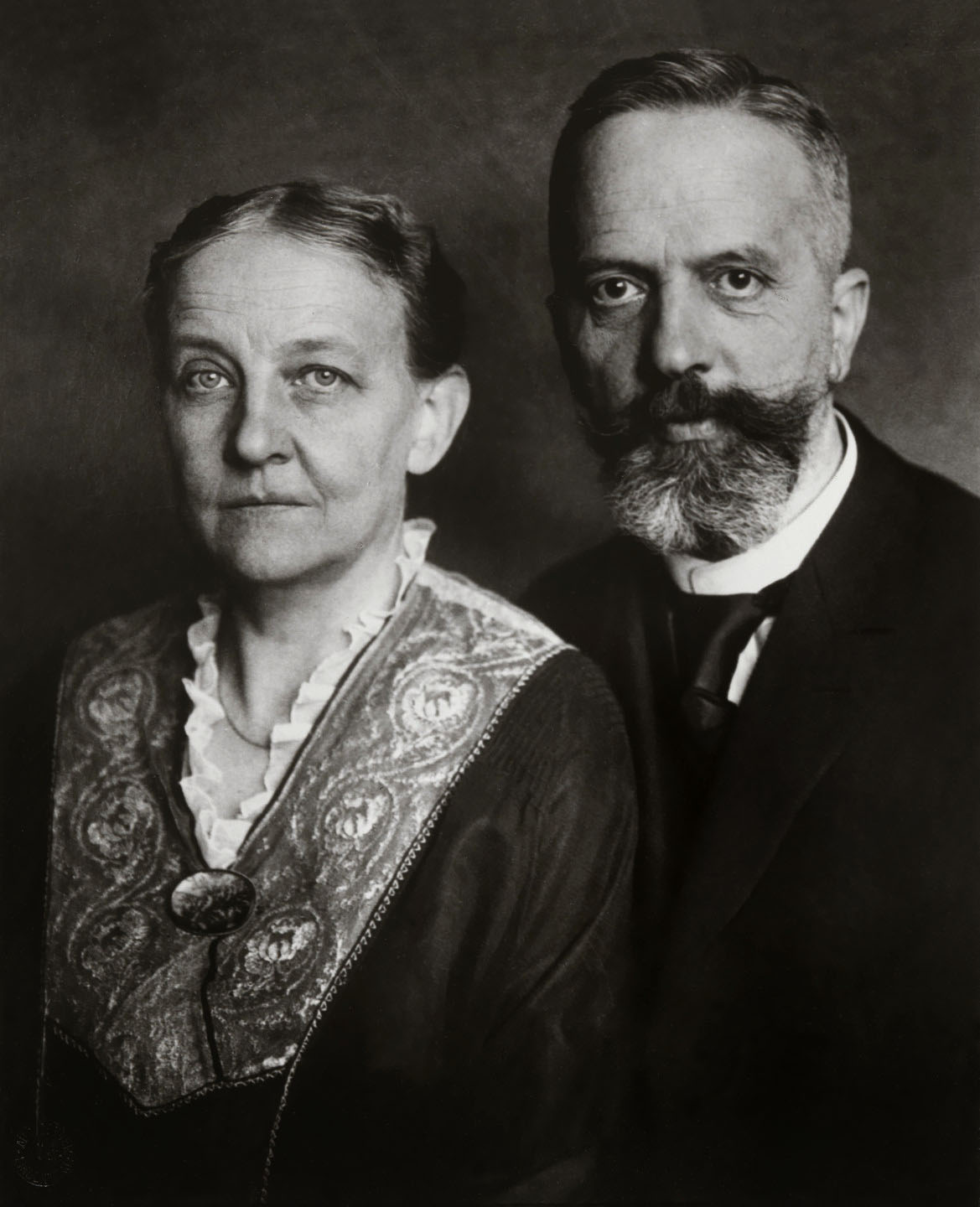
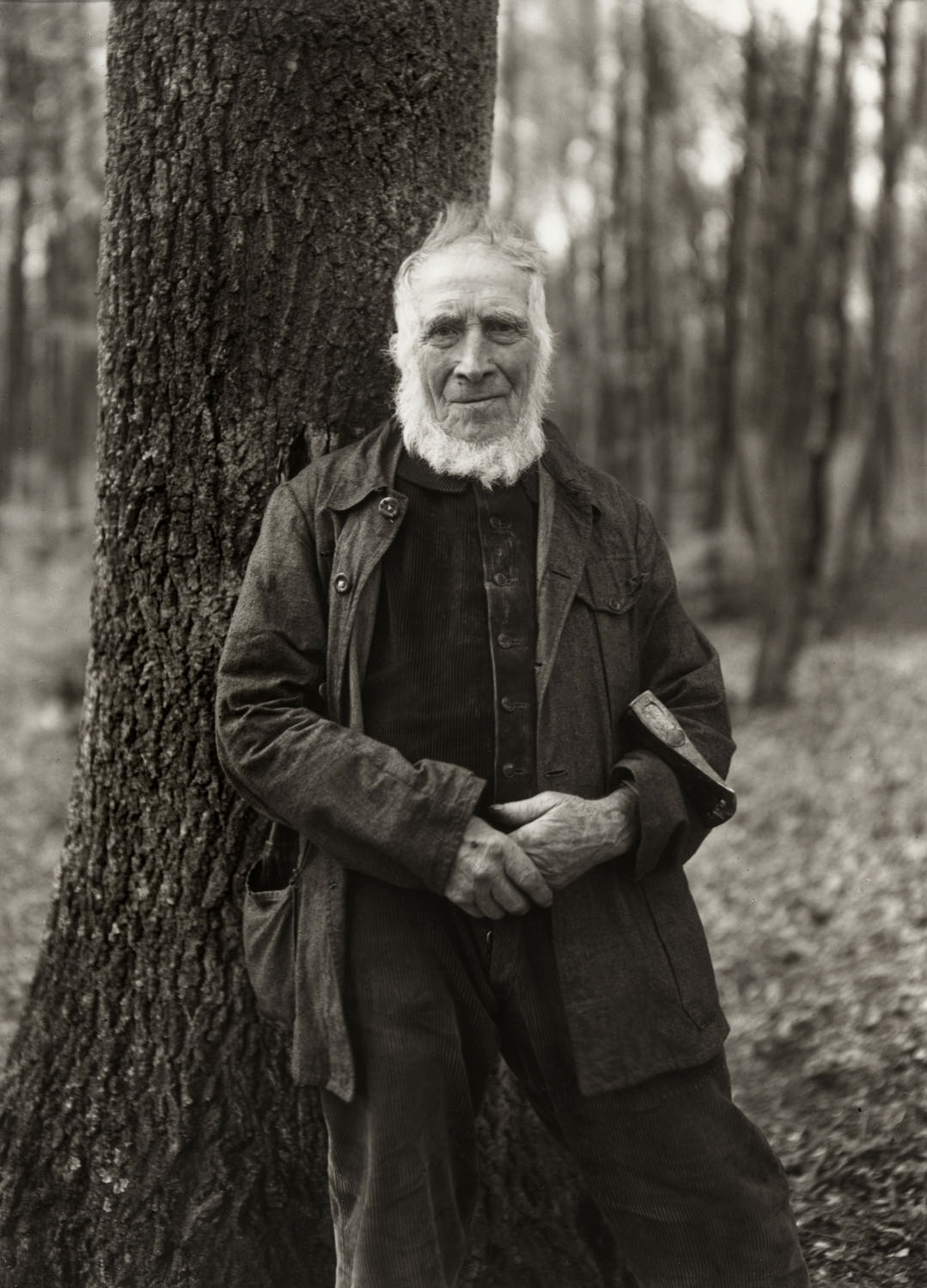
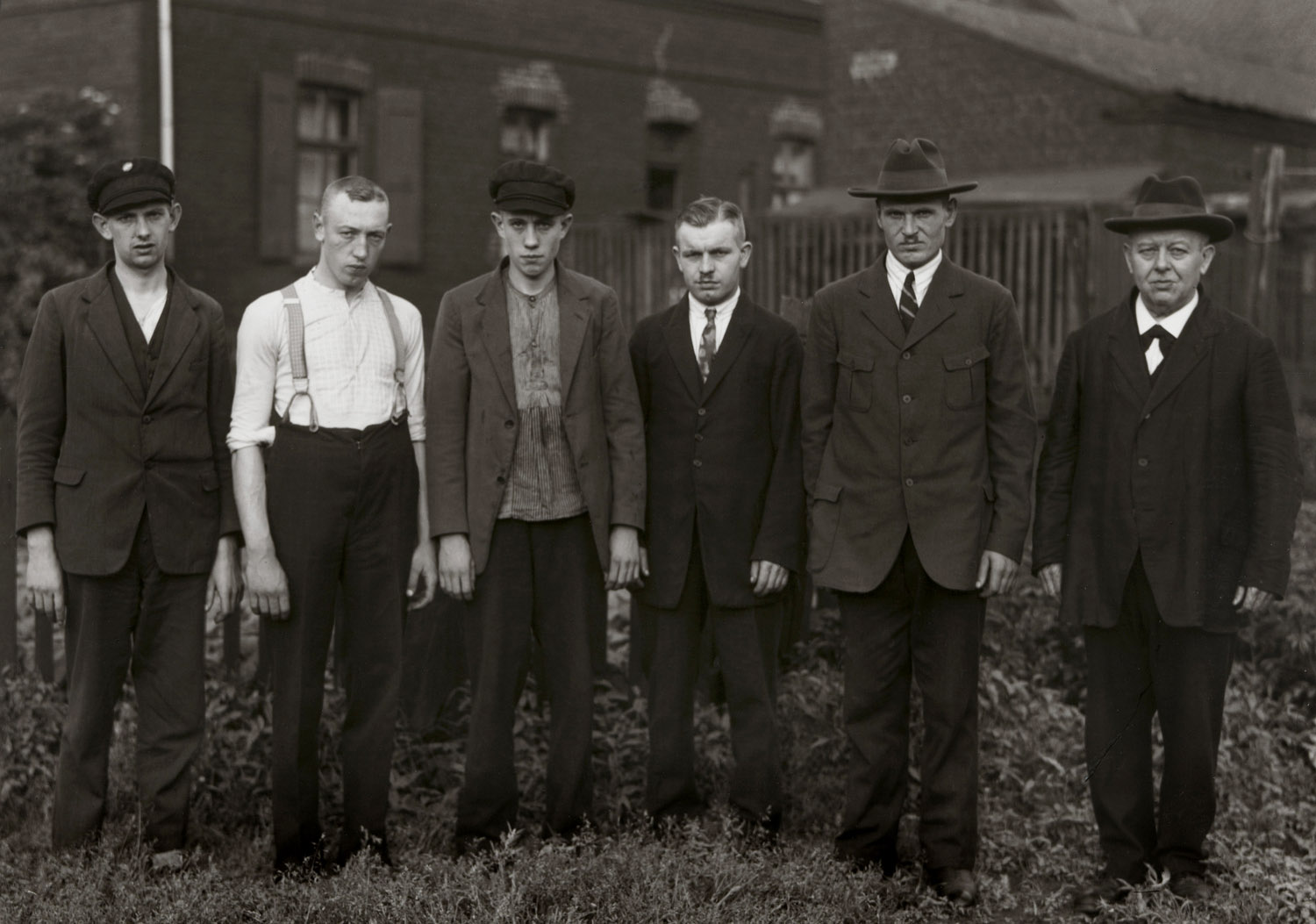
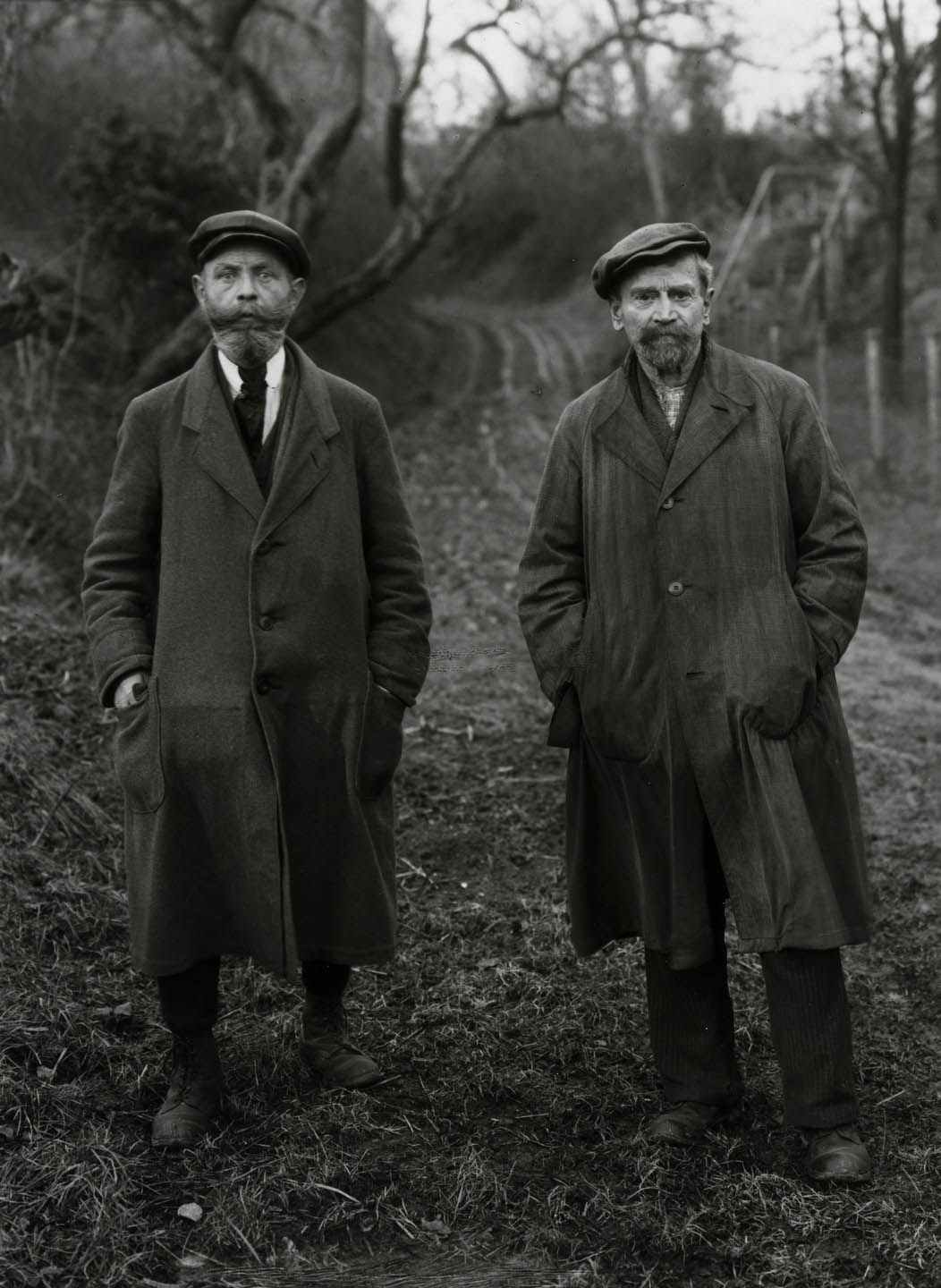
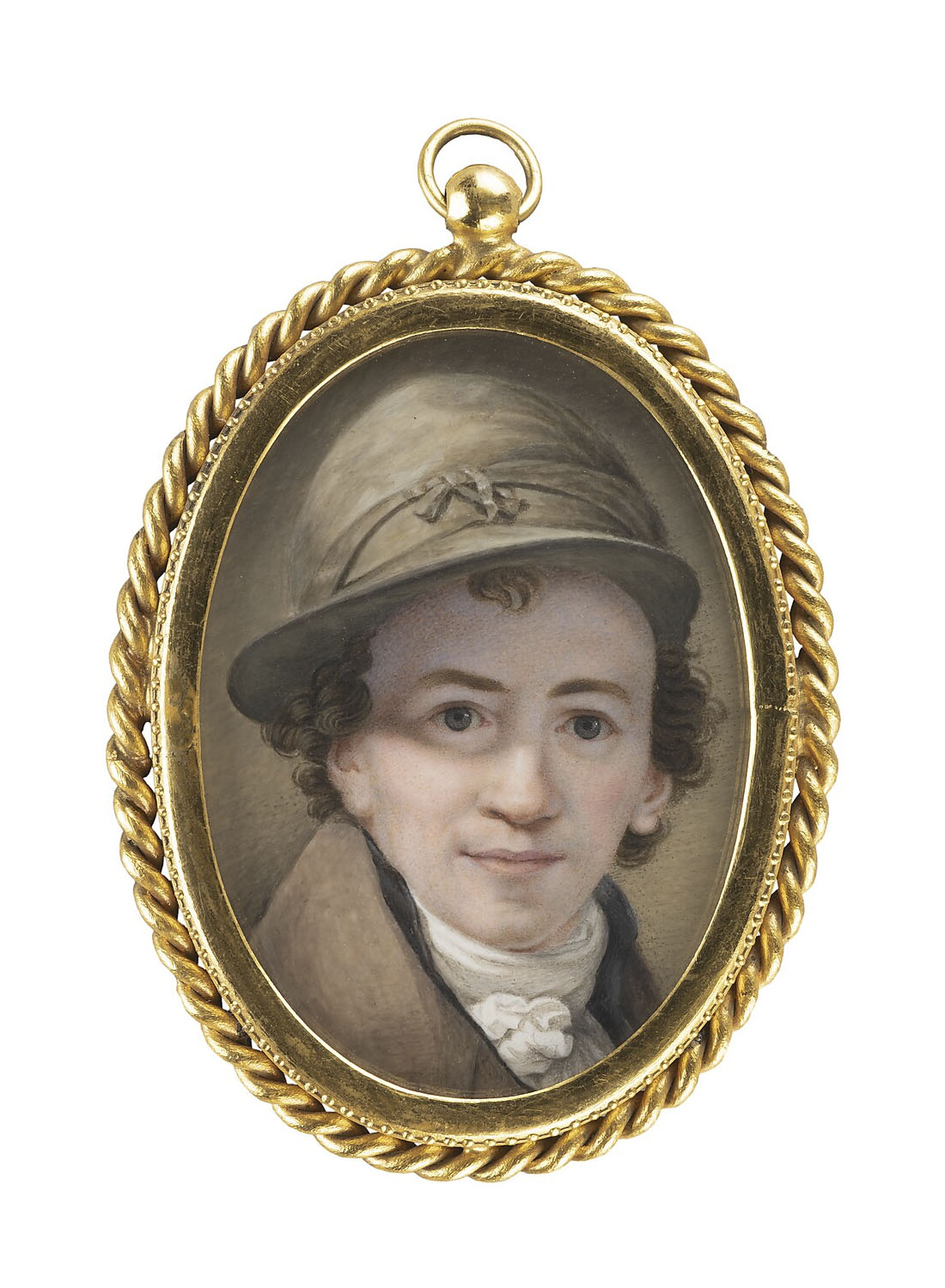
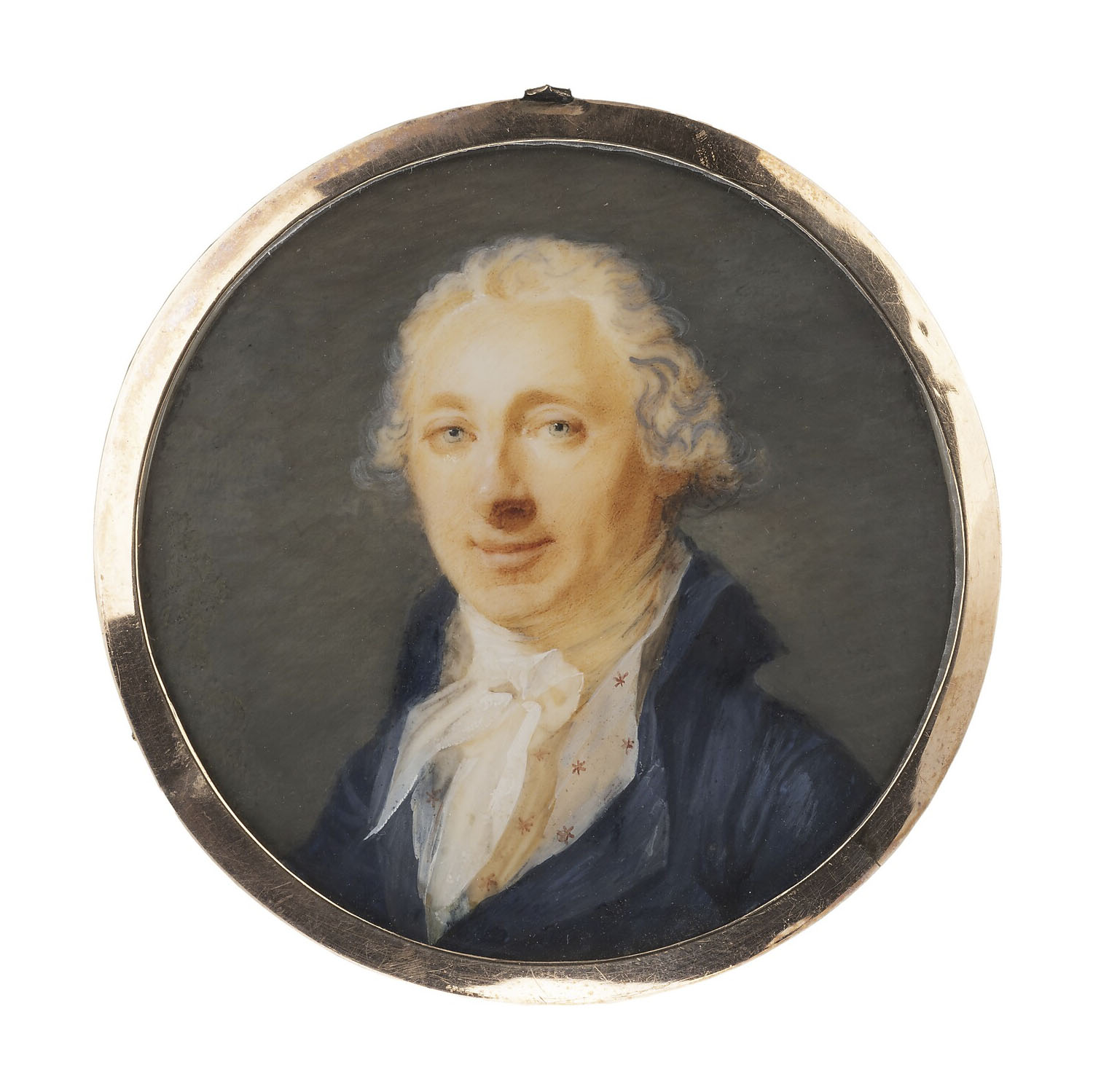
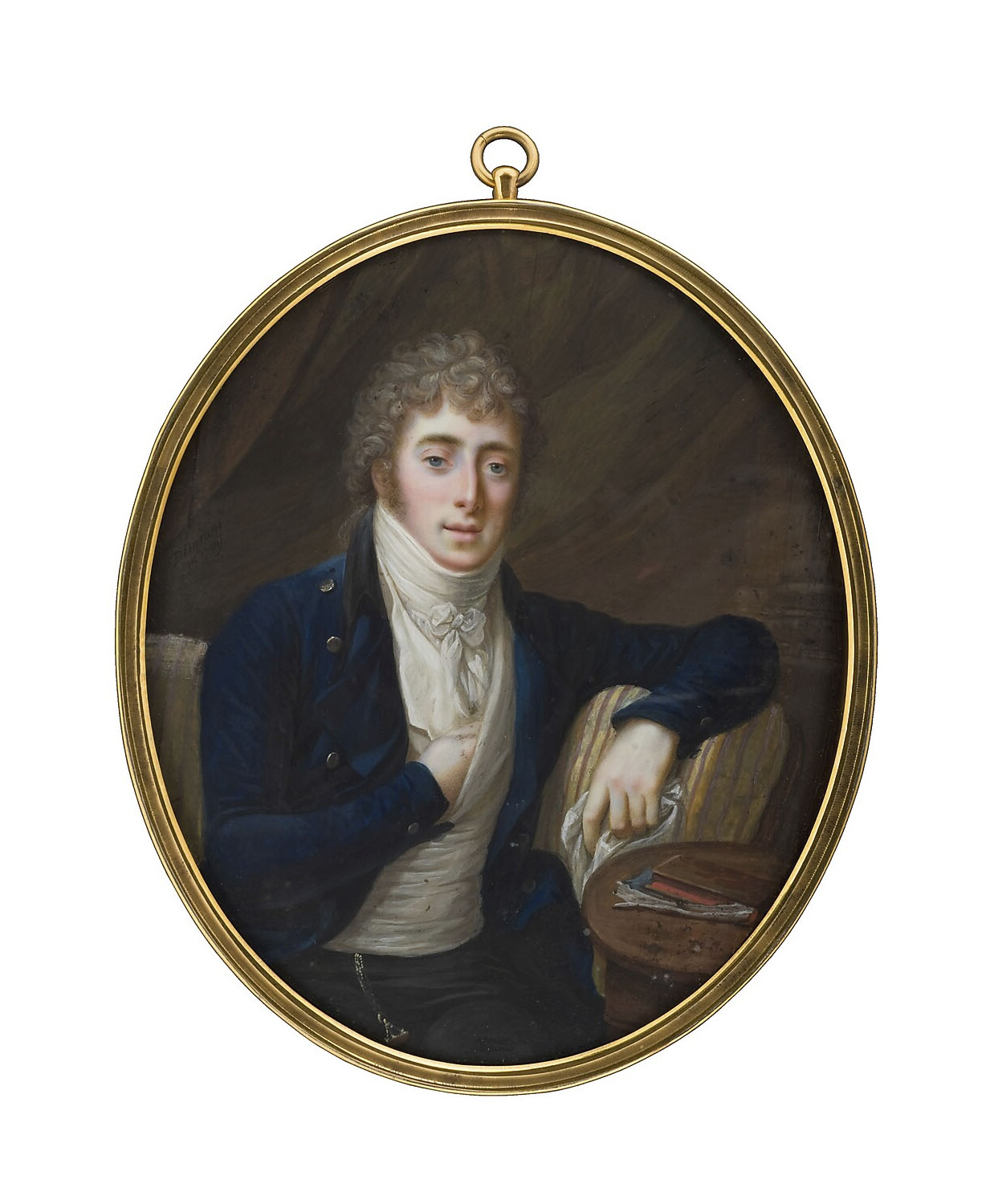
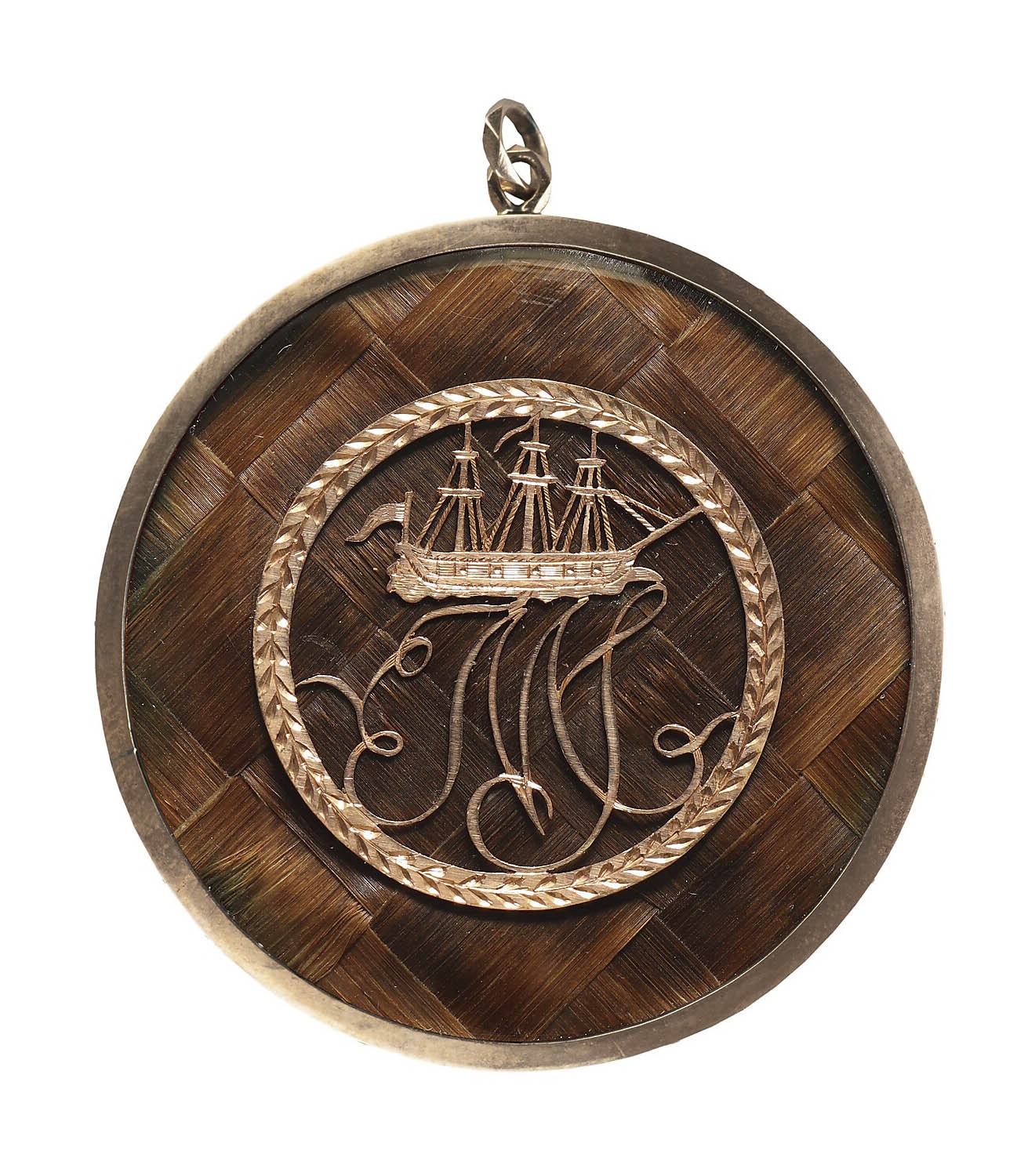
Exhibition: ‘August Sander’s People of the 20th Century’ at the Yale University Art Gallery, New Haven, CT, Part 1

Exhibition dates: 27th February - 28th June, 2026

Curator: Judy Ditner, the Richard Benson Curator of Photography and Digital Media


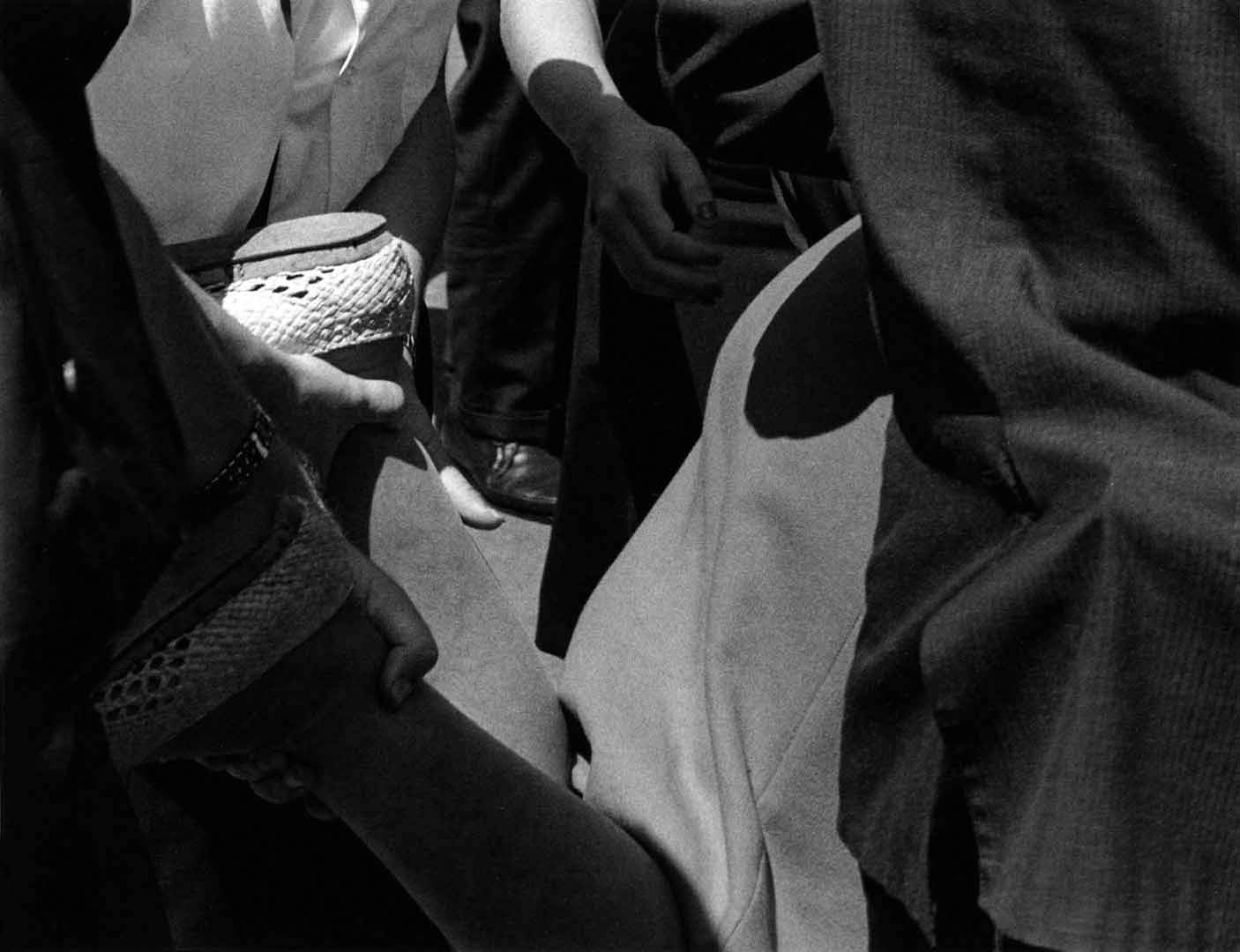
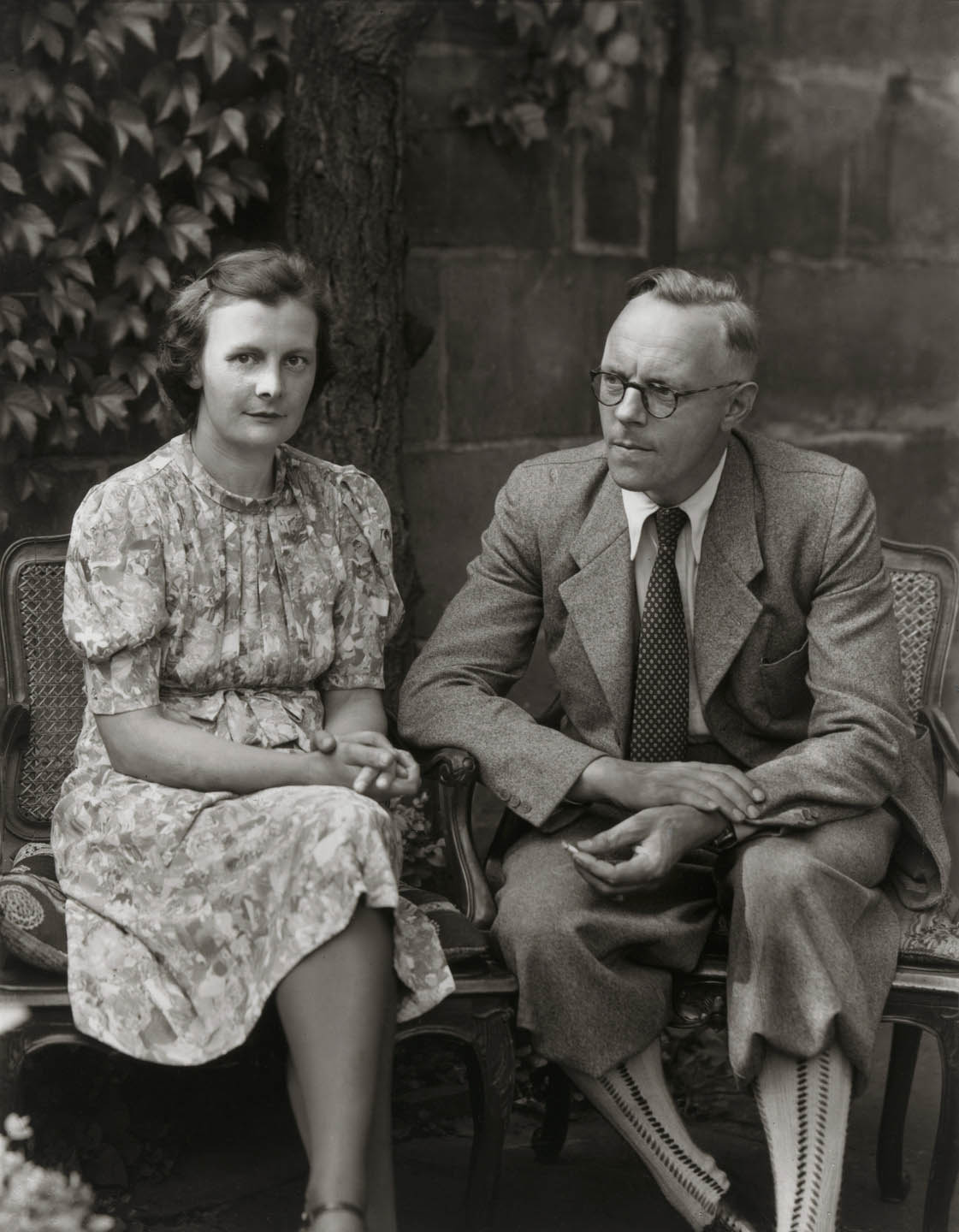
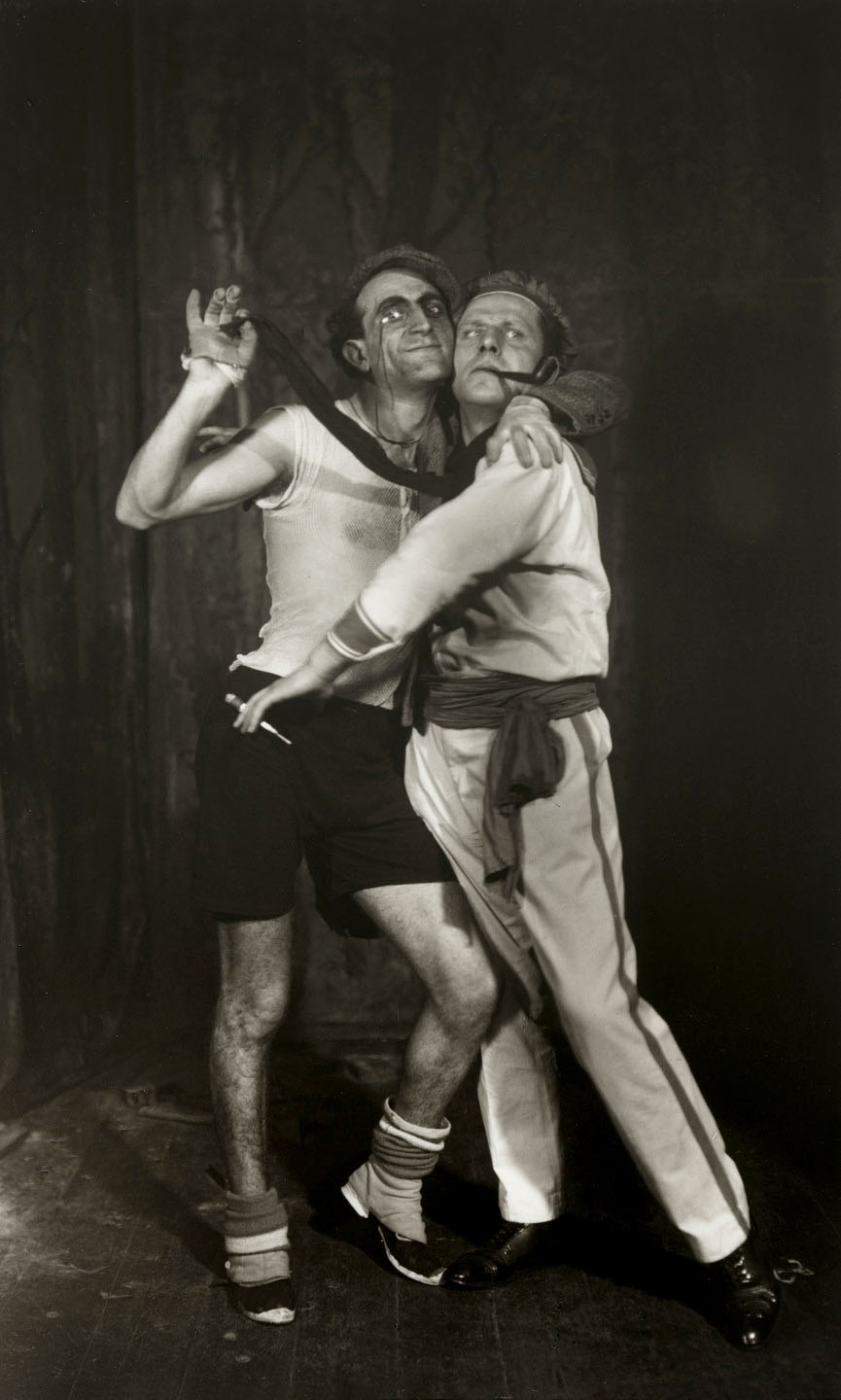
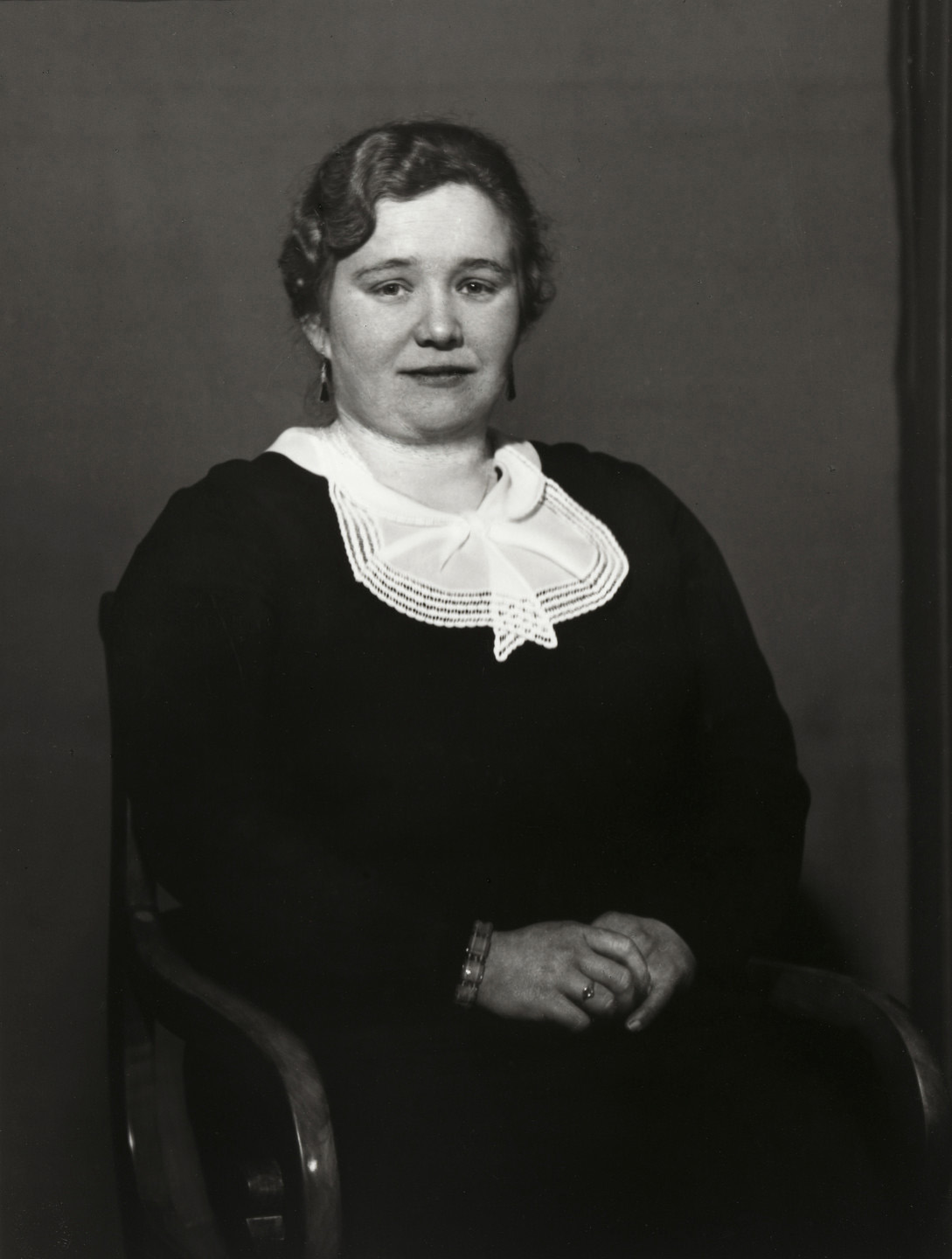
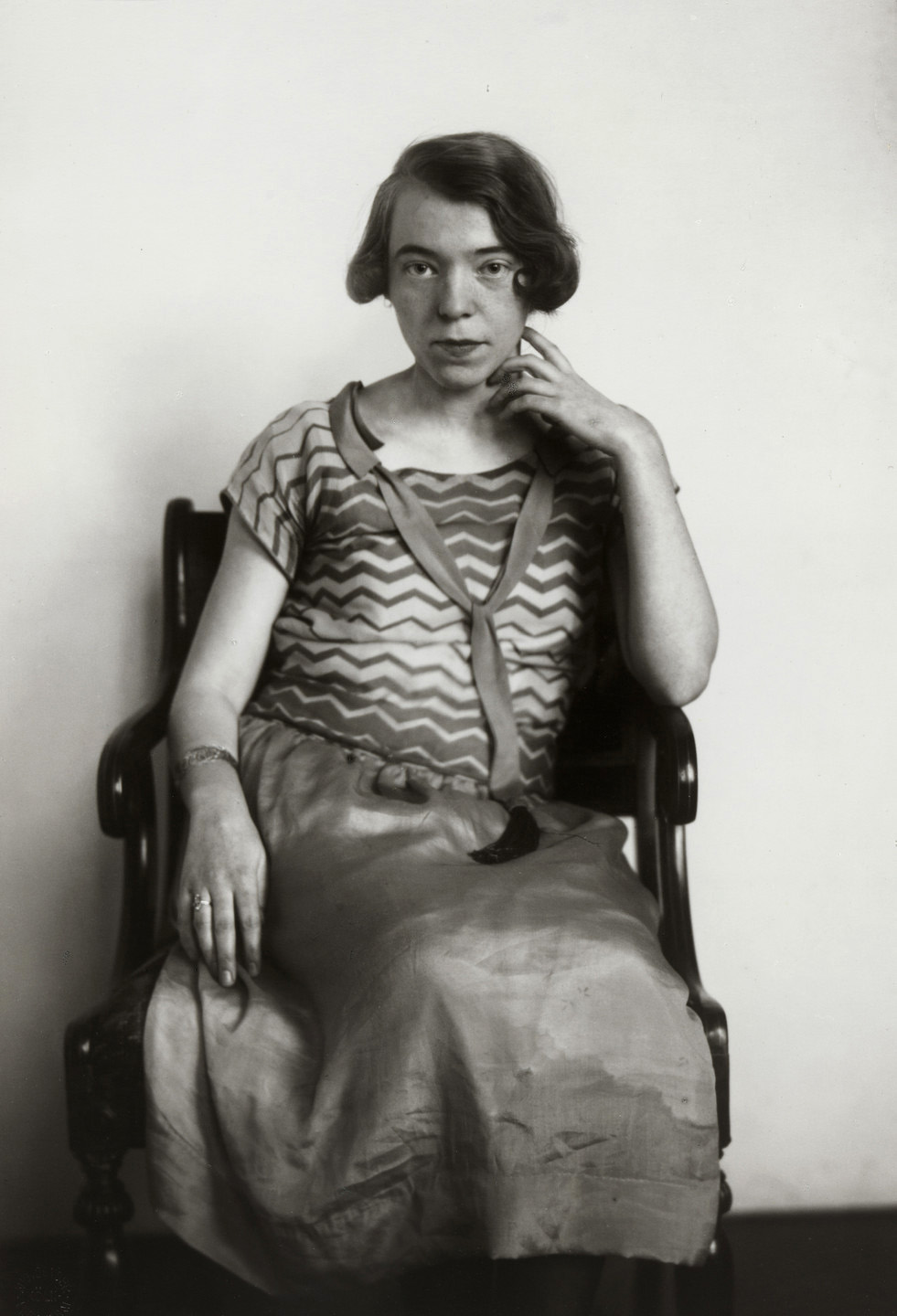
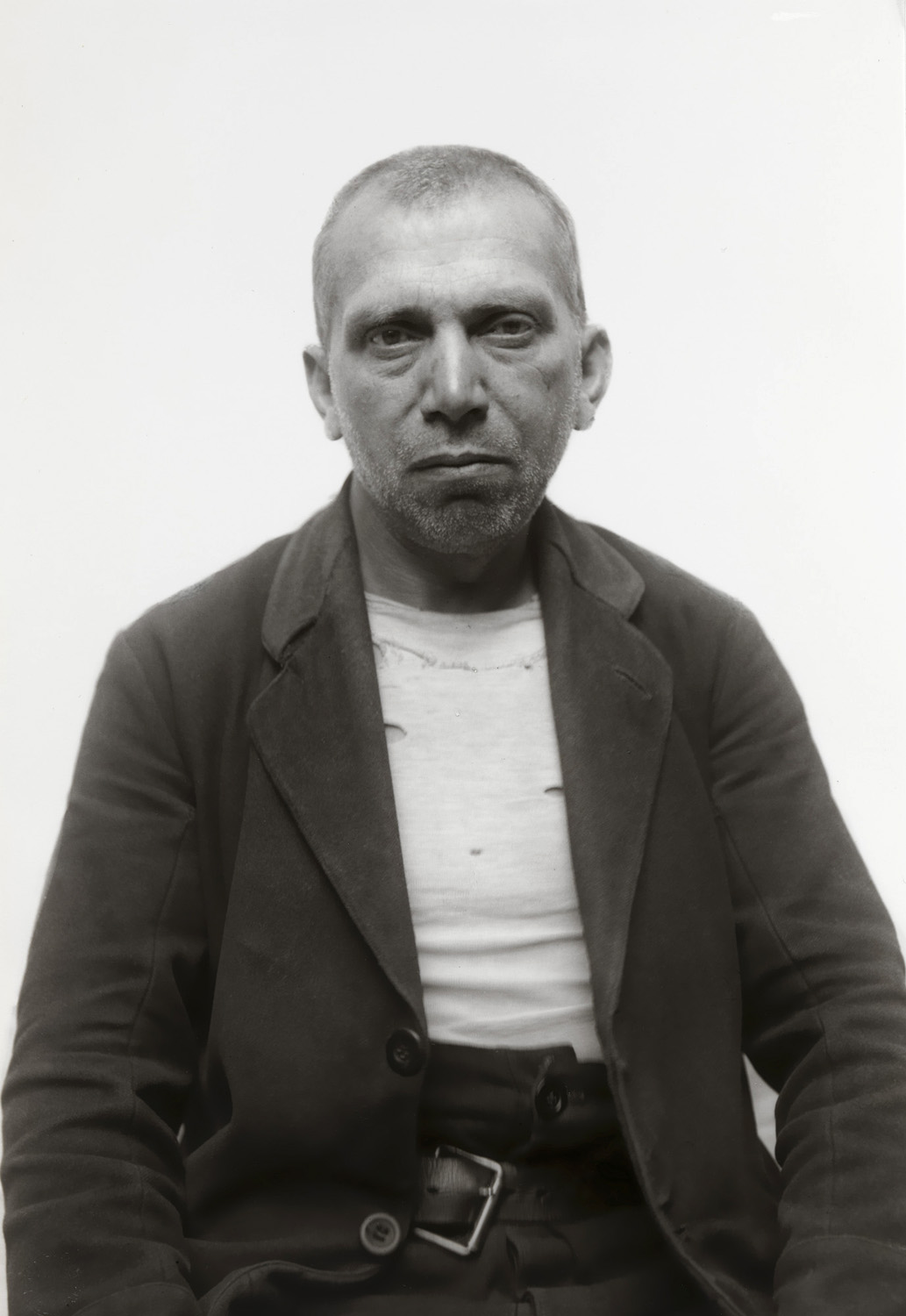
August Sander (German, 1876-1964) 'Artist's Party' c. 1930, printed c. 1990-1999
  

August Sander (German, 1876-1964)
Artist’s Party
c. 1930, printed c. 1990-1999
Gelatin silver print
10 3/16 x 7 3/8″ (25.8 x 18.7cm)
Societe Anonyme Acquisition Fund and Katharine Ordway Fund
© Die Photographische Sammlung / SK Stiftung Kultur – August Sander Archiv, Cologne / ARS, NY


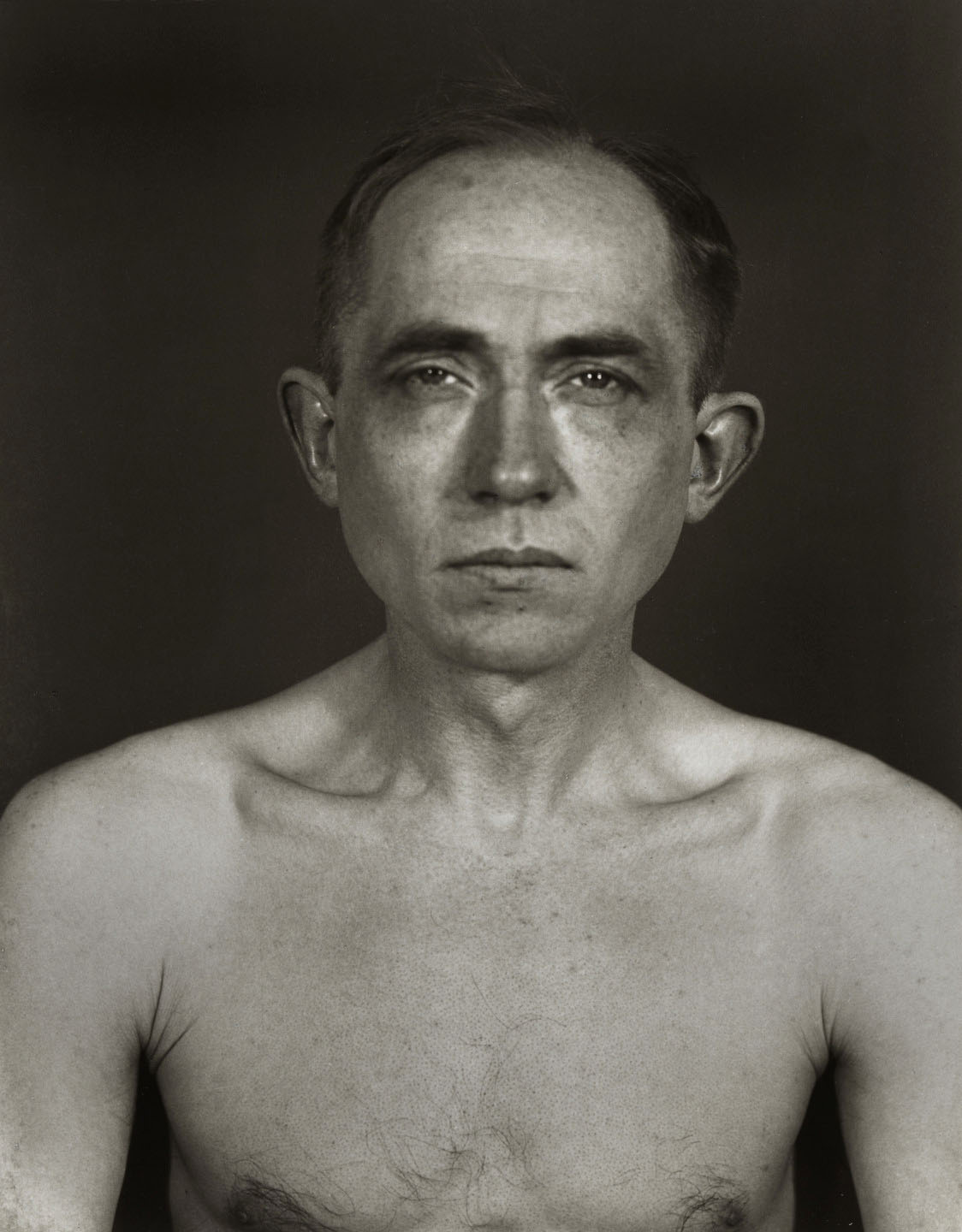
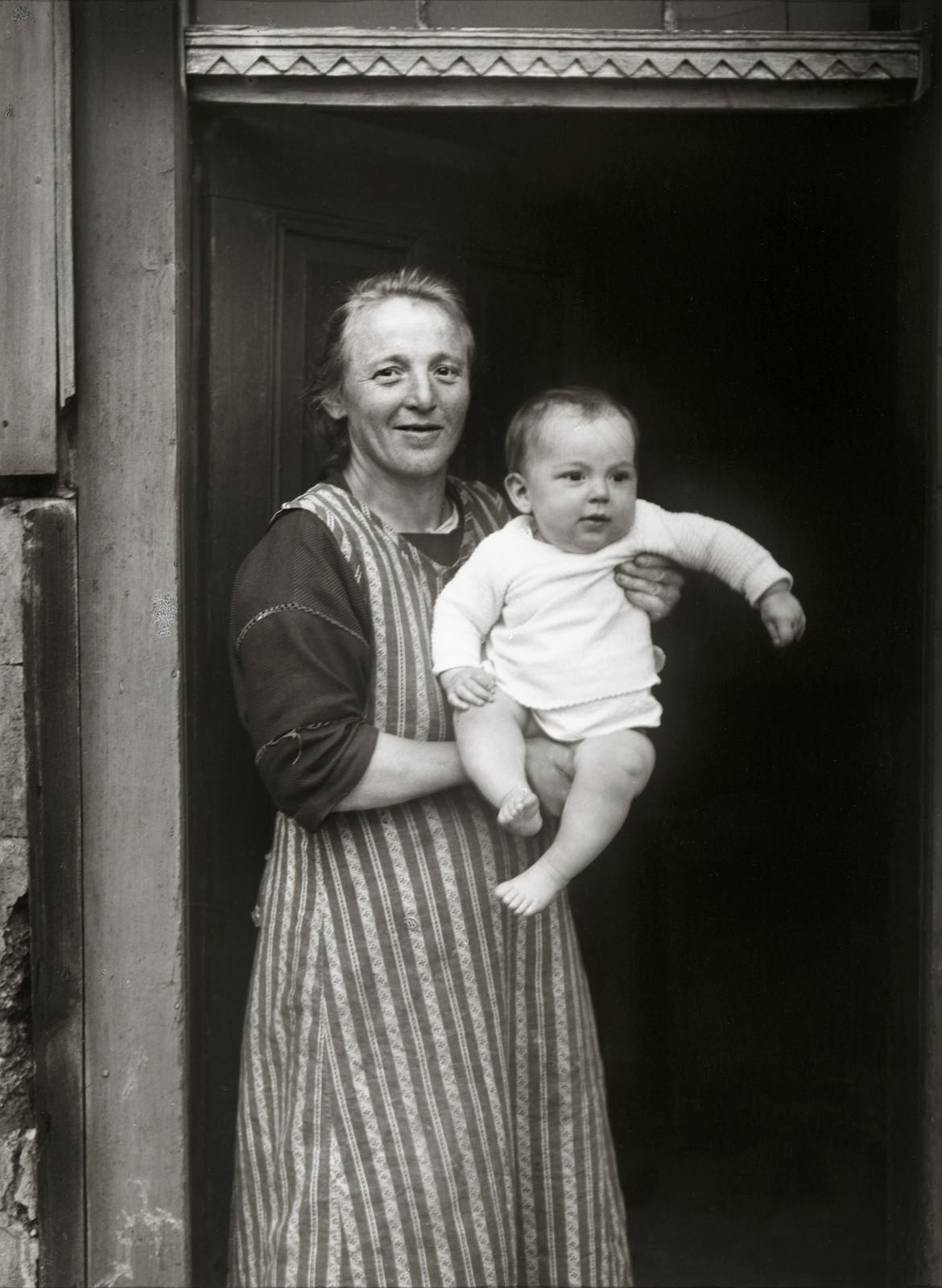
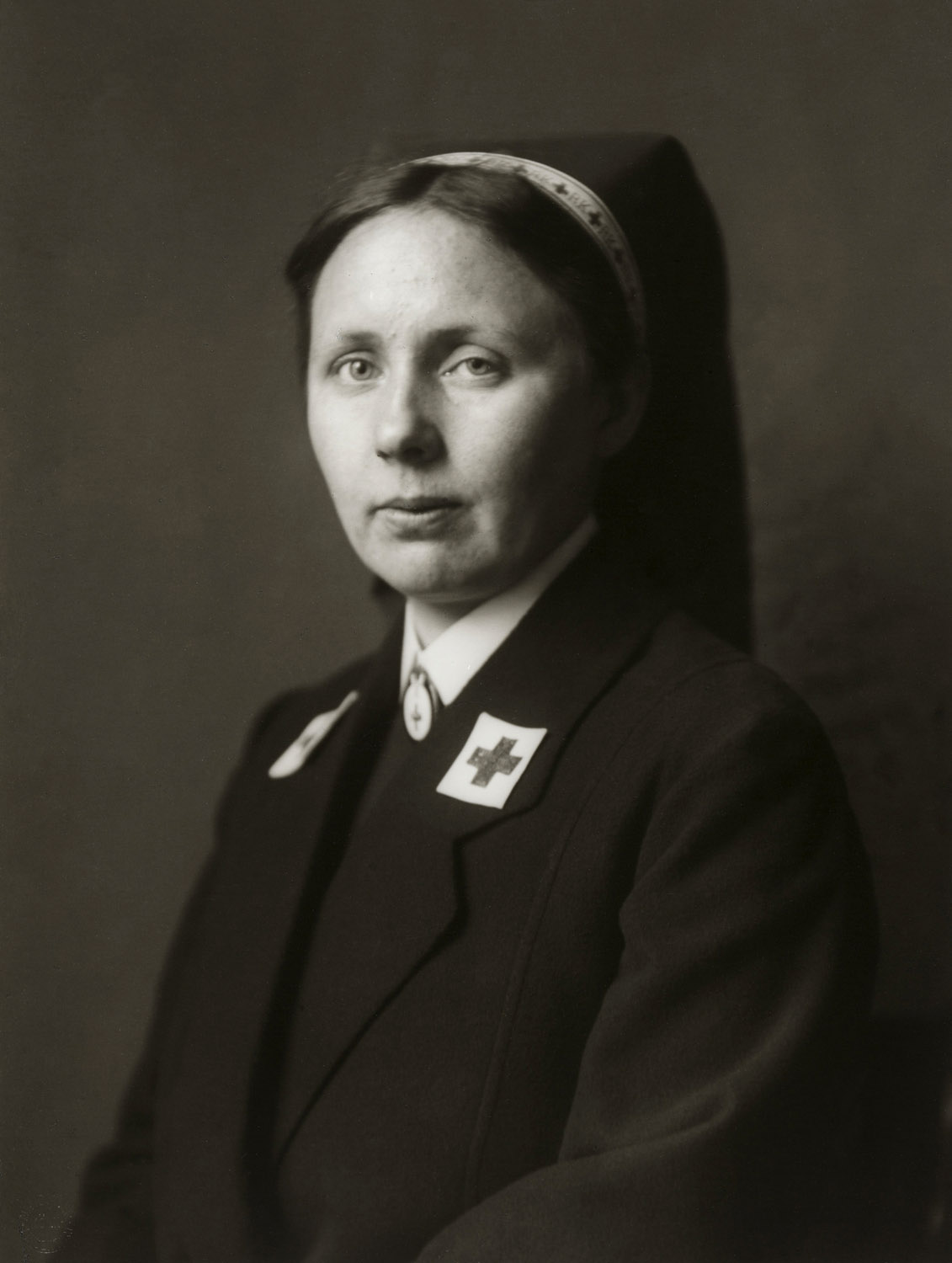
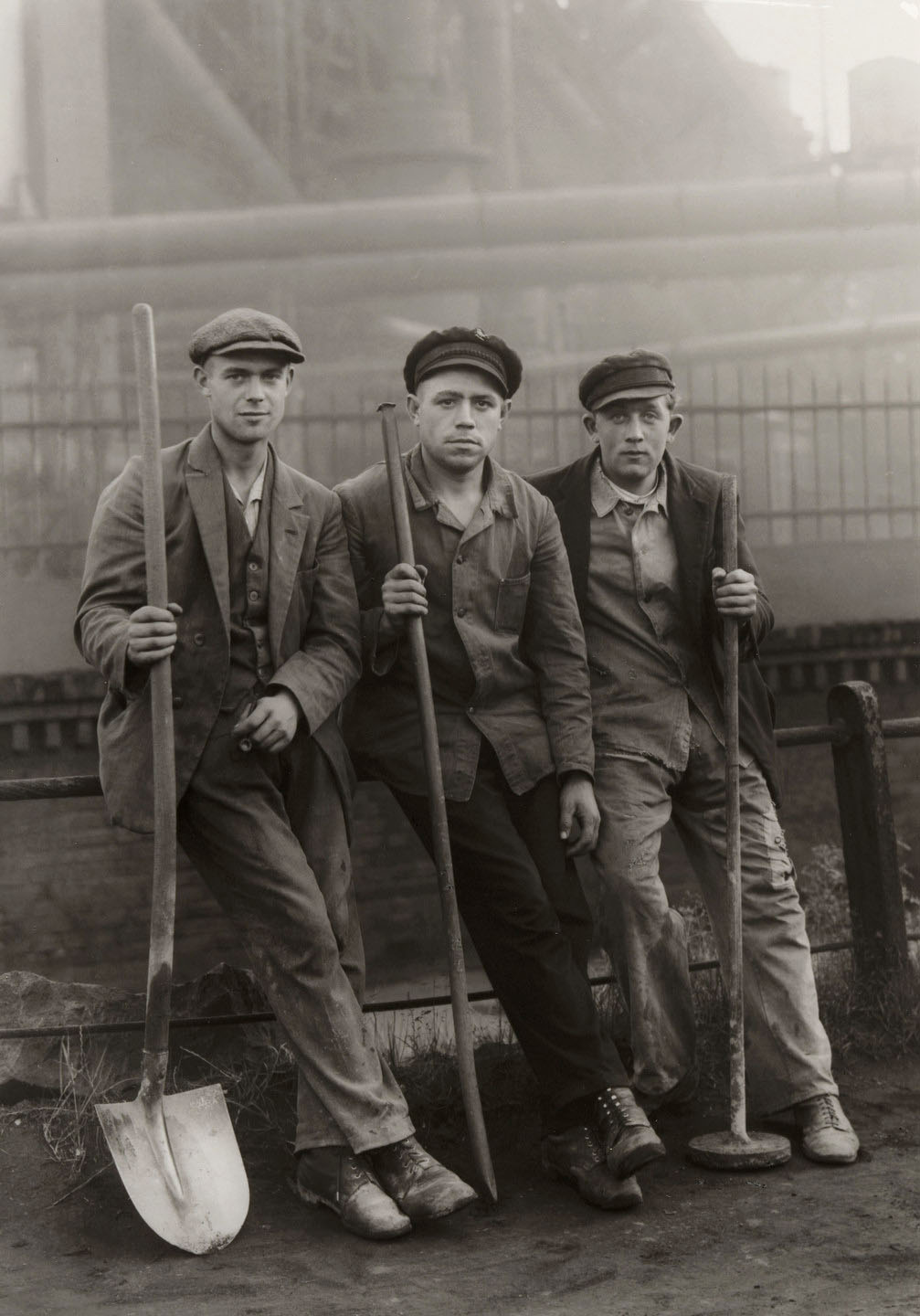
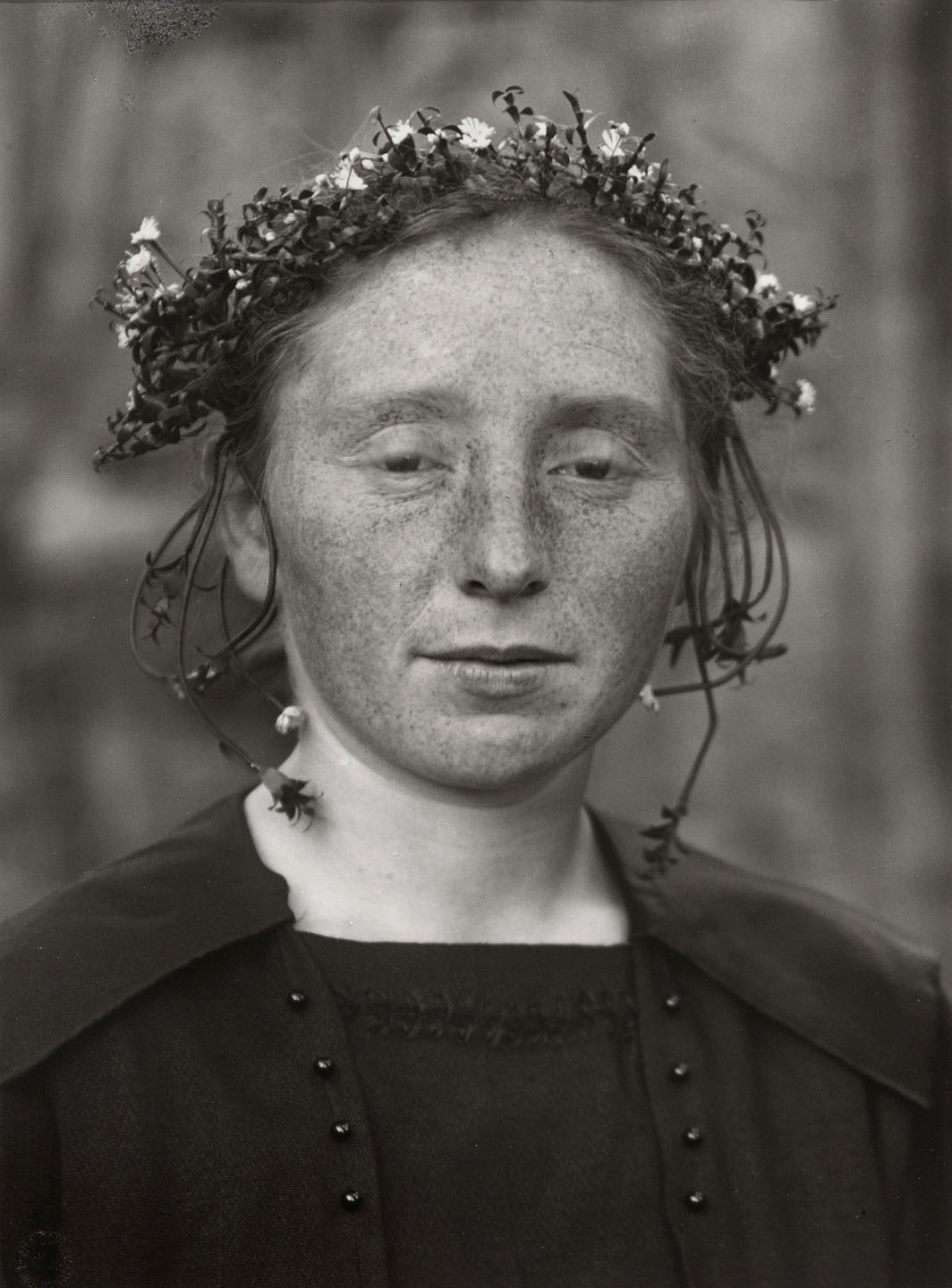
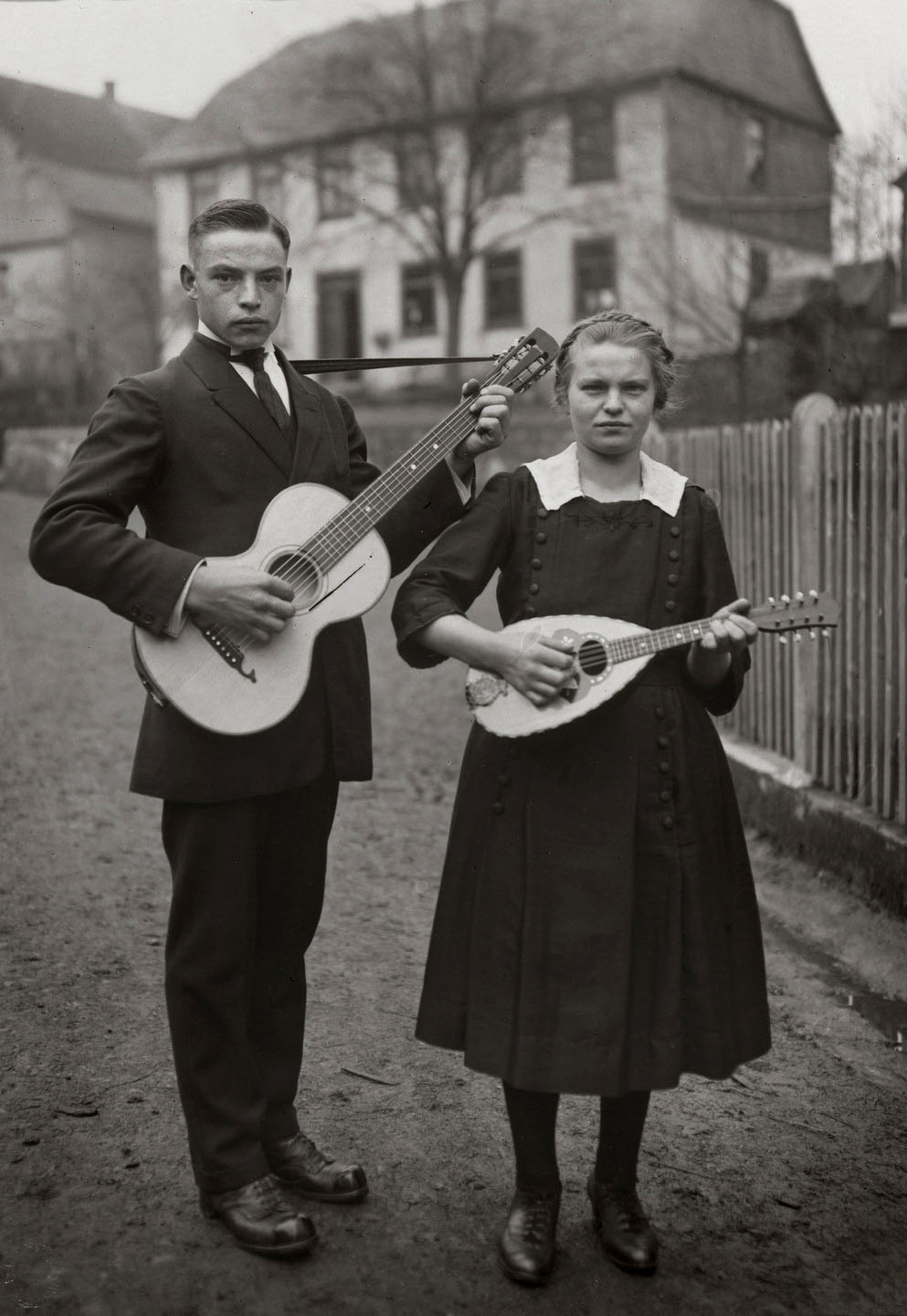
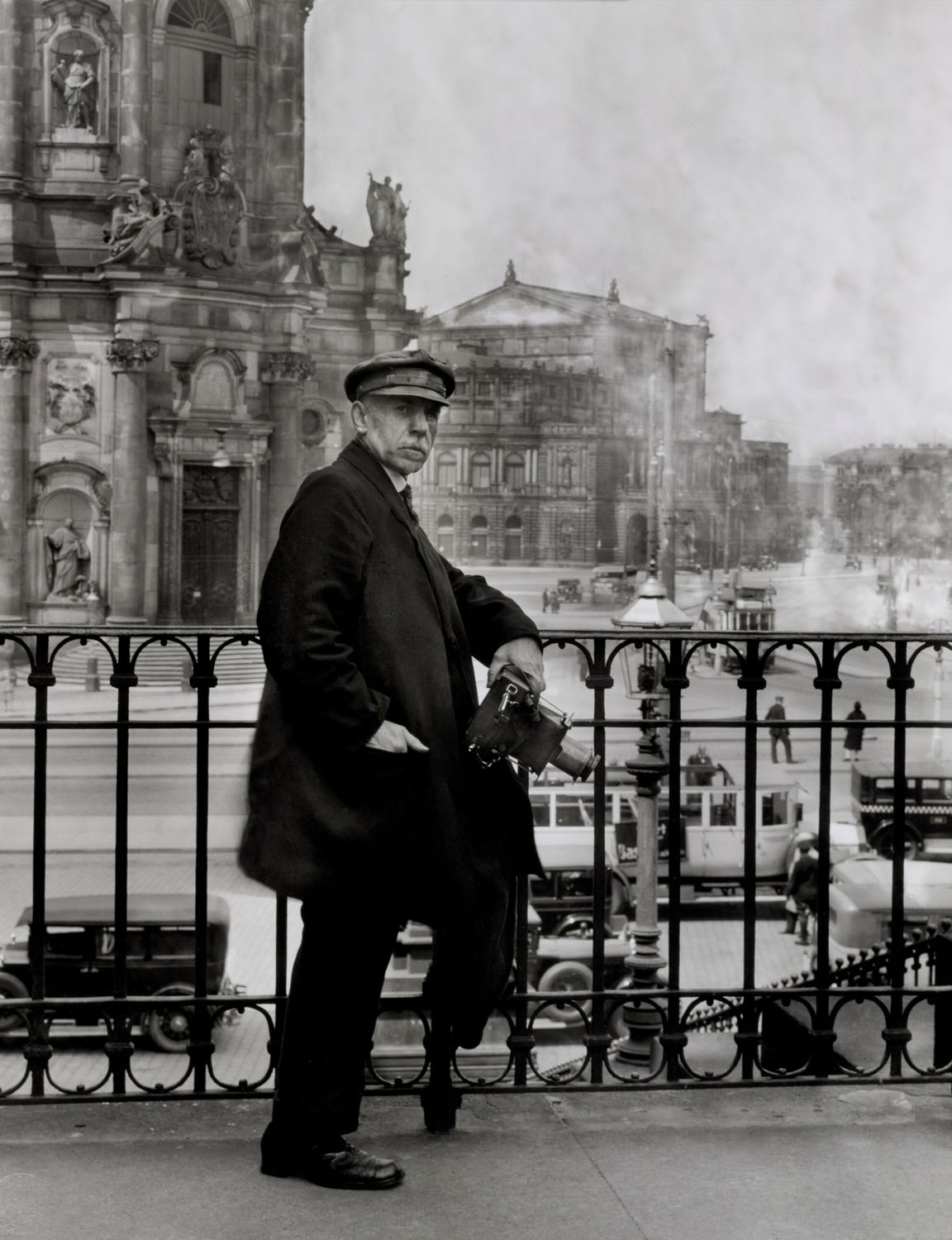
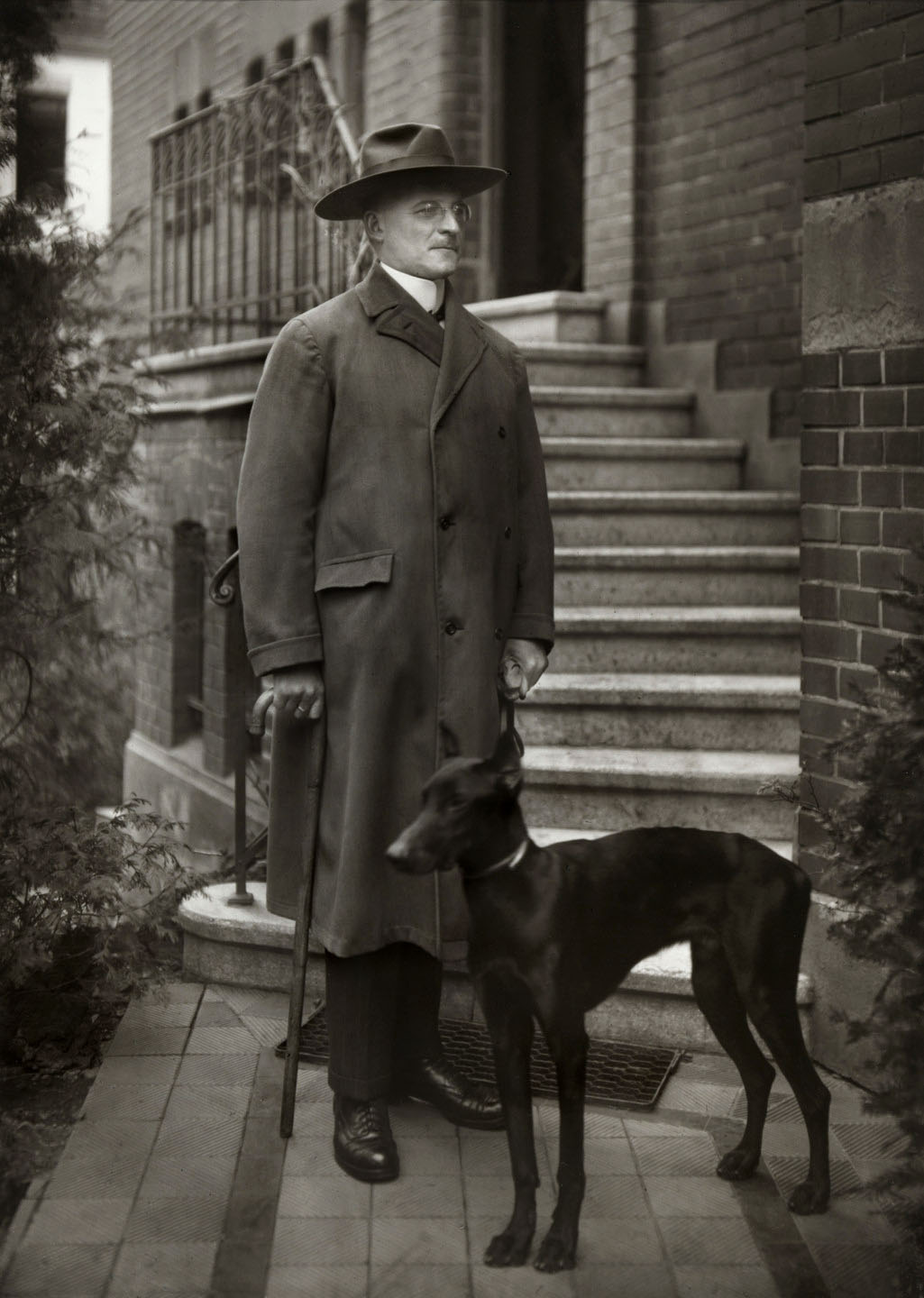
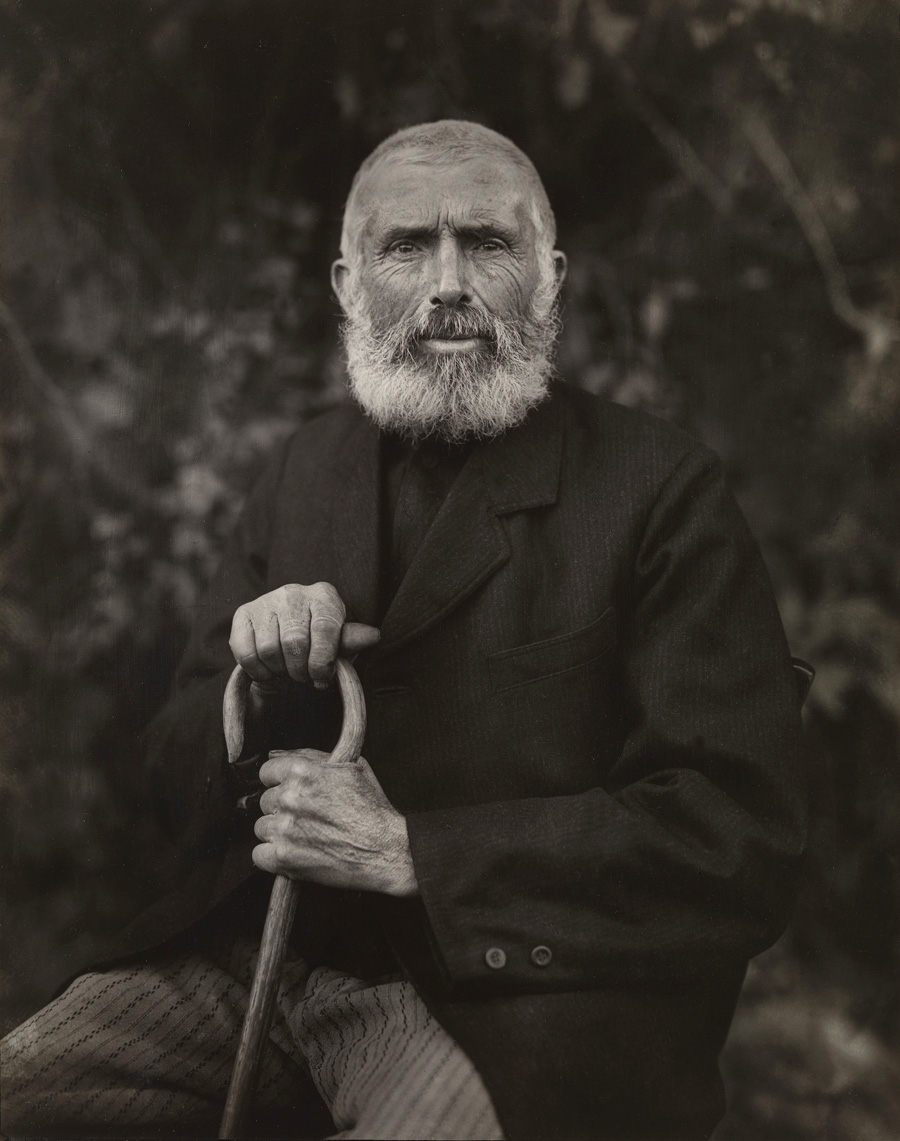
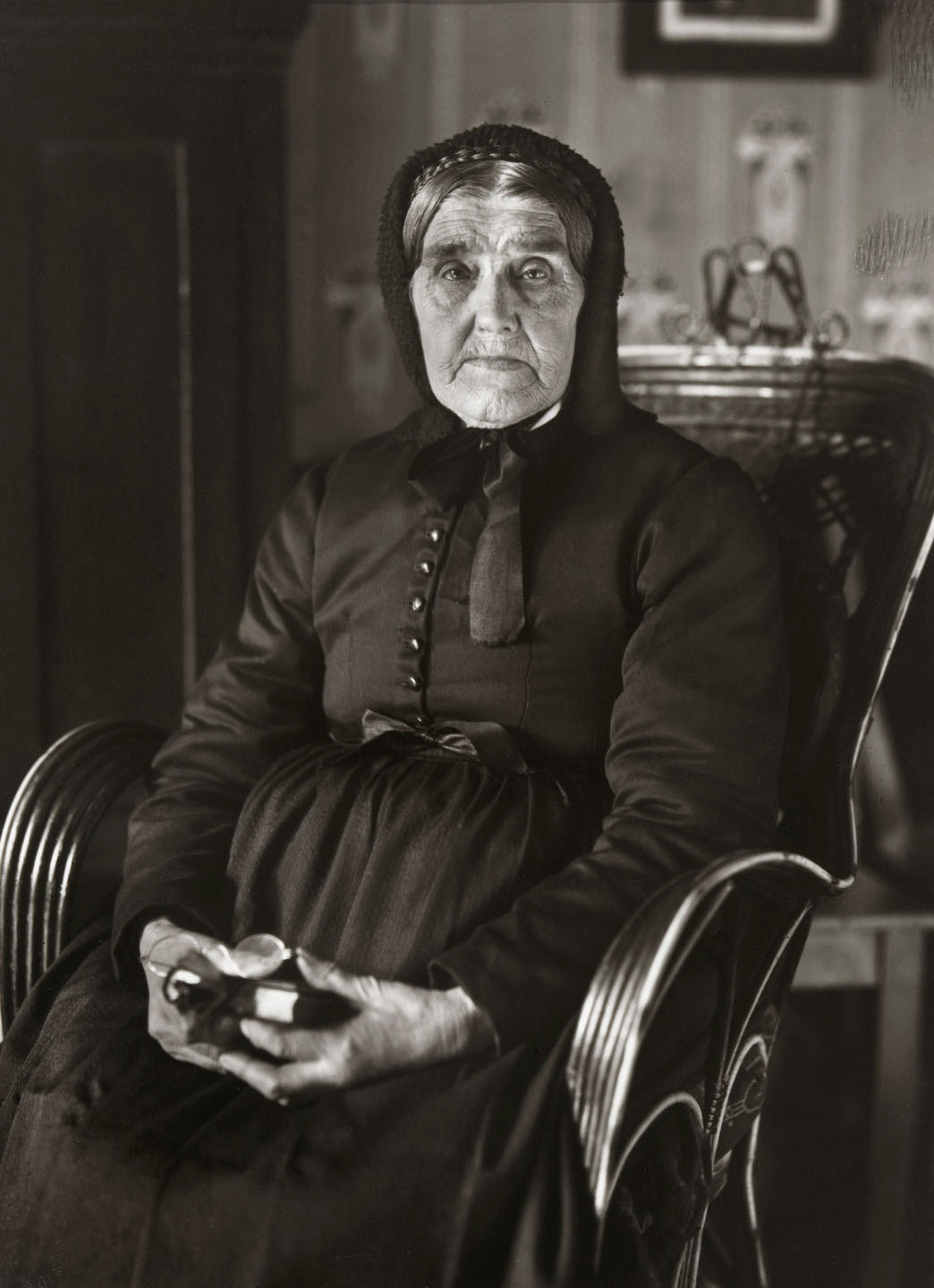
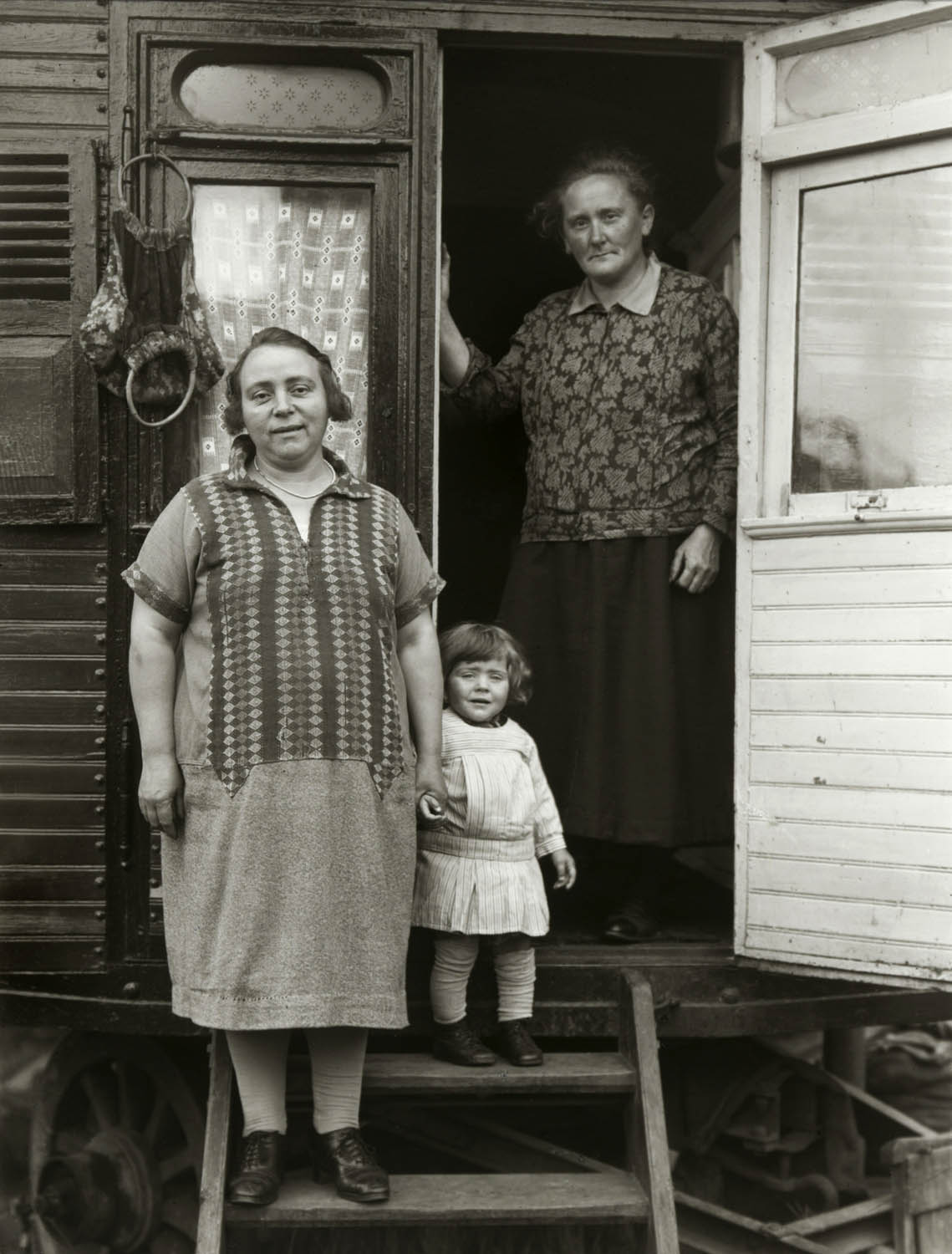
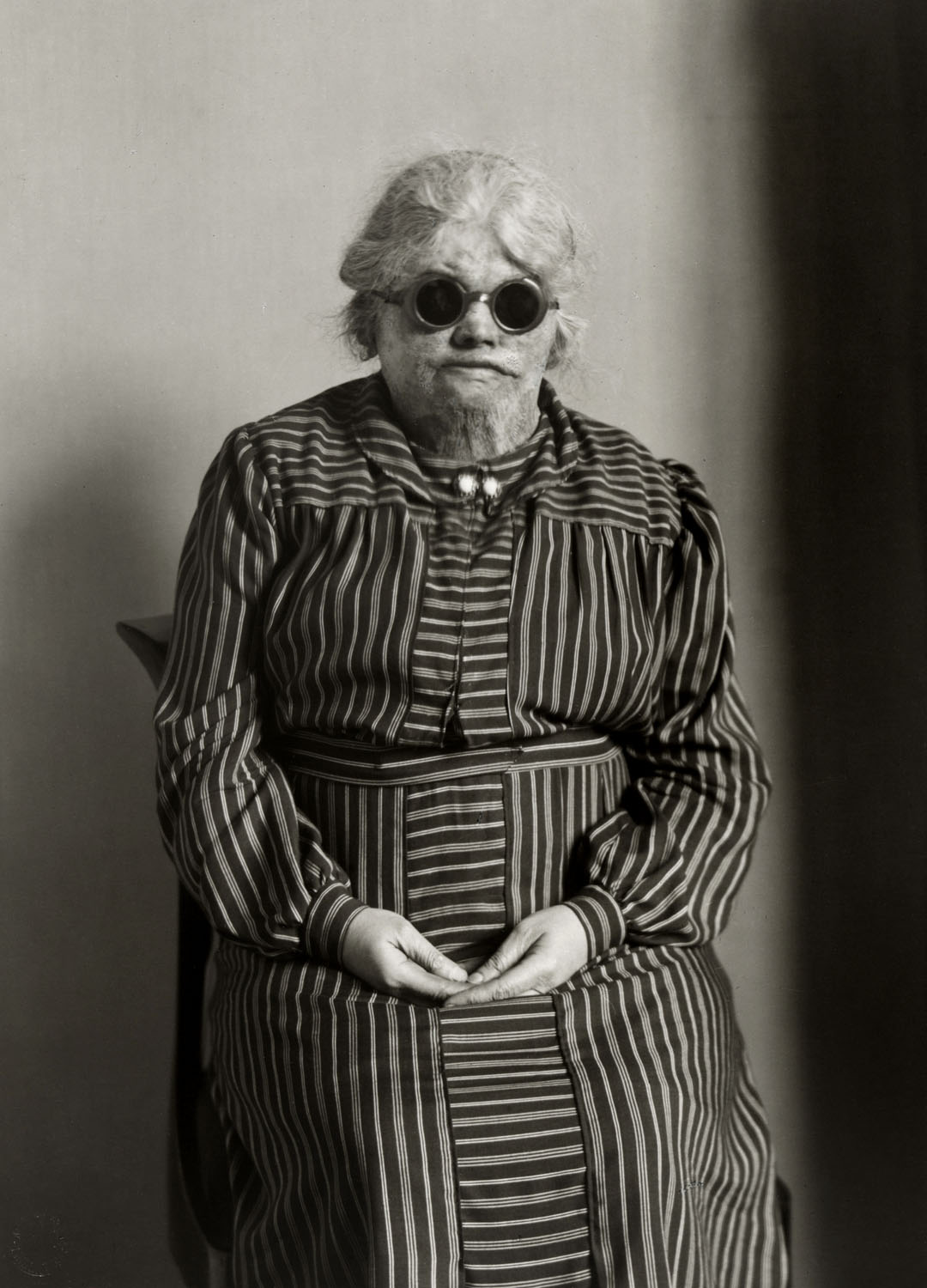
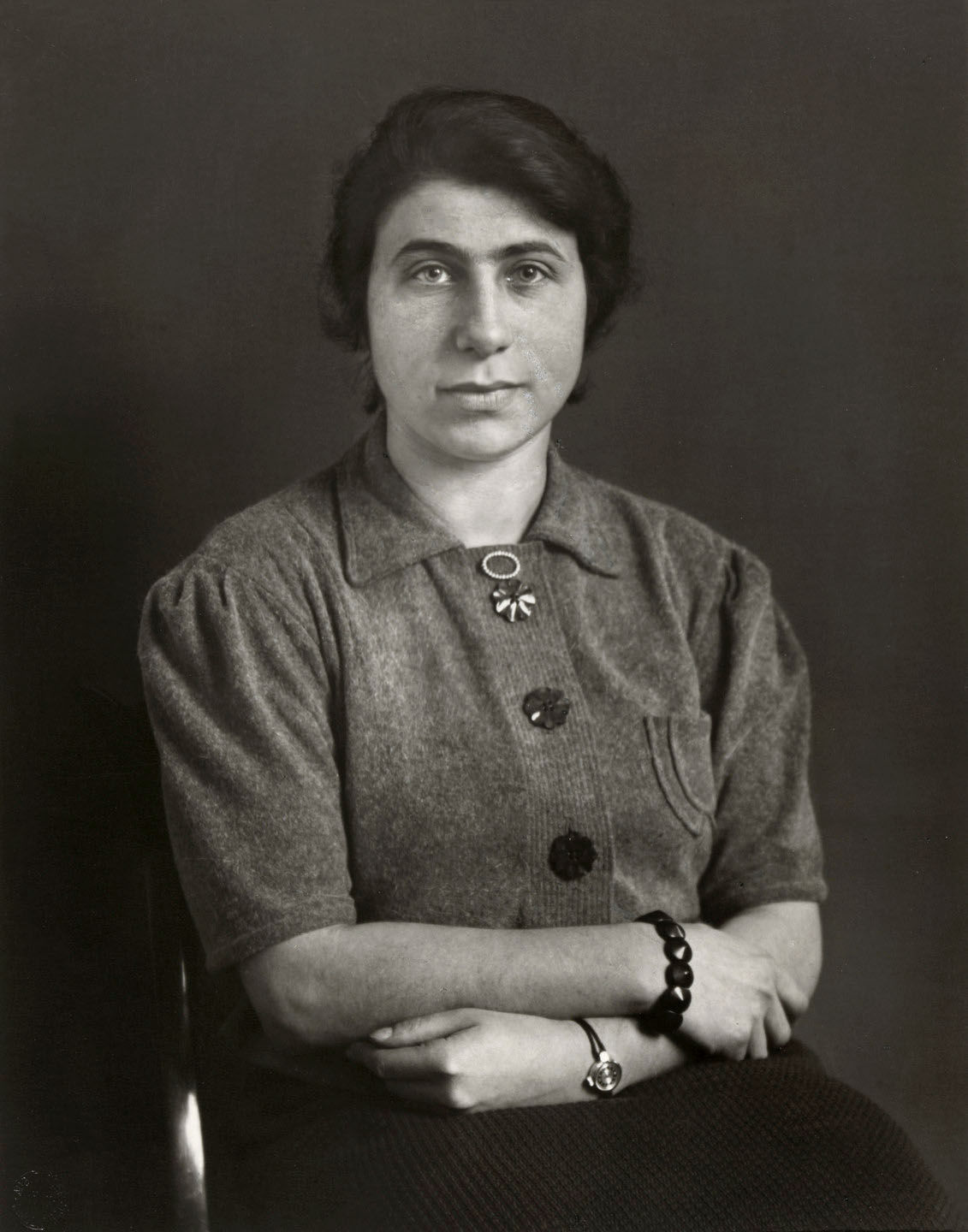
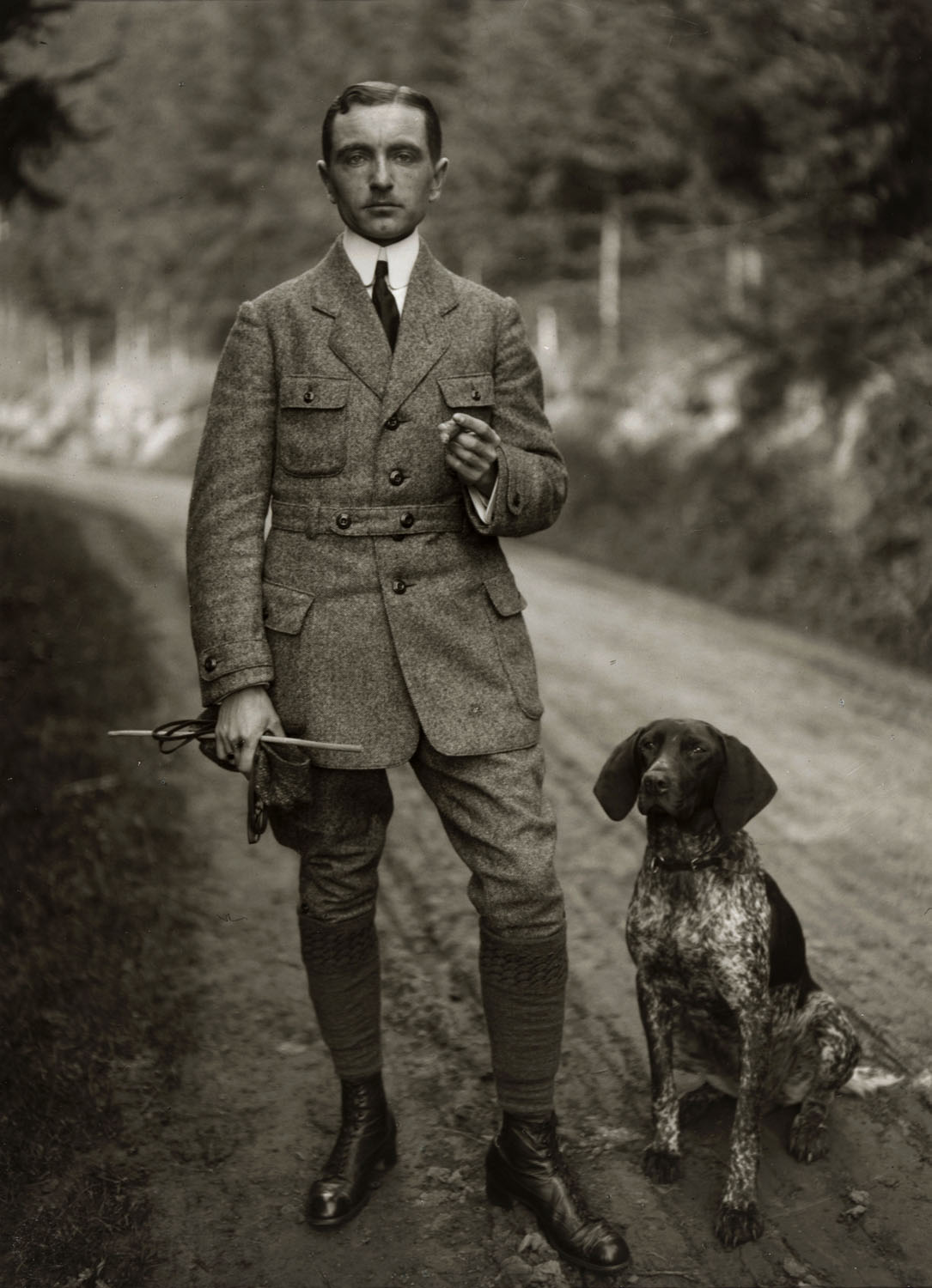
A huge two-part posting on one of the most important photographers of the 20th century, an extravaganza of 77 photographs by August Sander (German, 1876-1964) from his magnum opus People of the 20th Century (Menschen des 20. Jahrhunderts) (1892-1954) which consists of over 600 photographs organised into seven categories and 49 portfolios (see below).

There are many photographs I have never seen before in the two postings.

I have ordered the photographs in the postings by alphabetical title not by Sander’s classificatory system. It’s just much easier for me to make the postings this way (which takes many hours). As the text from the curator Judy Ditner makes clear, “Sander’s categories are not as fixed as they may at first appear, with many individuals and motifs showing up across different classifications.”

“What makes Sander’s work so powerful is the tension: each portrait is at once a deeply personal image and a window into a broader social type.”

Comment to follow in Part 2 of the posting.

Dr Marcus Bunyan


Many thankx to the Yale University Art Gallery for allowing me to publish the photographs in the posting. All photographs were printed by Gerd Sander (German, 1940-2021). Please click on the photographs for a larger version of the image. See Part 2 of the posting.


“The individual does not make the history of his time, but he both impresses himself on it and expresses its meaning.”


August Sander


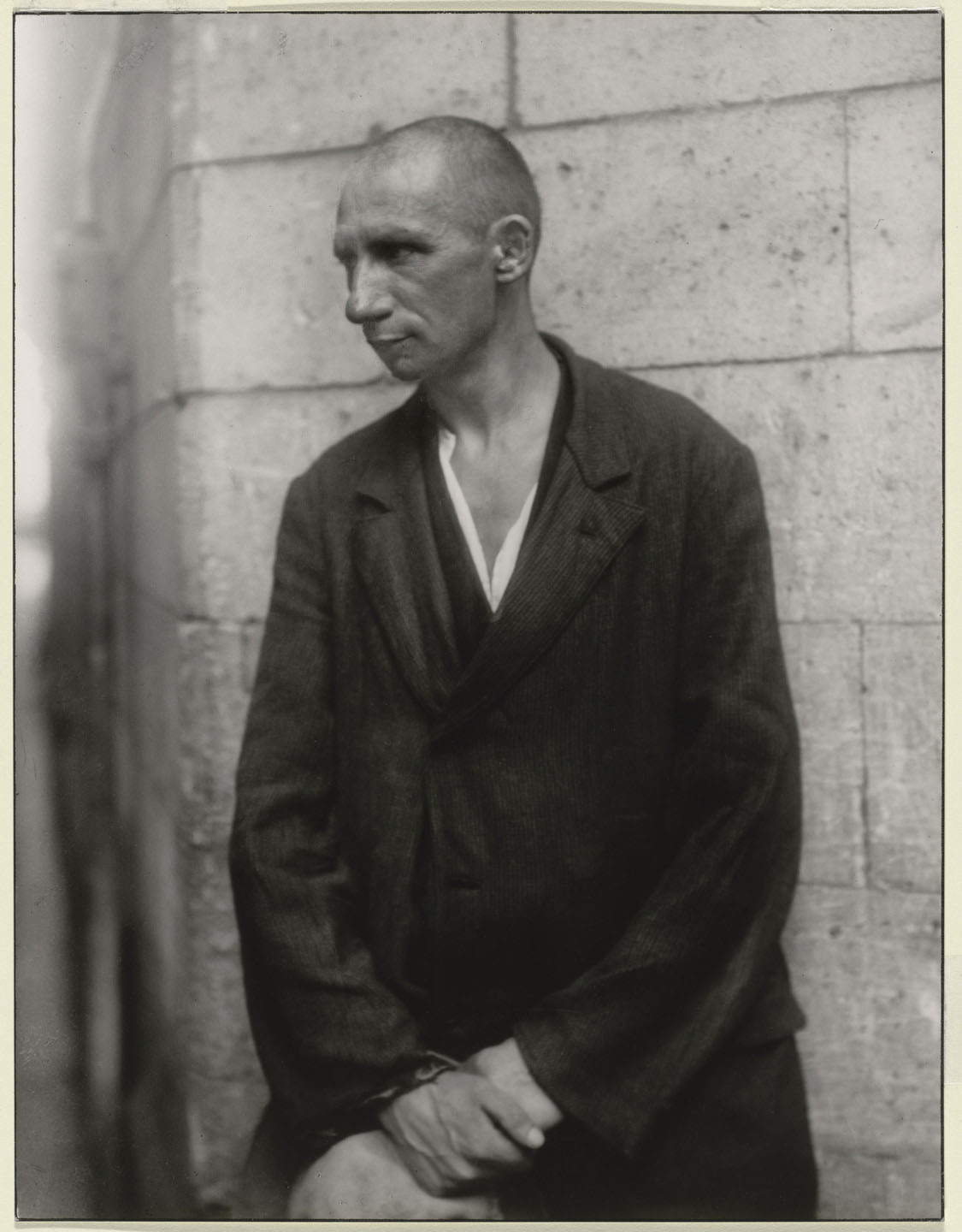
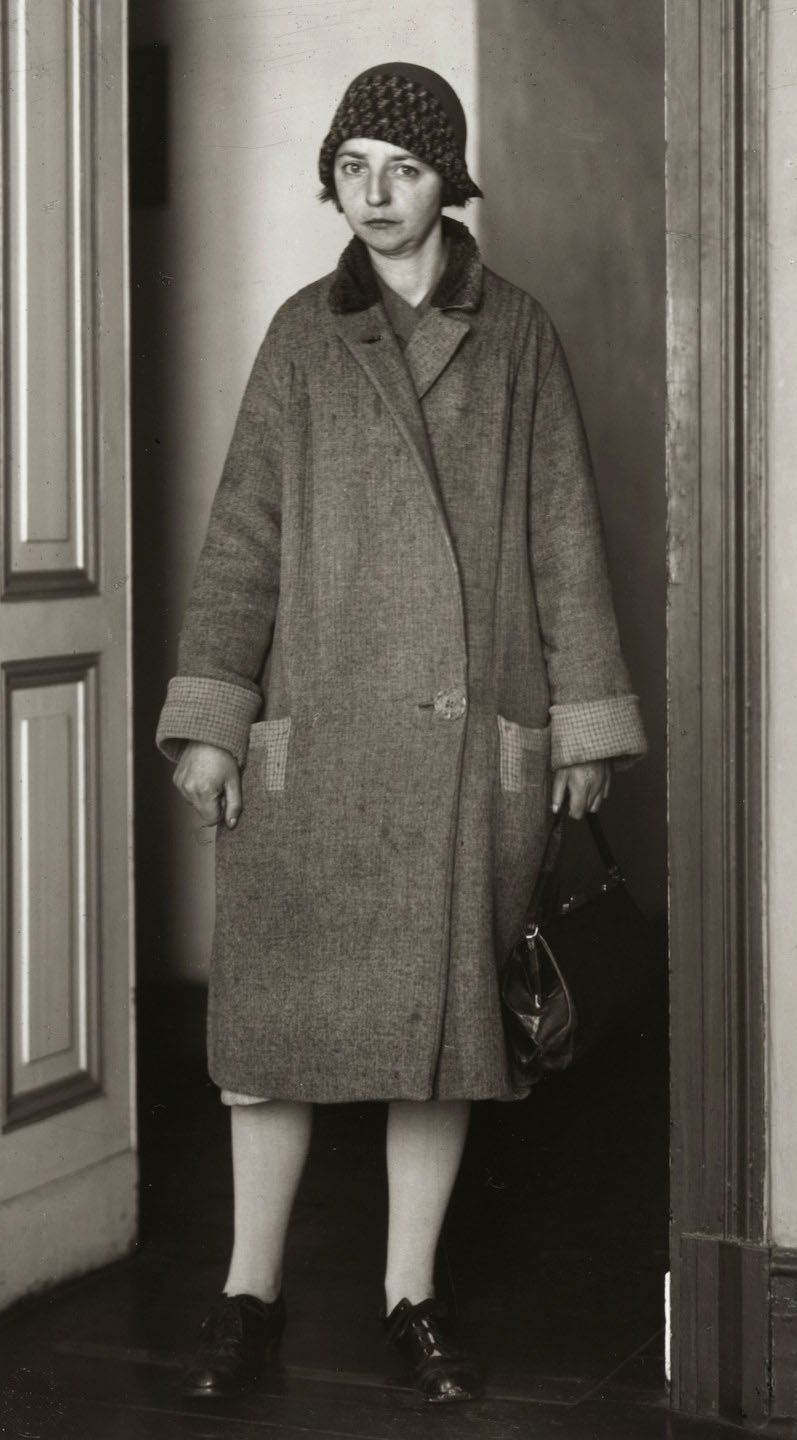
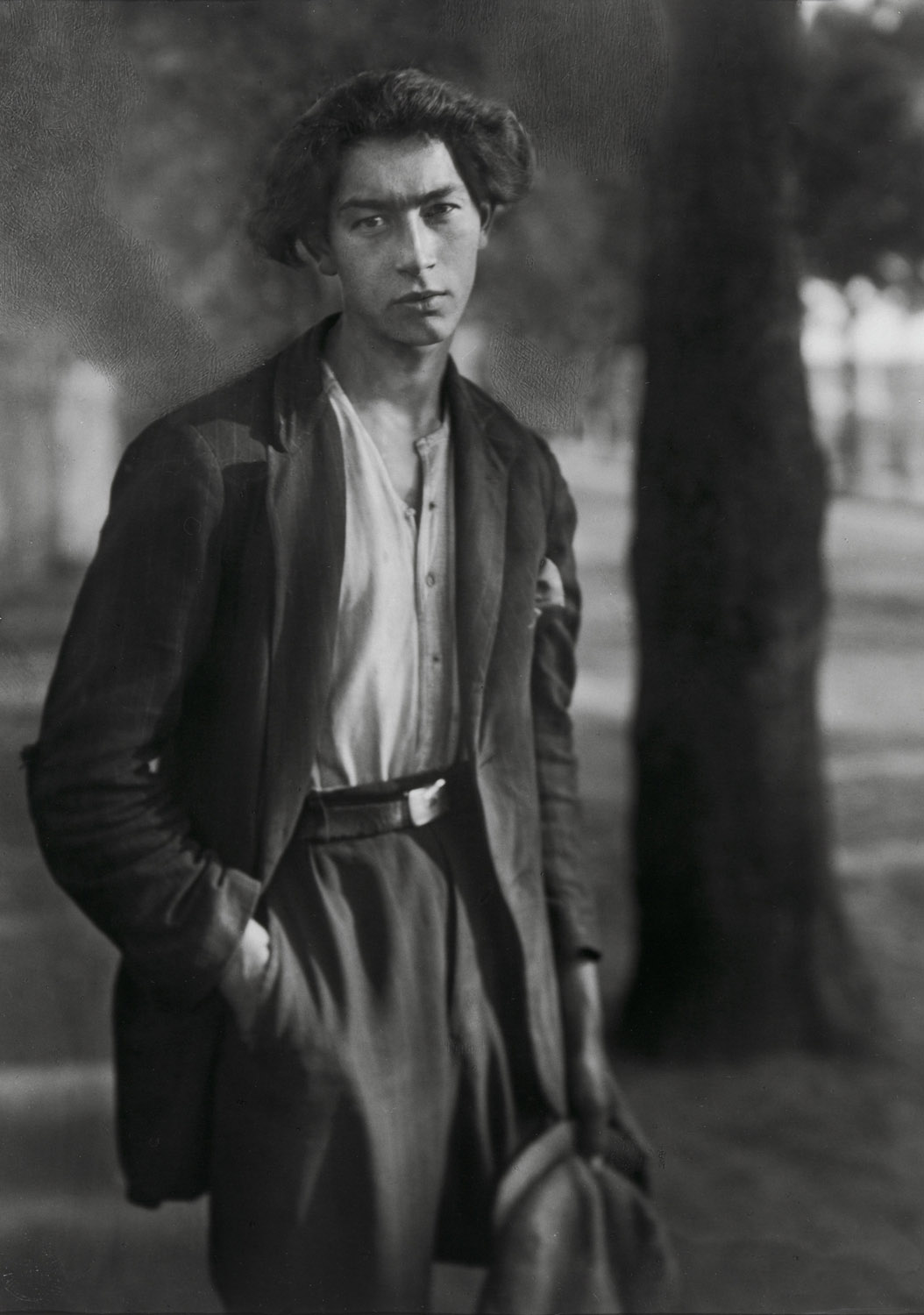
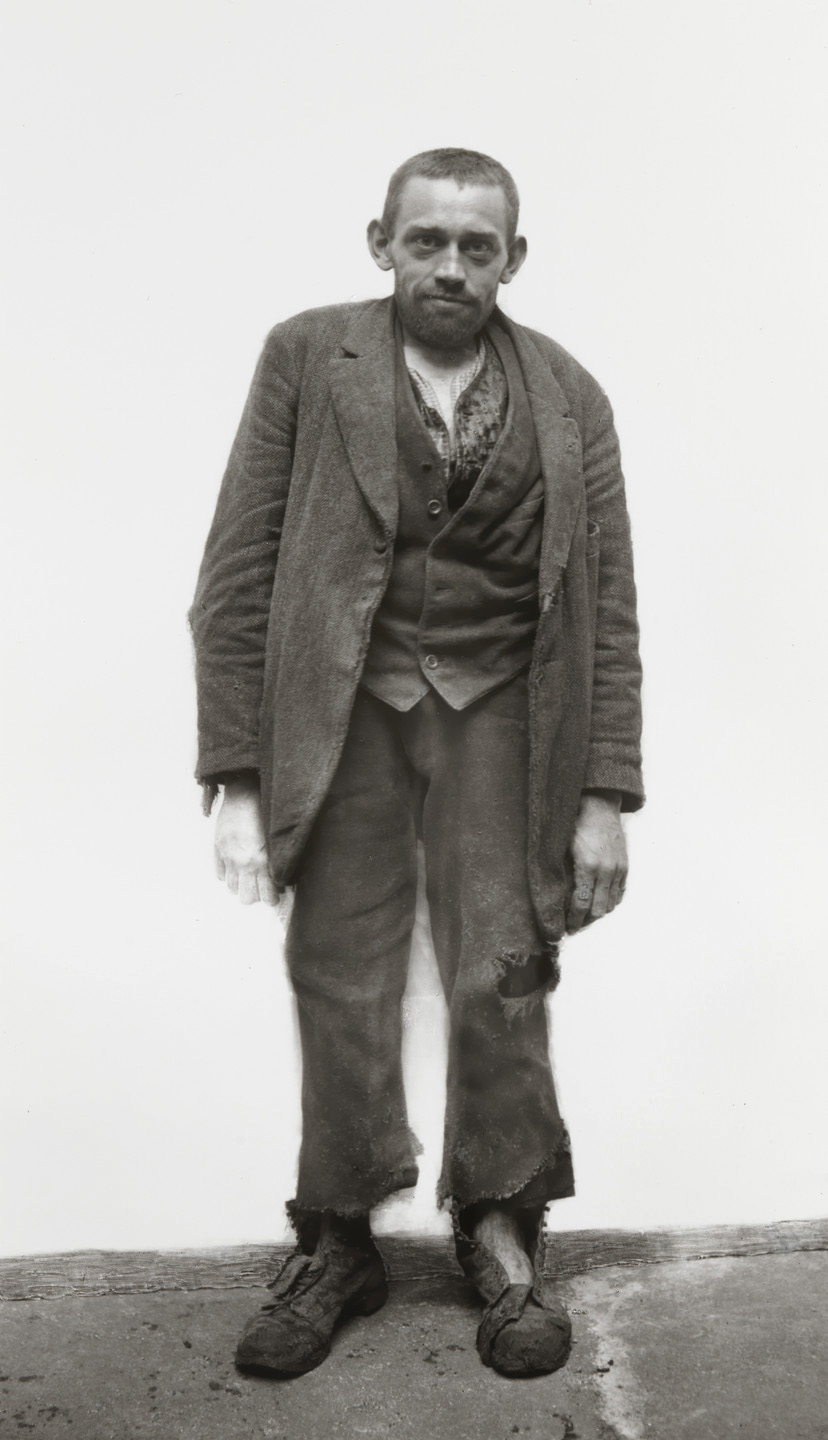
August Sander (German, 1876-1964) 'Beggar' 1930, printed c. 1990-1999


August Sander (German, 1876-1964)
Beggar
1930, printed c. 1990-1999
Gelatin silver print
10 1/16 x 5 5/8 in. (25.5 x 14.3cm)
Societe Anonyme Acquisition Fund and Katharine Ordway Fund
© Die Photographische Sammlung / SK Stiftung Kultur – August Sander Archiv, Cologne / ARS, NY


Categories and portfolios

1/ The Farmer

This category serves as the foundation of his taxonomy, celebrating the “earthbound man” and rural life.

~ Portfolio of Archetypes
~ The Young Farmer
~ The Farmer’s Child and the Mother
~ The Farmer’s Family
~ The Farmer—His Life and Work
~ Farming Types

2/ The Skilled Tradesman

This volume highlights individuals in specialized professions and manual labor. 

~ The Skilled Tradesman
~ The Apprentice / Journeyman
~ The Workshop and Factory
~ The Technician and Inventor

3/ The Woman

Dedicated to women in various life stages, social roles, and occupations.

~ The Woman
~ The Family
~ The Woman at Work
~ The Intellectual and Practical Occupation
~ The Elegant Woman

4/ Classes and Professions

This category spans the socio-economic hierarchy, from physical laborers to the political and business elite. 

~ The Working Youth
~ The Soldier
~ The Student
~ The Scholar and Academic
~ The Clergy
~ The Jurist / Official
~ The Teacher and Educator
~ The Doctor and Pharmacist
~ The Artist (Performing Arts)
~ The Businessman
~ The Industrialist / Banker
~ The High Nobility

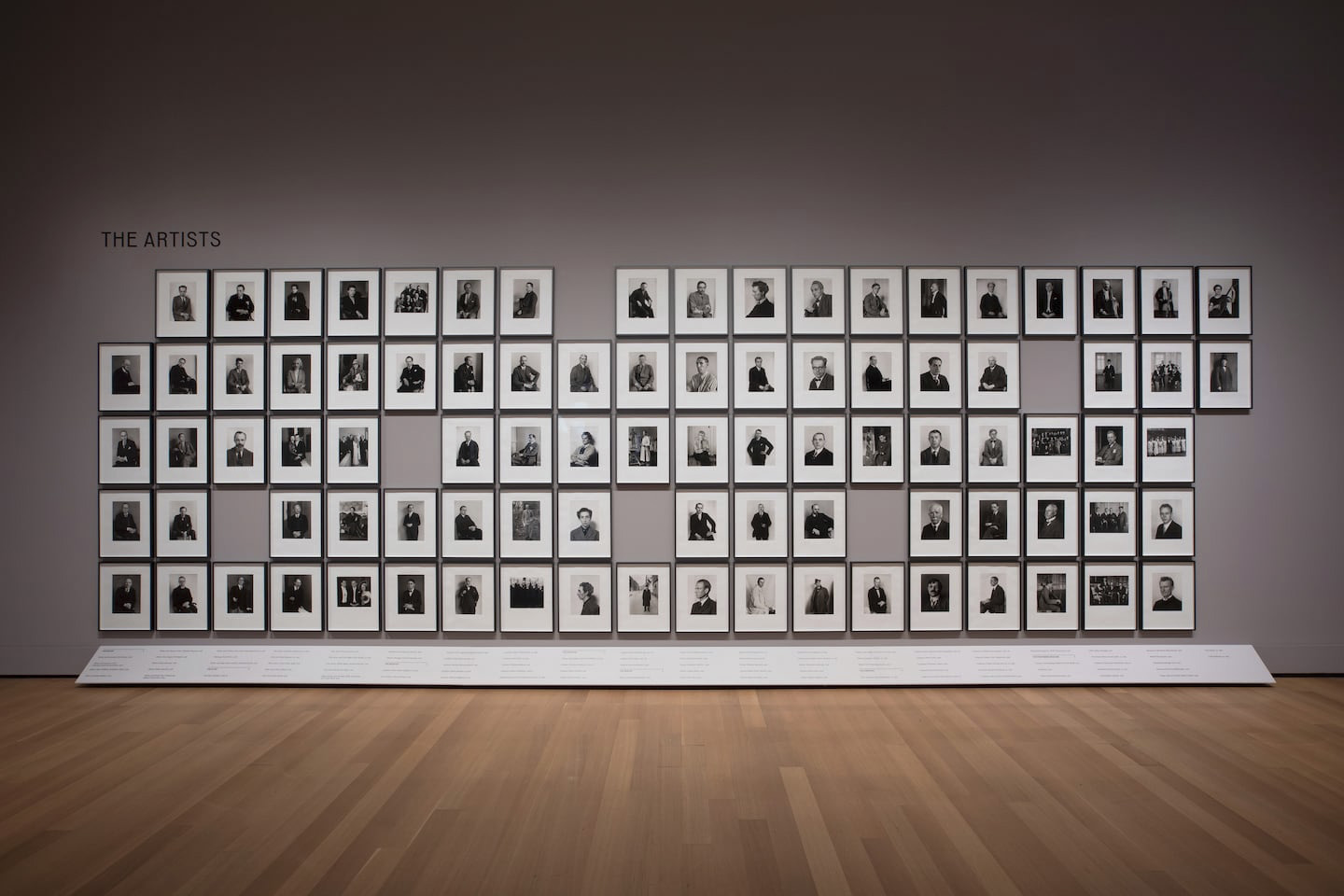
5. The Artists

This group focuses entirely on the creative and bohemians fields.

~ The Musician
~ The Poet
~ The Painter and Sculptor
~ The Architect

6. The City

An exploration of urban environments, public life, and various services or entertainment figures.

~ The City
~ The Representative of the City
~ The City Dweller
~ The Street Life
~ The Waiter / The Publican / The Cook
~ The Entertainer / The Showman
~ The Travel / The Circus / The Fairground
~ The Types and Originals
~ The Sportsman (Winter/Summer)
~ The Soldier
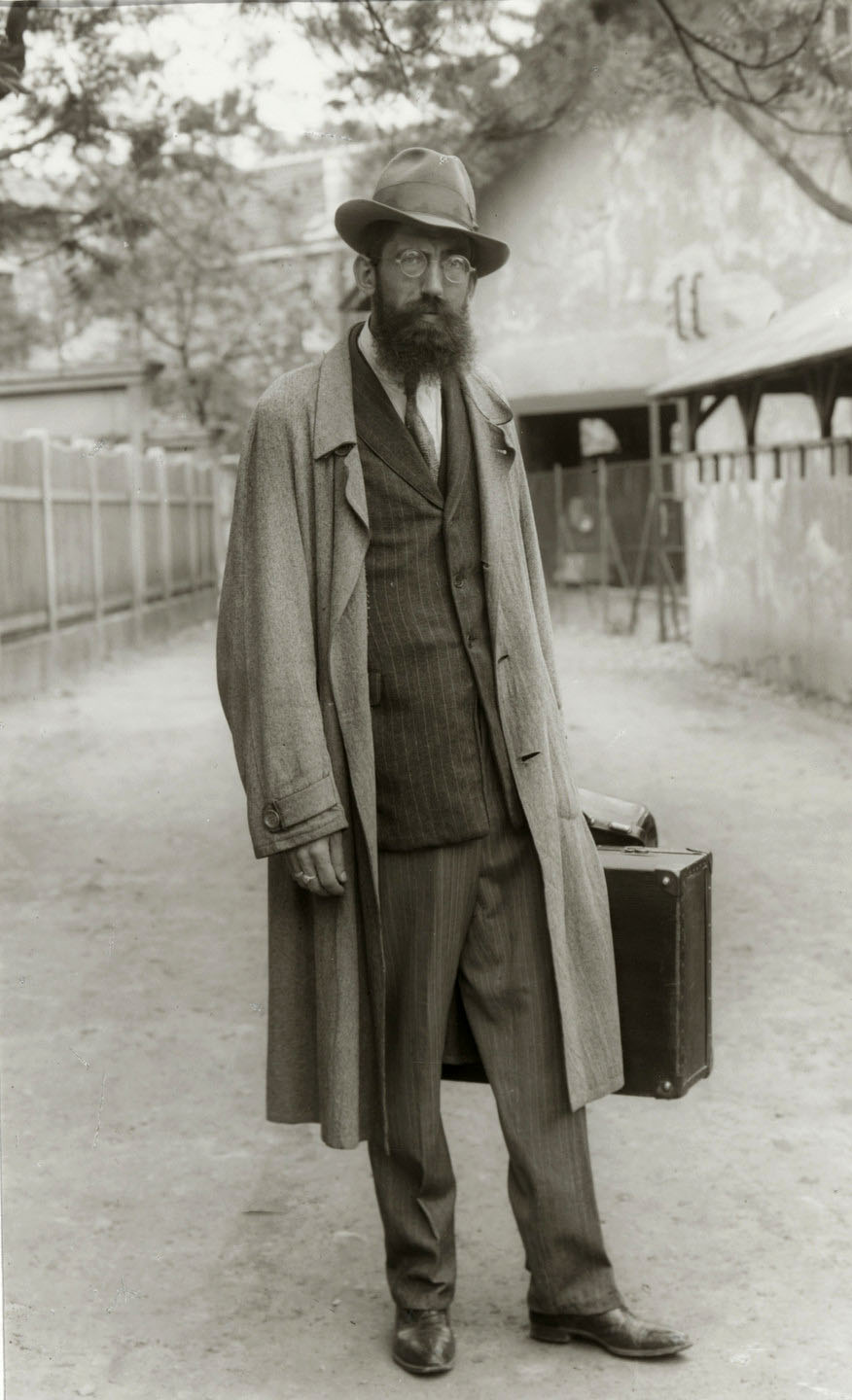
~ The Emigrant

7. The Last People

This poignant category focuses on the margins of society, specifically the themes of old age, sickness, and death.

~ Old Age
~ The Blind
~ The Sick
~ The Insane / Idiots
~ The Dying / The Dead


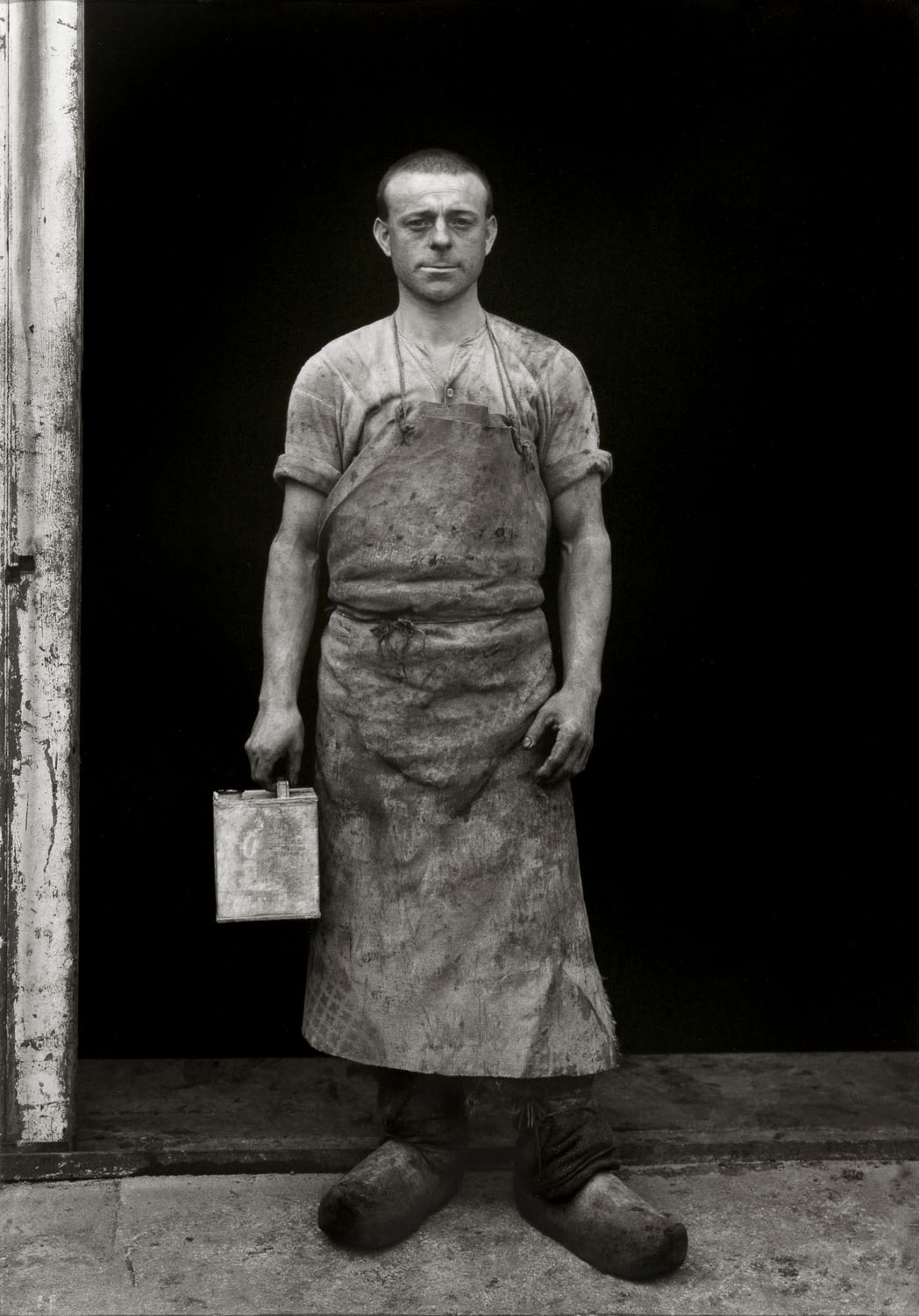
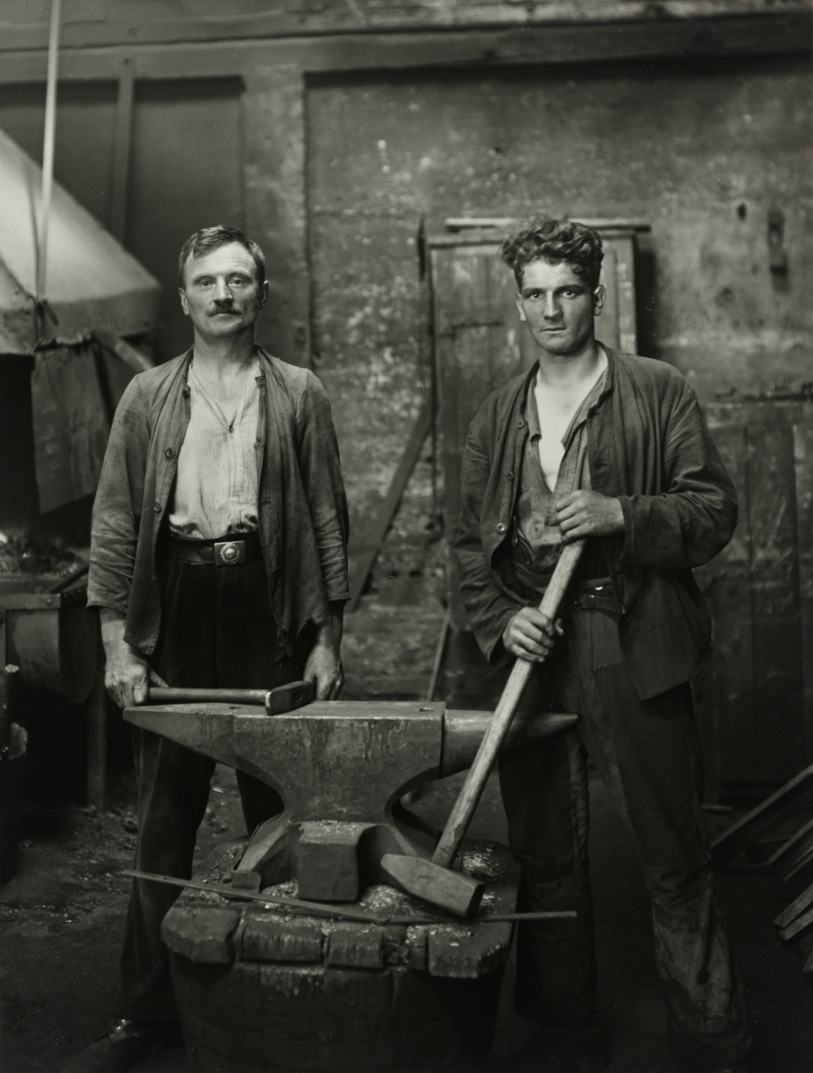
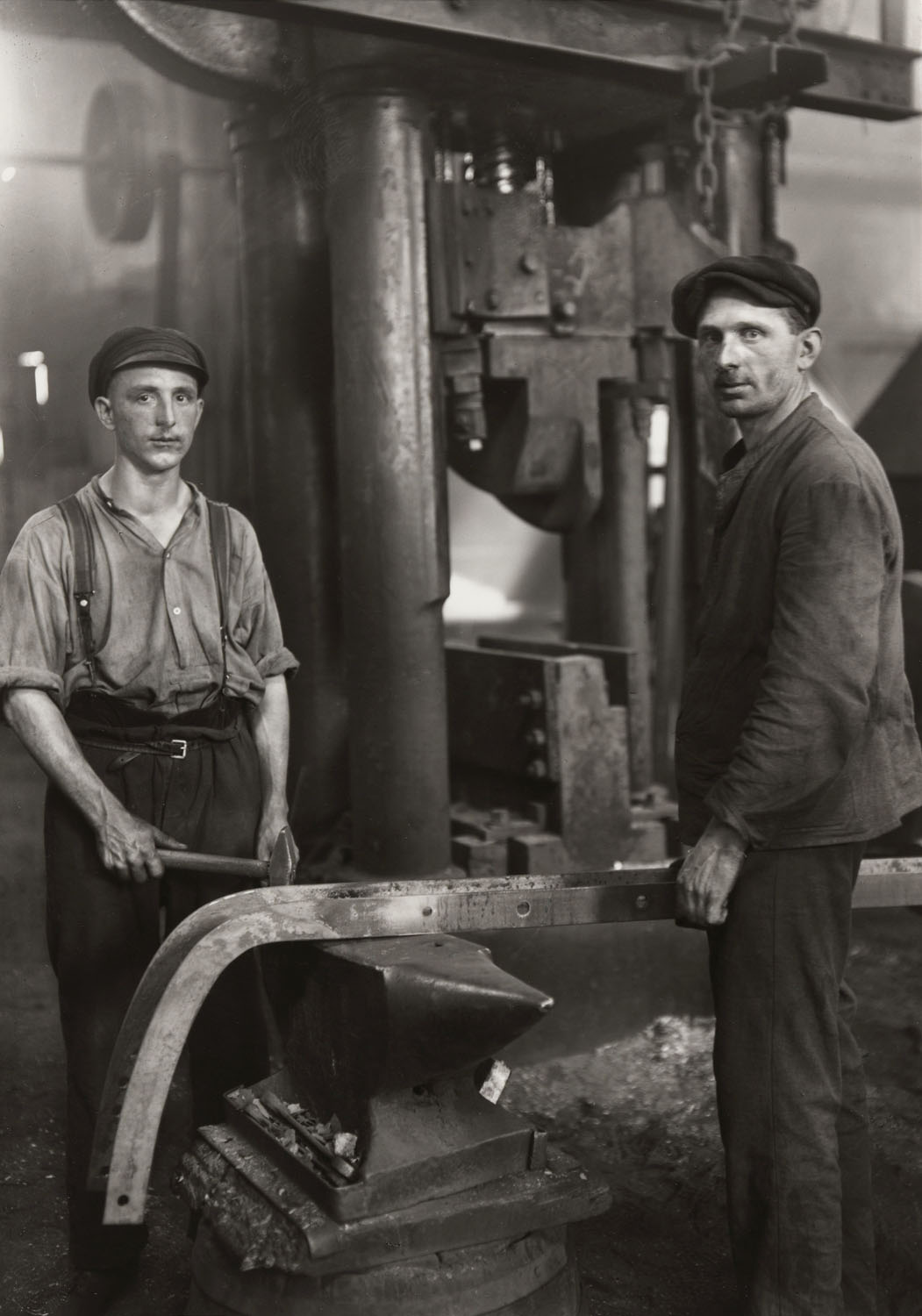
August Sander (German, 1876-1964) 'Blacksmith' c. 1930


August Sander (German, 1876-1964)
Blacksmith
c. 1930, printed c. 1990-1999
Gelatin silver print
9 13/16 x 7 3/4 in. (25 x 19.7cm)
Societe Anonyme Acquisition Fund and Katharine Ordway Fund
© Die Photographische Sammlung / SK Stiftung Kultur – August Sander Archiv, Cologne / ARS, NY


August Sander (German, 1876-1964) 'Blacksmiths' 1926, printed c. 1990-1999


August Sander (German, 1876-1964)
Blacksmiths
1926, printed c. 1990-1999
Gelatin silver print
10 3/16 x 7 3/4 in. (25.8 x 19.7cm)
Societe Anonyme Acquisition Fund and Katharine Ordway Fund
© Die Photographische Sammlung / SK Stiftung Kultur – August Sander Archiv, Cologne / ARS, NY


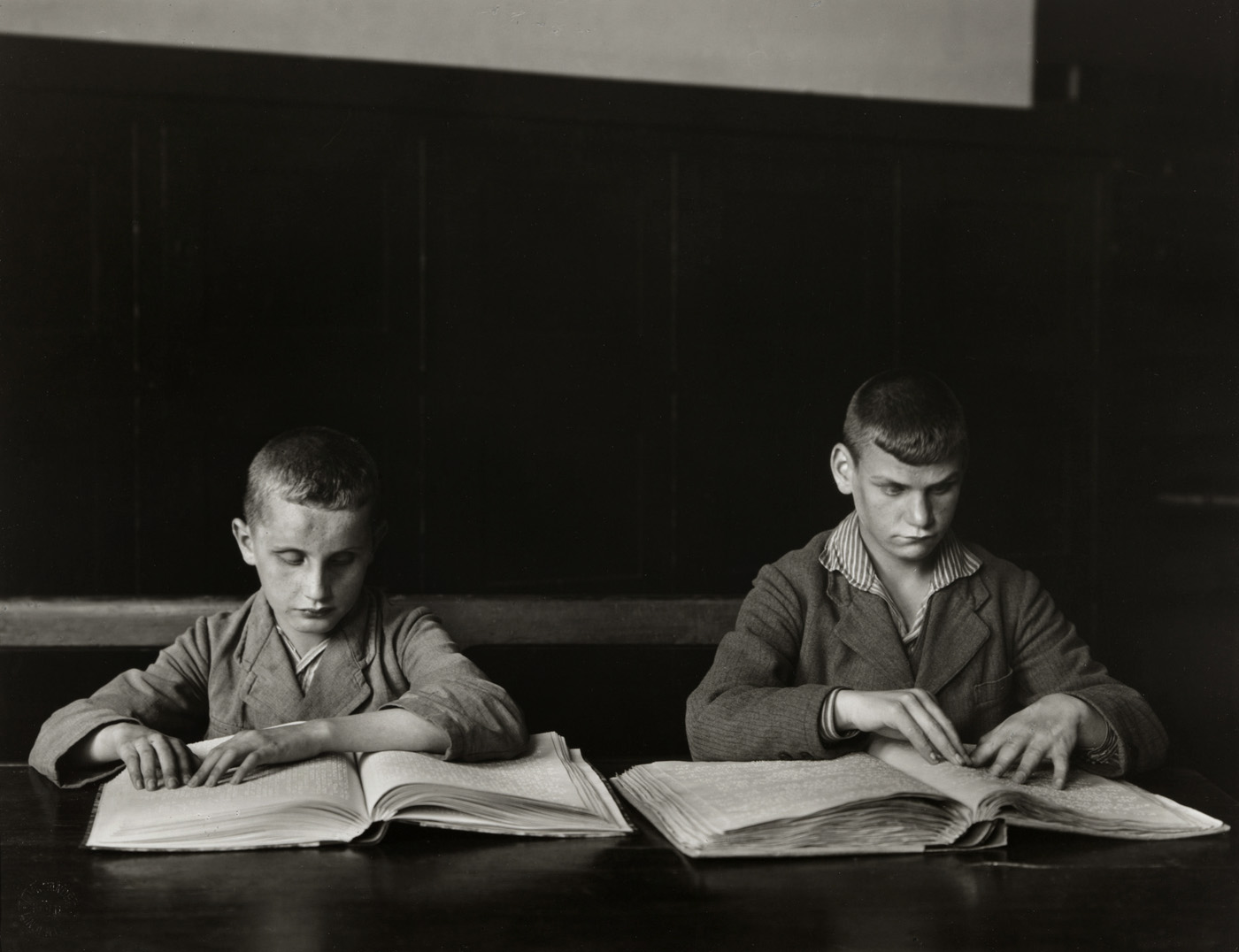
August Sander (German, 1876-1964) 'Blind Children' c. 1930, printed c. 1990-1999


August Sander (German, 1876-1964)
Blind Children
c. 1930, printed c. 1990-1999
Gelatin silver print
7 9/16 x 10 1/16 in. (19.2 x 25.5cm)
Societe Anonyme Acquisition Fund and Katharine Ordway Fund
© Die Photographische Sammlung / SK Stiftung Kultur – August Sander Archiv, Cologne / ARS, NY


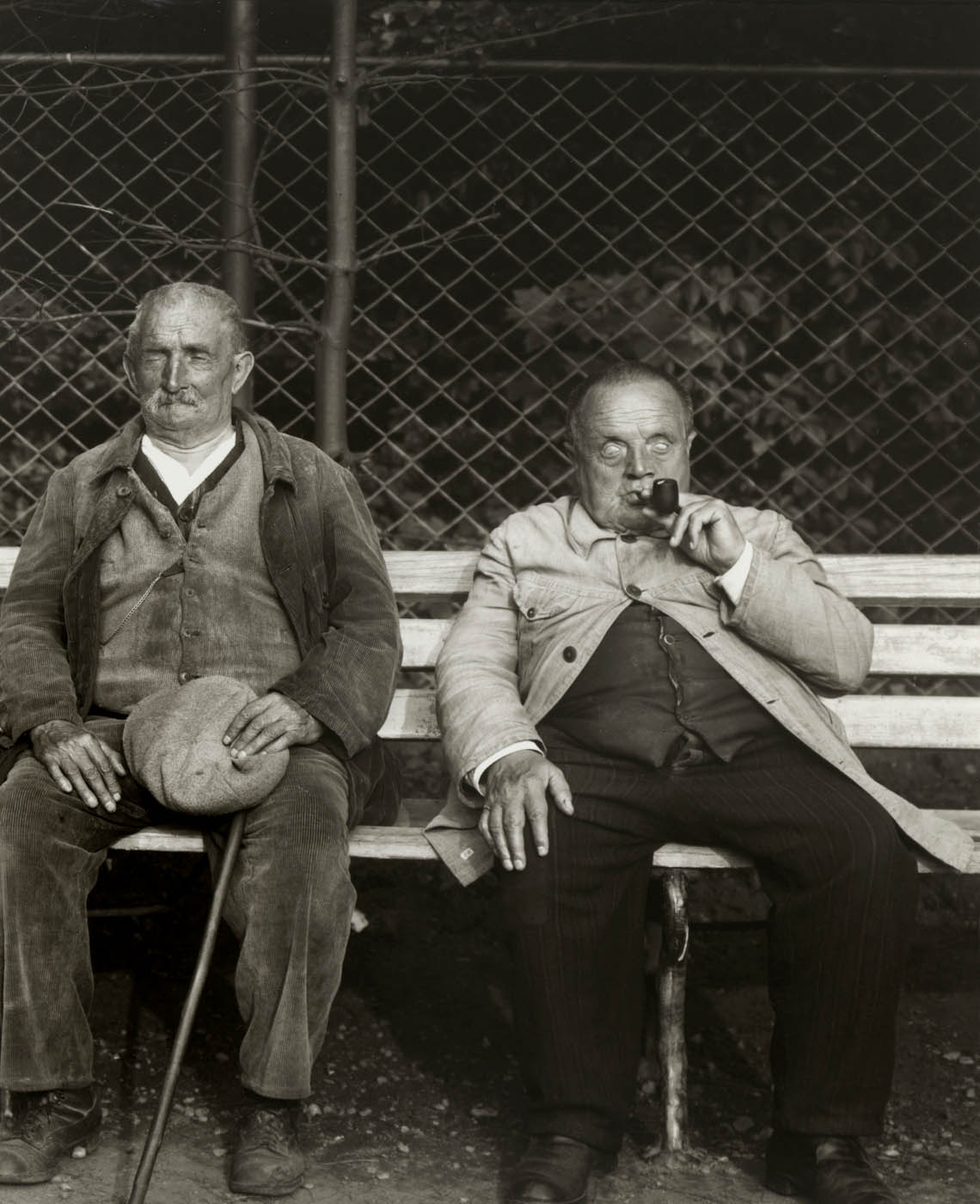
August Sander (German, 1876-1964) 'Blind Miner and Blind Soldier' c. 1930, printed c. 1990-1999


August Sander (German, 1876-1964)
Blind Miner and Blind Soldier
c. 1930, printed c. 1990-1999
Gelatin silver print
9 13/16 x 7 15/16 in. (24.9 x 20.1cm)
Societe Anonyme Acquisition Fund and Katharine Ordway Fund
© Die Photographische Sammlung / SK Stiftung Kultur – August Sander Archiv, Cologne / ARS, NY


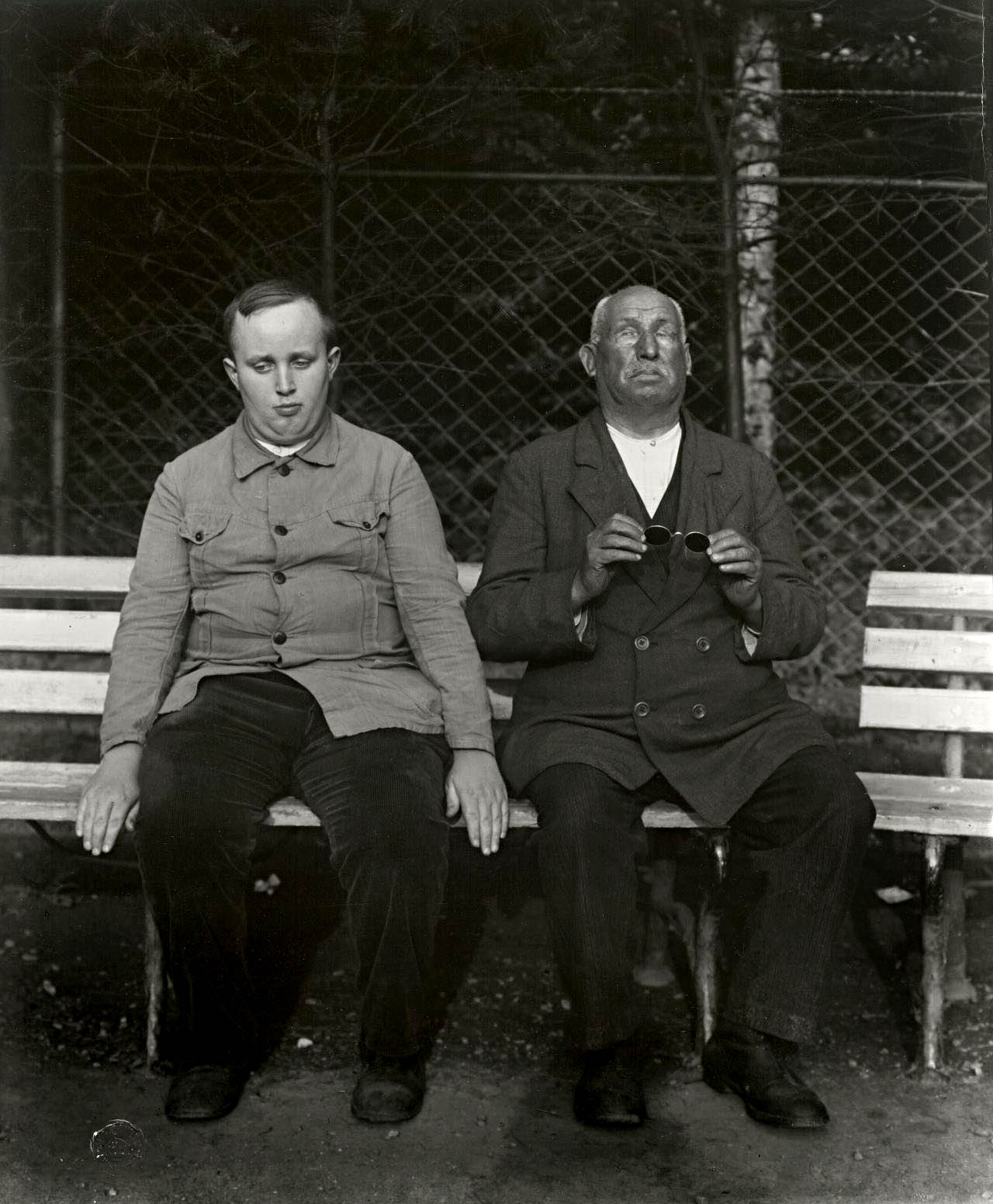
August Sander (German, 1876-1964) 'Blind People' c. 1930, printed c. 1990-1999


August Sander (German, 1876-1964)
Blind People
c. 1930, printed c. 1990-1999
Gelatin silver print
10 1/8 x 7 15/16 in. (25.7 x 20.2cm)
Societe Anonyme Acquisition Fund and Katharine Ordway Fund
© Die Photographische Sammlung / SK Stiftung Kultur – August Sander Archiv, Cologne / ARS, NY


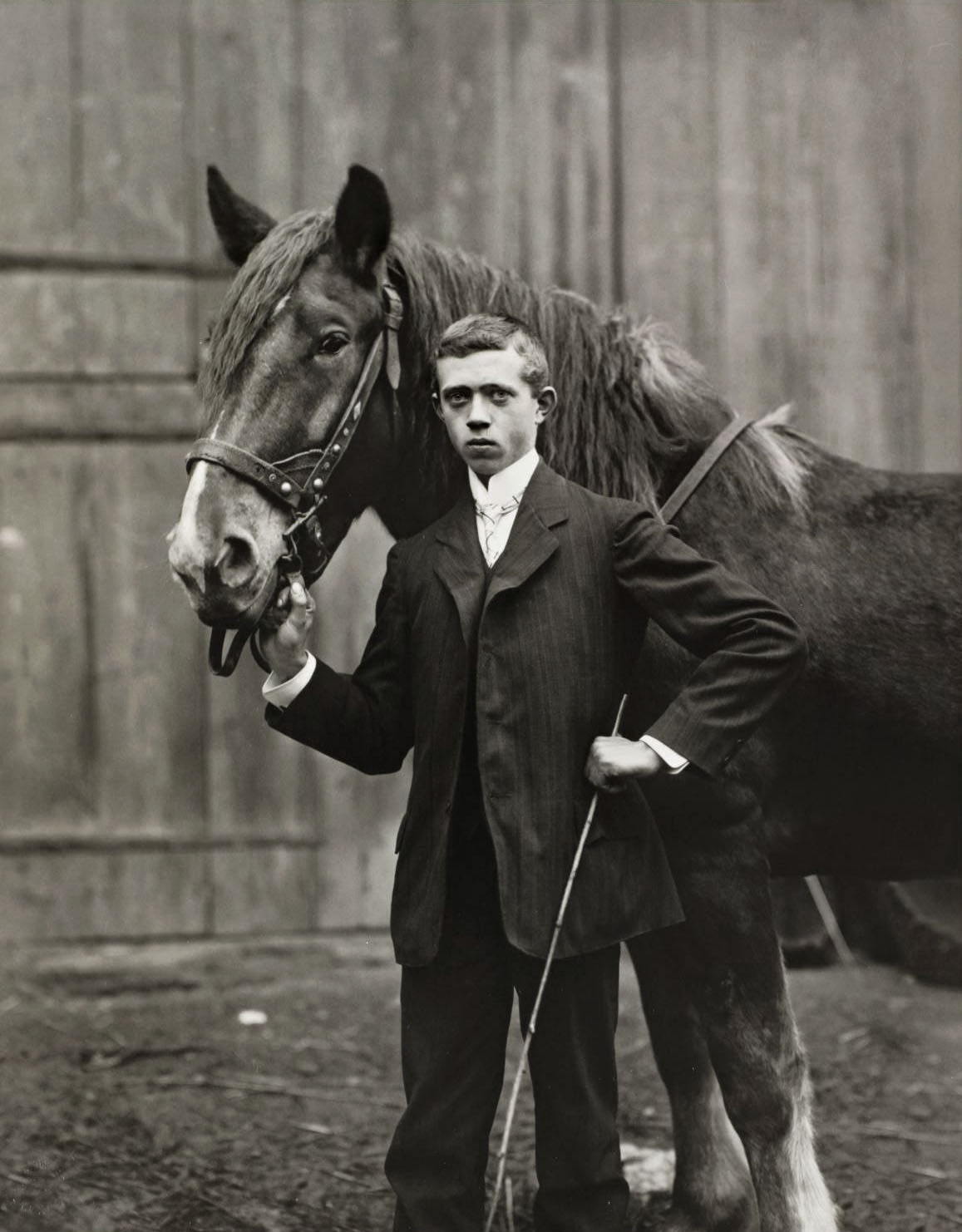
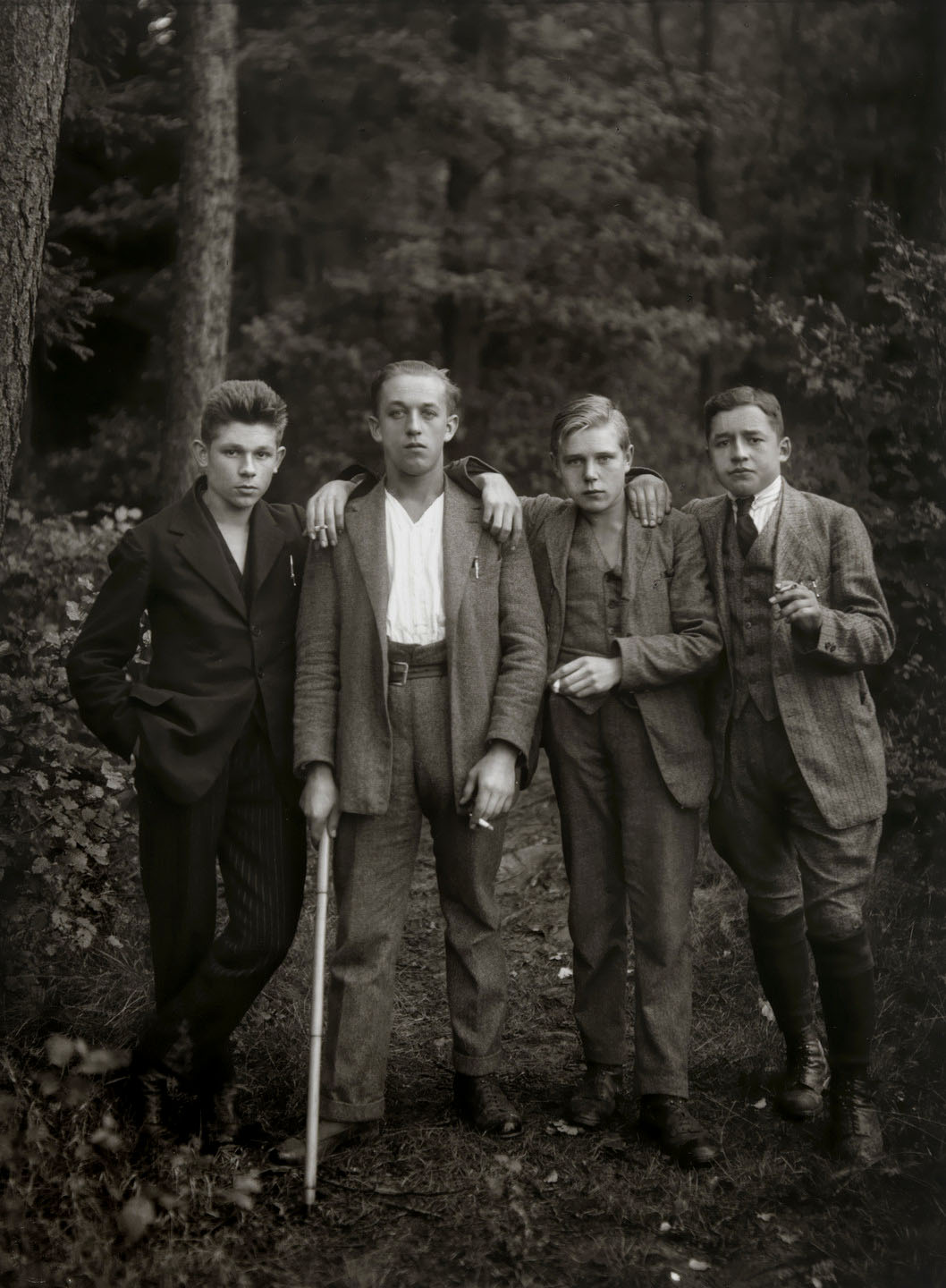
The German photographer August Sander (1876-1964) is one of the most significant and influential photographers of the 20th century. This exhibition presents Sander’s ambitious and groundbreaking portrait series Menschen des 20. Jahrhunderts (People of the 20th Century) (1892-1954), a canonical work in the history of photography. The presentation – of over 600 prints from the series – represents the most comprehensive installation of his life’s work.

For this monumental archive of modern humanity, Sander photographed German citizens from all classes and backgrounds, organising them into categories such as “The Skilled Tradesman,” “The Farmer,” “The Artist,” and “The Woman.” Sander conceived of the project in the 1920s, during the Weimar Republic, but included in it photographs he had made as early as 1892. His portrayal of marginalised individuals, including people with disabilities and the unemployed, provided visibility to those often excluded from mainstream representations and drew the ire of the Nazis. Striking for their unflinching realism and skilful observations of character, his images reflect the changing social landscape of Germany in the first half of the 20th century.

Text from the Yale University Art Gallery website


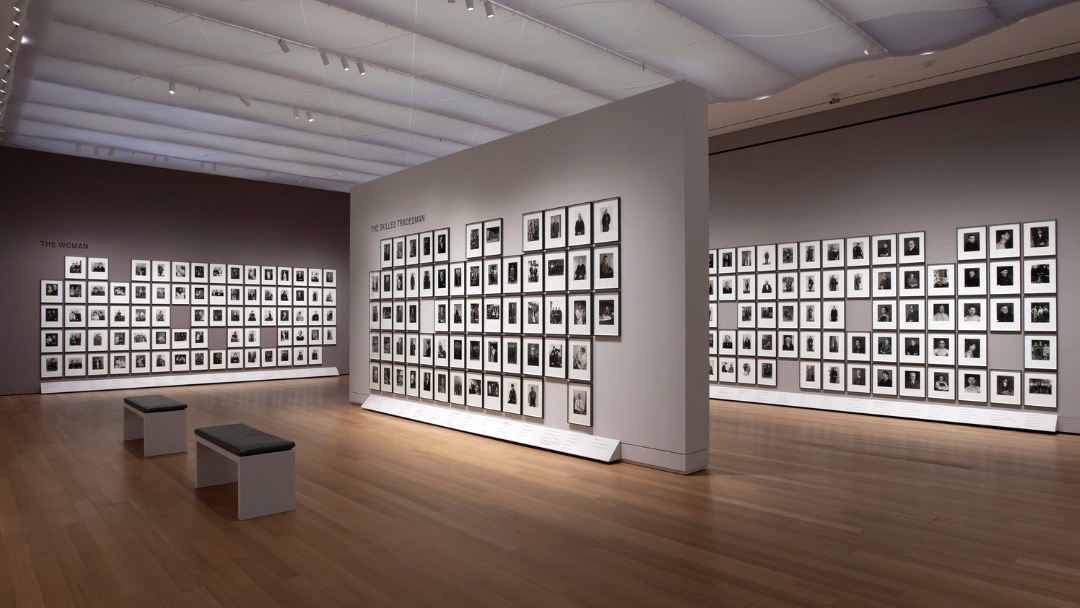
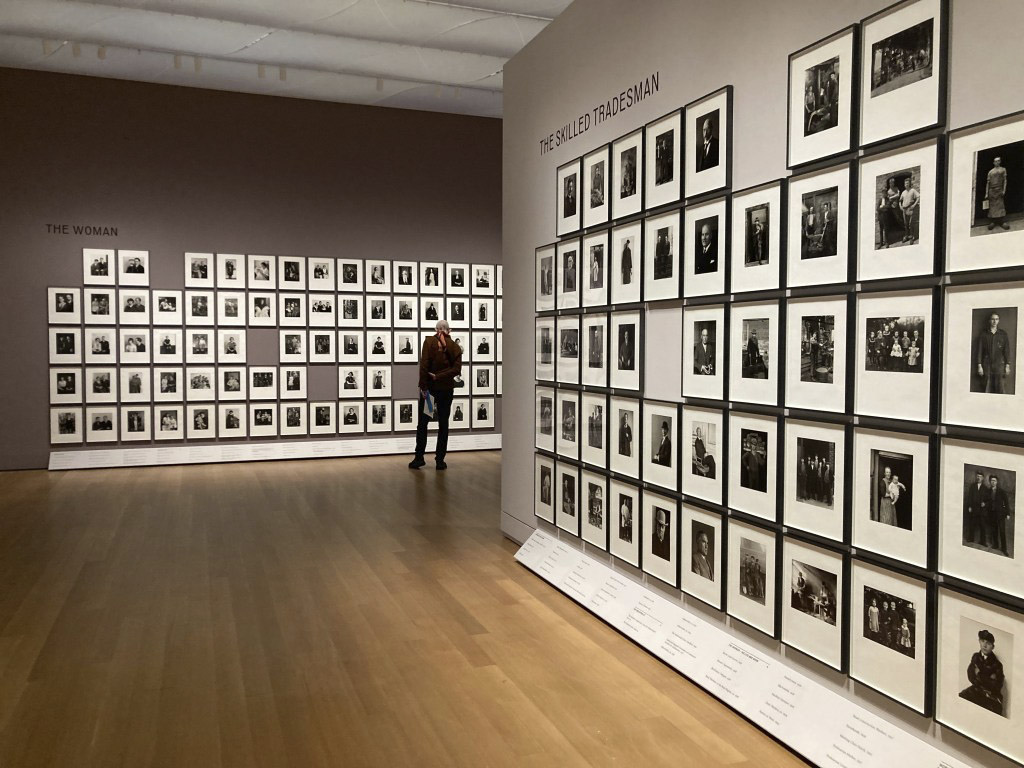
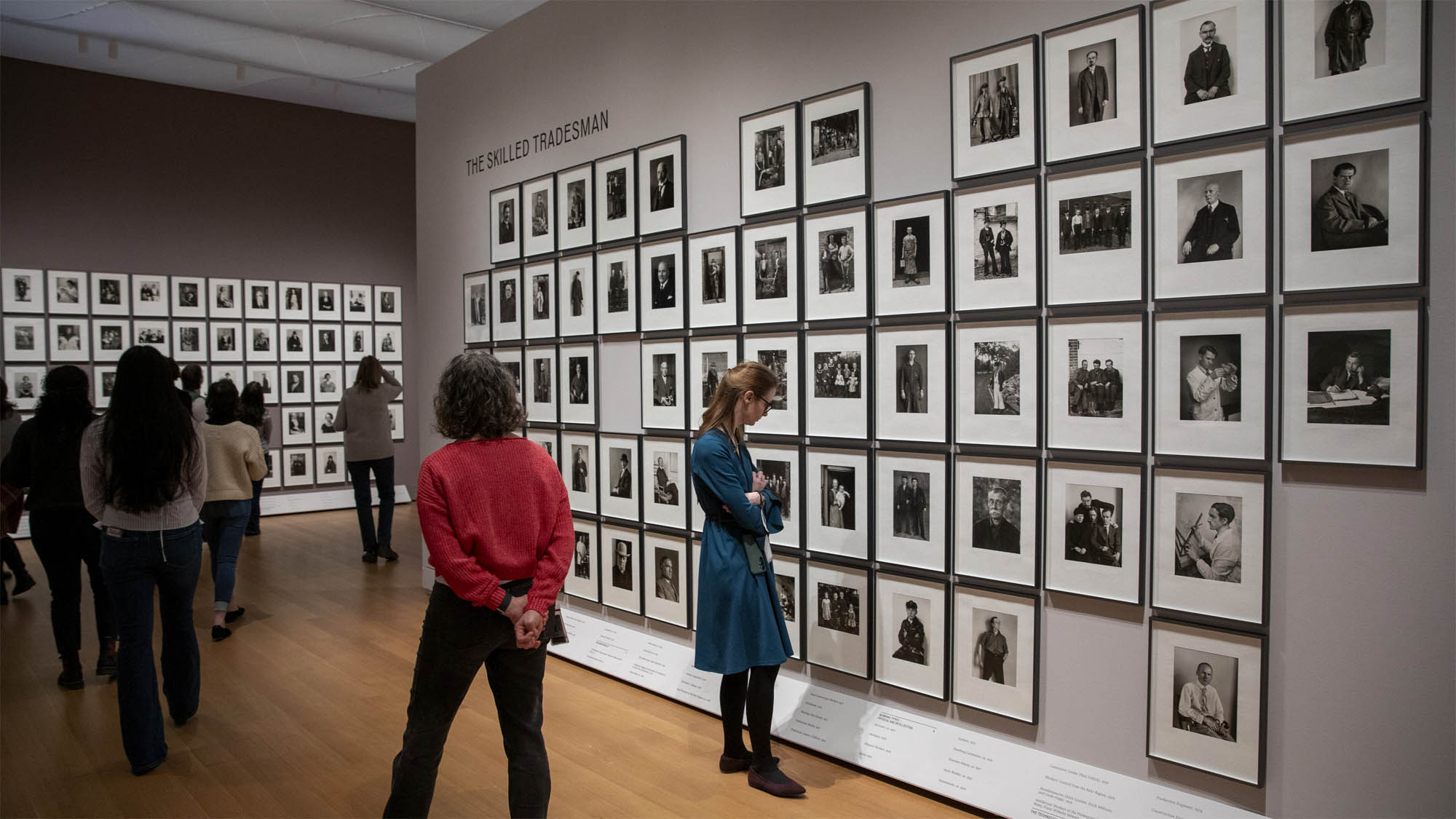
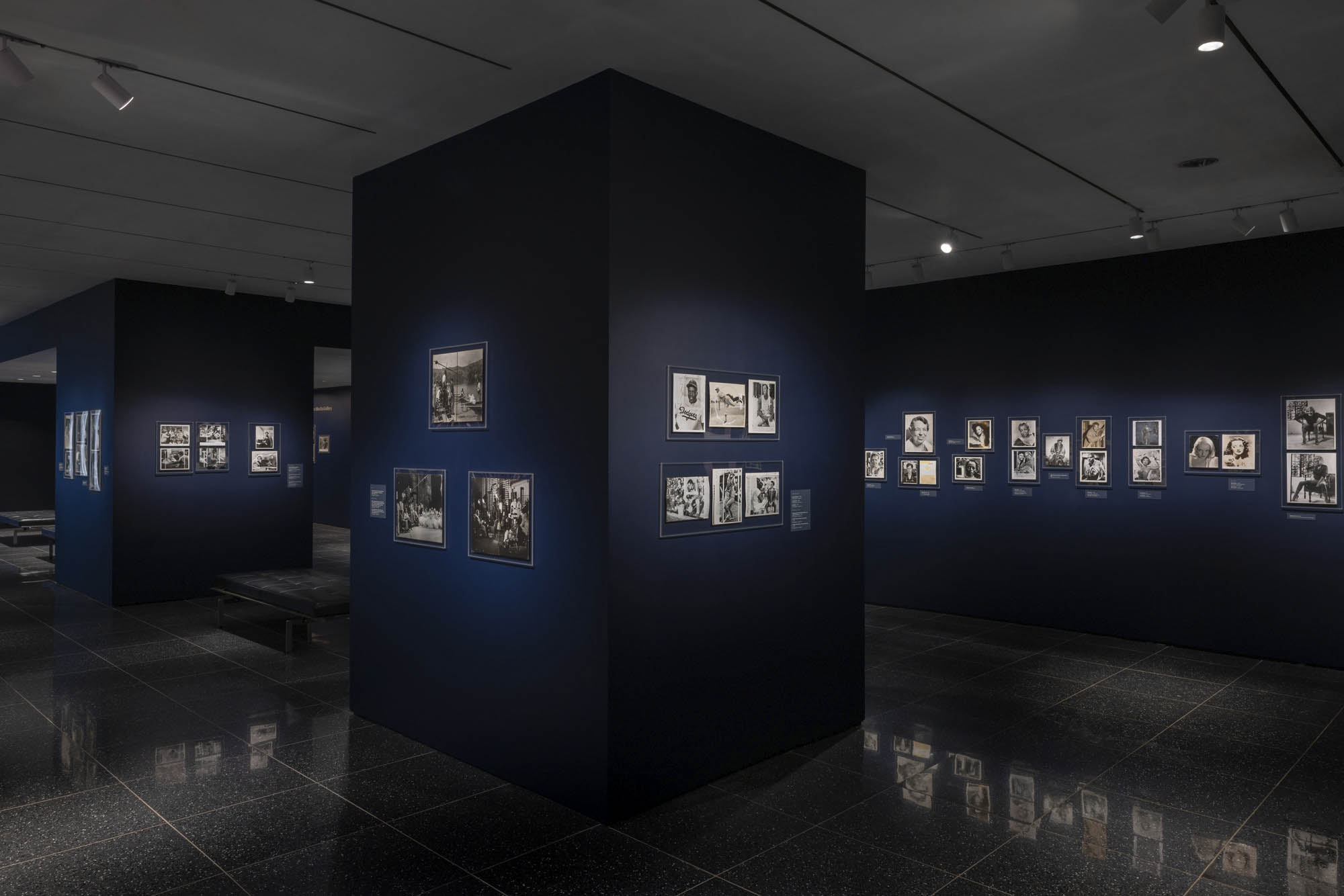
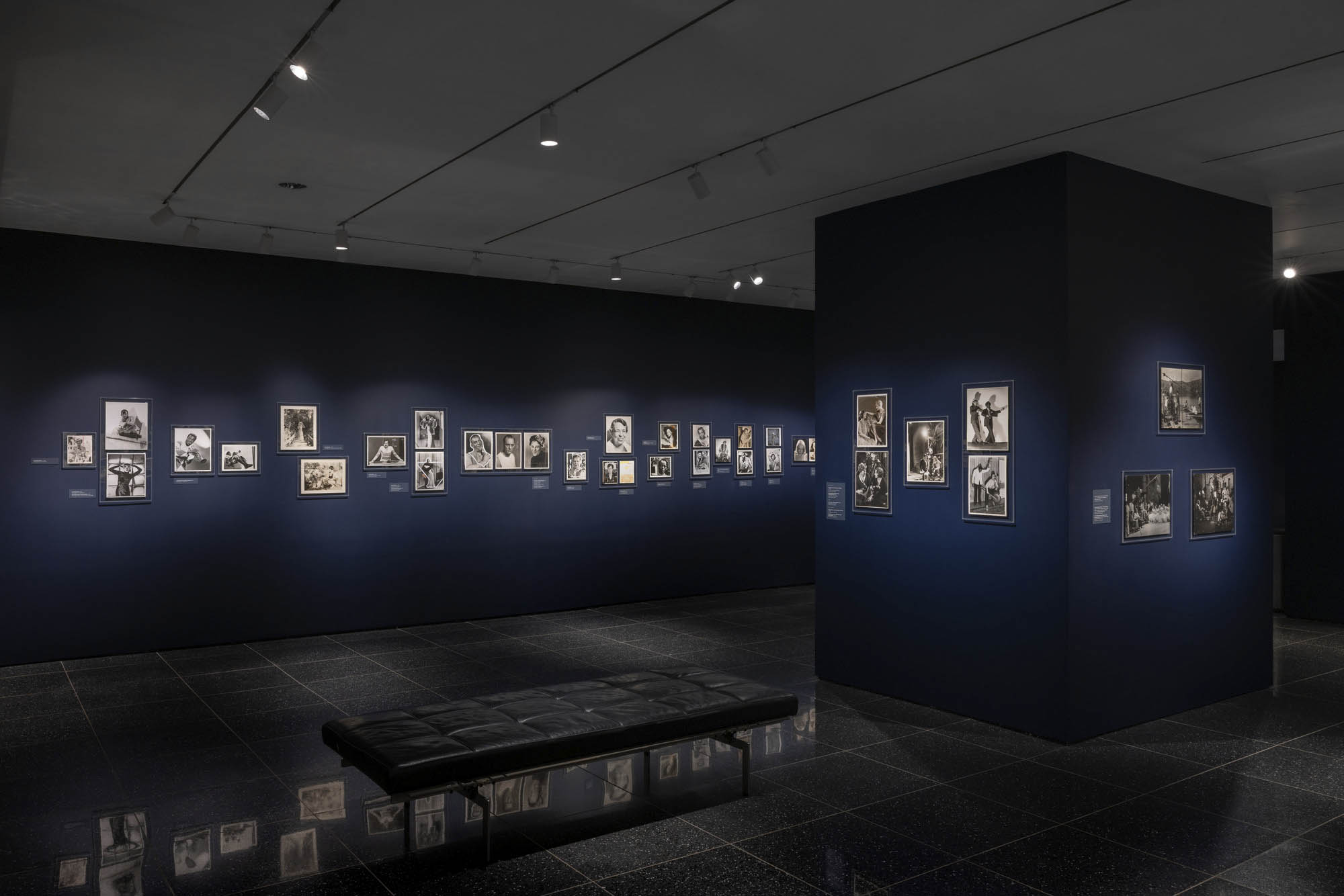
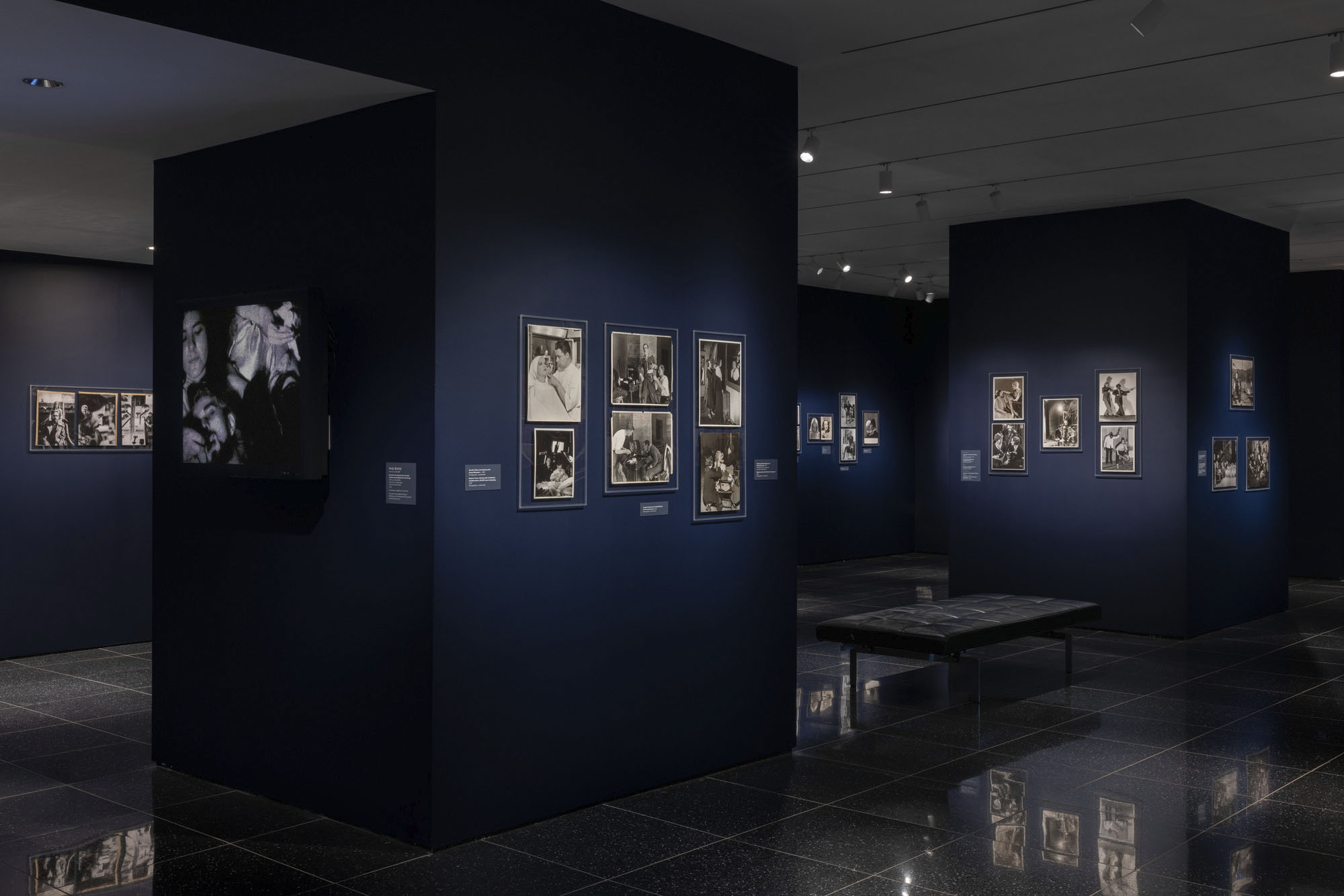
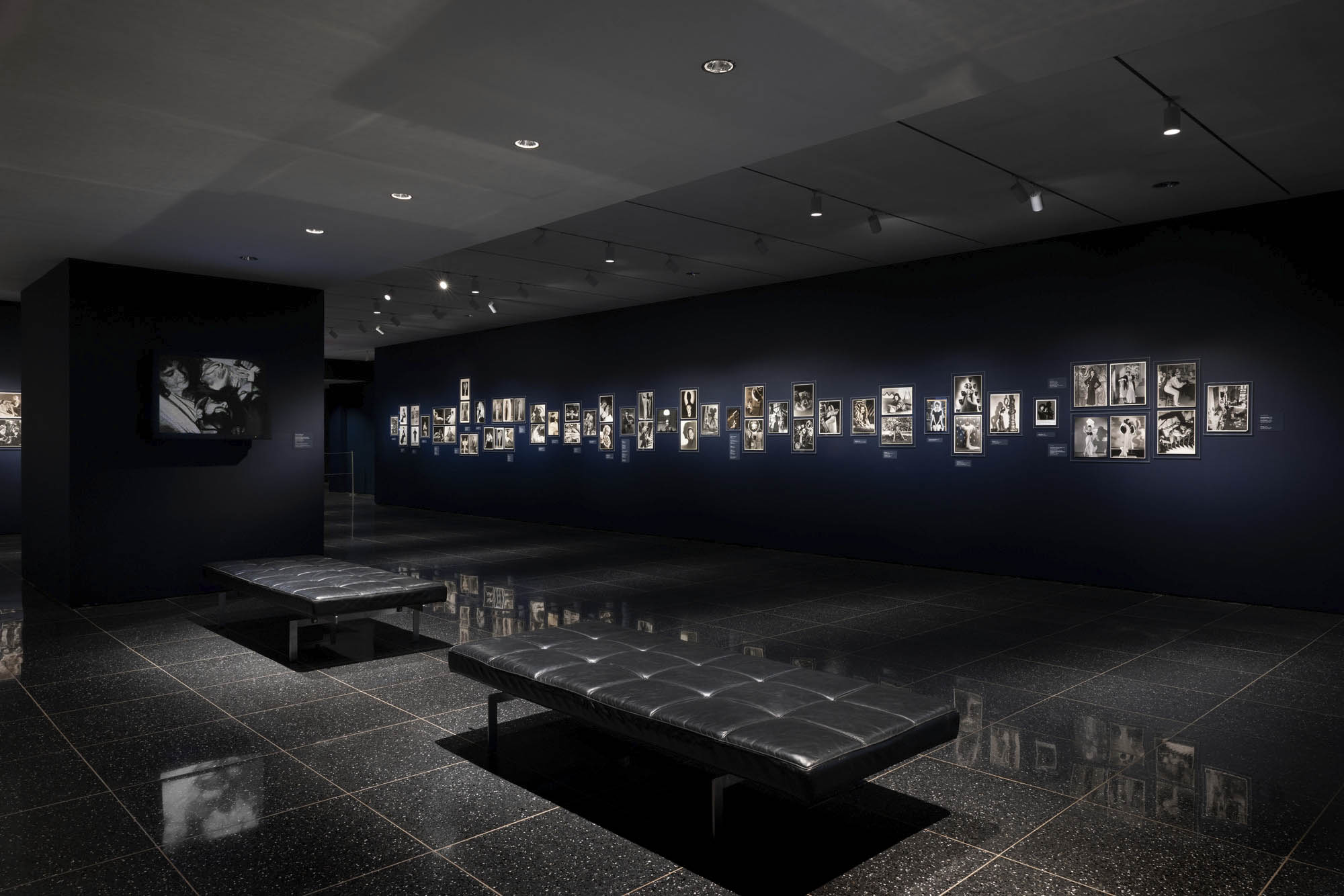
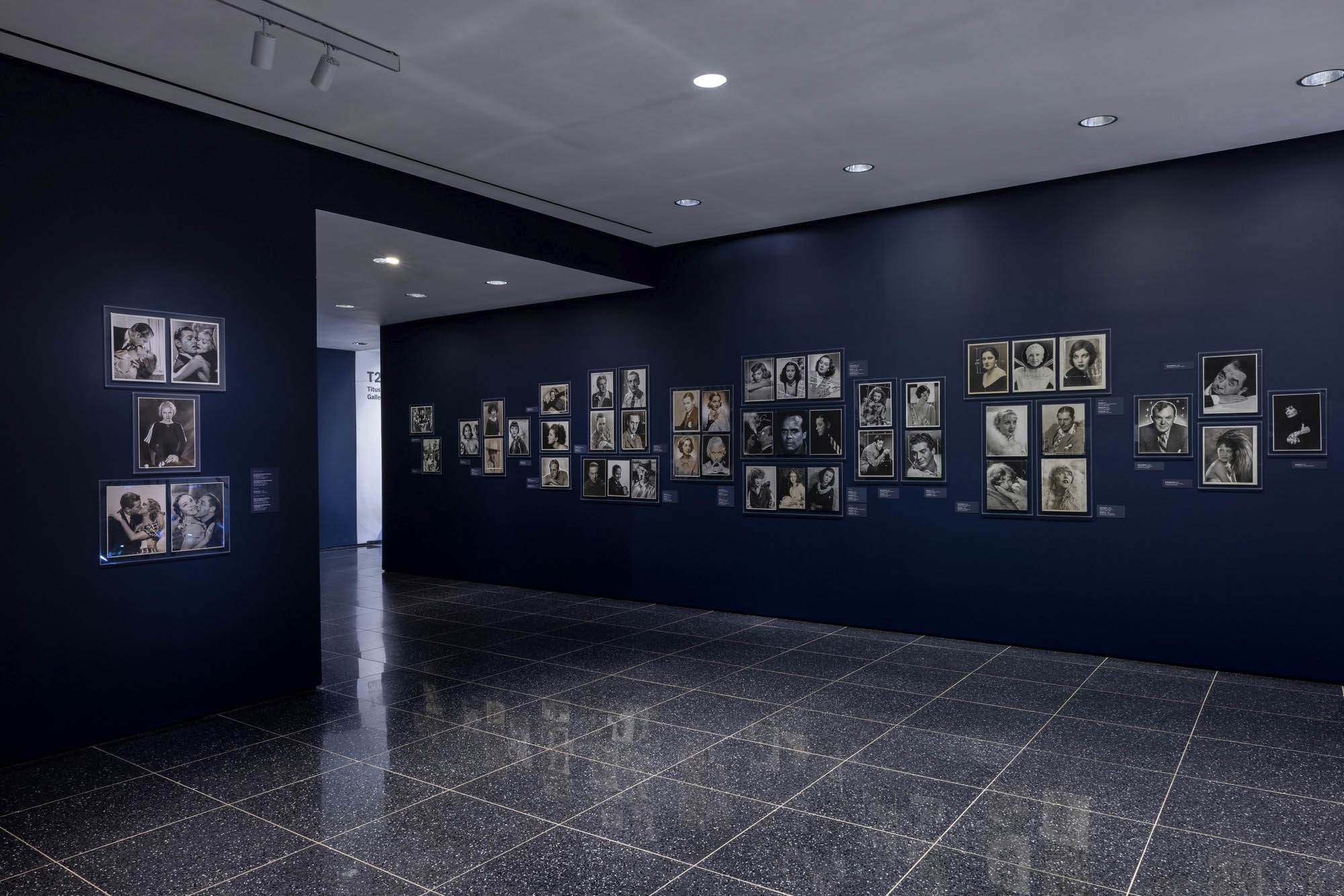
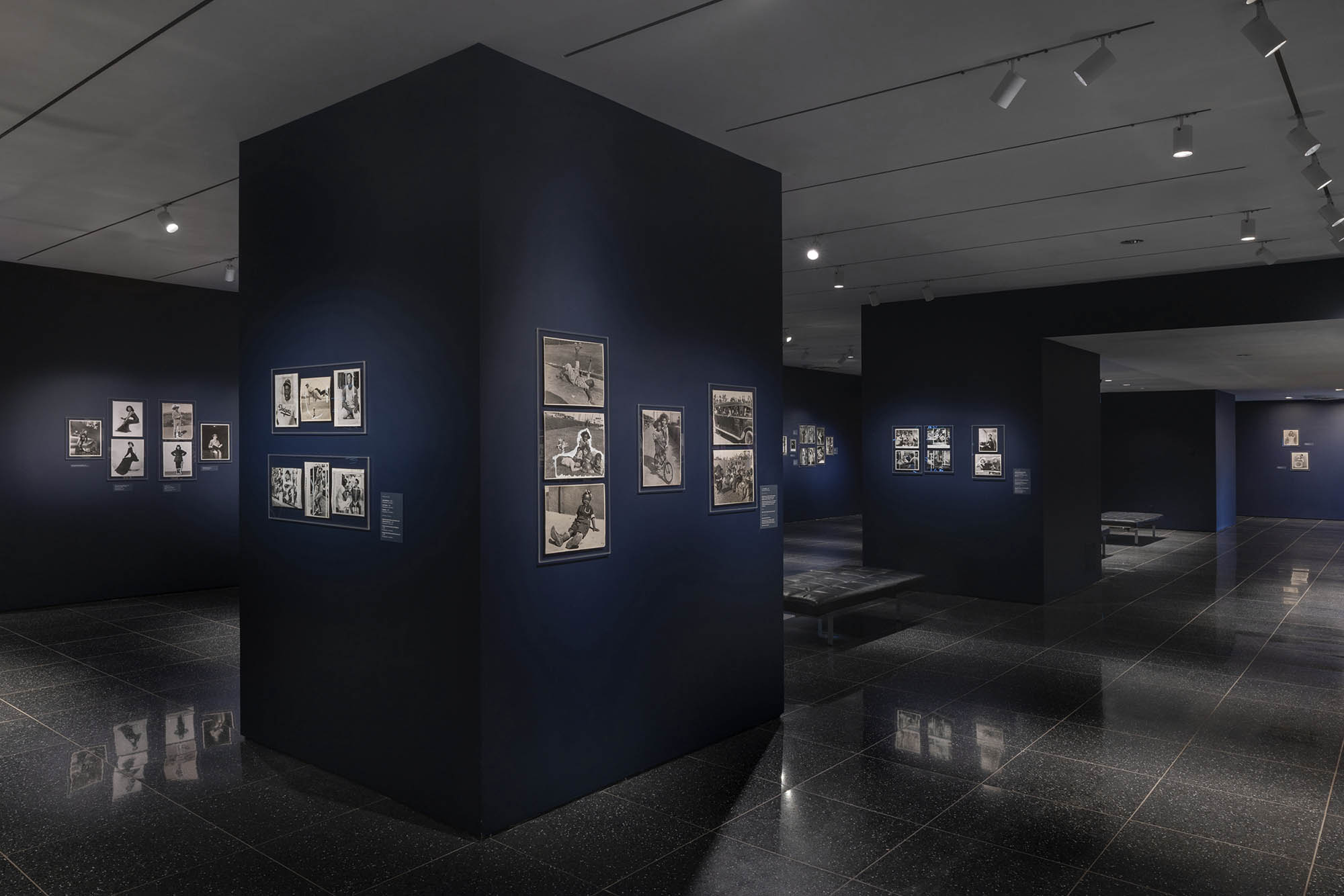
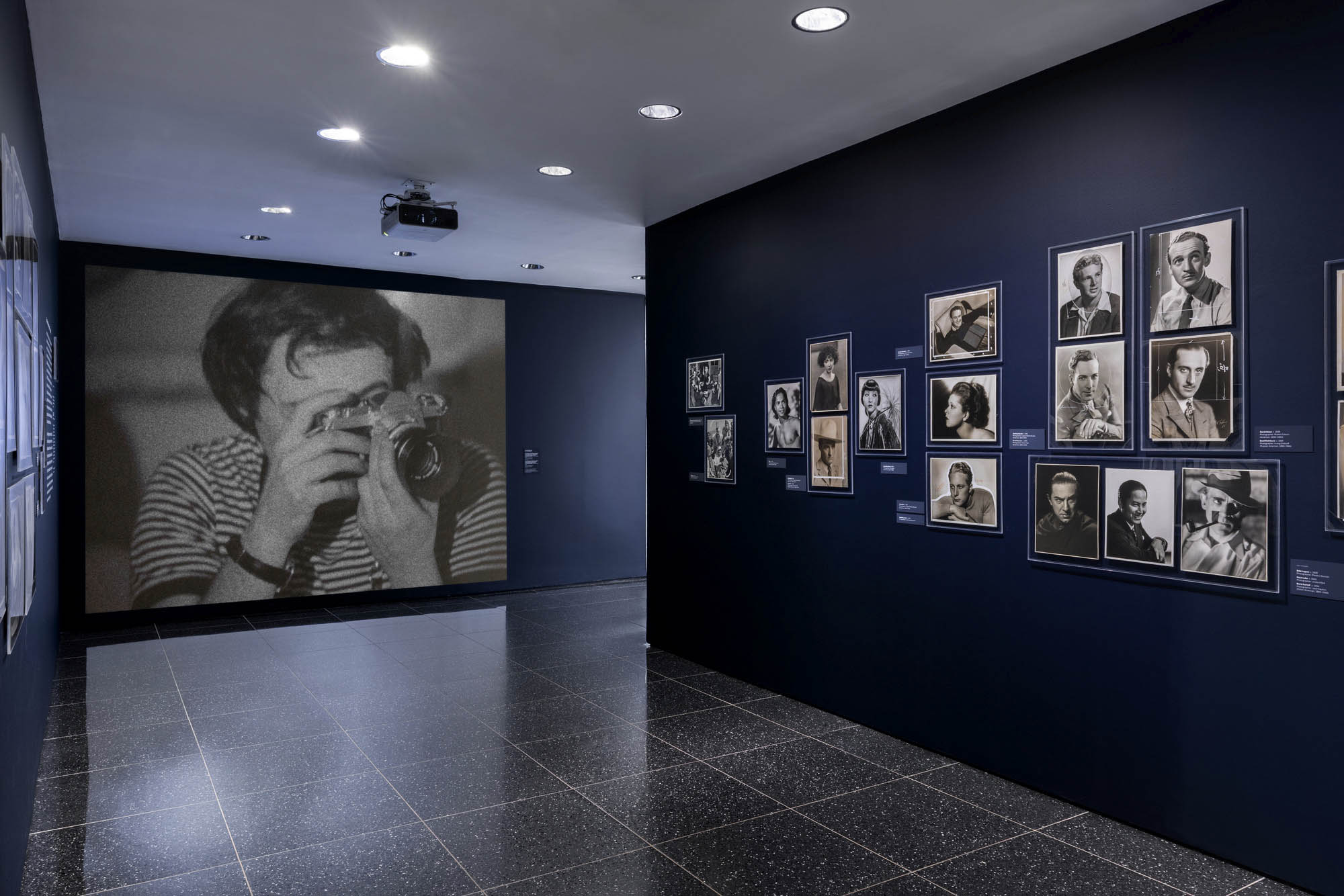
Installation view of the exhibition 'August Sander's People of the 20th Century' at the Yale University Art Gallery, New Haven, CT, February - June, 2026


Installation views of the exhibition August Sander’s People of the 20th Century at the Yale University Art Gallery, New Haven, CT, February – June, 2026


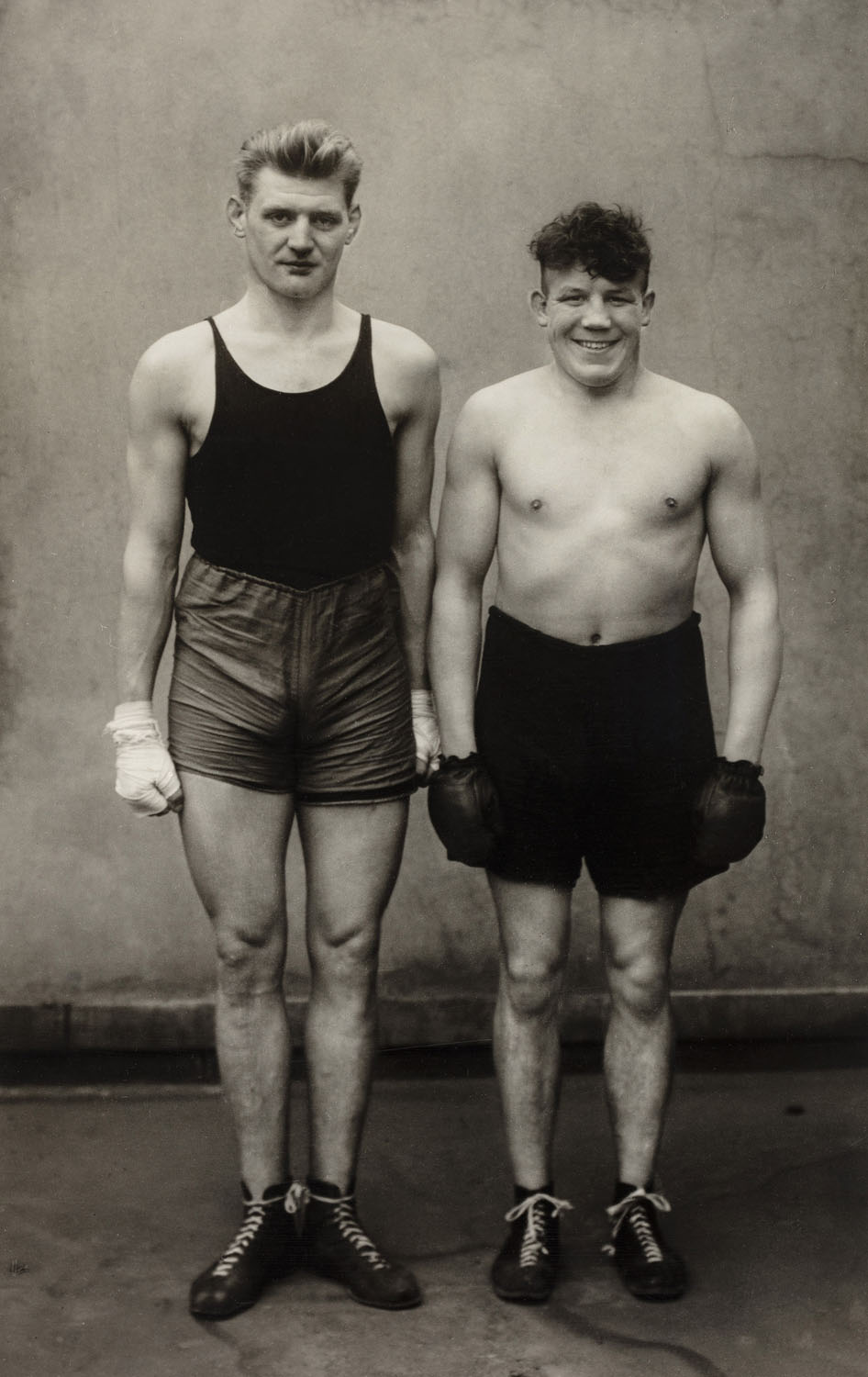
August Sander (German, 1876-1964) 'Boxers. Paul Röderstein and Hein Hesse. Köln' 1929


August Sander (German, 1876-1964)
Boxers [Paul Röderstein and Hein Hesse]
1929, printed c. 1990-1999
Gelatin silver print
10 3/16 x 6 1/2 in. (25.8 x 16.5cm)
Societe Anonyme Acquisition Fund and Katharine Ordway Fund
© Die Photographische Sammlung / SK Stiftung Kultur – August Sander Archiv, Cologne / ARS, NY


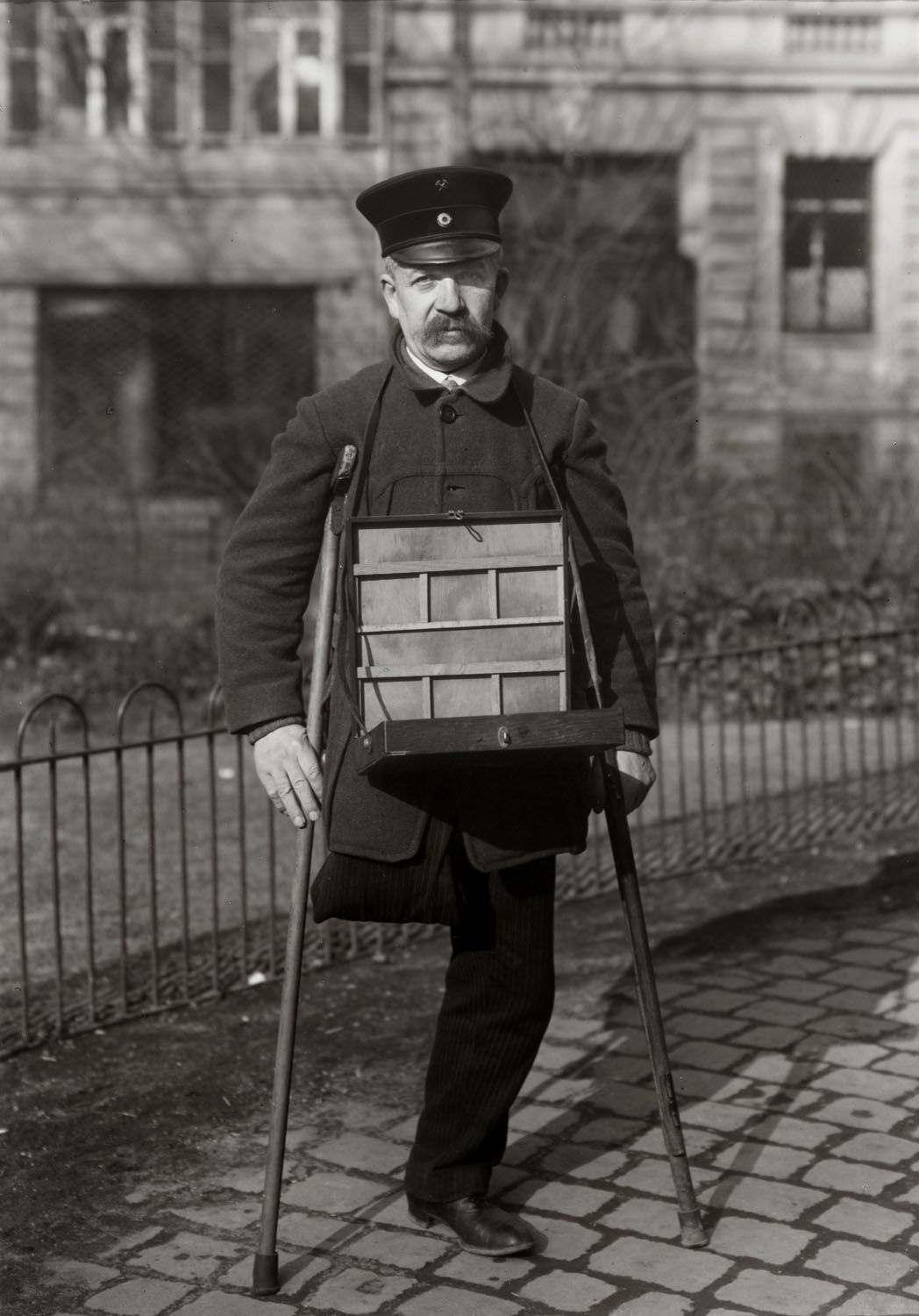
August Sander (German, 1876-1964) 'Candy Seller' 1930, printed c. 1990-1999


August Sander (German, 1876-1964)
Candy Seller
1930, printed c. 1990-1999
Gelatin silver print
10 1/16 x 7 5/16 in. (25.6 x 18.6cm)
Societe Anonyme Acquisition Fund and Katharine Ordway Fund
© Die Photographische Sammlung / SK Stiftung Kultur – August Sander Archiv, Cologne / ARS, NY


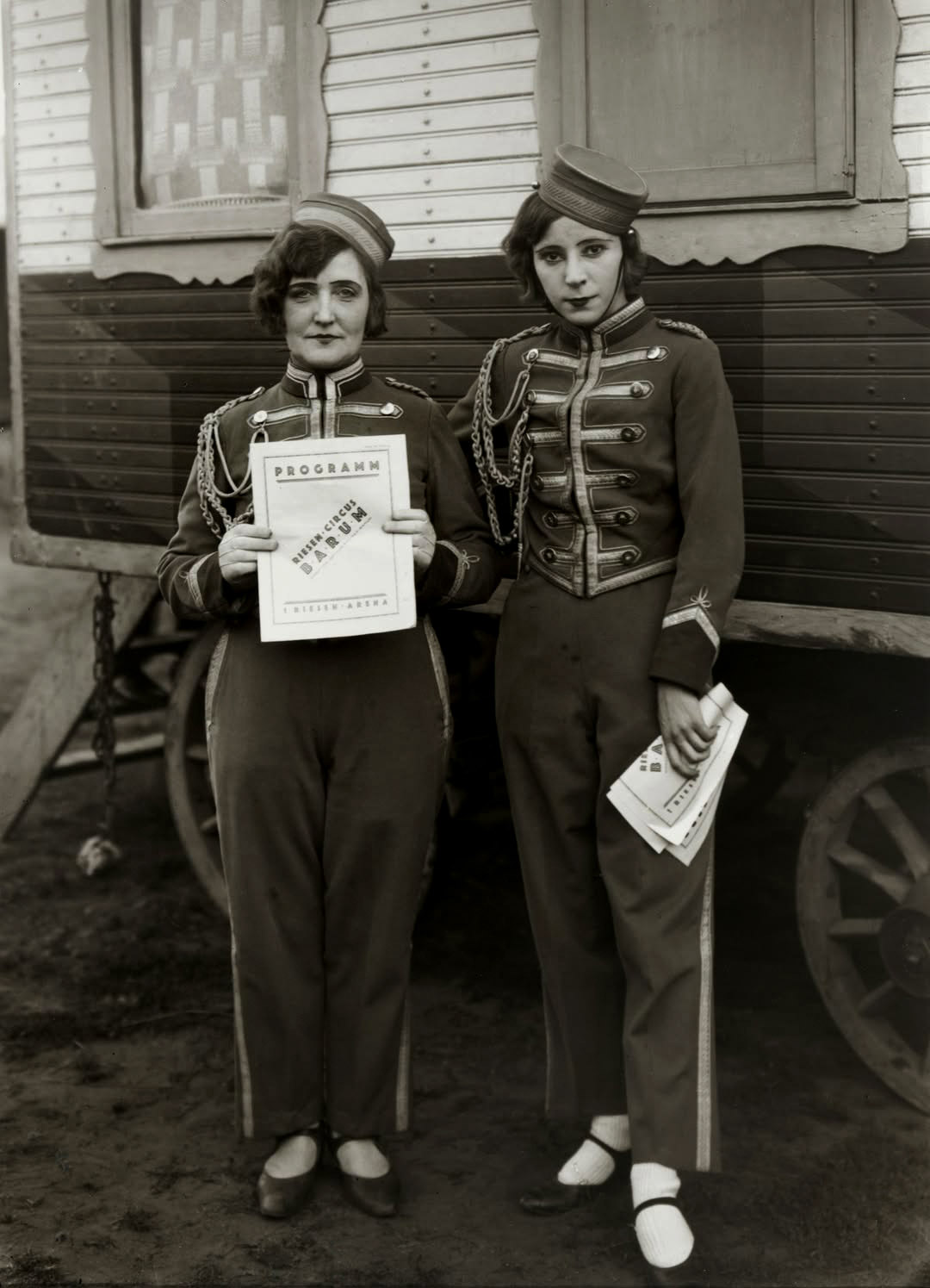
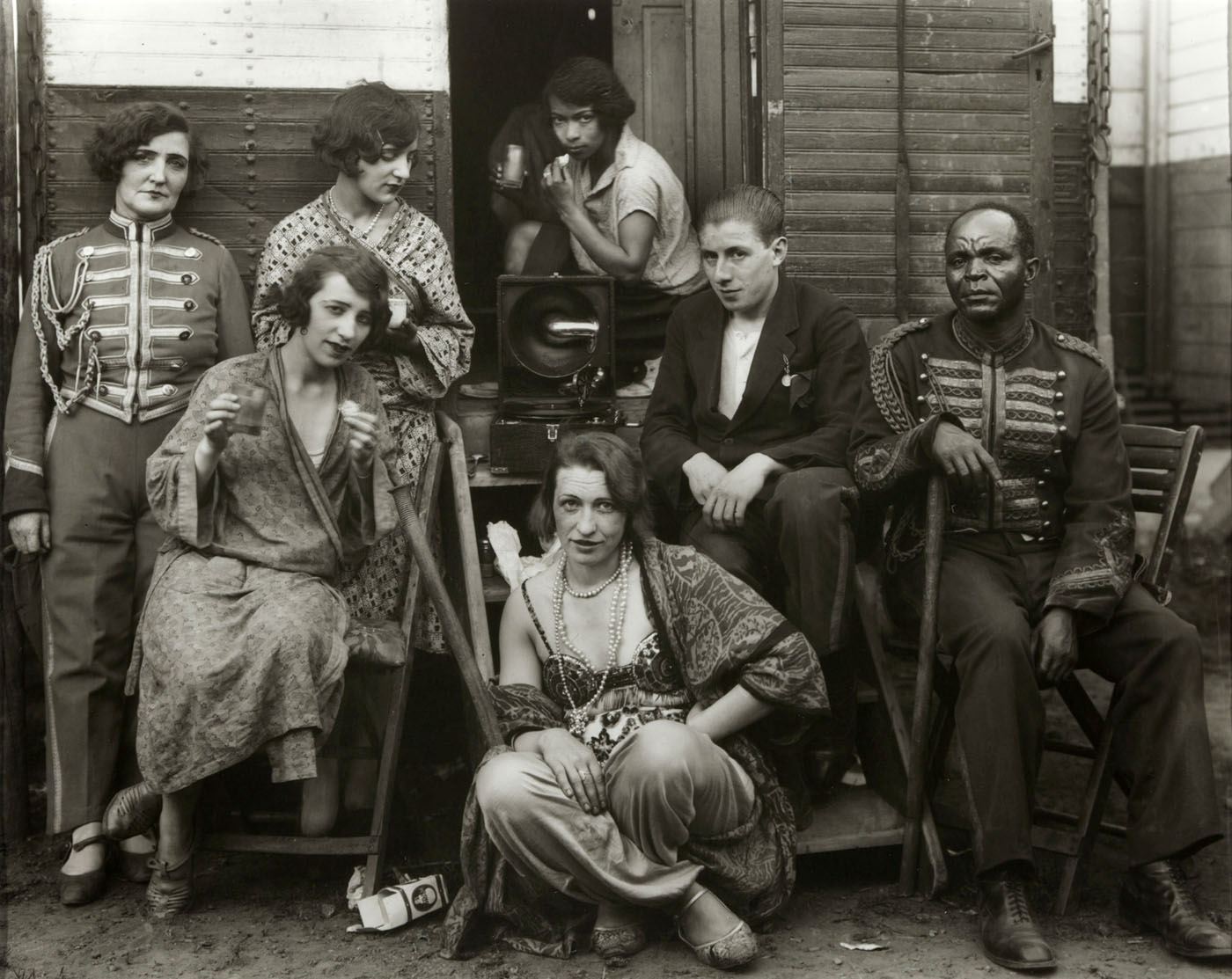
August Sander (German, 1876-1964) 'Circus Performers' 1926-1932, printed c. 1990-1999


August Sander (German, 1876-1964)
Circus Performers
1926-1932, printed c. 1990-1999
Gelatin silver print
8 1/16 x 10 1/16 in. (20.5 x 25.6cm)
Societe Anonyme Acquisition Fund and Katharine Ordway Fund
© Die Photographische Sammlung / SK Stiftung Kultur – August Sander Archiv, Cologne / ARS, NY


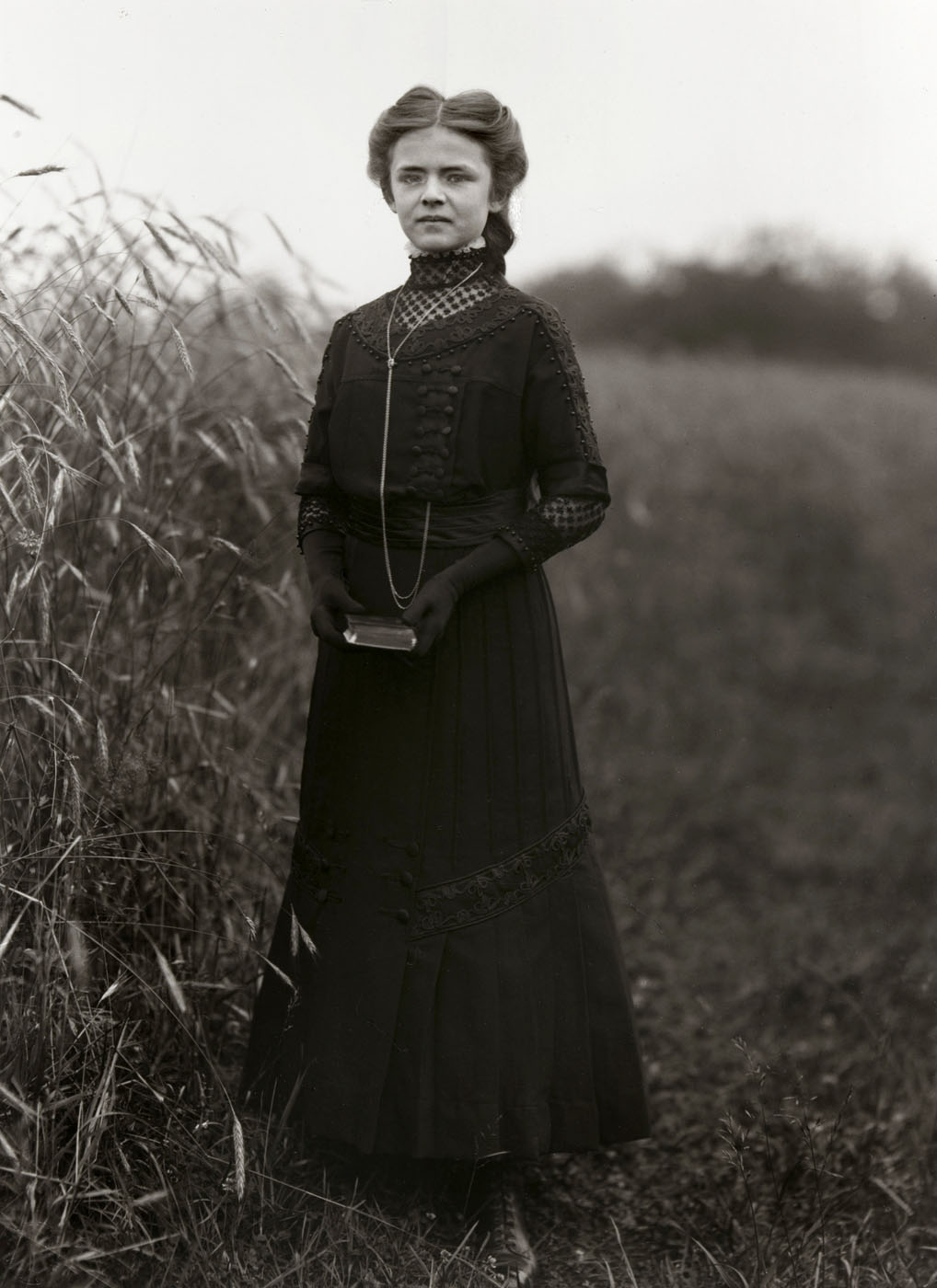
August Sander (German, 1876-1964) 'Confirmation Candidate' 1911, printed c. 1990-1999


August Sander (German, 1876-1964)
Confirmation Candidate
1911, printed c. 1990-1999
Gelatin silver print
10 1/4 x 7 7/16 in. (26 x 18.9cm)
Societe Anonyme Acquisition Fund and Katharine Ordway Fund
© Die Photographische Sammlung / SK Stiftung Kultur – August Sander Archiv, Cologne / ARS, NY


August Sander (German, 1876-1964) 'Cook' 1928, printed c. 1990-1999


August Sander (German, 1876-1964)
Cook
1928, printed c. 1990-1999
Gelatin silver print
10 x 7 1/2 in. (25.4 x 19.1cm)
Societe Anonyme Acquisition Fund and Katharine Ordway Fund
© Die Photographische Sammlung / SK Stiftung Kultur – August Sander Archiv, Cologne / ARS, NY


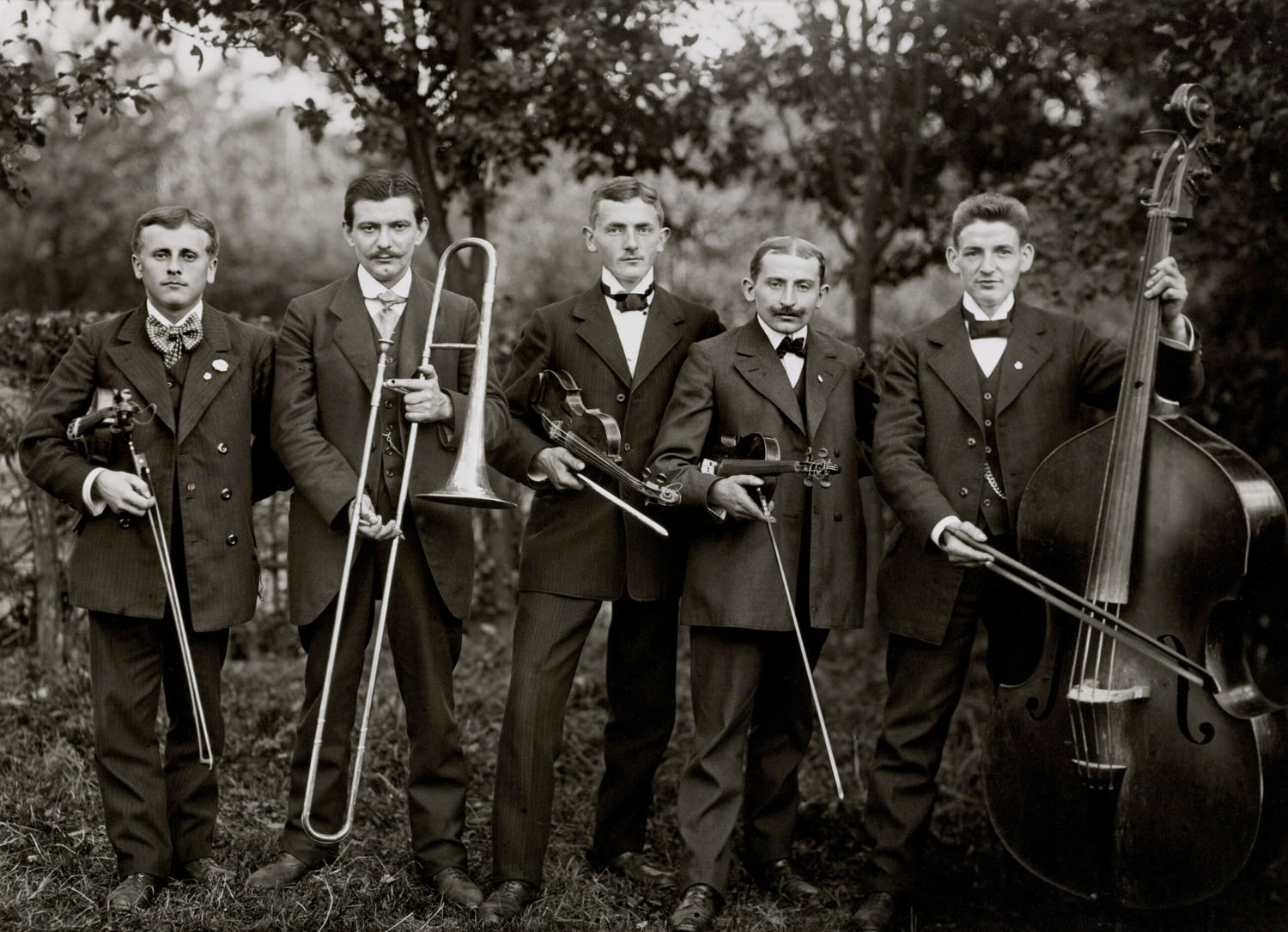
August Sander (German, 1876-1964) 'Country Band' 1913, printed c. 1990-1999


August Sander (German, 1876-1964)
Country Band
1913, printed c. 1990-1999
Gelatin silver print
7 3/8 x 10 1/8 in. (18.8 x 25.7cm)
Societe Anonyme Acquisition Fund and Katharine Ordway Fund
© Die Photographische Sammlung / SK Stiftung Kultur – August Sander Archiv, Cologne / ARS, NY


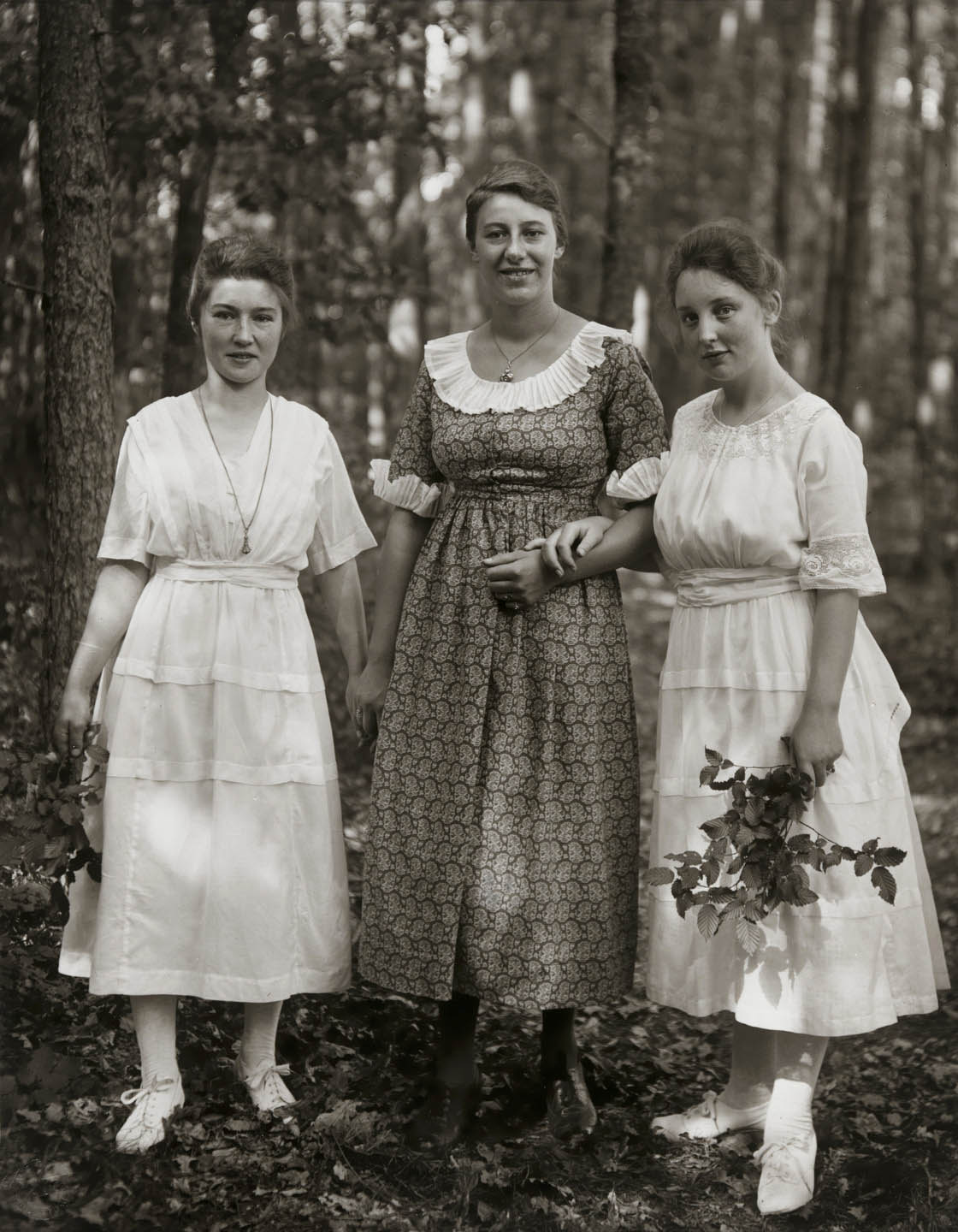
August Sander (German, 1876-1964) 'Country Girls' 1923, printed c. 1990-1999


August Sander (German, 1876-1964)
Country Girls
1923, printed c. 1990-1999
Gelatin silver print
9 15/16 x 7 11/16 in. (25.2 x 19.6cm)
Societe Anonyme Acquisition Fund and Katharine Ordway Fund
© Die Photographische Sammlung / SK Stiftung Kultur – August Sander Archiv, Cologne / ARS, NY


August Sander (German, 1876-1964) 'Country Girls, Westerwald' 1925, printed c. 1990-1999


August Sander (German, 1876-1964)
Country Girls, Westerwald
1925, printed c. 1990-1999
Gelatin silver print
10 3/16 x 7 3/8 in. (25.8 x 18.8cm)
Societe Anonyme Acquisition Fund and Katharine Ordway Fund
© Die Photographische Sammlung / SK Stiftung Kultur – August Sander Archiv, Cologne / ARS, NY


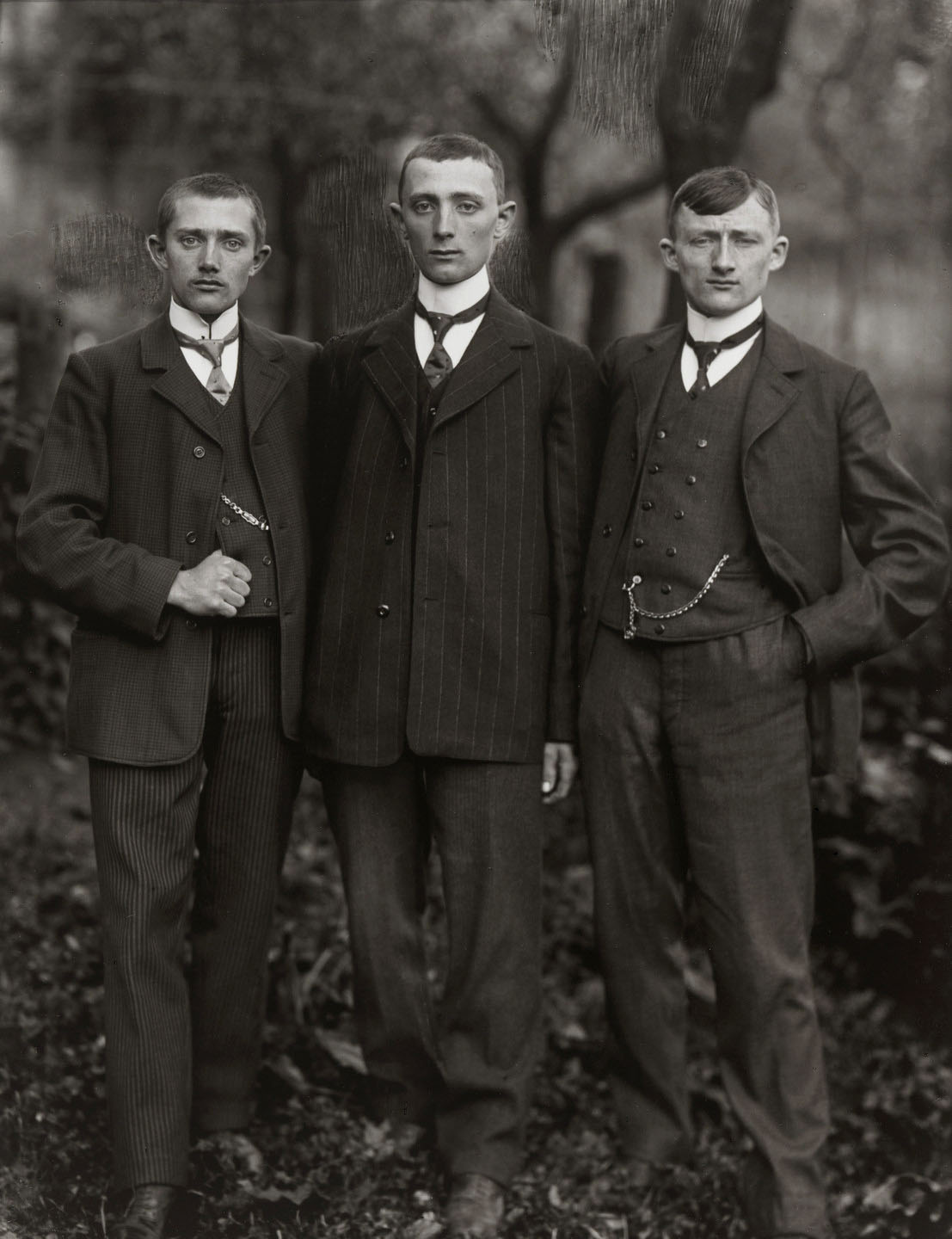
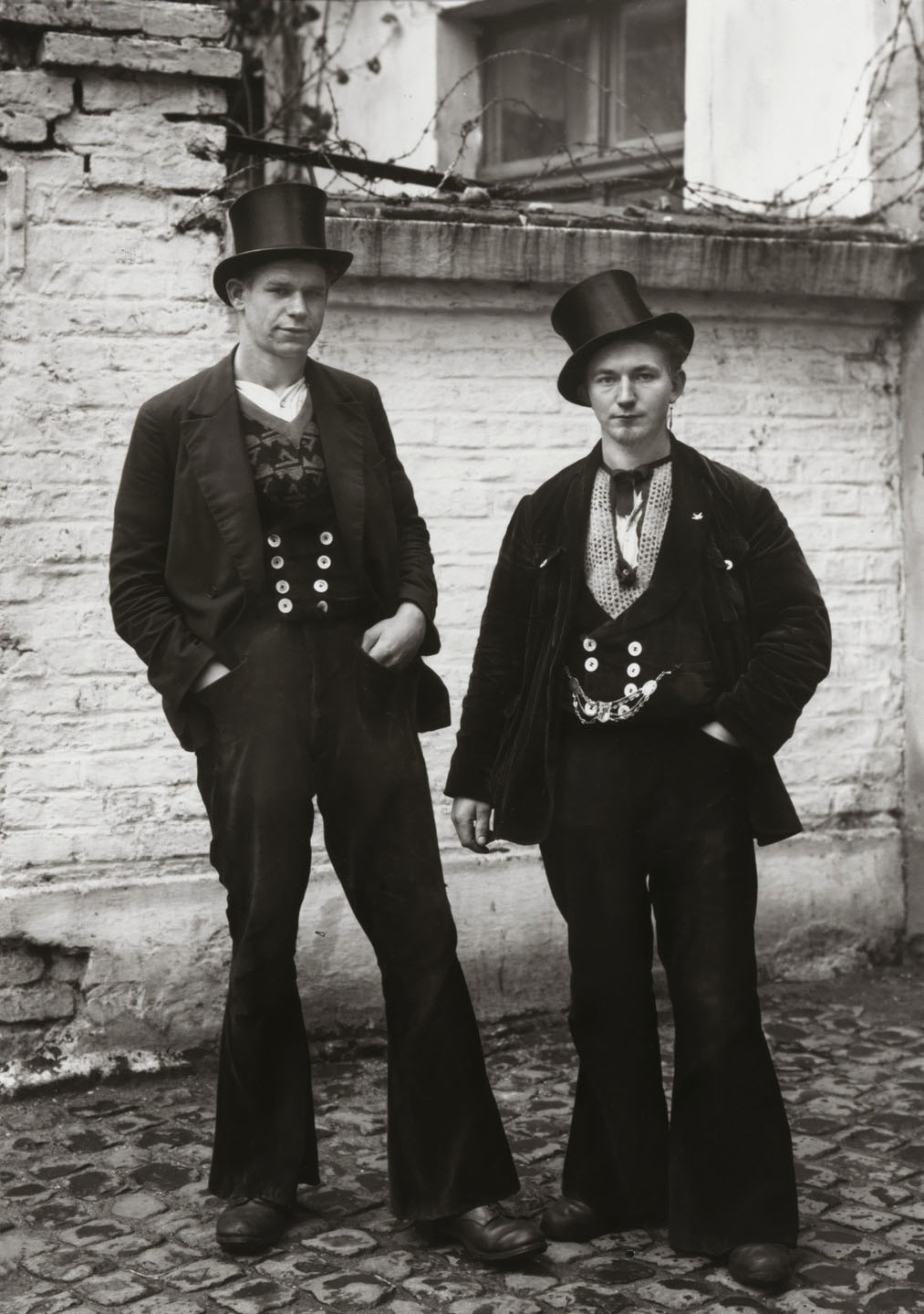
August Sander (German, 1876-1964) 'Country Lads from the Westerwald' 1912, printed c. 1990-1999


August Sander (German, 1876-1964)
Country Lads from the Westerwald
1912, printed c. 1990-1999
Gelatin silver print
10 3/16 x 7 7/8 in. (25.9 x 20cm)
Societe Anonyme Acquisition Fund and Katharine Ordway Fund
© Die Photographische Sammlung / SK Stiftung Kultur – August Sander Archiv, Cologne / ARS, NY


The Westerwald (German pronunciation: [ˈvɛstɐvalt]; literally ‘Western forest’) is a low mountain range on the right bank of the river Rhine in the German federal states of Rhineland-Palatinate, Hesse and North Rhine-Westphalia. It is a part of the Rhenish Massif (Rheinisches Schiefergebirge or Rhenish Slate Mountains). Its highest elevation, at 657 m above sea level, is the Fuchskaute in the High Westerwald.


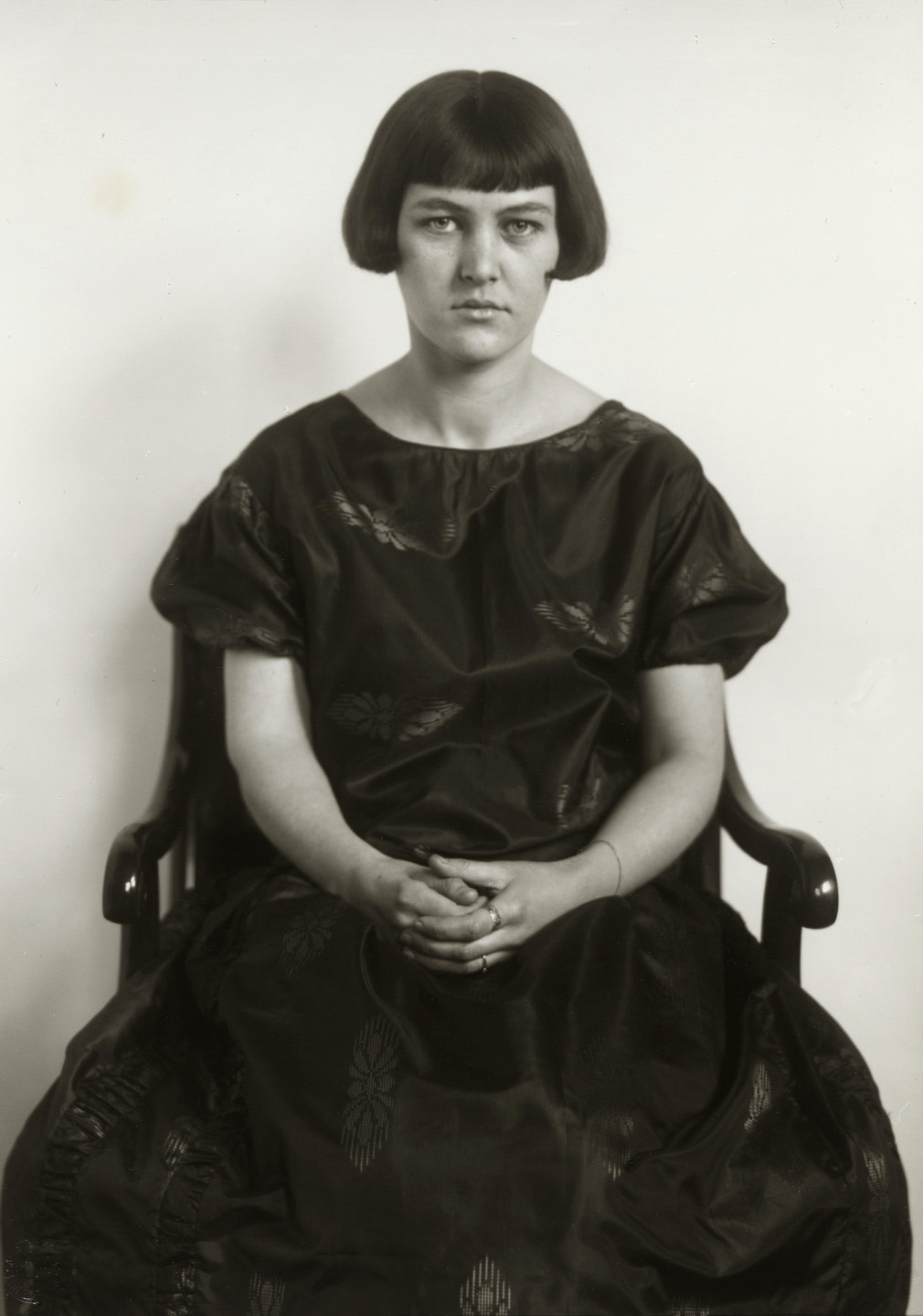
August Sander (German, 1876-1964) 'Daughter of a Painter' c. 1926, printed c. 1990-1999


August Sander (German, 1876-1964)
Daughter of a Painter
c. 1926, printed c. 1990-1999
Gelatin silver print
10 1/8 × 7 5/16 in. (25.7 × 18.5cm)
Societe Anonyme Acquisition Fund and Katharine Ordway Fund
© Die Photographische Sammlung / SK Stiftung Kultur – August Sander Archiv, Cologne / ARS, NY


August Sander (German, 1876-1964) 'Disabled Miner' 1927-1928, printed c. 1990-1999


August Sander (German, 1876-1964)
Disabled Miner
1927-1928, printed c. 1990-1999
Gelatin silver print
10 1/16 x 7 1/16 in. (25.5 x 18cm)
Societe Anonyme Acquisition Fund and Katharine Ordway Fund
© Die Photographische Sammlung / SK Stiftung Kultur – August Sander Archiv, Cologne / ARS, NY


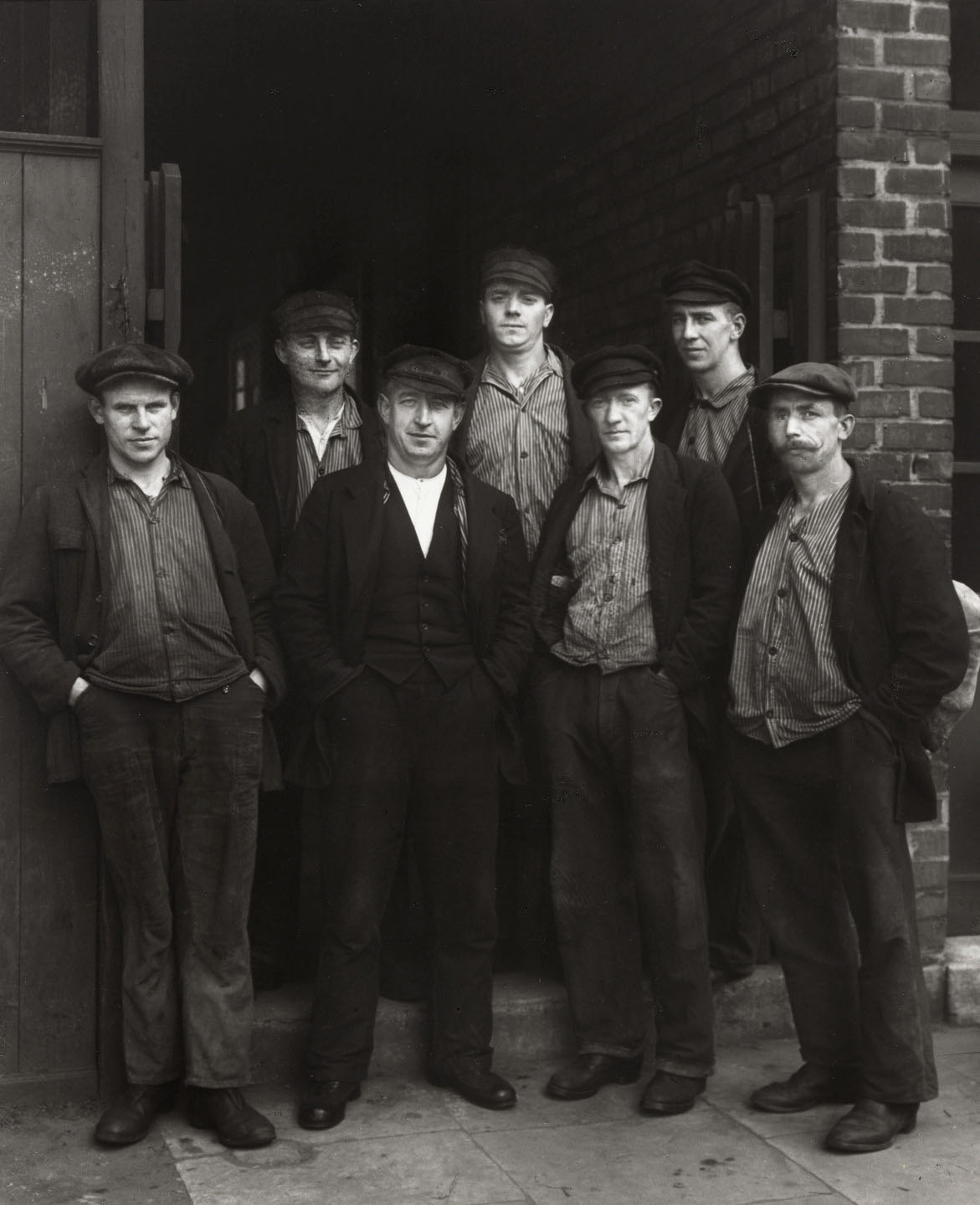
August Sander (German, 1876-1964) 'Dock Workers' c. 1929, printed c. 1990-1999


August Sander (German, 1876-1964)
Dock Workers
c. 1929, printed c. 1990-1999
Gelatin silver print
10 1/8 × 8 1/4 in. (25.7 × 21cm)
Societe Anonyme Acquisition Fund and Katharine Ordway Fund
© Die Photographische Sammlung / SK Stiftung Kultur – August Sander Archiv, Cologne / ARS, NY


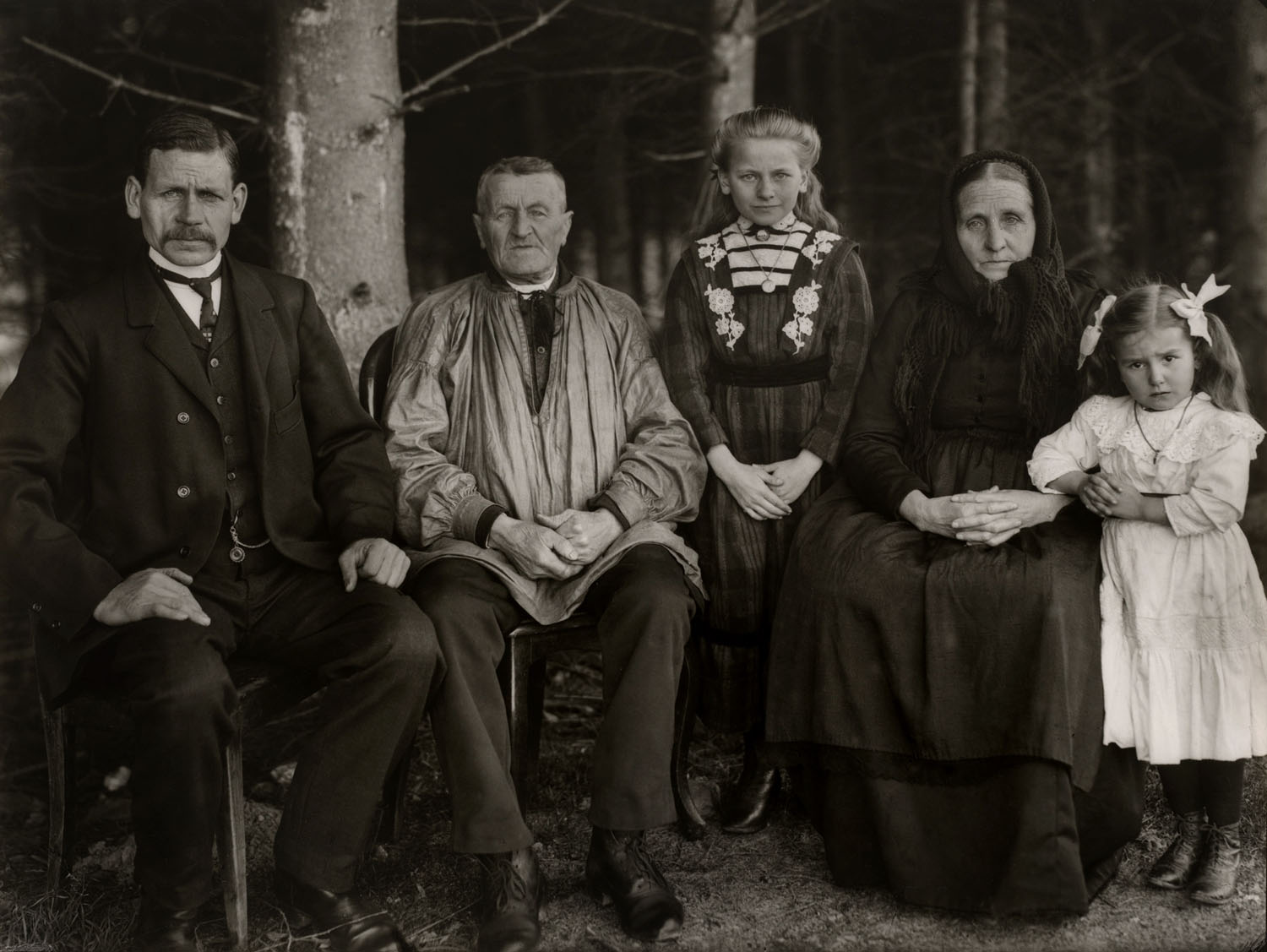
August Sander (German, 1876-1964) 'Farmer' 1920-1928, printed c. 1990-1999


August Sander (German, 1876-1964)
Farmer
1920-1928, printed c. 1990-1999
Gelatin silver print
10 3/16 x 8 1/8 in. (25.9 x 20.6cm)
Societe Anonyme Acquisition Fund and Katharine Ordway Fund
© Die Photographische Sammlung / SK Stiftung Kultur – August Sander Archiv, Cologne / ARS, NY


August Sander (German, 1876-1964) 'Farm Children' c. 1913, printed c. 1990-1999


August Sander (German, 1876-1964)
Farm Children
c. 1913, printed c. 1990-1999
Gelatin silver print
9 3/4 x 7 5/16 in. (24.7 x 18.5cm)
Societe Anonyme Acquisition Fund and Katharine Ordway Fund
© Die Photographische Sammlung / SK Stiftung Kultur – August Sander Archiv, Cologne / ARS, NY


August Sander (German, 1876-1964) 'Farmer Couple - Propriety and Harmony' 1912, printed c. 1990–1999


August Sander (German, 1876-1964)
Farmer Couple – Propriety and Harmony
1912, printed c. 1990-1999
Gelatin silver print
10 3/16 x 7 5/16 in. (25.8 x 18.5cm)
Societe Anonyme Acquisition Fund and Katharine Ordway Fund
© Die Photographische Sammlung / SK Stiftung Kultur – August Sander Archiv, Cologne / ARS, NY


August Sander (German, 1876-1964) 'Farmer from the Eifel' 1930, printed c. 1990-1999


August Sander (German, 1876-1964)
Farmer from the Eifel
1930, printed c. 1990-1999
Gelatin silver print
10 3/16 x 6 3/4 in. (25.8 x 17.2cm)
Societe Anonyme Acquisition Fund and Katharine Ordway Fund
© Die Photographische Sammlung / SK Stiftung Kultur – August Sander Archiv, Cologne / ARS, NY


The Eifel (German: [ˈaɪfl̩]; Luxembourgish: Äifel, pronounced [ˈæːɪ̯fəl]) is a low mountain range in western Germany, eastern Belgium and northern Luxembourg. It occupies parts of southwestern North Rhine-Westphalia, northwestern Rhineland-Palatinate and the southern area of the German-speaking Community of Belgium.


August Sander (German, 1876-1964) 'Farmer on his Way to Church' 1925-1926


August Sander (German, 1876-1964)
Farmer on his Way to Church
1925-1926, printed c. 1990-1999
Gelatin silver print
10 1/8 x 6 3/8 in. (25.7 x 16.2cm)
Societe Anonyme Acquisition Fund and Katharine Ordway Fund
© Die Photographische Sammlung / SK Stiftung Kultur – August Sander Archiv, Cologne / ARS, NY


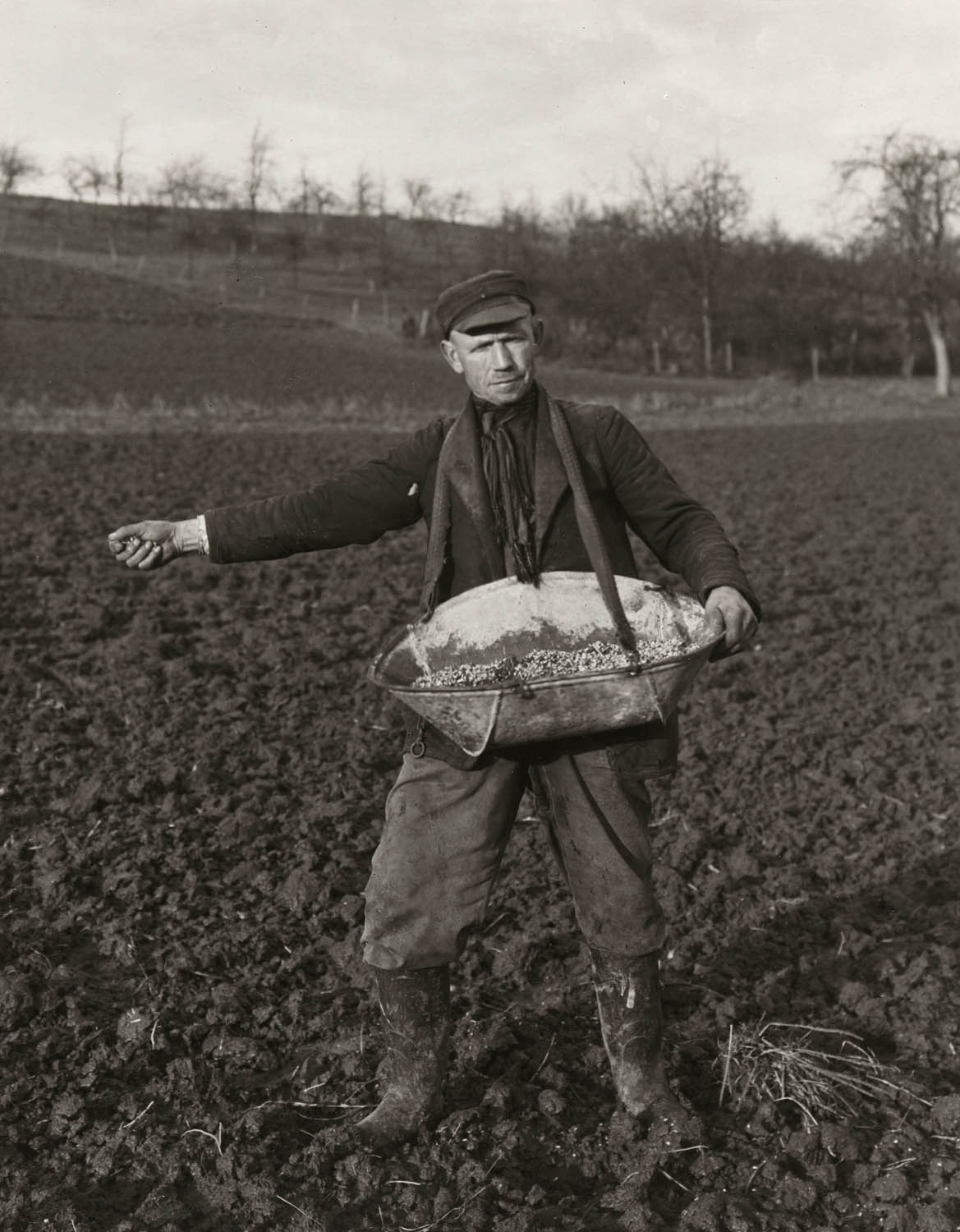
August Sander (German, 1876-1964) 'Farmer Sowing' 1952, printed c. 1990-1999


August Sander (German, 1876-1964)
Farmer Sowing
1952, printed c. 1990-1999
Gelatin silver print
10 1/8 x 7 7/8 in. (25.7 x 20cm)
Societe Anonyme Acquisition Fund and Katharine Ordway Fund
© Die Photographische Sammlung / SK Stiftung Kultur – August Sander Archiv, Cologne / ARS, NY


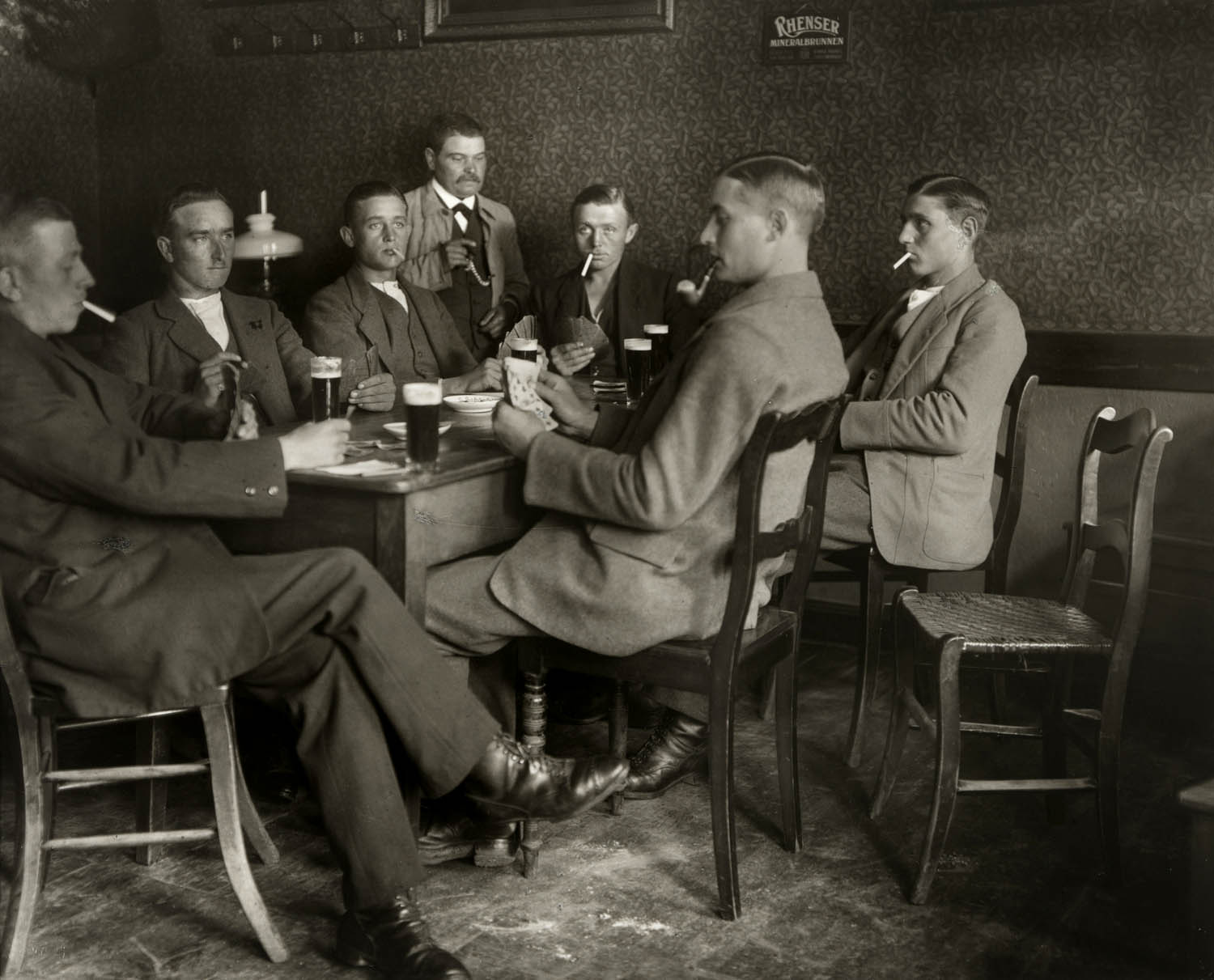
August Sander (German, 1876-1964) 'Farmers Playing Cards' c. 1920, printed c. 1990-1999


August Sander (German, 1876-1964)
Farmers Playing Cards
c. 1920, printed c. 1990-1999
Gelatin silver print
8 1/8 x 10 1/16 in. (20.7 x 25.6cm)
Societe Anonyme Acquisition Fund and Katharine Ordway Fund
© Die Photographische Sammlung / SK Stiftung Kultur – August Sander Archiv, Cologne / ARS, NY


The Yale University Art Gallery announced August Sander’s People of the 20th Century, an ambitious exhibition showcasing the work of one of the most influential photographers of the modern era.

August Sander (1876-1964) devoted decades of his career to capturing and cataloguing the sociocultural spectrum of German life. In his groundbreaking series, Menschen des 20. Jahrhunderts (People of the 20th Century) (1892–1954), he attempted to create a comprehensive sociological archive by photographing individuals from various classes, occupations, and backgrounds and then arranging the images into archetypal groups and subgroups, such as “The Skilled Tradesman,” “The Farmer,” “The Artist,” and “The Woman.” The Gallery’s presentation retains his original organisational framework.

Taken in sum, Sander’s portraits show his keen observation of Germany’s shifting cultural landscape in the first half of the 20th century. The extensive project encompasses independent works, commissioned sittings, and scenes of family life. They reflect a diverse nation rooted in tradition yet transformed by war and increasing urbanisation. Each photograph presents not just a generalised type but an individual, highlighting the tension between social conformity and personal identity. Sander’s categories, while systematic, also reveal an inherent fluidity, as certain types and individuals appear across different groupings, challenging strict classification.

Heavily influenced by the Cologne Progressive and New Objectivity art movements, Sander adopted a representational style free from idealisation. His inclusion of marginalised groups, such as people with disabilities and the unemployed, asserted the value of each individual, subverting the exclusionary ideologies of National Socialism. In 1936 the Nazi regime destroyed an early version of his work. Undeterred, Sander continued to photograph throughout World War II, subsequently adding portfolios titled “Foreign Workers,” “The Persecuted” (depicting German Jews), and “Political Prisoners” (with images that his son Erich smuggled out of prison, where he was serving a 10-year sentence for anti-Nazi activities).

Although Sander produced tens of thousands of negatives for this project, the majority were destroyed during World War II and in a 1946 house fire. The gelatin silver prints in the exhibition were created from surviving original glass-plate negatives by Gerd Sander, the artist’s grandson, in the 1990s, guided by vintage prints and the artist’s extensive notes. These prints are recent acquisitions by the Yale University Art Gallery, made possible through the Société Anonyme Acquisition Fund and the Katharine Ordway Fund.

The exhibition comprises the full set of 619 prints, making it the most comprehensive museum presentation of Sander’s landmark project to date. By expanding the boundaries of portraiture into social commentary, exploring the concept of collective belonging, and experimenting with the artistic potential of the archive, Sander’s work remains remarkably resonant and impactful today.

Press release from Yale University Art Gallery


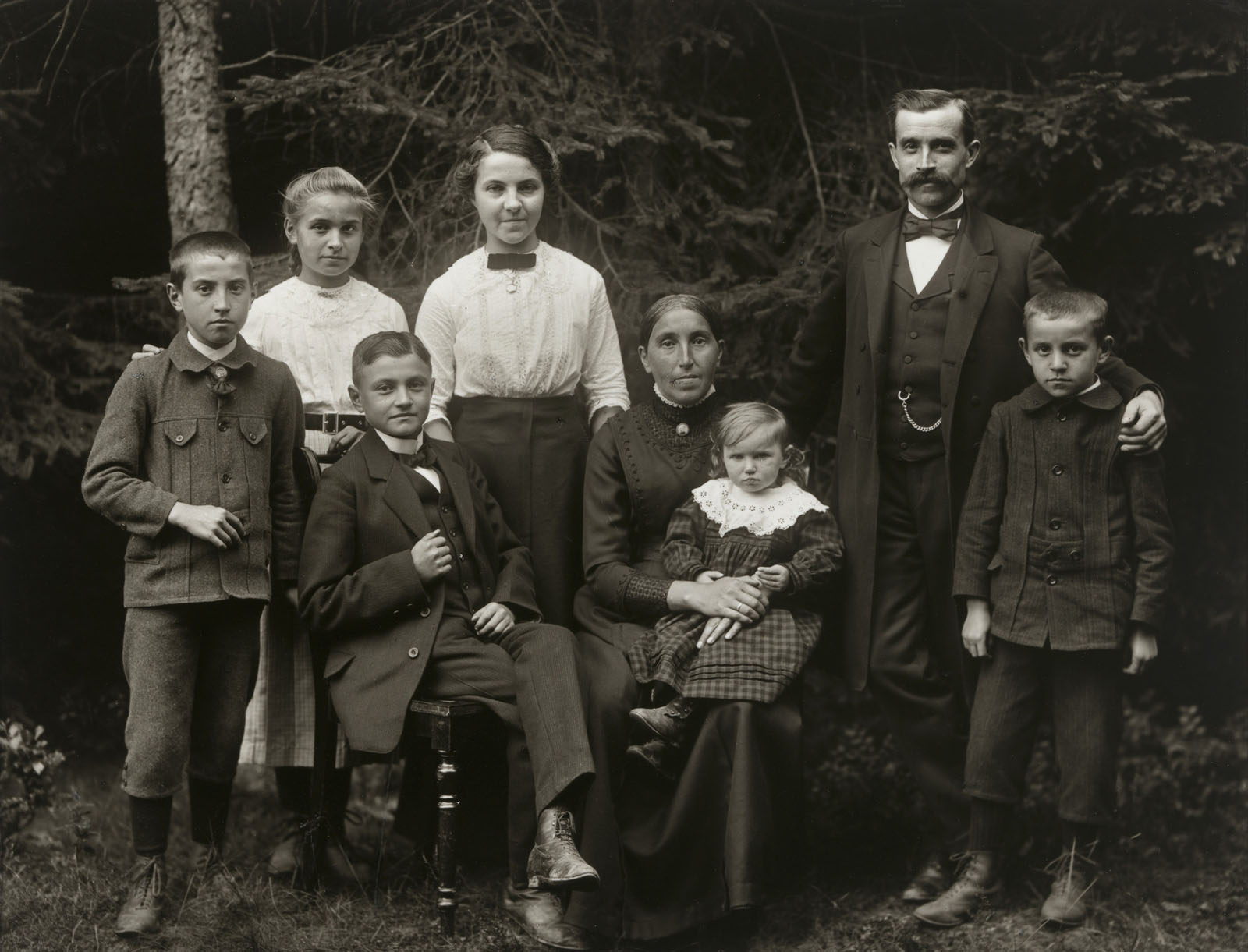
August Sander (German, 1876-1964) 'Farming Family' 1913-1914, printed c. 1990-1999


August Sander (German, 1876-1964)
Farming Family
1913-1914, printed c. 1990-1999
Gelatin silver print
7 5/16 x 9 1/4 in. (18.5 x 23.5cm)
Societe Anonyme Acquisition Fund and Katharine Ordway Fund
© Die Photographische Sammlung / SK Stiftung Kultur – August Sander Archiv, Cologne / ARS, NY


August Sander (German, 1876-1964) 'Foundrymen' 1926, printed c. 1990-1999


August Sander (German, 1876-1964)
Foundrymen
1926, printed c. 1990-1999
Gelatin silver print
10 3/16 x 7 3/16 in. (25.8 x 18.3cm)
Societe Anonyme Acquisition Fund and Katharine Ordway Fund
© Die Photographische Sammlung / SK Stiftung Kultur – August Sander Archiv, Cologne / ARS, NY


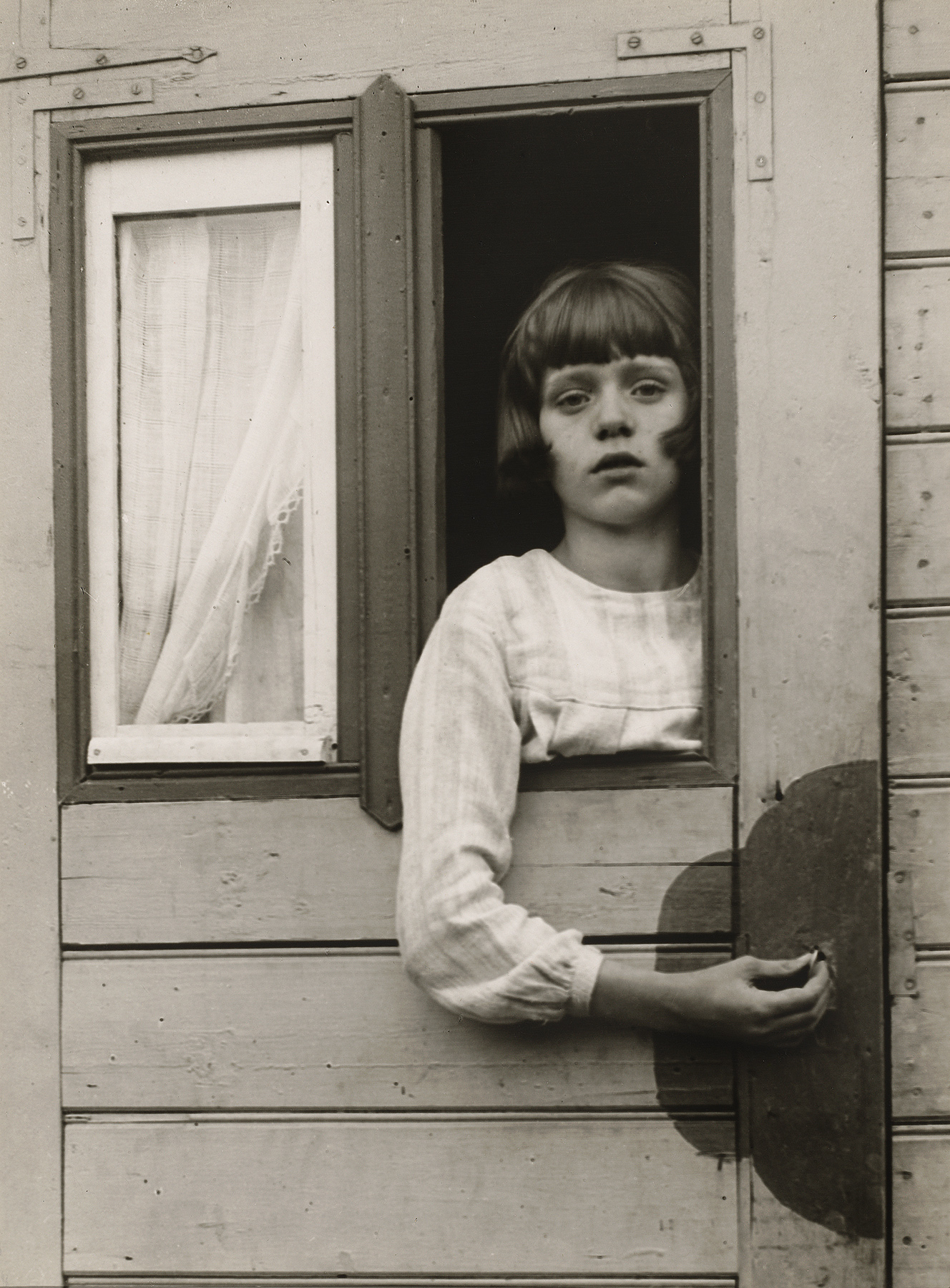
August Sander (German, 1876-1964) 'Girl in a Fairground Caravan' 1926-1932, printed c. 1990-1999


August Sander (German, 1876-1964)
Girl in a Fairground Caravan
1926-1932, printed c. 1990-1999
Gelatin silver print
10 3/16 × 7 11/16 in. (25.8 × 19.5cm)
Societe Anonyme Acquisition Fund and Katharine Ordway Fund
© Die Photographische Sammlung / SK Stiftung Kultur – August Sander Archiv, Cologne / ARS, NY


August Sander (German, 1876-1964) 'Gymnastics Teacher' 1925, printed c. 1990-1999


August Sander (German, 1876-1964)
Gymnastics Teacher
1925, printed c. 1990-1999
Gelatin silver print
10 1/16 x 6 13/16 in. (25.5 x 17.3cm)
Societe Anonyme Acquisition Fund and Katharine Ordway Fund
© Die Photographische Sammlung / SK Stiftung Kultur – August Sander Archiv, Cologne / ARS, NY


August Sander (German, 1876-1964) 'Gypsy' c. 1930, printed c. 1990-1999


August Sander (German, 1876-1964)
Gypsy
c. 1930, printed c. 1990-1999
Gelatin silver print
10 1/16 x 7 1/16 in. (25.5 x 18cm)
Societe Anonyme Acquisition Fund and Katharine Ordway Fund
© Die Photographische Sammlung / SK Stiftung Kultur – August Sander Archiv, Cologne / ARS, NY


August Sander (German, 1876-1964) 'Hamburg Carpenters' c. 1929, printed c. 1990-1999


August Sander (German, 1876-1964)
Hamburg Carpenters
c. 1929, printed c. 1990-1999
Gelatin silver print
10 3/16 x 7 1/16 in. (25.8 x 18cm)
Societe Anonyme Acquisition Fund and Katharine Ordway Fund
© Die Photographische Sammlung / SK Stiftung Kultur – August Sander Archiv, Cologne / ARS, NY


August Sander (German, 1876-1964) 'Inmate of an Asylum' 1926-1930, printed c. 1990-1999


August Sander (German, 1876-1964)
Inmate of an Asylum
1926-1930, printed c. 1990-1999
Gelatin silver print
10 3/16 x 5 15/16 in. (25.9 x 15.1cm)
Societe Anonyme Acquisition Fund and Katharine Ordway Fund
© Die Photographische Sammlung / SK Stiftung Kultur – August Sander Archiv, Cologne / ARS, NY


August Sander (German, 1876-1964) 'Inmate of an Asylum' 1926-1930, printed c. 1990-1999


August Sander (German, 1876-1964)
Inmate of an Asylum
1926-1930, printed c. 1990-1999
Gelatin silver print
10 1/16 x 6 15/16 in. (25.6 x 17.6cm)
Societe Anonyme Acquisition Fund and Katharine Ordway Fund
© Die Photographische Sammlung / SK Stiftung Kultur – August Sander Archiv, Cologne / ARS, NY


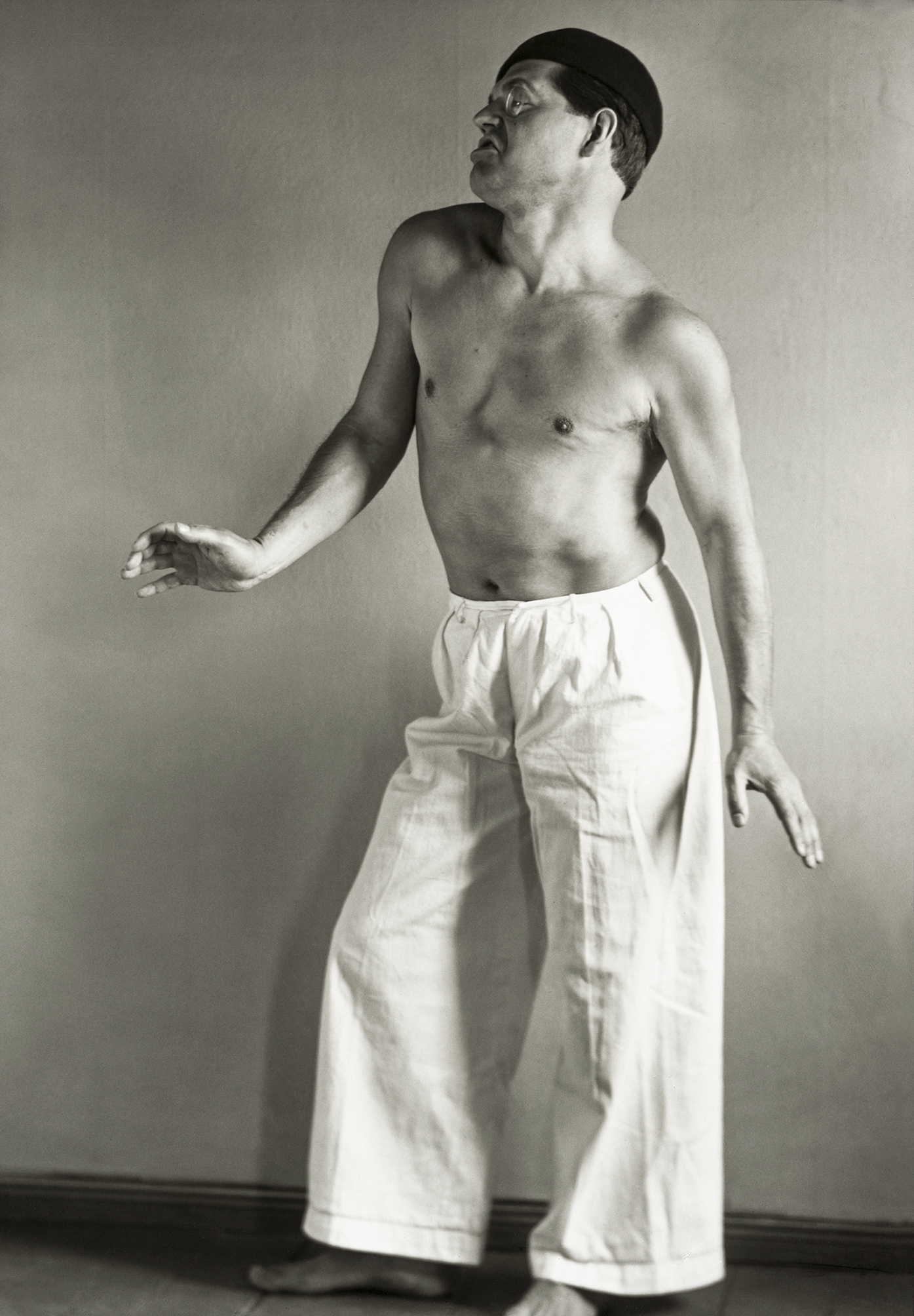
August Sander (German, 1876-1964) 'Inventor and Dadaist [Raoul Hausmann]' 1929, printed c. 1990-1999


August Sander (German, 1876-1964)
Inventor and Dadaist [Raoul Hausmann]
1929, printed c. 1990-1999
Gelatin silver print
10 1/16 x 7 1/2 in. (25.5 x 19cm)
Societe Anonyme Acquisition Fund and Katharine Ordway Fund
© Die Photographische Sammlung / SK Stiftung Kultur – August Sander Archiv, Cologne / ARS, NY


Raoul Hausmann was an Austrian artist and writer. One of the key figures in Berlin Dada, his experimental photographic collages, sound poetry, and institutional critiques would have a profound influence on the European Avant-Garde in the aftermath of World War I.


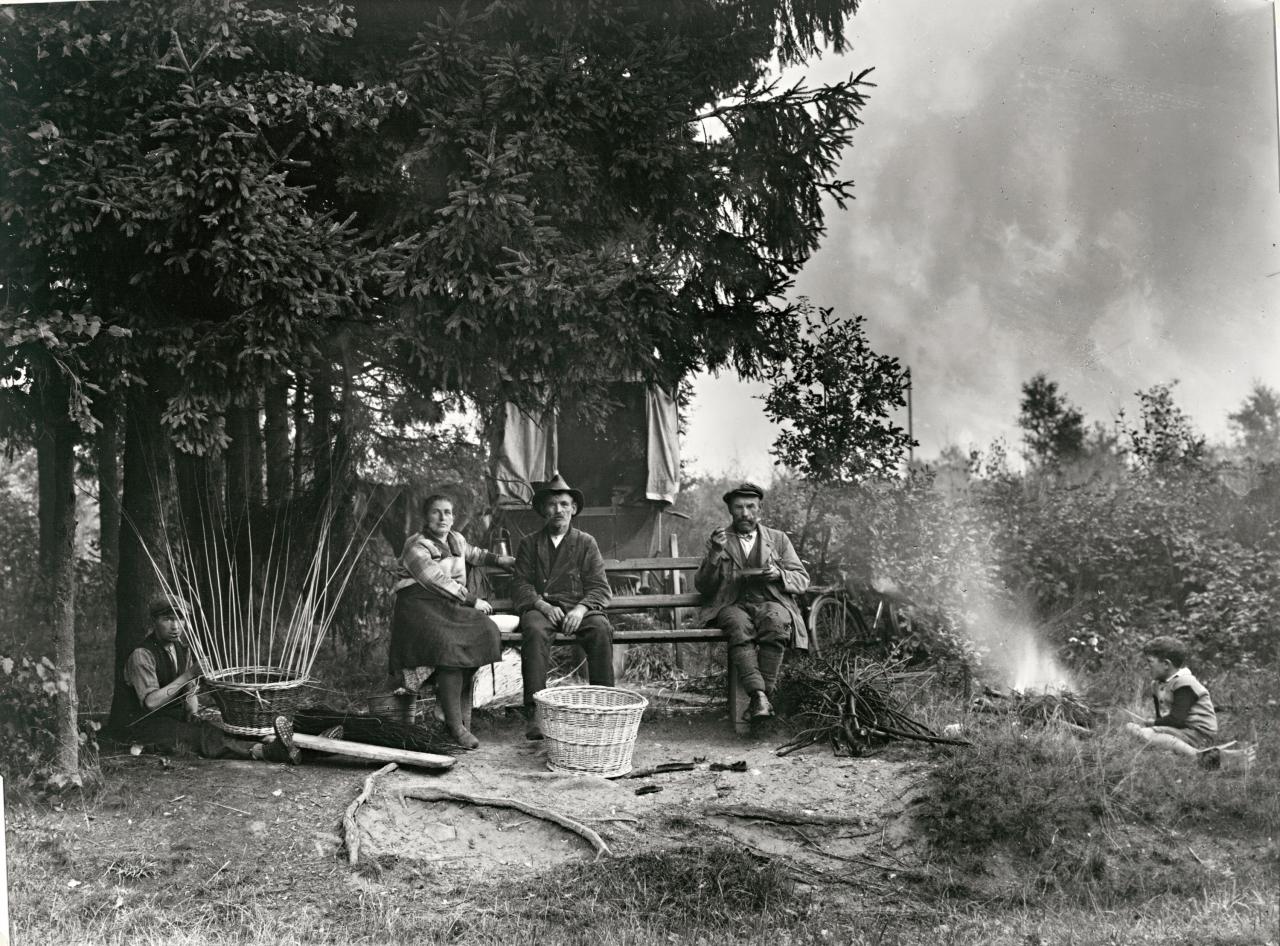
August Sander (German, 1876-1964) 'Itinerant Basket Weavers' 1929, printed c. 1990-1999


August Sander (German, 1876-1964)
Itinerant Basket Weavers
1929, printed c. 1990-1999
Gelatin silver print
7 15/16 x 10 1/16 in. (20.2 x 25.5cm)
Societe Anonyme Acquisition Fund and Katharine Ordway Fund
© Die Photographische Sammlung / SK Stiftung Kultur – August Sander Archiv, Cologne / ARS, NY


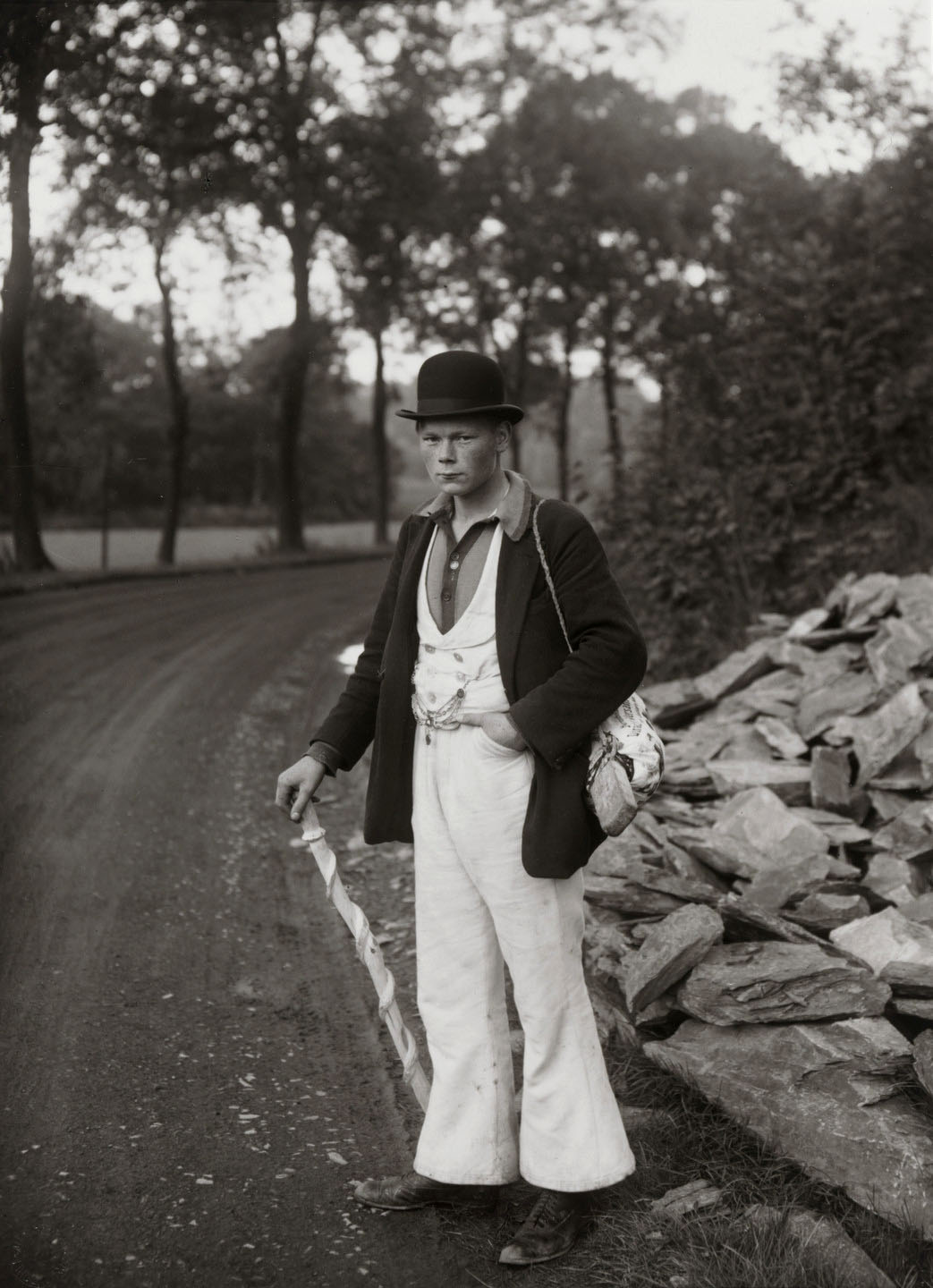
August Sander (German, 1876-1964) 'Itinerant Mason' c. 1927, printed c. 1990-1999


August Sander (German, 1876-1964)
Itinerant Mason
c. 1927, printed c. 1990-1999
Gelatin silver print
10 1/16 x 7 3/8 in. (25.6 x 18.7cm)
Societe Anonyme Acquisition Fund and Katharine Ordway Fund
© Die Photographische Sammlung / SK Stiftung Kultur – August Sander Archiv, Cologne / ARS, NY


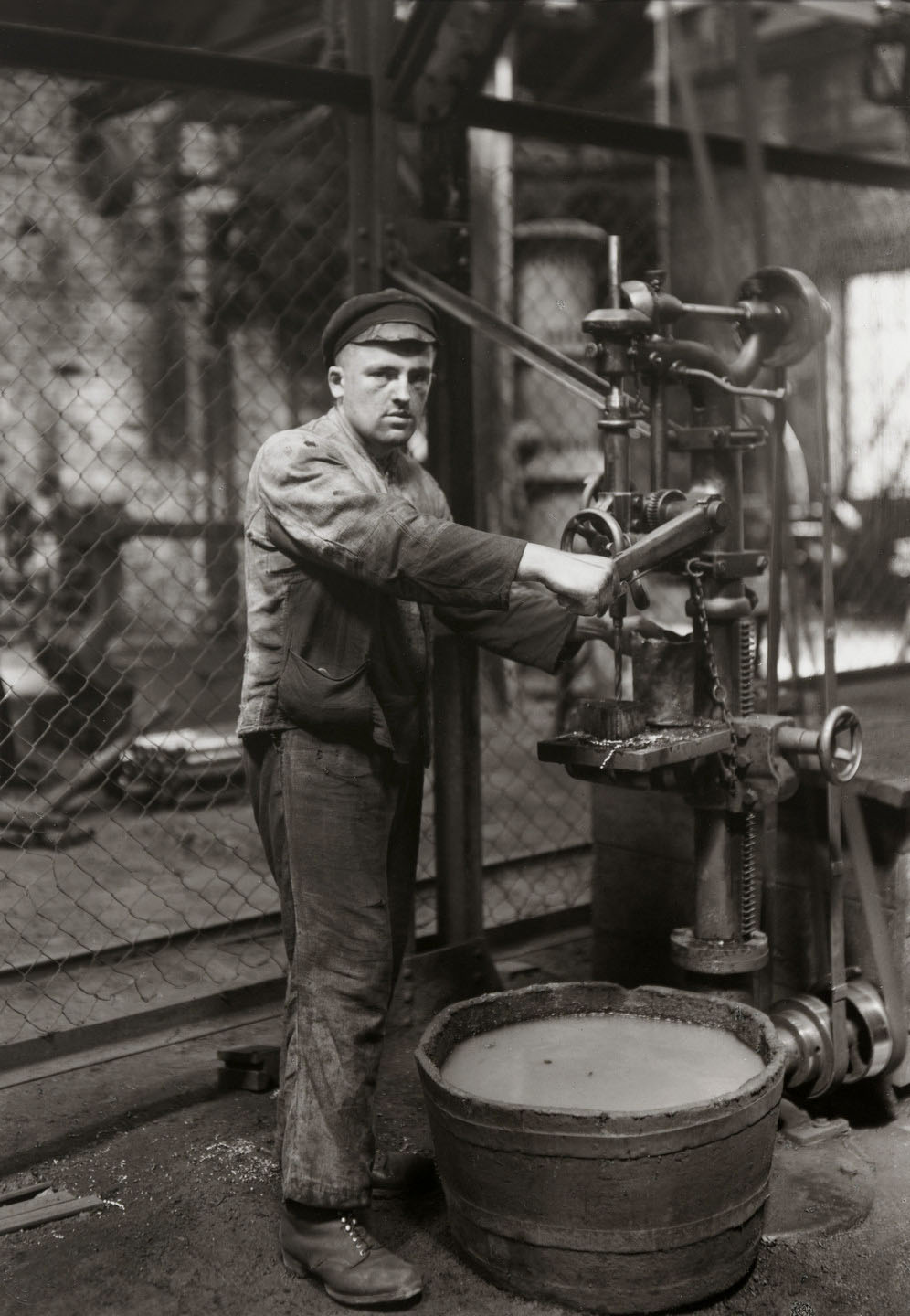
August Sander (German, 1876-1964) 'Machine Operator' 1926, printed c. 1990-1999


August Sander (German, 1876-1964)
Machine Operator
1926, printed c. 1990-1999
Gelatin silver print
10 1/16 × 7 1/16 in. (25.6 × 18cm)
Societe Anonyme Acquisition Fund and Katharine Ordway Fund
© Die Photographische Sammlung / SK Stiftung Kultur – August Sander Archiv, Cologne / ARS, NY


August Sander (German, 1876-1964) 'Magician' 1930, printed c. 1990-1999


August Sander (German, 1876-1964)
Magician
1930, printed c. 1990-1999
Gelatin silver print
10 3/16 x 6 1/8 in. (25.8 x 15.6cm)
Societe Anonyme Acquisition Fund and Katharine Ordway Fund
© Die Photographische Sammlung / SK Stiftung Kultur – August Sander Archiv, Cologne / ARS, NY


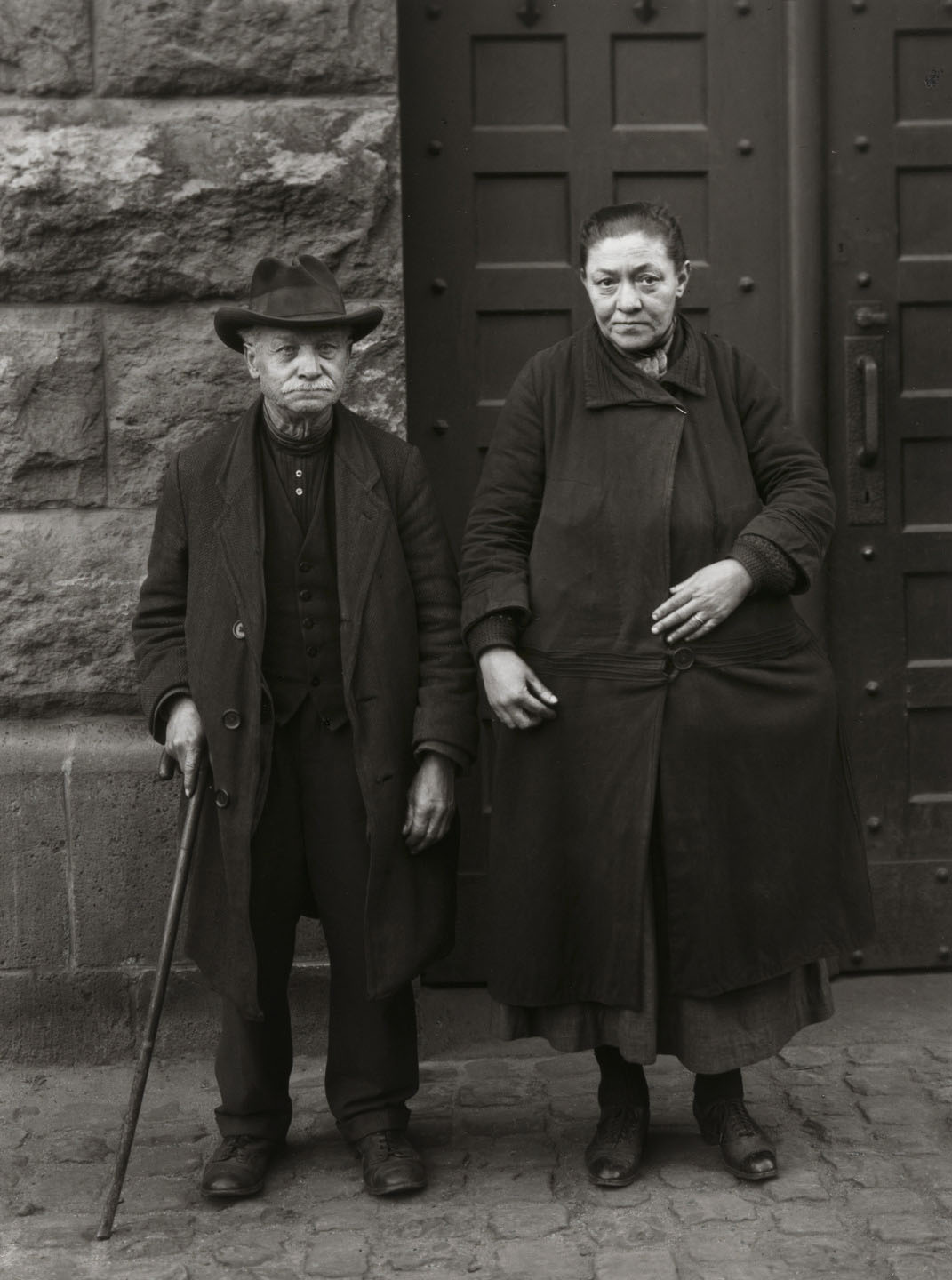
August Sander (German, 1876-1964) 'Married Beggar Couple, Neuwied' 1928, printed c. 1990-1999


August Sander (German, 1876-1964)
Married Beggar Couple, Neuwied
1928, printed c. 1990-1999
Gelatin silver print
10 1/16 x 7 1/2 in. (25.5 x 19cm)
Societe Anonyme Acquisition Fund and Katharine Ordway Fund
© Die Photographische Sammlung / SK Stiftung Kultur – August Sander Archiv, Cologne / ARS, NY


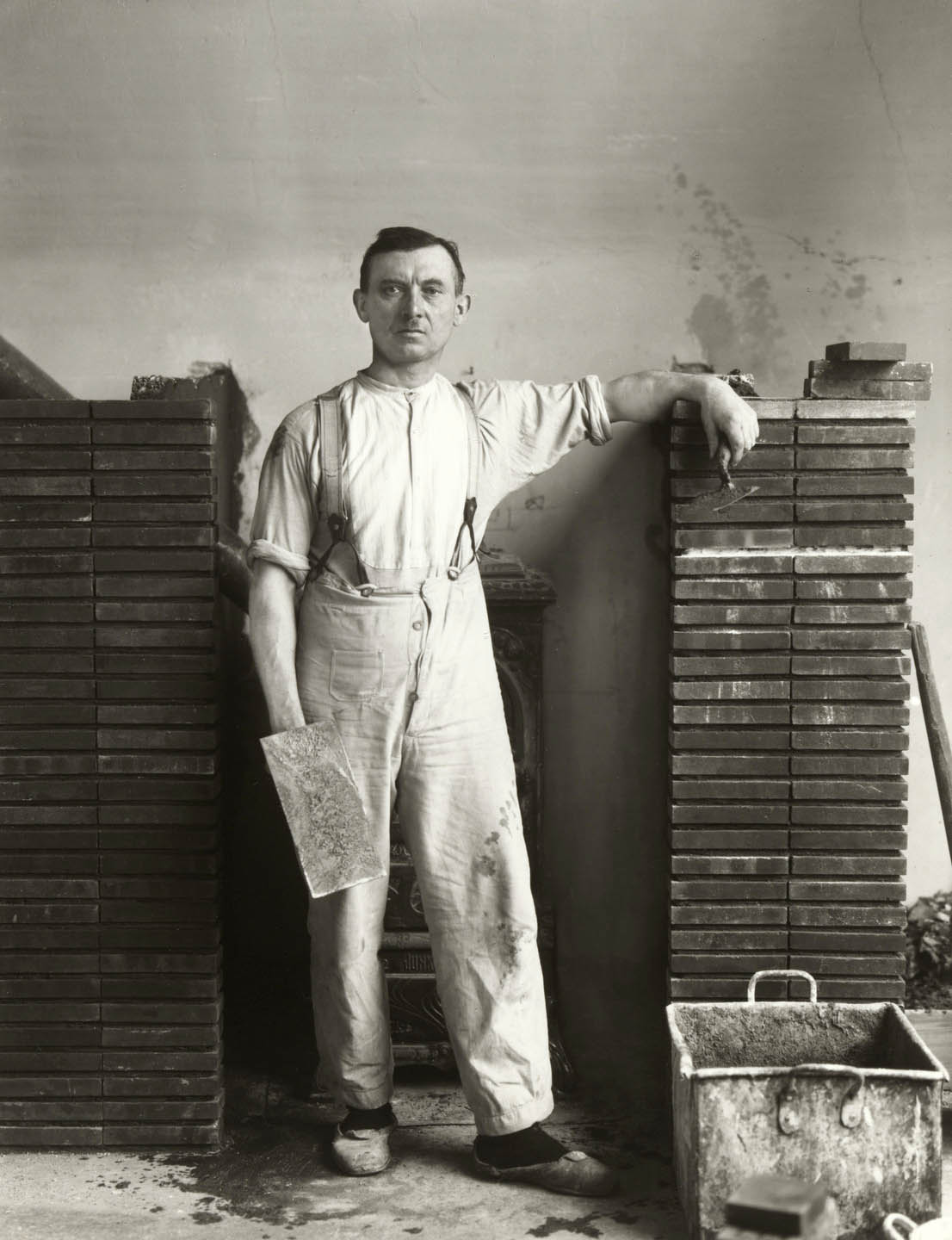
August Sander (German, 1876-1964) 'Master Mason (Building a Chimney)' 1926-1932, printed c. 1990-1999


August Sander (German, 1876-1964)
Master Mason (Building a Chimney)
1926-1932, printed c. 1990-1999
Gelatin silver print
10 1/16 x 7 13/16 in. (25.5 x 19.8cm)
Societe Anonyme Acquisition Fund and Katharine Ordway Fund
© Die Photographische Sammlung / SK Stiftung Kultur – August Sander Archiv, Cologne / ARS, NY


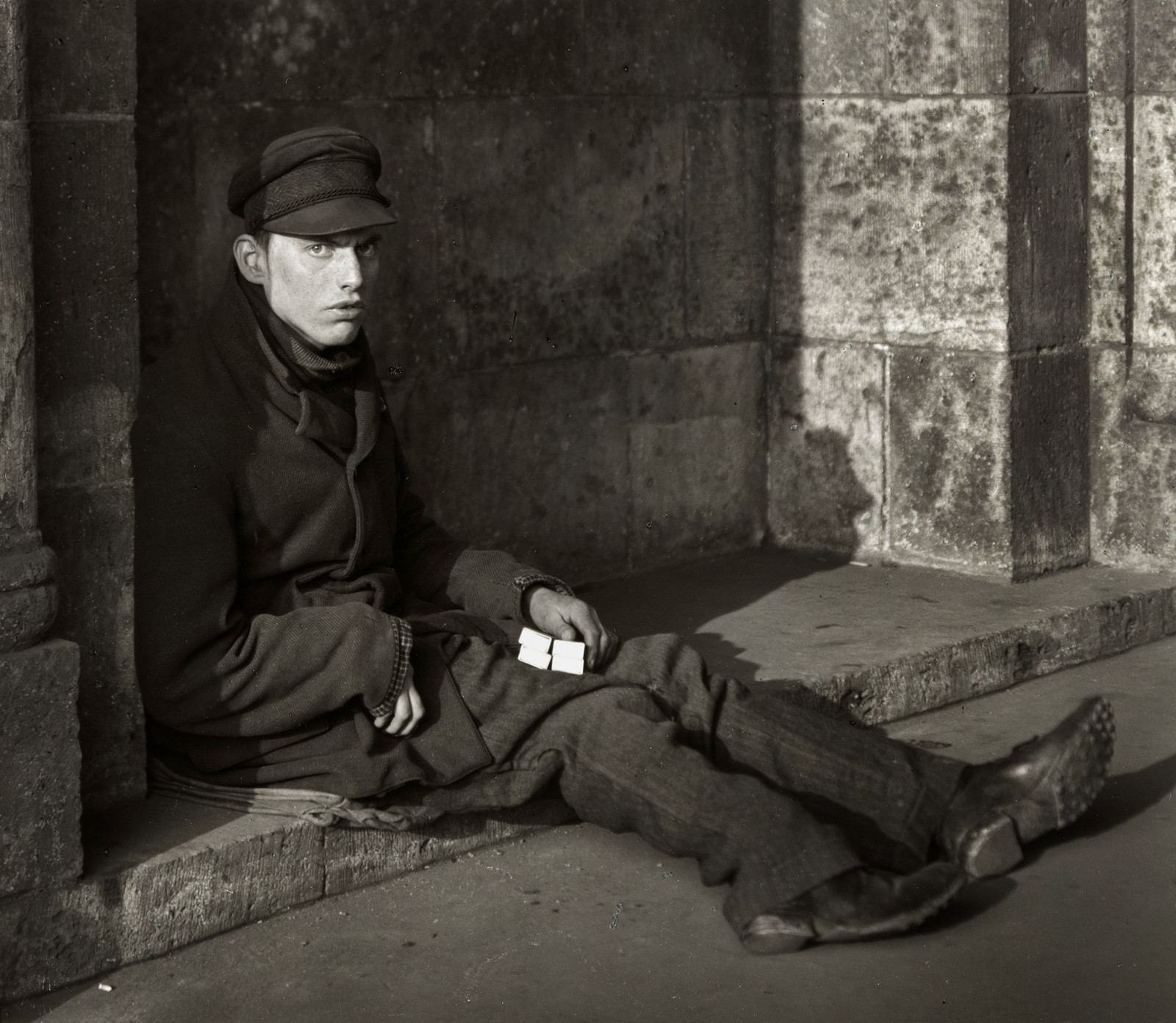
August Sander (German, 1876-1964) 'Match Seller' 1927, printed c. 1990-1999


August Sander (German, 1876-1964)
Match Seller
1927, printed c. 1990-1999
Gelatin silver print
7 1/2 × 8 11/16 in. (19 × 22cm)
Societe Anonyme Acquisition Fund and Katharine Ordway Fund
© Die Photographische Sammlung / SK Stiftung Kultur – August Sander Archiv, Cologne / ARS, NY


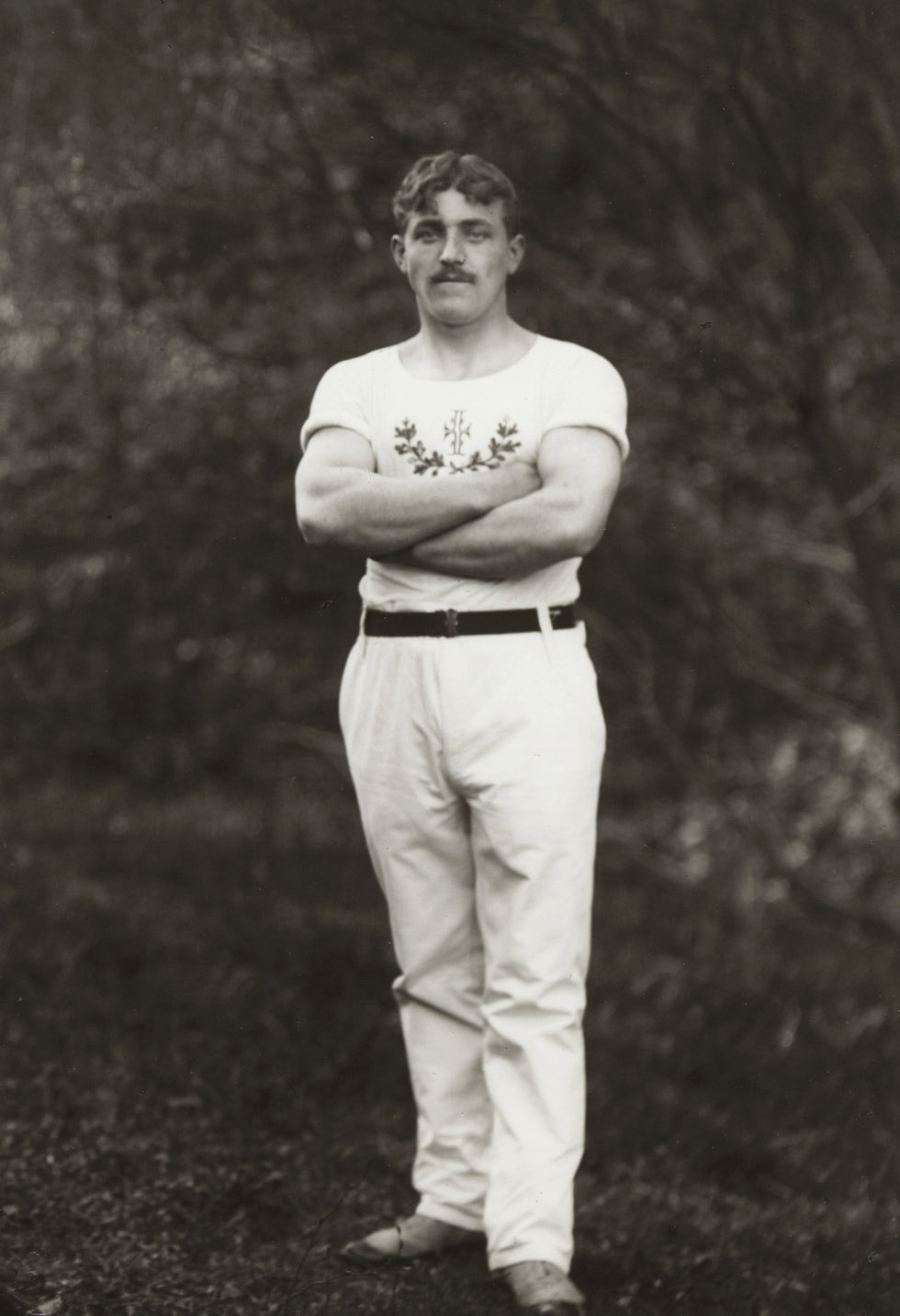
August Sander (German, 1876-1964) 'Member of a Rural Gymnastics Club' 1912, printed c. 1990-1999


August Sander (German, 1876-1964)
Member of a Rural Gymnastics Club
1912, printed c. 1990-1999
Gelatin silver print
10 3/16 x 7 in. (25.9 x 17.8cm)
Societe Anonyme Acquisition Fund and Katharine Ordway Fund
© Die Photographische Sammlung / SK Stiftung Kultur – August Sander Archiv, Cologne / ARS, NY


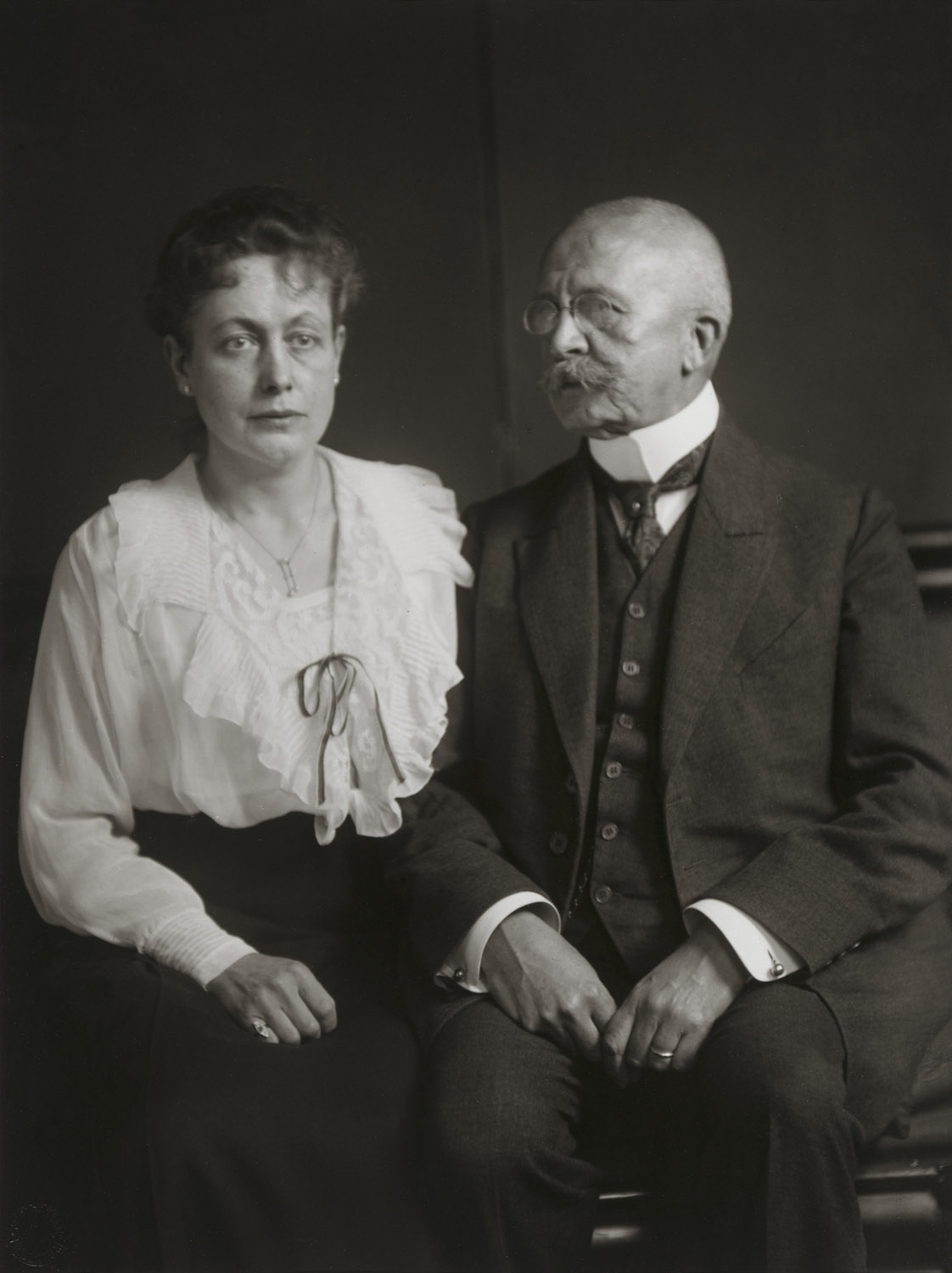
August Sander (German, 1876-1964) 'Middle-Class Married Couple' 1922, printed c. 1990-1999


August Sander (German, 1876-1964)
Middle-Class Married Couple
1922, printed c. 1990-1999
Gelatin silver print
9 15/16 × 7 5/8 in. (25.3 × 19.3cm)
Societe Anonyme Acquisition Fund and Katharine Ordway Fund
© Die Photographische Sammlung / SK Stiftung Kultur – August Sander Archiv, Cologne / ARS, NY


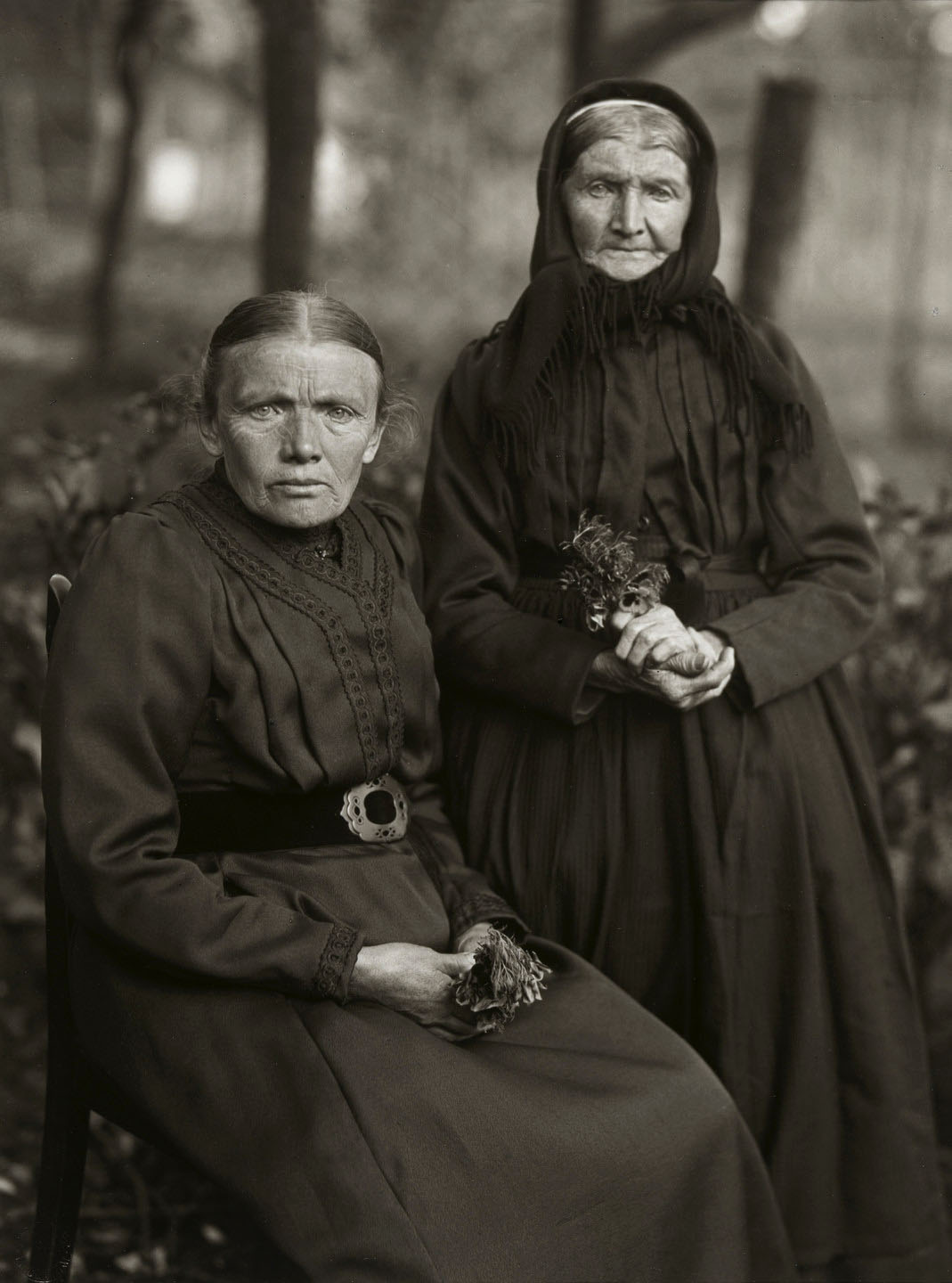
August Sander (German, 1876-1964) 'Mother and Daughter, Farmer's Wife and Miner's Wife' 1912, printed c. 1990-1999


August Sander (German, 1876-1964)
Mother and Daughter, Farmer’s Wife and Miner’s Wife
1912, printed c. 1990-1999
Gelatin silver print
9 13/16 x 7 3/8 in. (24.9 x 18.7cm)
Societe Anonyme Acquisition Fund and Katharine Ordway Fund
© Die Photographische Sammlung / SK Stiftung Kultur – August Sander Archiv, Cologne / ARS, NY


August Sander (German, 1876-1964) 'Mother and Daughter [Helene Abelen with Daughter Josepha]' c. 1926, printed c. 1990-1999


August Sander (German, 1876-1964)
Mother and Daughter [Helene Abelen with Daughter Josepha]
c. 1926, printed c. 1990-1999
Gelatin silver print
10 1/16 x 7 11/16 in. (25.6 x 19.5cm)
Societe Anonyme Acquisition Fund and Katharine Ordway Fund
© Die Photographische Sammlung / SK Stiftung Kultur – August Sander Archiv, Cologne / ARS, NY


August Sander (German, 1876-1964) 'My Wife in Joy and Sorrow [Anna Sander with twins, Sigrid and Helmut Sander]' 1911, printed c. 1990-1999


August Sander (German, 1876-1964)
My Wife in Joy and Sorrow [Anna Sander with twins, Sigrid and Helmut Sander]
1911, printed c. 1990-1999
Gelatin silver print
10 1/16 x 7 11/16 in. (25.5 x 19.5cm)
Societe Anonyme Acquisition Fund and Katharine Ordway Fund
© Die Photographische Sammlung / SK Stiftung Kultur – August Sander Archiv, Cologne / ARS, NY


Further challenging the project’s claim to offer a neat and neutral study of social types is the deeply personal character of some of the pictures. Indeed, People of the 20th Century incorporates intimate portraits of Sander’s family, including the poignant My Wife in Joy and Sorrow showing his wife, Anna, with their twin infants, one of whom did not survive.

Judy Ditner is the Richard Benson Curator of Photography and Digital Media

Yale University Art Gallery Spring 2026 Magazine


Yale University Art Gallery
1111 Chapel Street (at York Street)
New Haven, CT

Opening hours:
Tuesday – Friday 10.00am – 5.00pm
Thursday 10.00am – 8.00pm
Saturday – Sunday 11.00am – 5.00pm
Closed Mondays

Yale University Art Gallery website

LIKE ART BLART ON FACEBOOK

Back to top

Exhibition: ‘Designed World: Through the Eyes of Tata Ronkholz (1940-1997)’ at Huis Marseille, Amsterdam

Ontworpen wereld: Door de ogen van Tata Ronkholz (1940–1997)

Exhibition dates: 14th February – 21st June, 2026

Curator: Gabriele Conrath-Scholl, Director of Die Photographische Sammlung/SK Stiftung Kultur in Cologne


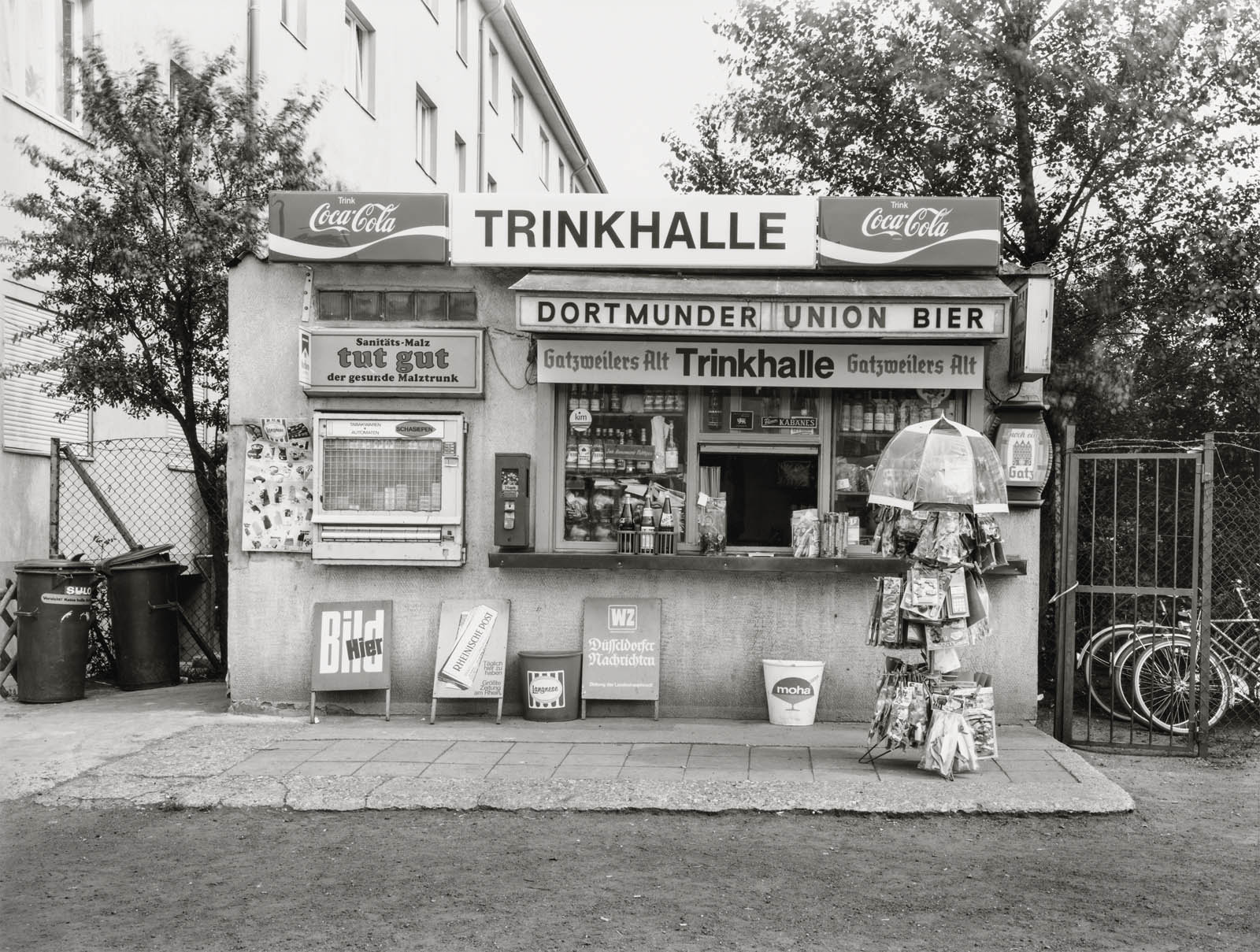
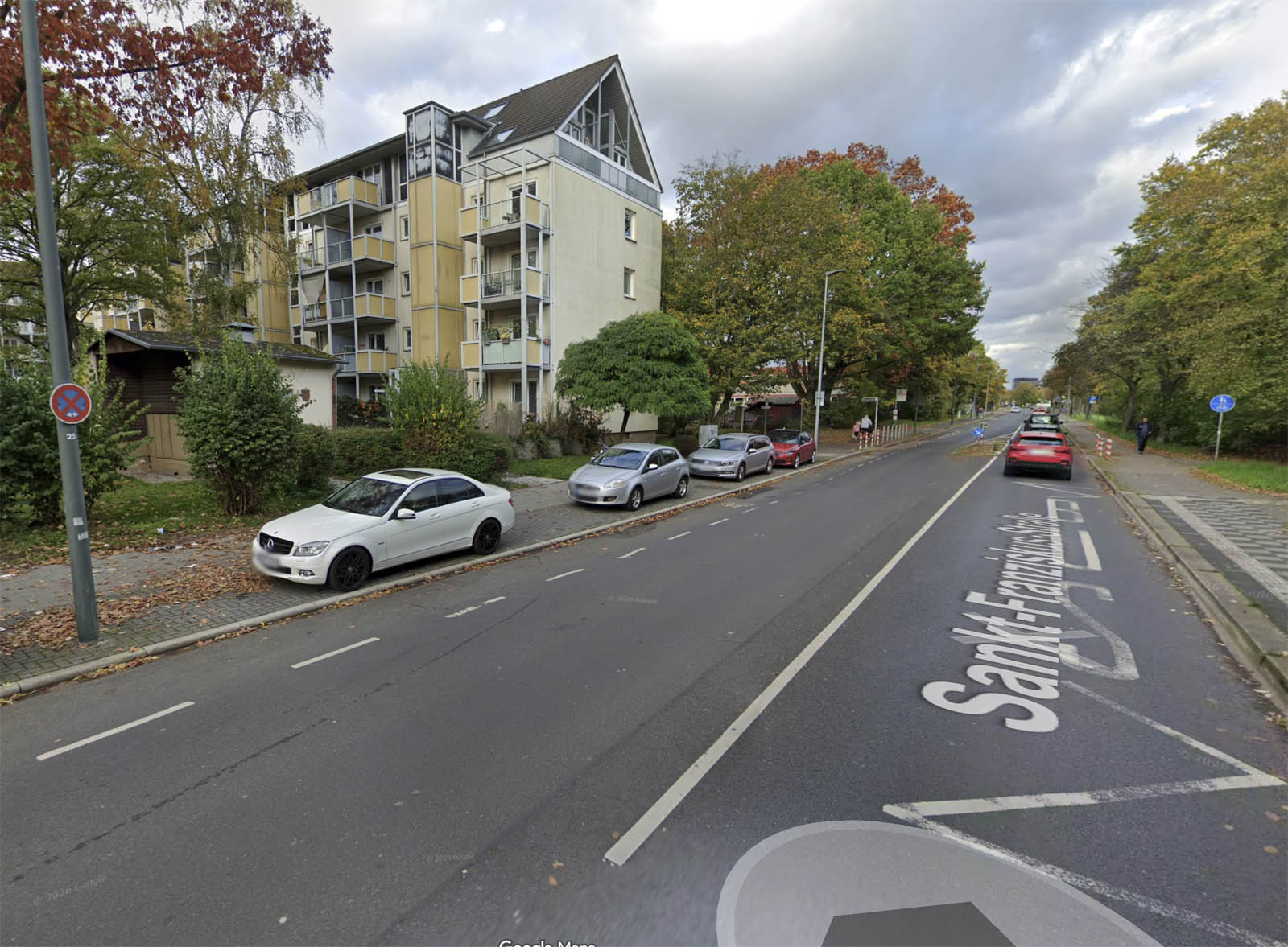
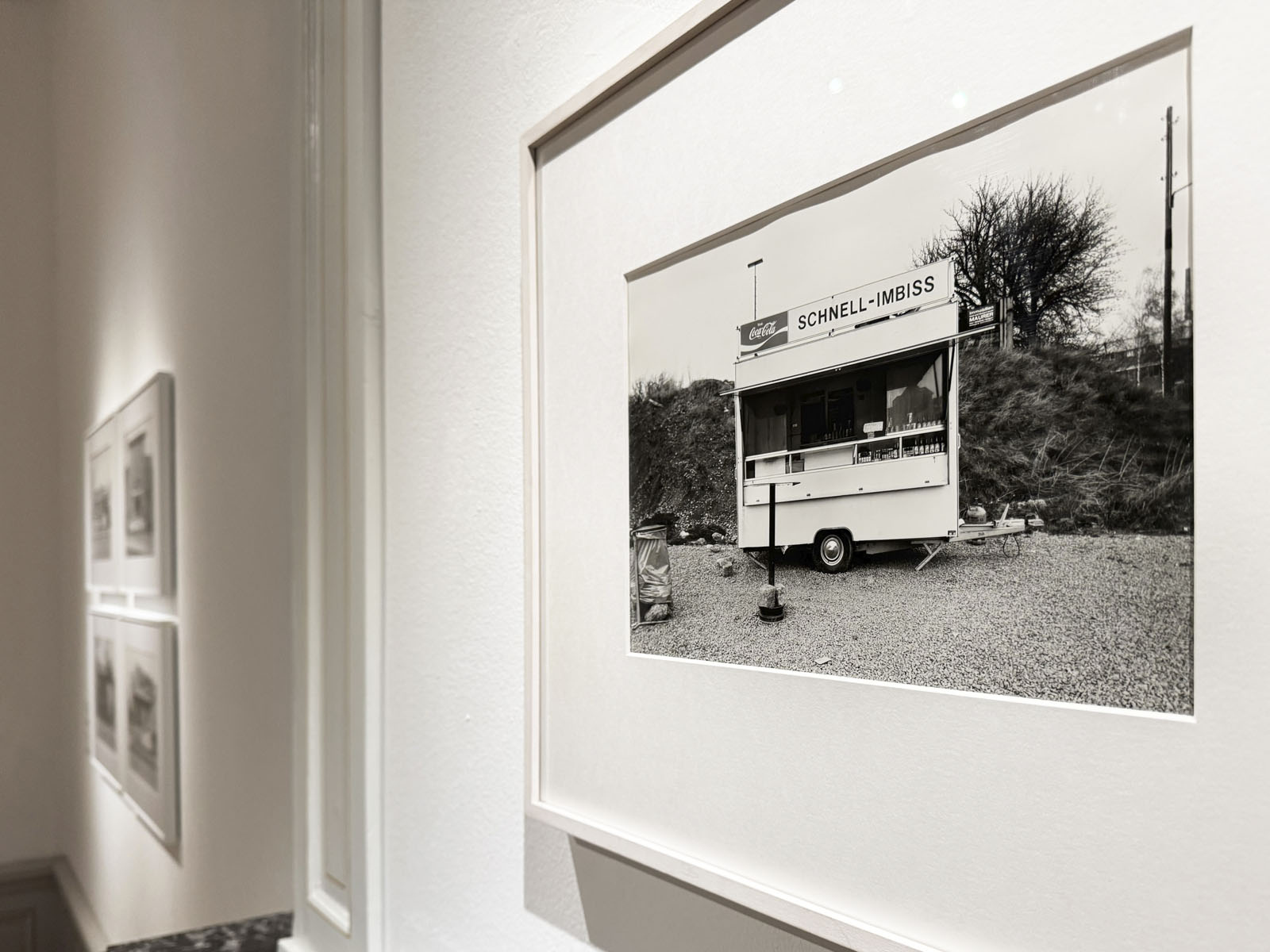
Tata Ronkholz (German, 1940-1997) 'Trinkhalle / Kiosk, Düsseldorf, Sankt-Franziskus-Straße 107' 1977


Tata Ronkholz (German, 1940-1997)
Trinkhalle / Kiosk, Düsseldorf, Sankt-Franziskus-Straße 107
1977
© VAN HAM Art Estate: Tata Ronkholz, 2026


In a nutshell:

Large format camera
Front on, realist, sharply defined objective documentary photographs of architectural structures of the urban landscape
In series

In reality:

Structures cut from the fabric of existence
Isolated by the subjective eye of the photographer and the lens of the camera
What to include or exclude

(In the contemporary photographs of the spaces in the posting, the shops are surrounded by trees and vegetation, they have transformed from kiosk to shuttered shop, from boutique to florist: the architecture remains but traces of previous incarnations are visible only in these photographs. Nothing is permanent except change).

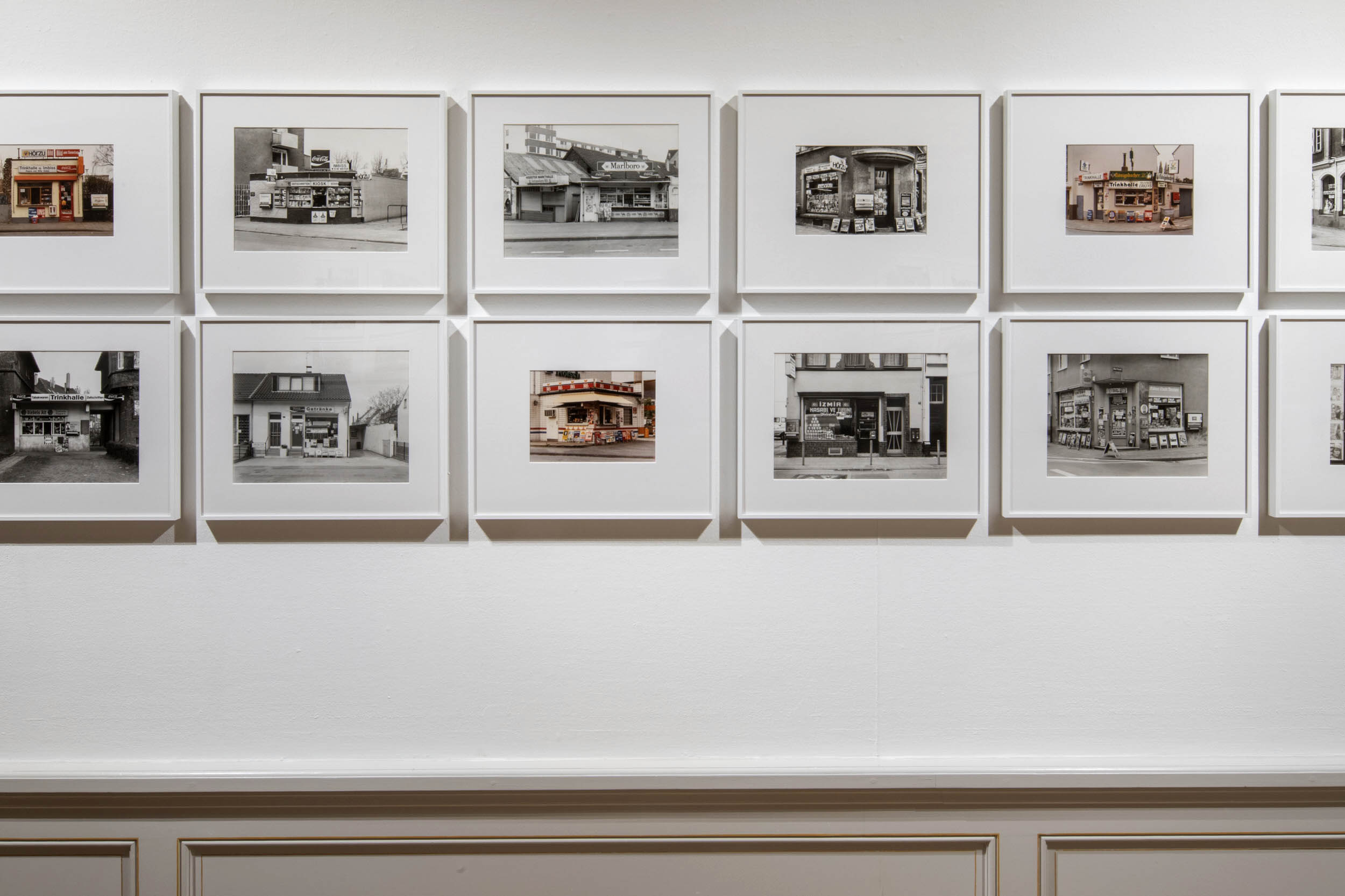
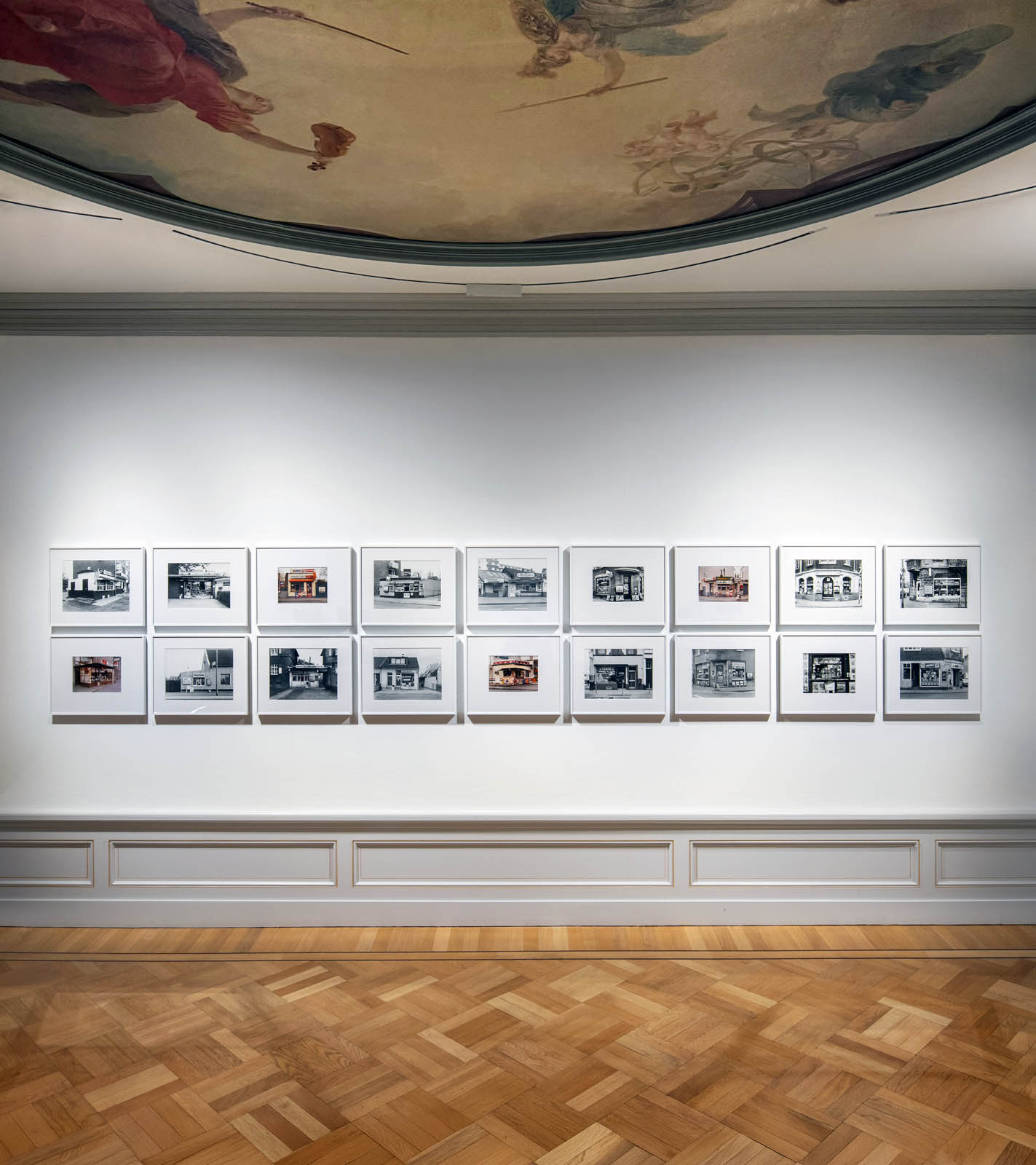
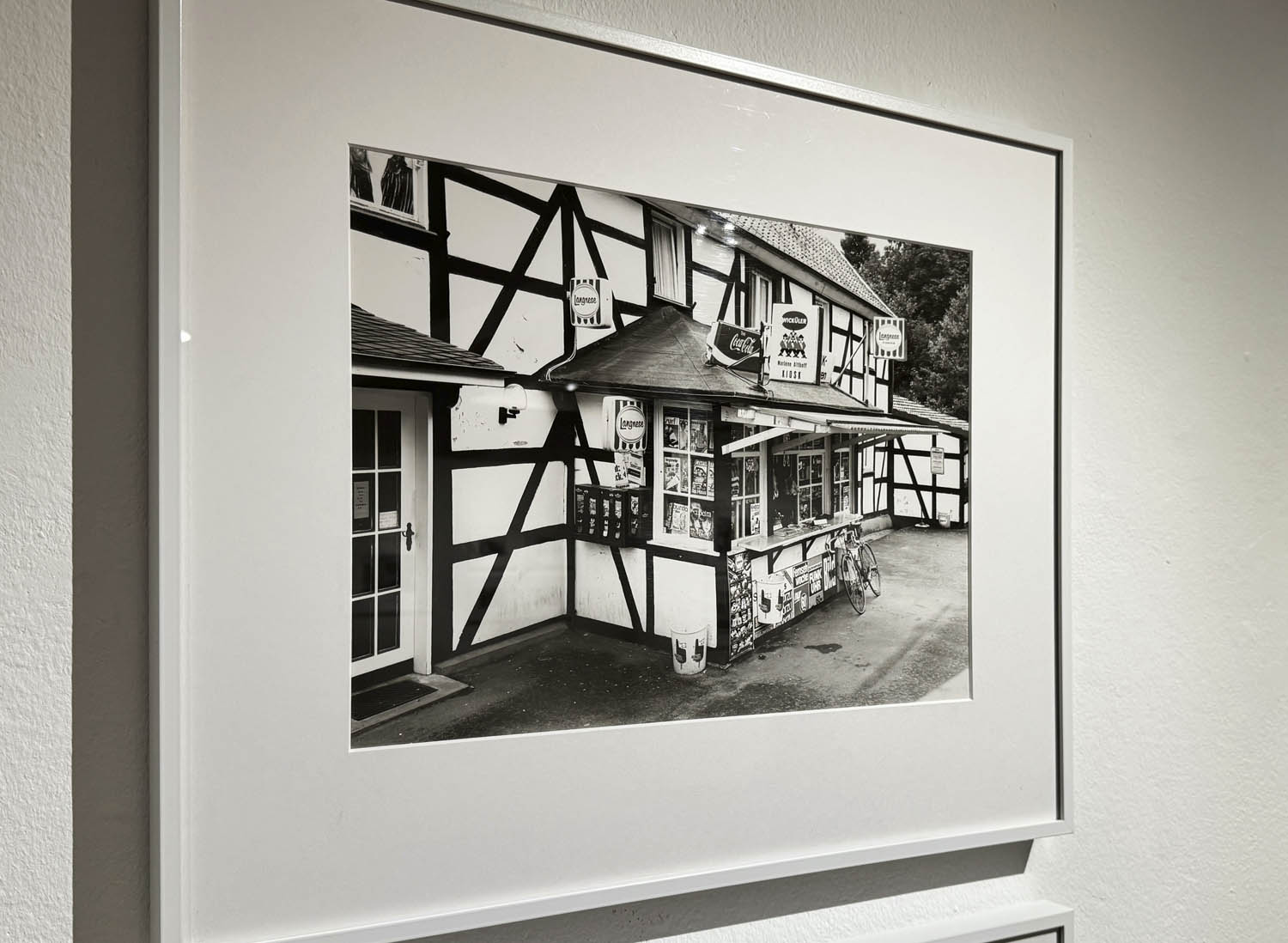
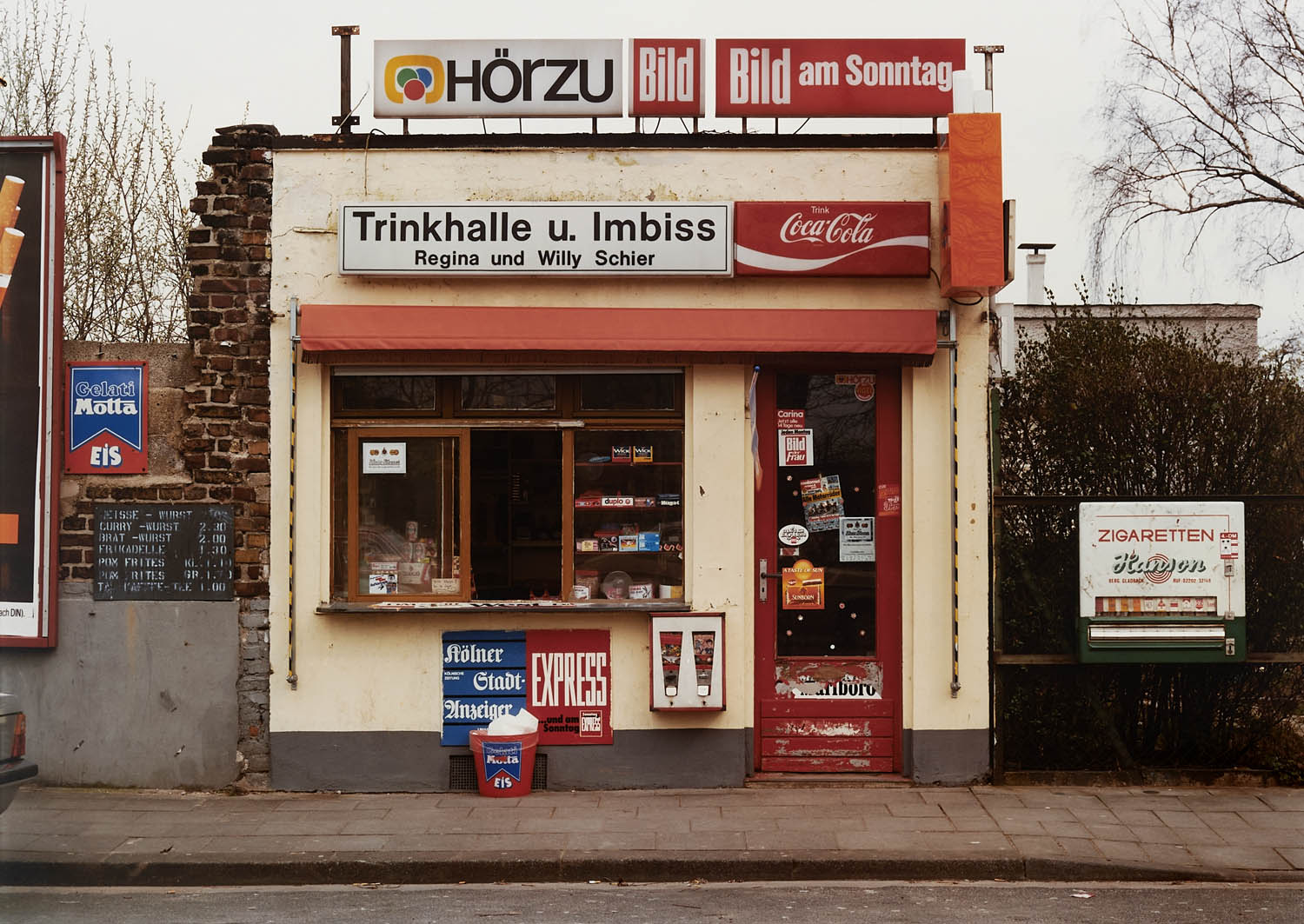
In the photographs of kiosks, corner shops and industrial gates, it is the minutiae of existence (not as mere decoration) that gives these supposedly objective photographs their subjective power. For example, “the photo Trinkhalle, Köln-Nippes – with its ice cream and newspaper advertisements and vending machines for chewing gum and cigarettes” is more than amusing and engaging – it depicts vital, archaeological evidence of the transitory nature of human existence in the pyschogeography of the urbanscape.1

In Ronkholz’ photographs of the terrain (from the Latin terra, earth/land) of the city, her exploration of urban environments emphasises interpersonal connections to places – and testify “to social, cultural, and economic change and shows how people shape the world around them.” (Press release)

This is the fluid boundary that these photographs so beautifully and incisively depict: the interface between architecture and human, between order (form/surface) and chaos (placement of insolent signs), between utopian perfection and dystopian unruliness – the one coexistent with the other.

This confluence of pattern and randomness, objective and subjective, is what gives these photographs of the everyday a lasting significance.

Dr Marcus Bunyan


1/ Guy Debord (November 1956). “Theory of the Dérive”. Les Lèvres Nues (9). Translated by Ken Knabb.


Many thankx to Huis Marseille, Amsterdam for allowing me to publish the photographs in the posting. Please click on the photographs for a larger version of the image.


Sankt-Franziskus-Straße 104-107 Düsseldorf


Sankt-Franziskus-Straße 104-107 Düsseldorf


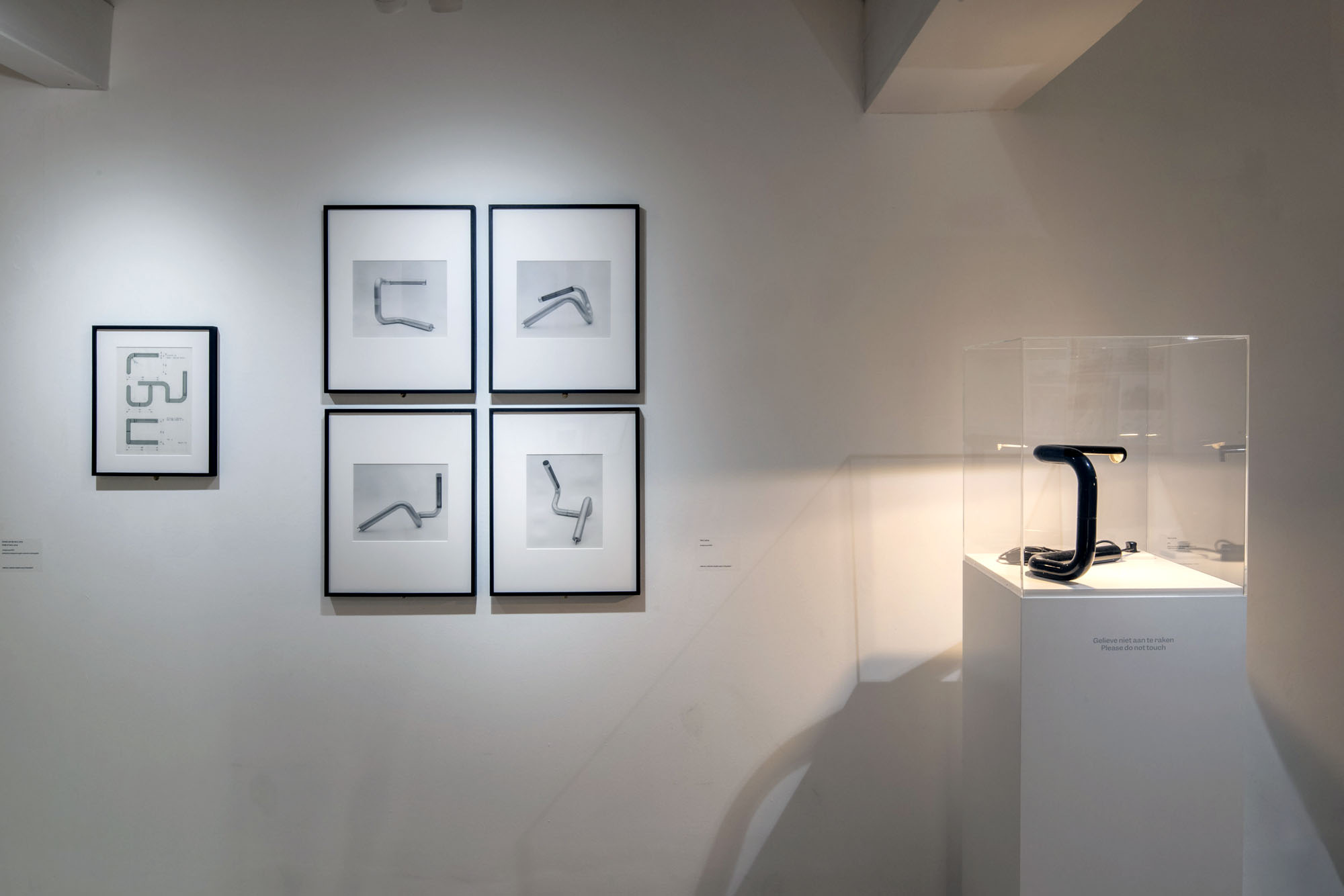
Installation view of the exhibition Designed World: Through the Eyes of Tata Ronkholz (1940-1997) at Huis Marseille, Amsterdam, February - June, 2026
Installation view of the exhibition 'Designed World: Through the Eyes of Tata Ronkholz (1940-1997)' at Huis Marseille, Amsterdam, February - June, 2026


Installation views of the exhibition Designed World: Through the Eyes of Tata Ronkholz (1940-1997) at Huis Marseille, Amsterdam, February – June, 2026


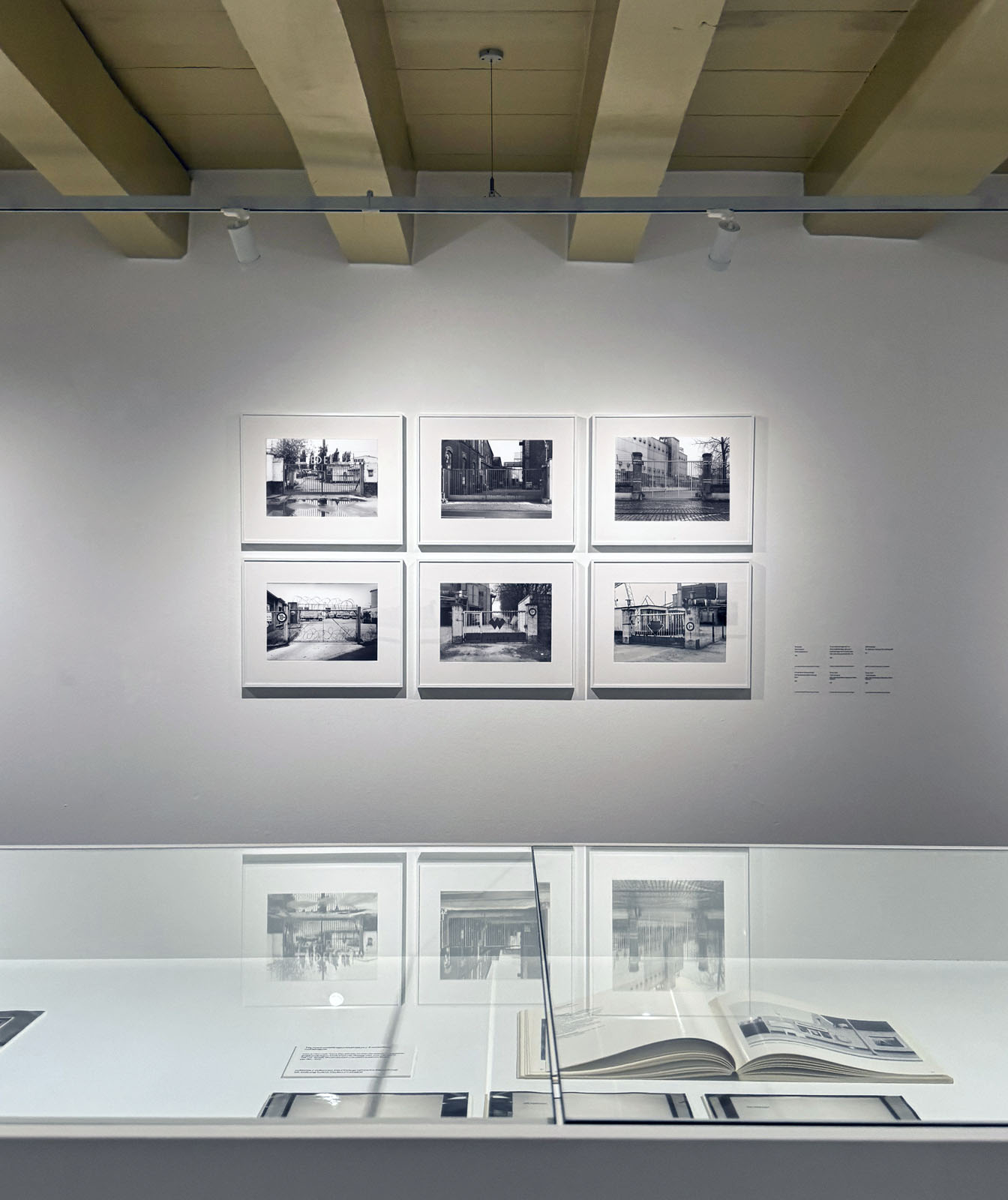
Installation view of the exhibition Designed World: Through the Eyes of Tata Ronkholz (1940-1997) at Huis Marseille, Amsterdam, February - June, 2026
Installation view of the exhibition 'Designed World: Through the Eyes of Tata Ronkholz (1940-1997)' at Huis Marseille, Amsterdam, February - June, 2026


Installation views of the exhibition Designed World: Through the Eyes of Tata Ronkholz (1940-1997) at Huis Marseille, Amsterdam, February – June, 2026


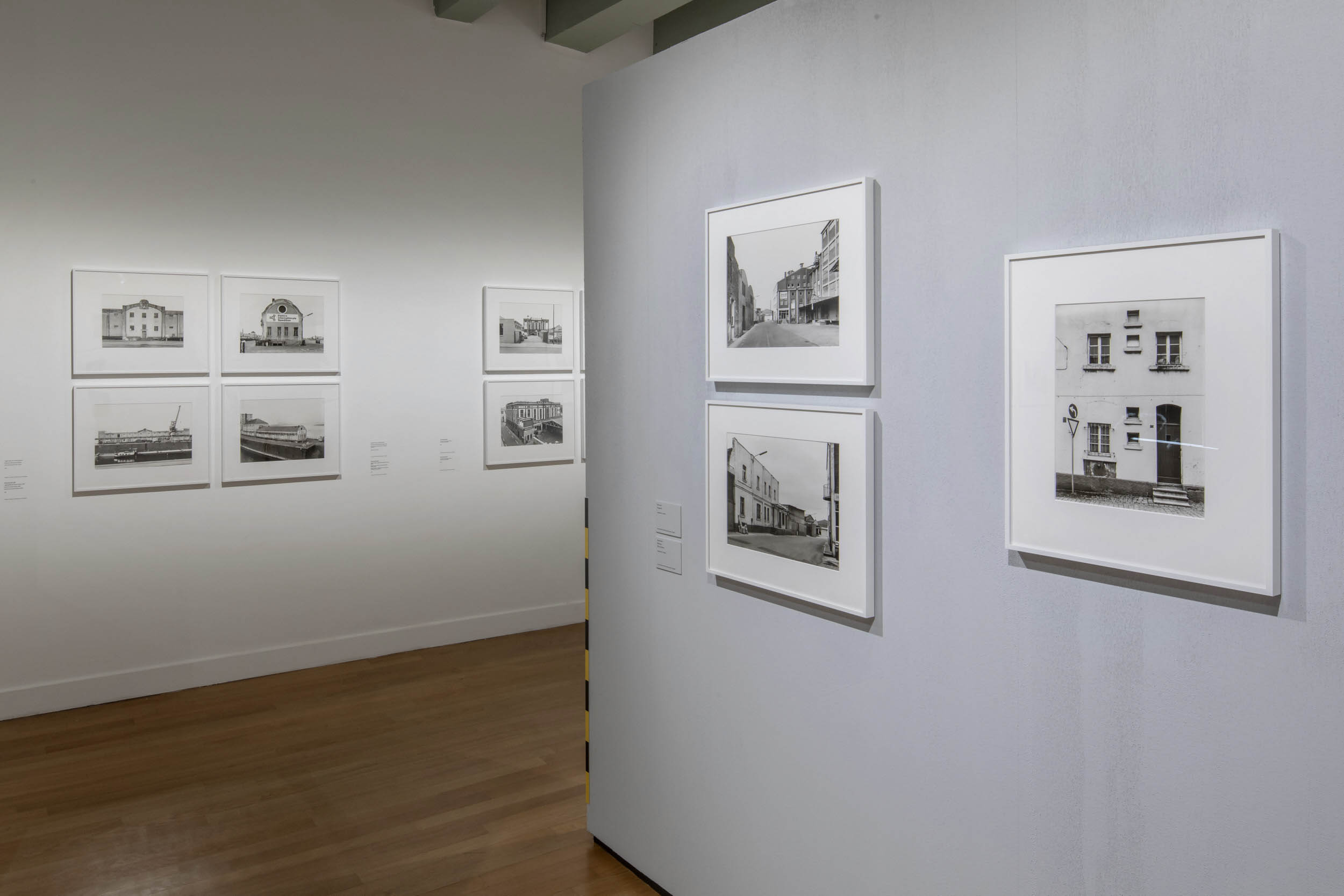
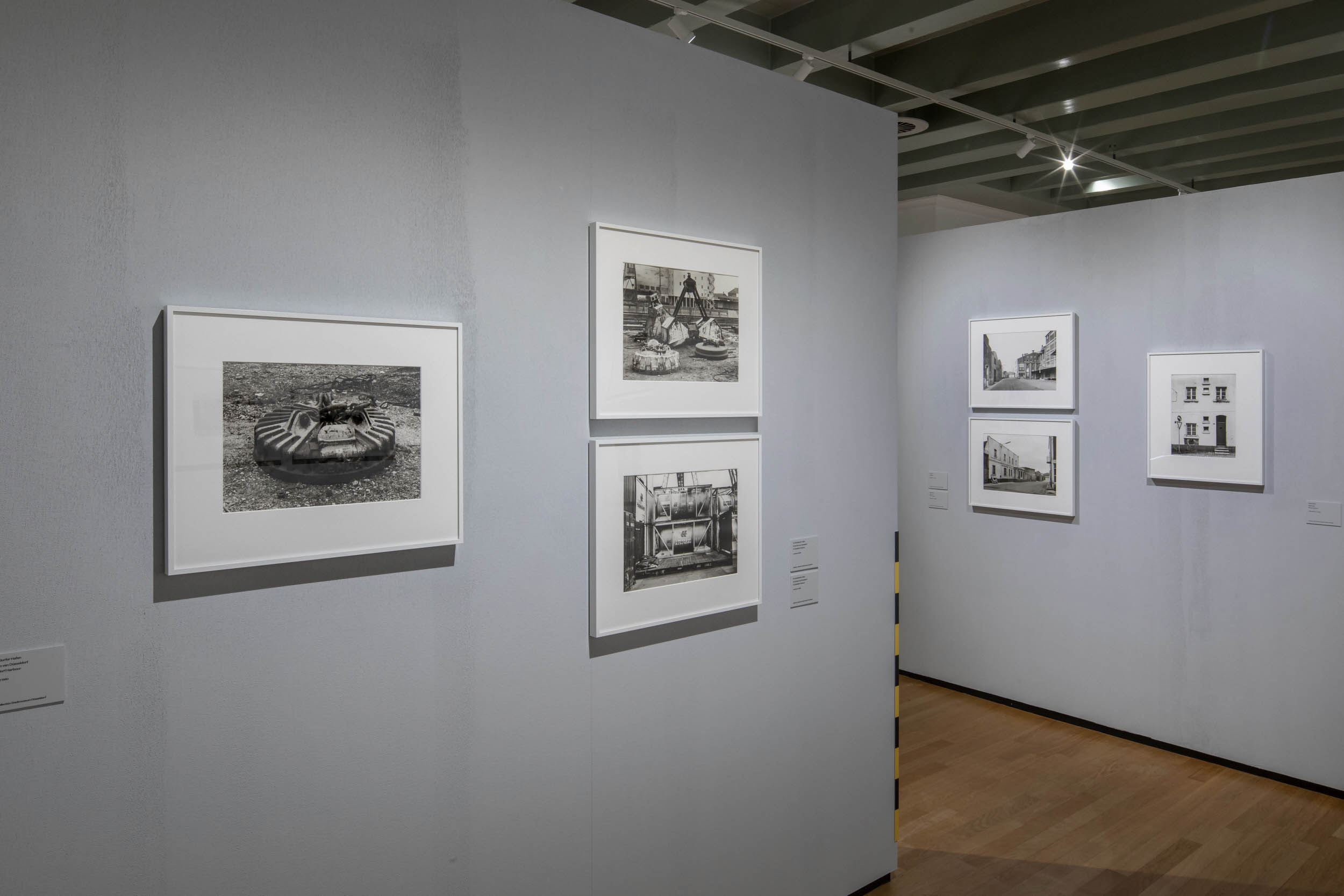
Installation view of the exhibition Designed World: Through the Eyes of Tata Ronkholz (1940-1997) at Huis Marseille, Amsterdam, February - June, 2026 showing at left, Tata Ronkholz's 'Düsseldorf Harbor' (1980)


Installation view of the exhibition Designed World: Through the Eyes of Tata Ronkholz (1940-1997) at Huis Marseille, Amsterdam, February – June, 2026 showing at left, Tata Ronkholz’s Düsseldorf Harbor (1980)


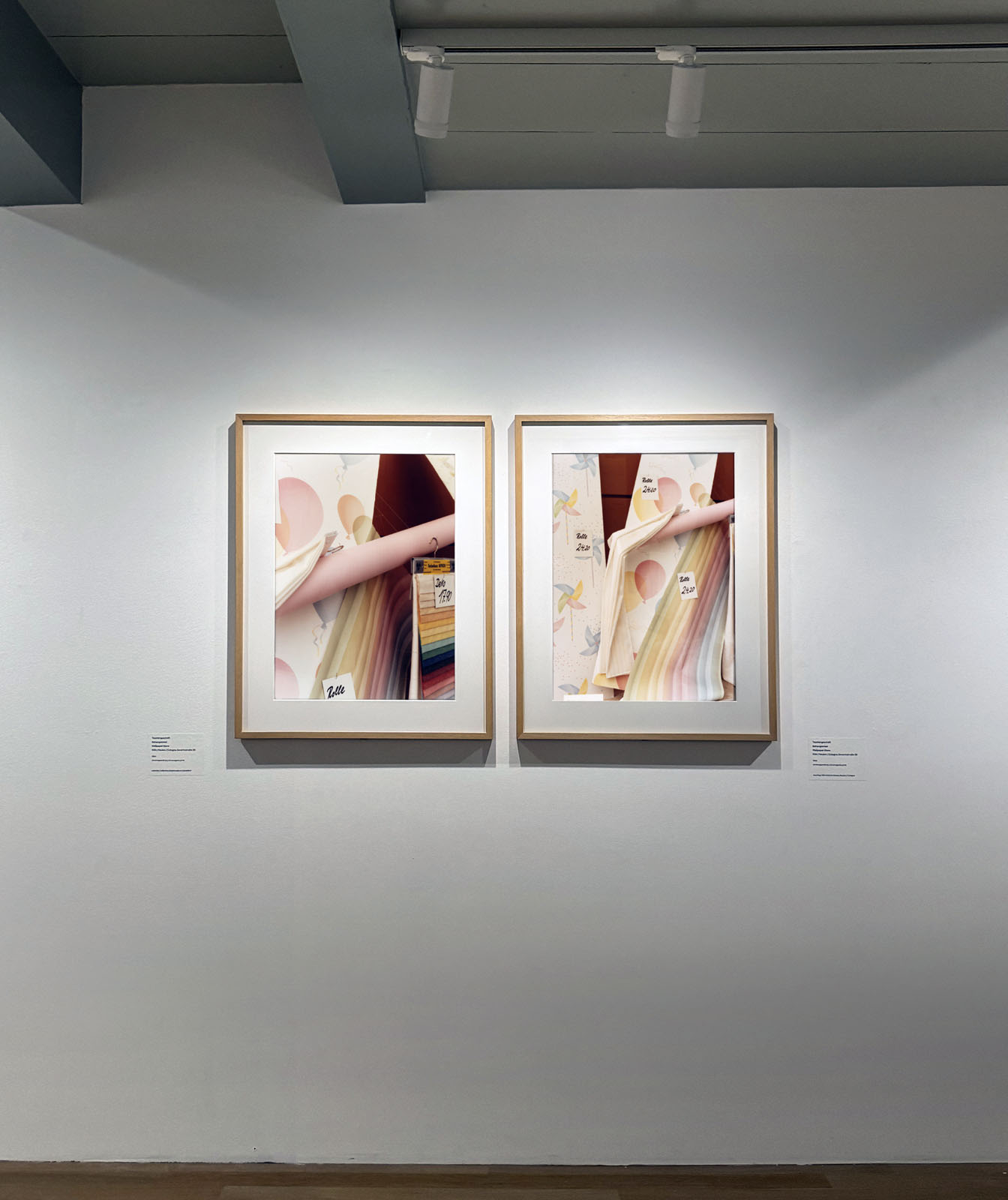
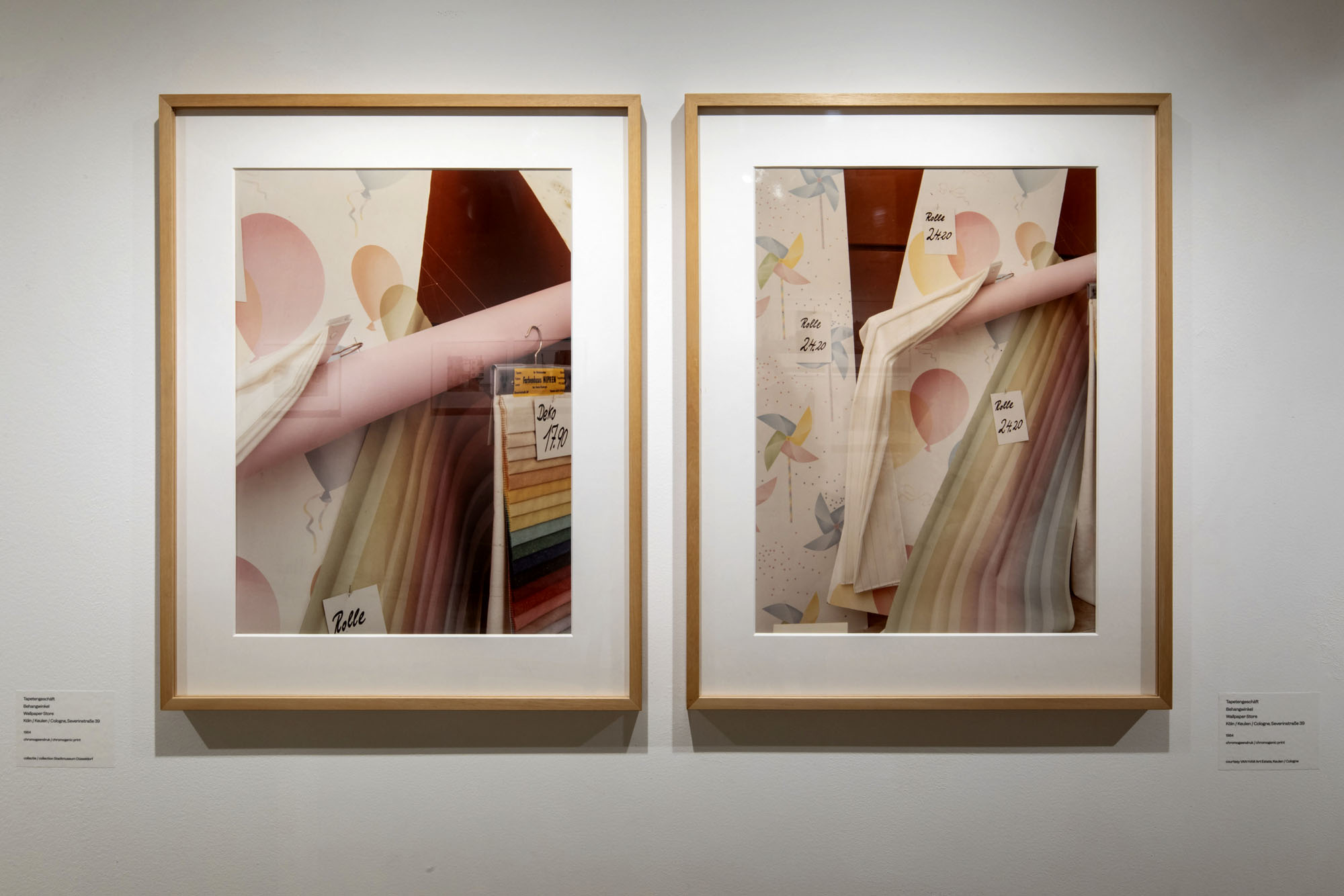
Tata Ronkholz (German, 1940-1997) 'Wallpaper store' 1964 (installation view)


Tata Ronkholz (German, 1940-1997)
Wallpaper store (installation views)
1964
© VAN HAM Art Estate: Tata Ronkholz, 2026


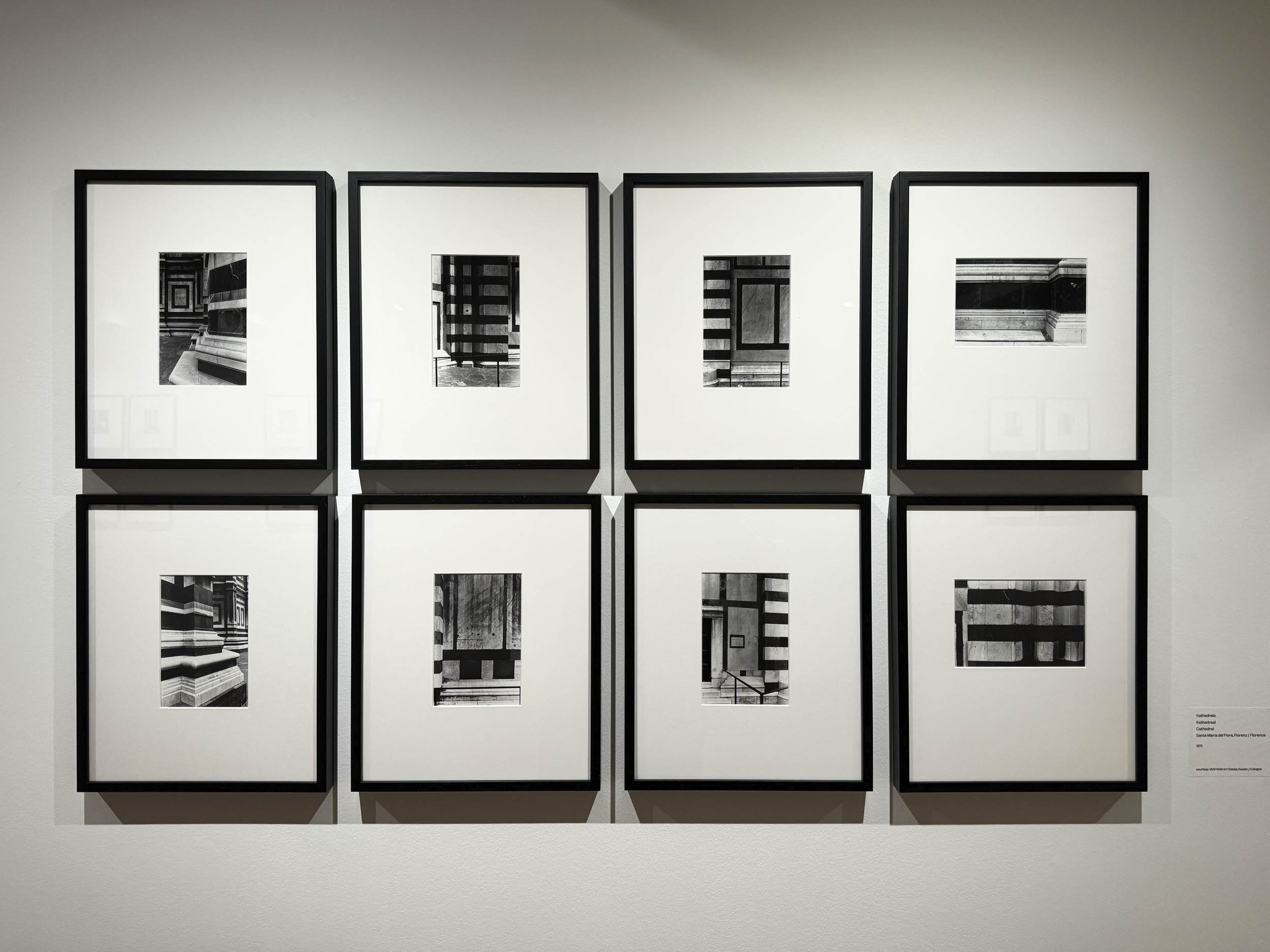
Tata Ronkholz (German, 1940-1997) 'Cathedral, Santa Maria del Fiore, Florence' 1975 (installation view)


Tata Ronkholz (German, 1940-1997)
Cathedral, Santa Maria del Fiore, Florence (installation view)
1975
© VAN HAM Art Estate: Tata Ronkholz, 2026


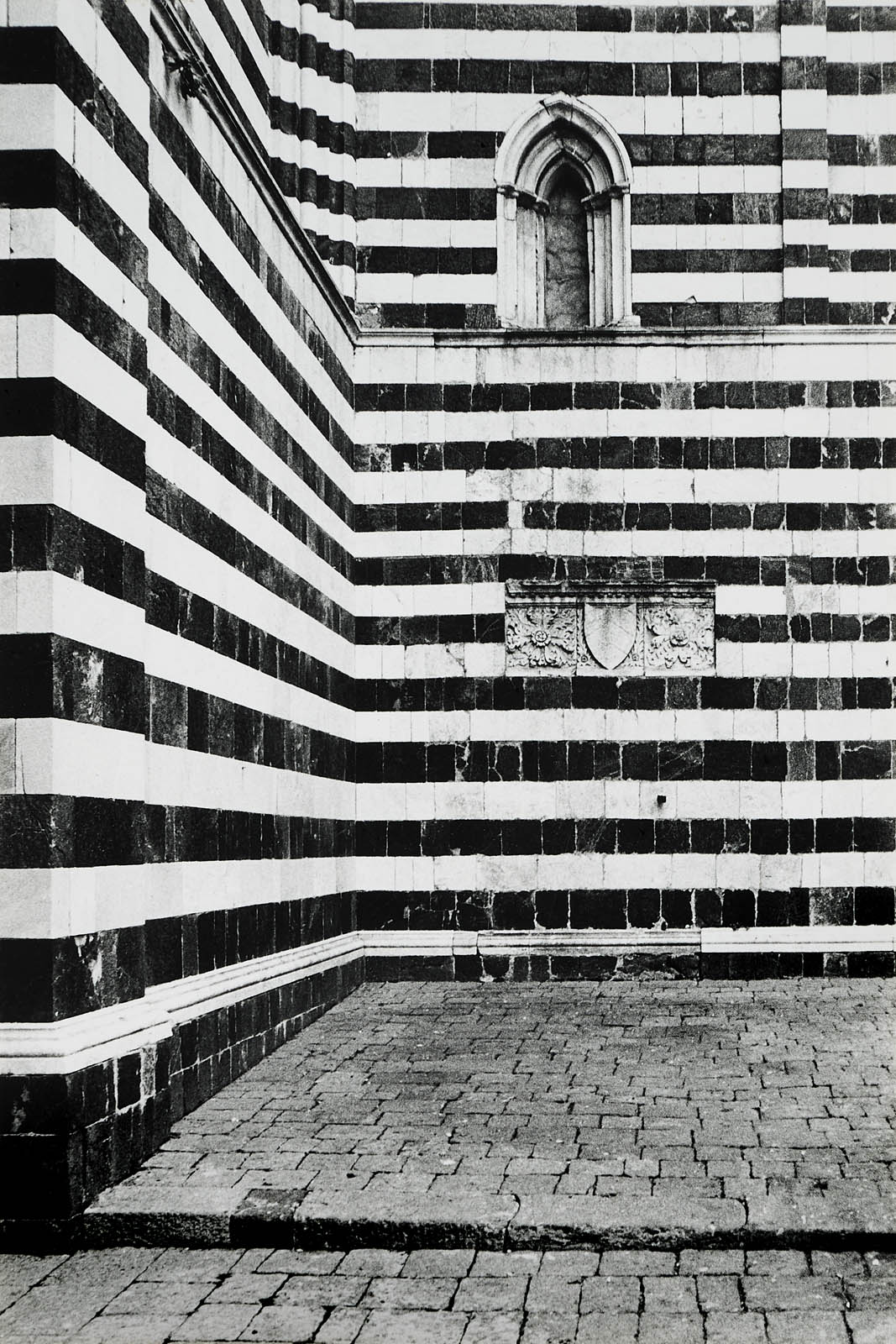
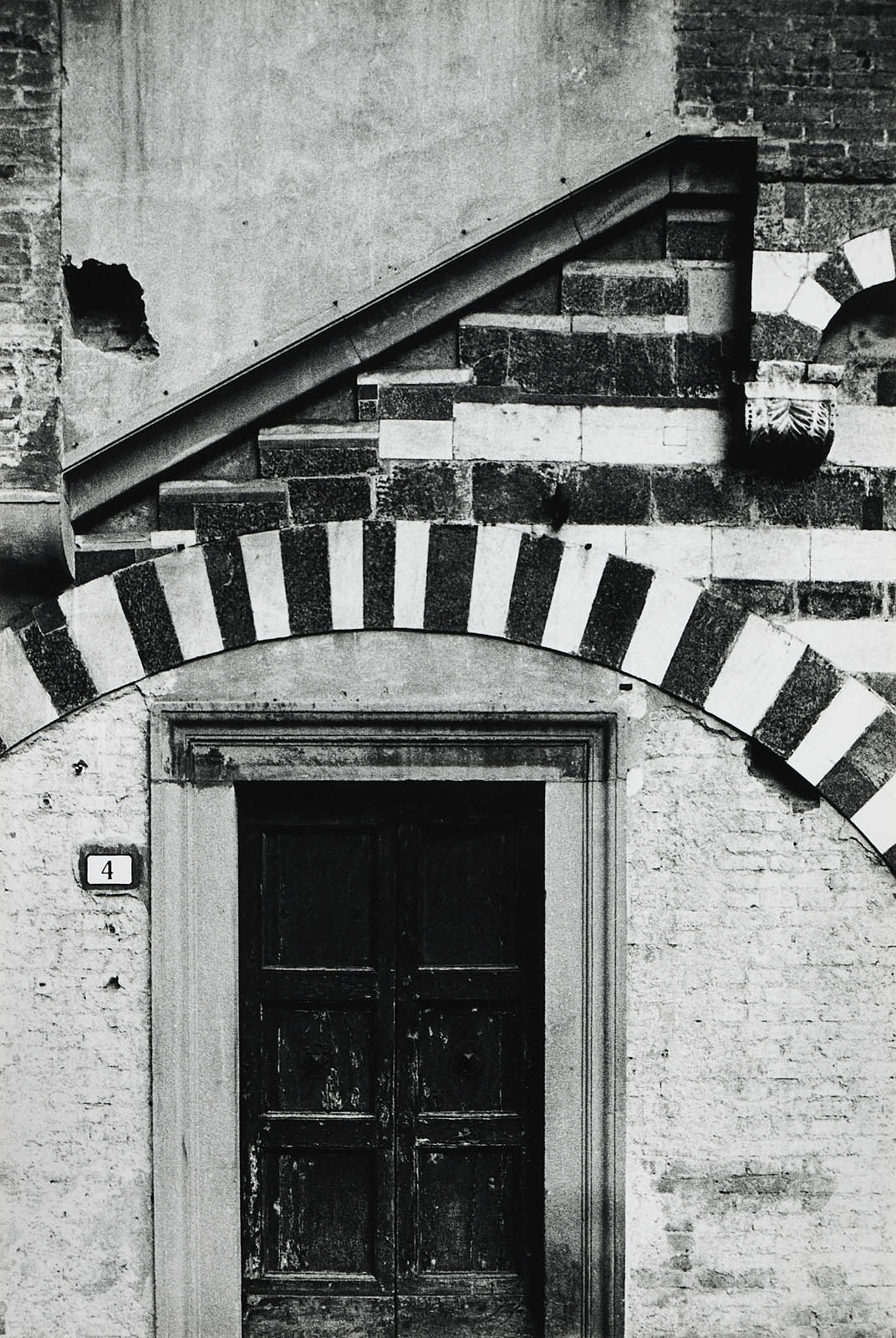
Tata Ronkholz (German, 1940-1997) 'Santa Maria Assunta, Dom / Cathedral, Volterra' 1975


Tata Ronkholz (German, 1940-1997)
Santa Maria Assunta, Dom / Cathedral, Volterra
1975
© VAN HAM Art Estate: Tata Ronkholz, 2026


Tata Ronkholz (German, 1940-1997) 'Palazzo dei Vescovi (Museo dell’Antico), Pistoia' 1975


Tata Ronkholz (German, 1940-1997)
Palazzo dei Vescovi (Museo dell’Antico), Pistoia
1975
© VAN HAM Art Estate: Tata Ronkholz, 2026


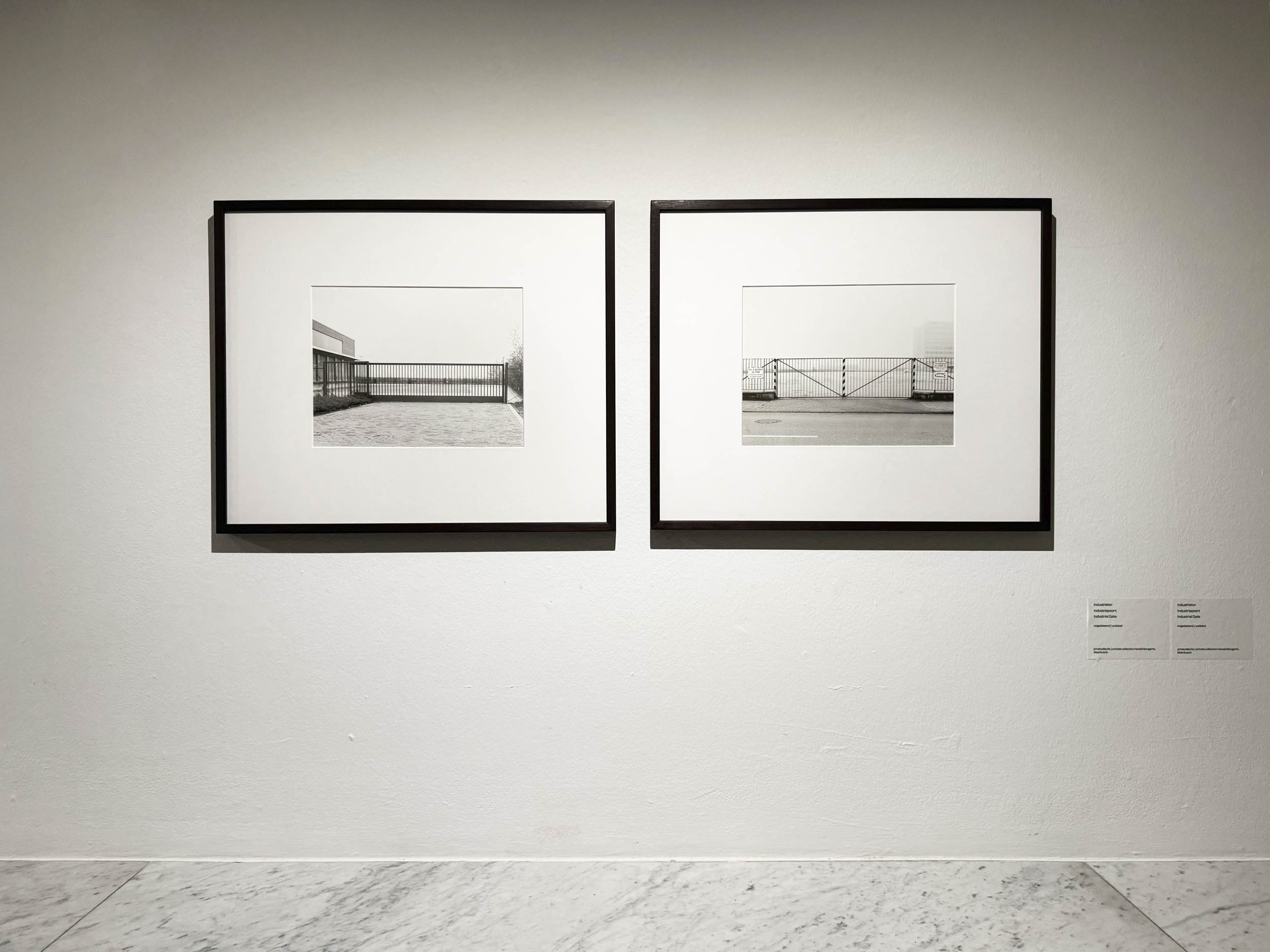
Tata Ronkholz (German, 1940-1997) 'Industrial Gate' Nd (installation view)


Tata Ronkholz (German, 1940-1997)
Industrial Gate (installation view)
Nd
© VAN HAM Art Estate: Tata Ronkholz, 2026


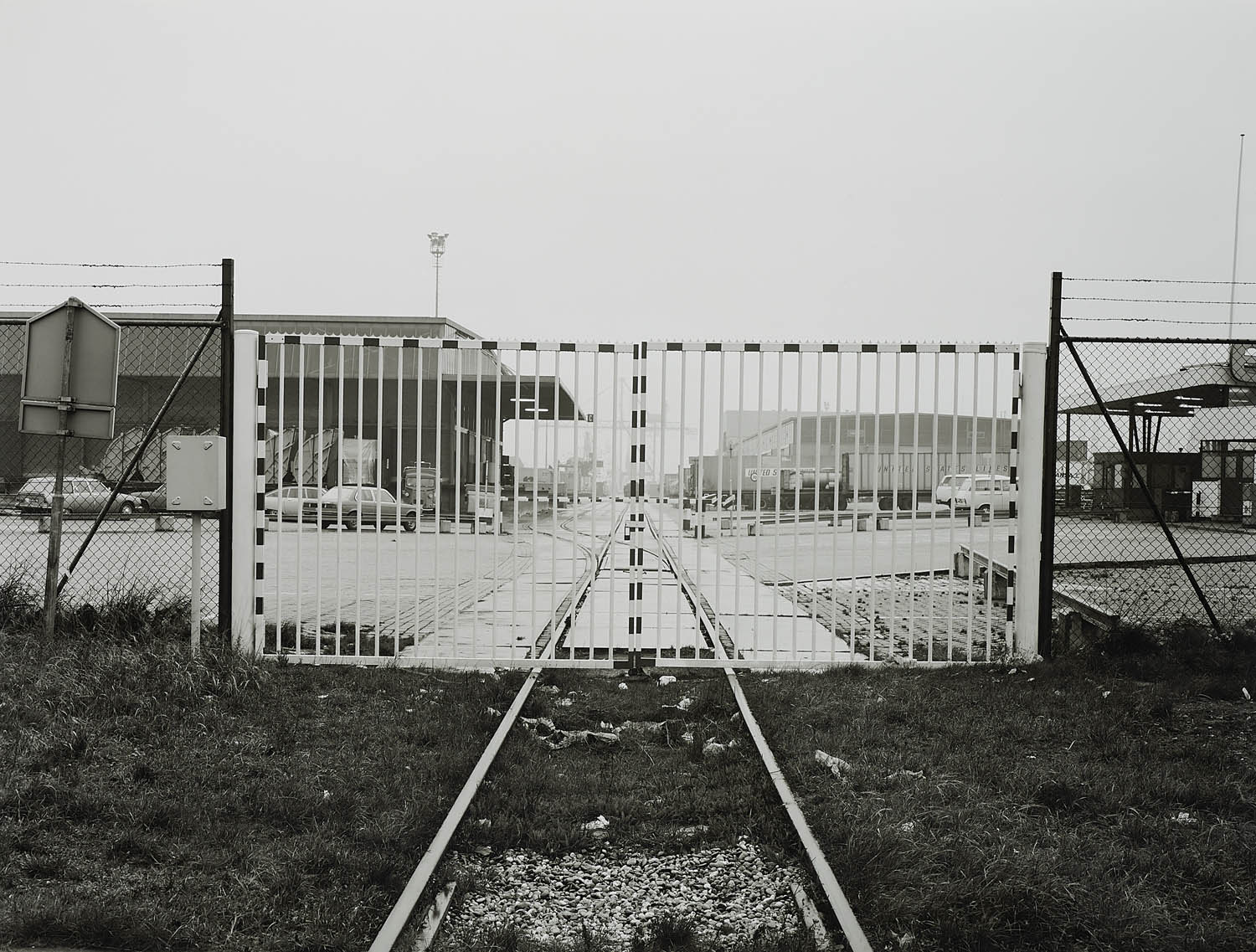
Tata Ronkholz (German, 1940-1997) 'ECT. Rotterdam / Prinses Beatrixhaven, Reeweg' 1977


Tata Ronkholz (German, 1940-1997)
ECT. Rotterdam/Prinses Beatrixhaven, Reeweg
1977
© VAN HAM Art Estate: Tata Ronkholz, 2026


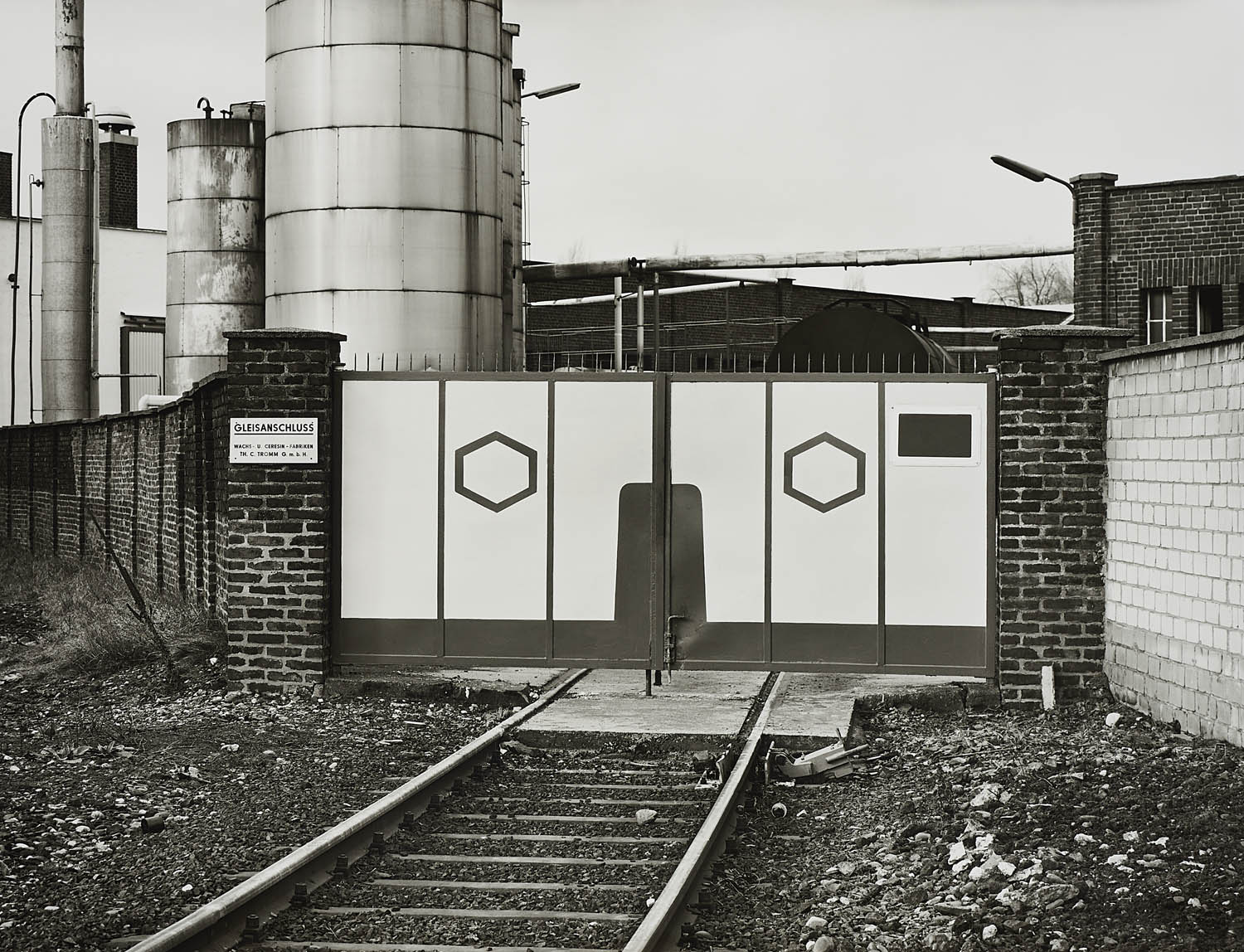
Tata Ronkholz (German, 1940-1997) 'Firma / Company Tromm, Tor Gleisanschluss / Gate railway siding, Köln-Niehl' 1983


Tata Ronkholz (German, 1940-1997)
Firma/Company Tromm, Tor Gleisanschluss/Gate railway siding, Köln-Niehl
1983
© VAN HAM Art Estate: Tata Ronkholz, 2026


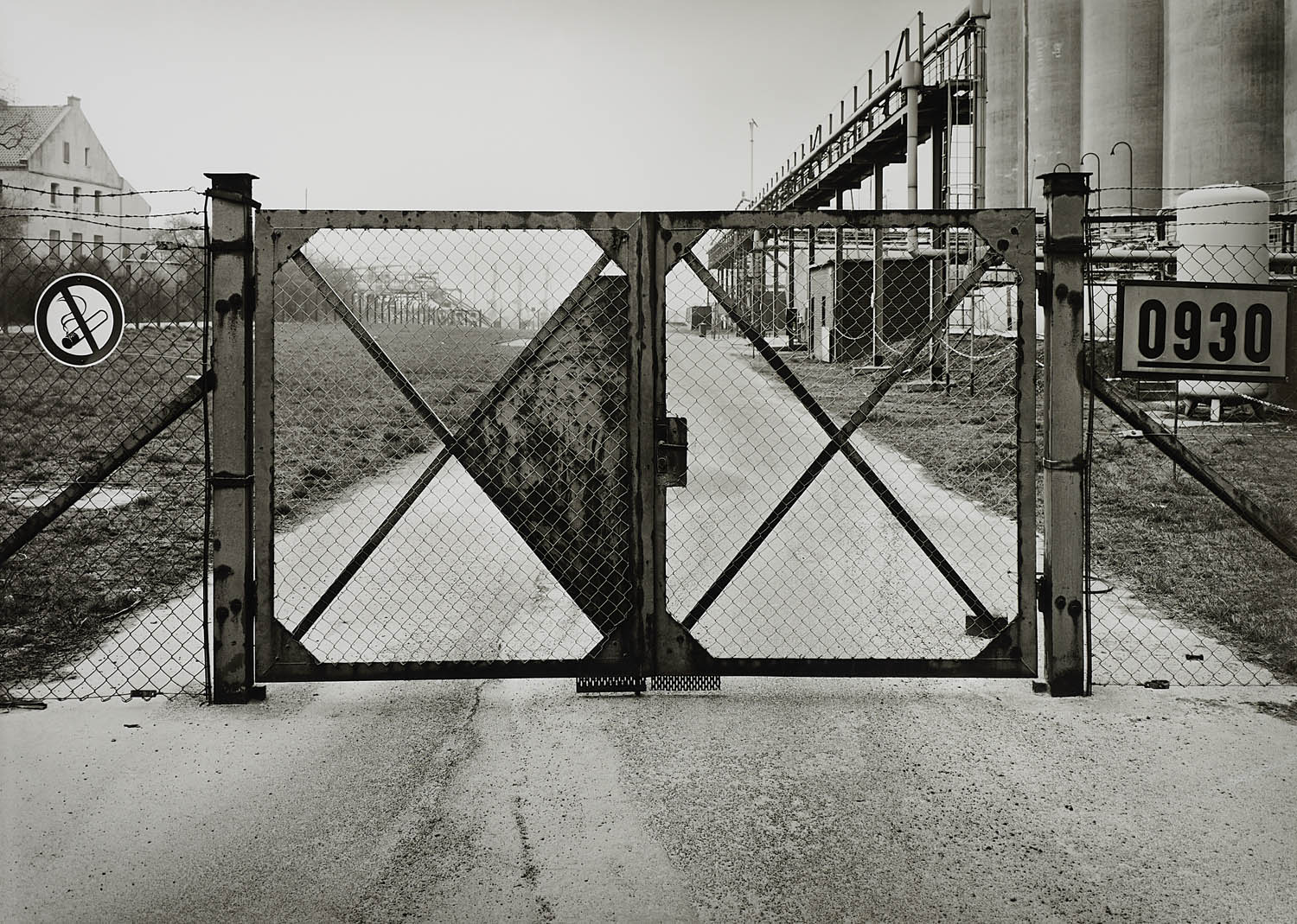
Tata Ronkholz (German, 1940-1997) 'Firma / Company ROW, Hafen, Tor / Gate Nr. 0930, Wesseling-Godorf' 1984


Tata Ronkholz (German, 1940-1997)
Firma/Company ROW, Hafen, Tor/Gate Nr. 0930, Wesseling-Godorf
1984
© VAN HAM Art Estate: Tata Ronkholz, 2026


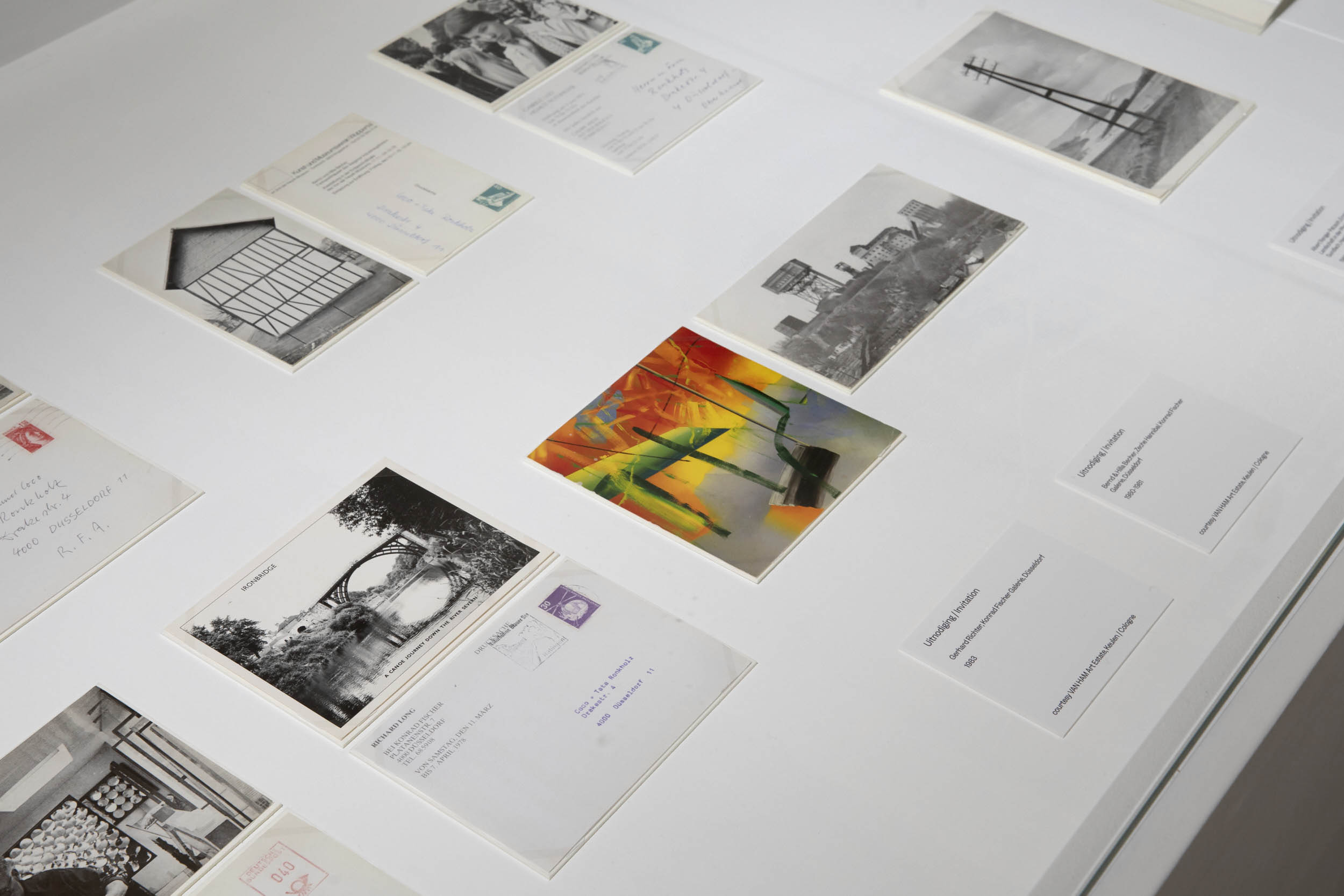
Tata Ronkholz was one of the first students in Bernd and Hilla Becher’s famous photography class at the Kunstakademie Düsseldorf. Her fellow students included Candida Höfer, Axel Hütte, Thomas Ruff and Thomas Struth, all of whom became artists of world renown. Oddly enough Tata Ronkholz’ work is only now receiving the same international acclaim. The retrospective Designed World: Through the Eyes of Tata Ronkholz (1940-1997), on show at Huis Marseille from 14 February until 21 June 2026, is the first large-scale tribute to this many-sided artist.

Objective-documentary photography

Tata Ronkholz was a photographer, product designer, and interior architect. Her photographic series lie within the tradition of objective, documentary photography, a tradition which was decisively shaped by the artist couple Bernd and Hilla Becher. Like theirs, Ronkholz’ work is characterised by clear compositions, a serial approach, and a documentary focus on architectural structures and everyday architectures. Using a large-format camera she produced sharply defined and realistic photographs in which the subject matter, rather than the individual style of the artist, takes centre stage. Her work is predominantly in black and white, although colour images also appear, demonstrating her ambition to engage with the artistic colour photography that emerged in Germany during the 1970s and ’80s, following the example set by the New Color Photography introduced by the American photographers Stephen Shore and William Eggleston.

Kiosks and corner shops

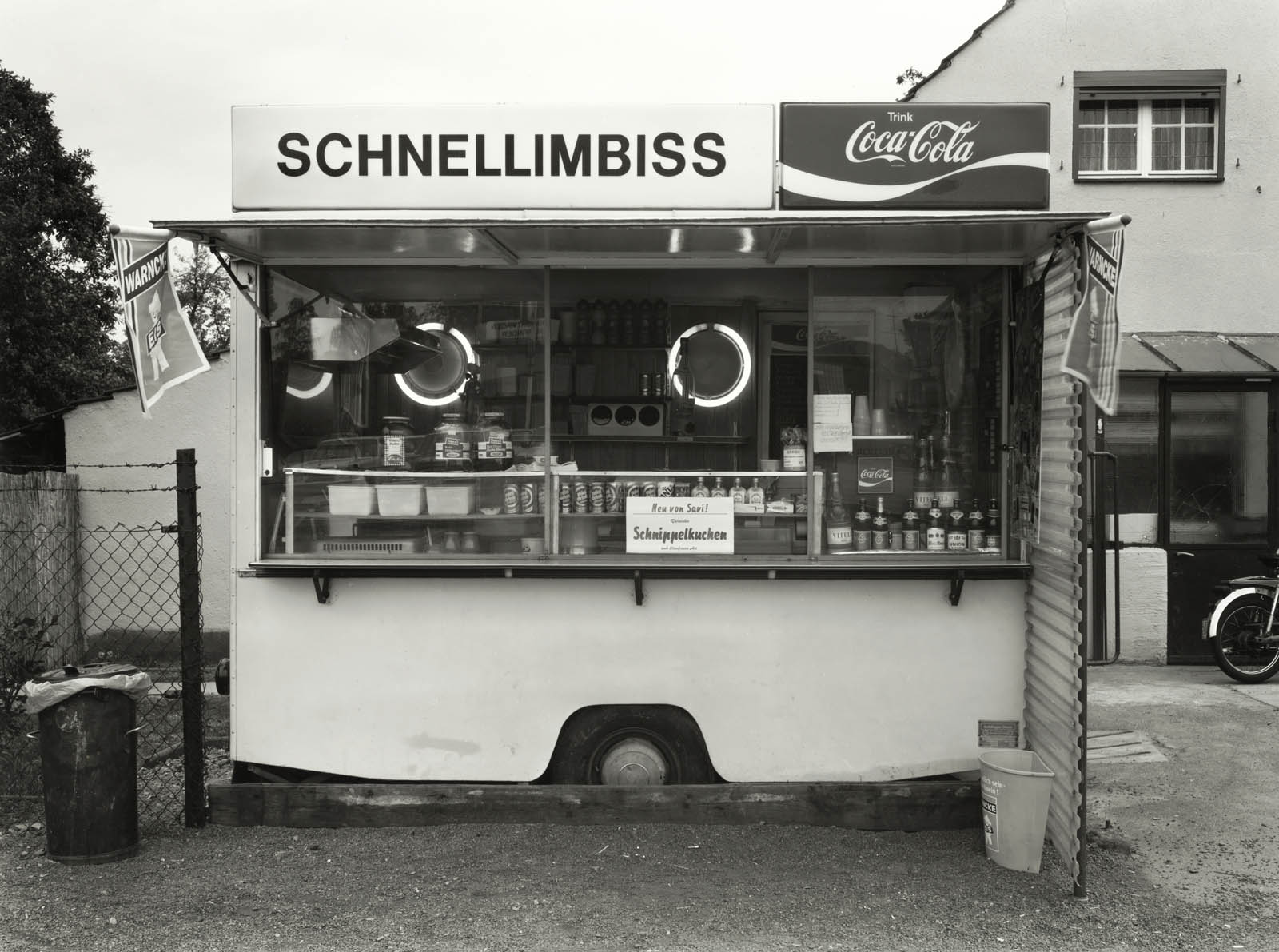
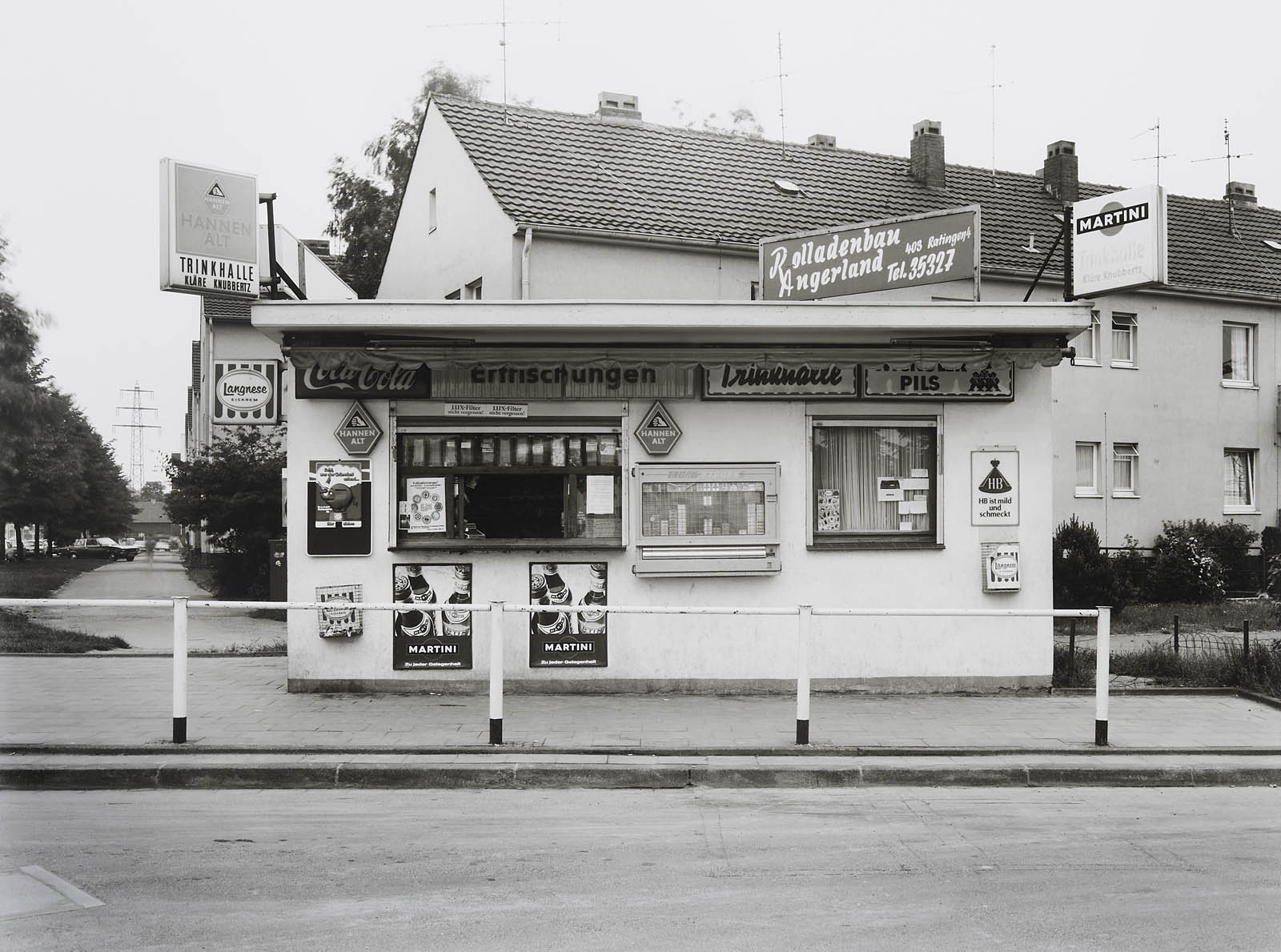
Tata Ronkholz became known for her appealing series of kiosks (Trinkhallen) and small shops that capture typical moments of urban everyday culture. These were photographed between 1977 and 1985, particularly in neighbourhoods of Cologne and Düsseldorf, in the Ruhr area, as well as in Leverkusen and Krefeld. For example, the photo Trinkhalle, Köln-Nippes – with its ice cream and newspaper advertisements and vending machines for chewing gum and cigarettes – is as amusing and engaging as Boutique, Köln-Mülheim in which, according to the store sign, alongside clothing records were also for sale. The photographs illustrate the extent to which product offerings, decoration, and advertising in public spaces has been transformed. Tata Ronkholz’ choice of subject means that her work indirectly testifies to social, cultural, and economic change and shows how people shape the world around them.

Industrial gates

Another significant series is dedicated to industrial gates, photographed between 1977 and 1985. The sober black-and-white images of these gates, with their grids and frameworks, offer glimpses into the interiors of industrial areas. In the photographs the gates function as interfaces between private and public space, between interior and exterior, and between activity and calm. Their aesthetic, reminiscent of abstract artworks, imbues the everyday with a new significance.

Collaboration with Thomas Struth

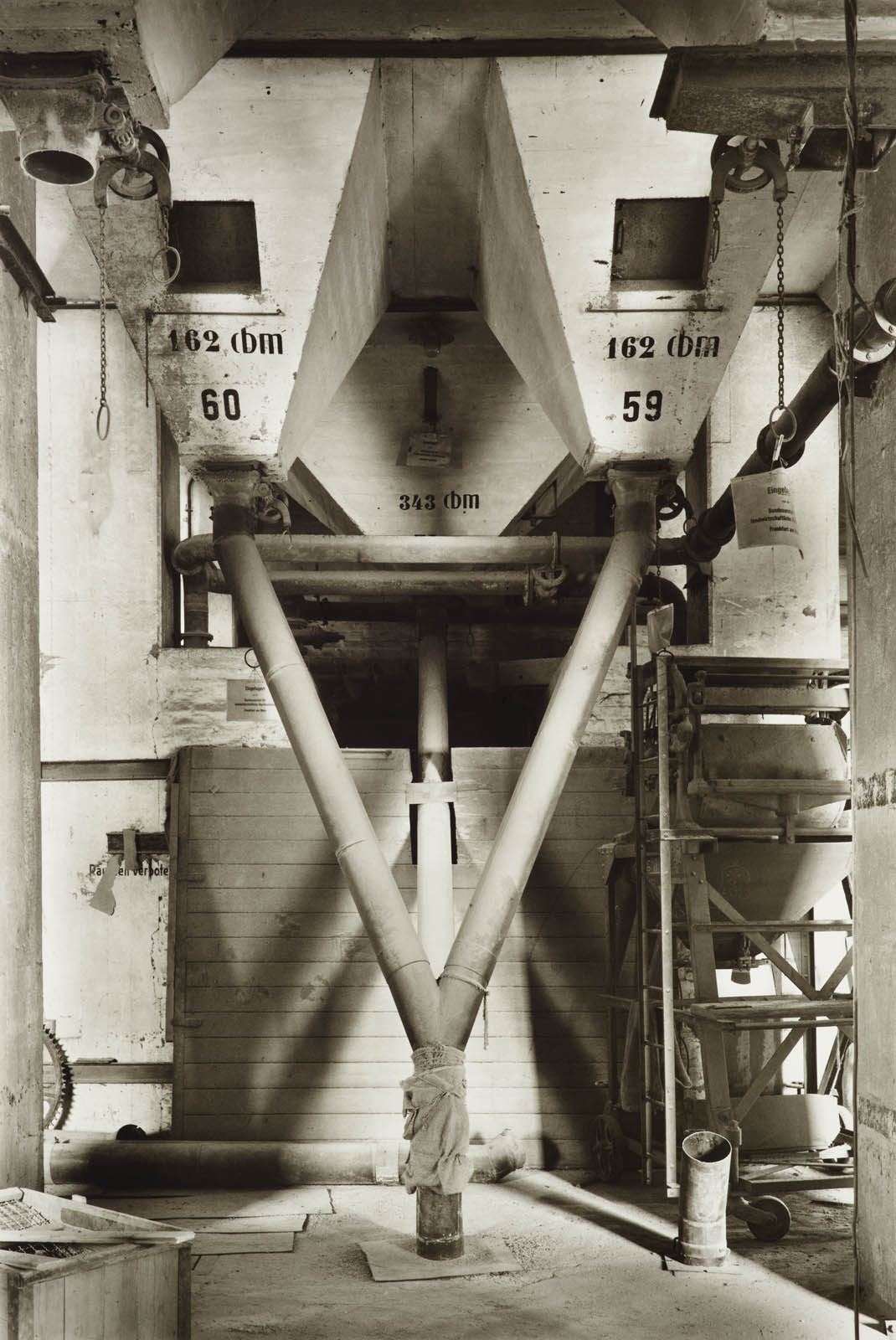
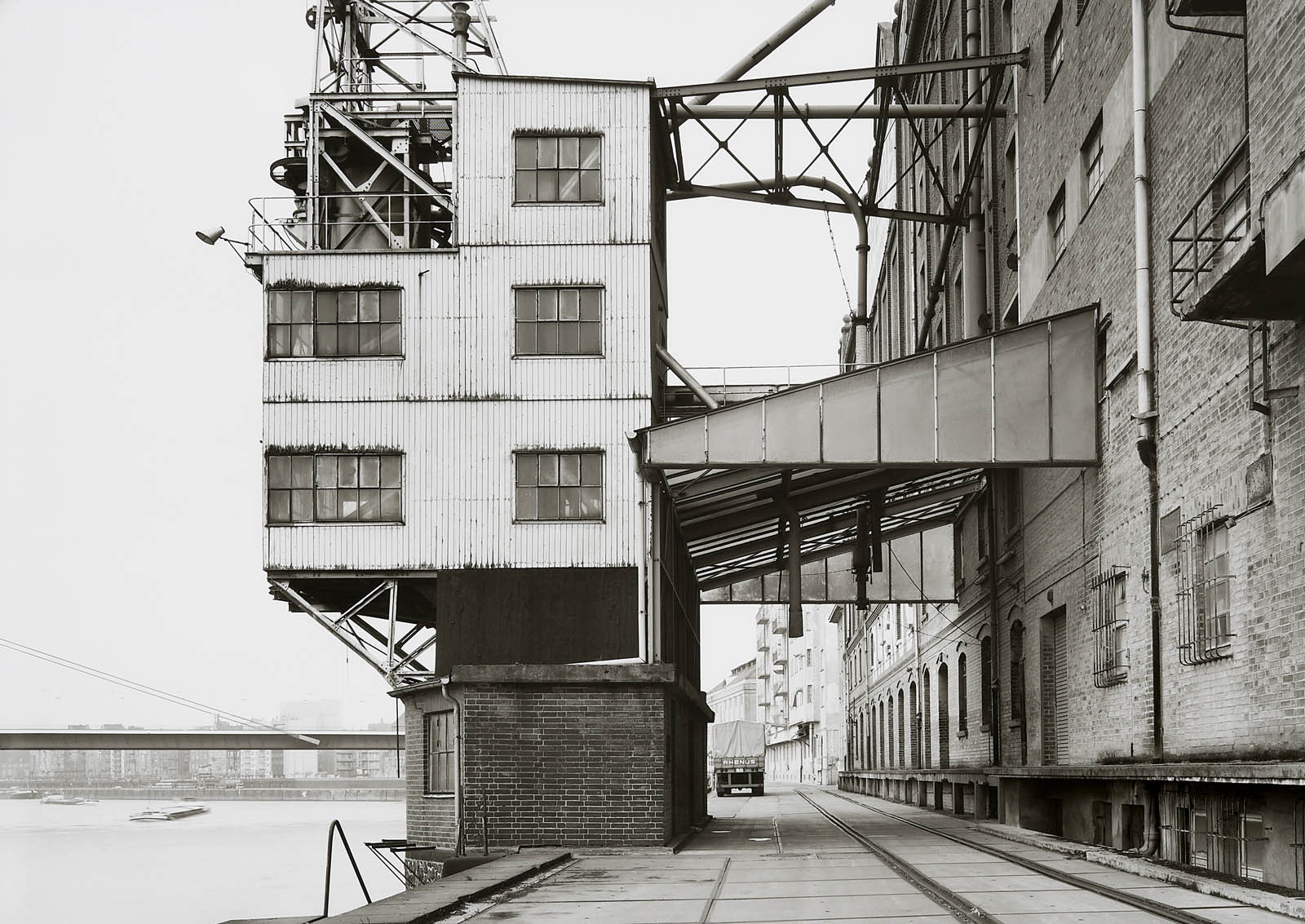
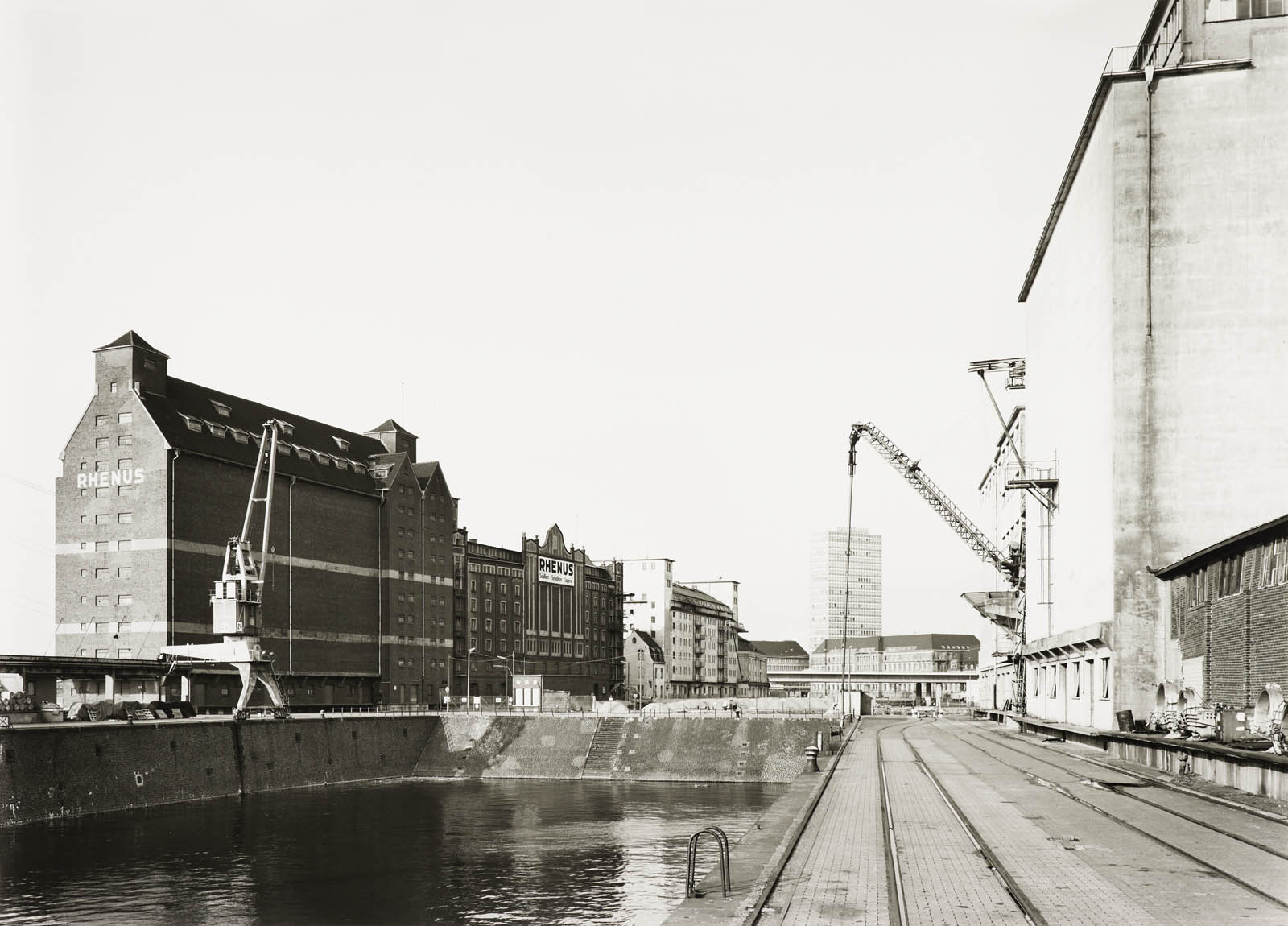
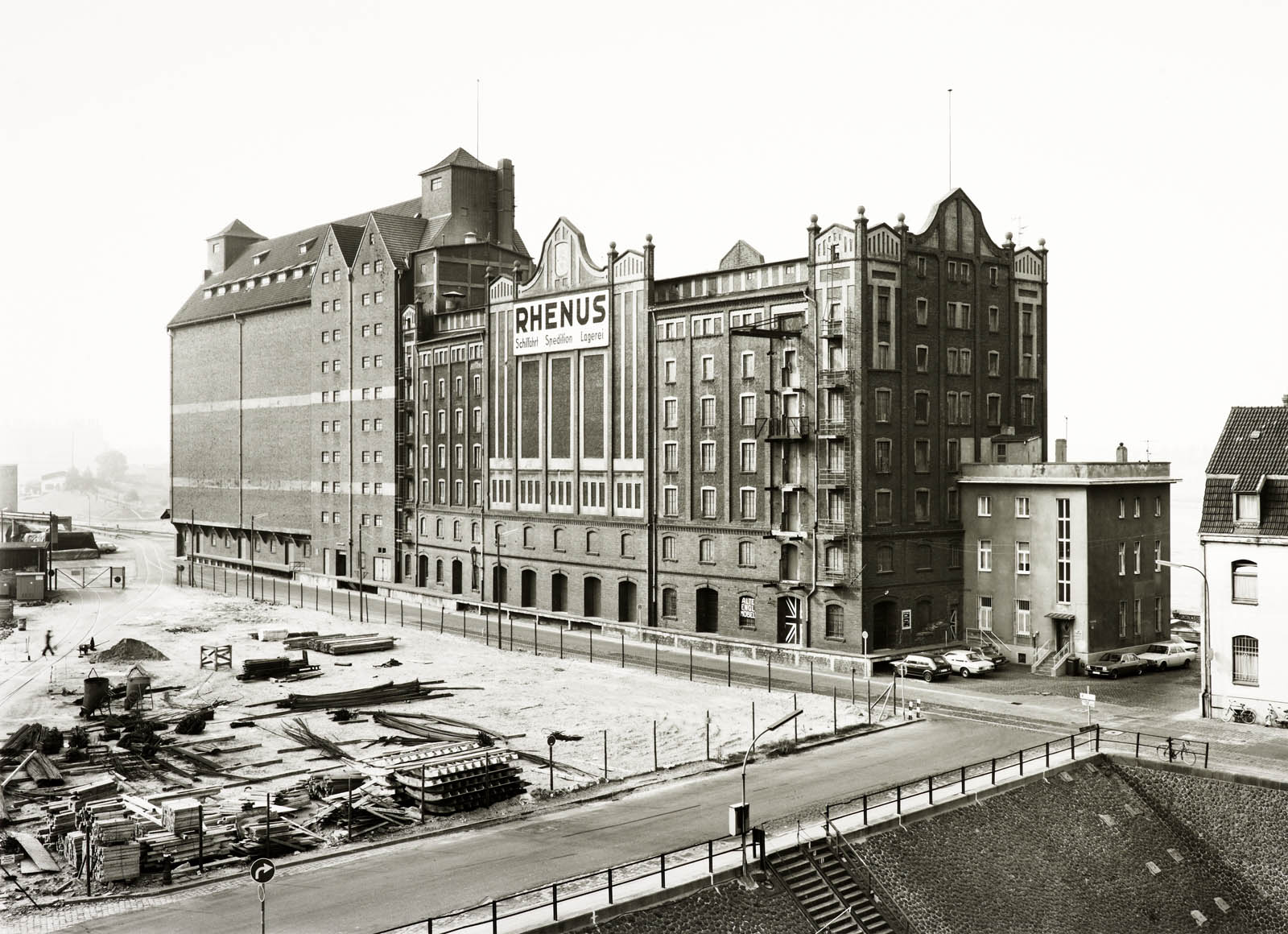
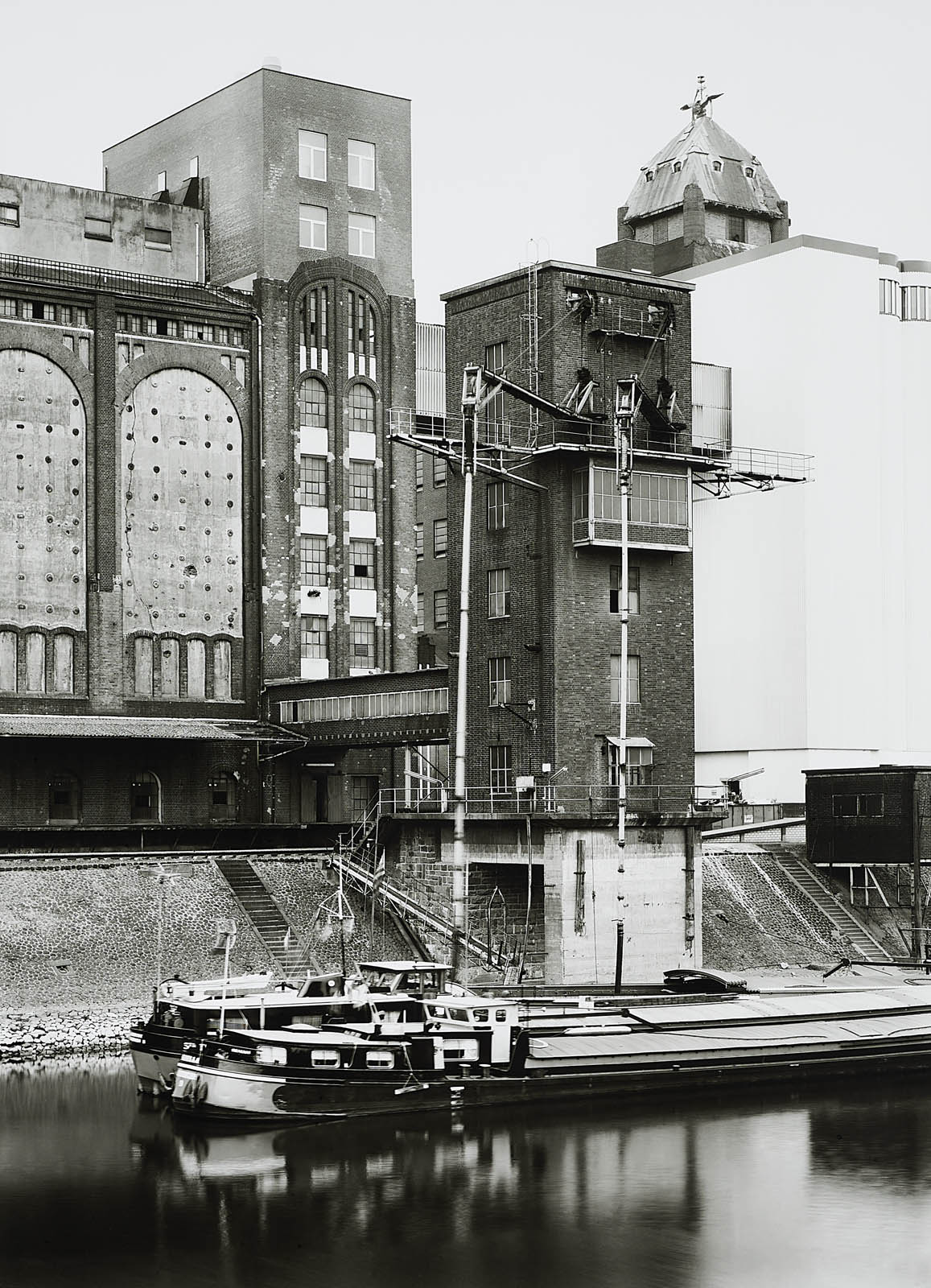
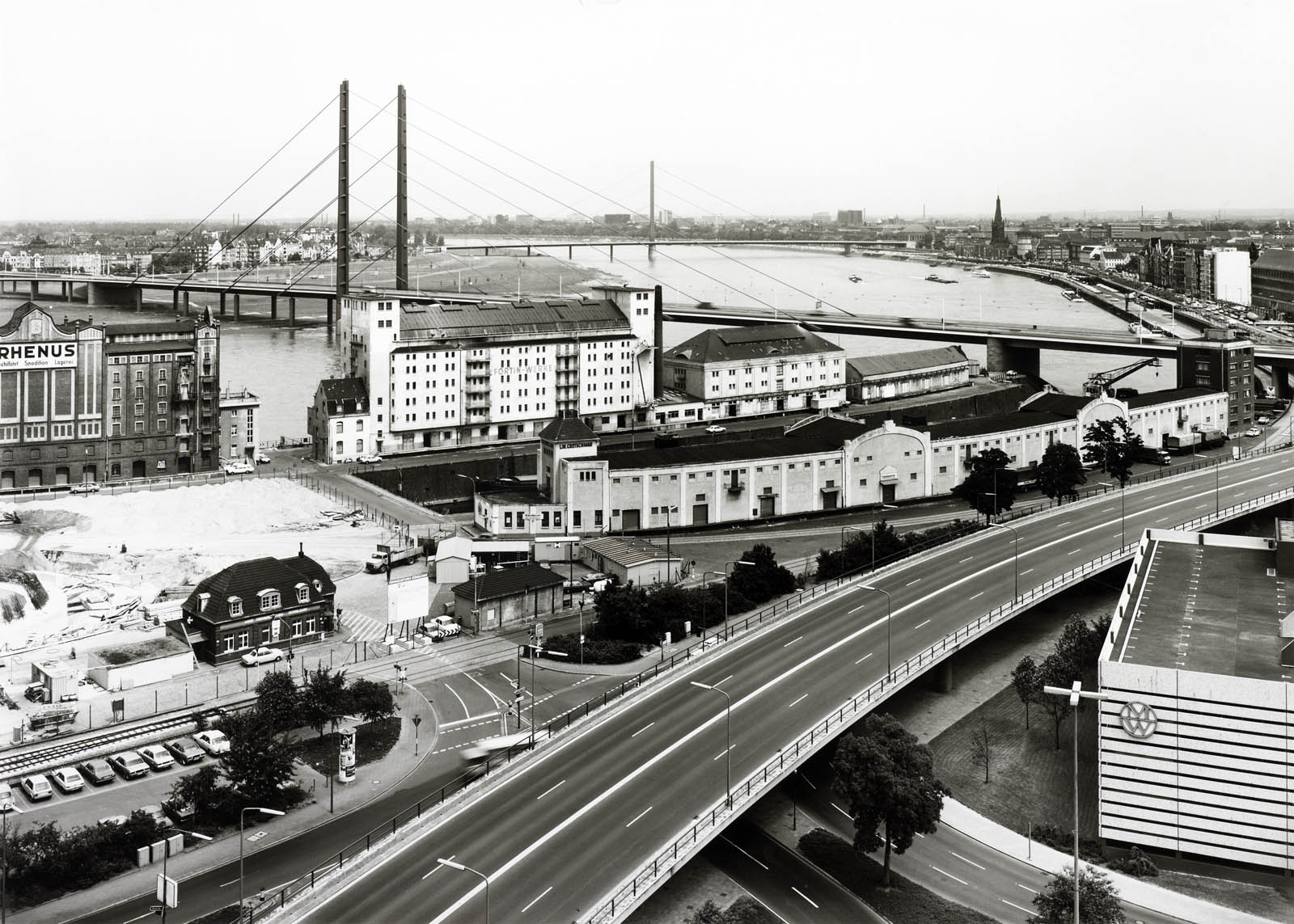
In 1979 Ronkholz, together with her fellow student Thomas Struth, began work on an impressive documentary series on Düsseldorf’s Rheinhafen. The project originated from the planned redevelopment of this historic harbour area – a site that, in its original form, was considered an industrial area of significant urban historical and architectural importance. Together they set out to document the harbour in its entirety, capturing its historic buildings, technical installations, and operational structures. In carefully composed images they recorded façades, interiors, silos, warehouses, crane structures, and harbour basins, before these elements partially disappeared or were fundamentally altered during the restructuring.

Tata Ronkholz as product designer

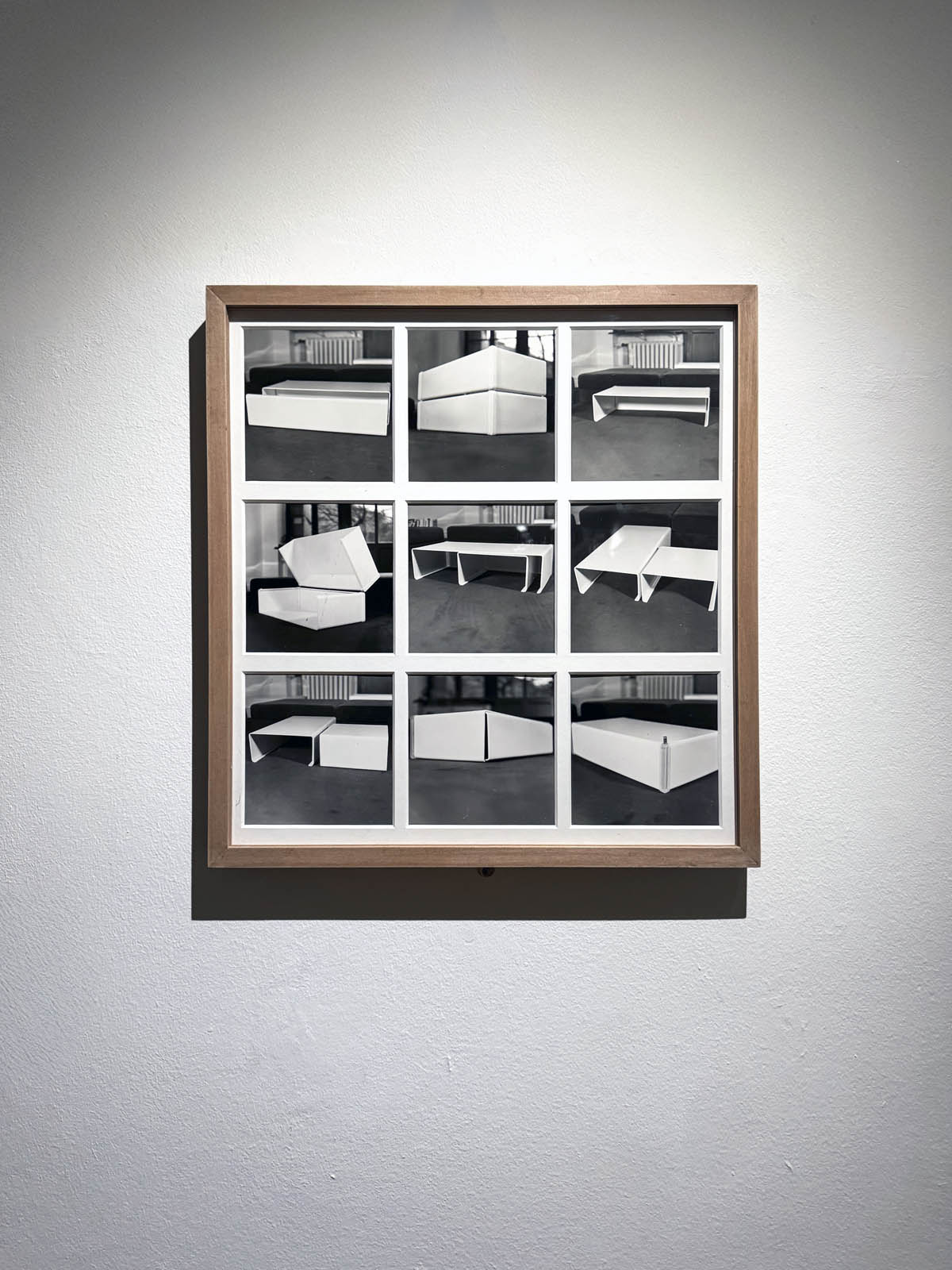
Between 1961 and 1965 Ronkholz studied at the Werkkunstschule Krefeld (an academy of applied art) with a focus on furniture design, and subsequently worked as a freelance designer until 1977. The exhibition also explores this aspect of Ronkholz’ oeuvre, including depictions of geometrically shaped furniture and lighting fixtures as well as designs for office and cafeteria furniture. Ronkholz’ designs are characterised by clear forms and functional elegance. Finally, the retrospective also presents early photographs of architectural forms created in 1975/76 in Italy and France, revealing her strong affinity for aspects of the ‘designed world’ across different areas of life.

Ronkholz’ estate, acquired in 2011 by VAN HAM Art Estate in Cologne, forms the basis of the exhibition alongside the holdings of Stadtmuseum Düsseldorf. Significant contributions have also been made from the in-house collections of Die Photographische Sammlung/SK Stiftung Kultur – who also curated the exhibition – and through loans from private collections.

Book

The exhibition is accompanied by a catalogue, Tata Ronkholz: Gestaltete Welt. Eine Retropektive (2025, Schirmer/Mosel Verlag GmbH), with texts in German and English. It is available from the Huis Marseille museum shop (€49.90).

Text from the Huis Marseille website


Tata Ronkholz (German, 1940-1997) 'Imbissstube / Snack bar, Düsseldorf-Rath, Linienstraße 141' 1977


Tata Ronkholz (German, 1940-1997)
Imbissstube/Snack bar, Düsseldorf-Rath, Linienstraße 141
1977
© VAN HAM Art Estate: Tata Ronkholz, 2026


Tata Ronkholz (German, 1940-1997) 'Trinkhalle / Kiosk, Ratingen, Volkardeyer Straße 25' 1977


Tata Ronkholz (German, 1940-1997)
Trinkhalle/Kiosk, Ratingen, Volkardeyer Straße 25
1977
© VAN HAM Art Estate: Tata Ronkholz, 2026


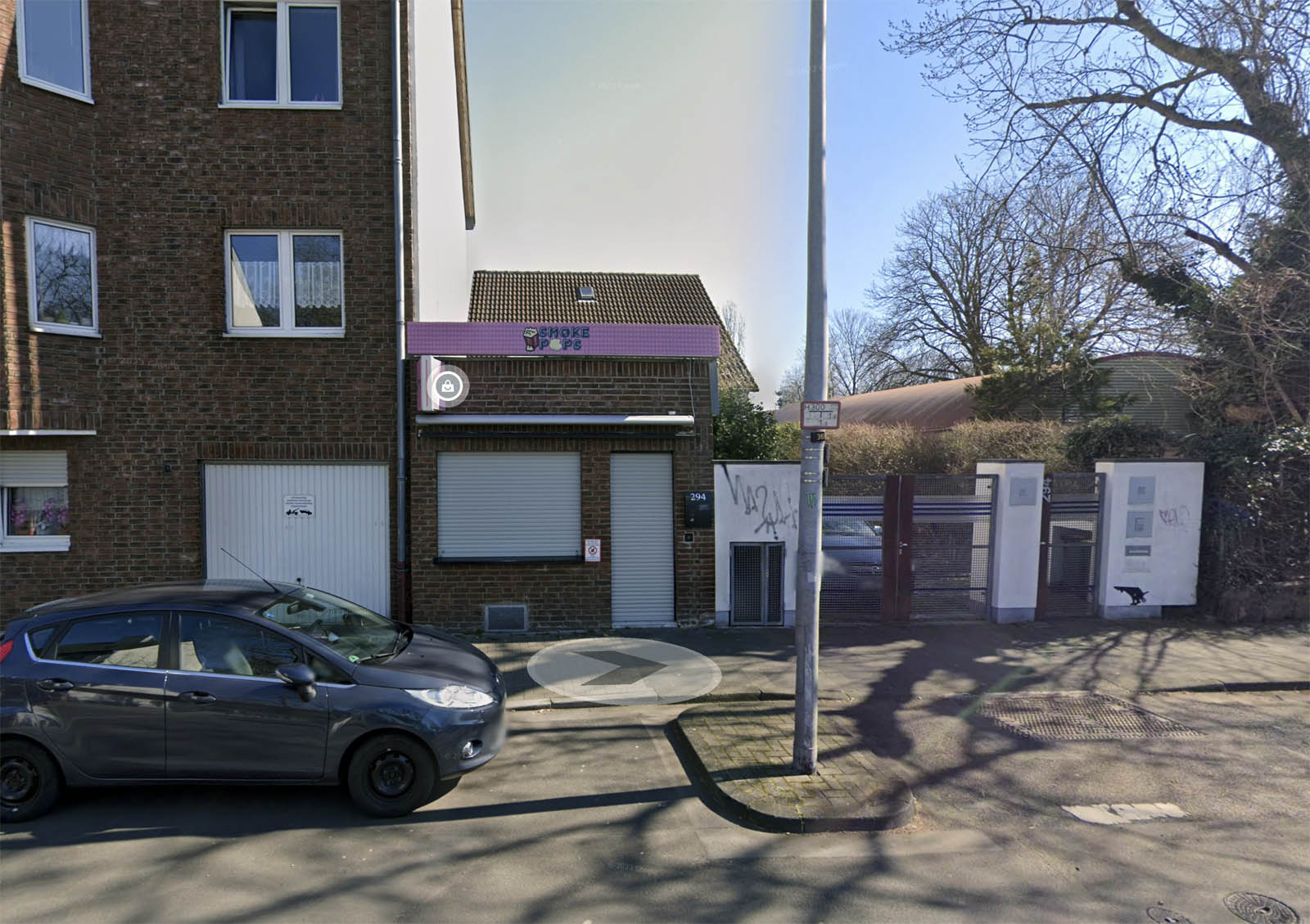
Tata Ronkholz (German, 1940-1997) 'Trinkhalle / Kiosk, Köln-Nippes, Merheimer Straße 294' 1983


Tata Ronkholz (German, 1940-1997)
Trinkhalle/Kiosk, Köln-Nippes, Merheimer Straße 294
1983
© VAN HAM Art Estate: Tata Ronkholz, 2026


Merheimer Str. 294, Köln-Nippes


Merheimer Str. 294, Köln-Nippes


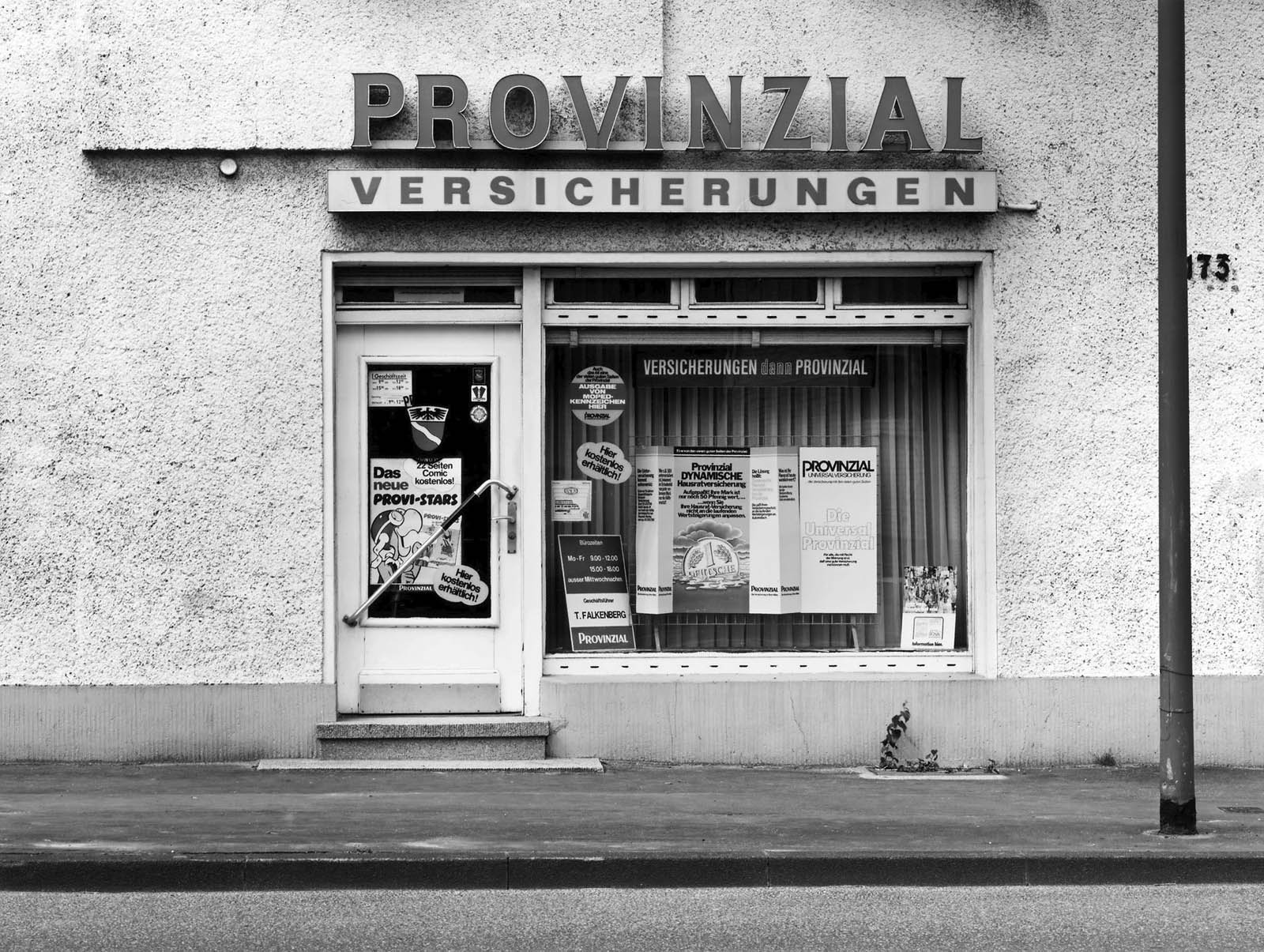
Tata Ronkholz (German, 1940-1997) 'Insurance office, Leverkusen-Schlehbusch' 1970s-1980s


Tata Ronkholz (German, 1940-1997)
Insurance office, Leverkusen-Schlehbusch
1970s-1980s
© VAN HAM Art Estate: Tata Ronkholz, 2026


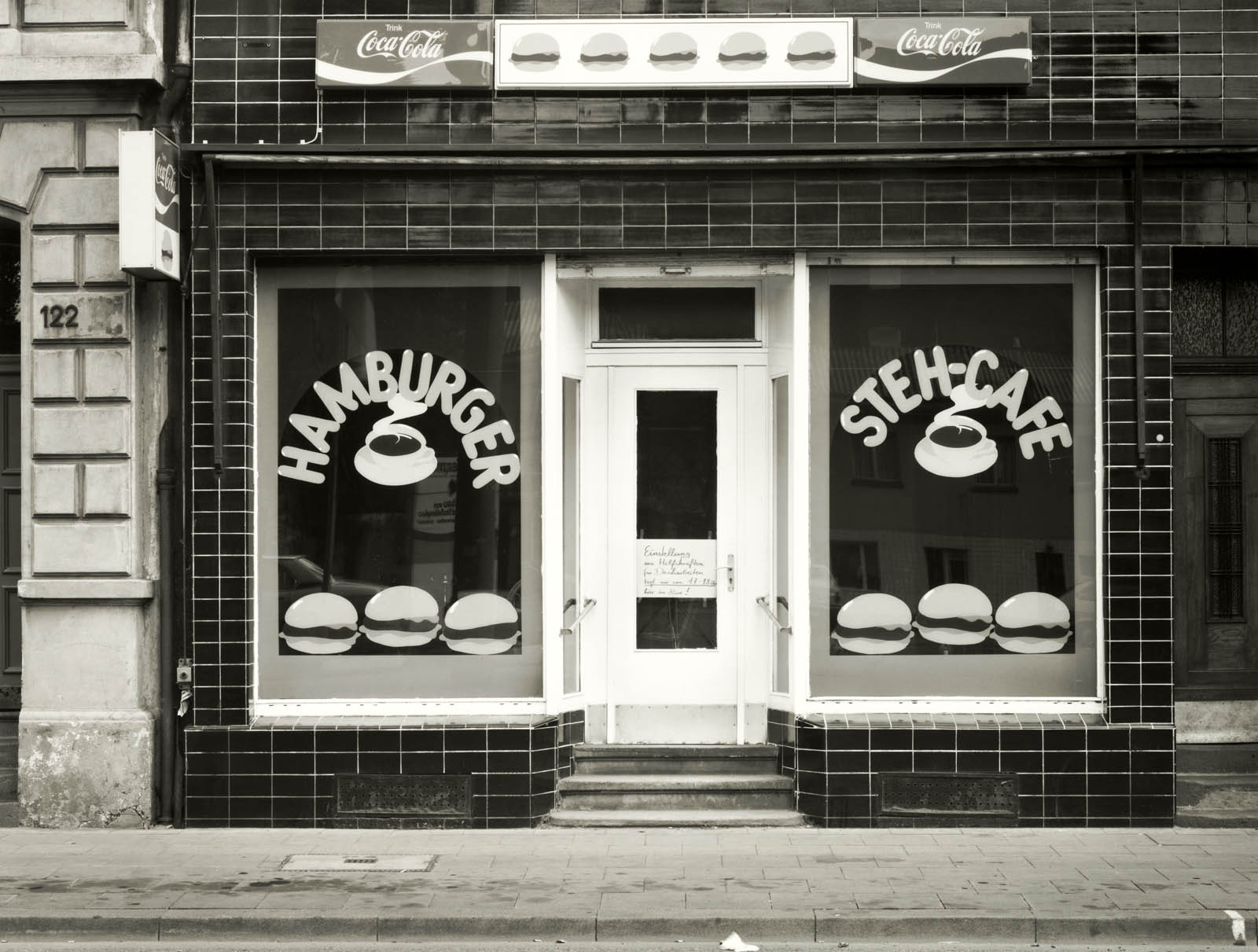
Tata Ronkholz (German, 1940-1997) 'Imbissstube / Snack bar, Köln-Mülheim, Berliner Straße 120' 1979


Tata Ronkholz (German, 1940-1997)
Imbissstube/Snack bar, Köln-Mülheim, Berliner Straße 120
1979
© VAN HAM Art Estate: Tata Ronkholz, 2026


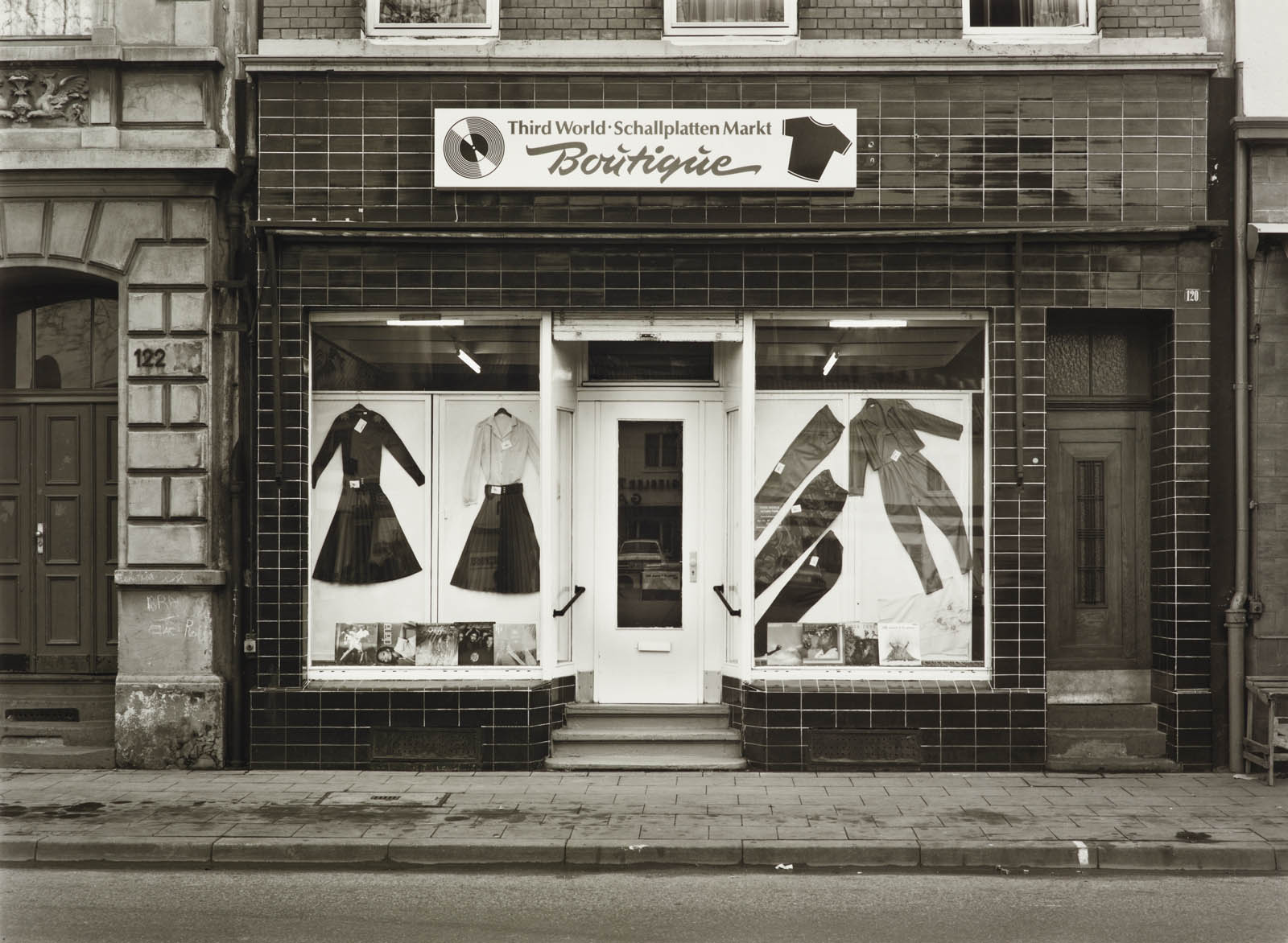
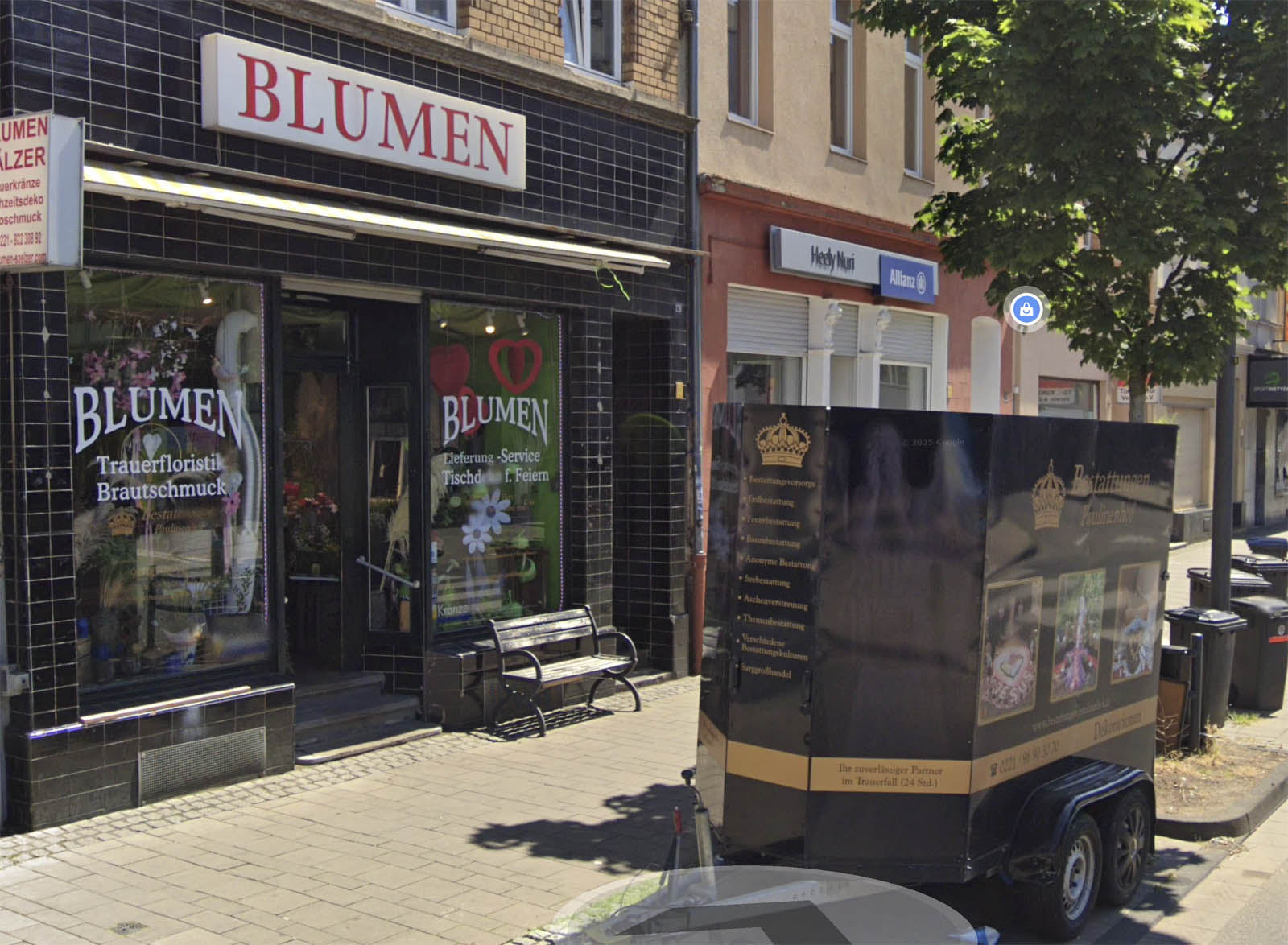
Tata Ronkholz (German, 1940-1997) 'Boutique, Köln-Mülheim, Berliner Straße 120' 1980


Tata Ronkholz (German, 1940-1997)
Boutique, Köln-Mülheim, Berliner Straße 120
1980
© VAN HAM Art Estate: Tata Ronkholz, 2026


Berliner Str. 120, Köln, Germany


Berliner Str. 120, Köln, Germany


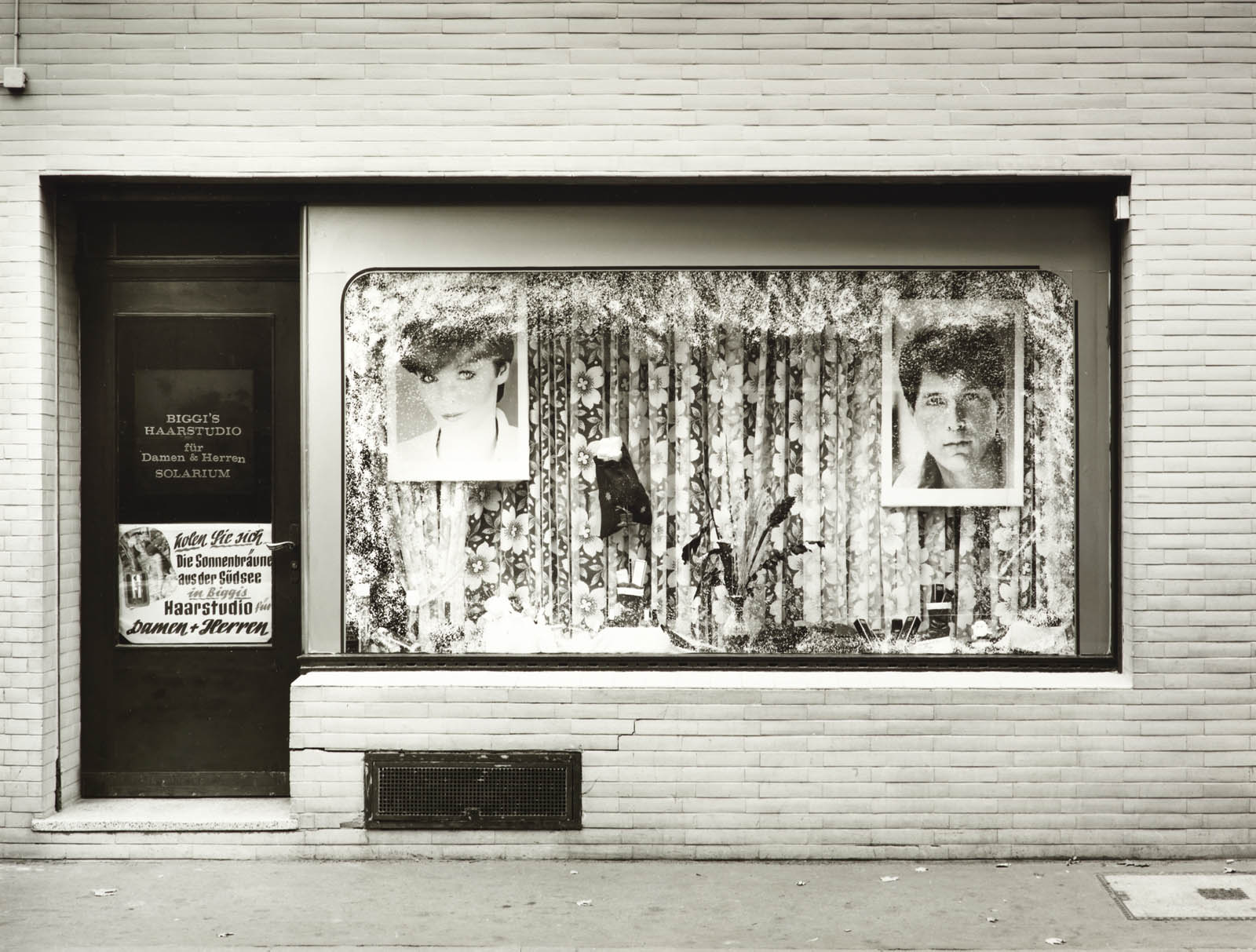
Tata Ronkholz (German, 1940-1997) 'Friseur / Hairdresser, Köln-Ehrenfeld, Philippstraße 30' 1980


Tata Ronkholz (German, 1940-1997)
Friseur/Hairdresser, Köln-Ehrenfeld, Philippstraße 30
1980
© VAN HAM Art Estate: Tata Ronkholz, 2026


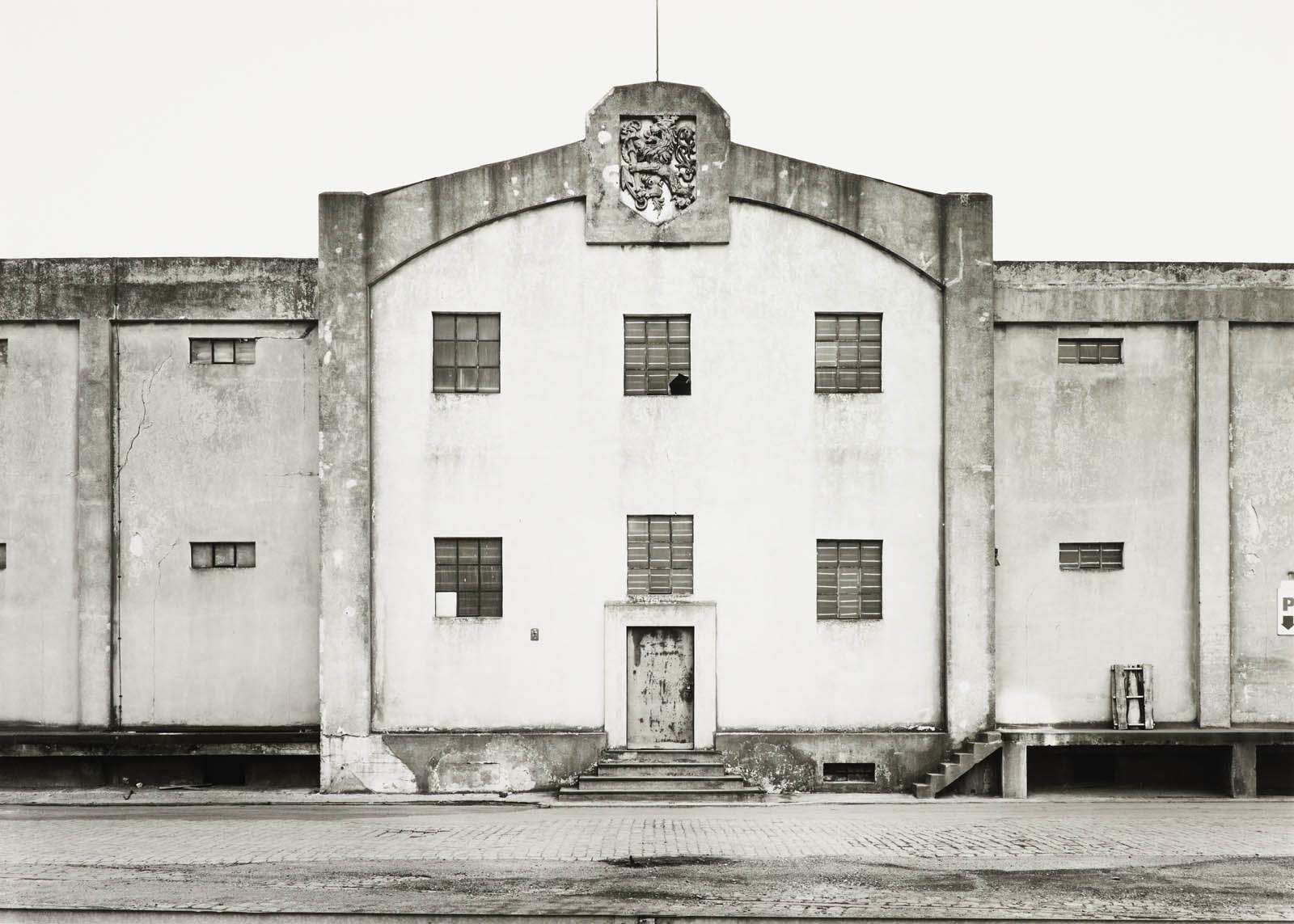
Tata Ronkholz (German, 1940-1997) 'Lagerhalle mit Löwenwappen / Warehouse with lion crest' 1979


Tata Ronkholz (German, 1940-1997)
Lagerhalle mit Löwenwappen/Warehouse with lion crest
1979
From the series Rheinhafen/Rhine harbor Düsseldorf, 1979-1981
© VAN HAM Art Estate: Tata Ronkholz, 2026


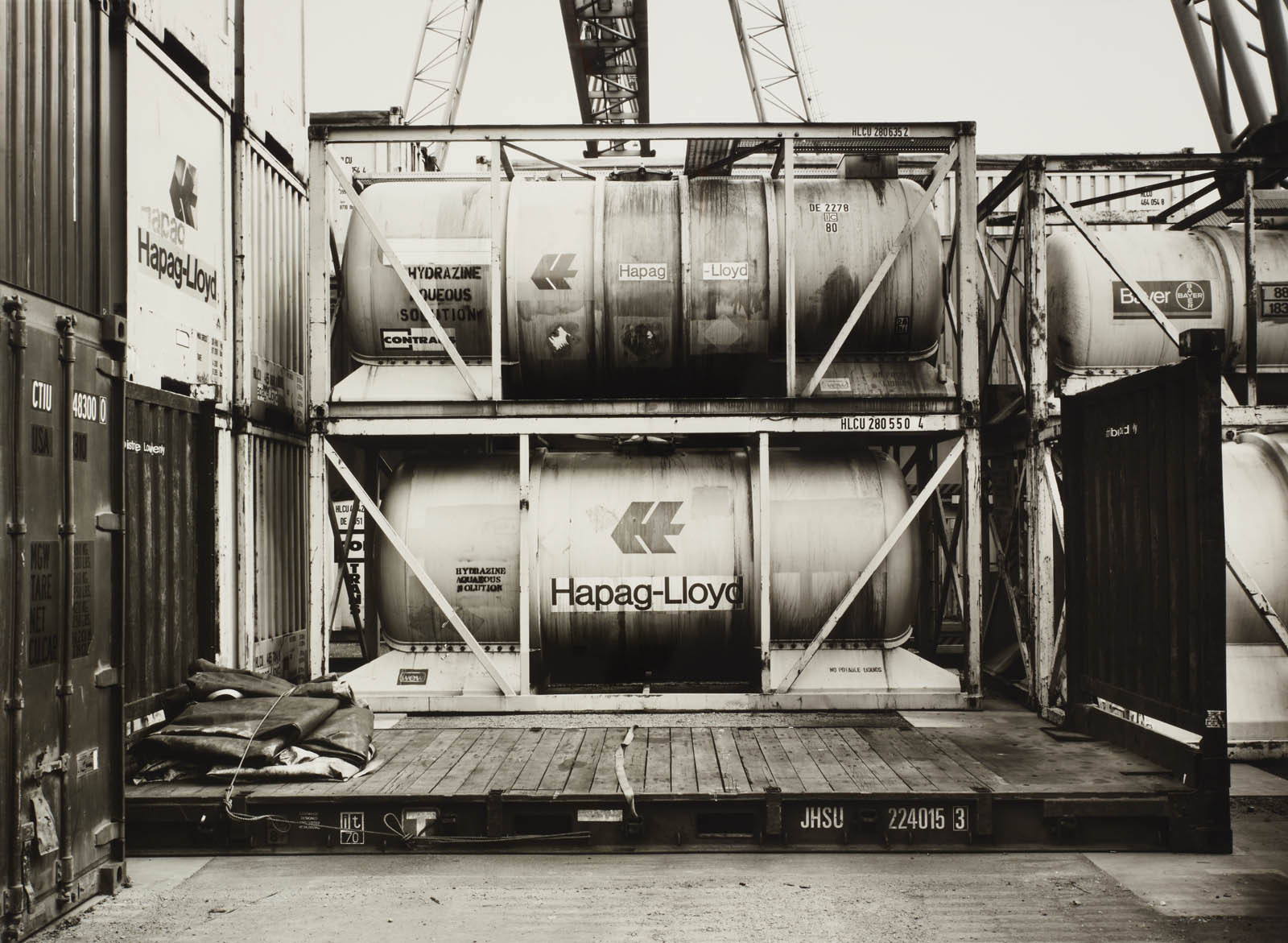
Tata Ronkholz (German, 1940-1997) 'Im Düsseldorfer Hafen / In Düsseldorf harbor' around 1980


Tata Ronkholz (German, 1940-1997)
Im Düsseldorfer Hafen / In Düsseldorf harbor
around 1980
From the series Rheinhafen/Rhine harbor Düsseldorf, 1979-1981
© VAN HAM Art Estate: Tata Ronkholz, 2026


Tata Ronkholz (German, 1940-1997) 'Im Düsseldorfer Hafen / In Düsseldorf harbor' around 1980


Tata Ronkholz (German, 1940-1997)
Im Düsseldorfer Hafen/In Düsseldorf harbour
around 1980
From the series Rheinhafen/Rhine harbor Düsseldorf, 1979-1981
© VAN HAM Art Estate: Tata Ronkholz, 2026


Tata Ronkholz (German, 1940-1997) Technik und Kräne / Technology and cranes Nd


Tata Ronkholz (German, 1940-1997)
Technik und Kräne/Technology and cranes
Nd
From the series Rheinhafen/Rhine harbor Düsseldorf, 1979-1981
© VAN HAM Art Estate: Tata Ronkholz, 2026


Thomas Struth (German, b. 1954) 'Zollhafen / Customs harbor' 1979


Thomas Struth (German, b. 1954)
Zollhafen/Customs harbour
1979
From the series Rheinhafen/Rhine harbor Düsseldorf, 1979-1981
© VAN HAM Art Estate: Tata Ronkholz, 2026


Thomas Struth (German, b. 1954) 'Getreidespeicher, Rhenus seitlich / Grain silo, Rhenus lateral' 1979


Thomas Struth (German, b. 1954)
Getreidespeicher, Rhenus seitlich / Grain silo, Rhenus lateral
1979
From the series Rheinhafen/Rhine harbor Düsseldorf, 1979-1981
© VAN HAM Art Estate: Tata Ronkholz, 2026


Tata Ronkholz (German, 1940-1997) 'Technik und Kräne / Technology and cranes' Nd


Tata Ronkholz (German, 1940-1997)
Technik und Kräne / Technology and cranes
Nd
From the series Rheinhafen/Rhine harbor Düsseldorf, 1979-1981
© VAN HAM Art Estate: Tata Ronkholz, 2026


Thomas Struth (German, b. 1954) 'Rheinhafen / Rhine harbor (Berger Hafen v. d. VHS / from Adult education center), Düsseldorf' 1979


Thomas Struth (German, b. 1954)
Rheinhafen/Rhine harbor (Berger Hafen v. d. VHS/from Adult education center), Düsseldorf
1979
From the series Rheinhafen/Rhine harbor Düsseldorf, 1979-1981
© VAN HAM Art Estate: Tata Ronkholz, 2026


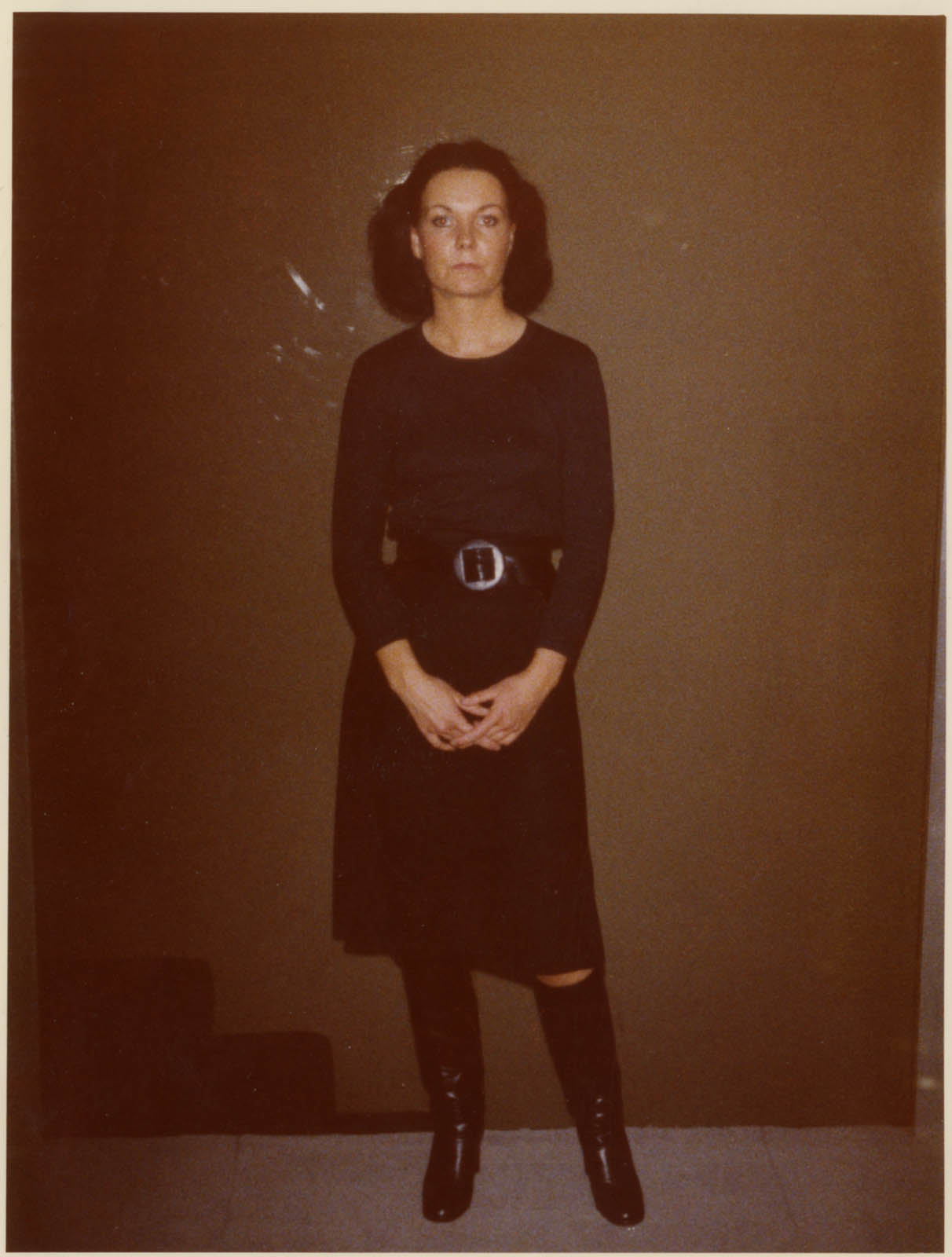
Charles Wilp (German, 1932-2005) 'Tata Ronkholz' c. 1979


Charles Wilp (German, 1932-2005)
Tata Ronkholz
c. 1979


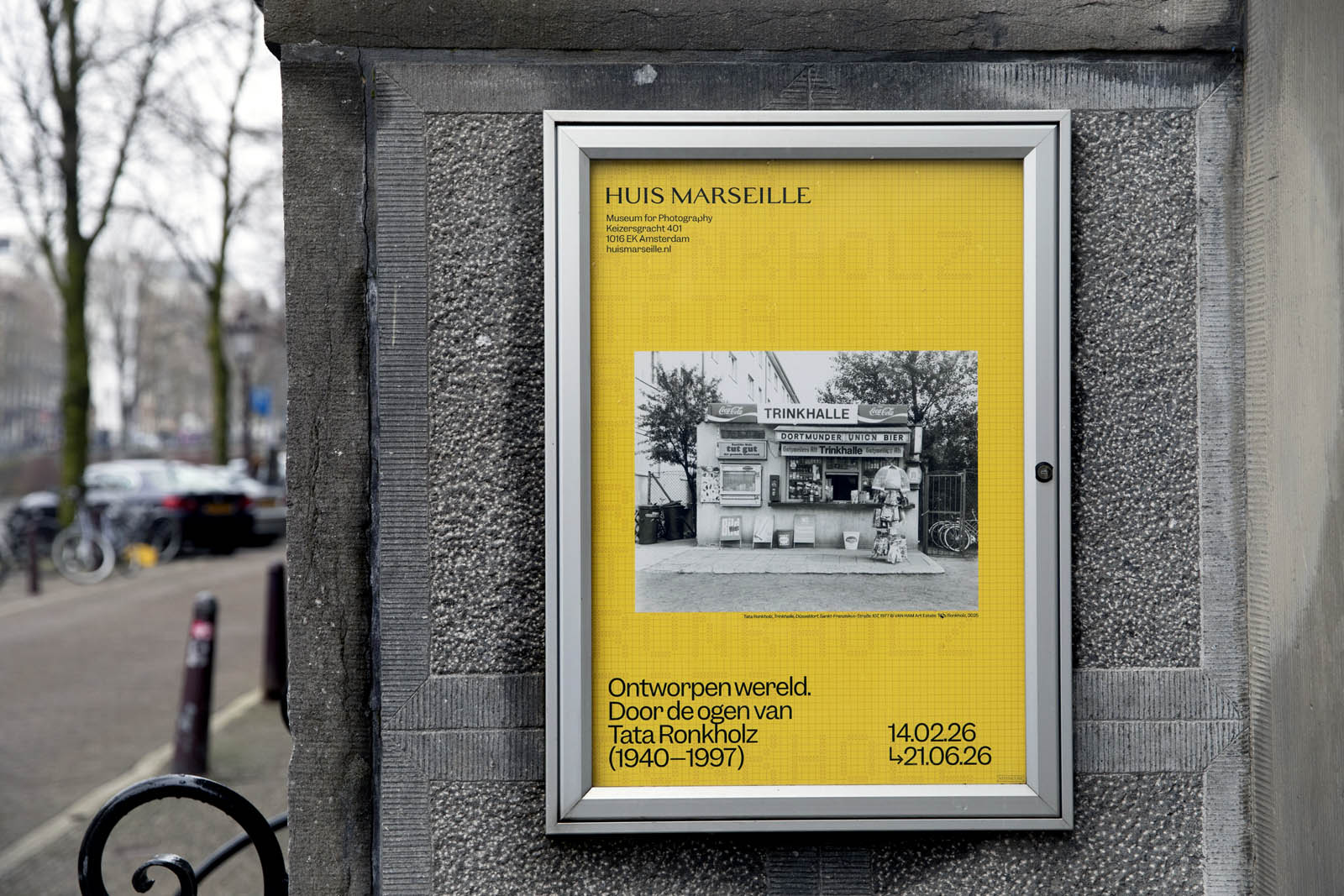
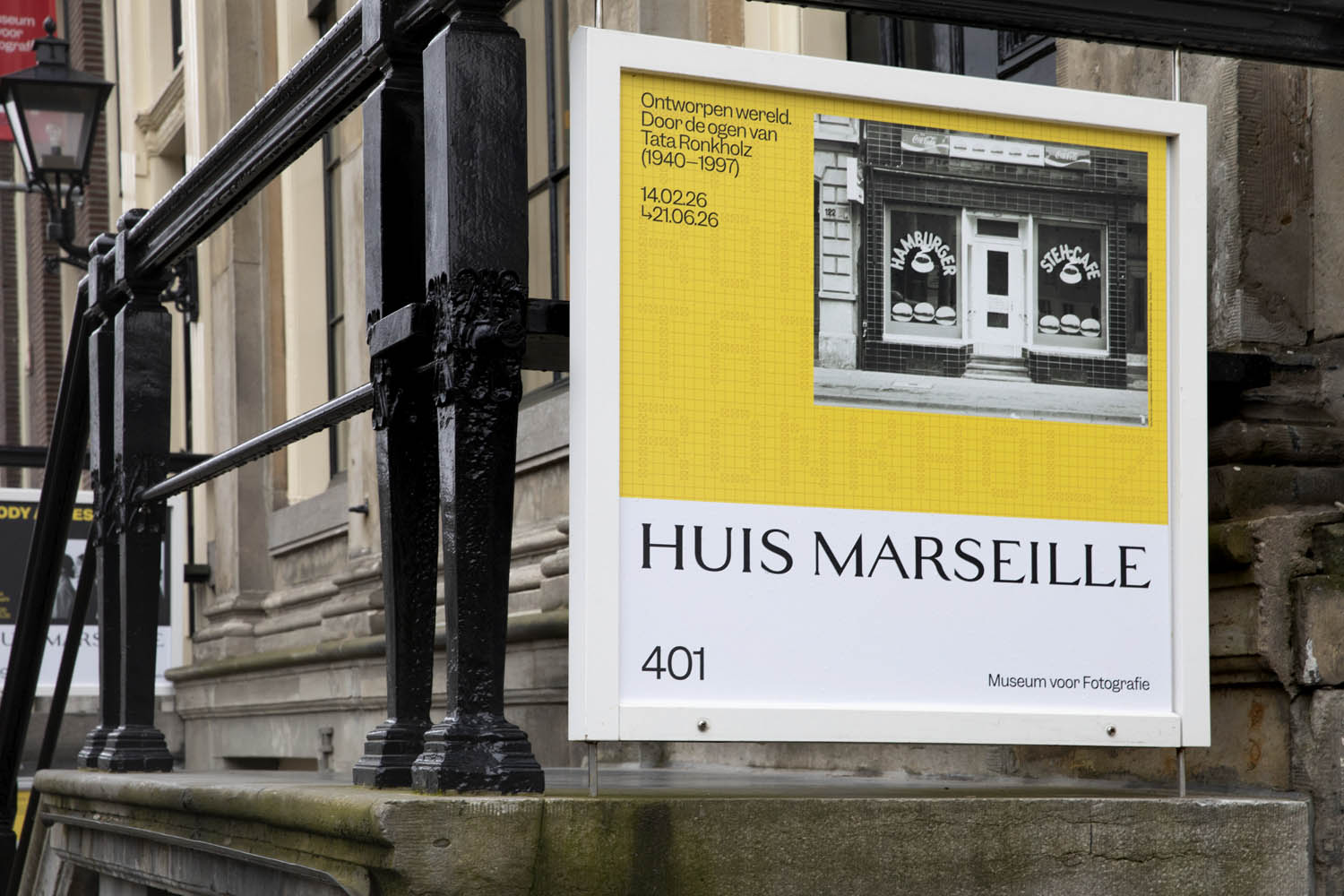
View of the exhibition poster for 'Designed World: Through the Eyes of Tata Ronkholz (1940-1997)' at Huis Marseille, Amsterdam, February - June, 2026


View of the exhibition posters for Designed World: Through the Eyes of Tata Ronkholz (1940-1997) at Huis Marseille, Amsterdam, February – June, 2026


Huis Marseille
Keizersgracht 401
1016 EK Amsterdam
Phone: +31 20 531 89 89

Opening hours
Tue – Sun, 11 – 18 h

Huis Marseille website

LIKE ART BLART ON FACEBOOK

Back to top

Vale Duane Michals (American, 1932-2026) – storyteller

June 2026


Duane Michals (American, 1932-2026) 'What is Time?' 1994


Duane Michals (American, 1932-2026)
What is Time?
1994
Gelatin silver print
16 × 19 7/8 inches (40.6 × 50.5cm)
Gift of Duane Michals
The Morgan Library & Museum


“Time is the duration of everything, and life is an event, a fluttering of wings.”

 
Duane Michals


There is no time

Vale the transcendent Duane Michals – storyteller.

Magician, poet, philosopher and dreamer.

An artist, like Joseph Cornell, who I have always felt a special affinity / infinity towards.

I wrote in earlier postings on his work:

“As he says, his work goes beyond description, beyond surfaces, to reveal the subject – not as it looks but as it feels. In his sequences he usually achieves this by posing a question that has no answer, a question that is like a Zen koan… what is the sound of one hand clapping? The grandfather ascends smilingly to heaven with little wings on his back as the child waves goodbye (if youth knew, if age could); the man as human condition turns into a galaxy; and the spirit leaves the body as it was left before. …

Michals staged, narrative scenes take us on a journey into his reality, one which “has entered a realm beyond observation.” He poses difficult questions that force us to examine ideas beyond the world of phenomena, beyond the world of surfaces. He challenges our repressed inner lives and our idealised image of ourselves, disturbing the boundaries of personality, ego, and identity.”1

And

“Duane Michals is one of the greatest photographic storytellers of the twentieth century. His parables – seemingly simple stories used to illustrate a moral or spiritual lesson – resonate, vibrate, with energy, and insight into, the human condition. They are as profound as the air we breathe but cannot see – expressing the invisible, presencing the spiritual. I feel, I know these stories, intimately. Those things-for-which-there-are-no-words. …

There are things here not seen in this photograph. The spirit leaves the body. William Blake and Duane Michals. Enchanted melancholy. The mysterious / music. In swift embrace. In love. In memory. In death. The fluidity of the line of the artist. Things are queer. The world implodes and ravages itself. Paradise is reborn. The letter, and love, from my father that I, also, never did receive. The nature of reality. Truth? … When I was young. What was time?”2


It was Michals great skill as an artist and a human being that enabled us the possibility of accessing some aspect of the mystery of our existence.

Stepping beyond … his spirit has left his body.

Dr Marcus Bunyan


1/ Marcus Bunyan. “Exposing your/self,” on the exhibition ‘Storyteller: The Photographs of Duane Michals’ at Carnegie Museum of Art, Pittsburgh, November 2014 – February 2015 on the Art Blart website January 30, 2015 [Online] Cited 11/06/2026

2/ Marcus Bunyan. “The things-for-which-there-are-no-words,” on the exhibition ‘Illusions of the Photographer: Duane Michals at the Morgan’ at The Morgan Library & Museum, October 2019 – February 2020 on the Art Blart website January 24, 2020 [Online] Cited 11/06/2026


Please click on the photographs for a larger version of the image.


“I write with this photograph not to tell you what you can see, rather to express what is invisible.”


Duane Michals 1966 in Johnson, B. (ed.,) 2004, ‘Photography speaks: 150 photographers on their art’, Aperture, New York p. 150


Duane Michals (American, 1932-2026) 'The Human Condition' 1969


Duane Michals (American, 1932-2026)
The Human Condition
1969
© Duane Michals via DC Moore Gallery
The Morgan Library & Museum


“The nature of consciousness is always the central question,” he asserted. In The Human Condition, his panel of six photographs from 1969 begins with a man standing on the 14th Street subway platform; the train arrives and he is bathed in a halo of light; the light becomes a swirl and in the last frame he is swept into a white disc the size of a galaxy passing through the night sky. From the immediate to the universal in six frames.

Philip Gefter. “Duane Michals Searches the Morgan and Finds Himself,” on The New York Times website Oct 29, 2019 [Online] Cited 14/11/2019


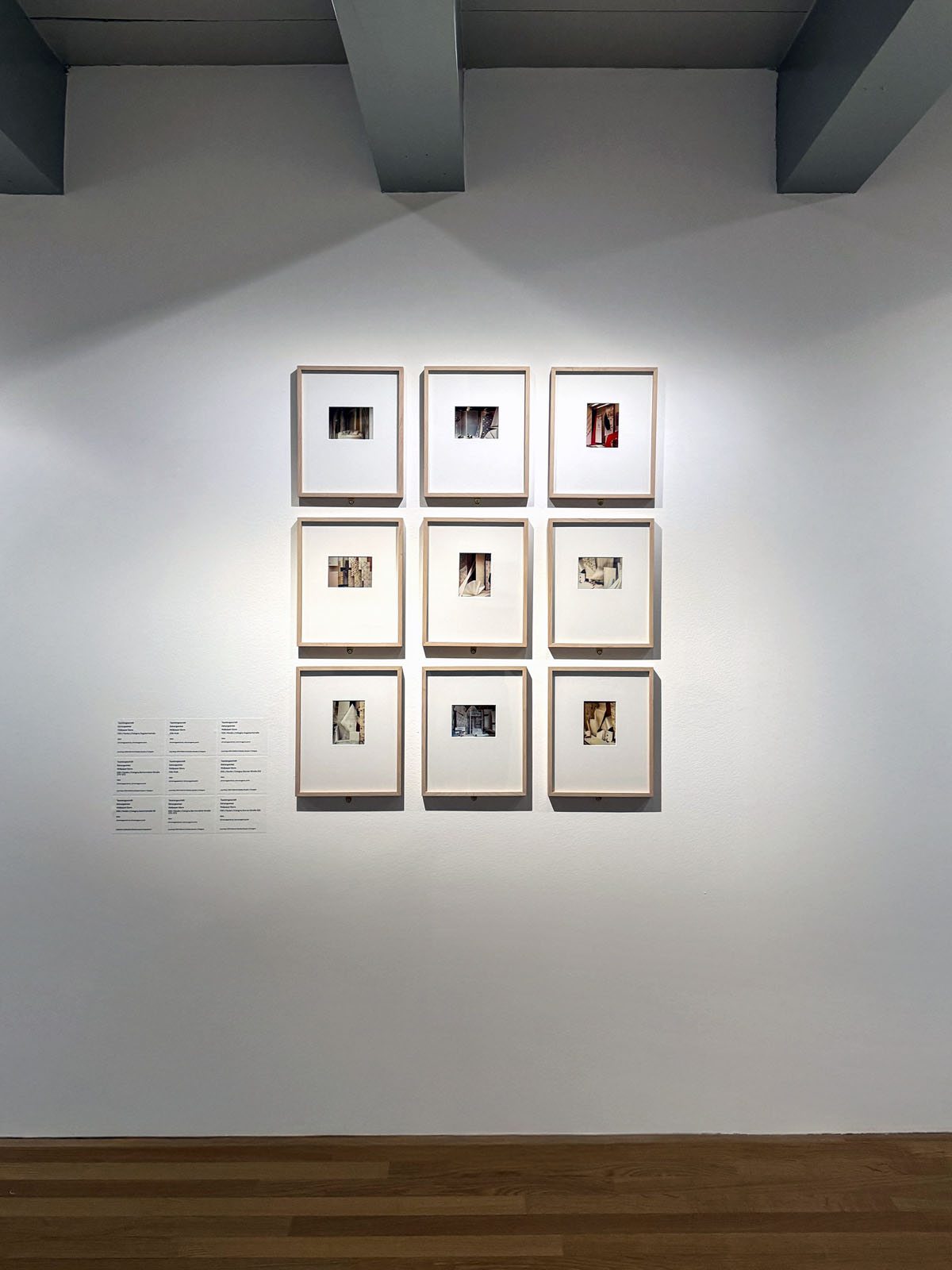
Duane Michals (American, 1932-2026) 'Things are Queer' 1973

Duane Michals (American, 1932-2026) 'Things are Queer' 1973

Duane Michals (American, 1932-2026) 'Things are Queer' 1973

Duane Michals (American, 1932-2026) 'Things are Queer' 1973

Duane Michals (American, 1932-2026) 'Things are Queer' 1973

Duane Michals (American, 1932-2026) 'Things are Queer' 1973

Duane Michals (American, 1932-2026) 'Things are Queer' 1973

Duane Michals (American, 1932-2026) 'Things are Queer' 1973

Duane Michals (American, 1932-2026) 'Things are Queer' 1973


Duane Michals (American, 1932-2026)
Things Are Queer
1973
Nine gelatin silver prints
Images: 5 × 7 inches (12.7 × 17.8cm) each
Gift of Duane Michals
The Morgan Library & Museum


Duane Michals (American, 1932-2026) 'The Spirit Leaves The Body' 1968

Duane Michals (American, 1932-2026) 'The Spirit Leaves The Body' 1968

Duane Michals (American, 1932-2026) 'The Spirit Leaves The Body' 1968

Duane Michals (American, 1932-2026) 'The Spirit Leaves The Body' 1968

Duane Michals (American, 1932-2026) 'The Spirit Leaves The Body' 1968

Duane Michals (American, 1932-2026) 'The Spirit Leaves The Body' 1968

Duane Michals (American, 1932-2026) 'The Spirit Leaves The Body' 1968


Duane Michals (American, b. 1932)
The Spirit Leaves the Body
1968
Gift of Richard and Ronay Menschel
The Morgan Library & Museum


LIKE ART BLART ON FACEBOOK

Back to top

Exhibition: ‘FOR YOUR EYES ONLY: Miniatures from the Romantic Era’ at Hamburger Kunsthalle, Hamburg

Exhibition dates: 6th February – 7th June, 2026

Curator: Sabine Zorn (Head of Conservation/Restoration of Graphic Art and Photography, Hamburger Kunsthalle); Guest Curator: Dr. Bernd Pappe (Freelance restorer and art historian specialising in portrait miniatures)


Heinrich Jakob Aldenrath (German, 1775-1844) 'Caroline Mohrmann (geb. Wortmann)' c. 1815


Heinrich Jakob Aldenrath (German, 1775-1844)
Caroline Mohrmann (geb. Wortmann)
c. 1815
Watercolour and gouache on ivory
6.3 x 4.9cm
Hamburger Kunsthalle
© Hamburger Kunsthalle, Foto: Birgitt Schmedding


A bonus posting for the weekend.

I discovered this exhibition while surfing online and I couldn’t miss it before it closes tomorrow. Resistance is futile, especially for an avid collector of object d’arts.

I love miniatures, their sensitivity, their sensuality, their size. The fact they were held in the hand and carried close to the heart. Portraits of the self, relying on mirrors to capture the artist’s own reflection, portraits of loved ones, artists, anonymous men and women.

“Many master miniaturists (like Daguerre himself) used optical tools like the Camera Obscura to map proportions before painting. Using early cameras felt like a natural mechanical extension of this process.” (Wikipedia)

“Portrait miniaturists were already experts at arranging subjects for flattering, highly personalised, and dignified depictions. They brought these same framing, angling, and lighting rules – such as emphasising the face – to the camera.” (Wikipedia)

“As miniature painters attempted to mimic the technical precision of daguerreotypes, they lost the intimate, distinct appeal of their art form. As the former Metropolitan Museum scholar Harry Wehle put it in 1927, “The miniature in the presence of the photograph was like a bird before a snake; it was fascinated – even to the fatal point of imitation – then it was swallowed”.” (Metropolitan Museum of Art)

For me, there is a delicacy and romanticism to the painted miniature which can never be matched by the photographic miniature. Despite both being housed in small, protective leather and wood cases, each are constructed realities of a different aspect – one created through the eye and creativity of the painter, the other created through the eye and creativity of the photographer and the maximal, granular reality of the camera.

Where possible I have added bibliographic and other pertinent information for the artists in the posting.

Dr Marcus Bunyan


Many thankx to Hamburger Kunsthalle for allowing me to publish the photographs in the posting. Please click on the photographs for a larger version of the image.


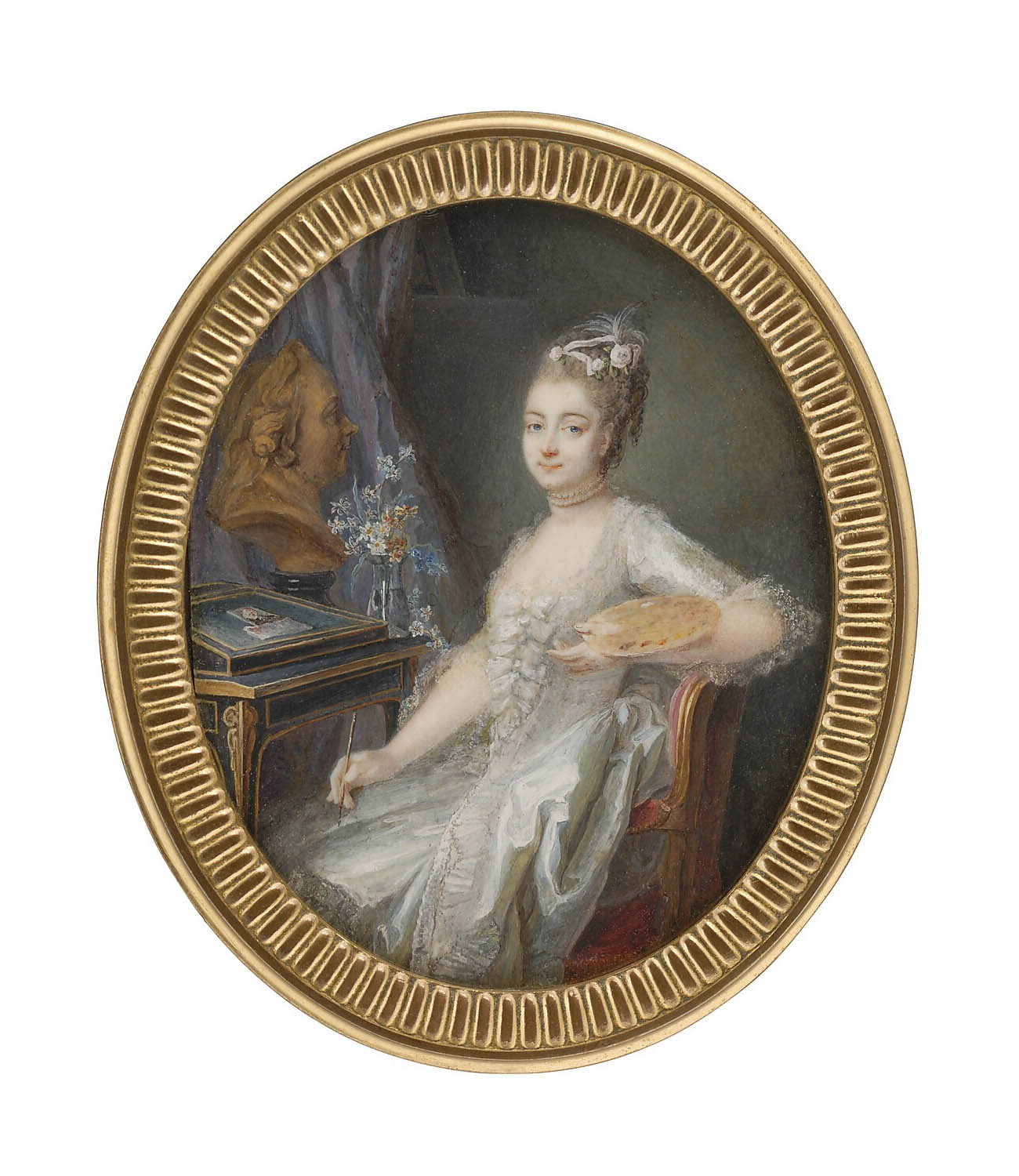
Adélaïde Labille-Guiard (1749-1803) 'Self-portrait' c. 1774


Adélaïde Labille-Guiard (1749-1803)
Self-portrait
c. 1774
Aquarell und Gouache auf Elfenbein
10.3 x 8.4cm
The Tansey Miniatures Foundation, Celle
© Foto: Birgitt Schmedding


Adélaïde Labille-Guiard (French, 1749-1803)

Adélaïde Labille-Guiard (née Labille; 11 April 1749 – 24 April 1803), also known as Adélaïde Labille-Guiard des Vertus, was a French miniaturist and portrait painter. She was an advocate for women to receive the same opportunities as men to become great painters. Labille-Guiard was one of the first women to become a member of the Royal Academy, and was the first female artist to receive permission to set up a studio for her students at the Louvre.

Adélaïde Labille was born on 11 April 1749 in Paris. Her father, Claude-Edme Labille (1705-1788) was a haberdasher.

Labille-Guiard became a master at miniatures, pastels, and oil paintings. Little is known about her training due to the practices of the 18th century which dictated masters (who were predominately male) should not take on female pupils. During this time, women were perceived as incapable to follow instruction alongside men. During her adolescence, Labille-Guiard studied miniature painting with oil painter François-Élie Vincent and her early work was exhibited at the Académie de Saint-Luc.

Labille-Guillard married Louis-Nicolas Guiard in 1769, but separated from him eight years later, already able to support herself through her artwork. She apprenticed with the pastel master Quentin de la Tour until 1774. From 1776 to 1780, she began to study oil painting with her childhood friend François-André Vincent (the eldest son of François-Élie Vincent), who would later become her husband.

Exhibitions at the Académie de Saint-Luc

Labille-Guiard was admitted to the Académie de Saint-Luc in 1767 when she was twenty years old. Her admission piece has since disappeared and sadly no records of its existence survive today. The Académie de Saint-Luc provided Labille-Guiard with a space to practice art professionally. In 1774, she exhibited her work at its Salon. This show was so successful that the Royal Academy took offence, and with the backing of the monarchy, issued an edict in March 1776 abolishing “guilds, brotherhoods, and communities of arts and crafts”, forcing the Académie de Saint-Luc to close its doors in 1777. However, this did not stop Labille-Guiard’s ambitions as an artist.

Becoming a member of the Royal Academy

Once the Académie de Saint-Luc closed its doors, Labille-Guiard began to learn oil painting, so she could apply to the Royal Academy which required her to present at least one oil painting for admission. During the late 1770s, she painted several portraits of leading academicians, creating contacts with the Académie royale de peinture et de sculpture.[6]

Labille-Guiard chose to display some of her work at the Salon de la Correspondance in 1779 and 1783. This included her self-portrait in pastel and oil portraits, which were well received by critics. Labille-Guiard’s talent as an oil painter and pastellist was quickly noticed, and she received national recognition, ultimately leading to her acceptance into the Royal Academy. On 31 May 1783 Labille-Guiard was accepted as a member of the French Academie Royale de Peinture et de Sculpture. Her rival, Elisabeth-Louise Vigée Le Brun, was also elected on that day; the two of them were the first women to be inducted. Both Labille-Guiard and Vigée Le Brun were immediately criticised following their admission by those who were furious at women’s entry; Labille-Guiard suffered attacks against both her art and character. One anonymous pamphlet Suite de Malborough au Salon 1783, accused Labille-Guiard of exchanging sexual favours for help with painting. The pamphlet punned on François-André Vincent’s name (though still unmarried, he was her rumoured paramour), saying that Labille Guiard had “vignt cents” (twenty-hundreds, or two thousand) lovers. Still, becoming accepted into the Royal Academy opened doors for Labille-Guiard as she gained patronage from the royal family. …

Style and context

Labille-Guiard often did not fit comfortably within the boundaries of feminine virtue in the 18th century. In order to appeal to a wide variety of viewers including upper-class men and women, she often incorporated recent fashions into her paintings, which allowed her to showcase her artistic ability. She was good at rendering details, such as showing luxurious folds and layers of complex skirts that were in fashion at the time. However, often she painted with a twist such as having women face directly at the viewer or with a low neckline, which was an uncommon practice in the 18th century when portraying women.

Further evidence of Labille-Guiard’s boldness can be seen in her self-portraits, which leave her exposed slightly more than usual, but not enough to evoke allegations of promiscuous behaviour. This is seen in her painting Self-Portrait with Two Pupils. Unlike some other paintings of female artists in the 18th century, Labille-Guiard chose to depict herself actively working rather than passive and at rest. Labille-Guiard also pushed against other restrictions, such as those that limited the number of females that could attend the Royal Academy. By depicting two female students in Self-Portrait with Two Pupils, Labille-Guiard suggests more women should be allowed in to the Royal Academy. In this sense, Labille-Guiard was daring, but not too daring as to sabotage her reputation and lose the respect she worked hard to gain within the art world.

At the time, female artists were frequently related to the goddess Minerva. Therefore, Labille-Guiard and her rival Vigée Le Brun were both referred to as “modern Minervas.” Their rivalry was encouraged by both academicians and patrons at court.

Today, Labille-Guiard’s masterpiece, Self-Portrait with Two Pupils, hangs in New York’s Metropolitan Museum of Art, after the Louvre rejected it in a final dismissal of the artist’s talent.

Text from the Wikipedia website


Friedrich Karl Gröger (German, 1766–1838) 'Self-portrait' c. 1800


Friedrich Karl Gröger (German, 1766–1838)
Self-portrait
c. 1800
Watercolour and gouache on ivory
7.1 x 5.3cm
Hamburger Kunsthalle
© Hamburger Kunsthalle, Foto: Birgitt Schmedding


Friedrich Carl Gröger was a north-German portrait painter and lithographer. One of the most respected portraitists of his time in northern Germany, his works are to be found in several museums, including the Hamburger Kunsthalle, as well as in north German, Holstein and Danish private collections.


Domenico Bossi (German born Italy, 1767–1853) 'Dr. med Paul Hinrich Büsch' c. 1795


Domenico Bossi (German born Italy, 1767–1853)
Dr. med Paul Hinrich Büsch
c. 1795
Watercolour and gouache on ivory
6cm (Durchmesser)
Hamburger Kunsthalle
© Hamburger Kunsthalle
Foto: Birgitt Schmedding


Johann Dominik Bossi, also known as Domenico Bossi, was a painter. Bossi, a student of Giovanni Domenico Tiepolo, was born in Trieste and worked primarily as a miniaturist in Germany, Austria, Sweden and Russia before he settled down in Munich, where he lived at Theresien Straße 19 in Munich around 1850.


Carl Friedrich Demiani (German, 1768-1823) 'Man on sofa' 1799


Carl Friedrich Demiani (German, 1768-1823)
Man on sofa
1799
Watercolour and gouache on ivory
15.1 x 12.5cm
The Tansey Miniatures Foundation, Celle
© Foto: Birgitt Schmedding


Carl (Karl) Friedrich Demiani was born in 1768 in Breslau (now Wroclaw, Poland), and died in 1823 in Dresden. He studied at the Dresden Academy of Fine Arts and specialised in portrait miniatures.


Unknown maker. 'Monogram "JMJ" on hair braid (back of a gentleman's portrait)' c. 1800


Unknown maker
Monogram “JMJ” on hair braid (back of a gentleman’s portrait)
c. 1800
Gold-plated metal on hair
5.3cm
Hamburger Kunsthalle / ARTOTHEK
© Hamburger Kunsthalle
Foto: Birgitt Schmedding


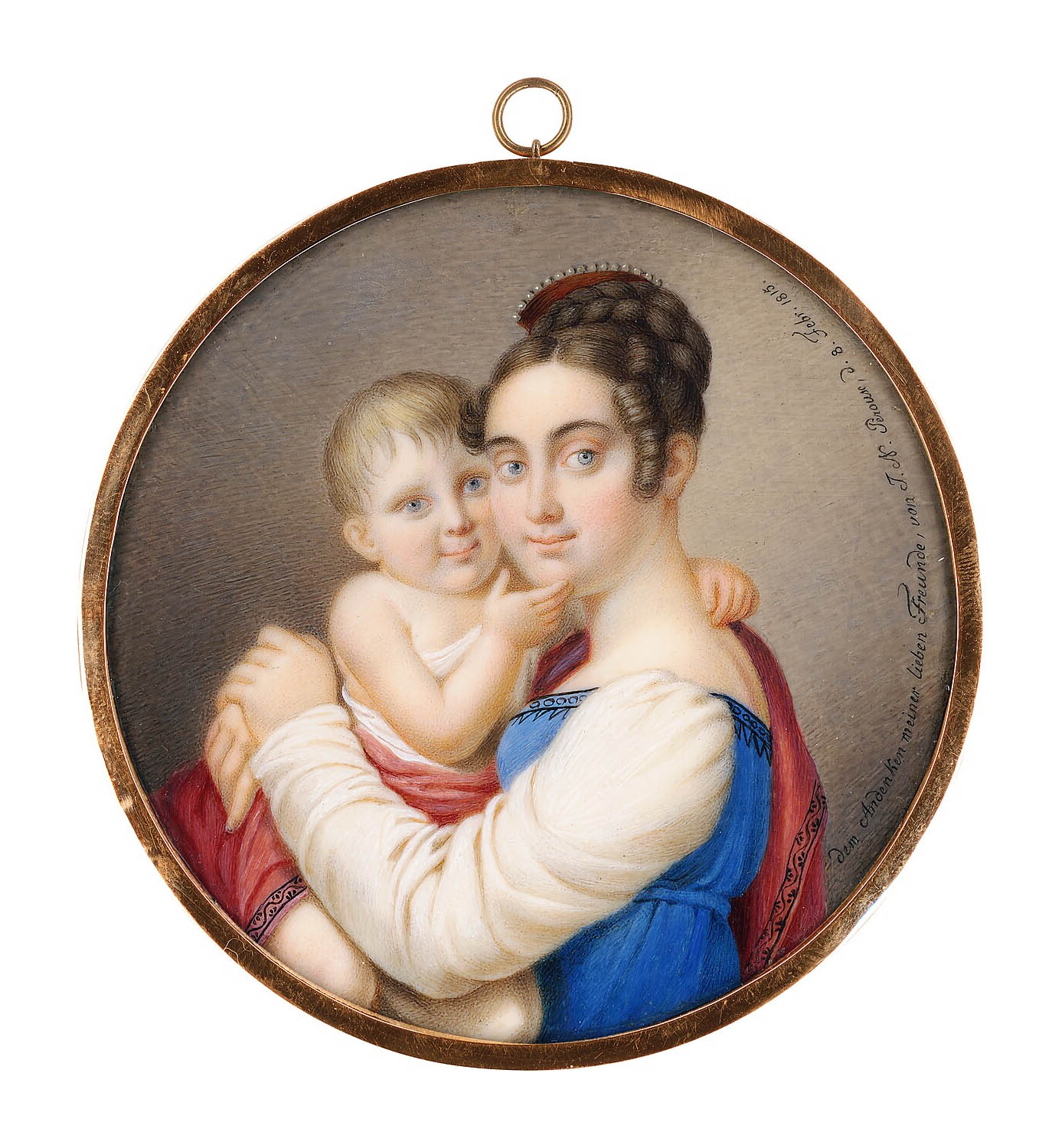
Joseph Nocolaus Peroux (German, 1771 -1849) 'Mother and child' 1815


Joseph Nocolaus Peroux (German, 1771 -1849)
Mother and child
1815
Watercolour and gouache on ivory
Schloss Kemnade, Hattingen (Sammlung Rudowski)
© Foto: Fotostudio Eric Jobs, Hattingen


Joseph Nicolaus Peroux was born in 1771, in Ludwigsburg. He was a well-known German miniature painter, etcher and lithographer of the Romantic era.
Peroux was a student of the “Peintre du Duc de Wurtemberg” (first painter at the Württemberg court) Nicolas Guibal, who taught at the Académie des Arts and the Hohen Karlsschule in Stuttgart until his death in 1784. Peroux initially worked in Frankfurt am Main (from 1795) and in Hamburg from 1800, where he exhibited a portrait of Emma Hamilton and a self-portrait in 1803. He then opened an art school in Lübeck and became the young Friedrich Overbeck’s first drawing teacher. The turmoil of the French Period brought him back to Frankfurt in 1806. Accordingly, his works can be found primarily in the museums in Frankfurt, the Hamburger Kunsthalle and in the Behnhaus in Lübeck. The artist died in 1849, in Frankfurt am Main.

Text from the Wikipedia website translated from the German


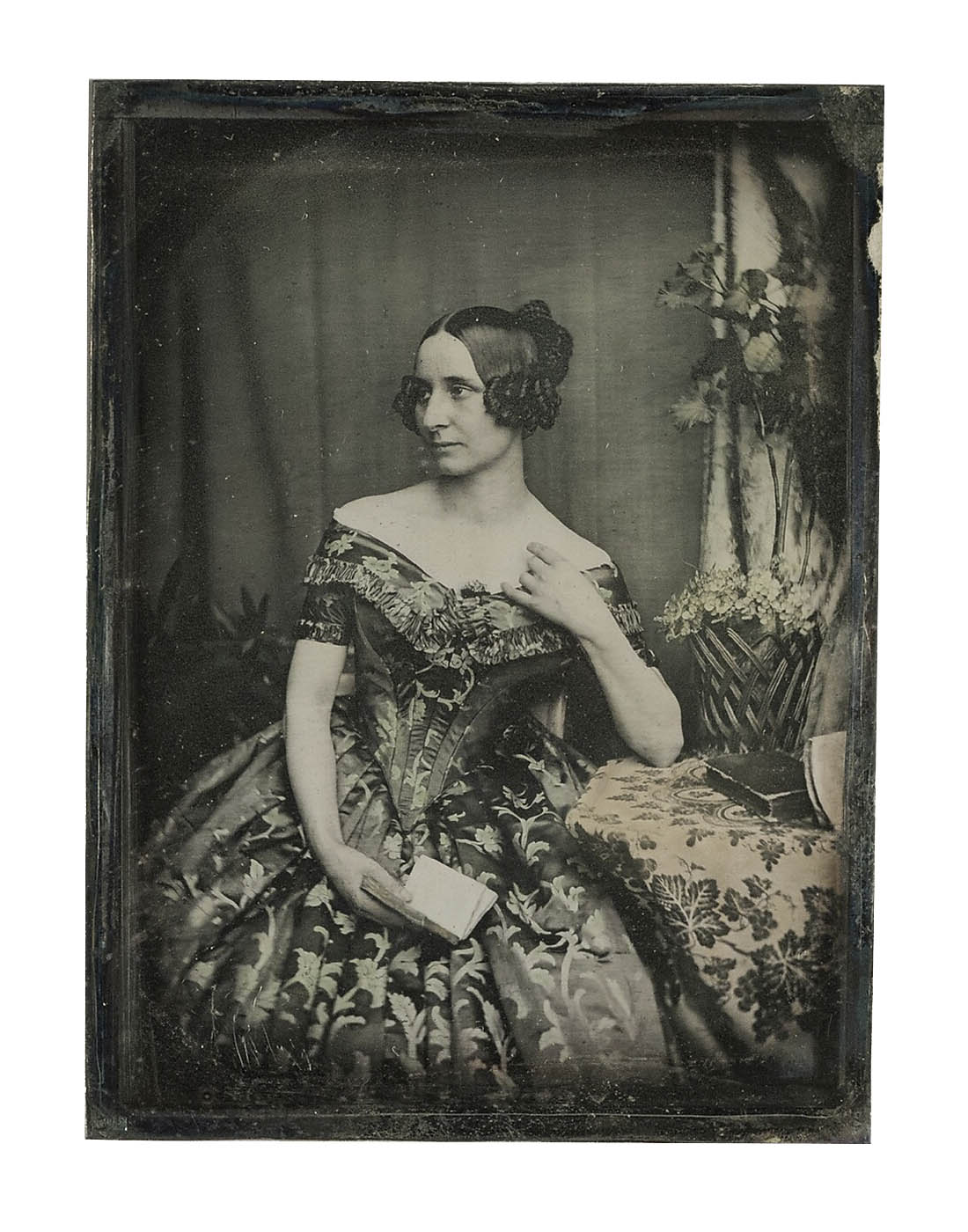
Carl Ferdinand Stelzner (German, 1805-1894) 'The miniature painter Caroline Stelzner (1808-1875)' 1843


Carl Ferdinand Stelzner (German, 1805-1894)
The miniature painter Caroline Stelzner (1808-1875)
1843
Daguerreotype
10.8 x 8.1cm
Museum für Kunst und Gewerbe
© Museum für Kunst und Gewerbe


[Stelzner] was the stepson of the portrait and miniature painter Carl Gottlieb Stelzner, who trained him in painting. In 1825 he traveled through Schleswig-Holstein and painted portraits of peasants and citizens. At the end of the 1820s he made study trips to Hamburg, Stockholm , Copenhagen and then to Paris where from 1831 to 1834 he was mentored by prominent miniature painters Jean-Baptiste Isabey and Claude Marie Dubufe. On return to Hamburg in 1837 he opened a studio, painting portrait miniatures.

Hearing of the new technique of photography, Stelzner returned quickly to Paris in 1839 to learn in person from Louis Daguerre how to make daguerreotypes. He then opened a daguerreotype studio in Hamburg with Hermann Blow (1804-1850). The partnership was short-lived and in 1843 he returned to his old studio to become the first daguerreotypist in Schleswig-Holstein and ultimately one of the best in Germany. His output was mainly portraits. His first wife Anna Caroline Stelzner (above), a miniaturist artist who was also his half-sister, coloured many of them and did the rephotography of the plates, since copying was the only way to reproduce the daguerreotype.

Despite the constraints of his medium, Selzner’s portraits rarely appear ‘frozen’. The position of Caroline’s arms and her sideways gaze are reinforced by the position of props such as the book on the table as a counterpoint to the one in her hand which infers movement, and the framing of the foliage of pot plants, repeated in the fabric of her dress and the tablecloth.

You can see Selzner experimenting with his own pose in these two self-portraits [one of which you can see below] on which Caroline no doubt assisted. Though these two images are dated five years apart on the Hamburg Art Museum website, the photographer’s clothing, hair and the background are identical. The only change is in the pose and a lowering of the camera to provide a more regal impression in the second image.

Associate Professor James McArdle. “December 30: Action,” on the On This Date In Photography website 30/12/2016 [Online] Cited 05/06/2026


Carl Ferdinand Stelzner (German, 1805–1894) 'Self-portrait' 1855


Carl Ferdinand Stelzner (German, 1805–1894)
Self-portrait
1855
Daguerreotype
5.9 x 4.8cm
Museum für Kunst und Gewerbe Hamburg
© Museum für Kunst und Gewerbe Hamburg


With FOR YOUR EYES ONLY: Miniatures from the Romantic Era, the Hamburger Kunsthalle is presenting the first major exhibition devoted to the multifaceted art of miniature painting in Hamburg, from its heyday circa 1800 to the 1840s, when it was replaced by early photography. These miniature portraits, usually measuring around 6 to 10 cm and artfully painted in watercolour and gouache on wafer-thin ivory plates, backed in some cases with silver foil, still fascinate us even today. A total of over 250 objects will be on view. 

The show is based on portrait miniatures from the Kunsthalle’s own collection that were restored and catalogued in 2023–24. Around 60 of these miniatures will be shown for the first time here, together with some 200 works on loan from European and private collections, some of them also making their public debut.

These small portraits set in frames, brooches or cases were among the most personal and intimate likenesses people had painted of themselves. They were intended only for the eyes of the recipient and could be worn – often directly over the heart – and viewed at will. The portraits were a way to keep memories alive in the event of a long separation or to provide comfort after the loss of a loved one.

Portrait miniatures were widespread in Europe around 1800. Often made for the nobility, they also became popular with the aspiring bourgeoisie – including in Hamburg, which experienced an economic boom in the late eighteenth century that impacted the art world. Private collections were formed, the Kunstverein was founded, and exhibitions, liberal auction laws and new techniques such as the daguerreotype and lithography contributed to Hamburg’s emergence as an important art centre. Internationally renowned miniaturists such as Domenico Bossi and Pierre-Louis Bouvier lived and worked for a time in the Hanseatic city, which itself produced outstanding artists including Heinrich Jacob Aldenrath, Friedrich Carl Gröger, and Ferdinand and Caroline Stelzner.

Text from the Hamburger Kunsthalle website


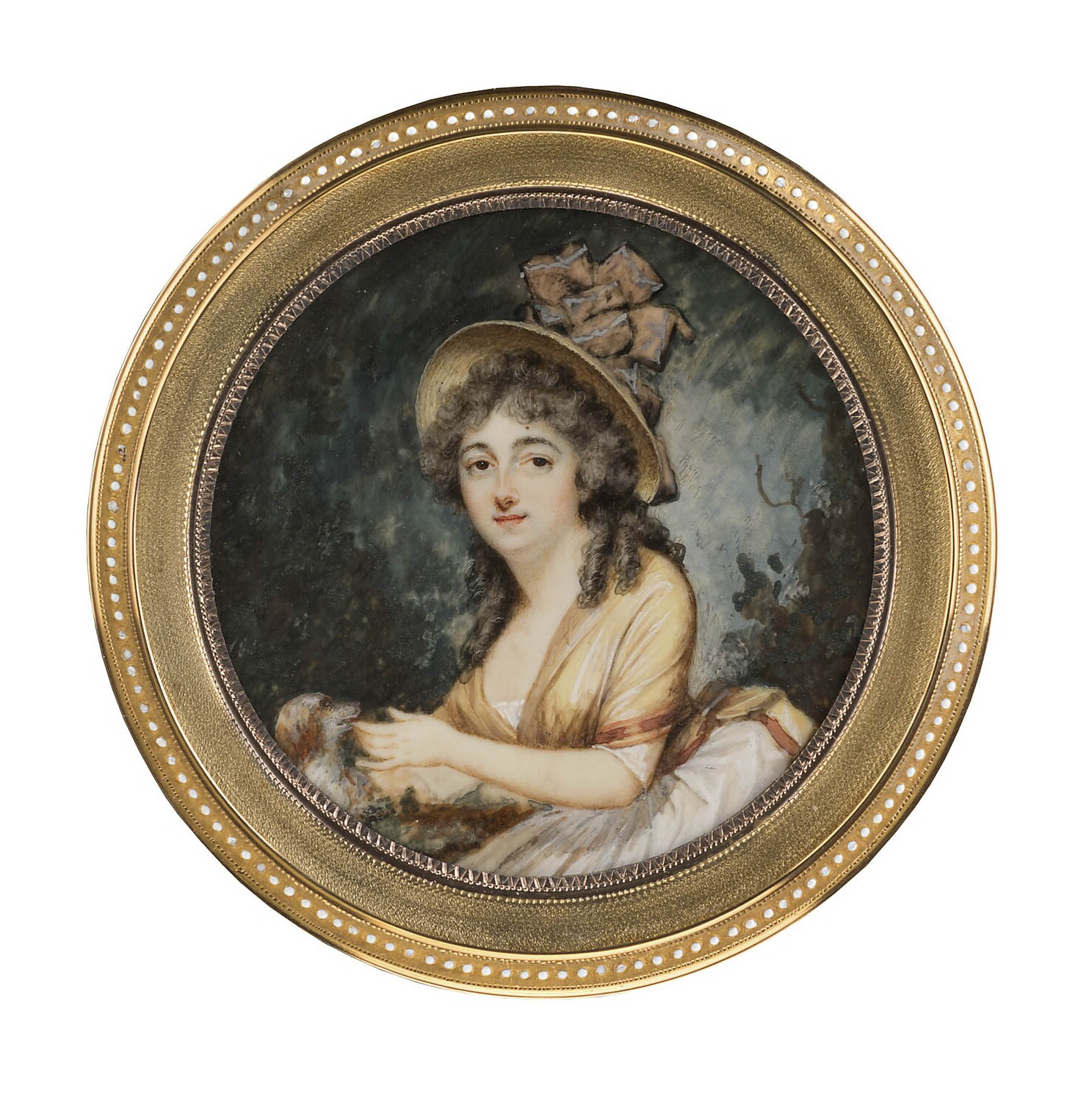
Pierre-Charles Hénard (French, 1756-1813) 'Lady with straw hat and puppy' c. 1795


Pierre-Charles Hénard (French, 1756-1813)
Lady with straw hat and puppy
c. 1795
Watercolour and gouache on ivory
7.3cm
The Tansey Miniatures Foundation, Celle
© Foto: Birgitt Schmedding


Hénard was born in Bourg-en-Bresse on 11 February 1756. He was the son of the goldsmith Vincent Hénard and of Elisabeth Cadet. After having studied with Taraval, Hénard worked in both France and England. He exhibited at London’s Royal Academy from 1785 to 1800, and in Paris in 1791 and from 1806 to 1812. He worked in Hamburg from mid-1796 to the spring of 1797. After emigrating to the United States in 1811 on board of the Susquehanna, he lived in Baltimore and showed some of his works in 1812 and 1813 at the Pennsylvania Academy of the Fine Arts.

Text from The Tansey Miniatures Foundation website


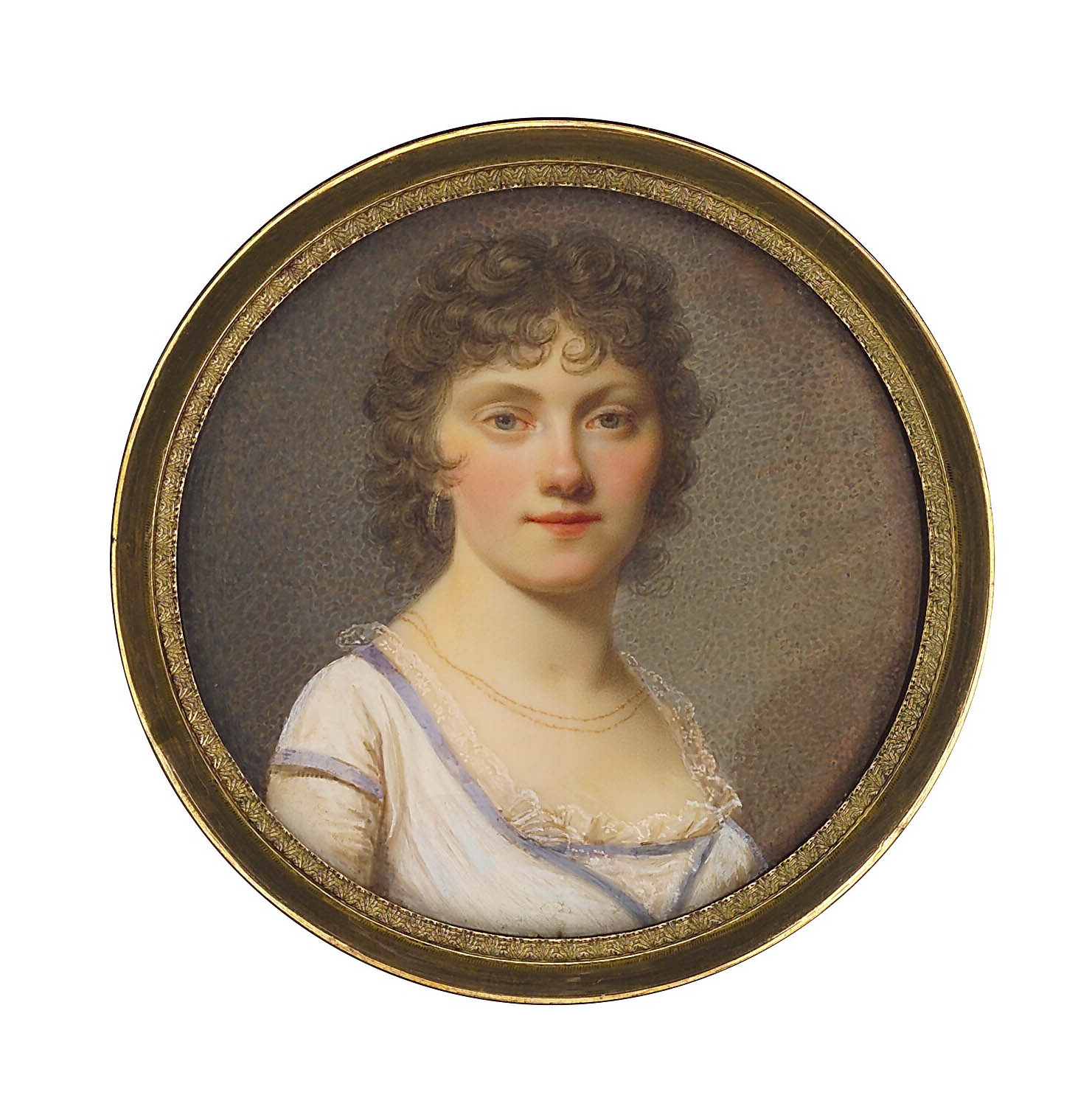
Domenico Bossi (German born Italy, 1767–1853) 'Lady in a white dress with blue trim' c. 1800


Domenico Bossi (German born Italy, 1767–1853)
Lady in a white dress with blue trim
c. 1800
Watercolour and gouache on ivory
6.2cm
The Tansey Miniatures Foundation, Celle
© Foto: Birgitt Schmedding


With FOR YOUR EYES ONLY. Miniatures from the Romantic Era, the Hamburger Kunsthalle is presenting its first major exhibition devoted to the multifaceted art of miniature painting in Hamburg, from its heyday circa 1800 to the 1840s, when it was replaced by early photography. The show is based on portrait miniatures from the Kunsthalle’s own collection that were restored and catalogued in 2023-2024. Around 60 of these miniatures will be shown for the first time here, together with some 150 works on loan from European and private collections, some of them also making their public debut. Accompanying the miniature portraits are a number of paintings, drawings, prints and photographs, for example a self-portrait by the painter and miniaturist Bernhard Peter von Rausch (1793-1865). This material sheds light on how miniatures were made as well as their special function and the technical modifications they required. In total, over 250 objects are on display in the Harzen Cabinet that tell of an era marked by social transformation, European exchanges and technological innovations. 

Even today, people still like to carry a likeness of a loved one on their person. Before the advent of photography, such miniature portraits were precious one-offs that took hours to paint. Their small format – usually around 6 to 10 cm – and skilled execution in watercolour and gouache on wafer-thin ivory plates, sometimes backed with silver foil, hold an enduring fascination. Set in frames, brooches or cases, these miniatures were among the most personal and intimate likenesses people had painted of themselves. The miniaturists held several sittings with their clients, painting “ad vivum” [from life], often on specially developed painting desks. One such desk from the estate of the miniaturist Jean-Baptiste Jacques Augustin (1759-1832) is exhibited here for the first time, along with painting utensils and measuring instruments such as a pantograph for the true-to-scale reduction of drawings. These aids illustrate the traditional technique used to produce minia-tures on ivory and white-primed paper as well as reproduction methods devel-oped in the late eighteenth century known as Bou-Magie and Physionotrace.

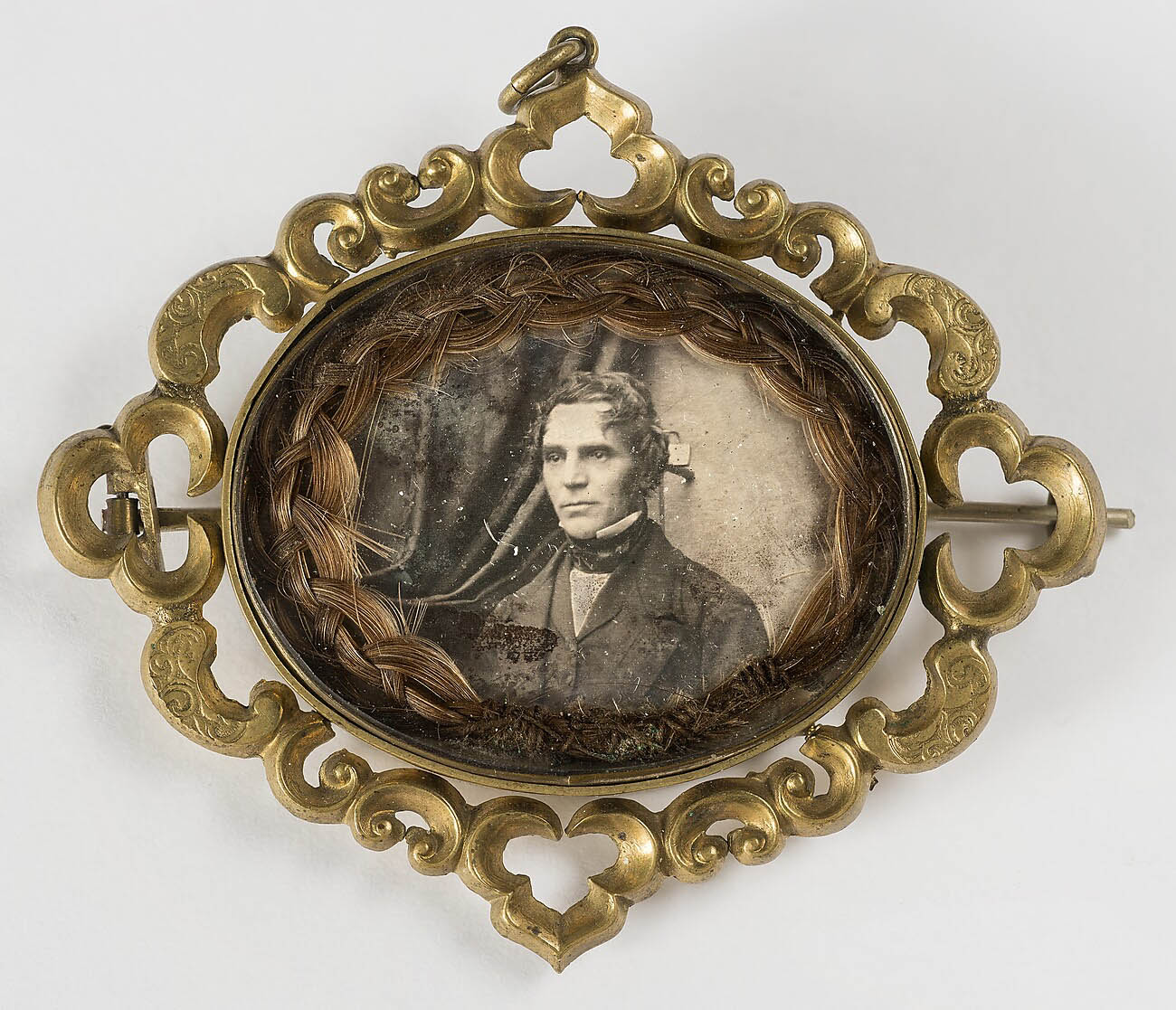
The commission to make a miniature arose from an intimate relationship between two people. The likeness was intended only for the eyes of the recipient, who might wear it as jewellery – often directly over the heart – and could admire it at will. Often, such portraits were designed to keep memories alive in the event of a long separation or to provide comfort after the loss of a loved one. Added locks of hair, artful plaits, inscriptions or symbolic messages hidden in the portrait in the form of flowers, objects or animals underscore the personal nature of these works while offering a glimpse of the emotional climate in the period around 1800.

Portrait miniatures were widespread in Europe during that era. No longer reserved for the nobility, they enjoyed increasing popularity among the aspiring bourgeoisie – including in Hamburg, which experienced an economic upswing in the late eighteenth century. After the setbacks of the Napoleonic era, a prolonged period of prosperity would have a lasting influence on the arts scene in the Hanseatic city. The first private collections were formed, the Kunstverein was founded in 1817, and exhibitions, liberal auction laws and new techniques such as lithography and later daguerreotype contributed to Hamburg’s rapid rise as an important northern art centre. 

Internationally renowned miniaturists such as Giovanni Domenico Bossi (1767-1853), Carl Friedrich Demiani (1768-1823), Pierre-Louis Bouvier (1765-1836), Charles Hénard (1756-1813), Jan Gottlieb Jannasch (c. 1755-1804) and Edmé Quenedey (1756-1830) lived and worked in Hamburg for a time. And the Hanseatic city itself produced some outstanding artists during this period, including Leo Lehmann (1782-1859), Ernst August Abel (1720-1790), Karl Friedrich Kroymann (1781-1849) and Christopher Suhr (1771-1842). Friedrich Carl Gröger (1766-1838) and Heinrich Jakob Aldenrath (1775-1844) were particularly influential. 

With the invention of photography in 1839, a medium rose to popularity that would take over the function of the portrait miniature and eventually replace it completely. The daguerreotype (also known as helio-graphy) made it possible to produce small-format portraits that were not only more realistic but also sig-nificantly faster to realise. A sitting for a miniature portrait soon took less than a minute. Thanks to the low cost of production, artists could now attract a new clientele. Carl Ferdinand Stelzner (1805-1894) from Hamburg and his wife Caroline (1808-1875) initially painted miniatures before Carl Ferdinand in particular successfully turned his attention to portrait photography in 1842. And yet, the portrait miniature did not go completely out of fashion. The artist Enrichetta Fioroni-Narducci (1806-1892), who worked in Rome, and her sister Teresa Fioroni (1799-1880), for example, augmented their income with miniature versions of famous paintings that were extremely popular with mid-nineteenth-century travellers. The Kunsthalle is home to five of their works, on display in the exhibition. 

The exhibition is accompanied by a publication (Michael Imhof Verlag, edited by Sabine Zorn and Bernd Pappe, approx. 160 pages), which is available in the museum shop or at http://www.freunde-der-kunsthalle.de for a price of 29 euros, as well as in bookstores.

Press release from Hamburger Kunsthalle


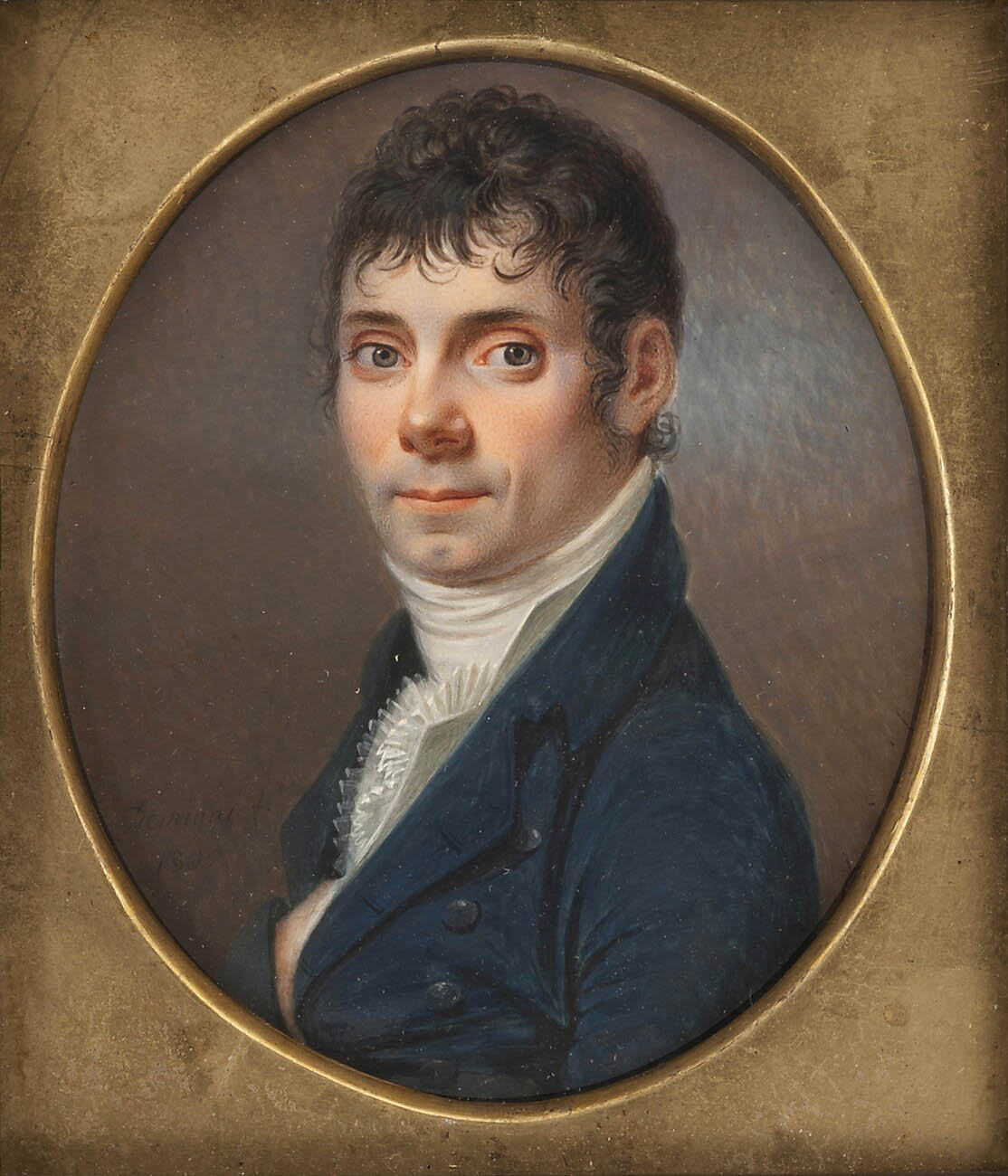
Carl Friedrich Demiani (German, 1768–1823) 'Man in blue coat, 1805' 1805


Carl Friedrich Demiani (German, 1768-1823)
Man in blue coat, 1805
1805
Watercolour and gouache on ivory
8.8 x 7.4cm
The Tansey Miniatures Foundation, Celle
© Foto: Birgitt Schmedding


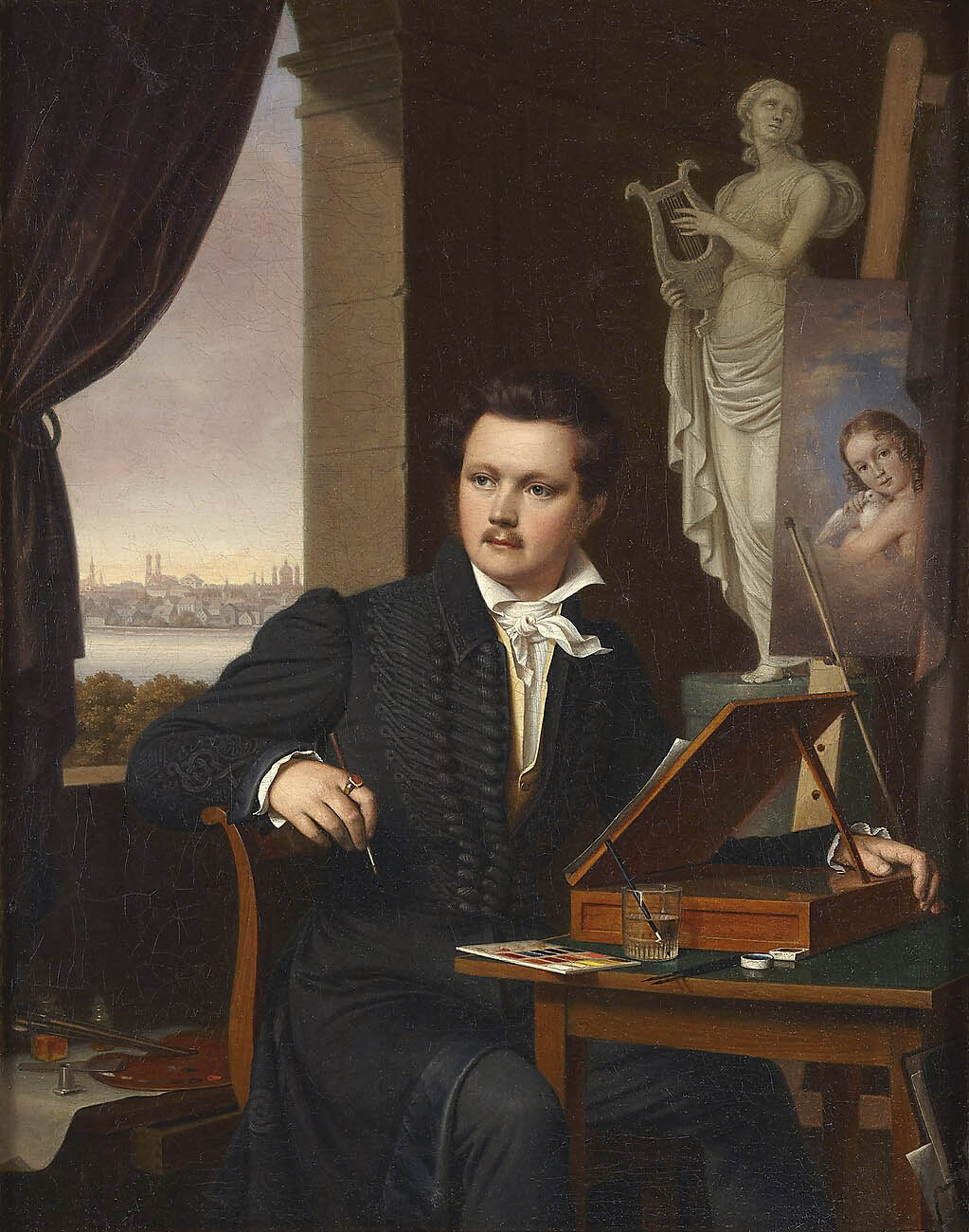
Bernhard Peter von Rausch (German, 1793-1865) 'Self-portrait in the studio in Munich' c. 1830


Bernhard Peter von Rausch (German, 1793-1865)
Self-portrait in the studio in Munich
c. 1830
Oil on canvas
37.8 x 29.8cm
Hamburger Kunsthalle, © Hamburger Kunsthalle / ARTOTHEK
Foto: Christoph Irrgang


Bernhard Peter von Rausch was a German painter and lithographer.


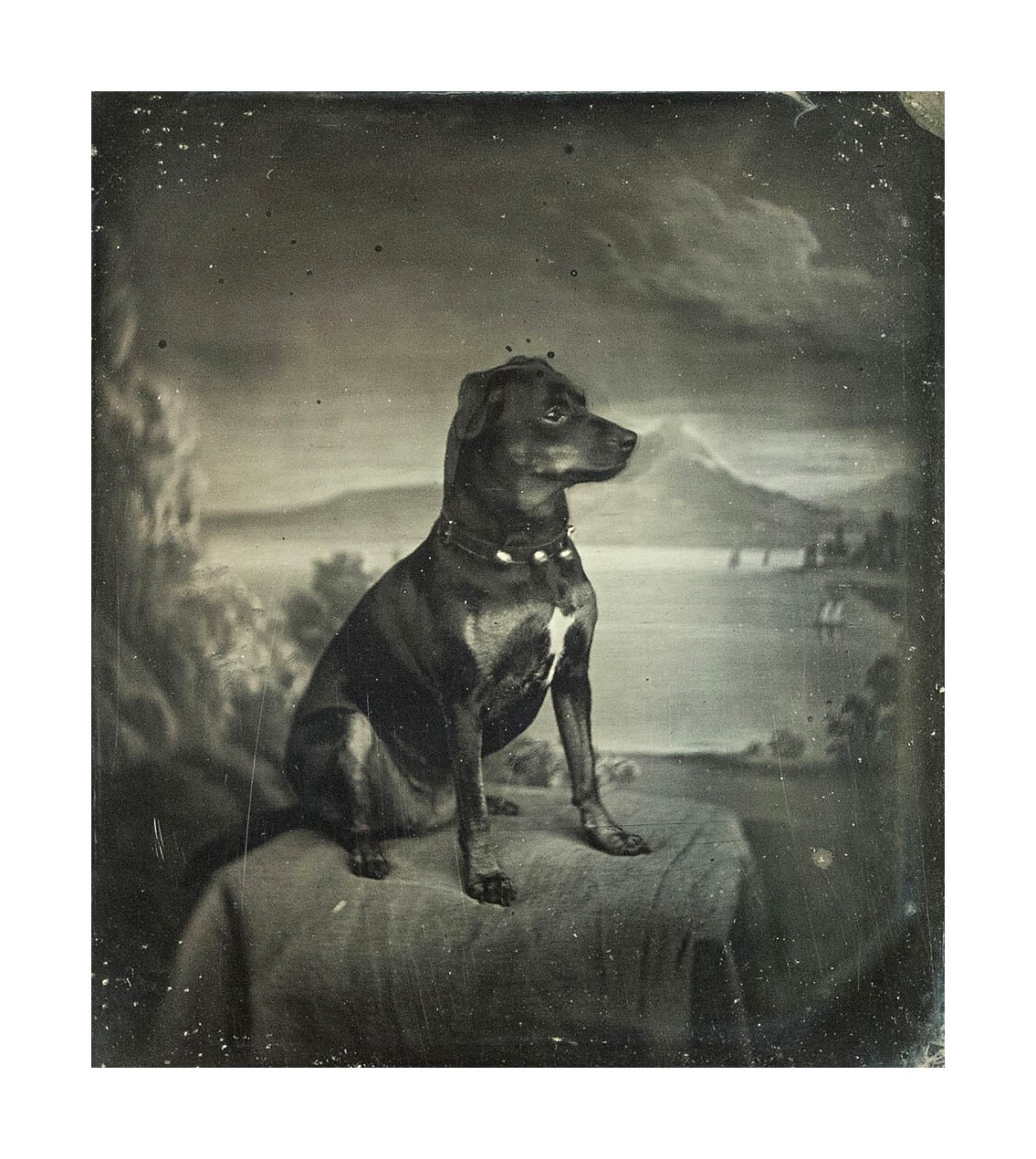
Carl Ferdinand Stelzner (German, 1805-1894) 'Ulla, the dog in the Stelzner household' 1850-1865


Carl Ferdinand Stelzner (German, 1805-1894)
Ulla, the dog in the Stelzner household
1850-1865
Daguerreotype
7.3 x 6.3cm
© Museum für Kunst und Gewerbe Hamburg


Among all of the daguerreotypes produced before the advent of the wet-plate swept it aside, it is rare to see pictures of animals. Slezner’s portrait of his dog stands out as a tribute to his attaining an unusual facility in his medium.

No doubt obedient, Ulla the dog has nary a muscle during the long exposure, which, even if by 1860 Slezner was achieving high speeds with his lens and by pimping the daguerreotype process, would have still run into tens of seconds. It is quite a feat; a faint double image of snout and then only the slightest movement around the collar and end of the nose, due to a dog’s rapid breathing, can be discerned.

Associate Professor James McArdle. “December 30: Action,” on the On This Date In Photography website 30/12/2016 [Online] Cited 05/06/2026


Carl Ferdinand Stelzner (German, 1805-1894)

Carl Ferdinand Stelzner was a began his career as a lithographer and engraver, but became interested in photography in the early 1840s. He learnt the daguerreotype process from Louis Daguerre himself and opened his own studio in Berlin in 1845.

Stelzner quickly became known for his high-quality daguerreotypes, which were prized for their clarity and detail. He used a large-format camera that allowed him to capture images with incredible precision, and he experimented with different lighting techniques to create dramatic effects.

As well as his technical skill, Stelzner was also known for his artistic ability. He often posed his subjects in carefully composed scenes and was adept at capturing their personalities and emotions.

Stelzner’s work was exhibited widely throughout Europe and he won numerous awards for his photography. He continued to work as a photographer until his death in 1894 at the age of 88.

Today, Stelzner’s daguerreotypes are highly prized by collectors and museums around the world. They offer a fascinating glimpse into the early days of photography and continue to inspire photographers today.

Text from the Picryl website [Online] Cited 05/06/2026. Used under fair use conditions for the purposes of education and research


Unknown photographer. 'Mr. Crowe' c. 1845


Unknown photographer
Mr. Crowe
c. 1845
Daguerreotype, framed by braided hair, on a brooch
5.5 x 6.5cm
Sammlung Gummersbach
© Foto: Jakob Schnetz


Hamburger Kunsthalle
Glockengießerwall 5  
20095 Hamburg

Opening hours:
Monday – Thursday 10am – 3pm
Friday 10am – 2pm

Hamburger Kunsthalle website

LIKE ART BLART ON FACEBOOK

Back to top

Exhibition: ‘Face Value: Celebrity Press Photography’ at The Museum of Modern Art (MoMA), New York

Exhibition dates: 28th June, 2025 – 21st June, 2026

Curators: Ron Magliozzi, Curator, with Katie Trainor, Film Collections Manager and Cara Shatzman, Collection Specialist, Department of Film.


Bob Beerman (American) 'Rock Hudson' c. 1953


Bob Beerman (American)
Rock Hudson
c. 1953
Sheet: 9 15/16 x 8″ (25.2 x 20.3cm)
The Museum of Modern Art Film Stills Collection


Silhouetting the celebrity

MoMA always puts on interesting photography exhibitions and this one is no exception. Of course, they have a huge collection to draw from, but it still takes intelligence and curatorial inspiration to bring it all together.

It took me a long time to compile the posting. There were not many media images available but with a bit of digging around on the MoMA collection web pages, and searching online, I managed to find enough photographs to illustrate the exhibition / plus the installation photographs / and the addition of movie posters and magazines to illuminate the films the still photographs were taken from (please note: not in the exhibition). While many of the publicity shots were taken by unknown stills photographers, I have also added bibliographic information for the known photographers where possible.

This would be my only criticism of the exhibition: the inability of the viewer to visualise how these “covered with masking tape, marked up with crayon, or reconfigured with ghostly halos of white-out” photographs were actually used (in the press in everyday life) to create the fantasy ideals of Hollywood glamour stars. Perhaps this was a deliberate curatorial strategy, to concentrate on the pre-production rather than the post-production, to concentrate just on the still photos, without the distraction of further stimuli. And I can understand that decision.

In this posting I can show you three examples of how these still photographs were used: the untouched photograph Jean Simmons, Rock Hudson [in “This Earth is Mine”] by an unknown photographer (1959, below) has then been colourised and used on the front cover of the DVD release of this film; the Limehouse Blues movie poster (1934, below) features a white-out around George Raft’s head, similar to the white-out around Joan Crawford or Rock Hudson (above); and the hair of Elsa Manchester in Elsa Lanchester [in “The Bride of Frankenstein”] by an unknown photographer (1935, below) is graphically stylised and coloured in the The Bride of Frankenstein movie poster (1935, below).

Silhouetting, in-painting, masking, sectioning, and collage were all hands-on practices that readied the photographs for the press whilst in press they promoted the desirous ideal of the glamorous movie starlet, heroic action man, the fantasy ready and available for consumption by the reading public: the beautiful heroine available to the male gaze, aspirational for so many young women.

Dr Marcus Bunyan


Many thankx to MoMA for allowing me to publish the photographs in the posting. Please click on the photographs for a larger version of the image.


“Though Iris Barry, who in 1935 became the founding curator of The Museum of Modern Art’s Film Library, aimed to preserve the history of moving images as an art form, she didn’t stop at moving images. “She was trying to save the record of film history,” explains Ron Magliozzi, a curator in what is today known as the Department of Film. “When the department was founded, the silent period had just ended. And its whole history was considered irrelevant and of no interest. That’s why she was so aggressive in collecting it. Films were the most important thing, and images from film history were second.”

Today, the Museum’s Film Stills Collection includes well over a million publicity photos, production stills, and more – and it’s not all pristine, glossy prints. In the current exhibition Face Value: Celebrity Press Photography, many of the images are covered with masking tape, marked up with crayon, or reconfigured with ghostly halos of white-out. It’s an occasionally startling reminder that the manipulation of photographs – and of celebrity itself – long predates Photoshop and Instagram.”


Jason Persse, Assistant Director, Content Team, MoMA


The Museum of Modern Art announces Face Value: Celebrity Press Photography, the first major exhibition of Hollywood studio portraiture to be drawn from the Museum’s film stills archive since 1993. On view in the Titus and Morita Galleries, the exhibition will offer a revisionist look at the Department of Film’s photographic archive, examining the evolution of editorial practice before the digital age, AI technology, and social media reshaped the experience of celebrity.

Face Value will feature over 200 works from 1921 to 1996, including studio photography of Louis Armstrong, Harry Belafonte, Clara Bow, Louise Brooks, Bette Davis, Mia Farrow, Katharine Hepburn, Dennis Hopper, Lena Horne, Bela Lugosi, Carmen Miranda, Elvis Presley, Diana Ross, Barbara Stanwyck, Elizabeth Taylor, Spencer Tracy, Oprah Winfrey, and many others.

Text from the MoMA website


Installation view of the exhibition 'Face Value: Celebrity Press Photography' at The Museum of Modern Art (MoMA), New York, June 2025 - June 2026


Installation views of the exhibition Face Value: Celebrity Press Photography at The Museum of Modern Art (MoMA), New York, June 2025 – June 2026 showing in the left hand block of 9 photographs of the bottom image, from left to right top row to bottom row: Ray Jones’ Margaret Sullavan c. 1939 (below); Clarence Sinclair Bull’s Hedy Lamarr c. 1940; Adolph L. “Whitey” Schafer’s Rosalind Russell c. 1940; Ray Jones’ Mischa Auer c. 1940; Unknown photographer Harry Belafonte [in “The Angel Levine”] 1970; Irving Lippman’s George Raft c. 1933; Hal Phyfe’s Miriam Hopkins c. 1930; Unknown photographer Dorothy Gish c. 1929; and Imandt’s Joan Bennett c. 1939
Photos: Jonathan Dorado


Ray Jones (American, 1901-1947) 'Margaret Sullavan' c. 1939


Ray Jones (American, 1901-1947)
Margaret Sullavan
c. 1939
Sheet: 13 7/8 x 10 7/8″ (35.2 x 27.6cm)
The Museum of Modern Art Film Stills Collection


Installation view of the exhibition 'Face Value: Celebrity Press Photography' at The Museum of Modern Art (MoMA), New York, June 2025 - June 2026


Installation view of the exhibition Face Value: Celebrity Press Photography at The Museum of Modern Art (MoMA), New York, June 2025 – June 2026 showing at right in the bottom image at third left in top row, Unknown photographer Jackie Robinson c. 1950
Photos: Jonathan Dorado


Unknown photographer. 'Jackie Robinson' c. 1950


Unknown photographer
Jackie Robinson
c. 1950
Sheet: 10 x 8″ (25.4 x 20.3cm)
The Museum of Modern Art Film Stills Collection


The Museum of Modern Art announces Face Value: Celebrity Press Photography, the first major exhibition of Hollywood studio portraiture to be drawn from the Museum’s film stills archive since 1993. On view in the Titus and Morita Galleries from June 28, 2025, through June 21, 2026, the exhibition will offer a revisionist look at the Department of Film’s photographic archive, examining the evolution of editorial practice before the digital age, AI technology, and social media reshaped the experience of celebrity.

Face Value will feature over 200 works from 1921to 1996, including studio photography of Louis Armstrong, Harry Belafonte, Clara Bow, Louise Brooks, Bette Davis, Mia Farrow, Katharine Hepburn, Dennis Hopper, Lena Horne, Bela Lugosi, Carmen Miranda, Elvis Presley, Diana Ross, Barbara Stanwyck, Elizabeth Taylor, Spencer Tracy, Oprah Winfrey, and many others.

Face Value: Celebrity Press Photography is organised by Ron Magliozzi, Curator, with Katie Trainor, Film Collections Manager, and Cara Shatzman, Collection Specialist, Department of Film.

Face Value will encourage viewers to see through the facade of glamour at how celebrity is fabricated and exploited,” says Ron Magliozzi. Showcasing work by over 58 photographers, the exhibition will juxtapose “untouched” images like Otto Dyar’s Carole Lombard (c. 1933) with those altered through traditional press practices such as silhouetting, in-painting, masking, sectioning, and collage, like James Manatt’s Joan Crawford portrait for the film Letty Lynton (1932). Face Value examines how these methods shaped representations of not only film stars but also sports figures, socialites, and politicians, from Jackie Robinson to Jacqueline Kennedy Onassis and Eleanor Roosevelt. Presented in thematic suites, the installation highlights radical editing techniques, stylised visual motifs, and the gendered aesthetics embedded in the system, offering a revealing perspective on the fabrication of glamour and fame.

Since the Museum’s founding, photography has played a vital role in how it has documented the history of motion pictures. Face Value traces the origin of this early initiative to MoMA’s first film curator, Iris Barry, whose archival efforts led to the acquisition of editorial collections from Photoplay (1911-1980) and Dell (1921-1976), two leading publications that helped define Hollywood’s star system. The exhibition includes images of comic stars Buster Keaton, W. C. Fields, Lupe Velez, and Mae West; pioneering actress Hattie McDaniel with Ruby Berkley, the first Black accredited Hollywood correspondent; famed aviatrix Amelia Earhart on a Hollywood film set; and the last photo shoot with Marilyn Monroe.

Featuring promotional portraits crafted to cultivate celebrity personas, such as Ray Jones’s Anna May Wong portrait for the film Limehouse Blues, Soul of a Dragon (1934), the exhibition explores how these images were manipulated for public consumption through hands-on editing techniques long before digital tools became standard.

Press release from MoMA


Installation view of the exhibition 'Face Value: Celebrity Press Photography' at The Museum of Modern Art (MoMA), New York, June 2025 - June 2026
Installation view of the exhibition 'Face Value: Celebrity Press Photography' at The Museum of Modern Art (MoMA), New York, June 2025 - June 2026 showing a video still from 'Edie Sedgwick, Gerard Malanga, Benedetta Barzini, Ingrid Superstar, Nat Finkelstein: Danny Williams footage of unknown documentary film shoot' c. 1965, processed 2024


Installation views of the exhibition Face Value: Celebrity Press Photography at The Museum of Modern Art (MoMA), New York, June 2025 – June 2026 showing in the bottom two photographs, video stills from Edie Sedgwick, Gerard Malanga, Benedetta Barzini, Ingrid Superstar, Nat Finkelstein: Danny Williams footage of unknown documentary film shoot c. 1965, processed 2024 (below)
Photos: Jonathan Dorado


'Edie Sedgwick, Gerard Malanga, Benedetta Barzini, Ingrid Superstar, Nat Finkelstein: Danny Williams footage of unknown documentary film shoot' c. 1965, processed 2024


Edie Sedgwick, Gerard Malanga, Benedetta Barzini, Ingrid Superstar, Nat Finkelstein: Danny Williams footage of unknown documentary film shoot
c. 1965, processed 2024
The Museum of Modern Art Film Stills Collection


Edie Sedgwick dances in Andy Warhol’s Silver Factory during a photoshoot


Installation view of the exhibition 'Face Value: Celebrity Press Photography' at The Museum of Modern Art (MoMA), New York, June 2025 - June 2026 showing at top centre, 'Jacqueline Kennedy with Caroline Kennedy, John F. Kennedy Jr.' 1960s; and a bottom centre, 'Elizabeth Taylor and Eddie Fisher with Michael Wilding Jr. and Christopher Wilding' 1960s


Installation view of the exhibition Face Value: Celebrity Press Photography at The Museum of Modern Art (MoMA), New York, June 2025 – June 2026 showing at top centre, Jacqueline Kennedy with Caroline Kennedy, John F. Kennedy Jr. 1960s; and a bottom centre, Elizabeth Taylor and Eddie Fisher with Michael Wilding Jr. and Christopher Wilding 1960s
Photo: Jonathan Dorado


Installation view of the exhibition 'Face Value: Celebrity Press Photography' at The Museum of Modern Art (MoMA), New York, June 2025 - June 2026 showing from top left to right, top to bottom, Unknown photographer Harry 'Belafonte and Joan Fontaine' 1957; Gene Lester (American, 1910-1994) 'Dean and Jeannne Martin' 1958; Bob Beerman (American) 'Rock Hudson' c. 1953; Unknown photographer 'Jean Simmons, Rock Hudson [in "This Earth is Mine"]' 1959; Unknown photographer 'Jean Simmons [in "The Big Country"]' 1958; Unknown photographer 'Elizabeth Threatt and Dewey Martin [in "The Big Sky"]' 1952; Unknown photographer 'Dorothy Malone and Anthony Quinn' 1957; Unknown photographer 'André De Toth and Veronica Lake' 1944; Unknown photographer 'Edmund O'Brien and Tom D'Andrea [in "Fighter Squadron"]' 1948; Unknown photographer 'Ward Bond and Ida Lupino [in "On Dangerous Ground"]' 1951; Unknown photographer 'Aldo Ray and Katharine Hepburn [in "Pat and Mike"]' 1952


Installation view of the exhibition Face Value: Celebrity Press Photography at The Museum of Modern Art (MoMA), New York, June 2025 – June 2026 showing from top left to right, top to bottom, Unknown photographer Harry Belafonte and Joan Fontaine 1957 (below); Gene Lester (American, 1910-1994) Dean and Jeannne Martin 1958; Bob Beerman (American) Rock Hudson c. 1953 (top of posting); Unknown photographer Jean Simmons, Rock Hudson [in “This Earth is Mine”] 1959 (below); Unknown photographer Jean Simmons [in “The Big Country”] 1958; Unknown photographer Elizabeth Threatt and Dewey Martin [in “The Big Sky”] 1952; Unknown photographer Dorothy Malone and Anthony Quinn 1957; Unknown photographer André De Toth and Veronica Lake 1944; Unknown photographer Edmund O’Brien and Tom D’Andrea [in “Fighter Squadron”] 1948; Unknown photographer Ward Bond and Ida Lupino [in “On Dangerous Ground”] 1951; Unknown photographer Aldo Ray and Katharine Hepburn [in “Pat and Mike”] 1952
Photo: Jonathan Dorado


Unknown photographer. 'Harry Belafonte and Joan Fontaine [in "Island in the Sun"]' 1957


Unknown photographer
Harry Belafonte and Joan Fontaine [in “Island in the Sun”]
1957
Sheet: 6 15/16 × 9 1/16″ (17.6 × 23 cm)
The Museum of Modern Art Film Stills Collection


Unknown photographer. 'Jean Simmons, Rock Hudson [in "This Earth is Mine"]' 1959


Unknown photographer
Jean Simmons, Rock Hudson [in “This Earth is Mine”]
1959
Sheet: 8 x 9 15/16″ (20.3 x 25.2cm)
The Museum of Modern Art Film Stills Collection


'This Earth Is Mine' (1959) DVD cover


This Earth is Mine (1959) DVD cover


Otto Dyar (American, 1892-1988) 'Carole Lombard' c. 1933


Otto Dyar (American, 1892-1988)
Carole Lombard
c. 1933
Sheet: 13 7/8 x 10 1/2″ (35.2 x 26.7cm)
The Museum of Modern Art Film Stills Collection


Hollywood stills photographers like Dyar “were not mirroring life, but illusion; their subjects were not humans but gods – of love, of allure, of luxury, perfection incarnate from the golden age of Hollywood glamor”


John Kobal (ed), Hollywood glamor portraits, Courier Corporation, 1976, p.V on the Wikipedia website


Otto Dyar was a prominent stills photographer who began his career at the Paramount studios in the 1920s. Initially working as an assistant on major film productions such as the 1927 ‘Wings’, Dyar quickly rose through the ranks to become one of Hollywood’s most notable image-makers.

During the 1930s and 40s, Dyar developed his own, highly dramatic style of lighting and photography that deviated from the neoclassical glamor of the 1920s. Edgy and expressionistic, Dyar’s photographs pushed the iconic features of movie stars like Carole Lombard, Cary Grant, Kay Francis and Joan Crawford to a grittier place that was more in accord with the aesthetics of films made in those decades. Of particular note are Dyar’s star portraits taken outside of the studio, an unusual and daring step at the time.

Despite all the high-contrast lighting, skewed angles and often tiny ‘surrealist’ interventions that point to the influence of photographers like Man Ray, Dyar faithfully accomplished the task of elevating the studio stars to the realm of deities. Like his peers George Hurrell, Ted Allen and Clarence Sinclair Bull, Dyar was not concerned with the psychologies of his sitters. What interested him was amplifying and consolidating the image the stars exuded in their roles, which was usually so powerful that it eclipsed the ‘real’ person that was in front of the camera.

Vigen Galstyan. “Dyar, Otto,” on the Lusadaran: Armenian Photography Foundation website 2015 [Online] Cited 02/04/2026. Used under fair use conditions for the purposes of education and research


Otto Dyar (American, 1892-1988) 'Louise Brooks' c. 1927


Otto Dyar (American, 1892-1988)
Louise Brooks
c. 1927
Sheet: 13 15/16 x 10 15/16″ (35.4 x 27.8cm)
The Museum of Modern Art Film Stills Collection


Otto Dyar (American, 1892-1988) 'Anna May Wong' 1930s


Otto Dyar (American, 1892-1988)
Anna May Wong
1930s
Sheet: 13 7/8 x 10 7/8″ (35.2 x 27.6cm)
The Museum of Modern Art Film Stills Collection


Ray Jones (American, 1901-1947) 'Anna May Wong [in "Limehouse Blues"]' 1934


Ray Jones (American, 1901-1947)
Anna May Wong [in “Limehouse Blues”]
1934
Sheet: 12 7/8 x 10″ (32.7 x 25.4cm)
The Museum of Modern Art Film Stills Collection


'Limehouse Blues' (1934) movie poster


Limehouse Blues (1934) movie poster


Unknown photographer. 'Anna May Wong' c. 1934


Unknown photographer
Anna May Wong
c. 1934
MoMA Film Stills Archive
Sheet: 8 x 6″ (20.3 x 15.2cm)
The Museum of Modern Art Film Stills Collection


Unknown photographer. 'Myrna Loy [in "Across the Pacific"]' 1926


Unknown photographer
Myrna Loy [in “Across the Pacific”]
1926
Sheet: 11 x 14″ (27.9 x 35.6cm)
The Museum of Modern Art Film Stills Collection


Advertisement for the American romantic adventure film 'Across the Pacific' (1926) with Monte Blue and Myrna Loy, on pages 6 and 7 of the October 26, 1926 'Film Daily'


Advertisement for the American romantic adventure film Across the Pacific (1926) with Monte Blue and Myrna Loy, on pages 6 and 7 of the October 26, 1926 Film Daily


John Miehle (American, 1902-1952) 'Dolores del Rio and Edmund Lowe [in "The Bad One"]' 1930


John Miehle (American, 1902-1952)
Dolores del Rio and Edmund Lowe [in “The Bad One”]
1930
Sheet: 13 7/8 x 10 15/16″ (35.2 x 27.8cm)
The Museum of Modern Art Film Stills Collection


John Miehle was born on August 7, 1902 in Los Angeles, California. Being born so close to Hollywood Miehle went to work as an assistant camera man on the 1931 movie “Delicious” starring Janet Gaynor and Charles Farrell.  

He then worked exclusively in the Camera and Electrical Department doing uncredited still photography on some of the best known films, such as “What Price Hollywood?,” “Rain,” “Little Women,” “Top Hat,” “Kitty Foyle,” “Rope” and “Portrait of Jennie.”

He photographed many of the greats as well including Constance Bennett, Joan Crawford, Irene Dunne, Ginger Rogers, Ann Harding, William Powell, Joel McCrea, Katherine Hepburn, Joan Bennett, Delores Del Rio, Randolph Scott, James Stewart, Cary Grant, Jean Arthur, Ruth Hussey, Jennifer Jones, Joseph Cotten, Ethel Barrymoore, Laraine Day, Franchot Tone, Ann Blyth, Farley Granger, and Dana Andrews…

In addition, he did many publicity shots of such stars as Carole Lombard, Marilyn Monroe, and Lucille Ball.

Don’t Forget The Illustrator! “The Classics and “Ginger Rogers” photographer John Miehle,” on the Vintage Movie Star Photos blog Thursday, March 28, 2013 [Online] Cited 12/05/2026. Used under fair use conditions for the purposes of education and research


'The Bad One' (1930) movie poster


The Bad One (1930) movie poster


William Walling Jr (American, 1904-1983) 'Carole Lombard' c. 1933


William Walling Jr (American, 1904-1983)
Carole Lombard
c. 1933
Sheet: 13 7/8 x 11 15/16″ (35.2 x 30.3cm)
The Museum of Modern Art Film Stills Collection


William Richard Walling, Jr. (October 6, 1904 – December 11, 1983) was an American actor, inventor, and portrait photographer for film studios.


Robert Coburn (American, 1900-1990) 'Vera Zorina [in "The Goldywyn Follies"]' c. 1937


Robert Coburn (American, 1900-1990)
Vera Zorina [in “The Goldywyn Follies”]
c. 1937
Sheet: 13 13/16 x 10 15/16″ (35.1 x 27.8cm)
The Museum of Modern Art Film Stills Collection


Eva Brigitta Hartwig (January 2, 1917 – April 9, 2003), known professionally as Vera Zorina, was a German-Norwegian ballerina, theatre and film actress, and choreographer, chiefly remembered for her films choreographed by her husband George Balanchine. They include the Slaughter on Tenth Avenue sequence from On Your ToesThe Goldwyn FolliesI Was an Adventuress with Erich Von Stroheim and Peter LorreLouisiana Purchase with Bob Hope, and dancing to “That Old Black Magic” in Paramount Pictures’ Star Spangled Rhythm.

Text from the Wikipedia website


Robert Coburn was one of the most influential portrait photographers working in the major Hollywood movie studios from the 1930’s to 1960’s. His star subjects included Rita Hayworth, Joan Crawford, Kim Novak, Carole Lombard, William Holden, Glenn Ford, and Orson Welles. Coburn’s most infamous portraits immortalised Hollywood’s greatest icons and helped to define this era as the Golden Age of Cinema. In 1940, Robert Coburn began a twenty-year career with Columbia Pictures as the head of the still production department and the studio’s chief portrait photographer for many landmark films including “Picnic”, “Gilda”, and “The Big Heat”.

Text from the Fahey/Klein Gallery website


'Goldwyn Follies' (1937) movie poster


Goldwyn Follies (1937) movie poster


Face Value: Celebrity Press Photography Introductory text

For MoMA’s founding film curator, Iris Barry, building an archive of images that documented the history of motion pictures was second only to collecting films. Photographs from the study collection that she created were among the first works exhibited in MoMA’s theater gallery. Barry’s initiative eventually led to the acquisition of editorial archives from Photoplay (1911-1980) and Dell (1921-1976), leading fan magazine publishers supporting the Hollywood star system. The portrait photography featured in these publications was produced by film studios to promote the glamorous celebrities under contract to them. Face Value looks at these images and surveys how they were manipulated for public consumption in the decades before digital tools, AI technology, and social media revolutionized the process. 

Over sixty photographers are represented in this installation, which intermingles images that survive untouched with those that show evidence of the hands-on practices that readied them for the press. The standard techniques used – silhouetting, in-painting, masking, sectioning, and collage – were applied not only to photographs of entertainers but to sports figures, socialites, and politicians as well. Organised in suites that highlight radical editing practices, stylised visual motifs, and the gender stereotypes inherent in the studio system, the exhibition offers a demystifying perspective on the glamour of celebrity.

Wall text from the exhibition


George P. Hommel (American, 1901-1953) 'Clara Bow' c. 1929


George P. Hommel (American, 1901-1953)
Clara Bow
c. 1929
Sheet: 14 x 11″ (35.6 x 27.9 cm)
The Museum of Modern Art Film Stills Collection


Overshadowed by the work of 1920s Paramount colleagues Donald Biddle Keyes and Eugene Robert Richee, stillsman George P. Hommel crafted thoughtful portraits highlighting both the beauty and sorrow of those he photographed. Like Keyes, the peripatetic Hommel always looked for new challenges, new opportunities, keeping him on the move. Unobstrusive and elegant, Hommel’s work reveals hidden depths in those he shot. …

Hommel’s straightforward portraiture captured the vulnerability of his sitters, revealing a wistful and often melancholic look in their expressive eyes. His pensive work focused on serious matters, not straining to create fleeting moods but revealing the heart of those he photographed. Employing simple, dark-textured background, Hommel focused on the eyes and lips, creating a sharp image with an often soft-focus background. His portraits often feature shadows and strong angular lines, creating dramatic composition. Hommel could also capture the sometimes insouciant or even overly exuberant emotions of sitters, often covering their vulnerability and pain, such as in his Pierrot portraits of Clara Bow as clown.

lmharnisch. “Mary Mallory / Hollywood Heights: George P. Hommel, Pensive Photographer,” on The Daily Mirror website, July 27, 2020 [Online] Cited 12/05/2026. Used under fair use conditions for the purposes of education and research


James Manatt (American, 1896-1989) 'Joan Crawford [in "Letty Lynton"]' 1932


James Manatt (American, 1896-1989)
Joan Crawford [in “Letty Lynton”]
1932
Sheet: 13 x 10″ (33 x 25.4cm)
The Museum of Modern Art Film Stills Collection


'Letty Lynton' (1932) movie poster


Letty Lynton (1932) movie posters


Elmer Fryer (American, 1898-1944) 'Lili Damita [in "The Match King"]' c. 1932


Elmer Fryer (American, 1898-1944)
Lili Damita [in “The Match King”]
c. 1932
Sheet: 14 1/16 x 11″ (35.7 x 27.9cm)
The Museum of Modern Art Film Stills Collection


'The Match King' (1932) movie poster


The Match King (1932) movie poster


Bert Longworth (American, 1893-1964) 'Amelia Earhart with Helen Hayes [on set of "A Farewell to Arms"]' 1932


Bert Longworth (American, 1893-1964)
Amelia Earhart with Helen Hayes [on set of “A Farewell to Arms”]
1932
Sheet: 13 15/16 x 10 7/8″ (35.4 x 27.6cm)
The Museum of Modern Art Film Stills Collection


As the studio system came into place with the advent of talkies, studios hired many stillsmen to take scene stills, off-camera images, and candids of both above and below the line talent. Photographers took massive amounts of stills around the lot, at public events, premieres, at homes, in posed shots, to be widely distributed to magazines and newspapers for free publicity promoting upcoming films, new talent, and established stars. The journals, fan magazines, and newspapers splashed these images throughout their pages, building awareness and star popularity.

Bert “Buddy” Longworth was one of the stills photographers taking these images. Longworth began his career shooting scene stills at MGM for Greta Garbo’s first three films, including “Flesh and the Devil,” with Longworth capturing the passion of Garbo and John Gilbert as they fell in love. He was employed for a short time at Paramount, but from 1929 on, he worked at Warner Bros. as an action specialist, working on Busby Berkeley’s spectacular musicals, crime pictures, off-set candids, as well as portraits. Scholar David Shields calls him “Hollywood’s foremost expressionist, often using unusual perspective, occasional use of multiple exposures.”

lmharnisch. “Mary Mallory / Hollywood Heights: Bert Longworth and ‘Hold Still, Hollywood’,” on The Daily Mirror website, June 26, 2023 [Online] Cited 12/05/2026. Used under fair use conditions for the purposes of education and research


'A Farewell To Arms' (1932) movie poster


A Farewell To Arms (1932) movie poster


Unknown photographer. 'Elsa Lanchester [in "The Bride of Frankenstein"]' 1935


Unknown photographer
Elsa Lanchester [in “The Bride of Frankenstein”]
1935
Sheet: 13 1/2 x 9 3/16″ (34.3 x 23.3cm)
The Museum of Modern Art Film Stills Collection


'The Bride of Frankenstein' (1935) movie poster


The Bride of Frankenstein (1935) movie poster


I want to talk more about the edited photographs. In many of the photos white-out has been used to separate the subject’s head or face – and in one notable case, their bare legs – from the rest of the image. What are some ways in which these disembodied segments were used by the studios and by the magazines?

RM: We know they were from Photoplay magazine, so if we have a still that’s been edited for Photoplay, Cara went and looked for the issue that published the photograph to see how it was used. It might have been a feature on women’s legs, so that’s why they only focused on the legs.

There’s one grouping of photographs, I call it the “eat face grouping,” where the stars are very close up. There’s a photograph of someone eating someone’s chin. Those were all taken for a particular issue of Photoplay – that’s why they’re all edited in the same way.

With research and detective work you can determine how they were actually used in print. The floating heads, they would attach to biographies. They call that silhouetting, with the white-out.

CS: A lot of the uses I found were very gossipy, which was interesting, a lot of rumor columns. And then of course, like Ron said, highlighting certain aspects of celebrities’ bodies or features.


Back in 1980 MoMA’s exhibition Hollywood Portrait Photographers, 1921 to 1941 actually used a couple of the same images that appear in this show. But that nnnexhibition celebrated the artistry and glamor of these images. Why did you choose to focus more on the ways that these images have been manipulated and edited?

RM: The audience for photographs like this has changed. In 1980 there was a whole generation of people who knew who these performers were, who appreciated them as performers and appreciated their celebrity. Nowadays, younger audiences, in many cases, have no idea who these folks are. Even we sometimes have trouble identifying everyone. Displaying them in that way seemed dated. We wanted to mount them in a way that reflected how visitors today would need to look at them.

The photographs in 1980 were all matted in a very formal way that encouraged appreciation for the beauty of the photograph. I wasn’t interested in how beautiful the images were. I wasn’t interested in the celebrities. We’re mostly interested in the photographs. I wanted them to look like working photographs, and that’s reflected in the way they’re displayed. We did ours on plexi traps, which turned out to be very elegant, but the notion was that it would be a less precious way of mounting them so we would look at them in a less precious way.

The other thing we did differently was to have large numbers of photographs grouped in very dense clusters. To me that reflects social media today. The way we encounter images daily is so dense, and we’re forced to sort through a lot of images that come our way in any one moment. So I wanted visitors to have a contemporary view. It was meant to reflect a digital-age perspective, because analog-versus-digital was a subtext of the show in our heads.

There were two shows that were touchstones for this one: the Hollywood Portrait show of 1980, and the Fame After Photography show, a wonderful show in 1999 that MoMA’s Photography department mounted. They borrowed a lot of film stills for that show, which was also investigating celebrity and fame.

Ron Magliozzi, Cara Shatzman, Jason Persse. “Cropped, Chopped, and Silhouetted: Taking Celebrity at Face Value,” in the MoMA magazine on the MoMA website Sep 17, 2025 [Online] Cited 10/05/2026. Used under fair use conditions for the purposes of education and research


Unknown photographer. 'Louis Armstrong [in "Cabin in the Sky"]' 1943


Unknown photographer
Louis Armstrong [in “Cabin in the Sky”]
1943
Sheet: 8 x 10″ (20.3 x 25.4 cm)
The Museum of Modern Art Film Stills Collection


'Cabin in the sky' (1943) movie poster


Cabin in the sky (1943) movie poster


Unknown photographer. 'Hattie McDaniel and Ruby Berkley Goodwin' c. 1948


Unknown photographer
Hattie McDaniel and Ruby Berkley Goodwin
c. 1948
Sheet: 9 1/16 x 7″ (23 x 17.8cm)
The Museum of Modern Art Film Stills Collection


“[Ruby Berkley Goodwin] was also Hattie McDaniel’s publicist. And she was Ethel Waters’s publicist. She was the first Black American to have a syndicated newspaper column. She wrote this very famous autobiography called It’s Good to Be Black that was very, very popular. She was a poet. She was a fascinating person, and I was not familiar with her. That was a great aspect of learning about all of these people in these photographs.”

Ron Magliozzi, Cara Shatzman, Jason Persse. “Cropped, Chopped, and Silhouetted: Taking Celebrity at Face Value,” in the MoMA magazine on the MoMA website Sep 17, 2025 [Oline] Cited 10/05/2026. Used under fair use conditions for the purposes of education and research


Unknown photographer. 'Janet Leigh and Tony Curtis' c. 1950 (detail)


Unknown photographer
Janet Leigh and Tony Curtis
c. 1950 (detail)
Sheet: 8 1/16 x 10″ (20.5 x 25.4cm)
The Museum of Modern Art Film Stills Collection


'Elvis Presley [Fans' Star Library magazine, No. 13]' 1959


Elvis Presley [Fans’ Star Library magazine, No. 13]
1959
Sheet: 7 x 5 1/8″ (17.8 x 13cm)
The Museum of Modern Art Film Stills Collection


Yousuf Karsh (Armenian-Canadian born Mardin, Ottoman Empire (now Turkey), 1908-2002) 'Anna Magnani' 1959


Yousuf Karsh (Armenian-Canadian born Mardin, Ottoman Empire (now Turkey), 1908-2002)
Anna Magnani
1959
Sheet: 20 x 15 15/16″ (50.8 x 40.5cm)
The Museum of Modern Art Film Stills Collection


Anna Maria Magnani (Italian, 1908-1973)

Anna Maria Magnani (Italian; 7 March 1908 – 26 September 1973) was an Italian actress. She was the first Italian woman to win an Academy Award.

Born and raised in Rome, Italy or Alexandria, she worked her way through Rome’s Academy of Dramatic Art by singing at night clubs. During her career, her only child was stricken by polio when he was 18 months old and remained disabled. She was referred to as “La Lupa”, the “perennial toast of Rome” and a “living she-wolf symbol” of the cinema. Time described her personality as “fiery”, and drama critic Harold Clurman said her acting was “volcanic”. In the realm of Italian cinema, she was “passionate, fearless, and exciting”, an actress whom film historian Barry Monush calls “the volcanic earth mother of all Italian cinema.” Director Roberto Rossellini called her “the greatest acting genius since Eleonora Duse”. Playwright Tennessee Williams became an admirer of her acting and wrote The Rose Tattoo (1955) specifically for her to star in, a role for which she received an Academy Award for Best Actress.

After meeting director Goffredo Alessandrini, she received her first screen role in The Blind Woman of Sorrento (La cieca di Sorrento, 1934) and later achieved international attention in Rossellini’s Rome, Open City (1945), which is seen as launching the Italian neorealism movement in cinema. As an actress, she became recognised for her dynamic and forceful portrayals of “earthy lower-class women” in such films as L’Amore (1948), Bellissima (1951), The Rose Tattoo (1955), The Fugitive Kind (1960) and Mamma Roma (1962). As early as 1950, Life had already stated that Magnani was “one of the most impressive actresses since Garbo”.

Text from the Wikipedia website


Unknown photographer. 'Carlo Ponti and Sophia Loren' c. 1963


Unknown photographer
Carlo Ponti and Sophia Loren
c. 1963
Sheet: 8 x 10″ (20.3 x 25.4cm)
The Museum of Modern Art Film Stills Collection


Ray Wilson. 'Mia Farrow [in "Rosemary's Baby"]' c. 1967


Ray Wilson
Mia Farrow [in “Rosemary’s Baby”]
c. 1967
Sheet: 12 x 8 3/16″ (30.5 x 20.8cm)
The Museum of Modern Art Film Stills Collection


'Rosemary's Baby' (1968) movie poster


Rosemary’s Baby (1968) movie poster


Kathleen Ballard. 'Lena Horne' 1975


Kathleen Ballard
Lena Horne
1975
Sheet: 13 1/16 x 9″ (33.2 x 22.9cm)
The Museum of Modern Art Film Stills Collection


The Museum of Modern Art
11 West 53 Street
New York, NY 10019
Phone: (212) 708-9400

Opening hours:
10.30am – 5.30pm
Open seven days a week

MoMA website

LIKE ART BLART ON FACEBOOK

Back to top