Large format camera Front on, realist, sharply defined objective documentary photographs of architectural structures of the urban landscape In series
In reality:
Structures cut from the fabric of existence Isolated by the subjective eye of the photographer and the lens of the camera What to include or exclude
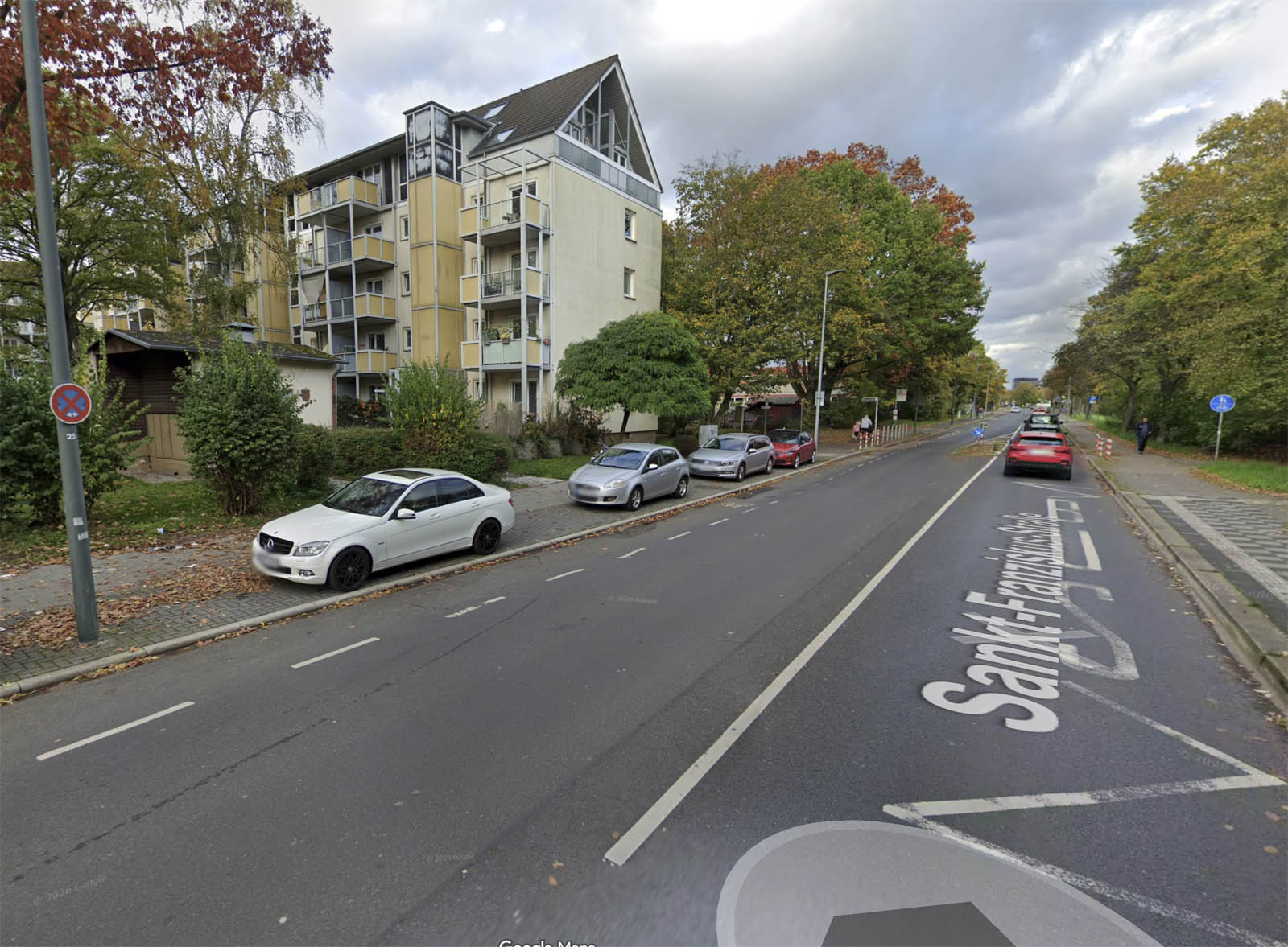
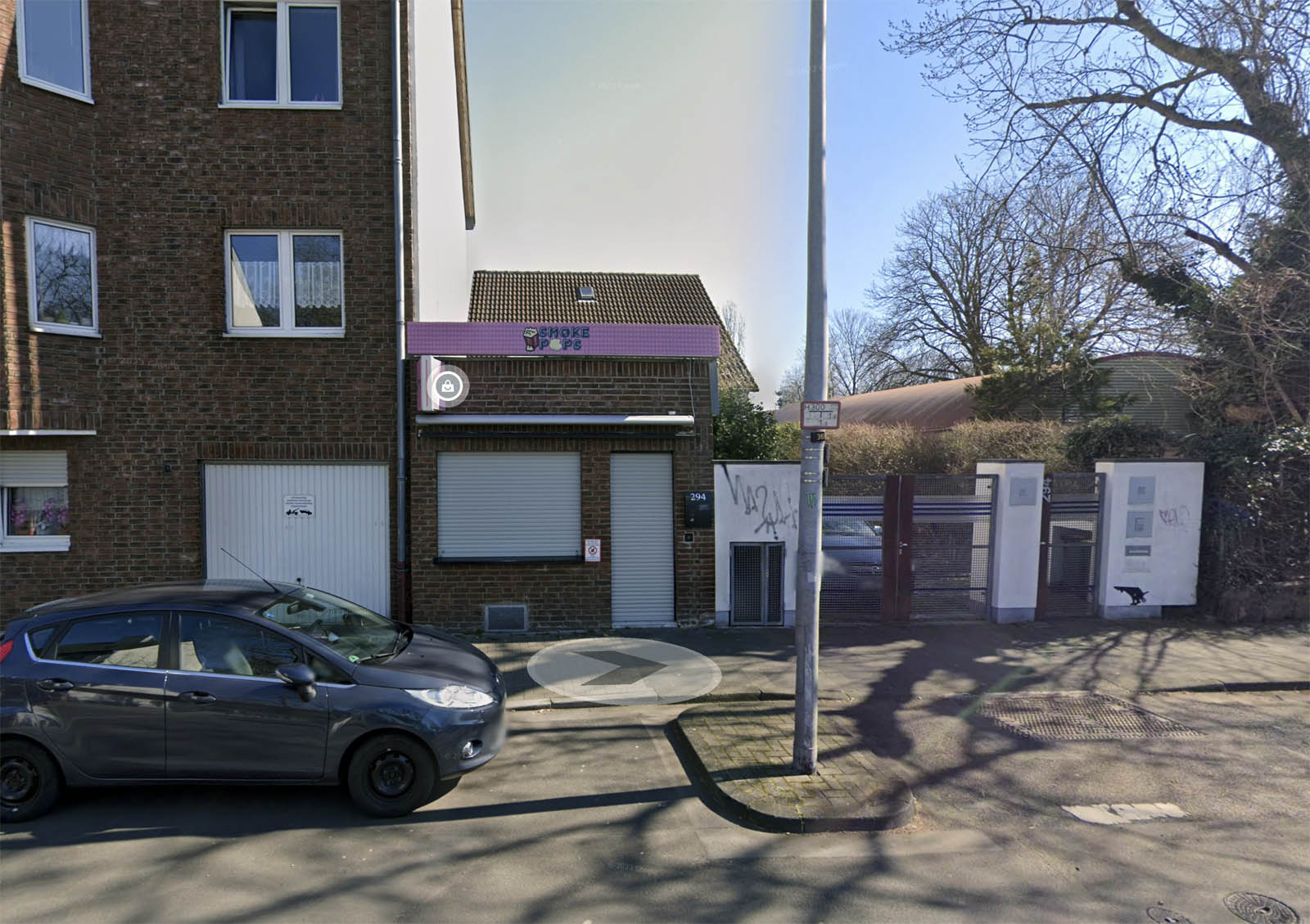
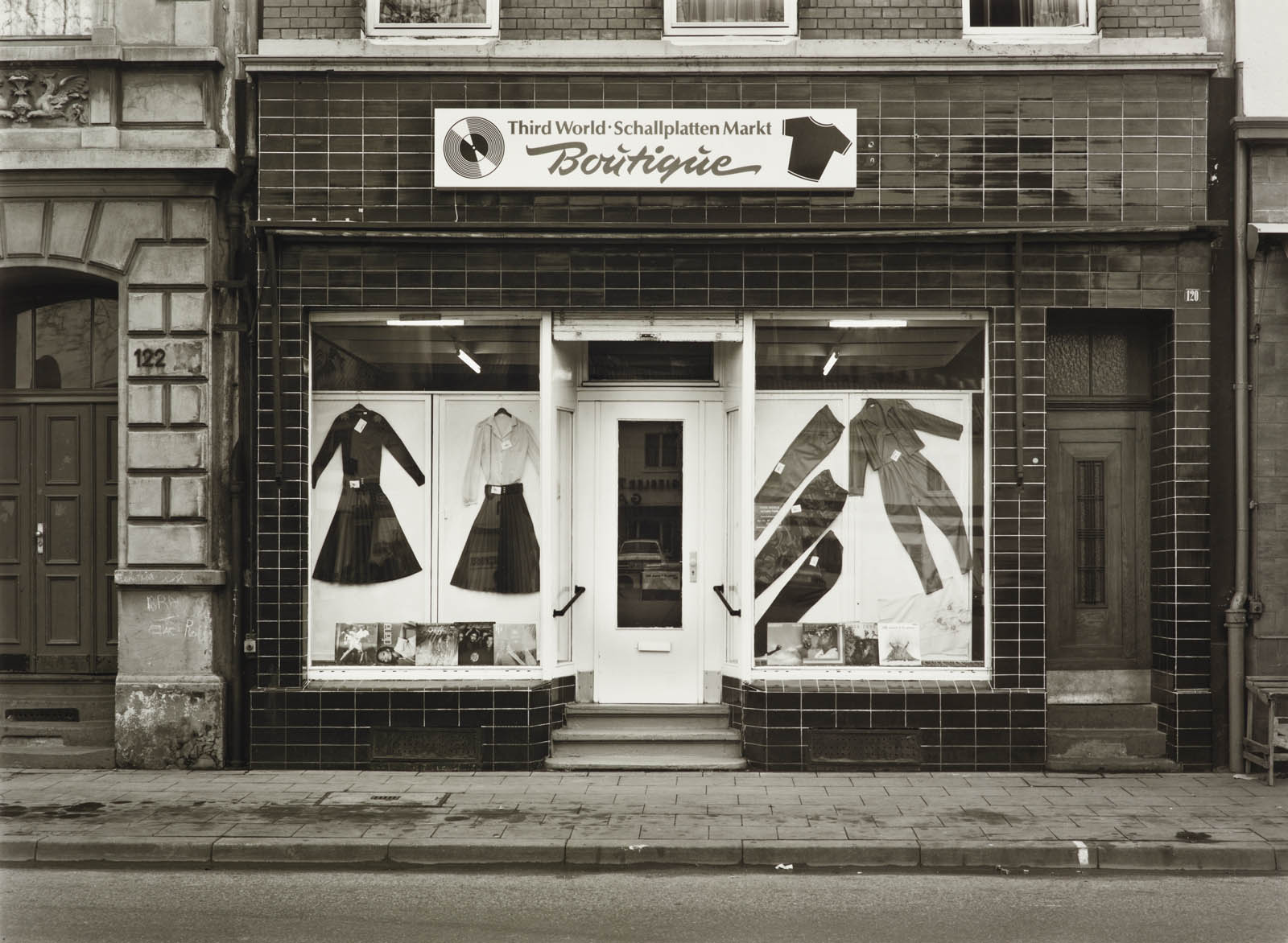
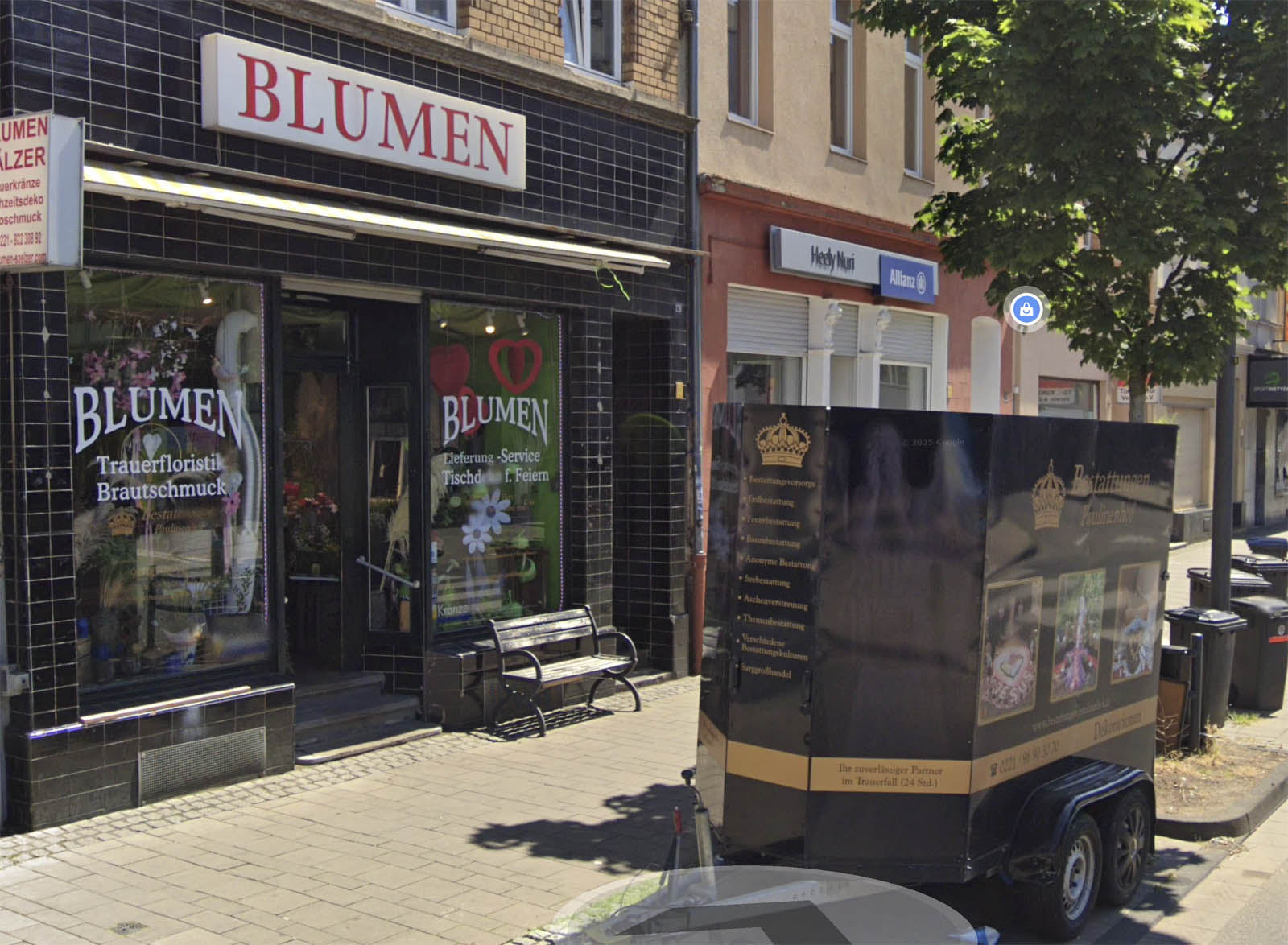
(In the contemporary photographs of the spaces in the posting, the shops are surrounded by trees and vegetation, they have transformed from kiosk to shuttered shop, from boutique to florist: the architecture remains but traces of previous incarnations are visible only in these photographs. Nothing is permanent except change).
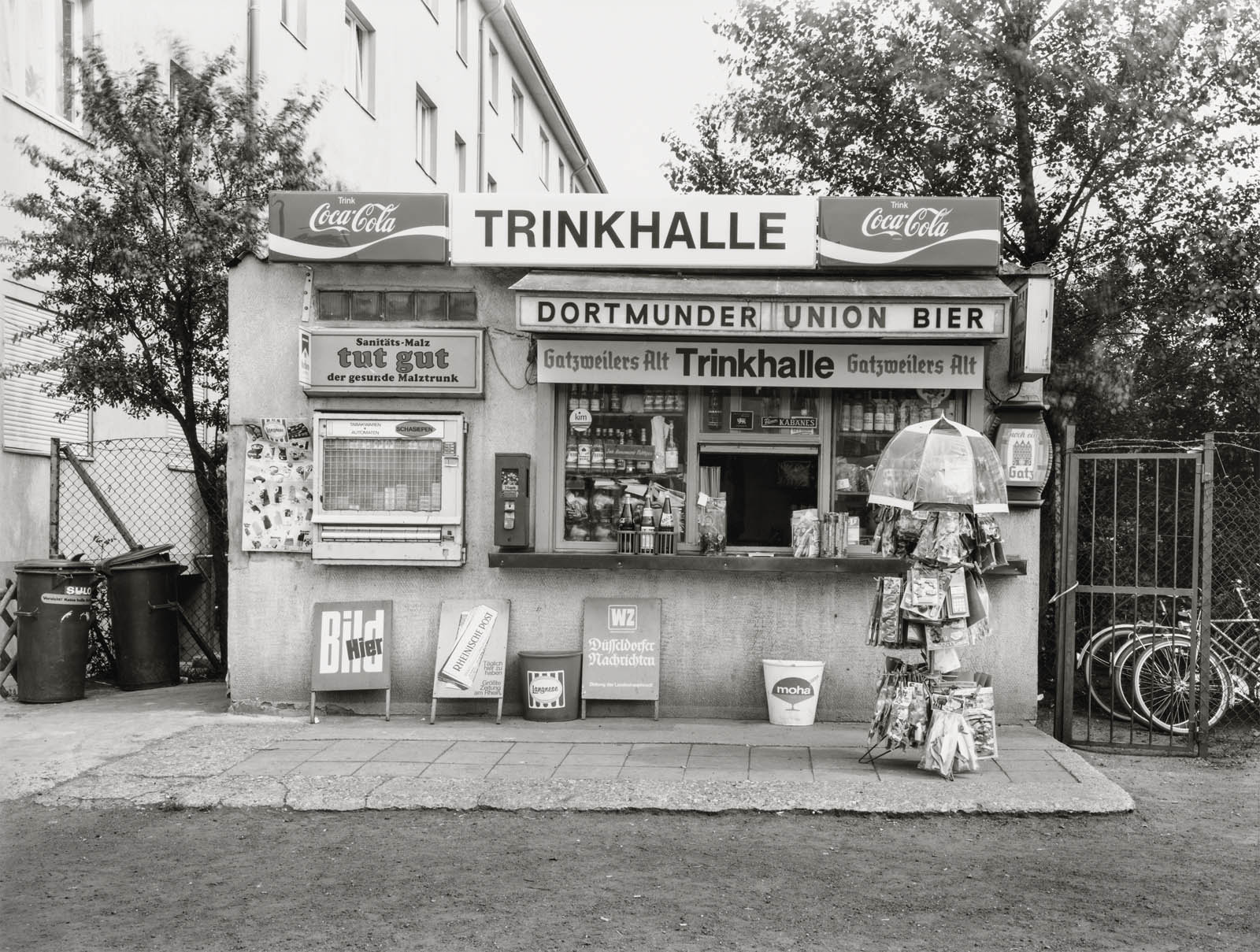
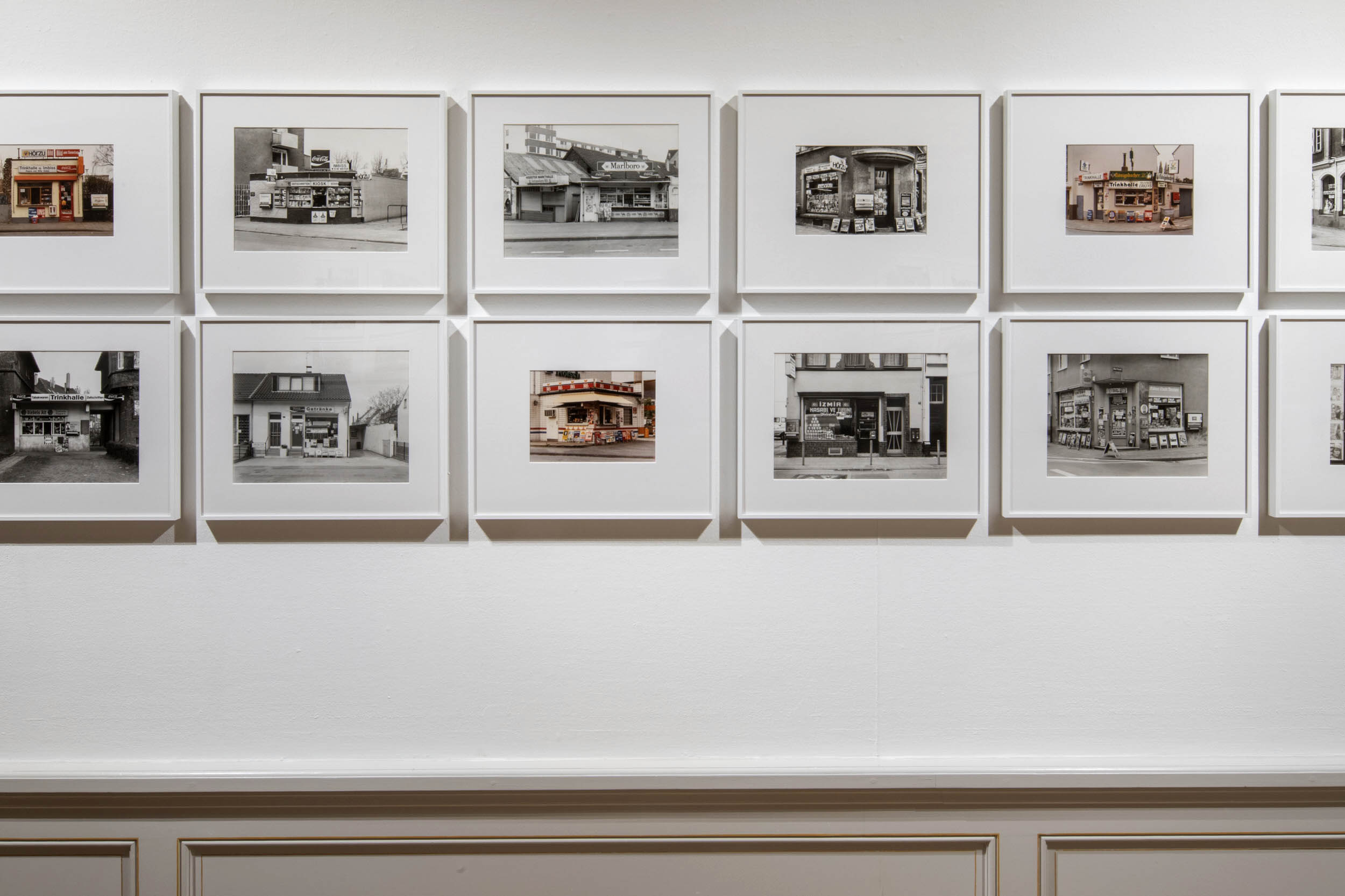
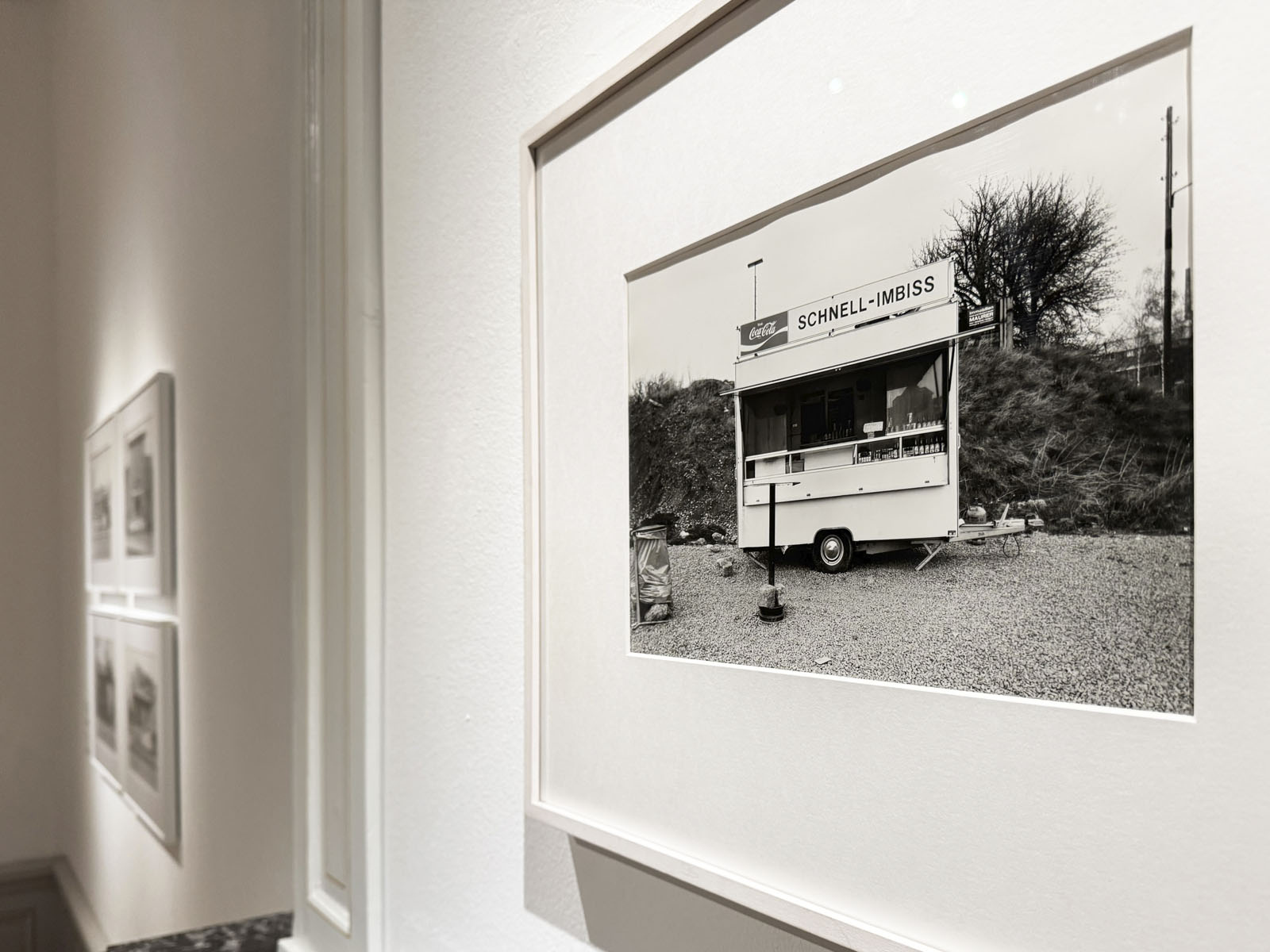
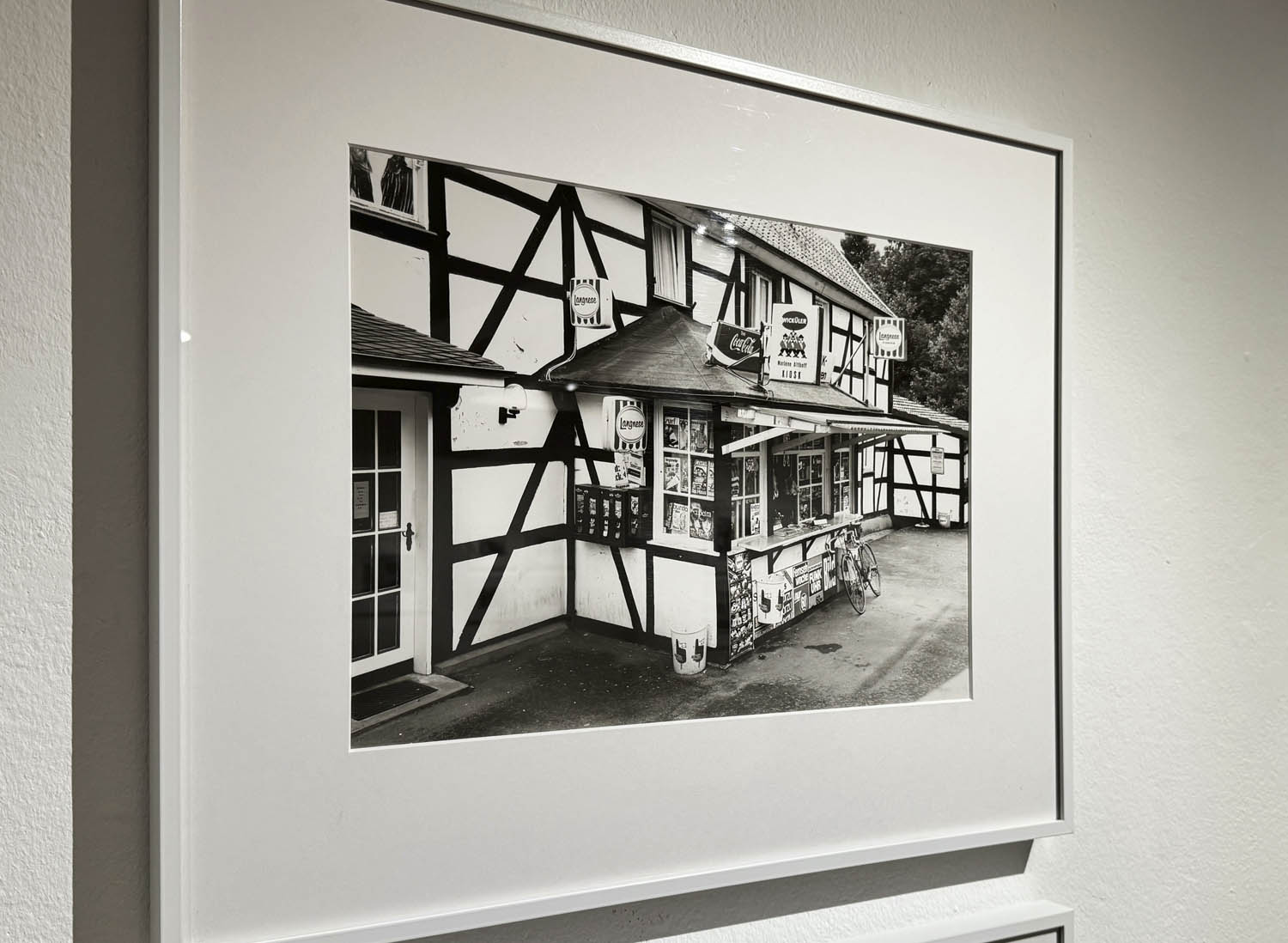
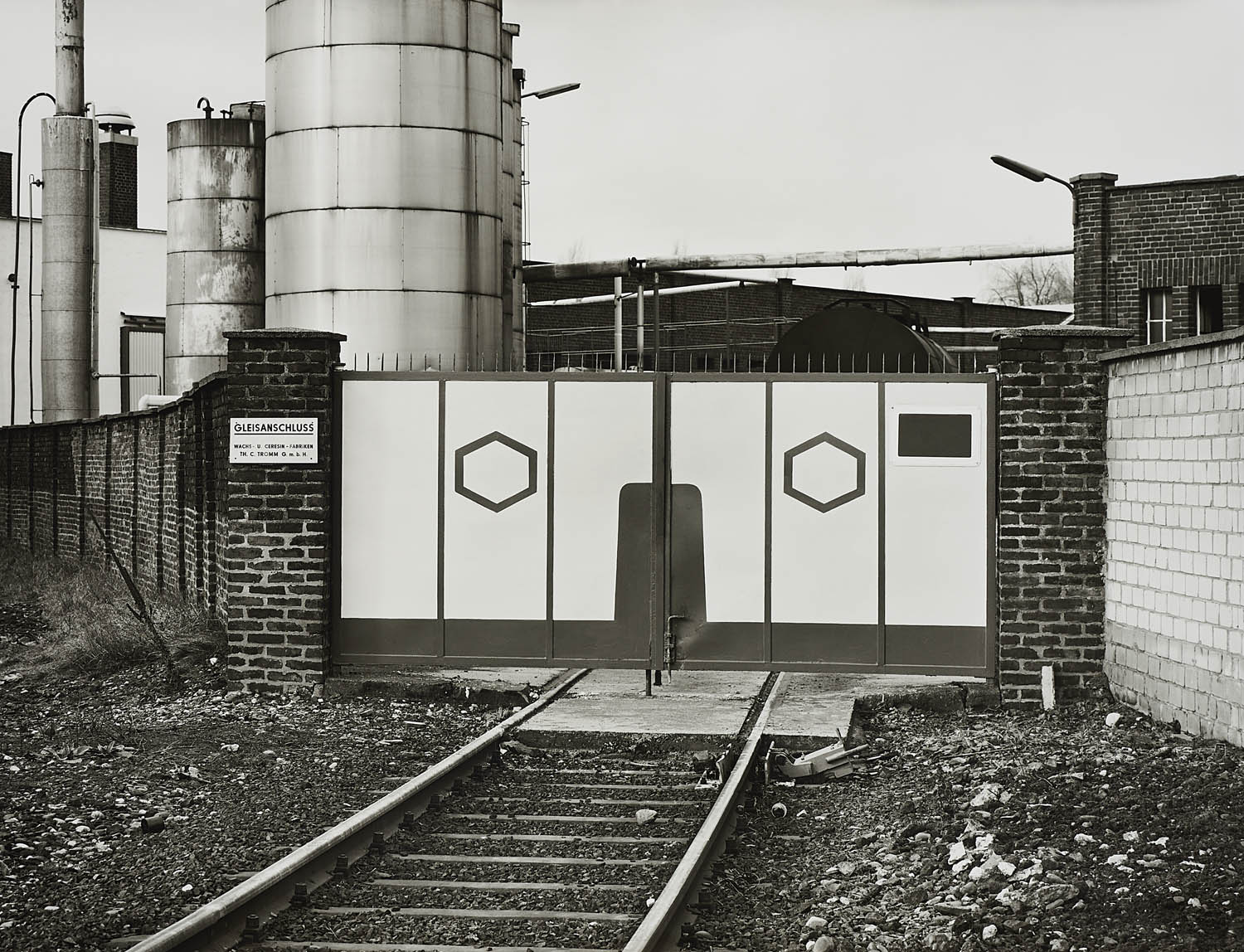
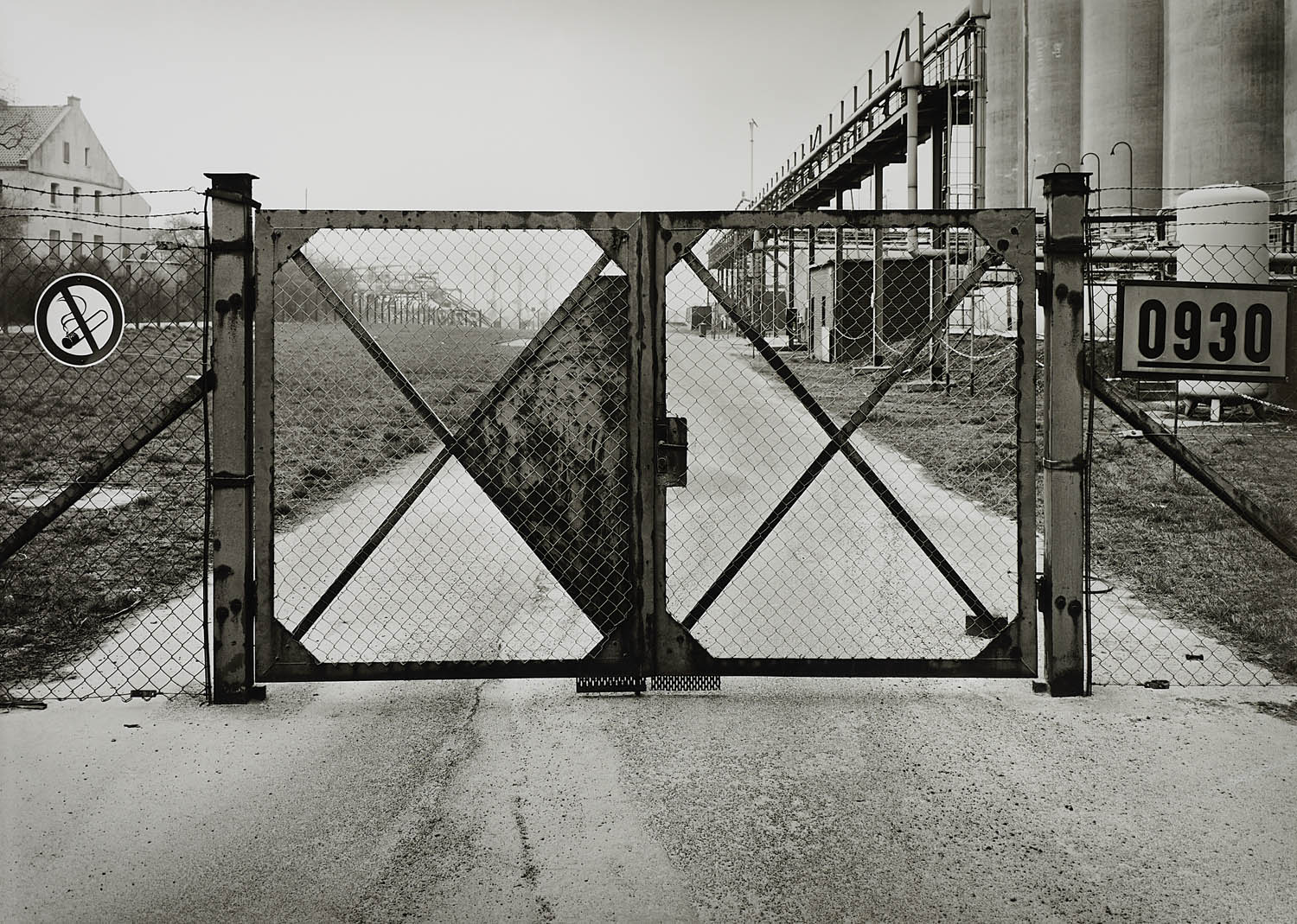
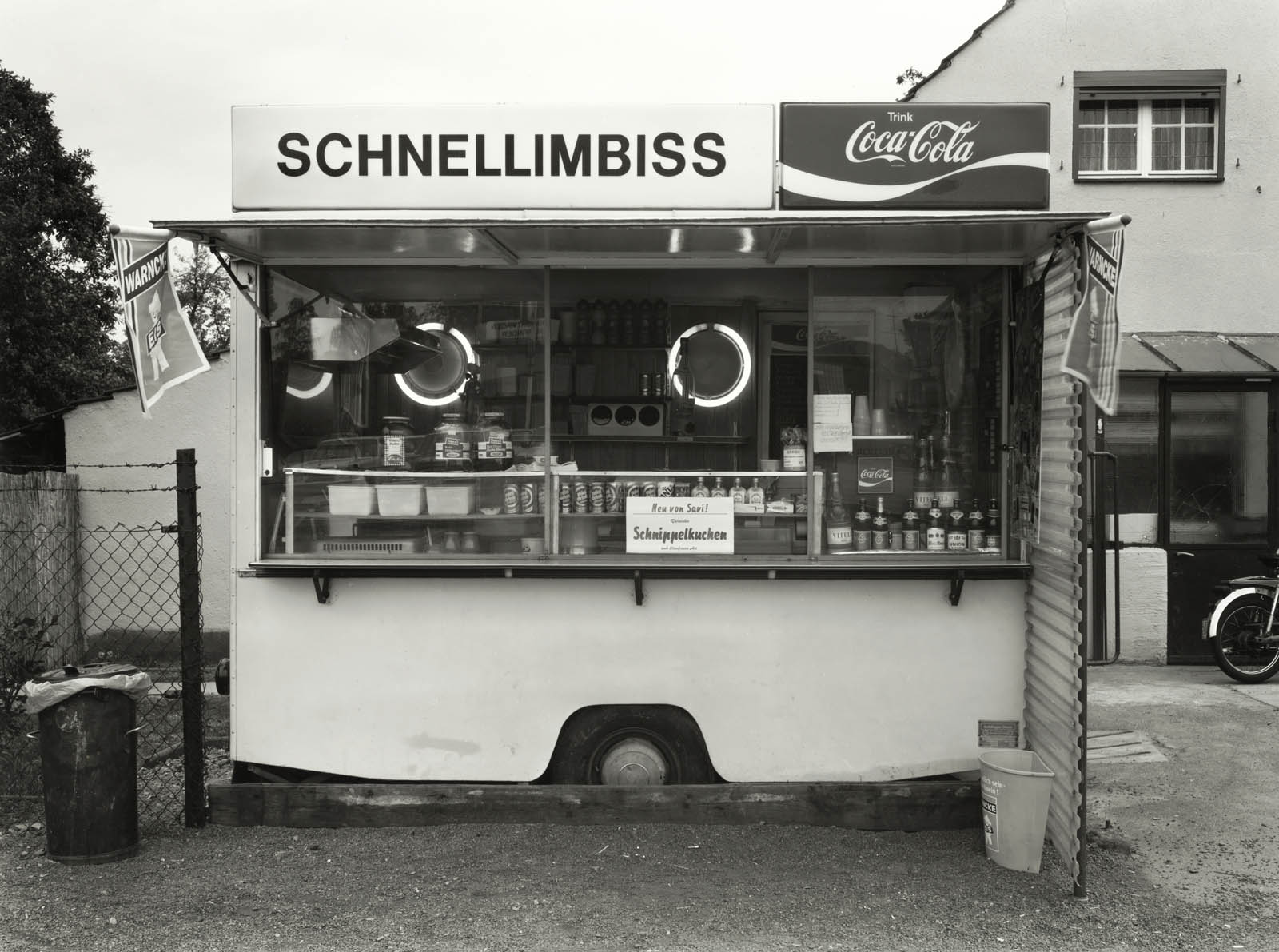
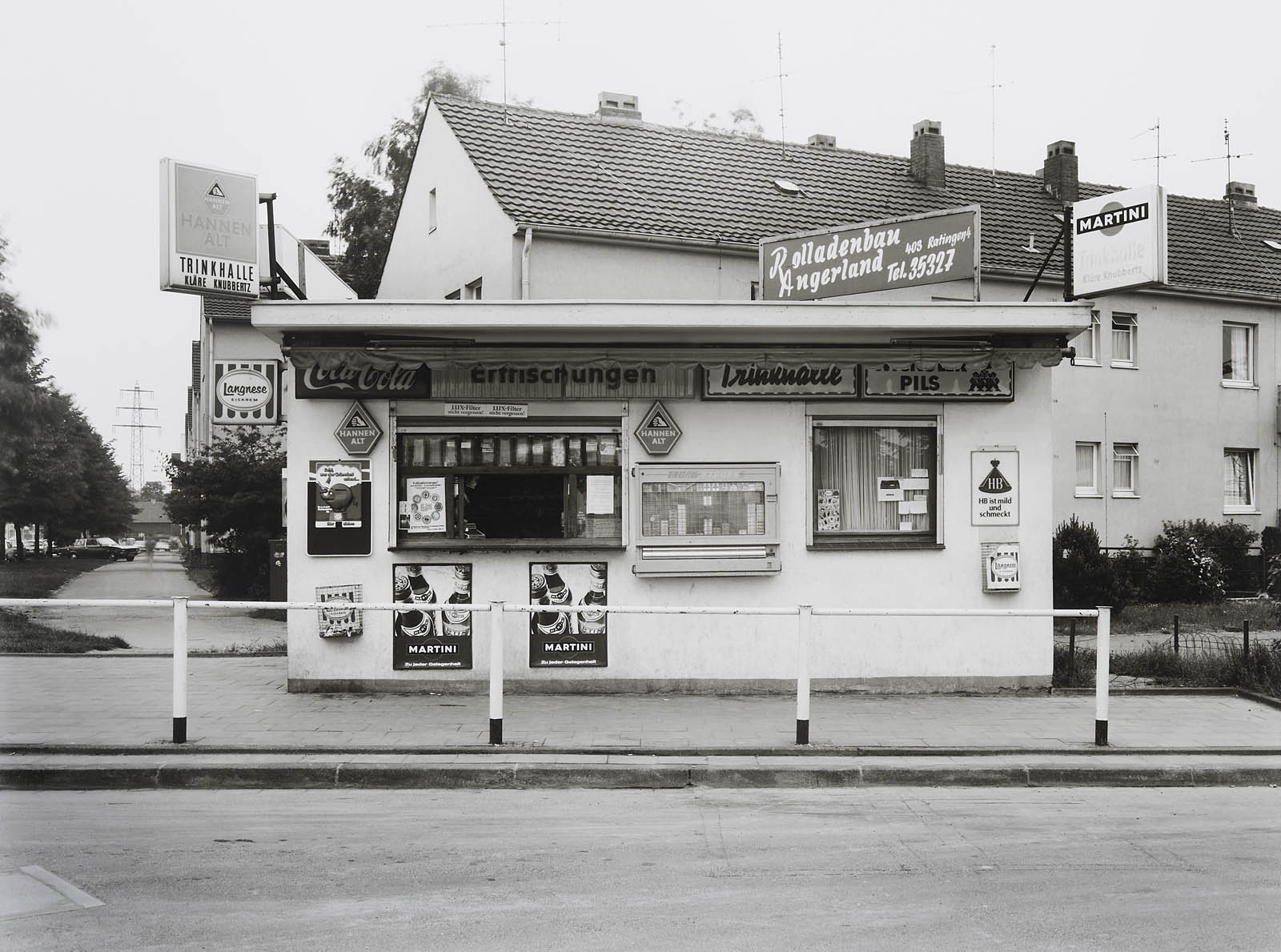
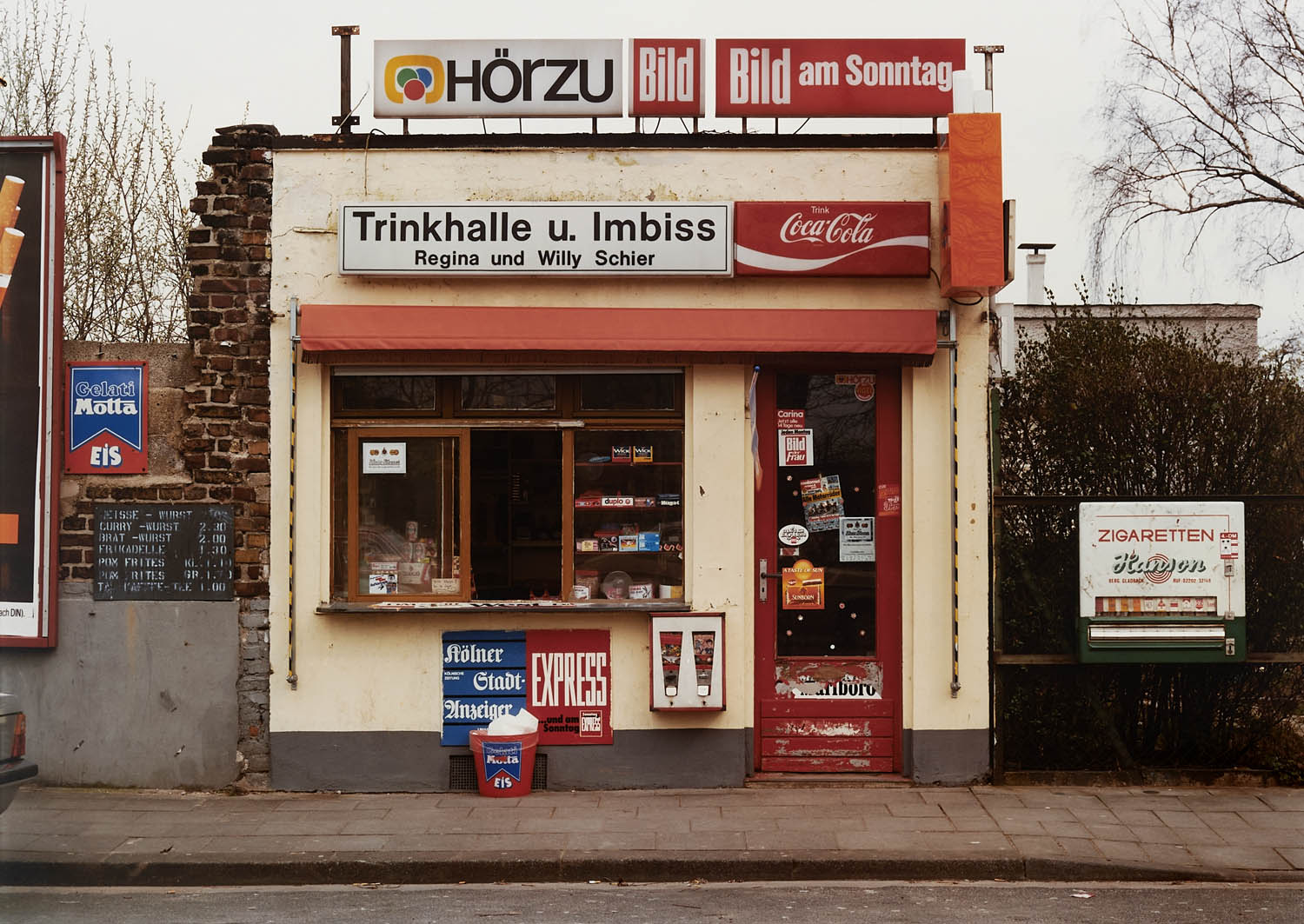
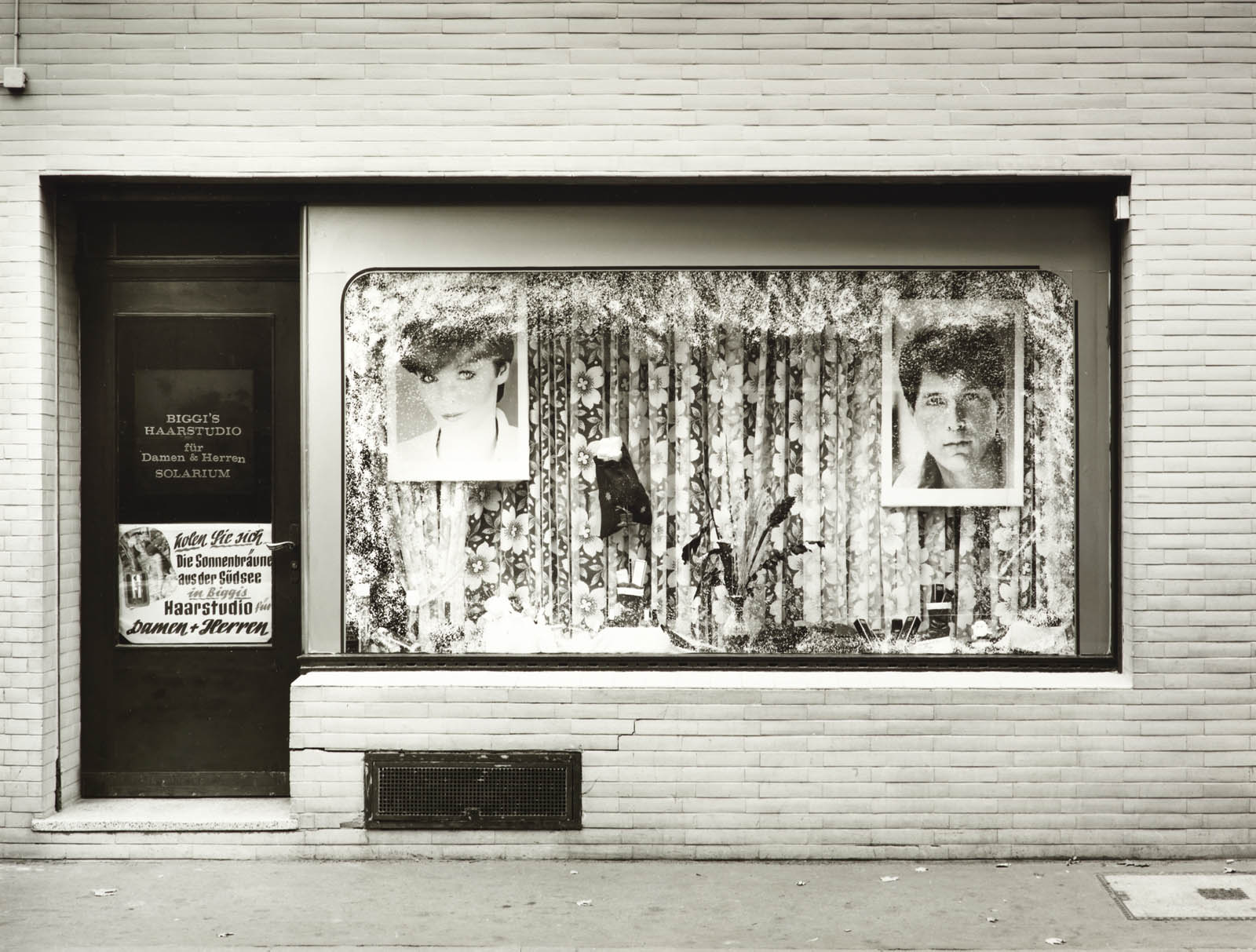
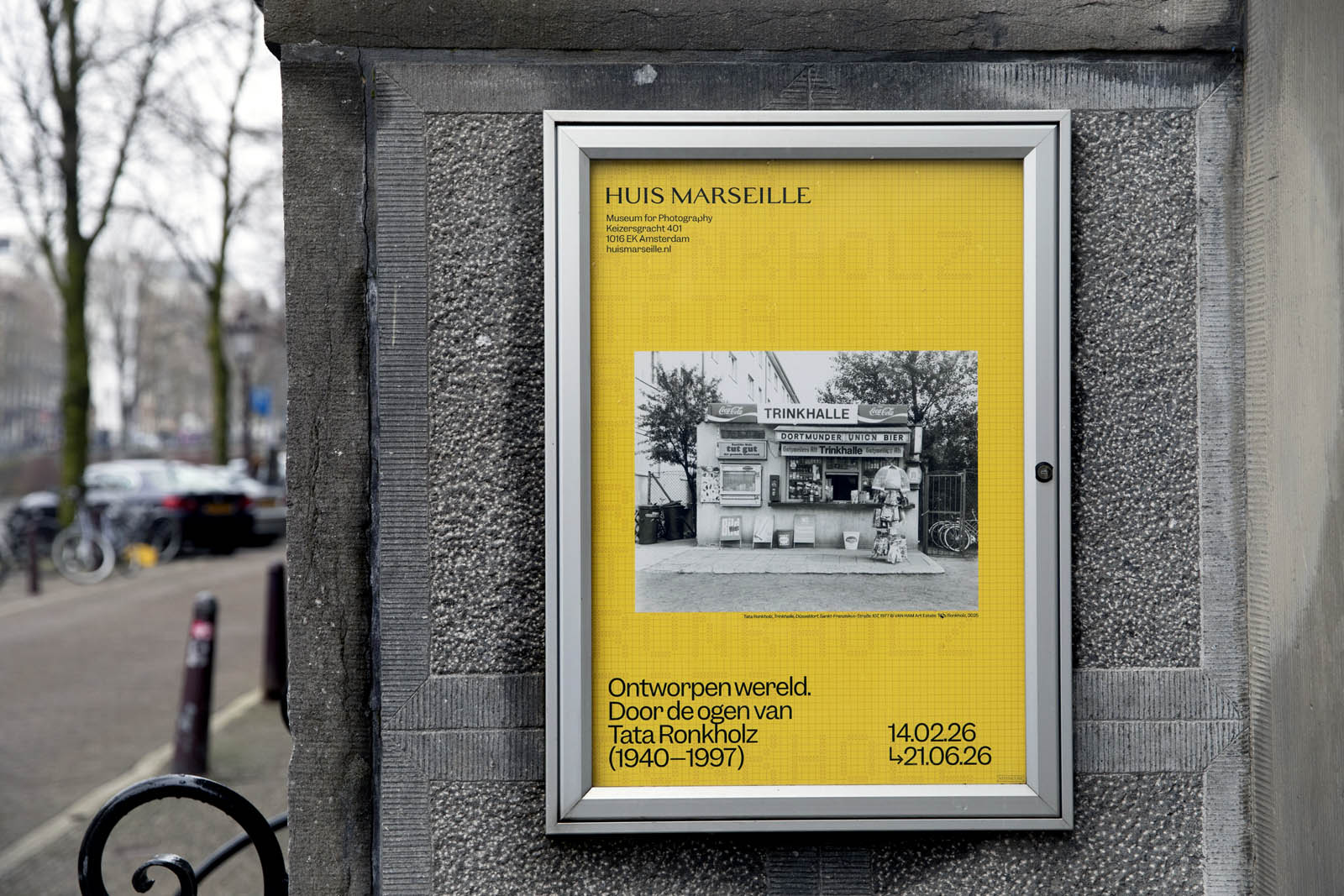
In the photographs of kiosks, corner shops and industrial gates, it is the minutiae of existence (not as mere decoration) that gives these supposedly objective photographs their subjective power. For example, “the photo Trinkhalle, Köln-Nippes – with its ice cream and newspaper advertisements and vending machines for chewing gum and cigarettes” is more than amusing and engaging – it depicts vital, archaeological evidence of the transitory nature of human existence in the pyschogeography of the urbanscape.1
In Ronkholz’ photographs of the terrain (from the Latin terra, earth/land) of the city, her exploration of urban environments emphasises interpersonal connections to places – and testify “to social, cultural, and economic change and shows how people shape the world around them.” (Press release)
This is the fluid boundary that these photographs so beautifully and incisively depict: the interface between architecture and human, between order (form/surface) and chaos (placement of insolent signs), between utopian perfection and dystopian unruliness – the one coexistent with the other.
This confluence of pattern and randomness, objective and subjective, is what gives these photographs of the everyday a lasting significance.
Dr Marcus Bunyan
1/ Guy Debord (November 1956). “Theory of the Dérive”. Les Lèvres Nues (9). Translated by Ken Knabb.
Many thankx to Huis Marseille, Amsterdam for allowing me to publish the photographs in the posting. Please click on the photographs for a larger version of the image.
Sankt-Franziskus-Straße 104-107 Düsseldorf
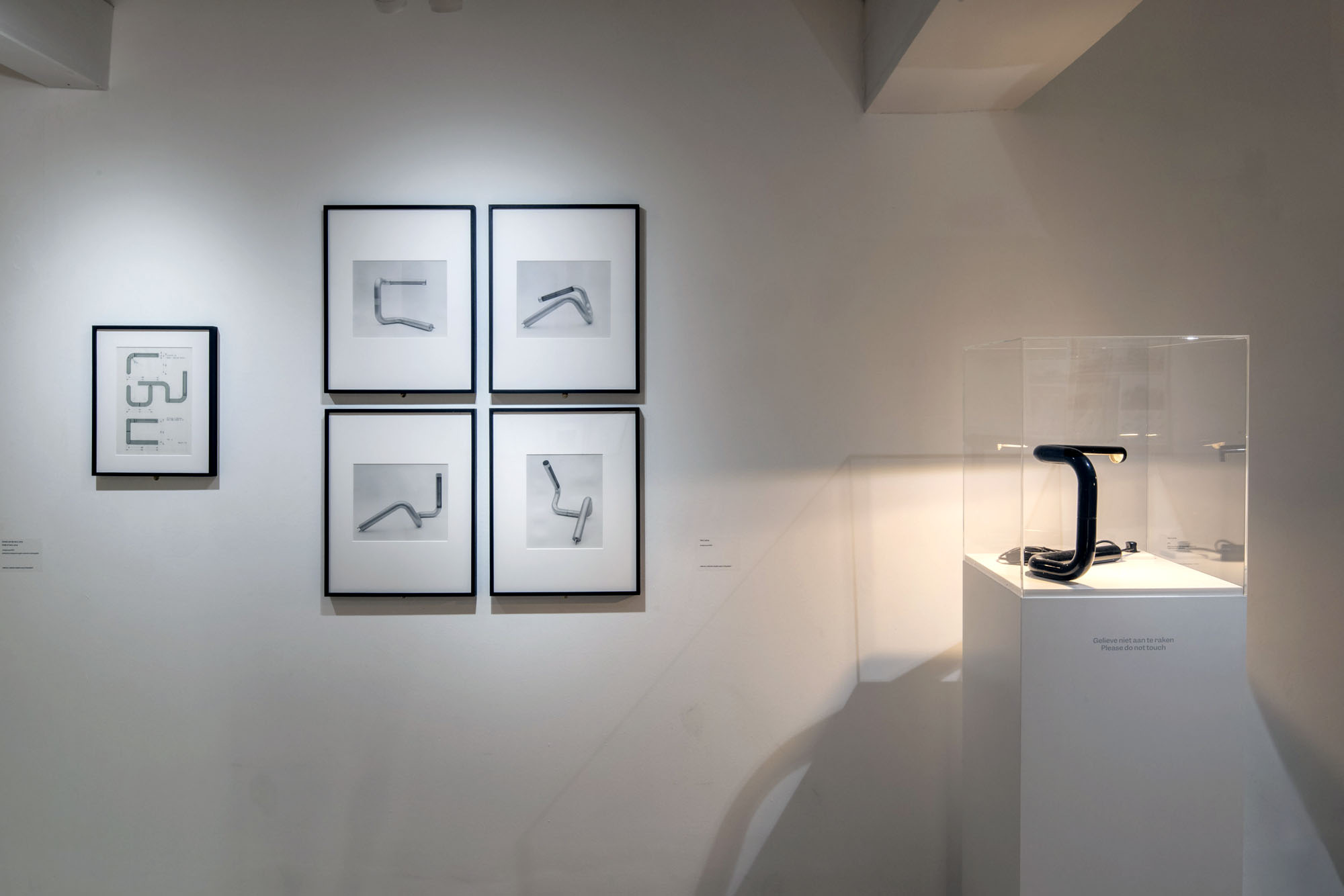
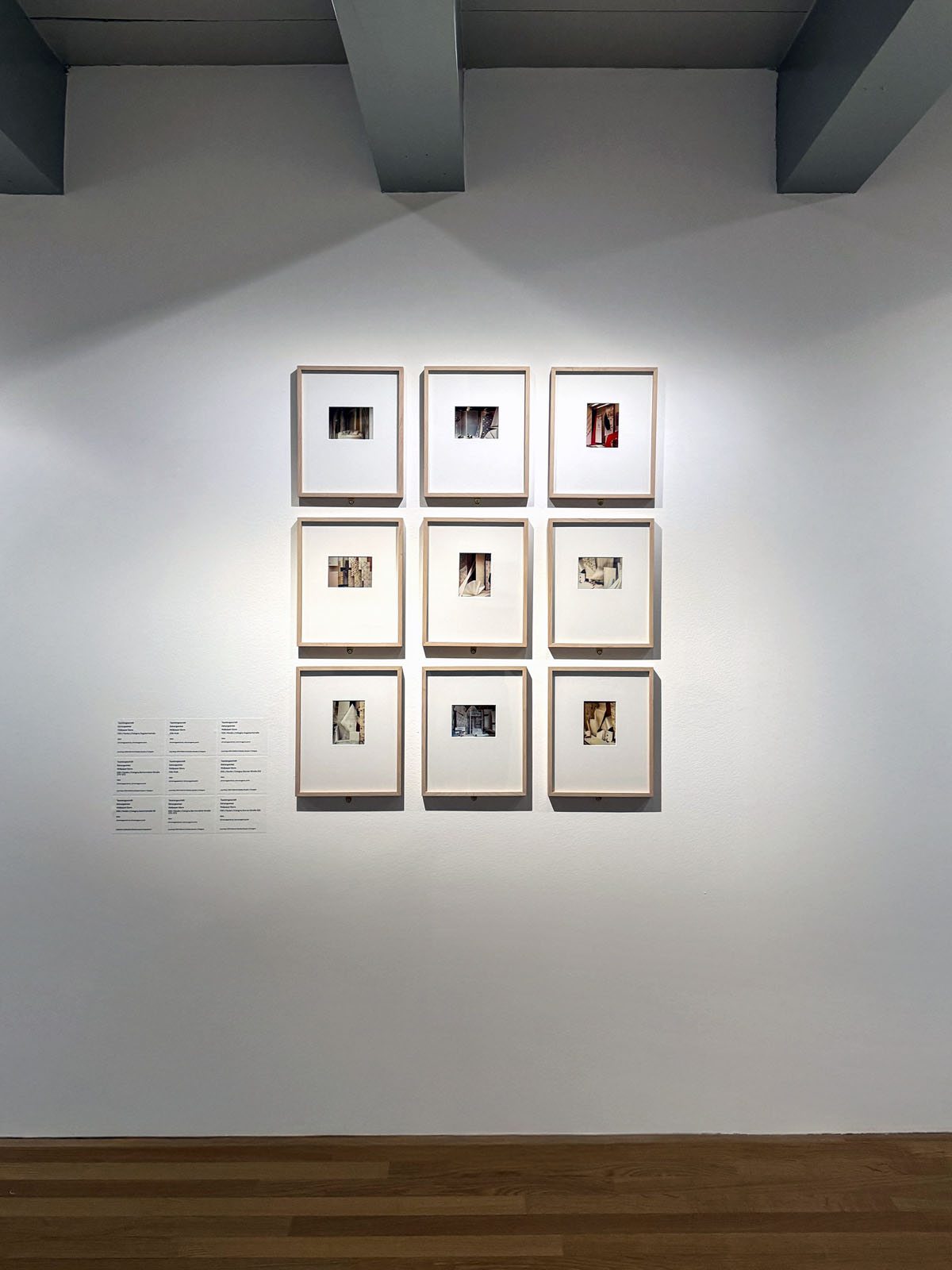
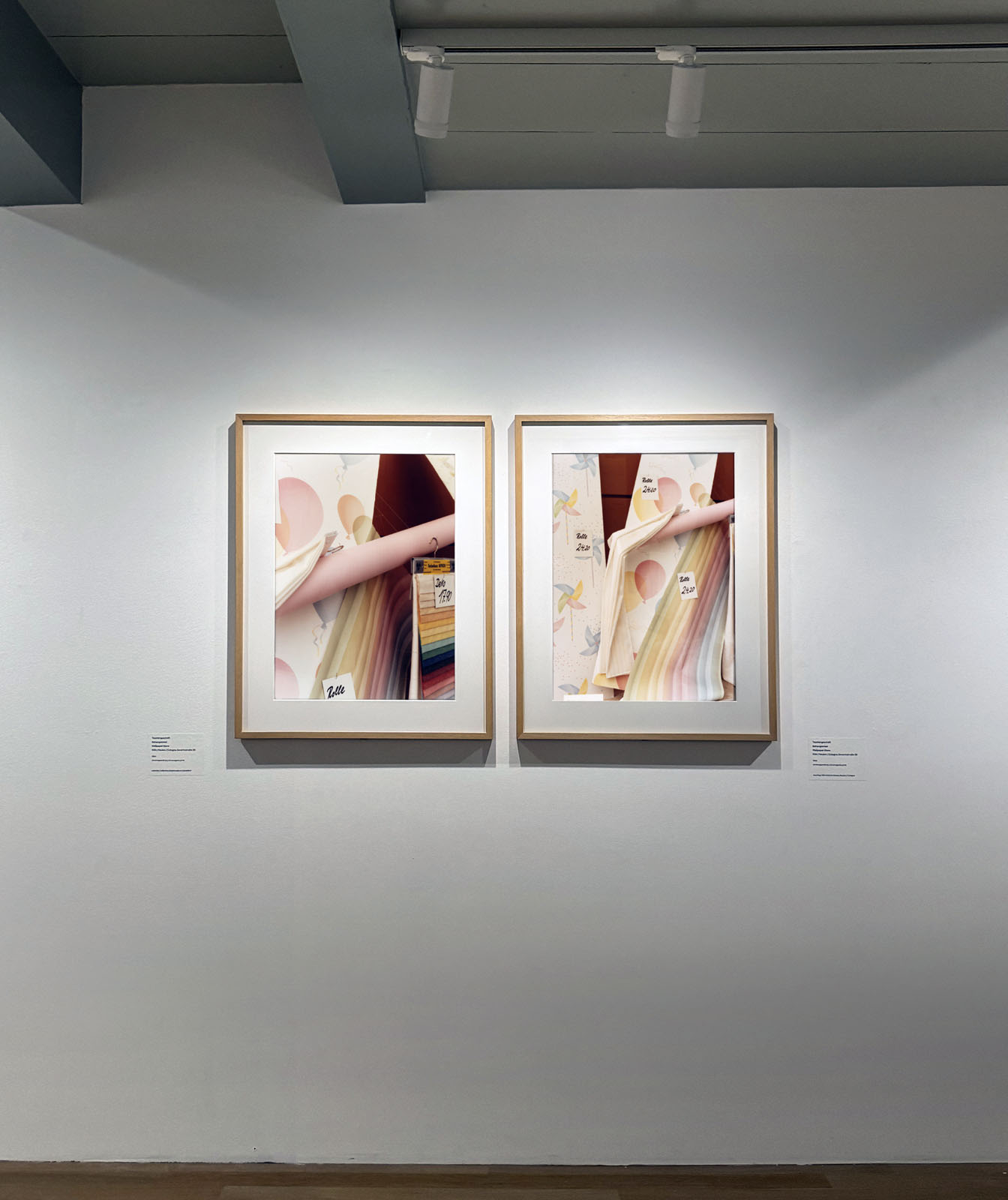
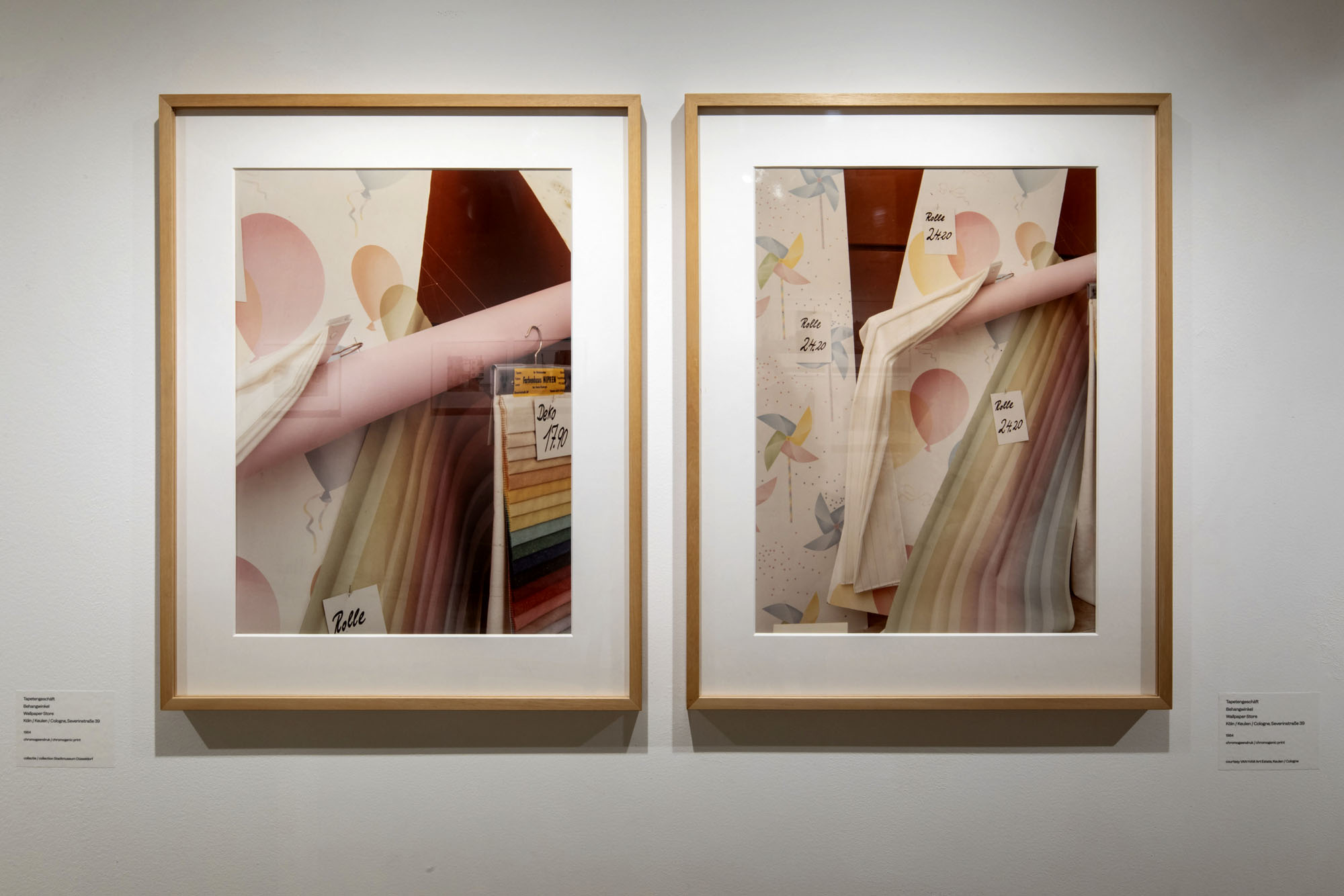
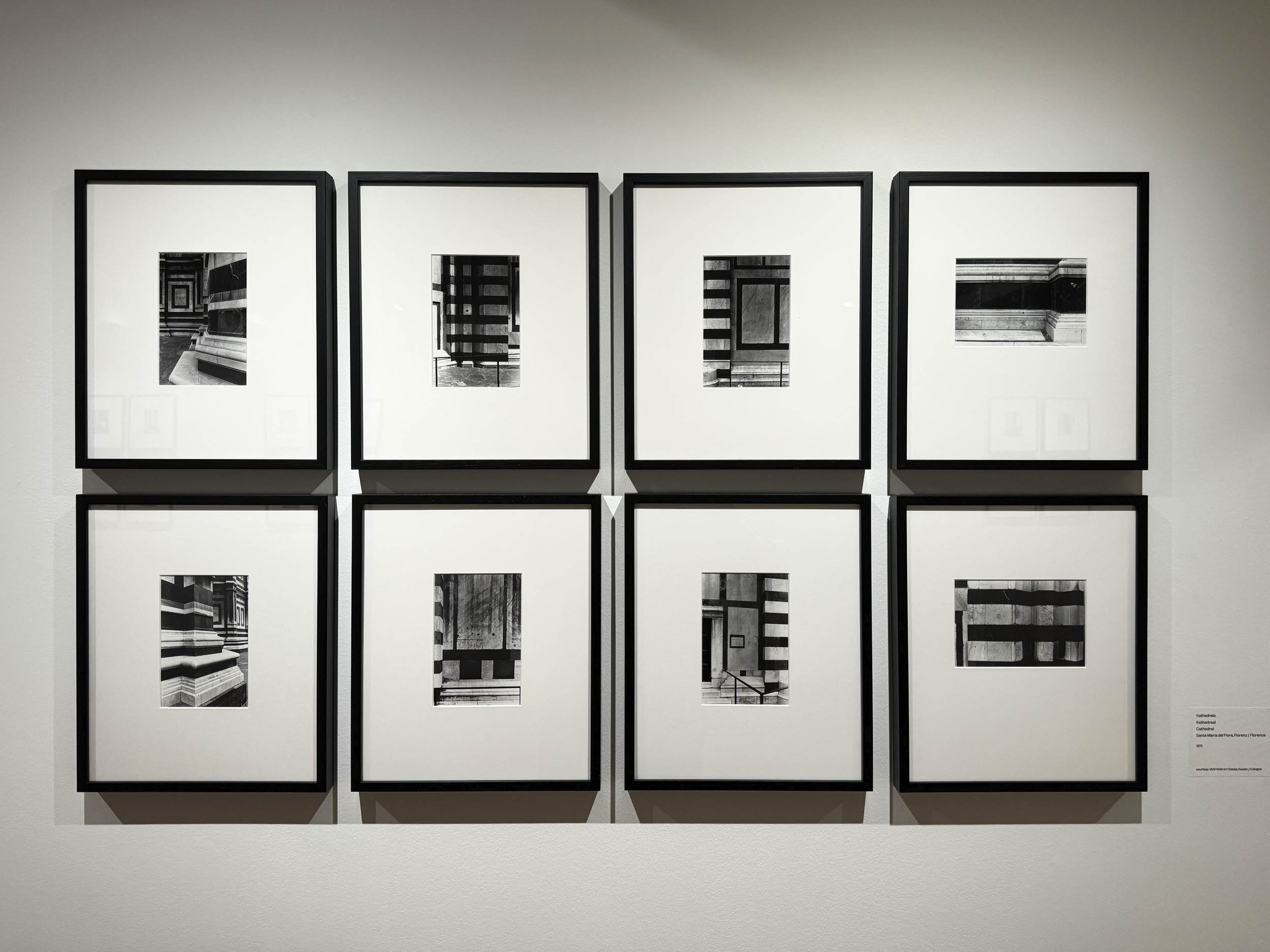
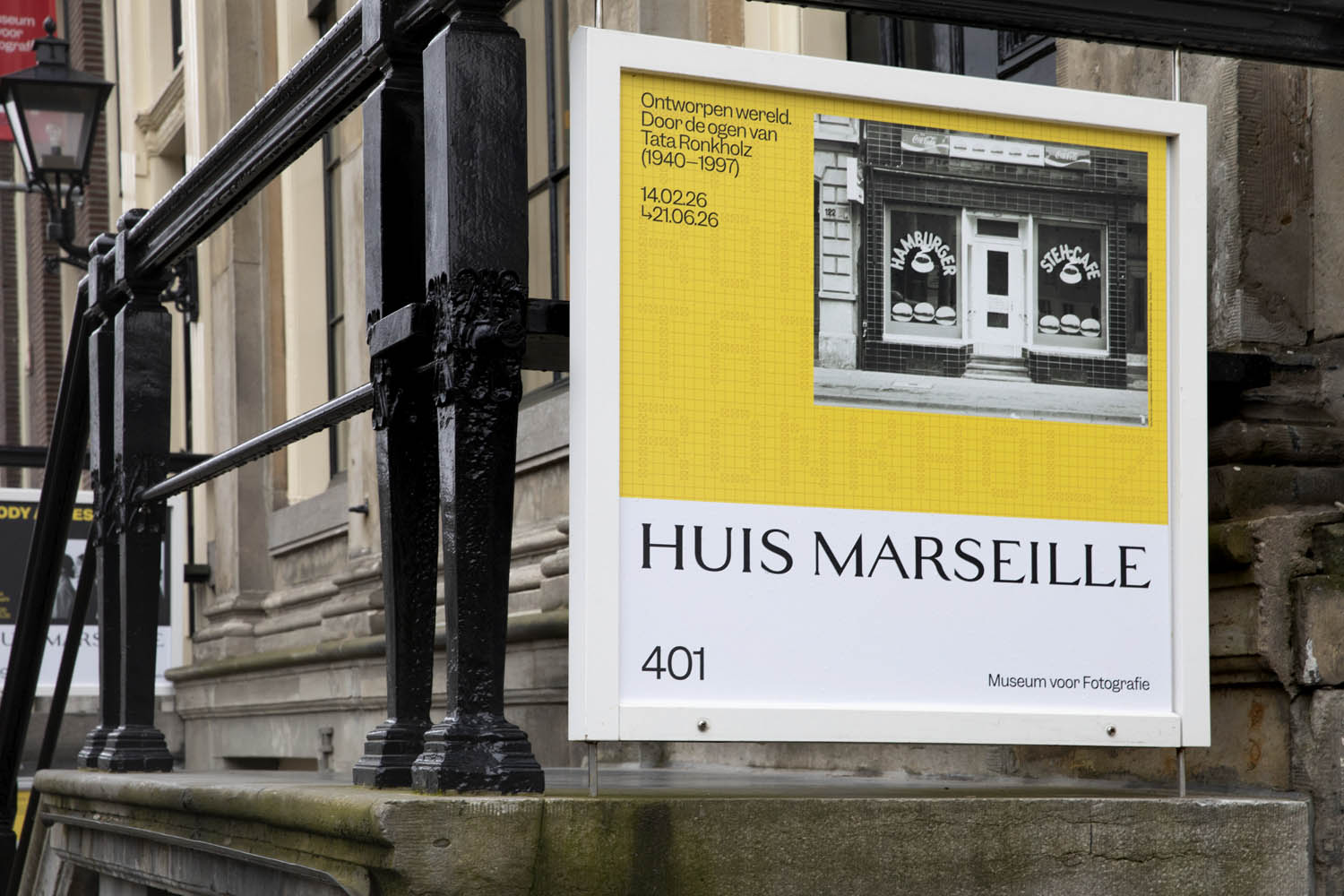
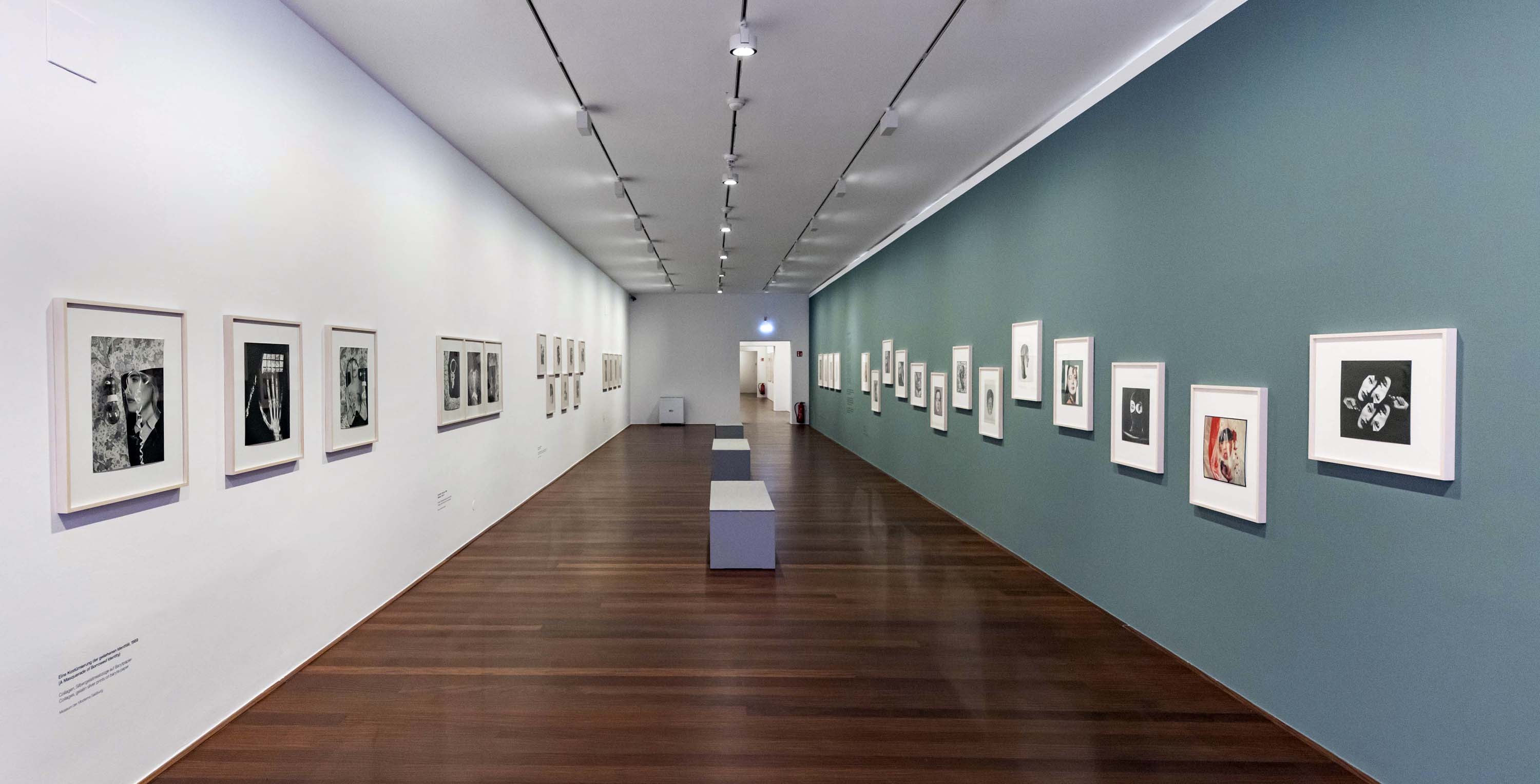
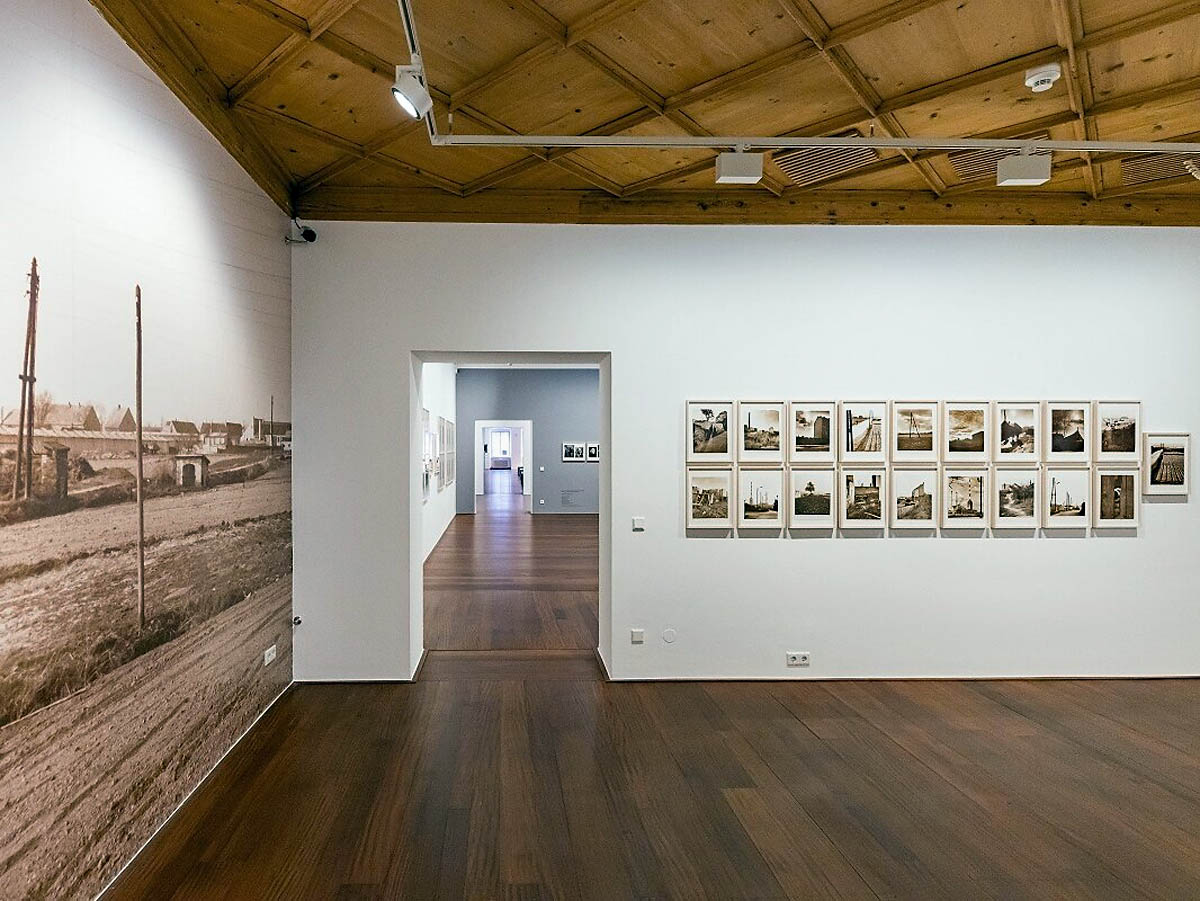
Installation views of the exhibition Designed World: Through the Eyes of Tata Ronkholz (1940-1997) at Huis Marseille, Amsterdam, February – June, 2026
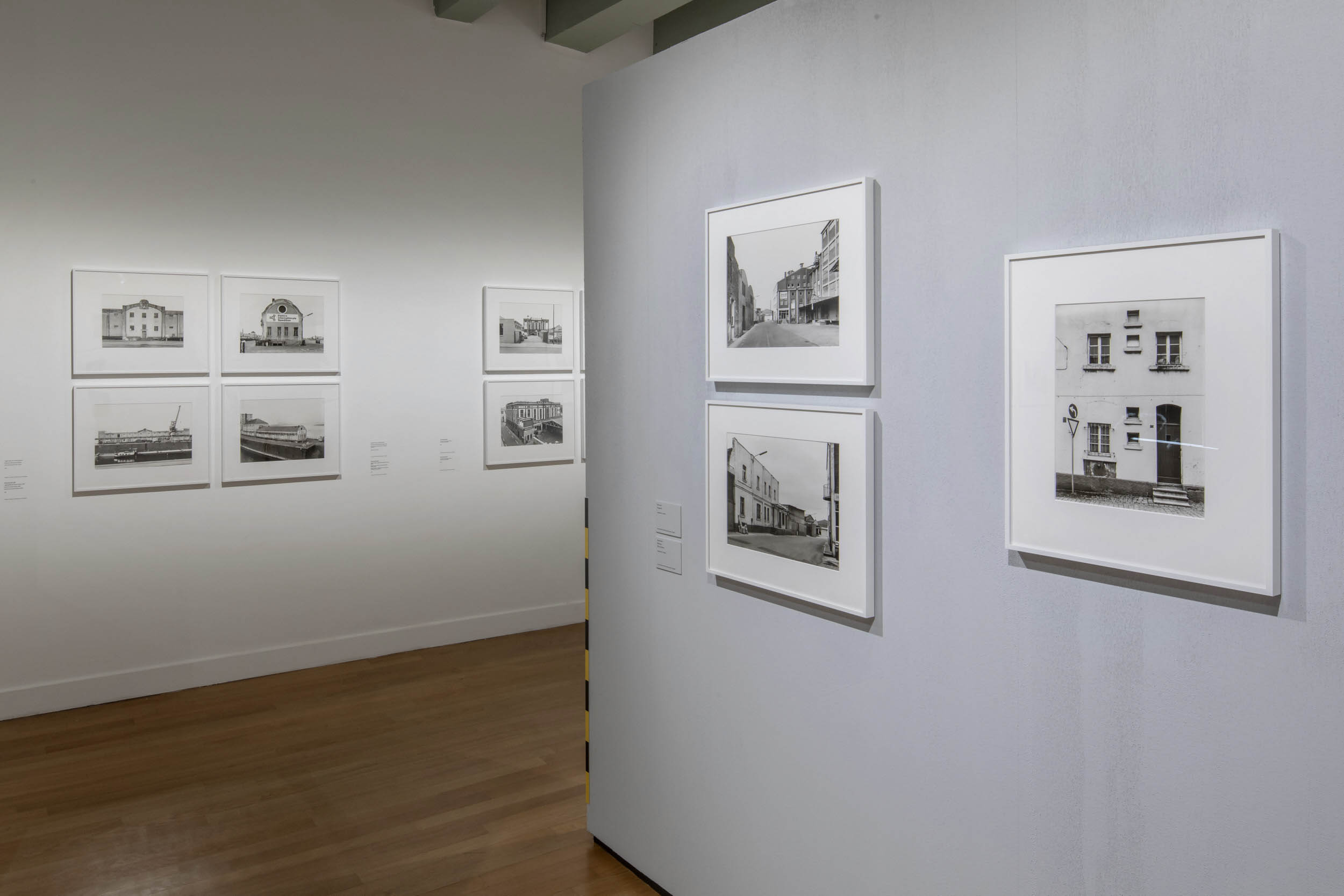
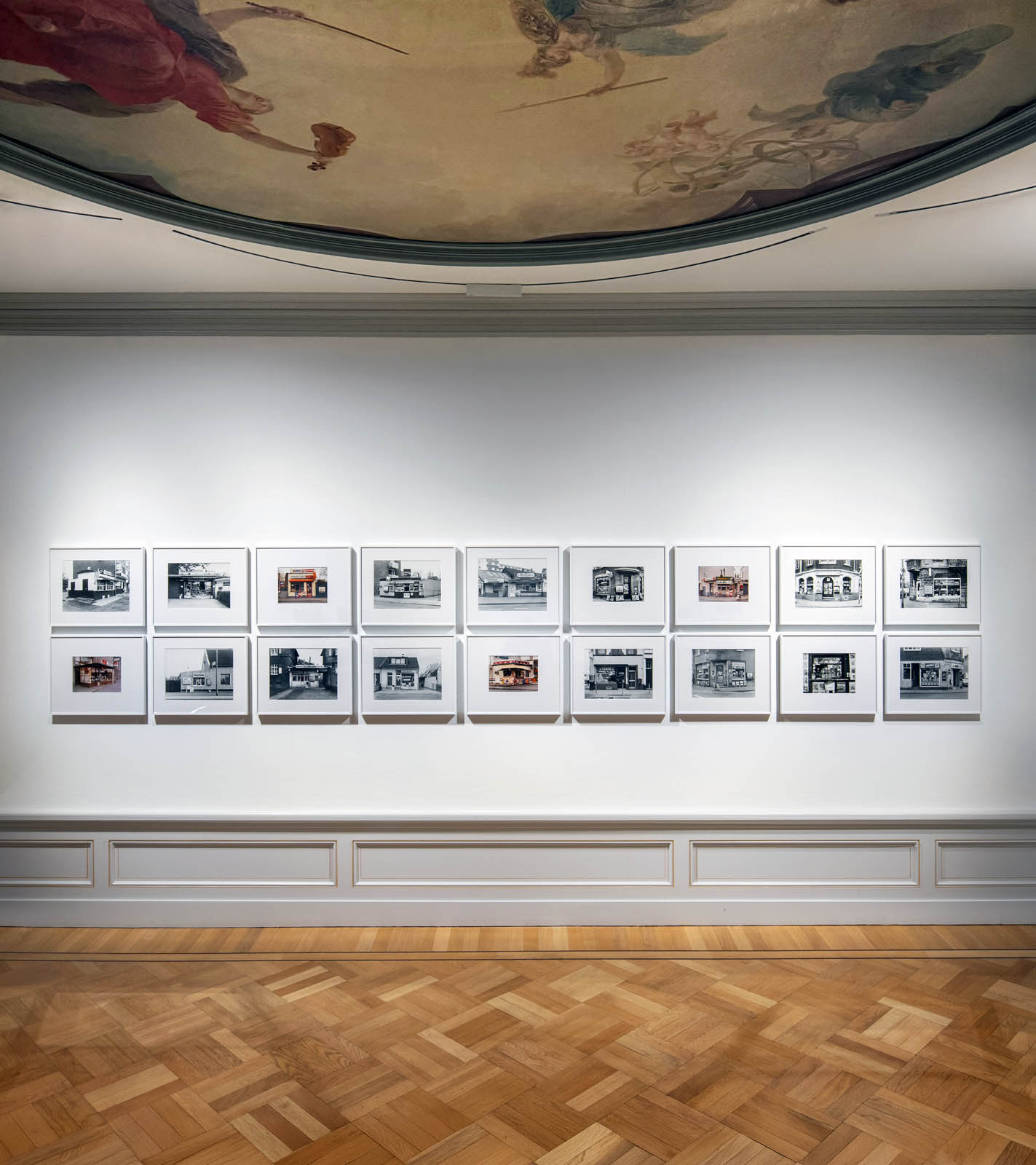
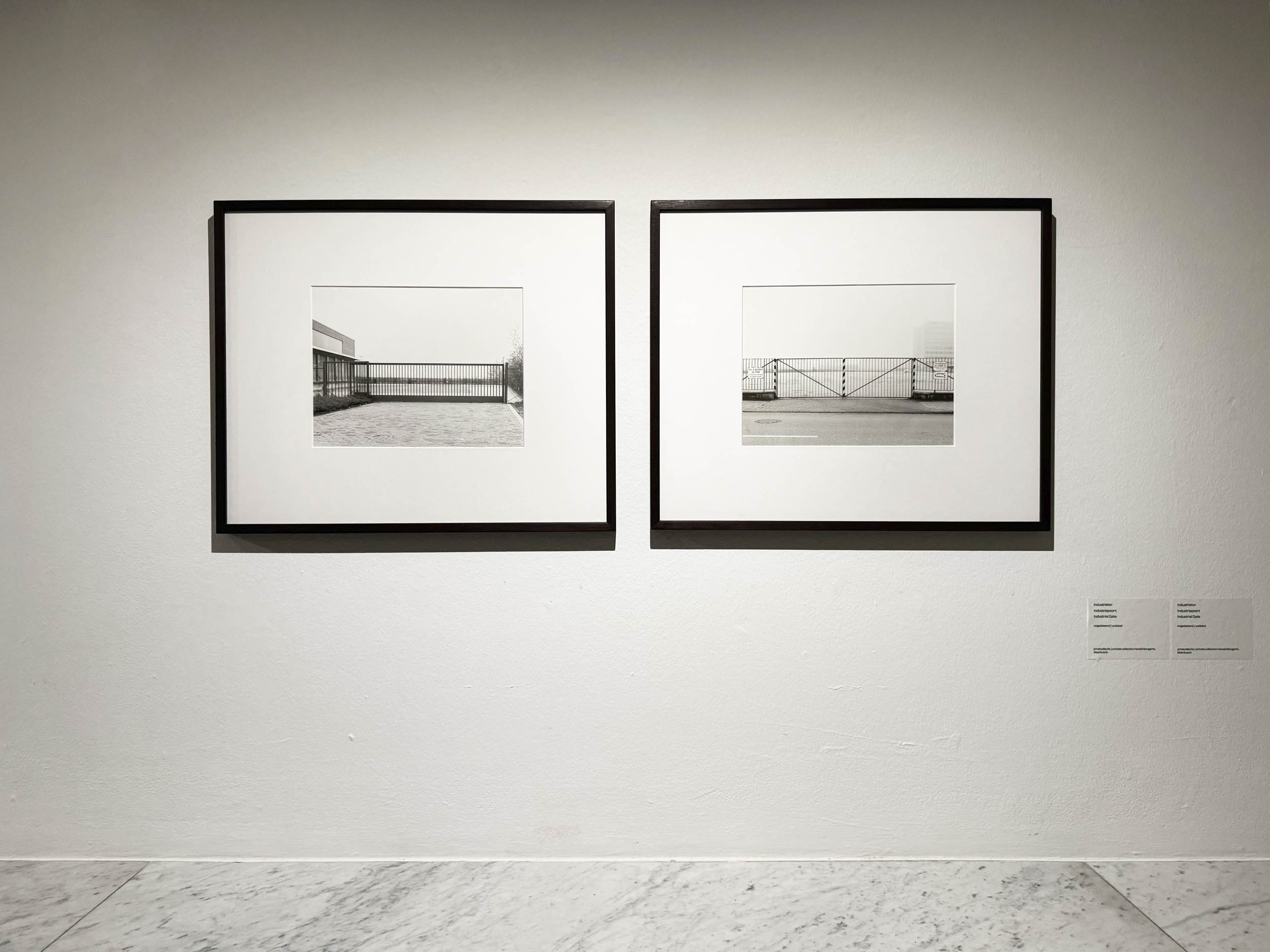
Installation views of the exhibition Designed World: Through the Eyes of Tata Ronkholz (1940-1997) at Huis Marseille, Amsterdam, February – June, 2026
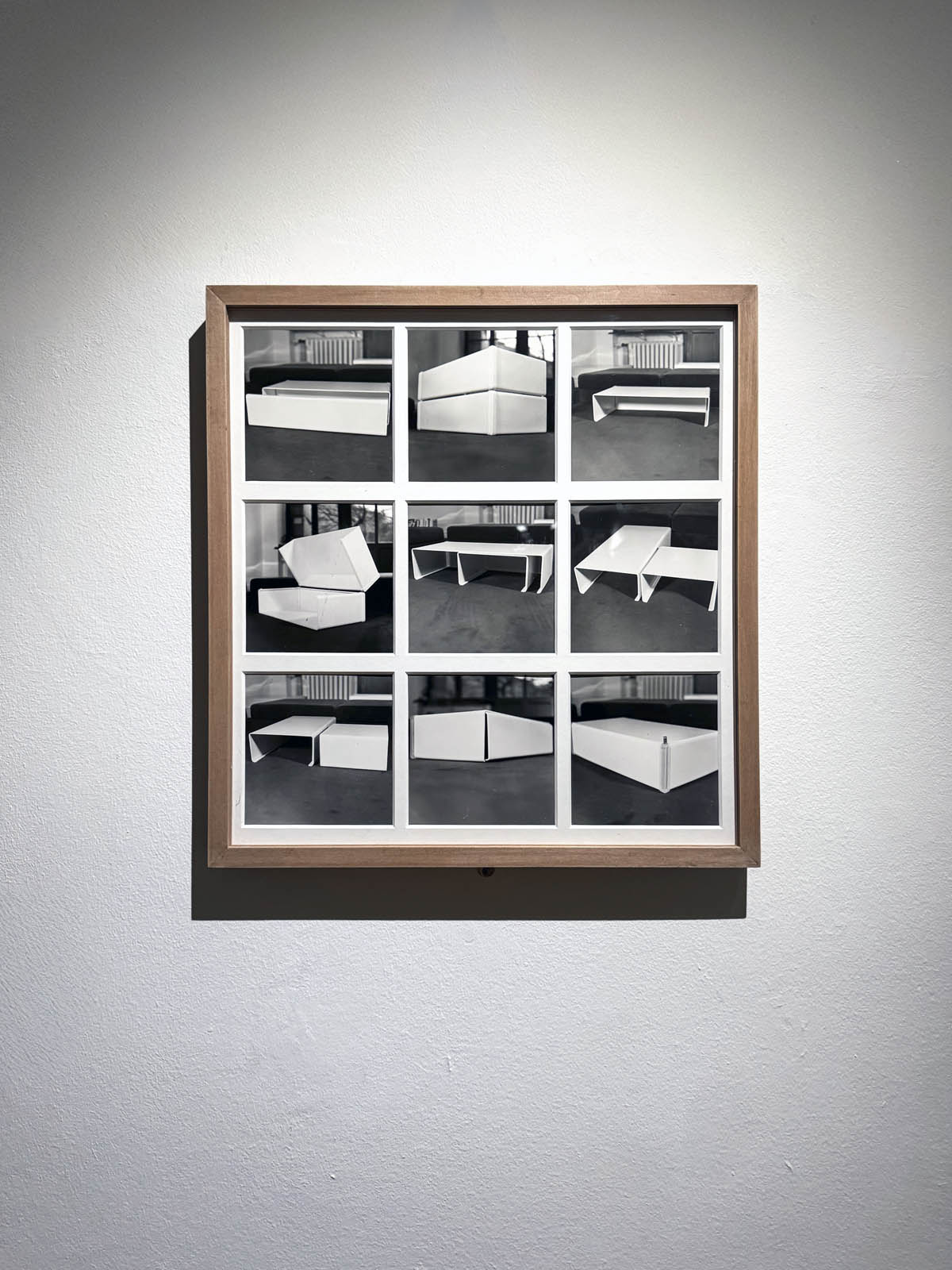
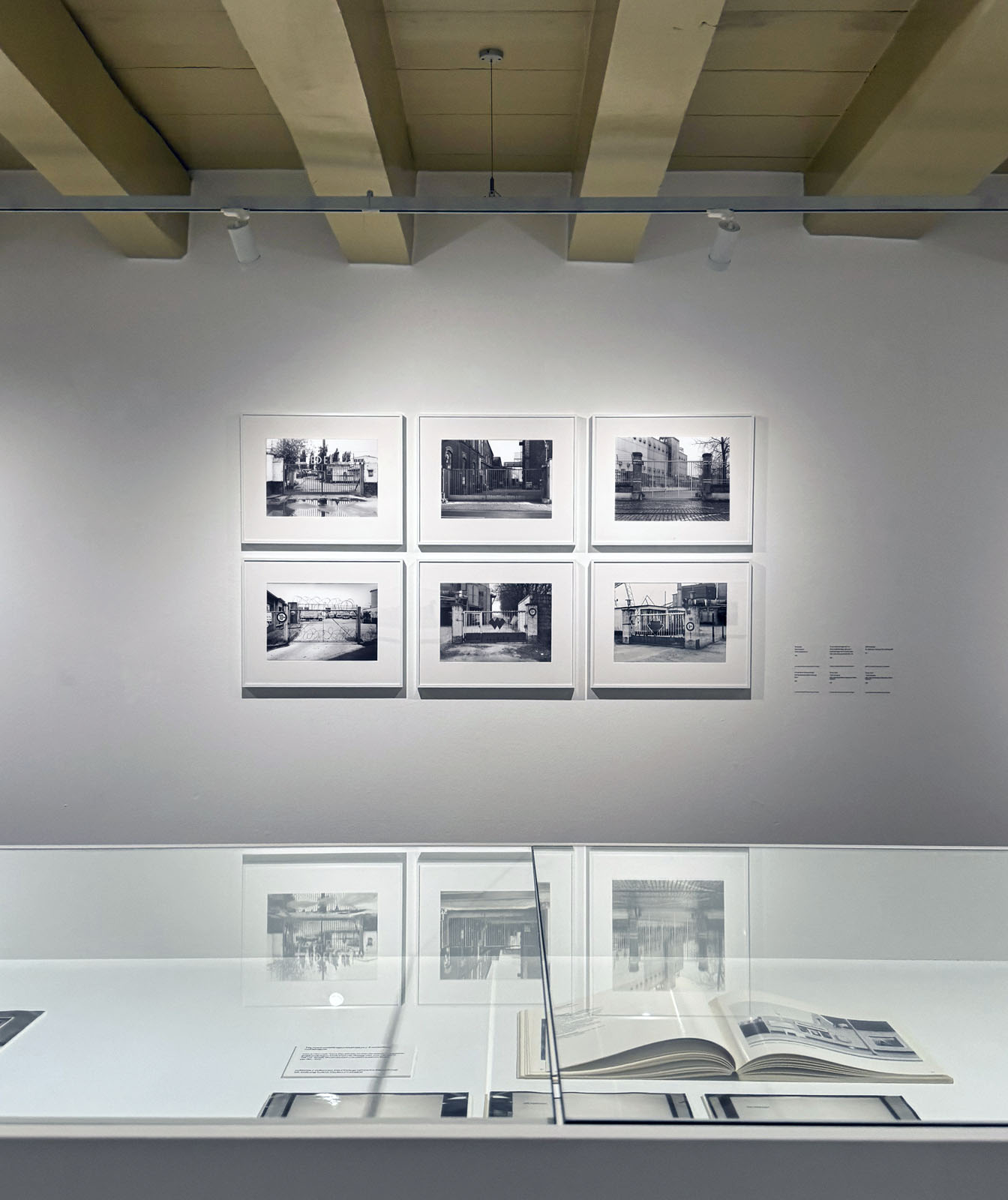
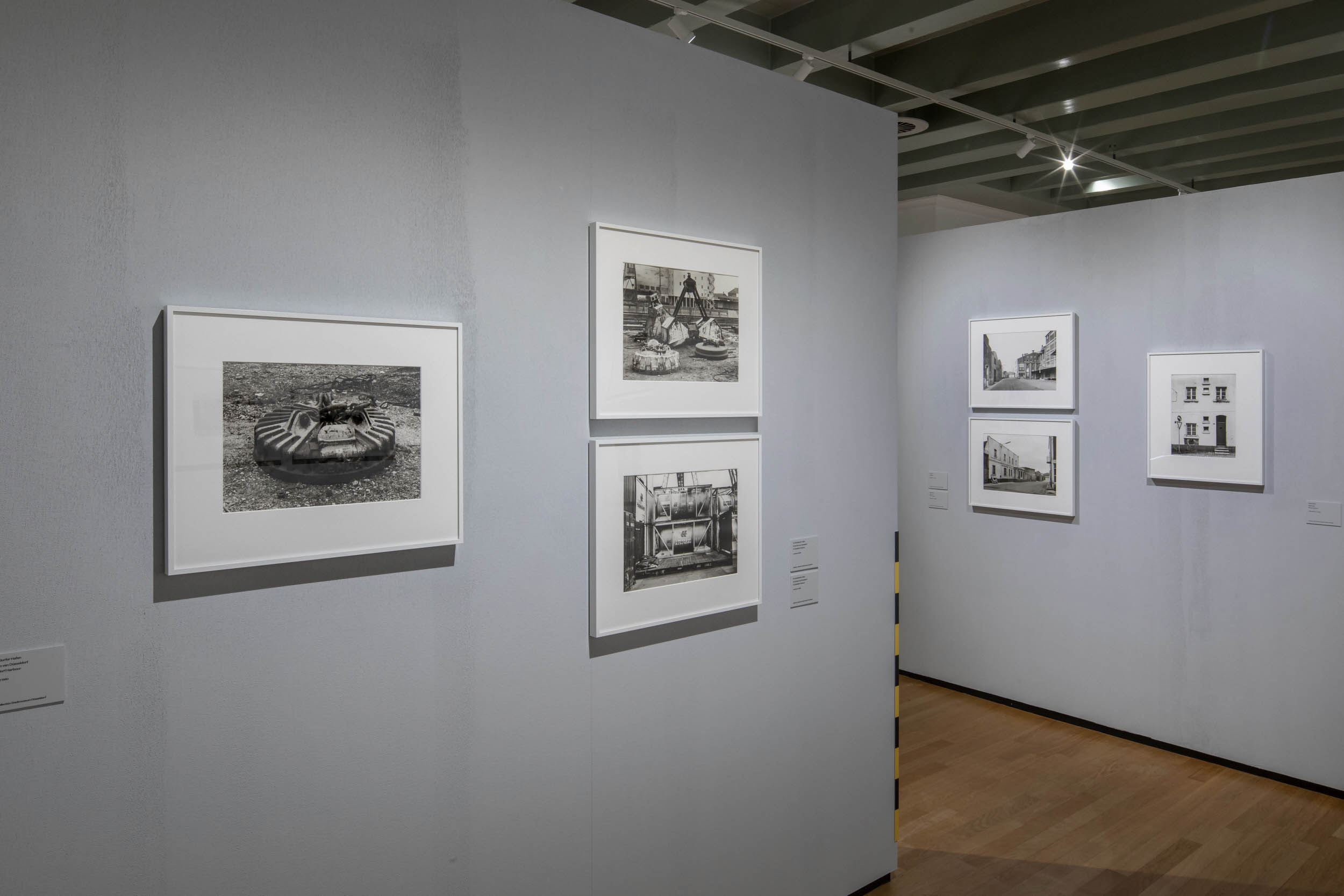
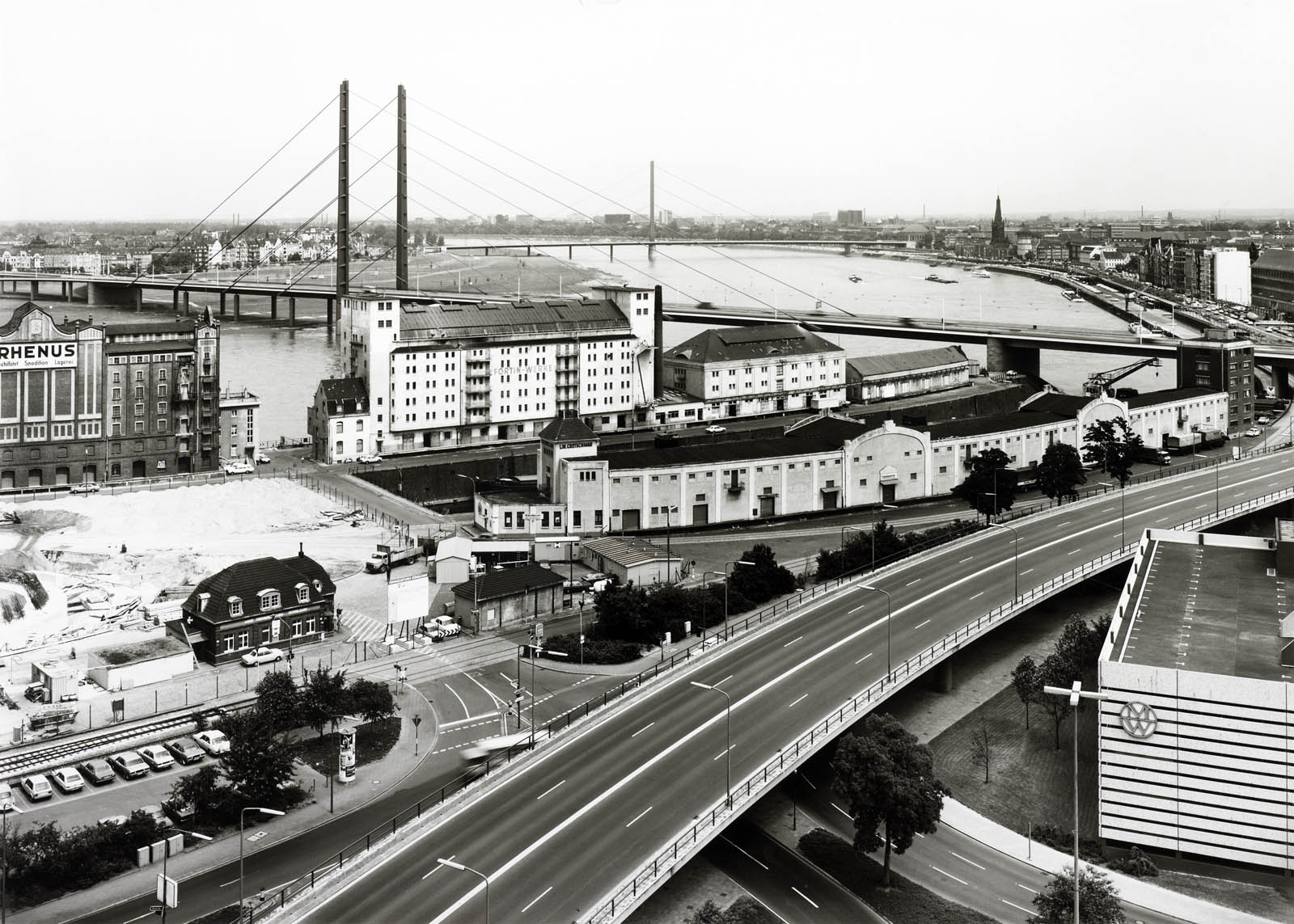
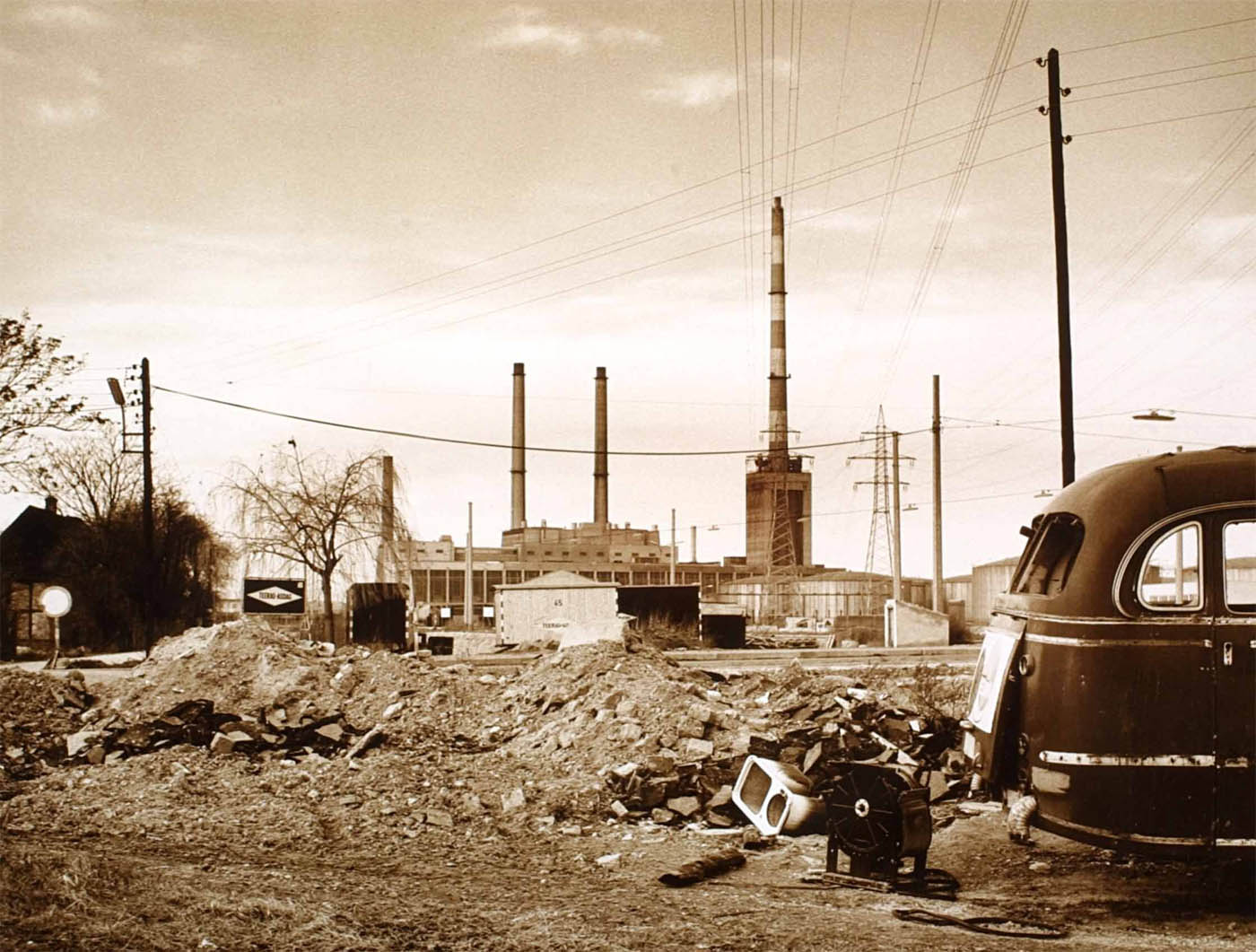
Installation view of the exhibition Designed World: Through the Eyes of Tata Ronkholz (1940-1997) at Huis Marseille, Amsterdam, February – June, 2026 showing at left, Tata Ronkholz’s Düsseldorf Harbor (1980)
Tata Ronkholz was one of the first students in Bernd and Hilla Becher’s famous photography class at the Kunstakademie Düsseldorf. Her fellow students included Candida Höfer, Axel Hütte, Thomas Ruff and Thomas Struth, all of whom became artists of world renown. Oddly enough Tata Ronkholz’ work is only now receiving the same international acclaim. The retrospective Designed World: Through the Eyes of Tata Ronkholz (1940-1997), on show at Huis Marseille from 14 February until 21 June 2026, is the first large-scale tribute to this many-sided artist.
Objective-documentary photography
Tata Ronkholz was a photographer, product designer, and interior architect. Her photographic series lie within the tradition of objective, documentary photography, a tradition which was decisively shaped by the artist couple Bernd and Hilla Becher. Like theirs, Ronkholz’ work is characterised by clear compositions, a serial approach, and a documentary focus on architectural structures and everyday architectures. Using a large-format camera she produced sharply defined and realistic photographs in which the subject matter, rather than the individual style of the artist, takes centre stage. Her work is predominantly in black and white, although colour images also appear, demonstrating her ambition to engage with the artistic colour photography that emerged in Germany during the 1970s and ’80s, following the example set by the New Color Photography introduced by the American photographers Stephen Shore and William Eggleston.
Kiosks and corner shops
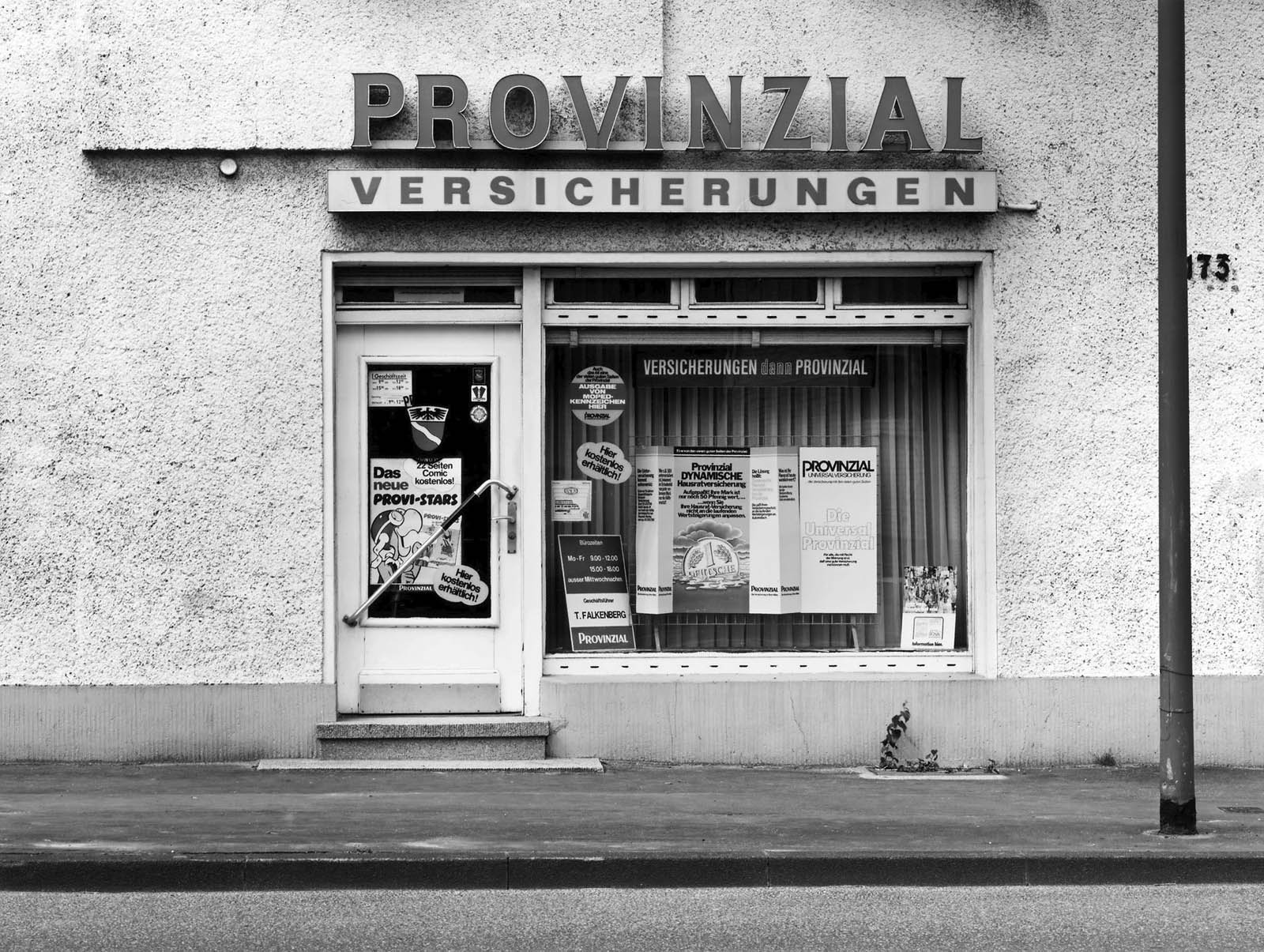
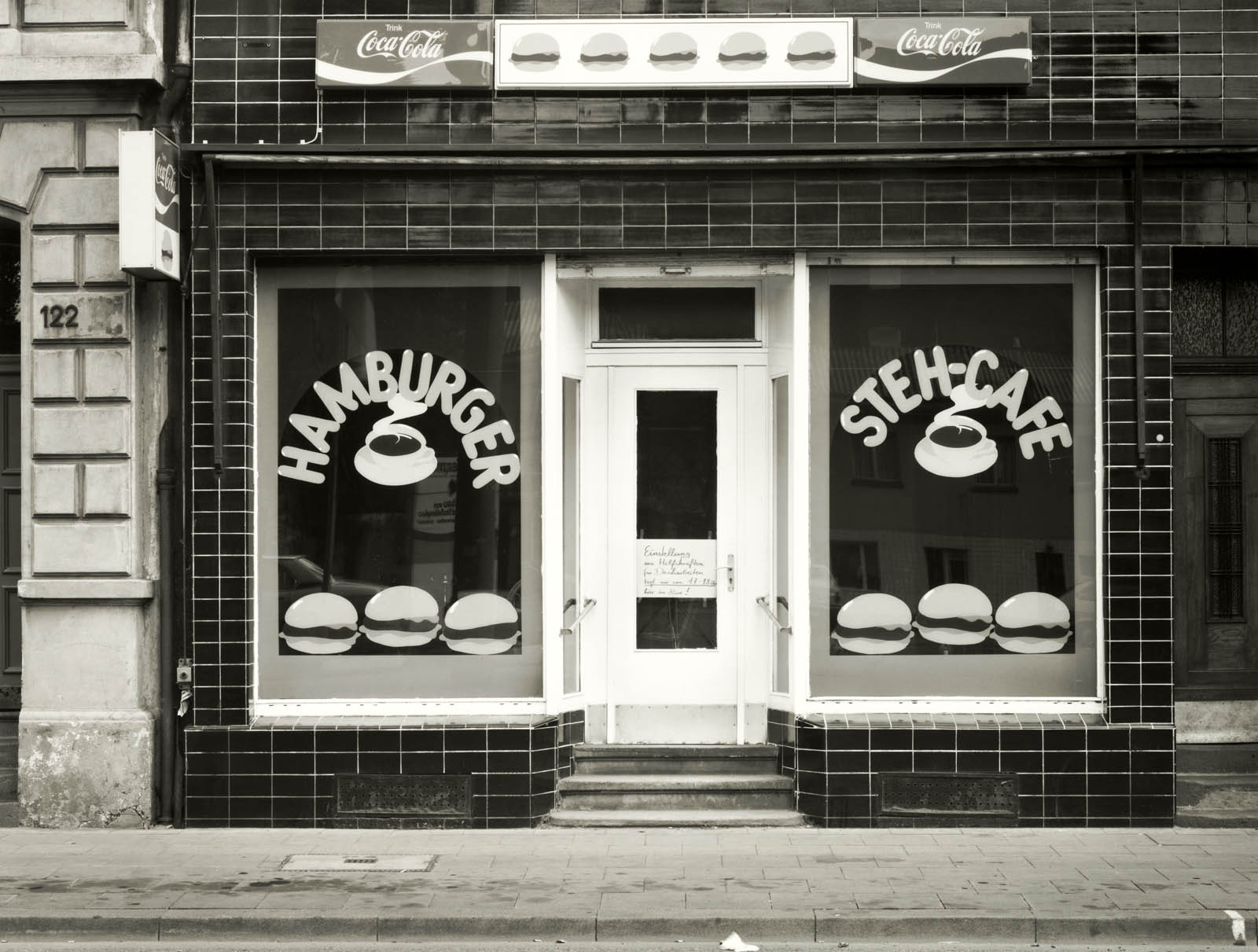
Tata Ronkholz became known for her appealing series of kiosks (Trinkhallen) and small shops that capture typical moments of urban everyday culture. These were photographed between 1977 and 1985, particularly in neighbourhoods of Cologne and Düsseldorf, in the Ruhr area, as well as in Leverkusen and Krefeld. For example, the photo Trinkhalle, Köln-Nippes – with its ice cream and newspaper advertisements and vending machines for chewing gum and cigarettes – is as amusing and engaging as Boutique, Köln-Mülheim in which, according to the store sign, alongside clothing records were also for sale. The photographs illustrate the extent to which product offerings, decoration, and advertising in public spaces has been transformed. Tata Ronkholz’ choice of subject means that her work indirectly testifies to social, cultural, and economic change and shows how people shape the world around them.
Industrial gates
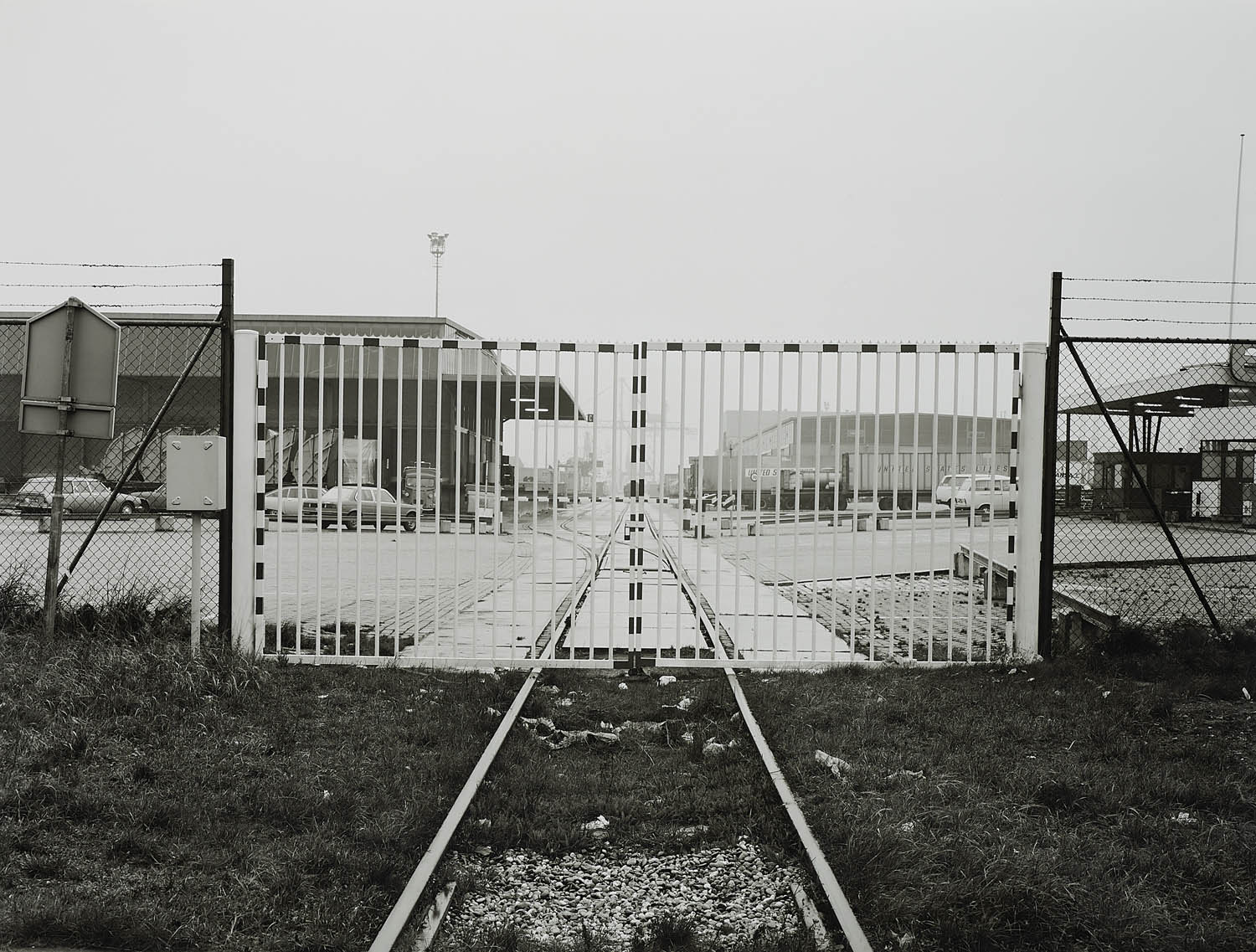
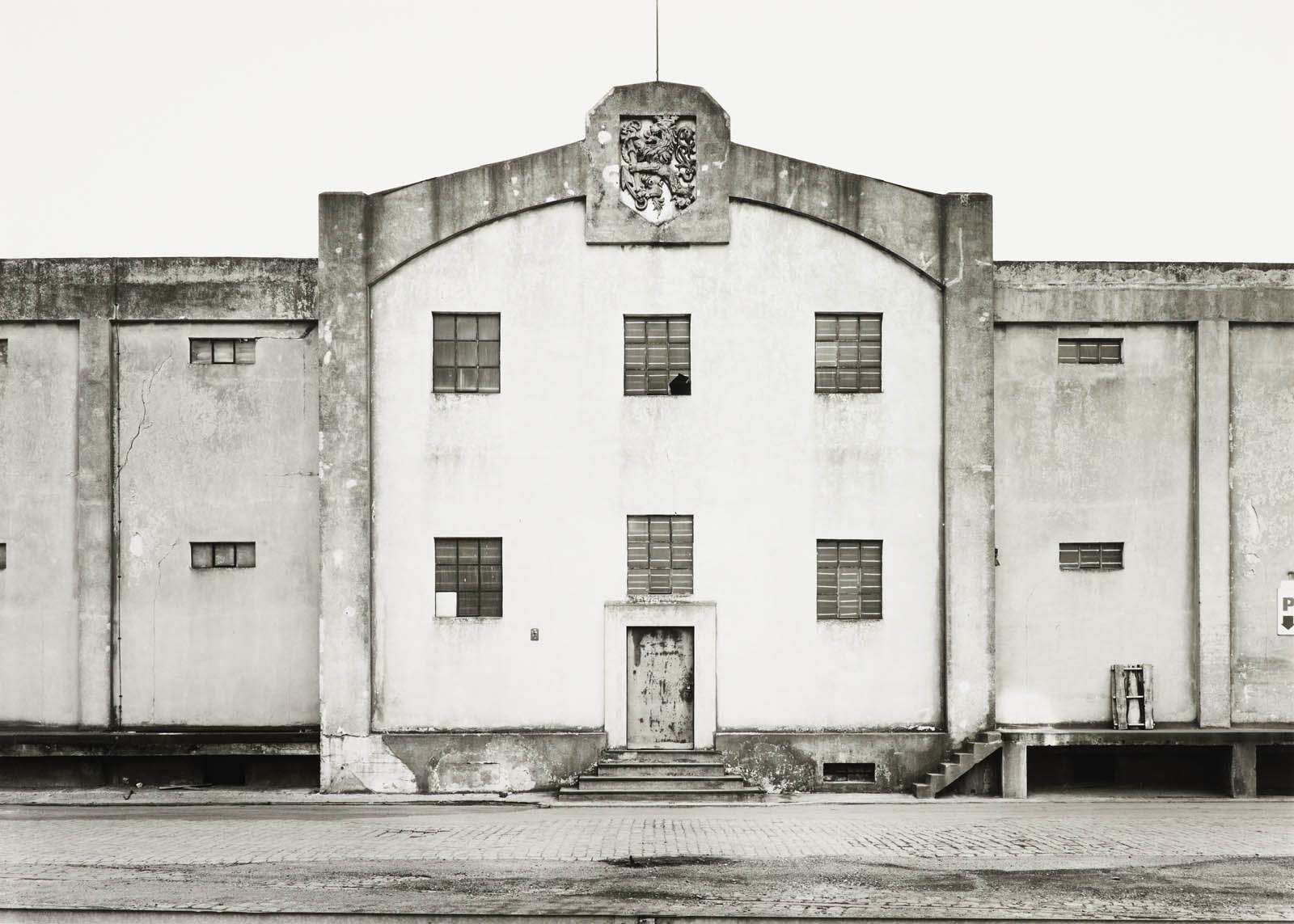
Another significant series is dedicated to industrial gates, photographed between 1977 and 1985. The sober black-and-white images of these gates, with their grids and frameworks, offer glimpses into the interiors of industrial areas. In the photographs the gates function as interfaces between private and public space, between interior and exterior, and between activity and calm. Their aesthetic, reminiscent of abstract artworks, imbues the everyday with a new significance.
Collaboration with Thomas Struth
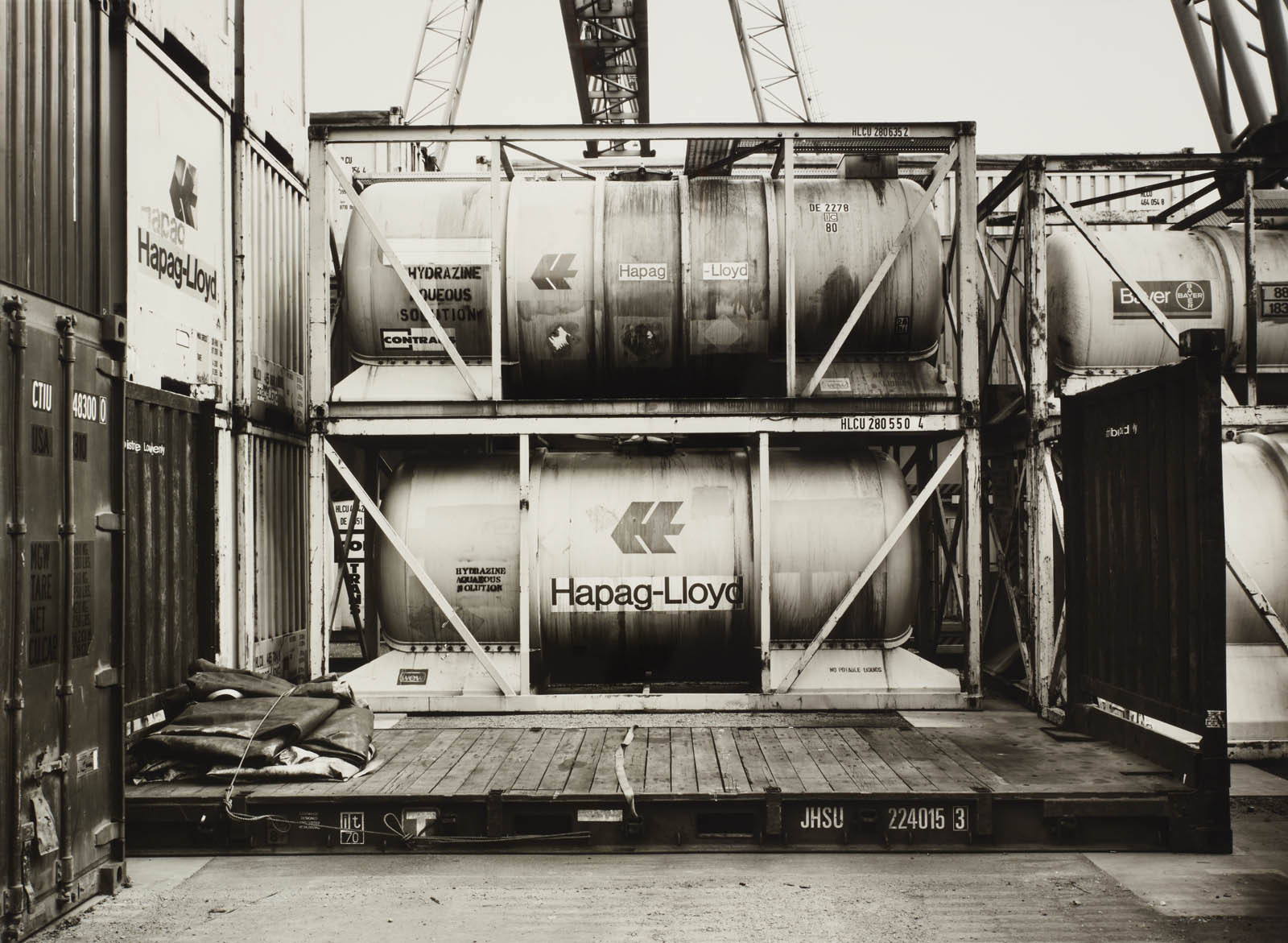
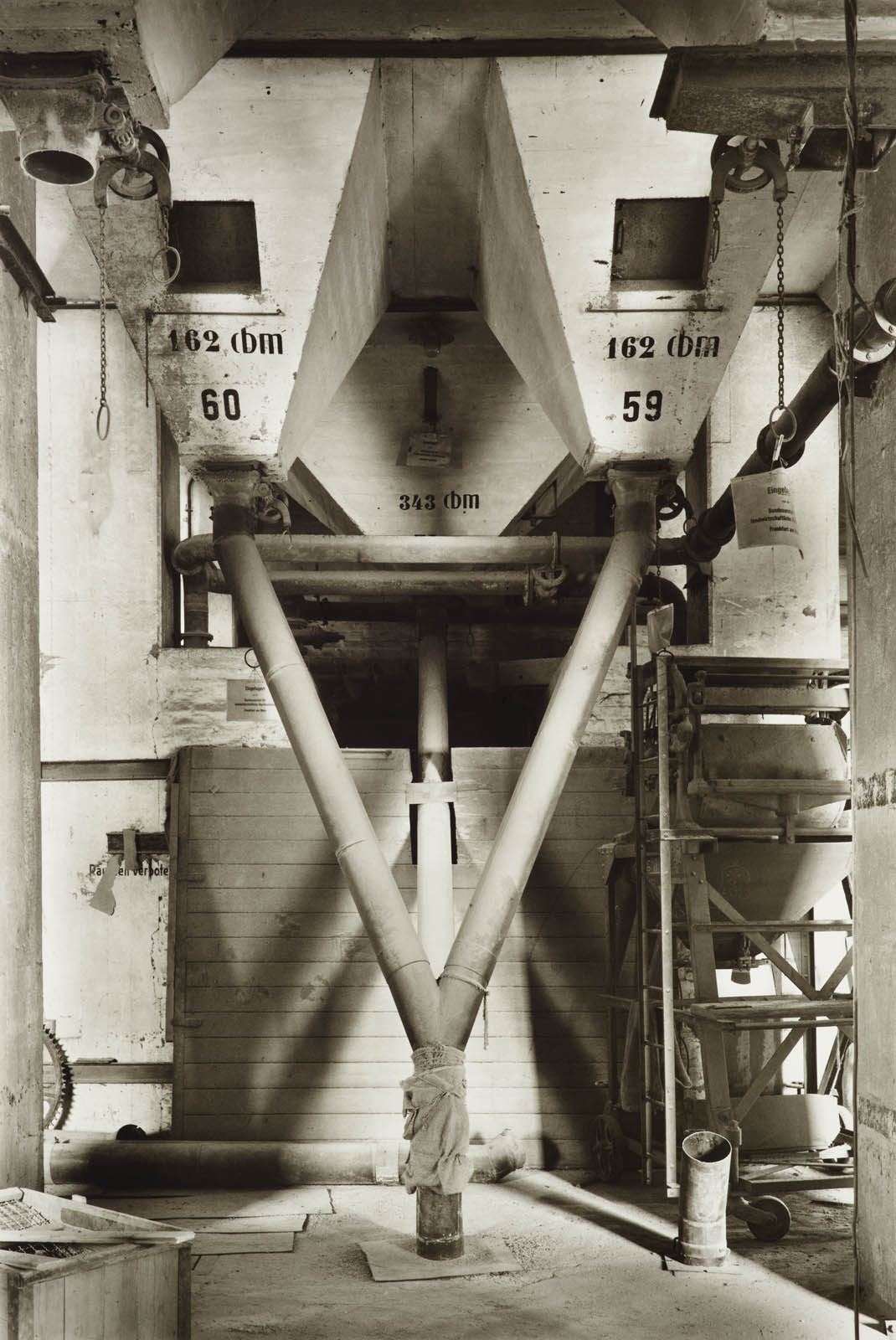
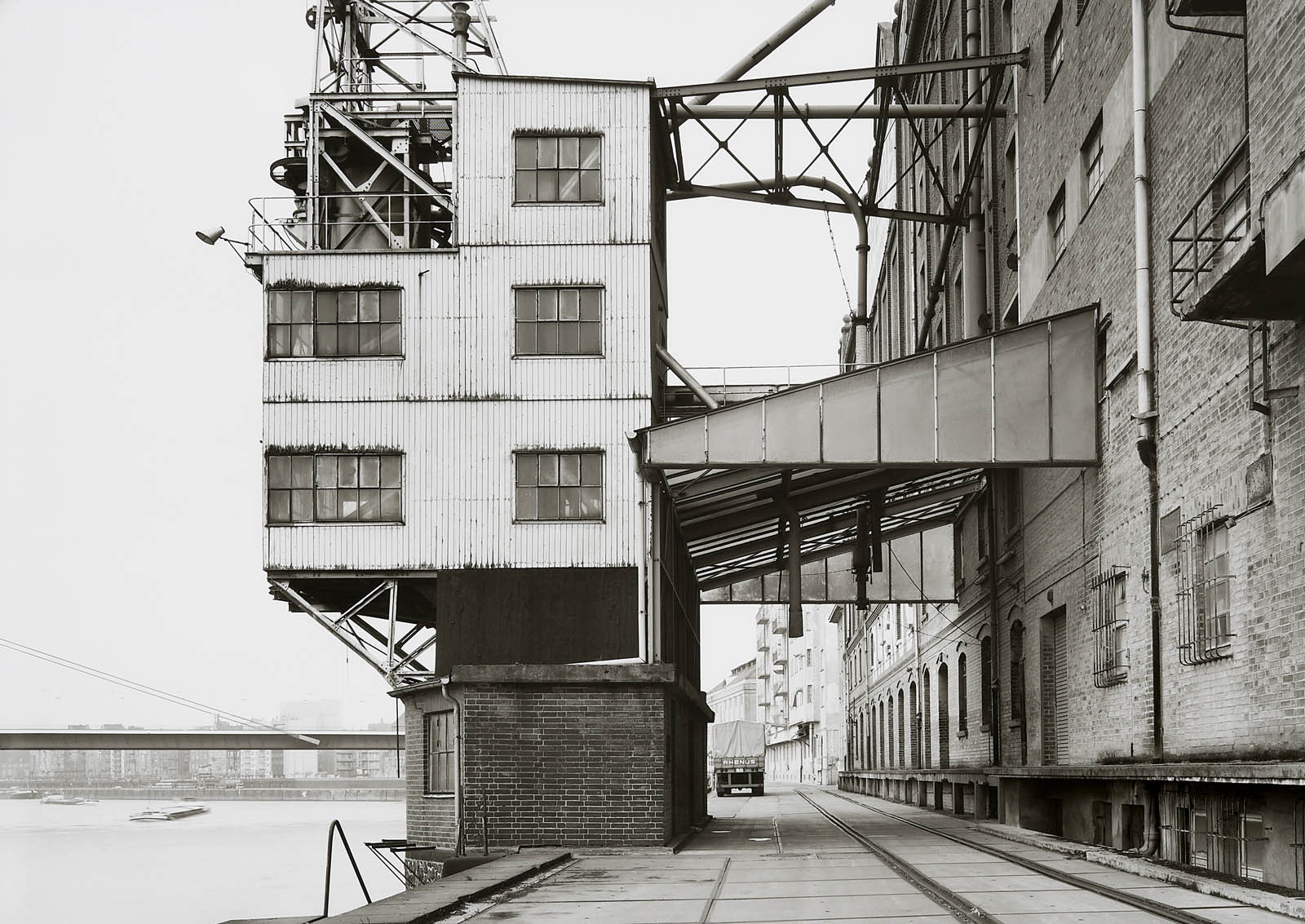
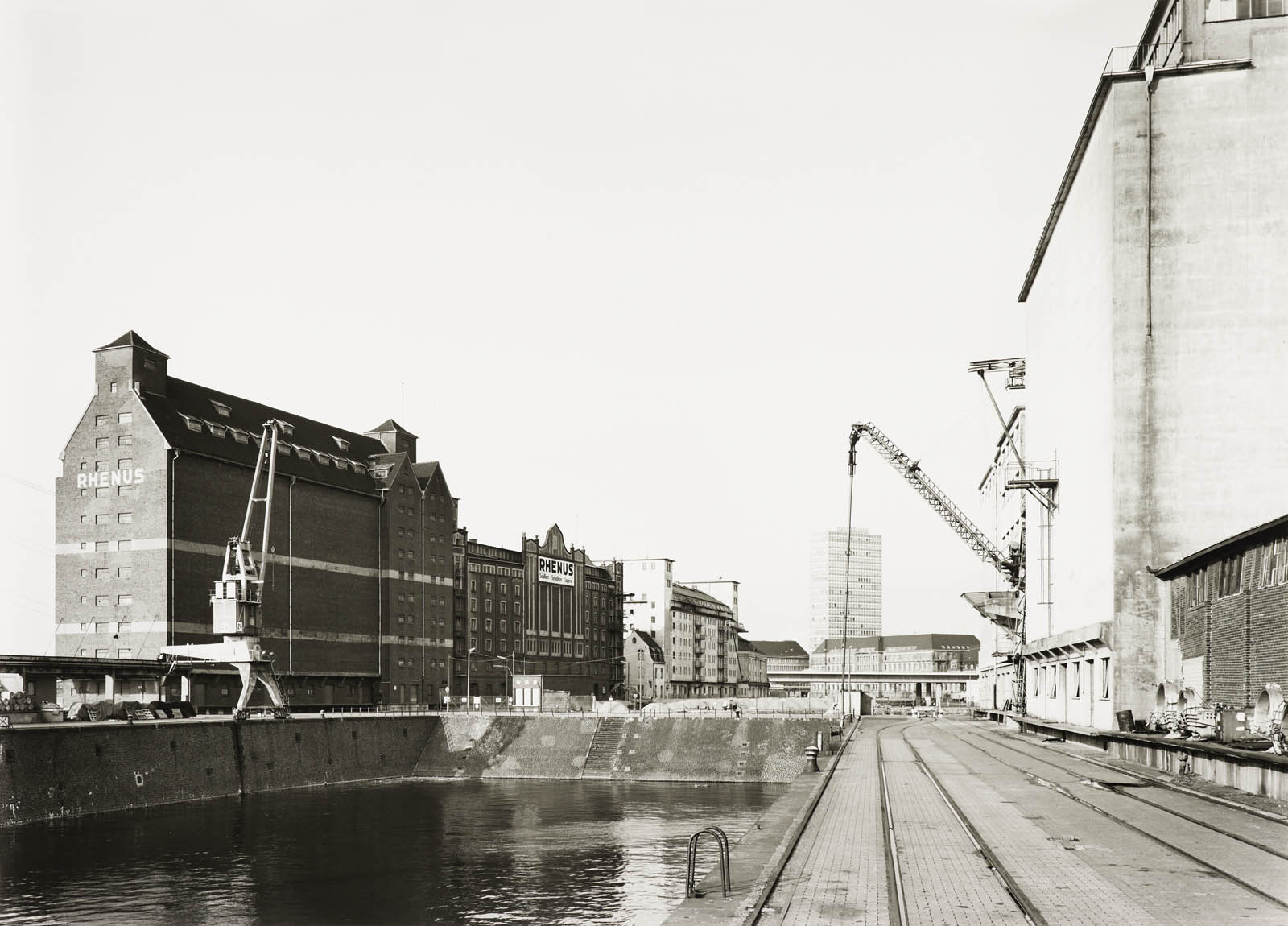
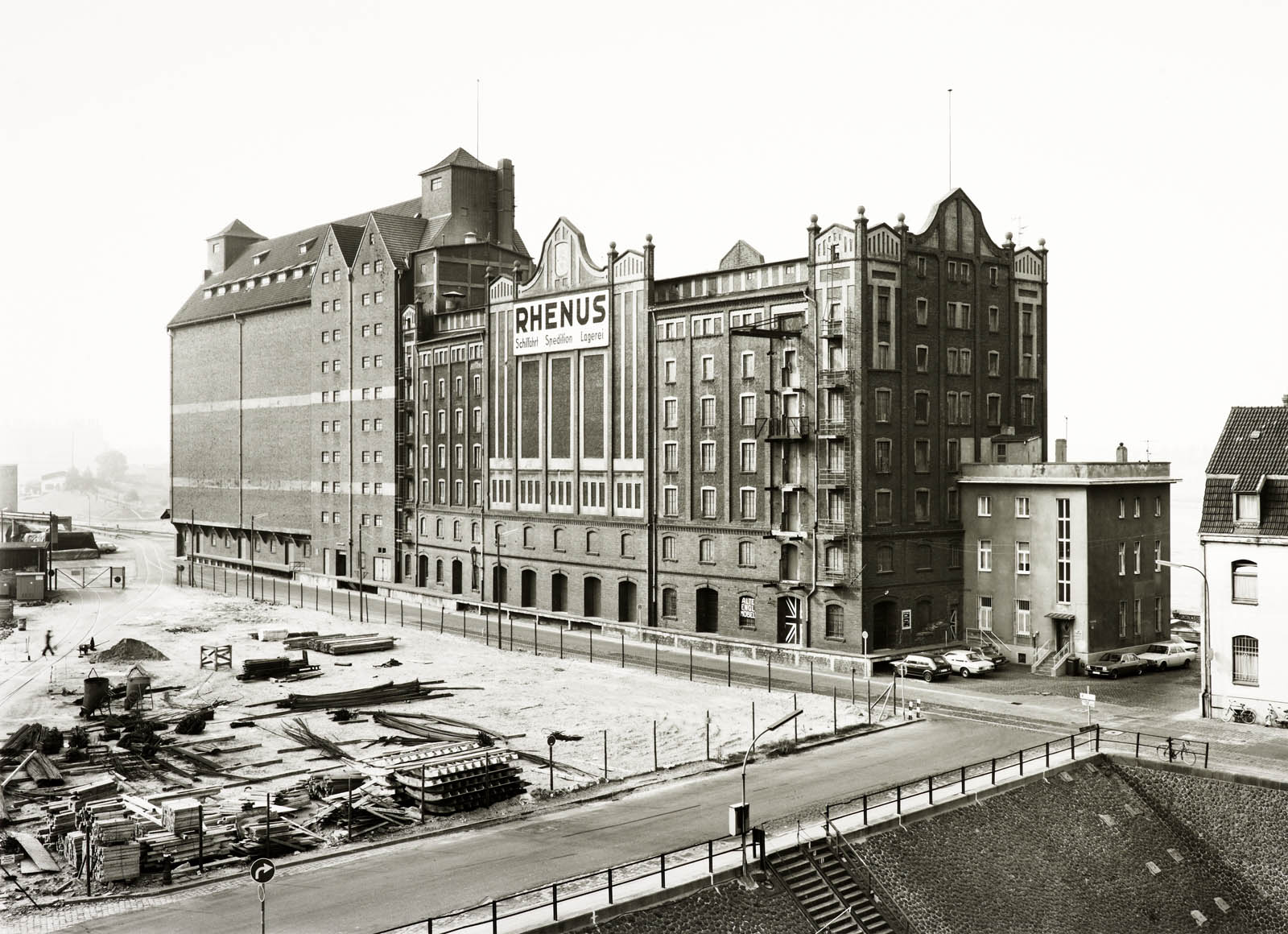
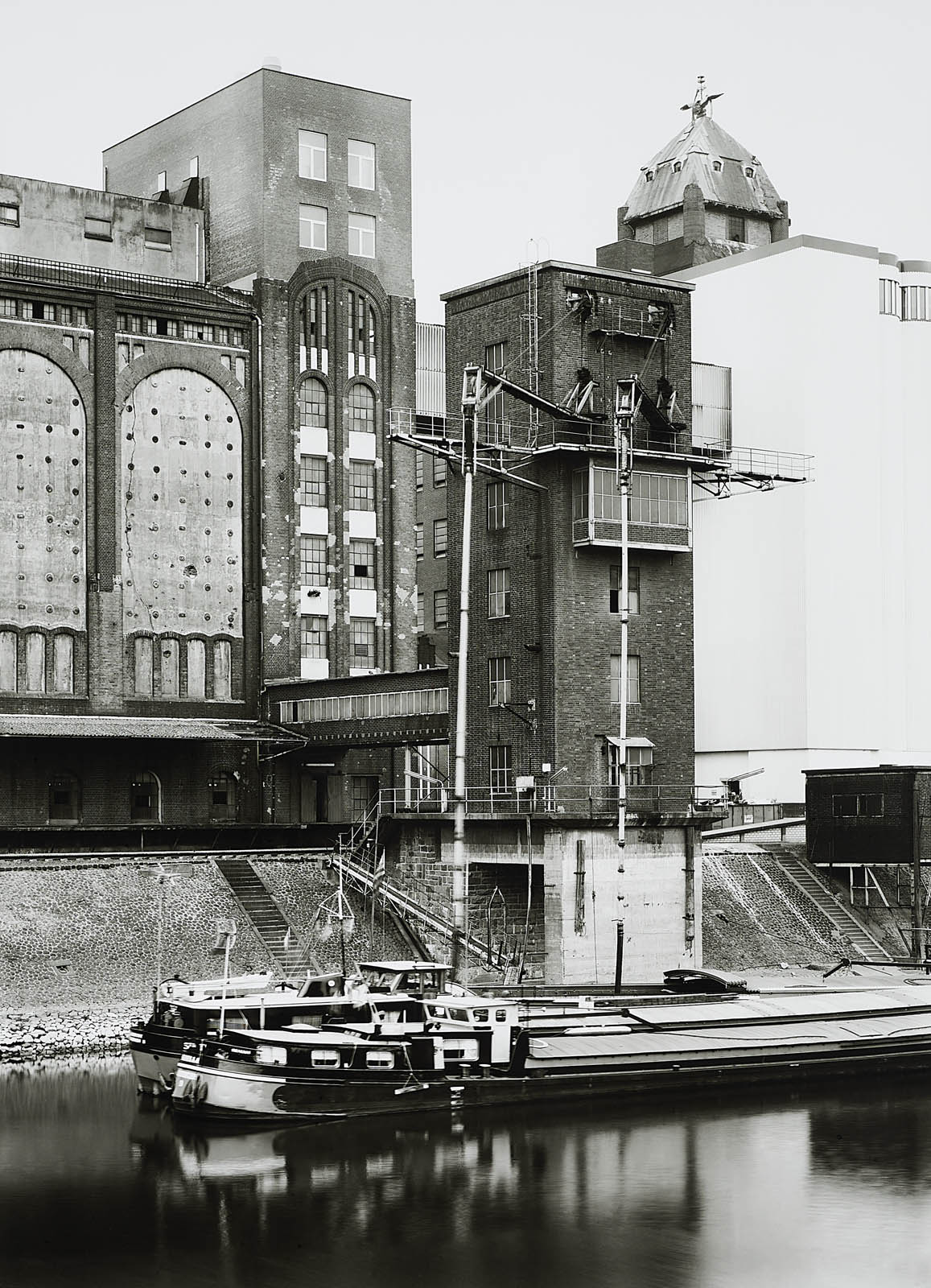
In 1979 Ronkholz, together with her fellow student Thomas Struth, began work on an impressive documentary series on Düsseldorf’s Rheinhafen. The project originated from the planned redevelopment of this historic harbour area – a site that, in its original form, was considered an industrial area of significant urban historical and architectural importance. Together they set out to document the harbour in its entirety, capturing its historic buildings, technical installations, and operational structures. In carefully composed images they recorded façades, interiors, silos, warehouses, crane structures, and harbour basins, before these elements partially disappeared or were fundamentally altered during the restructuring.
Tata Ronkholz as product designer
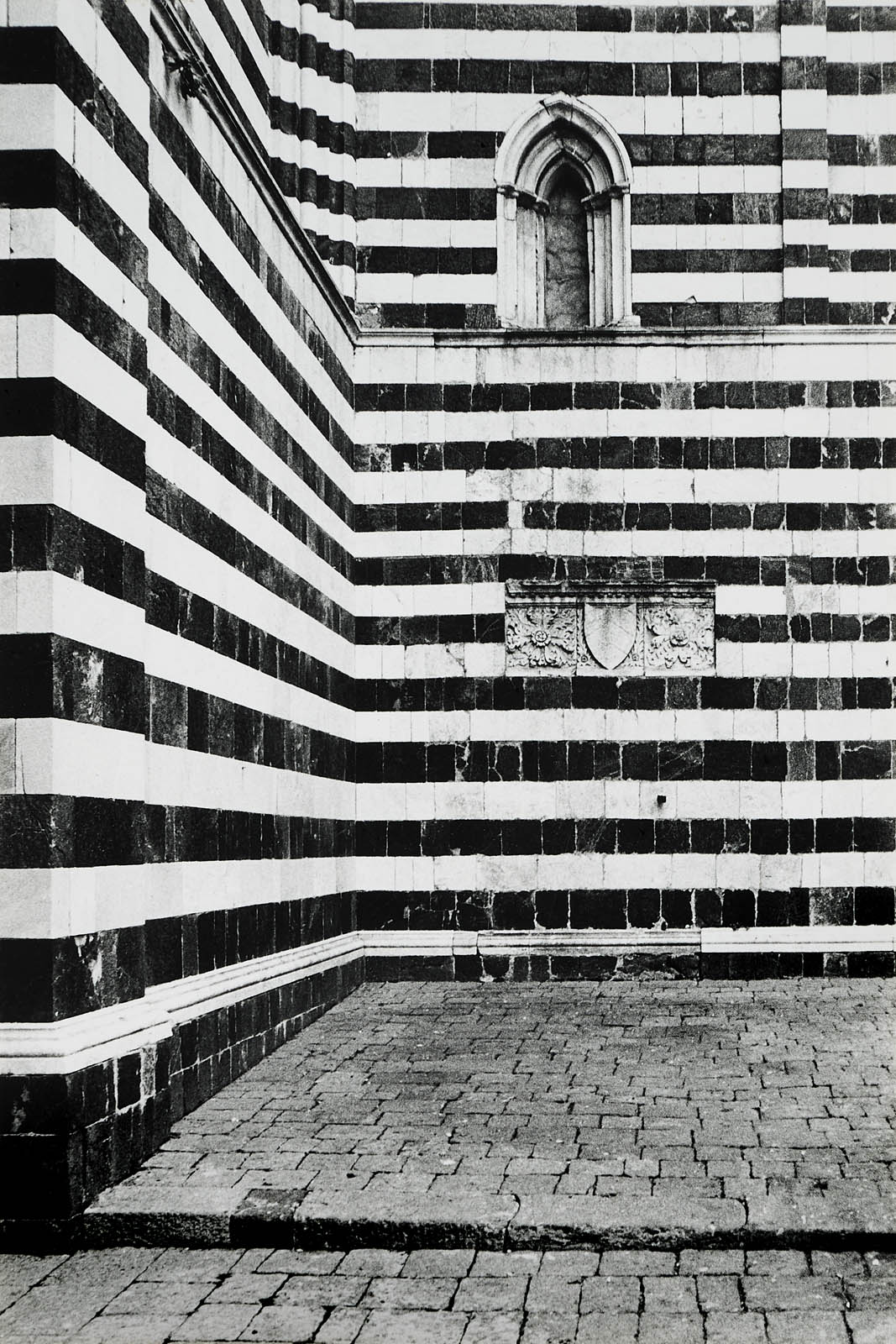
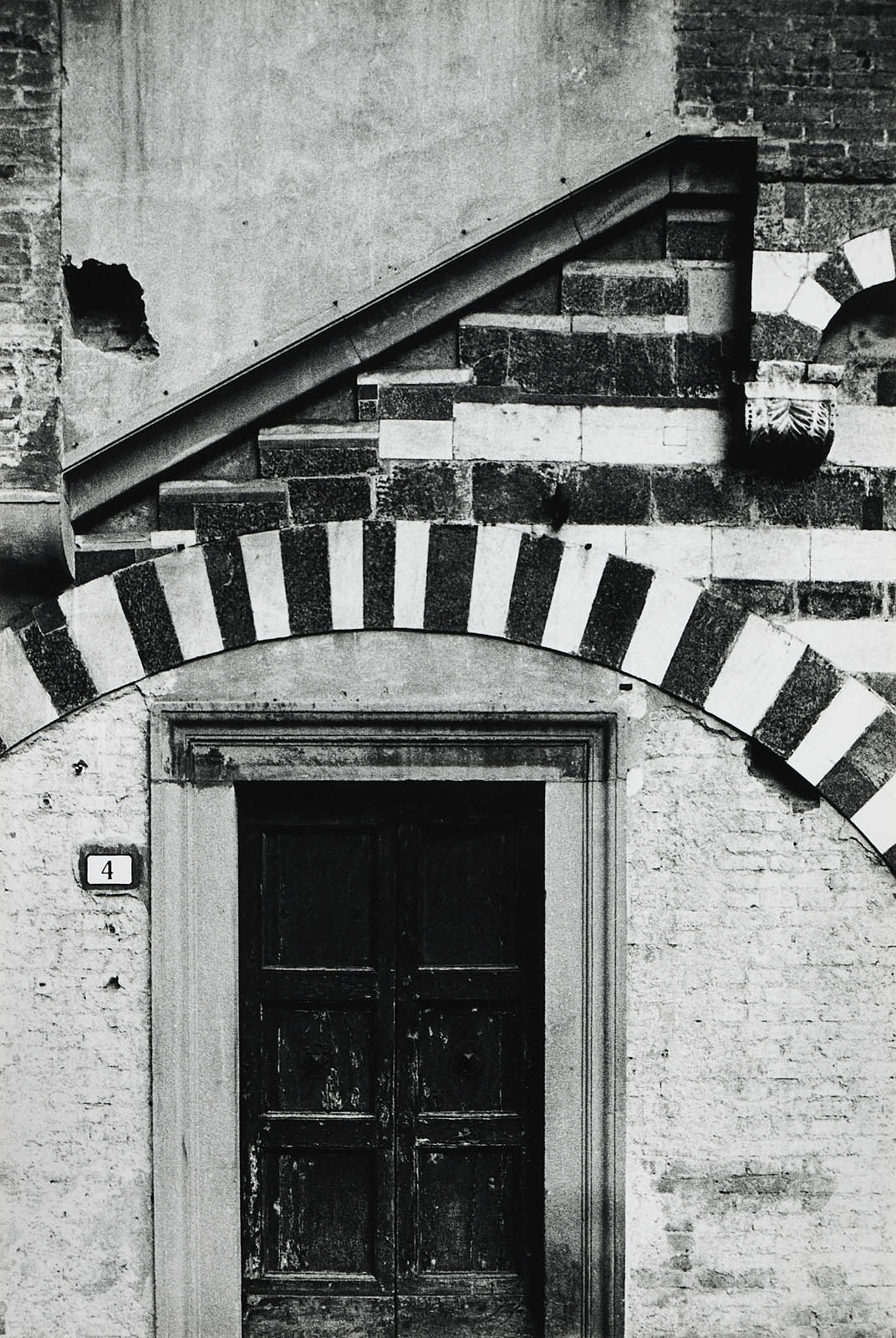
Between 1961 and 1965 Ronkholz studied at the Werkkunstschule Krefeld (an academy of applied art) with a focus on furniture design, and subsequently worked as a freelance designer until 1977. The exhibition also explores this aspect of Ronkholz’ oeuvre, including depictions of geometrically shaped furniture and lighting fixtures as well as designs for office and cafeteria furniture. Ronkholz’ designs are characterised by clear forms and functional elegance. Finally, the retrospective also presents early photographs of architectural forms created in 1975/76 in Italy and France, revealing her strong affinity for aspects of the ‘designed world’ across different areas of life.
Ronkholz’ estate, acquired in 2011 by VAN HAM Art Estate in Cologne, forms the basis of the exhibition alongside the holdings of Stadtmuseum Düsseldorf. Significant contributions have also been made from the in-house collections of Die Photographische Sammlung/SK Stiftung Kultur – who also curated the exhibition – and through loans from private collections.
Book
The exhibition is accompanied by a catalogue, Tata Ronkholz: Gestaltete Welt. Eine Retropektive (2025, Schirmer/Mosel Verlag GmbH), with texts in German and English. It is available from the Huis Marseille museum shop (€49.90).
“The artist derives pleasure from her measured dérive and investigation of the evanescent, posing important questions about seemingly mundane things before they pass out of sight, memory, and existence.” Dr Marcus Bunyan
Exhibition dates: 26th April – 15th September, 2024
In recent weeks Art Blart has posted on social documentary photographers of the urbanscape: David Goldblatt documenting social conditions in South Africa under apartheid and Roger Mayne with his “mixture of reality and unreality” photographs of the communities of Southam Road and surrounds, London.
One could argue that both could be seen as a focused urban male flâneur (or flâneuse in the case of a female), who saunters around the city observing society – the serendipitous Mayne more so than the working in series focused Goldblatt. And here we have another photographer of the urbanscape until recently unknown to me, that of the magnificent Austrian photographer Elfriede Mejchar (1924-2020) who – according to the exhibition text – is another flâneur, “her flaneur-like practice underlying her earlier bodies of work.”
But Mejchar’s was a very concentrated photographic practice, one in which the photographer again and again “explored Vienna’s peripheral zones on the southeast edge of the city” to create photographic series often created over several years. Therefore, rather than being a wandering dilettante photographer, I believe that Mejchar was a focused conceptual artist who used Guy Debord’s “Theory of the Dérive” (1956)1 (or “drift”) to ground her photographic practice.
With its focused flow of acts, its gestures, its strolls, its encounters, one of the goals of the dérive includes studying the terrain of the city (psychogeography), the exploration of urban environments that emphasises interpersonal connections to places. The pyschogeography of the urbanscape.2
A quotation by Grant W. Ray is instructive in this regard:
“Debord’s Dérive is not simple a walk through the streets of the city, of chance encounters. Instead one must move rapidly and decisively through the urban space, with intention… They should be aware of their surroundings, of the “… ecological analysis of the absolute or relative character of fissures in the urban network, of the role of microclimates, of distinct neighborhoods with no relation to administrative boundaries, and above all of the dominating action of centers of attraction…” Thus the most talented photographers who’s oeuvre includes the investigation of the urbanscape. The walk itself, the interaction of operator, camera, and site breaks down the normal relationship we have with public urban spaces. Their activity alone is the Dérive.”3
Working decisively and with intention, at the edge of the city, in spaces with no boundaries, where there were few people, or using different typologies of the city such as hotel rooms in which she stayed during her everyday job, Mejchar focused on the pyschogeography of the urbanscape through her reflective, non-decisive moment photographs, capturing “the complexity of this desolate and yet, in her eyes, beautiful landscape” and the changes that were happening to the urbanscape.
“Elfriede Mejchar consciously broke away from the photographic mainstream and the reportage style that was popular at the time. Rather than searching for the so-called “decisive moment,” she approached her subjects in a strongly conceptual and serial manner. She focused not on the extraordinary but on the unspectacular and the commonplace, the everyday and the banal, repeatedly addressing these in new ways in her photographic series.” (Text from the Wien Museum website)
Working with the periphery, the borders between urban and rural spaces, the non-decisive moment, landscapes subjected to human interventions and photographs in series, Mejchar’s photographs are more than mere representation of these sites: they challenge the viewer to “instigate more than just chance encounters for the viewer looking at the photographs,” through an understanding of the “subtle variations of the daily social realities created and maintained through public works and layout.”4 “The photographers activity of finding these sites is the dérive, the photograph itself is the pyschogeography, the questioning.”4
With her training as a classical photographer in the manner of Sudek, Brassaï or Tudor-Hart (see the first two photographs in the posting On Her Own. The photographer Elfriede Mejchar) grounding her later objective conceptual photographs, Mejchar’s point of departure is the pleasure she derives from the focused dérive and the results of her activity (through the objective and precise eye of a topographer a la Bernd and Hiller Becher) – the questioning photographs – brought to the attention of the viewer.
Mejchar investigates “traces of civilisation that humans leave in nature or along the edges of the urban fabric” and in so doing brings peripheral things (and her ideas about them) to the centre of our attention, making them psychologically valuable for all of us. The artist derives pleasure from her measured dérive and investigation of the evanescent, posing important questions about seemingly mundane things before they pass out of sight, memory, and existence.
1/ “Psychogeography describes the effect of a geographical location on the emotions and behaviour of individuals.
How do different places make us feel and behave? The term psychogeography was invented by the Marxist theorist Guy Debord in 1955 in order to explore this. Inspired by the French nineteenth century poet and writer Charles Baudelaire’s concept of the flâneur – an urban wanderer – Debord suggested playful and inventive ways of navigating the urban environment in order to examine its architecture and spaces.”
Anonymous. “Psychogeography,” on the Tate website Nd [Online] Cited 13/09/2024
2/ Guy Debord (November 1956). “Theory of the Dérive”. Les Lèvres Nues (9). Translated by Ken Knabb.
3/ Guy Debord, “Theory of the Dérive,” 1958 on the Bureau of Public Secrets website Nd quoted in Grant W. Ray. “Dérive,” on the Silverpoetics website 13 July 2009 [Online] Cited 20/08/2024
4/ Ibid.,
Many thankx to the Museum der Moderne Salzburg for allowing me to publish the photographs in the posting. Please click on the photographs for a larger version of the image.
Poesie des Alltäglichen. Fotografien von Elfriede Mejchar / The poetry of the everyday
To mark the centenary of her birth, in 2024 three museums in Austria host exhibitions of works by the photographer Elfriede Mejchar (1924-2020, Vienna, AT). The Museum der Moderne Salzburg presents the artist as a portraitist. Curator Katharina Ehrl guides you through the exhibition in this short film.
In 2024, three museums host exhibitions of works by the Austrian photographer Elfriede Mejchar (1924-2020, Vienna, AT). The Museum der Moderne Salzburg is collaborating with the Landesgalerie Niederösterreich and the Wien Museum to honor the artist’s work at three different locations on the occasion of her 100th birthday, with each location offering a different focus.
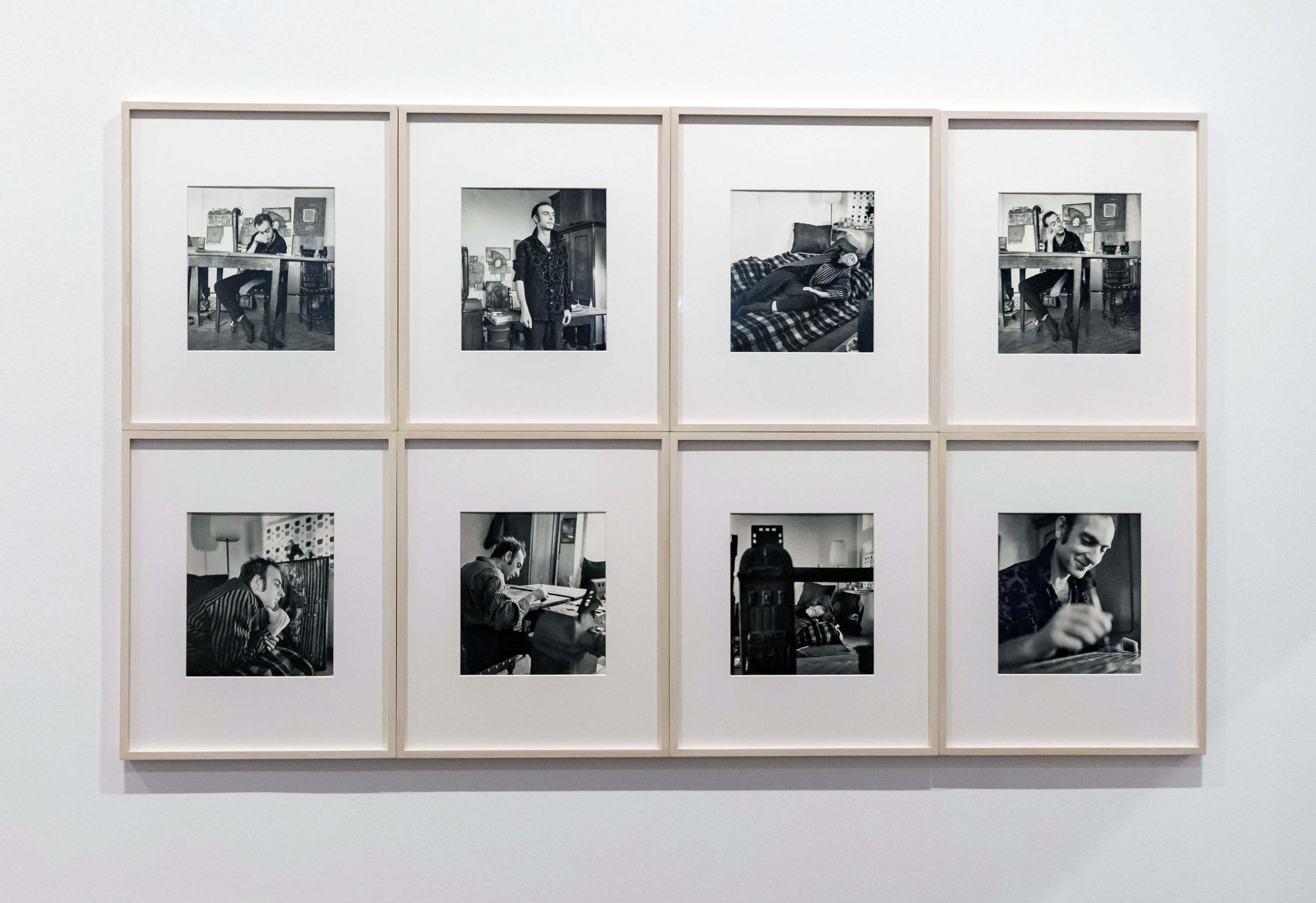
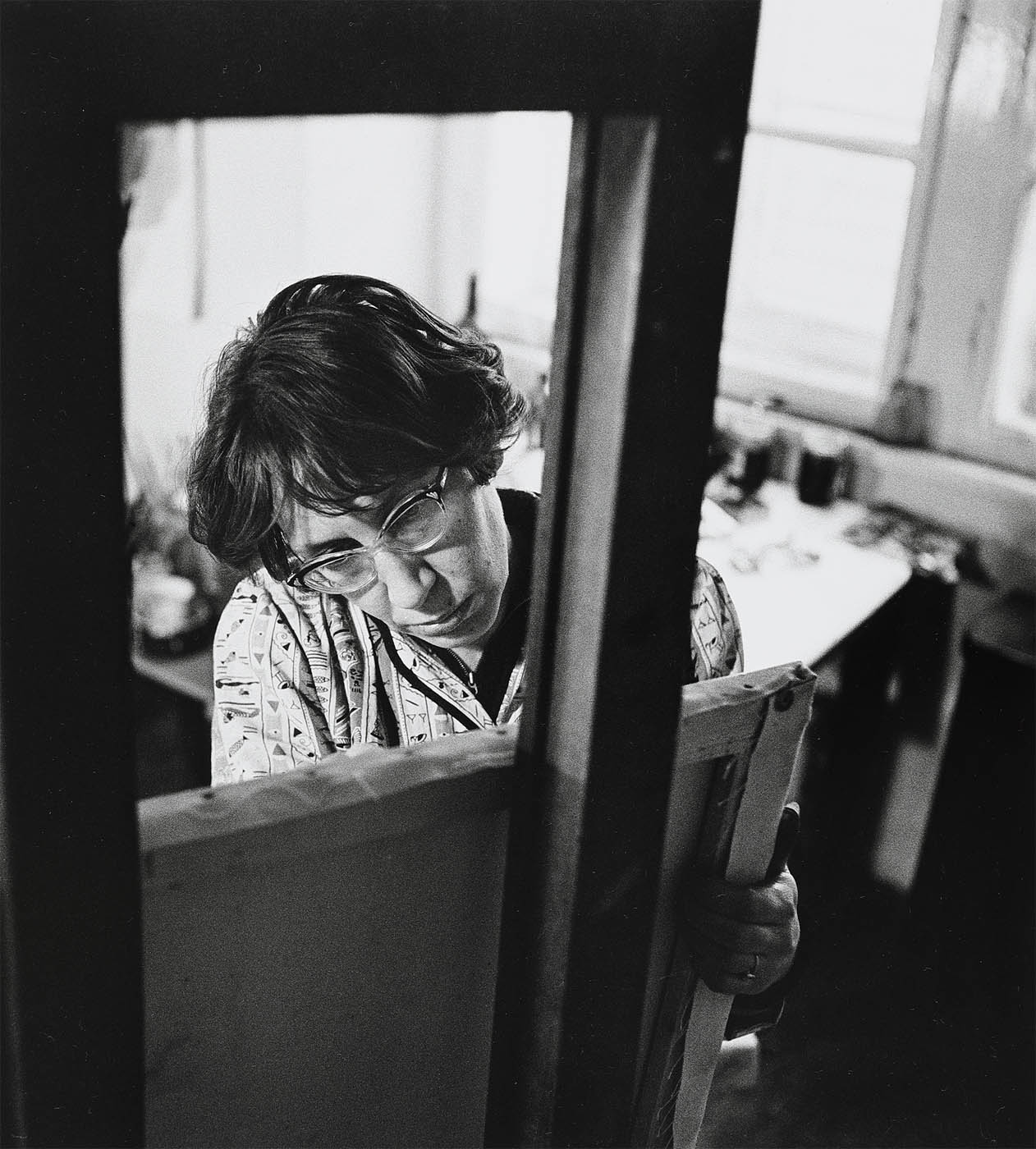
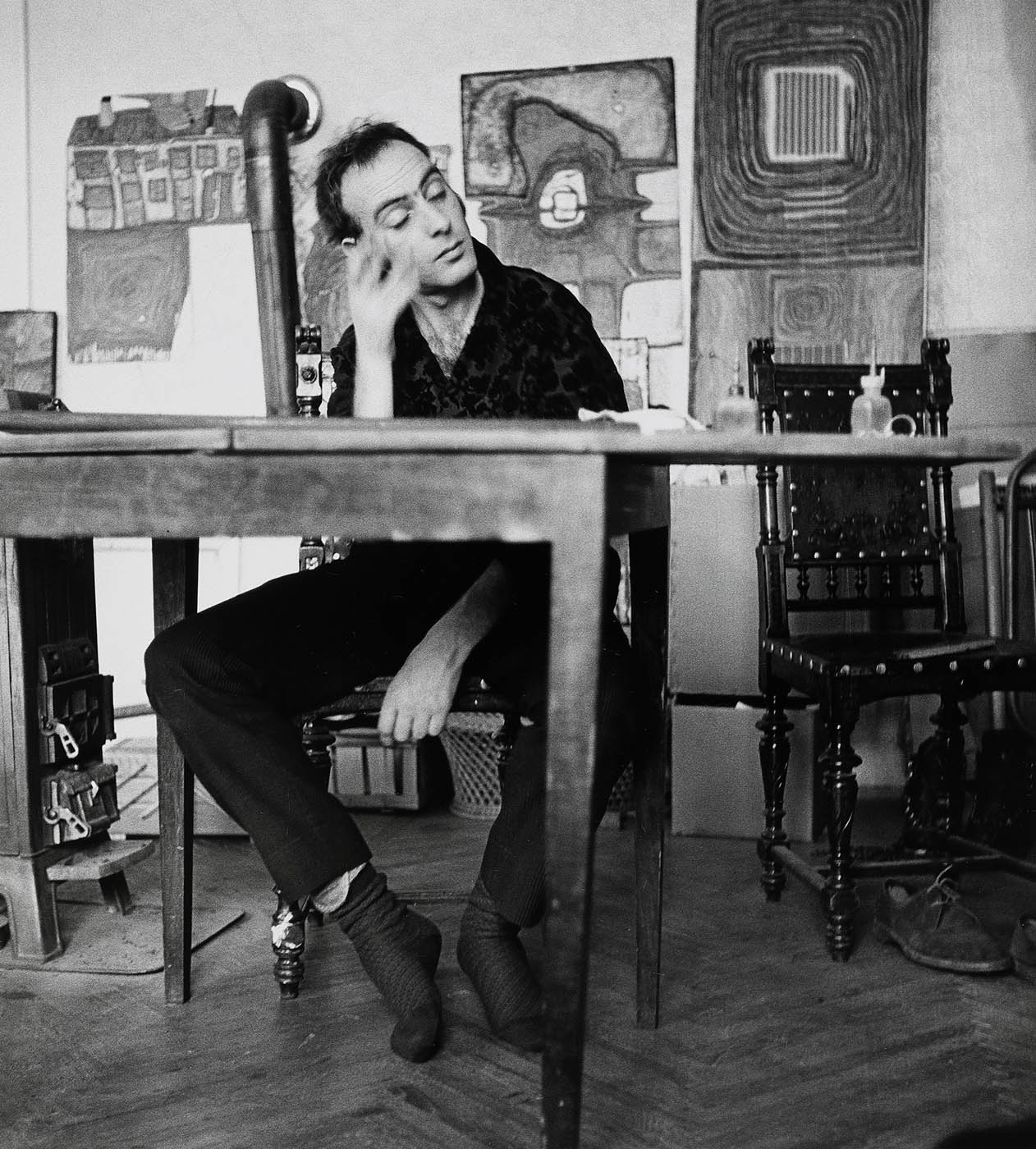
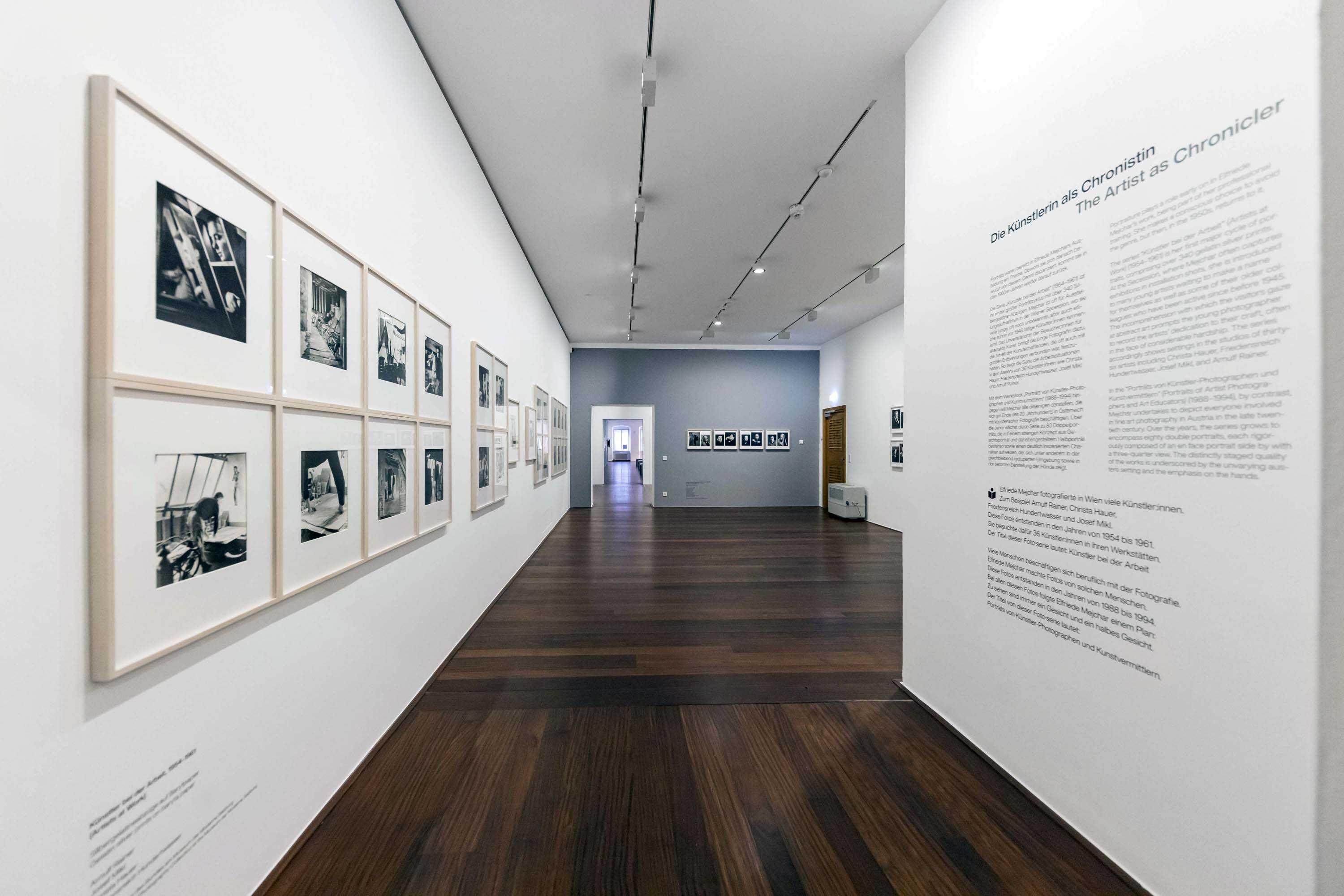
Salzburg’s contribution to this collaborative project will present the artist’s portraits. With her series of works entitled “Artists at work” (1954-1961), for example, Mejchar demonstrates impressively how she engages with the artistic personalities of Christa Hauer, Friedensreich Hundertwasser, Josef Mikl and Arnulf Rainer by mapping their working situation in their studios. But she also demonstrated the same precision of perception when encountering the inanimate objects in her surroundings, thereby giving landscapes, flowers and discarded furniture the appearance of animated portraits.
The photo collections at the Museum der Moderne Salzburg hold a total of 665 photographs by Mejchar. Otto Breicha, the first director of the Museum’s predecessor institution, was a long-time colleague of Mejchar who recognised the artistic value of her photographic work and helped to promote it. As early as 1982, one year before the official opening of the Rupertinum, a comprehensive collection of her work was added to the photographic collection that later grew through further purchases and donations and today constitutes a focal point of the Museum’s photographic holdings.
Elfriede Mejchar (Austrian, 1924-2020) Arnulf Rainer 1954-1961 From the series Künstler bei der Arbeit, 1954-1961 (Artists at work, 1954-1961) Silver gelatin print on baryta paper Federal Photography Collection at the Museum der Moderne Salzburg
Arnulf Rainer (Austrian, b. 1929)
Arnulf Rainer (born 8 December 1929) is an Austrian painter noted for his abstract informal art.
Rainer was born in Baden, Austria. During his early years, Rainer was influenced by Surrealism. In 1950, he founded the Hundsgruppe (dog group) together with Ernst Fuchs, Arik Brauer, and Josef Mikl. After 1954, Rainer’s style evolved towards Destruction of Forms, with blackenings, overpaintings, and maskings of illustrations and photographs dominating his later work. He was close to the Vienna Actionism, featuring body art and painting under the influence of drugs. He painted extensively on the subject of Hiroshima such as it relates to the nuclear bombing of the Japanese city and the inherent political and physical fallout.
Elfriede Mejchar (Austrian, 1924-2020) Christa Hauer 1954-1961 From the series Künstler bei der Arbeit, 1954-1961 (Artists at work, 1954–1961) Silver gelatin print on baryta paper Federal Photography Collection at the Museum der Moderne Salzburg
Christa Hauer-Fruhmann (Austrian, 1925-2013)
Christa Hauer-Fruhmann (b. March 13, 1925 in Vienna; d. March 21, 2013 in St. Pölten) was an Austrian painter. …
She was initially under the artistic influence of her father and created representational works such as landscapes, portraits and nude drawings. At the end of her stay in the USA, around 1960, she turned to abstract painting, particularly action painting, color field painting and informal art. Later, cosmic forms and a turn to nature determined her works.
Elfriede Mejchar (Austrian, 1924-2020) Friedensreich Hundertwasser 1954-1961 From the series Künstler bei der Arbeit, 1954-1961 (Artists at work, 1954-1961) Silver gelatin print on baryta paper Federal Photography Collection at the Museum der Moderne Salzburg
Friedensreich Hundertwasser (Austrian, 1928-2000)
Friedensreich Hundertwasser Regentag Dunkelbunt (born Friedrich Stowasser, born December 15, 1928 in Vienna; died February 19, 2000 on board the Queen Elizabeth 2 off Brisbane) was an Austrian artist, who worked primarily as a painter, but also in the fields of architecture and environmental protection. …
Artistically, he was an opponent of the “straight line” and any kind of standardisation throughout his life. This is particularly evident in his work in the field of building design, which is characterised by imaginative liveliness and individuality, but above all by the inclusion of nature in architecture.
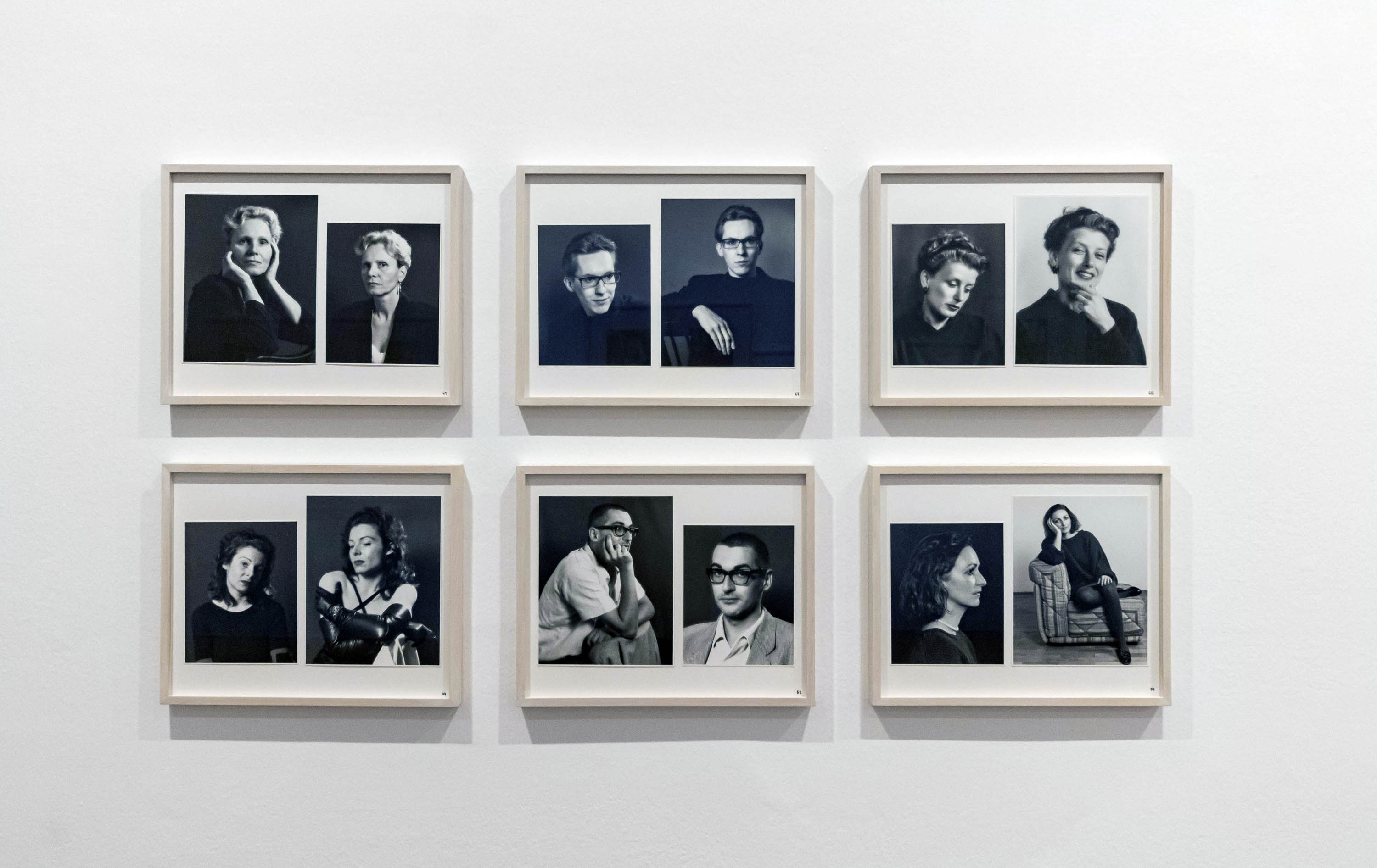
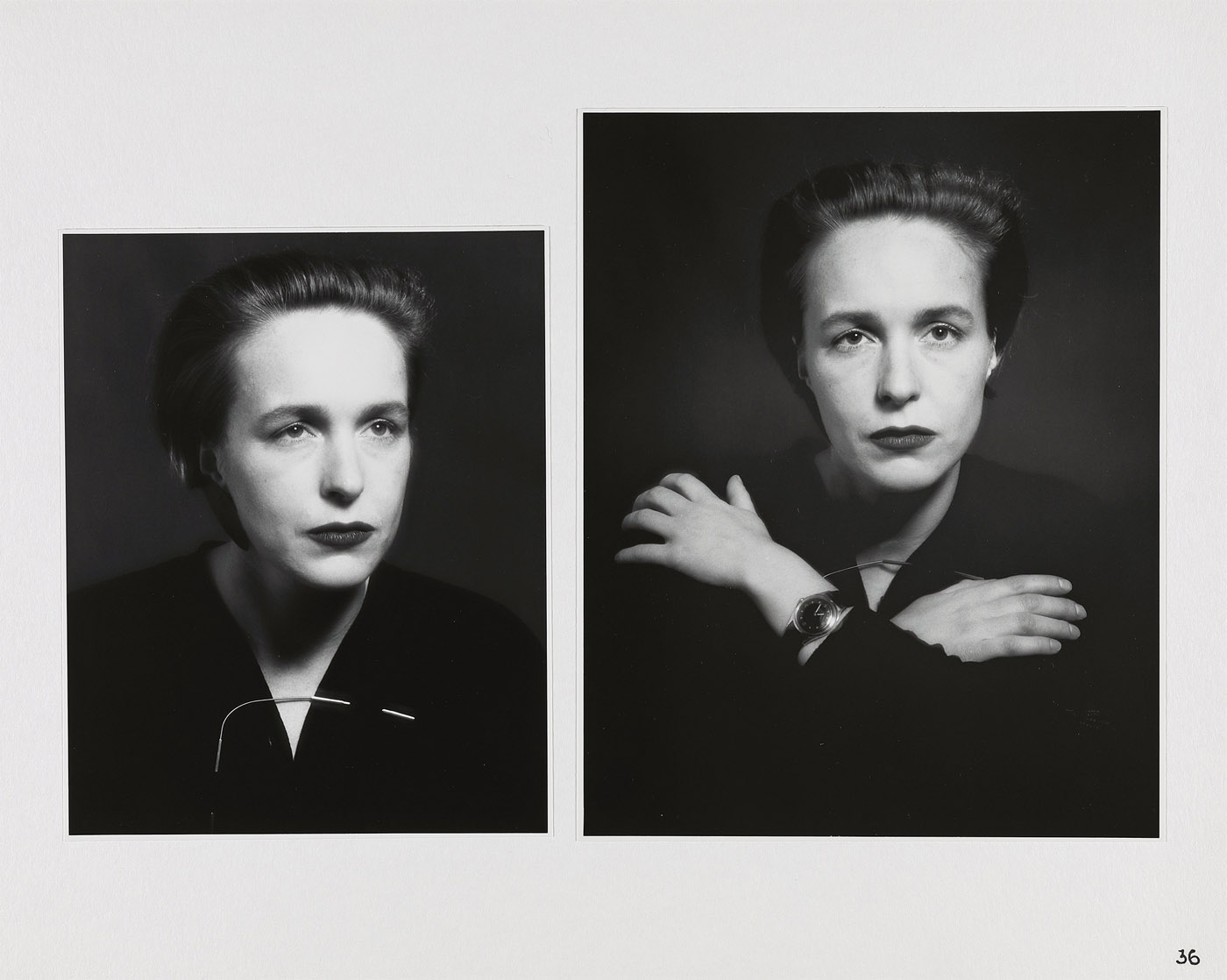
Elfriede Mejchar (Austrian, 1924-2020) Aglaia Konrad 1988 From the series Porträts von Künstler-Photographen und Kunstvermittlern (Portraits of Artist Photographers and Art Educators) Silver gelatin print on baryta paper Federal Photography Collection at the Museum der Moderne Salzburg
Aglaia Konrad (Austrian, b. 1960)
Aglaia Konrad (born 1960) is an Austrian photographer and educator living in Brussels. …
Konrad’s photographs explore urban space in large cities. Konrad’s work has been to known to be distinctly international in that it highlights urban elements independent of cultural markers. Her work highlights the ubiquitous elements of urban life through methods like filming a city from the perspective of a moving car or compiling a series of aerial views of skyscrapers.
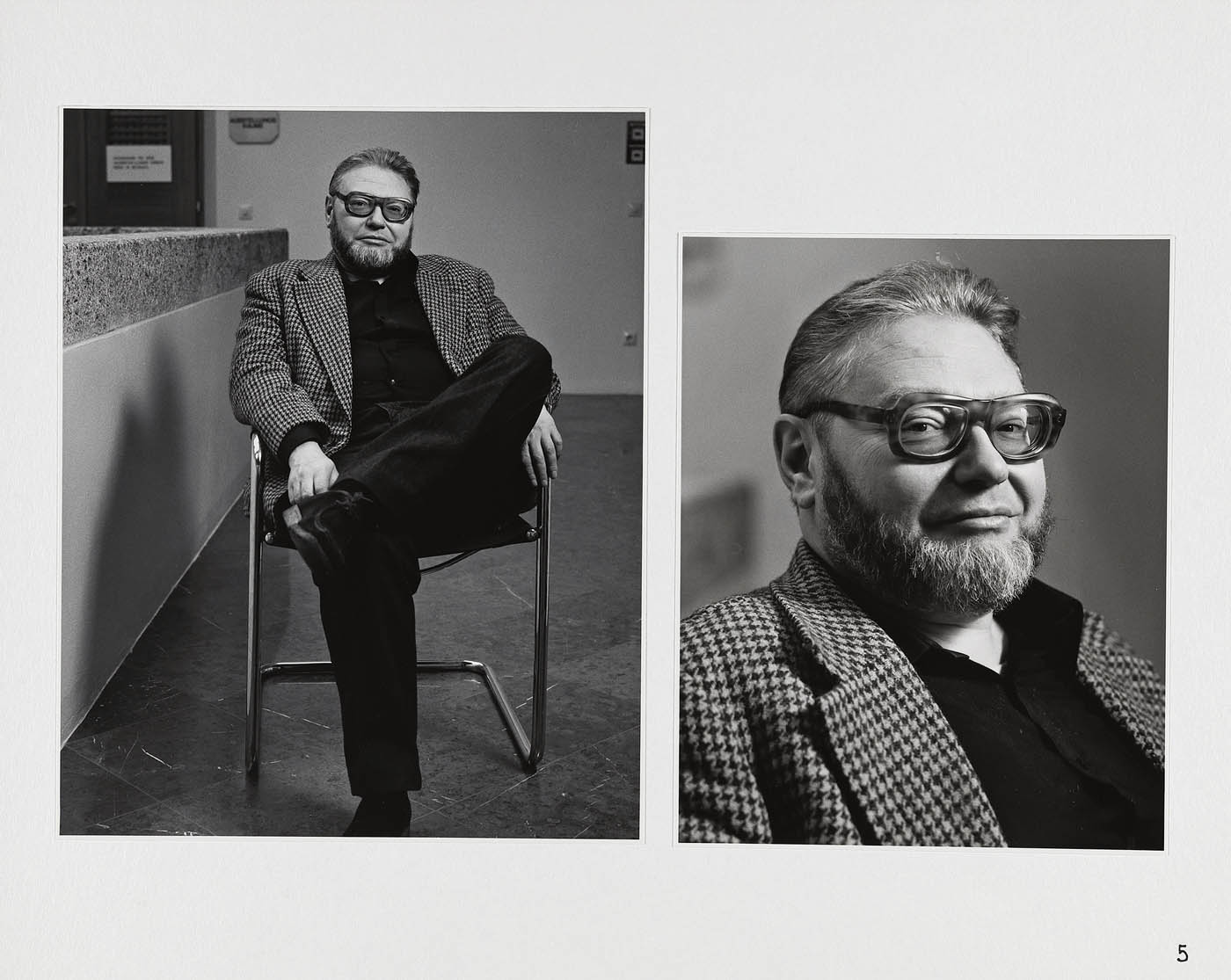
Elfriede Mejchar (Austrian, 1924-2020) Prof. Dr. Otto Breicha 1988 From the series Porträts von Künstler-Photographen und Kunstvermittlern (Portraits of Artist Photographers and Art Educators) Silver gelatin print on baryta paper Federal Photography Collection at the Museum der Moderne Salzburg
Otto Breicha (Austrian, 1932-2003)
Otto Breicha (b. 26 July 1932 in Vienna; d, 28 December 2003 in Vienna) was an Austrian art historian, publicist and museum director. …
Breicha is considered an important integration figure in the Austrian art and literature scene of the 1960s. As director of the Rupertinum he collected works by Kurt Moldovan, Günter Brus, Fritz Wotruba and Gotthard Muhr, among others. He edited portfolios by Karl Anton Fleck, Gotthard Muhr, Peter Pongratz, Alois Riedl, Karl Rössing, Johannes Wanke, Max Weiler and many others.
Breicha built up an important photo collection in the Rupertinum. He also took photos of authors himself, especially during his time at the Austrian Society for Literature from 1962 to 1972.
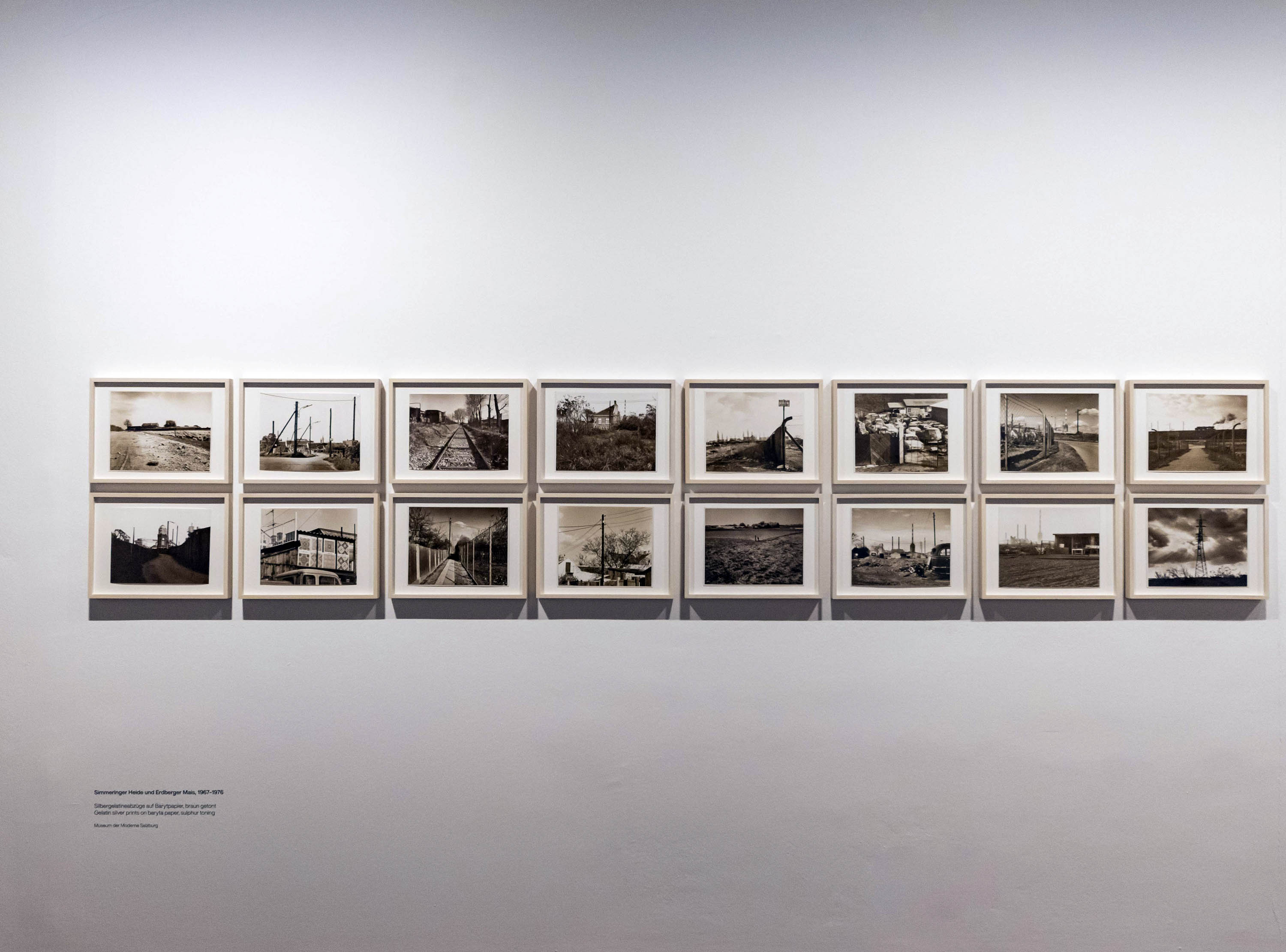
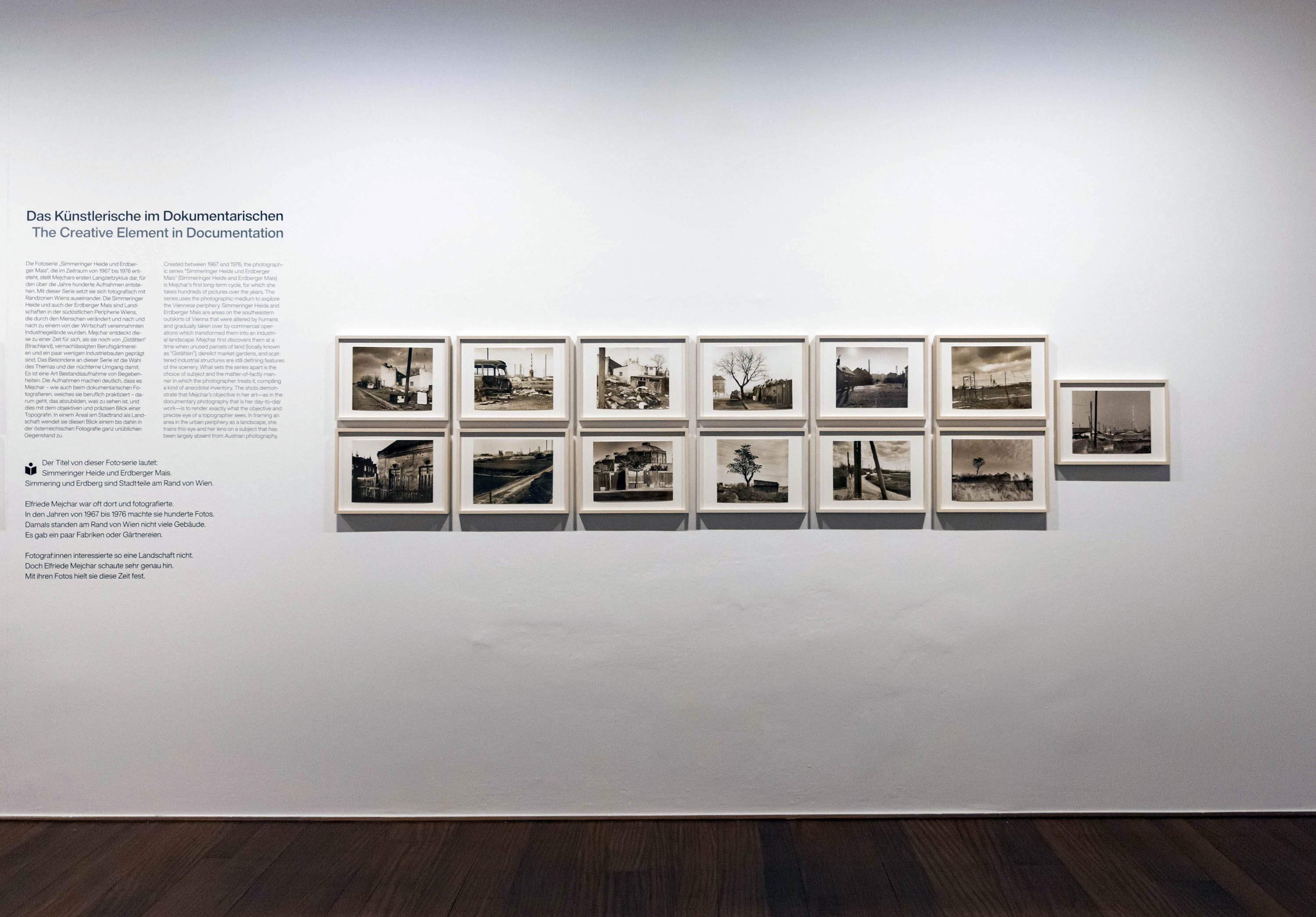
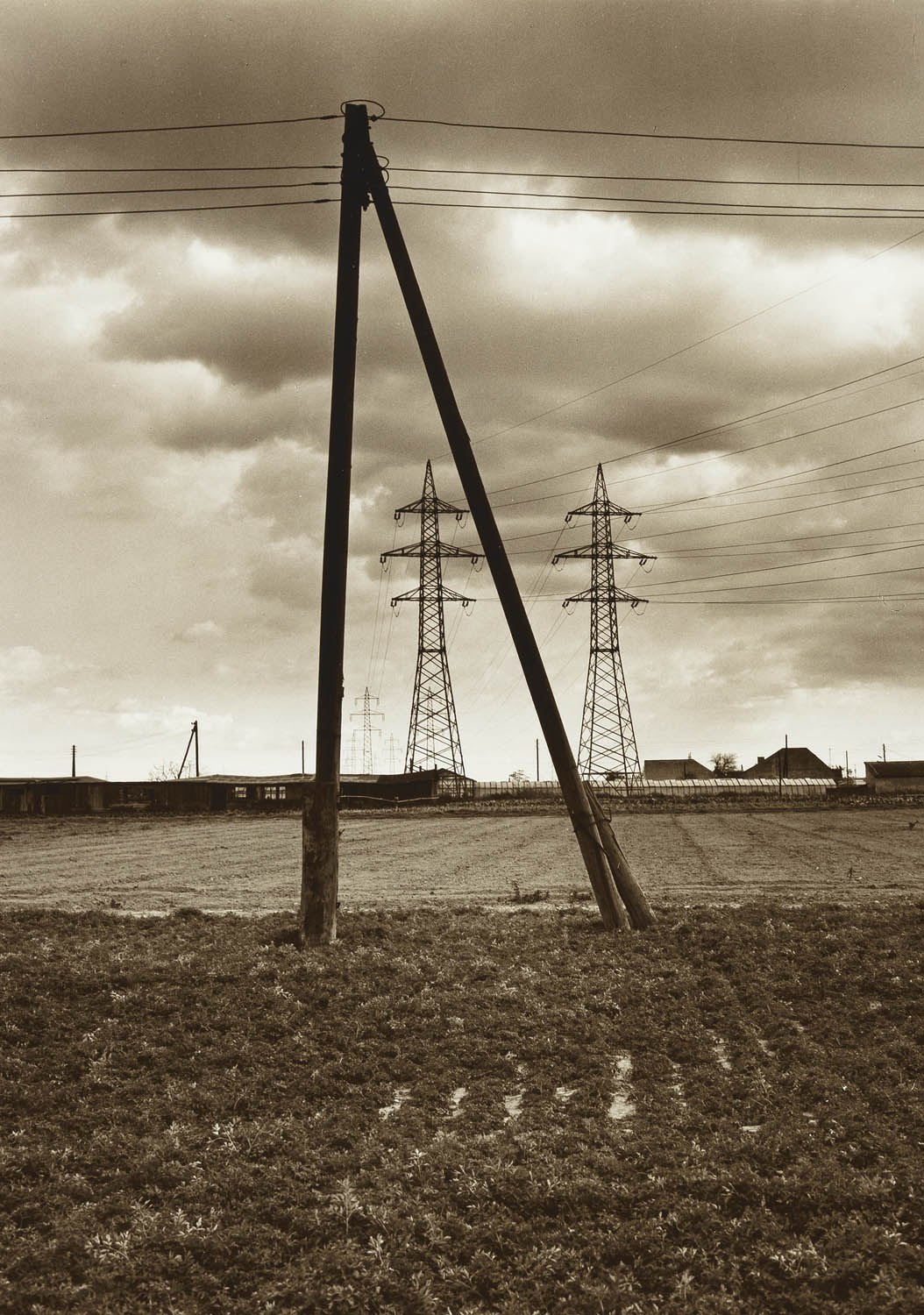
Created between 1967 and 1976, the photographic series “Simmeringer Heide und Erdberger Mais” (Simmeringer Heide and Erdberger Mais) is Mejchar’s first long-term cycle, for which she takes hundreds of pictures over the years. The series uses the photographic medium to explore the Viennese periphery. Simmeringer Heide and Erdberger Mais are areas on the southeastern outskirts of Vienna that were altered by humans and gradually taken over by commercial operations which transformed them into an industrial landscape. Mekchav first discovers them at a time when unused parcels of land (locally known as “Gstatten”), derelict market gardens, and scattered industrial structures are still defining features of the scenery. What sets the series apart is the choice of subject and the matter-of-fact manner in which the photographer treats it, compiling a kind of anecdotal inventory. The shots demonstrate that Mejchar’s objective in their art – as in the documentary photography that is her day-to-day work – is to render exactly what the objective and precise eye of a topographer sees. In framing an area in the urban periphery as a landscape, she trains this eye and her lens on a subject that has been largely absent from Austrian photography.
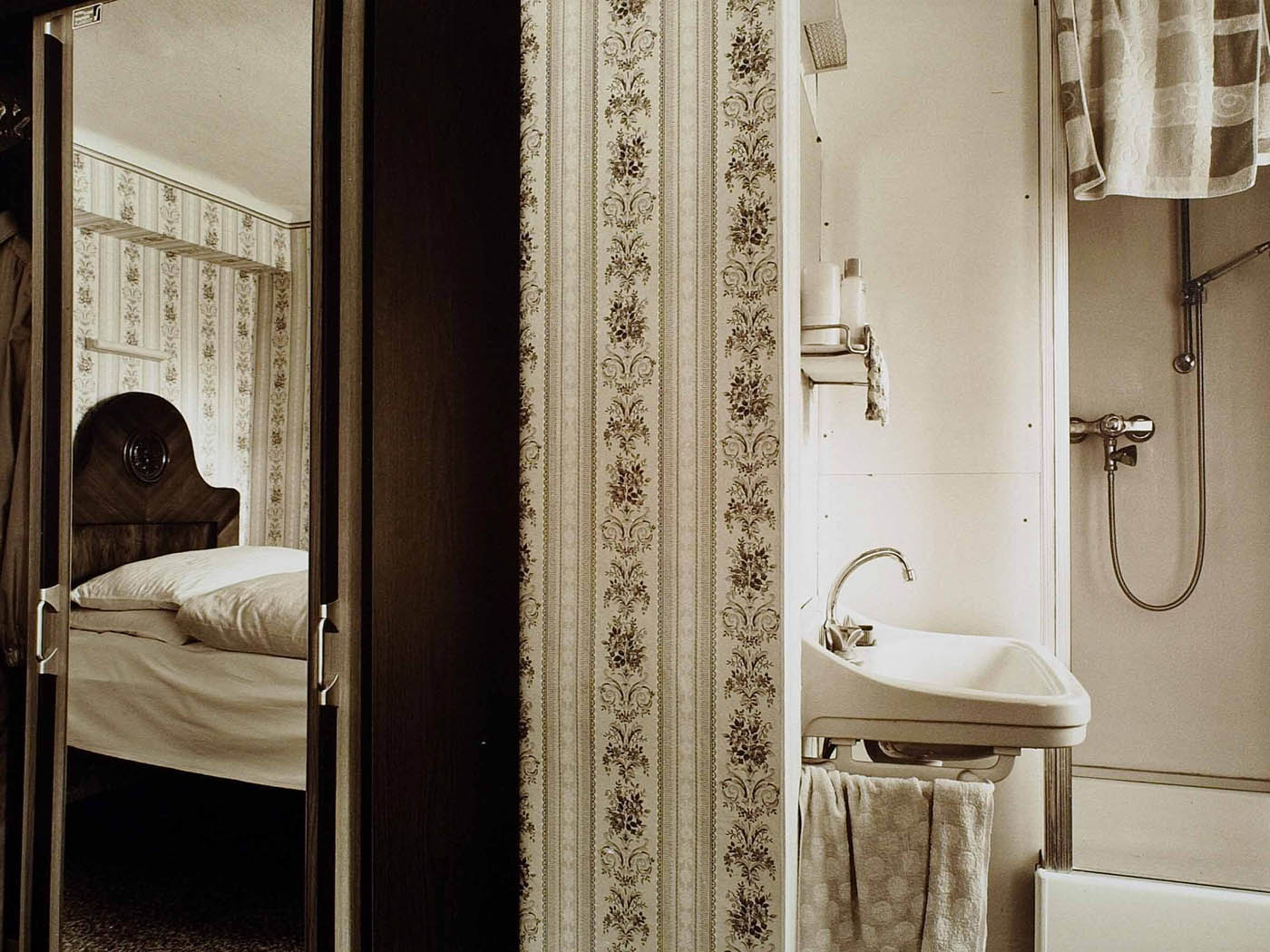
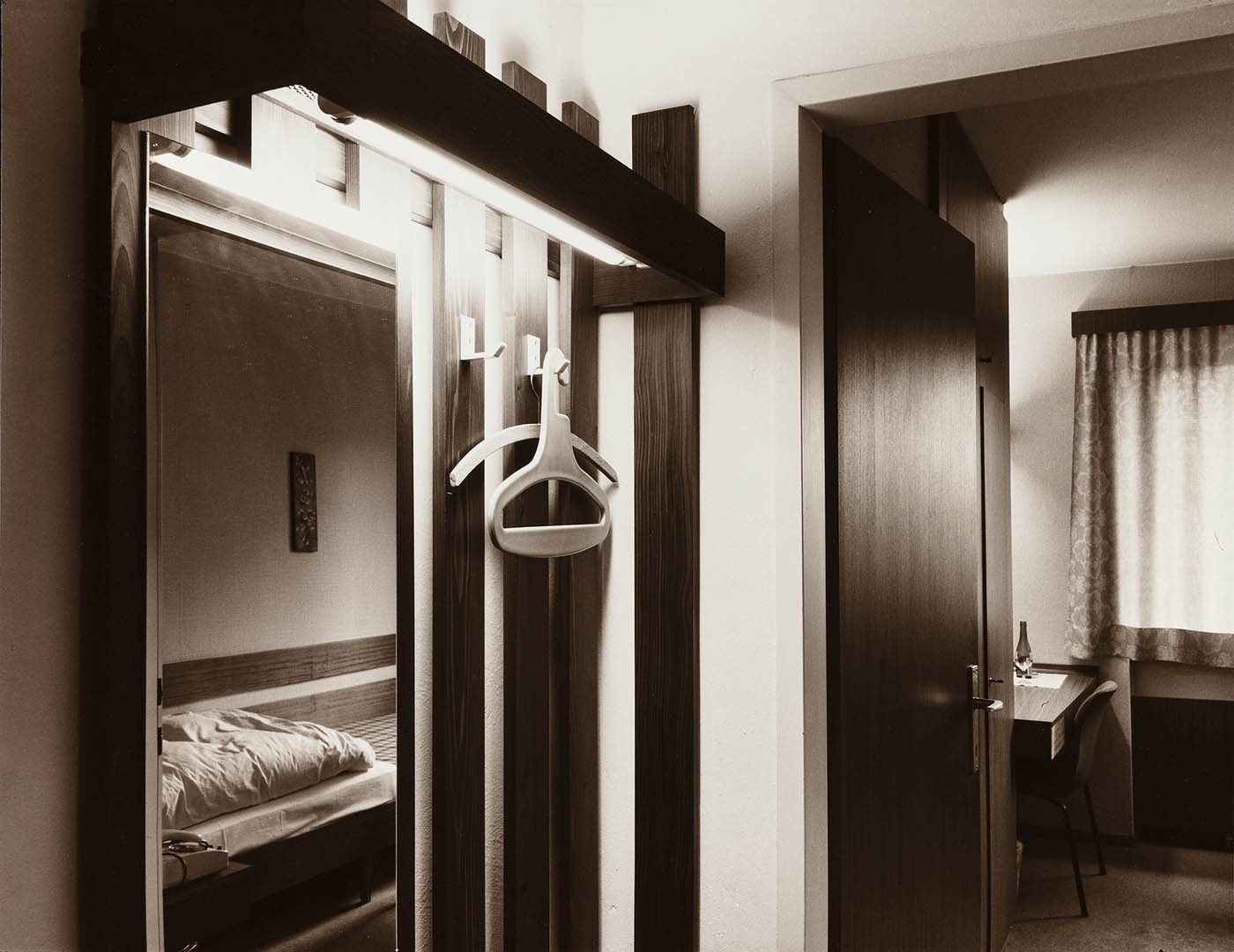
Elfriede Mejchar (Austrian, 1924-2020) From the series Hotel (Fremdenzimmer), 1970-1986 (Hotel (Guest Room), 1970-1986) Silver gelatin print on baryta paper, brown tones Federal Photography Collection at the Museum der Moderne Salzburg
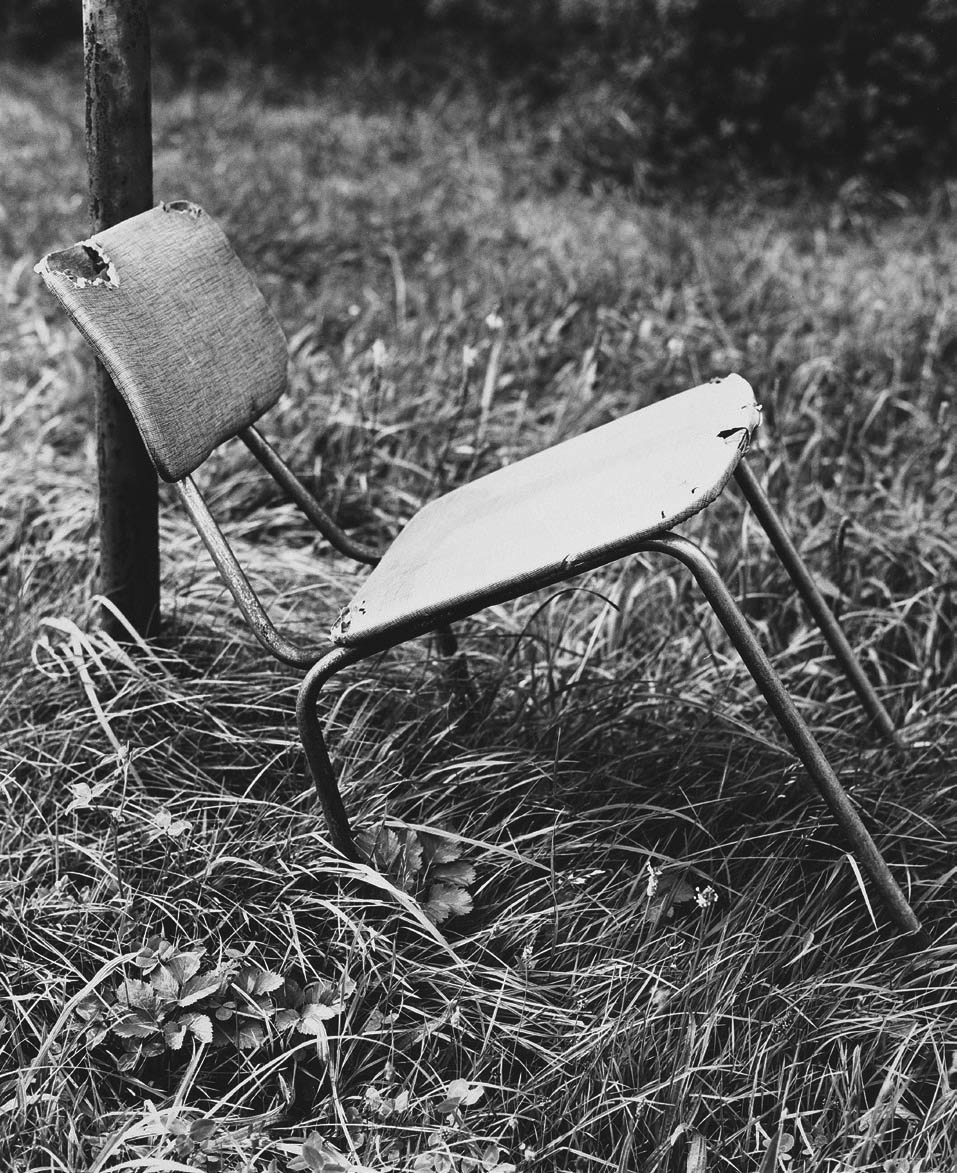
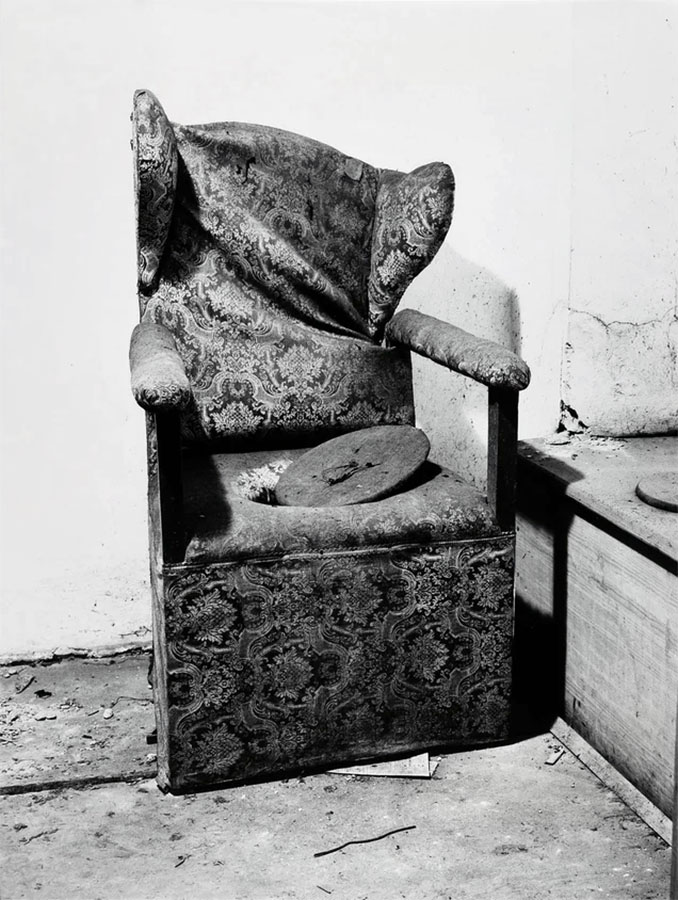
Elfriede Mejchar (Austrian, 1924-2020) From the series Die Monatssesseln, 1986-1988 (The Armchairs of the Month, 1986-1988) Federal Photography Collection at the Museum der Moderne Salzburg
Elfriede Mejchar (Austrian, 1924-2020) From the series Die Monatssesseln, 1986-1988 (The Armchairs of the Month, 1986-1988) Federal Photography Collection at the Museum der Moderne Salzburg
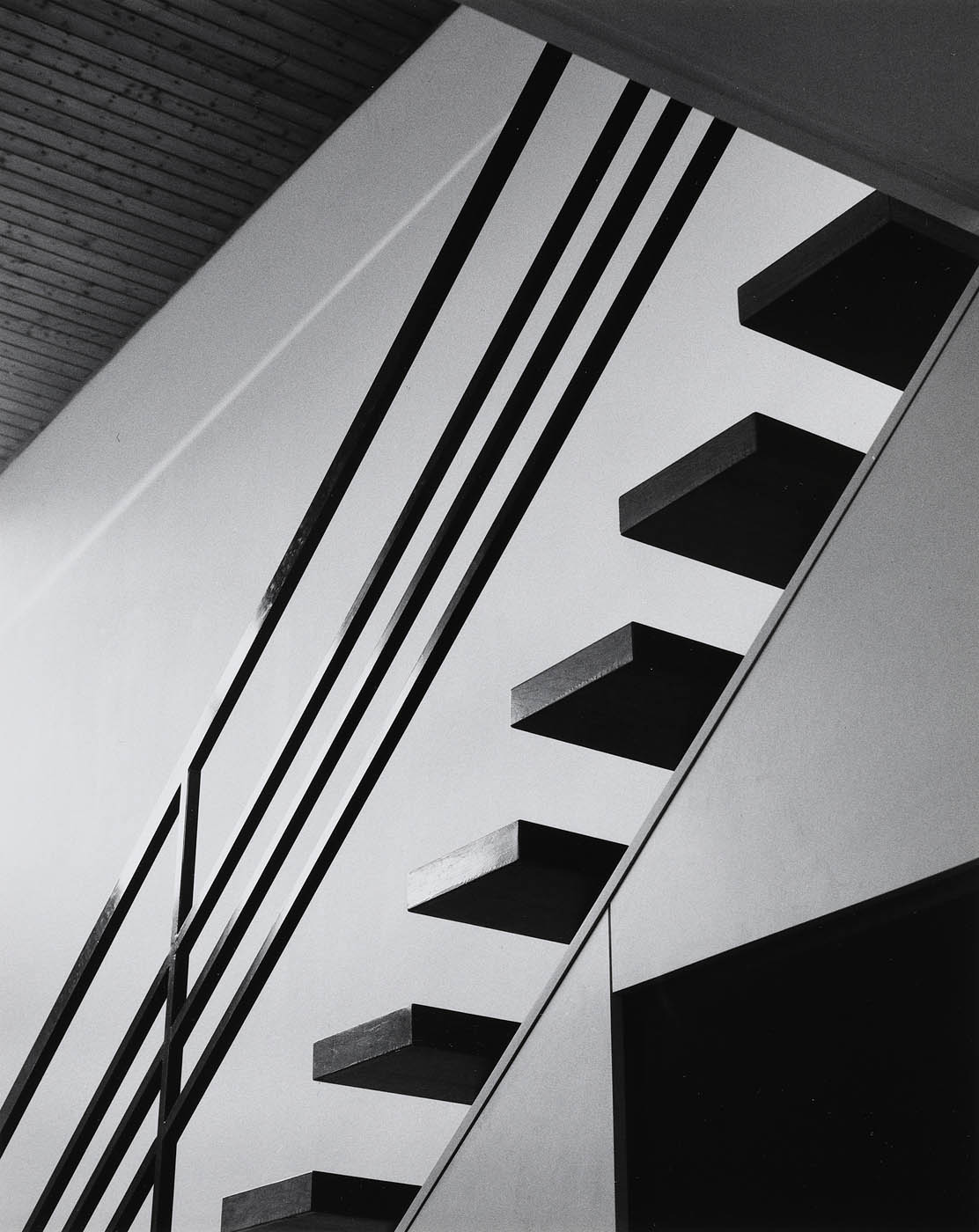
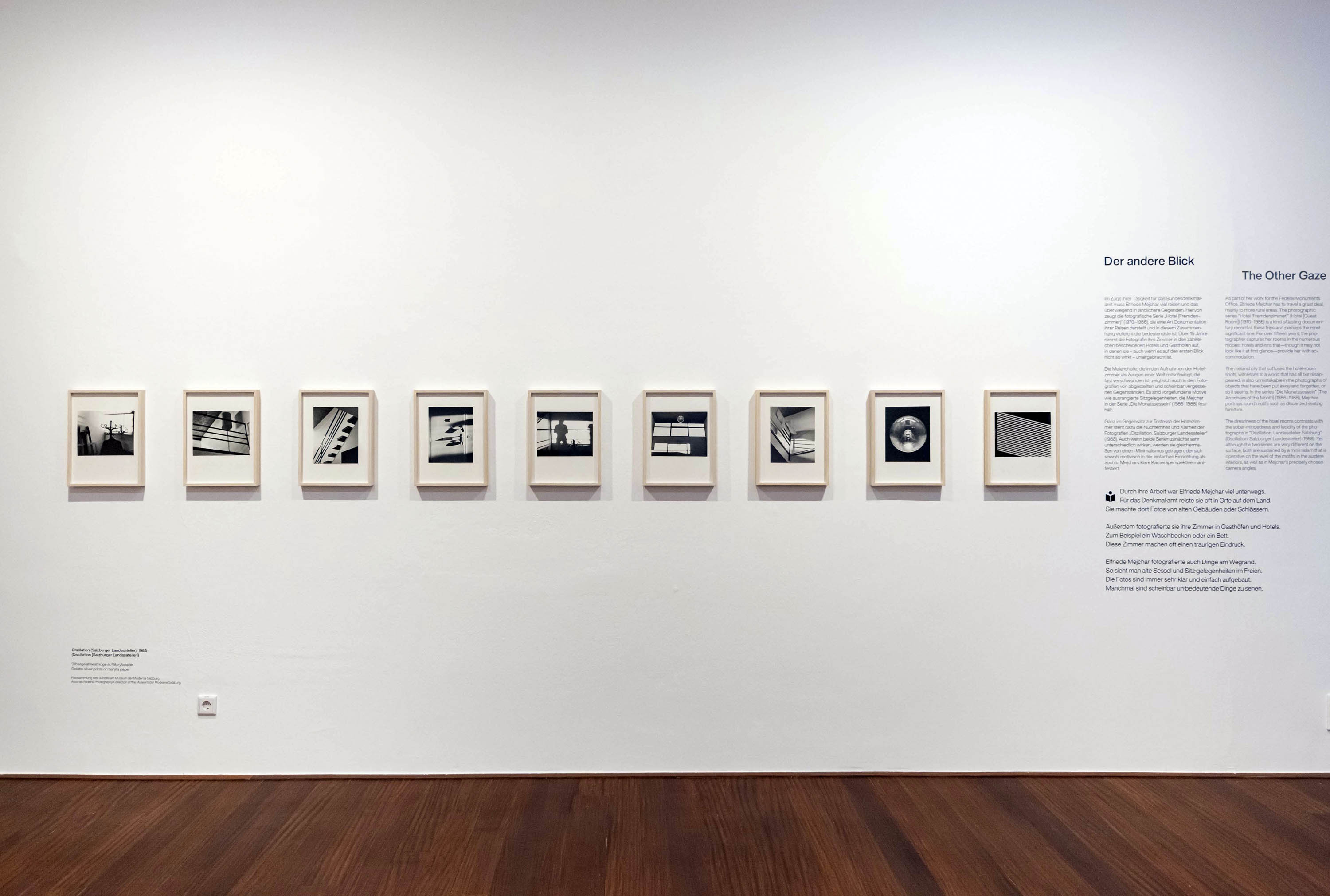
Elfriede Mejchar (Austrian, 1924-2020) From the series Oscillation (Salzburger Landesatelier) (Oscillation (Salzburg State Studio)) 1988 Silver gelatin print on baryta paper Federal Photography Collection at the Museum der Moderne Salzburg
Elfriede Mejchar (1924-2020 Vienna, AT), the grande dame of Austrian photography, was in the employ of the Federal Monuments Office for almost forty years. Meanwhile, she also began her groundbreaking work on the outskirts of Vienna. Harnessing the photographic series as a documentary and investigative medium, she limned an imposing portrait of the urban landscape. Her work, which had a lasting influence on the evolution of photography in Austria, now also stands as an important documentary record of the country in the postwar period.
As a professional photographer, Mejchar traveled to various regions throughout Austria, including in Lower and Upper Austria and Styria, to capture buildings and cultural assets of art-historical significance in photographs. Yet she also used her official trips and her scant free time to pursue her own photographic interests, which focused on the small and seemingly trivial and the traces of civilisation that humans leave in nature or along the edges of the urban fabric and that receive little if any attention. It may seem that the documentary dimension is less important in the resulting works, that it is eclipsed by the narrative element. In fact, Mejchar fuses both, scrutinising her motifs with an attentive eye that picks up on the singular or peculiar and registers it without manipulation.
Elfriede Mejchar was not interested in the so-called “pivotal moment” and did not care for the conventional photojournalistic style of her time. Her work began when people had left, and she approached her themes from a very conceptual angle. Both the documentary series she created under the open sky and the object photographs, still lifes, and collages she made in her studio reflect this approach. She photographed the “evanescent before it evanesces”, in urban and rural landscapes and everyday scenes, capturing the changes that affected the particular scenery and its distinctive atmosphere.
The Creative Element in Documentation
Produced between 1967 and 1976, the photographic series “Simmeringer Heide and Erdberger Mais” is Mejchar’s first long-term cycle, for which she takes hundreds of pictures over the years. The series uses the photographic medium to explore the Viennese periphery. Simmeringer Heide and Erdberger Mais are areas on the southeastern outskirts of Vienna that were altered by humans and gradually taken over by commercial operations which transformed them into an industrial landscape. Mejchar first discovers them at a time when unused parcels of land (locally known as “Gstätten”), derelict market gardens, and scattered industrial structures are still defining features of the scenery. What sets the series apart is the choice of subject and the matter-of-factly manner in which the photographer treats it, compiling a kind of anecdotal inventory – empty lots, paths and roads, utility poles and a select few close-ups. The shots demonstrate that Mejchar’s objective in her art – as in the documentary photography that is her day-to-day work – is to render exactly what the objective and precise eye of a topographer sees. In framing an area in the urban periphery as a landscape, she trains this eye and her lens on a subject that has been largely absent from Austrian photography.
The use of a sulfur-based solution to tone the photographs – which is the cause of the brownish tinge – reflects a recurring concern in Mejchar’s photographs: existence in time and impermanence. In this instance, the technique’s purpose is not to alter the colour, but rather to make it more durable.
Portraiture plays a role early on in Elfriede Mejchar’s work; she receives her professional training in a portrait studio. She subsequently makes a conscious choice to avoid the genre, but then, in the 1950s, returns to it.
“Künstler bei der Arbeit”, 1954-1961 (Artists at Work)
The series “Künstler bei der Arbeit” (Artists at Work) is her first major cycle of portraits, comprising over 340 gelatin silver prints. Mejchar is often brought in to capture exhibitions in installation shots, especially at the Vienna Secession, where she is introduced to many young artists waiting to make a name for themselves as well as some of their older colleagues who have been active since before 1945. The incomprehension with which the visitors gaze at abstract art that does not represent anything with any accuracy prompts the young photographer to record the intensity and seriousness with which the artists dedicate themselves to their craft, often braving considerable hardship. The series accordingly focuses on visualising the real studio and workplace settings of thirty-six artists, including Christa Hauer, Friedensreich Hundertwasser, Josef Mikl, and Arnulf Rainer.
“Porträts von Künstler-Photographen und Kunstvermittlern”, 1988-1994 (Portraits of Artist Photographers and Art Educators)
In the body of work “Porträts von Künstler-Photographen und Kunstvermittlern” (Portraits of Artist Photographers and Art Educators), by contrast, Mejchar undertakes to depict everyone involved in fine art photography in Austria in the late twentieth century. Over the years, the series grows to comprise eighty double portraits, each composed, in accordance with a rigorous conception, of an en face portrait side by with a three-quarter view. The works have a distinctly staged quality, underscored by the unvarying austere setting and the emphasis on the hands, among other aspects. In this respect they recall Mejchar’s final examination, in which she had to realise a portrait both in profile and en face to demonstrate her command of photographic lighting designing and the handling of human sitters.
With these two projects, Mejchar becomes an important chronicler of the Austrian arts scene.
As part of her work for the Federal Monuments Office, Elfriede Mejchar has to travel a great deal, mainly to more rural areas. The photographic series “Hotel (Fremdenzimmer)” (Hotel (Guest Room)) is a kind of lasting documentary record of these trips and perhaps the most significant one. Bed, table, chair, mirror, wardrobe, patterned wallpaper, and sometimes a washbasin: for over fifteen years, the photographer captures her rooms with their often spartan furnishings in the numerous modest hotels and inns that – though it may not look like it at first glance – provide her with accommodation. Here and there one does espy a toothbrush, a pair of shoes, a ruffled bedcover, all traces that reveal the ostensibly absent photographer’s presence. A certain melancholy suffuses these shots of hotel rooms as witnesses to a world that has all but disappeared
“Die Monatssesseln”, 1986-1988 (The Armchairs of the Month)
The same melancholy is also unmistakable in the photographs of objects that have outlived their usefulness and been discarded and, it seems, forgotten. In the series “Die Monatssesseln” (The Armchairs of the Month) Mejchar portrays found motifs such as discarded seating furniture. The series shows a wide variety of such items, from kitchen chairs to living-room armchairs and even car seats, that have become part of the natural or other scene where they were dumped. No less diverse than the pieces of furniture and their environments are the feelings they elicit; as Mejchar puts it, “a mess can be beautiful in its own way.”
“Oszillation (Salzburger Landesatelier)”, 1988
The dreariness of the hotel rooms contrasts with the sober-mindedness and lucidity of the photographs in “Oszillation (Salzburger Landesatelier)” (Oscillation (Salzburger Landesatelier)). Yet although the two series are very different on the surface, both are sustained by a minimalism that is operative on the level of the motifs, in the austere interiors, as well as in Mejchar’s precisely chosen camera angles. These photographs capture the rooms of the State of Salzburg’s studio residence for visiting artists, located, like the Salzburger Kunstverein, in the historic Künstlerhaus. Mejchar herself lives there for a while in 1988, a change of working environment that is reflected in her output from the period.
Nobody Is Perfect
In the late 1980s, Elfriede Mejchar branches out in a fresh creative direction. She has been retired for some years and feels free to take on new challenges. Setting aside the flaneur-like practice underlying her earlier bodies of work, she starts photographing in the studio.
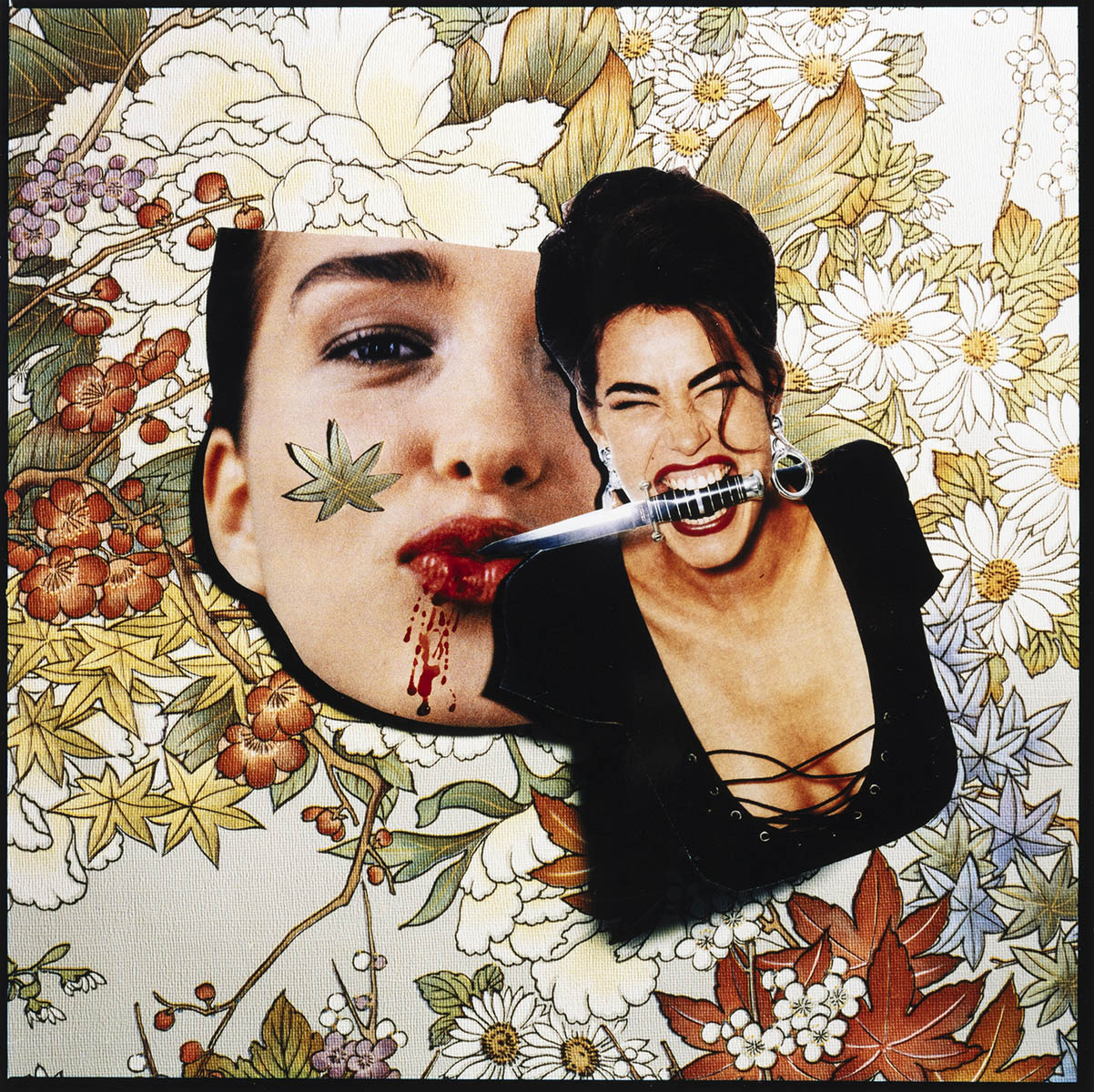
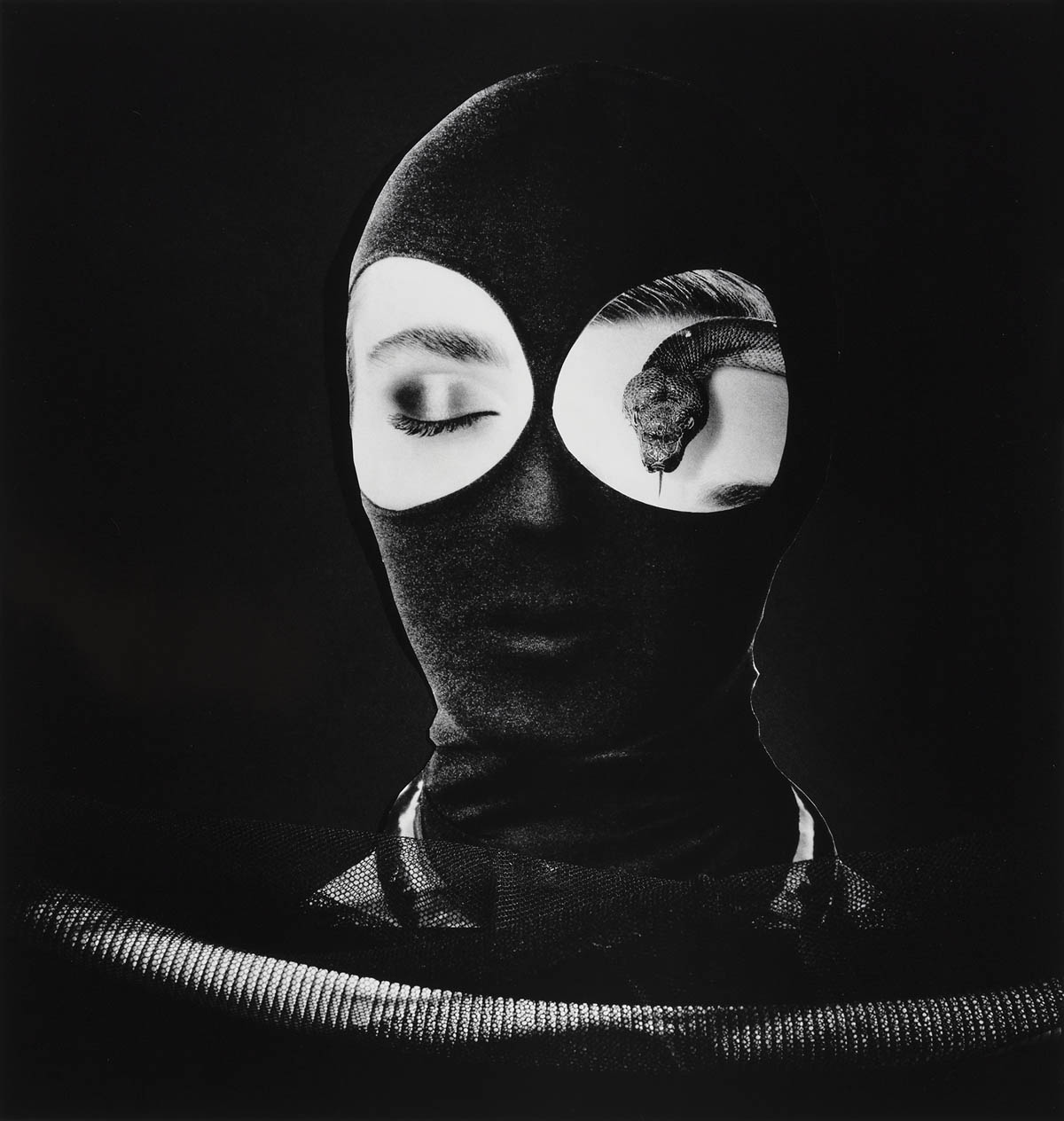
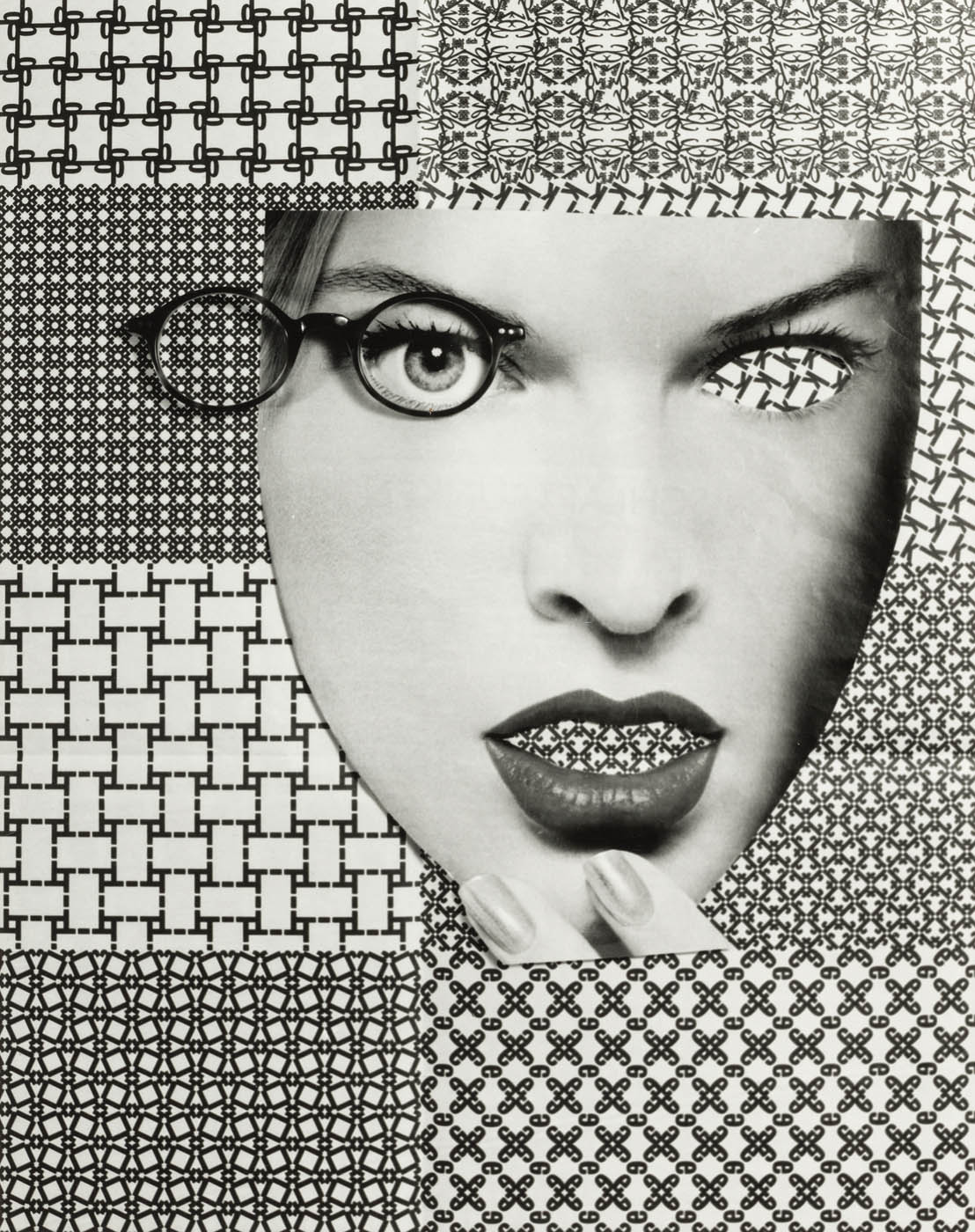
Tapetenbild. Triptychon, 1988 (Wallcover Picture. Tryptic) “Eine Kostümierung der geliehenen Identität”, 1989 (A Costume for the borrowed Identity) “Tagebuch Jänner 1988”, 1988 (Diary January 1988) “Nobody Is Perfect”, 1996
Faces change shapes, snakes coil around heads, open and closed eyes alternate. For the collages in “Tagebücher Jänner 1988,” Mejchar reuses her own photographs; in other series, by contrast, she works with found images such as shots of female models from print advertisements or fuses figural representations with fabric and wallpaper patterns. The works are rapidly composed out of visual fragments that she often only loosely places side by side or in overlapping arrangements, dispelling their aura of perfection. “I build pictures for myself on the wall, from materials that are at hand in the public sphere, that are on public display, but I strip away the ideal of flawless beauty that is constantly rubbed in our faces by dismembering it or covering it up.” It is the temporary and easily mutable that fascinates Mejchar, qualities that had had no place in her professional work.
“Amaryllis”, 1994-1997
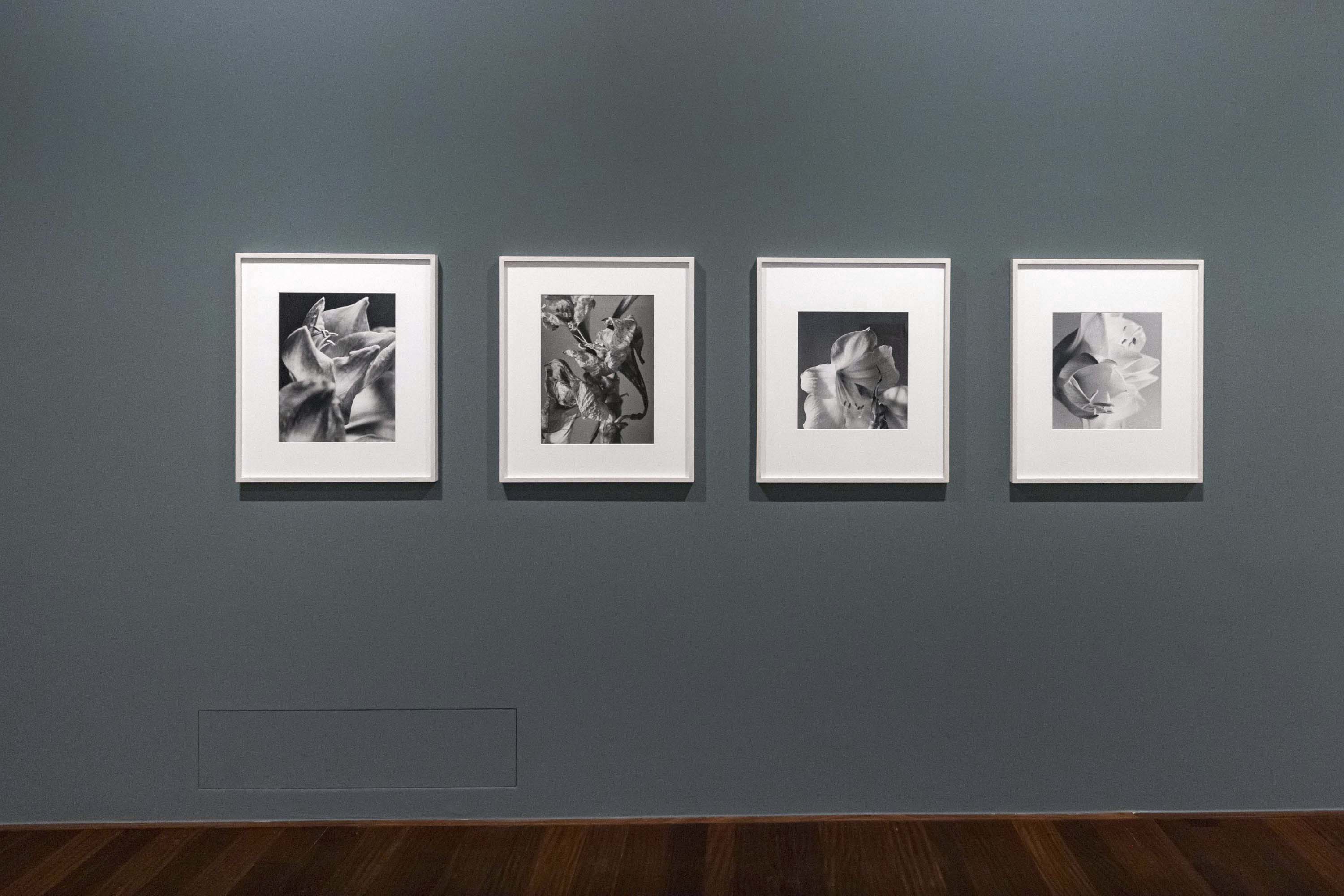
Pictures of flowers in fine art, whether painted or photographed, inevitably have a clichéd dimension. Mejchar photographs only a special selection of flowers such as amaryllises, lilies, and tulips that she grows in her own garden. In the studio, rather than recording the flowers with a romantic gesture, she captures their gradual transformations – full blossoms, some full of delicate life, some already wilting and recognisably perishable. Showing them between florescence and decay, in a kind of liminal instant, she revisits a theme that surfaces throughout her oeuvre: the capturing of a state of affairs at a defined point in time.
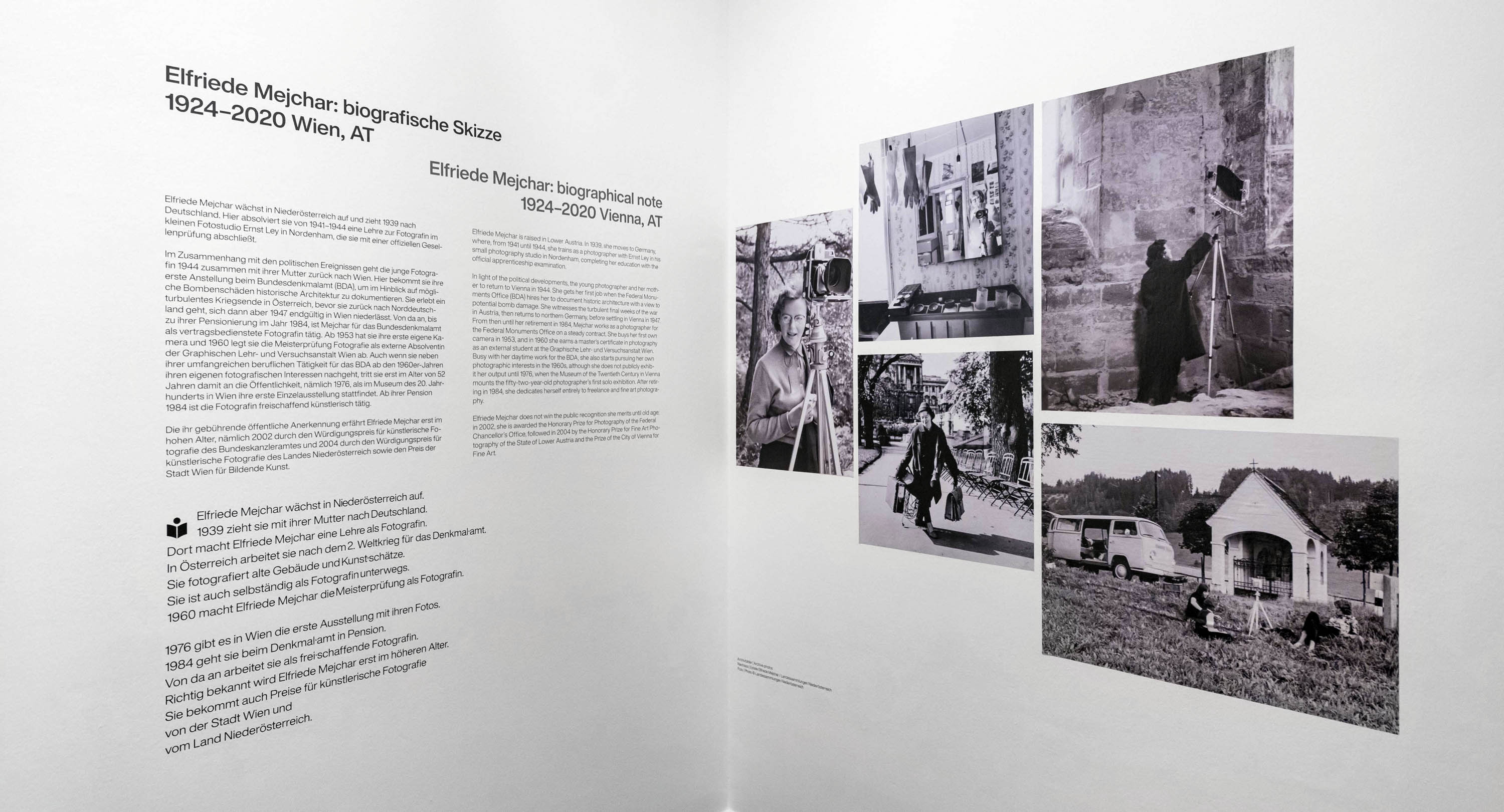
Elfriede Mejchar: biographical note 1924-2020 Vienna, AT
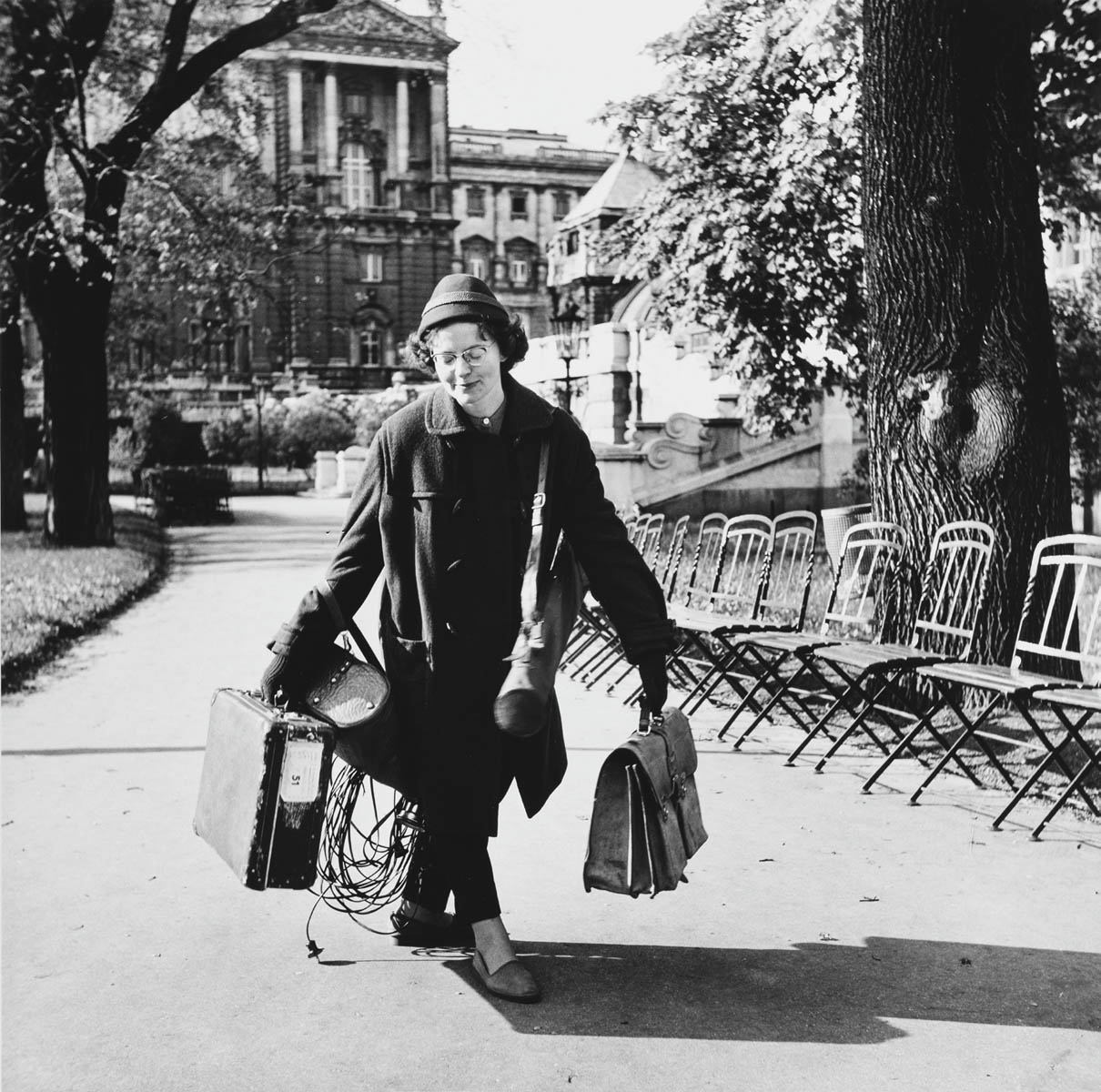
Elfriede Mejchar is raised in Lower Austria. In 1939, she moves to Germany, where, from 1941 until 1944, she trains as a photographer with Ernst Ley in his small photography studio in Nordenham, completing her education with the official apprenticeship examination.
In light of the political developments, the young photographer and her mother to return to Vienna in 1944. She gets her first job when the Federal Monuments Office (BDA) hires her to document historic architecture with a view to potential bomb damage. She witnesses the turbulent final weeks of the war in Austria, then returns to northern Germany, before settling in Vienna in 1947. From then until her retirement in 1984, Mejchar works as a photographer for the Federal Monuments Office on a steady contract. She buys her first own camera in 1953, and in 1960 she earns a master’s certificate in photography as an external student at the Graphische Lehr- und Versuchsanstalt Wien. Busy with her daytime work for the BDA, she also starts pursuing her own photographic interests in the 1960s, although she does not publicly exhibit her output until 1976, when the Museum of the Twentieth Century in Vienna mounts the fifty-two-year-old photographer’s first solo exhibition. After retiring in 1984, she dedicates herself entirely to freelance and fine art photography.
Elfriede Mejchar does not win the public recognition she merits until old age; in 2002, she is awarded the Honorary Prize for Photography of the Federal Chancellor’s Office, followed in 2004 by the Honorary Prize for Fine Art Photography of the State of Lower Austria and the Prize of the City of Vienna for Fine Art.
Installation view of the exhibition The Poetry of the Everyday. Photographs by Elfriede Mejchar, Museum der Moderne Salzburg 2024 showing photographs of Mejchar’s flower series













You must be logged in to post a comment.