Curators: Hujar’s biographer John Douglas Millar, Hujar’s close friend the artist and master printer Gary Schneider, with Raven Row’s director Alex Sainsbury
And then there is Peter Hujar (American, 1934-1987).
Using contextless backgrounds and simple settings, Hujar’s non-judgmental portraits of friends and lovers rely on the slight twist of the head, the drop of a shadow, the photographer’s look and subjects pose, performance, that curves and bends reality into a presence that is magnetic, magical, eternal.
Hujar’s direct, intimate photographs, suggestive of both love and loss, proffer a mirror to strength and determination / to friendship / to love. His pictures gather, together, a feeling for the freedom of people and places, that essence of being true to yourself (getting to the bone as Harrison Adams puts it). A direct connection between the photographer and subject captured by the camera revealed to the world.
You might have guessed I am in love with his photographs.
Thus, it is a great delight to post on this exhibition at Raven Row in London which looks to be an absolute delight, Hujar’s photographs simply and beautifully presented in the space.
His images reveal themselves over time, expounding his love of life and his intimate and free engagement with the world around him.
That is Hujar’s music, his signature.
Dr Marcus Bunyan
1/ Harrison Adams. Photography in the First Person: Robert Mapplethorpe, Peter Hujar, Nan Goldin and Sally Mann (Dissertation). Yale University, 2018 quoted on the “Peter Hujar” Wikipedia page Nd [Online] Cited 14/03/2025
Further postings on this incredible artist on Art Blart can be found at
Many thankx to Raven Row for allowing me to publish the photographs in the posting. Please click on the photographs for a larger version of the image.
One aspect of this intimate quality was Hujar’s ability to connect with his sitters. One of his models was quoted after an unsuccessful session as saying:
“We couldn’t ‘reveal’. As an actor you have to reveal. And Hujar’s big thing was that you had to reveal. I know that now, but I didn’t know it at the time. In other words, blistering, blazing honesty directed towards the lens. No pissing about. No posing. No putting anything on. No camping around. Just flat, real who-you-are…You must strip down all the nonsense until you get to the bone. That’s what Peter wanted and that was his great, great talent and skill.”
This is the first exhibition to take on the full breadth of Peter Hujar’s later photography. Hujar was a central figure in the downtown scene of 1970s and early 80s New York, but at his death in 1987 from AIDS-related pneumonia his work was largely unknown to a broader art world. Now it is widely admired for its austere elegance and emotional charge. Hujar’s principal concern was with forms of portraiture – of his friends and denizens of the downtown scene, whom he encountered on the street, shot in his apartment studio or sought out backstage. He also turned his attention to animals, whom he photographed with particular empathy, as well as to architectural, landscape and street photography.
Eyes Open in the Dark concentrates on his later work, when his emergence from a debilitating depression in 1976 brought about a new expansiveness. The exhibition also reveals the darkening tone of his photography in the early 1980s, as the AIDS crisis devastated his community, and his work entered into dialogue with the younger artist David Wojnarowicz. Peter Hujar – Eyes Open in the Dark is curated by Hujar’s biographer John Douglas Millar, and Hujar’s close friend, the artist and master printer Gary Schneider, with Raven Row’s director Alex Sainsbury. As well as lifetime prints it will include prints of little-known works specially prepared by Gary Schneider, working closely with the artist’s Estate.
Stephen Lloyd Varble (American, 1946-1984) was a notorious American performance artist, playwright, and fashion designer in lower Manhattan during the 1970s. His work challenged mainstream conceptions of gender and exposed the materialism of the established, institutionalised world.
This is the first exhibition to take on the full breadth of Peter Hujar’s later photography. Hujar was a central figure in the downtown scene of 1970s and early 80s New York, but at his death in 1987 from AIDS-related pneumonia his work was largely unknown to a broader art world. Now it is widely admired for its austere elegance and emotional charge.
Hujar’s principal concern was with forms of portraiture – of his friends and denizens of the downtown scene, whom he encountered on the street, shot in his apartment studio or sought out backstage. He also turned his attention to animals, whom he photographed with particular empathy, as well as to architectural, landscape and street photography. Eyes Open in the Dark concentrates on his later work, when his emergence from a debilitating depression in 1976 brought about a new expansiveness. The exhibition also reveals the darkening tone of his photography in the early 1980s, as the AIDS crisis devastated his community, and his work entered into dialogue with the younger artist David Wojnarowicz.
Peter Hujar – Eyes Open in the Dark is curated by Hujar’s biographer John Douglas Millar, and Hujar’s close friend, the artist and master printer Gary Schneider, with Raven Row’s director Alex Sainsbury. As well as lifetime prints it will include prints of little-known works specially prepared by Gary Schneider, working closely with the artist’s Estate.
The exhibition is free to attend and open Wednesday to Sunday, 11am to 6pm, no booking required. Please note that some images in this exhibition feature explicit sexual content.
David Wojnarowicz (American, 1954-1992) Untitled 1989 From Sex Series (for Marion Scemama) 1988-1989 Gelatin silver print
One of Wojnarowicz’s most remarkable pieces here is the “Sex Series (for Marion Scemama),” a miracle of technical prowess and visual intensity. Wojnarowicz began it in 1988, a year after the photographer Peter Hujar, his close friend and former lover, died of AIDS. These photomontages combine stock photographs with circular insets salvaged from Hujar’s porn collection [among other insets of, for example, police, medical, money, religion and life], which he’d thrown away after his diagnosis.
Much of Wojnarowicz’s work is about sex in an age of death. During the AIDS crisis, sexual activity, particularly that of gay men, was demonized. Resisting the dogma and censorship of the Right’s conservatism and the Left’s moralism alike, the “Sex Series” vibrates with anxious and desirous energy, a mood amplified by the eerie reversal of the printing process, in which light and dark have been inverted to create a near negative.
Exhibition dates: 6th October, 2024 – 6th April, 2025
Curator: Andrea Nelson, associate curator in the department of photographs, National Gallery of Art
Martha Rosler (American, b. 1943) Cleaning the Drapes 1967-1972, printed 2007 From the series House Beautiful: Bringing the War Home Inkjet print Image: 44.2 x 60.4cm (17 3/8 x 23 3/4 in.) National Gallery of Art Gift of the Collectors Committee and Pepita Milmore Memorial Fund
Martha Rosler originally distributed photocopies from this series, House Beautiful: Bringing the War Home, as flyers at anti – Vietnam War demonstrations. She made the original photomontages by combining gritty news photographs of fighting in Vietnam with homerelated advertisements culled from glossy women’s magazines. Here Rosler paired a woman cleaning patterned drapes with two tired soldiers smoking amid rocks and sandbags. The woman’s vacuum wand points to and echoes the soldiers’ rifles. The jolting collision of war imagery and affluent domestic space gives visual form to the description of the conflict as “the living room war” – so called because it appeared on television news nightly.
Wall text from the exhibition
“Ce n’est pas une pipe mais de la photographie, sous toutes ses formes variables et multivalentes”
René Magritte’s 1929 painting Ceci n’est pas une pipe is also known as La Trahison des images … The Treachery of Images.
Treachery – the betrayal of trust – is an apposite word in relation to photography of the 1970s. Finally, once and for all, documentary photography in America broke free of the West Coast fine art photography tradition of mainly white male artists and the “aura” of the fine art print (Walter Benjamin). Photography betrayed the trust placed in the authenticity of the image and its link to the “truth” of reality represented in the photograph to become a medium of variability, in concept, execution and outcome. Photography became whatever you wanted it to be.
Documentary photography and its link to the reality of the referent – its assumed representation of a truth that existed in reality – began to be subsumed into the whole of photography, just part of a conceptual, art, performative, staged, street, cameraless, documentary, fashion, photojournalist, activist, amoebic (from the Greek ἀμοιβή amoibe, meaning “change”), and viral (Paul Virilio) medium.
Photography had always been a medium of communication but now became multi-perspectival – whether that be imaginings of the mind relayed through photographs, conceptual ideas about the world and how we interact with it created and staged through photographs, or new colour photography that challenged the orthodoxy of fine art black and white West Coast American photography.
As Anne-Marie Willis observes on the On This Date In Photography website, “any curator who would challenge the orthodox Beaumont Newhall-style photo history limited to images that are distinctively photographic, aesthetic, and “Straight” … would open a Pandora’s box full of photographs pervasive across so many fields, of such limitless subject matters, and crossing so many disciplines that their histories in photography would be obscured.”1
This is the alleged treachery of multi-perspectival photography, the betraying of photographic histories that stretched back to the beginnings of the medium… but it had to be done for photography to fully open itself up to the imaginings of the human and the media flows of the world. “It was a time when photography challenged the art photography norm: photography should not, could not be restricted to what was considered ‘art’.”2
Thus, it is a great joy to see photographs from this stimulating exhibition, photographs that challenge the established “norm” of what photography should be. But what is surprising to me when looking at the complete list of photographs in this exhibition is the important artists who changed the face of photography in the 1970s who are not represented at all or only have one or two images on show:
Gordon Parks 0 Garry Winogrand 1 Lee Friedlander 2 Diane Arbus 1 Robert Mapplethorpe 0 Robert Heinecken 0 Richard Avedon 0 Andy Warhol 1 Polaroid Cindy Sherman 0 Barbara Kruger 0 Nan Goldin 1 Stephen Shore 1
Diane Arbus, who was instrumental in changing portrait photography at the time, only has one photograph in the exhibition; Barbara Kruger and Robert Heinecken, both “para-photographers” whose work stood “beside” or “beyond” traditional ideas associated with photography have none; Stephen Shore who, along with William Eggleston, was responsible for making colour photography acceptable in art photography has only one photograph.
But most surprisingly of all, Cindy Sherman whose Untitled Film Stills were made predominantly between 1977-1980 and who casts herself as clichés or feminine types, becoming both the artist and subject in the work … is not there at all. Her loss, her evisceration, and the absence of “arguably one of the most significant bodies of work made in the twentieth century and thoroughly canonized by art historians, curators, and critics,”3 is unfathomable.
Dr Marcus Bunyan
1/ Anne-Marie Willis quoted in Dr James McArdle. “DECEMBER 14: CONTEXT,” on the On This Date In Photography website 15/12/2019 [Online] Cited 26/02/2025
2/ Ibid.,
3/ Exhibition Catalogue, New York, Museum of Modern Art, Cindy Sherman, 2012, p. 18 quoted in the “Untitled Film Stills” page on the Wikipedia website
Many thankx to the National Gallery of Art for allowing me to publish the photographs in the posting. Please click on the photographs for a larger version of the image.
Martha Rosler (American, b. 1943) Roadside Ambush 1967-1972, printed 2007 Inkjet print Image/sheet: 50.8 x 61cm (20 x 24 in.) National Gallery of Art Gift of the Artist and Mitchell-Innes and Nash
Rosler originally distributed photocopies of House Beautiful: Bringing the War Home at anti–Vietnam War demonstrations. “I saw House Beautiful not as art,” she later reflected. “I wanted it to be agitational.” The artist created the original photomontages, from which these collages are derived, by combining news photographs of scorched battlefields in Vietnam with glossy advertisements for US homes, layering images of soldiers within cut-out silhouettes of men from polo-shirt advertisements; and splicing pictures of soldiers’ burials with those of military marches. By tying the destruction abroad to untroubled affluence at home, Rosler gave visual form to the description of the conflict as “the living-room war” – so called because it was the first war to be televised.
The exhibition The ’70s Lens: Reimagining Documentary Photography examines how new approaches to documentary photography that emerged during the 1970s reflected a radical shift in American life – and in the medium itself.
The 1970s was a decade of uncertainty in the US – soaring inflation, energy crises, the Watergate scandal, and protests about pressing social issues – and the profound upheaval that rocked the country formed the backdrop for a revolution in documentary photography. Now on view at @ngadc, The ’70s Lens: Reimagining Documentary Photography explores this compelling and contested moment of reinvention when the genre’s association with objectivity and truthfulness came into question. Featuring works from over eighty artists, the exhibition delves into how the camera was used to examine life in the US from a diverse range of perspectives, and in doing so, transformed the practice of documentary photography.
The ’70s Lens: A Conversation with Anthony Hernandez
Artist Anthony Hernandez discusses 50 years of work with curator Andrea Nelson on October 24, 2024. The conversation celebrates the exhibition The ’70s Lens: Reimagining Documentary Photography (October 2024 – April 2025).
Anthony Hernandez (b. 1947, Los Angeles, California) has crafted a richly varied oeuvre, ranging from a distinctive style of black-and-white street photography to colour photographs of abstracted details of his surroundings. Much of Hernandez’s work focuses on his native Los Angeles, revealing a unique insight into the people and landscape of the much-pictured city. Hernandez is a recipient of a Guggenheim Fellowship (2018), the Rome Prize (1999) and has been named a United States Artists Fellow (2009).
Eggleston is celebrated for his use of colour photography, which he began experimenting with in the late 1960s. Eggleston’s 1976 exhibition Colour Photographs, held at the Museum of Modern Art, New York, is considered a pivotal moment in the development of colour photography as a contemporary art form and widely credited with increasing recognition of the medium.
Since first picking up a camera in 1957, Eggleston has photographed his family, friends and the people that he encountered in his everyday life, particularly in his native Memphis. Eggleston is said to find the beauty in the everyday and his work has inspired many present day photographers, artists and filmmakers, including Martin Parr, Sofia Coppola, David Lynch and Juergen Teller.
Anthony Friedkin (American, b. 1949) Young Man, Troupers Hall, Hollywood 1969 From the series The Gay Essay Gelatin silver print National Portrait Gallery Gift of Mary and Dan Solomon
In 1969, Anthony Friedkin was only 19 years old when he set out to document the queer communities of San Francisco and Los Angeles. The resulting project, The Gay Essay, is an expressive and nuanced portrait. Friedkin charts various facets of the culture, from street life and protests to parades and drag performances.
Friedkin’s photographs record the beginnings of the gay liberation movement in California. With a respectful intimacy he pictures individuals living true to themselves while defying prevailing social norms.
Wall text from the exhibition
Mel Bochner (American, 1940-2025) Misunderstandings (A Theory of Photography) (details) 1970 10 offset lithographs on notecards and envelope Sheet (each): 12.7 x 20.32cm (5 x 8 in.) National Gallery of Art, Gift of Mary and Dan Solomon
When Mel Bochner started documenting his works of sculpture with a camera, he realised that his practice had “become about photography without [my] wanting it to.” He studied the history of the medium and found conflicting ideas about what photography is or should be. By illustrating these “misunderstandings” with quotes from notable figures and sources, Bochner underscored the gap between a photograph itself and what it purports to represent. He even fabricated three of the quotations, further playing on photography’s tenuous relationship to truth. The photograph of the artist’s hand and forearm is also a misunderstanding: it is much smaller than the actual body part it depicts. It also appears to be a negative of a Polaroid photograph, but Polaroids exist only as positive prints.
Wall text from the exhibition
Mel Bochner was a key figure in the Conceptual Art movement of the 1960s and 70s. Bochner was part of a group of artists who challenged the traditional notion of art as a physical object to be admired for its aesthetic qualities and instead sought to explore the ideas and concepts behind the object, often using language and text as their medium.
Bochner’s early works were influenced by his interest in mathematics and logic, which he applied to create intricate geometric patterns. As his practice evolved, he incorporated language and words into his artwork, exploring the relationship between language, thought, and perception.
Anthony Barboza (American, b. 1944) New York City 1970s Gelatin silver print Image/sheet: 23.7 × 16.1cm (9 5/16 × 6 1/4 in.) National Gallery of Art Pepita Milmore Memorial Fund
Anthony Barboza’s photography has been integral in shaping the image of Black America. A founding member of the Kamoinge Workshop, a group of Black photographers formed in New York in 1963, Barboza went on to establish a thriving commercial and personal practice focused largely on Black subjects. His affirmative representations of African Americans in daily life – like this photograph of two ultra-stylish men standing in front of a hotel coffee shop in midtown Manhattan – contributed to an empowering narrative for the Black community in the face of inequality and adversity. Describing his approach to making pictures on the street, Barboza commented, “”The photograph finds you, you don’t find the photograph.”
Wall text from the exhibition
Anthony Barboza (American, b. 1944) New York City 1970s Gelatin silver print Image: 23.7 × 15.9cm (9 5/16 × 6 1/4 in.) National Gallery of Art Pepita Milmore Memorial Fund
Lee Friedlander (American, b. 1934) Hillcrest, New York 1970 Gelatin silver print Image: 20.3 x 30.5cm (8 x 12 in.) National Gallery of Art Patrons’ Permanent Fund
The fracturing of the image plane, where multiple, diverse realities are represented within one photograph, deconstructing the reality of fine art photography. ~ Marcus
Lee Friedlander’s layered compositions wittily observe connections between American life and commerce. In this dizzying photograph, Friedlander captures himself, at center, in a sideview mirror while at a filling station. In the reflection behind him we see a strip mall with the stores’ signs reversed. Near and far vie for attention and parts of the composition are blocked from our view.
The photograph with a World War I memorial similarly features vertical elements that break up the composition into separate frames. At left, the memorial’s soldier with rifle – who appears to be on guard – goes completely unnoticed as pedestrians make their way along a street full of storefronts.
Wall text from the exhibition
Kenneth Josephson (American, b. 1932) Wyoming 1971 From the History of Photography series Gelatin silver print Image: 22.8 x 14.1cm (9 x 5 9/16 in.) National Gallery of Art Patrons’ Permanent Fund
Kenneth Josephson’s conceptual photography experiments with playful illusion to explore and question his medium. Josephson was a graduate among the first generation of photography candidates from the Illinois Institute of Design. A student of such masters as Aaron Siskind, Harry Callahan, and Minor White, Josephson went on to teach for 35 years at the Art Institute of Chicago, where he routinely taught the “Introduction to Photography” course as it inspired him to continue experimentation.
“This photograph of a photograph held in space causes the viewer to question assumptions about truthful representation according to size and scale; it also draws attention to the principle that photographic reality is constructed through an artist’s ideas and choices. The subject of the photograph is photography itself, and the ways that life is documented, manipulated, trivialised, and celebrated with photographs.”
Lewis Baltz (American, 1945-2014) Tract House #4 1971 From the portfolio The Tract Houses Gelatin silver print Image/sheet: 14.5 × 22.5cm (5 11/16 × 8 7/8 in.) National Gallery of Art Corcoran Collection (Gift of the artist)
Lewis Baltz’s The Tract Houses captures the austere geometry of the shoddily built homes that sprang up in California’s suburban landscape beginning in the mid-1940s. Straight-edge architectural details, positioned strictly parallel to the picture plane, recall the reductive forms of minimalist art. Entire, recently constructed houses appear forlorn. None of the pictures include shadows, clouds, or people. Baltz’s series is a powerful critique of the transformation of the American landscape into an unending terrain of anonymous architecture. At the same time, the exquisitely rendered tones and textured surfaces emphasise the subtle beauty to be found in this bleak environment.
Wall text from the exhibition
With his iconic, minimalist photographs of suburban landscape, Lewis Baltz was at the forefront of a revolutionary shift in the medium of photography. Baltzs work exemplifies the ways in which photography started to loose the bonds of its isolation within its own segregated history and aesthetics and began to take its place among other media. In the late 1960s and early 1970s Baltz became fascinated by the stark, man-made landscape rolling over Californias then still-agrarian terrain. His earliest portfolio, The Tract Houses (1971), and his preliminary forays into a minimal aesthetic, The Prototype Works (1967-1976), illuminate his drive to capture the reality of a sprawling Western ecology gone wild.
Diane Arbus (American, 1923-1971) A young man and his girlfriend with hot dogs in the park 1971 Gelatin silver print Image: 37.7 x 36.5cm (14 13/16 x 14 3/8 in.) National Gallery of Art, Corcoran Collection Gift of Stephen G. Stein
Diane Arbus prowled New York’s public spaces looking for humor and strangeness in the everyday. Here a young couple walks in Central Park, wearing similar clothes, hairstyles, and dejected expressions. Arbus’s carefully composed but disorienting photograph – the subjects are in crisp focus while the background is blurred – compels us to look anew at the familiar. Is this couple unhappy in love or expressing the uncertainty of the times? Arbus made this photograph the year she died. Her influence on documentary photography would continue through the decade.
Wall text from the exhibition
Eleanor Antin (American, b. 1935) Philip Steinmetz (American, 1944-2013) (photographer) 100 Boots (details) 1971-1973 51 halftone prints (postcards) image/sheet (each): 11.5 x 17.75cm (4 1/2 x 7 in.) National Gallery of Art Pepita Milmore Memorial Fund
In this epic visual narrative, black rubber boots stand in for a fictional hero traveling from California to New York City. Eleanor Antin created temporary installations with the boots, had them photographed (by Philip Steinmetz), and made 51 postcards, copies of which she mailed to approximately 1,000 people and institutions involved in the arts. The journey starts at a Bank of America and ends at Central Park – after a visit to the Museum of Modern Art, where the boots and a set of postcards and photographs were later exhibited. Using the postal service, Antin bypassed the traditional gallery system, which had long overlooked women artists. While many of these scenes are humorous, the empty army boots also recall the Vietnam War and the soldiers who did not come home.
Wall text from the exhibition
100 Boots, 1971-1973
For her 51-piece instalment 100 Boots Eleonor Antin positioned one hundred ordinary black rubber boots on various locations all over Southern California and consequently in New York City. She took photos, printed them on postcards and assembled a mailing list of about a thousand names – mainly artists, writers, critics, galleries, universities and museums – who received the various postcards over a period of two and a half years between 1971 and 1973. The first card, 100 Boots Facing the Sea, was mailed on the Ides of March, 1971, unannounced and without further comment. A few weeks later it was followed by 100 Boots on the Way to Church and three weeks thereafter by the next one.
In a total of 51 photographs, Eleanor Antin documented the travels of the 100 Boots, her so called “hero” – from a beach close to San Diego to a church, to a bank, to the supermarket, trespassing, under the bridge, to a saloon and on their travels eastward. Finally, on May 15th, 1973 100 Boots arrived at the Museum of Modern Art in New York. By this time, 100 Boots had long become an epic visual narrative and a picaresque work of conceptual art.
Henry Wessel (American, 1942-2018) Walapai, Arizona 1971 Gelatin silver print Image: 26.51 x 39.85cm (10 7/16 x 15 11/16 in.) National Gallery of Art Gift of Mary and Dan Solomon and Patrons’ Permanent Fund
In 1975 New Topographics: Photographs of a Man-Altered Landscape opens at the International Museum of Photography in Rochester, N.Y. It includes photographs by Robert Adams, Lewis Baltz, Bernd and Hilla Becher, Joe Deal, Frank Gohlke, Nicholas Nixon, John Schott, Stephen Shore, and Henry Wessel Jr.
“Henry Wessel began taking photographs while majoring in psychology at Pennsylvania State University in the mid-1960s. Travel throughout the United States in subsequent years led him to direct his gaze increasingly to details of human interaction with the natural and man-made environment. Wessel’s move to the West Coast in the early 1970s inspired him to incorporate light and climate into his work. His inclusion in the seminal exhibition New Topographics: Photographs of a Man-Altered Landscape, organised in 1975 by the George Eastman House in Rochester, New York, solidified his reputation as a keen observer of the American topography.”
Text from Pacific Standard Time at the Getty
John Simmons (American, b. 1950) Will on Chevy, Nashville, Tennessee 1971, printed 2024 Gelatin silver print Image: 30.48 x 20.32cm (12 x 8 in.) National Gallery of Art Alfred H. Moses and Fern M. Schad Fund
A fashionably dressed older man crosses the street with his umbrella. A young woman turns to look at the camera while holding hands with a man in uniform. These were people John Simmons encountered while studying art at Fisk University in Nashville. Raised on Chicago’s South Side, Simmons had first published photographs as a teenager in the African American newspaper Chicago Defender. Refuting white-centered media’s failure to show positive imagery of the Black experience, Simmons has focused on people enjoying everyday life.
“I always feel like my subject and I were meant to share that moment together,” he has said. “So many of the pictures I take, it was like our paths were meant to cross.”
Wall text from the exhibition
Simmons began his career at 15 as a photographer for the oldest African American-owned newspaper, The Chicago Daily Defender in 1965. Over his decades long career, he’s photographed icons of the Civil Rights Movement, turbulent protests and demonstrations, famed musicians and poignant intimate moments of everyday life. “I’m glad to see photographs I took back in my teens are still relevant today,” he says.
Helen Levitt frequently made photographs of children on the streets of New York City, exploring their relationships to the urban setting as they played, imagined, and discovered together. After decades of working in black and white, Levitt became an early advocate of color documentary photography. Color allowed her to tell a fuller story of everyday life. Here, the green of the boy’s T-shirt is echoed in the poster and frame behind him. “I thought my photographs would be closer to reality if I got the color of the streets,” she said. “Black and white is an abstraction.”
Wall text from the exhibition
Bill Owens (American, b. 1938) Ronald Reagan 1972 From the series Suburbia Gelatin silver print Image: 16.4 x 21.6cm (6 7/16 x 8 1/2 in.) National Gallery of Art Patrons’ Permanent Fund
Over the course of a year, Bill Owens made photographs of the housing developments that had recently sprung up outside of Oakland and San Francisco. With an eye to humor, he captured the apparent conformity and materialism of the new suburbs. Here, a home is decorated for Christmas. At center, Nativity figures sit atop a television console showing an old film featuring Ronald Reagan, who had been a movie actor before becoming a politician. Owens also respected the liberation that many suburbanites felt, as well as their determination to build better lives. In his book Suburbia (1972), he included quotations from his subjects describing the opportunities and challenges they faced in their new environments.
Wall text from the exhibition
Owens began his photographic career in the late 1960s as a staff photographer for a local newspaper in Livermore, California. During this period, he began his most noteworthy project, “Suburbia,” which would become a major body of work in American documentary photography.
“Suburbia” was published as a book in 1973, featuring Owens’ images and conversations with suburban dwellers. The project’s goal was to investigate the goals, aspirations, and inconsistencies of suburbia life, offering a critical yet sympathetic study of the American Dream.
Owens’ images depicted scenes of backyard barbecues, family gatherings, children at play, and the myriad rituals and social interactions that constituted suburban areas. He highlighted both the humor and the underlying intricacies of suburban life through his good observation and direct attitude.
What distinguished Owens’ work was his ability to see past the surface and capture the soul of his subjects. His images conveyed a sense of realism by portraying suburbanites in their natural settings and enabling their tales to flow through genuine moments captured in time.
Owens’ art struck a chord with a large audience because it highlighted a huge societal transition in America during the 1970s. Owens’ images challenged the idealized image of suburban life by exposing the hardships, wants, and inconsistencies inherent in the pursuit of the American Dream.
Anonymous. “Bill Owens,” on the Photo.com website Nd [Online] Cited 06/20/2025
See how documentary photography transformed during the 1970s.
The 1970s was a decade of uncertainty in the United States. Americans witnessed soaring inflation, energy crises, and the Watergate scandal, as well as protests about pressing issues such as the Vietnam War, women’s rights, gay liberation, and the environment. The country’s profound upheaval formed the backdrop for a revolution in documentary photography. Activism and a growing awareness and acceptance of diversity opened the field to underrepresented voices. At the same time, artistic experimentation fueled the reimagining of what documentary photographs could look like.
Featuring some 100 works by more than 80 artists, The ’70s Lens examines how photographers reinvented documentary practice during this radical shift in American life. Mikki Ferrill and Frank Espada used the camera to create complex portraits of their communities. Tseng Kwong Chi and Susan Hiller demonstrated photography’s role in the development of performance and conceptual art. With pictures of suburban sprawl, artists like Lewis Baltz and Joe Deal challenged popular ideas of nature as pristine. And Michael Jang and Joanne Leonard made interior views that examine the social landscape of domestic spaces.
The questions these artists explored – about photography’s ethics, truth, and power – continue to be considered today.
Text from the National Gallery of Art
Lee Friedlander (American, b. 1934) Doughboy. Stamford, Connecticut 1973 Gelatin silver print Image: 17.8 x 27cm (7 x 10 5/8 in.) National Gallery of Art Robert B. Menschel Fund
William Eggleston has said that he has “a democratic way of looking around,” where nothing is more important or less important. For him, everyday subjects are not boring but instead offer visual richness. Here, that richness has a pronounced edge. Eggleston directed his lens up to a red ceiling with a single bare lightbulb at center. We glimpse only the top of a doorframe and a fragment of an explicit poster. The saturated, bloodlike color that dominates the composition is shocking, even menacing. It also challenged Eggleston technically as he developed his skills with dye imbibition printing. Commonly known as dye transfer, the process was labor intensive but allowed for customisation and a wide range of colours and tones.
Viewers of a certain age will recognize this setting as the parking lot of a Howard Johnson’s restaurant. HoJos, as they were nicknamed, were once ubiquitous along America’s highways. The cheery saturated colors belie the scene’s subject: a couple having a bad travel day. A man in suit and tie works under the hood of a beat-up Chevy Impala. His partner, wearing a pale pink skirt and top, arms crossed, appears frustrated. The cars zooming by seem to mock their immobility. Part of Mitch Epstein’s Recreation series, which documented Americans engaging in leisure activities, the photograph today evokes melancholy and nostalgia. Explaining his early turn to colour film, the artist said, “The world is in color, so why not photograph in color?”
Wall text from the exhibition
I started to work in colour, which was a radical, and some thought foolish, move in 1973. Colour photography was not yet a medium for serious photography – it was used almost exclusively for slick advertising and illustration. Within a month of shooting in colour, though, I wanted to do nothing else…
As I developed, I learned that a photograph is other than the thing itself photographed, and this freed me to think about how I could use photography to fictional effect, even while my pictures were drawn from the real world…
Photography remains a tool with which I form and sharpen my response to the world around me. Anything and everything is photographable in an infinite number of ways. That excites me.
Mitch Epstein in Lewis Blackwell. PhotoWisdom: Master Photographers on Their Art quoted quoted in “Mitch Epstein – Meet The Master Photographer,” on the Milkbooks website Nd [Online] Cited 06/02/2025
Adams’ photographic vision is extra ordinary and I cannot fault his individual photographs. I become engrossed in them. I breathe their atmosphere. He has a resolution, both in terms of large format aesthetic, the aesthetic of beauty and of using materials, light and composition… that seems exactly right. He possesses that superlative skill of few great photographers, and by that I mean: sometimes he has true compassion** / parallel to a religious compassion, but not based on something higher / just perfect human. In some of his photographs (such as East from Flagstaff Mountain, Boulder County, Colorado 1975) he possesses real forgiveness, in others there is the perfection of cruel, the perfection of de/composition.
** achieved by Arbus, Atget and sometimes by Clift, Gowin.
And then, each image holds small clues vital to the overall conversation that is the accumulation of his work and it is in their collective accumulation of meaning that Adams’ photographs grow and build to shatter not just the American silence on environmental issues, but the deafening silence of the whole industrialised world. In their holistic nature, Adams’ body of work becomes punctum and because of this his work produces other “things”, things as great as anything the French literary theorist, essayist, philosopher, critic, and semiotician Roland Barthes wrote about. As in Barthes’ seminal work Camera Lucida, Adams’ work reminds us that the “photograph is evidence of ‘what has ceased to be’. Instead of making reality solid, it reminds us of the world’s ever changing nature.”1
Marcus Bunyan. “The quiet of the great beyond,” on the exhibition American Silence: The Photographs of Robert Adams at the National Gallery of Art, Washington, May – October 2022 on Art Blart: art and cultural memory archive website, September 25, 2022 [Online] Cited 06/02/2025
1/ Anonymous. “Roland Barthes,” on the Wikipedia website Nd [Online] Cited 23/09/2022
Michael Jang (American, b. 1951) Study Hall 1973 Gelatin silver print 15.5 × 23.5cm (6 1/8 × 9 1/4 in.) National Gallery of Art Charina Endowment Fund
In Study Hall, Michael Jang’s extended family sits together on a couch reading comics and a television guide, a messy tray of Kraft Teez Dip and potato chips on the table in front of them. The covers of the decidedly not studious publications block their faces, becoming stand-ins for their portraits. In Aunts and Uncles (nearby), relatives are caught joking around while posing for an official family portrait in silly sunglasses.
Jang’s humorous photographs of his Chinese American family and the trappings of their suburban lives offer a refreshing take on the often staid genre of family portraiture. They also debunk the 1970s stereotype – think The Brady Bunch – that the “all-American” family could only be white.
Wall text from the exhibition
In his series The Jangs, Michael Jang photographed family at home. His humorous photographs of their suburban lives expanded the concept of the “all-American” family – the Chinese American Jangs didn’t look like The Brady Bunch.
In Study Hall, Jang’s cousins and aunt sit together on a couch reading comics and a television guide, a messy tray of potato chips and dip on the table in front of them. The covers of decidedly not studious publications block their faces, becoming stand-ins for their portraits.
Jang’s delightful series was almost entirely forgotten. The photographs, which he had first made while a student, sat in a box in the artist’s house for decades while he established a career as a commercial photographer.
In the 2000s, Jang reconsidered this series and shared it with museums, which began adding the photographs to their collections. His photographs took on a new light in the wake of a rise of anti-Asian hate during the COVID-19 pandemic. In 2021, Jang wheat pasted images from The Jangs on buildings in San Francisco’s Chinatown.
Susan Meiselas (American, b. 1948) Lena on the Bally Box, Essex Junction, Vermont 1973 Gelatin silver print Image: 22 x 32.5cm (8 11/16 x 12 13/16 in.) National Gallery of Art Anonymous Gift in honor of Sarah Greenough and Andrea Nelson
The final and most essential selection in this posting – Susan Meiselas’ 1972-1975 Carnival Strippers series – goes behind the “front” to document the lives of women who performed striptease for small-town carnivals in New England, Pennsylvania and South Carolina. “Meiselas’ frank description of these women brought a hidden world to public attention, and explored the complex role the carnival played in their lives: mobility, money and liberation, but also undeniable objectification and exploitation. Produced during the early years of the women’s movement, Carnival Strippers reflects the struggle for identity and self-esteem that characterised a complex era of change.” (Booktopia)
Intense, intimate and revealing, the series proves that we can think we know something (the phenomenal) and yet photography reveals how strange and different each world is – whether that be in trying to understand the mind of the artist and what they intended in a constructed photograph or, in this case, having an impression of someone else’s life, a life we can perceive (through the “presence” of the photograph) but never truly know (the noumenal).
Susan Meiselas (American, b. 1948) Tentful of Marks, Tunbridge, Vermont 1974 Gelatin silver print Image: 19.7 x 29.4cm (7 3/4 x 11 9/16 in.) National Gallery of Art, Corcoran Collection Museum Purchase, Photography Acquisition Fund
In Tentful of Marks, Susan Meiselas trains her camera from backstage on the legs and high heels of a carnival dancer. The all-male audience – the “marks” of the title – are in sharp focus, and they crowd around the small stage, lustfully gawking up at her. Meiselas spent three summers documenting women who performed striptease at small-town carnivals in New England, Pennsylvania, and South Carolina. In addition to making photographs, she recorded audiotapesof conversations with the dancers, giving them agency to describe their experience. Meiselas saw her project as a collaboration. Merging listening and looking, it expanded perspectives on a largely invisible and – from the dancers’ perspective – misunderstood world.
Wall text from the exhibition
Installation view of the exhibition The ’70s Lens: Reimagining Documentary Photography at the National Gallery of Art, Washington showing at left, Milton Rogovin’s photograph Jimmy Webster with His Father, Verne (1973, below); and at right, Jimmy Webster (1985)
Milton Rogovin (American, 1909-2011) Jimmy Webster with His Father, Verne 1973 Gelatin silver print Image: 17.4 x 15.5cm (6 7/8 x 6 1/8 in.) National Gallery of Art Gift of Pierre Cremieux and Denise Jarvinen
Verne Webster, sitting on his front stoop, looks guardedly at the camera while sheltering his toddler son Jimmy in a protective embrace. This is an early work from Milton Rogovin’s 30-year series documenting Buffalo’s Lower West Side. The project focused on a six-block neighbourhood that was among Buffalo’s most diverse and most impoverished. Rogovin asked permission to photograph his subjects, let them choose their poses and settings, and gave them free prints. He returned every decade or so to photograph the same individuals. A nearby picture shows Jimmy 12 years later. Looking back at Rogovin’s photographs in 2003, Jimmy Webster said, “Whenever you look at his photographs, you just see people for who they are.”
Wall text from the exhibition
John Baldessari (American, 1931-2020) Throwing three balls in the air to get a straight line: (best of thirty-six attempts) 1973 Colour offset photolithographs National Gallery of Art Library David K. E. Bruce Fund
West Coast conceptual art has a whimsical air. Artists such as John Baldessari and Ed Ruscha created scenarios that lampoon both the pretense of “high art” and the self-seriousness of conceptual art, particularly as the latter was developing in New York. Beneath the humor, however, their works spoke to more substantive issues like artistic failure and social mores. In 1973 Baldessari photographed his 36 attempts to throw three balls in the air to form a straight line. He never succeeded but included his 12 best attempts in a portfolio.
Wall text from the exhibition
Henry Wessel (American, 1942-2018) Utah 1974 gelatin silver print Image: 26.5 x 39.7cm (10 7/16 x 15 5/8 in.) National Gallery of Art Patrons’ Permanent Fund
Stephen Shore (American, b. 1947) Holden Street July 13, 1974 Chromogenic print Image: 20.5 x 25.4cm (8 1/16 x 10 in.) National Gallery of Art Diana and Mallory Walker Fund
Stephen Shore’s photograph may appear casual, but it is carefully constructed. The vertical of the lamppost draws our attention to the shadowed foreground. Buildings and sidewalks on each side act as perspective lines that meet in the brighter background. Shore was exploring how three-dimensional space is rendered in two dimensions, particularly in a colour photograph. He was also examining where a once-powerful New England industrial town abruptly ended and the verdant countryside began. The lack of people, saturated colours, and clarity of detail – made possible by using a large-format 8 × 10 camera – give the picture an air of timelessness but also hyperreality.
Wall text from the exhibition
Thomas Barrow (American, 1938-2024) Dart 1974, printed 1994 From the series Cancellations Gelatin silver print 23.9 × 34.6cm (9 7/16 × 13 5/8 in.) National Gallery of Art Randi and Bob Fisher Fund
In Dart, Thomas Barrow photographed a huge arrow that appears to have plunged from the threatening clouds above into a parking lot shared by Snappy Photos, a Goodwill drop-off bin, and a K-Mart. The work is part of his series Cancellations, documenting the suburban sprawl overtaking much of the United States. Barrow “cancelled” his images before printing by slashing the negatives with an icepick. (“Cancelling” refers to the practice of defacing a printing plate or negative to ensure no more official prints can he made from it.) This action calls attention to the photograph’s surface and its materiality, which in turn emphasise the choices Barrow made in its production.
Wall text from the exhibition
Thomas F. Barrow is an artist working with photography more than he is a photographer… For Barrow, the ideas are what matter, not the material they are realized with.
Barrow’s Cancellations series is an early expression of this artistic philosophy. Created between 1973-1981, it began when Barrow moved from Rochester, New York to Albuquerque, New Mexico to teach at UNM. Like many photographers of this era (Lewis Baltz, Frank Gohlke, Robert Adams) Barrow was struck by the transformation underway with the (sub)urbanization of the Western landscape. However, he was inspired to do more than document with his camera; he wanted to challenge his viewers while subverting some fundamental truths of photography. Inspired by a cancelled Marcel Duchamp etching (a process where the etching plate is defaced to indicate that no more official prints may be made), he began defacing his negatives with an ice pick and hole punch, “cancelling” them before making the images.
Almost 40 years later, it’s still unclear whether Barrow is canceling the photograph or the scene in the picture. He is certainly calling attention to the matrix that produced the photograph, an unheard of practice at the time and still rare today. By defacing his negatives, he has created photographs that are as much about the physical image as they are about the subject in the photograph.
David Ondrik. “Cancellations by Thomas Barrow,” in Fraction Magazine Issue 49 on the Fraction Magazine website Nd [Online] Cited 07/02/2025
Blythe Bohnen (American, 1940-2022) Self-Portrait: Triangular Motion, Small 1974 From the series Self-Portraits: Studies in Motion Gelatin silver prints National Gallery of Art Gift of Herbert and Paula Molner
Most self-portraits offer some idea of the artist’s physical appearance and perhaps psychological state. The focus of Blythe Bohnen’s intentionally distorted self-portraits, however, is altogether different. Bohnen was interested in the physical element of artmaking – specifically, the role of her body’s movements or gestures in the creative process. Photographs usually capture an instant, but Bohnen instead used exposures of several seconds and the precise, predetermined gestures identified in her titles to distill the essence of motion. The portraits, blurry and disorienting, become more of a performance in time, condensed into a single image.
For the works in his series Altered Landscape, John Pfahl playfully juxtaposed the organic and natural with the manipulated and constructed. In this picture, he placed six oranges on a path in the woods. Typically, if the fruits were all the same size they would appear to grow smaller the farther from the camera they were located. Here, however, the artist has reversed that expectation, with the smallest orange sitting nearest the camera and the largest in place at the top of the picture. Through his staging, Pfahl makes the viewer aware of how a camera, by recording three-dimensional space onto a two-dimensional surface, actually produces a distorted view.
Wall text from the exhibition
In 1981, Peter C. Bunnell observes in his Introduction to James Alinder’s book Altered Landscapes: The Photographs of John Pfahl, “Our momentary, fragmented and captured vision of disorder and emotion has been replaced by a cool rendering of purposefulness as if to accord another dimension of positivism to the moving force of contemporary human awareness. Pfahl’s work is an attack on the problems of space and, ultimately, existence from a rational point of view.”
Forty years later, these photographs seem not so much rational, or picturesque, as spiritual. The human construction touches the earth lightly, almost reverentially. As Pfahl notes, utmost care is taken not to alter the actual subject in a way he would consider harmful to his positivist respect for nature. In this delicate footprint, these photographs are very prescient of the dangers of our own Anthropocene – of climate change, of raging bushfires, drought, flood and bio-exinction. We are literally destroying this planet and its creatures. Bunnell states, “Pfahl’s imagery is a sure manifestation of the belief that society can produce an art suitable to its nature and, in this case, a specific kind of photographic presence that expresses current societal values.”
Unfortunately, it’s all too late. The lesson has not been learned.
Marcus Bunyan on the exhibition John Pfahl Altered Landscapes at Joseph Bellows Gallery, La Jolla, California, November – December 2019
Anthony Hernandez (American, b. 1947) Washington, DC #11 1975 Gelatin silver print Image: 18.1 × 27.31cm (7 1/8 × 10 3/4 in.) National Gallery of Art Corcoran Collection (Museum Purchase)
Anthony Hernandez cleverly uses the crook of a woman’s raised arm to frame a fruit seller on the street behind her. A Los Angeles – based photographer, Hernandez was invited to Washington, DC, in 1975 to participate in The Nation’s Capital in Photographs, a bicentennial documentary project organized by the Corcoran Gallery of Art. Ignoring the city’s monuments, Hernandez captured life in commercial downtown areas where the architecture and people on the street defined the landscape. This sparsely populated composition evokes urban alienation. Neither figure seems aware of the other, and both look small against the austere modern building and grate-covered sidewalk that fill the background.
Wall text from the exhibition
Anthony Hernandez’s 1970s photographs of urban inhabitants are often focused on odd-looking people staring right at the camera. His subjects often appear surprised and slightly perturbed, as if caught unaware in private moments of thought or conversation.
Following two years of study at East Los Angeles College and two years of service in the United States Army as a medic in the Vietnam War, Hernandez took up photography in earnest around 1970. He walked the streets of his native Los Angeles, observing its inhabitants. In order to work quickly and intuitively, he would pre-focus the camera and then wait for subjects to come into the zone of focus – only briefly bringing the camera to his eye as he walked past them. He repeated this strategy in other cities, including London, Madrid, Saigon, and Washington, D.C.
Joanne Leonard (American, b. 1940) Memo Center with Wall Plaque c. 1975 Gelatin silver print Image: 33.3 × 43.1cm (13 1/8 × 16 15/16 in.) National Gallery of Art Gift of the Artist in honor of her daughter, Julia Marjorie Leonard
Dotted curtains, a flowered light switch plate, and a humorous wall plaque add a personal touch to this carefully framed picture of a so-called memo center – an area near a wall phone where notes could be jotted down that was popular in 1970s homes. A practitioner of what she called “intimate documentary,” feminist artist Joanne Leonard recorded familiar but often overlooked domestic spaces traditionally associated with women. She explained, “Through my work as an artist I’ve discovered that the realms of the personal and the public are rarely as separate as I once imagined.”
Wall text from the exhibition
In the 1970s Leonard began examining how domestic spaces are transformed through the presence of technology by photographing the interiors of her neighbours’ homes in West Oakland, California, later moving on to other locations. She captured personal objects in bedrooms and found repetition in the common appliances present in kitchen after kitchen. She also documented the proliferation of “memo centers” – areas where notes could be jotted down near the location of a telephone, which at this time was still tethered in place by a cord.
Museum of Modern Art (MoMA) Gallery label from 2022
Joanne Leonard (American, b. 1940) Lupe’s Kitchen Window, San Leandro, California c. 1975 Gelatin silver print Image: 41.8 x 43.1cm (16 7/16 x 16 15/16 in.) National Gallery of Art Gift of the Artist in honor of her daughter, Julia Marjorie Leonard
Peter Hujar (American, 1934-1987) Susan Sontag 1975 Gelatin silver print Image: 37.15 x 37.15cm (14 5/8 x 14 5/8 in.) National Gallery of Art Stephen G. Stein Employee Benefit Trust
Robert Cumming (American, 1943-2021) 67-Degree Body Arc Off Circle Center 1975, printed 2022 Inkjet print Image: 148.59 x 185.42cm (58 1/2 x 73 in.) National Gallery of Art Gift of David Knaus
Sometimes Cumming used his own body as an eccentric subject, as in “67-degree body arc off circle center” from 1975. Shown in profile with his hips thrust forward, his torso arched back and his neck and head awkwardly aligned with the angle of his legs, he’s a mathematical or scientific demonstration whose geometry turns the graceful rationality of Leonardo da Vinci’s “Vitruvian Man” on its ear. The title’s geometric forms drawn around his body on the surface of the photograph might have been made with an oversized pen-nib, into which the hand on Cumming’s hip is discreetly hidden.
The artist’s photograph, like a drawing, is an artifice.
His work as a painter, sculptor and performance artist informed his distinctive, often witty approach to images made with a camera, which Cumming began to explore in 1969 and continued for more than a decade. Artists as diverse as Eve Sonneman, Jan Groover, Lew Thomas, Judy Fiskin and Lewis Baltz were blurring traditional boundaries in different but Conceptually cogent ways. Photography would never be the same.
Francesca Woodman (American, 1958-1981) House #3 c. 1975-1976, printed 1997-2004 Gelatin silver print Image: 16.1 x 16.3cm (6 5/16 x 6 7/16 in.) National Gallery of Art Gift of the Heather and Tony Podesta Collection
At the far end of a decrepit room, the phantom-like figure of the photographer appears to be merging with, or emerging from, the wall. In contrast to the sharply rendered interior, she is an ethereal blur whose face can barely be made out. Both the creator and subject of most of her work, Francesca Woodman staged dreamlike performances that explore self-portraiture, the female body, and architectural space. Although sometimes carefully planned, they more often represented her spontaneous, imaginative responses to an environment. Woodman made this photograph in an abandoned house in Providence when she was in her late teens.
Wall text from the exhibition
The 1970s was a decade of uncertainty in the United States. Americans witnessed soaring inflation, energy crises, and the Watergate scandal, as well as protests about the Vietnam War, women’s rights, gay liberation, and the environment. The profound upheaval that rocked the country formed the backdrop for a revolution in documentary photography. Activism and growing support of multiculturalism opened the field to underrepresented voices, while artistic experimentation fuelled the reimagining of what documentary photographs could look like.
The ’70s Lens: Reimagining Documentary Photography examines this compelling and contested moment of reinvention when documentary photography’s automatic association with objectivity and truthfulness came into question. The photographs on view record subjects, communities, and landscapes previously overlooked and expand the boundaries of the genre. During this turbulent decade, documentary practice became more deeply entwined with fine art, while conceptual and performance artists used the medium to preserve their ideas and record their actions. An openness to individual expression and a turn from black and white to color film further transformed a field previously celebrated for accurately representing the world and its social ills.
Drawn primarily from the National Gallery’s collection and featuring some 100 photographs by more than 80 artists, The ’70s Lens is on view from October 6, 2024, through April 6, 2025, in the West Building.
“The profound upheaval in American life during the 1970s inspired artists to question the objective nature of documentary photography,” said Kaywin Feldman, director of the National Gallery. “The extraordinary photographs on view in this exhibition explore their diverse and compelling responses, revealing relevant connections to today’s thinking about community and who gets to represent it, as well as broader concepts including photographic truth, equity, and environmental responsibility.”
The Exhibition
Organised thematically, The ’70s Lens: Reimagining Documentary Photography examines how the many documentary approaches that emerged during the 1970s reflected a radical shift in American life – and in photography itself.
Seeing Community
Spurred by the civil rights movement and a growing recognition of the rich ethnic and cultural diversity within the United States, photographers – especially from the Black, Latinx, and LGBTQ+ communities – reclaimed documentary practice to represent the fullness of their lives. Responding to a history of misrepresentation by outsiders, Anthony Barboza, Frank Espada, Mikki Ferrill, Nan Goldin, Jeanne Moutoussamy-Ashe, John Simmons, among others, focused their cameras on close-knit neighborhoods, often their own, building trusting relationships with the people they photographed. These artists worked collaboratively with their subjects to challenge preconceived notions of their communities.
Experimental Forms
Influenced by the groundbreaking photographs made by Roy DeCarava and Robert Frank beginning in the 1950s, a new generation of documentary photographers used the camera to visualise the world and their place in it. By combining clear-eyed observation with individual expression, artists such as Jim Goldberg, Sophie Rivera, and Shawn Walker revealed the complexity of the human condition from a more personal perspective. Others, such as Diane Arbus, Lee Friedlander, Anthony Hernandez, and Garry Winogrand, focused their attention on the irony and ambivalence rooted in American culture of the time, depicting everyday life with a psychological frankness. Together their revitalization of portraiture and street photography merged documentary practice with fine-art photography.
Conceptual Documents
Documentary photography became central to the practice of many conceptual artists in the 1970s. For them, the idea behind a work was more important than the finished object. John Baldessari, Thomas Barrow, and Robert Cumming interrogated the conventions of photography’s widely assumed objectivity and truthfulness by highlighting the difference between photographic appearance and reality. Others, like Susan Hiller and Dennis Oppenheim, used the camera to record their creative process, often integrating photographs with texts to address larger social issues about gender and the environment.
Performance and the Camera
Documentary photography was also integral to performance-based art during the 1970s. Many artists used the medium to record their otherwise ephemeral actions – including those who made performances specifically for the camera. This photographic documentation became a new form of art inseparable from the overall conception of the performance. Senga Nengudi in collaboration with Maren Hassinger explored the elasticity of the body through choreographed actions. Ana Mendieta and Francesca Woodman examined their identities through interventions in the environment, while Tseng Kwong Chi, Marcia Resnick, and David Wojnarowicz staged journeys and constructed histories that pushed the boundaries between truth and fiction.
Life in Color
The art world’s embrace of color film in the 1970s transformed documentary photography. Commercial color processes had existed for more than 50 years, but serious documentary photography was strictly associated with black-and-white prints. Color photography’s status changed gradually over the decade, and especially in the wake of an exhibition of William Eggleston’s mundane but incisive photographs at the Museum of Modern Art in 1976. Pictures of everyday life made in color by William Christenberry, Mitch Epstein, Richard Misrach, and John Valadez held an immediacy that fascinated viewers and offered a new framework for reflecting on contemporary life.
Alternative Landscapes
The 1970s witnessed a radical shift in how landscapes were understood and photographed. Robert Adams, Lewis Baltz, and Joe Deal challenged popular ideas of nature as pristine and timeless with pictures of environmental destruction and suburban sprawl. From grain elevators to roadside motels, Frank Gohlke and John Schott focused on structures that form the built environment, revealing how humans have shaped their surroundings. The artists in this section documented with an austere eye, and at times subversive wit, a rampant consumer culture and the damage done in the name of progress.
Intimate Documentary
Many photographers in the 1970s turned their cameras on themselves and close family members to analyze the social landscape of domestic spaces. Often informed by second-wave feminism, they prioritized interiors and life at home as topics for artistic examination. Joanne Leonard has described her narrative-rich scenes of everyday life as “intimate documentary,” while Bill Owens observed the rise of suburbia as both a place and a mentality. Concerned that documentary photography was losing its activist force, Martha Rosler and Eleanor Antin engaged with politics – especially the home front during the Vietnam War – more directly.
Sunil Gupta documented the emergence of a gay public space in New York’s Greenwich Village during the 1970s. The India-born Gupta had arrived from his adopted home in Montreal in 1976 to study business, but quickly decided instead to fine-tune his photographic skills. Energized by the overtly gay environment – a result, in part, of LGBTQ+ demonstrations in 1969 known as the Stonewall uprising – he started photographing people on the streets. Not impartial, Gupta was enthralled by those he encountered, including two stylishly dressed men who seem to acknowledge Gupta’s camera. In the Christopher Street series, Gupta recorded the then extraordinary act of being openly gay – a practice both political and deeply personal.
Still moved by this project, the artist has recently started making large-scale prints from his original negatives.
Wall text from the exhibition
This series was shot in New York in 1976 when I spent a year studying photography with Lisette Model in the New School… I spent my weekends cruising with my camera, it was the heady days after Stonewall and before AIDS when we were young and busy creating a gay public space such as hadn’t really been seen before.
Ana Mendieta (Cuban-American, 1948-1985) Untitled 1977-1978 From the Silueta Series Gelatin silver print Image: 33.8 x 49.5cm (13 5/16 x 19 1/2 in.) National Gallery of Art Gift of the Collectors Committee
In her Silueta Series, Cuban American artist Ana Mendieta used the outline of her body to carve and shape silhouettes into the land. Informed by her interest in Afro-Cuban ritual, her fusion of performance and earthworks explored spiritual connections between nature and the female body. Mendieta’s exile with her family from Communist Cuba to the United States in the 1960s left her with a deep sense of loss. She remarked, “I have no motherland; I feel a need to join with the earth.” Photography was crucial in documenting these ephemeral pieces, preserving them before they were lost to the elements. Hauntingly beautiful, the pictures enable Mendieta’s practice to be both transitory and enduring.
Wall text from the exhibition
Larry Fink (American, 1941-2023) Studio 54, New York City May 1977 From the series Social Graces Gelatin silver print 37.2 × 38cm (14 5/8 × 14 15/16 in.) National Gallery of Art Gift of Tony Podesta Collection, Washington, DC
In the photography of Lynne Cohen, you won’t see a single person. But you’ll find their traces everywhere. Her images feel haunted by people, as if the action has just ended or has yet to begin. Despite their absence, however, people are the true subject of the artist’s gaze. Former Gallery curator Ann Thomas explained in her essay for the 2001 National Gallery of Canada exhibition No Man’s Land: The Photography of Lynne Cohen: “While her photographs do not include human beings, they are on occasion more revealing about human behaviour than any group portrait.”
From her earliest photographs in 1971 to her final works before her death in 2014, Cohen made deadpan images of interior spaces, training her lens on the everyday peculiarities of living rooms, offices, banquet halls, social clubs, learning centres, salons, laboratories and shooting ranges. Her signature style used flat lighting, deep focus and symmetrical compositions to lend her works what she termed “a cool, dispassionate edge.” The works can be funny, sinister, maddening, familiar, bizarre and often surreal.
Although in later years Cohen would make prints large enough to envelope the viewer – introducing colour and shifting her choice of subject from domestic interiors and clubhouses to more restricted environments, such as military installations – her conceptual mission never wavered from the start. Her photography investigates how setting makes a simulation of experience, how reality is more engineered than we may care to recognize and how the spaces we design also design us in turn.
Chris Hampton. “Lynne Cohen: Art Surrounds Us,” on the National Gallery of Canada website November 22, 2024 [Online] Cite 07/02/2025
Joanne Leonard (American, b. 1940) Dining Area and Patterned Wallpaper, Blake Street, Berkeley, California c. 1977 Gelatin silver print Image: 18 x 17.7cm (7 1/16 x 6 15/16 in.) National Gallery of Art Gift of the Artist in honor of her daughter, Julia Marjorie Leonard
David Wojnarowicz (American, 1954-1992) Arthur Rimbaud in New York (Diner) 1978-1979 Gelatin silver print Image: 17.15 x 24.13cm (6 3/4 x 9 1/2 in.) National Gallery of Art Gift of Funds from Heather Muir Johnson
“Transition is always a relief. Destination means death to me. If I could figure out a way to remain forever in transition, in the disconnected and unfamiliar, I could remain in a state of perpetual freedom.”
~ David Wojnarowicz , Close to the Knives: A Memoir of Disintegration
David Wojnarowicz made a series of pictures featuring friends donning a homemade mask of the 19th-century French poet Arthur Rimbaud. Staged at sites around New York that were significant to the photographer, the surrogate self-portraits explore parallels between Wojnarowicz and Rimbaud – both gay artists who rebelled against the social mores of their times. The historical figure with its unchanging expression appears alone or apart from others, a man eerily out of time. The series also documents many of the then vibrant spaces of gay life shortly before the AIDS epidemic ravaged the city’s gay community. Wojnarowicz died from AIDS-related complications at the age of 37.
Wall text from the exhibition
Sophie Rivera (American, 1938-2021) Untitled 1978 Gelatin silver print Image/sheet: 25.4 x 25.4cm (10 x 10 in.) National Gallery of Art Estate of Martin Hurwitz
Bathed in light against a dark background, each sitter in Sophie Rivera’s portrait series of fellow New Yorkers of Puerto Rican descent, known as Nuyoricans, addresses the viewer directly. To find her subjects, Rivera asked passersby in her Harlem neighborhood if theywere Puerto Rican. If so, she invited them to her home to have their pictures taken. The mutual trust between artist and subject is reflected in the sitters’ grace and dignity.
Rivera, who defined herself as “an artist, Latino, and feminist,” sought to make Nuyoricans part of the distinguished history of American portrait photography. As she noted, “I have attempted to integrate my cultural heritage into an artistic continuum.”
Wall text from the exhibition
Rivera’s monumental portraits of Puerto Ricans in New York (or Nuyoricans) counteract the stereotypes that have circulated in the mass media. The artist found her subjects by asking passersby outside her building if they were Puerto Ricans. If they said yes, she invited them to her studio and photographed them against a dark background. Rivera’s subjects remain anonymous but never powerless. Her direct photographs allow the unassuming individuality of everyday people to speak for itself.
Our America: The Latino Presence in American Art, 2013
Multidisciplinary artist John Valadez has long been committed to depicting the lived experiences of Chicanx Angelenos like himself. Using the camera to record the world around him, Valadez first made photographs principally as source material for his drawings and paintings. In 1978 he exchanged black and white for colour film and made a series of powerful full-length portraits. His subjects included people he knew, such as the stylish young couple dressed for a birthday party, as well as people he encountered on the street, like the two men sporting identical clothes. Valadez’s aim, he said, was to capture people who weren’t being seen – by doing so, he has become a key chronicler of Chicanx identity.
Tseng Kwong Chi leaps into the air in front of the Brooklyn Bridge, mimicking the joy of a first time visitor to New York. This work is from Tseng’s series East Meets West, which was inspired in part by the thaw in Chinese – United States relations following President Nixon’s visit to Beijing in 1972. A performance artist and photographer, Tseng made self-portraits as his adopted persona, Ambiguous Ambassador, at popular spots across the country. Assuming the guise of a Chinese official, Tseng – wearing what is now called a Mao suit – mischievously exposed cultural biases and notions of “the other” in American society. He made his selfies with a shutter release cable, which is visible in his right hand.
Wall text from the exhibition
Tseng Kwong Chi, known as Joseph Tseng prior to his professional career (Chinese: 曾廣智; c. 1950 – March 10, 1990), was a Hong Kong-born American photographer who was active in the East Village art scene in the 1980s.
Tseng was part of a circle of artists in the 1980s New York art scene including Keith Haring, Kenny Scharf, and Cindy Sherman. Tseng’s most famous body of work is his self-portrait series, East Meets West, also called the “Expeditionary Series”. In the series, Tseng dressed in what he called his “Mao suit” and sunglasses (dubbed a “wickedly surrealistic persona” by the New York Times), and photographed himself situated, often emotionlessly, in front of iconic tourist sites. These included the Statue of Liberty, Cape Canaveral, Disney Land, Notre Dame de Paris, and the World Trade Center. Tseng also took tens of thousands of photographs of New York graffiti artist Keith Haring throughout the 1980s working on murals, installations and the subway. In 1984, his photographs were shown with Haring’s work at the opening of the Semaphore Gallery’s East Village location in a show titled “Art in Transit”. Tseng photographed the first Concorde landing at Kennedy International Airport, from the tarmac. According to his sister, Tseng drew artistic influence from Brassai and Cartier-Bresson.
In these images Tseng inhabits a persona he referred to as the “Ambiguous Ambassador.” Wearing a Mao suit (the grey uniform associated with the Chinese Communist Party) and mirrored sunglasses, he poses next to landmarks and monuments, many of them emblems of American national identity. Like the Untitled Film Stills of Cindy Sherman – also produced in the late 1970s – East Meets West is a groundbreaking photographic work that illuminates the changeable and socially constructed nature of identity. It is also a rare piece of conceptual art to specifically reflect on the racialised experiences of Asian people in the United States. …
A gay man, Tseng was well-aware of the signifying power of dress, gesture, and posture. His donning of the Mao suit can be understood as racial camp – a playful, self-protective manoeuvre that did not prevent Tseng from being misinterpreted but did allow him to take control of the manner of the misreading. To those who perceived the levity with which Tseng wore the suit, something was revealed about his ironic sensibility. The dissonance of his appearance – the fact that the suit looked both “natural” and “unnatural” on him was not effaced but highlighted, at least to the knowing beholder. But when people were unable to see past type, the misconception did not come at the cost of Tseng’s psychic humiliation.
Tseng went on to create roughly 150 images comprising East Meets West. His performance of “Chineseness” in these photographs reveals his acute awareness of the stereotypes of Euro-American Orientalism. His blank, robotic demeanour in images such as Disneyland, California invite stock associations of the Chinese as “Yellow Peril,” and the repetition of this pose in numerous photographs would seem to tap into White America’s century-long dread of being overrun by Asian immigrants. In other images, Tseng’s stylishness and humor come through – some of the earliest photographs picture him coolly strolling the boardwalk and beaches of the popular gay vacation spot of Provincetown, Massachusetts, appearing more like a character from a French New Wave film than a visitor from the People’s Republic of China. The shutter release Tseng plainly grasps in many pictures reminds us that he is the author of these varied depicted realities; that, even as he presents himself to the Orientalist gaze, he is in command of the means of representation. Given that racial identities circulate and perpetuate via staged images – and that European American assumptions have traditionally driven those images – this is a significant gesture.
The Gullah Geechee – enslaved people who labored on the Sea Island plantations, and their descendants – built communities all along the eastern coast of the US, from North Carolina to Florida…
From 1977 to 1982, Moutoussamy-Ashe visited Daufuskie, building relationships with the Gullah Geechee people and snapshotting rare pictures of their quotidian life. Born in Chicago, Illinois, the photographer had just returned from a six-month independent study in west Africa before she traveled to the island. At the time of her initial visit, there were only 80 permanent residents left on Daufuskie, a drastic drop from the thousands of Gullah people who had once resided there. Today, just 3% of the island’s population is Black.
Moutoussamy-Ashe’s series of monochrome images include candids of weddings, stills of a church gathering and everyday portraits of the island, showing a way of life that is treasured and fast fading.
Like many historic Black alcoves, Daufuskie has been altered by decades of gentrification. After the American civil war, many Gullah people who were already on Daufuskie made the island their permanent home once the plantation owners had left. They cultivated the land and preserved their rich culture and language, an English-based creole. But development, unfair zoning practices and other challenges have caused a sharp decrease in the Black population on the island.
Moutoussamy-Ashe’s photos offer a more private understanding of Black folks in Daufuskie, one not defined by white developers who have turned Daufuskie into a destination for tourists. The area is a placid haven in Moutoussamy-Ashe’s images. Jake and his Boat Arriving on Daufuskie’s Shore, Daufuskie Island, SC, for instance, features a man paddling a boat across a rippling river. Swooping trees frame either side of the man, who peacefully rows the vessel. The landscape looks expansive, with the scenery appearing to go on for miles. Such scenes of stillness would become rare as residents were largely driven out by the encroachment of others.
Between 1977 and 1981, Jeanne Moutoussamy-Ashe made extended visits to Daufuskie Island in South Carolina. The island’s relative isolation from the mainland allowed its inhabitants, who descended directly from enslaved people, to keep their distinct Gullah language and culture. Moutoussamy Ashe’s landscapes, still lifes, and portraits convey a holistic impression of the community. She captured residents’ dignity and joy – as in this photograph of a bride in fuzzy slippers, sharing a laugh with her maid of honor – but she also recorded their uncertainty in the face of development. Daufuskie’s permanent Gullah population had dwindled to 85 residents by the time Moutoussamy-Ashe published her photographs as a book in 1982.
“I see myself as a fine-arts photographer with a documentary foundation,” Shawn Walker has explained. “I look for the truth within the image, the multi-layers of existence and the ironies in our everyday lives.” Walker grounded his photographic practice in the Harlem community where he was born and raised. He joined the Kamoinge Workshop and learned from a collective of Black photographers. Inspired by Ralph Ellison’s novel Invisible Man (1952), Walker created a series of self-portraits that reveal only his silhouette. Here, the photographer pictures his reflection in a window while looking directly at us: “I look into the intersections of dark and light, into the shadows that grow the seeds of existence.”
Wall text from the exhibition
Jim Goldberg (American, b. 1953) Vickie Figueroa 1981 Gelatin silver print Image/sheet: 35.4 x 27.6cm (13 15/16 x 10 7/8 in.) National Gallery of Art Corcoran Collection, Gift of the Artist
“My dream was to become a schoolteacher. Mrs. Stone is rich. I have talents but not opportunity. I am used to standing behind Mrs. Stone. I have been a servant for 40 years. Vickie Figueroa.”
Jim Goldberg (American, b. 1953) Clyde Norbert 1978 From the series Rich and Poor Gelatin silver print Corcoran Collection Gift of the Artist, 1994
Framed against a tall window, Clyde Norbert appears slight, flanked by his modest but carefully ordered possessions. The caption in Norbert’s own words speaks to his contrasting bold ambition: “I am going to build an empire.” In his series Rich and Poor, Jim Goldberg made portraits of both wealthy and marginalised San Franciscans where they lived. He radically shifted the relationship between photographer and subject by asking the people he photographed to respond to his pictures by writing directly on them. He believed this collaboration, which he referred to as “total documentation,” “would bring an added dimension, a deeper truth” than a photograph alone.
Wall text from the exhibition
The ’70s Lens: Reimagining Documentary Photography poster
National Gallery of Art National Mall between 3rd and 7th Streets Constitution Avenue NW, Washington
What can I say … more from that ecstatic photographer Peter Hujar. One of my top ten photographers of all time.
I can’t get enough of his uncomplicated, fleeting photographs of people who have the bravery to be themselves. Photographs that haunt my memory.
A big thank you to Nick Henderson for allowing me to use the photographs that he took of the exhibition in the posting.
Dr Marcus Bunyan
Many thankx to the Art Institute of Chicago for allowing me to publish some of the photographs in the posting. Please click on the photographs for a larger version of the image. All installation images courtesy of and with thankx to Nick Henderson.
Installation view of the exhibition Peter Hujar: Performance and Portraiture at the Art Institute of Chicago showing Hujar’s Nude Self-Portrait Series #5 (1967, above) Photo: Nick Henderson
While photography has long been associated with documentation and memory, Peter Hujar (American, 1934-1987) sought to produce images that construct a new reality through subtle exchanges between himself and his subjects. He created direct yet enigmatic portraits of people and animals, pictures of performers, and sexually charged male nudes. These were influenced by various dimensions of his experience, including a childhood spent on his grandparents’ farm, a lifelong interest in dance and theatre, and his identity as a gay man.
In the early 1970s Hujar lived in a loft in downtown Manhattan, amid numerous performers, choreographers, and playwrights who were exploring new approaches to representation. Operating in modes ranging from experimental dance to drag, they challenged the distinction between art and everyday life. Hujar created portraits of many members of these creative communities, and his work embodies the same sense of experimentation that his subjects pursued in their live and performance.
Hujar sought not to document a person or moment but instead to create a reality that exists only within the photograph. This exhibition connects these new realities with the worlds their subjects were making through performance. In keeping with the spirit of collaboration and exchange that typified the downtown New York scene, this exhibition also includes artwork by some of those in his circle.
Wall text from the exhibition
Installation view of the exhibition Peter Hujar: Performance and Portraiture at the Art Institute of Chicago showing Hujar’s Nude Self-Portrait Series #5 (1967, above) Photo: Nick Henderson
Installation view of the exhibition Peter Hujar: Performance and Portraiture at the Art Institute of Chicago showing at left, Gary in Contortion (2) (1979, below), and at second right Gary Indiana Veiled (1981, below) Photo: Nick Henderson
Installation view of the exhibition Peter Hujar: Performance and Portraiture at the Art Institute of Chicago showing at fifth from left, Hujar’s John Flowers Backstage at the Palm Casino Revue (1974, below); and at right, Hujar’s Larry Ree Backstage (1974, below) with ‘Experimental and Camp Performance’ exhibition text to the extreme right Photo: Nick Henderson
Wall text from the exhibition Photo: Nick Henderson
Wall text from the exhibition Photo: Nick Henderson
While photography has long been associated with documentation and memory, Peter Hujar (American, 1934-1987) sought to produce images that construct a new reality through subtle exchanges between himself and his subjects.
He created direct yet enigmatic portraits of people and animals, pictures of performers, and sexually charged male nudes in close dialogue with the performance and movement study scene emerging in New York’s East Village in the 1970s. His subject matter was influenced by various dimensions of his experience, including a childhood spent on his grandparents’ farm, a lifelong interest in dance and theatre, and his identity as a gay man.
In the early 1970s, Hujar was living in a loft in lower Manhattan as, nearby, Robert Wilson founded the Byrd Hoffman School of Byrds, a performance group dedicated to exploring new approaches to theatre and choreography. Byrd Hoffman is just one of the groups Hujar would go on to photograph extensively, along with the Ridiculous Theatrical Company, an absurdist project founded by Charles Ludlam, and The Cockettes, a psychedelic theatre troupe based in San Francisco. Hujar photographed performances by these companies but often paid more attention to capturing the actors and dancers backstage, in moments of transition – as they put on their costumes and make-up, preparing to embody the characters they would play.
This exhibition connects both the experimentation Hujar and his subjects pursued and the new realities they each created – whether through photographs or performance. The presentation includes over 60 works by Hujar, and in keeping with the spirit of collaboration and exchange that typified the downtown New York scene, also includes artwork by some of the artists and performers in his circle, including works by Greer Lankton, Sheryl Sutton, and David Wojnarowicz.
Hujar’s representation of artist Greer Lankton’s legs evokes tropes of feminine glamor and imagery such as fashion photographs and pin-ups, while also recalling the fragmentation of the body Lankton effected in her sculptures.
Hippolyte Bayard (French, 1801-1887) Self portrait as a drowned man 18 October 1840 Direct positive print Public domain
Since the demise of my old website, my PhD research Pressing the Flesh: Sex, Body Image and the Gay Male (RMIT University, Melbourne, 2001) has no longer been available online.
I have now republished the first of twelve chapters, “Historical Pressings”, so that it is available to read. The chapter examines the history of photographic images of the muscular male body from the Victorian to contemporary era, as well as focusing on photographs of the gay male body and photographs of the male body that appealed to gay men. The pages are not a fully comprehensive guide to the history and context of this complex field, but may offer some insight into its development.
More chapters will be added as I get time. I hope the text is of some interest.
Other chapters of my Phd that have been published include In Press which investigates the photographic representation of the muscular male body in the (sometimes gay) media and gay male pornography; Re-pressentation which alternative investigates ways of imag(in)ing the male body and the issues surrounding the re-pressentation of different body images for gay men; and Bench Press which investigates the development of gym culture, its ‘masculinity’, ‘lifestyle’, and the images used to represent it.
Dr Marcus Bunyan November 2022
Through plain language English (not academic speak) the text of this chapter examines the history of photographic images of the male body, including the male body as desired by gay men, and the portrayal in photography of the gay male body.
NB. This chapter should be read in conjunction with the Bench Press and Re-Pressentation chapters for a fuller overview of the development of the muscular male body. This chapter also contains descriptions of sexual activity.
Keywords
male body image, gay beauty myth, history of photographs of the male body, development of bodybuilding, queer body, gay male body, gay male body and HIV/AIDS, HIV/AIDS, photographic images of the male body, male2male sex, ephebe, muscular mesomorph, muscular male body, photography, art, erotic art, physique photography, Kinsey Institute, One Institute, gay pornography magazines, Physique Pictorial, Tom of Finland.
Sections
1/Beginnings 2/ Frederick Holland Day and Baron von Gloeden 3/ The Development of Bodybuilding 4/ WWI, Nature Worship, The Body and Propaganda 5/ Surrealism and the Body: George Platt Lynes 6/ 1930s Australian Body Architecture 7/ Minor White 8/ Physique Culture after WW2 9/ Tom of Finland 10/ 1950s Australia 11/ Later Physique Culture and gay pornography photographs 12/ Diane Arbus 13/ Robert Mapplethorpe 14/ Arthur Tress, Bill Henson and Bruce Weber 15/ Herb Ritts, Queer Press, Queer body 16/ And so it goes…
Please note: all photographs are used under “fair use” condition for the purposes of education and research.
Beginnings
Since the invention of the camera people have taken photographs of the male body. The 1840 image by Hippolyte Bayard, “Self-portrait as a drowned man” is a self-portrait by the photographer depicting his fake suicide, taken in protest at being ignored as one of the inventors of photography. It is interesting because it is one of the earliest known photographic images of the unclothed male body and also a reflection of his self, an act of self-reflexivity. It is not his actual body but a reflection on how he would like to be seen by himself and others. This undercurrent of being seen, of projecting an image of the male body, has gradually been sexualised over the history of photography. The body in a photograph has become a canvas, able to mask or reveal the sexuality, identity and desires of the body and its owner. The male body in photography has become an object of desire for both the male and female viewer. The body is on display, open to the viewers gaze, possibly a desiring gaze. In the latter half of the twentieth century it is the muscular male body in particular that has become eroticised as an object of a desiring male2male gaze. In consumer society the muscular male body now acts as a sexualised marketable asset, used by ourselves and others, by the media and by companies to sell product. How has this sexual image of the muscular male body developed?
Within the history of art there is a profundity of depictions of the nude female form upon which the desiring gaze of the male could linger. With the advent of photography images of the nude male body became an accessible space for men desiring to look upon the bodies of other men. The nude male images featured in the early history of photography are endearing in their supposed lack of artifice. The bodies are of a natural type: everyday, normal run of the mill bodies reveal themselves directly to the camera as can be seen in the anonymous c. 1843 French daguerreotype, “Male Nude Study”.1 Although posed and required to hold the stance for a long period of time in order to expose the mercury plate, the model in this daguerreotype assumes a quiet confidence and comfort in his own body, staring directly at the camera whilst revealing his manhood for all to see. This period sees the first true revealing of the male body since the Renaissance, and the beginning of the eroticising of the male body as a visual ‘spectacle’ in the modern era.
Artists with an inclination towards the beauty of naked men were drawn towards the new medium. The photograph opened up the male body to the desiring gaze of the male viewer. The photograph reflected both reality and deception: the reality that these bodies existed in the flesh and the deception that they could be ‘had’, that the viewer could possess the body by looking, by eroticising, and through purchasing the photograph. Friendship between men was generally accepted up until the 18th century but in Victorian times homosexuality was named and classified as a sexual orientation in the early 1870’s. According to Michel Foucault2 this ‘friendship’ only became a problem with the rise of the powers of the police and the judiciary, who saw it as a deviant act; of course photography, as an instrument of ‘truth’, could prove the criminal activities of homosexuals and lead to their prosecution. When homosexual acts did come to the attention of the police and the medical profession it led to great scandals such as the trial and imprisonment of Oscar Wilde for sodomy.
Eadweard Muybridge (English, 1830-1904) Nude men wrestling, lock (plate 345) 1884/1886 Public domain
Eadweard Muybridge. Animal locomotion: an electro-photographic investigation of consecutive phases of animal movements. 1872-1885 / published under the auspices of the University of Pennsylvania. Plates. The plates printed by the Photo-Gravure Company. Philadelphia, 1887
On reflection there seems to have been an explosion of images around the late 1880’s to early 1890’s onwards of what we can now call homoerotic imagery; to contemporary eyes the 1887 photographs of nude wrestlers by Eadweard Muybridge have a distinct air of homo-eroticism about them. To keep such images above moral condemnation and within the bounds of propriety men where photographed in poses that were used for scientific studies (as in the case of the Muybridge photographs), as studies for other artists, or in religious poses. They appealed to the classical Greek ideal of masculinity and therefore avoided the sanctions of a society that was, on the surface, deeply conservative. For a brief moment imagine being a homosexual man in the Victorian and Edwardian eras, gazing for the first time at men in close physical proximity, touching each other in the nude, pressing each others flesh when such behaviour was thought of as subversive and illegal – what erotic desires photographs of the male body must have caused to those that appreciated such delicious pleasures, seeing them for the first time!
Frederick Holland Day and Baron von Gloeden
Two of the most famous photographers of the late Victorian and early Edwardian era who used the male body significantly in their work were Frederick Holland Day in America and Baron Wilhelm von Gloeden in Europe. Frederick Holland Day’s photographs of the male body concentrated on mythological and religious subject matter. In these photographs he tried to reveal a transcendence of spirit through an aesthetic vision of androgynous physical perfection. He revelled in the sensuous hedonistic beauty of what he saw as the perfection of the youthful male body. In the 1904 photograph “St. Sebastian,” (below) for example, the young male body is presented for our adoring gaze in the combined ecstasy and agony of suffering. In his mythological photographs Holland Day used the idealism of Ancient Greece as the basis for his directed and staged images. These are not the bodies of muscular men but of youthful boys (ephebes) in their adolescence; they seem to have an ambiguous sexuality. The models genitalia are rarely shown and when they are, the penis is usually hidden in dark shadow, imbuing the photographs with a sexual mystery. The images are suffused with an erotic beauty of the male body never seen before, a photographic reflection of a seductive utopian beauty seen through the desiring eye of a homosexual photographer.
Frederick Holland Day (American, 1864-1933) Saint Sebastian c. 1906 Platinum print
See Frederick Holland Day. “Saint Sebastian.” Platinum print, c. 1906, in Woody, Jack and Crump, James. F. Holland Day: Suffering The Ideal. Santa Fe: Twin Palms Publishers, 1995, Plate 53. Courtesy: Library of Congress
In Europe Wilhelm von Gloeden’s photographs of young ephebes (males between boy and man) have a much more open and confronting sexual presence. Using heavily set Sicilian peasant youths with rough hands and feet von Gloeden turned some of these bodies into heroic images of Grecian legend, usually photographing his nude figures in their entirety. In undertaking research into von Gloedens’ photographs at The Kinsey Institute, I was quite surprised at how little von Gloeden used classical props such as togas and vases in his photographs, relying instead on just the form of the body with perhaps a ribbon in the hair. His photographs depict the penis and the male rump quite openly and he hints at possible erotic sexual encounters between models through their intimate gaze and physical contact.
The photographs were collected by some people for their chaste and idyllic nature but for others, such as homosexual men, there is a subtext of latent homo-eroticism present in the positioning and presentation of the youthful male body. The imagery of the penis and the male rump can be seen as totally innocent, but to homosexual men desire can be aroused by the depiction of such erogenous zones within these photographs.
In both photographers work there is a reliance on the ‘natural’ body. In von Gloeden’s case it is the smooth peasant body with rough hands and feet; in Holland Day’s it is the smooth sinuous body of the adolescent. At the same time in both Europe and America, however, there began to emerge a new form for the body of a man, that of the muscular mesomorph, the V-shaped masculine ‘ideal’ expressed through the image of the bodybuilder, photographed in all his muscular splendour!
Baron Wilhelm von Gloeden (German, 1856-1931) Two nude men standing in a forest Taormina, Sicily, 1899 Albumen print
The Development of Bodybuilding
Frederick Mueller, better known to the world as the Prussian bodybuilder Eugen Sandow, was launched on the public at the World’s Colombian Exposition in Chicago in 1893. He was the world’s first true bodybuilder and he had a thick set muscular body with an outstanding back and abdominal muscles.
Bodybuilding came into existence as a result of the perceived effeminization of men brought on by the effects of the industrial revolution – boxing, gymnastics and weightlifting were undertaken to combat slothfulness, lack of exercise and unmanliness. This led to the formation of what Elliott Gorn in his book The Manly Art (Robson Books, 1986) has called ‘The Cult of Muscularity’,3 where the ‘ideal’ of the perfect masculine body can be linked to a concern for the position and power of men in an industrialised world. Sandow promoted himself not as the strongest man in the world but as the man with the most perfect physique, the first time this had ever happened in the history of the male body. He projected an ideal of physical perfection. He used photography of his muscular torso to promote himself and his products such as books, dumbbells and a brand of cocoa. He often performed and was photographed in the nude by leading photographers in Europe and America and was not at all bashful about exposing his naked body to the admiring gaze of both men and women.
His torso appeared on numerous cartes de visite, inspiring other young men to take up bodybuilding and gradually the muscular male body became an object of adulation for middle-class men and boys. The popularity of the image of his perfect body encouraged other men to purchase images of such muscular edifices and allowed them to desire to have a body like Sandow’s themselves. It also allowed homosexual men to eroticise the body of the male through their desiring gaze. But the ‘normal’ standards of heterosexual masculinity had to be defended. A desiring male gaze (men looking at the bodies of other men) could not be allowed to be homosexual; homosexuals were portrayed by the popular press and society as effete and feminine in order to deny the fact that a ‘real’ man could desire other men.4 (See the Femi-nancy Press chapter of the CD ROM for more details on how homosexuals were portrayed as feminine). A man had to be a ‘real’ man otherwise he could be queer, an arse bandit!
Napoleon Sarony (French, 1821-1896) Eugen Sandow 1893 Photographic print on cabinet card Library of Congress, Washington, D.C.
Still, photographs of Greco-Roman wrestling continued to offer the opportunity for homosexual men to look upon the muscular bodies of other men in close physical proximity and intimacy. A classical wrestling style and classical props legitimised the subject matter. In static poses, which most photographs were at this time because of the length of the exposure, the genitalia were usually covered with a discreetly placed fig leaf or loin cloth, or the fig leaf / posing pouch were added later by retouching the photograph (as can be seen in the anonymous undated image of two wrestlers, “Otto Arco and Adrian Deraiz”).5 People such as Bernard MacFadden, publisher of Physical Culture, said these images were not at all erotic when viewed by other men. I think I would have found these images very horny (if a little illicit), if I had been a poof back in those days.
The physique of the muscular body had appeal across all class boundaries and bodybuilding was one of the first social activities that could be undertaken by any man no matter what his social position. Bodybuilding reinforced the power of traditional heterosexual behaviour – to be the breadwinner and provider for women, men had to see themselves as strong, tough and masculine. A fit, strong body is a productive body able to do more work through its shear physical bulk and endurance. Unlike the anonymous bodies in the photographs of Holland Day and von Gloeden here the bodies are named as individuals, men proud of their masculine bodies. It is the photographers that are anonymous, as though they are of little consequence in comparison to the flesh that is placed before their lenses.
I suggest that the impression the muscular body made on individual men was also linked to developments in other areas (art, construction and architecture for example), which were themselves influenced by industrialisation and its affect on social structure. In her book Space, Time and Perversion: Essays on the Politics of Bodies (Routledge, 1995), Elizabeth Grosz says that the city is an important element in the social production of sexually active bodies. As the cities became further industrialised and the population of cities increased in the Victorian era, space to build new buildings was at a premium. The 1890s saw the building of the first skyscrapers in America, impressive pieces of engineering that towered above the city skyline. Their object was to get more internal volume and external surface area into the same amount of space so that the building held more and was more visible to the human eye. I believe this construction has parallels in the similar development of the muscular male body, a facade with more surface area than other men’s bodies, which makes that man more visible, admired and (secretly) desired.
Further, in art the Futurists believed in the ultimate power of the machine and portrayed both the machine and the body in a blur of speed and motion. In the Age of the Machine the construction of the body became industrialised, the body becoming armoured against the outside world and the difficulty of living in it. The body became a machine, indestructible, superhuman. Within this demanding world men sought to confirm their dominance over women (especially after women achieved the ability to vote), and other men. Domination was affirmed partially through images of the muscular male (as can be seen in the image Charles Atlas and Tony Sansone in “The Slave” below), although viewed through contemporary eyes a definite homo-erotic element is also present.
Charles Atlas and Tony Sansone in “The Slave” also presents us with a man who challenged the fame of Eugen Sandow. His name was Tony Sansone and he emerged as the new hero of bodybuilding around the year 1925. Graced with a perfect physique for a taller man, Sansone was more lithe than the stocky, muscular Sandow and can be seen to represent a classical heroic Grecian body, perfect in it’s form. He had Valentino like features, perfect bone structure and was very photogenic, always a useful asset when selling a book of photographs of yourself.
Grace Salon of Art Charles Atlas and Tony Sansone in “The Slave” 1930s
Edwin F. Townsend (American, 1877-1948) Portrait of Tony Sansone Nd (1930s)
WWI, Nature Worship, The Body and Propaganda
The First World War caused a huge amount of devastation to the morale and confidence of the male population of Europe and America. Millions of young men were slaughtered on the killing fields of Flanders and Galipolli as the reality of trench warfare set in. Here it did not matter what kind of body a man had – every body was fodder for the machine guns that constantly ranged the lines of advancing men during an assault. A bullet or nerve gas kills a strong, muscular body just as well as a thin, natural body. The war created anxieties and conflicts in men and undermined their confidence and ability to cope in the world after peace came. During the war images of men were used to reinforce the patriotic message of fighting for your country. After the war the Surrealist and German Expressionist movements made use of photography of the body to depict the dreams, deprivations and abuse that men were suffering as a result of it. In opposition to this avant-garde art and to reinforce the message of the strong, omnipotent male – images of muscular bodies were again used to shore up traditional ‘masculine’ values. They were used to advertise sporting events such as boxing and wrestling matches and sporting heroes appeared on cigarette cards emphasising skills and achievements. These images and events ensured that masculinity was kept at the forefront of human endeavour and social cognisance.
After the devastation of The First World War, the 1920’s saw the development in Germany, America and England of the cult of ‘nature worship’ – a love of the outdoors, the sun and the naturalness of the body that would eventually lead to the formation of the nudist movement. This movement was exploited by governments and integrated into the training regimes of their armies in the search for a fitter more professional soldier. But the nudity aspect was frowned upon because of its homo-erotic overtones: Hitler banned all naturist clubs in Germany in 1933 and the obvious eroticism of training in the nude would not have been overlooked. Physical training had been introduced into the armies and navies of the Western world at the end of the 19th century and as the new century progressed physical fitness was seen as an integral part of the discipline and efficiency of such bodies. As fascist states started to emerge during the latter half of the 1920’s and the beginning of the 1930’s they started making use of the muscular male body as a symbol of physical perfection.
The idealised muscularity of the body was used by the state to encourage its aims. The use of classical images of muscular bodies reflected a nostalgia for the past and an appeal to nationalism. Heroic statues were recreated in stadiums in Italy and Germany, symbols that represented the power, strength and virility of the state and its leaders. In a totalitarian regime the body becomes the property of the state, and is used as a tool in collusion with the state’s moral and political agendas. Propaganda became a major tool of the state. During the decade leading up to the Second World War and during the war itself images of the body were used to help support the policies of the government, to encourage enlistment and bolster the morale of soldiers and public. Such images appealed to the patriotic nature of the population but could still include suspicions of homo-erotic activity, such as in the (probably Russian) poster from 1935 (below).
Anonymous photographer The Ball Throwers c. 1925 Army Training Germany
“The training methods of Major Hans Suren, Chief of the German Army School of Physical Exercise in the 1920’s, involved training naked – pursuing ideals of physical perfection which were later promoted by Hitler as a sign of Aryan racial superiority.”
Anonymous photographer. “The Ball Throwers.” Army Training. Germany. c. 1925, in Dutton, Kenneth. The Perfectible Body. London: Cassell, 1995, p. 208
Unknown photographer Josef Thorak “Comradeship” 1937 German Pavilion at the Paris Exposition Internationale
“Comradeship”, at the entrance to the German pavilion at the Paris World Exhibition 1937, by Josef Thorak, who was one of two “official sculptors” of the 3rd Reich. Nazi era statues were often strangely homoerotic.6
Here comradeship should not be confused with friendship which was discussed at the beginning of this chapter.
Anonymous artist Propaganda poster 1935
Surrealism and the Body: George Platt Lynes
In contrast to the fascistic depictions of the male body used for propaganda, Surrealism (formed in the 1920s) was adapted by several influential gay photographers in the 1930s to express their own artistic interest in the male body. Although Surrealism was heavily anti-feminine and anti-homosexual, these gay male photographers, the Germans Herbert List, Horst P. Horst, and George Hoyningen-Huene and the American George Platt Lynes, made extensive use of the liberation of fantasies that Surrealism offered. Although the open depiction of homosexuality was still not possible in the 1930s there is an intuitive awareness on the part of the photographers and the viewer of the presence of sexual rituals and interactions. There is also the knowledge that there is a ready audience for these photographs, not only in the close circle of friends that surrounded the photographers, but also from gay men that instinctively recognise the homo-erotic quality of these images when shown them. The bodies in the images of the above photographers tend to be of two distinct types, the ephebe and the muscular mesomorphic body.
George Platt Lynes (American, 1907-1955) A Forgotten Model c. 1937 Gelatin silver print
George Platt Lynes (American, 1907-1955) The Sleepwalker 1935 Gelatin silver print
Herbert List (German, 1903-1975) Armor II 1934 Gelatin silver print 15 7/10 × 11 4/5 in (40 × 30cm)
Herbert List (German, 1903-1975) Young men on Naxos 1937 Gelatin silver print
George Platt Lynes (American, 1907-1955) Untitled 1936 Gelatin silver print
In America George Platt Lynes was working as a fashion photographer. George Platt Lynes had his own studio in New York where he photographed dancers, artists and celebrities amongst others. He undertook a series of mythological photographs on classical themes (which are amazing for their composition which features Surrealist motifs). Privately he photographed male nudes but was reluctant to show them in public for fear of the harm that they could do to his reputation and business with the fashion magazines. Generally his earlier nude photographs concentrate on the idealised youthful body or ‘ephebe’. The 1936 photograph “Untitled” (above) is an exception. Here we gaze upon a smooth, defined muscular torso, the man (too old to be an ephebe) both in agony and ecstasy, his head thrown back, his eyes covered by one of his arms. Sightless he does not see the ‘other’ male hand that encloses his genitals, hiding them but also possibly about to molest them / release them at the same time. (NB. See my research notes on George Platt Lynes photographs in the Collection at the Kinsey Institute).
We can relate this photograph to Fred Holland Day’s photograph of “St. Sebastian” discussed earlier, this image stripped bare of most of the religious iconography of the previous image. The body is displayed for our adoration in all its muscularity, the lighting picking up the definition of diaphragm, ribs and chest, the hand hiding and perhaps, in the future, offering release to a suppressed sexuality. Here an-‘other’ hand is much closer to the origin of male2male sexual desire. Looking at this photograph you can visualise a sexual fantasy, so I imagine that it would have had the same effect on homosexual men when they looked at it in the 1930s.
In the slightly later nude photographs by George Platt Lynes the latent homo-eroticism evident in his earlier work becomes even more apparent.
In his image from 1942 “Untitled” we observe three young men in bare surroundings, likely to be Platt Lynes studio. The faces of the three men are not visible at all, evoking a sexual anonymity (According to David Leddick the models are Charles ‘Tex’ Smutney, Charles ‘Buddy’ Stanley, and Bradbury Ball.7 The image comes from a series of 30 photographs of these three boys undressing and lying on a bed together; please see my notes on Image 483 and others from this series in the Collection at The Kinsey Institute).
George Platt Lynes (American, 1907-1955) Untitled [Charles ‘Tex’ Smutney, Charles ‘Buddy’ Stanley, and Bradbury Ball] c. 1942 Gelatin silver print
On a chair sits a pile of discarded clothes and in the background a man is removing the clothing of another man. The bulge of the man’s penis is quite visible through the material of the underpants. On the bed lies another man, face down, passive, unresisting, head turned away from us, the curve of his arse signalling a site of erotic activity for a gay man. Our gaze is directed to the arse of the man lying on the bed as a site of sexual desire and although nothing is actually happening in the photograph, there is a sexual ‘frisson’ in its composition.
As Lynes became more despondent with his career as a fashion photographer his private photographs of male nudes tended to take on a darker and sharper edge. After a period of residence in Hollywood he returned to New York nearly penniless. His style of photographing the male nude underwent a revision. While the photographs of his European colleagues still relied on the sun drenched bodies of young adolescent males evoking memories of classical beauty and the mythology of Ancient Greece the later nudes of Platt Lynes feature a mixture of youthful ephebes and heavier set bodies which appear to be more sexually knowing. The compositional style of dramatically lit photographs of muscular torsos of older men shot in close up (see the undated image “Untitled,” Frontal Male Nude, for example; see also my notes on this image, Image 144, in the Collection at The Kinsey Institute), were possibly influenced by a number of things – his time in Hollywood with its images of handsome, swash-buckling movie stars with broad chests and magnificent physiques; the images of bodybuilders by physique photographers that George Platt Lynes visited; the fact that his lover George Tichenor had been killed during WWII; and the knowledge that he was penniless and had cancer. There is, I think, a certain perhaps not desperation but sadness and strength in much of his later photographs of the male nude that harnesses the inherent sexual power embedded within their subject matter.
George Platt Lynes (American, 1907-1955) Untitled [Frontal Male Nude] Nd Gelatin silver print
Platt Lynes, George. “Untitled,” Nd in Ellenzweig, Allen. The Homoerotic Photograph. New York: Columbia University Press, 1992, p. 103. Courtesy: Estate of George Platt Lynes.
“The depth and commitment he had in photographing the male nude, from the start of his career to the end, was astonishing. There was absolutely no commercial impulse involved – he couldn’t exhibit it, he couldn’t publish it.”
Allen Ellenzweig. Introduction to George Platt Lynes: The Male Nudes. Rizzoli, 2011.
George Platt Lynes (American, 1907-1955) Untitled Date unknown (early 1950s) Gelatin silver print
George Platt Lynes (American, 1907-1955) Untitled 1953 Gelatin silver print
George Platt Lynes (American, 1907-1955) Ted Starkowski (standing, arms behind back) c. 1950 Gelatin silver print from a paper negative
The monumentality of body and form was matched by a new openness in the representation of sexuality. There are intimate photographs of men in what seem to be post-coital revere, in unmade beds, genitalia showing or face down showing their butts off (See my description of Untitled Nude, 1946, in the Collection at The Kinsey Institute). Some of the faces in these later photographs remain hidden, as though disclosure of identity would be detrimental for fear of persecution. The “Untitled,” Frontal Male Nude photograph (above) is very ‘in your face’ for the conservative time from which it emerges, remembering it was the era of witch hunts against communists and subversives (including homosexuals).
This photograph is quite restrained compared to one of the most striking series of GPL’s photographs that I saw at The Kinsey Institute which involves an exploration the male anal area. A photograph from the 1951 series can be found in the book titled George Platt Lynes: Photographs from The Kinsey Institute.8 This image is far less explicit than other images of the same model from the same series that I saw during my research into GPL’s photographs at The Kinsey Institute,9 in particular one which depicts the model with his buttocks in the air pulling his arse cheeks apart (See my description of Images 186-194 in the Collection at The Kinsey Institute). After Lynes found out he had cancer he started to send his photographs to the German homoerotic magazine Der Kries under the pseudonym Roberto Rolf,10 and in the last years of his life he experimented with paper negatives, which made his images of the male body even more grainy and mysterious (See the photograph Ted Starkowski (1950, above), and see my notes on Male Nude 1951, in the Collection at The Kinsey Institute).
Personally I believe that Lynes understood, intimately, the different physical body types that gay men find desirable and used them in his photographs. He visited Lon of New York (a photographer of beefcake men) in his studio and purchased photographs of bodybuilders for himself, as did the German photographer George Hoyningen-Huene, another artist who was gay. It is likely that these images of bodybuilders did influence his later compositional style of images of men; it is also possible that he detected the emergence of this iconic male body type as a potent sexual symbol, one that that was becoming more visible and sexually available to gay men.
Max Dupain (Australian, 1911-1992) Sunbaker 1937 Gelatin silver print
1930s Australian Body Architecture
Around the time that George Platt Lynes was photographing his earlier male nudes Max Dupain took what is seen to be an archetypal photograph of the Australian way of life. Called Sunbaker (1937, above), the photograph expresses the bronzed form of man lying prone on the ground, the man pressing his flesh into the warm sand as the sun beats down on a hot summers day. His hand touches the earth and his head rests, egg-like, on his arm. His shoulders remind me of the outline of Uluru (or Ayres Rock) in the centre of Australia, sculptural, almost cathedral like in their geometry and outline, soaring into the sky. Here the male body is a massive edifice, towering above the eye line, his body wet from the sea expressing the essence of Australian beach culture. In this photograph can be seen evidence of an Australian tradition of photographing hunky lifesavers and surfies to the delight of a gay audience which reached a peak in the late 1980’s and early 1990’s, although I’m not sure that Max Dupain would have realised the homoerotic overtones of the photograph at the time.
Minor White
Another photographer haunted by his sexuality was the American Minor White. Disturbed by having been in battle in the Second World War and seeing some of his best male friends killed, White’s early photographs of men (in their uniforms) depict the suffering and anguish that the mental and physical stress of war can cause. He was even more upset than most because he was battling his own inner sexual demons at the same time, his shame and disgust at being a homosexual and attracted to men, a difficulty compounded by his religious upbringing. In his photographs White both denied his attraction to men and expressed it. His photographs of the male body are suffused with both sexual mystery and a celebration of his sexuality despite his bouts of guilt. After the war he started to use the normal everyday bodies of his friends to form sequences of photographs, sometimes using the body as a metaphor for the landscape and vice versa. Based on a religious theme the 1948 photograph Tom Murphy (San Francisco) (1948, below) from The Temptation of Saint Anthony is Mirrors, 1948, presents us with a dismembered hairy body front on, the hands clutching and caressing the body at the same time, the lower hand hovering near the exposed genitalia. As in the photographs of Platt Lynes we see the agony and ecstasy of a homo-erotic desire wrapped up in a religious or mythological theme.
Minor White (American, 1908-1976) Tom Murphy (San Francisco) 1948 From The Temptation of Saint Anthony is Mirrors 1948 Gelatin silver print
Minor White (American, 1908-1976) Nude Foot, San Francisco 1947 Gelatin silver print
Other images (such as Nude Foot 1947, above) seem to have an aura of desire, mysticism, vulnerability and inner spirituality. White photographed when he was in a state of meditation, hoping for a “revelation,” a revealing of spirit in the subsequent negative and finally print. Perhaps this is why the young men in his photographs always seem vulnerable, alone, available, and have an air of mystery – they reflect his inner state of mind, and consequently express feelings about his own sexuality. In reading through my research notes on his photographs at The Minor White Archive, I notice that I found them a very intense, rich and rewarding experience. It was amazing to find Minor White photographs of erect penises dating from the 1940s amongst the archive but even more amazing was the presence that these photographs had for me. The other overriding feeling was one of perhaps loneliness, sadness, anguish(?), for the bodies seemed to be just observed and not partaken of. As with Platt Lynes photographs of men, very few of Minor White’s male portraits were ever exhibited in his lifetime because of his fear of being exposed as a homosexual.
Physique Culture after WW2
At the same time that Minor White was exploring anxieties surrounding his sexuality and his war experiences, many other American men were returning home from WWII to America to find that they had to reaffirm the traditional place of the male as the breadwinner within the family unit. Masculinity and a muscular body image was critical in this reaffirmation. Powerful in build and strong in image it was used to counter the threat of newly independent females, females who had taken over the jobs of men while they were away at war. Conversely, many gay men returned home to America after the war knowing that they were not as alone as they had previously thought, having socialised, associated, fought and had sex with others of their kind. There were other gay men out there in the world and the beginnings of contemporary gay society started to be formed. A desire by some gay men for the masculine body image found expression in the publications of body-building books and magazines that continued to be produced within the boundaries of social acceptability after the Second World War.
Photographers such as Russ Warner, Al Urban, Lon of New York (who began their careers in the late 1930’s), Bob Mizer (started Physique Pictorial in 1945), Charles Renslow (started Kris studio in 1954), and Bruce of Los Angeles, sought out models on both sides of the Atlantic (See my notes on the images of some of these photographers held in the Collection at the Kinsey Institute). Models appeared in posing pouches or the negatives were again airbrushed to hide offending genitalia. Some unpublished images from 1942-1950 by Bruce of Los Angeles show an older man sucking off a stiff younger man (See my notes on Images No. 52001-52004 from the link above) but this is the rare exception rather than the rule.
Bob Mizer (American, 1922-1992) / Athletic Model Guild Irwin Kosewski and Jerry Ross Nd
Mizer, Bob/Athletic Model Guild. “Irwin Kosewski and Jerry Ross,” Nd, in Domenique (ed.,). Art in Physique Photography. Vol. 1. Man’s World Publishing Company. Chesham: The Carlton Press, Nd, p. 19.
Joe Corey Bill Henry and Bob Baker Nd
Corey, Joe. “Bill Henry and Bob Baker,” Nd, in Domenique (ed.,). Art in Physique Photography. Vol. 1. Man’s World Publishing Company. Chesham: The Carlton Press, Nd, p. 27.
Appealing to a closeted homosexual clientele the published images seem, on reflection, to have had a more open, homo-erotic quality to them than earlier physique photographs. This can be observed in the two undated images, “Irwin Kosewski and Jerry Ross,” by Bob Mizer / Athletic Model Guild and “Bill Henry and Bob Baker,” by Joe Carey (both above). The first image carries on the tradition of the Sansone image “The Slave,” but further develops the sado-masochistic overtones; such wrestling photographs became popular just because the models were shown touching each other, which could provide sexual arousal for gay men looking at the photographs.
Some photographs were taken out of doors instead of always in the studio, possibly an expression of a more open attitude to ways of depicting the nude male body. The bodies in the ‘beefcake’ magazines of the 1950’s tend to be bigger than that of the ephebe, even when the models were quite young in some cases. As the name ‘beefcake’ implies, the muscular mesomorphic shape was the attraction of these bodies – perfectly proportioned Adonis’s with bulging pectorals, large biceps, hard as rock abdomens and small waists. The 1950’s saw the beginning of the fixation of gay men with the muscular mesomorph as the ultimate ideal image of a male body. The lithe bodies of young dancers and swimmers now gives way to muscle – a built body, large in its construction, solid and dependable, sculpted like a piece of rock. These bodies are usually smooth and it is difficult to find a hirsute body11 in any of the photographs from the physique magazines of this time. According to Alan Berube in his book, Coming Out Under Fire,
“The post-war growth and commercialization of gay male erotica in the form of mail-order 8 mm films, photographic stills, and physique magazines were developed in part by veterans and drew heavily on World War II uniforms and iconography for erotic imagery.”12
Looking through images from the 1940s in the collection at The Kinsey Institute, I did find that uniforms were used as a fetish in some of the explicitly erotic photographs as a form of sexual iconography. These photographs of male2male sex were for private consumption only. I found little evidence of the use of uniforms as sexual iconography in the published photographs of the physique magazines. Here image composition mainly featured classical themes, beach scenes, outdoor and studio settings.
Touko Valio Laaksonen (Tom of Finland) (Finnish, 1920-1991) Untitled 1973
Physique Pictorial Volume 7, Number 1, Spring 1957. Tom of Finland, Touko Laaksonen (cover)
This issue features the debut American appearance of “Tom, a Finnish artist,” a.k.a. Tom of Finland who produced both the cover illustration of loggers and an interior companion shot.
Bob Mizer (American, 1922-1992) / Athletic Model Guild Cover of Physique Pictorial Vol. 14, No. 2, 1964 32 pages, black and white illustrations Illustrated saddle-stapled self-wrappers 21cm x 13cm
Tom of Finland
Although not a photographer one gay artist who was heavily influenced by the uniforms and muscularity of soldiers he lusted after and had sex with during the war was Touko Laaksonen, known as ‘Tom of Finland’. His images featured hunky, leather clad bikers, sailors, and rough trade ploughing their enlarged, engorged penises up the rears of chunky men in graphic scenes of male2male sex. His images portrayed gay men as the hard-bodied epitome of masculinity, contrary to the nancy boy image of the limp wristed poof that was the stereotype in the hetero / homosexual community up until the 1960s and even later. His early images were again only for private consumption. His first success was a (non-sexual) drawing of a well built male body that he sent to America. It appeared on the cover of the spring 1957 issue of Physique Pictorial (above). Here we see a link between the drawings of Tom of Finland and the construction of a body engineered towards selling to a homosexual market, the male body as marketable commodity. His drawings of muscular men were influenced by the bodies in the beefcake magazines and the bodies of the soldiers he desired. Tom of Finland, in an exaggerated way, portrayed the desirability of this type of body for gay men by emphasising that, for him, gay sex and gay bodies are ultimately ‘masculine’.
1950s Australia
Very little of this iconography of the muscular male was available to gay men in Australia throughout the 1950’s. The few publications that became available were likely to have come from America or the United Kingdom. Instead heterosexual photographers such as Max Dupain took images of Australian beach culture such as the 1952 image At Newport, Australia, 1952 (below). Dupain took a series of photographs of this beautiful young man, ‘the lad’ as he calls him,13 climbing out of the pool. Elegant in its structural form ‘the lad’ is oblivious to the camera’s and our gaze. Although the body is toned and tanned this body image is a much more ‘natural’ representation of the male body than the photographs in the physique magazines, with all their posing and preening for the camera.
Max Dupain (Australian, 1911-1992) At Newport, Australia, 1952 1952 Gelatin silver print
Dupain, Max. “At Newport, Australia, 1952.” 1952, in Bilson, Amanda (ed.,). Max Dupain’s Australia. Ringwood: Viking, 1986, p. 157.
John Graham Clive Norman Nd
Graham, John. “Clive Norman,” Nd in Domenique (ed.,). Art in Physique Photography Vol. 1. Man’s World Publishing Company. Chesham: The Carlton Press, Nd, p. 38.
John Graham Detail from Parthenon Frieze Elgin Marble Friezes, British Museum Nd
Lon of New York in London Jim Stevens Nd
Graham, John. “Detail from Parthenon Frieze.” Elgin Marble Friezes, British Museum, Nd in Domenique (ed.,). Art in Physique Photography. Vol. 1. Man’s World Publishing Company. Chesham: The Carlton Press, Nd, p. vi.
Lon of New York in London. “Jim Stevens,” Nd in Domenique (ed.,). Art in Physique Photography. Vol. 1. Man’s World Publishing Company. Chesham: The Carlton Press, Nd, p. 13.
Later Physique Culture and gay pornography photographs
Images of the body in the physique magazines of the 1940s-1960s are invariably smooth, muscular and defined. A perfect example of the type can be seen in the undated image Clive Norman by John Graham (above). The images rely heavily on the iconography of classical Rome and Greece to legitimise their homo-erotic overtones. Use was made of columns, drapery, and sets that presented the male body as the contemporary equivalent of idealised male beauty of ancient times.
As the 1950s turned into the 1960s other stereotypes became available to the photographers – for example the imagery of the marine, the sailor, the biker, the boy on a tropical island, the wrestler, the boxer, the mechanic. The photographs become more raunchy in their depiction of male nudity. In the 1950s, however, classical aspirations were never far from the photographers minds when composing the images as can be seen in the undated photograph Jim Stevens by Lon of New York in London (above) taken from a book called Art in Physique Photography.14 This book, illustrated with drawings of classical warrior figures by David Angelo, is subtitled: ‘An Album of the world’s finest photographs of the male physique’.
Here we observe a link between art and the body. This connection was used to confirm the social acceptability of physique photographs of the male body while still leaving them open to other alternative readings. One alternative reading was made by gay men who could buy these socially acceptable physique magazines to gaze with desire upon the naked form of the male body. It is interesting to note that with the advent of the first openly gay pornography magazines after the ruling on obscenity by the Supreme Court in America in the late 1960s (See my research notes on this subject from The One Institute),15 classical figures were still used to justify the desiring gaze of the camera and viewer upon the bodies of men. Another reason used by early gay pornography magazines to justify photographs of men having sex together was that the images were only for educational purposes!
Even in the mid 1970s companies such as Colt Studios, which has built a reputation for photographing hunky, very well built masculine men, used classical themes in their photography of muscular young men. Most of the early Colt magazines have photographs of naked young men that are accompanied by photographs and illustrations based on classical themes as can be seen in the image below. In their early magazines quite a proportion of the bodies were hirsute or had moustaches as was popular with the clone image at the time. Later models of the early 1980s tend towards the buff, tanned, stereotypical muscular mesomorph in even greater numbers. Sometimes sexual acts are portrayed in Colt magazines but mainly they are not. It is the “look” of the body and the face that the viewers desiring gaze is directed towards – not the sexual act itself. As the Colt magazine says,
“Our aim in Olympus is to wed the classic elegance of ancient Greece and Rome to the contemporary look of the ’70s. With some models that takes some doing: they may have one or two exceptional features, but the overall picture doesn’t make it … Erron, our current subject, comes closer to the ideal – in his own way … Erron stands 5’10”. He is 22 years old and is the spirit of the free-wheeling, unhampered single stud … And to many the morning after, he is ‘the man that got away’.”16
Anonymous photographer Erron Olympus from Colt Studios Vol. 1. No 2. 1973
Erron does attempt to come closer to the ‘ideal’ but not, I think, in his own way for it is an ‘ideal’ based on a stereotypical masculine image from a past culture. Is he doing his own thing or someone else’s thing, based on an image already prescribed from the past?
As social morals relaxed in the age of ‘free love’, physique photographers such as Bob Mizer from Athletic Model Guild produced more openly homo-erotic images. In his work from the 1970s full erections are not prevalent but semi-erect penises do feature, as do revealing “moon” shots from the rear focusing on the arsehole as a site for male libidinal desires. A less closeted, more open expression of homosexual desire can be seen in the photographs of the male body in the 1970s.17 What can also be seen in the images of gay pornography magazines from the mid 1970s onwards is the continued development of the dominant stereotypical ‘ideal’ body image that is present in contemporary gay male society – that of the smooth, white, tanned, muscular mesomorphic body image.
Diane Arbus (American, 1923-1971) Muscle Man in his dressing room with trophy, Brooklyn, N.Y. 1962 Gelatin silver print
Diane Arbus (American, 1923-1971) Seated man in a bra and stockings, N.Y.C., 1967 1967 Gelatin silver print
Diane Arbus
In the 1960s and 1970s other photographers were also interested in alternative representations of the male body, notably Diane Arbus. Arbus was renowned for ‘in your face’ photographs of the supposed oddities and freaks of society. She photographed body-builders with their trophies, dwarfs, giants, and all sorts of interesting people she found fascinating because of their sexual orientation, hobbies and fetishes. She photographed gay men, lesbians and transsexuals in their homes and hangouts.
I think the image Seated man in a bra and stockings, N.Y.C., 1967 (above), reveals a different side of masculinity, not conforming to the stereotypical depiction of ‘masculinity’ proposed by the form of the muscular body. Yes, the subject is wary of the camera, hand gripping the chair arm, legs crossed in a protective manner. But I think that the important significance of this photograph lies in the fact that the subject allowed himself to be photographed at all, with his face visible, prepared to reveal this portion of his life to the probing of Arbus’ lens. In the closeted and conservative era of the 1960s (remember this is before Gay Liberation), to allow himself to be photographed in this way would have taken an act of courage, because of the fear of discrimination and persecution including the possible loss of job, home, friends, family and even life if this photograph ever came to the attention of employers, landlords and bigots.
Robert Mapplethorpe (American, 1946-1989) Charles and Jim 1974 Gelatin silver prints
Mapplethorpe, Robert. Charles and Jim, 1974, in Holborn, Mark and Levas, Dimitri. Mapplethorpe Altars. London: Jonathan Cape, 1995, pp. 26-27.
Robert Mapplethorpe (American, 1946-1989) White Sheet (detail) 1974 Gelatin silver print
Mapplethorpe, Robert. Detail of White Sheet, 1974, in Holborn, Mark and Levas, Dimitri. Mapplethorpe Altars. London: Jonathan Cape, 1995, p. 74.
Robert Mapplethorpe
Robert Mapplethorpe. The name of one of the most controversial photographers of the 20th century. Well known to gay men around the world for his ground breaking depiction of sexuality and the body through his photographs of black men and the sadomasochistic acts within the leather scene in gay community. The exhibiting of his images was only possible after the liberation of sexualities brought about by Stonewall and the start of the fight for Gay Liberation in 1969. Early images, such as three from the sequence of photographs Charles and Jim (1974, above) feature ‘natural’ bodies – hairy, scrawny, thin – in close physical proximity with each other, engaged in gay sex, sucking each others dicks in other photographs from this sequence. There is a tenderness and affection to the whole sequence, as the couple undress, suck, kiss and embrace. Compare the photographs with the photograph by Minor White of Tom Murphy (San Francisco) (1948, above) Gone is the religious agony, loneliness and isolation of a man (the photographer), who fears an open expression of his sexuality, replaced by the gaze and touch of a man comfortable with his sexuality and the object of his desire.
Although Mapplethorpe used the bodies of his friends and himself in the early photographs he was still drawn to images of muscular men that had a definite homoerotic quality to them, as can be seen in the detail of the 1974 work White Sheet. Blatant in its hard muscularity the boys stare at each other, flexing their muscles, one arm around the back of the others neck. This attraction to the perfect muscular body became more obvious in the later work of Mapplethorpe, especially in his depiction of black men and their hard, graphic bodies. Mapplethorpe even used to coat his black models in graphite so that the skin took on a grey lustre, adding to the feeling that the skin was made of marble and was impenetrable. Mapplethorpe’s photographs of black men come from a lineage that can be traced back through Frederick Holland Day (see below) to Herbert List and George Platt Lynes who all photographed black men. In the 1979 image of Bob Love (below), Mapplethorpe worships the body and the penis of Bob Love, placing him on a pedestal reminiscent of those used in the physique magazines of an earlier era.
F. Holland Day (American, 1864-1933) Ebony and Ivory 1899
Robert Mapplethorpe (American, 1946-1989) Bob Love 1979 Gelatin silver print
Mapplethorpe, Robert. Bob Love, 1979, in Holborn, Mark and Levas, Dimitri. Mapplethorpe Altars. London: Jonathan Cape, 1995, p. 71.
Around the same time that Mapplethorpe was photographing the first of his black nudes he was also portraying acts of sexual pleasure in his photographs of the gay S/M scene. In these photographs the bodies are usually shielded from scrutiny by leather and rubber but are more revealing of the intentions and personalities of the people depicted in them, perhaps because Mapplethorpe was taking part in these activities himself as well as just depicting them. There is a sense of connection with the people and the situations that occur before his lens in the S/M photographs. In the photograph of Bob, however, Bob stares out at the viewer in a passive way, revealing nothing of his own personality, directed by the photographer, portrayed like a trophy. I believe this isolation, this objectivity becomes one of the undeniable criticisms of most of Mapplethorpe’s later photographs of the body – they reveal nothing but the clarity of perfect formalised beauty and aesthetic design, sometimes fragmented into surfaces. Mapplethorpe liked to view the body as though cut up into pieces, into different libidinal zones, much as in the reclaimed artefacts of classical sculpture. The viewer is seduced by the sensuous nature of the bodies surfaces, the body objectified for the viewers pleasure. The photographs reveal very little of the inner self of the person being photographed. This surface quality can also be seen in earlier work such as the 1976 photograph of bodybuilder Arnold Schwarzenegger (1976, below).
Lorenzo Lotto (Italian, c. 1480 – 1556/1557) Young Man Before a White Curtain c. 1506/1508 Oil on canvas
Lotto, Lorenzo. Young Man Before a White Curtain, Oil on Canvas. c. 1506/1508, in Schneider, Norbert. The Art of the Portrait. Koln: Benedikt Taschen, 1994, p. 66.
Robert Mapplethorpe (American, 1946-1989) Arnold Schwarzenegger 1976 Gelatin silver print
Mapplethorpe, Robert. Arnold Schwarzenegger, 1976, in Ellenzweig, Allen. The Homoerotic Photograph. New York: Columbia University Press, 1992, p. 139.
Diane Arbus (American, 1923-1971) A naked man being a woman, N.Y.C. 1968 1968 Gelatin silver print
Arbus, Diane. A naked man being a woman, N.Y.C. 1968, 1968, in An Aperture Monograph. Diane Arbus. New York: Millerton, 1972.
In the photograph Schwarzenegger is placed on bare floorboards with a heavy curtain pulled back to reveal a white wall. We can see connections to an oil painting by the Italian Lorenzo Lotto. According to Norbert Schneider in his book The Art of the Portrait the curtain motif is adapted from devotional painting and was used as a symbolic, majestical backdrop for saints.18 The curtain may be seen as a ‘velum’ to veil whatever was behind it, or by an act of ‘re-velatio’, or pulling aside of the curtain, reveal what is behind. In both the painting and the photograph very little is revealed about the person’s inner self, despite the fact that in Mapplethorpe’s photograph the curtain has been tied back. Schwarzenegger stands before a barren white wall, on bare floorboards. The photograph reveals nothing about his inner self or his state of mind; it is a barren landscape. Nothing is revealed about his personality or identity save that he is a bodybuilder with a body made up of large muscles that has been posed for the camera; his facial expression and look are blank much like the wall behind him. The body becomes a marketable product, the polished surface fetishised in its perfection.
Compare this photograph with the A naked man being a woman, N.Y.C. 1968, by Diane Arbus taken six years earlier (above). Again a figure stands before parted curtains in a room. Here we see an androgynous figure of a man being a woman surrounded by the physical evidence of his/her existence. The body is not muscular but of a ‘natural’ type, one leg slightly bent in quite a feminine gesture, a hand on the hip. Behind the figure is a bed, covered in a blanket. On the chair in front of the curtains and on the bed behind lies discarded clothing and the detritus of human existence. We can also see a suitcase behind the chair leg, an open beer or soft drink can on the floor and what looks like an electrical heater behind the figures legs. We are made aware we are looking at the persons place of living, of sleeping, of the bed where the person sleeps and possibly has sex. Framed by the open curtains the painted face with the plucked eyebrows stares back at us with a much more engaging openness, the body placed within the context of its lived surroundings, unlike the photograph of Schwarzenegger. Much is revealed about the psychological state of the owner and how he lives and what he likes to do. The black and white shading behind the curtains reveals the yin/yang dichotomy, the opposite and the same of his personality far better than the blank white wall that stands behind Mapplethorpe’s portrait of Arnold Schwarzenegger.
Arthur Tress (American, b. 1940) Superman Fantasy 1977 Gelatin silver print
Arthur Tress. Superman Fantasy, 1977, in Ellenzweig, Allen. The Homoerotic Photograph. New York: Columbia University Press, 1992, p. 143.
Bill Henson (Australian, b. 1955) Image No.9 from an Untitled Sequence 1977 1977 Gelatin silver print
Henson, Bill. Image No.9 from an Untitled sequence 1977, 1977, in Henson, Bill. Bill Henson: Photographs 1974-1984. (exhibition catalogue). Melbourne: Deutscher Fine Art, 1989.
Arthur Tress, Bill Henson and Bruce Weber
Arthur Tress was not a photographer that pandered to the emerging “lifestyle” cult of gay masculinity that was beginning to formulate towards the end of the 1970’s and the early 1980’s. Borrowing elements from both a ‘camp’ aesthetic and Surrealism, his images from this time parodied the inner identity of gay men, prodding and poking beneath the surface of both the gay male psyche and their fantasies. In the 1977 image Superman Fantasy (above), Tress conveys the desire of some gay men for the ‘ideal’ of the superhero, powerful, with muscular body and large penis. But the desiree has a ‘natural’ body and it is his penis that projects between the Superman’s thighs. Superman is only a fantasy, a cut out figure with no relief, and Tress pokes fun at gay men who desire heroic masculine body images to reinforce their own sense masculinity.
At the same time in Australia there emerged the work of the photographer Bill Henson. Again, he did not use stereotypical masculine body images. In an early 1977 sequence of his work (above), we see a young man who looks emaciated (almost like a living skeleton) at rest, a moment of stasis while apparently in the act of masturbating. Here Henson links the sexual act (although never seen in the photographs) with death. Visually Henson represents Georges Bataille’s idea that the ecstasy of an orgasm is like the oblivion of death. The body in sex uses power as part of its attraction and the ultimate expression of power is death; this sequence of photographs links the two ideas together visually. With the explicit medical link between sex and death because of the HIV/AIDS virus these photographs have a powerful resonance within a contemporary social context, the emaciated body now associated in people’s minds with a person dying from AIDS.
Other photographers, notably Bruce Weber, confirmed the constructed ‘ideal’ of the commodified masculine body. Body became product, became part of an overall purchased “lifestyle,” chic, beautiful and available if you have enough money. Working mainly as a fashion photographer with an aspiration to high art, Weber paraded a plethora of stunning white, buff, muscular males before his lens. Advertising companies, such as Calvin Klein swooped on this image of perfect male flesh and played with the ambiguous homo-erotic possibilities inherent within the images. Gay men fell for what they saw as the epitome of ‘masculinity’, a reflection of their own “straight-acting” masculinity. These photographs, with a genetic lineage dating from Sansone and the photographs of sportsmen by German photographer Leni Riefenstahl in the 1930’s, are almost utopian in their aesthetic idealisation of the body.
In his personal work, examples of which can be seen below, Bruce Weber maintains his interest in the perfection of the male form. These men are just All American Jocks, supposedly your everyday boy next door, possessing no sexuality other than a placid, flaccid non-threatening penis, no messy secretions or interactions being attached to the bodies at all. There is no hint of disease or dis-ease among these images or models, even though AIDS was emerging at this time as a major killer of gay men. Perhaps even the possibility of homo/sexuality/identity is denied in the perfection of their form placed, like the Mapplethorpe photograph of Schwarzenegger, against a non-descriptive background, a context-less body in a context-less photograph.
Bruce Weber (American, b. 1946) Dan Harvey, New York Jets Trainer 1983 Gelatin silver print
Weber, Bruce. Dan Harvey, New York Jets Trainer, 1983, 1983, in Cheim, John. Bruce Weber. New York: Alfred Knopf, 1988.
Bruce Weber (American, b. 1946) Paul Wadina, Santa Barbara California 1987 Gelatin silver print
Weber, Bruce. Paul Wadina, Santa Barbara, California, 1987, 1987, in Cheim, John. Bruce Weber. New York: Alfred Knopf, 1988.
Herb Ritts (American, 1952-2002) Fred with Tires 1984 Gelatin silver print 24 × 20 in (61 × 50.8cm)
Ritts, Herb. Fred with Tires, 1984, in Ellenzweig, Allen. The Homoerotic Photograph. New York: Columbia University Press, 1992, p. 195.
Herb Ritts, Queer Press, Queer body
Fred with Tires (1984, above) became possibly the archetypal photograph of the male body in the 1980’s and made the world-wide reputation of its commercial photographer, Herb Ritts. Gay men flocked to buy it, including myself. I was drawn by the powerful, perfectly sculpted body, the butchness of his job, the dirty trousers, the boots and the body placed within the social context. At the time I realised that the image of this man was a constructed fantasy, ie., not the ‘real’ thing, and this feeling of having been deceived has grown ever since. His hair is teased up and beautifully styled, the grease is applied to his body just so, his body twisted to just the right degree to accentuate the muscles of the stomach and around the pelvis. You can just imagine the stylist standing off camera ready to readjust the hair if necessary, the assistants with their reflectors playing more light onto the body. This/he is the seduction of a marketable homoeroticsm, the selling of an image as sex, almost camp in its overt appeal to gay archetypal stereotypes. Herb Ritts, whether in his commercial work or in his personal images such as those of the gay bodybuilders Bob Paris and Rod Jackson, has helped increase the acceptance of the openly homo-erotic photograph in a wider sphere but this has been possible only with an increased acceptance of homosexual visibility within the general population. Openly gay bodies such as that of Australian rugby league star Ian Roberts or American diver Greg Luganis can become heroes and role models to young gay men coming out of the closet for the first time, visible evidence that gay men are everywhere in every walk of life. This is great because young gay men do need gay role models to look up to but the bodies they possess only conform to the one type, that of the muscular mesomorph and this reinforces the ideal of a traditional virile masculinity. Yes, the guy in the shower next to you might be a poofter, might be queer for heavens sake, but my God, what a body he’s got!
Herb Ritts photographs are still based on the traditional physique magazine style of the 1950’s as can be seen from the examples below. He also borrows heavily from the work of George Platt Lynes and the idealised perfection of Mapplethorpe. The bodies he uses construct themselves (through going to the gym) as the ‘ideal’ of what men should look like. Seduced by the perfection of his bodies gay men have rushed to the gym since the early 1980’s in an attempt to emulate the ideal that Ritts proposes, to belong to the ‘in’ crowd, to have “the look”. (This idealisation continues to this day in 2022).
From different cultures around the world other artists who are gay have also succumbed to the heroic musculature that is the modern day epitome of the representation of gay masculinity. Although he denies any linkage to the work of ‘Tom of Finland’, Sadao Hasegawa portrays the body as a demigod using traditional Japanese and Western iconography to emphasise his themes of homosexual bondage and ritual (see below). The body in his Shunga (Japanese erotic) paintings and drawings, as in most art and images of the muscular male, becomes a phallus, the armoured body being a metaphor for the hidden power of the penis, signifying the power of mesomorphic men over women and ‘other’ not so well endowed men.
Bob Delmonteque (American) Glenn Bishop 1950s Gelatin silver print
Delmonteque, Bob. Glenn Bishop, 1950s, in Domenique (ed.,). Art in Physique Photography. Vol. 1. Man’s World Publishing Company. Chesham: The Carlton Press, Nd, p. 8.
Herb Ritts (American, 1952-2002) Male Nude with Bubble, Los Angeles 1987 Gelatin silver print
Ritts, Herb. Male Nude with Bubble, Los Angeles, 1987, in Ellenzweig, Allen. The Homoerotic Photograph. New York: Columbia University Press, 1992, p. 194.
Hasegawa, Sadao. Untitled, 1990, in Blue Magazine. Sydney: Studio Magazines, April 1997, p. 50.
But there are still other artists who are gay who challenge the orthodoxy of such stereotypical images, using as their springboard the ‘sensibility’ of queer theory, a theory that critiques perspectives of social and cultural ‘normality’. With the explosion of the HIV/AIDS pandemic in the mid 1980’s, numerous artists started to address issues of the body: isolation, disease, death, beauty, gay sex, friendship between men, the inscription of the bodies surface, and the place of gay men in the world in a critical and valuable way. Ted Gott, commenting on Lex Middleton’s 1992 image Gay Beauty Myth (below) in the book Don’t Leave Me This Way: Art in the Age of AIDS observes that the image,
“… reconsiders Bruce Weber’s luscious photography of the naked male body for Calvin Klein’s celebrated underwear advertising campaigns of the early 1980s. The proliferation of Weber / Klein glistening pectorals and smouldering body tone across the billboards of the United States was reaching its crescendo at the same time as the gay male ‘body’ came under threat from a ‘new’ disease not yet identified as HIV/AIDS. In opposing the rippling musculature and perfect visage of an athlete with the fragmented image of a Calvin Klein Y-fronted ‘ordinary’ man, Middleton questions the ‘gay beauty myth’, both as it touches gay men who do not fit the ‘look’ that advertising has decreed applicable to their sexuality, and from the projected perspective of HIV positive gay men who face the reality of the daily decay of their bodies.”19
Other artists, such as David McDiarmid in his celebrated series of safe sex posters for the AIDS Council of New South Wales (below)) critique the body as site for libidinal and deviant pleasures for both positive and negative gay men as long as this is always undertaken safely. In the example from the series “Some of Us Get Out of It, Some of Us Don’t. All of Us Fuck With a Condom, Every Time,” 1992, we see a brightly coloured body, both positive and negative, filled with parties, drugs and alcohol, spreading the arse cheeks to make the arsehole the site of gay male desire. Note however, that the body still has huge arms, strong legs, and a massive back redolent of the desire of gay men for the muscular mesomorphic body image.
David McDiarmid (Australian, 1952-1995) Some of Us Get Out of It, Some of Us Don’t. All of Us Fuck With a Condom, Every Time! 1992 Colour offset print on paper 67.1 x 44.5cm
AIDS Council of New South Wales / McDiarmid, David (designer). Some of Us Get Out of It, Some of Us Don’t. All of Us Fuck With a Condom, Every Time! 1992, in Gott, Ted (ed.,). Don’t Leave Me This Way: Art in the Age of AIDS. Melbourne: Thames and Hudson/NGA, 1994, p. 154.
Heath-Kerr, Brenton. “Homosapien,” 1994, in Gott, Ted (ed.,). Don’t Leave Me This Way: Art in the Age of AIDS. Melbourne: Thames and Hudson/NGA, 1994, p. 75.
More revealing (literally) was the work and performance art of Brenton Heath-Kerr. Growing out of his involvement in the dance party scene in Sydney, Australia in 1991, Heath-Kerr’s combination of costume and photography made his creations come to life, and he sought to critique the narcissistic elements of this gay dance culture, such as the Mardi Gras and Sleaze Ball parties. Later work included the figure Homosapiens (1994, above) which observes the workings of the body laid bare by the ravages of HIV/AIDS and comments on the politics of governments who control funding for drugs to treat those who are infected.
Californian photographer Albert J. Winn, in his series My Life until Now (1993, below) does not seek to elicit sympathy for his incurable disease, but positions his having the disease as only a small part of his overall personality and life. Other photographs in the series feature pictures of his lover, his home, old family photographs, and texts reflecting on his childhood, sexuality, and religion. As Albert J. Winn comments,
“The pictures from My Life Until Now are a progression of thinking about identity. Now I am a gay man, a gay man with AIDS, a Jew, a lover, a person who has books on the shelf, etc., not just another naked gay man with another naked gay man, and I tried to load the photograph(s) with information. I feel I am determining my identity by making the choice to show all this stuff.”20
Personally I believe that integrating your sexuality into your overall identity is the last, most important part of ‘coming out’ as a gay man, and this phenomenon is what Albert J. Winn, in his own way, is commenting on.
One of my favourite artists, now dead, who just happened to be gay and critiqued the social landscape was named David Wojnarowicz. Using an eclectic mix of black and white and colour photography (mainly 35mm), drawing, painting, collage, documenting of performances and sculpture, Wojnarowicz created a commentary on his world, the injustices, the sex, the politics, the brutality, the environments, and the people who inhabited them to name just a little of his subject matter. The Untitled 1988-1989 image from the Sex Series (below) is not a collage but a photomontage, two colour slides reverse printed onto black and white paper to make the negative image. Images from the series feature text, babies, all manner of different sexual persuasions, tornadoes, trains, ships, war images, and cells. Wojnarowicz himself states that,
“By mixing variation of sexual expressions there is an attempt to dismantle the structures formed by category; all are affected by laws and policies. The spherical structures embedded in the series are about examination and or surveillance. Looking through a microscope or looking through a telescope or the monitoring that takes place in looking through the lens of a set of binoculars. Its all about oppression and suppression.”
Oppression and suppression are the continuing themes in Wojnarowicz’s 1989 image, Bad Moon Rising (below). Here the wounded body of St. Sebastian, a recurring figure in gay iconography, has been impaled not just by arrows but by a tree, the mythological ‘tree of life’ growing up/down, from/into the ‘earth’ of money, the politics of consumerism and the illness of consumption. Again, in the small vignettes we observe the home, the sex, time, cells and their surveillance.
Albert J Winn (American, 1947-2014) Drug Related Skin Rashes 1993 Silver gelatin photograph
Winn, Albert J. Drug Related Skin Rashes, from the series My Life Until Now, 1993, in Gott, Ted (ed.,). Don’t Leave Me This Way: Art in the Age of AIDS. Melbourne: Thames and Hudson/NGA, 1994, p. 224.
David Wojnarowicz (American, 1954-1992) Untitled 1989 From the Sex Series
David Wojnarowicz (American, 1954-1992) Untitled 1989 From the Sex Series
David Wojnarowicz (American, 1954-1992) Bad Moon Rising 1989 Black and white photographs, acrylic, string, and collage on Masonite
Wojnarowicz, David. Bad Moon Rising, 1989, in Harris, Melissa. Brushfires in the Social Landscape. New York: Aperture Publications, 1994, p. 39.
And so it goes…
Meanwhile in Australia, the burgeoning cult of body worship was being fuelled by the more traditional homo-erotic photographs from America. This iconography was assimilated by local commercial photographers. They played with the traditions of surf, sand, sun and sea for which Australia is renowned and Dennis Maloney, in particular, concentrated his attention on the surf lifesavers that patrolled the beach during surf carnivals. He photographed the guys with their well built tanned bodies, good looks, swimming costumes pulled up between buttocks, and let the homosexual market for such images do the rest. He also photographed what I would classify as soft-core porn images such as the Untitled 1990 image from the series Sons of Beaches (below), the idyllic man in his reverie, wet bathing costume moulded to the curve of his buttocks, legs spread invitingly in a suggestive homo-erotic sexual position.
This trend of using images of the muscular, smooth male body for both commercial purposes and as the ‘ideal’ of what a gay man should look like continues unabated to this day. Pick up any local gay newspaper or magazine and they are full of adverts for chat lines or escorts that feature this body type. The news photographs from around the clubs also feature nearly naked well built men with their buffed torsos.
Most images on the Internet also feature this particular body type (below), whether they belong to commercial sites or as the images that are chosen, desired and lusted after in the galleries of private home pages. The most alternative photographs of the male body I have found on the Internet occur when they are the personal photographs of their authors, when they picture themselves (below). These images exhibit a massive variety in the shape, size, hirsuteness and colour of gay men, most of whom don’t come anywhere near to the supposed ‘ideal’. And what of the future for the male body? Perhaps you would like to read the Future Press chapter in the CD ROM to get a few ideas.
Dr Marcus Bunyan 2001
Denis Maloney (Australian) Untitled c. 1990 From the series Sons of Beaches Colour photograph
Anonymous photographer Untitled 1998 Image from a commercial Internet web page
Anonymous photographer Untitled 1998 Image from a commercial Internet web page
Footnotes
1/ Anonymous (French). “Male Nude Study.” Daguerreotype, c. 1843, in Ewing, William. The Body. San Francisco: Chronicle Books, 1994, p. 65. Courtesy: Stefan Richter, Reutlingen, Germany.
2/ “One of the things that interests me is the problem of friendship … You can find, from the sixteenth century on, texts explicitly criticize friendship as something dangerous. The army, bureaucracy, administration, universities, schools, et cetera – in the modern senses of these words – cannot function with such intense friendships. I think there can be seen a very strong attempt in all these institutions to diminish, or minimize, the affectional relations … One of my hypotheses … is that homosexuality became a problem – that is, sex between men became a problem – in the eighteenth century. We see the rise of it as a problem with the police, within the justice system, and so on. I think the reason it appears as a problem, as a social issue, at this time is that friendship has disappeared. As long as friendship was something important, was socially accepted, nobody realized men had sex together. You couldn’t say that men didn’t have sex together – it just didn’t matter … Once friendship disappeared as a culturally accepted relation, the issue arose, “What is going on between men?” And that’s when the problem appears … I’m sure I’m right, that the disappearance of friendship as a social relation and the declaration of homosexuality as a social / political / medical problem are the same process.” (My emphasis).
Gallagher, Bob and Wilson, Alexander. “Sex and the Politics of Identity: An Interview with Michel Foucault,” in Thompson, Mark. Gay Spirit: Myth and Meaning. New York: St. Martin’s Press, 1987, pp. 32-34.
3/ The formation of ‘The Cult of Muscularity’ in the last decade of the 19th century was a reaction to the perceived effeminisation of heterosexual masculinity. The position of the active, heroic hetero-male was under attack from the passivity of industrialisation, from the expansion of women’s rights and their ability to become breadwinners, and through the naming of deviant sexualities that were seen as a threat to the stability of society. By naming deviant sexualities they became visible to the general public for the fist time, creating apprehension in the minds of men gazing upon the bodies of other men lest they be thought of as ‘pansies’… Muscles became the sign of heterosexual power, prowess, and virility. A man had control over his body and his physical world. His appearance affected how he interacted with this world, how he saw himself, and was seen by others, and how closely he matched the male physical ‘ideal’ impacted on his own levels of self-esteem. The gymnasium became a meeting point for exercise, for health, for male bonding, and to show off your undoubted ‘masculinity’. Sporting and war heroes became national icons. Muscle proved the ‘masculinity’ of men, fit for power, fit to dominate women and less powerful men. By the 1950s this masculine identity construction was well established in America and many gay men sought to hid their perceived feminine traits, their (homo)sexuality from public view for fear of persecution.
Bunyan, Marcus. “Bench Press,” in Marcus Bunyan. Pressing the Flesh: Sex, Body Image and the Gay Male. RMIT University, Melbourne, 2001.
4/ “The fear that swept gay men at the height of the McCarthy Era cannot be underestimated. It exploited a prevailing fear in American culture at large of effeminate men and instilled it further, even among gay men. Not only would men, gay and straight, not want to appear effeminate lest someone think they were homosexual, but the profusely masculine pose that straight men adopted in the 1950s had a profound effect on gay men that lasted for generations. Homosexuals are, after all, attracted to men, and if men in a given culture are assuming an even more masculine appearance than previously, thus redefining once again what it means to be a man, homosexuals will perhaps by default become more attracted to that more masculine appearance … The effeminate homosexual continued to become at best someone to avoid, even among a great many gay men themselves.”
Signorile, Michelangelo. Life Outside: The Signorile Report on Gay Men: Sex, Drugs, Muscles, and the Passages of Life. New York: HarperCollins Publishers, 1997, pp. 46-47 quoted in Bunyan, Marcus. Pressing the Flesh: Sex, Body Image and the Gay Male. Melbourne: RMIT University, 2000. Femi-nancy Press chapter, p. 1.
5/ Anonymous. “Otto Arco and Adrian Deraiz.” Nd in Berry, Mark. Physical Improvement. Vol. II. Philadelphia: Milo Publishing Company, 1930, p. 39.
6/ This sculpture tightly adheres to the many criteria of the Nazi aesthetic and therefore contains the visual and thematic aspects of the Nazi aesthetic. The sculpture depicts two men in front, both in an athletic pose. This sculpture depicts the Nazi ideals of masculinity and virility. It does this by depicting an extremely athletic, in-shape fighter. The static image idolized the idealized athletic form as a goal for the rest of the nation. The figure furthers the Nazi state’s anti-Bolshevist stance as it depicts a Nazi ideal of a strong and vigorous German man, in contrast to the degraded figures often portrayed in Bolshevik art, suffering as victims of class oppression.
Anonymous. “The Nazi Aesthetic: A Vehicle of Nazi Values,” on the Grappling with the Nazi Past website May 8, 2019 [Online] Cited 10/09/2022
7/ Leddick, David. Naked Men: Pioneering Male Nudes 1935-1955. New York: Universe Publishing, 1997, p. 21.
8/ Kinsey Institute and Crump, James. George Platt Lynes: Photographs From the Kinsey Institute. Boston: Bullfinch Press, 1993, Plate 78.
9/ Whole series of studio shots of male butt and arsehole in different positions. Quite explicit. Some close-up, others full body shots with legs in the air. Not his best work but interesting for its era. Very sexually anal or anally sexual! As in GPL’s work, very about form as well. In one photograph a guy spreads his cheeks while bending over from the waist, in another photograph he spreads his cheeks while standing slightly bent forward. These are the most explicit of GPL’s images in the Collection that I saw, though perhaps not the most successful or interesting photographically. 8″ x 10″ contact print.
See Plate 78 in Kinsey Institute and Crump, James. George Platt Lynes: Photographs From the Kinsey Institute. Boston: Bulfinch Press, 1993, for an image from this series.
10/ Der Kries. No. 1. Zurich: No Publisher, January, 1952. Homosexual magazine. Typical photographs of the era in this magazine. No frontal nudity even up to the later 1965 editions. Lithe young men, drawings and articles, including one on the Kinsey Report in the 1952 first edition (pp. 6-7). Some of the photographs in Der Kries of young European men are similar to German naturist movement photographs (Cat. No. 52423 – Oct, Nov, Dec 1949. Cat. No. 52452 – May, June 1949 showing 5 nude boys outdoors throwing medicine ball in the air with their arms upraised). Also some photographs are similar to von Gloeden’s Italian peasants (Cat. No. 52424 – July 1952. Cat. No. 52425 – August 1960. Cat. No. 52426 – May, Oct 1956: all 4 photographs). The 1949 photographs are possibly taken from earlier German magazines anyway? Discus, javelin, archer, and shot putter images. Mainly nudes. George Platt Lynes contributed to the magazine under the pseudonym Roberto Rolf.
11/ Image No. 52006. Bruce of Los Angeles. Kinsey Institute acquired 1950. Annotation: Tom Matthews, 24 years old. Older man, dark hair. Big pecs, arms, tanned, hairy arms and chest, looking down and away from camera. Nude, limp cut dick. Sitting on a pedestal which is on a raffia mat. Metal chain wrapped around both wrists which are crossed. Lighting seems to be from 2 sources – high right and mid-left. Unusual in that this physique photograph shows an older, hairy man who is nude.
12/ Bérubé, Allan. Coming Out Under Fire: The History of Gay Men and Women in World War Two. New York: The Free Press, 1990, pp. 272-273.
13/ Dupain, Max. Max Dupain’s Australia. Ringwood, Victoria: Viking/Penguin Books Australia, 1986, p. 157.
14/ Domenique (ed.,). Art in Physique Photography Vol. 1. (illus. by David Angelo, designed and produced by Lon of New York in London). Worcester Park, England: Man’s World Publishing Company Ltd., 195?
15/ Album 1501: A Study of Sexual Activity Between Males. Los Angeles: Greyhuff Publishing, 1970.
Bodies in this magazine are smooth, young toned men, much as in the early photographs of George Platt Lynes. The perform both oral and anal sex on each other in a lounge room lit by strong lights (shadows on walls). Black and white photographs, well shot, magazine is about 5″ wide and 10″ high, well laid out and printed. The magazine is a thin volume and features just the two models in one sex scene of them undressing each other and then having sex. One man wears a Pepsi-Cola T-shirt at first and he also has tattoos one of which says ‘Cheri’. The photographs almost have a private feel to them.
This is the earliest commercial gay pornography magazine that I have seen that features m2m anal and oral sex and comes after the American Supreme Court ruled on obscenity laws in the late 1960s. Note the progression from physique magazines and models in posing pouches in 1966-1968, then to full erection and stories of anal penetration in Action Line in 1969, to full on photographs of gay sex in this magazine in 1970. Bodies are all smooth, quite solid, toned natural physiques, not as ‘built’ as in earlier physique magazines, but still featuring younger smooth men and not older heavier set men. In their introduction the publishers disclaim any agreement with the content of the magazine and are only publishing it for the freedom of everybody to study the material in the privacy of their own homes. In other words m2m sex is a natural phenomenon and the publication is educational. This was a common ploy in early nudist and pornographic publications to justify the content – to claim that the material was for private educational purposes only.
16/ Anonymous quotation in Colt Studios. Olympus from Colt Studios Vol. 1. No 2. Hollywood, California: Colt Studios, 1973, p. 42.
17/ During my research at The One Institute in Los Angeles I investigated the type of body images that appeared in the transitional phase from physique magazines of the mid-late 1960s into the early gay pornography magazines of 1969-1970 in America which occurred after the Supreme Court ruling on obscenity. I wanted to find whether there had been a crossover, a continuation of the muscular mesomorphic body image that was a favourite of the physique photographers into the early pornography magazines. From the evidence of the images in the magazines I would have to say that there was a limited crossover of the bigger muscular bodies but most bodies that appeared in the early gay porn mags were of the youthful, smooth, muscular ephebe-type body image.
Most of the men featured in the early gay pornography magazines and films have bodies that appear to be quite ‘natural’ in their form. Models are mostly young, smooth, quite solid with toned physiques, not as ‘built’ as in the earlier physique magazines but still well put together. Examining the magazines at the One Institute I found that the bodies of older muscular / hairy men were not well represented. Perhaps this was due to the unavailability of the bigger and older bodybuilders to participate in such activity? In the male bodies of the c. late-1970s Super 8 mm pornography films we can observe the desirable image of the smooth youthful ephebe being presented for our erotic pleasure.
Bunyan, Marcus. “Gay Male Pornography,” in the ‘In-Press’ chapter in Marcus Bunyan. Pressing the Flesh: Sex, Body Image and the Gay Male. RMIT University, Melbourne, 2001.
18/ Schneider, Norbert. The Art of the Portrait. Koln: Benedikt Taschen, 1994, p. 67.
19/ Gott, Ted. “Agony Down Under: Australian Artists Addressing AIDS,” in Gott, Ted. (ed.,). Don’t Leave Me This Way: Art in the Age of AIDS. Melbourne: Thames and Hudson/NGA (National Gallery of Australia, Canberra), 1994, p. 4.
20/ Winn, Albert J. quoted in Grover, Jan. “OI: Opportunistic Identification, Open Identification in PWA Portraiture,” in Gott, Ted. (ed.,). Don’t Leave Me This Way: Art in the Age of AIDS. Melbourne: Thames and Hudson/NGA (National Gallery of Australia, Canberra), 1994, p. 223.
Installation view of the exhibition Clandestine – The Human Body in Focus at the Cobra Museum of Modern Art, Amstelveen showing from left to right, Armando Cristeto (Mexico, b. 1957) Apolo urbano, c. 1981; Antonio Reynoso, La Gorda, c. 1960; Herb Ritts, Wrestling Torsos, Hollywood, c. 1987
I’m working from my iPad at the moment as my computer has gone down, so this will be short and sweet.
It’s disappointing, to say the least, that in this day and age a museum provides so few media images on such an important theme that I had to spend many hours digging around trying to find images for this posting. I examined the labels on the installation photographs, and then looked at the museum’s Instagram account where there was much more information, before searching for large enough images online for the posting. Some artists are little known so this proved very difficult.
It’s good to see Arlene Gottfried’s strong, brash, direct photographs of gay icons, Jewish bodybuilders and street urchins but they are standard clubbing / street fare and there is little subtlety in her work.
While Gottfried may have survived to tell her story her own way the work only documents. For a photograph is that ever enough? Here the photographs in no way provide a fresh perspective on a clubbing street aesthetic grounded in the milieu of the mid 70s to early 80s Studio 54, pre-AIDS, groovy, disco party vibe. Nostalgia, history and memory are their appeal today.
Tastes have changed. Personally I find more power and sensitivity in Kike Arnal’s Untitled (Emmanuel, trans man and tattoo artist) (2018, below) than most of Gottfried’s graphic photographs – her subjects caught as if the lights had come up in the club at 6am (believe me this has happened many times, all of us looking like startled rabbits). Strike a pose!
Dr Marcus Bunyan
Many thankx to the Cobra Museum of Modern Art for allowing me to publish the photographs in the posting. Please click on the photographs for a larger version of the image.
Installation view of the exhibition Clandestine – The Human Body in Focus at the Cobra Museum of Modern Art, Amstelveen showing from left to right, Shohei Miyachi, Untitled, c. 2018; Leonard Freed, Handcuffed, New York City, from Police Work series, c. 1978; Larry Clark, Chuck, c. 1981
Arlene Gottfried (American, 1950-2017) Angel and Woman on Boardwalk, Brighton Beach 1976 Vintage gelatin silver print Framework: 59.5 x 46.5cm Photo: 27.9 x 35.5cm Pedro Slim Collection
How does your gender impact your work as an artist? The candid photographs of Arlene Gottfried have become everlasting memories of New York’s fast-evolving culture(s). For over 40 years, Gottfried photographed the intimate stories of the American domestic life, as well intrepid snapshots of the Puerto Rican community or the wild nights inside Studio 54.
She emphasised that being a female photographer back in the 70s was very different than now:
‘A lot of the male photographers [in the past] felt threatened and didn’t like it. […] It’s changed so much with women working. They’re more visible now. I don’t know the statistics on museums and how many are being collected. But on an everyday level, you see women in jobs that used to be male – bus driver, train conductor – typically male jobs that now have female employees and photography was the same. It used to be only guys, really. And actually, in my first photography class, I was the only young woman in the class and I had a lump in my throat, like I wanted to cry, only guys there. But it wound up being a very supportive environment and I learned a lot.
Unless you’re doing something that’s a very feminine kind of a topic, I don’t think gender is really all that visible.’
Anonymous text from the Cobra Museum of Modern Art Instagram page
Arlene Gottfried (American, 1950-2017) Guy With Radio, East 7th Street 1977 Vintage gelatin silver print Framework: 59.5 x 46.5cm Photo: 35.5 x 27.9cm Pedro Slim Collection
Arlene Gottfried (American, 1950-2017) Pituka at Bethesda Fountain, Central Park 1977 Vintage gelatin silver print Framework: 59.5 x 46.5cm Photo: 35.5 x 27.9cm Pedro Slim Collection
The legendary street photographer who captured more than neutral subjects, but also the living faces and bodies of people along with their memories. Arlene Harriet Gottfried photographs preserve cultural heritage of the urban atmosphere.
One of the most quintessential projects Gottfried produced was a black-and-white series of street photography from the 1970s and 80s in New York. Her work will form part of our exhibition Clandestine. This is a photo exhibition about the human body. One of the most dominant themes in the exhibition is the constant dialogue between culture and bodies. This is something Arlene Gottfried captures particularly well. Arlene Gottfried documented scenes of ordinary daily life. The everyday life from the past that still lives vividly in her photographs. Her work embodied stories and memories of people who although you will never get to know, you can easily feel familiarised.
Anonymous text from the Cobra Museum of Modern Art Instagram page
Arlene Gottfried (American, 1950-2017) Disco Sally at Studio 54 1979 Vintage gelatin silver print Pedro Slim Collection
Arlene Gottfried (American, 1950-2017) Pose Early 1980s Vintage gelatin silver print Pedro Slim Collection
Arlene Gottfried (American, 1950-2017) Le Clique Early 1980s Vintage gelatin silver print Pedro Slim Collection
Installation view of the exhibition Clandestine – The Human Body in Focus at the Cobra Museum of Modern Art, Amstelveen showing Arlene Gottfried’s portrait Marsha P. Johnson c. 1983
Arlene Gottfried (American, 1950-2017) Marsha P. Johnson c. 1983 Vintage gelatin silver print Pedro Slim Collection
Marsha P. Johnson was an African-American trans woman who lived in New York and is celebrated for her contribution to the LGBTQI+ movement. She was often referred to as ‘Saint Marsha’ for serving as a “drag mother” aiding and welcoming homeless people as well as young members of the LGBTQ movement.
Marsha P. Johnson was the Rosa Parks of the LGBT+ movement. She was a devoted activist, drag performer, sex worker and at some point she even modelled for Andy Warhol. She established safe spaces for transgender people and was thoroughly dedicated to defending the rights of trans people, sex workers, people with HIV/AIDS and prisoners.
‘You never completely have your rights, one person, until you all have your rights.’ ~ Marsha P. Johnson
Our exhibition, Clandestine – The Human Body in Focus presents stories in black and white photographs about people who have not been recognised yet for their bravery. Today, Marsha lives in the hearts of brave activists as well as many transgender people.
The human body is the central theme of the Clandestine photo exhibition. About a hundred black-and-white photographs express an unreserved love of the body in all its manifestations: perfect, imperfect, elegant, erotic, proud or, on the contrary, very vulnerable. The works come from the extensive collection of photographer and collector Pedro Slim (Beirut, Lebanon, 1950) and are shown in the Netherlands for the first time.
Clandestine showcases photography by some 60 artists, including Diane Arbus, Horst P. Horst, Arlene Gottfried, Graciela Iturbide, Robert Mapplethorpe, Diana Blok, Helmut Newton and Man Ray. The exhibition presents original and contemporary prints (including silver on gelatine, photogravure), collages and photomontages. These photographs are placed in the context of New York in the 1970s and 1980s, where many were taken. Pedro Slim’s photo collection holds a unique place in the field of photography. In 1985, Slim started collecting photographs in which the human body plays a central role. With his collection, Slim highlights the power of images and seeks to transform and break open the paradigm that dictates what is feminine, masculine, non-binary or trans. Pedro Slim’s collection consists of more than 300 vintage prints and has rarely been exhibited.
The beauty of the photographs lies especially in the personal expression of those portrayed. The artists seek to go beyond the prevailing standards and ideals of beauty, and make a plea to appreciate the body in all its manifestations. The photographs are thus an ode to diversity and are still very relevant today.
Three themes
The exhibition revolves around three themes. The first part of the exhibition focuses on past and present ideals of beauty. The photographs show a diversity of body types and invite us to transcend judgements such as ‘beautiful’ and ‘ugly’. The photographs within the second theme show people living on the fringes of society, many of the recorded scenes are raw, everyday situations. The visitor sees sex work, drug use and indecency. There are painful stories behind the provocative looks and poses.
The third part of the exhibition is entirely devoted to the work of Arlene Gottfried (1915-2017). Gottfried specialised in the genre known as street photography, recording life in the less well-to-do neighbourhoods of New York. Her themes included gospel, schizophrenia, the Puerto Rican community, and the women in her family. Pedro Slim owns more than twenty original prints by Gottfried. This makes him the most important collector of her work.
About the collector
Photographer and collector Pedro Slim was born in Beirut, Lebanon, in 1950. He studied architecture and photography in Mexico and New York. Since the early 1990s, he has exhibited in various museums and galleries. His most recent exhibition was in 2017 at the Museo de Arte Moderno in Mexico City. His passion for photography led him to start a collection.
Arlene Gottfried (American, 1950-2017) Brothers with their Vines, Coney Island, NY 1976 Vintage gelatin silver print Pedro Slim Collection
Arlene Gottfried (American, 1950-2017) Third Avenue Shopping, El Barrio 1978 Vintage gelatin silver print Pedro Slim Collection
Arlene Gottfried (American, 1950-2017) Men’s Room at Disco 1978 Vintage gelatin silver print Pedro Slim Collection
Arlene Gottfried (American, 1950-2017) Doorway in Soho, NY 1980 Vintage gelatin silver print Pedro Slim Collection
Arlene Gottfried (American, 1950-2017) Savage Riders at The Puertican Day Parade 1980 Vintage gelatin silver print Pedro Slim Collection
Arlene Gottfried (American, 1950-2017) Hassid and Jewish Bodybuilder 1980 Vintage gelatin silver print Pedro Slim Collection
Arlene Gottfried (American, 1950-2017) Riis, Nude Bay, Queens 1980 Vintage gelatin silver print Pedro Slim Collection
After completing a two-year photography program at FIT, Arlene moved to Greenwich Village in 1972, when the community was still an affordable outpost for artists, musicians and bohemians. She took a job as an assistant with an advertising agency. “I did everything: printing, processing, lighting, studio work, on location, a lot of it was for comps and sometimes it was for the ad itself, for sales promotion and point of purchase,” Arlene revealed in her final book, Mommie. “I didn’t always love what it was about but I always took photographs on the weekend and used their fantastic darkroom.”
“It’s nice to be young and be able to run across the beach like wild and be able to meet people and take their picture,” she continued. “That’s what I remember about it: Having a great time, and having a job so I could pay for things, and having a darkroom where I could print everything. You couldn’t ask for anything better. It was like a little grant at a little job, you know, a moderate income but just enough.”
Arlene made “just enough” to carry her through the next 45 years of her life, transforming her home in the West Village’s famed Westbeth Artists Housing into a bohemian palace. Above her kitchen table, she hung her photographs in a plastic carousel designed to air-dry intimate apparel. She entertained visitors, serving cherries and chocolate-covered espresso beans with a bottle of seltzer at the ready. When her cancer treatments stole her brunette curls in the years before her death, Arlene donned a burgundy velvet turban for her nights out.
Although she disliked hustle culture before it was named as such, Arlene maintained resolute faith in the importance of her work and the vitality of her gifts. Where other photographers sought to be a fly on the wall, Arlene was a butterfly in the mix, always aligned with the energy so that her presence only added to the beauty of the images she made. She loved to laugh, to sing, to dance and to celebrate the extraordinary stars in her orbit. In Mommie, Arlene remembers, “The clubs were very provocative then: People putting on these shows, taking their clothes off, acting things out. There’d be a theme and they’d be doing all kinds of crazy things like giving birth to dolls, simulating sex in public. I went in with my camera, took photographs and it was great.”
After the party, Arlene described the feeling of a glorious high that comes from a night on the town, surrounded by people doing what they love. She walked out of the club into the crisp winter air as snowflakes floated down from the sky like confetti in a parade. She then began strolling down Fifth Avenue, heading home, like the final scene of a Hollywood film.
Extract from Miss Rosen. “Sex clubs, Studio 54, Central Park: A portrait of NYC in the 70s & 80s,” on the i-D website 15 October 2021 [Online] Cited 16/10/2021. No longer available online
Arlene Gottfried (American, 1950-2017) Giant Dildo, Les Mouches Party, NY 1979 Vintage gelatin silver print Pedro Slim Collection
Arlene Gottfried (American, 1950-2017) Miguel Pinero and Friend 1980 Vintage gelatin silver print Pedro Slim Collection
As an insider, Gottfried was able to tell the story on her own terms, capturing a slice of life that has vanished forevermore. “Now the only way to know what New York was like is from fleeting glimpses in movies made years ago like Taxi Driver, Death Wish, or Midnight Cowboy,” Gilbert Gottfried observes. “I remember there were neighbourhoods you didn’t want to be in and we lived in a few of those. Arlene had already been living on her own when me, my mother, and my other sister Karen moved to Avenue A. People were saying, ‘You’re nuts.'”
Arlene Gottfried flourished amongst her own, whether palling around with poet Miguel Piñero at the Nuyorican Poets Café, kicking it at Brooklyn’s famed Empire Roller Skating Center, or trooping uptown to the streets of El Barrio. Wherever she went, there she was, ready for whatever would come her way.
“I met Miguel Piñero at the Poet’s Café. I loved to dance and you could really dance over there!” she told me in 2014, roaring with laughter at the memory of her youth. “Salsa. R&B. There was a lot of good energy there. It was rough and raw. Not trendy. And that’s an amazing thing – that the Poet’s Café has lasted so long. I loved it. I stayed there until the sun came up, literally. That doesn’t last forever, these moments in time.”
Though Gottfried and many she photographed have passed, their legacies live on in her warm and loving photographs. Gottfried followed her heart and went with the flow, documenting everything from her years singing gospel with the Eternal Light Community Singers to her long-standing relationship with Midnight, a man suffering from paranoid schizophrenia.
For Gottfried, the camera was her diary and confidant. “I don’t know exactly when Arlene started taking pictures, but I know she got into it and then it was all the time,” her brother says with a laugh. “Sometimes we were both on the bus with my mother. I would be helping my mother off and Arlene was taking pictures. I was thinking, ‘Put down the camera and help me help her out of the bus!'”
Gottfried’s archive holds vast treasures of New York at a time when everyone was a character yet no one would stare because that would suggest you were a tourist, unfit to make it here. Her photographs are a tribute to Old New York, to a city of myth, magic, and madness that many did not survive. Yet in her pictures, their lives are restored to the pantheon of grit, glamour, and glory.
It is a city the lingers like wafts of weed smoke on a warm summer day, a city that still exists if you look for it. Gilbert Gottfried remembers, “A year or two ago I was walking with my wife and we saw these two homeless men. One was fixing the other guy’s hair with his hand, and my wife said, ‘Ahh. That’s an Arlene picture.'”
George Hoyningen-Huene (American-Russian, 1900-1968) A.E. Sudan c. 1935 Gelatin silver print George Hoyningen-Huene Estate Archives
Let’s talk about representation. A Russian man takes a photo of a Sudanese man. Superficially, this might seem problematic, but why?
In our exhibition, Clandestine – The Human Body in Focus, the portrait by the Russian photographer George Hoyningen-Huene, titled A.E. Sudan presents a naked Sudanese.
In a traditional setting, material items like clothes and jewellery help people express their values and beliefs. In this photo, the Sudanese man is alien from any form of expression. In addition, presented in front of a white wall strips the subject away from his situational contexts – such as time and place. This photo shows a person in a blank state, disconnected from any form of cultural or individual expression.
Despite these characteristics (or lack of characteristics), the photographer still opted to include the nationality of the subject in the title – Sudanese. We do not know if the artist understood the semantic power of the title, but by giving us some context, we know this person is not simply a naked model detached from his culture, but rather a ‘Sudanese’ man.
Here is where the questions that concerns representation starts gaining weight. Artists, including photographers, carry tremendous responsibility. Through their medium, they have the power to frame a subject as they please. In the creative process, it is possible that the view of the artist becomes the dominant perception understood by the audience.
For instance, in this case the Sudanese man has no voice concerning how the viewer perceives any of the characteristics that represent his identity, such as his skin colour, nationality, gender or age. It is virtually impossible to discuss all the concerns linked to cultural representation in a post, hence this conversations is far from over. Also, we do not intend to shame the way the artist framed the Sudanese man, but rather our whole aim, inspired by the Cobra movement, is to present new ways to think critically about art, ourselves and society.
Anonymous text from the Cobra Museum of Modern Art Instagram page
Installation view of the exhibition Clandestine – The Human Body in Focus at the Cobra Museum of Modern Art, Amstelveen showing from left to right, Nan Goldin’s Ivy wearing a fall Boston 1973 and Antonio Reynoso’s La Gorda (The Fat Woman) c. 1960
Antonio Reynoso (Mexican, 1919-1996) La Gorda (The Fat Woman) c. 1960 Gelatin silver print Pedro Slim Collection
Beauty lies in the eye of the beholder. This phrase stresses that beauty is thoroughly subjective and only limited by social constructs.
One would argue that beauty is different from sciences like physics or chemistry since it is not quantifiable or measurable. Nonetheless, through non-scientific agreement people still know how to distinguish what is pretty from what is not. For instance, a swampy pond is less pretty than a turquoise ocean. This is the shared opinion, of at least the majority, but is this a view shared by everyone? Even more importantly, is this our view or was it simply bestowed upon us without our prior consent?
Being critical when looking at a work of art, or more frankly when looking at anything, is an exercise to strengthen our own individuality and potential to envision a new beauty. This does not mean one should automatically discredit beauty from something or someone that is socially considered beautiful but to question it. This is a call to acknowledge that the notion of beauty can be challenged, abstracted or even reconstructed.
This is a portrait by Mexican photographer Antonio Reynoso La Gorda (The Fat Woman). It invites us to reconsider the meanings of several attributes including, beauty, sensuality and femininity.
Anonymous text from the Cobra Museum of Modern Art Instagram page
Nan Goldin (American, b. 1953) Ivy wearing a fall Boston 1973 Gelatin silver print Pedro Slim Collection
Allen Frame (American, b. 1951) Young Man, New York 1974 Gelatin silver print Framework: 40.5 x 50.5cm Photo: 27.9 x 35.5cm Pedro Slim Collection
Leonard Freed (American, 1929-2006) Handcuffed, New York City c. 1978 From Police Work series Gelatin silver print Pedro Slim Collection
David Wojnarowicz (American, 1954-1992) Arthur Rimbaud in New York 1978-1979 Gelatin silver print Pedro Slim Collection
Arthur Rimbaud in New York, one of David Wojnarowicz’s few incursions into photography, is the articulation of a testimony to urban, social and political change in New York.
Wojnarowicz, using the figure of the accursed poet as the only way for an artist to intervene in reality, chronicles his own life and his emotional relationship with New York City in the late 1970s. The artista portrays a number of friends with a life-size mask of the French poet Arthur Rimbaud, thereby taking on his identity and highlighting the parallels in their lives: the violence suffered in their youths, the feeling of being denied freedom, the desire to live far away from the bourgeois environment and the fact of their homosexuality. Wojnarowicz is juxtaposing the historical time of the symbolist poet with the artist’s present.
The series, taken in places that the artist used to frequent with photographer Peter Hujar, represents the emergence of identity politics and queer visibility in contemporary art, and the debates surrounding the public sphere as a space for individual non-conformity that were to shape the 1980s. The series also represents a contemplation of the end of the experimental artists’ collectives on the Lower East Side, as gentrification and urban speculation transformed the neighbourhood, and AIDS had begun to decimate the gay community, also causing the early death of the artist in 1992.
George Dureau (American, 1930-2014) B.J. Robinson c. 1980 Gelatin silver print Pedro Slim Collection
What happens when people become labelled as objects of inspiration?
Popular culture often exotifies or objectifies a group of people who are slightly different from the majority. Sayings such as ‘you cannot fail if you have not tried’ accompanied by a photo of a person with a disability, portrays the subject as a source of exceptional inspiration for the viewer. This may objectify the subject in the photo.
This is something that happens in the art world too. For instance, the monumental achievements of artists with a disability, such as Frida Kahlo or Vincent van Gogh, are sometimes phrased as a direct outcome of their condition. By doing so the condition of the artist becomes bigger than the persona. This undermines the different elements that constitute the artist as a whole.
For the photographer George Dureau, whose work is displayed in our exhibition Clandestine, photography is a medium with the potential to empower people with disabilities by simply representing them, without objectifying them. By photographing people with disabilities the same way traditional photographers captured images of models, Dureau reconceptualised the standards of beauty.
The conversation revolving around objectification is far from over. Dureau’s views present an interesting way to think about the topic, but we still need more critical and engaged dialogue and we want to hear your opinion. Where is the boundary between admiration and objectification?
Anonymous text from the Cobra Museum of Modern Art Instagram page
Larry Clark (American, b. 1943) Chuck c. 1981 Gelatin silver print Pedro Slim Collection
Born in 1957 in Mexico City, photographer and historian Armando Cristeto began to study photography in 1977 at the Universidad Nacional Autónoma de Mexico. He was a member of the photography collective known as the Grupo de Fotografos Independientes, one of the numerous cooperatives of artists known as ‘Los Grupos’ proliferating during the late 1970s in Mexico.
Founded by Amando Cristeto’s brother Adolfo Patino, the Fotografos Independientes sought to reach new audiences by taking their exhibitions out onto the street, where their works could interact with the urban context and be appreciated by new classes of people. Their exhibitions were installed along the sidewalks of Mexico City, employing clothesline to hang their photographic prints, or were even paraded through the streets on wheeled carts.
Anonymous text. “Armando Cristeto,” on the ultrawolvesunderthefullmoon website June 9, 2020 [Online] Cited 23/03/2022
Duane Michals (American, b. 1932) The Most Beautiful Part of a Woman’s Body c. 1986 Gelatin silver print Pedro Slim Collection
Duane Michals (American, b. 1932) The Most Beautiful Part of a Man’s Body c. 1986 Gelatin silver print Pedro Slim Collection
Graciela Iturbide (Mexican, b. 1942) Magnolia, Juchitán, México 1986 Gelatin silver print Pedro Slim Collection
Is symmetry more beautiful than asymmetry?
The notion of symmetry is occasionally interchanged with the one of beauty as if these would be synonyms. Artists and philosophers from different cultures and times have championed equilibrium and positioned symmetry on an untouchable pedestal, but culturally speaking, asymmetry might be more valuable.
The mathematical notion of symmetry suggests that if an object is changed – say a cube or a sphere is rotated – it stays the same as before it was moved. Aiming for symmetrical forms seems reasonable from the functional standpoint of an architect or a mathematician, but why do our cultures dismiss or shame asymmetry?
Asymmetry presupposes that something, or someone, changes after its circumstances changed. Transforming when situations demand it, is necessary to evolve. One symmetric thought or body would entail that it does not change when it is moved. That said, maybe it is time to reevaluate the way we perceive notions of beauty and reformulate our societal desires. Asymmetric bodies might be much more sexy and beautiful after all.
The exhibition, Clandestine – The Human Body in Focus, presents black and white photographs of the human body. The photographs render asymmetric human bodies.
Anonymous text from the Cobra Museum of Modern Art Instagram page
Herb Ritts (American, 1952-2002) Wrestling Torsos, Hollywood c. 1987 Gelatin silver print Pedro Slim Collection
Merry Alpern (American, b. 1955) Dirty Windows #16 1994 Gelatin silver print Pedro Slim Collection
Merry Alpern (American, b. 1955) Untitled from the series Dirty Windows 1994 Gelatin silver print Pedro Slim Collection
How to take dramatic photos of strangers? Wait, should you ask for their consent before photographing them?
In most countries, it is legal to take photos of people, including children in public. The question of whether it is morally right or wrong to take photos of strangers remains problematic. Some would say that it depends on the purpose of the photo. Judging a body of work that is intended to be used for profit, such as to promote a product, is different from photojournalism or a photo exhibition.
When seeing the photos exhibited in our exhibition Clandestine- The Human Body in Focus, one wonders if every single body was aware it would end up framed in the museum, or in the Instagram account of the museum itself.
To give this situation a context, consider Merry Alpern’s Dirty Windows series from 1994. Rather than posing her subjects, Alpern captured women (and men) crowded into the tiny bathroom of a sex club in the Wall Street district of Manhattan. Her photos were taken at night, in dim light, from a friend’s apartment, one story higher and about five meters away from the bathroom window. Her obsessive, voyeuristic, and even paranoic project as well as her overtly sexual scenes, caused a national controversy at the time.
With these images, Alpern encapsulated and reduced the identity of her subjects as ‘sex workers’. By taking a single shot of a person and framing it as the complete one, the photo runs the risk of stripping the full identity away from the subject. The women in the Dirty Windows series could be mothers, daughters, great sports players, activists and so on, but not everyone gets to see that part of the story.
Let this be a reminder that when taking a photo of a person, you should make sure the person is aware of the photo’s purpose as well as what part of the story- of their identity – is framed.
Anonymous text from the Cobra Museum of Modern Art Instagram page
Shohei Miyachi (Japanese, b. 1989) Untitled c. 2018 Gelatin silver print Pedro Slim Collection
Kike Arnal (Venezuelan) Untitled (Emmanuel, trans man and tattoo artist) 2018 From the series Revealing Selves – Transgender Portraits from Argentina Gelatin silver print Pedro Slim Collection
When it comes to transgender rights, Argentina is a country rife with contradictions. After being subject to widespread medicalization and incarceration throughout the 20th century, Argentina’s transgender community began to see a number of windfall legal and political wins in the early 21st century that would secure them progress once only dreamed of. These included the Gender Identity Law of 2012, landmark legislation which guarantees transgender Argentinians the right to change their sex in the public record, access free gender reassignment surgery and hormone therapy that doesn’t require medical or psychological diagnoses, and enshrines transgender discrimination protections in law.
But the gulf between legislative gains and reality can be wide in many countries, and Argentina is no exception. Despite these rights, 88 percent of Argentinian trans women have never had a formal job; their average life expectancy is 35, whereas the national average is 77; and only 40 percent graduate from high school. Transgender Argentinians still face massive cultural and social stigma, which can lead to family rejection and poverty.
In Revealing Selves: Transgender Portraits from Argentina … documentary photographer Kike Arnal provides a window into the homes and lives of Argentina’s transgender community, one that captures these contradictions.
Kike Arnal (Venezuelan) Untitled (Emmanuel, trans man and tattoo artist) 2018 From the series Revealing Selves – Transgender Portraits from Argentina Gelatin silver print Pedro Slim Collection
Cobra Museum of Modern Art Sandbergplein 1, 1181 ZX Amstelveen
Installation view of the exhibition Peter Hujar: Speed of Life at Jeu de Paume, Paris
“I photograph those who push themselves to any extreme, and people who cling to the freedom to be themselves.”
Peter Hujar
Free your mind
A huge posting to finish what has been a bumper year on Art Blart: two book chapters published, a photographic research trip to Europe in which I saw some incredible exhibitions and took over 7000 photographs for my art work, lots of postings and writing and, sadly, the loss of two friends – my mother in Australia, the bohemian photographer and poet Joyce Evans and vision impaired photographer Andrew Follows.
I couldn’t think of a better posting to finish the year than with a photographer who put it all on the line: Peter Hujar. Not for him the world of Apollonian perfection, wishing for fortune and fame, relying on some big time backer to promote him. Hujar stuck to his craft, carving images, performances if you like, from dystopian contexts and Dionysian revellers. “Hujar was the instigator of the performances captured in his portraits, as much as a director as a photographer.”
Paraphrasing Mark Durant, we might say that Hujar was a poet of the urban nocturne, a photographer of subjective desire known for his gritty, erotic, sentimental yet (im)personal images. Philip Gefter observes that, “A hallmark of Hujar’s portraiture is the invisibility of technique – a kind of visual innocence – as if the camera were not present and the subject had been happened upon.” Richard Woodward says that Hujar, “observed his companions in this outlaw life with what might be called warm objectivity.” Photographer Duane Michals says that, “Hujar was a pioneer, years ahead of Mapplethorpe in his sexual candor, as well as an artist whose photographs are less swank and less affected.”
Ah! what a time it was to be an artist and to be gay in New York, with the likes of Hujar, Warhol, Mapplethorpe, Wojnarowicz, Haring, Arthur Tress, and Duane Michals, to name but a few. A time of sexual liberation, followed by a period of disease and death. Hujar pictures this “scene” – the flowering of gay life and then the AIDS crisis of the 1980s. He pictures the constellations as they swirl around him. He allows the viewer to enter his world without judgement, just showing it how it was – a world of avant-garde dance, music, art, and drag performance; “glowing skyscrapers, assorted rubble, discarded rugs, boys in drag, and girls passed out in his doorway.” This is it he is saying, this is how I live, this is who surrounds me, suck it up and breathe it in. He allows the viewer to enter his world of ideas and possible metaphors. No judgement is offered nor accepted.
As my appreciation of his photographs grows, I reflect on the skill that it takes to make these photographs look effortless. Hujar, “a student of Lisette Model, admirer of August Sander, and friend of Diane Arbus, made his photographs distinctly his own: a perfect and unmistakable mirror of his own body and milieu.” A mirror of strength and determination / of friendship / of love – his pictures gather, together, a feeling for – the freedom of people, and places, to be themselves. Do places have feelings? yes they do! (I remember visiting the Coliseum in Rome and having to leave after 20 minutes the energy of the place was so bad; and then visiting the Loretta Sanctuary in Prague and feeling, such calm and peace in that place, that I have rarely felt before).
Hujar’s photographs are memorable. Nan Goldin and Vince Aletti said that his work, “like that of so few photographers, can’t be forgotten and becomes even deeper and more compelling over time.” His work is so compelling it’s like you can’t take tear your eyes away from the photographs. They demand repeat viewing. They seem possessed of an awareness of their own making. That is Hujar’s music, his signature.
Like any great artist, his images reveal themselves over time, expounding his love of life and his intimate and free engagement with the world. Hujar was, is, and always will be… a watcher, a dreamer, a cosmic spirit.
Dr Marcus Bunyan
Many thankx to Jeu de Paume for allowing me to publish the photographs in the posting. Many thankx to David for the iPhone installation images. Please click on the photographs for a larger version of the image.
The life and art of Peter Hujar (1934-1987) were rooted in downtown New York. Private by nature, combative in manner, well-read, and widely connected, Hujar inhabited a world of avant-garde dance, music, art, and drag performance. His mature career paralleled the public unfolding of gay life between the Stonewall uprising in 1969 and the AIDS crisis of the 1980s.
In his loft studio in the East Village, Hujar focused on those who followed their creative instincts and shunned mainstream success. He made, in his words, “uncomplicated, direct photographs of complicated and difficult subjects,” immortalising moments, individuals, and subcultures passing at the speed of life.
What was Hujar’s truth, his photographic truth? Hujar understood and utilized photography’s tension between document and theatricality. In the act of photographing there is a performance, not only on the part of the subject, but for the photographer as well. For Hujar, to photograph was a balancing act between fierce observation and manifesting his devotion. As Jennifer Quick observes in her essay for the catalogue, This Will Have Been: Art, Love & Politics in the 1980s, “While Arbus and Mapplethorpe are known for their detached postures, Hujar’s silent, tacit presence pervades his work. Like Avedon, Hujar was the instigator of the performances captured in his portraits, as much as a director as a photographer.” That Hujar is considered in the same company of Avedon, Arbus, and Mapplethorpe, reminds us that the retrospective Speed of Life is long overdue.
Hujar’s restlessness led him to wander beyond the confines of the studio. Like Brassai, Hujar was a poet of the urban nocturne, prowling the streets with his camera as the day unraveled. Brassai’s Paris is gritty, erotic, sentimental, yet impersonal. Hujar’s photographs of New York’s streets at night embrace emptiness and furtive gestures, glowing skyscrapers, assorted rubble, discarded rugs, boys in drag, and girls passed out in his doorway. His nighttime images of the Hudson river are disquieting, suggesting powerful currents not fully understood by the dappled surfaces. The thrill and danger of an anonymous sexual encounter is manifested in the 1981 image, Man Leaning Against Tree. It is the moment for Hujar to surveille and assess, when the object of desire is seen but has not yet turned his head to return the gaze. There is a little bit of softness in the image, due, perhaps, to the dim light or the camera moving while the shutter remained open. This image is as much a document of Hujar’s habits of looking as it is about the man leaning against the tree. Despite claims of photography’s objectivity or passive observation, the photographer, consciously or not, visually manifests subjective desire, and Hujar was masterful in this regard. …
While all photographs are tethered to mortality, there is something exemplary in Hujar’s cool acceptance of our temporality. He was fully engaged with his moment yet unsentimental in his attachment. Whether he was photographing a lover or an abandoned dog as elegant as it is scruffy, we can sense that Hujar’s interest was intellectual and physical in equal measure. He may not have been comfortable with the world as it was, but he embraced and even loved what was in front of his camera. “My work comes out of my life, the people I photograph are not freaks or curiosities to me,” he said. “I like people who dare.”
Hujar put his art to political use in 1969. In late June, a police raid inspired fierce resistance from the patrons of the Stonewall Inn, in the West Village. Hujar’s boyfriend at the time, Jim Fouratt, arrived on the scene to organise for the Gay Liberation Front (GLF), the first political group to cite homosexuality in its name. Hujar agreed to make a photograph for a GLF poster. Early one Sunday morning that fall, members of the group assembled and ran back and forth past the photographer on Nineteenth Street, west of Broadway. The poster, bearing the slogan COME OUT!!, appeared in late spring 1970 in advance of the gay liberation march that marked the first anniversary of Stonewall.
In September 1973, transgender Warhol Superstar Candy Darling (born James Lawrence Slattery) was hospitalised for lymphoma. She asked Hujar to make a portrait of her “as a farewell to my fans.” Out of several dozen exposures, Hujar chose to print this languorous pose. As rendered in the print, Candy’s banal, fluorescent-lit hospital room looks as elegant as the studio props in a Hollywood starlet’s portrait. Hujar later wrote that his style cues came from Candy, who was “playing every death scene from every movie.” The image, first seen in print in the New York Post after Candy’s death six months later, became the most widely reproduced of Hujar’s works during his lifetime.
Jeu de Paume presents a selection of 150 photographs of this singular artist from October 15th, 2019 to January 19th, 2020. The exhibition follows Hujar’s work from the beginnings mid 1950 until the 1980s, shaping a portrait of the underground New York City.
The life and art of Peter Hujar (1934-1987) were rooted in downtown New York. Private by nature, combative in manner, well-read, and widely connected, Hujar inhabited a world of avant-garde dance, music, art, and drag performance. His mature career paralleled the public unfolding of gay life between the Stonewall uprising* in 1969 and the AIDS crisis of the 1980s.
After graduating from high school in 1953, Hujar worked as an assistant to commercial photographers until 1968. Five years of contributing features to mass-market magazines convinced him that a fashion career “wasn’t right for me” and in 1973 he opted for an autonomous, near-penniless life as an artist. In his loft studio above a theater in the East Village, Hujar focused on those who obeyed their creative instincts and shunned mainstream success.
At age forty-two, he published his only monograph, Portraits in Life and Death, and opened his first solo gallery show. The searching intimacy he achieved as a portraitist carried over into unsentimental photographs of animals and plants, landscapes, buildings, and the unique features of nude bodies.
Hujar’s brief affair in 1981 with the young artist David Wojnarowicz evolved into a mentoring bond that changed both their lives. On their excursions to blighted areas around New York, Hujar crafted the portrait of a city in free fall, complementing Wojnarowicz’s dark vision of Reagan-era America.
Peter Hujar died of AIDS-related pneumonia in November 1987.
Press release from Jeu de Paume
Early years
In 1953, Peter Hujar finished high school in Manhattan, where he had studied photography. He then worked for some fifteen years as an assistant to commercial photographers. Punctuating those years were two long periods in Italy, buoyed by scholarships – a first one that was obtained by a boyfriend (1958-1959) and then his own (1962-1963). From 1968 to 1972, he tried to make it as a freelancer in the mass-market world of fashion, music, and advertising photography. The hustle “wasn’t right for me,” and he turned his back on the commercial mainstream. From this time on he lived on almost nothing, squeaking by on small jobs, taking paying jobs only when necessary and focusing on the subjects he found compelling. In 1973, he moved to the crumbling East Village, into a loft that would become the setting for his mature studio work, most notably the vast majority of his portraits.
Portraits
Portraiture was central to Hujar’s practice. The subjects of his art, Hujar wrote, were “those who push themselves to any extreme” and those who “cling to the freedom to be themselves.” “In a sense, I am still a fashion photographer. These people are chic but in a dark kind of way. Most of them are unknown or maybe known to just a few, but they have all been creative adventurers and possess a certain spirit.”
Most of his portraits were posed, but Hujar often expected his models to perform in front of the camera, which made many of the shoots truly collaborative ventures. Disguises and props were often incorporated, and his subjects were sometimes veiled, simultaneously revealing and masking themselves.
The reclining portrait is a photographic genre Hujar made his own. The pose features extensively in his 1976 monograph Portraits in Life and Death, and he continued to rely on it as a means of capturing something unique in his sitter: to face a camera lens from a reclining position is an unfamiliar and provoking experience.
New York
“The happiest times with Peter, when he wasn’t photographing, were walking around Manhattan, looking at the crowns of buildings, and the fantasies about ‘living there,'” remembers Gary Schneider, one of his close friends.
Born in New Jersey, Hujar spent all his life in New York, and more specifically in Manhattan, whose buildings, streets, and piers he started photographing more extensively in the second half of the 1970s. Divided between Downtown’s derelict areas and Midtown’s skyscrapers, Hujar’s New York is often a nocturnal city: a place of abandoned structures, night-time cruising, and early-dawn vistas. A few journeys outside New York, during the summer months, to the beaches of Fire Island in the Hamptons, and, in the early 1980s, to the countryside around Germantown, forty miles north of New York, along the Hudson River, offer other glimpses of Peter Hujar’s personal geography, testifying to the variety of subjects that he found worth photographing.
Bodies
Portraiture of bodies was another focal point of Hujar’s last decade of work. In 1978, some of his works were included in The Male Nude: A photographic Survey at the Marcuse Pfeifer Gallery in New York.
Bodies, he suggested, could be read as freely as faces for character, emotion, or life story.
He photographed bodies in the extremes of youth and old age, bodies displaying unique features, and bodies in transient states, notably pregnancy and arousal.
Whether photographing faces or bodies, Hujar was attentive to the characteristics conferred by time and experience, such as Manny Vasquez’s spinal tap scar and the imprint left by socks on Randy Gilberti’s ankles. “I want people to feel the picture and smell it,” he said of his nudes, which he contrasted to the idealised bodies in Robert Mapplethorpe’s work.
Gracie Mansion Gallery, 1986
When exhibiting his work, Hujar employed two distinct methods. He displayed prints either in isolation (notably in his loft, where just one photograph at a time was on view) or in large groupings, two images high, as on this wall. For the last exhibition during his lifetime, in January 1986 in New York, Hujar covered the walls of the Gracie Mansion Gallery with a frieze of seventy photographs in no apparent order. He fine-tuned the layout for days until no one type of image (portrait, nude, animal, still life, landscape, cityscape) appeared twice consecutively. Each of his subjects thus preserved its own identity and singularity rather than serving as a variation on an imposed theme.
The arrangement highlighted his inventive range, created echoes among seemingly unrelated images, and drew attention to preoccupations that had recurred throughout his career. The display in this room centres on images taken in the 1980s and is freely inspired by that 1986 exhibition.
Andy Warhol
In 1964 Peter Hujar was a regular visitor to The Factory, Andy Warhol’s studio at 231 East 47th Street in New York. He posed four times for Screen Tests, brief portraits filmed by Warhol and screened in slow motion. Together with his friend Paul Thek, Hujar was chosen as one of the “Thirteen Most Beautiful Boys”, whose film portraits were regularly shown at the Factory and at parties and events elsewhere. Among the other personalities figuring in the Screen Tests in 1964-1965 were the actor-directors Dennis Hopper and Jack Smith, together with writer-critic Susan Sontag and poet John Ashbery – both of whom would later pose for Hujar.
A hallmark of Hujar’s portraiture is the invisibility of technique – a kind of visual innocence – as if the camera were not present and the subject had been happened upon, discovered there, as Ludlam appears to be, in medias res.
“Hermetic appeal and an identification with psychic damage came together in Hujar’s last important relationship, with the meteoric younger artist David Wojnarowicz, who was a ravaged hustler when they met at a bar in late 1980 and who died from AIDS in 1992. They were lovers briefly, then buddies and soul mates. Wojnarowicz said that Hujar “was like the parent I never had, like the brother I never had.” In return, he inspired fresh energies in Hujar’s life and late work. In a breathtakingly intimate portrait of Wojnarowicz with a cigarette and tired eyes, from 1981, the young man’s gaze meets that of the camera, with slightly wary – but willing and plainly reciprocated – devotion: love, in a way. Their story could make for a good novel or movie – as it well may, in sketched outline in your mind, while you navigate this aesthetically fierce, historically informative, strangely tender show.”
Hujar observed his companions in this outlaw life with what might be called warm objectivity. Whatever the portrait subject – doll maker and transgender pioneer Greer Lankton, model Bruce St. Croix sitting naked on a chair and handling his huge erection, Warhol superstar Candy Darling on her death bed, or a pair of cows in a muddy field – he photographed them directly with his 2 1/4, often at close range, without props or gauzy lighting.
He began as a street photographer, on the prowl for unrehearsed gestures, as can be seen in a 1958 picture in Italy of a well-dressed young man touching his thick coif of dark hair and standing next to a pudgy boy in a cap who has his hands in his pockets.
Hujar’s indelible portraits of famous avant-garde artists and drag queens, and his curiously gothic landscapes and animal pictures, are so fastidiously exquisite, so fussily exact, so representative of a period past (“Speed of Life” is a very odd title) that they immediately summon the ratty hauteur, the necessary obsessions, and the cold-eyed dignity that helped most gay men survive, and not survive, in the early gay lib and AIDS years. …
… His portraits often combine the freakish curiosity of Arbus and the monumental candidness of his mentor Richard Avedon into something resembling momento mori portraits suitable for displaying atop a casket. They are unmistakably contemporary but they feel historic, as if burned to silver plates. (Not for nothing did Hujar make his own display prints.) That doesn’t mean there’s no life in those portraits; far from it, these are the essences of his subjects so well-distilled that there’s really no need to go on. We see nostalgia washing over the present.
Exhibition dates: 13th July – 30th September, 2018
Curators: This exhibition is co-curated by David Kiehl, Curator Emeritus, and David Breslin, DeMartini Family Curator and Director of the Collection.
David Wojnarowicz (American, 1954-1992) with Tom Warren Self-Portrait of David Wojnarowicz 1983-1984 Acrylic and collaged paper on gelatin silver print 60 × 40 in. (152.4 × 101.6cm) Collection of Brooke Garber Neidich and Daniel Neidich Photo: Ron Amstutz
Man on fire
… and two important ones I forgot: earth and spirit!
What an unforgettable, socially aware artist.
His work, and the concepts it investigates, have lost none of their relevance. With the rise of the right, Trump, fake news, discrimination and the ongoing bigotry of religion his thoughts and ideas, his writing, and his imagination are as critical as ever to understanding the dynamics of power and oppression. As Olivia Laing observes, ” …the forces he spoke out against are as lively and malevolent as ever.”
Remember: silence is the voice of complicity.
Although in his lifetime he never achieved the grace he desired, through his art the grace of his spirit lives on. Love and respect.
Dr Marcus Bunyan
Many thankx to the Whitney Museum of American Art for allowing me to publish the photographs in the posting. Please click on the photographs for a larger version of the image.
“I want to throw up because we’re supposed to quietly and politely make house in this killing machine called America and pay taxes to support our own slow murder, and I’m amazed that we’re not running amok in the streets and that we can still be capable of gestures of loving after lifetimes of all this.”
“It is exhausting, living in a population where people don’t speak up if what they witness doesn’t directly threaten them…”
“When I was told that I’d contracted this virus it didn’t take me long to realise that I’d contracted a diseased society, as well.”
“I’ve always painted what I see, and what I experience, and what I perceive, so it naturally has a place in the work. I think not all the work I do is about AIDS or deals with AIDS, but I think the threads of it are in the other work as well.”
“I think what I really fear about death is the silencing of my voice… I feel this incredible pressure to leave something of myself behind.”
“To make the private into something public is an action that has terrific ramifications.”
“I’m beginning to believe that one of the last frontiers for radical gesture is the imagination…”
“Smell the flowers while you can.”
“All I want is some kind of grace.”
David Wojnarowicz
The image of Rimbaud as a loner bad boy – shooting up, masturbating, prowling Times Square – embodied Wojnarowicz’s early view of what an artist should be: a guerrilla infiltrator, disrupter of what he called the “pre-invented world” that we’re all told is normal, a world of fake borders, gated hierarchies and controlling insider laws. …
A salon-like central gallery is lined with large-scale pictures from the mid-1980s that are basically the equivalent of the history paintings produced by Nicolas Poussin and Thomas Cole, big-thinking panoramas that addressed contemporary politics in a classical language of mythology and landscape. …
Wojnarowicz unabashedly turned, as he said, “the private into something public.” He collapsed political, cultural and personal history in a way that he hadn’t before. He took his outsider citizenship as a subject and weaponized it. The move was strategically effective: It got a lot of attention, including a barrage of right-wing attacks that have persisted into the near-present.”
“Wojnarowicz, the writer, painter, photographer, poet, printmaker and activist, was gay himself, and in his work addressed same-sex desire, the Aids crisis, the persecution of sexual minorities and the Reagan administration’s refusal to acknowledge their existence. But his work is really about America, a place he had described in his 1991 essay collection ‘Close to the Knives’ as an “illusion”, a “killing machine”, a “tribal nation of zombies … slowly dying beyond our grasp”.
“Long before the word intersectionality was in common currency, Wojnarowicz was alert to people whose experience was erased by what he called “the pre‑invented world” or “the one-tribe nation”. Politicised by his own sexuality, by the violence and deprivation he had been subjected to, he developed a deep empathy with others, a passionate investment in diversity.”
“AIDS is not history. The AIDS crisis did not die with David Wojnarowicz,” reads a mission statement displayed by protesters at the museum. “We are here tonight to honor David’s art and activism by explicitly connecting them to the present day. When we talk about HIV/AIDS without acknowledging that there’s still an epidemic – including in the United States – the crisis goes quietly on and people continue to die… The danger is when you look right now at young people, they think AIDS is over with. They don’t think anyone is living with HIV. They go to the museum and they see it as art – they don’t see AIDS as an urgent problem…”
This exhibition will be the first major, monographic presentation of the work of David Wojnarowicz (1954-1992) in over a decade. Wojnarowicz came to prominence in the East Village art world of the 1980s, actively embracing all media and forging an expansive range of work both fiercely political and highly personal. Although largely self-taught, he worked as an artist and writer to meld a sophisticated combination of found and discarded materials with an uncanny understanding of literary influences. First displayed in raw storefront galleries, his work achieved national prominence at the same moment that the AIDS epidemic was cutting down a generation of artists, himself included. This presentation will draw upon recently-available scholarly resources and the Whitney’s extensive holdings of Wojnarowicz’s work.
David Wojnarowicz’s Untitled (Buffalo) is one of the artist’s best-known works and perhaps one of the most haunting artistic responses to the AIDS crisis of the 1980s. The work depicts a herd of buffalo falling off a cliff to their deaths. The artist provides very little context for why and how the creatures got there. The work is in reality, a photograph of a diorama from a museum in Washington, DC depicting an early Native American hunting technique. Through appropriation of this graphic image, the artist evokes feelings of doom and hopelessness, making the work extremely powerful and provocative. Made in the wake of the artist’s HIV-positive diagnosis, Wojnarowicz’s image draws a parallel between the AIDS crisis and the mass slaughter of buffalo in America in the nineteenth century, reminding viewers of the neglect and marginalisation that characterised the politics of HIV/AIDS at the time.
Anonymous text from the Paddle 8 website Nd [Online] Cited 26/09/2022. No longer available online
Beginning in the late 1970s, David Wojnarowicz (1954-1992) created a body of work that spanned photography, painting, music, film, sculpture, writing, and activism. Largely self-taught, he came to prominence in New York in the 1980s, a period marked by creative energy, financial precariousness, and profound cultural changes. Intersecting movements – graffiti, new and no wave music, conceptual photography, performance, and neo-expressionist painting – made New York a laboratory for innovation. Wojnarowicz refused a signature style, adopting a wide variety of techniques with an attitude of radical possibility. Distrustful of inherited structures – a feeling amplified by the resurgence of conservative politics – he varied his repertoire to better infiltrate the prevailing culture.
Wojnarowicz saw the outsider as his true subject. Queer and later diagnosed as HIV-positive, he became an impassioned advocate for people with AIDS when an inconceivable number of friends, lovers, and strangers were dying due to government inaction. Wojnarowicz’s work documents and illuminates a desperate period of American history: that of the AIDS crisis and culture wars of the late 1980s and early 1990s. But his rightful place is also among the raging and haunting iconoclastic voices, from Walt Whitman to William S. Burroughs, who explore American myths, their perpetuation, their repercussions, and their violence. Like theirs, his work deals directly with the timeless subjects of sex, spirituality, love, and loss. Wojnarowicz, who was thirty-seven when he died from AIDS-related complications, wrote: “To make the private into something public is an action that has terrific ramifications.”
Text from the Whitney Museum of American Art
David Wojnarowicz in 1988
David Wojnarowicz (History Keeps Me Awake at Night) Whitney Museum of American Art
Beginning in the late 1970s, David Wojnarowicz (1954-1992) created a body of work that spanned photography, painting, music, film, sculpture, writing, and activism. Largely self-taught, he came to prominence in New York in the 1980s, a period marked by creative energy, financial precariousness, and profound cultural changes. Intersecting movements – graffiti, new and no wave music, conceptual photography, performance, and neo-expressionist painting – made New York a laboratory for innovation. Wojnarowicz refused a signature style, adopting a wide variety of techniques with an attitude of radical possibility. He saw the outsider as his true subject. Queer and later diagnosed as HIV-positive, he became an impassioned advocate for people with AIDS when an inconceivable number of friends, lovers, and strangers were dying due to government inaction.
Whitney Museum of American Art
This summer, the most complete presentation to date of the work of artist, writer, and activist David Wojnarowicz will be on view in a full-scale retrospective organised by the Whitney Museum of American Art. David Wojnarowicz: History Keeps Me Awake at Night is the first major re-evaluation since 1999 of one of the most fervent and essential voices of his generation.
Beginning in the late 1970s, David Wojnarowicz (1954-1992) created a body of work that spanned photography, painting, music, film, sculpture, writing, performance, and activism. Joining a lineage of iconoclasts, Wojnarowicz (pronounced Voyna-ROW-vich) saw the outsider as his true subject. His mature period began with a series of photographs and collages that honoured – and placed himself among – consummate countercultural figures like Arthur Rimbaud, William Burroughs, and Jean Genet. Even as he became well-known in the East Village art scene for his mythological paintings, Wojnarowicz remained committed to writing personal essays. Queer and HIV-positive, Wojnarowicz became an impassioned advocate for people with AIDS at a time when an inconceivable number of friends, lovers, and strangers – disproportionately gay men – were dying from the disease and from government inaction.
Scott Rothkopf, Deputy Director for Programs and Nancy and Steve Crown Family Chief Curator, remarked, “Since his death more than twenty-five years ago, David Wojnarowicz has become an almost mythic figure, haunting, inspiring, and calling to arms subsequent generations through his inseparable artistic and political examples. This retrospective will enable so many to confront for the first time, or anew, the groundbreaking multidisciplinary body of work on which his legacy actually stands.”
David Breslin noted, “With rage and beauty, David Wojnarowicz made art that questioned power, particularly why some lives are visible and others are hidden. Wojnarowicz wrote, ‘To make the private into something public is an action that has terrific ramifications.’ Present throughout his work and this exhibition is the will to show the desires, dreams, and politics of outsiders – like him – queer, economically marginalised, sick, vulnerable, and vibrantly idiosyncratic.”
Largely self-taught, Wojnarowicz came to prominence in New York in the 1980s, a period marked by great creative energy and profound cultural changes. Intersecting movements – graffiti, new and no wave music, conceptual photography, performance, neo-expressionist painting – made New York a laboratory for innovation. Unlike many artists, Wojnarowicz refused a signature style, adopting a wide variety of techniques with an attitude of radical possibility. Distrustful of inherited structures, a feeling amplified by the resurgence of conservative politics, Wojnarowicz varied his repertoire to better infiltrate the culture.
Wojnarowicz was a poet before he was a visual artist. His mature period began with Rimbaud in New York (1978-1979), in which he photographed friends wearing a mask of the nineteenth-century French poet’s face and posing throughout New York City. He became, in the 1980s, a figure in the East Village art scene, showing his paintings, photographs, and installations at galleries like Civilian Warfare, Gracie Mansion, and P.P.O.W. During a time when AIDS was ravaging the artistic community of New York, Wojnarowicz emerged as a powerful activist and advocate for the rights of people with AIDS and the queer community, becoming deeply entangled in the culture wars.
His essay for the catalogue accompanying the exhibition Witnesses: Against Our Vanishing (curated by Nan Goldin at Artists Space in 1989-1990) came under fire for its vitriolic attack on politicians and leaders who were preventing AIDS treatment and awareness. The National Endowment for the Arts (NEA) threatened to defund the exhibition, and Wojnarowicz fought against this and for the first amendment rights of artists.
The Whitney retrospective will include an excerpt of footage shot by Phil Zwickler, a filmmaker, fellow activist, and friend of Wojnarowicz who also died of AIDS, in which Wojnarowicz is seen preparing to talk to the press in the wake of the NEA controversy. Important text-photo works from this period, which incorporated writings from Close to the Knives: A Memoir of Disintegration, a collection of essays published a year prior to Wojnarowicz’s death, will also be in the Whitney show, including When I Put My Hands on Your Body (1990), Untitled (One day this kid…) (1989), and the iconic photograph Untitled (Falling Buffalo) (1988-1989).
The Whitney exhibition begins with the artist’s early experiments in collage and photography that were contemporaneous with the Rimbaud in New York series and features three of Wojnarowicz’s original journals that he kept during the time he was living in Paris and conceiving the Rimbaud photographs. Also on view will be the original Rimbaud mask the artist had his friends wear to pose for the photographs.
Wojnarowicz’s early stencil works first appeared on the streets of downtown Manhattan. These show him developing an iconographic language that he also used on the walls of the abandoned piers on the Hudson River and would figure in the more complex studio paintings that characterise his art later in the decade. An important group of spray and collage paintings in 1982 focus on an image of the artist Peter Hujar, his great friend and mentor. A group of Hujar’s photographs of Wojnarowicz will be shown in conversation with these paintings. By the mid-1980s, Wojnarowicz’s paintings combined mythological subject matter with elements that explored urbanism, technology, religion, and industry.
His masterful suite of four paintings from 1987, each named for one of the four elements, will be shown in their own gallery both to emphasise the centrality of painting and image-making during this moment and to mark the beginning of a period of mourning, rage, and action (both aesthetic and activist) marked by the death of Hujar and others to AIDS-related complications. His never-completed film, Fire in My Belly, will be shown among other unfinished film work that later would become the source for much of his photographic work from 1988-89: the Ant Series, The Weight of the World, and Spirituality (for Paul Thek). A gallery will be devoted to a recording of Wojnarowicz reading from his own writings in 1992 at The Drawing Center in Soho.
Installation view of David Wojnarowicz: History Keeps Me Awake at Night (Whitney Museum of American Art, New York, July 13-September 30, 2018). Clockwise, from top left: Andreas Sterzing, Something Possible Everywhere: Pier 34, NYC, 1983-1984; David Wojnarowicz, Fuck You Faggot Fucker, 1984; Peter Hujar, Untitled (Pier), 1983; Peter Hujar, Canal Street Piers: Krazy Kat Comic on Wall (by David Wojnarowicz), 1983; David Wojnarowicz, Untitled, 1982; David Wojnarowicz, Untitled (Slam Click), 1983 Photograph by Ron Amstutz
Installation view of David Wojnarowicz: History Keeps Me Awake at Night (Whitney Museum of American Art, New York, July 13-September 30, 2018) Photograph by Ron Amstutz
Installation view of David Wojnarowicz: History Keeps Me Awake at Night (Whitney Museum of American Art, New York, July 13-September 30, 2018)
Installation view of David Wojnarowicz: History Keeps Me Awake at Night (Whitney Museum of American Art, New York, July 13-September 30, 2018). From left to right: He Kept Following Me, 1990; I Feel A Vague Nausea, 1990; Americans Can’t Deal with Death, 1990; We Are Born into a Preinvented Existence, 1990. Photograph by Ron Amstutz
About the Artist
After hitchhiking across the U.S. and living for several months in San Francisco, and then in Paris, David Wojnarowicz settled in New York in 1978 and soon after began to exhibit his work in East Village galleries. He was included in the 1985 and 1991 Whitney Biennials, and was shown in numerous museum and gallery exhibitions throughout the United States and Europe. Previous exhibitions to focus on Wojnarowicz include “Tongues of Flame” at the University Galleries of Illinois State University (1990) and “Fever: The Art of David Wojnarowicz” at the New Museum (1999). Wojnarowicz was the author of a number of books, including Close to the Knives: A Memoir of Disintegration (1991). His artwork is in numerous private and public collections including the Whitney Museum of American Art; the Metropolitan Museum of Art; The Museum of Modern Art, New York; The Art Institute of Chicago; the Broad Art Foundation, Los Angeles; and Museo Nacional Centro de Arte Reina Sofía, Madrid, Spain.
Press release from the Whitney Museum of American Art
Gallery 1
Wojnarowicz, who aspired to be a writer in the 1970s, immersed himself in the work of William S. Burroughs and Jean Genet – two collages here feature them – but he felt a particular kinship to the iconoclastic nineteenth-century French poet Arthur Rimbaud. In the summer of 1979, just back from a stay in Paris with his sister, the twenty-four-year-old Wojnarowicz photographed three of his friends roaming the streets of New York wearing life-size masks of Rimbaud. Using a borrowed camera, Wojnarowicz staged the images in places important to his own story: the subway, Times Square, Coney Island, all-night diners, the Hudson River piers, and the loading docks in the Meatpacking District, just steps away from the Whitney Museum. Born one hundred years, almost to the month, before Wojnarowicz, Rimbaud rejected established categories and wanted to create new and sensuous ways to participate in the world. He, like Wojnarowicz, was the forsaken son of a sailor father, made his queerness a subject of his work, and knowingly acknowledged his status as an outsider (“Je est un autre” – “I is an other” – is perhaps Rimbaud’s most famous formulation).
David Wojnarowicz (American, 1954-1992) Arthur Rimbaud in New York 1978-1979 (printed 1990) Gelatin silver print 8 × 10 in. (20.3 × 25.4cm) Collection of the Estate of David Wojnarowicz Courtesy P.P.O.W, New York
David Wojnarowicz (American, 1954-1992) Arthur Rimbaud in New York (On Subway) 1978-1979 (printed 1990) Gelatin silver print 8 × 10 in. (20.3 × 25.4cm) Collection of the Estate of David Wojnarowicz Courtesy P.P.O.W, New York
David Wojnarowicz (American, 1954-1992) Arthur Rimbaud in New York (Duchamp, Pier) 1978-1979 (printed 2004) Gelatin silver print 10 × 8 in. (25.4 × 20.3cm) Collection of Philip E. Aarons and Shelley Fox Aarons Image courtesy the Estate of David Wojnarowicz and P.P.O.W., New York
David Wojnarowicz (American, 1954-1992) Untitled (Genet after Brassaï) 1979 Collage of offset-lithographs and coloured pencil 12 × 15 in. (30.5 × 38.1cm) Private collection Photo: Carson Zullinger
At the same time as he conceived the Rimbaud series, Wojnarowicz created homages to other personal heroes, including Jean Genet (1910-1986), the French novelist, poet, and political activist. Genet resonated with Wojnarowicz for his erotic vision of the universe, his embrace of the outsider, and his frank writing on gay sex. For Untitled (Genet after Brassaï), Wojnarowicz transforms the iconoclast writer into a saint; in the background, a Christ figure appears to be shooting up with a syringe. When later criticised by religious conservatives, Wojnarowicz explained that he saw drug addiction as a contemporary struggle that an empathetic Christ would identify with and forgive.
Gallery 2
In the early 1980s Wojnarowicz had no real income. He scavenged materials like supermarket posters and trashcan lids as well as cheap printed materials available in his Lower East Side neighbourhood. Incorporating them in his art, Wojnarowicz found radical possibilities in these discarded, forgotten artefacts and in the city itself. He embraced the abandoned piers on the Hudson River, particularly Pier 34 just off Canal Street, for the freedom they offered. He cruised for sex there, and he also wrote and made art on site. He appreciated their proximity to nature and the solitude he could find there.
Wojnarowicz began using stencils out of necessity. He was a member of the band, 3 Teens Kill 4, whose album, No Motive, can be played on the website. He produced posters for their shows, and to prevent their removal started making templates to spray-paint his designs on buildings, walls, and sidewalks. These images – the burning house, a falling man, a map outline of the continental United States, a dive-bombing aircraft, a dancing figure – became signature elements in his visual vocabulary, creating an iconography of crisis and vulnerability. Wojnarowicz frequently railed against what he called the “pre-invented world”: a world colonised and corporatised to such an extent that it seems to foreclose any alternatives. For him, using found objects, working at the abandoned piers for an audience of friends and strangers, and creating a language of his own were ways to shatter the illusion of the pre-invented world and make his own reality.
David Wojnarowicz (American, 1954-1992) Diptych II 1982 Spray paint with acrylic on composition board 48 × 96 in. (121.9 × 243.8cm) Collection of Raymond J. Learsy Image courtesy Raymond J. Learsy Photo: Brian Wilcox
David Wojnarowicz (American, 1954-1992) Jean Genet Masturbating in Metteray Prison (London Broil) 1983 Screenprint on supermarket poster 34 × 25 in. (86.4 × 63.5cm) Whitney Museum of American Art, New York Purchase, with funds from the Print Committee Photo: Mark-Woods.com
David Wojnarowicz (American, 1954-1992) Fuck You Faggot Fucker 1984 Four black-and-white photographs, acrylic, and collaged paper on Masonite 48 × 48 in. (121.9 × 121.9cm) Collection of Barry Blinderman Image courtesy Barry Blinderman, Normal, Illinois Photo: Jason Judd
This work was one of Wojnarowicz’s first to directly tackle homophobia and gay bashing and to embrace same-sex love. Its title comes from a scrap of paper containing a homophobic slur that Wojnarowicz found and affixed below the central image of two men kissing. Made with one of his stencils, these anonymous men are archetypes, stand-ins for a multitude of personal stories. Using photographs taken at the piers and in an abandoned building on Avenue B, Wojnarowicz also includes himself and his friends John Hall and Brian Butterick in this constellation. Maps like those in the background here often appear in Wojnarowicz’s work; for him, they represented a version of reality that society deemed orderly and acceptable. He often cut and reconfigured the maps to gesture toward the groundlessness, chaos, and arbitrariness of both man-made borders and the divisions between “civilisation” and nature.
David Wojnarowicz (American, 1954-1992) Fuck You Faggot Fucker (details) 1984 Four black-and-white photographs, acrylic, and collaged paper on Masonite 48 × 48 in. (121.9 × 121.9cm) Collection of Barry Blinderman Image courtesy Barry Blinderman, Normal, Illinois
David Wojnarowicz (American, 1954-1992) Prison Rape 1984 Acrylic and spray paint on posters on composition board 48 × 48 in. (121.9 × 121.9cm) Private collection Image courtesy Ted Bonin Photo: Joerg Lohse
Andreas Sterzing Something Possible Everywhere: Pier 34, NYC [Wojnarowicz’s Gagging Cow at the Pier] 1983 Courtesy the artist and Hunter College Art Galleries, New York
“So simple, the appearance of night in a room full of strangers, the maze of hallways wandered as in films, the fracturing of bodies from darkness into light, sounds of plane engines easing into the distance.”
~ David Wojnarowicz
Peter Hujar (American, 1934-1992) Canal Street Piers: Krazy Kat Comic on Wall (by David Wojnarowicz) 1983 Gelatin silver print 8 x 8 inches (20.3 x 20.3cm) Peter Hujar Archive, courtesy Pace/MacGill Gallery, New York, and Fraenkel Gallery, San Francisco
David Wojnarowicz (American, 1954-1992) Untitled (Two Heads) 1984 Acrylic on commercial screenprint poster 41 × 47 1/2 in. (104.1 × 120.7cm) Collection of the Ford Foundation Image courtesy the Fales Library and Special Collections, New York University
David Wojnarowicz (American, 1954-1992) Incident #2 – Government Approved 1984 Acrylic and collaged paper on composition board 51 × 51 × 7/8 in. (129.5 × 129.5 × 2.2cm) framed Collection of Howard Bates Johnson
Gallery 3
For his exhibition at the East Village gallery Civilian Warfare in May 1984, Wojnarowicz created a group of cast-plaster heads that he individualised by applying torn maps and paint. He made twenty-three of them, a reference to the number of chromosome pairs in human DNA, and explained that the series was about “the evolution of consciousness.” At the gallery, he installed these “alien heads” on long shelves on a wall painted with a bull’s-eye. Suggesting a ring line, the installation evoked the conflicts then ravaging Central and South America, from the Contra War in Nicaragua to the Salvadoran Civil War to the Argentine Dirty War. The spectre of torture, disappearance, and human-rights abuses cast a shadow over all of the Americas.
David Wojnarowicz (American, 1954-1992) Untitled 1984 From the Metamorphosis series Collaged paper and acrylic on plaster 9 1/2 × 9 1/2 × 9 1/2 in. (24.1 × 24.1 × 24.1cm) Collection of Beth Rudin DeWoody Image courtesy Beth Rudin DeWoody Photo: Monica McGivern
Gallery 4
Wojnarowicz met Peter Hujar in 1980. They were briefly lovers, but the relationship soon transitioned and intensified into a friendship that defied categorisation. The two frequently made artworks using the other as subject. Twenty years Wojnarowicz’s senior, Hujar was a photographer and a known figure in the New York art world, esteemed for his achingly beautiful, technically flawless portraits. At the time of their meeting, Wojnarowicz was still finding his way. It was Hujar who convinced him that he was an artist and, specifically, encouraged him to paint – something Wojnarowicz had never done. After Hujar’s death in 1987 due to complications from AIDS, Wojnarowicz would claim him as “my brother, my father, my emotional link to the world.”
David Wojnarowicz (American, 1954-1992) Peter Hujar Dreaming/Yukio Mishima: Saint Sebastian 1982 Acrylic and spray paint on Masonite 48 × 48 in. (121.9 × 121.9cm) Collection of Matthijs Erdman Image courtesy the Estate of David Wojnarowicz and P.P.O.W, New York
In this painting from 1982, Wojnarowicz composes a meditation on male desire. His friend and mentor Peter Hujar stretches across the bottom, reclining with his eyes closed, apparently dreaming the scene above. An image of the Japanese author Yukio Mishima (1925-1970) masturbating dominates the centre of the composition; it is inspired by the writer’s description of his first masturbatory experience, initiated by a reproduction of a Renaissance painting of Saint Sebastian. The torso of the Christian martyr – young, statuesque, and pierced with arrows – rises above, a glowing aura linking him to the night sky and offering him up as an icon of queerness.
This photograph of Wojnarowicz with his head bowed appeared on the cover of the June 28, 1983, edition of The Village Voice. It accompanied the article “Heartsick: Fear and Loving in the Gay Community” by Richard Goldstein. At the time of publication, very little was known about HIV and AIDS, including how it spread. Goldstein wrote: “If one were to devise a course of action based on incontrovertible evidence alone, there would be no conclusion to draw. Should I screen out numbers who look like they’ve been around? Should I travel to have sex? Should I look for lesions before I leap? How do I know my partner doesn’t have the illness in its (apparently protracted) dormant stage?” By the end of 1983, there were 2,118 reported AIDS-related deaths in the United States.
Peter Hujar (American, 1934-1992) David Wojnarowicz with Hand Touching Eye 1981 Gelatin silver print 14 3/4 x 14 3/4″ (37.4 x 37.4cm) The Museum of Modern Art, New York The Fellows of Photography Fund
Peter Hujar (American, 1934-1992) David Wojnarowicz Reclining (II) 1981 Gelatin silver print 14 11/16 x 14 13/16 in. (37.3 x 37.6cm) Princeton University Art Museum, Princeton, NJ Gift of Stephen Koch
David Wojnarowicz (American, 1954-1992) Untitled (Green Head) 1982 Acrylic on composition board 48 × 96 in. (121.9 × 243.8cm) Collection of Hal Bromm and Doneley Meris
Gallery 5
In the mid-1980s Wojnarowicz began to incorporate his disparate signs and symbols into complex paintings. A fierce critic of a society he saw degrading the environment and ostracising the outsider, Wojnarowicz made compositions that were dense with markers of industrial and colonised life. These include railroad tracks and highways, sprawling cities and factory buildings, maps and currency, nuclear power diagrams and crumbling monuments. Interspersed among them are symbols that he connected to fragility, such as blood cells, animals and insects, and the natural world. Wojnarowicz used these depictions as metaphors for a culture that devalues the lives of those on the periphery of mainstream culture. He made these paintings at a time when AIDS was ravaging New York, particularly the gay community. Although AIDS was first identified in 1981, President Ronald Reagan did not mention it publicly until 1985. By the end of that year, in New York alone there already had been 3,766 AIDS-related deaths.
David Wojnarowicz (American, 1954-1992) History Keeps Me Awake at Night (For Rilo Chmielorz) 1986 Acrylic, spray paint, and collaged paper on composition board 72 x 84 in. (170.2 x 200cm) Collection of John P. Axelrod Photo: Ron Cowie
In History Keeps Me Awake at Night (for Rilo Chmielorz) Wojnarowicz presents a dystopic vision of American life. Presenting simulated American currency and bureaucratic emblems alongside symbols of crime, monstrosity, and chaos, the painting’s threatening imagery runs counter to the apparently placid sleep of the man below. If the painting is about fear, perhaps the fear of staring down AIDS, Wojnarowicz presents it as an endemic condition in which new fears are built upon historical ones.
A nightmarish allegory of violence and capitalism, Das Reingold: New York Schism makes reference to Richard Wagner’s opera Das Rheingold (1854), in which the holder of a magical ring will gain the power to rule the world should he renounce love. This narrative assumed particular power at a moment when artists were joining the group ACT UP (AIDS Coalition to Unleash Power) to protest the profiteering of pharmaceutical companies and government mismanagement of the AIDS crisis.
The Death of American Spirituality contains a number of Wojnarowicz’s recurring symbols and imagery densely layered in a single composition. With its radically juxtaposed motifs that suggest different temporalities – from geologic landforms to emblems of the American West and the Industrial Revolution – the mythical tableau depicts destruction proliferating alongside technological advancement and geographic conquest.
David Wojnarowicz (American, 1954-1992) I Use Maps Because I Don’t Know How to Paint 1984 Acrylic and collaged paper on composition board 48 x 48 in. (121.9 x 121.9cm) Rubell Family Collection, Miami
David Wojnarowicz (American, 1954-1992) The Birth of Language II 1986 Acrylic, spray paint, and collaged paper on wood 67 x 79 in. (170.2 x 200.7cm) Collection of Matthijs Erdman
David Wojnarowicz (American, 1954-1992) Earth, Wind, Fire, and Water 1986 Acrylic and spray paint on canvas 78 3/4 in. × 157 1/2 in. (200 × 400cm) Private collection Image courtesy Daniel Buchholz and Christopher Müller, Cologne Photo: Nick Ash
Gallery 6
Wojnarowicz filmed constantly during this period, bringing his Super 8 camera with him on his frequent travels. At the end of October 1986, he went to Mexico where he filmed the Day of the Dead festivities and other scenes at Teotihuacán. This footage includes fire ants climbing on objects such as clocks, currency, and a crucifix that Wojnarowicz brought with him. Wojnarowicz, who was raised Roman Catholic, would later speak of Jesus Christ as one who “took on the suffering of all people.” As the AIDS crisis intensified, he sought to find a symbolic language that encapsulated ideas of spirituality, mortality, vulnerability, and violence. He began to edit the Mexican footage into a film entitled A Fire in My Belly, but it was never finished. Ravenous for the world and its offerings, Wojnarowicz used film as form of second sight, a visual notebook, and a record for us to see the world – at least in ashes – as he did.
David Wojnarowicz (American, 1954-1992) Still from an unfinished film Super 8 film, black and white, silent, 3 minutes Courtesy the Fales Library and Special Collections, New York University
David Wojnarowicz (American, 1954-1992) Unfinished Film (A Fire in My Belly) 1986-1987 Super 8 film transferred to digital video, black-and-white and colour, silent; 20:56 min. Fales Library and Special Collections, New York University
Original Silent Version of “A Fire in My Belly” by the late David Wojnarowicz. This film was censored by The National Portrait Gallery in early December, 2010.
Gallery 7
On September 17, 1987, Gracie Mansion Gallery opened an exhibition of Wojnarowicz’s work called The Four Elements. These symbolically and technically dense paintings – allegorical representations of earth, water, fire, and wind – are Wojnarowicz’s take on a theme with a long history in European art. By linking his contemporary moment to a historical subject, he claims a lineage for his work as he suggests the particularity – and particular violence – of his time.
David Wojnarowicz (American, 1954-1992) Water 1987 Acrylic, ink, and collaged paper on composition board 72 × 96 in. (182.9 × 243.8cm) Second Ward Foundation Image courtesy the Estate of David Wojnarowicz and P.P.O.W, New York
David Wojnarowicz (American, 1954-1992) Water (details) 1987 Acrylic, ink, and collaged paper on composition board 72 × 96 in. (182.9 × 243.8cm) Second Ward Foundation Image courtesy the Estate of David Wojnarowicz and P.P.O.W, New York
David Wojnarowicz (American, 1954-1992) Earth 1987 Acrylic and collaged paper on wood, two panels 72 × 96 in. (182.9 × 243.8cm) The Museum of Modern Art, New York Gift of Agnes Gund
David Wojnarowicz (American, 1954-1992) Wind (For Peter Hujar) 1987 Acrylic and collaged paper on composition board, two panels 72 × 96 in. (182.9 × 243.8cm) Collection of the Second Ward Foundation
Wind (For Peter Hujar) is the most personal and self-referential of Wojnarowicz’s Four Elements paintings. A red line running through an open window connects a baby – based on a photograph of his brother Steven’s newborn – to a headless paratrooper. Wojnarowicz, in his only painted self-portrait, stands behind. The bird’s wing dominating the upper left quarter of the painting is a copy of one of Hujar’s favorite works – a 1512 drawing by the German artist Albrecht Dürer. Hujar would die less than two months after this painting was first exhibited and Wojnarowicz later had the wing carved into his friend’s tombstone. Three days after Hujar’s death, Wojnarowicz wrote in his journal after visiting his grave: “He sees me, I know he sees me. He’s in the wind in the air all around me.”
David Wojnarowicz (American, 1954-1992) Fire 1987 Acrylic and collaged paper on wood, two panels 72 x 96 in. (182.9 x 243.8cm) The Museum of Modern Art, New York Gift of Agnes Gund and Barbara Jakobson Fund
Gallery 8: Sound Gallery
Writing and engaging in readings was an important part of David Wojnarowicz’s practice. The transcript on the website is text from audio recordings of Wojnarowicz reading his own work in 1992 at the Drawing Center, New York, at a benefit for Needle Exchange. He read excerpts from his books Close to the Knives: A Memoir of Disintegration (1991) and Memories That Smell Like Gasoline (1992); a short work, “Spiral,” which appeared in Artforum in 1992; and another brief piece that begins with the phrase “When I put my hands on your body,” which also appears in one of his photo-based works.
Gallery 9
Wojnarowicz was in the hospital room when Peter Hujar died from complications related to AIDS. He asked the others who were there to leave so that he could film and photograph his friend for the last time. The three tender images of Hujar’s head, hands, and feet installed here come from this final encounter. While Wojnarowicz would continue to draw and paint after Hujar’s death, photography and writing would preoccupy him until the end of his life. He moved into Hujar’s loft, which had a darkroom, enabling him to reconsider – and experiment with – the vast number of negatives he had accumulated over the years.
Wojnarowicz found himself at the centre of political debates involving the National Endowment for the Arts (NEA). In a newsletter that the American Family Association distributed to criticise NEA funding of exhibitions with gay content, the religious lobby group excerpted Wojnarowicz’s work out of context. He sued for copyright infringement and won. Wojnarowicz’s hand-edited affdavit and related materials are included here. The searing essay he contributed to the catalogue for Witnesses: Against Our Vanishing, an exhibition curated by artist Nan Goldin in 1989, triggered the NEA to withdraw its funding. In it Wojnarowicz strenuously criticised – and personally demonised conservative policy-makers for failing to halt the spread of AIDS by discouraging education about safe sex practices. One of its most memorable passages is the pronouncement: “WHEN I WAS TOLD THAT I’D CONTRACTED THIS VIRUS IT DIDN’T TAKE ME LONG TO REALIZE THAT I’D CONTRACTED A DISEASED SOCIETY AS WELL.”
David Wojnarowicz (American, 1954-1992) Bad Moon Rising 1989 Four gelatin silver prints, acrylic, string, and collage on composition board 36 3/4 x 36 5/8 x 2 1/4 in. (93.3 x 93 x 5.7cm) Collection of Steven Johnson and Walter Sudol Courtesy Second Ward Foundation
Phil Zwickler (b. 1954; Alexandria, VA; d. 1991; New York, NY) Footage of Wojnarowicz speaking about the National Endowment for the Arts controversy (extract) 1989 Video transferred to digital video, color, sound; 7:23 min. Fales Library and Special Collections, New York University; courtesy the Estate of Phil Zwickler
Artist David Wojnarowicz discusses right-wing backlash against the NEA and arts funding (circa 1989).
This 1989 video by Phil Zwickler, a filmmaker, journalist, and AIDS activist, was shot in Wojnarowicz’s apartment days before the opening of Witnesses: Against Our Vanishing, an exhibition that presented artists’ responses to the AIDS crisis. John Frohnmayer, the chairman of the National Endowment for the Arts (NEA), withdrew the NEA’s $10,000 grant to the exhibition in response to the essay that Wojnarowicz wrote for the catalogue. The grant was later partially reinstated, but with the stipulation that no money was to be used to support the catalogue. Zwickler filmed Wojnarowicz while the controversy was unfolding.
David Wojnarowicz (American, 1954-1992) Untitled (Hujar Dead) 1988-1989 Black-and-white photograph, acrylic, screenprint, and collaged paper on Masonite 39 × 32 in. (99.1 × 81.3cm) Whitney Museum of American Art, New York Gift of Steven Johnson and Walter Sudol in memory of David Wojnarowicz Image courtesy the Estate of David Wojnarowicz and P.P.O.W, New York
This painting presents an urgent condemnation of systemic homophobia and government inattention to people with AIDS – including, by that point, Wojnarowicz himself – and expresses the artist’s extreme anger at being at the mercy of those in power. The nine photographs at the centre of the painting are of Peter Hujar, taken shortly after his death. The painting was included in Witnesses: Against Our Vanishing at New York’s Artists Space from November 16, 1989, to January 6, 1990. Curated by Nan Goldin, the exhibition also included work by other artists responding to the AIDS crisis: David Armstrong, Tom Chesley, Dorit Cypris, Jane Dickson, Philip-Lorca DiCorcia, Darrel Ellis, Allen Frame, Peter Hujar, Greer Lankton, Siobhan Liddel, James Nares, Perico Pastor, Margo Pelletier, Clarence Elie Rivera, Vittorio Scarpati, Jo Shane, Kiki Smith, Janet Stein, Stephen Tashjian, Shellburne Thurber, and Ken Tisa.
David Wojnarowicz (American, 1954-1992) Childhood 1988 Acrylic, watercolour, and collaged paper on canvas 42 × 47 1/2 in. (106.7 × 120.7cm) Collection of Eric Ceputis and David W. Williams Photo: Michael Tropea
David Wojnarowicz (American, 1954-1992) Something from Sleep III (For Tom Rauffenbart) 1989 Acrylic and spray paint on canvas 48 1/2 x 39 x 1 5/8 in. (123.2 x 99.1 x 4.1cm) Collection of Tom Rauffenbart
Installation view of David Wojnarowicz: History Keeps Me Awake at Night at the Whitney Museum of American Art, New York showing some of the Ant series
David Wojnarowicz (American, 1954-1992) Untitled (Time and Money) 1988-1989 From the Ant Series Gelatin silver print 16 × 20 in. (40.6 × 50.8cm) Collection of Steve Johnson and Walter Sudol Courtesy Second Ward Foundation Image courtesy the Estate of David Wojnarowicz and P.P.O.W, New York
David Wojnarowicz (American, 1954-1992) Untitled (Desire) 1988-1989 From the Ant Series Gelatin silver print 16 x 20 in. (40.6 x 50.8cm) Collection of Steven Johnson and Walter Sudol Courtesy Second Ward Foundation
David Wojnarowicz (American, 1954-1992) Untitled (Violence) 1988-1989 From the Ant Series Gelatin silver print 16 x 20 in. (40.6 x 50.8cm) Collection of Steven Johnson and Walter Sudol Courtesy Second Ward Foundation
David Wojnarowicz (American, 1954-1992) Spirituality (For Paul Thek) 1988-1989 Gelatin silver prints on museum board 41 × 32 1/2 in. (104.1 × 82.6cm) Collection of Steve Johnson and Walter Sudol Courtesy Second Ward Foundation Image courtesy the Estate of David Wojnarowicz and P.P.O.W, New York
Wojnarowicz often presented a series of photographs as a single composition, as he does with Spirituality (For Paul Thek). This method allows the images to retain their singularity as they merge into one entity, and to serve as potent metaphors for the role – and importance – of the individual in the larger society. The central image of the crucifix was taken while Wojnarwicz was in Teotihuacán, north of Mexico City. He wanted to stage an image that suggested the eternal conflict between nature and man-made culture. Wojnarowicz considered ants to be evolved beings, writing in a 1989 text that they “are the only insects to keep pets, use tools, make war, and capture slaves.” The photograph of the reclining man was taken in 1980 and depicts Wojnarowicz’s friend Iola Carew, then a coworker at the nightclub Danceteria. Carew was the first person Wojnarowicz knew to be diagnosed with AIDS. The work is dedicated to the artist Paul Thek, who died of AIDS-related complications in 1988.
David Wojnarowicz (American, 1954-1992) Spirituality (For Paul Thek) (details) 1988-1989 Gelatin silver prints on museum board 41 × 32 1/2 in. (104.1 × 82.6cm) Collection of Steve Johnson and Walter Sudol Courtesy Second Ward Foundation Image courtesy the Estate of David Wojnarowicz and P.P.O.W, New York
The works in Wojnarowicz’s Sex Series are punctuated with circular insets containing an array of cropped details, including pornographic imagery. For Wojnarowicz, these voyeuristic “peepholes” evoked surveillance photos or objects under a microscope. This was one of his first projects after Hujar’s death and Wojnarowicz’s own diagnosis with HIV. “It came out of loss,” he said. “I mean every time I opened a magazine there was the face of somebody else who died. It was so overwhelming and there was this huge backlash about sex, even within the activist community… And it essentially came out of wanting some sexy images on the wall – for me. To keep me company. To make me feel better.”
The sole survey of Wojnarowicz’s work during his lifetime, David Wojnarowicz: Tongues of Flame, was held in 1990 at Illinois State University in Normal. In the lead-up to the exhibition, he began work on the four large-scale paintings of exotic flowers. Equating the beauty of the body with its very fragility, Wojnarowicz uses the flower as an allusion to the AIDS crisis, his own illness, and a continuum of loss. Importantly, the flower also suggests the possibility and necessity of beauty. The artist Zoe Leonard recalls showing Wojnarowicz, at the height of the AIDS crisis, her small work prints of clouds. Leonard, also an activist, recalls: “I felt guilty and torn. I felt detached – my work was so subtle and abstract, so apolitical on the surface. I remember showing those pictures to David and talking things over with him and he said – I’m paraphrasing – Don’t ever give up beauty. We’re fighting so that we can have things like this, so that we can have beauty again.”
David Wojnarowicz (American, 1954-1992) Weight of the Earth I 1988 Fourteen gelatin silver prints and watercolour on paper on board 39 x 41 1/4 in. (99.1 x 104.8cm) The Museum of Modern Art, New York; The Family of Man Fund
David Wojnarowicz (American, 1954-1992) Weight of the Earth II 1988-1989 Fourteen gelatin silver prints and watercolor on paper on board 39 x 41 1/4 in. (99.1 x 104.8cm) Collection of Dunja Siegel
Through compositions like these Wojnarowicz sought to create a language out of images. To him, the combination of images described something painful but also mysterious about the experience of being alive – “about captivity in all that surrounds us,” in his words, and the “heaviness of the pre-invented experience we are thrust into.”
David Wojnarowicz (American, 1954-1992) Fever 1988-1989 Three gelatin silver prints on museum board 31 × 25 in. (78.7 × 63.5cm) Collection of Michael Hoeh Image courtesy the Estate of David Wojnarowicz and P.P.O.W, New York
David Wojnarowicz (American, 1954-1992) Something from Sleep IV (Dream) 1988-1989 Gelatin silver print, acrylic, and collaged paper on Masonite 16 × 20 1/2 in. (40.6 × 52.1cm) Collection of Luis Cruz Azaceta and Sharon Jacques Image courtesy Luis Cruz Azaceta and Sharon Jacques Photo: by Dylan Cruz Azaceta
David Wojnarowicz (American, 1954-1992) I Feel A Vague Nausea 1990 Five gelatin silver prints, acrylic, string, and screenprint on composition board 62 × 50 × 3 in. (157.5 × 127 × 7.6cm) Collection of Michael Hoeh Image courtesy the Estate of David Wojnarowicz and P.P.O.W, New York
David Wojnarowicz (American, 1954-1992) Americans Can’t Deal with Death 1990 Two black-and-white photographs, acrylic, string, and screenprint on Masonite 60 × 48 in. (152.4 × 121.9cm) Collection of Eric Ceputis and David W. Williams Image courtesy the Estate of David Wojnarowicz and P.P.O.W, New York
“Americans can’t deal with death unless they own it. If they own it they will celebrate it…”
Gallery 11
Wojnarowicz’s work concerns itself with the mechanisms, politics, and manipulations of power that make some lives visible and others not. The will to make bodies present – the compulsion to clear a space for queer representations not commonly seen through language and image – was threaded throughout his work, exacerbated by the AIDS crisis, and crystallised in his work. Untitled (One Day This Kid… ) (1990-1991) is perhaps Wojnarowicz’s best-known work. Black script shapes the boundary of a boy’s body – a boy whom we know, with his high forehead, prominent teeth, and electric eyes, is Wojnarowicz as a child. He sits for what we assume is a school picture, and he’s no older than eight. The text that surrounds him projects the child into a future scarred by abuse and homophobia. This artwork, like many by Wojnarowicz, has rightly come to embody the spirit of protest, struggle, and resistance. Wojnarowicz died on July 22, 1992. By the end of that year, 38,044 others in New York had died from AIDS-related complications. In his essay “Postcards from America: X Rays from Hell,” Wojnarowicz states what is equally true of art and protest: “With enough gestures we can deafen the satellites and lift the curtains surrounding the control room.”
David Wojnarowicz (American, 1954-1992) Sub-Species Helms Senatorius 1990 Silver dye bleach print (Cibachrome) 16 x 20 in. (40.6 x 50.8cm) Whitney Museum of American Art, New York Gift of Steven Johnson and Walter Sudol
In this work, Senator Jesse Helms of North Carolina appears as a spider with a swastika on his back. In 1989, in response to the controversy regarding his essay for the Witnesses: Against Our Vanishing catalogue, Wojnarowicz drafted a press release that included a description of Helms as one of seven particularly bad actors in the fight against AIDS. It read, in part:
‘One of the more dangerous homophobes in the continental United States… Has introduced legislation that denies federal funding for any program that mentions homosexuality… Cut out any and all AIDS education funding that relates to gays and lesbians. Introduced legislation that we must now live with that prevents any HIV-positive people or PWA’s [people with AIDS] from entering any border of the U.S.A. as well as deporting people with green cards forcibly tested and found to be HIV-positive.’
David Wojnarowicz (American, 1954-1992) Bread Sculpture 1988-1989 Bread, string, and needle with newspaper 11 1/2 × 14 1/8 in. × 6 in. (29.2 × 35.9 × 15.2cm) Collection of Gail and Tony Ganz Photo: Ed Glendinning
Wojnarowicz used red string as a material throughout his practice. From his early supermarket posters to the flower paintings, he stitched red string into the surface of his compositions to suggest the seams and irreconcilable breaks in culture. In his unfinished film A Fire in My Belly (1986-1987, see above), Wojnarowicz included footage of the stitching together of a broken loaf of bread. This sculpture is a physical manifestation of that earlier idea. The film also included footage of what appeared to be a man’s lips being sewn together. A version of that image by Andreas Sterzing – picturing Wojnarowicz himself – would become one of the most galvanising images to come out of the AIDS crisis.
David Wojnarowicz (American, 1954-1992) What Is This Little Guy’s Job in the World 1990 Gelatin silver print 13 3/4 × 19 1/8 in. (34.9 × 48.6cm) Collection of Penelope Pilkington Image courtesy the Estate of David Wojnarowicz and P.P.O.W, New York
David Wojnarowicz (American, 1954-1992) Untitled (When I Put My Hands on Your Body) 1990 Gelatin silver print and screenprint on board 26 x 38 in. (66 x 96.5cm) Collection of Eric Ceputis and David W. Williams Promised gift to the Art Institute of Chicago
Wojnarowicz visited Dickson Mounds, a museum on the site of an ancient Indigenous community in Lewistown, Illinois, around the time of his 1989 exhibition at Illinois State University. There, he photographed a burial site displaying skeletons and artefacts that had been excavated in 1927. Wojnarowicz, facing his own mortality and the deaths of many whom he loved, returned to the photograph a few years later and layered it with his own text about loss to create this work. The exhibit at Dickson Mounds closed in 1992 after years of protests by Native American activists and their supporters who objected to the public display of human remains. Activists also were fighting at the national level around this time for legislation affirming Indigenous peoples’ right to protect the graves and remains of their ancestors. Wojnarowicz, who frequently wrote and spoke out in support of those who had been forgotten and disenfranchised due to U.S. policies, including Native Americans, recorded the following in an audio journal from 1989: “If I’m making a painting about the American West and I want to talk about the railroad bringing culture – white culture – across the country and exploiting or destroying Indian culture… I see that there’s a certain amount of information that is totally ignored in this country. That all this is built on blood.”
David Wojnarowicz (American, 1954-1992) Untitled (Face in Dirt) 1991 (printed 1993) Gelatin silver print 19 × 23 in. (48.3 × 58.4cm) Collection of Ted and Maryanne Ellison Simmons Image courtesy the Estate of David Wojnarowicz and P.P.O.W, New York
This photograph was taken in late May 1991 at Chaco Canyon in New Mexico while Wojnarowicz and his friend Marion Scemama took a road trip around the American Southwest. Cynthia Carr, Wojnarowicz’s biographer, describes how the photograph came to be:
‘He had been there before and knew exactly where he wanted to stage this. “We’re going to dig a hole,” he told her, “and I’m going to lie down.” They began digging without saying a word, a hole for his upper body and a bit for the legs. They used their hands. The dirt was loose and dry. He lay down and closed his eyes. Marion put dirt around his face till it was halfway up his cheeks and then stood over him, photographing his half buried face first with his camera and then with hers.’
Whitney Museum of American Art 99 Gansevoort Street New York, NY 10014 Phone: (212) 570-3600
Curator: Joel Smith, “Richard L. Menschel Curator” and Director of the Department of Photography at the Morgan Library & Museum
Peter Hujar: Speed of Life has been organised by Fundación MAPFRE, Barcelona, and The Morgan Library & Museum, New York. The exhibition and its travelling schedule have been made possible by the Terra Foundation for American Art.
Many thankx to Fundación MAPFRE for allowing me to publish the photographs in the posting. Please click on the photographs for a larger version of the image.
I want you to talk about me in a low voice. When people talk about me, I want them to do it by whispering.
Peter Hujar
He was charismatic and complicated and, it turned out, deeply insecure, with a damaging family history he kept mostly to himself… Peter was, in a way, at his most moving when taking photographs. He was so absorbed by it. Peter was in many ways a very tortured man, and I felt like when he was taking photographs, he wasn’t. I had other friends who were photographers, but not like Peter. Peter was so profoundly absorbed and engaged by it. He was never not a photographer.
Vince Aletti
Installation views of Peter Hujar: Speed of Life at Fundación MAPFRE, Barcelona
Fundación MAPFRE is delighted to be presenting Peter Hujar: Speed of Life, a retrospective exhibition on the American photographer Peter Hujar. Offering the most detailed account of the artist’s work to date, from the 1950s to his death in New York in 1987, it will be on display between January 27 and April 30, 2017 at the Fundación MAPFRE’s Casa Garriga i Nogués exhibition space (Calle Diputació, 250) in Barcelona.
Hujar was a portraitist in everything he did. Regardless of the subject of the work – a lover, an underground theatre actor, a goose, the surface of the Hudson River, or the placid features of his own face – what moved and motivated him was the spark of encounter and exchange between artist and other. Hujar’s serene, meditative, square-format photographs confer gravity on the object of his attention, granting it an eternal moment’s pause within the rush of passing time.
Little recognised during his own lifetime, Hujar published only one book of photographs, Portraits in Life and Death, but his output is today recognised as distinctive. His portraits combine disclosure and secrecy, ferocity and peace. Hujar’s career involved both a quest for recognition in the world of fashion photography – the photographers he admired most were Irving Penn and Richard Avedon – and a more solitary, almost completely uncompensated body of work in which he depicted the creative and intellectual New York that he knew and admired.
The present exhibition follows Peter Hujar’s method of presenting his work. Rather than show his photographs in isolation or in an linear or chronological arrangements, he preferred to present them in dynamic, surprising and sometimes disconcerting juxtapositions.
Press release from Fundación MAPFRE
Four keys
Peter Hujar’s work falls within the photographic tradition of portraiture: he was a portraitist in everything he did. Whatever the subject – a lover, an actor, a horse, the surface of the Hudson River, or the gentle features of his own face – what moved and motivated Hujar was the spark in the encounter and the exchange between the artist and his subject, establishing a direct relationship with whatever he portrayed thereby revealing its true nature.
One of the themes reflected in Hujar’s work is homosexuality. These were the years of the first Gay Liberation movements and the famous Stonewall riots. Hujar lived close to the Stonewall Inn, and his partner at the time, Jim Fouratt, came onto the scene the night of the police raid and founded the Gay Liberation Front. Hujar was not an activist, though he attended the group’s first meeting and contributed his well-known photograph which would become the image for the Gay Liberation Front Poster, 1970.
The route followed by the exhibition reflects the preferences of the artist, who systematically chose to present his photographs in vibrant, surprising and sometimes disturbing Most of the photographs are grouped into sets, some of which reflect the artist’s recurrent concerns, while others exemplify his interest in emphasising diversity and the internal contradictions in his work.
A distinguishing feature of his art is the invisibility of technique in his photographs and yet simultaneously his preoccupation with and care over it. Hujar produced his own copies and was also considered a good printer.
Peter Hujar was born in Trenton, New Jersey, in 1934 and grew up in the countryside with his Polish immigrant grandparents. When he was eleven his mother, a waitress, brought him to live with her in Manhattan.
Interested in photography from childhood, after graduating from high school in 1953 Hujar worked as an assistant in the studios of magazine professionals and aspired to work in fashion like his idols Lisette Model, Irving Penn, and Richard Avedon.
Between 1958 and 1963 Hujar lived mainly in Italy with two successive partners, artists Joseph Raffael and Paul Thek. After studying for a year at a filmmaking school in Rome he returned to Manhattan, where he moved in the circles of writer Susan Sontag and Andy Warhol’s Factory. From 1968 to 1972 he pursued a freelance career in fashion photography, publishing over a dozen features in Harper’s Bazaar and GQ before concluding that the hustle of magazine work “wasn’t right for me.”
In 1973 Hujar definitively renounced his professional aspirations for a life of creative poverty in New York’s East Village. Living in a loft above a theatre at Twelfth Street and Second Avenue, he took paying jobs only when necessary in order to focus on the work that truly motivated him. He photographed the artists he knew and respected, animals, the nude body, and New York as he knew it, a city then in serious economic decline. In his book Portraits in Life and Death (1976) he combined intimate studies of his rarefied downtown coterie (painters, performers, choreographers, and writers such as Sontag and William S. Burroughs) with portraits of mummies in the Palermo Catacombs that he had made during a visit with Thek thirteen years earlier. His focus on mortality would intensify and find its purpose in the 1980s, when the AIDS epidemic ravaged gay populations in New York and worldwide.
Briefly a lover and subsequently a mentor to the young artist David Wojnarowicz, in his last seven years Hujar continued chronicling a creative downtown subculture that was fast becoming unsustainable in the context of the increasing power of money. His most frequent subject in these years was his neighbour and friend Ethyl Eichelberger, a drag performer whom he called “the greatest actor in America.” With Wojnarowicz, Hujar made expeditions to the depressed areas around New York, photographing industrial ruins in Queens, neighbourhoods of Newark, New Jersey, that had been destroyed in the riots of the late 1960s, and the abandoned Hudson River piers of lower Manhattan, sites of sexual exploits by night and guerilla art installations by day. Hujar died in New York on Thanksgiving Day, 1987, around eleven months after being diagnosed with AIDS.
Throughout his life Hujar stubbornly aligned himself with what he called the “All-In people”: artists committed to a creative course all their own, unconcerned with mass-market acclaim. At the same time he both disdained and bitterly wished for public recognition such as that achieved by his famous contemporaries Diane Arbus – eleven years his senior and respected by him – and Robert Mapplethorpe, who was twelve years younger and whom he considered a facile operator. During the thirty years since Hujar’s death the highly localised downtown public that knew his work has all but completely passed into history, while a vastly expanded photography audience around the world has become familiar with specific facets of his work, such as his indelible 1973 image Candy Darling on her Deathbed, and his soulful portraits of animals. In Peter Hujar: Speed of Life what comes to light is a broader assessment of his unique oeuvre, which was diverse and enduring. Many of the subjects populating this retrospective are familiar, even iconic faces of their era, but what can be seen more clearly today is the vision of the artist who unites them, himself a great and singular talent of the post-war decades in American art.
The exhibition includes 160 photographs that offer an exploration of the career of this American photographer, with works loaned from the collection of the Morgan Library & Museum and nine other collections. The result is the most detailed account of Peter Hujar’s work presented to date.
In its structure the exhibition takes account of Hujar’s preference for presenting his photographs in vivid, startling, and even puzzling juxtapositions. Although following a broadly chronological order, with formative work from the 1950s and 1960s concentrated in the first half and later photographs at the end, the visual and creative continuities that spanned the duration of Hujar’s artistic life are emphasised as the visitor follows the sequence of works.
Most of the photographs are presented in groups of three to eight images, some of which showcase enduring preoccupations of the artist while others exemplify his desire to stress the diversity and internal contradictions of his work.
Thus, for the final exhibition of his life, held at the Gracie Mansion Gallery in the East Village in January 1986, Hujar spent several days arranging seventy photographs into thirty-five tightly spaced vertical pairs, taking care not to let any single genre of image appear twice in a row. At the start of the present exhibition, a six-photograph grid pays homage to this method by presenting a checkerboard-format conversation between three images made in controlled indoor conditions and three exterior views. The subjects, in order, are: a man’s bare leg with the foot planted firmly on the studio floor; waves rolling in on an ocean beach; a portrait of an unidentified young man; the World Trade Center at sunset; Ethyl Eichelberger applying makeup before a performance; and a dark burned-out hallway in the ruins of the Canal Street pier.
The catalogue
The catalogue that accompanies the exhibition includes texts by its curator Joel Smith and by Philip Gefter and Steve Turtell, making it a reference work for a detailed knowledge of Peter Hujar’s work from the 1950s until his death in 1987.
Co-curators: Rock Hushka, Chief Curator, Tacoma Art Museum and Dr. Jonathan D. Katz
Living and breathing
This is the biggest exhibition on art relating to HIV/AIDS since the seminal exhibition Art in the Age of AIDSat the National Gallery of Australia, Canberra in 1995, which I was a part of.
I was lucky to survive the initial wave of HIV/AIDS infections. The Centers for Disease Control issued its first statement about a cluster of 19 cases of Kaposi’s sarcoma (a rare skin cancer most common in elderly men from southern Italy) and Pneumocystis carinii pneumonia in young, gay men in New York, Los Angeles, and San Francisco in July 1981… and I had my first HIV test in London in 1983. In those days, as the wall text from the exhibition spells out above, you had to wait 16 days to get the result of a blood test. I vividly remember sitting outside a doctor’s office knowing that when I went in, if he said yes you have it, it was a death sentence. In those early days, there was no treatment. You were going to die. I only survived by luck. Many of my friends and lovers didn’t.
“Art reflects and reacts to social, cultural, and political climates, and in the past 30 years, HIV and AIDS has been a constant presence,” says exhibition co-curator Rock Hushka. “So many of us recall friends, family, and partners we have lost and the terror of the early years of the crisis, while younger people are just learning this story. We seek to create a deeper understanding of the legacy of HIV / AIDS in contemporary American art, and encourage our visitors to see their experiences in these works.” (Press release)
This deep understanding can be supplemented by this posting. I spent many hours securing more images than were sent to me in the press pack, because I think it is really important to have as great a cross-section as possible of work online from this exhibition, as a record of this time and space in the ongoing HIV / AIDS story.
In terms of the art, I find the earlier narratives are much more powerful and focused than the contemporary work. One of the most moving of these, and one that I have never seen before, is Keith Haring’s Altar Piece (1990, cast 1996, below). Can you imagine being an artist, being Haring, working on the wax mould in hospital being treated for AIDS-related illness, thinking that this could possibly be the last art work that you would ever complete. That you would never see it produced. And then to make something that is so compassionate, so beautiful that it is almost beyond belief… my heart is full of admiration and, like the crowd in the triptych, I am washed with tears.
By comparison, some of the contemporary works seem to have become mere graphic symbolism (leaves, milk and flowers) rather than engaging activism. For example, Tino Rodriguez’s Eternal Lovers (2010, below) – while referencing his Mexican heritage through skull imagery from Dia de los Muertos, the Day of the Dead – is not about loss with presence but loss without presence: a febrile graphic activity that is pure decoration. Other works such as Derek Jackson’s Perfect Kiss (2007, below) or LADZ’s Eden #31 (2012, below) enact only the most tenuous link to HIV/AIDS and only when it is spelled out in text. Again, while not denying the pain of the death of her mother, her persecution when growing up or the problems with living with HIV, Kia Labeija’s 24 (Mourning Sickness; Kia and Mommy; In my room) (2014, below) propositions us with a women photographed in deadpan photography style as glamorous mother with vivid pink lipstick or a Beyonce music star in sequin dress and 6 inch heels. Only in the last photograph is there any hint of vulnerability and, funnily enough, it is the only photograph that I care about and engage with.
In all of these works the key word is enact, for these works are performances of gender and sexuality conceptualised for the viewer, where living with HIV/AIDS is shown to us at a distance. Instead of ACTing up, unleashing the power of the oppressed, artists are now acting out in this (supposed) post-death HIV/AIDS climate. Look at me, I can be whoever I want to be (and still have HIV). Nothing wrong with that I hear you say, and you would be completely right… if only the art commenting on this post-death resurrection of the author, was memorable.
While 1,218,400 persons aged 13 years and older are living with HIV infection in the USA and an estimated 47, 352 people were diagnosed with the disease in 2013, people are still dying by the thousands in America (an estimated 13,712 people died in 2012 of an AIDS related disease – source Centers for Disease Control and Prevention website).
This is not pretty pink lipstick and sequin dresses, this is 13 thousand people a year still DYING from this disease.
Just think about that for a while.
Dr Marcus Bunyan
Many thankx to the Tacoma Art Museum, Mark I. Chester and Steven Miller for allowing me to publish the photographs in the posting. Please click on the photographs for a larger version of the image.
ACT UP NY/Gran Fury (active New York, New York, 1987-1995) Let the Record Show… 1987/recreated 2015 Mixed media installation, dimensions variable Courtesy of Gran Fury and the New Museum, New York Photo courtesy of the artists
In 1987, the New Museum’s curator William Olander invited ACT UP (the AIDS Coalition to Unleash Power) to create a work about AIDS. ACT UP, a diverse, nonpartisan, grassroots organisation, responded with Let the Record Show… providing information about the crisis.
At the time, the only visual presence of AIDS activism was the Silence=Death stickers. Let the Record Show… recreated here in full for the first time, included an LED reader board with statistics about the unfolding medical and political crisis, the neon pink triangle with “Silence=Death,” a photomural from the Nuremberg trials, and photographs of contemporary public figures with their statements about AIDS.
Using the 1986 graphics from the Silence=Death Project, ACT UP appropriated the pink triangle from the badges assigned to gay prisoners in Nazi Germany during World War II. The artists combined this historic symbol of powerlessness along with the photomural of the Nuremberg courtroom to make an explicit comparison between the severity of the AIDS crisis and government inaction and the Holocaust.
The complicated installation asked whether simple silence in a crisis is as culpable as actively encouraging one. The anonymous collective Gran Fury formed as a committee of ACT UP, as a result of Olander’s invitation. Gran Fury continued to make provocative and important works about the AIDS crisis.
For the installation of Let the Record Show… at the New Museum, quotes were cast in concrete under the photograph of the irresponsible speaker:
“The logical outcome of testing is a quarantine of those infected.” Jesse Helms, U.S. Senator
“It is patriotic to have the AIDS test and be negative.” Cory Servass, Presidential AIDS Commission
“We used to hate faggots on an emotional basis. Now we have a good reason.” Anonymous Surgeon
“AIDS is God’s judgment of a society that does not live by His rules.” Jerry Falwell, Televangelist
“Everyone detected with AIDS should be tattooed in the upper forearm to protect common needle users, and on the buttocks to prevent the victimization of other homosexuals.” William F. Buckley, Columnist
” …” Ronald Reagan, President of the United States
ACT UP NY/Gran Fury (active New York, New York, 1987-1995) Let the Record Show… (detail) 1987/recreated 2015 Mixed media installation, dimensions variable Courtesy of Gran Fury and the New Museum, New York Photo courtesy of the artists
Carrie Yamaoka (American, born Glen Cove, New York, 1957) Steal This Book #2 1991 Unique chemically altered gelatin silver print Courtesy of the artist
Carrie Yamaoka takes inspiration from Abbie Hoffman’s iconic Steal This Book, a counterculture manual for social revolution. By photographing a page spread and then obliterating all of the words except “slaughter” and “history,” Yamaoka rejects any passive understanding of history. As an activist and artist, Yamaoka will use any means necessary to affect change. Steal This Book #2 may be considered as referring to Yamaoka’s experience as an AIDS activist and her desire to reshape our understanding of our relations with HIV.
Jerome Caja (American, 1958-1995) Bozo Fucks Death 1988 Nail polish on plastic tray Collection of Ed Frank and Sarah Ratchye
One of Jerome Caja’s alter egos was the clown Bozo. Here Caja aggressively turns the tables on death and seeks to gain some control and power over the inevitable, even if only a transgressive, psychological fantasy.
Working with collaborator Professor Silvio Barandun, Niki de Saint Phalle wrote and illustrated AIDS: You Can’t Catch It Holding Hands for young adults. Using her characteristically colourful and joyous style, de Saint Phalle offers unusually straightforward information about the transmission of HIV from unprotected sex and unclean needles in intravenous drug use. She also uses the same frank approach to assuring her readers that casual contact from flowers, doorknobs, and toilet seats does not transmit AIDS, notions that were not widely understood in the early years of the AIDS crisis.
Jenny Holzer (American, born Gallipolis, Ohio, 1950) Untitled (In a Dream You Saw a Way To Survive and You Were Full of Joy) 1983-1985 Packaged latex condoms with printed text, each is 2 x 2 inches Mildred Lane Kemper Art Museum, Washington University in St. Louis, Anonymous gift, 2001
Jenny Holzer (American, born Gallipolis, Ohio, 1950) Untitled (Expiring for Love Is Beautiful but Stupid) 1983-1985 Packaged latex condoms with printed text, each is 2 x 2 inches Mildred Lane Kemper Art Museum, Washington University in St. Louis, Anonymous gift, 2001
Art AIDS America aims to abolish the silence about the pervasive presence of HIV / AIDS in American art and open meaningful and respectful dialogues about our experiences with the ongoing epidemic. For too long, we have considered art about AIDS as a tragic, closed chapter in the history of American art. This exhibition demonstrates the deep and continued impact of the AIDS crisis on American art from the early 1980s and continuing to today.
For more than thirty years, artists have actively responded with exquisite sensitivity to HIV / AIDS. They have adopted a broad spectrum of styles and messages from politically activist to quietly mournful art that nonetheless thrums with political content. Through poignant portraits, some artists brought much needed attention to personal suffering and loss from the AIDS crisis. Others employed abstraction and coded imagery to reveal the social and political factors that exacerbated the spread of HIV / AIDS. Artists also widely appropriated various art historical traditions to speak about the devastating impact of the epidemic. Art AIDS America offers an overview of how these various approaches redirected the course of American art from postmodern “art for art’s sake” formulas to art practice that highlights the personal experience and expertise of the artist.
Since the first reports of mysterious illnesses in the early 1980s, HIV and AIDS have touched nearly every American in some way, and operated as an undeniable (though often unacknowledged) force in shaping politics, medicine, and culture. Art AIDS America presents the full spectrum of artistic responses to AIDS, from the politically outspoken to the quietly mournful. HIV and AIDS are not just past-tense problems. As we persist in the struggle with HIV/AIDS, these artworks remind us of humanity’s resilience, responsibility, and history. The legacy of the AIDS crisis and our new relationships with the virus continue to inform contemporary art and American culture.
Text from the Tacoma Art Museum website
Keith Haring (American, 1958-1990) Apocalypse I 1988 From the series Apocalypse, 1988 Silkscreen, Edition of 90 Courtesy of the Keith Haring Foundation
In their first collaboration, Keith Haring illustrated William S. Burroughs’ dystopic poem Apocalypse by mixing references to advertising, art history, and Catholic theology. Haring included his “devil sperm,” the black, horned symbol he created to give shape to HIV and its reign of death and terror.
Burroughs introduced the chaos unfolding:
“The final Apocalypse is when every man sees what he sees, feels what he feels, and hears what he hears. The creatures of all your dreams and nightmares are right here, right now, solid as they ever were or ever will be, electric vitality of careening subways faster faster faster stations flash by in a blur.”
Keith Haring (American, 1958-1990) Apocalypse III 1988 From the series Apocalypse, 1988 Silkscreen, Edition of 90 Courtesy of the Keith Haring Foundation
Grassroots Activism
Artists provided the early warnings of the AIDS crisis with their artworks deployed at the street level. Posters, stickers, T-shirts and other projects made it impossible to ignore messages about AIDS. These activist artists were informed by earlier precedents of feminist art and artists working on issues of identity politics. Communities coalesced around the calls to action.
The most prominent group to address the AIDS crisis was the anonymous artist collective Gran Fury in New York, a committee of ACT UP (the AIDS Coalition to Unleash Power). The collective used techniques and ideas from advertising, marketing, and the art world to raise awareness and affect political change. Their bold graphic style and refined text continues to influence politically-themed art.
Gran Fury and other activists changed how Americans thought about AIDS. The political and social pressure instigated by their actions and artworks played important roles in changing the approval process for AIDS drugs and treatment protocols. Women’s health issues were brought to the forefront. As a result, American society positively changed their opinions about HIV / AIDS when they had correct information.
Memento Mori
The AIDS crisis compelled contemporary American artists to address death with urgency. Artists witnessed a plague sweep through their communities and wipe out their friends, colleagues, and lovers. They used art to express their rage and terror when AIDS had no effective treatment. Their artwork provided a vitally important way to mourn their losses and share their sorrow.
Artists looked back to European and American artistic traditions of memento mori, Latin for “Remember that you must die,” to share their experiences, feelings, and stories. They adapted symbols like skulls and flowers to depict the fragility and fleeting nature of life.
Artists in this section shifted the intent of memento mori away from concepts of death and the afterlife. They refocused on the preciousness and precariousness of life, without forgetting the political and social realities behind the massive wave of death. Nayland Blake’s clock marks the passing of so many individuals with a call to action. David Wojnarowicz rages against the senseless death of Peter Hujar. Bill Jacobson and Karen Finley give form to the fragility of memory. Latino folk traditions connect the living and the dead in the paintings of Tino Rodriguez and Thomas Woodruff.
Poetic Postmodernism
In the early 1980s, American art was dominated by a new, postmodern theory. It held that meaning belongs not to the artist who made the work but to their audiences who interpret the works. Called “the death of the author,” the theory was named after a 1967 essay by the French postmodernist thinker Roland Barthes.
As AIDS actually caused the death of thousands of authors and artists by the late 1980s, this metaphor became a terrifying reality. At the same time, a powerful Christian conservative movement aggressively politicised AIDS. Using homophobia and fear of the disease, these politicians passed Federal laws that made it illegal to “promote, encourage, or condone homosexual sexual activities or the intravenous use of illegal drugs” in an AIDS awareness and education bill.
The ramifications for artists and art exhibitions were equally prohibitive. Federal laws were passed that made it impossible for museums to receive government support if an exhibition included obscene content, which was understood to mean gay themes among others, including AIDS-specific art. In this climate, artists knew that overt political content would result in censorship. So they developed a new way to smuggle political meaning into art.
In his research for Art AIDS America, Jonathan David Katz named this new approach “poetic postmodernism.” Artists used the postmodern theory “death of the author” to camouflage their own personal, expressive meanings. Many of the works in this exhibition have the same title format, the word “untitled” followed by a more specific description in parentheses such as in “Untitled” (Water), Untitled (Hujar Dead), or Untitled (Corrupt HIV Activism). The first term, “untitled,” signals the prevailing postmodernist idea that all meanings come from the audience. But the phrase inside the parentheses reveals clues to the artist’s associations and intentions. Because recognition of AIDS content was a product of the viewer’s thought and not the artist’s explicit claim, such works could be shown in museums without fear of being censored under the new laws.
Andres Serrano (American, b. 1950) Milk/Blood 1989, printed 2015 Chromogenic colour print Exhibition print Courtesy of the artist
Milk/Blood recall the pure, flat colour of hard edged abstract painters such as Ellsworth Kelly. But the simple saturated colour fields in Serrano’s photograph bear the evocative title Milk / Blood, the two main body fluids that transmit HIV. Serrano appropriates the formal language of modernism for political purposes, a means of potentially slipping AIDS consciousness into a museum context without fear of exclusion or censure. As with HIV infection itself, the photograph underscores how our key sense, vision, is unreliable in the face of AIDS.
Andres Serrano (American, b. 1950) Blood and Semen III 1990 Chromogenic colour print, edition 1 of 4 40 × 60 inches Courtesy of the artist Photo courtesy of the artist
Like his Milk/Blood in this exhibition, Blood and Semen III also appears to be a rigorously formal composition, this time evoking the gestural appearance of an abstract expressionist painting. Again, the title references two body fluids that transmit HIV. As examples of poetic postmodernism, Serrano activates meaning in Blood and Semen III and Milk / Blood using formal arrangements and references to earlier artistic styles to inform his photographs with personal and potentially political content.
After an extensive period working in Europe memorialising the Holocaust, Shimon Attie returned to San Francisco in 1996 and began his series Untitled Memory. Attie projected old photographs of his friends and lovers onto places with special meaning to him, including this room of a former apartment. His photographs of these projections became personal studies of loss and melancholy.
David Wojnarowicz (American, 1954-1992) Untitled (Hujar Dead) 1988-89 Black and white photograph, acrylic, text and collage on Massonite Collect of Steven Johnson and Walter Sudol Courtesy Second Ward Foundation
Wojnarowicz was briefly lovers with and then became a close friend of the famous photographer Peter Hujar, who died of AIDS-related causes in 1987. Untitled (Hujar Dead) incorporates still images from a film by Wojnarowicz of Hujar’s lifeless body on his hospital bed. Wojnarowicz then overprinted the text of one of his famous “rants.” In these politically-charged performances and texts, he laid blame for the AIDS crisis squarely on the conservative right-wing demagogues who politicised the disease and continually spewed homophobic rhetoric which only exacerbated the crisis.
Tino Rodriguez (Mexican-American born Guadalajara, Mexico, b. 1965) Eternal Lovers 2010 Oil on wood Private collection
Tino Rodriguez (Mexican-American, born Guadalajara, Mexico, b. 1965) Eternal Lovers (detail) 2010 Oil on wood Private collection
Tino Rodriguez’s Eternal Lovers incorporates aspects of his Mexican heritage, and especially the tradition of skull imagery from Dia de los Muertos, the Day of the Dead. This family-oriented celebration of ancestors brings the living and dead into affectionate proximity. Rodriguez here exuberantly conflates familiar American oppositions such as death and life, growth and decay, and even good and evil. Inherently androgynous, the gender of the skulls remains unknown as does their cause of death. But as in the Dia de los Muertos celebration itself, Rodriguez’s image supplants horror with humour and loss with presence, offering the triumph of love and memory over death in the age of AIDS.
David Wojnarowicz (American, 1954-1992) Untitled (Buffalo) 1988-1989 Vintage gelatin silver print, signed on verso Collection of Michael Sodomick
For Untitled (Buffalo), David Wojnarowicz simply photographed a diorama in a museum in Washington, DC. This image of buffalo being herded off a cliff served as a chilling metaphor of the politics of AIDS in the US in the late 1980s. Rather than an illustration of traditional Native American hunting techniques, Wojnarowicz eloquently expressed his rage, desperation, and helplessness through the great symbol of American identity. His shifting and layering of meaning onto this symbol is a classic example of poetic postmodernism.
One example of how artists hid their message is David Wojnarowicz’s Untitled (Buffalo). It’s a diorama of a buffalo fall, a traditional method of harvesting large numbers of buffalo by chasing herds off cliffs. The buffalo are made from plastic. Wojnarowicz photographed the diorama and cropped it. “This is appropriation,” Hushka said. “He used it as this extraordinarily eloquent cry about the state of American politics at the time.” Katz added, “It’s telling that even an artist of Wojnarowicz’s activist fervour engaged in a metaphor that only cohered in the mind’s eye. You needed to be attentive to what it might be saying to read it. There’s nothing specifically AIDS about it.”
Spiritual Forces
Because of the overwhelming number of deaths, the unspeakable losses, and the constant presence of disease, it should not be surprising that artists also turned to issues of spirituality. Yet, the art history of AIDS often neglects this important aspect. Across the United States, faith communities tended to the spiritual needs of people with AIDS and provided critical services for them. These communities continue to support people living with HIV.
The AIDS crisis exposed deep division within many spiritual traditions. Artists such as Jerome Caja, Robert Gober, and Barbara Kruger expressed discomfort and displeasure in how some religious ideologies oppressed gays and lesbians and worsened the AIDS crisis. Others made inspiring works within long-established traditions like Keith Haring’s altar piece. In other artworks, artists created symbols for the dignity of people suffering from AIDS, ranging from Christian saints and Biblical texts to imagery inspired by Buddhism and healing traditions from India.
This altar piece by Keith Haring is the last work the artist completed. He worked on the wax mould while he was hospitalised for AIDS-related illnesses. The triptych format echoes traditional Roman Catholic altar pieces. The image of the crying mother holding an infant speaks to the inconsolable losses from AIDS. The mother’s tears fall on the crowds, seeking solace and mercy from the AIDS epidemic.
Barbara Kruger (American, born Newark, New Jersey, 1945) Untitled (It’s our pleasure to disgust you) 1991 Photographic silkscreen on vinyl The Museum of Contemporary Art, Los Angeles, Gift of Eric and Nannette Brill
Despite provocative imagery and text, Barbara Kruger intends no specific meaning to her artworks. Rather, Kruger wants to demonstrate how the reader generates meaning each time the text is read. She activates ambiguity and political charge with the phrase “It’s our pleasure to disgust you.” Kruger underscores the gulf between and image and its possible meanings, an issue brought into high relief in the culture wars promoted by religious conservatives, during the period when this work was made.
The work may be interpreted as evidence that artists like Kruger were deliberately insensitive to cultural norms. Alternatively, it could be read as proof that artworks were deliberately manipulated for political purpose by others. Because AIDS was framed in political terms from its earliest moment, Kruger’s Untitled (It’s our pleasure to disgust you) reflects the complexity and deliberate uses of language about AIDS.
Robert Gober (American, born Wallingford, Connecticut, 1954) Drains 1990 Cast pewter Edition of 8, with 2 artist’s proofs, artist’s proof 1 of 2 Collection of the artist
Robert Gober’s Drains is meticulously handcrafted to resemble a mass-produced consumer good. Because we think about drains primarily as a tool to remove waste often associated with personal hygiene and cleaning, connections to HIV/AIDS are obvious. By placing the sculpture in an unexpected position on a gallery wall, Gober seeks to generate unanswerable, metaphorical questions about the functions of a drain and the unknown space behind it. The cruciform shape at the back of the drain recalls his childhood and his complicated relationship with Catholicism.
Izhar Patkin (American born Israel, b. 1955) Unveiling of a Modern Chastity 1981 Rubber paste, latex theatrical wounds, and printing ink on a stretched linen canvas Courtesy of the artist
Izhar Patkin painted Unveiling of a Modern Chastity one year before there was any public announcement about a new disease striking formerly healthy young men. This is the earliest work in the exhibition, and, in retrospect, one of the earliest AIDS paintings ever. Troubled by the sight of a group of such young men with similar dark purple skin lesions waiting in his dermatologist’s office, he presciently titled the work to reflect what he felt might be a forthcoming change in sexual culture. The painting’s skin-like surface erupts in what looks like Kaposi’s sarcoma lesions.
Patkin’s heavily textured surface and use of artificial wounds was his effort to destroy minimalism and other traditions of pure abstraction. He wanted to expose the inability of modernist art to contain pressing social and contextual significance.
DID YOU KNOW? The Centers for Disease Control issued its first statement about a cluster of 19 cases of Kaposi’s sarcoma (a rare skin cancer most common in elderly men from southern Italy) and Pneumocystis carinii pneumonia in young, gay men in New York, Los Angeles, and San Francisco in July 1981.
Albert J. Winn (American, 1947-2014) Akedah 1995 Gelatin silver print 171/2 × 21 3/4 inches Courtesy of Scott R. Portnoff Photo courtesy of the Estate of Albert J. Winn
In the artist’s own words: “Every month, because of my illness, I need to undergo a blood test. During the process, a tourniquet is bound tightly about my upper arm. At times when I’ve been on a study protocol for an experimental medicine, I’ve had my blood drawn every day. Having my blood drawn has become a ritual in what sometimes seems is a new religious practice, an AIDS ritual.
“Over time, I’ve transformed this ritual in relation to my Judaism. I wonder if like Isaac, I am being sacrificed. This time to science. I pray that an angel will intercede and spare my life. When my arm is bound with a tourniquet and the veins bulge, I am reminded that I am bound to my illness. I look at the rubber strap and see tefillin. Sometimes the impression of the leather straps from the tefillin are still visible on my skin by the time the tourniquet is wrapped around my arm. The binding of the tefillin is a reminder of being bound to my heritage. The straps also make my veins bulge. Except for the needle stick the binding feels the same.”
Art AIDS America at the Tacoma Art Museum
Politics, sex, religion, loss, and beauty – all of the topics that you can’t talk about over dinner but can at a museum – are open for discussion in Art AIDS America, an exhibition that reveals for the first time how the AIDS crisis forever changed American art. Since the first reports of mysterious illnesses in the early 1980s, HIV and AIDS have touched nearly every American in some way, and operated as an undeniable (though often unacknowledged) force in shaping politics, medicine, and culture. Art AIDS America presents the full spectrum of artistic responses to AIDS, from the politically outspoken to the quietly mournful.
Art AIDS America is a story of resilience and beauty revealed through art, and the community that gathered to bring hope and change. While recognising and honouring loss and grief, it refutes the narrative that AIDS is only a tragic tangent in American art, exploring how artists’ responses to the crisis and its legacy continue to inform contemporary American art. These artworks offer a vibrant representation of community, caring, creativity and activism. And, Art AIDS America will serve as a vivid reminder that the crisis is not over; HIV infections are increasing. According to the Centers for Disease Control and Prevention (CDC), more than 1.2 million Americans are living with HIV.
A decade in the making, this exhibition is co-curated by TAM’s Chief Curator, Rock Hushka, and Jonathan D. Katz, PhD, Director, Visual Studies Doctoral Program, University at Buffalo.
“AIDS fundamentally changed American art, remaking its communicative strategies, its market, its emotional pitch and – not least – its political possibilities. But we’ve repressed the role of AIDS in the making of contemporary American culture, as we’ve repressed the role of AIDS in every other aspect of our lives. This exhibition underscores how powerfully a plague that is still with us has changed us,” says Katz. “Art AIDS America creates spaces for mourning and loss, yes, but also for anger and for joy, for political resistance and for humor, for horror, and for eroticism.”
The exhibition assembles 125 significant works in a wide range of media. The artists are diverse, including the internationally acclaimed such as Robert Gober, Felix Gonzalez-Torres, Keith Haring, Jenny Holzer, Annie Leibovitz, Robert Mapplethorpe, and Martin Wong, and those not yet as widely celebrated such as Luis Cruz Azaceta, Chloe Dzubilo, Derek Jackson, Kia Labeija, and Joey Terrill. The works date from 1981 to today, and some, like Catherine Opie’s photographs of the 1986 AIDS / ARC vigil in San Francisco, will be on public view for the first time.
“Art reflects and reacts to social, cultural, and political climates, and in the past 30 years, HIV and AIDS has been a constant presence,” says Hushka. “So many of us recall friends, family, and partners we have lost and the terror of the early years of the crisis, while younger people are just learning this story. We seek to create a deeper understanding of the legacy of HIV / AIDS in contemporary American art, and encourage our visitors to see their experiences in these works.”
Works in the exhibition will generally fall into two categories: art with a clear tie to AIDS, and art that requires the viewer to look beyond the surface to understand its connection to HIV / AIDS. Some artists addressed the AIDS crisis through activist works, community projects, graphics, and direct political statements. For example, the collective ACT UP NY / Gran Fury’s installation Let the Record Show… sears the words of public officials whose actions inflamed the crisis, including the silence of President Ronald Reagan, who would not speak publicly about AIDS until 1987. Other artists use camouflage, coding, misdirection, symbols, or other covert strategies to address the social, political, and physical impacts of HIV. An example is Robert Sherer’s beautifully rendered Sweet Williams, a basket of cut flowers, painted in HIV-negative and HIV-positive blood, about the untimely deaths of so many young men. The exhibition will be organised roughly by works created pre- and post-cocktail (in this case, ‘cocktail’ refers to the combination of drugs and therapies used to manage HIV and prevent the development of AIDS).
“Tacoma Art Museum is a safe space where people are able to address important and challenging issues. We are proud to present Art AIDS America. It is fitting that the exhibition debuts in Tacoma, the city that established the nation’s first government-sanctioned needle exchange program in a proactive approach toward controlling the spread of AIDS,” said Stephanie Stebich, TAM’s Executive Director. “TAM also has the scholarship to support this exhibition through our chief curator Rock Hushka and the exhibition’s co-curator Dr. Jonathan D. Katz, who also co-curated the award-winning Hide/Seek: Difference and Desire in American Portraiture, which we brought to TAM in 2012.”
The Art AIDS America catalogue is a significant component of the exhibition, with 15 contributors, nearly 300 pages, and more than 200 illustrations. It is published in association with the University of Washington Press of Seattle and London and designed by Marquand Books, Seattle. Art AIDS America is organised by TAM in partnership with the Bronx Museum of the Arts and will tour nationally. See it first at TAM, on view October 3, 2015 through January 10, 2016. The exhibition will then travel to Zuckerman Museum of Art, Kennesaw State University, GA; and The Bronx Museum of the Arts, NY.
Press release from the Tacoma Art Museum website
Bill Jacobson (American, b. 1955) Interim Portrait #373 1992 Chromogenic colour print 24 × 20 inches Courtesy of the artist Photo courtesy of the artist
Alon Reininger (American born Tel Aviv, Israel, b. 1947) Ken Meeks, PWA 1985 Archival pigment print Courtesy of Contact Press Images, New York
Mark I. Chester (American, born Milwaukee, Wisconsin, 1950) Robert Chesley – ks portraits with harddick & superman spandex, #1-#6 from the series Diary of a Thought Criminal 1989, printed 2015 Pigment print Courtesy of the artist
Mark I. Chester gives us the first portrait of a sexually active person with AIDS. Robert Chesley (1943-1990) was a playwright, theatre critic for the San Francisco Bay Guardian, and music composer. Perhaps his most celebrated play was Jerker, or The Helping Hand: A Pornographic Elegy with Redeeming Social Value and a Hymn to the Queer Men of San Francisco in Twenty Telephone Calls, Many of Them Dirty. At a time when many gay men had come to associate their own sexuality with death, the artist showed Chesley as a vibrant, active person with AIDS, intended as a rebuke to the routine AIDS portraits of mortally ill people. With this series, Chester rewrote the late-1980s codes for representing gay male sexuality from sexlessness and death towards a renewed embrace of life and its pleasure.
Steven Miller (American, b. 1968) Robert from the series Milky 2004 Inkjet print Edition 2 of 10 Tacoma Art Museum, Museum purchase with funds from Curtis Man
For his series Milky, photographer Steven Miller asked his friends if he could photograph them as he poured milk over their heads. These portraits capture the different reactions to the sensation and convey a sense of discomfort from being drenched by fluids like milk. Miller likens these two aspects to a symbolic infection of HIV. For many gay artists of his generation, HIV looms as a constant presence, and body fluids remain deeply ingrained as transmitters of the virus.
Portraiture
Artists used portraits to directly convey the devastating effects of the crisis on individuals. Even if we do not know the subject, portraits remind us that someone we know was likely affected by AIDS. Because the science about the retrovirus was new and extremely complicated and frightening, such portraits humanised the disease so it could be understood through personal stories.
Early portraits brought attention to the physical symptoms of AIDS such as the deep purple lesions of the skin cancer Kaposi’s sarcoma and the devastating weakness caused by AIDS-related wasting syndrome. Artists soon refocused on portraits of defiant individuals living with HIV. Refusing to show people as victims of an incurable disease, these portraits depicted fighters and survivors.
From pure abstract representations to straightforward photographic likenesses, portraits continue to illuminate how individuals respond to and overcome even the most complex aspects of HIV/AIDS such as stigma, racism, sexism, and poverty.
The Legacy of the AIDS Crisis
HIV is no longer an immediate life-or-death issue facing American artists, but one that quietly and continually persists in intriguing ways. The legacy of the AIDS crisis can be traced either through the motifs and influences of earlier artists or by understanding the psychological trauma and challenges that result from living in a world with HIV.
Artworks made after antiretroviral medicines became available in the mid-1990s beg the questions: If HIV is undetectable in a body and all but invisible in society, why should visibility in art be any different? How do you identify HIV if an artist is unwilling to speak about it but doesn’t live a moment of his or her intimate life without being aware of its near-certain presence?
Artists such as John Arsenault, Kalup Linzy, Patte Loper, and Donald Moffett bring their personal histories as activists and care givers into their artwork. They also use their art to express the discomfort and complexities of living in a world with the constant presence of HIV.
Works of art should be read with empathy and compassion to understand the fullness and richness of the artist’s experience. We need to remind ourselves of the stresses, anxieties, fears, and realities caused by the burden of HIV. To honor these artists’ experiences, we must insist that HIV inform at least part of the meaning of their work. This will ensure an understanding of their art as part of an art history of deep social engagement and connection.
Julie Tolentino (American, b. 1964) THE SKY REMAINS THE SAME: Tolentino Archives Ron Athey’s Self-Obliteration #1 2008 Chromogenic colour print Edition 1 of 5 Documentation courtesy of Leon Mostovoy Courtesy of the artist and Commonwealth & Council, Los Angeles
Section 1 (left): The work begins with Athey’s solo performance of Self-Obliteration #1 while Tolentino, from a nearby platform, aims to capture his performance movements and affect (a reading of tones, gestures, and movements) as an archival action.
This work involves a long blond wig pierced onto the scalp with hidden needles. The needles are removed, causing blood to stream and pool onto two panes of glass. Ultimately, these glass pieces are positioned to encase the individual body.
Section 2 (center and right): Tolentino and Athey “repeat” his performance, a true impossibility in the live form – displaying a disrupted mirroring of the other.
Like a low current running throughout the work, THE SKY REMAINS THE SAME‘s tension opens to the spectator’s subjectivity. A range of issues are activated: Athey’s openly HIV positive status; the actions performed on a differently-gendered person of colour; and the intimate act of bleeding. This becomes entangled with Tolentino’s practice, history of activism and advocacy, caregiving and artist-to-artist relations as a living archive.
Catherine Opie (American, b. 1961) Ron Athey/The Sick Man (from Deliverance) 2000 Polaroid Private collection
This work by Catherine Opie, taken with the world’s largest polaroid camera, was made in collaboration with the performance artist Ron Athey. Athey achieved both fame and censure as an HIV positive performance artist whose work involved physical and psychic trials, along with, on occasion, blood.
Clearly a response to AIDS, the pose of Ron Athey/The Sick Man recalls the traditional iconography of the Pieta, in which the Virgin Mary supports the body of the dead Christ. Athey is held by his performance partner Darryl Carlton (a.k.a. Divinity Fudge), two heavily tattooed men in place of the holy family. The implications of self-sacrifice and transcendence through pain and suffering animate both the original scene and this more contemporary incarnation. Opie situated the figures in a beautiful, richly saturated black space. She offers a contemporary allegory of the excluded sufferer whose exile and death can be laid at the feet of those who consider themselves pious.
Eric Rhein (American, b. 1961) Life Altering Spencer from Leaves 2013 Wire and paper Addison Gallery of American Art, Phillips Academy, Andover, Massachusetts Purchased as the gift of Louis Wiley, Jr. (PA 1963) in Memory of Paul Monette (PA 1963) and his partner Roger Horwitz
Eric Rhein began The Leaf Project in 1996 to raise awareness around HIV/AIDS and chose to memorialise his friends who had died of AIDS-related causes. He selected the leaf motif to honour the individuality of each person, while also evoking the countless leaves shed by trees in autumn. Life Altering Spencer honours AIDS activist Spencer Cox (1968-2012), a member of ACT UP, Treatment Action Group, and the Food and Drug Administration’s Anti-Viral Advisory Committee. In this capacity, Cox and others became experts on drug trials and approval, successfully lobbying to hasten the approval time for new HIV medications. Cox and his group thus changed the course of medicine in America – the first non-physicians to do so – and, not coincidentally, these new treatments saved the life of artist Eric Rhein.
fierce pussy (formed New York, New York, 1991) For the Record 2013 Two offset prints on newsprint, two panels, installed: 22⅝ x 70 inches Courtesy of the artists Photo courtesy of the artists
The collaborative group fierce pussy created this work for the organisation Visual AIDS in New York City. Playing off Gran Fury’s 1987 Let the Record Show… and evoking postmodern text based art, fierce pussy asks that we remember the thousands of people who died of HIV-related causes before antiretroviral drugs became available to control the virus. They insist that we continue the work to end HIV/AIDS despite these new drugs.
The horse with no rider at the centre of the composition represents individuals on the reservation who have died of AIDS-related causes. Using the 19th-century tradition of ledger drawing, with a riderless horse as symbolic of a warrior who fell in battle, Haukaas weaves together the complicated issues of stigma surrounding HIV / AIDS and the Native American experience with the disease.
Robert Sherer (American, b. 1957) Sweet Williams 2013 HIV- and HIV+ blood on paper Courtesy of the artist
The title Sweet Williams comes from Robert Sherer’s childhood. His grandmother, an avid gardener, often asked him to help gather flowers from her garden and instructed, “Now, honey, cut down the most beautiful ones first.” Upon reflection, Sherer realised that AIDS was deeply correlated to beauty and sexual attraction. He remembers his many handsome friends and acquaintances who died too early – the Williams, the Billys, the Wills, the Willies – memorialising them in an image drawn in HIV negative and positive blood. Of all his colleague friends, two of whom were named William, only Sherer is still alive.
Joey Terrill (American, b. 1955) Still-Life with Forget-Me-Nots and One Week’s Dose of Truvada 2012 Mixed media on canvas Leslie-Lohman Museum of Gay and Lesbian Art, Foundation purchase
Long-time Latino queer rights and AIDS activist Joey Terrill makes paintings that resemble the work of such well-known pop artists as Tom Wesselmann. Departing from Wesselmann’s 1960s pop still-life paintings, Terrill subverts the genre through his many queer references, not least the regular inclusion of the HIV medication Truvada. In these his appropriations of the American dream, Terrill shows himself to be a political activist – a role he has inhabited since the 1970s.
Terrill’s addition of the forget-me-nots at the centre of the composition pays homage to his artistic hero David Wojnarowicz. He also alludes to the daily routine of the antiviral medicine Truvada and pointedly questions why changes in the social and political realms have allowed this to be a normal part of so many people’s lives.
Derek Jackson (American, b. 1972) Perfect Kiss 2007 Slideshow with found music and original still imagery Courtesy of the artist
Derek Jackson enacts a series of “hookups” in which his sexual activity should necessarily raise issues of HIV. Although not explicitly mentioned, HIV is evoked by the lyrics of his soundtrack. Jackson relies on New Order’s 1987 hit Perfect Kiss to equate unsafe sex with a suicide. The lyrics of the chorus plead with a suicidal friend, “I know, you know, you believe in a land of love.” Jackson’s hookups demonstrate how self-esteem, mutual respect, and communication are necessary to avoid becoming HIV positive.
LADZ (John Arsenault and Adrian Gilliland) John Arsenault, b. 1971 Adrian Gilliland, b. 1980 Eden #31 2012 Chromogenic colour print Courtesy of the artists
LADZ coined their name after a humorous autocorrect of “ladies” while texting on their smart phones. The artist group finds virtually abandoned industrial spaces where they enact elaborate scenarios reflecting the complexities of life in Los Angeles. The heightened sexual tension combined with the boxing gloves provides a glimpse into the daily navigation of sexual activity and HIV.
Kalup Linzy (American, born Stuckey, Florida, 1977) Lollypop 2006 Single-channel video 3 minutes, 24 seconds Collection of Driek and Michael Zirinsky
Kalup Linzy and his friend, artist Shaun Leonardo, lip sync the 1933 Hunter & Jenkins tune. Laden with the sexual innuendo of the song’s lyrics, Linzy attempts to coax treats from Leonardo. The artist playfully raises issues of gender and performance.
Given the high rates of HIV infection of men of colour who have sex with men particularly in urban centres, a viewer should keep in mind that individuals like Linzy continually navigate HIV in all their sexual encounters. Unlike a generation ago, young men and women have come to have a different relationship with HIV and no longer fear the virus as a death sentence. Empathy toward their experiences is key to understanding how they cope and survive.
Deborah Kass painted Still Here as part of a group of paintings called Feel Good Paintings for Feel Bad Times, beginning in 2006. A response to the ongoing foreign wars and domestic political issues after the second election of George W. Bush, Kass underscored the gulf between the literal and metaphorical significance of the phrases she painted. Still Here comes from the Stephen Sondheim musical Follies in which a faded film star recalls how she persevered. The song opens “Good times and bum times, I’ve seen them all, and, my dear, I’m still here.”
The sentiment of the song speaks to the resilience of the many people who lived through the AIDS crisis and those who continue the struggle against the virus and social injustice. Kass’s title may also recall Still/Here, a dance about perseverance, dying, and HIV by the HIV positive choreographer Bill T. Jones.
Kia Labeija (American, b. 1990) 24 (Mourning Sickness; Kia and Mommy; In my room) 2014 Inkjet prints 13 × 19 inches Courtesy of the artist
Artist and performer Kia Labeija was born HIV positive. She struggled with HIV throughout her childhood, including the side effects of the medications, the stigma associated with the disease, and the death of her mother. In her three photographs titled 24, she celebrates coming to terms with the disease and her new-found role as advocate and spokesperson for AIDS awareness. The title also commemorates her 24th birthday and her home on the 24th floor of a Manhattan apartment building.
Tacoma Art Museum 1701 Pacific Avenue Tacoma, WA 98402
Exhibition dates: 8th February – 2nd November 2014
The Edward Steichen Photography Galleries, third floor
Curators: Organised by Quentin Bajac, The Joel and Anne Ehrenkranz Chief Curator, with Lucy Gallun, Assistant Curator, Department of Photography
Peter Hujar (American, 1934-1987) David Wojnarowicz 1981
Gelatin silver print
14 x 14″ (35.6 x 35.6cm)
The Fellows of Photography Fund
Museum of Modern Art Collection
Many thankx to MoMA for allowing me to publish four of the photographs in the posting. The rest of the images were sourced from the Internet in order to give the reader a more comprehensive understanding of what this exhibition is actually about – especially if you are thousands of miles away and have no hope of ever seeing it!
Dr Marcus Bunyan
Please click on the photographs for a larger version of the image.
The exhibition is divided into 6 themes each with its own gallery space:
1/ Surveying the Studio
2/ The Studio as Stage
3/ The Studio as Set
4/ A Neutral Space
5/ Virtual Spaces
6/ The Studio, from Laboratory to Playground
A Neutral Space
Harry Callahan (American, 1912-1999) Eleanor 1948
Gelatin silver print
4 1/2 x 3 1/4″ (11.4 x 8.3cm)
Gift of the artist
Museum of Modern Art Collection
Charles Harry Jones (English, 1866-1959) Brussels Sprouts
c. 1900
Gelatin silver printing-out-paper print
6 1/8 × 8 1/16″ (15.5 × 20.5cm)
Acquired through the generosity of Robert B. Menschel
Museum of Modern Art Collection
Charles Harry Jones (1866 – 15 November 1959) was an English gardener and photographer, noted for his still lifes of fruit and vegetables.
The photographs were probably made between 1895 and 1910, and likely while he was employed at Ote Hall. Jones’ work was never exhibited in his lifetime, and was largely unknown even to his family, until the photographic prints were discovered by accident in 1981. Sean Sexton found a suitcase containing hundreds of prints of vegetables, fruits and flowers at Bermondsey antiques market. Other than a very few exceptions, Jones’ photographs exist only in unique examples. None of the glass-plate negatives have been located.
Jones isolated his vegetables, fruits and flowers against neutral dark or light backgrounds, in the manner of formal studio portraits. He used long exposures and small apertures to give depth of field.
Imogen Cunningham (American, 1883-1976) Cala Leaves 1932
Gelatin silver print
9 9/16 x 7 9/16″ (24.3 x 19.2cm)
Gift of Paul F. Walter
Museum of Modern Art Collection
Richard Avedon (American, 1923-2004) Carl Hoefert, unemployed blackjack dealer, Reno, Nevada, from the series In the American West August 30, 1983
Gelatin silver print, printed 1985
47 1/2 x 37 1/2″ (120.6 x 95.2cm)
Gift of the artist
Museum of Modern Art Collection
Peter Hujar (American, 1934-1987) Pascal (Paris) 1980
Gelatin silver print
14 5/8 x 14 11/16″ (37.1 x 37.3cm)
Gift of David Wojnarowicz
Museum of Modern Art Collection
Valérie Belin (French, b. 1964) Untitled from the series Mannequins 2003
Gelatin silver print
61 x 49″ (154.9 x 124.5cm)
Purchase
Museum of Modern Art Collection
Laurie Simmons (American, b. 1949) Allan McCollum (American, b. 1944) Untitled from the series Actual Photos 1985
Silver dye bleach print
9 5/16 x 6 5/16″ (23.7 x 16.1cm)
Joel and Anne Ehrenkranz Fund
Museum of Modern Art Collection
Josephine Meckseper (German, b. 1964) Blow-Up (Michelli, Knee-Highs) 2006
Chromogenic colour print
78 5/8 x 62 5/8″ (199.7 x 159.1cm)
Fund for the Twenty-First Century
Museum of Modern Art Collection
Christian Marclay (American and Swiss, b. 1955) Allover (Genesis, Travis Tritt, and Others) 2008
Cyanotype
Composition and sheet: 51 1/2 x 97 3/4″ (130.8 x 248.3cm) Publisher and printer: Graphic studio, University of South Florida, Tampa
Acquired through the generosity of Steven A. and Alexandra M. Cohen
Museum of Modern Art Collection
Luigi Veronesi (28 May 1908 – 25 February 1998) was an Italian photographer, painter, scenographer and film director born in Milan.
Thomas Ruff (German, b. 1958) phg.06 2012
Chromogenic colour print
100 3/8 x 72 13/16″ (255 x 185cm)
Courtesy David Zwirner, New York/London
Museum of Modern Art Collection
Man Ray (American, 1890-1976) Rayograph 1923
Gelatin silver print
9 7/16 x 7″ (23.9 x 17.8cm)
Purchase
Museum of Modern Art Collection
György Kepes (American born Hungary, 1906-2001) Abstraction – Surface Tension #2 c. 1940
Gelatin silver print
14 x 11 1/8″ (35.6 x 28.3cm)
Gift of the artist
Museum of Modern Art Collection
The Studio, from Laboratory to Playground
Barbara Morgan (American, 1900-1992) Pure Energy and Neurotic Man 1941
Gelatin silver print, printed 1971
19 1/8 x 15 1/2″ (48.6 x 39.3cm)
Gift of the artist
Museum of Modern Art Collection
Barbara Morgan (American, 1900-1992) Cadenza 1940
Gelatin silver print, printed 1971
17 7/8 x 15″ (45.4 x 38.2cm)
Gift of the artist
Museum of Modern Art Collection
Berenice Abbott (American, 1898-1991) Focusing Water Waves, Massachusetts Institute of Technology 1958-1961
Gelatin silver print
6 9/16 x 7 15/16″ (16.7 x 20.1cm)
Gift of Ronald A. Kurtz
Museum of Modern Art Collection
Berenice Abbott (American, 1898-1991) Wave Pattern with Glass Plate, Massachusetts Institute of Technology 1958-1961
Gelatin silver print
6 9/16 x 7 9/16″ (16.7 x 19.2cm)
Gift of Ronald A. Kurtz
Museum of Modern Art Collection
Heinz Hajek-Halke (German, 1898-1983) Embrace (Umarmung) 1947-1951
Gelatin silver print
15 5/8 x 11 3/8″ (39.7 x 29.0cm)
Gift of the artist
Museum of Modern Art Collection
Harold Edgerton (American, 1903-1990) Lead Falling in a Shot Tower 1936
Gelatin silver print
7 9/16 x 9 1/2″ (19.3 x 24.2cm)
Gift of Gus and Arlette Kayafas
Museum of Modern Art Collection
Harold Edgerton (American, 1903-1990) Bouncing Ball Bearing 1962
Gelatin silver print
9 9/16 x 7 11/16″ (24.3 x 19.5cm)
Gift of Gus and Arlette Kayafas
Museum of Modern Art Collection
Harold Edgerton (American, 1903-1990) This is Coffee 1933
Gelatin silver print
9 7/8 x 12 7/8″ (25.1 x 32.7cm)
Gift of the artist
Museum of Modern Art Collection
Roman Signer (Swiss, b. 1938) Sand Curtain (Sandvorhang) 1983
Super 8 film transferred to video (colour, silent)
Approximately 2 min.
Committee on Media Funds
Museum of Modern Art Collection
Roman Signer (Swiss, b. 1938) Sand Stairs (Sandtreppe) 1975
Super 8 film transferred to video (colour, silent)
Approximately 2 min.
Committee on Media Funds
Museum of Modern Art Collection
Roman Signer (Swiss, b. 1938) Rubber Motor (Gummimotor) 1983
Super 8 film transferred to video (colour, silent)
Approximately 2 min.
Committee on Media Funds
Museum of Modern Art Collection
Roman Signer (Swiss, b. 1938) Sand Cone (Sandkegel) 1984
Super 8 film transferred to video (colour, silent)
Approximately 2 min.
Committee on Media Funds
Museum of Modern Art Collection
Roman Signer (Swiss, b. 1938) Sand Pillar (Sandturm) 1987
Super 8 film transferred to video (colour, silent)
Approximately 2 min.
Committee on Media Funds
Museum of Modern Art Collection
Roman Signer (Swiss, b. 1938) Sand (Sand) 1988
Super 8 film transferred to video (colour, silent)
Approximately 2 min.
Committee on Media Funds
Museum of Modern Art Collection
Roman Signer (Swiss, b. 1938) Umbrella (Schirm) 1989
Super 8 film transferred to video (colour, silent)
Approximately 2 min.
Committee on Media Funds
Museum of Modern Art Collection
Roman Signer (Swiss, b. 1938) Barrel (Fass) 1985
Super 8 film transferred to video (colour, silent)
Approximately 2 min.
Committee on Media Funds
Museum of Modern Art Collection
Roman Signer (Swiss, b. 1938) Carriage (Wagen) 1982
Super 8 film transferred to video (colour, silent)
Approximately 2 min.
Committee on Media Funds
Museum of Modern Art Collection
Roman Signer (Swiss, b. 1938) Tube (Schlauch) 1982
Super 8 film transferred to video (colour, silent)
Approximately 2 min.
Committee on Media Funds
Museum of Modern Art Collection
Roman Signer (b. 1938 in Appenzell, Switzerland) is principally a visual artist who works in sculpture, installations photography, and video. Signer’s work has grown out of, and has affinities with both land art and performance art, but they are not typically representative of either category.It is often being described as following the tradition of the Swiss engineer-artist, such as Jean Tinguely and Peter Fischli & David Weiss.
Signer’s “action sculptures” involve setting up, carrying out, and recording “experiments” or events that bear aesthetic results. Day-to-day objects such as umbrellas, tables, boots, containers, hats and bicycles are part of Signer’s working vocabulary. Following carefully planned and strictly executed and documented procedures, the artist enacts and records such acts as explosions, collisions, and the projection of objects through space. Signer advocates ‘controlled destruction, not destruction for its own sake’.Action Kurhaus Weissbad (1992) saw chairs catapulted out of a hotel’s windows; Table (1994) launched a table into the sea on four buckets; Kayak (2000) featured the artist being towed down a road in a canoe. In documenta 8 (1987), he catapulted thousands of sheets of paper into the air to create an ephemeral wall in the room for a brief, but all the more intense moment. As the Swiss representative at the Venice Biennale in 1999, he made 117 steel balls fall from the ceiling on to lumps of clay lying on the ground.Many of his happenings are not for public viewing, and are only documented in photos and film.Video works like Stiefel mit Rakete (Boot with Rocket) are integral to Signer’s performances, capturing the original setup of materials that self-destruct in the process of creating an emotionally and visually compelling event.
Kiki Smith (American born Germany, b. 1954) My Secret Business 1993
Lithograph
23 9/16 x 18 1/8″ (59.8 x 46cm)
Gift of Howard B. Johnson
Museum of Modern Art Collection
Adrian Piper (American, b. 1948) Food for the Spirit #2 1971, printed 1997
Gelatin silver print
14 9/16 x 15″ (37 x 38.1cm)
The Family of Man Fund
Museum of Modern Art Collection
Adrian Piper (American, b. 1948) Food for the Spirit #8 1971, printed 1997
Gelatin silver print
14 9/16 x 14 15/16″ (37 x 38cm)
The Family of Man Fund
Museum of Modern Art Collection
Adrian Piper (American, b. 1948) Food for the Spirit #14 1971, printed 1997
Gelatin silver print
14 9/16 x 15″ (37 x 38.1cm)
The Family of Man Fund
Museum of Modern Art Collection
Harold Edgerton (American, 1903-1990) Indian Club Demonstration 1939
Gelatin silver print
13 x 10″ (33.0 x 26.0cm)
Gift of the artist
Museum of Modern Art Collection
Harold Edgerton (American, 1903-1990) Bobby Jones with an Iron 1938
Gelatin silver print
9 5/8 x 11 1/2″ (24.4 x 29.2cm)
Gift of the artist
Museum of Modern Art Collection
John Divola (American, b. 1949) Untitled from the series Vandalism 1974
Gelatin silver print
7 1/16 x 7 1/16″ (18.0 x 18.0cm)
Purchase
Museum of Modern Art Collection
John Divola (American, b. 1949) Untitled from the series Vandalism 1974
Gelatin silver print
7 x 7″ (17.9 x 17.9cm)
Purchase
Museum of Modern Art Collection
Robert Frank (American born Switzerland, 1924-2019) Boston (detail)
March 20, 1985
Colour instant prints (Polaroids) with hand-applied paint and collage
Each 27 3/4 x 22 1/4″ (70.3 x 56.4cm)
Acquired through the generosity of Polaroid Corporation
Museum of Modern Art Collection
Anna Blume (German, 1937-2020) Bernhard Blume (German, 1937-2011) Kitchen Frenzy (Küchenkoller) (detail)
1986
Gelatin silver prints
Each 66 15/16 x 42 1/2″ (170 x 108cm)
Acquired through the generosity of the Contemporary Arts Council of The Museum of Modern Art
Museum of Modern Art Collection
Anna Blume (née Helming; 21 April 1936 – 18 June 2020) and Bernhard Johannes Blume (8 September 1937 – 1 September 2011) were German art photographers. They created sequences of large black-and-white photos of staged scenes in which they appeared themselves, with objects taking on a “life” of their own. Their works have been shown internationally in exhibitions and museums, including New York’s MoMA. They are regarded as “among the pioneers of staged photography”. …
Anna and Bernhard Blume together created installations, sequences of large photo scenes and, mostly in the 1990s, Polaroids. Both created drawings. They staged and photographed scenes in which they appeared themselves, with objects taking on a “life” of their own. According to the Deutsche Börse Photography Foundation, their process was to create their picture sequences together and complete all related tasks without outside help. That included designing the sets and costumes, developing the negatives, and producing enlargements; at each stage the artwork was refined, polished and painted. Anna said: “Wir malen mit der Kamera, und diese malerische Arbeit findet auch noch im Labor statt.” (We paint with our camera, and this painterly work continues in the lab, too.) The images were produced without the aid of digital manipulation or post-production montages. Taking pictures of a “flying, crashing, and swirling world”, the artists used safety features such as ropes, nets and mattresses.



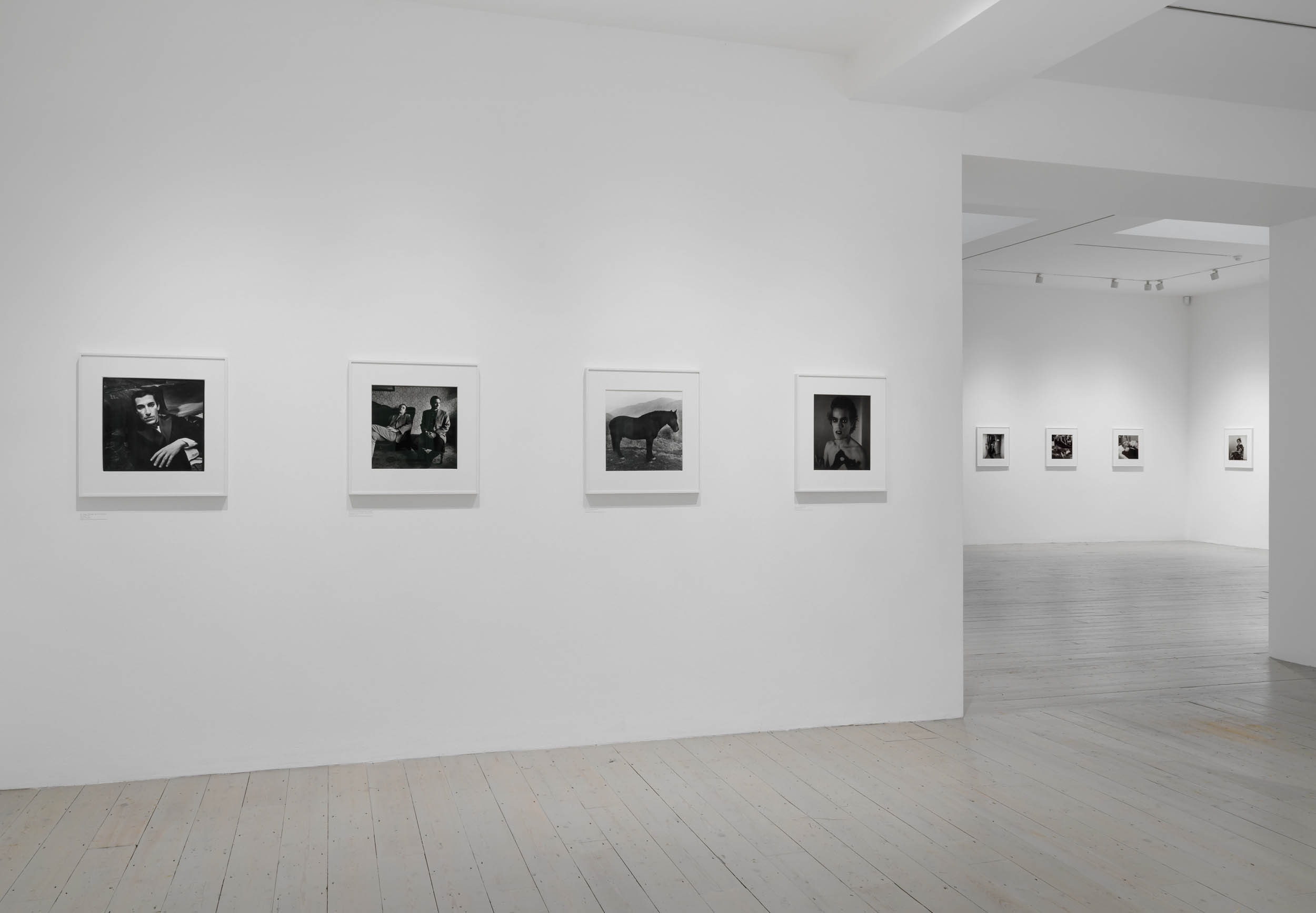
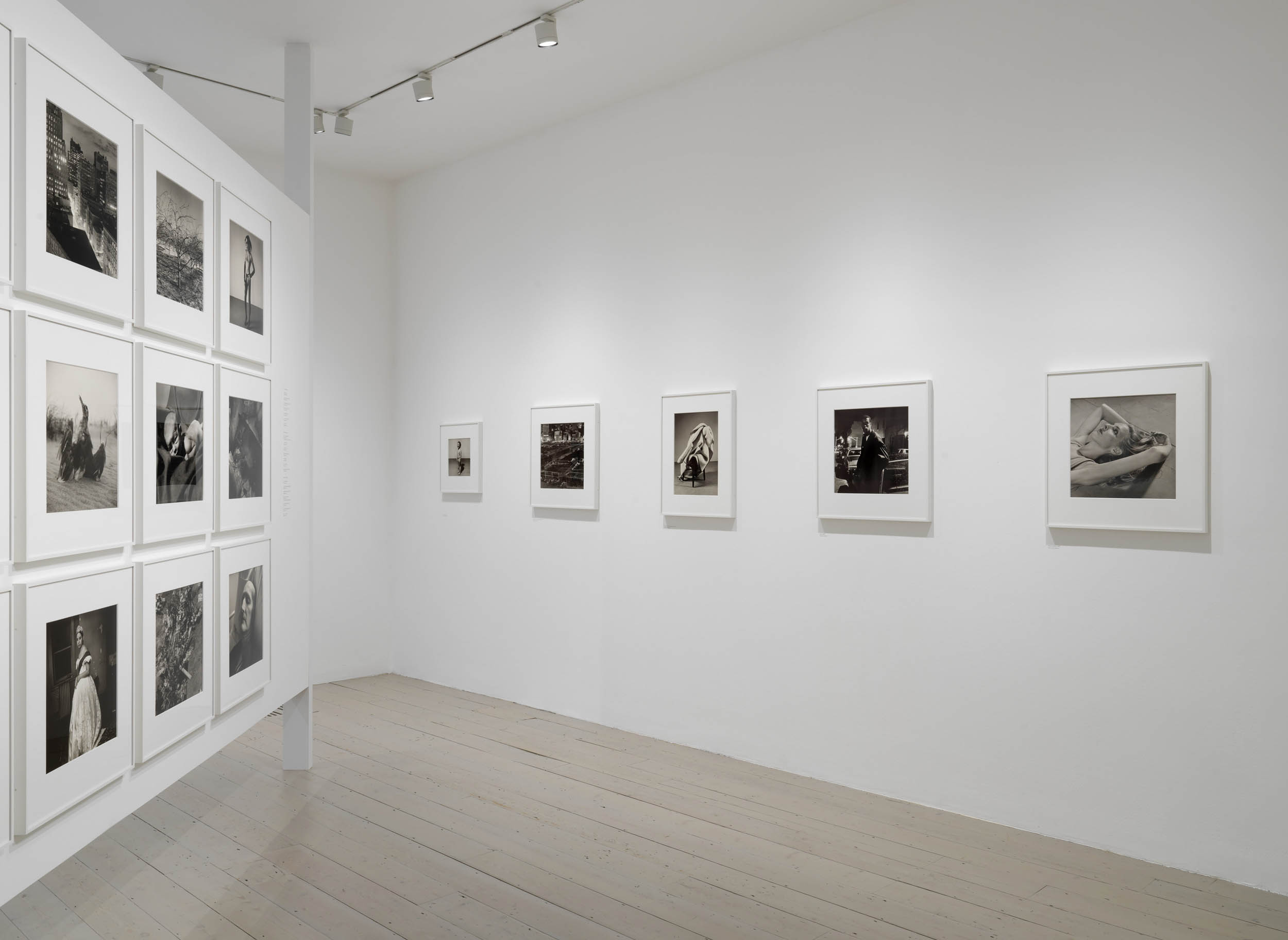
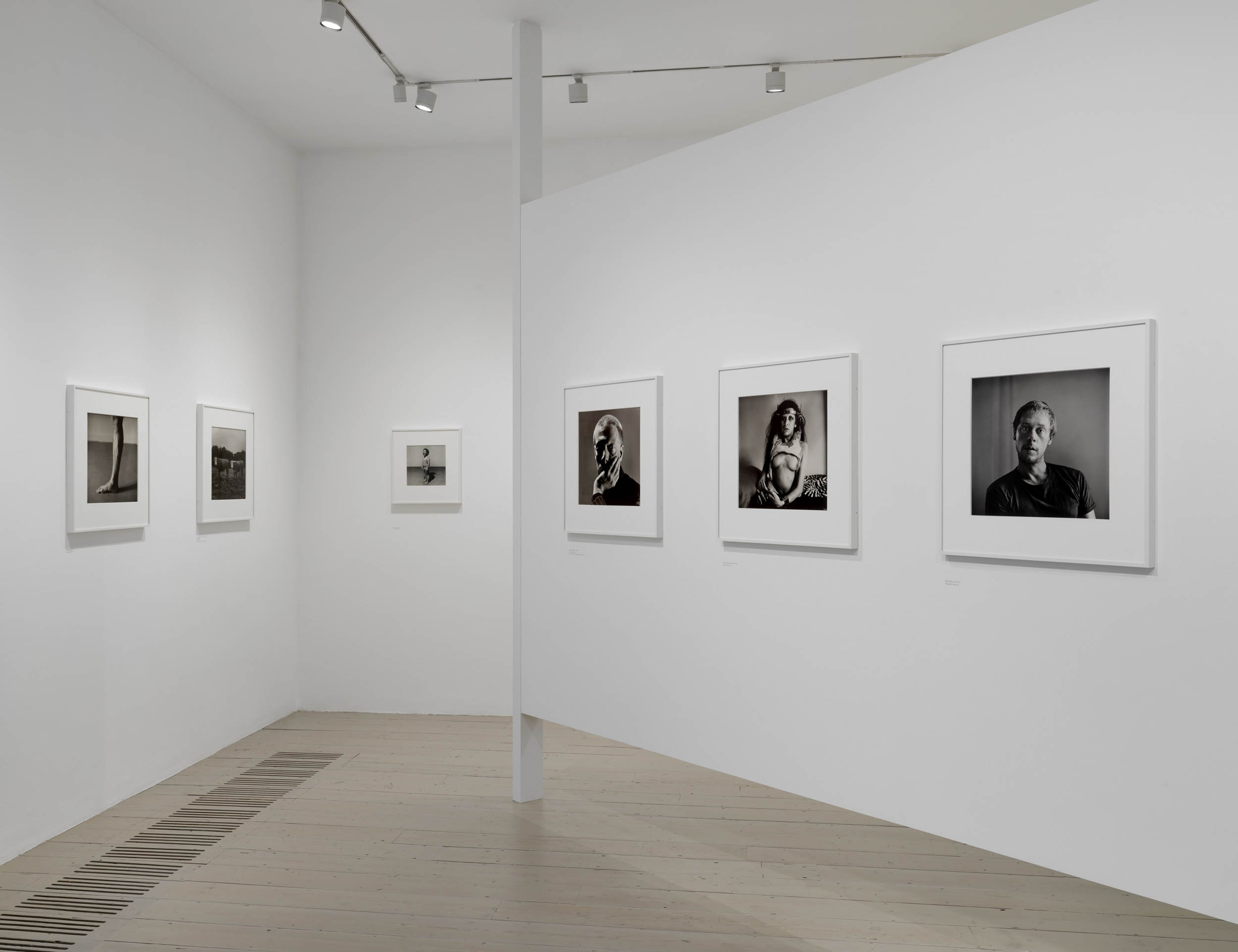
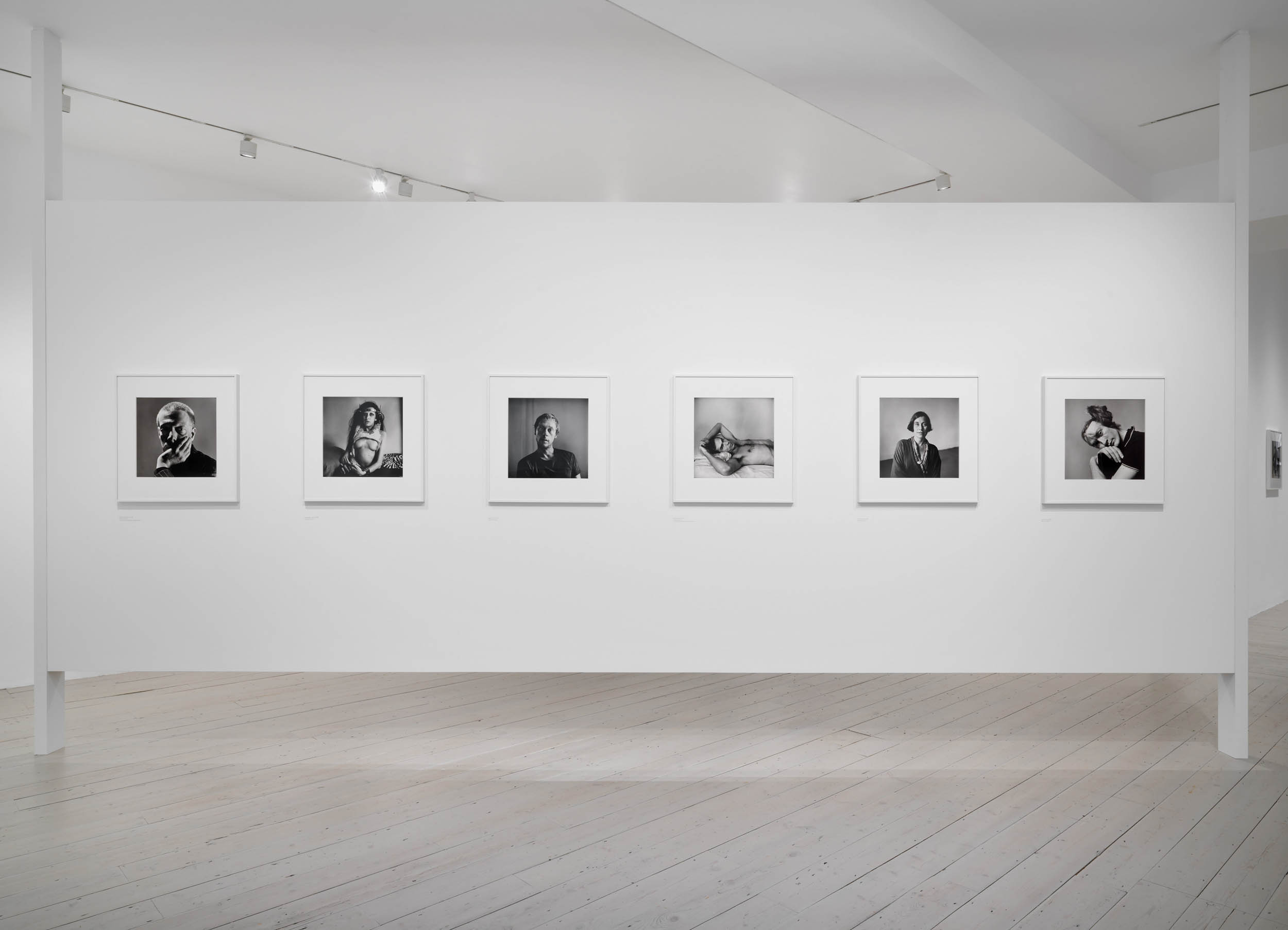
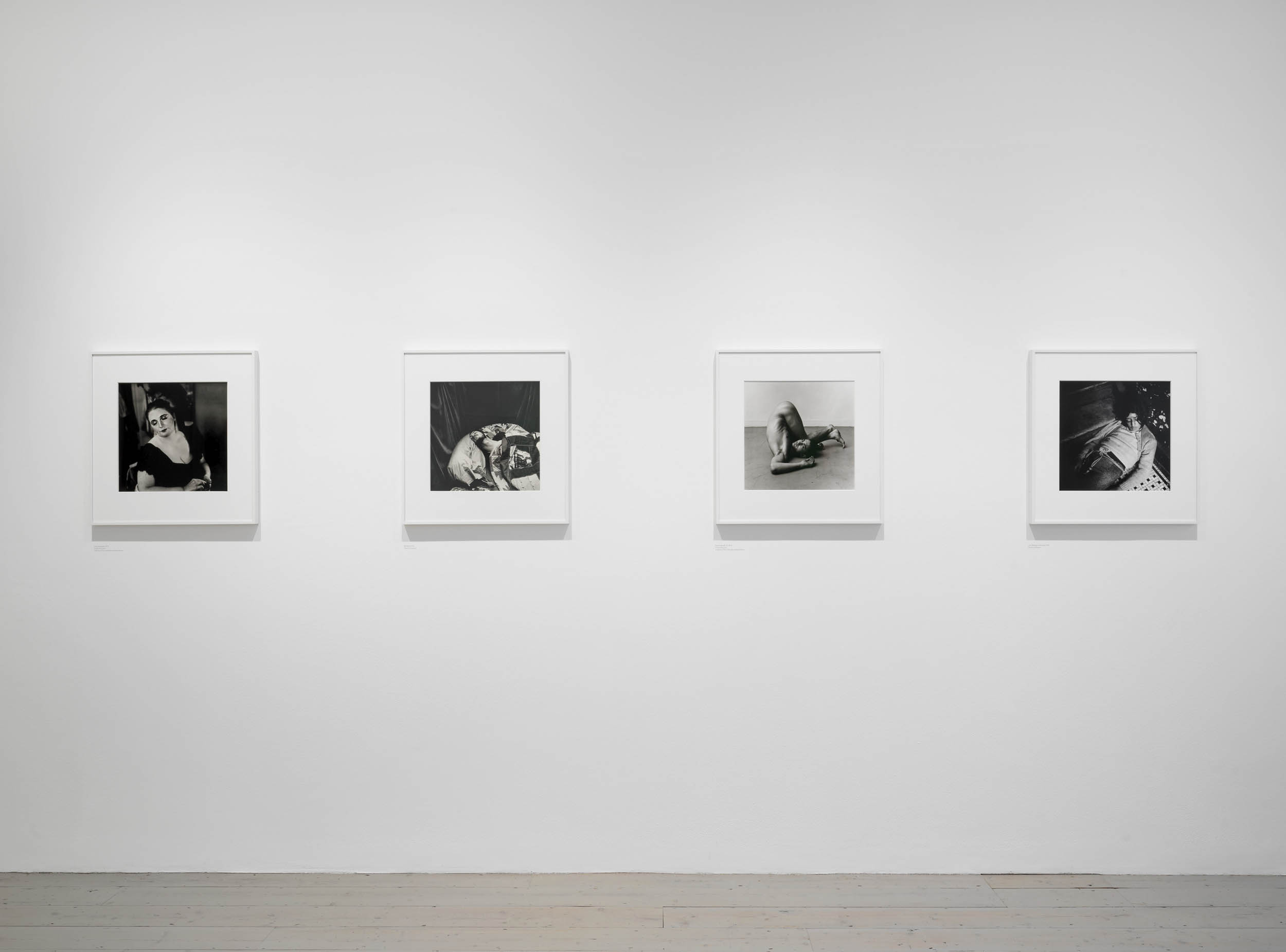
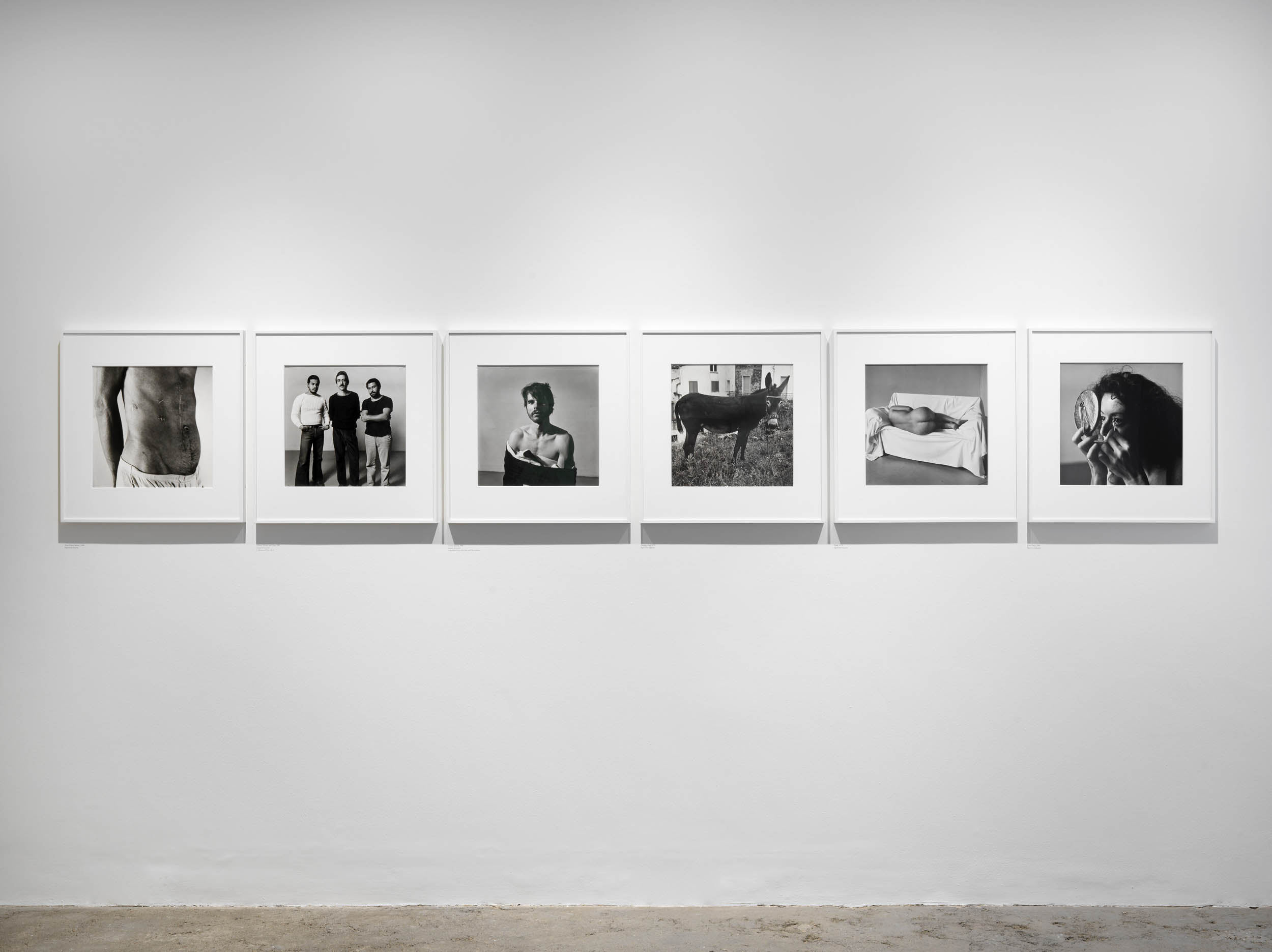


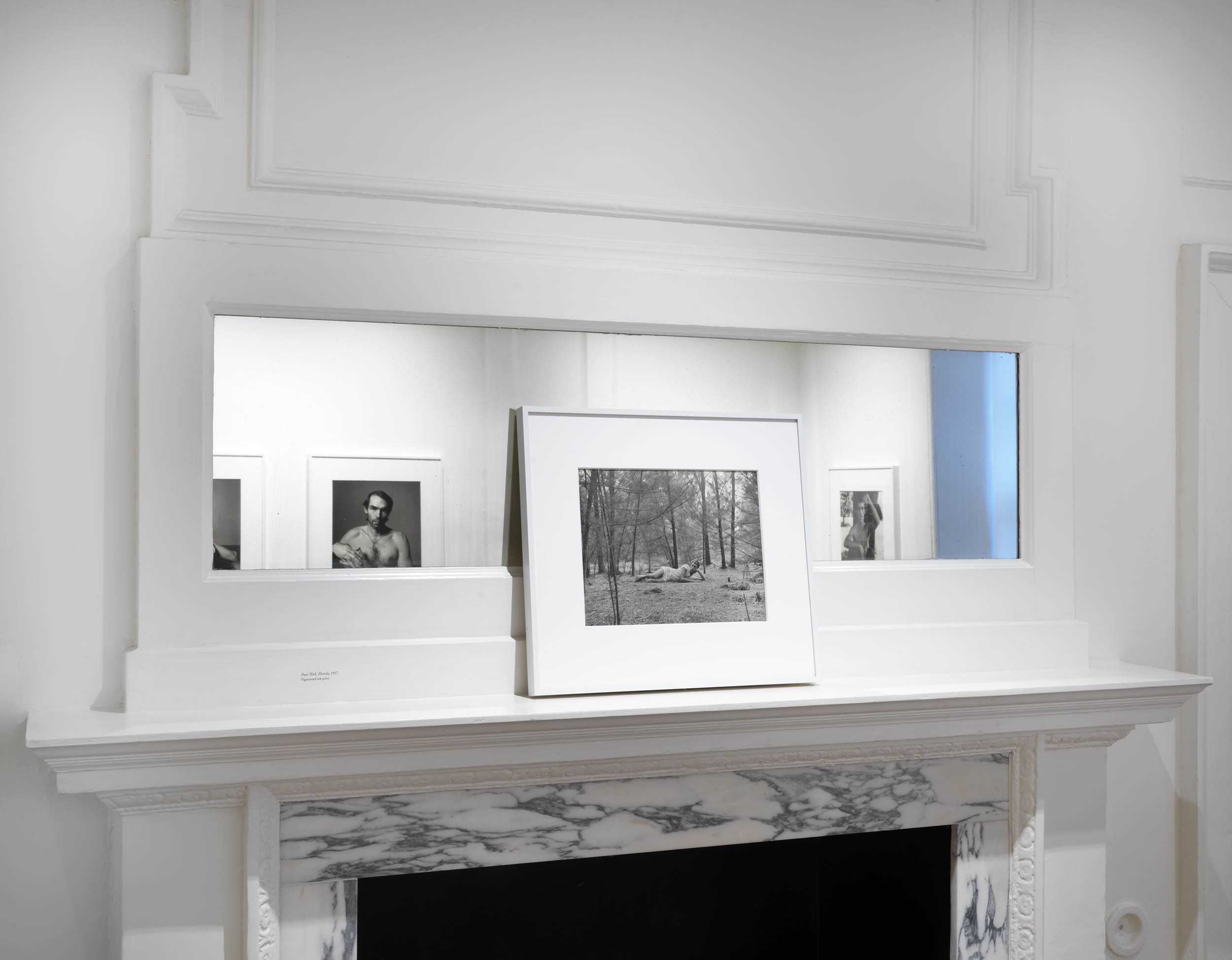
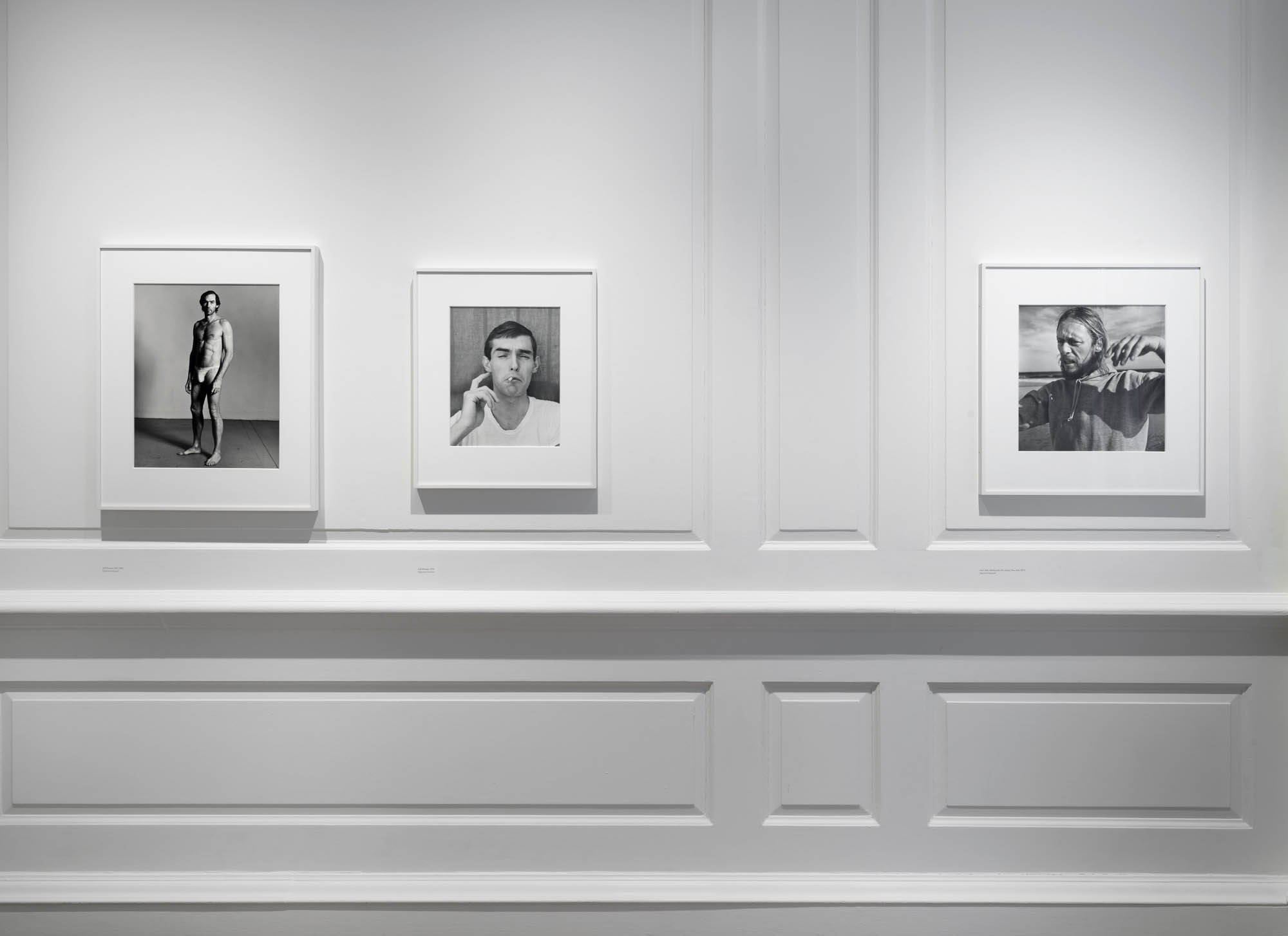

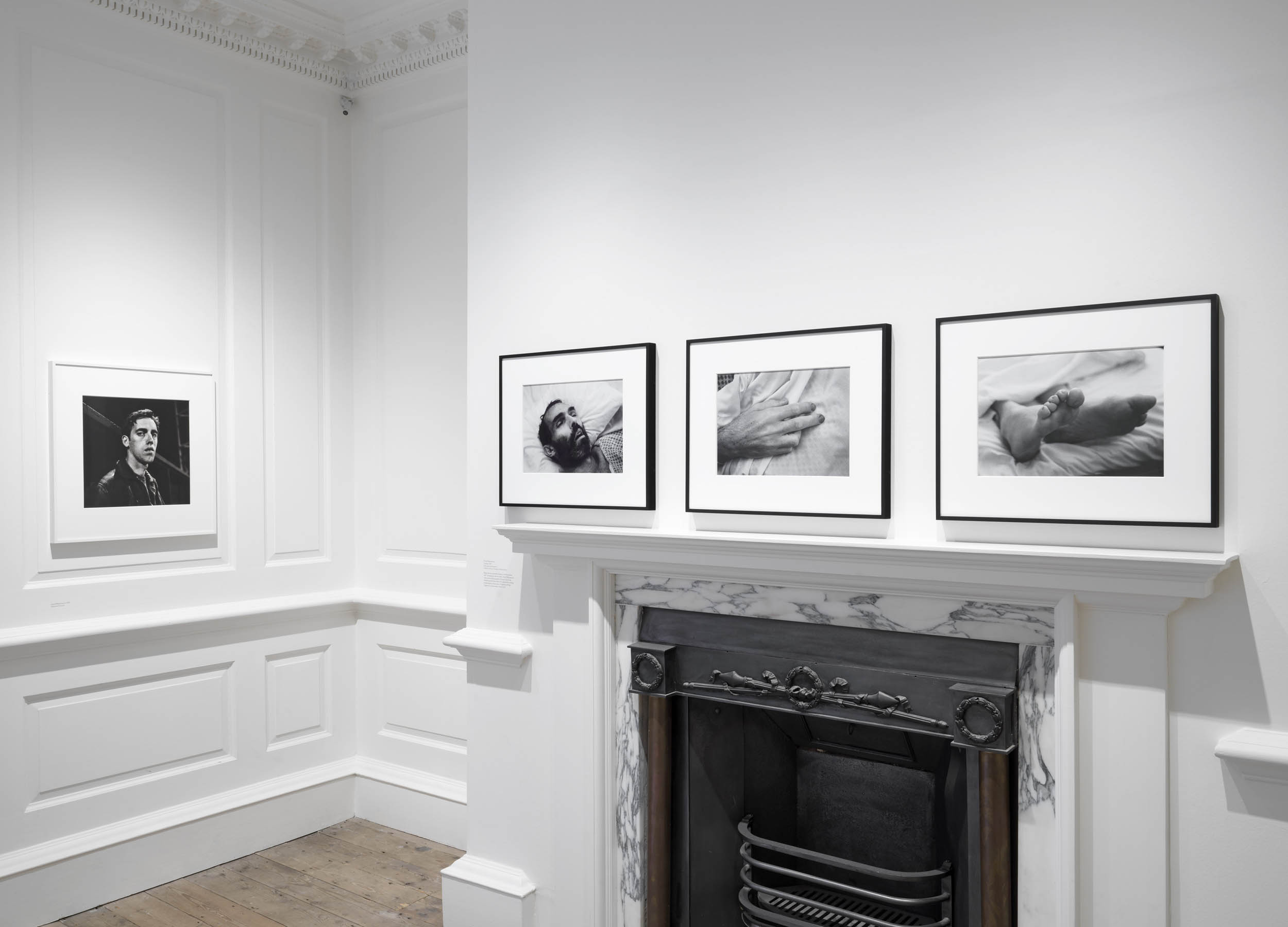
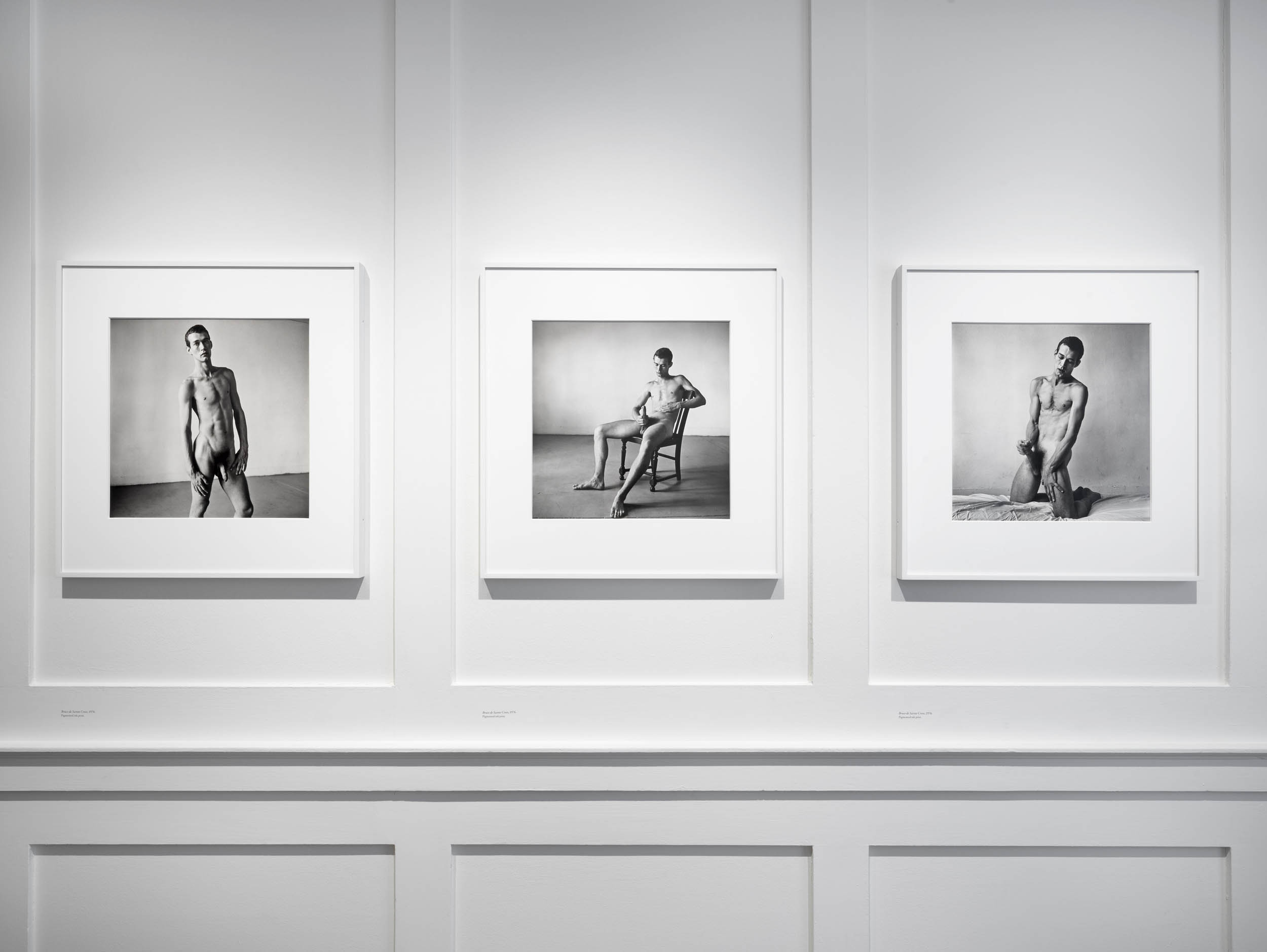
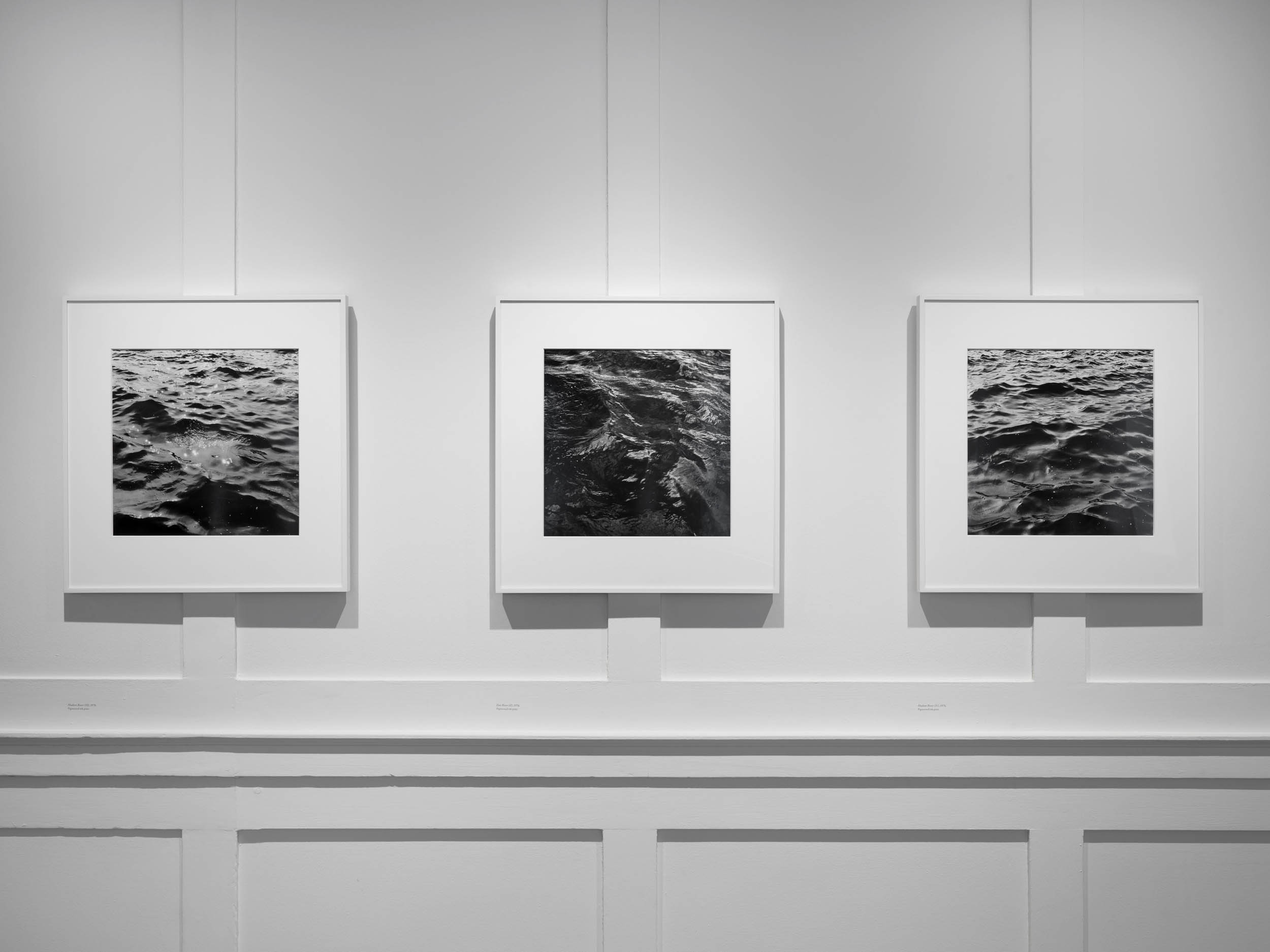
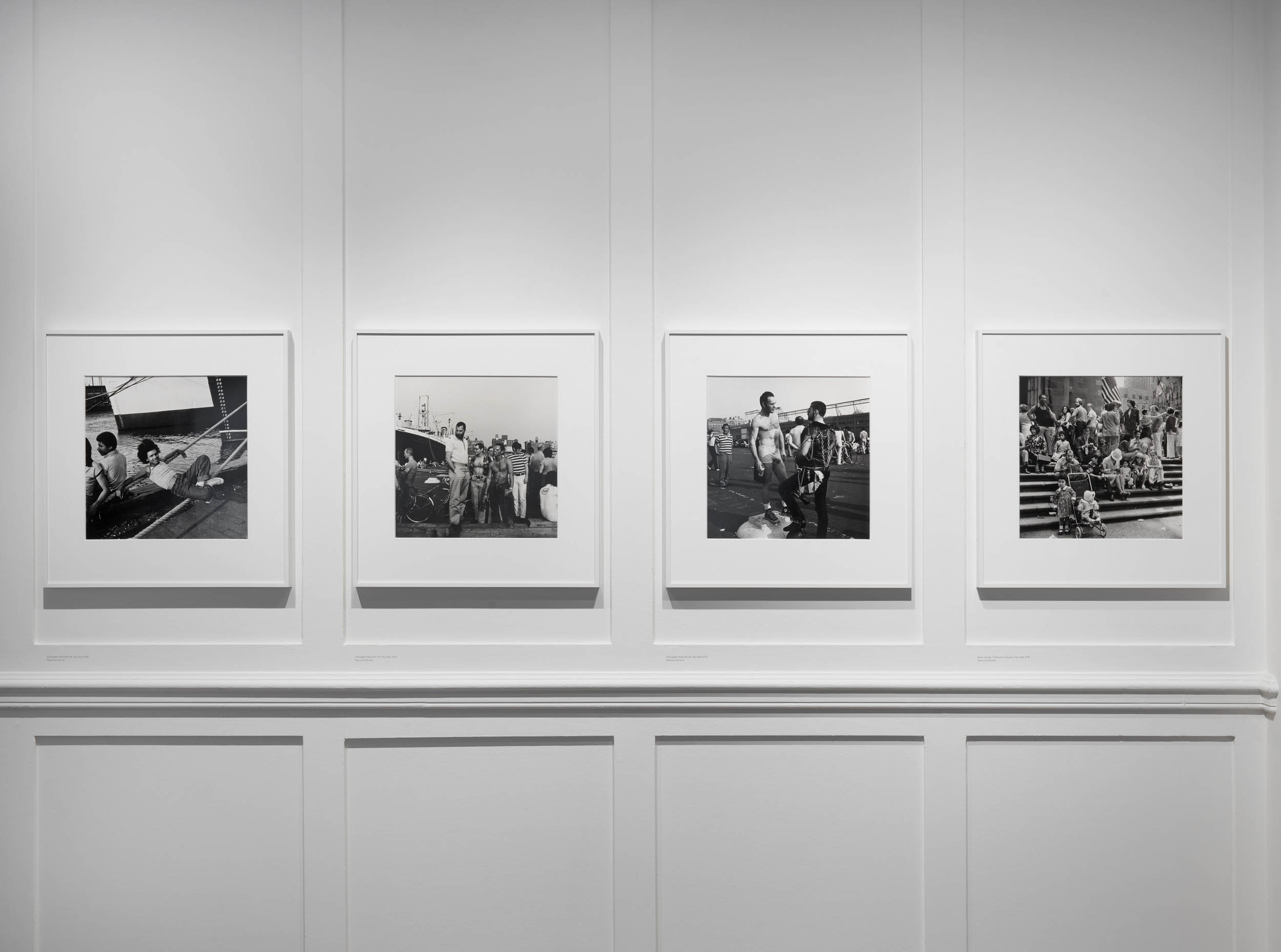


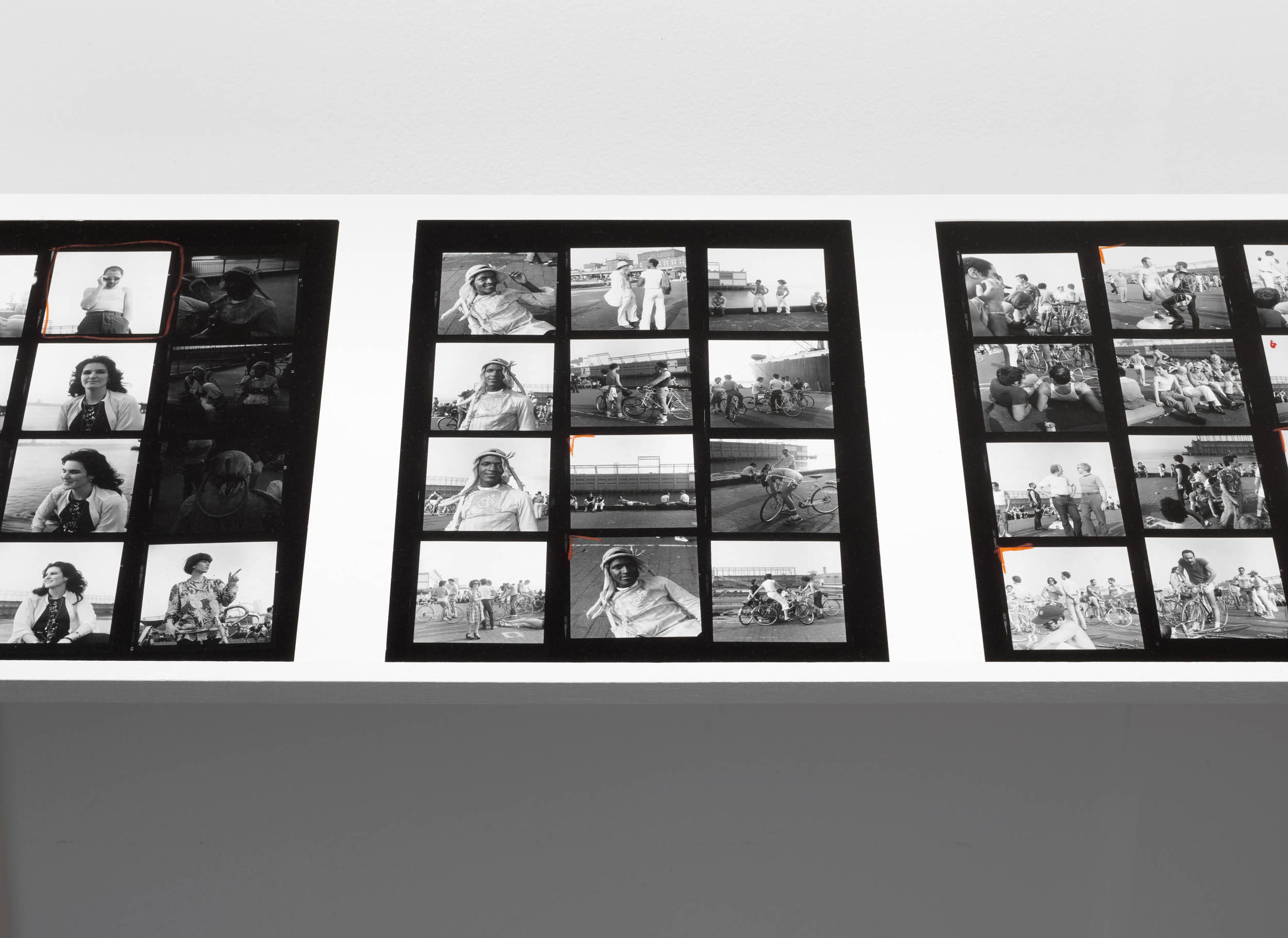
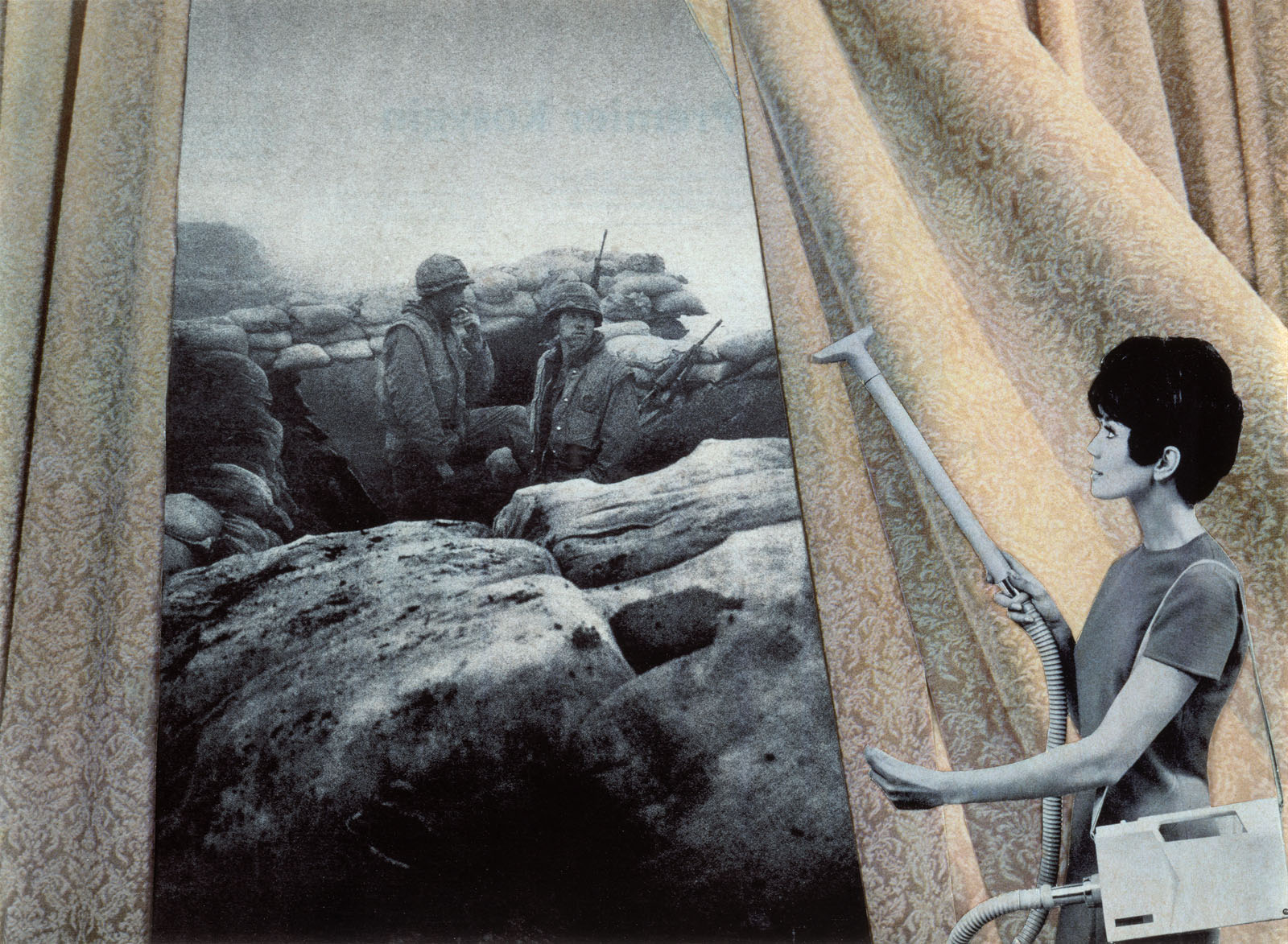


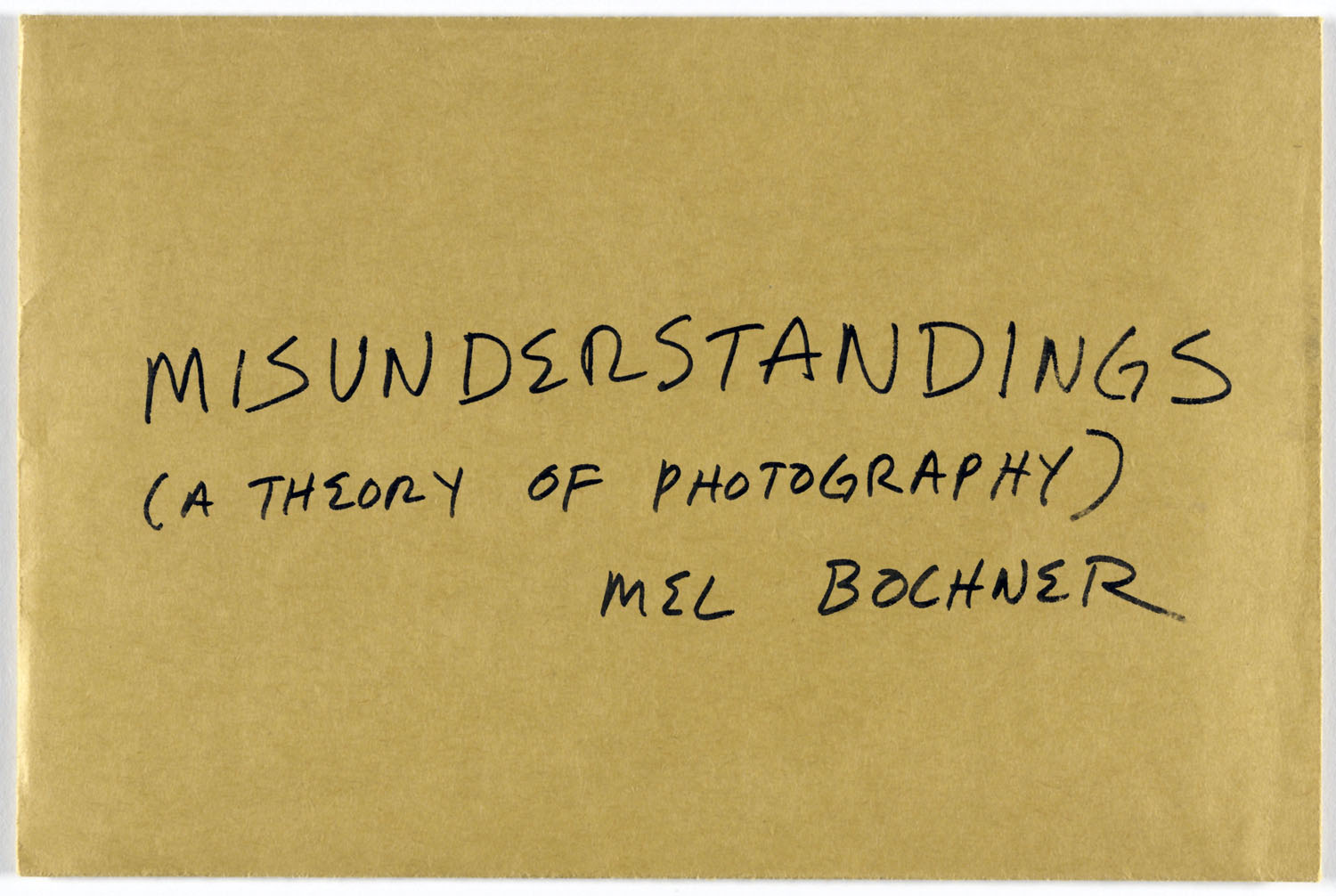


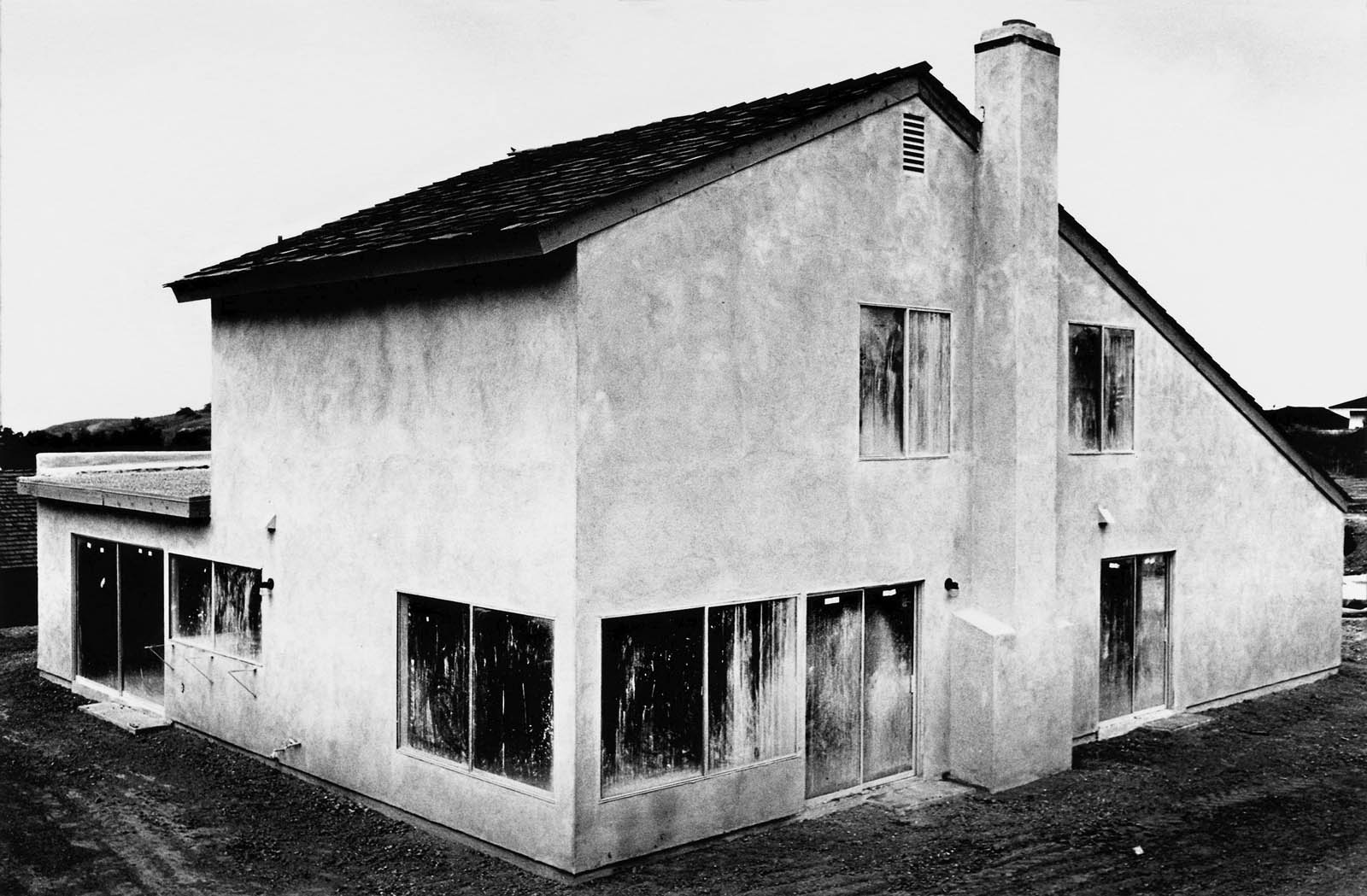


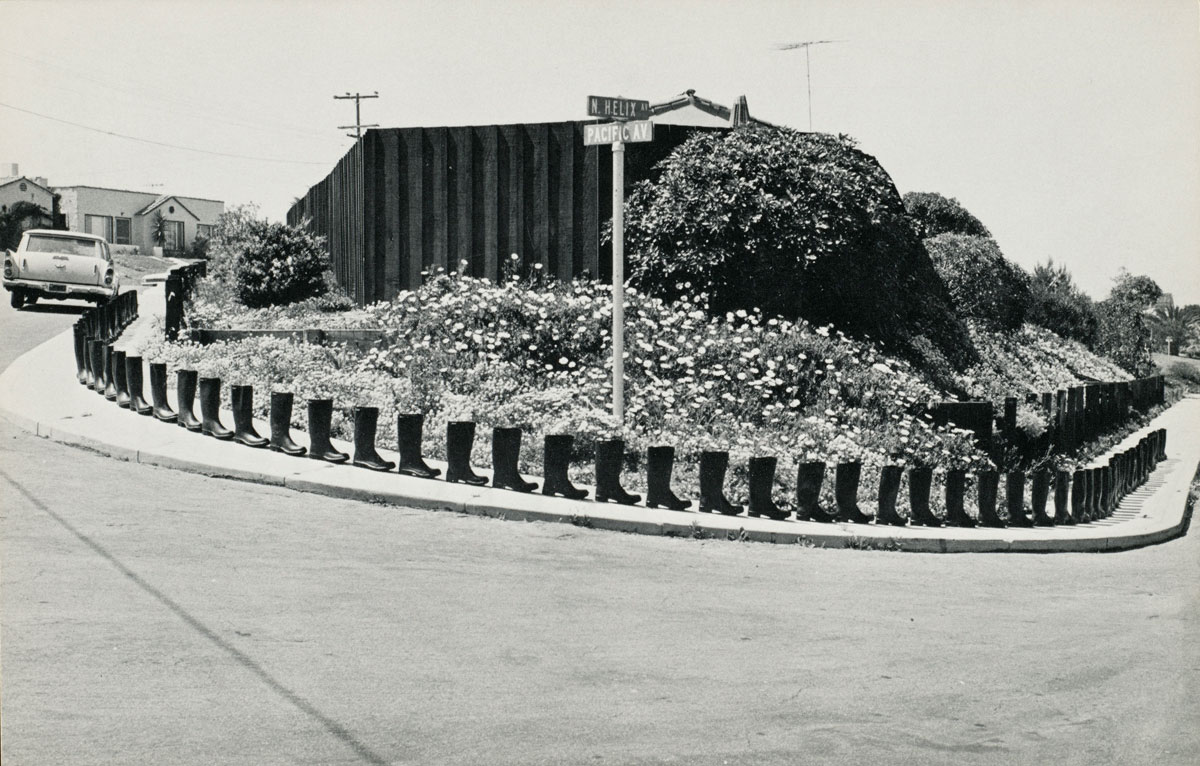
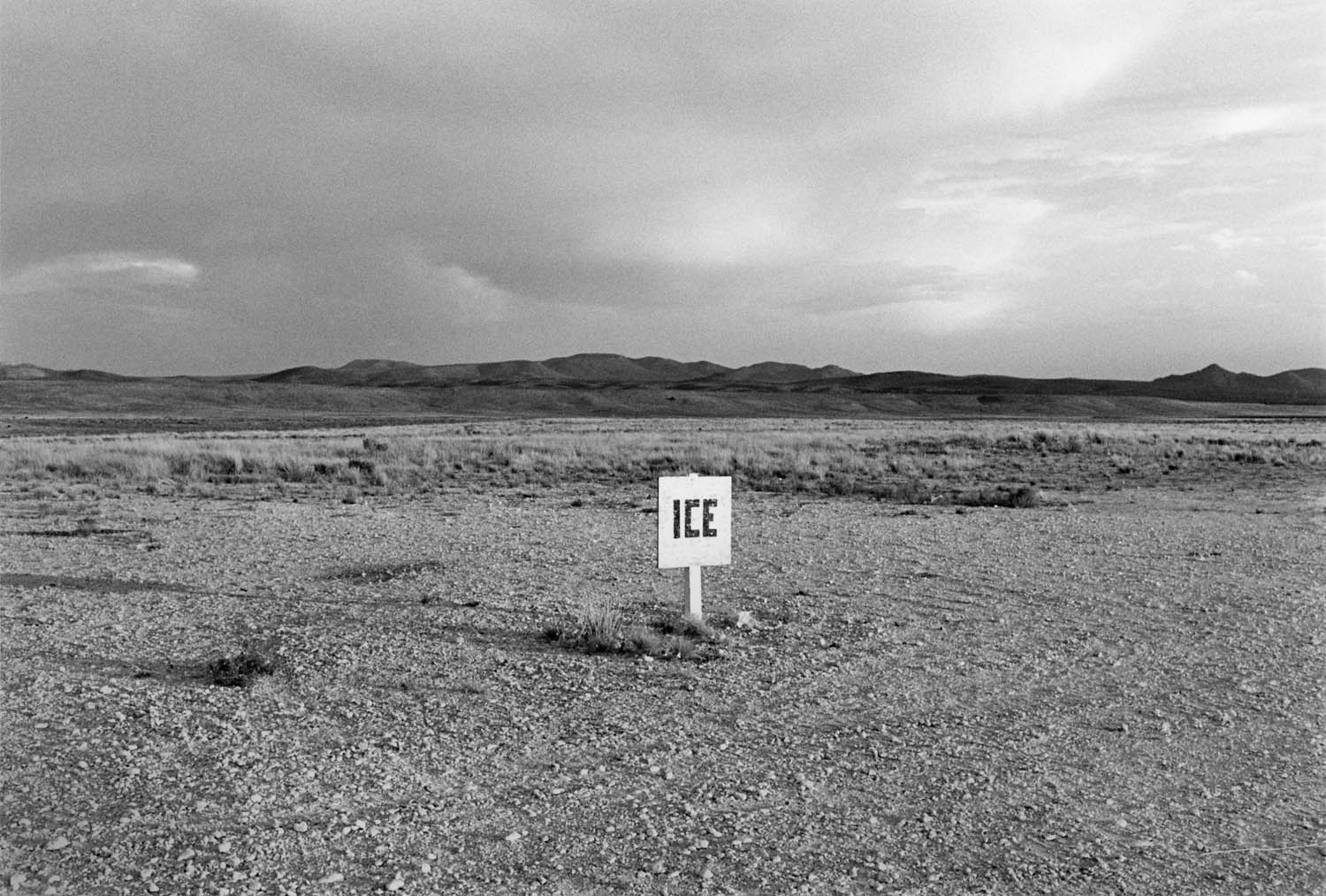

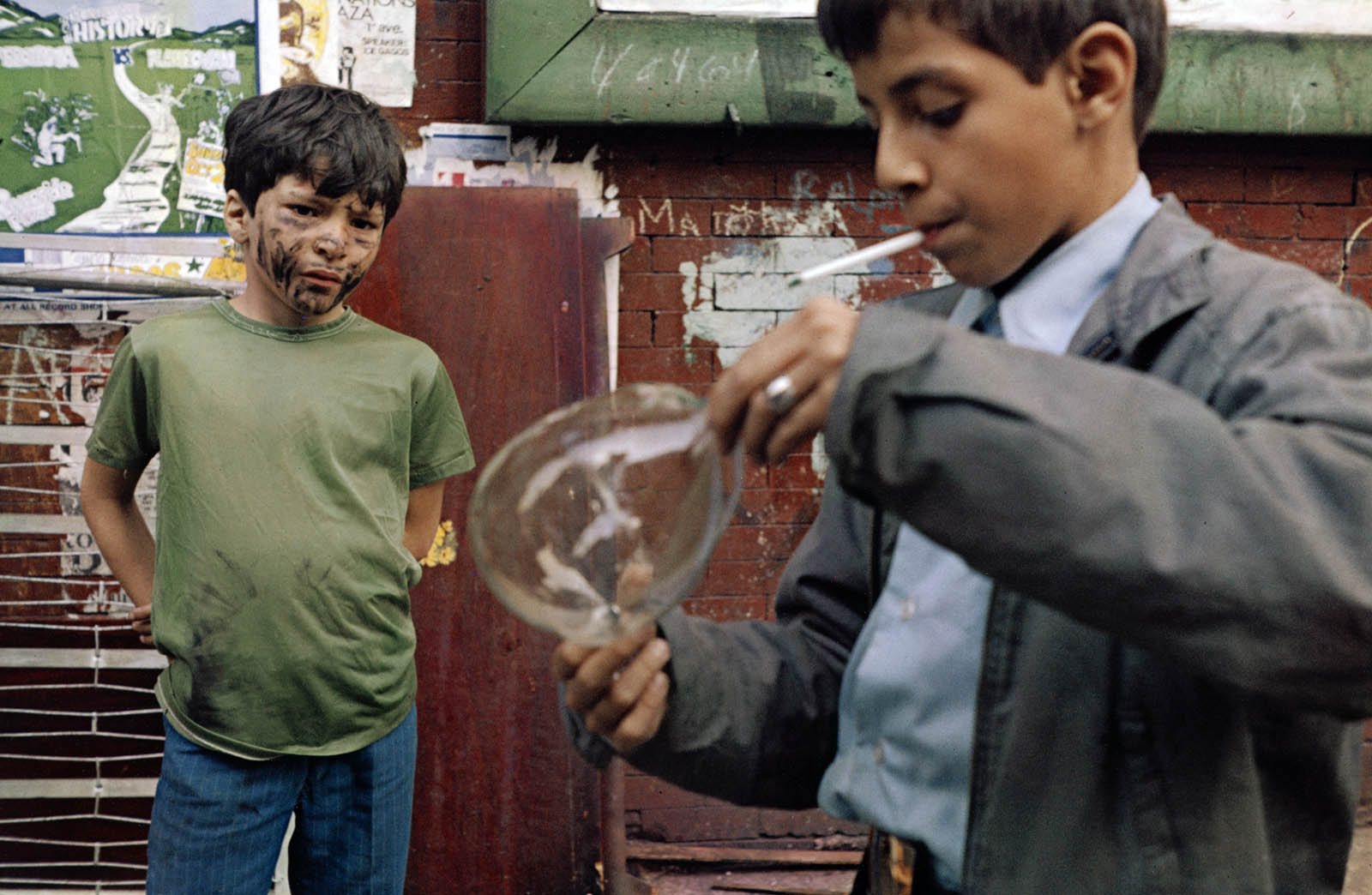


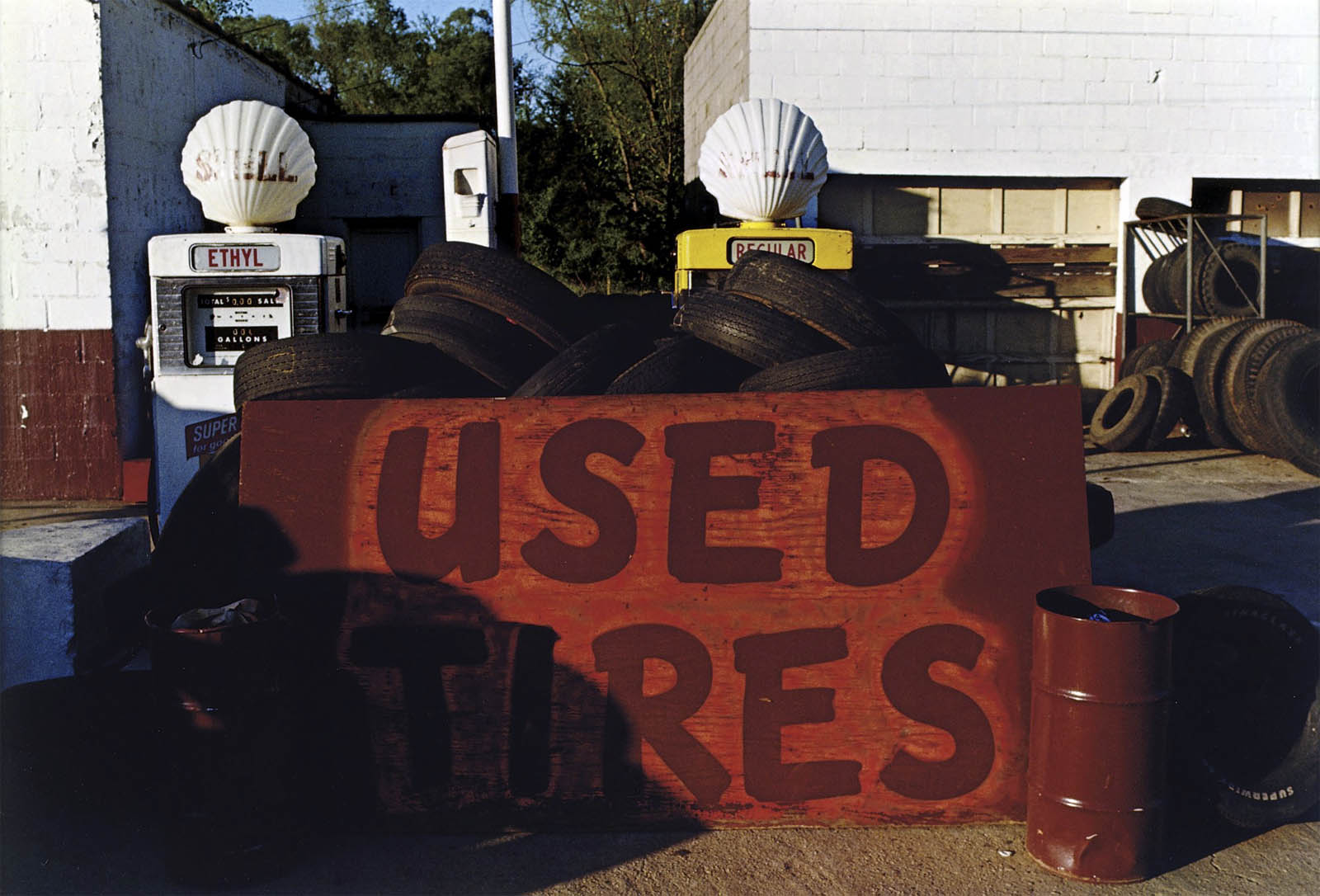
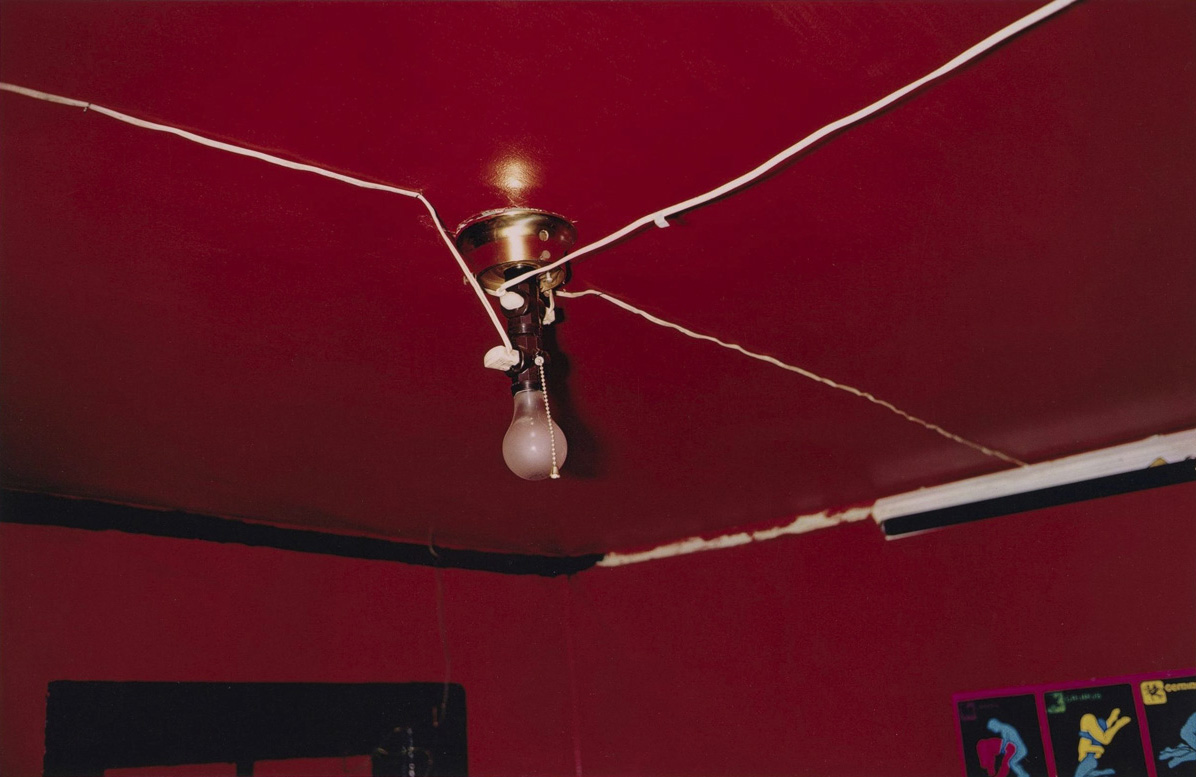

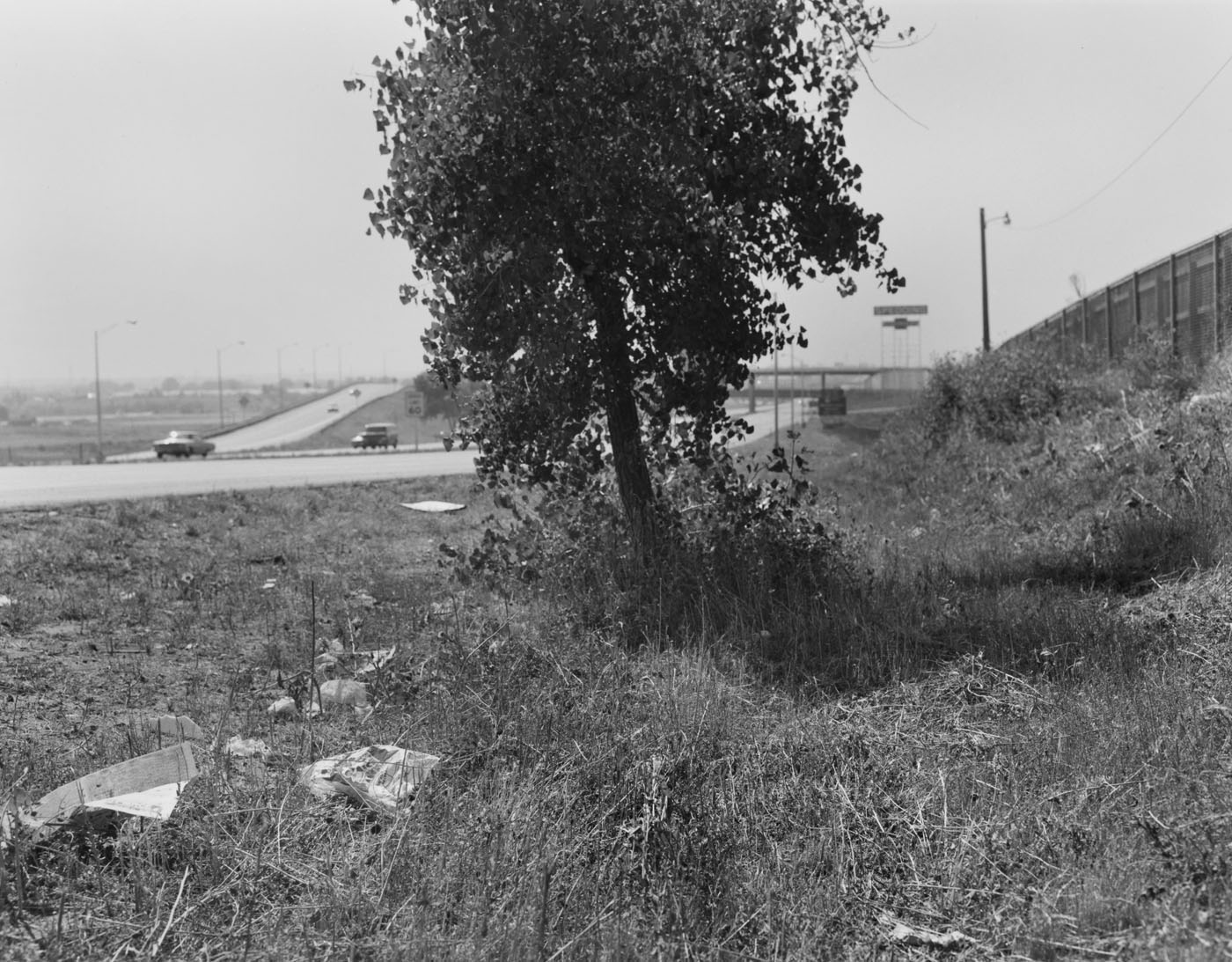

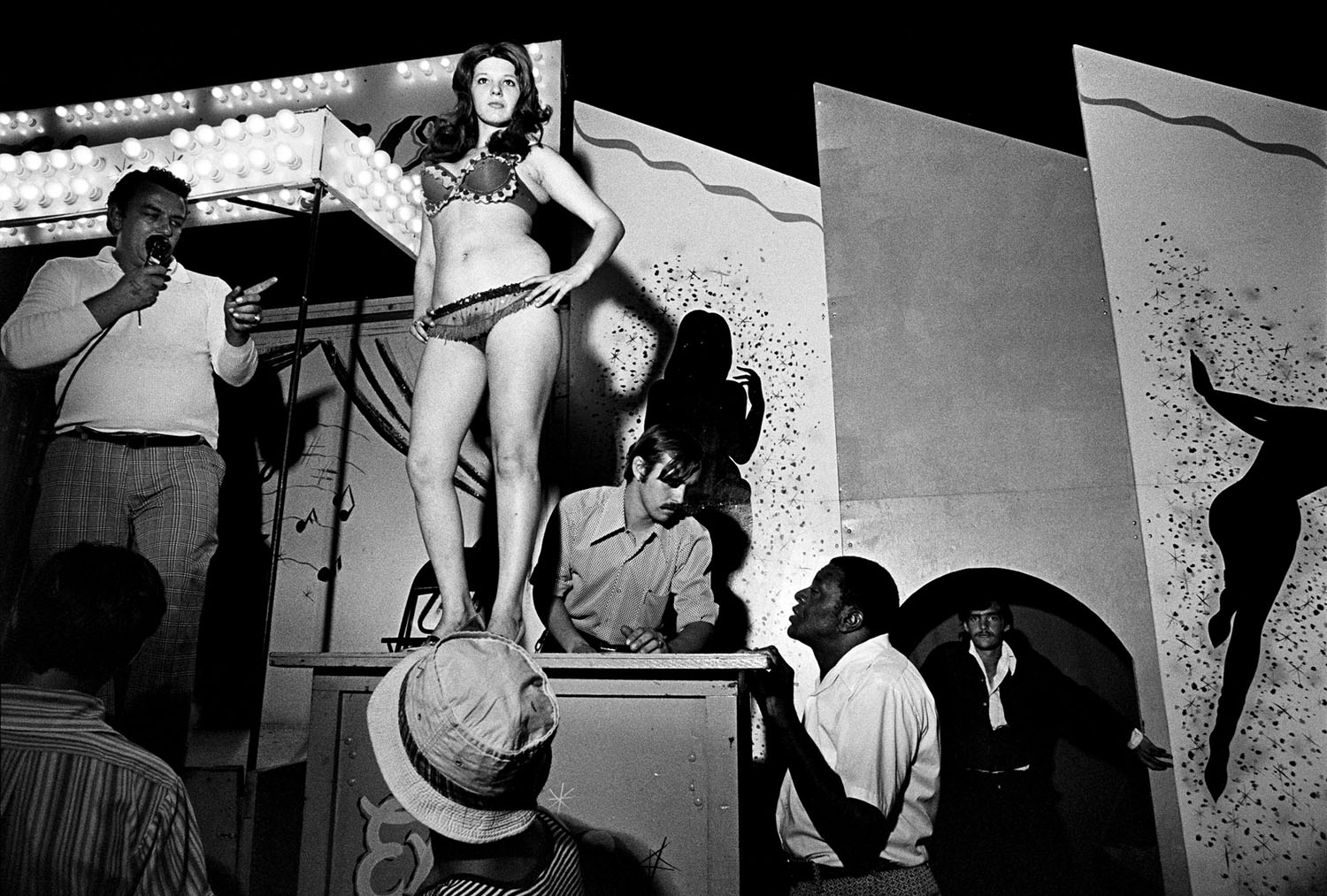


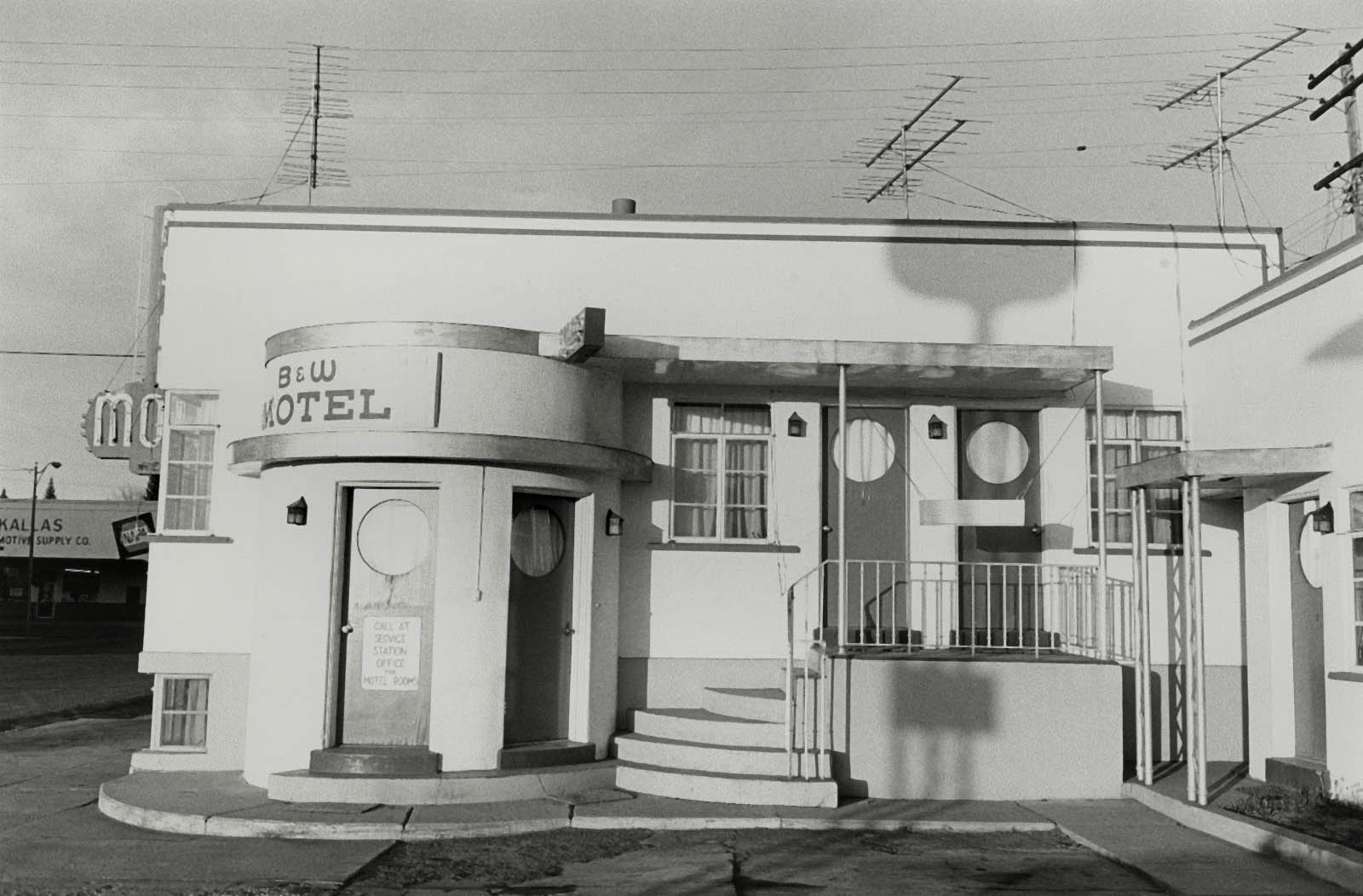

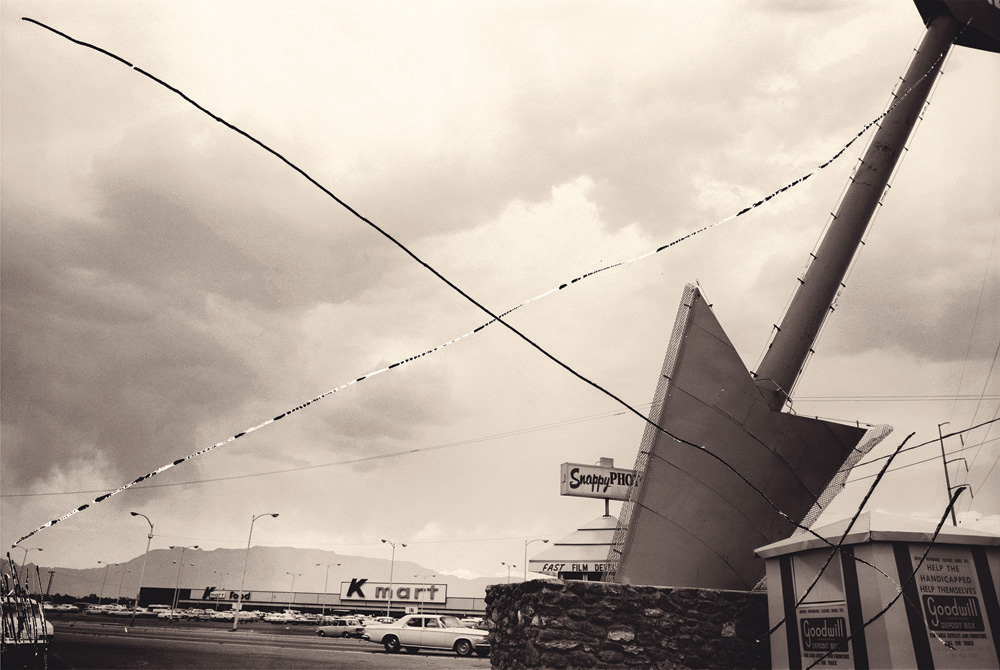
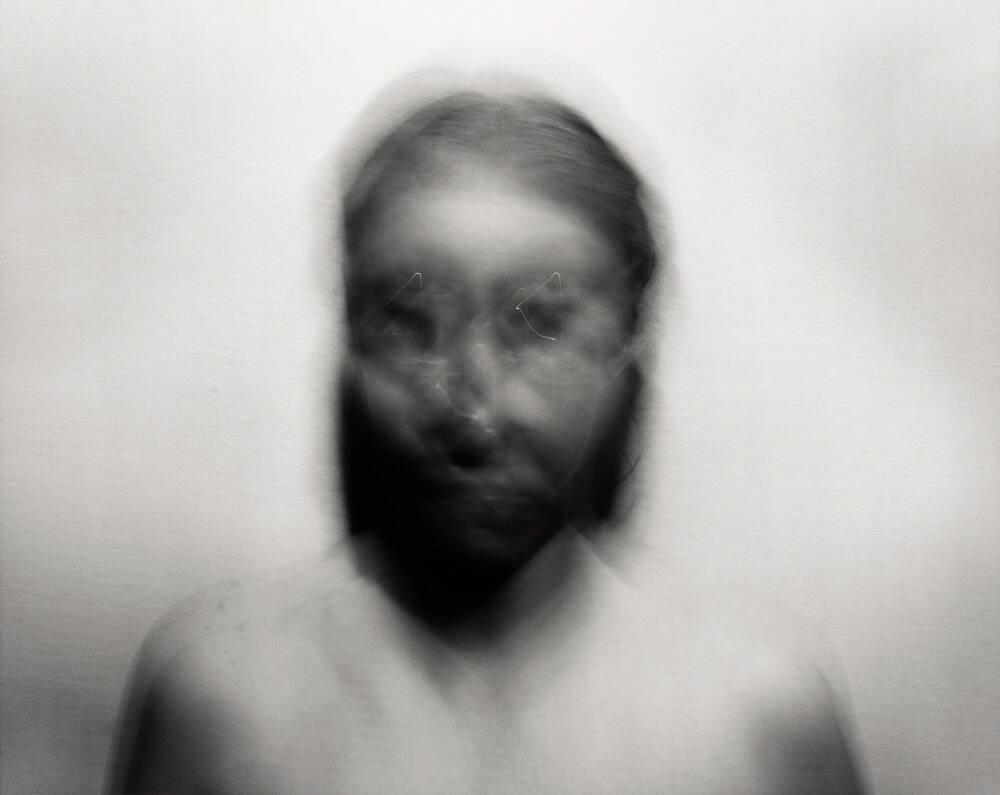
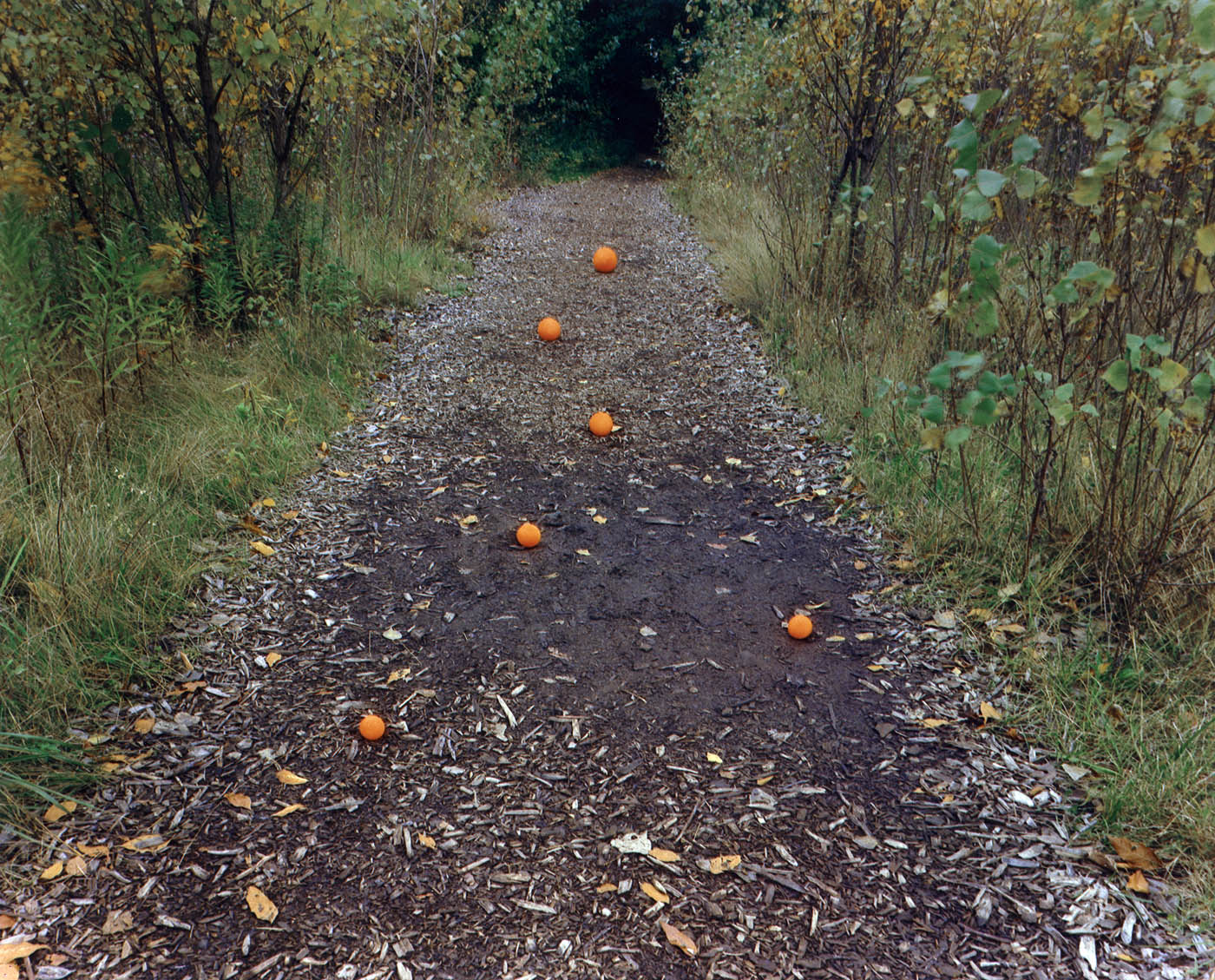
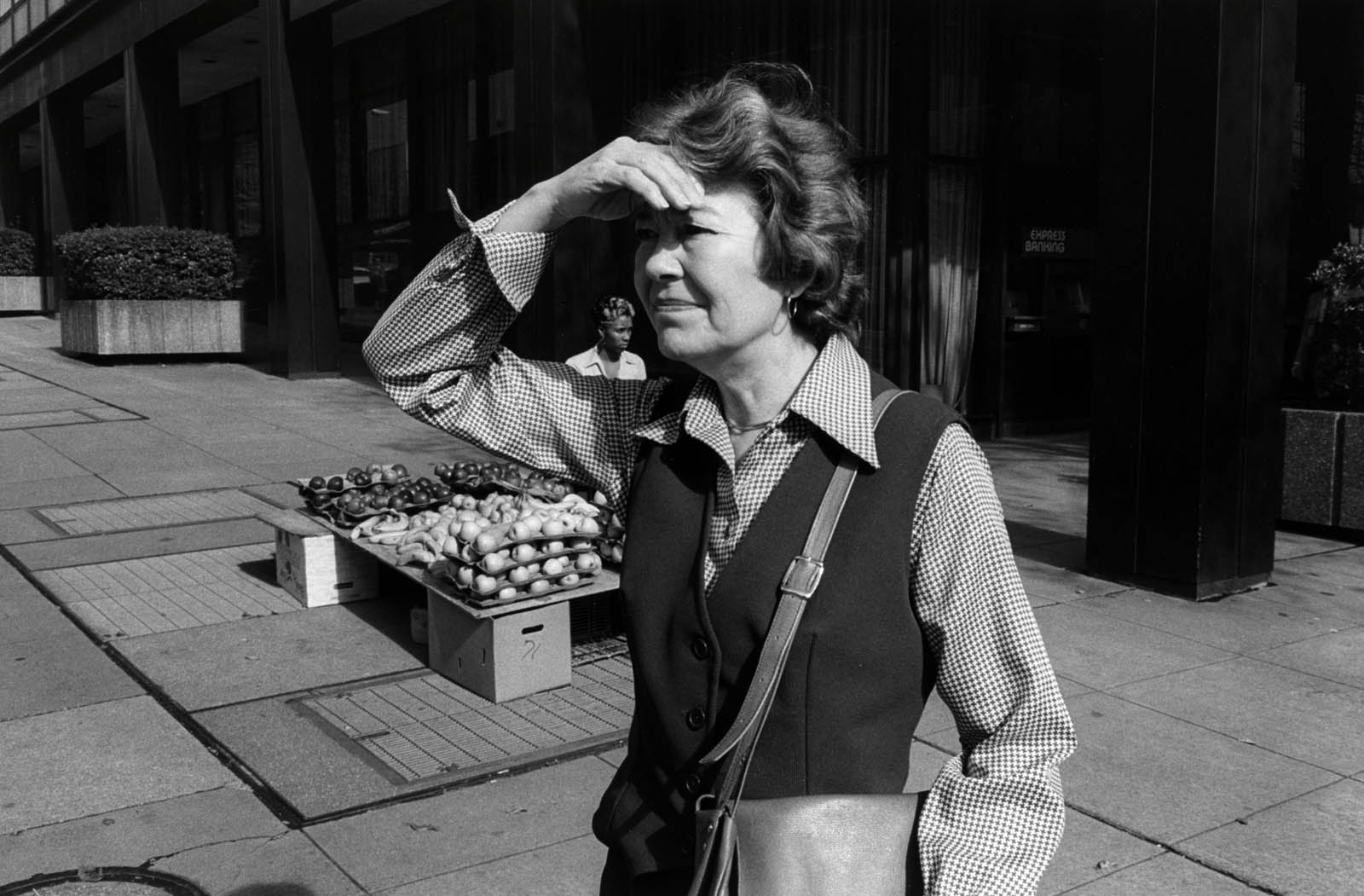


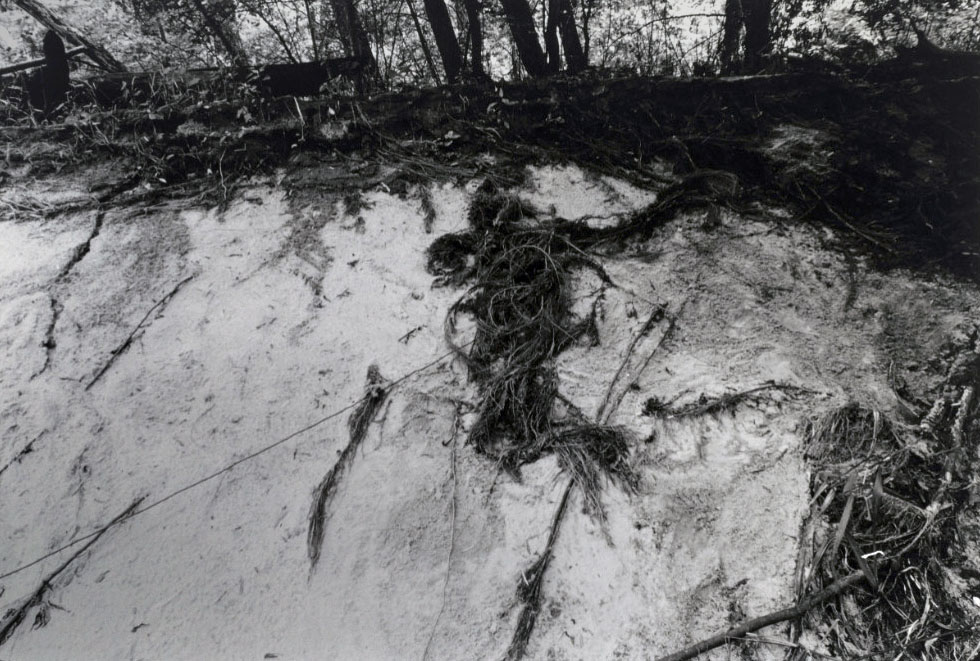

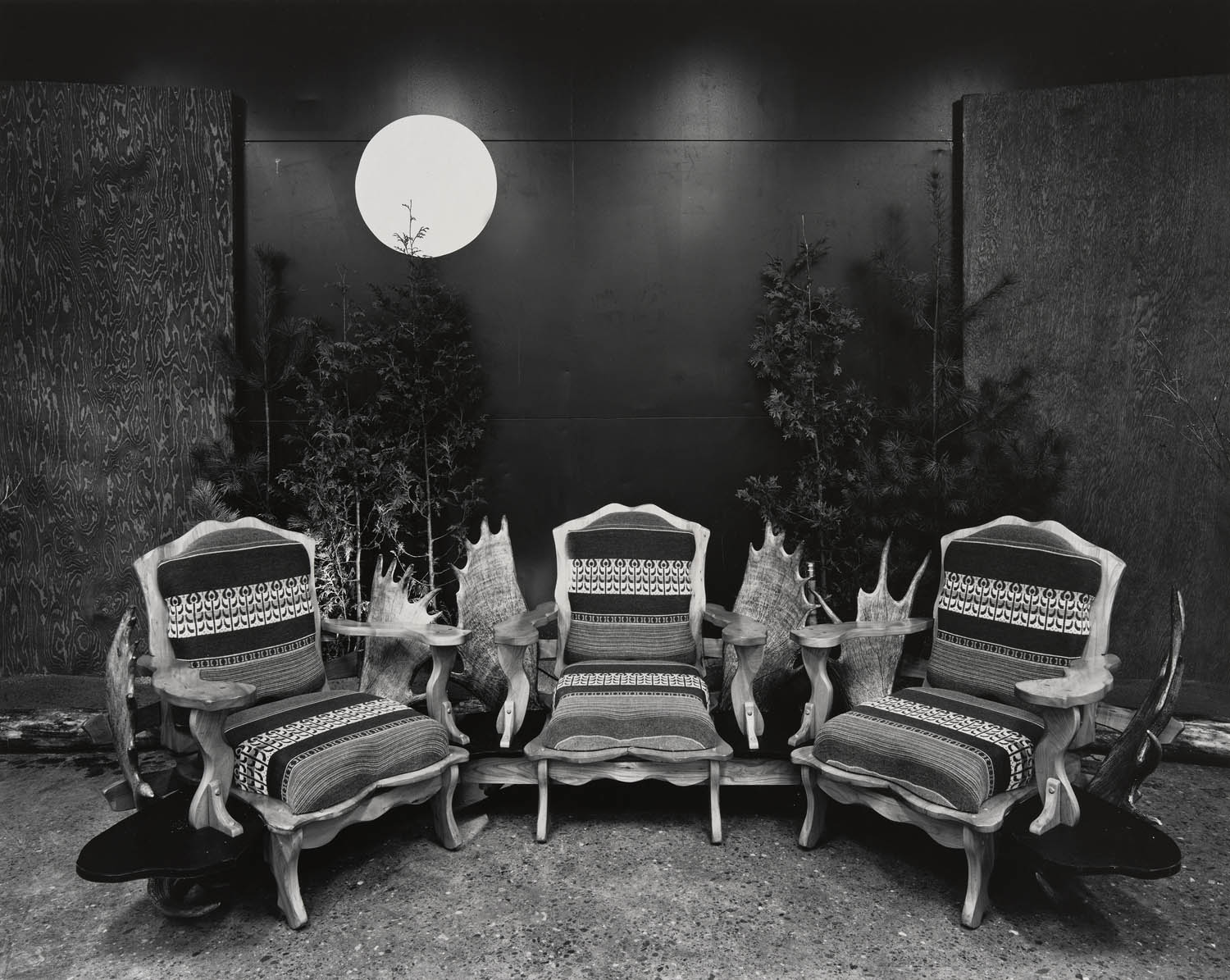

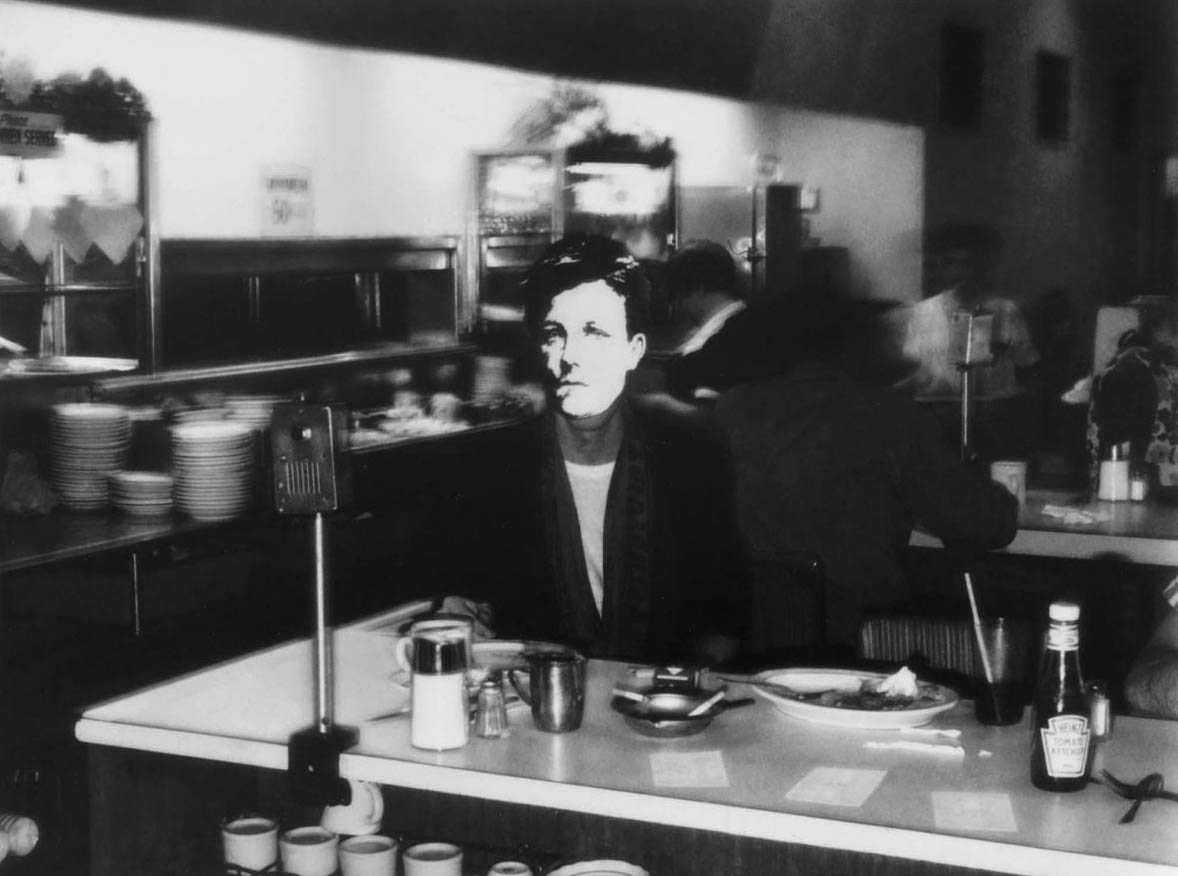


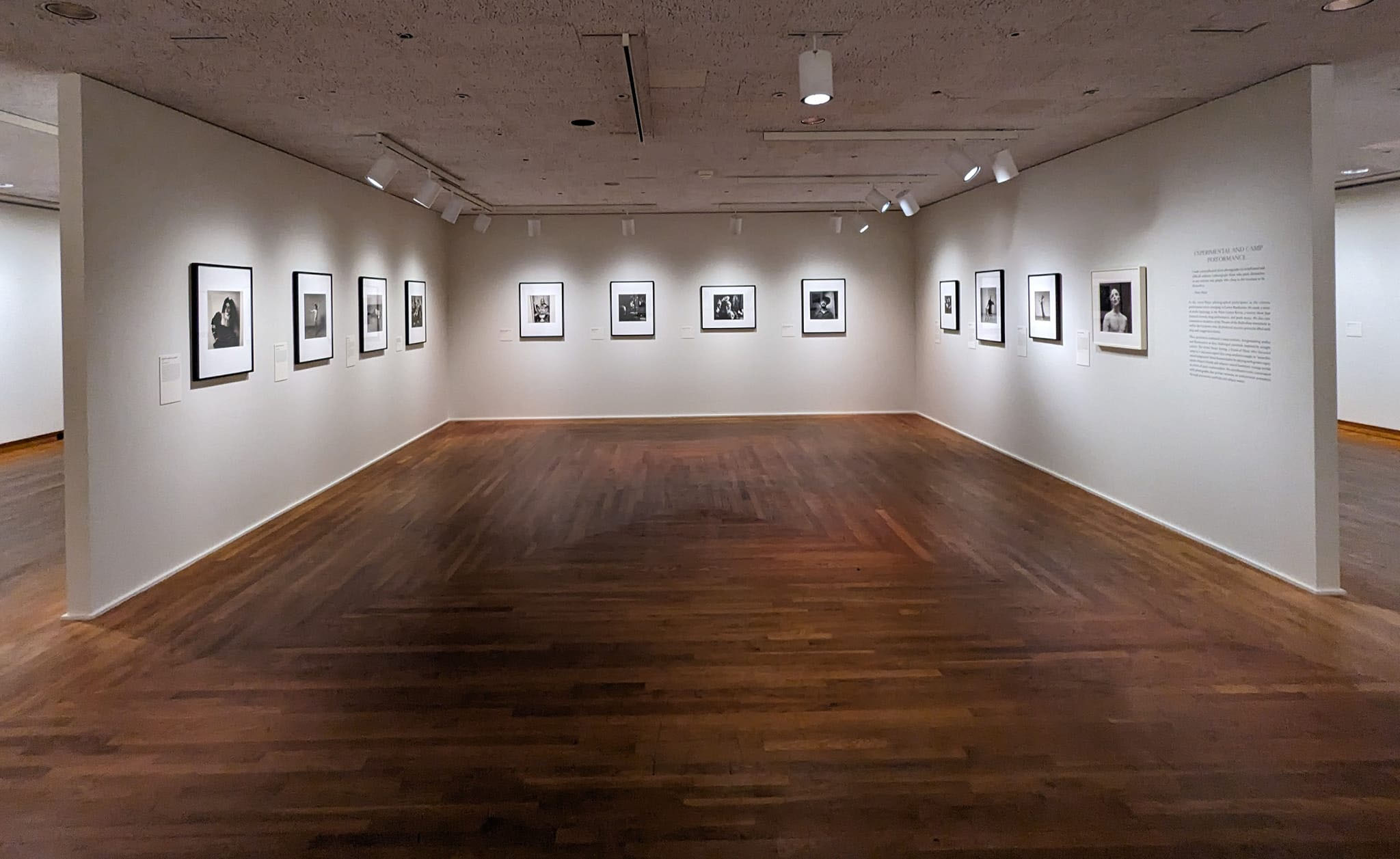




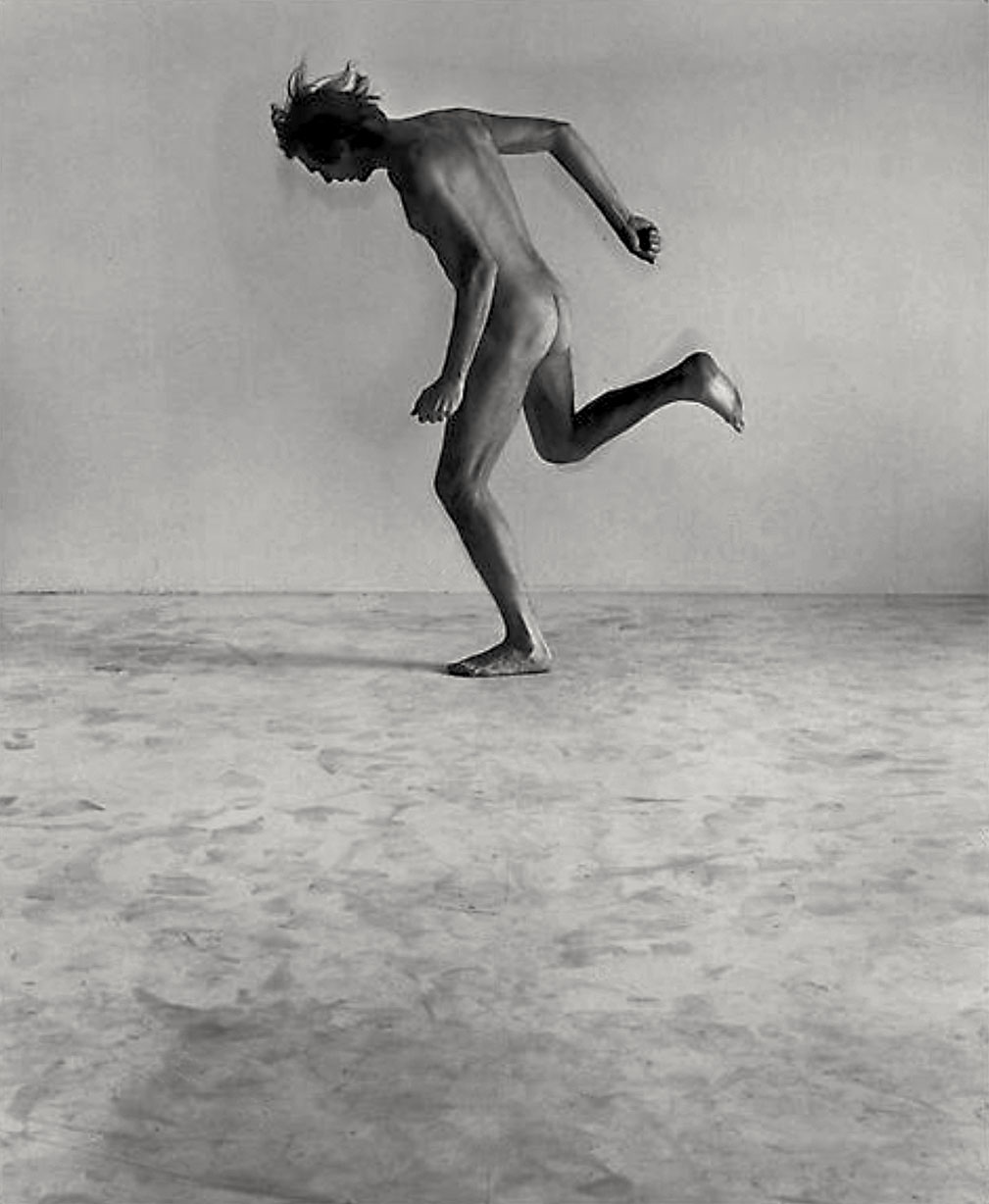



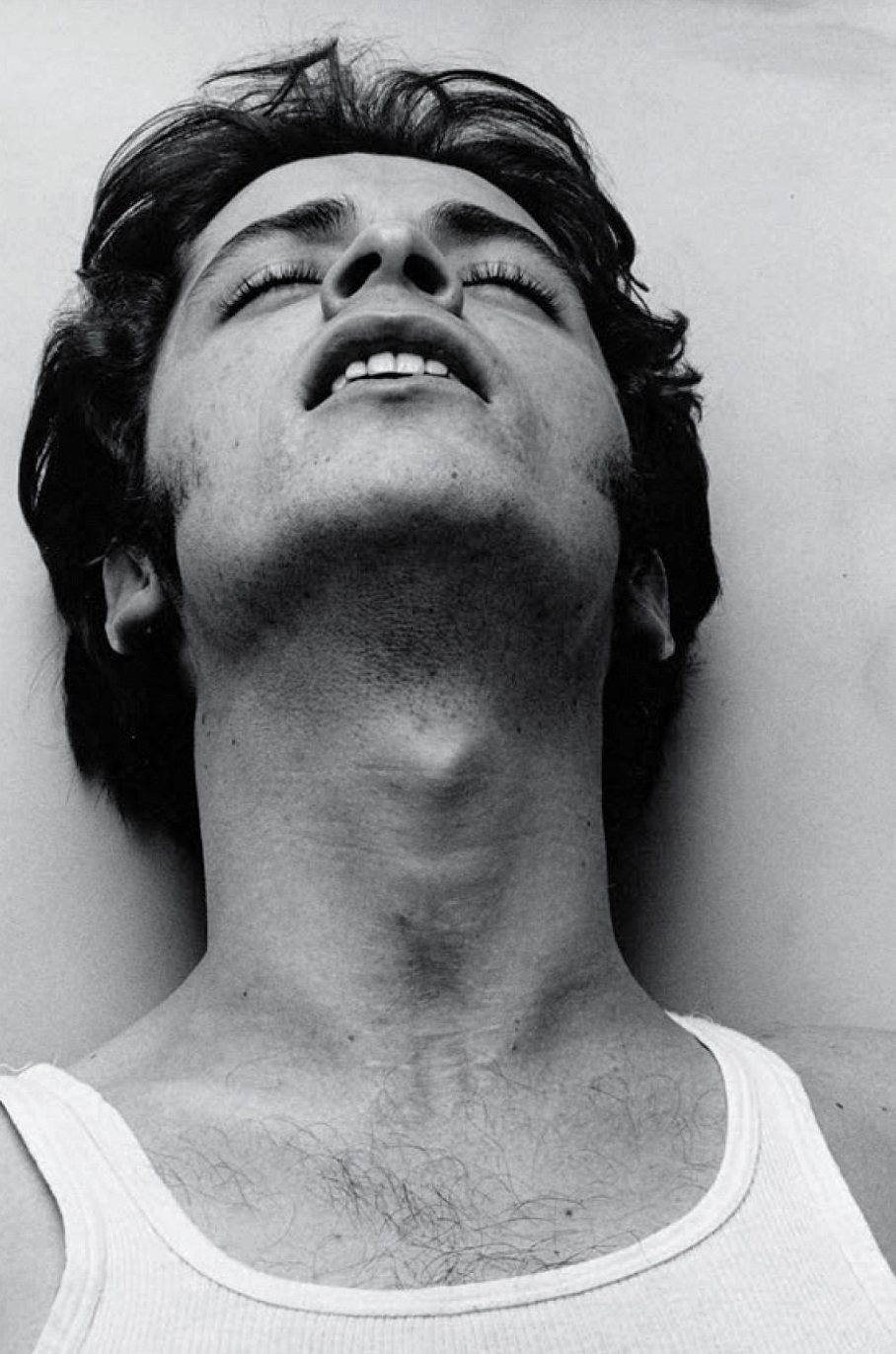


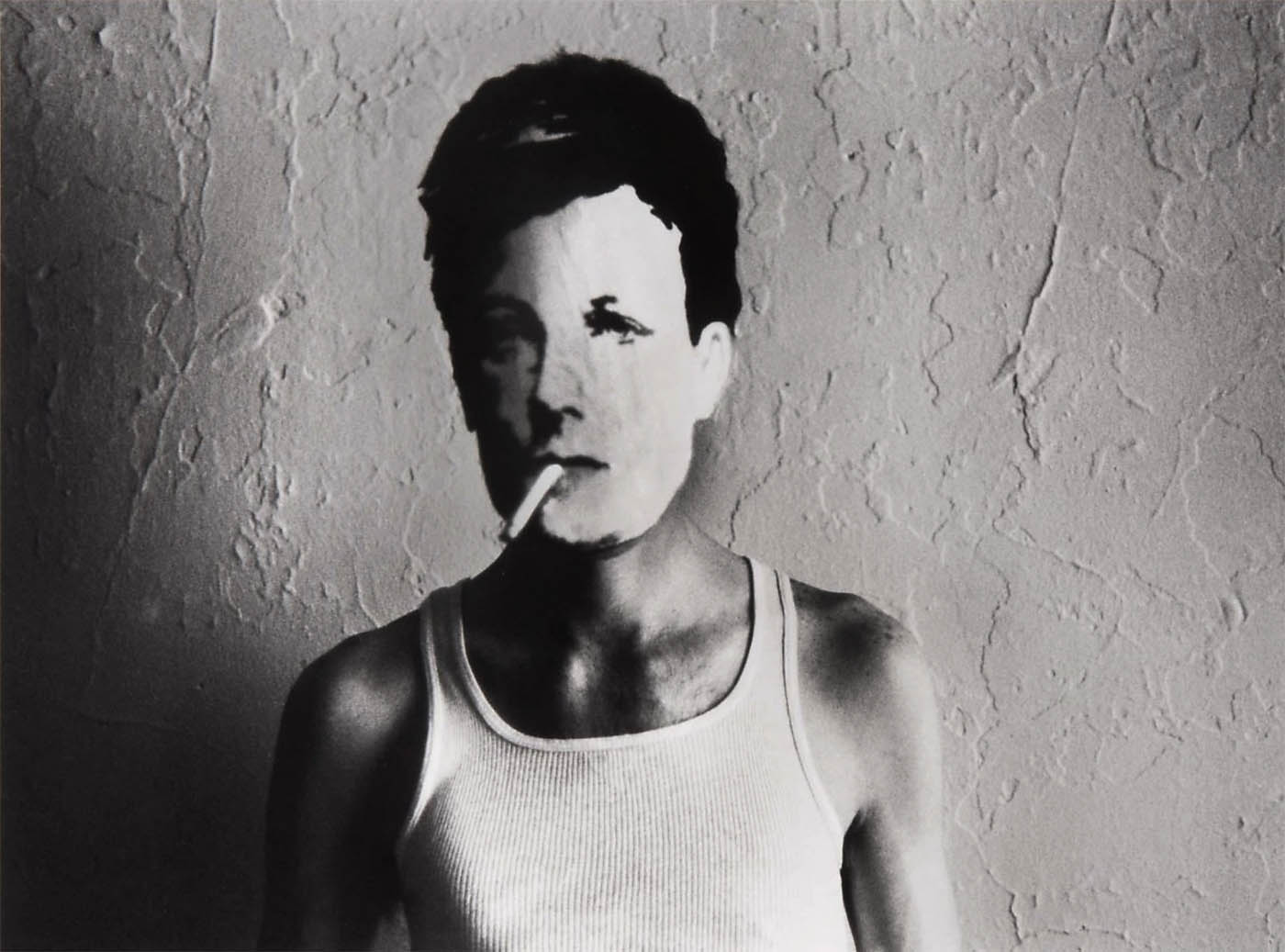

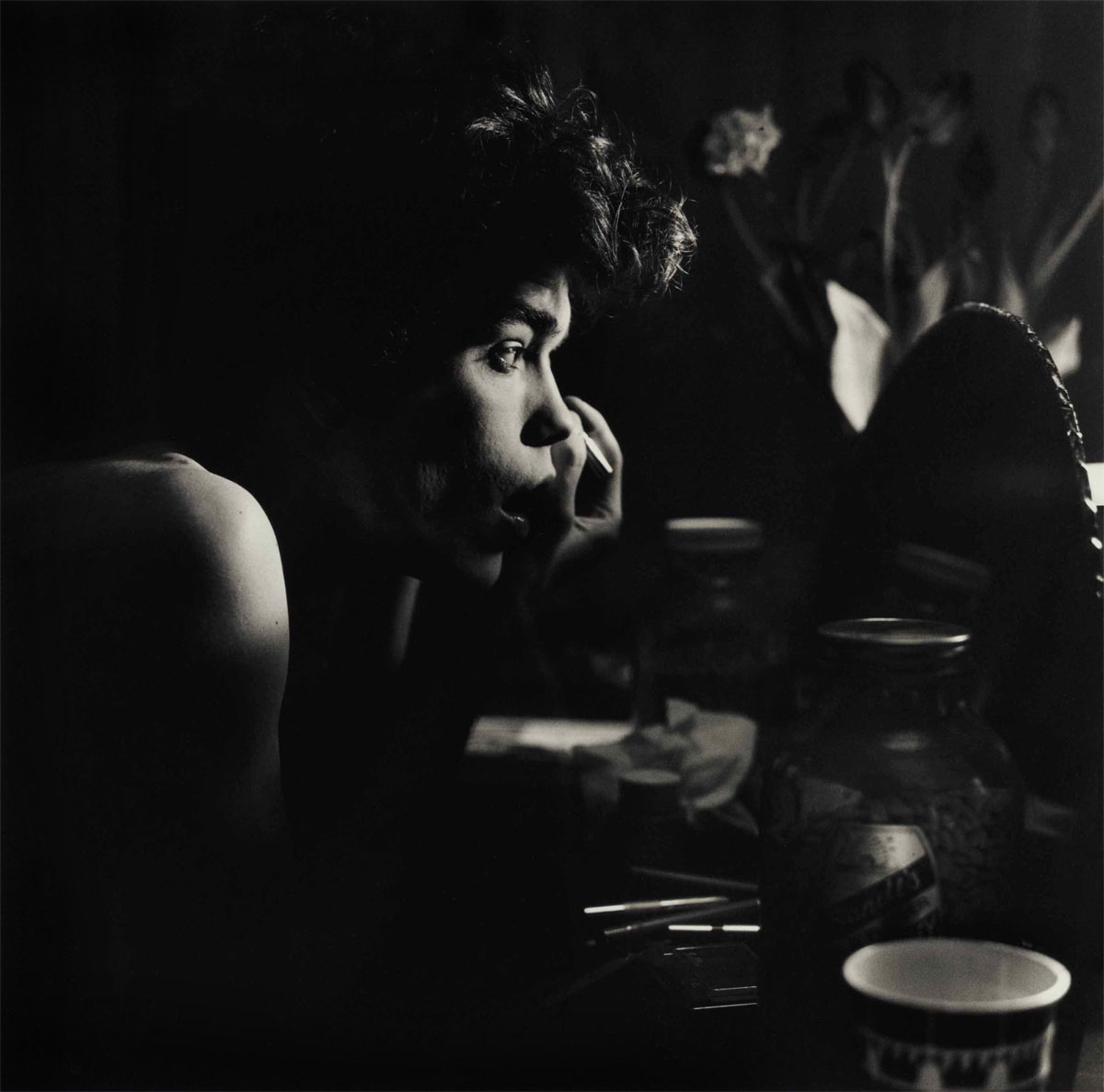


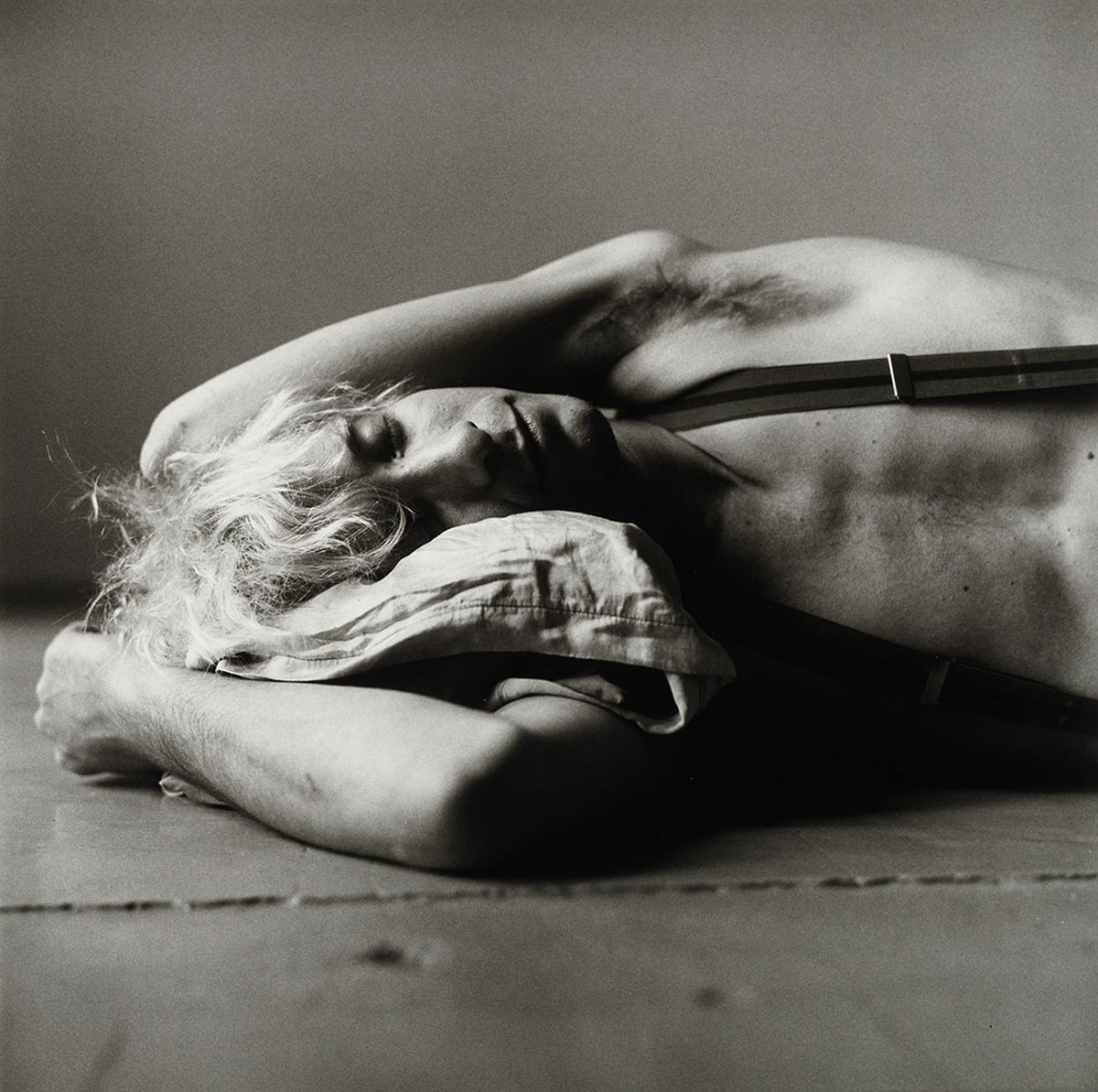


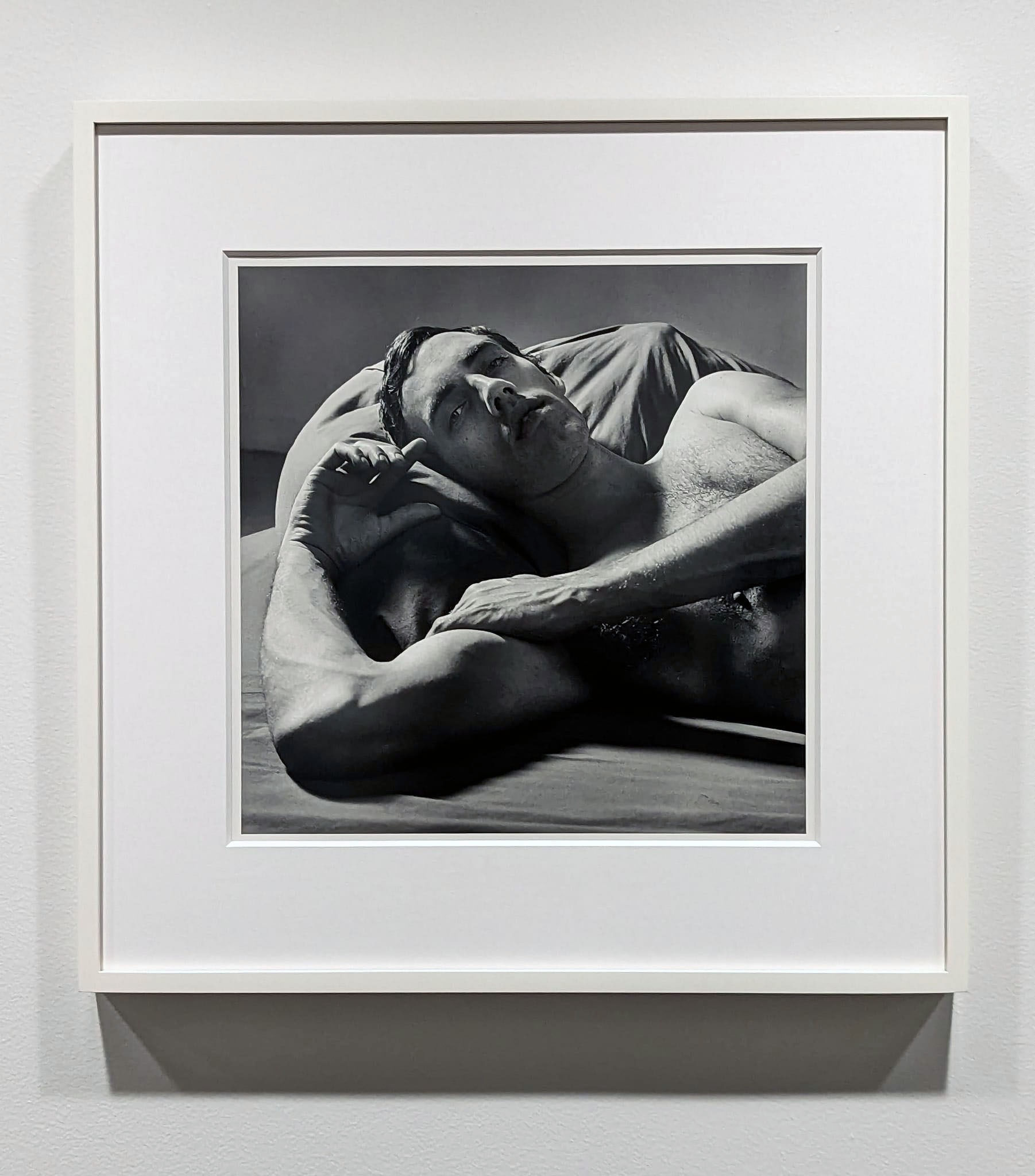





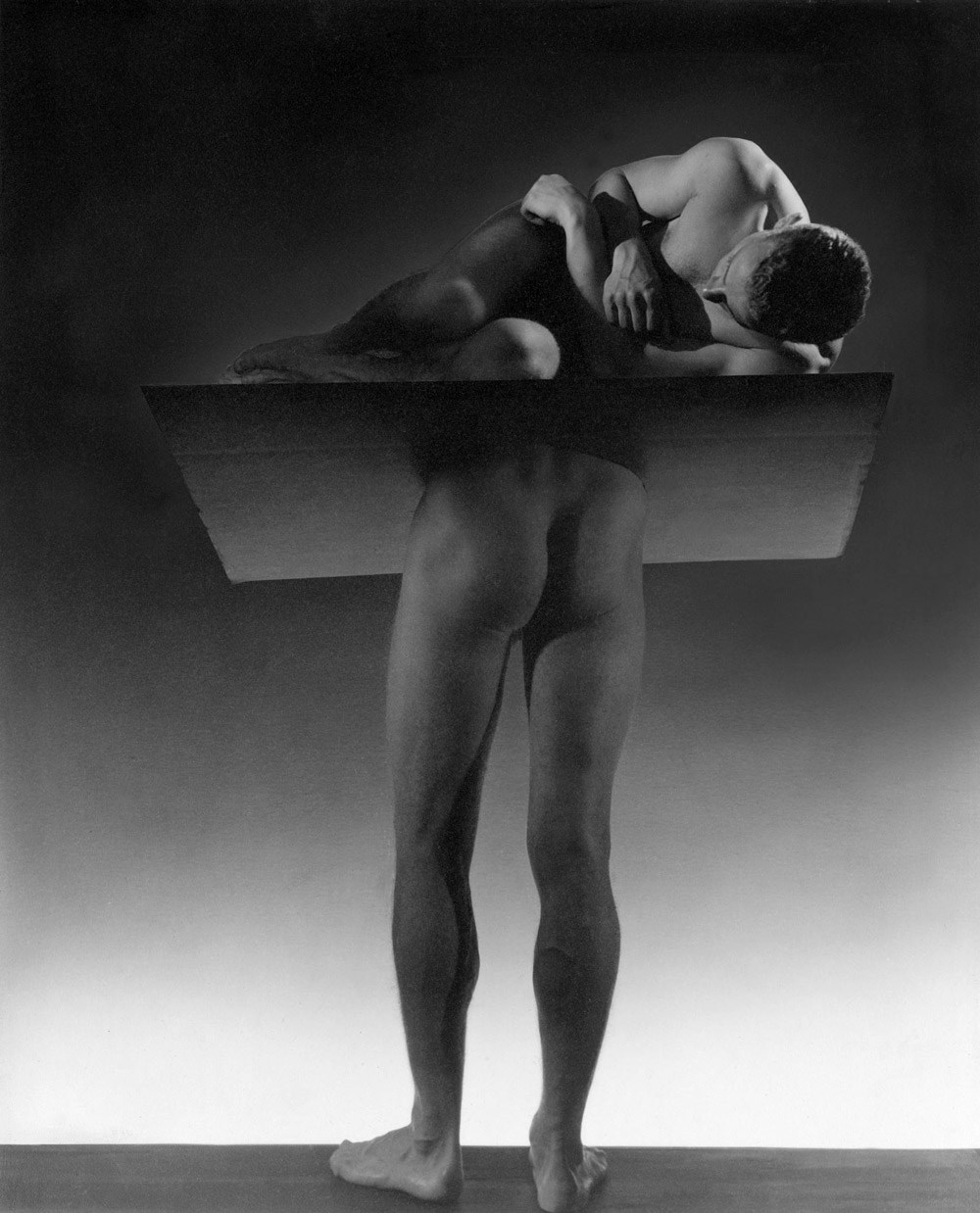
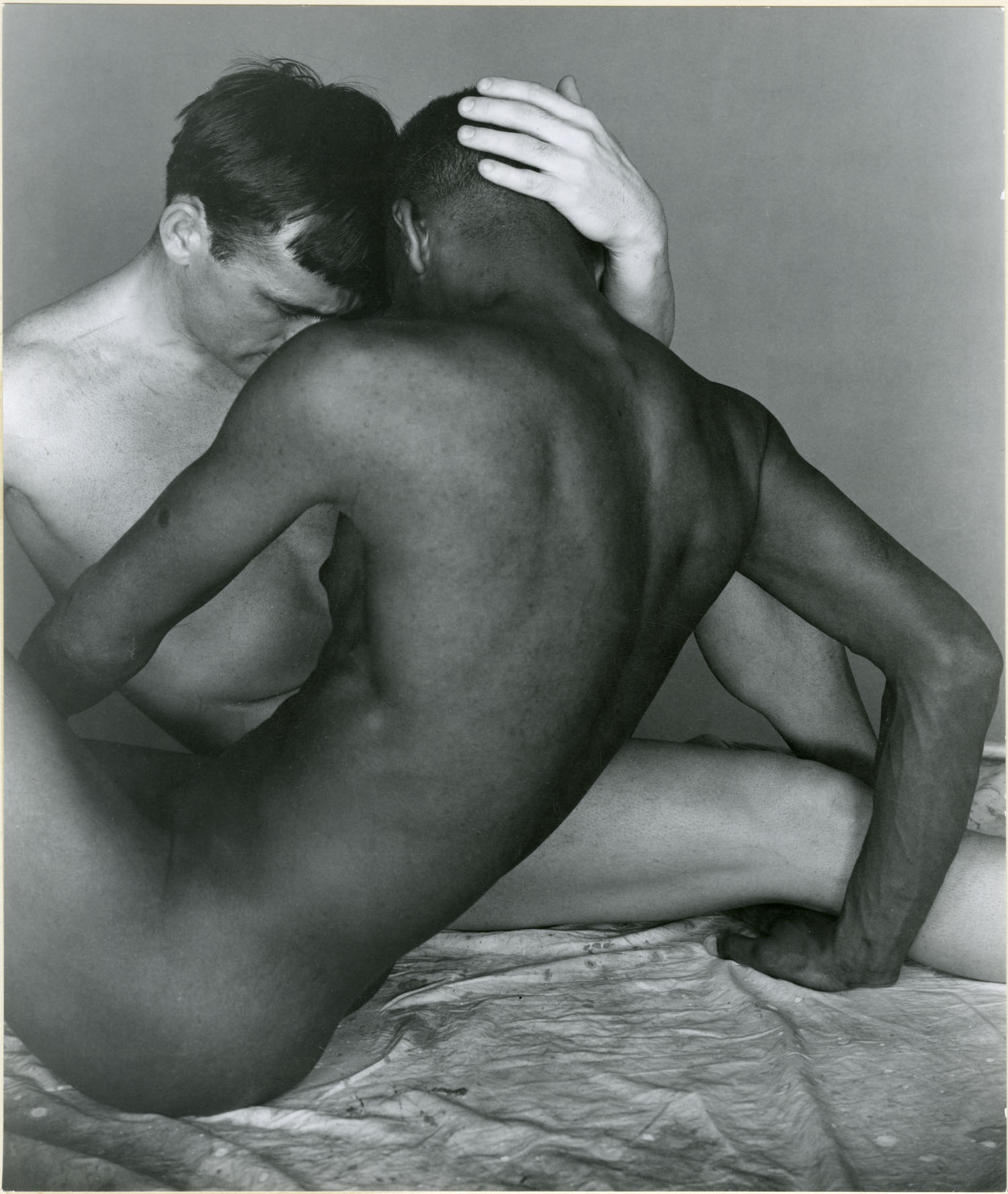

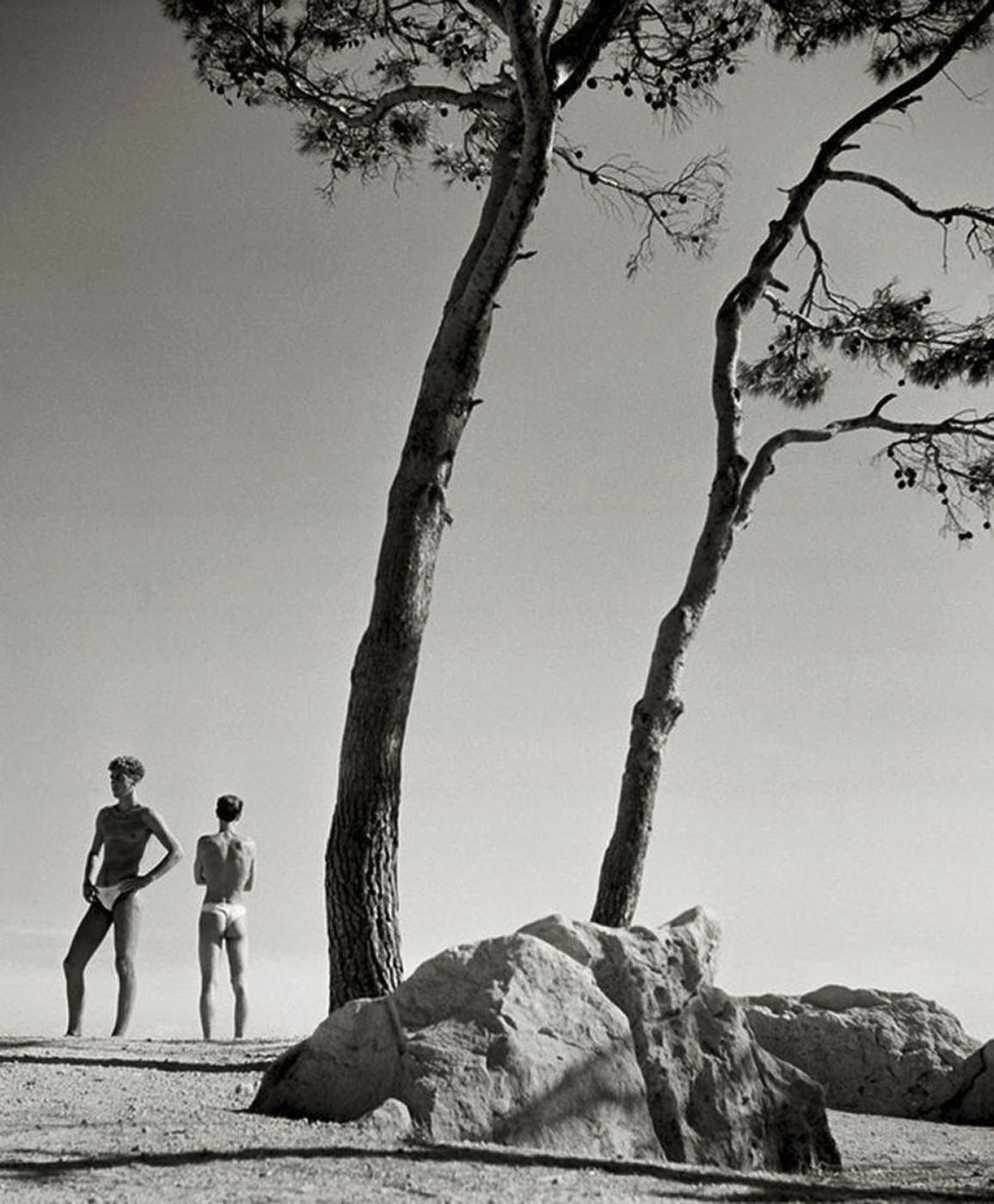
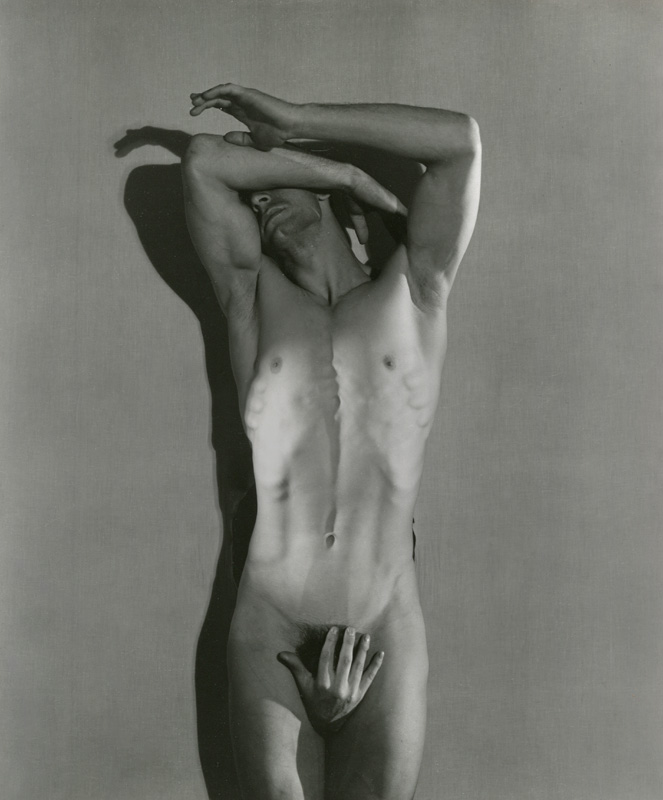
![George Platt Lynes. 'Untitled [Charles 'Tex' Smutney, Charles 'Buddy' Stanley, and Bradbury Ball]' c. 1942](https://artblart.com/wp-content/uploads/2014/06/lynes-c-1942.jpg "George Platt Lynes. 'Untitled [Charles 'Tex' Smutney, Charles 'Buddy' Stanley, and Bradbury Ball]' c. 1942")
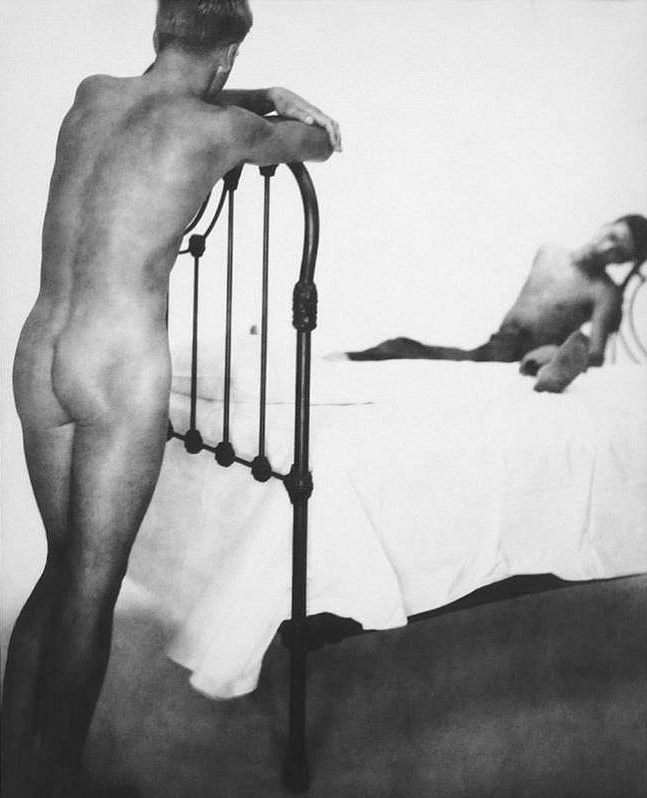

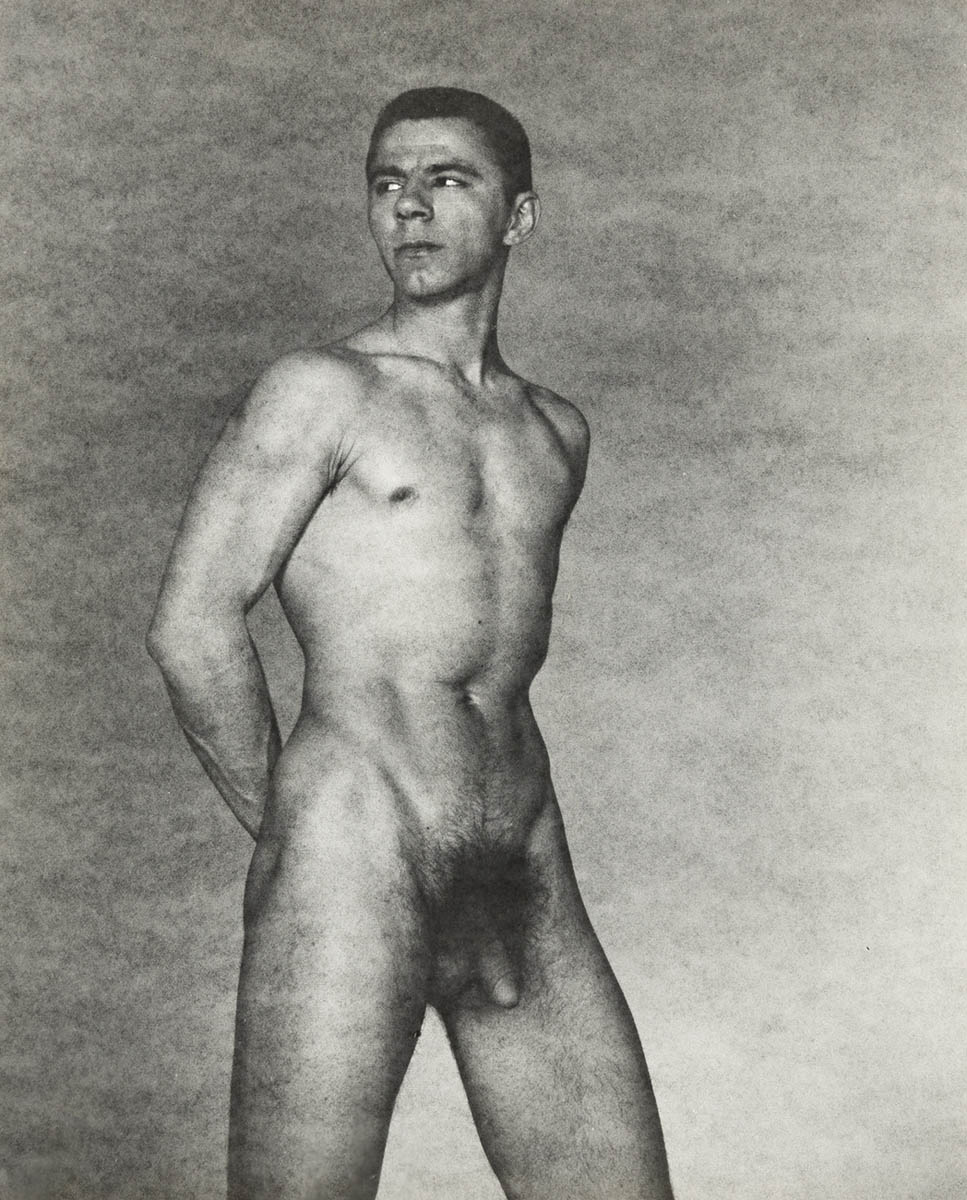
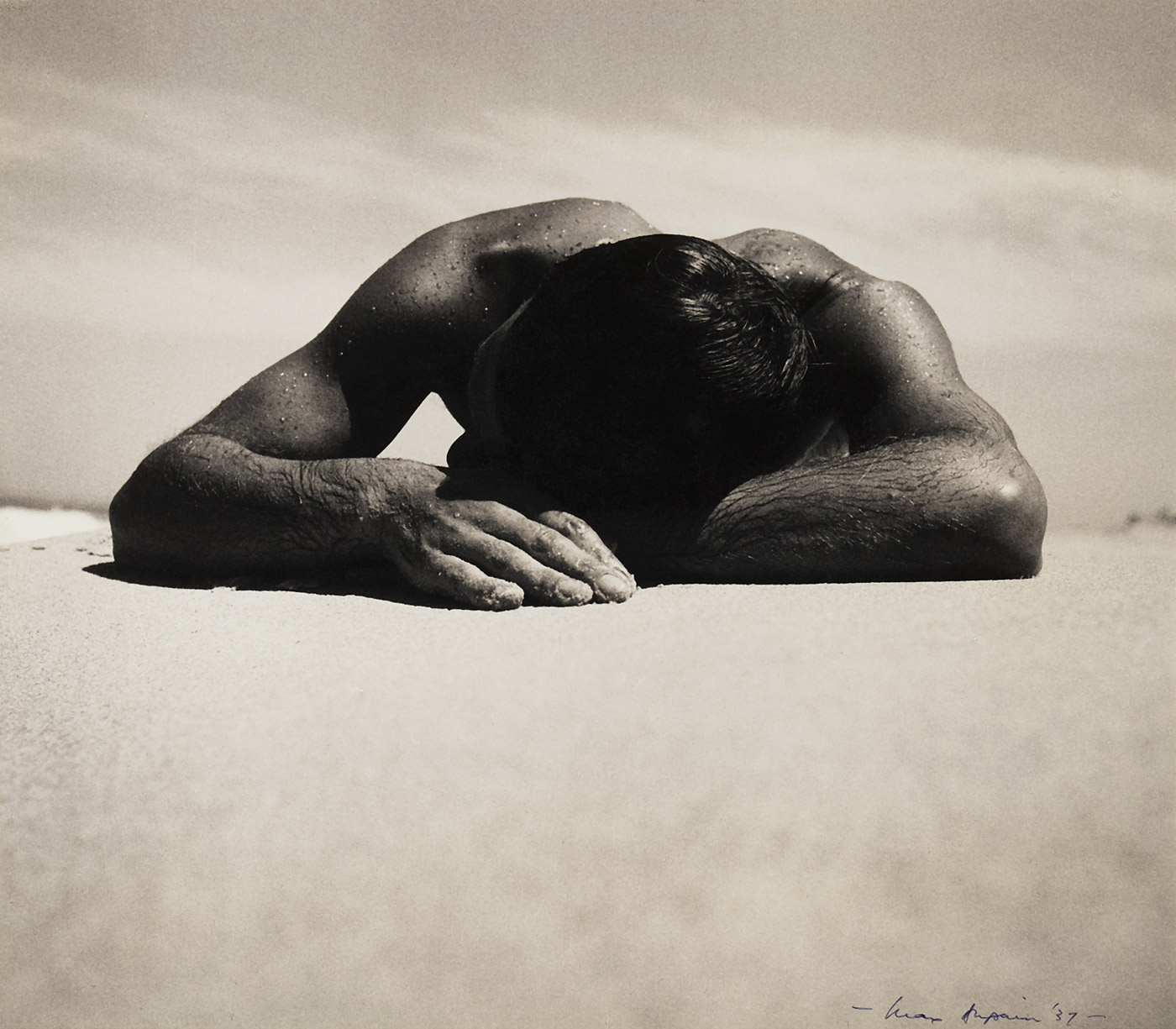




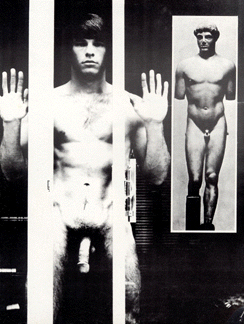
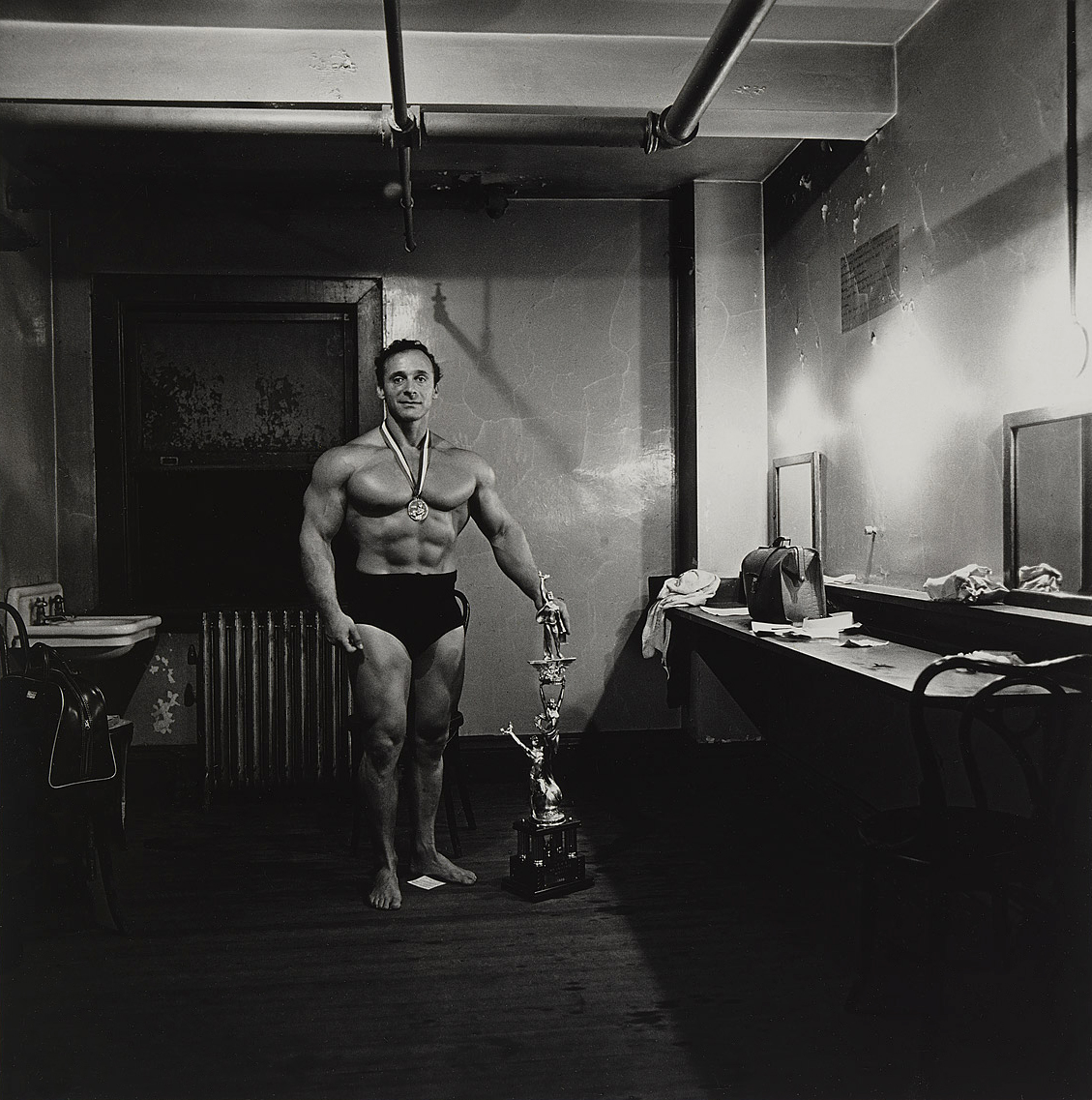
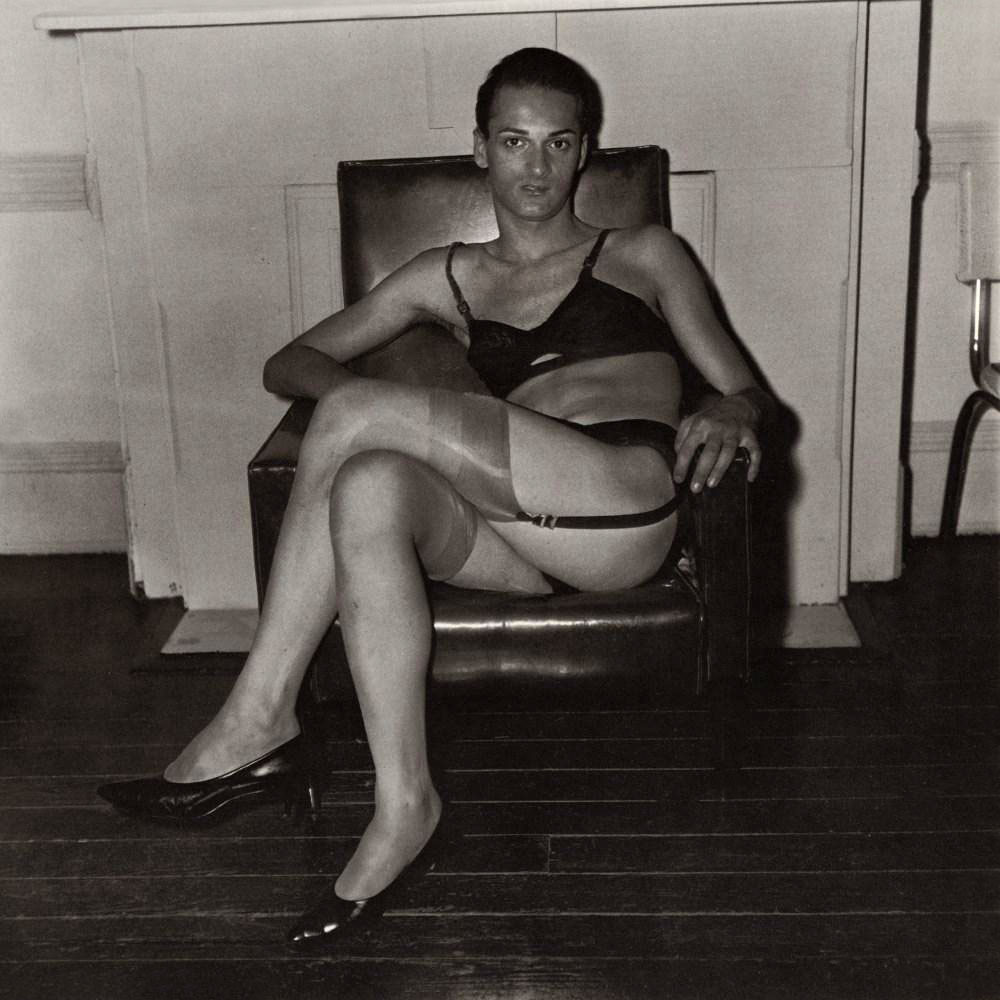
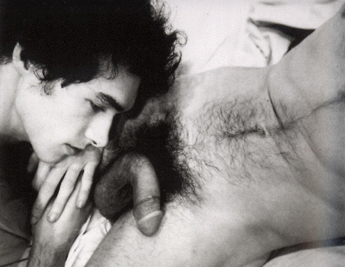
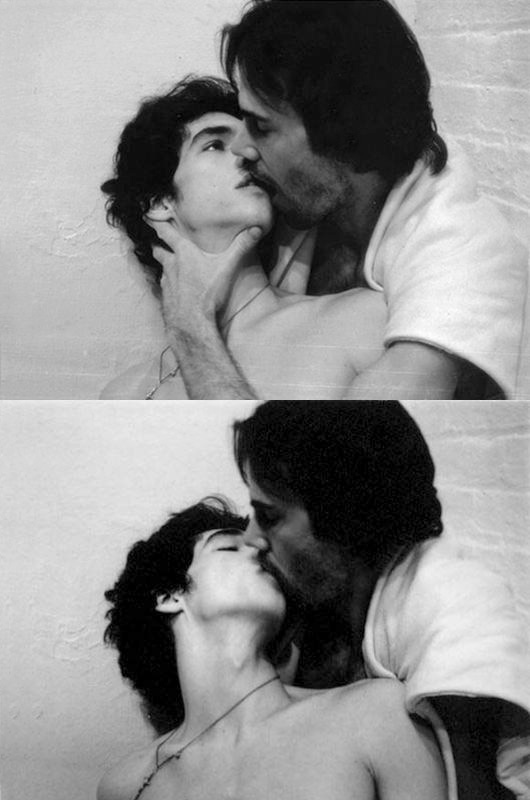
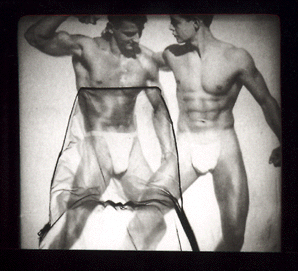

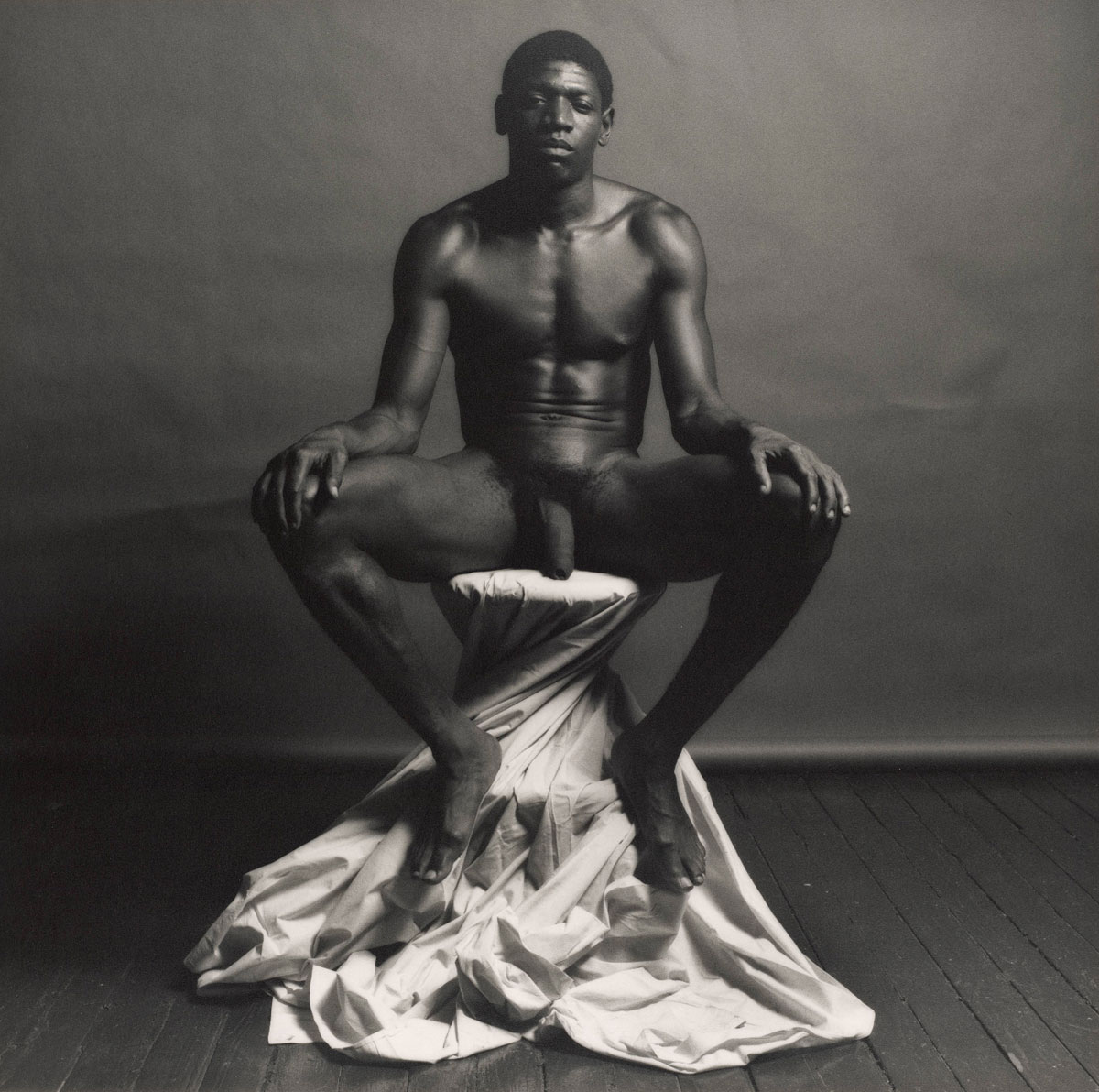
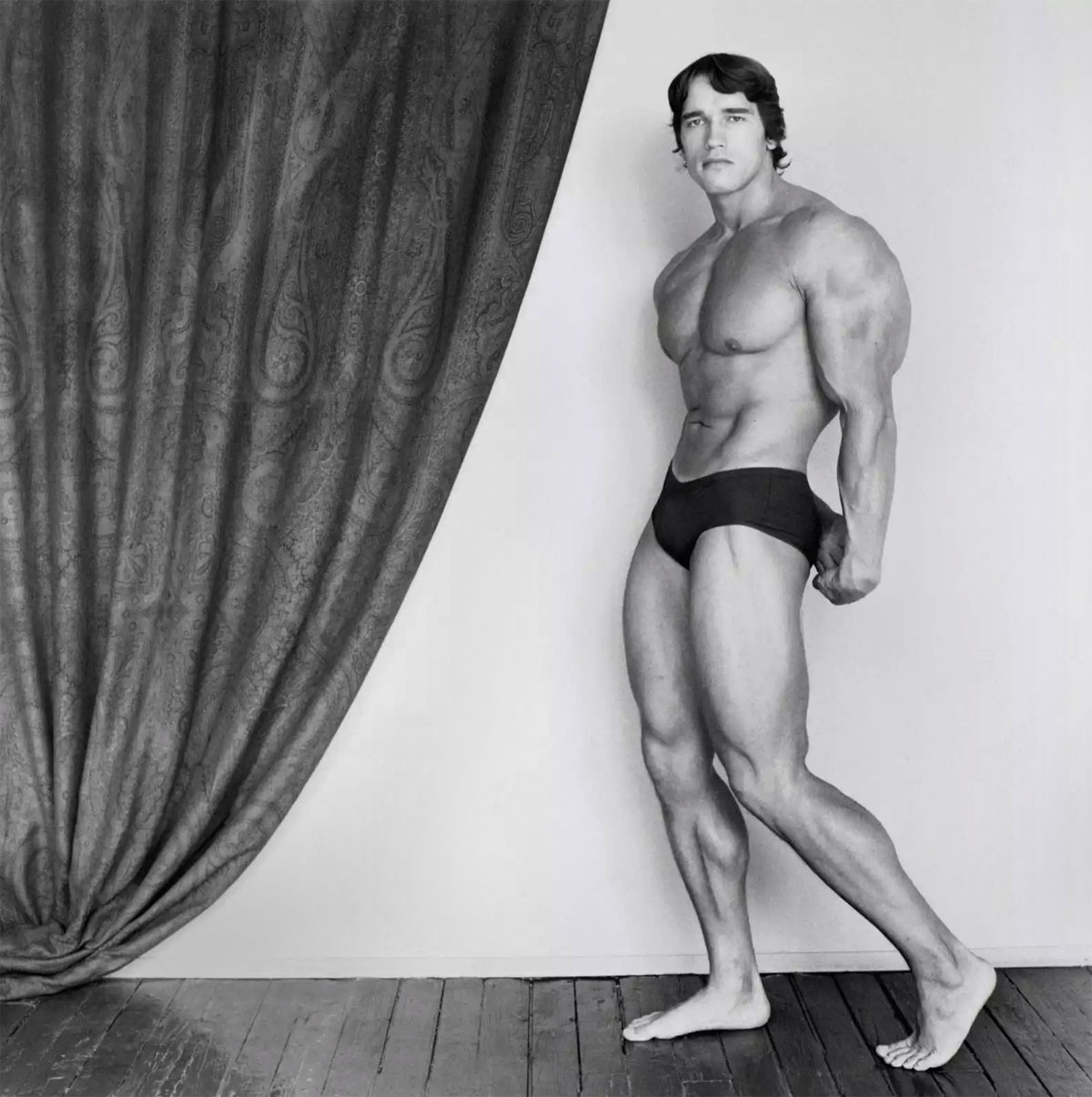

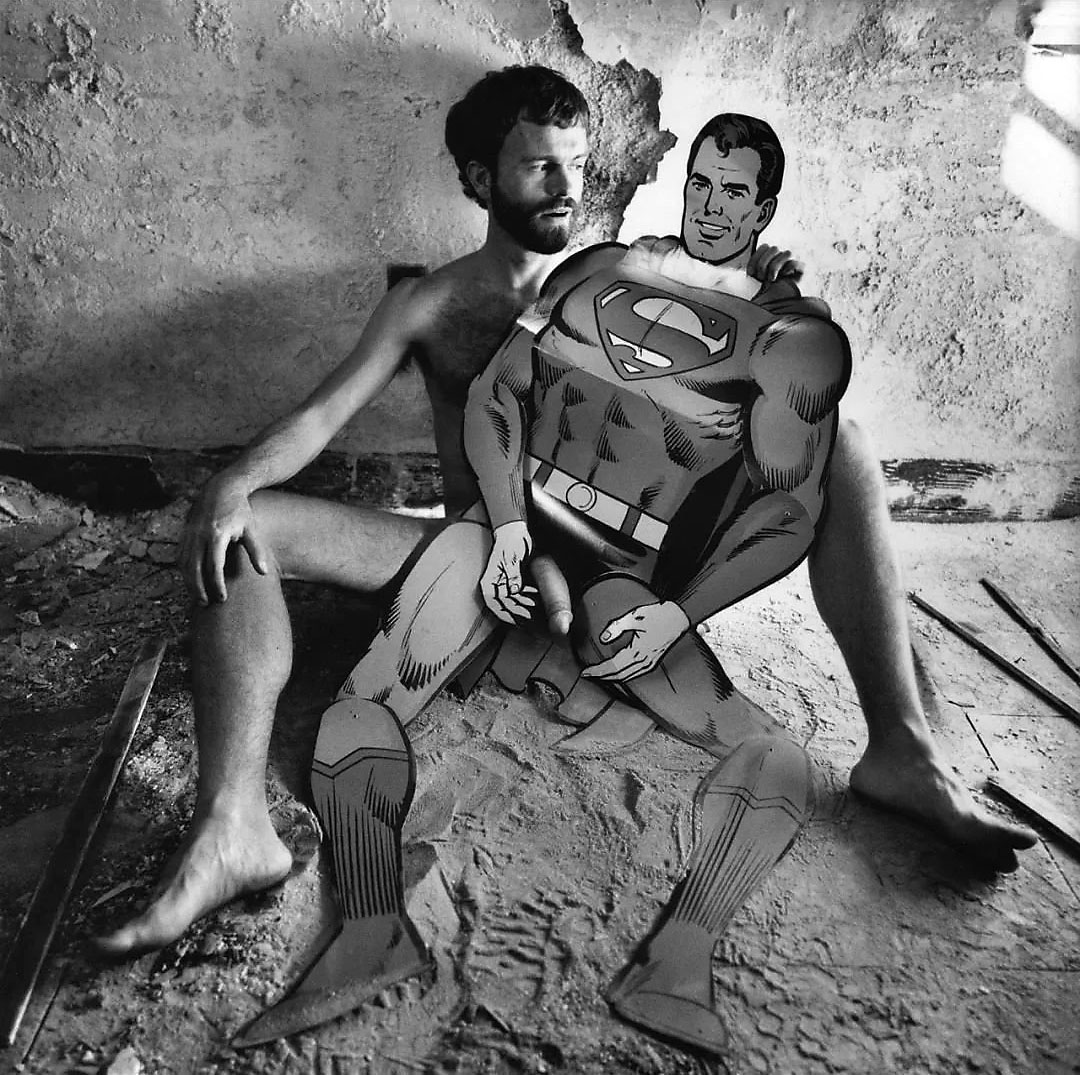



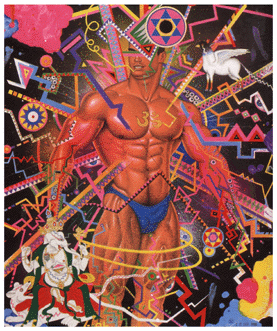
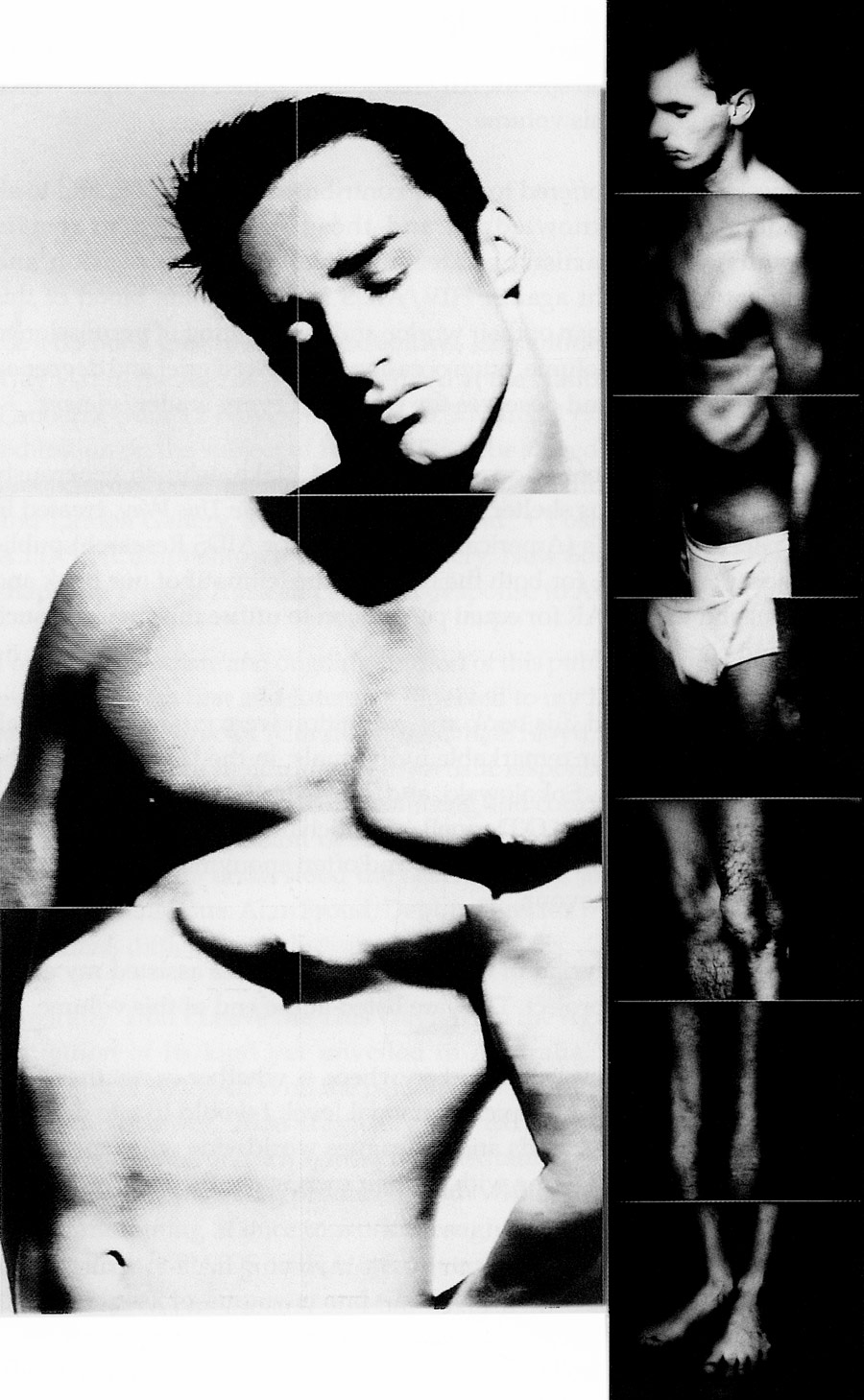
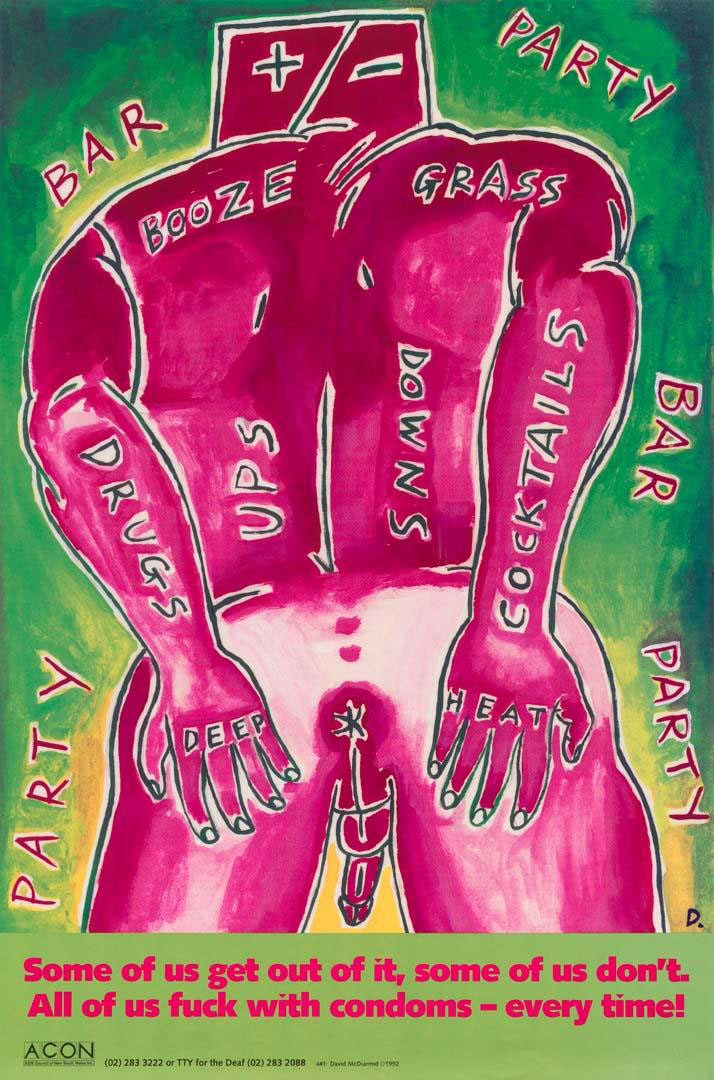
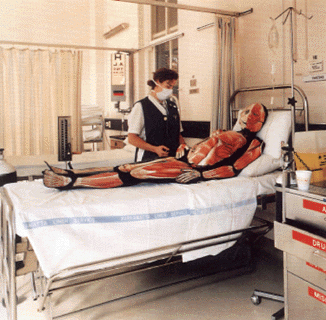


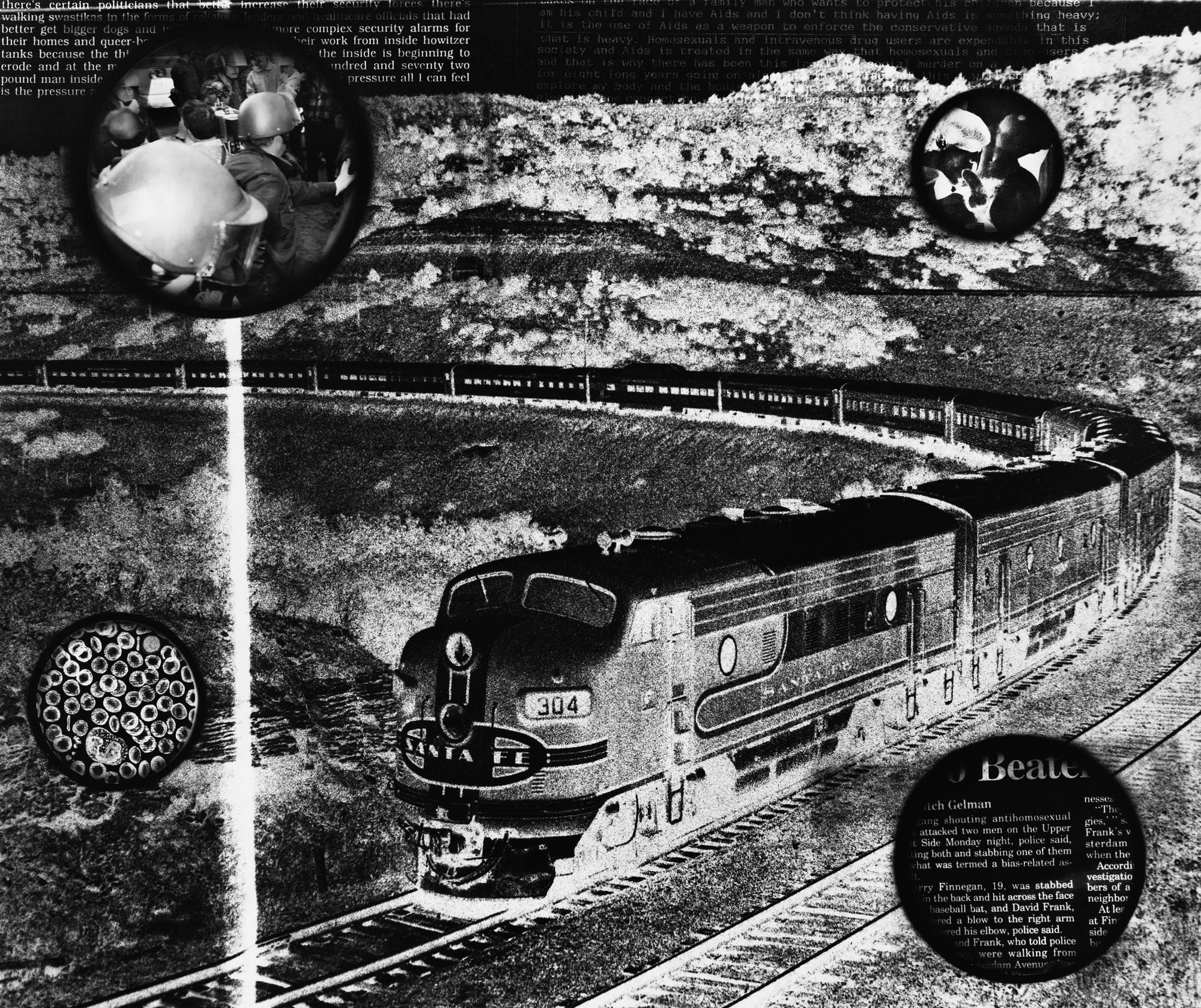
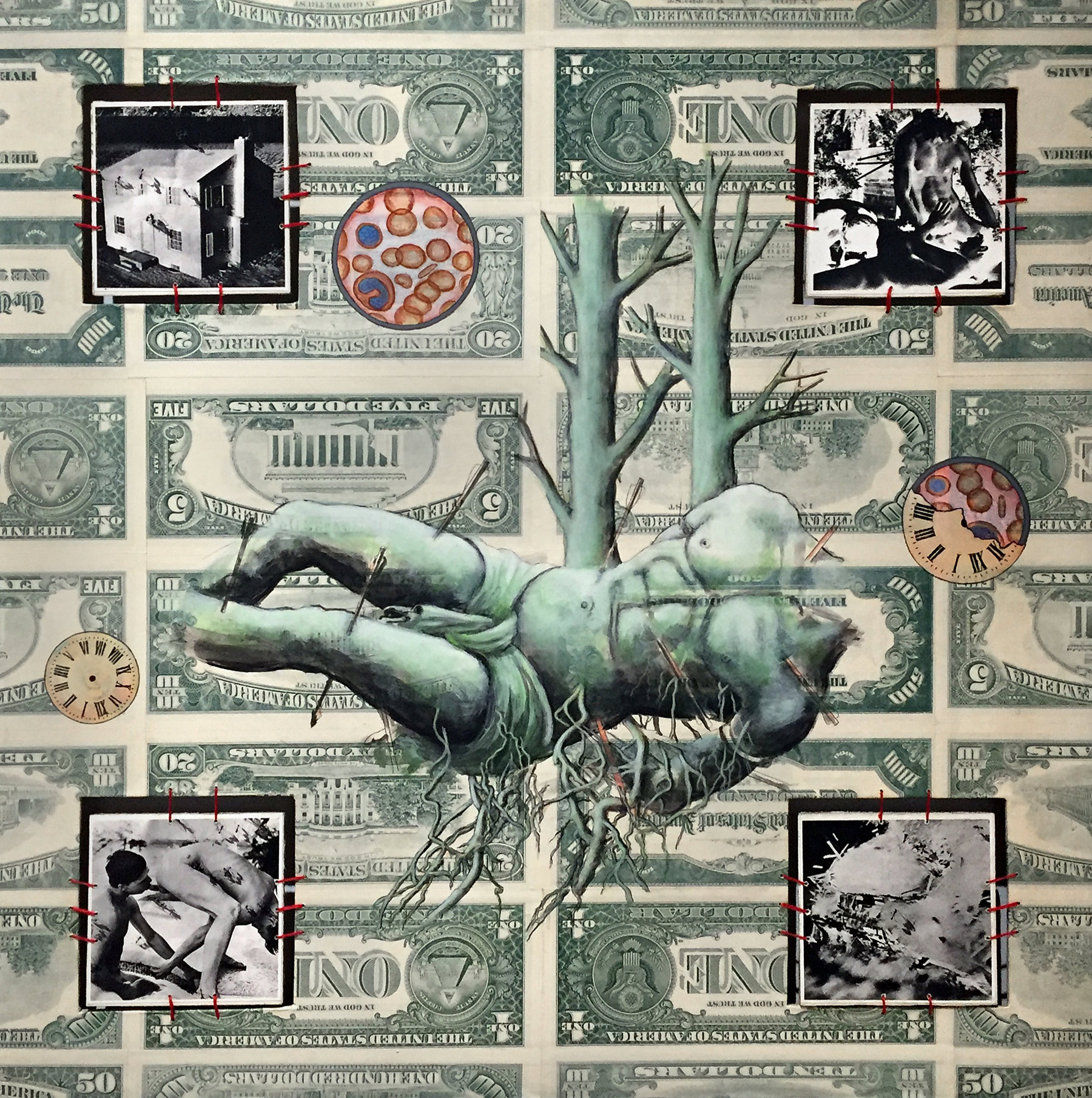
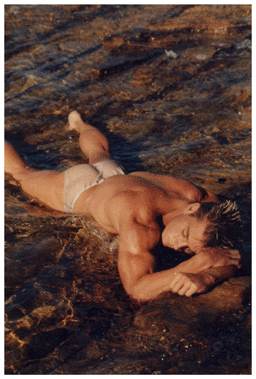
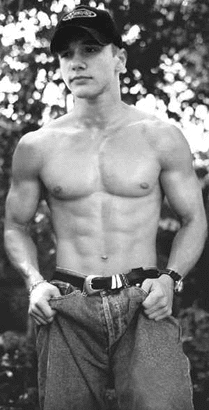


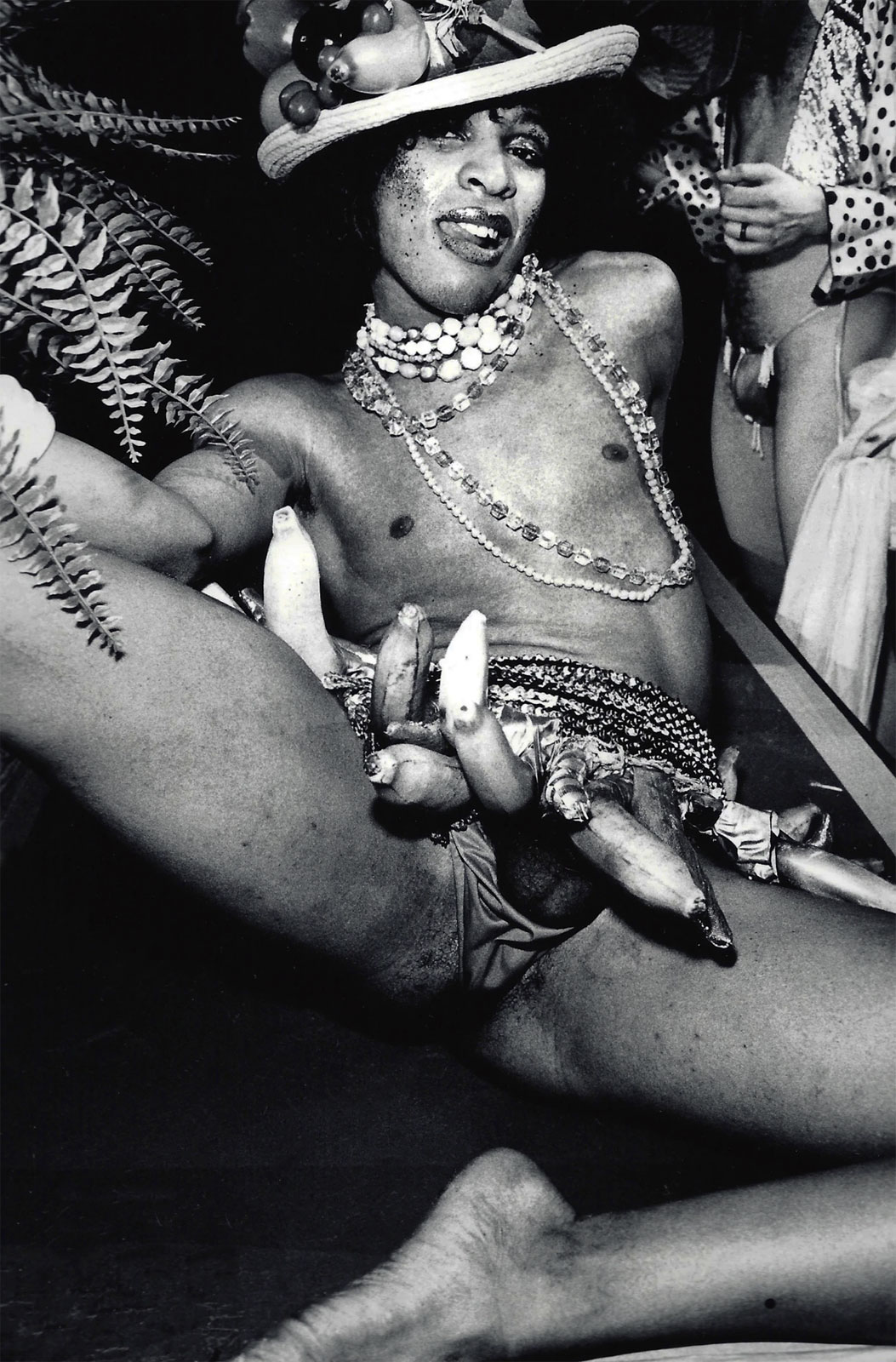


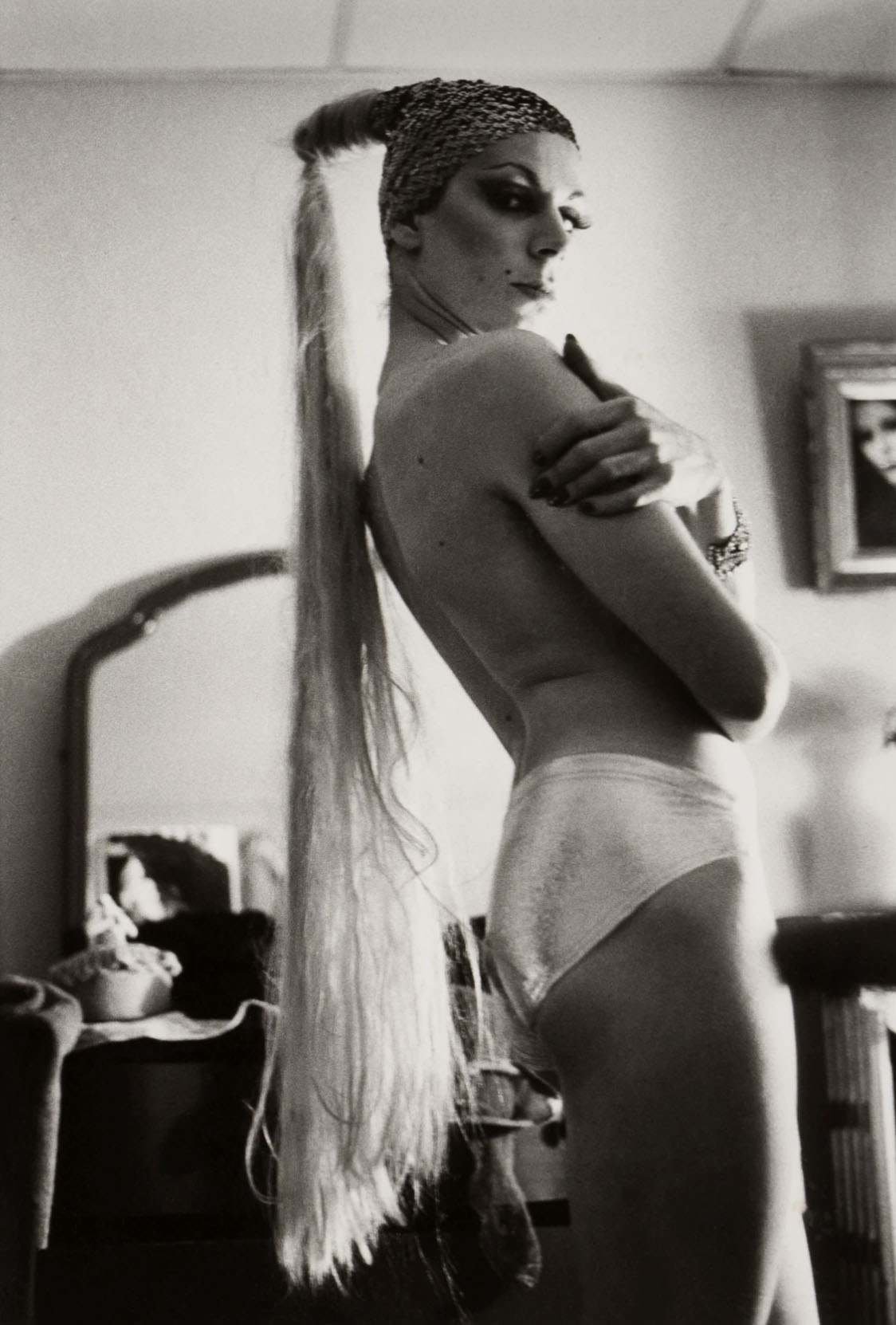


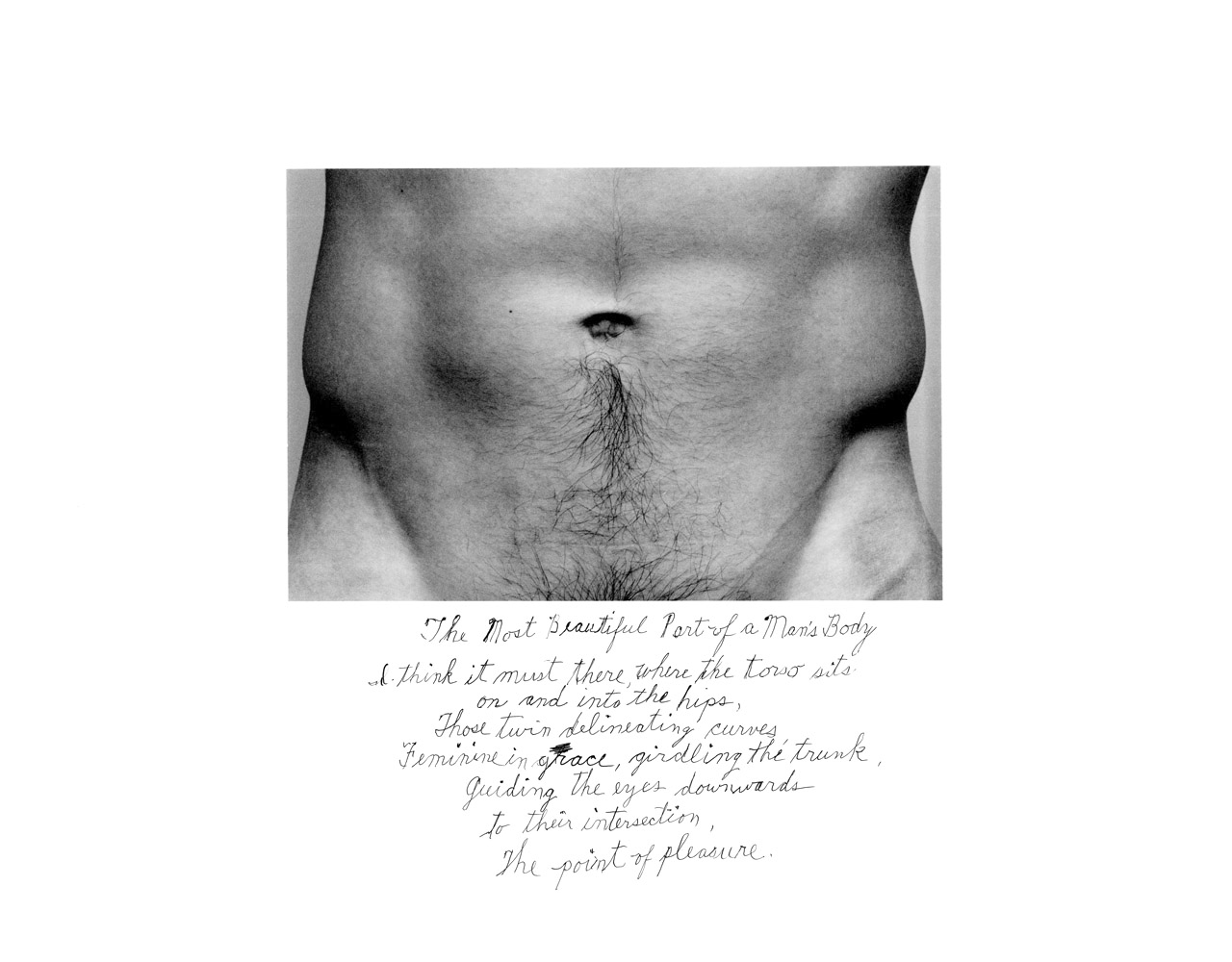


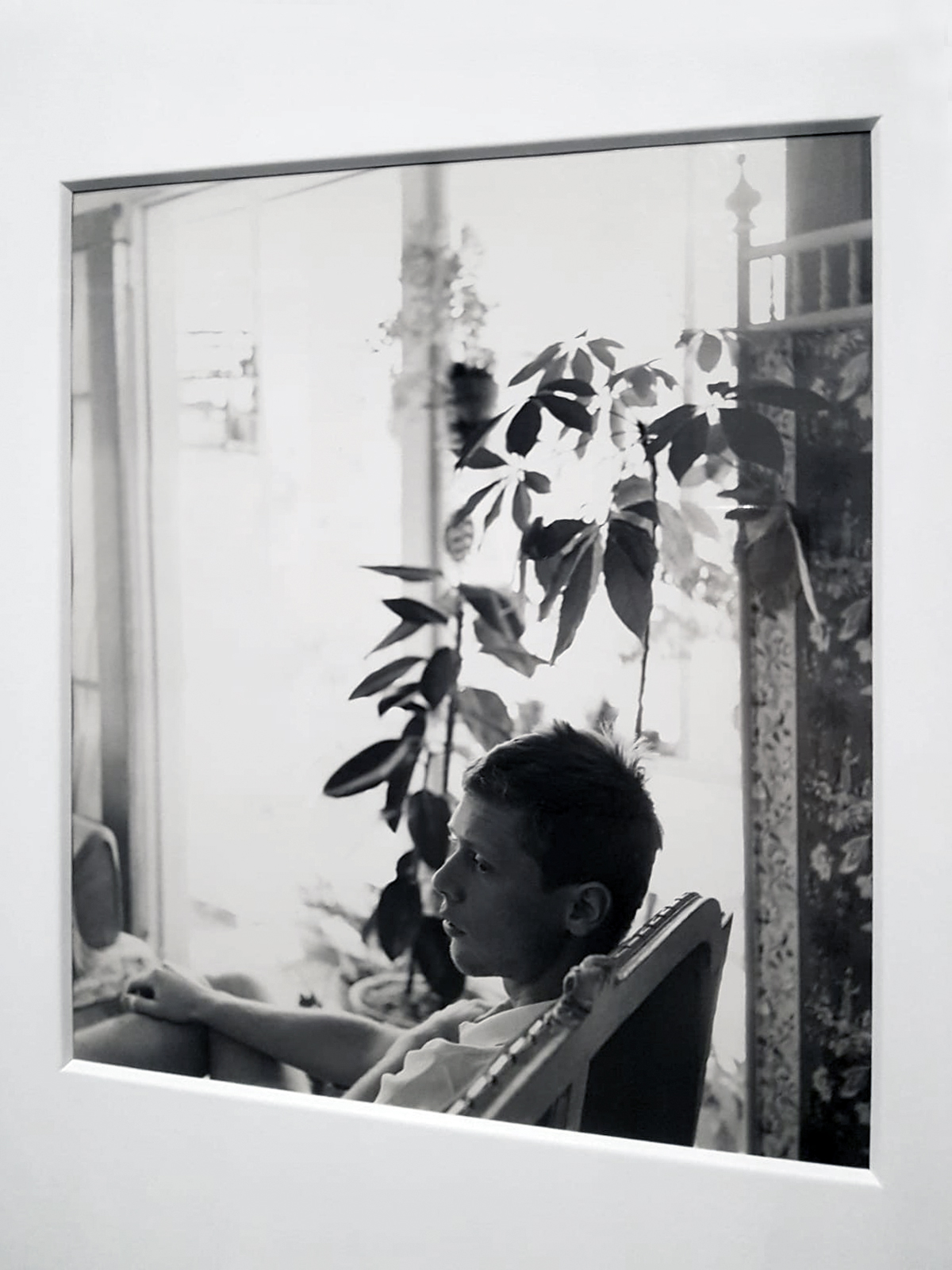

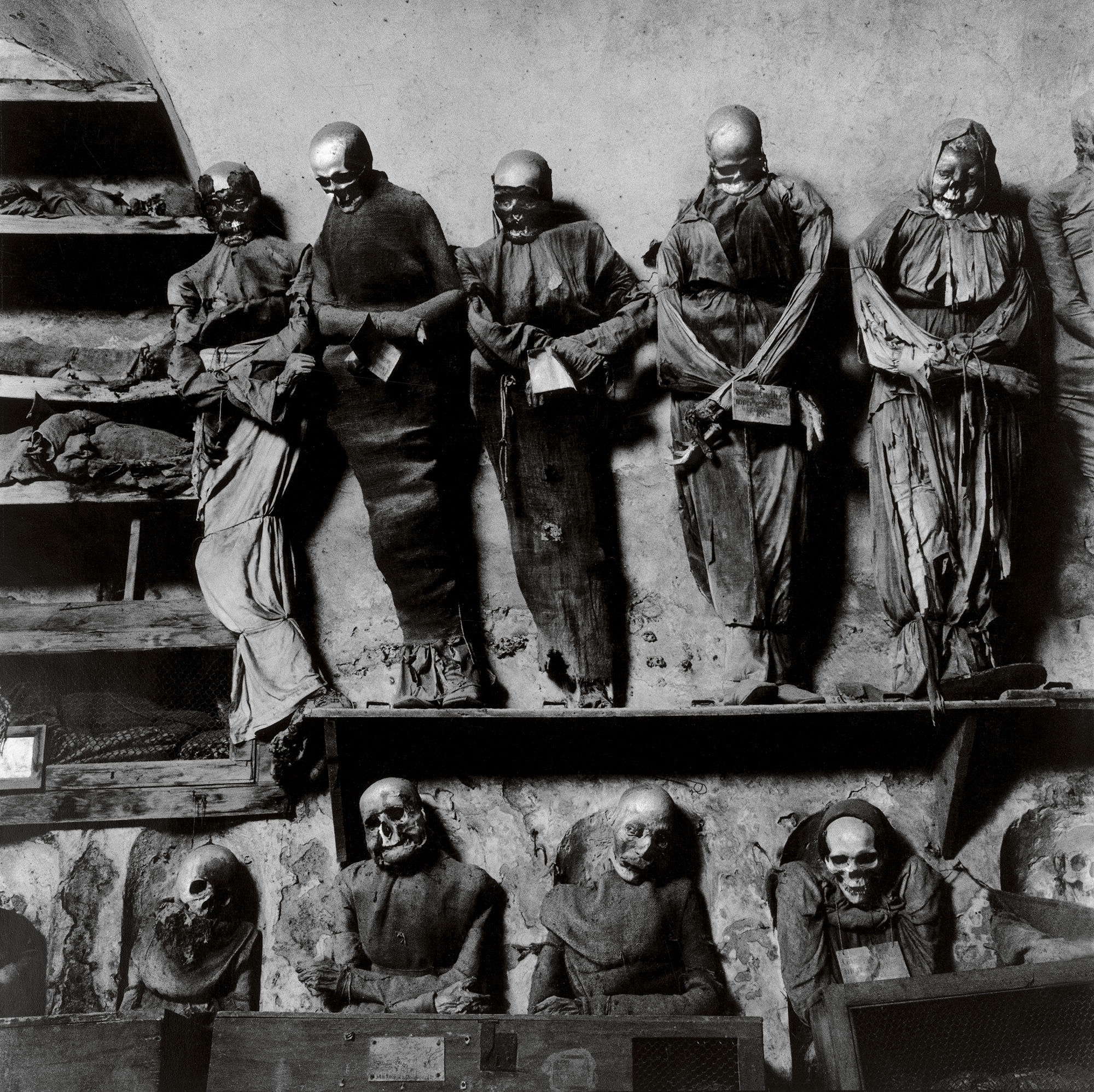


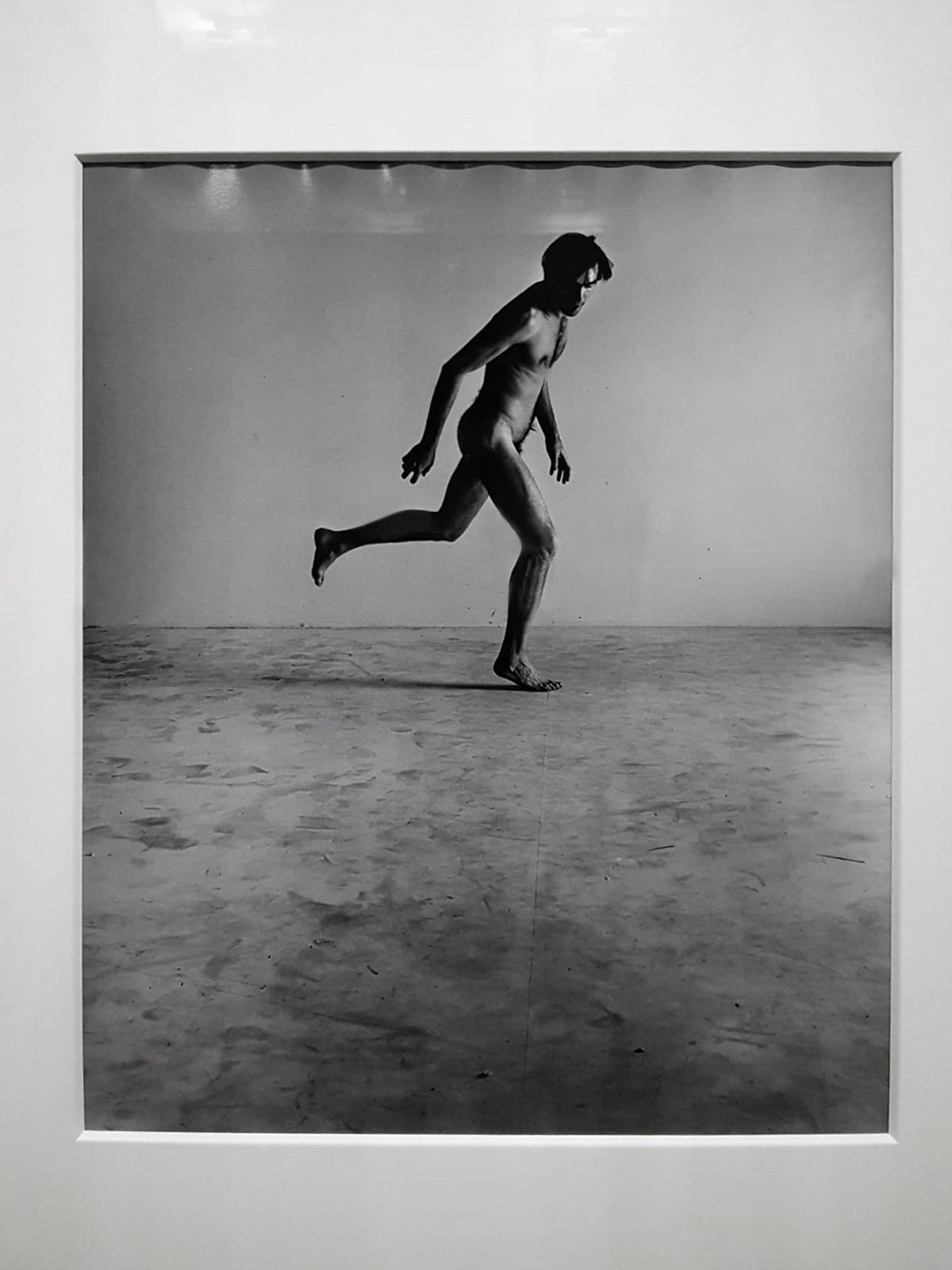


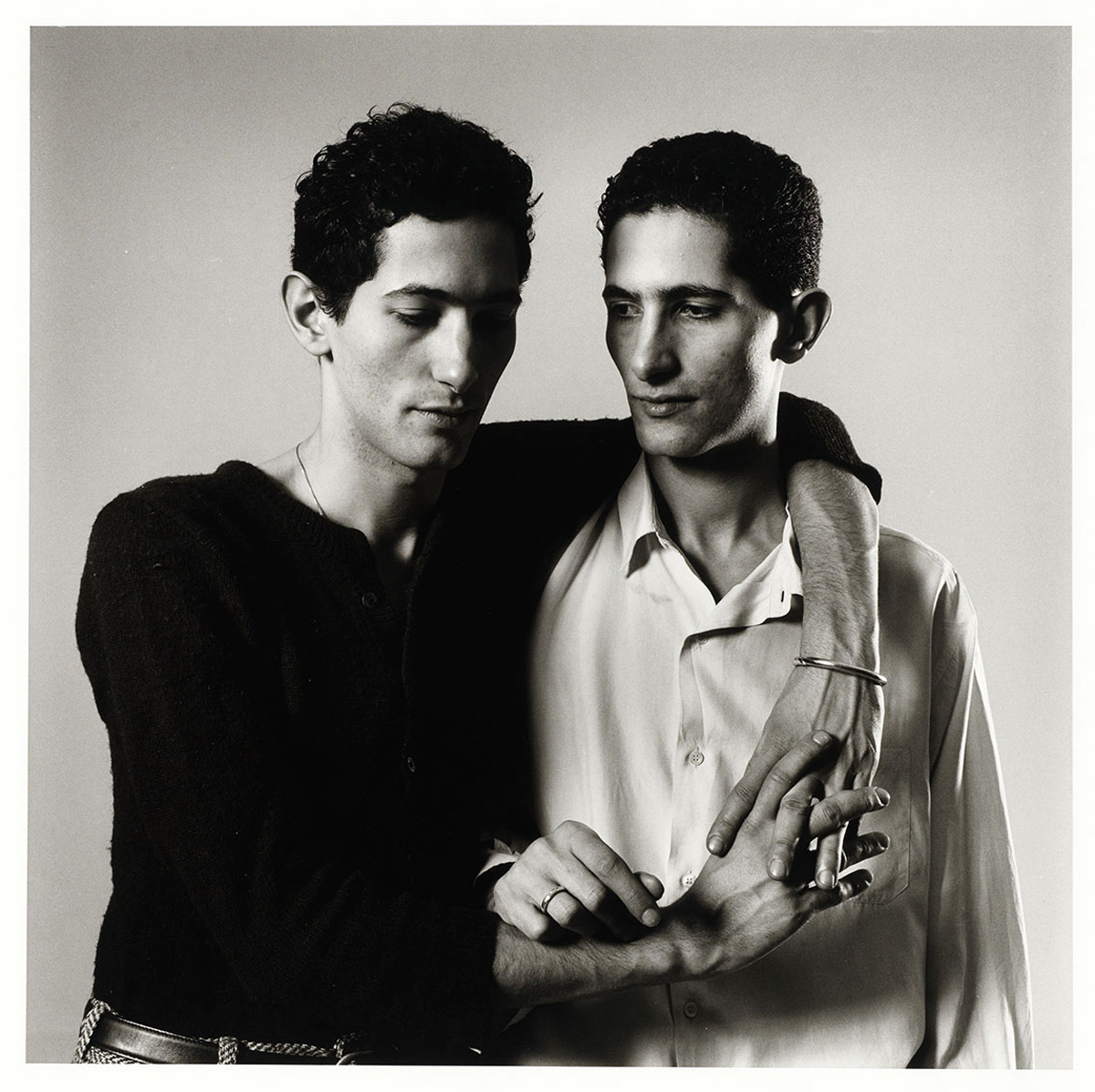


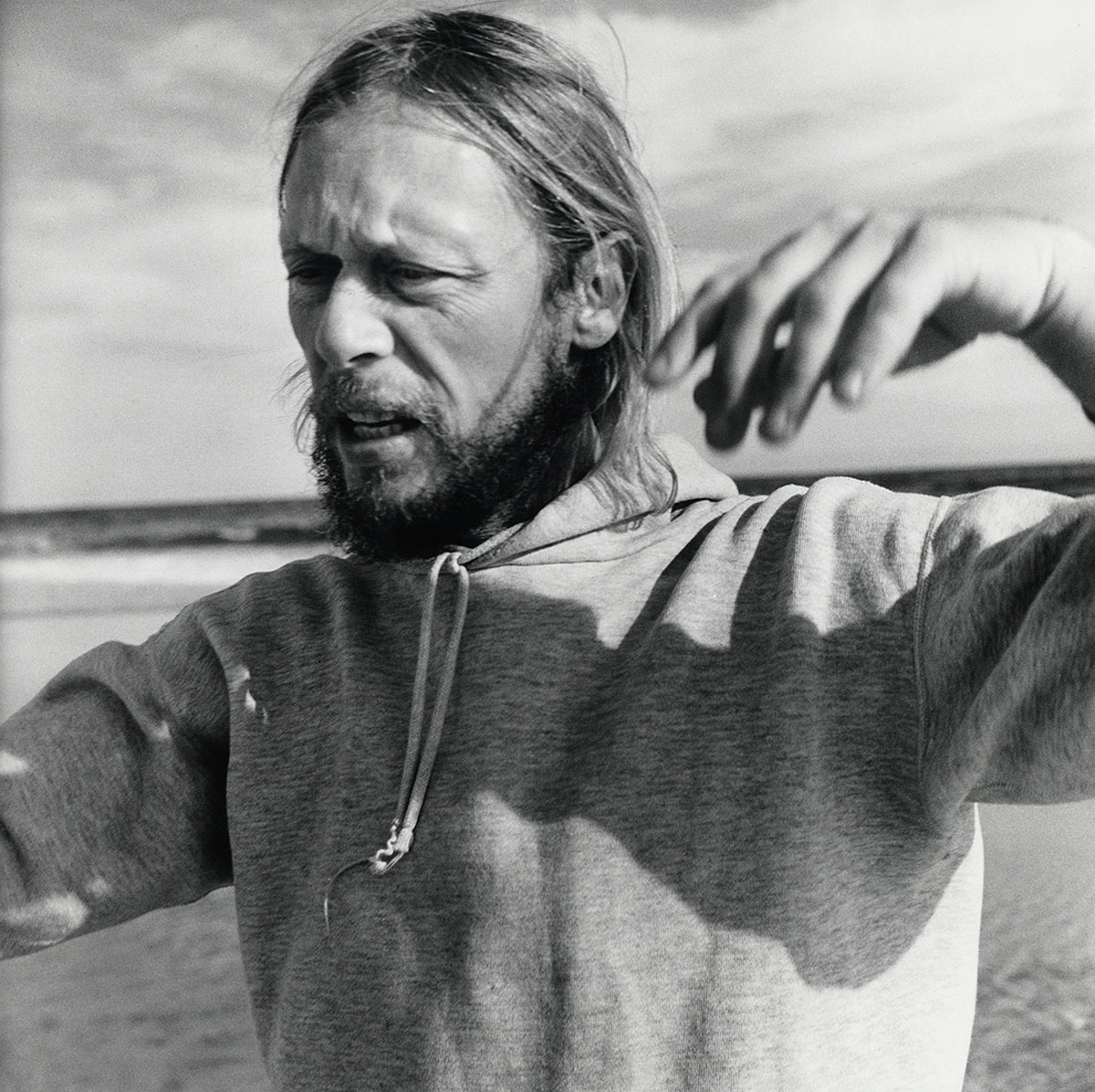


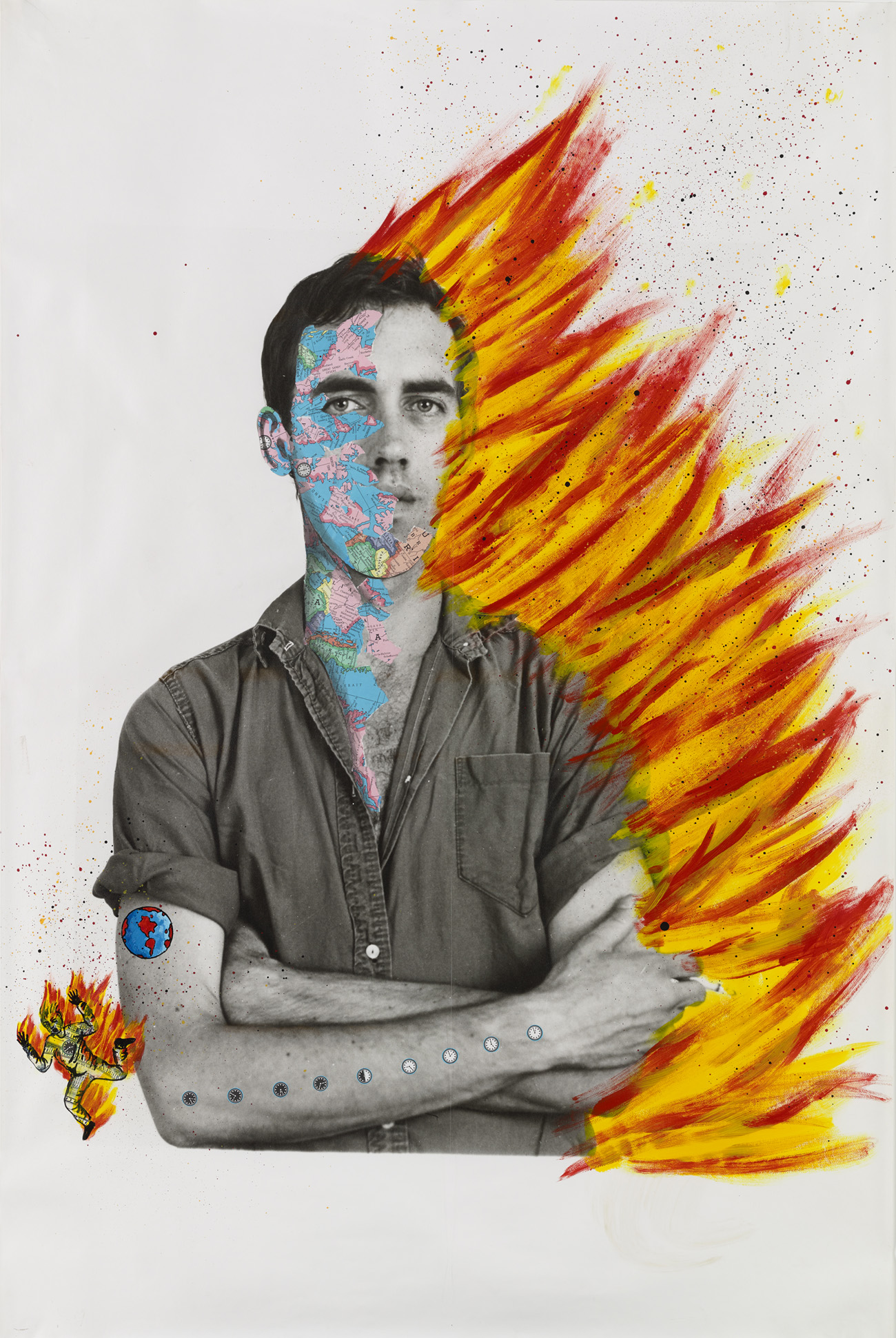


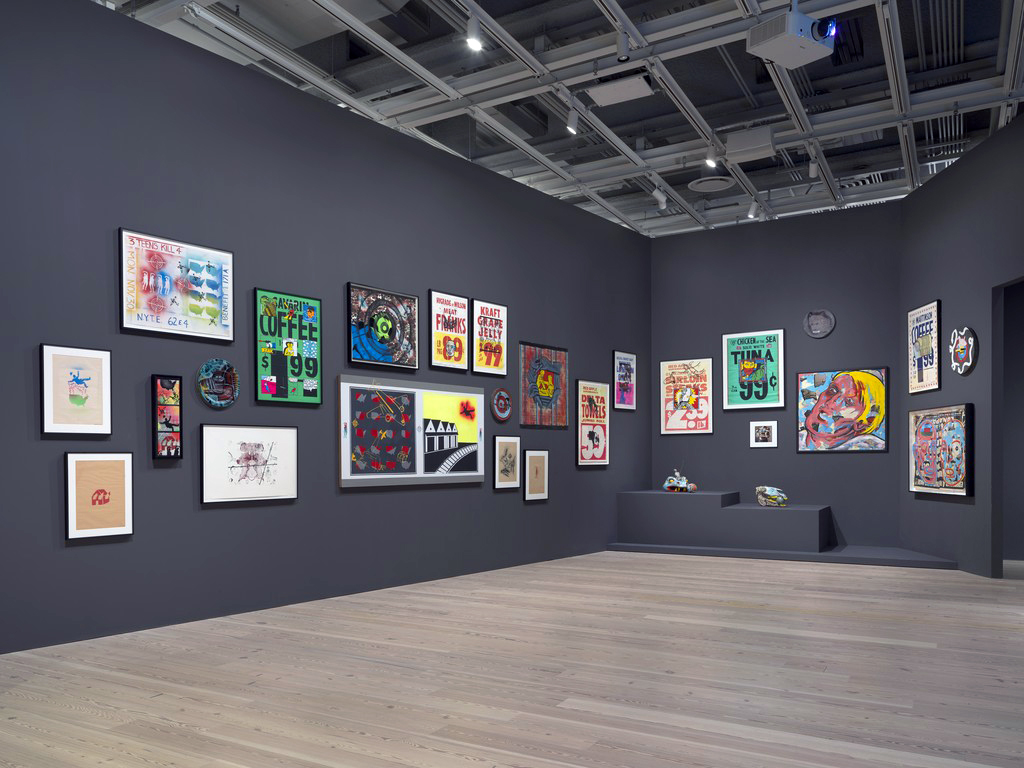


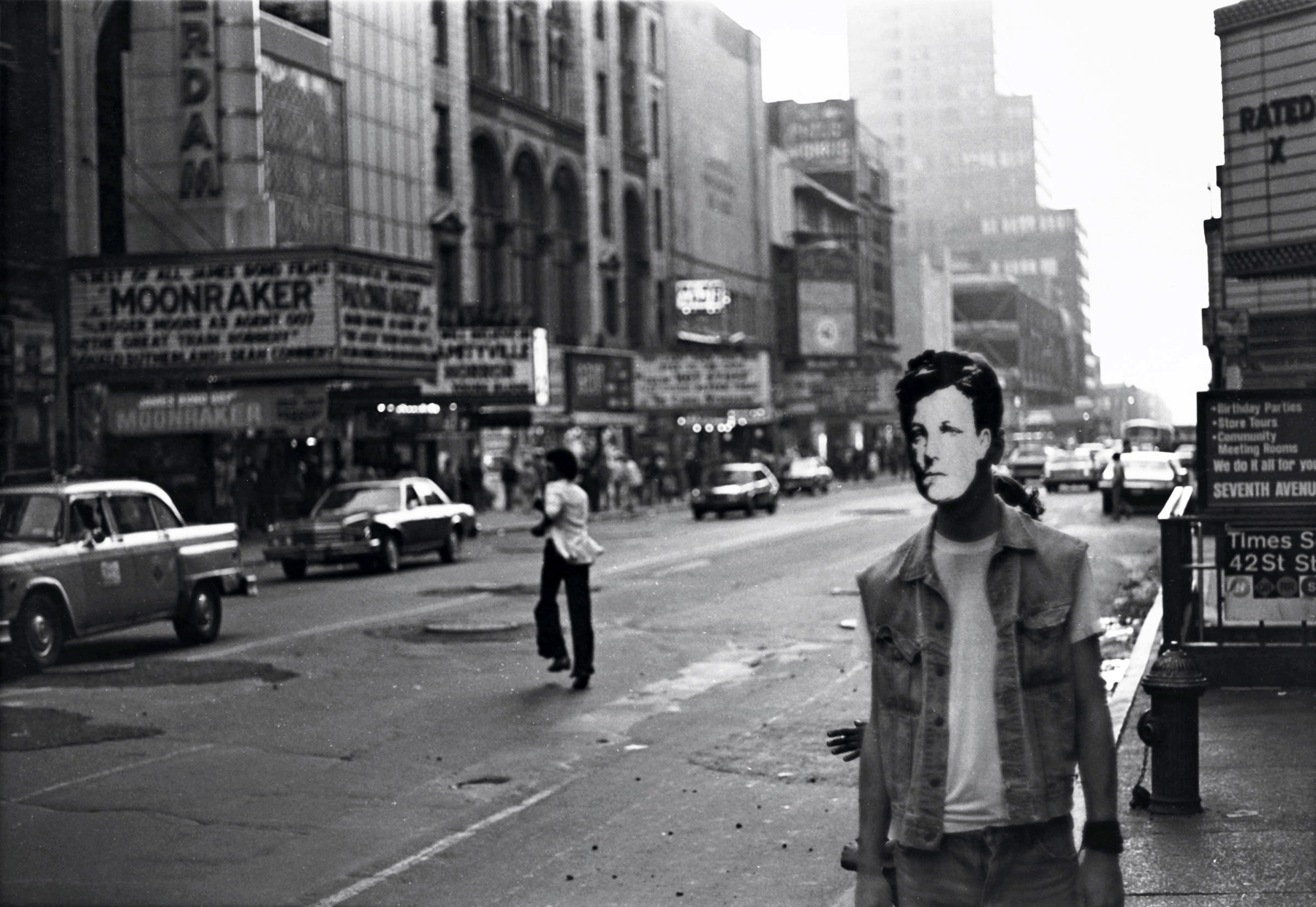

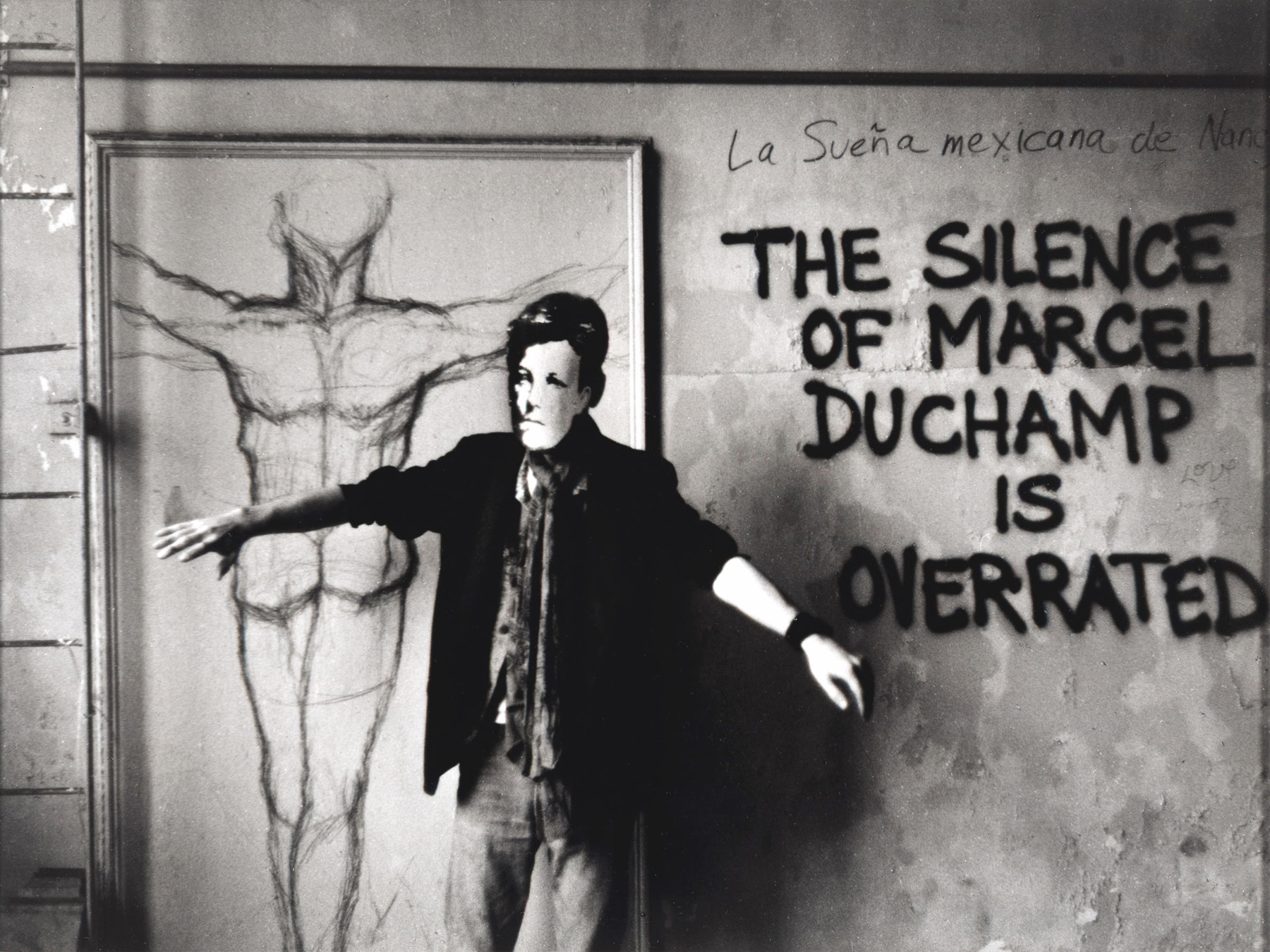
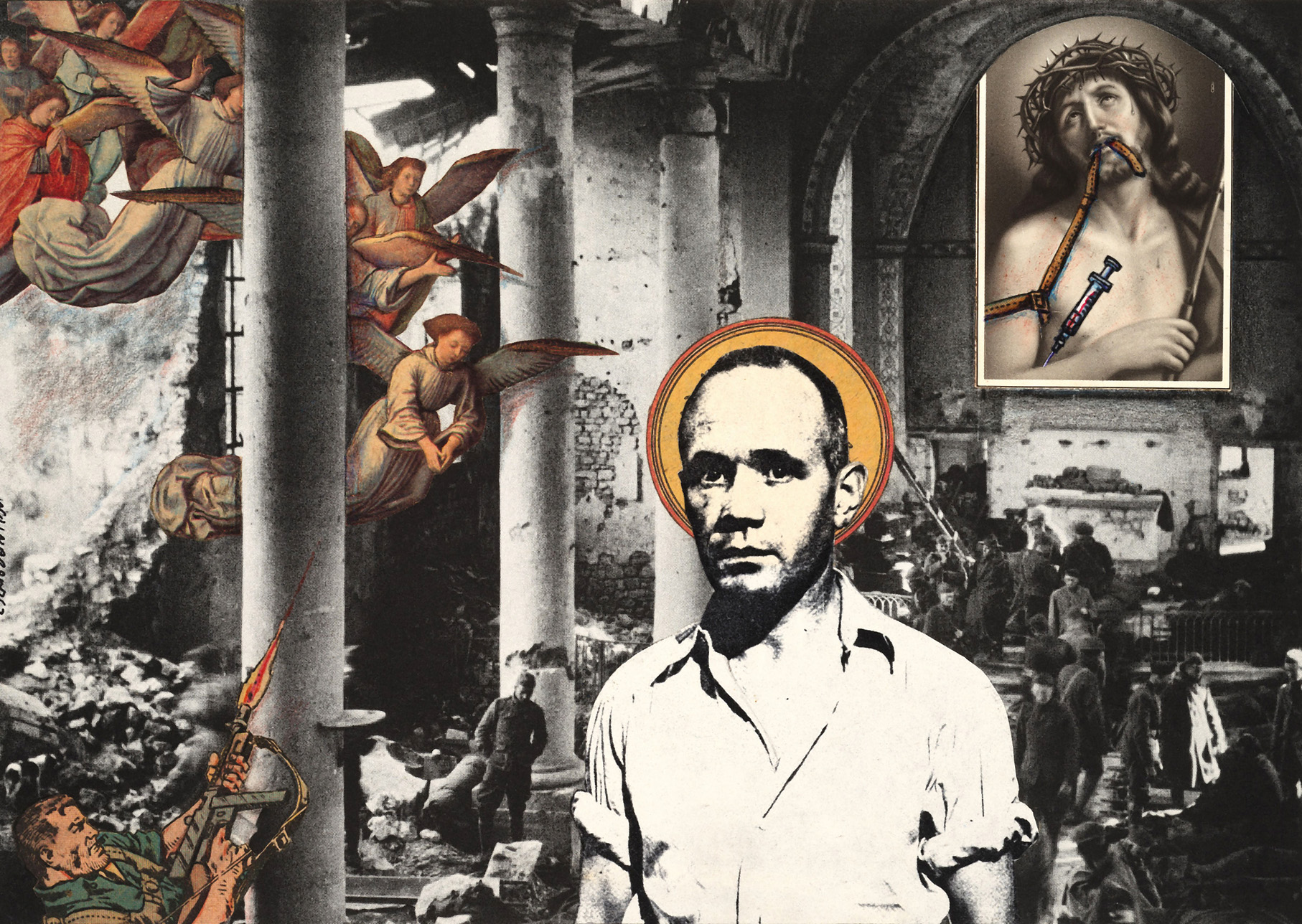
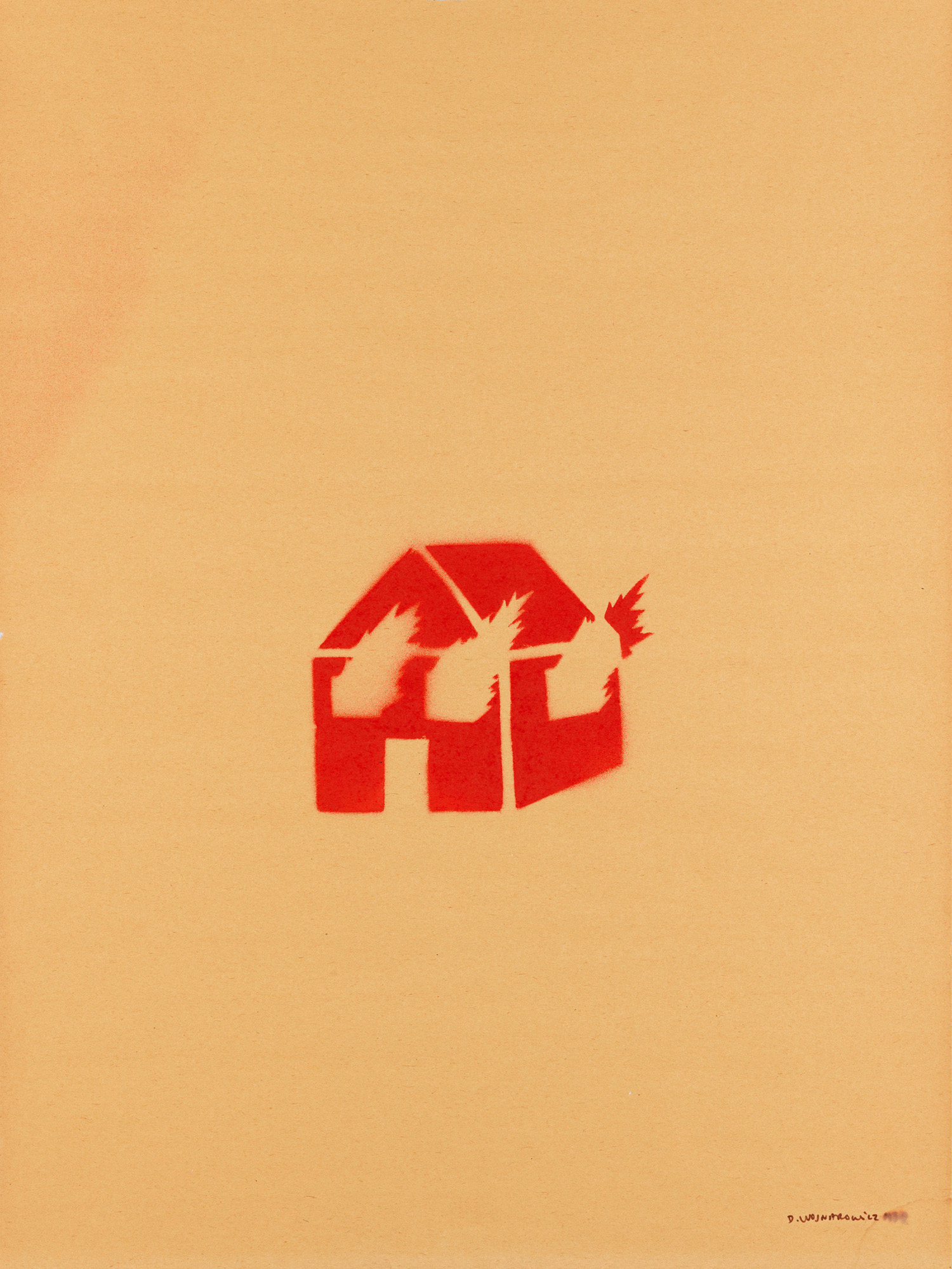
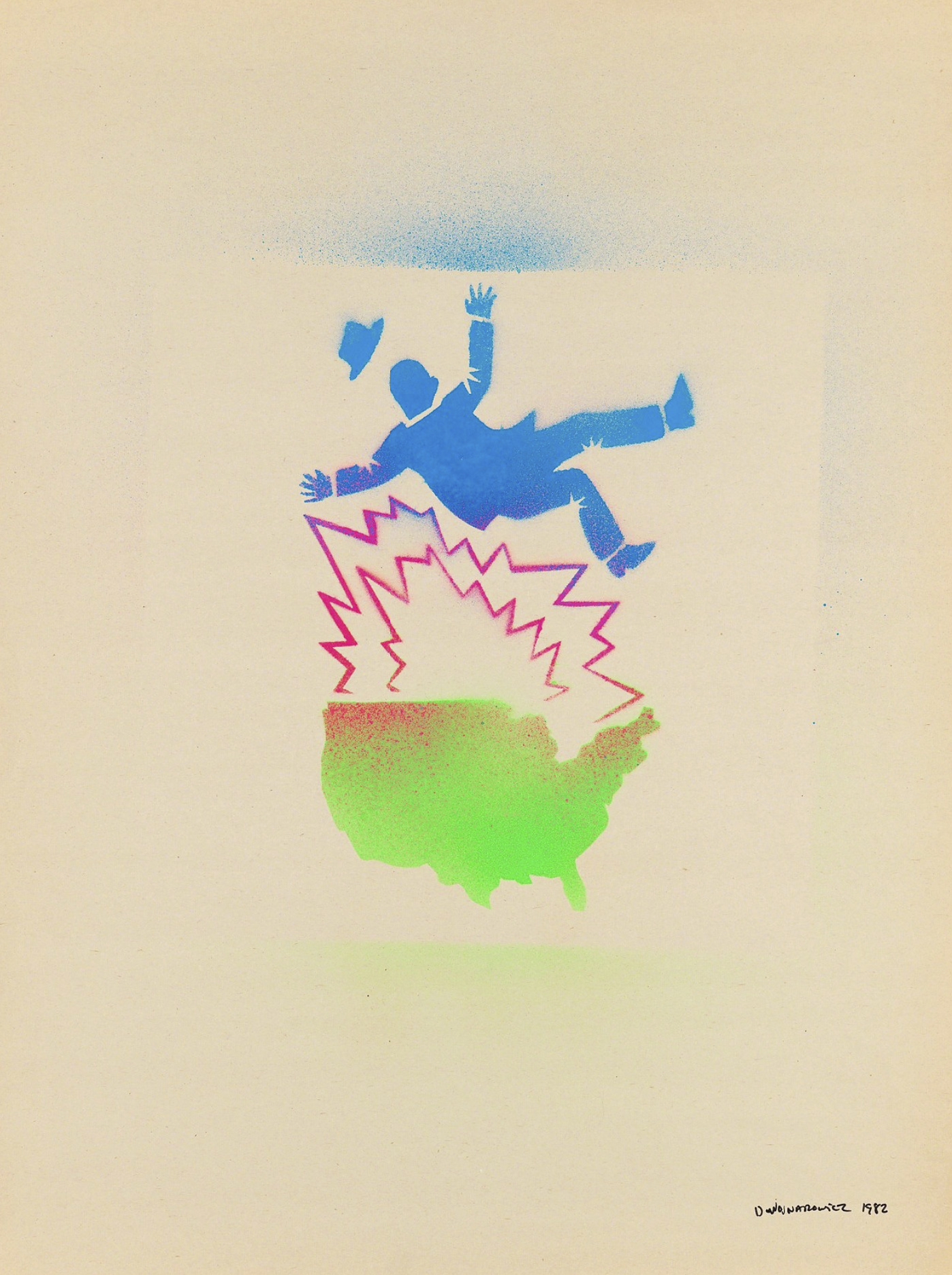
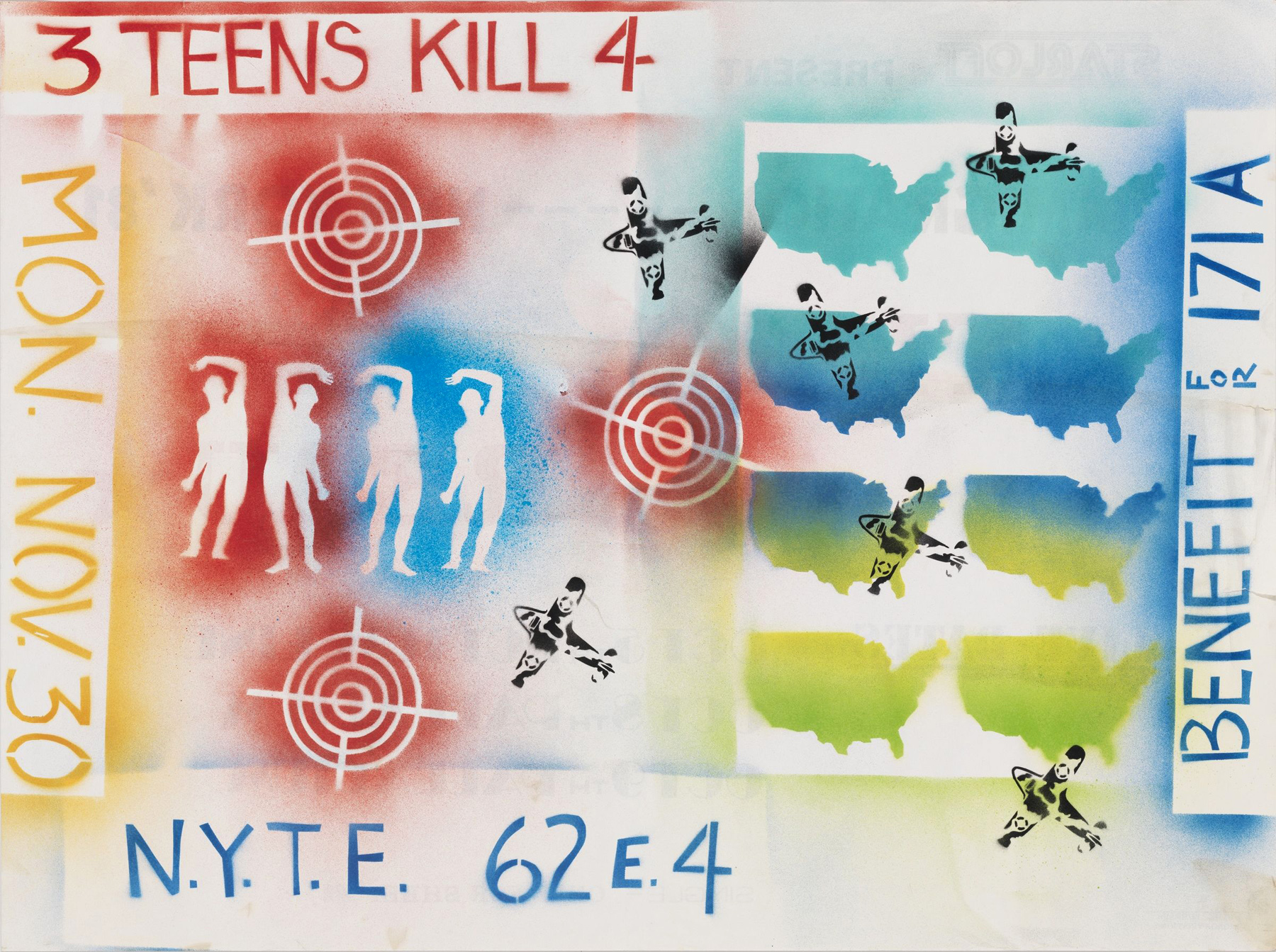


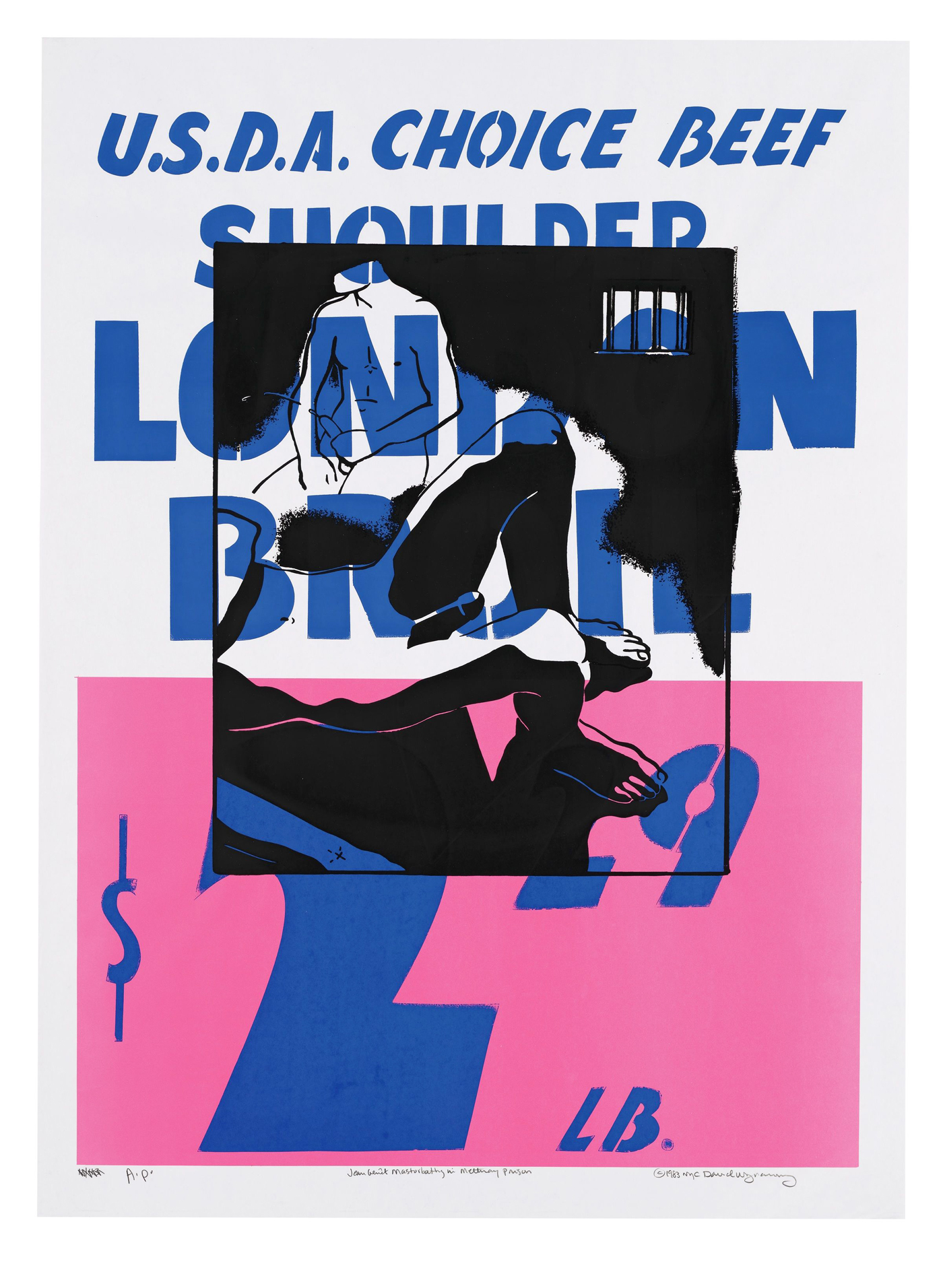
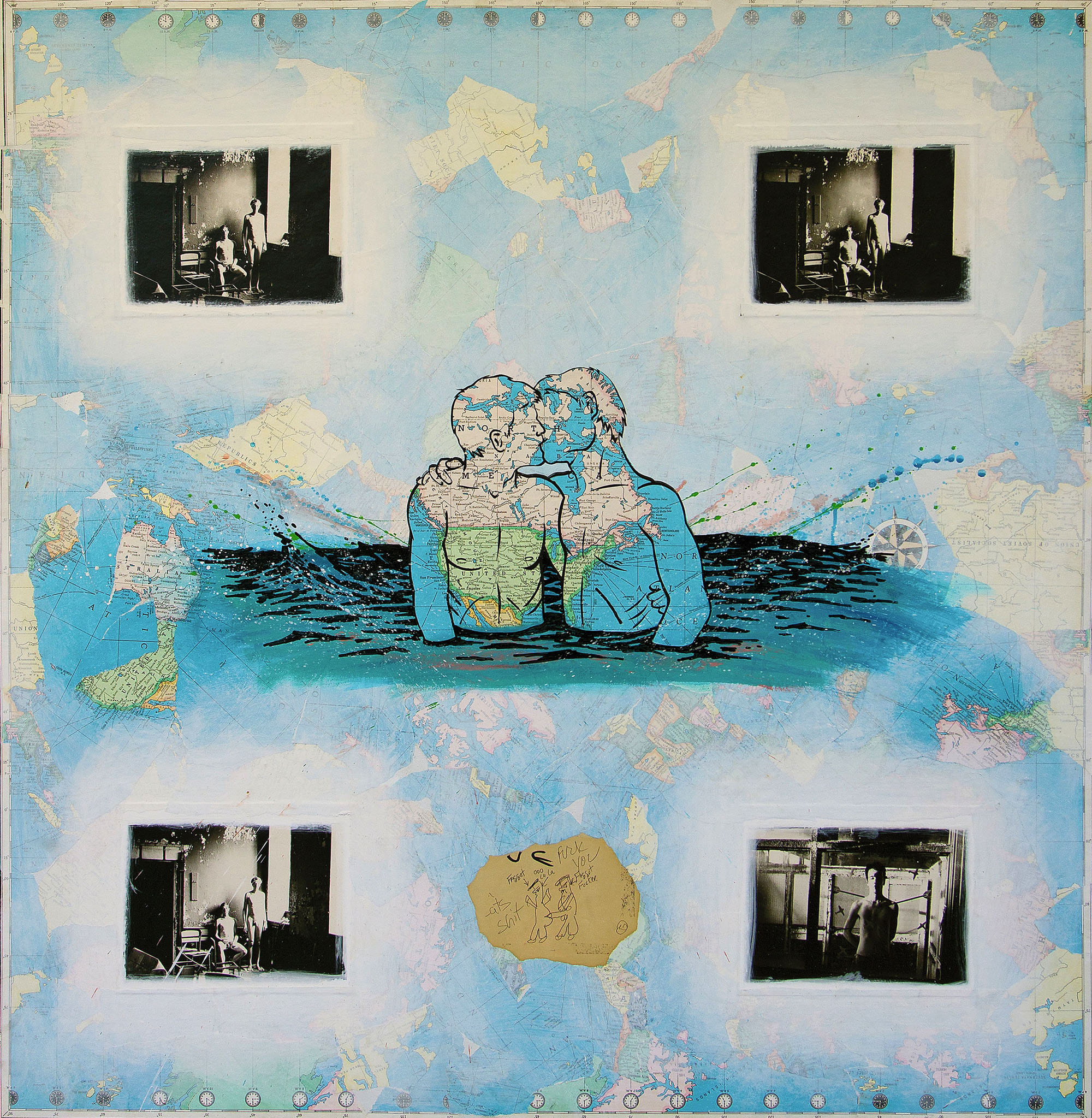
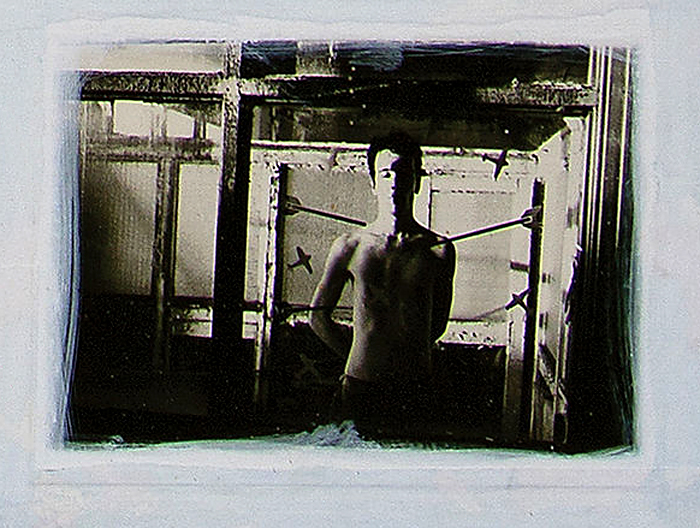
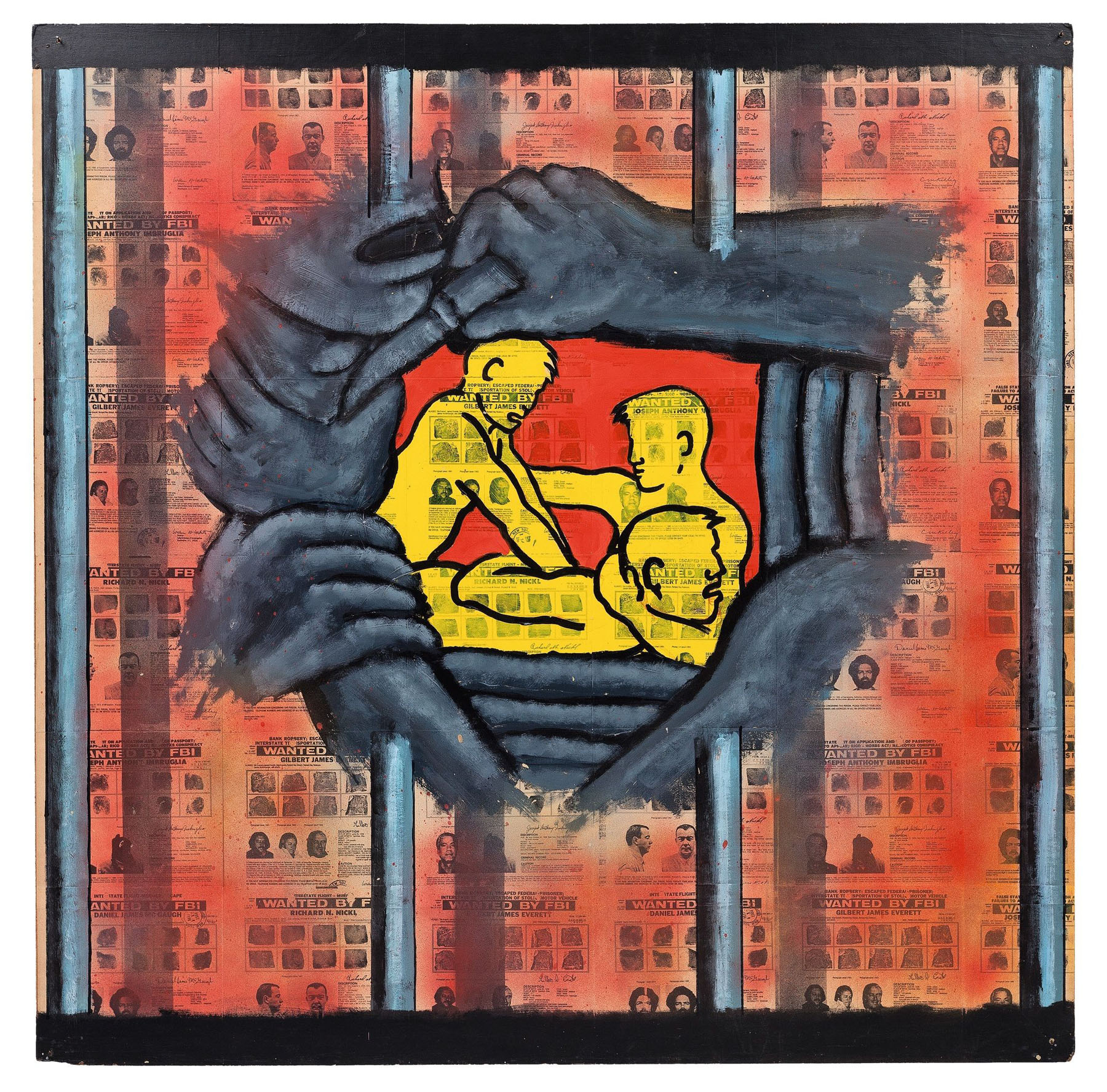

![Peter Hujar (American, 1934-1992) 'Canal Street Piers: Krazy Kat Comic on Wall [by David Wojnarowicz]' 1983](https://artblart.com/wp-content/uploads/2018/07/peter-hujar-canal-street-piers-krazy-kat-comic-on-wall-by-david-wojnarowicz-web.jpg "Peter Hujar (American, 1934-1992) 'Canal Street Piers: Krazy Kat Comic on Wall [by David Wojnarowicz]' 1983")


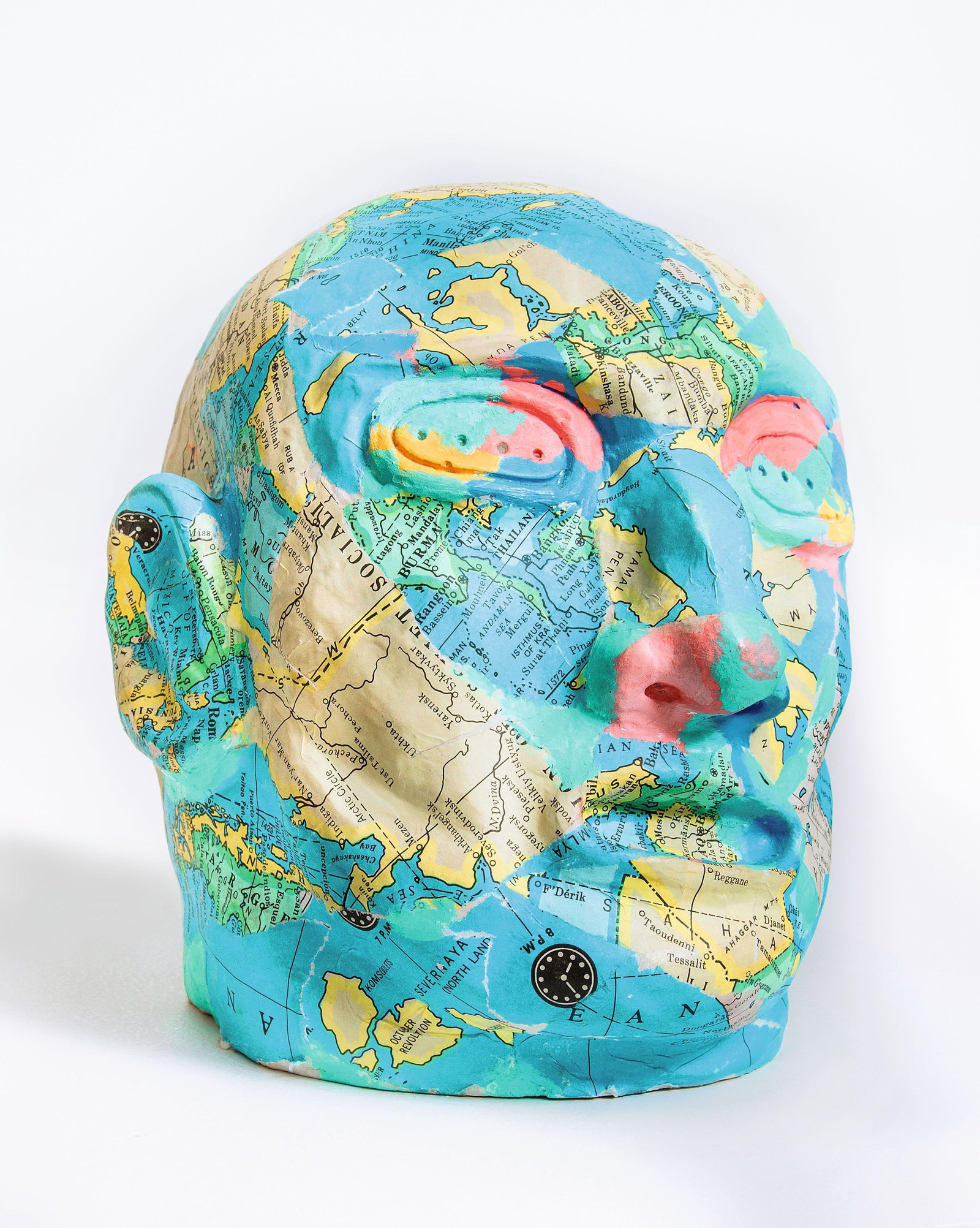
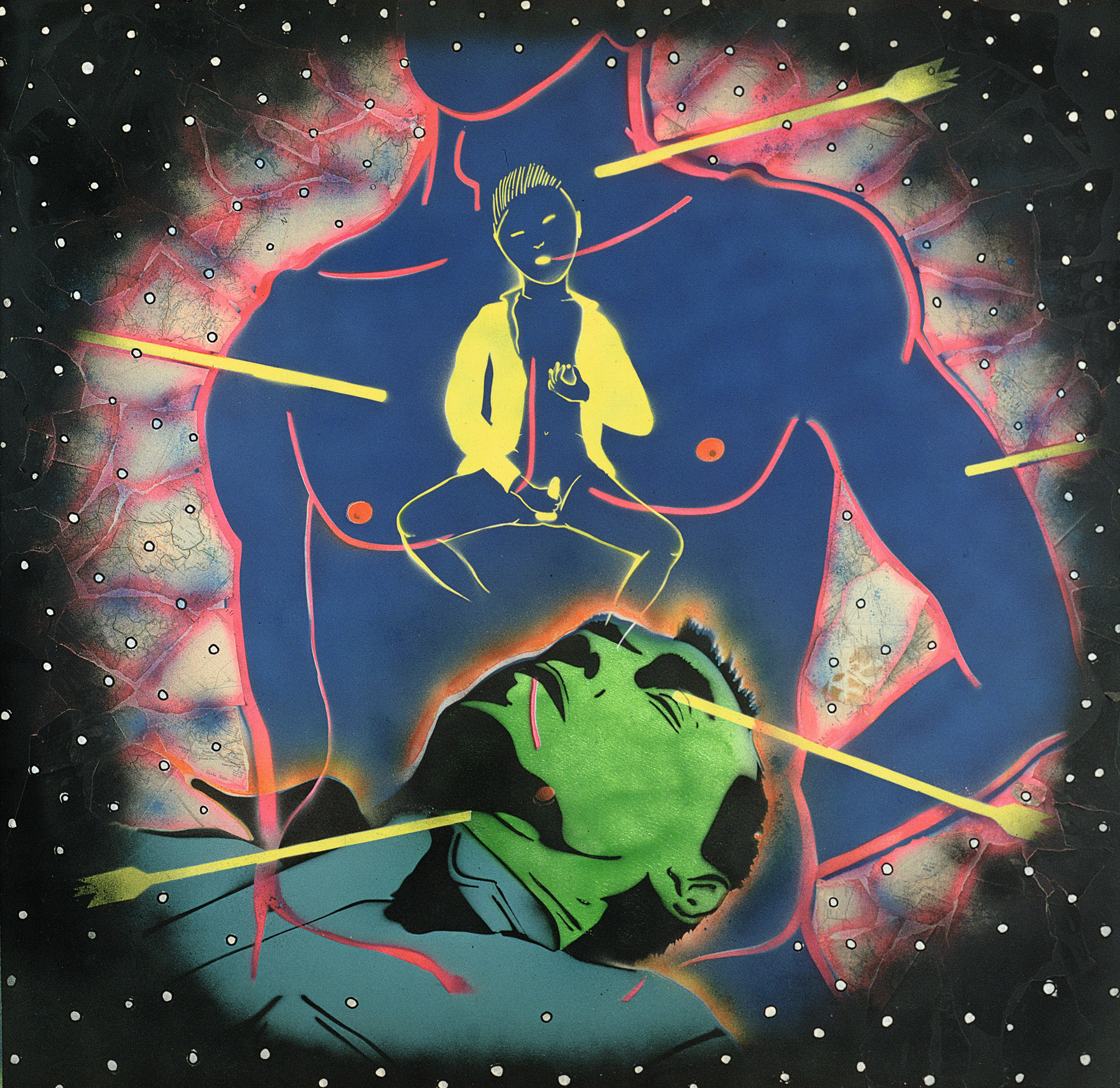
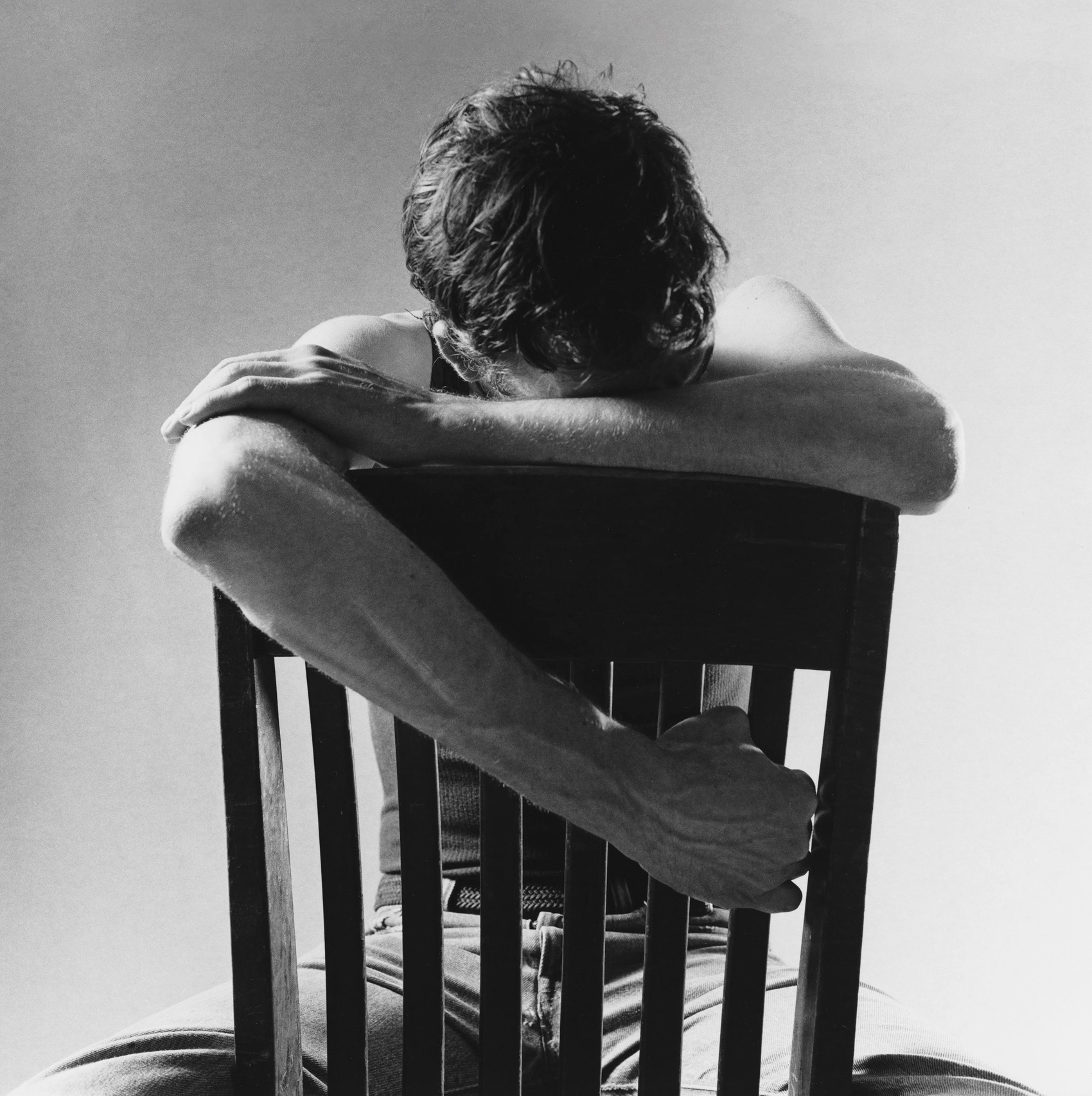

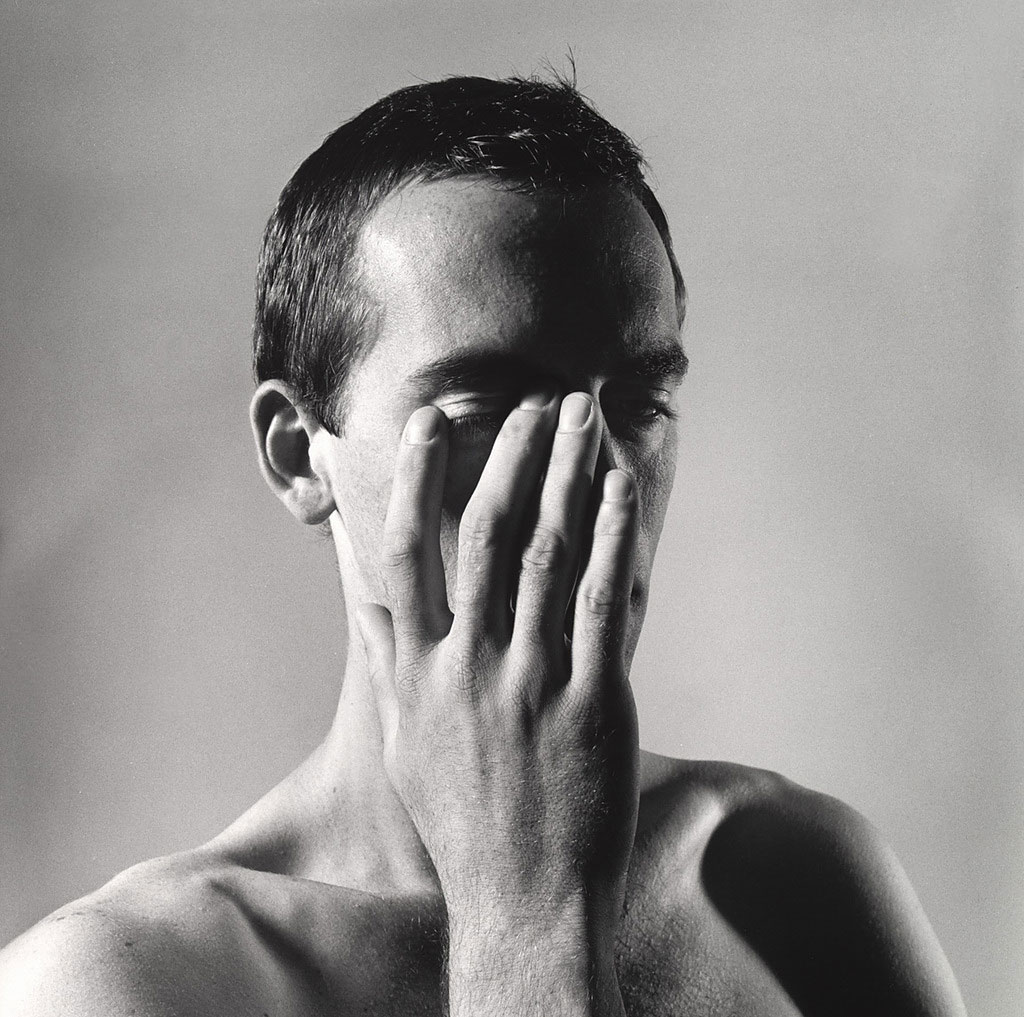

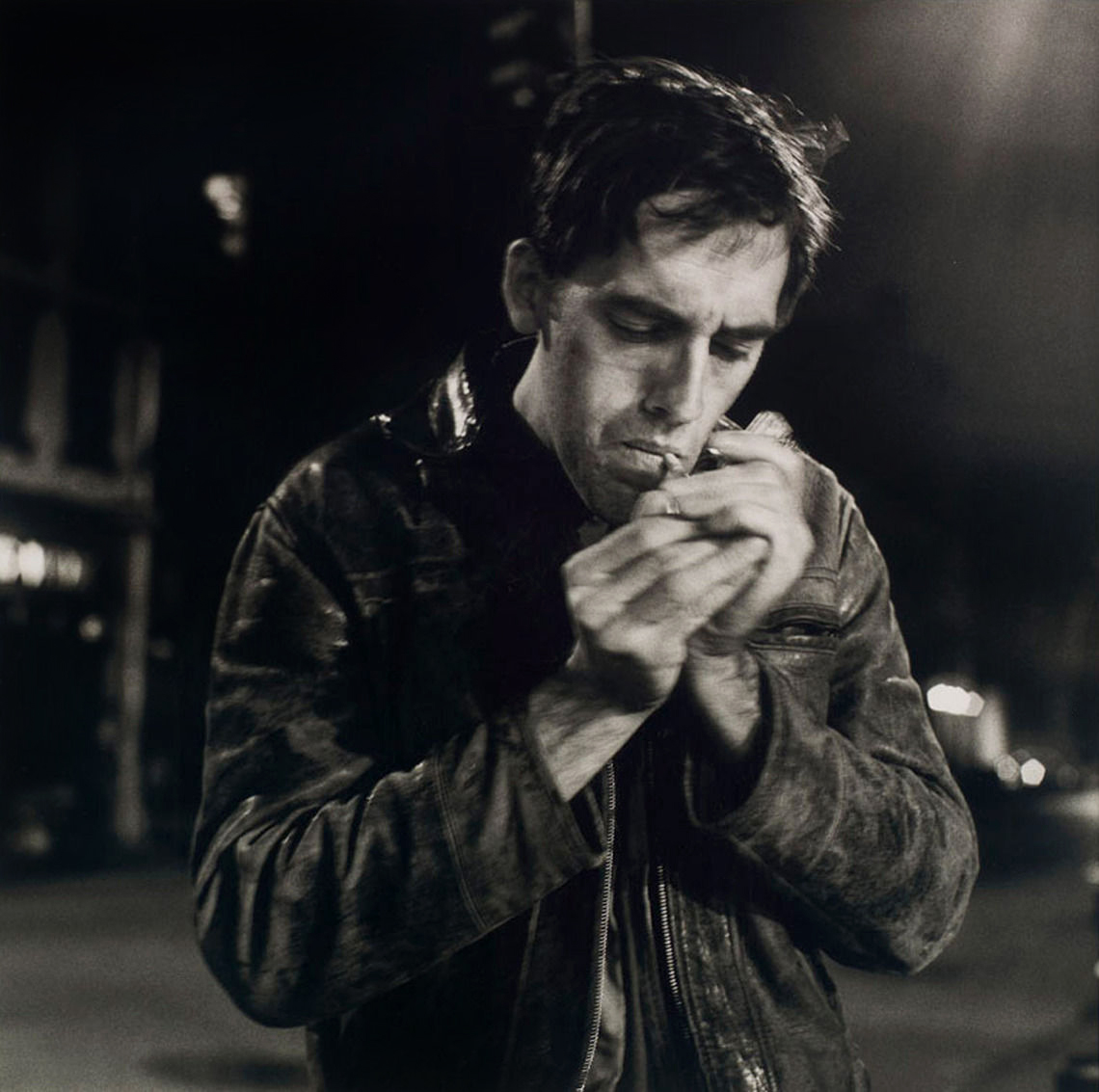



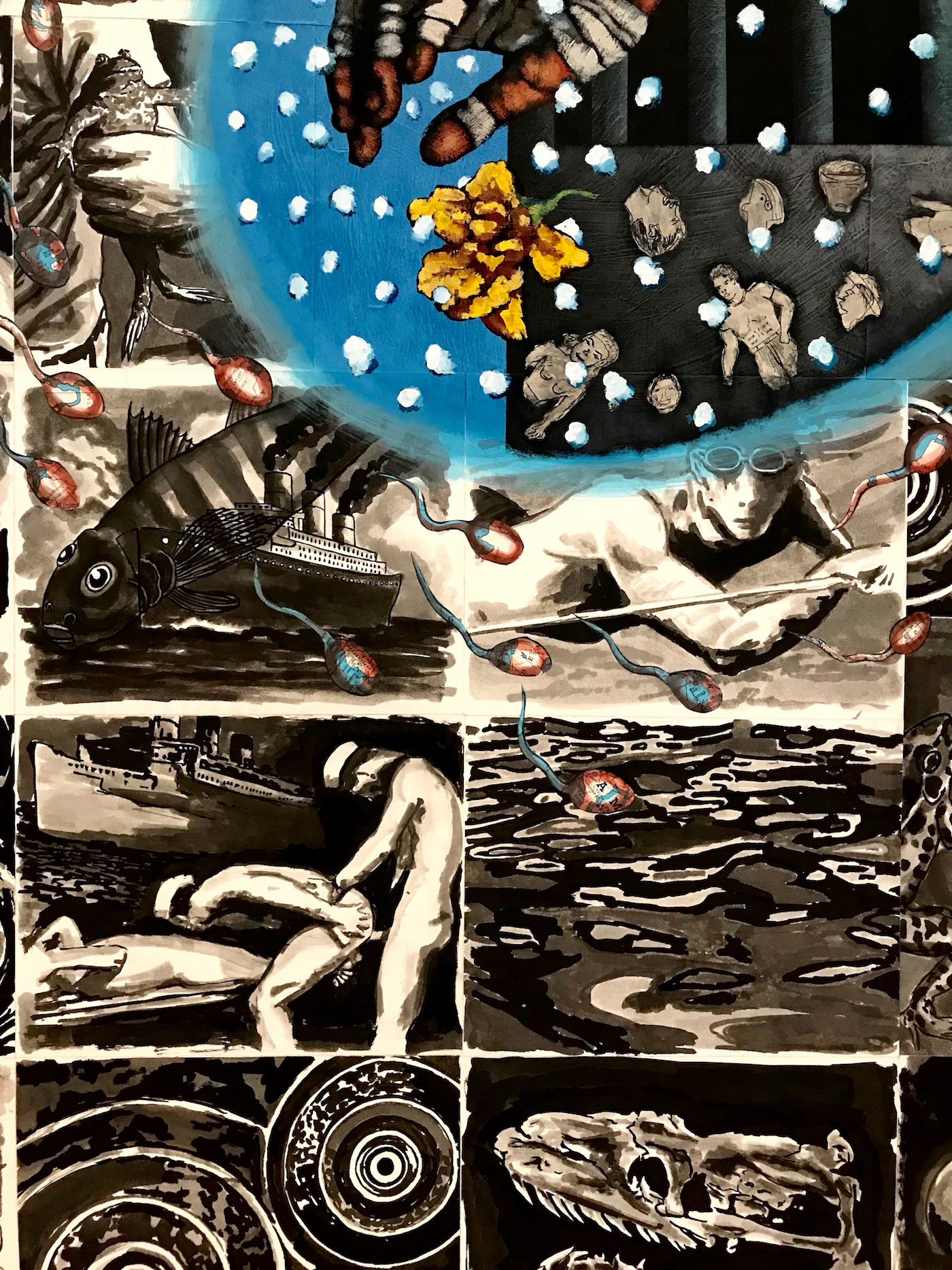

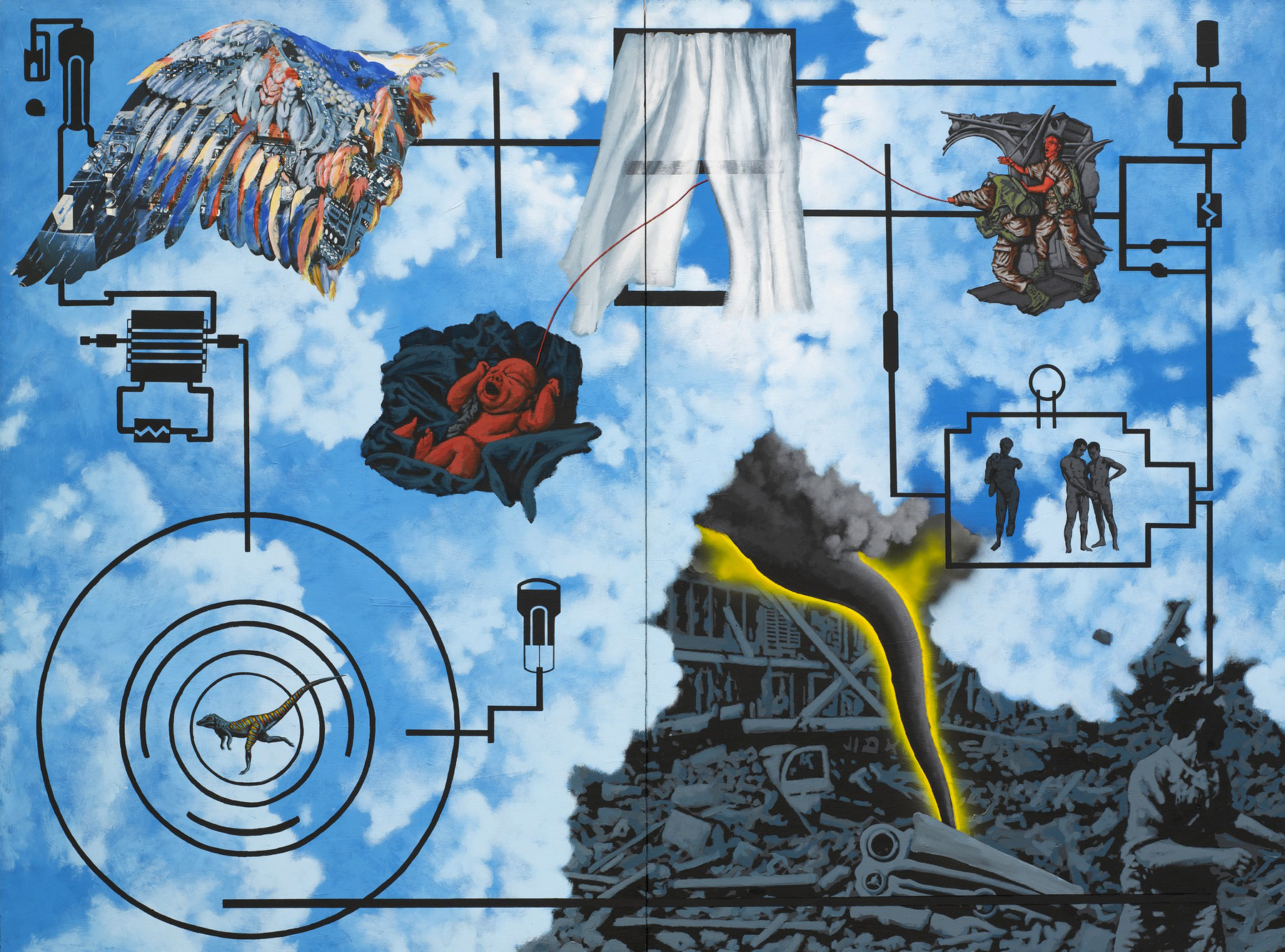

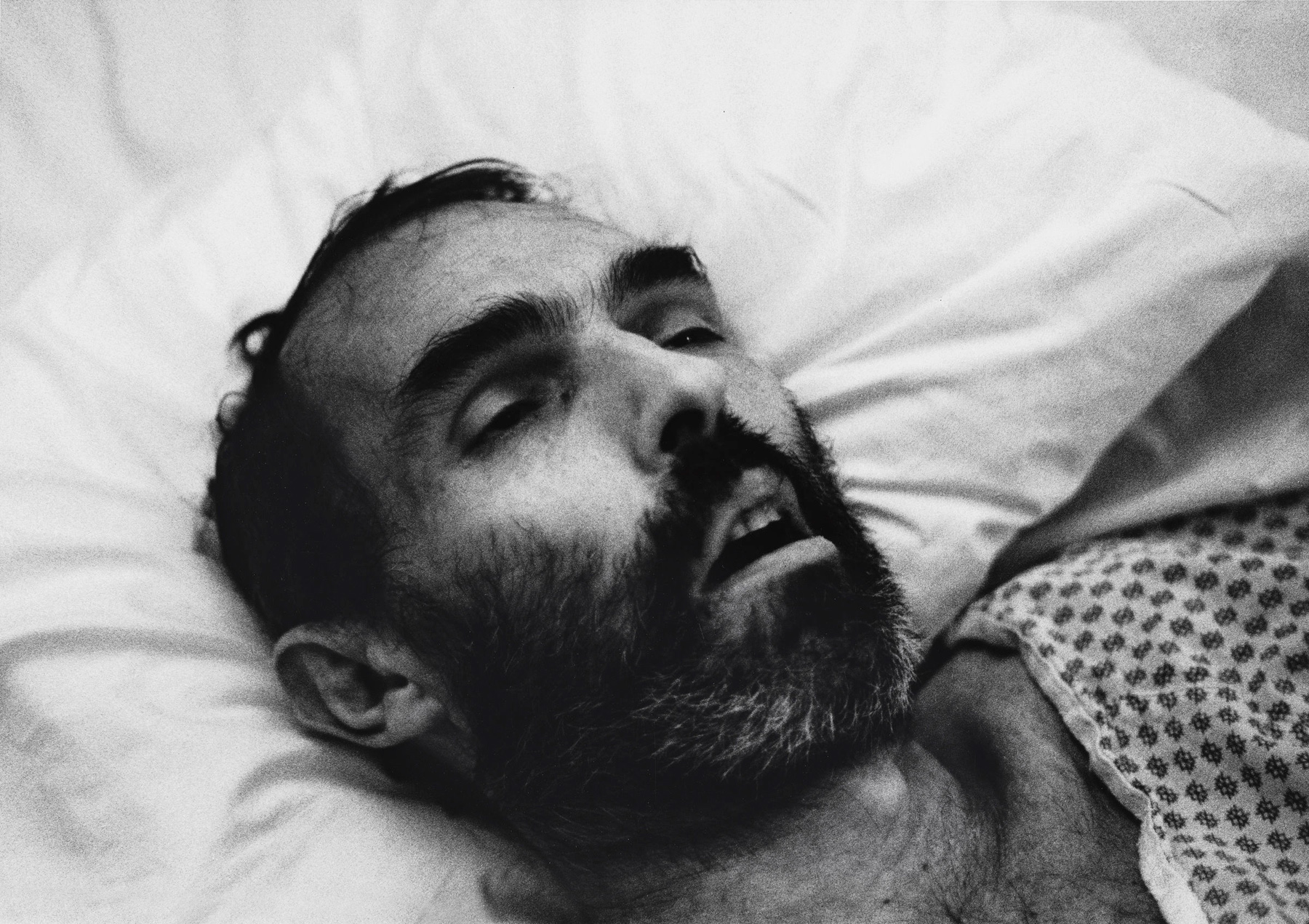
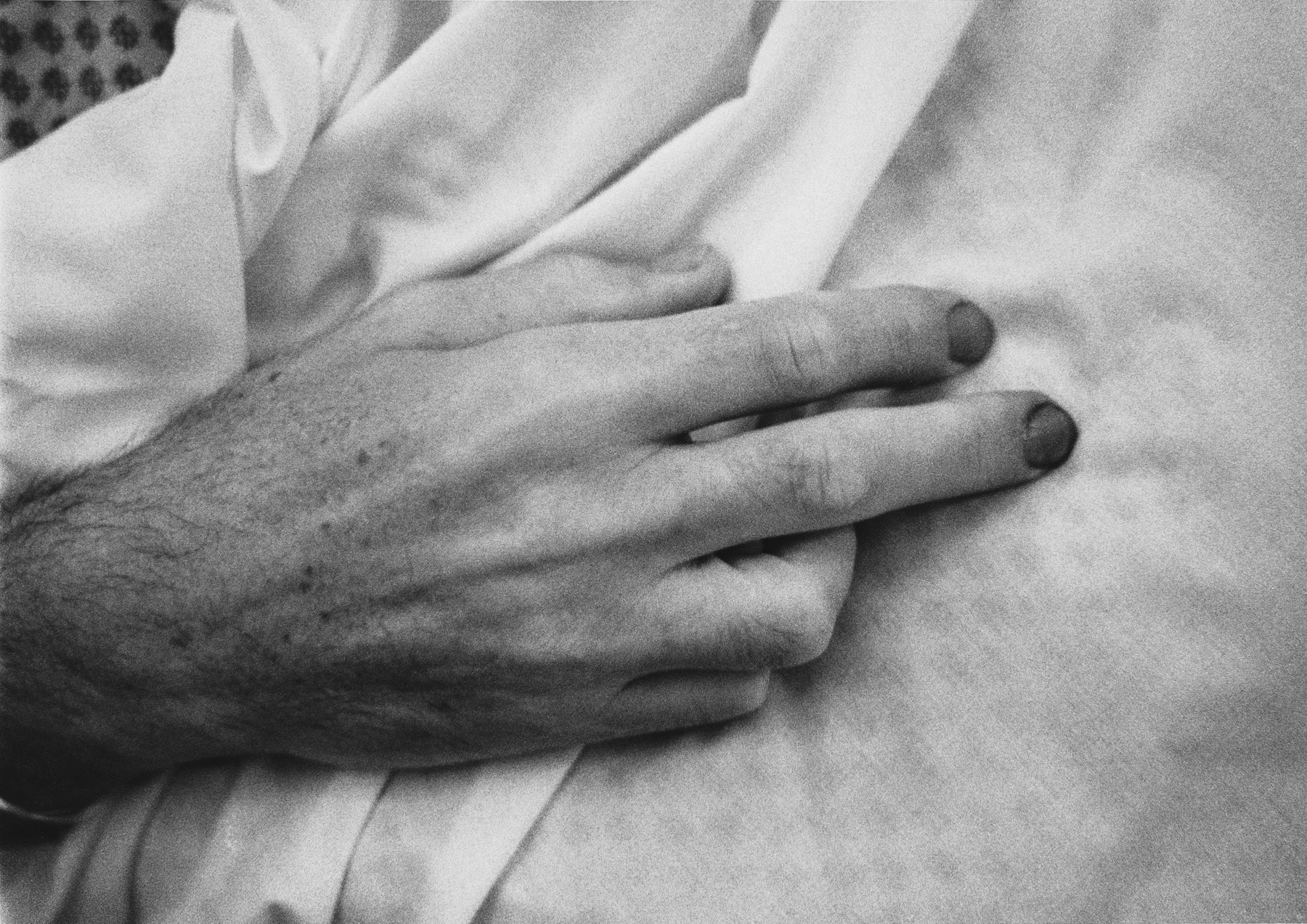
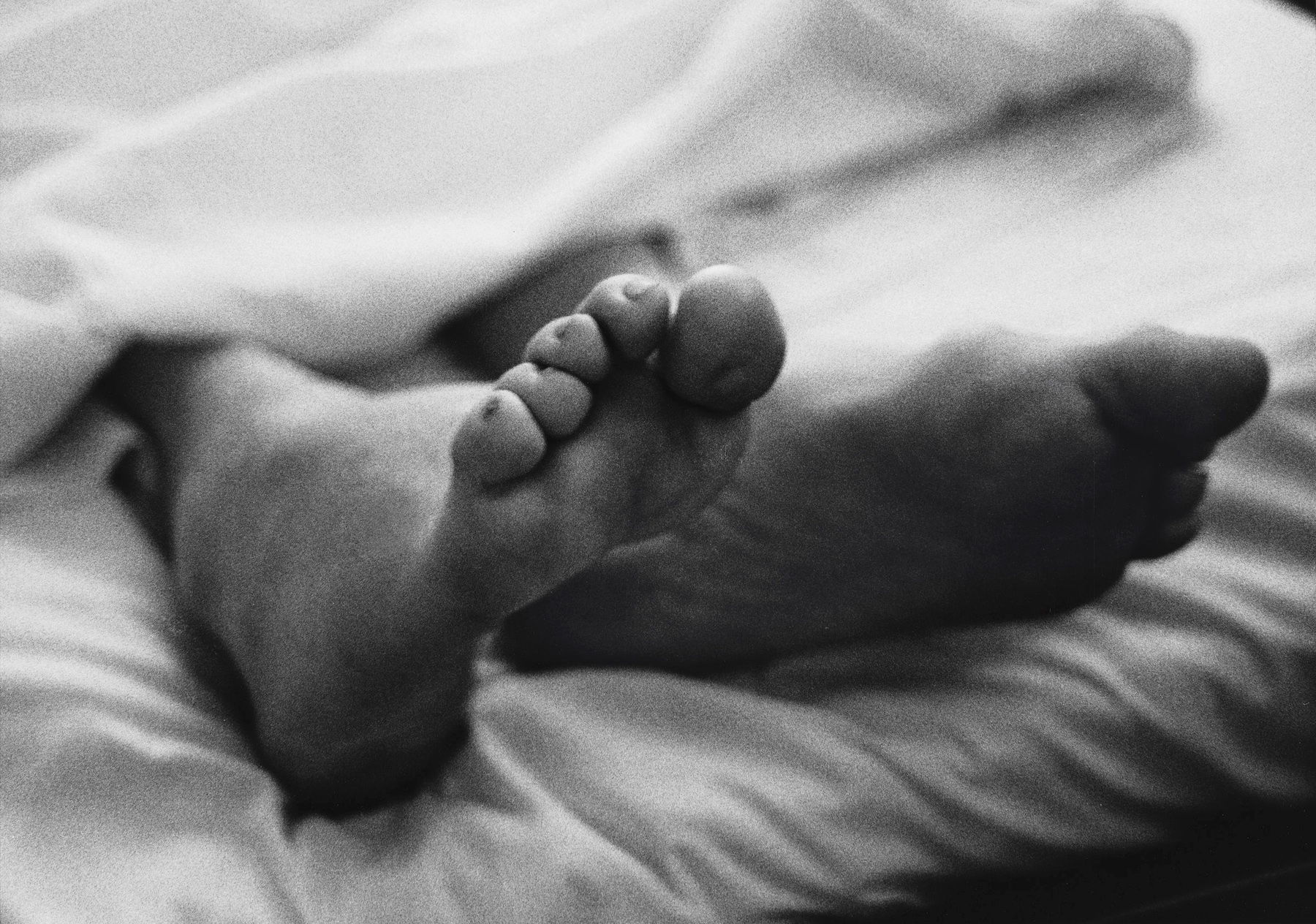
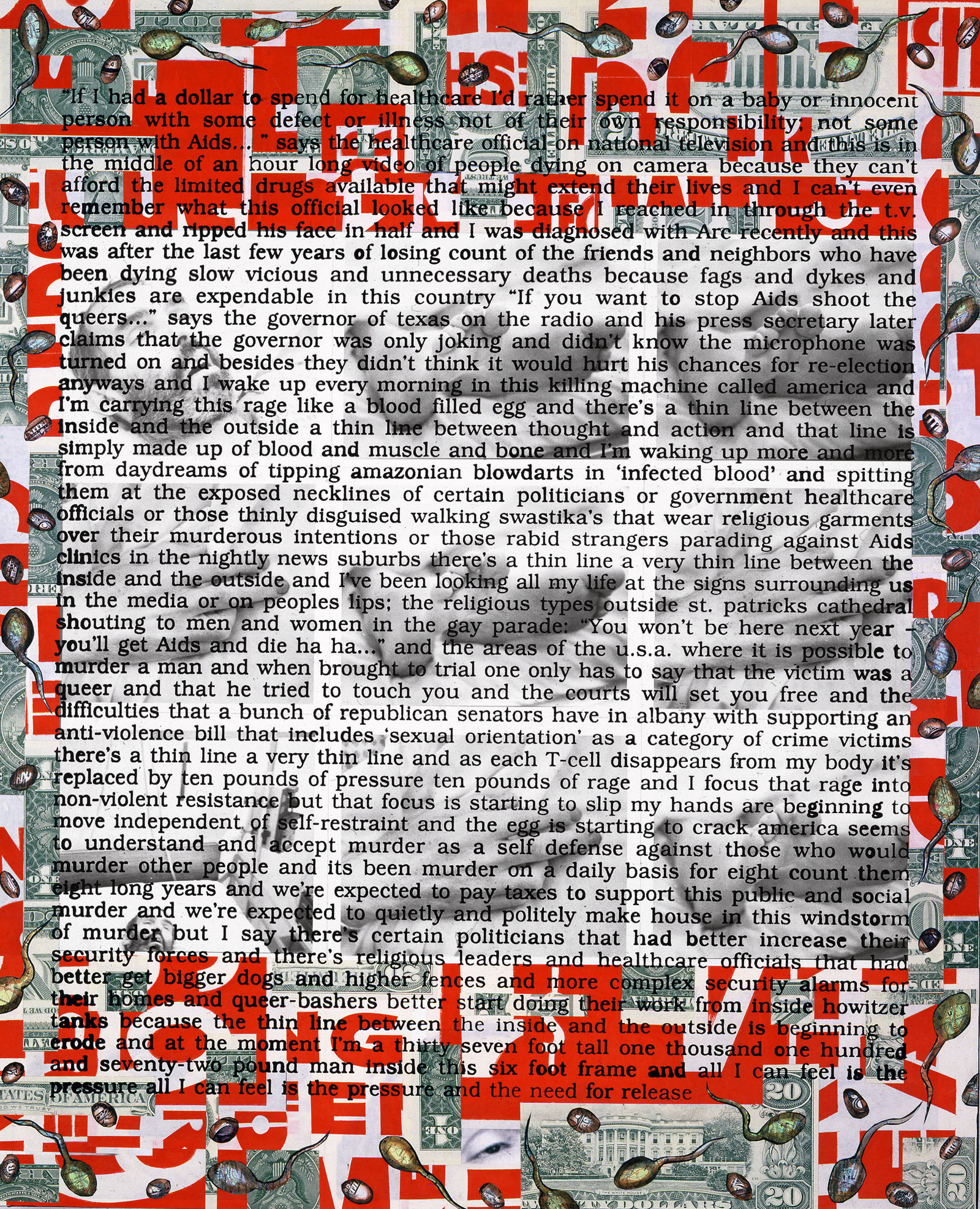
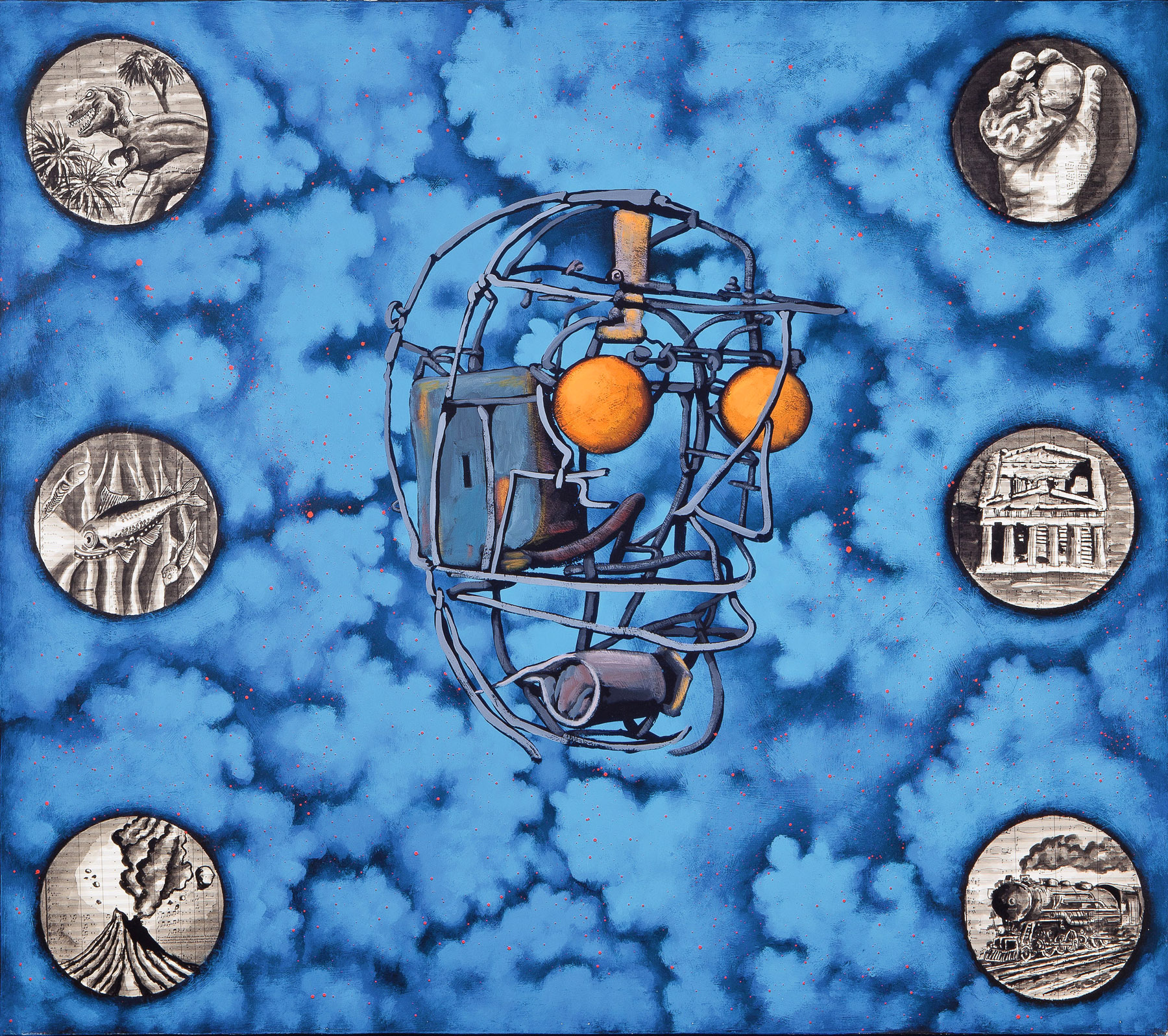

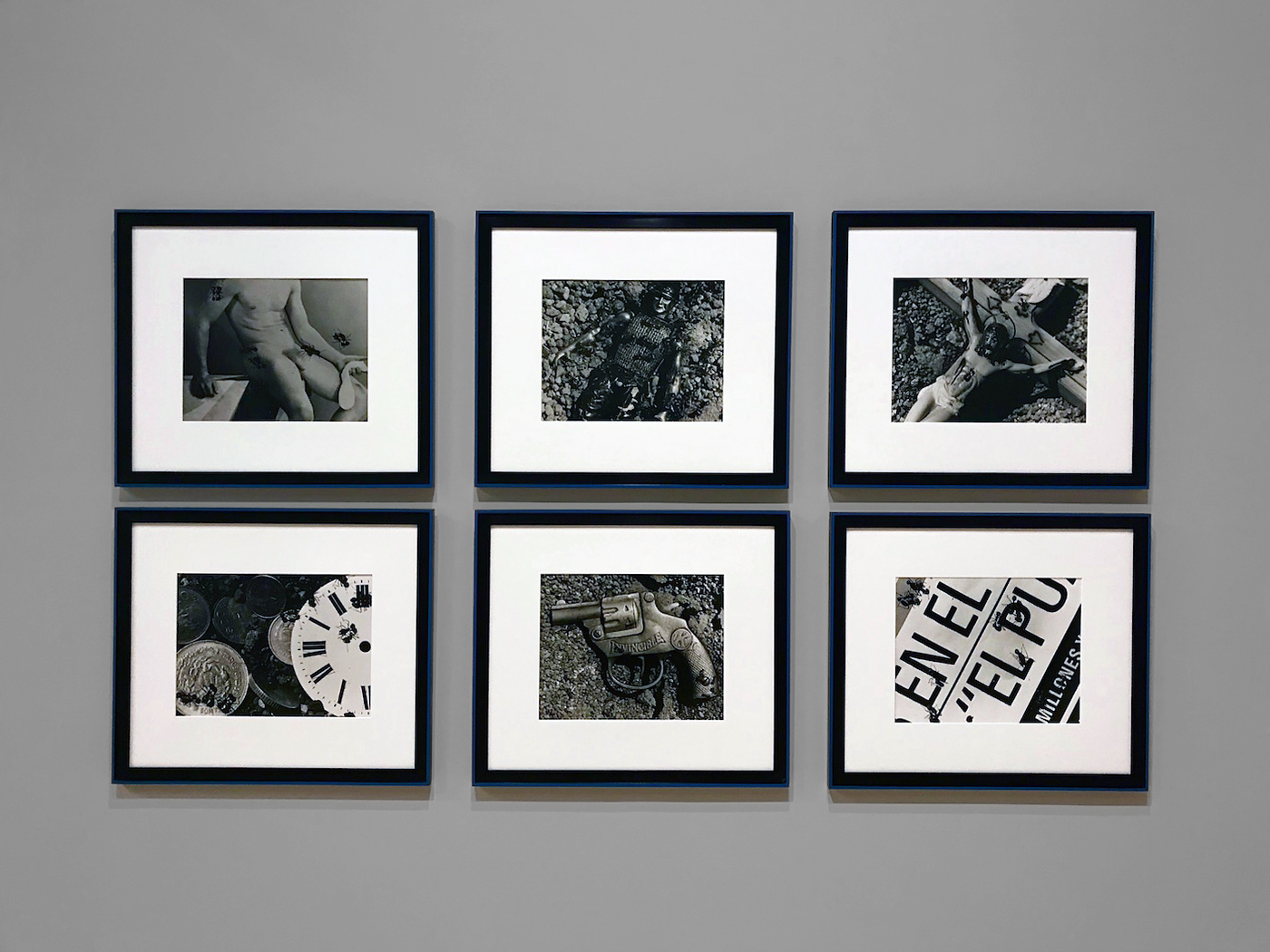
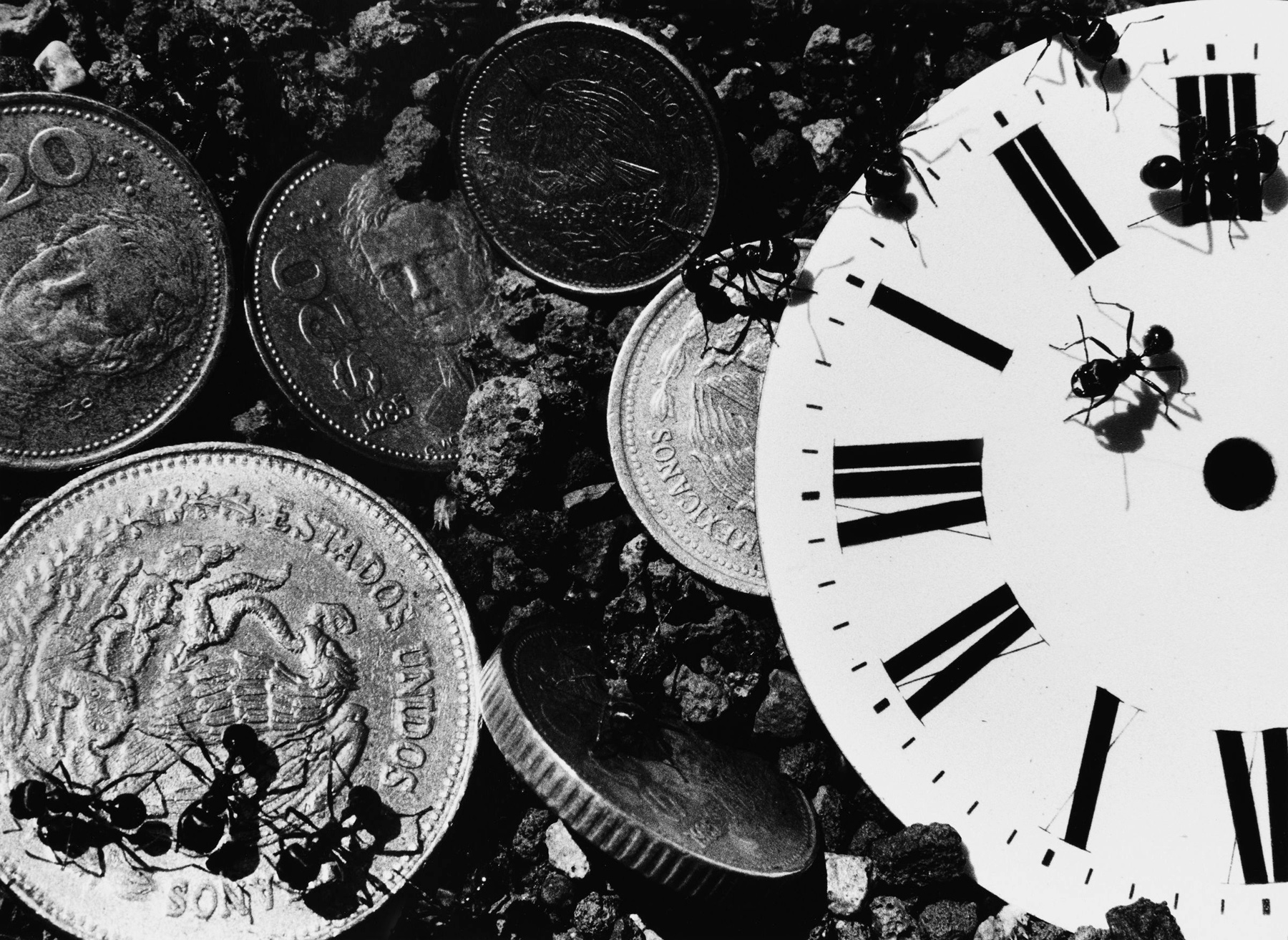

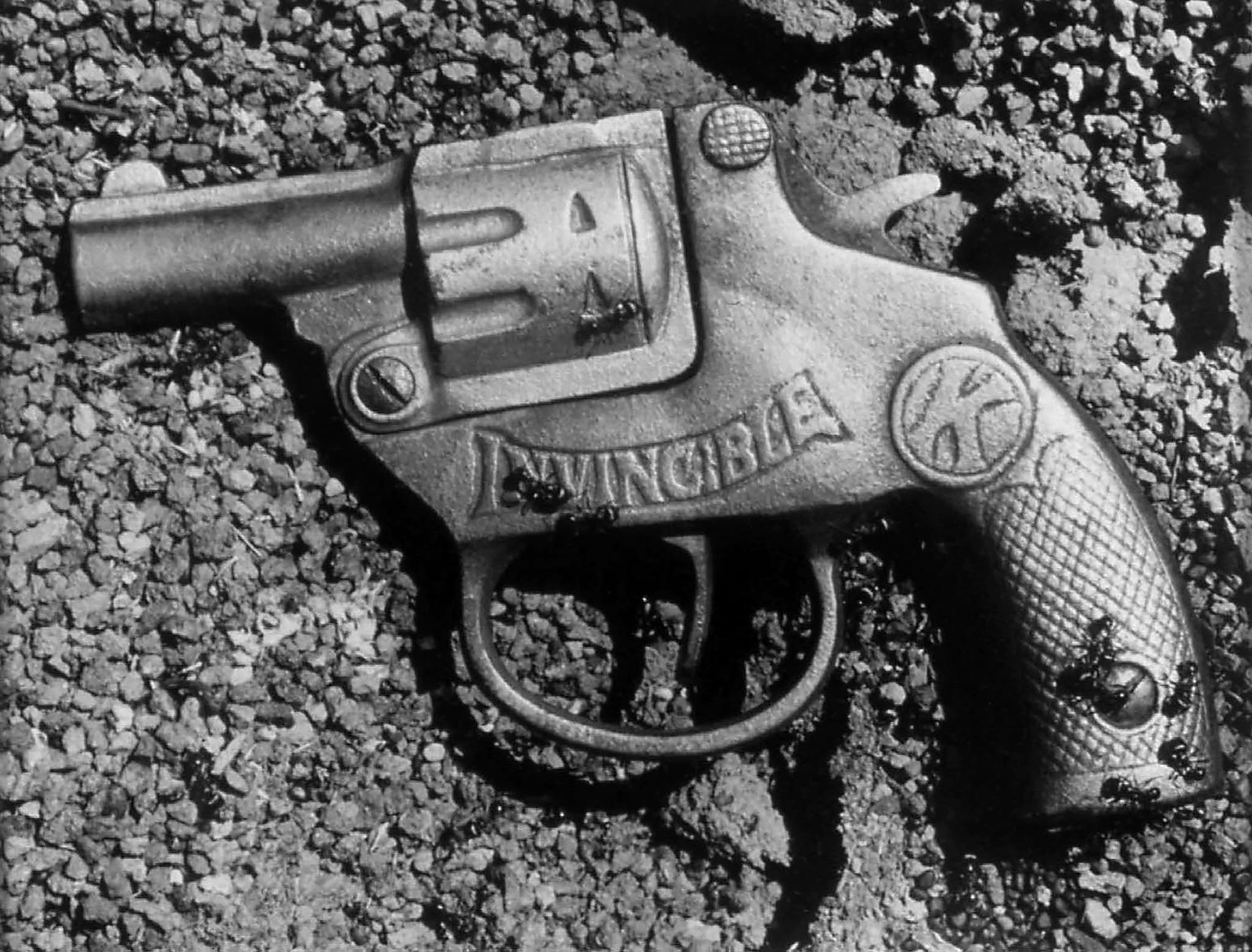
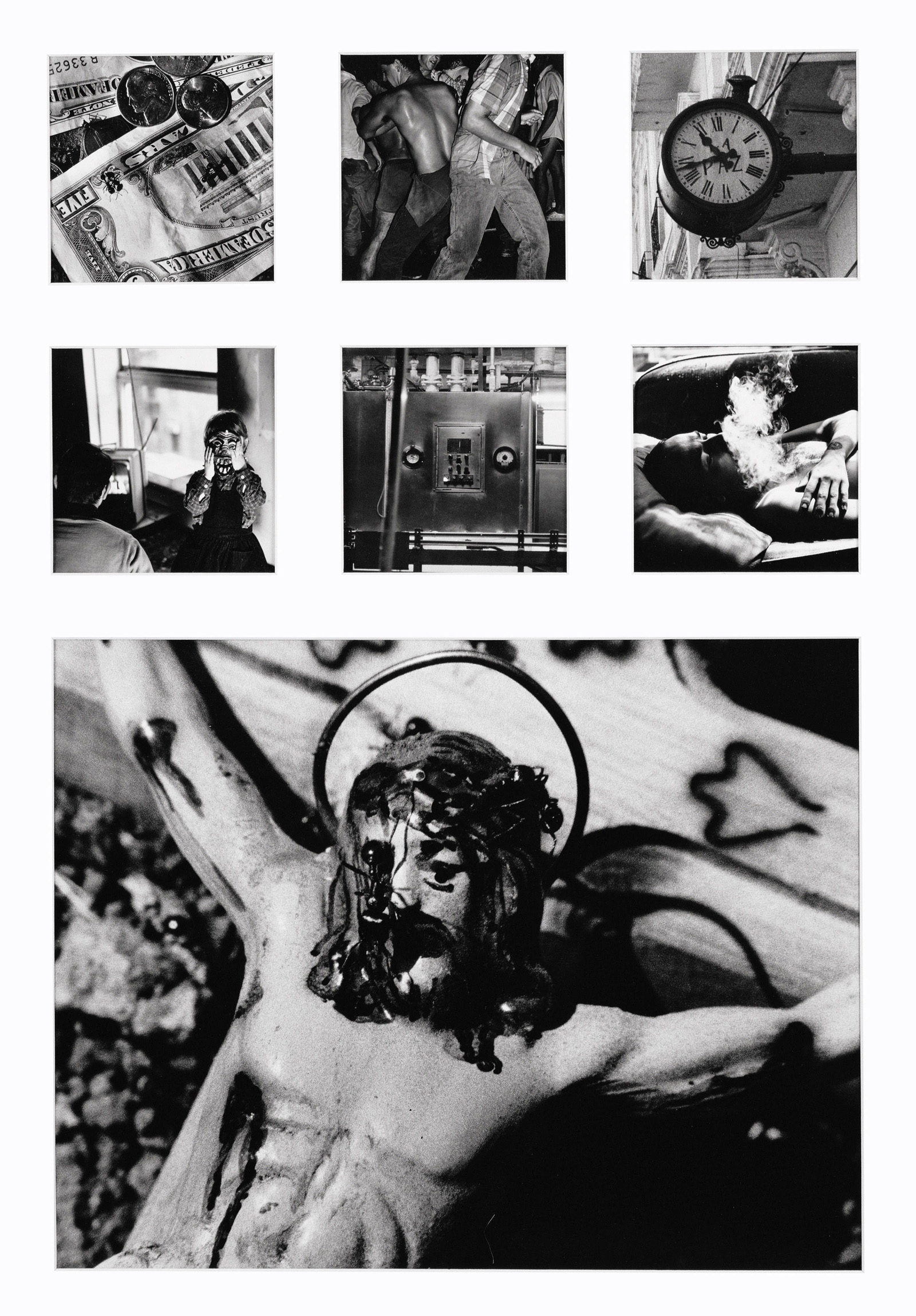


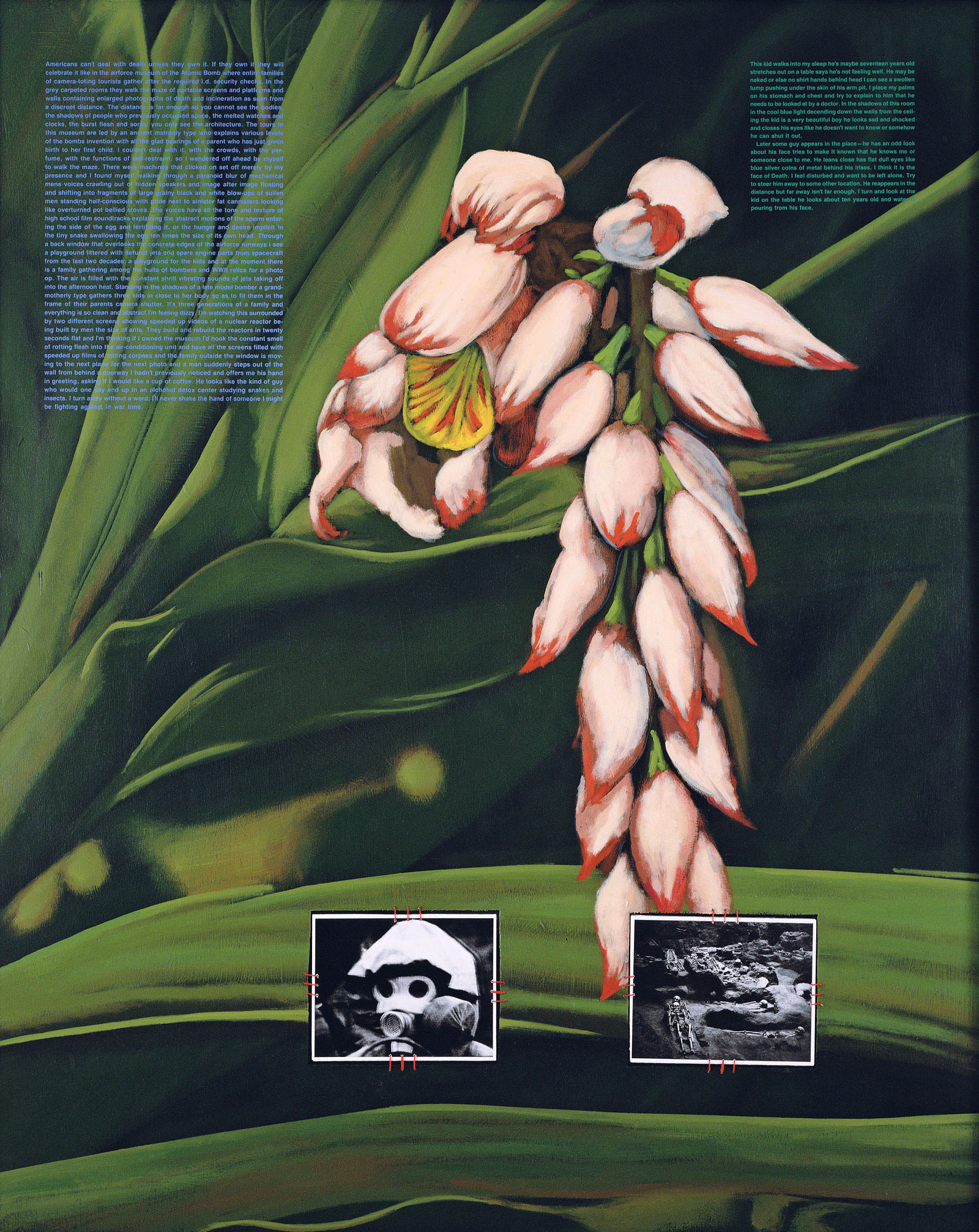
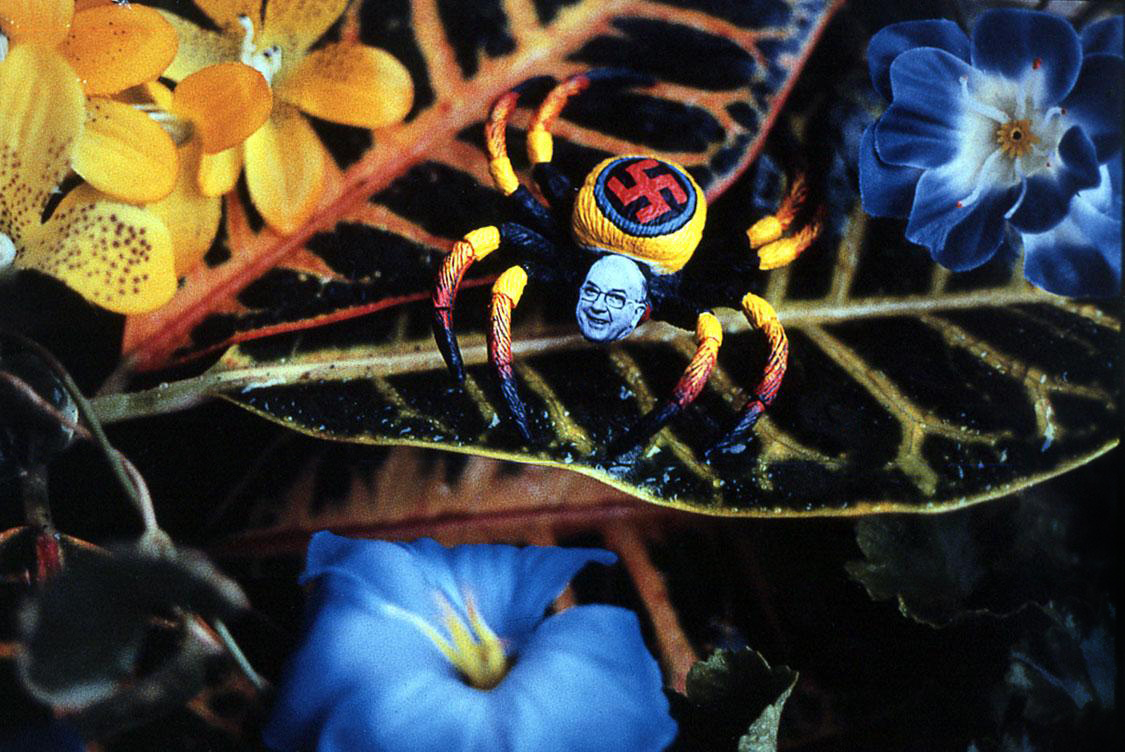

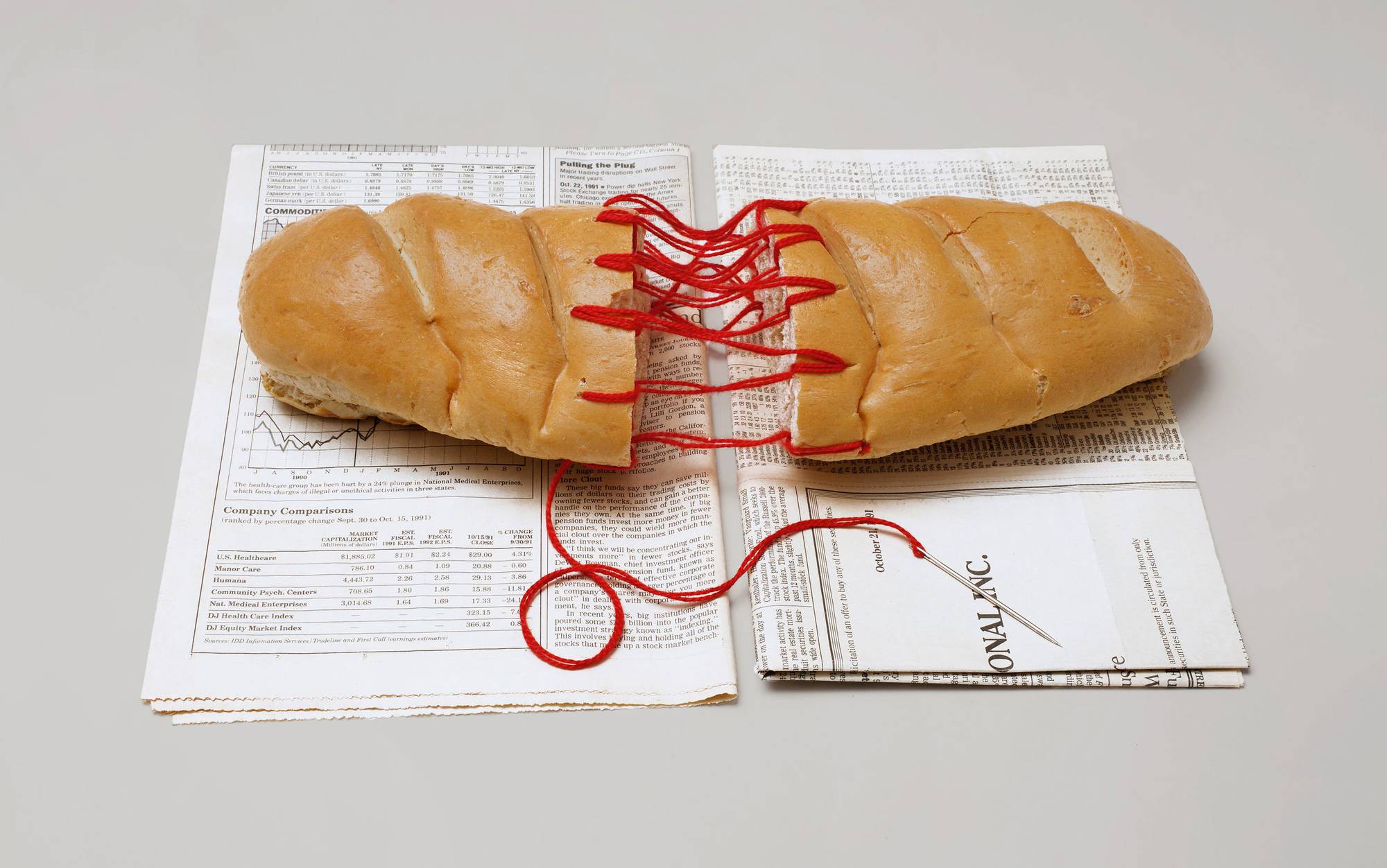


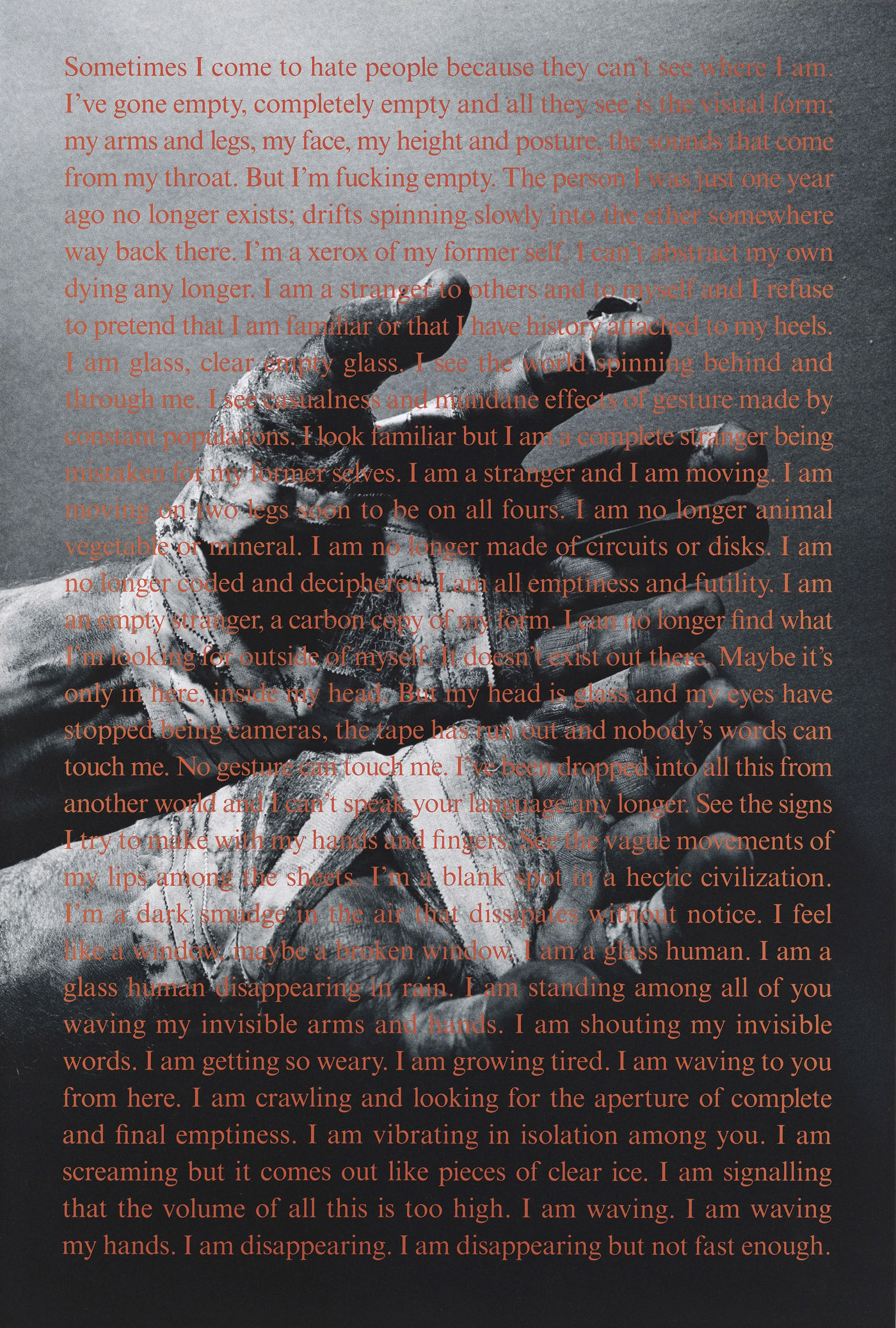
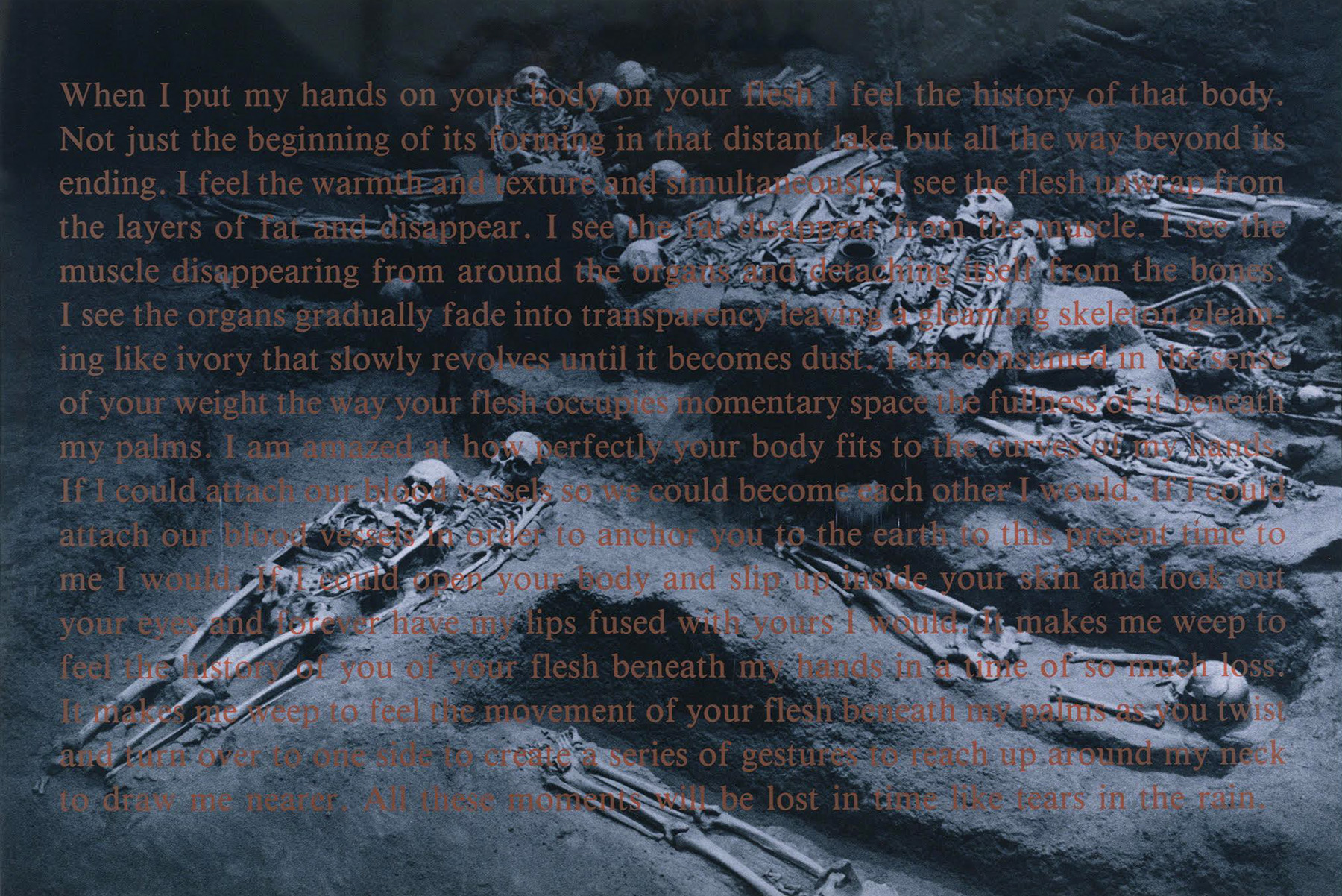
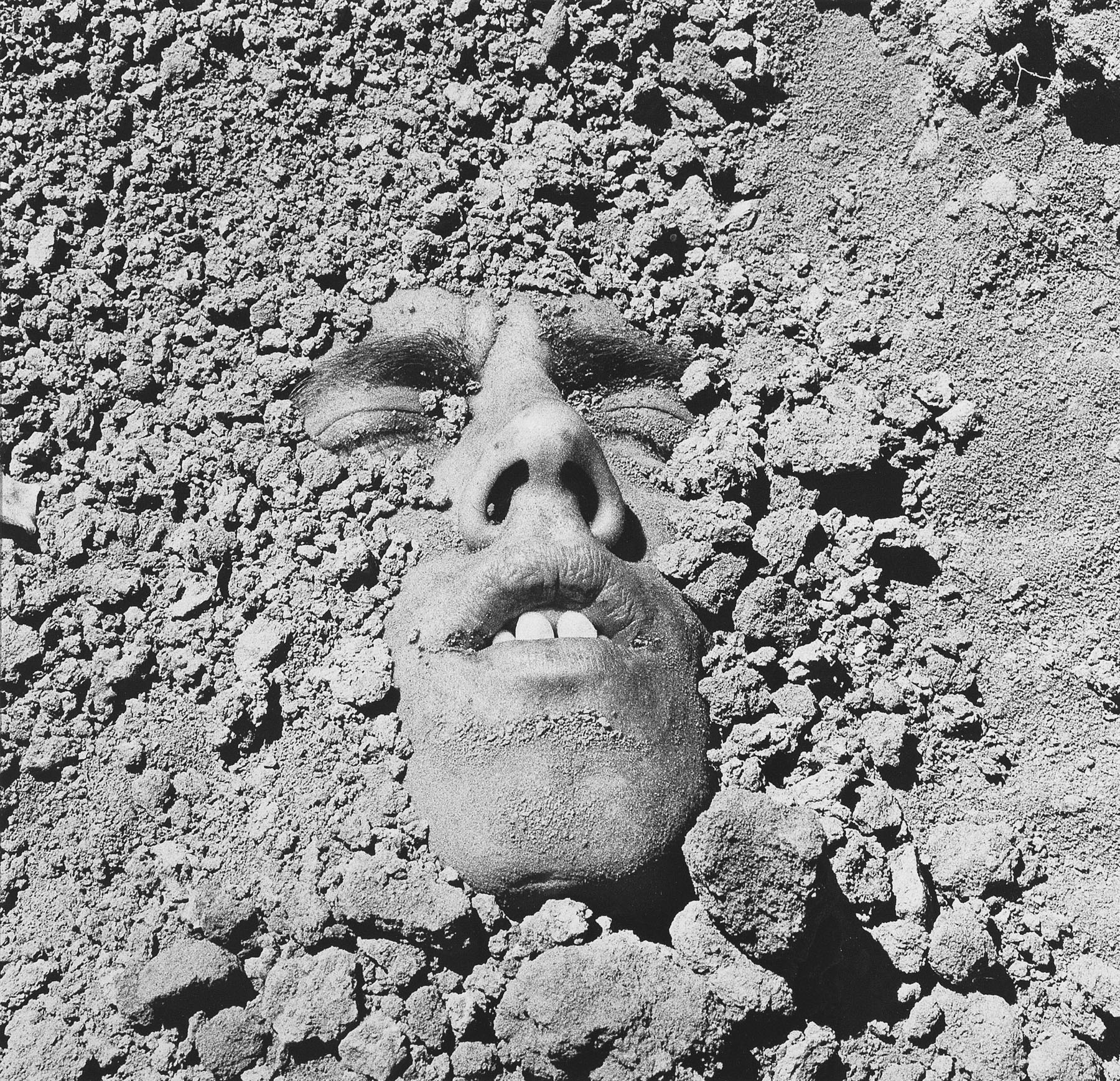


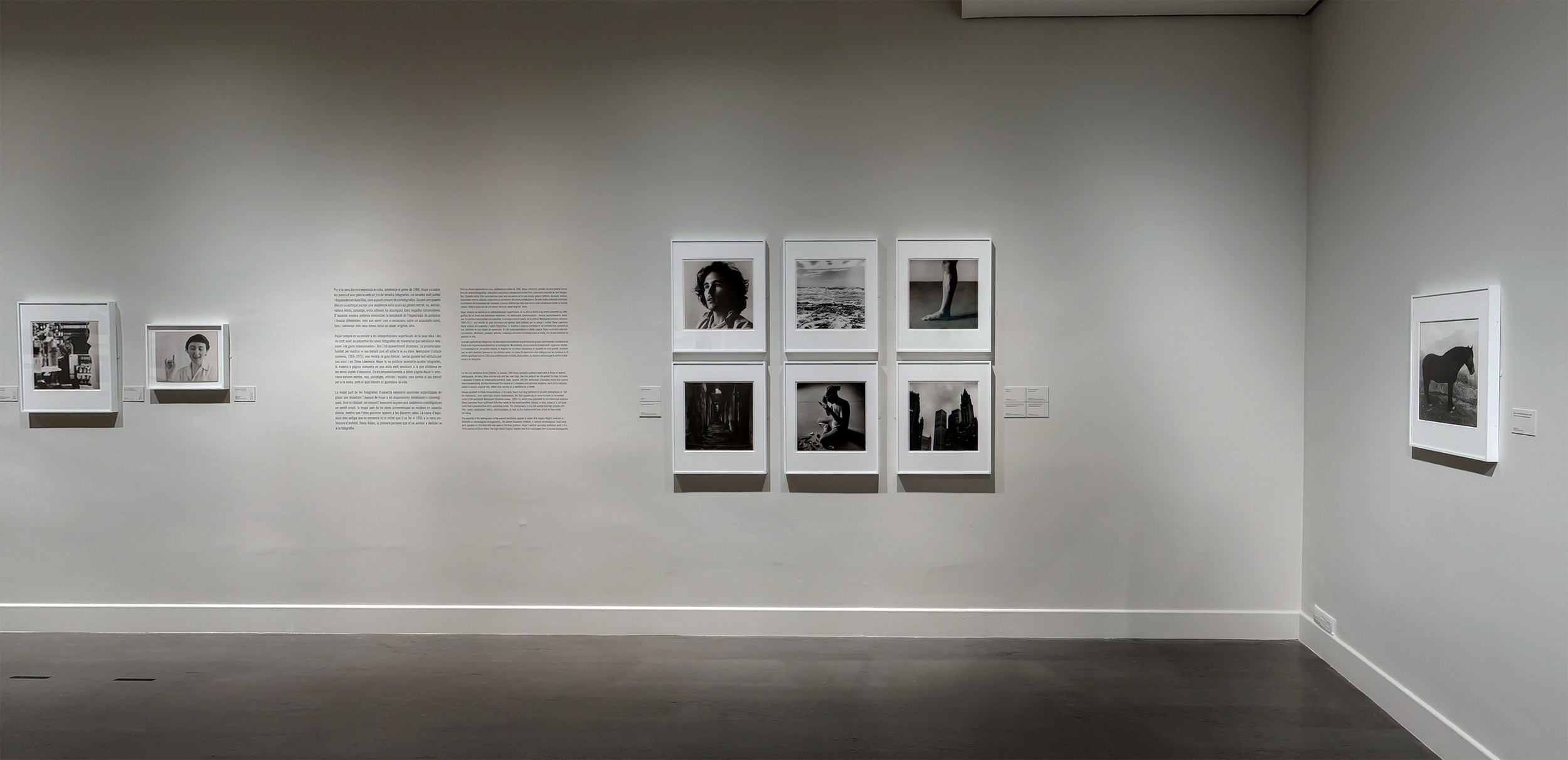
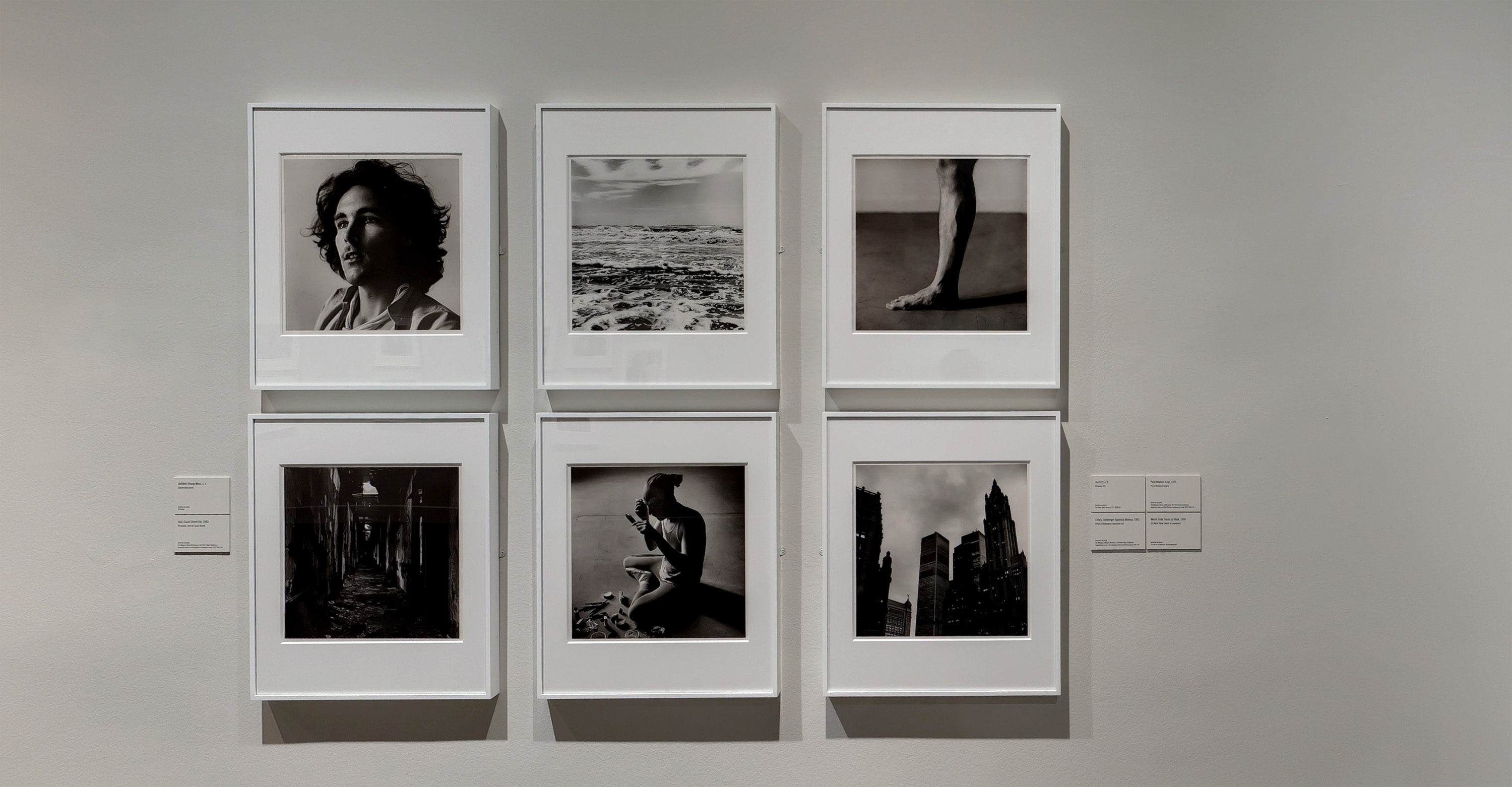


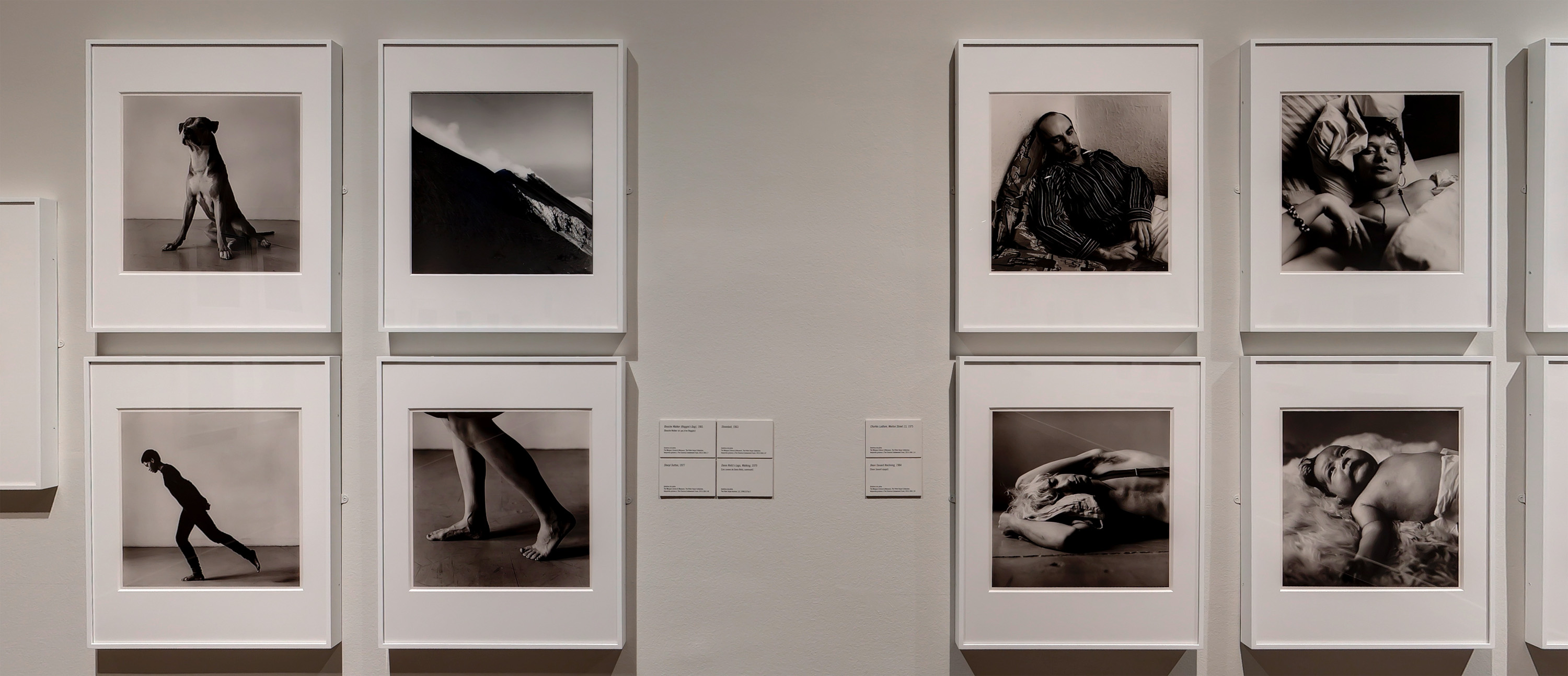
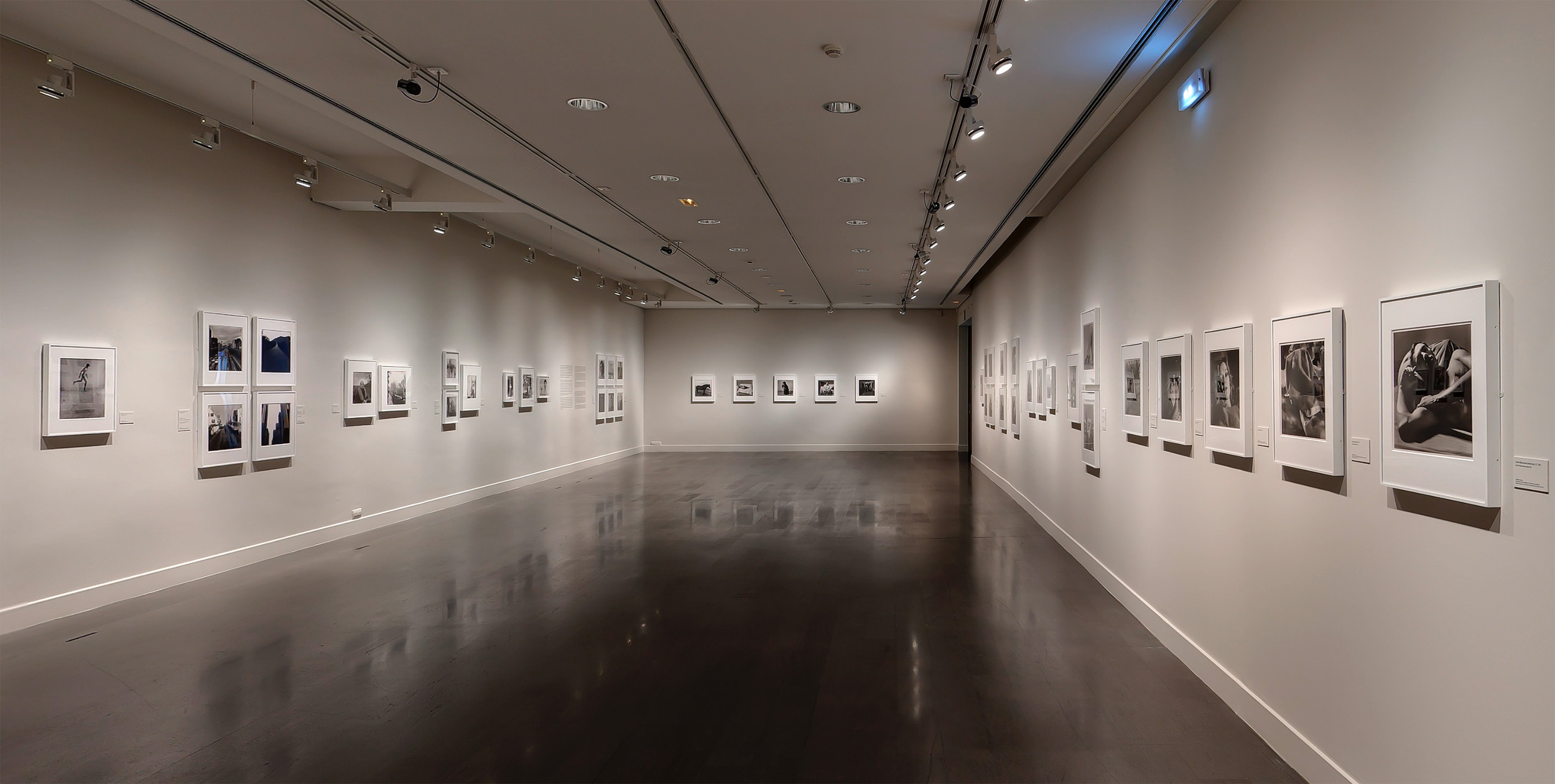


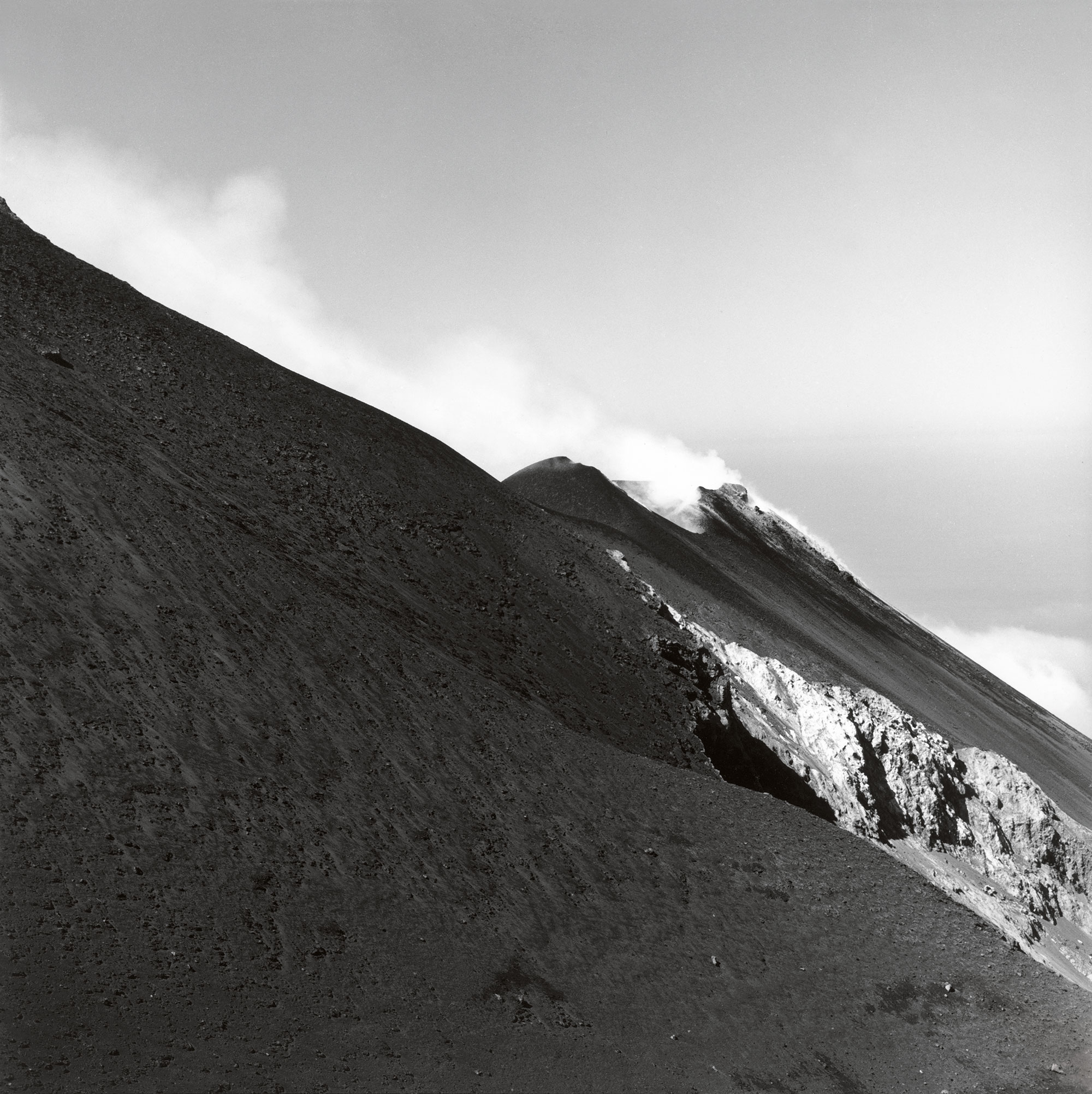
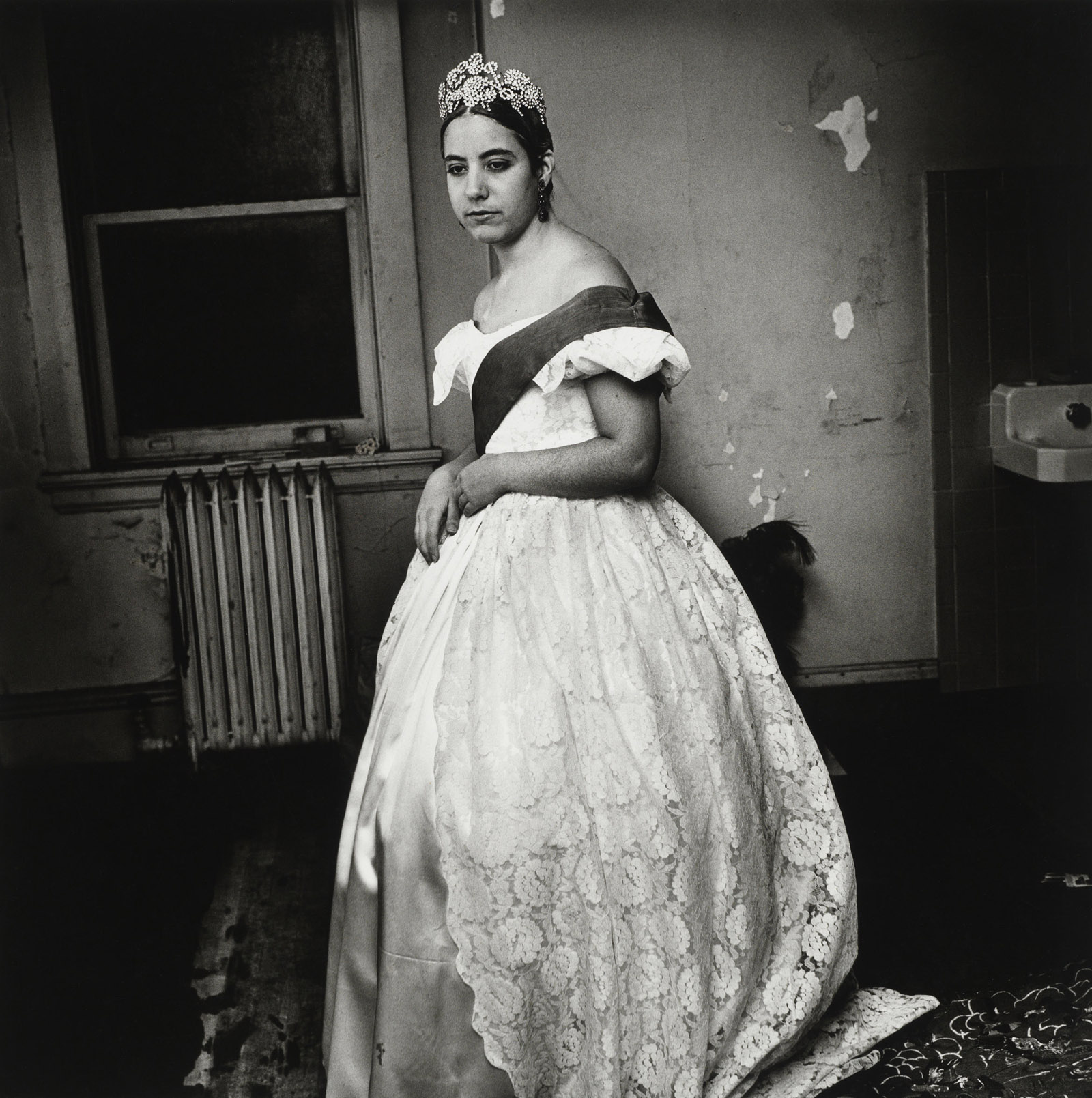
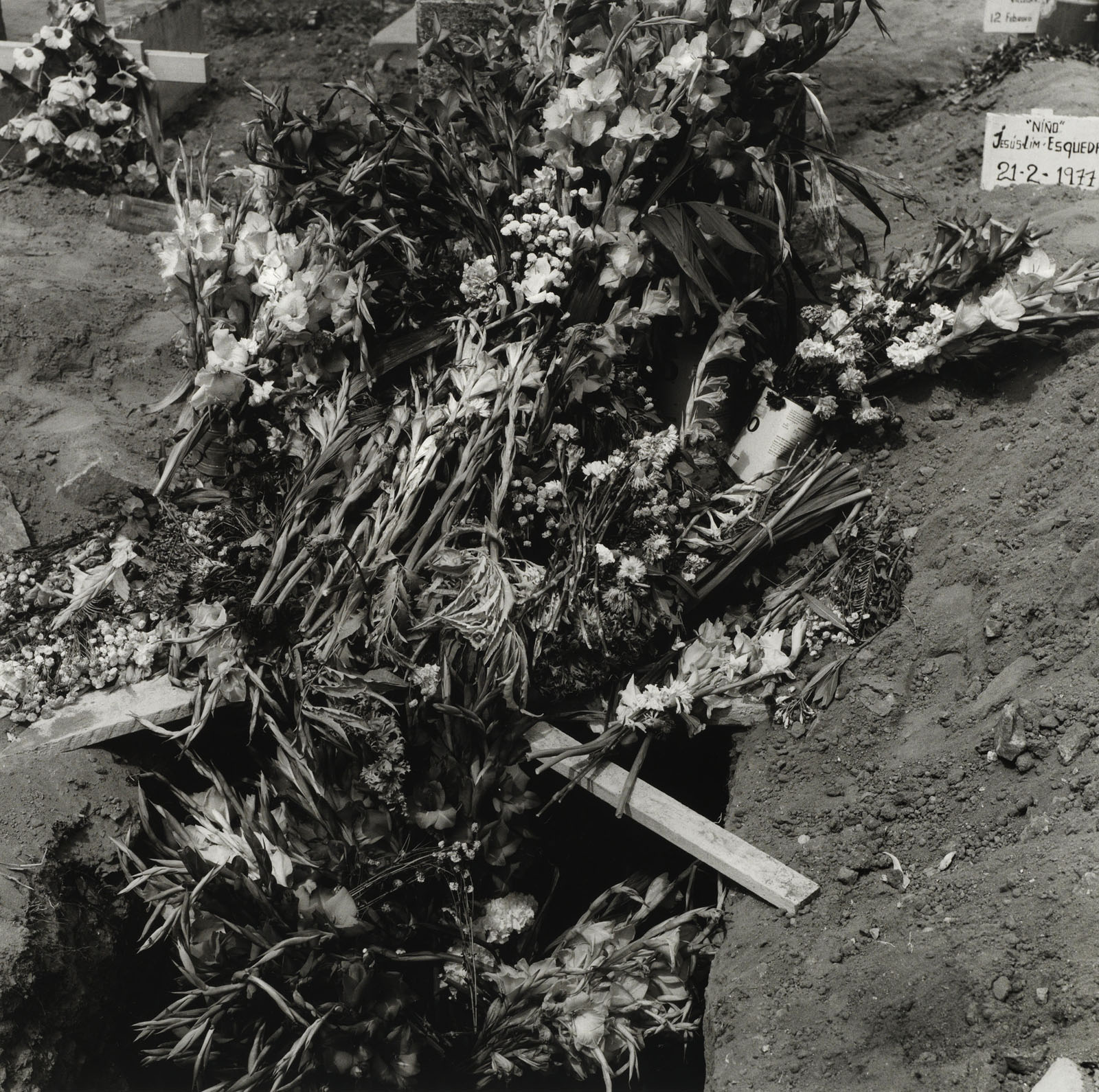
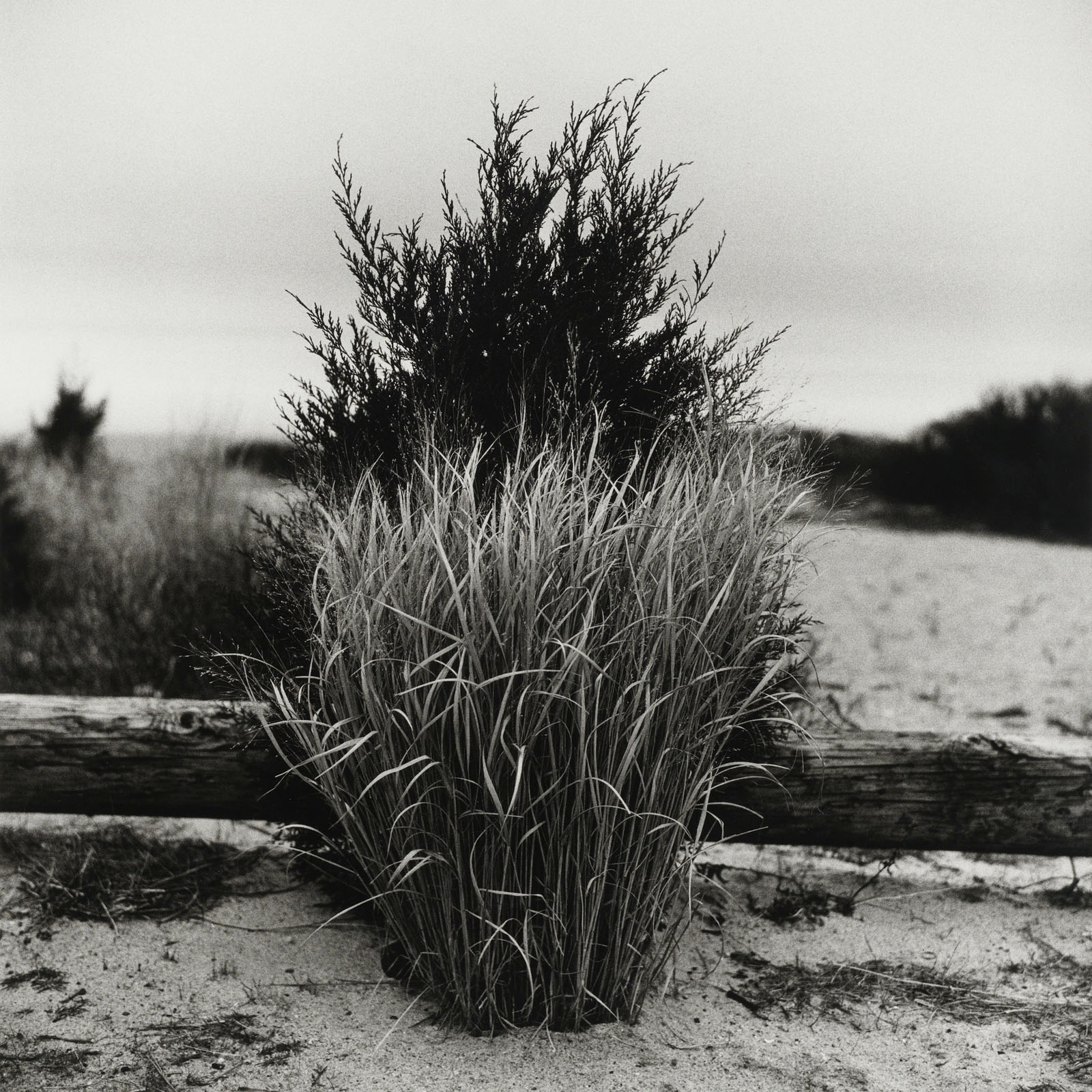
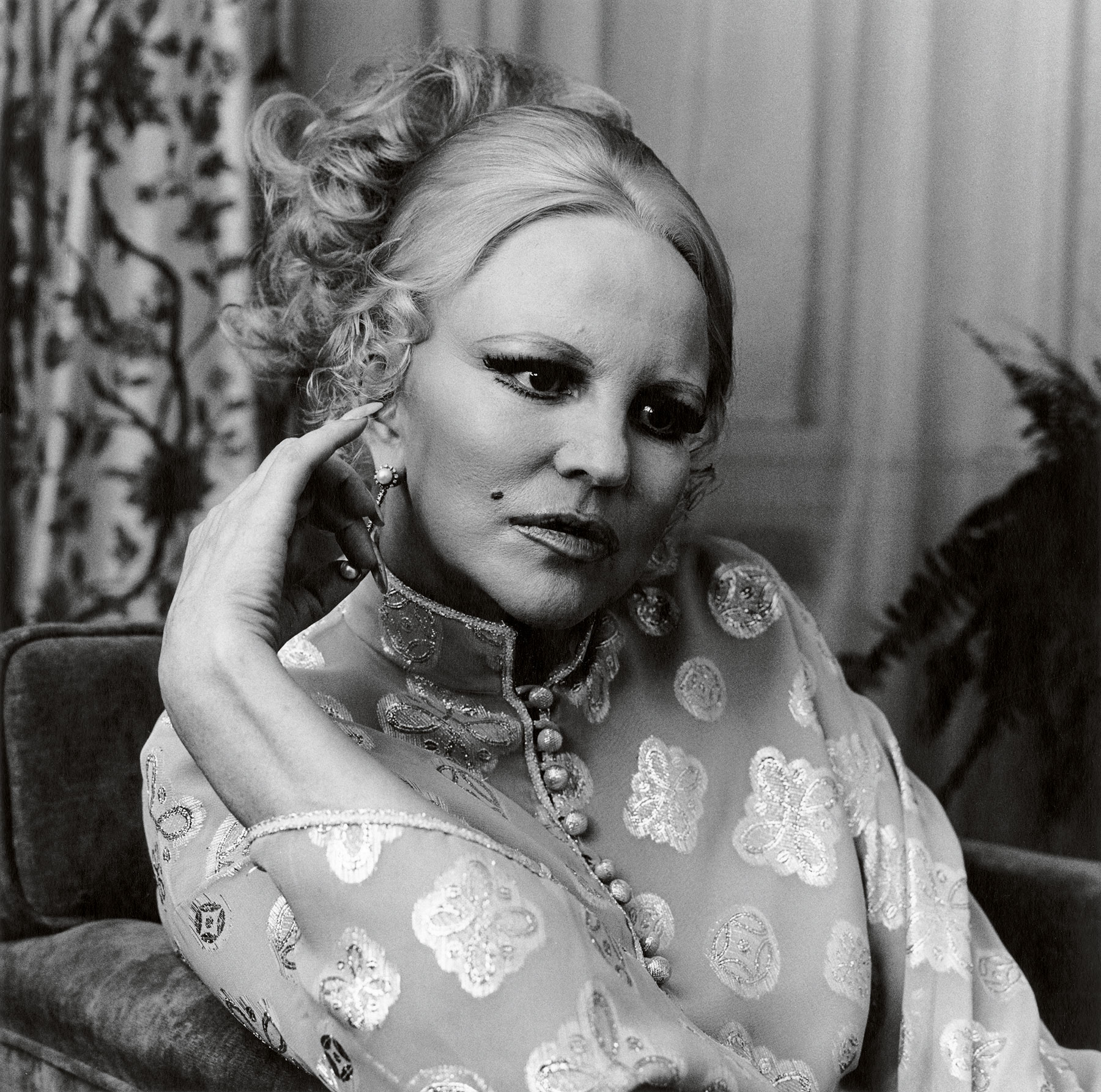
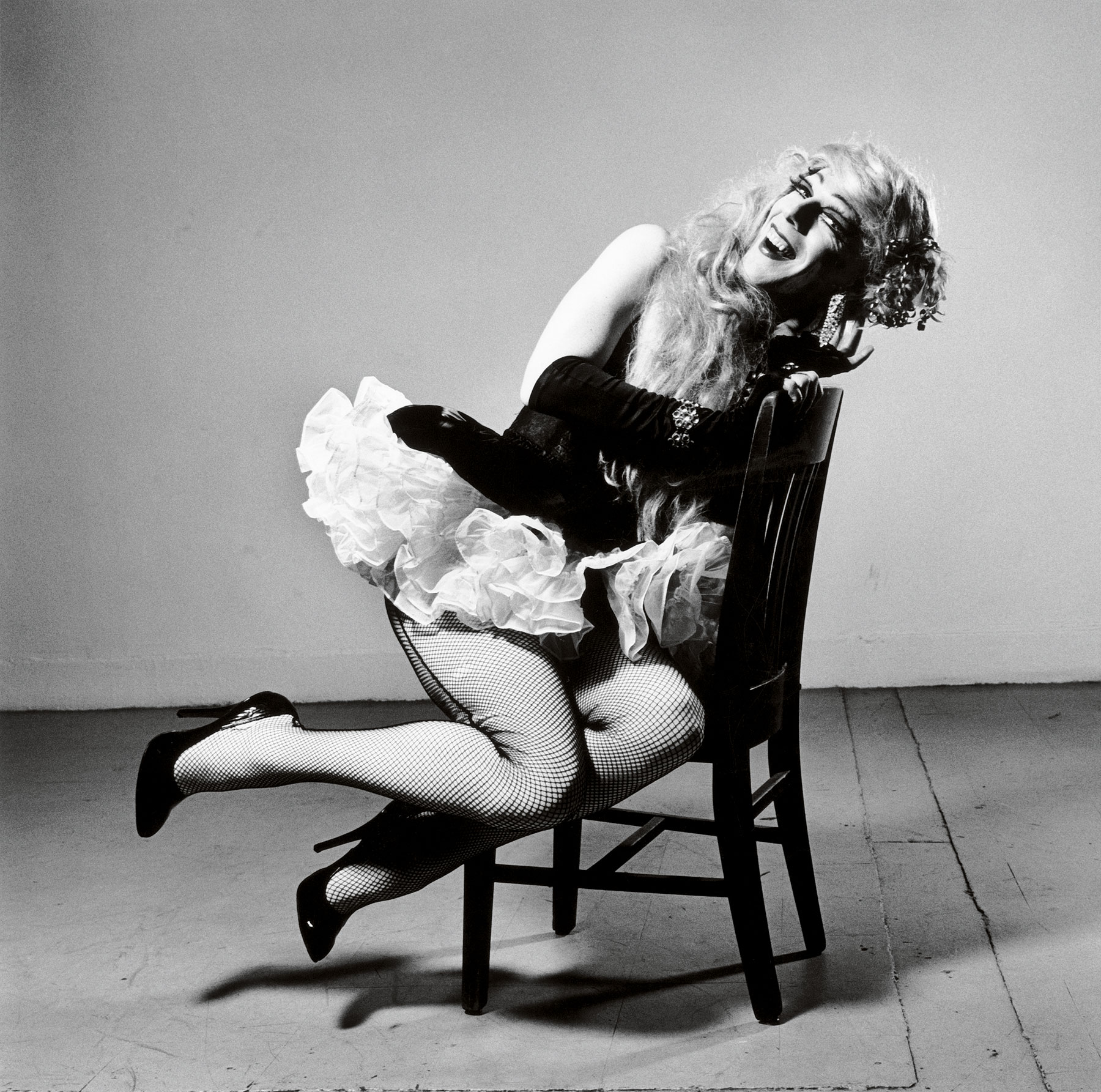
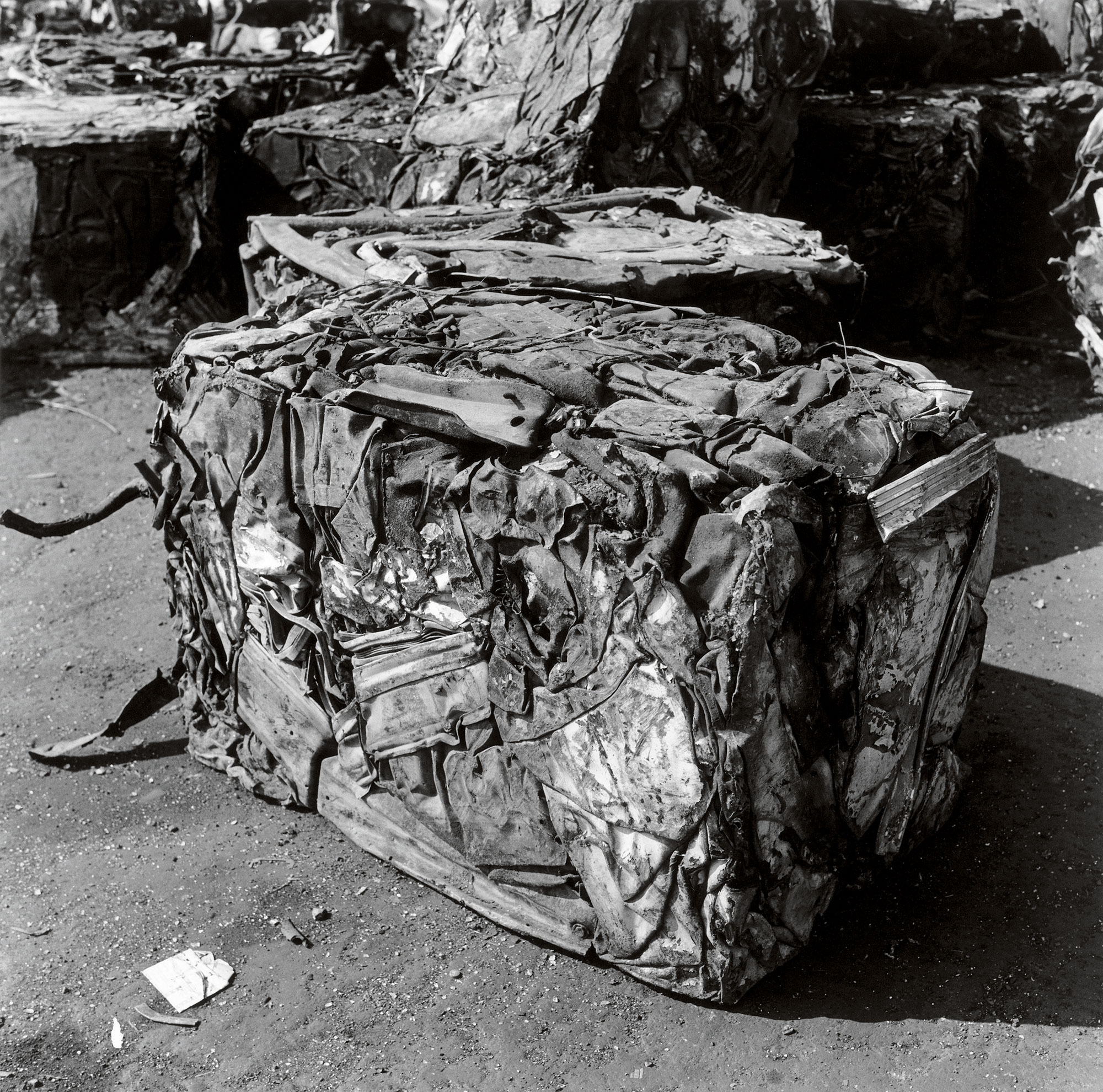

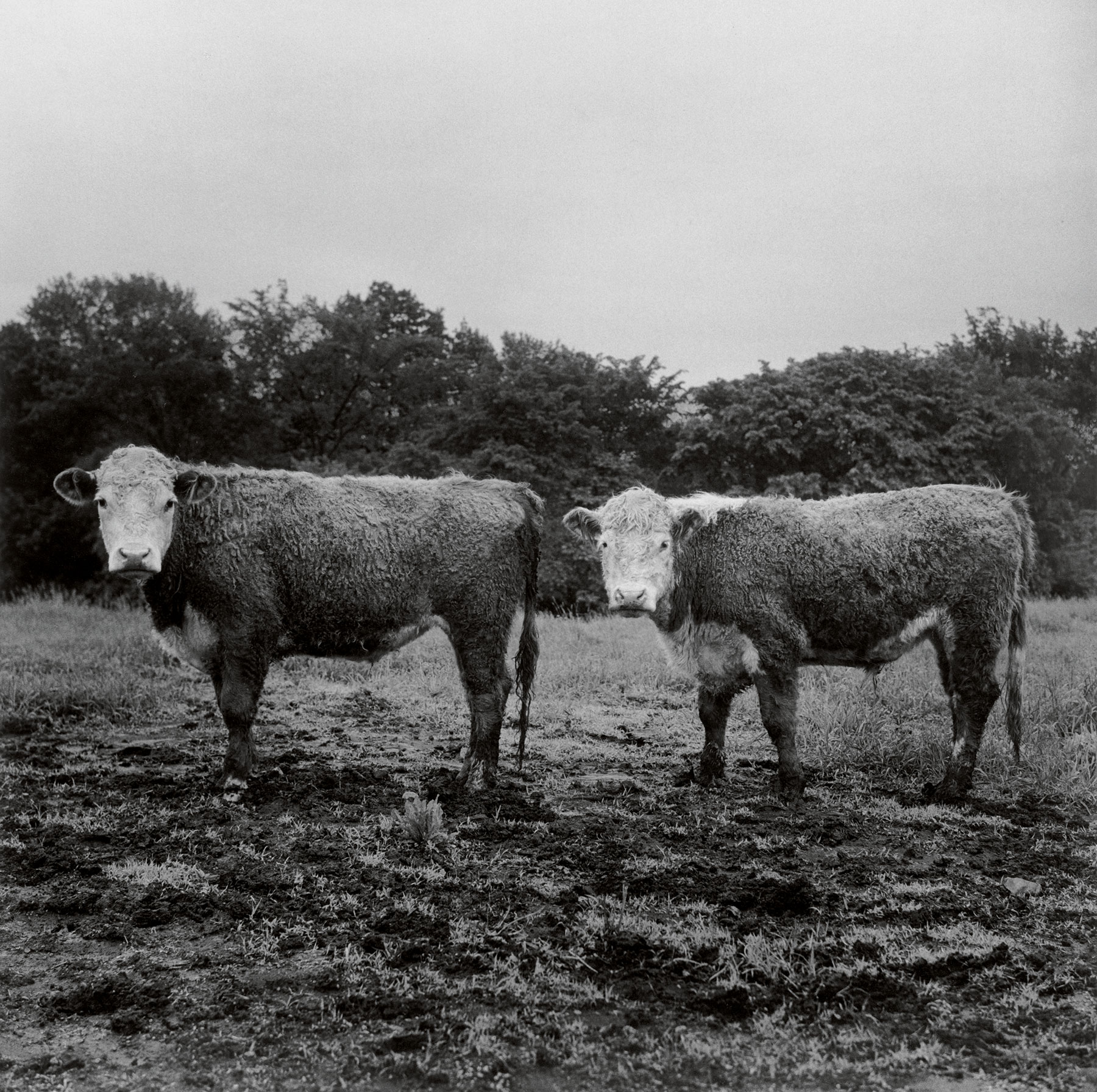
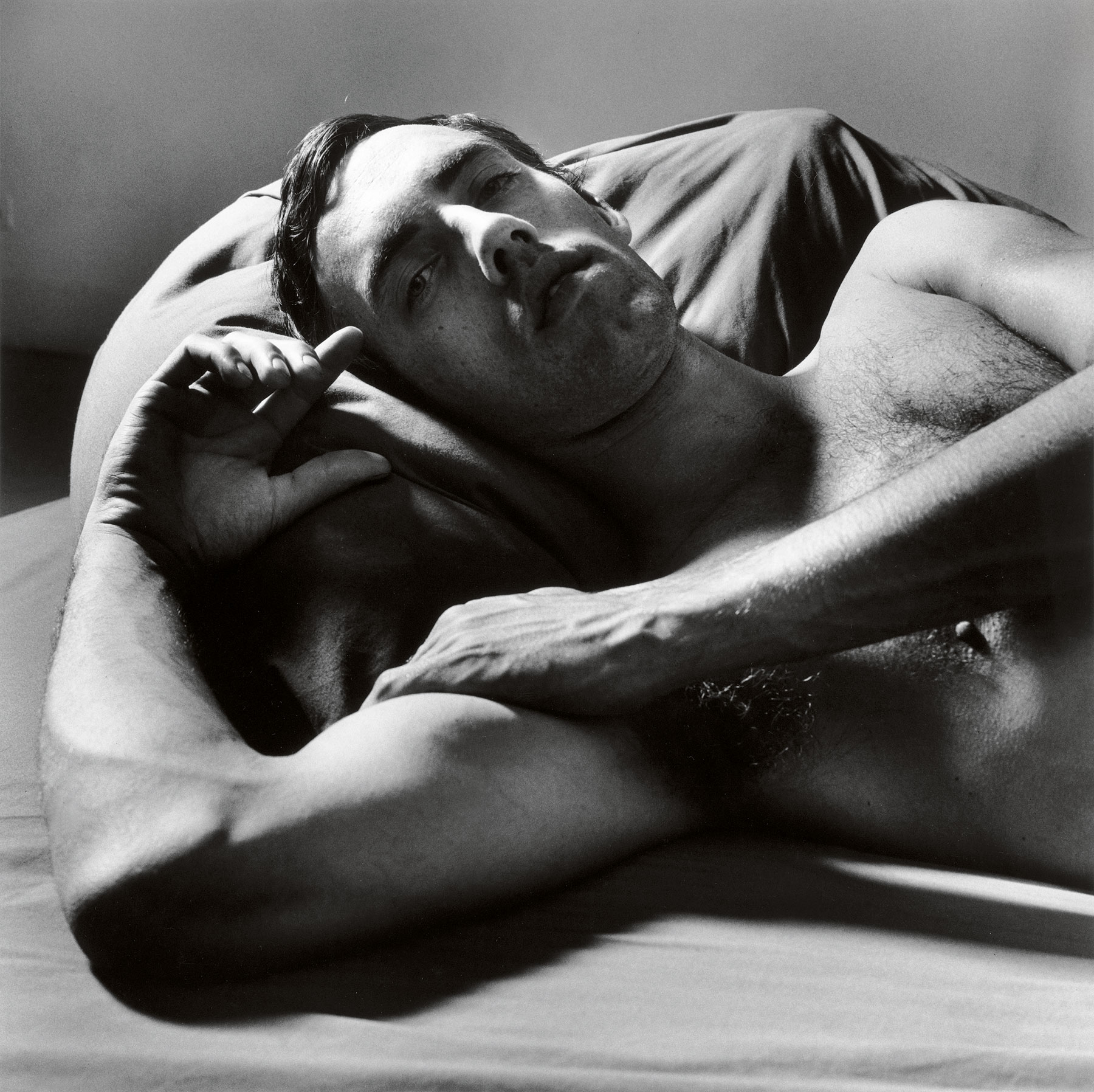
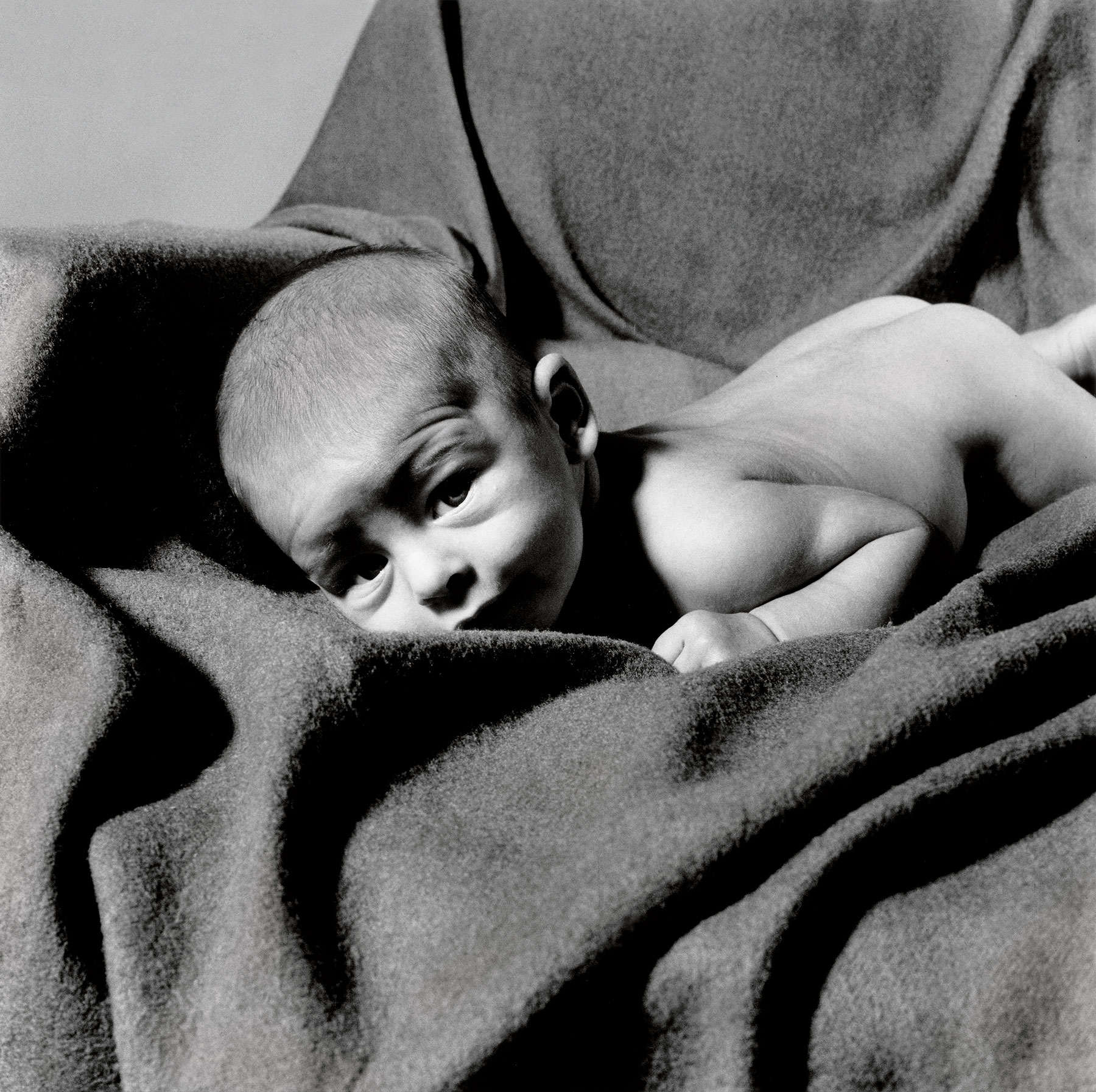

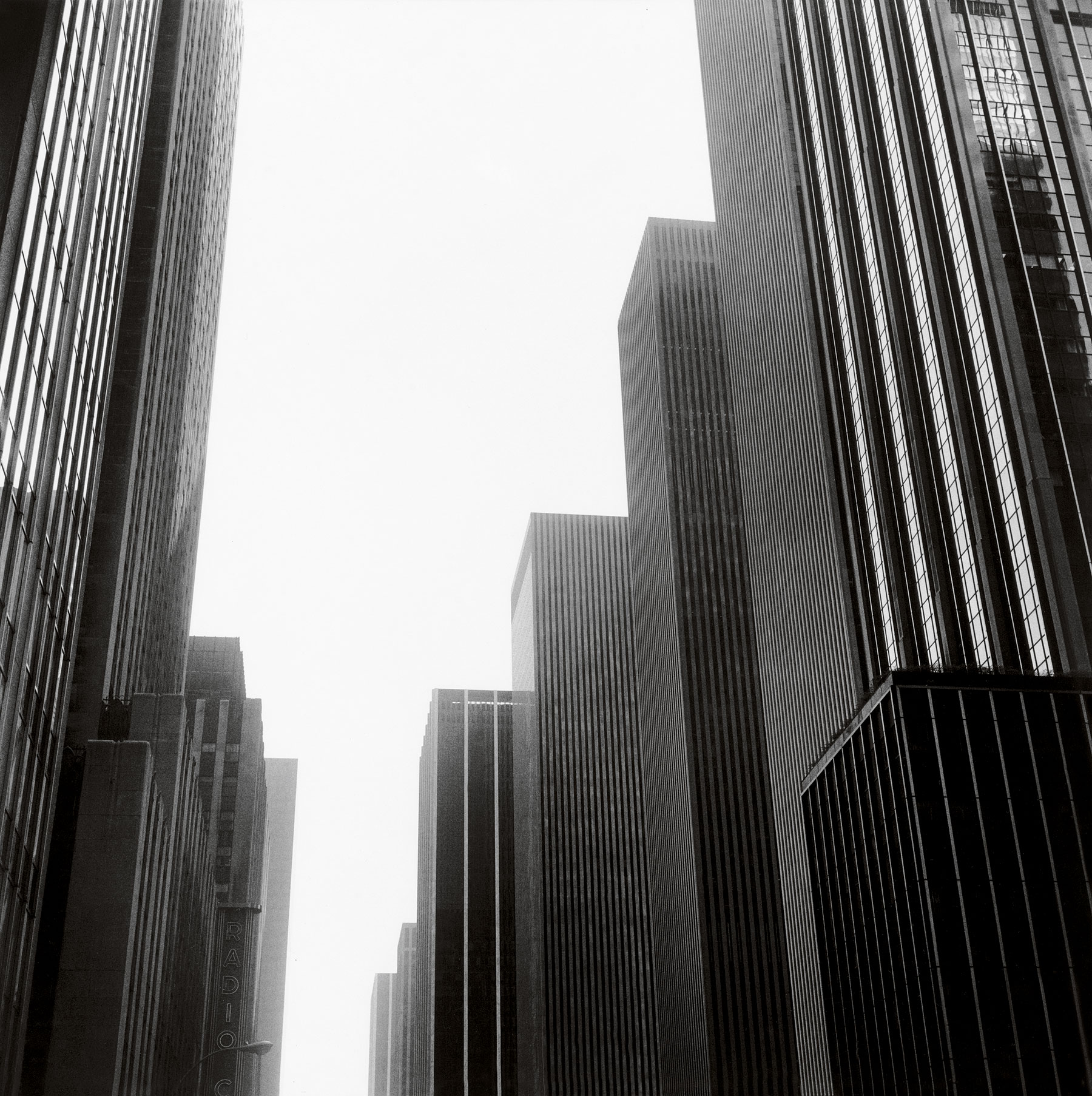
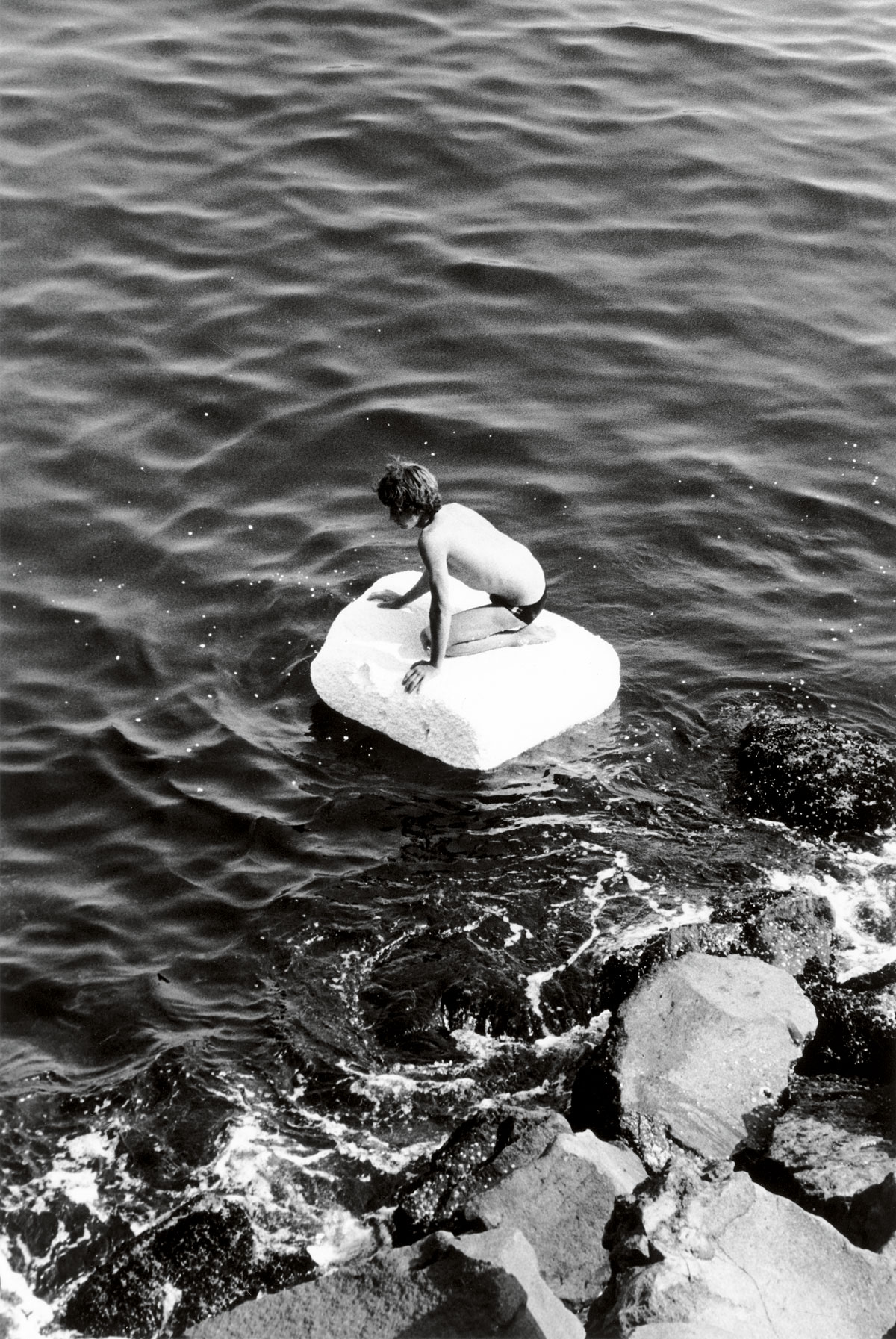


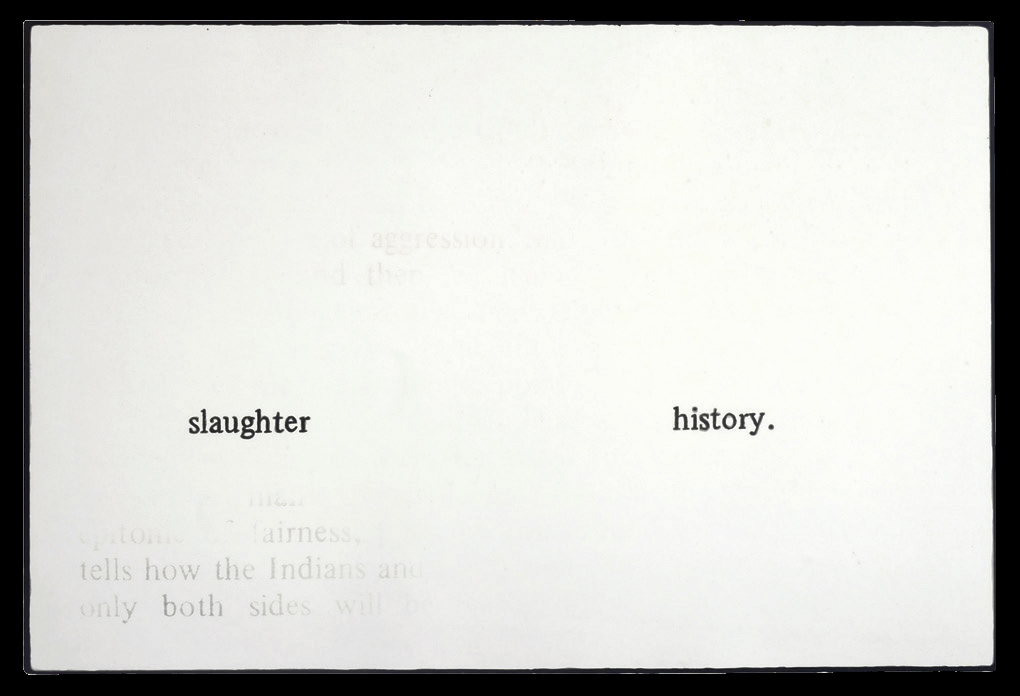





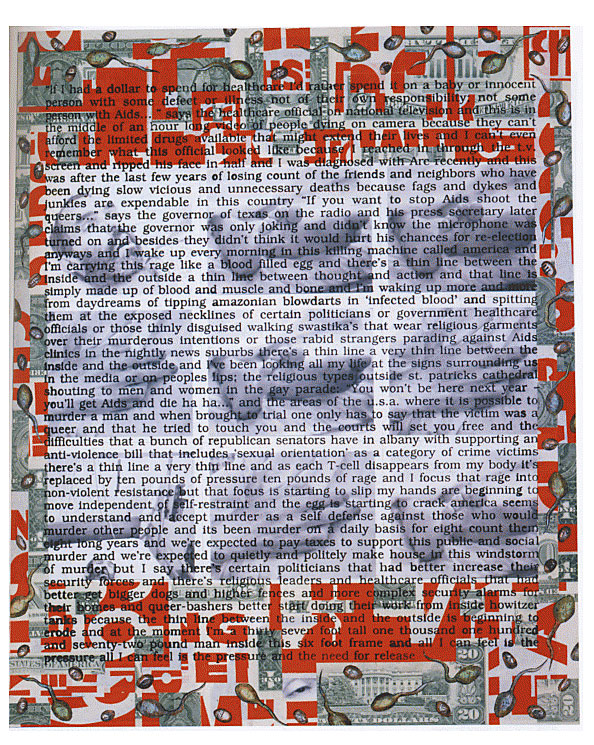





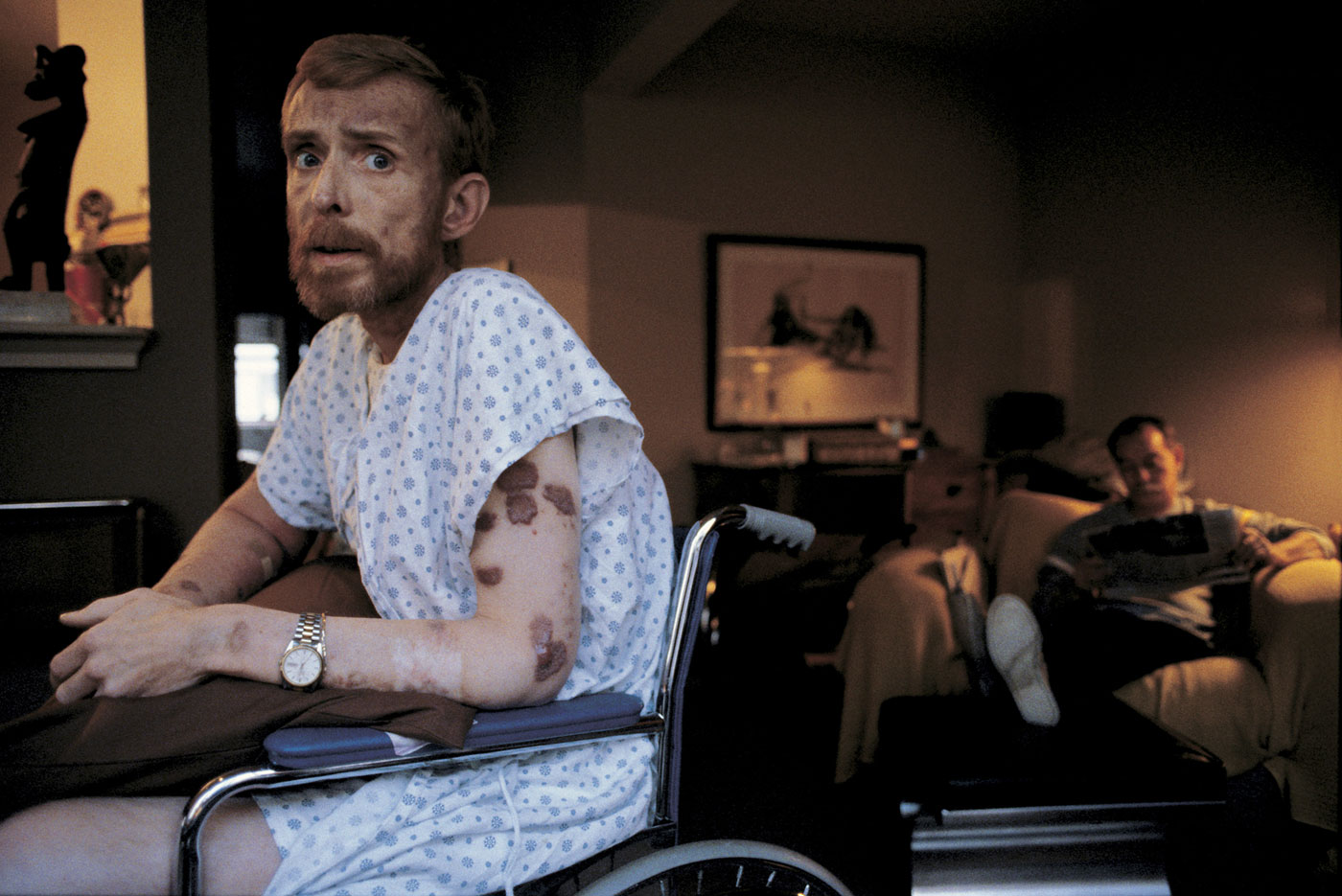

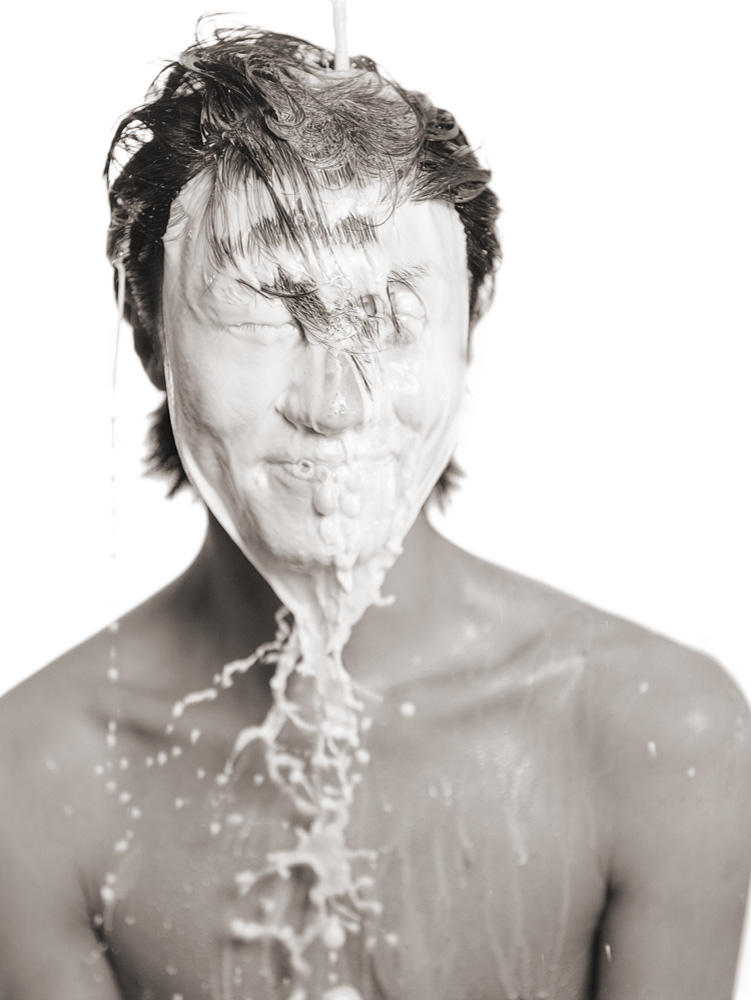


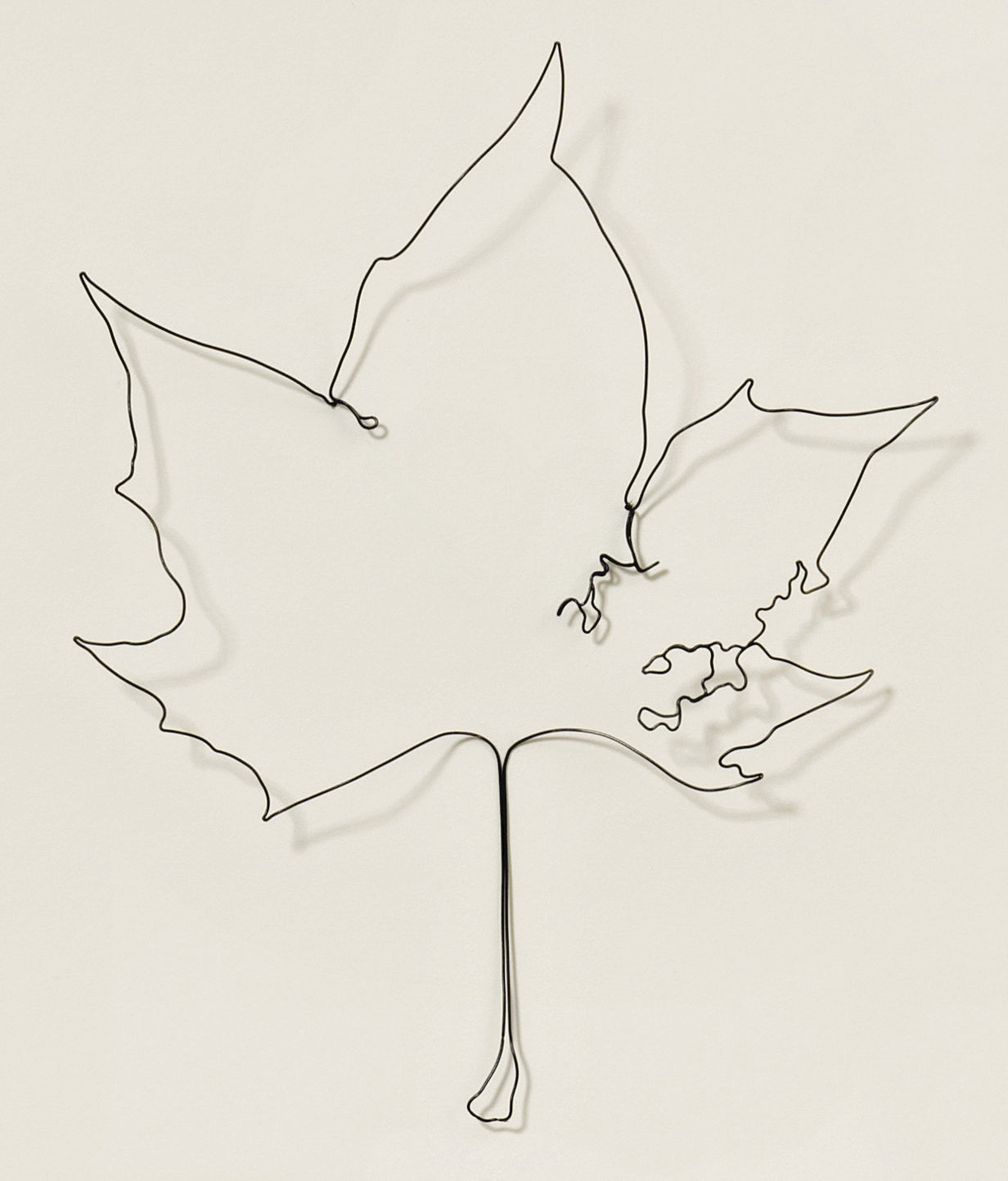
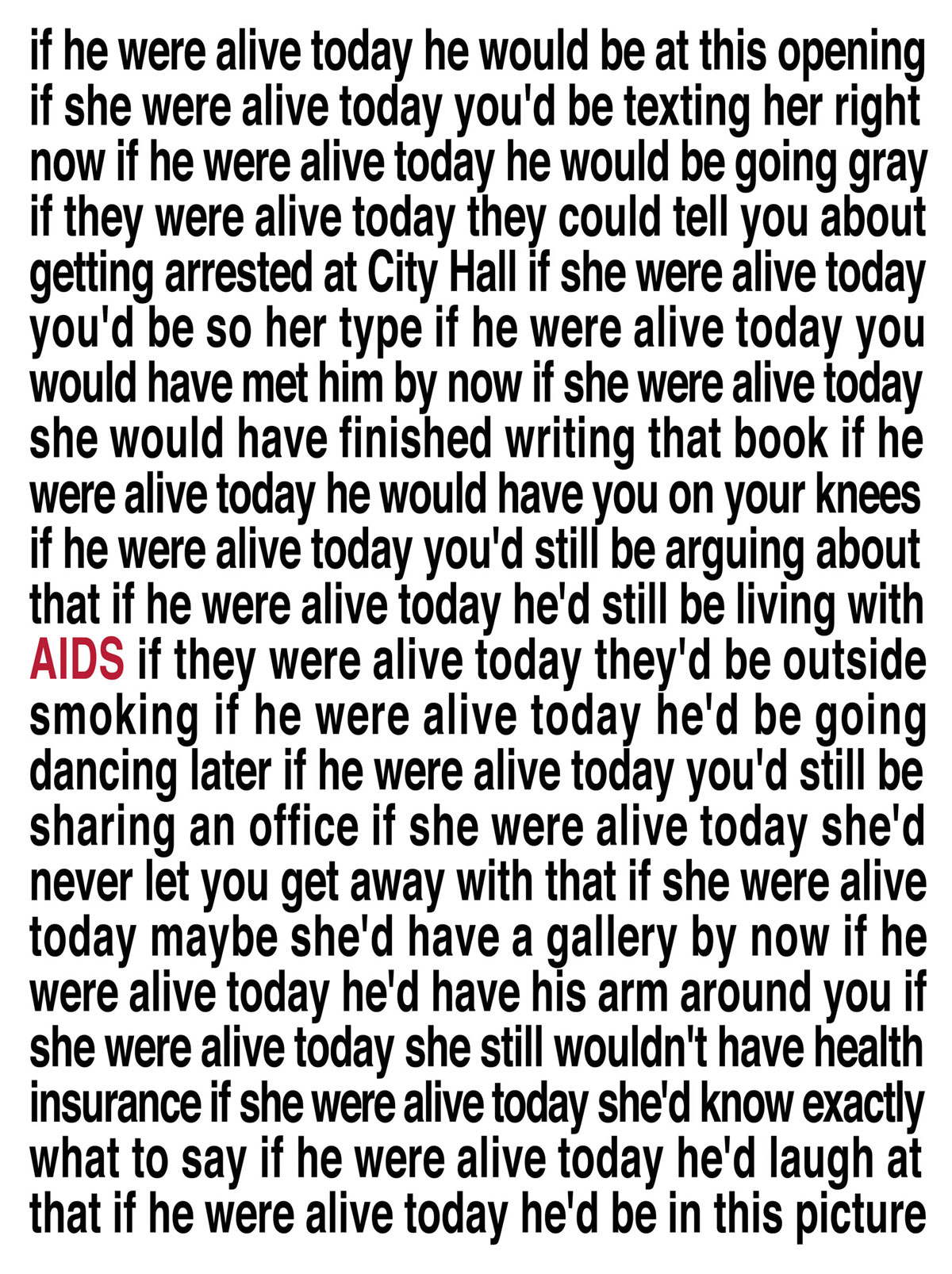

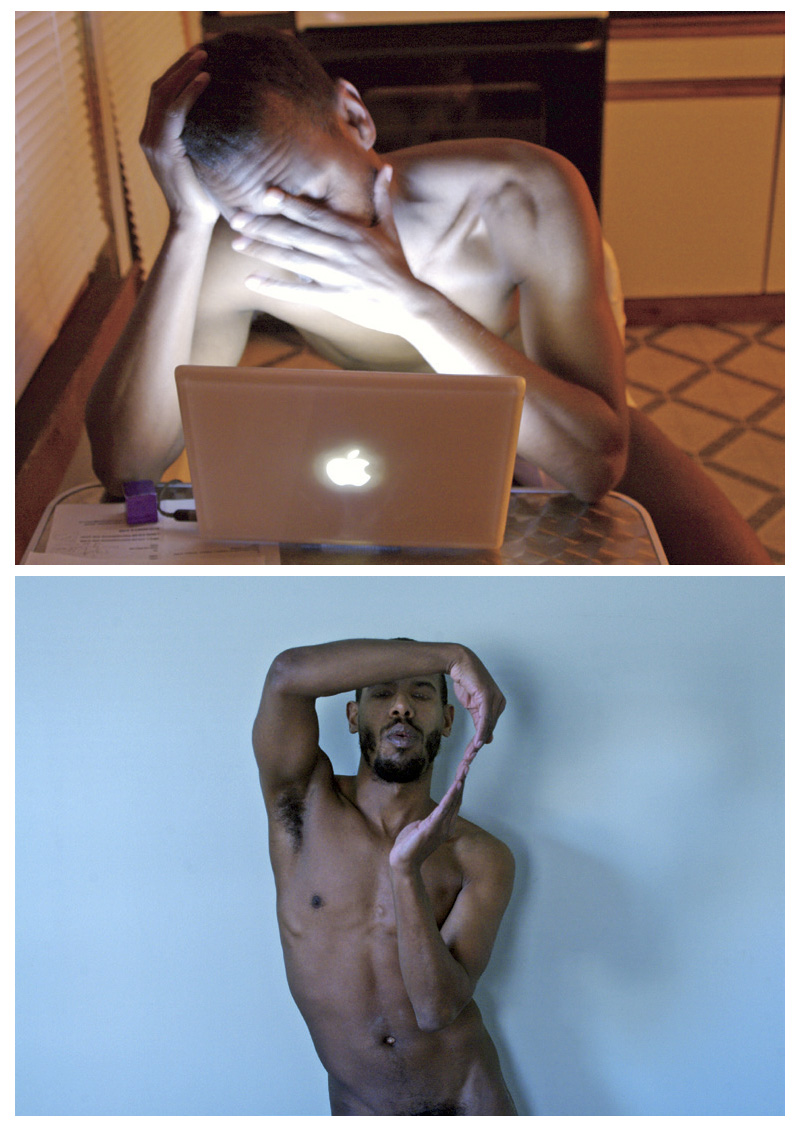
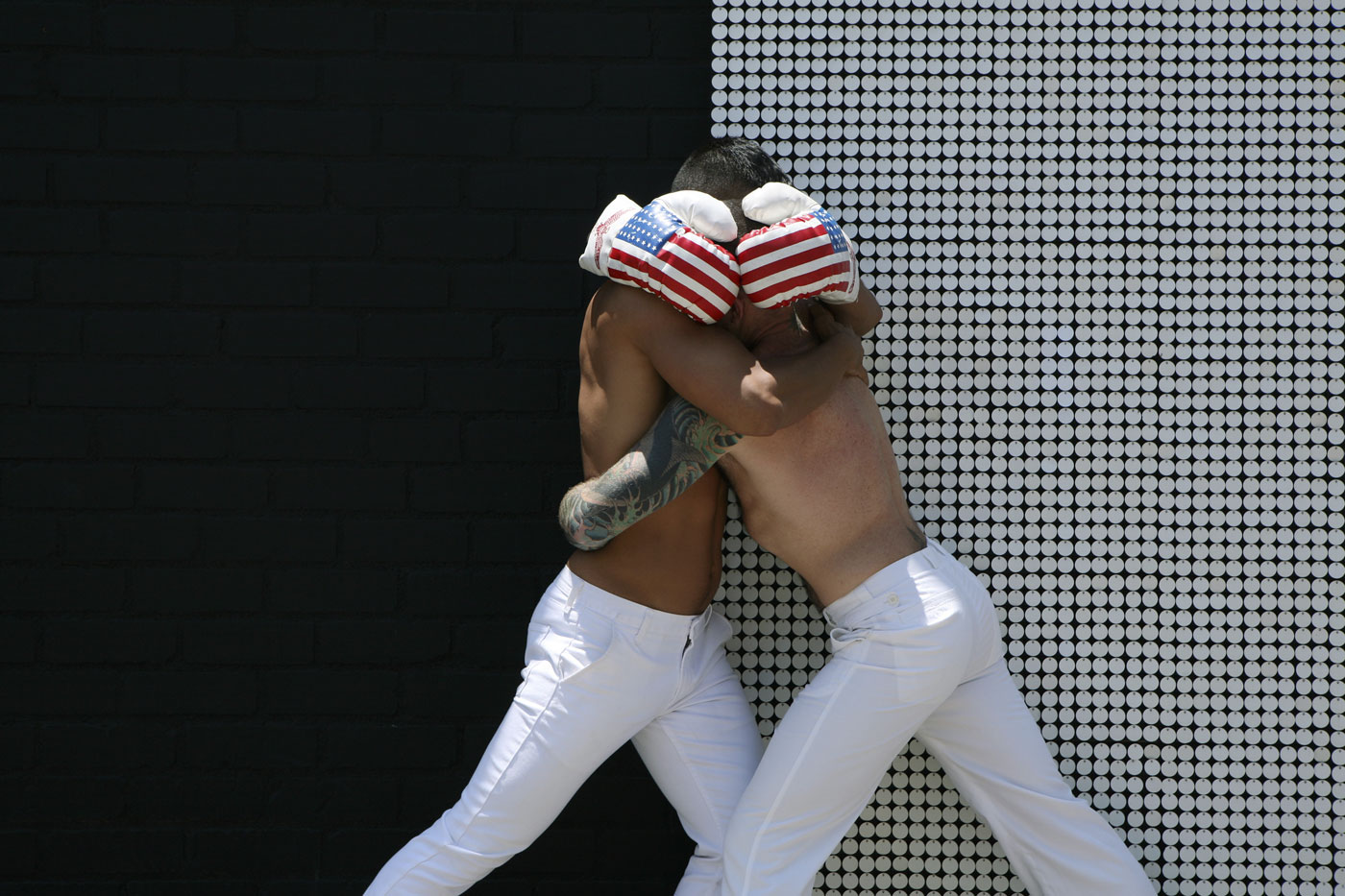

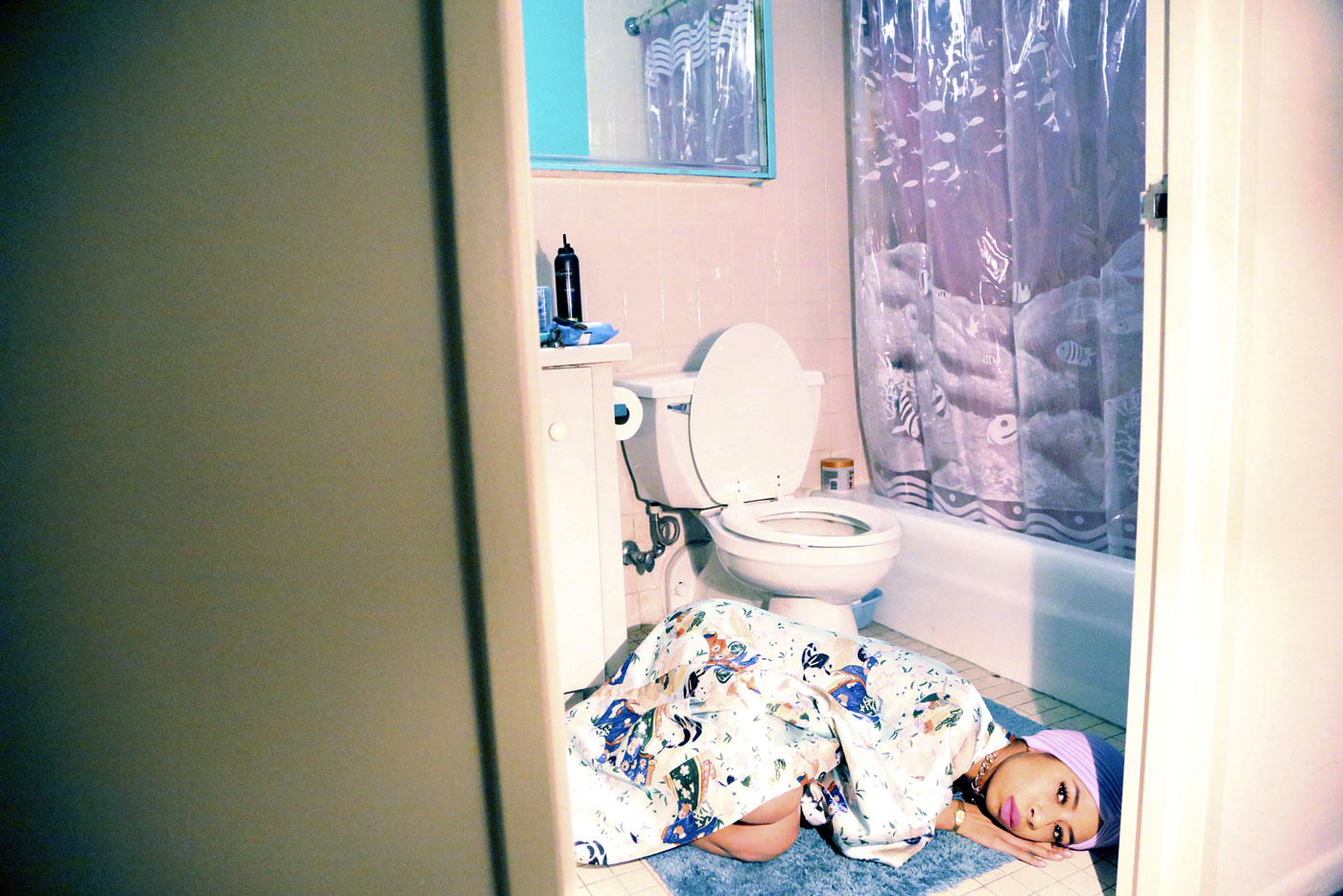
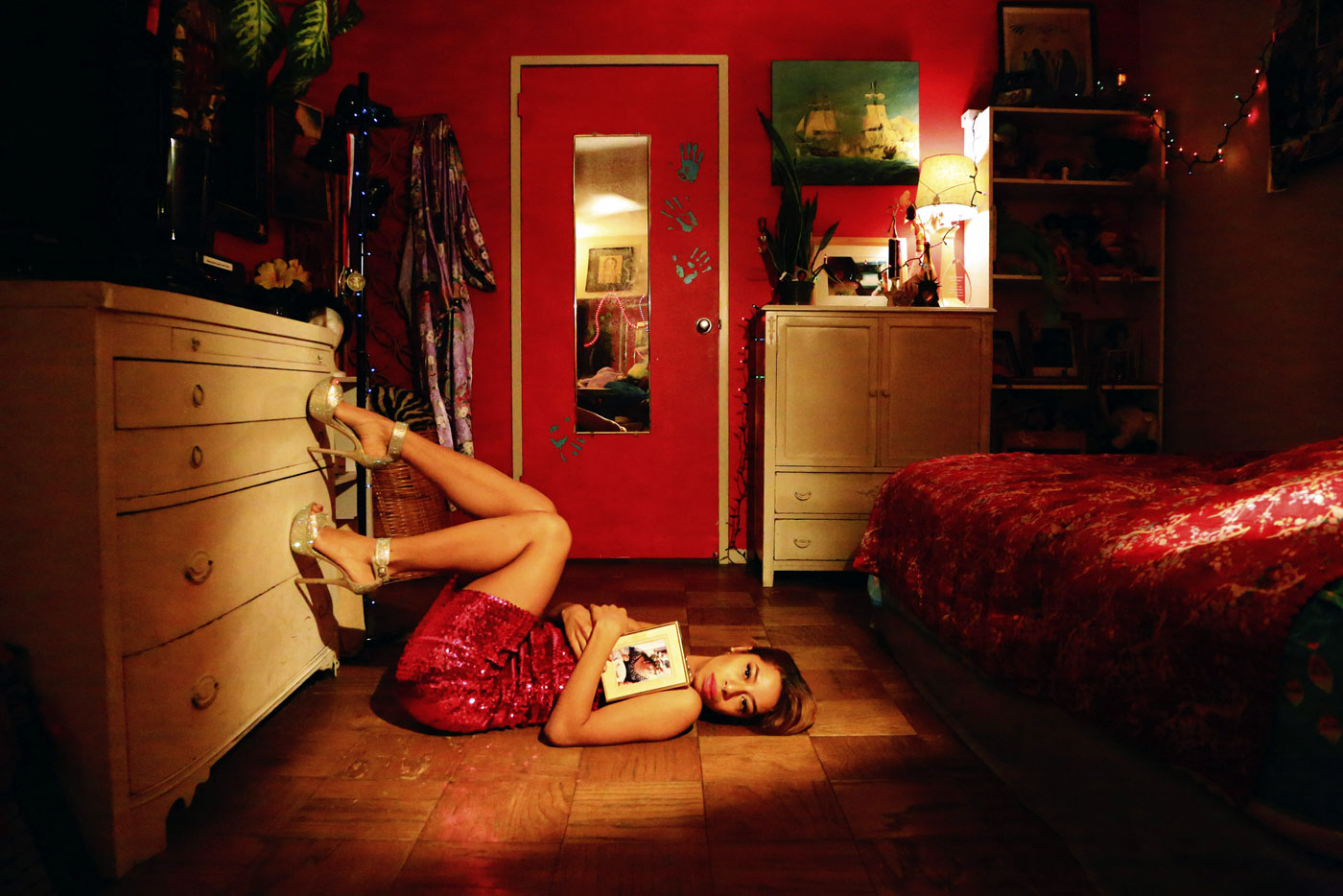
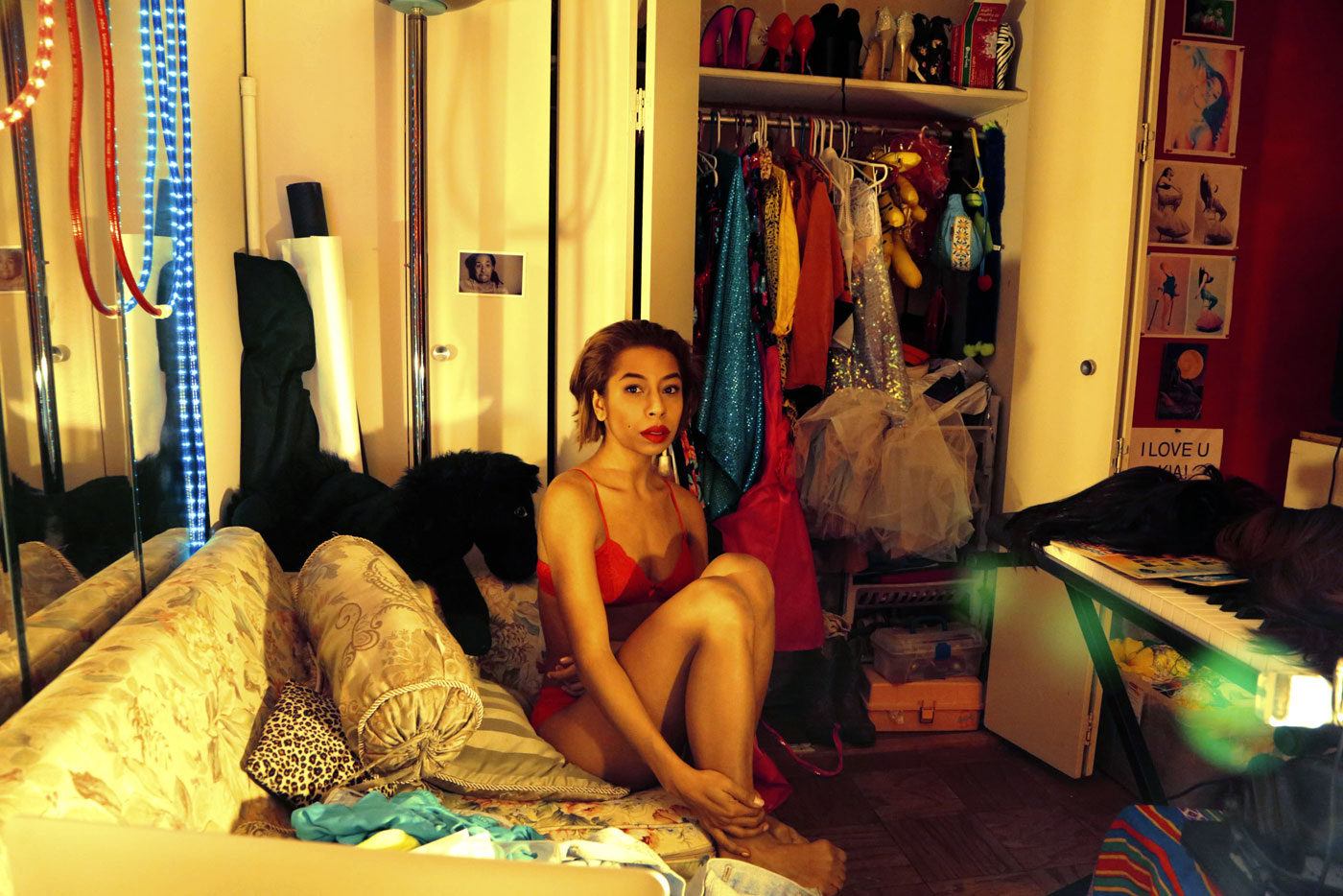
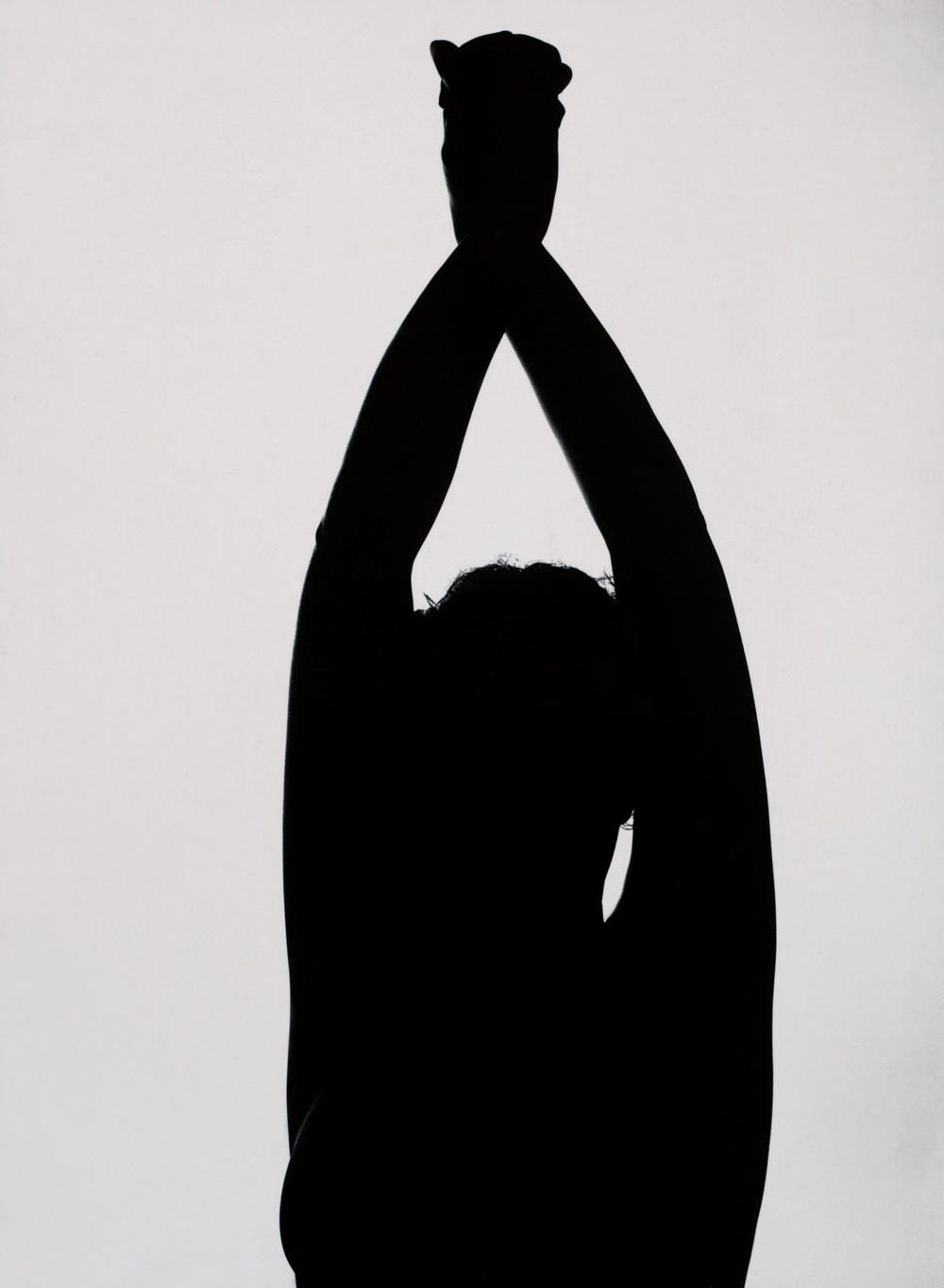

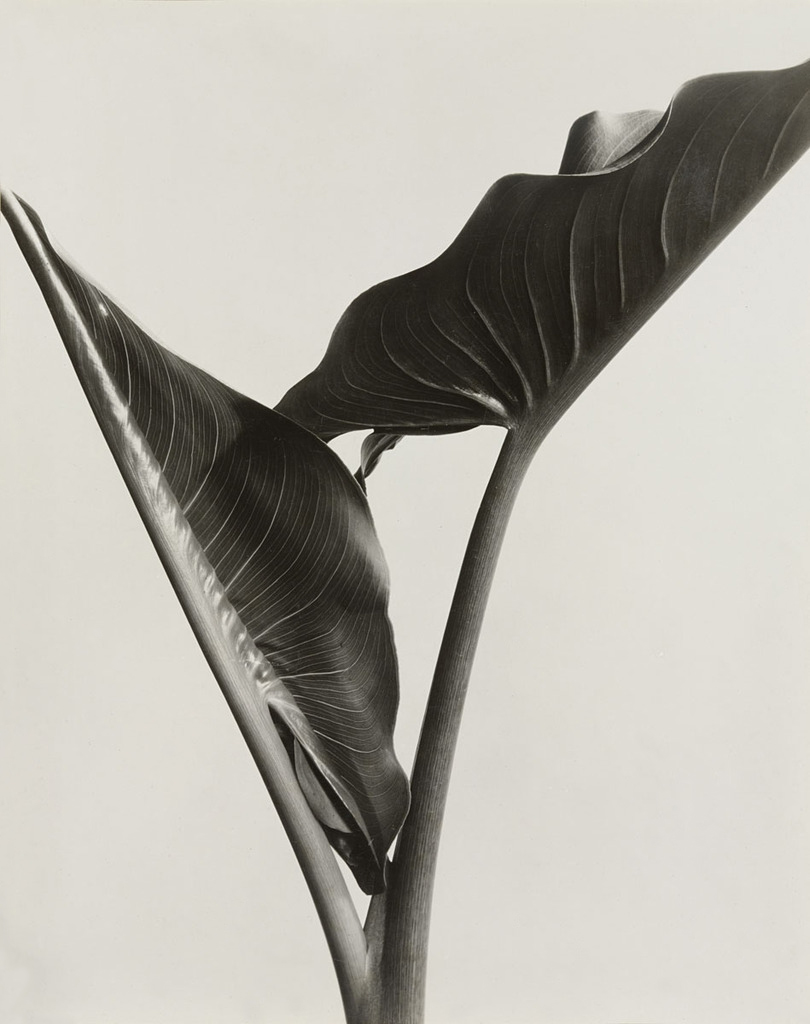
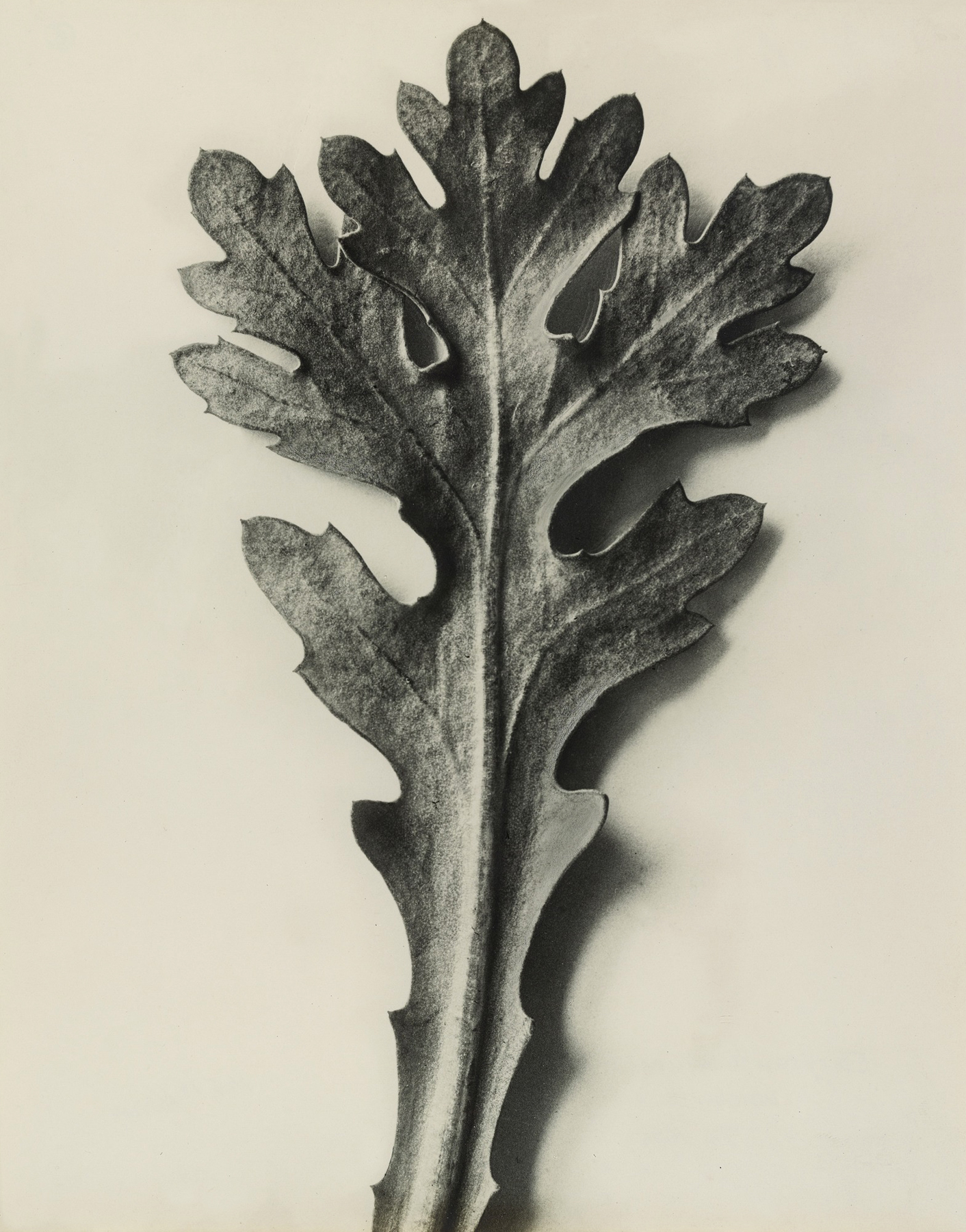
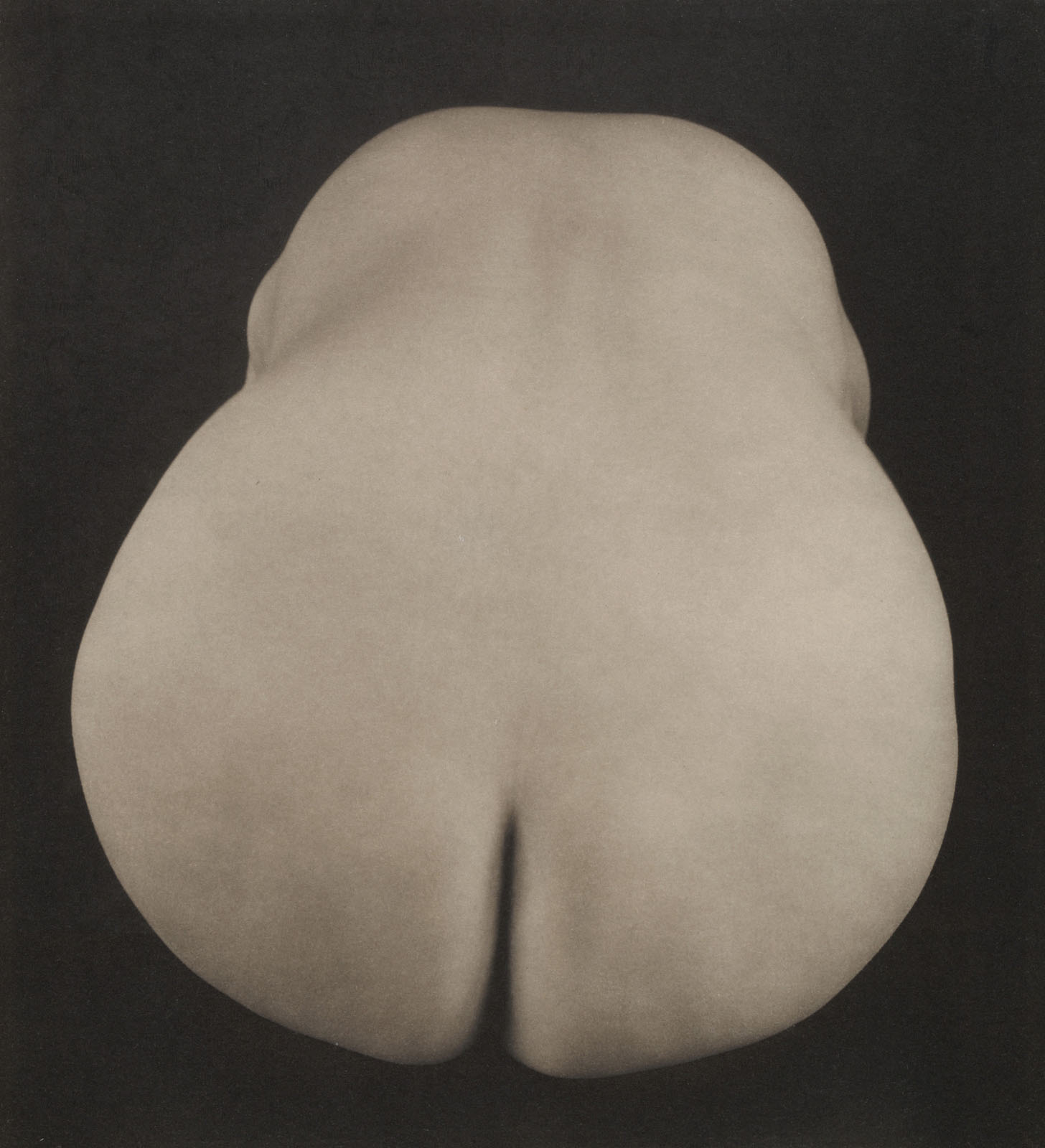

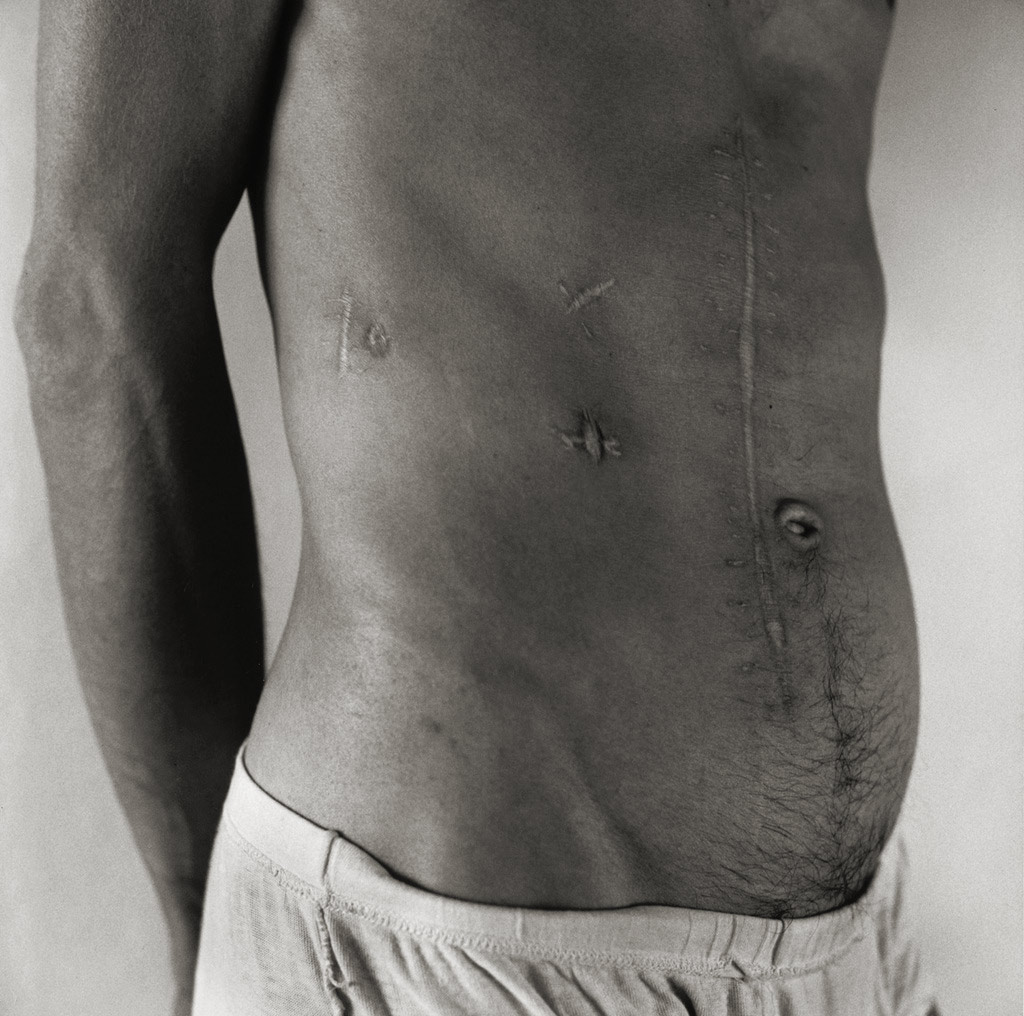
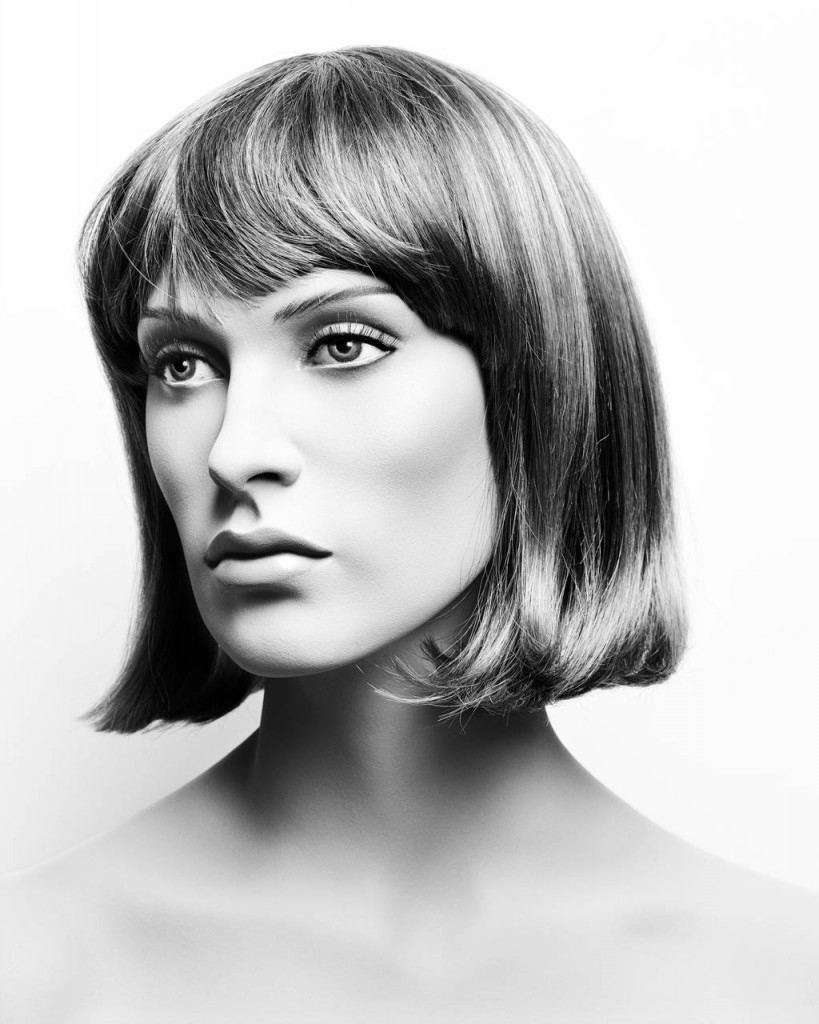
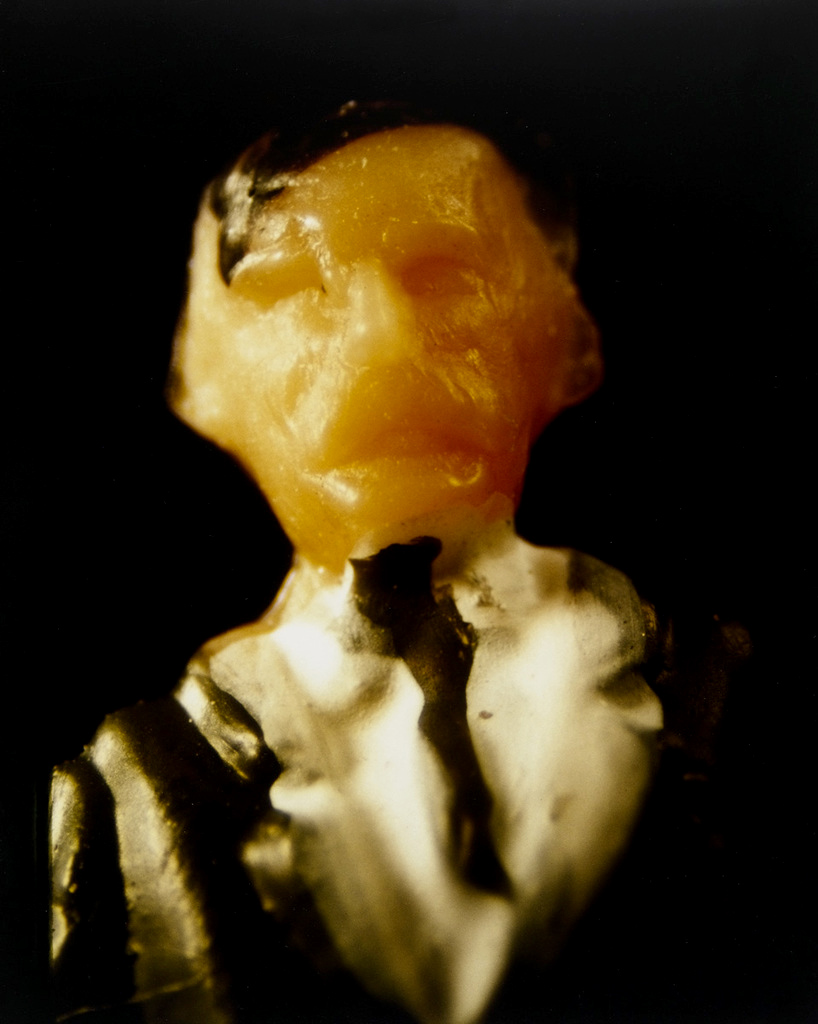
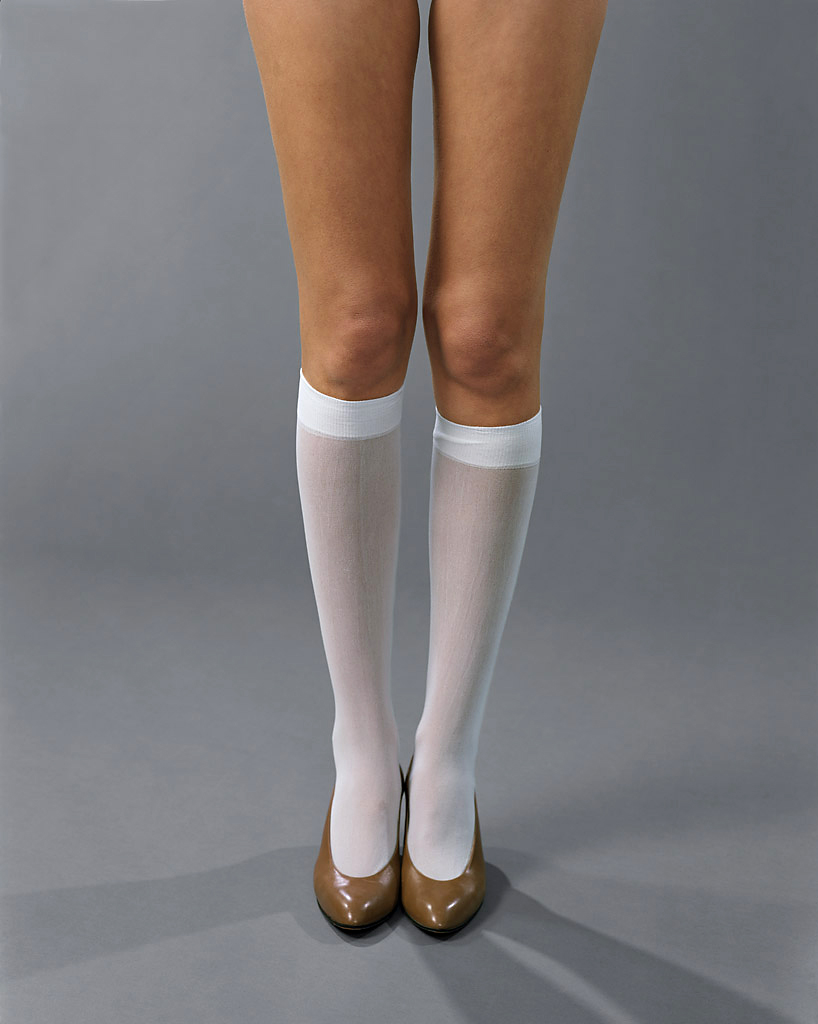
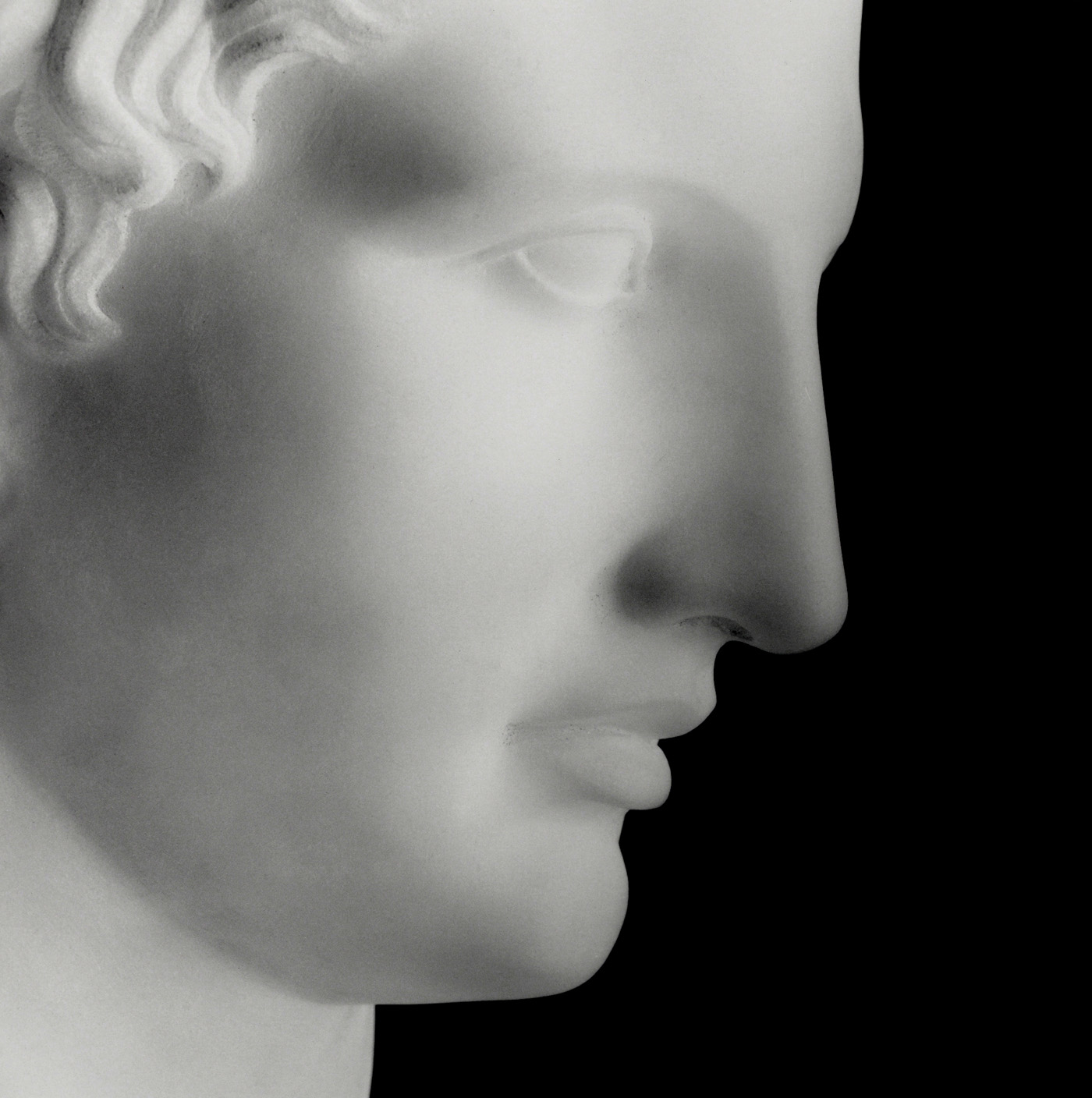


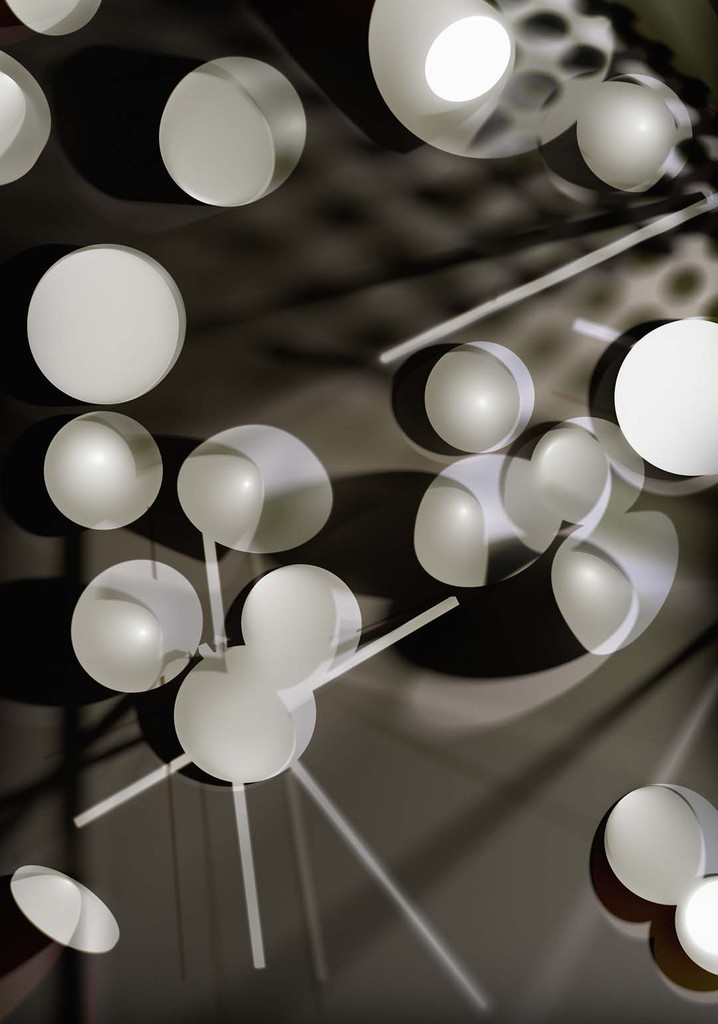
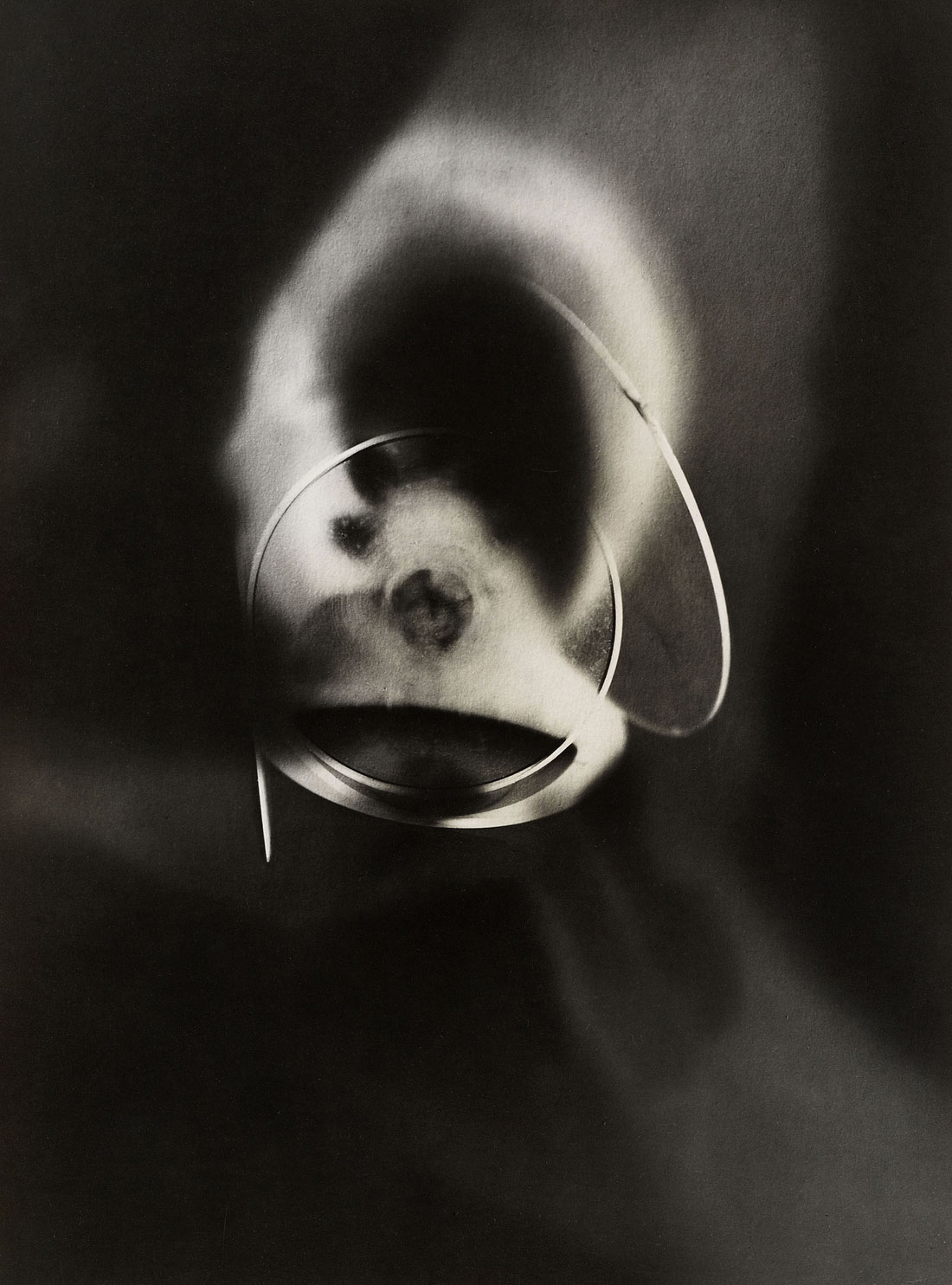




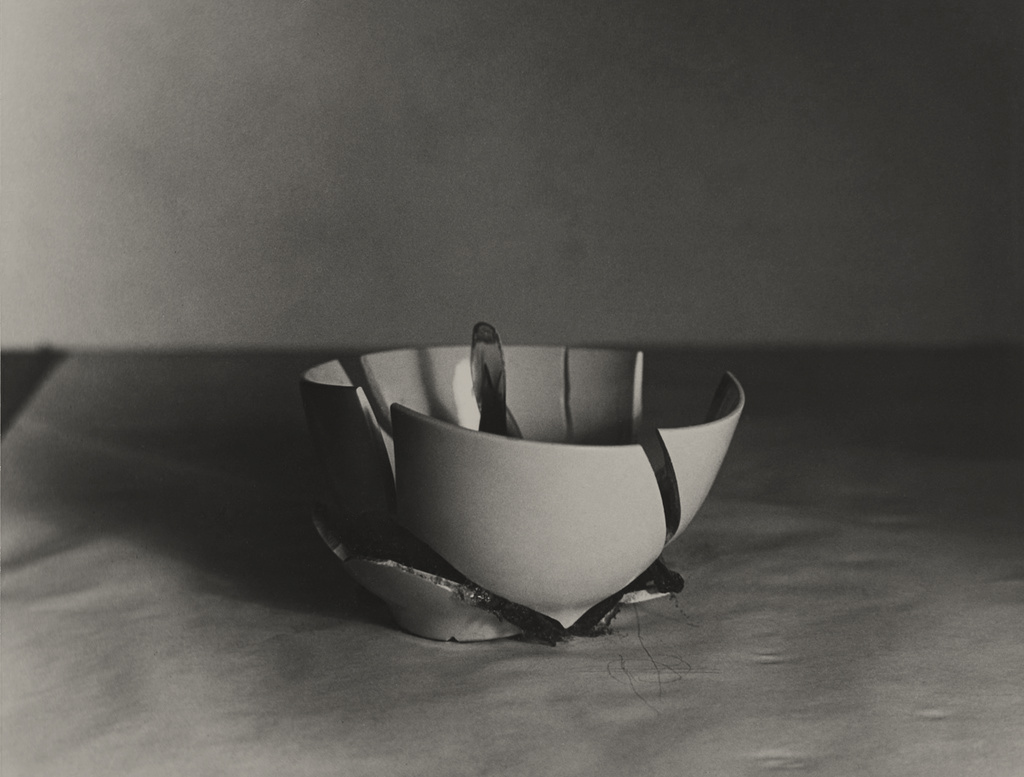


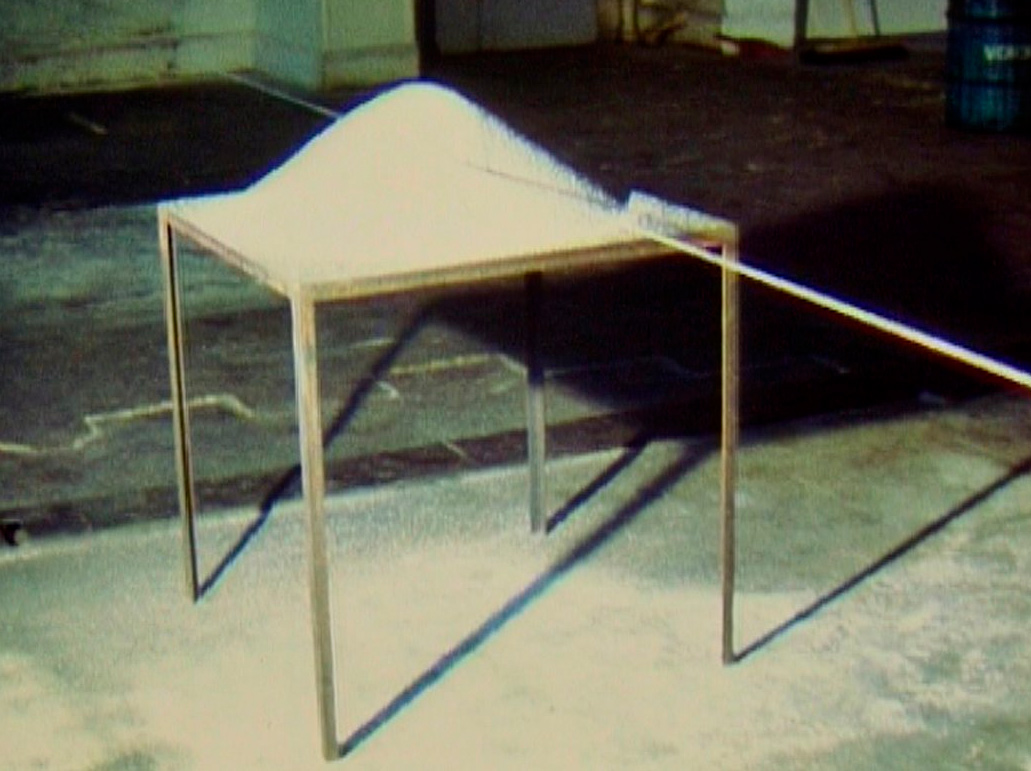
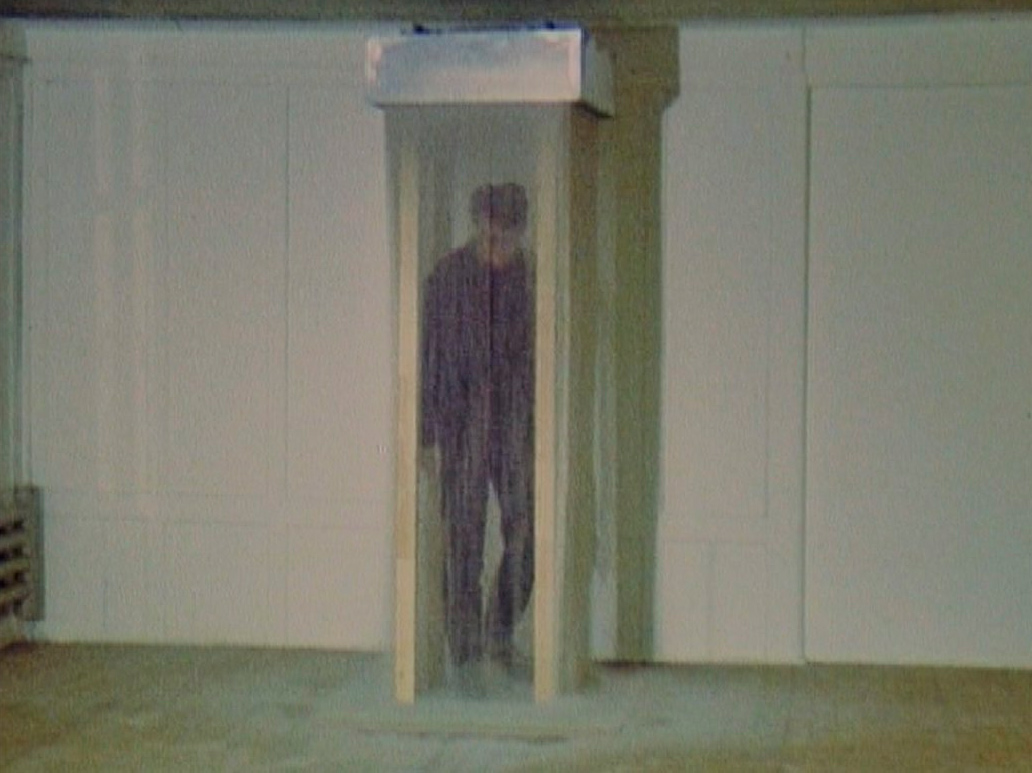
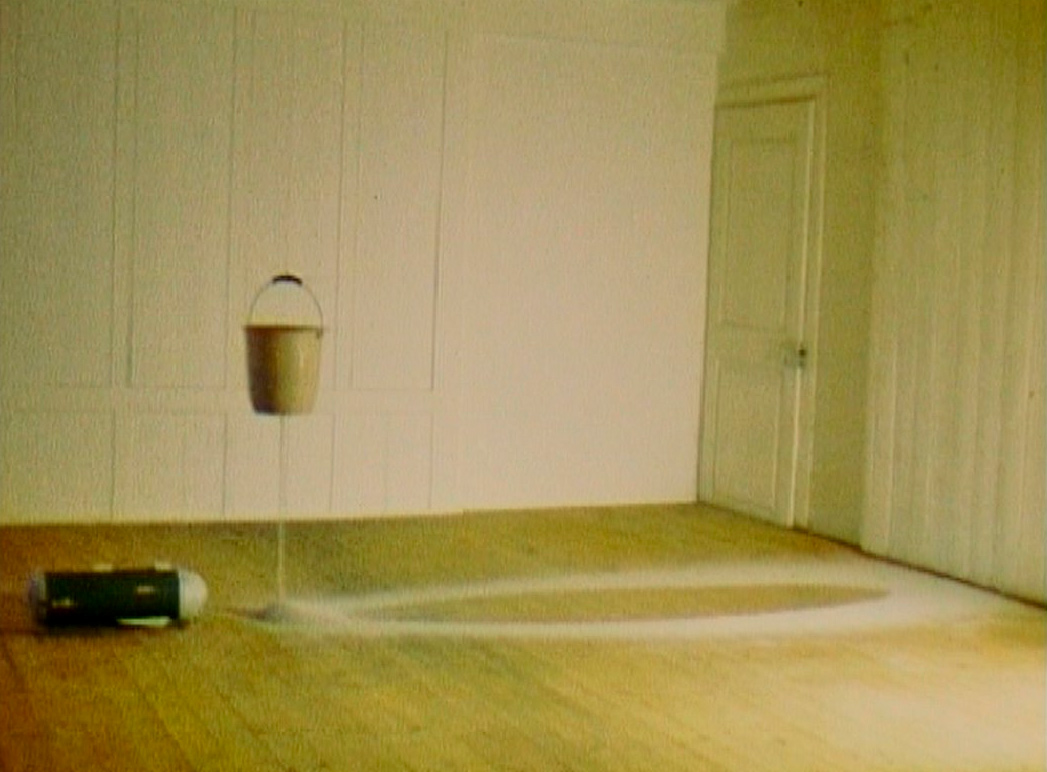
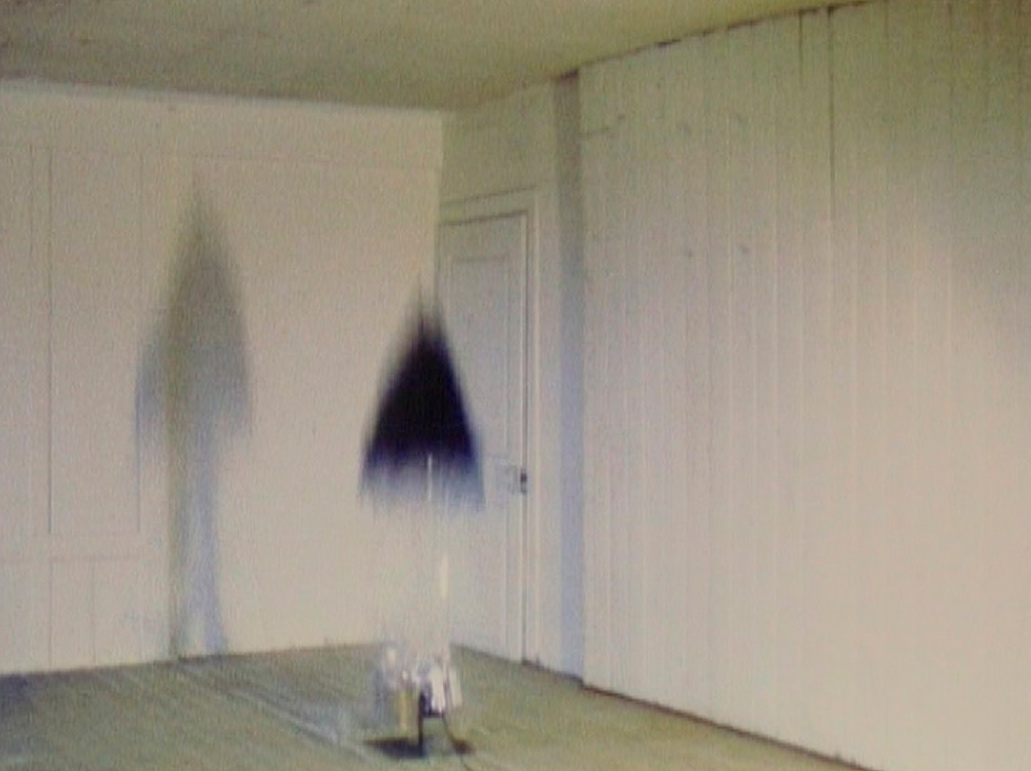
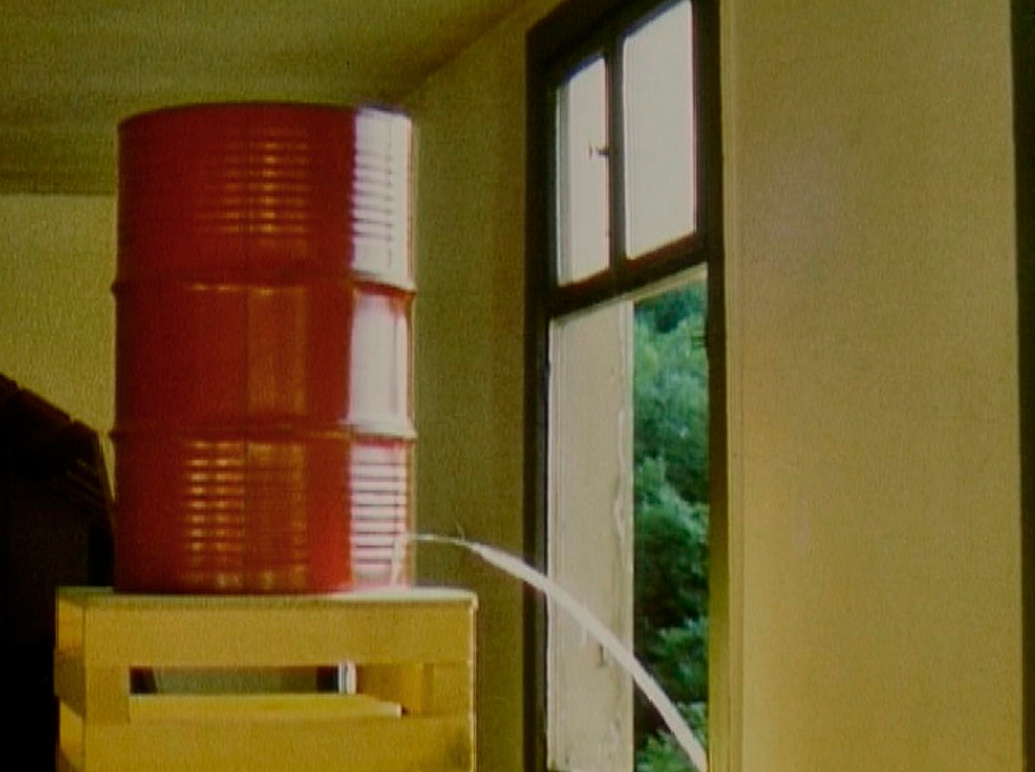
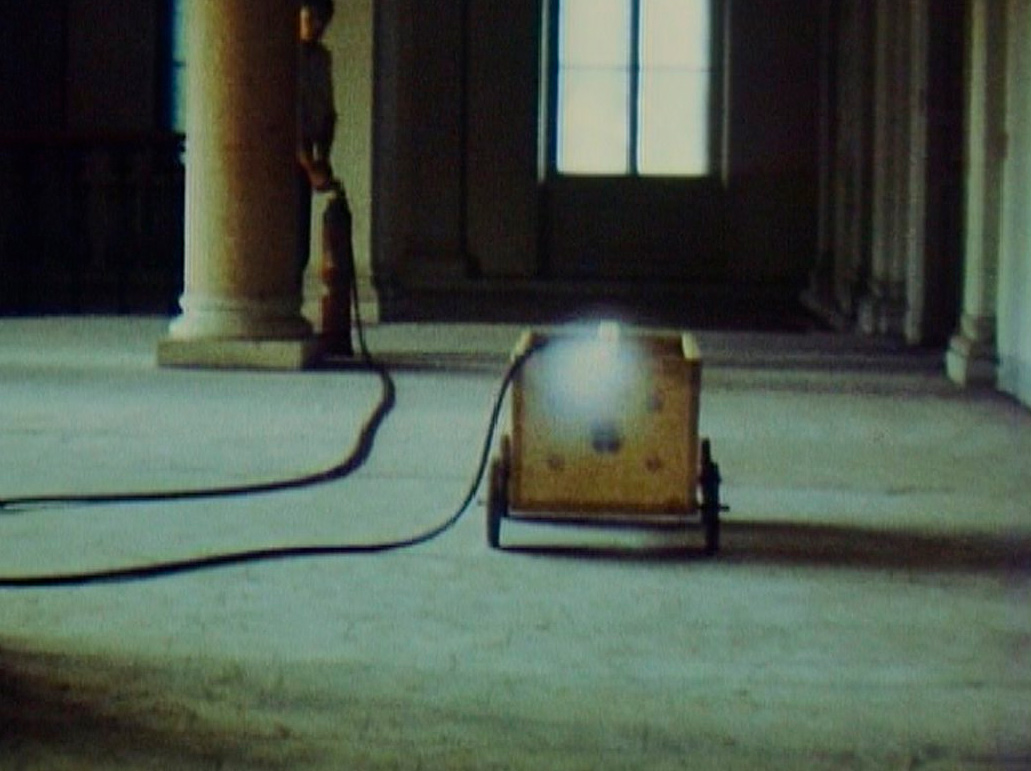
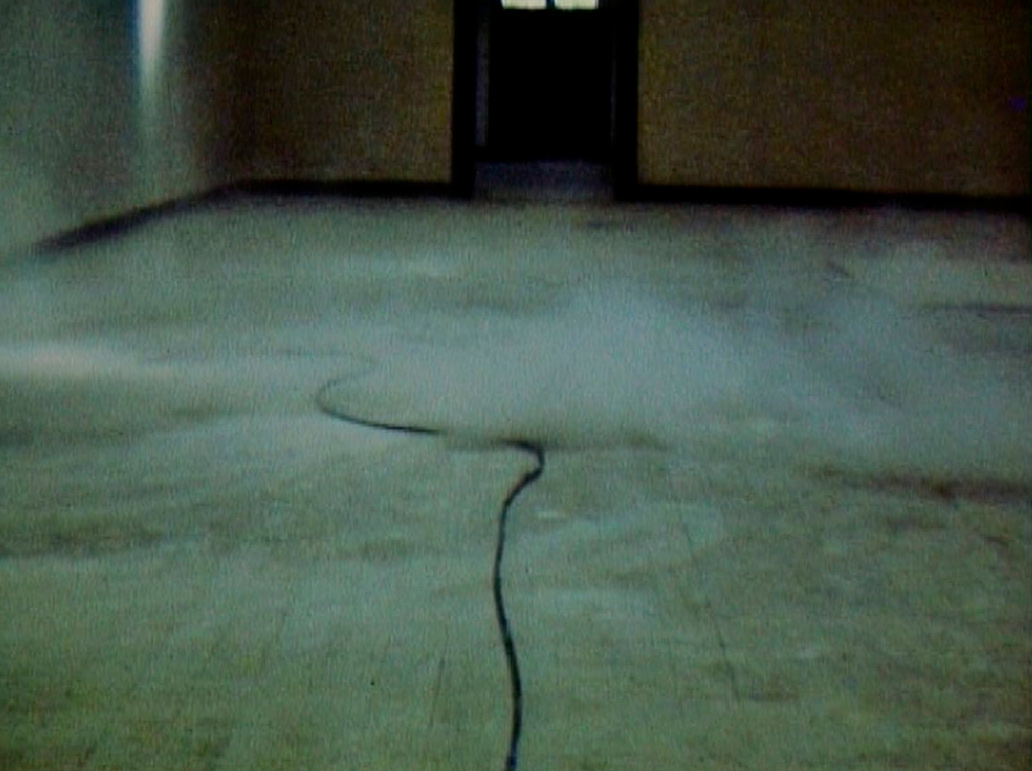

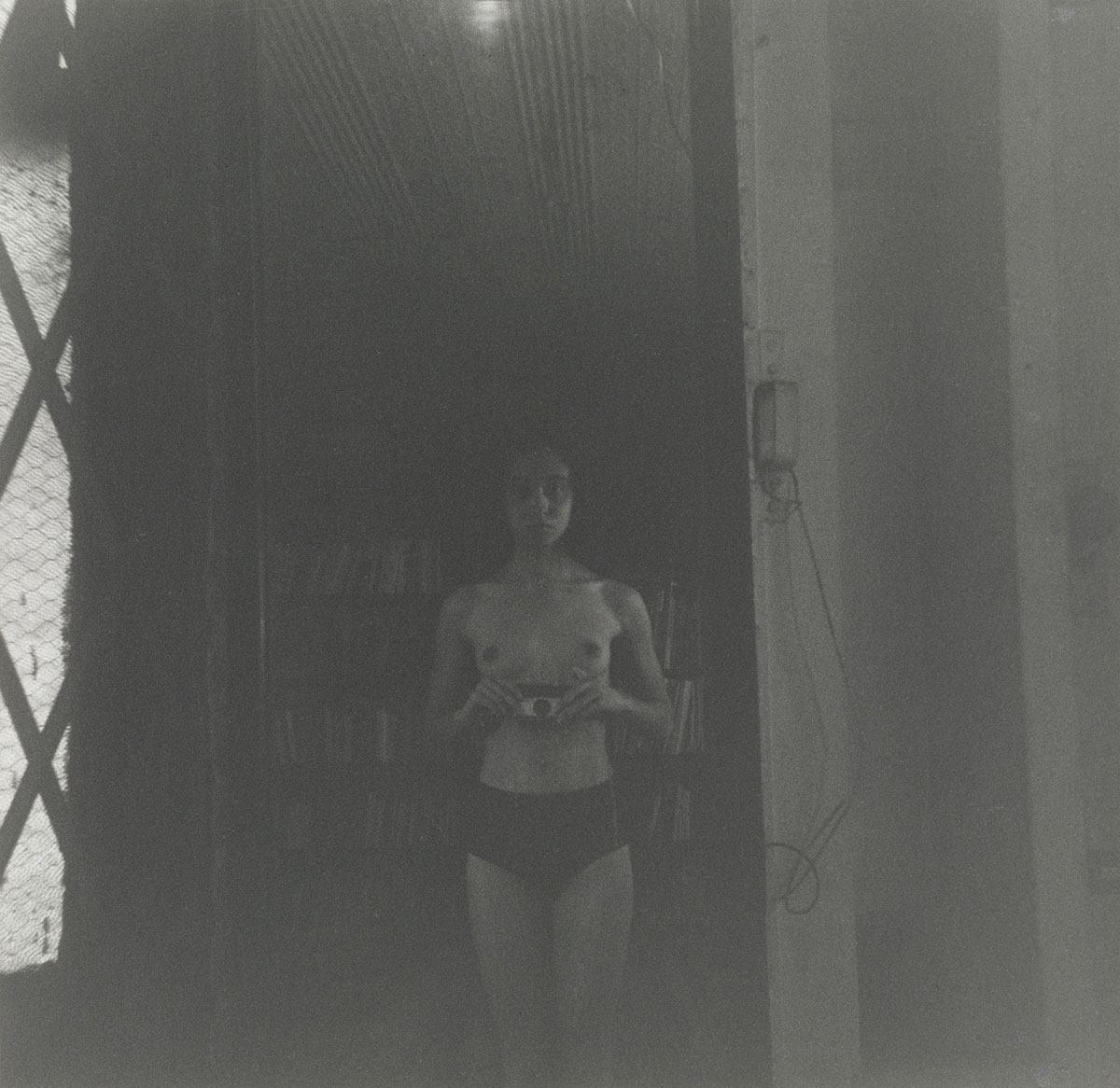


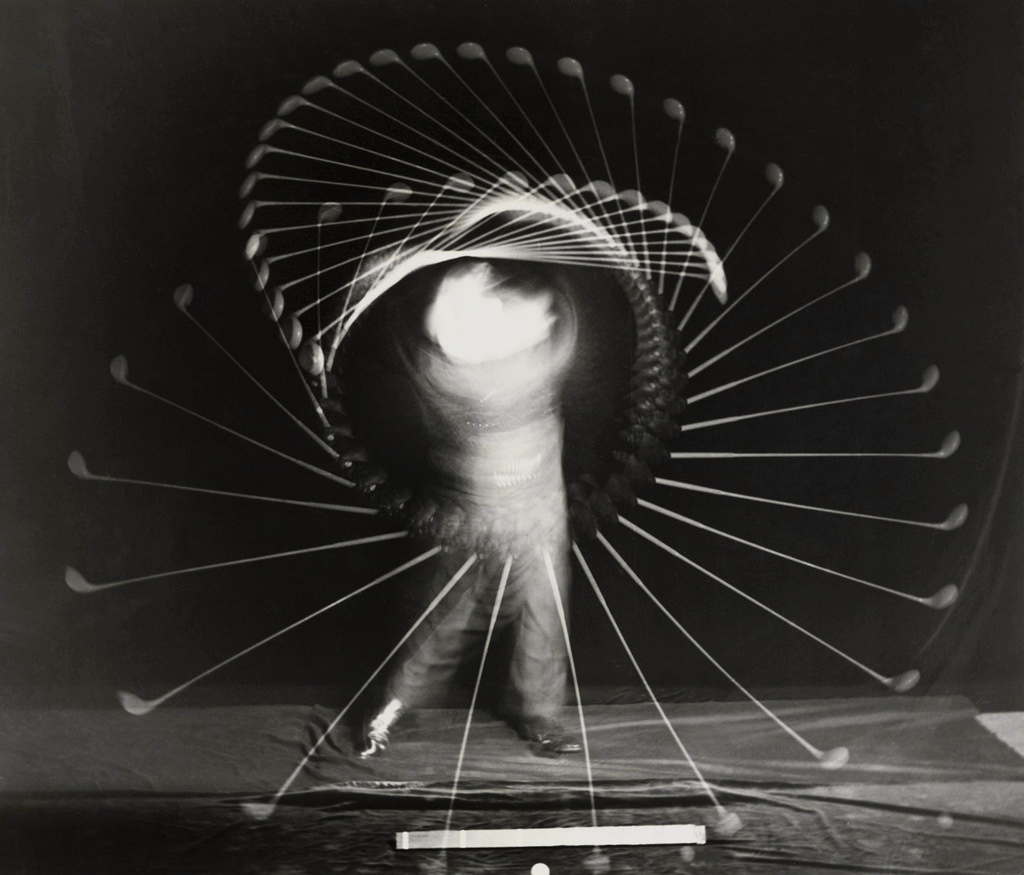
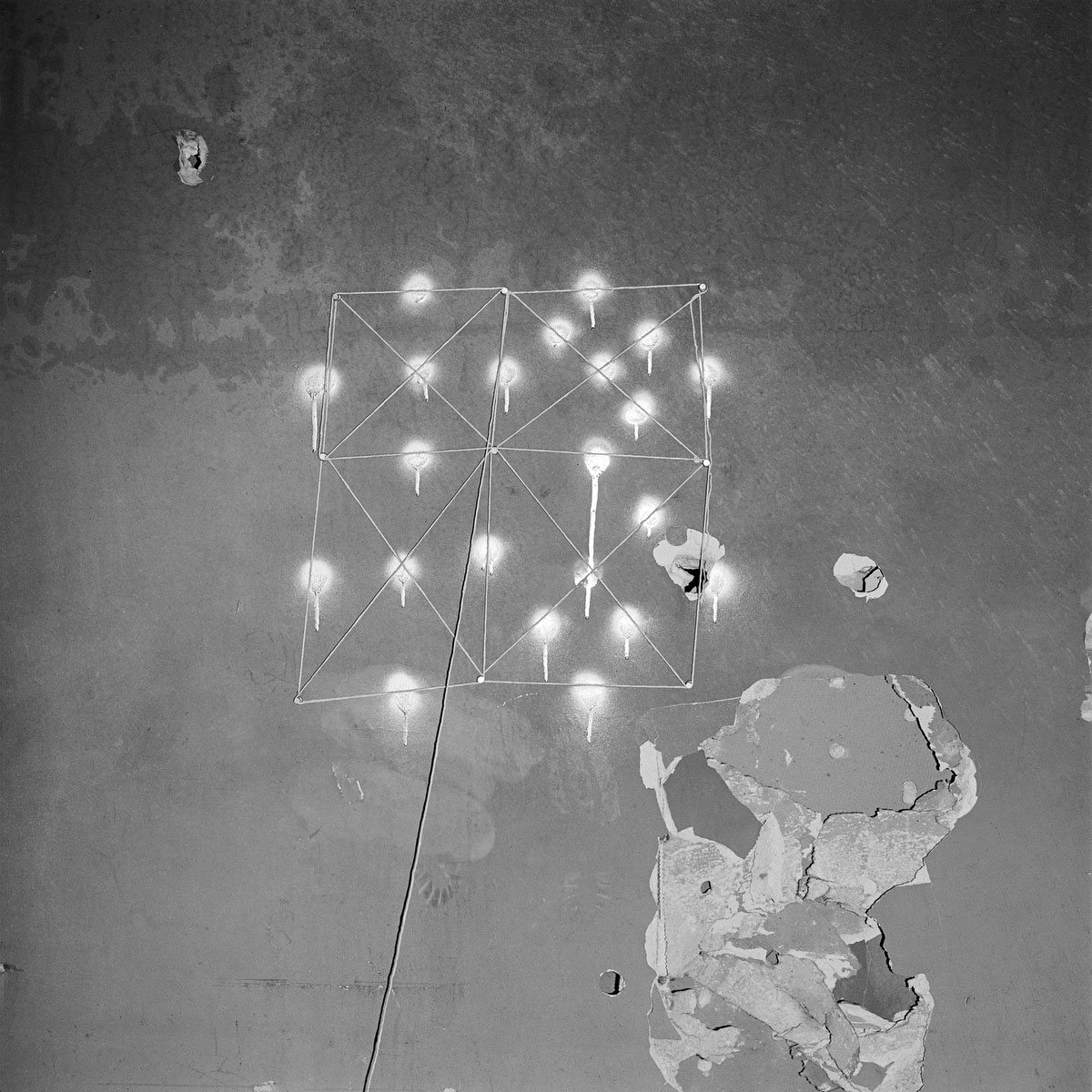
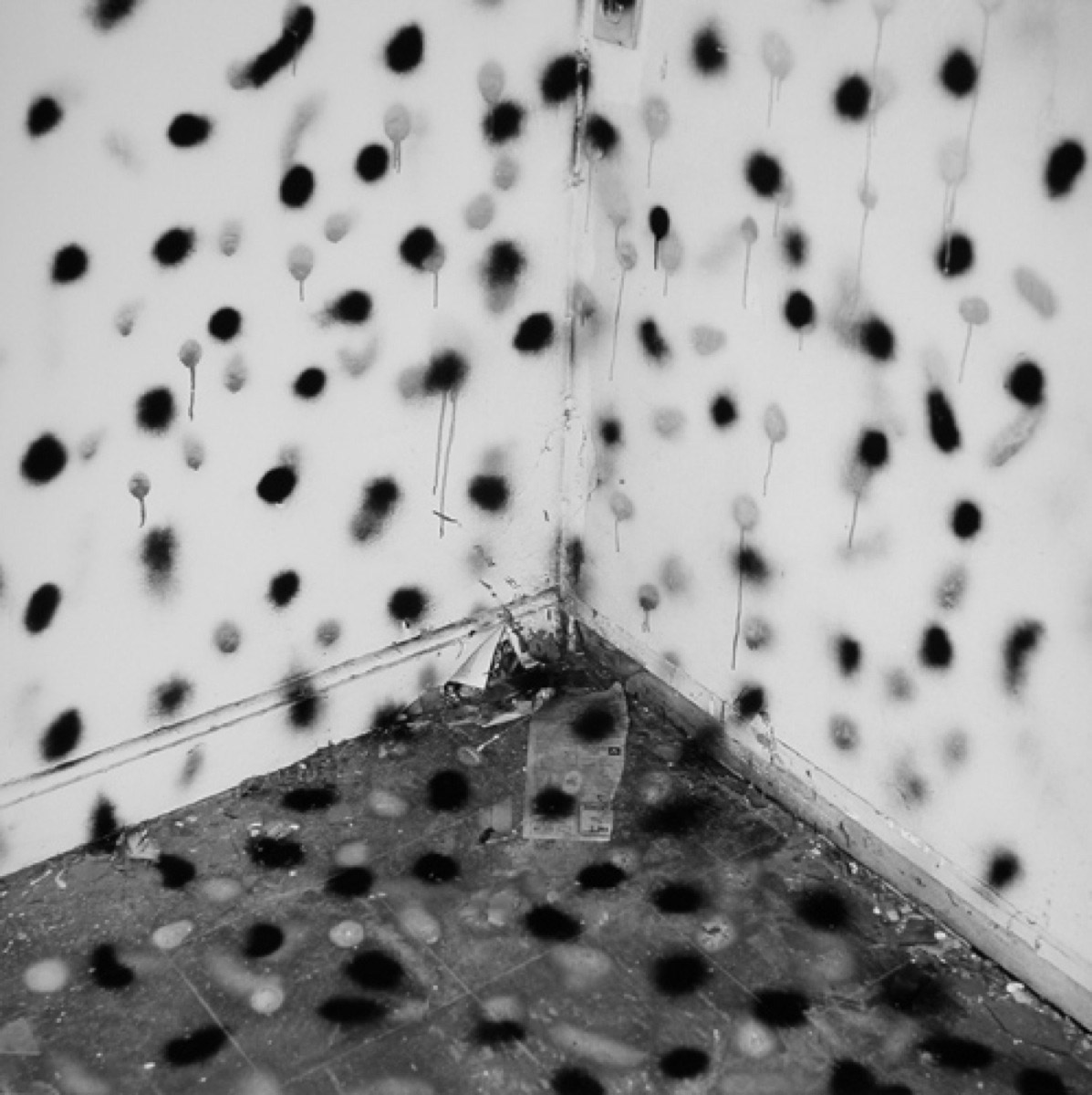
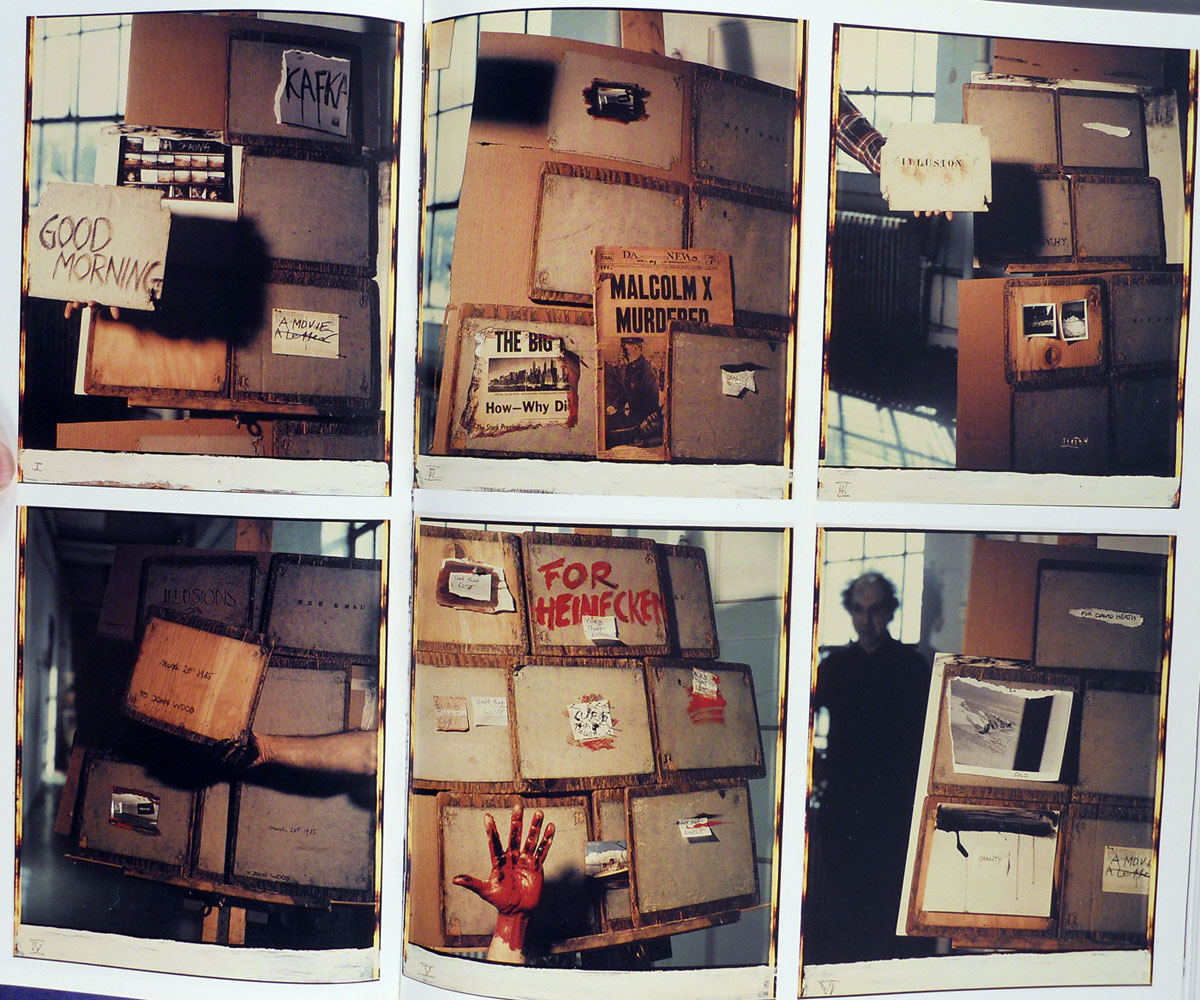

 Art Blart _ art and cultural memory archive
You must be logged in to post a comment.