The Art Blart archive has been going since November 2008. This is the first time I have posted on the avant-garde artist Isle Bing and her documentary humanism. Elements of Modernism, movement, New Vision, Bahuas, Surrealism, abstraction, form, geometry are all spontaneously and intuitively, precisely and poetically expressed in the artist’s work. Manipulation, solarisation, enlargement of fragments and cropping in the darkroom enhance the original negative.
“In addition to numerous portraits, Ilse Bing was primarily interested in urban motifs. They were fascinated by architectural elements and structures as well as urban hustle and bustle. Her way of working repeatedly explores the tracing of symmetry and rhythm in the experience of everyday situations.”1
“In Paris, Ilse Bing forged her style [using a Leica], combining poetry and realism, dreamlike enchantment and the clarity of modernity. She sought contrasts and original juxtapositions that transformed the banal reality of daily life into a new idea.”2
“Ilse Bing was once amongst the very first few women photographers to influentially master the avant-garde handheld Leica 35mm camera in the 1930s. She was also amongst the first to use solarisation, electronic flash and night photography, and established her own distinctive photographic style adoring romanticism, symbolism and dream imagery of surrealism.”3
“It was a time of exploration and discovery. … We wanted to show what the camera could do that no brush could do, and we broke every rule. We photographed into the light – even photographed the light, used distorted perspective, and showed movement as a blur. What we photographed was new, too – torn paper, dead leaves, puddles in the street – people thought it was garbage! But going against the rules opened the doors to new possibilities.” ~ Ilse Bing
3/ Anonymous. “Ilse Bing: Paris and Beyond,” on the Exibart street website [Online] Cited 02/01/2023
Many thankx to Fundación MAPFRE for allowing me to publish the photographs in the posting. Please click on the photographs for a larger version of the image.
“I felt the camera grow as an extension of my eyes and move with me.”
Ilse Bing (Frankfurt, 1899 – New York, 1998) was born into a well-off Jewish family. Having discovered her true vocation while preparing the illustrations for her academic thesis, in 1929 she abandoned her university studies in order to focus entirely on photography. The medium would be her chosen form of expression for the following thirty years of her fascinating life and career.
In 1930 Bing moved to Paris where she combined photojournalism with her own more personal work, soon becoming one of the principal representatives of the modernising trends in photography which emerged in the cultural melting pot of Paris during those years. With the advance of the Nazi forces, in 1941 she and her husband, the pianist Konrad Wolff, went into exile in New York. Two decades later the sixty-year-old Bing gave up her photographic activities in order to channel her creativity into the visual arts and poetry until her death in 1998.
Bing’s work cannot be ascribed to any of the movements or tendencies that influenced her. She worked in almost all the artistic genres, from architectural photography to portraiture, self-portraits, images of everyday objects and landscapes. The diversity of styles which she employed reflect her significant and notably individual interpretation of the different cultural trends that she assimilated, from the German Bauhaus and New Objectivity to Parisian Surrealism and the ceaseless dynamism of New York.
Ilse Bing’s photographic oeuvre, created between 1929 and the late 1950s, was influenced by the different cities where she lived and worked: Frankfurt prior to the 1930s, Paris in that decade and post-war New York where above all she experienced the situation of an enforced emigré. Her work cannot, however, be easily located within the photographic and cultural trends that she encountered, although it was certainly enriched by all of them. Bing’s output was influenced by Moholy-Nagy’s Das Neue Sehen (The New Vision) and the Weimar Bauhaus, by André Kertész and by the Surrealism of Man Ray, which she encountered when she moved to Paris in 1930. At the time of her arrival the French capital was a melting pot of artistic and intellectual trends and the setting for the emergence of a number of movements that would be crucial for the evolution of the avant-gardes. Surrealist echoes are evident in Bing’s photographs of objects and in her approach to the framing of her shots of chairs, streets and public spaces, images that transmit a sense of strangeness and almost of alienation.
The Bauhaus was an extremely important influence on Bing’s work via both El Lissitzky’s theories and those of Moholy-Nagy’s New Vision, which promoted the fusion of architecture and photography and the autonomy of photography as a medium in relation to painting. New Vision offered infinite possibilities and Bing took full advantage of them, employing some of them in her work, such as abstraction, close-ups, plunging viewpoints, di sotto in sù, photomontages and overprinting, all to be seen in the images on display in the exhibition.
Ilse Bing belonged to a generation of women photographers who achieved unprecedented visibility. It was not the norm that women should be artists in a field habitually occupied by men, who regarded their presence as active agents in the social and cultural realm with disdain and even hostility. Like many of her contemporaries – Germaine Krull, Florence Henri, Laure Albin-Guillot, Madame d’Ora, Berenice Abbott, Nora Dumas and Gisèle Freund – Bing’s camera became an essential tool of self determination and a means to confirm her own identity.
Ilse Bing was born in Frankfurt on 23 March 1899 to a middle-class Jewish family. She took her first photographs at the age of fourteen. Self-taught in this field, she realised that this would become her principal activity when she began photographing in order to illustrate her doctoral thesis. She studied mathematics and physics before opting for art history. In 1929 she gave up her university studies and, armed with her inseparable Leica, devoted herself to photography for the next thirty years. In 1930 she moved to Paris, where she continued active as a photojournalist while also producing her own more creative work, gradually becoming one of the leading representatives of modern French photography. In 1941 and with the advance of National Socialism, Bing moved to New York with her husband, the pianist Konrad Wolff. Two decades later, at the age of 60, she ceased taking photographs and focused her attention on making collages, abstract works, drawings and also poetry writing. Ilse Bing died in New York in 1998.
Text from the Fundación MAPFRE exhibition brochure
Ilse Bing (Frankfurt, 1899 – New York, 1998) was born into a well-off Jewish family. Having discovered her true vocation while preparing the illustrations for her academic thesis, in 1929 she abandoned her university studies in order to focus entirely on photography. The medium would be her chosen form of expression for the following thirty years of her fascinating life and career.
In 1930 Bing moved to Paris where she combined photojournalism with her own more personal work, soon becoming one of the principal representatives of the modernising trends in photography which emerged in the cultural melting pot of Paris during those years. With the advance of the Nazi forces, in 1941 she and her husband, the pianist Konrad Wolff, went into exile in New York. Two decades later the sixty-year-old Bing gave up her photographic activities in order to channel her creativity into the visual arts and poetry until her death in 1998.
Bing’s work cannot be ascribed to any of the movements or tendencies that influenced her. She worked in almost all the artistic genres, from architectural photography to portraiture, self-portraits, images of everyday objects and landscapes. The diversity of styles which she employed reflect her significant and notably individual interpretation of the different cultural trends that she assimilated, from the German Bauhaus and New Objectivity to Parisian Surrealism and the ceaseless dynamism of New York.
The exhibition
Featuring around 200 photographs and a range of documentary material, the exhibition presents a chronological and thematic survey of Ilse Bing’s career, divided into ten sections: “Discovering the world through a camera: the beginnings”, “The life of still lifes”, “The dancing body and its circumstances”, “Lights and shadows of modern architecture”, “The hustle and bustle of the street: the French years”, “The seduction of fashion”, “The United States in two phases”, “Self-image revelations”, “Portrait of time”, and “Live nature”.
Four keys
The Bauhaus. From 1910 onwards Frankfurt became the prototype of modern urban design thanks to the architect Ernst May, and the city’s medieval layout was gradually modified in a transformation based on its different societal requirements. This new architecture soon began to echo the ideas of El Lissitzky’s Constructivism, partly via the Dutch architect Mart Stam, a friend of Ilse Bing. Stam and the theories of the Bauhaus had a major influence on her works. László Moholy-Nagy, who taught at the Bauhaus, had promoted the union of architecture and photography as well as the independence of the latter in relation to painting. The possibilities of Das Neue Sehen (The New Vision) seemed endless and Bing applied some of its concepts and devices to her work: abstraction, immediate close-ups, plunging and di sotto in sù viewpoints, photo-montage and overprinting.
Surrealism, the spirit of an era. When Ilse Bing moved to Paris in 1930 the city was a melting pot of artistic and intellectual trends and the setting for the emergence of some of the key movements in the evolution of the avant-gardes. One of them – Surrealism – had a particular influence on her and its echoes are clearly discernible in her photographs of accessories taken for fashion magazines which reflect Surrealist theories on fetishism. It is also evident in the framing she chose for her images of chairs, streets and public spaces, which transmit a sense of strangeness and almost of alienation. Finally, this influence also arose from Bing’s relationship with prominent figures associated with the movement, such as Elsa Schiaparelli.
Movement. Despite her fascination with abstraction and pure compositions, evident in many of her photographs of architecture and her still lifes, Ilse Bing was also captivated by the dynamism and movement of life and changing reality. She expressed this in her photographs of the Moulin Rouge and its surrounding area and in her investigation of dance. Bing captured the dynamism of the dancers twirling their skirts but also the expressivity of their bodies as they moved, jumping into the air or doing the splits.
Woman photographer. Ilse Bing belonged to a generation of women photographers who achieved unprecedented visibility. It was not the norm that women should be artists in a field habitually occupied by men, who regarded their presence as active agents in the social and cultural realm with disdain and even hostility. Like many of her contemporaries – Germaine Krull, Florence Henri, Laure Albin-Guillot, Madame d’Ora, Berenice Abbott, Nora Dumas and Gisèle Freund – Bing’s camera became an essential tool of self-determination and a means to confirm her own identity.
The artistic career of Ilse Bing (Frankfurt, 1899-New York, 1998) can be located within a particularly complex temporal and socio-cultural context. This German photographer principally lived and worked in three places: in Frankfurt prior to the 1930s, in Paris in that decade and in post-war New York where she above all experienced the status of enforced emigré. Bing also visited other places, including Switzerland, Italy and Holland, but they never became decisive spaces that significantly influenced her way of working with regard to photography.
Analysed with the distance and perspective offered by the passing of time, Ilse Bing’s artistic corpus cannot easily be located within the various photographic trends she encountered during her lifetime, particularly in her initial German phase and the decade in Paris. While her work is charged with elements associated with both Das Neue Sehen (The New Vision) and the Bauhaus, which emerged during the Weimar Republic, as well as with the Surrealism she assimilated during her years in France, Bing’s position evades any strict norm or visual orthodoxy. In this sense it could be said that hers is a notably unique photographic gaze and approach in which modernity and formal innovation are indissolubly linked to a humanist approach involving a social conscience.
It is also important to emphasise that Ilse Bing’s career within the context of relatively difficult times was marked by a resolute determination to make her way in a world which viewed the presence of women as active agents in the social and thus the cultural realm with disdain or even hostility. Bing belonged to a generation of female photographers that achieved a previously unattainable visibility. The camera became for an essential tool of self-determination for numerous women artists, including figures such as Germaine Krull, Florence Henri, Laure Albin-Guillot, Madame d’Ora, Berenice Abbott, Nora Dumas and Gisèle Freund.
Juan Vicente Aliaga Curator
Discovering the World Through A Camera: The Beginnings
With the exception of a few photographs of an amateur type, nothing indicated that Ilse Bing, who was born into a prosperous Jewish family in Frankfurt, would dedicate much of her life to the practice of photography. After an initial focus on scientific subjects and a period studying art history, Bing decided to illustrate her doctoral thesis with images taken in different museums. From that moment onwards and following a study trip to Switzerland when she discovered the work of Vincent van Gogh, she took the decision to focus her attention on photography. While she initially made use of a Voigtländer plate camera, she soon acquired a Leica which she would continue to use for much of her career. This was the camera she employed for the commissions she received from newspapers such as the Frankfurter Zeitung, work that gave her a degree of financial independence during the turbulent years of the Weimar Republic.
At the outset Bing covered a range of subjects, doing so with ease and formal audacity. Everything seemed to attract her attention: men at work, the spatial simplicity of a gallery, the organic lines of a roof, the leg and arm movements of the ballerinas of the Rudolf von Laban company, the modern architecture which she had discovered through her friend the Dutch architect Mart Stam, and more. Bing’s gaze sought out unusual angles, it looked upwards and downwards, at times encountering normally overlooked elements of no monetary value and ones brought together by chance, as in Dead Leaf and Tramway Ticket on Sidewalk, Frankfurt (1929).
The Life of Still Lifes
Objects from daily life are frequently present in modern art: a bottle, a newspaper, a letter, a collage-like fragment of a label, a jug, etc. Surrealism marked a revolution with regard to the representation of the object, which is never literal but rather filled with hidden aspects. The insertion of external objects into the visual space combined with other ones favours the emergence of the imaginary. By the time Ilse Bing arrived in Paris in 1930 she was already captivated by the chance encounter of often humble elements. Her French period served to accentuate her interest in a wide range of cast-off possessions and objects that seemed to allude to a universe in flux. Bing’s gaze always came to rest on real elements. The chairs she photographed existed but the framing she employed, the closeness or distance of the shot, the fact that the chairs are unoccupied and that the floor on which they stand has the silvery darkness of rain are all the result of her choices, adding an air of melancholy to the image.
Over the course of her career Bing used a range of different techniques in parallel while remaining constantly fascinated by inanimate objects. During her Paris years and despite financial difficulties her work is generally characterised by a poetic gaze in which the imagination moves towards undefined, almost dream-like realms. In contrast, in the period of exile in the United States a degree of coolness emerges, with the appearance of formal and symbolic traits such as a closing-in or enclosing of the depicted scene.
The Dancing Body and Its Circumstances
During her initial phase, in 1929 Ilse Bing established contacts with the dance and gymnastics school founded by Rudolf von Laban. She was struck by the way in which he aimed to draw a parallel between geometry and human movements and gestures.
Soon after arriving in Paris, Bing was commissioned to photograph the Moulin Rouge waxworks museum. The old Parisian dance hall where La Goulue and Toulouse-Lautrec had been leading attractions had lost much of its splendour. Bing spent time there and was attracted by numerous aspects of the place: its daily life on and off stage, including the couples who enjoyed a drink there, the boxing matches taking place, a dancer cheering up a weary boxer, the interesting nature of the clients, and the boredom of the doorman at the entrance to the cabaret. Aside from these aspects, what really caught the attention of the Paris photography world were Bing’s images of dancers in movement. Her restless eye was able to represent the vibration of the circular twists and turns, the complex, effortful open leg movements of a dancer captured in action, the troupe of dancers energetically waving their skirts, and more.
Another group of images of the troupe centres around the dancer Gerard Willem van Loon.
The third and last series of images focusing on dance was commissioned in relation to the ballet L’Errante, choreographed by the American George Balanchine and with set designs and libretto by the Russian painter Pavel Tchelitchew. Bing demonstrated her skill at capturing movement without making it seem frozen or trapped in time. Her eye translated the weightlessness of dreamlike fantasies to her images through the dynamic way in which she captured shadows.
Lights and Shadows of Modern Architecture
The architecture of Paris is generally reflected in Bing’s photography through images of middle- or working-class houses or walls and façades of dilapidated buildings. There was one notable exception, namely the Eiffel Tower. This emblematic work, constructed for the Universal Exhibition of 1889, was nothing less than a revelation for Bing. The Tower’s imposing metal structure had been captured by various photographers, including László Moholy-Nagy in 1925, followed by Erwin Blumenfeld, André Kertész, François Kollar and Germaine Krull.
Bing chose to locate herself inside the structure and take shots at different heights, the majority looking downwards. Using this method, the reality of the space occupied by passers-by becomes perfectly visible. In other words, the intention is not to emphasise the abstract core, pure geometry and beauty of the forms, girders, mainstays, braces and other constructional elements but rather to show that this architectural marvel was also located in a specific place, in this case the gardens of the Champ de Mars.
At a later date, New York’s modern architecture astonished Bing for its display of power expressed as imposing constructions. She translated her amazement into a group of images primarily characterised by a distanced and simultaneously critical gaze on the architectural spectacle before her eyes. Her position was not simply an uncritical and admiring one, as evident in various photographs of skyscrapers abutting on poor areas of the city. The thrust of the symbolic power of vertical architecture is called into question by being juxtaposed with humble spaces and buildings, as we see with Chrysler Building (1936).
The Hustle and Bustle of the Street: The French Years
When Ilse Bing arrived in Paris in late November 1930 the city’s cultural context was particularly favourable in terms of the number of illustrated publications that made use of images taken by a large group of male and female photographers. These publications included Vu, Voilà, Marianne, Regards, L’Art Vivant, Arts et Métiers Graphiques and Urbanisme.
One of the commissions that Bing received allowed her to delve into an evident reality: the existence of poverty in certain parts of a major capital such as Paris. She focused her work on portraying the soup kitchens where large numbers of destitute people gathered.
The artist revealed her abilities in Paris, rue de Valois (1932), an image that allows for a questioning of the supposedly objective truth habitually associated with photography. On an inner city street Bing’s gaze focuses on a puddle in which the roofs of an adjacent building are reflected. She shows us the paradox of something that is located above and high up appearing below, on the ground.
While Bing’s Parisian photography has a melancholy, even sombre tone to it, it also looked at areas of human activity characterised by lively bustle and social interaction, such as her images of a gingerbread fair.
These years in France provided the setting for a veritable laboratory of ideas in which the influence of Bing’s Frankfurt years is still evident. It was also a time when the emergence of Surrealism was occupying the Parisian cultural scene, with its exploration of the unconscious and of hidden desires. It can be detected in the ghostly feel of the solarised photographs that Bing took on the Place de la Concorde.
In this context, and thanks to an invitation from the Dutch-born Hendrick Willem van Loon, Bing discovered the Netherlands, visiting places such as Veere and Amsterdam and capturing different moments of daily life. The country’s nature as a terrain regained from the sea also led the artist to reflect this geographical reality in a number of snapshots.
The Seduction of Fashion
During her Paris years Bing experienced financial difficulties, a recurrent problem for her over the years, for which reason in November 1933 she began to contribute to the fashion magazine Harper’s Bazaar, an American publication noted for its modern style. She secured this work with a recommendation from the editor of the French edition, Daisy Fellowes, a fashion-world figure brought up in aristocratic circles. Some of Bing’s photographs are in fact of accessories that belonged to Fellowes, including the grey felt hat and an elegant pair of gloves. In these and other images Bing applied a highly innovative approach in which she brought out the texture of the objects and the sheen of the surfaces by cropping the frame in such a way that the various garments acquired a sensual touch as well as suggesting the attractiveness of a coveted object.
During these years Bing also met Elsa Schiaparelli, the celebrated Italian fashion designer with links to Surrealism. Bing took photographs as advertisements for perfumes such as Salut and Soucis, both of 1934. The aim of these images was to encourage the viewer to desire the product with all its sensual resonances without renouncing a modern aesthetic.
The United States in Two Stages
Bing’s experiences in New York can be divided into two quite distinct phases. The first was a visit in 1936 while the second came in 1941 with her forced departure from France following the Nazi occupation. She continued to live there until her death in 1998, although she brought her photographic activity to an end forty years earlier.
The first American trip lasted from April to June 1936. Bing was impressed by the colossal dimensions of the city’s architecture while her restless gaze also focused on other aspects of the metropolis: the harsh life of down-and-outs (Variation on Dead End), the dirtiness of the streets, a circus show with acrobats and animals, and more.
In these difficult circumstances and experiencing isolation, Bing transferred her sense of solitude to the reality that surrounded her, observing it attentively. The result is a number of desolate images in which her own feelings are transmuted into melancholy landscapes and objects: scrawny, leafless tree branches, picket fences enclosing plots, and a fire hydrant in a snowy landscape next to a fallen tree.
From 1941 onwards, still suffering from the effects of exile and in need of earning a living in a hostile environment, Bing turned her activities to various different jobs, taking passport photographs for immigrants, portrait photographs on commission and even working as a dog groomer, among other things. The illustrated magazine world clearly turned its back on her at this period.
Self-Image Revelations
In 1913 the teenage Bing took what she considered to be her first self-portrait. She poses in her bedroom in the family home in Frankfurt, sitting sideways at a desk and resting her feet on a chair. What we see in reality is her reflection in a cupboard mirror, which shows the young Ilse with her long hair. In front of a background of paintings, she looks out attentively and places her hand on the camera – a Kodak box model. She was unaware at the time that this device (albeit not this make) would become her principal working tool.
Throughout her life as an artist Bing repeated the exercise of portraying herself (usually indoors) with the aim of leaving a record of a specific moment of her existence. Through these self-portraits she forged her own identity as an emancipated and independent woman in times of enormous patriarchal pressure.
During her first visit to New York Bing conceived an image that is a clear indication of the sense of estrangement and alienation she felt at seeing herself so small before the immensity of the mecca of skyscrapers, as in New York, the Elevated, and Me (1936).
Bing would later make the representation of shadow a stark extension of her life and personality, frequently using it throughout her American years.
During the course of her lifetime Ilse Bing explored the transitory states of her own identity, sometimes presenting herself as firm and decided, at times as vulnerable and anxious and on other occasions as a fleeting shadow cast on a wall.
Portrait of Time
In addition to seeking out the intricacies of her subjectivity in her own image, from almost the outset Bing engaged in an intensive photographic activity in which she combined commissions for portraits, especially of children, with the desire to explore the human psyche.
With regard to childhood, Bing saw children as complete beings on the same level as adults, with their own internal struggles and issues. During her own childhood the prevailing view was that they were not fully formed but Bing was uncomfortable with this perception and over time she learned to see adulthood and childhood as two phases of life that had much more in common than was generally thought.
Similarly, she did not share the view that women should be conceived on the male model as if they were a mere accompaniment to their tune. She considered that “the human being can be represented and symbolised by women”, albeit without aiming to idealise them. These concepts, which clearly reflect an underlying feminist attitude, seem to allude to a holistic vision of existence devoid of hierarchies or fixed categories.
Bing went beyond merely capturing the moment, the temporal space in which her models pose. Rather, with both her child sitters and adults she aimed to show them engaged in an activity, extracting aspects of their character and personality from them.
Live Nature
Any assessment of Ilse Bing’s work must necessarily emphasise the impact on her career of her urban experiences in Frankfurt, Paris and New York. While this assertion seems indisputable, an analysis of her corpus would be diminished without a consideration of the close relationship she maintained with nature, both the untamed natural world and nature designed and organised by human hand, as in the case of the gardens of Versailles.
The natural world was also the locus in which Bing’s emotions and feelings took hold. The photographs taken on the banks of the Loire, for example, generally exude an air of calm and balance comparable to that which she felt in her own life at the time, contrasting strongly with the landscapes of wild and rugged places such as those she captured in the mountains of Colorado at a period of greater personal tension.
In 1959 Ilse Bing gave up photography for good. After three decades as a photographer and long before her work started to be recognised in museums in the United States, France and Germany, with exhibitions and publications of her work in Paris, New Orleans, Aachen and New York, the artist, who had proved herself able to represent the vibration of life, considered that she no longer had anything new to say or contribute in this medium.
I believe that any artist that lives at the edge of desire, of creativity, of individuality, exploration and feeling – in seeing the world from different points of view – pushes the boundaries of what the conservative mass of humanity finds acceptable.
Defying the taboo is only possible because the taboo exists in the first place. The taboo against sensuality, eroticism and pleasure can only be broken by approaching those ecstatic and liminal spaces that lead to other states of consciousness, by being attentive to the dropping away of awareness so that we avoid the frequency of common intensities, instead illuminating spaces and languages where new cultural symbols and meanings can emerge. This is what artists and people of difference do: we approach the ‘Thing Itself’. We live on the edge of ecstasy, oblivion and revelation.
Dr Marcus Bunyan
PS. I have added bibliographic information to the posting where possible.
Many thankx to Wrightwood 659 for allowing me to publish the art work in the posting. Please click on the photographs for a larger version of the image.
The First Homosexuals: Global Depictions of a New Identity, 1869-1930 takes as its starting point the year 1869, when the word “homosexual” was first coined in Europe, inaugurating the idea of same-sex desire as the basis for a new identity category. On view will be more than 100 paintings, drawings, prints, photographs, and film clips – drawn from public and private collections around the globe and including a number of national treasures which have never before been allowed to travel outside their countries. This groundbreaking exhibition offers the first multi-medium survey of the very first self-consciously queer art, exploring what the “first homosexuals” understood themselves to be, how dominant culture, in turn, understood them, and how the codes of representation they employed offer us previously unknown glimpses into the social and cultural meanings of same-sex desire.
The First Homosexuals is being organised in two parts, due to COVID-related delays, with part one opening on October 1 with approximately 100 works, and on view only at Wrightwood 659. Three years from now, in 2025, 250 masterworks will be gathered at Wrightwood 659 for part two of The First Homosexuals in an exhibition which will travel internationally and be accompanied by a comprehensive catalogue.
The exhibition is being developed by a team of 23 international scholars led by art historian Jonathan D. Katz, Professor of Practice in the History of Art and Gender, Sexuality and Women’s Studies at the University of Pennsylvania, with associate curator Johnny Willis.
Alice Austen (American, 1866-1952) Trude & I Masked, Short Skirts 1891 Print, 4 x 5 in Historic Richmond Town
Alice Austen (American, 1866-1952)
Elizabeth Alice Austen (March 17, 1866 – June 9, 1952) was an American photographer working in Staten Island.
One of America’s first female photographers to work outside of the studio, Austen often transported up to 50 pounds of photographic equipment on her bicycle to capture her world. Her photographs represent street and private life through the lens of a lesbian woman whose life spanned from 1866 to 1952. Austen was a rebel who broke away from the constraints of her Victorian environment and forged an independent life that broke boundaries of acceptable female behaviour and social rules. …
Alice Austen’s life and relationships with other women are crucial to an understanding of her work. Until very recently many interpretations of Austen’s work overlooked her intimate relationships. What is especially significant about Austen’s photographs is that they provide rare documentation of intimate relationships between Victorian women. Her non-traditional lifestyle and that of her friends, although intended for private viewing, is the subject of some of her most critically acclaimed photographs. Austen would spend 53 years in a devoted loving relationship with Gertrude Tate, 30 years of which were spent living together in her home which is now the site of the Alice Austen House Museum and a nationally designated site of LGBTQ history.
Austen’s wealth was lost in the stock market crash of 1929 and she and Tate were evicted from their beloved home in 1945. Tate and Austen were finally separated by family rejection of their relationship and poverty. Austen was moved to the Staten Island Farm Colony where Tate would visit her weekly. In 1951 Austen’s photographs were rediscovered by historian Oliver Jensen and money was raised by the publication of her photographs to place Austen in private nursing home care. On June 9, 1952 Austen passed away. The final wishes of Austen and Tate to be buried together were denied by their families.
Violet Oakley (American, 1874-1961) Edith Emerson Lecturing c. 1935 Oil on canvas 35 x 45 in. Woodmere Art Museum, Philadelphia, PA: gift of the Pennsylvania Academy of Fine Arts, 2012 Courtesy of Woodmere Art Museum
Violet Oakley (June 10, 1874 – February 25, 1961) was an American artist. She was the first American woman to receive a public mural commission. During the first quarter of the twentieth century, she was renowned as a pathbreaker in mural decoration, a field that had been exclusively practiced by men. Oakley excelled at murals and stained glass designs that addressed themes from history and literature in Renaissance-revival styles.
Edith Emerson (American, 1888-1981) Portrait of Violet Oakley Date unknown Oil on canvas 25 x 30 in. Woodmere Art Museum, Philadelphia, PA: gift of Jane and Noble Hall, 1998 Courtesy of Woodmere Art Museum
Edith Emerson (American, 1888-1981)
Edith Emerson (July 27, 1888 – November 21, 1981) was an American painter, muralist, illustrator, writer, and curator. She was the life partner of acclaimed muralist Violet Oakley and served as the vice-president, president, and curator of the Woodmere Art Museum in the Chestnut Hill neighbourhood of Philadelphia, Pennsylvania, from 1940 to 1978. …
[Oakley’s] life partner, Edith Emerson, was a painter and, at one time, a student of Oakley’s. In 1916, Emerson moved into Oakley’s Mount Airy home, Cogslea, where Oakley had formed a communal household with three other women artists, calling themselves the Red Rose Girls. Emerson and Oakley’s relationship endured until Oakley’s death and Emerson subsequently established a foundation to memorialise Oakley’s life and legacy. The foundation dissolved in 1988 and the assets donated to the Smithsonian Museum.
Following Violet Oakley’s death in 1961, Emerson created the Violet Oakley Memorial Foundation to keep her teacher and companion’s memory and ideals alive. The foundation also sought to house and preserve the contents of Oakley’s studio, which was placed on the National Register of Historic Places in 1977 as the Violet Oakley Studio. Emerson served as the foundation’s president, as well as curator and general caretaker of the studio. The studio was opened to the public as a kind of museum, and Emerson organised various activities there, including concerts, exhibitions, poetry readings, and lectures on American art and illustration. Following Emerson’s death, the foundation dispersed the contents, sold the house, and disbanded.
In 1979, Emerson was instrumental in mounting an Oakley revival as an exhibition at the Philadelphia Museum of Art.
Owe Zerge (Swedish, 1894-1984) Model Act 1919 Oil on canvas 53.1 x 19.7 in. Private Collection
Role of Art in the Modern Construction of Same-Sex Desire Explored for First Time in Groundbreaking Two-Part Exhibition at Wrightwood 659 in Chicago
The First Homosexuals: Global Depictions of a New Identity, 1869-1930, begins in the year 1869, when the word “homosexual” was coined in Europe, inaugurating the idea of same-sex desire as the basis for a new identity category. With more than 100 paintings, drawings, prints, photographs, and film clips – drawn from public and private collections around the globe and including works which have never before been allowed to travel outside their countries – this large-scale international exhibition offers the first multi-media survey of some of the founding works of queer art. The First Homosexuals explores what the earliest homosexuals understood themselves to be, how dominant culture understood them, and how the codes of representation they employed offer previously unknown glimpses into the social and cultural meanings of same-sex desire.
The First Homosexuals is organised in two parts, due to Covid-related delays, with Part I on view only at Wrightwood 659 in Chicago from October 1 through December 17, 2022. Three years from now, in 2025, 250 masterworks will be gathered at Wrightwood 659 for Part II, in a major exhibition that will travel internationally, accompanied by a comprehensive catalogue.
Already three years in the making, the exhibition is being developed by a team of 23 international scholars, led by art historian Jonathan D. Katz, Professor of Practice in the History of Art and Gender, Sexuality and Women’s Studies at the University of Pennsylvania, with associate curator Johnny Willis.
The First Homosexuals rewrites conventional art history, in part by deepening the reading of works of art by familiar artists – whether it be Henry Fuseli, Thomas Eakins, or George Bellows – and in part by lifting the cover off works that previously have not been widely understood as declarations of same-sex attachment. The exhibition also introduces American museum goers to a number of artists who are little known in the United States but revered in their own countries, including Gerda Wegener (Denmark); Eugéne Jansson (Sweden); and Frances Hodgkins (New Zealand).
The First Homosexuals explores the cohesion of a new global identity at a liminal moment, one that art can tell uniquely well. While the written archive of the period must necessarily use accepted words to describe ideas, art is notably free of such consensus, allowing for the emergence of more idiosyncratic, contested, and exploratory forms.
“The First Homosexuals is an international project of an incredible scale. It perfectly fulfils our mission of presenting novel, socially engaged exhibitions,” says Chirag G. Badlani, Executive Director of Alphawood Foundation Chicago, which is presenting The First Homosexuals through Alphawood Exhibitions. “We are thrilled that the community can experience an important exhibition like this at Wrightwood 659 – given the content, it otherwise might not be seen.” He added, “We are particularly proud to show a collection of early Russian queer works borrowed from the Odesa Fine Arts Museum in Ukraine, amidst the ongoing war, helping to safeguard these important pieces of queer history from potential damage or destruction.”
Dr. Katz, notes, “The First Homosexuals demonstrates that as the language used to name same-sex desire narrowed into a simple binary of homosexual / heterosexual, art went the opposite direction, giving form to a range of sexualities and genders that can best be described as queer. Art became the place where the simplistic sexual binary could be nuanced and particularised, evoking emotions and responses that language couldn’t yet express.”
Dr. Katz continues, “The reality is that current-day conceptions about homosexuality are only roughly as old as the oldest living Americans. Our goal in this exhibition is to read queer desire as it manifested itself in this not-so-long-ago past, while being alert to the very different forms it took globally.”
The exhibition
Part I of The First Homosexuals is installed in nine sections, occupying the entire second floor of the Tadao Ando-designed galleries of Wrightwood 659. The first section, entitled Before Homosexuality, features 19th-century works that suggest how unself-consciously same-sex eroticism was portrayed before the coinage of the word homosexual. A highlight is a print depicting a sexual act between two men by Hokusai, the ukiyo-e master of Japan’s Edo period. Hokusai’s image would have been entirely uncontroversial in its day.
Among the works installed in Couples, the second section, is a leisurely boating scene by the French painter Louise Abbéma, showing herself in masculinate garb with her lover, the celebrated actress Sarah Bernhardt. Two other paintings represent reverse homages, wherein the American artist Edith Emerson paints her lover Violet Oakley and Oakley returns the favour by producing an oil study of Emerson. Also on view in this section is an illustration by Oakley that ran in the December 1903 issue of the popular The Century Magazine, depicting heaven as populated entirely by lithe young women in flowing gold and white robes.
Especially notable in Between Genders is a seductive reclining nude, a painting of one of the first modern transgender women: Gerda Wegener’s Reclining Nude (Lili Elbe), 1929. Nearby, the Russian artist Konstantin Somov’s delicate Portrait of Cécile de Volanges, 1917, appears to portray an 18th-century aristocratic beauty; however, the face is the artist’s own.
Between Genders abounds with photographs documenting the social experiments of the time, including a postcard of the French chanteuse Josephine Baker in male evening attire; the Norwegian Marie Høeg dressed as a man in a variety of carte de visite poses, the calling cards of their day; the French surrealist Claude Cahun in a meditative position with a shaved head looking neither male nor female; and, from across the Atlantic, c. 1890s sepia-toned photographs of an African American man, perhaps once enslaved, performing female drag on the vaudeville stage. A film segment featuring Loïe Fuller performing her legendary Serpentine Dance, 1905, contrasts with another film clip by the Frères Lumière of a male dancer performing the same dance and dressed like Fuller in flowing, billowing robes.
In the section Pose is a famous portrait by the Mexican artist Roberto Montenegro of his friend, the antique and antiquities dealer Chucho Reyes. The limp wrist, the tilted chin, and the amused smile are legible tropes of queer codes even today. As well as picturing Reyes ensconced proudly among his treasures, including an oval miniature of a woman, Montenegro included in the foreground a silver ball reflecting his own visage, thus bringing himself into the picture.
A contrasting note is hit nearby where a recording of “Ma” Rainey’s blues song, “Prove It On Me,” will be played and a vintage advertisement for the vinyl record displayed. Rainey had been arrested for participating in a lesbian sex orgy, a notorious event that she shrewdly parlayed into the #1 best-selling record within the African American community in 1928.
Dr. Katz anchors the exhibition section called Archetypes around an acknowledged masterpiece of American painting, Thomas Eakins’s Salutat,1898. The painting is shown in The First Homosexuals as an example of a scene engineered to focus attention on an erotic part of the young male body. Dr. Katz observes that the crowd appears to be not so much cheering a boxing victory as absorbing a perfect specimen of male beauty.
Throughout this section, the viewer can track the ideal of male beauty evolving beyond the 19th-century ephebic (youthful male beauty idealised in ancient times) to a more masculinised ideal of perfection. A defining work here is a study by Swedish artist Eugène Jansson for his most famous painting, The Naval Bath House, 1907. The custom of young men swimming nude in all-male settings was universal in the West – as seen elsewhere in The First Homosexuals. In this drawing, Jansson carefully employs Cezanne-like strokes to work out seven different poses for as many young men.
The section entitled Desire brings together works of art that are stylistically varied, according to the visual language of the artist’s national culture and training, but alike in depicting same-gender sex or magnifying parts of the body for erotic effect. These include erotica from China, Japan, Iran, and India and a pair of seemingly sedate figure drawings by the French artist Jane Poupelet focusing on the rear view of female models, so as to eroticise women in a way that works to exclude the heterosexual male gaze.
In the section entitled Colonizing, the art on view reflects a number of dynamics, including the Euro-centric definition of early homosexuality, which often clashed with more indigenous forms, and the Western presumption that the East was decadent. European interlopers employed the latter to excuse otherwise forbidden sexual alliances as well as to justify political domination. Here are works as disparate as the Sri Lankan painter David Paynter’s modernist oil, L’après midi, 1935; F. Holland Day’s haunting double exposure photograph, The Vision, (Orpheus Scene), 1907; and a propaganda piece dropped by Japanese nationals into Russian territory to demoralise Russian troops during the Russo-Japanese War.
Following, in the section Public and Private, comes Charles Demuth’s ‘morning after’ scene of three young men in pyjamas and underwear in a stylish domestic interior; lesbian genre scenes set in Eastern Europe; and Marsden Hartley’s Berlin Ante War, 1914, a painting charting life, death, faith, sunrise, and sunset in symbolic forms and colours.
The centrepiece of the final thematic section, Past and Future, is a little-known masterpiece by the Finnish artist, Magnus Enckell, an impressionist-styled painting that reverses the classical myth of Leda and the swan, illustrating a nude man strangling the rapacious figure of Zeus in the form of a swan. Other works here evidence what is likely the earliest use of the rainbow as a symbol of same-sex love; photographs by Wilhelm von Gloeden that combine classical ruins and Sicilian youth; and the desire to acknowledge same-sex precedents in ancient history, as in the colour lithograph, Hadrian and Antinous, 1906, by Paul Avril (Édouard-Henri Avril).
The First Homosexuals documents The Elisarion, a temple to the arts built by the same-sex cultist and visionary Elisar von Kupffer in 1926 in Minusio, a tiny principality in Switzerland. Paintings of scenes illustrating same-sex desire once covered the walls of von Kupffer’s Sanctuarium. A cache of these were discovered recently in a municipal warehouse in Minusio by Dr. Katz and his team. This fall, the paintings will be seen for the first time in documentary photographs. In 2025, the actual large-scale paintings will be exhibited for the first time outside Switzerland in Part II of The First Homosexuals: Depictions of a New Identity, 1869-1930.
Press release from Wrightwood 659
Berg & Høeg (Horten) Bolette Berg (Norwegian, 1872-1944) Marie Høeg (Norwegian, 1866-1949) Untitled [Marie Høeg and her brother in the studio] c. 1895-1903 Print, 2.4 x 3.1 in Owner: Preus Museum Collection, Norway
Berg & Høeg (Horten) Bolette Berg (Norwegian, 1872-1944) Marie Høeg (Norwegian, 1866-1949) Marie Høeg dressed as a man 1895-1903 Owner: Preus Museum Collection, Norway
Eugène Jansson (Swedish, 1862-1915) Bath house study Nd Black chalk on paper 33 1/2 x 39 inches
Eugène Jansson (Swedish, 1862-1915)
Eugène Fredrik Jansson (18 March 1862, Stockholm – 15 June 1915, Skara) was a Swedish painter known for his night-time land- and cityscapes dominated by shades of blue. Towards the end of his life, from about 1904, he mainly painted male nudes. The earlier of these phases has caused him to sometimes be referred to as blåmålaren, “the blue-painter”. …
After 1904, when he had already achieved success with his Stockholm views, Jansson confessed to a friend that he felt absolutely exhausted and had no more wish to continue with what he had done until then. He stopped participating in exhibitions for several years and went over to figure painting. To combat the health issues he had suffered from since childhood, he became a diligent swimmer and winter bather, often visiting the navy bathhouse, where he found the new subjects for his paintings. He painted groups of sunbathing sailors, and young muscular nude men lifting weights or doing other physical exercises.
Art historians and critics have long avoided the issue of any possible homoerotic tendencies in this later phase of his art, but later studies (see Brummer 1999) have established that Jansson was in all probability homosexual and appears to have had a relationship with at least one of his models. His brother, Adrian Jansson, who was himself homosexual and survived Eugène by many years, burnt all his letters and many other papers, possibly to avoid scandal (homosexuality was illegal in Sweden until 1944).
F. Holland Day (American, 1864-1933) The Vision (Orpheus Scene) 1907 Platinum print
Florence Carlyle (Canadian, 1864-1923) The Guest, Venice 1913 Oil on canvas 28.9 x 15 in Woodstock Art Gallery, Woodstock, Ontario, gift of Lenora McCartney Photo Credit: John Tamblyn
Florence Carlyle (Canadian, 1864-1923)
Florence Carlyle (1864-1923) was a Canadian painter born in Ontario. Carlyle studied painting in Paris beginning in 1890, where she exhibited work at Paris Salons while gaining recognition in Canada and the United States – achievements unusual for women of her time. After Carlyle returned to Canada in 1896, she continued to exhibit widely and contributed artworks to major exhibitions and museum collections. Influenced by the French Barbizon School, Impressionism, and the work of fellow female painters, Carlyle was known for intimate, domestic scenes of middle-class women’s lives.
In 1911, Carlyle traveled to Italy and England, where she met Judith Hastings, who would become her lifelong companion and model. In 1913, Carlyle and Hastings settled in Yew Tree Cottage in East Sussex. The Guest, Venice shows Hastings and Carlyle in conversation at sunset in a scene dominated by warm reds and yellows. The women’s poses and gestures seem to reflect each other – Hastings, seated, invitingly pulls on a long necklace while Carlyle leans comfortably on a windowsill, their complimentary poses suggesting an intimate relationship. The Threshold depicts Hastings as a bride. In place of a groom, Hastings stands across from an empty chair and a vase of flowers, this absence perhaps a subtle allusion to her relationship with Carlyle.
The First Homosexuals: Global Depictions of a New Identity, 1869-1930 is the first exhibition to display Carlyle’s artwork in the context of same-sex desire and relationships.
On view:Self Portrait, c. 1901, Oil on canvas; The Threshold, 1913, Oil on canvas; The Guest, Venice, 1913, Oil on canvas.
Florence Carlyle (Canadian, 1864-1923) The Threshold 1913 Oil on canvas 117 x 96.5cm
Claude Cahun (French, 1894-1954) Untitled [Self portrait in profile, sitting cross legged] 1920 Gelatin silver print
Claude Cahun and Marcel Moore
Claude Cahun (1894-1954) was a French photographer and writer known for works created in collaboration with their artistic and life partner Marcel Moore (1892-1972), an illustrator for magazines and avant-garde dance and theatre productions. Both artists adopted androgynous names in the 1910s and lived together in Paris by the early 1920s. In Paris, Cahun made theatrical and surrealist self-portraits, often dressing in masculine clothing with a shaved head or short-cropped hair and in elaborate costume, makeup, or masks.
Although Cahun considered themself a surrealist, and their images and writings presaged the 1924 Surrealist Manifesto, they were not aways readily accepted by Surrealist circles who celebrated images of women but rejected female artists. Despite this, many surrealists held Cahun in high regard, including Andre Breton, who recognised Cahun as, “one of the most curious spirits of our time.” Cahun’s 1930 surrealist autobiographical text Aveux non avenus combines non-linear stories and ideas with photomontages and self-portraits. In this text, Cahun also draws connections between their gender-fluid self-portraiture and identity, declaring that “neuter is the only gender that invariably suits me.”
On view: Illustration for Vues et Visions, 1919, Exhibition print; Untitled [Self portrait in profile, sitting cross legged], 1920, Exhibition print.
Anonymous photographer (France) Untitled [Two Black actors (Charles Gregory and Jack Brown), one in drag, dance together on stage] c. 1903 Print, 5.5 x 3.5 in Wellcome Collection
Charles Gregory and Jack Brown
Charles Gregory and Jack Brown were American performing artists credited with introducing the wildly popular Cake-Walk dance to Paris in 1902. The Cake-Walk, which often featured gaudy and ostentatious costumes worn by both men and women, began as a parody of the European “Grand March” performed by Black enslaved people on antebellum Southern plantations. Although the dance was originally performed by and for Black communities, the Cake-Walk became popular with white slaveholders as well, who incorporated the dance into minstrel shows where it would be performed in blackface.
In the late 19th century, the Cake Walk took off as a dance craze, in the United States and Europe. Around the same time, the dance was also adopted by the underground Black queer community. William Dorsey Swann, the first self-proclaimed “queen of drag”, held the first drag balls in Washington, D.C., which featured Cake-Walk dances performed by men in women’s clothing. Drag balls went on to become a mainstay of Black queer and trans expression, becoming popular during the Harlem Renaissance and later in Chicago, Detroit, New Orleans, Washington, D.C., Philadelphia, and San Francisco. This film of Jack Brown and Charles Gregory is the first extant drag film, produced by those famed early innovators in cinema, the Lumière Brothers.
On view: Unknown artist, Le cake-walk. Dansé au Nouveau Cirque. Les nègres [Two black actors, Charles Gregory and Jack Brown, one in drag, dancing the Cake-Walk in Paris], 1903, Exhibition print; Untitled [Two black actors (Charles Gregory and Jack Brown), one in drag, dance together on stage], c. 1903, Exhibition print; Auguste and Louis Lumière, Nègres, [I], c. 1902-1903, Digital reproduction of film.
Gerda Wegener (Danish, 1885-1940) Venus and Amor Nd Oil on canvas 81 by 116cm (31 3/4 by 45 3/4in.)
Gerda Wegener (Danish, 1885-1940) Reclining Nude (Lili Elbe) 1929 Watercolour on paper 20.8 x 26.9 in The Shin Collection, New York Image Courtesy of Shin Gallery, New York
Gerda Wegener and Lili Elbe
Gerda Wegener (1885-1940) and Lili Elbe (1882-1931) were Danish artists active in the early 20th century. The two met while students at the Royal Danish Academy of Fine Arts where Elbe was known by her birth name Einar Wegener. The couple married in 1904 and both worked as artists. Wegener was known for her illustrations, including female same-sex erotica; Elbe produced landscape paintings.
Lili Elbe began to understand herself as a woman as early as 1904. In 1912, Elbe and Wegener moved from Copenhagen to Paris, where Elbe openly dressed and identified as a woman. Throughout their partnership, Elbe was a favoured muse of Wegener and modelled for many of her paintings, including Art Deco and Art Nouveau images of the independent “New Woman.” Many of Wegener’s images depict female characters in erotic or homosocial environments – in the case of Venus and Amor, feminine and androgynous figures populate an idyllic allegorical scene. In 1930, Elbe traveled to Germany for the first of four sex reassignment surgeries, which was completed under the supervision of physician Magnus Hirschfeld, who had coined the term “transsexual” in 1923. Elbe died from complications of a fourth surgery in 1931.
In 2000, David Ebershoff depicted Wegener and Elbe’s relationship in his book The Danish Girl, which was adapted into a film in 2015.
On view: Lili Elbe (Einar Wegener), An Autumn Day at Bassin de Flore at Versailles, 1917, Oil on canvas; Gerda Wegener, Reclining Nude (Lili Elbe), 1919, Watercolour; Gerda Wegener, Venus and Amor, c. 1920, Oil on canvas; Gerda Wegener, Ulla Poulsen (Ballerina), c. 1927, Oil on canvas; Gerda Wegener, Erotic Scene, Ink and watercolour on paper.
Lili Elbe (Einar Wegener) (Danish, 1882-1931) An Autumn Day at Bassin de Flore at Versailles 1917 Oil on canvas Height: 61cm (24 in); width: 81cm (31.8 in)
Gerda Wegener (Danish, 1885-1940) The Ballerina Ulla Poulsen in the Ballet Chopiniana Paris, 1927 Oil on canvas
Konstantin Somov (Russian, 1869-1939) Portrait of Cécile de Volanges 1934 Pencils on paper
Konstantin Somov (Russian, 1869-1939)
Konstantin Somov (1869-1939) was a Russian painter and a leading figure in the inter-disciplinary artistic movement and eponymous journal Mir iskusstva (World of Art), active from 1897 to the mid-1920s. Somov often depicted doll-like harlequin characters, women wearing masks, and French Rococo-style costume in his work. Some of these romantic or erotic compositions reference works by Aubrey Beardsley, an English illustrator who also evoked erotic masquerades in his artwork.
In Somov’s scenes, costumes often obscure the gender of couples engaging in romantic activity and reference an excessive game of love and emotion – a theme common to other artists associated with the Decadent movement and Russian Symbolism. Somov was also known for portraying women as ugly or masculine in images he described as encapsulating his frustration with his own same-sex attraction. Along with his erotic scenes, Somov painted male nudes and portraits of his close friends and partners. Somov also adopted the rainbow as a reference to homosexuality via the story of the biblical flood, in which the rainbow represents absolution and acceptance after divine punishment for corporeal sin.
On view:Standing Male Model from Back, 1896, Crayons and sauce-crayon on paper; A Shepard and a Dog, 1898, Exhibition print; Pierrot and Lady (The Fireworks), 1910, Watercolours and whitewash on paper; Les Tribades illustration for Le Livre de la Marquise, Watercolours and zincography on paper; Landscape with Rainbows, 1915, Oil on canvas; Portrait of Cécile de Volanges, 1917, Pencils on paper.
Konstantin Somov (Russian, 1869-1939) Pierrot and Lady (The Fireworks) 1910 Watercolours and whitewash on paper 46 × 35cm
Lionel Wendt (Sri Lankan, 1900-1944) Nude with a light bulb c. 1935 Gelatin silver print
Lionel Wendt (Sri Lankan, 1900-1944)
Lionel Wendt (1900-1944) was a photographer, pianist, critic, and filmmaker born in Ceylon (modern-day Sri Lanka) to a Burgher father and a Sinhalese mother. As a young man, Wendt traveled to London, where he studied music and earned a law degree. In 1924, Wendt returned to Ceylon and became associated with prominent artists including Geoffrey Beyling, Ivan Peries, and George Keyt, with whom he founded the 43 Group. Recognised as the first modern art group in Ceylon, the 43 Group promoted artwork that departed from academic style and colonial tradition in favour of free expression.
Wendt is known for his photographs of Sinhalese subjects, documentation of indigenous ways of life, intimate portraits, and his experimental images, which deployed techniques the artist observed in Surrealist photography. Some of these images use photography to complicate the act of viewing or trouble the cohesion of Wendt’s subject. For example, Wendt’s Nude with a light bulb (c. 1935) deals with the concept of exposure in multiple registers. The image’s composition alternately exposes the male body and refuses identification, perhaps commenting on the alternately public and private nature of homosexuality. The image also references the techniques of photography itself; a single lightbulb literally exposes a domestic interior to reveal an assembly of jars, pitchers, and timer-tools; items often present in a dark room where a photographer makes an “exposure” of a negative to produce a print.
On view:Nude with a light bulb, c. 1935, Gelatin silver print.
Circle of Eakins Thomas Eakins and students, swimming nude c. 1883 Platinum print 8 15/16 x 11 1/16 in. (22.7 x 28.1cm) Courtesy of the Pennsylvania Academy of the Fine Arts, Philadelphia Charles Bregler’s Thomas Eakins Collection, purchased with the partial support of the Pew Memorial Trust
Thomas Cowperthwait Eakins (American, 1844-1916)
Thomas Cowperthwait Eakins (July 25, 1844 – June 25, 1916) was an American realist painter, photographer, sculptor, and fine arts educator. He is widely acknowledged to be one of the most important American artists.
For the length of his professional career, from the early 1870s until his health began to fail some 40 years later, Eakins worked exactingly from life, choosing as his subject the people of his hometown of Philadelphia. He painted several hundred portraits, usually of friends, family members, or prominent people in the arts, sciences, medicine, and clergy. Taken en masse, the portraits offer an overview of the intellectual life of contemporary Philadelphia; individually, they are incisive depictions of thinking persons.
In addition, Eakins produced a number of large paintings that brought the portrait out of the drawing room and into the offices, streets, parks, rivers, arenas, and surgical amphitheaters of his city. These active outdoor venues allowed him to paint the subject that most inspired him: the nude or lightly clad figure in motion. In the process, he could model the forms of the body in full sunlight, and create images of deep space utilising his studies in perspective. Eakins also took a keen interest in the new technologies of motion photography, a field in which he is now seen as an innovator.
No less important in Eakins’ life was his work as a teacher. As an instructor he was a highly influential presence in American art. The difficulties which beset him as an artist seeking to paint the portrait and figure realistically were paralleled and even amplified in his career as an educator, where behavioural and sexual scandals truncated his success and damaged his reputation.
Eakins was a controversial figure whose work received little by way of official recognition during his lifetime. Since his death, he has been celebrated by American art historians as “the strongest, most profound realist in nineteenth- and early-twentieth-century American art”. …
The Swimming Hole (1884-1885) features Eakins’ finest studies of the nude, in his most successfully constructed outdoor picture. The figures are those of his friends and students, and include a self-portrait. Although there are photographs by Eakins which relate to the painting, the picture’s powerful pyramidal composition and sculptural conception of the individual bodies are completely distinctive pictorial resolutions. The work was painted on commission, but was refused.
In the late 1890s Eakins returned to the male figure, this time in a more urban setting. Taking the Count (1896), a painting of a prizefight, was his second largest canvas, but not his most successful composition. The same may be said of Wrestlers (1899). More successful was Between Rounds (1899), for which boxer Billy Smith posed seated in his corner at Philadelphia’s Arena; in fact, all the principal figures were posed by models re-enacting what had been an actual fight. Salutat (1898), a frieze-like composition in which the main figure is isolated, “is one of Eakins’ finest achievements in figure-painting.” …
Personal life and marriage
The nature of Eakins’ sexuality and its impact on his art is a matter of intense scholarly debate. Strong circumstantial evidence points to discussion during Eakins’s lifetime that he had homosexual leanings, and there is little doubt that he was attracted to men, as evidenced in his photography, and three major paintings where male buttocks are a focal point: The Gross Clinic, Salutat, and The Swimming Hole. The last, in which Eakins appears, is increasingly seen as sensuous and autobiographical.
Until recently, major Eakins scholars persistently denied he was homosexual, and such discussion was marginalised. While there is still no consensus, today discussion of homoerotic desire plays a large role in Eakins scholarship. The discovery of a large trove of Eakins’ personal papers in 1984 has also driven reassessment of his life.
Salutat, Between Rounds (a portion of which was executed separately as Billy Smith) and Taking the Count are a series of three large boxing paintings done by Eakins. The former two depict events surrounding a boxing match that took place on April 22, 1898. Featherweight Tim Callahan fought featherweight Billy Smith in a match that was close until the final round, when Callahan gained the advantage and won the fight. However, for Salutat, Eakins chose to depict Smith as the winner. In the work, Smith raises his hand to salute the audience, in the style of a gladiator. On the painting’s original frame Eakins carved the words “DEXTRA VICTRICE CONCLAMANTES SALVTAT” (With the victorious right hand, he salutes those shouting [their approval]).
As with a number of other Eakins works, the rendering of the figures is extremely precise, such that it has allowed art historians to identify individual members of the audience. While working on the boxing pictures, friends would visit the studio, and Eakins invited them to “stay a while and I’ll put you in the picture.” For Salutat, audience members include Eakins’s friend Louis Kenton (wearing eyeglasses and a bow tie), sportswriter Clarence Cranmer (wearing a bowler hat), David Jordan (brother of Letitia Wilson Jordan, whom Eakins painted in Portrait of Letitia Wilson Jordan), photographer Louis Husson (next to Jordan), Eakins’s student Samuel Murray, and Eakins’s father Benjamin Eakins.
Smith is bathed in soft white light, which illuminates his muscles. Amid a general tonality of warm greys and browns that contains no strong chromatic notes, the skin tones of the three main figures are pale. All three men have the quality of relief sculpture, and with Smith’s figure separate from those of his seconds, they appear to move across the canvas in an arrangement reminiscent of a frieze.
Thomas Eakins (American, 1844-1916) Salutat 1898 Oil on canvas 50 in. x 40 in. (127 cm x 101.6cm) Addison Gallery of American Art, Phillips Academy, Andover, Massachusetts, gift of anonymous donor Replica of Thomas Eakins’ original frame created and given as a partial gift by Eli Wilner & Company with the additional support of Maureen Barden and David Othmer
Katz told Windy City Times that being defined as a homosexual “was both a gift and a problem” for queer people during those years, depending on how the word affected their daily lives. For some, it clarified who they were and that was a benefit to them while for others their sexual possibilities were limited otherwise people would define them as a homosexual.
“The reason this is important is previously same-sex desire was understood not as a noun but as a verb,” said Katz. “It was something you did, not something you are. What we are trying to do is assess what happens after the identity category was created and a group of people fell under that name. The important theoretical point I am trying to make is that as language grew increasingly strict and binary, the menu of sexual and gender possibilities that was open to everybody grew increasingly constricted. What resulted out of that is as language became increasingly impoverished regarding sexuality and gender, art took up the slack. Art started to represent all sorts of sexual possibilities that language could no longer understand or name.” …
“These works will be looked at not just in the Euro-American frame, but in a global frame,” said Katz. “We are also assessing how, for example, following the lines of colonial domination European ideas were imposed over more local sexual definitions and names. What we have really is the first imaging of the first homosexuals. What is remarkable about this is some of these are among the most famous paintings among the most famous painters in their respective regions, but they have not been gathered under this rubric. The images are known, they just have not been interpreted in this way.” …
“This show resolutely demonstrates that we, as queer people, have a history, too – a rich, complex history that has been left out of the prevailing accounts of art history,” said Willis. “Too often we hear the accusation that queer, trans, and non-binary identities are something ‘new,’ and thus something without a history. The exhibition shuts down any such allegation, resurfacing this ‘lost’ generation of modern LGBTQ ancestry.” …
“I think this exhibition will begin to open up or underscore the way in which our language of binaries is way too delimited and poor of frame to understand the complexities of human behavior,” said Katz. “What this show does, and what art is great at because it does not have to use language, is depict all these variations. You will see therefore a range of possibilities of gender and sexual desire that our language does not have words for.”
Carrie Maxwell. “Jonathan D. Katz previews his upcoming ‘First Homosexuals’ exhibit,” on the Windy City Times website 17th September 2022 [Online] Cited 05/11/2022. Used under fair use conditions for the purposes of education and research
Louise Abbéma (French, 1853-1927) Sarah Bernhardt et Louise Abbéma sur un lac 1883 Oil on canvas 63 x 82.7 x 1.2 in (framed) Collections Comédie-Française
Louise Abbéma (French, 1853-1927)
Louise Abbéma (30 October 1853 – 29 July 1927) was a French painter, sculptor, and designer of the Belle Époque. …
She was a regular exhibitor at the Paris Salon, where she received an honourable mention for her panels in 1881. Abbéma was also among the female artists whose works were exhibited in the Women’s Building at the 1893 World Columbian Exposition in Chicago. A bust Sarah Bernhardt sculpted of Abbéma was also exhibited at the exposition.
Abbéma specialised in oil portraits and watercolours, and many of her works showed the influence from Chinese and Japanese painters, as well as contemporary masters such as Édouard Manet. She frequently depicted flowers in her works. Among her best-known works are The Seasons, April Morning, Place de la Concorde, Among the Flowers, Winter, and portraits of actress Jeanne Samary, Emperor Dom Pedro II of Brazil, Ferdinand de Lesseps, and Charles Garnier. …
New Woman
As educational opportunities were made more available in the 19th century, women artists became part of professional enterprises, including founding their own art associations. Artwork made by women was considered to be inferior, and to help overcome that stereotype women became “increasingly vocal and confident” in promoting women’s work, and thus became part of the emerging image of the educated, modern and freer “New Woman”. Artists then, “played crucial roles in representing the New Woman, both by drawing images of the icon and exemplifying this emerging type through their own lives,” including Abbéma who created androgynous self-portraits to “link intellectual life through emphasis on ocularity”. Many other portraits included androgynously dressed women, and women participating in intellectual and other pastimes traditionally associated with men.
Marsden Hartley (American, 1877-1943) Berlin Ante War 1914 Oil on canvas with painted wood frame 34 x 43 in. Columbus Museum of Art, Ohio: gift of Ferdinand Howald
“Berlin Ante War” (1914), or “Prewar,” explores the profound impact the city had on the artist.
Marsden Hartley (American, 1877-1943)
Marsden Hartley (January 4, 1877 – September 2, 1943) was an American Modernist painter, poet, and essayist. Hartley developed his painting abilities by observing Cubist artists in Paris and Berlin. …
German sympathies
In April 1913 Hartley relocated to Berlin, the capital of the German Empire where he continued to paint, and became friends with the painters Wassily Kandinsky and Franz Marc. He also collected Bavarian folk art. His work during this period was a combination of abstraction and German Expressionism, fuelled by his personal brand of mysticism. Many of Hartley’s Berlin paintings were further inspired by the German military pageantry then on display, though his view of this subject changed after the outbreak of World War I, once war was no longer “a romantic but a real reality”.
Two of Hartley’s Cézanne-inspired still life paintings and six charcoal drawings were selected to be included in the landmark 1913 Armory Show in New York.
In Berlin, Hartley developed a close relationship with a Prussian lieutenant, Karl von Freyburg, who was the cousin of Hartley’s friend Arnold Ronnebeck. References to Freyburg were a recurring motif in Hartley’s work, most notably in Portrait of a German Officer (1914). Freyburg’s subsequent death during the war hit Hartley hard, and he afterward idealised their relationship. Many scholars interpreted his work regarding Freyburg as embodying homosexual feelings for him. Hartley lived in Berlin until December 1915.
Hartley returned to the U.S. from Berlin as a German sympathiser following World War I. Hartley created paintings with much German iconography. The homoerotic tones were overlooked as critics focused on the German point of view. According to Arthur Lubow, Hartley was disingenuous in arguing that there was “no hidden symbolism whatsoever”. …
Hartley was not overt about his homosexuality, often redirecting attention towards other aspects of his work. Works such as Portrait of a German Officer and Handsome Drinks are coded. The compositions honour lovers, friends, and inspirational sources. Hartley no longer felt unease at what people thought of his work once he reached his sixties. His figure paintings of athletic, muscular males, often nude or garbed only in briefs or thongs, became more intimate, such as Flaming American (Swim Champ), 1940 or Madawaska – Acadian Light-Heavy – Second Arrangement (both from 1940). As with Hartley’s German officer paintings, his late paintings of virile males are now assessed in terms of his affirmation of his homosexuality.
Duncan James Corrowr Grant (21 January 1885 – 8 May 1978) was a British painter and designer of textiles, pottery, theatre sets and costumes. He was a member of the Bloomsbury Group.
Frances Hodgkins (New Zealand, 1869-1947) Friends (Double Portrait) [Hannah Ritchie and Jane Saunders] 1922-1923 Oil on canvas 24 x 30.3 in. Hocken Collections, Uare Taoka o Hākena, University of Otago
Frances Hodgkins (New Zealand, 1869-1947)
Frances Mary Hodgkins (28 April 1869 – 13 May 1947) was a New Zealand painter chiefly of landscape and still life, and for a short period was a designer of textiles. She was born and raised in New Zealand, but spent most of her working life in England. She is considered one of New Zealand’s most prestigious and influential painters, although it is the work from her life in Europe, rather than her home country, on which her reputation rests.
Hannah Ritchie and Jane Saunders were artists and taught art at the Manchester Girls High School. They were friends and supporters of artist Frances Hodgkins.
There is in Hodgkins’s life, however, evidence of an unconventional existence, supported, populated, and propelled by a roll call of LGBTQI+ people, including: Jane Saunders, Hannah Ritchie, Amy Krause, Dorothy Selby, Arthur Lett Haines, Cedric Morris, Norman Notley, David Brynley, Geoffrey Gorer, Christopher Wood, Philip and Lady Ottoline Morrell, Duncan Grant … and many more. While this is not proof that Hodgkins was a lesbian (if that should even be necessary), it signals an openness to a queer world – its people and their relationships – that makes for a fascinating investigation. …
In the early-to-mid-1920s, she lived off and on with lesbian partners Jane Saunders and Hannah Ritchie. These were desperate years for Hodgkins. Ritchie and Saunders housed and fed her, and gave her financial support in the form of an allowance. When Hodgkins was seriously thinking of returning to New Zealand, they gave her reason to stay in the United Kingdom. …
Ritchie and Saunders, both students of Hodgkins since 1911 and 1912, drew her into their milieu of influential literary and artistic friends. Their network included Forrest Hewit, chairman of the Calico Printers’ Association who helped her secure a job as a designer on a salary of £500 a year. The job-offer came just a month before Hodgkins was due to return home to New Zealand and changed the course of her life forever.
Joanne Drayton. “Frances Hodgkins: A portrait of queer love,” on the Te Papa Tongarewa website Nd [Online] Cited 06/11/2022. Used under fair use conditions for the purposes of education and research
Unknown photographer Hannah Richie, Frances Hodgkins, and Jane Saunders seated in a garden c. 1925 Cellulose triacetate copy negative 12.5 x 10cm National Library of New Zealand
Please note: Photograph not in exhibition
Curator of The First Homosexuals: Global Depictions of a New Identity, 1869-1930, Jonathan D. Katz, discusses Berlin Ante War by Mardsen Hartley. Videography by Steve Rosofsky
Curator of The First Homosexuals: Global Depictions of a New Identity, 1869-1930, Jonathan D. Katz, discusses Salutat by Thomas Eakins. Videography by Steve Rosofsky. Introductory clip: A Representation of Loïe Fuller and her “Serpentine Dance” produced by Pathé Frères in 1905.
Curator of The First Homosexuals: Global Depictions of a New Identity, 1869-1930, Jonathan D. Katz, discusses the work of Louise Abbéma. Videography by Steve Rosofsky.
Wrightwood 659 659 W. Wrightwood Chicago, IL 60614
Another male photographer, this time one who underlines the commonalities between his work as a photo-reporter and his work for fashion. But other than a few transcendent images (the Givenchy Hat duo in particular) I find his work to be very stylised, of the 1950s era, and not particularly memorable.
Can you imagine the artist Susan Meiselas in her work Carnival Strippers (1972-1975) taking an image of a naked female and then naming the work for themselves, “self-portrait”, Self-portrait with stripper, The Sphinx, Paris (1956, below) even as the photographer is obscured with the camera machine up to his face recording with the male gaze and the gaze of the camera the body of a anonymous woman? Just a stripper?
I know Meiselas’ work is from a later generation when feminism was rising but the objectification of the female body in Horvat’s work is unsavoury, even as the press release says he ensured the “complicit, amused and moving participation of the young women.” (To be complicit means to be involved with others in an activity that is unlawful or morally wrong)
From the look on the woman’s face, I don’t think so…
Dr Marcus Bunyan
Many thankx to the Jeu de Paume for allowing me to publish the photographs in the posting. Please click on the photographs for a larger version of the image.
“Thus, putting aside the notions of truth or deception in the representation of women, and in leaning instead on this concept that Griselda Pollock called the woman-as-image, it becomes possible to analyze the mechanisms of fetishism, voyeurism and objectification who form and inform the representation of women.”
Abigail Solomon-Godeau, “Representing Women: The Politics of representation of the self,” in Chair à canons. Photography, discourse, feminism, Paris, Textual, coll. “Photographic writing,” 2016, p. 234.
The Jeu de Paume pays tribute to the photographer Frank Horvat, who died on October 21, 2020 at the age of ninety-two, with an exhibition presented at the Château de Tours from June 17 to October 30, 2022. Accompanied by a monograph, it brings a renewed vision of the fiery activity of the photographer during his first fifteen years of career, from 1950 to 1965, a period during which he affirmed an extraordinary personality as author-reporter and fashion photographer.
Made from the archives kept by the author in his home-studio in Boulogne-Billancourt, the exhibition is based on period documents: vintage, publications, writings, in order to follow and explain the photographer’s approach, in the context of the evolution of the illustrated press at the time. He strives to discern the deep driving forces of the work and to bring out its strength and points of tension. He underlines the commonalities between his work as a photoreporter and his work for fashion. Fascination with beauty, the motif of the viewer-voyeur, attention to physical or amorous disorder, are some of the recurring themes of Frank Horvat, who appears above all as a photographer of the body and the intimate. It also reveals the melancholy facet of an independent and sometimes solitary author, living as an outsider despite his success as a fashion photographer.
The Jeu de Paume pays tribute to the photographer Frank Horvat, who died on October 21, 2020 at the age of ninety-two, with an exhibition presented at the Château de Tours from June 17 to October 30, 2022. Accompanied by a monograph, it brings a renewed vision of the fiery activity of the photographer during his first fifteen years of career, from 1950 to 1965, a period during which he asserted an extraordinary personality as author-reporter and fashion photographer.
Frank Horvat (Italian, 1928-2020) Howrah Bridge, Kolkata, India 1953-1954 vintage contact sheet
Francesco Horvat was born on April 28, 1928 in Abbazia, Italy (today Opatija in Croatia). Around 1951, he decided to become photo-reporter, meets Henri Cartier-Bresson, buys a Leica then embarks on a trip to Pakistan and India from 1952 to 1954. His subjects earned him publications in the international press and one of his images is selected for the exhibition “The Family of Man”, presented at Museum of Modern Art (MoMA) in New York in 1955.
2/ London and Realities 1954-1959
In 1954, he moved to London for a few months, where the English inspire him with humorous images, even frankly ironic. Initiating new formal experiences,he crops his images for close-up effects, hardens his prints by accentuating the grain of the image and works his layouts. Settled in Paris at the end of 1955, Francesco, who now signs Frank Horvat, establishes ongoing relationships with the French monthly Réalités, for which he produced a report on pimping, then in 1959 social subjects on the Parisian suburbs, London or the Borinage.
3/ Telephoto Paris 1956
His wanderings in Paris led Frank Horvat to acquire a telephoto lens that he tests on the urban landscape. Intrigued by the effects he obtained from it, he experimented with high views, overlooking monuments and crossroads where crowds and vehicles intermingle. He is interested in graphic games drawn by the signs, the urban furniture, the roofs and the ubiquitous typography of the town. These images earned him significant recognition by international photography journals.
4/ Shows and spectators 1956-1958
In 1956, the author manages to get behind the scenes the Sphinx striptease cabaret, place Pigalle, and ensures the complicit, amused and moving participation of the young women. This series earned him orders from Jours de France for an “Evenings in Paris” section. The book I like striptease, published in 1962 by Rencontre à Lausanne with an amazing layout by the graphic designer Jacques Plancherel, initiator of the magazine Die Woche, brings together images from these series.
5/ Fashion on the street 1957-1961
In 1957, William Klein introduced Frank Horvat to Jacques Moutin, the artistic director of the magazine Jardin desModes, who offers to transpose the style of his views Parisians in fashion images. Taken with a Leica, without artificial light, the freshness of his images is a sensation, and other magazines appeal to him for his free and natural way to pose his models. He becomes the representative of a “reportage style” in fashion.
6/ Successful fashion photographer and muses 1960-1964
This room brings together some of the iconic images and sophisticated shots made by the photographer for British Vogue and Harper’s Bazaar. Most models represented are exceptional women who have experienced an unusual fate. Maggi Eckardt, Judy Dent, Simone d’Aillencourt, Benedetta Barzini, Deborah Dixon, Carol Lobravico, Vera Valdez, Iris Bianchi or China Machado are the heroines of this room. So many portraits of women only fashion images, these photographs demonstrate a collaborative complicity between the photographer and his models.
7/ A photographer’s world tour 1962-1963
In 1962, the German magazine Revue asked Frank Horvat to produce a report on large non-European cities. Staring games between men and women, fleeting intimacy between watched and watchers, the melancholy and solitude of bodies make this photographic essay one of the most personal of Frank Horvat. The gist of this report having never been published, the vintage prints presented in this room are therefore largely unpublished. Over there following years, Frank Horvat will hardly carry out any more reporting, apart from a few colour subjects for Réalités. This series thus ends his career as a photo-reporter for the press.
“If Horvat is a part, along with a few others, of a generation that has indeed renewed photography of fashion by desecrating the mannequin and mixing systematically life to artifice, he no doubt owes it to his training and his work as a photojournalist. This exhibition and this book, with largely unpublished content, focusing for the first time on its first fifteen years as a professional photographer who saw him go from fashionable reportage, precisely intend to reconcile the two sides of his work. On the one hand, his first works for the post-war European and then American press, in the lineage of its elders, Cartier-Bresson at the head, a time of trips that he himself called “the happiest period of his life”; on the other hand, fashion works and the intrusion of colour, which sometimes left him dissatisfied. However, in one case as in the other, the same attention, made of restraint, of empathy and a certain disenchanted sweetness, is brought to the world and, more particularly, to women and relations between the sexes, which are constants in his work – to which we will add, for fashion, a good dose of distance and humour.”
Quentin Bajac, “Foreword,” in Frank Horvat 50-65, Paris, Jeu de Paume / La Martiniere, 2022, p. 3.
The Jeu de Paume and the Château de Tours pay tribute to Frank Horvat who died on October 21, 2020. The exhibition focuses over his first fifteen years of work, during which he affirms an extraordinary personality of author-reporter and of a fashion photographer. Born in Italy in 1928, he started 1951 in Milan a career as a photojournalist which he pursues in Pakistan, India and England in the following years. His first images earned him numerous publications in the international press as well as participation in the famous “The Family of Man” exhibition presented at the Museum of Modern Art (MoMA) in New York in 1955.
Settled in Paris in 1955, he was quickly noticed by his telephoto photographs and his subjects on the Paris by night. Managing to capture close-up scenes of a rare intensity, he reveals himself as a photographer of the body and the intimate. This fascination will be found later in his images of fashion for Jardin des Modes, British Vogue or Harper’s Bazaar and in the hallucinatory vibrations of a world tour which he performed in 1962-1963, remained largely unknown. Game of glances, night shows, fragility of masks, complicity with the models, melancholy of the bodies and scintillation love troubles draw an introspective cartography of this photographer moved throughout his life by a inexhaustible quest for new experience.
Produced from the archives left by Horvat in his house-workshop in Boulogne-Billancourt, the exhibition includes over 170 vintage and modern prints. Accompanied publications and original documents, it provides a new light on the work of this major player in French and European photography and present, alongside emblematic images, sets of photographs less known or new. Are thus revealed the wealth and the singularity of a complex and multifaceted work, replaced in the context of the history of photography and the press illustrated post-war.
Exhibition curator: Virginia Chardin
“Photography, for me, was photo-reportage. My photos had to tell stories, like those that the editors of the Berliner Illustrierte, refugees in New York during the war, had taught editors to tell of Life, and that now all the magazines were trying to imitate. With a beginning, a middle, an end and a legend under each photo, so that readers still unaccustomed to this visual language can represent the world, whether magazines are sold and that their collaborators are adequately remunerated.”
Frank Horvat, “Autobiography,” undated manuscript, Boulogne-Billancourt, Studio Frank Horvat archives.
“When I first set foot there, Paris was for me the capital of the world. From fashion of course, but also those of painting, letters, shows and especially – from my perspective – photojournalism, because it was Magnum headquarters. I remember this month of July 1951 as of a triumphal progression: I attended the first Givenchy collection, at Fath’s ball (Dior’s rival), I was received in the editorial offices of Paris-Match and Réalités (which even kept some of my photos), I made the portrait of Maxime de la Falaise, muse of the Parisian intelligentsia, in her boudoir Île Saint-Louis. I told myself that this escalation could only end up at the office on Place Saint-Philippe du Roule, where Cartier-Bresson, every Wednesday at 10 a.m., received young photographers, and where he would certainly have invited me to join his pleiad.
It was a cold shower. “Do you work in 6 × 6? The good God didn’t put your eyes on your stomach! And use flash? This is an arbitrary intervention! And in colour? I would do, if I could have my own palette, but I will never use the Kodak one!” He turned over the pile of my prints, the top of the photos down, so that the expressions of the faces do not distract him from the analysis of the compositions, examined them one after the other, pointed out their faults and concludes: “You have understood nothing. Go to the Louvre and study the compositions of Poussin”.”
Frank Horvat, “Autobiography,” undated manuscript, Boulogne-Billancourt, Studio Frank Horvat archives.
“Following the advice of Henri Cartier-Bresson, Franco Horvat bought a Leica in Munich. He embarked in Trieste on a freighter bound for Karachi in the spring of 1952. This trip to Pakistan, which he will extend to India for two years following, allows him for the first time to give free rein to his imagination by looking for subjects to propose.
Most newspapers and agencies ask photographers to bring them complete reports, that is to say, successions of captioned images telling a story likely to be published on several pages. “The mould of the picture story imposed itself on all those who wanted to work for magazines, they could take advantage of it, a bit like the great filmmakers of Hollywood took advantage of box office constraints, or the Great Century playwrights of the rule of three units”. In Lahore, his intuition or his personal attractions lead him to the “red light district” of Hira Mandi (“market with diamonds”, in Urdu), place of prostitution but also of a annual party where exceptionally unveiled young girls and adorned dance and are exposed to the gaze of men, the latter obtaining at auction the right to converse with the families for a meeting or a marriage – a custom century against which the government is trying to fight. He also photographs opium and hashish smokers, a particular Muslim religious ceremony spectacular, and a wedding during which the fiancé discovers in a mirror the face of his bride. Formally, his images do not deviate from the framework imposed by the codes of the photojournalism of the time, but the choice of subjects reveals a intense fascination for the body and the intimate. The observed woman by men, the viewers themselves captured in their bewilderment, the play of looks between the two are motives that we will find in all of Horvat’s work. […]
Initially, Réalités commissioned a subject from him which going to fascinate him, on pimping in Paris. Remote or hidden behind the wheel of his car, he explores by night or day the streets and cafés of Pigalle, rue Saint-Denis, as well as the alleys of the Bois de Boulogne, in a sort of long tracking shot which is reminiscent of the world of cinema or the novel policeman. The magazine announces on the cover: “A document exceptional. Réalités denounces one of the biggest scandals in our time”. Frank Horvat’s archives keep period prints that he had made by Georges Fèvre, one of of the main printers of the Pictorial Service laboratory (Picto) created by Pierre Gassmann. The latter then has the exclusive Magnum prints and gathers around him many French and international authors. This report, which Anne by Mondenard and Michel Guerrin, authors of a book on this magazine, consider it “one of the most strong of Realities” testifying to the “tragic realism of Horvat”, is amazing. The theme of voyeurism captivates the photographer whom he follows for several weeks the thread of Paris by night: the Folies-Bergère, a premiere of the Lido to which assist Charlie Chaplin, Brigitte Bardot and Jean Cocteau, fairground booths for light shows, several boxes of striptease. In a masterful series on the Sphinx at Pigalle, the photographer manages to ensure, behind the scenes, the participation accomplice and moving strippers while leaving to their pathetic loneliness the spectators-voyeurs.”
Virginie Chardin, “Frank Horvat, the inner journey,” in Frank Horvat 50-65, Paris, Jeu de Paume / La Martinière, 2022, p. 13 and 17.
“As far as I am concerned, I had not yet realized that I lived “in the century of the body” – as it was to be called, forty years later, an exhibition of photographs, where one of the present images was going to be in the right place – and I had no intention of investigating this theme. But I had just moved to Paris, the orders were not legion and it was difficult for me to refuse that of a “men’s magazine” of New York, which offered two hundred dollars for a report on “Parisian life”.
On the sidewalks of Pigalle, the braided doormen addressed me expressions of welcome, quickly transformed into pouts disdainful as soon as I expressed the wish to photograph behind the scenes. At two o’clock in the morning, having wiped the refusals of all the establishments of the square and the alleys neighbours, I decided to go to great lengths. I slipped a five thousand franc note – of the time – in the hand of the doorman of the Sphynx, although the neon lights of this place were a slightly bald and the man’s uniform not brand new. That has been perhaps these imperfections that decided him to pocket the money and to let me enter, without further ceremony, into the sanctuary for strippers.
These young ladies gave me a rather warm welcome, perhaps because that the audience that night was so gloomy that the mere fact that a paparazzo takes care of them gave them a little feeling important. For my part, I machine-gunned hastily, as sensing that my luck would not last. Effectively, at after four or five spools, one of them said to me: “What are you paying for?” The demand was not unjustified, but I I couldn’t satisfy her. I turned a deaf ear and, without waiting for the others to join in, beat a retreat. The next day, while going through the contacts, I realized that “I had a story” […].”
Frank Horvat, Strip-tease, Paris, Galerie Nina Verny, 2001, n. p.
“[…] for now, his work is leading him to acquire a telephoto lens, which he tests on the urban landscape. Intrigued by the effects he obtains from it, he then abandons the motif of cabarets and of the night to experience many views taken in height, on foot, and overlooking monuments and crossroads where crowds and vehicles intermingle. He is interested in games graphics drawn by the signs, the signage, the street furniture, rooftops and the ubiquitous typography in the city. Positioning himself in the middle of the crowd, he captures close-ups of faces or bends down to child’s height. The objectives of long focal length put on the market are then the subject of a real infatuation. Frank Horvat shows a selection of his images to Romeo Martinez, the editor-in-chief of Camera magazine who, enthusiastic, decides to devote an important article to them and to exhibit them at the first Biennale of photography in Venice. This recognition will be crucial for the rest of his career, although the technique and use the telephoto lens only interested him for a short time. It earned him interviews and portfolios in magazines international photography exhibitions and to be exhibited alongside authors like Peter Keetman or William Klein. The same moment, as the exhibition “The Family of Man” arrives at Paris and that Frank Horvat surveys the city with his telephoto lens, published by Editions du Seuil, the book on New York by William Klein, who won the Nadar Prize the following year. It’s a real stylistic revolution in the world of photography, which coincides with the end of the golden age of humanist photography and the decline of photojournalism, and which marks the beginning of a new era of the press, in close correlation with the explosion of the society of consumption.”
Virginie Chardin, “Frank Horvat, the inner journey,” in Frank Horvat 50-65, Paris, Jeu de Paume / La Martinière, 2022, p. 18-21.
“Models who take stereotypical expressions bore me. I forced them to become what I call naively “real women”. It was a war against a lot of people; I went against the preconceived image of editors, models, makeup artists and hairstylists… and even against the necessity of having to represent a illusion. Certainly, I understand the desire for idealization that exists in fashion photography. But I wanted to realize my ideal and not that of an era. I wish that the models do not look like models. I had at first introduces passers-by, dogs, characters into the street. And then I tried to find the same truth in the studio, using white backgrounds. Sometimes I was wrong. This form of democratization of fashion has been favored by political actions. But I arrived at the right time.”
“The greatest models of Horvat possess a beauty nonconformist, and their personality shines through the pages magazines. However, the woman in his photograph most famous remains an enigma. She stares at the lens, one eye visible under one flawless brow bone, the other obscured by the cascade of white silk flowers from her Givenchy hat. Unusually, it is not she who concentrates the attention of the other protagonists: around her, the men in top hats point their binoculars in the distance, to a horse race.”
Susanna Brown, “A beautiful chimera: Frank Horvat and fashion,” in Frank Horvat 50-65, Paris, Jeu de Paume / La Martinière, 2022, p. 38.
“This photo [“Hat Givenchy, Paris, for Jardin des Modes,” 1958] would become my [most] iconic image, that is to say the one most often associated with my name. Maybe that’s why she’s not among the ones I prefer, to the point that I’m almost annoyed when it’s designate as my masterpiece. Another reason for my reluctance is that it was not really my idea, but the one of the artistic director, who even made, before the session, a sketch, which I was supposed to get as close as I could. I have never liked being directed, to the point that the concept of an “artistic direction” seems to me a contradiction in the terms: can we direct art? On the other hand, I have to admit that Jacques Moutin did not lack good ideas, and that this one was excellent. I owe him a big part of the success of this image and the benefits it has earned me.”
Frank Horvat, A look at the 60s, Paris, Loft Publications, Cyel editions, 2012, ill. 37.
“Thus, putting aside the notions of truth or deception in the representation of women, and in leaning instead on this concept that Griselda Pollock called the woman-as-image, it becomes possible to analyze the mechanisms of fetishism, voyeurism and objectification who form and inform the representation of women.”
Abigail Solomon-Godeau, “Representing Women: The Politics of representation of the self,” in Chair à canons. Photography, discourse, feminism, Paris, Textual, coll. “Photographic writing,” 2016, p. 234.
“Life had finally arrived on newsstands, imitated in everything the “free world” by magazines of the same format, such as Match in Paris, Stern in Hamburg and Epoca in Milan. We admired the Magnum photographers – Cartier-Bresson, Capa, Seymour and Bischof – both artists and adventurers. Far from a stopgap measure, photojournalism appeared to me as a way to reach my ideal from a creative activity to my desire to travel the world.”
Frank Horvat, “Pre-history,” in Frank Horvat. Please don’t smile, Berlin, Hatje Cantz Verlag, 2015, p. 232.
“If I had to sum up the photogenicity of Paris in a few words, I would would say that it comes from its facets. We can realize that on any street corner, looking in any direction through a viewfinder: details accumulate in the frame and repeat themselves as in a game of mirrors, disparate but always granted between them […]. The effect can be enhanced by a focal length of telephoto lens, which crushes perspectives and tightens distances.”
Frank Horvat, “Cities and Languages,” in Frank Horvat, Paris-Londres, London-Paris, 1952-1962, Paris, Paris Museums, Carnavalet Museum, 1996, p. 6-7.
“The spectator is a recurring presence in the work of Frank Horvat, and we could interpret this male figure anonymous as a representation of the photographer himself. In his exploration of the dichotomy between manifest gaze and hidden gaze, he often uses reflective surfaces, exploiting the properties of the mirror which induce a disturbance of three-dimensional space and a fragmentation of the picture plane.”
Susanna Brown, “A beautiful chimera: Frank Horvat and fashion,” in Frank Horvat 50-65, Paris, Jeu de Paume / La Martiniere, p. 33.
“For the “continental” that I was, England in the 1950s was as exotic as India – my teenage dreams in less. Immigration and globalization not yet on the agenda, the male population was divided into two classes: those who wore a cap and who in the métro – the tube – read the Daily Mirror, and those who wore the bowler hat and read the Times (whose titles were inside, the first page being reserved for small advertisement). The social class of women was recognized less easily: most looked like faded flowers, wore little hats and knitted. The light of a sky of lead suited me almost better than that of the sheer sun, but I know my London pictures stayed closer caricature than miracle: I had neither the knowledge nor the imagination to superimpose on this universe another grid than that of an ironic look.
In Paris, where I transferred myself the following year, it was all contrary: the references jostled, to the point of seeming sometimes too easy. Montmartre stairs, children brandishing chopsticks, the street lamps in the fog and the fairgrounds inevitably reminded me of the movies of the 1930s, but also the so-called humanist photographers who were inspired by it and of which I did not share some tenderness. Other associations of ideas, however, were irresistible. The gaze of a passer-by as in The Flowers of Evil: “O you whom I had loved, oh you who knew it”. The ghosts of demolished houses, like in Malta Laurids Brigge: “…it wasn’t, so to speak, the first wall of the remaining houses, but the last wall of the old. We saw the inside. We could see on the different floors the walls where hangings had remained pasted, here and there the beginning of a floor or a ceiling…” And of course the Mirabeau d’Apollinaire bridge, the grand boulevards of novels by Balzac, the Quai des Orfèvres by Edgar Poe, coffee Flore de Sartre… To literary memories were added the seductions of shop windows, restaurant menus, posters theater, and of course and above all women, interviews and unapproachable behind car windows or disturbing by their availability on the sidewalks of rue Saint-Denis.
For me, these were not so much reporting themes, as I had found in India and England, only entries in the diary of my wonders, my desires, of my fears and my mistakes. As were, on other registers, the subjects of the images on the run from Cartier-Bresson and Boubat, for whom photojournalism was, in the end, only a pretext for their own quests – or simply a livelihood.”
Frank Horvat, “Autobiography,” undated manuscript, Boulogne-Billancourt, archives from Studio Frank Horvat.
Curator: Dr Sarina Noordhuis-Fairfax, Curator of Australian Prints and Drawings at the National Gallery of Australia, Kamberri/Canberra
Installation view of the exhibition Spowers & Syme at the Geelong Art Gallery showing photographs of both Ethel Spowers and Eveline Syme (below) Photo: Marcus Bunyan
My friend and I travelled down the highway from Melbourne to Geelong especially to see this National Gallery of Australia touring exhibition – and my god, was it worth the journey!
I have always loved woodcuts and the Art Deco era so it was a great pleasure to see the work of two very talented artists from this period, who were “enthusiastic exponents of modern art in Melbourne during the 1930s and ’40s.” Modern art that would have challenged the conservative (male) art conventions of the day, much as modernist photographs by Max Dupain challenged the ongoing power of Pictorialist photography in 1930s Australia.
From viewing the exhibition it would seem to me that Eveline Syme has the sparer, more ascetic aesthetic. Her forms are more graphic, her lines more severe, her spaces more “blocky” (if I can use that word – in other words, more positive and negative space), her colour palette more restrained than in the work of Ethel Spowers. But her work possesses its own charm: a wonderful Japanese inspired landscape such as The factory (1933, below), with its mix of modernism and naturalism; silhouetted blue figures full of dynamism, movement in a swirling circular motif in Skating (1929, below); or the flattened perspective and 3 colour palette of Sydney tram line (1936, below) – all offer their own delicious enjoyment of the urban landscape.
But the star of the show is the work of the astonishing Ethel Spowers. Her work is luminous… containing such romanticism, fun, humour, movement, play, intricate design, bold colours, lyrical graphics… and emotion – that I literally went weak at the knees when viewing these stunningly beautiful art works. There is somethings so joyful about Spowers designs that instantly draws you in, that makes you smile, that made me cry! They really touched my heart…
Even now writing about them, they seem to me like stills from a dream, scenes out of a fairy tale: the pattern of the white gulls obscuring the plough; the rays of sunlight striking the ground behind The lonely farm; the mysterious stillness of The island of the dead; the arching leap over the rope in Fox and geese; the pyramid construction of Football; the delicacy of movement and line in Swings; and the butterfly-like canopies in Wet afternoon. I could go on and on about the joy these works brought me when looking at them, their vivaciousness, their intense, effervescent spirit. If you get a chance before the exhibition closes next weekend in Geelong please go to see them.
As you may have gathered I am totally in love with the work of Ethel Spowers. Thank you, thank you to the artist for making them, and thank you to the energy of the cosmos for allowing me to see them in person!
“Is it too great a truism to repeat that the best art is always the child of its own age?”
Eveline Syme
Celebrating the artistic friendship of Melbourne artists Ethel Spowers and Eveline Syme, the National Gallery Touring Exhibition Spowers and Syme will present the changing face of interwar Australia through the perspective of two pioneering modern women artists.
The exhibition offers rare insight into the unlikely collaboration between the daughters of rival media families. Studying together in Paris and later with avant-garde printmaker Claude Flight in London, Ethel Spowers and Eveline Syme returned to the conservative art world of Australia – where they became enthusiastic exponents of modern art in Melbourne during the 1930s and ’40s.
Much-loved for their innovative approach to lino and woodcut techniques, Spowers and Syme showcases their dynamic approach through prints and drawings whose rhythmic patterns reflect the fast pace of the modern world through everyday observations of childhood themes, overseas travel and urban life.
Text from the Geelong Gallery website
Installation views of the exhibition Spowers & Syme at the Geelong Art Gallery Photos: Marcus Bunyan
Photographer unknown Portrait of Miss EL Spowers, a passenger on board the ‘Orama’ (installation view) 19 March 1935 Fremantle Reproduction courtesy of The West Australian, Perth Photo: Marcus Bunyan
Photographer unknown Miss Eveline W. Syme, who is in charge of the library section of the Australian Red Cross Society, is seen displaying a typical parcel of books as sent out to hospitals, convalescent depots etc. This parcel contains about forty units, covering a wide range of literature (installation view) 13 May 1943 Melbourne Reproduction courtesy of the Australian War Memorial, Canberra Photo: Marcus Bunyan
Ethel Spowers (Australian, 1890-1947) The gust of wind (installation view) 1931 Melbourne Linocut, printed in colour inks, from four blocks National Gallery of Australia, Kamberri/Canberra Purchased 1976 Photo: Marcus Bunyan
Ethel Spowers (Australian, 1890-1947) The gust of wind 1931 National Gallery of Australia, Kamberri/Canberra Purchased 1976
Ethel Spowers (Australian, 1890-1947) Special edition (installation view) 1936 Melbourne Linocut, printed in colour inks, from four blocks National Gallery of Australia, Kamberri/Canberra Purchased 1976 Photo: Marcus Bunyan
Raised in Toorak society, Ethel Spowers was the second daughter of William Spewers, an Aotearoa New Zealand-born journalist and proprietor of The Argus and The Australasian newspapers. The Spowers family lived at Toorak House in St Georges Road. Eveline Syme was the first-born daughter of company director and pastoralist Joseph Syme, who was a partner in competing newspaper The Age until 1891. The Syme family lived at Rotherfield (now Sherwood Hall) in St Kilda. Eveline moved to Toorak in around 1927.
Wall text
Ethel Spowers (Australian, 1890-1947) Special edition (installation view) 1936 Melbourne Linocut, printed in colour inks, from four blocks National Gallery of Australia, Kamberri/Canberra Purchased 1976 Photo: Marcus Bunyan
Ethel Spowers (Australian, 1890-1947) Melbourne from the river (installation view) c. 1924 Melbourne Woodcut, printed in colour inks in the Japanese manner, from five blocks National Gallery of Australia, Kamberri/Canberra Purchased 1976 Photo: Marcus Bunyan
A sense of place is important to all of us. For Spowers and Syme, Melbourne (Naarm) was their home and held a special place in their hearts. In the 1920s, Melbourne was an important city. Lively and busy, it was also very accessible to the river and beautiful landmarks. The Yarra River (Birrarung) winding gently through the city and the industrial landscape at Yallourn were worthy subjects to focus on. Spowers’ earlier work Melbournefrom the river c 1924 (below) was created looking at the river and is framed by spindly trees.
Text from the National Gallery of Australia website
Ethel Spowers (Australian, 1890-1947) Melbourne from the river (installation view) c. 1924 Melbourne Woodcut, printed in colour inks in the Japanese manner, from five blocks National Gallery of Australia, Kamberri/Canberra Purchased 1976 Photo: Marcus Bunyan
Ethel Spowers (Australian, 1890-1947) Melbourne from the river c. 1924 Melbourne Woodcut, printed in colour inks in the Japanese manner, from five blocks National Gallery of Australia, Kamberri/Canberra Purchased 1976
Eveline Syme (Australian, 1888-1961) Banks of the Yarra (installation view) 1935 Melbourne Linocut, printed in colour inks, from three blocks National Gallery of Australia, Kamberri/Canberra Photo: Marcus Bunyan
Eveline Syme (Australian, 1888-1961) Banks of the Yarra 1935 Melbourne Linocut, printed in colour inks, from three blocks National Gallery of Australia, Kamberri/Canberra
Eveline Syme (Australian, 1888-1961) The bay (installation views) 1932 Melbourne Linocut, printed in colour inks, from four blocks National Gallery of Australia, Kamberri/Canberra Purchased 1977 Photos: Marcus Bunyan
Eveline Syme (Australian, 1888-1961) The bay 1932 Melbourne Linocut, printed in colour inks, from four blocks National Gallery of Australia, Kamberri/Canberra Purchased 1977
Geelong Gallery is delighted to present National Gallery of Australia Touring Exhibition, Spowers & Syme opening on Saturday 16 July 2022.
Celebrating the artistic friendship of Melbourne artists Ethel Spowers and Eveline Syme, the Know My Name touring exhibition presents the changing face of interwar Australia through the perspective of two pioneering women artists.
The National Gallery’s Curator of Australian Prints and Drawings, Dr Sarina Noordhuis-Fairfax hopes that Geelong and Victorian audiences will add the names Spowers and Syme to their knowledge of ground-breaking women artists from the era including Margaret Preston, Thea Proctor, Dorrit Black and Grace Cossington Smith.
‘Spowers and Syme are often overlooked in Australian art history, yet during the 1930s they were recognised by peers as being among the most progressive artists working in Melbourne.’
‘Exhibiting in Australia and England, they championed key ideas from European modernism such as contemporary art reflecting the pace and vitality of life,’ said Noordhuis-Fairfax.
Much-loved for their dynamic approach to lino and woodcut prints, Spowers & Syme offers rare insights into the creative alliance between the daughters of rival media families from Melbourne-based newspapers The Argus and The Age. After studying art together in Paris and London, Spowers and Syme returned to the conservative art world of Australia where they became enthusiastic exponents of modern art during the 1930s and 1940s.
Geelong Galley Director & CEO, Jason Smith says ‘We look forward to sharing the important works of Spowers and Syme and exploring their contributions further through a number of public and education programs. Spowers & Syme will be further contextualised by modernist works by women artists in our Geelong permanent collection including a major survey of printmaker, Barbara Brash.
Press release from the Geelong Art Gallery
Ethel Spowers (Australian, 1890-1947) Balloons c. 1920 National Gallery of Australia, Kamberri/Canberra Gift of Chris Montgomery 1993
Eveline Syme (Australian, 1888-1961) The factory (installation view) 1933 Melbourne Linocut, printed in colour inks, from four blocks National Gallery of Australia, Kamberri/Canberra Purchased 1979 Photo: Marcus Bunyan
Eveline Syme (Australian, 1888-1961) The factory 1933 National Gallery of Australia, Kamberri/Canberra Purchased 1979
Eveline Syme (Australian, 1888-1961) Beginners’ class 1956 National Gallery of Australia, Kamberri/Canberra Purchased 1992
Ethel Spowers (Australian, 1890-1947) Drawing for the linocut ‘School is out’ (installation view) 1936 Melbourne Drawing in pen and black ink over pencil National Gallery of Australia, Kamberri/Canberra Gift of Chris Montgomery 1993 Photo: Marcus Bunyan
At the end of 1936 Spowers held her sixth and final solo exhibition. It was a survey of old favourites and new works, spanning a decade of imagination and experimentation. Among the twenty prints and six watercolours shown at Grosvenor Galleries in Sydney were five fresh linocuts: Kites, Football, School is out, Children’s hoops and Special edition. These works were a return to her most treasured themes: children and family.
Wall text
Ethel Spowers (Australian, 1890-1947) School is out 1936 National Gallery of Australia, Kamberri/Canberra Purchased 1976
Ethel Spowers and Eveline Syme captured the joy and dynamism of movement in sport and play. Through colour, pattern and intersecting lines we see the speed and energy of children skipping, running, reaching to catch a ball and the pace of skaters circling the rink in the icy coldness. Who could forget the wonderful feeling of swinging as high as possible, looking down at the world?
Spowers’ images of children playing are reminiscent of her own childhood and have a whimsical charm about them. They capture the sense of wonder and curiosity seen in young children.
Linoleum (lino) was a floor covering that was invented in 1860. Imaginative artists discovered how effective it was for creating prints. With the right tools, it was easy to carve an image into it and make prints using coloured inks on the exposed surface.
Ethel Spowers (Australian, 1890-1947) The bamboo blind 1926 National Gallery of Australia, Kamberri/Canberra Purchased 1976
Ethel Louise Spowers (1890-1947), painter and printmaker, was born on 11 July 1890 at South Yarra, Melbourne, second of six children of William George Lucas Spowers, a newspaper proprietor from New Zealand, and his London-born wife Annie Christina, née Westgarth. Allan Spowers was her only brother. She was educated at the Church of England Girls’ Grammar School, Melbourne, and was a prefect in 1908. Wealthy and cultured, her family owned a mansion in St Georges Road, Toorak. Ethel continued to live there as an adult and maintained a studio above the stables.
After briefly attending art school in Paris, Miss Spowers undertook (1911-1917) the full course in drawing and painting at Melbourne’s National Gallery schools. Her first solo exhibition, held in 1920 at the Decoration Galleries in the city, showed fairy-tale drawings influenced by the work of Ida Outhwaite. In 1921-1924 Spowers worked and studied abroad, at the Regent Street Polytechnic, London, and the Académie Ranson, Paris. She exhibited (1921) with fellow Australian artist Mary Reynolds at the Macrae Gallery, London. Two further solo shows (1925 and 1927) at the New Gallery, Melbourne, confirmed her reputation as an illustrator of fairy tales, though by then she was also producing woodcuts and linocuts inspired by Japanese art and covering a broader range of subjects.
A dramatic change in Spowers’ style occurred in 1929 when she studied under Claude Flight (the leading exponent of the modernist linocut) at the Grosvenor School of Modern Art, London. Her close friend Eveline Syme joined her there. Following further classes in 1931, during which Spowers absorbed modernist ideas of rhythmic design and composition from the principal Iain Macnab, she published an account of the Grosvenor School in the Recorder (Melbourne, 1932). In the 1930s her linocuts attracted critical attention for their bold, simplified forms, rhythmic sense of movement, distinctive use of colour and humorous observation of everyday life, particularly the world of children. They were regularly shown at the Redfern Gallery, London. The British Museum and the Victoria and Albert Museum purchased a number of her linocuts.
Stimulated by Flight’s proselytising zeal for the medium, Spowers organised in 1930 an exhibition of linocuts by Australian artists, among them Syme and Dorrit Black,at Everyman’s Library and Bookshop, Melbourne. A founding member (1932-1938) of George Bell‘s Contemporary Group, Spowers defended the modernist movement against its detractors. In an article in the Australasian on 26 April 1930 she called on ‘all lovers of art to be tolerant to new ideas, and not to condemn without understanding’.
Frances Derham remembered Spowers as being ‘tall, slender and graceful’, with ‘a small head, dark hair and grey eyes’. A rare photograph of Spowers, published in the Bulletin (3 September 1925), revealed her fashionable appearance and reflective character. In the late 1930s she stopped practising as an artist due to ill health, but continued her voluntary work at the Children’s Hospital. She died of cancer on 5 May 1947 in East Melbourne and was buried with Anglican rites in Fawkner cemetery. Although she had destroyed many of her paintings in a bonfire, a memorial exhibition of her watercolours, line-drawings, wood-engravings and colour linocuts was held at George’s Gallery, Melbourne, in 1948. Her prints are held by the National Gallery of Australia, Canberra, State galleries in Melbourne and Sydney, and the Ballarat Fine Art Gallery, Victoria.
Stephen Coppel. “Spowers, Ethel Louise (1890-1947),” in the Australian Dictionary of Biography, Volume 16 , 2002, online in 2006 [Online] Cited 26/08/2022. Used under fair use conditions for the purposes of education and research
Eveline Syme (Australian, 1888-1961) The Yarra at Warrandyte (installation views) 1931 National Gallery of Australia, Kamberri/Canberra Purchased 1977 Photos: Marcus Bunyan
Eveline Syme (Australian, 1888-1961) The Yarra at Warrandyte 1931 Melbourne Linocut, printed in colour inks, from four blocks National Gallery of Australia, Kamberri/Canberra Purchased 1977
Eveline Winifred Syme (1888-1961), painter and printmaker, was born on 26 October 1888 at Thames Ditton, Surrey, England, daughter of Joseph Cowen Syme, newspaper proprietor, and his wife Laura, née Blair. Ebenezer Syme was her grandfather. Eveline was raised in the family mansion at St Kilda, Melbourne. After leaving the Church of England Girls’ Grammar School, Melbourne, she voyaged to England and studied classics in 1907-1910 at Newnham College, Cambridge (B.A., M.A., 1930). Because the University of Cambridge did not then award degrees to women, she applied to the University of Melbourne for accreditation, but was only granted admission to third-year classics. She chose instead to complete a diploma of education (1914).
Syme’s artistic career was enhanced by her close friendship with Ethel Spowers. She studied painting at art schools in Paris in the early 1920s, notably under Maurice Denis and André Lhote, and held a solo exhibition, mainly of watercolours, at Queen’s Hall, Melbourne, in 1925. Her one-woman shows, at the Athenaeum Gallery (1928) and Everyman’s Library and Bookshop (1931), included linocuts and wood-engravings. While many of her watercolours and prints drew on her travels through England, Provence, France, and Tuscany, Italy, she also responded to the Australian landscape, particularly the countryside around Melbourne and Sydney, and at Port Arthur, Tasmania. Syme’s chance discovery of Claude Flight’s textbook, Lino-Cuts (London, 1927), inspired her to enrol (with Spowers) in his classes at the Grosvenor School of Modern Art, London, in January 1929. In keeping with Flight’s modernist conception of the linocut, she began to produce prints incorporating bold colour and rhythmic design.
Returning to Melbourne in 1929 with an exhibition of contemporary wood-engravings from the Redfern Gallery, London, Syme became a cautious advocate of modern art. She published a perceptive account of Flight and his teaching in the Recorder (1929) and spoke on the radio about wood-engraving; she also wrote a pioneering essay on women artists in Victoria from 1857, which was published in the Centenary Gift Book (1934), edited by Frances Fraser and Nettie Palmer. Syme was a founding member (1932-1938) of George Bell‘s Contemporary Group. She regularly exhibited with the Melbourne Society of Women Painters and Sculptors and with the Independent Group of Artists. Her linocuts, perhaps her most significant achievement, owed much to her collaboration with Spowers.
During the mid-1930s Syme was prominent in moves to establish a women’s residential college at the University of Melbourne. In 1936, as vice-president of the appeal committee, she donated the proceeds of her print retrospective (held at the gallery of the Arts and Crafts Society of Victoria) to the building fund. A foundation member (1936-1961) of the council of University Women’s College, she served as its president (1940-1947) and as a member of its finance committee. She was appointed to the first council of the National Gallery Society of Victoria in 1947 and sat on its executive-committee in 1948-1953. In addition, she was a member (1919) and president (1950-1951) of the Lyceum Club.
A tall, elegant and reserved woman, Syme had a ‘crisp, quick voice’ and a ‘rather abrupt manner’. She died on 6 June 1961 at Richmond and was buried with Presbyterian forms in Brighton cemetery. In her will she left her books and £5000 to University Women’s College. Edith Alsop’s portrait (1932) of Syme is held by University College. Syme’s work is represented in the National Gallery of Australia, Canberra, State galleries in Melbourne, Sydney and Adelaide, and the Ballarat Fine Art Gallery, Victoria.
Stephen Coppel. “Syme, Eveline Winifred (1888-1961),” in the Australian Dictionary of Biography, Volume 16 , 2002, online in 2006 [Online] Cited 26/08/2022. Used under fair use conditions for the purposes of education and research
Installation view of the exhibition Spowers & Syme at the Geelong Art Gallery showing at top left, Spowers The timber crane (1926, below); at top right, Spowers The plough (1928, below); at bottom left, Spowers The works, Yallourn (1933, below); and at bottom right, Spowers The lonely farm (1933, below) Photo: Marcus Bunyan
Ethel Spowers (Australian, 1890-1947) The timber crane (installation view) 1926 Melbourne Linocut, printed in colour inks in the Japanese manner, from five blocks National Gallery of Australia, Kamberri/Canberra Purchased 1976 Photo: Marcus Bunyan
Ethel Spowers (Australian, 1890-1947) The plough (installation view) 1928 London Linocut, printed in colour inks, from three blocks National Gallery of Australia, Kamberri/Canberra Purchased 1978 Photo: Marcus Bunyan
Ethel Spowers (Australian, 1890-1947) The plough 1928 London Linocut, printed in colour inks, from three blocks National Gallery of Australia, Kamberri/Canberra Purchased 1978
Ethel Spowers (Australian, 1890-1947) The works, Yallourn 1933 Linocut 15.7 x 34.8cm (printed image) National Gallery of Australia, Kamberri/Canberra Purchased 1976
Eveline Syme (Australian, 1888-1961) Bulla Bridge 1934 Wood engraving 10.1 x 14.7cm (printed image) National Gallery of Australia, Kamberri/Canberra Purchased 1977
Ethel Spowers (Australian, 1890-1947) The lonely farm (installation views) 1933 Melbourne Linocut, printed in colour inks, from five blocks National Gallery of Australia, Kamberri/Canberra Purchased 1976 Photos: Marcus Bunyan
Ethel Spowers (Australian, 1890-1947) Harvest (installation view) 1932 Melbourne Linocut, printed in colour inks, from five blocks National Gallery of Australia, Kamberri/Canberra Purchased 1976 Photo: Marcus Bunyan
Ethel Spowers (Australian, 1890-1947) Harvest 1932 Melbourne Linocut, printed in colour inks, from five blocks National Gallery of Australia, Kamberri/Canberra Purchased 1976
Ethel Spowers (Australian, 1890-1947) The joke (installation views) 1932 Melbourne Linocut, printed in colour inks, from four blocks National Gallery of Australia, Kamberri/Canberra Purchased 1976 Photos: Marcus Bunyan
Ethel Spowers (Australian, 1890-1947) The joke 1932 Melbourne Linocut, printed in colour inks, from four blocks National Gallery of Australia, Kamberri/Canberra Purchased 1976
Ethel Spowers (Australian, 1890-1947) The island of the dead (installation view) 1927 Melbourne Linocut, printed in colour inks in the Japanese manner, from seven blocks National Gallery of Australia, Kamberri/Canberra Purchased 1995 Photo: Marcus Bunyan
In January 1927 Spowers and Syme holidayed in Iutruwita / Tasmania. After they visited the penal settlement at Port Arthur, Spowers produced this view of the nearby cemetery of Point Puer. Following this trip, Syme made a monochrome wood-engraving, The ruins, Port Arthur c. 1927
Wall text
Ethel Spowers (Australian, 1890-1947) The island of the dead 1927 Melbourne Linocut, printed in colour inks in the Japanese manner, from seven blocks National Gallery of Australia, Kamberri/Canberra Purchased 1995
Eveline Syme (Australian, 1888-1961) Skating (installation view) 1929 London Linocut, printed in colour inks, from two blocks National Gallery of Australia, Kamberri/Canberra Purchased 1979 Photo: Marcus Bunyan
When Syme joined Spowers at the Grosvenor School of Modern Art in January 1929 she made the two-block linocut Skating, which summarises Claude Flight’s teachings on how a composition ‘builds into a geometrical pattern of opposing rhythms’. Her design is simplified, using the repetition of intersecting lines and curves to suggest action. Although the skaters are frozen mid-turn, the print is filled with light and movement, with Syme’s humorous suggestion of novice efforts captured in awkwardly angled arms and legs.
Wall text
Eveline Syme (Australian, 1888-1961) Skating 1929 London Linocut, printed in colour inks, from two blocks National Gallery of Australia, Kamberri/Canberra Purchased 1979
Ethel Spowers (Australian, 1890-1947) Fox and geese (installation view) 1933 Melbourne Linocut, printed in colour inks, from five blocks National Gallery of Australia, Kamberri/Canberra Purchased 1978 Photo: Marcus Bunyan
Ethel Spowers (Australian, 1890-1947) Fox and geese 1933 Melbourne Linocut, printed in colour inks, from five blocks National Gallery of Australia, Kamberri/Canberra Purchased 1978
Ethel Spowers (Australian, 1890-1947) Football (installation view) 1936 Melbourne Linocut, printed in colour inks, from four blocks National Gallery of Australia, Kamberri/Canberra Purchased 1982 Photo: Marcus Bunyan
Ethel Spowers (Australian, 1890-1947) Tug of war (installation view) 1933 Melbourne Linocut, printed in colour inks, from four blocks National Gallery of Australia, Kamberri/Canberra Purchased 1976 Photo: Marcus Bunyan
Ethel Spowers (Australian, 1890-1947) Tug of war 1933 Melbourne Linocut, printed in colour inks, from four blocks National Gallery of Australia, Kamberri/Canberra Purchased 1976
Ethel Spowers and Eveline Syme were lifelong friends who inspired and encouraged each another in their artistic pursuits. They were pioneers in printmaking and modern art and their careers reflected the changing circumstances of women after World War 1. Spowers and Syme were among a core group of progressive Australian artists who travelled widely and studied with avant-garde artists. They were at the forefront of Modernism in Australia.
Both women grew up in Melbourne in very comfortable circumstances. Their fathers ran rival newspapers, so their families had many common interests. Spowers’ father was involved with The Argus and The Australasian, while Syme’s father helped run The Age. Both families were dedicated to many causes and generous in their efforts to help others. They also supported war efforts and the Red Cross.
Spowers was the second child of six siblings and her home life was filled with rich and varied creative experiences. Her family lived in a large home in inner Melbourne called Toorak House, a graceful mansion with large gardens to play in and explore. Syme was also one of six siblings and lived nearby in a large house in St Kilda called Rotherfield.
Spowers and Syme studied and travelled together in Australia and overseas. Both were inspired by the artist Claude Flight who taught them at the Grosvenor School in London. He encouraged his students to capture the joy of movement through colour and rhythmic line and the new method of colour linocut printing. Spowers and Syme became strong supporters of being brave as artists, prepared to experiment and promote new ways of doing and seeing.
Throughout their lives the two friends advocated for important causes. Spowers’ focus was always on the welfare of children through her involvement in kindergarten education and volunteering at the local children’s hospital. Syme was particularly dedicated to the advancement of women’s university education.
Eveline Syme (Australian, 1888-1961) San Domenico, Siena (installation view) 1931 Melbourne Linocut, printed in colour inks, from four blocks National Gallery of Australia, Kamberri/Canberra Purchased 1977 Photos: Marcus Bunyan
An inveterate traveller, Syme produced drawings and watercolours of landscape views from her trips around Victoria, her voyages to England via Colombo, and her travels through Europe, Japan, Hong Kong and the United States of America. In addition to exhibiting her watercolours, Syme often used these compositions as the basis for subsequent prints and oil paintings.
Wall text
Eveline Syme (Australian, 1888-1961) Hong Kong harbour (installation views) 1934 Melbourne Linocut, printed in colour inks, from four blocks National Gallery of Australia, Kamberri/Canberra Purchased 1976 Photos: Marcus Bunyan
Ethel Spowers (Australian, 1890-1947) Swings (installation view) 1932 Melbourne Linocut, printed in colour inks, from four blocks National Gallery of Australia, Kamberri/Canberra Purchased 1976 Photo: Marcus Bunyan
Ethel Spowers (Australian, 1890-1947) Swings 1932 Melbourne Linocut, printed in colour inks, from four blocks National Gallery of Australia, Kamberri/Canberra Purchased 1976
Eveline Syme (Australian, 1888-1961) Sydney tram line (installation views) 1936 Melbourne Linocut, printed in colour inks, from three blocks National Gallery of Australia, Kamberri/Canberra Purchased 1979 Photos: Marcus Bunyan
Powers and Syme were associated with numerous art and social group, which established intersecting circles of connection and opportunity in Melbourne and Sydney. During the 1930s they both exhibited in Sydney with other progressive artists at Dorrit Black’s Modern Art Centre and with the Contemporary Group co-founded by Thea Proctor. This print is based on an earlier watercolour by Syme, drawn after staying with Spowers’ sister at Double Bay in 1932.
Ethel Spowers (Australian, 1890-1947) Still life (installation view) 1925 Melbourne Wood-engraving, printed in black ink, from one block National Gallery of Australia, Kamberri/Canberra Purchased 1981 Photo: Marcus Bunyan
Ethel Spowers (Australian, 1890-1947) The noisy parrot (installation view) 1926 Melbourne Woodcut, printed in colour inks in the Japanese manner, from five blocks National Gallery of Australia, Kamberri/Canberra Purchased 2015 Photo: Marcus Bunyan
Ethel Spowers (Australian, 1890-1947) The noisy parrot 1926 Melbourne Woodcut, printed in colour inks in the Japanese manner, from five blocks National Gallery of Australia, Kamberri/Canberra Purchased 2015
Ethel Spowers (Australian, 1890-1947) Wet afternoon (installation view) 1930 Melbourne Linocut, printed in colour inks, from four blocks National Gallery of Australia, Kamberri/Canberra Purchased 1983 Photo: Marcus Bunyan
In July 1930 Claude Flight included this print in British lino-cuts, the second annual exhibition held at the Redfern Gallery in London. Impressions were acquired by the Victoria & Albert museum and the British Museum. Wet afternoon was exhibited again in September at the annual exhibition of the Arts and Crafts Society of Victoria at Melbourne Town Hall and in the first exhibition of linocuts in Australia held in December at Everyman’s Lending Library in the centre of avant-garde Melbourne.
Wall text
Ethel Spowers (Australian, 1890-1947) Wet afternoon 1930 Melbourne Linocut, printed in colour inks, from four blocks National Gallery of Australia, Kamberri/Canberra Purchased 1983
Prints, pigments & poison
The vibrant works by Ethel Spowers and Eveline Syme, printed on smooth Japanese gampi papers from 1927 to 1950, demanded special consideration during conservation preparation from the Spowers & Syme exhibition. Andrea Wise, Senior Conservator, Paper, explains the process and details the green pigment with the toxic backstory. …
The typical palette in Spowers & Syme works feature carbon black, yellow and brown ochres, ultramarine, cobalt and cerulean blues, emerald green and two organic lake pigments – alizarin crimson and a distinct lilac. Lake pigments are made by attaching a dye to a base material such as alumina, making a dyestuff into a workable particulate pigment. This process can also extend more expensive dyestuffs, making them cheaper to use. Bound with oil to create printer’s inks, this limited palette was then overprinted to achieve a wider range of colours.
Emerald green commonly recurs throughout the works. A highly toxic vivid green, invented in the 19th century, it was still commercially available until the early 1960s. Many historical pigments are toxic, based on arsenic, mercury and lead.
Today we are increasingly aware of the health and safety issues related to work of art, but this was not always the case. Emerald green belongs to a group of copper acetoarsenate pigments that were extensively used for many household goods including furniture and wallpapers. A similar pigment, Scheele’s green, was used on the wallpaper in Napoleon’s apartments on St Helena and has been suggested as the cause of his death. Large amounts of arsenic (100 times that of a living person) were found on Napoleon’s hair and scalp after he had died. While poisoning theories still abound, it has been confirmed through other medical cases from the period that arsenic dust and fumes would be circulated in damp Victorian rooms sealed tight against the drafts that were thought to promote ill health.
Anonymous text. “Prints, pigments & poison,” on the National Gallery of Australia website Nov 18, 2021 [Online] Cited 30/08/2022. Used under fair use conditions for the purposes of education and research
Ethel Spowers (Australian, 1890-1947) Children’s Hoops 1935 Melbourne Linocut, printed in colour inks, from five blocks National Gallery of Australia, Kamberri/Canberra
Ethel Spowers (Australian, 1890-1947) Bank holiday (installation view) 1935 Melbourne Linocut, printed in colour inks, from six blocks National Gallery of Australia, Kamberri/Canberra Purchased 1976 Photo: Marcus Bunyan
Ethel Spowers (Australian, 1890-1947) Bank holiday 1935 National Gallery of Australia, Kamberri/Canberra Purchased 1976
Ethel Spowers (Australian, 1890-1947) The Junior Red Cross works in every land (installation view) Linocut, printed in colour, from six blocks Reproduced in Joan and Daryl Lindsay The story of the Red Cross Melbourne, 1941 National Gallery of Australia Research Library Photo: Marcus Bunyan
Powers made one final linocut print around 1941 for inclusion in a published history of the Australian Red Cross Society compiled by Joan and Daryl Lindsay. The Spowers family had a long philanthropic connection with this cause, and Eveline Syme became the first chairperson of the Red Cross Society Picture Library. Reproduced as a lithographic illustration, the long narrow composition is based on the picnicking families in Spowers’ earlier linocut Bank holiday 1935 (see above).
Wall text
Ethel Spowers (Australian, 1890-1947) Cuthbert and the dogs (installation view) c. 1947 Digest Juvenile Productions, Melbourne National Gallery of Australia Research Library Photo: Marcus Bunyan
After being diagnosed with breast cancer in the mid-1930s, Spowers stopped printmaking and began a series of short stories for children. During the last decade of her life, she wrote and illustrated at least seven books. Their charm drew on stories the Spowers siblings wrote together as children, yet these were cautionary tales in which youthful characters were often reformed by the results of their actions. Of these, only Cuthbert and the dogs was published.
Wall text
Grosvenor School of Modern Art
This progressive private school was established in 1925 by Scottish wood-engraver Iain Macnab at 33 Warwick Square in Pimlico. Formerly the London studio and house of Scottish portraitist James Rannie Swinton, the ground-floor interior was repurposed into studios for tuition in drawing, painting and composition, with the basement set up for lithography, etching and block printing. With no entrance examinations or fixed terms, students could attend classes at any time by purchasing a book of fifteen tickets, with each ticket permitting entry to a two-hour session.
Merchant hand-selected a small team of similarly anti-academic staff, including Claude Flight. For five years Flight taught weekly afternoon classes on colour linocuts. He emphasised that art must capture the vitality of the machine age and taught his students a new way of seeing that analysed the activities of urban life and condensed these into dynamic compositions bursting with rhythm and energy.
Frank Weitzel (New Zealand, 1905 – England 1932) Slum street (installation view) c. 1929 Sydney Linocut, printed in black ink, from one block National Gallery of Australia, Kamberri/Canberra Purchased 1993 Photo: Marcus Bunyan
The son of German immigrants, Weitzel has a volatile upbringing in Aotearoa New Zealand where his father interned as an enemy alien. At the age of 16, Wentzel emigrated with his mother to the united States of America, where he studied sculpture in California. After travels through Europe, he relocated to Sydney in 1928 were he produced a series of linocuts in response to the city and was invited by Dorrit Black to exhibit with the Group of Seven. Black arranged for Wentzel to meet Claude Flight in London in 1930; Flight included his prints in the annual linocut exhibitions at Redfern Gallery in 1930 and 1931.
Wall text
Frank Weitzel was known mainly as a sculptor but in his studio over Grubb’s butcher shop at Circular Quay, he worked in the tradition of the artist-craftsman, producing linocut batik shawls and wall-hangings, lamp shades, book-ends etc. He also played violin in the Conservatorium Orchestra and designed a modern room (with Henry Pynor) at the Burdekin House Exhibition in 1929. In 1931, looking for work in London he sought out David Garnett, a publisher and member of the Bloomsbury Group of artist-craftsman. While Garnett was not interested in Weitzel’s drawings for publication, he became an admirer of his sculpture and invited Weitzel to care-take his property ‘Hilton Hall’ and commissioned him to do heads of children. Weitzel came to be praised also by Jacob Epstein, Roger Fry, Paul Nash and Duncan Grant. Garnett describes Weitzel in his autobiography as “small, thin, with frizzy hair which stood piled up on his head, blue-eyed, with a beaky nose. I guessed he was not eating enough… He was proletarian, rather helpless, very eager about art and also about communism”. At around this time Weitzel wrote to Colin Simpson back in Australia, “Now I am working on a show of my own which is being arranged for me by some terrific money bags”. The exhibition was never held. Weitzel contracted tetanus apparently from minerals which got under his finger nails while digging for clay for his sculptures. He died on the 22 February 1932 at the age of 26. A posthumous exhibition was organised by Dorrit Black at the Modern Art Centre, 56 Margaret Street, Sydney, on the 7 June 1933- opened by another supporter of modernism, the artist John D. Moore. The works had been brought back to Sydney by Weitzel’s sister Mary, who had travelled to England to collect them. This small show (41 works) included illustrations to a poem by Weitzel, poster designs for the Empire Marketing Board, Underground Railways, Shell Motor Spirit, Barclay’s Lager and the Predential Insurance Company, as well as sculpture, drawings and linocuts which had been exhibited with Grosvenor School artists in London.
Anonymous text. “Frank Weitzel (1905-1932),” on the Christie’s website Nd [Online] Cited 28/08/2022. Used under fair use conditions for the purposes of education and research
Lill Tschudi (Swiss, 1911-2004) Fixing the wires (installation view) 1932 London Linocut, printed in colour inks, from two blocks National Gallery of Australia, Kamberri/Canberra Gift of the artist 1990 Photo: Marcus Bunyan
In December 1929, at the age of 18, Tschudi enrolled at the Grosvenor School of Modern Art where she studied under Claude Flight for six months. She also studied in Paris with progressive teachers including André Lhote. Flight was a lifelong supporter of Tschudi and using Fixing the wires as an empale in his 1934 textbook on linocut techniques nothing that ‘the most important point to consider … is the arrangement whereby each colour block is considered as a space-filling whole, as well as part of the final composition made up of the superimposition of all the colour harmonies’.
Wall text
Lill Tschudi (Swiss, 1911-2004) Fixing the wires 1932 London Linocut, printed in colour inks, from two blocks National Gallery of Australia, Kamberri/Canberra Gift of the artist 1990
Claude Flight (English, 1881-1955) Brooklands (installation view) c. 1929 London Linocut, printed in colour inks, from four blocks National Gallery of Australia, Kamberri/Canberra Purchased 1978 Photo: Marcus Bunyan
At the Grosvenor School of Modern Art in London, Claude Flight taught his students the art of the modern colour linocut. He emphasised the importance of composition, building his images of urban life out of simplified form and pattern. Flight’s own practice drew on an exciting mix of avant-garde ideas: from the abstraction of British Vorticism to the dynamism of Italian Futurism to the bold geometric energy of Art Deco and the Arts and Crafts Movement’s emphasis on the handmade.
Wall text
Claude Flight (English, 1881-1955) Brooklands c. 1929 London Linocut, printed in colour inks, from four blocks National Gallery of Australia, Kamberri/Canberra Purchased 1978
Sybil Andrews (English-Canadian, 1898-1992) Speedway (installation view) 1934 London Linocut, printed in colour inks, from four blocks National Gallery of Australia, Kamberri/Canberra Purchased 1978 Photo: Marcus Bunyan
Andrews first studied art by correspondence while working as a welder at an airbase in bristol during the First World War. After meeting her mentor Cyril Power in Bury St Edmonds, they moved to London to study art before Andrews joined the Grosvenor School of Modern Art as a school secretary. Like Flight, Andrews and Power believed that art should reflect the spirit of the time. Andrews showed her work in joint exhibitions with Power at Redfern Gallery, and often explored the them of manual about. She left London in 1938 and emigrated to Canada with her husband Walter Morgan in 1947, where she eventually established a practice as artist and teacher.
Wall text
Sybil Andrews (English-Canadian, 1898-1992) Speedway 1934 London Linocut, printed in colour inks, from four blocks National Gallery of Australia, Kamberri/Canberra Purchased 1978
Cyril E Power (English, 1872-1951) Skaters (installation view) c. 1932 London Linocut, printed in colour inks, from three blocks National Gallery of Australia, Kamberri/Canberra Purchased 1978
Sybil Andrews (English-Canadian, 1898-1992) The winch (installation view) 1930 London Linocut, printed in colour inks, from three blocks National Gallery of Australia, Kamberri/Canberra Purchased 1978 Photo: Marcus Bunyan
Sybil Andrews (English-Canadian, 1898-1992) The winch (installation view) 1930 London Linocut, printed in colour inks, from three blocks National Gallery of Australia, Kamberri/Canberra Purchased 1978 Photo: Marcus Bunyan
Sybil Andrews (English-Canadian, 1898-1992) The winch 1930 London Linocut, printed in colour inks, from three blocks National Gallery of Australia, Kamberri/Canberra Purchased 1978
George Bell (Australian, 1876-1966) The departure (installation view) 1931 Melbourne Linocut, printed in colour inks, from three blocks National Gallery of Australia, Kamberri/Canberra Gift of Mrs B Niven 1988 Photo: Marcus Bunyan
Geelong Art Gallery Little Malop Street Geelong, Victoria Australia 3220 Phone: +61 3 5229 3645
Marcus Bunyan (Australian, b. 1958) Women in orange London 2017 From the series The sun does not move 2017-2022 Digital colour photograph
This posting offers a selection of photographs from my new ninety-eight image sequence The sun does not move (2017-2022). To see the whole extended conversation please visit my website. The text below illuminates the rationale for the work…
Two students were arguing about a flag flapping in the wind. “It’s the wind that is really moving,” stated the first one. “No, it is the flag that is moving,” contended the second. A Zen master, who happened to be walking by, overheard the debate and interrupted them. “Neither the flag nor the wind is moving,” he said, “It is MIND that moves.”
The photographs in this sequence meditate on the idea that it is the mind of the viewer that constructs the spaces and meanings of these images. It is MIND that moves. The title of this sequence the sun does not move is attributed to Italian polymath Galileo Galilei.
The photographs are not a contemporary dissection of some archaic concept or hidden historical moment. They just are. Why do I make them? Because I feel impelled to be creative, to explore the spiritual in liminal spaces that I find across the earth. Ultimately, I make them for myself, to illuminate the journey that this soul is on.
With wonder and affection and empathy and feeling for the spaces placed before it. As clear as light is for the ‘mind’s eye’.
With thankx to the few “fellow travellers” for their advice and friendship.
Please click on the photographs for a larger version of the image.
Photographs are available from this series for purchase. As a guide, a digital colour 16″ x 20″ print costs $1,000 plus tracked and insured shipping. For more information please see the Store web page.
“To try to see more and better is not a matter of whim or curiosity or self-indulgence. To see or to perish is the very condition laid upon everything that makes up the universe, by reason of the mysterious gift of existence.”
Teilhard de Chardin, Seeing 1947
Marcus Bunyan (Australian, b. 1958) Brick pattern London 2017 From the series The sun does not move 2017-2022 Digital colour photograph
Marcus Bunyan (Australian, b. 1958) Sliver France 2017 From the series The sun does not move 2017-2022 Digital colour photograph
Marcus Bunyan (Australian, b. 1958) Bus depot South London 2017 From the series The sun does not move 2017-2022 Digital colour photograph
Marcus Bunyan (Australian, b. 1958) Gare du Nord Paris 2017 From the series The sun does not move 2017-2022 Digital colour photograph
Marcus Bunyan (Australian, b. 1958) Blue/White London 2017 From the series The sun does not move 2017-2022 Digital colour photograph
Marcus Bunyan (Australian, b. 1958) Tomb effigy V&A Museum, London 2017 From the series The sun does not move 2017-2022 Digital colour photograph
Marcus Bunyan (Australian, b. 1958) Float Paris 2017 From the series The sun does not move 2017-2022 Digital colour photograph
Marcus Bunyan (Australian, b. 1958) Scar Paris 2017 From the series The sun does not move 2017-2022 Digital colour photograph
Marcus Bunyan (Australian, b. 1958) Circle, two white lines, four pieces of white and a trail of dark oil Paris 2017 From the series The sun does not move 2017-2022 Digital colour photograph
Marcus Bunyan (Australian, b. 1958) Couple in light Paris 2017 From the series The sun does not move 2017-2022 Digital colour photograph
Marcus Bunyan (Australian, b. 1958) The crossing Paris 2017 From the series The sun does not move 2017-2022 Digital colour photograph
Marcus Bunyan (Australian, b. 1958) Equilibrium Tuileries, Paris 2017 From the series The sun does not move 2017-2022 Digital colour photograph
Marcus Bunyan (Australian, b. 1958) Leaving Paris 2017 From the series The sun does not move 2017-2022 Digital colour photograph
Marcus Bunyan (Australian, b. 1958) The sun does not move, it’s your mind that moves… France 2017 From the series The sun does not move 2017-2022 Digital colour photograph
Marcus Bunyan (Australian, b. 1958) Crystallize France 2017 From the series The sun does not move 2017-2022 Digital colour photograph
Marcus Bunyan (Australian, b. 1958) Hand in hand France 2017 From the series The sun does not move 2017-2022 Digital colour photograph
Marcus Bunyan (Australian, b. 1958) We might be otherwise – we might be all Paris 2017 From the series The sun does not move 2017-2022 Digital colour photograph
Marcus Bunyan (Australian, b. 1958) Every kind of pleasure Paris 2017 From the series The sun does not move 2017-2022 Digital colour photograph
Marcus Bunyan (Australian, b. 1958) Eiffel Tower II Paris 2017 From the series The sun does not move 2017-2022 Digital colour photograph
Marcus Bunyan (Australian, b. 1958) Profusion Paris 2017 From the series The sun does not move 2017-2022 Digital colour photograph
Marcus Bunyan (Australian, b. 1958) Ancient and modern V&A Museum, London 2017 From the series The sun does not move 2017-2022 Digital colour photograph
Marcus Bunyan (Australian, b. 1958) Two black holes V&A Museum, London 2017 From the series The sun does not move 2017-2022 Digital colour photograph
Marcus Bunyan (Australian, b. 1958) The Wheel of Time V&A Museum, London 2017 From the series The sun does not move 2017-2022 Digital colour photograph
Marcus Bunyan (Australian, b. 1958) Where is the love, beauty, and truth we seek (Shelley) France 2017 From the series The sun does not move 2017-2022 Digital colour photograph
Marcus Bunyan (Australian, b. 1958) Modernisation Montparnasse, Paris 2017 From the series The sun does not move 2017-2022 Digital colour photograph
Marcus Bunyan (Australian, b. 1958) The light whose smile kindles the universe Palace of Fontainebleau, France 2017 From the series The sun does not move 2017-2022 Digital colour photograph
Marcus Bunyan (Australian, b. 1958) The unknown thought I Paris 2017 From the series The sun does not move 2017-2022 Digital colour photograph
Curators: Ludger Derenthal, Head of the Photography Collection of the Kunstbibliothek, and Ralph Goertz, IKS – Institut für Kun-stdokumentation
A special exhibition of the Kunstbibliothek – Staatliche Museen zu Berlin and the IKS – Institut für Kunstdokumentation
Candida Höfer (German, b. 1944) Liverpool IIA 1968 Gelatin silver print 35.5 x 35.5cm
Twist of life
I am always fascinated by the journey that artists travel with their practice: where, when and why they started (what was their jumping off point, or point of departure): what were their concerns when they first started making art, what was the path they took, and how did they are arrive at their mature style.
With its blend of old and new – historical photographs by other artists that relate to the German artist Candida Höfer’s mature practice, and photographs from zoological gardens and hitherto little-known series from Höfer’s early work (such as photographs from her Liverpool series) that are archaeological evidence on the path to her current photographs – this intelligently curated and beautifully displayed exhibition investigates the narrative trajectory of discovery that any artist worth their salt takes during the development of their practice.
In Höfer’s art, her earliest photographs are classic black and white socio-documentary, urban landscape images that seek to map out the relationship between human and city, the topographical lay of the land if you like. For example, Höfer’s intensely personal views of Liverpool are full of fractures and half-seen occurrences in the urban landscape, observed with swift assurance by an inquiring mind, caught on the run. A woman peers in the window of a shop (Liverpool IIA, 1968 above), people queue to board a bus (Liverpool VII, 1968 below), men chat in a dingy bar (Liverpool VI, 1968 below), and a man is caught mid-stride legging it across the road while others what not so patiently at a bus stop (Liverpool XXII, 1968 below). Moving closer to the same bus stop (the same buildings in the background), Höfer captures a man standing looking for his bus in the middle of the street oblivious of the photographer (Liverpool III, 1968 below). This documentation of a fractured society continues in her series Türken in Deutschland (Turks in Germany)(1972-1979).
“Images of Turks at work or leisure in the parks, homes, markets, shops, and bars of 1970s West German cities populate Candida Höfer’s large, multiformat series entitled Türken in Deutschland (Turks in Germany, 1972-1979). Höfer’s interactions with minority subjects in these images – by turns genial, jarring, and solemn – illuminate the complicated social and cultural milieu of 1970s West Germany… in Türken in Deutschland, Höfer explores the presence of Turkish migrants in 1970s Germany and how that presence was alternately erased and revealed in relationships with the dominant German culture…
Höfer’s Türken in Deutschland defies neat categorization: the images do not gawk at squalid living conditions or exotic cultural practices, or even feature dramatic expressions of emotion that might make particular images appear to symbolize larger issues. Instead, they express the frankness and intimacy of family snapshots, as well as an interest in new aesthetic mediums of the postwar avant-garde.”1
While both bodies of work predate Höfer’s “participation in Bernd and Hilla Becher’s groundbreaking photography course at the Kunstakademie”2, Türken inDeutschland by four years, there are already hints of her later mature style in photographs such as Kino Weidengasse Köln I (1977, below) with its cool frontality and observational, emotional reticence.
But what Höfer’s early work possesses – and what I like so much and what has been lost in her mature practice – is that subtle, ironic, twist of life, twist of the knife (point of view) in which the artist focuses on the story and experiences of people living their life in the city.
Höfer is justly famous for her impartial, immaculate and still, large-scale interior views of architectural buildings – the artist frequently focusing “on places that preserve and order knowledge and culture… interested in how humans influence architecture through their culture,” working with light and space to capture the atmosphere and aura of a space through a “consistently calm and questioning archival gaze” – but what happened to the people in these people-less places, what happened to the sideways glance at life that initially inspired the artist, that propelled her forward into the world, that now no longer exists in the cold void of the building.
Do I feel the aura of the space as the artist wishes, or do I miss the rupture, the wound, the punctum of dis/order that is the essence of fragmented memory, the essentialness of pattern/randomness.
2/ “In fact, Bernd Becher invited Höfer to join his course after seeing the Türken in Deutschland slide show at the spring 1976 student exhibition at the Kunstakademie. The common desire of scholars to see this project as a slavish pursuit of the Bechers’ methods is clear in Astrid Ihle’s writings. Ihle describes black-and-white prints from the Türken in Deutschland series as primarily occupied with photographing “the order of things” – that is, with the “detached, cool view of an ethnologist” that defines the Bechers’ photographic “objectivity.” Ihle thus bends history to make a cohesive set of pictures taken in 1974, 1975, and 1976 examples of a method Höfer would encounter after starting the Bechers’ first photography course in fall 1976. Ihle, “Photography as Contemporary Document: Comments on the Conceptions of the Documentary in Germany after 1945,” in Art of Two Germanys: Cold War Cultures, ed. Stephanie Barron and Sabine Eckmann, exh. cat. (New York: Abrams, 2009), 186-205.”
Many thankx to the Museum für Fotografie for allowing me to publish the photographs in the posting. Please click on the photographs for a larger version of the image.
Candida Höfer (German, b. 1944) Liverpool XXII 1968 Gelatin silver print 35.5 x 35.5cm
Candida Höfer (German, b. 1944) Liverpool III 1968 Gelatin silver print 35.5 x 35.5cm
Candida Höfer explores built spaces in her photography. Her world-famous interiors focus on libraries, museums, restaurants, theatres, and other public spaces, allowing us to experience architecture in a new way. In comparison with photographic interiors from the Kunst-bibliothek’s Photography Collection, which is over 150 years old, a dialogue develops between applied photography and artistic work.
With approximately 90 works, the exhibition at Berlin’s Museum für Fotografie opens up a broad cross-section of Candida Höfer’s photographs from 1980 to the immediate present. The long tradition of her architectural photographs, however, also extends deep into the classical canon of this field of work. In dialogue with pendants and counter-images from the Kunstbibliothek’s Photography Collection, Höfer’s particular approach to her pictorial motifs is revealed in a particularly impressive way.
Communicative function of constructed spaces
Spaces with communicative functions are paradoxically shown without the people frequenting them: Candida Höfer demonstrates the qualities or deficiencies of the spaces that enable human exchange in terms of the architecture itself, in terms of the atmosphere she specifically captures in each case, in terms of the perspective and the framing she chooses. She does not focus on the thematic groups serially; the respective locations determine the image format as well as the size of the prints. Yet the compilation of the groups offers a variety of possibilities for comparison that impressively confirm the photographer’s longstanding and sustained interest in the specific locations.
Images in dialogue
Some thematic groups exemplify the visually stimulating dialogue of the images: Facades, windows and doors open and close the view into or out of rooms. The dialogue between the pictures unfolds in a particularly attractive way in the photographs of Berlin’s Museumsinsel. While the razor-sharp, large-format contact prints by the Königlich Preußische Messbildanstalt still show the monumental staircase with Wilhelm von Kaulbach’s frescoes, Ryuji Miyamoto in 2000 captures the transitory state of the still ruinous building before the start of interior construction, and Candida Höfer in 2009 shows its completion.
Previously unpublished are Höfer’s colour photographs from her Liverpool series of 1968, from which a thread of development can be drawn to her images of the guest rooms in cafés, hotels, spas, and waiting rooms after 1980. They are brought into conversation with the more journalistically conceived street scenes of Willy Römer and Bernard Larsson, Dirk Alvermann’s images of Spanish bar scenes from around 1960, and Helga Paris’s photographs of Berlin pubs from the mid-1970s from the Photography Collection.
The photographer Candida Höfer
Candida Höfer (b. 1944) has devoted herself ever more and more intensively to architectural photography since her studies with Bernd and Hilla Becher at the Düsseldorf Art Academy towards the end of the 1970s. She has concentrated on this important genre without, however, acting on behalf of architects and art historians as photographers of earlier generations did. She sees her work as artistic photography, and photographing interiors was self-determinedly chosen by her as her main field of activity. She herself set the framework for it: “I photograph in public and semi-public spaces from different eras. This are spaces that are accessible to everyone, places of encounter, communication, knowledge, relaxation, recreation. They are spas, hotels, waiting rooms, museums, libraries, universities, banks, churches and, since a few years, zoological gardens.”
Candida Höfer (German, b. 1944) Liverpool VI 1968 Gelatin silver print 35.5 x 35.5cm
Candida Höfer (German, b. 1944) Liverpool VII 1968 Gelatin silver print 35.5 x 35.5cm
Candida Höfer (German, b. 1944) Liverpool VIII 1968 Gelatin silver print 35.5 x 35.5cm
Candida Höfer (German, b. 1944) Liverpool XXVII 1968 Gelatin silver print 35.5 x 35.5cm
Candida Höfer (German, b. 1944) Weidengasse Köln 1975 From the Türken in Deutschland (Turks in Germany) series (1972-1979) Gelatin silver print 36.7 x 42.6cm
Candida Höfer (German, b. 1944) Weidengasse Köln IV 1978 From the Türken in Deutschland (Turks in Germany) series (1972-1979) Gelatin silver print 36.2 x 44.1cm
Candida Höfer (German, b. 1944) Kino Weidengasse Köln I 1977 From the Türken in Deutschland (Turks in Germany) series (1972-1979) Gelatin silver print 43.2 x 36.9cm
Installation view of the exhibition Image and Space. Candida Höfer in Dialogue with the Photography Collection of the Kunstbibliothek at the Museum für Fotografie, Berlin showing at left, Architectural Record Shoe shop, Milwaukee (c. 1910, below); showing at centre back, Candida Höfer’s Bolschoi Teatr Moskwa II (2017, below); at third right, Reiner Leist’s September 24, 1996 (1996, below); and at second right, Florence Henri’s Parisian Window (1929, below)
Architectural Record Shoe shop, Milwaukee c. 1910 Gelatin silver paper 18.3 x 22.8 cm
Candida Höfer (German, b. 1944) Beinecke Rare Book and Manuscript Library New Haven CT I 2002 Colour paper 155 x 189cm
Above all Candida Höfer is famous for her large-scale interior views of libraries devoid of people… The artist frequently focuses on places that preserve and order knowledge and culture. Apart from libraries she also worked on museums or operas. She is interested in how humans influence architecture through their culture. Her photos are always determined by a cool sobriety. This is what they have in common with the photographs of the Bechers. However, Höfer always works with the light and the space present in each situation. She strives to capture the atmosphere and aura of a space.
Candida Höfer (German, b. 1944) Museum A. Koenig Bonn IV 1985 Colour paper 63 x 81cm
Candida Höfer (German, b. 1944) Institut für Versicherungsrecht der Universität zu Köln I Institute for Insurance Law at the University of Cologne I 1989 Colour paper 63 x 81cm
Candida Höfer (German, b. 1944) Zoologischer Garten Paris II 1997 Colour paper 48 x 60cm
Candida Höfer (German, b. 1944) Zoologischer Garten Hannover IV 1997 Colour paper 50 x 60cm
Candida Höfer explores built spaces in her photography. Her world-famous interiors focus on libraries, museums, restaurants, theatres, and other public spaces, allowing us to experience architecture in a new way. In comparison with photographic interiors from the Kunst-bibliothek’s Photography Collection, which is over 150 years old, a dialogue develops between applied photography and artistic work. The total of around 200 works – which also include photographs from zoological gardens and hitherto little-known series from Höfer’s early work, as well as their rarely or never before shown counterparts from the Photography Collection – invite visitors to take a new look at Höfer’s work and the Photography Collection, but also at the medium of photography itself.
Candida Höfer (b. 1944) has devoted herself ever more and more intensively to architectural photography since her studies with Bernd and Hilla Becher at the Düsseldorf Art Academy towards the end of the 1970s. She has concentrated on this important genre without, however, acting on be-half of architects and art historians as photographers of earlier generations did. She sees her work as artistic photography, and photographing interiors was self-determinedly chosen by her as her main field of activity. She herself set the framework for it: “I photograph in public and semi-public spaces from different eras. This are spaces that are accessible to everyone, places of encounter, communication, knowledge, relaxation, recreation. They are spas, hotels, waiting rooms, museums, libraries, universities, banks, churches and, since a few years, zoological gardens.”
This list does not claim to be exhaustive; it refers above all to the communicative functions of the spaces, which, however, are paradoxically shown without the people frequenting them: Candida Höfer demonstrates the qualities or deficiencies of the spaces that enable human exchange in terms of the architecture itself, in terms of the atmosphere she specifically captures in each case, in terms of the perspective and the framing she chooses. She does not focus on the thematic groups serially; the respective locations determine the image format as well as the size of the prints. Yet the compilation of the groups offers a variety of possibilities for comparison that impressively confirm the photographer’s longstanding and sustained interest in the specific locations.
With approximately 90 works, the exhibition at Berlin’s Museum für Fotografie opens up a broad cross-section of Candida Höfer’s photographs from 1980 to the immediate present. The long tradition of her architectural photographs, however, also extends deep into the classical canon of this field of work. In dialogue with pendants and counter-images from the Kunstbibliothek’s Photography Collection, Höfer’s particular approach to her pictorial motifs is revealed in a particularly impressive way.
For the Photography Collection, architectural photographs formed the basis of its collecting activities. Designed as an exemplary collection, it was intended to convey to a broad public the special structural qualities of cur-rent and historical architecture as precisely and vividly as possible in photographic images in large quantities. The names of the photographers are not known in most cases of the many tens of thousands of prints in the collection. However, inventories and image comparisons have made it possible to identify groups of works by important representatives of the field, such as Eugène Atget, Frank Cousins, Samuel Bourne, Fratelli Alinari, Max Krajewsky, Emil Leitner, Felix Alexander Oppenheim, Albert Renger-Patzsch and Karl Hugo Schmölz. In recent years, archives of the Schinkel and Stüler photographer Hillert Ibbeken, the Munich architectural photographer Sigrid Neubert and the Stuttgart industrial photographer Ludwig Windstosser have been added. The Museum für Fotografie dedicated comprehensive retrospectives to the latter two.
Some thematic groups exemplify the visually stimulating dialogue of the images: Facades, windows and doors open and close the view into or out of rooms. Candida Höfer presents the theme in an exemplary manner with two photographs of the Dutch embassy in Berlin. These are joined by a window picture of the classical avant-garde by Florence Henri or the large-format view from a high-rise onto the landscape of buildings of southern Manhattan by Reiner Leist from 1996. The dialogue between the pictures unfolds in a particularly attractive way in the photographs of Berlin’s Museumsinsel. While the razor-sharp, large-format contact prints by the Königlich Preußische Messbildanstalt still show the monumental stair-case with Wilhelm von Kaulbach’s frescoes, Ryuji Miyamoto in 2000 captures the transitory state of the still ruinous building before the start of interior construction, and Candida Höfer in 2009 shows its completion. Previously unpublished are Höfer’s colour photographs from her Liverpool series of 1968, from which a thread of development can be drawn to her images of the guest rooms in cafés, hotels, spas, and waiting rooms after 1980. They are brought into conversation with the more journalistically conceived street scenes of Willy Römer and Bernard Larsson, Dirk Alvermann’s images of Spanish bar scenes from around 1960, and Helga Paris’s photographs of Berlin pubs from the mid-1970s from the Photography Collection.
Press release from the Museum für Fotografie
Candida Höfer (German, b. 1944) Rodin Museum Philadelphia II 2000 Colour paper 88 x 88cm
Curator: Elizabeth Siegel, curator of photography and media at the Art Institute of Chicago
André Kertész (Hungarian, 1894-1985) Grands Boulevards 1926 Gelatin silver print on carte postale paper, 1926-1935 Image: 3 1/16 × 45/16″ (7.8 × 10.9cm) Sheet: 3 5/16 × 5 1/16″ (8.4 × 12.9cm) The Museum of Modern Art, New York. Thomas Walther Collection. Gift of Thomas Walther
The next two postings focus on the creation and distribution of carte postale – in this posting fine art photographs taken by an artist experimenting with photography at the beginning of his career, intimate images cropped and printed for carte postale (postcard) photographic paper and distributed in very limited numbers to friends and family; and in the next posting social documentary photographs taken by mainly anonymous artists, printed in larger numbers by publishers for public consumption.
Arriving in Paris in 1925 Kertész used to his camera to document his feelings towards his new city, a city that was to become his spiritual home no matter where he lived. I have the same feeling towards Paris. One day I will live there, wander the streets and continue to take photographs of this beloved city. “Kertész used his camera to document his explorations of Paris in his first days there. During long walks, he photographed activity along the Seine, overlooked scenes behind buildings, and the tents at local fairgrounds. With few expectations to satisfy beyond his own ambition, the artist was free to explore and record, refining his eye as he composed his images in the camera and as he reviewed and printed them as cartes postales.”
In this posting there are only four external scenes of Paris including two crisp Modernist photographs of the same homeless man with street posters; an enigmatic image of the Eiffel Tower; and the highlight for me, an atmospheric high angle view of a fairground. Other highlights in the posting include Kertész’s vibrant, expressive Satiric Dancer (1927, below); his modern, simple and unpretentious Fork (1928, below) and Mondrian’s Pipe and Glasses (1926, below) so clearly and crisply observed; and the most famous of all his photographs, the serene and beautiful Chez Mondrian (1926, below) in which Kertész said “Everything was there before me.” It only required his awareness and recognition of the scene to tell the story. My particular favourite is Kertész’s seeming homage to Eugène Atget, Latin Quarter (Étienne Beöthy’s Cousin) (1927, below) … an Atget interior and perspicacious portrait combined.
The key is to see things clearly and intelligently in order to express the story you want to tell with feeling and empathy. As Kertész tells it, to have enough technique to then forget about it. “I believe you should be a perfect technician in order to express yourself as you wish and then you can forget about the technique.” He insightfully observes, “You have beautiful calligraphy, but it’s up to you what you write with it.”
It’s about the story you tell and not (just) about technique and an empty beauty (as with much contemporary photography).
Dr Marcus Bunyan
Many thankx to the High Museum of Art for allowing me to publish the photographs in the posting. Please click on the photographs for a larger version of the image.
Kertész was an expert printer and a precise technician, even as he strove for spontaneity and naturalism in his imagery and, with the exception of cropping, was apparently averse to manipulations such as experimental darkroom techniques and photomontage.8 He was opinionated on the subject of how his photographs should be made: in 1923, still struggling for recognition, he refused to reprint in bromoil an image he had submitted to a competition, which cost him the silver medal. He later said of the episode, “I have always known that photography can only be photography.”9 In a letter from 1926 Jenö complimented his work, calling it technically impeccable, but Kertész also believed that technical perfection by itself “overshines the boot,” explaining, “You have beautiful calligraphy, but it’s up to you what you write with it.”10 In an interview near the end of his life Kertész said, “Technique is only the minimum in photography. It’s what one must start with. I believe you should be a perfect technician in order to express yourself as you wish and then you can forget about the technique.”11
Nancy Reinhold. “Exhibition in a Pocket: The Cartes Postales of André Kertész,” in Mitra Abbaspour, Lee Ann Daffner, and Maria Morris Hambourg (eds.,). Object: Photo. Modern Photographs: The Thomas Walther Collection 1909-1949. An Online Project of The Museum of Modern Art. New York: The Museum of Modern Art, 2014.
In 1925, photographer André Kertész (American, born Hungary, 1894-1985) arrived in Paris with little more than a camera and meager savings. Over the next three years, the young artist carved out a photographic practice that allowed him to move among the realms of amateur and professional, photojournalist and avant-garde artist, diarist and documentarian. By the end of 1928, he had achieved widespread recognition, emerging as a major figure in modern art photography alongside such figures as Man Ray and Berenice Abbott. During this three-year period, he chose to print most of his photographs on carte postale, or postcard paper. Although this choice may have initially been born of economy and convenience, he turned the popular format toward artistic ends, rigorously composing new images in the darkroom and making a new kind of photographic object.
Postcards from Paris is the first exhibition to bring together Kertész’s rare carte postale prints. These now-iconic works offer new insight into his early, experimental years and reveal the importance of Paris as a vibrant meeting ground for international artists, who drew inspiration from each other to create new, modern ways of seeing and representing the world.
André Kertész (Hungarian, 1894-1985) Self-Portrait July 1927 Gelatin silver print on carte postale paper Estate of André Kertész, courtesy of Stephen Bulger Gallery, Toronto
Kertész sent this print to his brother Jenő with the inscription, “To my younger brother, Bandi.” (“Bandi” was André’s family nickname.) Although the photographer frequently mailed his carte postale prints to family and friends, he sent them in envelopes rather than affixing a stamp to the back and posting them directly in the manner the manufacturers intended. Moreover, rather than signing them on the back, as one would a postcard, he almost always signed them on the front, like a finished work of art. The paper’s utilitarian format nonetheless may have inspired him to circulate his pictures through the mail and use them to communicate with his family.
A Portrait of the Artist
With this self-portrait, André Kertész declared himself a cosmopolitan artist. He appears surrounded by objects that refer to both his birthplace of Hungary and his new home in Paris.
Kertész printed this image on postcard paper and sent it home to his family. Rather than writing on the back of the card and adding postage, he mailed it safely in an envelope as proof that he was surviving and even thriving in his new city and still resolved to become a photographer.
From Immigrant to Insider
Kertész arrived in Paris in fall 1925 with little other than his cameras and some savings. His first years were filled with experimentation as he learned from a community of other expatriate artists. Kertész hung a portrait of his mother on the door to his small apartment [see below]. Made at a professional studio in Budapest, it was printed on carte postale paper, the same kind he used to make his self-portrait and most of his work in Paris.
A Memento of Home
Kertész arranged himself at a table covered by a cloth from Hungary embroidered by his mother with the initials K.A., for Kertész Andor, his name before he adopted the French “André.”
Kertész’s apartment also featured a life mask, a plaster cast of his own face, which he kept as he moved from Hungary to Paris and later to New York. It appears as an alter ego – a strategy of doubling that he used often in his photographs.
Kertész presented himself as cultured and educated, with an overflowing bookshelf behind him and an open book before him on the table. Although he spoke three languages, Kertész later said, “My English is bad. My French is bad. Photography is my only language.”
Hanging prominently above the artist’s head is his take on an iconic Parisian landmark, the Eiffel Tower [see below]. One of the earliest photographs he made in Paris, this image – enlarged for the wall – symbolises his new home.
Romer Erzs Studio (Hungarian) Budapest Kertesz’s Mother Before 1925
André Kertész (Hungarian, 1894-1985) Eiffel Tower 1925 Gelatin silver print on carte postale paper Family Holdings of Nicholas and Susan Pritzker
Among Kertész’s earliest Parisian photographs is this view of the Eiffel Tower [see on the wall behind the artist in his Self-Portrait 1927, above]. Taken from a window in the apartment of a Hungarian architect, the moody image is less a typical tourist snapshot than a specific vision of the landmark captured from the perspective of a local. In a self-portrait, an enlarged version of this work can be seen hanging prominently on the wall of the photographer’s apartment – a decorating choice emblematic, perhaps, of his immersion in his adopted city. Kertész used his camera to document his explorations of Paris in his first days there. During long walks, he photographed activity along the Seine, overlooked scenes behind buildings, and the tents at local fairgrounds. With few expectations to satisfy beyond his own ambition, the artist was free to explore and record, refining his eye as he composed his images in the camera and as he reviewed and printed them as cartes postales. He maintained decades after he left the city, “Paris became my home and it still is. Paris accepted me as an artist just as it accepted any artist, painter, or sculptor. I was understood there.”
André Kertész (Hungarian, 1894-1985) József Csáky 1926 Gelatin silver print on carte postale paper Image: 10.9 × 7.2cm Card: 12.9 × 7.5cm
Joseph Csaky (also written Josef Csàky, Csáky József, József Csáky and Joseph Alexandre Czaky) (18 March 1888 – 1 May 1971) was a Hungarian avant-garde artist, sculptor, and graphic artist, best known for his early participation in the Cubist movement as a sculptor. Csaky was one of the first sculptors in Paris to apply the principles of pictorial Cubism to his art. A pioneer of modern sculpture, Csaky is among the most important sculptors of the early 20th century. He was an active member of the Section d’Or group between 1911 and 1914, and closely associated with Crystal Cubism, Purism, De Stijl, Abstract art, and Art Deco throughout the 1920s and 1930s.
Csaky fought alongside French soldiers during World War I and in 1922 became a naturalised French citizen. He was a founding member of l’Union des Artistes modernes (UAM) in 1929. During World War II, Csaky joined forces with the French underground movement (la Résistance) in Valençay. In the late 1920s, he collaborated with some other artists in designing furniture and other decorative pieces, including elements of the Studio House of the fashion designer Jacques Doucet.
After 1928, Csaky moved away from Cubism into a more figurative or representational style for nearly thirty years. He exhibited internationally across Europe, but some of his pioneering artistic innovation was forgotten. His work today is primarily held by French and Hungarian institutions, as well as museums, galleries and private collections both in France and abroad. …
Legacy
Joseph Csaky contributed substantially to the development of modern sculpture, both as a pioneer in applying Cubism to sculpture, and as a leading figure in nonrepresentational art of the 1920s.
After fighting alongside the French underground movement against the Nazis during World War II, Csaky faced many difficulties: health issues, family problems and a lack of work-related commissions. Unlike many of his friends, whose names became widely known, Csaky was appreciated by fewer people (but they notably included art collectors, art historians and museum curators).
“Today, however,” writes Edith Balas, “in a postmodernist atmosphere, those aspects of his art that made Csáky unacceptable to the more advanced modernists are readily accepted as valid and interesting. The time has come to give Csáky his rightful place in the ranks of the avant-garde, based on an analysis of his artistic innovations and accomplishments.”
Text and more information on the artist can be found on his Wikipedia entry
André Kertész (Hungarian, 1894-1985) Pierre Mac Orlan 1927 Gelatin silver print on carte postale paper Unmarked recto; inscribed verso, on paper, along left edge, sideways, in graphite: “6” [one arrow extending from the left and the right side, running along the left edge]”; verso, upper centre, sideways, in graphite: “Pierre McOxlan / 1927.”; verso, lower centre, sideways, in graphite: “142”; printed verso, along right edge, sideways, in black ink: “CARTE POSTALE / Correspondance Adresse” Image: 10.8 × 7.8cm Card: 11.1 × 18.1cm
Pierre Mac Orlan, sometimes written MacOrlan (born Pierre Dumarchey, February 26, 1882 – June 27, 1970), was a French novelist and songwriter. His novel Quai des Brumes was the source for Marcel Carné’s 1938 film of the same name, starring Jean Gabin. He was also a prolific writer of chansons, many of which were recorded and popularized by French singers such as Juliette Gréco, Monique Morelli, Catherine Sauvage, and Germaine Montero.
In 1925, photographer André Kertész (American, born Hungary, 1894-1985) arrived in Paris with little more than a camera and meager savings. Over the next three years, the young artist carved out a photographic practice that allowed him to move among the realms of amateur and professional, photojournalist and avant-garde artist, diarist and documentarian. This spring, the High Museum of Art will present “André Kertész: Postcards from Paris” (Feb. 18-May 29, 2022), the first exhibition to focus exclusively on his rare cartes postales, precise prints on inexpensive yet lush postcard paper.
Organised by the Art Institute of Chicago, “Postcards from Paris” brings together more than 100 of these prints from collections across Europe and North America and offers insight into Kertész’s early experimental years, during which he produced some of his now-iconic images and charted a new path for modern photography. The exhibition will also reveal the importance of Paris as a vibrant meeting ground for international artists, who drew inspiration from each other to create fresh ways of seeing and representing the world.
“We are delighted for the opportunity to share these rare prints by one of the most intriguing and groundbreaking photographers of the 20th century,” said Rand Suffolk, the High’s Nancy and Holcombe T. Green, Jr., director.
“Kertész was one of the most consequential photographers of the 20th century, and this exhibition focuses on his most innovative and prolific period,” said Gregory Harris, the High’s Donald and Marilyn Keough Family curator of photography. “He was a pioneer who mastered intimate portraiture, dynamic street photography and precise interior studies, moving effortlessly between his personal and commercial work. These distinctive carte postale prints are some of the finest examples of his iconic early photographs.”
Kertész moved to Paris due to the limited opportunities in his native Hungary, and by the end of 1928, he was contributing regularly to magazines and exhibiting his work internationally alongside well-known artists such as Man Ray and Berenice Abbott. The three years between his arrival in Paris and his emergence as a major figure in modern art photography marked a period of dedicated experimentation and exploration for Kertész. During that time, he produced most of his prints on carte postale paper, turning this popular format toward artistic ends, rigorously composing images in the darkroom and making a new kind of photographic object. “Postcards from Paris” pays careful attention to the works as both images and objects, emphasising their experimental composition and daringly cropped formats.
The exhibition includes vintage prints of images that would come to define Kertész’s career, including “Chez Mondrian” (1926), an exquisitely composed scene of Piet Mondrian’s studio emphasising the painter’s restrained geometry; “Satiric Dancer” (1927), uniting photography with dance and sculpture by fellow Hungarians in Paris; and “Fork” (1928), declaring that photography could transform even the humblest of objects into art.
“Postcards from Paris” is curated by Elizabeth Siegel, curator of photography and media at the Art Institute of Chicago. The exhibition will be presented in the Lucinda Weil Bunnen Photography Galleries on the Lower Level of the High’s Wieland Pavilion.
Exhibition Catalogue
The exhibition catalogue unites all of André Kertész’s known carte postale prints, including portraits, views of Paris, careful studio scenes and exquisitely simple still lifes. Essays shed new light on the artist’s most acclaimed images; themes of materiality, exile and communication; his illustrious and bohemian social circle; and the changing identity of art photography. The book’s design reflects the spirit of 1920s Paris while underscoring the modernity of the catalogue’s more than 250 illustrated works. It was selected as Photography Catalogue of the Year for Aperture’s 2021 PhotoBook Awards Shortlist.
“André Kertész: Postcards from Paris” is organised by the Art Institute of Chicago.
Press release from the High Museum of Art
André Kertész (Hungarian, 1894-1985) Quartet 1926 Gelatin silver print on carte postale paper The Art Institute of Chicago, gift of Nicholas and Susan Pritzker
Kertész often radically revised the images he captured with the camera. He produced all of his cartes postales as contact prints by placing the negative in contact with the postcard paper during exposure instead of using an enlarger. He made this photograph of Feri Roth’s string quartet by masking the negative (blocking out certain sections with tape) before printing to highlight just a small section of a publicity picture the group had commissioned. By cropping out the players’ heads to concentrate on their angled bows and the lines of the music stand, Kertész abstracted the idea of a quartet to hands, instruments, and a white rectangle of sheet music. He left a dramatic ratio of the postcard paper blank to emphasise the image’s unusual placement at the top of the support. He then trimmed the card to custom proportions, as he did with nearly all his cartes postales, underlining the interplay between image and paper as an indispensable component of the artwork. Kertész saw these bold interventions as a way to distinguish his art from his budding commercial career: the whole image was for them, he later said in an interview; the cropped print was for him.
A Close Look at André Kertész’s Quartet
André Kertész’s image of the Feri Roth string quartet is tiny, but it packs a wallop.
Four musicians gather to play, with four sets of hands holding their bows at different angles. Kertész (American, born Hungary, 1894-1985) zooms in to concentrate on the lines of the bows and the music stand, resulting in a dynamic composition that abstracts the idea of a quartet to hands, instruments, and a white rectangle of sheet music.
Printed on intimately scaled carte postale (postcard) paper, this print could have been held in the hand, sent home to his family in Hungary, or passed along to a widening circle of international artist friends at the café tables Kertész frequented in 1920s Paris. In its subject and in its form, Quartet represents a key moment in the photographer’s career as he carved out a new, modern photographic practice in his adopted city.
The photograph began as a commission for his friend Feri Roth, a Hungarian musician whose renowned string quartet toured in Europe throughout the 1920s and was in need of publicity photographs. Kertész stood on a chair or stool to get an elevated position (a favourite technique) and made a wide picture that showed the complete scene.
The camera Kertész typically used produced negatives about the same size as the carte postale paper, which allowed for easy contact printing – meaning he placed the negative in direct contact with the postcard paper during exposure instead of using an enlarger. For this image, however, Kertész employed a larger camera, which allowed him to make some dramatic changes in the darkroom as he made his contact print: he cropped out all of the players’ heads and tilted the image slightly to orient it around the geometrical forms of the music stand. The photographer saw these interventions in the negative as a way to distinguish his art from his budding commercial career – the whole image was for them, he later said in an interview; the cropped print was for him.
Kertész’s approach in this print was typical of his work in his early years in Paris. He often made creative revisions in the darkroom, where he could produce a more refined composition by cropping out selected portions of the image. As was his habit with nearly all his carte postale prints, he precisely trimmed the card to custom proportions and carefully signed it on the front. Here, however, Kertész took an even more dramatic step in the print: he left most of the expanse of the postcard paper as empty white space, further emphasising the image’s cropping and its unusual placement at the top of the card. All of these actions elevated these humble materials of mass culture and underlined the interplay between image and paper as an indispensable component of the artwork.
Kertész also adapted this method of making a new composition out of an older one to his camera technique. Take, for example, his portrait of his friend Paul Arma (Imre Weisshaus), a Hungarian composer and pianist. Kertész first made a more traditional seated portrait showing the upper half of the musician’s body, his hands against the chair back holding his distinctive glasses. In another picture from the same sitting, he zoomed in on that gesture in an abstracted portrayal. Here, selected elements stand in for the whole subject, distilling Arma’s persona down to his instrument-playing hands and his particular vision.
Beyond demonstrating Kertész’s experimental approach, Quartet also tracks his expanding network, as he began connecting first to Hungarian – and soon to international – artists, musicians, dancers, and writers. He had built a community of creatives in his native Budapest, and in Paris he linked up with a group of Hungarian expatriates that included painter Lajos Tihanyi, sculptors Joseph (József) Csáky and Étienne (István) Beöthy, experimental puppeteer Géza Blattner, and dancer Magda Förstner, among others – all of whom he made carte postale portaits of. As his French improved and his circle widened, Kertész got to know and came to photograph French writer Pierre Mac Orlan, the poets Tristan Tzara (French-Romanian) and Paul Dermée (Belgian), Swedish painter Gundvor Berg, Spanish ceramicist Josep Llorens Artigas, Russian painter and gallery owner Evsa Model, and especially the Dutch painter Piet Mondrian, whose spare painting and studio left a deep impression on the photographer.
Quartet is one of over one hundred rare carte postale prints brought together for the first time in the exhibition André Kertész: Postcards from Paris. This exhibition takes a focused look at a three-year period in the artist’s career – his first years in Paris – when he explored new compositions and techniques and printed most of his work in the intimate carte postale format. As a reminder of Kertész’s daring experimentalism in photography, the importance of understanding his works as objects as much as images, and proof of his widening network and expansive artistic influences, this small photograph has a big impact.
~ Elizabeth Siegel, curator, Photography and Media
André Kertész (Hungarian, 1894-1985) Paul Arma 1928 Gelatin silver print on carte postale paper Image: 7.9 × 7.9cm Card: 13.5 × 8.1cm
Paul Arma (Hungarian: Arma Pál, aka Amrusz Pál; né Weisshaus Imre; 22 November 1905, in Budapest – 28 November 1987, in Paris) was a Hungarian-French pianist, composer, and ethnomusicologist.
Arma studied under Béla Bartók from 1920 to 1924 at the Franz Liszt Academy of Music, after which time he toured Europe and America giving concerts and piano recitals. Béla Bartók influenced Arma in his love for folksong and collection. He left Hungary in 1930, eventually settling in Paris in 1933, where he became the piano soloist with Radio Paris. His music is generally characterised by modernist tendencies, although his varied output includes folk song arrangements, film music, popular and patriotic songs, in addition to solo, chamber, orchestral and electronic music.
Paul Arma is a crucial figure in the history of French Resistance music, both because of the songs he composed and because of his tireless efforts to preserve the enormous body of music created during the war. Arma saw the songs of the Resistance not simply as sources of hope and acts of wartime courage, but also as important artifacts to be saved as symbols of France’s national spirit. Born in 1905 as Imre Weisshaus, the Hungarian pianist, conductor, and composer Paul Arma studied with Bartok at the Academy of Franz-Liszt in Budapest. He worked as a conductor of orchestras and choirs in Berlin and Lepizig until 1933, before being arrested by the SS in Leipzig for spying against the Germans and for his connections with the intellectual and artistic avant-garde. Though deemed not enough of a threat to be imprisoned, Arma was subject to a mock execution by the SS prior to being released. He subsequently fled to Paris, where he worked until 1939 as a pianist for Radio-Paris and wrote songs supporting the Republican Spanish for the International Brigades such as ‘Madrid’ and ‘No pasaran’ (Do not pass). After the arrival of the Nazis, Arma composed ‘Les chants du silence’ (Songs of silence) on texts of Vercors, Eluard, Romain Rolland and Paul Claudel among others, writing: ‘During a period when, in France, freedom had to take place in prescribed silence … I sang silence in order to blackmail life.’ During the war, Arma secretly collected over 1,800 French songs, transcribing the melodies together with his wife. After the war, he sent out an appeal on radio and in national newspapers in France, Spain, Hungary, Italy, the Ukraine, Armenia and Bulgaria, seeking additional songs for his collection. The response was enormous: listeners sent in over 1,300 songs. From October to December 1945, Arma broadcast a number of these songs on the radio as part of a series entitled La Résistance qui chante (Resistance singing). …
From 1954-1984 Arma conducted research into electromagnetic music, as well as making 81 sculptures out of wood and metal on the theme of music, called Musiques sculptées (sculpted music). In the 1980s he became a French national, was awarded the S.A.C.E.M. Enesco prize, and was made a Knight of the National Order of the Legion of Honour, an Officer of the National Order of Arts and Letters, and an Officer of the National Order of Merit. He died in 1987 and his wife donated his music collection to the Musée Régionale de la Résistance et de la Déportation de Thionville (Regional Museum of the Resistance and Deportation at Thionville).
Daisy Fancourt. “Paul Arma,” on the Music and the Holocaust website Nd [Online] Cited 11/04/2021
André Kertész (Hungarian, 1894-1985) Paul Arma’s Hands, Paris 1928 Gelatin silver print on carte postale paper Image: 24 × 18 cm Mount: 36.8 × 27.3cm Art Institute of Chicago Julien Levy Collection, Special Photography Acquisition Fund
André Kertész (Hungarian, 1894-1985) Lajos Tihanyi 1926 Gelatin silver print on carte postale paper Image: 10.9 × 7.9cm Card: 11.2 × 8.1cm
Lajos Tihanyi (29 October 1885 – 11 June 1938) was a Hungarian painter and lithographer who achieved international renown working outside his country, primarily in Paris, France. After emigrating in 1919, he never returned to Hungary, even on a visit.
Born in Budapest, as a young man, Tihanyi was part of the “Neoimpressionists” or “Neos”, and later the influential avant-garde group of painters called The Eight (A Nyolcak), founded in 1909 in Hungary. They were experimenting with styles of Post-Impressionism and rejected the naturalism of the Nagybánya artists’ colony. Their work is considered highly influential in establishing modernism in Hungary to 1918, when the First World War and revolution overtook the country.
After the fall of the Hungarian Democratic Republic in 1919, Tihanyi left and lived briefly in Vienna. He moved on to Berlin for a few years, where he connected with many Hungarian émigré writers and artists, such as Gyorgy Bölöni and the future Brassaï. By 1924 Tihanyi and numerous other artists moved to Paris, where he stayed for the remainder of his life.
In Paris, Tihanyi gradually shifted to more abstract styles in his work. His paintings and lithographs are held by the Hungarian National Gallery, Musée d’Art Moderne de la Ville de Paris, and the Brooklyn Museum of Art in New York City, among other institutions, and by private collectors. With the centenary of The Eight’s first exhibition, Tihanyi has been featured in five exhibitions since 2004, including ones held in 2010 and 2012 in Hungary and Austria, and another in 2012 devoted to a solo retrospective of his work.
Text and more information on the artist can be found on his Wikipedia entry
André Kertész (Hungarian, 1894-1985) Satiric Dancer 1927 Gelatin silver print on carte postale paper Family Holdings of Nicholas and Susan Pritzker
“Do something with the spirit of the studio corner,” Kertész told his subject before he took this picture. He captured Hungarian dancer Magda Förstner in sculptor Etienne Beöthy’s studio, her contorted pose playfully mimicking the angular form of the work next to the sofa, Beöthy’s Direct Action. “She just made a movement. I took only two photographs. No need to shoot a hundred rolls like people do today. People in motion are wonderful to photograph. It means catching the right moment – the moment when something changes into something else.” Although Satiric Dancer, as it eventually came to be known, was not published or exhibited much during Kertész’s Paris years, it later became one of the artist’s most recognised images. Linking dance, sculpture, and photography, it evokes the ethos of sexual freedom and experimental self-expression that some women embraced in the 1920s as they shed patriarchal constraints, an ethos in which Kertész was steeped during his early years in Paris. It also reflects Förstner’s creative ends: she upends the traditional relationship between male artist and female model, such that Beöthy’s sculpture serves as inspiration for her own artistry.
Etienne Beöthy (Hungarian, 1897-1961)
István (Etienne) Beöthy (1897 – 27 November 1961) was a Hungarian sculptor and architect who mainly lived and worked in France.
After the First World War, in which he served, Beöthy began to study architecture in Budapest. There he was in contact with the avant-garde poet and painter Lajos Kassák, who familiarized him with the tenets of constructivism and suprematism. His earliest work as an architectural draftsman, from 1919, displayed constructivist tendencies. In that same year he would write the manifesto “Section d’Or” (The Golden Section), which did not appear in Paris until 1939.
From 1920 to 1924, Beöthy studied under János Vaszary at the Hungarian University of Fine Arts. He travelled on a grant to Vienna, from where he undertook other travels to western Europe, until in 1925 he settled in Paris. Beöthy found a place in the Parisian art scene and took part in the exhibit of the Salon des Indépendants. In 1927 he married Anna Steiner, and in 1928 he had his first one-man show in the Galerie Sacre-Printemps.
In 1931, Beöthy co-founded the group Abstraction-Creation with sculptor Georges Vantongerloo and painter Auguste Herbin, and was its vice-president for a time. From 1931 to 1939, he had an exclusive contract with Leonce Rosenberg’s Galerie de l’Effort Moderne, and in 1938 he organised an exhibit in Budapest, which was the first exposure of his nonfigurative art to the public in Hungary. Like Herbin, he later explored parallels to other forms of self-expression, particularly music. His sculptures after this point develop along the lines of harmonies, which interact with each other like musical notes.
During World War II Beöthy designed fliers for the French Resistance. In 1946, he became a founding member of the Salon des Réalités Nouvelles, and the Galerie Maeght in Paris showed a retrospective of his work. In 1951, he became a founding member of another group, “Espace”, and founded the journal “Formes et Vie”, with Fernand Léger and Le Corbusier. For a short time between 1952 and 1953, he gave lectures on colour and proportion to architecture classes at the École des Beaux-Arts, and in his subsequent years he worked together with architects and was otherwise part of the planning for the expansion of Le Havre.
André Kertész (Hungarian, 1894-1985) Magda Förstner (Standing in the doorway of Etienne Béothy’s studio) 1926 Gelatin silver print on carte postale paper, c. 1929 Image: 3 9/16 × 1 1/2″ (9.1 × 3.8cm) Sheet: 5 1/8 × 1 11/16″ (13 × 4.3cm) Mount: 14 1/2 × 10 11/16″ (36.8 × 27.2 cm) The Museum of Modern Art, New York. Thomas Walther Collection. Gift of Thomas Walther
In the year he met Piet Mondrian (1872-1944), André Kertész became acquainted with an aspiring [Hungarian] actress and cabaret singer named Magda Förstner (dates unknown). She was also his model for the celebrated Satiric Dancer.
André Kertész (Hungarian, 1894-1985) Latin Quarter (Étienne Beöthy’s Cousin) 1927 Gelatin silver print on carte postale paper Image: 3 7/8 × 3 1/16″ (9.8 × 7.8 cm) Sheet: 4 15/16 × 3 3/16″ (12.6 × 8.1 cm) The Museum of Modern Art, New York. Thomas Walther Collection. Grace M. Mayer Fund
André Kertész (Hungarian, 1894-1985) Fork 1928 Gelatin silver print on carte postale paper National Gallery of Canada, Ottawa, purchased 1978
On the edge of a dinner plate, Kertész posed an ordinary fork. Its shadow traces a faithful double across the tabletop and bends into slanted stripes along the plate’s lip. Clean and modern, simple and unpretentious, this photograph asserted that art could be made with the humblest objects so long as they were carefully observed. Fork, as it came to be known, was an instant icon, featured in numerous international exhibitions and publications almost immediately after its making. One review of an exhibition in which it appeared read, “Among the still lives, one must above all admire a fork by André Kertész – yes, simply a fork – which is almost moving in its purity and its tones. It is perhaps the only image that gave me the impression of a true work of art.” Fork may have been the last image Kertész printed in the carte postale format. In 1928 he acquired a smaller, lightweight 35mm Leica camera, which gave him increased mobility and spontaneity but produced negatives too small for contact printing. He began photographing regularly for Parisian magazines, allowing them to crop and sequence works according to their own preferences. And his work was included in more international exhibitions, for which larger prints were more desirable. Nevertheless, he must have appreciated seeing Fork at carte postale scale, since he printed it at this size on different papers around the same time.
André Kertész (Hungarian, 1894-1985) Legs 1925 Gelatin silver print on carte postale paper Family Holdings of Nicholas and Susan Pritzker
On the back of this print, which he mailed home to Hungary, Kertész wrote, “Interesting coincidence. They claim it as being surrealistic, if it suits people better.” He recognised that the erotically suggestive image of overturned mannequin legs in a sculptor’s studio would have appealed to artists like photographer Man Ray, with whom he was becoming associated in exhibitions and criticism. But Kertész never embraced a fantastical approach to his work, maintaining firmly, “I am not a Surrealist. I am absolutely a realist.”
André Kertész (Hungarian, 1894-1985) Gundvor Berg in Her Studio 1926 Gelatin silver print on carte postale paper Image: 10.9 × 7.2cm Card: 13.6 × 7.6cm
Andre Kertész: Postcards from Paris; Edited by Elizabeth Siegel; With essays by Sarah Kennel, Sylvie Penichon, and Elizabeth Siegel. Distributed for the Art Institute of Chicago
André Kertész (Hungarian, 1894-1985) Jean Sliwinsky, Herwarth Walden, and Friends at Au Sacre du Printemps, Paris 1927 Gelatin silver print on carte postale paper The J. Paul Getty Museum
At the Exhibition
Kertész took this photograph at his first major exhibition, held only a year and a half after he arrived in Paris. The 30 photographs showcased the fruits of an extraordinarily productive period. The works on the wall in the background of this photograph focused on still lifes and scenes of Paris.
This group of Kertész friends includes the gallery’s owner, Jan Sliwinsky [seated centre in the photograph]. Sliwinsky, who was a composer and pianist, was instrumental in connecting expatriate artists, musicians, and writers.
Included in the exhibition was a print of Chez Mondrian [bottom row second from right in the above photo; and below], which later became one of Kertész’s most well known images. Made in painter Piet Mondrian’s meticulously arranged studio, it is a study in contrasts: rectangles against curves, smooth surfaces against rough, and light against shadow.
Kertész made more carte postale prints of this image than of any other from the period, evidence, perhaps, of how much he esteemed it at the time of its making.
The works on view reflect Kertész’s engagement with the Parisian avant-garde and his widening circle of international artist friends.
André Kertész (Hungarian, 1894-1985) Chez Mondrian 1926 Gelatin silver print on carte postale paper 10.8 × 7.9 cm (image/paper); 37.2 × 27.4 cm (mount) The Art Institute of Chicago, Julien Levy Collection, gift of Jean and Julien Levy
Kertész’s encounter with Dutch painter Piet Mondrian marked a turning point in the photographer’s early Paris years. The geometry and balance of Mondrian’s painting – which extended to his rigorously controlled studio space – had a lasting effect on Kertész’s work. He captured the painter and his living space several times, culminating in this image showing the door of Mondrian’s studio opening onto a common stairway. Kertész later recalled the moment he took the picture: “I could see how the inside and the outside contrasted and yet balanced each other, aided by the natural light and shadows… Everything was there before me.” Kertész made at least eight prints of Chez Mondrian in the carte postale format, more than of any other image, an indication of how much the artist appreciated it at the time of its making. The photograph eventually became one of his most famous and enduring works. Kertész trimmed and mounted the version here in the style he favoured for exhibition.
André Kertész (Hungarian, 1894-1985) Sculptures 1927 Gelatin silver print on carte postale paper Museum of Fine Arts, Boston, gift of Patricia Corkin Kennedy and John Kennedy in honour of Jane Corkin
This photograph captures a tabletop sculpture by the German handcraft artist Hilda Daus. It can be seen third from left in the middle row of the Au Sacre du Printemps photograph.
André Kertész (Hungarian, 1894-1985) Hilda Daus 1927 Gelatin silver print on carte postale paper Jane Corkin, Toronto
Hilda Daus was a German handcraft artist; Kertész also made a carte postale print of her delicate tabletop sculptures. He included the image here in his first exhibition in Paris, in 1927 at the gallery Au Sacre du Printemps, where Daus also exhibited.
André Kertész (Hungarian, 1894-1985) Paul Dermée 1927 Gelatin silver print on carte postale paper The Art Institute of Chicago, gift of Nicholas and Susan Pritzker
Belgian poet Paul Dermée was one of the founders of L’Esprit Nouveau, an avant-garde art journal that had ceased publication some years before but which he helped revive for one more issue in 1927. The issue, which debuted one month after Kertész’s exhibition at the gallery Au Sacre du Printemps, placed his photographs among works by an international group of artists active in Paris and elsewhere in Europe. Dermée also penned a poem in honour of the exhibition, which was featured on the invitation.
André Kertész (Hungarian, 1894-1985) Wall of Posters 1926 Gelatin silver print on carte postale paper The Museum of Fine Arts, Houston, museum purchase funded by the Caroline Wiess Law Accessions Endowment Fund, The Manfred Heiting Collection
The exhibition also included Kertész’s scenes of Paris streets, made in a diaristic fashion on exploratory walks through his new city. This photograph [fifth from the left on the bottom row of the Au Sacre du Printemps photograph] demonstrates the artist’s new interest in the geometry of typography as well as his sympathy for the city’s clochards, or vagrants.
André Kertész (Hungarian, 1894-1985) Fairground, Quai de l’Hôtel de Ville 1926 Gelatin silver print on carte postale paper Private collection, courtesy of Corkin Gallery, Toronto
Fairgrounds were particularly appealing to the photographer. Visitors could also have carte postale prints made of themselves playing games or posed in whimsical scenes. In this image [see third from left on the bottom row of the Au Sacre du Printemps photograph], Kertész capitalised on an elevated view, something he often explored in his portraits of artists in their studios.
Kertész’s exhibition shared the space with the abstract paintings of Ida Thal, another Hungarian artist. As the photographer absorbed formal lessons from avant-garde painters, sculptors, and designers, his work became more carefully composed.
Kertész’s exhibition drew praise from critics. The Chicago Tribune, reviewing the show, called him “one of the few talented photographers who recognise that their medium possesses the necessary qualifications for being an independent art.”
Unless otherwise noted, all works are by André Kertész (American, born Hungary, 1894-1985) and are gelatin silver prints on carte postale paper.
André Kertész (Hungarian, 1894-1985) Mondrian’s Pipe and Glasses 1926 Gelatin silver print on carte postale paper Family Holdings of Nicholas and Susan Pritzker
With this photograph [second from left in the bottom row of the Au Sacre du Printemps photograph], Kertész perfected his technique of making a portrait in the absence of the sitter, evoking the Dutch painter Piet Mondrian with only his glasses, pipe, and ashtray. Whereas his images of Mondrian’s studio emphasised the straight lines and right angles of the space, here Kertész highlighted circular elements that allude to human shapes amid a rectilinear environment.
Hungarian puppeteer, painter/stage designer and director who worked mostly in France. Géza Blattner studied painting in Munich (Germany) with the Hungarian painter Simon Hollósy. He became involved with puppetry during World War I by collaborating on productions of the Budapest City Theatre. To the great dismay of his parents he then dedicated himself fully to puppetry and completed his training with Richard Teschner in Vienna and Paul Brann in Munich.
In Budapest, in 1919, he held his first “secessionist” puppet show for adults entitled Wajang játékok (Wayang Plays), (see Wayang) using flat figures animated by strings to present works by famous Hungarian authors such as Dezső Kosztolányi and Béla Balázs. Between 1919 and 1925, he attempted to recreate fairground shows with Antal Németh (1903-1967), who later became a famous Hungarian theatre personality and an influential advocate of puppetry. Blattner also experimented with new lever-operated puppets (also called keyboard puppets) which he later improved upon after he immigrated to France in 1925.
Géza Blattner settled in Paris where he established the Arc-en-ciel (Rainbow) Puppet Theatre. Artists from all over gathered around him: Constantin Detre, Sándor Toth, Marie Vassilieff … Others joined them later: Paul Jeanne, Frédéric O’Brady, Sigismund Walleshausen. The first important public show was in Paris at the 2nd UNIMA Congress in 1929. Up until 1934, Blattner performed experimental, “grotesque” or aesthetic pantomime productions with his puppets, and then later added classic mysteries and a variety of dramatic works.
Géza Blattner was one of the first to break with the traditional style of dialogue and naturalism to create a visual theatre that introduced new values in puppetry performance. He exerted a strong influence in Europe, especially in France and Hungary.
Géza Balogh. “Géza Blattner,” on the World Encyclopaedia of Puppetry Arts website (translated Anne Nguyen) 2013 [Online] Cited 11/04/2022
The postcards are beautifully executed and finished works. Mondrian’s Studio (1926; MoMA 1722.2001) is one of several prints made from a single negative, as Kertész refined this now-famous image by cropping it. Most of the prints, such as Magda, Mme Beöthy, M. Beöthy, and Unknown Guest, Paris (1926-1929, above), have been expertly retouched or etched with a sharp tool in order to remove technical flaws in the image, such the dust spots that inevitably occur during printing (fig. 13). Kertész also retouched his negatives to reduce what might be considered flaws in the appearance of his subjects, such as, in Mondrian (fig. 15), the lines around the artist’s mouth (fig. 16). Other prints show slightly more invasive interventions, where various design elements have been reinforced with an unidentified medium that has been so skilfully applied with a brush that it is difficult to see even under magnification (fig. 14). Such subtle alterations have been used by photographers since the invention of the medium.
Nancy Reinhold. “Exhibition in a Pocket: The Cartes Postales of André Kertész,” in Mitra Abbaspour, Lee Ann Daffner, and Maria Morris Hambourg (eds.,). Object: Photo. Modern Photographs: The Thomas Walther Collection 1909-1949. An Online Project of The Museum of Modern Art. New York: The Museum of Modern Art, 2014.
André Kertész – Postcards from Paris book cover
The High Museum of Art 1280 Peachtree St NE Atlanta, GA 30309
A quick text today as I’m still not well with bronchitis.
I really struggled to get images for this posting, the museum supplying 12 of the 21 photographs while I gathered the rest after seeing an installation image from the exhibition and deciphering further images from the preview to the catalogue of the exhibition on the Amazon website.
If you are interested in the subject matter – photographs of an environment where Picasso was in his element, a volcano at the epicentre of a vibrant, creative city – then I think the catalogue would be the way to go… but at close to $100 for just 152 pages the cost might seem a little excessive.
My favourite images in the posting are the two atmospheric photographs of Picasso’s sculptures in his studios.
Dr Marcus Bunyan
Many thankx to the Museo Picasso Málaga for allowing me to publish the photographs in the posting. Please click on the photographs for a larger version of the image.
The exhibition The Paris of Brassaï. Photographs of the City Picasso Loved, presented by Museo Picasso Málaga, shows the work of one of the most famous European photographers of the first half of the 20th century. With his work, Brassaï helped to create the universal public image of Paris, the Eternal City. It is displayed here alongside works by Pablo Picasso, Pierre Bonnard, Georges Braque, Lucien Clergue, Fernand Léger, Dora Maar and Henri Michaux, and with period piece films, posters, sheet music and a large quantity of documentary material.
Brassaï’s photographs invite the viewer to wander through Paris, with its river Seine, Notre Dame, its brothels and its markets. His conjured up a superb depiction of society in his many shots of the intellectual, literary, and artistic scene of 1930s and 1940s Paris, ranging from Sartre to Beckett.
This exhibition has been organised with sponsorship from Fundación Unicaja and the special collaboration of Estate Brassaï succession, Paris; Institut Français, Seville, and Musée national Picasso-Paris. It sheds light on the professional relationship and friendship between Brassaï and Picasso, who considered Brassaï to be the best photographer of his work.
Brassaï arrived in Paris from Hungary in 1924. Little by little, he discovered the dynamic nature and the social idiosyncrasies of the great metropolis. While he initially explored the city’s nightlife, over time he began to create a precise X-ray of its architecture and its people. He joined the fascinating intellectual and artistic avant-garde community of which Picasso was a member, becoming one of its finest eyewitness photographers. But Brassaï was not just a photographer, he was also a versatile artist who drew, made sculptures, decorated, and made films.
As a photographer, Brassaï constructed a visual topography of the city of light (and shadows) in the 1930s and 40s, but this exhibition also aims to show him as a prolific creative artist. The Paris of Brassaï. Photographs of the City Picasso Loved features over 300 works, with photographs, drawings and sculptures that come mainly from the Brassaï family archives (Estate Brassaï Succession). Also on display are photographs and artworks by Pablo Picasso, alongside works by Pierre Bonnard, Georges Braque, Lucien Clergue, Fernand Léger, Dora Maar and Henri Michaux.
Films, posters, musical scores, theatre programmes and a large quantity of documentary material from the Paris of that period, make up an exhibition that takes the visitor back to an unforgettable city and time.
The structure of the exhibition comprises four sections that relate to film, the visual arts, literature, and music, based on the photographic work of one of the most famous photographers of the first half of the 20th century. The exhibition layout begins with Who is Brassaï? which displays artistic works whose main feature is their expressive freedom. Paris by Day features scenes from everyday life as if they were being shown for the first time: Paris by Night is a journey through a city of shadows that evokes the melancholy that emanated from the streets and characters. Conversations with Picasso brings together work by the two artists who enjoyed a long-lasting professional and personal relationship.
The Eye of Paris
Brassaï was the pseudonym of Gyula Halász (1899-1984), a Hungarian photographer who was best known for his work on Paris, the city where he made his career. When he was three years old, his family moved to the French capital, in the year that his father, a professor of literature, was teaching at the Sorbonne. As a young man, Brassaï studied painting and sculpture at the Academy of Fine Arts in Budapest, before joining the Cavalry of the Austro-Hungarian army during the First World War. In 1920, he went to live in Berlin to work as a journalist and to study at the University of the Arts. In 1924, he moved back to Paris, where he remained for the rest of his life. He soon made friends with writers Henry Miller (who described him in one of his books as “the eye of Paris”), León-Paul Fargue and Jacques Prévert. Inspired by his frequent night-time walks around Paris, Gyula Halász asked to borrow a camera to capture the beauty of the streets and gardens in the rain and fog. He used poetic metaphors in these pictures, leading more than one graphic reporter to describe him as a poet with a camera. He then began to sign his work with the pseudonym Brassaï. It means “the man from Brasso”, his birthplace, which is now part of Romania.
In the 1930s, Paris was by no means a feast. Various events were leaving their mark on a new age, with major financial and political repercussions. The decade began with one of the greatest financial crises the world had ever experienced: the Great Depression. This was to lead to the collapse of the financial system and to poverty for thousands of families. Europe was facing the possibility of new wars and uprisings that would lead to the rise of totalitarianism. Culture and art were not blind to these events, but art dealers and artists were irresistibly drawn to Paris, seeking in the City of Light a new artistic and personal life that matched their ideals, along with the necessary freedom to make them happen.
Brassaï’s photographic work during these years helped to construct the image we have today of the French capital, with its depictions of artistic, social and intellectual life. He took X-ray-like shots of the great city, during the day and at night, from its dark alleyways to it dazzling social and artistic scene. The exhibition The Paris of Brassaï. Photographs of the City Picasso Loved shows the modern, cosmopolitan city par excellence, in a Europe that bore the hallmarks of the great changes brought about by 19th-century industry and by the international exhibitions of the early 20th-century. It was a city that Brassaï loved, as did his colleague and friend, Pablo Picasso.
Night Walks
In 1932 he published his first photographic book, “Paris de Nuit”. It contained high-contrast night shots with full bleed and no margins that feature the play of light and shadow, taken on streets, squares, rooftops, street corners, gardens, buildings and monuments. During his nocturnal wanderings, smoking cigarette after cigarette, the gaslights, fog and car headlights lit up a unique Paris, transforming its rigorously classical architecture and capturing the strange beauty of the fleeting shadows. His negatives became black and white photographs with a strong sense of mystery. They are pictures that alter your perception of the familiar. “Paris de Nuit” was a cultural sensation and a well-deserved success that caught the attention of leading art magazines such as Minotaure, one of the most important cultural publications of the time.
Brassaï liked to say that his birthplace was very close to that of Count Dracula, and that, like him, he was a nocturnal creature. For this reason, in several of his unforgettable photobooks he showed an alternative Paris, with scenes in brothels and bars where young gay men, lesbians and transvestites are all seen having fun. They also contain scenes from the city’s social life, high society, and intellectual circles.
Portraying the Intellectual Circles
The photographer himself described 1932 and 1933 as the most important years of his life. It was during these years that he met the key figures of Parisian cultural life, many of whom were also foreigners, and he evolved alongside the intellectual milieu and the artistic avant-garde movements that were flourishing in Paris at the time.
His earliest works coincided with the rise of Surrealism in France. The movement believed that photography encouraged a division of the poetic personality simultaneously into subject and object. But although his pictures display the same attraction to the dreamworld expressed by the surrealists, and his series on graffiti indicates his interest in the wonder of random discovery and the primitive world, Brassaï always denied belonging to the movement. His photographs, based on the traditional realist style, are evocative images that condense the atmosphere of a brief moment, without becoming documentary photography.
Brassaï was part of the Paris intellectual circle, as was Picasso, at a time when art was flourishing. He took photographs of artists who were to become the sacred monsters of our age, many of whom were his friends: Pablo Picasso, Salvador Dalí, Alberto Giacometti, as well as leading writers of the time such as Jean Genet and Henri Michaux. His portraits reveal his great skill at capturing the personality of his sitters, creating a collective portrait of the intellectual circle.
On the Walls of Paris
Brassaï was the first person in the history of modern photography to intuitively consider the camera as a tool with which to dissect urban life. “The eye of Paris”, as Henry Miller dubbed him in one of his essays, also directed his gaze at the drawings, marks and doodles on Paris walls. He came across these popular anonymous signs and imprints on walls during his walks along Parisian alleyways: faces, symbols, animals, handprints, the scratched-on outlines of sketches… They were captivatingly primitive, and he elevated them to the status of “Art Maudit” or Damned Art because, for him, they were more than just ways for people to express themselves.
Over the years, Brassaï compiled a catalogue of the marks that the capital’s inhabitants left on its walls, with photos that no editor would publish, until at last they were collected together in a book, Graffiti (1961), after Edward Steichen declared his admiration for this work and his intention of organising an exhibition at MoMA in New York. When Brassaï immortalised these street pictures, the term graffiti had not yet been coined, and it was not until the 1980s that it finally became classified as Urban or Street Art.
Brassaï was a prolific creative artist who also produced drawings and sculptures, wrote numerous articles and published 17 books. His film Tant qu’il y aura des bêtes won the award for the best original short film at the Cannes Film Festival in 1956, and in 1978 he won France’s Grand Prix National de la Photographie.
Brassaï / Picasso. A Friendship
Photography constantly accompanied Picasso, not only as a testimony to his life, but often revealing his personality, work and inner circle. Of all the many relationships he struck up in Paris with writers, essayists, playwrights and visual artists, the Museo Picasso Málaga exhibition focuses on the close and prolific professional relationship between Brassaï and Pablo Picasso.
In December. 1932, the art critic Tériade invited Brassaï to take pictures of Picasso, his studio and his sculptures, to illustrate the first issue of Minotaure. This collaboration led to a long and sincere friendship that was sustained by mutual admiration. Brassaï was fascinated by Picasso’s personality, and Picasso admired the photographer’s unbiased gaze. The two friends were both foreigners in the big city: one of them was to become one of the great photographers of the 20th century, and the other, the great artist who changed the history of art. They shared an extraordinary gift for observation, as well as great curiosity. They both collected strange objects that had been thrown away and found again by chance, and they shared a keen interest in primitive art, art brut, bones, poetry and graffiti. They also had a common dislike of focussing on a single discipline, in their urge to explore other creative fields.
This obvious and very special complicity meant that Brassaï became an exceptional witness to Picasso’s private world: the places where he created art, the works themselves, his family life and his friends. Brassaï was one of the few people Picasso allowed free access to his studios, and he was the first to photograph his sculptures. The Málaga-born artist opened the doors of his studios to him in Boisgeloup, La Boétie and Grands Augustins, successively. Brassaï had a great sense of detail, he knew how to put order into disorder, and he composed his photographs in an almost architectural way, giving a new dimension to the works Picasso created and the objects and materials with which he surrounded himself.
One of the most important books in terms of getting to know Picasso, is Brassaï’s Conversations with Picasso (1964), a fascinating text that is outstanding for the immediacy and detail of a man who wrote in the same way he took pictures. This chronicle, which Brassaï illustrated with over 50 photographs, runs from September 1943 – eleven years after he first met Picasso – to September 1962. It provides us with two decades-worth of the artist’s story and, above all, of an environment where Picasso was the epicentre, while at the same time describing the history of art and the main events of those years. The relationship between Brassaï and Picasso remained intact until the Spaniard’s death in 1973. Brassaï died in the South of France in 1984 and was buried in Montparnasse cemetery, in the city that both he and Picasso loved.
For the occasion, Museo Picasso Málaga and La Fábrica have jointly published the photobook Brassaï (Paris & Picasso), which contains 105 full-page photographs and an excerpt from the text in which Henry Miller dubbed Brassaï “The eye of Paris”. This bi-lingual hardback edition is printed on coated paper, to highlight the photographs’ half-tones and nuances of light and shade. The book is now available to purchase from the Museo Picasso Málaga bookshop and is due to be distributed to Spanish, European and US bookshops.
In 1930, Picasso acquires a house and land near Gisors, Normandy, with the aim of creating monumental sculptures. Of those he creates there, La femme au vase (Woman with Vase), a piece from 1933, stands out for its great symbolic weight, given that it is placed on the artist’s tomb in the Château of Vauvenargues. But it is above all the busts of Marie-Thérèse Walter, his young secret lover, who both Brassaï and Boris Kochno capture with their respective lenses in attempts to recreate the peculiar atmosphere of that country studio, inhabited by strange creatures. While Kochno’s report is that of an amateur, Brassaï’s is a commission for the first issue of Minotaure art magazine, from 1933, accompanying a text by André Breton, “Picasso dans son élément” (Picasso in his Element), which reveals Picasso as a sculptor, a facet of his work that was completely unknown until then.
Anonymous text from the Museo Picasso website Nd [Online] Cited 11/03/2022
I remember many many years ago (2004) the National Gallery of Victoria held a major exhibition of the work of Man Ray, the first large-scale exhibition of Man Ray’s photography to have been presented in Australia. The exhibition was organised by the Art Gallery of New South Wales where it set an attendance record for photography exhibitions, with over 52,000 visitors, before travelling to Brisbane and Melbourne – which exhibitions did in those days between state capitals, alas no longer.
All these years later I still remember being impressed by the technical, almost scientific element – and elemental – aspect of Man Ray’s photography, the sheer intensity of his images, and their small, jewel-like size. I was less impressed by the lack of feeling the photographs gave me, as though the photographs were scientific experiments which emphasised “his techniques of framing, cropping, solarising and use of the photogram in order to present a new, ‘surreal’ way of seeing” and which, to my young photographic eyes, saw their lush and enigmatic beauty subsumed in an unemotional technical exercise.
Concentrating on his portrait photographs during his Paris years, this exhibition includes more than 100 portrait photographs made by the artist in Paris between 1921 and 1940. “In choosing portraits for the exhibit, the curator’s objective was to present the complete picture of Man Ray’s pantheon of cultural luminaries… “Since this exhibition is all about storytelling, we wanted to highlight the femme moderne and tell the public of their fierce individuality and creativity,” [Michael] Taylor says, explaining that the women’s inclusion makes for a more dynamic and meaningful exhibition. “These are musicians, models and performers whose contributions have been marginalized due to the legacy of colonialism and racism.” … The portraits chosen for “Man Ray: the Paris Years” reflect not only the staggering range of techniques Ray employed during his Parisian years, but also the fascinating people who inhabited his world. “Innovative, groundbreaking, experimental and completely original, Ray’s portraits are unlike the work of any of his contemporaries,” Taylor says.”1
But to my mind Man Ray’s other photography during this period, such as his 1922 album Champs Délicieux which contained 12 Dada inspired Rayographs (some of his first), his surreal photographic solarisations and his portfolio, Électricité (Electricity) (1931) are more expressive and revolutionary avant-garde statements of the creative power of photography than ever his portraits are.
And while his portrait photographs may be experimental and groundbreaking – all about technique – are they good portraits? That’s the key question. To my eyes his portraits have a “lumpy” quality to them, a kind of enigmatic blankness that never reveals much of the sitters personality. The doll-like beauty of Kiki de Montparnasse (c. 1924, below) becomes a later abstract wistfulness both photographs revealing nothing; a tough, shielded Gertrude Stein (at Home) (1922, below) is not a patch on Imogen Cunningham’s engaging, challenging portrait of 1934; and the portrait of Elsie Houston (1933, below) is just plain uncomfortable in its placement of the bandaged head and hand in the pictorial frame.
Apparently, Man Ray “was in league with the surrealists and, in even his most classical-seeming portraits, revealed a predilection for unexpected juxtapositions, visual rhymes and piercing expressions that can transport you instantaneously to the lip of a volcanic unconscious.” Allegedly.
A volcanic unconscious. Who writes this stuff? I often feel I am looking at different photographs than the ones other people are writing about. Again, “Man Ray’s photography doesn’t simply capture the image of a person, or the ghost that inhabits them. It captures the whole of creative expression – the surreal and sorrowful, the conflict and music, the desperation and freedom that comprise the human narrative.” No it doesn’t… I don’t even think he is a very good portrait photographer! Compared to a Weston, Sander or Lange, a Stieglitz, Arbus or Julia Margaret Cameron, Man Ray’s portraits are modestly proficient evocations at best.
“To be ‘done’ by Man Ray and Berenice Abbott meant that you rated as somebody,” wrote Sylvia Beach, owner of Shakespeare and Company, the legendary bookstore and lending library established in Paris after World War I by the American expatriate. You had made it… immortalised in the negative, promoted in the positive. There is the key. To be worthy, to be “fashion” able. After all, Man Ray was running a commercial photographic studio with Berenice Abbott as his assistant in order to make a living. After Man Ray fired her in 1926 Abbott set up her own studio and they became business rivals.
The two most enticing portrait photographs in the posting are both wistful visages of the female: the slightly out of focus, low depth of field beauty of the direct Lee Miller, an ex-lover of Man Ray, staring down the desiring male gaze, like the most glamorous and scientifically symmetrically perfect “mug shot” you have ever seen; and the soft sfumato (which translated literally from Italian means “vanished or evaporated”) background to the contemporary Mona Lisa that is the vulnerable, tender Berenice Abbott surrounded by vanished shadows and evaporated space. “Leonardo has studied the sky, the elements, the atmosphere, and the light. He takes the approach of a scientist, but translates it into the painting with superb delicacy and finesse. For him the painting doesn’t count. What counts is the knowledge,” observes Louvre Curator Jean-Pierre Cuzin.2
Science, knowledge and atmosphere. Only in this portrait of Berenice Abbott does Man Ray take his love of science and knowledge and approach what Preston Duncan observes: “It is through this aperture that we find the abiding sense that, in all the weight, the struggle, the limitations of our physical form, is an ongoing moment of release.”
A final thought emerges in my consciousness. I wondered whether there is a photograph of Man Ray by Berenice Abbott? Not that I can find…
Dr Marcus Bunyan
1/ Karen Newton. “Storytelling Portraits,” on the Style Weekly website August 31, 2021 [Online] Cited 20/02/2022
Many thankx to the Virginia Museum of Fine Arts for allowing me to publish the photographs in the posting. Please click on the photographs for a larger version of the image.
“The story of Man Ray and Paris has been told, but it’s usually been told through the lens – pardon the pun, it’s a photography show – of Man Ray’s innovations; the Rayograph, Solarization, his friendships, and his network. But what about the subjects?” says Chief Curator, Dr. Michael Taylor. “We took inspiration from the photograph on the cover of this show. It’s the first work you see in the exhibition. This is actually Man Ray taking your portrait. In other words, […] even though it’s called a self-portrait, a camera is photographing him, but he is looking at you with his camera. So we started to think about not just telling Man Ray’s story, which is fascinating, but the story of the sitters, the subjects, the models. …
While the primary focus of the exhibit is on portraiture and the radical expressiveness of his subjects – from the vanguards of femme moderne culture to aerialists in drag – there are some detours into avant-garde Rayography and cinema. This diversity of expression is resonant with Man Ray’s professional dedication to dismantling boundaries – those of gender, race, and national identity, as well as artistic traditionalism and aesthetic philosophy. …
Man Ray’s photography doesn’t simply capture the image of a person, or the ghost that inhabits them. It captures the whole of creative expression – the surreal and sorrowful, the conflict and music, the desperation and freedom that comprise the human narrative. It is through this aperture that we find the abiding sense that, in all the weight, the struggle, the limitations of our physical form, is an ongoing moment of release. It confronts us with the fact we are all winging this strange dance, contributing our solitary note to an overture that is entirely improvised, sharing in the simple hope that we may, for an instant, hear the enormity of the score.”
Preston Duncan. “The View From Paris,” on the RVA website November 3, 2021 [Online] Cited 02/02/2022
All the men of the age are there: Igor Stravinsky, James Joyce, Andre Breton, Picasso and Braque. Equally present are the era’s modern women, including Bernice Abbott, the rarely-as-well-photographed Gertrude Stein, Lee Miller and Virginia Woolf. The real stars, however, are the unknowns. Or rather, those unknown-to-us. “Man Ray used photography to challenge the artistic traditions and break boundaries, including fixed gender roles and racial barriers,” says Michael Taylor, the museum’s chief curator, who conceived the exhibition.
Alice Ernestine Prin (2 October 1901 – 29 April 1953), nicknamed the Queen of Montparnasse, and often known as Kiki de Montparnasse, was a French artist’s model, literary muse, nightclub singer, actress, memoirist and painter. She flourished in, and helped define, the liberated culture of Paris in the 1920s.
Alice Prin was born in Châtillon-sur-Seine, Côte d’Or. An illegitimate child, she was raised in abject poverty by her grandmother. At age twelve, she was sent to live with her mother in Paris in order to find work. She first worked in shops and bakeries, but by the age of fourteen, she was posing nude for sculptors, which created discord with her mother.
Adopting a single name, “Kiki”, she became a fixture in the Montparnasse social scene and a popular artist’s model, posing for dozens of artists, including Sanyu, Chaïm Soutine, Julian Mandel, Tsuguharu Foujita, Constant Detré, Francis Picabia, Jean Cocteau, Arno Breker, Alexander Calder, Per Krohg, Hermine David, Pablo Gargallo, Mayo, and Tono Salazar. Moïse Kisling painted a portrait of Kiki titled Nu assis, one of his best known.
Her companion for most of the 1920s was Man Ray, who made hundreds of portraits of her. She can be considered his muse at the time and the subject of some of his best-known images, including the surrealist image Le violon d’Ingres and Noire et blanche (see below).
She appeared in nine short and frequently experimental films, including Fernand Léger’s Ballet mécanique without any credit.
A painter in her own right, in 1927 Prin had a sold-out exhibition of her paintings at the Galerie au Sacre du Printemps in Paris. Signing her work with her chosen single name, Kiki, she usually noted the year. Her drawings and paintings comprise portraits, self-portraits, social activities, fanciful animals, and dreamy landscapes composed in a light, slightly uneven, expressionist style that is a reflection of her easy-going manner and boundless optimism. …
A symbol of bohemian and creative Paris and of the possibility of being a woman and finding an artistic place, at the age of twenty-eight she was declared the Queen of Montparnasse. Even during difficult times, she maintained her positive attitude, saying “all I need is an onion, a bit of bread, and a bottle of red [wine]; and I will always find somebody to offer me that.”
She left Paris to avoid the occupying German army during World War II, which entered the city in June 1940. …
Prin died in 1953 after collapsing outside her flat in Montparnasse, at the age of fifty-one, apparently of complications of alcoholism or drug dependence. A large crowd of artists and fans attended her Paris funeral and followed the procession to her interment in the Cimetière parisien de Thiais. Her tomb identifies her as “Kiki, 1901-1953, singer, actress, painter, Queen of Montparnasse.” Tsuguharu Foujita has said that, with Kiki, the glorious days of Montparnasse were buried forever.
Long after her death, Prin remains the embodiment of the outspokenness, audacity, and creativity that marked that period of life in Montparnasse. She represents a strong artistic force in her own right as a woman. In 1989, biographers Billy Klüver and Julie Martin called her “one of the century’s first truly independent women.” In her honour, a daylily has been named Kiki de Montparnasse.
Imogen Cunningham (American, 1883-1976) Gertrude Stein, Writer 1934 Gelatin silver print Image: 7 9/16 × 6 11/16 in. Frame: 22 5/8 x 16 5/8 x 1 3/8 in. The J. Paul Getty Museum, Los Angeles
In 1926 Peggy Guggenheim, who often lent her financial support to the Paris colony of artists and writers, telephoned Man Ray to arrange a studio appointment to have her portrait taken, not by Man Ray himself, but by Berenice. Afterwards Man Ray was livid, he now realised that Berenice had become a serious business rival, and the next day he fired her. Berenice immediately made plans to have a studio of her own and friends of Berenice stepped forward to help her. When she made arrangements to purchase a view camera – Peggy Guggenheim lent her the money to pay for it. As partial repayment, Berenice later photographed Peggy’s children. In 1926, she had her first solo exhibition (in the gallery “Au Sacre du Printemps”) and started her own studio on the rue du Bac.
Photographed during the year in which her liaison with Edward VIII became public and he abdicated the throne of the British Empire.
The Virginia Museum of Fine Arts announces its upcoming exhibition, Man Ray: The Paris Years, on view in Richmond from October 30, 2021, through February 21, 2022. Organised by Dr. Michael Taylor, VMFA’s Chief Curator and Deputy Director for Art and Education, the exhibition includes more than 100 compelling portrait photographs made by the artist in Paris between 1921 and 1940, featuring cultural luminaries such as Barbette, André Breton, Jean Cocteau, Marcel Duchamp, Ernest Hemingway, Miriam Hopkins, James Joyce, Henri Matisse, Méret Oppenheim, Alice Prin (Kiki de Montparnasse), Elsa Schiaparelli, Erik Satie, Wallis Simpson and Gertrude Stein.
The son of Russian-Jewish immigrants, Emmanuel “Manny” Radnitzky grew up in New York and adopted the pseudonym Man Ray around 1912. A timely sale of paintings to Ferdinand Howald, an art collector from Columbus, Ohio, provided Man Ray with funds for a trip to Paris, and he arrived in the French capital on July 22, 1921. Although the artist worked in a variety of media over the next two decades, including assemblage, film, sculpture and painting, photography would be his primary means of artistic expression in Paris.
Shortly after moving to France, Man Ray embarked on a sustained campaign to document the international avant-garde in a series of remarkable portraits that established his reputation as one of the leading photographers of his era. Man Ray’s portraits often reflect a dialogue or negotiation between the artist’s vision and the self-fashioning of his subjects. Whether they had their portrait taken to promote their work, affirm their self-image, project their desires, fulfil their dreams or create a new identity, Man Ray’s sitters were not inanimate objects, like blocks of marble to be shaped and coerced, but were instead highly creative cultural and thought leaders who were active participants in the creative act. By telling the stories of his respective sitters and the innovative techniques he used to create their portraits, Man Ray: The Paris Years empowers the subjects portrayed in these photographs and gives them an agency and voice that is not typically realised in monographic accounts of modern artists.
“Timed to coincide with the 100th anniversary of the artist’s arrival in the French capital and, coincidentally, the near-centennial anniversary of the Spanish flu pandemic, Man Ray: The Paris Years will prove to be a visually provocative and especially relevant exhibition,” said Alex Nyerges, VMFA’s Director and CEO. “This is an opportunity to better understand the lives of his subjects and see Man Ray in a different light.”
“Man Ray used photography to challenge artistic traditions and break boundaries, including fixed gender roles and racial barriers,” said Taylor. “His portraits went beyond recording the mere outward appearance of the person depicted and aimed instead to capture the essence of his sitters as creative individuals, as well as the collective nature and character of Les Années folles (the crazy years) of Paris between the two world wars.”
Man Ray’s radical portraits also capture an important constituency of the avant-garde at this time, namely the femme moderne (modern woman). Adventurous, ambitious, assertive, daring, enterprising and self-assured modern women like American photographers Berenice Abbott and Lee Miller, French artist Suzanne Duchamp and American sculptor Janet Scudder took full advantage of their unprecedented freedom and access to educational and professional opportunities to participate as equals to their male counterparts in the Parisian avant-garde. Although these women came from different classes and economic backgrounds, they shared a collective goal in the 1920s and 1930s to be creatively, financially and intellectually independent.
“Rejecting traditional gender roles and expectations, modern women were interested in erasing sexual differences,” said Taylor. “They often embraced the symbolic trappings and autonomy of their male counterparts including wearing men’s clothes, driving fast cars, smoking cigarettes and sporting tightly cropped ‘bobbed’ haircuts.”
The exhibition also tells the important stories of Black subjects such as Henry Crowder, Adrienne Fidelin and Ruby Richards, whose contributions have often been unfairly relegated to the margins of modernism due to the legacy of colonialism and racism. The artist’s series of portraits of the dancer and singer Ruby Richards, who was born in St. Kitts in the British West Indies and grew up in Harlem, New York, brings to light an important performer whose work with Man Ray has never been acknowledged in previous accounts of his work. Richards moved to Paris in 1938 to replace the legendary African American performer Josephine Baker as the star attraction at the Folies Bergère, and the famous cabaret music hall commissioned Man Ray to help introduce her to French audiences through his portrait photographs.
Many of the subjects portrayed in Man Ray’s photographs were born in Spanish-speaking countries such as Argentina, El Salvador, Peru and Spain, including famous modern artists like Salvador Dalí and Pablo Picasso, as well as the flamenco dancer Prou del Pilar and the pianist Ricardo Viñes. As a state art museum that has free general admission and is open 365 days a year, VMFA is committed to representing the cultural and linguistic diversity of our community. According to recent data from the U.S. Census Bureau, more than 7 percent of Virginia’s 8.5 million residents speak Spanish at home. This data has informed the museum’s decision to incorporate dual-language labels throughout the Man Ray: The Paris Years exhibition, as well as the audio tour and gallery guide. Recognising that English is not the native language of everyone who visits the exhibition, VMFA is offering content in both Spanish and English to create a more accessible, inclusive and welcoming experience for all of our visitors.
Informed by extensive archival research, this exhibition and accompanying catalogue offers a more complete account of Man Ray’s Paris years by focusing not just on his achievement as a photographer and his superb gifts as a portraitist, but also on the friendships and exchange of ideas that took place between the artist and his subjects in Paris between the two world wars.
Mossé was a surrealist artist and performer in a lesbian cabaret.
Ray’s double portraits are among his most spellbinding. Two feature Nusch Éluard, the actress, acrobat and hypnotist’s assistant who married the surrealist poet Paul Éluard. One shows Nusch with the openly bisexual actress, singer, surrealist and model Sonia Mossé. Taken in 1937, the photograph trembles with the intimacy and uncanniness of the culminating scenes in Ingmar Bergman’s “Persona,” where the face of Bibi Andersson begins to merge with that of Liv Ullmann. …
To try to square Man Ray’s magical, tender double portrait with Mossé’s subsequent life, as sketched in by Taylor in the catalogue, is to feel the 20th century – stretched to breaking point by the contrary forces of personal liberation and vicious repression – suddenly snap, like the shutter of a camera taking a photograph no one can bear to look at.
Mossé, writes Taylor, was romantically involved with the French dramatist Antonin Artaud. Best known for conceptualising the Theater of Cruelty movement, Artaud had tried to break off their relationship in 1939 “via handwritten malediction” (a letter in which he wrote curses – e.g., “You will live dead” – in an envelope containing drawings and burned holes).
But Mossé would never receive it. War had broken out. And on Feb. 11, 1943, Mossé and her stepsister Esther were denounced as Jews to the Gestapo. They were taken to the Drancy internment camp in a northeastern suburb of Paris and then to the Sobibór extermination camp in occupied Poland, where Mossé was murdered in a gas chamber.
The American Surrealist Man Ray made a number of portraits of Picasso over the years, beginning with this photograph that appeared in the July 1922 issue of Vanity Fair. It was taken on the second floor of Picasso’s apartment at 23 rue de La Boëtie in Paris, where he established a studio in November 1918 and completed many of the Cubist paintings that form the background of this portrait. Man Ray’s portrait brilliantly captures both sides of Picasso’s personality at this time, since the proud and successful artist is also shown to be emotionally distant and seemingly uncomfortable with his newfound wealth and fame.
Man Ray (American, 1890-1976) Ruby Richards with Feathers (installation view) 1938 Gelatin silver print
Ruby Richards (aka The Black Pearl) was a singer and dancer born in Saint Christopher Island (Saint Kitts) in the West Indies.
In 1938 the dancer and singer moved to Paris to replace Josephine Baker as the star attraction at the Folies Bergère. The famous cabaret music hall commissioned Man Ray to help introduce Richards to French audiences through his innovative portrait photographs.
Louis Jordan Soundie: Fuzzy Wuzzy
Featuring Louis Jordan and His Tympany Band with dancer Ruby Richards (recorded on New Year’s Eve 1942).
Man Ray (American, 1890-1976) Ruby Richards (installation view) 1938 Gelatin silver print
He called her his “little black sun.” Born in Guadeloupe, Adrienne Fidelin was the American artist’s partner in Paris before World War II tore them apart. She appears in almost 400 of the renowned artist’s photographs, and in 1937 became the first Black model to be featured in a leading U.S. fashion magazine. However, she was pushed to the sidelines of history. …
Man Ray himself only mentions Fidelin fleetingly in his autobiography. This marginalisation continues today, despite current efforts to recognise the stories of people of colour throughout history…
Adrienne Fidelin was born on March 4, 1915, in Pointe-à-Pitre. At the age of 13, she lost her mother in a hurricane that devastated Guadeloupe, and her father died a few years later. The orphaned teenager joined other members of her family living in Paris in the early 1930s. At the time, the French capital was under the thrall of the Colonial Exposition and obsessed with France’s far-flung colonies. At the Bal Blomet, a cabaret in the 15th arrondissement, the West Indian diaspora and the artistic avant-garde partied to the sounds of Creole biguine music, and Fidelin joined a Guadeloupean dance company.
This is most likely where she and Man Ray first set eyes on each other. She was 19, he was 44. In a diary entry dated December 29, 1934, the artist simply wrote “Ady.” Wendy Grossman discovered this valuable evidence of their first meeting in the Man Ray archives at the Getty Center in Los Angeles. The following year, he wrote down her number (“Odéon 79-95”) and photographed her wearing a simple white tank top. The artist and the dancer were inseparable. On May 13, 1937, Man Ray combined their names in a tender Surrealist pairing, writing “Manady” and “Adyman” in his diary. …
On September 15, 1937, a full-page portrait photo of Fidelin taken by Man Ray was published in the U.S. magazine Harper’s Bazaar – a first in segregated America. However, captured “wearing a tiger-tooth necklace, an ivory arm bracelet, and a Belgian Congo headdress, and adopting a seductive pose, Fidelin was presumed to represent the sensual African ‘native’ identified in the article’s title,” writes Wendy Grossman. “The article shows how the Surrealist movement exoticised ‘the other.'”
Man Ray found a partner in Fidelin, but their relationship was asymmetrical. “She stops me from sinking into pessimism,” he wrote. “She does everything: shining my shoes, making me breakfast, and painting the backdrops on my large canvases.” Fidelin also danced in the “negro clubs” on the Champs-Elysées and worked with photographers and directors looking for “exotic girls.” …
The couple was torn apart when the Wehrmacht entered Paris in June 1940. After trying – and failing – to flee to the Côte d’Azur together, Man Ray returned to the United States alone. The lovers continued writing each other for a few months, but the war severely impacted the postal service and Man Ray soon fell in love with another dancer in Hollywood. Fidelin remained in Paris, married another man in 1957, and died in a retirement home a few miles outside Albi in Southern France [February 5, 2004].
If, in the early 1920s, you happened to walk into Shakespeare and Company, the legendary bookstore and lending library established in Paris after World War I by the American expatriate Sylvia Beach, you would have noticed that the walls were covered with photographic portraits by Man Ray and Berenice Abbott.
“To be ‘done’ by Man Ray and Berenice Abbott meant that you rated as somebody,” wrote Beach. The habitues of Shakespeare and Company famously included such somebodies as Ernest Hemingway, Gertrude Stein, Djuna Barnes, T.S. Eliot, Ezra Pound, Hilda Doolittle and F. Scott Fitzgerald.
In 1922, Beach commissioned Ray (1890-1976) to make a publicity photograph of James Joyce, the Irish novelist whose book “Ulysses” she was about to publish (to her everlasting glory). That same year, Ray photographed Marcel Proust on his deathbed (below).
“It comes so soon, the moment when there is nothing left to wait for.”
~ Marcel Proust
Ravaged by bronchitis and pneumonia, Marcel Proust spent the last night of his life dictating manuscript changes for a section of his famous novel Remembrance of Things Past.
Man Ray did not know Proust, but he had become such an important photographer that mutual friends dispatched him to the celebrated French author’s bedside to make a final portrait two days after his death. The side view associates Man Ray’s photograph with a tradition of postmortem photography dating back to the inception of the medium.
Text from the J. Paul Getty Museum website
At the urging of his friend Jean Cocteau, Man Ray rushed to photograph the author of Remembrance of Things Past on his deathbed. In the October / November issue of Les Nouvelles Littéraires, Cocteau wrote:
Those who have seen this profile of calm, of order, of plenitude, will never forget the spectacle of an unbelievable recording device come to a stop, becoming an art object: a masterpiece of repose next to a heap of notebooks where our friend’s genius continues to live on like the wristwatch of a dead soldier.
“Houston sang Brazilian folk songs by candlelight in Paris. She moved to New York in 1939, where she performed as a possessed woman muttering “voodoo” incantations and playing the drums. She died in her home in 1943, an empty vial of sleeping pills by her bedside. In Ray’s photograph, her smile is soft. Her head tilts in line with her elongated hand. That hand is adorned with a piece of jewellery in the shape of a spotted disc, which rhymes with her hoop earring and the arches of her eyebrows. The cool, clean contrasts of her white turban and dark clothes make the portrait one of Ray’s finest.”
Elsie Houston (22 April 1902 – 20 February 1943) was a Brazilian singer.
Houston figured in the Brazilian literary/art/music scene during a critical time in its history. It was an era of tremendous creative energy. In addition to Mário de Andrade and Pagu, Houston knew others famous members of this artists movement, including the composer Heitor Villa-Lobos, the painters Flavio de Carvalho, Anita Malfatti and Tarsila do Amaral, and the leader of Brazilian modernism, Oswald de Andrade.
Houston moved to Germany and studied with Lilli Lehmann a renowned voice teacher. She then studied with another famed soprano, Ninon Vallin, first in Argentina and then in Paris. Houston’s relationship with Heitor Villa Lobos began in her teens. Houston was definitely a soloist at Villa Lobos’s 1927 Paris concerts. In 1928 she married Benjamin Péret, French surrealist poet, with whom she lived in Brazil from 1929 to 1931. Their son, Geyser, was born in Rio de Janeiro in 1931.
By the late 1930s, Houston had moved to New York City. She was a brilliant singer, particularly skilled in the interpretation of Brazilian songs. The New York Times during this era praised for her performances. She was also an active supporter of young Latin American composers, performing early pieces by composers such as Jayme Ovalle and Camargo Guarnieri.
She died in 1943. Her death was listed as an apparent suicide.
Ray learned from the history of painting as much as from other photographers. He borrowed from Rembrandt’s tenebrism (his dramatic use of engulfing shadow), the slanting light and perspectival structure in Vermeer’s interiors, and the directness of Hans Holbein (strong light on the face, minimal backgrounds). But of course, he was in league with the surrealists and, in even his most classical-seeming portraits, revealed a predilection for unexpected juxtapositions, visual rhymes and piercing expressions that can transport you instantaneously to the lip of a volcanic unconscious.
Ray’s 1929 portrait of Lee Miller is a good example – surely one of the most mesmerising photographic portraits ever taken. What is the source of its uncanny power? It’s not just that Miller – herself a great photographer who for several years was Ray’s lover – is so beautiful; or that her direct gaze is simultaneously so trusting and challenging; or even that her unblemished skin and the symmetry of the whole composition suggest something impossibly pristine and inviolate. It’s because the image is slightly out of focus. The effect of the blur is to slow one’s response, as smoke rings slow the mind – and to trigger a dream state.
Man Ray (American, 1890-1976) Emak Bakia (Leave Me Alone) 1926
But you may be less familiar with some of Ray’s other subjects, including Germaine Tailleferre, the female composer who changed her name from Taillefesse, Taylor writes, “partly to spite her father, who refused to support her musical studies, but also because she disliked the connotations of the name Taillefesse, which translates as buttock in English”; Janet Scudder, an American sculptor, whose partner was the children’s author and suffragist Marion Cothren; and Barbette (below), the high-wire performer who presented as a graceful woman, but at the end of her act removed her wig and revealed herself as a man.
Personae like these – and Ray’s always inventive approach to their portraits – make this show more than just a roll call of famous names. They make it revelatory. The show is further enhanced by the inclusion of Ray’s wonderful 1926 film, “Emak-Bakia” (he called it a “cinépoème”), and a portfolio of semiabstract photographs he made for a Paris Electricity Co. marketing campaign. Both are remarkable.
Vander Clyde Broadway (December 19, 1899 – August 5, 1973), stage name Barbette, was an American female impersonator, high-wire performer, and trapeze artist born in Texas. Barbette attained great popularity throughout the United States but his greatest fame came in Europe and especially Paris, in the 1920s and 1930s.
Barbette began performing as an aerialist at around the age of 14 as one-half of a circus act called The Alfaretta Sisters. After a few years of circus work, Barbette went solo and adopted his exotic-sounding pseudonym. He performed in full drag, revealing himself as male only at the end of his act.
Following a career-ending illness or injury (the sources disagree on the cause), which left him in constant pain, Barbette returned to Texas but continued to work as a consultant for motion pictures as well as training and choreographing aerial acts for a number of circuses. After years of dealing with chronic pain, Barbette committed suicide on August 5, 1973. Both in life and following his death, Barbette served as an inspiration to a number of artists, including Jean Cocteau and Man Ray. …
“Barbette,” writes Cocteau,
“transforms effortlessly back and forth between man and woman. His female glamour and elegance Cocteau likens to a cloud of dust thrown into the eyes of the audience, blinding it to the masculinity of the movements he needs to perform his acrobatics. That blindness is so complete that at the end of his act, Barbette does not simply remove his wig but instead plays the part of a man. He rolls his shoulders, stretches his hands, swells his muscles… And after the fifteenth or so curtain call, he gives a mischievous wink, shifts from foot to foot, mimes a bit of an apology, and does a shuffling little street urchin dance – all of it to erase the fabulous, dying-swan impression left by the act.”
Cocteau calls upon his fellow artists to incorporate deliberately this effect that he believes for Barbette is instinctive.
Cocteau commissioned a series of photographs of Barbette by the Surrealist artist Man Ray, which captured not only aspects of Barbette’s performance but also his process of transformation into his female persona.
In 1931, Man Ray was commissioned by the Compagnie Parisienne de Distribution d’Electricite (CPDE) to produce a series of pictures promoting the private consumption of electricity. The resulting portfolio, Électricité (Electricity), comprises rayographs reproduced as photogravures. Le Monde (The World), a picture of the moon above an electrical cord, suggests that even celestial bodies rely on the CPDE for their illumination; the photogravure Électricité equates the electric charge of the electron with the erotic beauty of a nude female figure; and Le Souffle (Breeze) combines spinning fan blades with the weblike stimuli of electrical current.
Gallery label from The Shaping of New Visions: Photography, Film, Photobook, April 16, 2012 – April 29, 2013 on the MoMA website [Online] Cited 03/02/2022
Man Ray’s innovations are not excluded. A whole section of the exhibition is devoted to his light-bending portfolio Électricité (1931), a commercial project commissioned by the Paris Electric Company to promote the use of electrically powered household appliances. Comprised of ten “Rayographs” (another name for photograms), the portfolio pulses with kinetic energy. Fans spin with an otherworldly force, a fowl is perfectly cooked as by magic rays, and the Eiffel Tower swims in hi-wattage advertisements.
Curated by Sarah Meister, former Curator, Department of Photography, The Museum of Modern Art, New York and Quentin Bajac, Director, Jeu de Paume, with Jane Pierce, Carl Jacobs Foundation Research Assistant, The Museum of Modern Art, New York. Organised by the Museum of Modern Art, New York
A huge posting today that took hours to compile and all I can think of to say is – wow, I want them all in my collection!
If I had to specify one era of photography that is my favourite it would be the experimental, avant-garde photographs from the interwar period. There was such freedom, revolution and danger in the air which encouraged artists to produce radical art that defined a generation (and which ideological others found offensive and degenerate).
The tremendous diversity of “modern” photography is on show in the different sections of the exhibition – from portraiture to perspective, from science to magic realism, from interiority and surrealist dreams to new objective visions of self and the landscape – the works investigating how photographs transcend their conventional function of documentation through their social, psychological, and metaphysical implications.
I have added relevant biographical details and salient book covers and pages from the exhibition catalogue to enhance the viewing experience. My particular favourites in the posting are Willi Ruge’s vertiginous Seconds before Landing (1931, below); Stanisław Ignacy Witkiewicz’s unforgettable portrait of Anna Oderfeld, Zakopane (1911-1912, below); Lyonel Feininger’s almost-there, atmos/sphere Bauhaus (February 26, 1929 below); and Gertrud Arndt’s masterpiece, At the Masters’ Houses (1929-1930, below).
I hope you enjoy your Sunday looking at these stunning images.
Dr Marcus Bunyan
Many thankx to Jeu de Paume for allowing me to publish the photographs in the posting. Please click on the photographs for a larger version of the image.
Maurice Tabard (French, 1897–1984) Untitled (Self-Portrait with Roger Parry) c. 1936 Gelatin silver print 9 1/4 × 6 5/8″ (23.5 × 16.8cm) Thomas Walther Collection. Gift of Thomas Walther
Roger M. Parry (French, 1905-1977)
Born and educated in Paris, Roger Parry was originally interested in painting and worked as a draftsman after graduation. In 1928 he met Maurice Tabard, who taught him photography and for whom Parry worked as a darkroom assistant. Parry published his photographs in Art et Métiers Graphiques, a photographic annual, and Banalités, a book of poems. These publications gained the attention of André Malraux, with whom Parry became associated around 1930.
Parry worked for Malraux and the Gallimard publishers for more than forty years. In 1934 Gallimard published Parry’s photographs of Tahiti. During World War II Parry was a photography war correspondent for the news agency L’Express. He eventually became head of photography and art director for the Gallimard publication Nouvelle Revue Française.
Text from the J. Paul Getty website [Online] Cited 25/01/2022
Francis Lederer (November 6, 1899 Prague – May 25, 2000) was a Czech-born American film and stage actor with a successful career, first in Europe, then in the United States. His original name was Franz (Czech František) Lederer.
In 2001 and 2017, The Museum of Modern Art in New York acquired more than 350 photographs from the collector Thomas Walther. This collection, which is now one of the pillars of MoMA’s modern collection, is presented for the first time in France in an exhibition of some 230 images.
Comprising iconic works from the first half of the twentieth century, the exhibition provides a history of the European and American photographic avant-gardes. Through the works of a hundred or so photographers, from Berenice Abbott to Karl Blossfeldt, from Claude Cahun to El Lissitzky, from Edward Weston to André Kertész, this fusion of masterpieces and lesser-known images traces the history of modernity in photography. Mixing genres and approaches – architecture and urban landscapes, portraits and nudes, reportage, photomontage, experimentation, etc. – the exhibition delves deep into the artistic networks of the inter-war period, from the Bauhaus to Surrealist Paris, via Moscow and New York.
In their visually radical inventiveness, these images capture perfectly the utopian spirit of those who wanted to change images in order to change the world; now we fully understand the words of the photographer and theoretician Lázló Moholy-Nagy who, a century ago, stated that “the illiterate of the future will be ignorant of the camera and the pen alike.”
The Exhibition
Life as an artist
While it is true that throughout the 20th century photographers took great pleasure in portraiture, the Thomas Walther Collection also illustrates the spirit of freedom that characterised the lives of these artists and the circles they moved in.
Marcel Duchamp once described the Paris of the 1920s as home to the first truly international community of artists. The body of photographs by André Kertész assembled by Thomas Walther offers a fine summary of the photographer’s affinities, empathies and networking during his Parisian years, while also reflecting his interest in abstract and post-Cubist art and the play of light on highly geometric volumes.
The period between the two World Wars saw the affirmation of a collective artistic adventure most strikingly evidenced by the Bauhaus – one of the main axes of the Thomas Walther collection. From Florence Henri to Lotte Beese and Umbo, many of the artists represented in the collection spent time there; and all of them practiced photography without necessarily being photographers. Thus the works relating to the Bauhaus here are essentially snapshots of documentary interest. Lázsló Moholy-Nagy and Lucia Moholy were both very active photographers, but while Lázsló’s work attracted considerable critical attention, this is less true of his wife, who, although not an official member of the school, took numerous photographs of architecture and portraits.
Similarly, Lyonel Feininger, a trained painter and head of the engraving workshop, and Gertrud Arndt and Lotte Beese, students in the weaving workshop, acquired skills through an intense photographic activity that went far beyond the official teaching.
Experiments with night photography, high- and low-angle shots, multiple exposures, distorting reflections: a large part of the vocabulary of the avant-gardes can be found at the Bauhaus.
The third body of work in this section documents these artistic networks and communities in a different way. The self-portrait plays a predominant role here, revealing the shaping of a new identity for the photographer via an emphasis on the camera that underscored photography’s mechanical character – an aspect often skirted by the art photographers of the previous generation.
Now, whether on a tripod or in the hand, the camera was omnipresent, to the point where it merged completely with the user as an artificial extension of the eye.
El Lissitzky redefined photography as a mental activity and the photographer as a “constructor”, a producer of images who must unify the work of eye and hand, in a context of photography become inseparable from graphics.
Here comes the new photographer!
Photography was the ideal medium for catching the feel of modern life in the aftermath of the First World War: looking both up and down – from planes, bridges and skyscrapers – photographers discovered unparalleled views and a new, dynamic visual language, free of convention.
A new thirst for photographic images took hold of the illustrated press between the wars, a period that saw the advent of reports and magazines built entirely around the photographic image. Another feature of this period was its passion for sport and speed. Advances in the sensitivity of photographic film and paper and the development of more manageable cameras allowed artists to capture movement as never before.
Totally unexpected points of view were thus created. One of the most famous is doubtless the aerial view, where the aviator embodies this new sporting modernity, as does the racing driver.
A sense of weightlessness and lightness is found in the images of Kate Steinitz and John Gutmann, both influenced by Dada and European Surrealism. Alexander Rodchenko’s images of divers emphasise the space that the body travels through as well as the athlete himself.
Their out-of-kilter framing, pushing the bodies into the corners of the image, attempts to summarise a rapid, complex movement in a single still image. While using an overtly avant-garde photographic grammar – high-angle, low angle – the themes of these photographs seem to be fully in line with the political context of the Soviet Union in the 1930s. Lissitzky too was fascinated by the figure of the athlete: his photomontage Rekord (Record), a model of a project for the photographic decoration of a sports club in Moscow, offers a modernist yet dreamlike vision in which the entire illuminated metropolis mutates into a sports arena.
Finally, this exaltation of a new humanity underlies in a much more literal way Leni Riefenstahl’s images of the 1936 Berlin Olympic Games. Armed with impressive technical and financial resources, photographer / filmmaker Riefenstahl directed Olympia, commissioned by the Hitler regime to hymn the new Aryan type. In images markedly avant-garde in style, one finds many features of the aesthetics of the Third Reich, from the references to antiquity to the celebration of the athlete-hero and the geometrisation and perfect synchronisation of figures in movement.
Discovering photography
In 1925, László Moholy-Nagy asserted that although photography had been invented a hundred years earlier, its true aesthetic potential had only just been discovered when he and other members of avant-garde circles adopted the medium. With their brief history and no connection to traditional fine arts disciplines, photography and film became true modernist instruments.
Moving away from the efforts of the art photographers of the previous generation, out to obscure the mechanical nature of the photographic print through various subterfuges – timeless subjects, use of blur, etc. – the photographic avant-gardes of the early 20th century drew on images from non-art spheres: X-rays, astronomy, medicine and science provided them with representations of the invisible; photojournalism revealed forms in motion, improbably frozen by the snapshot; amateur photography offered a repertoire of strange viewpoints and aberrations of perspective. See differently, that was the maxim.
They experimented every which way, playfully and undeterred by reversion to archaic forms and processes. The photogram is probably the best illustration of this new language. This camera-less technique, which simply prints images of objects directly onto sensitised paper that has been exposed to light, is the origin of photography. It was practiced by all of photography’s pioneers before falling into disuse except as a mere laboratory exercise. It was only after the First World War that it was rediscovered by a few enthusiasts and became a major avant-garde gambit.
Appreciated for its simplicity, playfulness, and undeniable visual impact, it also became a much appreciated tool in the field of applied photography. Moreover, in addition to the photogram as such, advertising, Industry, and publishing were becoming broadly receptive to the new avant-garde photographic language, just as photography was gradually beginning to oust graphic techniques in their respective fields.
At the same time the laboratory began to function as a venue for exploration of both the negative and the print. The stretching of exposure times, with the resultant blurring of movement, allows the representation of time to be modified by embedding duration and movement in the still image. In some cases – think Albert Renger-Patzsch and Jean Painlevé – the precision of a simple close-up framing a particular being or thing as closely as possible, sufficed to imbue the subject with fresh presence and reality.
Last but not least, the avant-gardes revelled in the construction of composite images, notably through collage and photomontage, using all the resources made available to them by the illustrated press and publishing of the time. To these image games we should add the multiple exposure, long considered as no more than a photographer’s failure. In this sense, this generation was the first to practice borrowing and reusing images and forms on such a scale, attesting to the – already – rapid circulation of images within the European avant-garde.
Magic Realisms
In the mid-1920s, members of European art movements ranging from Surrealism to New Objectivity moved away from a realist approach, seeking instead to highlight the strangeness of everyday life or to bring together dreams and unusual states of consciousness. Echoes of these preoccupations, centred on the human figure, can be found throughout the Thomas Walther collection.
The images in this section hijack two traditional photographic genres, the portrait and the nude, with the aid of various processes: close-ups, inversion of negative-positive values through solarisation, photograms, overprints. Many of the techniques employed by photographers close to Surrealism aimed to transform reality by pushing technique to the point of destroying the human form. The diffuse influence of Surrealism is of course particularly evident among Parisian photographers, as can be seen in the numerous, often virtuoso laboratory games of commercial, advertising or fashion photographers like Maurice Tabard or Aurel Bauh, and even André Kertész in the early 1930s. The “distortions” Kertész produced, using the countless optical possibilities offered by deforming mirrors, are part of a photographic tradition that goes back to the 19th century, but also remind us of the representation and deformation of the human body undertaken by Picasso and Dalí in the same years.
The press of the 1920s was fond of optical visual games, transforming the human body in line with a certain objectification: loss of scale and reference points, oddness induced by a detail or the texture of skin. Of all the parts of the body, it was undoubtedly the eye, the organ of sight, that attracted the attention of distinction between the real and the fantastic – and created interplay between the animate and the inanimate by approaching the human body through substitutes such as dolls, mannequins, or masks.
Symphony of a Great City
Like the cinema, photography in the first half of the 20th century achieved a fragmentation and recomposition of an increasingly insistent urban reality. In an era of rapidly advancing urbanisation, the big city was the stamping ground par excellence for photographers and filmmakers.
The period saw the emergence of a large number of films that treated the city as a living organism: Paul Strand’s Manhattan, Charles Sheeler on New York and Berlin, Walther Ruttmann’s Symphony of a Great City. Often consisting of short, rapidly edited shots, these films have obvious links with the photography of the time: the German photographer Umbo was involved in the making of Ruttmann’s film. The four images on display here play on some of the optical games dear to the avant-garde: the derealisation effected by the bird’s-eye view and cast shadows, the simultaneous transparency and reflection of store windows, and the repetitive geometry of certain urban spaces.
The advent of an architecture of mobility was exactly contemporary with that of the first Kodak-type cameras, which allowed the operator a hitherto unknown freedom and mobility. Photographers would take full advantage of all the new possibilities open to them by favouring symbols and places emblematic of the contemporary: factory chimneys and industry at work; the iron architecture of buildings like the Eiffel Tower in Paris or the Brooklyn Bridge in New York; subjects and objects in movement, such as cyclists caught in urban traffic; newly pullulating public spaces; and, of course, the omnipresent street. The city was indeed this dynamic organism, the locus of human encounters, of incongruous objects and visual signs, captured at random in its streets. Constantly on the lookout, the pedestrian-photographer of the inter-war period appears as a modern version of the Baudelairean flâneur of the preceding century. With its unprecedented vertical extension, the modern city offers a multitude of new points of view, high-angle or low-angle, magnifying the impression of vertigo or crushing weight.
The city allowed for all kinds of new visual and optical experiments. Iron architecture, by erasing the boundaries between interior and exterior, offered countless possibilities for framing, as in the work of Germaine Krull, a photographer particularly attentive to these exercises in “framing within the frame”. Night shots, which gave pride of place to lighting effects, renewed the experience of nocturnal vision to a point of near-abstraction, simple luminous inscriptions of objects in movement.
But the fragmenting dear to Walter Benjamin is probably nowhere more perceptible than in photomontage, with its fantasised, idealised or monstrous version of the urban and industrial universe. The visual chaos of Paul Citroën’s Metropolis, composed of some two hundred images pasted together, is a perfect example. Citroën evokes a city not in ruins but in pieces, a cacophonous space, all the elements piled up in an incoherent spirit close to Dada.
High fidelity
At a time when, in Europe, experimentation was being put forward as a core concept by the photographic avant-gardes, the Americans seem to have put more emphasis on a search for a truth of the world through exact representation. “High fidelity”, a term borrowed from the world of acoustics, was used to designate this approach and its taste for a clear and faithful image.
Pure photography is a discipline in search of perfection and technical mastery at all stages of the production of the image. It is in this near-contradictory tension between the “highly detailed” and the “abstract”, between the use of a large format camera combining an almost hyper-realistic rendering with simplified shooting strategies, that lies one of the main characteristics of a certain American modernist approach. It seems logical, then, that this aesthetic of attention to object, texture and form, quickly pervaded various spheres of American commercial photography of the time.
At Film und Foto, the flagship exhibition of the international photographic avant-garde, some people remarked on the extent to which the American section, with its “refined technique that can rightly be described as cultivated”, contrasted with the more raw work of the Europeans.
However, while straight photography remained a very American movement, it also had ramifications in Europe. In Germany, in the late 1920s and early 1930s, voices began to be raised in photographic circles against the expressive experiments of the previous decade, urging respect for reality and greater objectivity. Karl Blossfeldt’s direct and unmanipulated approach to plants, produced for documentary purposes as part of his teaching at the Berlin School of Applied Arts, was praised. At the same time, it was the sweeping aerial views of Germany taken by balloonist Robert Petschow that aroused the enthusiasm of avant-garde circles, which exhibited them and celebrated both their quasi-abstract singularity and their informative content, blended in the manner of a topographical survey.
The essence of New Vision photography is pointedly expressed in this picture, commonly known as The Constructor, which puts the act of seeing at center stage. Lissitzky’s hand, holding a compass, is superimposed on a shot of his head that explicitly highlights his eye: insight, it expresses, is passed through the eye and transmitted to the hand, and through it to the tools of production. Devised from six different exposures, the picture merges Lissitzky’s personae as photographer (eye) and constructor of images (hand) into a single likeness. Contesting the idea that straight photography provides a single, unmediated truth, Lissitzky held instead that montage, with its layering of one meaning over another, impels the viewer to reconsider the world. It thus marks a conceptual shift in the understanding of what a picture can be.
Gallery label from The Shaping of New Visions: Photography, Film, Photobook, April 16, 2012 – April 29, 2013
Aleksandr Rodchenko (Russian, 1891-1956) Demonstration 1932 Gelatin silver print 11 5/8 × 9″ (29.6 × 22.8cm) Thomas Walther Collection Gift of Shirley C. Burden, by exchange
Germaine Krull was a pioneer in the fields of avant-garde photomontage, the photographic book, and photojournalism, and she embraced both commercial and artistic loyalties. Born in Wilda-Poznań, East Prussia, in 1897, Krull lived an extraordinary life lasting nine decades on four continents – she was the prototype of the edgy, sexually liberated Neue Frau (New Woman), considered an icon of modernity and a close cousin of the French garçonne and the American flapper. She had a peripatetic childhood before her family settled in Munich in 1912. She studied photography from 1916 to 1918 at Bayerische Staatslehranstalt für Lichtbildwesen (Instructional and Research Institute for Photography), and in 1919 opened her own portrait studio. Her early engagement with left-wing political activism led to her expulsion from Munich. Then, on a visit to Russia in 1921, she was incarcerated for her counterrevolutionary support of the Free French cause against Hitler. In 1926, she settled in Paris, where she became friends with artists Sonia and Robert Delaunay and intellectuals André Malraux, Jean Cocteau, Colette, and André Gide, who were also subjects of her photographic portraits.
Krull’s artistic breakthrough began in 1928, when she was hired by the nascent VU magazine,the first major French illustrated weekly. Along with photographers André Kertész and Éli Lotar, she developed a new form of reportage rooted in a freedom of expression and closeness to her subjects that resulted in intimate close-ups, all facilitated by her small-format Icarette, a portable, folding bed camera. During this period, she published the portfolio, Metal (Métal) (1928), a collection of 64 pictures of modernist iron giants, including cranes, railways, power generators, the Rotterdam transporter bridge, and the Eiffel Tower, shot in muscular close-ups and from vertiginous angles. Krull participated in the influential Film und Foto, or Fifo, exhibition (1929-1930), which was accompanied by two books, Franz Roh’s and Jan Tschichold’s Foto-Auge (Photo-Eye) and Werner Gräff’s Es kommt der neue Fotograf! (Here Comes the New Photographer!). Fifo marked the emergence of a new critical theory of photography that placed Krull at the forefront of Neues Sehen or Neue Optik (New Vision) photography, a new direction rooted in exploring fully the technical possibilities of the photographic medium through a profusion of unconventional lens-based and darkroom techniques. After the end of World War II, she traveled to Southeast Asia, and then moved to India, where, after a lifetime dedicated to recording some of the major upheavals of the twentieth century, she decided to live as a recluse among Tibetan monks.
Introduction by Roxana Marcoci, Senior Curator, Department of Photography, 2016, text from the MoMA website [Online] Cited 01/02/2022
The creative possibilities explored through photography were never richer or more varied than in the years between the two world wars, when photographers tested the medium with unmatched imaginative fervor. This moment of inventive approaches to documentary, abstract, and architectural subjects is dramatically captured in the more than three hundred and fifty photographs that constitute the Thomas Walther Collection at The Museum of Modern Art. The Museum acquired these photographs from Thomas Walther’s private collection, which includes exceptionally striking prints by towering figures in the field alongside lesser known treasures by more than one hundred other practitioners. This exhibition also highlights the artists whose work Walther collected in depth, including André Kertész, Germaine Krull, Franz Roh, Willi Ruge, Maurice Tabard, Umbo, and Edward Weston. Made on the street and in the studio, intended for avant-garde exhibitions and the printed page, these photographs provide unique insight into the radical objectives of their creators. The transatlantic circulation of ideas, images, objects, and people stimulated vibrant dialogues concerning the transformation of vision, and the varied uses and capacities of photography. Organised to explore thematic connections between the works, the exhibition testifies to the dynamic experience of modernity through genres such as portraiture, expressions of the urban experience, and techniques of estrangement and experimentation, including unfamiliar points of view and distortions.
Purisms
Beginning in the 1890s, in an attempt to distinguish their efforts from those of the growing ranks of professionals and the new hordes of Kodak-wielding amateurs, “artistic” photographers referred to themselves as Pictorialists. They embraced soft focus and painstakingly wrought prints to encourage an awareness of the preciousness of their photographs as objects, often emulating strategies from contemporary fine-art prints and drawings and choosing subjects that underscored the ethereal effects of their methods. Before long, however, some avant-garde photographers came to celebrate precise and distinctly photographic qualities as virtues, and by the early twentieth century, photographers on both sides of the Atlantic were transitioning from Pictorialism to Modernism – and occasionally blurring the distinction. Modernist photographers made exhibition prints using precious platinum or palladium, or, particularly after World War I, matte surfaces that mimicked those materials. These techniques are in evidence in the work of Edward Weston, whose suite of prints in the Walther Collection suggests the range of appearances achievable with unadulterated contact prints from large-format negatives.
Edward Weston (United States, 1886-1958)
In 1922, en route from his home in Los Angeles to New York City, where he planned to meet Alfred Stieglitz, Weston stopped to visit his sister in Ohio. There he made a series of pictures of the Armco Steel factory that signalled a break from the ethereal portrait practice that characterised his early professional work and an embrace of pure, industrial form. The following year Weston relocated to Mexico City, where he expanded his modernist vocabulary in the company of his apprentice, lover, and muse, the photographer Tina Modotti. In 1926, Weston returned to the United States, where he received increasingly international recognition for the formal rigour of his distilled subjects and the expressive luminosity of his prints.
The extraordinary fecundity of the photographic medium between the First and Second World Wars can be persuasively attributed to the dynamic circulation of people, ideas and images that was a hallmark of that era in Europe and the United States. Migration, a profusion of publications distributed and read on both sides of the Atlantic, and landmark exhibitions that brought artistic achievements into dialogue with one another all contributed to a period of innovation that was a creative peak both in the history of photography and in the field of arts and letters. Overall, only a small number of European photobooks made their way to the United States, but their significance was evidently appreciated by those Americans who encountered them. These publications signalled a recognition of the artistic potential of photography while also cementing its centrality in the popular imagination, as well as providing the opportunity to discover photographic works no matter the artist’s place of origin. Photographs also circulated in Europe and America through various types of publications such as avant-garde magazines and more widely circulated periodicals. The vast majority of magazines and reviews founded in the 1910s and 1920s did not survive the economic crisis of the end of the decade. This is not to say that the era of photographs in magazines was over – far from it. Life was founded in 1936, and its extraordinary success was followed, if not matched, by dozens of other magazines in the United States and Europe. These, however, did not embrace the experimental artistic and literary practices that had flourished on the pages of magazines and journals in the first quarter of the twentieth century.
Cover of László Moholy-Nagy (Hungarian, 1895-1946) Painting, Photography, Film (Malerei, Fotografie, Film) Munich: Albert Langen Verlag, 1925
Malerei Photographie Film (Painting Photography Film) marked the beginning of an explosively creative and influential decade of photography books. The book features the work of Walther Collection artists Paul Citroen, Georg Muche, and István Kerny in addition to Moholy-Nagy, and was the eighth in the Bauhausbücher (Bauhaus Books) publications series, which was edited by Moholy-Nagy and Walter Gropius, the German art school’s founding director. Although photography was central to the thinking of Moholy-Nagy and his fellow Bauhaus teacher Josef Albers, and each incorporated it into the school’s preliminary course, the medium was not formally made a part of the curriculum until 1929, when the Bauhaus hired photographer Walter Peterhans. Peterhans balanced a rigorous attention to technical detail with the reputational benefits of having his work circulate in publications and exhibitions, and he was responsible for teaching a significant number of Walther Collection photographers – from the Argentine Horacio Coppola to the German Umbo.
In 1922, Laszlo Moholy-Nagy published the short article “Produktion-Reproduktion” in the Dutch journal De Stijl, identifying the potential for the relatively new mediums of photography and film to transcend their conventional function of documentation. He advocated for their creative application – through multiple exposures, typographic interventions, montage, and oblique perspectives – to produce “new, as yet unfamiliar relationships” in the visual field. In the first half of the twentieth century, publications featuring photography were one of the primary outlets for expressing these new ways of seeing. Viewing these books and journals today provides a richer understanding of modernist photography and its impact on other mediums.
Text from the MoMA website
Cover of Werner Gräff (German, 1901-1978) Es kommt der neue Fotograf! (Here comes the new photographer!) Berlin: H. Reckendorf, 1929
Es kommt der neue Fotograf! (Here Comes the New Photographer!) features eleven artists (and four artworks) of the Walther Collection, and was likewise designed as a primer for those interested in but unfamiliar with the experimental front lines of its medium. “The purpose of this book is to break down barriers, not create them,” wrote the author of the book Werner Gräff. He declared his bias in favour of “unconventional photographs,” including photomontage, which is featured in a dedicated section.
Foto-Auge (Photo-Eye) features on its cover El Lissitzky’s work Self-Portrait (The Constructor), a complex photomontage that collapses pictorial and graphic space, merging image with text, geometry with human form, and the act of seeing with, as the title suggests, constructing. In 1931, just two years after it appeared, Foto-Auge was recognised as a vital publication by the American photographer Walker Evans. Evans wrote, “Photo-Eye is a nervous and important book. Its editors call the world not only beautiful but exciting, cruel, and weird. In intention social and didactic, this is an anthology of the ‘new’ photography; yet its editors knew where to look for their material, and print examples of the news photo, aerial photography, microphotography, astronomical photography, photomontage and the photogram, multiple-exposure and the negative print.”
Cover from August Sander (German, 1876-1964) and Alfred Döblin (German, 1878-1957) Antlitz der Zeit. Sechzig Aufnahmen Deutscher Menschen Des 20. Jahrhunderts (Face of our time: Sixty portraits of twentieth-century Germans) Munich: Transmare Verlag, 1929
By the mid-1920s, August Sander had fixed on a wildly ambitious (if not intentionally impossible) goal of publishing a synthetic portrait – Menschen des 20. Jahrhunderts (People of the Twentieth Century) – comprising hundreds of individual portraits of his fellow Germans. Although this project of capturing “an absolutely faithful historical picture of our time” would remain unrealised in his lifetime, Antlitz der Zeit (Face of Our Time), published in Munich in 1929, distilled his vision into a suite of sixty photographs accompanied by an essay by novelist Alfred Doblin.
Cover of Albert Renger-Patzsch (German, 1897-1966) Die Welt ist schön 1928 Munich: Kurt Wolff Verlag, 1928
Left: Albert Renger-Patzsch. Kauper, von unten gesehen. Hochofenwerk. Herrenwyk (Cowper, Seen from below. Blast furnace plant. Herrenwyk). Right: Albert Renger-Patzsch. Bügeleisen für Schuhfabrikation (Iron shoe for fabrication).
Albert Renger-Patzsch’s Die Welt ist schön (The World Is Beautiful) and Karl Blossfeldt’s Urformen der Kunst (Art Forms in Nature) both appeared in 1928, published in Munich and Berlin, respectively. Renger-Patzsch and Blossfeldt represented two threads of the New Vision: the former was committed to unadulterated photographic depiction as the essence of a modern way of seeing, while the latter explored the intersection of mechanical processes and natural form. Neither chose the path of experimentation that Moholy-Nagy had defined earlier in the decade with Malerei Photographie Film, but in their embrace of the camera’s mechanical capacity, their work resonated with avant-garde practices.
Albert Renger-Patzsch was one of the most important promoters of modern photography in Weimar Germany. Die Welt ist Schön (The World is Beautiful) is his most well-known book, and the one that has come to define his career. It contains 100 closeup photographs of natural and man-made objects which are sequenced in progression from plants, animals, people, and the natural landscape, to turbines, girders, and other elements of industry before ending with a pair of hands clasped in prayer. The book was hugely popular at the time but received some criticism, particularly over the title which has contributed to a possible misreading of the work. In A Short History of Photography, Walter Benjamin wrote: ‘Therein is unmasked a photography which is able to relate a tin of canned food to the universe, yet cannot grasp a single one of the human connections in which that tin exists.’ Renger-Patzsch himself maintains that he would have preferred to have used the title Die Dinge (Things), which is more in keeping with his straight documentary approach. He maintained that his aesthetic arose from an interest in the precise nature of scientific photography and an interest in the composition of visual structures of the outside world, rather than from a desire to create a harmonic universal design. In a 1930 letter to Franz Roh he expressed his concern that Die Welt ist Schön was being interpreted philosophically, holding it up instead as his declared belief in optimism. To the end of his life Renger-Patzsch rejected any attempts to push photography toward total abstraction. He maintained his belief that photography was not an art but a means of documenting and recording, and that any attempt to compete with the graphic arts would cause photography to lose it own inherent characteristics of nuance and detail.
Text from the Oliver Wood Books website [Online] Cited 26/01/2022
Artist’s Life
Photography is particularly well suited to capture the distinctive nuances of the human face, and photographers delighted in portraiture throughout the twentieth century. In the Thomas Walther Collection, portraits and self-portraits of artists – as varied as the individuals portrayed – are complemented by works that convey a free-spirited sense of artists’ lives and communities, generously represented here through photographs made by André Kertész in Paris, and by students and faculty at the Bauhaus. When the Hungarian-born Kertész moved to the French capital in 1925, large sheets of photographic paper were a luxury he couldn’t afford. Choosing less expensive postcard stock instead, he made intimate prints that function as miniature windows into the lives of his bohemian circle of friends. The group of photographs made at the Bauhaus in the mid-1920s, before the medium was formally integrated into the school’s curriculum, includes playful and spontaneous snapshot-like pictures, as well as more considered compositions in which students explore their relationship to the architecture of the school and other aspects of their coursework.
Between 1924 and 1930, Moholy photographed dozens of Bauhaus students, masters, and their families, creating often startlingly close views with her large-format camera. Within very narrow parameters, Moholy conveys her sensitivity to her sitters. Having printed many enlargements for her husband, László Moholy-Nagy, she was well aware of the visual impact afforded by large prints, and she had the experience and talent required to produce them.
The glass plate negative from which this image was made is the largest Moholy used, exposed in a large wooden camera on a tripod. The advantage to working with these fragile and cumbersome glass plates is their exceptionally high resolution, as well as the possibility that one could retouch directly on the negative. Indeed, this print reveals extensive retouching, both in the negative and on the print.
At the Bauhaus in Dessau, all members of the Feininger family (Lyonel, his wife, Julia, and their sons, Andreas, Laurence, and Theodore Lux) were active photographers. In 1927, Andreas built a darkroom in the Feininger basement. The year after, his father also took up photography, initially as an activity to enliven his long, solitary evening walks. Bauhaus is a view of the workshop wing of the school, carefully trimmed, retouched, and inscribed on the verso with the time and place it was taken. Feininger chose a matte paper that invites the eye to sink into the velvety blacks and allows the gradual discrimination of degrees of darkness within this nocturne.
In 1926, Lyonel Feininger, accompanied by his wife, Julia, and their adolescent sons, Andreas, Laurence, and Theodore Lux, moved into one of the double Masters’ Houses at the Dessau Bauhaus. In the other half of the house – designed by Walter Gropius, the director of the school – lived the photographer Lázsló Moholy-Nagy with his wife, Lucia Moholy, a skilled professional photographer. Moholy-Nagy enthusiastically advocated photography as the essential modern language, a message he broadcast in his influential book Malerei, Fotographie, Film (Painting, Photography, Film), which was published by the school in 1925 and reprinted in 1927. Feininger initially considered Moholy’s vigorous embrace of camera optics, new perspectives, and recombinant techniques to be outside the realm of art, but after a few years of living in the same house he changed his views: Moholy’s ideas and vitality had proved irresistible not only to the painter but to his three sons as well.
From the Feininger basement, where Andreas built a darkroom in 1927, emerged lively photographs of Bauhaus theatre productions, of the Bauhaus jazz band in which T. Lux and other students played, and of their friends involved in all manner of events. To enlarge their images, the young Feiningers fabricated a projector from a wood box, four lightbulbs, and a camera lens. They secured a glass negative to the front of the device and projected the negative’s image onto sheets of unexposed photographic paper pinned to an easel. The only signs of this procedure in the prints are the tiny white lines of shadow cast by the pins, which blocked the paper’s exposure to the light.
Prior to his arrival at the Bauhaus, in 1919, Feininger had shown his paintings with the artist group Blaue Reiter (Blue Rider), at the Galerie der Sturm and at the Galerie Dada. Because of these and other accomplishments, Gropius deferred to the somewhat older master and let him give up teaching and devote himself entirely to painting. In 1928 Feininger also took up photography, initially as an activity to enliven his long, solitary evening walks. Bauhaus is a view of the workshop wing of the school printed from a 4.5 by 6 centimeter (1 3/4 by 2 3/8 inch) glass-plate negative using the projection technique worked out by his sons. Feininger carefully trimmed, retouched, and inscribed this large print on the verso with the time and place it was taken.
In making his prints Feininger drew from his experience as a printmaker who knew the critical role of craft and materials – of inks and papers – and Lucia Moholy’s fine printing may also have made him especially attentive to print quality. Feininger chose a thin matte paper with a high rag content, which instead of reflecting light, as glossy papers do, absorbs it. This invites the viewer’s eye to sink into the velvety blacks and allows the gradual discrimination of degrees of darkness within these meditative nocturnes.
Trained first as a graphic artist and introduced to photography only upon enrolling at the Bauhaus in 1930, Rose applied his talents with both disciplines to generate this superimposition made from two different negatives: the distinctive facade of the Bauhaus in Dessau circumscribed by a self-portrait. Photography was formally integrated into the Bauhaus curriculum with the appointment of Walter Peterhans to the faculty in 1929, and this image may have been Rose’s response to a Peterhans assignment. Like the school’s curriculum, the picture weaves together photography, graphic design, and architecture into a unique, instructive whole, suggesting the collective nature of the school and the inculcation of Constructivist ideals in the individuals that made up the student body.
Lucy Schwob was a writer, actress, and outspoken member of the lesbian community of Paris between the two world wars. She and her half-sister, Suzanne Malherbe, became partners in life, love, and art, and took the ambiguously gendered pseudonyms Claude Cahun and Marcel Moore for their theatrical and photographic works. These mostly depict Cahun, and sometimes Moore, in a variety of masculine, androgynous, and feminine personas in minimally staged scenes in their home. This cropped image shows just Cahun’s head. In the full negative she appears full-length as a dandy in a man’s evening suit, her stance brazen, with hand on hip and improper cigarette in hand.
Lucy Schwob was a writer, actress, and outspoken member of the Parisian lesbian community between the two world wars. She and Suzanne Malherbe, her stepsister, became partners in life, love, and art, and took the ambiguously gendered pseudonyms Claude Cahun and Marcel Moore for their collaborative theatrical and photographic works. The images they made mostly depict Cahun, and sometimes Moore, in a variety of masculine, androgynous, and feminine personas set in minimally staged scenes in their home.
This print is an enlargement from a negative that was cropped to frame Cahun’s face and torso; the full-length image reveals a dandy in a men’s evening suit, her stance brazen, with hand on hip and cigarette in hand. Cahun erased the visible traces of her femininity by shaving her head, wearing masculine clothes, and avoiding jewellery and makeup. Through her wide variety of self-portrayals, she undercut the notion of a fixed identity and challenged the concept of a strict gender binary. Cahun and Moore’s writings – particularly their 1930 book Aveux non avenus (Disavowals), where this photograph was reproduced – also explored a shifting, malleable concept of personhood. Cahun considered their self-imaging project to be never-ending, explaining, “Under this mask another mask. I will never finish removing all these faces.”
In 1920, collector-philanthropist Katherine Dreier and Marcel Duchamp cofounded the Société Anonyme, an organisation intended to promote and exhibit modern European and American art in New York. Various other artists assisted in this enterprise, including Man Ray, who photographed the art and artists for publicity and postcards, and the Italian Futurist Joseph Stella, who helped to select and hang the early exhibitions.
The presence of Stella and Duchamp together on the couch in this image reflects their close association with Dreier at this moment. Stella contrasts in joviality and girth with the monkish intensity of Duchamp; combined with the photograph of the woman smoking on the wall (an image also taken by Man Ray) this incidental pairing was just the sort of delicious, lightly barbed nonsense that delighted Man Ray. He referred to portrait photography, with which he would earn his living in Paris, as “taking heads”; that he considered the picture of the woman an essential part of this image is indicated by his title, Three Heads.
Around 1910 Sander began producing his monumental project, Menschen des 20. Jahrhunderts (People of the Twentieth Century): a photographic catalogue of the German people that traces the country’s transformation from agrarian society into modern industrialised nation, organised in seven categories: farmers, workers, women, professionals, artists, urbanites, and the “last people,” or those individuals on the fringe of society. In 1929, he published Antlitz der Zeit (Face of Our Time), a group of sixty of these photographs that outlined his ideas about the existing social order, but the project’s incompatibility with Nazi ideology eventually caught the attention of Third Reich censors, who destroyed the printing plates in 1936. This portrait appeared in Antlitz der Zeit, and was classified in Menschen des 20. Jahrhunderts as a representative image of a modern high school student.
Atelier Stone. Sasha Stone (Russian, 1895-1940) and Cami Stone (born Wilhelmine Schammelhout, Belgian 1892-1975) Woman Smoking 1928 Gelatin silver print 23 1/16 × 16 5/16″ (58.6 × 41.4cm) Thomas Walther Collection. Committee on Photography Fund
Atelier Stone was a photography studio founded in Berlin by Sasha and Cami Stone, a married couple who collaborated professionally. Their pictures were disseminated in German magazines throughout the 1920s, and in 1929 their photographs were included in the exhibition Film und Foto. This large-scale print was almost certainly made for display, rather than reproduction. Oozing cool confidence, the figure portrayed here is emblematic of the Weimar-era “neue Frau,” or “new woman,” a social type whose independence, feminist outlook, and daring style challenged traditional gender expectations.
Magic Realisms
In the mid-1920s, members of European artistic movements ranging from Surrealism to New Objectivity shifted away from a realist approach, instead seeking to highlight the strangeness of everyday life or to mingle dreams and conscious states. Echoes of these concerns, centred on the human figure, can be found throughout the Walther Collection. Some photographers used anti-naturalistic methods – capturing hyperreal, close-up details, playing with scale, or rendering the body as landscape – to challenge the viewer’s perception. Others, in line with Sigmund Freud’s definition of “the uncanny” in 1919 as an effect resulting from the blurring of distinctions between the real and the fantastic, offered plays on life and the lifeless, the animate and the inanimate, engaging the human body through surrogates in the form of dolls, mannequins, and masks. Photographers influenced by Surrealism, such as Maurice Tabard, subjected the human figure to distortions and transformations by experimenting with photographic techniques while capturing the image or developing prints in the darkroom.
Maurice Tabard (France, 1897-1984)
Although he started out as a more conventional portrait photographer in the United States, Tabard made his name internationally as a magician of solarisation – a method that creates a hybrid image (part negative, part positive) by interrupting the development process to expose the image to an additional flash of light – and other darkroom manipulations. From 1928 to 1931 he was director of the photography lab at the Parisian type foundry Deberny & Peignot, which was at the forefront of the printing, advertising, and magazine trades, bringing him into contact with leading writers and artists of the day.
In the case of the Germans Herbert Bayer and John Guttman, it is the photographer’s own body that is the object of this doubling. In his Humanly Impossible – part of a series of photomontages titled Man and Dream – Bayer calls up the themes of the double and the ancient. Mingling disbelief and horror, the photographer watches himself performing his own amputation. The reflection in the mirror shows him his own body turned into a statue, his own flesh transformed into marble, and the present reverting to antiquity.
From 1925 to 1928 Bayer led the workshop in printing and advertising at the Bauhaus. In 1928, he relocated to Berlin, where he became the art director of the German edition of Vogue magazine and of Dorland Studio, an international advertising agency. It is at that time that he started creating dramatic montages, including this one, in which Bayer observes his reflected double in a mirror. A slice of his arm is severed from his torso. Although the picture is playful, reflecting both Dada humour and Surrealist dream states, the horror on Bayer’s face could reflect something darker, perhaps the physical and psychological traumas of World War I and the growing fears that such a cataclysmic nightmare might recur.
A key Berlin-based Dadaist, Hausmann exhibited assemblage sculptures, collages, and photomontages made with magazines and newspaper clippings between 1918 and 1922. By the late 1920s he had taken up photography in earnest, making straight camera-based images of landscapes and plants before turning to more experimental works on light and optics. Hausmann made this untitled image during these years of intense focus on photography. The model is his second wife, Hedwig Mankiewitz-Hausmann. The reflection in the shaving mirror magnifies the organ of vision, the eye, a strategy popular in avant-garde photography of that period. The round mirror becomes a metaphor for the camera’s mechanical lens, which enables the operator to see the world literally larger than life.
Jindřich Štyrský (Czech, 1899-1942) Untitled 1934-1935 From Na jehlách těchto dní. On the Needles of These Days Gelatin silver print 3 9/16 × 3 3/8″ (9 × 8.5cm) Thomas Walther Collection. Abbott-Levy Collection funds, by exchange
Štyrský – an avant-garde poet, photographer, editor, painter, and collagist – was among the many avant-garde artists between the two world wars who were interested in the mannequin motif. Like the Surrealists in France, he was drawn to the bizarre, erotic, and morbid, and to the symbolic forms in which they appeared in popular culture. Štyrský trawled the streets of Paris and Prague, looking for such subjects. In 1941, in occupied Czechoslovakia, he published a clandestine edition of On the Needles of These Days, a book of photographs accompanied by Jindřich Heisler’s poems. This print of a mannequin in the window of a Prague shop comes from a maquette for the book.
“Na Jehlach Techto Dni (On the Needles of These Days)” published by Fr. Borovy v Praze, Prague in 1945 was preceded by the extremely scarce clandestine self-published edition of 1941 with original tipped-in silver gelatin prints. In “The Photobook: A History”, Parr and Badger write, “This remains a haunting photobook, 50 years after the war. It is a prime example of one of the photobook’s great truths – it’s not necessarily the individual pictures that count, but what you do with them”. Commenting in the book, “The Book of 101 Books: Seminal Photographic Books of the Twentieth Century”, Vince Aletti states, “On the Needles of These Days” is a Surrealist meditation on war and resistance the book’s aura of alienation, repression, and anxiety not only captured the war’s home front theatre of the absurd, it anticipated the depth of postwar pessimism.” Cited in all three reference books on photobooks: “The Book of 101 Books: Seminal Photographic Books of the Twentieth Century” by Andrew Roth and “The Photobook: A History”, by Parr and Badger, and “The Open Book” by Andrew Roth.
At the time of his association with Surrealism in the 1930s, Ubac distinguished himself with deft darkroom manipulations, creating complex photographs through multiple experimental techniques. This image is from a series that has come to be associated with the legend of Penthesilea, the mythical queen of the Amazons. To construct this picture, Ubac carefully lit and posed his wife, Agui, and a friend in the studio. The resulting images were collaged into a new composition, which he rephotographed and solarised (exposed to an additional flash of light) to partially annihilate their forms. Recalling the transformative rituals of secret societies, the tangled mass of naked flesh and hair evokes unconscious sexual and aggressive drives, while the title suggests secret societies and subterfuge.
Stanisław Ignacy Witkiewicz (Polish, 1885-1939) Anna Oderfeld, Zakopane 1911-1912 Gelatin silver print 6 11/16 × 4 3/4″ (17 × 12.1 cm) Thomas Walther Collection. Gift of Mrs. Willard Helburn, by exchange
Writer, painter, and philosopher, Witkiewicz made extraordinary close-up portraits of himself, his parents, and his friends, including this elusive portrait of his lover, Anna Oderfeld. This photograph is an intimate record of a young man’s romantic obsession, yet the blurred image and extremely tight cropping look nothing like a traditional portrait of a sweetheart. As evidenced by the dark oval left by a negative clip in the top right corner, this is a contact print, and the light source – a paned window – is reflected in the dark of the subject’s eyes. Witkiewicz’s embrace of these technical “flaws” was not merely a signal of creative license; he was keenly attuned to their social, psychological, and metaphysical implications.
Trained in architecture at the Tokyo School of Arts but disenchanted with architectural practice in his native country, Yamawaki applied to study architecture and interior design at the Bauhaus in Dessau. Once in Germany, however, he turned to photography, creating images of architecture, people, furniture, and objects. This image is a prime example of the exquisite sculptural quality Yamawaki could achieve in his photographs. Involved in designing and producing theatre and dance at the school, Yamawaki employed theatrical lighting to emphasise the voluminous forms of a commonly available artist’s mannequin.
Experiments in Form
In 1925 László Moholy-Nagy asserted that although photography had been invented one hundred years earlier, its true aesthetic possibilities were only then being discovered, as he and others in his avant-garde circles adopted the medium. As products of technological culture, with short histories and no connection to the old fine-art disciplines, photography and cinema were truly modern instruments with the greatest potential for transforming visual habits – a key goal of the New Vision, the movement of young photographers synthesised through Moholy’s writing. These ideas were distilled in widely circulated publications by Moholy-Nagy, Franz Roh, and others who deployed innovative combinations of text and image. From the photogram to solarisation, from negative prints to double exposures, New Vision photographers explored the medium in countless ways, rediscovering older techniques and inventing new ones. Echoing the cinematic experiments of the same period, their emerging photographic vocabulary was adopted by the advertising industry, which was quick to exploit the visual efficiency of its bold graphic simplicity.
Franz Roh (Germany, 1890-1965)
Roh was an art historian and a pioneering critic of the twentieth-century avant-garde, with a special interest in photography. In 1927, encouraged by his friend László Moholy-Nagy, whom he had visited at the Bauhaus in Dessau the year before, he started making his own experimental photos. Some of Roh’s favourite techniques were photomontage, which he often used to combine shots of nudes and of architecture in nonsensical compositions; negative printing; and sequenced contact prints that suggest a film-like narrative. He coauthored the seminal photography book Foto-Auge with the Dutch graphic designer Jan Tschichold in 1929 and launched Fotothek (Photo Library), a short-lived series of small books about new photographers, in 1930.
Henri arrived at the Bauhaus in Dessau in 1927 as a painter and left a few short months later as a photographer. Back in Paris in 1928 and influenced by Lucia Moholy’s ideas about photography, Henri started a series of still lifes with mirrors, playing with photography’s usual perspective. Every adjustment of mirrors and objects yielded fascinating new perceptions in this elastic environment. These images circulated in avant-garde magazines and major photography exhibitions of the day, including the 1929 exhibition Film und Foto.
“With photography, what I really want to do is compose the image, as I do in painting,” the artist Florence Henri has said about her artistic approach. “The volumes, lines, shadows and light should submit to my will and say what I would like them to say. All of this under the strict control of the composition, because I do not claim to be able to explain the world or to explain my own thoughts.” …
Henri turned to photography after spending a semester at the Bauhaus in Dessau, Germany, in 1927. Even though photography wasn’t introduced into the curriculum until 1929, it had already been used on campus for documentary, publicity, and experimental purposes for years. Henri’s professor, László Maholy-Nagy said, “With Florence Henri’s photos, photographic practice enters a new phase, the scope of which would have been unimaginable before today… Reflections and spatial relationships, superposition and intersections are just some of the areas explored from a totally new perspective and viewpoint.”
Though photography is a medium that uses light to capture the surfaces of physical objects, she manipulated light and manipulated objects to create a dialogue between realism and abstraction. Henri frequently experimented with mirror, angling them to create surreal still lives and self-portraits marked by spatial ambiguity. She also manipulated her images via photomontage, multiple exposures, and negative printing. This experimental work exemplified the New Vision movement (a term coined by Moholy-Nagy), and it earned its place on the walls of the prominent international photography exhibitions of the time, including Fotografie der Gegenwart (1929), Film und Foto (1929), and Das Lichtbild (1930).
In 1929, Henri established her own successful studio in Paris, and she taught photography to artists such as Gisèle Freund and Lisette Model. During the Nazi occupation, photographic supplies became difficult to acquire, and Henri’s experimental style was in danger of being deemed “degenerate” by the regime. Henri returned to painting, but it was her photographs, taken mainly between 1927 and 1940, that left lasting impressions on her contemporaries and later generations alike.
Jane Pierce, Carl Jacobs Foundation Research Assistant, Department of Photography. “Florence Henri,” on the MoMA website Nd [Online’ Cited 292/01/2022
The Modern World
Even before the introduction of the handheld Leica camera in 1925, photographers were avidly exploring the unique experience of capturing the world through a camera’s lens. Photography was ideally suited to express the tenor of modern life in the wake of World War I: looking both up and down (from airplanes, bridges, and skyscrapers), photographers found unfamiliar points of view and a new dynamic visual language, freed from convention. Improvements in the light sensitivity of photographic films and papers meant that photographers could capture motion as never before. At the same time, technological advances in printing resulted in an explosion of opportunities for photographers to present their work to ever-widening audiences. From inexpensive weekly magazines to extravagantly produced journals, periodicals exploited the potential of photographs and imaginative layouts to tell a story. It wasn’t just photojournalists like Willi Ruge whose work appeared in magazines and newspapers; the illustrated press was a primary means of distribution and circulation for most photographers of this era.
Leni Riefenstahl (German, 1902-2003) Schönheit im Olympischen Kampf Berlin: Deutschen Verlag 1937
Having enjoyed success as a dancer and actress, Riefenstahl pivoted to directing films in the 1930s. Although never a formal member of the Nazi Party, she infamously made propaganda films for the Nazi Party and cultivated a close personal and professional relationship with Hitler. With the assistance of various cameramen Riefenstahl extensively documented the 1936 Olympics in Berlin in both still photography and film, using her technical virtuosity to craft an image of German triumph for an international audience. The resultant 1938 film Olympia broke ground with its innovative cinematography, and many photographs of the games taken by her and her team, including this one, were compiled in the 1936 multilingual publication Schönheit im Olympischen Kampf (Beauty in the Olympic Games) [above]. During post-war denazification proceedings, Riefenstahl was classified as a Nazi sympathiser.
In 1931, the photojournalist Willi Ruge took a series of photographs during a parachute jump over Berlin, using a camera attached to his waist. The reportage was backed up by a number of more conventional shots from another plane and from the ground. The story was published in the Berliner Illustrierte Zeitung, at the time Germany’s leading magazine using photography. Such was the success of the story that it was subsequently picked up by other magazines ranging from England to the United States.
Oscillating between documentation and entertainment stunt, this series depicts a parachute jump made by press photographer Ruge in 1931 from the Staaken airfield, near Berlin. In addition to the photographs Ruge made during his descent using a camera strapped to his belt, published accounts included pictures made from a second plane, and by at least one other photographer on the ground before and after the jump. The images Ruge produced while jumping echo many of the concerns and qualities put forward by New Vision photographers, including taking a more personal and almost amateur approach; unusual, dynamic vantage points; unexpected cropping; fractured, collage-like images; and the exaltation of modern sporting heroism. Distributed by the Berlin-based press agency Fotoaktuell, the pictures were published in a variety of magazines, first in Germany and then in Great Britain.
Jeu de Paume 1, Place de la Concorde 75008 Paris métro Concorde Phone: 01 47 03 12 50


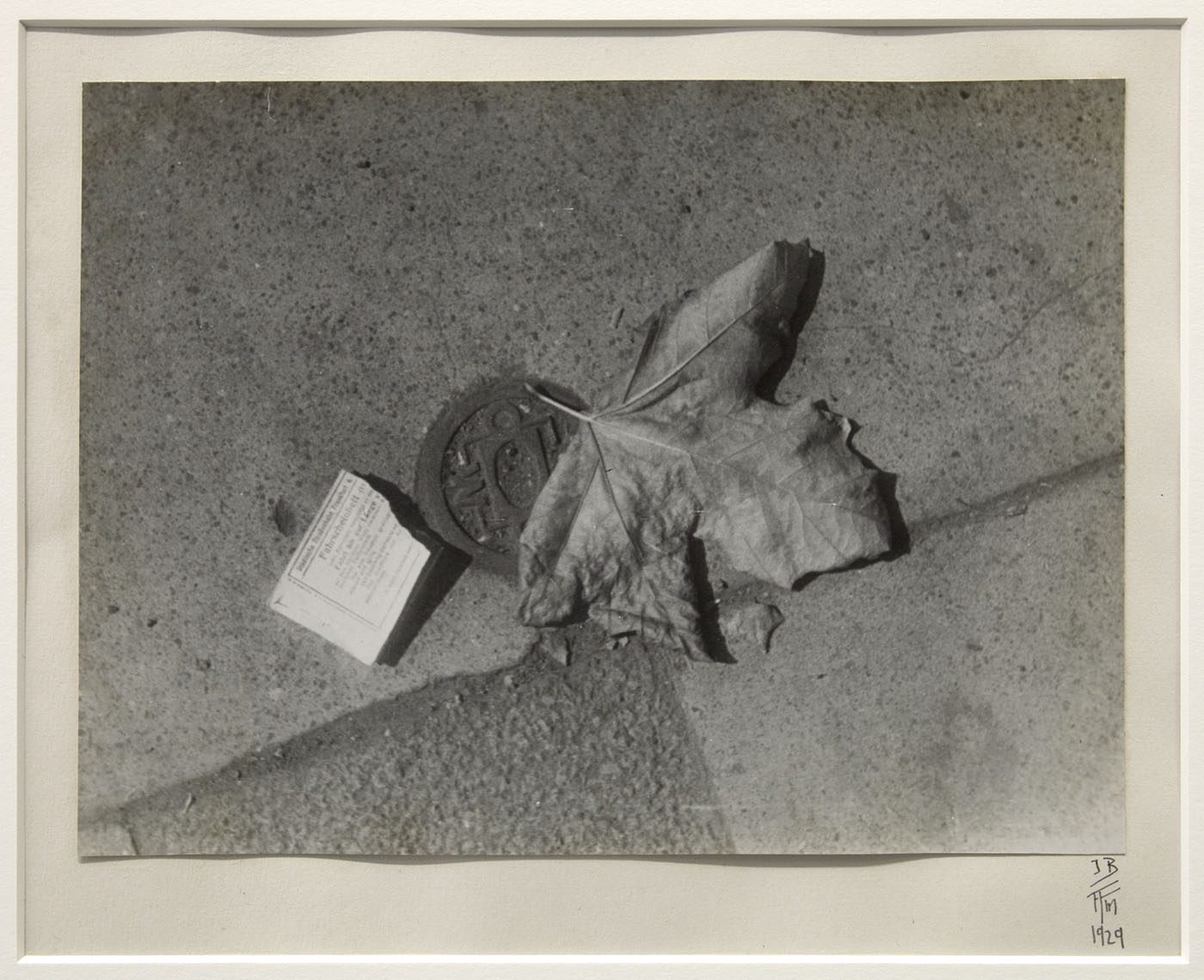


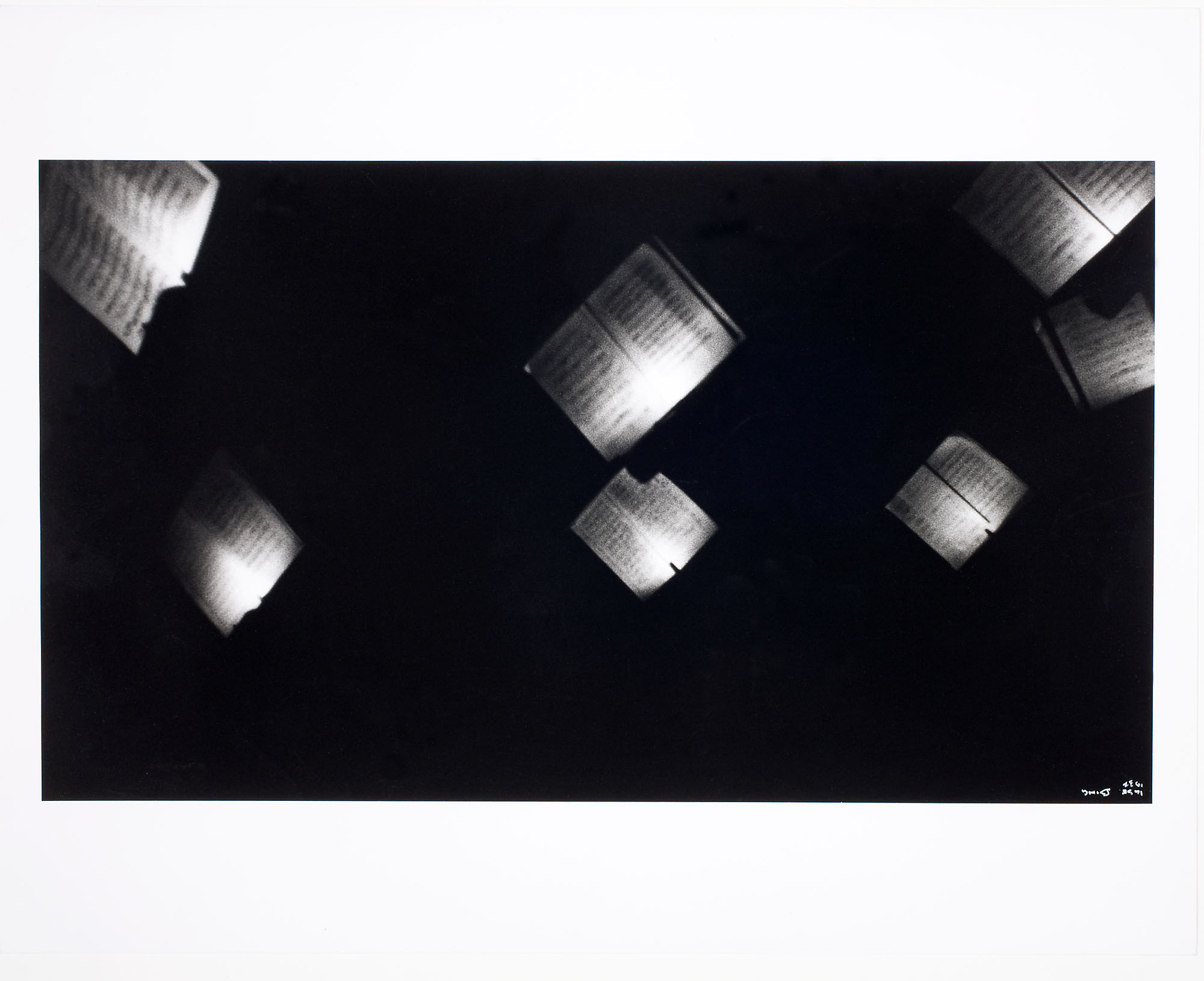
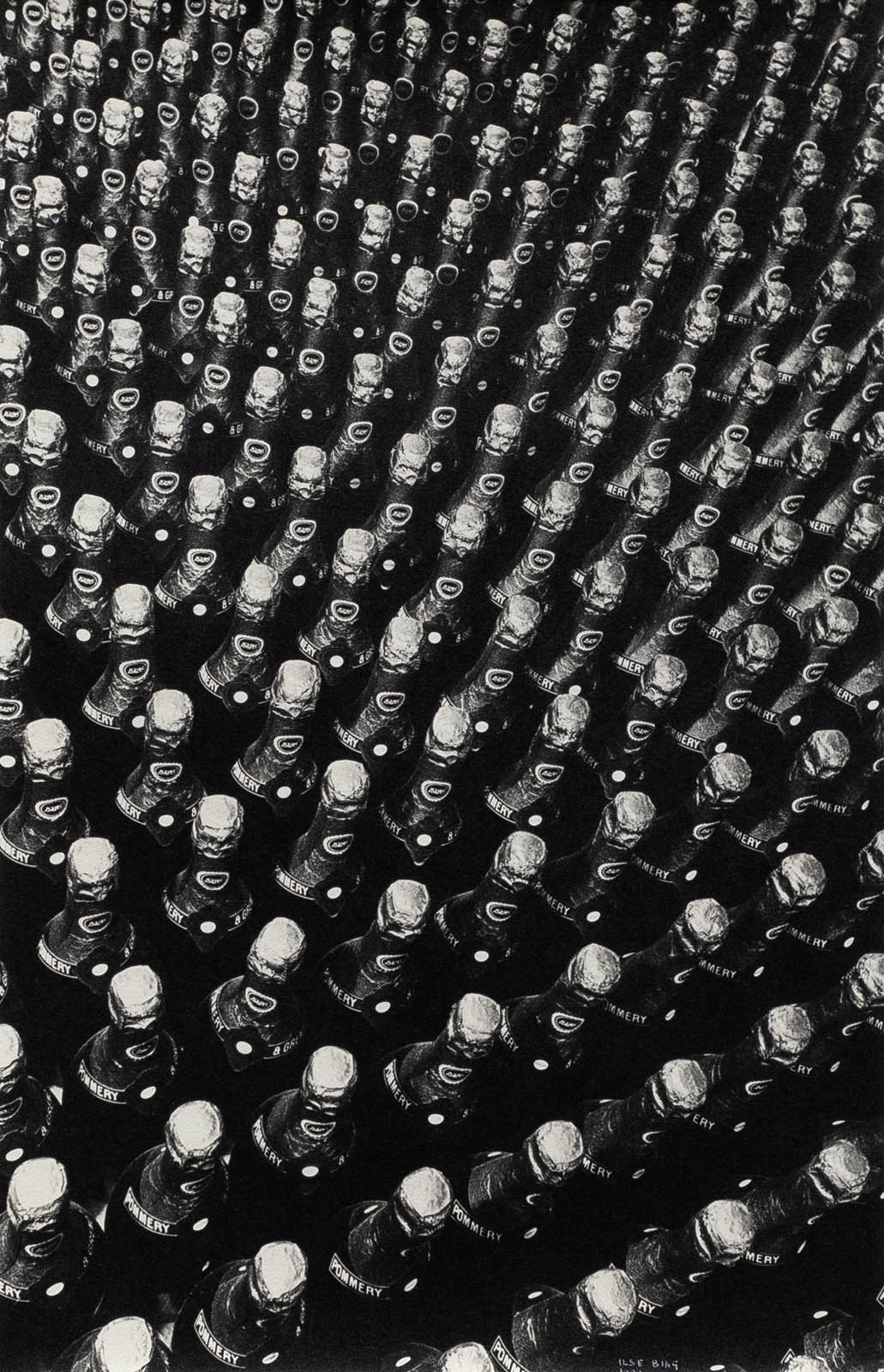
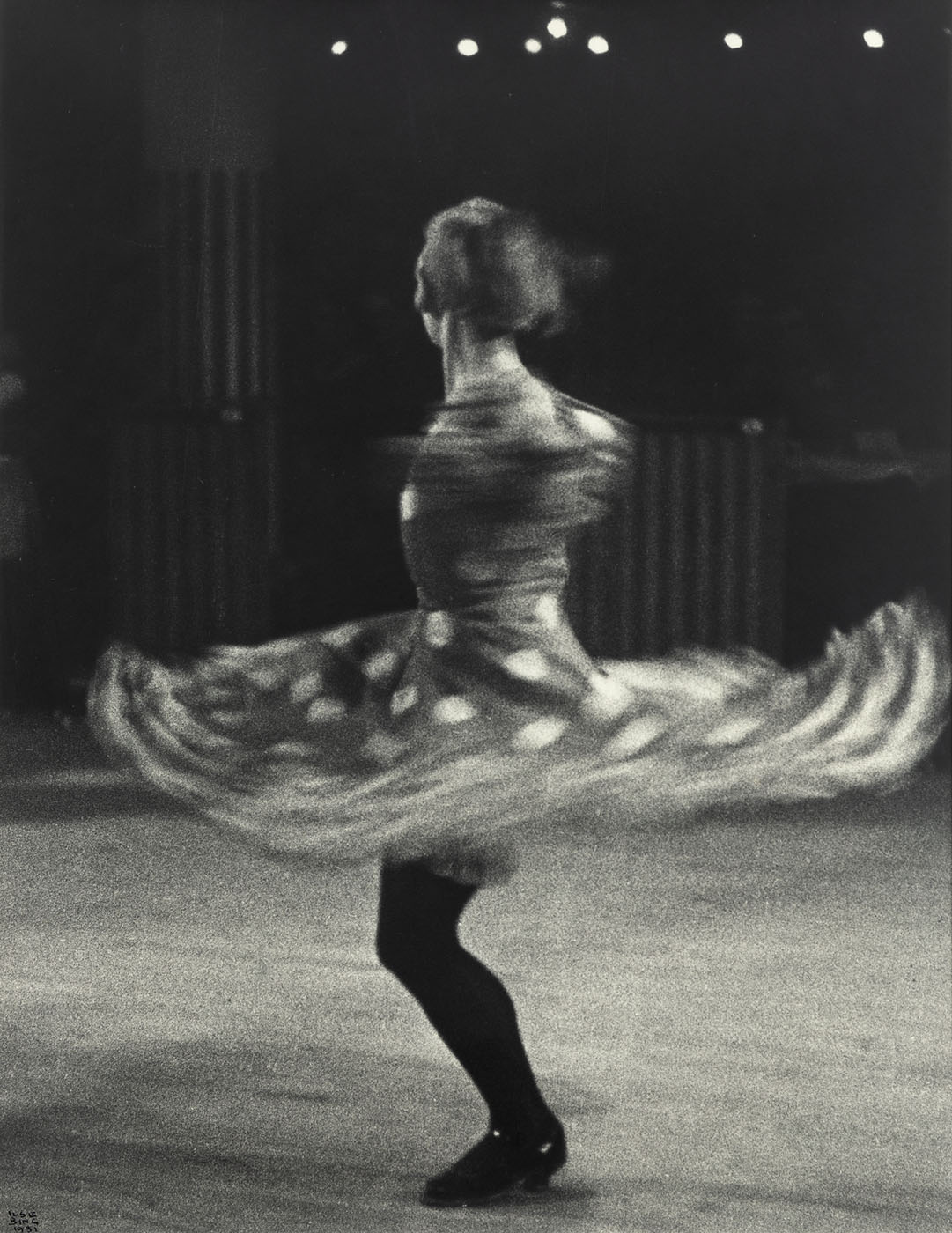
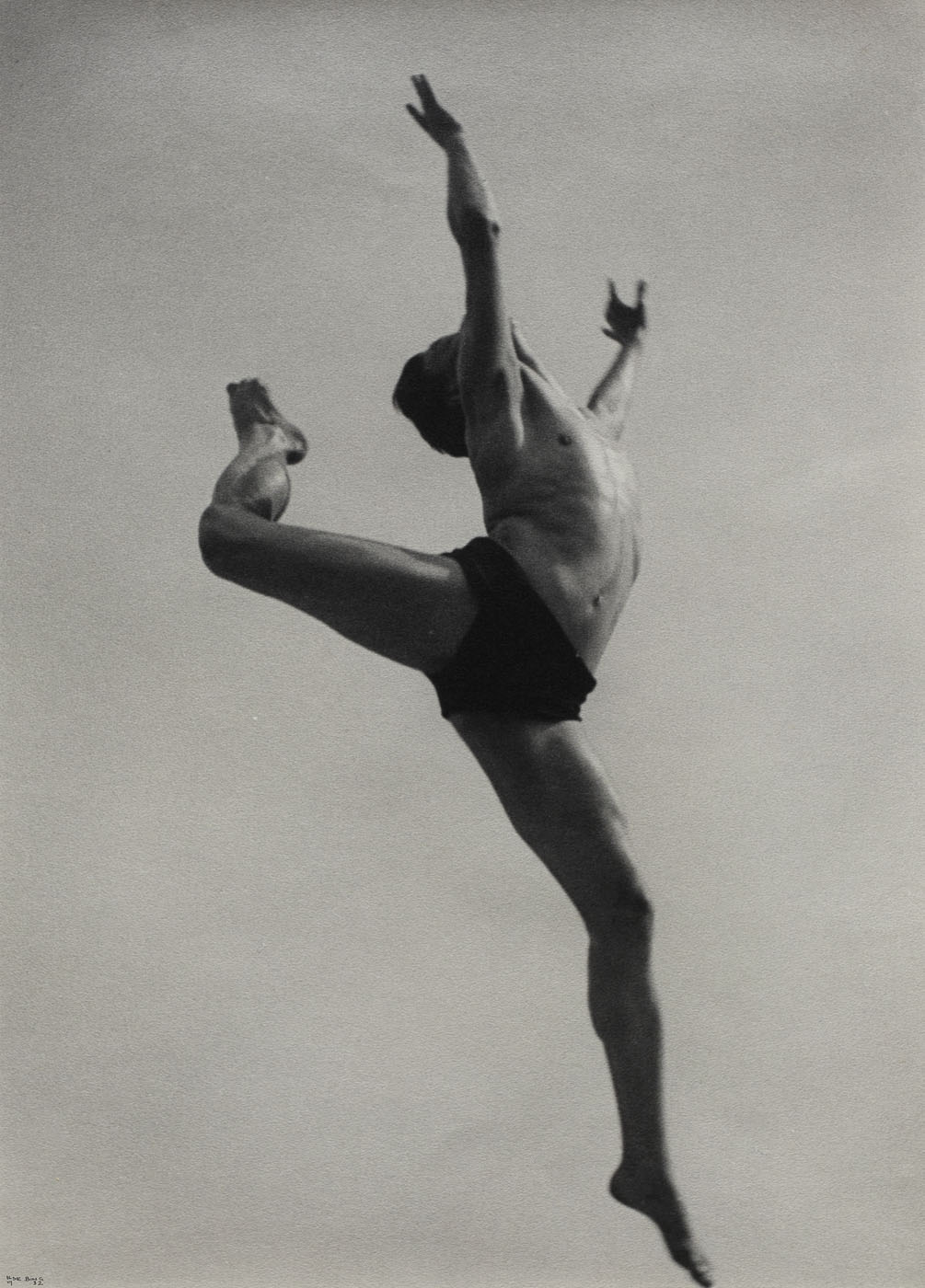

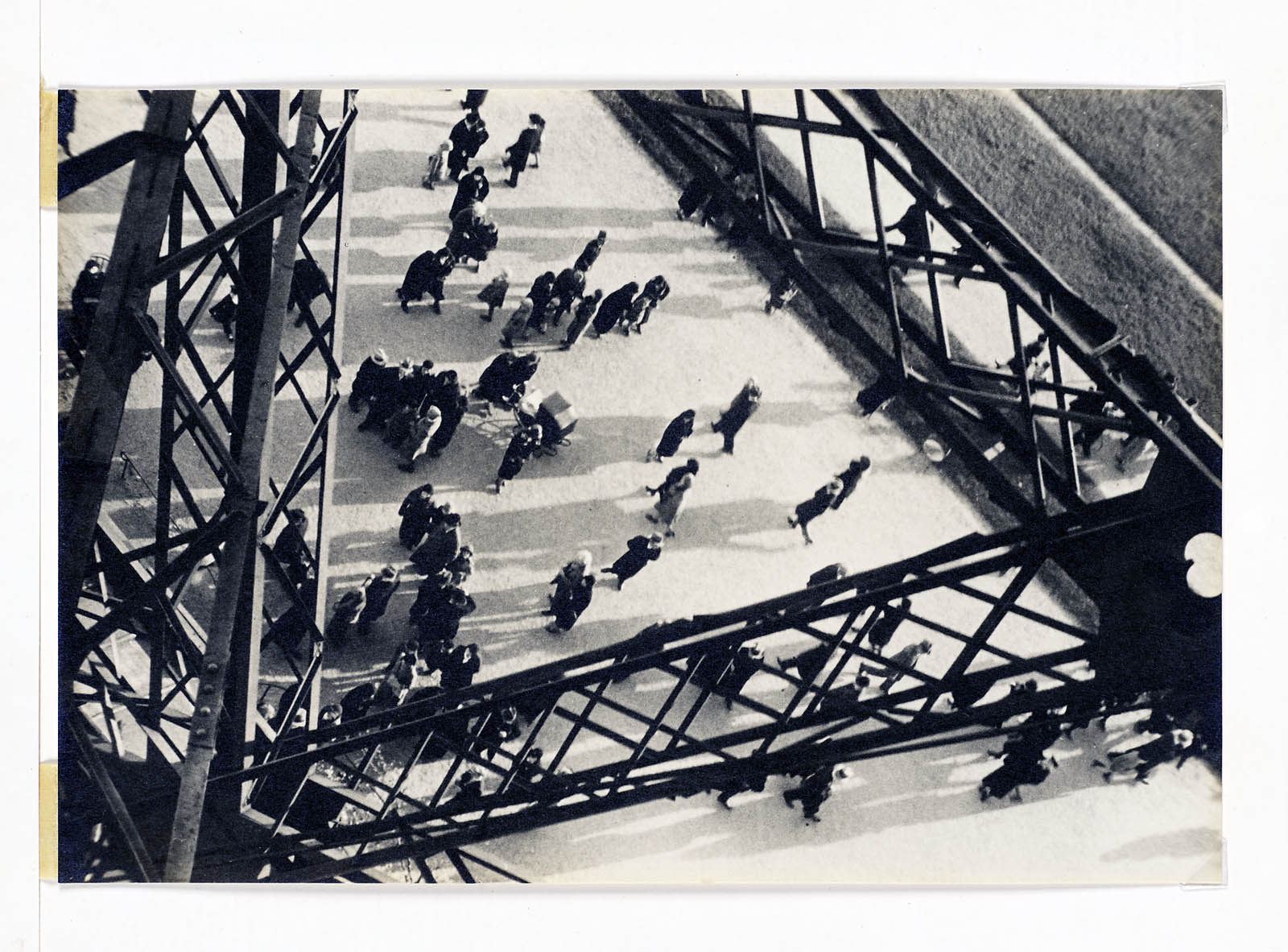
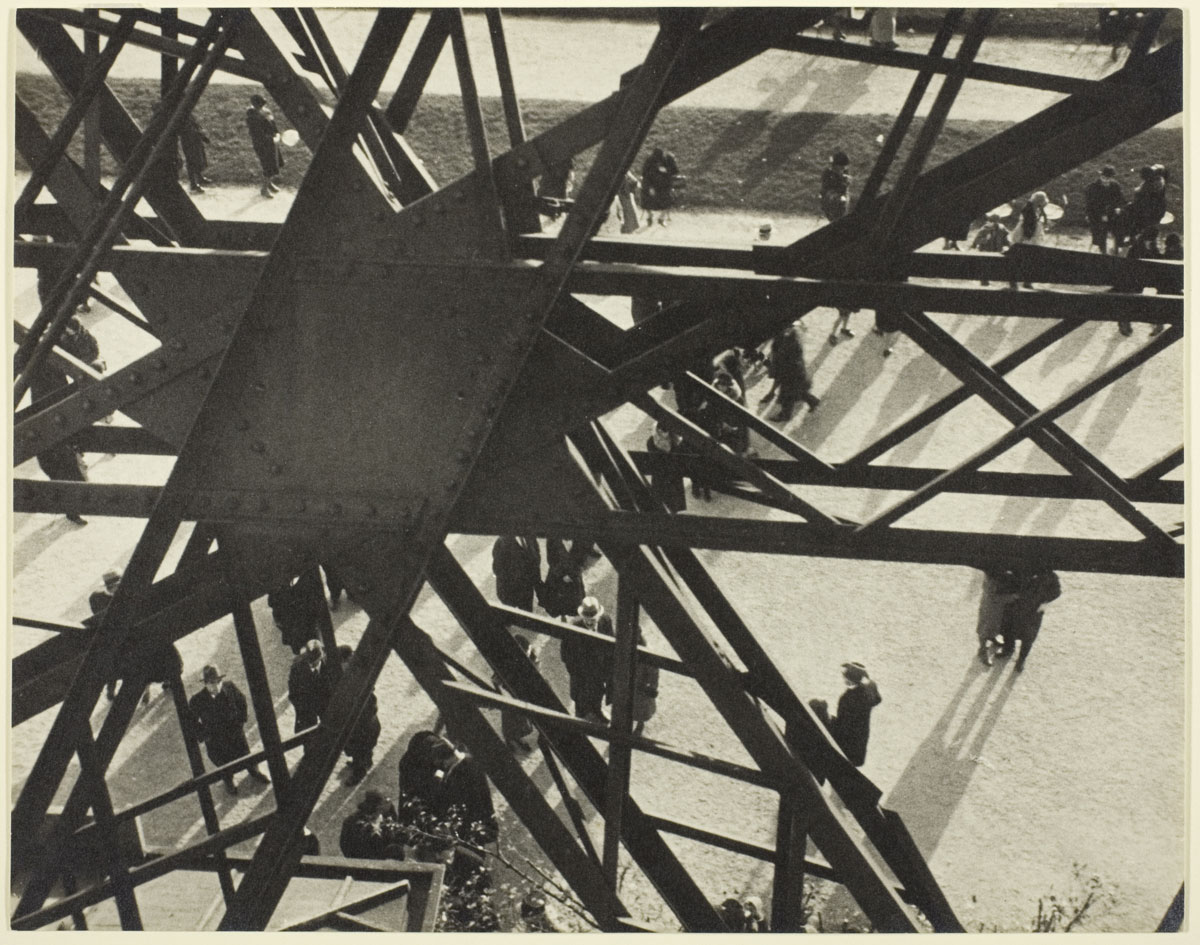

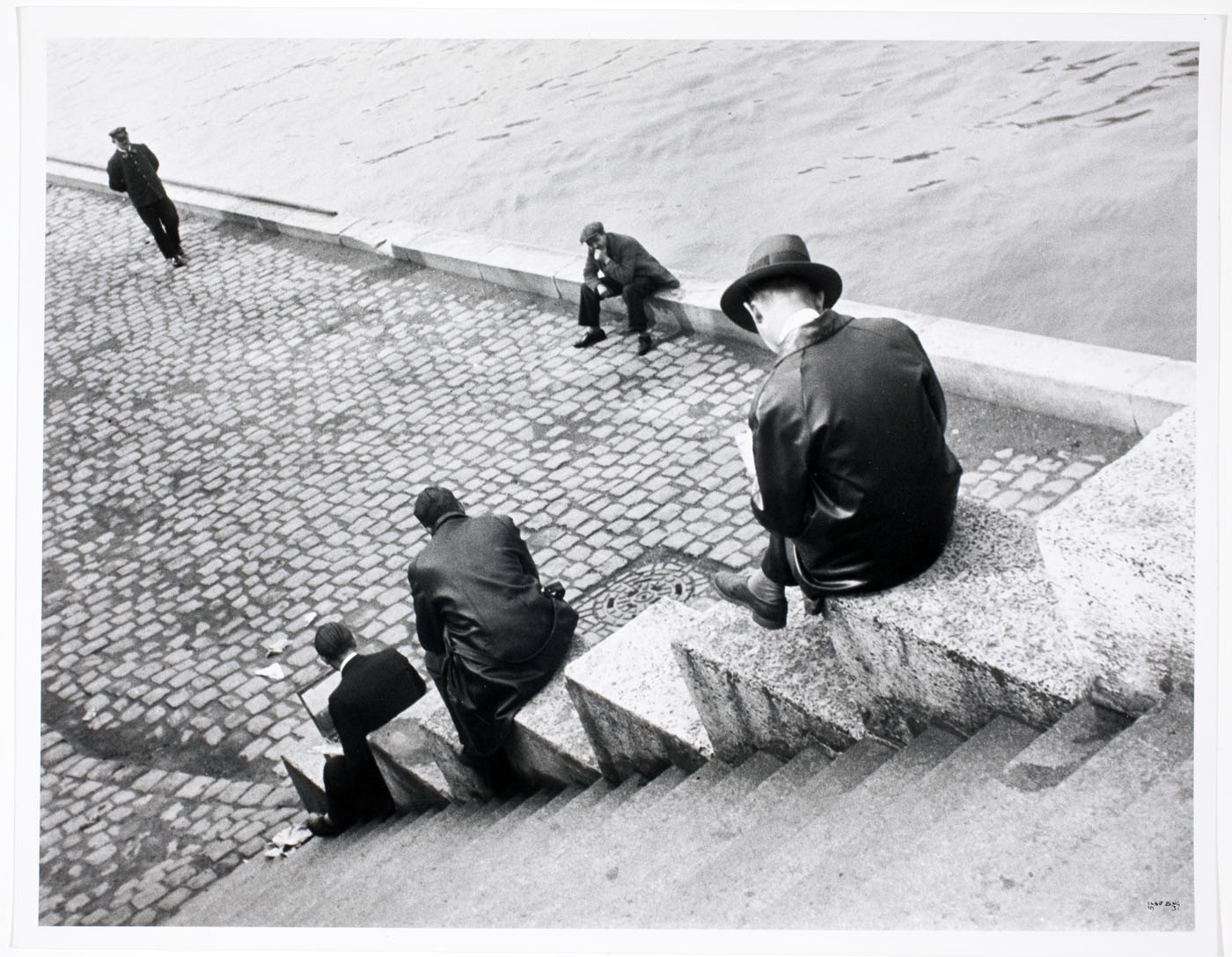
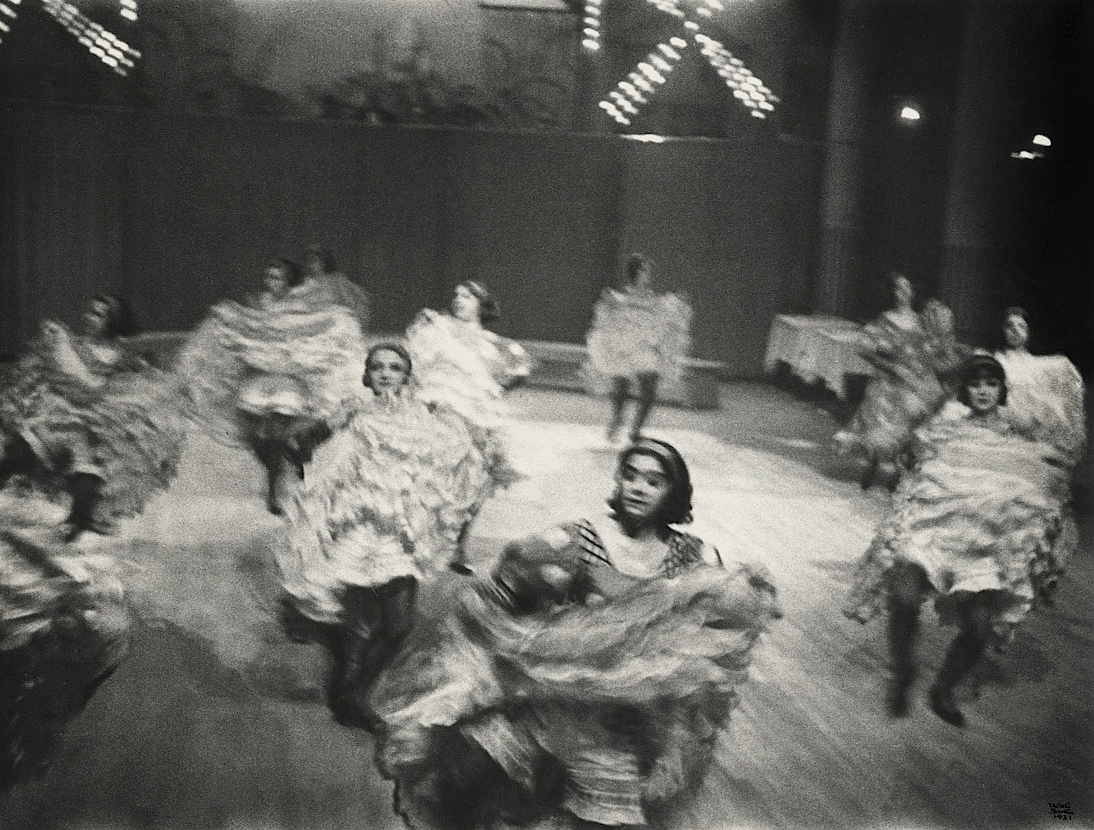


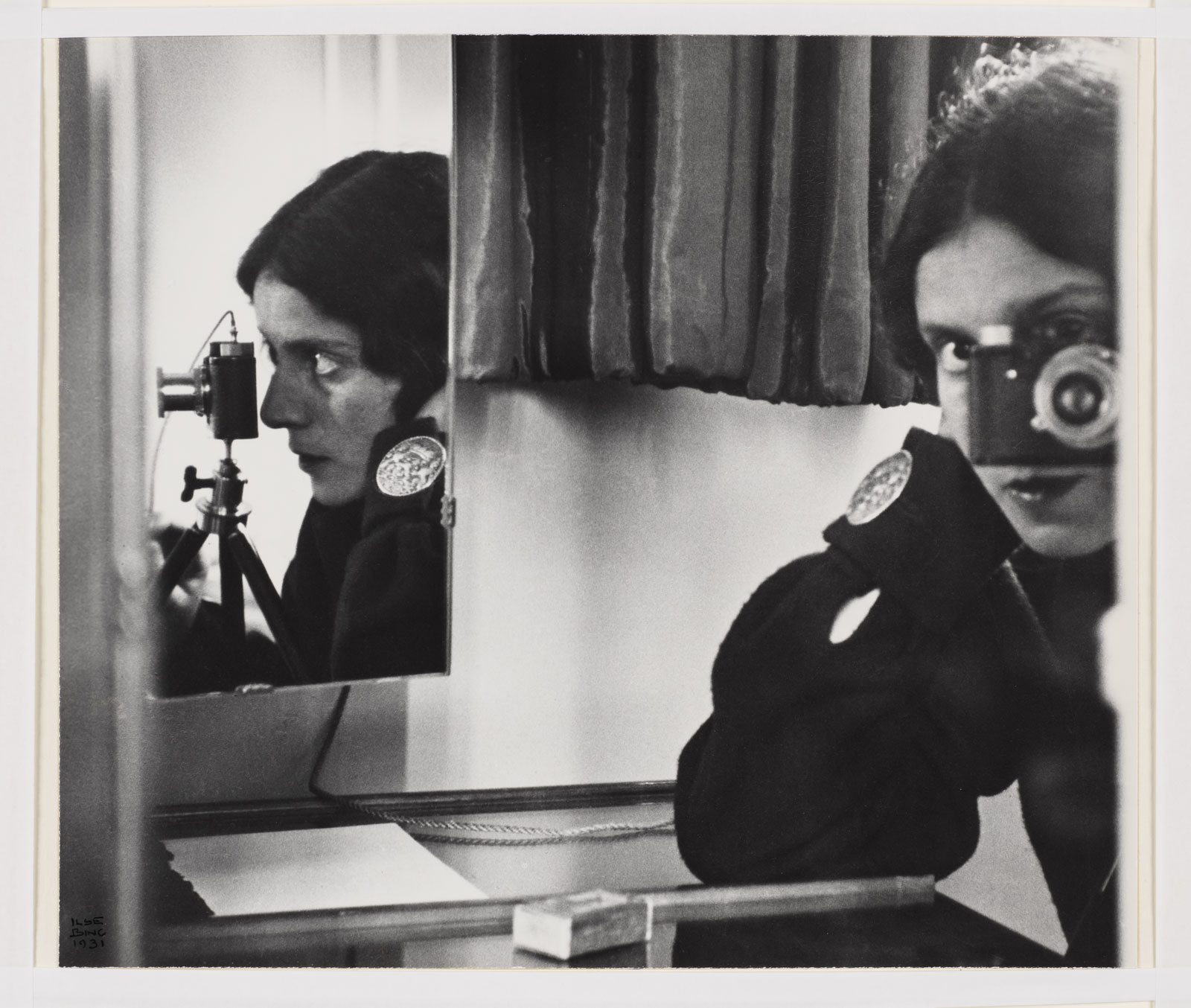
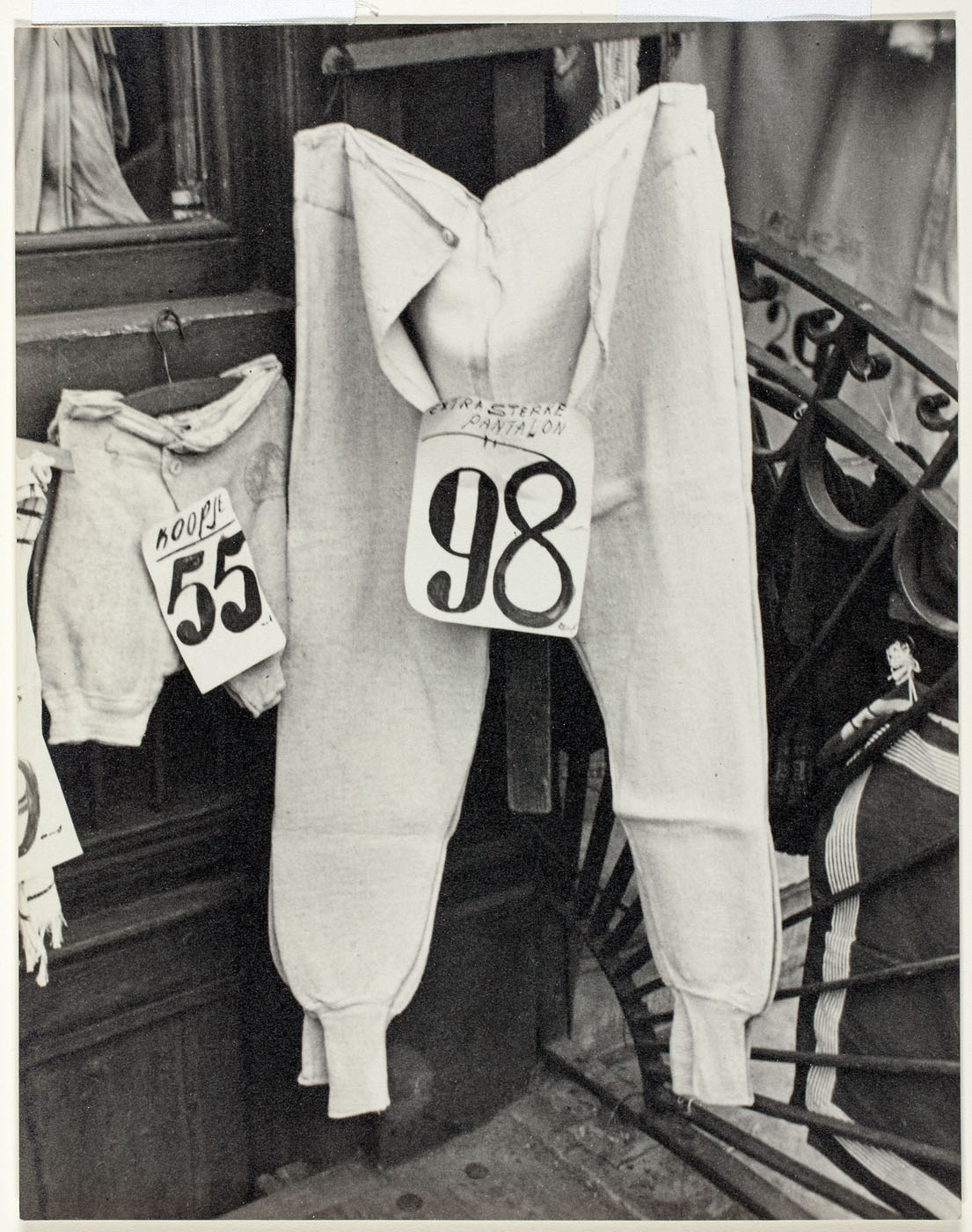


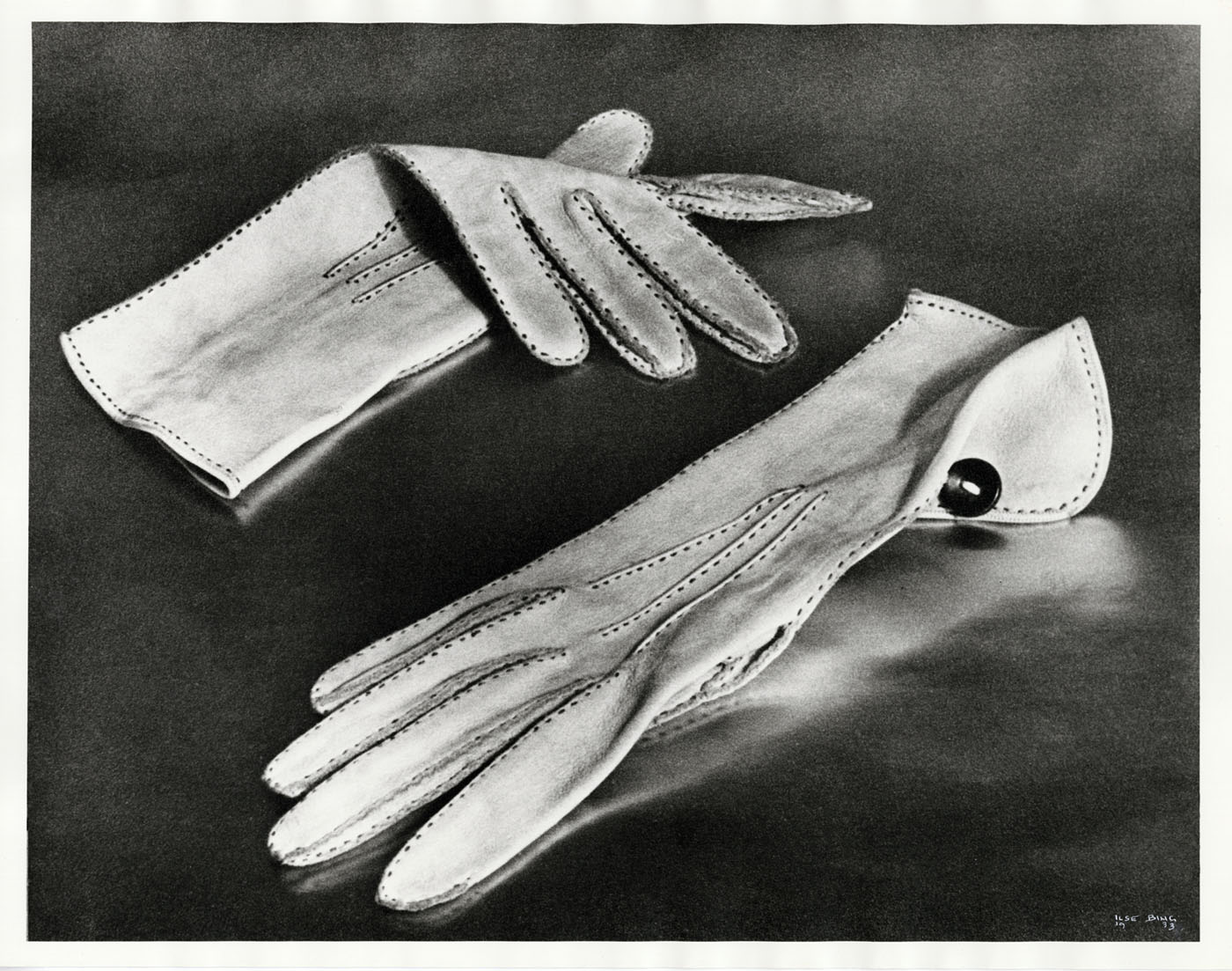


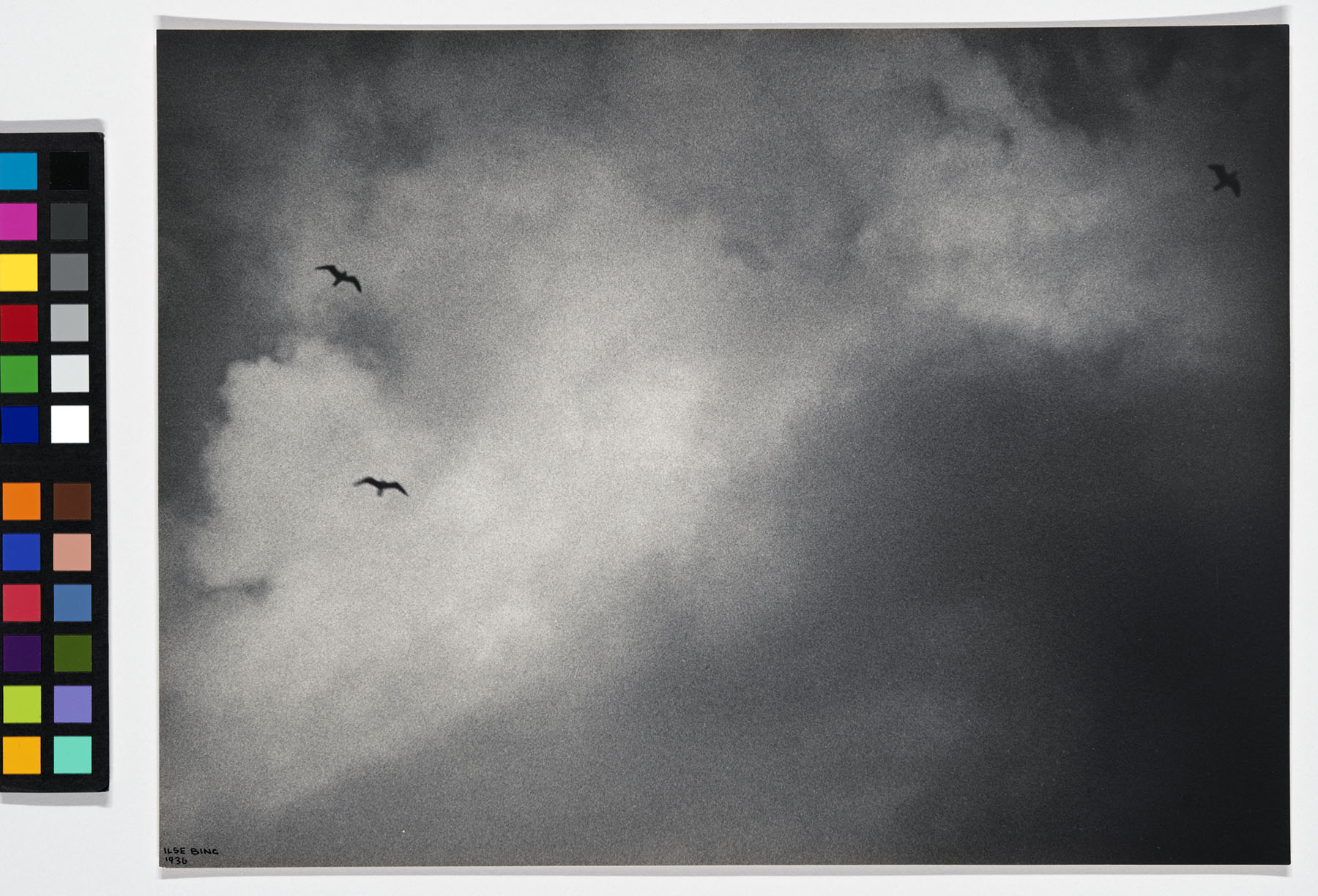
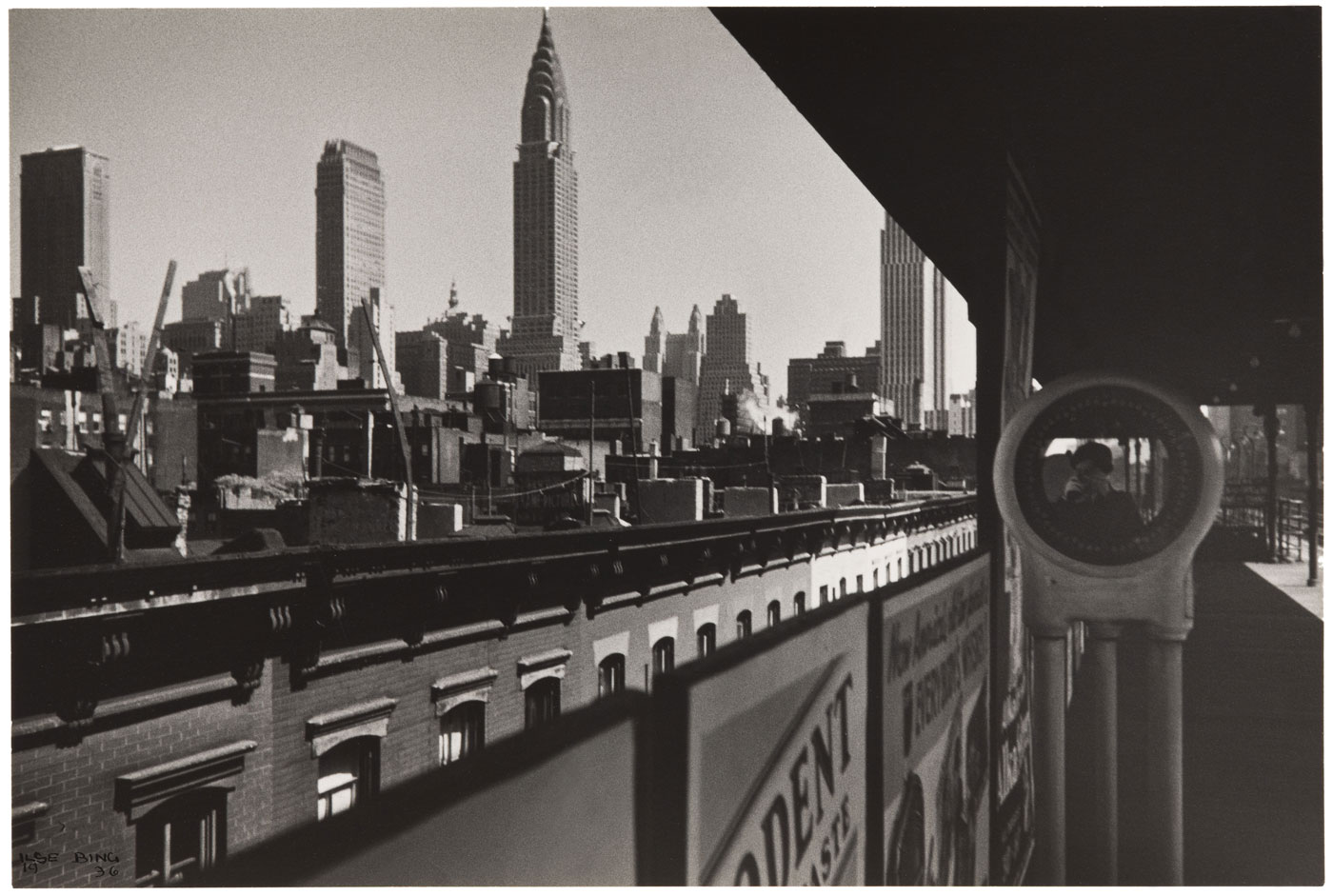


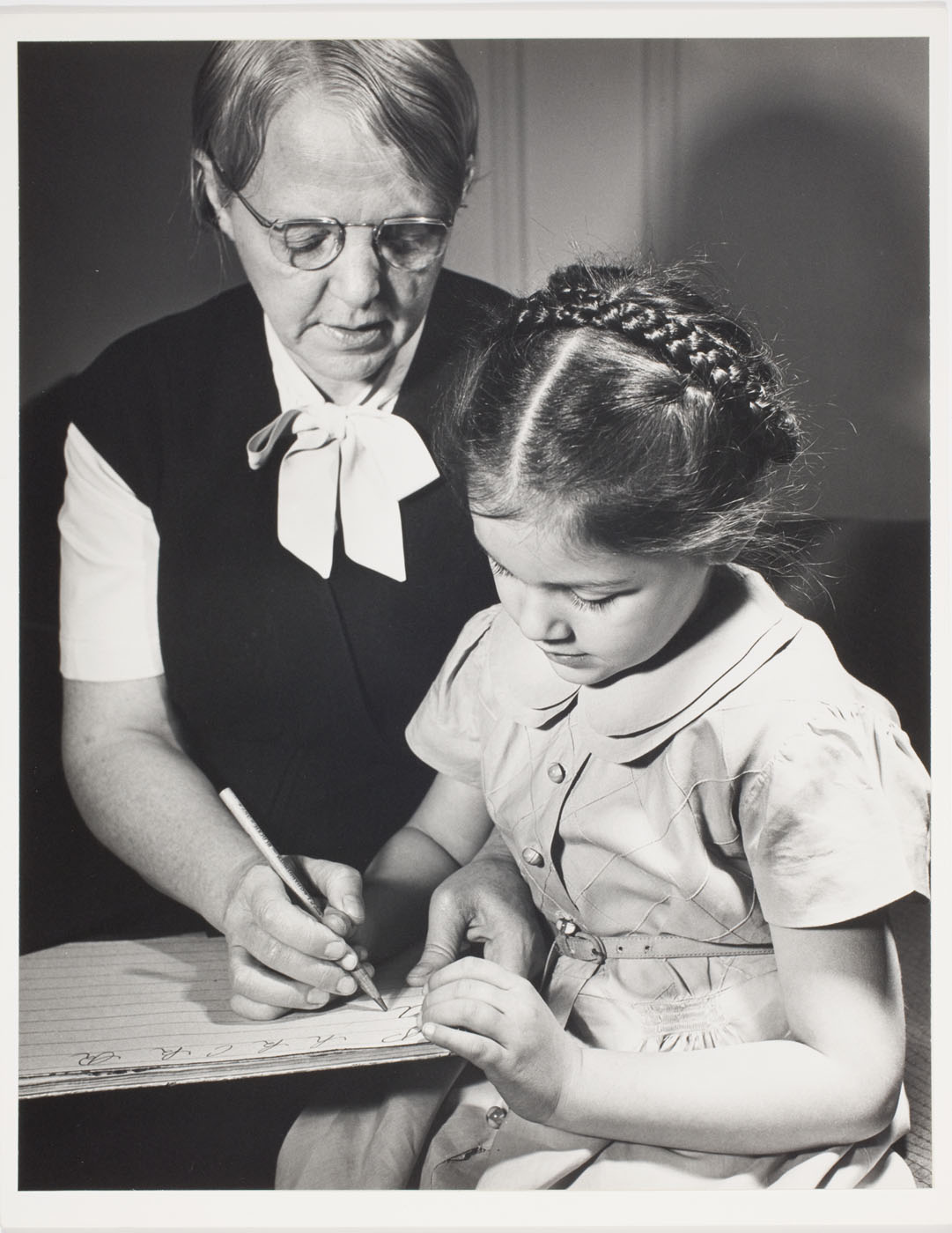
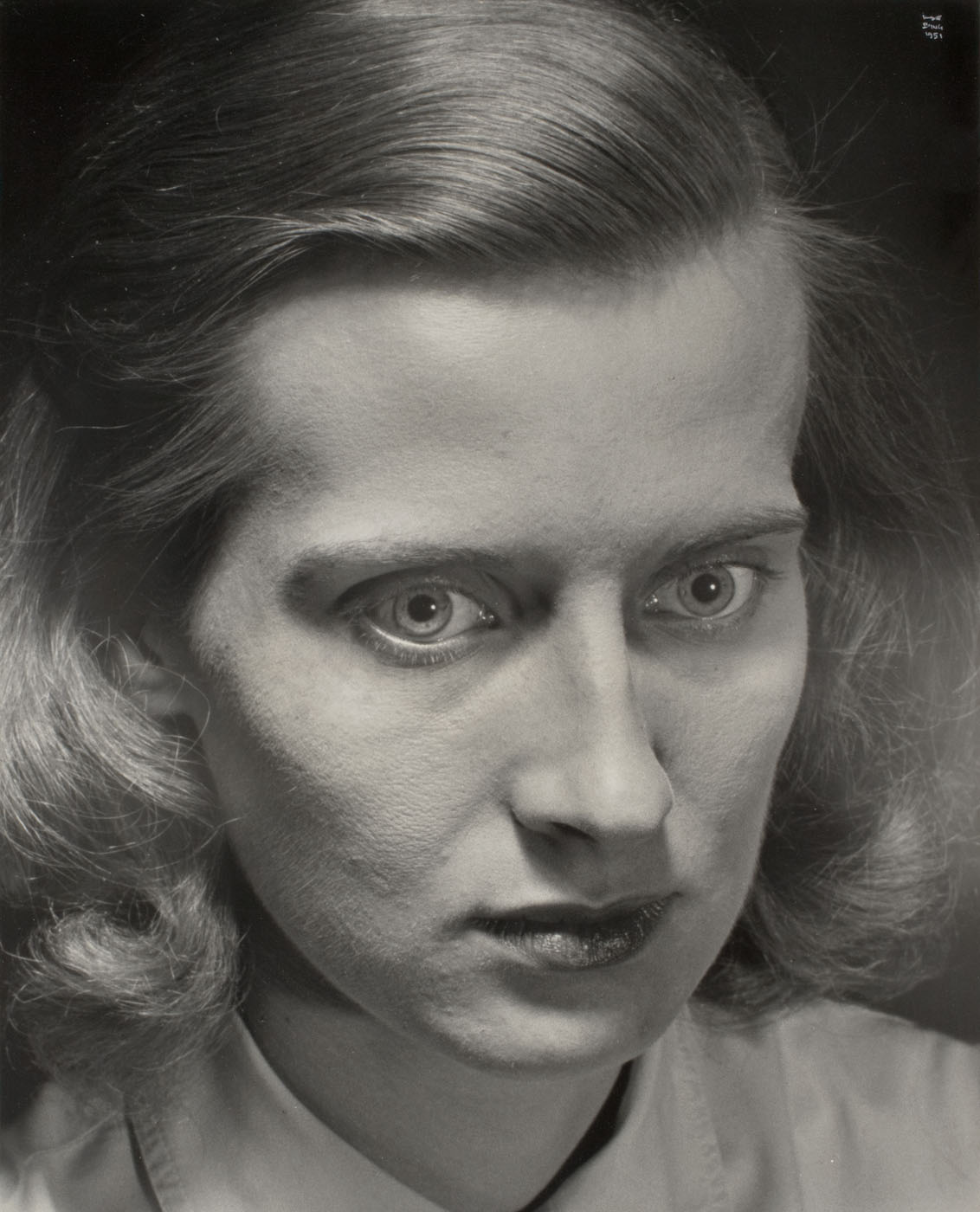

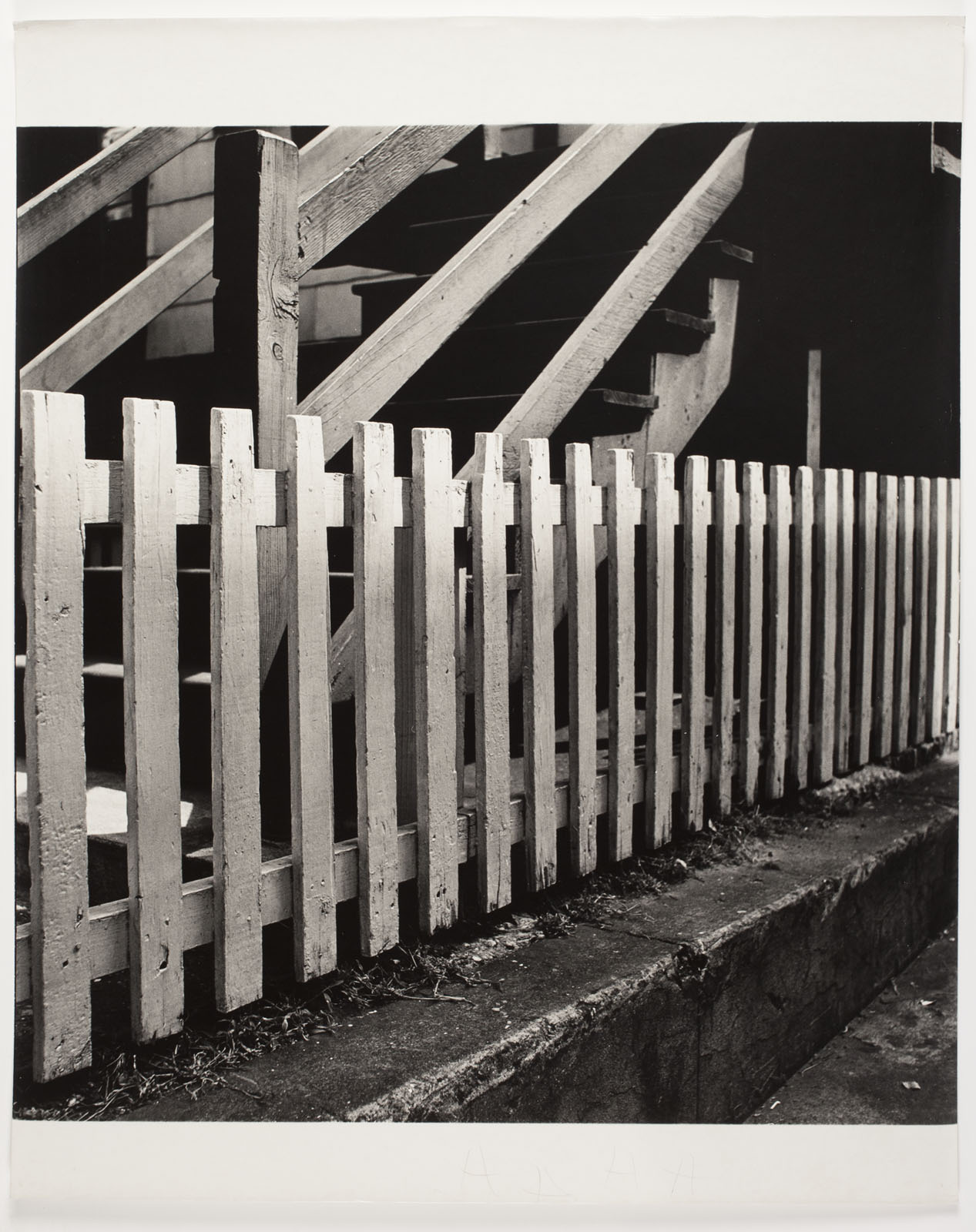

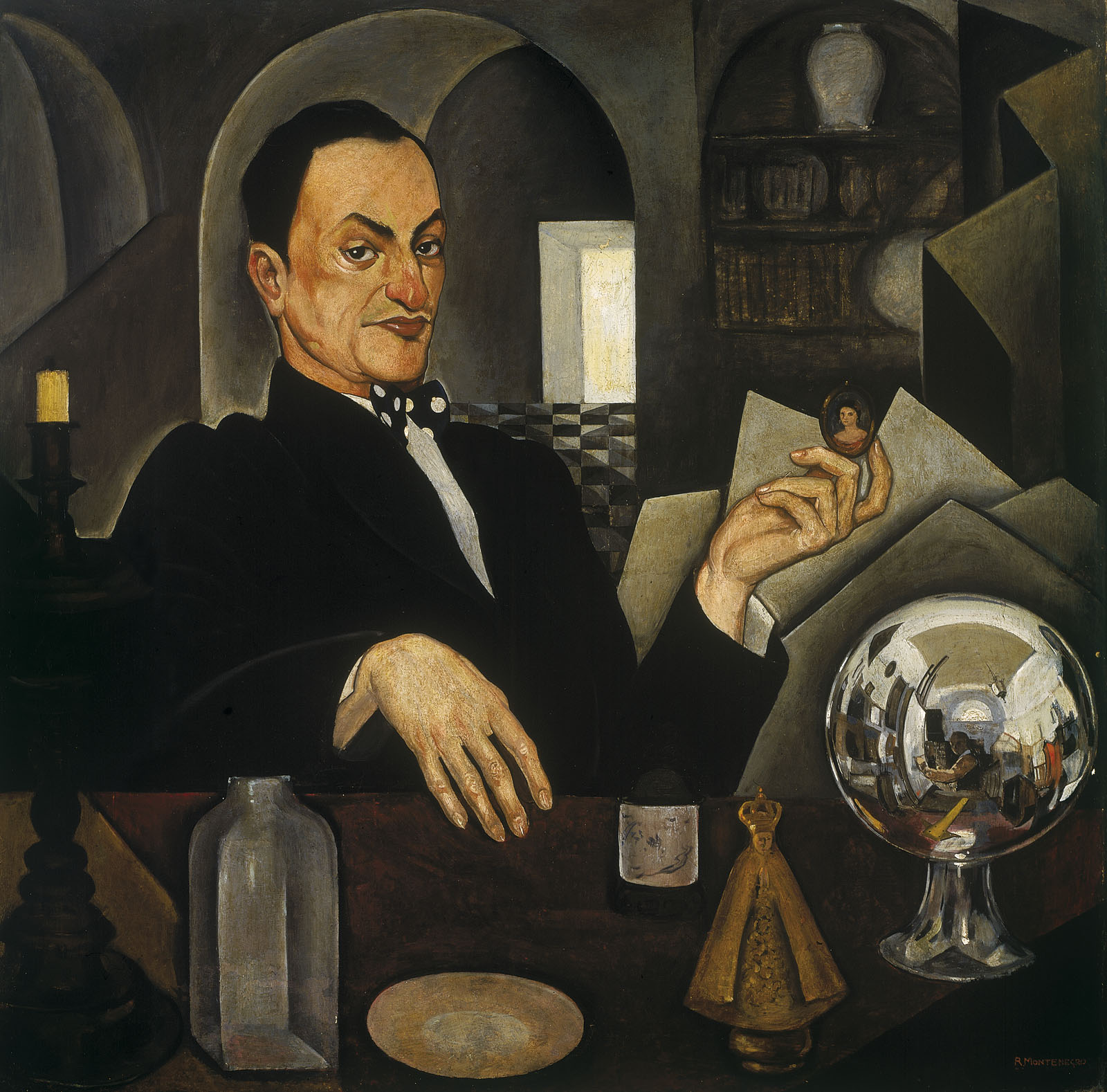
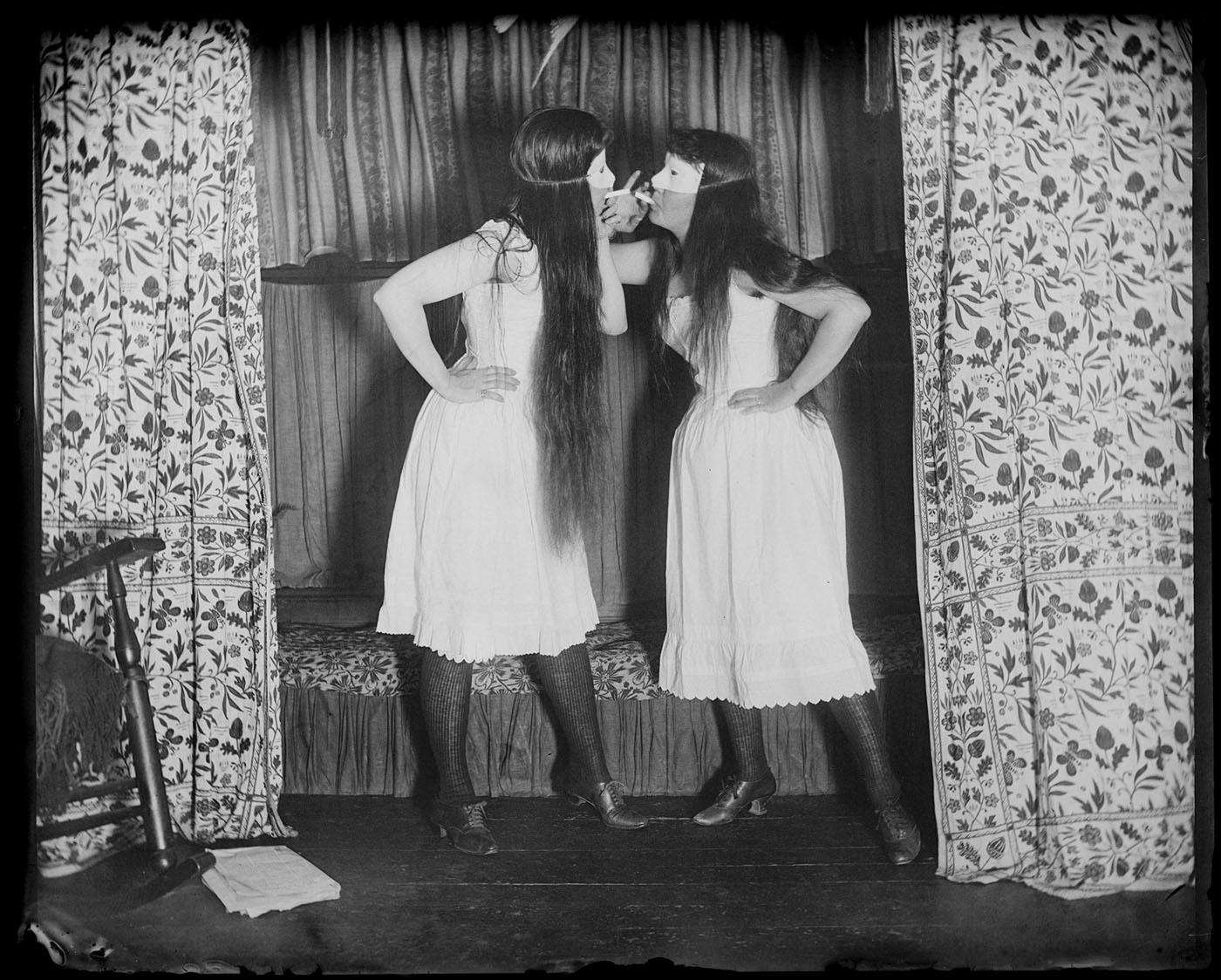

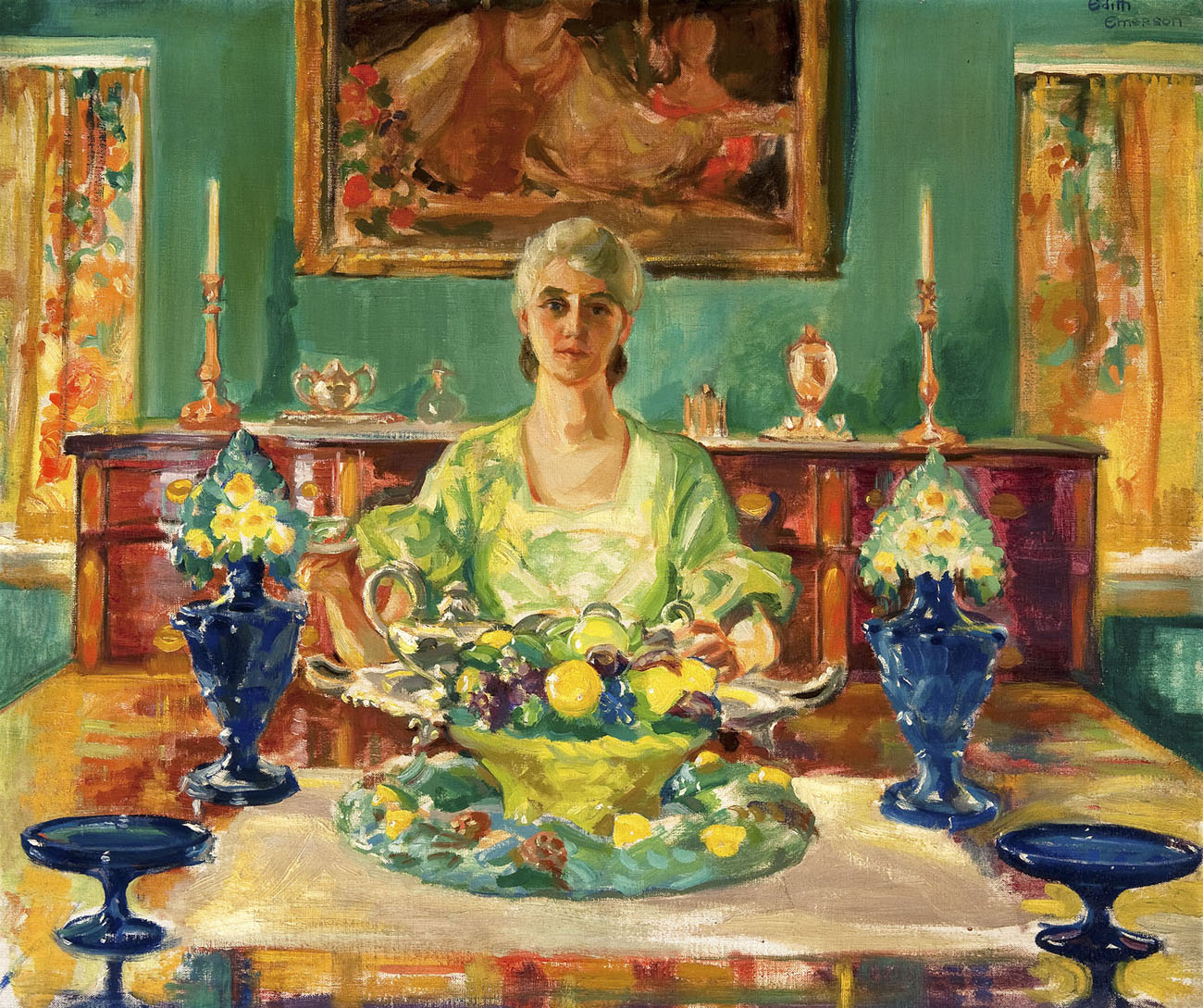

![Marie Høeg (Norwegian, 1866-1949) 'Untitled [Marie Høeg and her brother in the studio]' c. 1895-1903](https://artblart.com/wp-content/uploads/2022/11/image-10_berghoeg-c.-1895-1903.jpg "Marie Høeg (Norwegian, 1866-1949) 'Untitled [Marie Høeg and her brother in the studio]' c. 1895-1903")


![Claude Cahun (French, 1894-1954) 'Untitled [Self portrait in profile, sitting cross legged]' 1920](https://artblart.com/wp-content/uploads/2022/11/claude-cahun-self-portrait-in-profile-sitting-cross-legged-1920.jpg "Claude Cahun (French, 1894-1954) 'Untitled [Self portrait in profile, sitting cross legged]' 1920")
![Anonymous photographer (France). 'Untitled [Two Black actors (Charles Gregory and Jack Brown), one in drag, dance together on stage]' c. 1903](https://artblart.com/wp-content/uploads/2022/11/image-7_untitled-two-black-actors....jpg "Anonymous photographer (France). 'Untitled [Two Black actors (Charles Gregory and Jack Brown), one in drag, dance together on stage]' c. 1903")
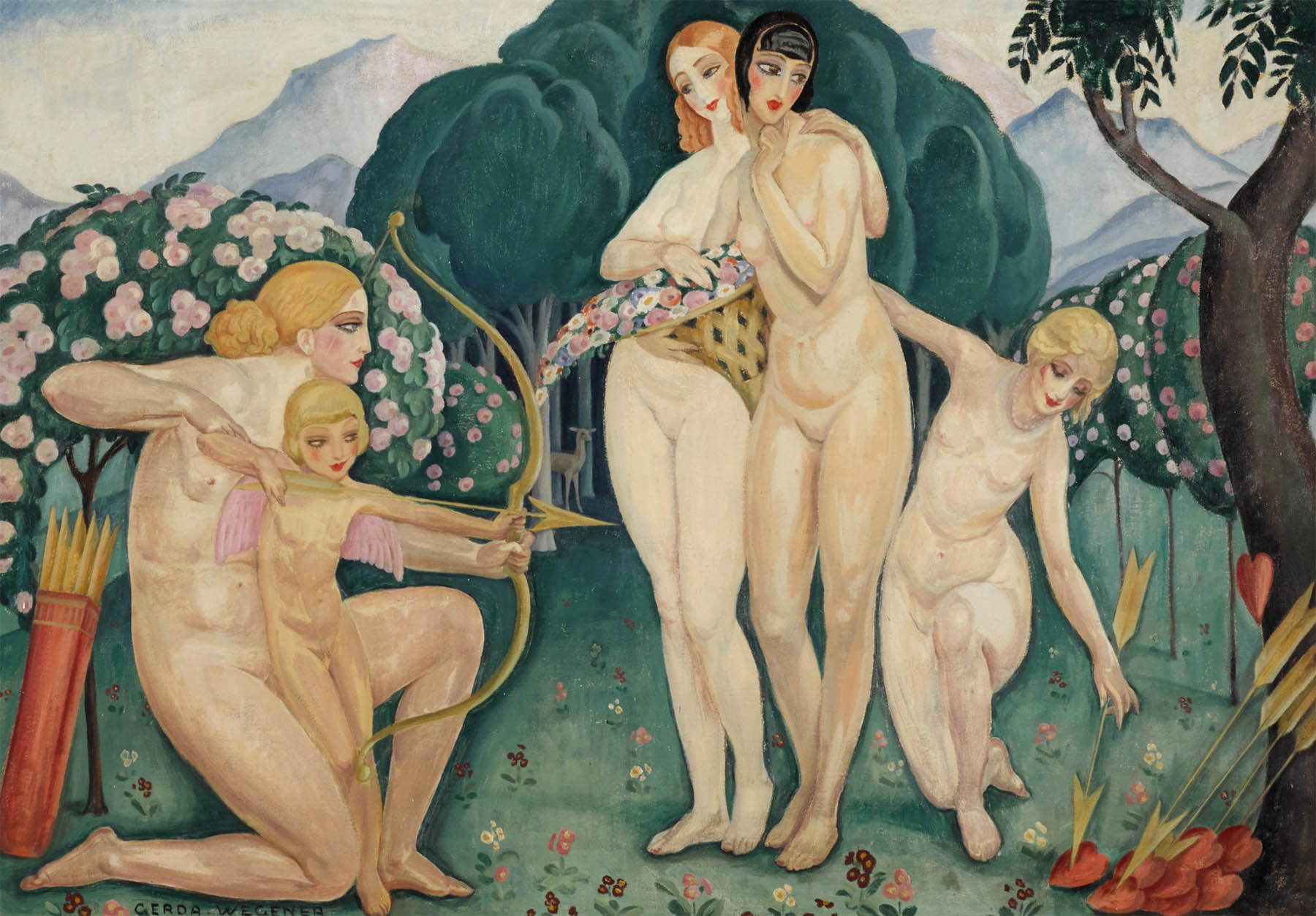

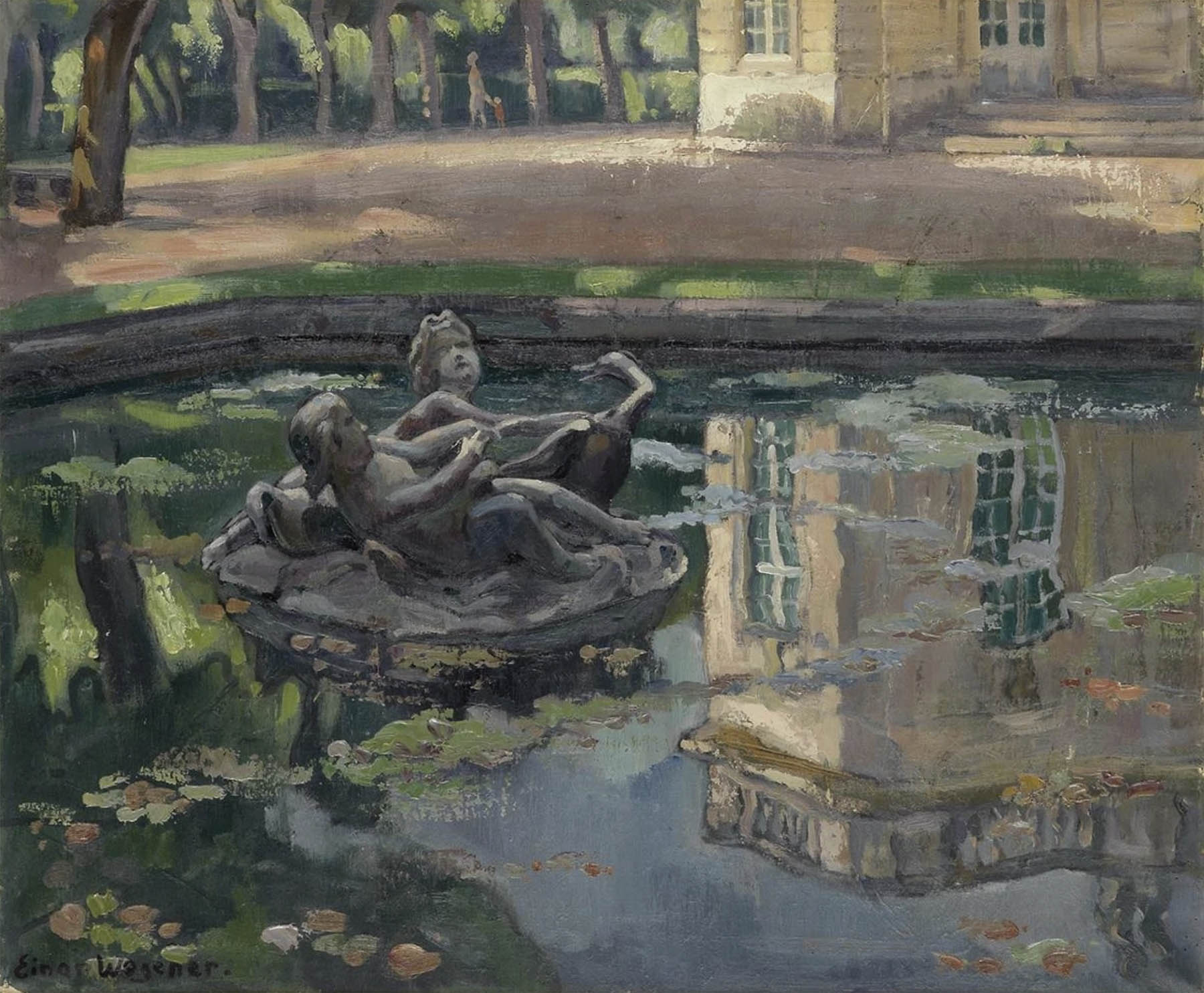
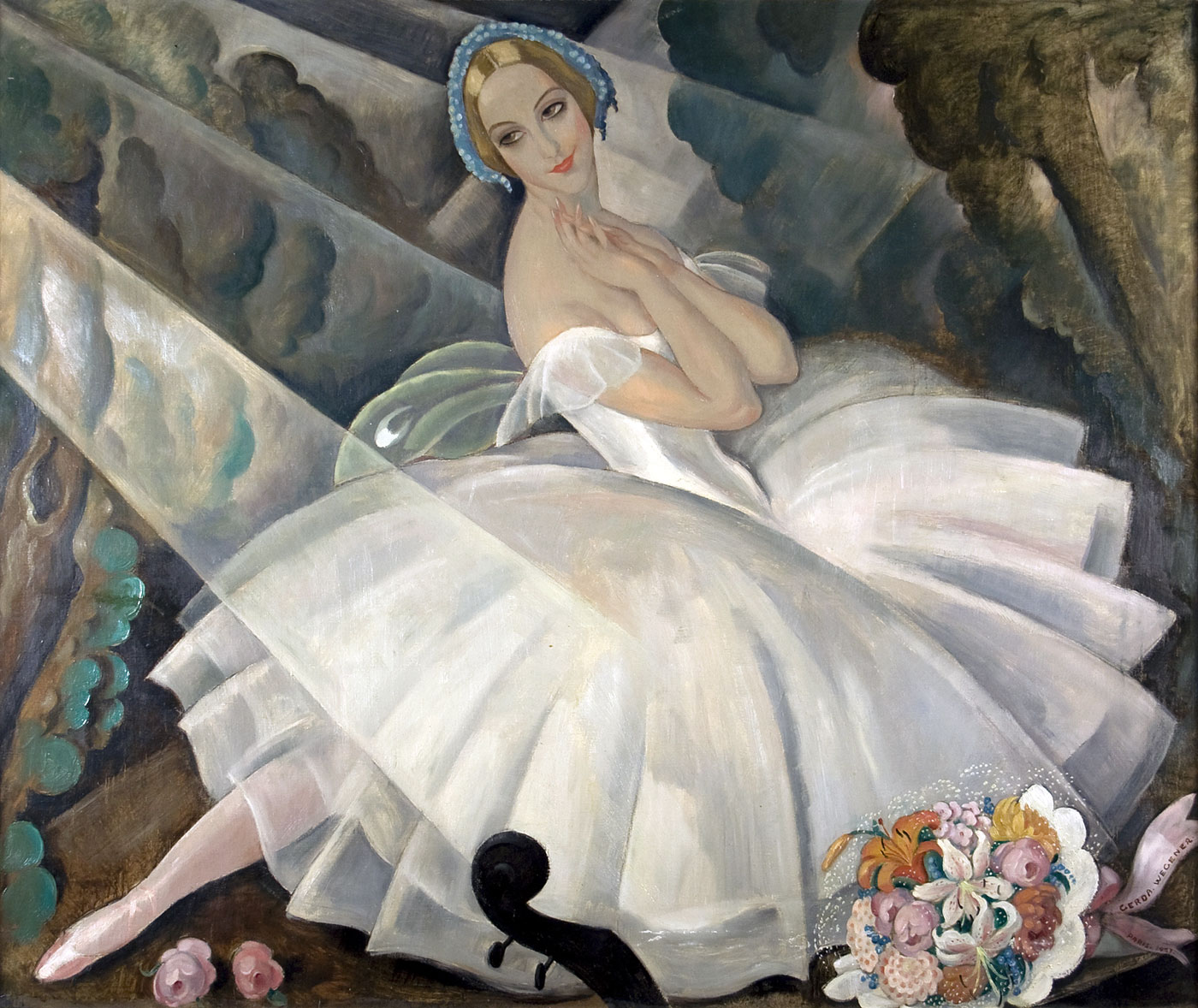


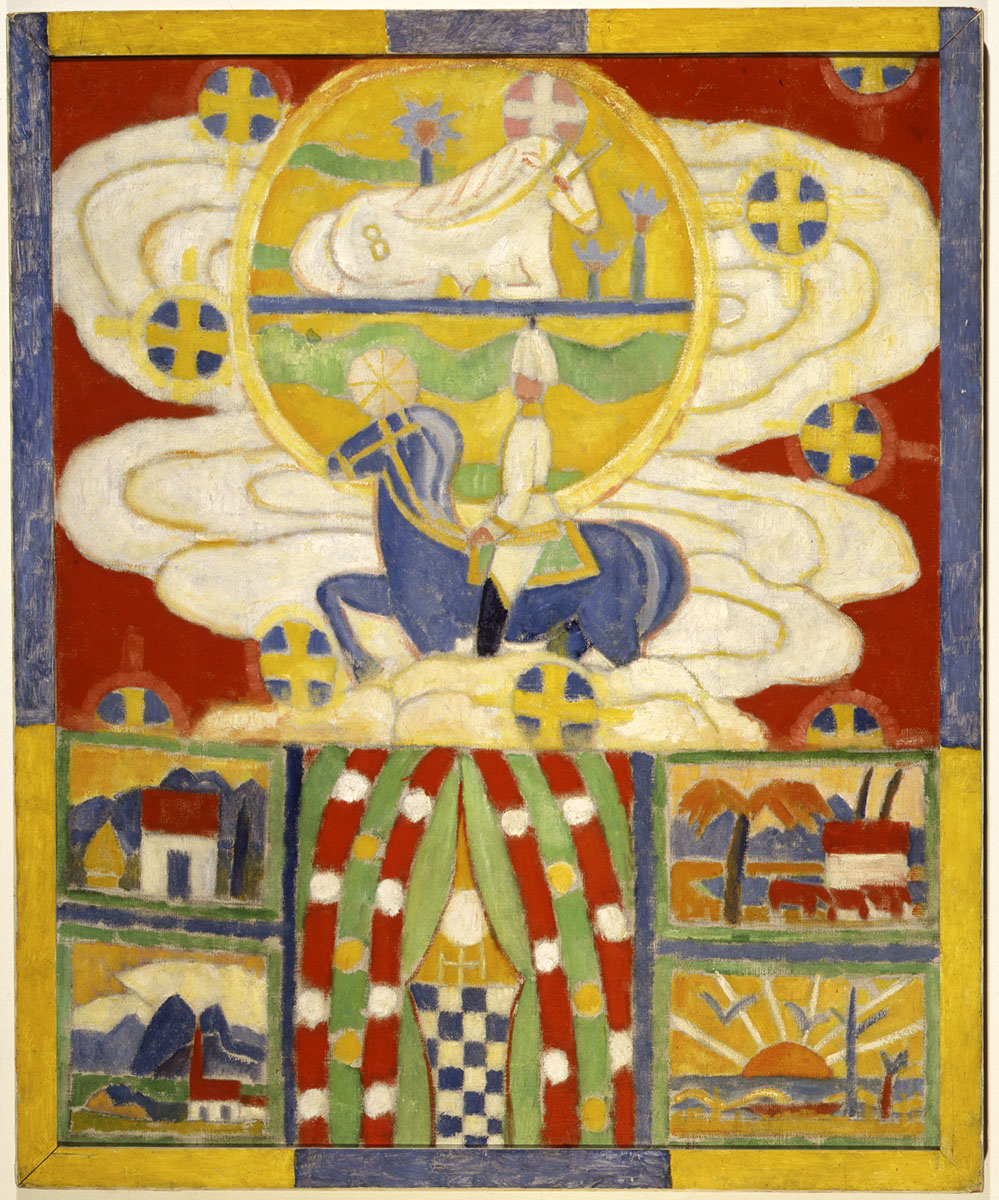

![Frances Hodgkins (New Zealand, 1869-1947) 'Friends (Double Portrait)' [Hannah Ritchie and Jane Saunders] 1922-1923](https://artblart.com/wp-content/uploads/2022/11/image-13_frances-hodgkins-friends-double-portrait.jpg "Frances Hodgkins (New Zealand, 1869-1947) 'Friends (Double Portrait)' [Hannah Ritchie and Jane Saunders] 1922-1923")


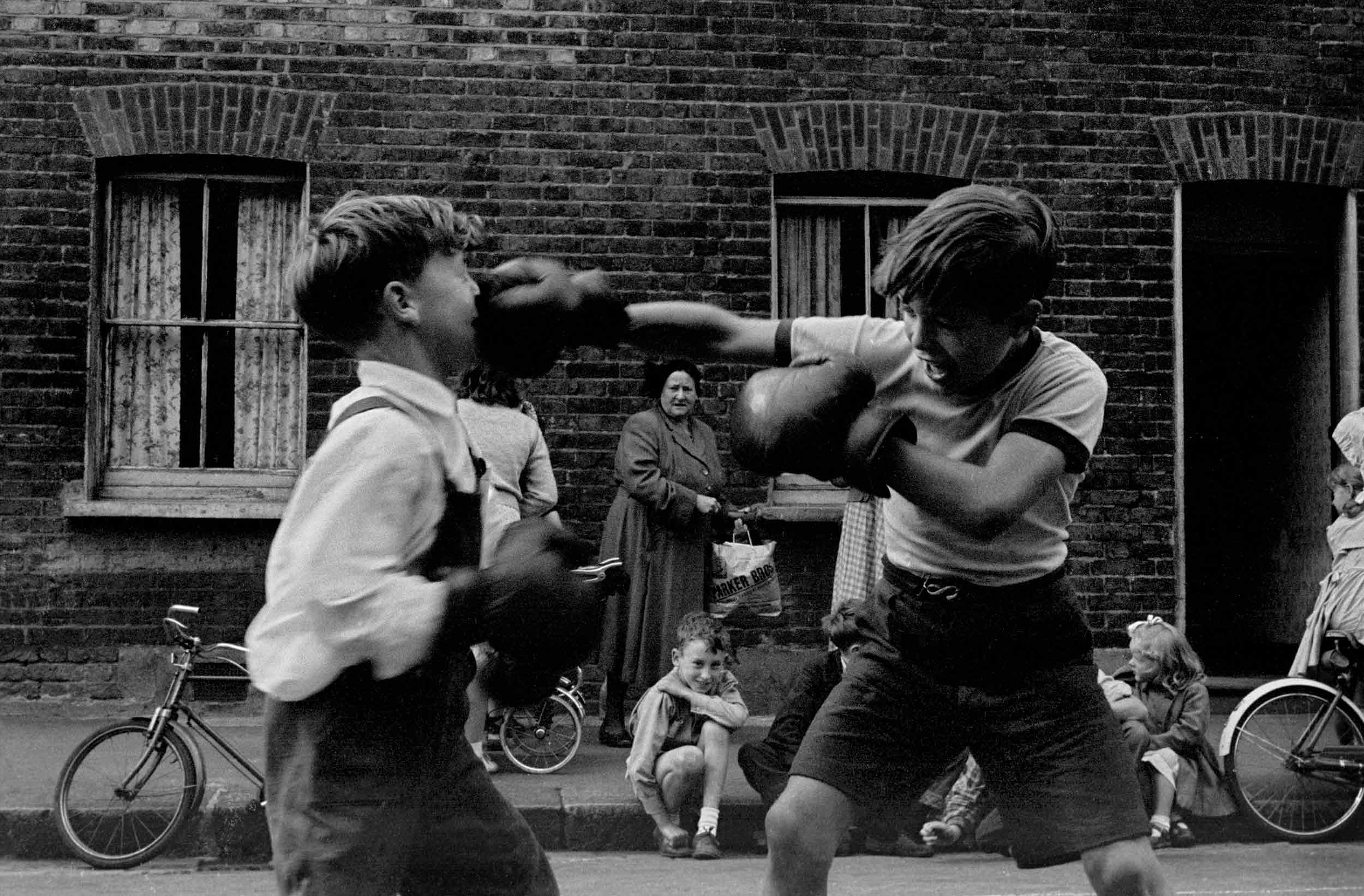
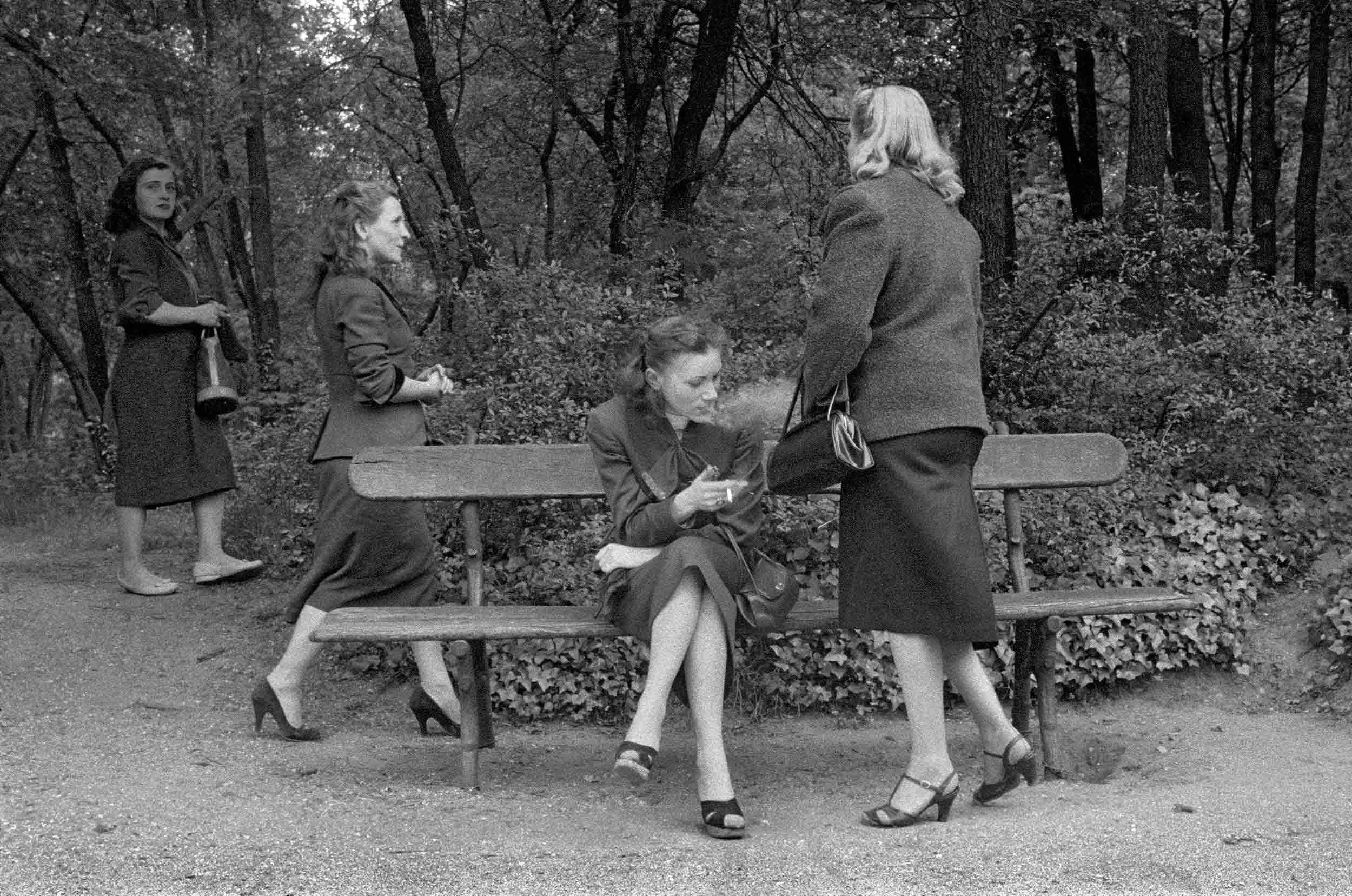
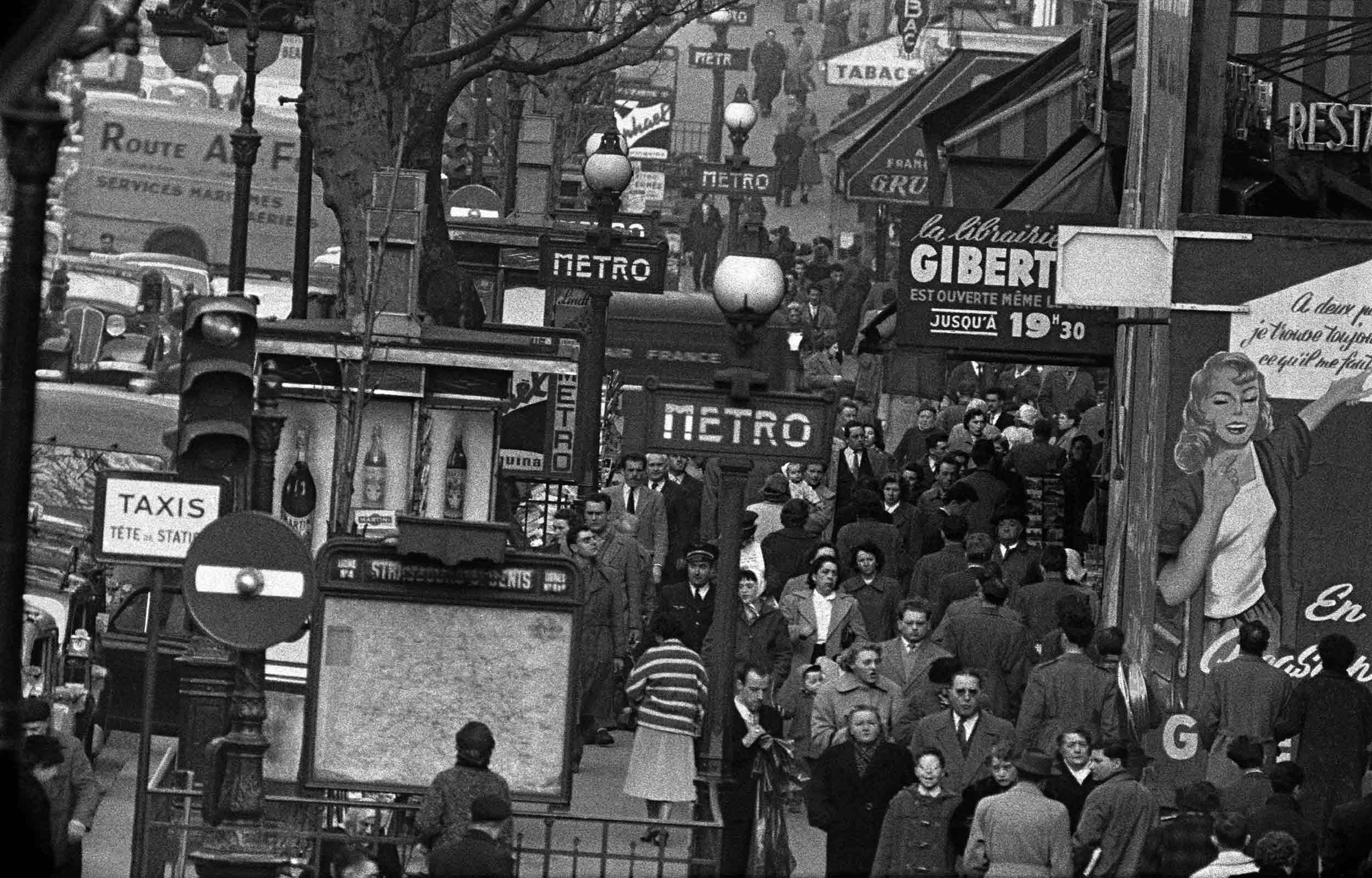
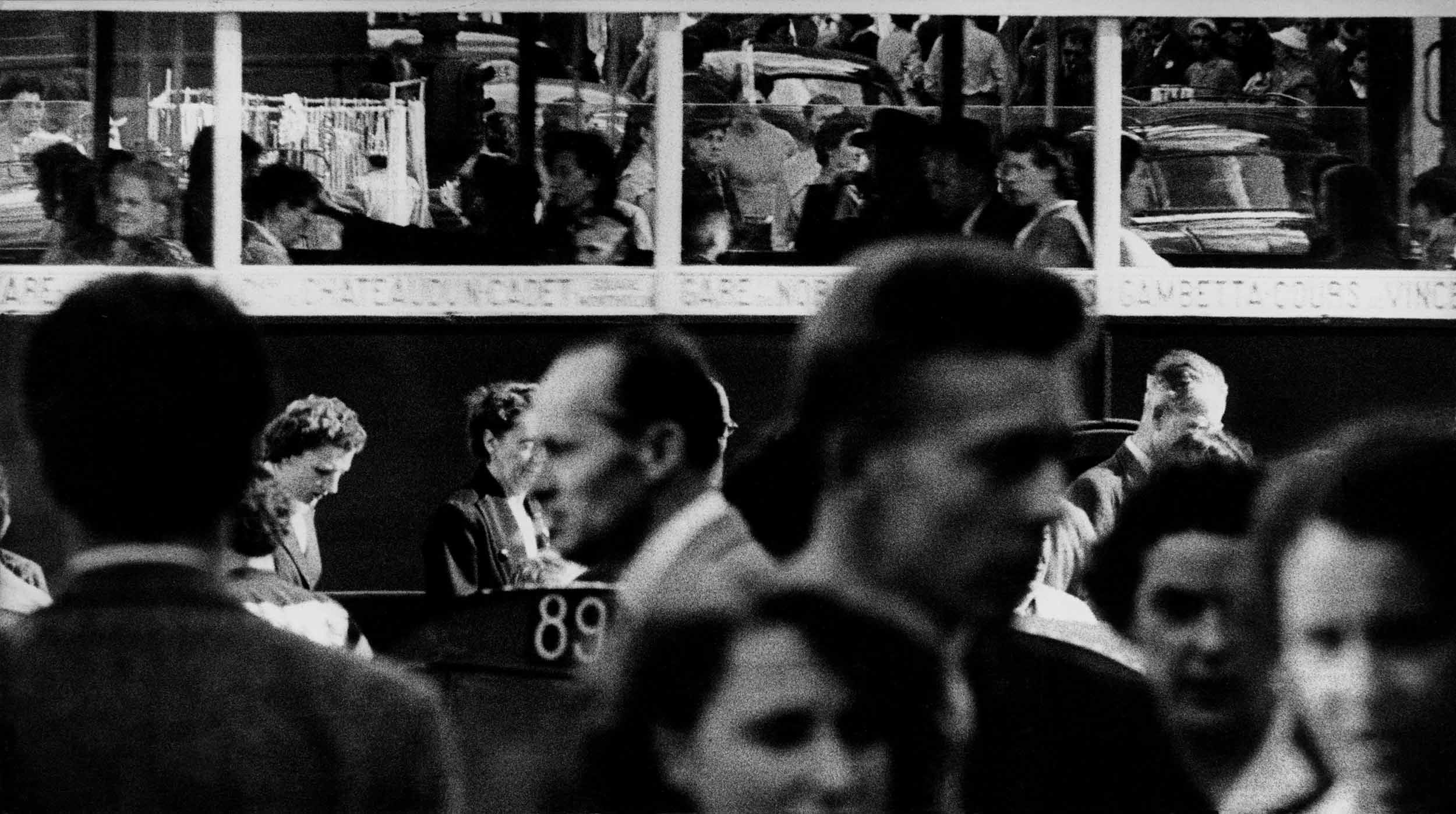


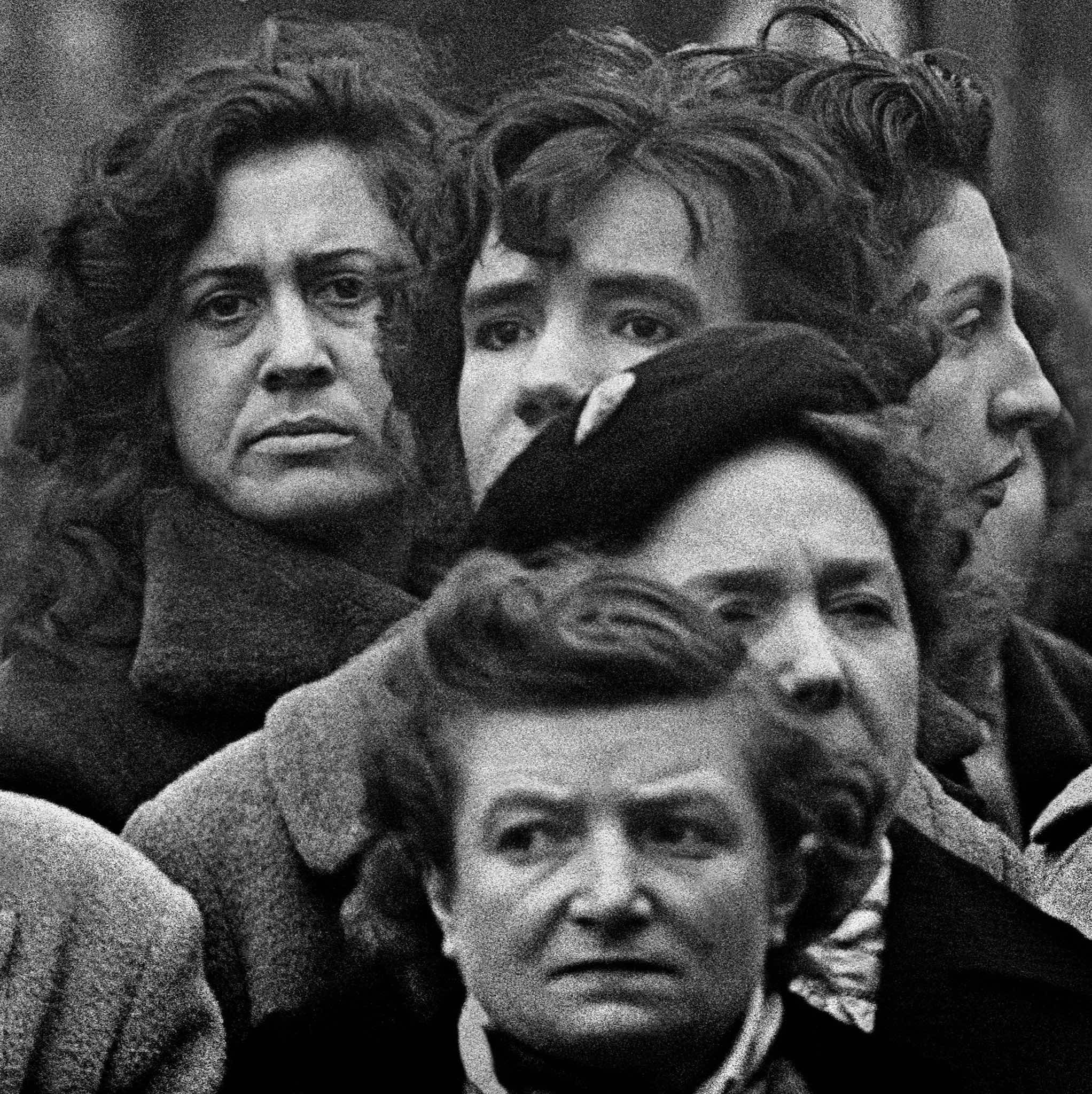


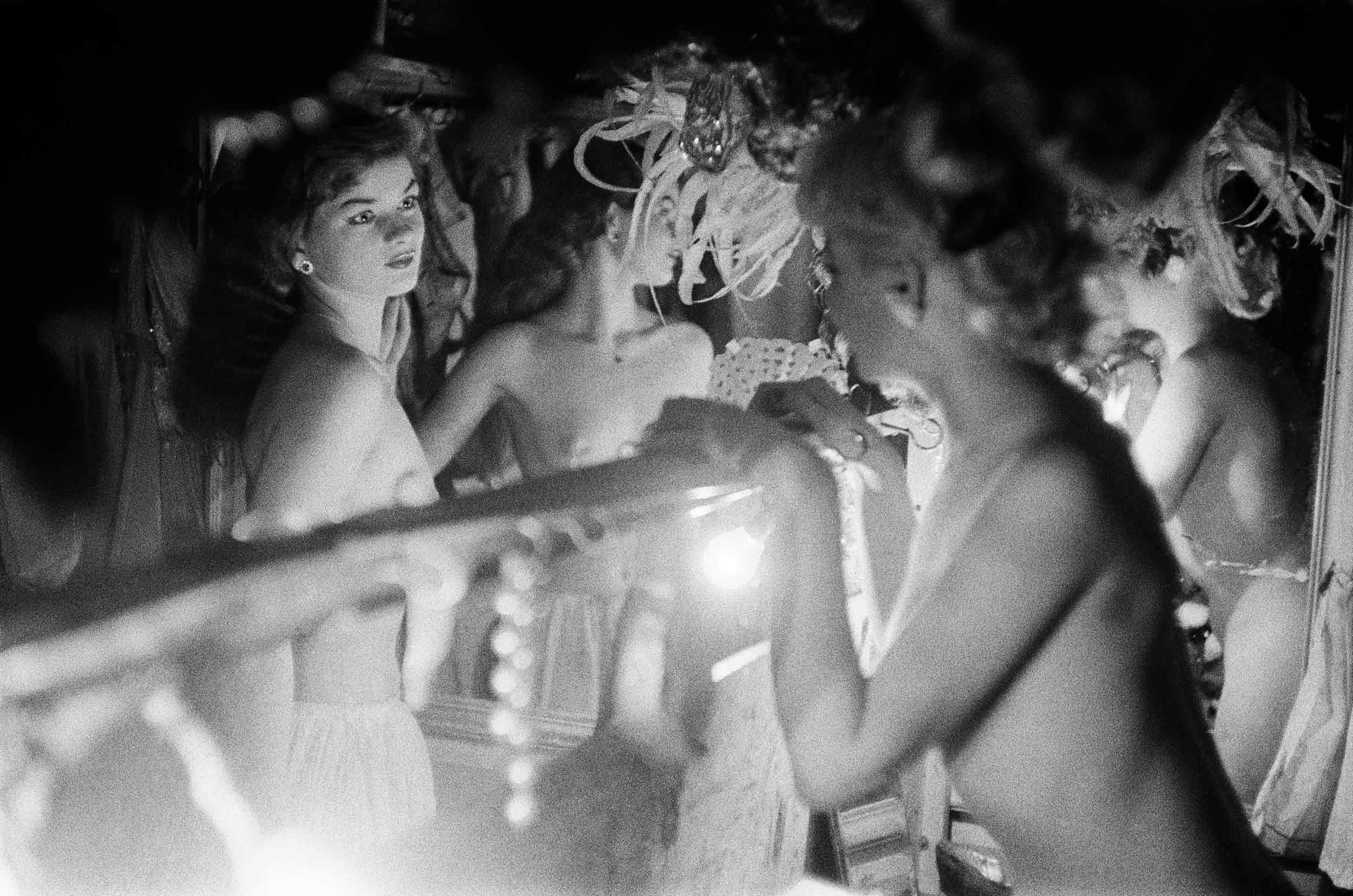
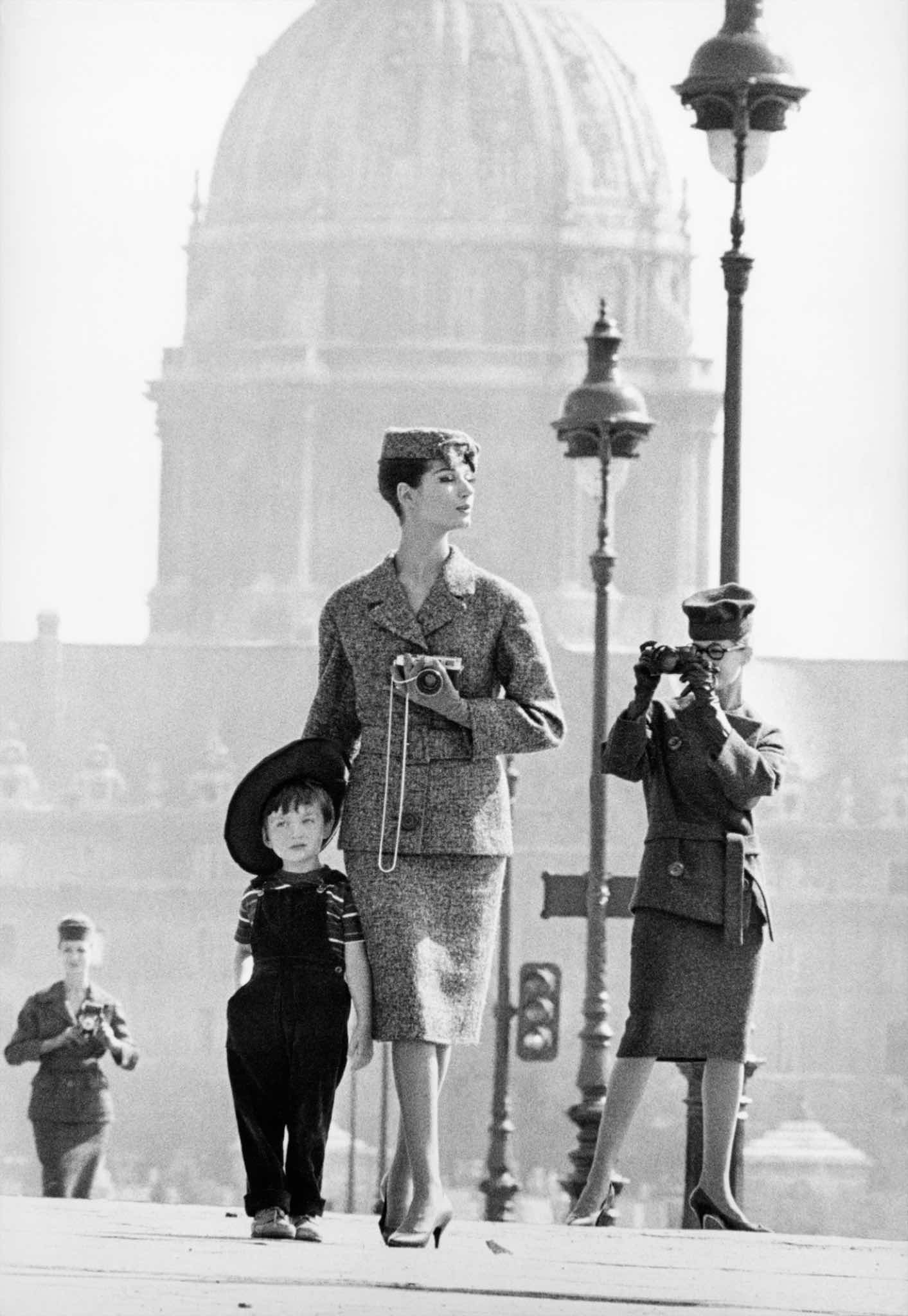
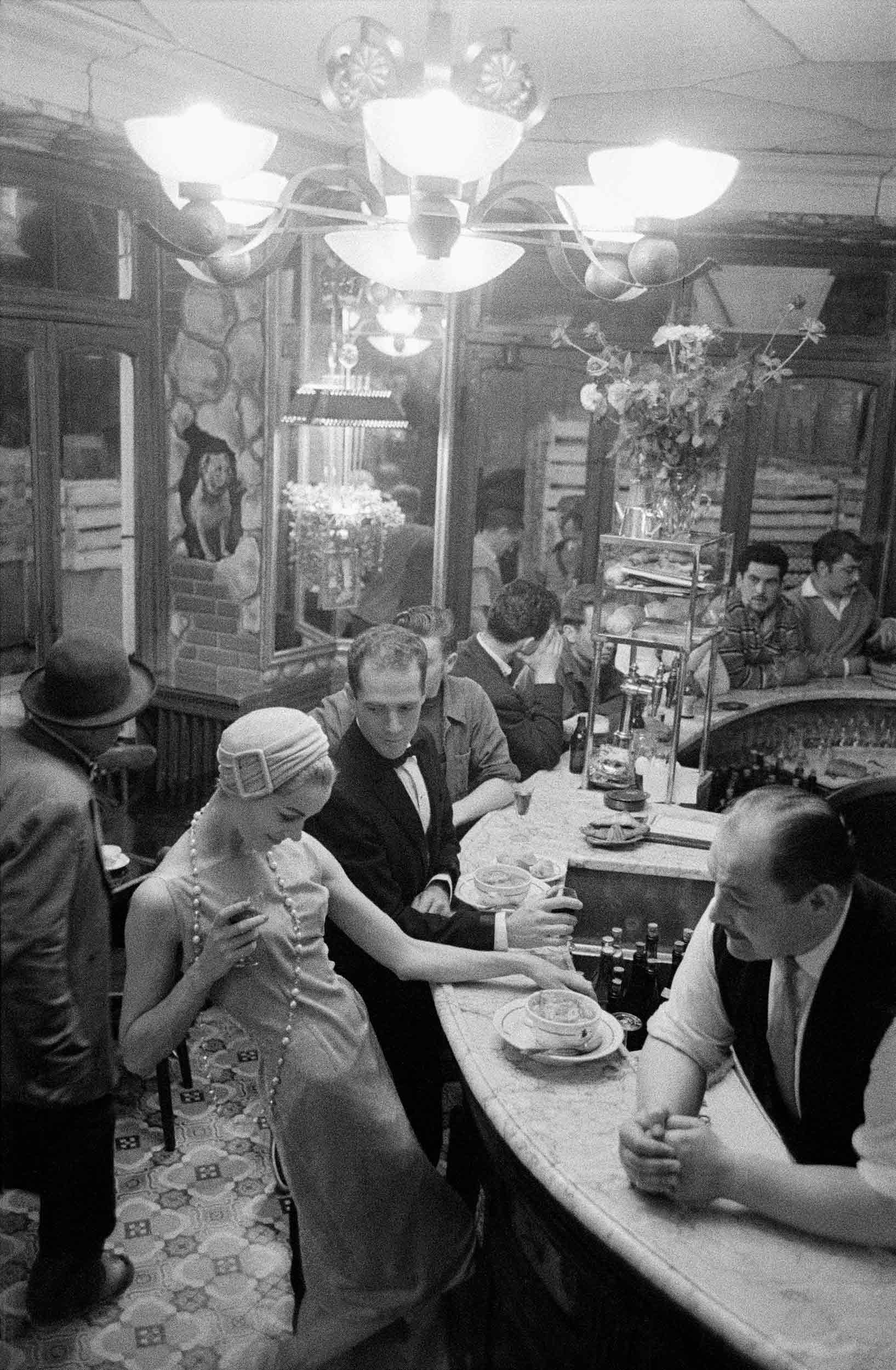

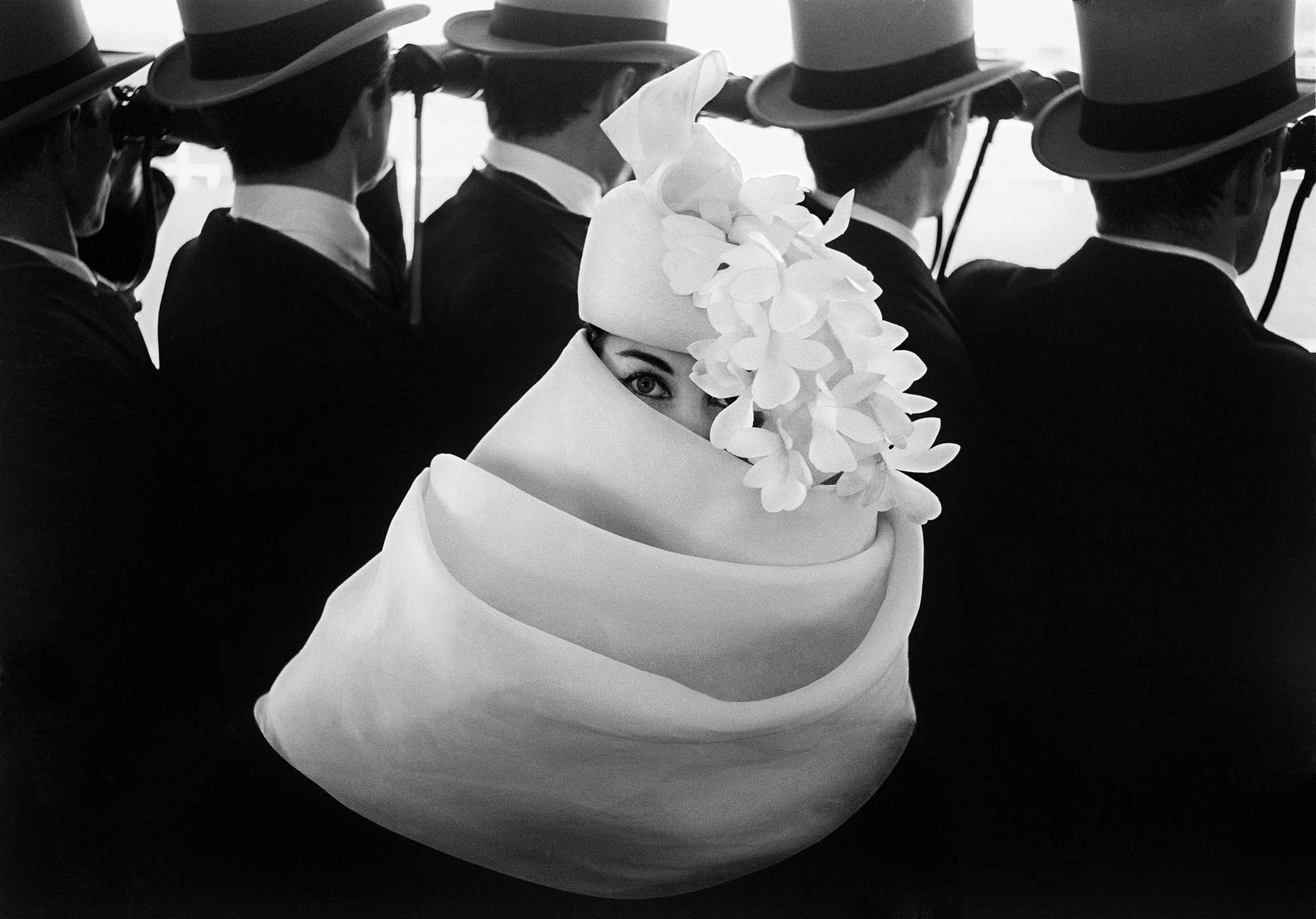

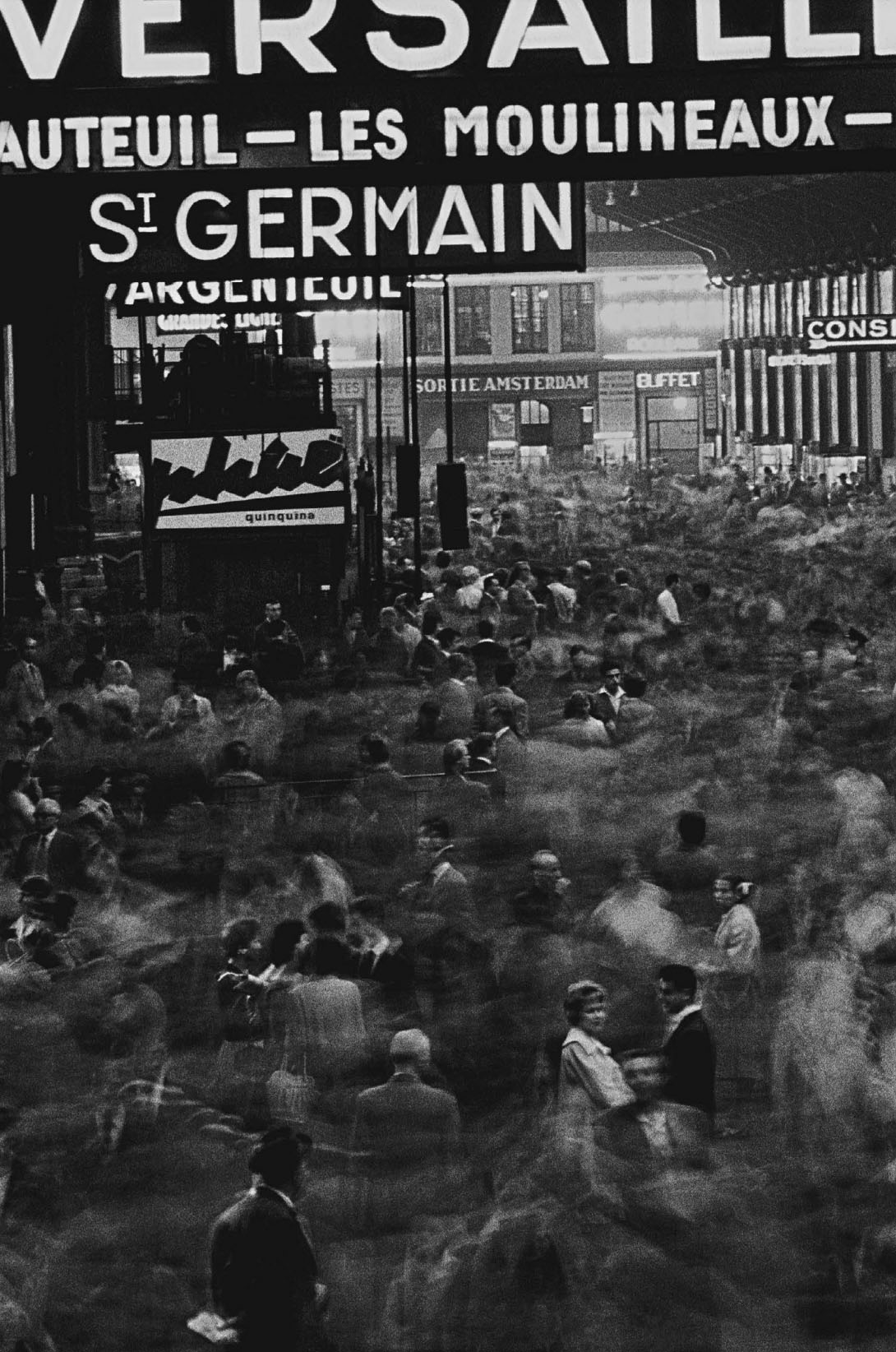
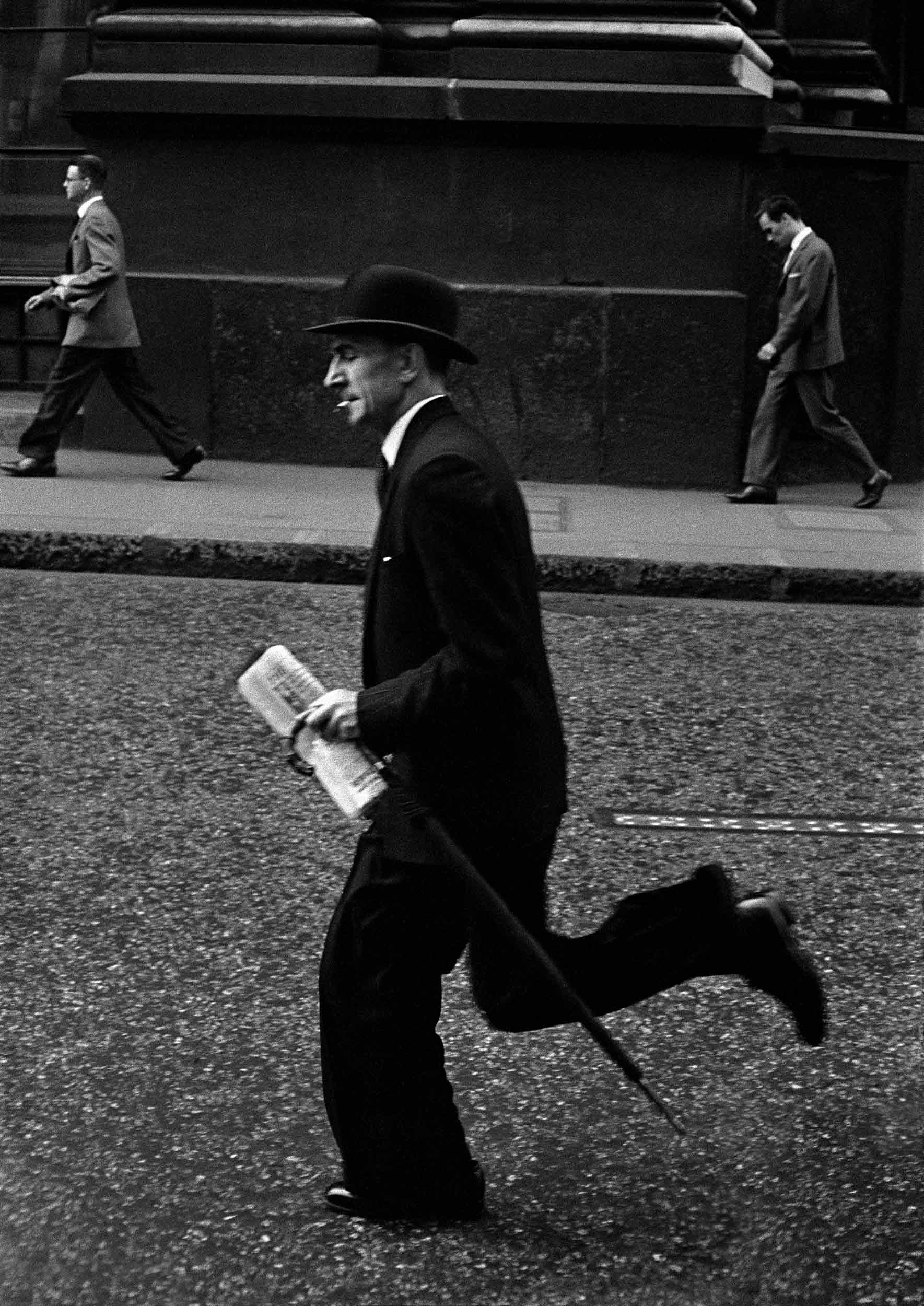
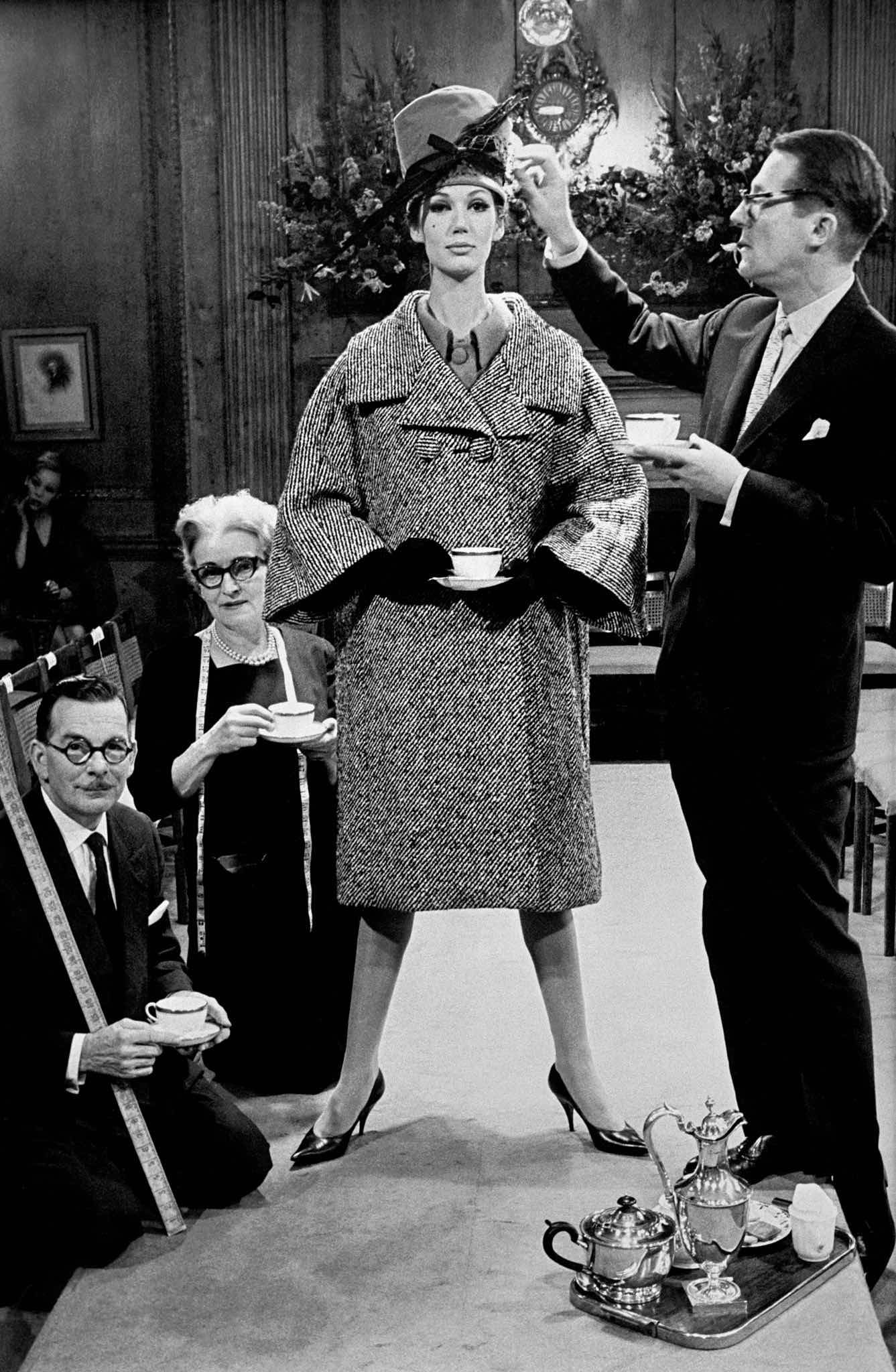

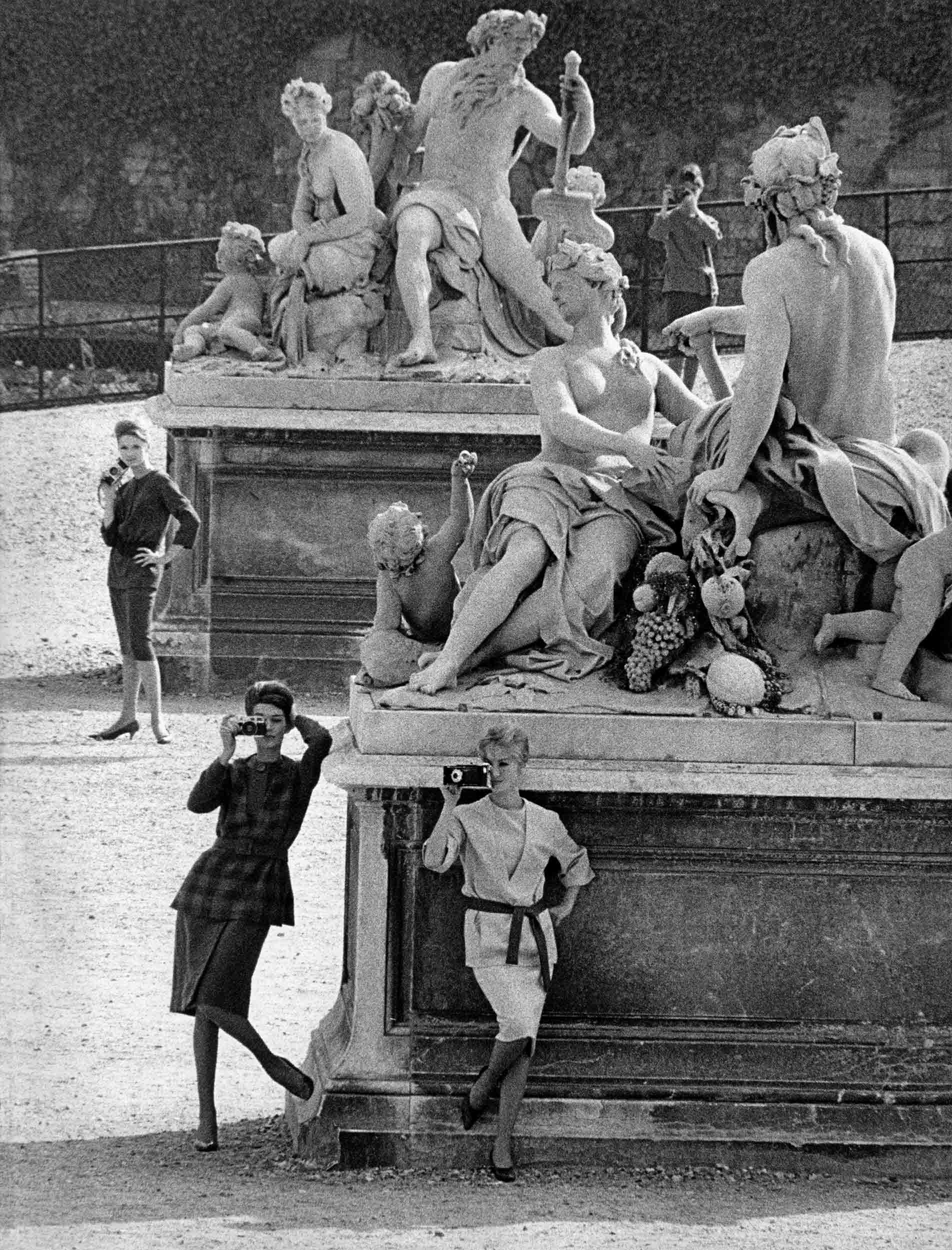


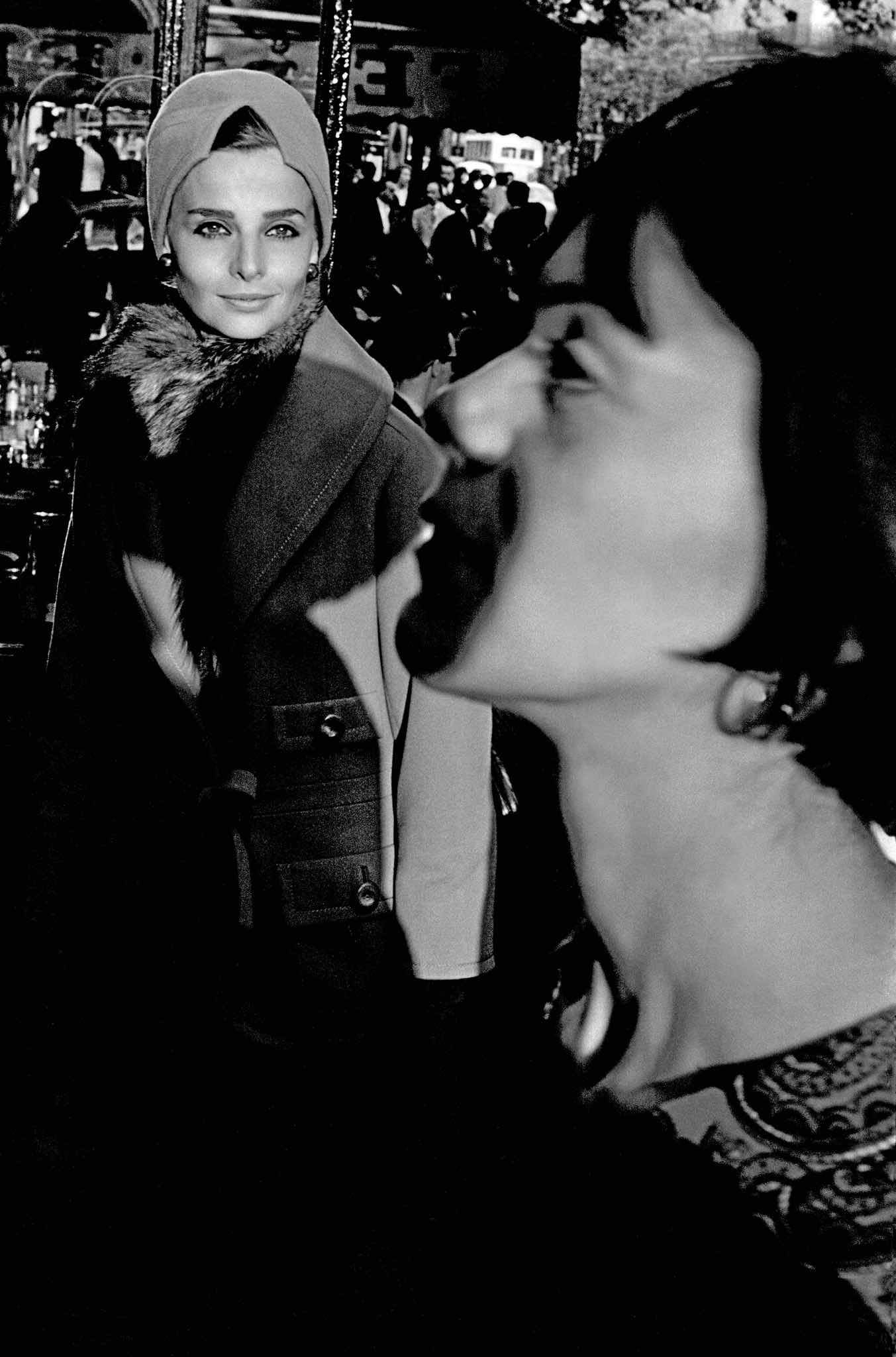
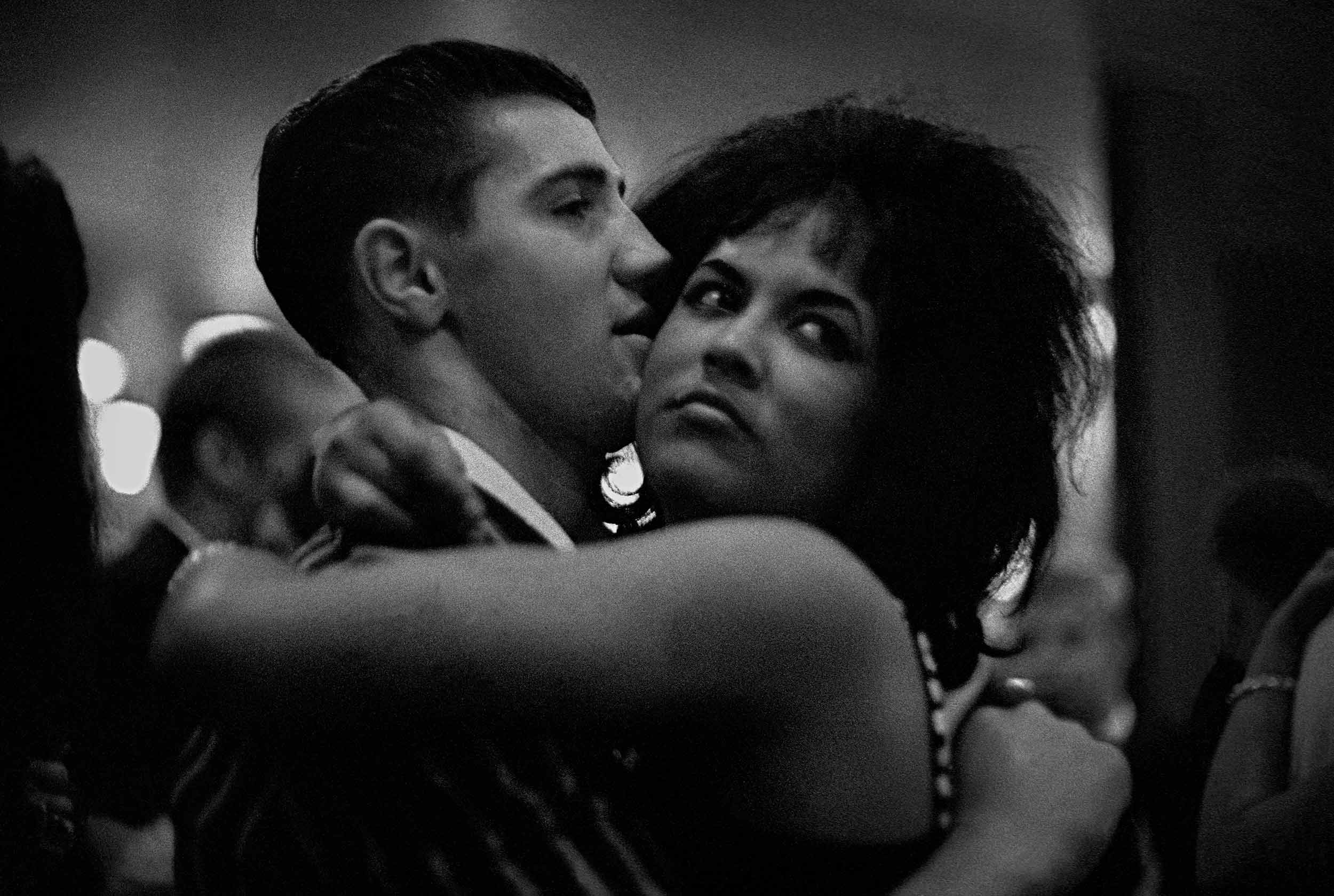

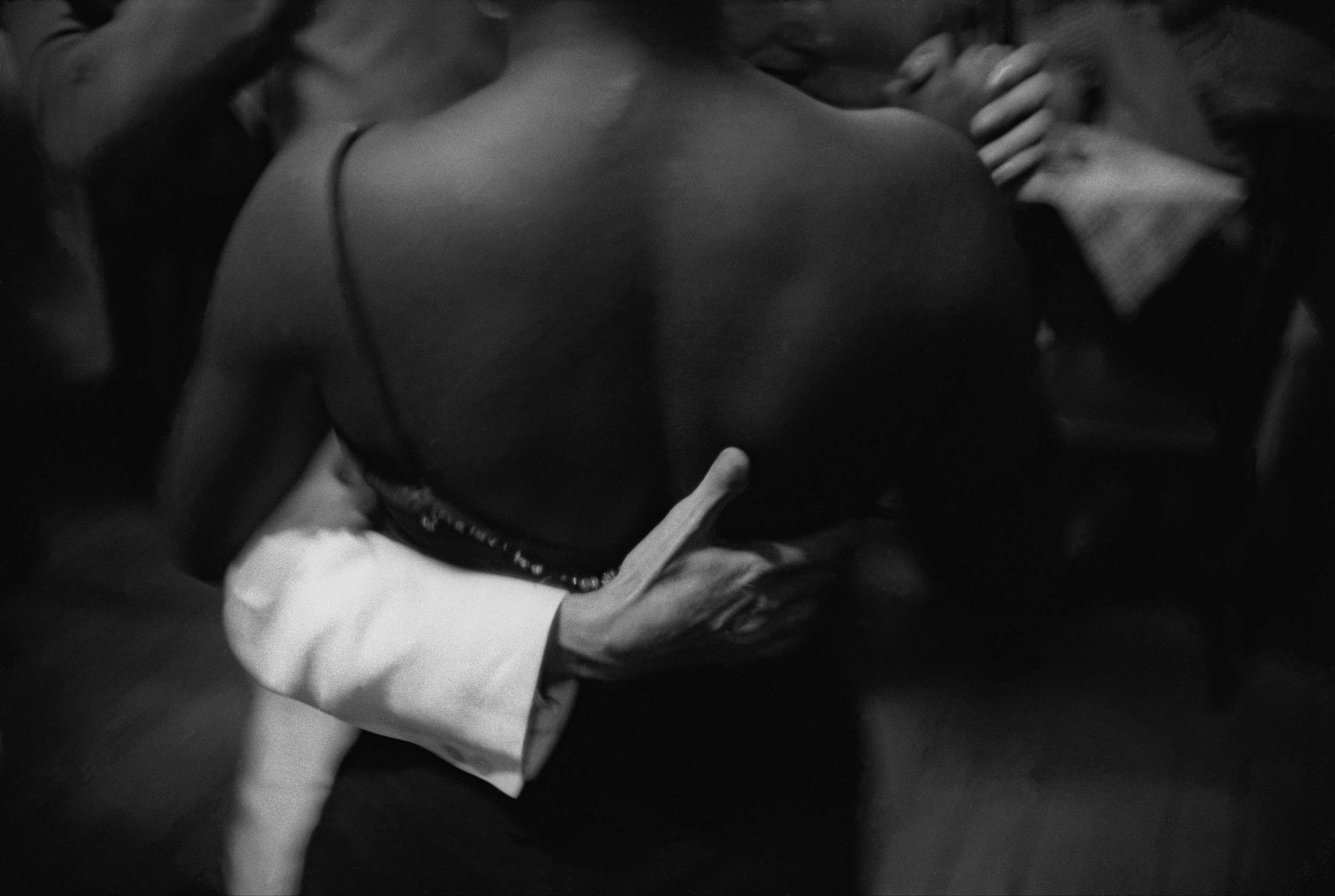
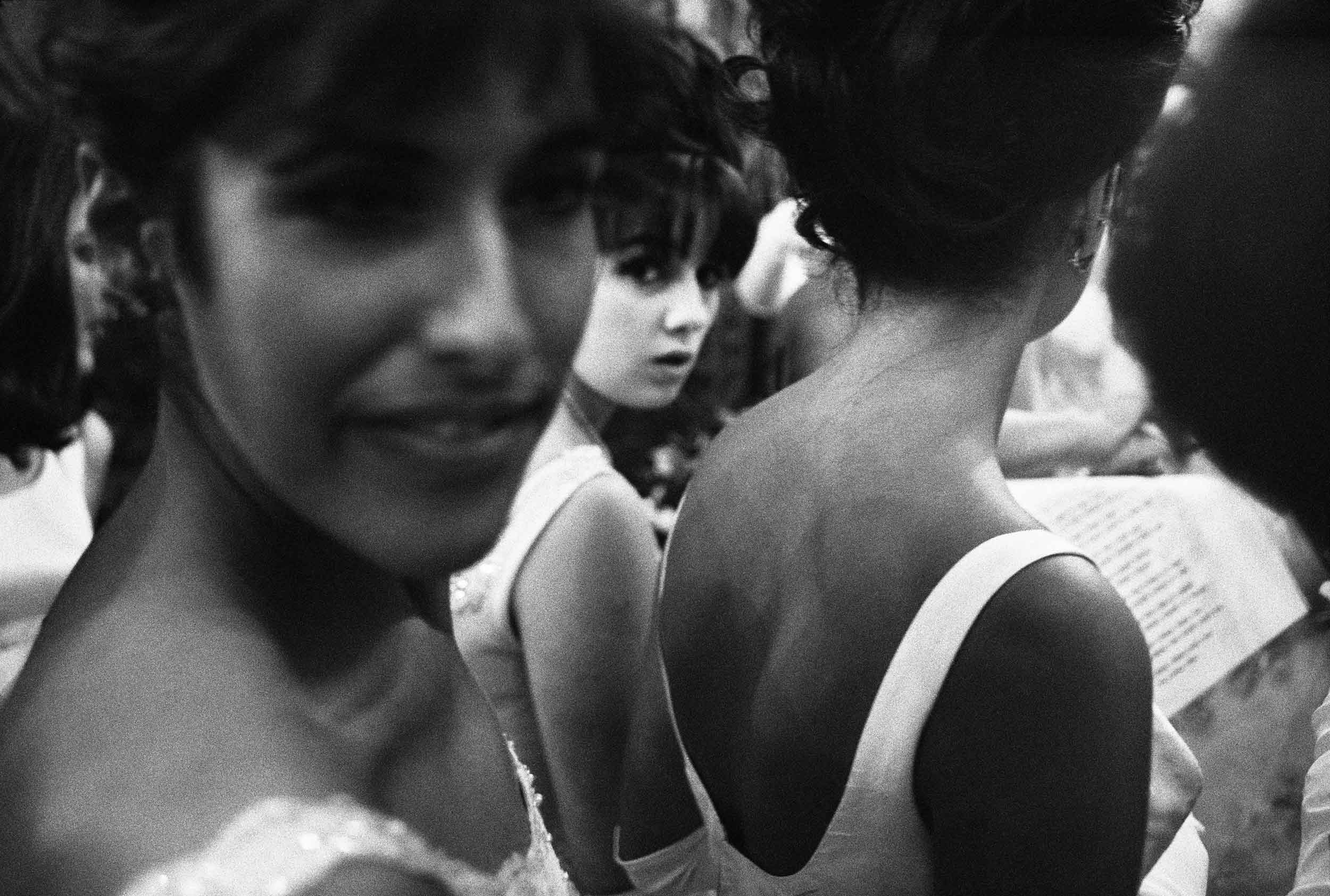
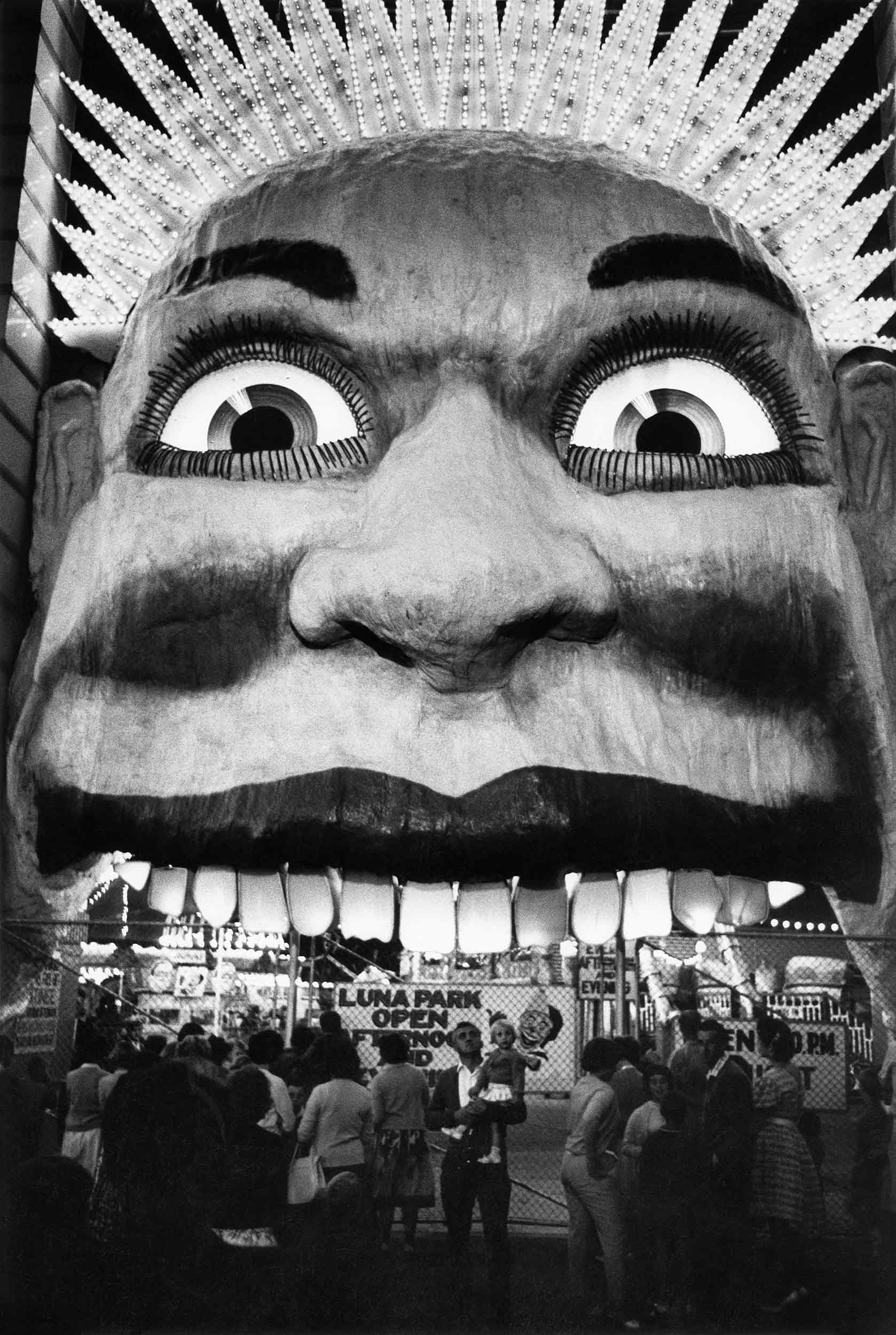
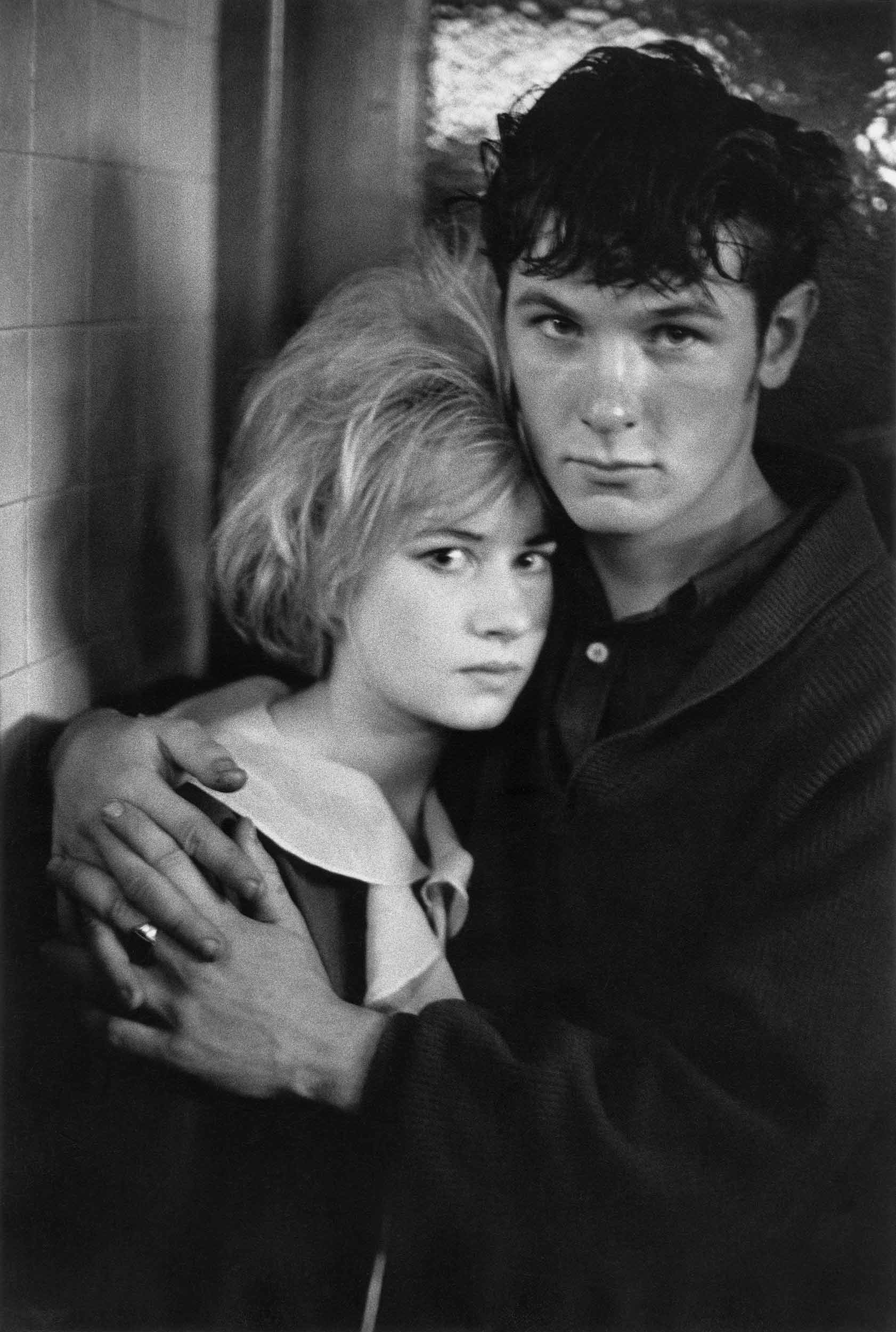


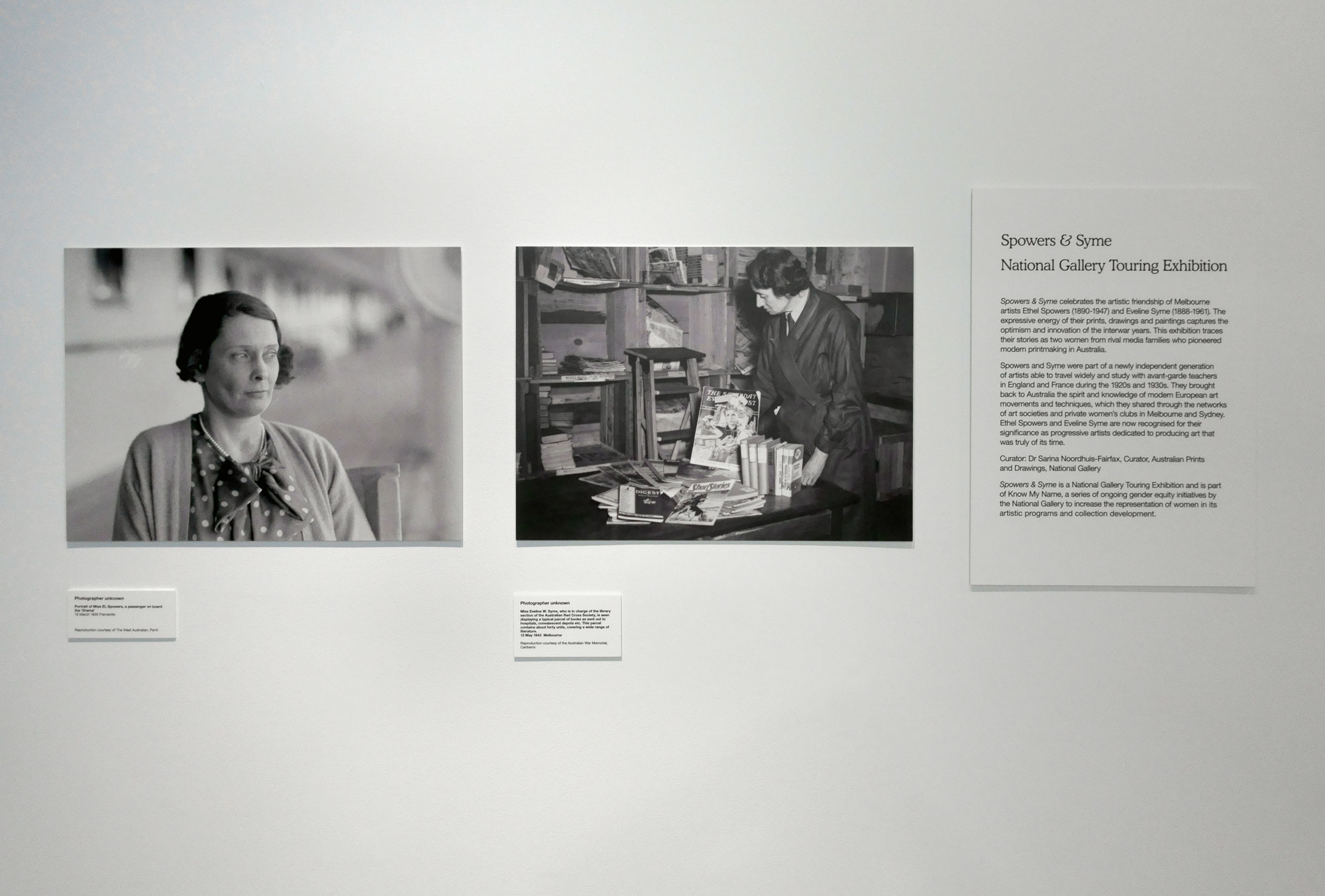
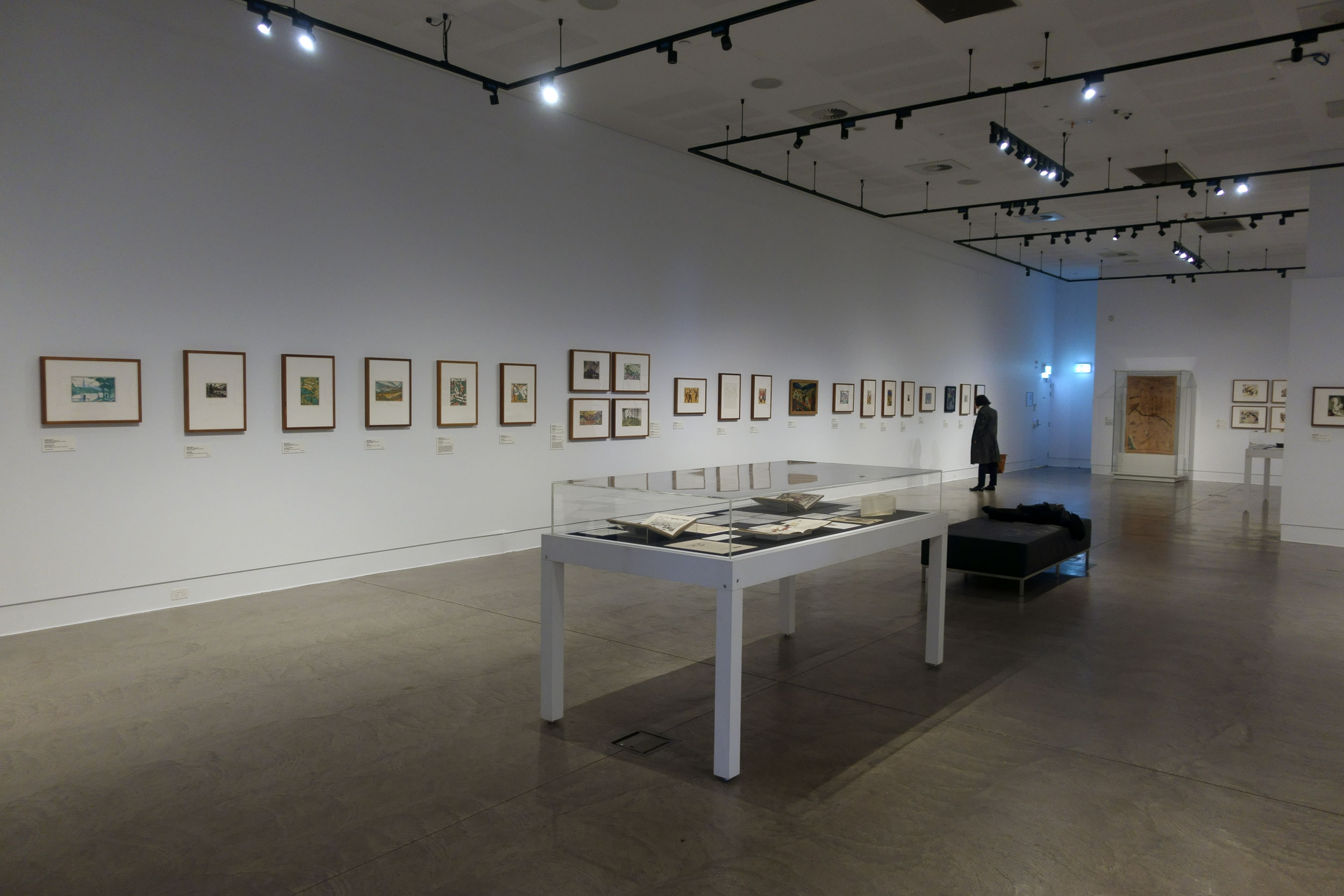
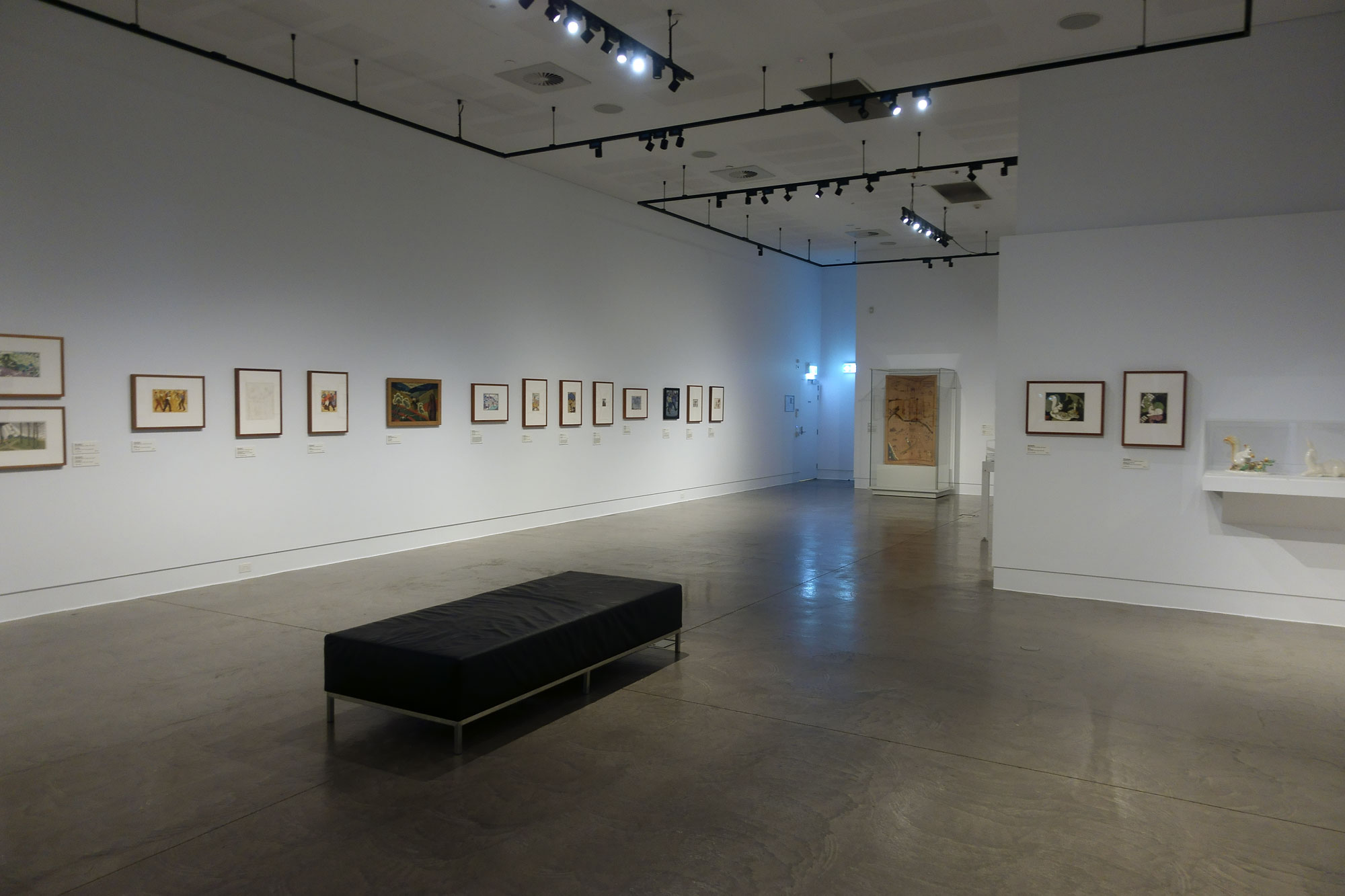
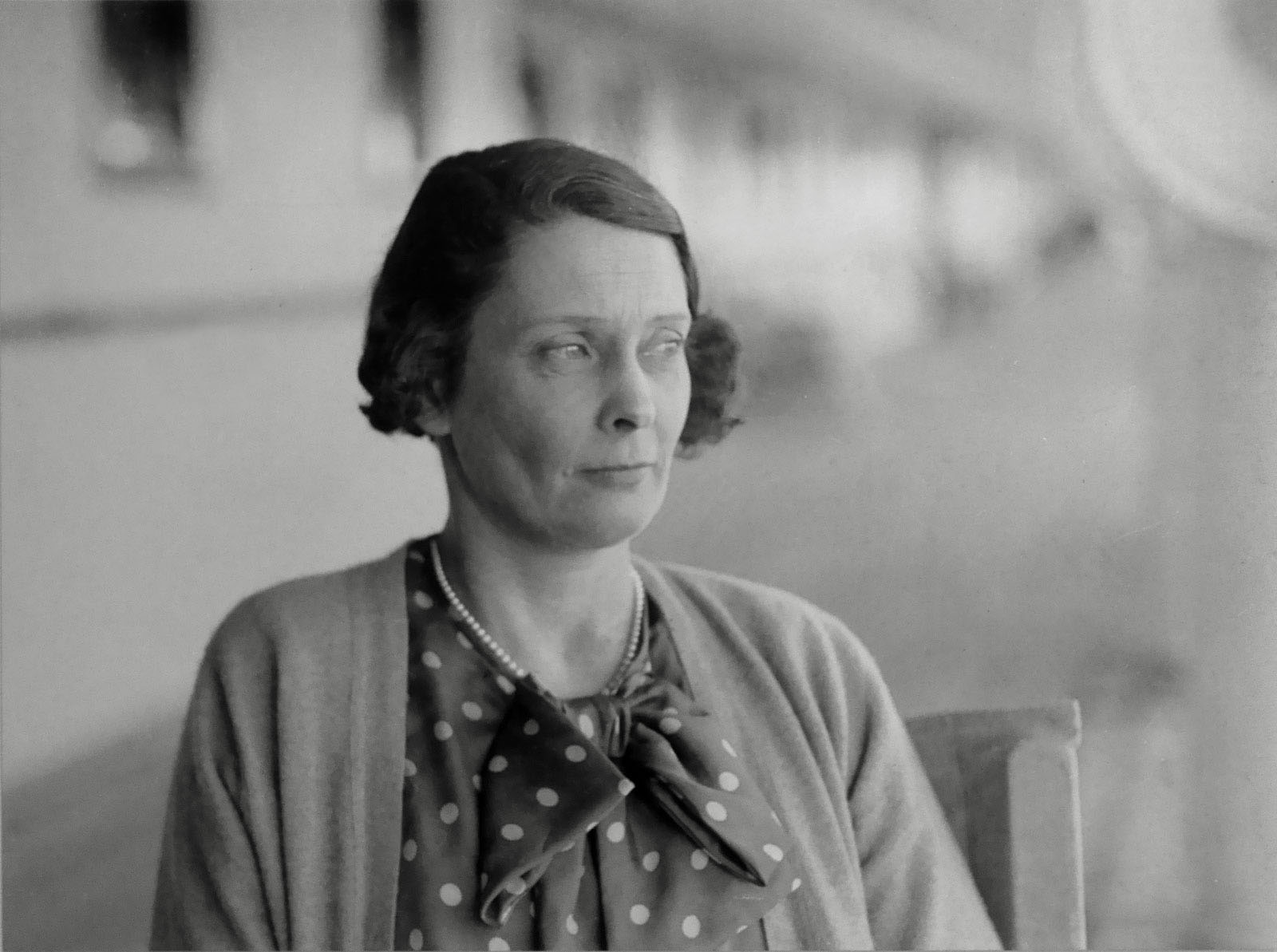
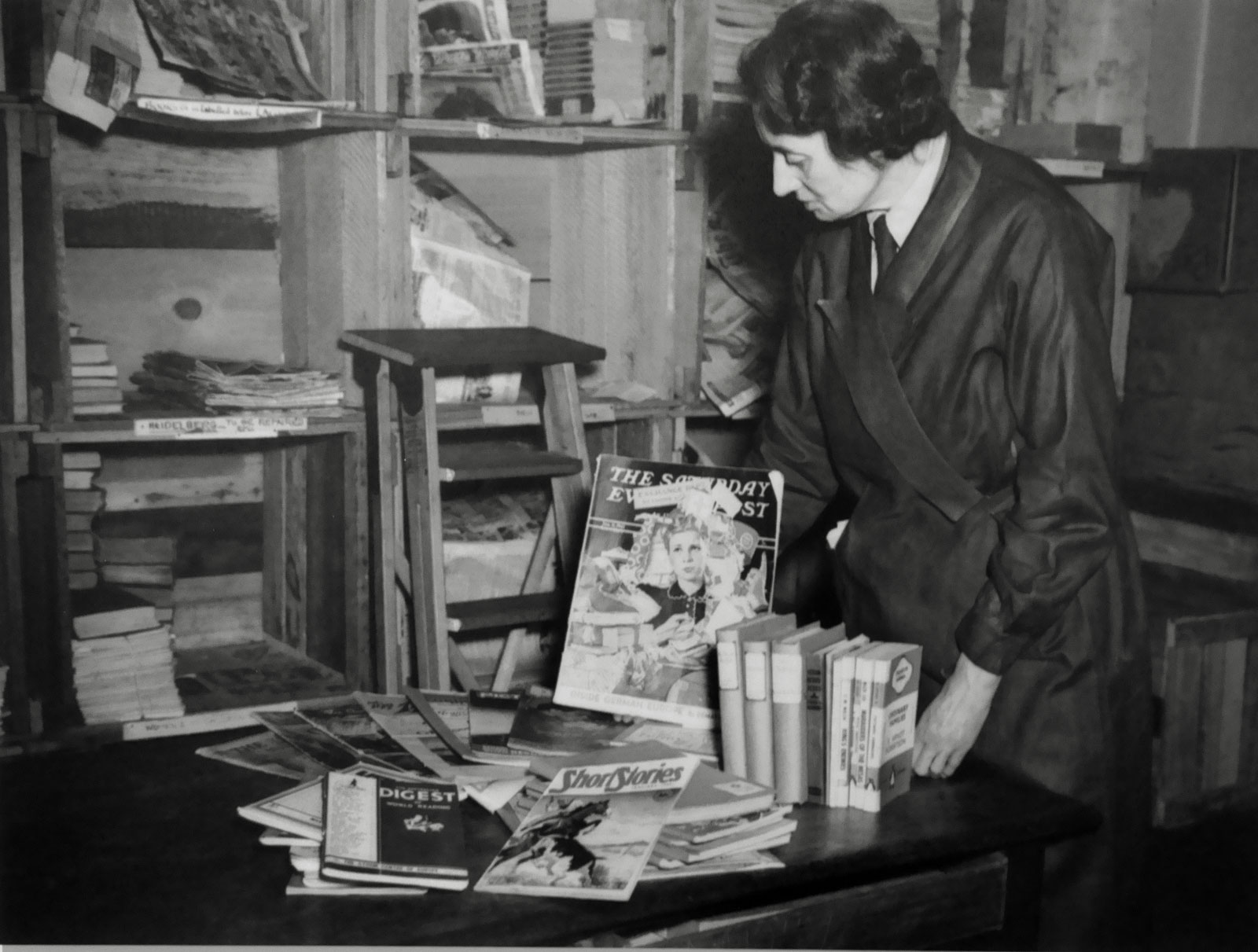
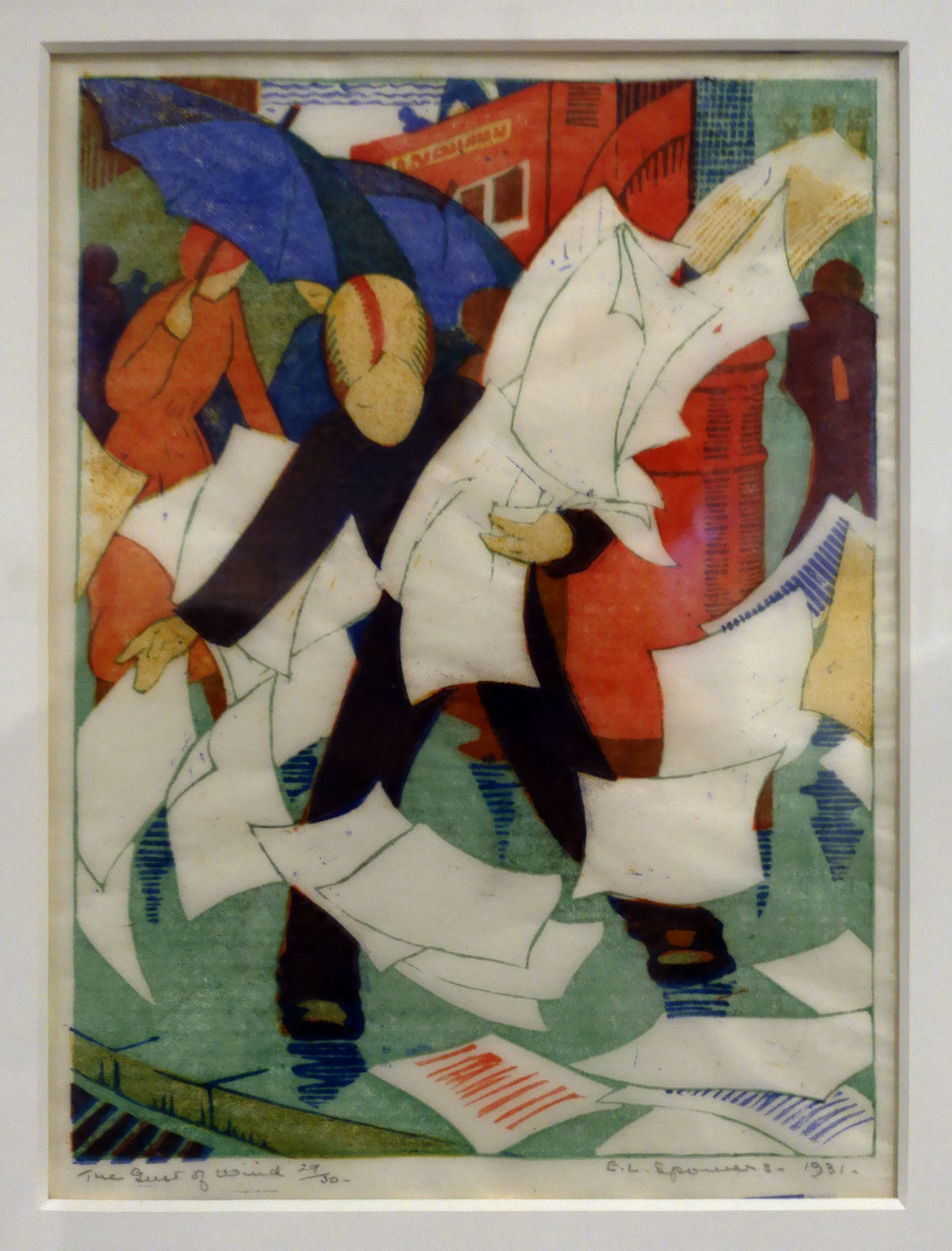
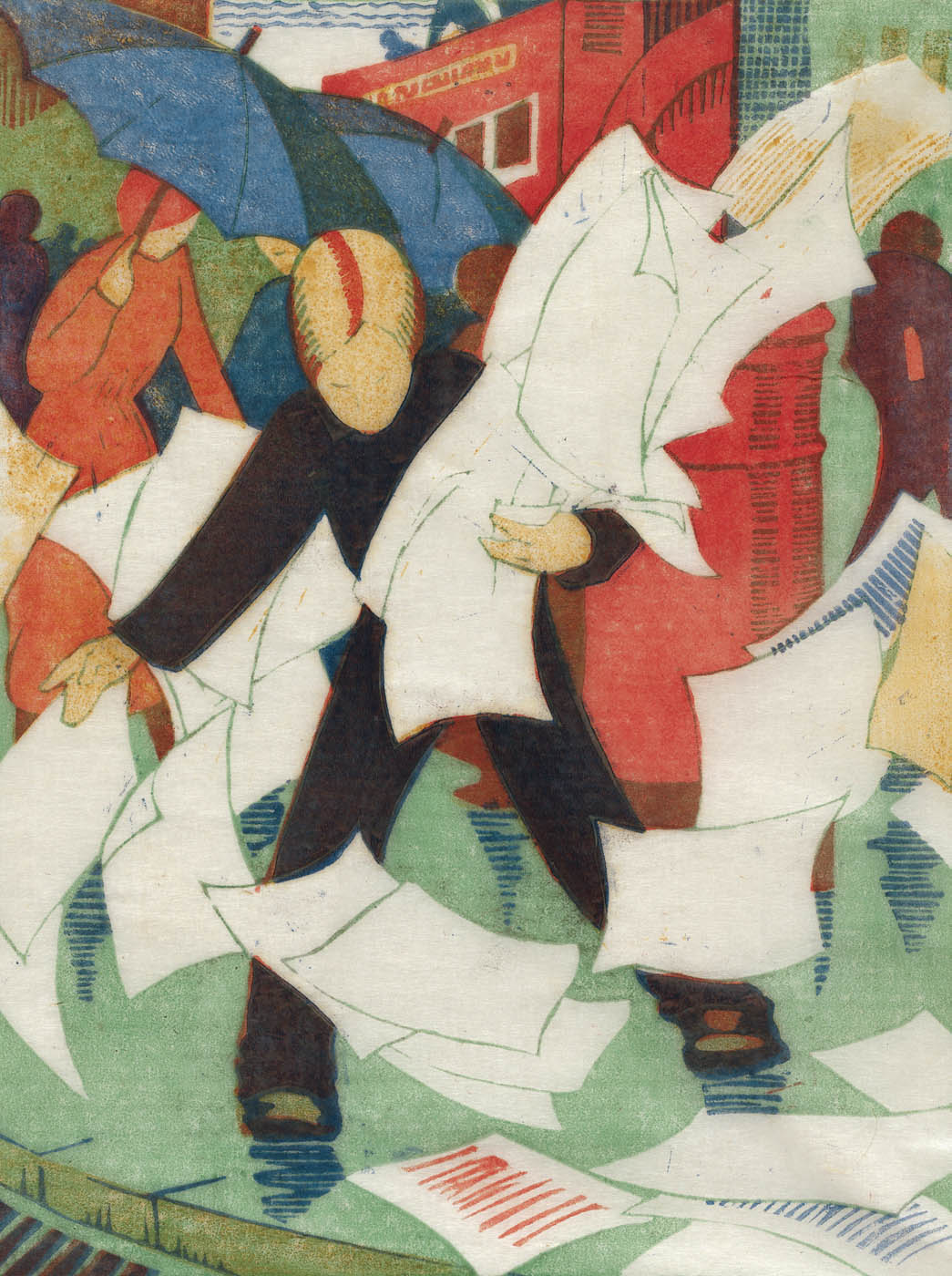
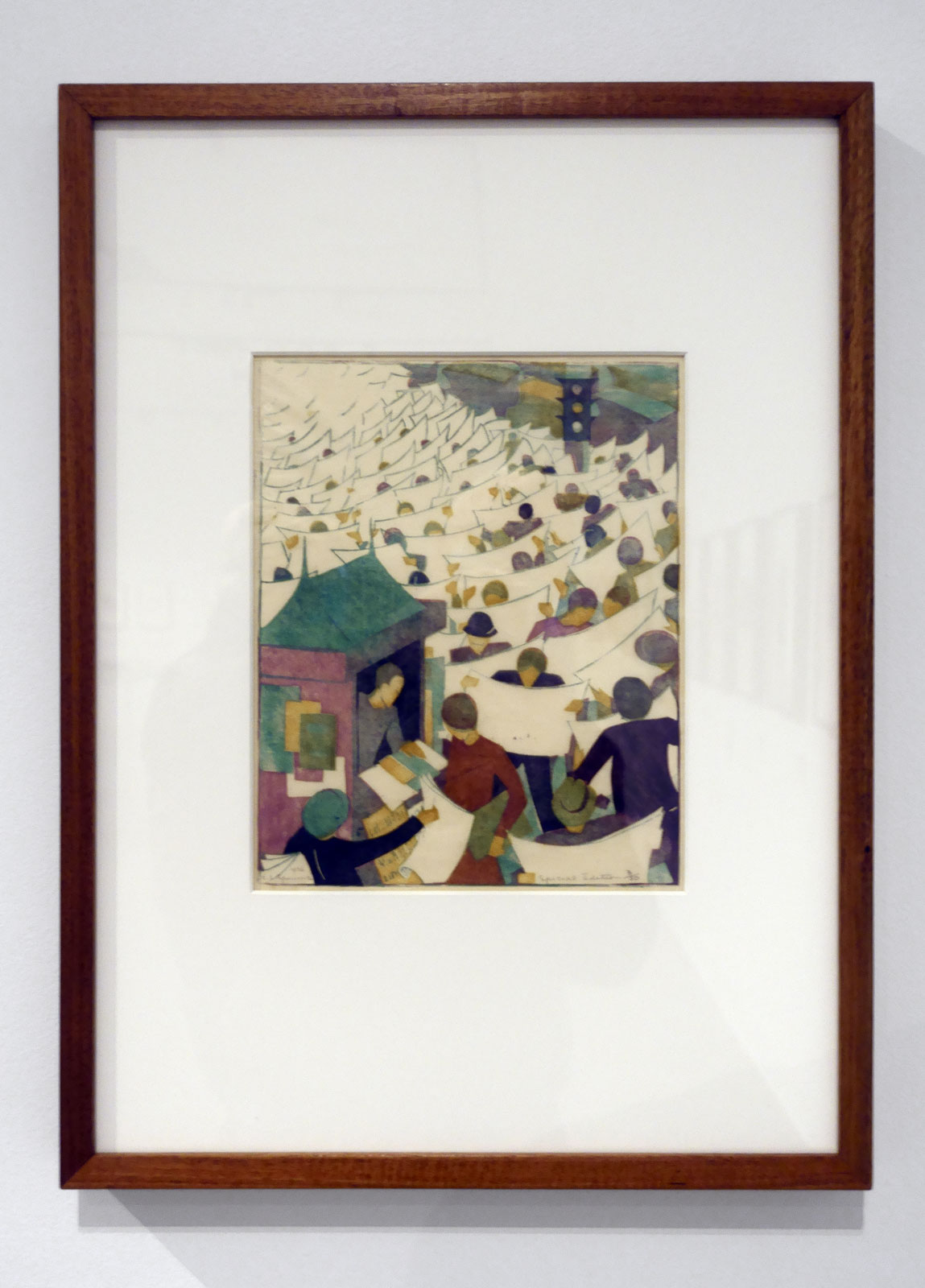
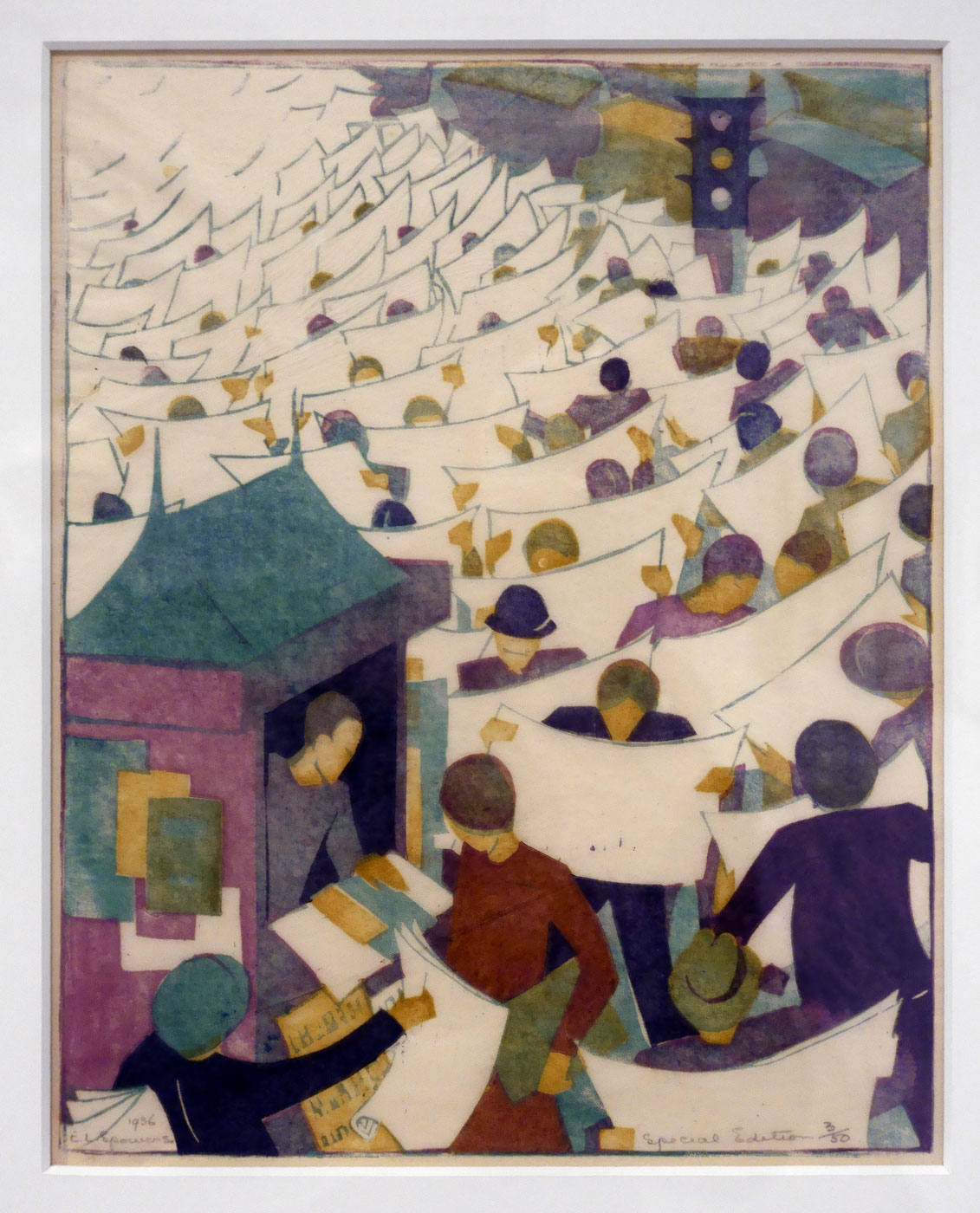
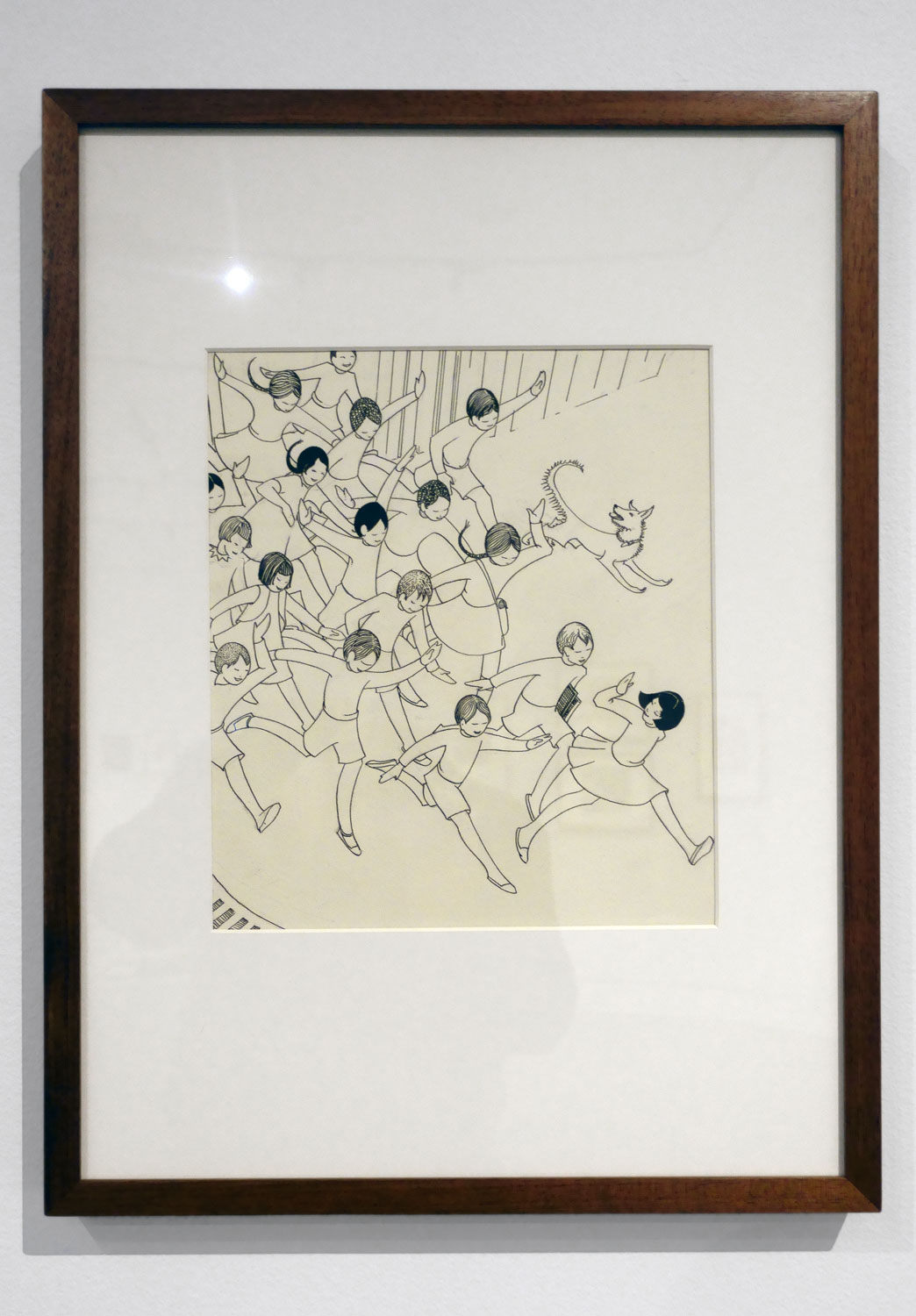
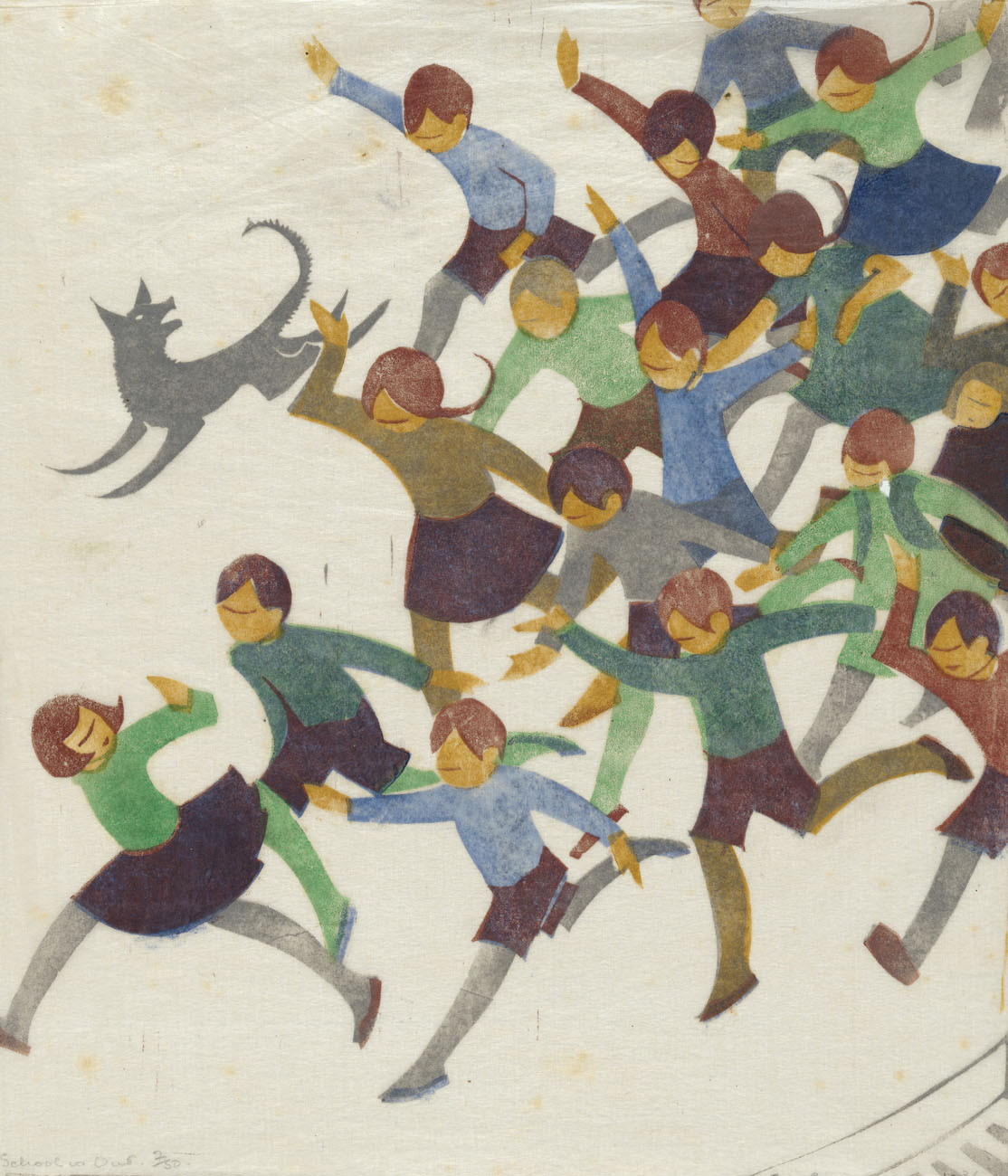
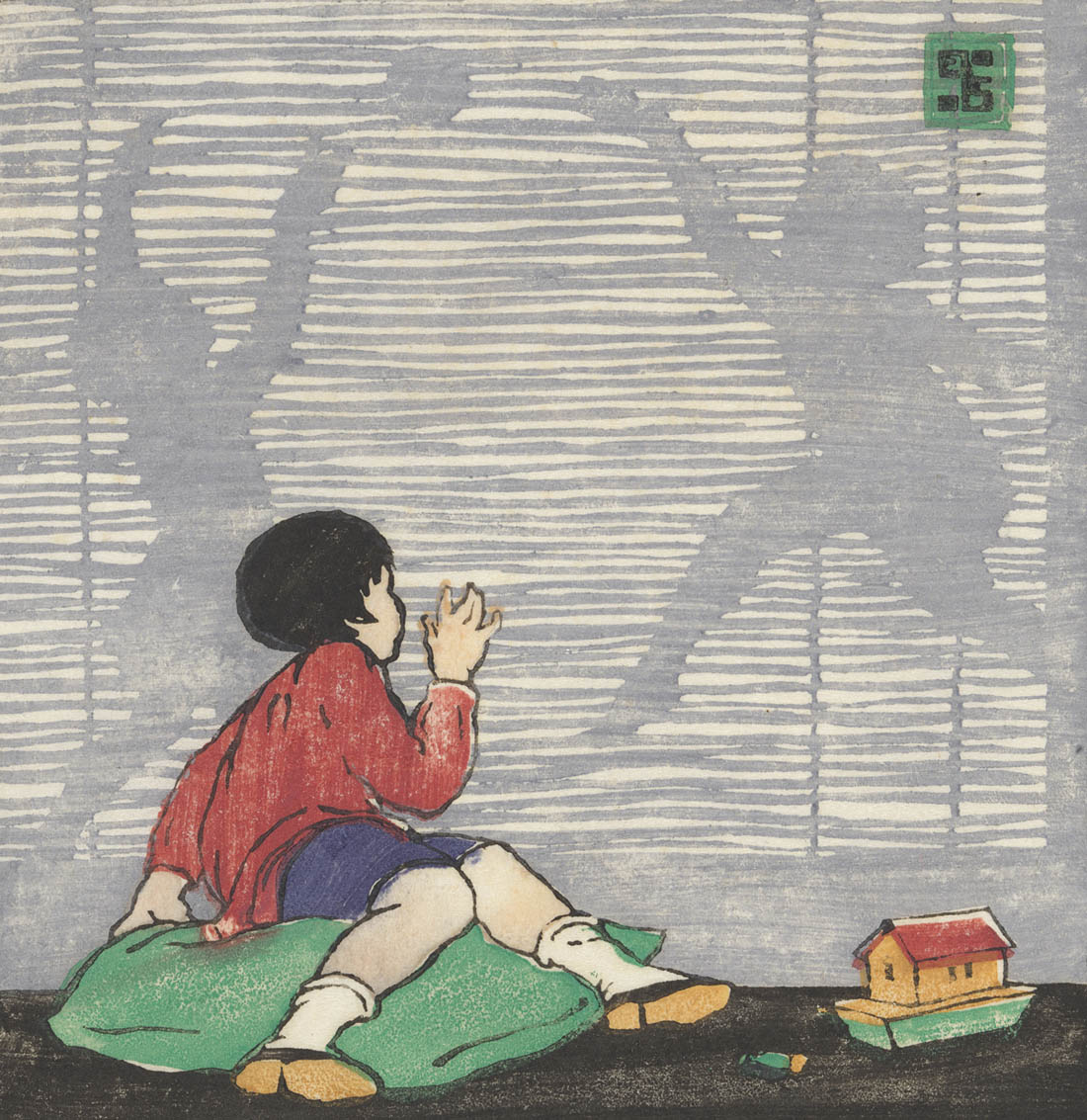
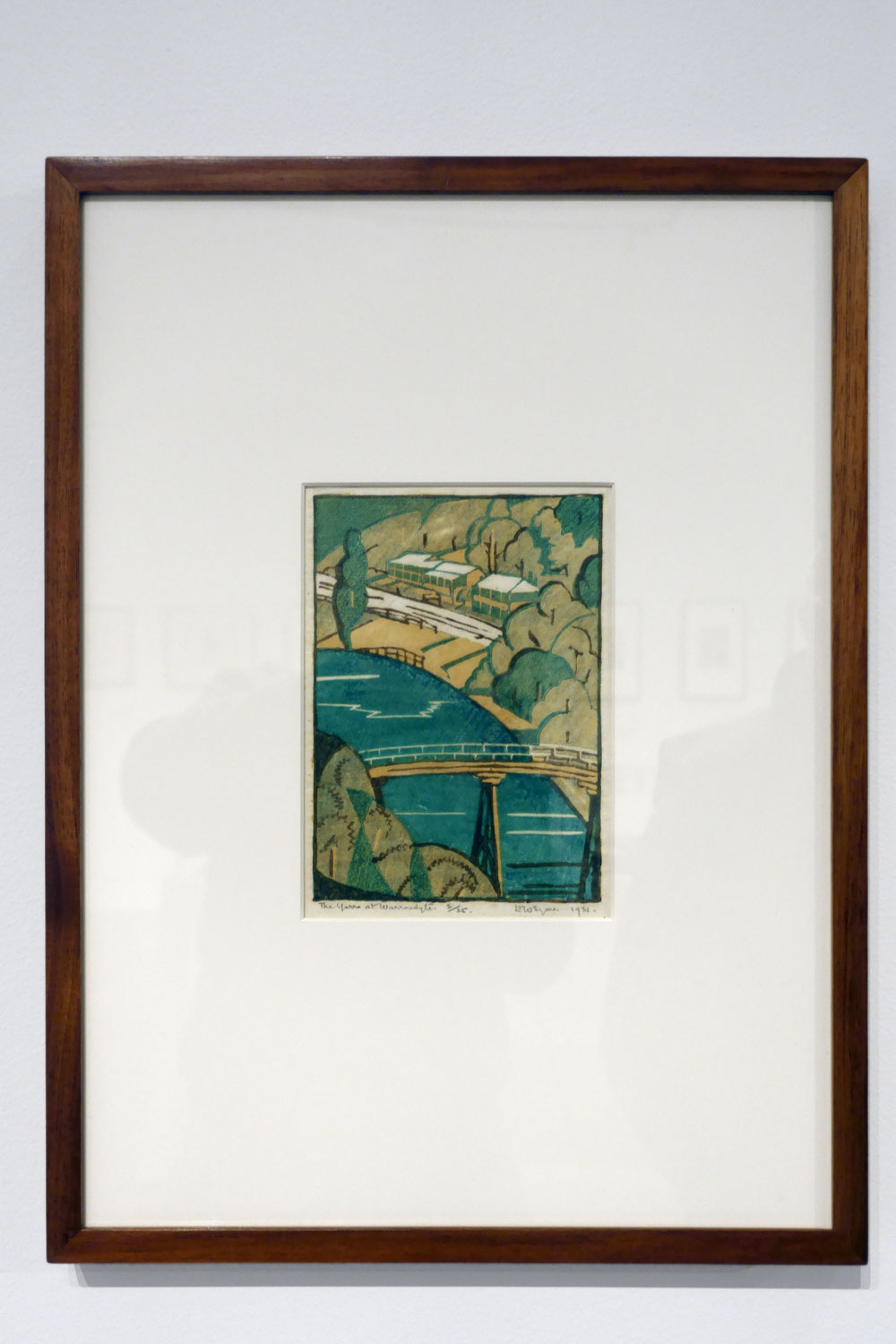
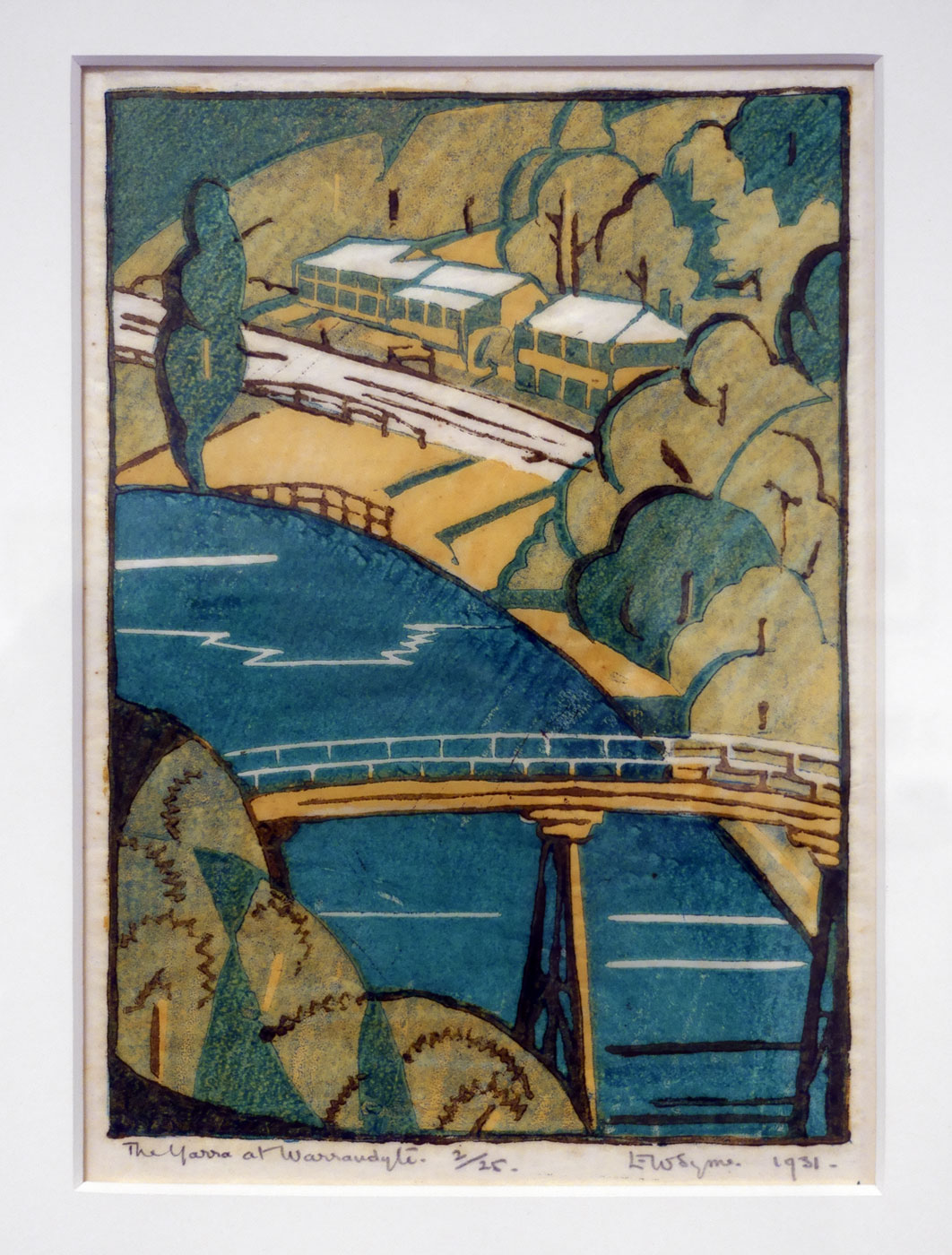
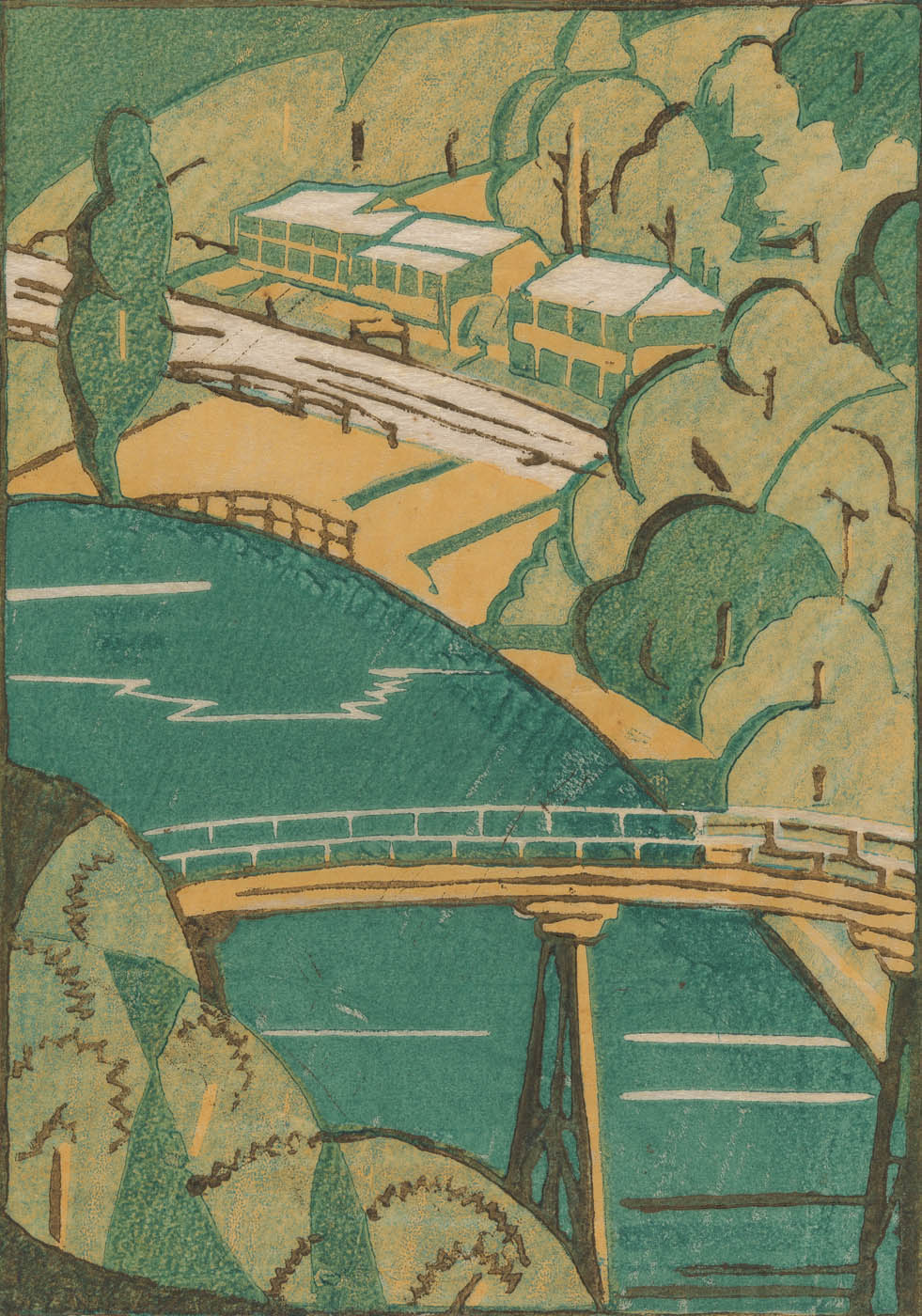
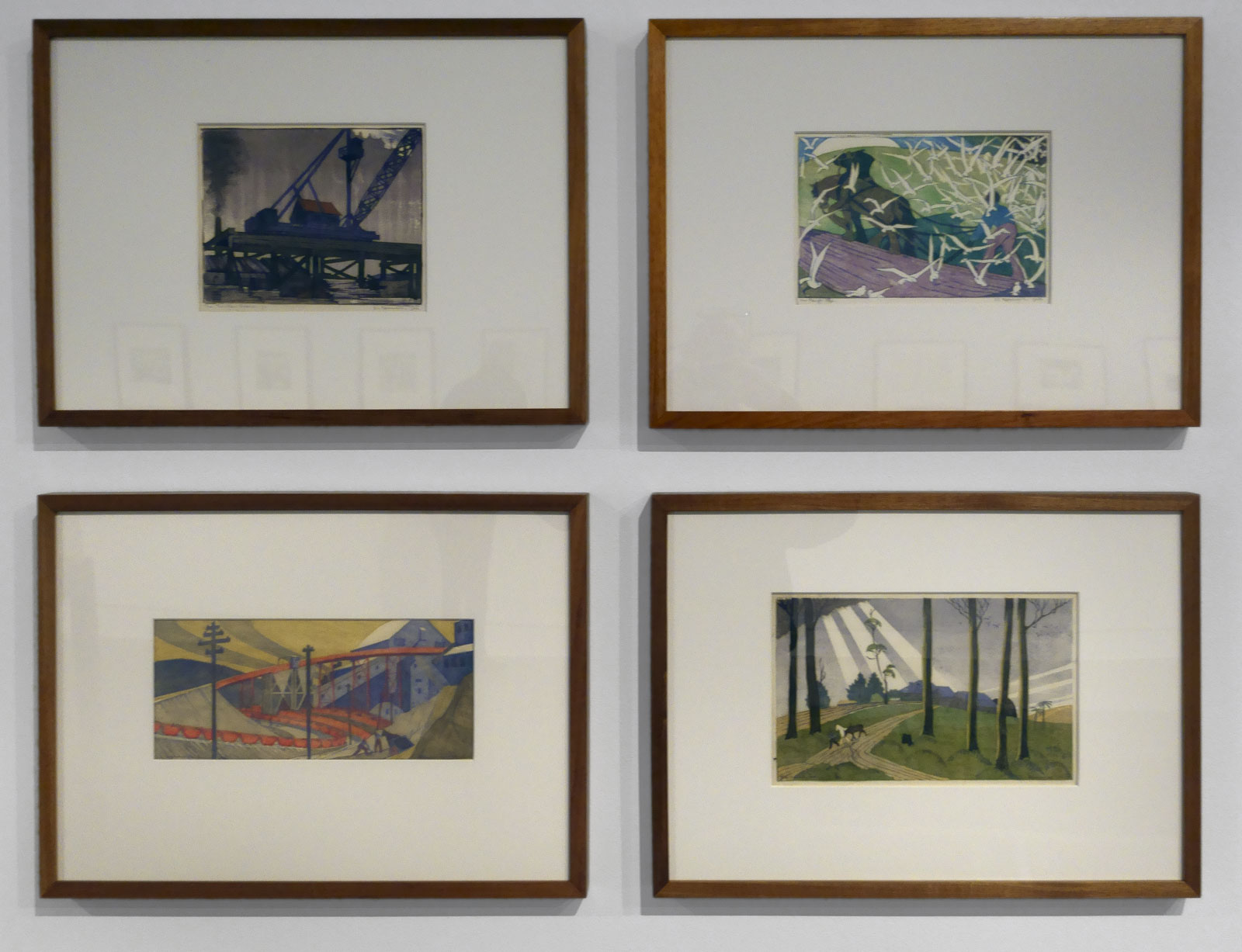
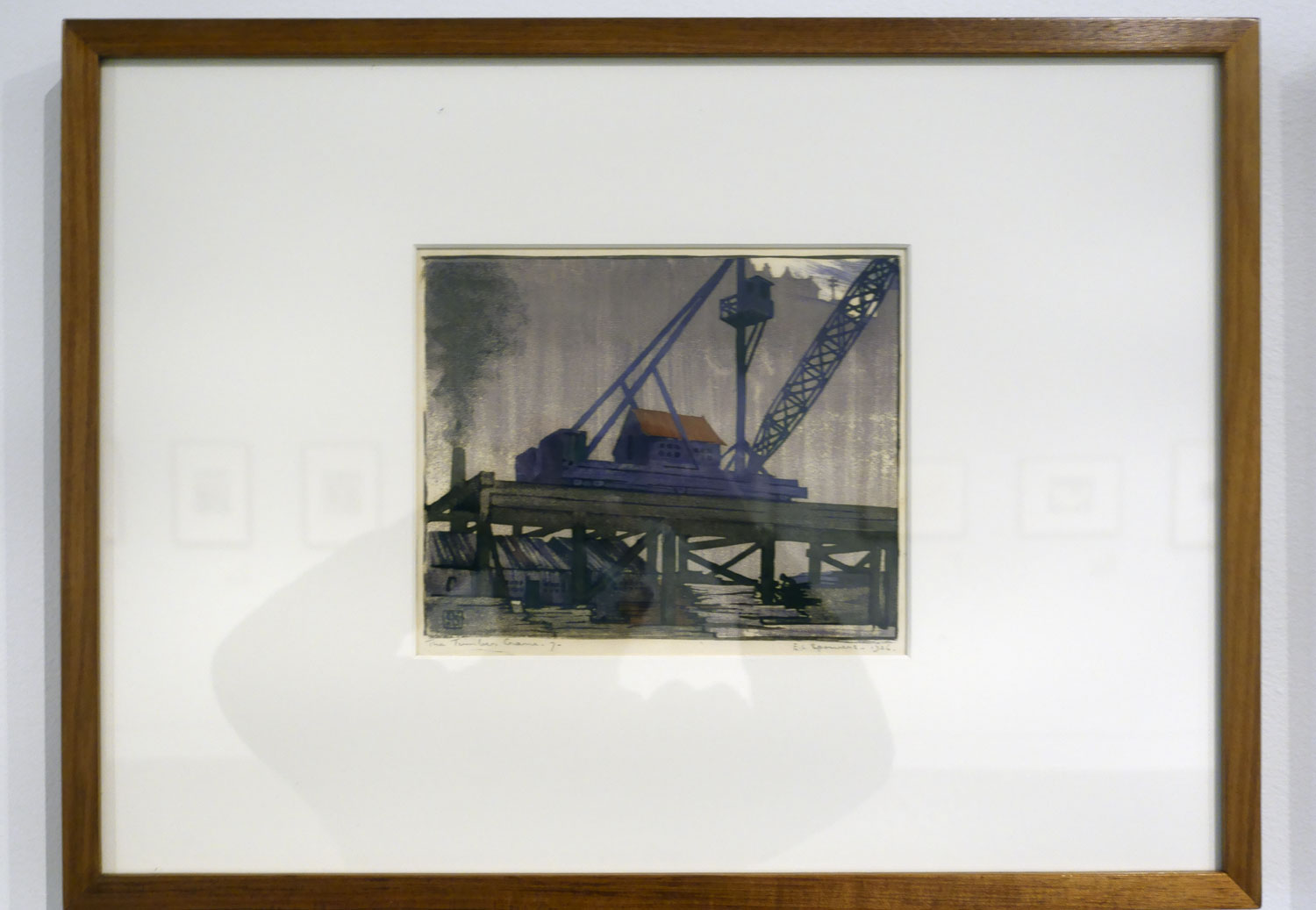
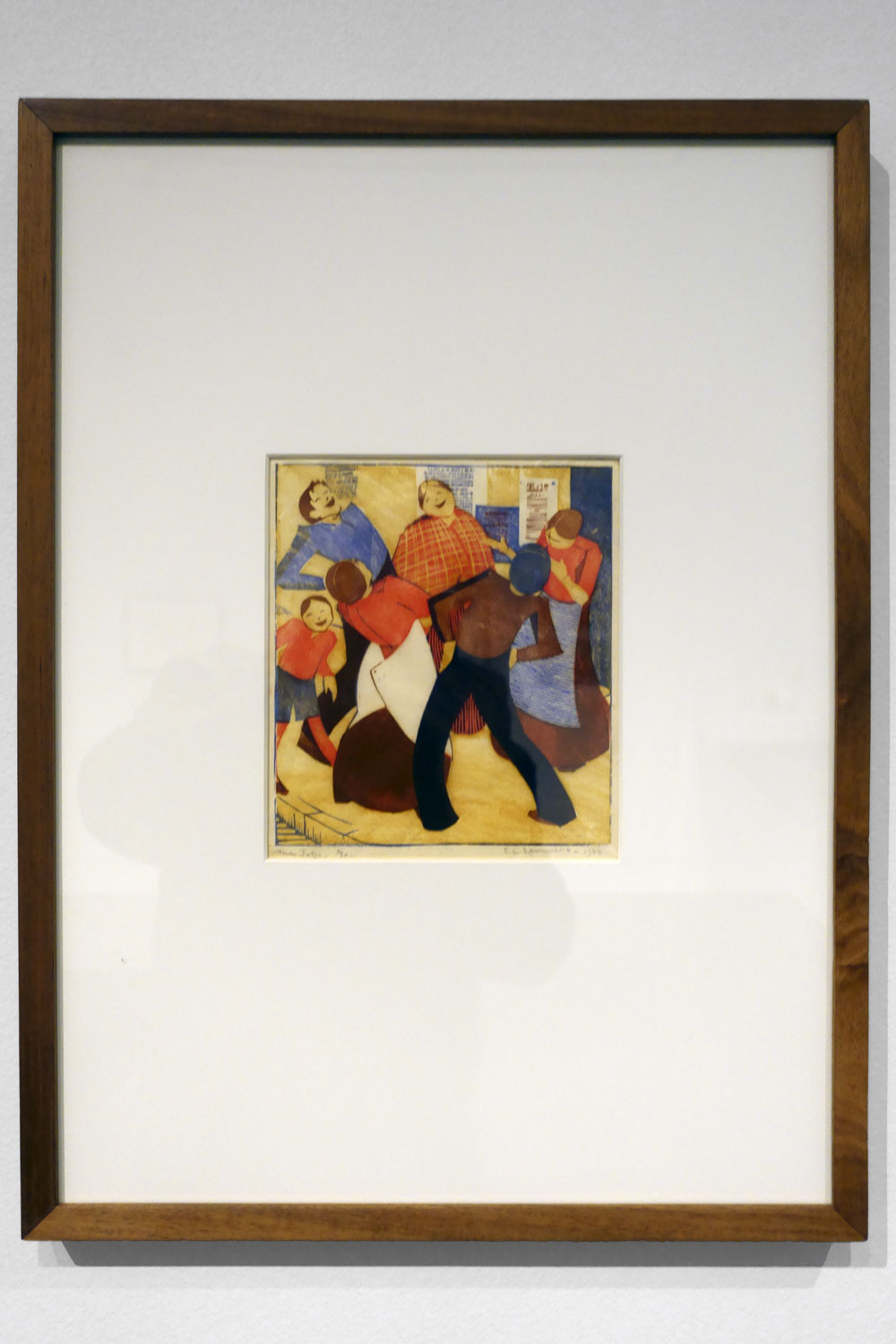
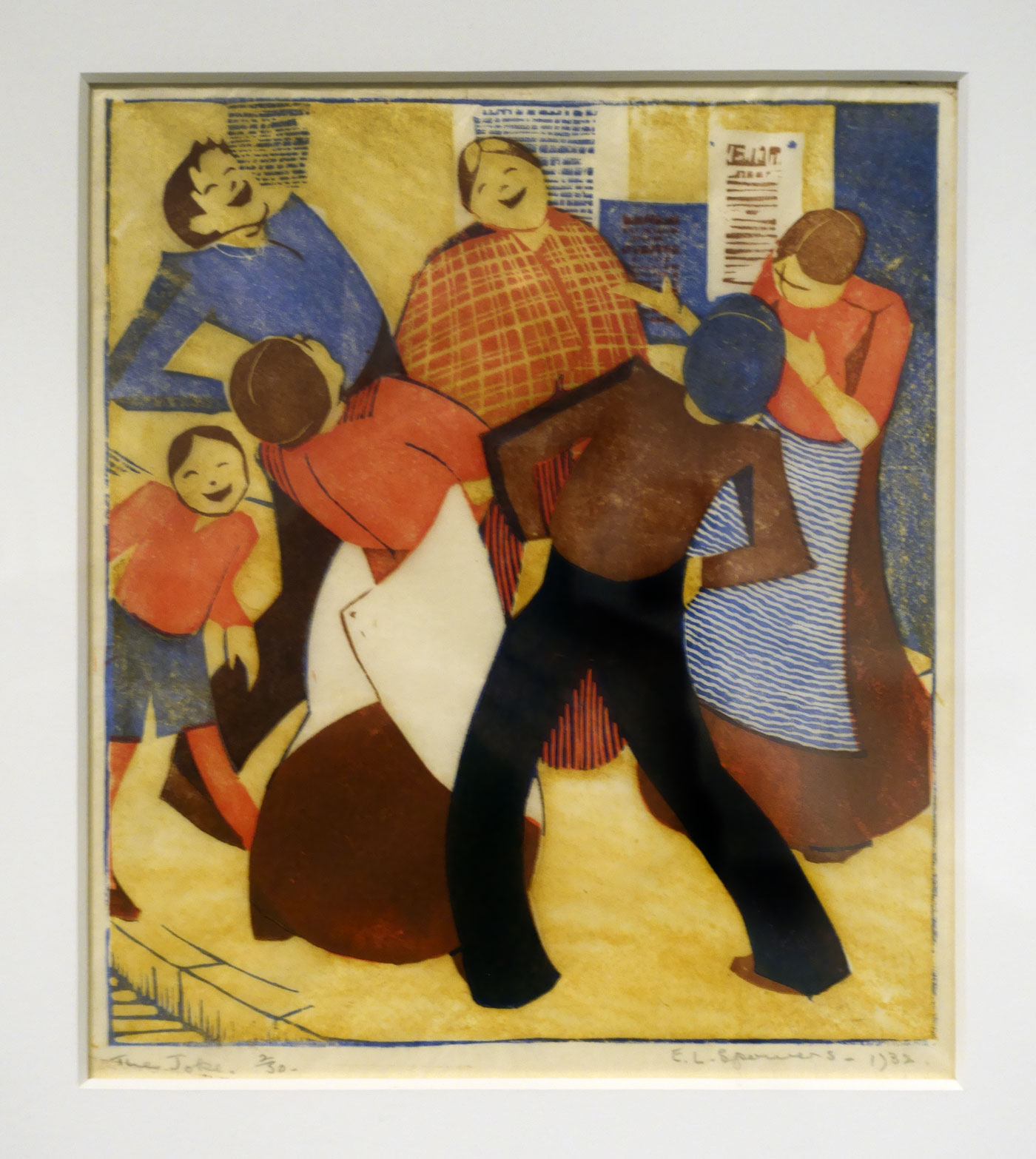
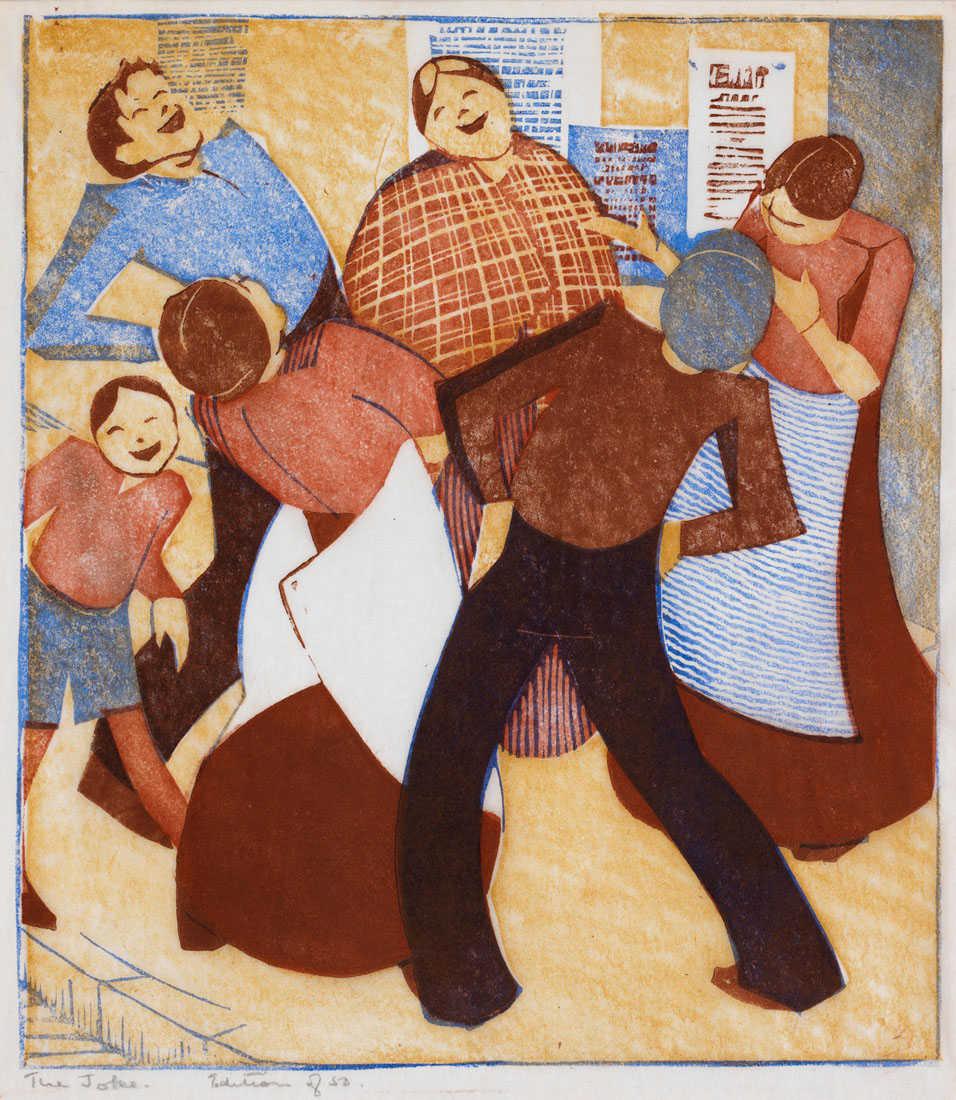
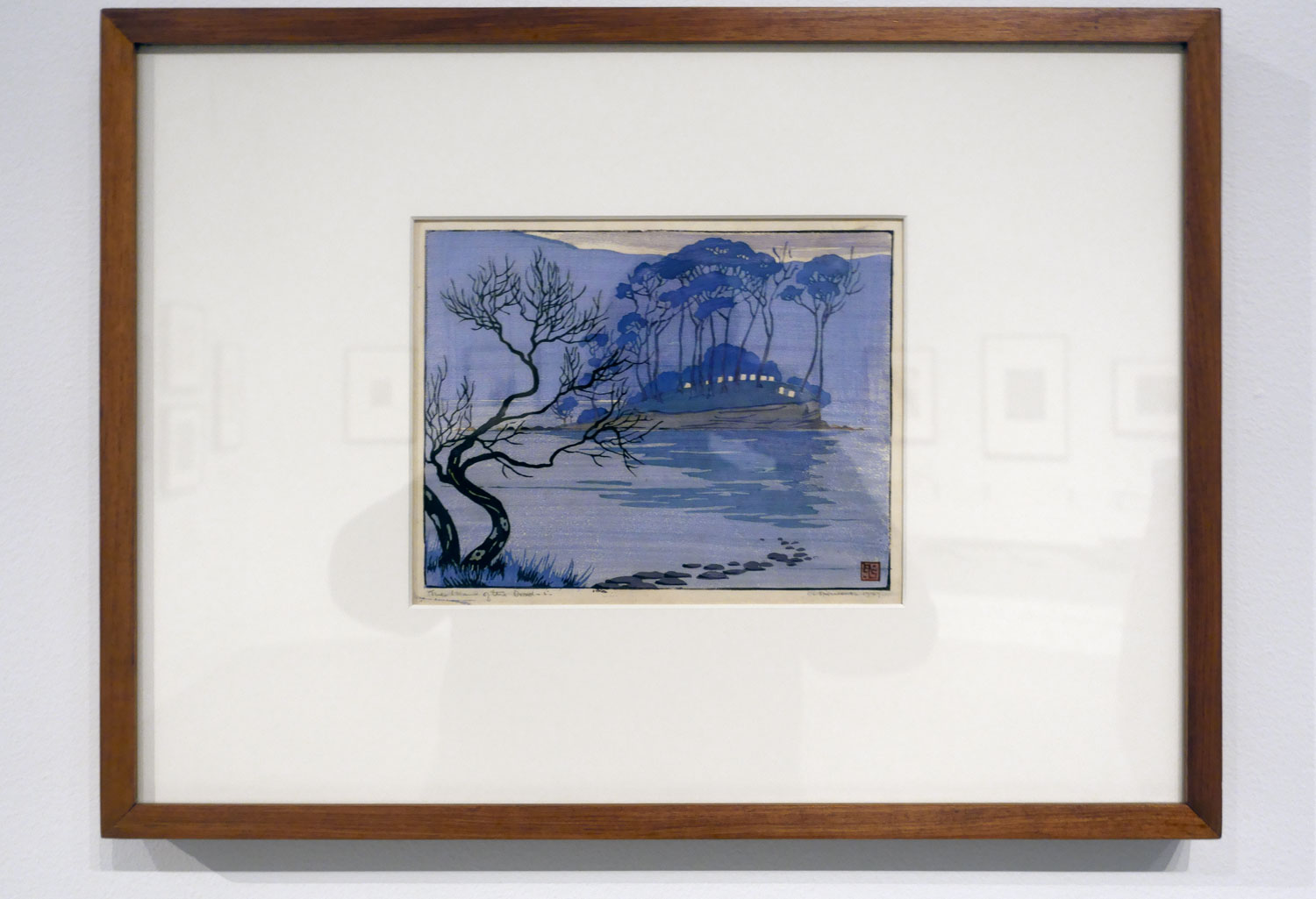
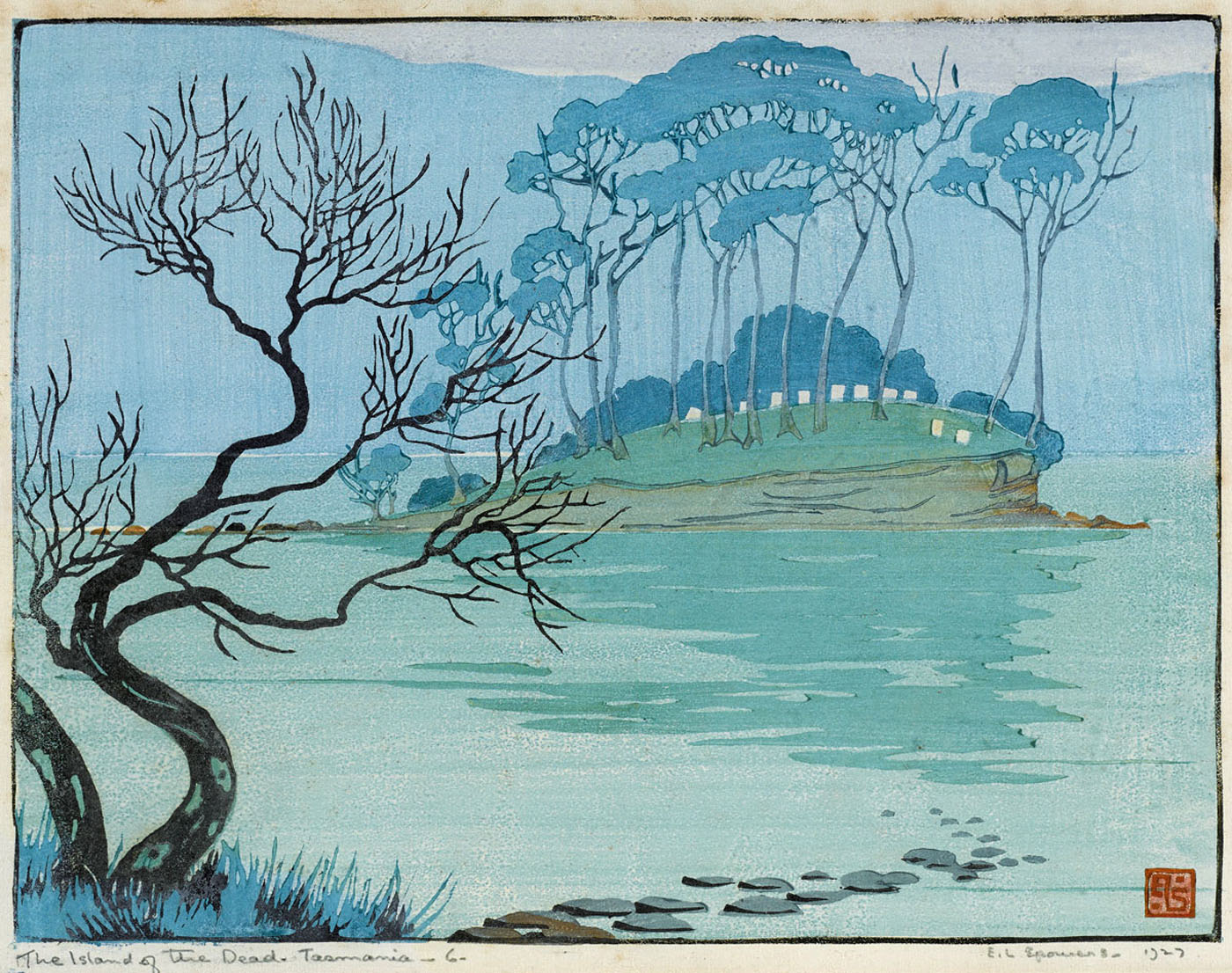
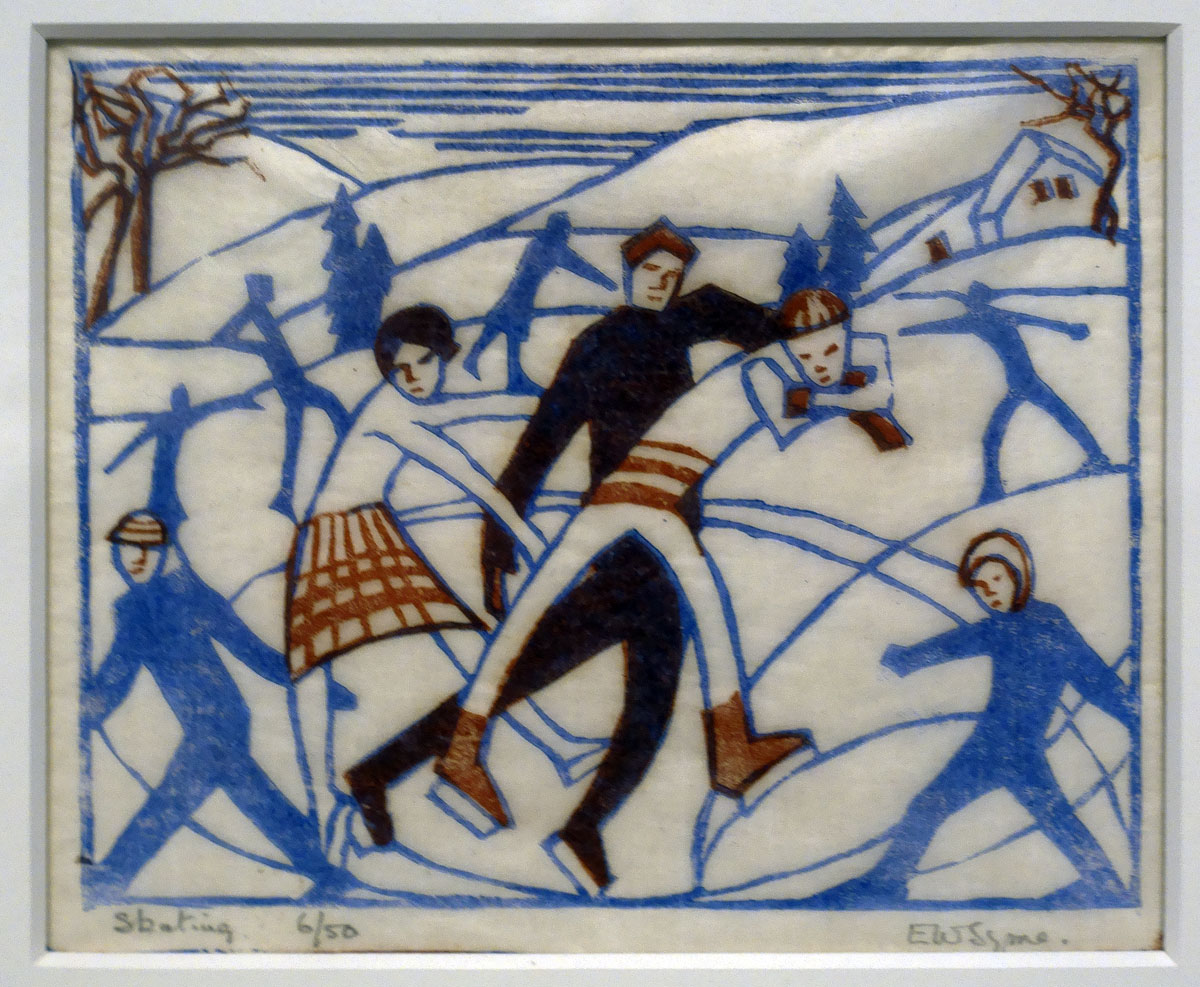
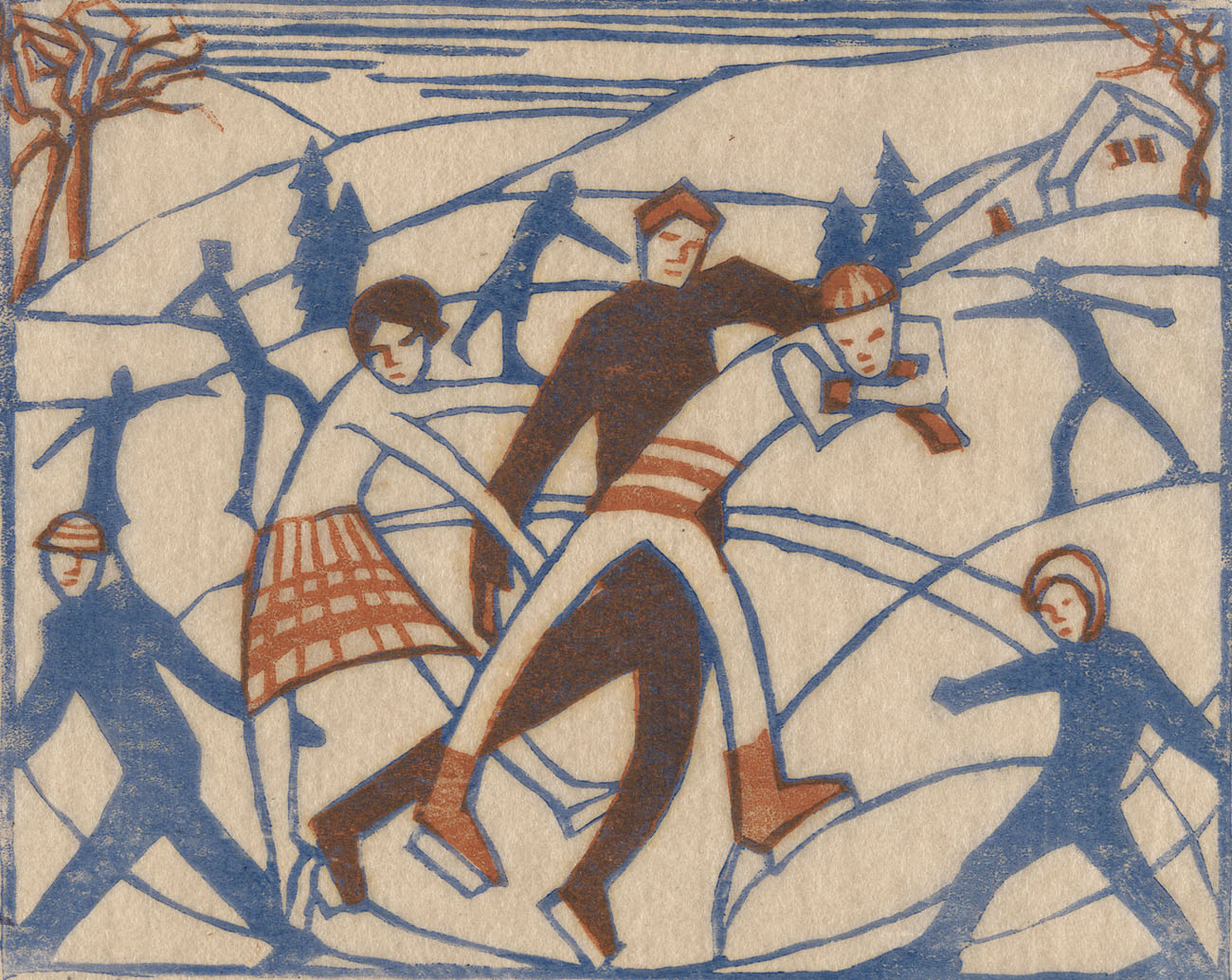
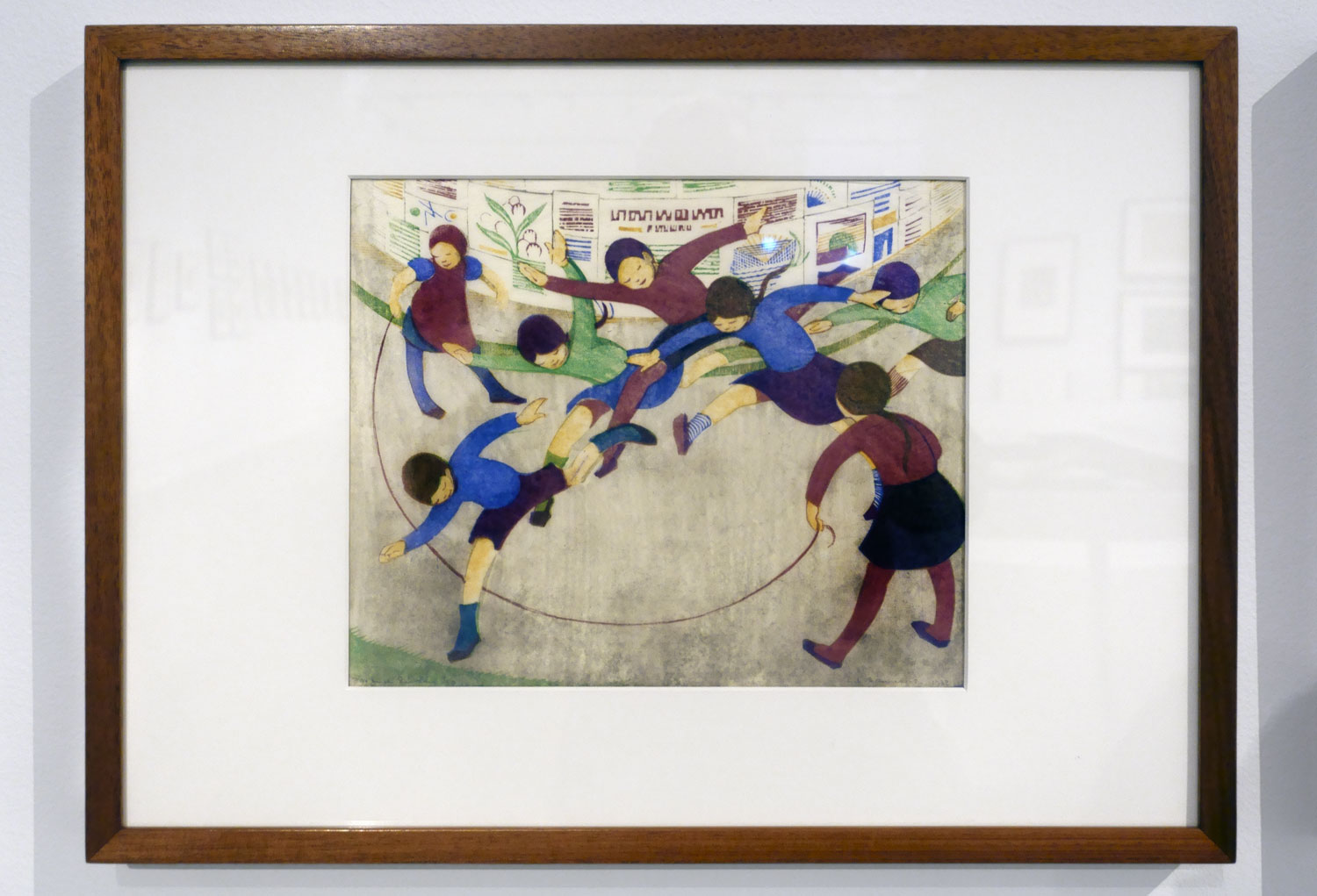
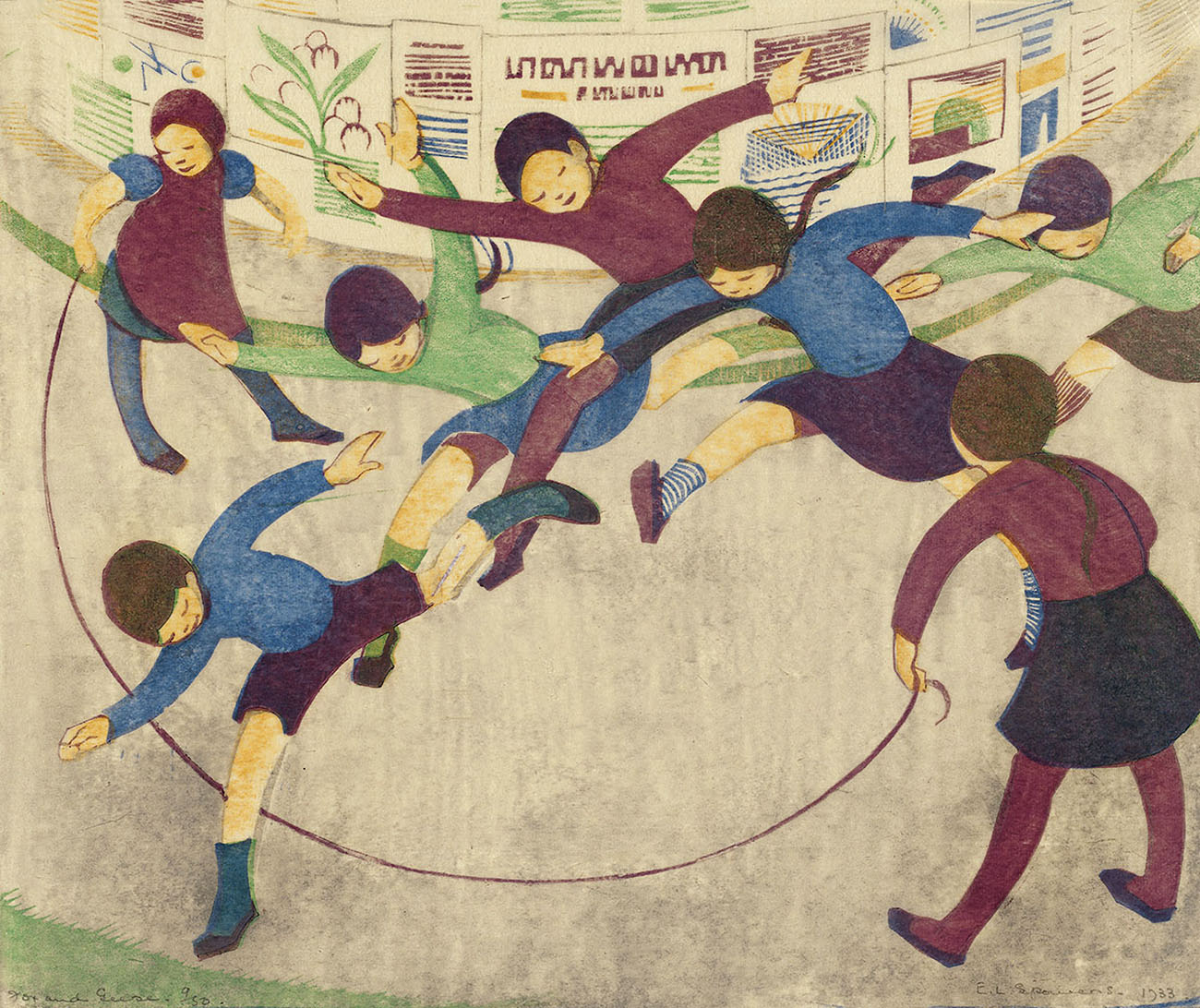
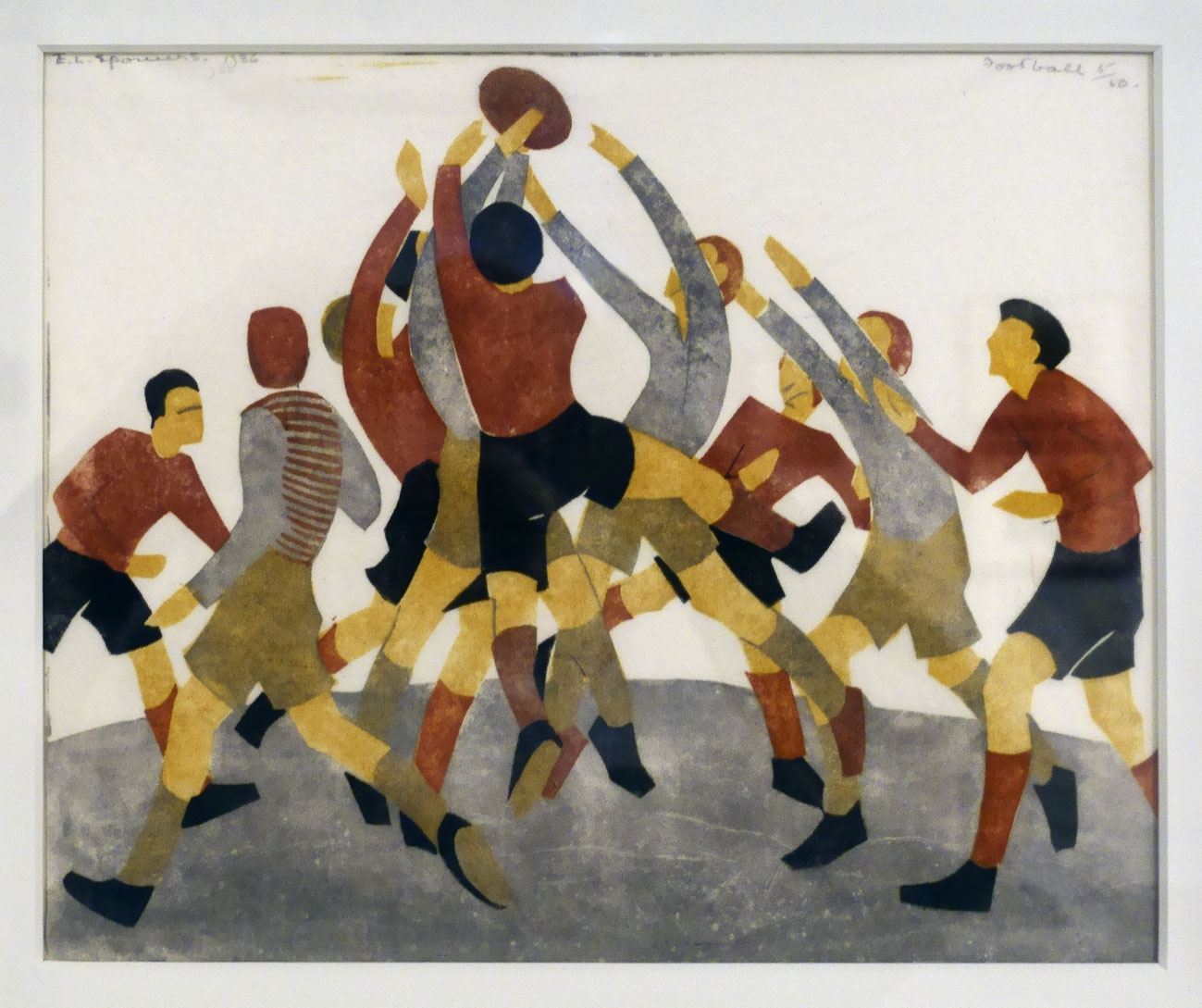
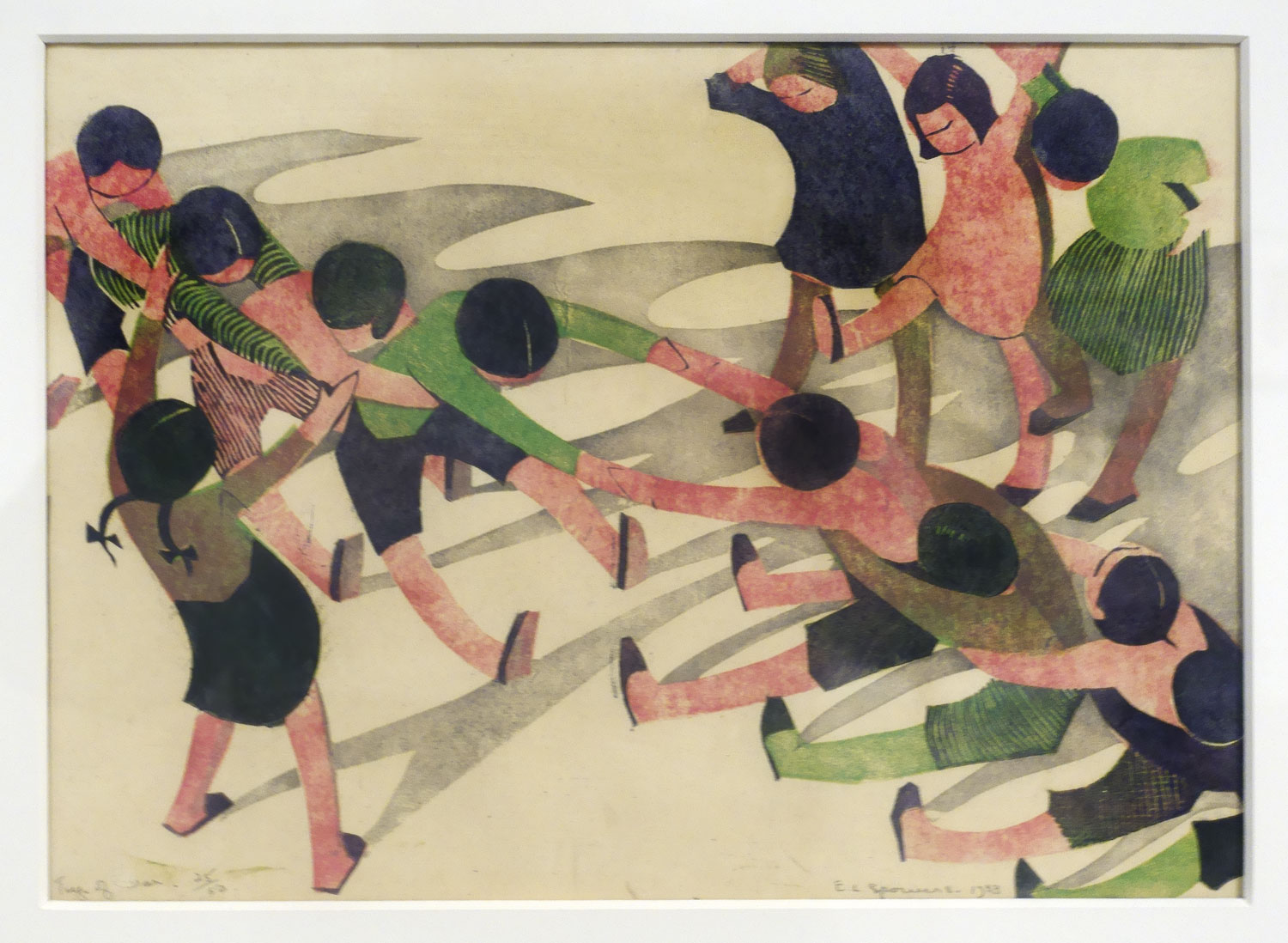
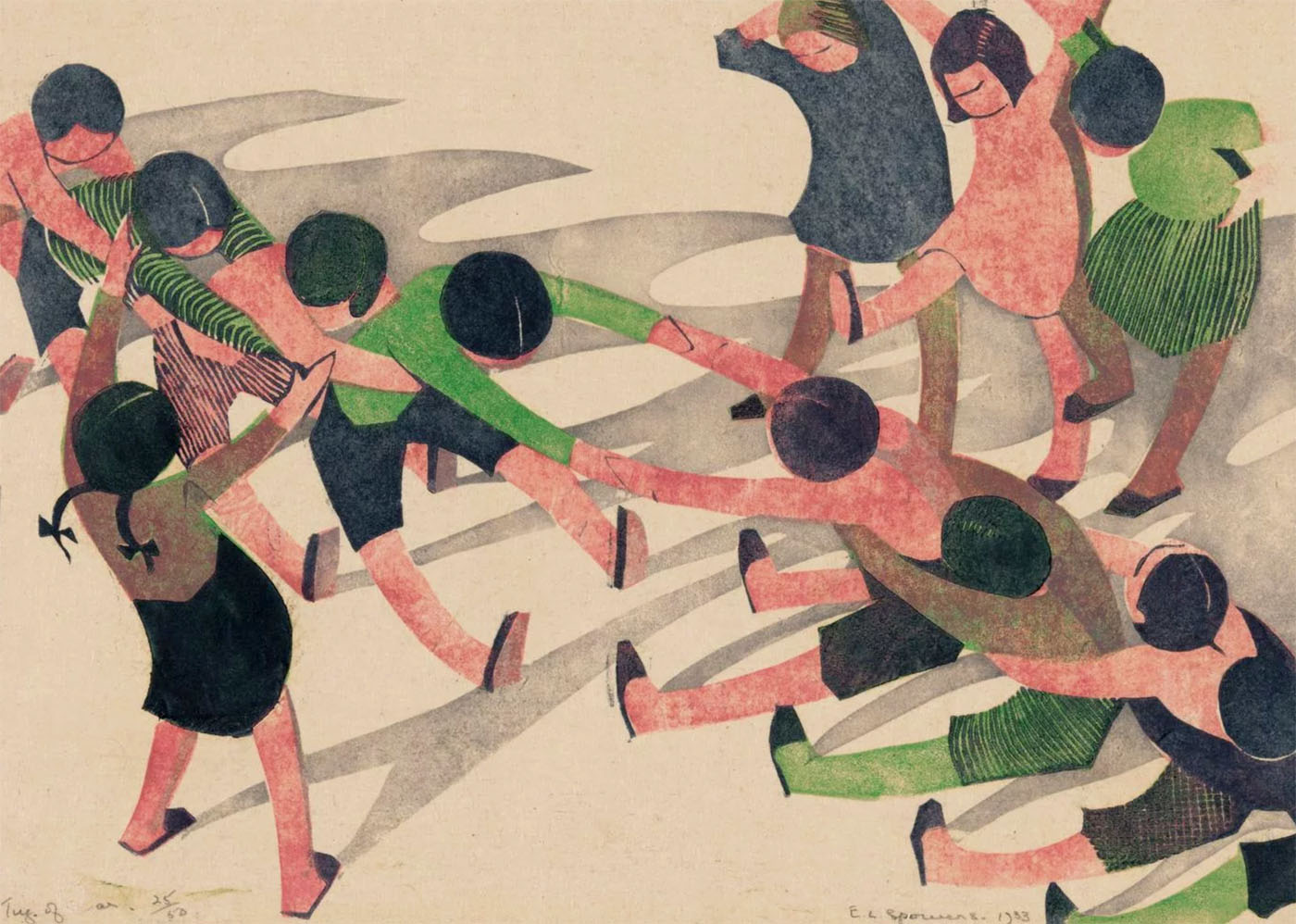
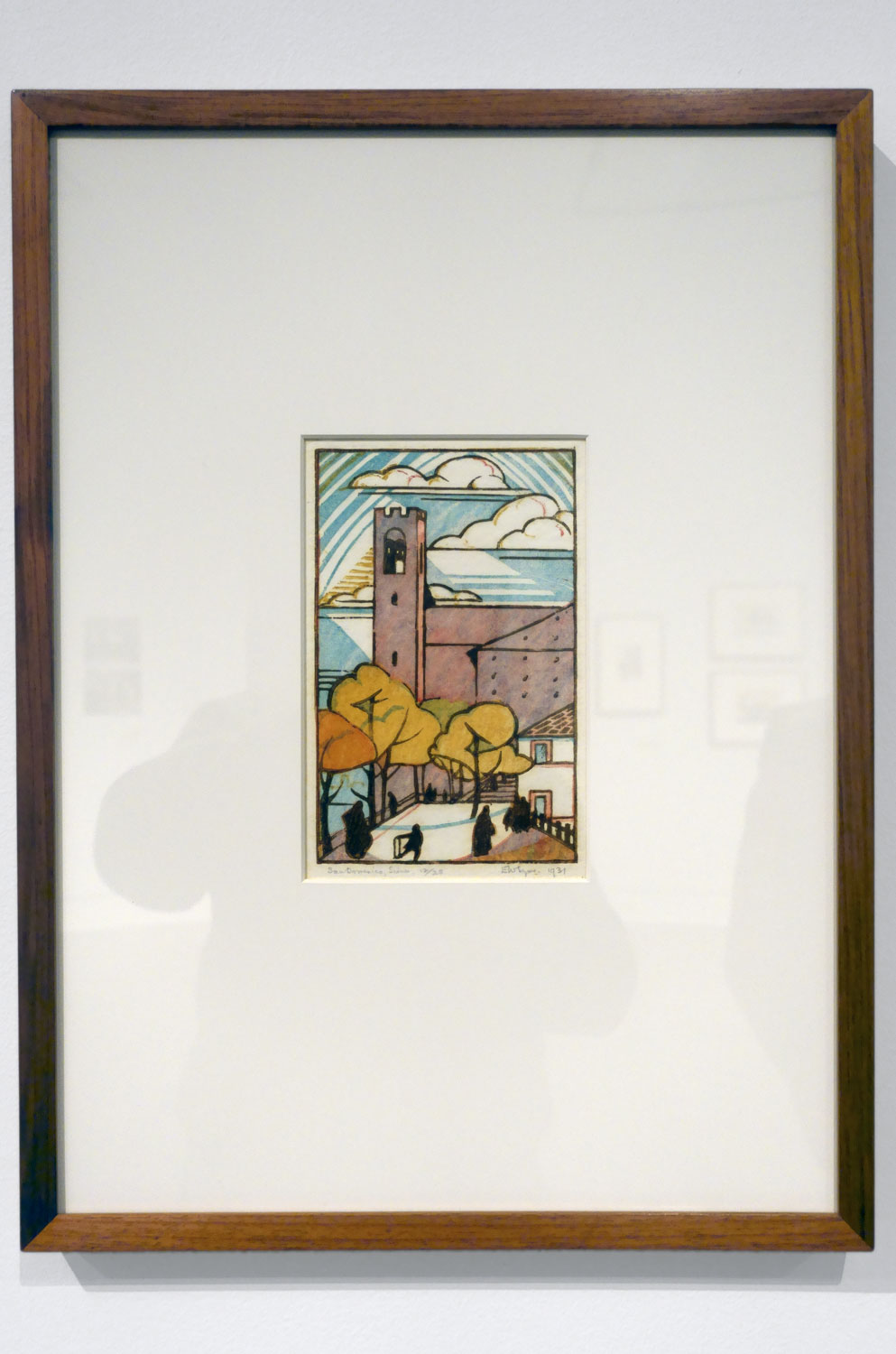
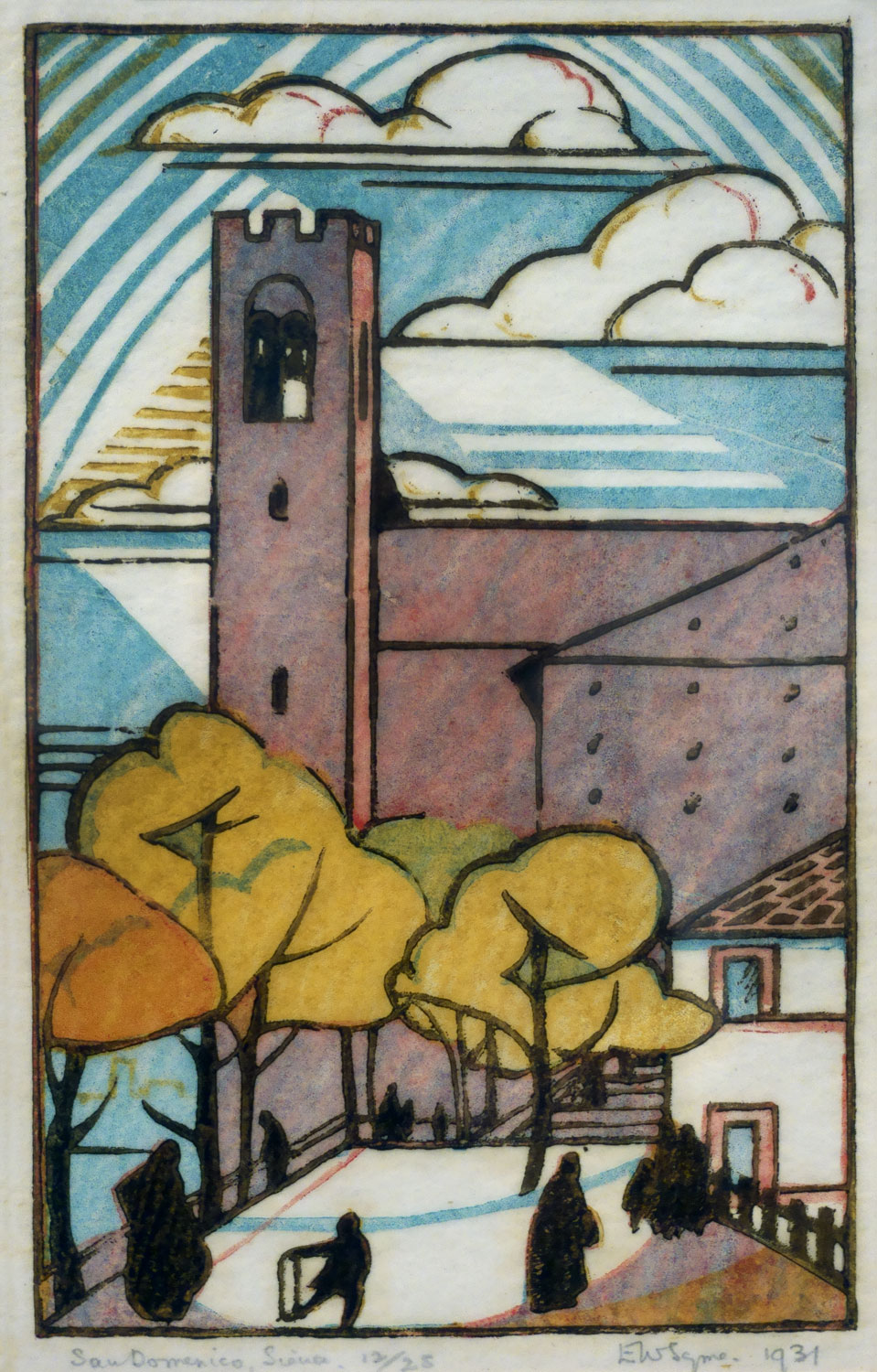
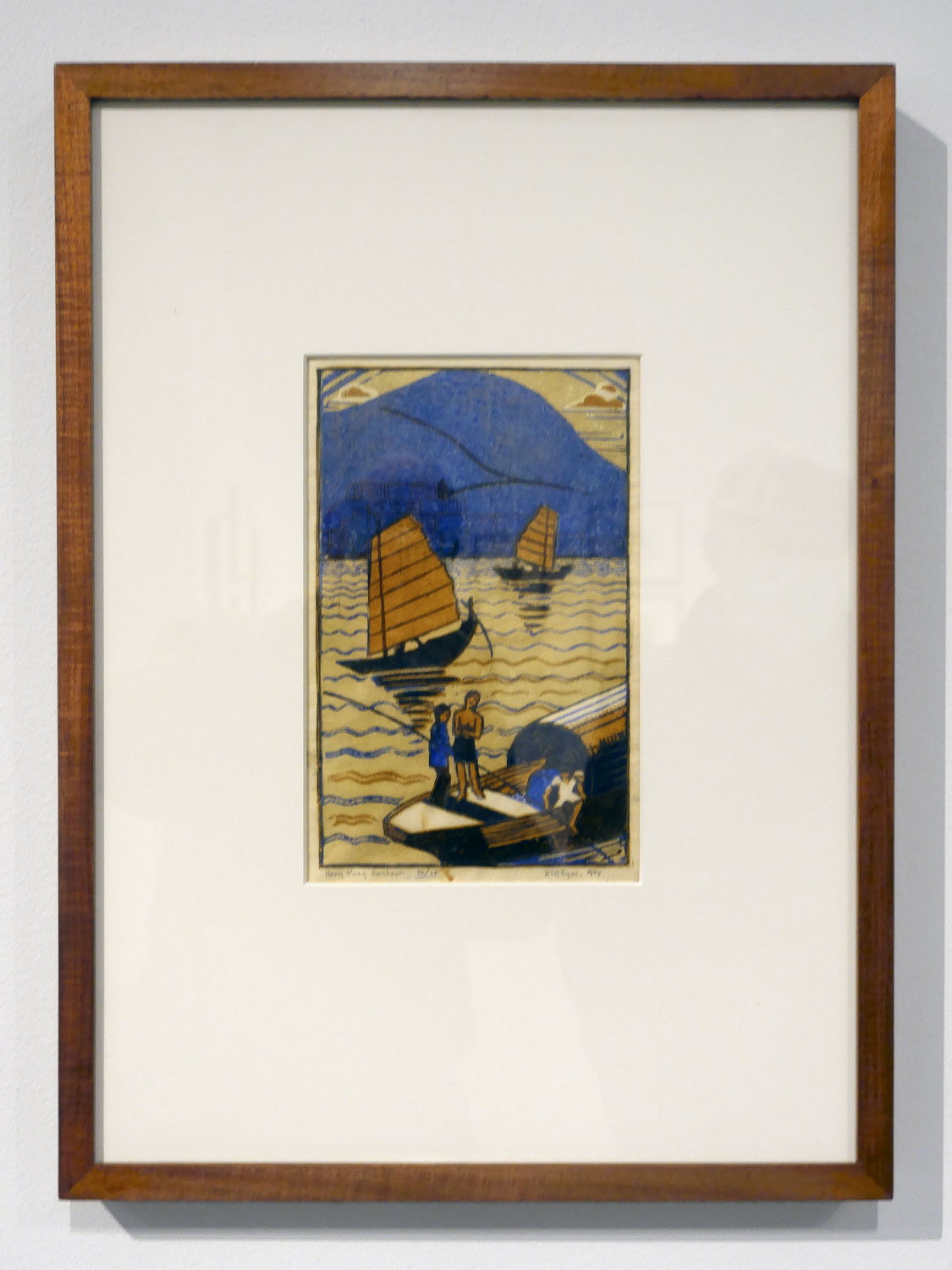
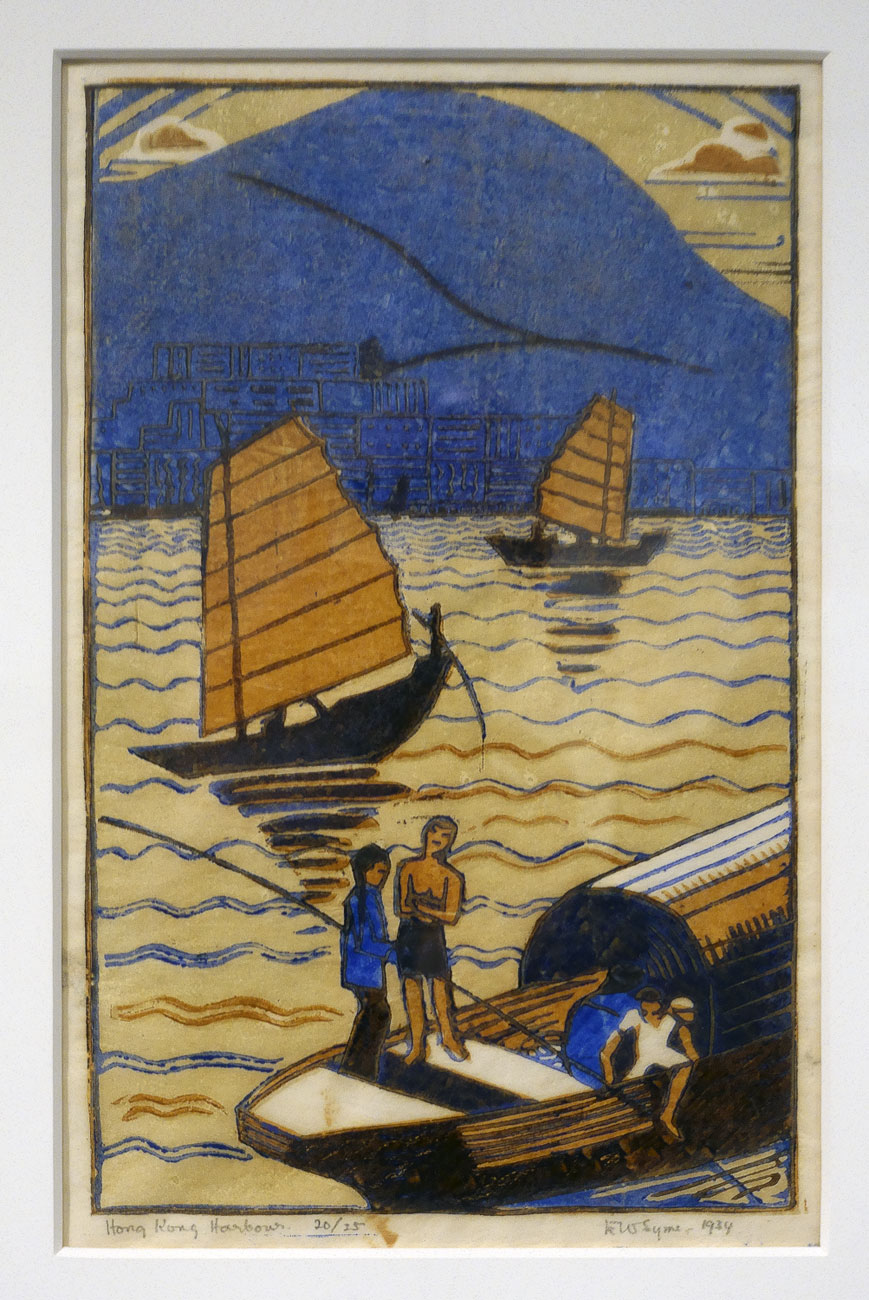
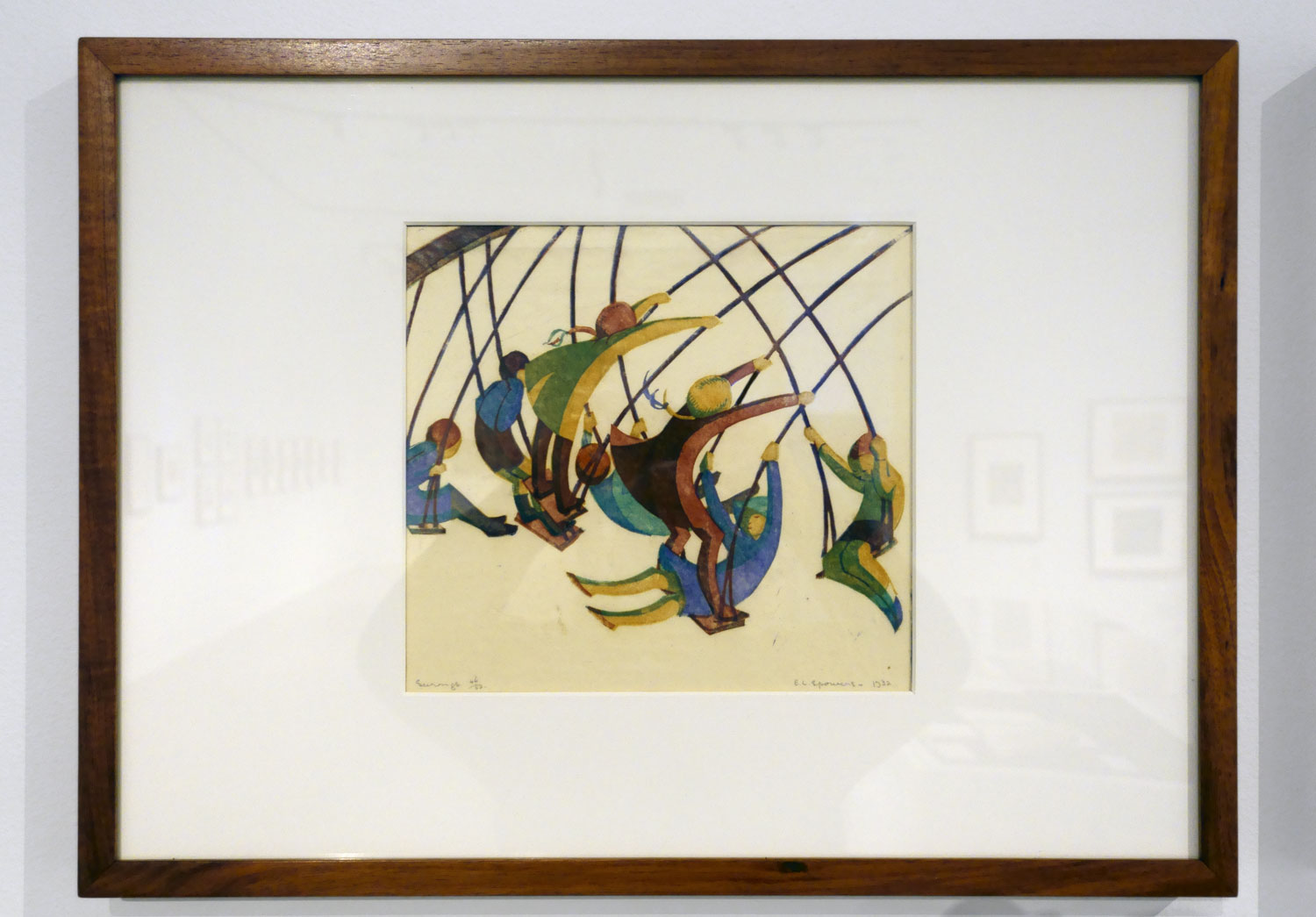
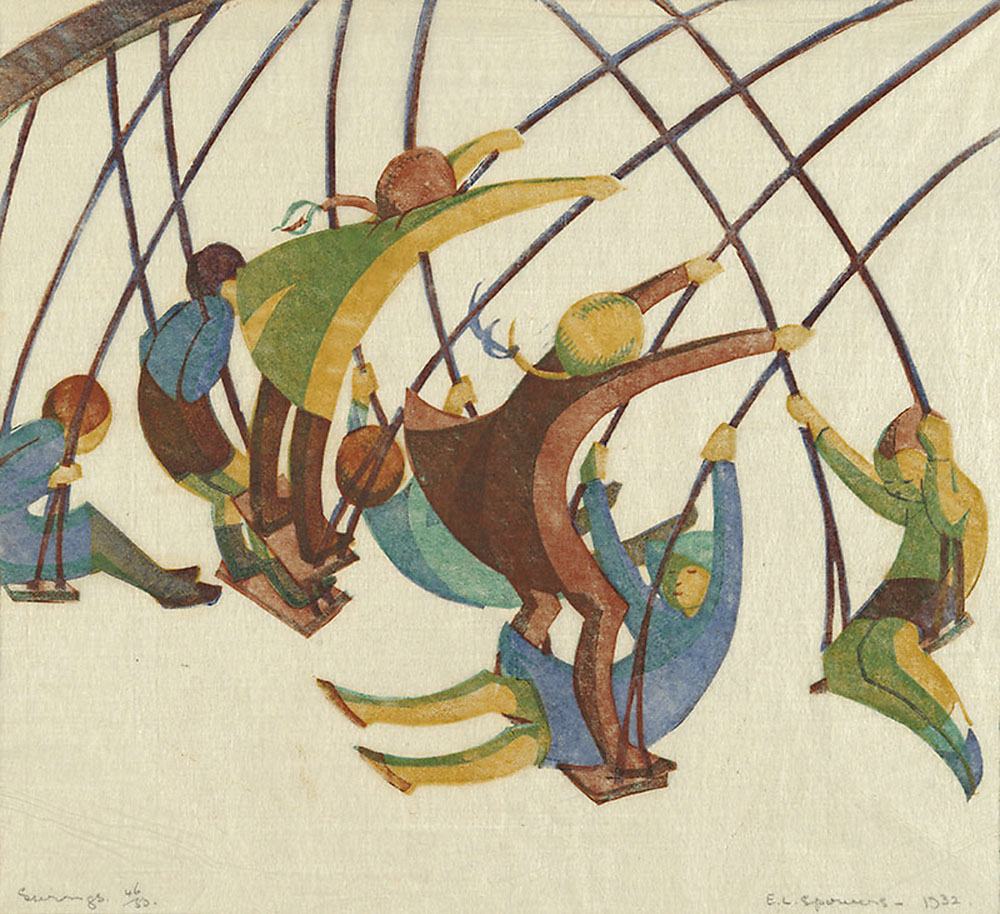
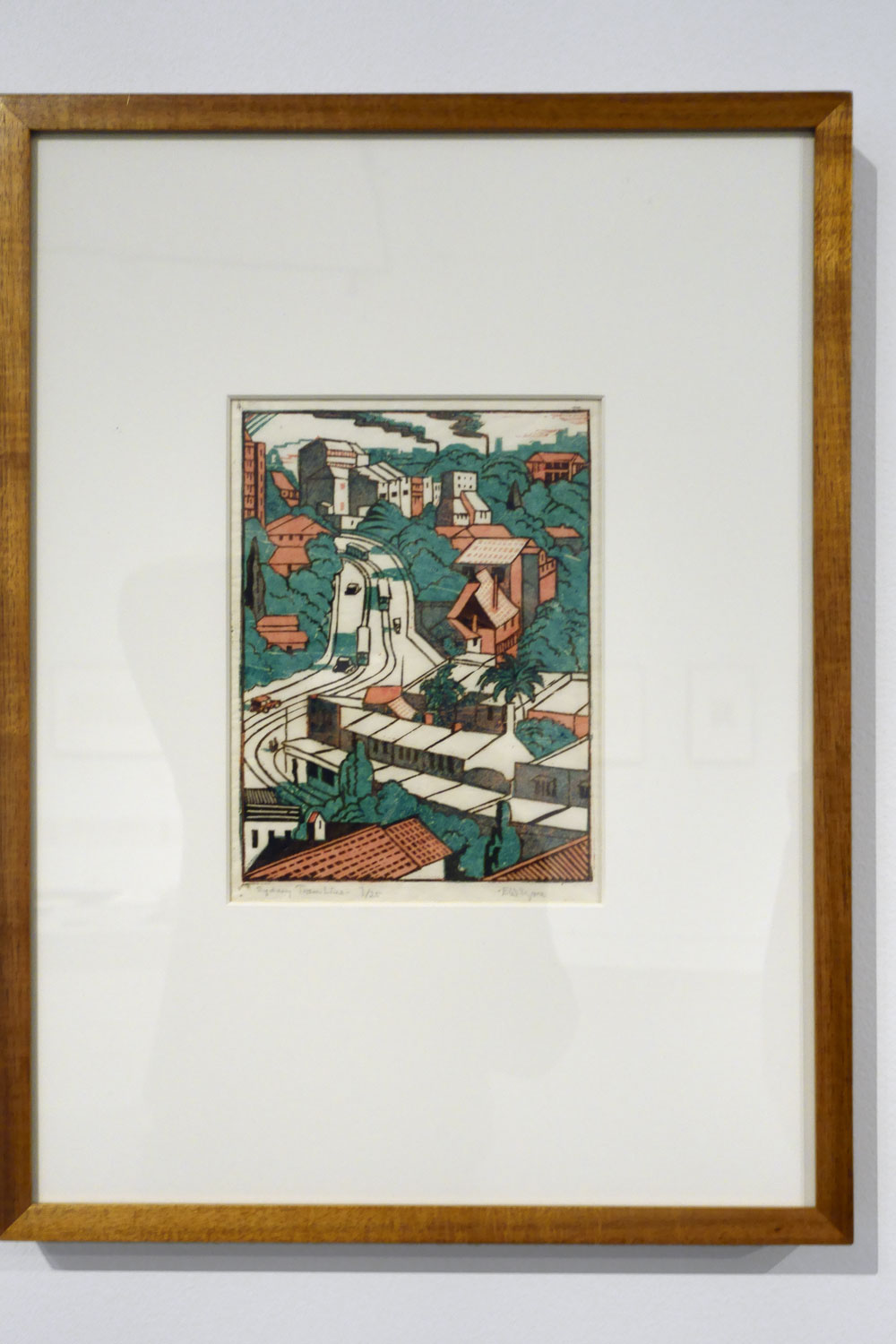
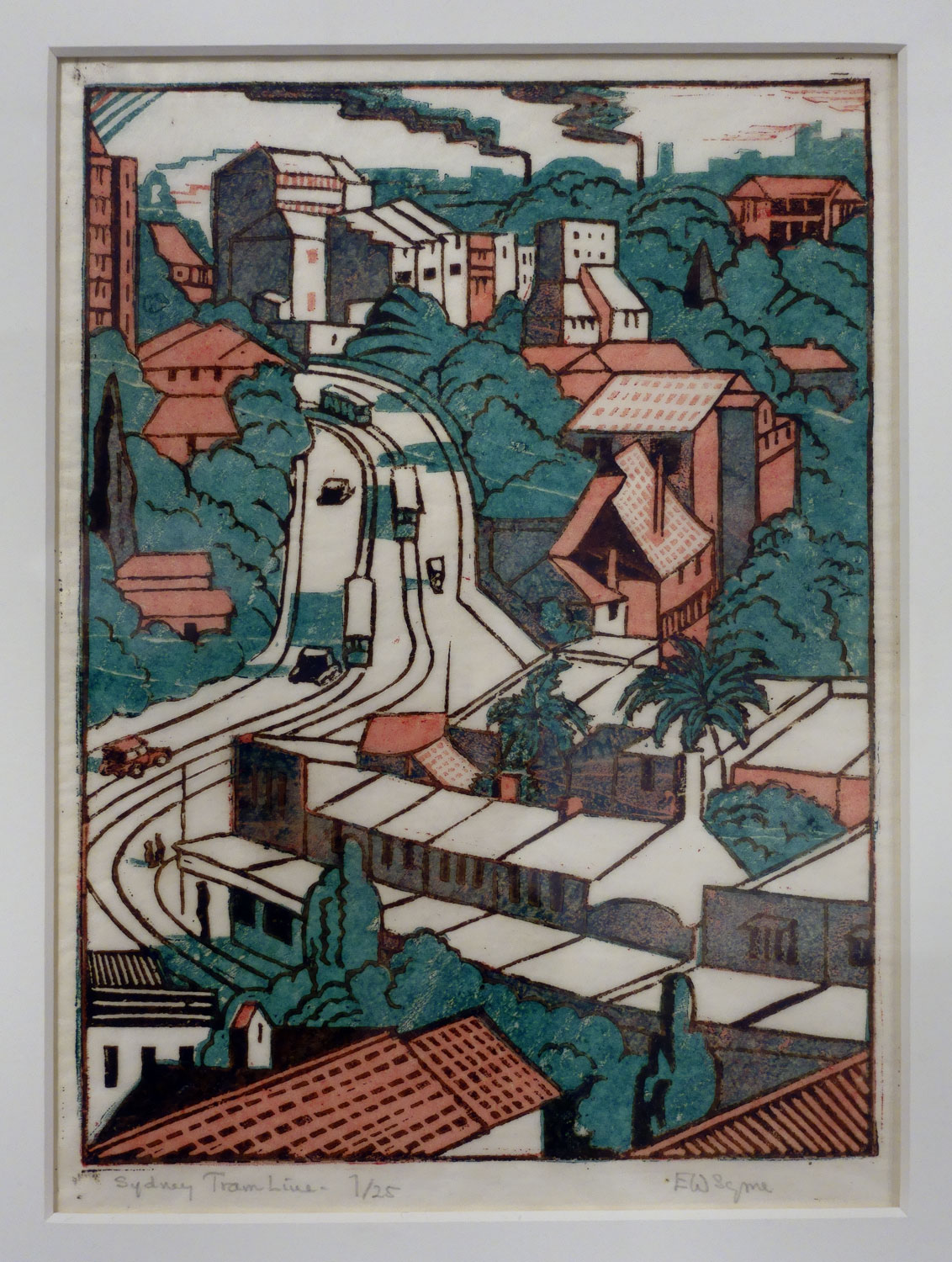
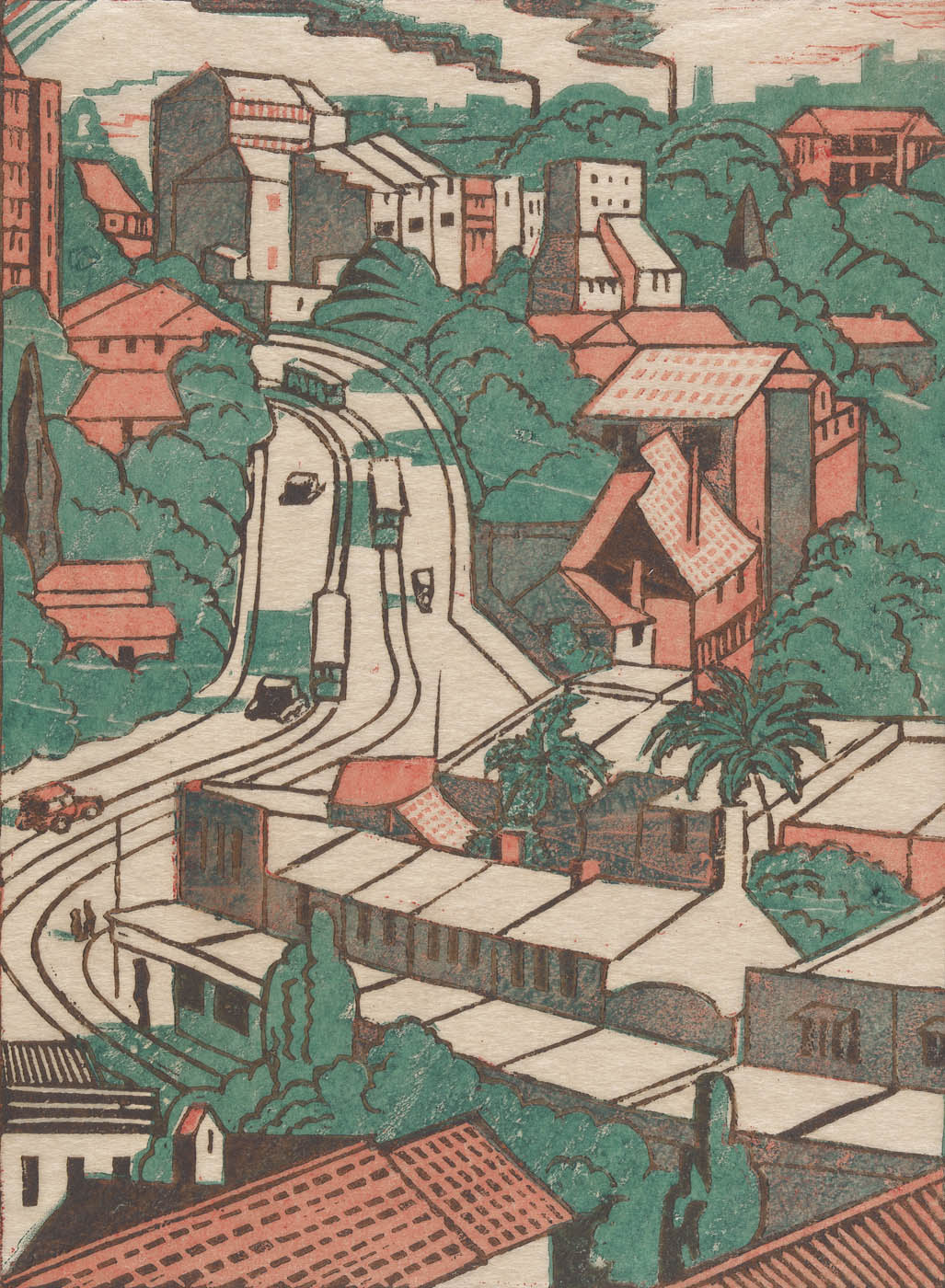
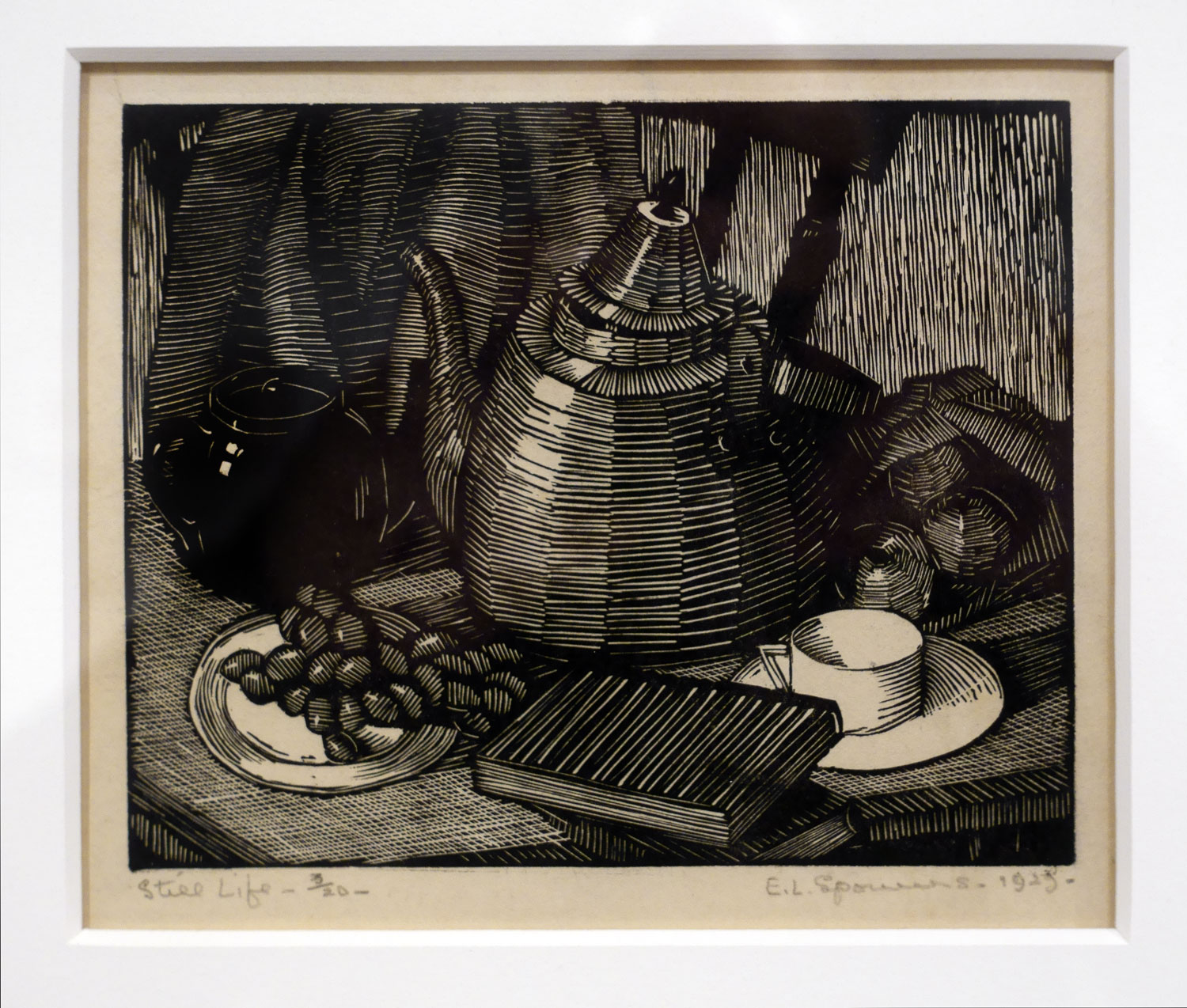
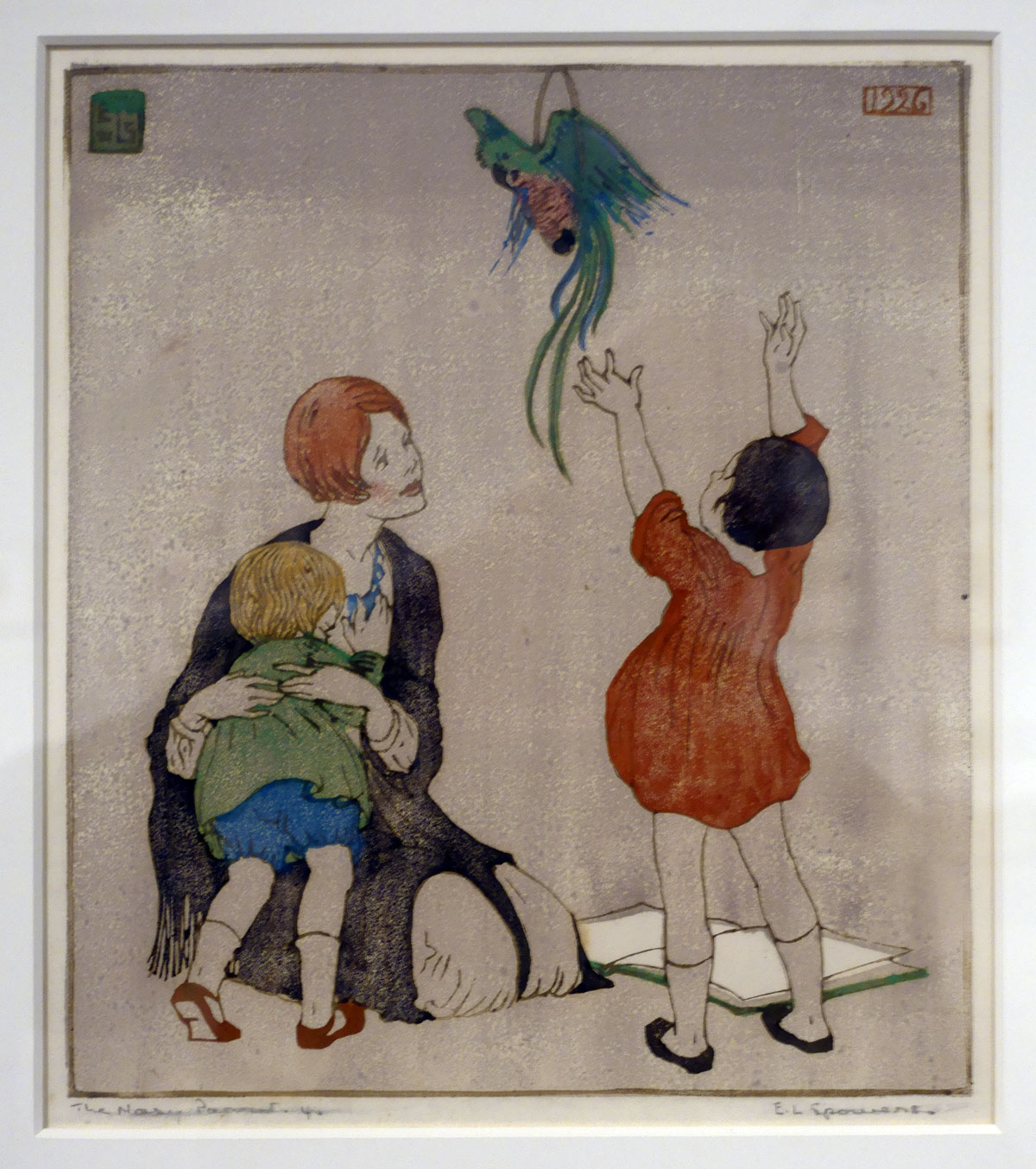
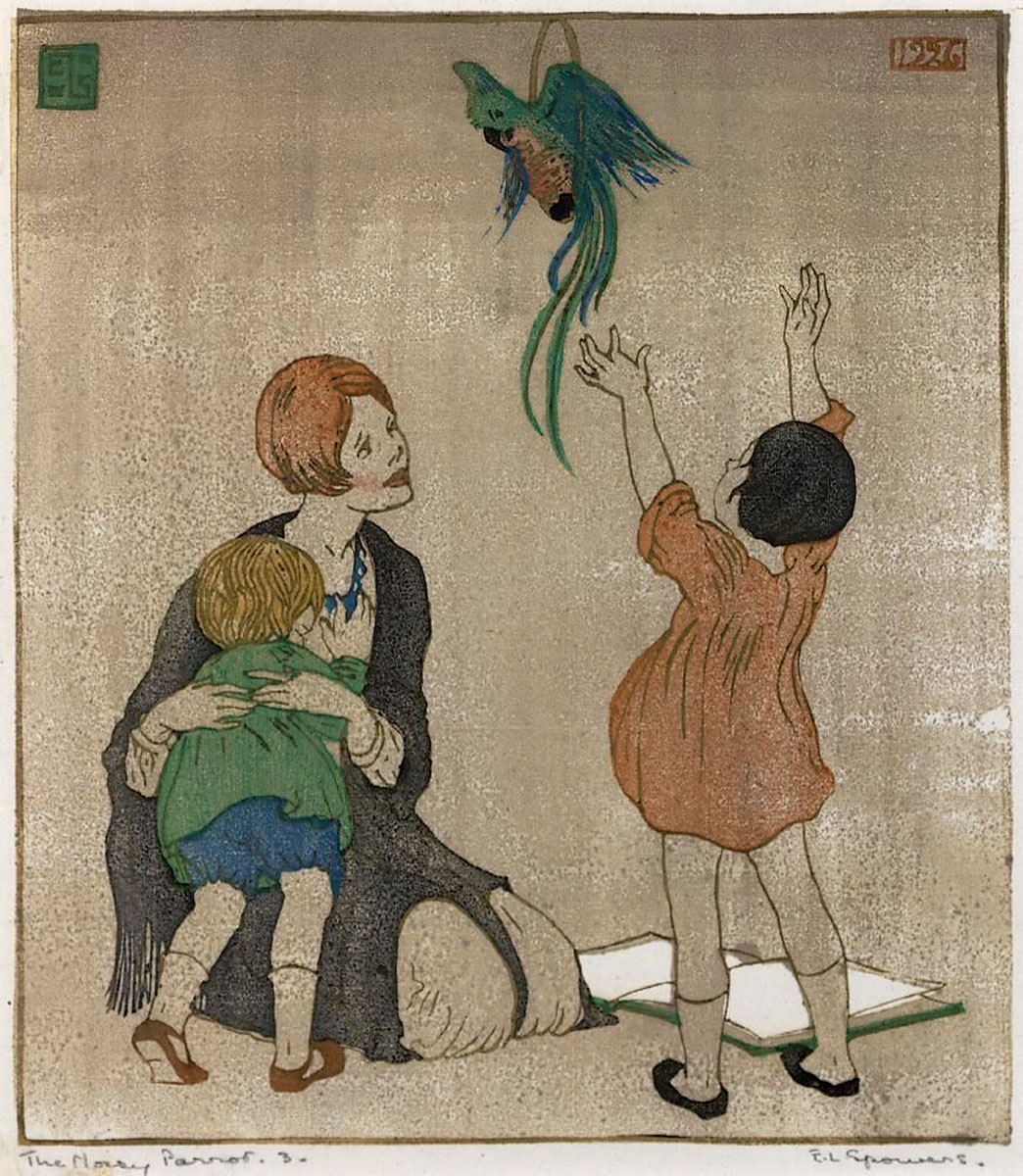
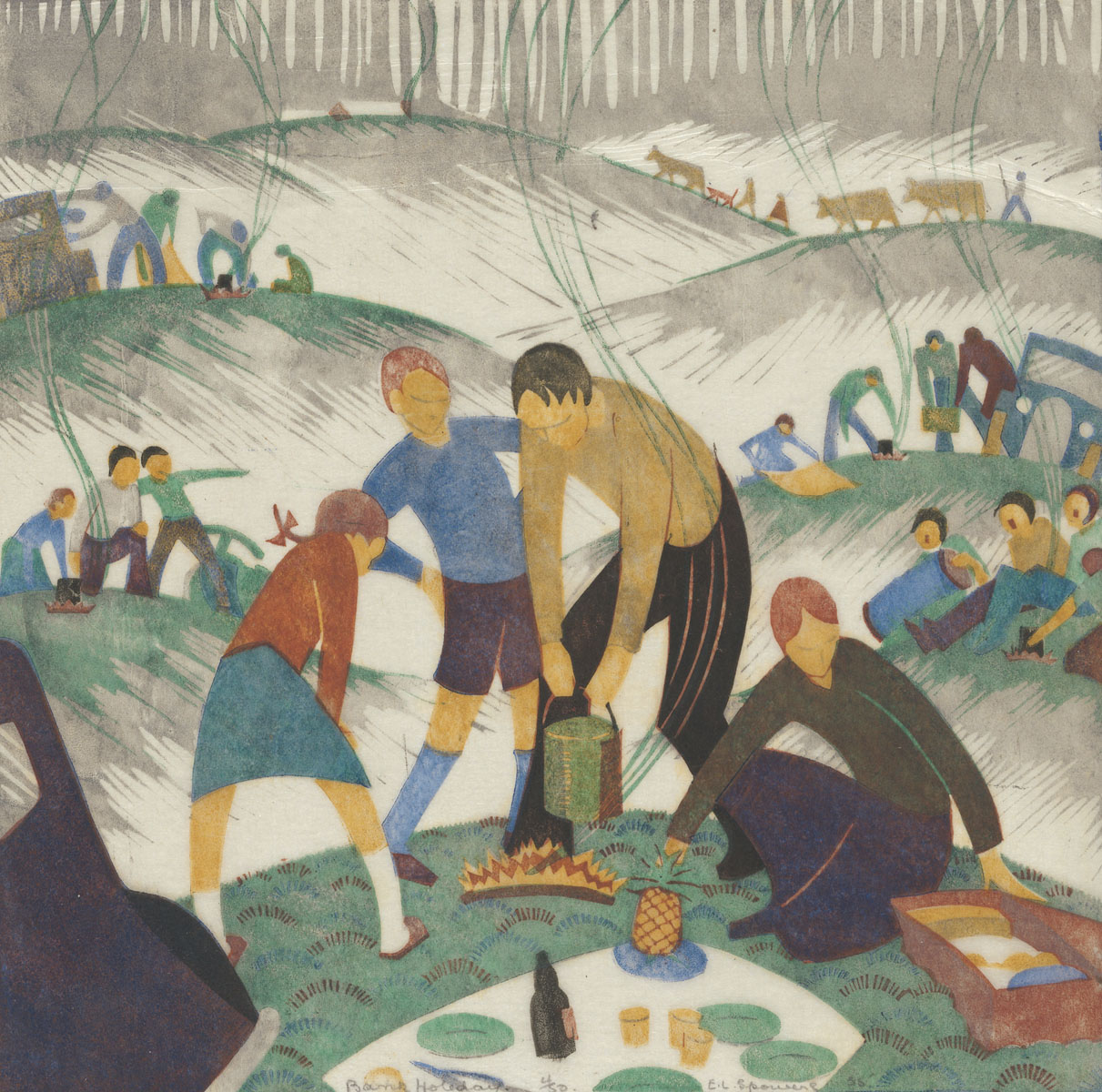
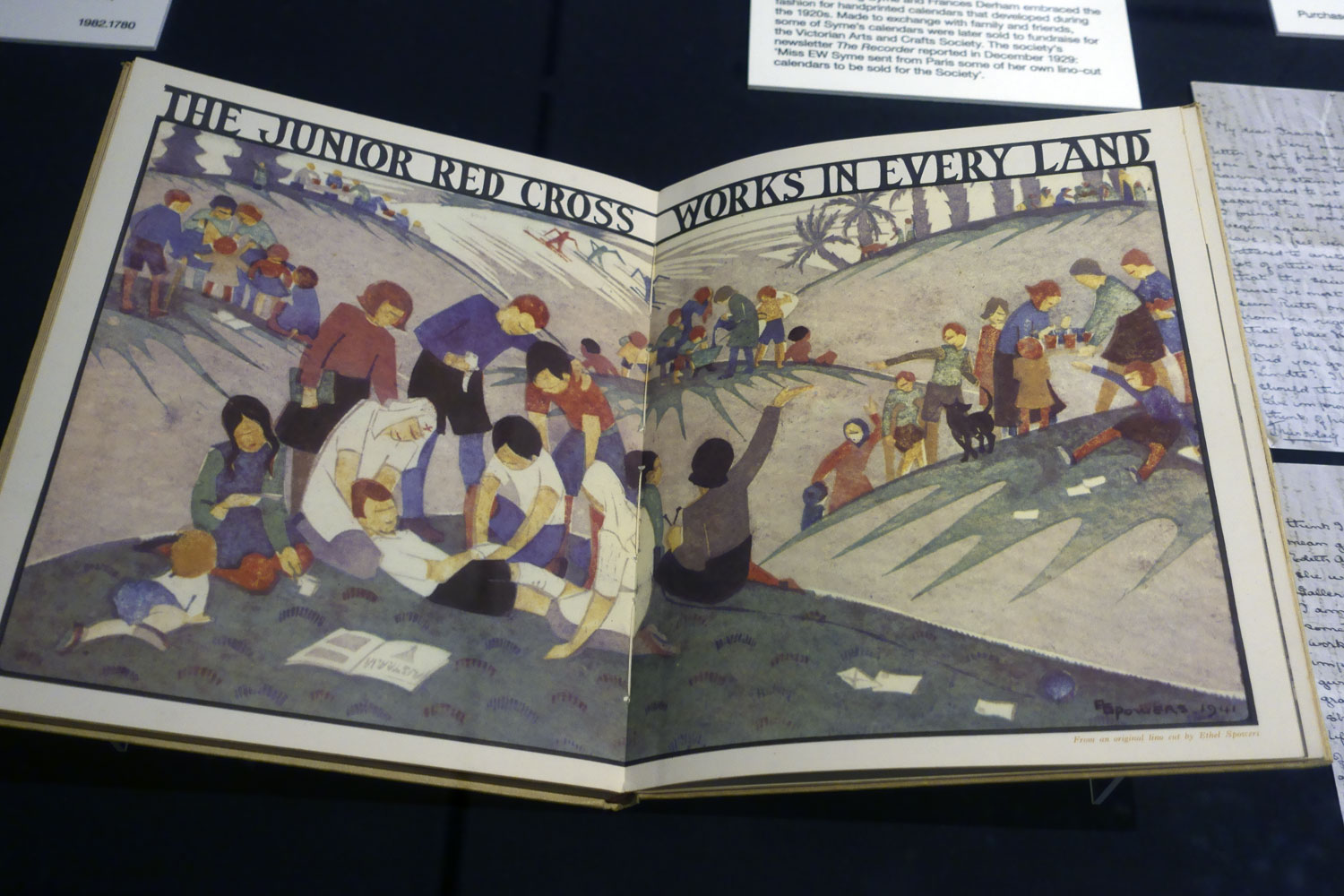
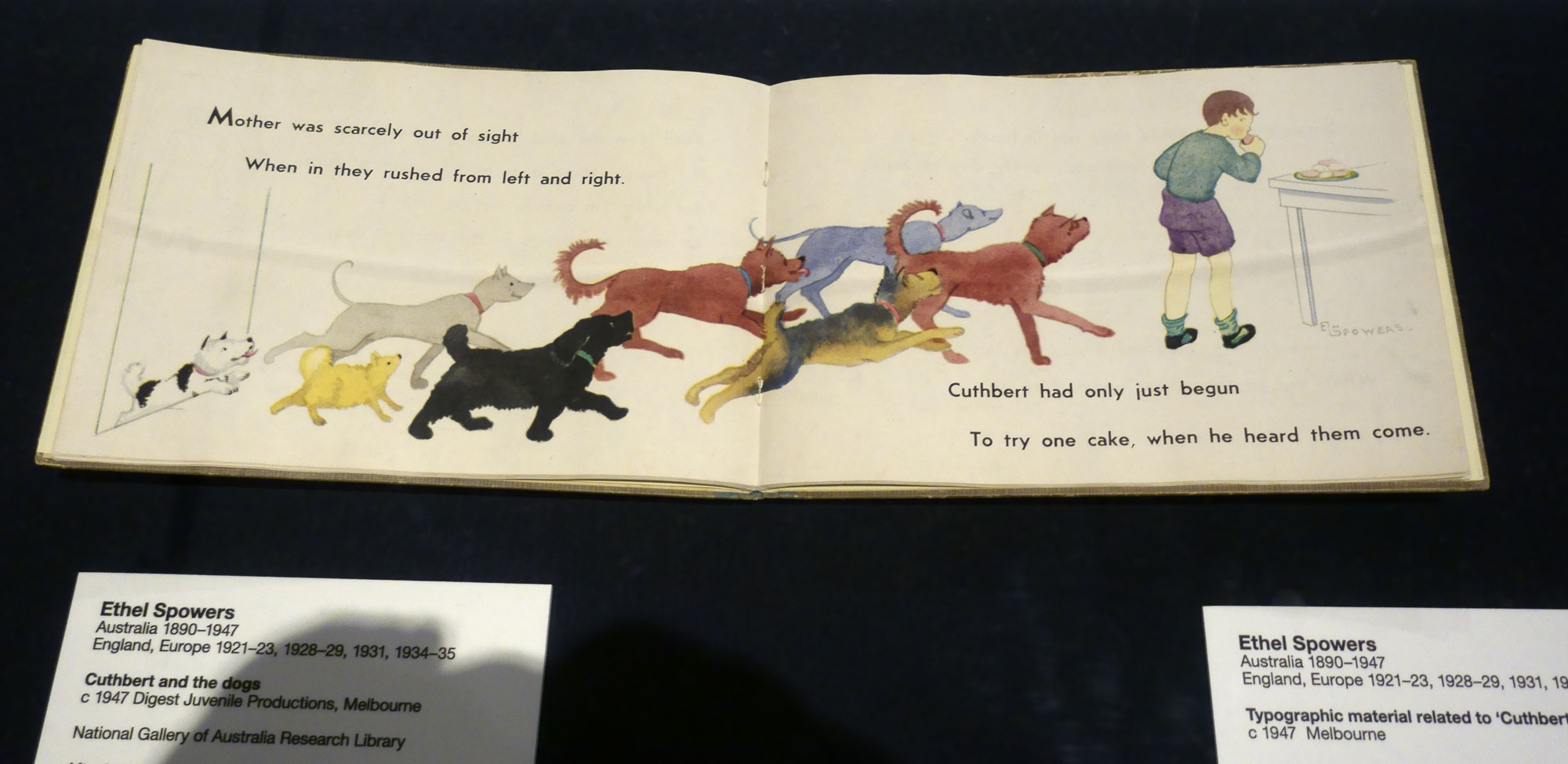
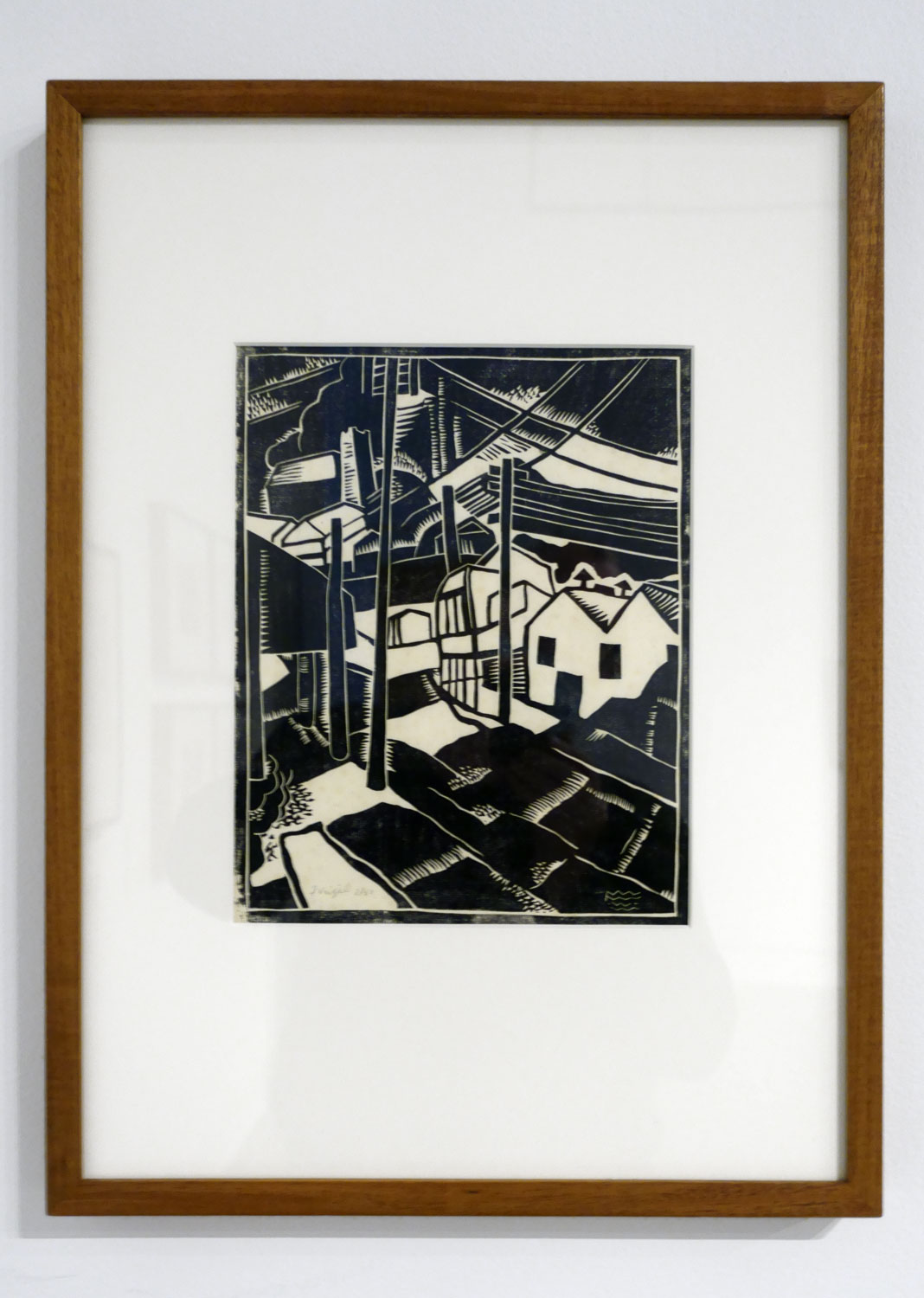
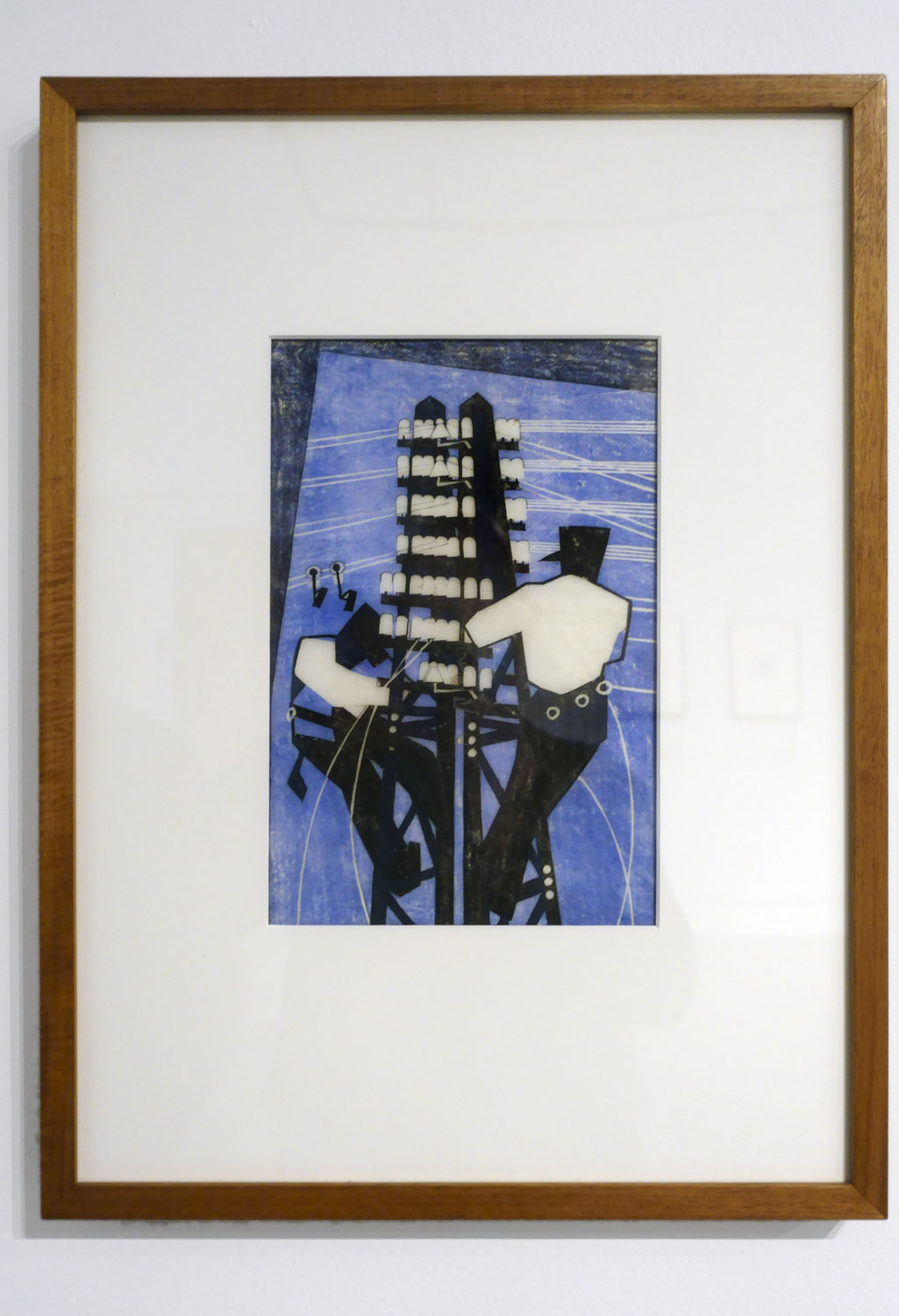
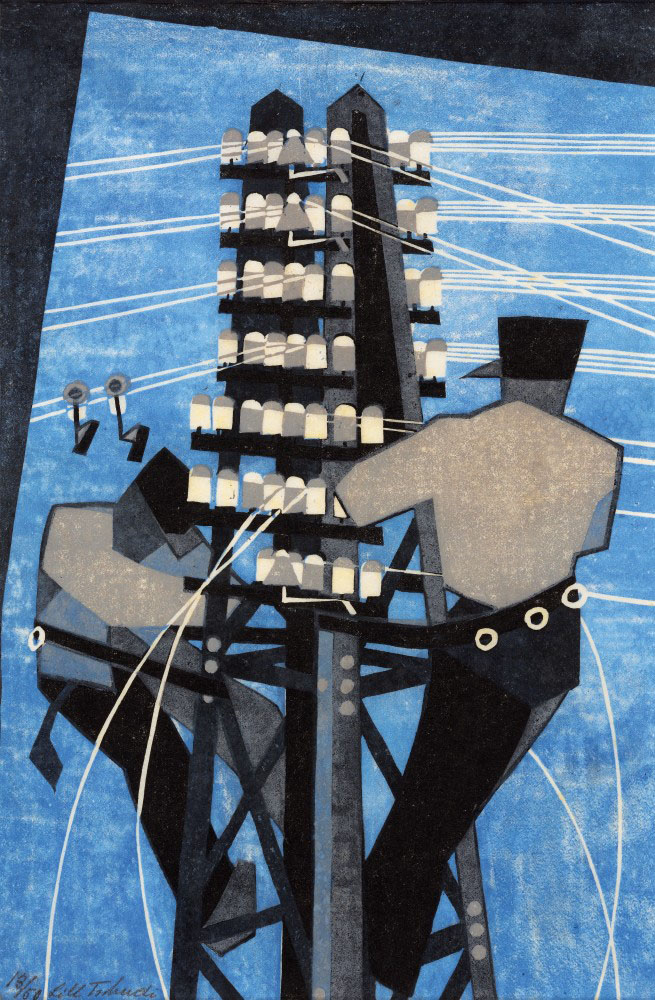
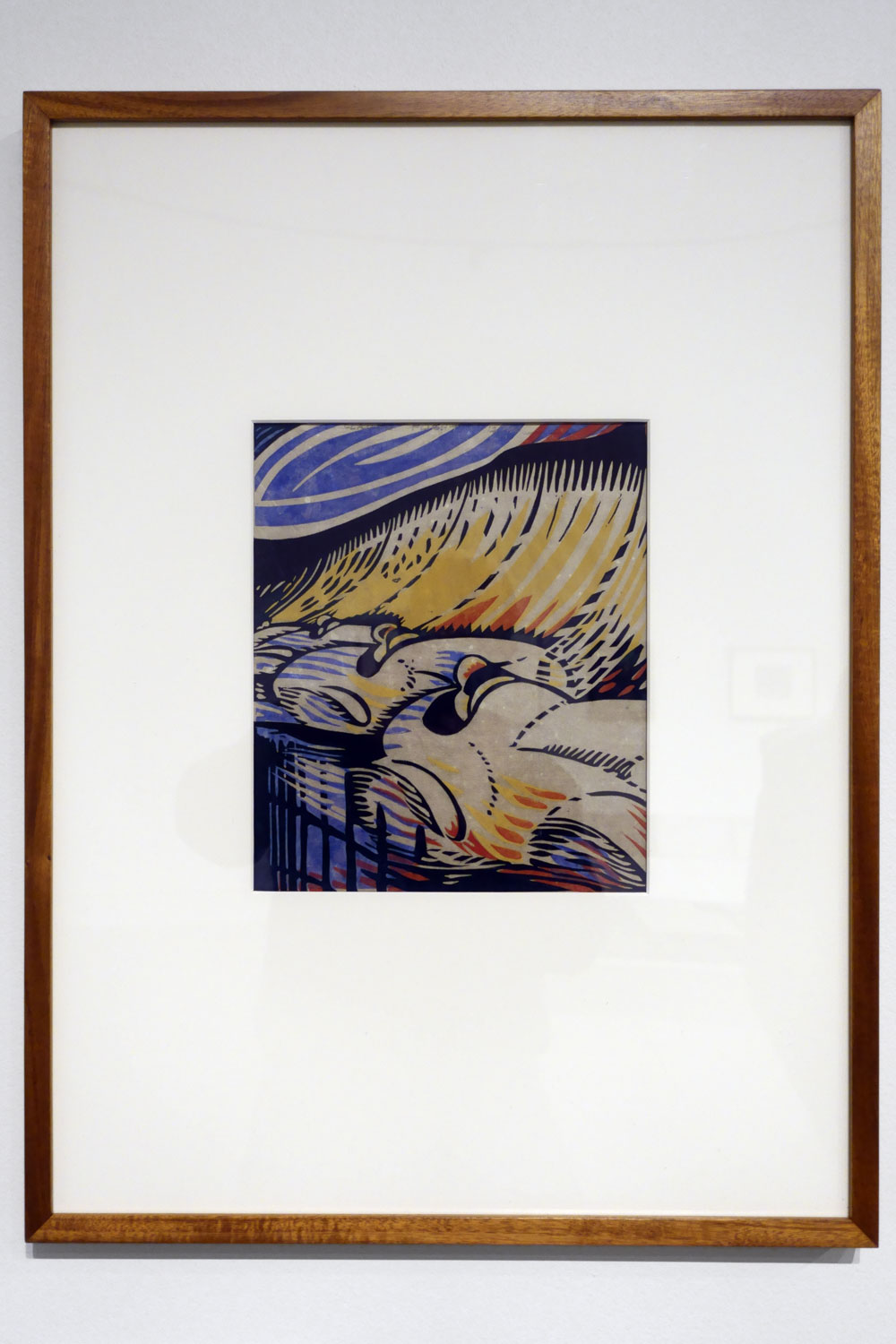
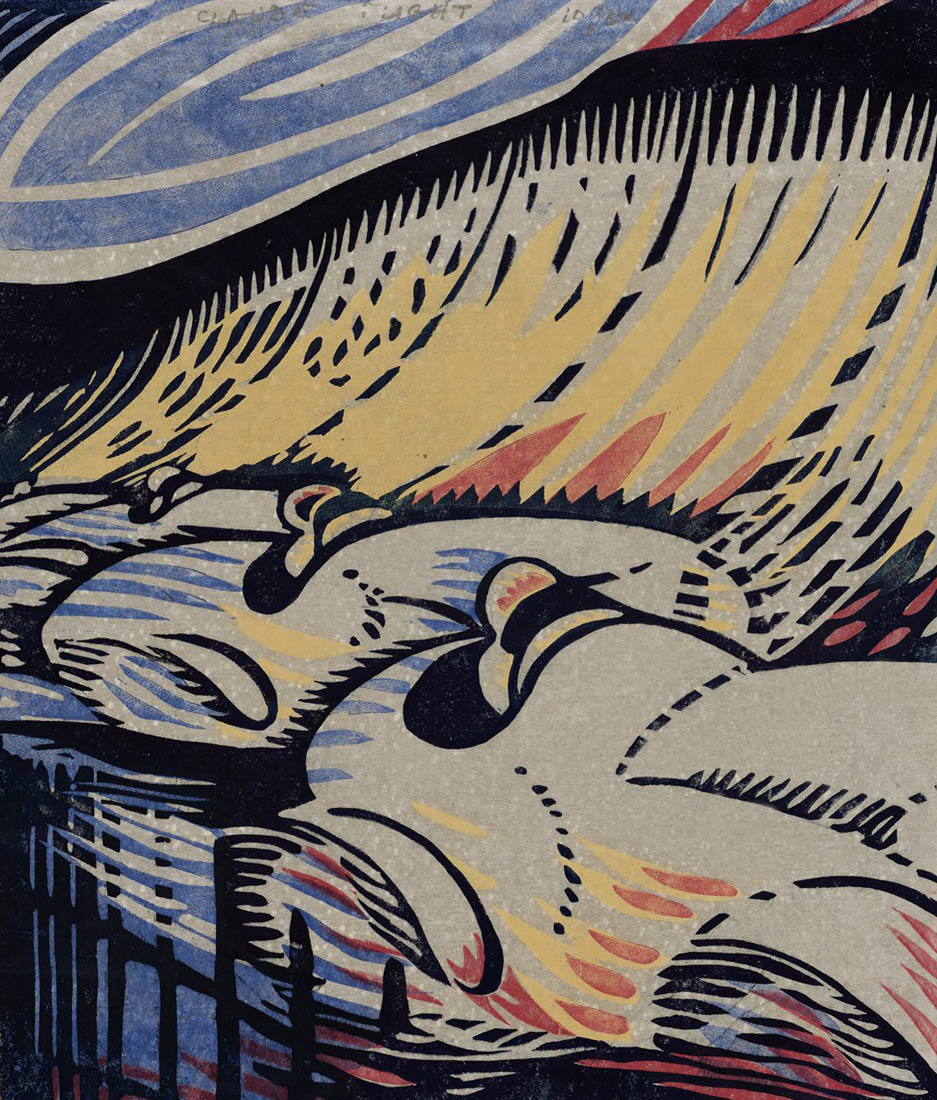
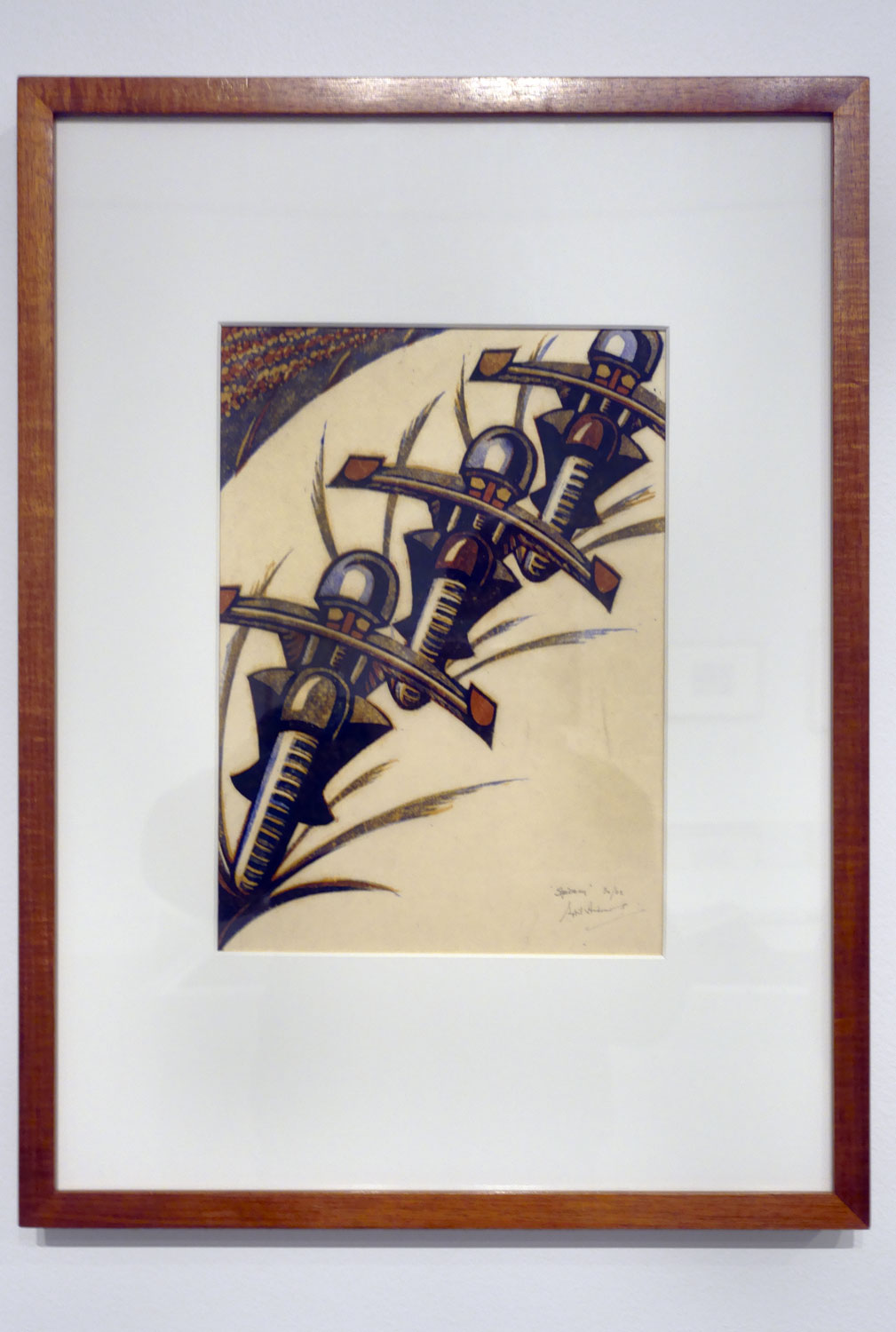
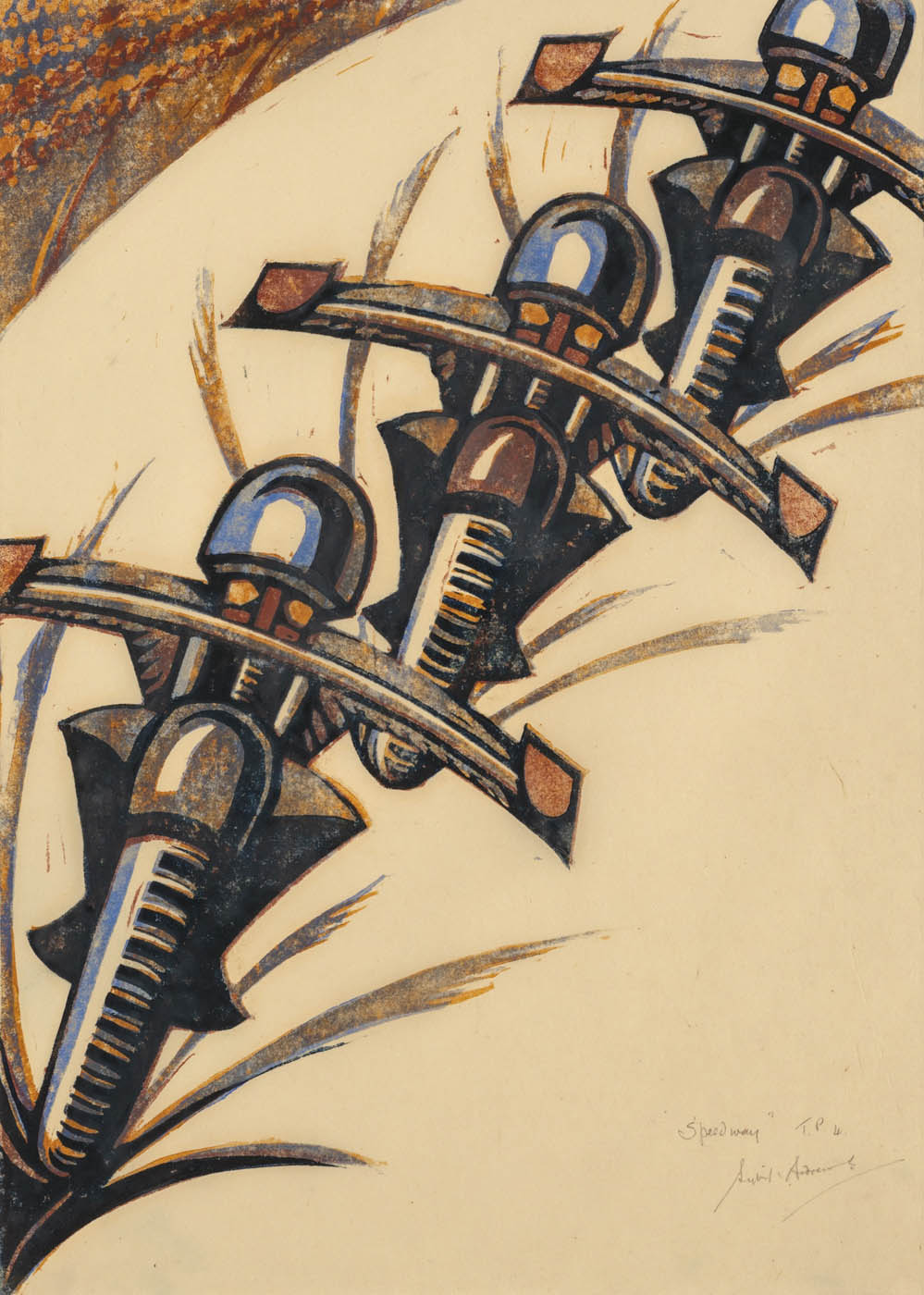
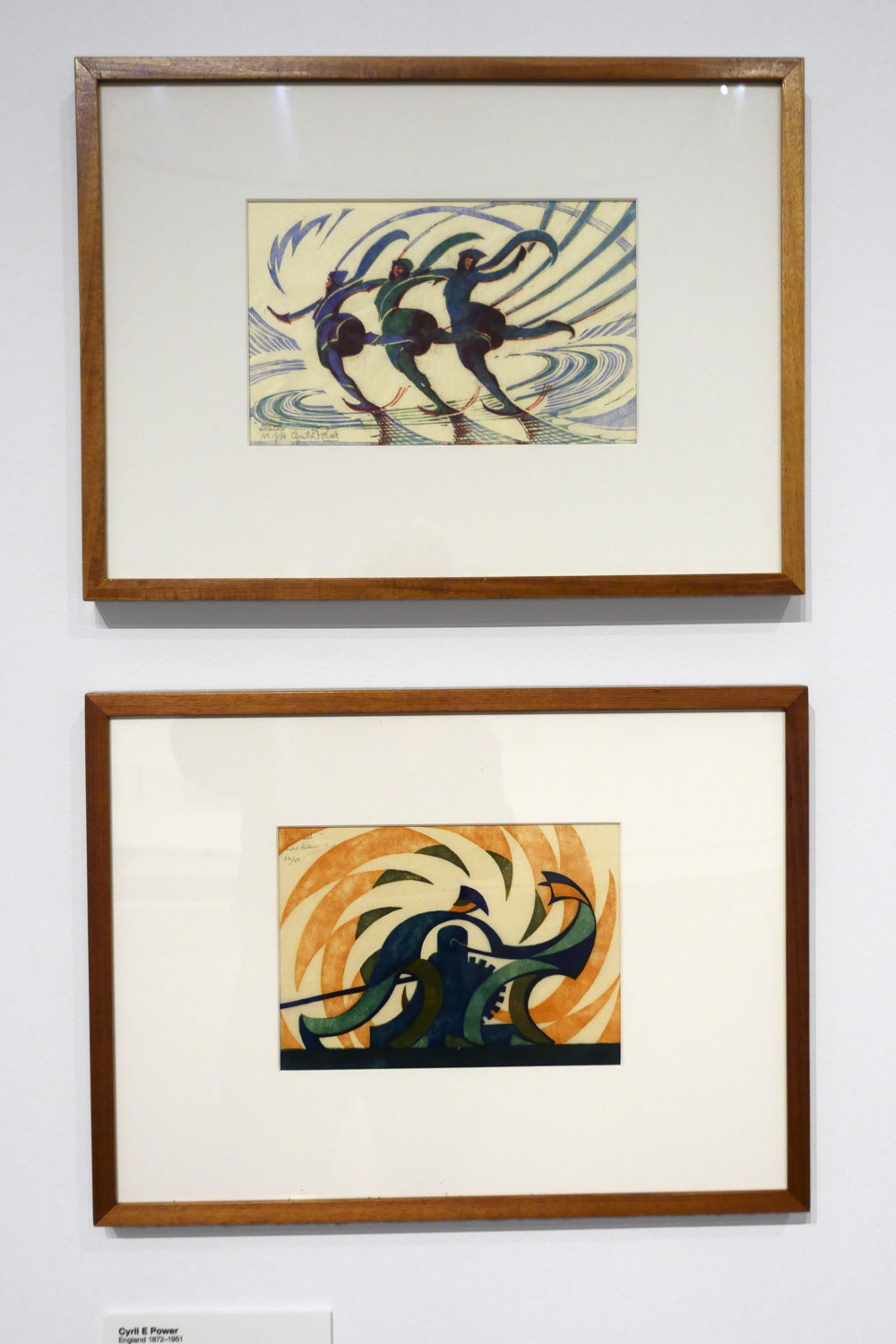
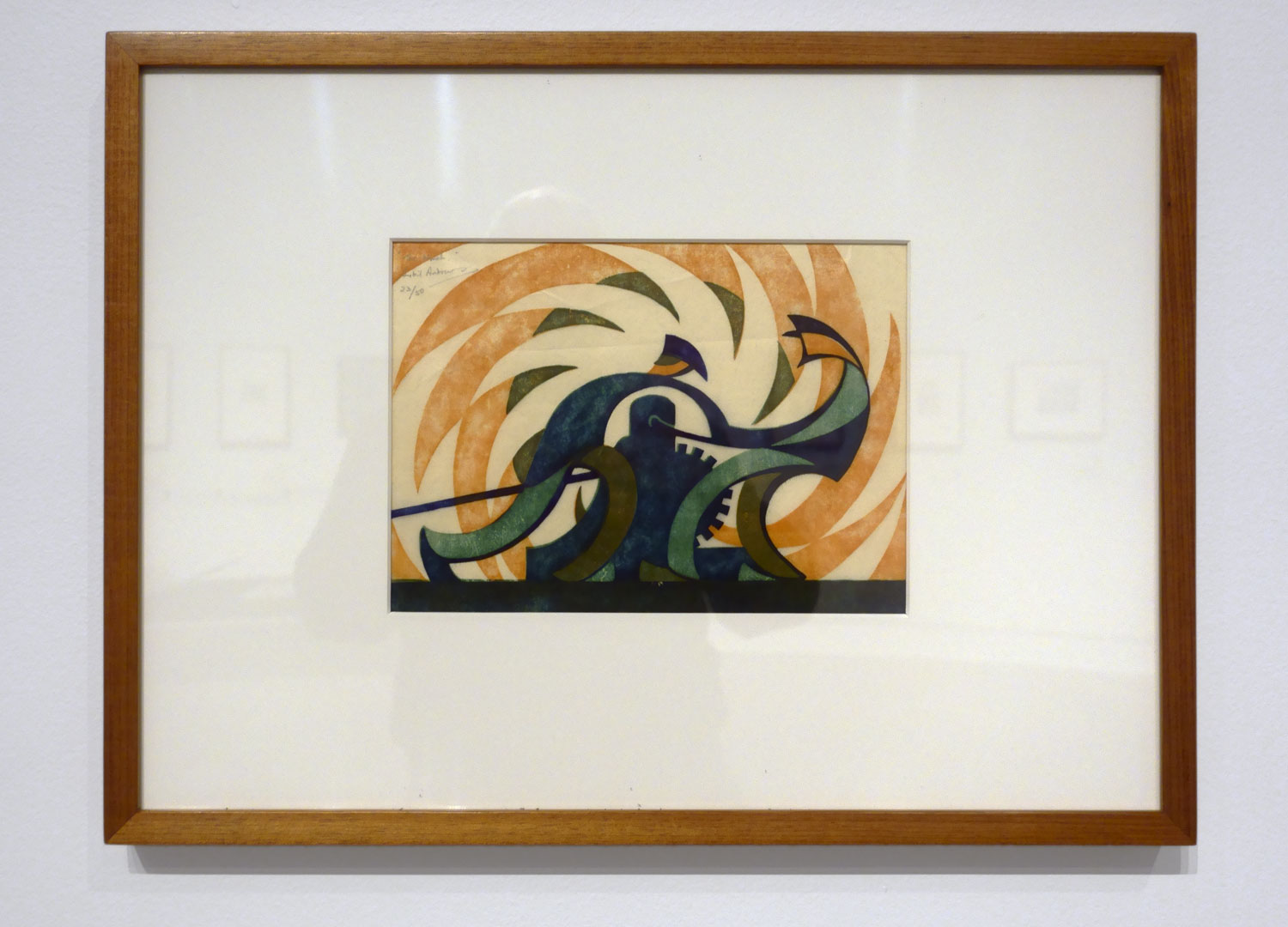










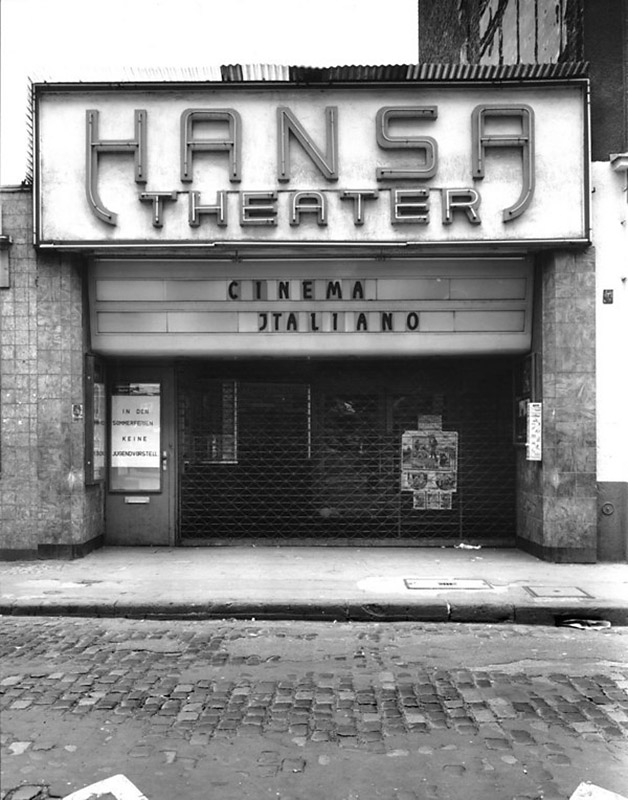












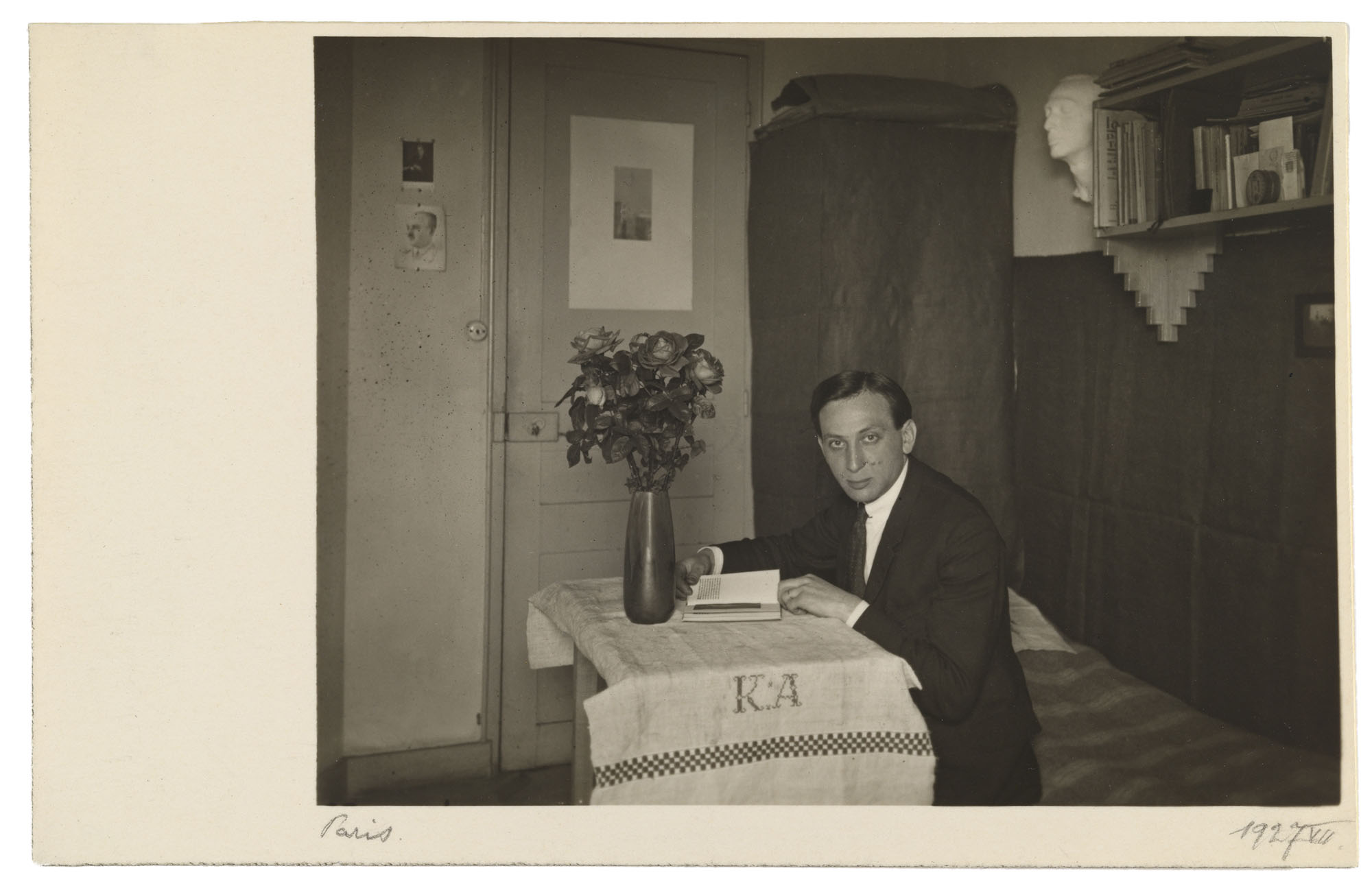


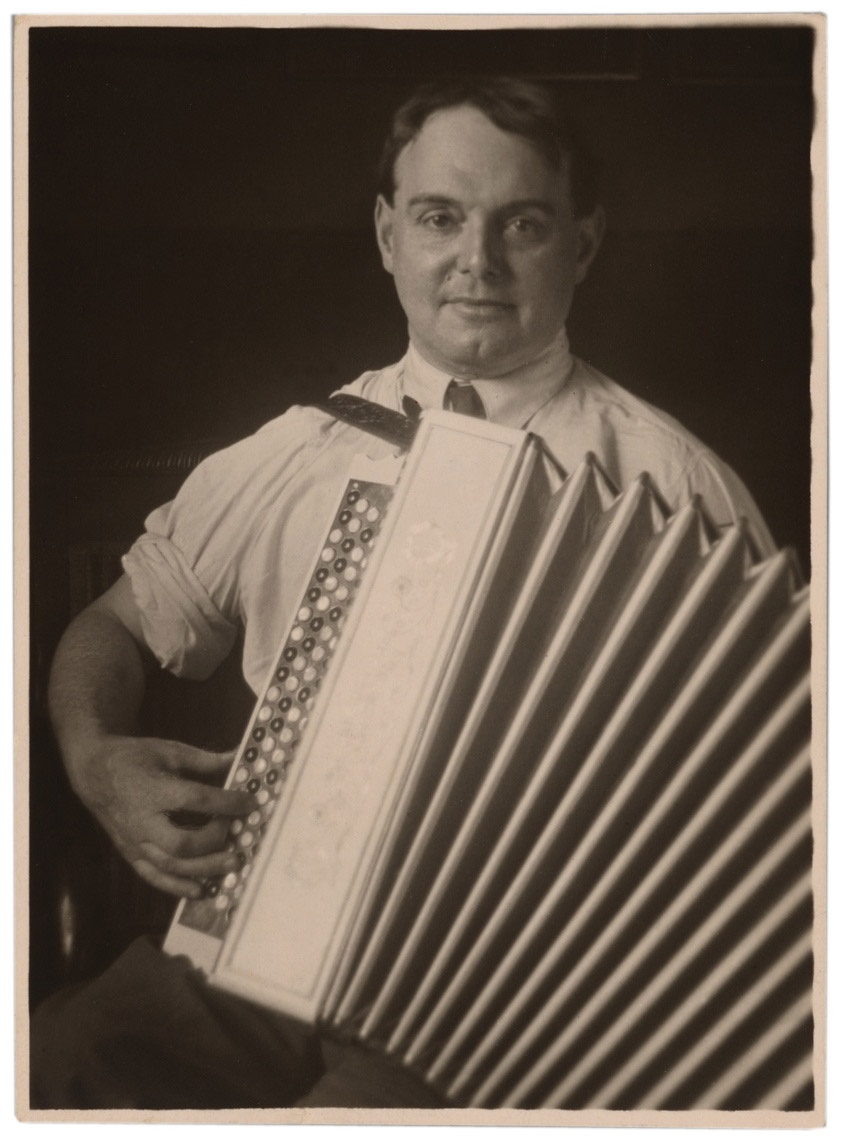
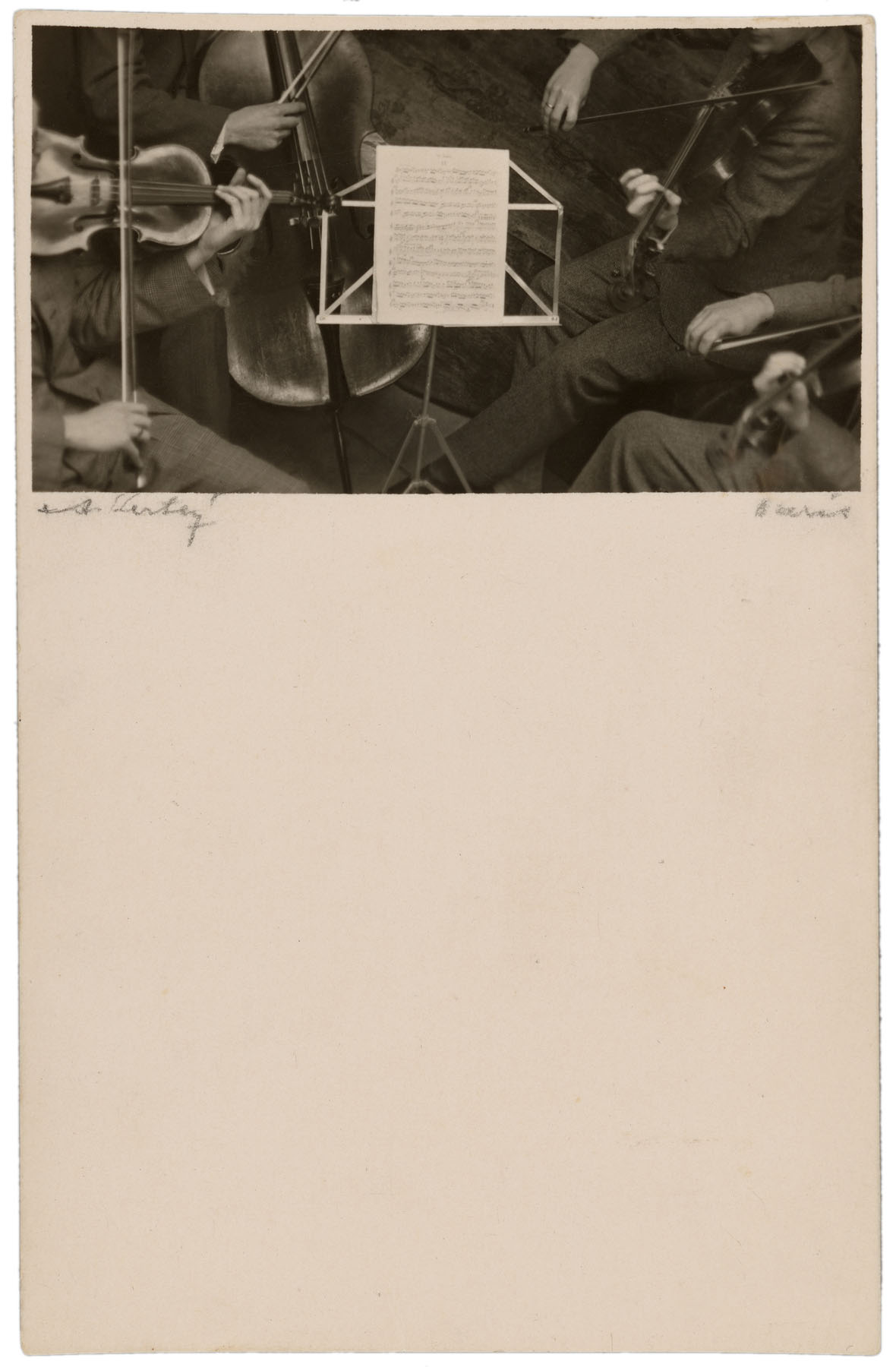
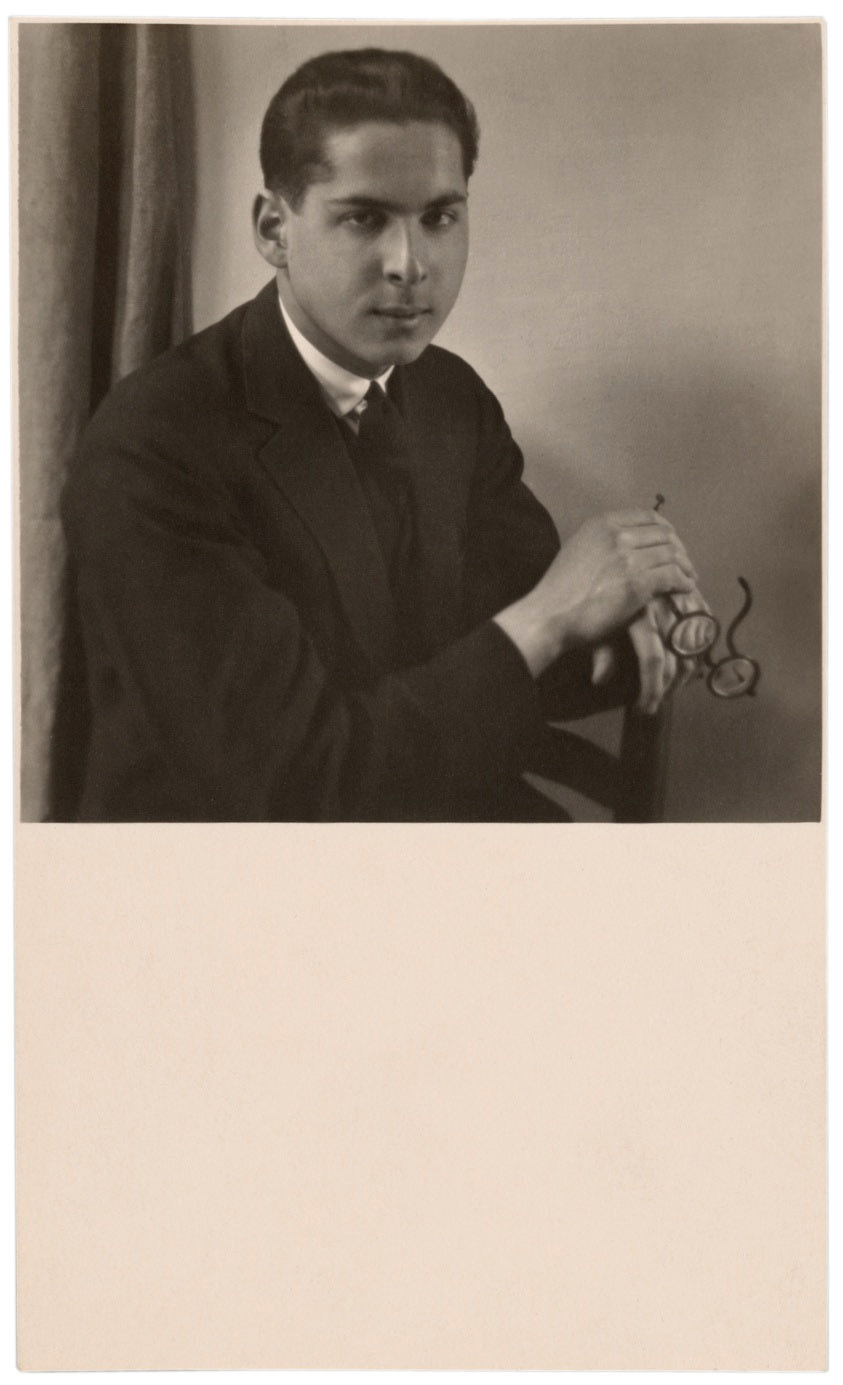
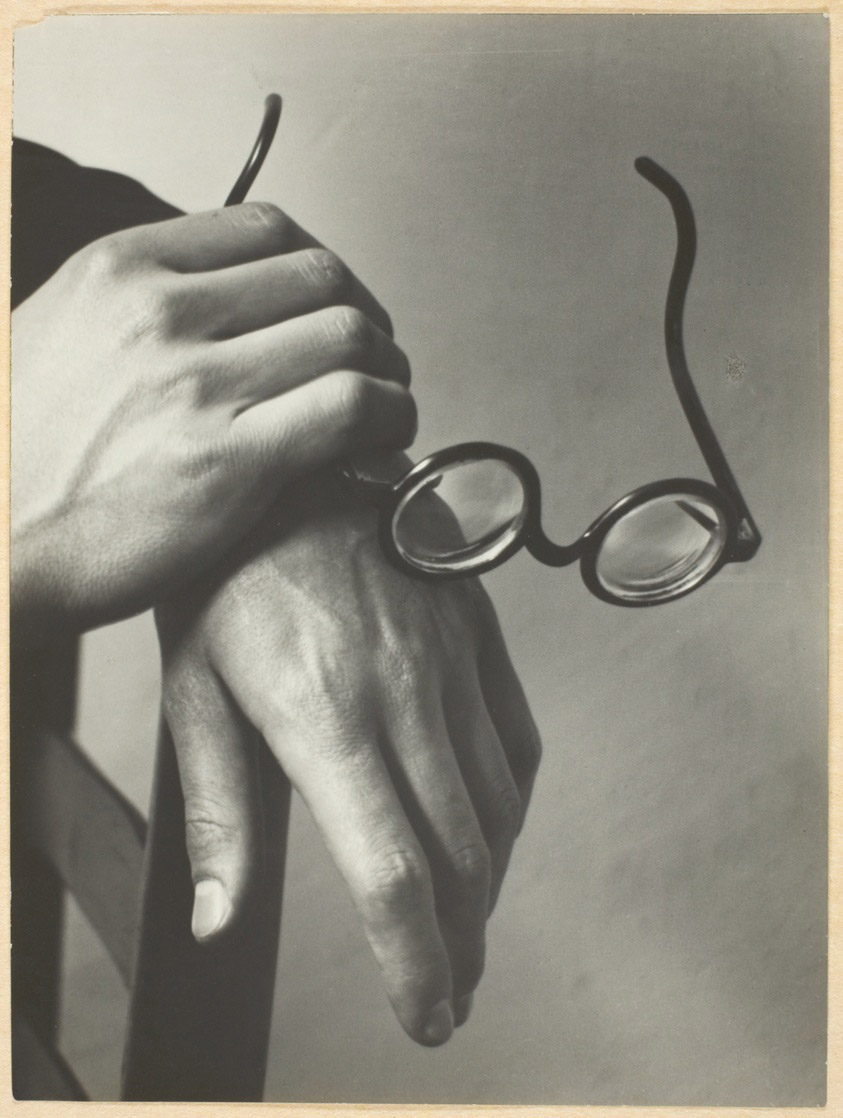
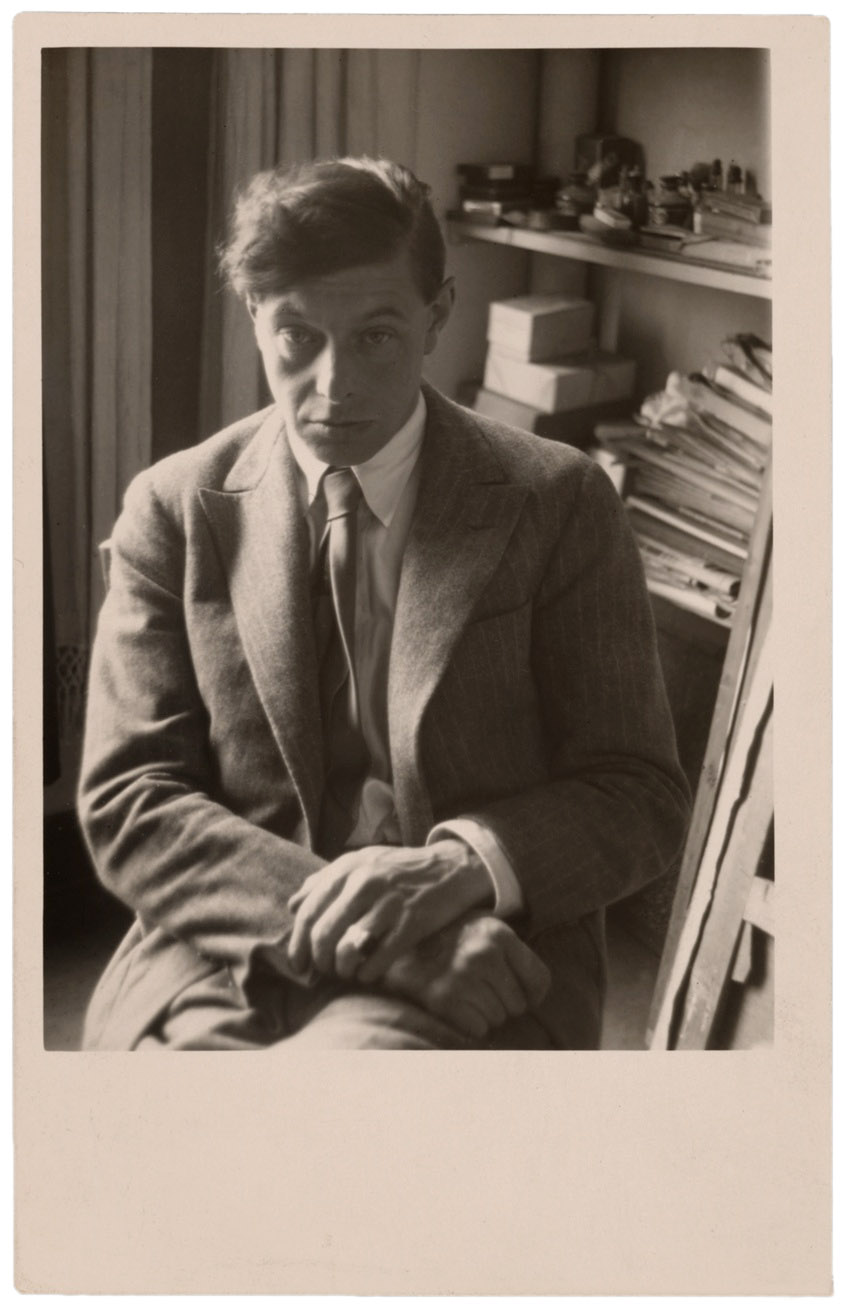
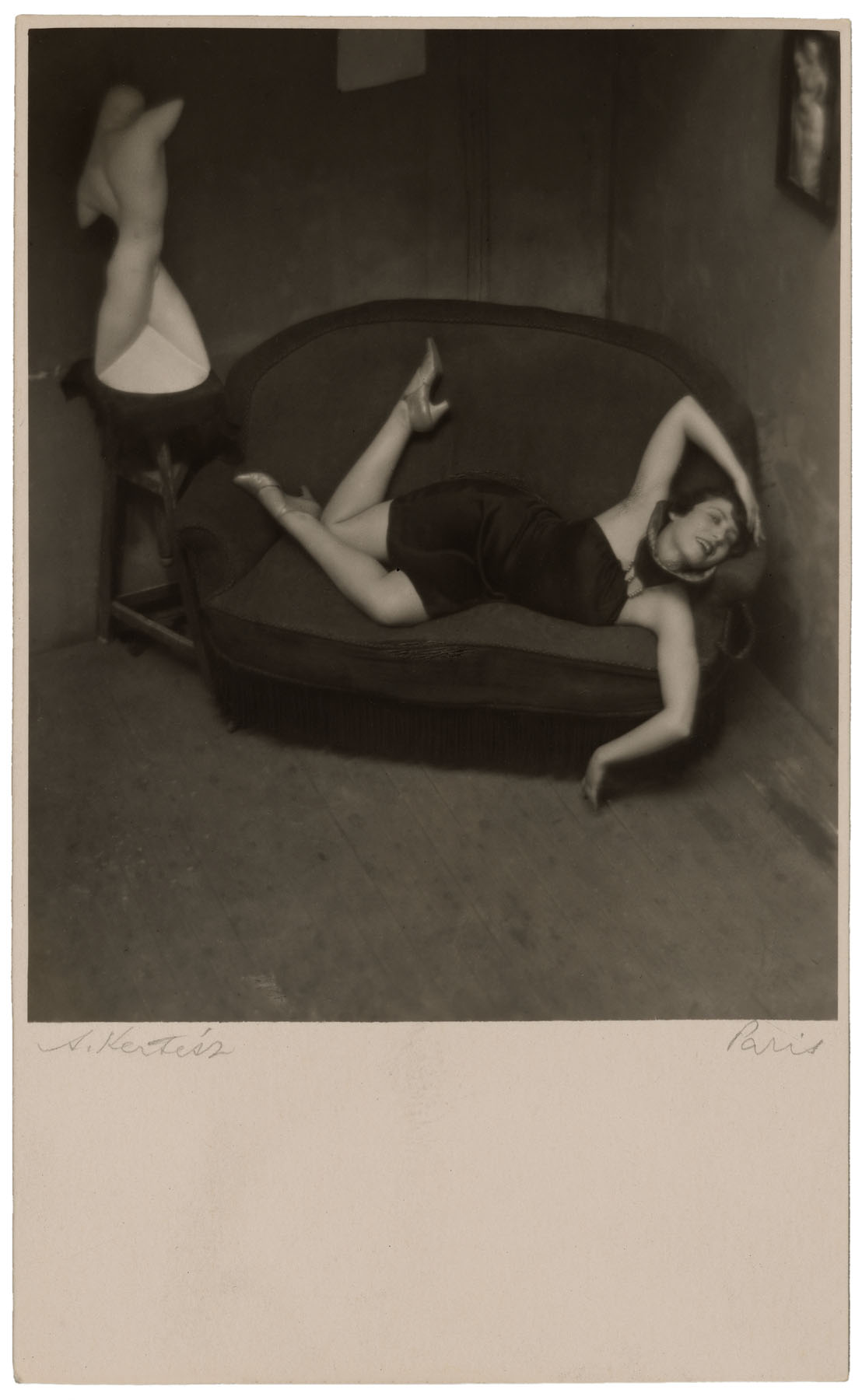
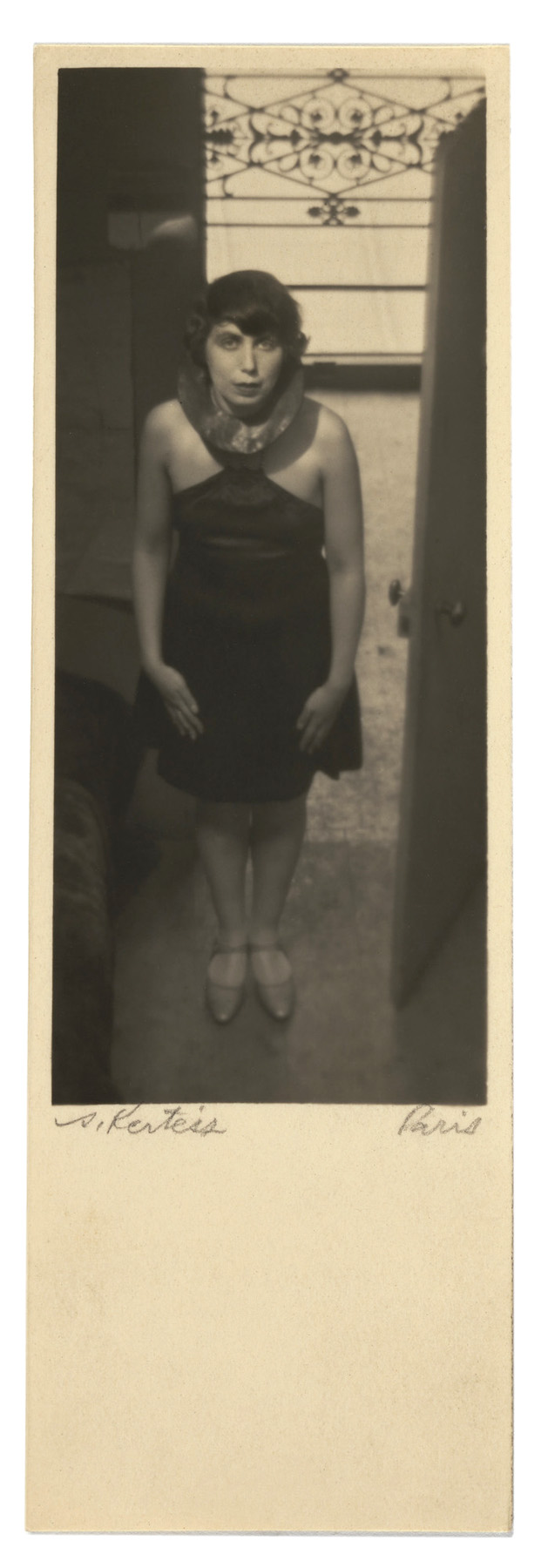
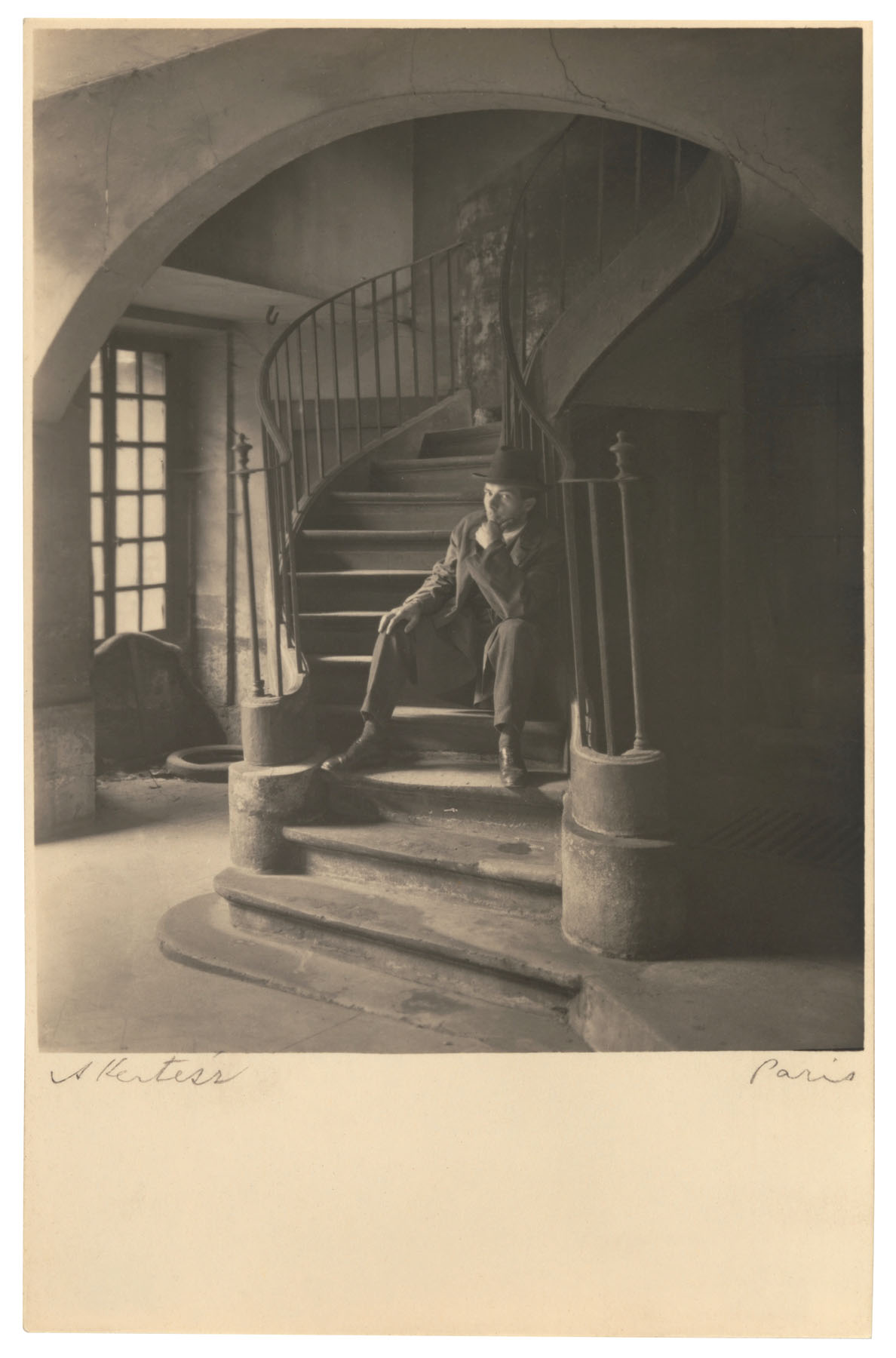

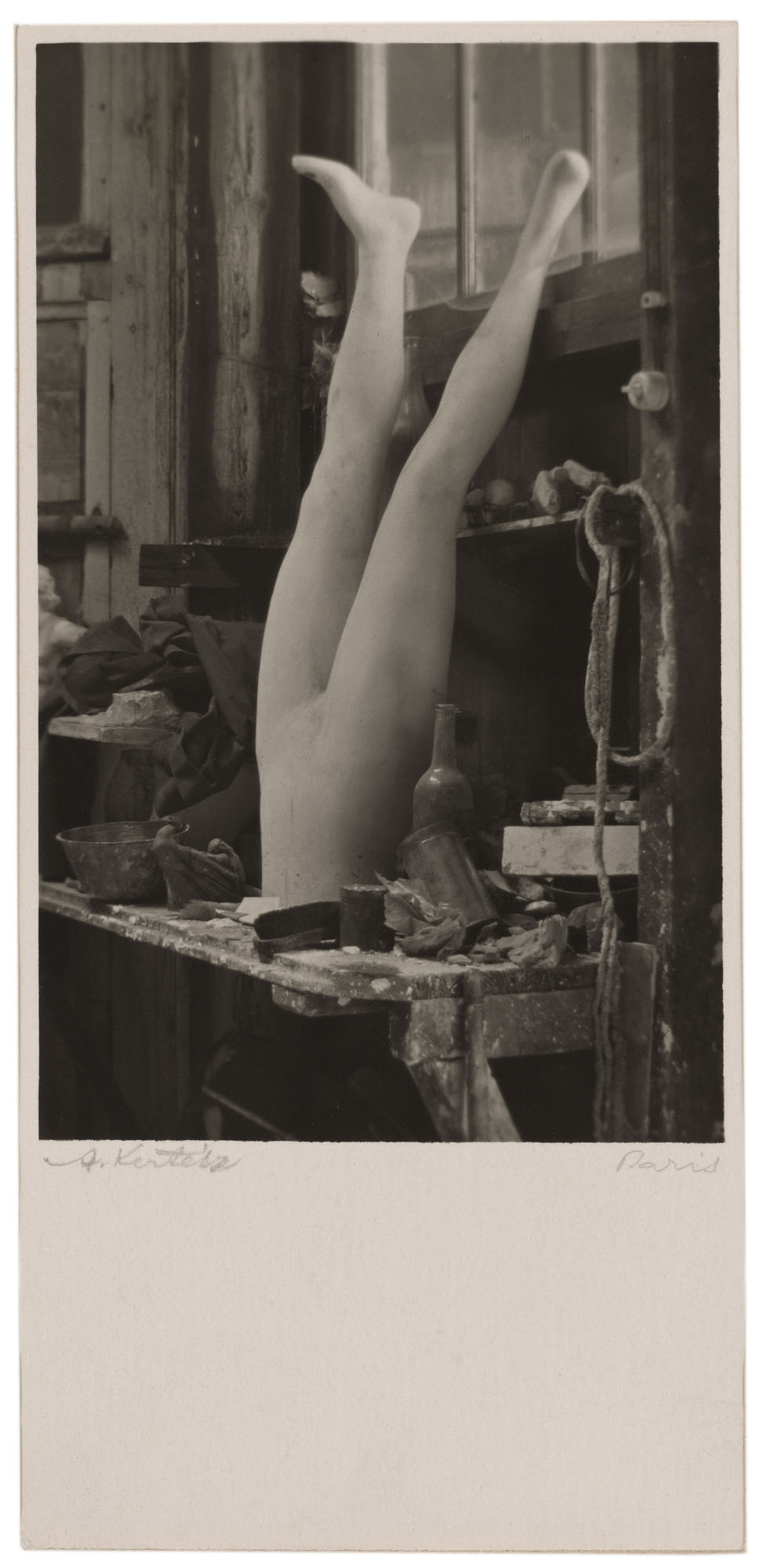
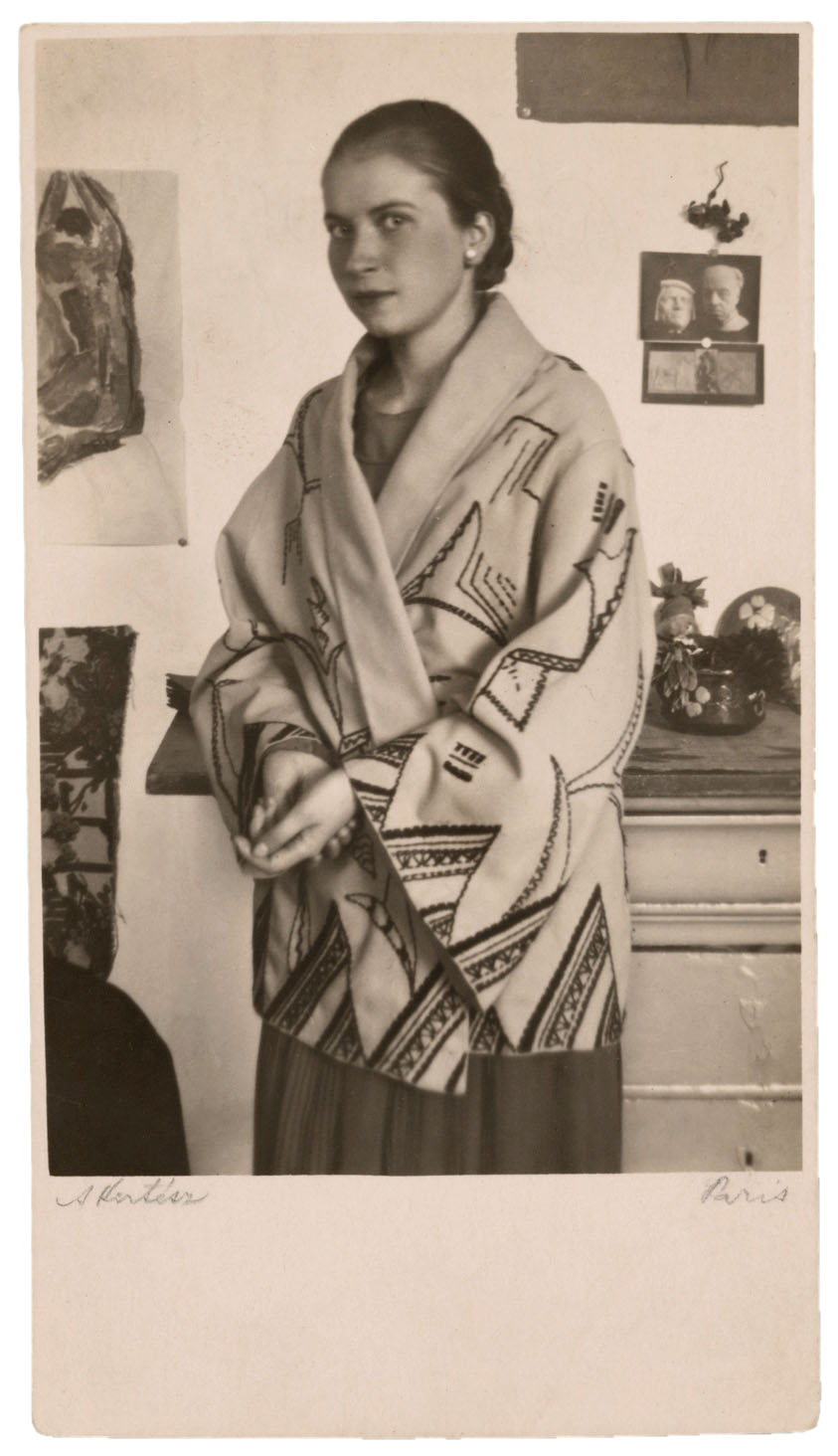
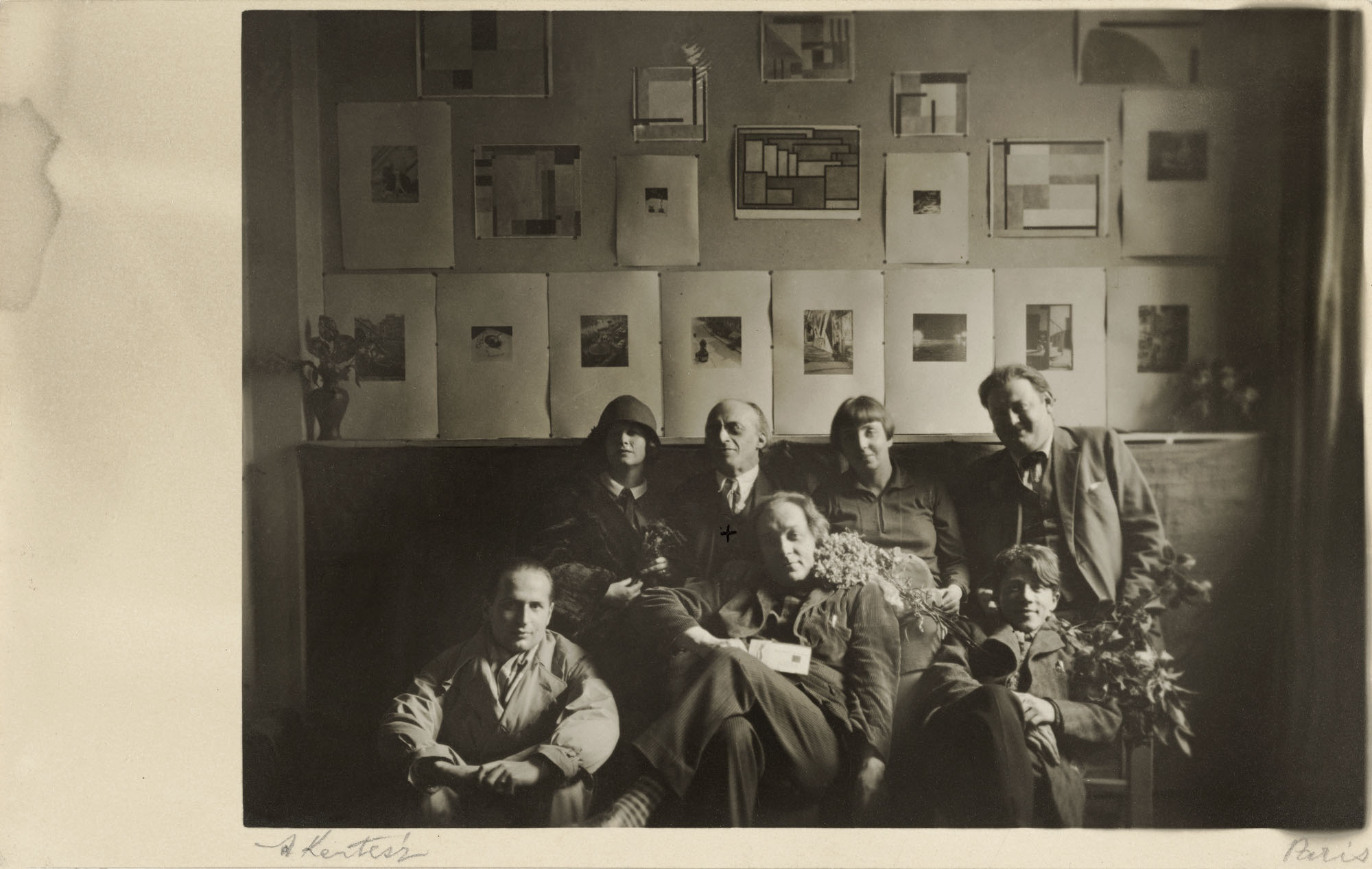

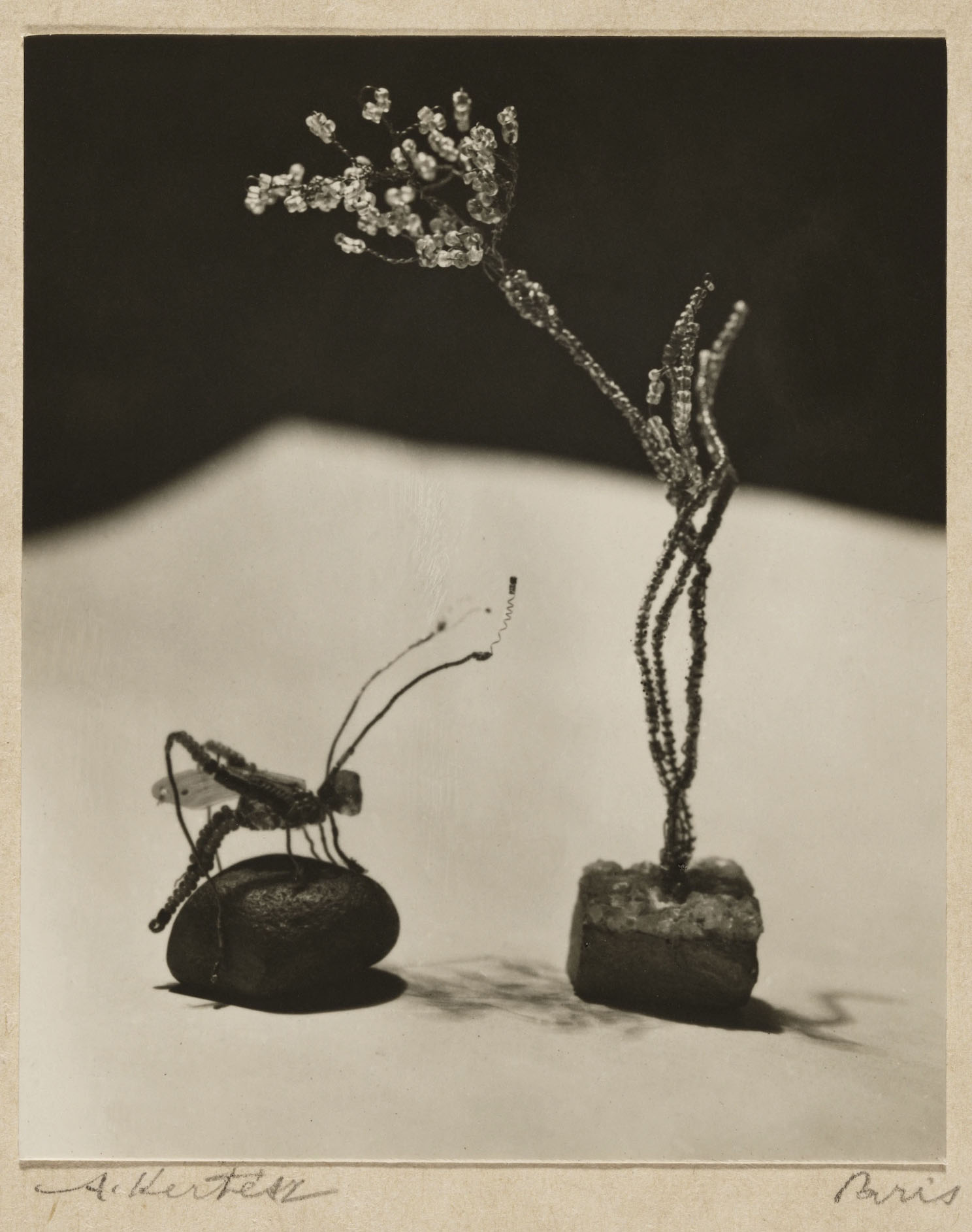

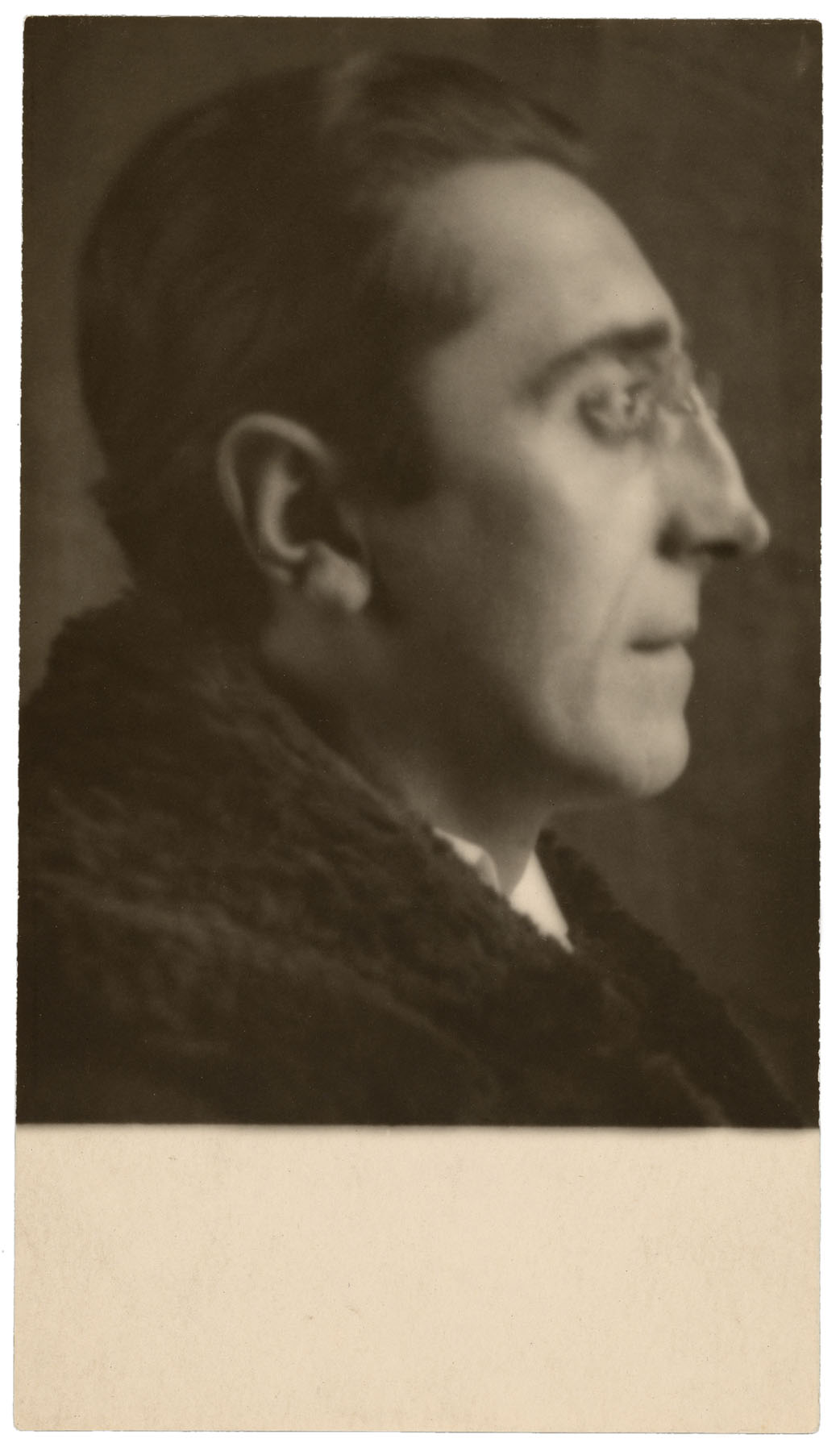
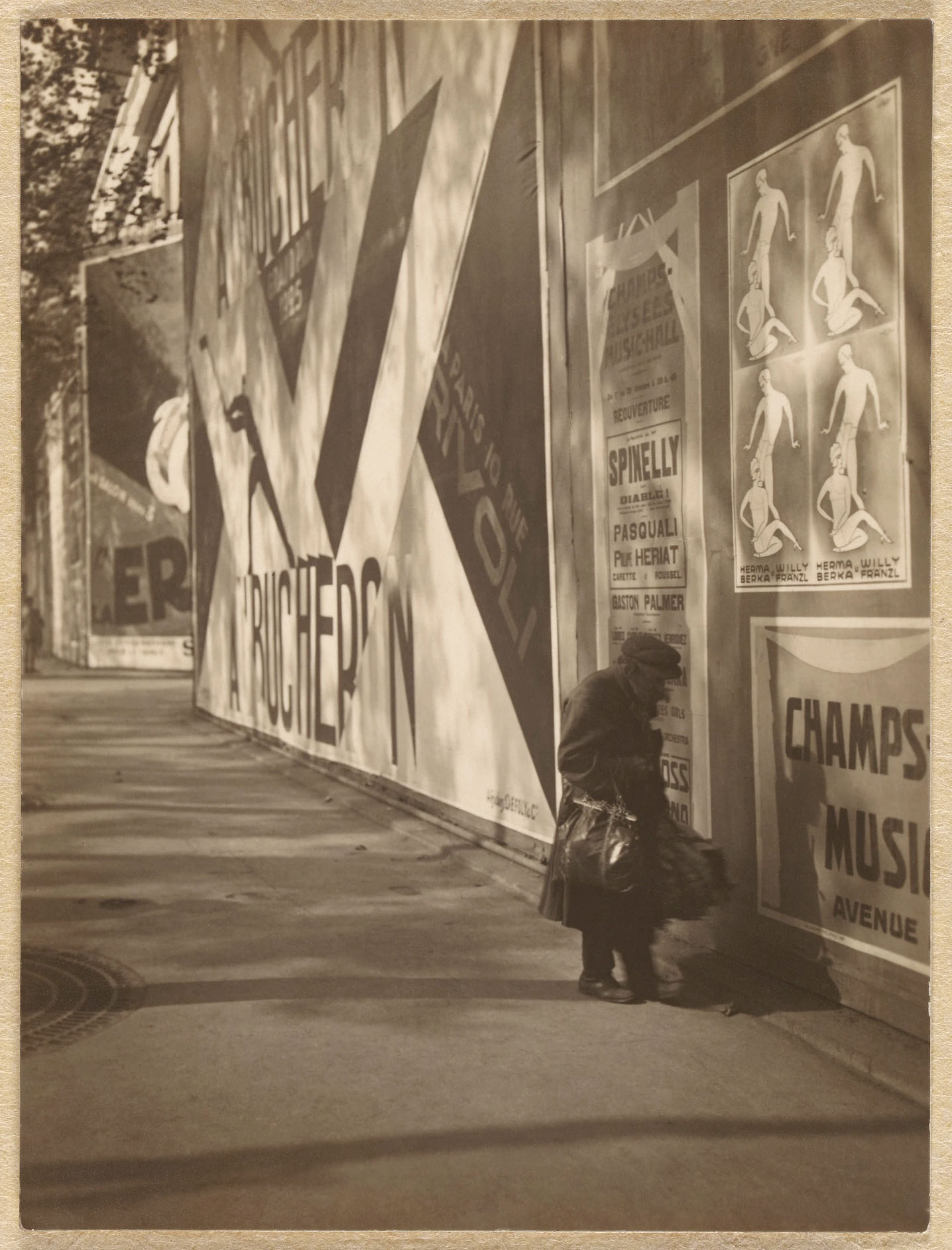
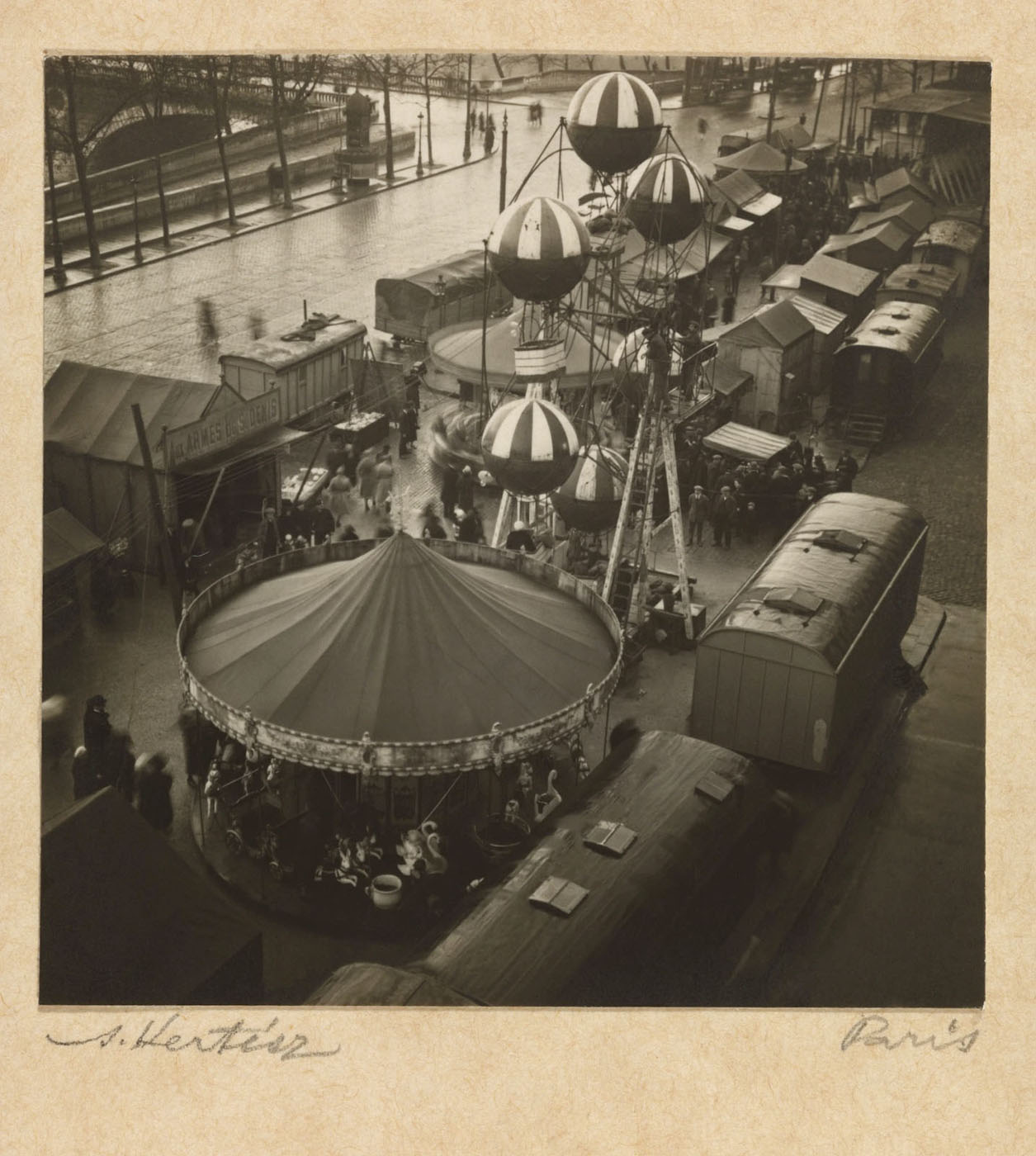
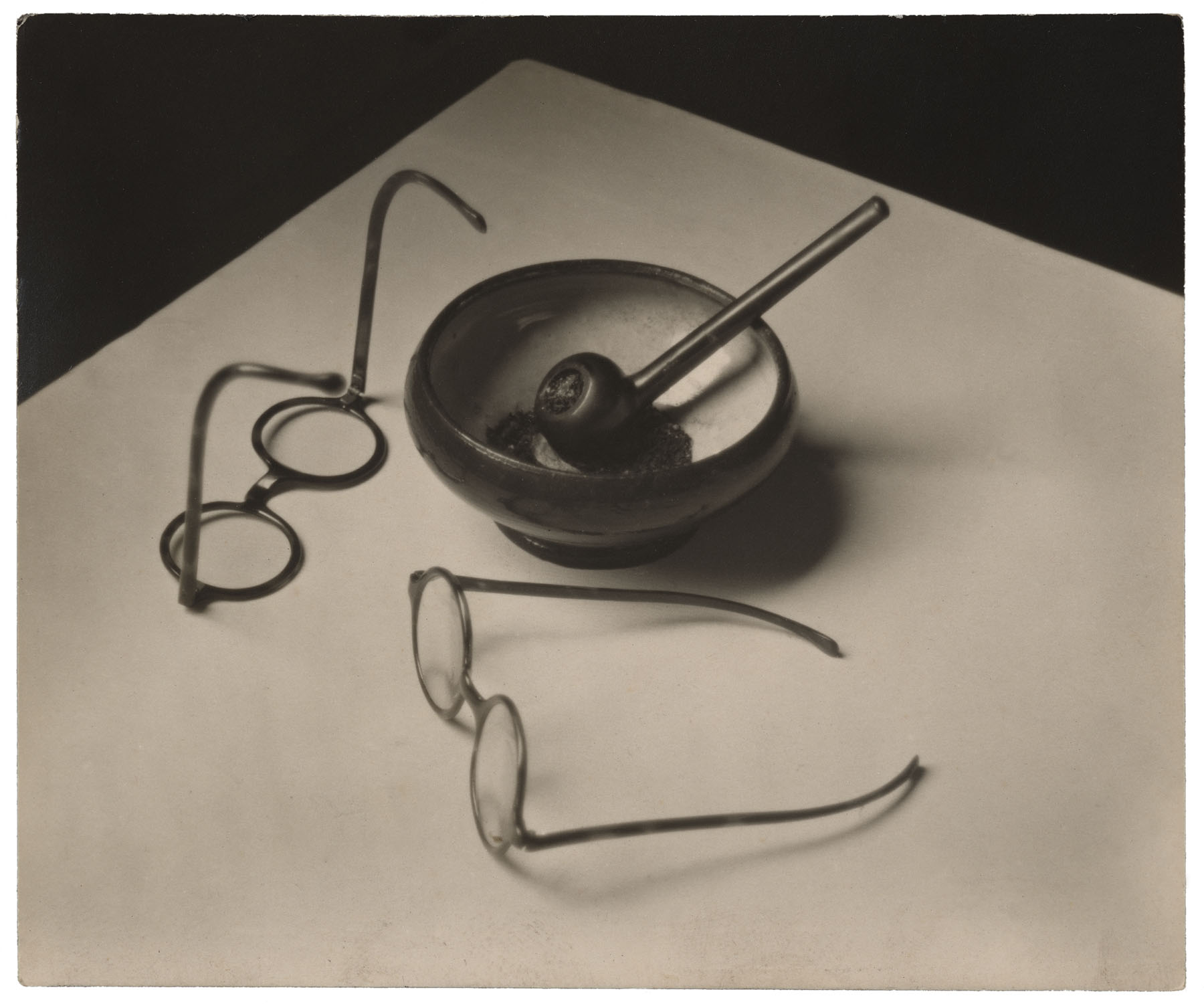

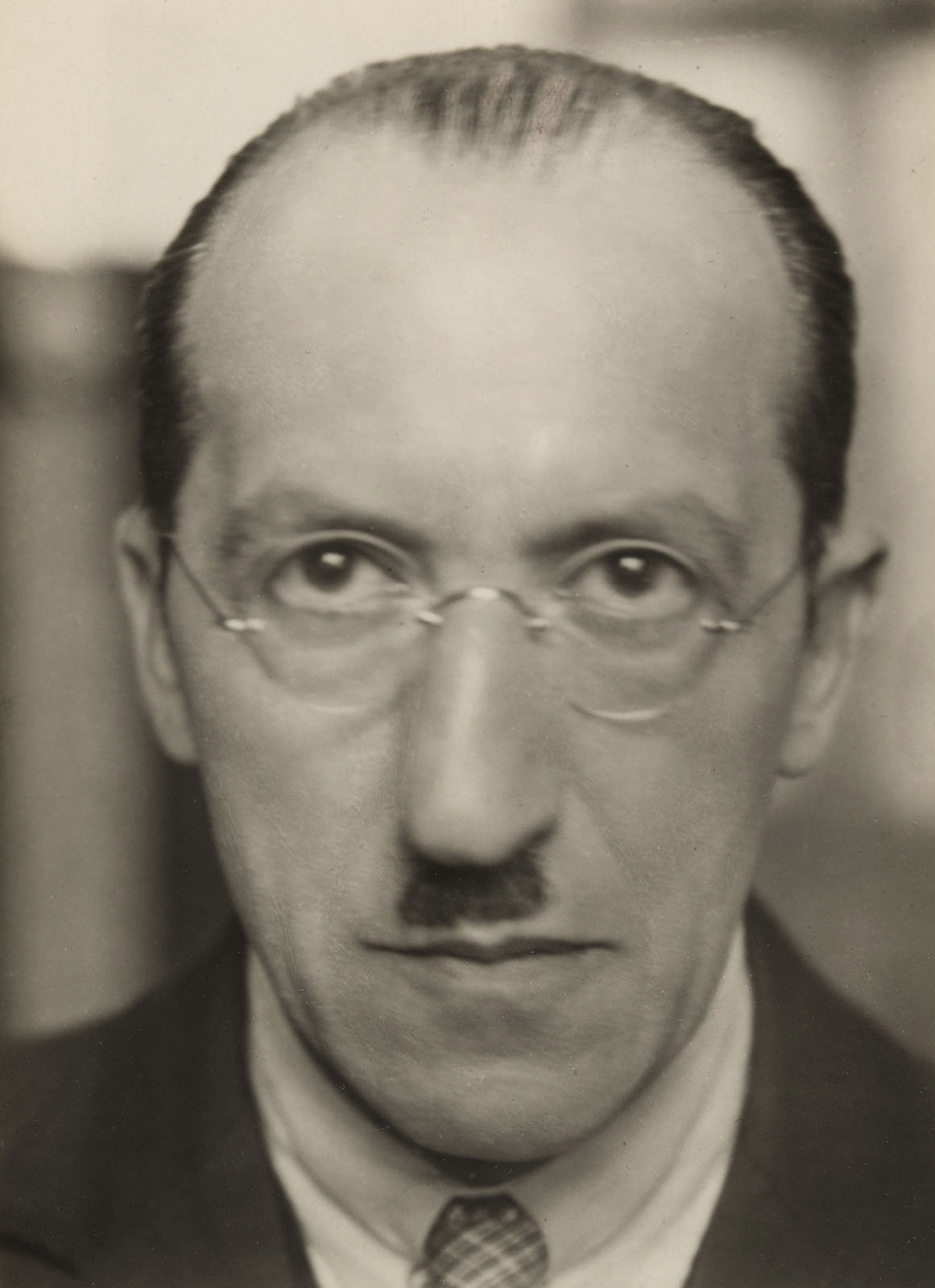

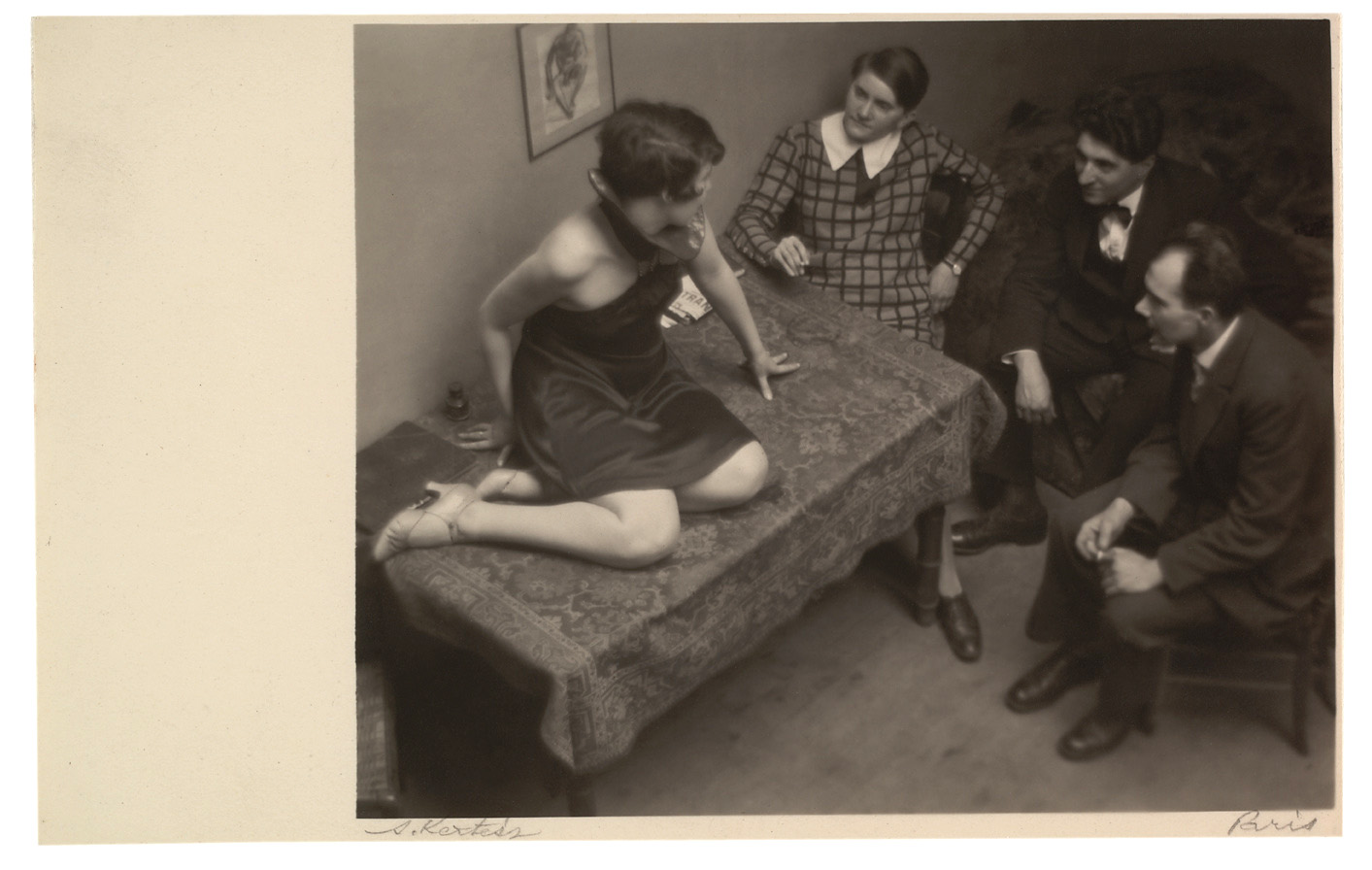
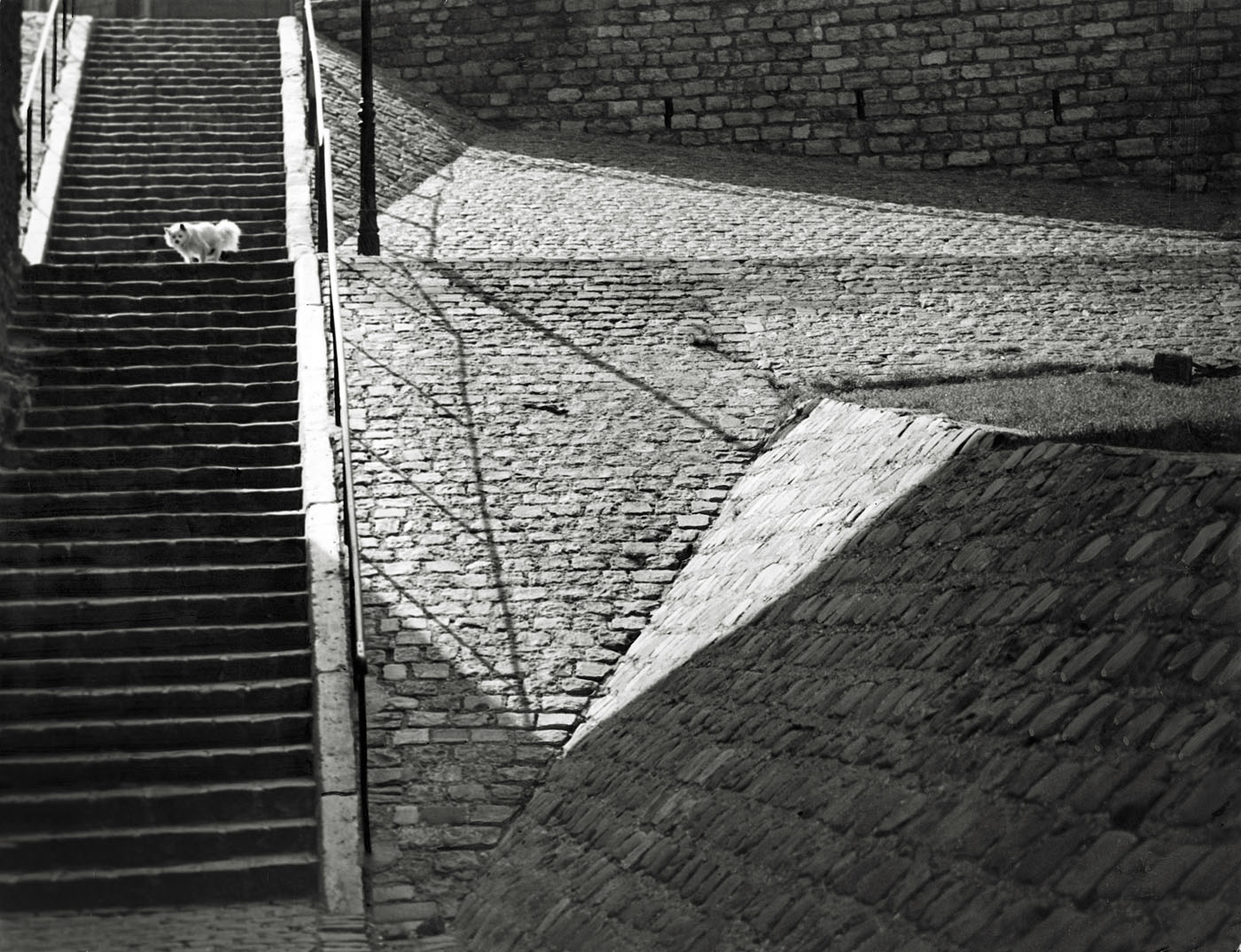


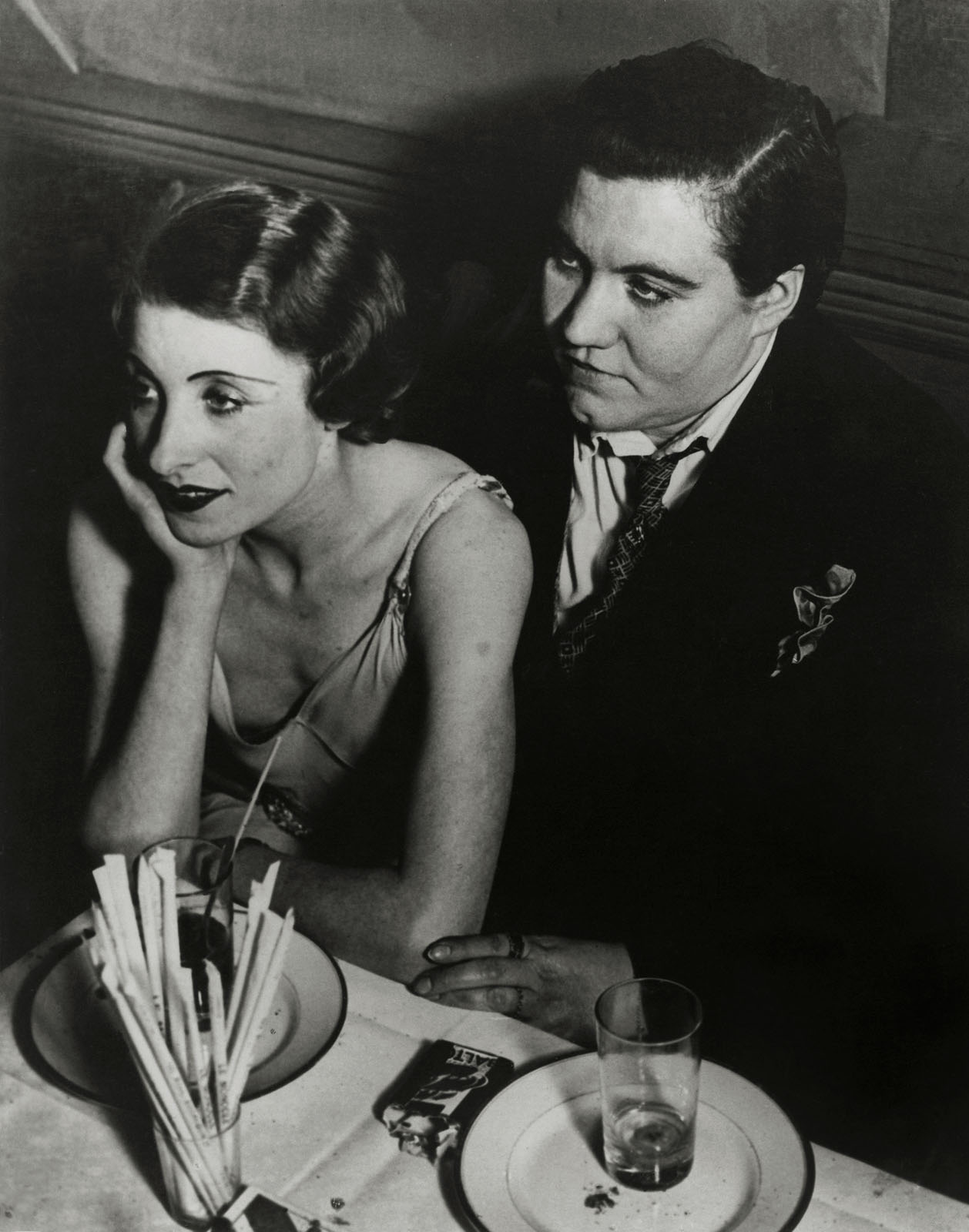


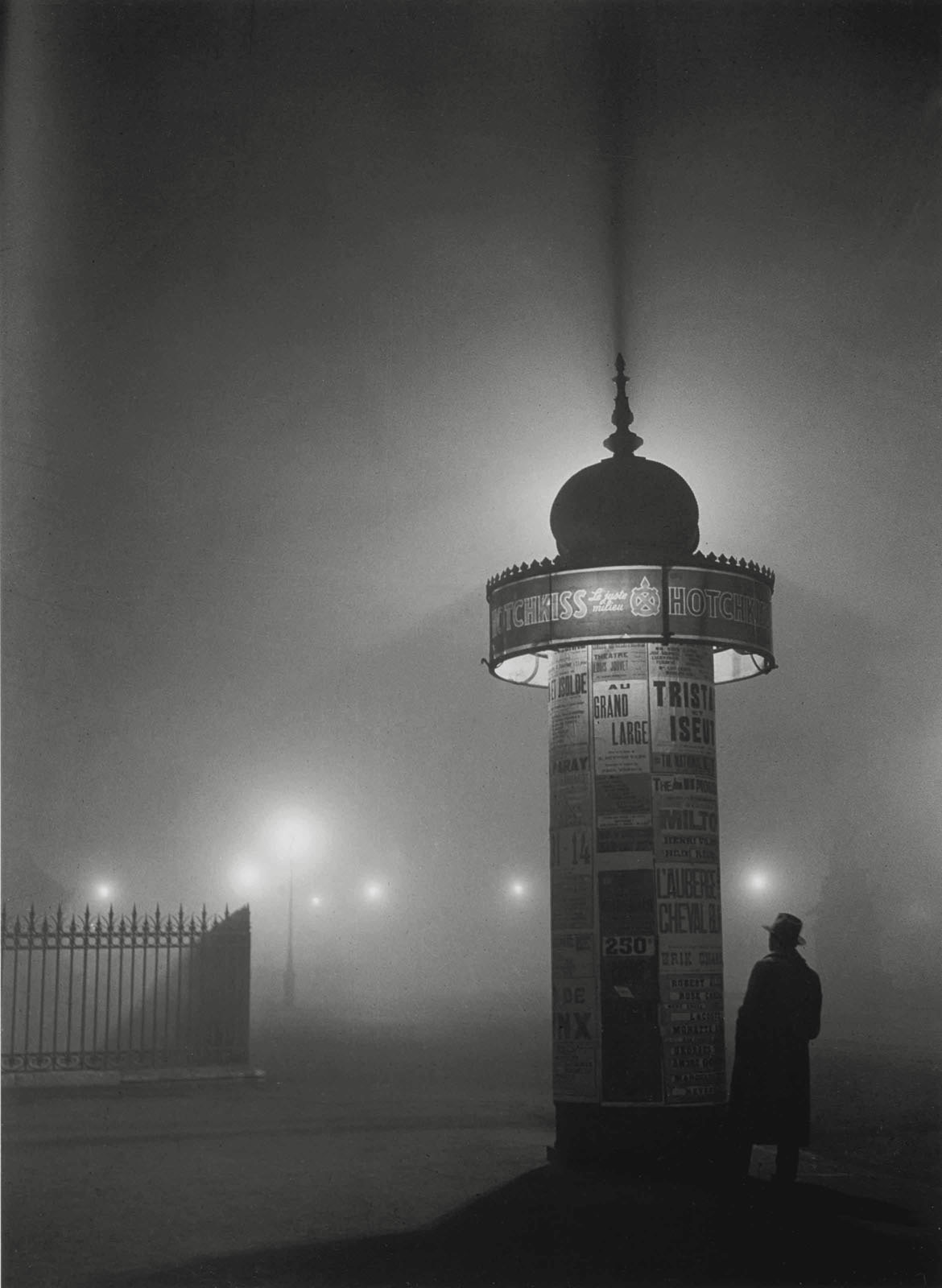
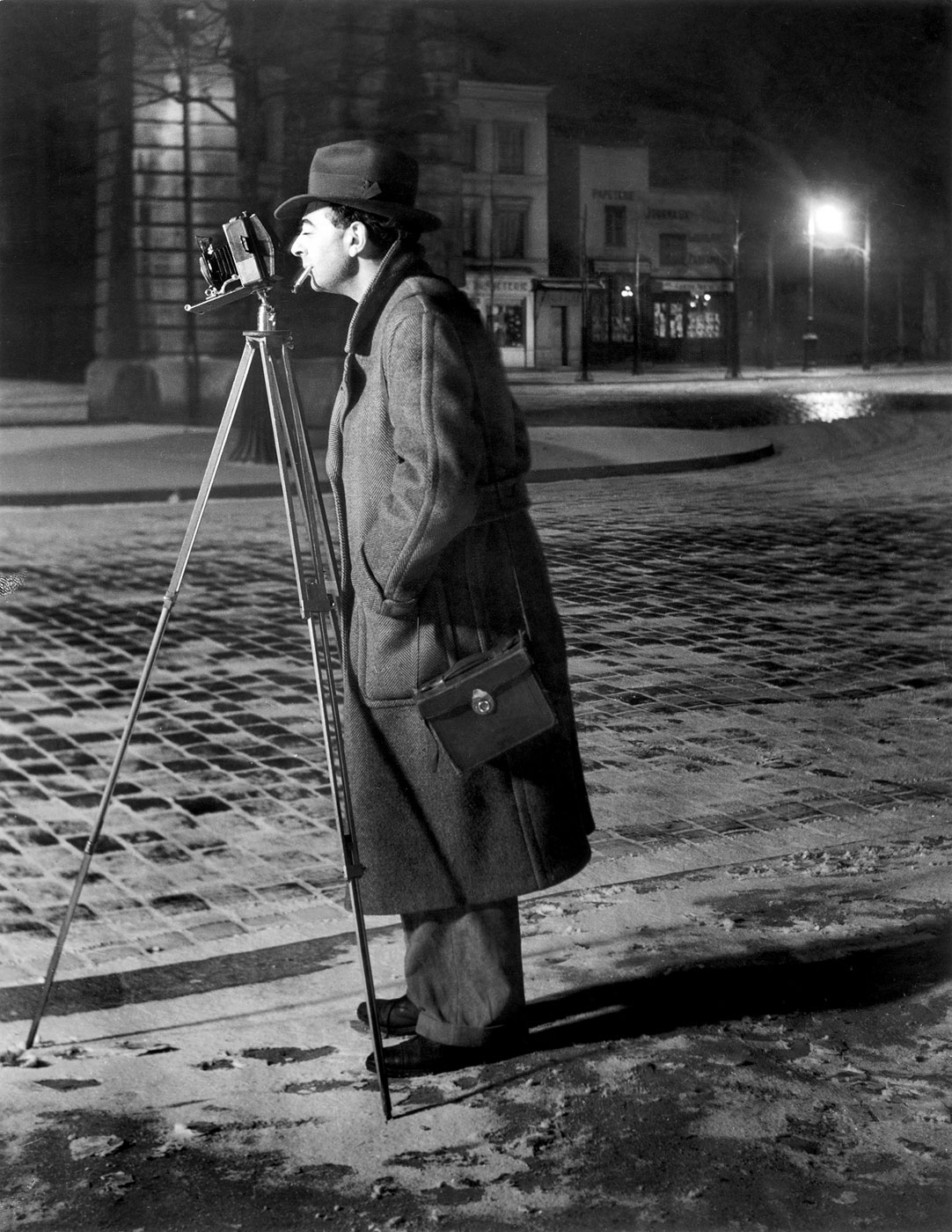

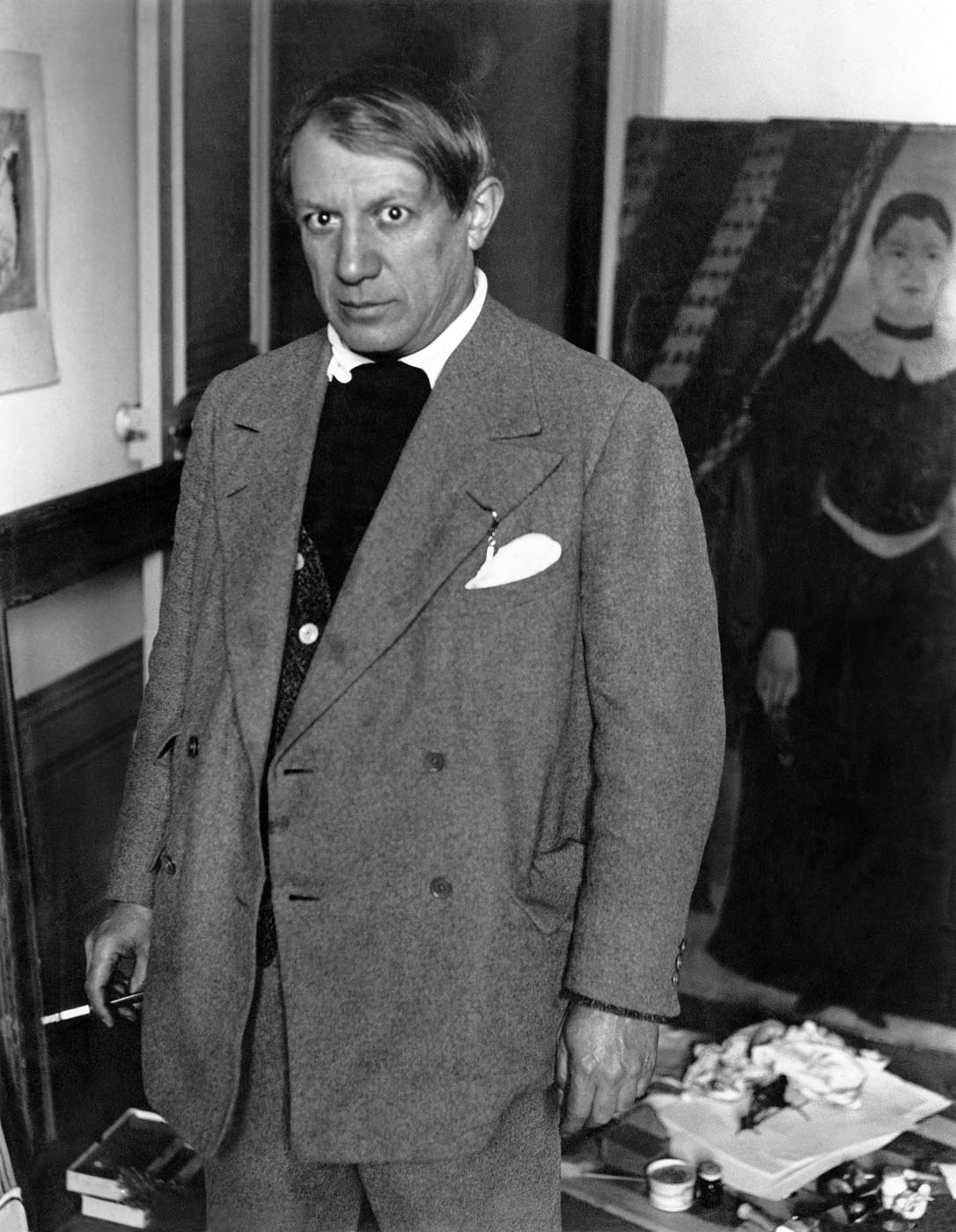
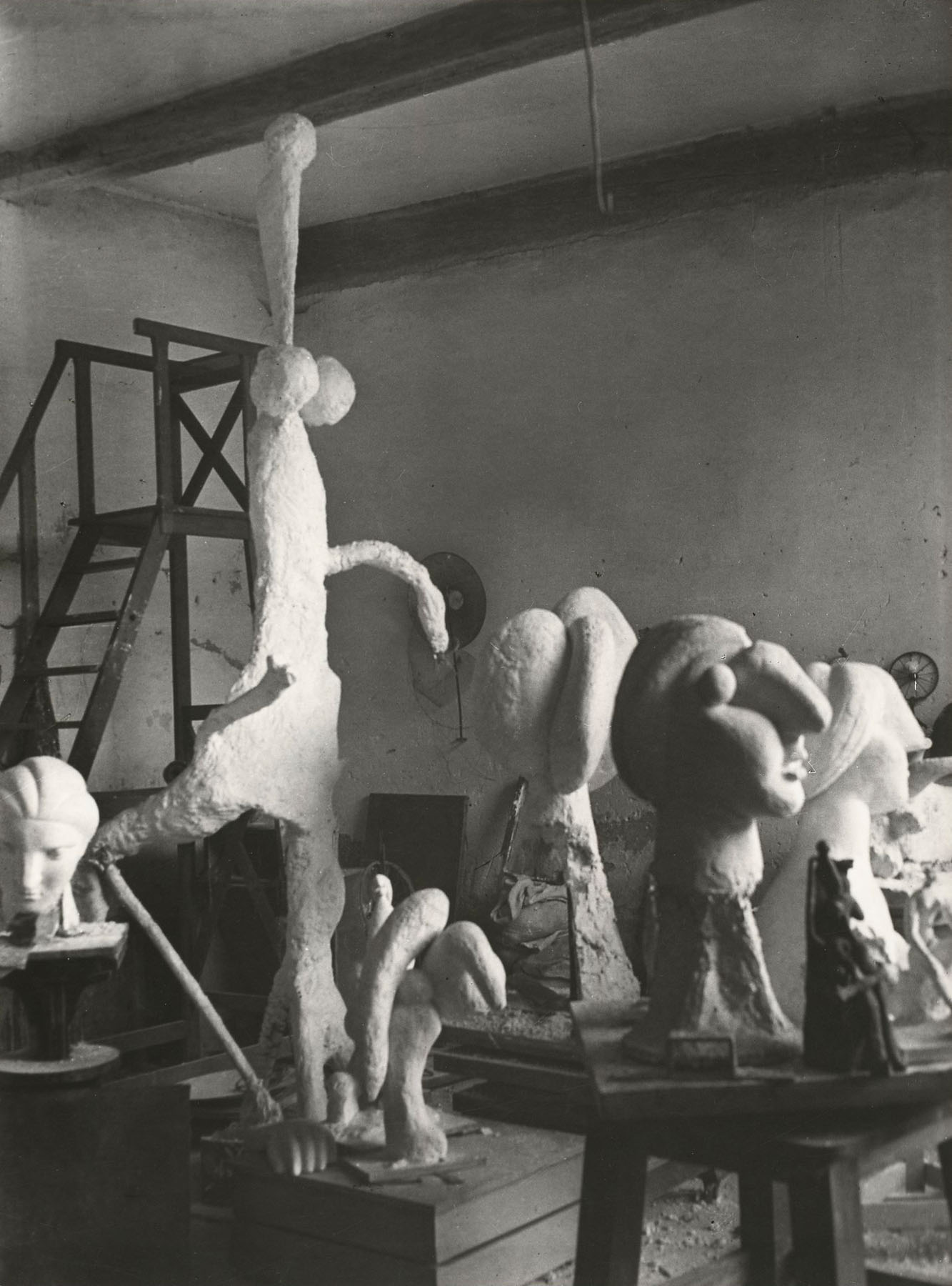


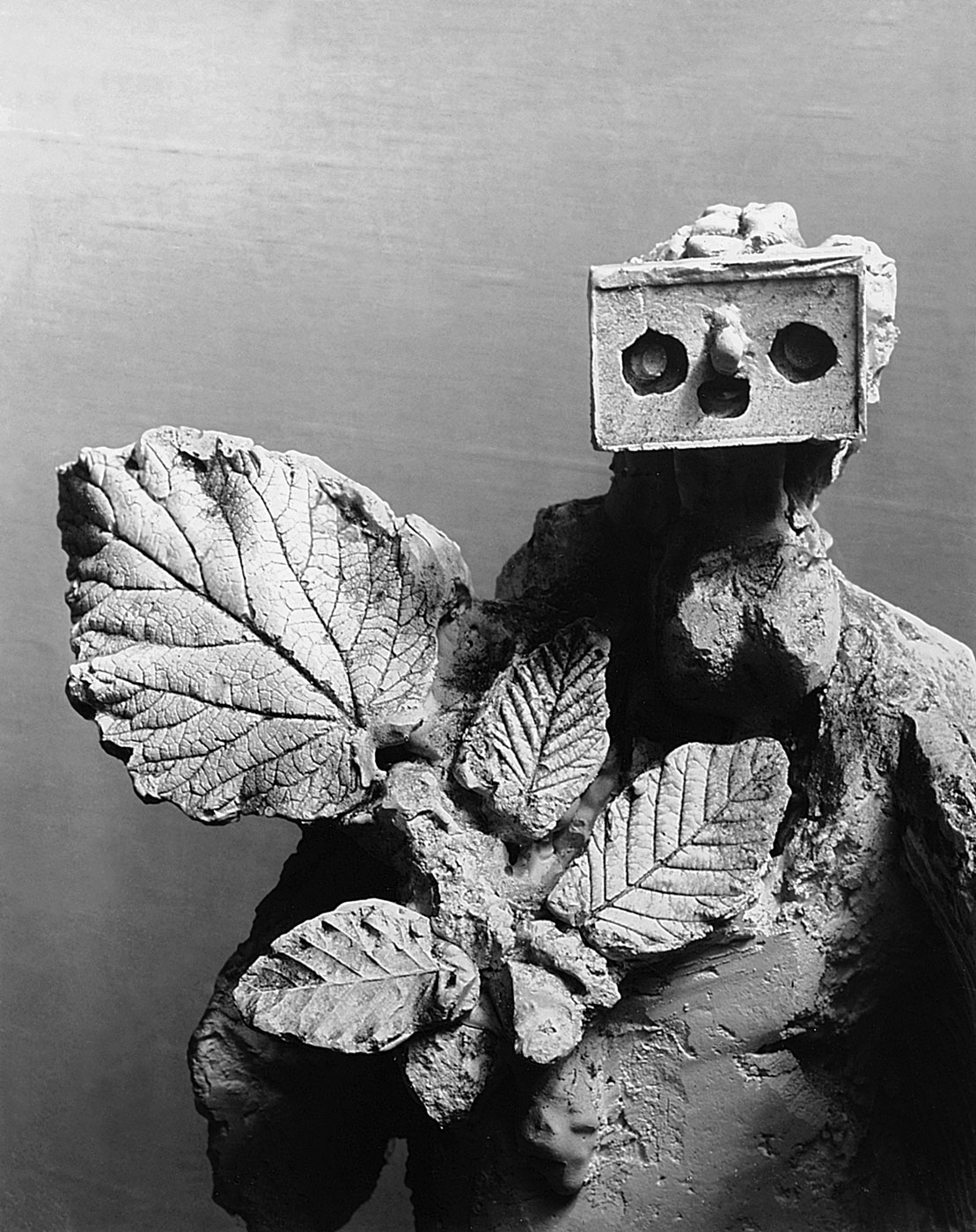
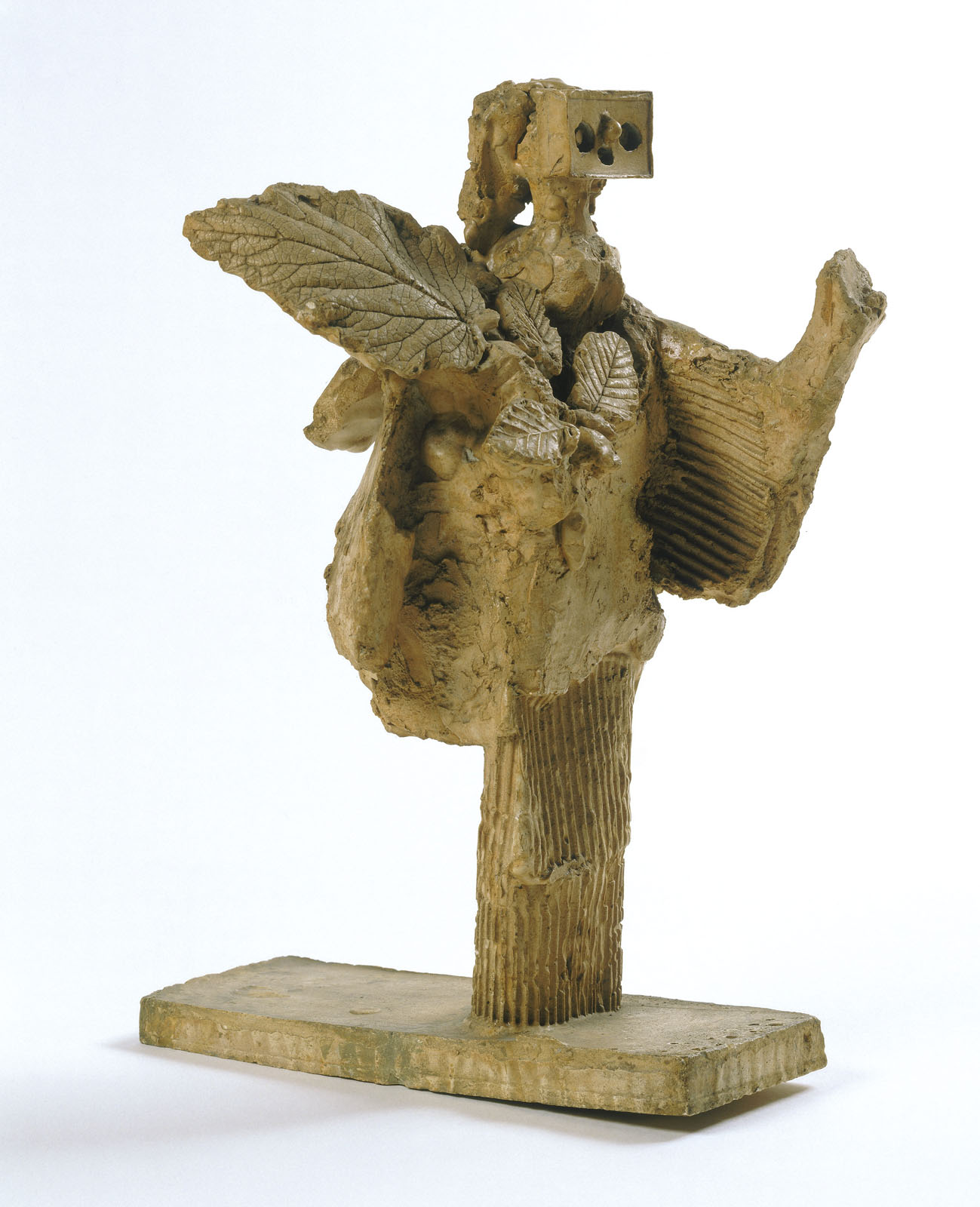
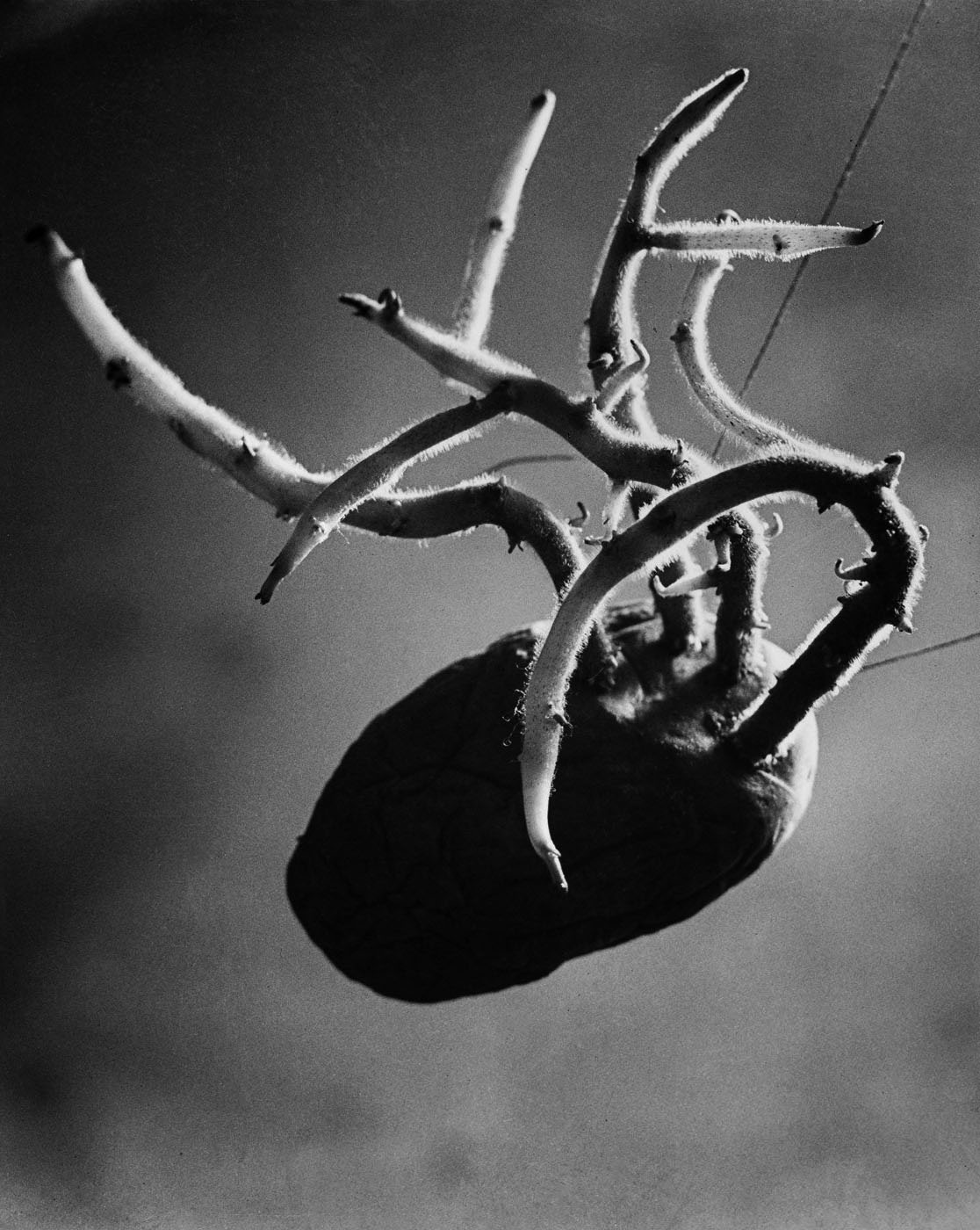
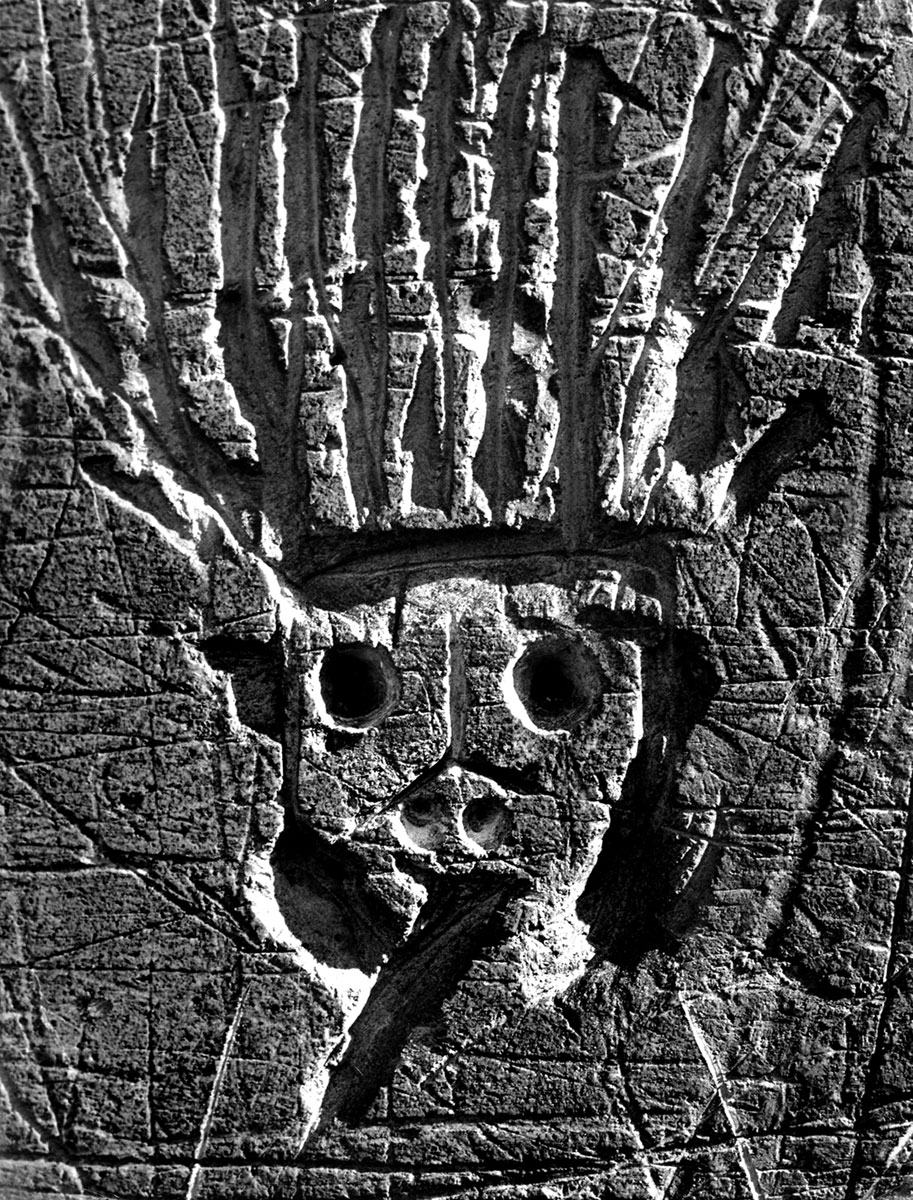


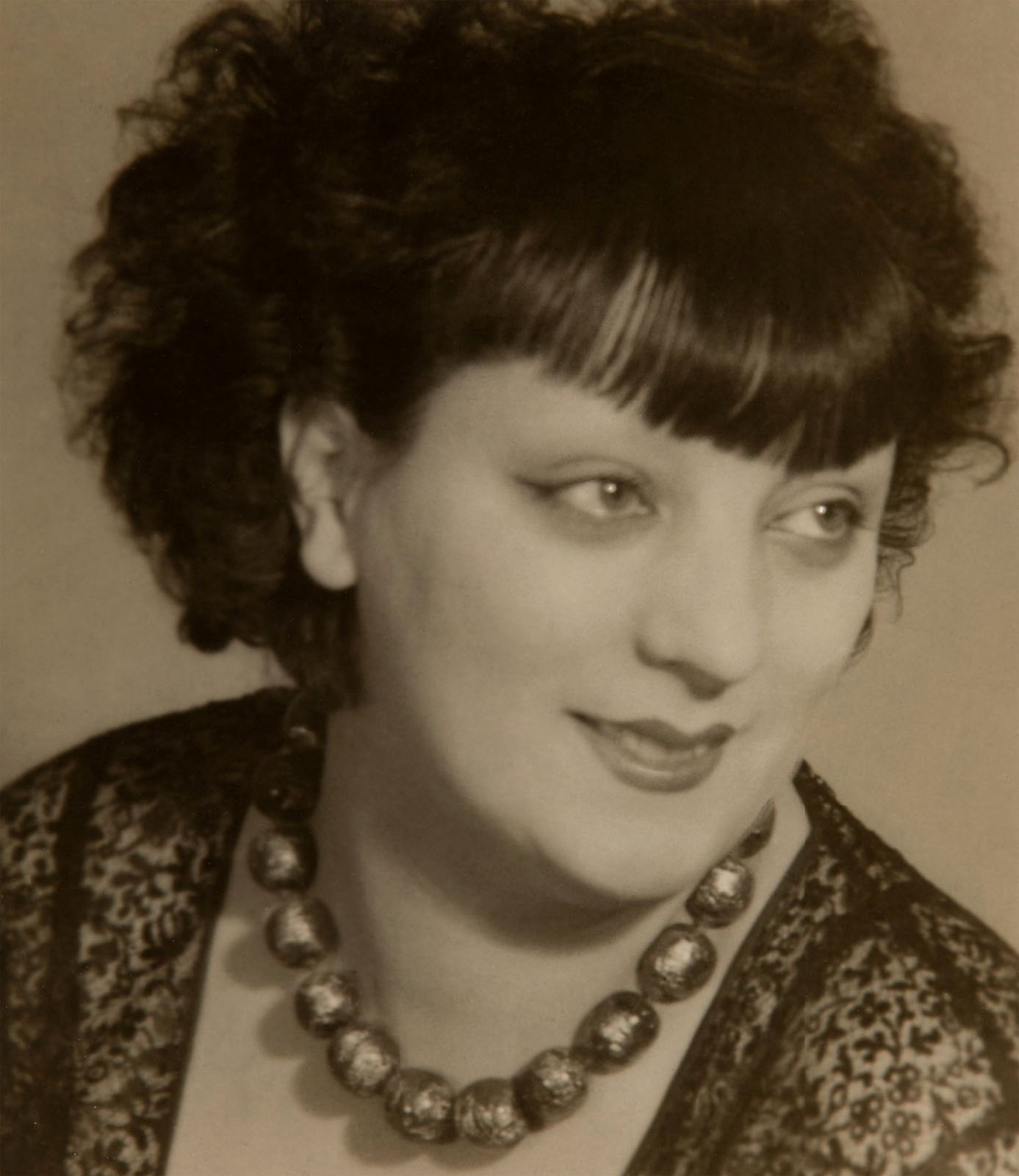


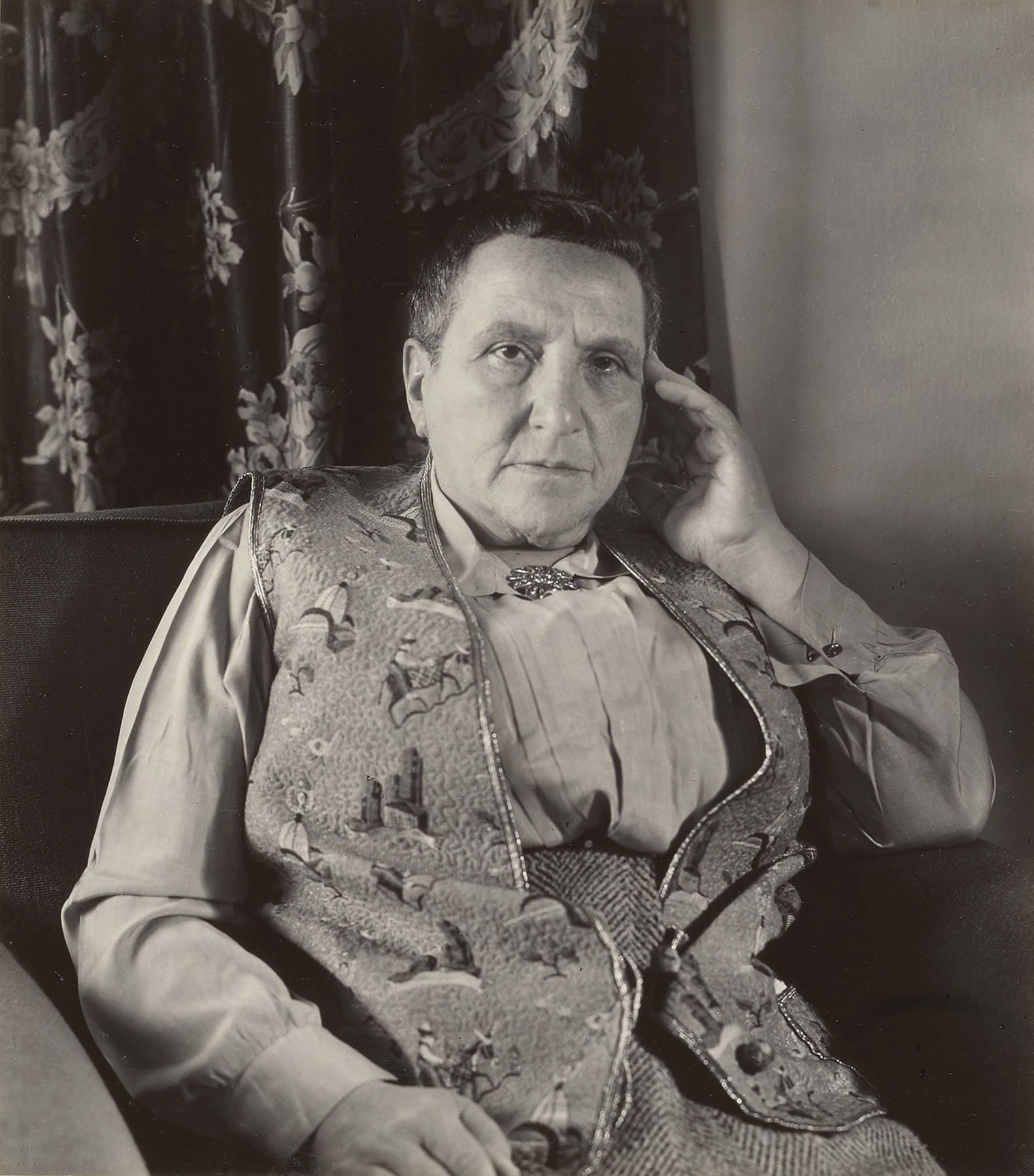

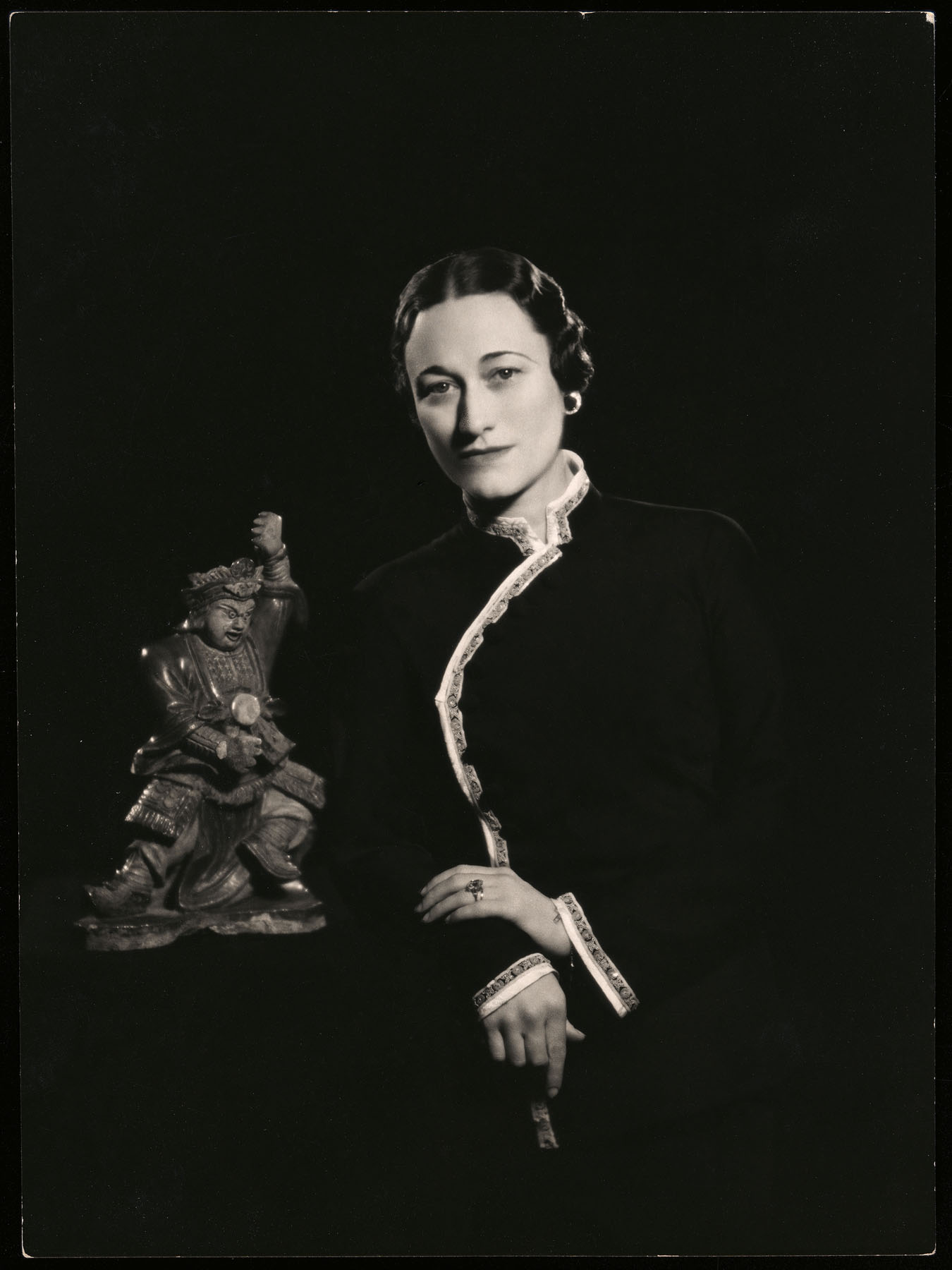


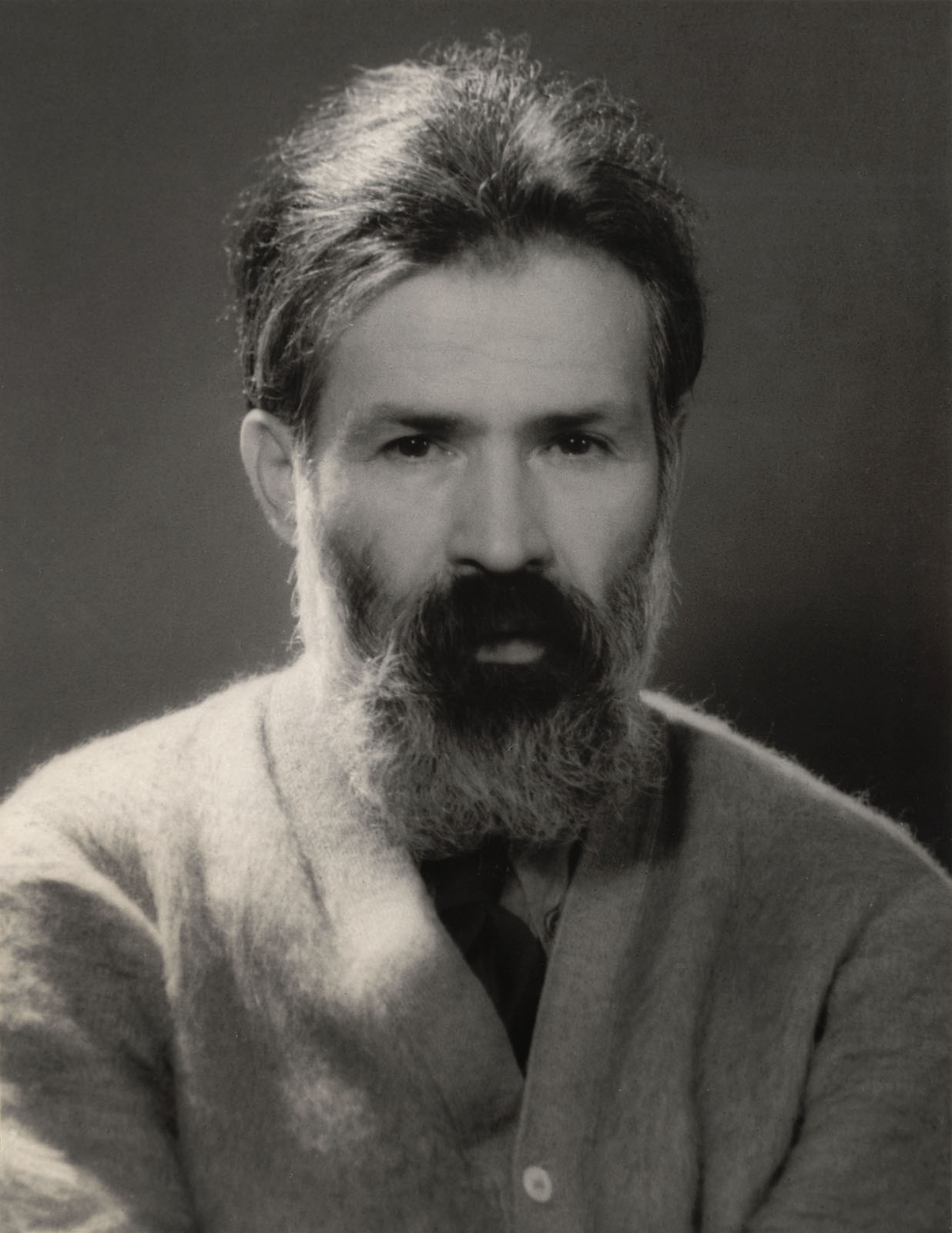


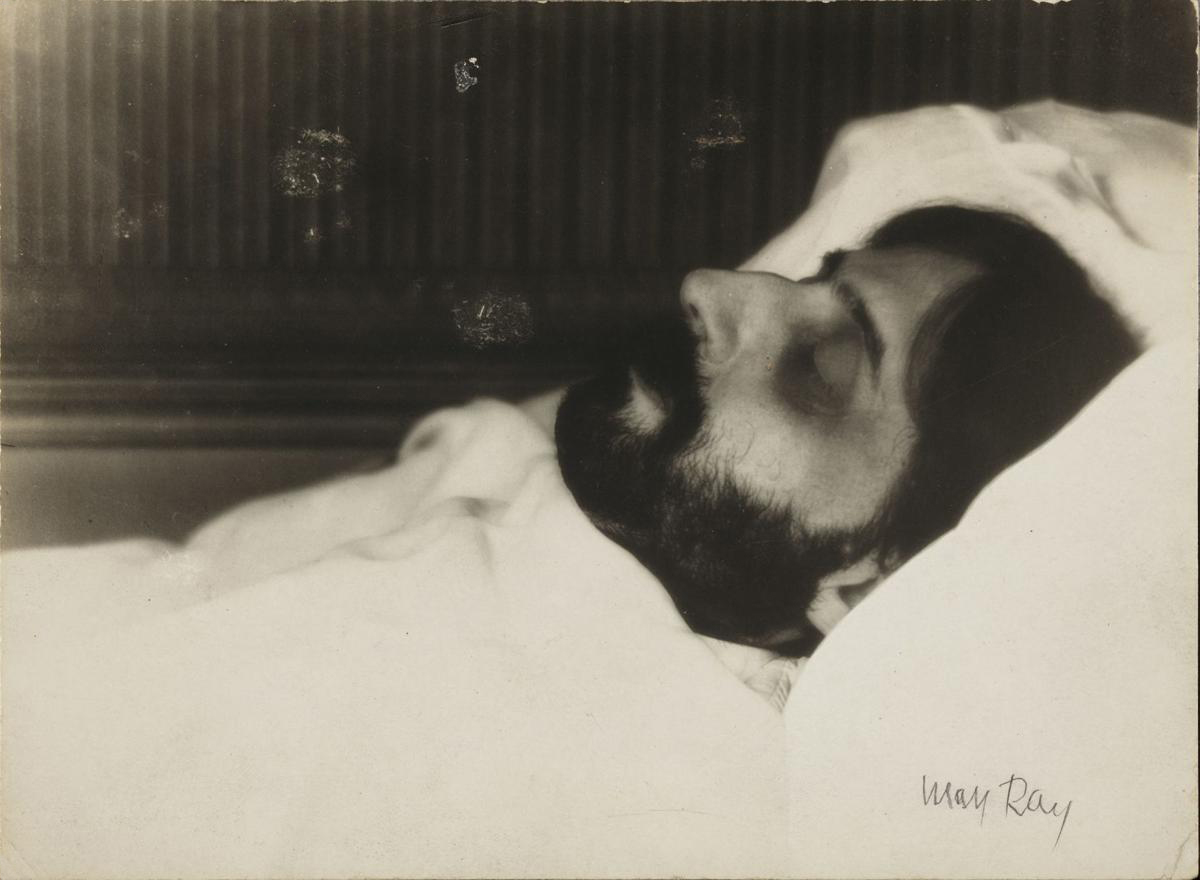


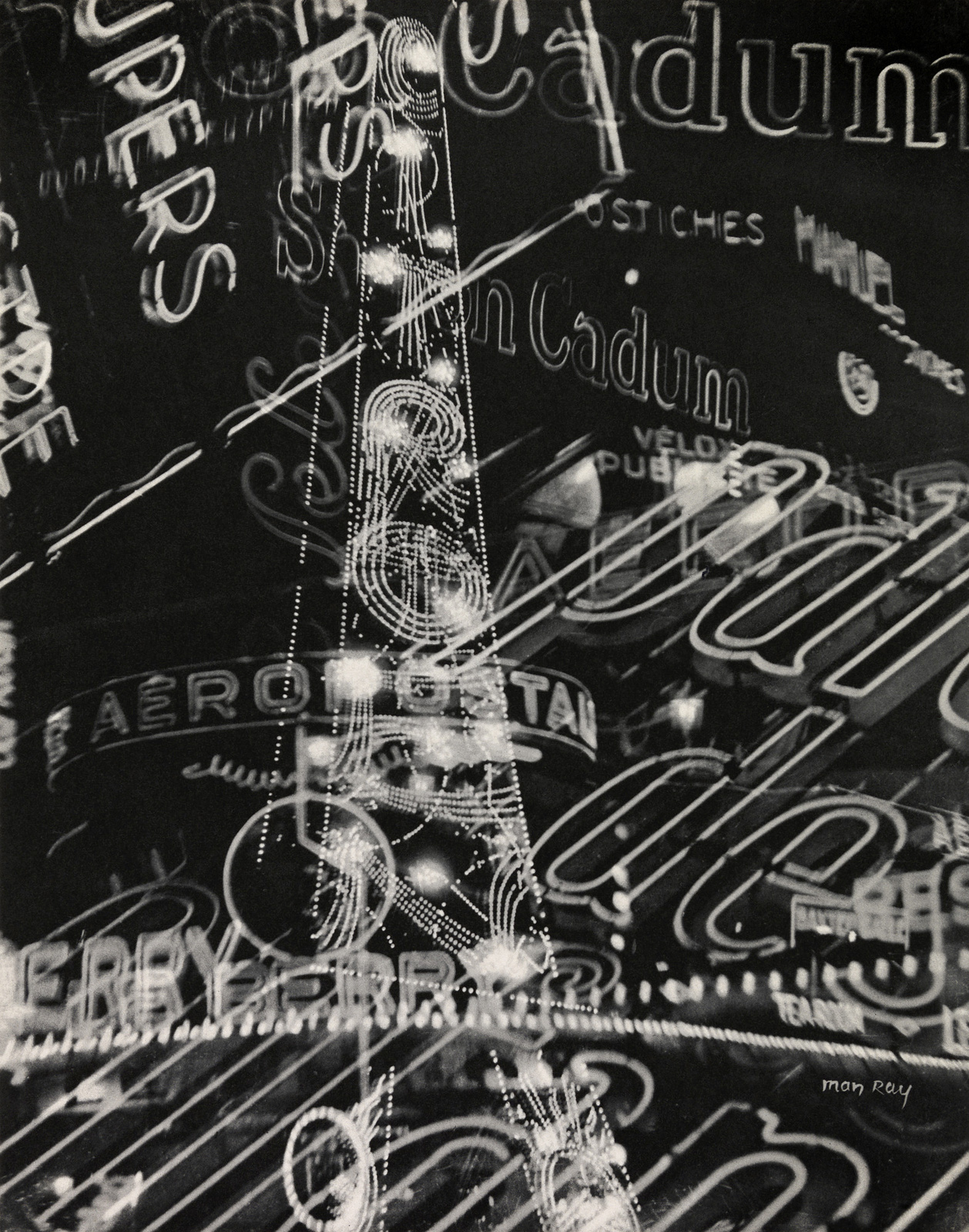


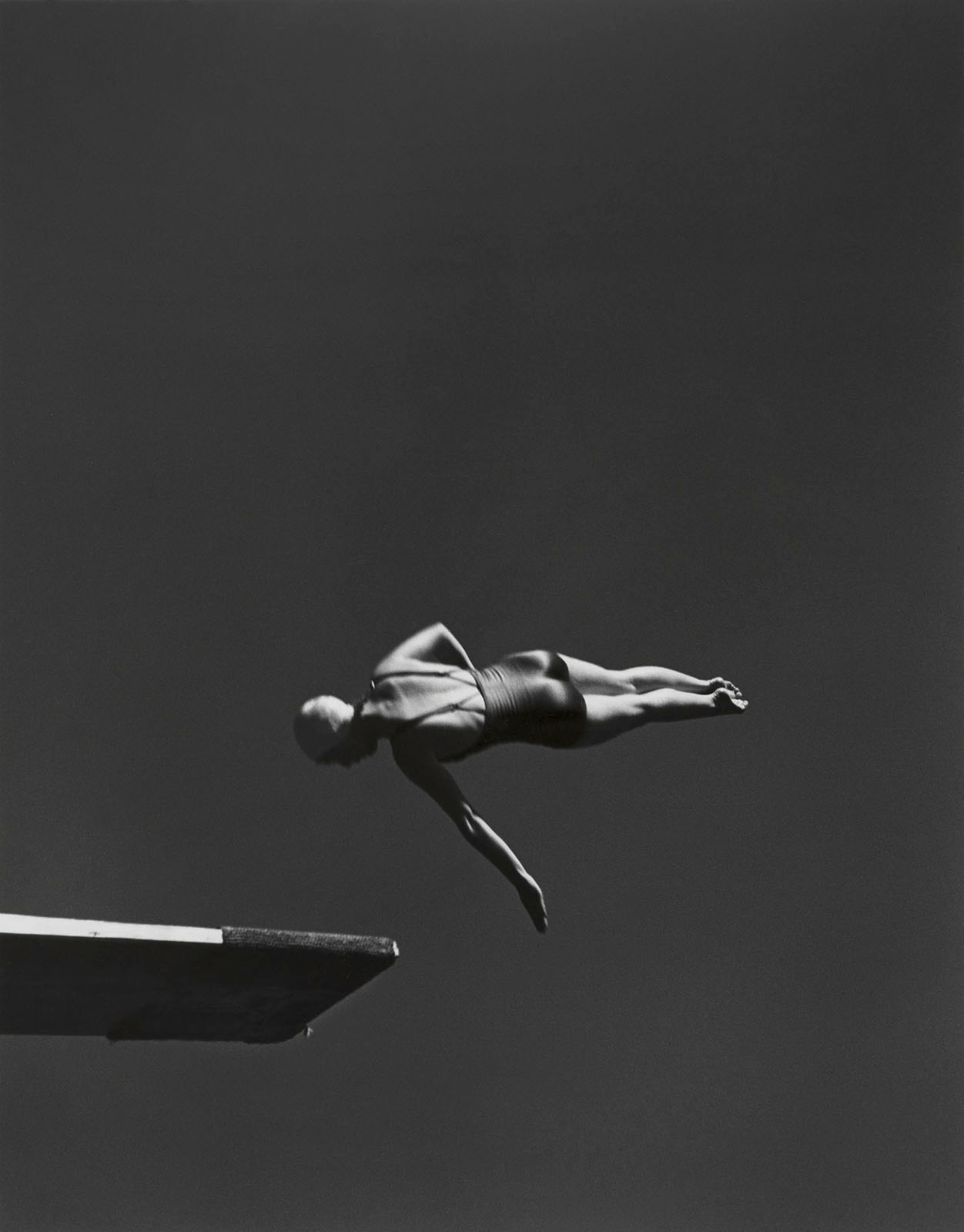
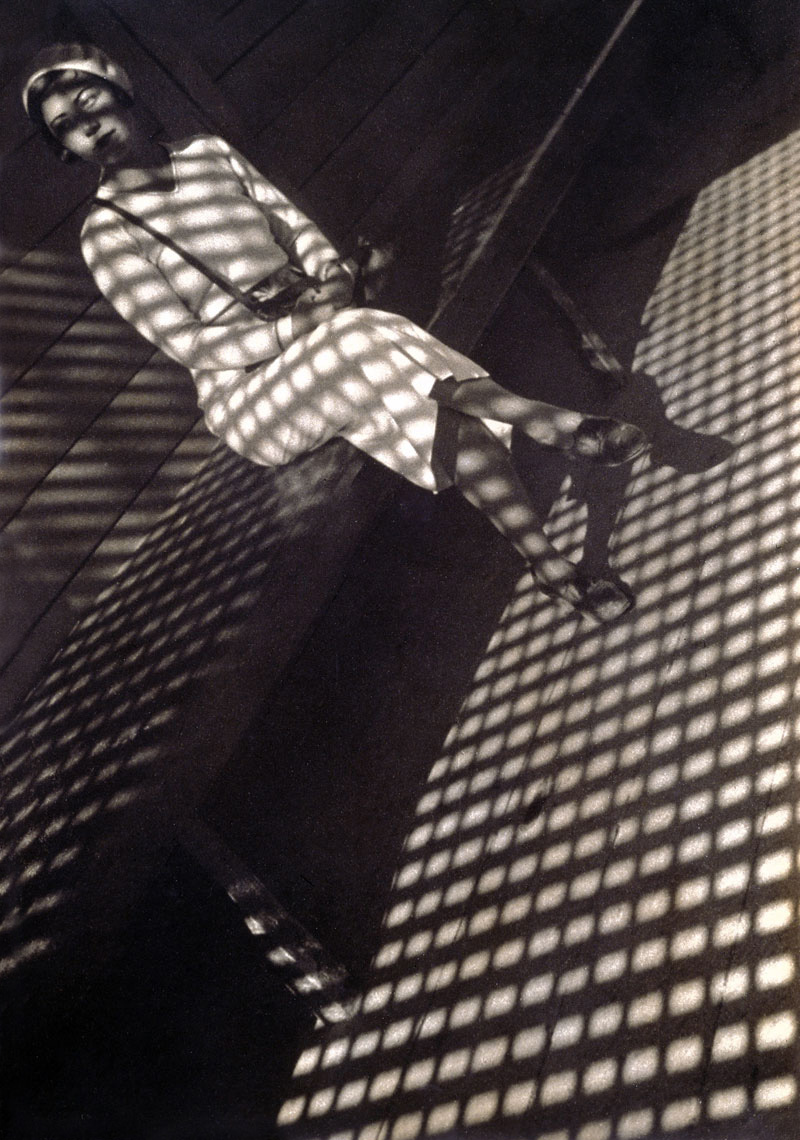
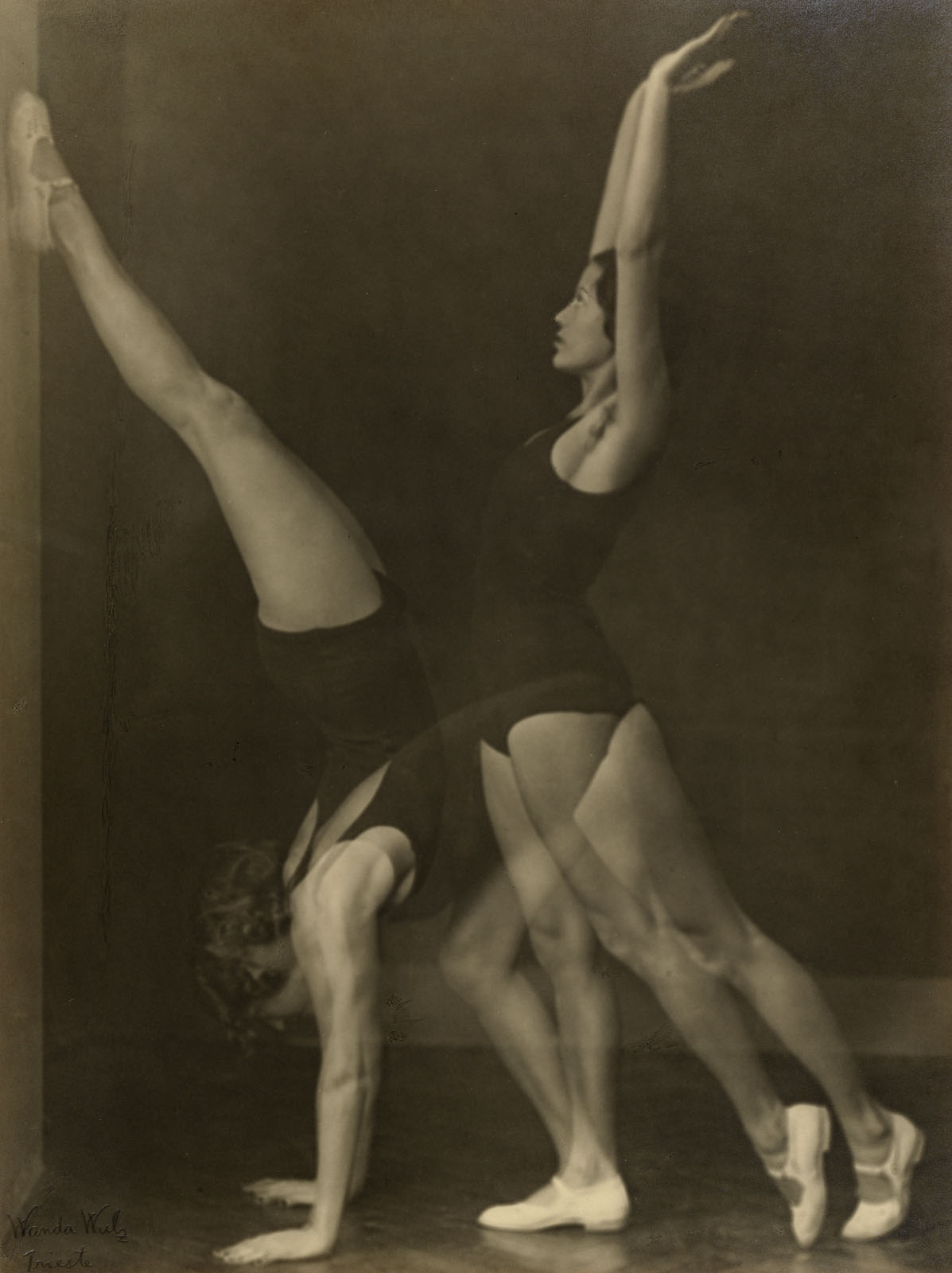


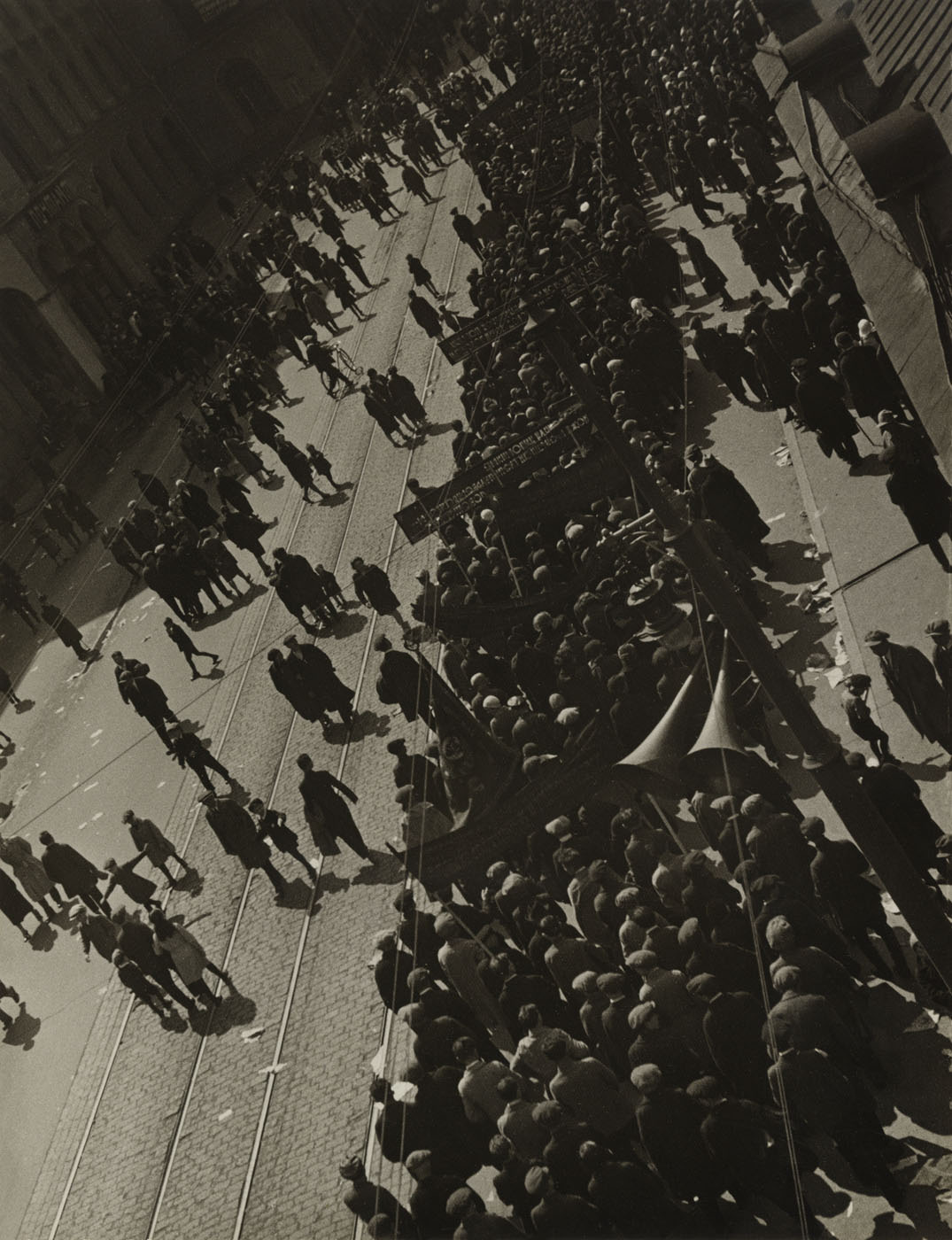


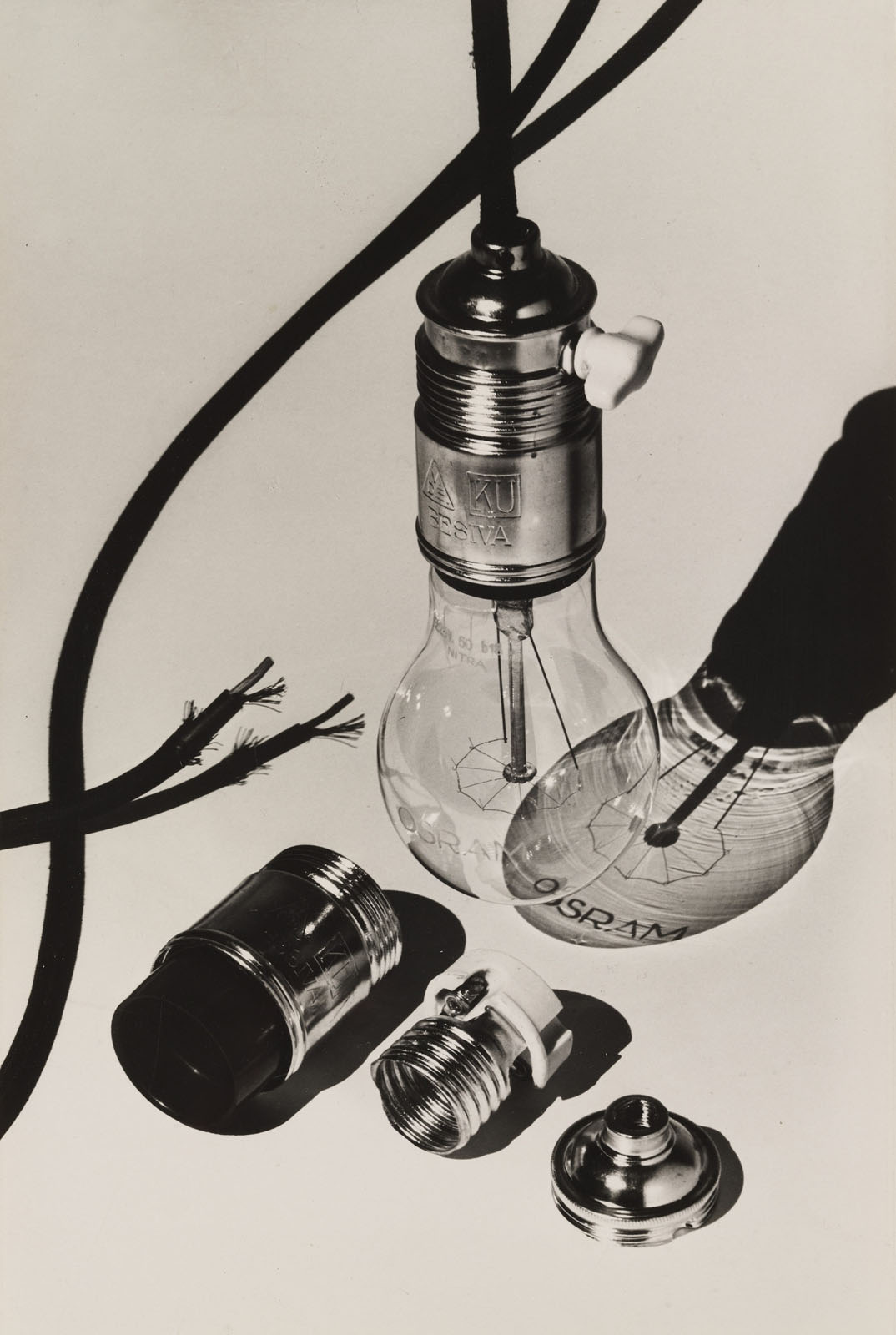

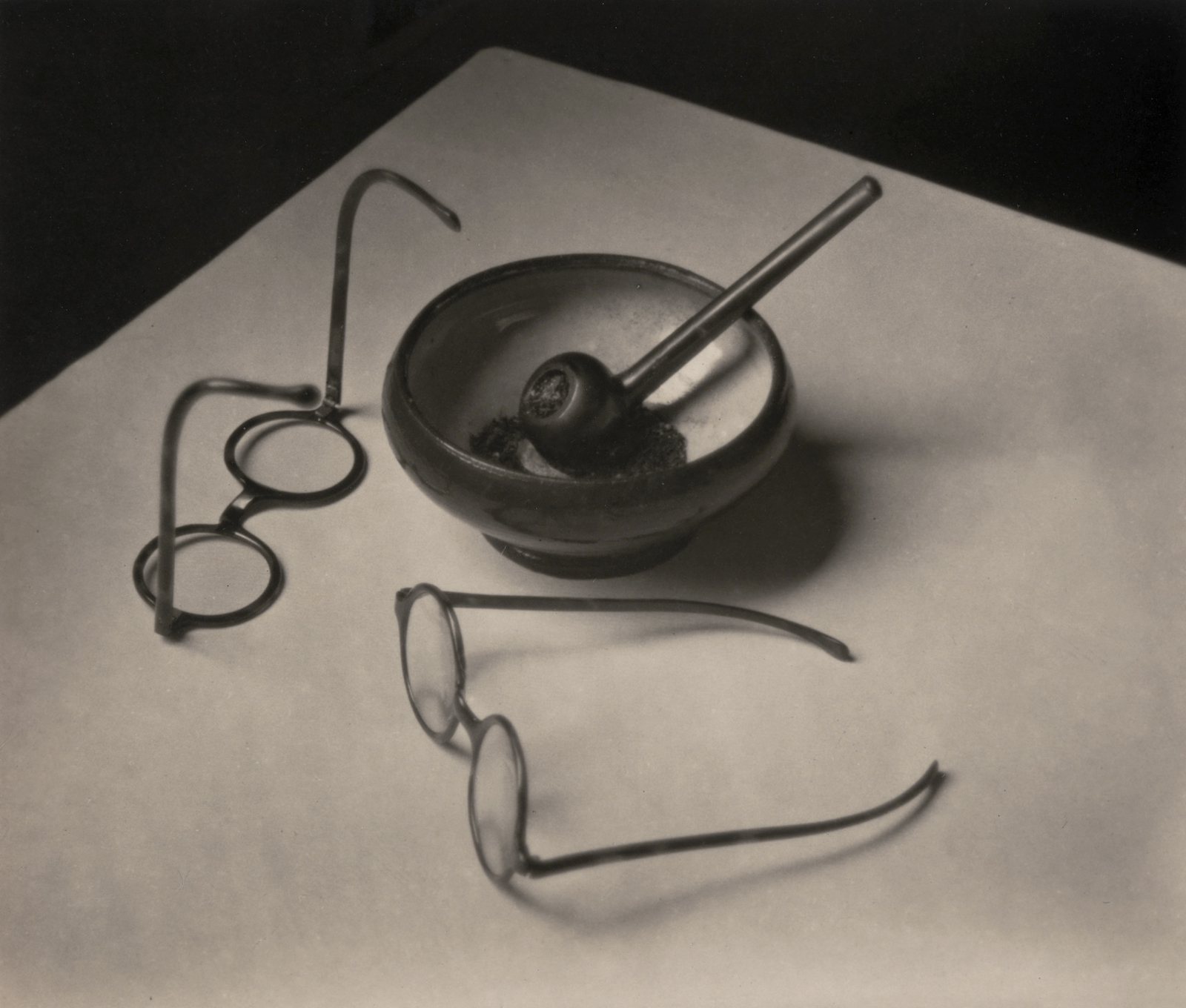


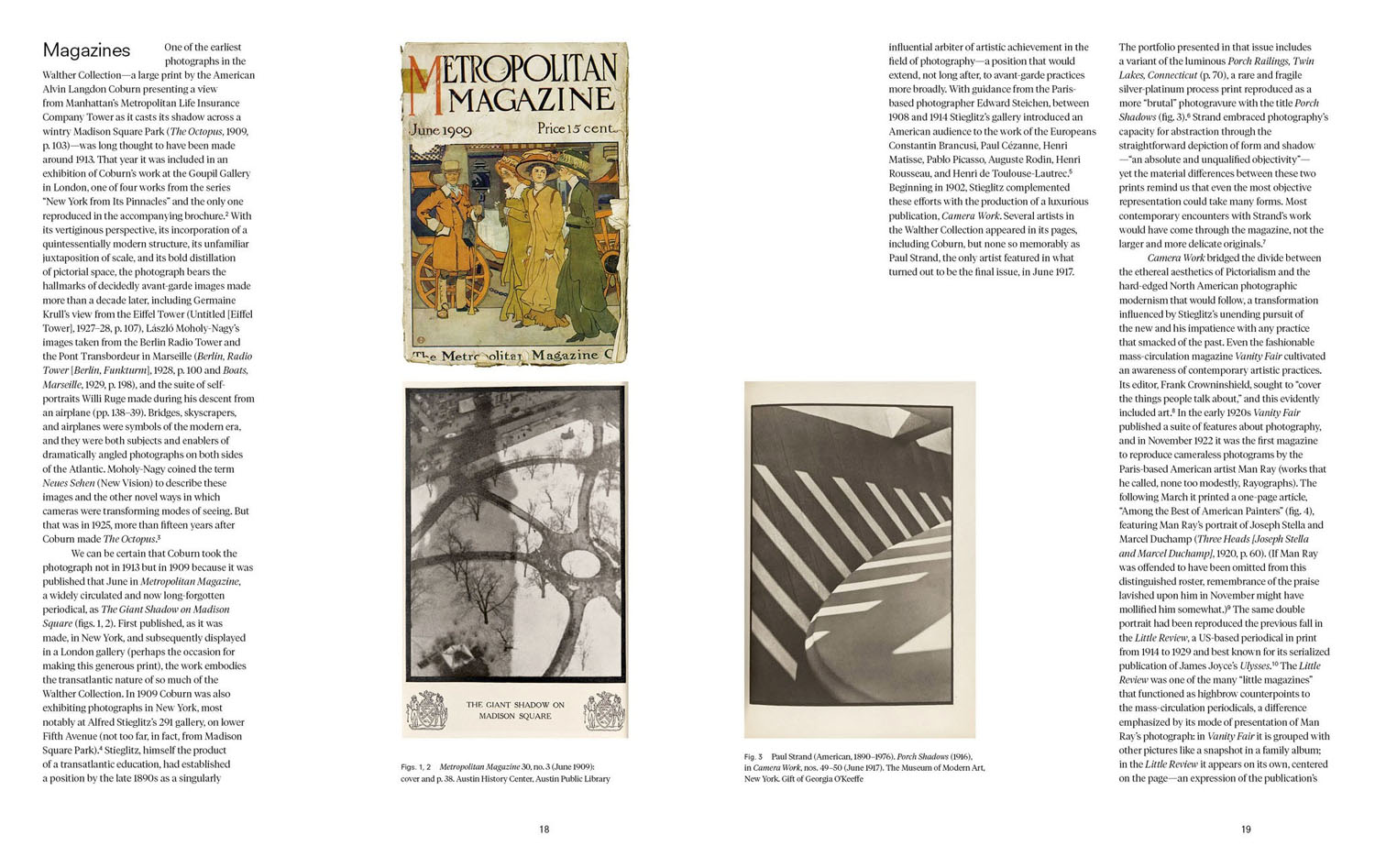


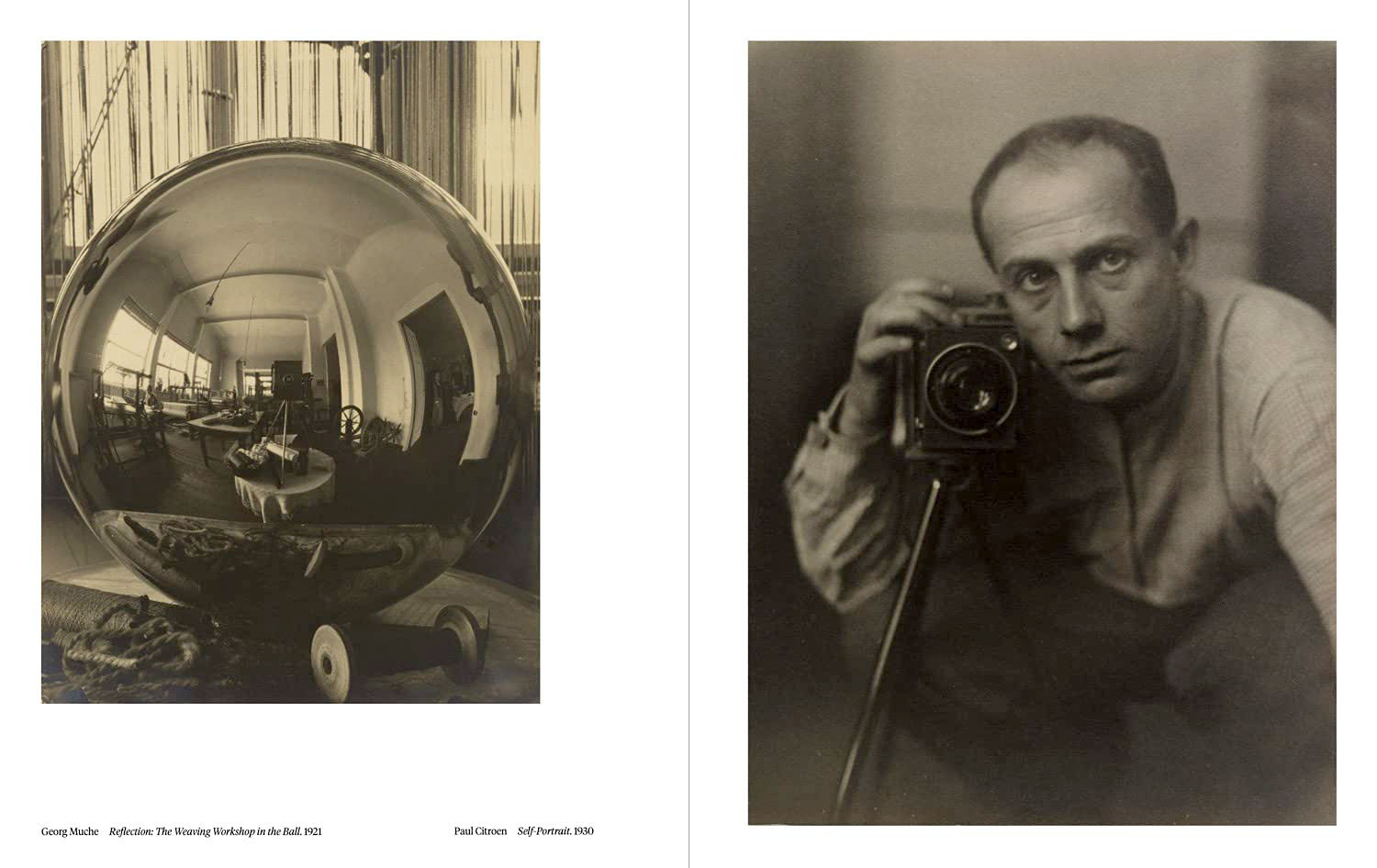


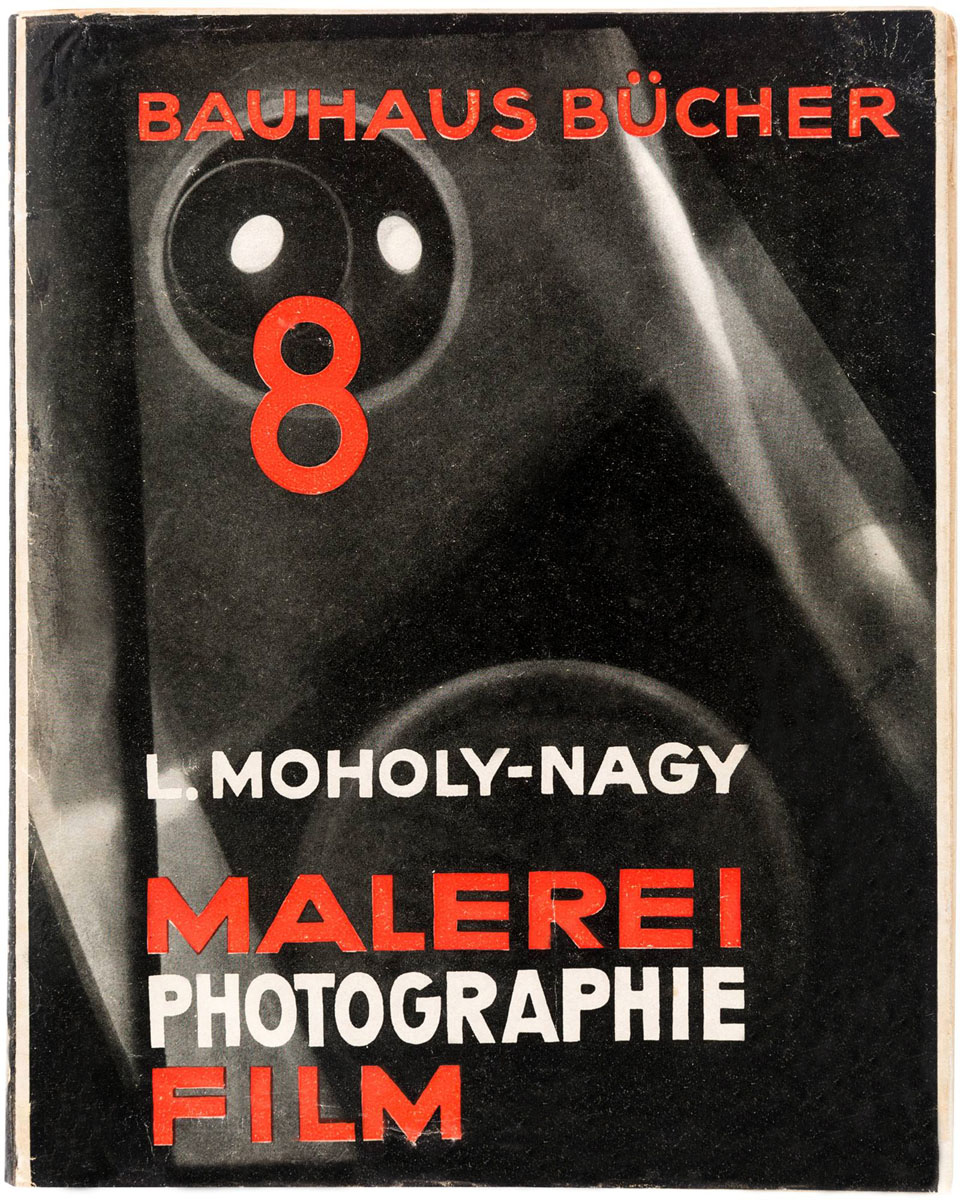





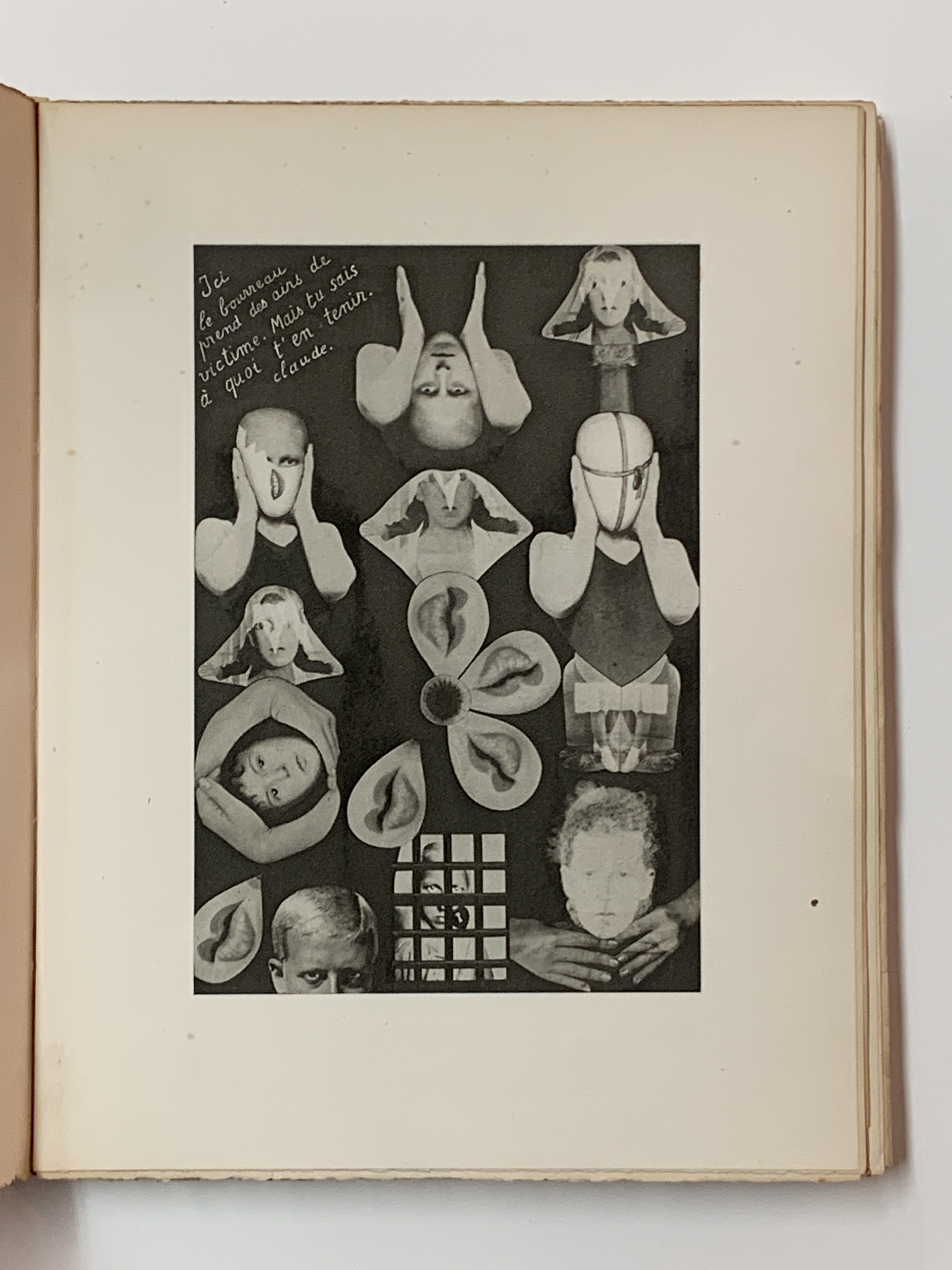





You must be logged in to post a comment.