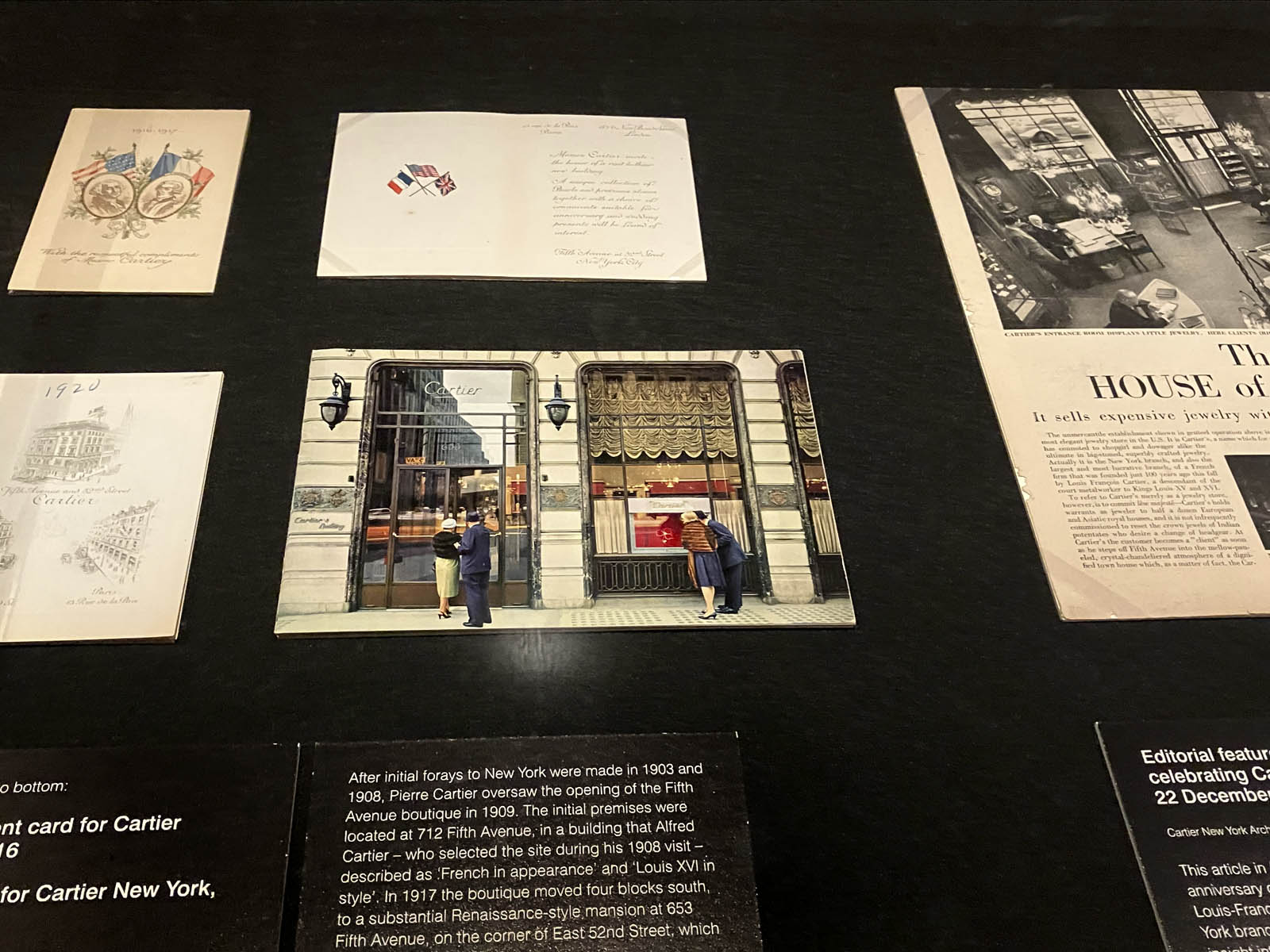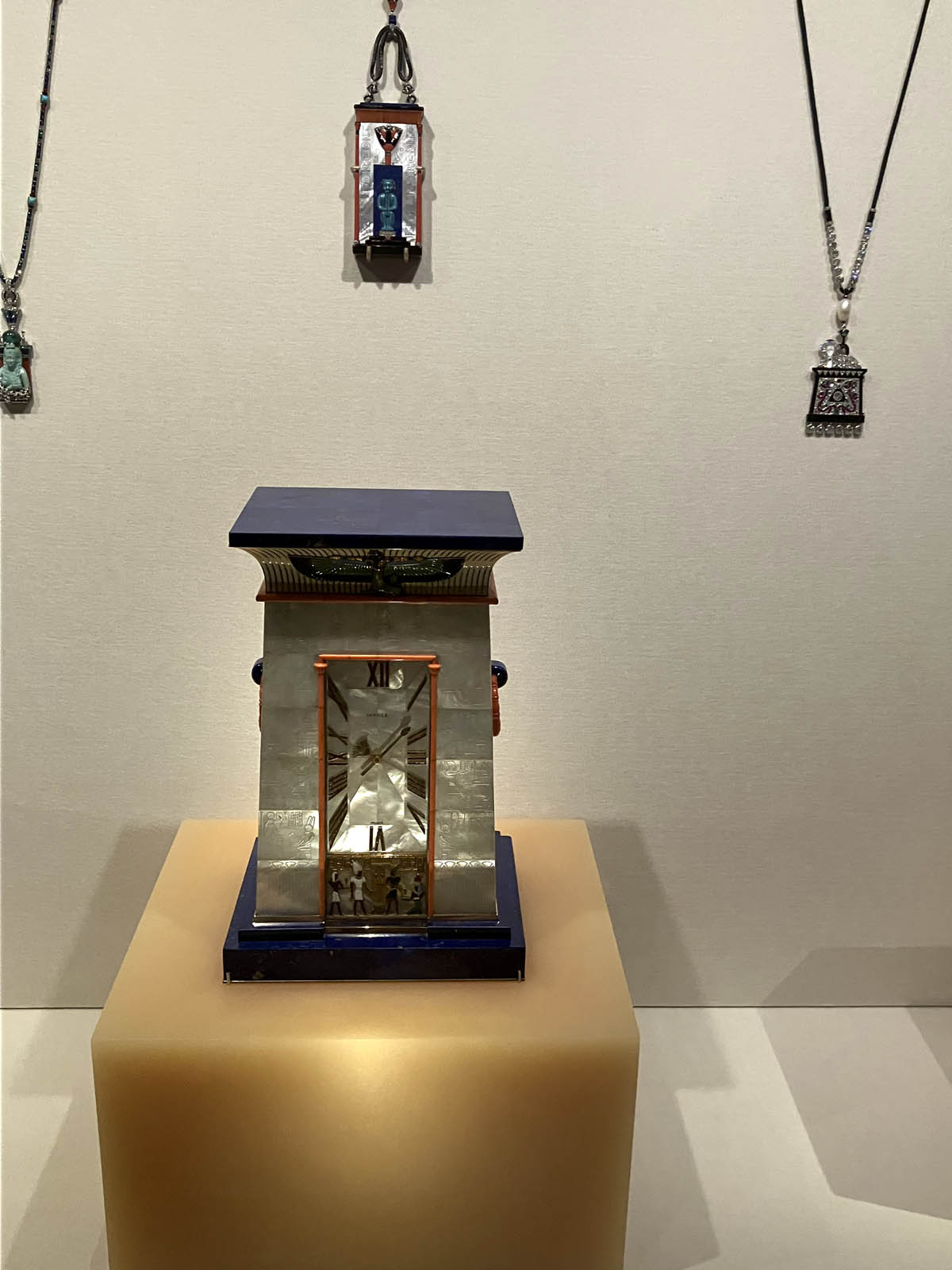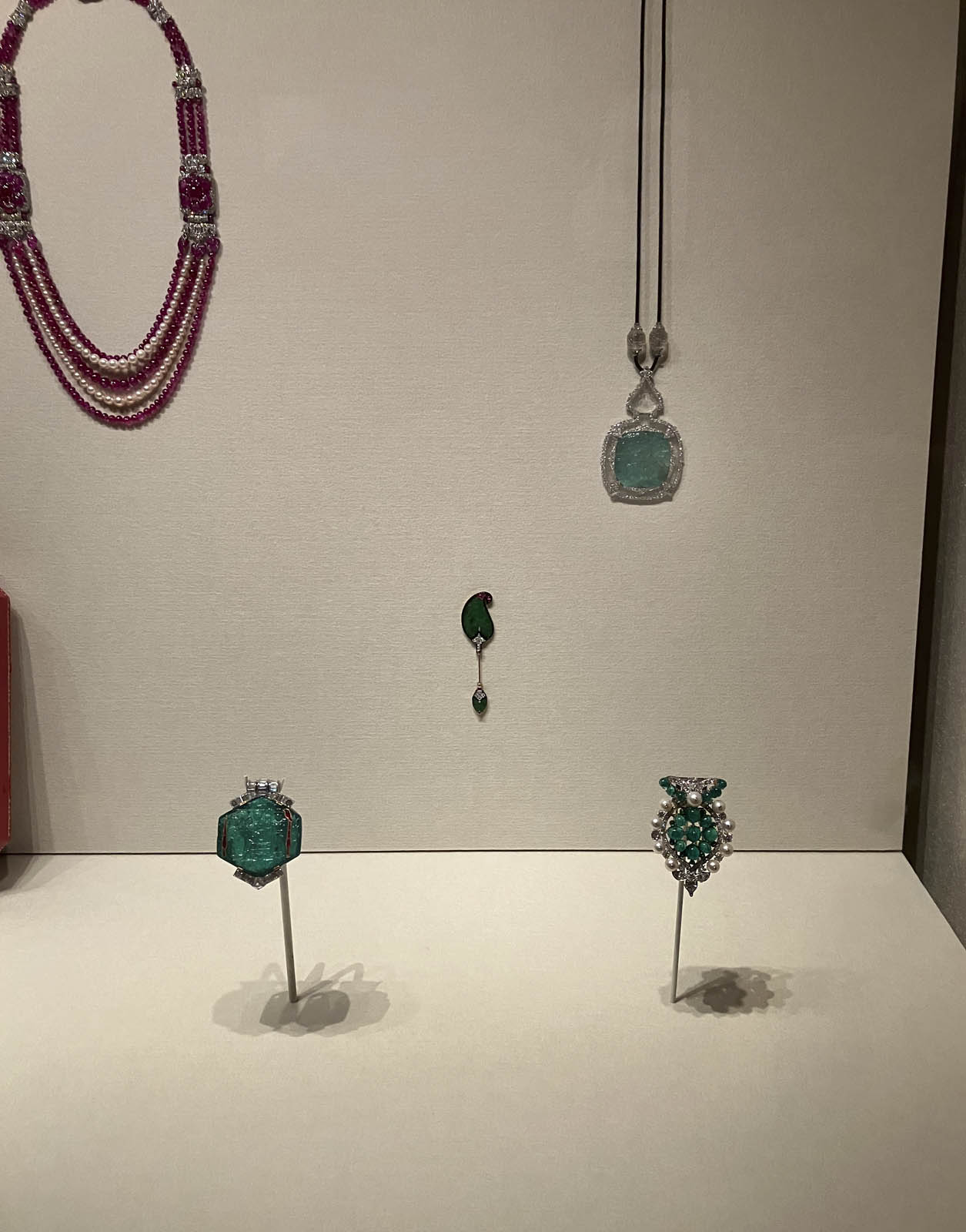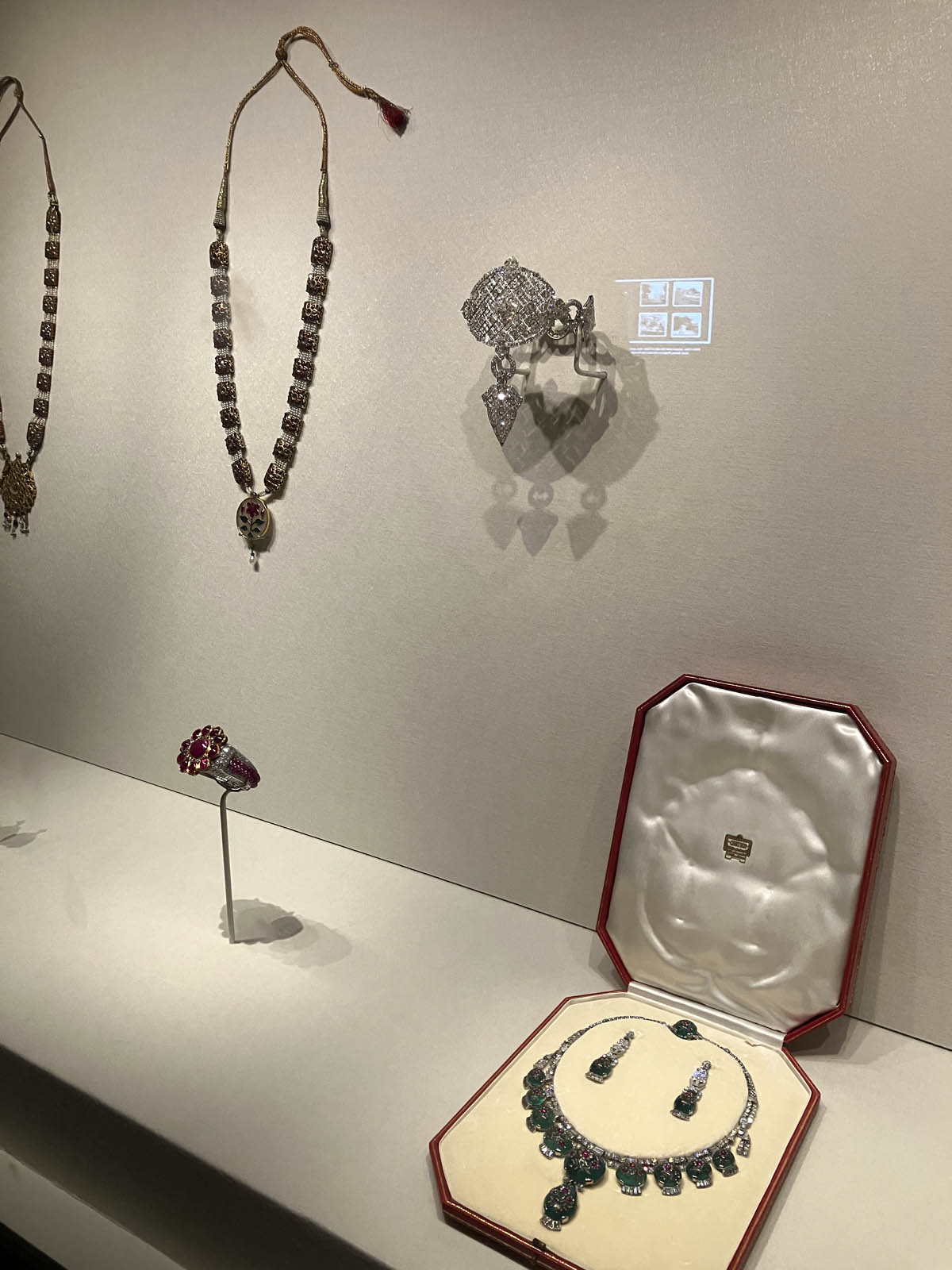
Exhibition: ‘Cartier’ at NGV International, Melbourne

Exhibition dates: 12th June – 4th October, 2026

Curator: Helen Molesworth, Senior Curator of Jewellery, Victoria & Albert Museum, London
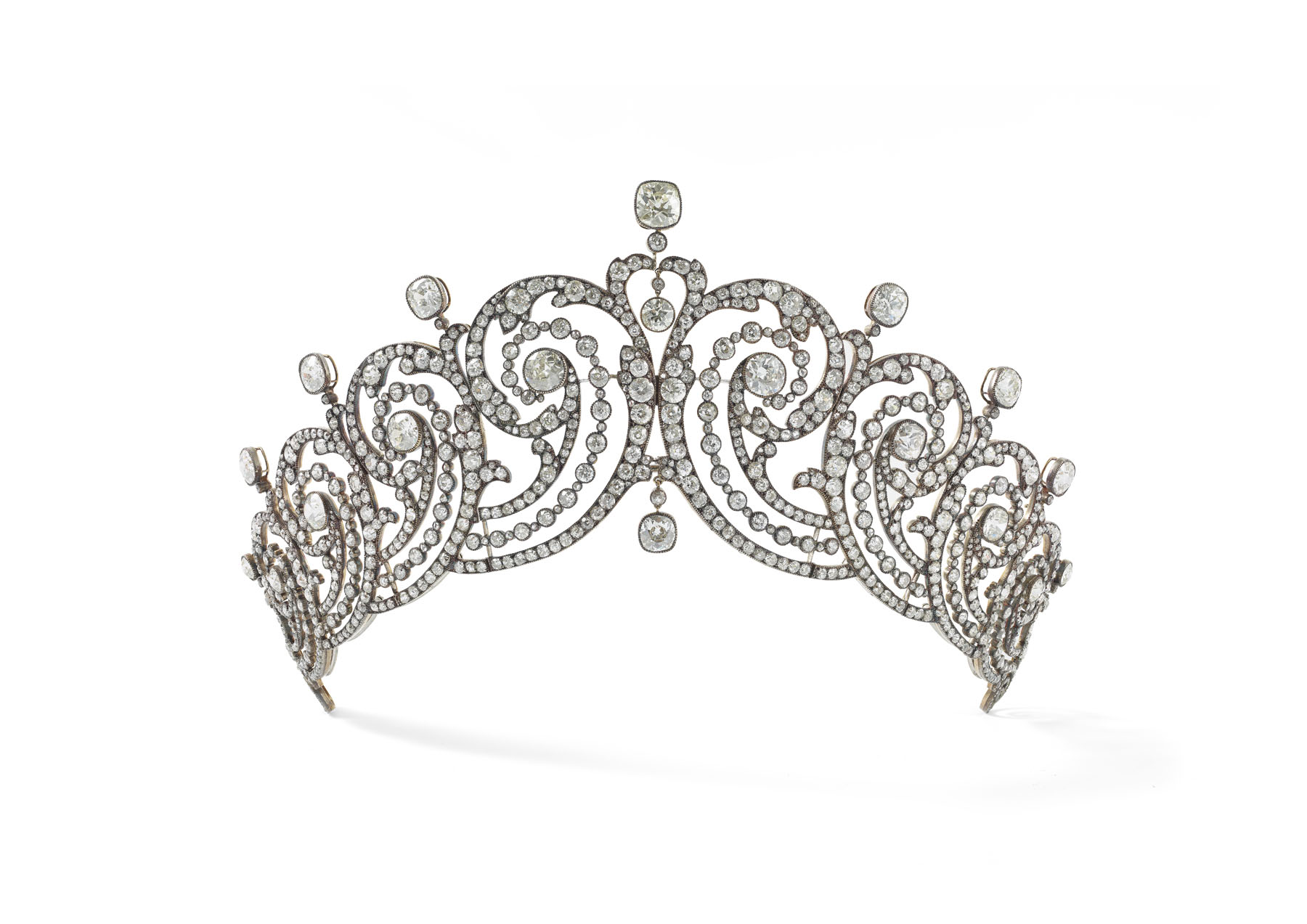
 

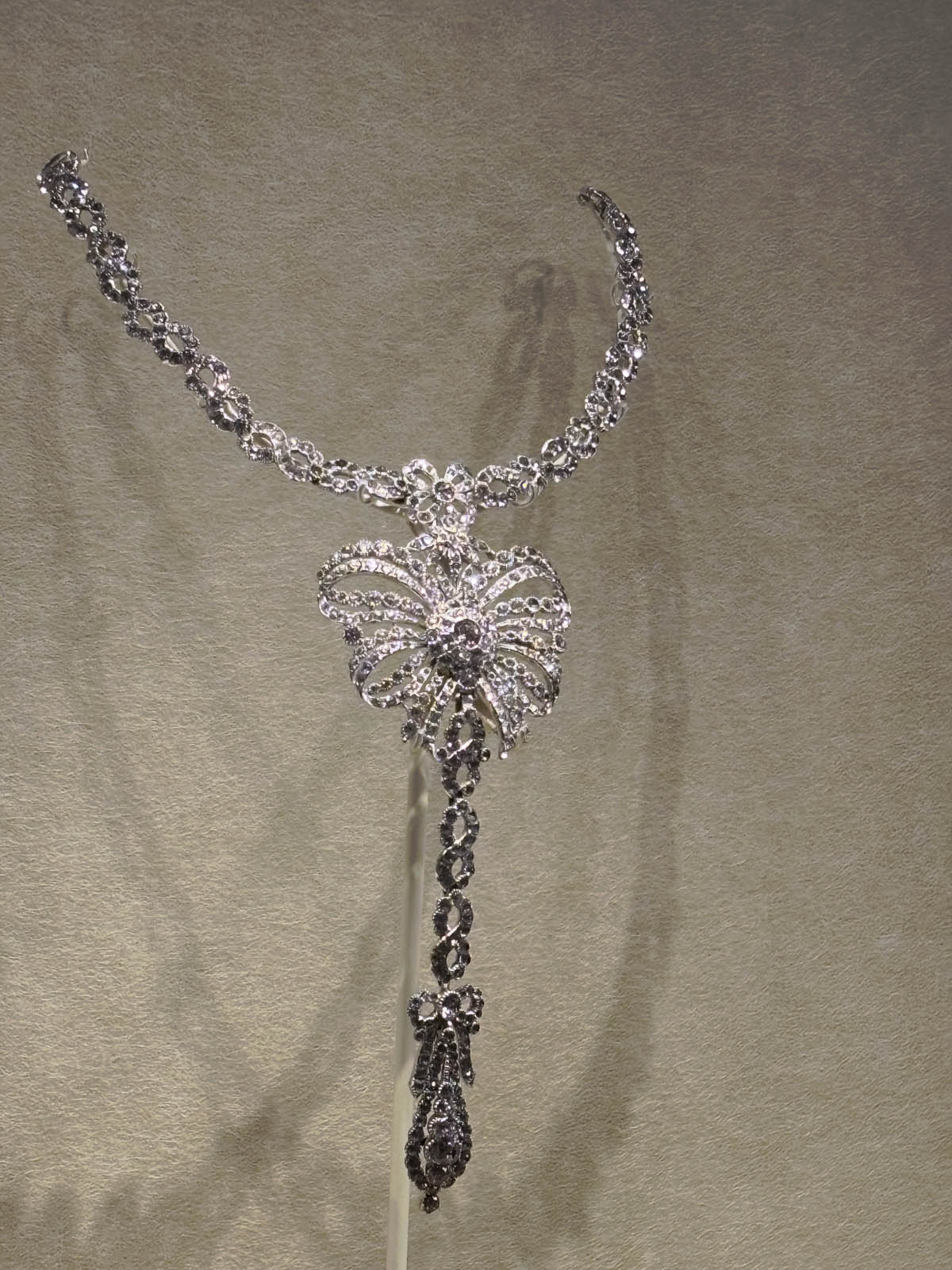
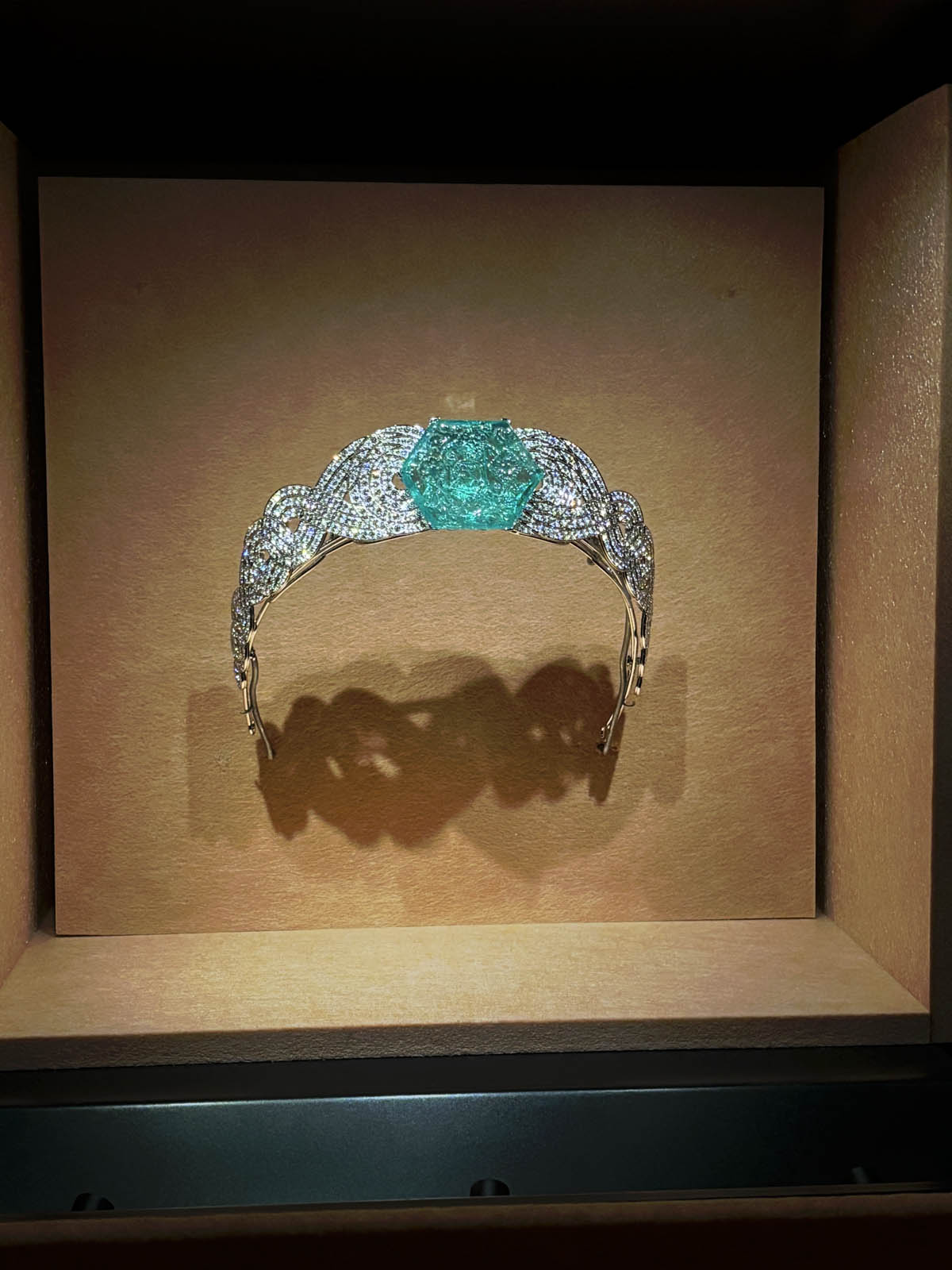
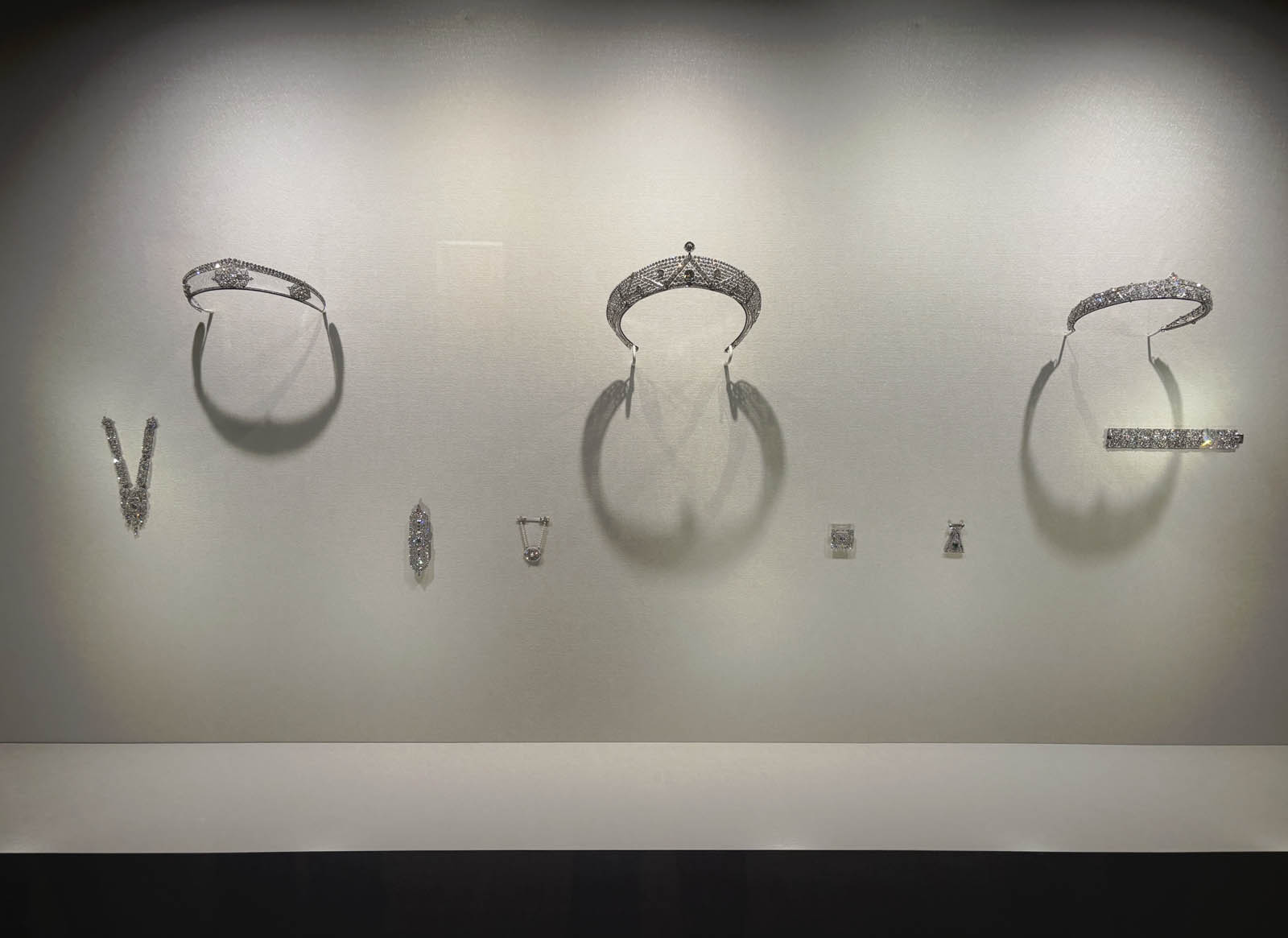
Scroll Tiara, Cartier Paris, special order, 1902


Scroll Tiara
Cartier Paris, special order
1902
Diamonds, silver and gold
Cartier Collection
Nils Herrmann, Collection Cartier
© Cartier


Owned by the Countess of Essex


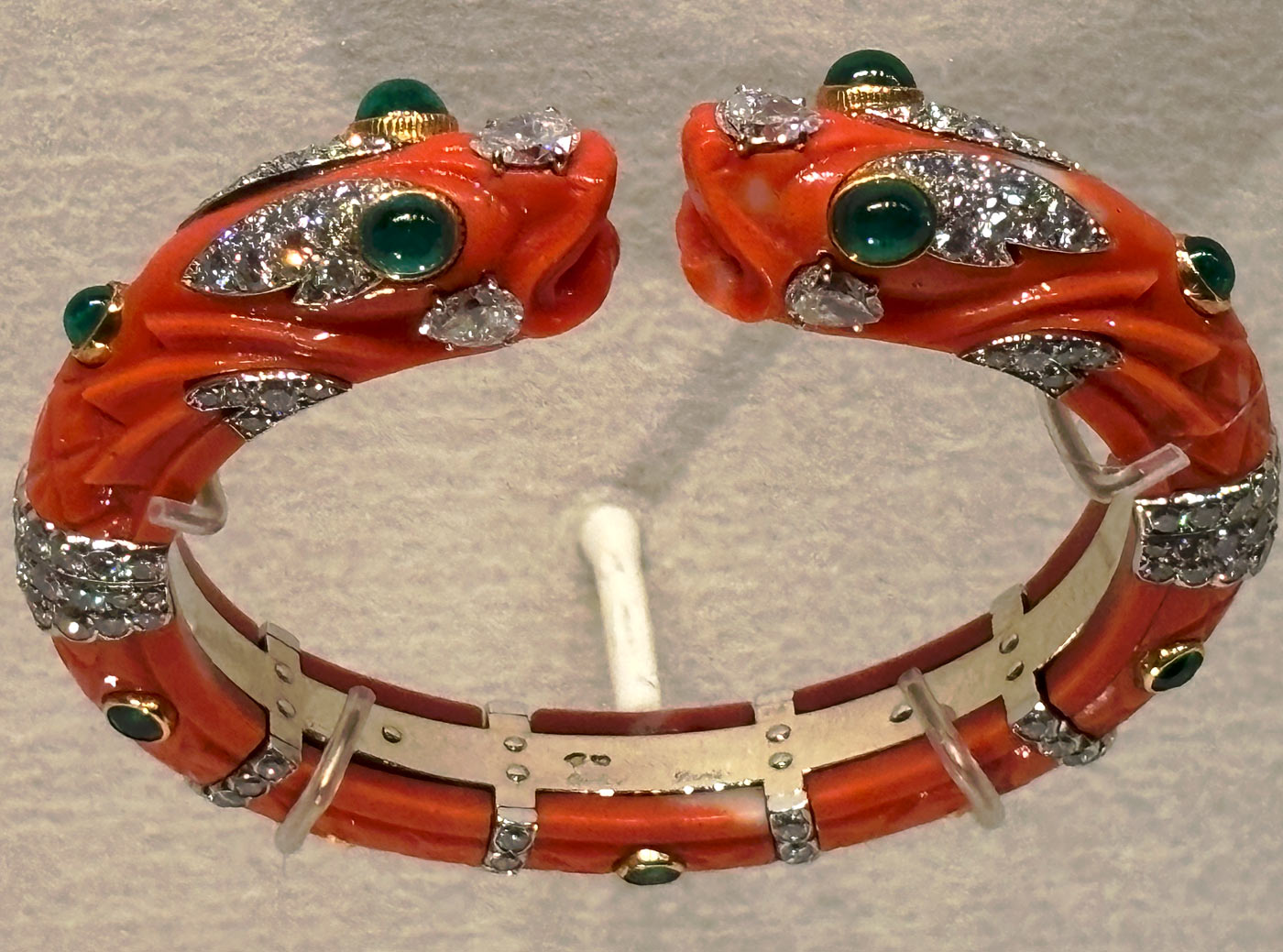
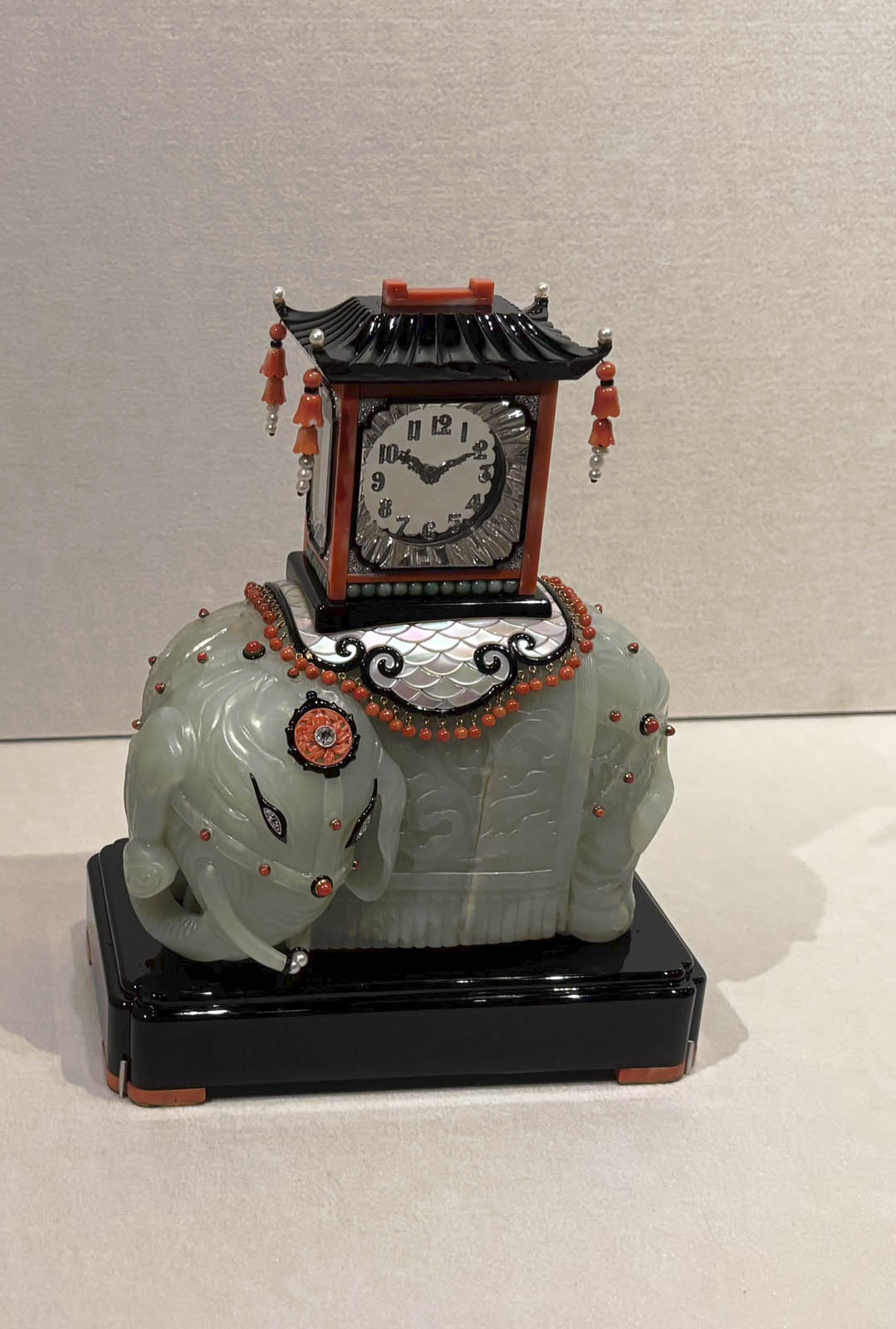
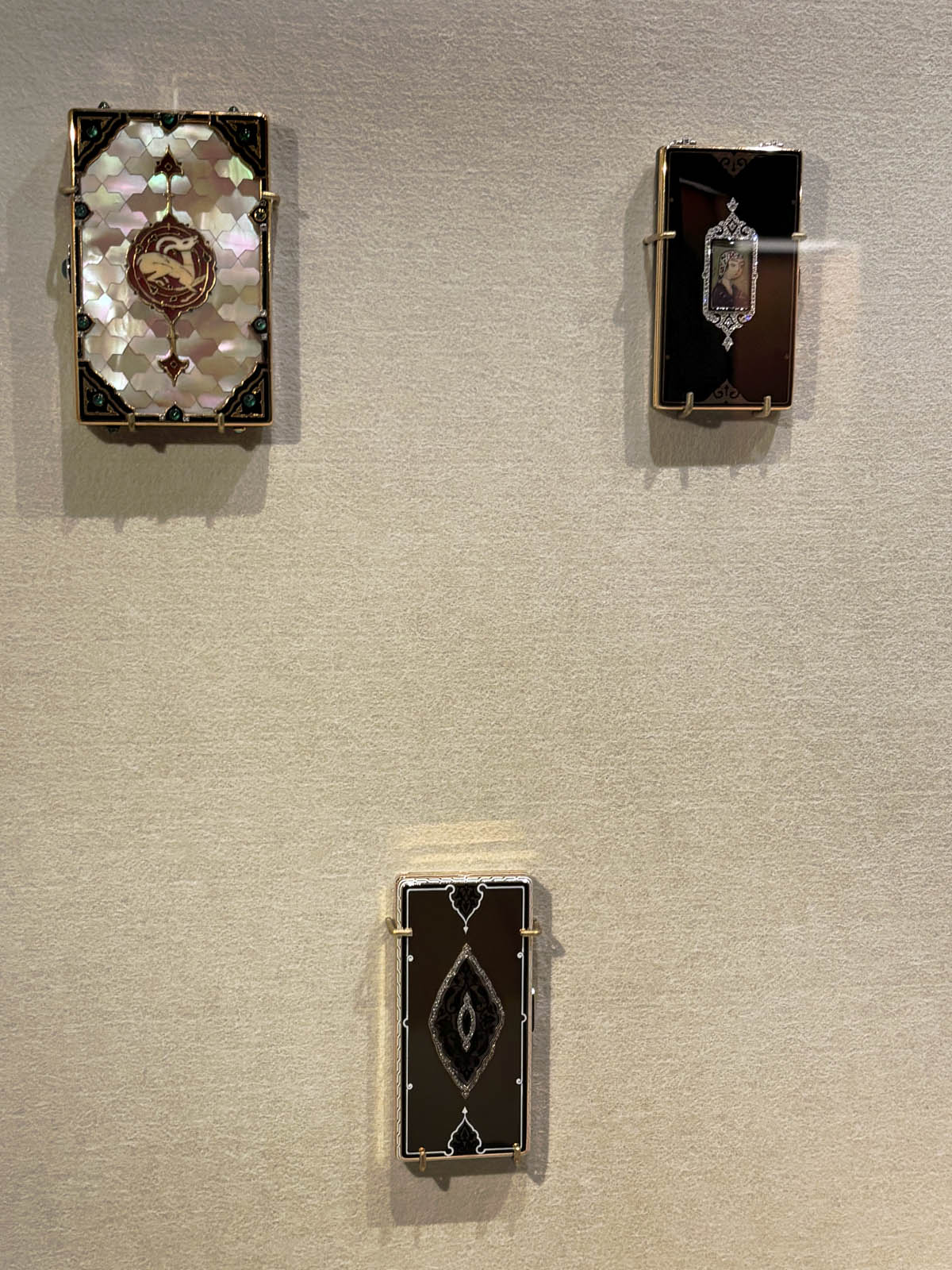
Bling, bling, bling.

Beauty, craftsmanship, style, for the very wealthy.

Opulence … but at what cost?

No mention here of the menials that would have been forced to mine the original stones in Africa, India or South America.

No mention of the horrors of colonialism of the British, French, Dutch, Belgiums etc… which allowed the exploitation of foreign countries: “The ruling nation takes natural resources, wealth, and cheap labor from the colonised area to enrich itself.”

No mention of the people (or the greased palms) that traded these gemstones and allowed them to reach Western markets and into corporate and private hands.

This “spectacular” display – the spectacle – is beautifully presented at the NGV but it’s all just a bit – what’s the word – gauche for me, especially the over the top 1950s-contemporary pieces. Less is more.

At least the Paris branch of Cartier actively resisted the Nazi occupation and the London offices operated as a frequent meeting place for Charles de Gaulle’s Free French movement, unlike Coco Chanel who was a documented Nazi collaborator and intelligence agent with the Abwehr, holding the agent number F-7124 and the codename “Westminster”, during World War II.

Why you would buy anything by Chanel even today is completely beyond me.

Dr Marcus Bunyan


Many thankx to the NGV for allowing me to publish the photographs in the posting. Please click on the photographs for a larger version of the image. All installation photographs (except the top four) © Marcus Bunyan
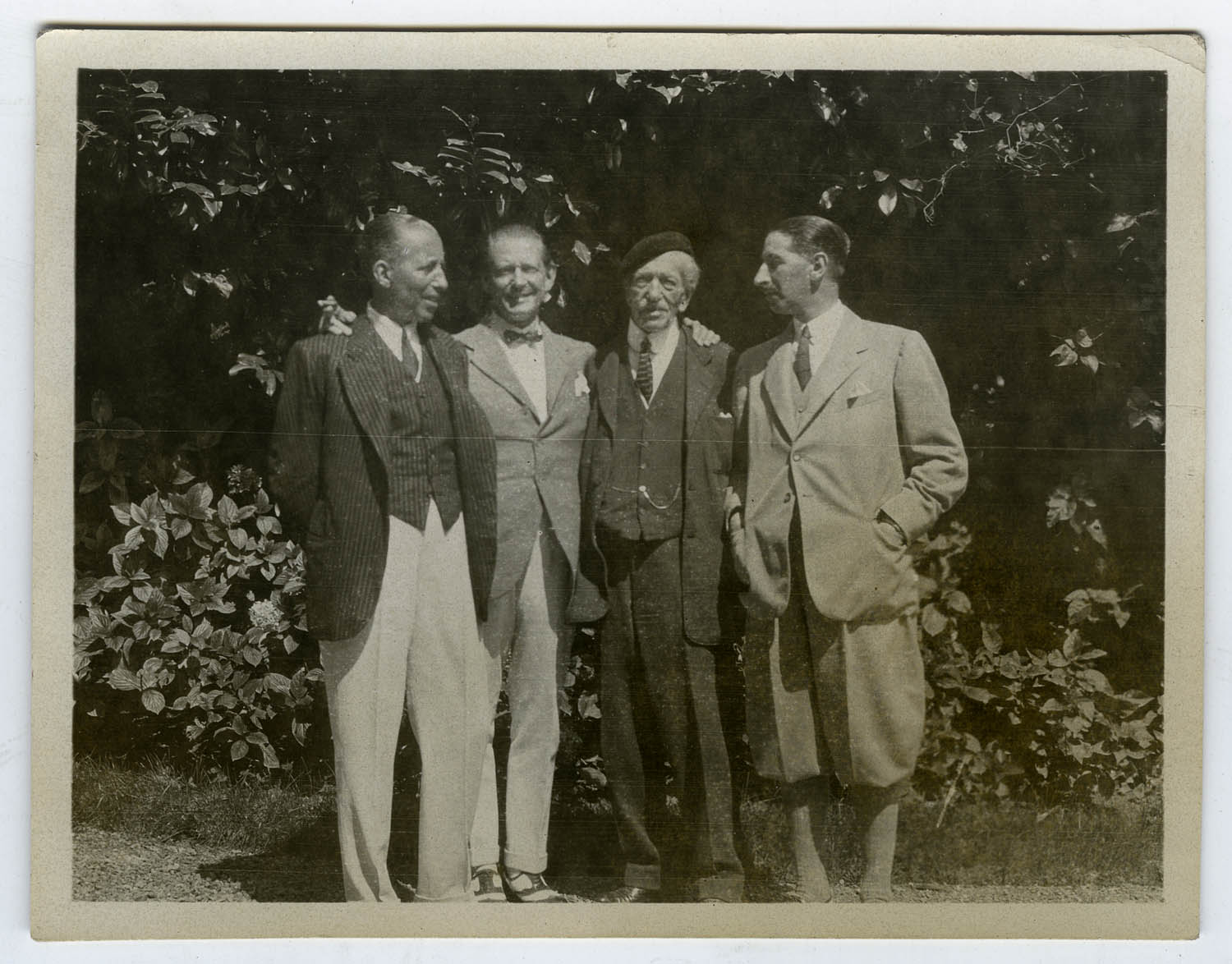


Unknown photographer. 'Alfred Cartier (second from right) with his three sons (left to right), Pierre, Louis and Jacques' 1922


Unknown photographer
Alfred Cartier (second from right) with his three sons (left to right), Pierre, Louis and Jacques
1922
Archives Cartier Paris
© Cartier


Colour, cut and craftsmanship – that’s the magic at the heart of the 2026 Melbourne Winter Masterpieces®: CARTIER exhibition.

Watch as NGV Director Tony Ellwood AM, along with Helen Molesworth, Senior Curator of Jewellery at Victoria and Albert Museum, Pierre Rainero, Cartier Director of Image, Style and Heritage, exhibition designers Studio Sabine Marcelis and Paul Cournet of CLOUD and NGV Senior Curators Dr Miranda Wallace and Amanda Dunsmore, share what makes this exhibition shine – from diamond necklaces and glittering tiaras to original drawings, sketchbooks and photography.


CARTIER, a once-in-a-lifetime exhibition featuring nearly 500 jewels, objects, archival materials and never-before-exhibited pieces, traces the remarkable story of the French jewellery house from around 1900 to now.

Watch on for your first glimpse into the exhibition as Helen Molesworth, Senior Curator of Jewellery at Victoria and Albert Museum, Pierre Rainero, Cartier Director of Image, Style and Heritage, Pascale Lepeu, Director of Cartier Collection and NGV Senior Curator Miranda Wallace introduce you to the wonderful world of CARTIER.


2026 MWM Cartier – Announcement Broll
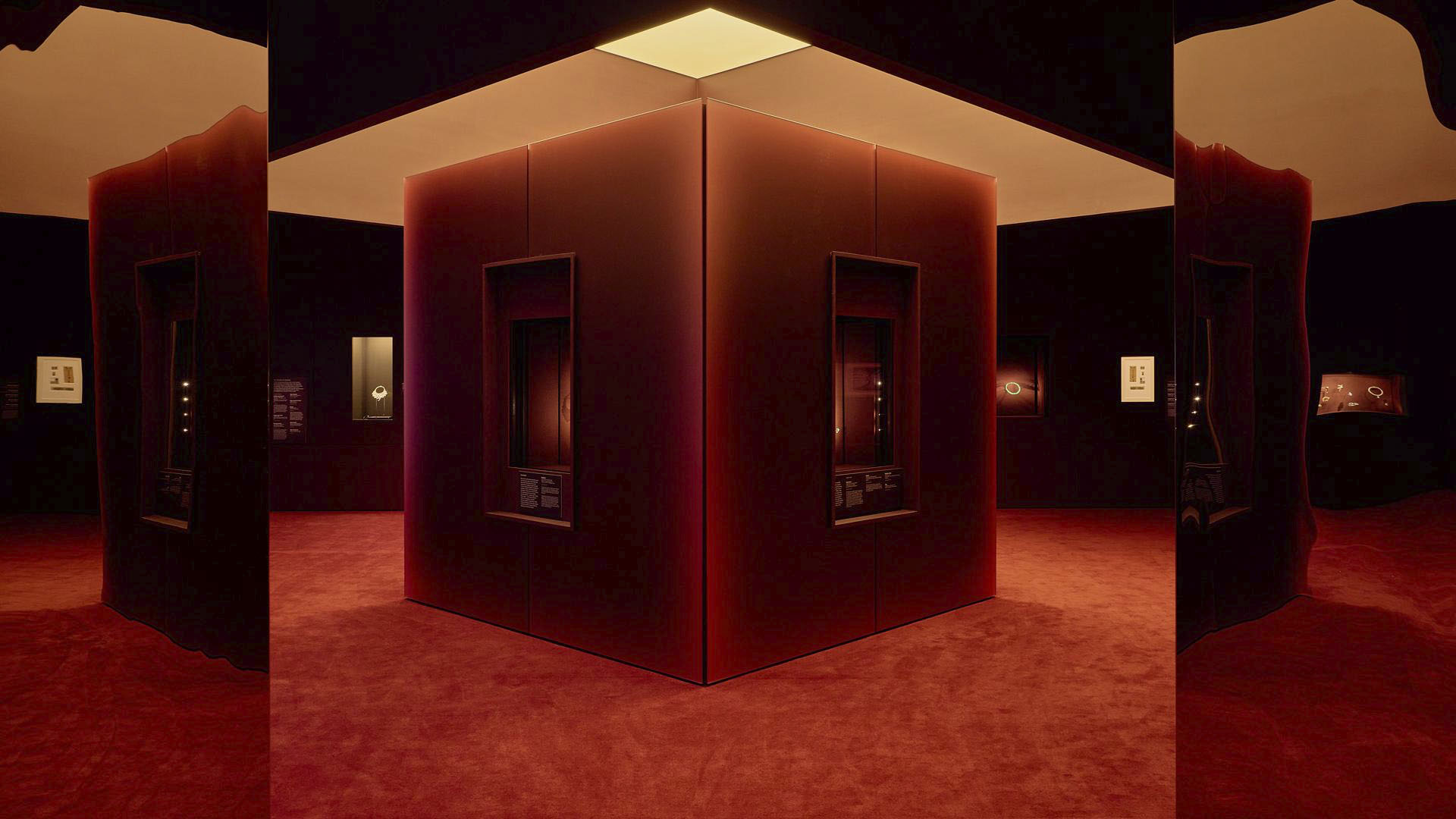
 

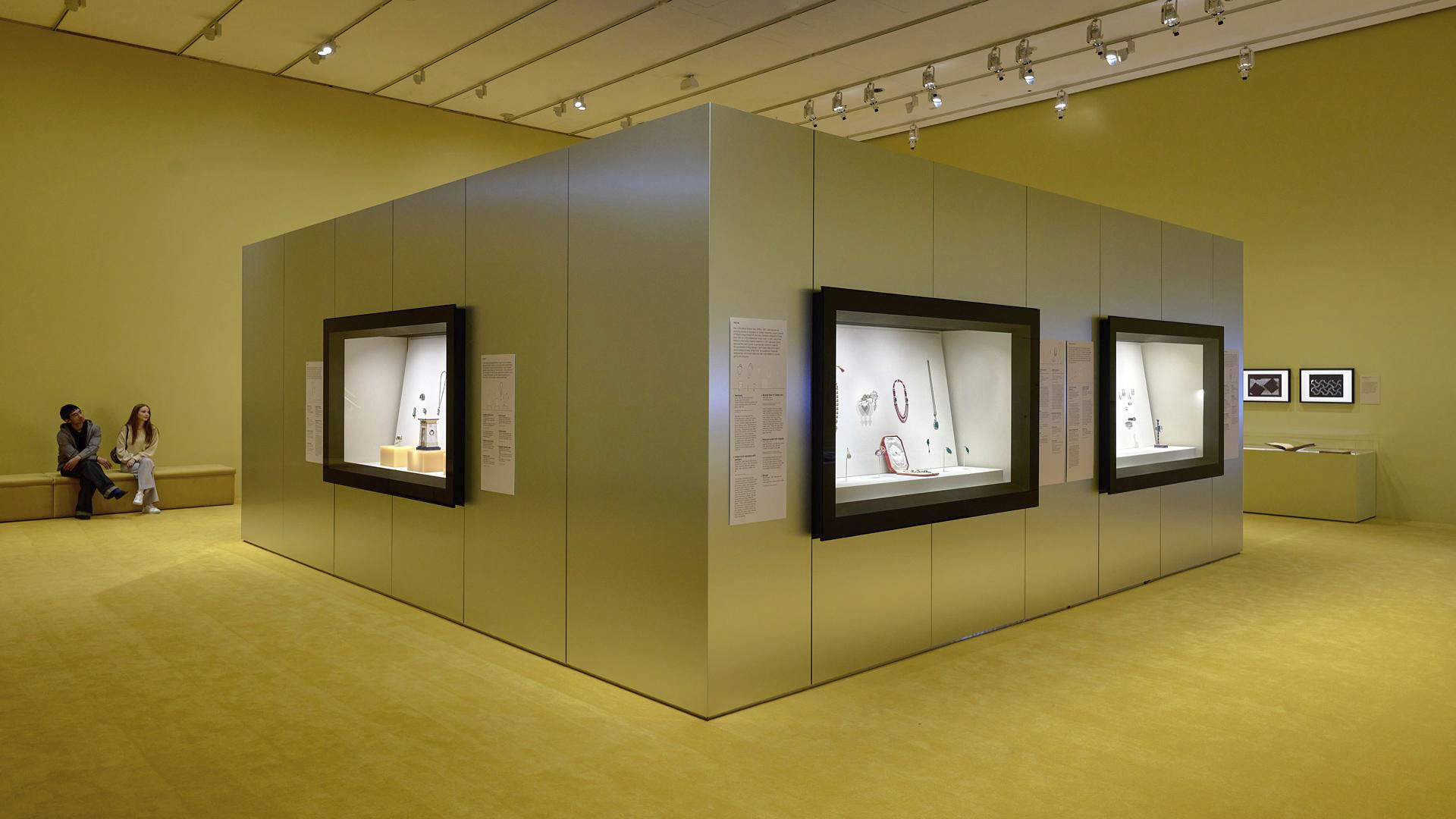
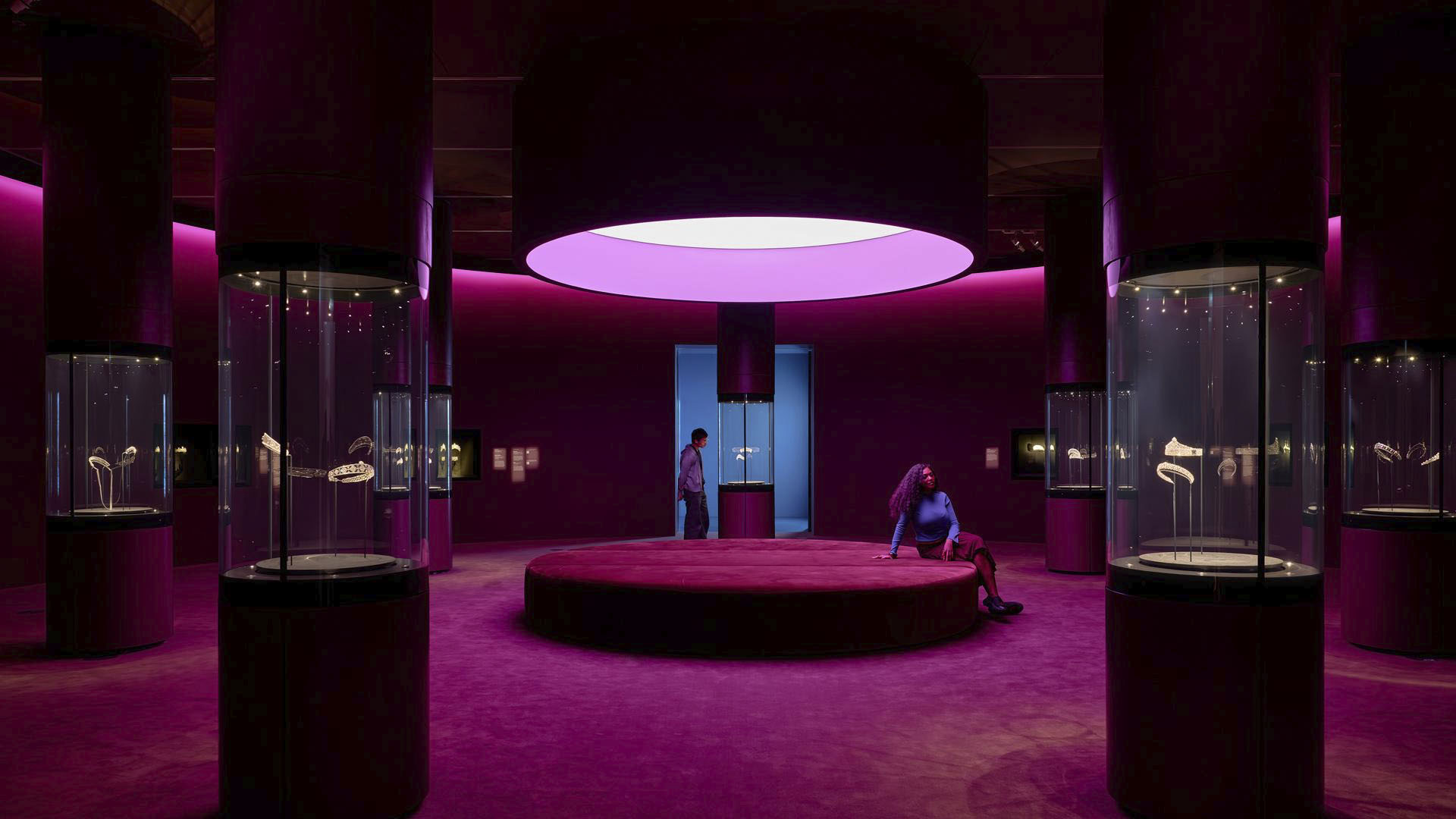
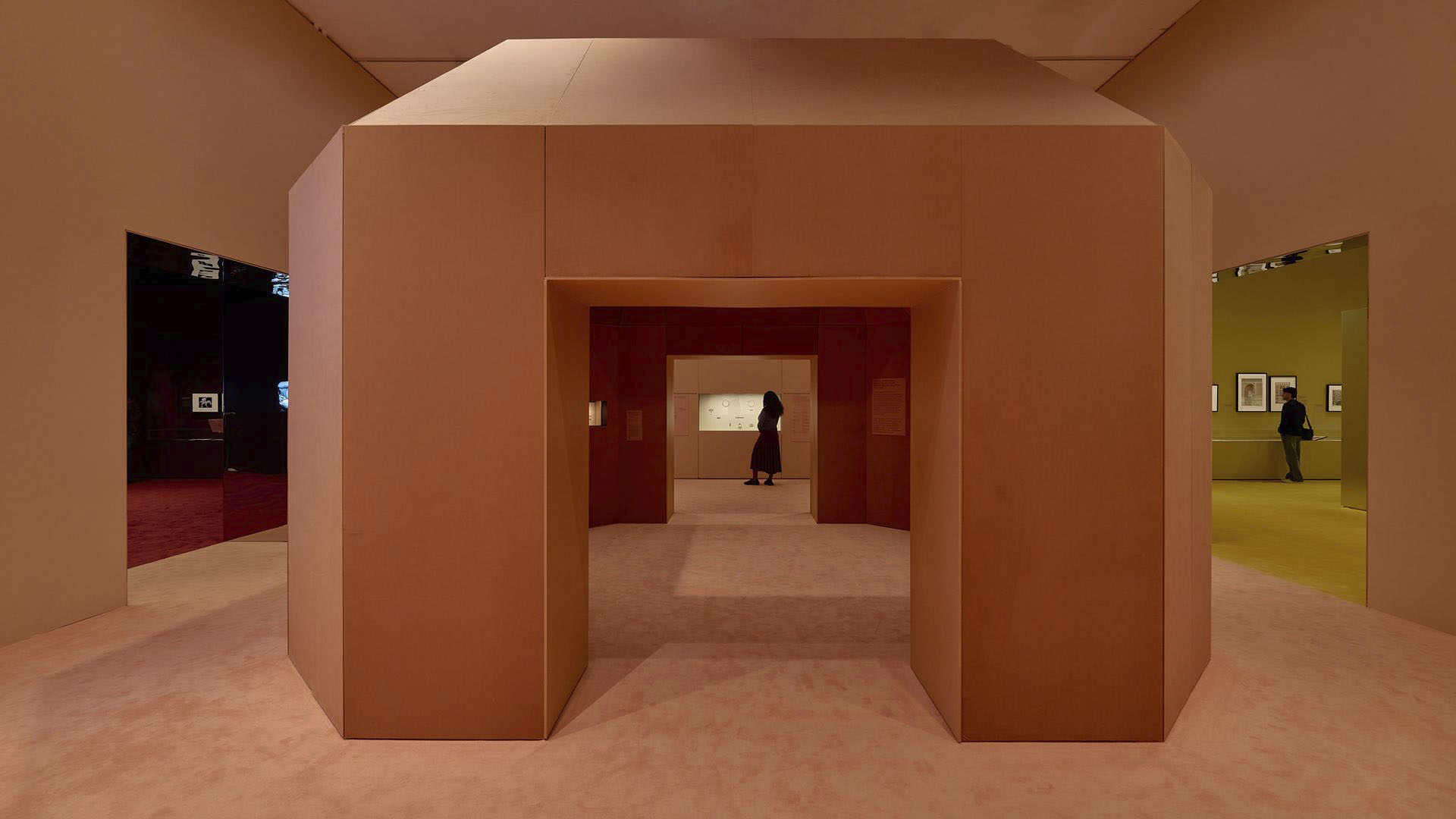
Installation view of the exhibition 'Cartier' at NGV International, Melbourne, June - October, 2026


Installation views of the exhibition Cartier at NGV International, Melbourne, June – October, 2026


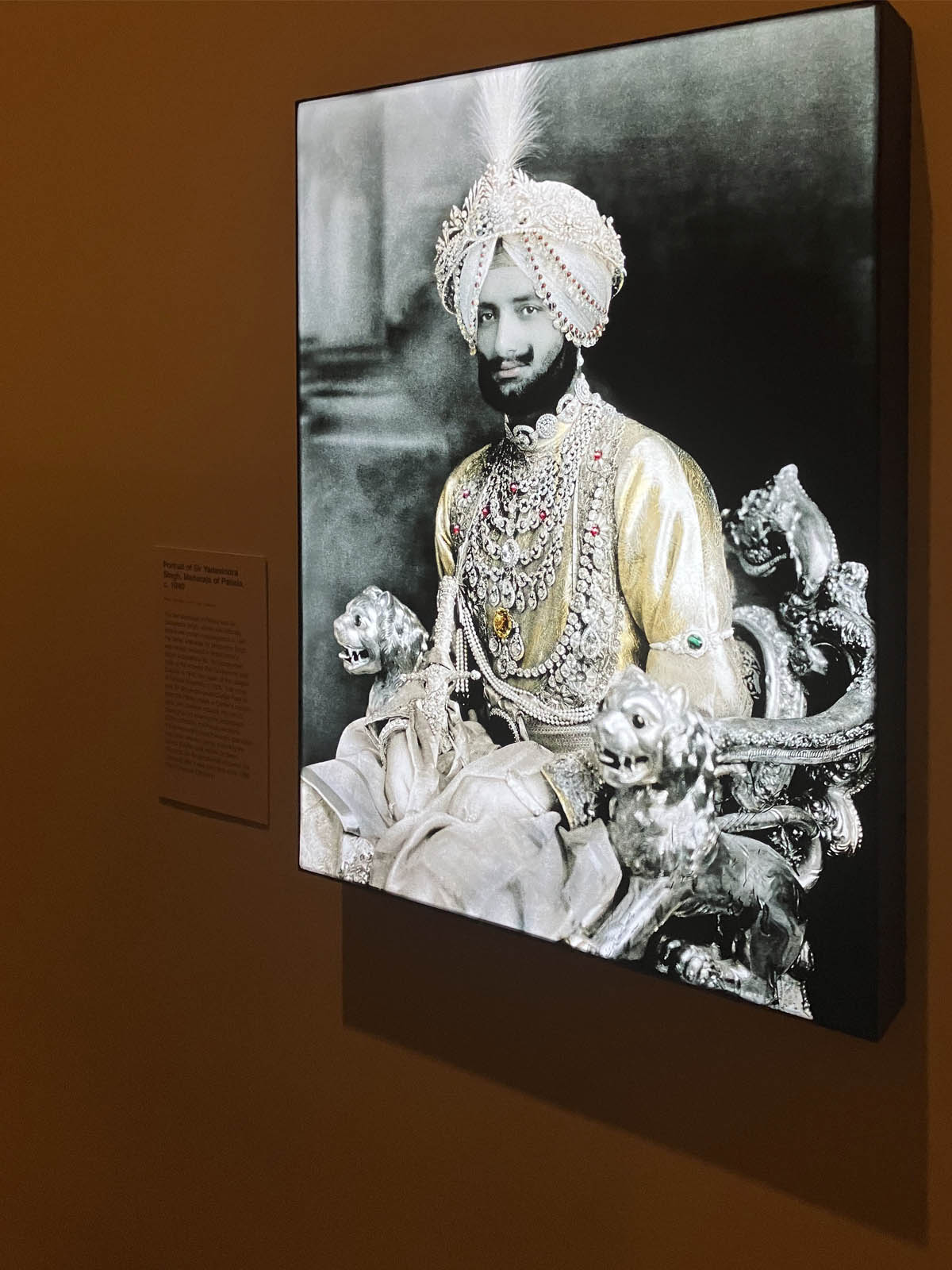
Featuring 300+ resplendent and beautifully-crafted jewels, tiaras, necklaces, brooches, timepieces, design drawings and more, the 2026 Melbourne Winter Masterpieces presentation, Cartier, is the largest exhibition on the global jewellery house ever staged in Australia. Direct from London’s Victoria & Albert Museum and opening exclusively in Melbourne at NGV International on 12 June 2026, the exhibition explores Cartier’s unparalleled reputation for design excellence, craftsmanship and innovation through a dazzling selection of Cartier creations owned and worn by the likes of Elizabeth Taylor, Rihanna, Princess Margaret, The Duchess of Windsor, Dame Nellie Melba, the Maharaja of Patiala, the Begum Aga Khan III, and American heiress Barbara Hutton. The Melbourne-exclusive exhibition also features many jewels and objects that have never-before-visited Australia.

The exhibition charts the evolution and artistic legacy of the jewellery house, including its transformation at the turn of the twentieth century by brothers Louis, Pierre and Jacques Cartier, grandsons of the house’s founder Louis-François Cartier. The brothers established branches in Paris, London and New York, creating the first internationally recognised jewellery maison, and honed Cartier’s inimitable style by bringing design and manufacturing in-house. With an enviable client list of royalty and aristocracy, Cartier was described as ‘the jeweller of kings and the king of jewellers’ by King Edward VII, who granted his Royal Warrant in 1904. Cartier’s reputation later broadened thanks to the devotion of leading creatives from the worlds of cinema, music and fashion.

A major highlight of the exhibition will be a display of more than 20 magnificent tiaras, a timeless symbol of royalty, glamour and artistry – and some of Cartier’s most celebrated creations. With symbolic links to the laurel wreaths of classical antiquity and celestial halos, the tiara has been worn for centuries across cultures from Asia to Europe. The spectacular display includes Cartier’s celebrated Scroll tiara (1902), crafted in the house’s signature ‘Garland style’ and worn by Clementine Churchill at the coronation of Queen Elizabeth II in 1953 and by Rihanna on the cover of W magazine in 2016. Others include the Sun tiara of 1907 with a 32-carat fancy intense yellow diamond in its centre; and the Art Deco diamond and platinum Halo tiara of 1934, which was inspired by ancient Egypt and owned by Her Highness the Begum Aga Khan III.

The exhibition includes a 1951 necklace gifted to Elizabeth Taylor by her third husband and film producer, Mike Todd, while on holiday in the French Riviera in 1957. The necklace features a geometric latticework design of diamonds that showcase seven Burmese rubies, exceptional for their size and matching colour. Taylor herself described the necklace as ‘like the sun – lit up and made of red fire.’

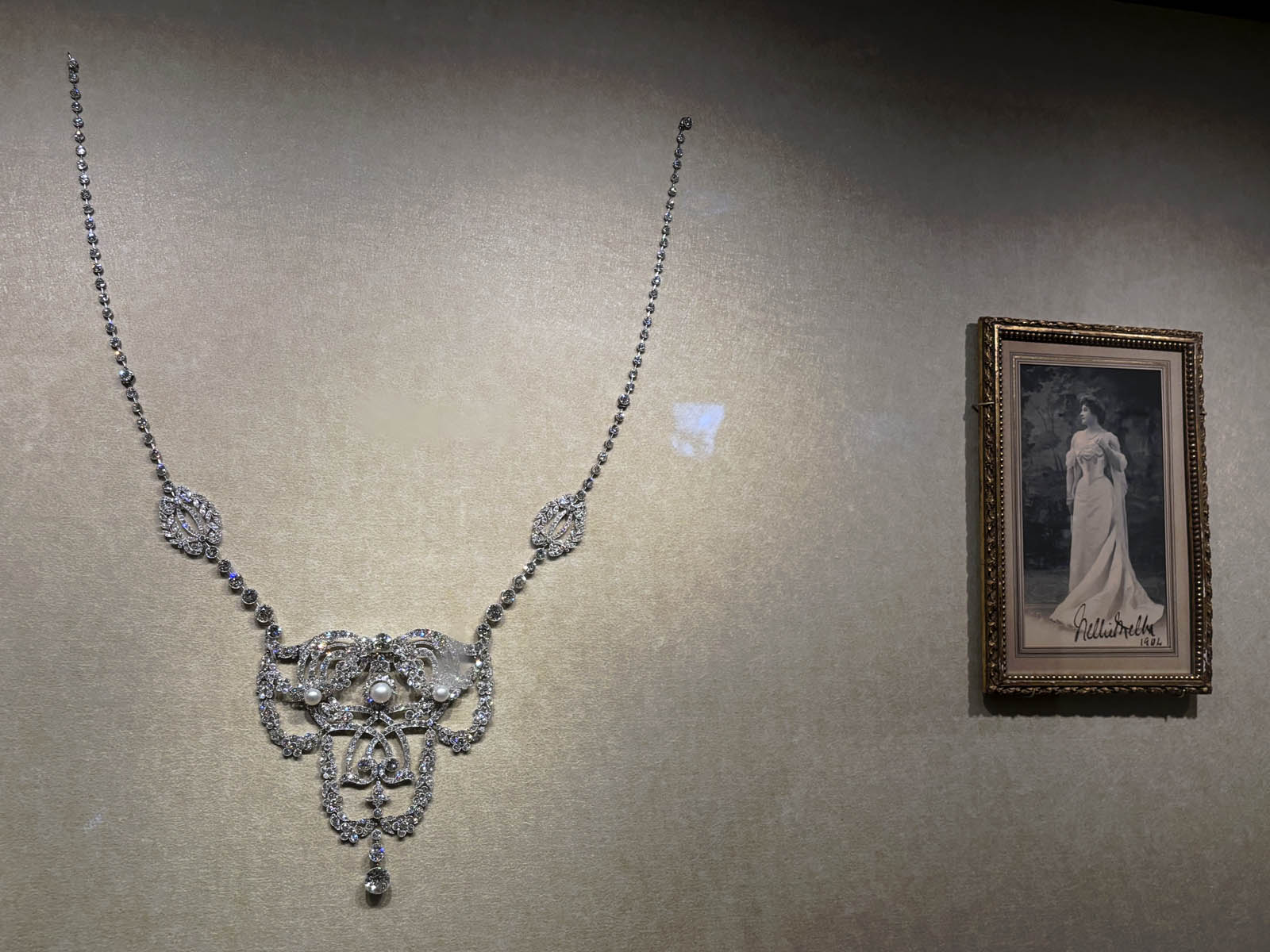
The exhibition also focuses on Australian opera singer Dame Nellie Melba, who was an early client of Cartier when the firm was becoming known internationally for its ‘Garland style’ jewels, often featuring floral swags and bows wrought in platinum and precious gemstones. Pierre Cartier was a fan of Dame Nellie, and a signed 1902 photograph of Melba, once owned by Pierre, will feature in the exhibition along with necklaces and bodice ornaments that the world-famous opera singer owned and wore both on and off the stage.

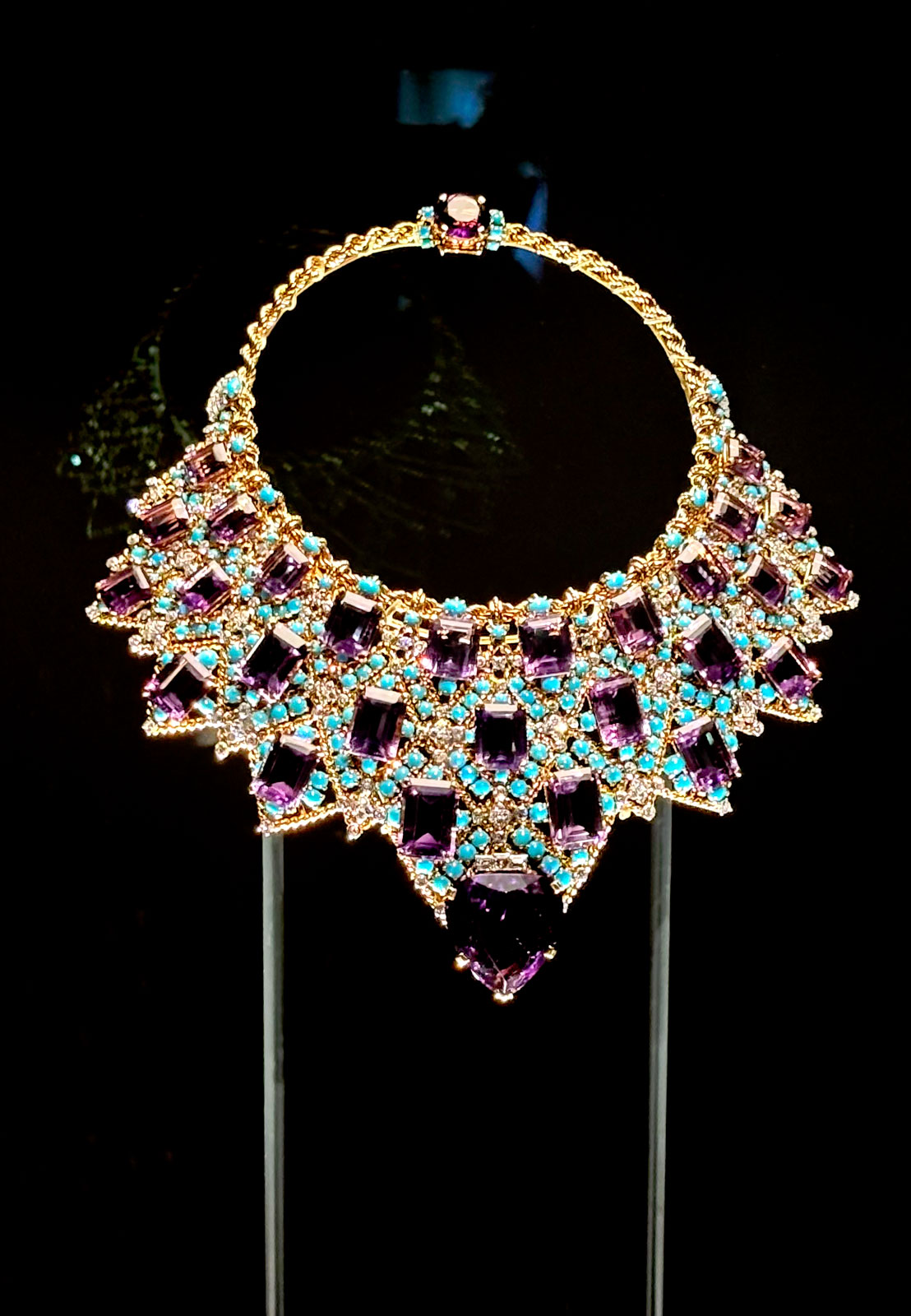
On display will be an intricate diamond Rose clip brooch (1938) worn by Princess Margaret at her sister’s coronation, as well as a major selection of exceptional jewels belonging to Wallis Simpson, the Duchess of Windsor and wife of former King Edward VIII. These include her famous Flamingo brooch (1947), an extraordinary Bib necklace encrusted with diamonds, amethysts and turquoise, and her 1949 Panther sapphire clip brooch which features an impressive 152.35-carats Kashmir cabochon sapphire.

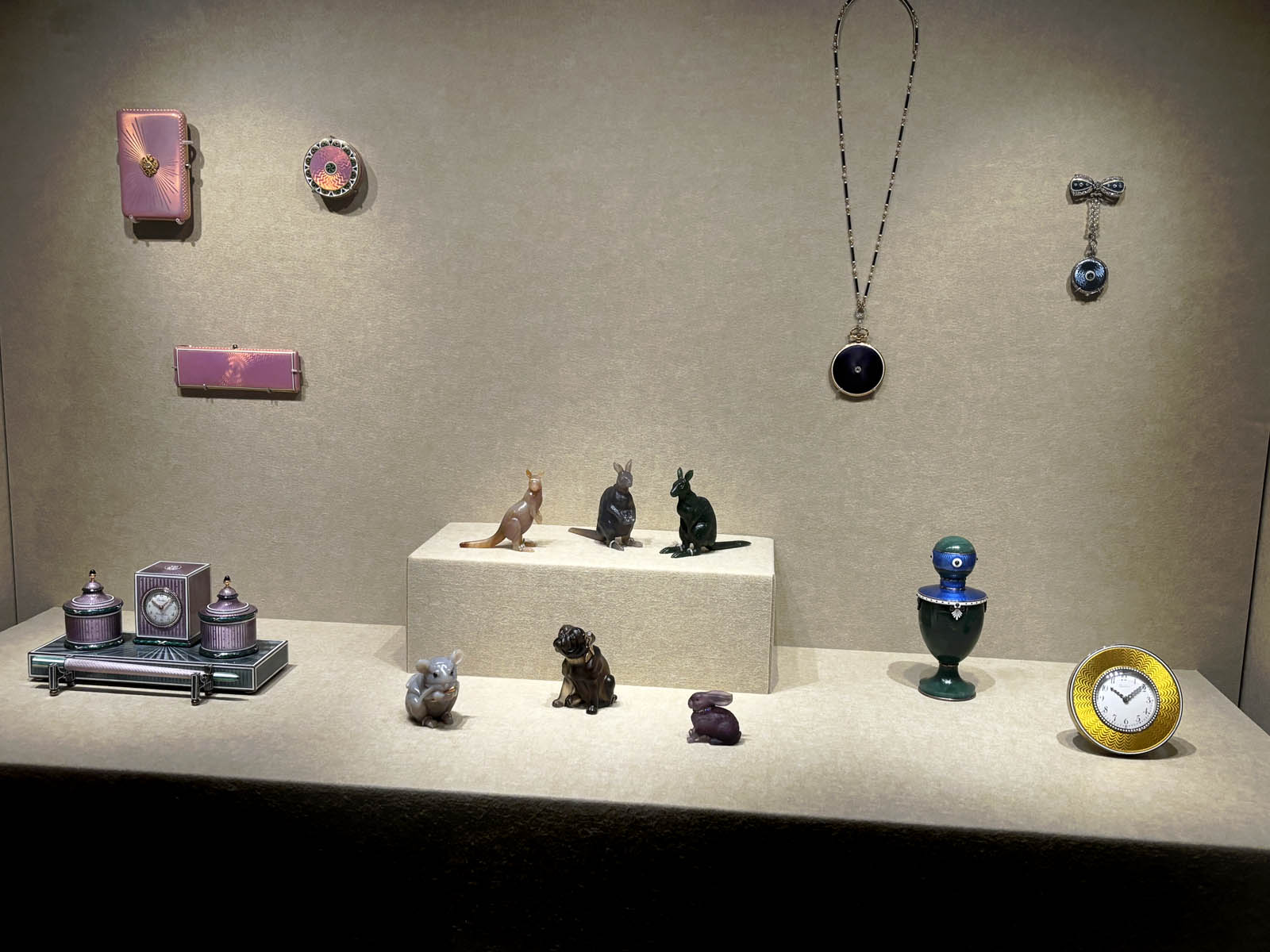
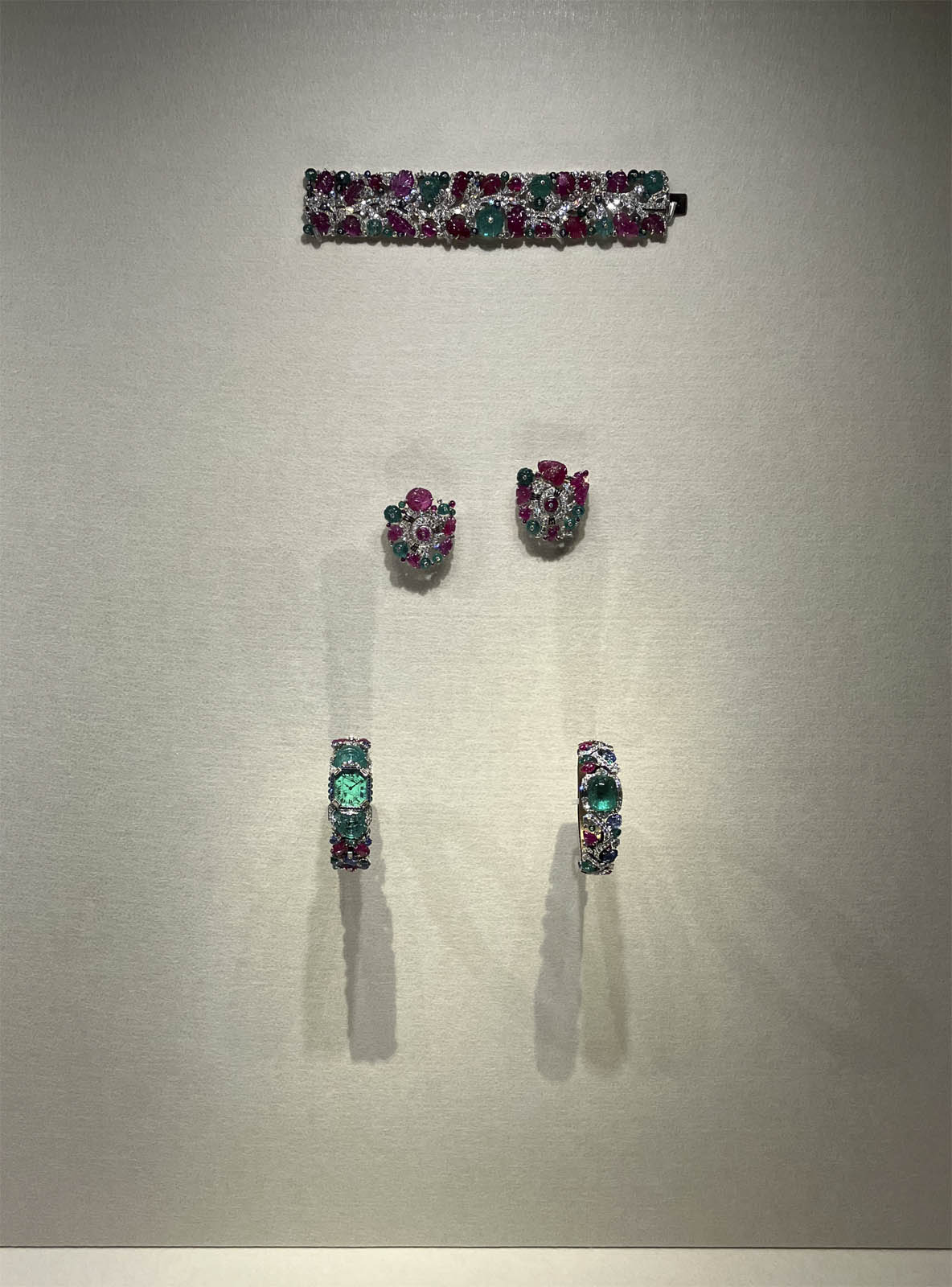
Named for their colourful use of rubies, emeralds and blue sapphires, a rich selection of Cartier’s iconic Tutti Frutti jewels will also feature. Additionally, there will be a standout selection of Cartier timepieces that showcase the jeweller’s industry-leading innovations in watchmaking, alongside a selection of contemporary works featuring Australian opals.

The never-before-seen exhibition design is a collaboration between the NGV, Studio Sabine Marcelis and CLOUD, two multidisciplinary design practices based in Rotterdam in The Netherlands. The exhibition design will be inspired by colour, light and materiality, three elements that are synonymous with the aesthetic qualities of Cartier’s jewellery. The exhibition design will reflect Cartier’s expansive network of cultural and gemological sources that inspire their jewellery creations. …

Tony Ellwood AM, Director, NGV, said: ‘Cartier are world-renowned for their excellence in jewellery and timepiece design and innovation – a reputation fostered by the three entrepreneurial brothers Pierre, Louis and Jacques Cartier. This exhibition tells the story of how they transformed their grandfather’s jewellery business into one of the most prestigious international jewellery houses with a clientele including royalty, high society and movie stars. We’re indebted to our partner institution the V&A, for their support of this Australian-exclusive exhibition, as well as key lender Cartier.’

Helen Molesworth, Senior Curator of Jewellery, Victoria & Albert Museum, London, said: ‘Cartier is one of the most famous jewellery houses in the world. This exhibition will explore how Louis, Pierre and Jacques Cartier, initiated a strategy of original design, exceptional craftmanship and international expansion that transformed the Parisian family jeweller into an international household name. The V&A is delighted to tour its Cartier exhibition which celebrates the pioneering achievements of Cartier and its transformative ability to remain at the centre of culture and creativity for more than a century. We are excited to be able to share with visitors of the NGV some of Cartier’s most famous creations as well as revealing previously unseen objects that further enrich our understanding of a jewellery house that continues to influence the way we adorn ourselves today.’

Pierre Rainero, Director of Cartier Image, Style and Heritage, said: ‘Building on the success of its presentation at the Victoria & Albert Museum in London, the NGV iteration of the Cartier exhibition will showcase pieces never-before-seen in Australia. It promises to be an enlightening experience for the public, offering a captivating journey into the world of Cartier and its signature style, a living language in permanent evolution. We hope that it will not only inspire delight and awe, but also intellectual curiosity, fostering a deeper appreciation for jewellery as a distinct and powerful artistic expression.’

The Melbourne Winter Masterpieces exhibition Cartier will be on display at NGV International from 12 June – 4 October 2026. Admission fees apply. Information and tickets are available via the NGV website: NGV.MELBOURNE

Exhibition created by the V&A in partnership with the National Gallery of Victoria and in collaboration with Cartier.

Press release continues below…
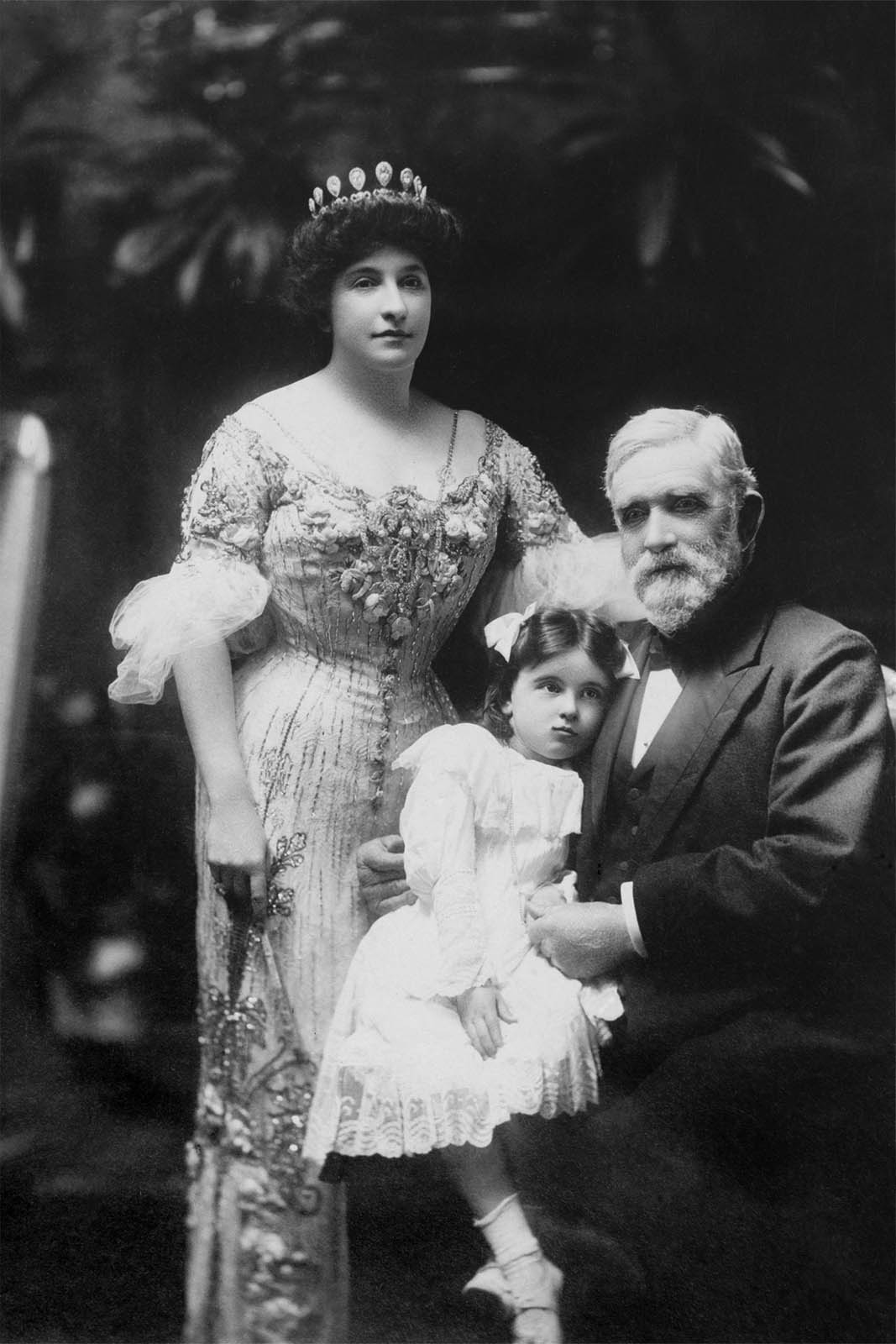
 

Unknown photographer/Bain News Service (publisher). 'Nellie Melba, her father, David Mitchell, and a young girl (Nellie's niece, Nellie Paterson), in Melbourne, Australia' 1903


Unknown photographer/Bain News Service (publisher)
Nellie Melba, her father, David Mitchell, and a young girl (Nellie’s niece, Nellie Paterson), in Melbourne, Australia
1903
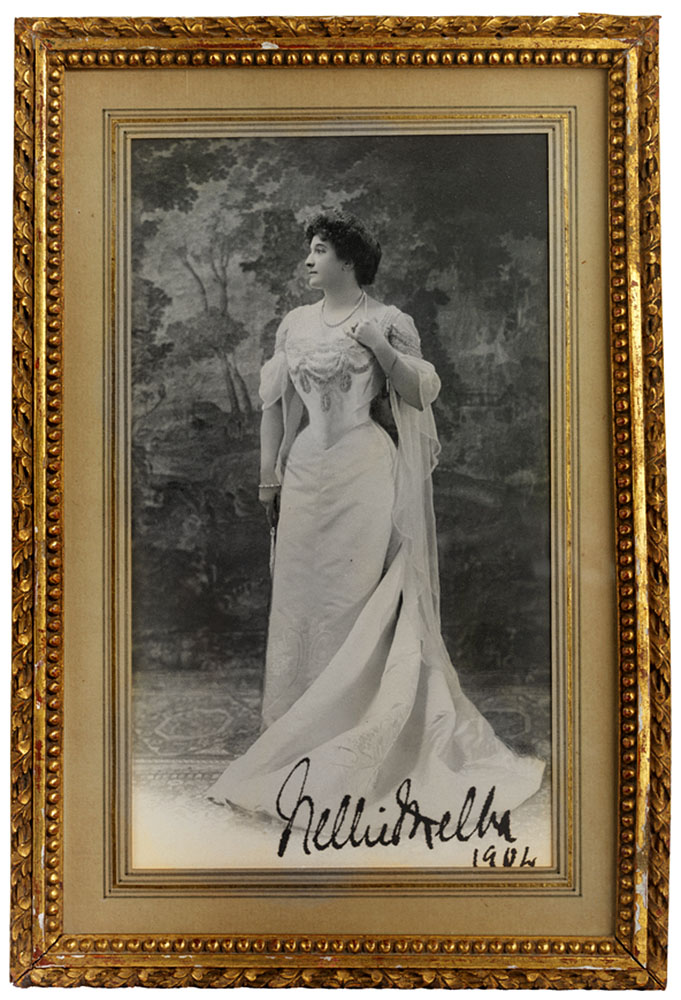
 

Unknown photographer. 'Photograph of Nellie Melba' 1904


Unknown photographer
Photograph of Nellie Melba
1904
Provenance: Descendants of Pierre Cartier
Cartier Collection
Marian Gérard, Cartier Collection © Cartier


This photograph, gifted by Nellie Melba herself, had always been kept in Pierre Cartier’s salon
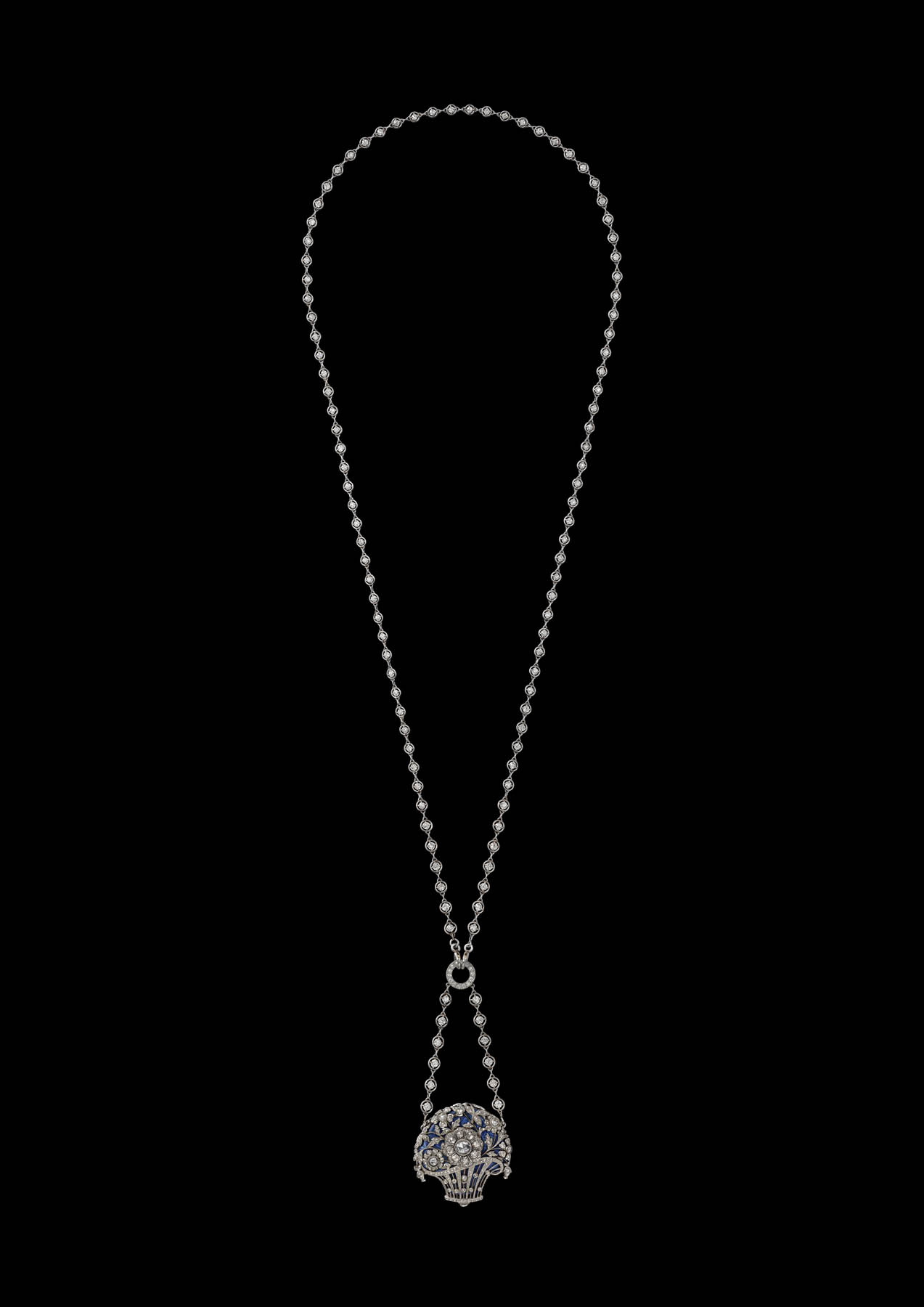
 

Floral basket pendant watch, Cartier Paris, 1909


Floral basket pendant watch
Cartier Paris
1909
Platinum, pink gold, diamonds, enamel
Cartier Collection
Nils Herrmann, Cartier Collection
© Cartier


Owned by Dame Nellie Melba
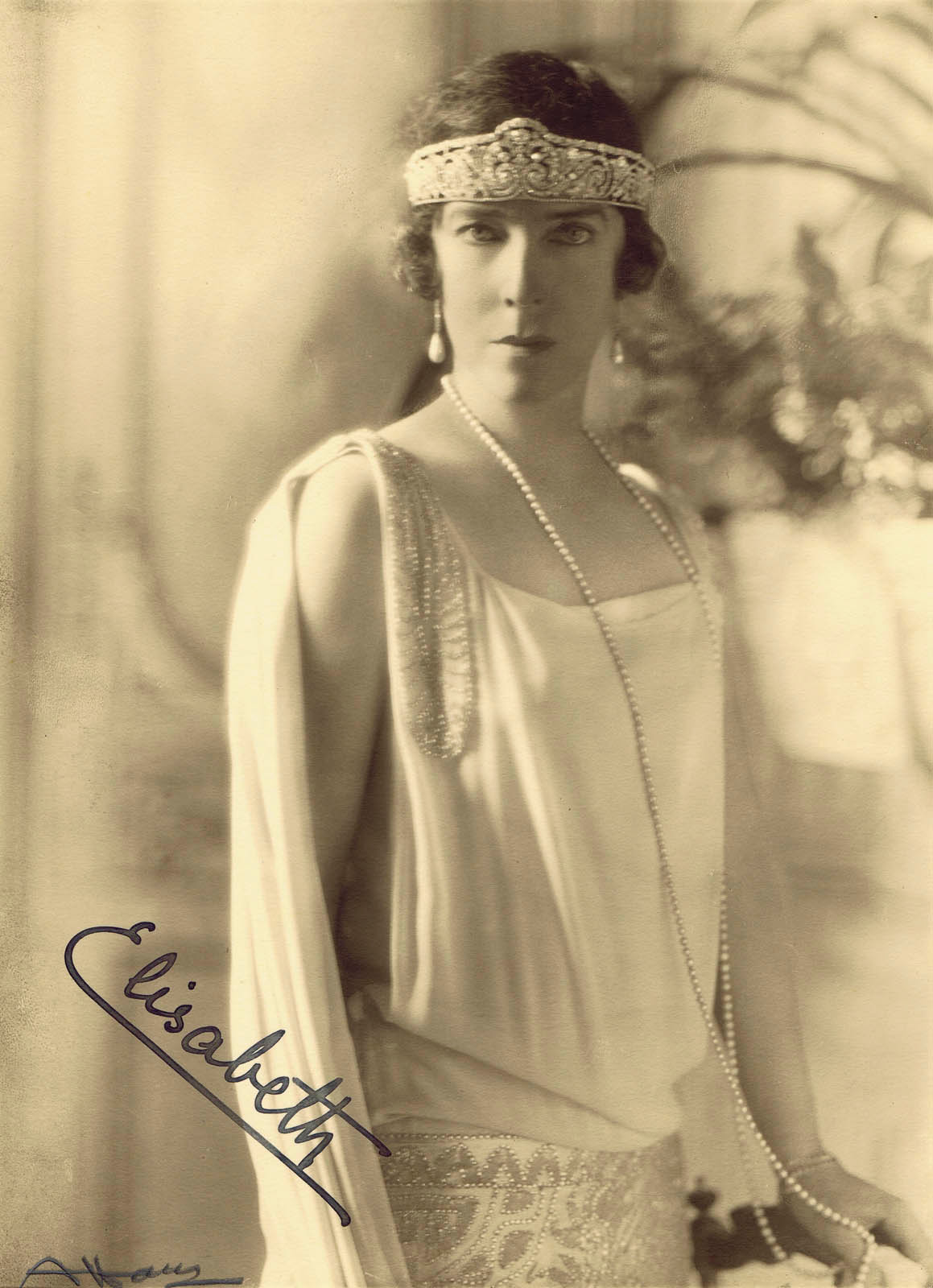
 

Aram Alban (Armenian, 1883-1961) 'Elisabeth of Bavaria, Queen of the Belgians' c. 1925


Aram Alban (Armenian, 1883-1961)
Elisabeth of Bavaria, Queen of the Belgians
c. 1925
Photo: Archives of the Royal Palace, Brussels


Wearing the scroll tiara by Cartier Paris seen below
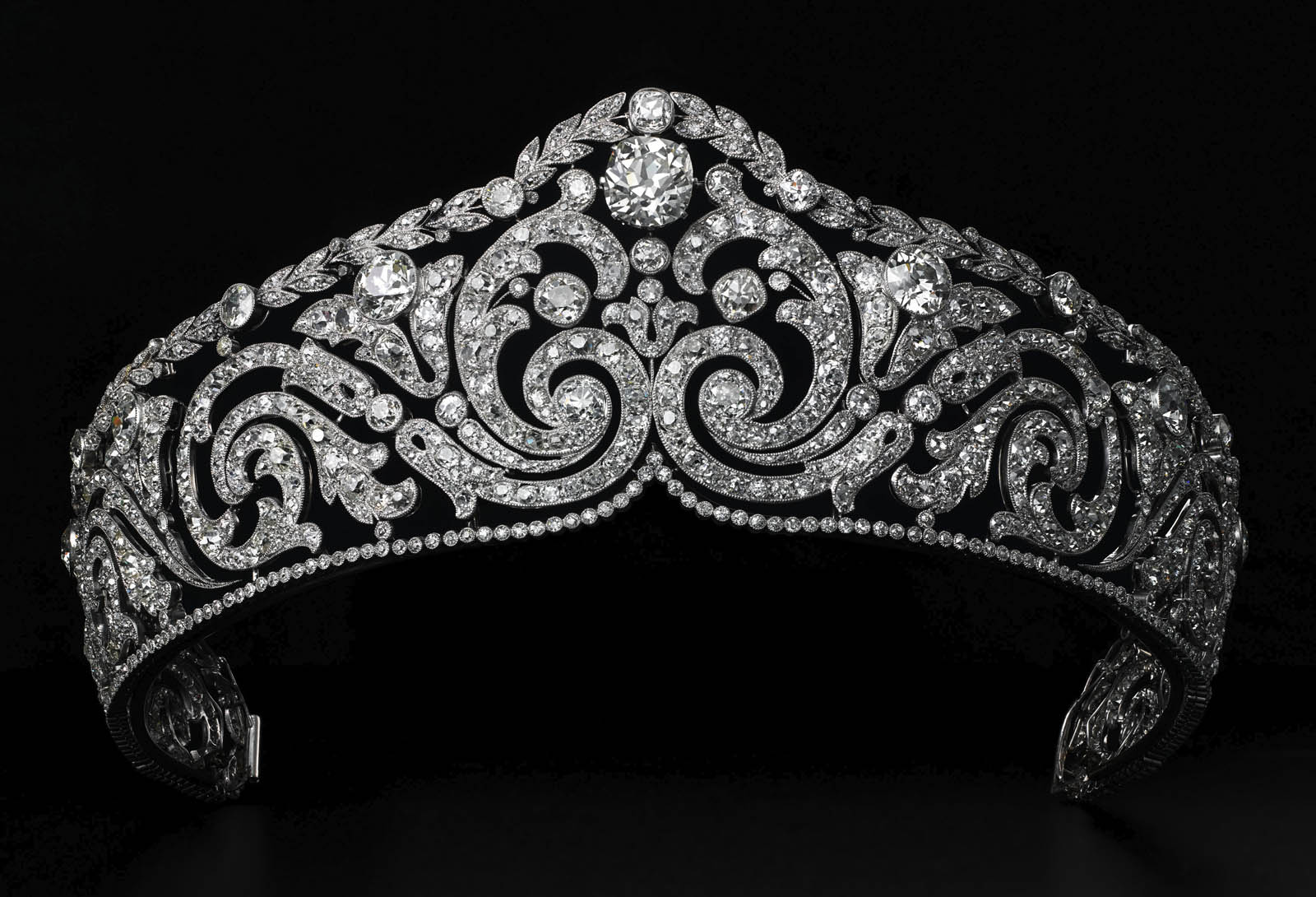
 

Scroll Tiara, Cartier Paris, 1910


Scroll Tiara
Cartier Paris
1910
Diamonds and platinum
Cartier Collection
Vincent Wulveryck, Cartier Collection
© Cartier


Owned by Elisabeth, Queen of the Belgians
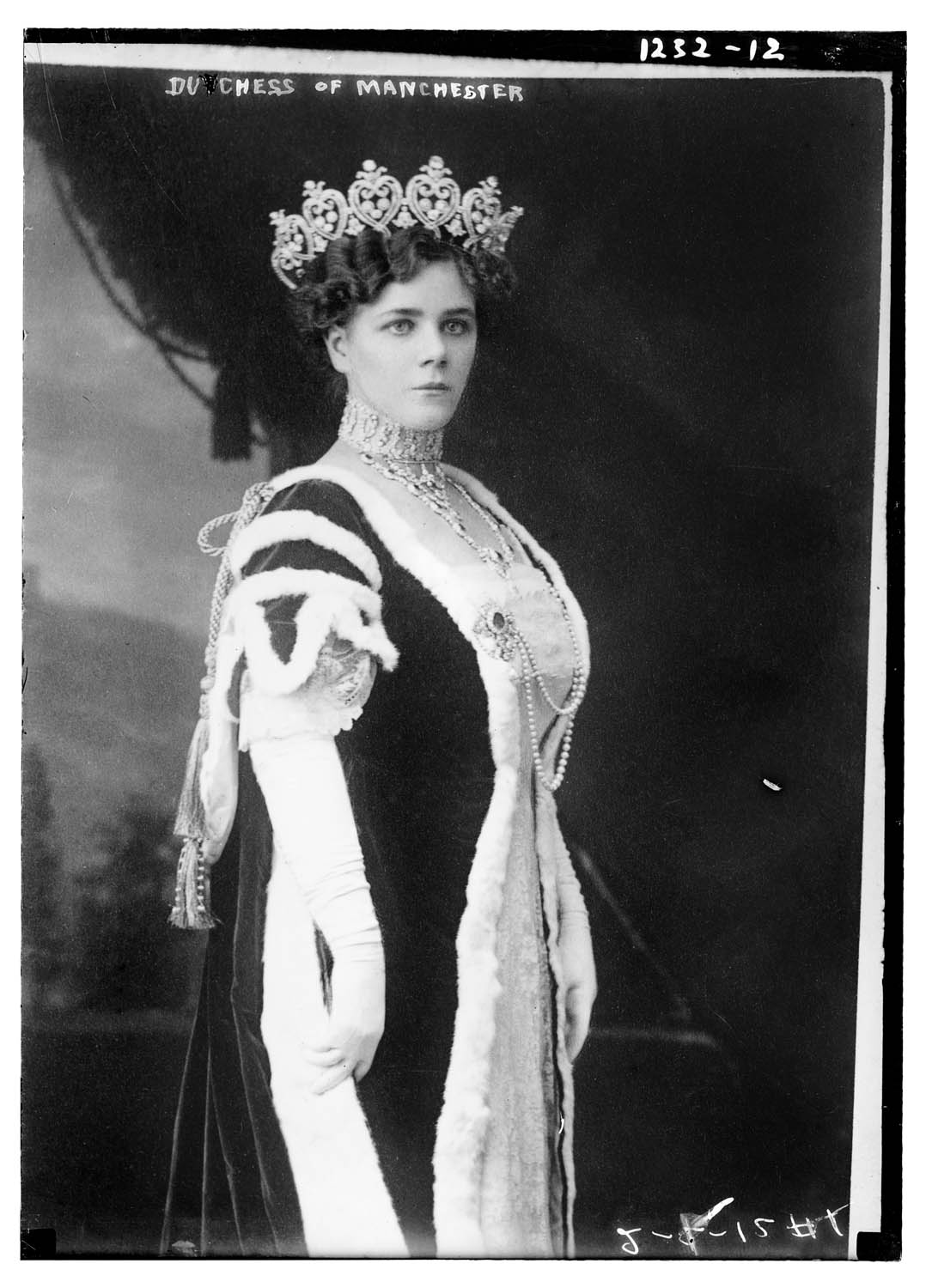
 

George Grantham Bain Collection. 'Helena, nee Zimmerman, daughter-in-law of Consuelo Montagu, Dowager Duchess of Manchester, wearing the Manchester tiara to the coronation of King George V and Queen Mary' 1911


George Grantham Bain Collection
Helena, nee Zimmerman, daughter-in-law of Consuelo Montagu, Dowager Duchess of Manchester, wearing the Manchester tiara to the coronation of King George V and Queen Mary
1911
George Grantham Bain Collection. Library of Congress, Prints & Photographs Division, Washington, D.C.
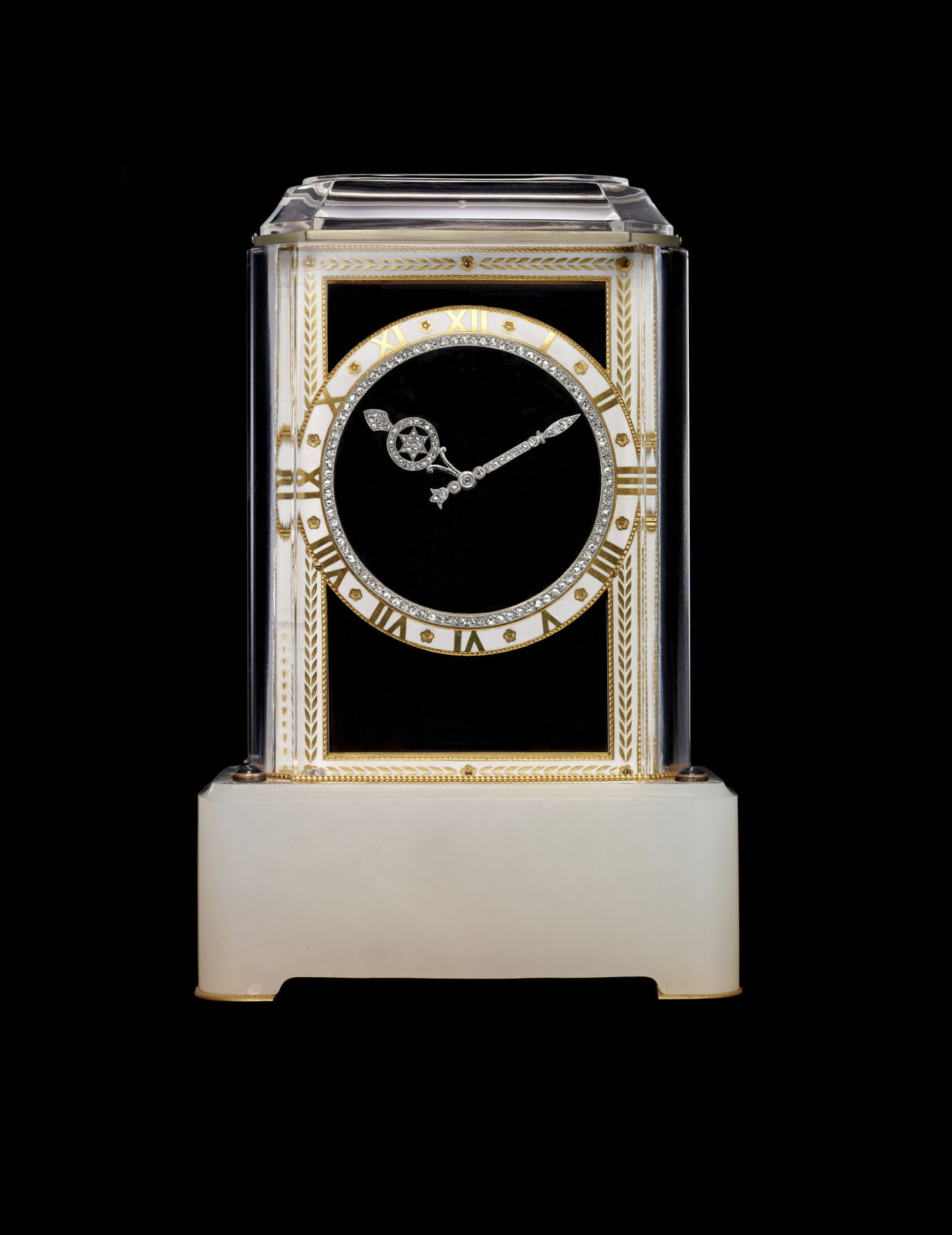
 

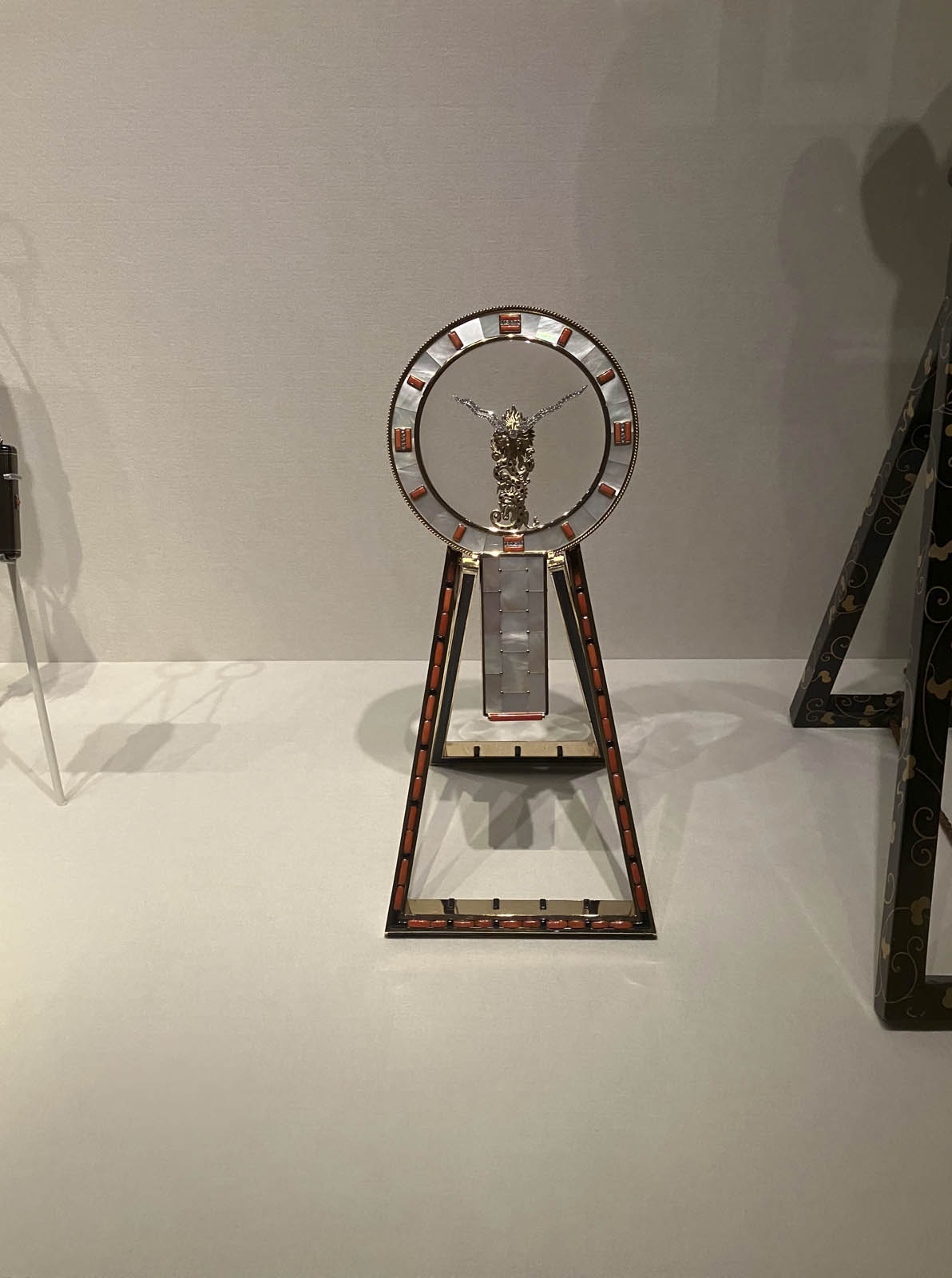
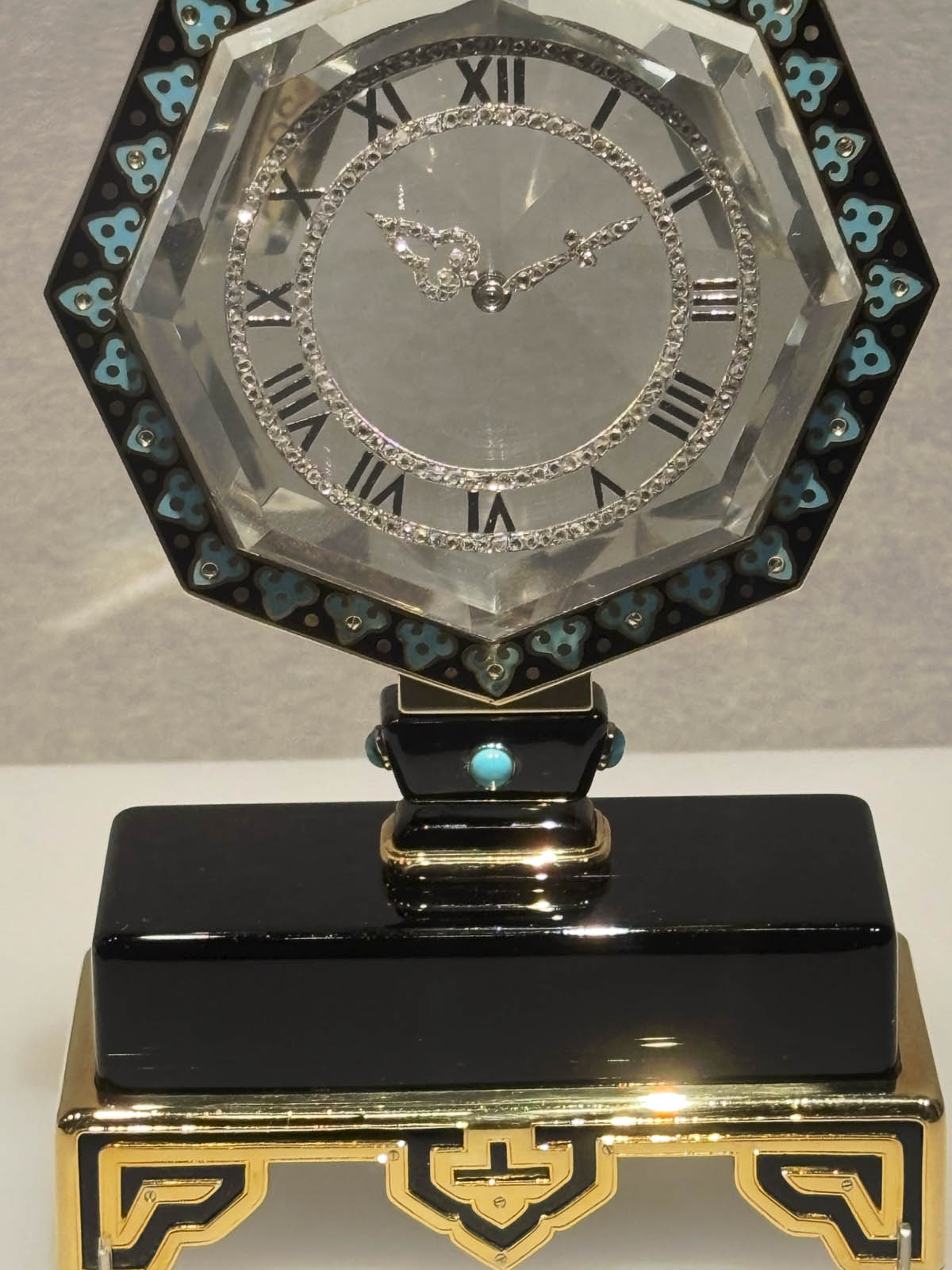
‘Model A’ Mystery Clock, Cartier Paris, 1914. Sold to Count Greffulhe


‘Model A’ Mystery Clock
Cartier Paris
1914
Rock crystal, agate, diamonds, sapphires, enamel, gold, platinum
Cartier Collection
Nils Herrmann, Cartier Collection
© Cartier


Sold to Count Greffulhe
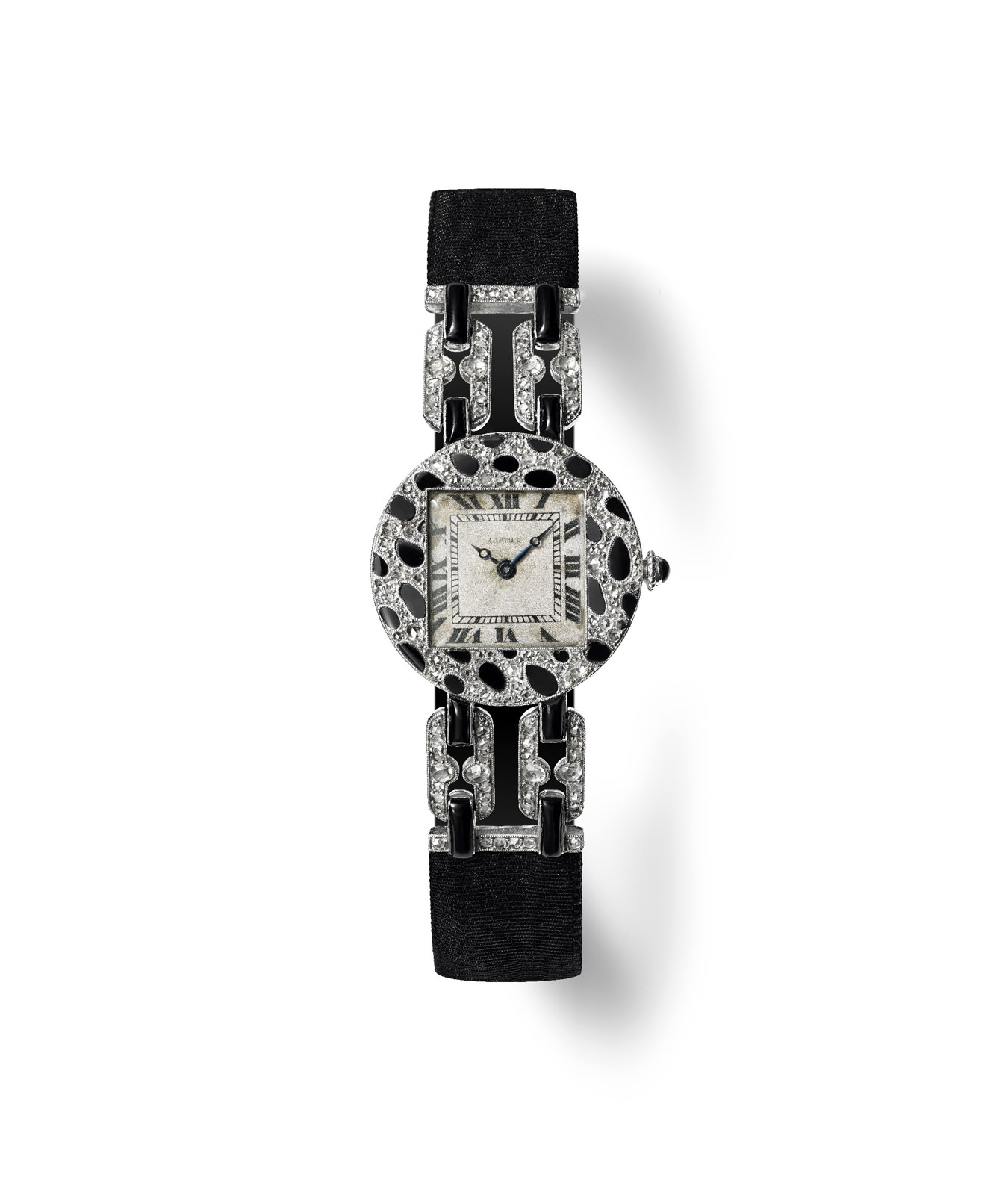
 

Panther skin wristwatch, Cartier Paris, 1914


Panther skin wristwatch
Cartier Paris
1914
Onyx, diamonds, pink gold, platinum and black moiré strap
Cartier Collection
Nils Herrmann, Cartier Collection
© Cartier
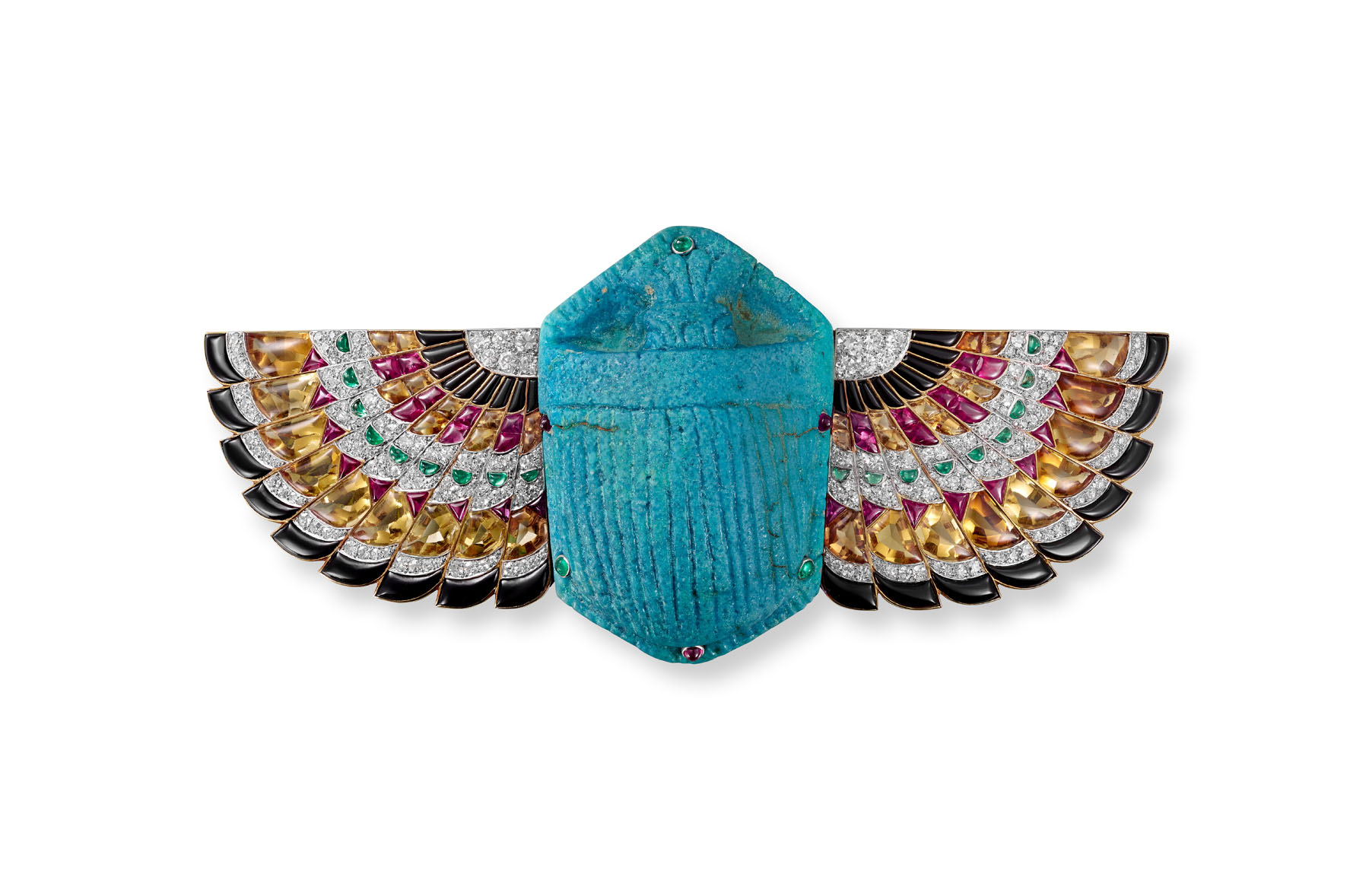
 

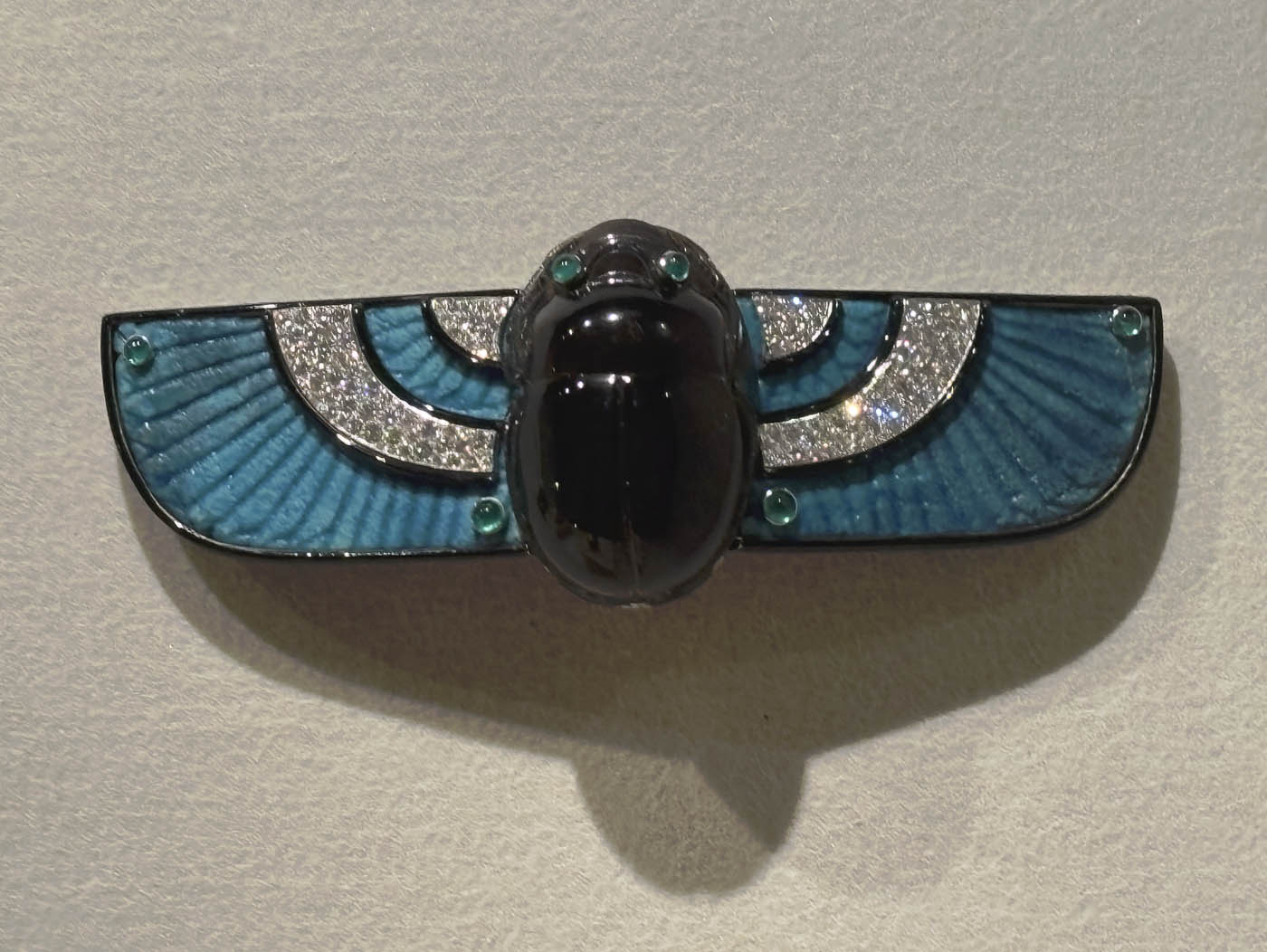
Scarab Brooch, Cartier London, 1925


Scarab Brooch
Cartier London
1925
Blueglazed Egyptian faience with rubies, emeralds, citrines, diamonds, onyx, platinum and gold
Cartier Collection
Nils Herrmann, Collection Cartier
© Cartier
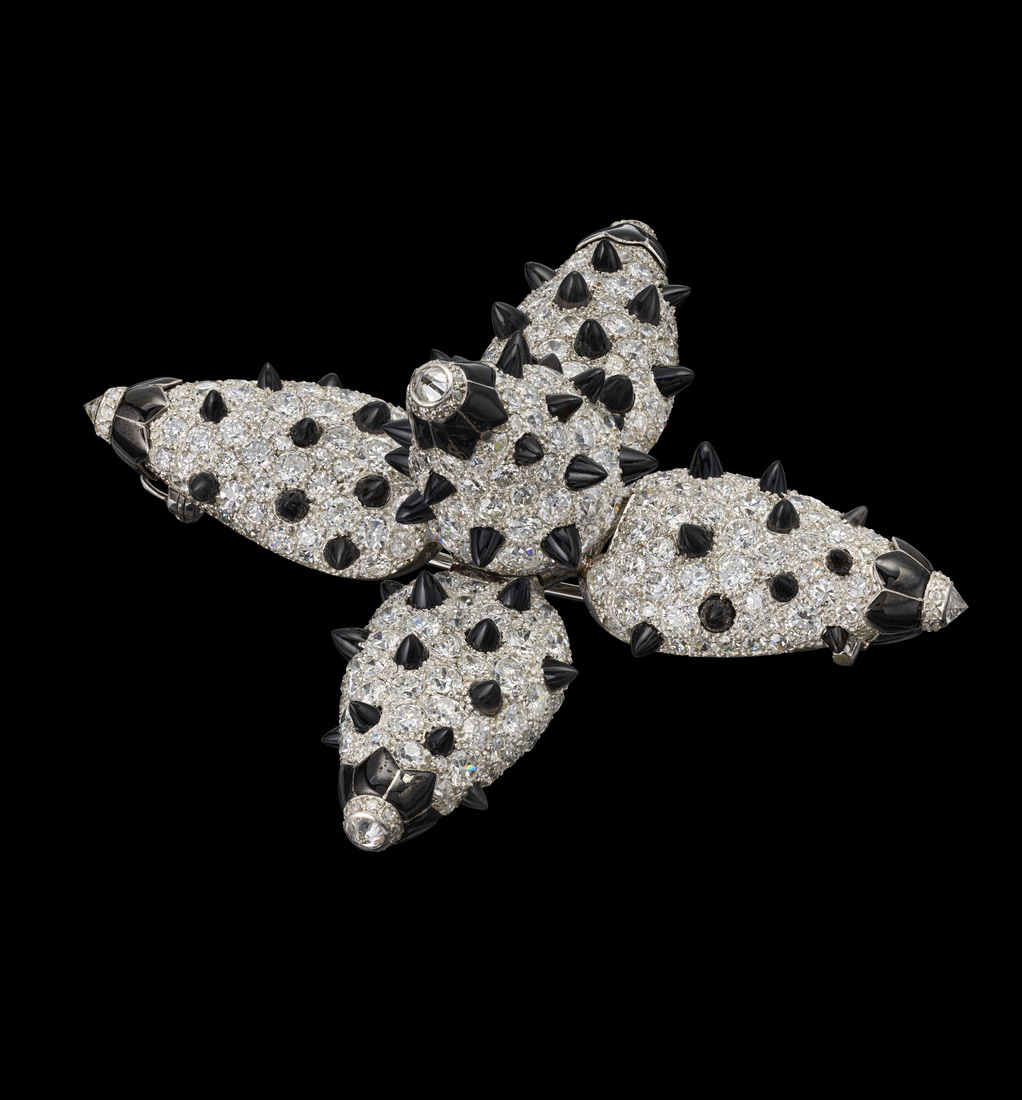
 

Brooch, Cartier Paris, 1925; altered 1927


Brooch
Cartier Paris
1925; altered 1927
Onyx, diamonds, enamel, platinum and gold
Cartier Collection
Marian Gérard, Cartier Collection
© Cartier


This brooch was one of the items displayed by Cartier at the Exposition Internationale des Arts Décoratifs et Industriels Modernes held in Paris in 1925.
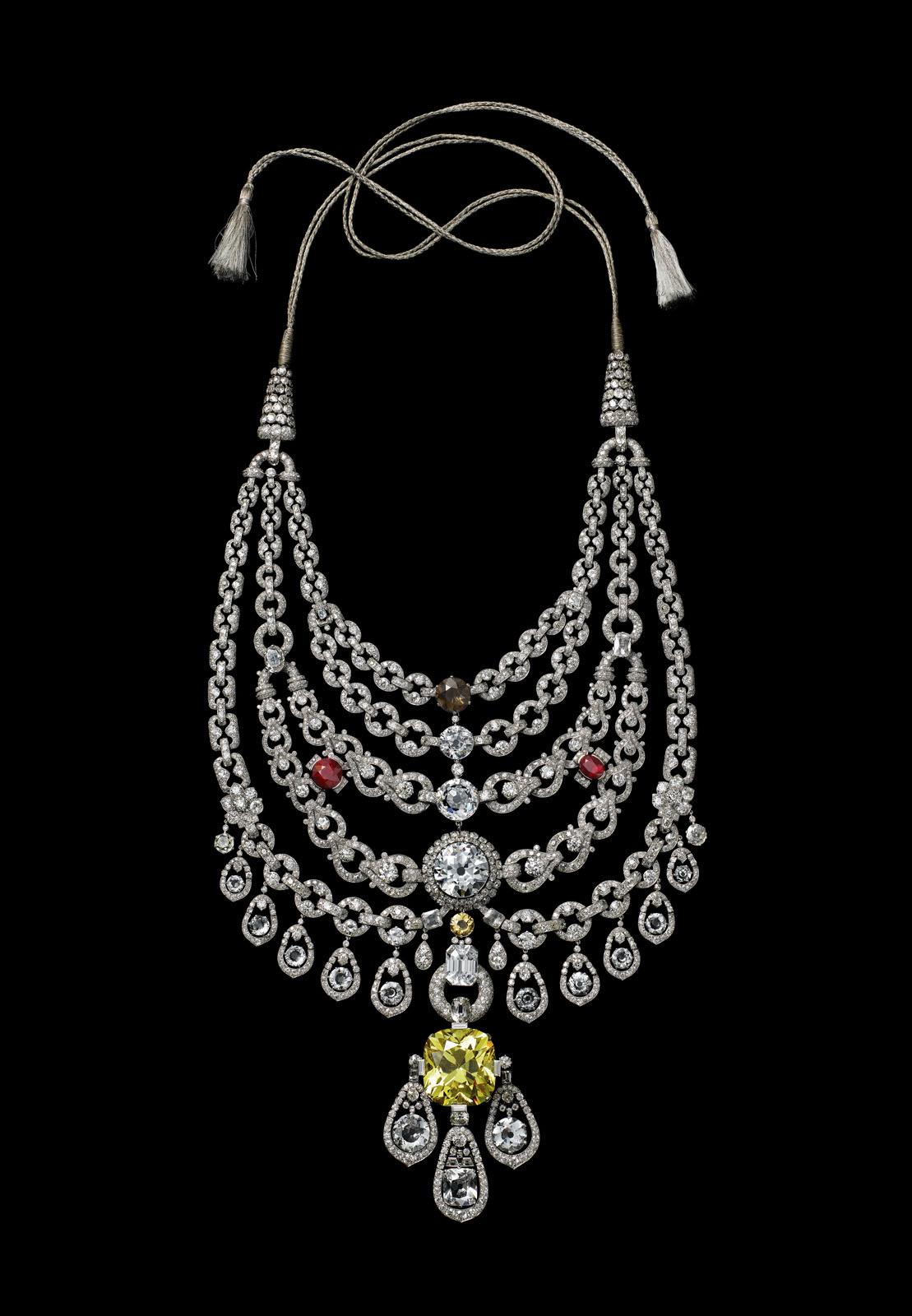
 

Necklace, Cartier Paris, special order, 1928 (restored 1999-2002)


Necklace
Cartier Paris
Special order 1928 (restored 1999-2002)
Platinum, diamonds, zirconia, topazes, synthetic rubies, one critrine, one
smoky quartz.
Cartier Collection
Vincent Wulveryck, Collection Cartier
© Cartier


Commissioned by Bhupinder Singh, Maharajah of Patiala
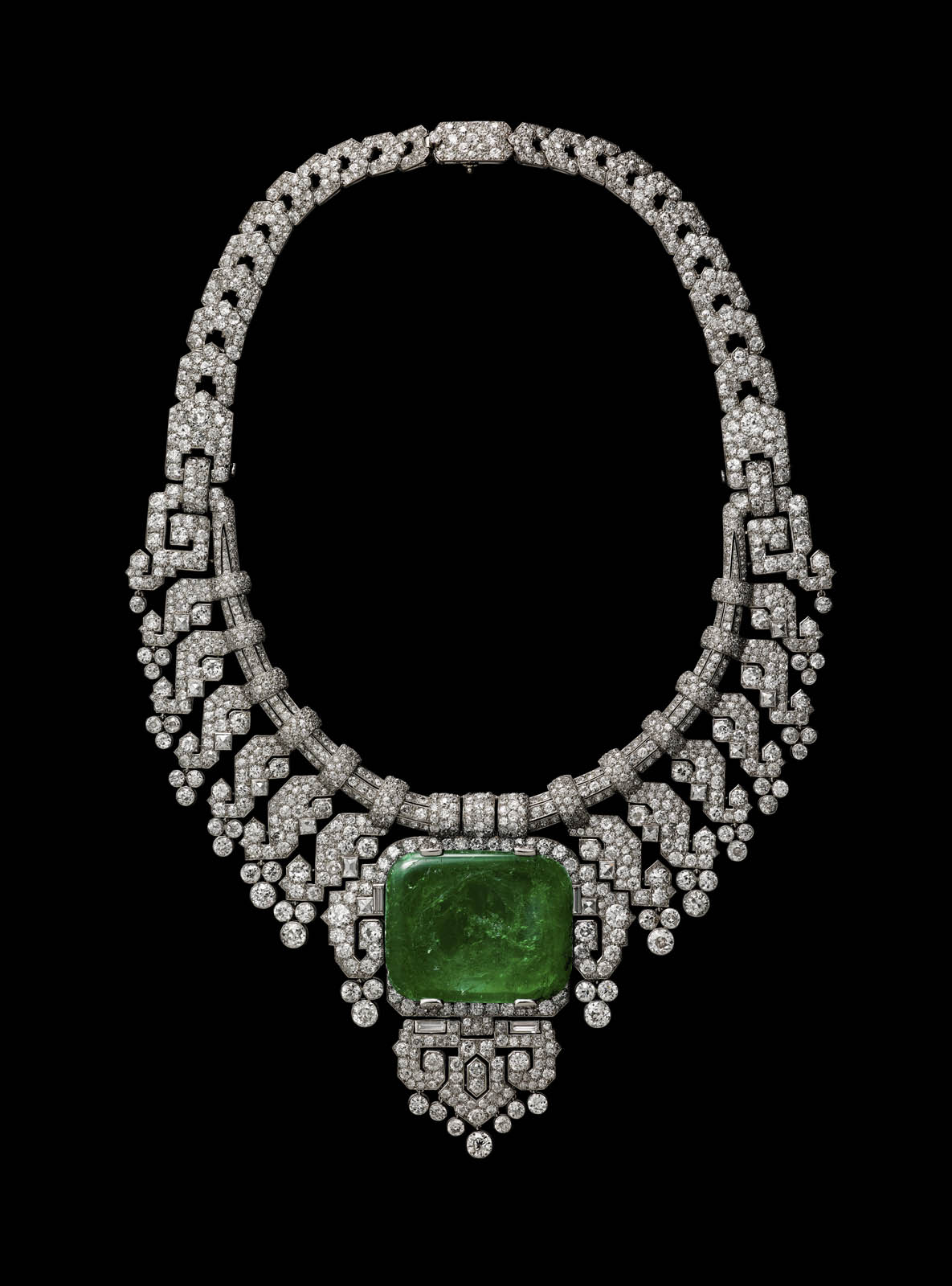
 

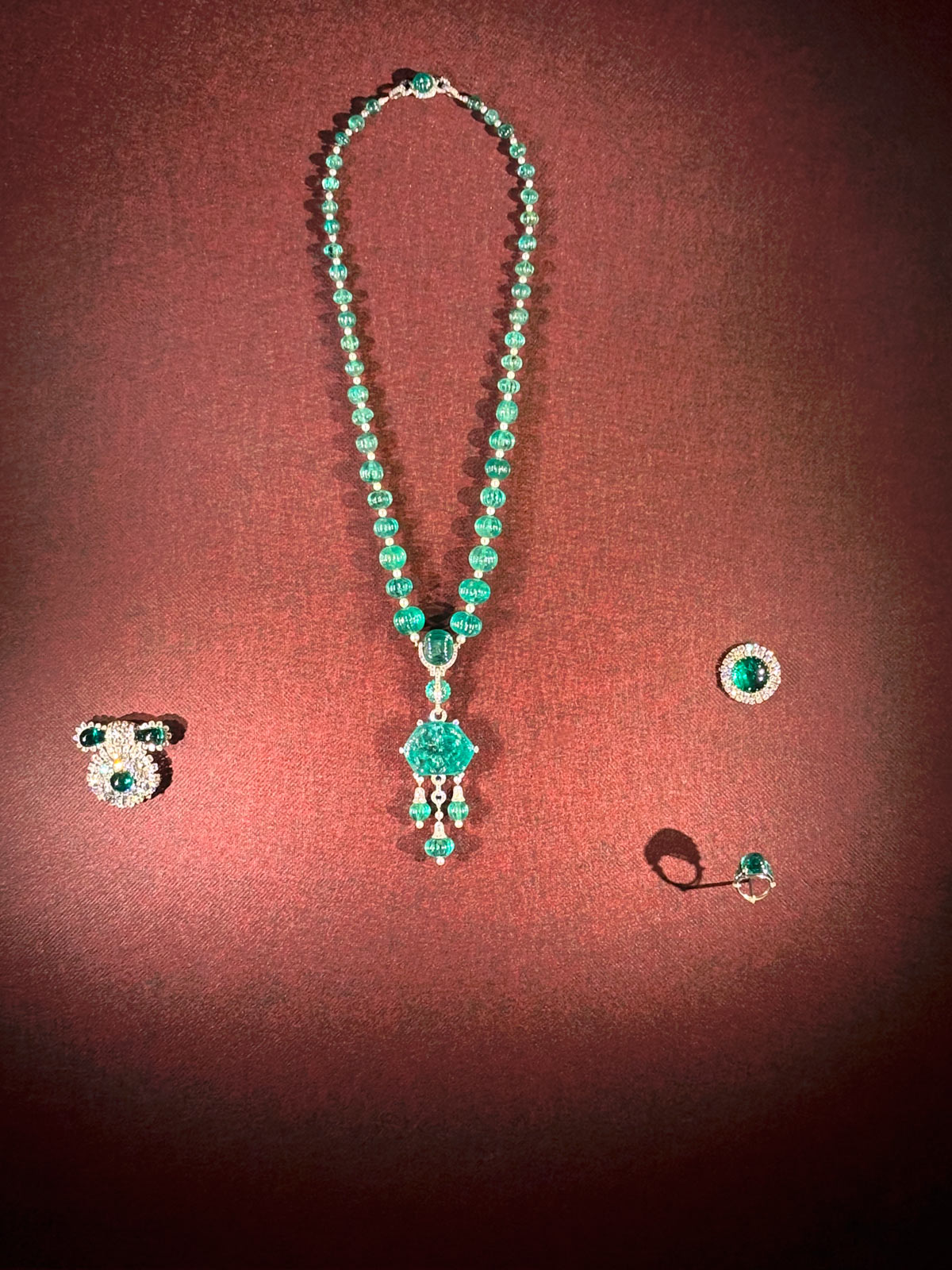
Necklace, Cartier London, special order, 1932. Commissioned by Lady Granard


Necklace
Cartier London
Special order, 1932
One 143.23-carat emerald, diamonds and platinum
Cartier Collection
Vincent Wulveryck, Cartier Collection
© Cartier


Commissioned by Lady Granard


About the exhibition

The exhibition opens with an introduction to Louis, Pierre and Jacques Cartier, who were united in their ambition to expand the family business globally, which had been established by their grandfather in 1847. The emergence of the ‘Garland style’ will be explored as well as early cultural influences on Cartier’s creations, including ancient Egyptian design. This section reveals how the Maison developed its own instantly recognisable style, one that combined modernity and innovation with elegance and refinement.

The next section of the exhibition focuses on the rise of Cartier’s signature design aesthetic, its workshops, the Maison’s exceptional access to significant gemstones and its technical innovation. At the Paris 1925 Exposition Internationale des Arts Décoratifs et Industriels Modernes, Cartier prominently displayed its creations alongside leading Parisian jewellers and couturiers in the Pavillon de l’élégance. A new aspect of the NGV exhibition will be a focus on Jeanne Toussaint, Cartier’s longstanding female Creative Director from 1933 to 1970 and her innovative design aesthetic. Visitors will see how the panther motif, celebrated by Toussaint and one of the Maison’s most iconic symbols, continues to evolve in contemporary jewels, using many of the same jewellery techniques that have been practised for decades.

In the early twentieth century, Cartier secured access to some of the most important gems in the world, notably due to sourcing trips made by Jacques Cartier to the Middle East, India and Sri Lanka, as well as the house’s elite clientele and dealer networks. In a section entirely devoted to the materials behind the creations, some of the finest gems in the world will be on view. A section on timepiece design illuminates Cartier’s exceptional technical innovation, whether in jewellery, clocks or watches.

The final section of the exhibition celebrates Cartier jewels that were worn by stars of the stage and screen, and the stylistic evolution of the Maison in to the 21st century. The exhibition will culminate in a spectacular display of more than 20 tiaras. Cartier became a master of these crowning jewels at a time when high society wore them to the most glittering events in the social calendar.

About the Cartier Collection

In the 1970s, Cartier began to gather together pieces that had been produced in its earlier years; jewelry, timepieces and other precious accessories were collected for conservation, leading to the foundation of the Cartier Collection in 1983.  

Today, the Cartier Collection includes pieces dating from as early as the 1860s until as recently as the 2000s. These pieces act as material records of Cartier’s more than 170-year history of style and creativity, as well as provide a wider historical account of evolutions within the decorative arts since the end of the 19th century. 

With approximately 3,500 pieces and still growing, the Cartier Collection has sparked the attention of museums worldwide. Since the first major exhibition in 1989 at the Petit Palais in Paris, the Cartier Collection has been showcased by some of the world’s most renowned institutions in 45 monographic exhibitions, including most recently at London’s Victoria and Albert Museum.

Press release from the NGV
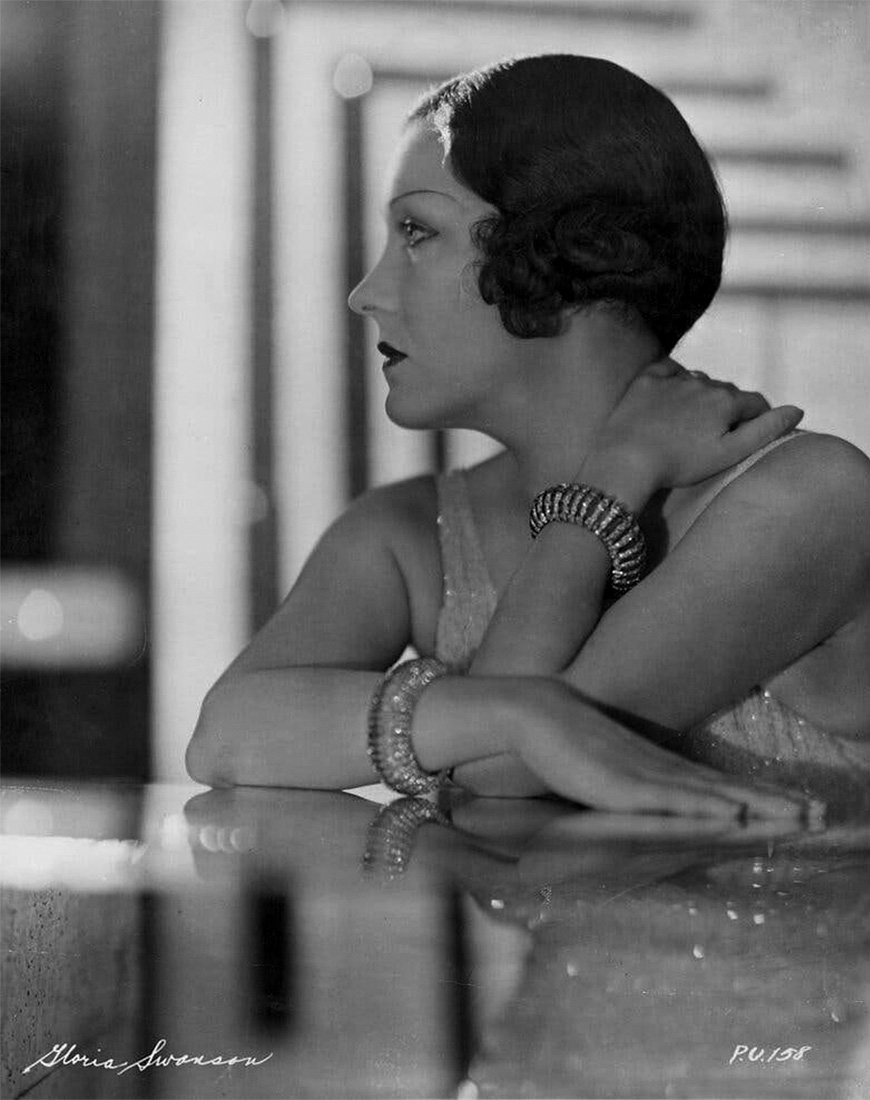
 

Unknown photographer. 'Gloria Swanson in "Perfect Understanding",' 1933


Unknown photographer
Gloria Swanson in “Perfect Understanding”
1933
Heritage Auctions
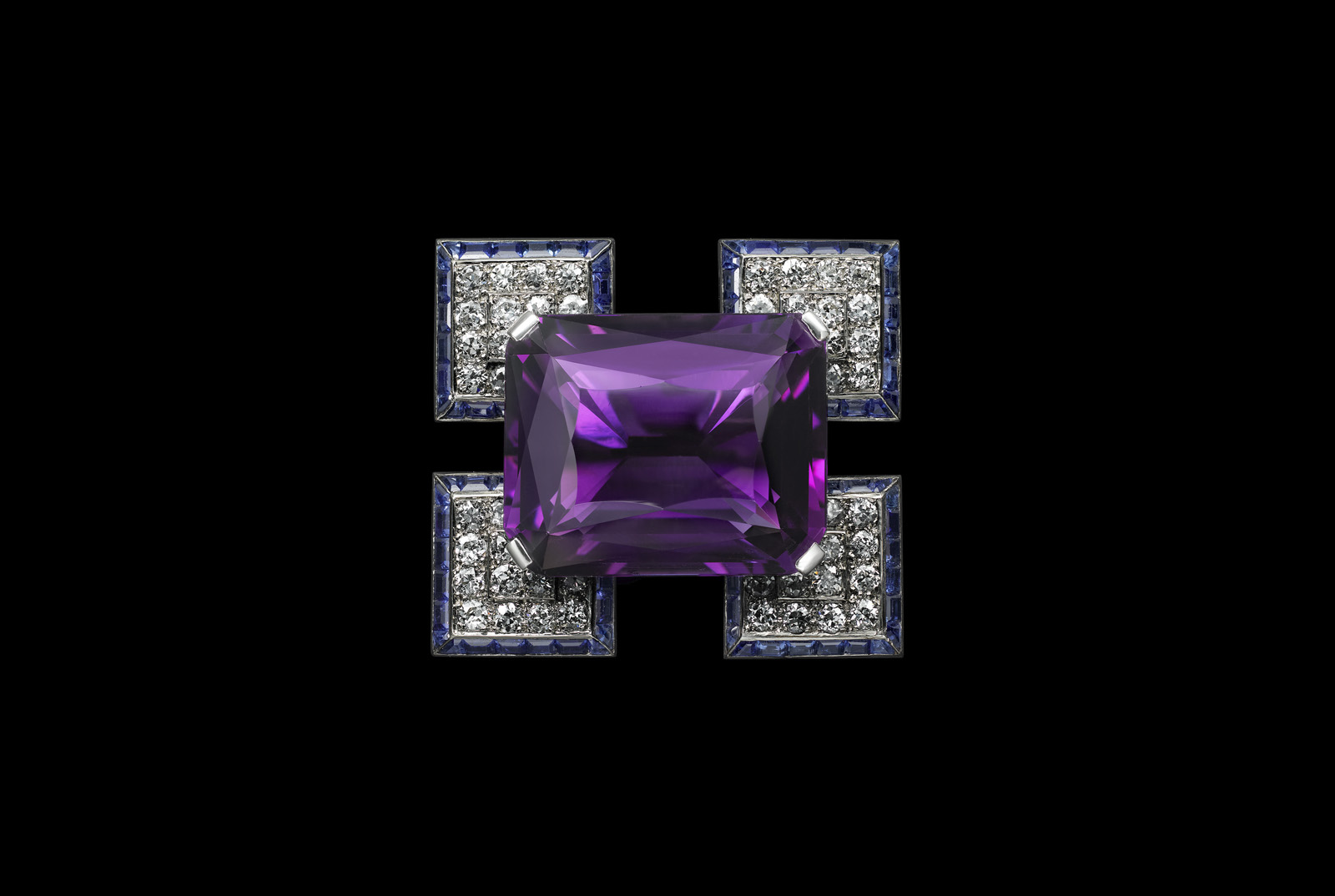
 

Brooch, Cartier London, 1933


Brooch
Cartier London
1933
Amethyst, sapphires, diamonds and platinum
Cartier Collection
Vincent Wulveryck, Cartier Collection
© Cartier
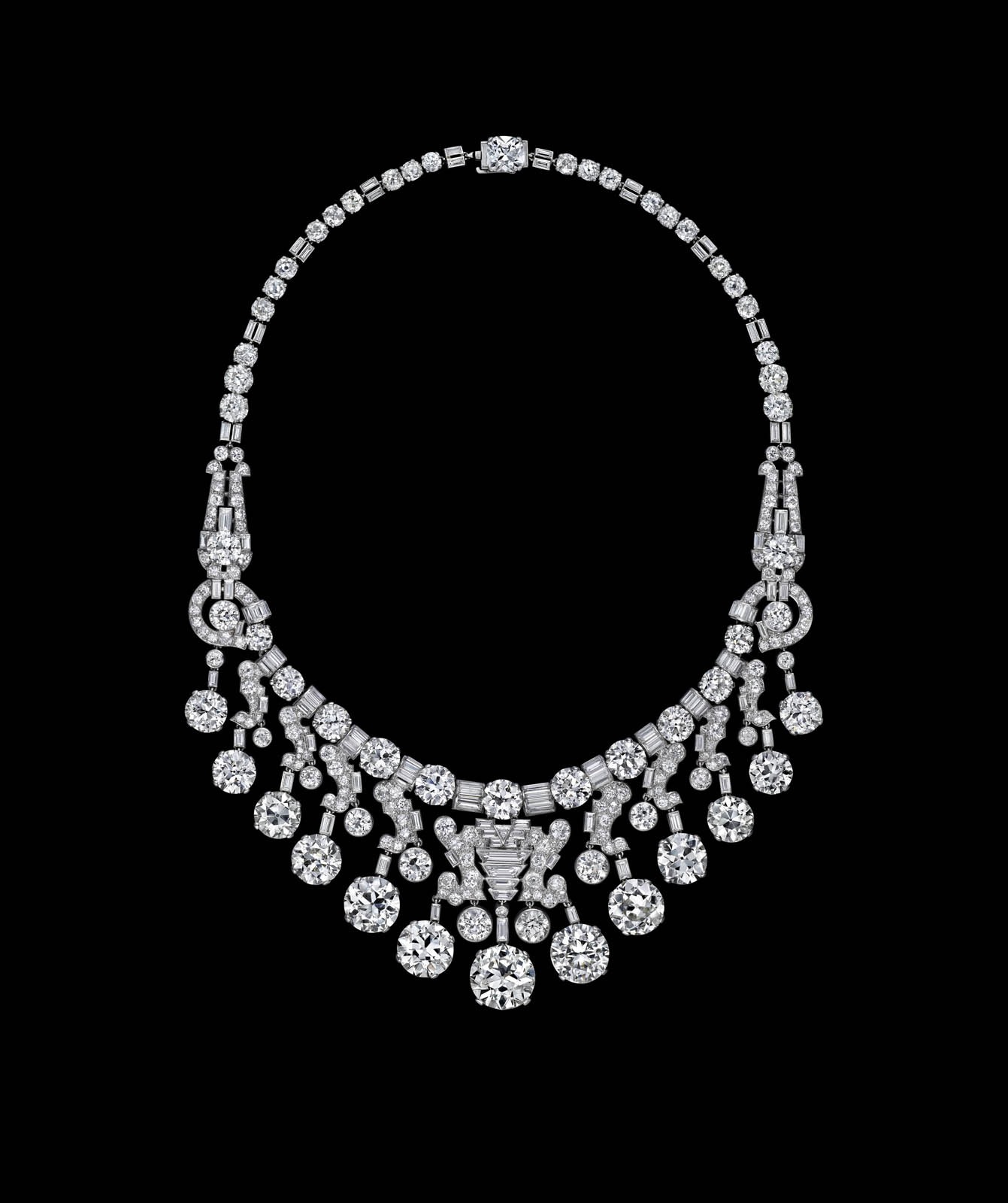
 

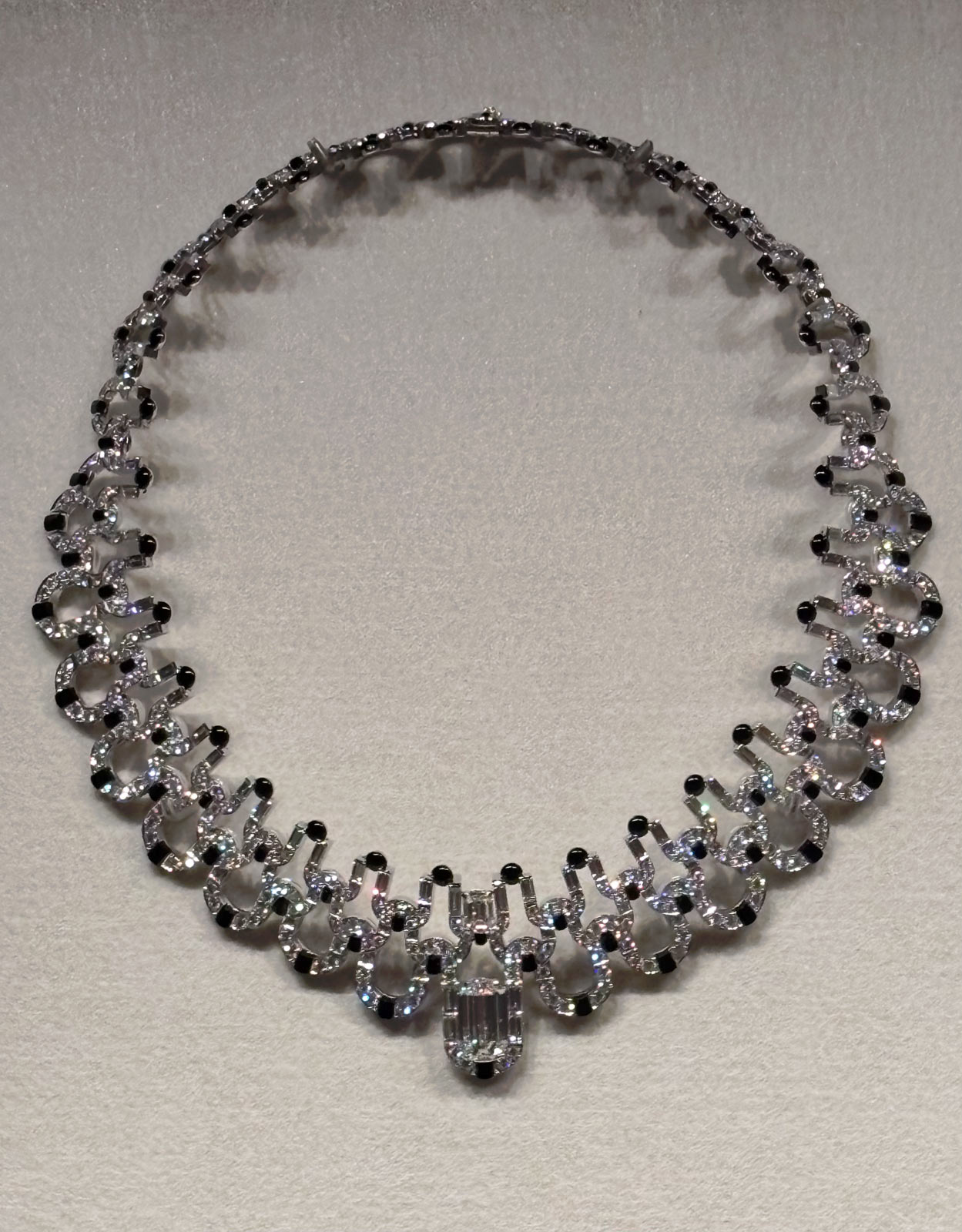
Necklace, Cartier London, special order, 1934


Necklace
Cartier London
Special order, 1934
Platinum, diamonds
Owned by the Sassoon family
Cartier Collection
Nils Herrmann, Cartier Collection
© Cartier
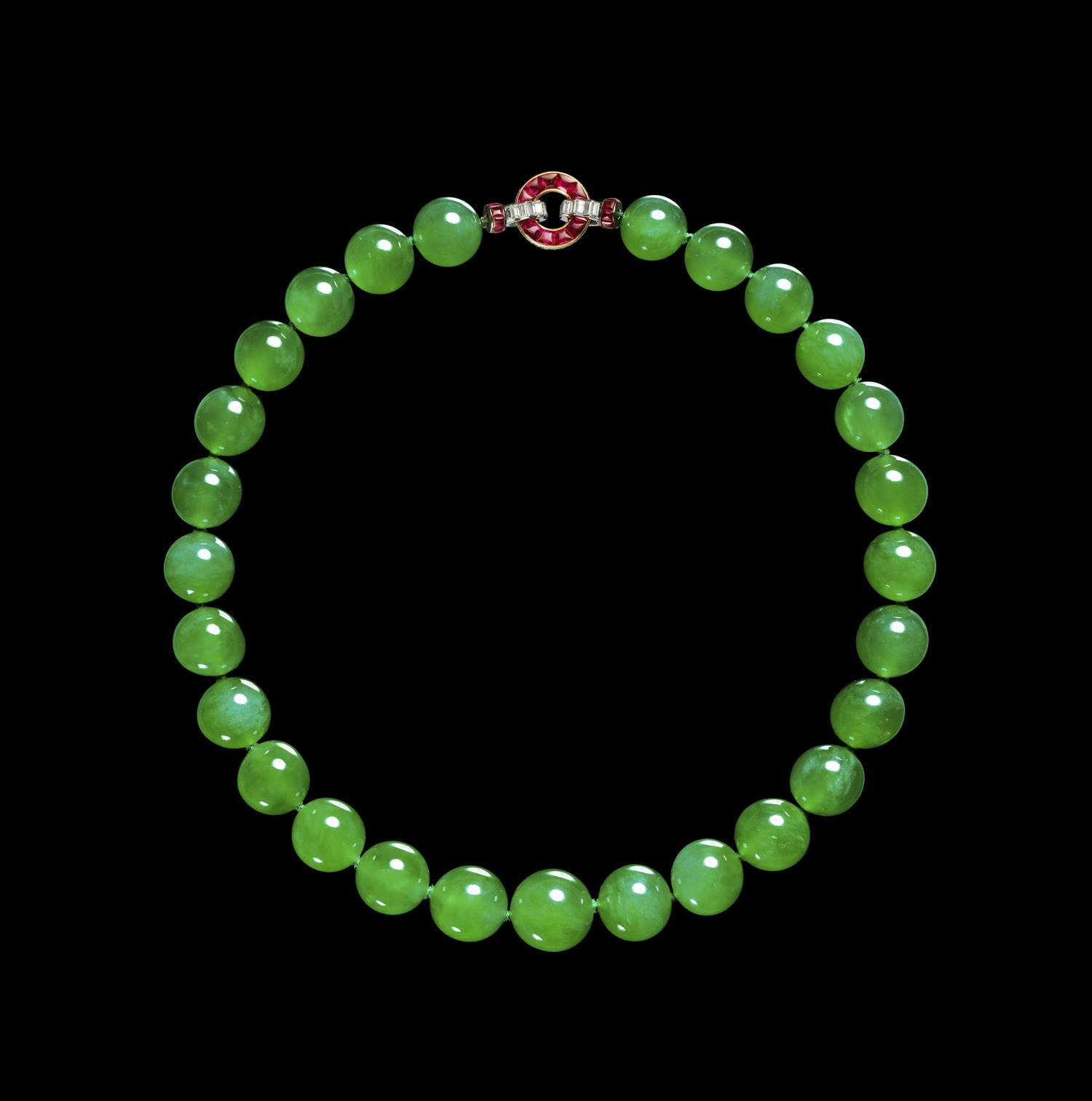
 

Necklace, Cartier Paris, special order, 1934


Necklace
Cartier Paris
Special order, 1934
Jadeite, rubies, diamonds, platinum and gold
Cartier Collection
Marian Gérard, Cartier Collection
© Cartier


Owned by Barbara Hutton
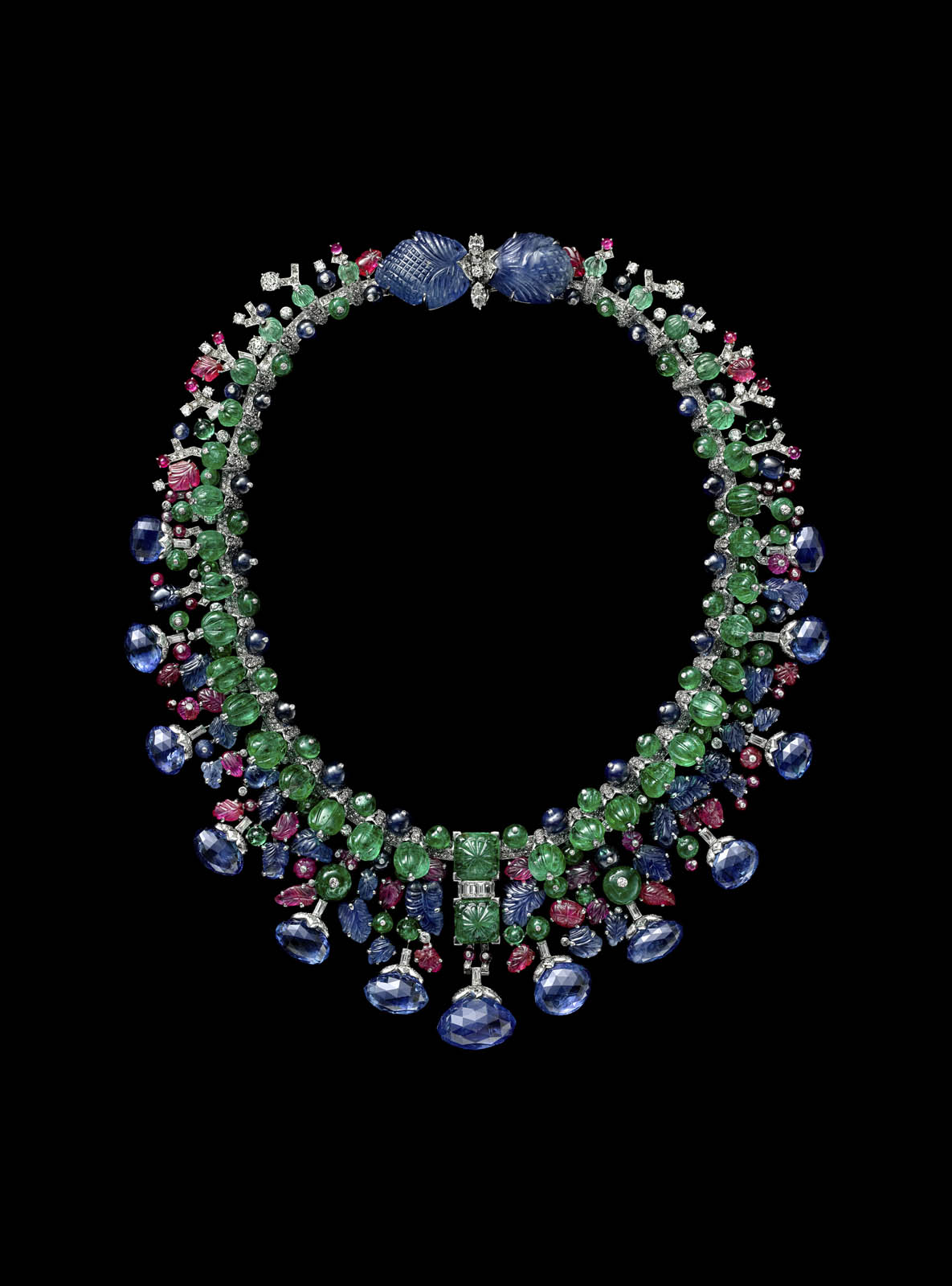
 

‘Hindou’ Necklace, Cartier Paris, special order, 1936; altered 1963. Commissioned by Daisy Fellowes


‘Hindou’ Necklace
Cartier Paris
Special order, 1936; altered 1963
Sapphires, emeralds, rubies, diamonds, platinum and white gold
Cartier Collection
Vincent Wulveryck, Collection Cartier
© Cartier


Commissioned by Daisy Fellowes
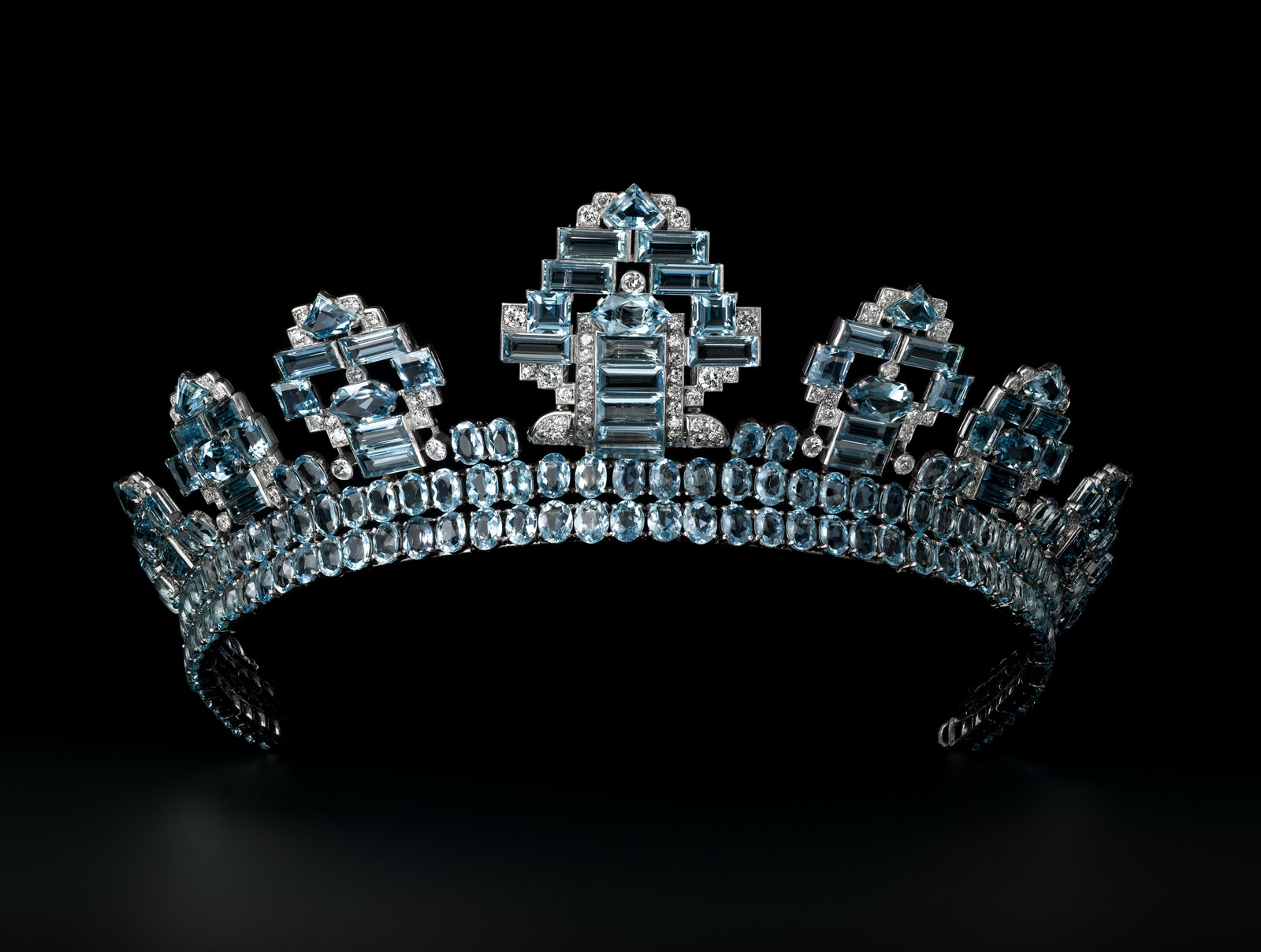
 

Tiara, Cartier London, 1937


Tiara
Cartier London
1937
Aquamarine, diamonds and platinum
Cartier Collection
Vincent Wulveryck, Cartier Collection
© Cartier
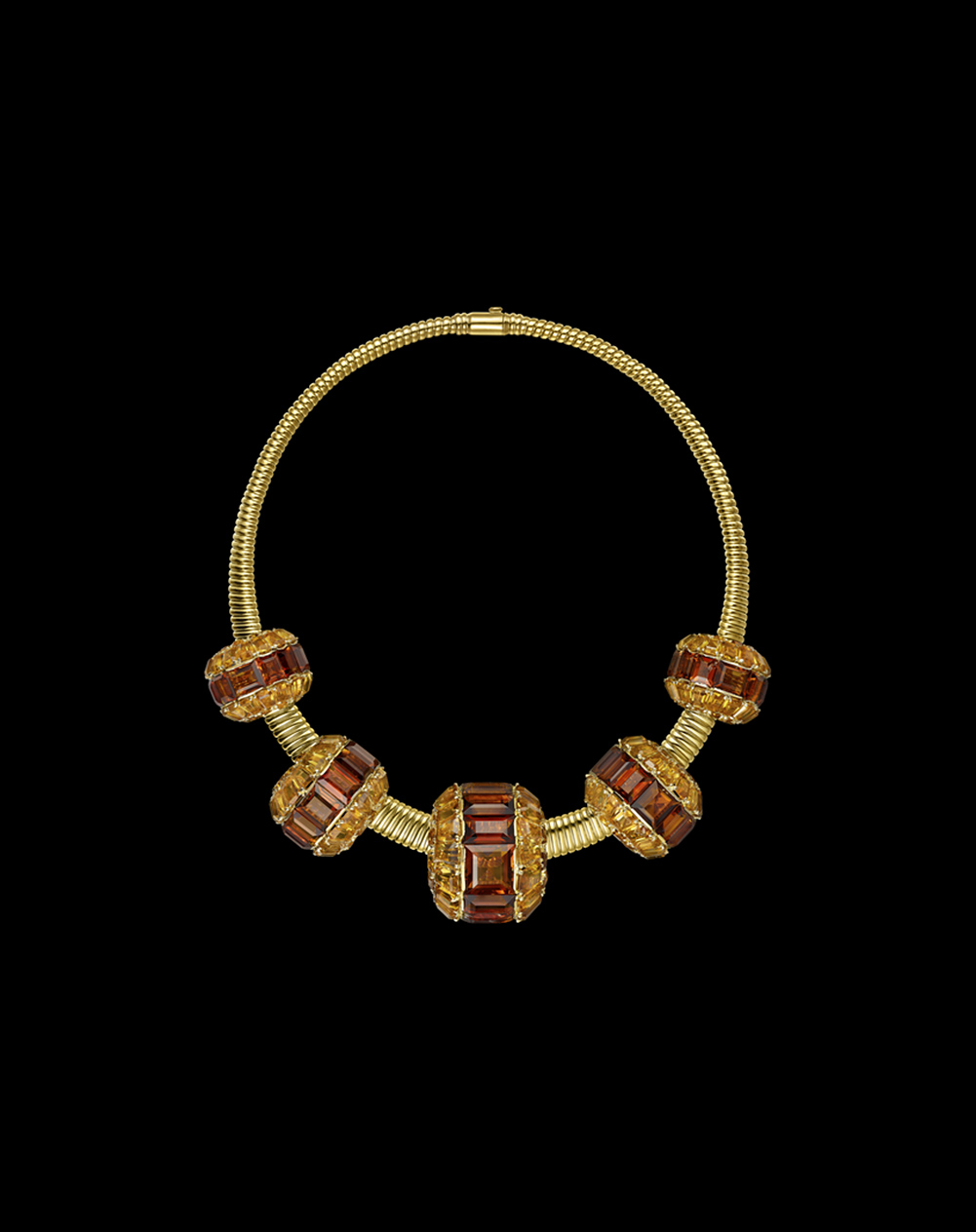
 

Necklace, Cartier Paris, 1937


Necklace
Cartier Paris
1937
Gold, citrines
Cartier Collection
Nils Herrmann, Cartier Collection
© Cartier


The five motives on the necklace can be detached to be worn as brooches.
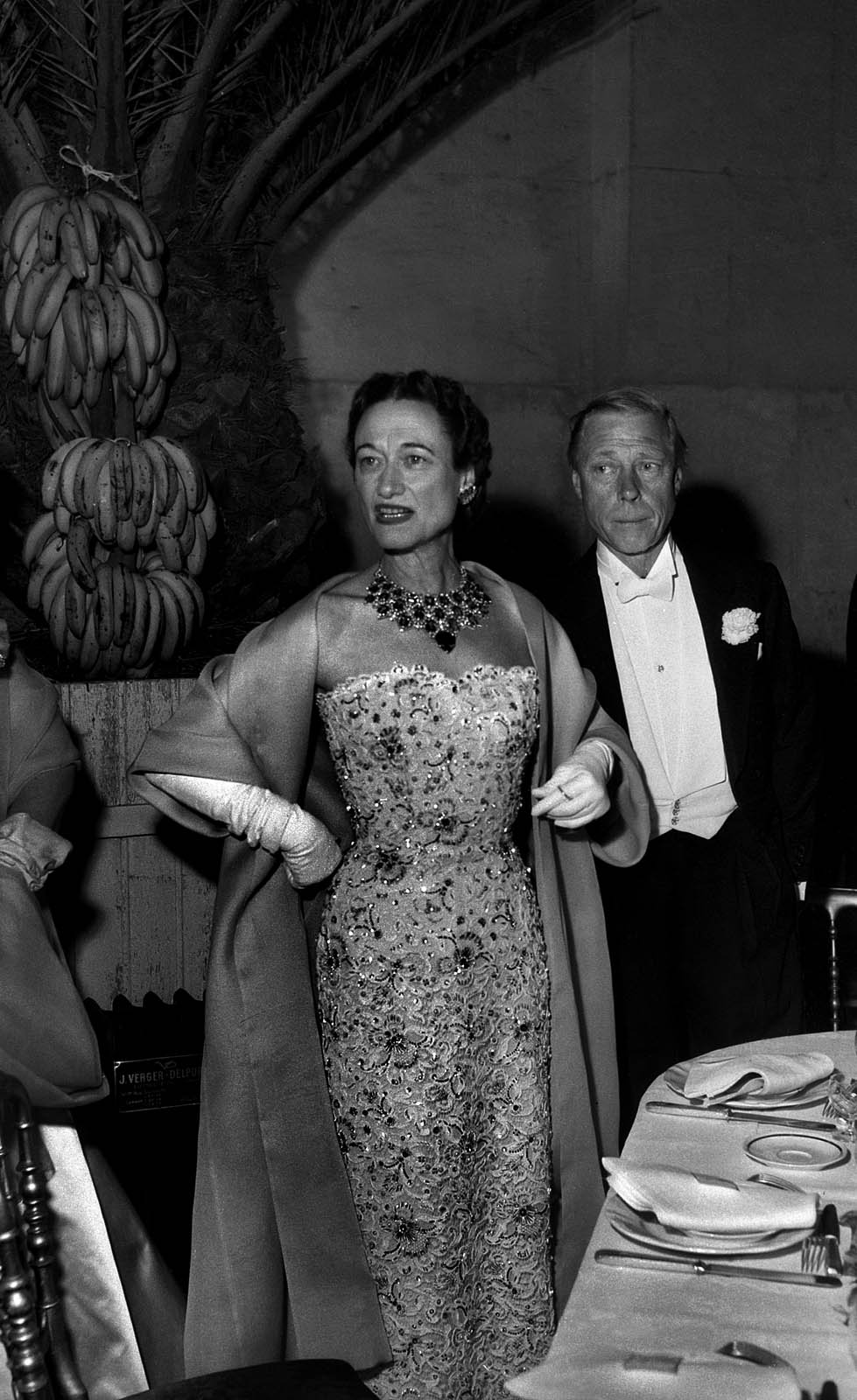
 

Unknown photographer. 'Duke Edward of Windsor (Former King Edward Viii) and Duchess of Windsor (Wallis Simpson, With A Necklace By Cartier) during Ball in Versailles on June 17, 1953' 1953


Unknown photographer
Duke Edward of Windsor (Former King Edward Viii) and Duchess of Windsor (Wallis Simpson, With A Necklace By Cartier) during Ball in Versailles on June 17, 1953
1953
© AGIP / Bridgeman Images
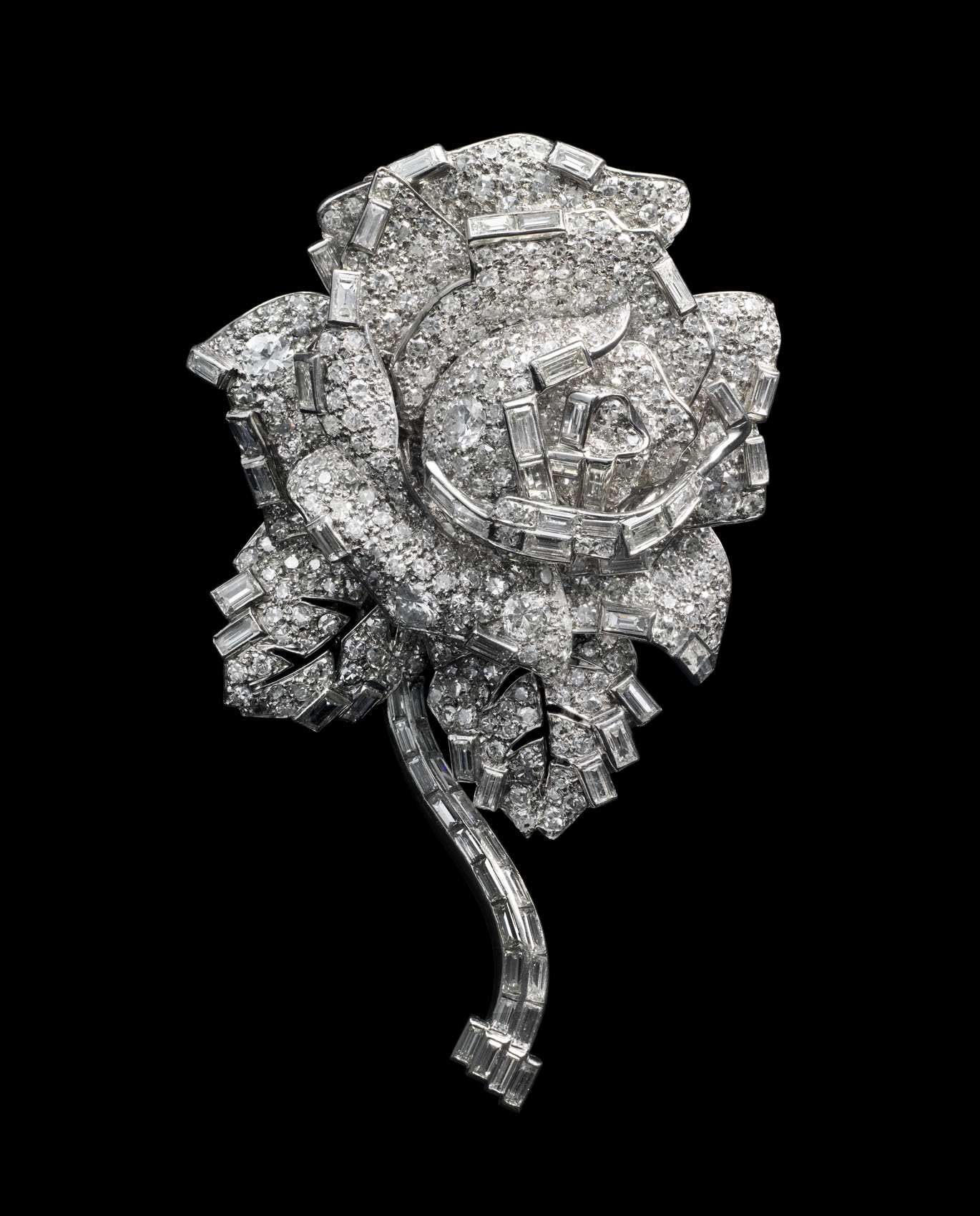
 

Rose Clip Brooch, Cartier London, special order, 1938


Rose Clip Brooch
Cartier London
Special order, 1938
Diamonds and platinum
Cartier Collection
Vincent Wulveryck, Cartier Collection
© Cartier


Owned by HRH Princess Margaret, Countess of Snowdon, worn on the photograph below
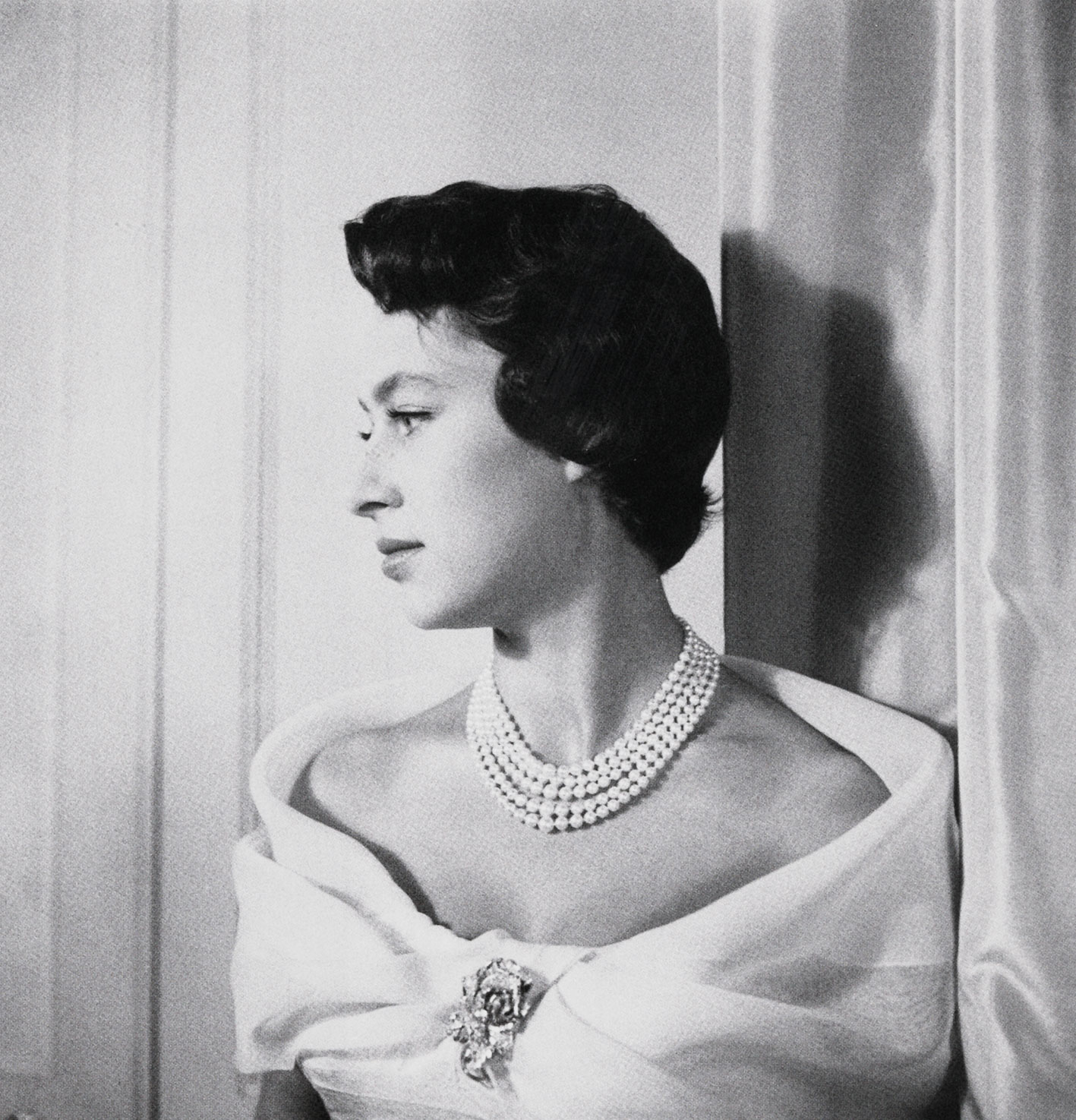
 

Cecil Beaton (British, 1904-1980) 'Princess Margaret wearing the Cartier rose clip' 1955 brooch' 1955


Cecil Beaton (British, 1904-1980)
Princess Margaret wearing the Cartier rose clip brooch
1955
Cartier Collection
Vincent Wulveryck, Cartier Collection © Cartier
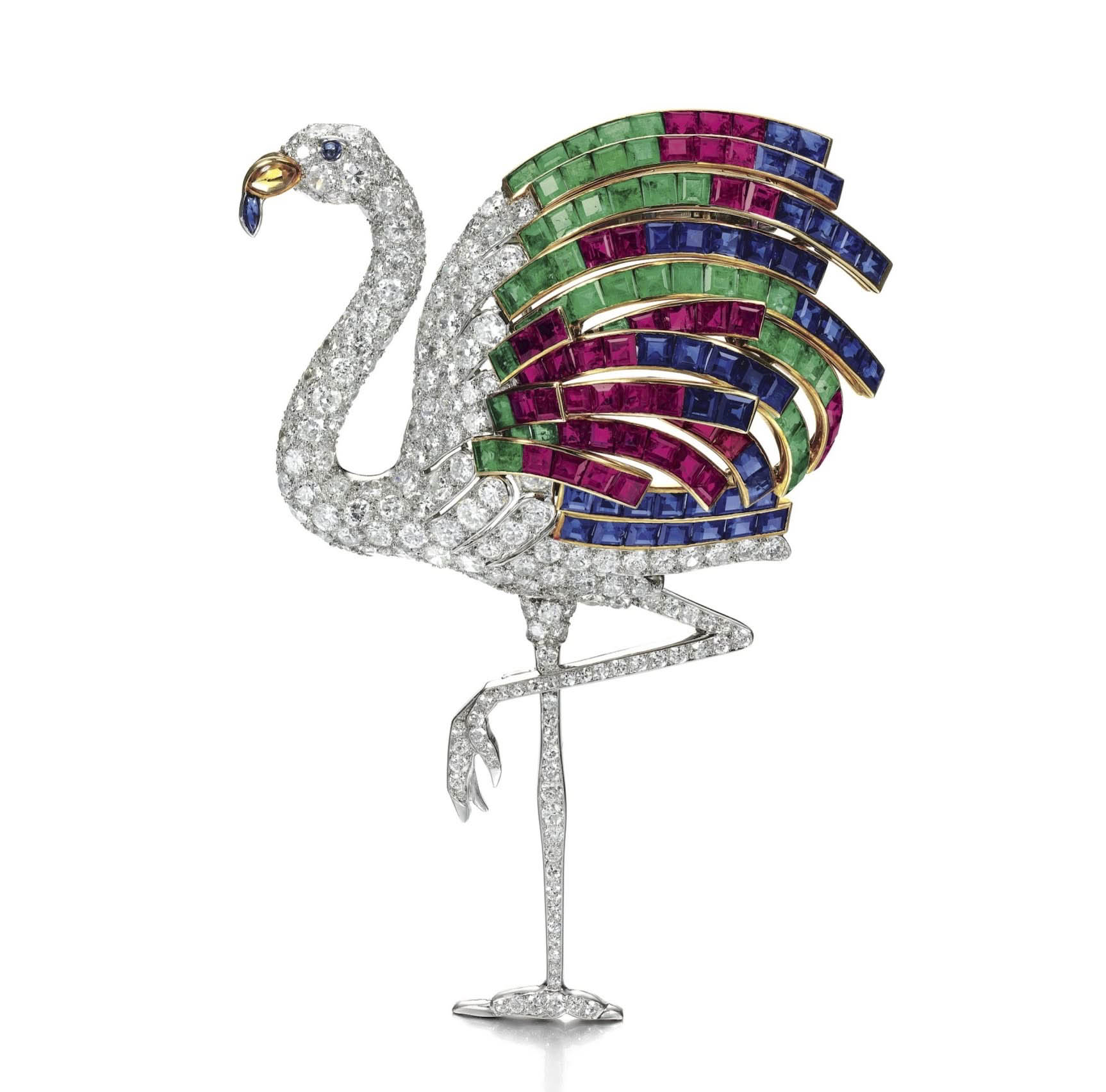
 

Flamingo Brooch, Cartier Paris, 1940


Flamingo Brooch
Cartier Paris
1940
Platinum, diamonds, rubies, sapphires and emeralds
Cartier Collection
© Cartier


The iconic Cartier Flamingo Brooch ordered for the Duchess of Windsor on the eve of the Nazi Occupation of Paris.

The brooch was delivered to the Duke and Duchess of Windsor only a few days before they left the French capital ahead of the German invasion. Via Spain and Portugal, the Duke and Duchess travelled to Nassau in the Bahamas where the Duke took on the role of governor for the duration of World War II. Upon arrival in Miami, en route to Nassau, the Duchess wore her brand-new Cartier flamingo brooch when greeting the crowds. She paired it with a now-famous bi-corned hat, one of her boldest and most iconic fashion choices.

The flamingo brooch was one of the star lots in Sotheby’s landmark sale of the Duchess of Windsor’s Collection in 1987 and was again offered at Sotheby’s London in November 2010 in a sale that re-united several highlights from the Duke and Duchess’ collection. Today, the original flamingo brooch is part of the Cartier heritage collection and is frequently featured it in exhibitions all over the world.

Text from the Sotheby’s website
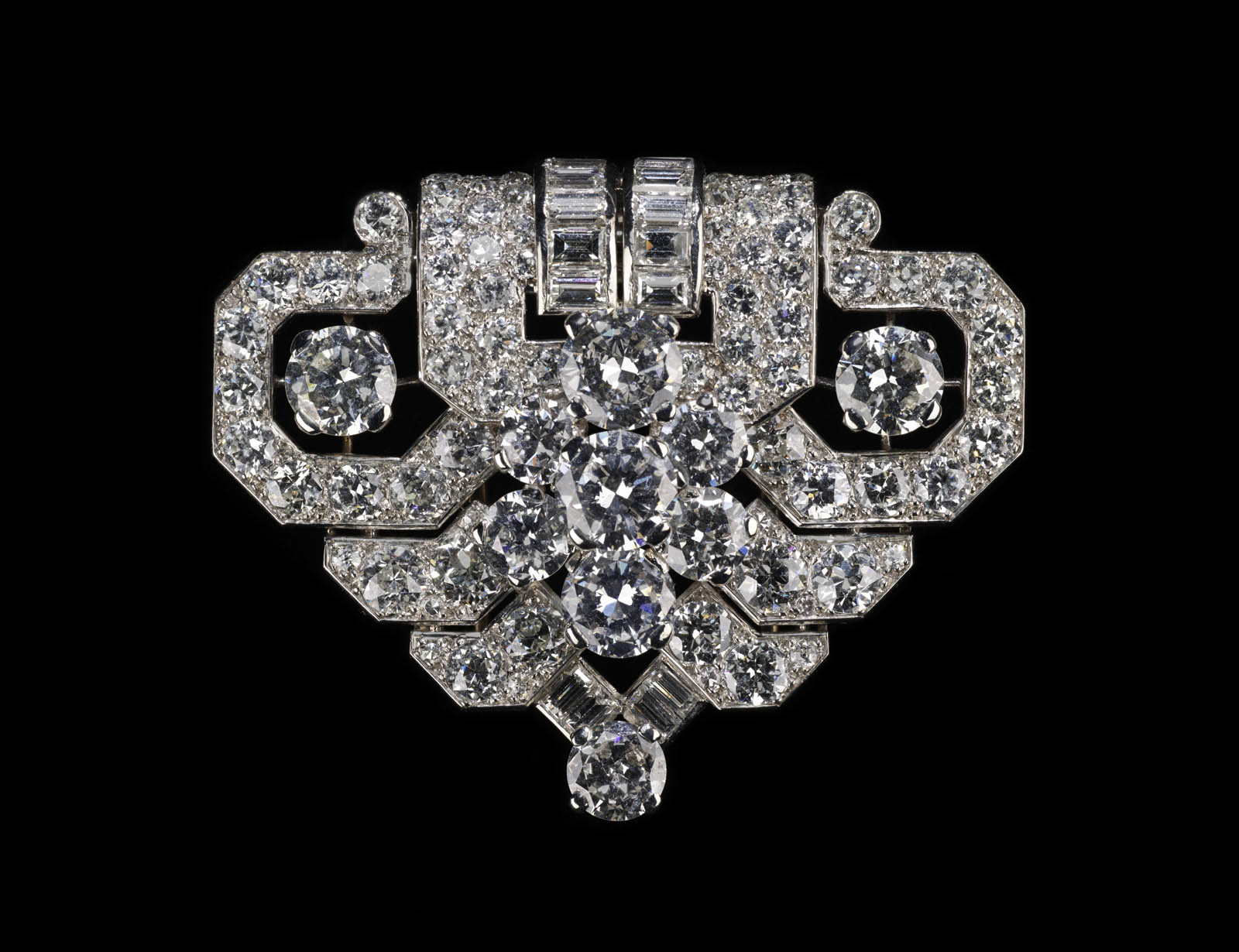
 

Brooch, Cartier London, special order, 1941


Brooch
Cartier London
Special order, 1941
Diamonds and platinum
Commissioned by Ernest Schwaiger
© Victoria and Albert Museum, London
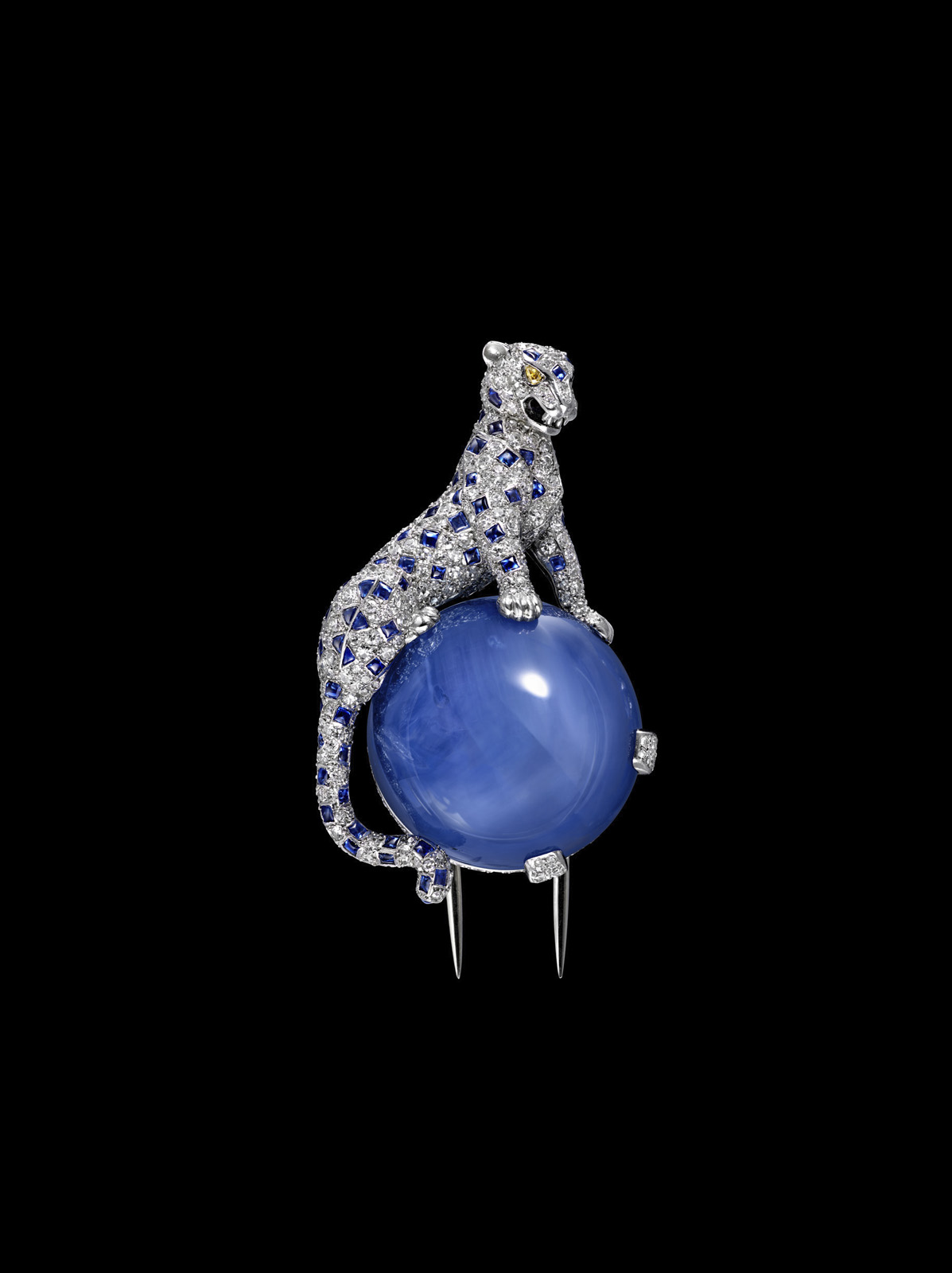
 

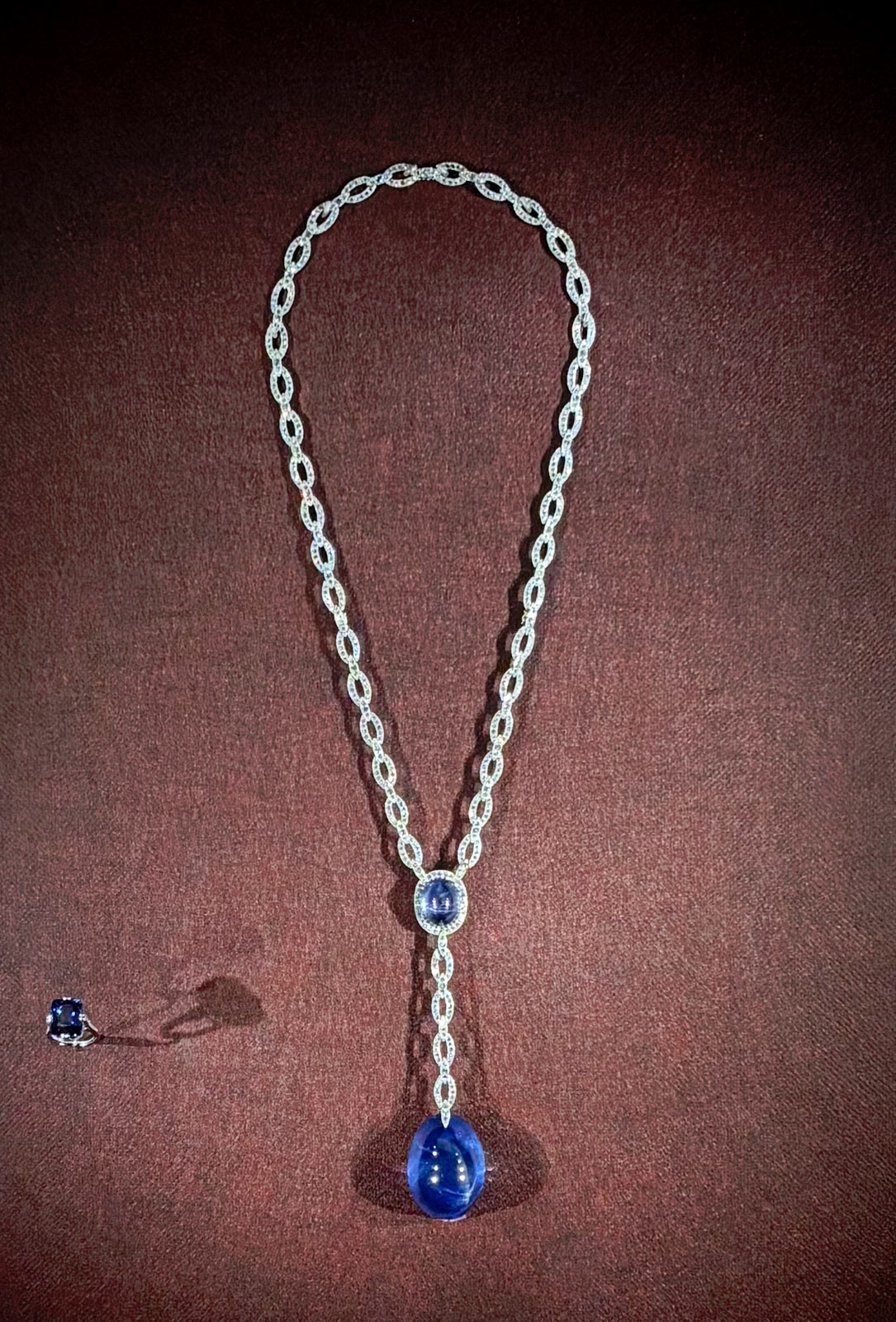
Panther clip brooch, Cartier Paris, 1949. Owned by the Duchess of Windsor


Panther clip brooch
Cartier Paris
1949
One 152.35-carat sapphire, sapphires, diamonds, yellow diamonds, platinum and white gold
Cartier Collection
Nils Herrmann, Cartier Collection
© Cartier


Owned by the Duchess of Windsor
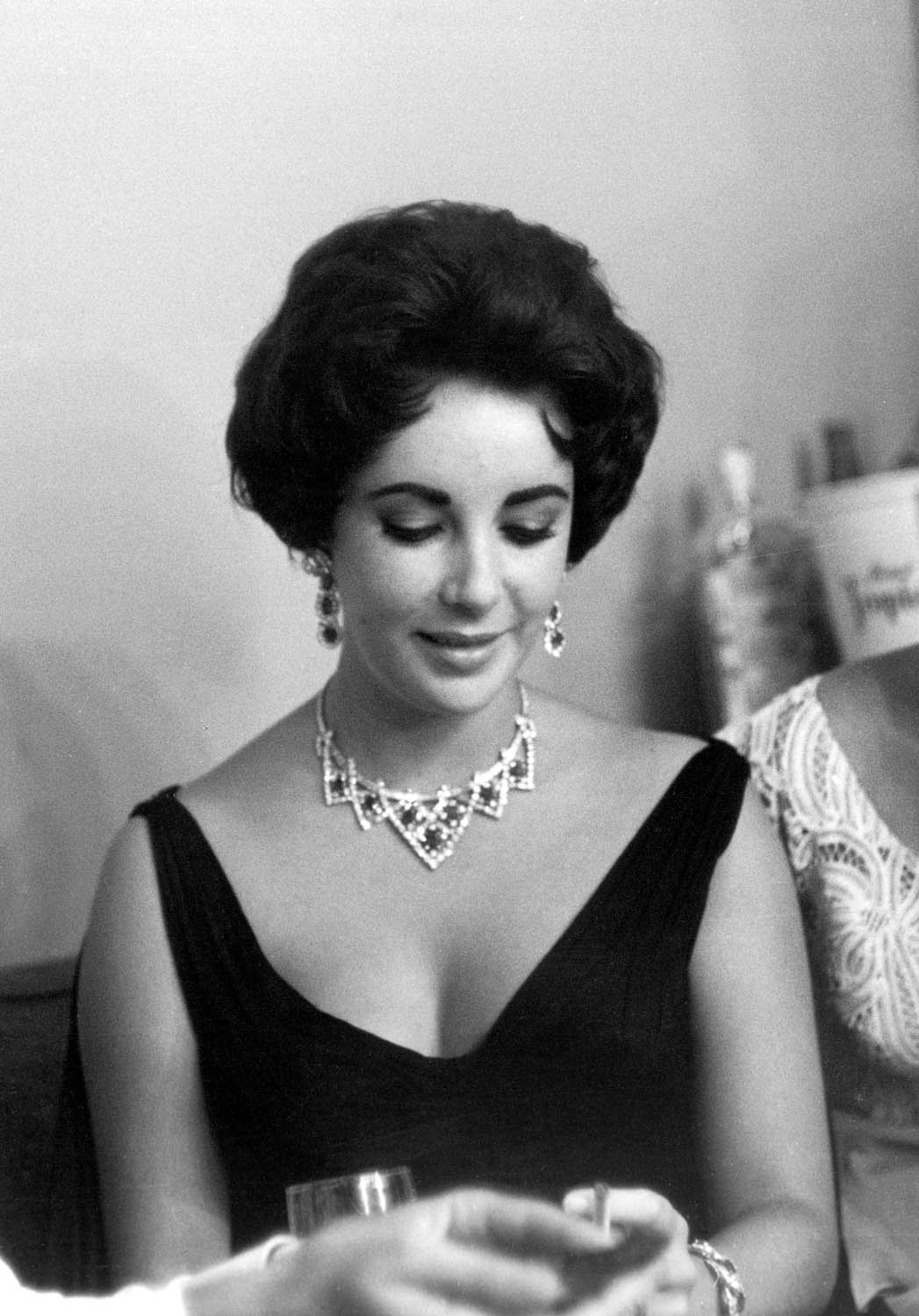
 

Unknown photographer. 'Elizabeth Taylor at the Tropicana Hotel in Las Vegas, June 1958' 1958


Unknown photographer
Elizabeth Taylor at the Tropicana Hotel in Las Vegas, June 1958
1958
© Photofest


Wearing the necklace by Cartier Paris below
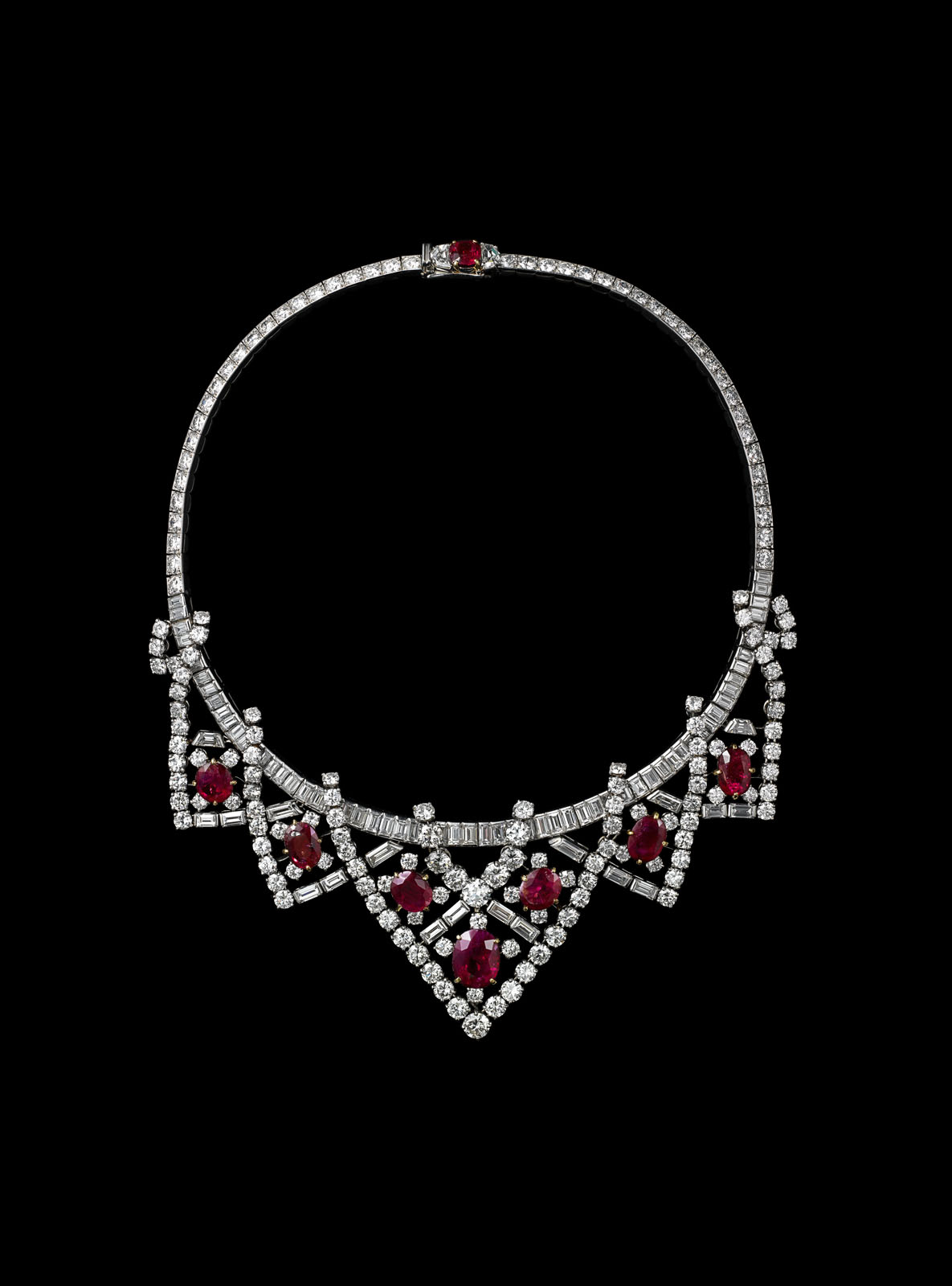
 

Necklace, Cartier Paris, 1951; altered 1953


Necklace
Cartier Paris
1951; altered 1953
Rubies, diamonds, platinum, yellow and white gold
Owned by Elizabeth Taylor
Cartier Collection
Vincent Wulveryck, Cartier Collection
© Cartier
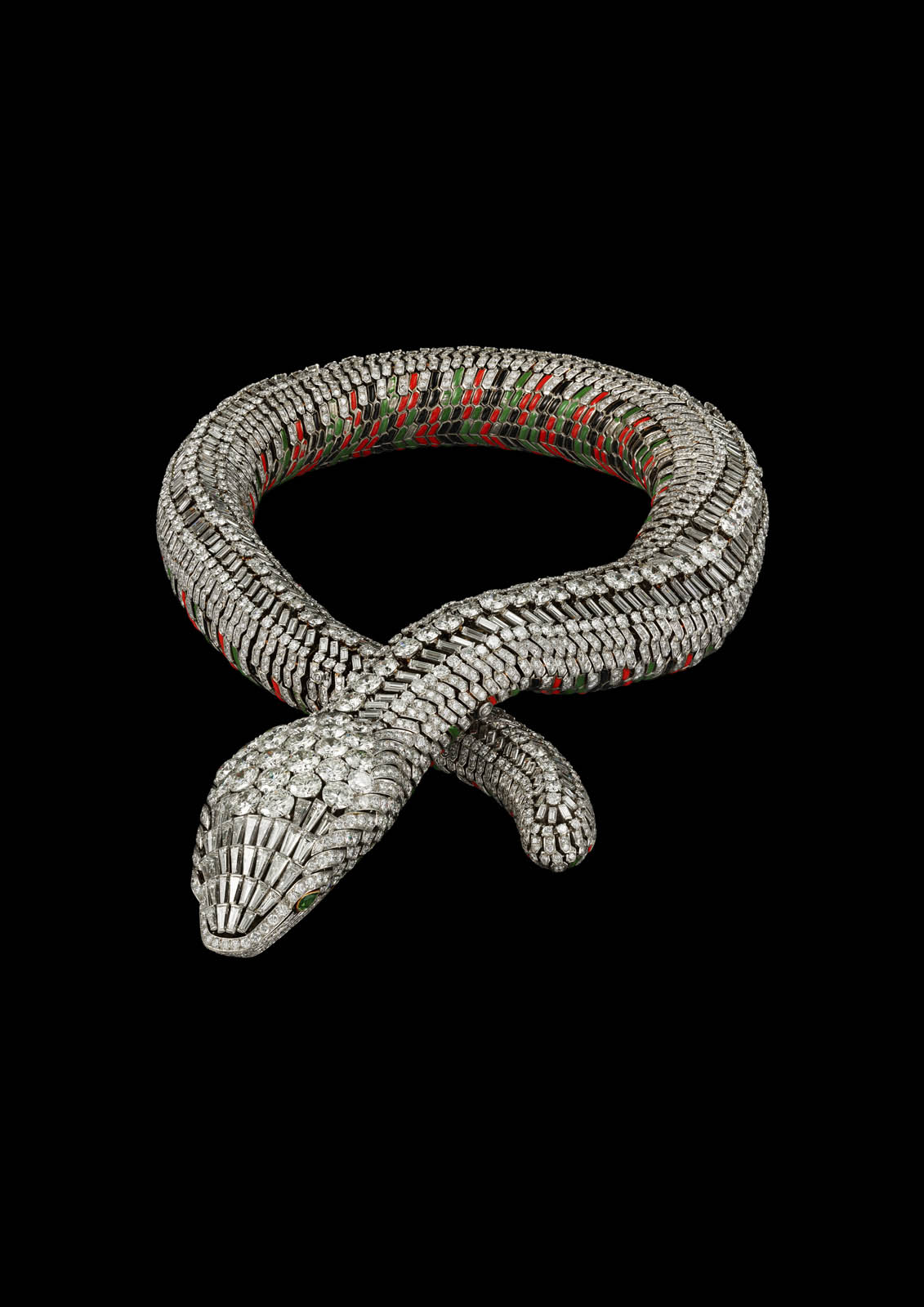
 

Snake Necklace, Cartier Paris, special order, 1968


Snake Necklace
Cartier Paris
Special order, 1968
Diamonds, emeralds, enamel, platinum, white and yellow gold
Cartier Collection
Vincent Wulveryck, Cartier Collection
© Cartier


Commissioned by María Félix
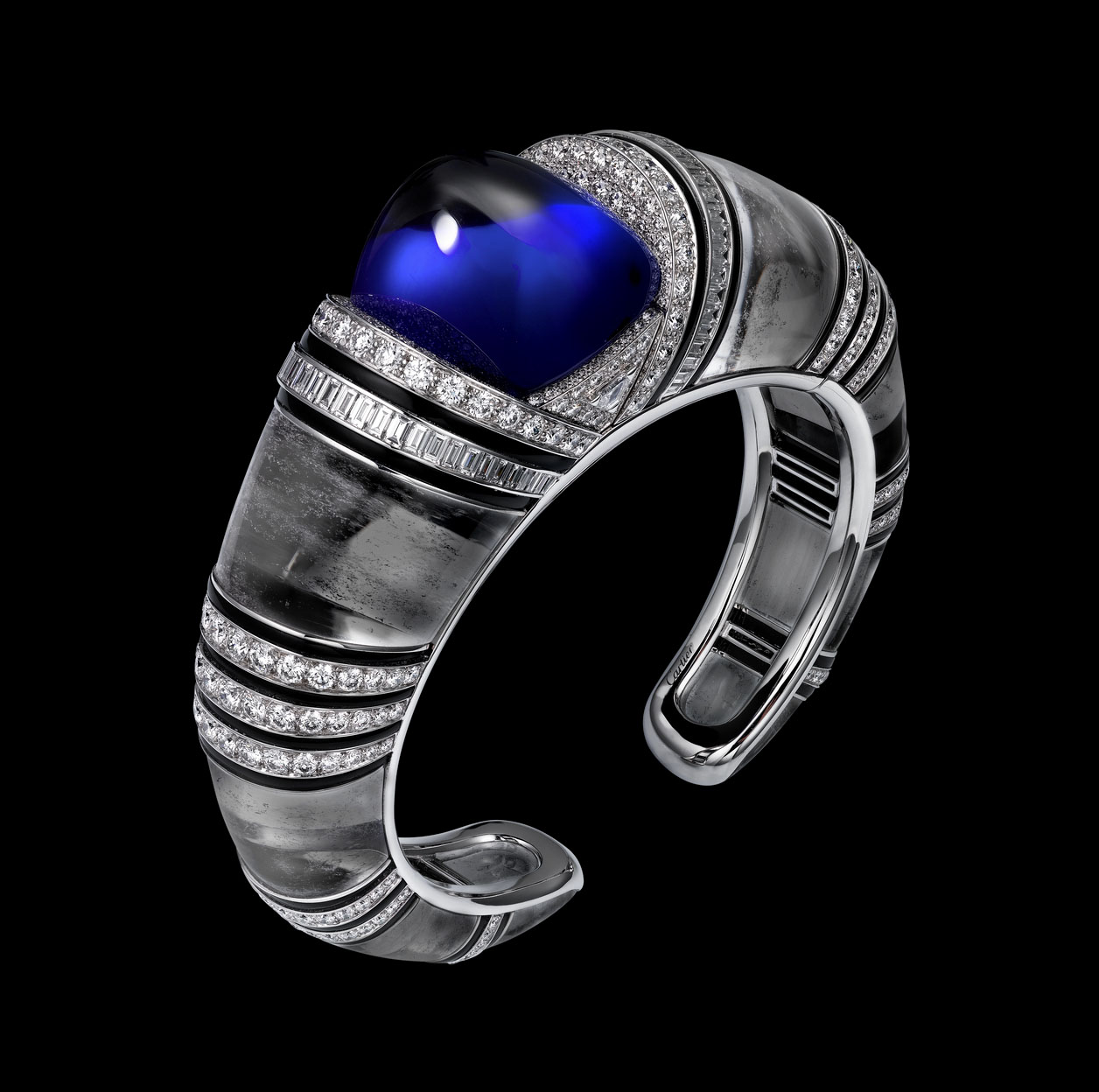
 

Bracelet, Cartier, 2014


Bracelet
Cartier
2014
White gold, diamonds
One sugarloaf tanzanite cabochon weighing 79.52 carats, rock crystal, onyx
Cartier Collection
Vincent Wulveryck, Cartier Collection
© Cartier
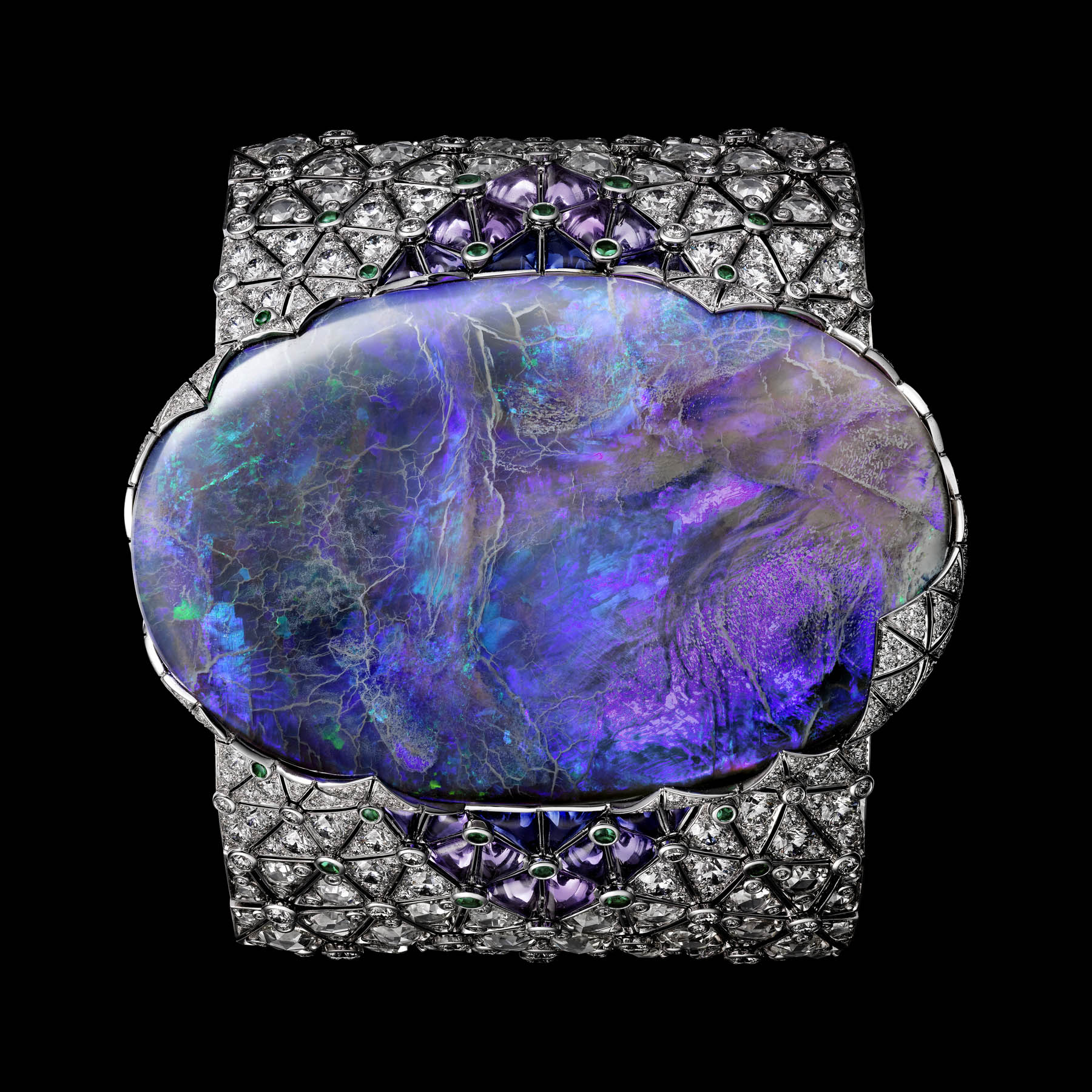
 

Bracelet, Cartier, 2015


Bracelet
Cartier
2015
White gold, diamonds, one opal weighing 189.345 carats, purple sapphires and blue sapphires, emeralds
Cartier Collection
Vincent Wulveryck, Cartier Collection
© Cartier
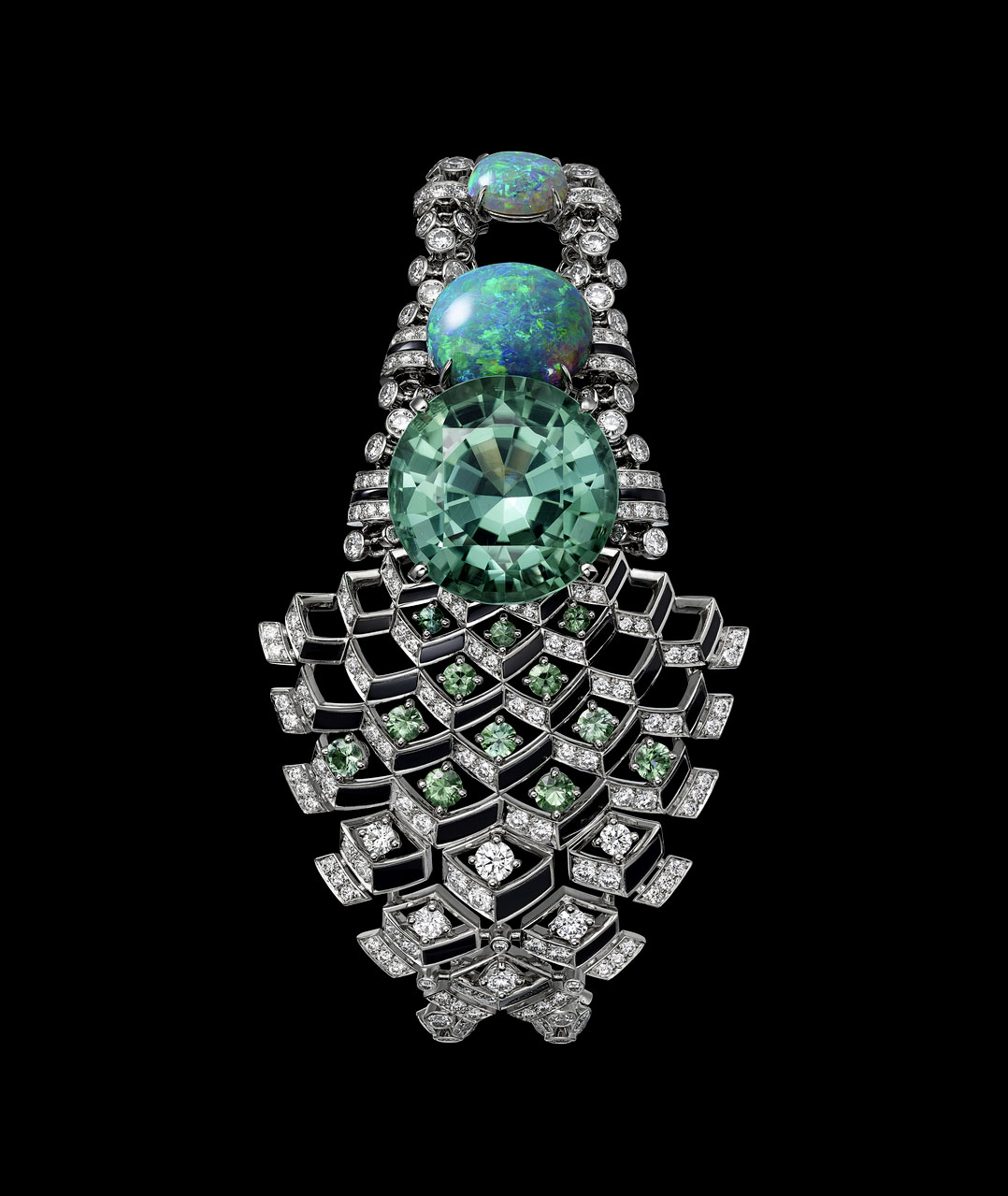
 

Bracelet, Cartier, 2018


Bracelet
Cartier
2018
Platinum, white gold, tourmalines, opals, diamonds, onyx
Cartier Collection
Vincent Wulveryck, Cartier Collection
© Cartier


Installation photographs

Photos Marcus Bunyan
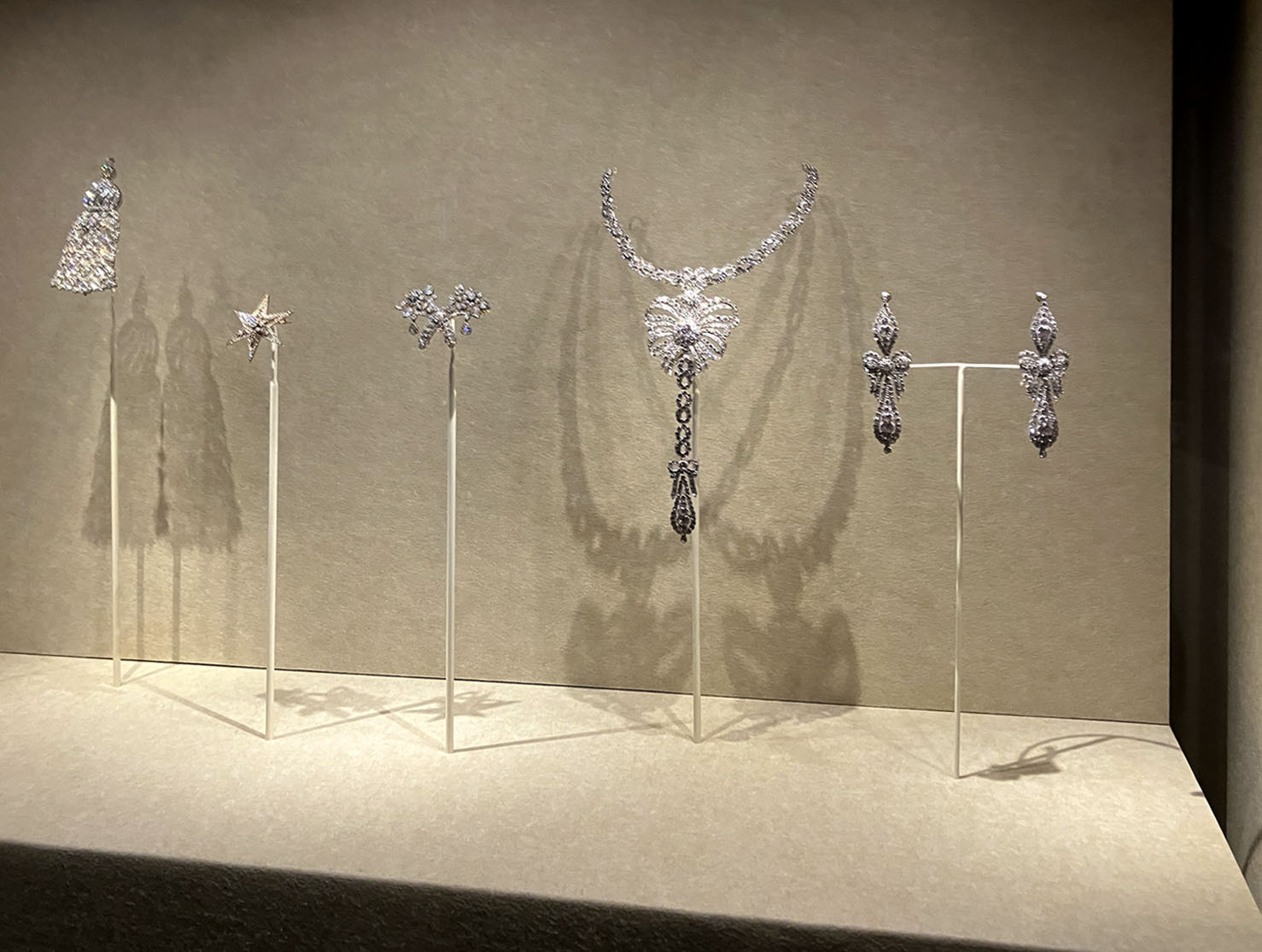
 

Installation view of the exhibition 'Cartier' at NGV International, Melbourne, June - October, 2026
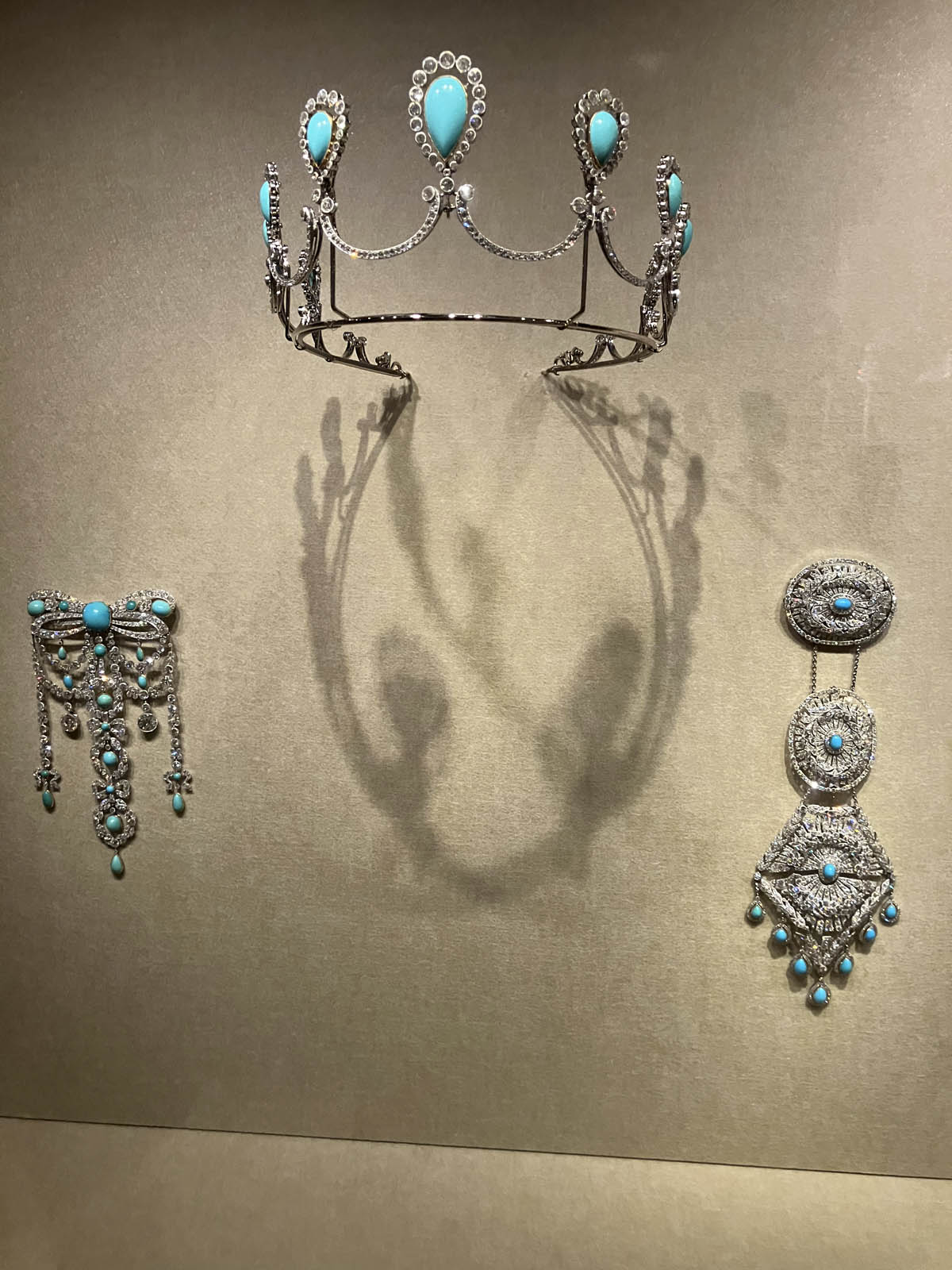
Installation view of the exhibition 'Cartier' at NGV International, Melbourne, June - October, 2026 showing 'Tiara' by Cartier Paris 1908 commissioned by Dame Nellie Melba


Tiara (installation view)
Cartier Paris
Special order, 1908
Diamonds, turquoise, platinum, yellow gold
Commissioned by Dame Nellie Melba
Private collection


This piece is transformable and can be worn either as a necklace or as a tiara

Dame Nellie Melba

Dame Nellie Melba was a renowned opera singer, one of few who achieved global celebrity in the era before recorded music. Born Helen porter Mitchell in Richmond, Melbourne in 1861, she was known as Hellie from childhood and took the stage name ‘Melba’ – an homage to her home town – upon her Paris debut in 1886.

Wall text from the exhibition
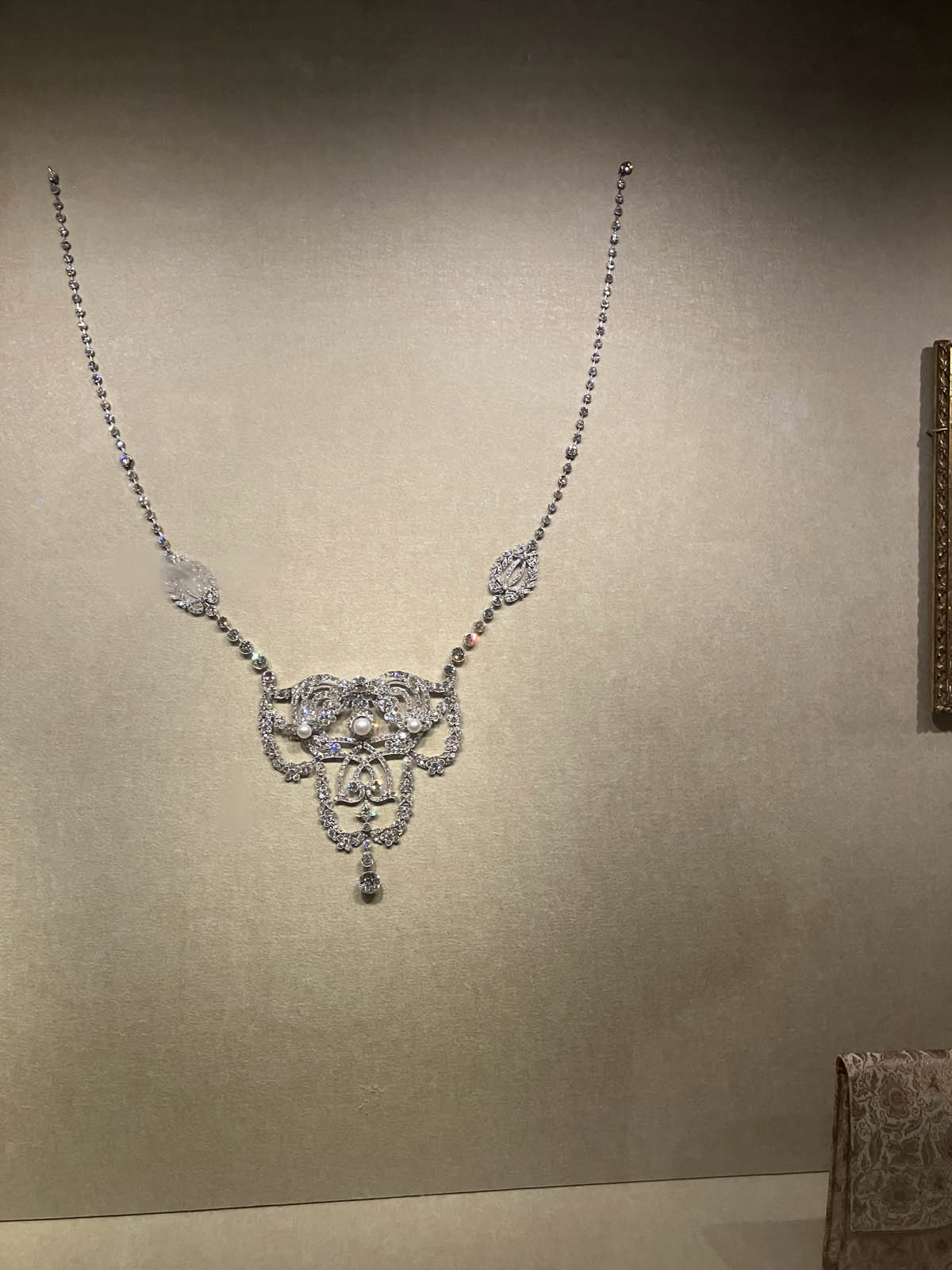
 

Installation view of the exhibition 'Cartier' at NGV International, Melbourne, June - October, 2026
Installation view of the exhibition 'Cartier' at NGV International, Melbourne, June - October, 2026 showing Tutti Frutti strap bracelet (Cartier New York, Special order 1928, modified in 1929); Pair of Tutti Frutti clip brooches (Cartier New York, 1929); Tutti Frutti bracelet-watch (Cartier Paris, 1929); Secret watch (Cartier, 2024)


Tutti Frutti strap bracelet (installation view)
Cartier New York
Special order 1928, modified in 1929
Emeralds, rubies, sapphires, diamonds, enamel, platinum
Cartier Collection

Pair of Tutti Frutti clip brooches
Cartier New York
1929
Rubies, emeralds, diamonds, enamel, platinum, white gold
Cartier Collection

Tutti Frutti bracelet-watch
Cartier Paris
1929
Emeralds (42.38 carats total), rubies, sapphires, diamonds, platinum
Cartier Collection

Secret watch
Cartier
2024
Emeralds (including one of 17.02 carats), sapphires, rubies, diamonds, onyx, white gold
Collection of Mrs Lolita Younes


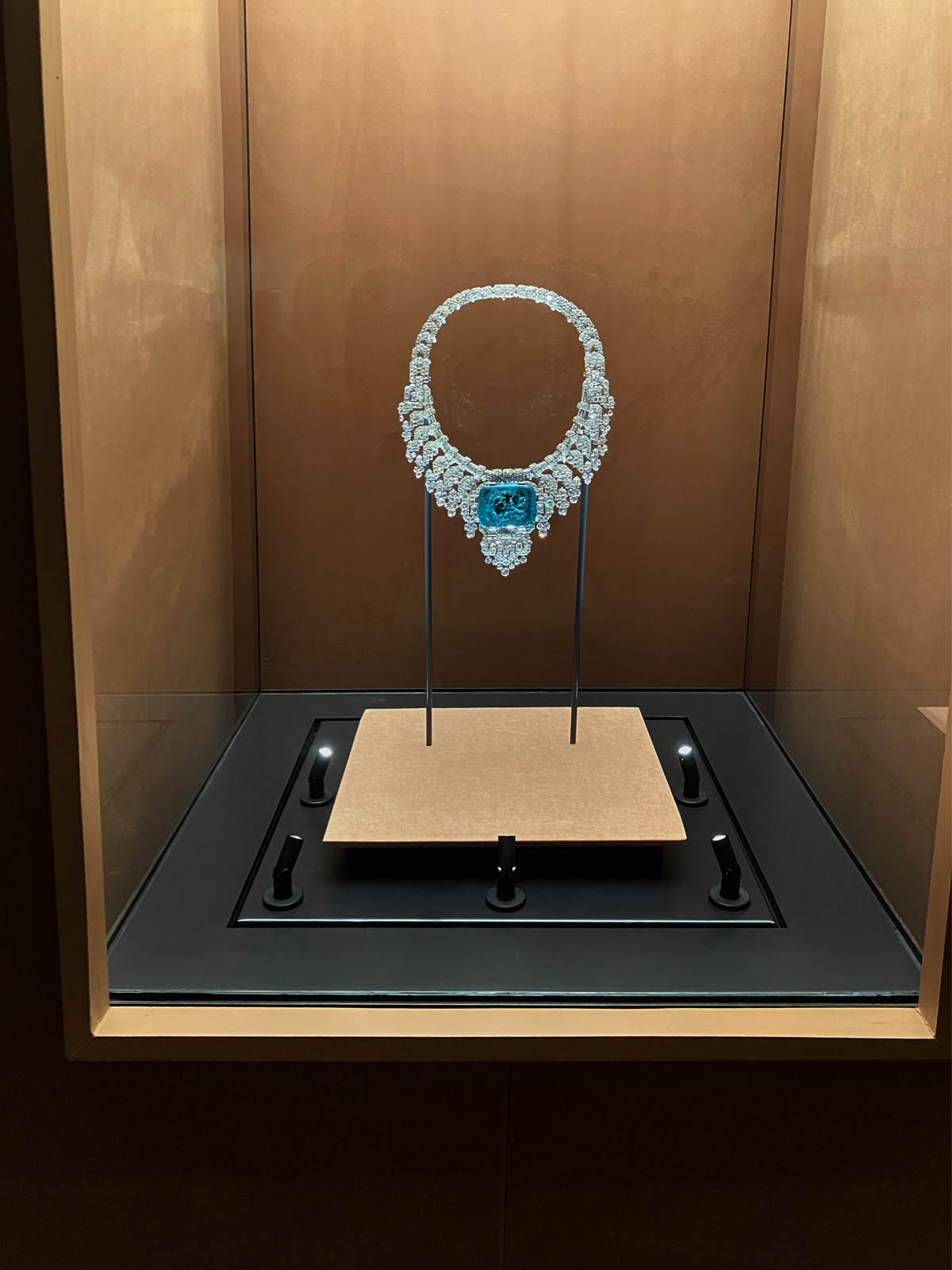
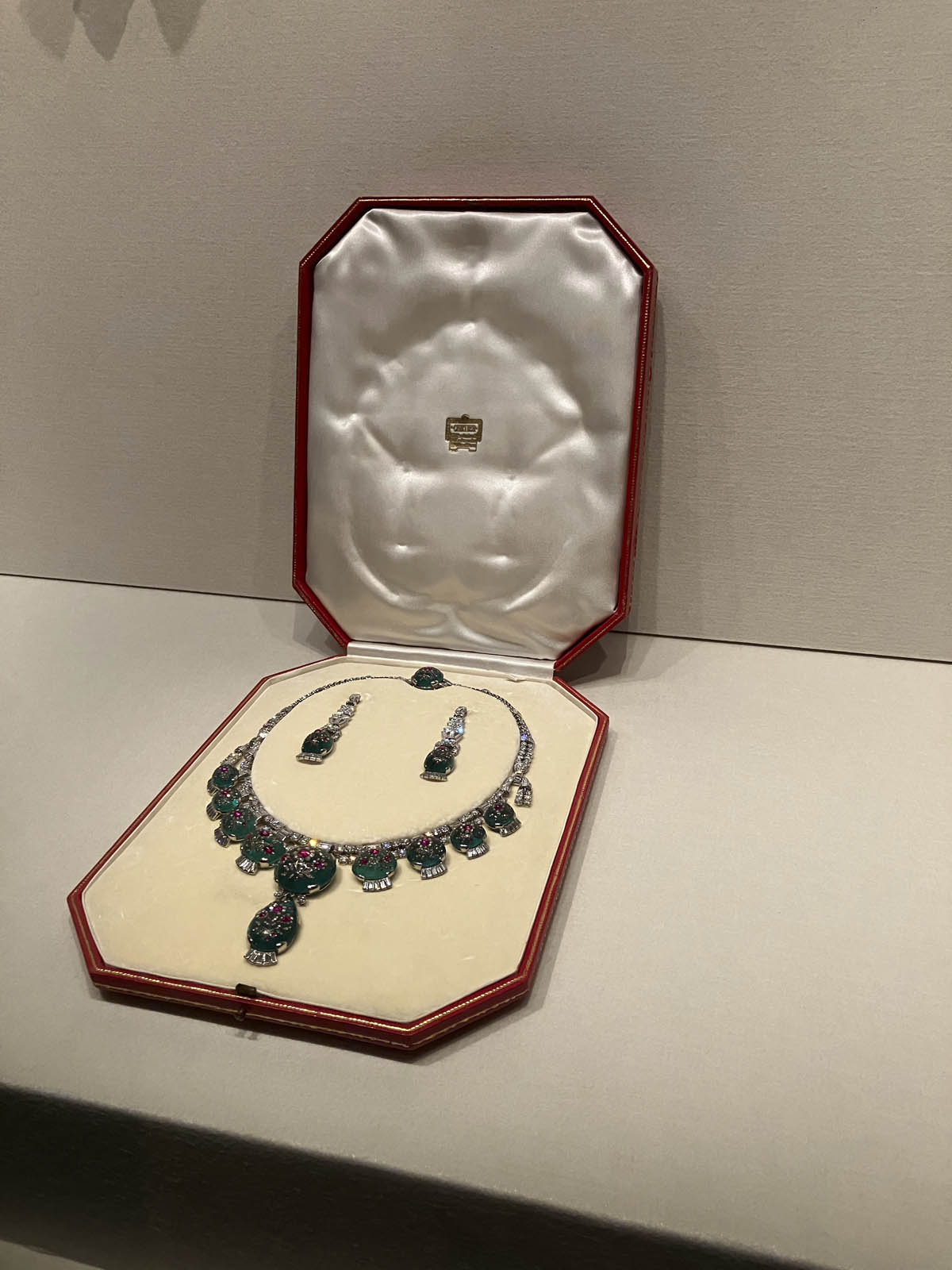
Installation view of the exhibition 'Cartier' at NGV International, Melbourne, June - October, 2026 showing 'Necklace' by Cartier London, Special order, 1932


Necklace (installation view)
Cartier London
Special order, 1932
Emerald (143.23 carats), diamonds, platinum
Commissioned by Beatrice Mills, Countess of Granard
Cartier Collection


Beatrice Mills, daughter of American financier and philanthropist ogden Mills, married the 8th Earl of Granard in 1909. Lady Granard, as she became known, was a lotyla client of Carter London and was famous for her extravagant jewellery collection. According to the society diarist Henry ‘Chips’ Channon, ‘Lady Granard could scarcely walk for jewels’ while attending on of his dinner parties in 1938. This spectacular necklace was created from stones entirely supplied by the Countess. It is in the style of the heavier but shorter collar necklaces popular in the 1930s, while its powerful S-shaped diamond-set scrolls surrounding the magnificent emerald in the centre.

Wall text from the exhibition
 

Installation view of the exhibition 'Cartier' at NGV International, Melbourne, June - October, 2026
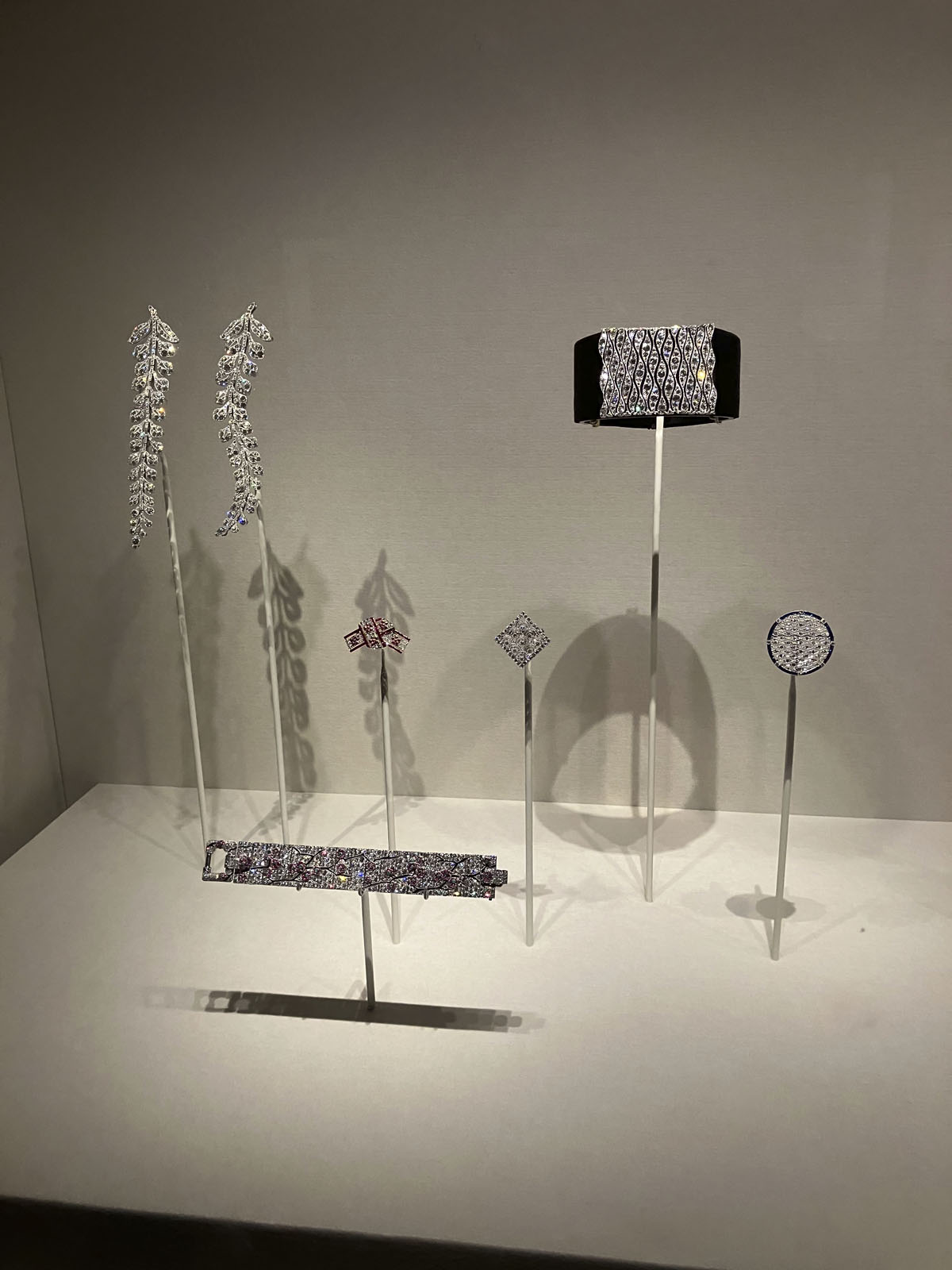
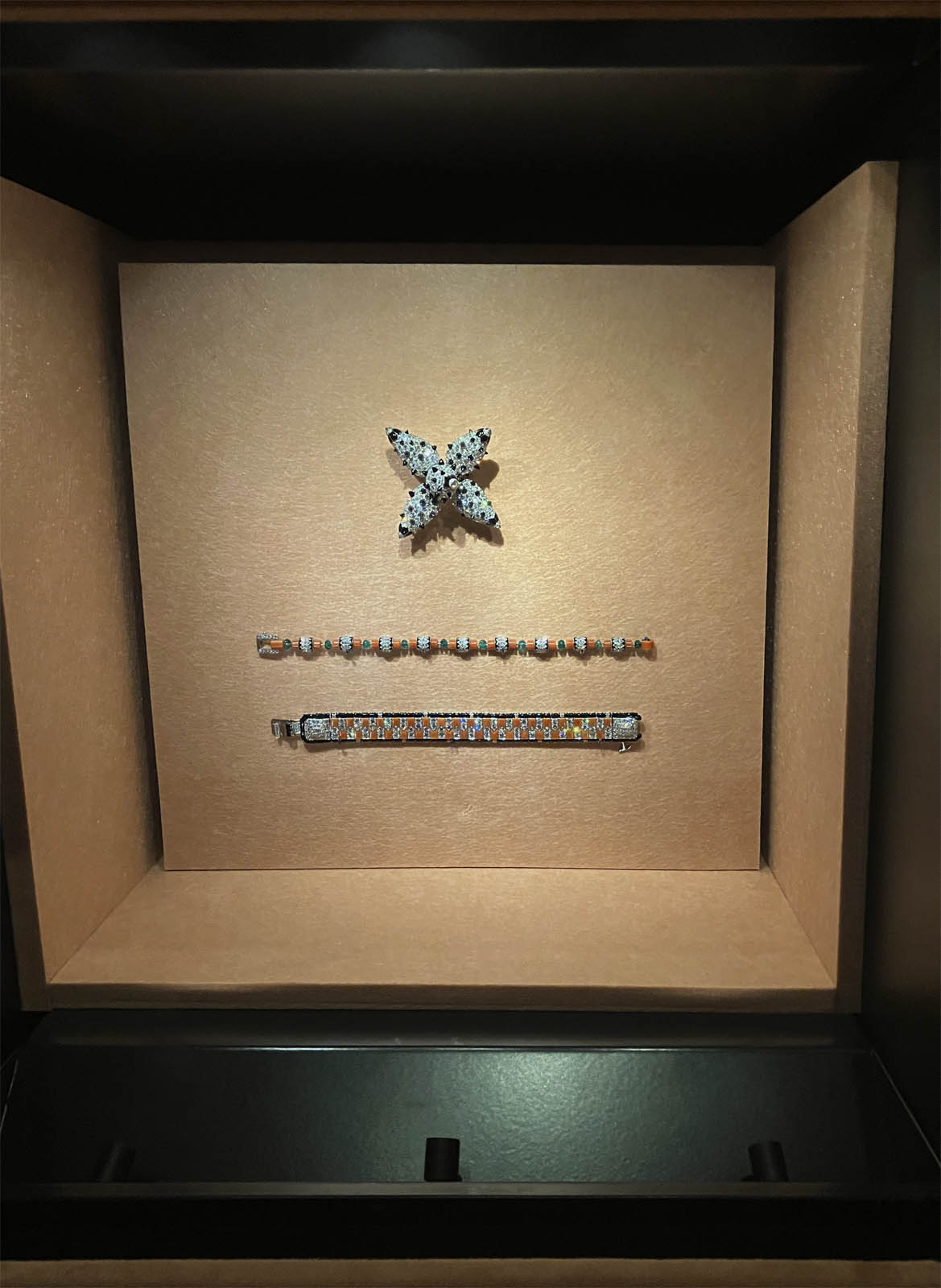
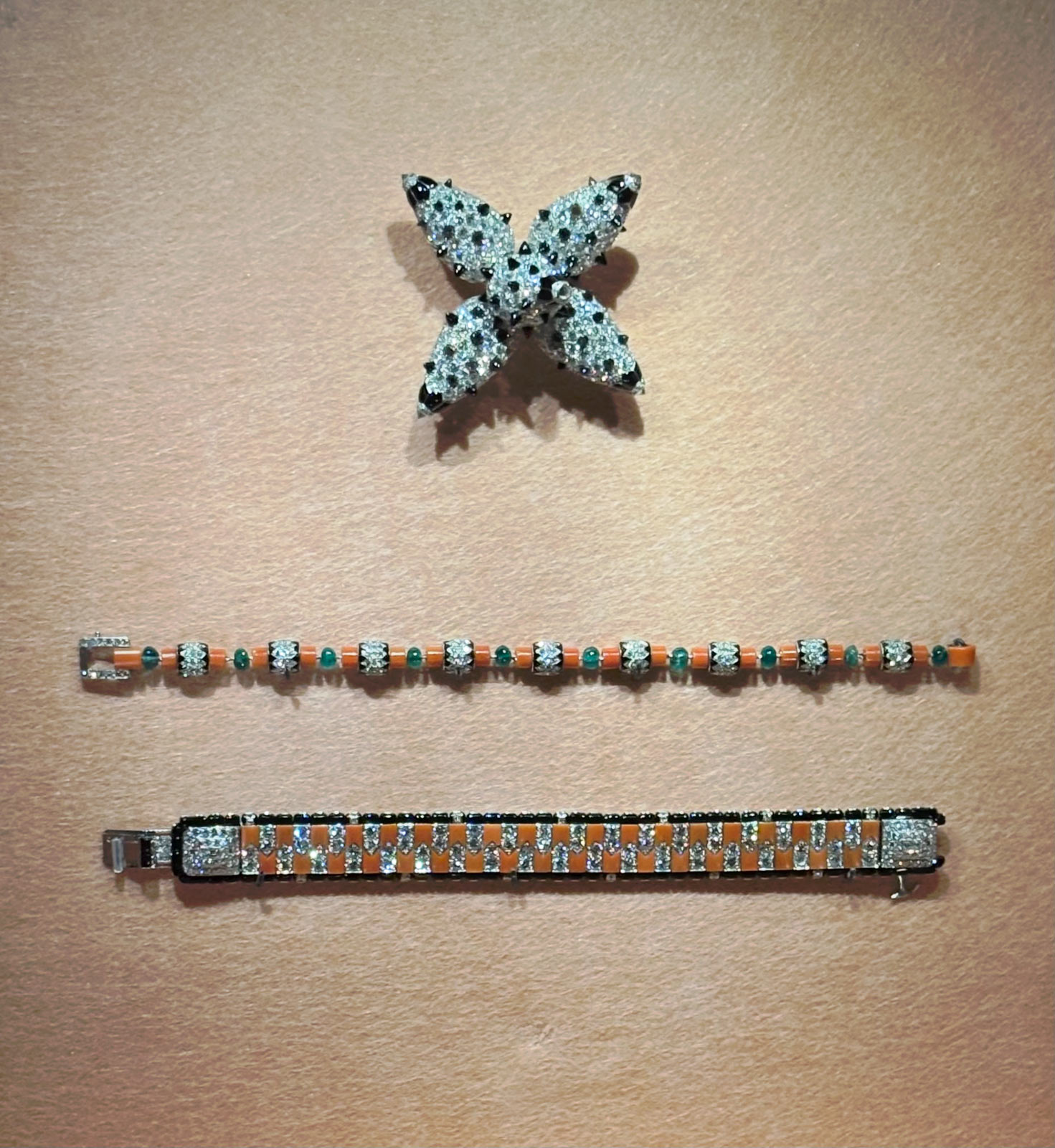
Installation view of the exhibition 'Cartier' at NGV International, Melbourne, June - October, 2026 showing Brooch, originally set as a head ornament (Cartier Paris, 1925, modified in 1927); Bracelet (Cartier Paris, 1922); Bracelet (Cartier Paris, 1925)


Brooch, originally set as a head ornament (installation view)
Cartier Paris
1925, modified in 1927
Diamonds, onyx, enamel, platinum, gold
Cartier Collection

Bracelet
Cartier Paris
1922
Emeralds, diamonds, coral, onyx, platinum
Cartier Collection

Bracelet
Cartier Paris
1925
Diamonds, coral, onyx, platinum
Cartier Collection


This onyx and diamond orchid brooch was on display at the 1925 Paris Exhibition as one of four orchid flowers mounted as a pair of hair ornaments. The coral, onyx and diamond bracelet was also displayed at the exhibition, along with an identical example of the bracelet with coral and emeralds. They exemplify Cartier’s innovative colour combinations and striking geometric designs.

Wall text from the exhibition
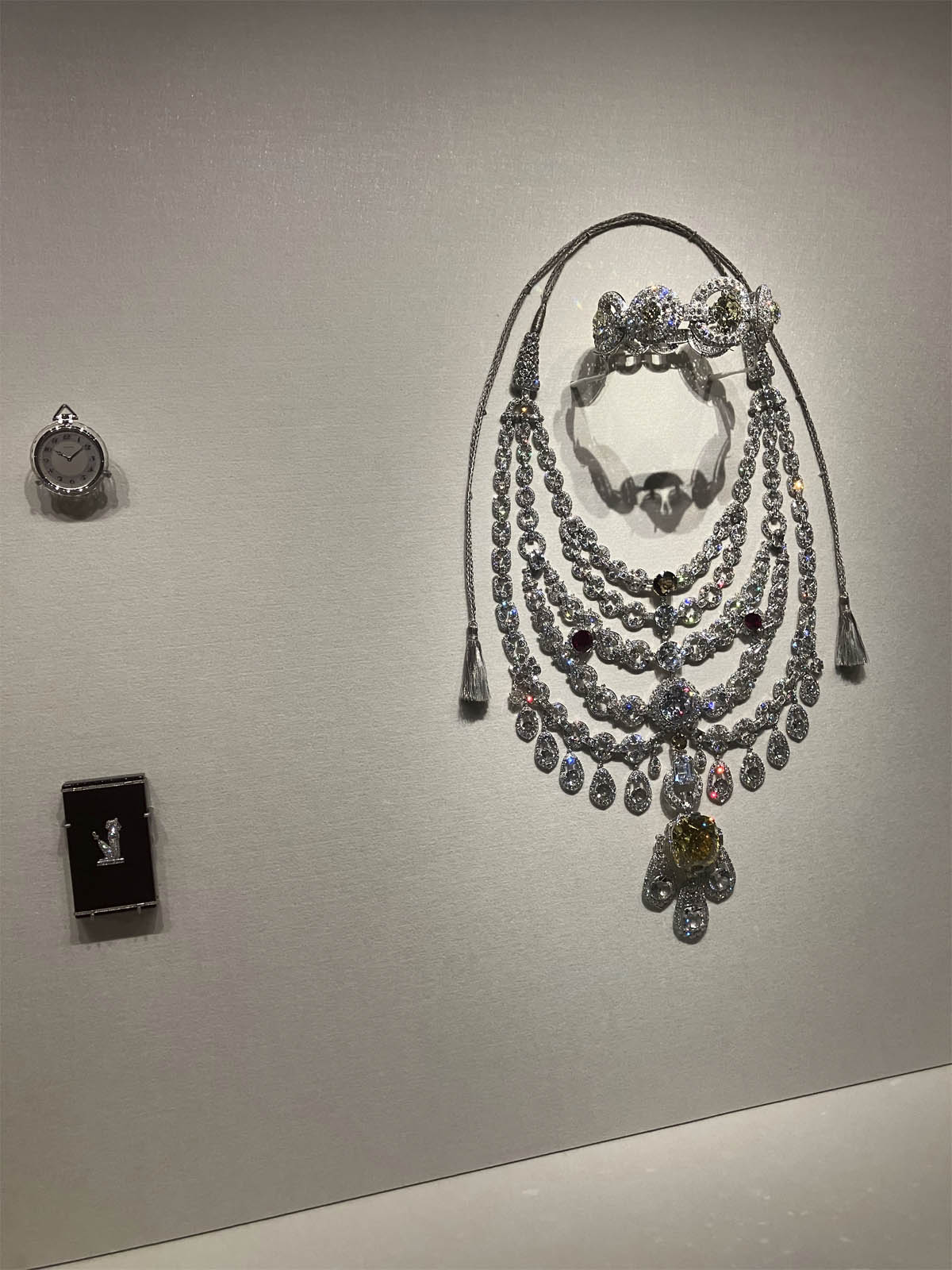
 

Installation view of the exhibition 'Cartier' at NGV International, Melbourne, June - October, 2026
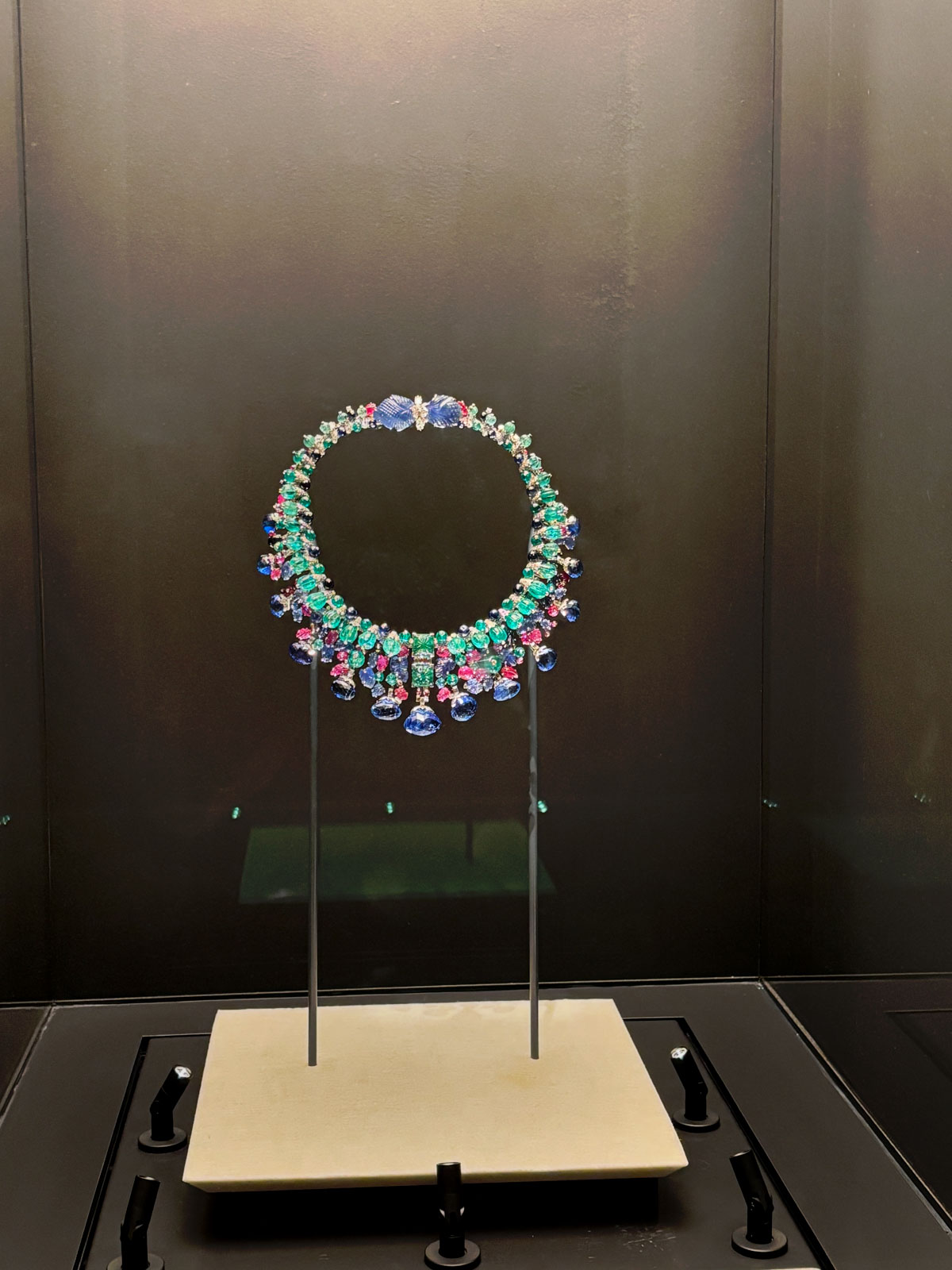
Installation view of the exhibition 'Cartier' at NGV International, Melbourne, June - October, 2026 showing 'Hindou' Necklace (Cartier Paris, 1936, modified in 1963)


‘Hindou’ Necklace (installation view)
Cartier Paris
1936, modified in 1963
Special order
Sapphires (240.15 carats total), emeralds, rubies, diamonds, platinum, white gold
Cartier Collection


This necklace is generally regarded as the most spectacular example of Tutti Frutti jewellery ever created by Cartier. Recorded in the Cartier Archives as ‘Hindou’, the necklace was originally mounted on a long Indian-style cord so that it would sit lower down. Daisy Fellowes supplied Cartier with jewels from her own collection (including from a Tutti Frutti bracelet, the design sketch for which is displayed on the wall opposite). Her daughter the Comtesse de Casteja had the necklace remodelled by Cartier in 1963.

Wall text from the exhibition
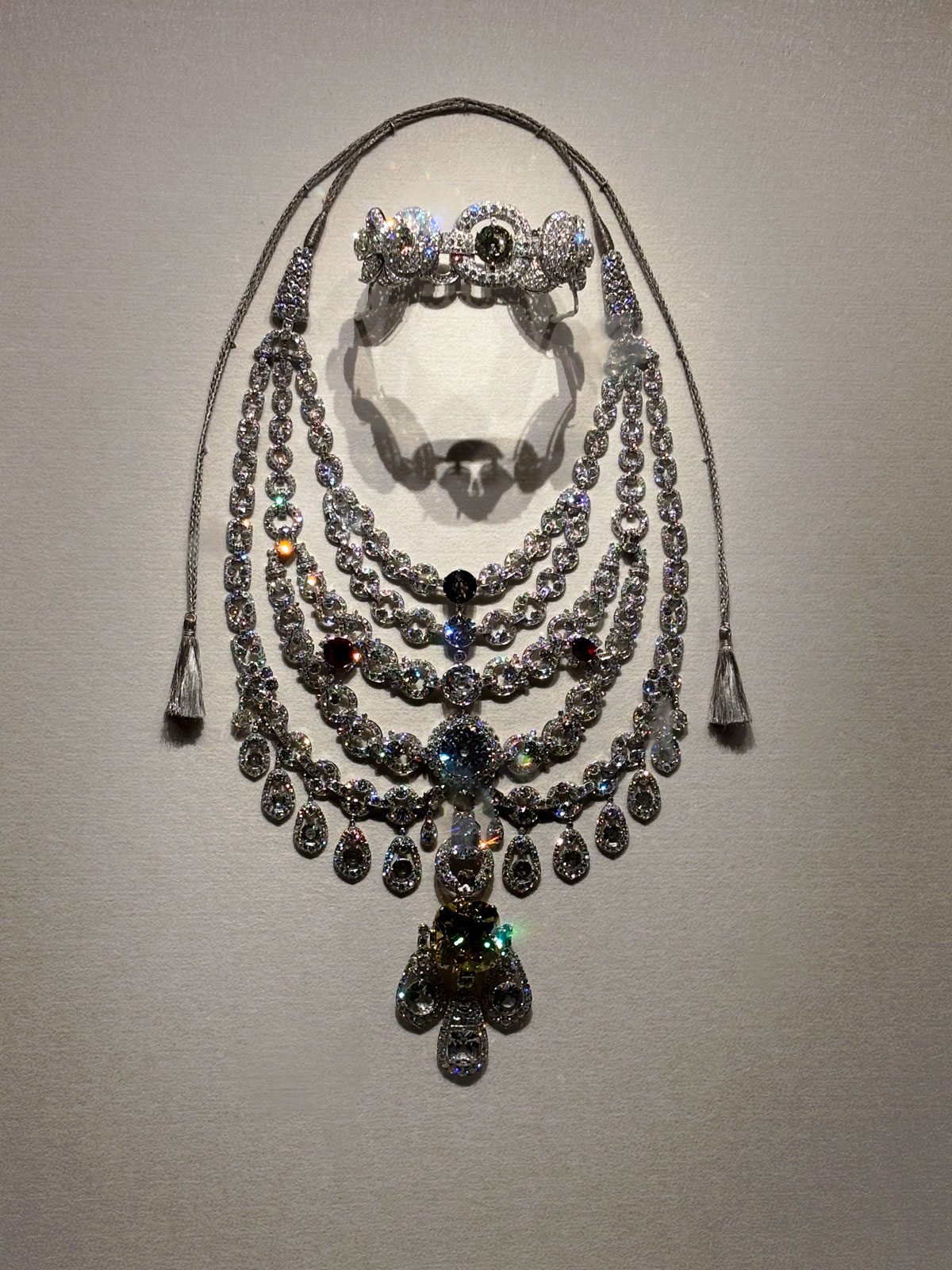
 

Installation view of the exhibition 'Cartier' at NGV International, Melbourne, June - October, 2026


Installation views of the exhibition Cartier at NGV International, Melbourne, June – October, 2026
Photos: Marcus Bunyan


NGV International
180 St Kilda Road

Opening hours:
Daily 10am – 5pm

National Gallery of Victoria website

LIKE ART BLART ON FACEBOOK

Back to top

Exhibition: ‘Man Ray: The Paris Years’ at the Virginia Museum of Fine Arts, Richmond, Virginia

Exhibition dates: 30th October, 2021 – 20th February, 2022

Curator: Dr. Michael Taylor, VMFA’s Chief Curator and Deputy Director for Art and Education


Man Ray (American, 1890-1976) 'Self-Portrait with Camera' 1930 from the exhibition 'Man Ray: The Paris Years' at the Virginia Museum of Fine Arts, Richmond, Virginia, Oct 2021 - Feb 2022


Man Ray (American, 1890-1976)
Self-Portrait with Camera
1930
Solarised gelatin silver print
The Jewish Museum, New York, Photography Acquisitions Committee Fund, Horace W. Goldsmith Fund, and Judith and Jack Stern Gift
© Man Ray 2015 Trust/Artists Rights Society (ARS), NY/ADAGP, Paris 2021


I remember many many years ago (2004) the National Gallery of Victoria held a major exhibition of the work of Man Ray, the first large-scale exhibition of Man Ray’s photography to have been presented in Australia. The exhibition was organised by the Art Gallery of New South Wales where it set an attendance record for photography exhibitions, with over 52,000 visitors, before travelling to Brisbane and Melbourne – which exhibitions did in those days between state capitals, alas no longer.

All these years later I still remember being impressed by the technical, almost scientific element – and elemental – aspect of Man Ray’s photography, the sheer intensity of his images, and their small, jewel-like size. I was less impressed by the lack of feeling the photographs gave me, as though the photographs were scientific experiments which emphasised “his techniques of framing, cropping, solarising and use of the photogram in order to present a new, ‘surreal’ way of seeing” and which, to my young photographic eyes, saw their lush and enigmatic beauty subsumed in an unemotional technical exercise.

Concentrating on his portrait photographs during his Paris years, this exhibition includes more than 100 portrait photographs made by the artist in Paris between 1921 and 1940. “In choosing portraits for the exhibit, the curator’s objective was to present the complete picture of Man Ray’s pantheon of cultural luminaries… “Since this exhibition is all about storytelling, we wanted to highlight the femme moderne and tell the public of their fierce individuality and creativity,” [Michael] Taylor says, explaining that the women’s inclusion makes for a more dynamic and meaningful exhibition. “These are musicians, models and performers whose contributions have been marginalized due to the legacy of colonialism and racism.” … The portraits chosen for “Man Ray: the Paris Years” reflect not only the staggering range of techniques Ray employed during his Parisian years, but also the fascinating people who inhabited his world. “Innovative, groundbreaking, experimental and completely original, Ray’s portraits are unlike the work of any of his contemporaries,” Taylor says.”1

But to my mind Man Ray’s other photography during this period, such as his 1922 album Champs Délicieux which contained 12 Dada inspired Rayographs (some of his first), his surreal photographic solarisations and his portfolio, Électricité (Electricity) (1931) are more expressive and revolutionary avant-garde statements of the creative power of photography than ever his portraits are.

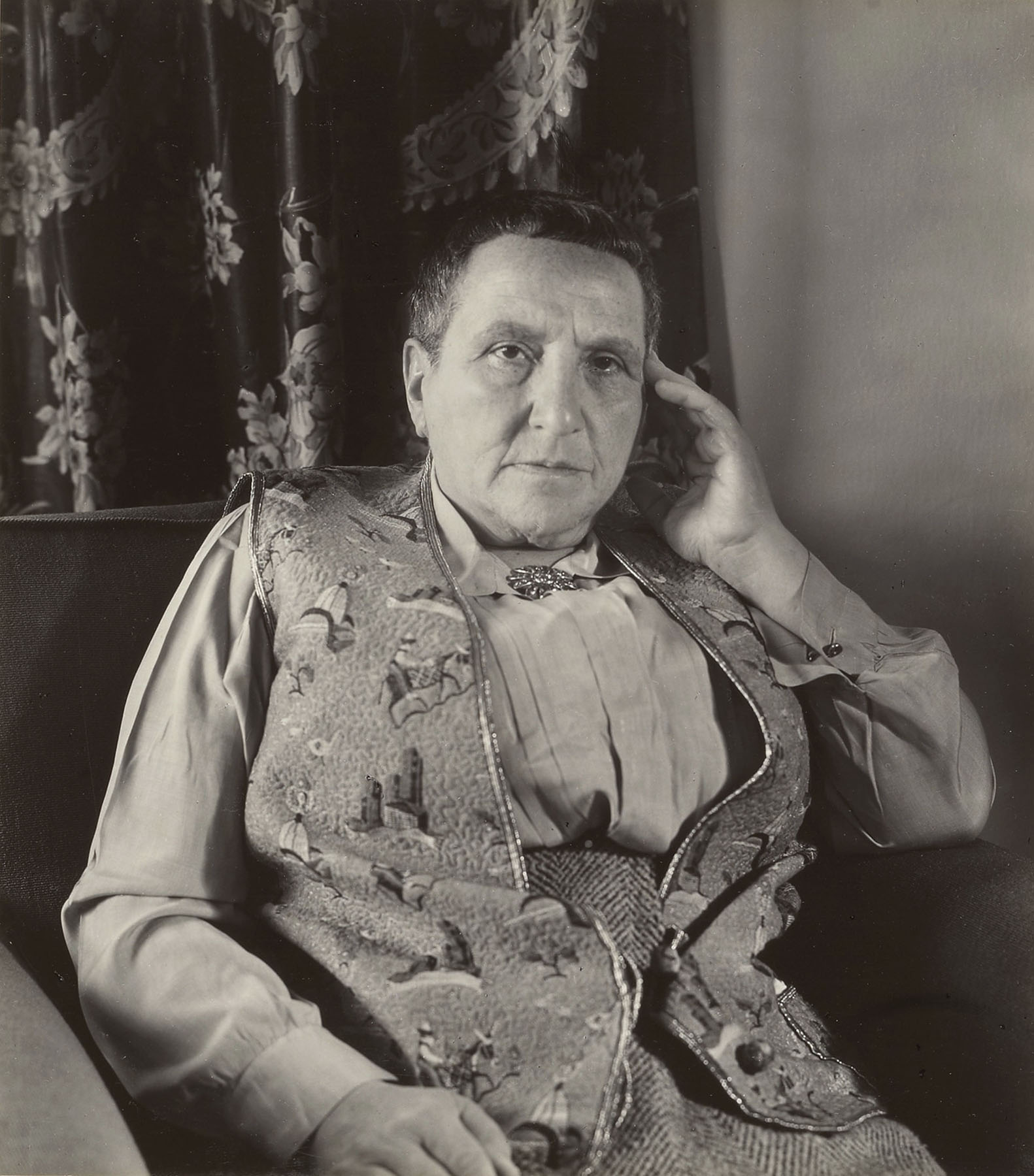
And while his portrait photographs may be experimental and groundbreaking – all about technique – are they good portraits? That’s the key question. To my eyes his portraits have a “lumpy” quality to them, a kind of enigmatic blankness that never reveals much of the sitters personality. The doll-like beauty of Kiki de Montparnasse (c. 1924, below) becomes a later abstract wistfulness both photographs revealing nothing; a tough, shielded Gertrude Stein (at Home) (1922, below) is not a patch on Imogen Cunningham’s engaging, challenging portrait of 1934; and the portrait of Elsie Houston (1933, below) is just plain uncomfortable in its placement of the bandaged head and hand in the pictorial frame.

Apparently, Man Ray “was in league with the surrealists and, in even his most classical-seeming portraits, revealed a predilection for unexpected juxtapositions, visual rhymes and piercing expressions that can transport you instantaneously to the lip of a volcanic unconscious.” Allegedly.

A volcanic unconscious. Who writes this stuff? I often feel I am looking at different photographs than the ones other people are writing about. Again, “Man Ray’s photography doesn’t simply capture the image of a person, or the ghost that inhabits them. It captures the whole of creative expression – the surreal and sorrowful, the conflict and music, the desperation and freedom that comprise the human narrative.” No it doesn’t… I don’t even think he is a very good portrait photographer! Compared to a Weston, Sander or Lange, a Stieglitz, Arbus or Julia Margaret Cameron, Man Ray’s portraits are modestly proficient evocations at best.

“To be ‘done’ by Man Ray and Berenice Abbott meant that you rated as somebody,” wrote Sylvia Beach, owner of Shakespeare and Company, the legendary bookstore and lending library established in Paris after World War I by the American expatriate. You had made it… immortalised in the negative, promoted in the positive. There is the key. To be worthy, to be “fashion” able. After all, Man Ray was running a commercial photographic studio with Berenice Abbott as his assistant in order to make a living. After Man Ray fired her in 1926 Abbott set up her own studio and they became business rivals.

The two most enticing portrait photographs in the posting are both wistful visages of the female: the slightly out of focus, low depth of field beauty of the direct Lee Miller, an ex-lover of Man Ray, staring down the desiring male gaze, like the most glamorous and scientifically symmetrically perfect “mug shot” you have ever seen; and the soft sfumato (which translated literally from Italian means “vanished or evaporated”) background to the contemporary Mona Lisa that is the vulnerable, tender Berenice Abbott surrounded by vanished shadows and evaporated space. “Leonardo has studied the sky, the elements, the atmosphere, and the light. He takes the approach of a scientist, but translates it into the painting with superb delicacy and finesse. For him the painting doesn’t count. What counts is the knowledge,” observes Louvre Curator Jean-Pierre Cuzin.2

Science, knowledge and atmosphere. Only in this portrait of Berenice Abbott does Man Ray take his love of science and knowledge and approach what Preston Duncan observes: “It is through this aperture that we find the abiding sense that, in all the weight, the struggle, the limitations of our physical form, is an ongoing moment of release.”

A final thought emerges in my consciousness. I wondered whether there is a photograph of Man Ray by Berenice Abbott? Not that I can find…

Dr Marcus Bunyan


1/ Karen Newton. “Storytelling Portraits,” on the Style Weekly website August 31, 2021 [Online] Cited 20/02/2022

2/ Anonymous text. “…Leonardo’s masterful technique,” on the PBS Treasures of the World website [Online] Cited 20/02/2022


Many thankx to the Virginia Museum of Fine Arts for allowing me to publish the photographs in the posting. Please click on the photographs for a larger version of the image.


“The story of Man Ray and Paris has been told, but it’s usually been told through the lens – pardon the pun, it’s a photography show – of Man Ray’s innovations; the Rayograph, Solarization, his friendships, and his network. But what about the subjects?” says Chief Curator, Dr. Michael Taylor. “We took inspiration from the photograph on the cover of this show. It’s the first work you see in the exhibition. This is actually Man Ray taking your portrait. In other words, […] even though it’s called a self-portrait, a camera is photographing him, but he is looking at you with his camera. So we started to think about not just telling Man Ray’s story, which is fascinating, but the story of the sitters, the subjects, the models. …

While the primary focus of the exhibit is on portraiture and the radical expressiveness of his subjects – from the vanguards of femme moderne culture to aerialists in drag – there are some detours into avant-garde Rayography and cinema. This diversity of expression is resonant with Man Ray’s professional dedication to dismantling boundaries – those of gender, race, and national identity, as well as artistic traditionalism and aesthetic philosophy. …

Man Ray’s photography doesn’t simply capture the image of a person, or the ghost that inhabits them. It captures the whole of creative expression – the surreal and sorrowful, the conflict and music, the desperation and freedom that comprise the human narrative. It is through this aperture that we find the abiding sense that, in all the weight, the struggle, the limitations of our physical form, is an ongoing moment of release. It confronts us with the fact we are all winging this strange dance, contributing our solitary note to an overture that is entirely improvised, sharing in the simple hope that we may, for an instant, hear the enormity of the score.”


Preston Duncan. “The View From Paris,” on the RVA website November 3, 2021 [Online] Cited 02/02/2022


All the men of the age are there: Igor Stravinsky, James Joyce, Andre Breton, Picasso and Braque. Equally present are the era’s modern women, including Bernice Abbott, the rarely-as-well-photographed Gertrude Stein, Lee Miller and Virginia Woolf. The real stars, however, are the unknowns. Or rather, those unknown-to-us. “Man Ray used photography to challenge the artistic traditions and break boundaries, including fixed gender roles and racial barriers,” says Michael Taylor, the museum’s chief curator, who conceived the exhibition.


Daniel Cassady. “‘Paris’s glowing milieu spills onto every corner’: Virginia show theatrically tells the story of Man Ray’s fruitful time in the City of Lights,” on The Art Newspaper website 11 November 2021 [Online] Cited 03/02/2022


Man Ray (American, 1890-1976) 'Kiki de Montparnasse' c. 1924 from the exhibition 'Man Ray: The Paris Years' at the Virginia Museum of Fine Arts, Richmond, Virginia, Oct 2021 - Feb 2022


Man Ray (American, 1890-1976)
Kiki de Montparnasse
c. 1924
Gelatin silver print
Francis M. Naumann Fine Art, New York
© Man Ray 2015 Trust/Artists Rights Society (ARS), NY/ADAGP, Paris 2021


Man Ray (American, 1890-1976) 'Kiki de Montparnasse' c. 1929


Man Ray (American, 1890-1976)
Kiki de Montparnasse
c. 1929
Gelatin silver print
© Man Ray 2015 Trust/Artists Rights Society (ARS), NY/ADAGP, Paris 2021


Alice Ernestine Prin (French, 1901-1953)

Alice Ernestine Prin (2 October 1901 – 29 April 1953), nicknamed the Queen of Montparnasse, and often known as Kiki de Montparnasse, was a French artist’s model, literary muse, nightclub singer, actress, memoirist and painter. She flourished in, and helped define, the liberated culture of Paris in the 1920s.

Alice Prin was born in Châtillon-sur-Seine, Côte d’Or. An illegitimate child, she was raised in abject poverty by her grandmother. At age twelve, she was sent to live with her mother in Paris in order to find work. She first worked in shops and bakeries, but by the age of fourteen, she was posing nude for sculptors, which created discord with her mother.

Adopting a single name, “Kiki”, she became a fixture in the Montparnasse social scene and a popular artist’s model, posing for dozens of artists, including Sanyu, Chaïm Soutine, Julian Mandel, Tsuguharu Foujita, Constant Detré, Francis Picabia, Jean Cocteau, Arno Breker, Alexander Calder, Per Krohg, Hermine David, Pablo Gargallo, Mayo, and Tono Salazar. Moïse Kisling painted a portrait of Kiki titled Nu assis, one of his best known.

Her companion for most of the 1920s was Man Ray, who made hundreds of portraits of her. She can be considered his muse at the time and the subject of some of his best-known images, including the surrealist image Le violon d’Ingres and Noire et blanche (see below).

She appeared in nine short and frequently experimental films, including Fernand Léger’s Ballet mécanique without any credit.

A painter in her own right, in 1927 Prin had a sold-out exhibition of her paintings at the Galerie au Sacre du Printemps in Paris. Signing her work with her chosen single name, Kiki, she usually noted the year. Her drawings and paintings comprise portraits, self-portraits, social activities, fanciful animals, and dreamy landscapes composed in a light, slightly uneven, expressionist style that is a reflection of her easy-going manner and boundless optimism. …

A symbol of bohemian and creative Paris and of the possibility of being a woman and finding an artistic place, at the age of twenty-eight she was declared the Queen of Montparnasse. Even during difficult times, she maintained her positive attitude, saying “all I need is an onion, a bit of bread, and a bottle of red [wine]; and I will always find somebody to offer me that.”

She left Paris to avoid the occupying German army during World War II, which entered the city in June 1940. …

Prin died in 1953 after collapsing outside her flat in Montparnasse, at the age of fifty-one, apparently of complications of alcoholism or drug dependence. A large crowd of artists and fans attended her Paris funeral and followed the procession to her interment in the Cimetière parisien de Thiais. Her tomb identifies her as “Kiki, 1901-1953, singer, actress, painter, Queen of Montparnasse.” Tsuguharu Foujita has said that, with Kiki, the glorious days of Montparnasse were buried forever.

Long after her death, Prin remains the embodiment of the outspokenness, audacity, and creativity that marked that period of life in Montparnasse. She represents a strong artistic force in her own right as a woman. In 1989, biographers Billy Klüver and Julie Martin called her “one of the century’s first truly independent women.” In her honour, a daylily has been named Kiki de Montparnasse.

Text from the Wikipedia website


Man Ray (American, 1890-1976) 'Noire et Blanche' 1926


Man Ray (American, 1890-1976)
Noire et Blanche
1926
Gelatin silver print
6 7/8 x 8 1/4 in. (17.5 x 21cm)
© Man Ray 2015 Trust/Artists Rights Society (ARS), NY/ADAGP, Paris 2021

As far as I know this photograph is NOT in the exhibition


Man Ray (American, 1890-1976) 'Gertrude Stein (at Home)' 1922


Man Ray (American, 1890-1976)
Gertrude Stein (at Home)
1922
Gelatin silver print
7 15/16”H × 6 1/16”W (20.16 × 15.4cm)
Virginia Museum of Fine Arts, Arthur and Margaret Glasgow Endowment
© Man Ray 2015 Trust/Artists Rights Society (ARS), NY/ADAGP, Paris 2021


Imogen Cunningham (American, 1883-1976) 'Gertrude Stein, Writer' 1934


Imogen Cunningham (American, 1883-1976)
Gertrude Stein, Writer
1934
Gelatin silver print
Image: 7 9/16 × 6 11/16 in.
Frame: 22 5/8 x 16 5/8 x 1 3/8 in.
The J. Paul Getty Museum, Los Angeles


Man Ray (American, 1890-1976) 'Berenice Abbott' 1921, printed later


Man Ray (American, 1890-1976)
Berenice Abbott
1921, printed later
Gelatin silver print
Virginia Museum of Fine Arts, Arthur and Margaret Glasgow Endowment
© Man Ray 2015 Trust/Artists Rights Society (ARS), NY/ADAGP, Paris 2021


In 1926 Peggy Guggenheim, who often lent her financial support to the Paris colony of artists and writers, telephoned Man Ray to arrange a studio appointment to have her portrait taken, not by Man Ray himself, but by Berenice. Afterwards Man Ray was livid, he now realised that Berenice had become a serious business rival, and the next day he fired her. Berenice immediately made plans to have a studio of her own and friends of Berenice stepped forward to help her. When she made arrangements to purchase a view camera – Peggy Guggenheim lent her the money to pay for it. As partial repayment, Berenice later photographed Peggy’s children. In 1926, she had her first solo exhibition (in the gallery “Au Sacre du Printemps”) and started her own studio on the rue du Bac.


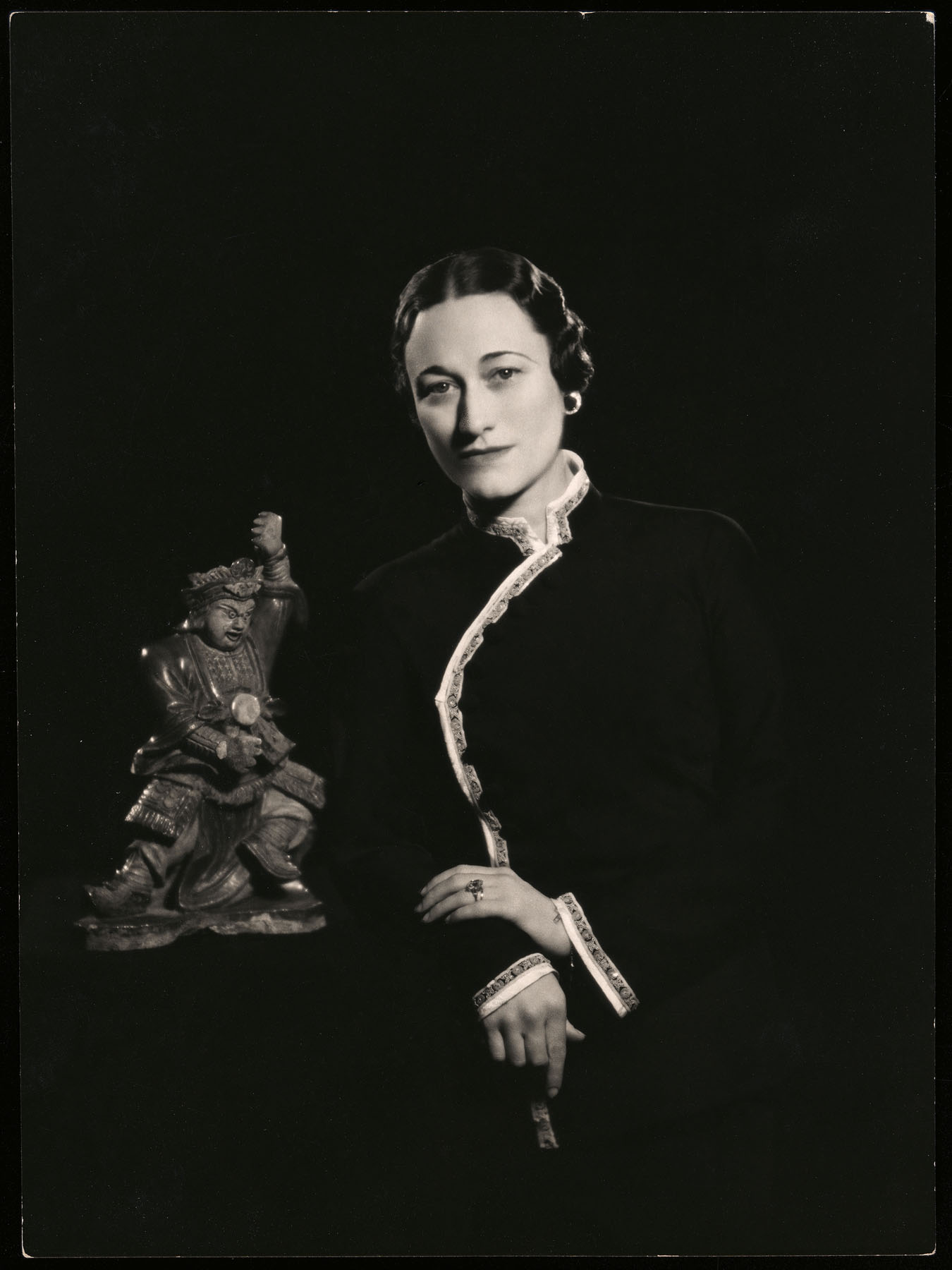
Man Ray (American, 1890-1976) 'Wallis Simpson with Chinese Sculpture' 1936


Man Ray (American, 1890-1976)
Wallis Simpson with Chinese Sculpture
1936
Gelatin silver print
Virginia Museum of Fine Arts, Arthur and Margaret Glasgow Endowment
© Man Ray 2015 Trust/Artists Rights Society (ARS), NY/ADAGP, Paris 2021


Photographed during the year in which her liaison with Edward VIII became public and he abdicated the throne of the British Empire.


The Virginia Museum of Fine Arts announces its upcoming exhibition, Man Ray: The Paris Years, on view in Richmond from October 30, 2021, through February 21, 2022. Organised by Dr. Michael Taylor, VMFA’s Chief Curator and Deputy Director for Art and Education, the exhibition includes more than 100 compelling portrait photographs made by the artist in Paris between 1921 and 1940, featuring cultural luminaries such as Barbette, André Breton, Jean Cocteau, Marcel Duchamp, Ernest Hemingway, Miriam Hopkins, James Joyce, Henri Matisse, Méret Oppenheim, Alice Prin (Kiki de Montparnasse), Elsa Schiaparelli, Erik Satie, Wallis Simpson and Gertrude Stein.

The son of Russian-Jewish immigrants, Emmanuel “Manny” Radnitzky grew up in New York and adopted the pseudonym Man Ray around 1912. A timely sale of paintings to Ferdinand Howald, an art collector from Columbus, Ohio, provided Man Ray with funds for a trip to Paris, and he arrived in the French capital on July 22, 1921. Although the artist worked in a variety of media over the next two decades, including assemblage, film, sculpture and painting, photography would be his primary means of artistic expression in Paris.

Shortly after moving to France, Man Ray embarked on a sustained campaign to document the international avant-garde in a series of remarkable portraits that established his reputation as one of the leading photographers of his era. Man Ray’s portraits often reflect a dialogue or negotiation between the artist’s vision and the self-fashioning of his subjects. Whether they had their portrait taken to promote their work, affirm their self-image, project their desires, fulfil their dreams or create a new identity, Man Ray’s sitters were not inanimate objects, like blocks of marble to be shaped and coerced, but were instead highly creative cultural and thought leaders who were active participants in the creative act. By telling the stories of his respective sitters and the innovative techniques he used to create their portraits, Man Ray: The Paris Years empowers the subjects portrayed in these photographs and gives them an agency and voice that is not typically realised in monographic accounts of modern artists.

“Timed to coincide with the 100th anniversary of the artist’s arrival in the French capital and, coincidentally, the near-centennial anniversary of the Spanish flu pandemic, Man Ray: The Paris Years will prove to be a visually provocative and especially relevant exhibition,” said Alex Nyerges, VMFA’s Director and CEO. “This is an opportunity to better understand the lives of his subjects and see Man Ray in a different light.”

“Man Ray used photography to challenge artistic traditions and break boundaries, including fixed gender roles and racial barriers,” said Taylor. “His portraits went beyond recording the mere outward appearance of the person depicted and aimed instead to capture the essence of his sitters as creative individuals, as well as the collective nature and character of Les Années folles (the crazy years) of Paris between the two world wars.”

Man Ray’s radical portraits also capture an important constituency of the avant-garde at this time, namely the femme moderne (modern woman). Adventurous, ambitious, assertive, daring, enterprising and self-assured modern women like American photographers Berenice Abbott and Lee Miller, French artist Suzanne Duchamp and American sculptor Janet Scudder took full advantage of their unprecedented freedom and access to educational and professional opportunities to participate as equals to their male counterparts in the Parisian avant-garde. Although these women came from different classes and economic backgrounds, they shared a collective goal in the 1920s and 1930s to be creatively, financially and intellectually independent.

“Rejecting traditional gender roles and expectations, modern women were interested in erasing sexual differences,” said Taylor. “They often embraced the symbolic trappings and autonomy of their male counterparts including wearing men’s clothes, driving fast cars, smoking cigarettes and sporting tightly cropped ‘bobbed’ haircuts.”

The exhibition also tells the important stories of Black subjects such as Henry Crowder, Adrienne Fidelin and Ruby Richards, whose contributions have often been unfairly relegated to the margins of modernism due to the legacy of colonialism and racism. The artist’s series of portraits of the dancer and singer Ruby Richards, who was born in St. Kitts in the British West Indies and grew up in Harlem, New York, brings to light an important performer whose work with Man Ray has never been acknowledged in previous accounts of his work. Richards moved to Paris in 1938 to replace the legendary African American performer Josephine Baker as the star attraction at the Folies Bergère, and the famous cabaret music hall commissioned Man Ray to help introduce her to French audiences through his portrait photographs.

Many of the subjects portrayed in Man Ray’s photographs were born in Spanish-speaking countries such as Argentina, El Salvador, Peru and Spain, including famous modern artists like Salvador Dalí and Pablo Picasso, as well as the flamenco dancer Prou del Pilar and the pianist Ricardo Viñes. As a state art museum that has free general admission and is open 365 days a year, VMFA is committed to representing the cultural and linguistic diversity of our community. According to recent data from the U.S. Census Bureau, more than 7 percent of Virginia’s 8.5 million residents speak Spanish at home. This data has informed the museum’s decision to incorporate dual-language labels throughout the Man Ray: The Paris Years exhibition, as well as the audio tour and gallery guide. Recognising that English is not the native language of everyone who visits the exhibition, VMFA is offering content in both Spanish and English to create a more accessible, inclusive and welcoming experience for all of our visitors.

Informed by extensive archival research, this exhibition and accompanying catalogue offers a more complete account of Man Ray’s Paris years by focusing not just on his achievement as a photographer and his superb gifts as a portraitist, but also on the friendships and exchange of ideas that took place between the artist and his subjects in Paris between the two world wars.

Press release from VMFA


Man Ray (American, 1890-1976) 'Nusch Éluard and Sonia Mossé' 1937


Man Ray (American, 1890-1976)
Nusch Éluard and Sonia Mossé
1937
Gelatin silver print
© Man Ray 2015 Trust/Artists Rights Society (ARS), NY/ADAGP, Paris 2021


Mossé was a surrealist artist and performer in a lesbian cabaret.


Ray’s double portraits are among his most spellbinding. Two feature Nusch Éluard, the actress, acrobat and hypnotist’s assistant who married the surrealist poet Paul Éluard. One shows Nusch with the openly bisexual actress, singer, surrealist and model Sonia Mossé. Taken in 1937, the photograph trembles with the intimacy and uncanniness of the culminating scenes in Ingmar Bergman’s “Persona,” where the face of Bibi Andersson begins to merge with that of Liv Ullmann. …

To try to square Man Ray’s magical, tender double portrait with Mossé’s subsequent life, as sketched in by Taylor in the catalogue, is to feel the 20th century – stretched to breaking point by the contrary forces of personal liberation and vicious repression – suddenly snap, like the shutter of a camera taking a photograph no one can bear to look at.

Mossé, writes Taylor, was romantically involved with the French dramatist Antonin Artaud. Best known for conceptualising the Theater of Cruelty movement, Artaud had tried to break off their relationship in 1939 “via handwritten malediction” (a letter in which he wrote curses – e.g., “You will live dead” – in an envelope containing drawings and burned holes).

But Mossé would never receive it. War had broken out. And on Feb. 11, 1943, Mossé and her stepsister Esther were denounced as Jews to the Gestapo. They were taken to the Drancy internment camp in a northeastern suburb of Paris and then to the Sobibór extermination camp in occupied Poland, where Mossé was murdered in a gas chamber.

Sebastian Smee. “Glamour, gossip, sex, scandal: Man Ray’s portraits captured Paris between the wars,” on The Washington Post website November 9, 2021 [Online] Cited 03/02/2022


Man Ray (American, 1890-1976) 'Igor Stravinsky' 1925


Man Ray (American, 1890-1976)
Igor Stravinsky
1925
Gelatin silver print
© Man Ray 2015 Trust/Artists Rights Society (ARS), NY/ADAGP, Paris 2021


Man Ray (American, 1890-1976) 'Picasso in His Studio on the rue de La Boëtie, Paris' 1922


Man Ray (American, 1890-1976)
Picasso in His Studio on the rue de La Boëtie, Paris
1922
Gelatin silver print
© Man Ray 2015 Trust/Artists Rights Society (ARS), NY/ADAGP, Paris 2021


The American Surrealist Man Ray made a number of portraits of Picasso over the years, beginning with this photograph that appeared in the July 1922 issue of Vanity Fair. It was taken on the second floor of Picasso’s apartment at 23 rue de La Boëtie in Paris, where he established a studio in November 1918 and completed many of the Cubist paintings that form the background of this portrait. Man Ray’s portrait brilliantly captures both sides of Picasso’s personality at this time, since the proud and successful artist is also shown to be emotionally distant and seemingly uncomfortable with his newfound wealth and fame.

Text from the Philadelphia Museum of Art website


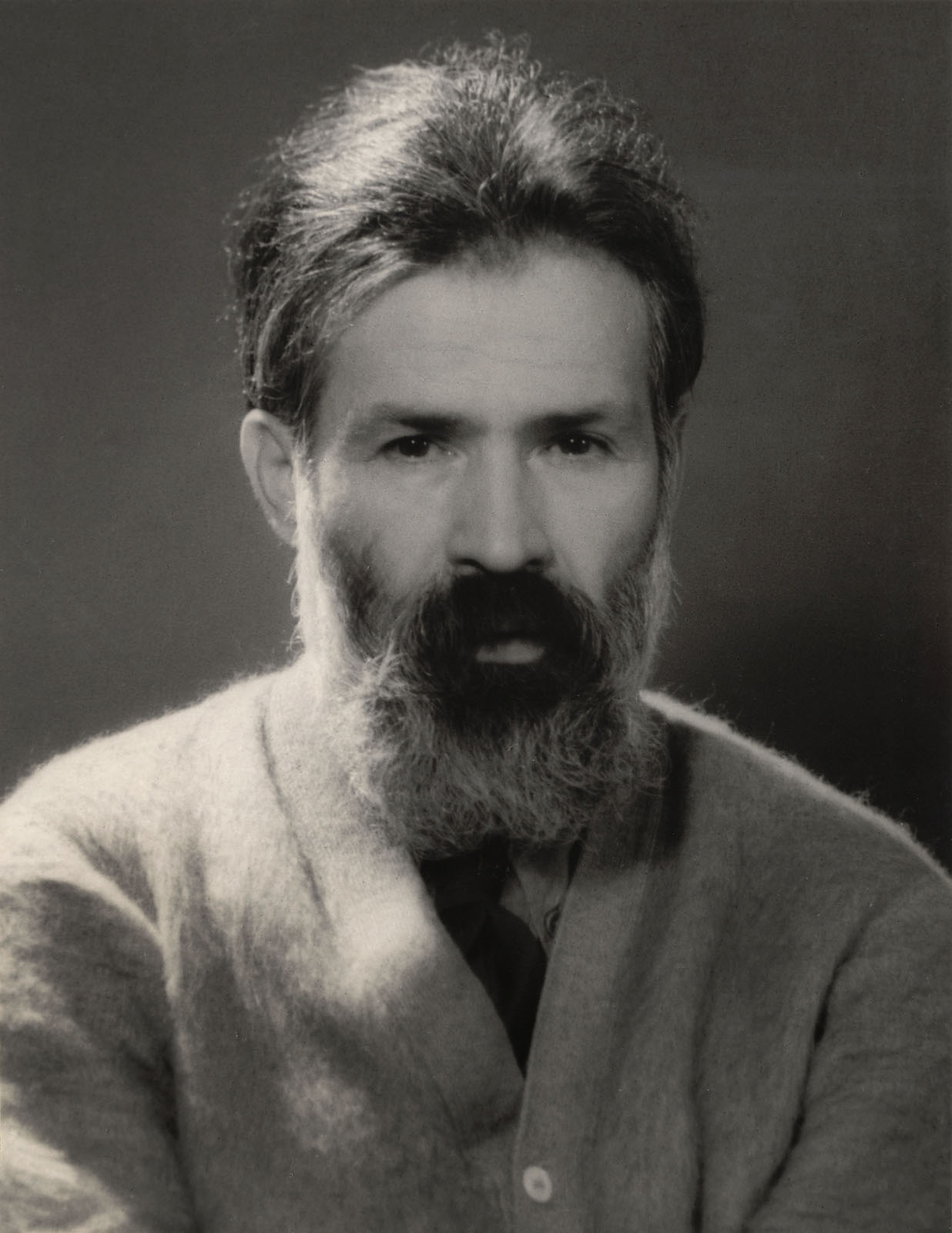
Man Ray (American, 1890-1976) 'Constantin Brancusi' 1925


Man Ray (American, 1890-1976)
Constantin Brancusi
1925
Gelatin silver print
9 1/4 x 10 1/4″ (23.5 x 26cm)
© Man Ray 2015 Trust/Artists Rights Society (ARS), New York/ADAGP, Paris


Man Ray (American, 1890-1976) 'Ruby Richards with Feathers' 1938


Man Ray (American, 1890-1976)
Ruby Richards with Feathers (installation view)
1938
Gelatin silver print


Ruby Richards (aka The Black Pearl) was a singer and dancer born in Saint Christopher Island (Saint Kitts) in the West Indies.

In 1938 the dancer and singer moved to Paris to replace Josephine Baker as the star attraction at the Folies Bergère. The famous cabaret music hall commissioned Man Ray to help introduce Richards to French audiences through his innovative portrait photographs.


Louis Jordan Soundie: Fuzzy Wuzzy

Featuring Louis Jordan and His Tympany Band with dancer Ruby Richards (recorded on New Year’s Eve 1942).


Man Ray (American, 1890-1976) 'Ruby Richards' 1938


Man Ray (American, 1890-1976)
Ruby Richards (installation view)
1938
Gelatin silver print


Man Ray (American, 1890-1976) 'Ruby Richards with Diamonds' c. 1938


Man Ray (American, 1890-1976)
Ruby Richards with Diamonds
c. 1938
Gelatin silver print
Collection of Michael and Jacky Ferro, Miami
© Man Ray 2015 Trust/Artists Rights Society (ARS), NY/ADAGP, Paris 2021)


Man Ray (American, 1890-1976) 'Self-Portrait With Adrienne Fidelin' 1937


Man Ray (American, 1890-1976)
Self-Portrait With Adrienne Fidelin
1937
Virginia Museum of Fine Arts
© Man Ray 2015 Trust/Artists Rights Society, New York/ADAGP, Paris 2021


He called her his “little black sun.” Born in Guadeloupe, Adrienne Fidelin was the American artist’s partner in Paris before World War II tore them apart. She appears in almost 400 of the renowned artist’s photographs, and in 1937 became the first Black model to be featured in a leading U.S. fashion magazine. However, she was pushed to the sidelines of history. …

Man Ray himself only mentions Fidelin fleetingly in his autobiography. This marginalisation continues today, despite current efforts to recognise the stories of people of colour throughout history…

Adrienne Fidelin was born on March 4, 1915, in Pointe-à-Pitre. At the age of 13, she lost her mother in a hurricane that devastated Guadeloupe, and her father died a few years later. The orphaned teenager joined other members of her family living in Paris in the early 1930s. At the time, the French capital was under the thrall of the Colonial Exposition and obsessed with France’s far-flung colonies. At the Bal Blomet, a cabaret in the 15th arrondissement, the West Indian diaspora and the artistic avant-garde partied to the sounds of Creole biguine music, and Fidelin joined a Guadeloupean dance company.

This is most likely where she and Man Ray first set eyes on each other. She was 19, he was 44. In a diary entry dated December 29, 1934, the artist simply wrote “Ady.” Wendy Grossman discovered this valuable evidence of their first meeting in the Man Ray archives at the Getty Center in Los Angeles. The following year, he wrote down her number (“Odéon 79-95”) and photographed her wearing a simple white tank top. The artist and the dancer were inseparable. On May 13, 1937, Man Ray combined their names in a tender Surrealist pairing, writing “Manady” and “Adyman” in his diary. …

On September 15, 1937, a full-page portrait photo of Fidelin taken by Man Ray was published in the U.S. magazine Harper’s Bazaar – a first in segregated America. However, captured “wearing a tiger-tooth necklace, an ivory arm bracelet, and a Belgian Congo headdress, and adopting a seductive pose, Fidelin was presumed to represent the sensual African ‘native’ identified in the article’s title,” writes Wendy Grossman. “The article shows how the Surrealist movement exoticised ‘the other.'”

Man Ray found a partner in Fidelin, but their relationship was asymmetrical. “She stops me from sinking into pessimism,” he wrote. “She does everything: shining my shoes, making me breakfast, and painting the backdrops on my large canvases.” Fidelin also danced in the “negro clubs” on the Champs-Elysées and worked with photographers and directors looking for “exotic girls.” …

The couple was torn apart when the Wehrmacht entered Paris in June 1940. After trying – and failing – to flee to the Côte d’Azur together, Man Ray returned to the United States alone. The lovers continued writing each other for a few months, but the war severely impacted the postal service and Man Ray soon fell in love with another dancer in Hollywood. Fidelin remained in Paris, married another man in 1957, and died in a retirement home a few miles outside Albi in Southern France [February 5, 2004].

Clément Thiery. “Adrienne Fidelin, Man Ray’s Forgotten Muse,” on the Fance-Amérique website February 2, 2022 [Online] Cited 03/02/2022


Man Ray (American, 1890-1976) 'Adrienne Fidelin with washboard' 1937


Man Ray (American, 1890-1976)
Adrienne Fidelin with washboard
1937
Gelatin silver print
29.8 x 23cm
Collection Musée Picasso
© Man Ray 2015 Trust / Artists Rights Society (ARS), New York

As far as I know this photograph is NOT in the exhibition


Man Ray (American, 1890-1976) 'James Joyce' 1922


Man Ray (American, 1890-1976)
James Joyce
1922
Gelatin silver print
Virginia Museum of Fine Arts, Arthur and Margaret Glasgow Endowment
© Man Ray 2015 Trust/Artists Rights Society (ARS), NY/ADAGP, Paris 2021


Man Ray (American, 1890-1976) 'James Joyce' (portrait for "Ulysses") 1922


Man Ray (American, 1890-1976)
James Joyce (portrait for “Ulysses”)
1922
Gelatin silver print
Virginia Museum of Fine Arts, Arthur and Margaret Glasgow Endowment
© Man Ray 2015 Trust/Artists Rights Society (ARS), NY/ADAGP, Paris 2021


If, in the early 1920s, you happened to walk into Shakespeare and Company, the legendary bookstore and lending library established in Paris after World War I by the American expatriate Sylvia Beach, you would have noticed that the walls were covered with photographic portraits by Man Ray and Berenice Abbott.

“To be ‘done’ by Man Ray and Berenice Abbott meant that you rated as somebody,” wrote Beach. The habitues of Shakespeare and Company famously included such somebodies as Ernest Hemingway, Gertrude Stein, Djuna Barnes, T.S. Eliot, Ezra Pound, Hilda Doolittle and F. Scott Fitzgerald.

In 1922, Beach commissioned Ray (1890-1976) to make a publicity photograph of James Joyce, the Irish novelist whose book “Ulysses” she was about to publish (to her everlasting glory). That same year, Ray photographed Marcel Proust on his deathbed (below).

Sebastian Smee. “Glamour, gossip, sex, scandal: Man Ray’s portraits captured Paris between the wars,” on The Washington Post website November 9, 2021 [Online] Cited 03/02/2022


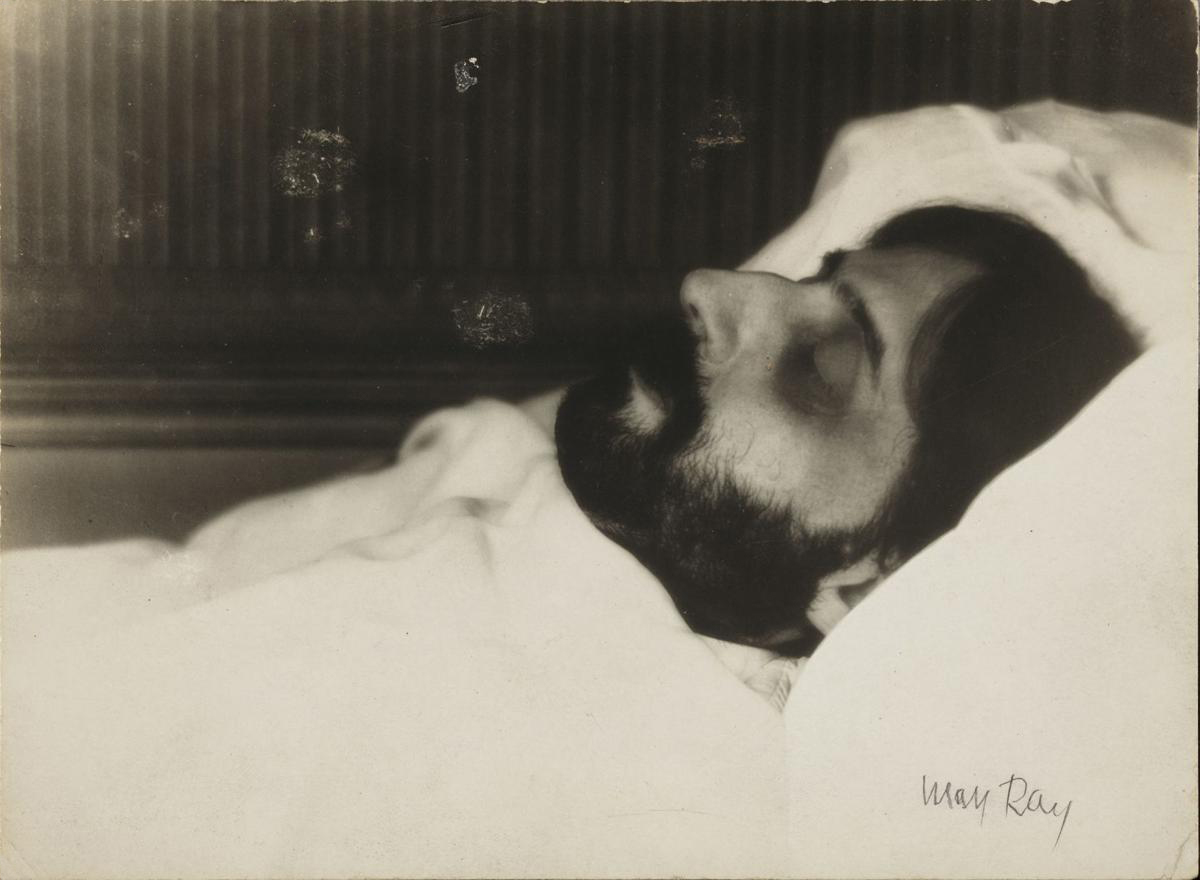
Man Ray (American, 1890-1976) 'Marcel Proust on His Deathbed' 1922


Man Ray (American, 1890-1976)
Marcel Proust on His Deathbed
1922
Gelatin silver print
Mark Kelman, New York
© Man Ray 2015 Trust/Artists Rights Society (ARS), NY/ADAGP, Paris 2021


“It comes so soon, the moment when there is nothing left to wait for.”

~ Marcel Proust


Ravaged by bronchitis and pneumonia, Marcel Proust spent the last night of his life dictating manuscript changes for a section of his famous novel Remembrance of Things Past.

Man Ray did not know Proust, but he had become such an important photographer that mutual friends dispatched him to the celebrated French author’s bedside to make a final portrait two days after his death. The side view associates Man Ray’s photograph with a tradition of postmortem photography dating back to the inception of the medium.

Text from the J. Paul Getty Museum website


At the urging of his friend Jean Cocteau, Man Ray rushed to photograph the author of Remembrance of Things Past on his deathbed. In the October / November issue of Les Nouvelles Littéraires, Cocteau wrote:

Those who have seen this profile of calm, of order, of plenitude, will never forget the spectacle of an unbelievable recording device come to a stop, becoming an art object: a masterpiece of repose next to a heap of notebooks where our friend’s genius continues to live on like the wristwatch of a dead soldier.

Text from the Metropolitan Museum of Art website


Man Ray (American, 1890-1976) 'Elsie Houston' 1933


Man Ray (American, 1890-1976)
Elsie Houston
1933
Gelatin silver print
Virginia Museum of Fine Arts, Arthur and Margaret Glasgow Endowment
© Man Ray 2015 Trust/Artists Rights Society (ARS), NY/ADAGP, Paris 2021


“Houston sang Brazilian folk songs by candlelight in Paris. She moved to New York in 1939, where she performed as a possessed woman muttering “voodoo” incantations and playing the drums. She died in her home in 1943, an empty vial of sleeping pills by her bedside. In Ray’s photograph, her smile is soft. Her head tilts in line with her elongated hand. That hand is adorned with a piece of jewellery in the shape of a spotted disc, which rhymes with her hoop earring and the arches of her eyebrows. The cool, clean contrasts of her white turban and dark clothes make the portrait one of Ray’s finest.”

Sebastian Smee. “Glamour, gossip, sex, scandal: Man Ray’s portraits captured Paris between the wars,” on The Washington Post website November 9, 2021 [Online] Cited 03/02/2022


Elsie Houston (Brazilian, 1902-1943)

Elsie Houston (22 April 1902 – 20 February 1943) was a Brazilian singer.

Houston figured in the Brazilian literary/art/music scene during a critical time in its history. It was an era of tremendous creative energy. In addition to Mário de Andrade and Pagu, Houston knew others famous members of this artists movement, including the composer Heitor Villa-Lobos, the painters Flavio de Carvalho, Anita Malfatti and Tarsila do Amaral, and the leader of Brazilian modernism, Oswald de Andrade.

Houston moved to Germany and studied with Lilli Lehmann a renowned voice teacher. She then studied with another famed soprano, Ninon Vallin, first in Argentina and then in Paris. Houston’s relationship with Heitor Villa Lobos began in her teens. Houston was definitely a soloist at Villa Lobos’s 1927 Paris concerts. In 1928 she married Benjamin Péret, French surrealist poet, with whom she lived in Brazil from 1929 to 1931. Their son, Geyser, was born in Rio de Janeiro in 1931.

By the late 1930s, Houston had moved to New York City. She was a brilliant singer, particularly skilled in the interpretation of Brazilian songs. The New York Times during this era praised for her performances. She was also an active supporter of young Latin American composers, performing early pieces by composers such as Jayme Ovalle and Camargo Guarnieri.

She died in 1943. Her death was listed as an apparent suicide.

Text from the Wikipedia website


Ravel – Sur l’herbe – Elsie Houston (1930s)


Man Ray (American, 1890-1976) 'Lee Miller' 1929


Man Ray (American, 1890-1976)
Lee Miller
1929
Gelatin silver print
Virginia Museum of Fine Arts, Arthur and Margaret Glasgow Endowment
© Man Ray 2015 Trust/Artists Rights Society (ARS), NY/ADAGP, Paris 2021


Ray learned from the history of painting as much as from other photographers. He borrowed from Rembrandt’s tenebrism (his dramatic use of engulfing shadow), the slanting light and perspectival structure in Vermeer’s interiors, and the directness of Hans Holbein (strong light on the face, minimal backgrounds). But of course, he was in league with the surrealists and, in even his most classical-seeming portraits, revealed a predilection for unexpected juxtapositions, visual rhymes and piercing expressions that can transport you instantaneously to the lip of a volcanic unconscious.

Ray’s 1929 portrait of Lee Miller is a good example – surely one of the most mesmerising photographic portraits ever taken. What is the source of its uncanny power? It’s not just that Miller – herself a great photographer who for several years was Ray’s lover – is so beautiful; or that her direct gaze is simultaneously so trusting and challenging; or even that her unblemished skin and the symmetry of the whole composition suggest something impossibly pristine and inviolate. It’s because the image is slightly out of focus. The effect of the blur is to slow one’s response, as smoke rings slow the mind – and to trigger a dream state.

Sebastian Smee. “Glamour, gossip, sex, scandal: Man Ray’s portraits captured Paris between the wars,” on The Washington Post website November 9, 2021 [Online] Cited 03/02/2022


Man Ray (American, 1890-1976)
Emak Bakia (Leave Me Alone)
1926


But you may be less familiar with some of Ray’s other subjects, including Germaine Tailleferre, the female composer who changed her name from Taillefesse, Taylor writes, “partly to spite her father, who refused to support her musical studies, but also because she disliked the connotations of the name Taillefesse, which translates as buttock in English”; Janet Scudder, an American sculptor, whose partner was the children’s author and suffragist Marion Cothren; and Barbette (below), the high-wire performer who presented as a graceful woman, but at the end of her act removed her wig and revealed herself as a man.

Personae like these – and Ray’s always inventive approach to their portraits – make this show more than just a roll call of famous names. They make it revelatory. The show is further enhanced by the inclusion of Ray’s wonderful 1926 film, “Emak-Bakia” (he called it a “cinépoème”), and a portfolio of semiabstract photographs he made for a Paris Electricity Co. marketing campaign. Both are remarkable.

Sebastian Smee. “Glamour, gossip, sex, scandal: Man Ray’s portraits captured Paris between the wars,” on The Washington Post website November 9, 2021 [Online] Cited 03/02/2022


Man Ray (American, 1890-1976) 'Barbette' 1926


Man Ray (American, 1890-1976)
Barbette
1926
Gelatin silver print
Virginia Museum of Fine Arts, Arthur and Margaret Glasgow Endowment
© Man Ray 2015 Trust/Artists Rights Society


Vander Clyde Broadway (American, 1899-1973)

Vander Clyde Broadway (December 19, 1899 – August 5, 1973), stage name Barbette, was an American female impersonator, high-wire performer, and trapeze artist born in Texas. Barbette attained great popularity throughout the United States but his greatest fame came in Europe and especially Paris, in the 1920s and 1930s.

Barbette began performing as an aerialist at around the age of 14 as one-half of a circus act called The Alfaretta Sisters. After a few years of circus work, Barbette went solo and adopted his exotic-sounding pseudonym. He performed in full drag, revealing himself as male only at the end of his act.

Following a career-ending illness or injury (the sources disagree on the cause), which left him in constant pain, Barbette returned to Texas but continued to work as a consultant for motion pictures as well as training and choreographing aerial acts for a number of circuses. After years of dealing with chronic pain, Barbette committed suicide on August 5, 1973. Both in life and following his death, Barbette served as an inspiration to a number of artists, including Jean Cocteau and Man Ray. …

“Barbette,” writes Cocteau,

“transforms effortlessly back and forth between man and woman. His female glamour and elegance Cocteau likens to a cloud of dust thrown into the eyes of the audience, blinding it to the masculinity of the movements he needs to perform his acrobatics. That blindness is so complete that at the end of his act, Barbette does not simply remove his wig but instead plays the part of a man. He rolls his shoulders, stretches his hands, swells his muscles… And after the fifteenth or so curtain call, he gives a mischievous wink, shifts from foot to foot, mimes a bit of an apology, and does a shuffling little street urchin dance – all of it to erase the fabulous, dying-swan impression left by the act.”


Cocteau calls upon his fellow artists to incorporate deliberately this effect that he believes for Barbette is instinctive.

Cocteau commissioned a series of photographs of Barbette by the Surrealist artist Man Ray, which captured not only aspects of Barbette’s performance but also his process of transformation into his female persona.

Text from the Wikipedia website


Man Ray (American, 1890-1976) 'Ernest Hemingway' 1928


Man Ray (American, 1890-1976)
Ernest Hemingway
1928
Gelatin silver print
National Portrait Gallery, Smithsonian Institution
© Man Ray 2015 Trust/Artists Rights Society (ARS), NY/ADAGP, Paris 2021


Man Ray (American, 1890-1976) 'Aldous Huxley' 1934


Man Ray (American, 1890-1976)
Aldous Huxley
1934
Gelatin silver print
© Man Ray 2015 Trust/Artists Rights Society (ARS), NY/ADAGP, Paris 2021


This photograph was taken two years after the publication of Huxley’s novel Brave New World, a nightmarish vision of the future.


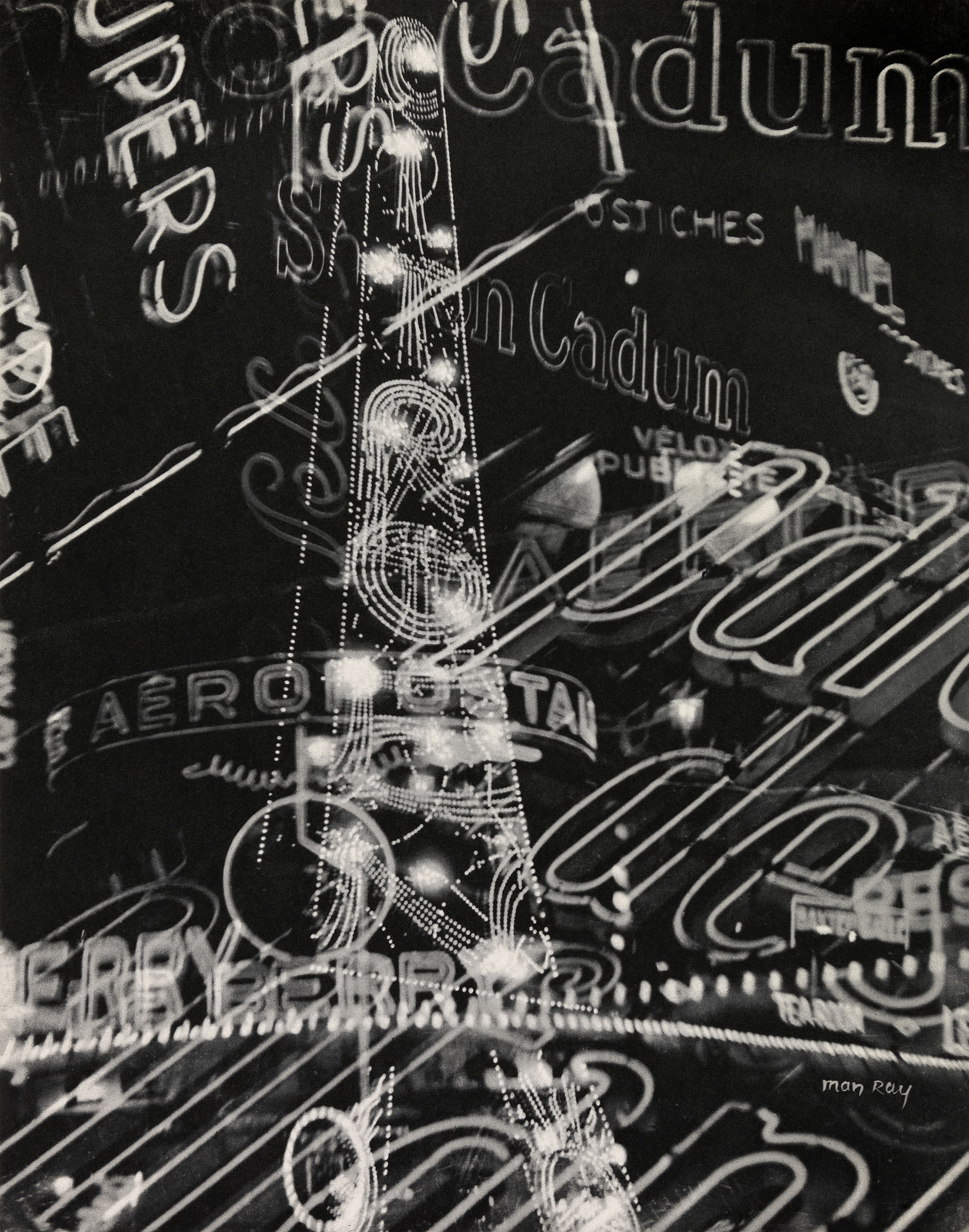
Man Ray (American, 1890-1976) 'La Ville' (The City) 1931


Man Ray (American, 1890-1976)
La Ville (The City)
1931
From the portfolio Èlectricité
Photogravure, printed 1931
© Man Ray 2015 Trust/Artists Rights Society (ARS), NY/ADAGP, Paris 2021


In 1931, Man Ray was commissioned by the Compagnie Parisienne de Distribution d’Electricite (CPDE) to produce a series of pictures promoting the private consumption of electricity. The resulting portfolio, Électricité (Electricity), comprises rayographs reproduced as photogravures. Le Monde (The World), a picture of the moon above an electrical cord, suggests that even celestial bodies rely on the CPDE for their illumination; the photogravure Électricité equates the electric charge of the electron with the erotic beauty of a nude female figure; and Le Souffle (Breeze) combines spinning fan blades with the weblike stimuli of electrical current.

Gallery label from The Shaping of New Visions: Photography, Film, Photobook, April 16, 2012 – April 29, 2013 on the MoMA website [Online] Cited 03/02/2022


Man Ray. 'Électricité' 1931


Man Ray (American, 1890-1976)
Électricité
1931
From the portfolio Èlectricité
Photogravure, printed 1931
© Man Ray 2015 Trust/Artists Rights Society (ARS), NY/ADAGP, Paris 2021


Man Ray’s innovations are not excluded. A whole section of the exhibition is devoted to his light-bending portfolio Électricité (1931), a commercial project commissioned by the Paris Electric Company to promote the use of electrically powered household appliances. Comprised of ten “Rayographs” (another name for photograms), the portfolio pulses with kinetic energy. Fans spin with an otherworldly force, a fowl is perfectly cooked as by magic rays, and the Eiffel Tower swims in hi-wattage advertisements.

Daniel Cassady. “‘Paris’s glowing milieu spills onto every corner’: Virginia show theatrically tells the story of Man Ray’s fruitful time in the City of Lights,” on The Art Newspaper website 11 November 2021 [Online] Cited 03/02/2022


Man Ray (American, 1890-1976) 'Le Souffle' (Breeze) 1931


Man Ray (American, 1890-1976)
Le Souffle (Breeze)
1931
From the portfolio Èlectricité
Photogravure, printed 1931
© Man Ray 2015 Trust/Artists Rights Society (ARS), NY/ADAGP, Paris 2021


Man Ray (American, 1890-1976) 'Le Monde' (The World) 1931


Man Ray (American, 1890-1976)
Le Monde (The World)
1931
From the portfolio Èlectricité
Photogravure, printed 1931
© Man Ray 2015 Trust/Artists Rights Society (ARS), NY/ADAGP, Paris 2021


Virginia Museum of Fine Arts
200 N. Boulevard
Richmond, Virginia USA

Opening hours:
Daily 10am – 5pm and until 9 pm Wed, Thu, Fri
Virginia Museum of Fine Arts website

LIKE ART BLART ON FACEBOOK

Back to top