
Exhibition dates: 12th June – 4th October, 2026
Curator: Helen Molesworth, Senior Curator of Jewellery, Victoria & Albert Museum, London
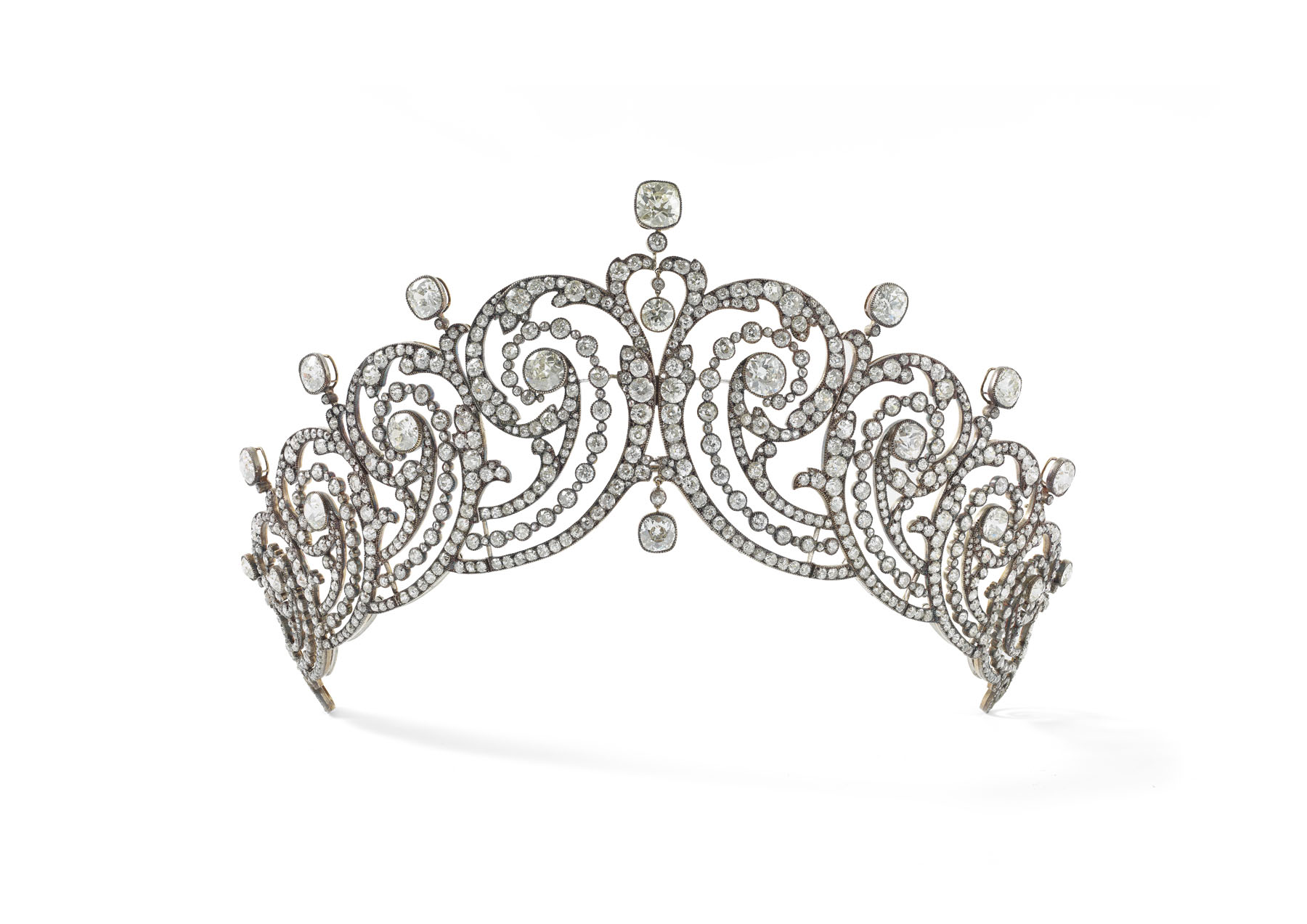
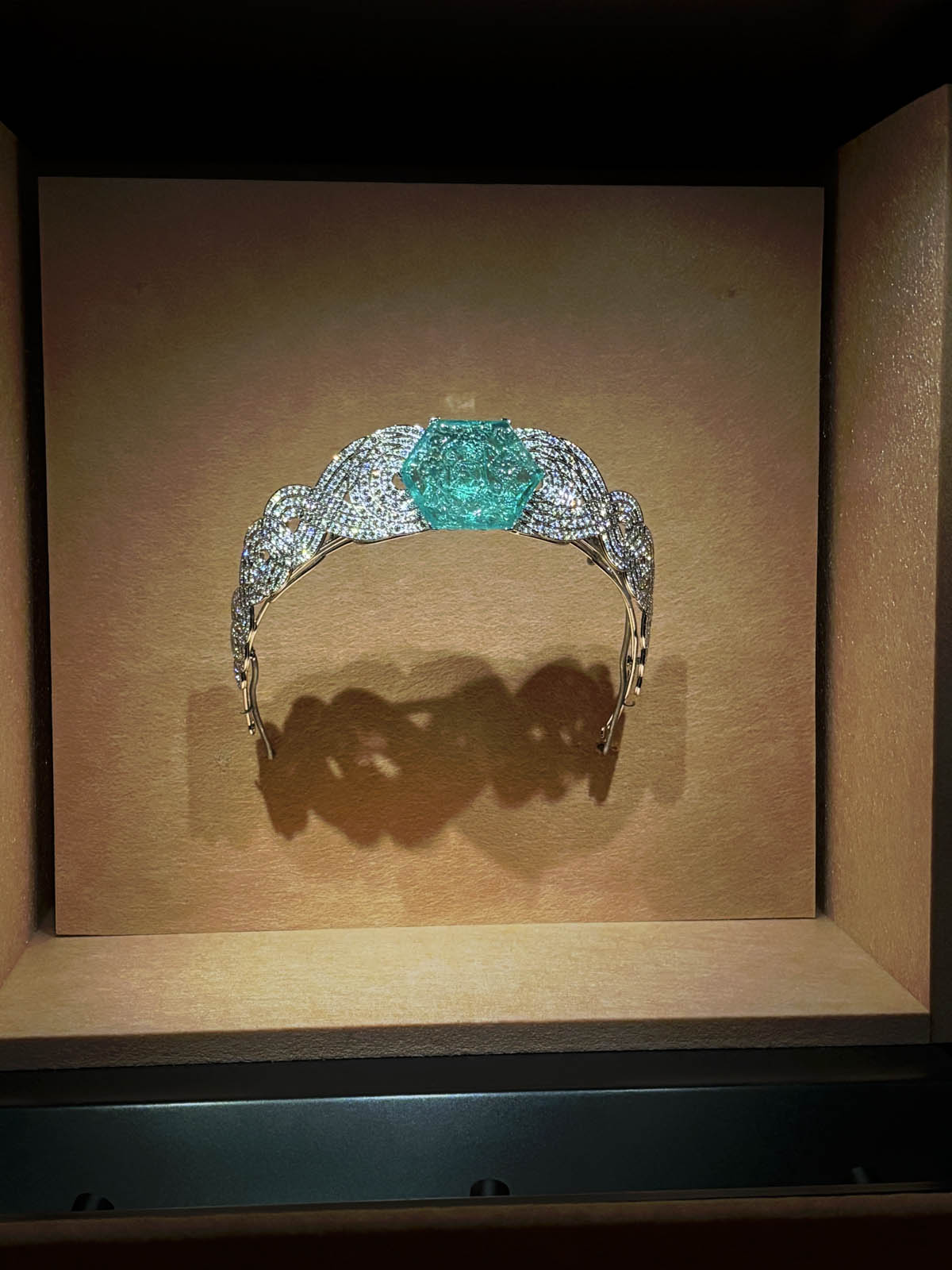
Scroll Tiara
Cartier Paris, special order
1902
Diamonds, silver and gold
Cartier Collection
Nils Herrmann, Collection Cartier
© Cartier
Owned by the Countess of Essex
Bling, bling, bling.
Beauty, craftsmanship, style, for the very wealthy.
Opulence … but at what cost?
No mention here of the menials that would have been forced to mine the original stones in Africa, India or South America.
No mention of the horrors of colonialism of the British, French, Dutch, Belgiums etc… which allowed the exploitation of foreign countries: “The ruling nation takes natural resources, wealth, and cheap labor from the colonised area to enrich itself.”
No mention of the people (or the greased palms) that traded these gemstones and allowed them to reach Western markets and into corporate and private hands.
This “spectacular” display – the spectacle – is beautifully presented at the NGV but it’s all just a bit – what’s the word – gauche for me, especially the over the top 1950s-contemporary pieces. Less is more.
At least the Paris branch of Cartier actively resisted the Nazi occupation and the London offices operated as a frequent meeting place for Charles de Gaulle’s Free French movement, unlike Coco Chanel who was a documented Nazi collaborator and intelligence agent with the Abwehr, holding the agent number F-7124 and the codename “Westminster”, during World War II.
Why you would buy anything by Chanel even today is completely beyond me.
Dr Marcus Bunyan
Many thankx to the NGV for allowing me to publish the photographs in the posting. Please click on the photographs for a larger version of the image. All installation photographs (except the top four) © Marcus Bunyan
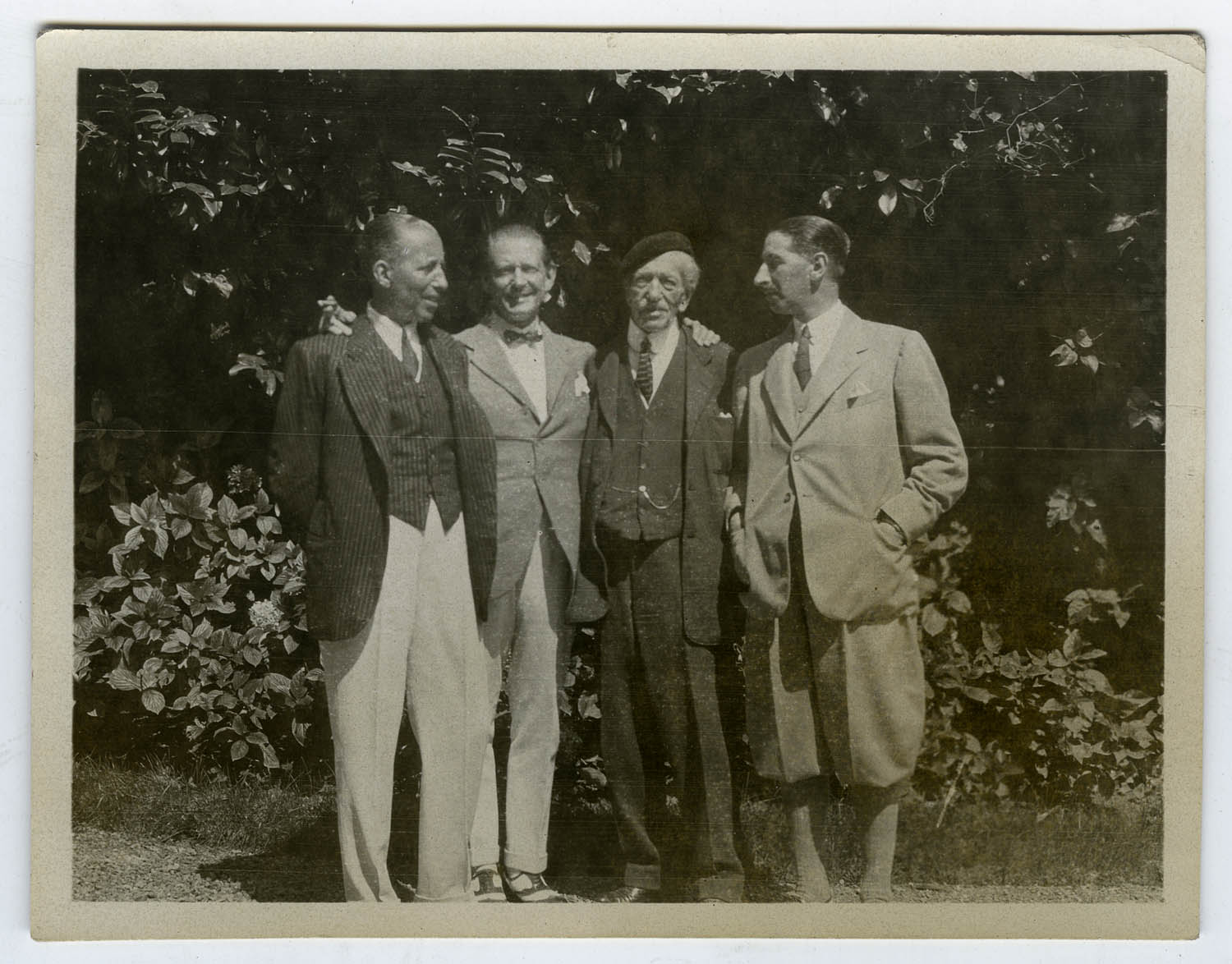
Unknown photographer
Alfred Cartier (second from right) with his three sons (left to right), Pierre, Louis and Jacques
1922
Archives Cartier Paris
© Cartier
Colour, cut and craftsmanship – that’s the magic at the heart of the 2026 Melbourne Winter Masterpieces®: CARTIER exhibition.
Watch as NGV Director Tony Ellwood AM, along with Helen Molesworth, Senior Curator of Jewellery at Victoria and Albert Museum, Pierre Rainero, Cartier Director of Image, Style and Heritage, exhibition designers Studio Sabine Marcelis and Paul Cournet of CLOUD and NGV Senior Curators Dr Miranda Wallace and Amanda Dunsmore, share what makes this exhibition shine – from diamond necklaces and glittering tiaras to original drawings, sketchbooks and photography.
CARTIER, a once-in-a-lifetime exhibition featuring nearly 500 jewels, objects, archival materials and never-before-exhibited pieces, traces the remarkable story of the French jewellery house from around 1900 to now.
Watch on for your first glimpse into the exhibition as Helen Molesworth, Senior Curator of Jewellery at Victoria and Albert Museum, Pierre Rainero, Cartier Director of Image, Style and Heritage, Pascale Lepeu, Director of Cartier Collection and NGV Senior Curator Miranda Wallace introduce you to the wonderful world of CARTIER.
2026 MWM Cartier – Announcement Broll
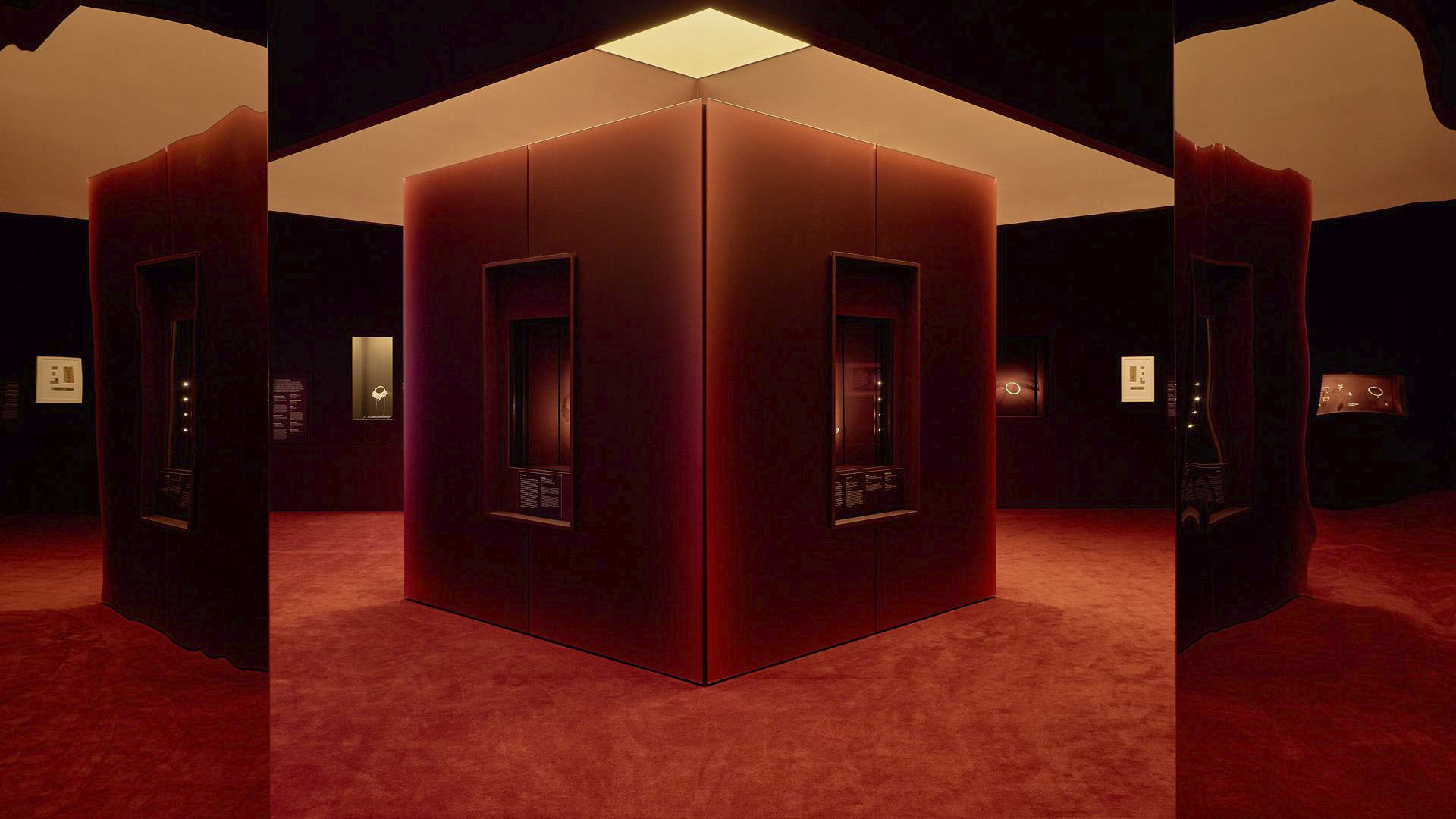
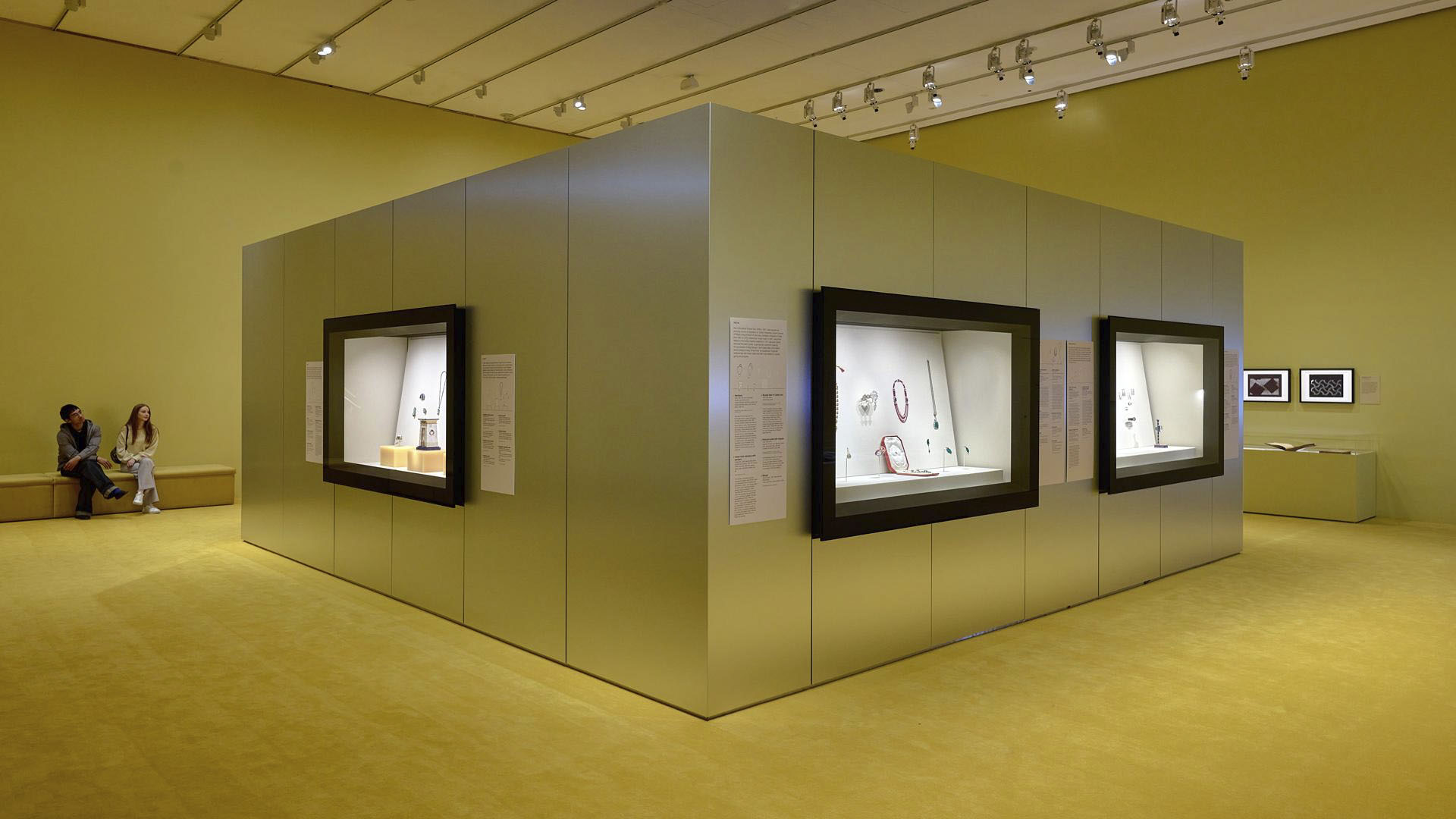
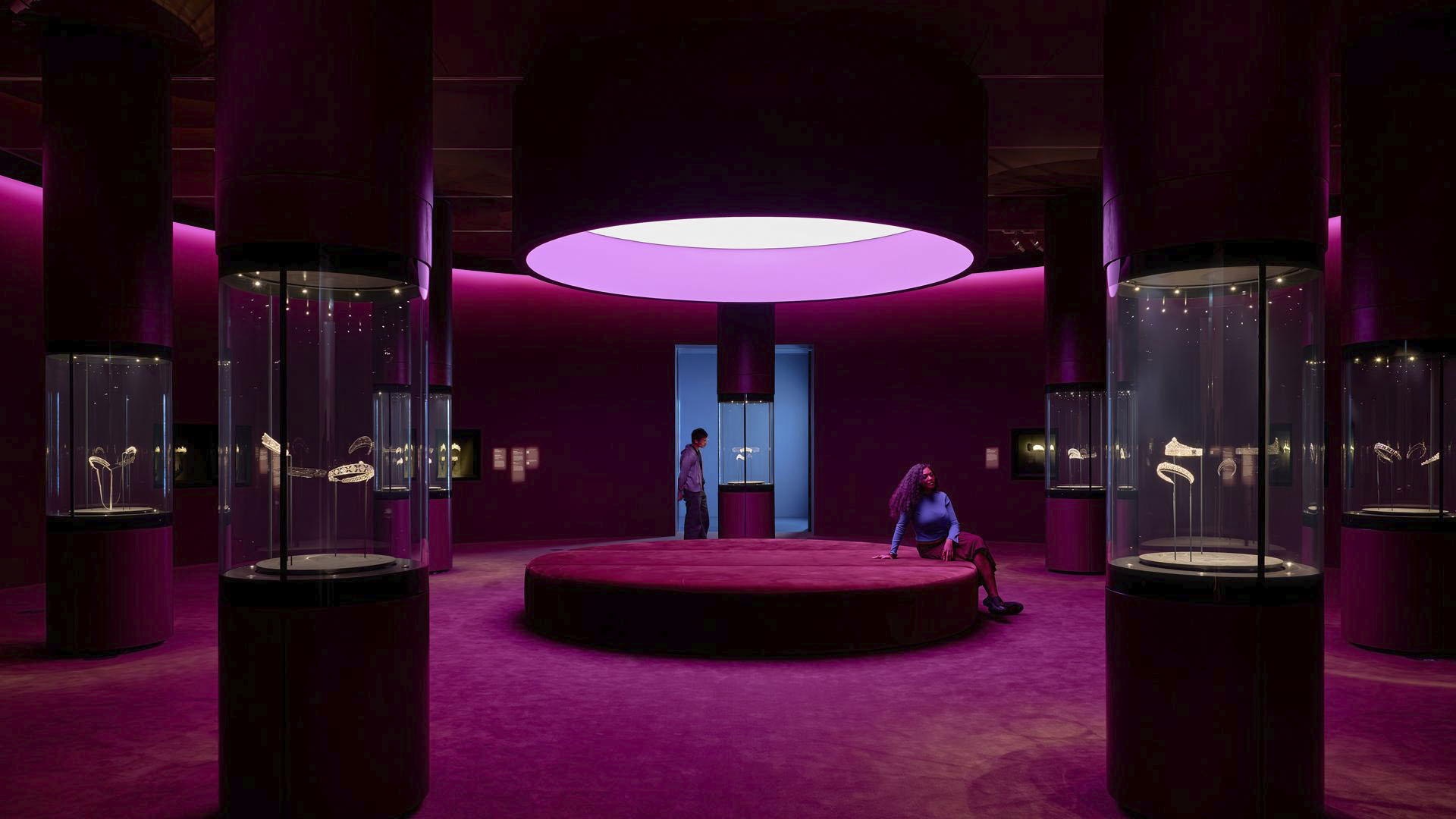
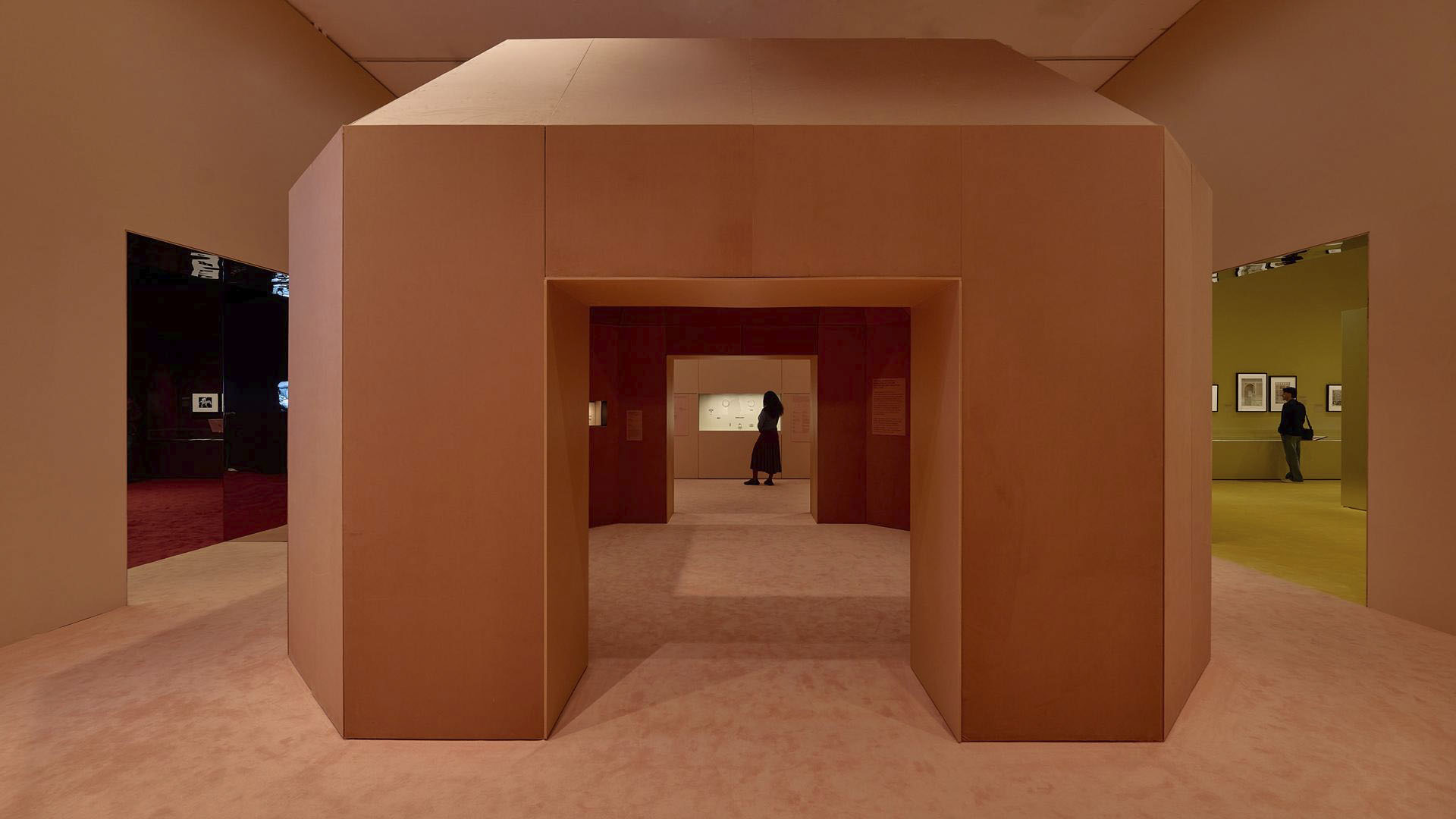
Installation views of the exhibition Cartier at NGV International, Melbourne, June – October, 2026
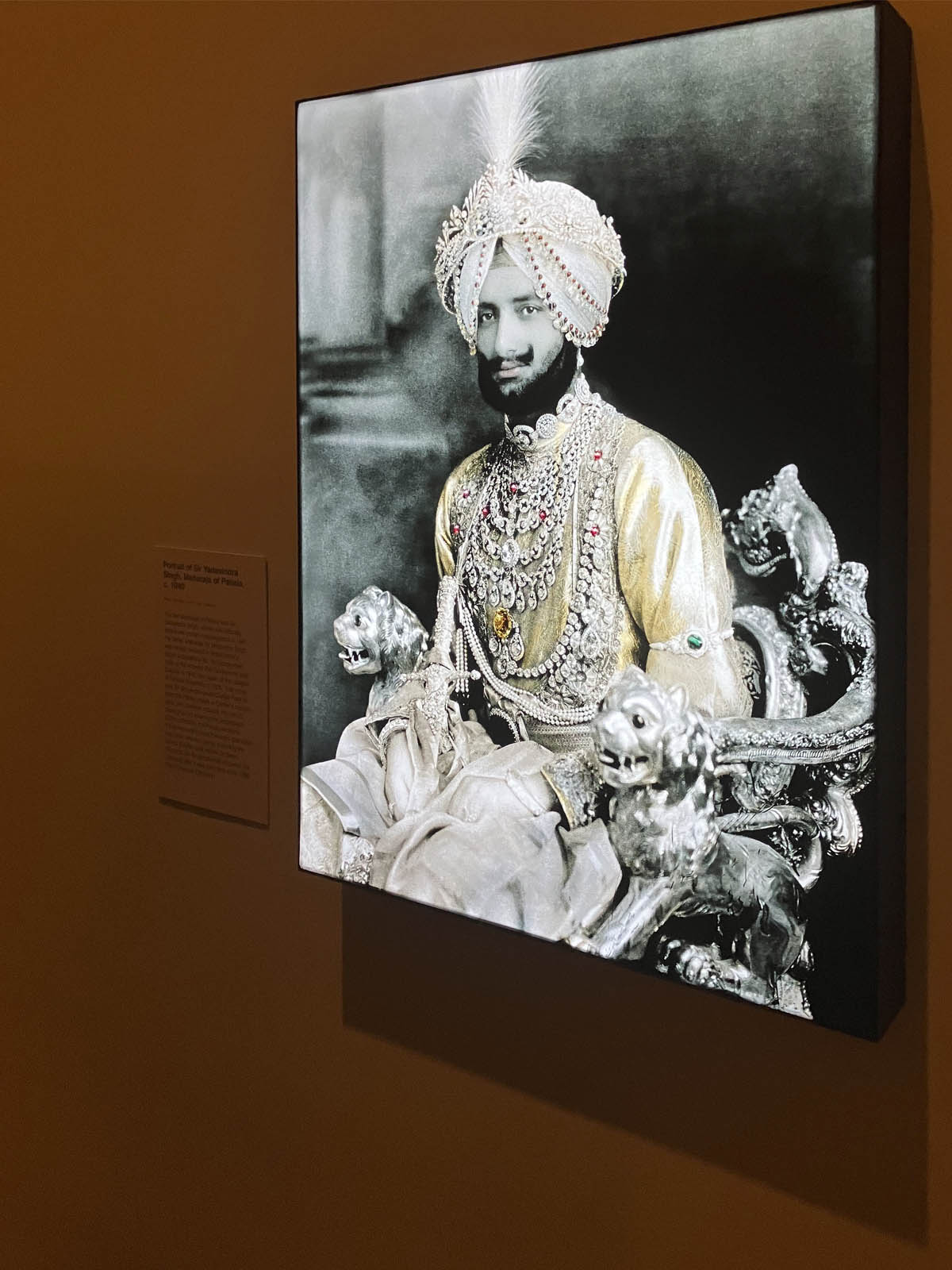
Featuring 300+ resplendent and beautifully-crafted jewels, tiaras, necklaces, brooches, timepieces, design drawings and more, the 2026 Melbourne Winter Masterpieces presentation, Cartier, is the largest exhibition on the global jewellery house ever staged in Australia. Direct from London’s Victoria & Albert Museum and opening exclusively in Melbourne at NGV International on 12 June 2026, the exhibition explores Cartier’s unparalleled reputation for design excellence, craftsmanship and innovation through a dazzling selection of Cartier creations owned and worn by the likes of Elizabeth Taylor, Rihanna, Princess Margaret, The Duchess of Windsor, Dame Nellie Melba, the Maharaja of Patiala, the Begum Aga Khan III, and American heiress Barbara Hutton. The Melbourne-exclusive exhibition also features many jewels and objects that have never-before-visited Australia.
The exhibition charts the evolution and artistic legacy of the jewellery house, including its transformation at the turn of the twentieth century by brothers Louis, Pierre and Jacques Cartier, grandsons of the house’s founder Louis-François Cartier. The brothers established branches in Paris, London and New York, creating the first internationally recognised jewellery maison, and honed Cartier’s inimitable style by bringing design and manufacturing in-house. With an enviable client list of royalty and aristocracy, Cartier was described as ‘the jeweller of kings and the king of jewellers’ by King Edward VII, who granted his Royal Warrant in 1904. Cartier’s reputation later broadened thanks to the devotion of leading creatives from the worlds of cinema, music and fashion.
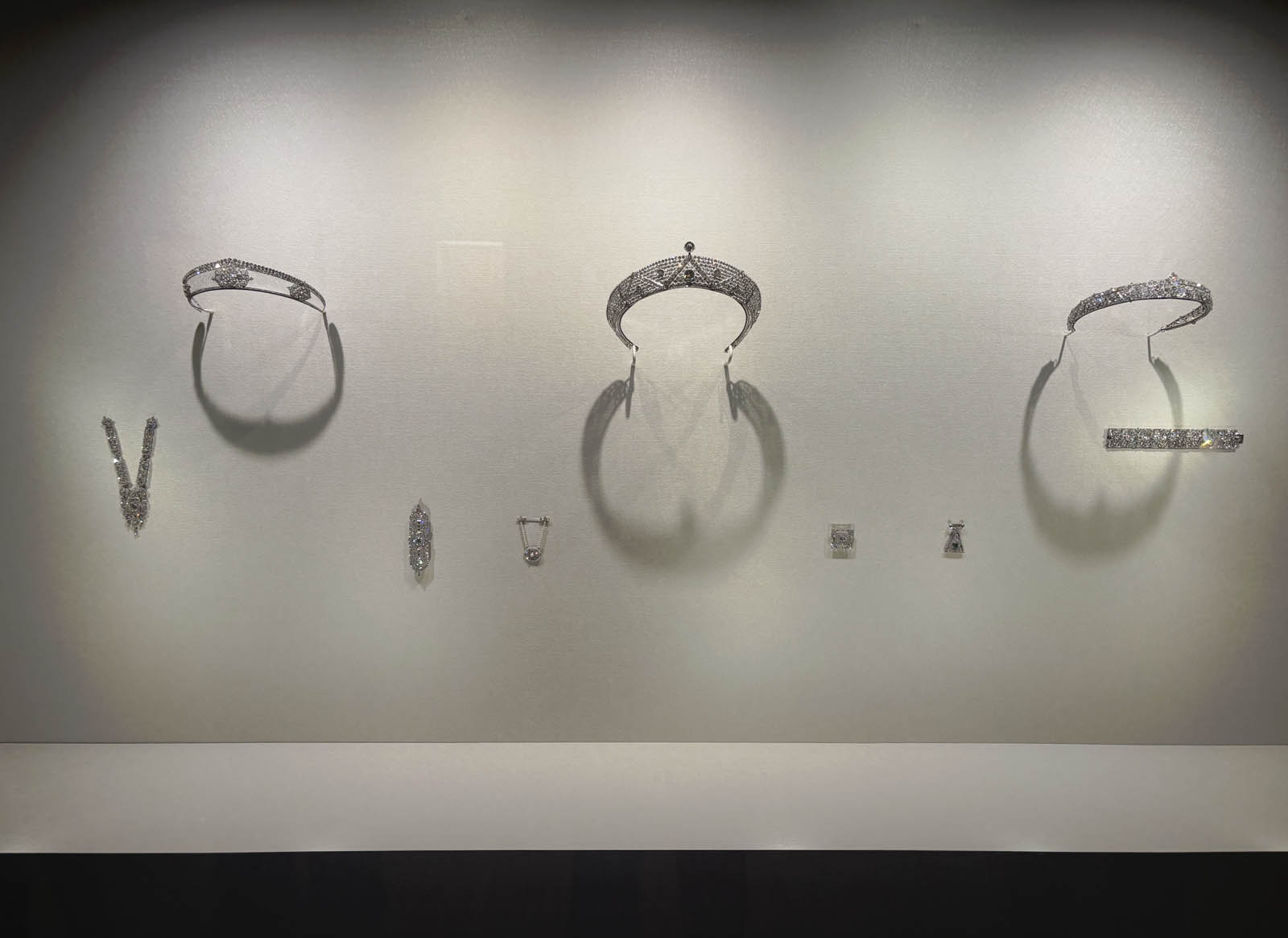
A major highlight of the exhibition will be a display of more than 20 magnificent tiaras, a timeless symbol of royalty, glamour and artistry – and some of Cartier’s most celebrated creations. With symbolic links to the laurel wreaths of classical antiquity and celestial halos, the tiara has been worn for centuries across cultures from Asia to Europe. The spectacular display includes Cartier’s celebrated Scroll tiara (1902), crafted in the house’s signature ‘Garland style’ and worn by Clementine Churchill at the coronation of Queen Elizabeth II in 1953 and by Rihanna on the cover of W magazine in 2016. Others include the Sun tiara of 1907 with a 32-carat fancy intense yellow diamond in its centre; and the Art Deco diamond and platinum Halo tiara of 1934, which was inspired by ancient Egypt and owned by Her Highness the Begum Aga Khan III.
The exhibition includes a 1951 necklace gifted to Elizabeth Taylor by her third husband and film producer, Mike Todd, while on holiday in the French Riviera in 1957. The necklace features a geometric latticework design of diamonds that showcase seven Burmese rubies, exceptional for their size and matching colour. Taylor herself described the necklace as ‘like the sun – lit up and made of red fire.’
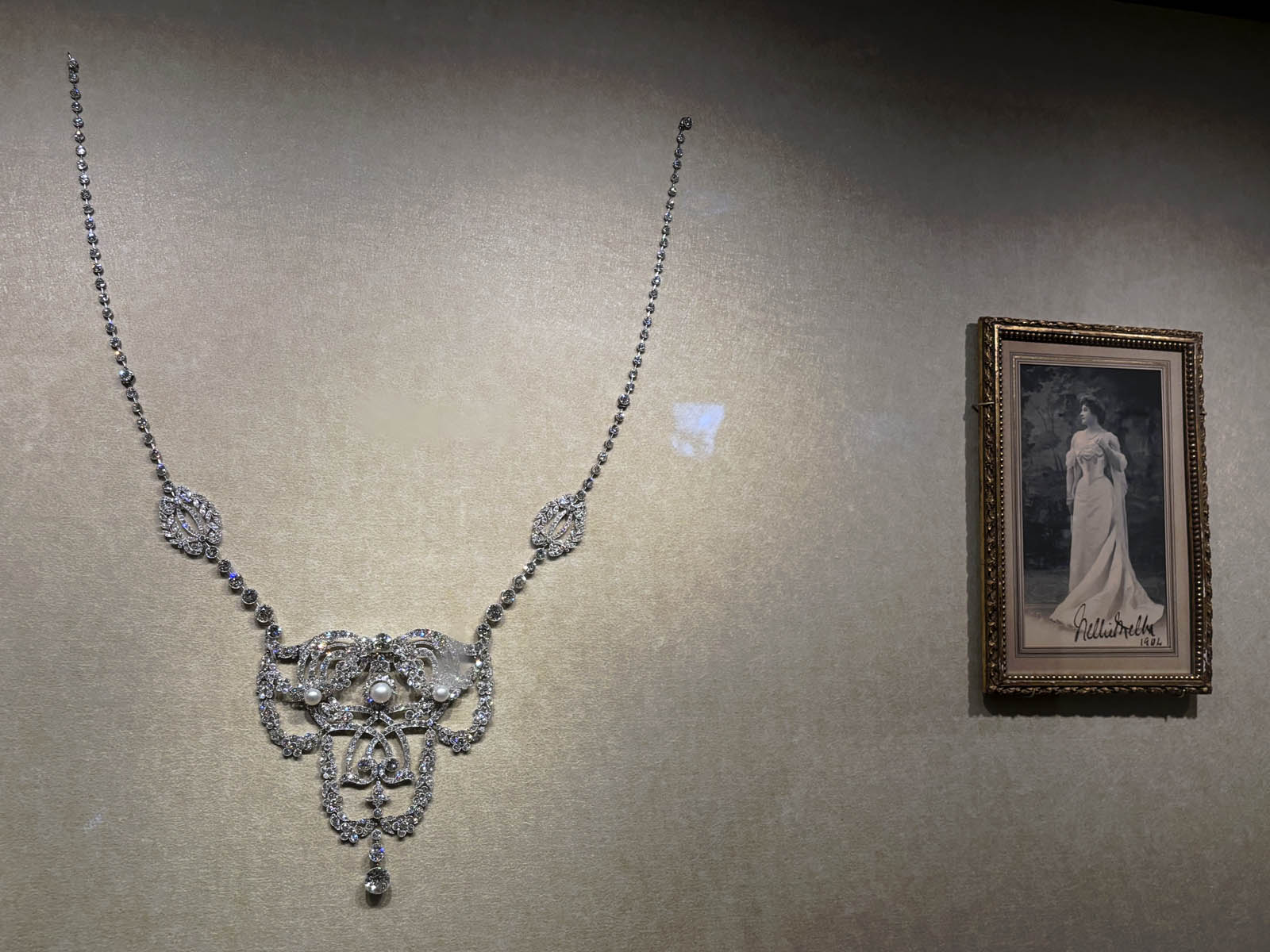
The exhibition also focuses on Australian opera singer Dame Nellie Melba, who was an early client of Cartier when the firm was becoming known internationally for its ‘Garland style’ jewels, often featuring floral swags and bows wrought in platinum and precious gemstones. Pierre Cartier was a fan of Dame Nellie, and a signed 1902 photograph of Melba, once owned by Pierre, will feature in the exhibition along with necklaces and bodice ornaments that the world-famous opera singer owned and wore both on and off the stage.
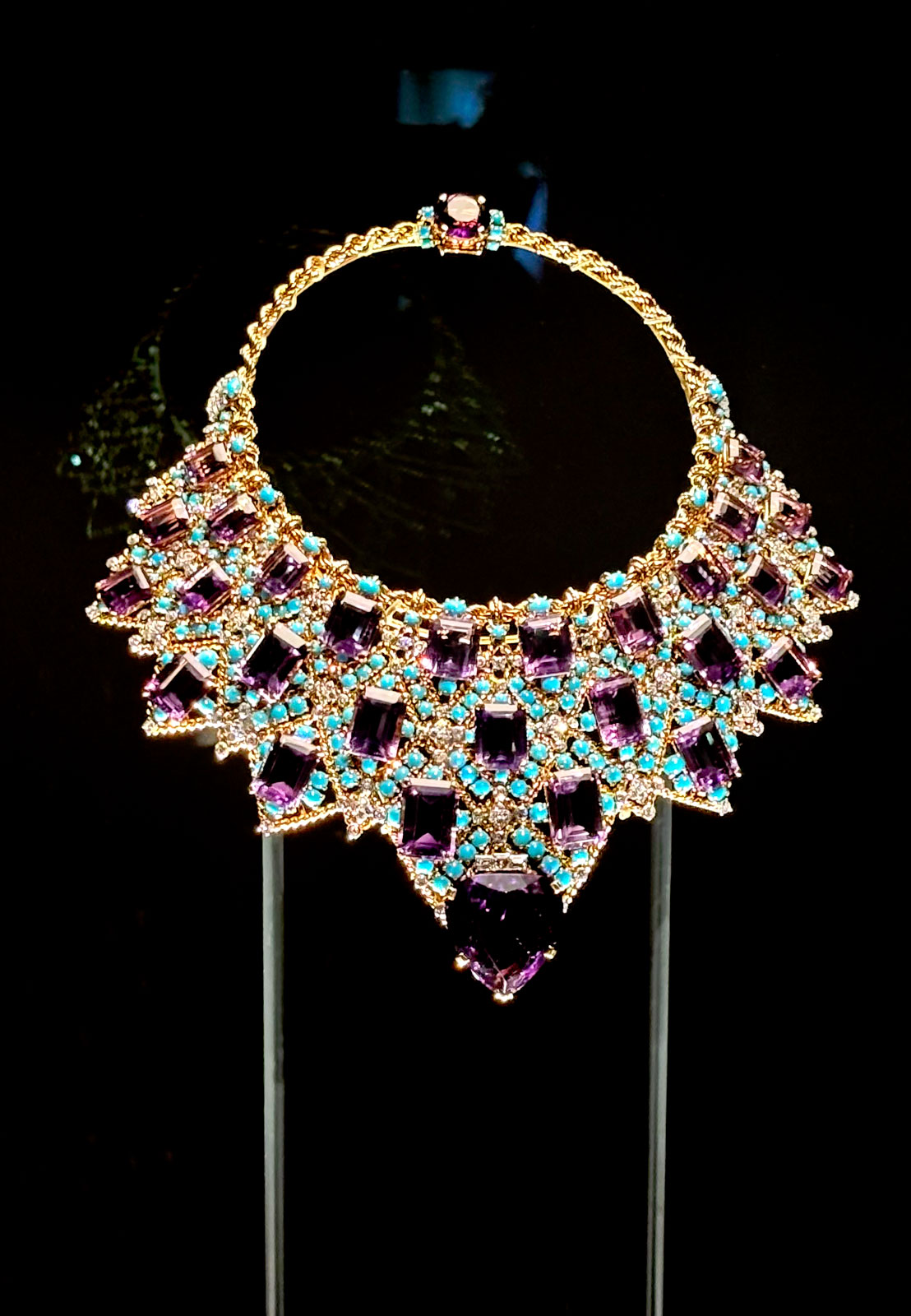
On display will be an intricate diamond Rose clip brooch (1938) worn by Princess Margaret at her sister’s coronation, as well as a major selection of exceptional jewels belonging to Wallis Simpson, the Duchess of Windsor and wife of former King Edward VIII. These include her famous Flamingo brooch (1947), an extraordinary Bib necklace encrusted with diamonds, amethysts and turquoise, and her 1949 Panther sapphire clip brooch which features an impressive 152.35-carats Kashmir cabochon sapphire.
Named for their colourful use of rubies, emeralds and blue sapphires, a rich selection of Cartier’s iconic Tutti Frutti jewels will also feature. Additionally, there will be a standout selection of Cartier timepieces that showcase the jeweller’s industry-leading innovations in watchmaking, alongside a selection of contemporary works featuring Australian opals.
The never-before-seen exhibition design is a collaboration between the NGV, Studio Sabine Marcelis and CLOUD, two multidisciplinary design practices based in Rotterdam in The Netherlands. The exhibition design will be inspired by colour, light and materiality, three elements that are synonymous with the aesthetic qualities of Cartier’s jewellery. The exhibition design will reflect Cartier’s expansive network of cultural and gemological sources that inspire their jewellery creations. …
Tony Ellwood AM, Director, NGV, said: ‘Cartier are world-renowned for their excellence in jewellery and timepiece design and innovation – a reputation fostered by the three entrepreneurial brothers Pierre, Louis and Jacques Cartier. This exhibition tells the story of how they transformed their grandfather’s jewellery business into one of the most prestigious international jewellery houses with a clientele including royalty, high society and movie stars. We’re indebted to our partner institution the V&A, for their support of this Australian-exclusive exhibition, as well as key lender Cartier.’
Helen Molesworth, Senior Curator of Jewellery, Victoria & Albert Museum, London, said: ‘Cartier is one of the most famous jewellery houses in the world. This exhibition will explore how Louis, Pierre and Jacques Cartier, initiated a strategy of original design, exceptional craftmanship and international expansion that transformed the Parisian family jeweller into an international household name. The V&A is delighted to tour its Cartier exhibition which celebrates the pioneering achievements of Cartier and its transformative ability to remain at the centre of culture and creativity for more than a century. We are excited to be able to share with visitors of the NGV some of Cartier’s most famous creations as well as revealing previously unseen objects that further enrich our understanding of a jewellery house that continues to influence the way we adorn ourselves today.’
Pierre Rainero, Director of Cartier Image, Style and Heritage, said: ‘Building on the success of its presentation at the Victoria & Albert Museum in London, the NGV iteration of the Cartier exhibition will showcase pieces never-before-seen in Australia. It promises to be an enlightening experience for the public, offering a captivating journey into the world of Cartier and its signature style, a living language in permanent evolution. We hope that it will not only inspire delight and awe, but also intellectual curiosity, fostering a deeper appreciation for jewellery as a distinct and powerful artistic expression.’
The Melbourne Winter Masterpieces exhibition Cartier will be on display at NGV International from 12 June – 4 October 2026. Admission fees apply. Information and tickets are available via the NGV website: NGV.MELBOURNE
Exhibition created by the V&A in partnership with the National Gallery of Victoria and in collaboration with Cartier.
Press release continues below…
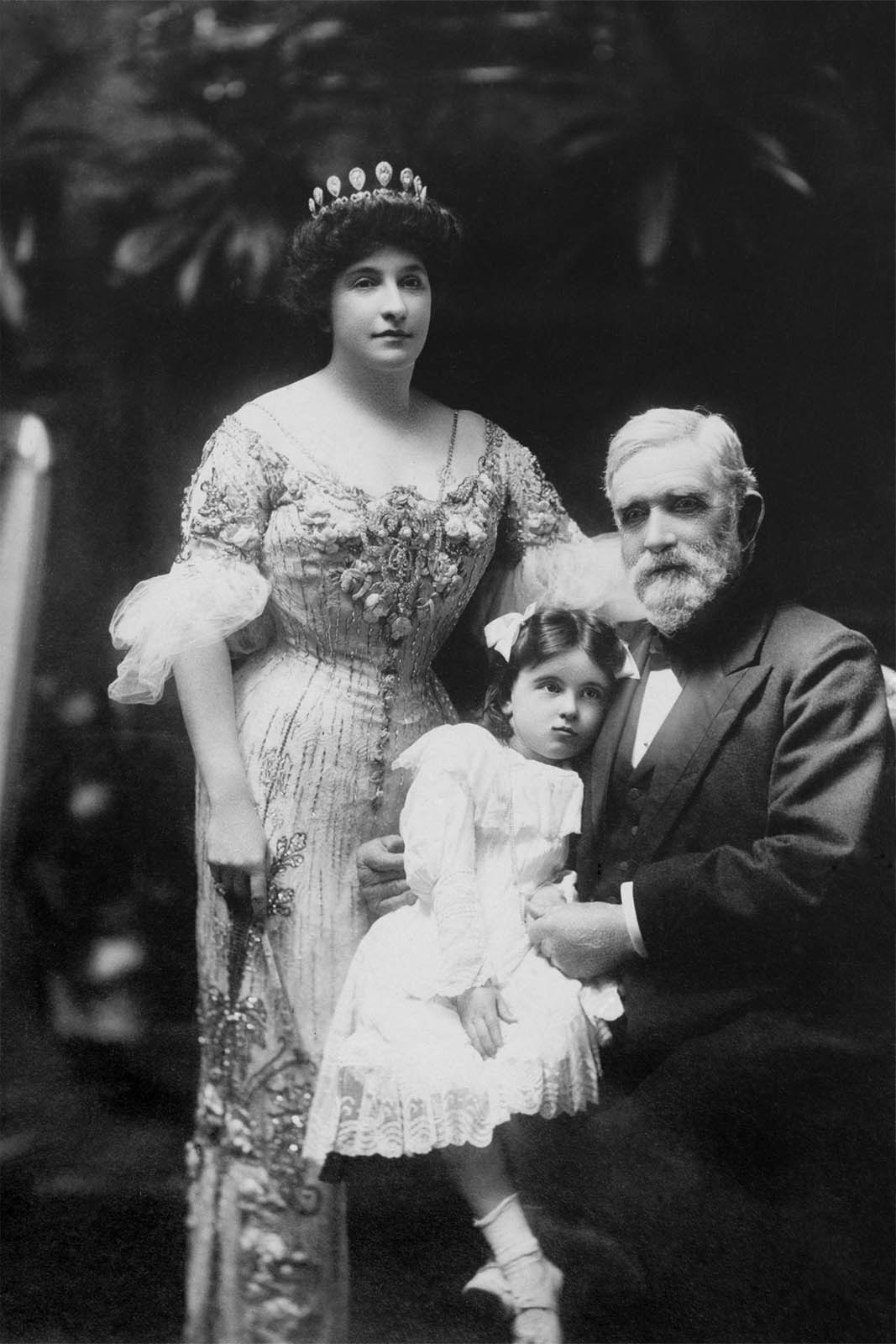
Unknown photographer/Bain News Service (publisher)
Nellie Melba, her father, David Mitchell, and a young girl (Nellie’s niece, Nellie Paterson), in Melbourne, Australia
1903
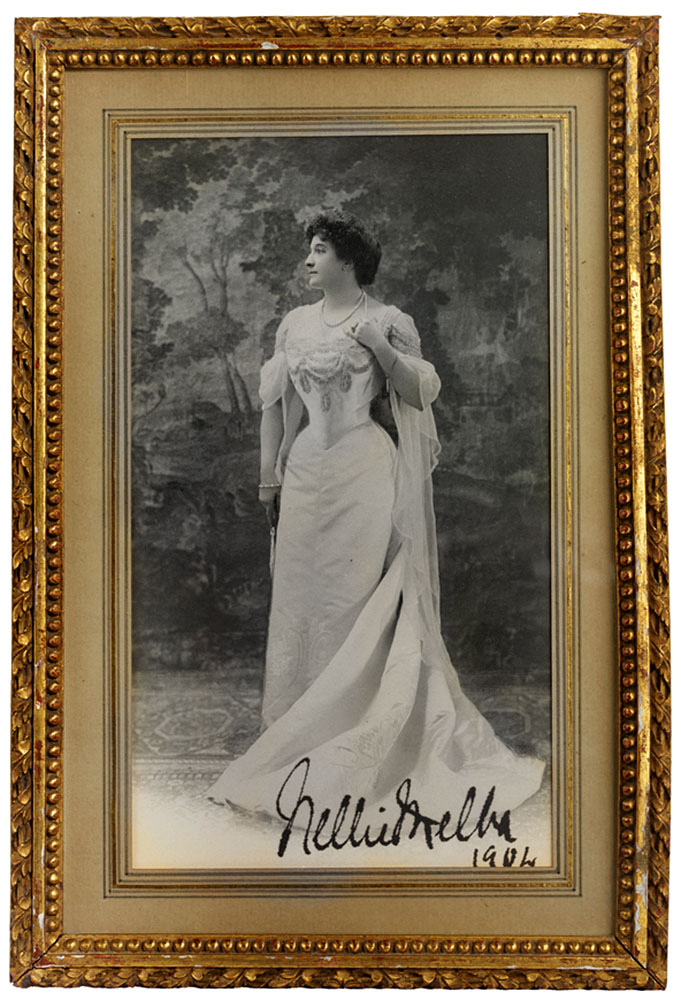
Unknown photographer
Photograph of Nellie Melba
1904
Provenance: Descendants of Pierre Cartier
Cartier Collection
Marian Gérard, Cartier Collection © Cartier
This photograph, gifted by Nellie Melba herself, had always been kept in Pierre Cartier’s salon
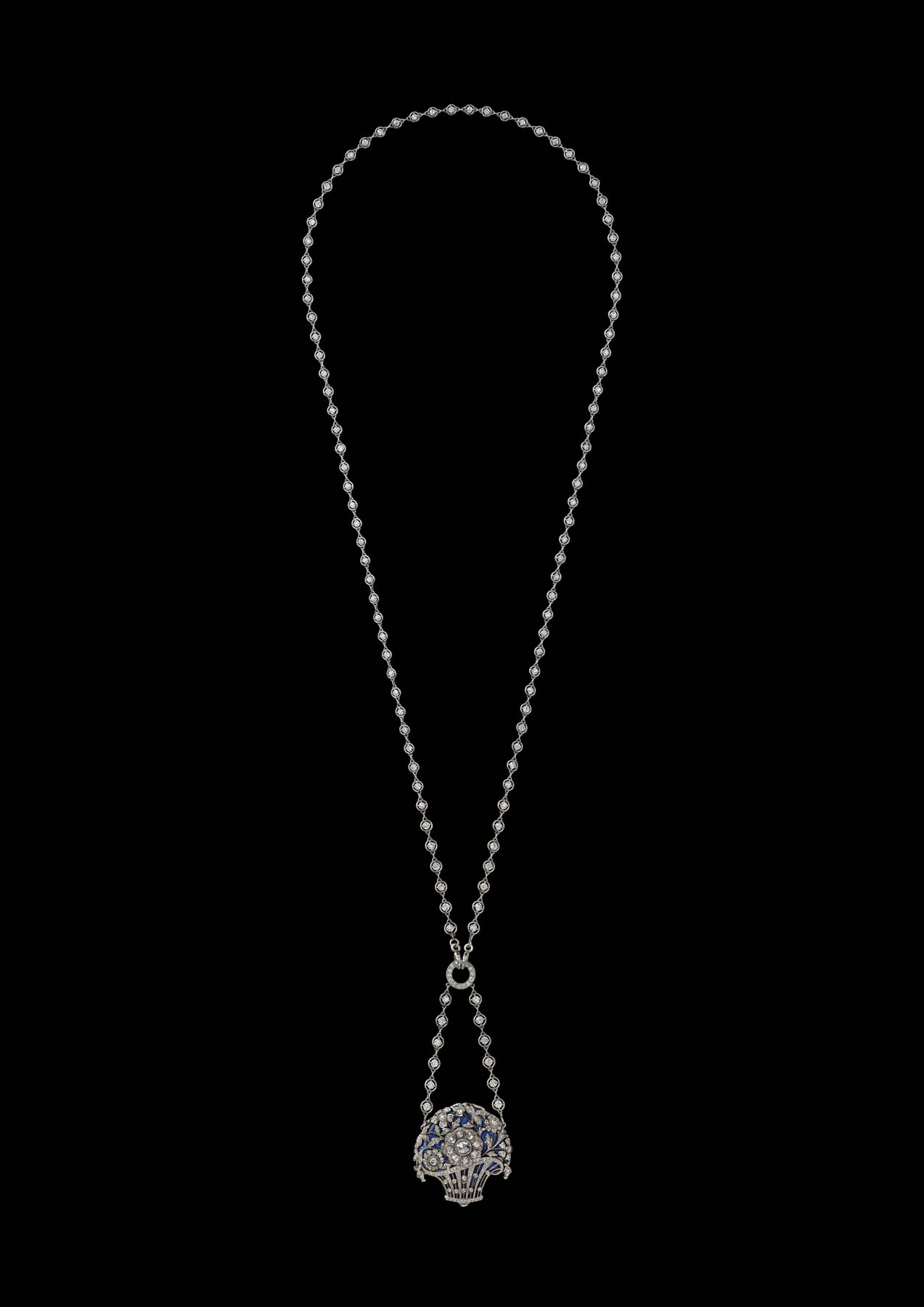
Floral basket pendant watch
Cartier Paris
1909
Platinum, pink gold, diamonds, enamel
Cartier Collection
Nils Herrmann, Cartier Collection
© Cartier
Owned by Dame Nellie Melba
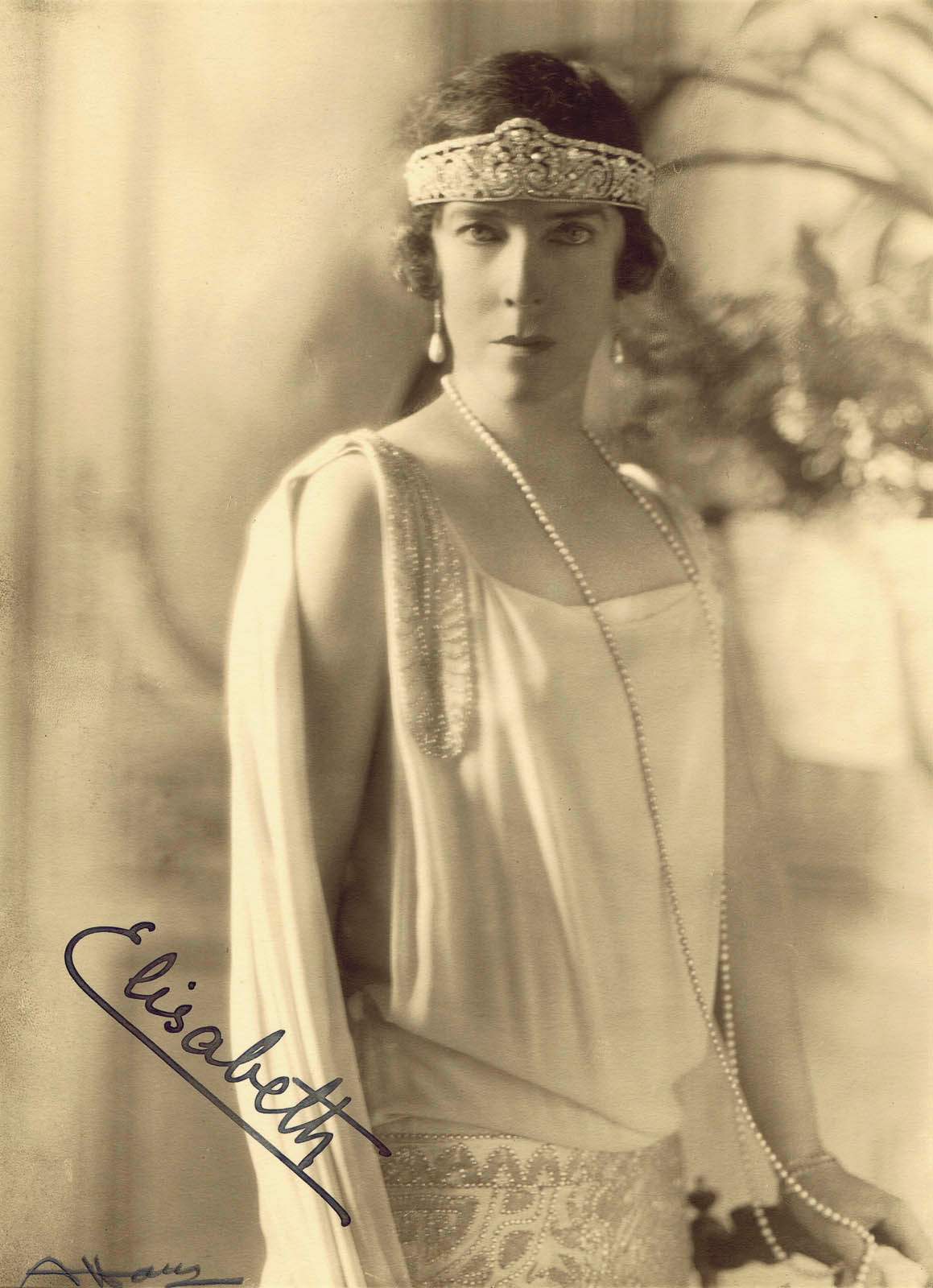
Aram Alban (Armenian, 1883-1961)
Elisabeth of Bavaria, Queen of the Belgians
c. 1925
Photo: Archives of the Royal Palace, Brussels
Wearing the scroll tiara by Cartier Paris seen below
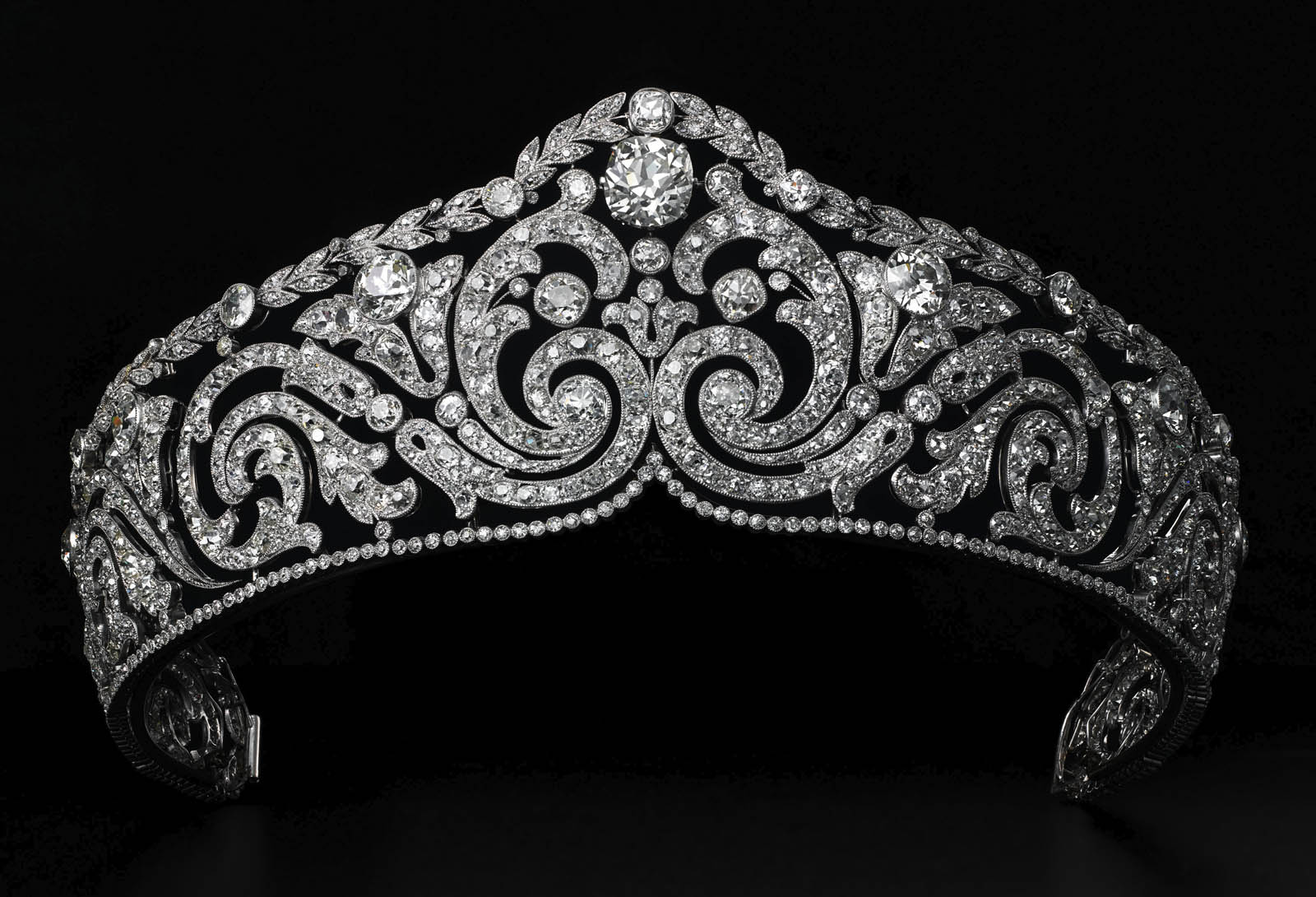
Scroll Tiara
Cartier Paris
1910
Diamonds and platinum
Cartier Collection
Vincent Wulveryck, Cartier Collection
© Cartier
Owned by Elisabeth, Queen of the Belgians
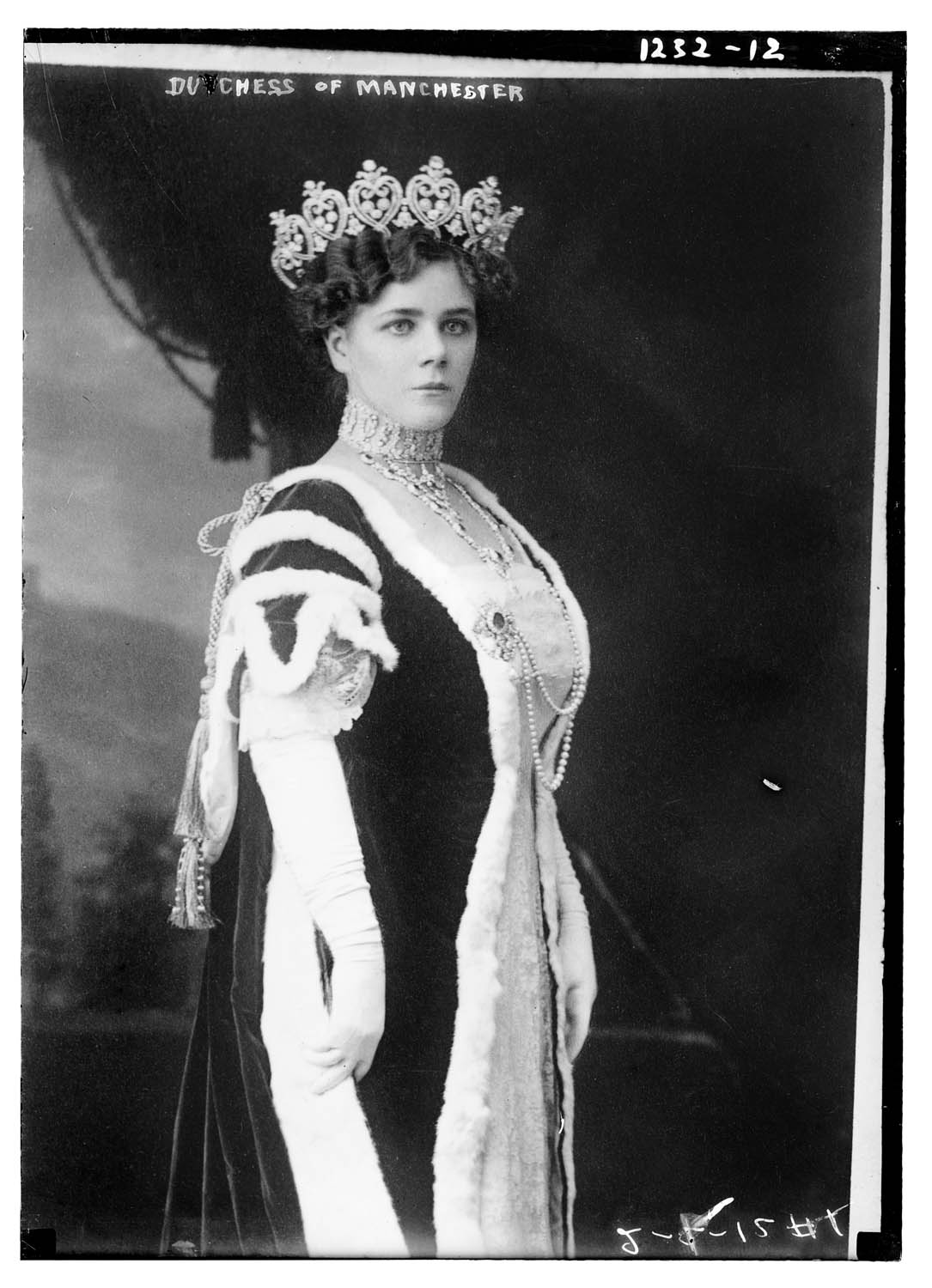
George Grantham Bain Collection
Helena, nee Zimmerman, daughter-in-law of Consuelo Montagu, Dowager Duchess of Manchester, wearing the Manchester tiara to the coronation of King George V and Queen Mary
1911
George Grantham Bain Collection. Library of Congress, Prints & Photographs Division, Washington, D.C.
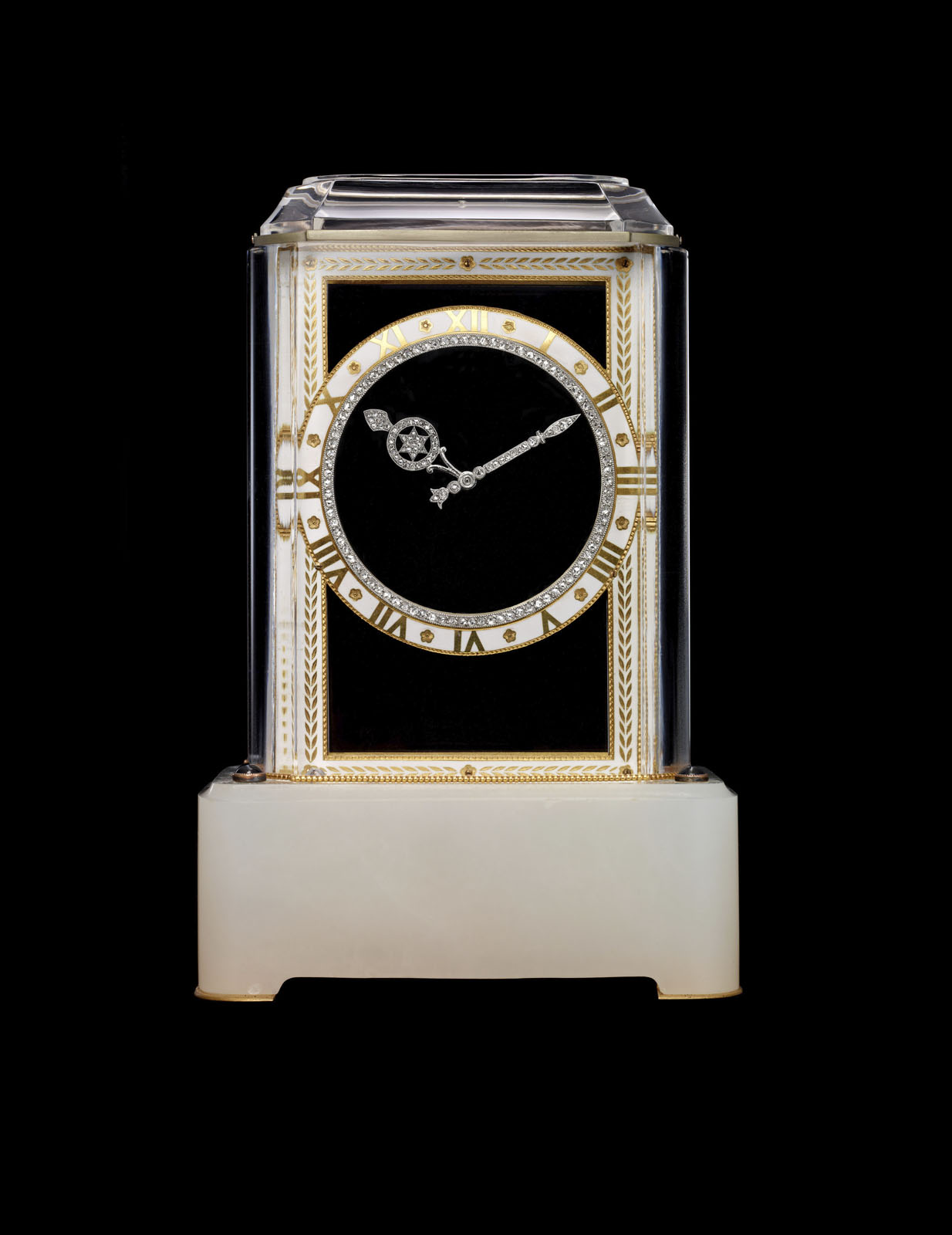
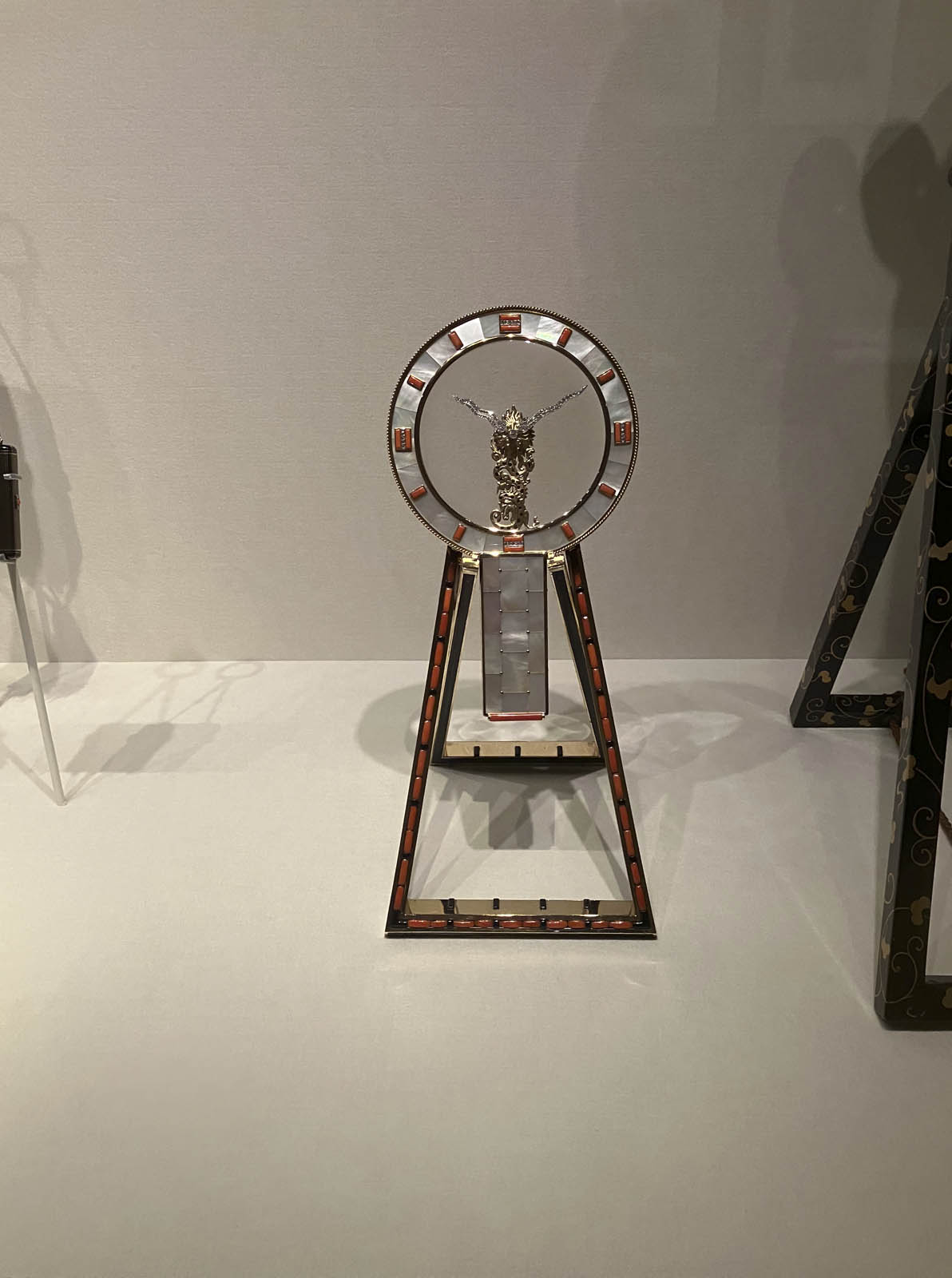
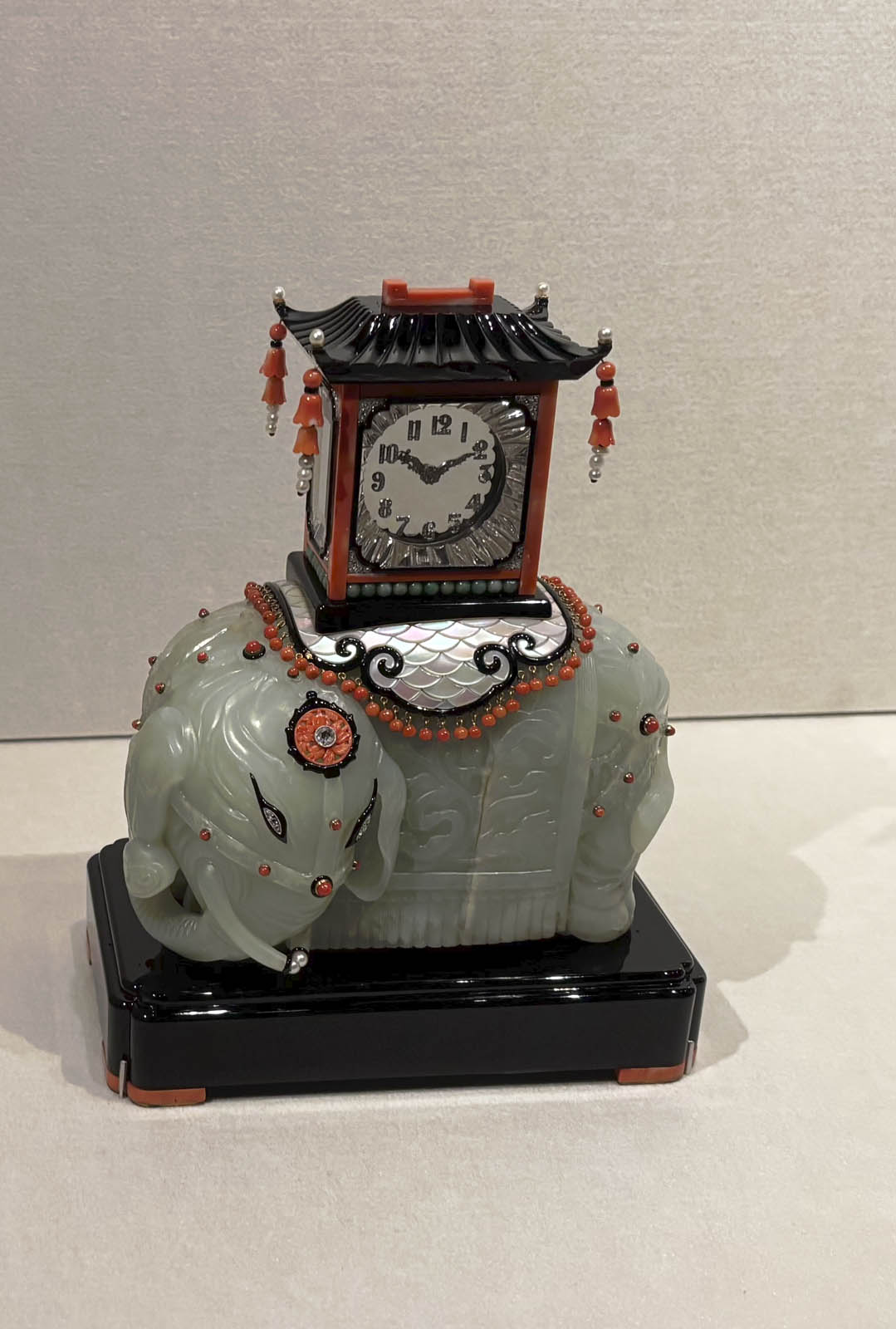
‘Model A’ Mystery Clock
Cartier Paris
1914
Rock crystal, agate, diamonds, sapphires, enamel, gold, platinum
Cartier Collection
Nils Herrmann, Cartier Collection
© Cartier
Sold to Count Greffulhe
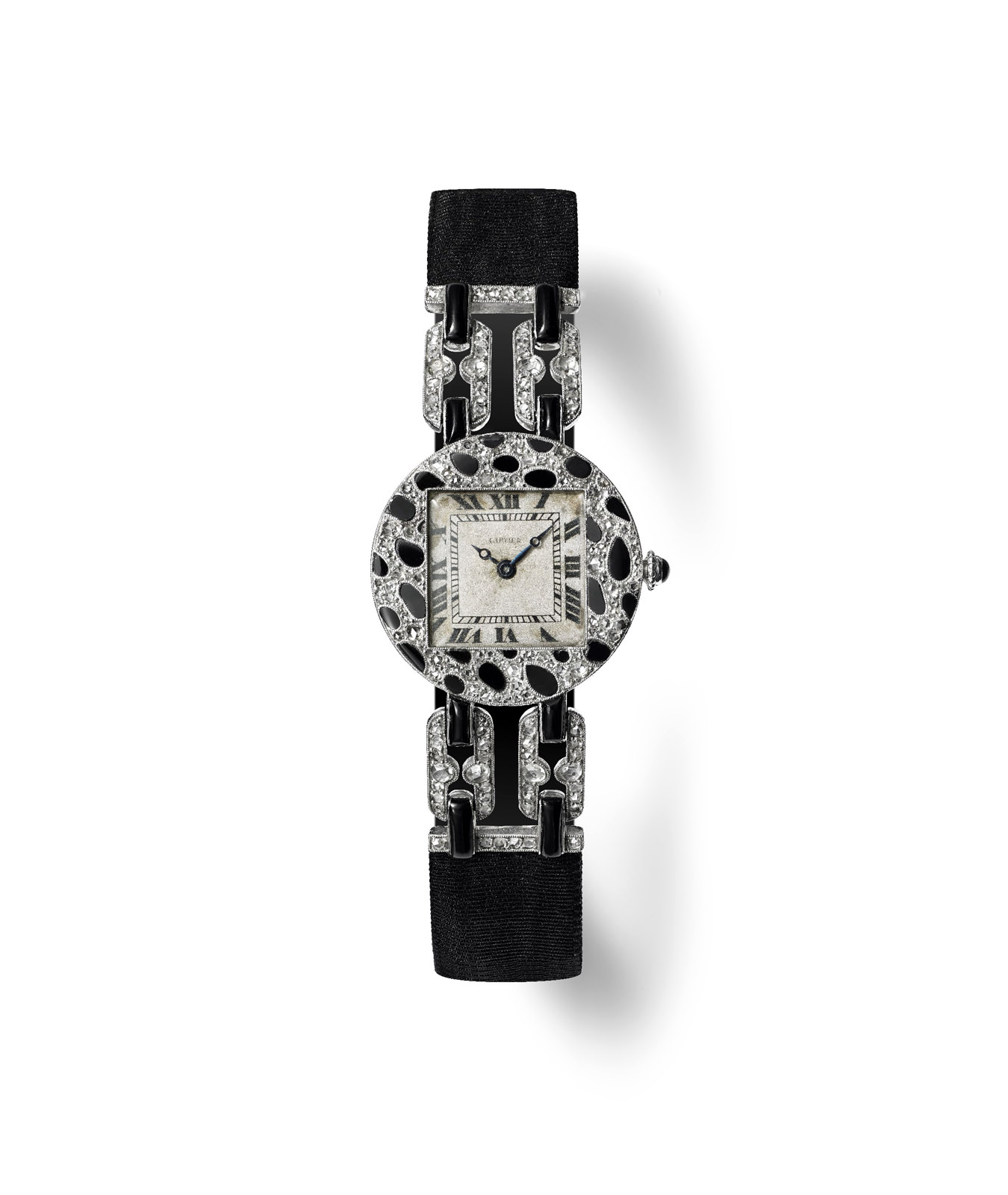
Panther skin wristwatch
Cartier Paris
1914
Onyx, diamonds, pink gold, platinum and black moiré strap
Cartier Collection
Nils Herrmann, Cartier Collection
© Cartier
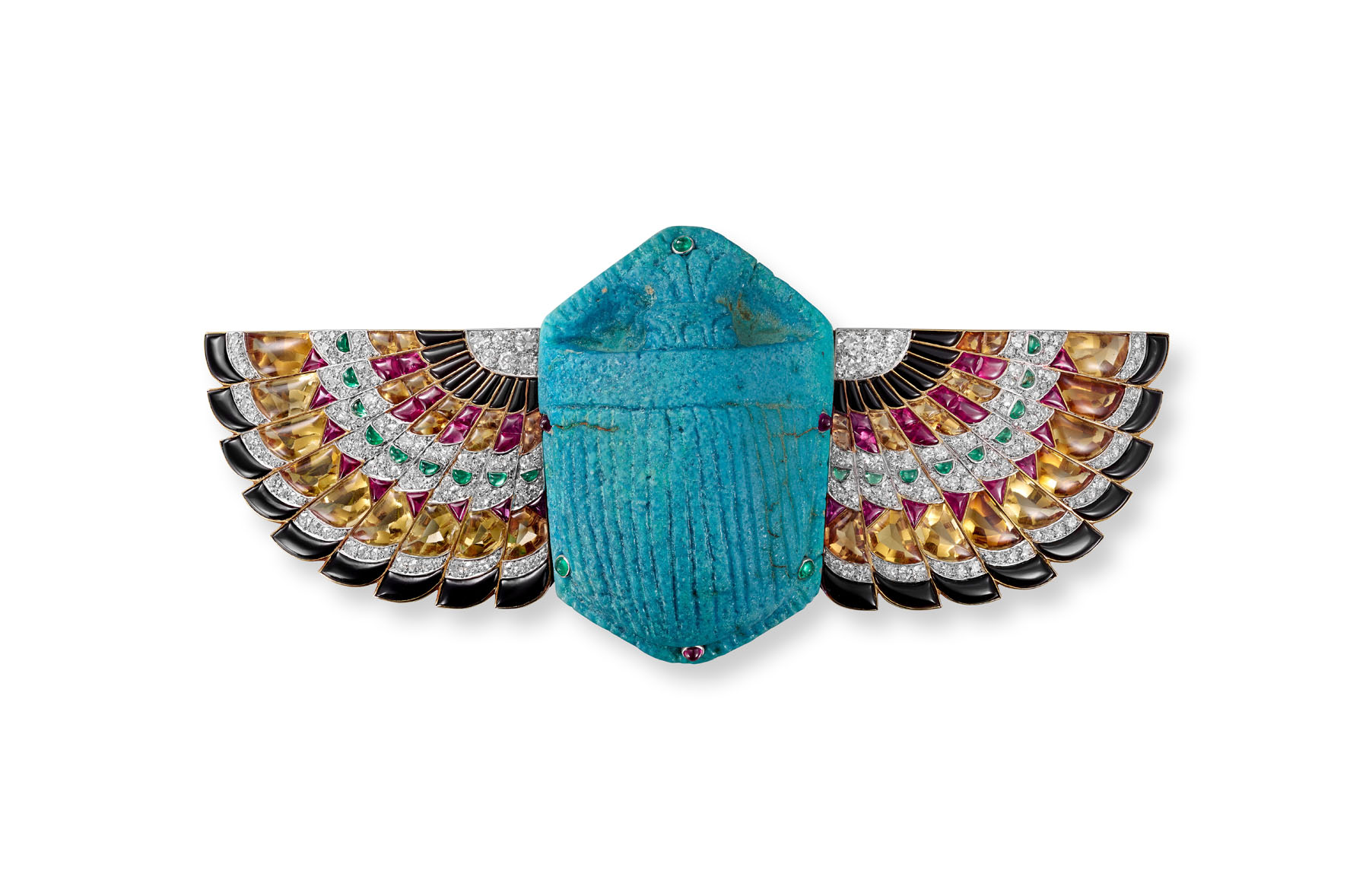
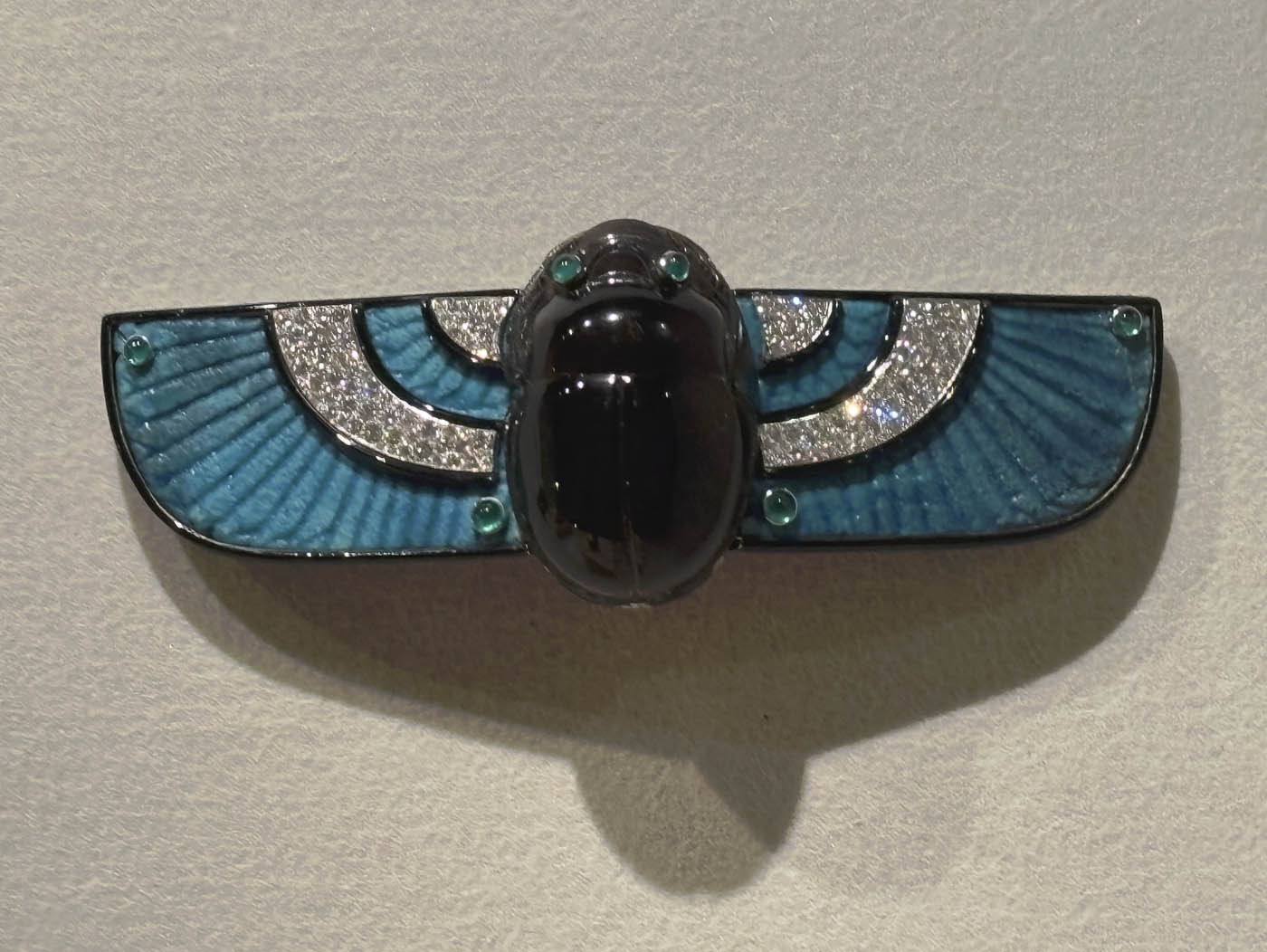
Scarab Brooch
Cartier London
1925
Blueglazed Egyptian faience with rubies, emeralds, citrines, diamonds, onyx, platinum and gold
Cartier Collection
Nils Herrmann, Collection Cartier
© Cartier
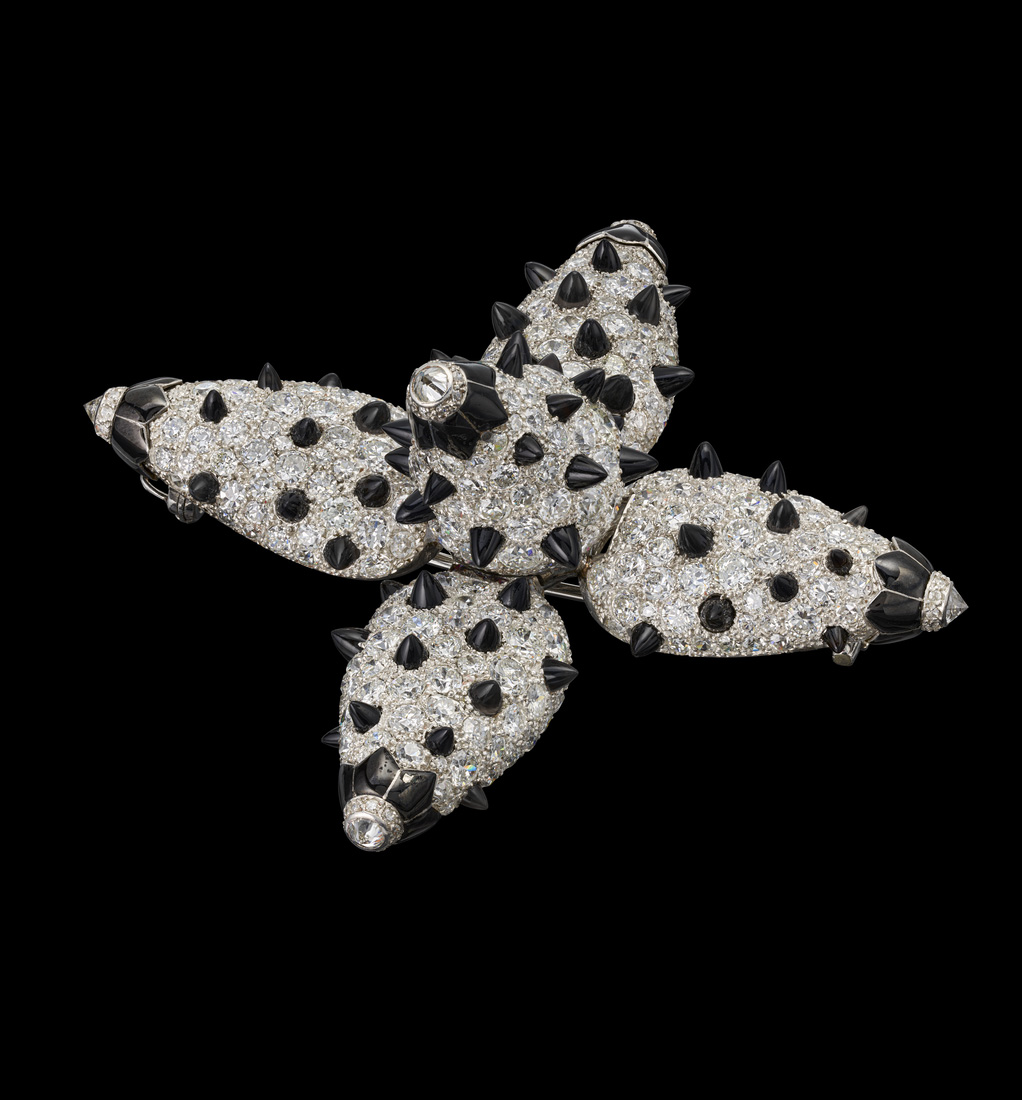
Brooch
Cartier Paris
1925; altered 1927
Onyx, diamonds, enamel, platinum and gold
Cartier Collection
Marian Gérard, Cartier Collection
© Cartier
This brooch was one of the items displayed by Cartier at the Exposition Internationale des Arts Décoratifs et Industriels Modernes held in Paris in 1925.
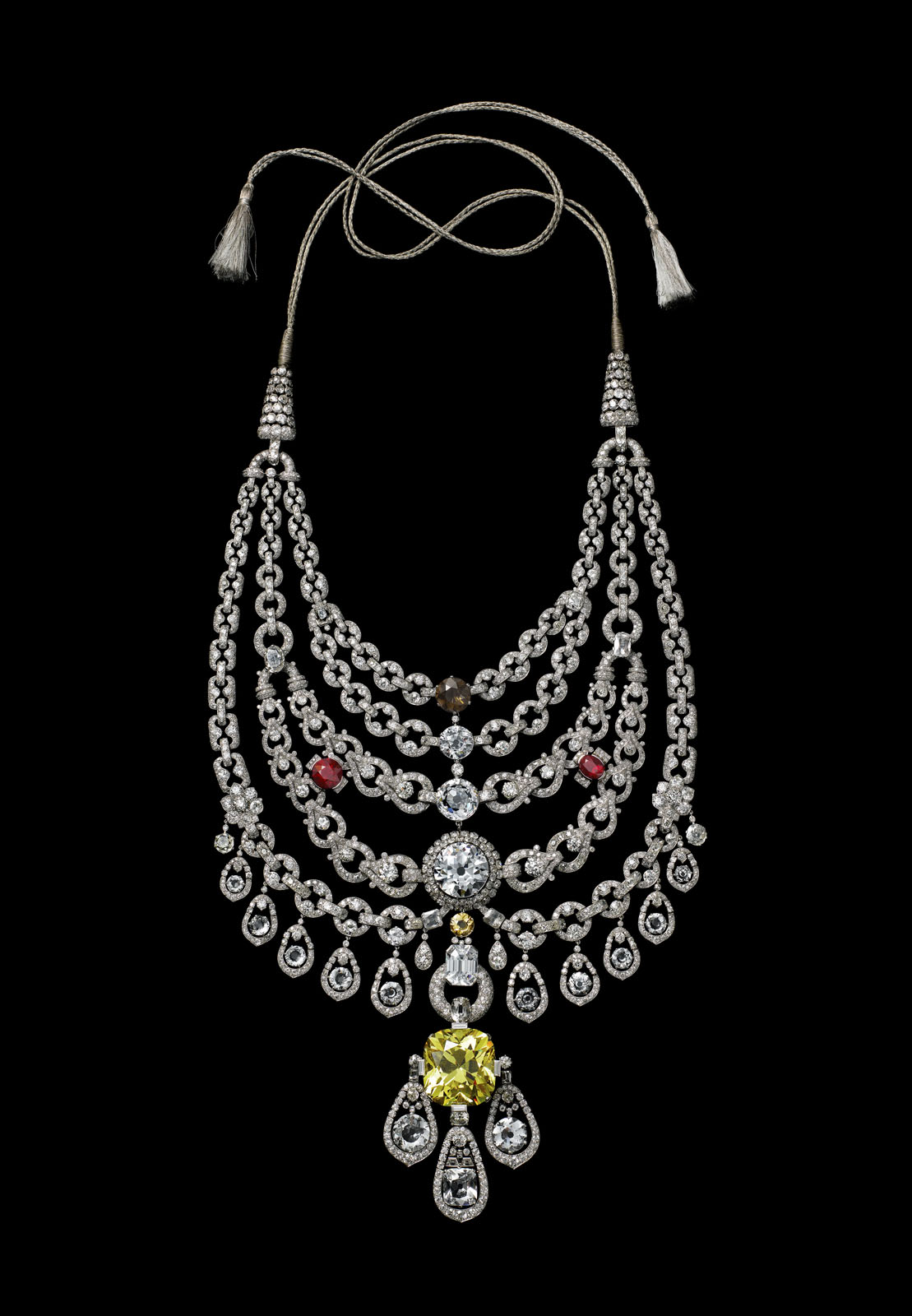
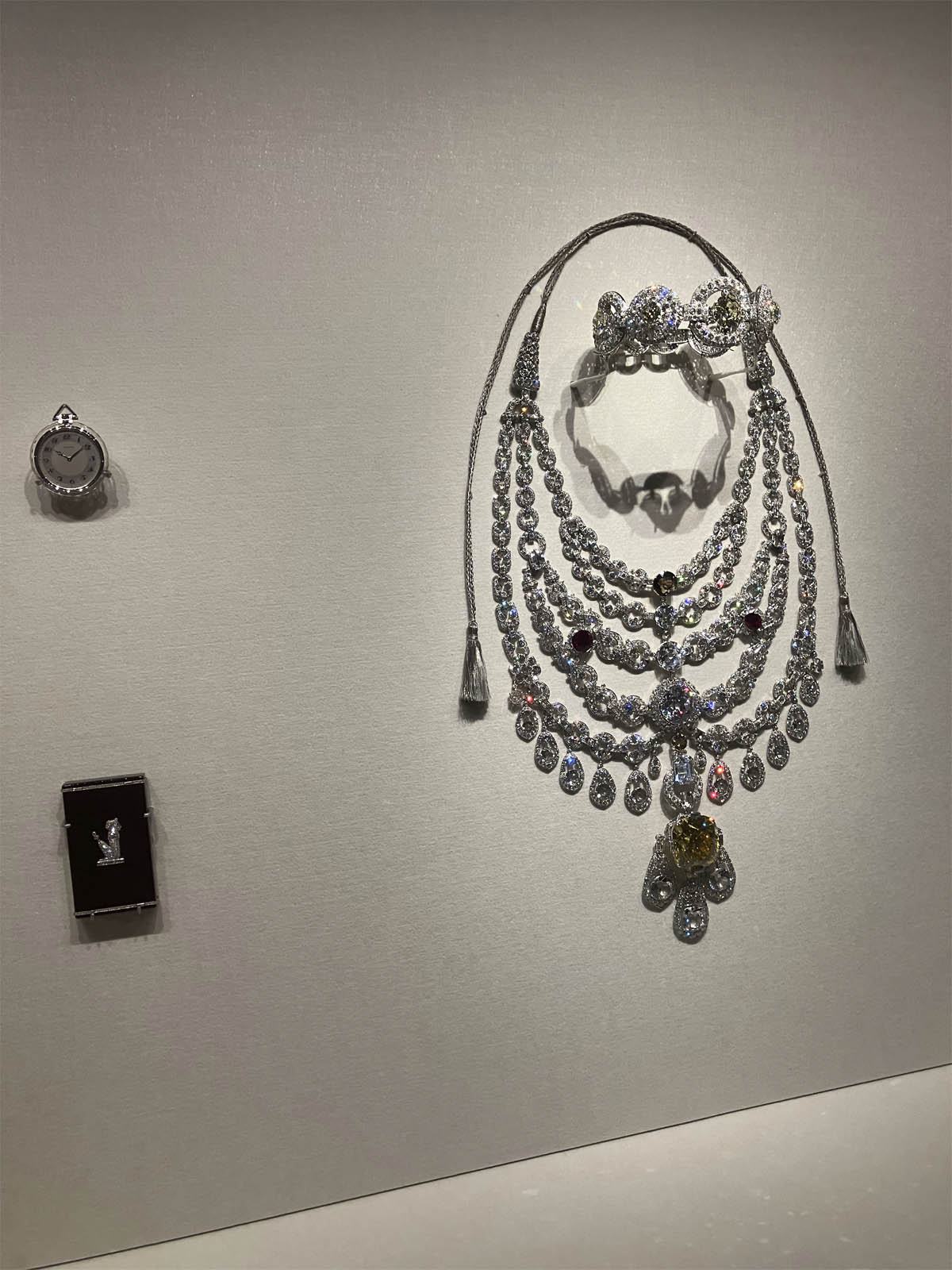
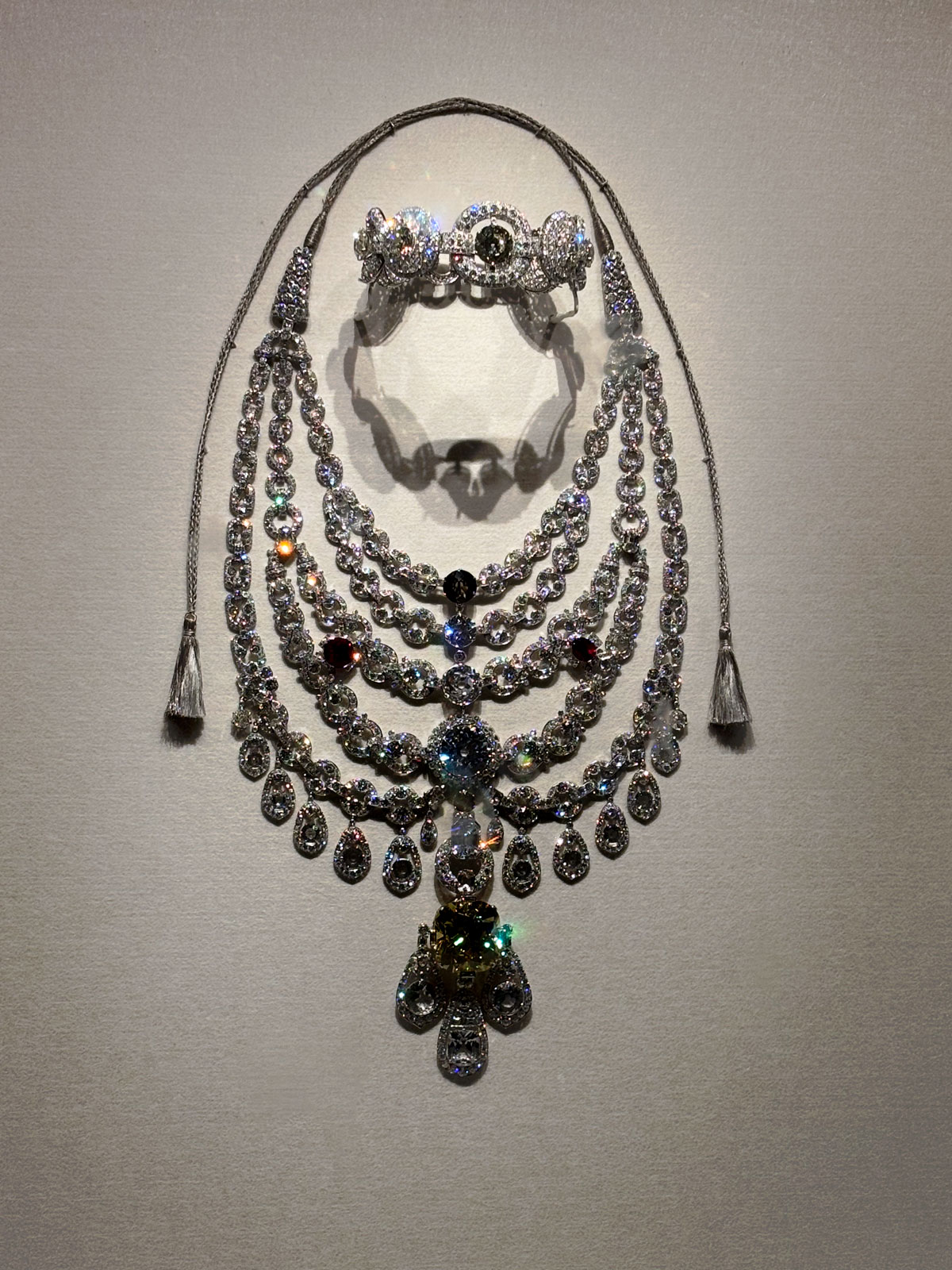
Necklace
Cartier Paris
Special order 1928 (restored 1999-2002)
Platinum, diamonds, zirconia, topazes, synthetic rubies, one critrine, one
smoky quartz.
Cartier Collection
Vincent Wulveryck, Collection Cartier
© Cartier
Commissioned by Bhupinder Singh, Maharajah of Patiala
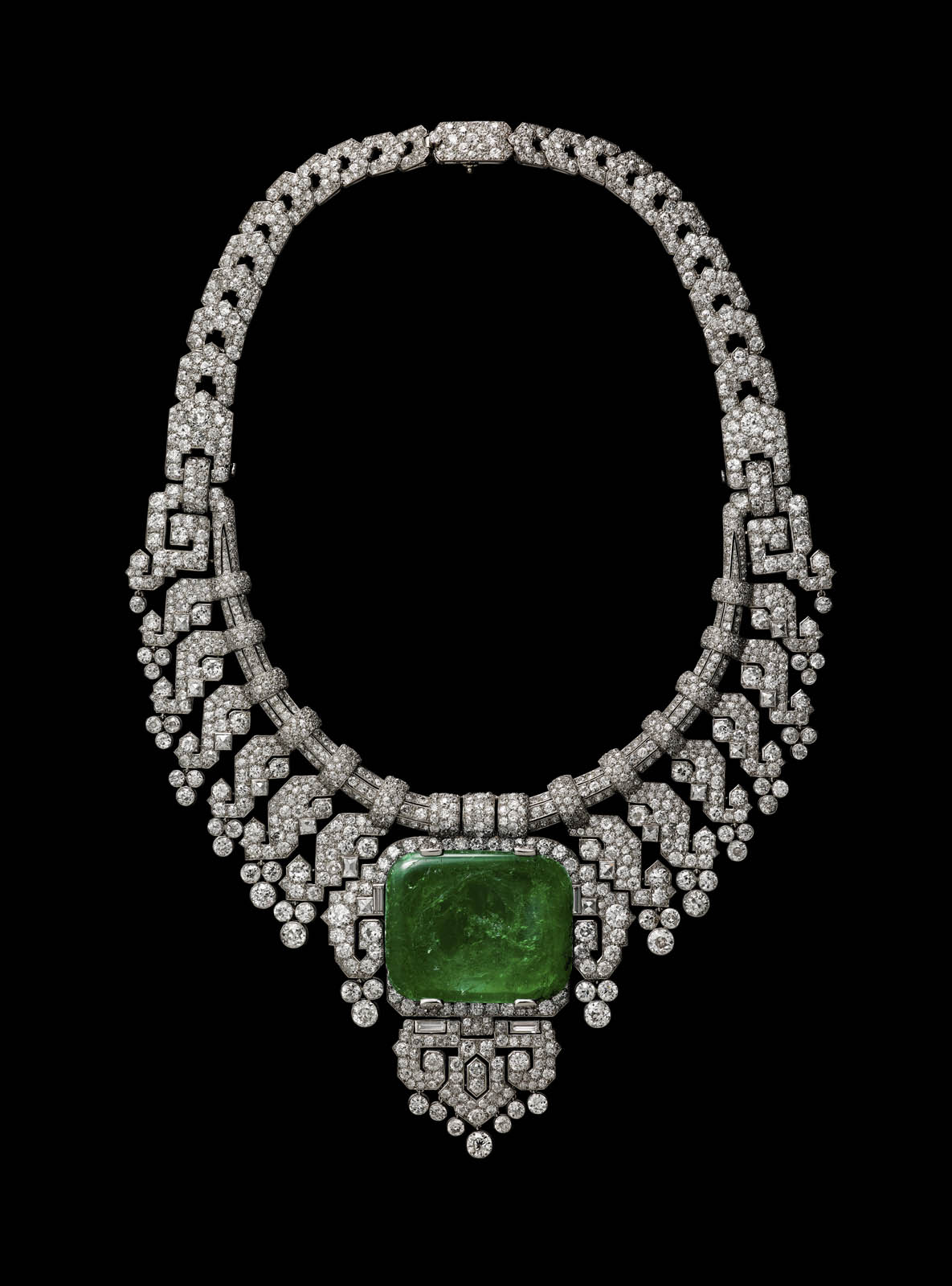
Necklace
Cartier London
Special order, 1932
One 143.23-carat emerald, diamonds and platinum
Cartier Collection
Vincent Wulveryck, Cartier Collection
© Cartier
Commissioned by Lady Granard
About the exhibition
The exhibition opens with an introduction to Louis, Pierre and Jacques Cartier, who were united in their ambition to expand the family business globally, which had been established by their grandfather in 1847. The emergence of the ‘Garland style’ will be explored as well as early cultural influences on Cartier’s creations, including ancient Egyptian design. This section reveals how the Maison developed its own instantly recognisable style, one that combined modernity and innovation with elegance and refinement.
The next section of the exhibition focuses on the rise of Cartier’s signature design aesthetic, its workshops, the Maison’s exceptional access to significant gemstones and its technical innovation. At the Paris 1925 Exposition Internationale des Arts Décoratifs et Industriels Modernes, Cartier prominently displayed its creations alongside leading Parisian jewellers and couturiers in the Pavillon de l’élégance. A new aspect of the NGV exhibition will be a focus on Jeanne Toussaint, Cartier’s longstanding female Creative Director from 1933 to 1970 and her innovative design aesthetic. Visitors will see how the panther motif, celebrated by Toussaint and one of the Maison’s most iconic symbols, continues to evolve in contemporary jewels, using many of the same jewellery techniques that have been practised for decades.
In the early twentieth century, Cartier secured access to some of the most important gems in the world, notably due to sourcing trips made by Jacques Cartier to the Middle East, India and Sri Lanka, as well as the house’s elite clientele and dealer networks. In a section entirely devoted to the materials behind the creations, some of the finest gems in the world will be on view. A section on timepiece design illuminates Cartier’s exceptional technical innovation, whether in jewellery, clocks or watches.
The final section of the exhibition celebrates Cartier jewels that were worn by stars of the stage and screen, and the stylistic evolution of the Maison in to the 21st century. The exhibition will culminate in a spectacular display of more than 20 tiaras. Cartier became a master of these crowning jewels at a time when high society wore them to the most glittering events in the social calendar.
About the Cartier Collection
In the 1970s, Cartier began to gather together pieces that had been produced in its earlier years; jewelry, timepieces and other precious accessories were collected for conservation, leading to the foundation of the Cartier Collection in 1983.
Today, the Cartier Collection includes pieces dating from as early as the 1860s until as recently as the 2000s. These pieces act as material records of Cartier’s more than 170-year history of style and creativity, as well as provide a wider historical account of evolutions within the decorative arts since the end of the 19th century.
With approximately 3,500 pieces and still growing, the Cartier Collection has sparked the attention of museums worldwide. Since the first major exhibition in 1989 at the Petit Palais in Paris, the Cartier Collection has been showcased by some of the world’s most renowned institutions in 45 monographic exhibitions, including most recently at London’s Victoria and Albert Museum.
Press release from the NGV
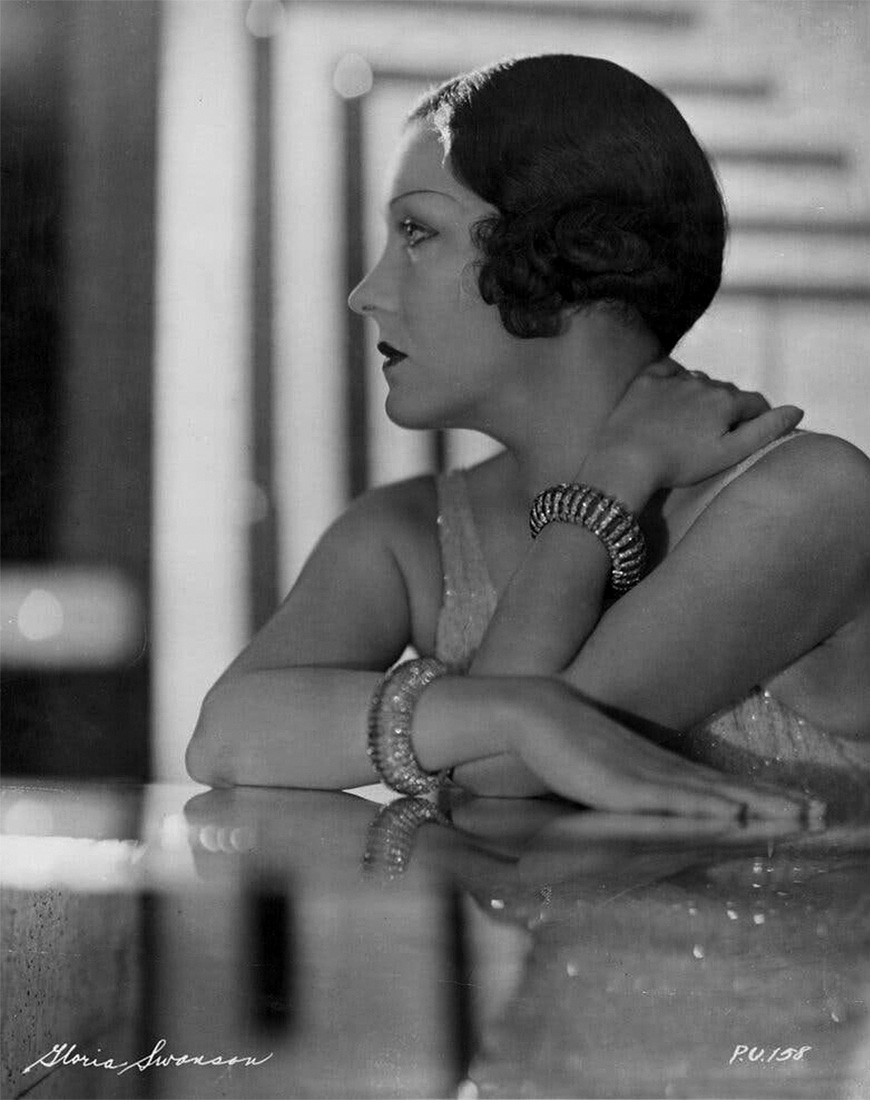
Unknown photographer
Gloria Swanson in “Perfect Understanding”
1933
Heritage Auctions
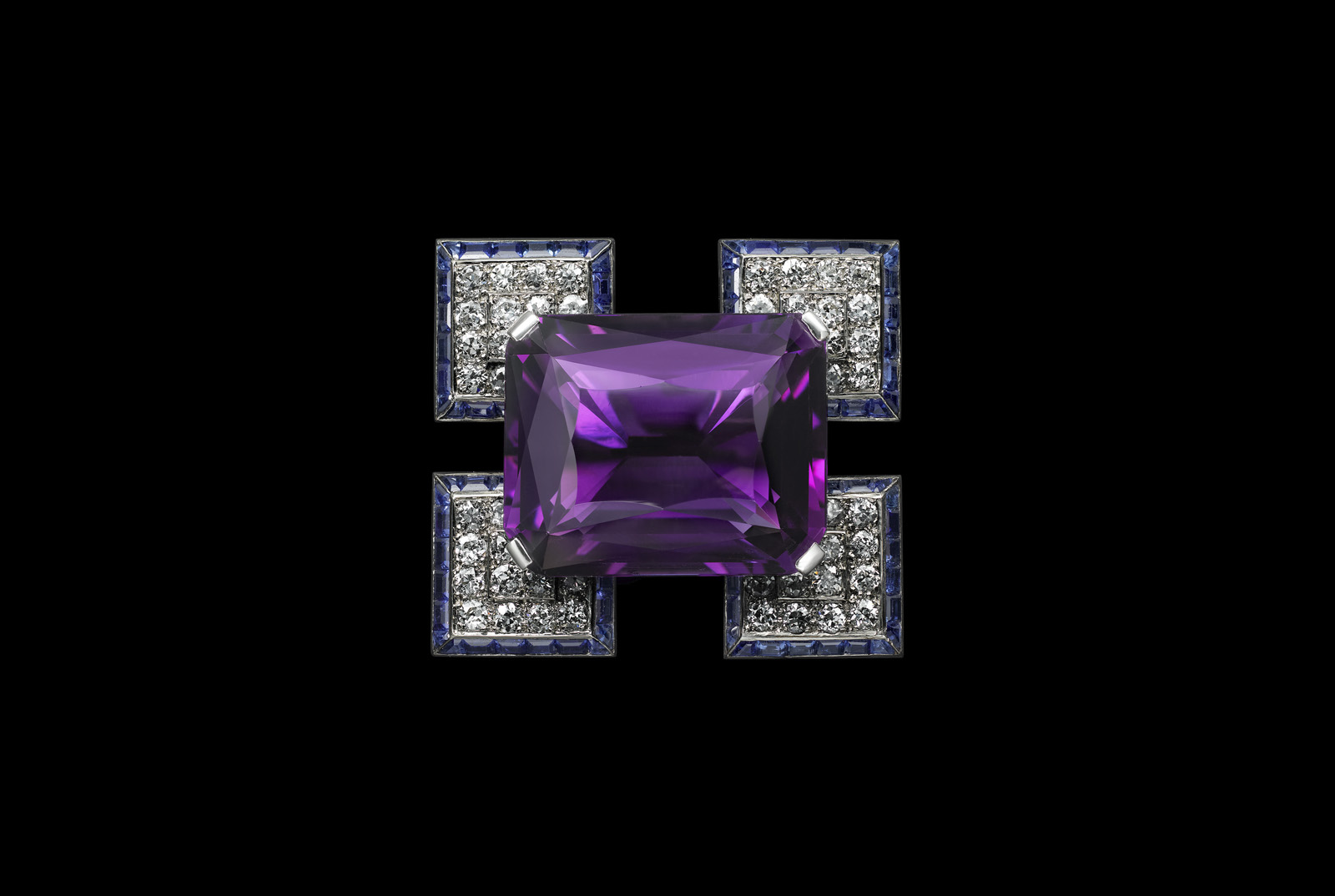
Brooch
Cartier London
1933
Amethyst, sapphires, diamonds and platinum
Cartier Collection
Vincent Wulveryck, Cartier Collection
© Cartier
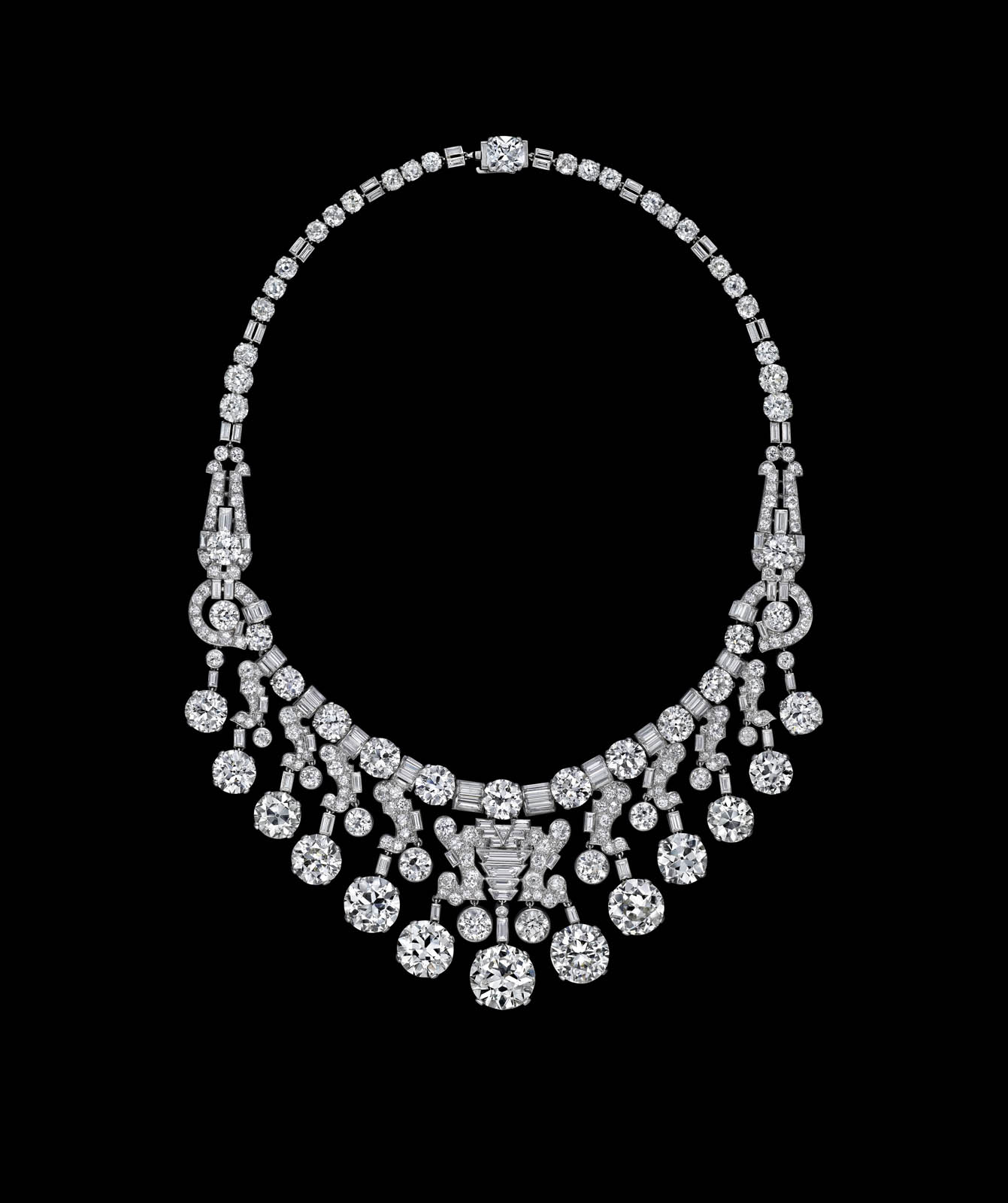
Necklace
Cartier London
Special order, 1934
Platinum, diamonds
Owned by the Sassoon family
Cartier Collection
Nils Herrmann, Cartier Collection
© Cartier
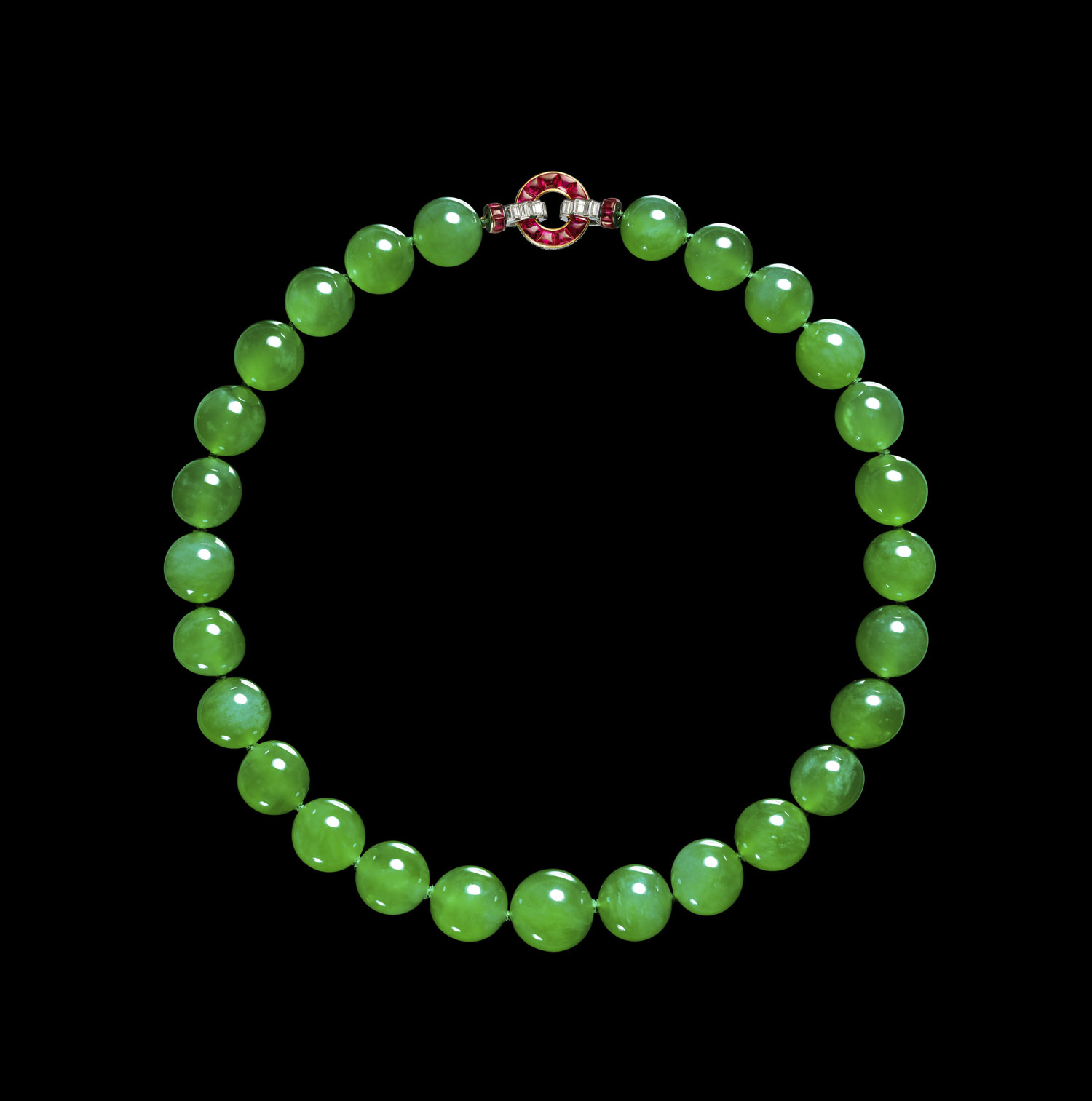
Necklace
Cartier Paris
Special order, 1934
Jadeite, rubies, diamonds, platinum and gold
Cartier Collection
Marian Gérard, Cartier Collection
© Cartier
Owned by Barbara Hutton
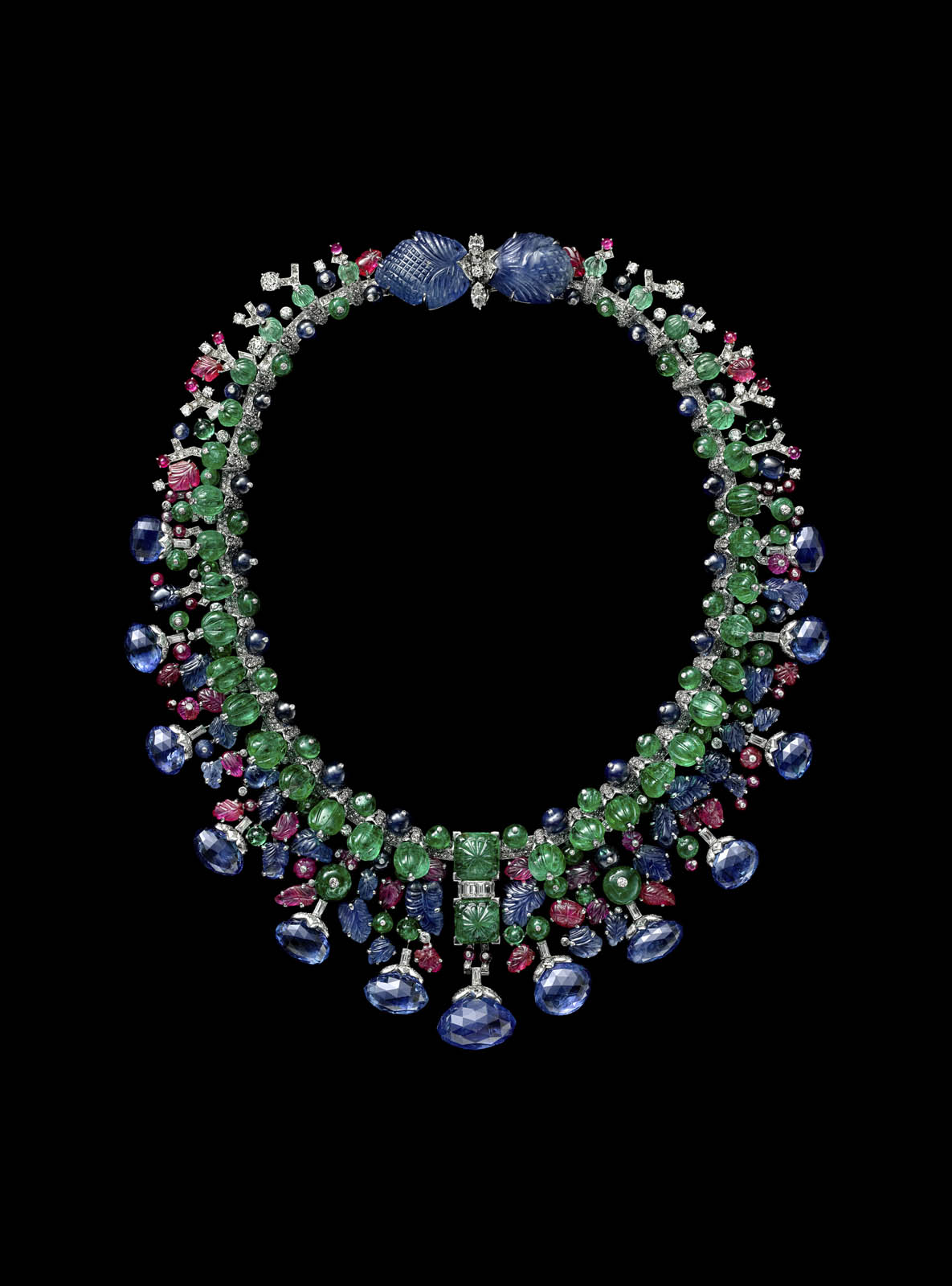
‘Hindou’ Necklace
Cartier Paris
Special order, 1936; altered 1963
Sapphires, emeralds, rubies, diamonds, platinum and white gold
Cartier Collection
Vincent Wulveryck, Collection Cartier
© Cartier
Commissioned by Daisy Fellowes
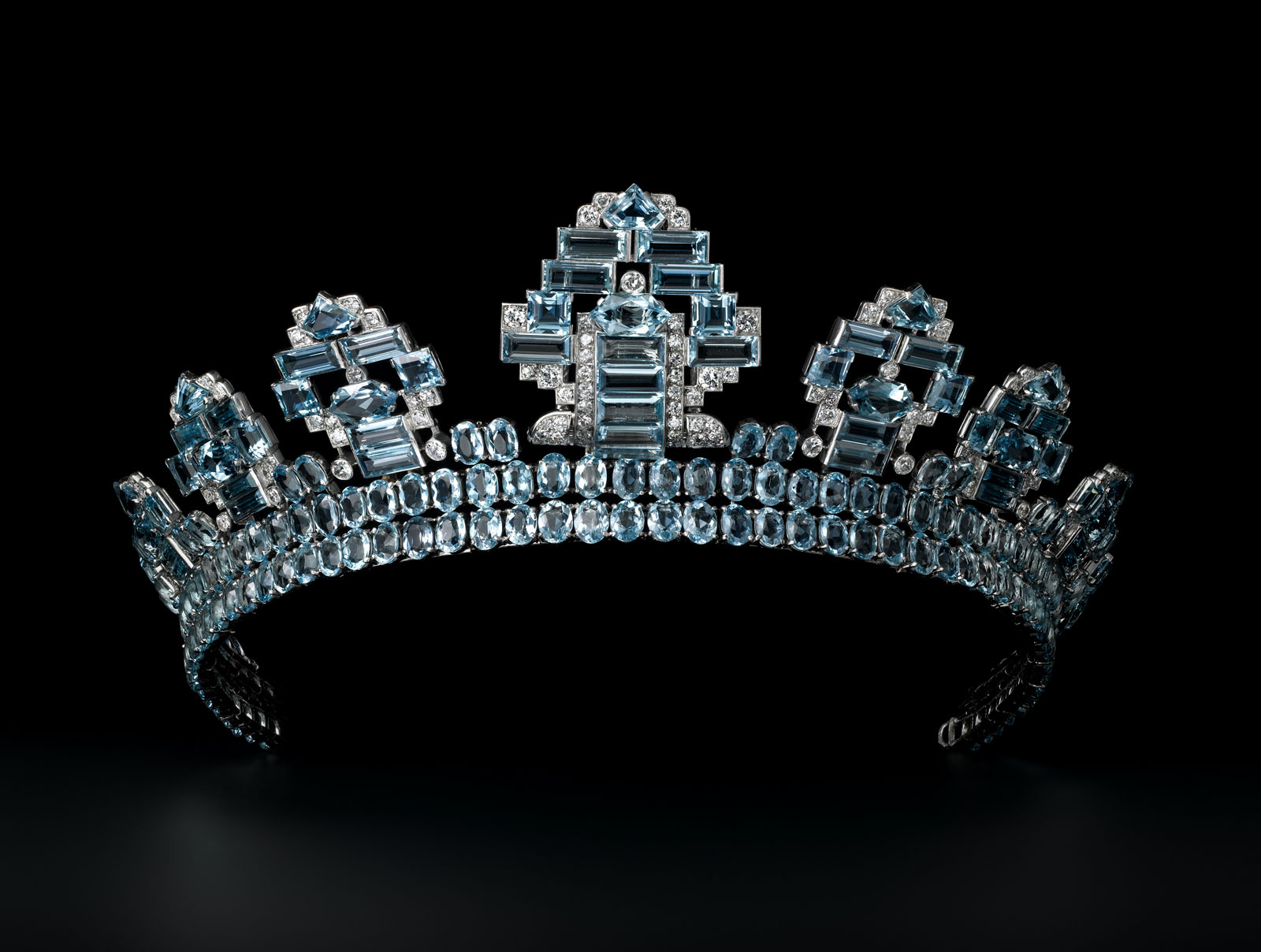
Tiara
Cartier London
1937
Aquamarine, diamonds and platinum
Cartier Collection
Vincent Wulveryck, Cartier Collection
© Cartier
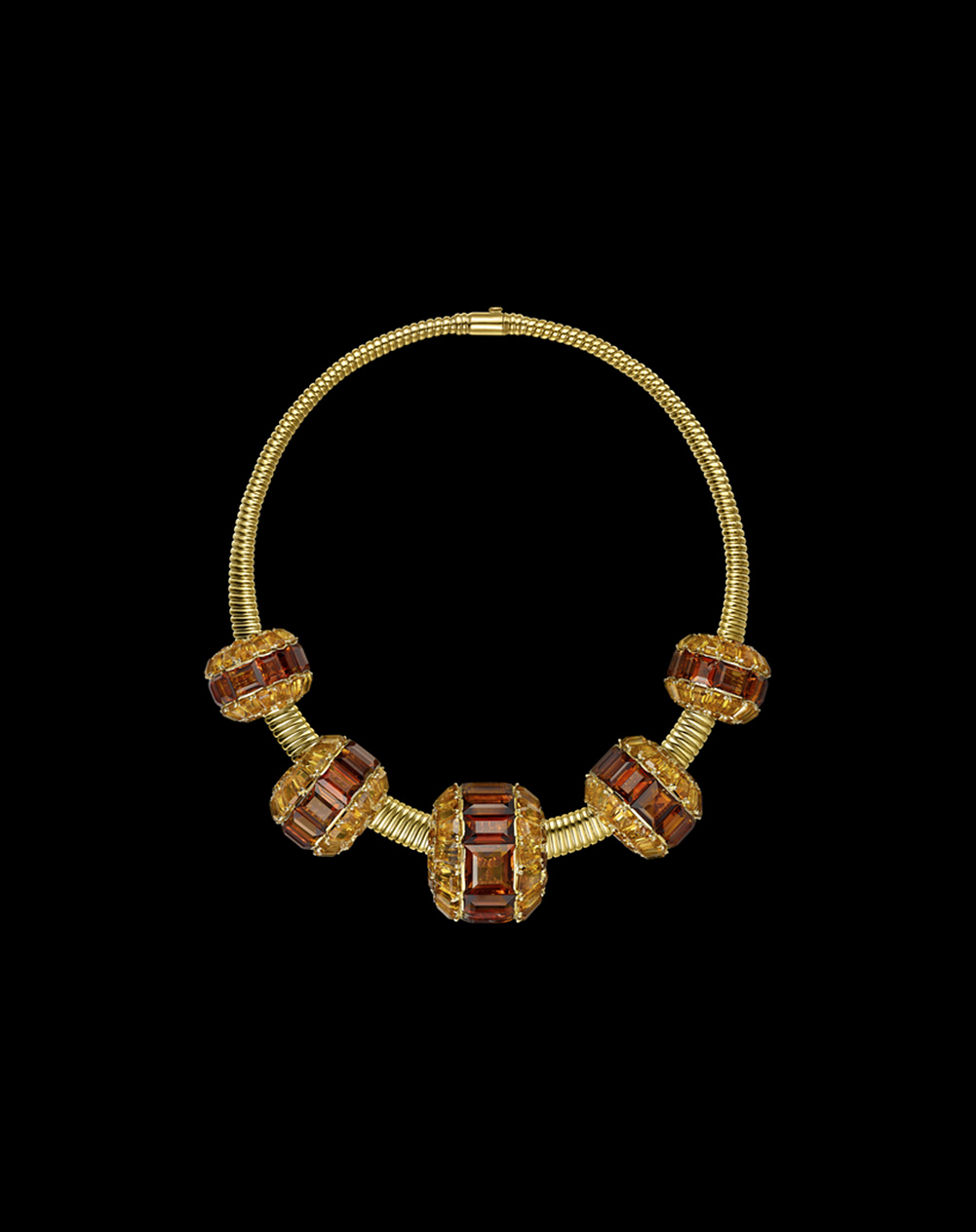
Necklace
Cartier Paris
1937
Gold, citrines
Cartier Collection
Nils Herrmann, Cartier Collection
© Cartier
The five motives on the necklace can be detached to be worn as brooches.
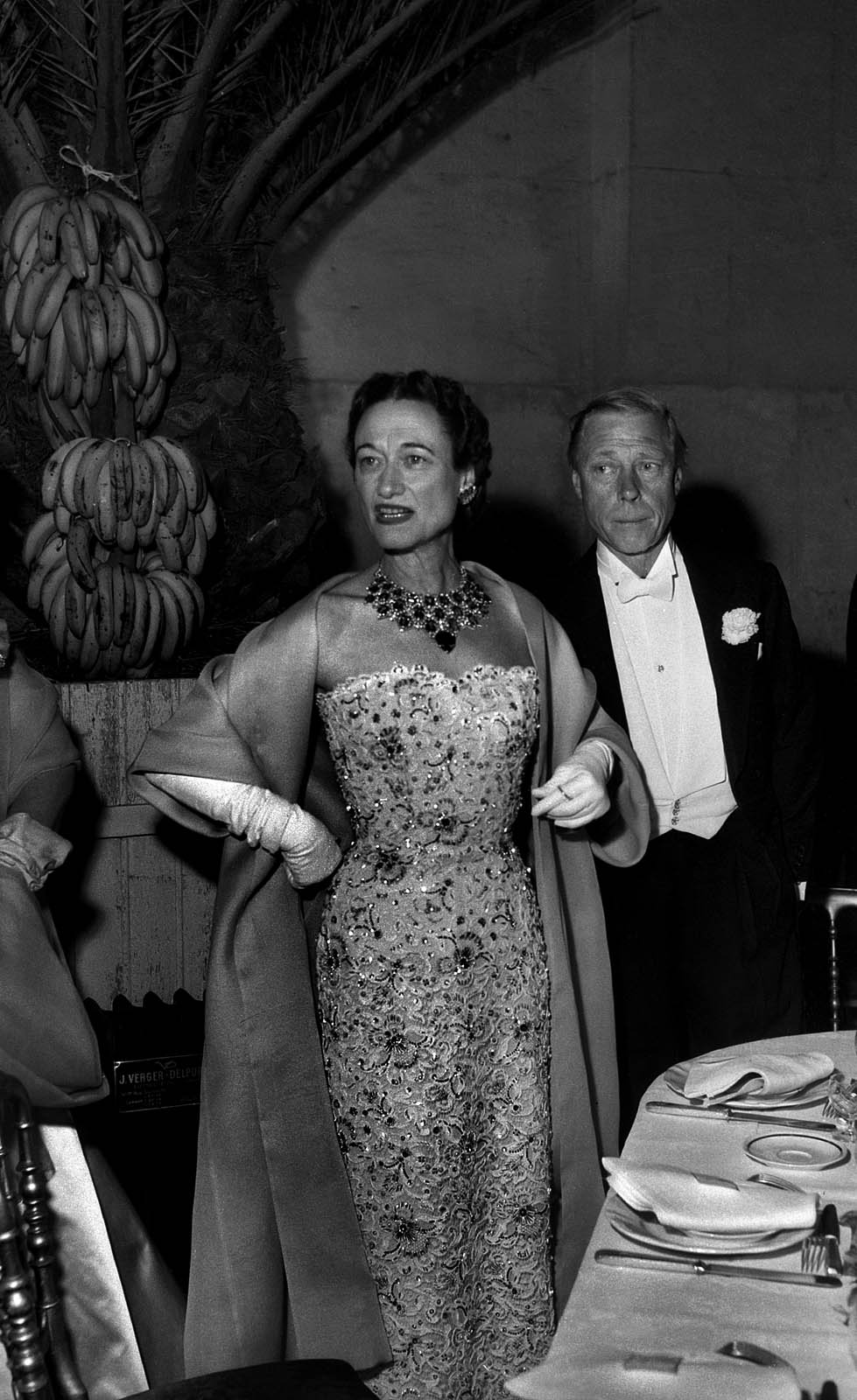
Unknown photographer
Duke Edward of Windsor (Former King Edward Viii) and Duchess of Windsor (Wallis Simpson, With A Necklace By Cartier) during Ball in Versailles on June 17, 1953
1953
© AGIP / Bridgeman Images
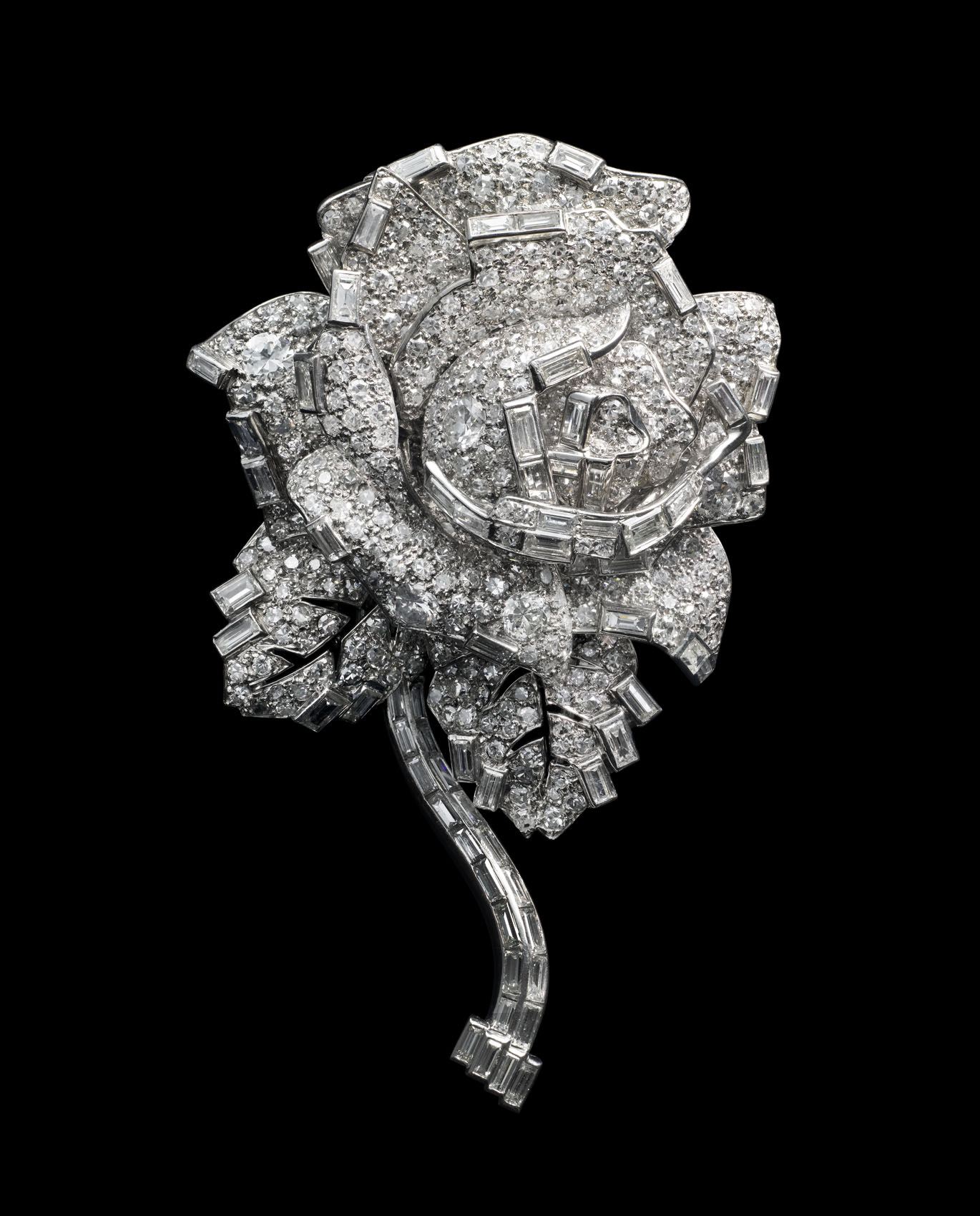
Rose Clip Brooch
Cartier London
Special order, 1938
Diamonds and platinum
Cartier Collection
Vincent Wulveryck, Cartier Collection
© Cartier
Owned by HRH Princess Margaret, Countess of Snowdon, worn on the photograph below
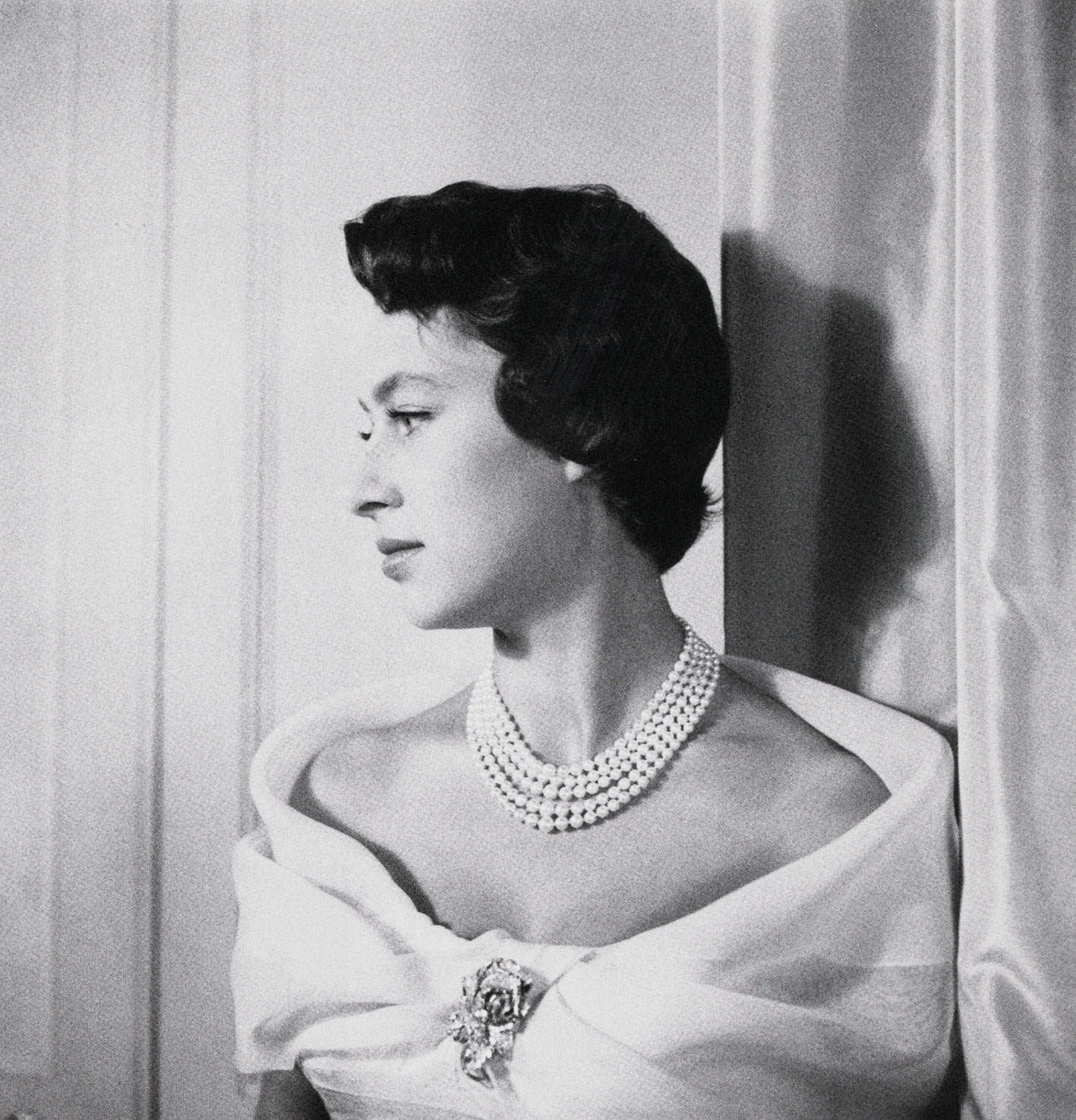
Cecil Beaton (British, 1904-1980)
Princess Margaret wearing the Cartier rose clip brooch
1955
Cartier Collection
Vincent Wulveryck, Cartier Collection © Cartier
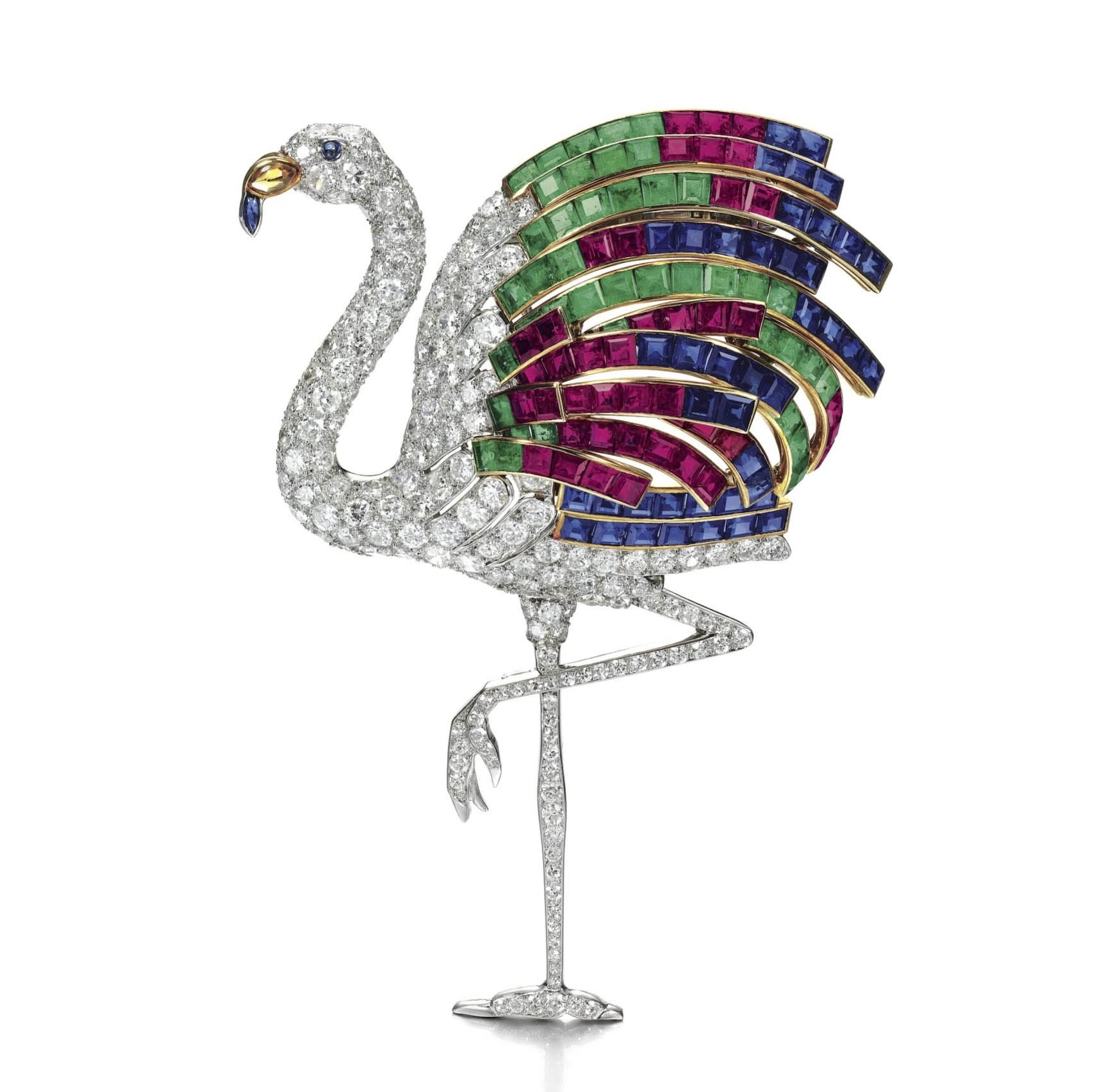
Flamingo Brooch
Cartier Paris
1940
Platinum, diamonds, rubies, sapphires and emeralds
Cartier Collection
© Cartier
The iconic Cartier Flamingo Brooch ordered for the Duchess of Windsor on the eve of the Nazi Occupation of Paris.
The brooch was delivered to the Duke and Duchess of Windsor only a few days before they left the French capital ahead of the German invasion. Via Spain and Portugal, the Duke and Duchess travelled to Nassau in the Bahamas where the Duke took on the role of governor for the duration of World War II. Upon arrival in Miami, en route to Nassau, the Duchess wore her brand-new Cartier flamingo brooch when greeting the crowds. She paired it with a now-famous bi-corned hat, one of her boldest and most iconic fashion choices.
The flamingo brooch was one of the star lots in Sotheby’s landmark sale of the Duchess of Windsor’s Collection in 1987 and was again offered at Sotheby’s London in November 2010 in a sale that re-united several highlights from the Duke and Duchess’ collection. Today, the original flamingo brooch is part of the Cartier heritage collection and is frequently featured it in exhibitions all over the world.
Text from the Sotheby’s website
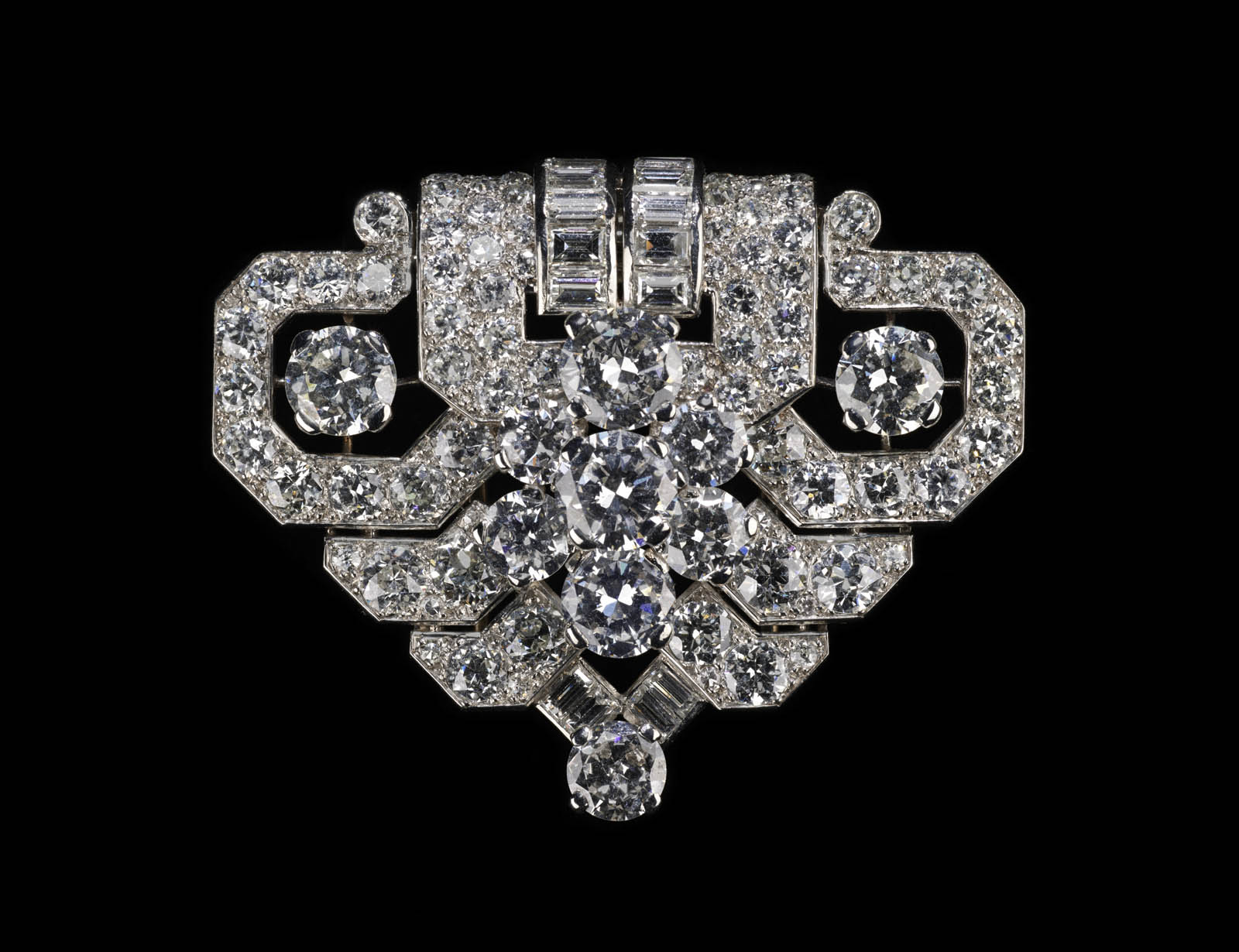
Brooch
Cartier London
Special order, 1941
Diamonds and platinum
Commissioned by Ernest Schwaiger
© Victoria and Albert Museum, London
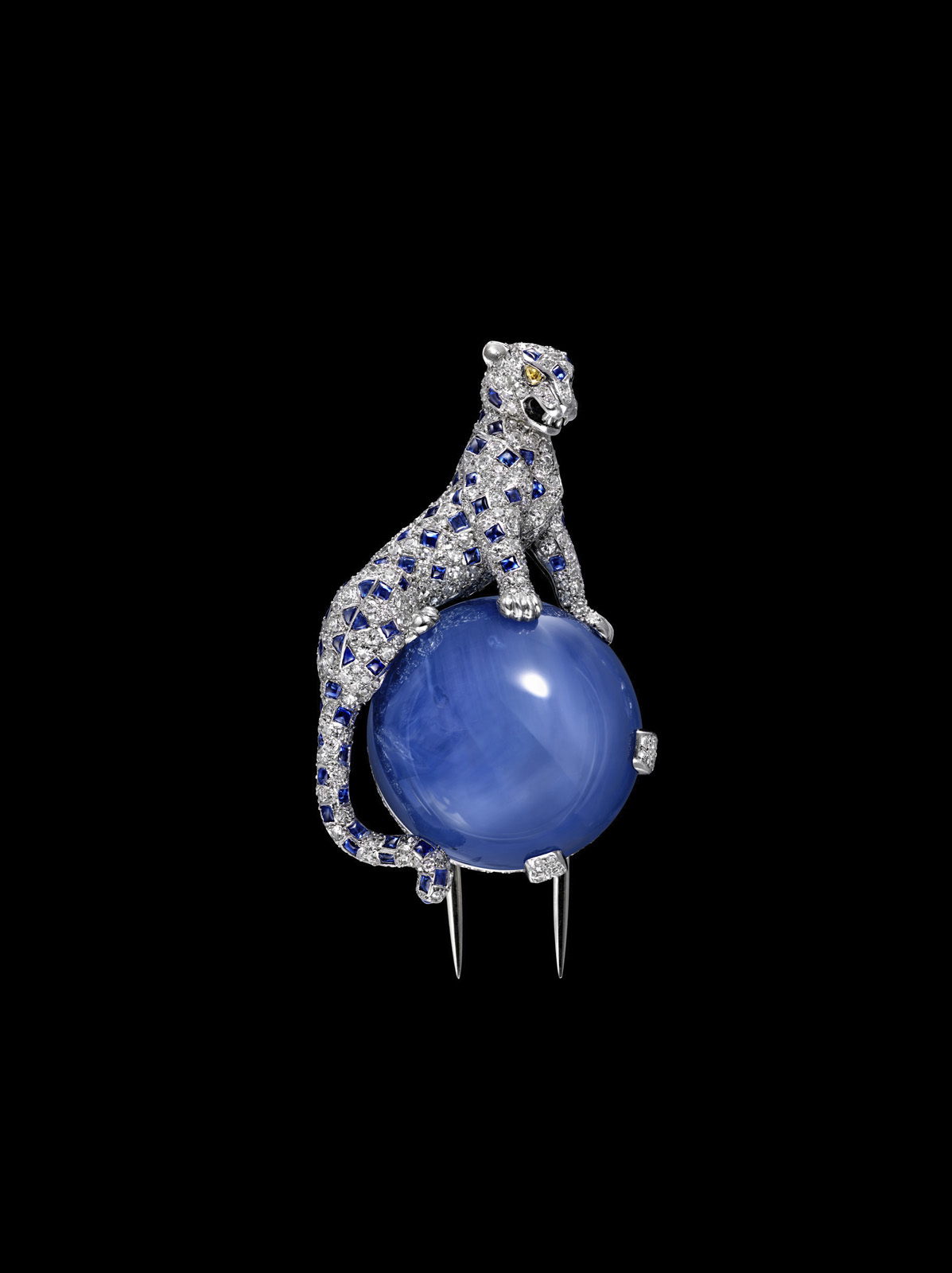
Panther clip brooch
Cartier Paris
1949
One 152.35-carat sapphire, sapphires, diamonds, yellow diamonds, platinum and white gold
Cartier Collection
Nils Herrmann, Cartier Collection
© Cartier
Owned by the Duchess of Windsor
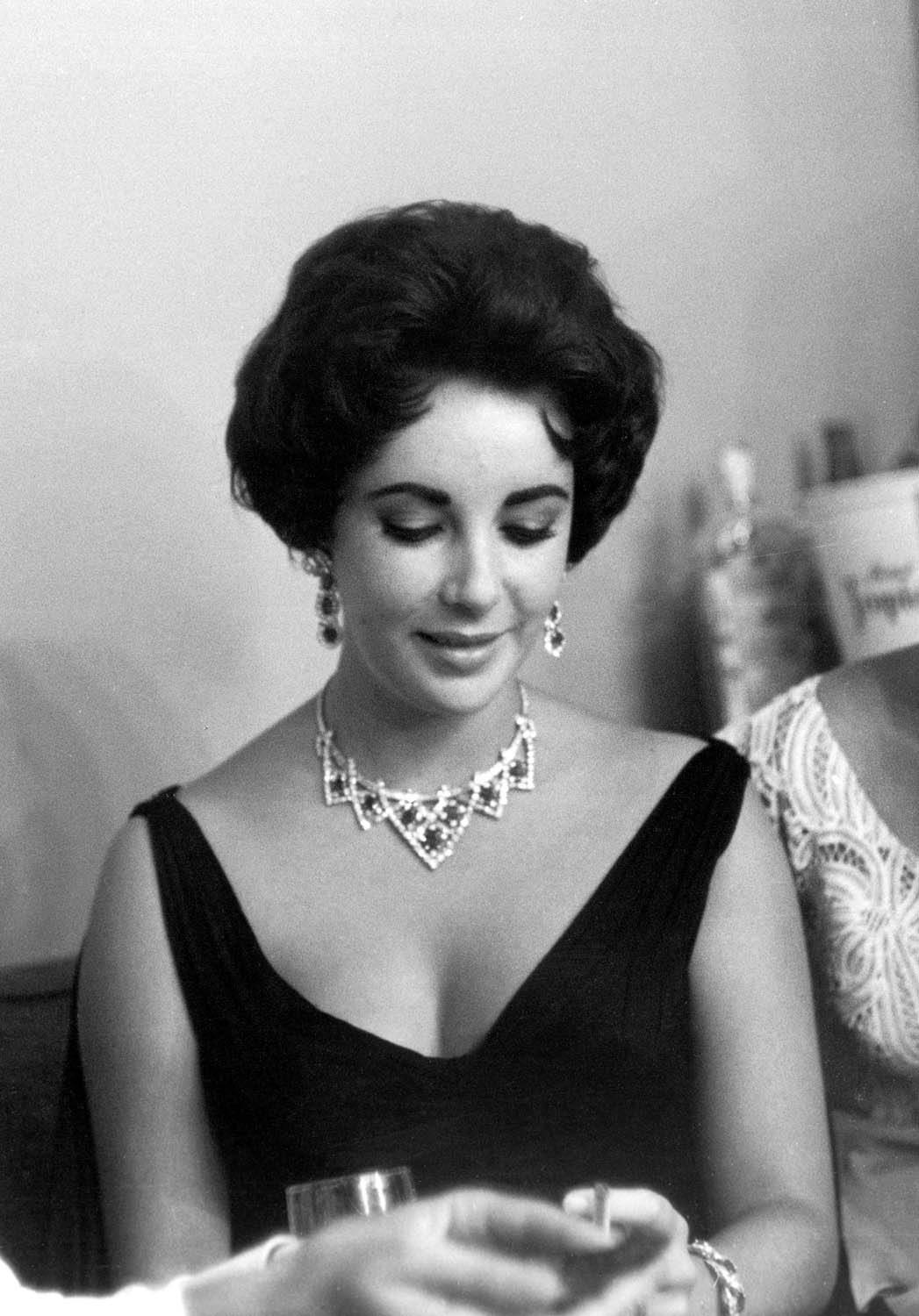
Unknown photographer
Elizabeth Taylor at the Tropicana Hotel in Las Vegas, June 1958
1958
© Photofest
Wearing the necklace by Cartier Paris below
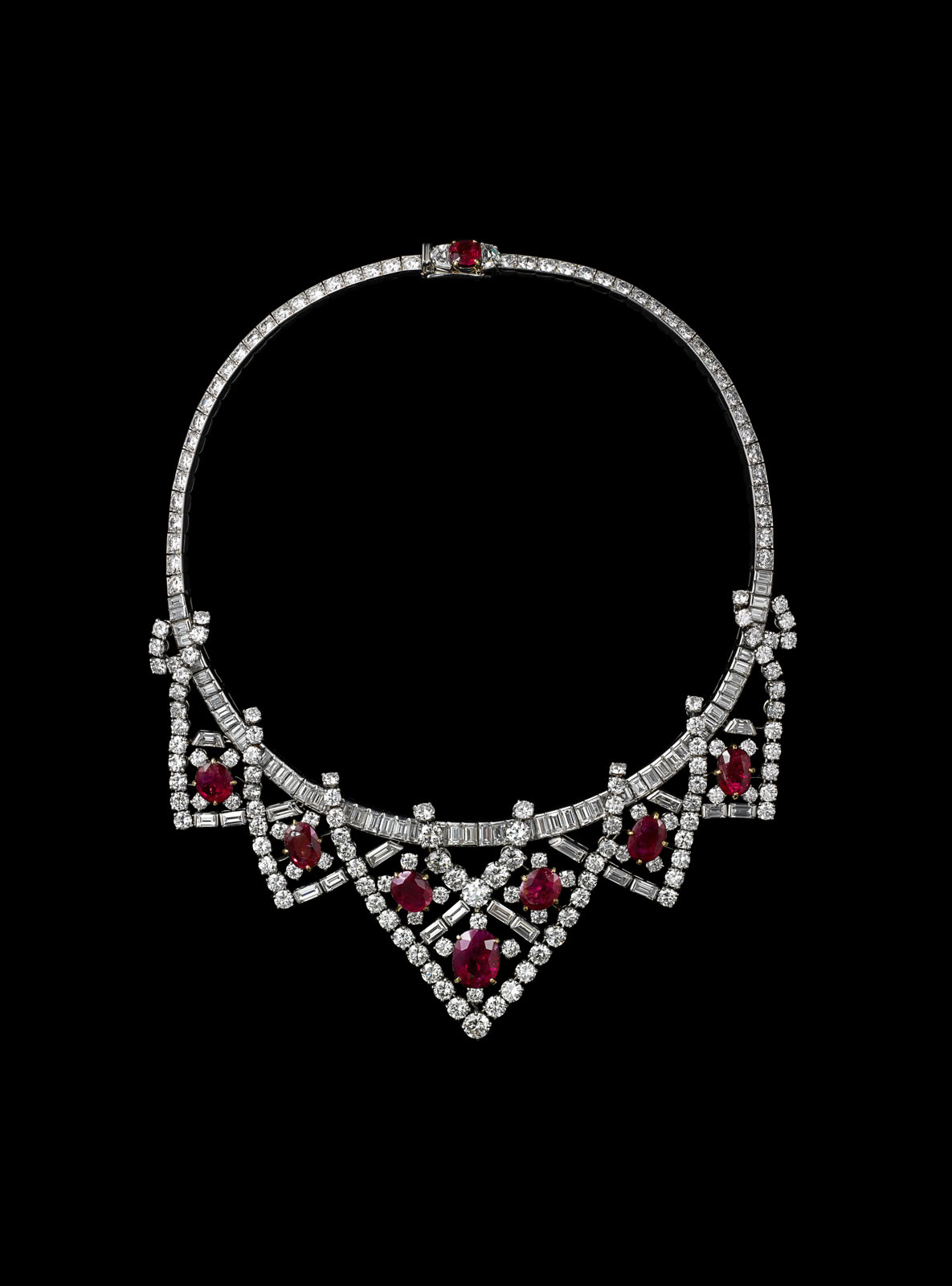
Necklace
Cartier Paris
1951; altered 1953
Rubies, diamonds, platinum, yellow and white gold
Owned by Elizabeth Taylor
Cartier Collection
Vincent Wulveryck, Cartier Collection
© Cartier
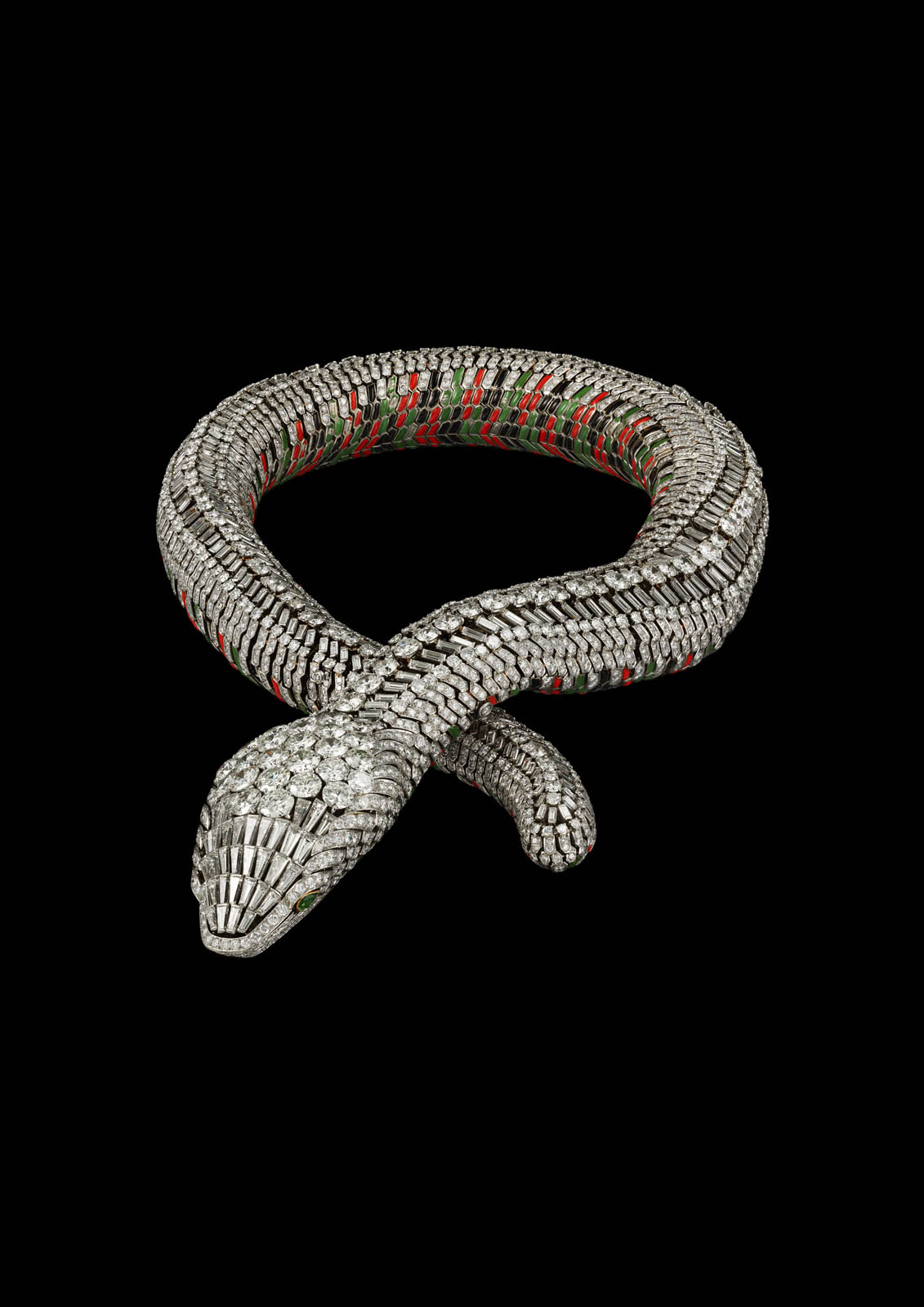
Snake Necklace
Cartier Paris
Special order, 1968
Diamonds, emeralds, enamel, platinum, white and yellow gold
Cartier Collection
Vincent Wulveryck, Cartier Collection
© Cartier
Commissioned by María Félix
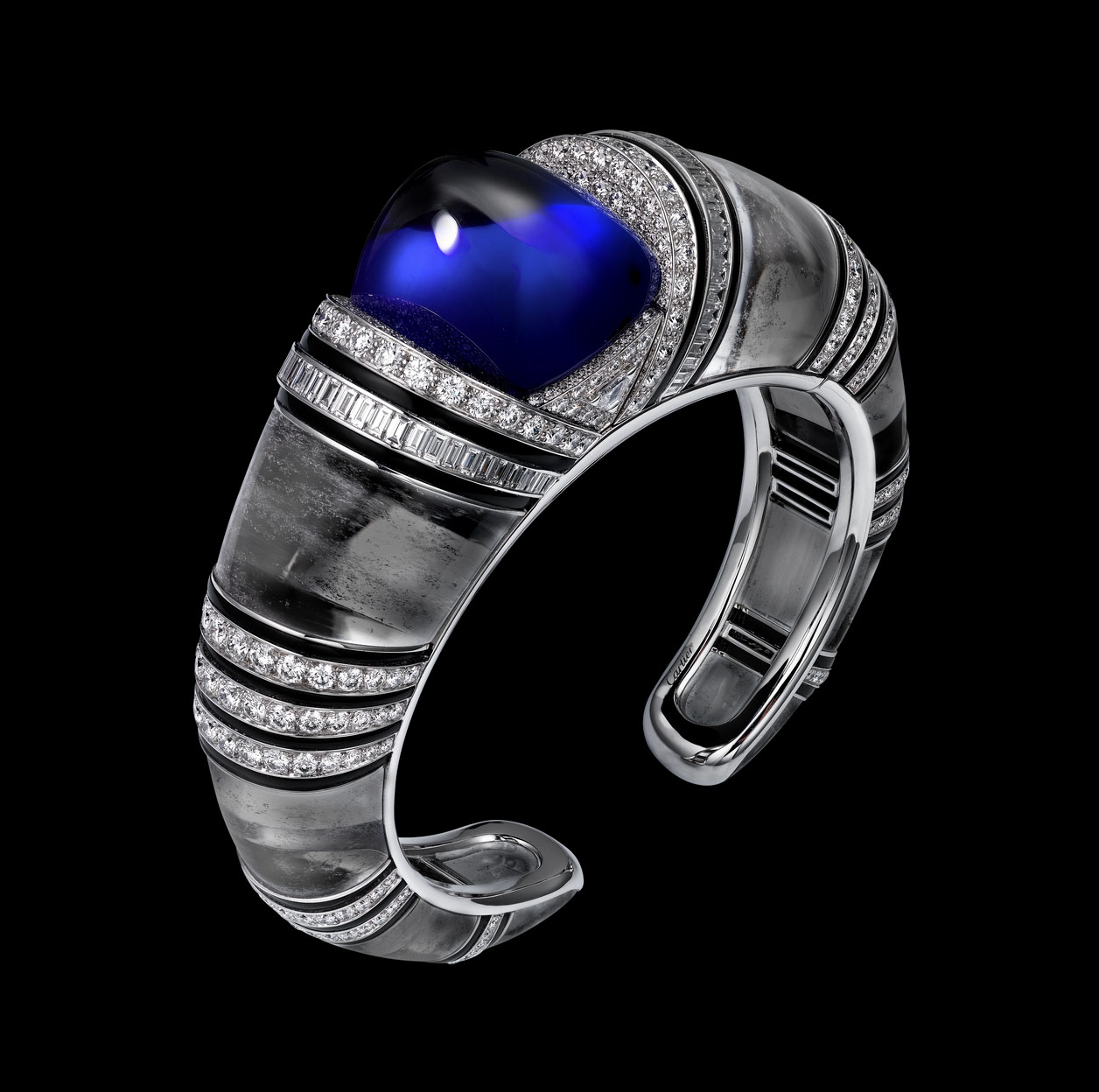
Bracelet
Cartier
2014
White gold, diamonds
One sugarloaf tanzanite cabochon weighing 79.52 carats, rock crystal, onyx
Cartier Collection
Vincent Wulveryck, Cartier Collection
© Cartier
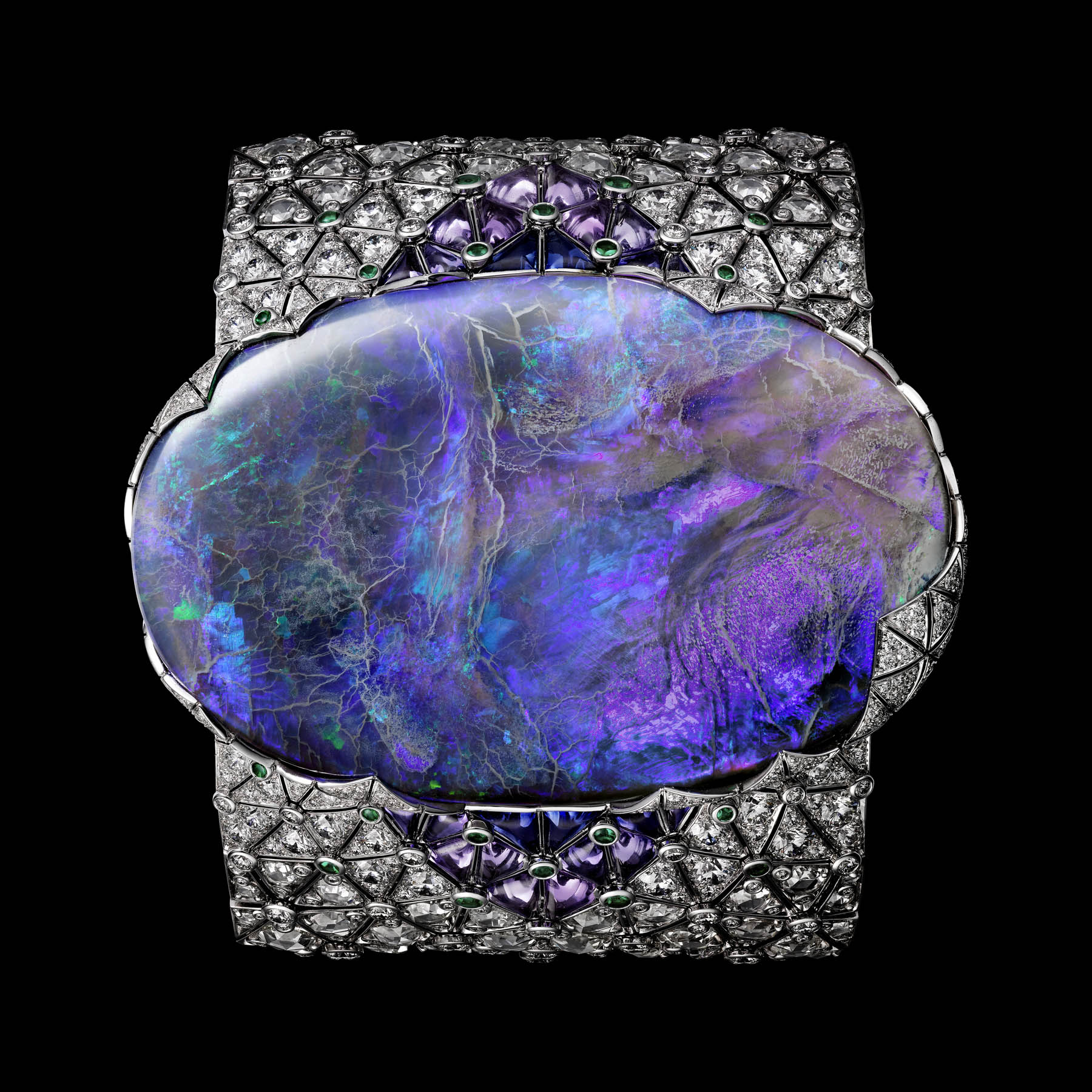
Bracelet
Cartier
2015
White gold, diamonds, one opal weighing 189.345 carats, purple sapphires and blue sapphires, emeralds
Cartier Collection
Vincent Wulveryck, Cartier Collection
© Cartier
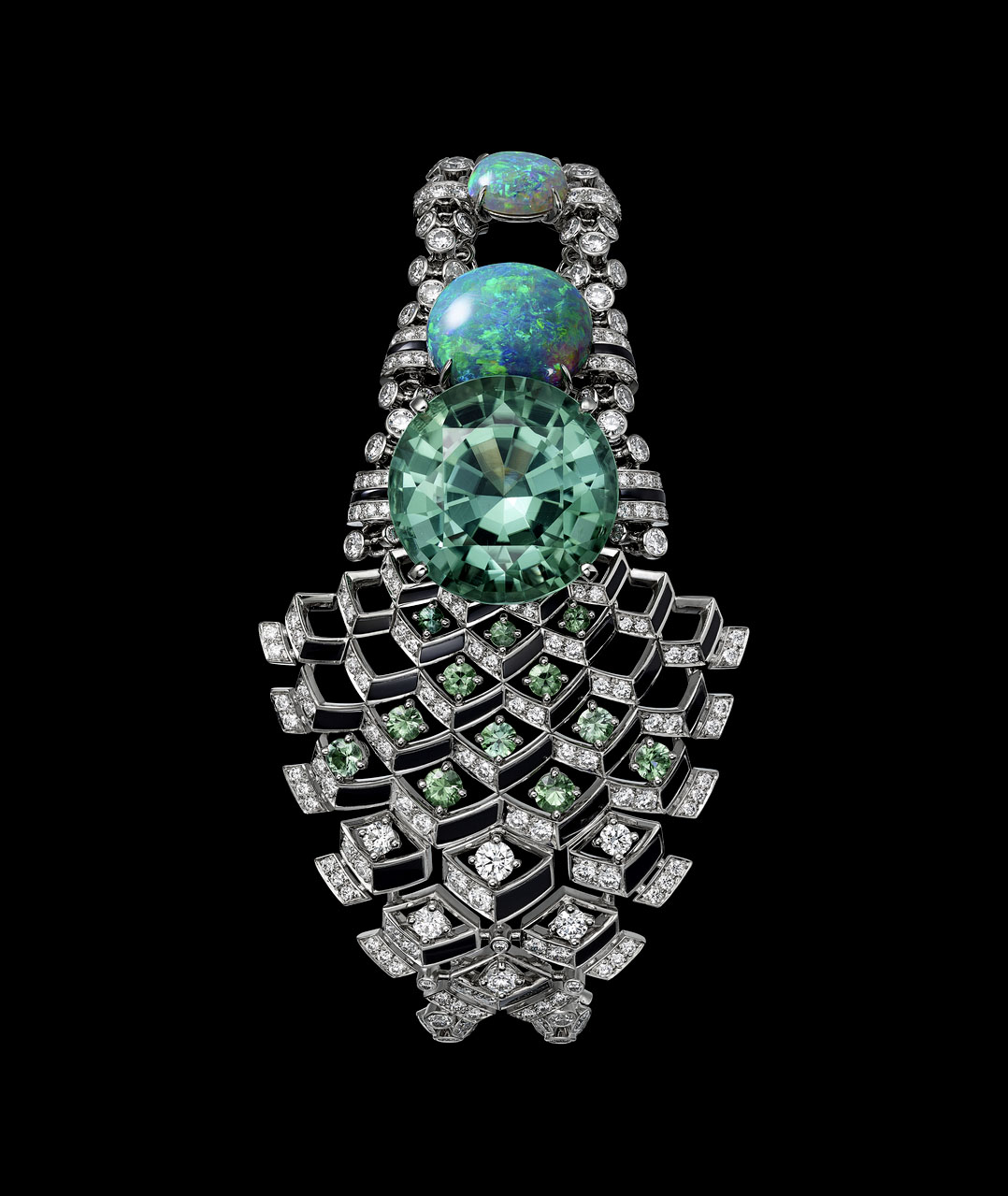
Bracelet
Cartier
2018
Platinum, white gold, tourmalines, opals, diamonds, onyx
Cartier Collection
Vincent Wulveryck, Cartier Collection
© Cartier
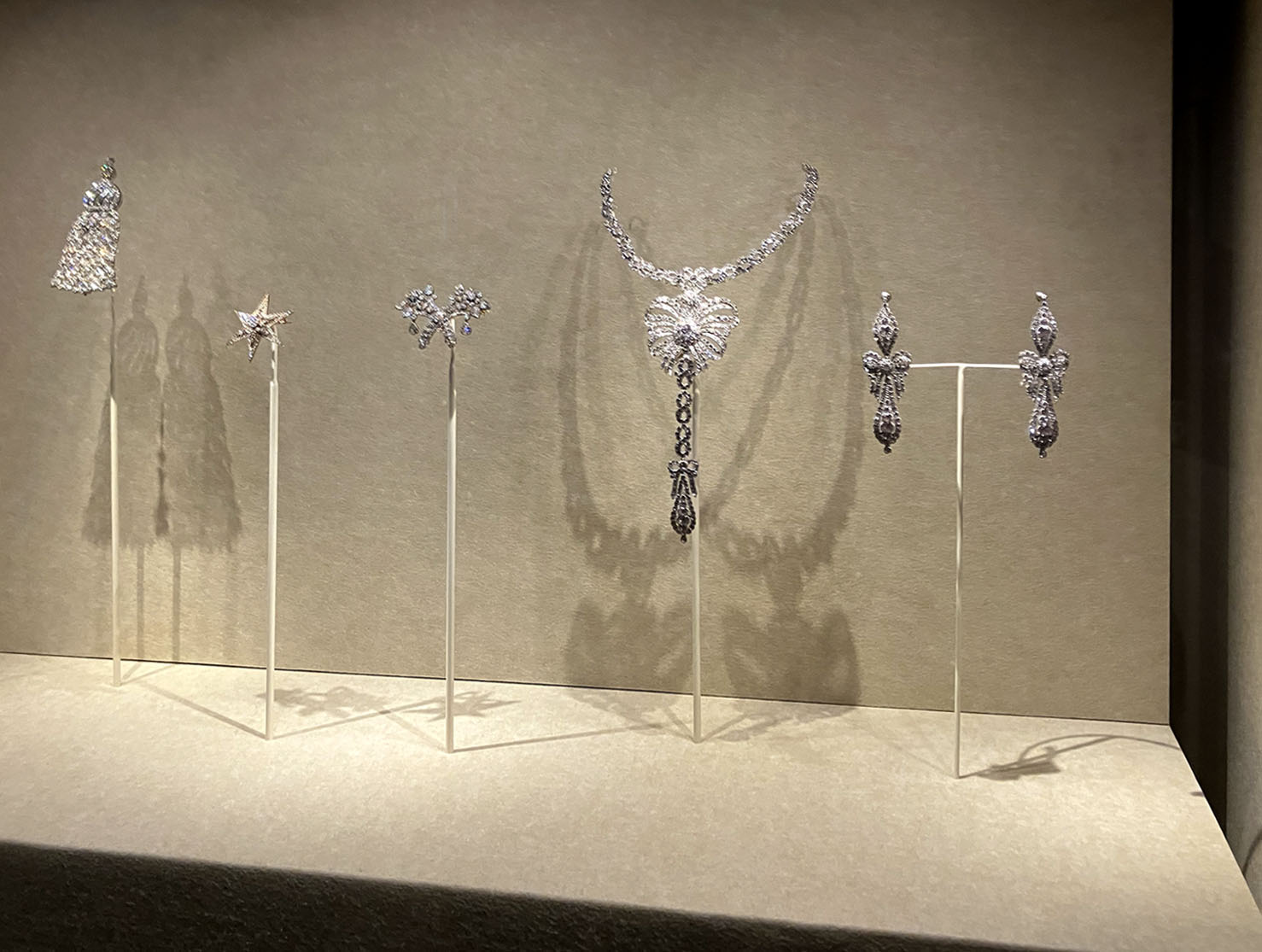
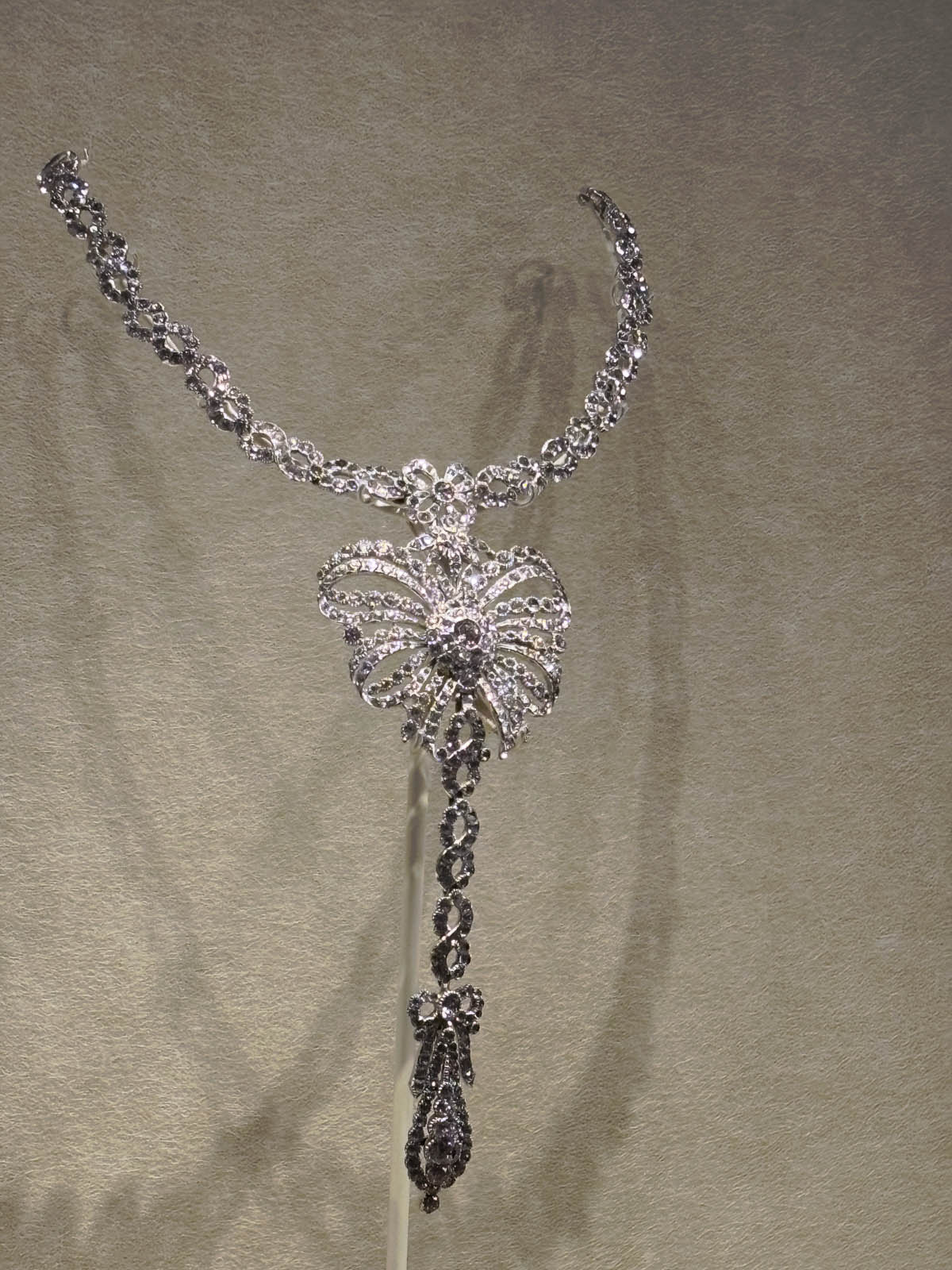
Installation photographs
Photos Marcus Bunyan
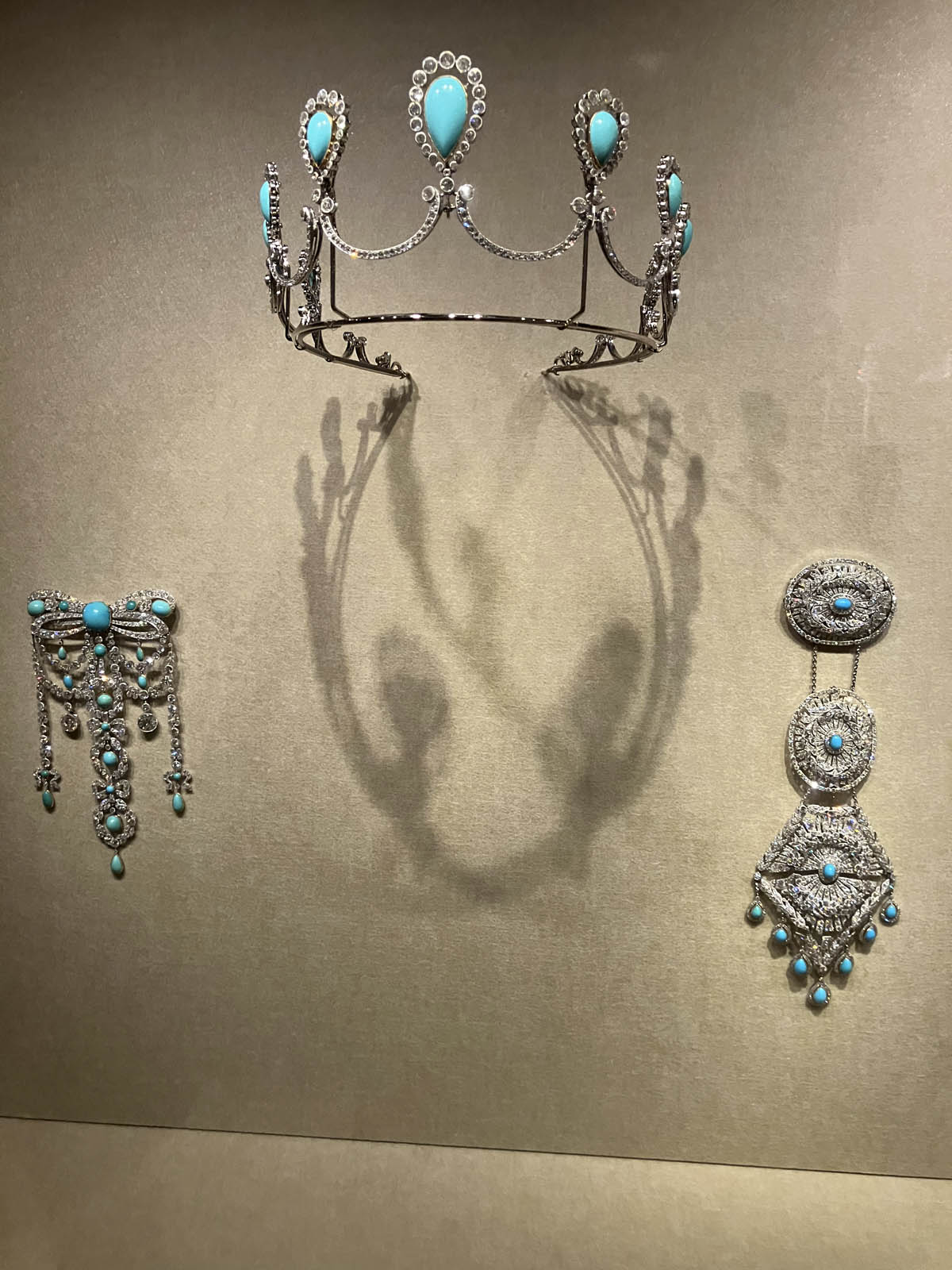
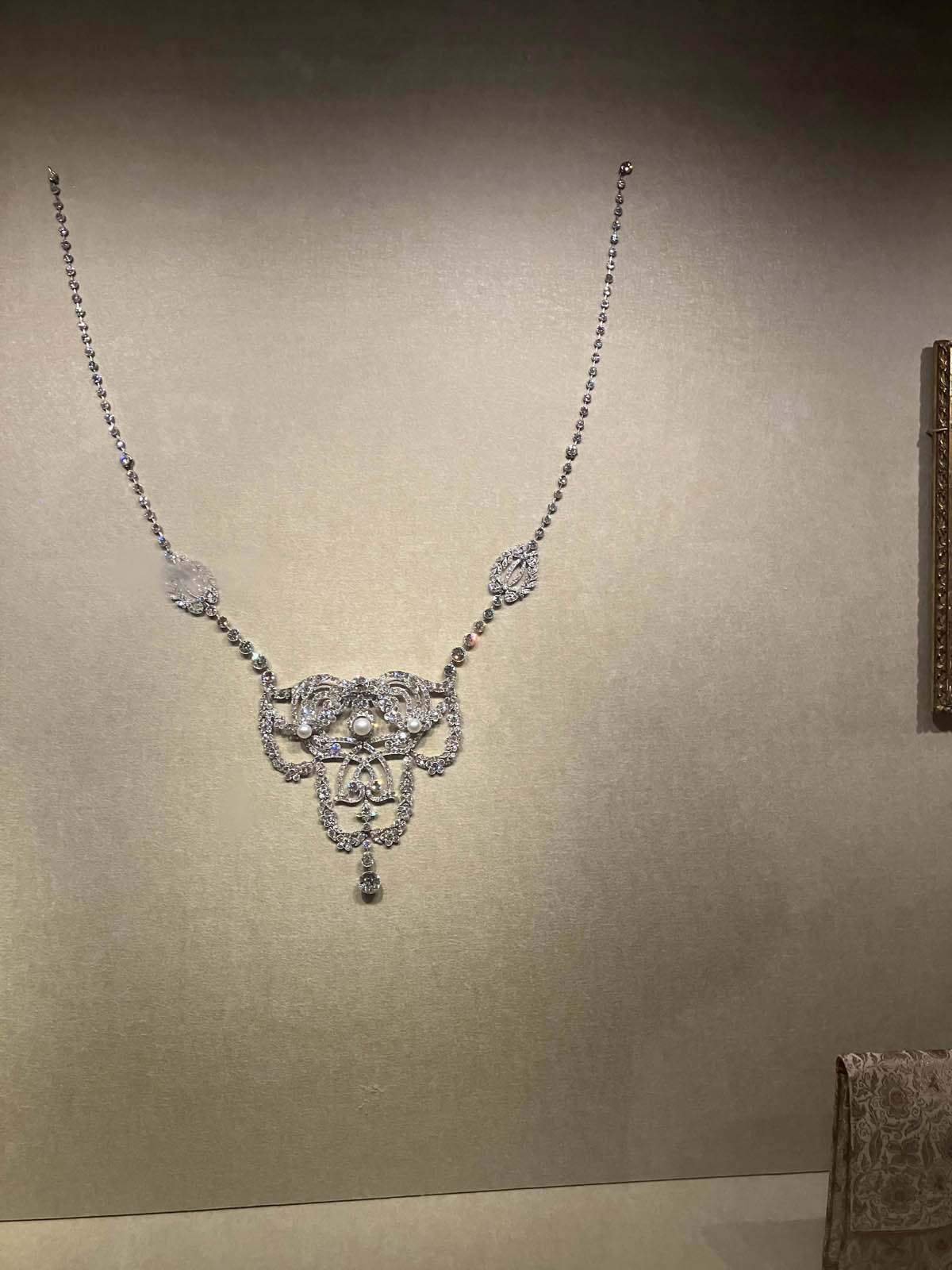
Tiara (installation view)
Cartier Paris
Special order, 1908
Diamonds, turquoise, platinum, yellow gold
Commissioned by Dame Nellie Melba
Private collection
This piece is transformable and can be worn either as a necklace or as a tiara
Dame Nellie Melba
Dame Nellie Melba was a renowned opera singer, one of few who achieved global celebrity in the era before recorded music. Born Helen porter Mitchell in Richmond, Melbourne in 1861, she was known as Hellie from childhood and took the stage name ‘Melba’ – an homage to her home town – upon her Paris debut in 1886.
Wall text from the exhibition
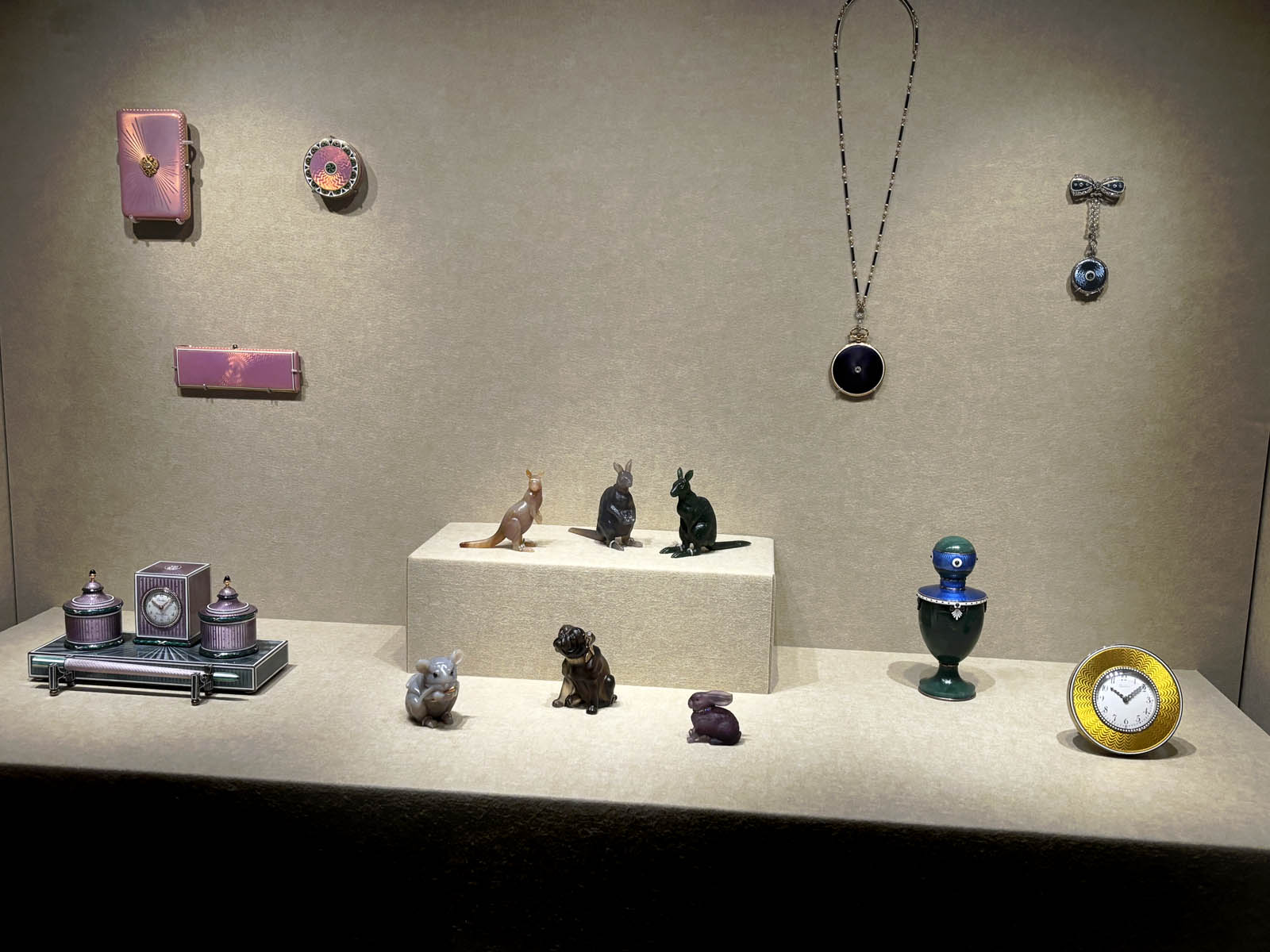
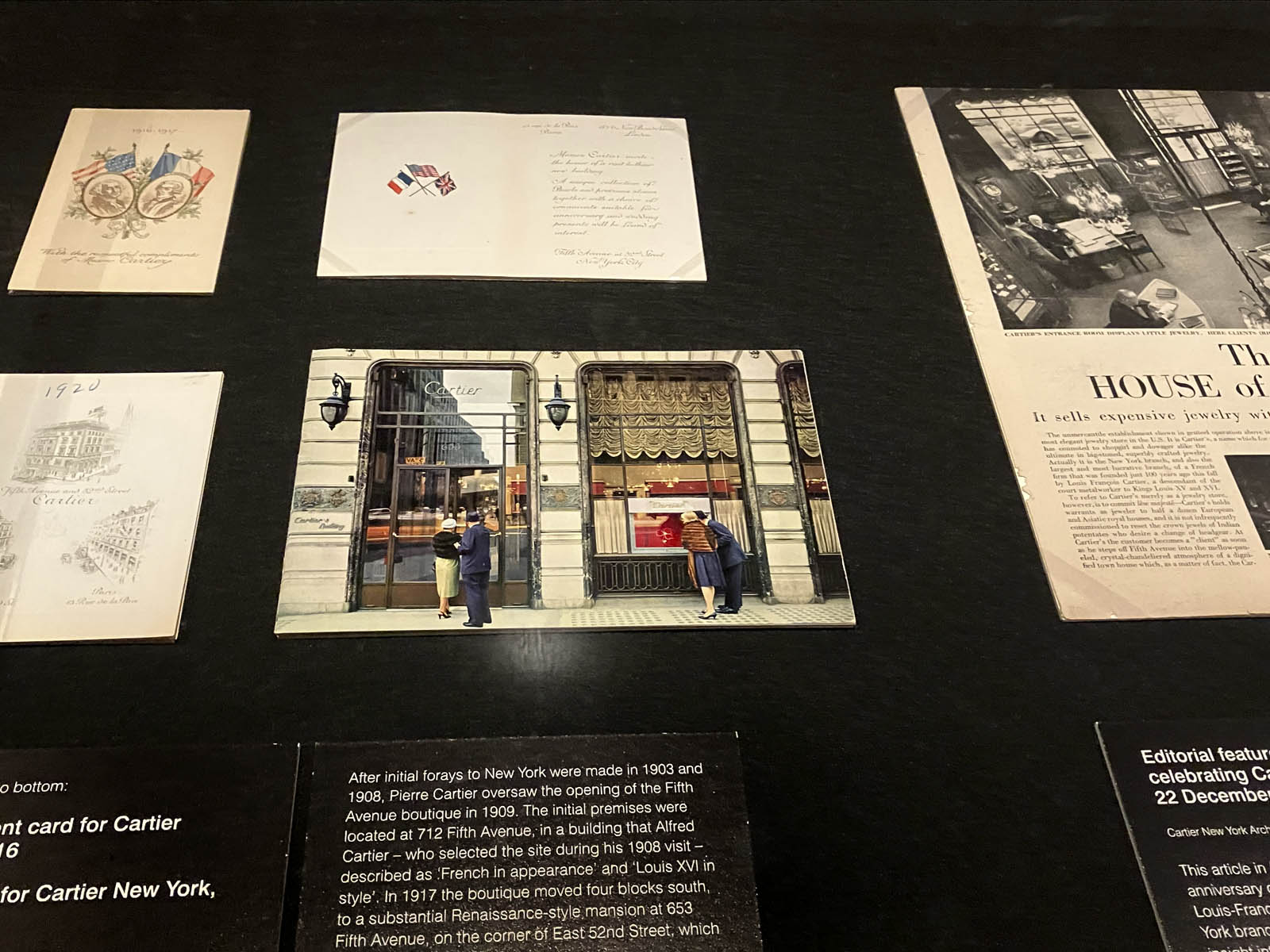
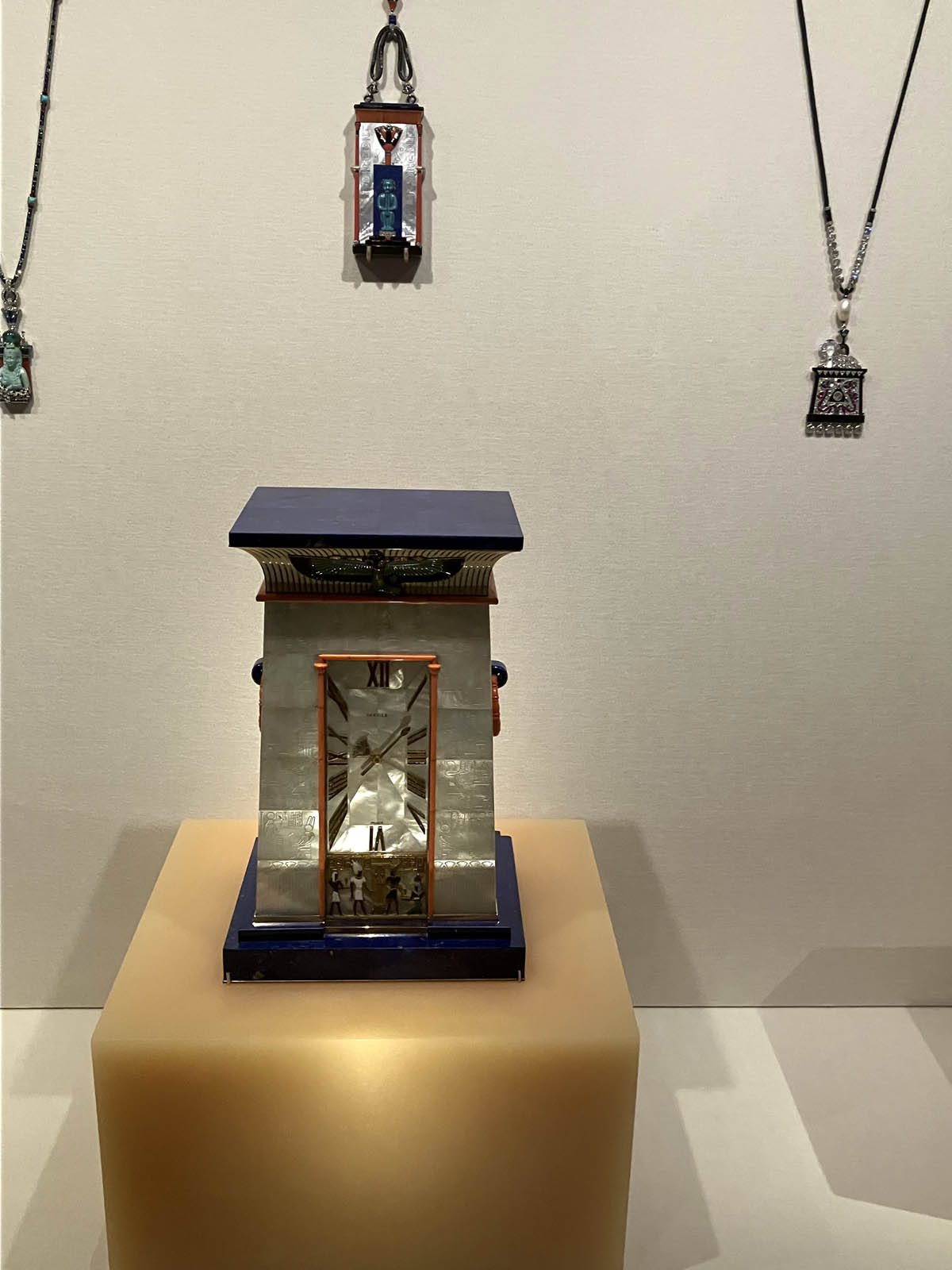
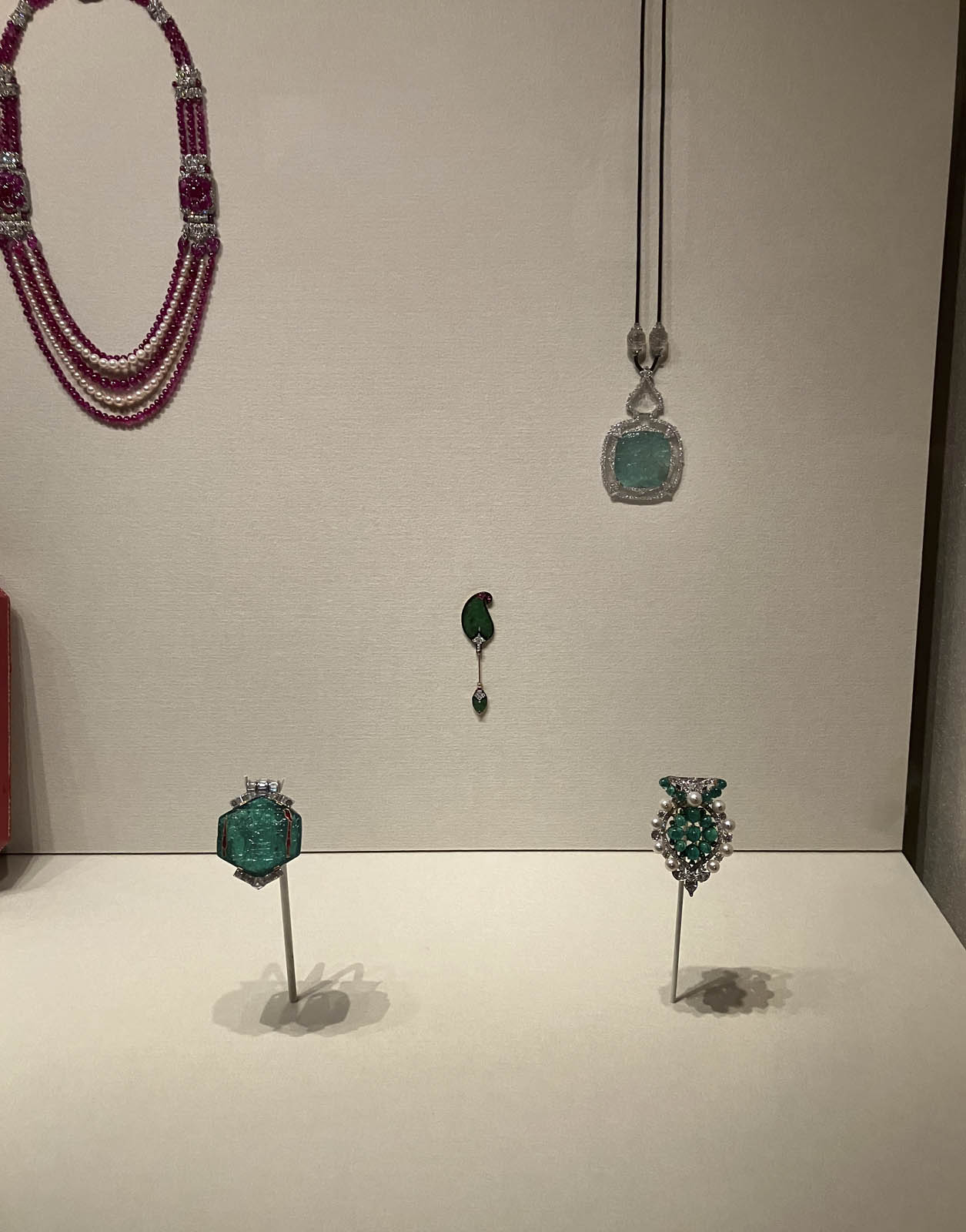
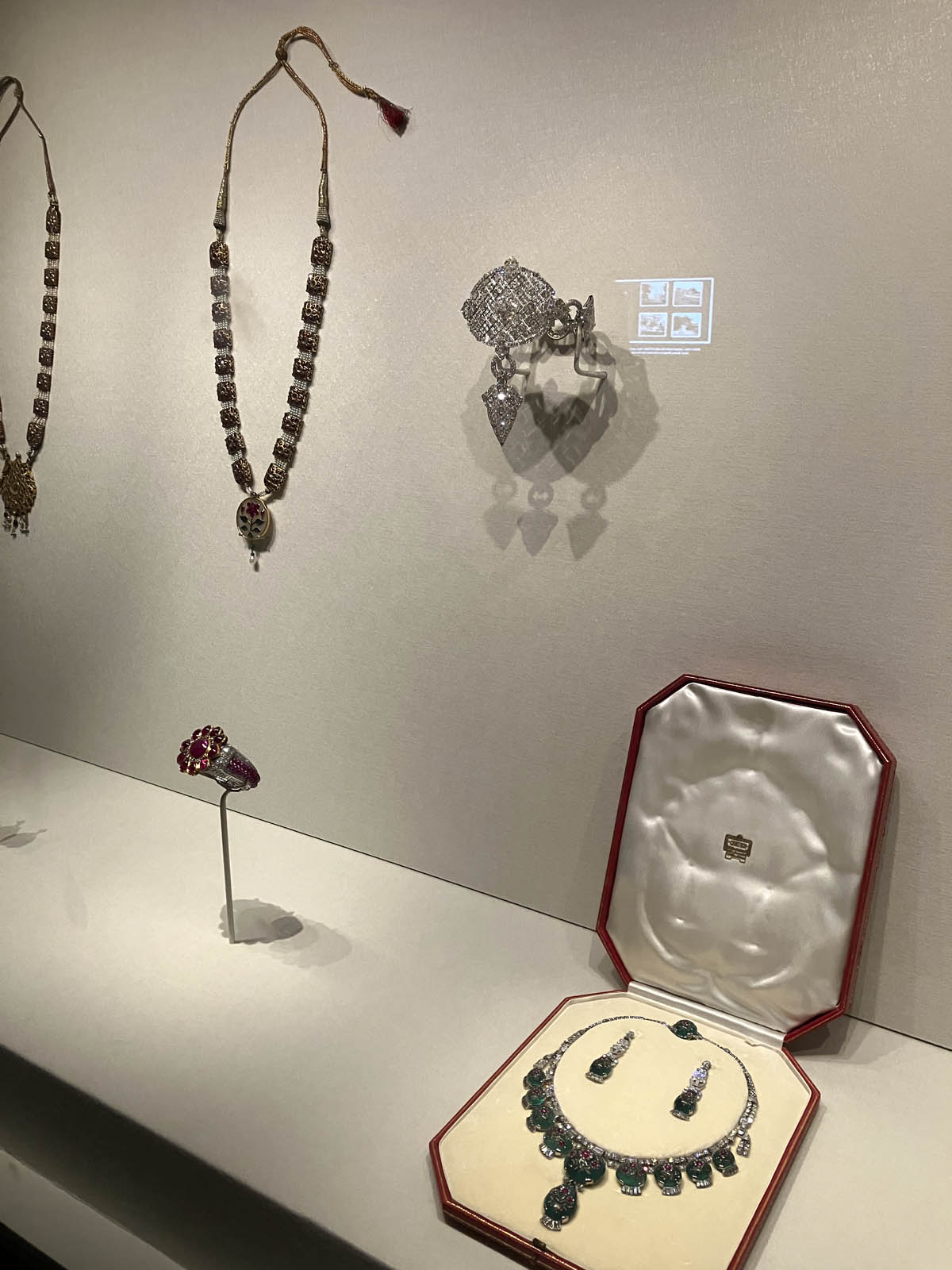
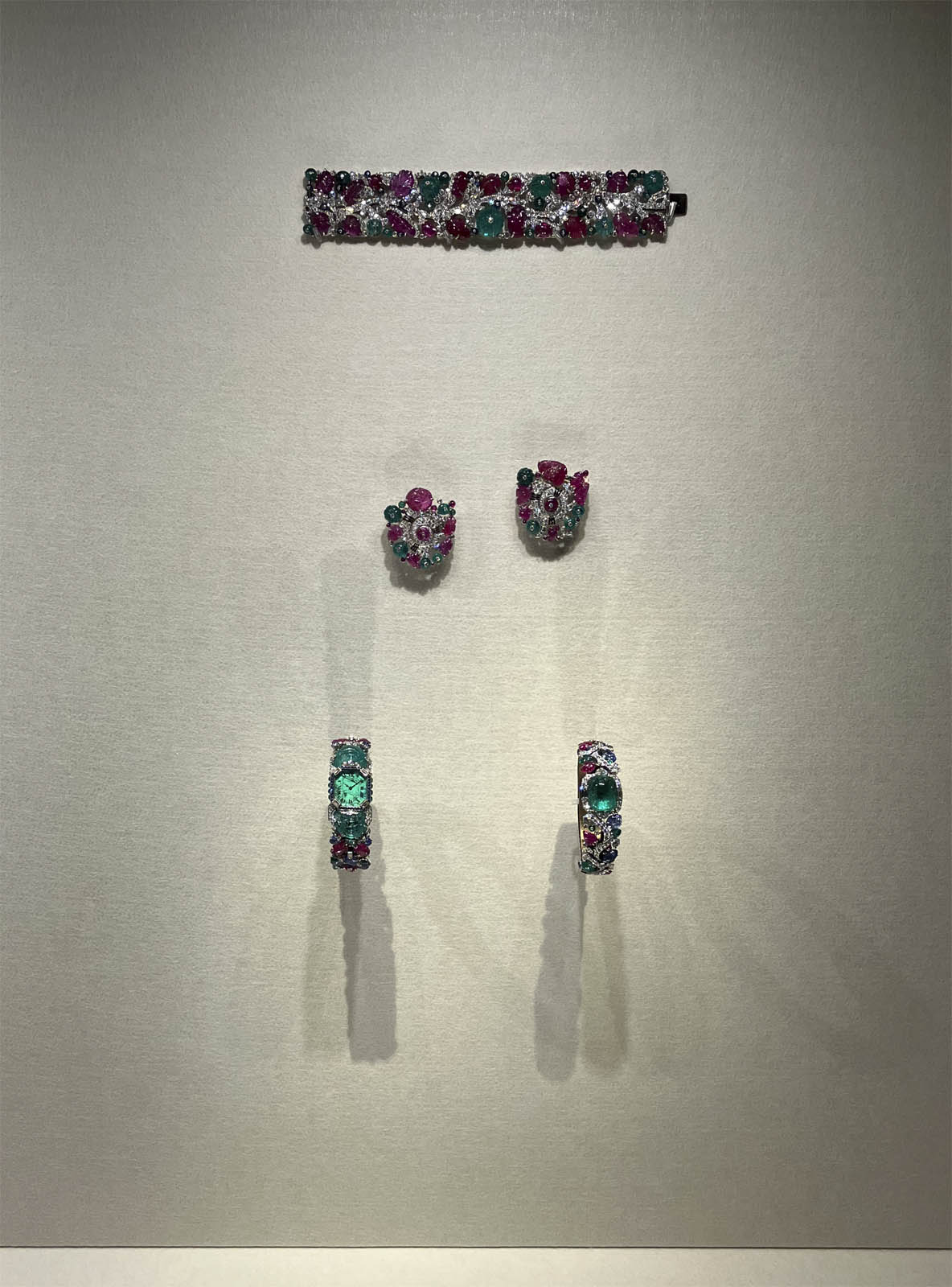
Tutti Frutti strap bracelet (installation view)
Cartier New York
Special order 1928, modified in 1929
Emeralds, rubies, sapphires, diamonds, enamel, platinum
Cartier Collection
Pair of Tutti Frutti clip brooches
Cartier New York
1929
Rubies, emeralds, diamonds, enamel, platinum, white gold
Cartier Collection
Tutti Frutti bracelet-watch
Cartier Paris
1929
Emeralds (42.38 carats total), rubies, sapphires, diamonds, platinum
Cartier Collection
Secret watch
Cartier
2024
Emeralds (including one of 17.02 carats), sapphires, rubies, diamonds, onyx, white gold
Collection of Mrs Lolita Younes
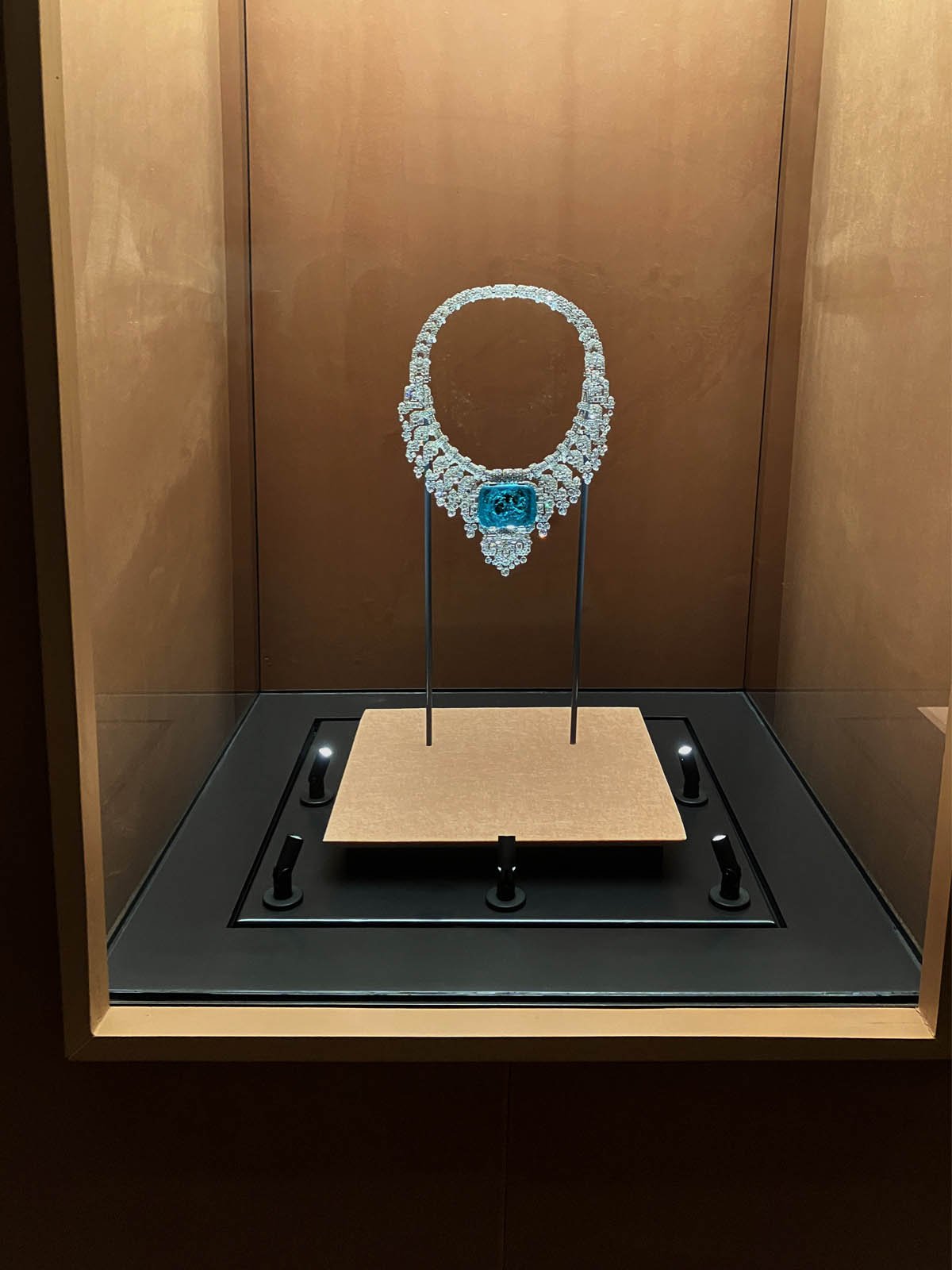
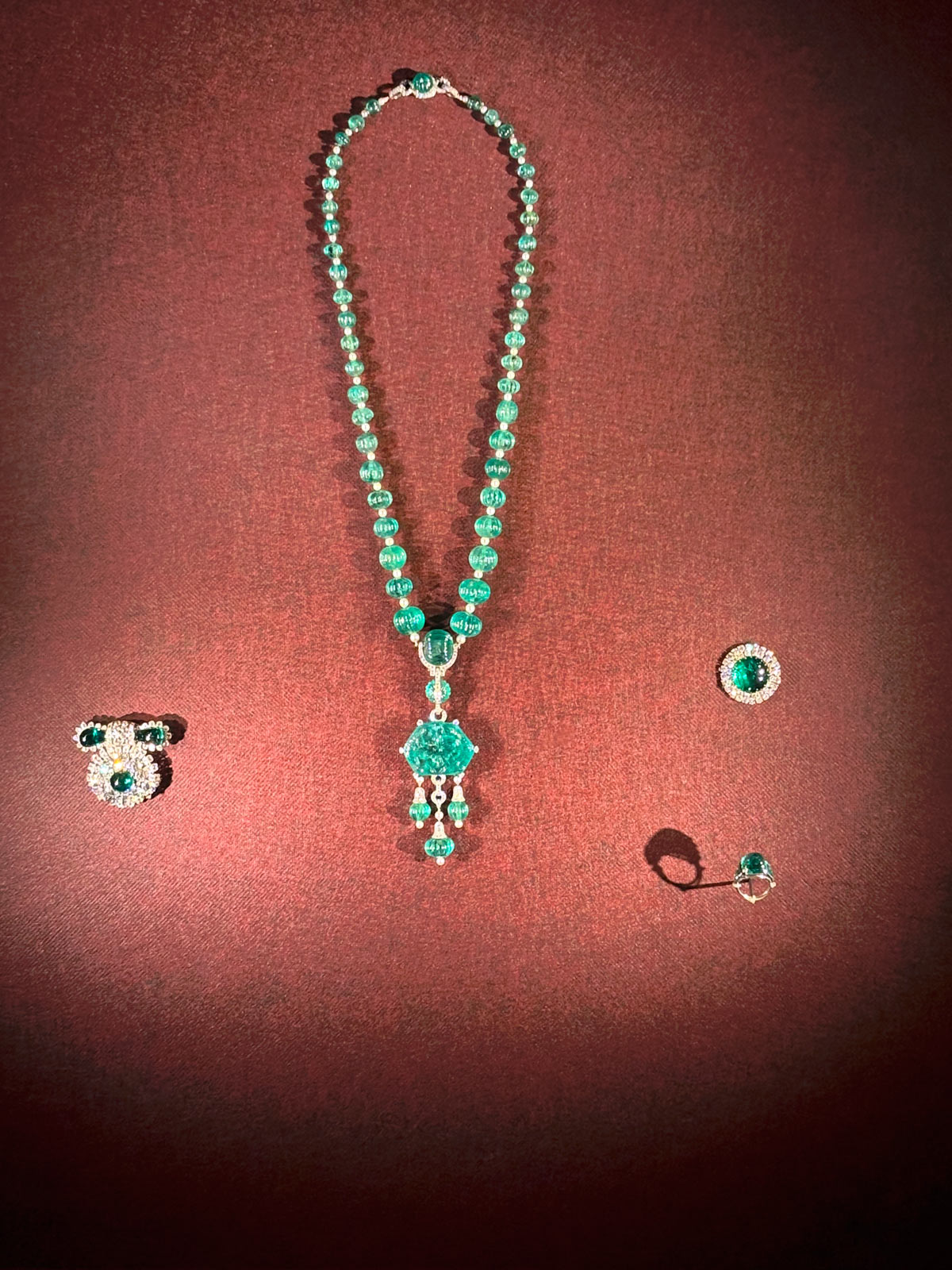
Necklace (installation view)
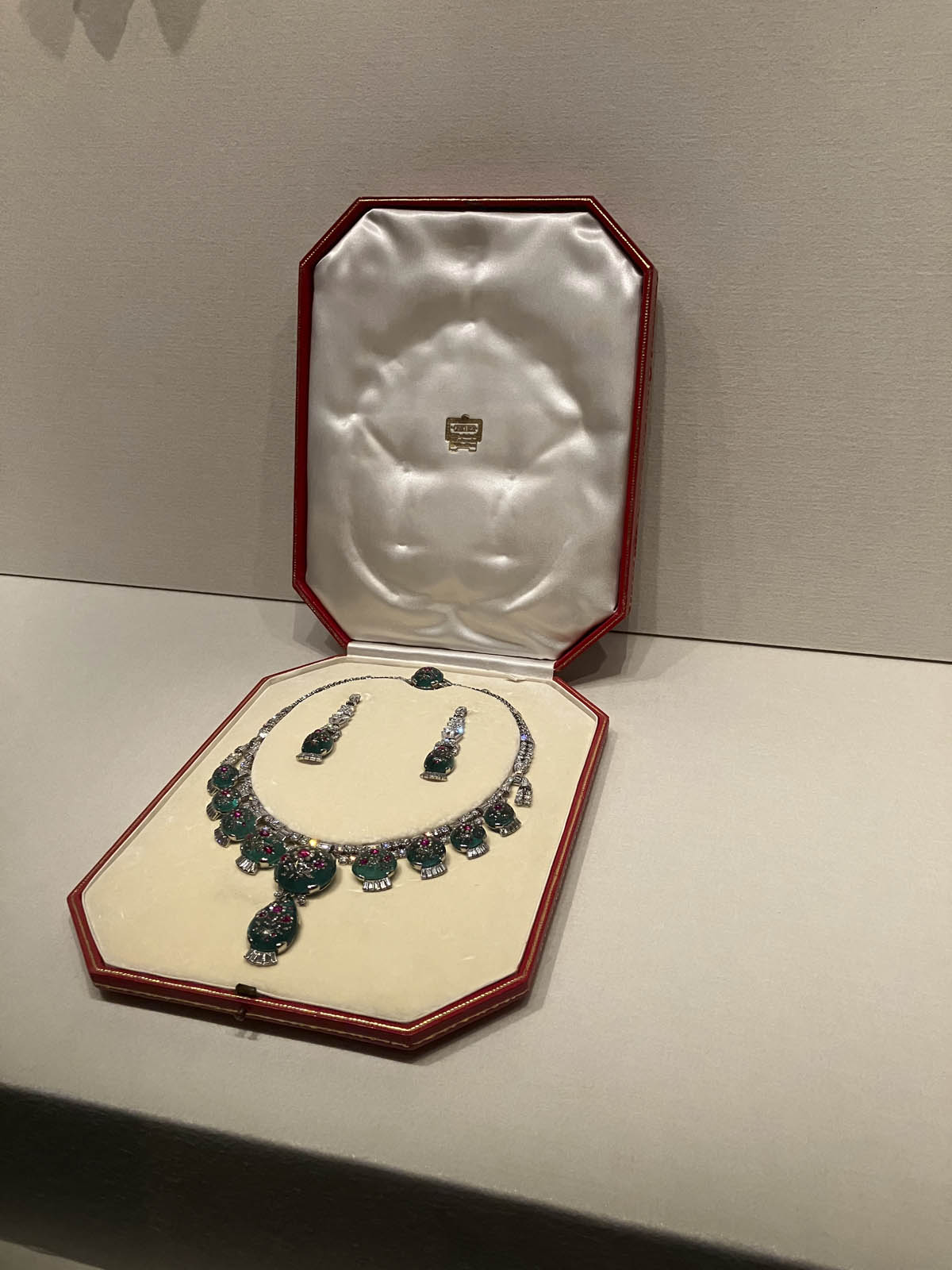
Cartier London
Special order, 1932
Emerald (143.23 carats), diamonds, platinum
Commissioned by Beatrice Mills, Countess of Granard
Cartier Collection
Beatrice Mills, daughter of American financier and philanthropist ogden Mills, married the 8th Earl of Granard in 1909. Lady Granard, as she became known, was a lotyla client of Carter London and was famous for her extravagant jewellery collection. According to the society diarist Henry ‘Chips’ Channon, ‘Lady Granard could scarcely walk for jewels’ while attending on of his dinner parties in 1938. This spectacular necklace was created from stones entirely supplied by the Countess. It is in the style of the heavier but shorter collar necklaces popular in the 1930s, while its powerful S-shaped diamond-set scrolls surrounding the magnificent emerald in the centre.
Wall text from the exhibition
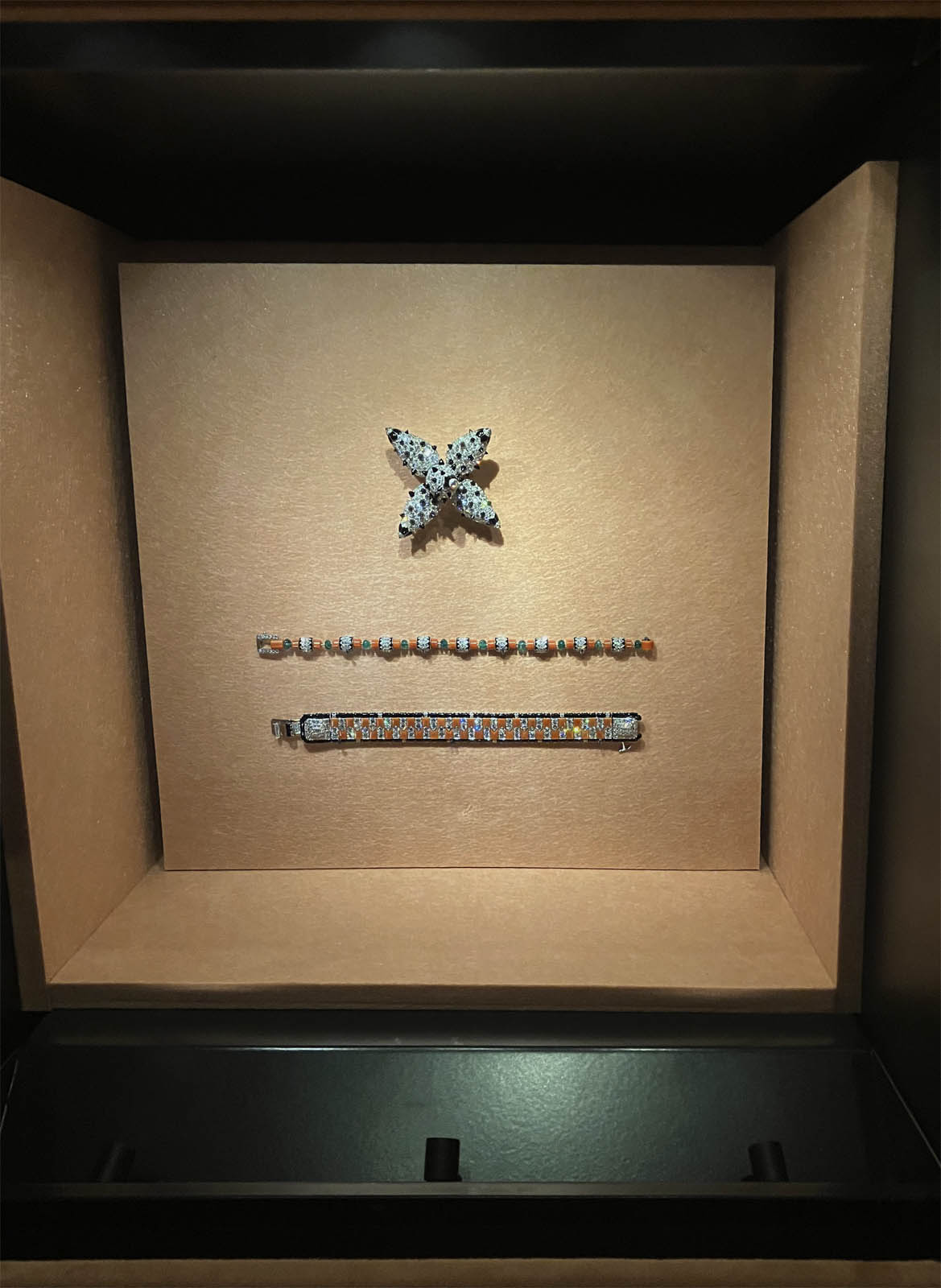
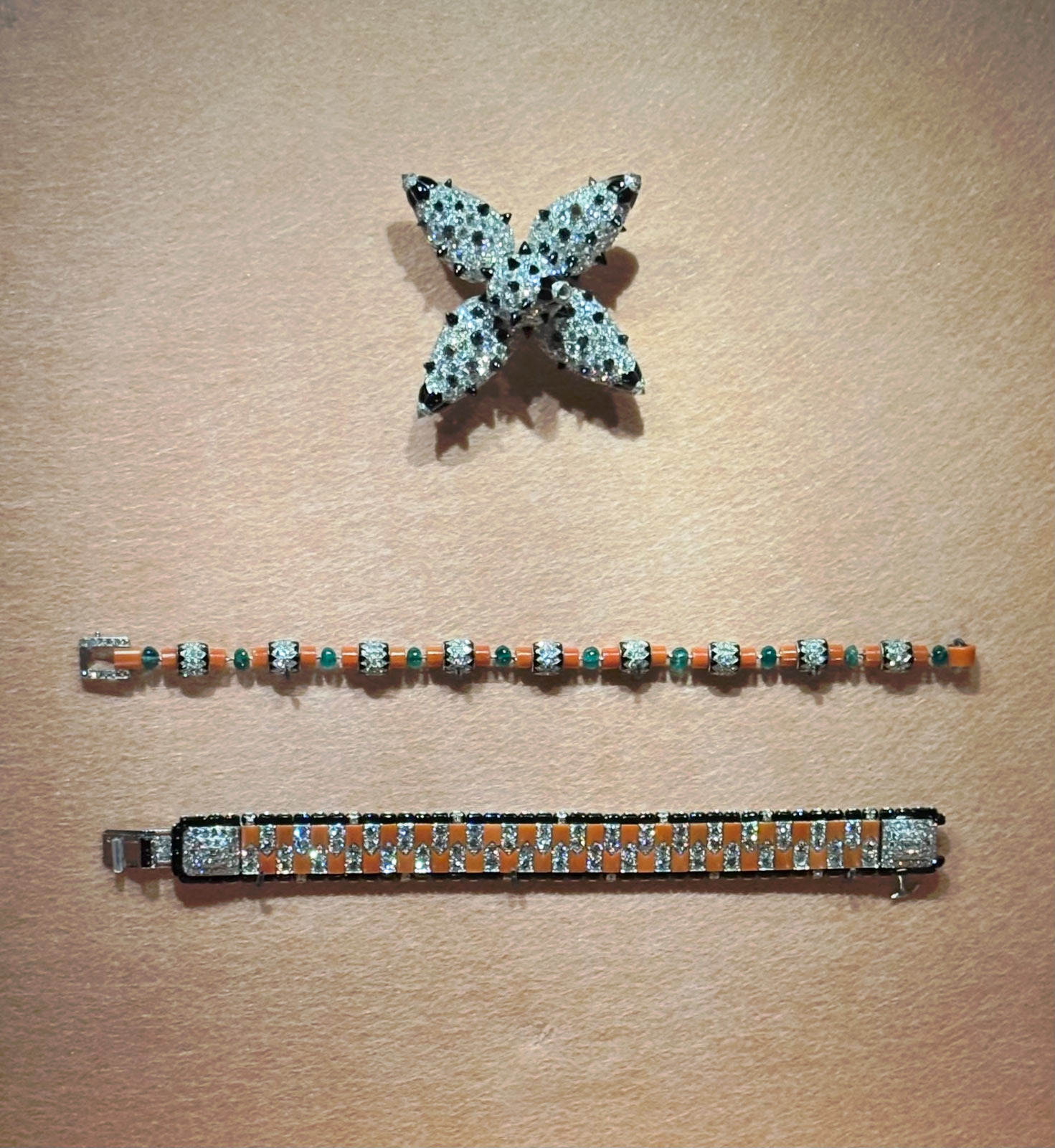
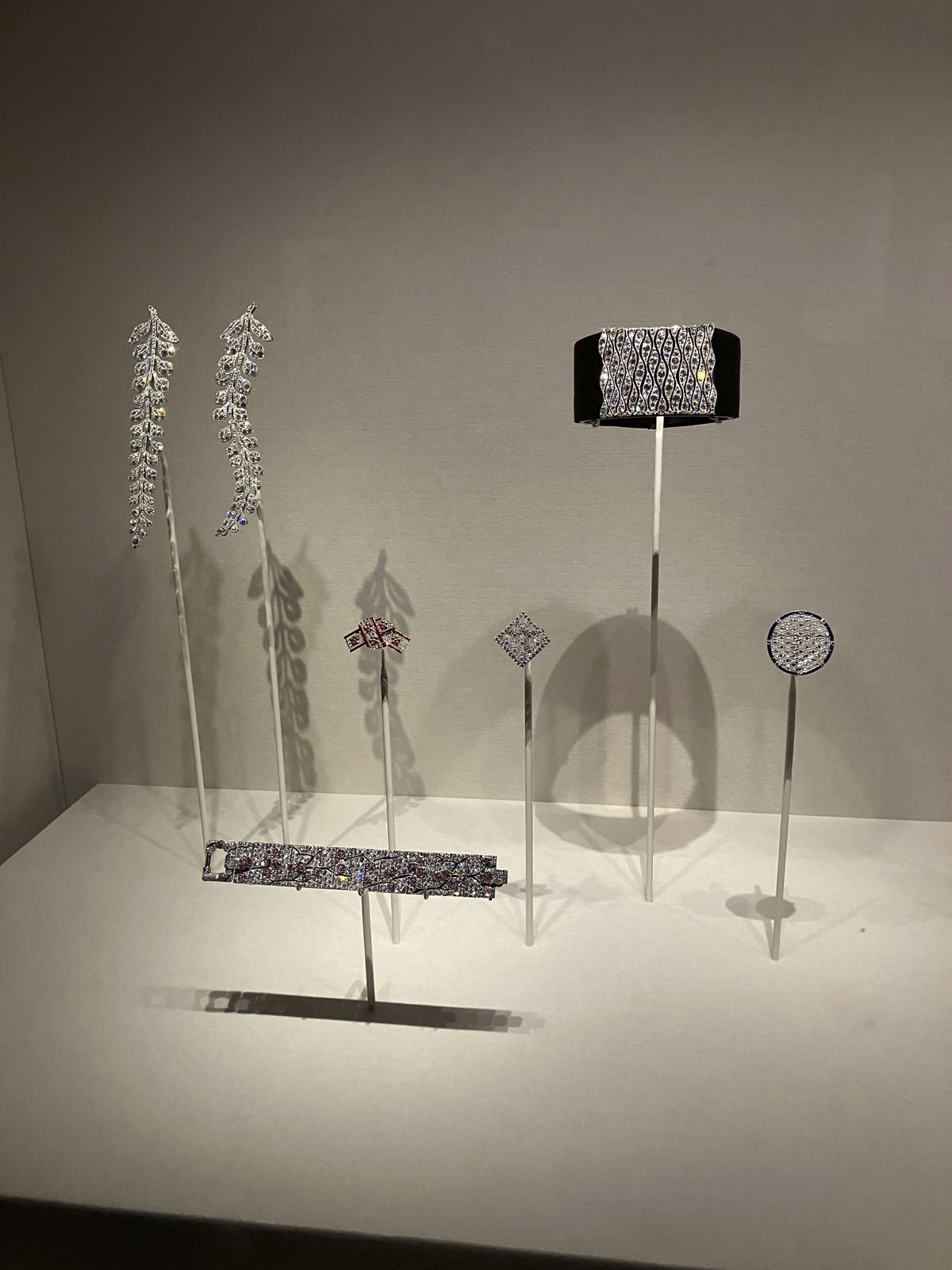
Brooch, originally set as a head ornament (installation view)
Cartier Paris
1925, modified in 1927
Diamonds, onyx, enamel, platinum, gold
Cartier Collection
Bracelet
Cartier Paris
1922
Emeralds, diamonds, coral, onyx, platinum
Cartier Collection
Bracelet
Cartier Paris
1925
Diamonds, coral, onyx, platinum
Cartier Collection
This onyx and diamond orchid brooch was on display at the 1925 Paris Exhibition as one of four orchid flowers mounted as a pair of hair ornaments. The coral, onyx and diamond bracelet was also displayed at the exhibition, along with an identical example of the bracelet with coral and emeralds. They exemplify Cartier’s innovative colour combinations and striking geometric designs.
Wall text from the exhibition
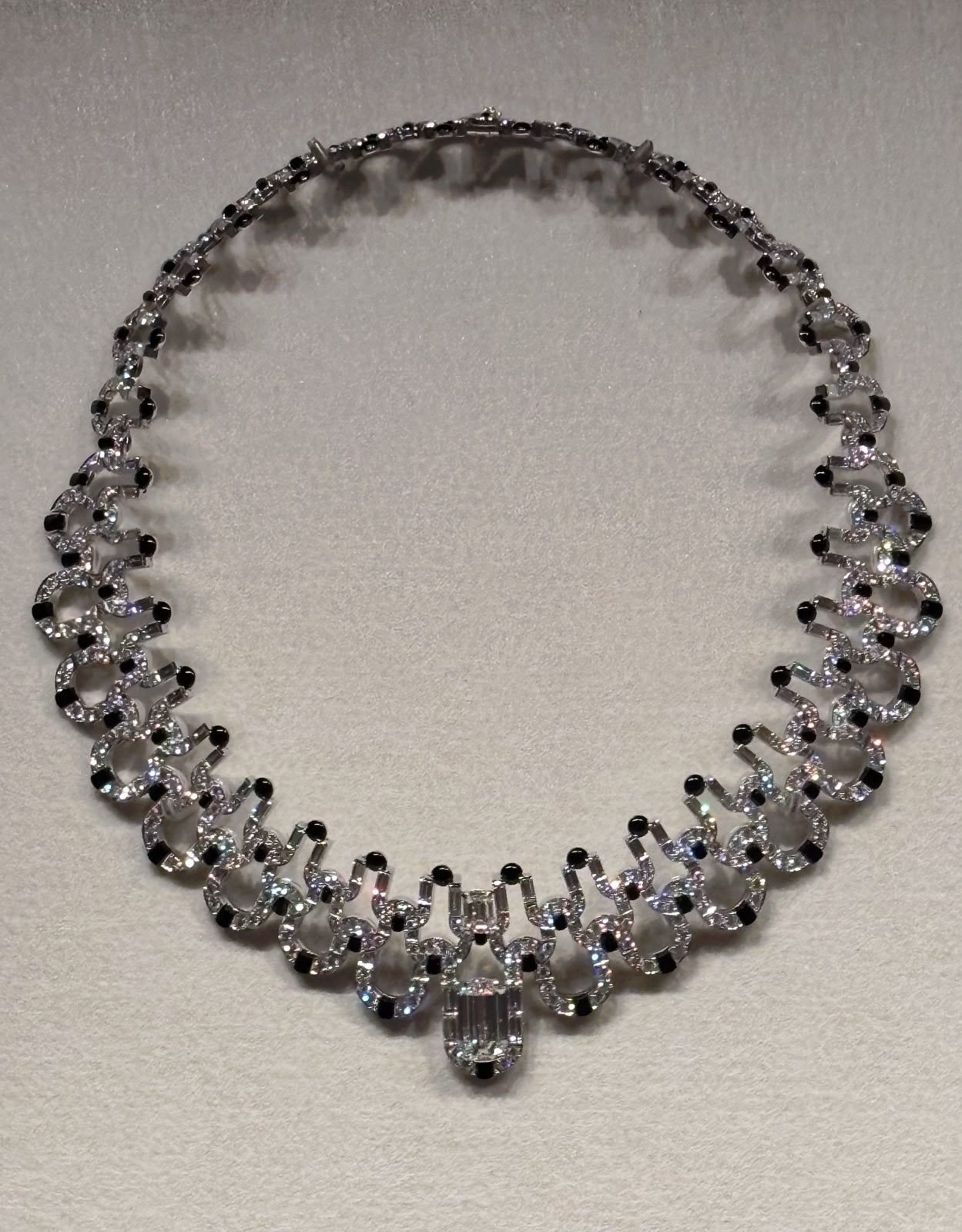
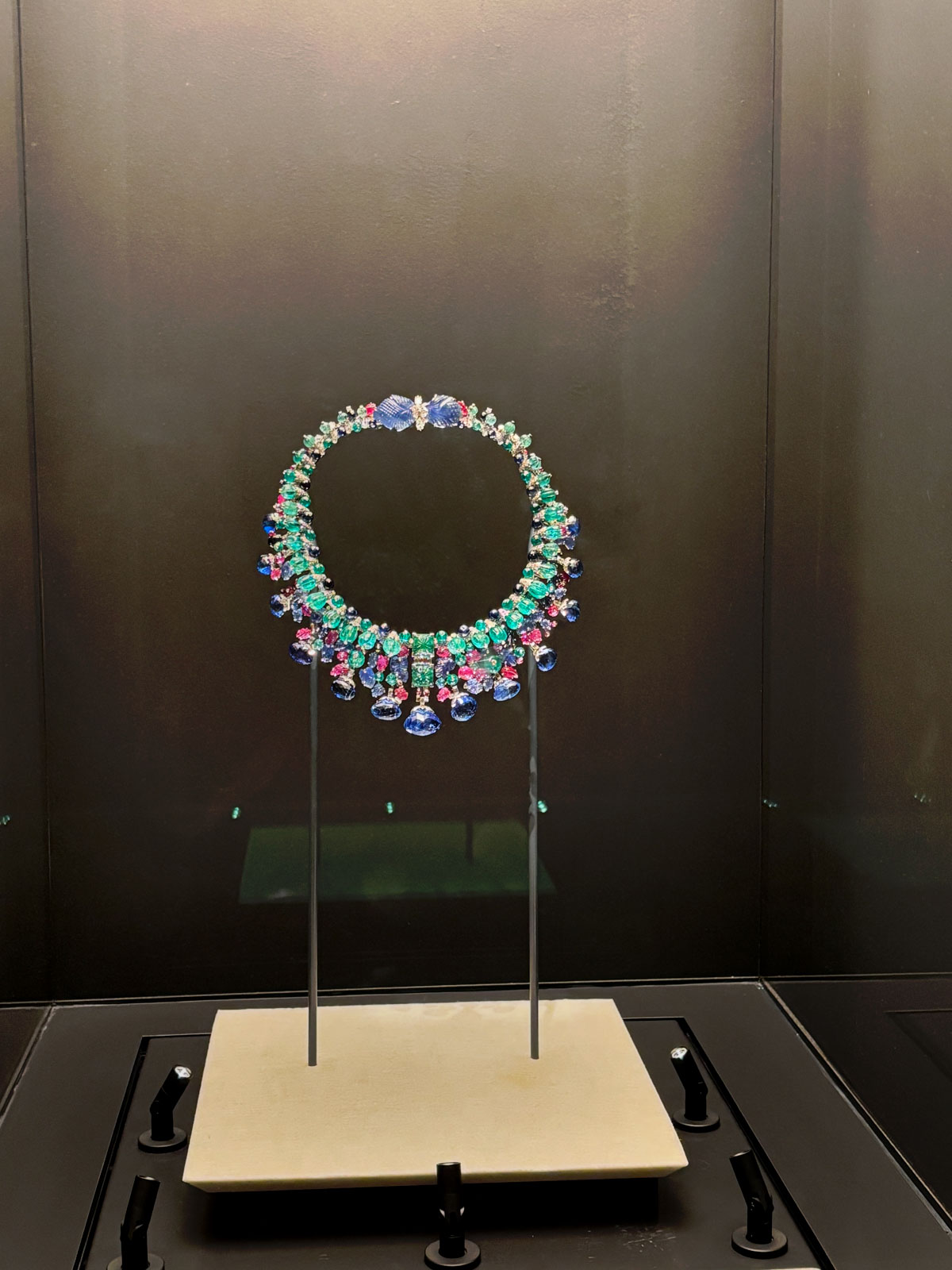
‘Hindou’ Necklace (installation view)
Cartier Paris
1936, modified in 1963
Special order
Sapphires (240.15 carats total), emeralds, rubies, diamonds, platinum, white gold
Cartier Collection
This necklace is generally regarded as the most spectacular example of Tutti Frutti jewellery ever created by Cartier. Recorded in the Cartier Archives as ‘Hindou’, the necklace was originally mounted on a long Indian-style cord so that it would sit lower down. Daisy Fellowes supplied Cartier with jewels from her own collection (including from a Tutti Frutti bracelet, the design sketch for which is displayed on the wall opposite). Her daughter the Comtesse de Casteja had the necklace remodelled by Cartier in 1963.
Wall text from the exhibition
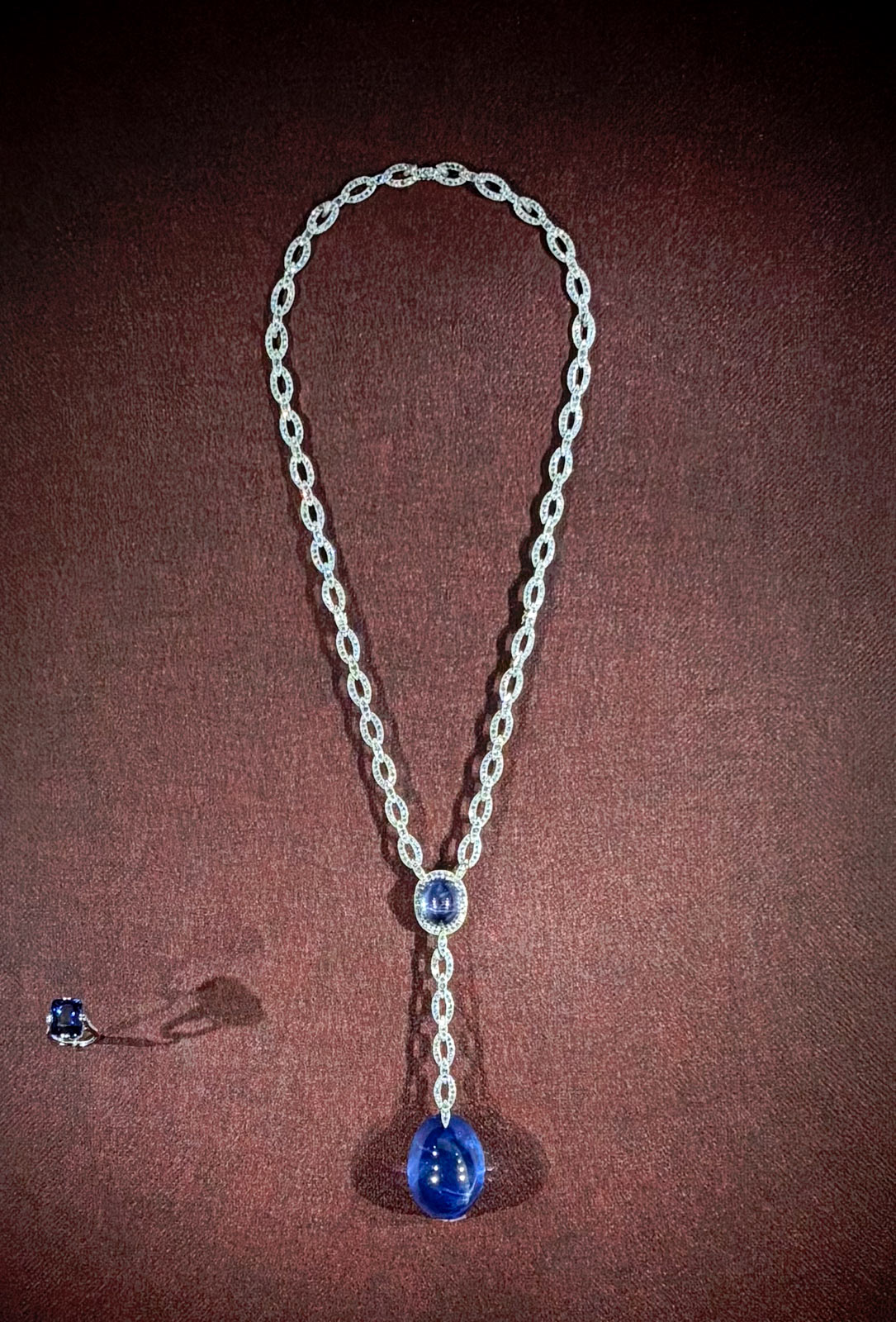
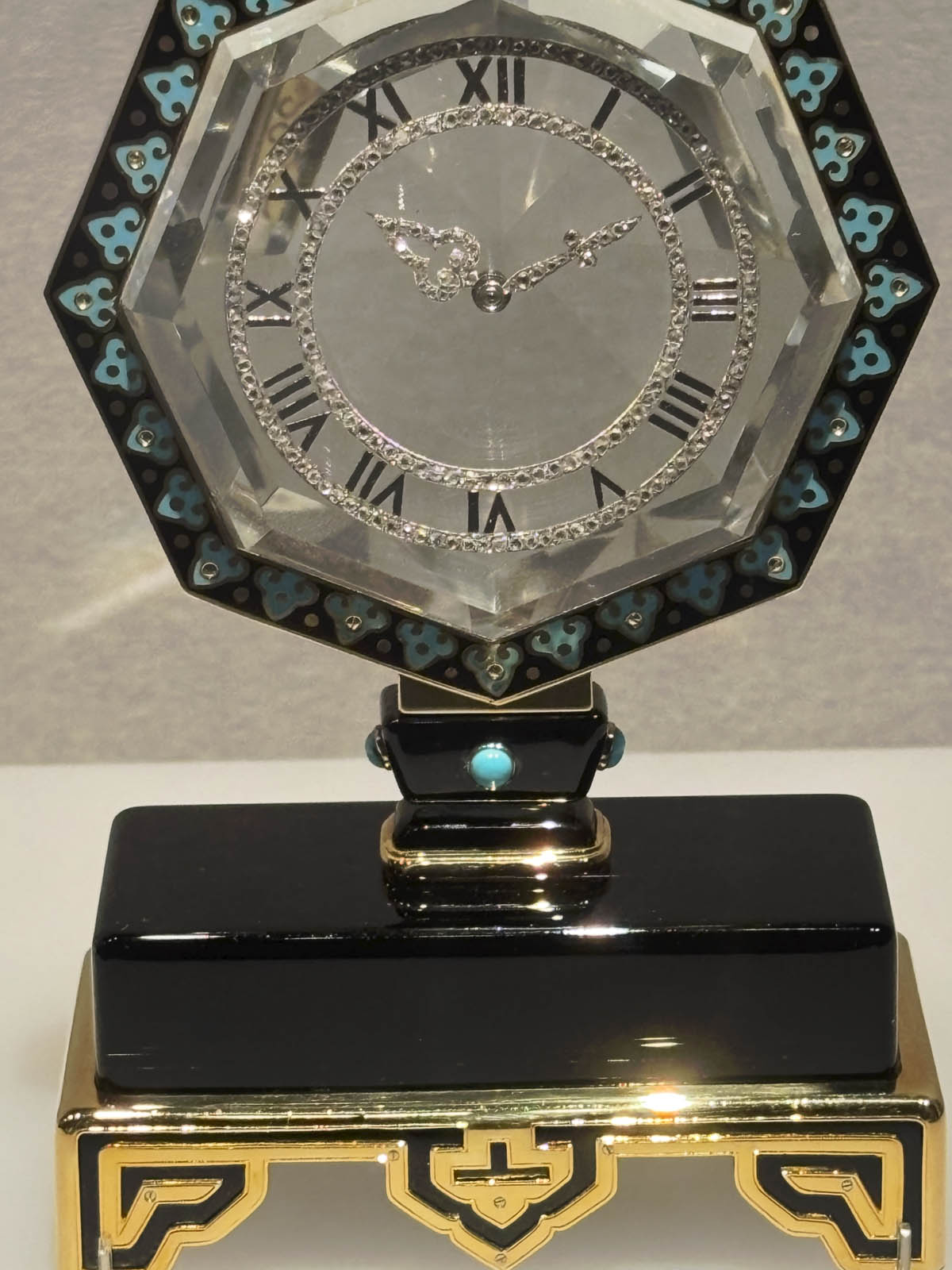
Installation views of the exhibition Cartier at NGV International, Melbourne, June – October, 2026
Photos: Marcus Bunyan
NGV International
180 St Kilda Road
Opening hours:
Daily 10am – 5pm


You must be logged in to post a comment.