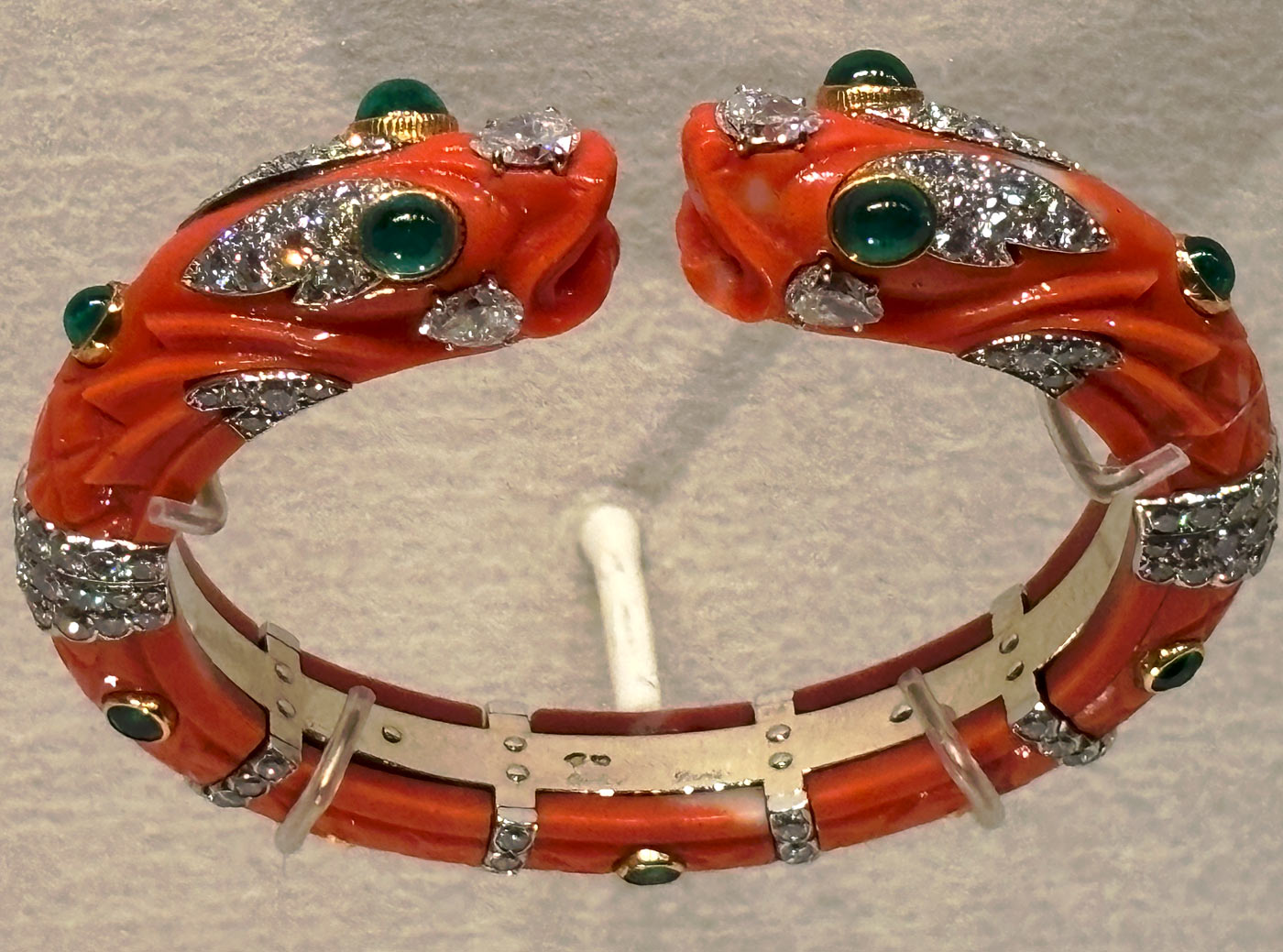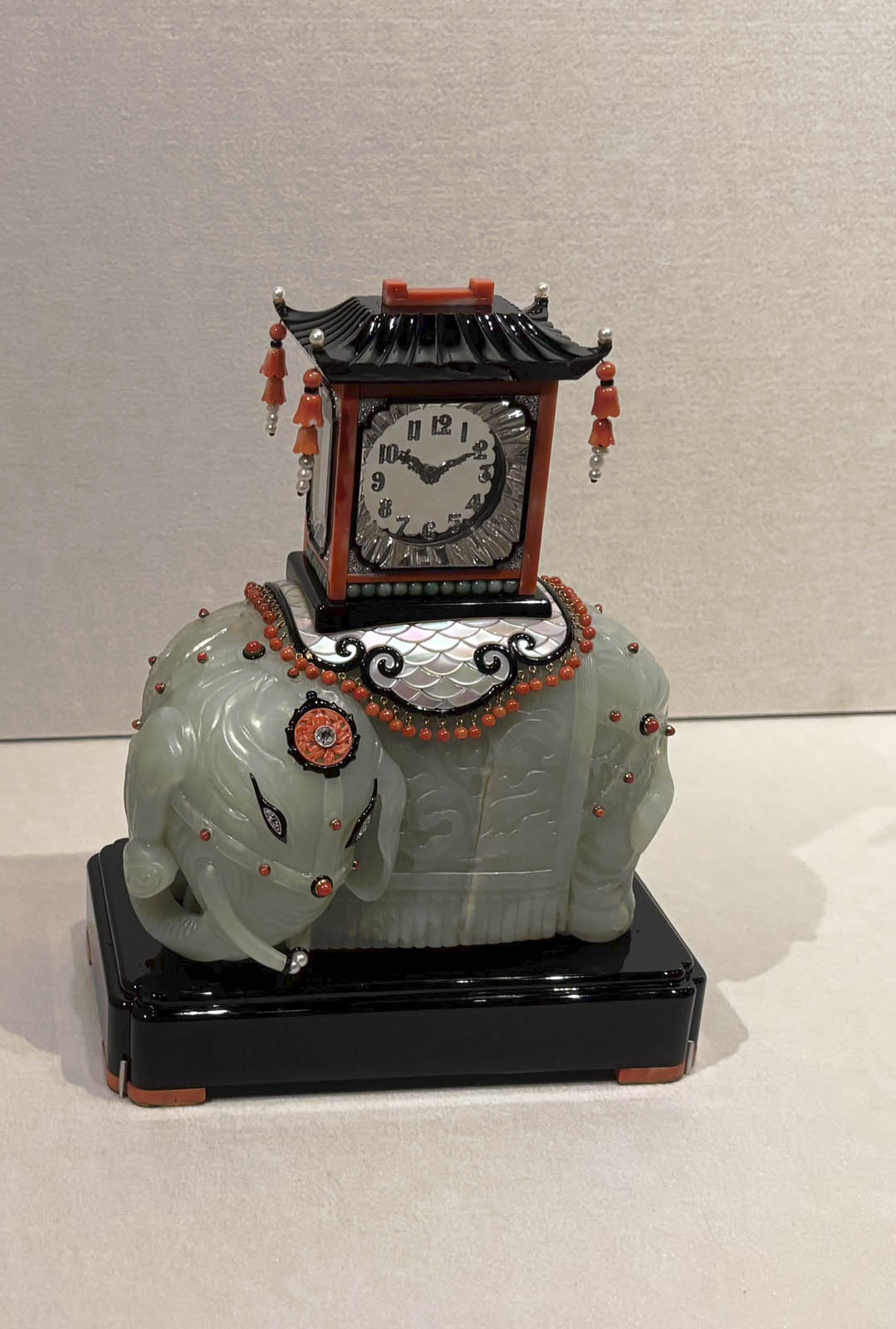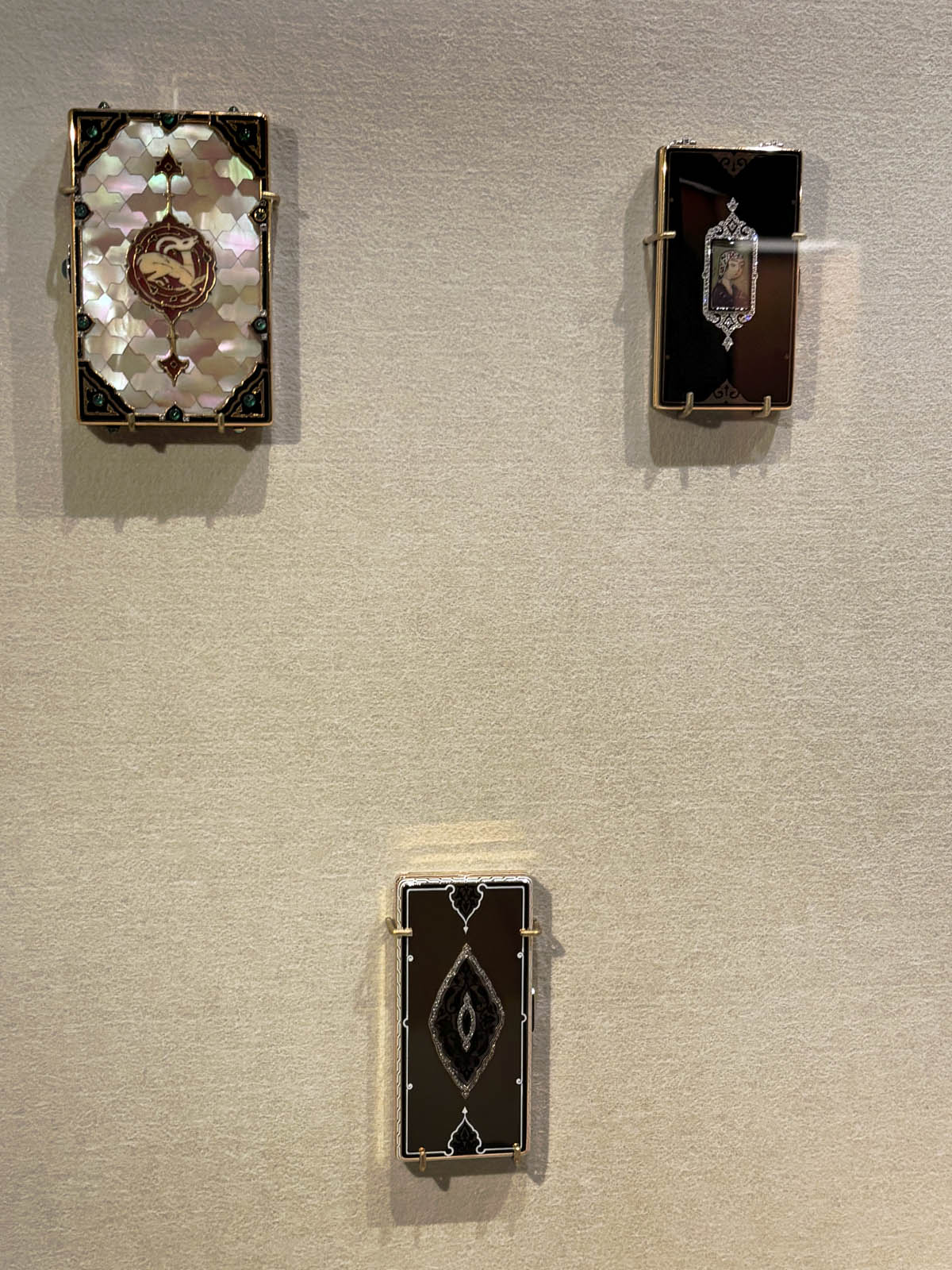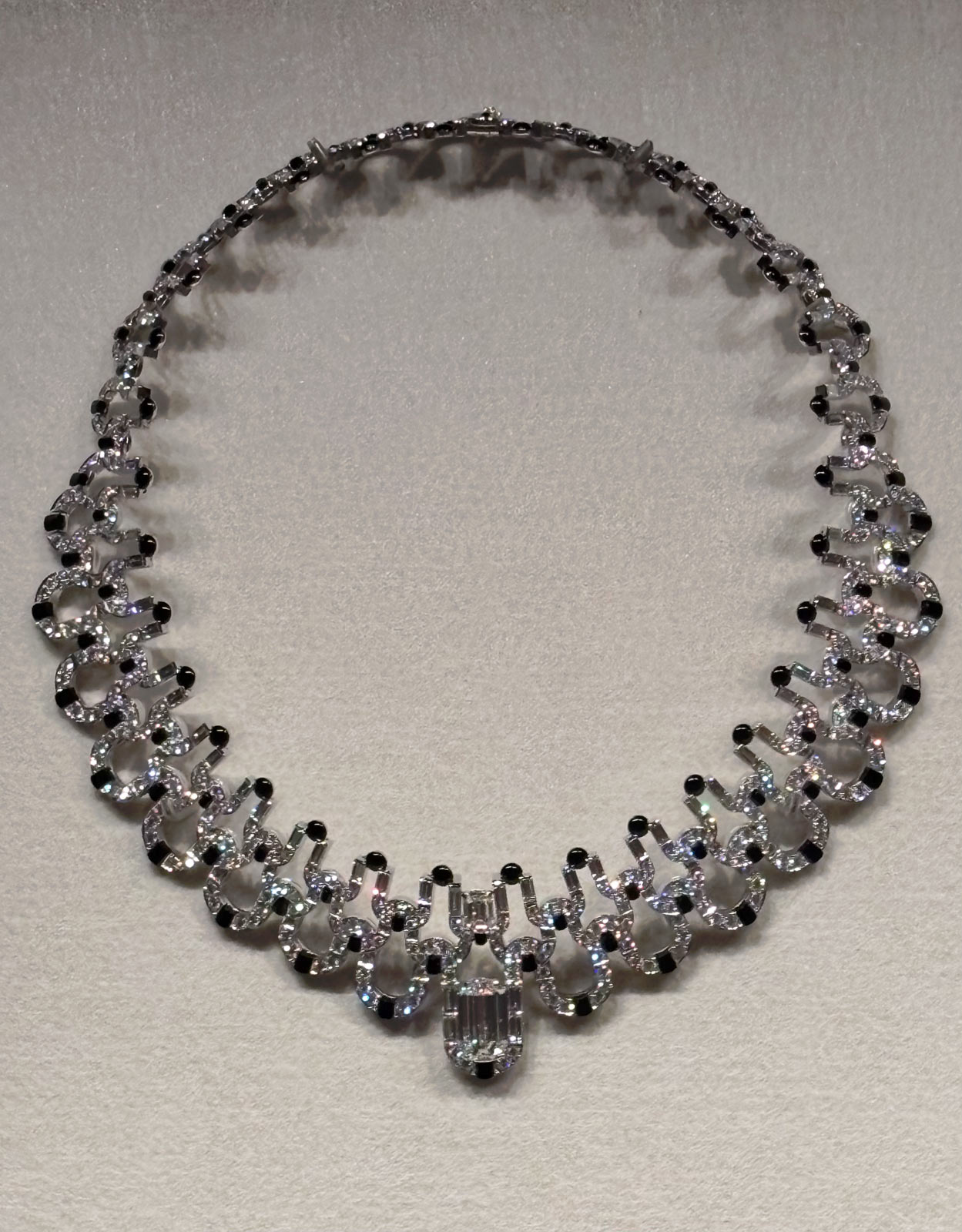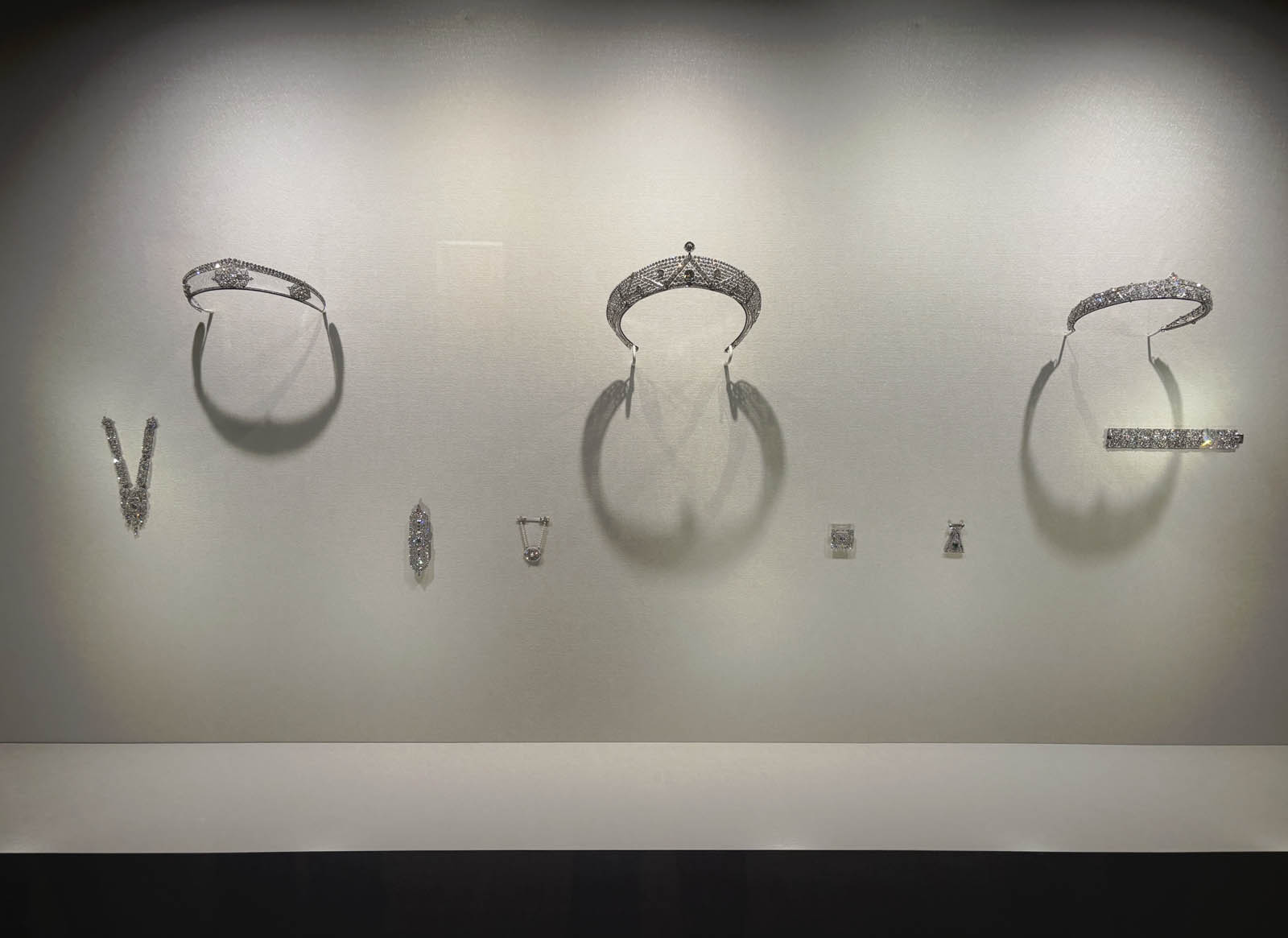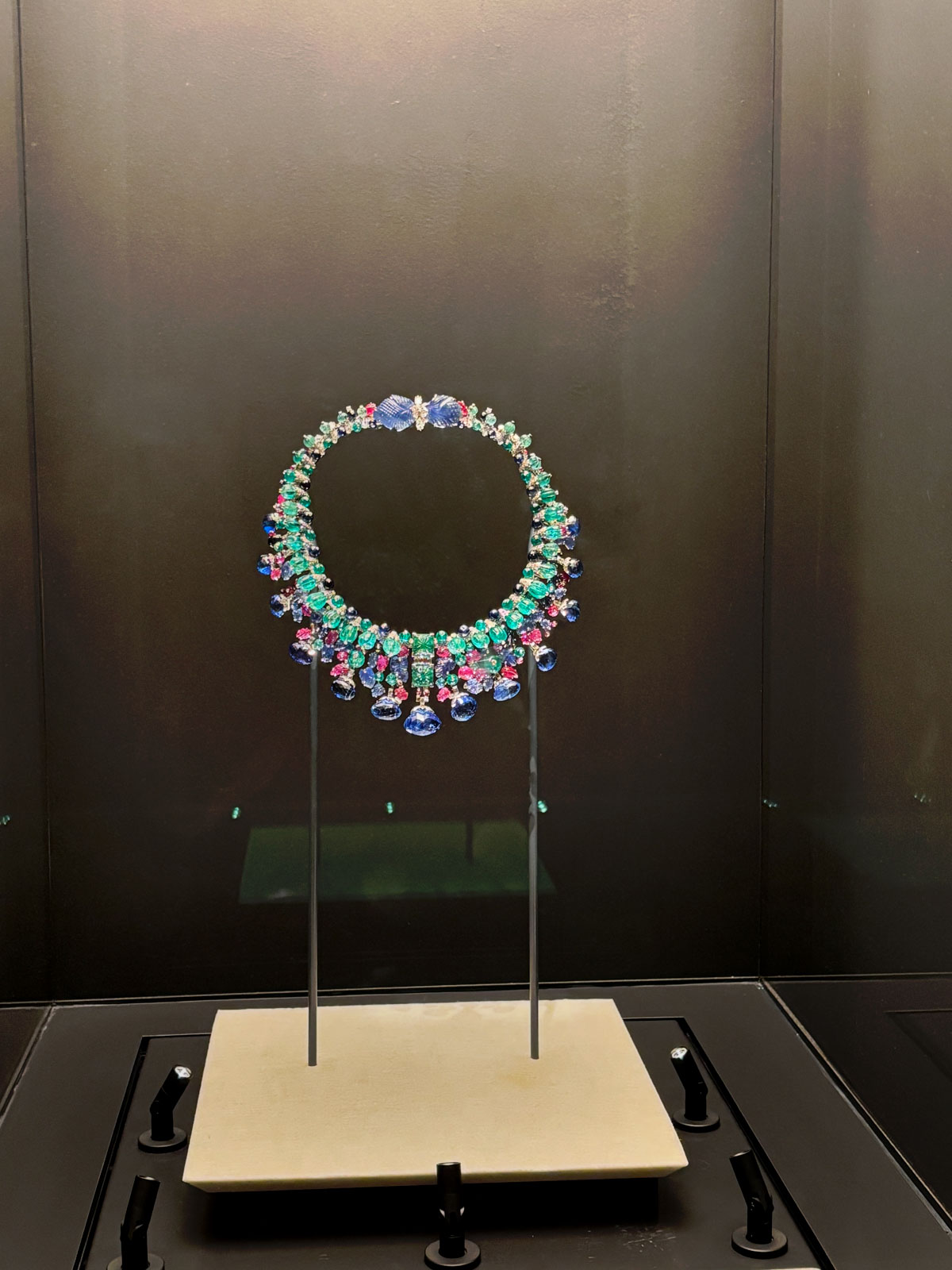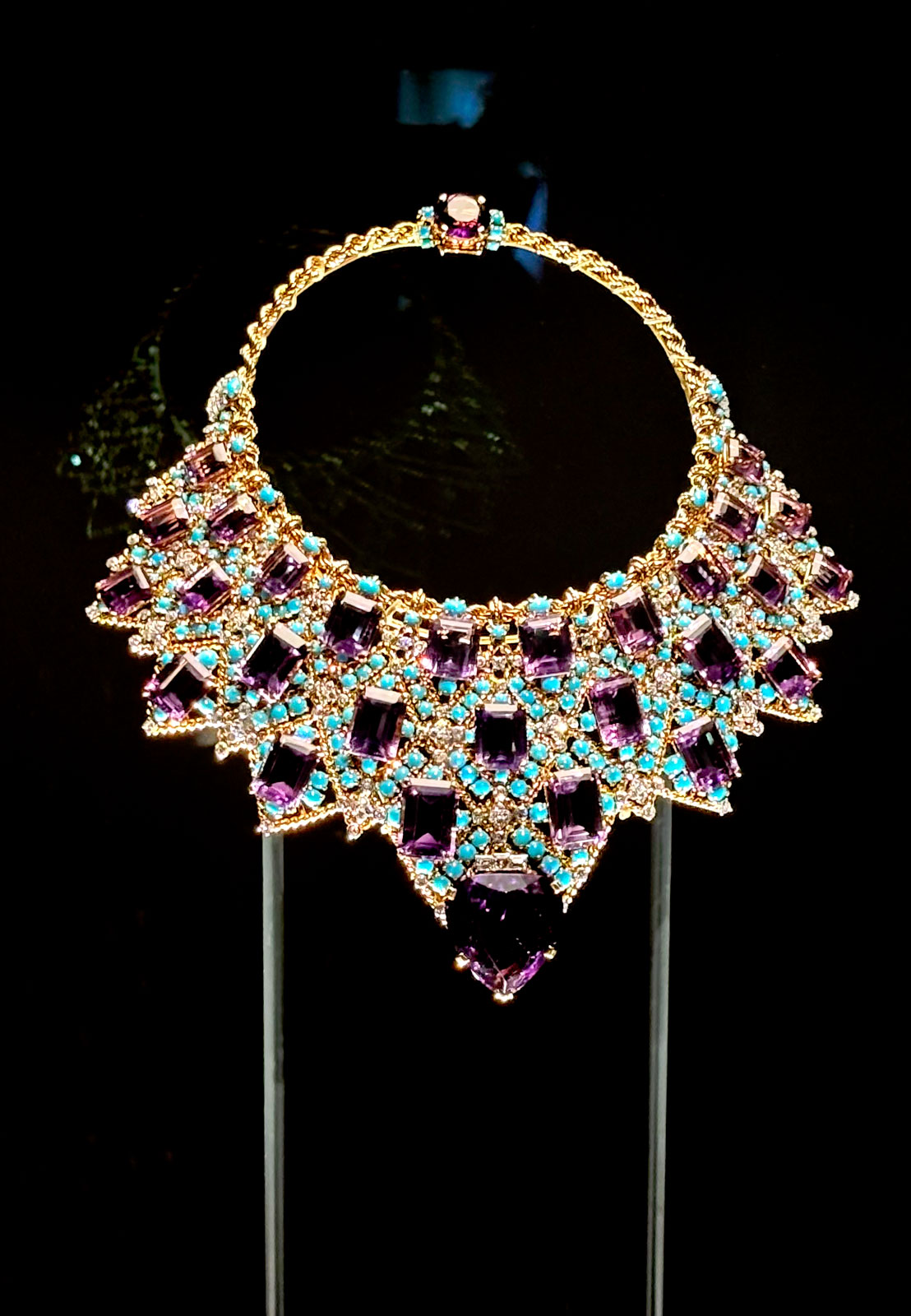
Exhibition: ‘Cartier’ at NGV International, Melbourne

Exhibition dates: 12th June – 4th October, 2026

Curator: Helen Molesworth, Senior Curator of Jewellery, Victoria & Albert Museum, London
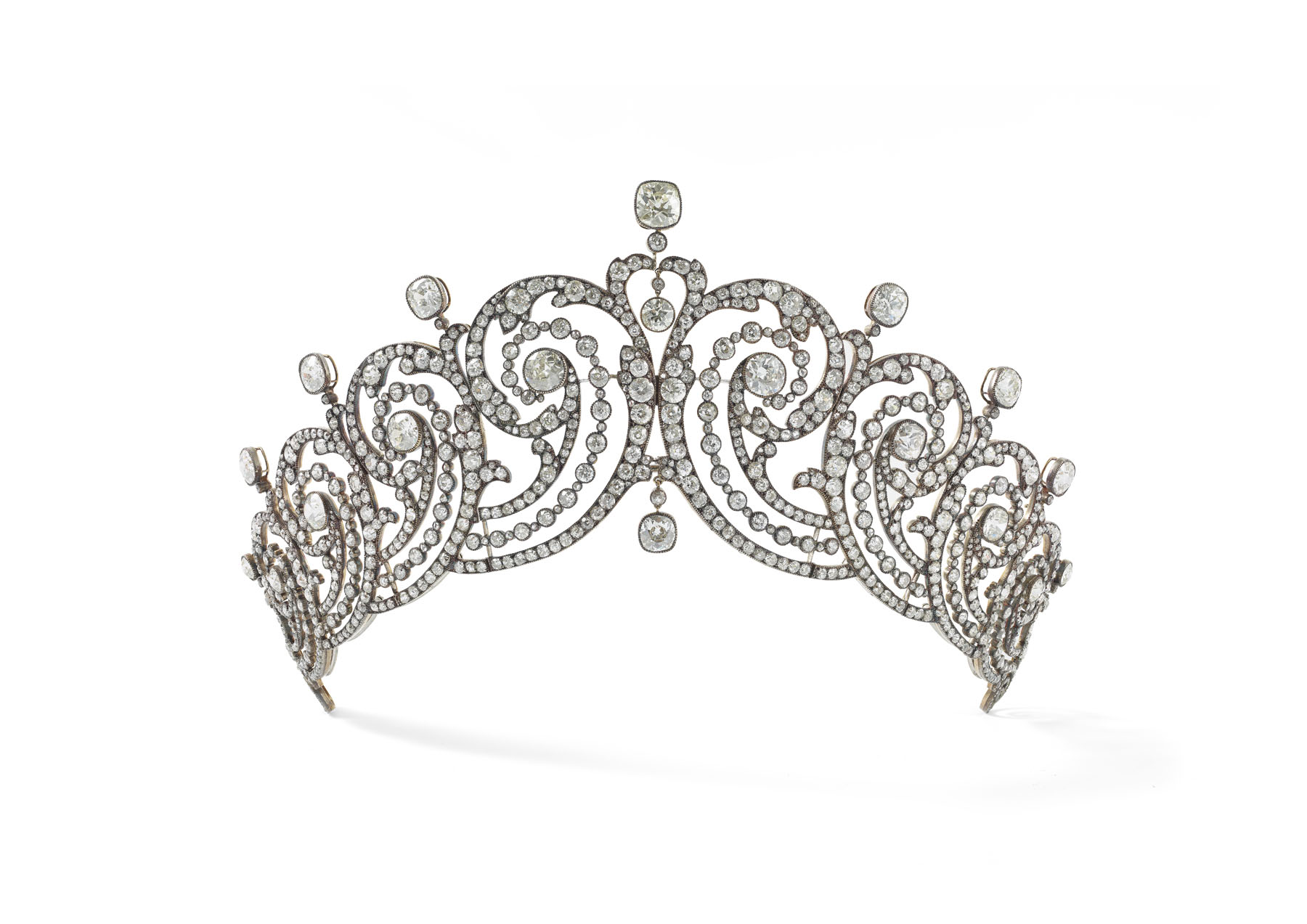
 

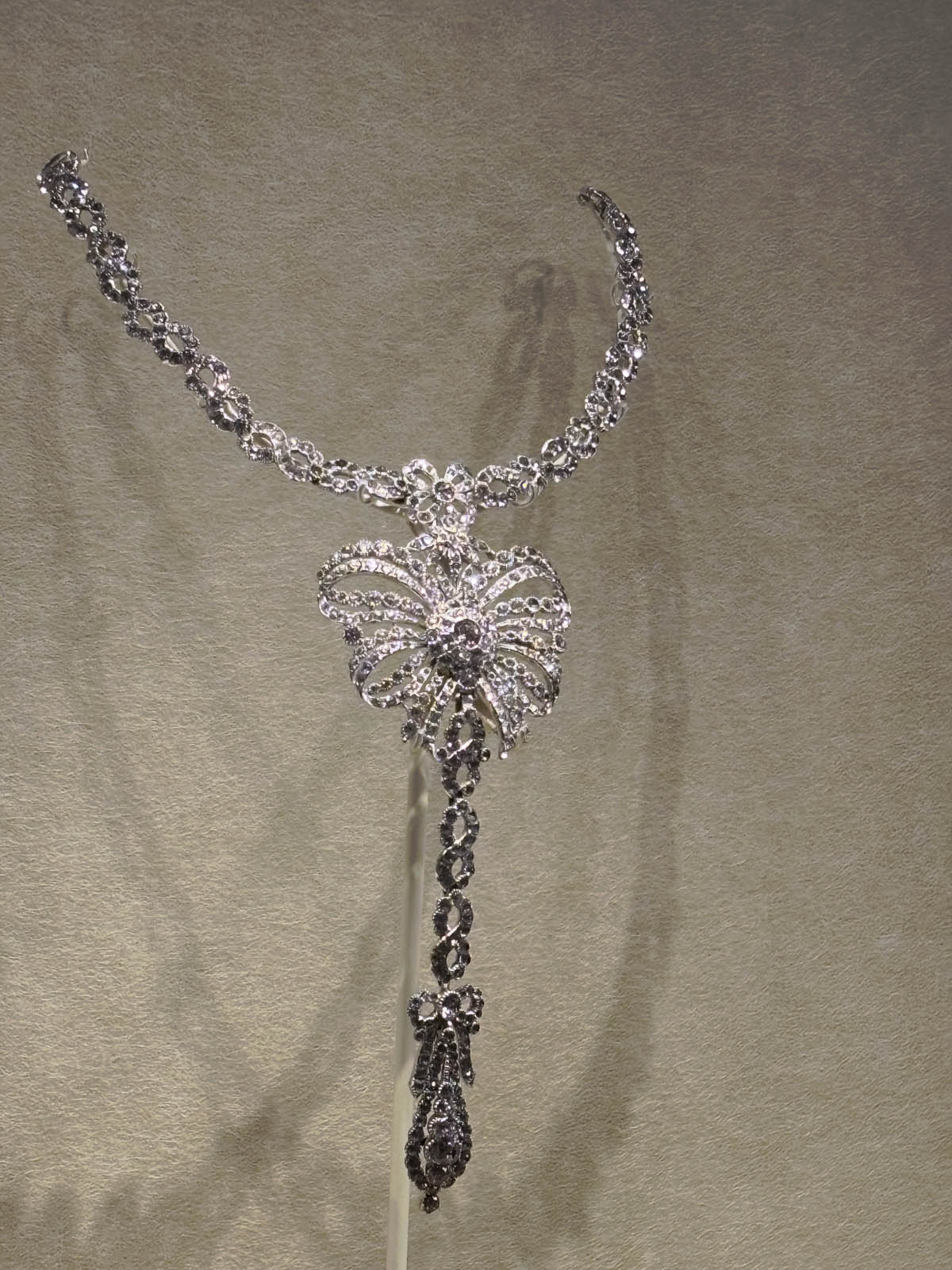
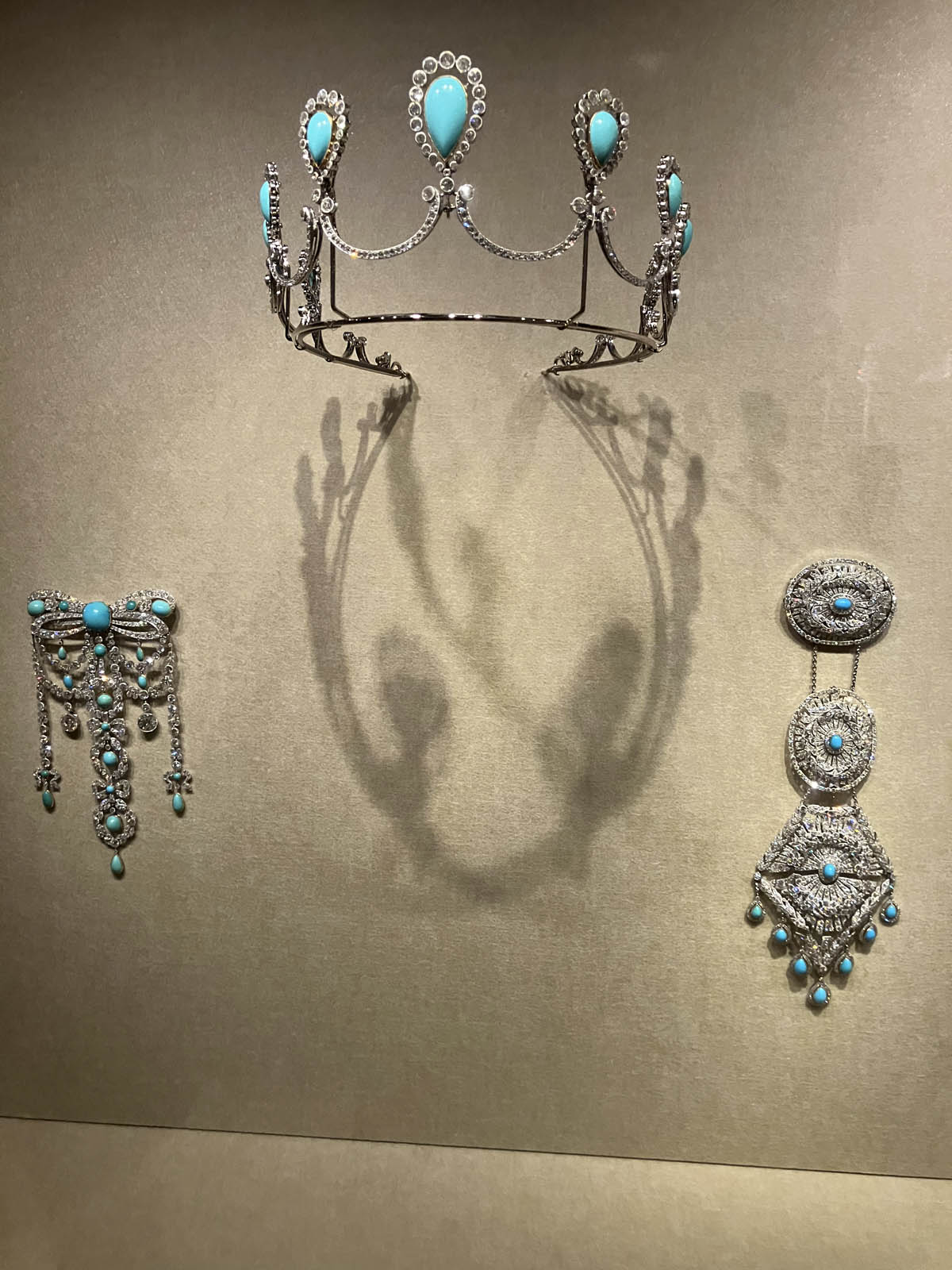
Scroll Tiara, Cartier Paris, special order, 1902


Scroll Tiara
Cartier Paris, special order
1902
Diamonds, silver and gold
Cartier Collection
Nils Herrmann, Collection Cartier
© Cartier


Owned by the Countess of Essex


Bling, bling, bling.

Beauty, craftsmanship, style, for the very wealthy.

Opulence … but at what cost?

No mention here of the menials that would have been forced to mine the original stones in Africa, India or South America.

No mention of the horrors of colonialism of the British, French, Dutch, Belgiums etc… which allowed the exploitation of foreign countries: “The ruling nation takes natural resources, wealth, and cheap labor from the colonised area to enrich itself.”

No mention of the people (or the greased palms) that traded these gemstones and allowed them to reach Western markets and into corporate and private hands.

This “spectacular” display – the spectacle – is beautifully presented at the NGV but it’s all just a bit – what’s the word – gauche for me, especially the over the top 1950s-contemporary pieces. Less is more.

At least the Paris branch of Cartier actively resisted the Nazi occupation and the London offices operated as a frequent meeting place for Charles de Gaulle’s Free French movement, unlike Coco Chanel who was a documented Nazi collaborator and intelligence agent with the Abwehr, holding the agent number F-7124 and the codename “Westminster”, during World War II.

Why you would buy anything by Chanel even today is completely beyond me.

Dr Marcus Bunyan


Many thankx to the NGV for allowing me to publish the photographs in the posting. Please click on the photographs for a larger version of the image. All installation photographs (except the top four) © Marcus Bunyan
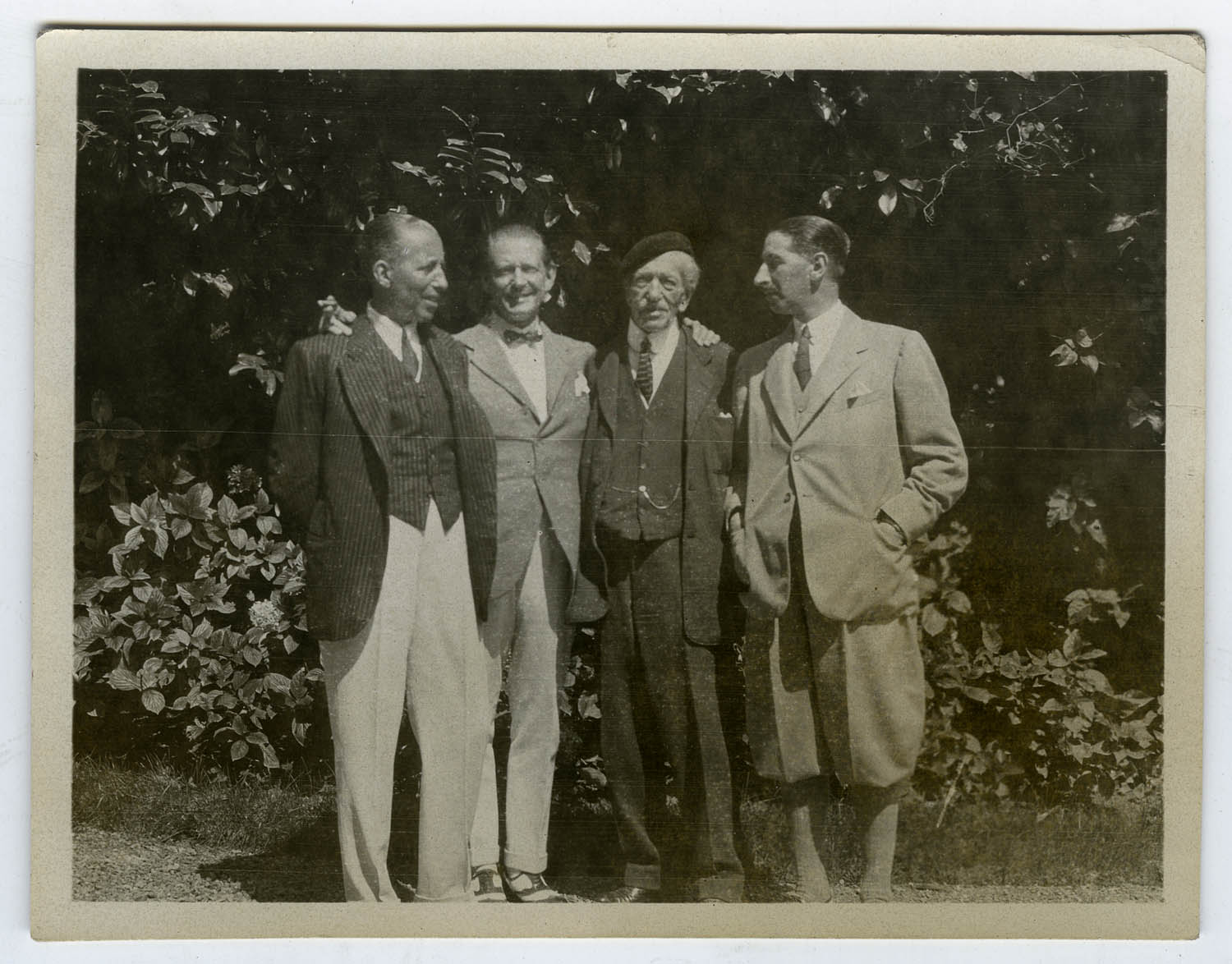


Unknown photographer. 'Alfred Cartier (second from right) with his three sons (left to right), Pierre, Louis and Jacques' 1922


Unknown photographer
Alfred Cartier (second from right) with his three sons (left to right), Pierre, Louis and Jacques
1922
Archives Cartier Paris
© Cartier


Colour, cut and craftsmanship – that’s the magic at the heart of the 2026 Melbourne Winter Masterpieces®: CARTIER exhibition.

Watch as NGV Director Tony Ellwood AM, along with Helen Molesworth, Senior Curator of Jewellery at Victoria and Albert Museum, Pierre Rainero, Cartier Director of Image, Style and Heritage, exhibition designers Studio Sabine Marcelis and Paul Cournet of CLOUD and NGV Senior Curators Dr Miranda Wallace and Amanda Dunsmore, share what makes this exhibition shine – from diamond necklaces and glittering tiaras to original drawings, sketchbooks and photography.


CARTIER, a once-in-a-lifetime exhibition featuring nearly 500 jewels, objects, archival materials and never-before-exhibited pieces, traces the remarkable story of the French jewellery house from around 1900 to now.

Watch on for your first glimpse into the exhibition as Helen Molesworth, Senior Curator of Jewellery at Victoria and Albert Museum, Pierre Rainero, Cartier Director of Image, Style and Heritage, Pascale Lepeu, Director of Cartier Collection and NGV Senior Curator Miranda Wallace introduce you to the wonderful world of CARTIER.


2026 MWM Cartier – Announcement Broll
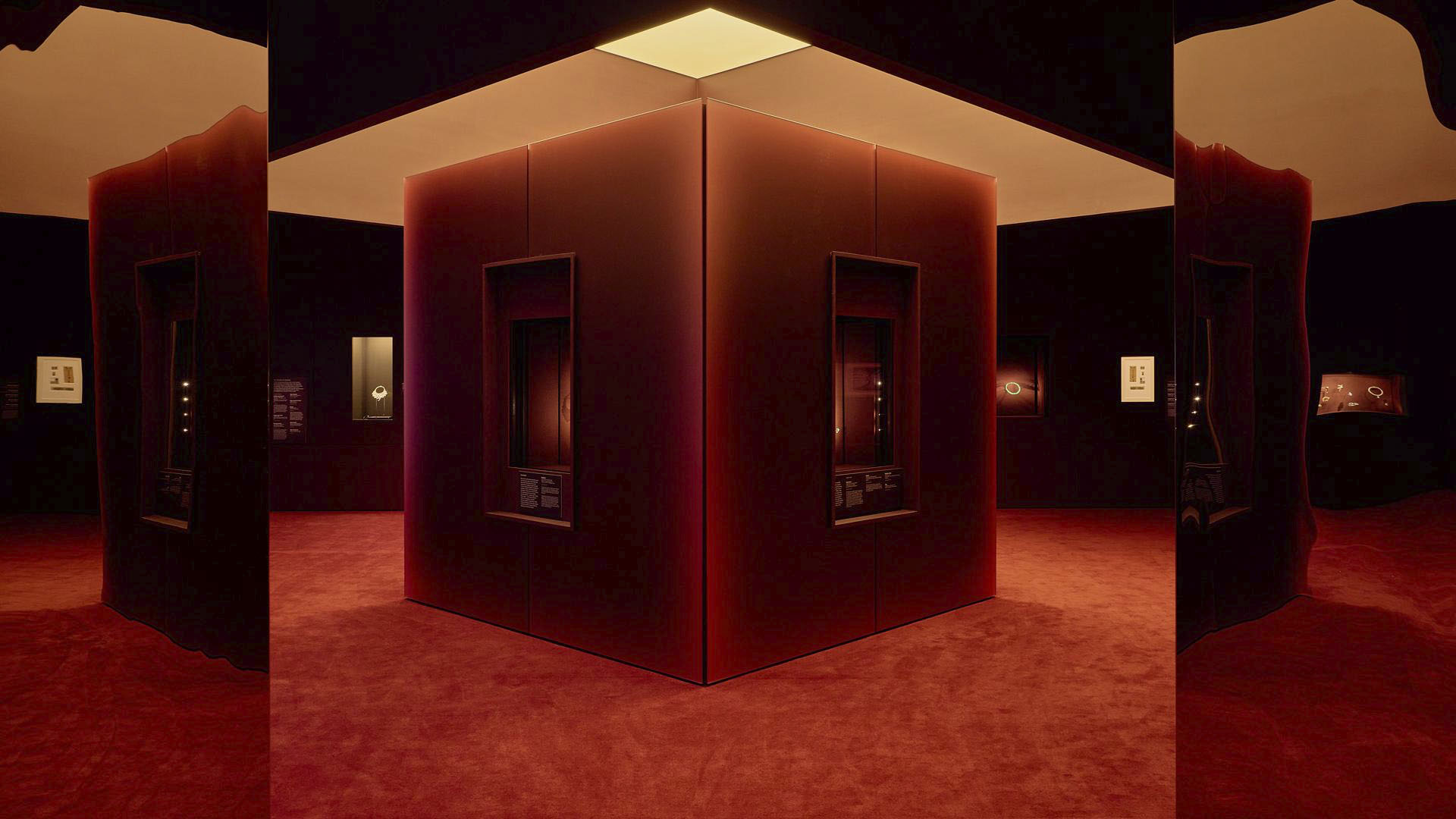
 

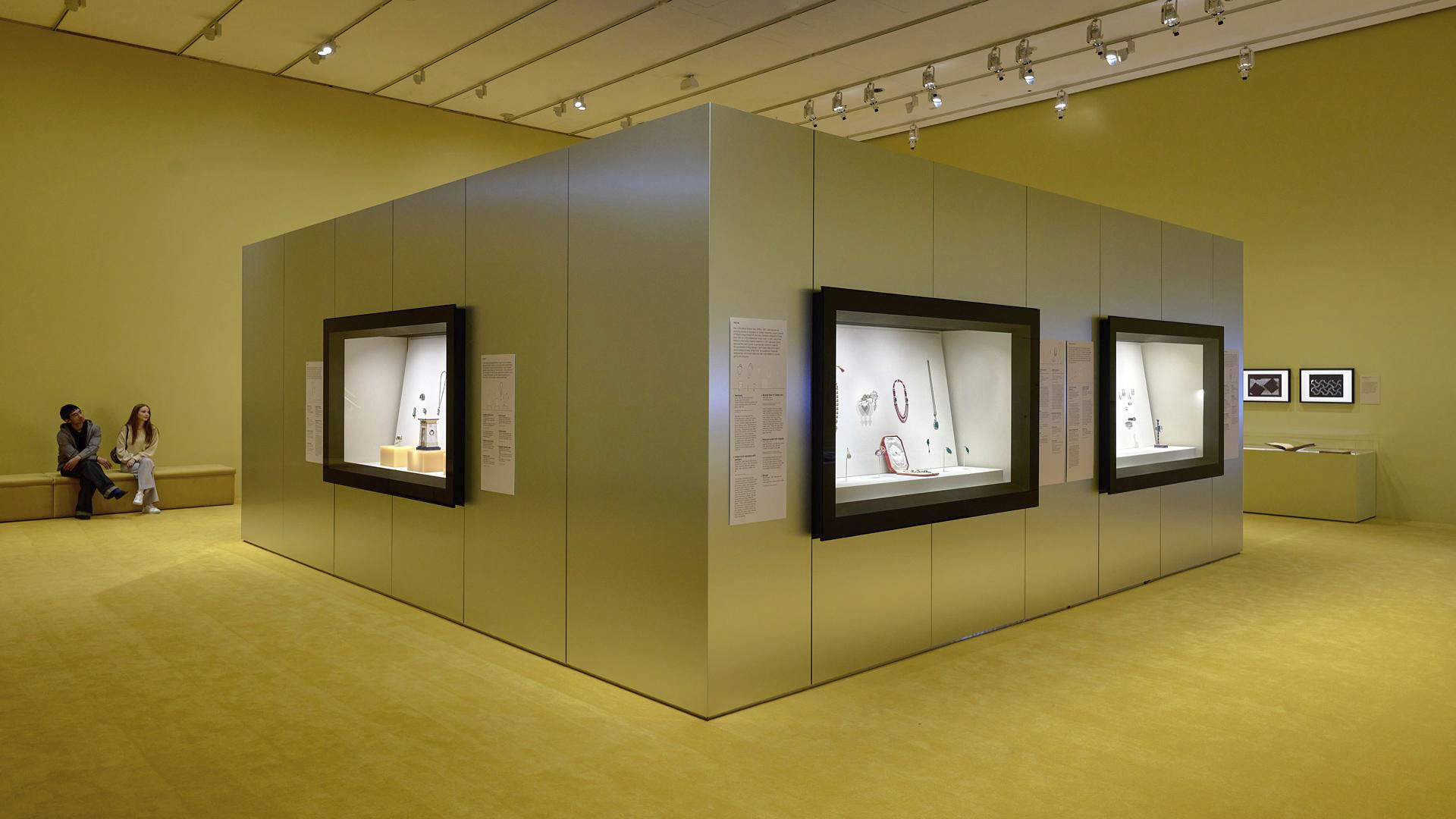
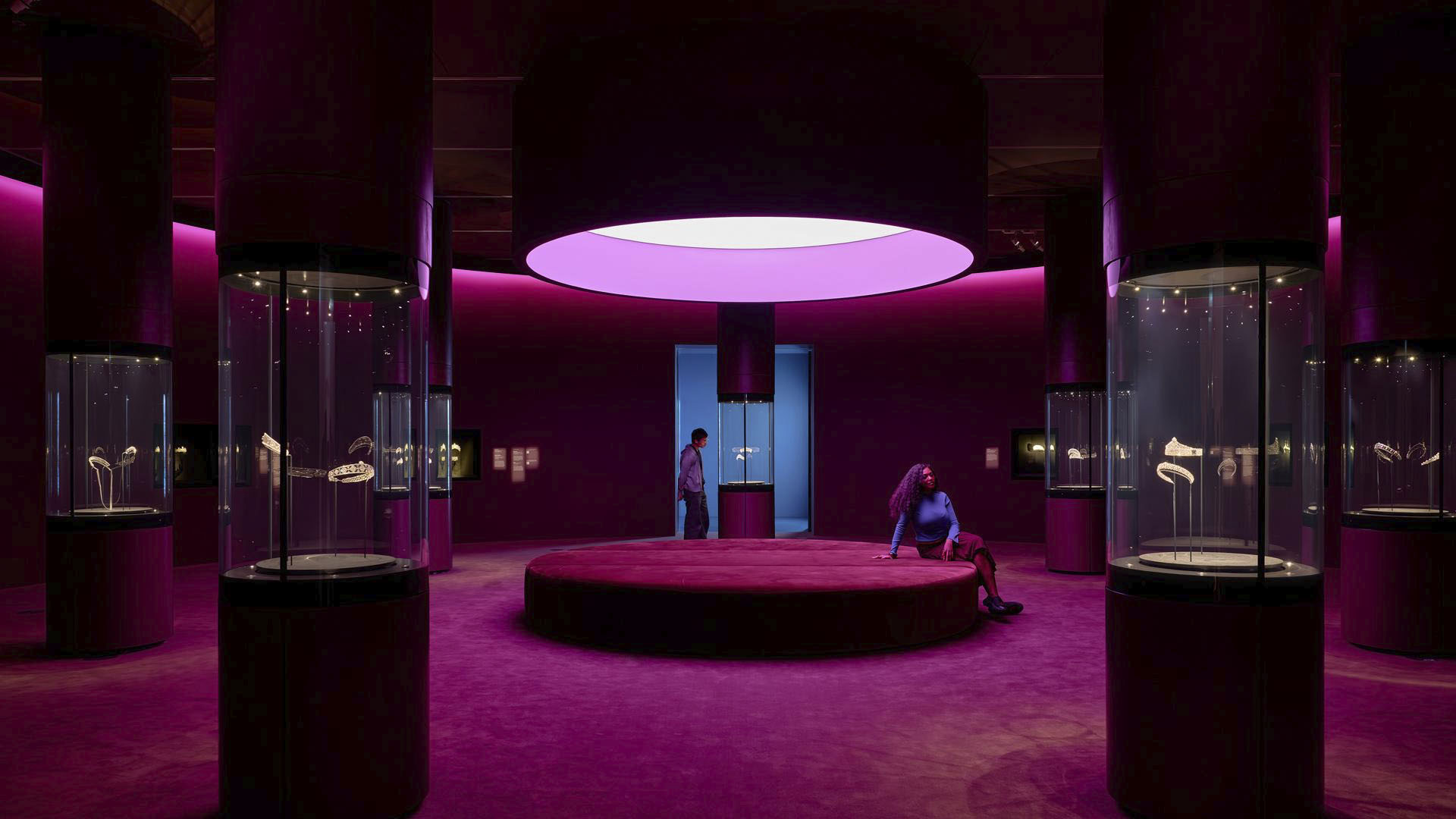
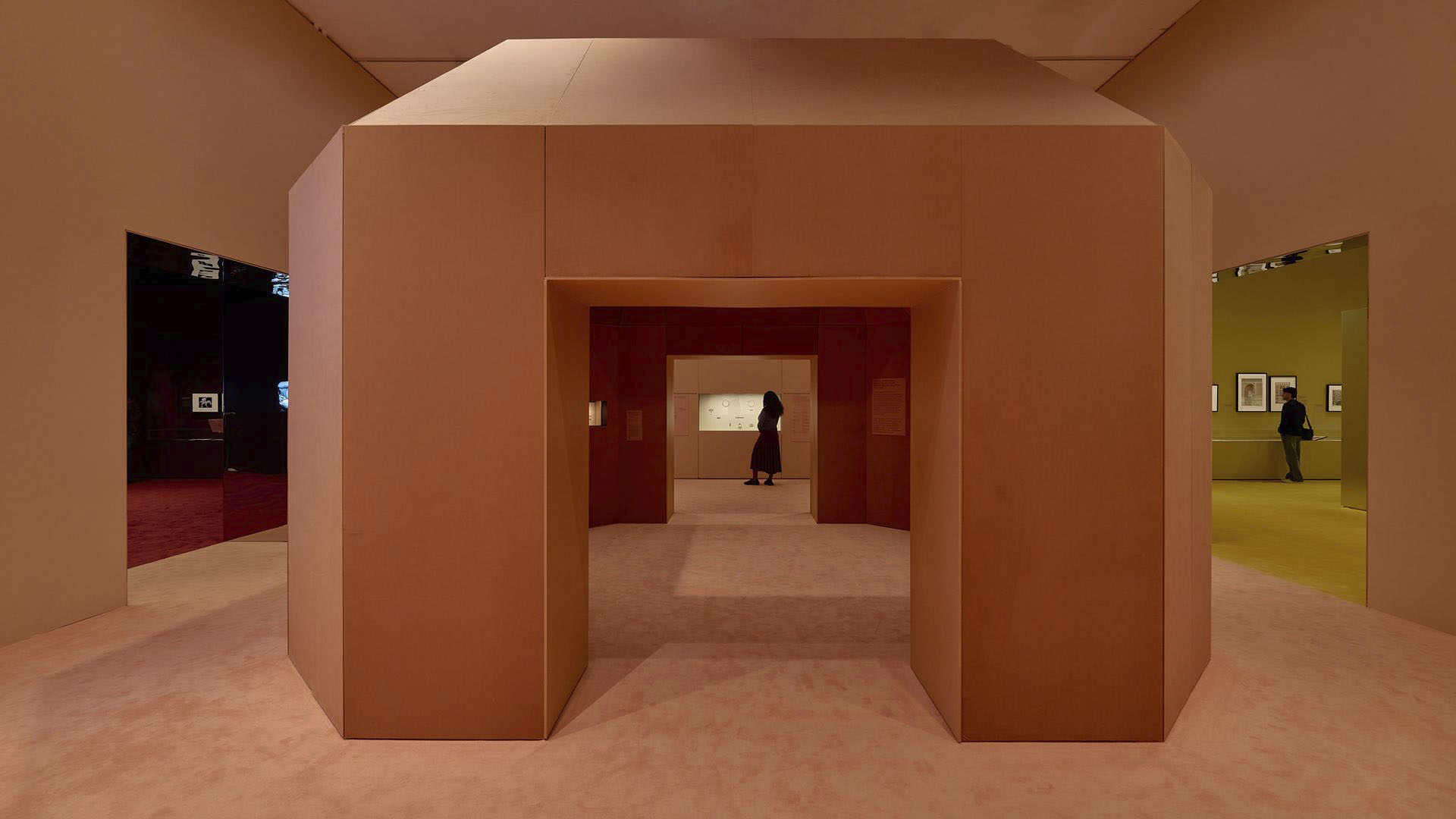
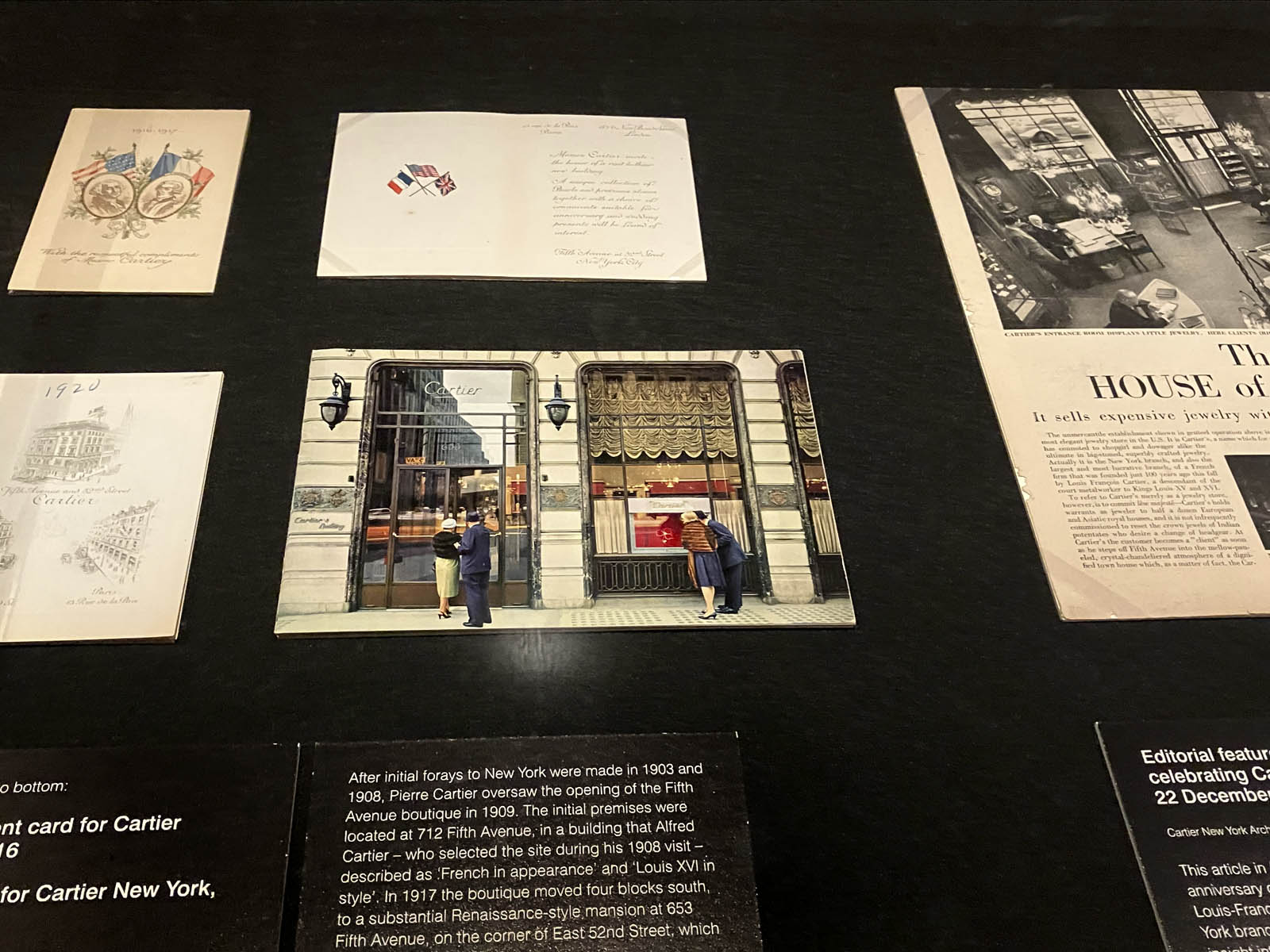
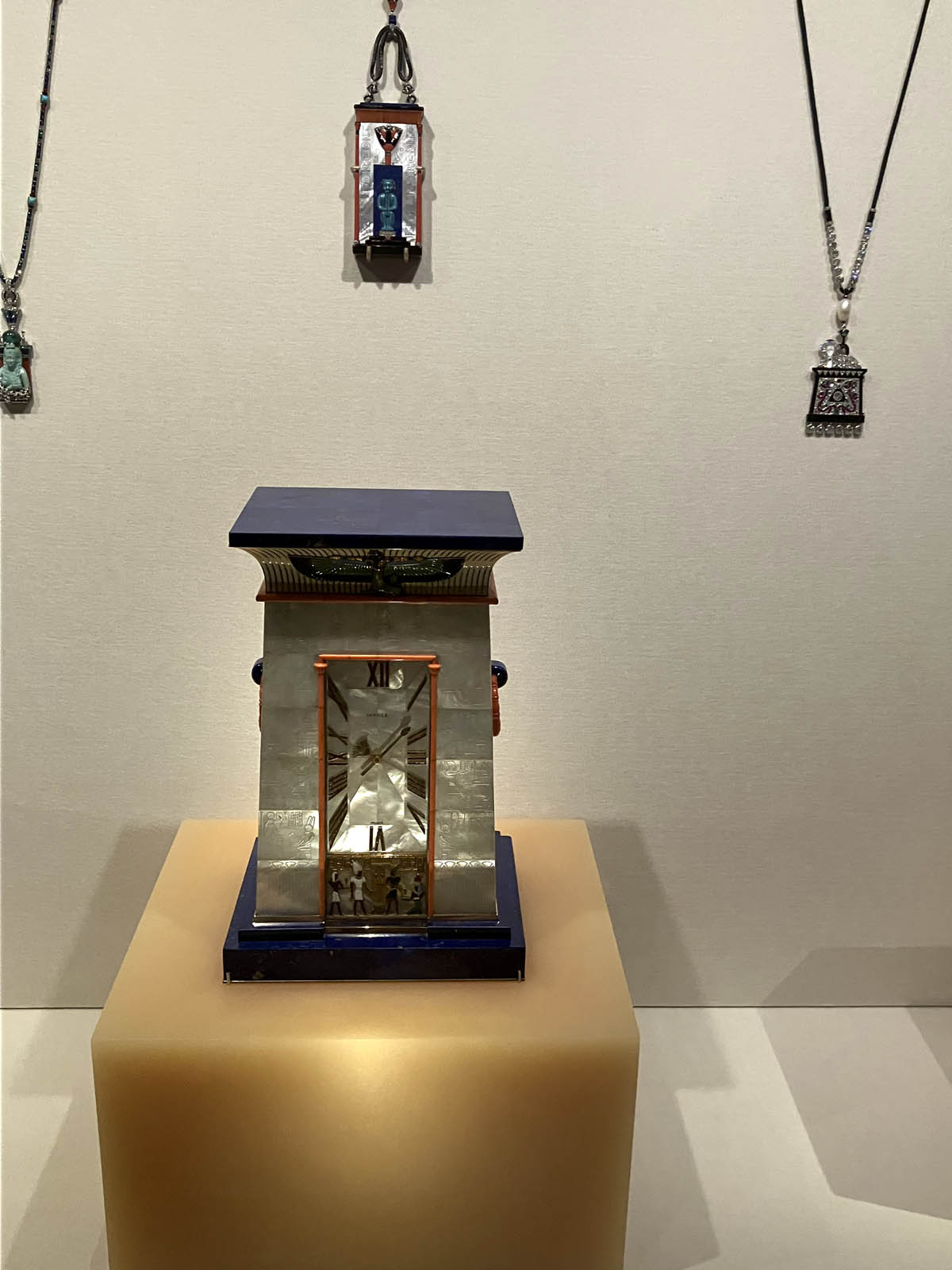
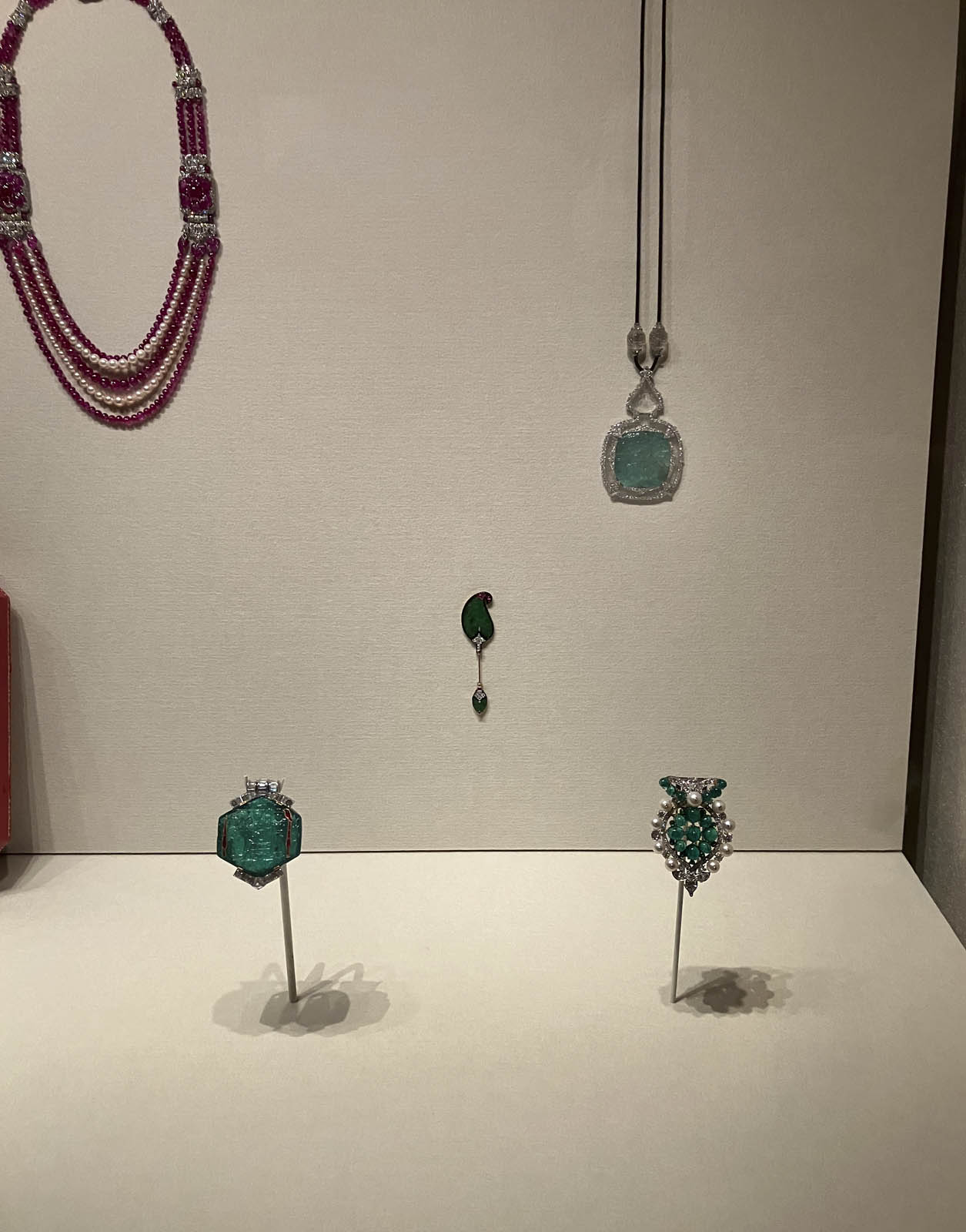
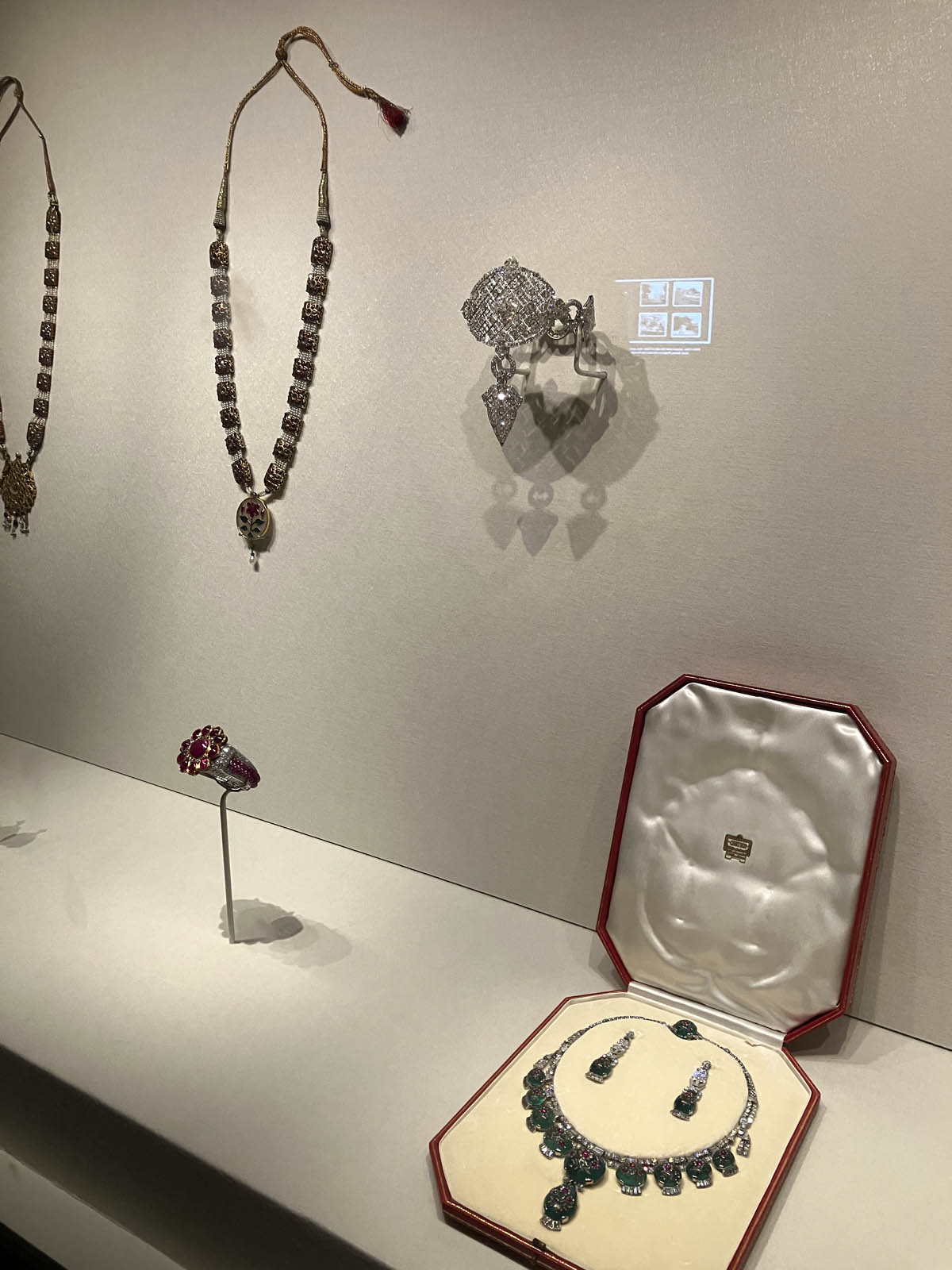
Installation view of the exhibition 'Cartier' at NGV International, Melbourne, June - October, 2026


Installation views of the exhibition Cartier at NGV International, Melbourne, June – October, 2026


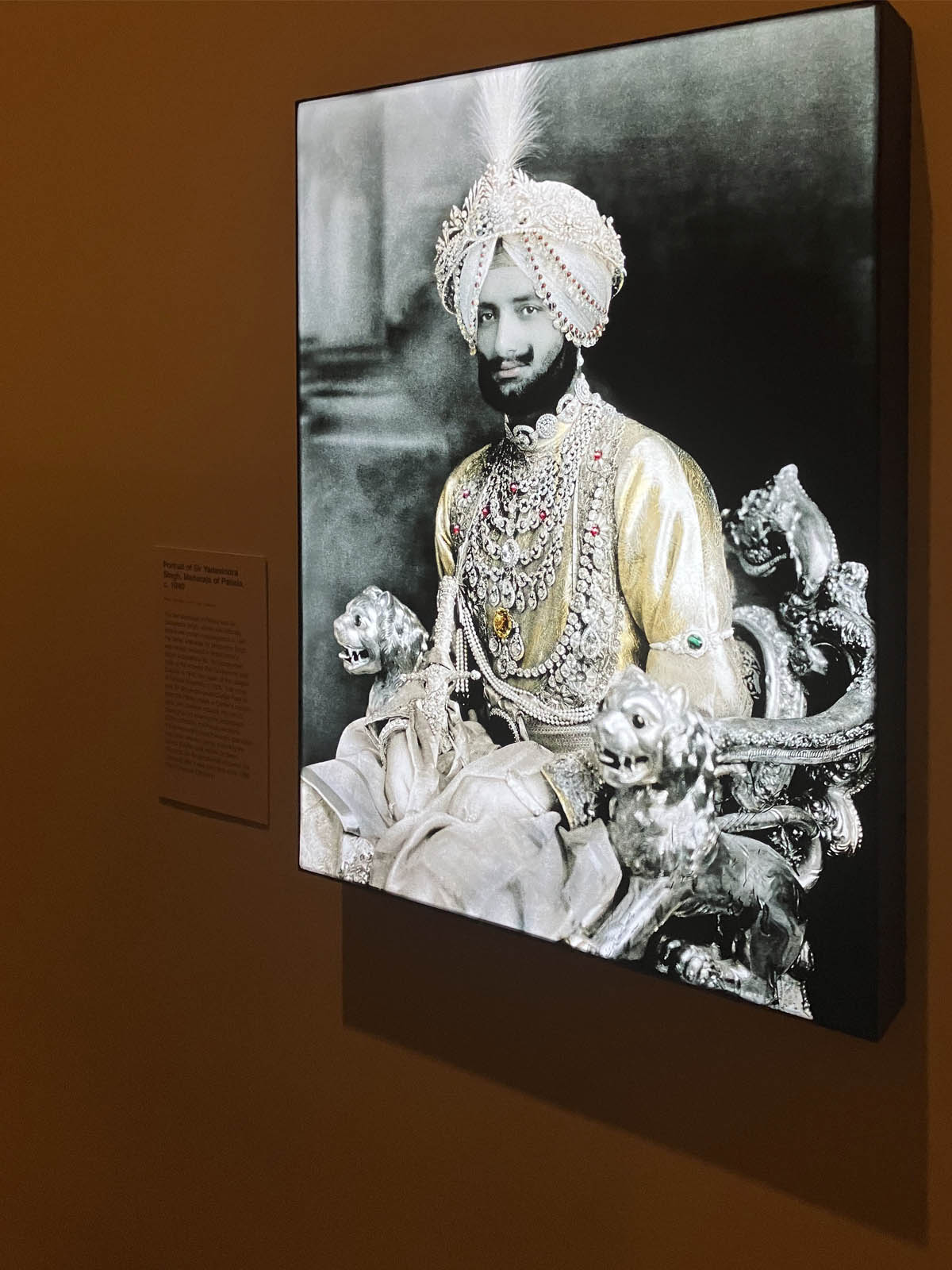
Featuring 300+ resplendent and beautifully-crafted jewels, tiaras, necklaces, brooches, timepieces, design drawings and more, the 2026 Melbourne Winter Masterpieces presentation, Cartier, is the largest exhibition on the global jewellery house ever staged in Australia. Direct from London’s Victoria & Albert Museum and opening exclusively in Melbourne at NGV International on 12 June 2026, the exhibition explores Cartier’s unparalleled reputation for design excellence, craftsmanship and innovation through a dazzling selection of Cartier creations owned and worn by the likes of Elizabeth Taylor, Rihanna, Princess Margaret, The Duchess of Windsor, Dame Nellie Melba, the Maharaja of Patiala, the Begum Aga Khan III, and American heiress Barbara Hutton. The Melbourne-exclusive exhibition also features many jewels and objects that have never-before-visited Australia.

The exhibition charts the evolution and artistic legacy of the jewellery house, including its transformation at the turn of the twentieth century by brothers Louis, Pierre and Jacques Cartier, grandsons of the house’s founder Louis-François Cartier. The brothers established branches in Paris, London and New York, creating the first internationally recognised jewellery maison, and honed Cartier’s inimitable style by bringing design and manufacturing in-house. With an enviable client list of royalty and aristocracy, Cartier was described as ‘the jeweller of kings and the king of jewellers’ by King Edward VII, who granted his Royal Warrant in 1904. Cartier’s reputation later broadened thanks to the devotion of leading creatives from the worlds of cinema, music and fashion.

A major highlight of the exhibition will be a display of more than 20 magnificent tiaras, a timeless symbol of royalty, glamour and artistry – and some of Cartier’s most celebrated creations. With symbolic links to the laurel wreaths of classical antiquity and celestial halos, the tiara has been worn for centuries across cultures from Asia to Europe. The spectacular display includes Cartier’s celebrated Scroll tiara (1902), crafted in the house’s signature ‘Garland style’ and worn by Clementine Churchill at the coronation of Queen Elizabeth II in 1953 and by Rihanna on the cover of W magazine in 2016. Others include the Sun tiara of 1907 with a 32-carat fancy intense yellow diamond in its centre; and the Art Deco diamond and platinum Halo tiara of 1934, which was inspired by ancient Egypt and owned by Her Highness the Begum Aga Khan III.

The exhibition includes a 1951 necklace gifted to Elizabeth Taylor by her third husband and film producer, Mike Todd, while on holiday in the French Riviera in 1957. The necklace features a geometric latticework design of diamonds that showcase seven Burmese rubies, exceptional for their size and matching colour. Taylor herself described the necklace as ‘like the sun – lit up and made of red fire.’

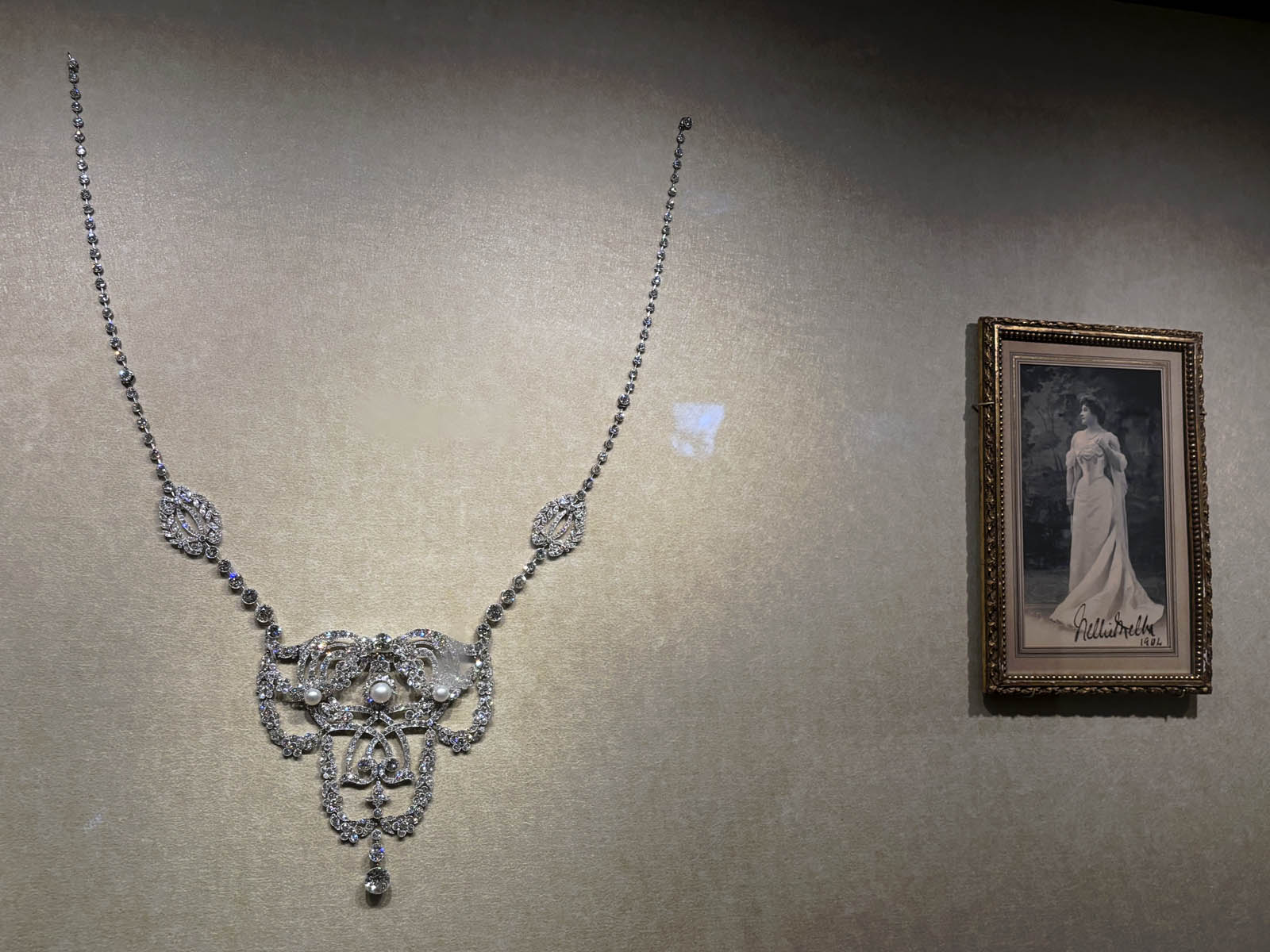
The exhibition also focuses on Australian opera singer Dame Nellie Melba, who was an early client of Cartier when the firm was becoming known internationally for its ‘Garland style’ jewels, often featuring floral swags and bows wrought in platinum and precious gemstones. Pierre Cartier was a fan of Dame Nellie, and a signed 1902 photograph of Melba, once owned by Pierre, will feature in the exhibition along with necklaces and bodice ornaments that the world-famous opera singer owned and wore both on and off the stage.

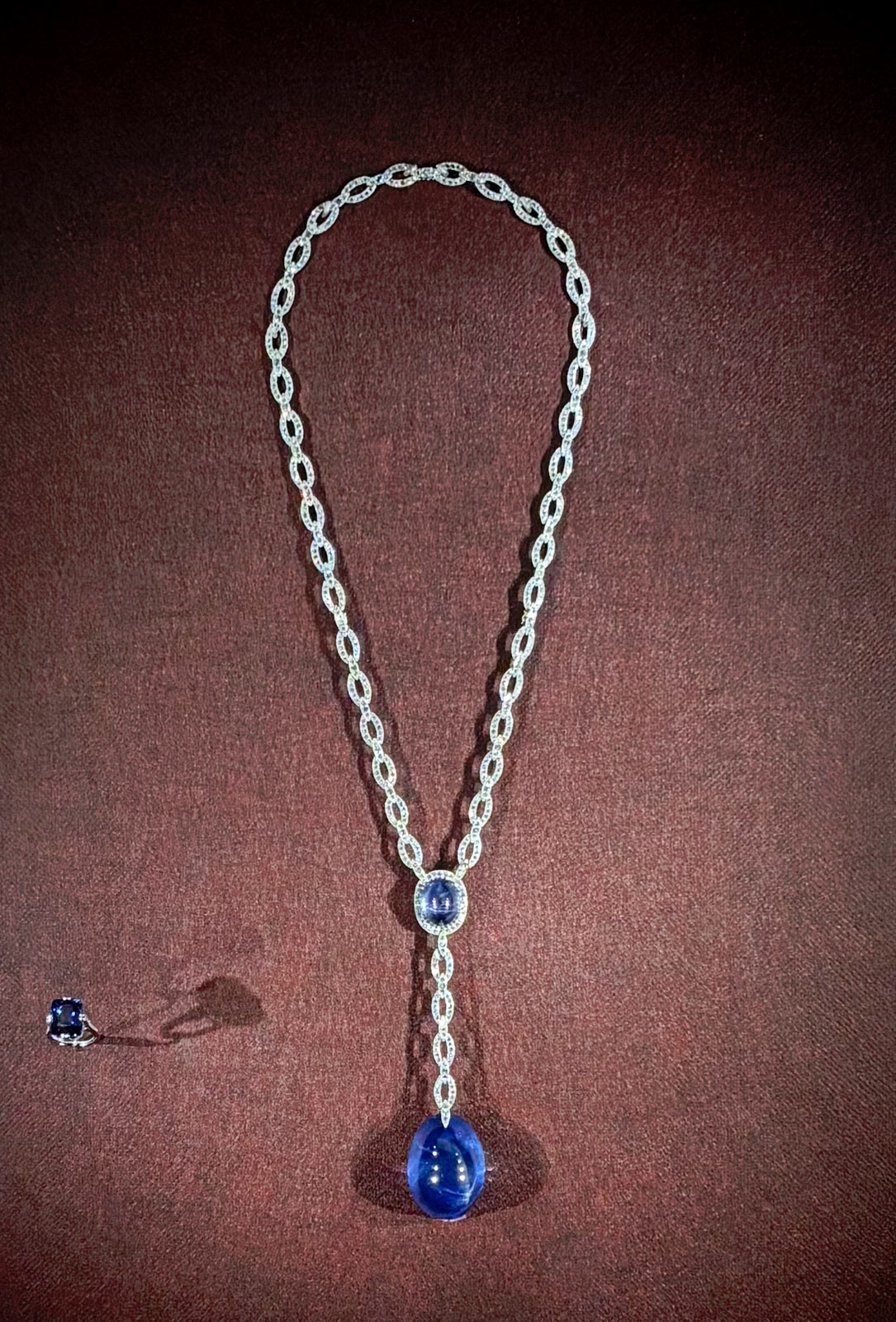
On display will be an intricate diamond Rose clip brooch (1938) worn by Princess Margaret at her sister’s coronation, as well as a major selection of exceptional jewels belonging to Wallis Simpson, the Duchess of Windsor and wife of former King Edward VIII. These include her famous Flamingo brooch (1947), an extraordinary Bib necklace encrusted with diamonds, amethysts and turquoise, and her 1949 Panther sapphire clip brooch which features an impressive 152.35-carats Kashmir cabochon sapphire.

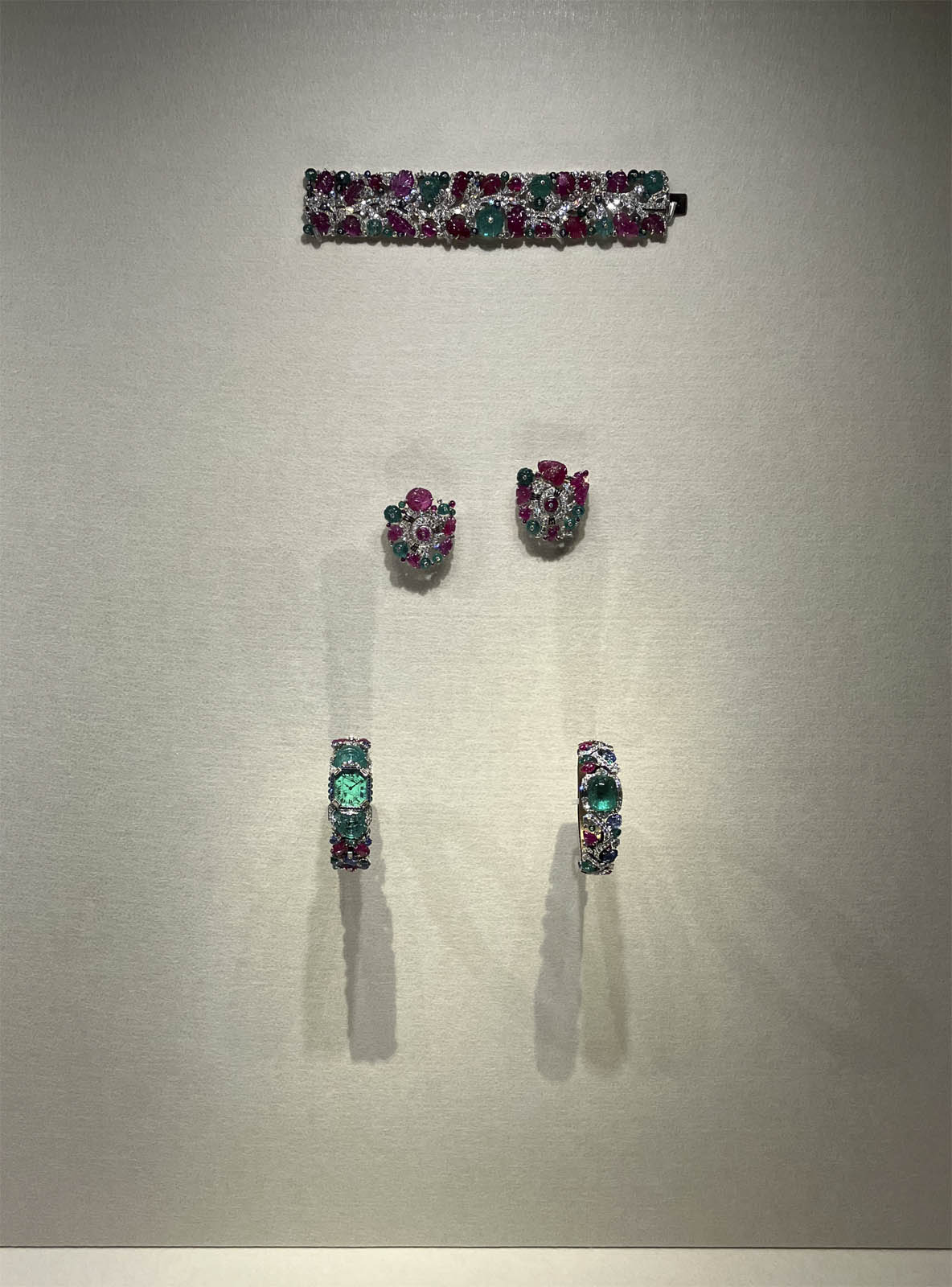
Named for their colourful use of rubies, emeralds and blue sapphires, a rich selection of Cartier’s iconic Tutti Frutti jewels will also feature. Additionally, there will be a standout selection of Cartier timepieces that showcase the jeweller’s industry-leading innovations in watchmaking, alongside a selection of contemporary works featuring Australian opals.

The never-before-seen exhibition design is a collaboration between the NGV, Studio Sabine Marcelis and CLOUD, two multidisciplinary design practices based in Rotterdam in The Netherlands. The exhibition design will be inspired by colour, light and materiality, three elements that are synonymous with the aesthetic qualities of Cartier’s jewellery. The exhibition design will reflect Cartier’s expansive network of cultural and gemological sources that inspire their jewellery creations. …

Tony Ellwood AM, Director, NGV, said: ‘Cartier are world-renowned for their excellence in jewellery and timepiece design and innovation – a reputation fostered by the three entrepreneurial brothers Pierre, Louis and Jacques Cartier. This exhibition tells the story of how they transformed their grandfather’s jewellery business into one of the most prestigious international jewellery houses with a clientele including royalty, high society and movie stars. We’re indebted to our partner institution the V&A, for their support of this Australian-exclusive exhibition, as well as key lender Cartier.’

Helen Molesworth, Senior Curator of Jewellery, Victoria & Albert Museum, London, said: ‘Cartier is one of the most famous jewellery houses in the world. This exhibition will explore how Louis, Pierre and Jacques Cartier, initiated a strategy of original design, exceptional craftmanship and international expansion that transformed the Parisian family jeweller into an international household name. The V&A is delighted to tour its Cartier exhibition which celebrates the pioneering achievements of Cartier and its transformative ability to remain at the centre of culture and creativity for more than a century. We are excited to be able to share with visitors of the NGV some of Cartier’s most famous creations as well as revealing previously unseen objects that further enrich our understanding of a jewellery house that continues to influence the way we adorn ourselves today.’

Pierre Rainero, Director of Cartier Image, Style and Heritage, said: ‘Building on the success of its presentation at the Victoria & Albert Museum in London, the NGV iteration of the Cartier exhibition will showcase pieces never-before-seen in Australia. It promises to be an enlightening experience for the public, offering a captivating journey into the world of Cartier and its signature style, a living language in permanent evolution. We hope that it will not only inspire delight and awe, but also intellectual curiosity, fostering a deeper appreciation for jewellery as a distinct and powerful artistic expression.’

The Melbourne Winter Masterpieces exhibition Cartier will be on display at NGV International from 12 June – 4 October 2026. Admission fees apply. Information and tickets are available via the NGV website: NGV.MELBOURNE

Exhibition created by the V&A in partnership with the National Gallery of Victoria and in collaboration with Cartier.

Press release continues below…
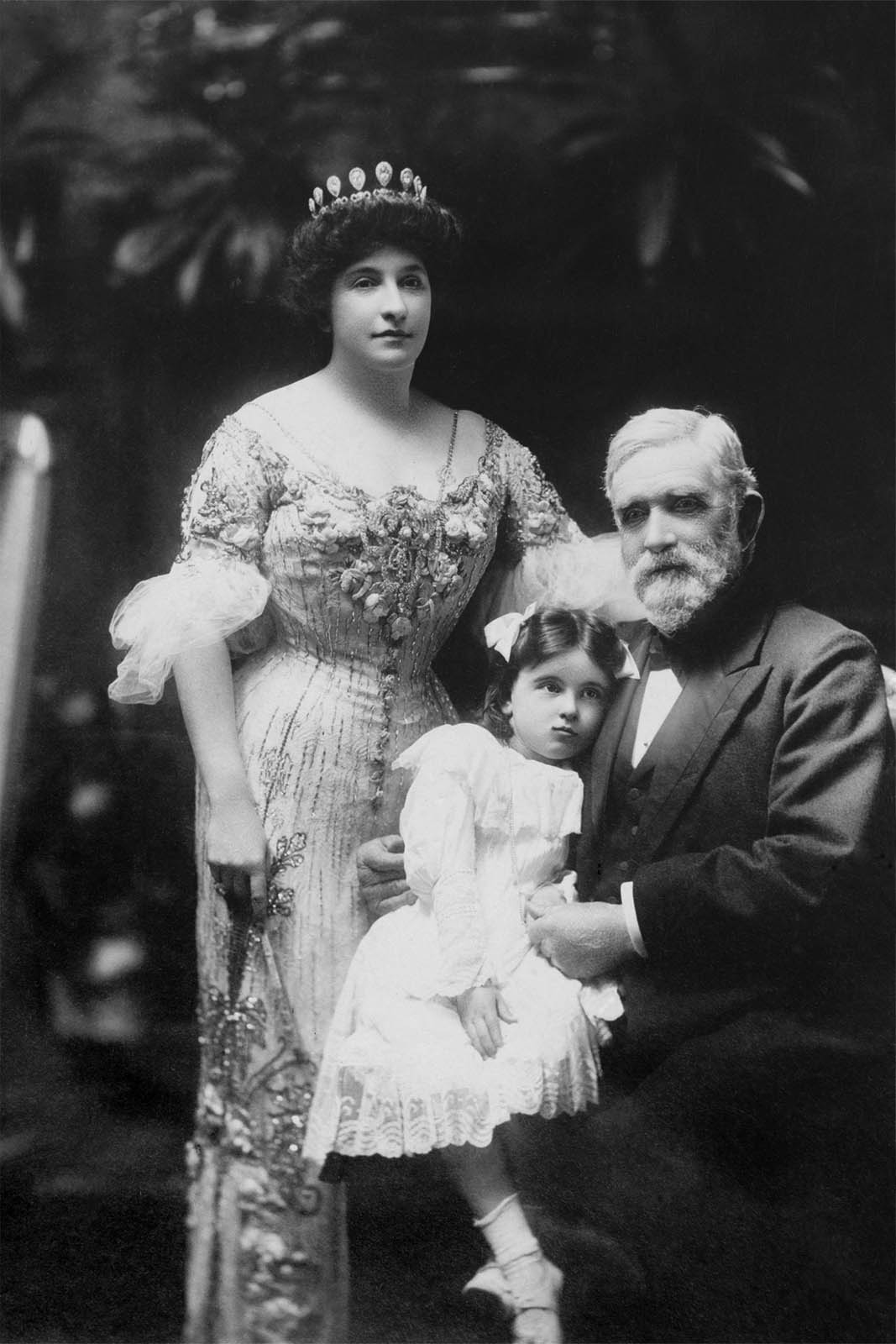
 

Unknown photographer/Bain News Service (publisher). 'Nellie Melba, her father, David Mitchell, and a young girl (Nellie's niece, Nellie Paterson), in Melbourne, Australia' 1903


Unknown photographer/Bain News Service (publisher)
Nellie Melba, her father, David Mitchell, and a young girl (Nellie’s niece, Nellie Paterson), in Melbourne, Australia
1903
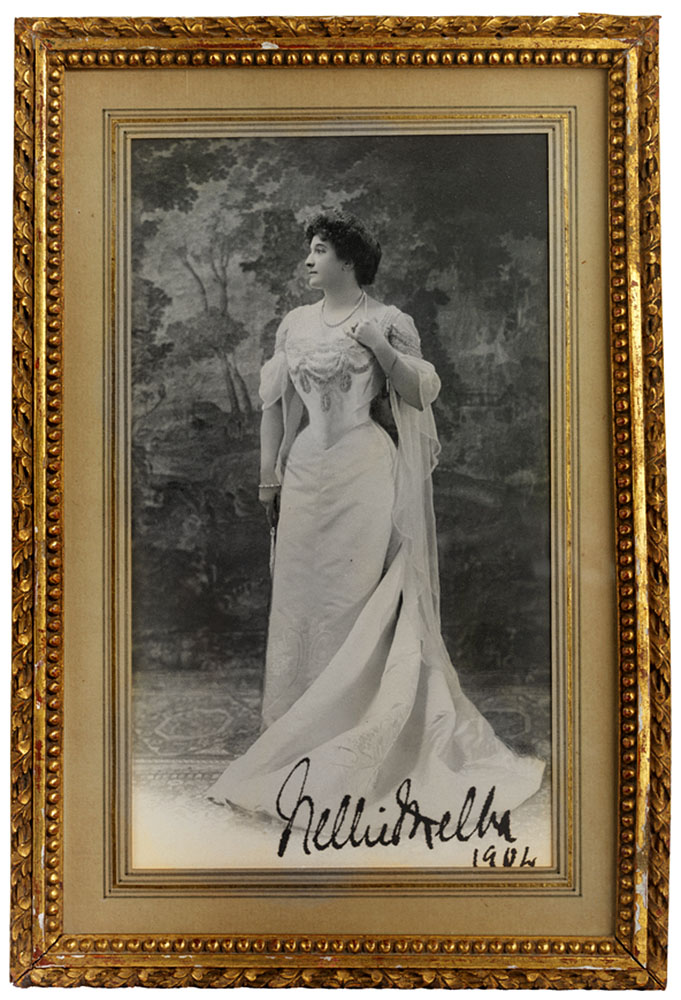
 

Unknown photographer. 'Photograph of Nellie Melba' 1904


Unknown photographer
Photograph of Nellie Melba
1904
Provenance: Descendants of Pierre Cartier
Cartier Collection
Marian Gérard, Cartier Collection © Cartier


This photograph, gifted by Nellie Melba herself, had always been kept in Pierre Cartier’s salon
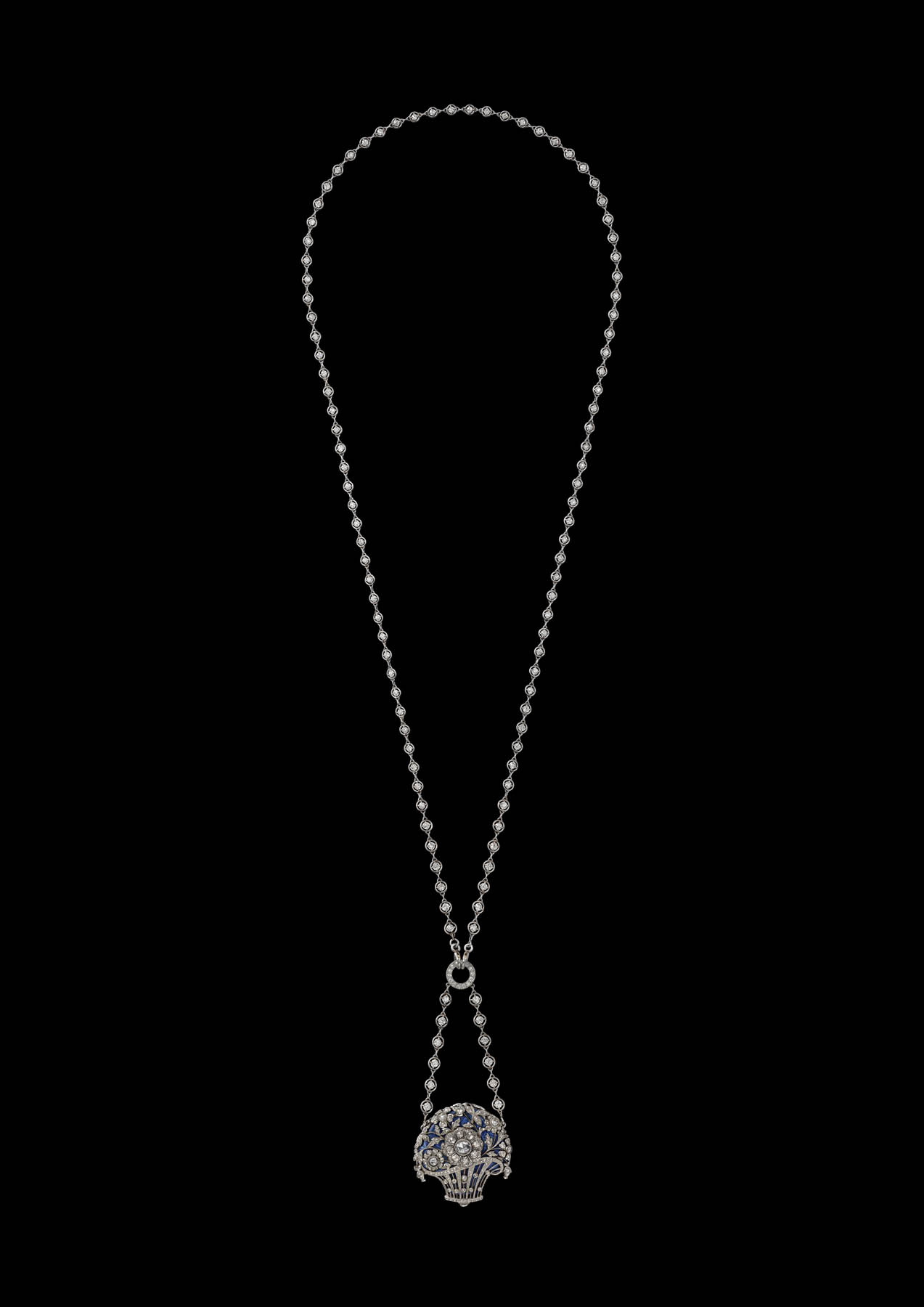
 

Floral basket pendant watch, Cartier Paris, 1909


Floral basket pendant watch
Cartier Paris
1909
Platinum, pink gold, diamonds, enamel
Cartier Collection
Nils Herrmann, Cartier Collection
© Cartier


Owned by Dame Nellie Melba
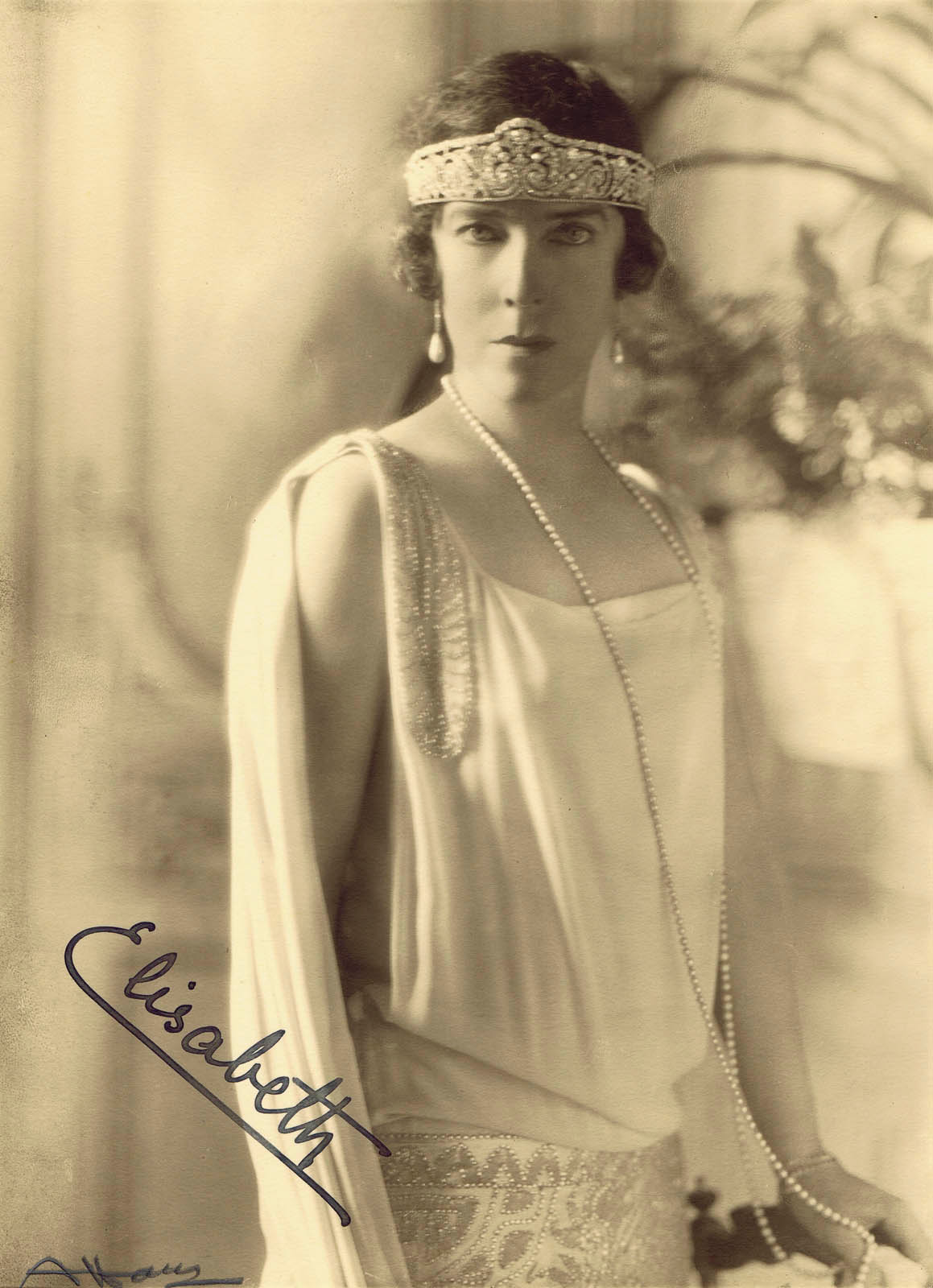
 

Aram Alban (Armenian, 1883-1961) 'Elisabeth of Bavaria, Queen of the Belgians' c. 1925


Aram Alban (Armenian, 1883-1961)
Elisabeth of Bavaria, Queen of the Belgians
c. 1925
Photo: Archives of the Royal Palace, Brussels


Wearing the scroll tiara by Cartier Paris seen below
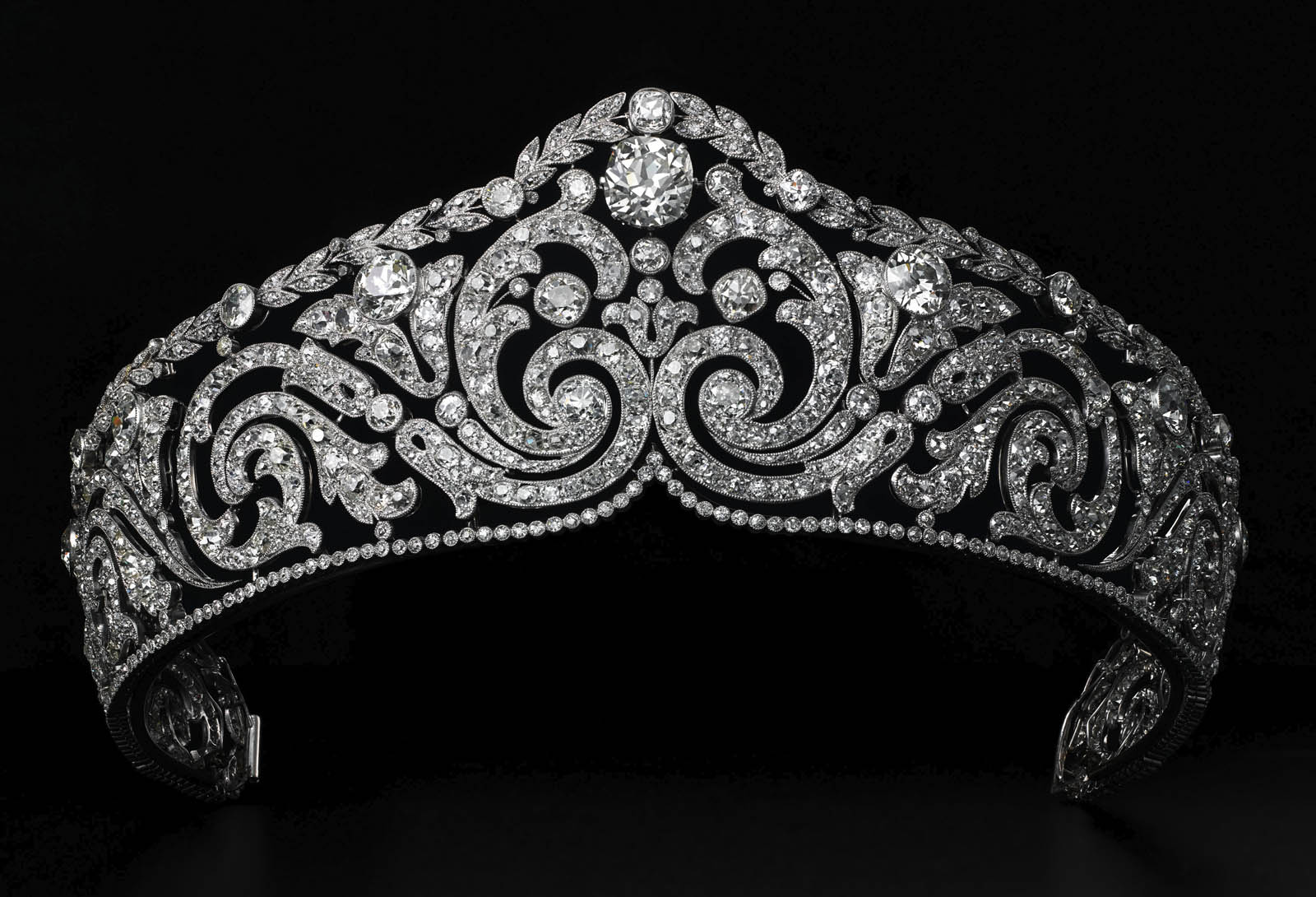
 

Scroll Tiara, Cartier Paris, 1910


Scroll Tiara
Cartier Paris
1910
Diamonds and platinum
Cartier Collection
Vincent Wulveryck, Cartier Collection
© Cartier


Owned by Elisabeth, Queen of the Belgians
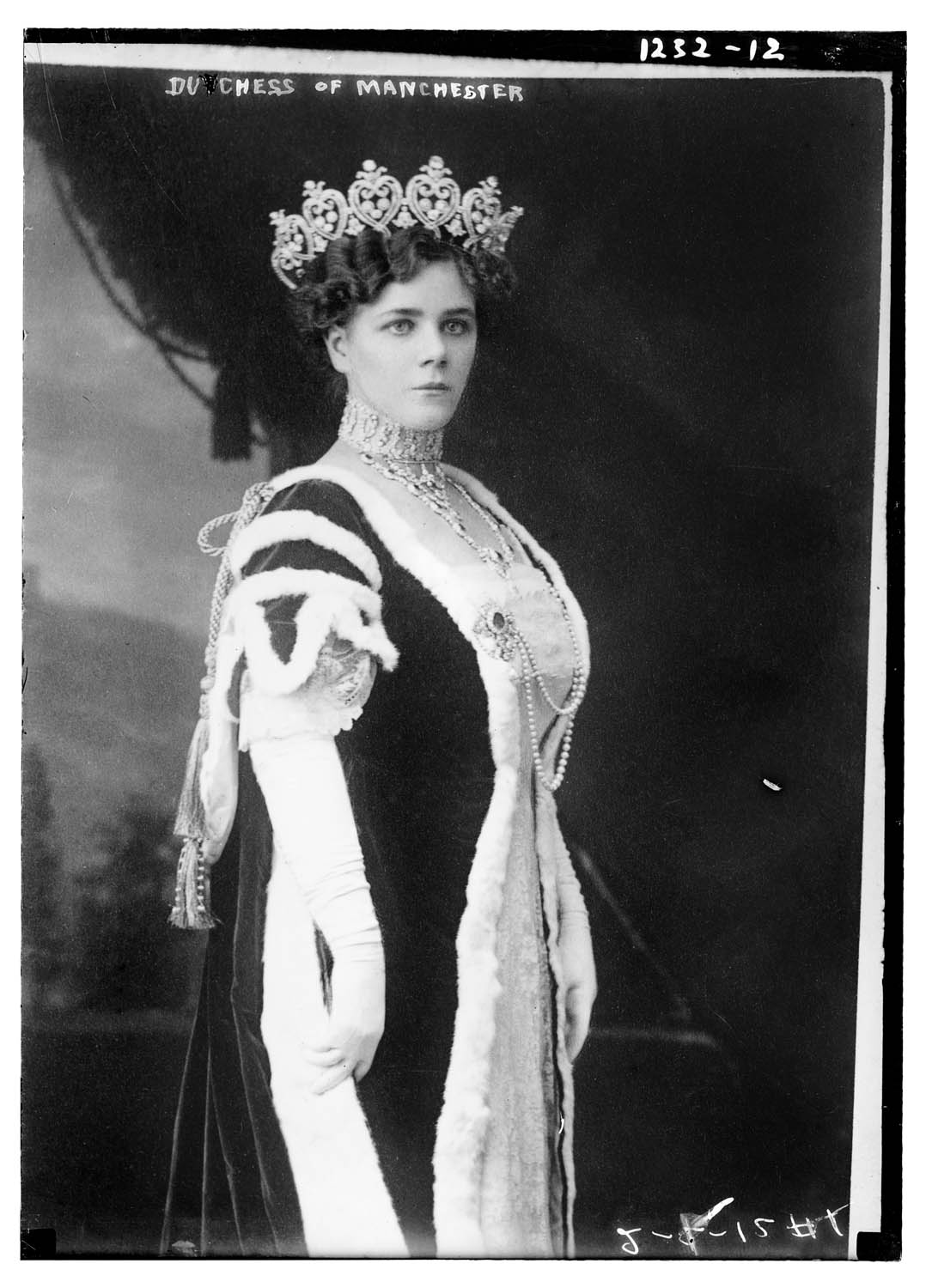
 

George Grantham Bain Collection. 'Helena, nee Zimmerman, daughter-in-law of Consuelo Montagu, Dowager Duchess of Manchester, wearing the Manchester tiara to the coronation of King George V and Queen Mary' 1911


George Grantham Bain Collection
Helena, nee Zimmerman, daughter-in-law of Consuelo Montagu, Dowager Duchess of Manchester, wearing the Manchester tiara to the coronation of King George V and Queen Mary
1911
George Grantham Bain Collection. Library of Congress, Prints & Photographs Division, Washington, D.C.
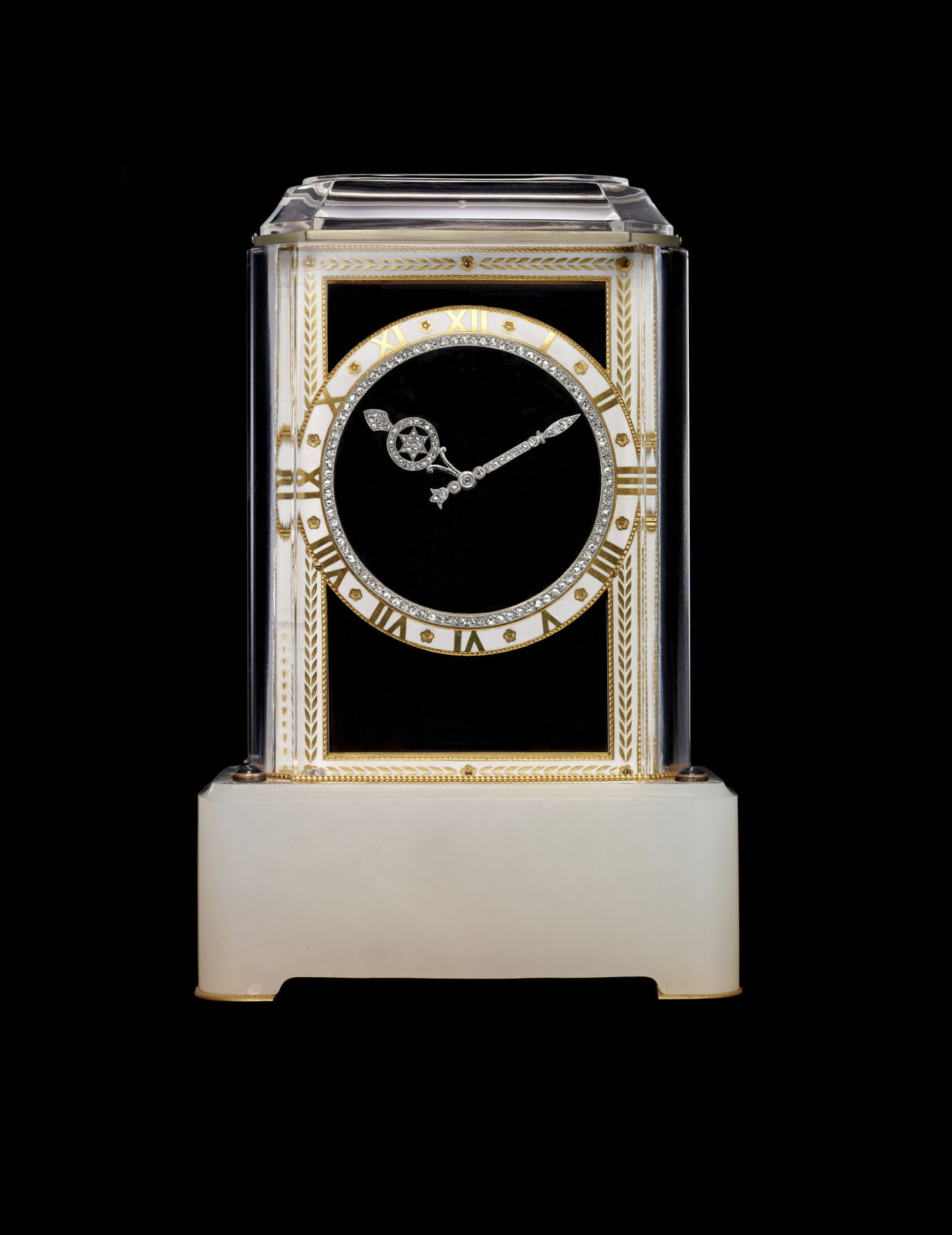
 

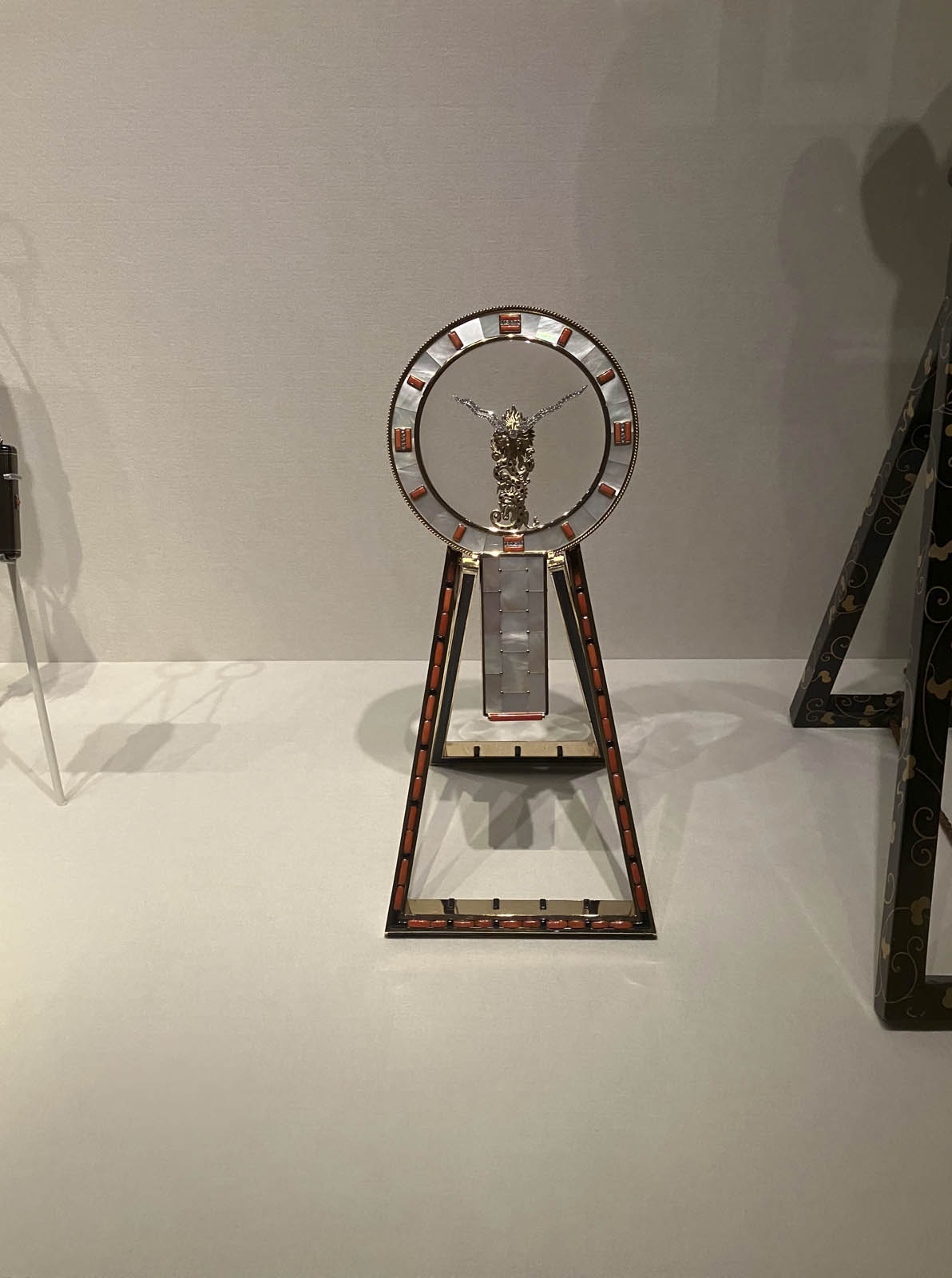
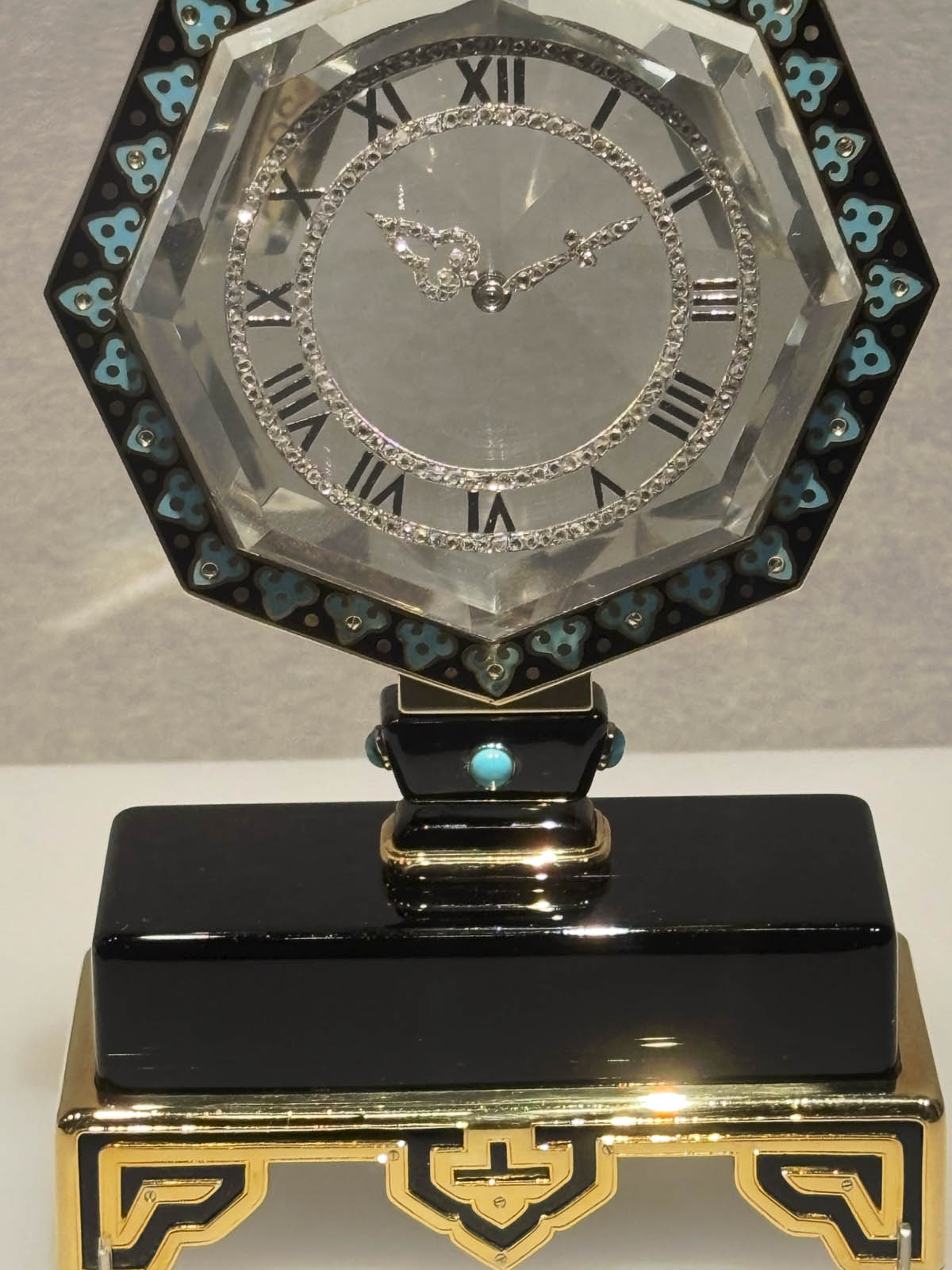
‘Model A’ Mystery Clock, Cartier Paris, 1914. Sold to Count Greffulhe


‘Model A’ Mystery Clock
Cartier Paris
1914
Rock crystal, agate, diamonds, sapphires, enamel, gold, platinum
Cartier Collection
Nils Herrmann, Cartier Collection
© Cartier


Sold to Count Greffulhe
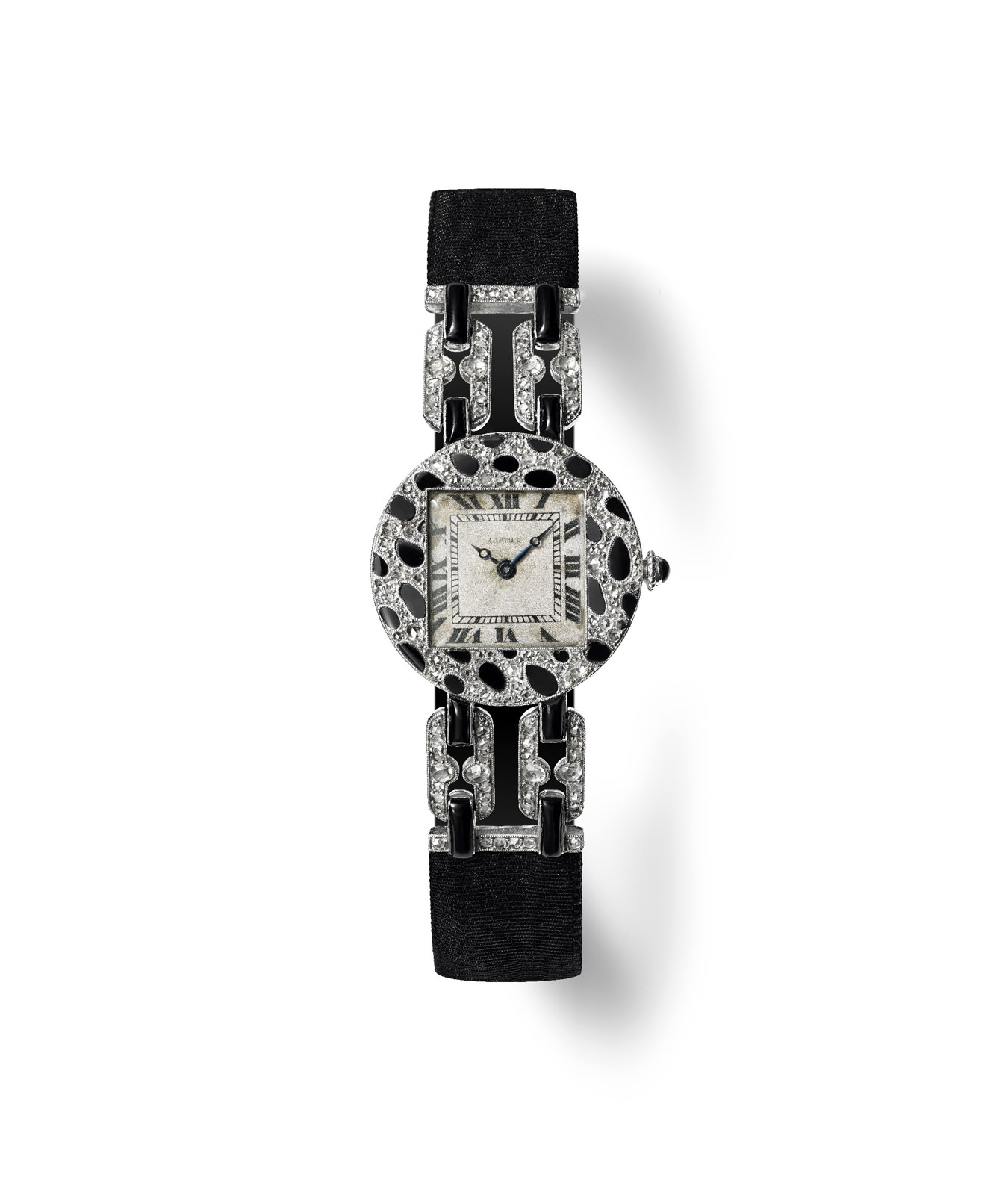
 

Panther skin wristwatch, Cartier Paris, 1914


Panther skin wristwatch
Cartier Paris
1914
Onyx, diamonds, pink gold, platinum and black moiré strap
Cartier Collection
Nils Herrmann, Cartier Collection
© Cartier
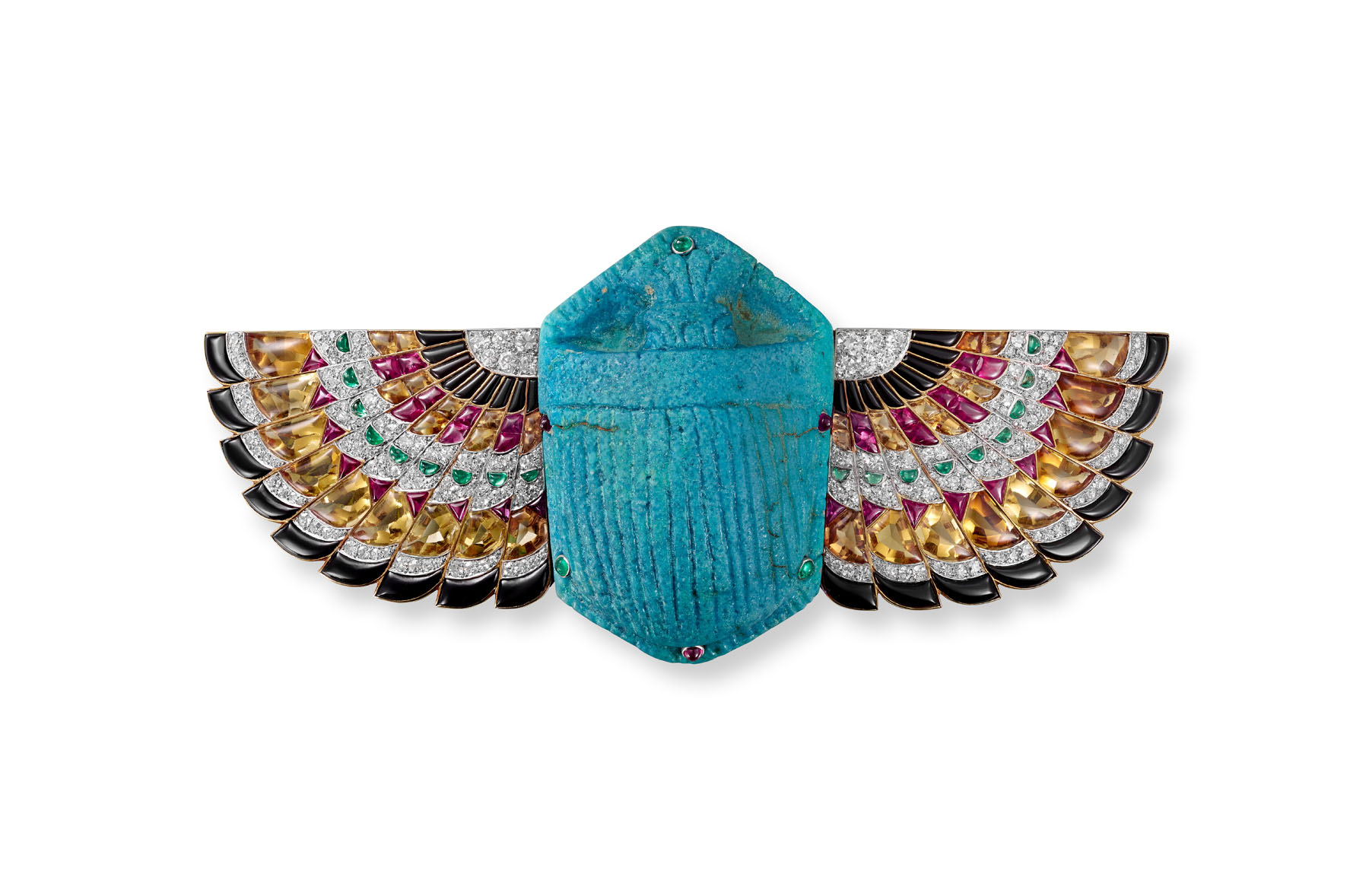
 

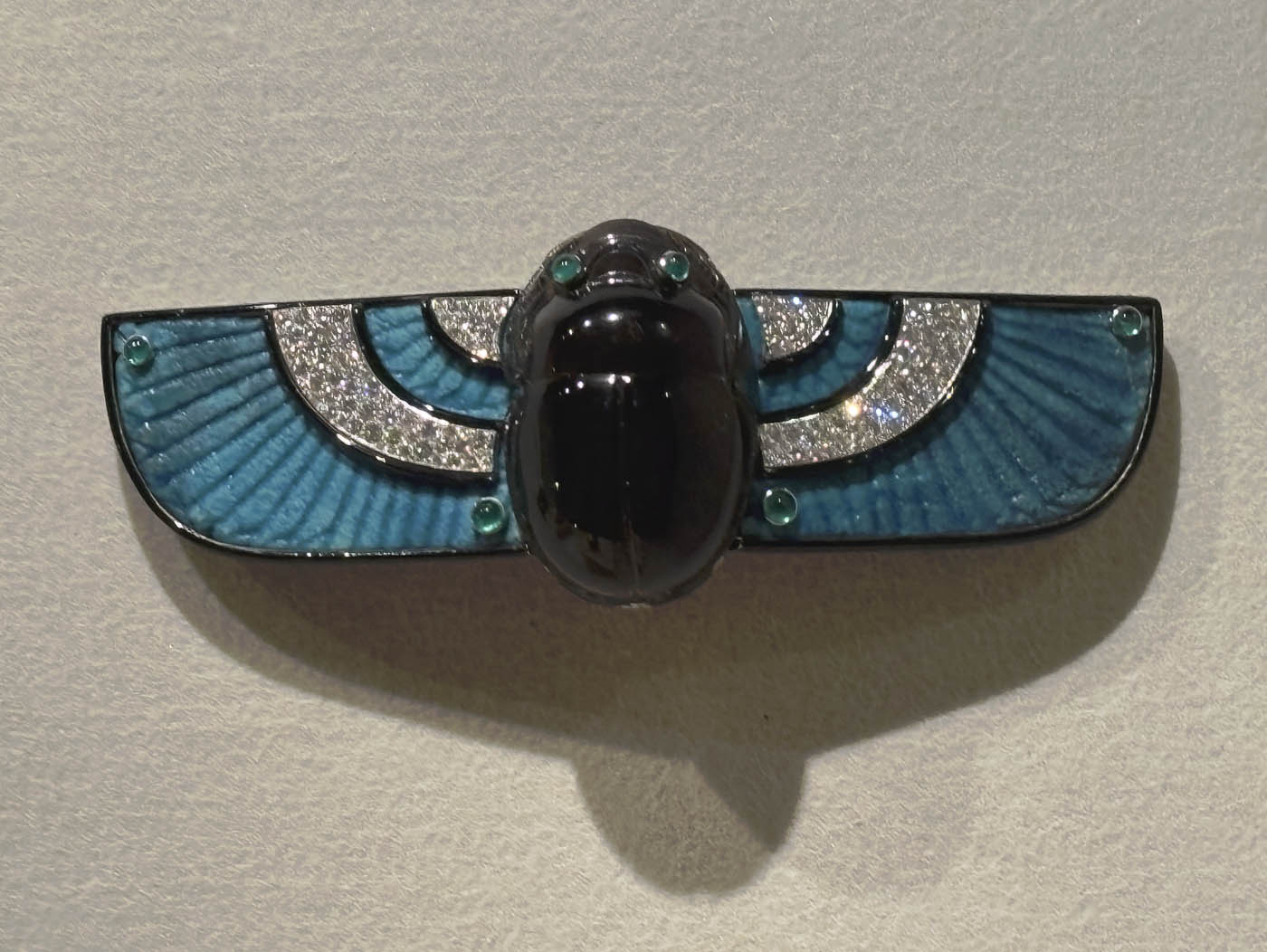
Scarab Brooch, Cartier London, 1925


Scarab Brooch
Cartier London
1925
Blueglazed Egyptian faience with rubies, emeralds, citrines, diamonds, onyx, platinum and gold
Cartier Collection
Nils Herrmann, Collection Cartier
© Cartier
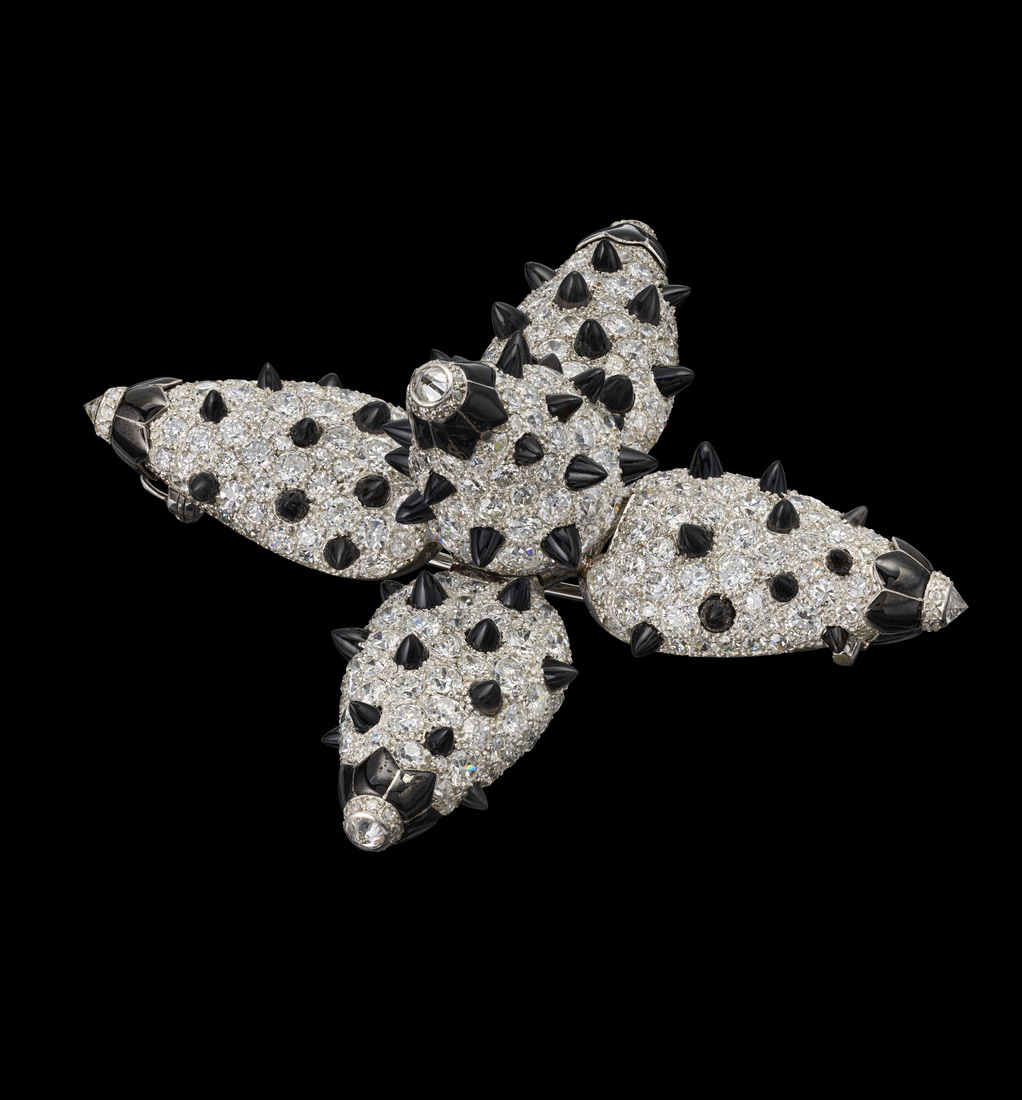
 

Brooch, Cartier Paris, 1925; altered 1927


Brooch
Cartier Paris
1925; altered 1927
Onyx, diamonds, enamel, platinum and gold
Cartier Collection
Marian Gérard, Cartier Collection
© Cartier


This brooch was one of the items displayed by Cartier at the Exposition Internationale des Arts Décoratifs et Industriels Modernes held in Paris in 1925.
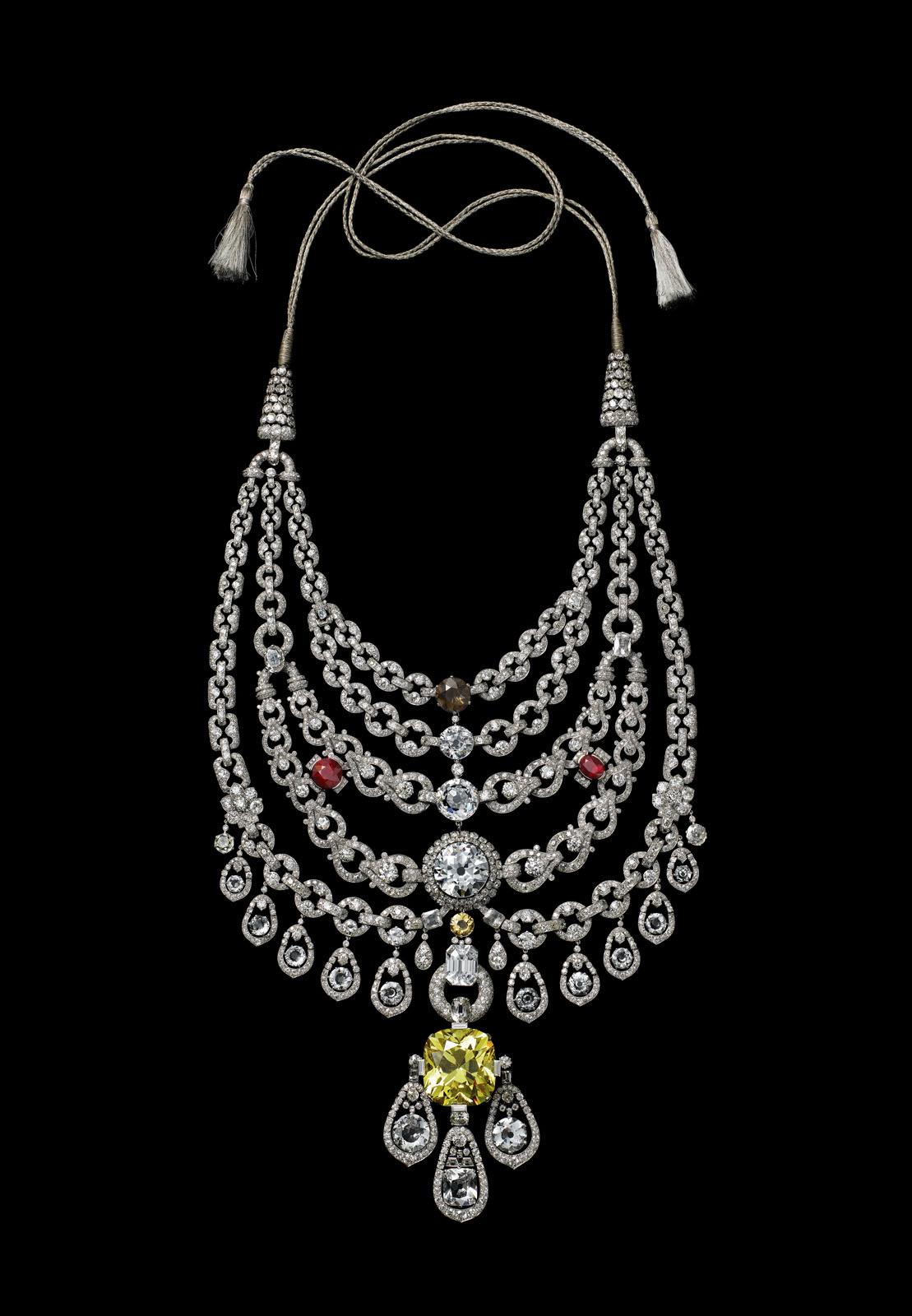
 

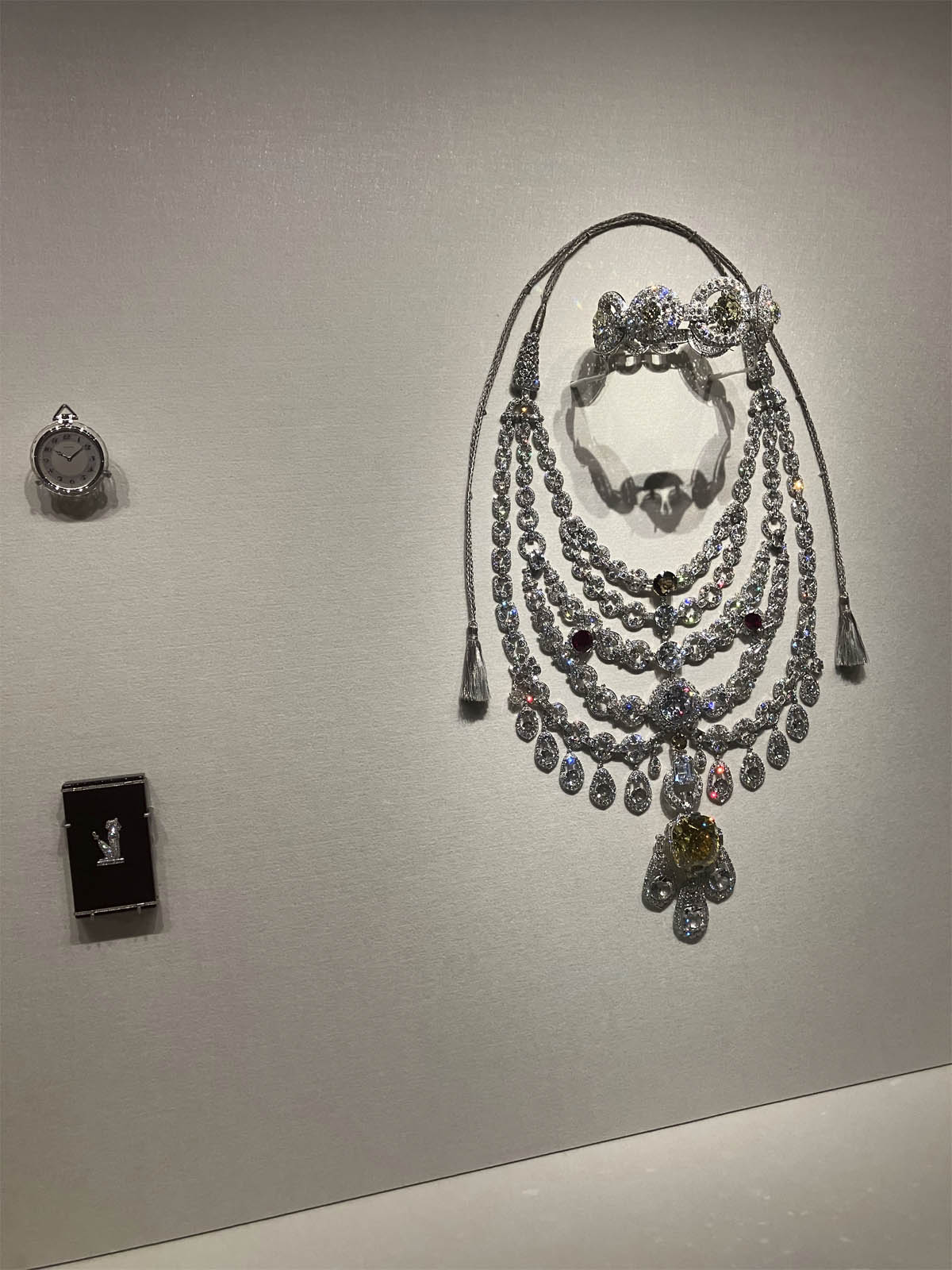
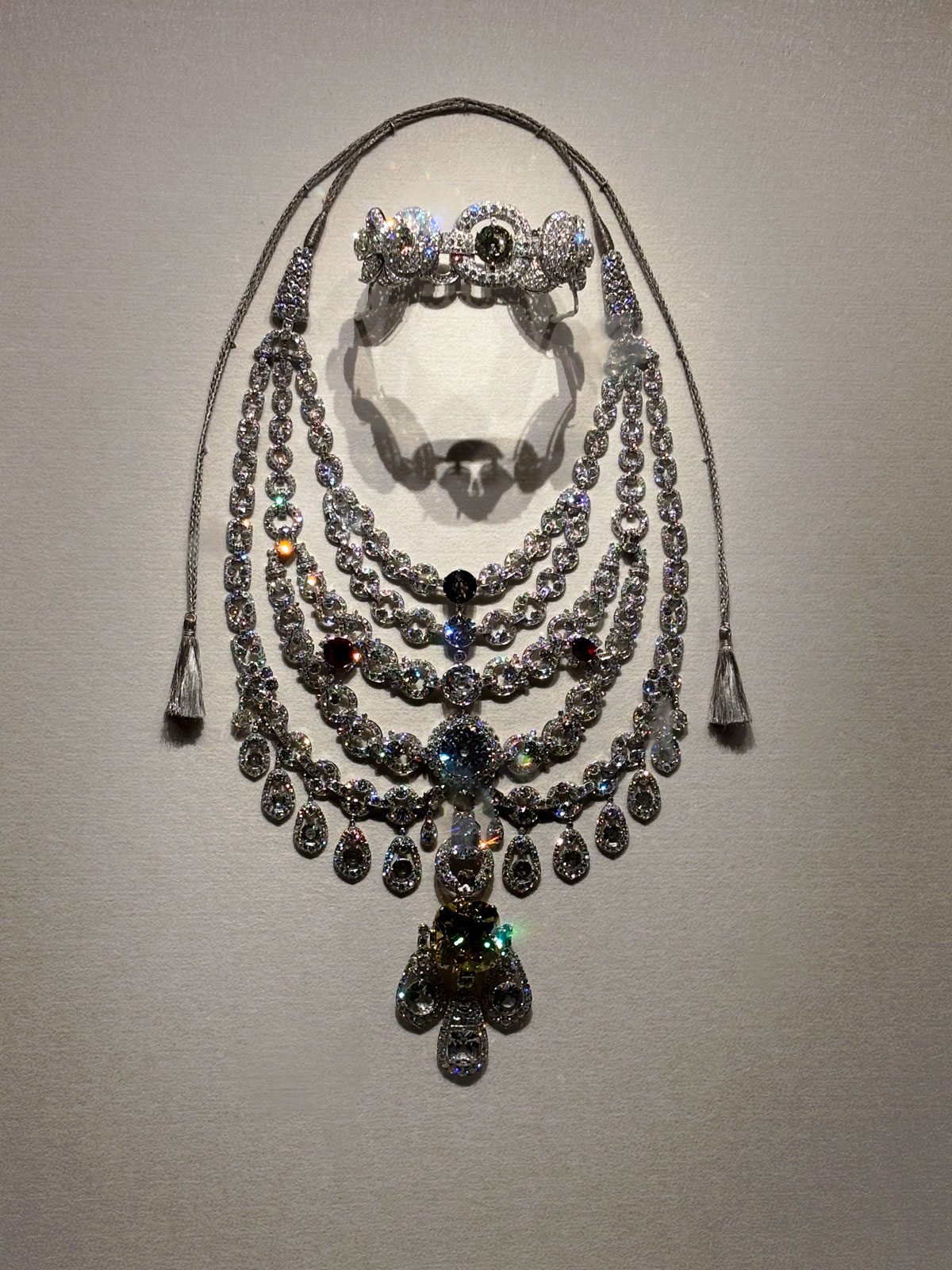
Necklace, Cartier Paris, special order, 1928 (restored 1999-2002)


Necklace
Cartier Paris
Special order 1928 (restored 1999-2002)
Platinum, diamonds, zirconia, topazes, synthetic rubies, one critrine, one
smoky quartz.
Cartier Collection
Vincent Wulveryck, Collection Cartier
© Cartier


Commissioned by Bhupinder Singh, Maharajah of Patiala
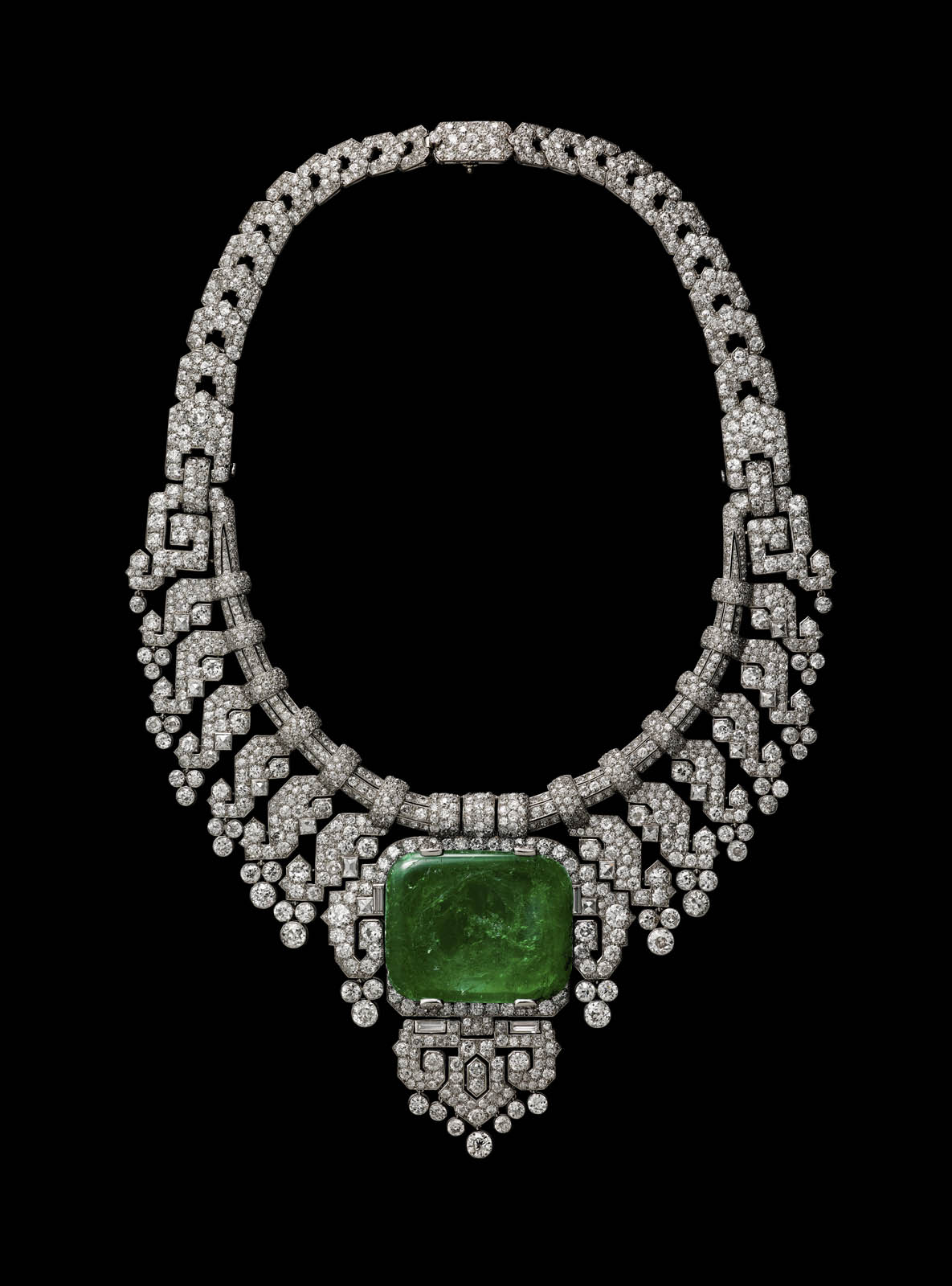
 

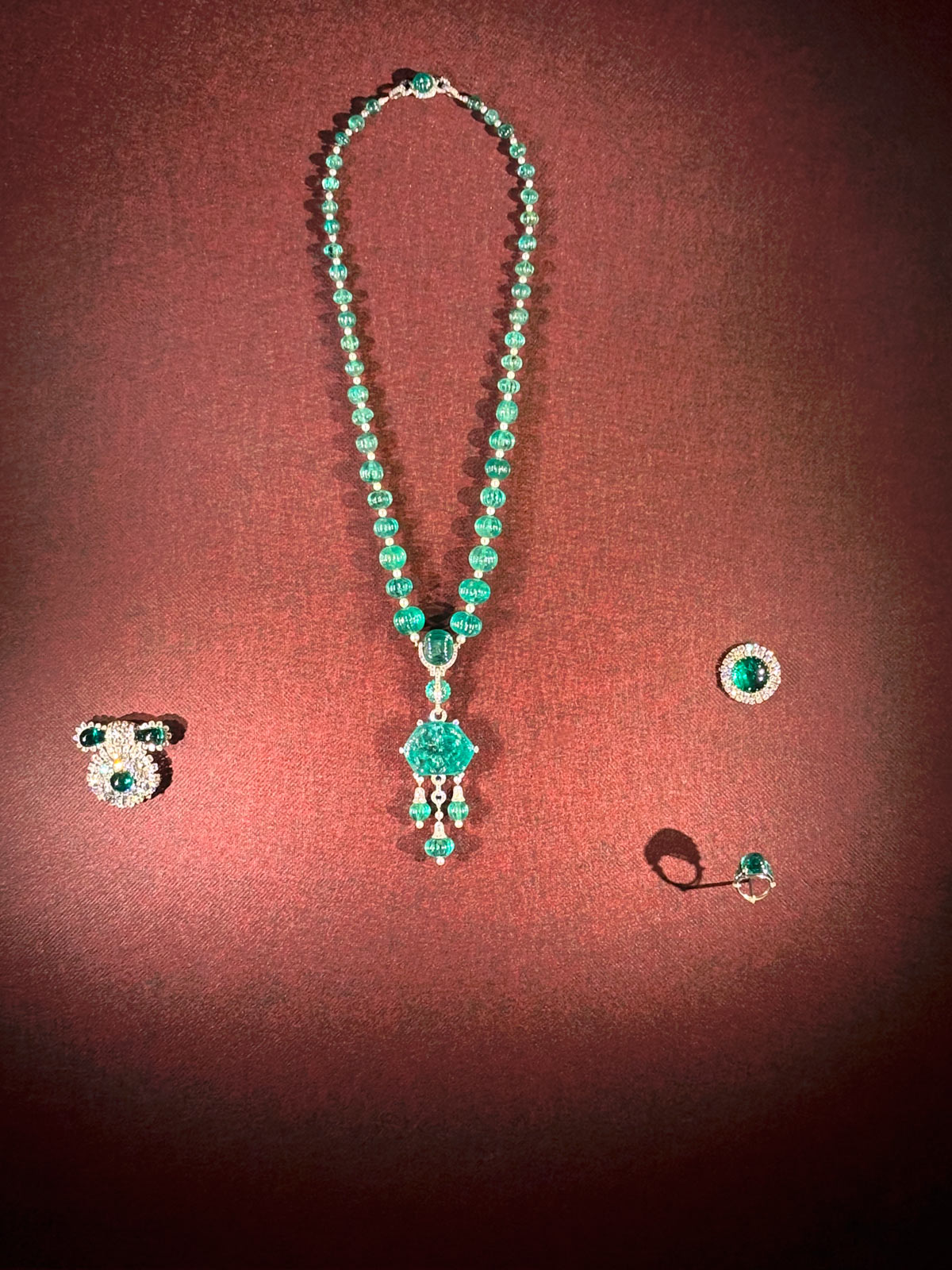
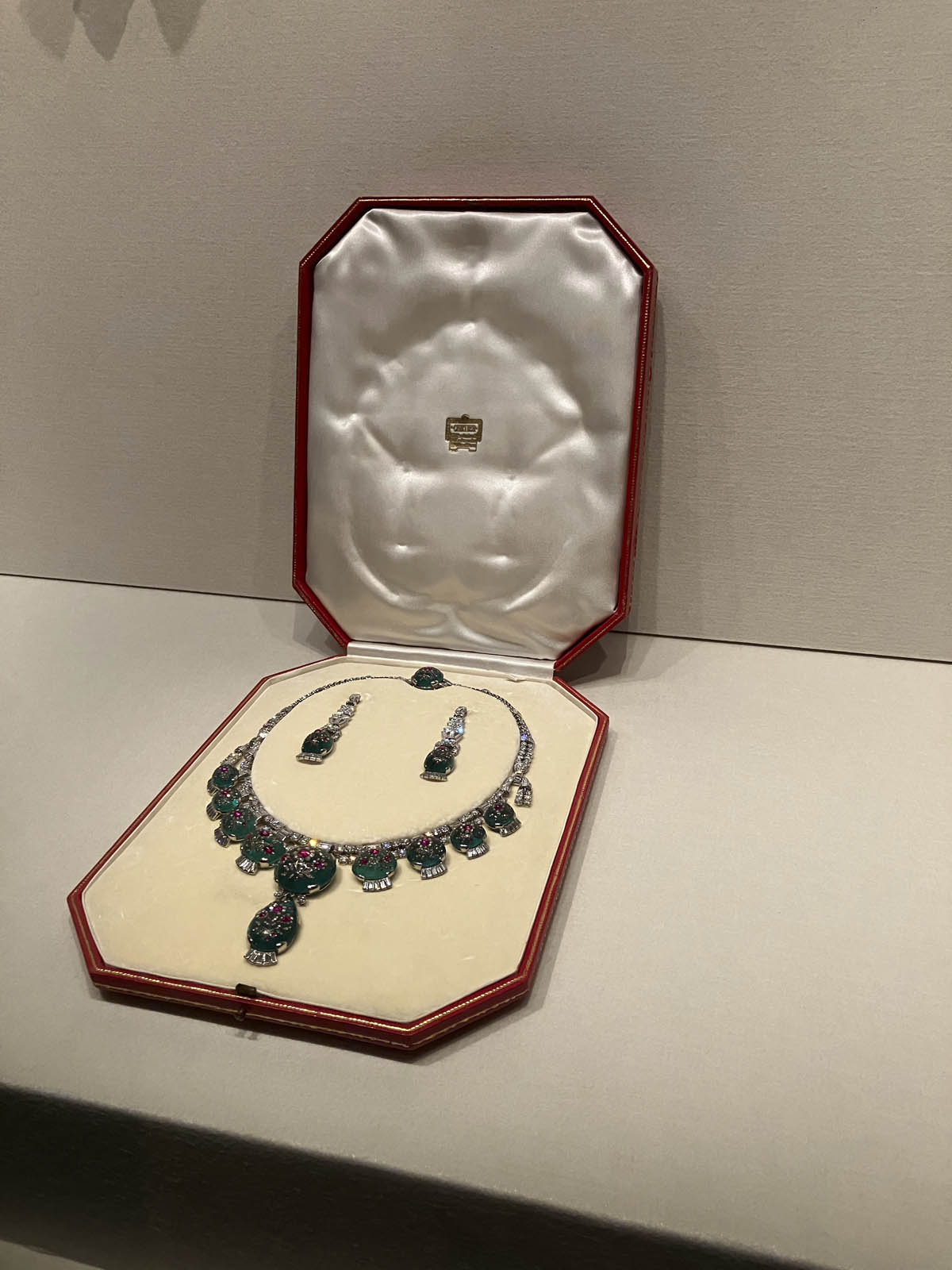
Necklace, Cartier London, special order, 1932. Commissioned by Lady Granard


Necklace
Cartier London
Special order, 1932
One 143.23-carat emerald, diamonds and platinum
Cartier Collection
Vincent Wulveryck, Cartier Collection
© Cartier


Commissioned by Lady Granard


About the exhibition

The exhibition opens with an introduction to Louis, Pierre and Jacques Cartier, who were united in their ambition to expand the family business globally, which had been established by their grandfather in 1847. The emergence of the ‘Garland style’ will be explored as well as early cultural influences on Cartier’s creations, including ancient Egyptian design. This section reveals how the Maison developed its own instantly recognisable style, one that combined modernity and innovation with elegance and refinement.

The next section of the exhibition focuses on the rise of Cartier’s signature design aesthetic, its workshops, the Maison’s exceptional access to significant gemstones and its technical innovation. At the Paris 1925 Exposition Internationale des Arts Décoratifs et Industriels Modernes, Cartier prominently displayed its creations alongside leading Parisian jewellers and couturiers in the Pavillon de l’élégance. A new aspect of the NGV exhibition will be a focus on Jeanne Toussaint, Cartier’s longstanding female Creative Director from 1933 to 1970 and her innovative design aesthetic. Visitors will see how the panther motif, celebrated by Toussaint and one of the Maison’s most iconic symbols, continues to evolve in contemporary jewels, using many of the same jewellery techniques that have been practised for decades.

In the early twentieth century, Cartier secured access to some of the most important gems in the world, notably due to sourcing trips made by Jacques Cartier to the Middle East, India and Sri Lanka, as well as the house’s elite clientele and dealer networks. In a section entirely devoted to the materials behind the creations, some of the finest gems in the world will be on view. A section on timepiece design illuminates Cartier’s exceptional technical innovation, whether in jewellery, clocks or watches.

The final section of the exhibition celebrates Cartier jewels that were worn by stars of the stage and screen, and the stylistic evolution of the Maison in to the 21st century. The exhibition will culminate in a spectacular display of more than 20 tiaras. Cartier became a master of these crowning jewels at a time when high society wore them to the most glittering events in the social calendar.

About the Cartier Collection

In the 1970s, Cartier began to gather together pieces that had been produced in its earlier years; jewelry, timepieces and other precious accessories were collected for conservation, leading to the foundation of the Cartier Collection in 1983.  

Today, the Cartier Collection includes pieces dating from as early as the 1860s until as recently as the 2000s. These pieces act as material records of Cartier’s more than 170-year history of style and creativity, as well as provide a wider historical account of evolutions within the decorative arts since the end of the 19th century. 

With approximately 3,500 pieces and still growing, the Cartier Collection has sparked the attention of museums worldwide. Since the first major exhibition in 1989 at the Petit Palais in Paris, the Cartier Collection has been showcased by some of the world’s most renowned institutions in 45 monographic exhibitions, including most recently at London’s Victoria and Albert Museum.

Press release from the NGV
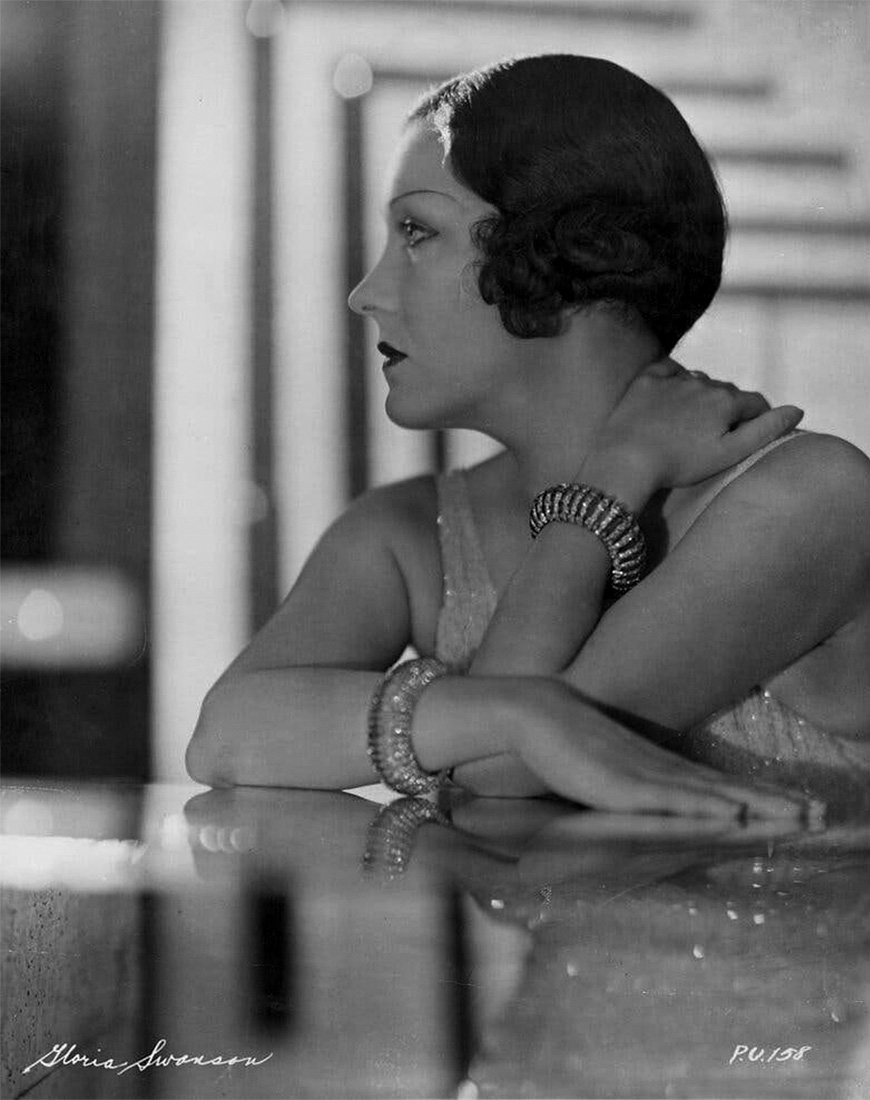
 

Unknown photographer. 'Gloria Swanson in "Perfect Understanding",' 1933


Unknown photographer
Gloria Swanson in “Perfect Understanding”
1933
Heritage Auctions
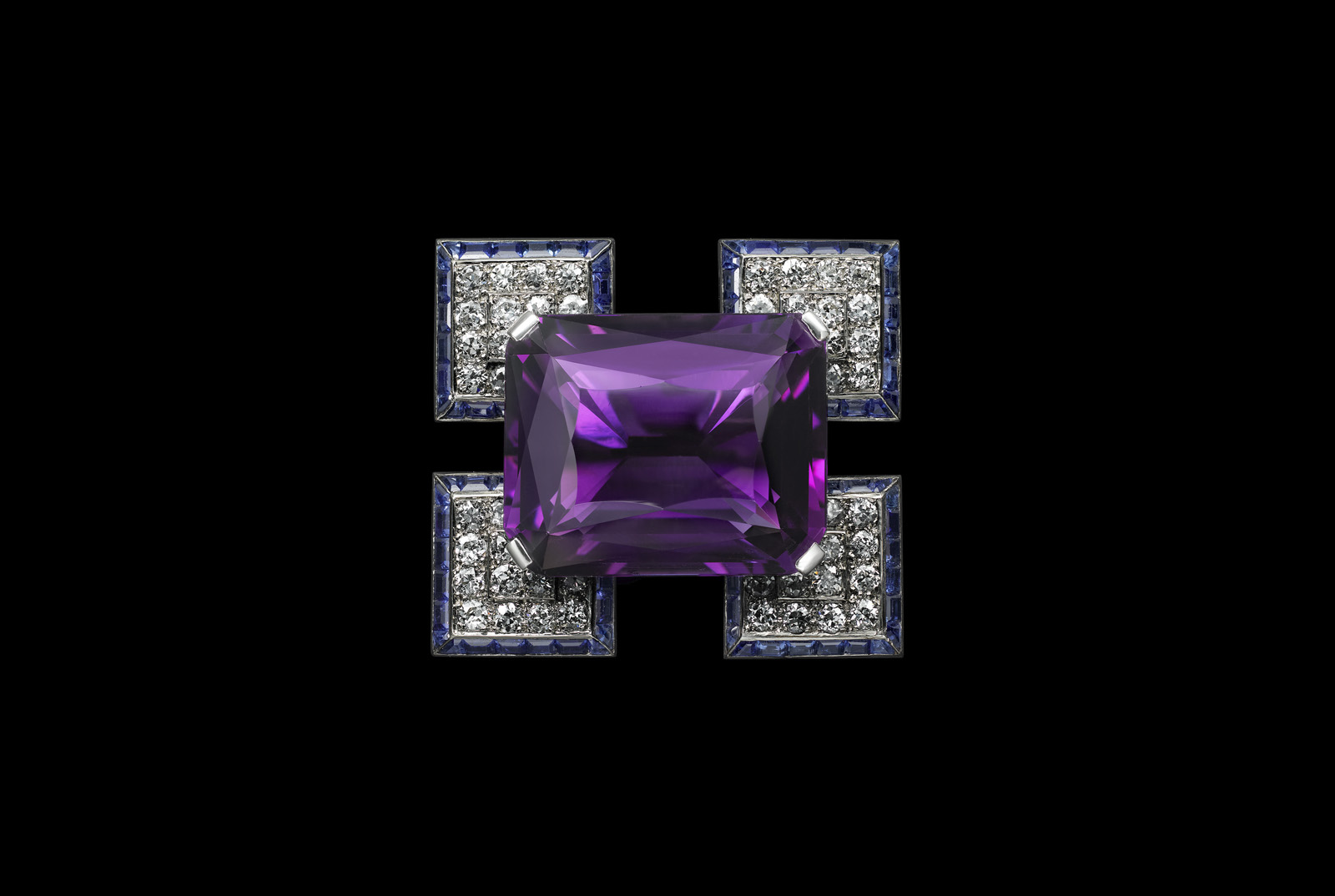
 

Brooch, Cartier London, 1933


Brooch
Cartier London
1933
Amethyst, sapphires, diamonds and platinum
Cartier Collection
Vincent Wulveryck, Cartier Collection
© Cartier
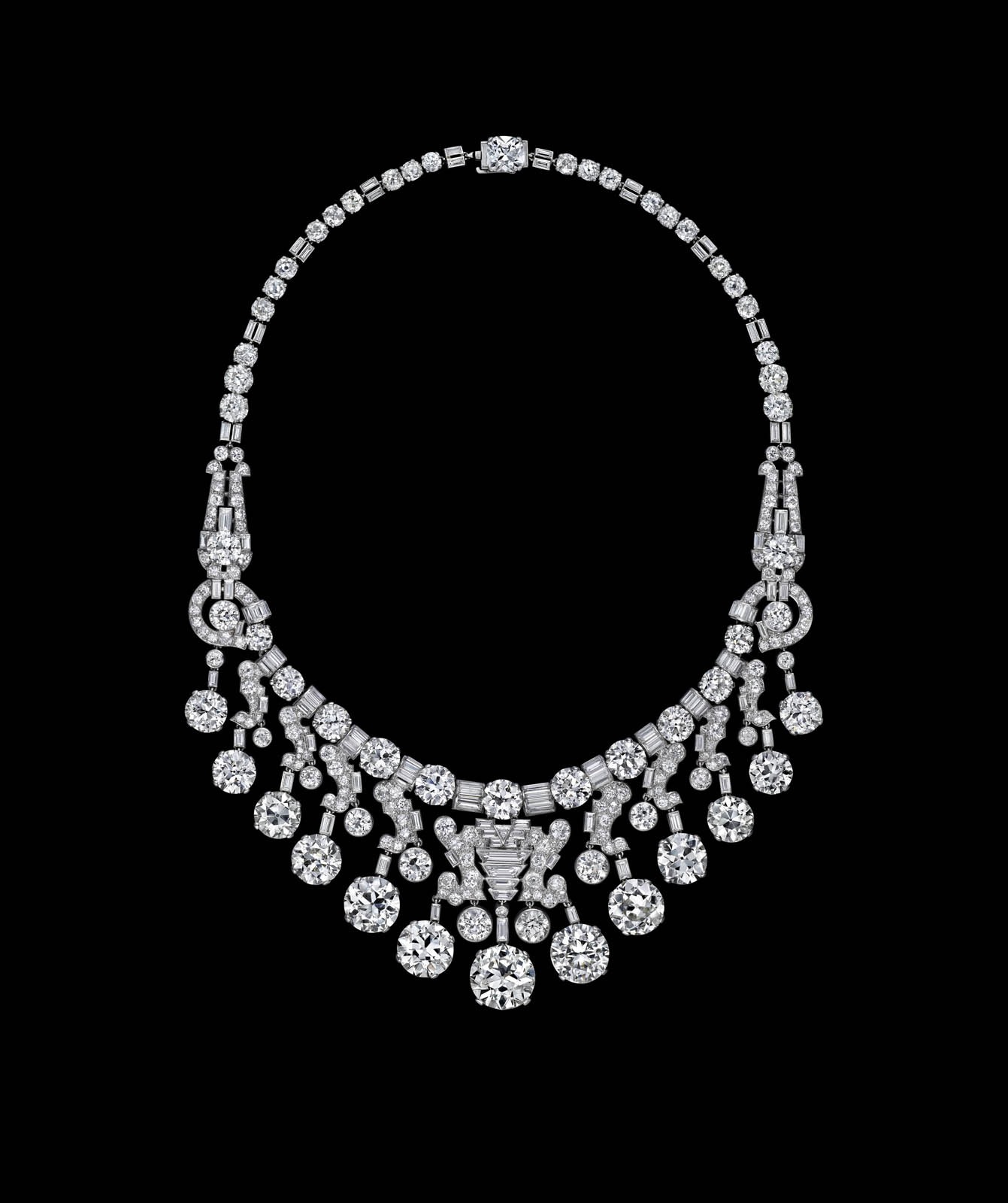
 

Necklace, Cartier London, special order, 1934


Necklace
Cartier London
Special order, 1934
Platinum, diamonds
Owned by the Sassoon family
Cartier Collection
Nils Herrmann, Cartier Collection
© Cartier
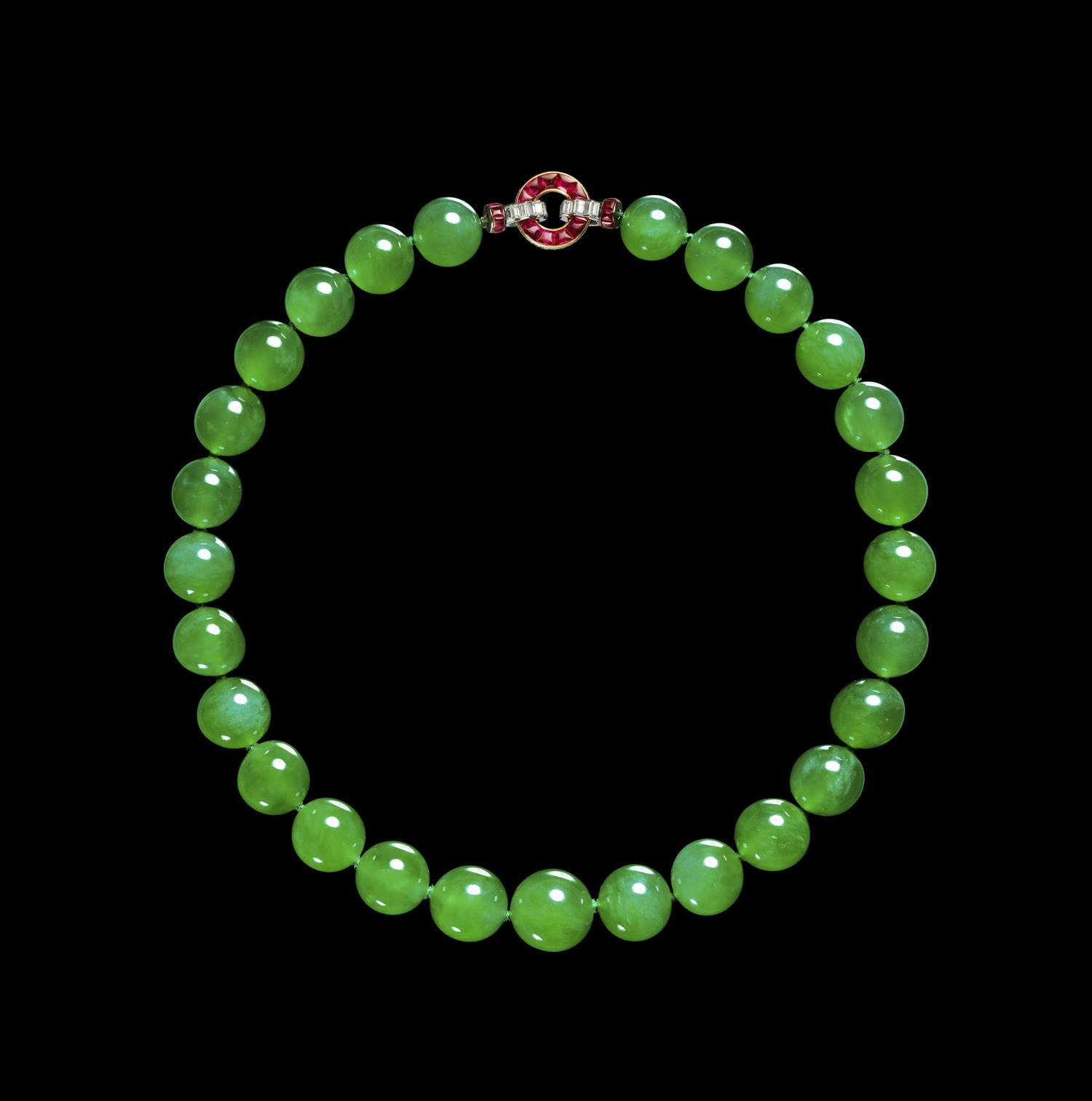
 

Necklace, Cartier Paris, special order, 1934


Necklace
Cartier Paris
Special order, 1934
Jadeite, rubies, diamonds, platinum and gold
Cartier Collection
Marian Gérard, Cartier Collection
© Cartier


Owned by Barbara Hutton
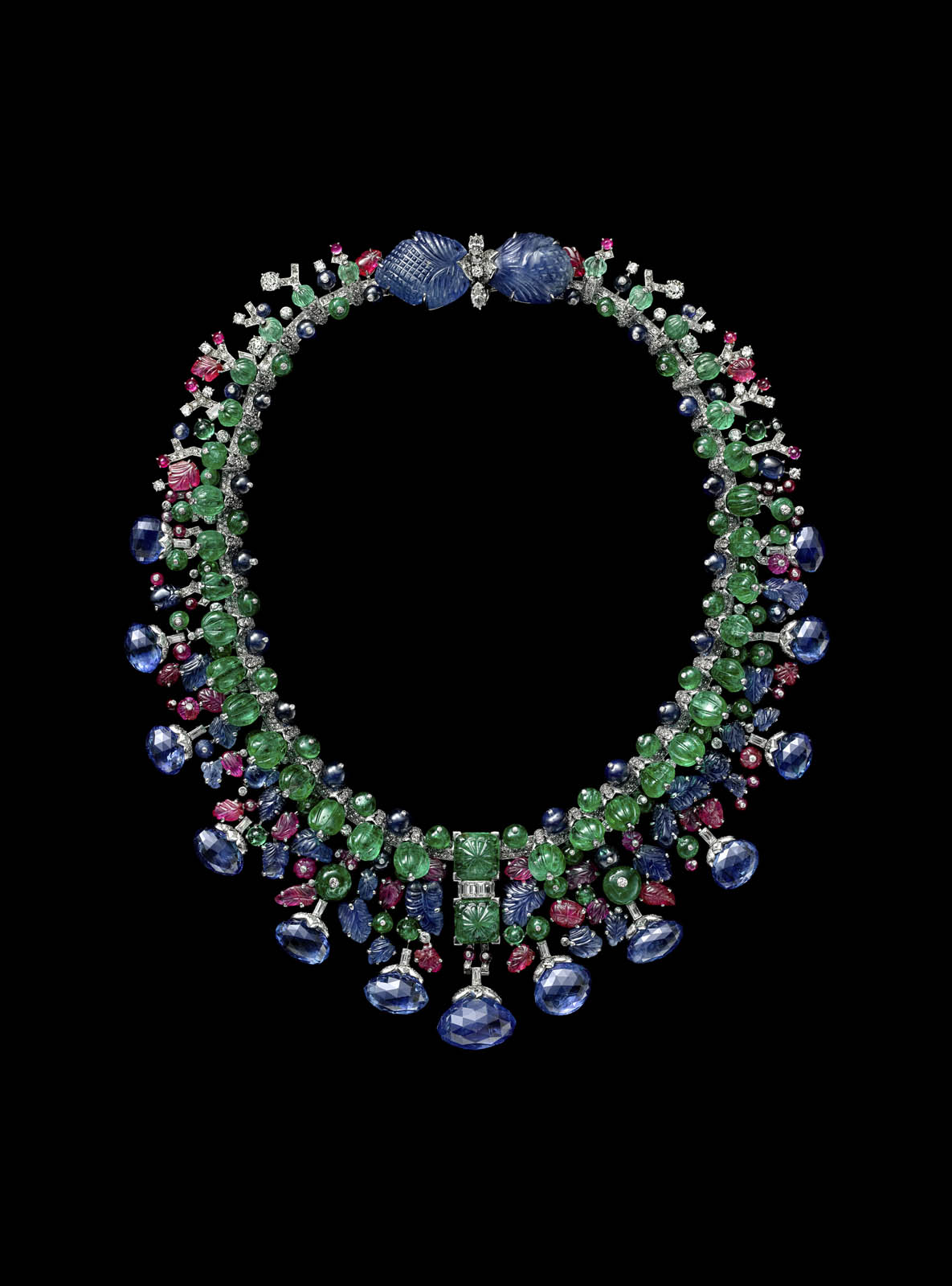
 

‘Hindou’ Necklace, Cartier Paris, special order, 1936; altered 1963. Commissioned by Daisy Fellowes


‘Hindou’ Necklace
Cartier Paris
Special order, 1936; altered 1963
Sapphires, emeralds, rubies, diamonds, platinum and white gold
Cartier Collection
Vincent Wulveryck, Collection Cartier
© Cartier


Commissioned by Daisy Fellowes
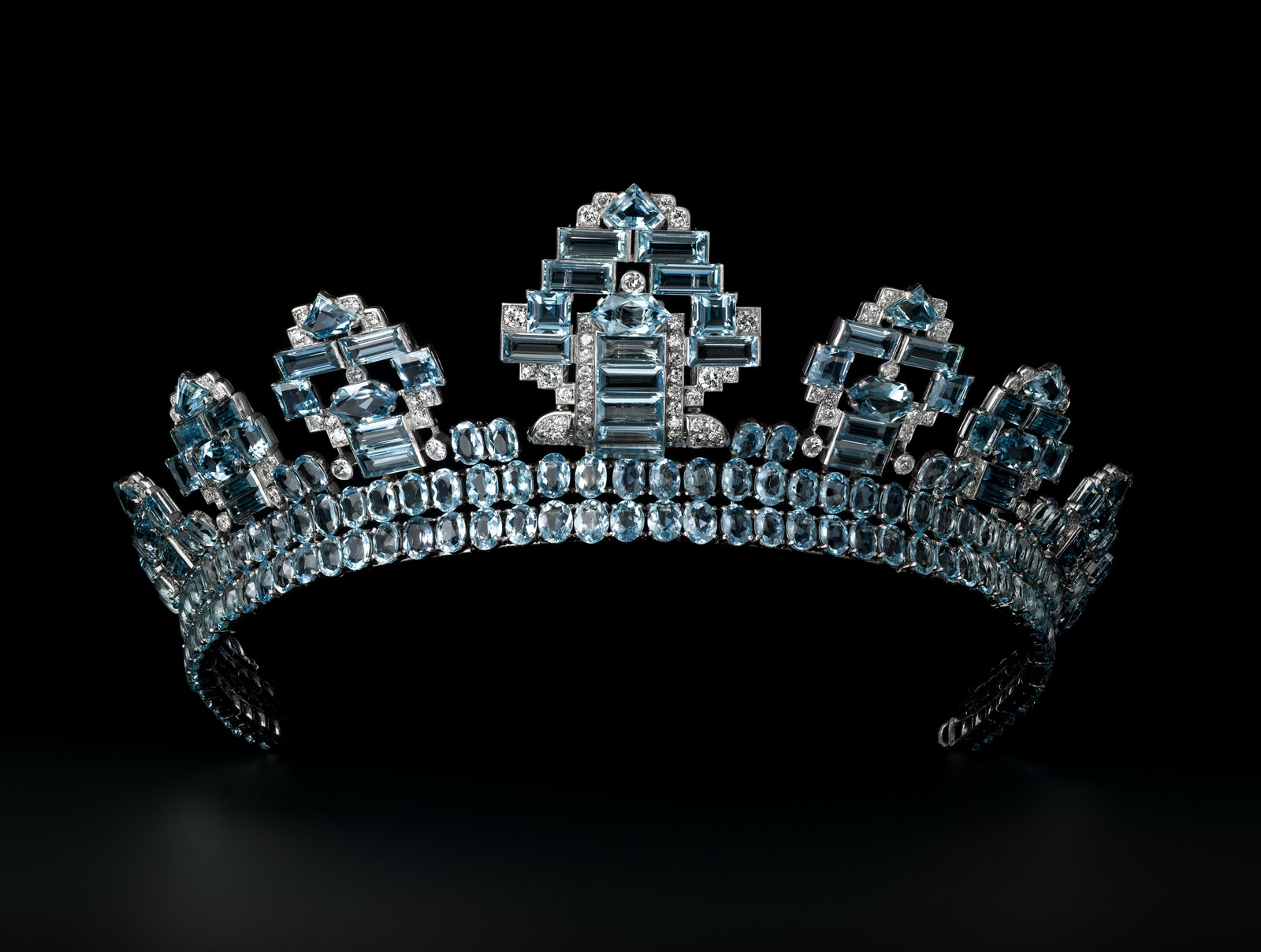
 

Tiara, Cartier London, 1937


Tiara
Cartier London
1937
Aquamarine, diamonds and platinum
Cartier Collection
Vincent Wulveryck, Cartier Collection
© Cartier
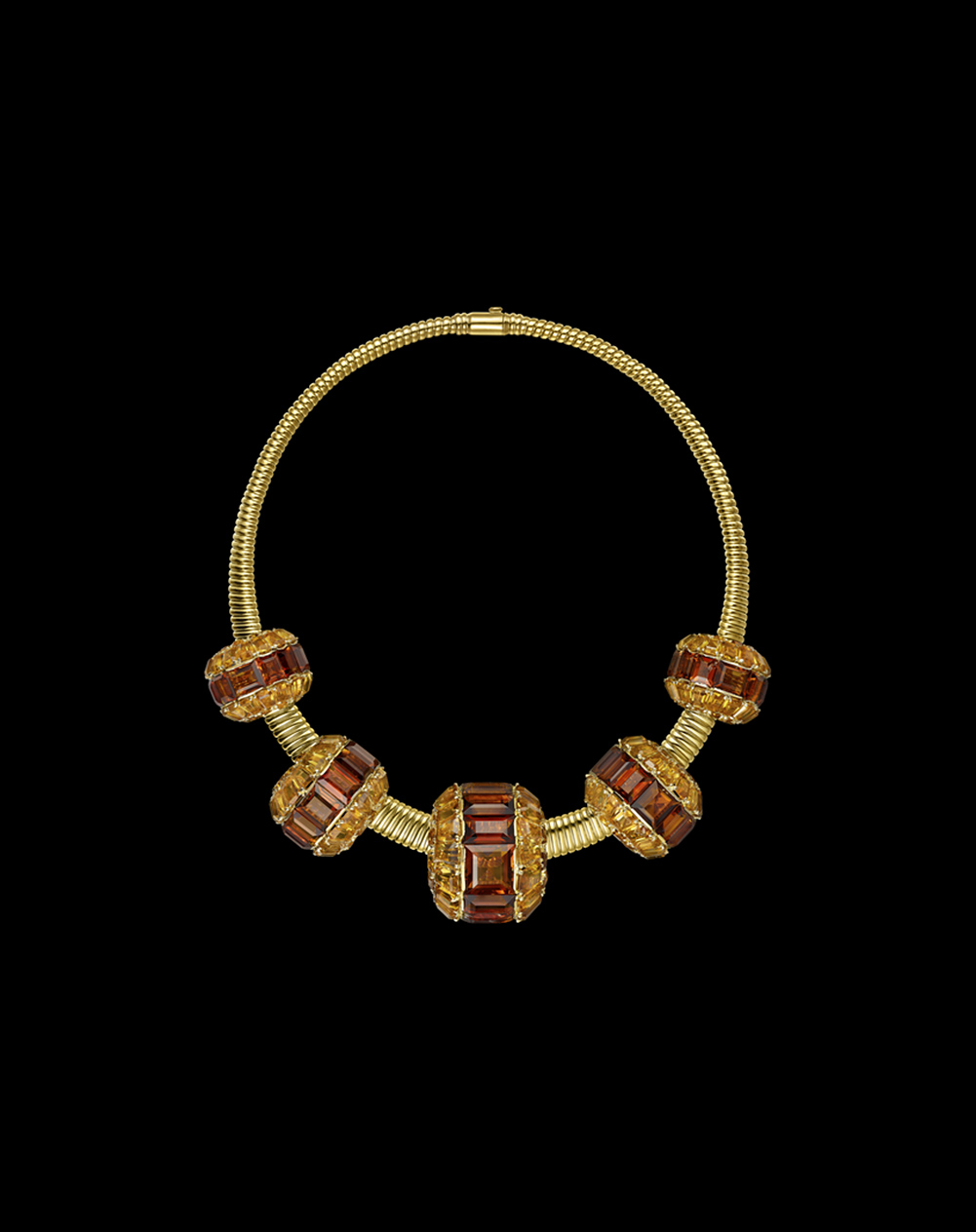
 

Necklace, Cartier Paris, 1937


Necklace
Cartier Paris
1937
Gold, citrines
Cartier Collection
Nils Herrmann, Cartier Collection
© Cartier


The five motives on the necklace can be detached to be worn as brooches.
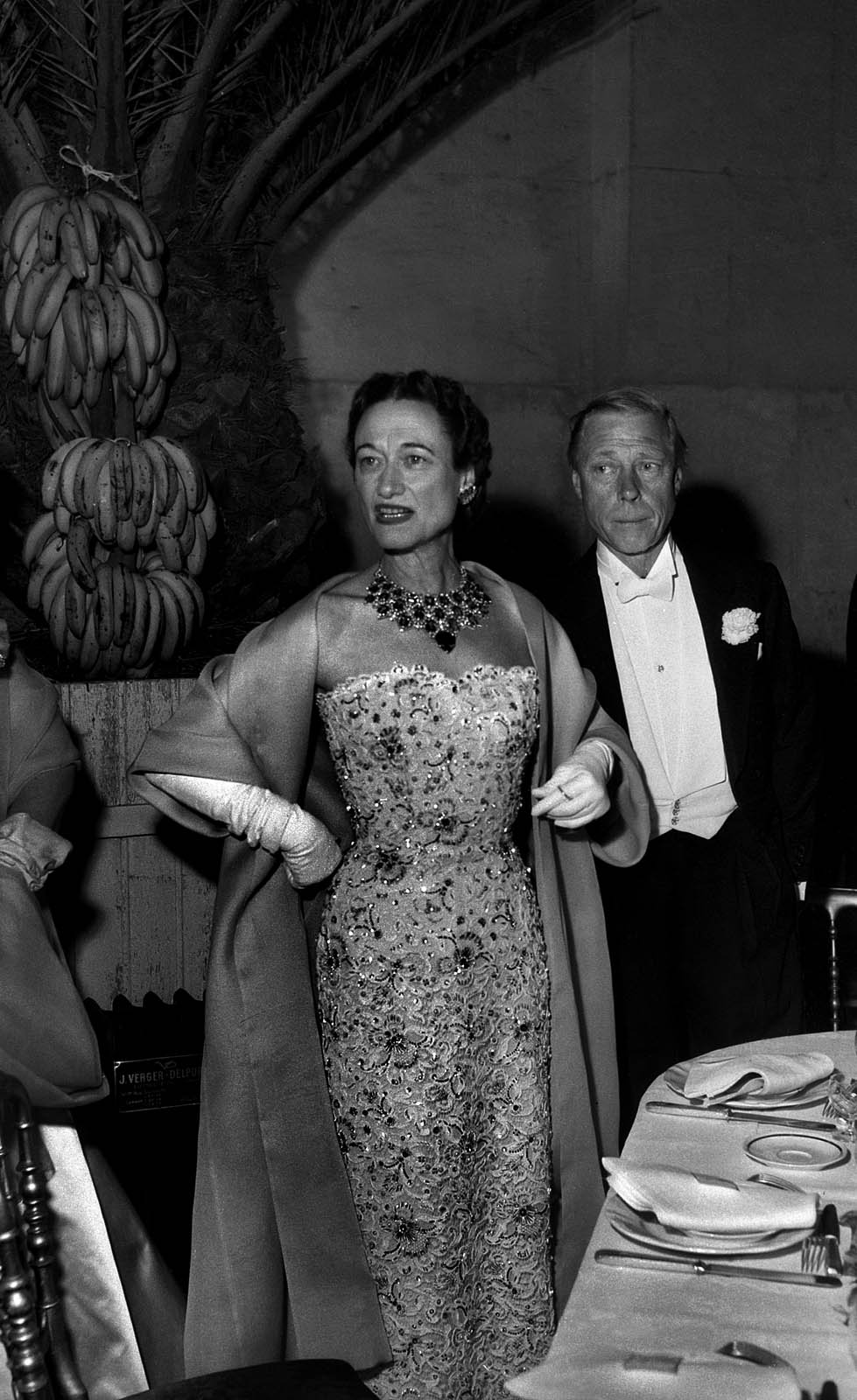
 

Unknown photographer. 'Duke Edward of Windsor (Former King Edward Viii) and Duchess of Windsor (Wallis Simpson, With A Necklace By Cartier) during Ball in Versailles on June 17, 1953' 1953


Unknown photographer
Duke Edward of Windsor (Former King Edward Viii) and Duchess of Windsor (Wallis Simpson, With A Necklace By Cartier) during Ball in Versailles on June 17, 1953
1953
© AGIP / Bridgeman Images
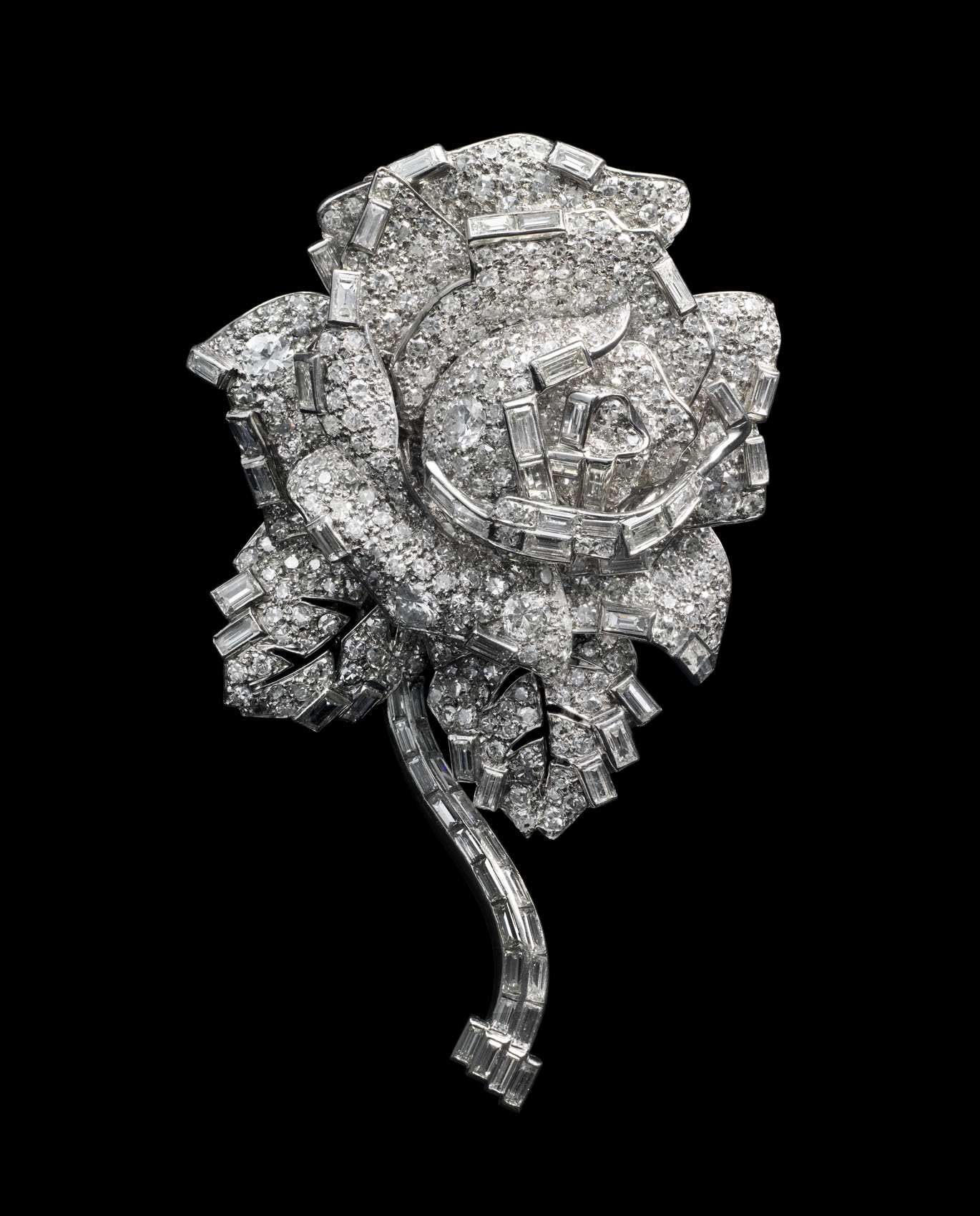
 

Rose Clip Brooch, Cartier London, special order, 1938


Rose Clip Brooch
Cartier London
Special order, 1938
Diamonds and platinum
Cartier Collection
Vincent Wulveryck, Cartier Collection
© Cartier


Owned by HRH Princess Margaret, Countess of Snowdon, worn on the photograph below
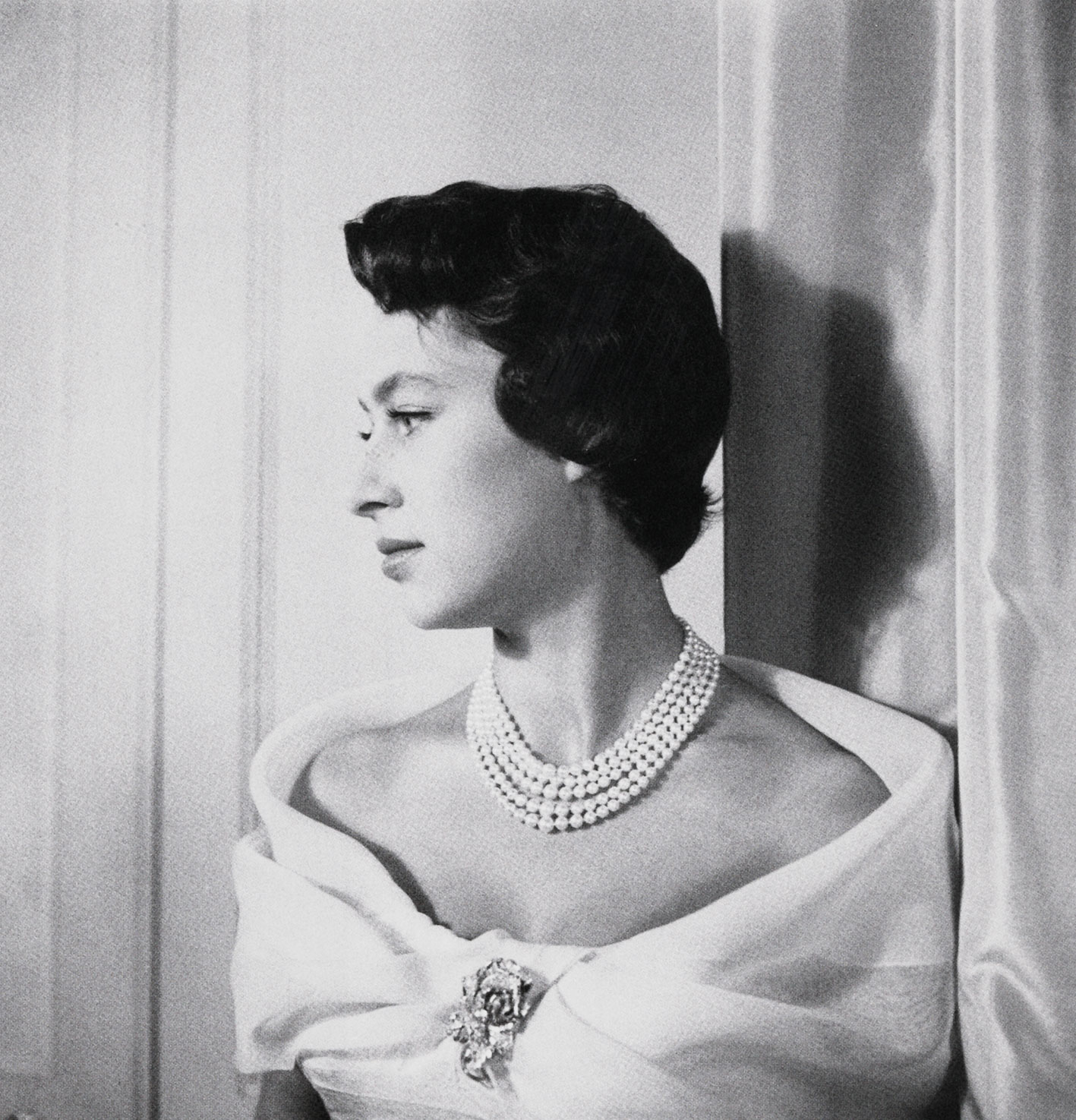
 

Cecil Beaton (British, 1904-1980) 'Princess Margaret wearing the Cartier rose clip' 1955 brooch' 1955


Cecil Beaton (British, 1904-1980)
Princess Margaret wearing the Cartier rose clip brooch
1955
Cartier Collection
Vincent Wulveryck, Cartier Collection © Cartier
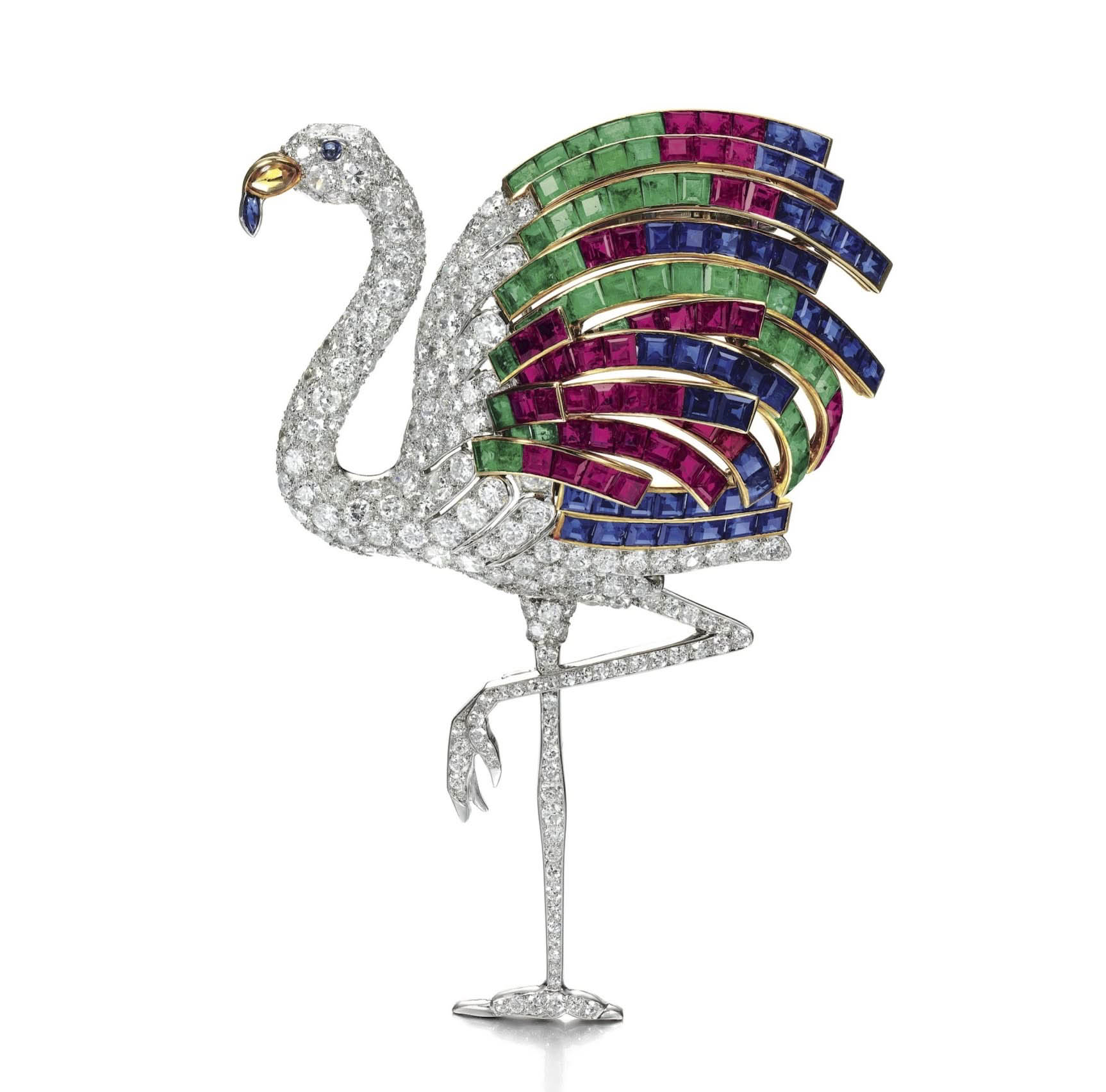
 

Flamingo Brooch, Cartier Paris, 1940


Flamingo Brooch
Cartier Paris
1940
Platinum, diamonds, rubies, sapphires and emeralds
Cartier Collection
© Cartier


The iconic Cartier Flamingo Brooch ordered for the Duchess of Windsor on the eve of the Nazi Occupation of Paris.

The brooch was delivered to the Duke and Duchess of Windsor only a few days before they left the French capital ahead of the German invasion. Via Spain and Portugal, the Duke and Duchess travelled to Nassau in the Bahamas where the Duke took on the role of governor for the duration of World War II. Upon arrival in Miami, en route to Nassau, the Duchess wore her brand-new Cartier flamingo brooch when greeting the crowds. She paired it with a now-famous bi-corned hat, one of her boldest and most iconic fashion choices.

The flamingo brooch was one of the star lots in Sotheby’s landmark sale of the Duchess of Windsor’s Collection in 1987 and was again offered at Sotheby’s London in November 2010 in a sale that re-united several highlights from the Duke and Duchess’ collection. Today, the original flamingo brooch is part of the Cartier heritage collection and is frequently featured it in exhibitions all over the world.

Text from the Sotheby’s website
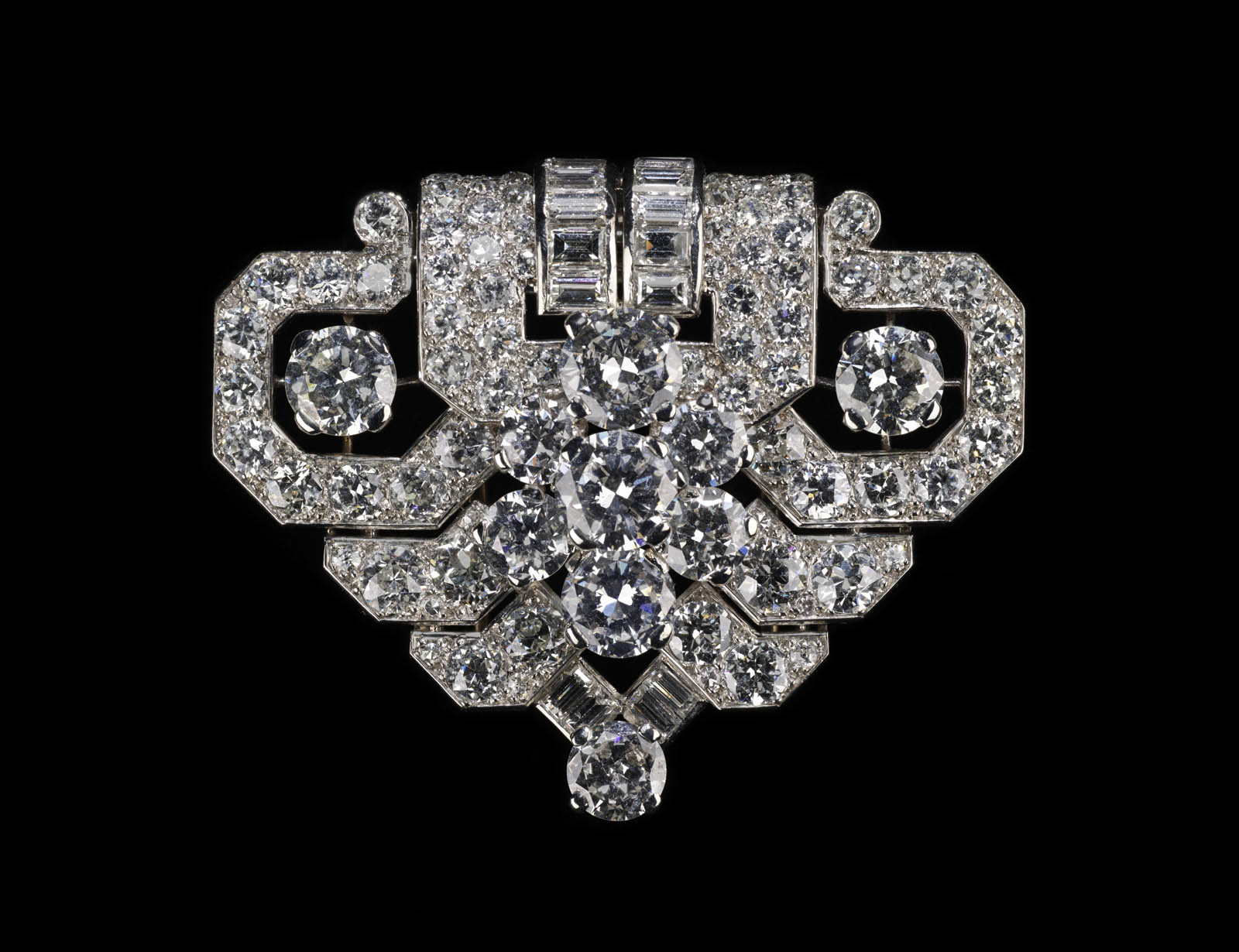
 

Brooch, Cartier London, special order, 1941


Brooch
Cartier London
Special order, 1941
Diamonds and platinum
Commissioned by Ernest Schwaiger
© Victoria and Albert Museum, London
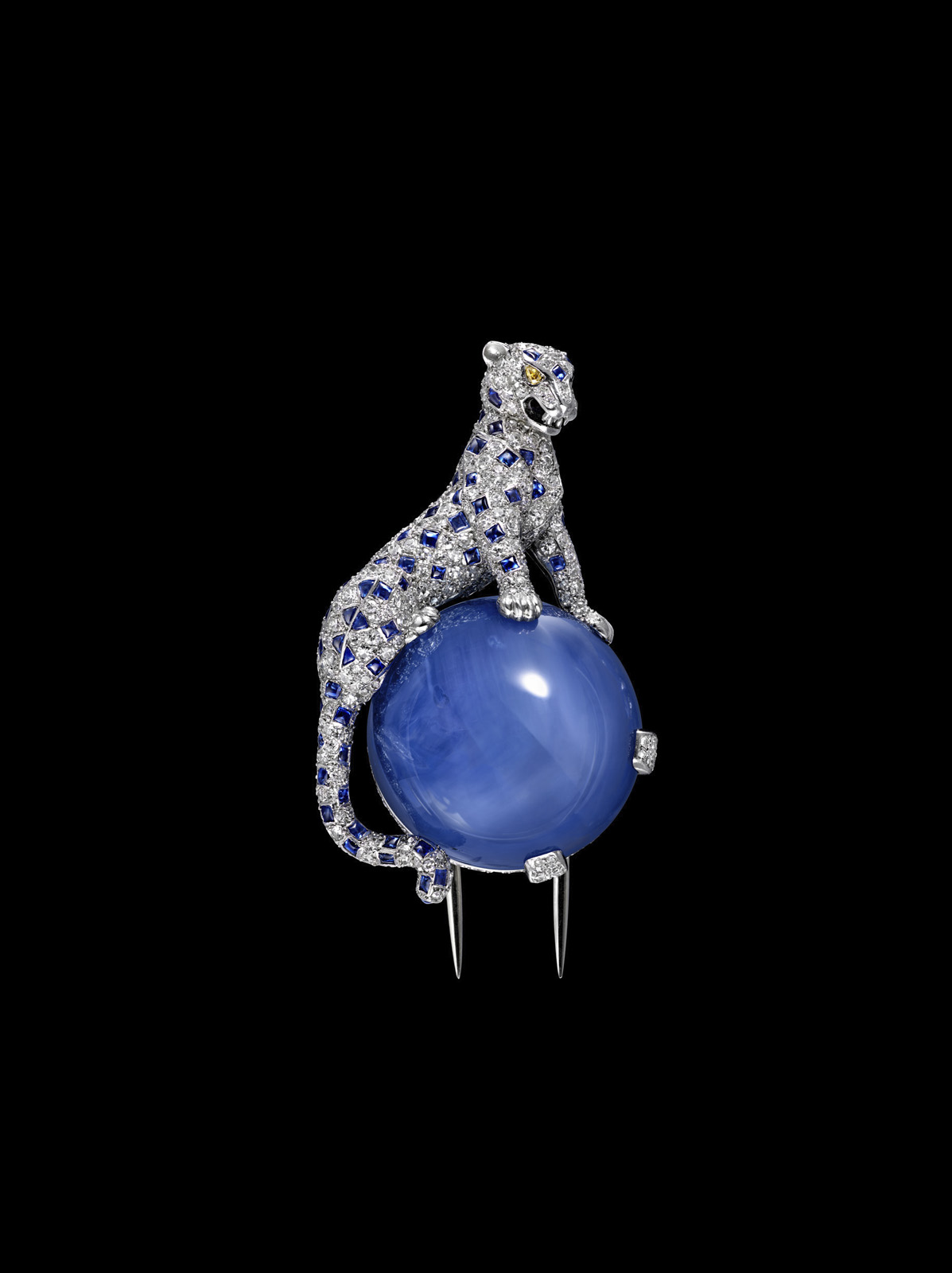
 

Panther clip brooch, Cartier Paris, 1949. Owned by the Duchess of Windsor


Panther clip brooch
Cartier Paris
1949
One 152.35-carat sapphire, sapphires, diamonds, yellow diamonds, platinum and white gold
Cartier Collection
Nils Herrmann, Cartier Collection
© Cartier


Owned by the Duchess of Windsor
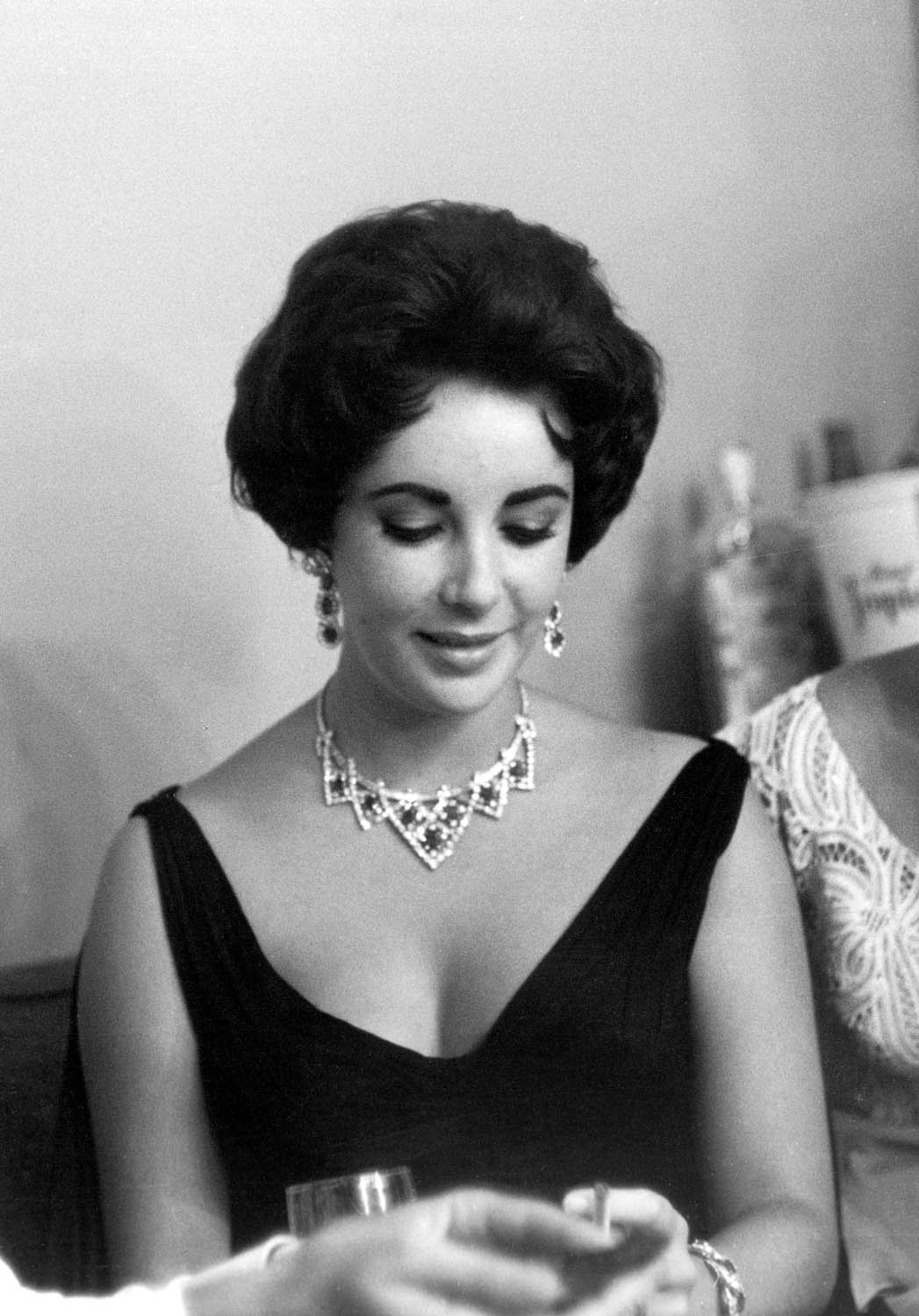
 

Unknown photographer. 'Elizabeth Taylor at the Tropicana Hotel in Las Vegas, June 1958' 1958


Unknown photographer
Elizabeth Taylor at the Tropicana Hotel in Las Vegas, June 1958
1958
© Photofest


Wearing the necklace by Cartier Paris below
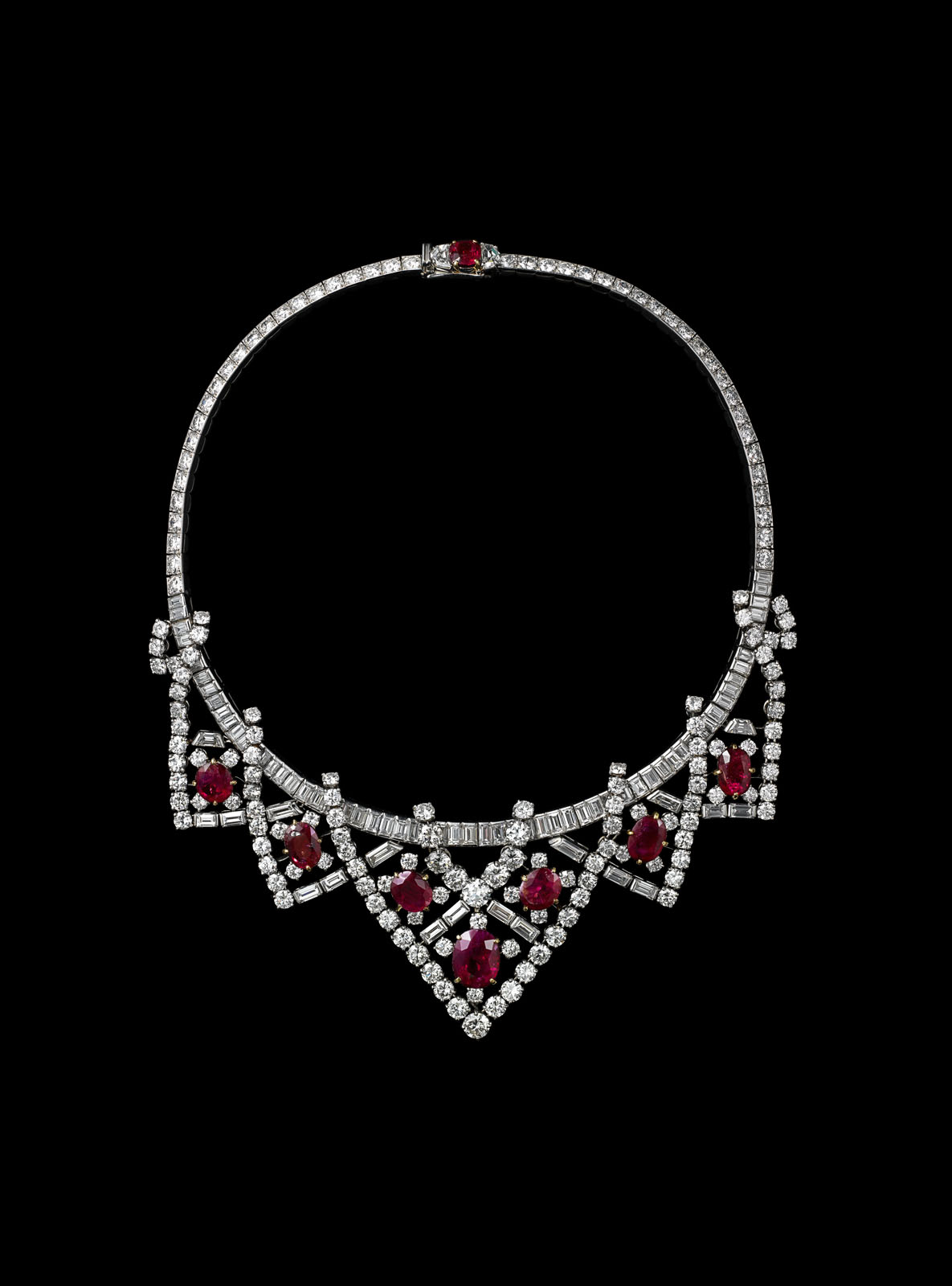
 

Necklace, Cartier Paris, 1951; altered 1953


Necklace
Cartier Paris
1951; altered 1953
Rubies, diamonds, platinum, yellow and white gold
Owned by Elizabeth Taylor
Cartier Collection
Vincent Wulveryck, Cartier Collection
© Cartier
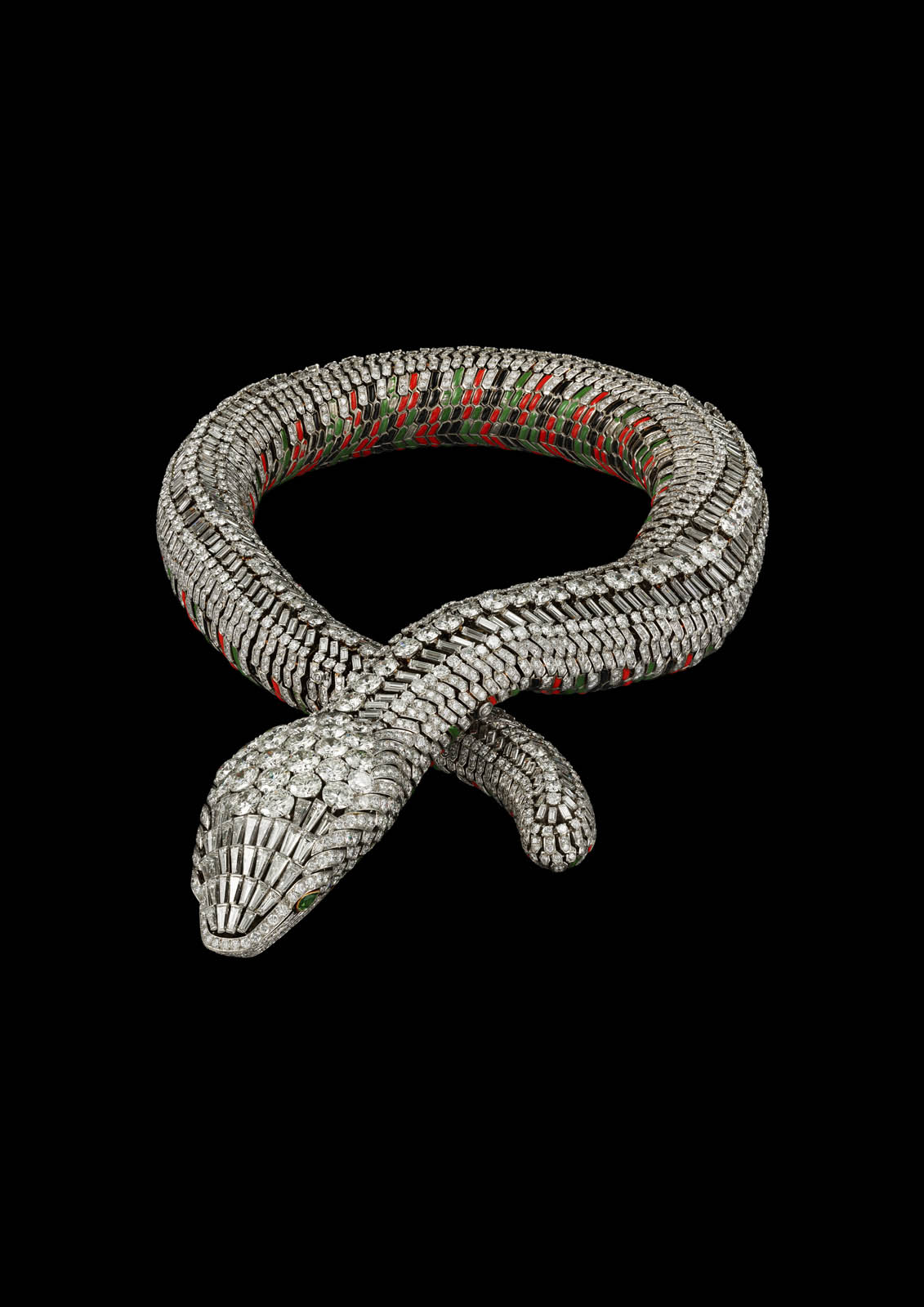
 

Snake Necklace, Cartier Paris, special order, 1968


Snake Necklace
Cartier Paris
Special order, 1968
Diamonds, emeralds, enamel, platinum, white and yellow gold
Cartier Collection
Vincent Wulveryck, Cartier Collection
© Cartier


Commissioned by María Félix

 

Bracelet, Cartier, 2014


Bracelet
Cartier
2014
White gold, diamonds
One sugarloaf tanzanite cabochon weighing 79.52 carats, rock crystal, onyx
Cartier Collection
Vincent Wulveryck, Cartier Collection
© Cartier
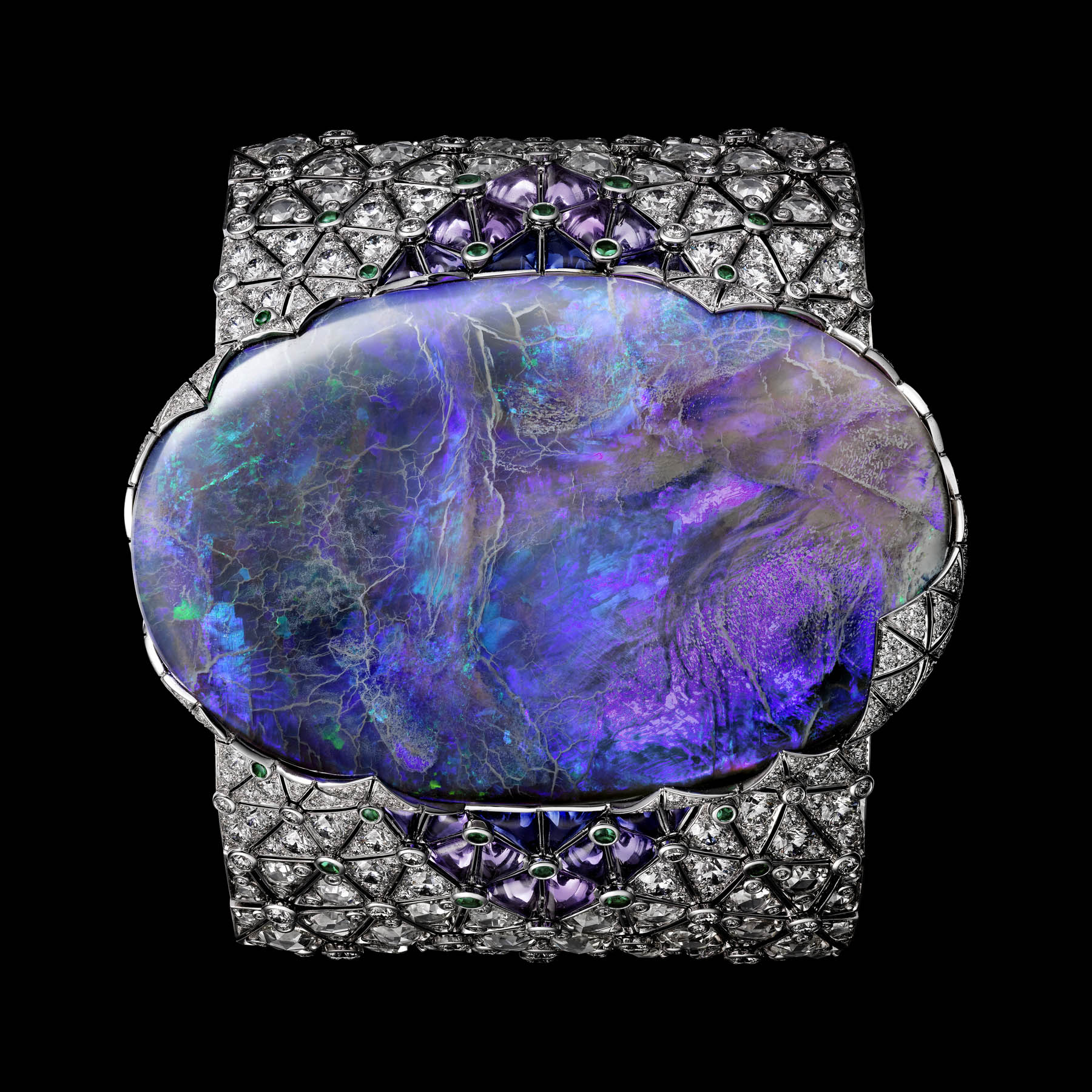
 

Bracelet, Cartier, 2015


Bracelet
Cartier
2015
White gold, diamonds, one opal weighing 189.345 carats, purple sapphires and blue sapphires, emeralds
Cartier Collection
Vincent Wulveryck, Cartier Collection
© Cartier
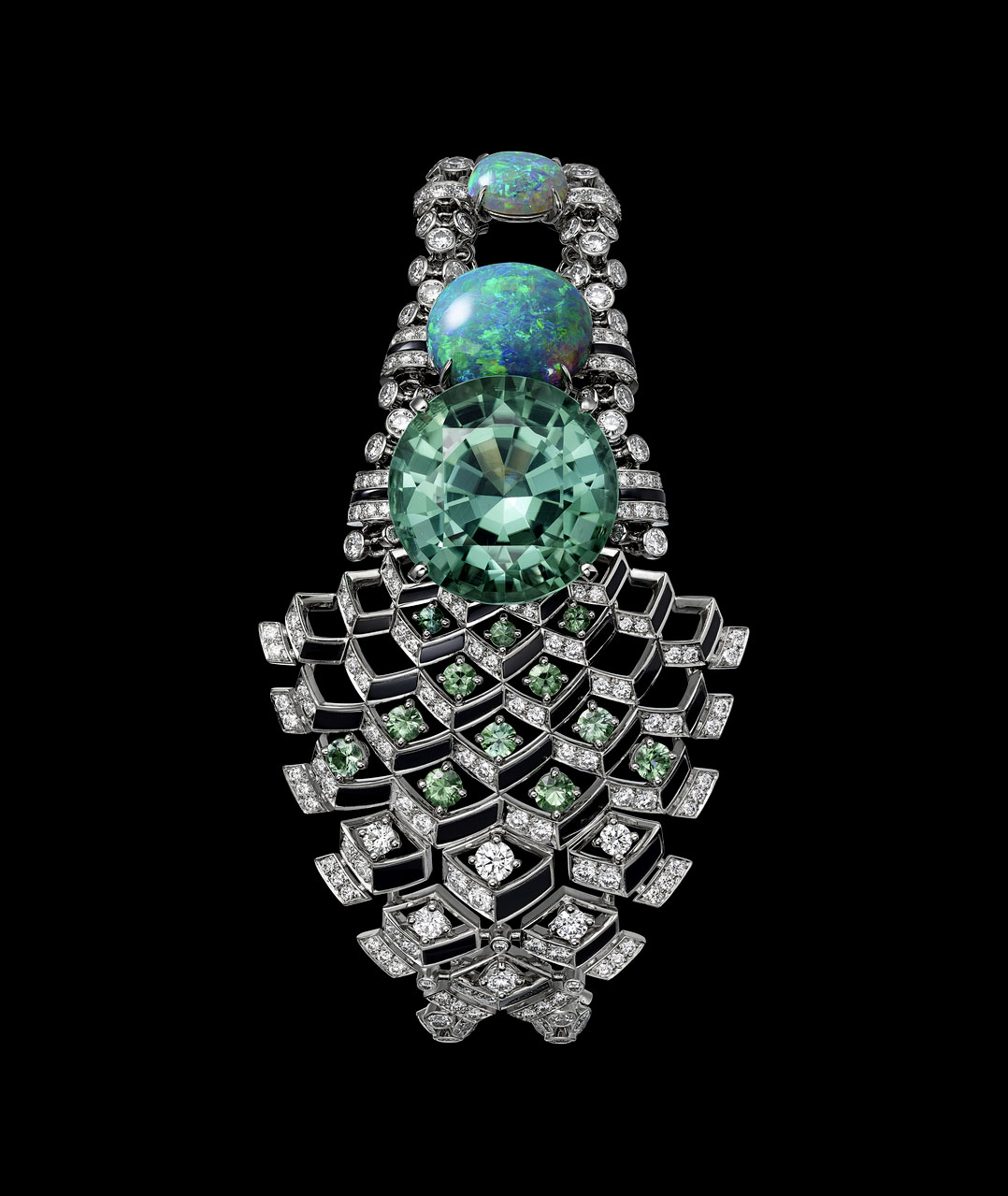
 

Bracelet, Cartier, 2018


Bracelet
Cartier
2018
Platinum, white gold, tourmalines, opals, diamonds, onyx
Cartier Collection
Vincent Wulveryck, Cartier Collection
© Cartier


Installation photographs

Photos Marcus Bunyan
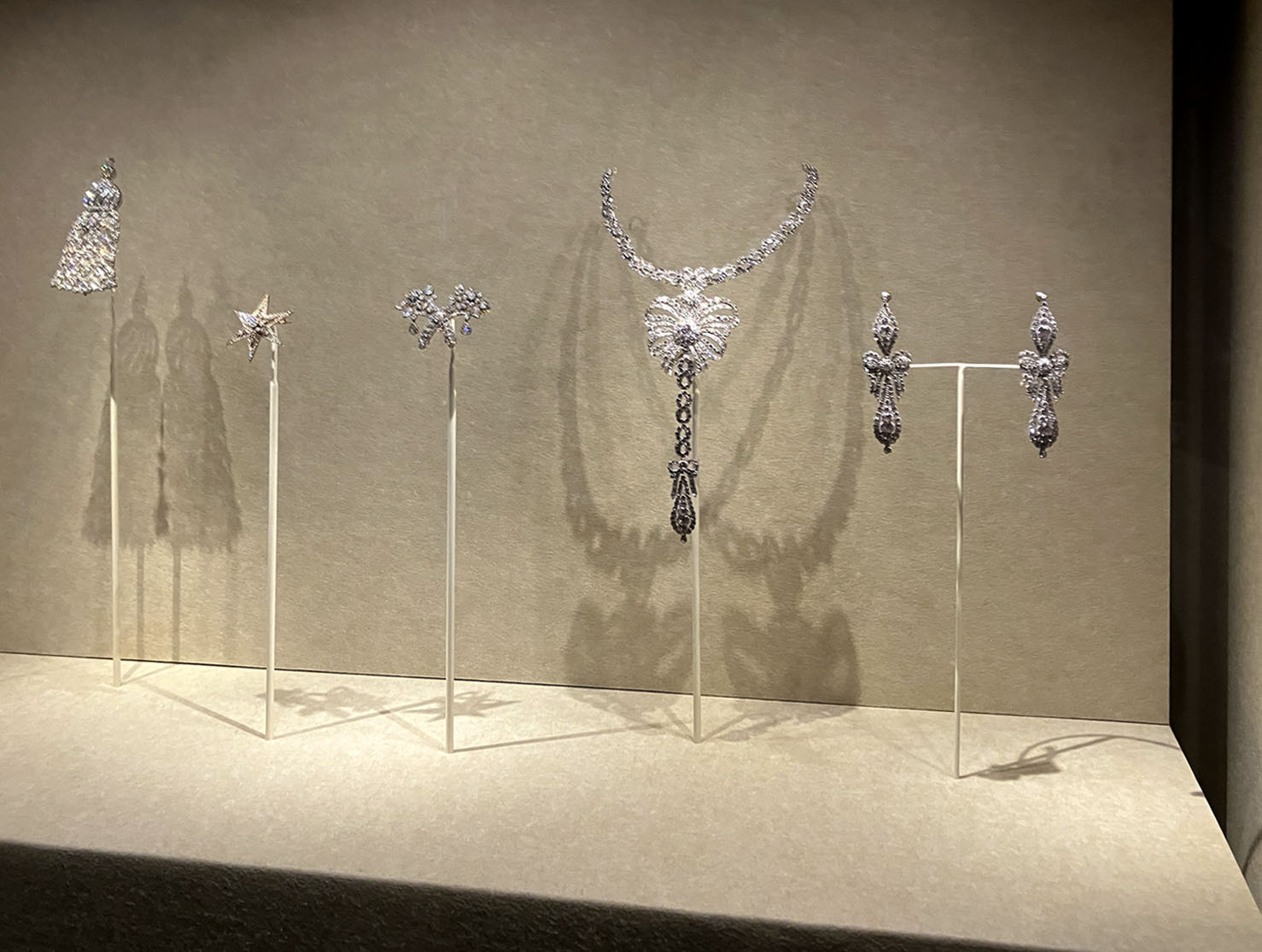
 

Installation view of the exhibition 'Cartier' at NGV International, Melbourne, June - October, 2026
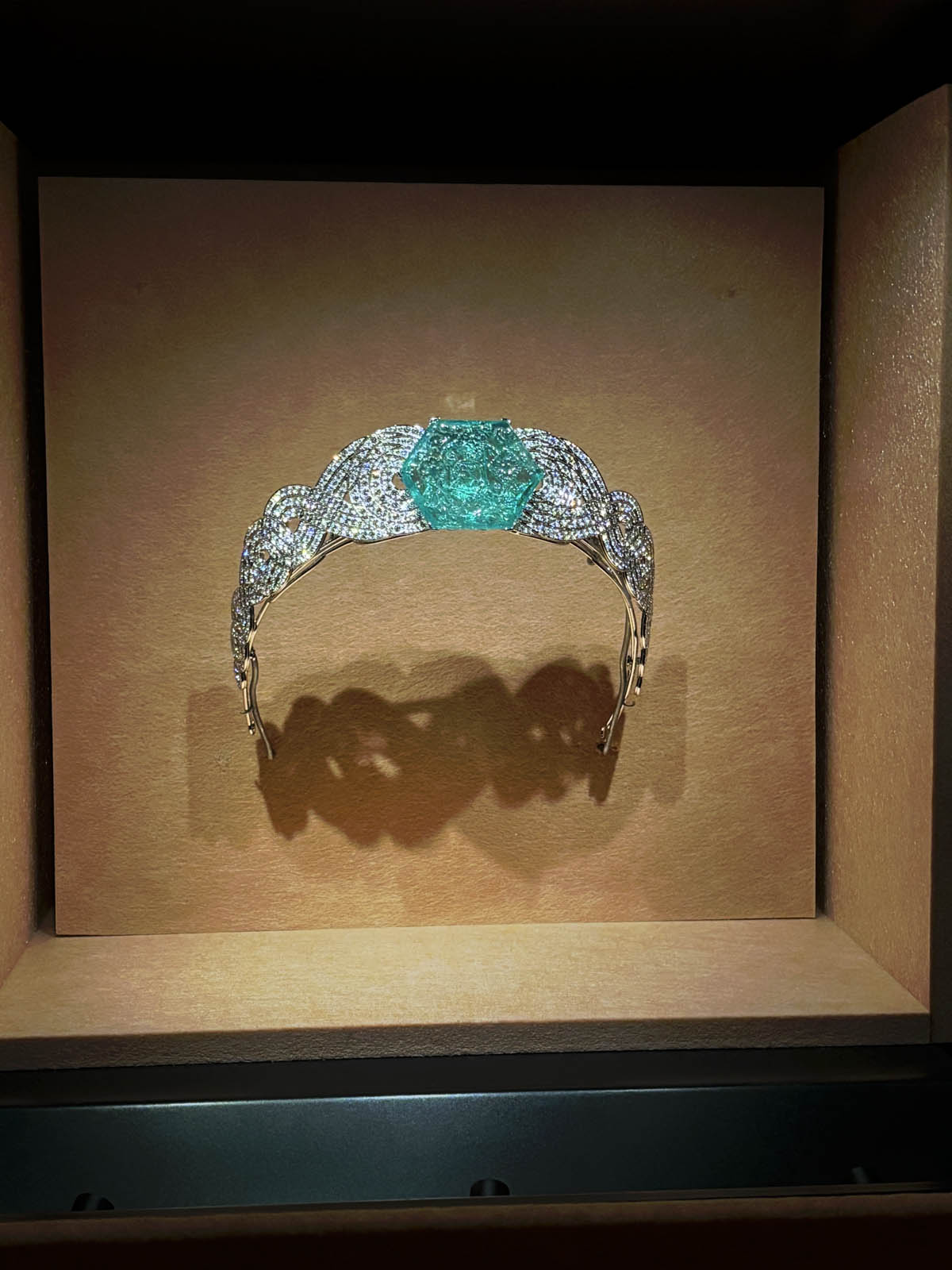
Installation view of the exhibition 'Cartier' at NGV International, Melbourne, June - October, 2026 showing 'Tiara' by Cartier Paris 1908 commissioned by Dame Nellie Melba


Tiara (installation view)
Cartier Paris
Special order, 1908
Diamonds, turquoise, platinum, yellow gold
Commissioned by Dame Nellie Melba
Private collection


This piece is transformable and can be worn either as a necklace or as a tiara

Dame Nellie Melba

Dame Nellie Melba was a renowned opera singer, one of few who achieved global celebrity in the era before recorded music. Born Helen porter Mitchell in Richmond, Melbourne in 1861, she was known as Hellie from childhood and took the stage name ‘Melba’ – an homage to her home town – upon her Paris debut in 1886.

Wall text from the exhibition
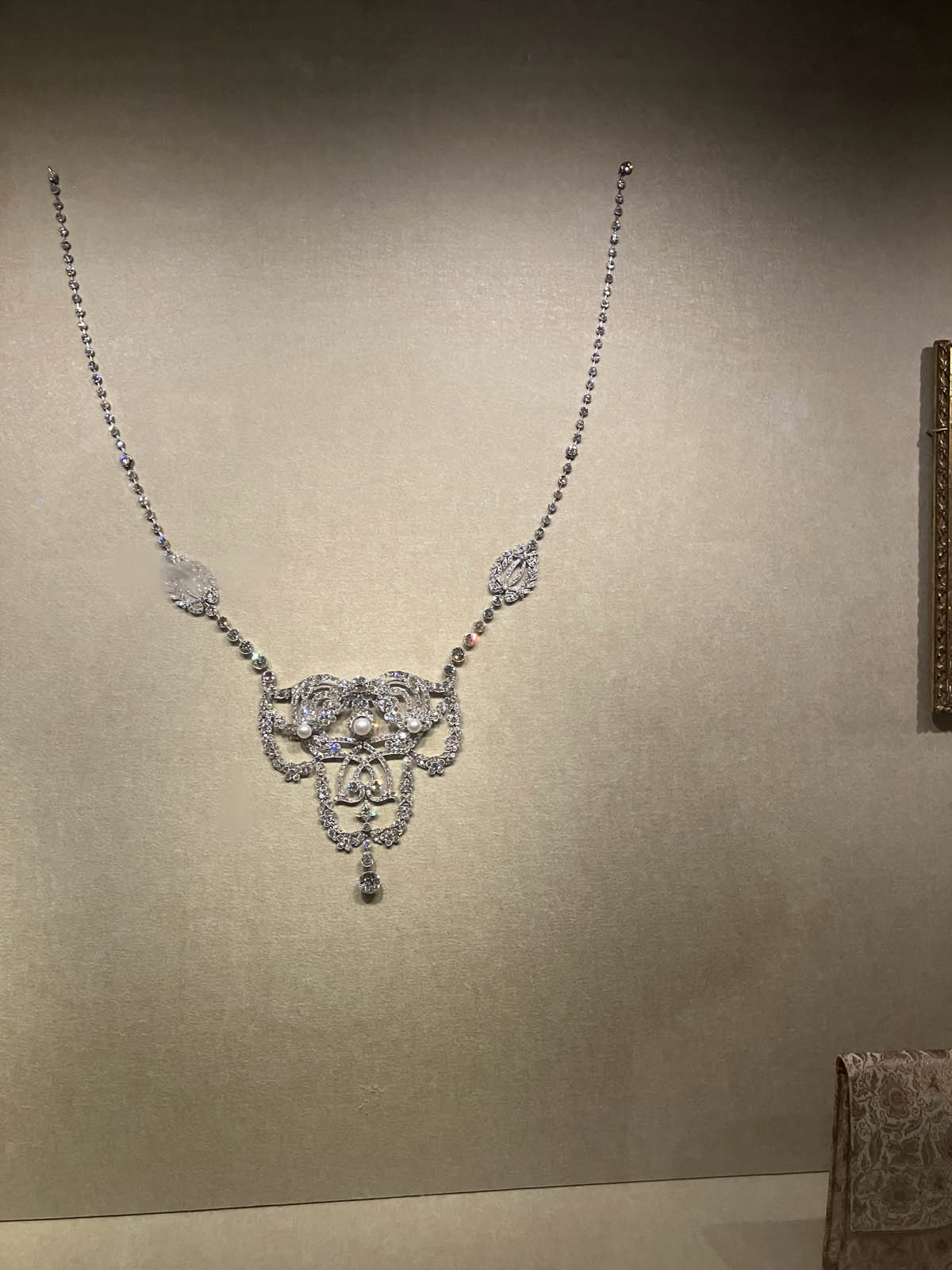
 

Installation view of the exhibition 'Cartier' at NGV International, Melbourne, June - October, 2026
Installation view of the exhibition 'Cartier' at NGV International, Melbourne, June - October, 2026 showing Tutti Frutti strap bracelet (Cartier New York, Special order 1928, modified in 1929); Pair of Tutti Frutti clip brooches (Cartier New York, 1929); Tutti Frutti bracelet-watch (Cartier Paris, 1929); Secret watch (Cartier, 2024)


Tutti Frutti strap bracelet (installation view)
Cartier New York
Special order 1928, modified in 1929
Emeralds, rubies, sapphires, diamonds, enamel, platinum
Cartier Collection

Pair of Tutti Frutti clip brooches
Cartier New York
1929
Rubies, emeralds, diamonds, enamel, platinum, white gold
Cartier Collection

Tutti Frutti bracelet-watch
Cartier Paris
1929
Emeralds (42.38 carats total), rubies, sapphires, diamonds, platinum
Cartier Collection

Secret watch
Cartier
2024
Emeralds (including one of 17.02 carats), sapphires, rubies, diamonds, onyx, white gold
Collection of Mrs Lolita Younes


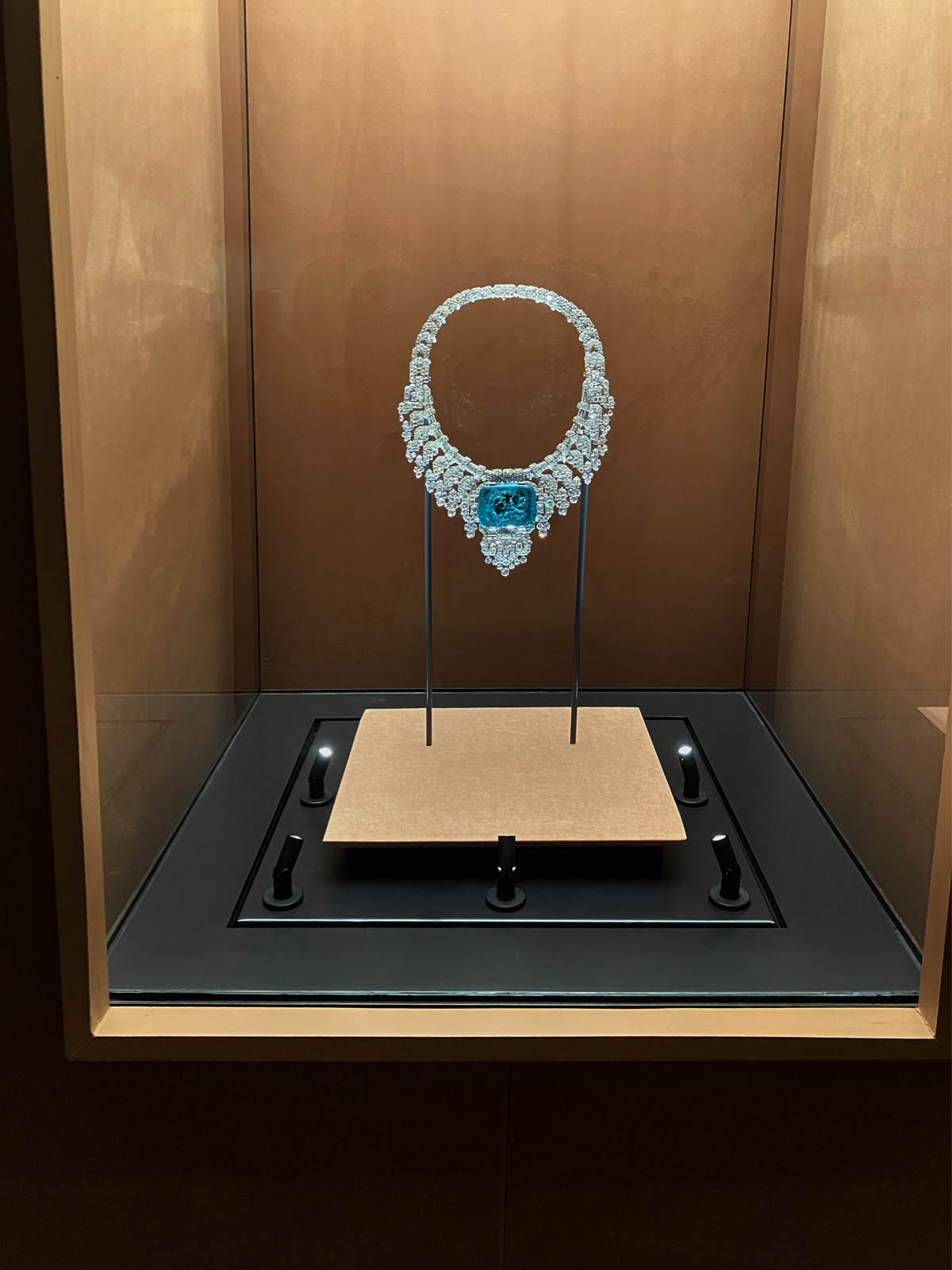
Installation view of the exhibition 'Cartier' at NGV International, Melbourne, June - October, 2026 showing 'Necklace' by Cartier London, Special order, 1932


Necklace (installation view)
Cartier London
Special order, 1932
Emerald (143.23 carats), diamonds, platinum
Commissioned by Beatrice Mills, Countess of Granard
Cartier Collection


Beatrice Mills, daughter of American financier and philanthropist ogden Mills, married the 8th Earl of Granard in 1909. Lady Granard, as she became known, was a lotyla client of Carter London and was famous for her extravagant jewellery collection. According to the society diarist Henry ‘Chips’ Channon, ‘Lady Granard could scarcely walk for jewels’ while attending on of his dinner parties in 1938. This spectacular necklace was created from stones entirely supplied by the Countess. It is in the style of the heavier but shorter collar necklaces popular in the 1930s, while its powerful S-shaped diamond-set scrolls surrounding the magnificent emerald in the centre.

Wall text from the exhibition
 

Installation view of the exhibition 'Cartier' at NGV International, Melbourne, June - October, 2026
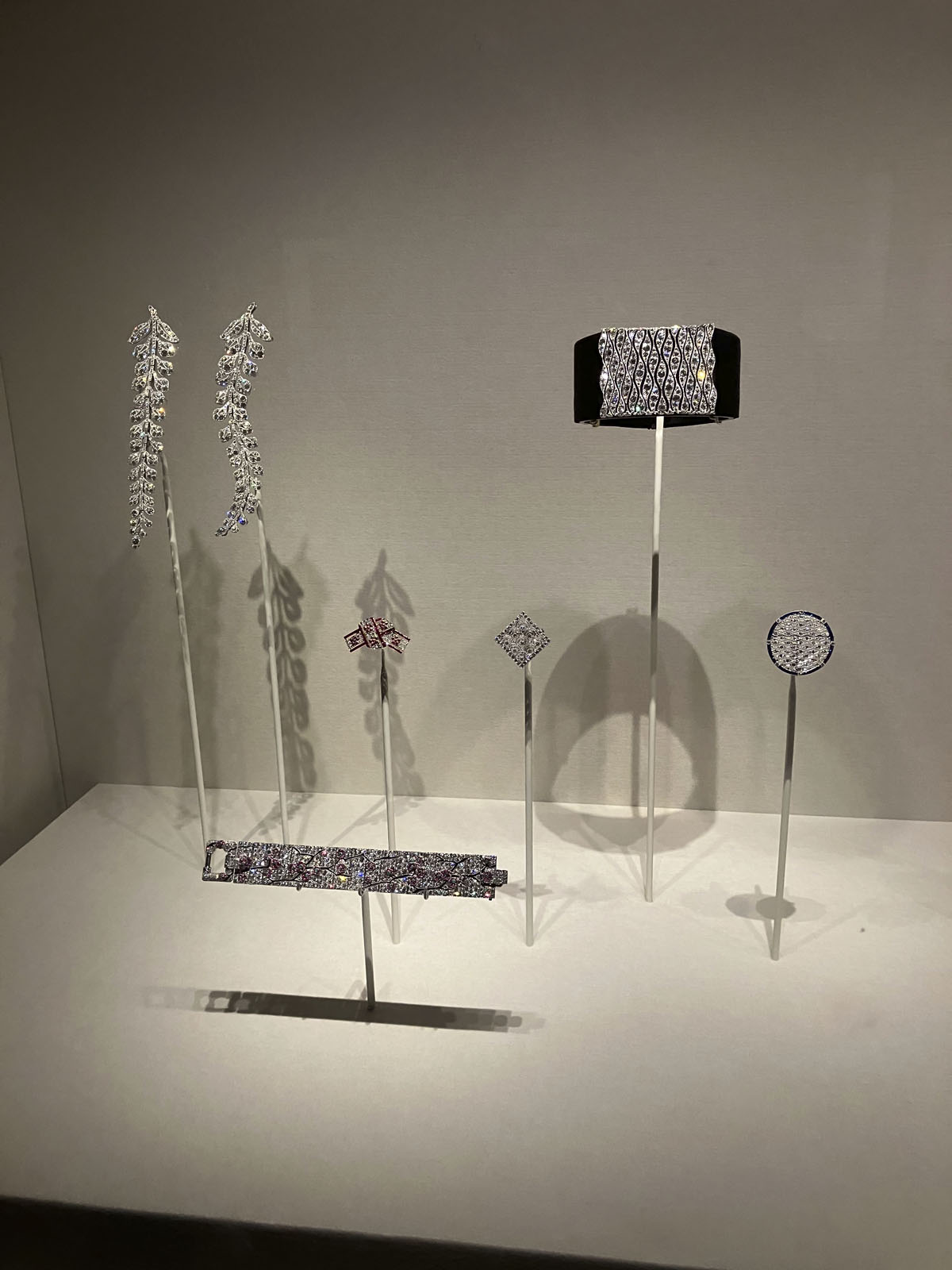
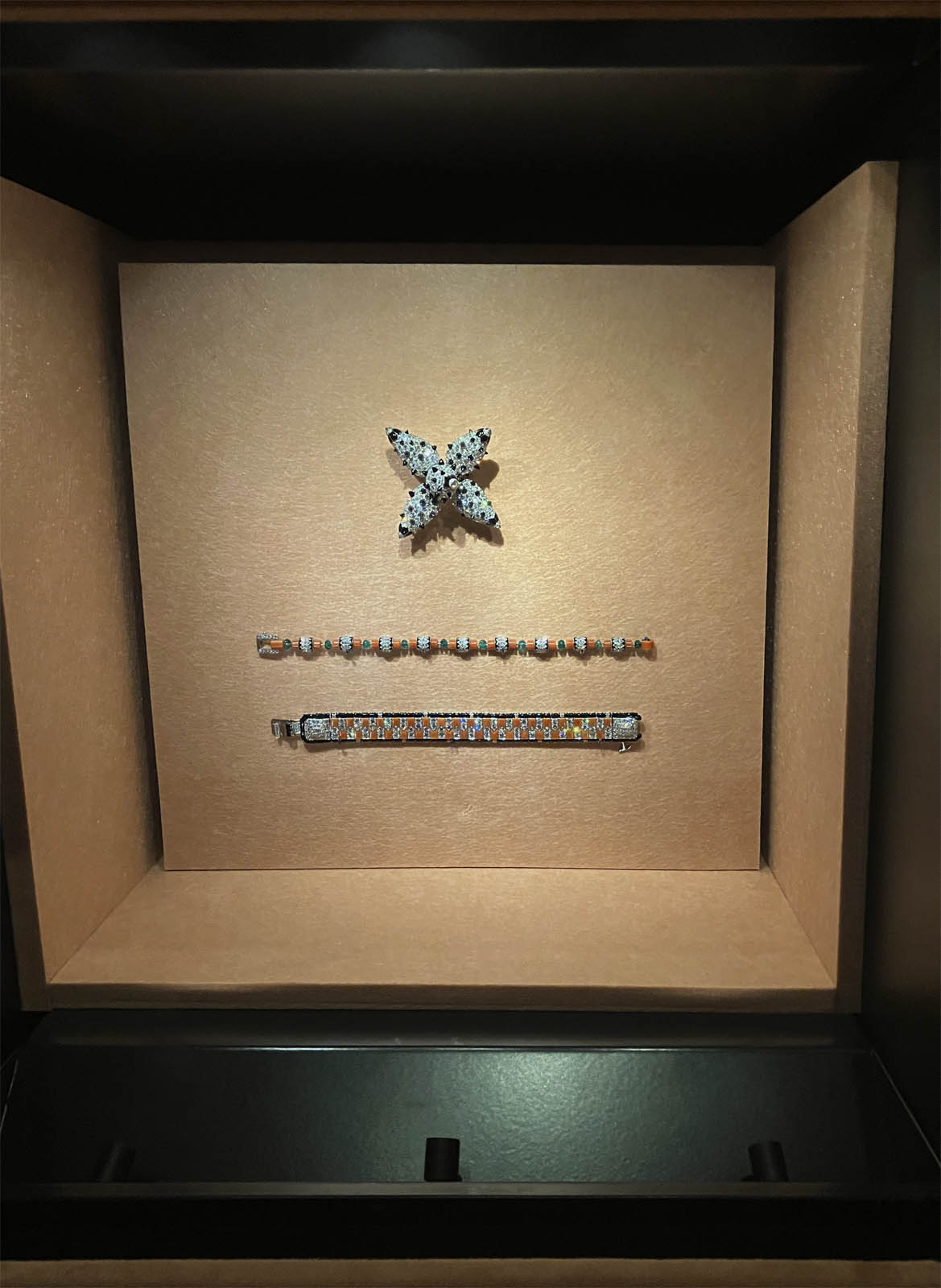
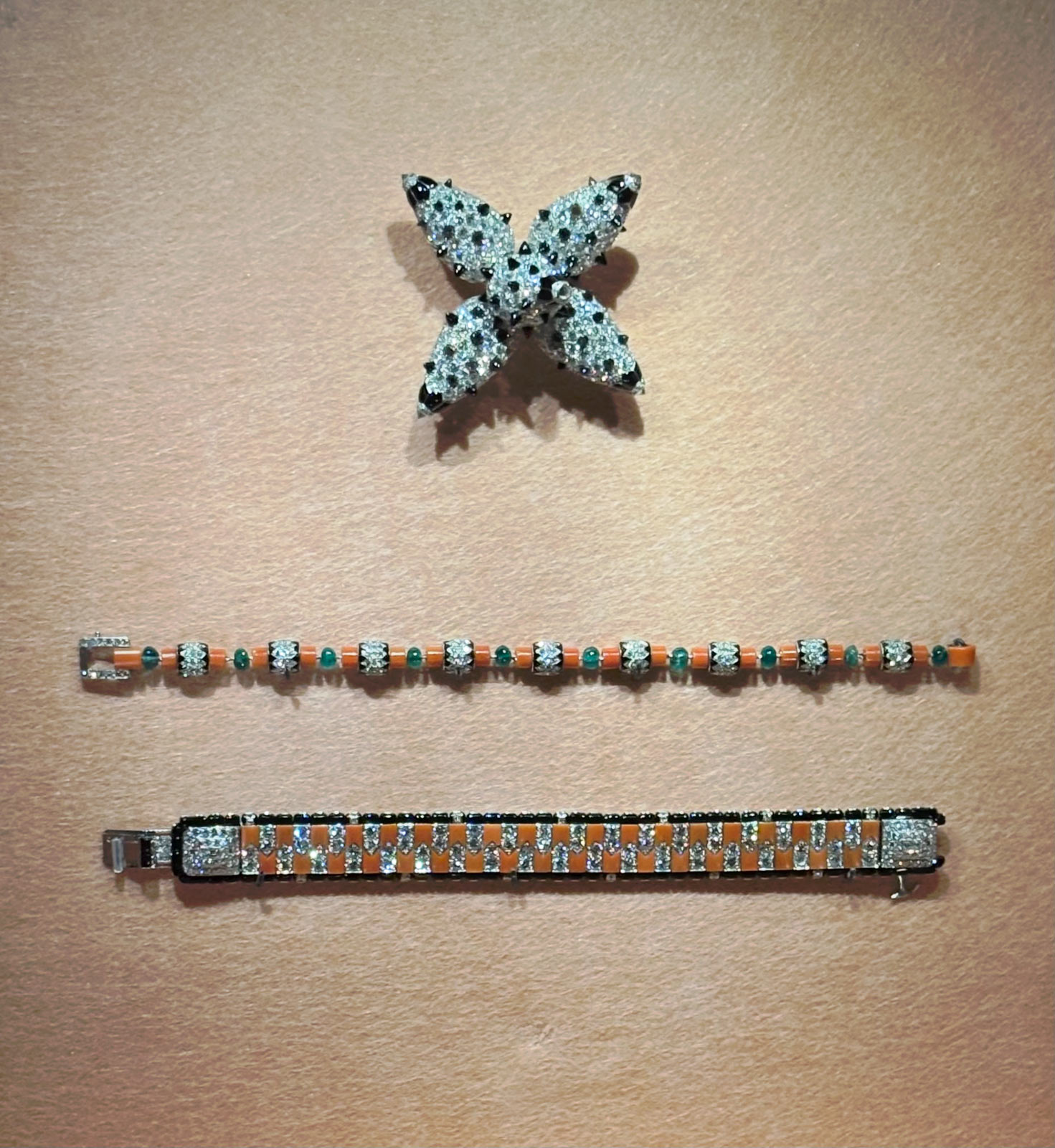
Installation view of the exhibition 'Cartier' at NGV International, Melbourne, June - October, 2026 showing Brooch, originally set as a head ornament (Cartier Paris, 1925, modified in 1927); Bracelet (Cartier Paris, 1922); Bracelet (Cartier Paris, 1925)


Brooch, originally set as a head ornament (installation view)
Cartier Paris
1925, modified in 1927
Diamonds, onyx, enamel, platinum, gold
Cartier Collection

Bracelet
Cartier Paris
1922
Emeralds, diamonds, coral, onyx, platinum
Cartier Collection

Bracelet
Cartier Paris
1925
Diamonds, coral, onyx, platinum
Cartier Collection


This onyx and diamond orchid brooch was on display at the 1925 Paris Exhibition as one of four orchid flowers mounted as a pair of hair ornaments. The coral, onyx and diamond bracelet was also displayed at the exhibition, along with an identical example of the bracelet with coral and emeralds. They exemplify Cartier’s innovative colour combinations and striking geometric designs.

Wall text from the exhibition
 

Installation view of the exhibition 'Cartier' at NGV International, Melbourne, June - October, 2026
Installation view of the exhibition 'Cartier' at NGV International, Melbourne, June - October, 2026 showing 'Hindou' Necklace (Cartier Paris, 1936, modified in 1963)


‘Hindou’ Necklace (installation view)
Cartier Paris
1936, modified in 1963
Special order
Sapphires (240.15 carats total), emeralds, rubies, diamonds, platinum, white gold
Cartier Collection


This necklace is generally regarded as the most spectacular example of Tutti Frutti jewellery ever created by Cartier. Recorded in the Cartier Archives as ‘Hindou’, the necklace was originally mounted on a long Indian-style cord so that it would sit lower down. Daisy Fellowes supplied Cartier with jewels from her own collection (including from a Tutti Frutti bracelet, the design sketch for which is displayed on the wall opposite). Her daughter the Comtesse de Casteja had the necklace remodelled by Cartier in 1963.

Wall text from the exhibition
 

Installation view of the exhibition 'Cartier' at NGV International, Melbourne, June - October, 2026


Installation views of the exhibition Cartier at NGV International, Melbourne, June – October, 2026
Photos: Marcus Bunyan


NGV International
180 St Kilda Road

Opening hours:
Daily 10am – 5pm
National Gallery of Victoria website

LIKE ART BLART ON FACEBOOK

Back to top

European art research tour exhibition: ‘László Moholy-Nagy and New Typography: A Reconstruction of a Berlin Exhibition from 1929’ at the Staatliche Museen zu Berlin

Exhibition dates: 29th August, 2019 – 15th September, 2019 posted November, 2020

Kunstbibliothek


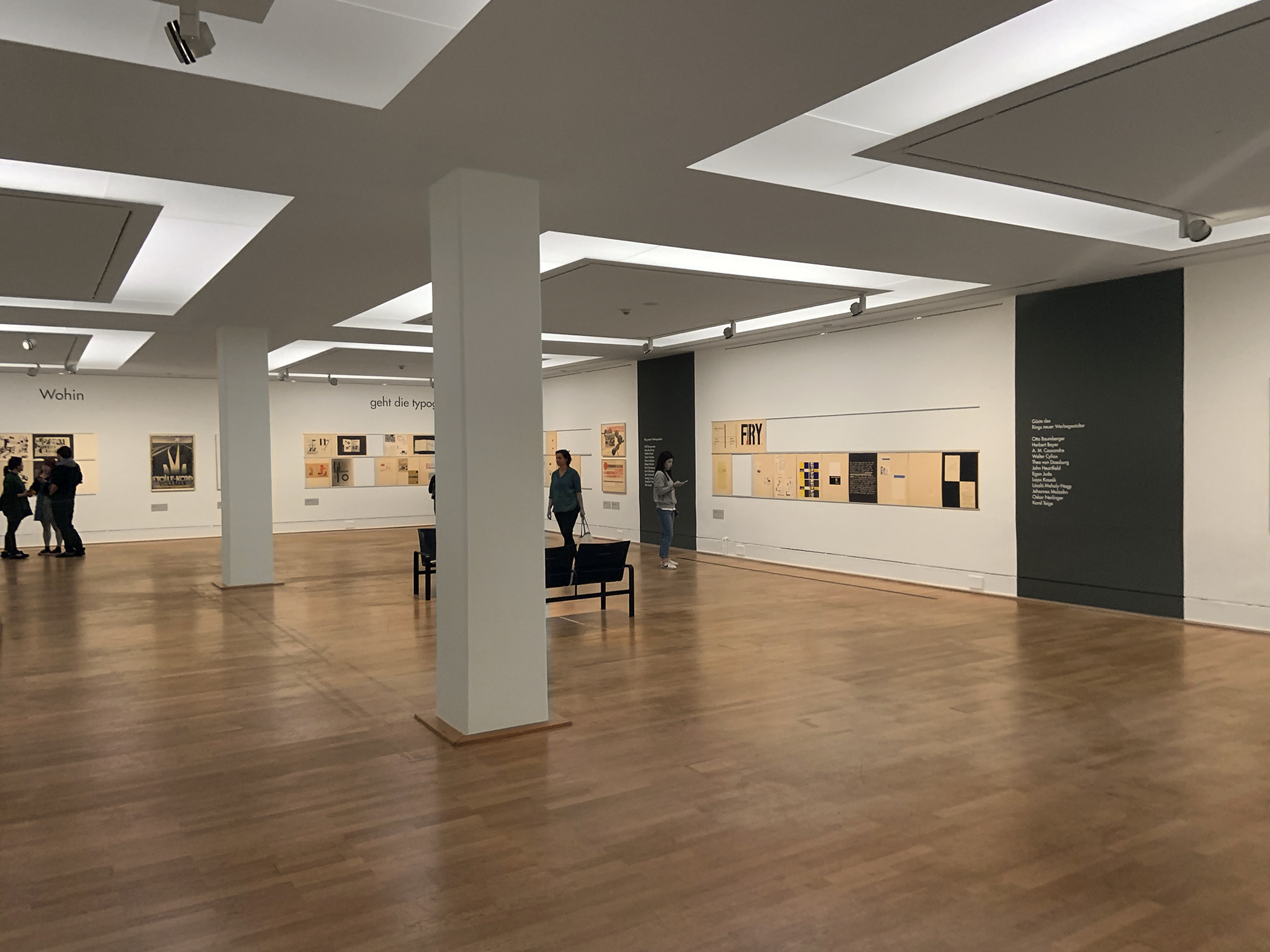
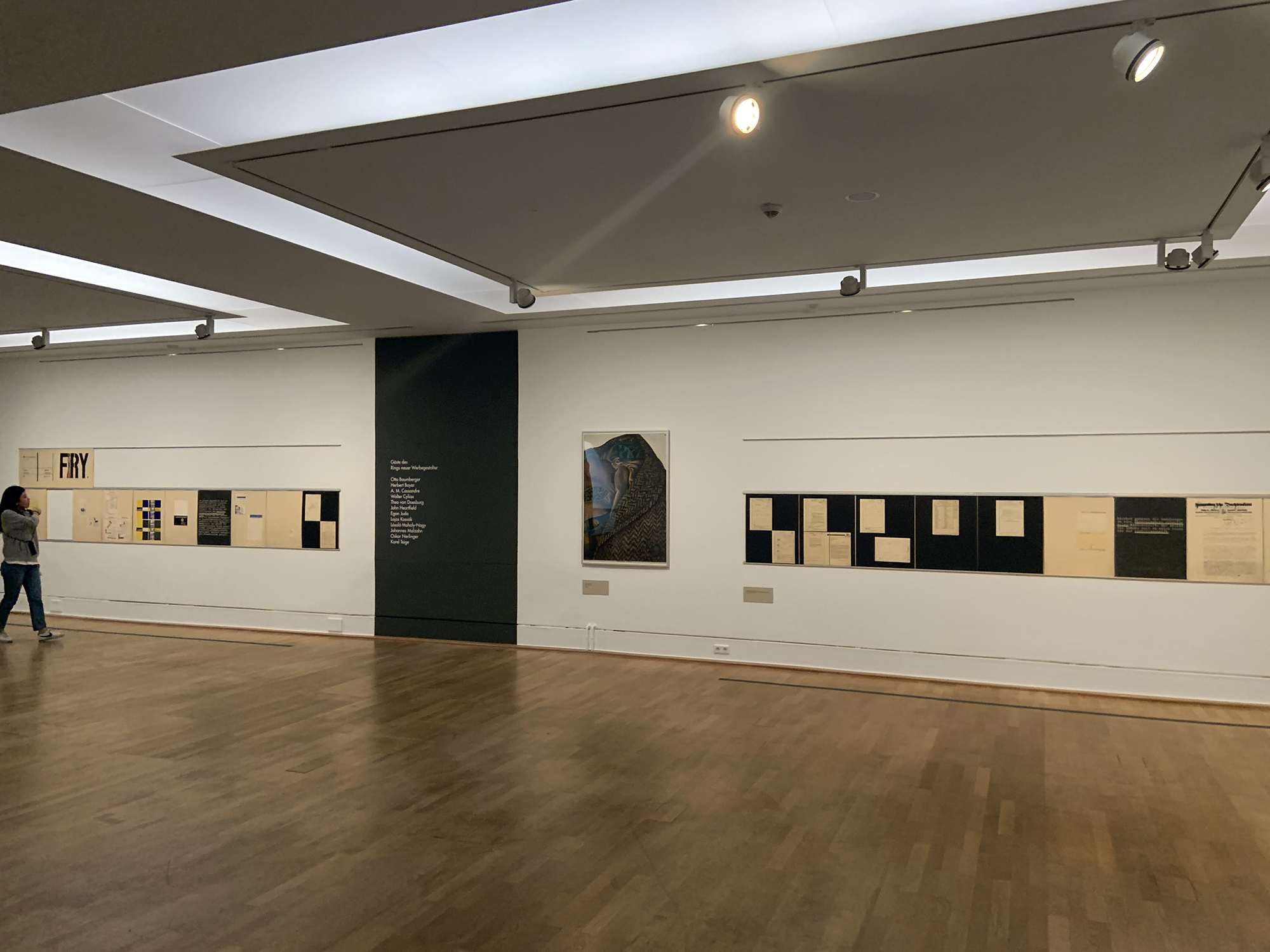
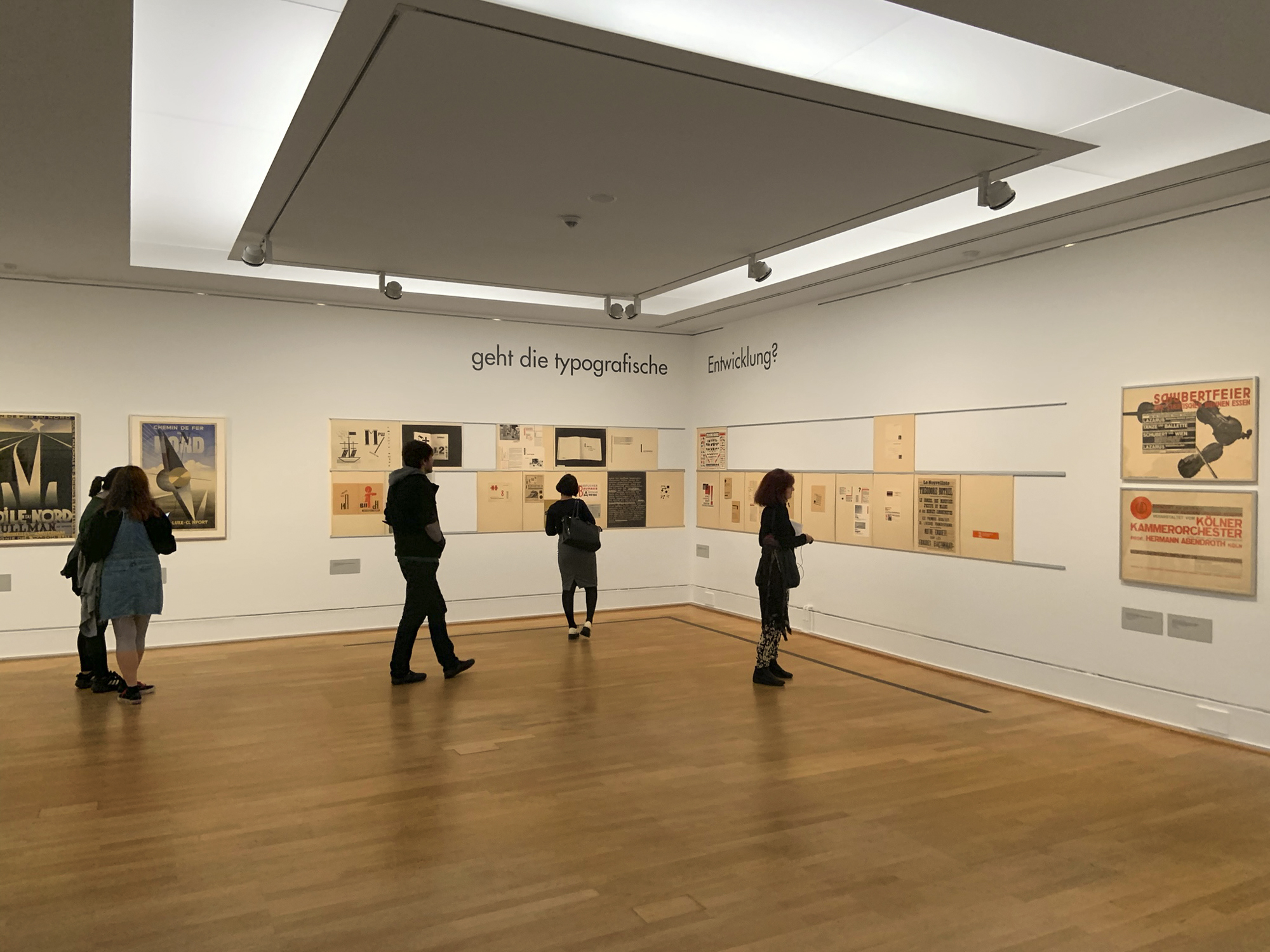
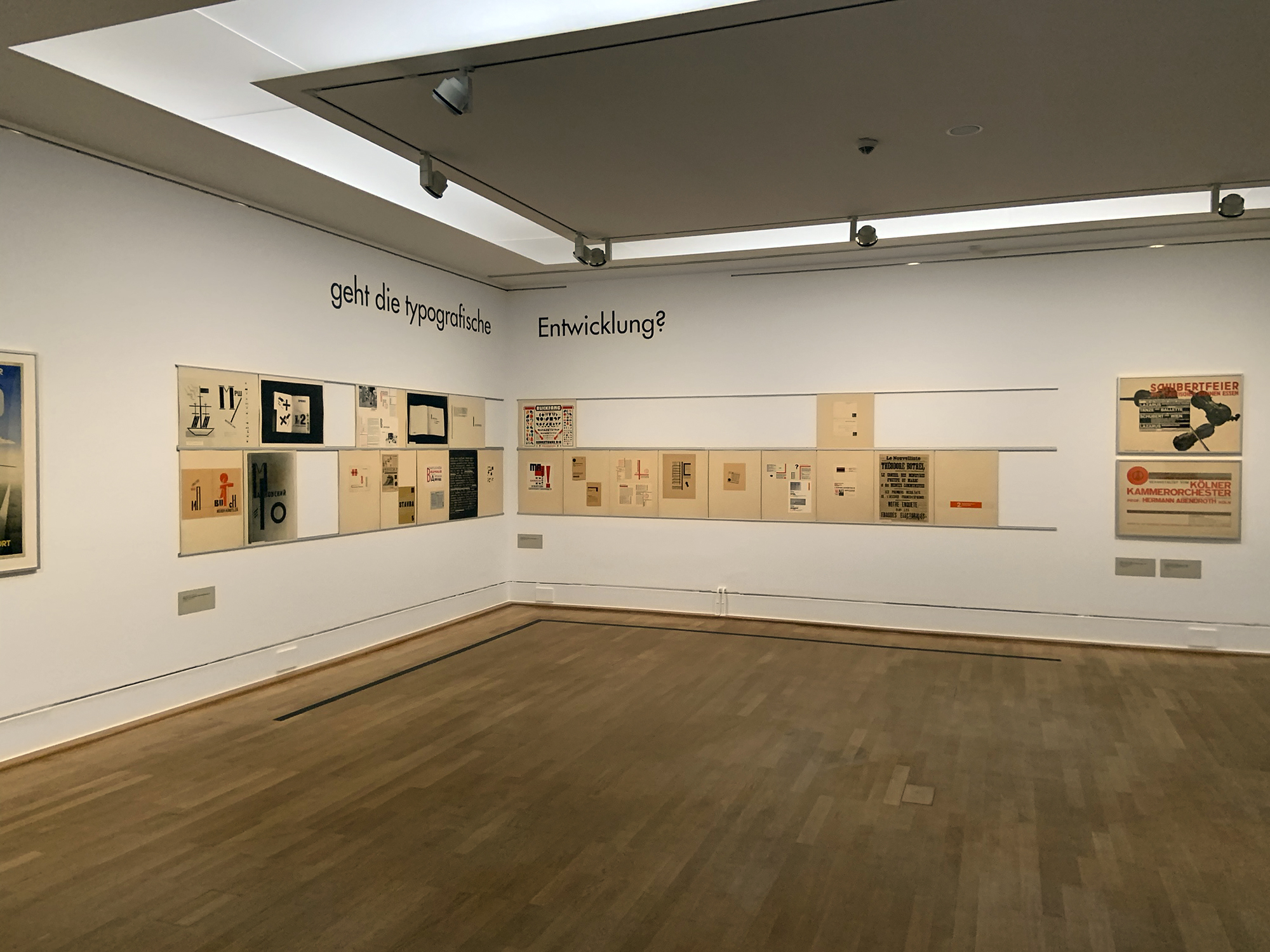
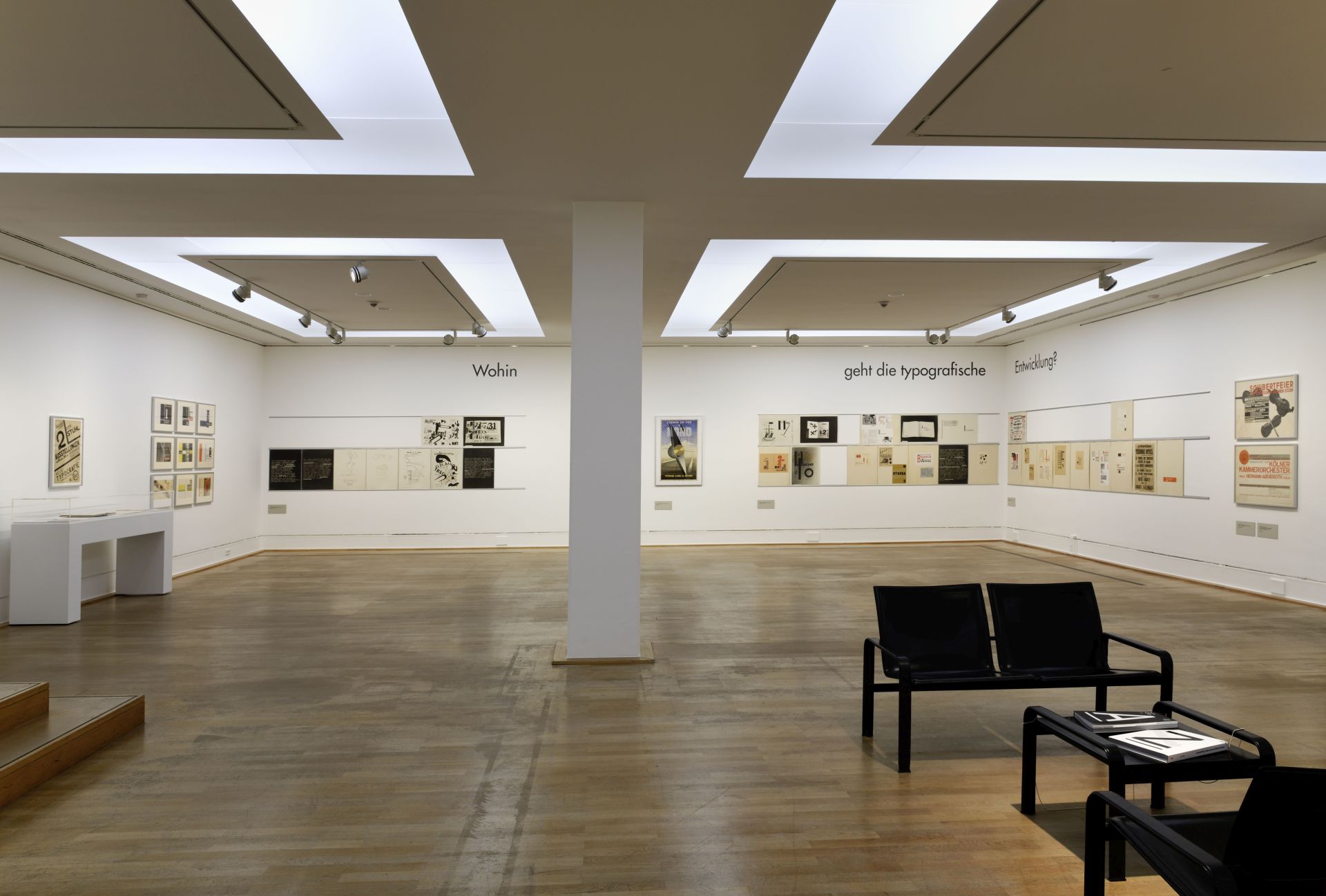
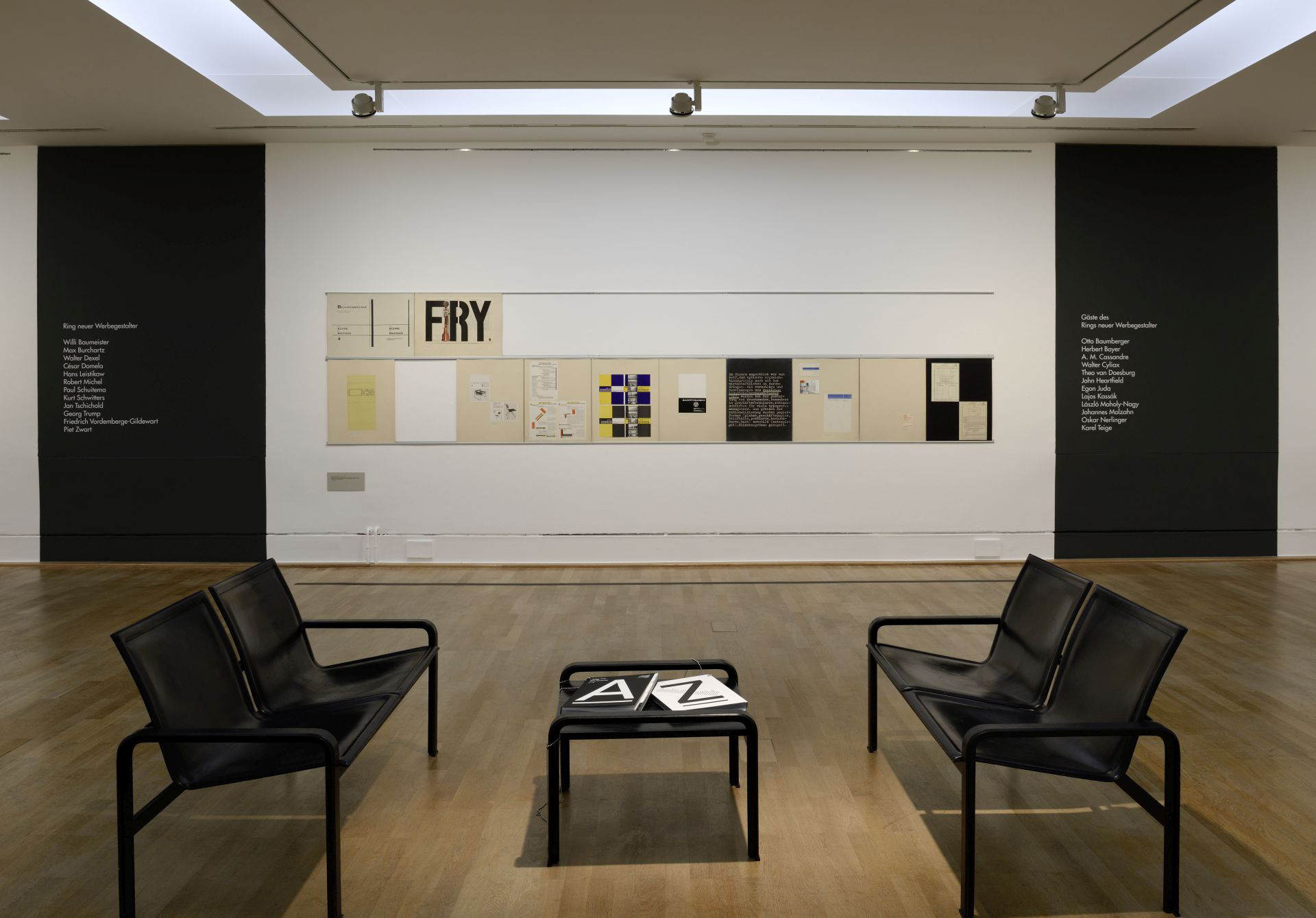
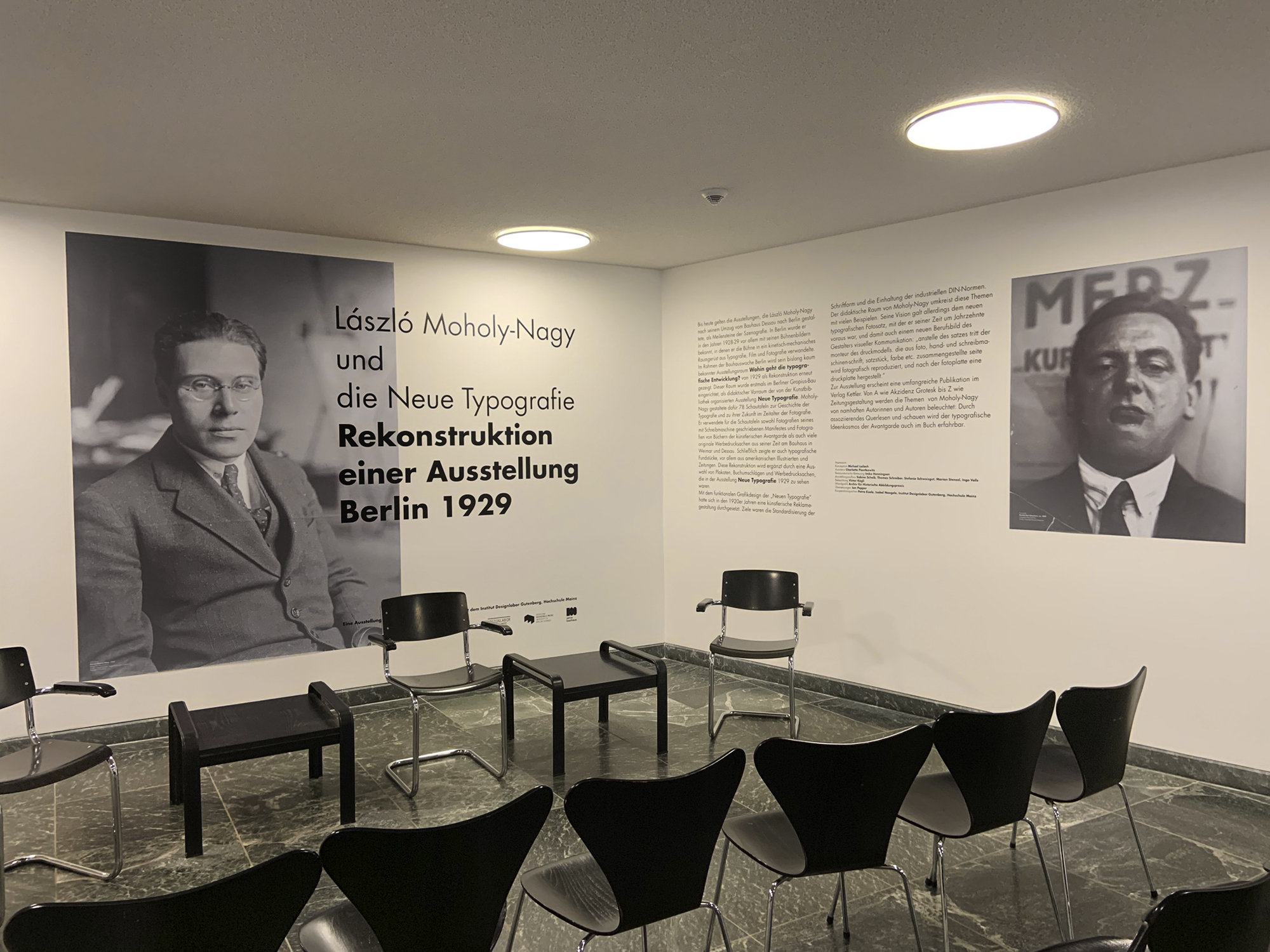
Installation view of the exhibition 'László Moholy-Nagy and New Typography: A Reconstruction of a Berlin Exhibition from 1929' at the Staatliche Museen zu Berlin


Installation view of the exhibition László Moholy-Nagy and New Typography: A Reconstruction of a Berlin Exhibition from 1929 at the Staatliche Museen zu Berlin
Photo: Marcus Bunyan


A small, tight, focused exhibition which was stimulating for anyone interested in graphic design, photography, and typography – Neue Typografie.

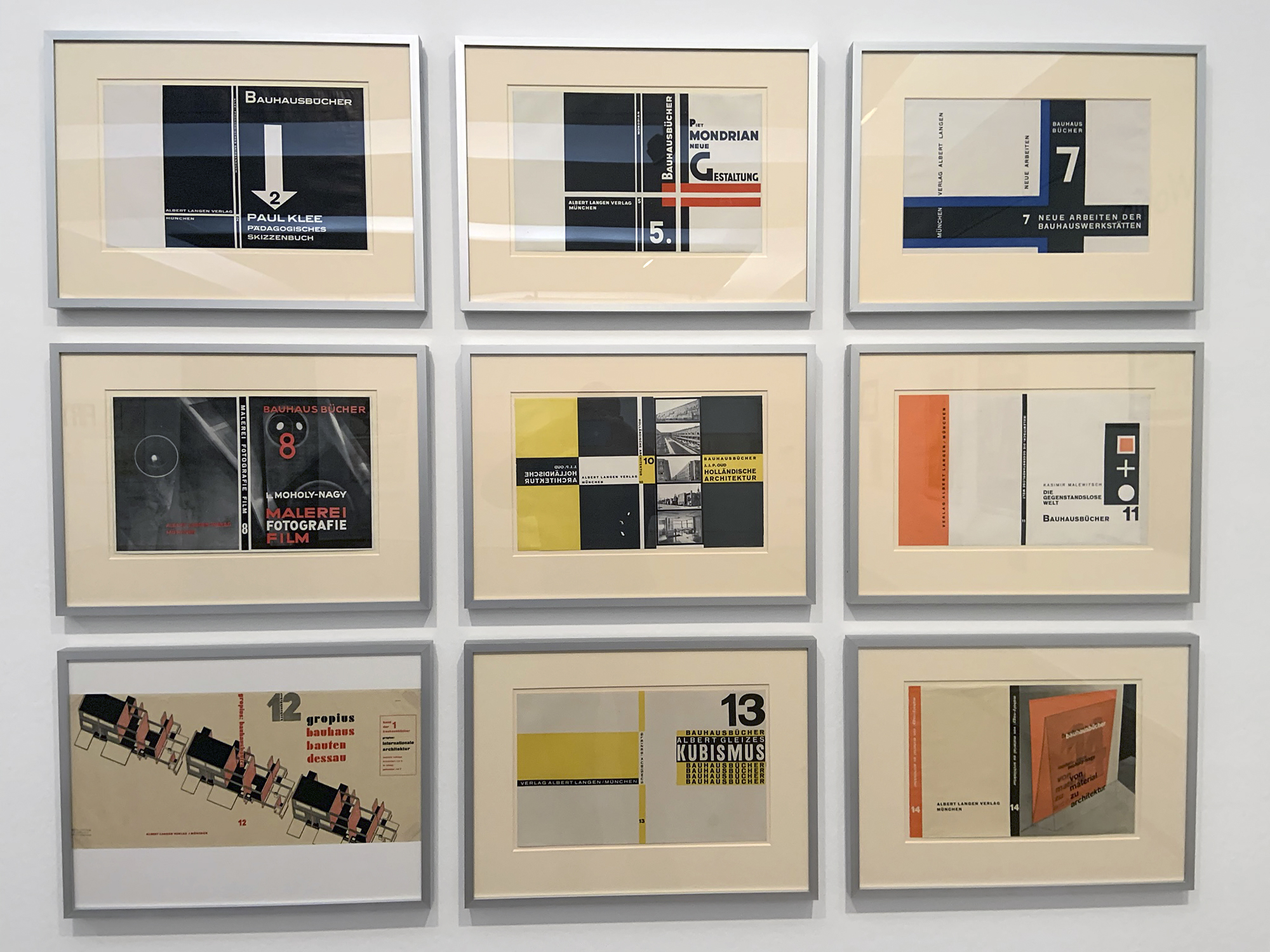
Highlights included Covers for the Bauhaus books, 1925-1930, travel posters by A. M. Cassandre, plates from Moholy-Nagy’s 1929 Wohin geht die typographische Entwicklung? (Where is typography headed?) and a poster for the 1929 exhibition film und foto.

The inventiveness and creativity with colour, collage and the use of negative and positive space was peerless, elemental.

Dr Marcus Bunyan


All iPhone photographs © Marcus Bunyan. Many thankx for all other photographs to the Staatliche Museen zu Berlin. Please click on the photographs for a larger version of the image.


Installation view of the exhibition 'László Moholy-Nagy and New Typography: A Reconstruction of a Berlin Exhibition from 1929' at the Staatliche Museen zu Berlin

Installation view of the exhibition 'László Moholy-Nagy and New Typography: A Reconstruction of a Berlin Exhibition from 1929' at the Staatliche Museen zu Berlin

Installation view of the exhibition 'László Moholy-Nagy and New Typography: A Reconstruction of a Berlin Exhibition from 1929' at the Staatliche Museen zu Berlin

Installation view of the exhibition 'László Moholy-Nagy and New Typography: A Reconstruction of a Berlin Exhibition from 1929' at the Staatliche Museen zu Berlin

Installation view of the exhibition 'László Moholy-Nagy and New Typography: A Reconstruction of a Berlin Exhibition from 1929' at the Staatliche Museen zu Berlin

Installation view of the exhibition 'László Moholy-Nagy and New Typography: A Reconstruction of a Berlin Exhibition from 1929' at the Staatliche Museen zu Berlin

Installation view of the exhibition 'László Moholy-Nagy and New Typography: A Reconstruction of a Berlin Exhibition from 1929' at the Staatliche Museen zu Berlin


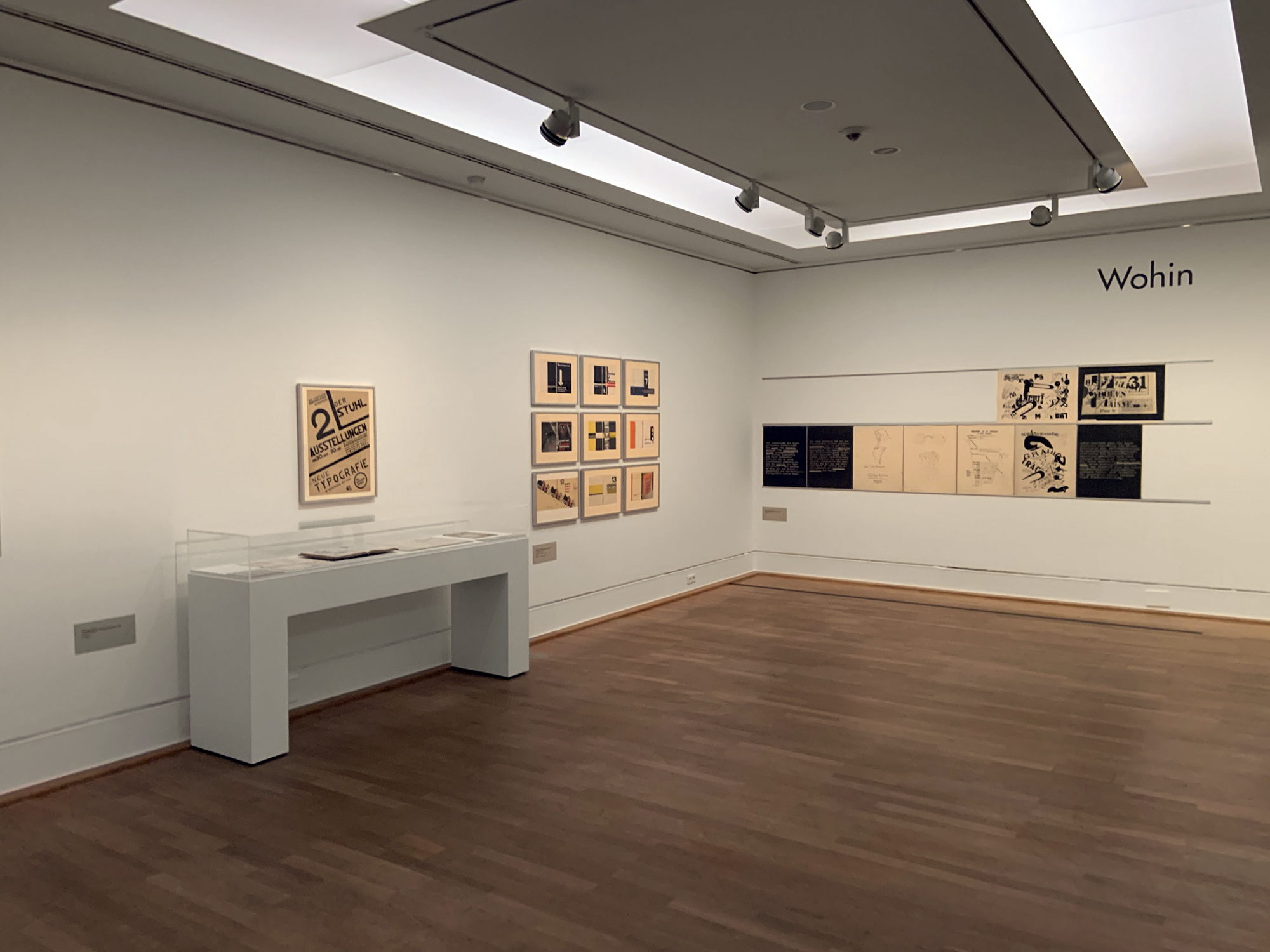
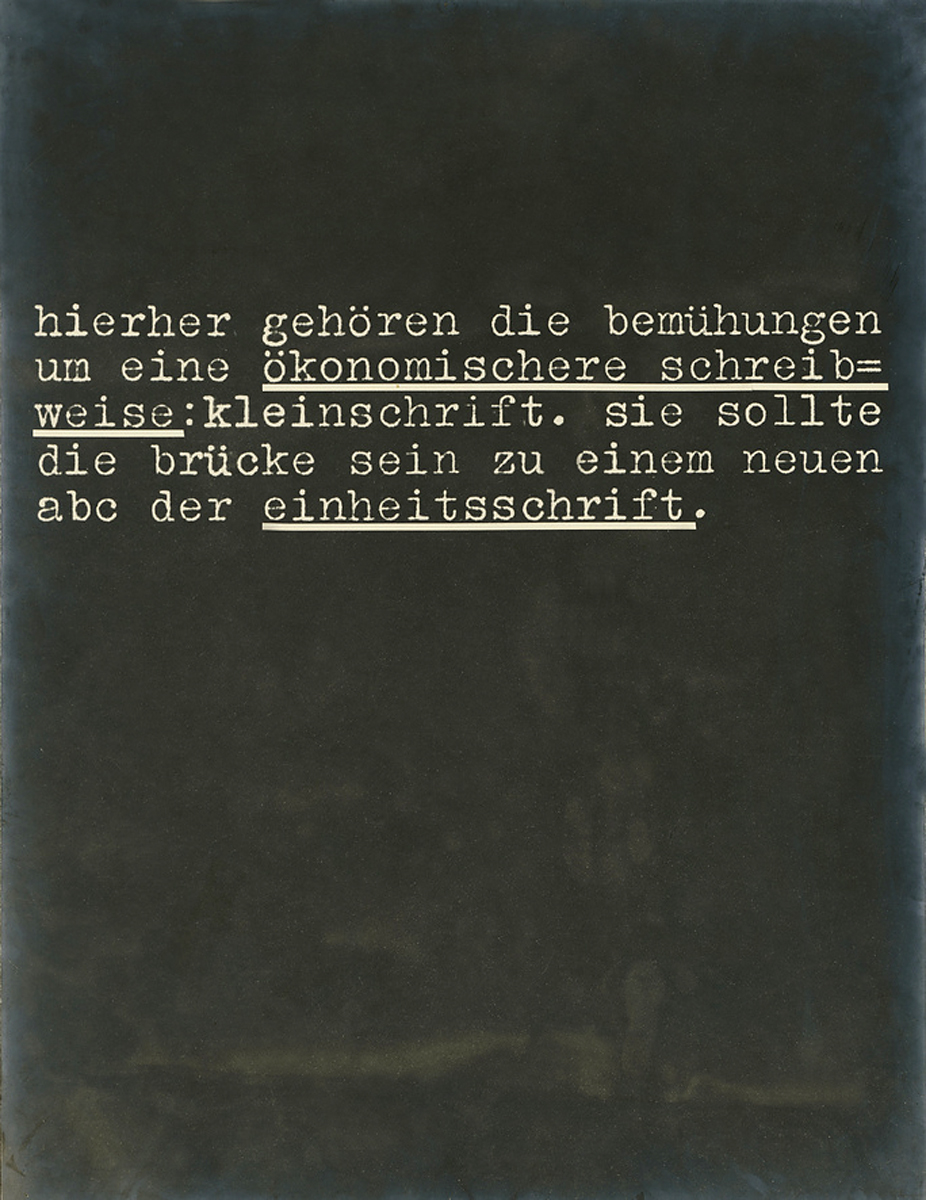
Wohin geht die typographische Entwicklung?
Where is typography headed?

Installation views of the exhibition László Moholy-Nagy and New Typography: A Reconstruction of a Berlin Exhibition from 1929 at the Staatliche Museen zu Berlin
Photos: Marcus Bunyan


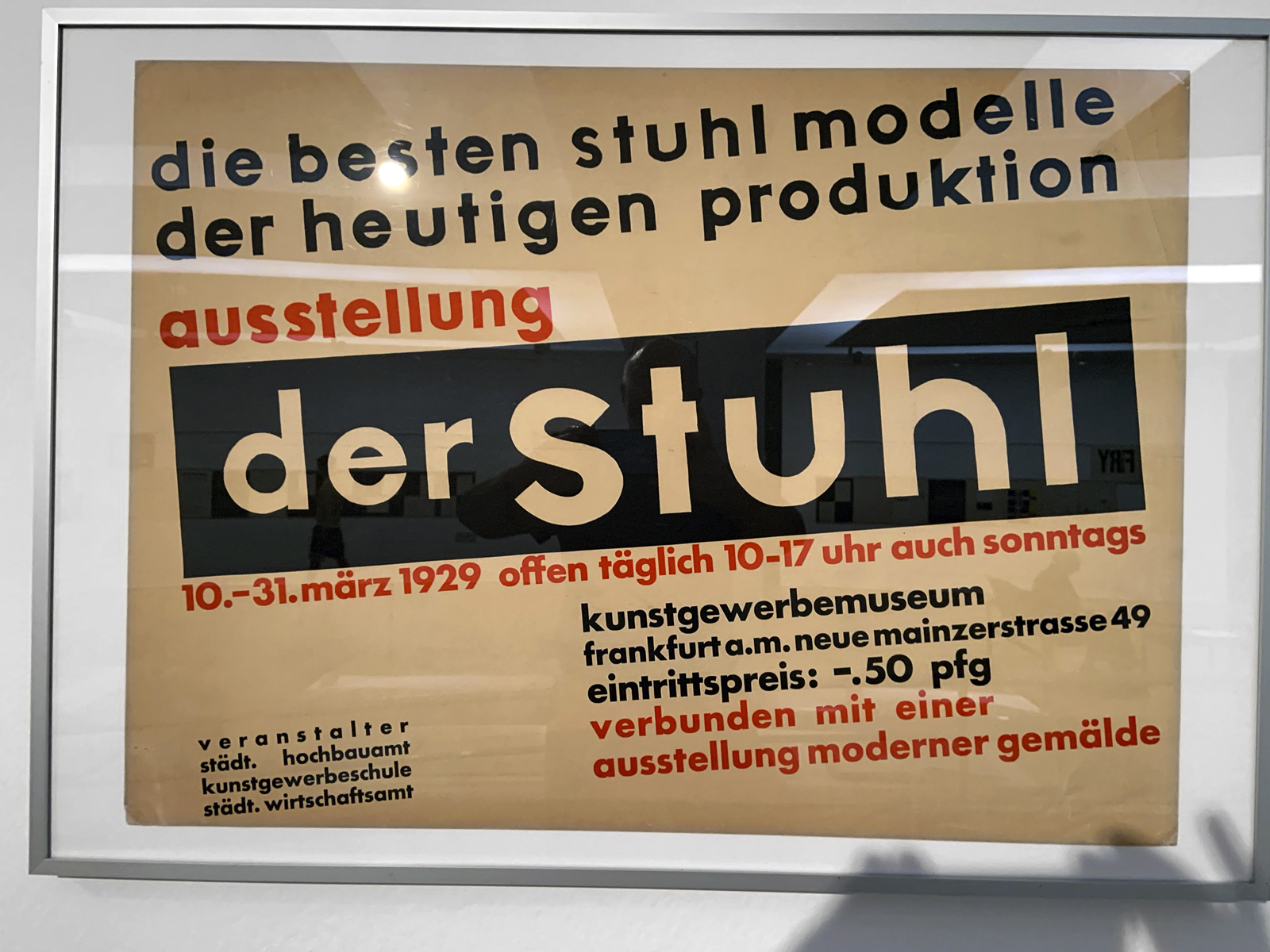
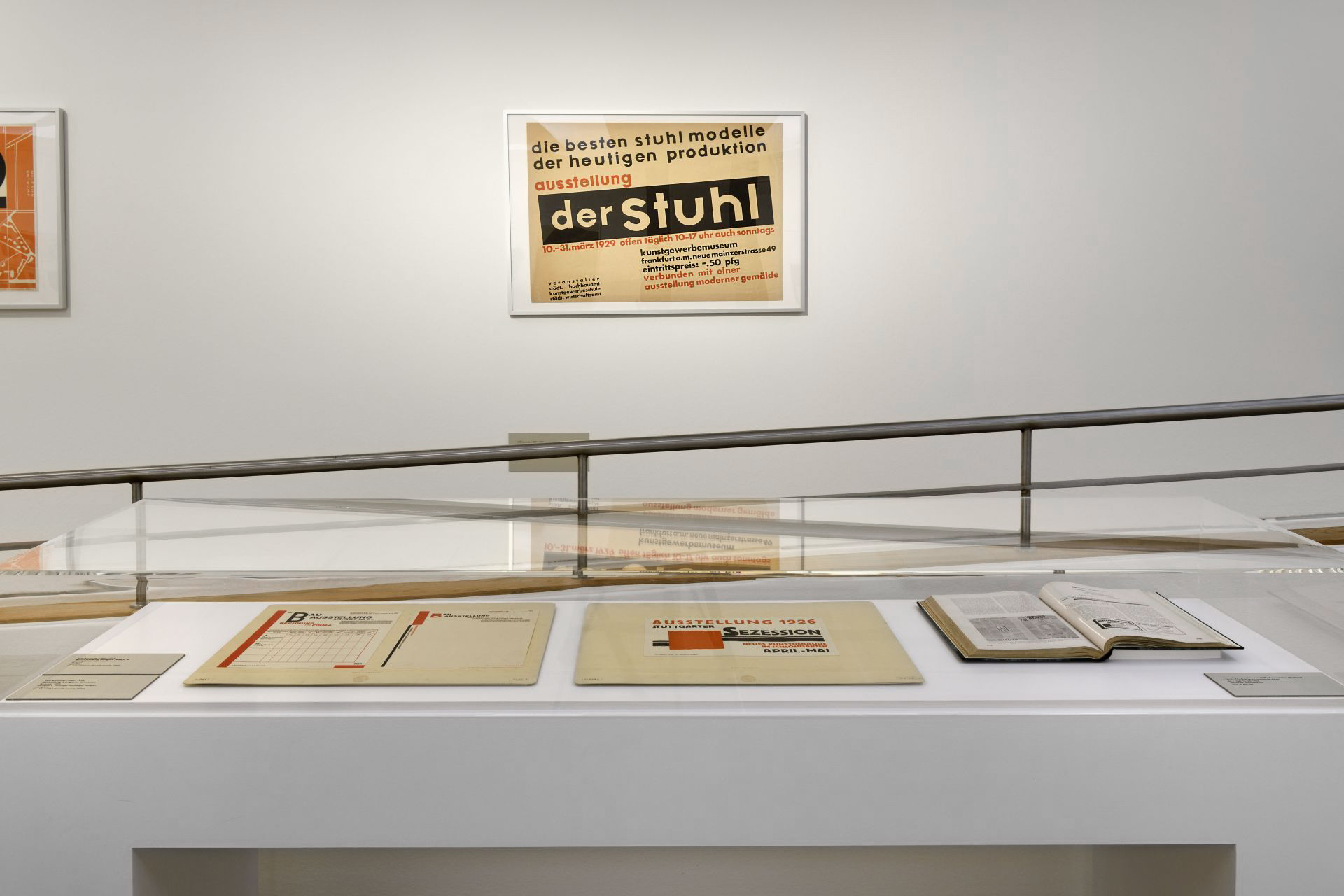
The best chair models of today's production exhibition 'the Chair' 1929 (installation view)


die besten stuhl modelle der heutigen produktion
The best models of today’s production

ausstellung
exhibition

der Stuhl (installation view)
1929
Poster
kunstgewerbemuseum
Arts and Crafts Museum
Kunstbibliothek der Staatlichen Museen zu Berlin
Photo: Marcus Bunyan


Installation view of the exhibition 'László Moholy-Nagy and New Typography: A Reconstruction of a Berlin Exhibition from 1929' at the Staatliche Museen zu Berlin


Installation view of the exhibition László Moholy-Nagy and New Typography: A Reconstruction of a Berlin Exhibition from 1929 at the Staatliche Museen zu Berlin
Photo: Staatliche Museen zu Berlin


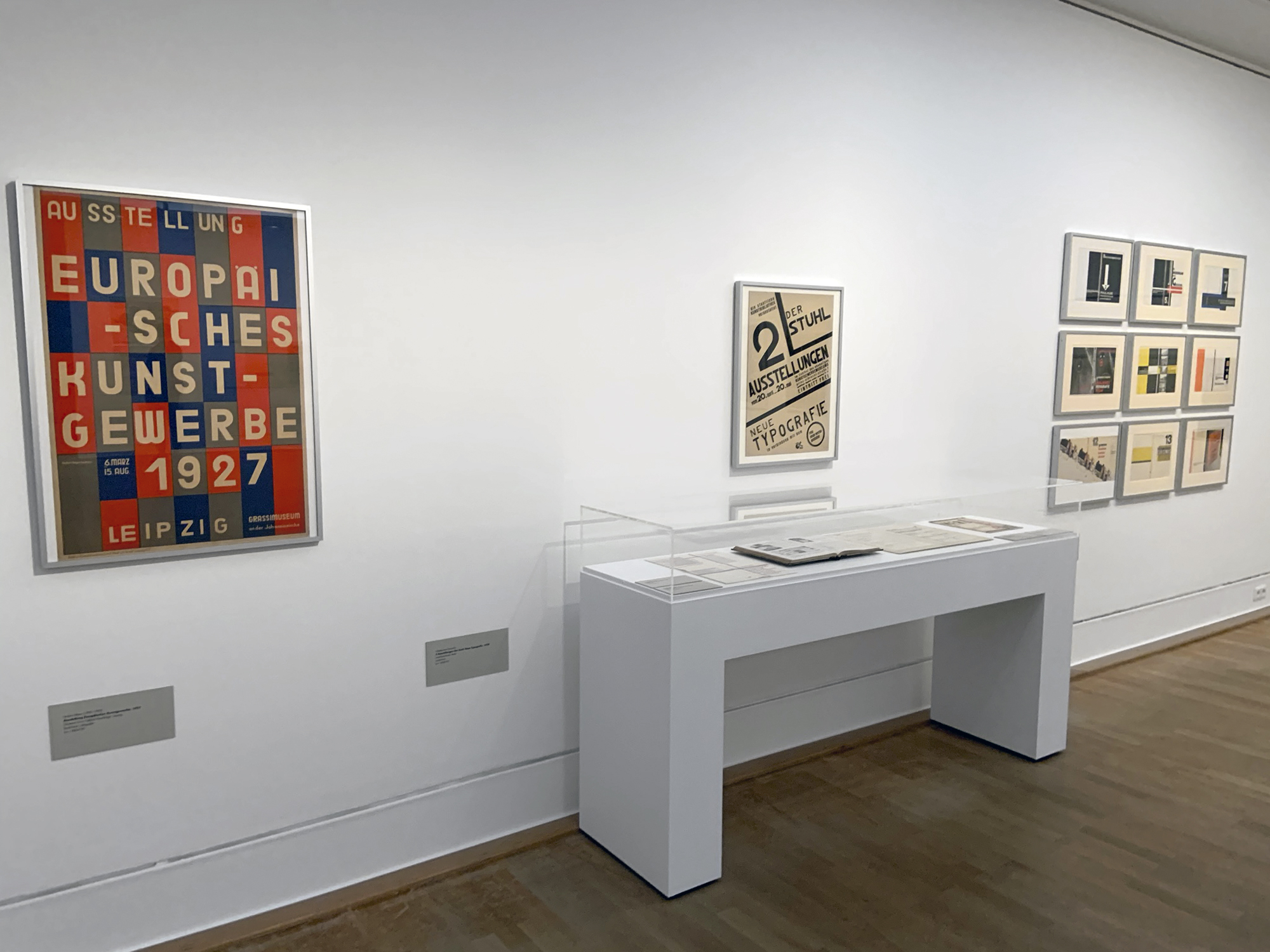
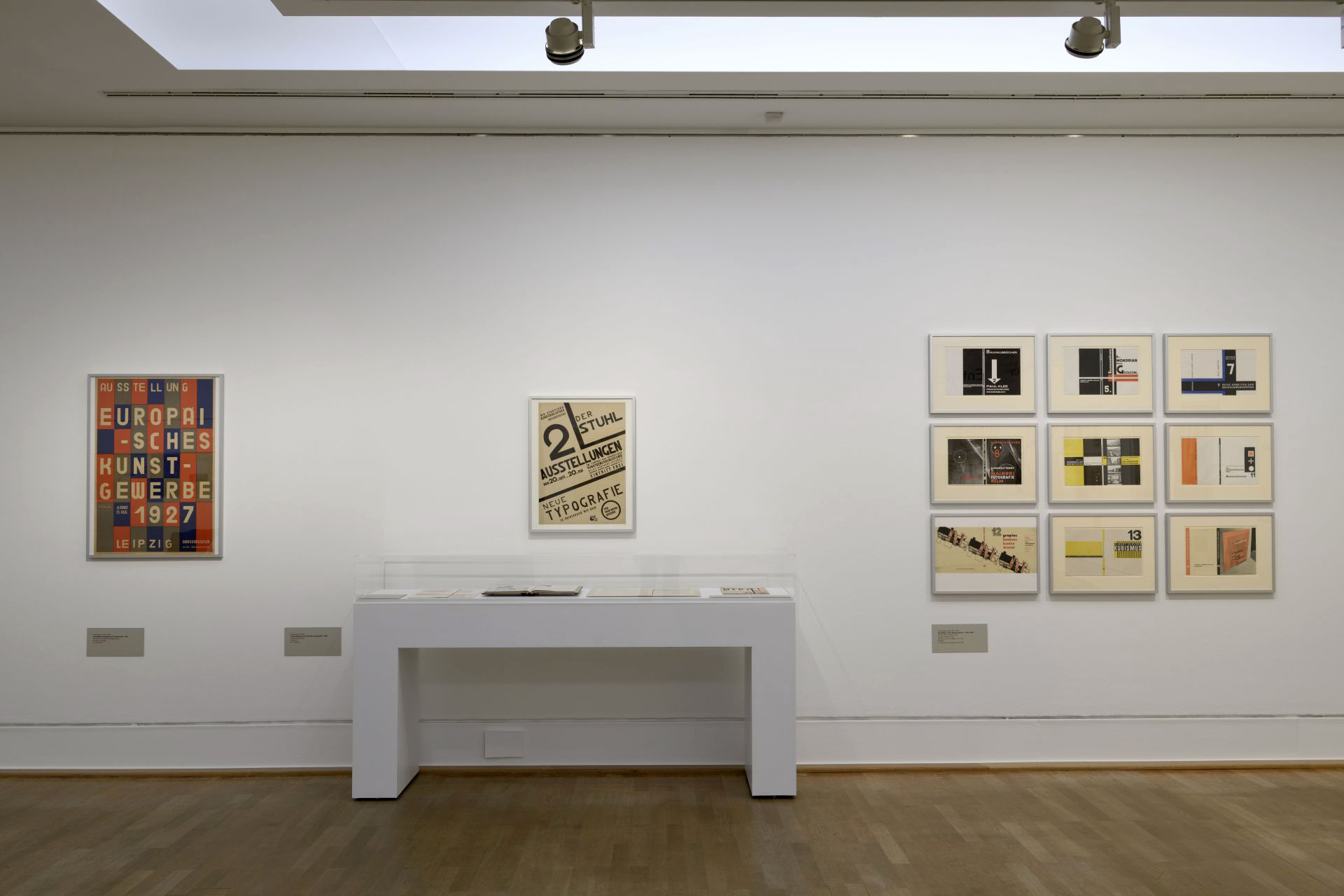
Installation view of the exhibition 'László Moholy-Nagy and New Typography: A Reconstruction of a Berlin Exhibition from 1929' at the Staatliche Museen zu Berlin showing at left, 'Ausstellung Europäisches Kunstgewerbe' (Exhibition of European applied arts) 1927; in the centre, 'Der Stuhl. Neue Typografie' (New typography) 1929; and at right, 'Umschläge zu den Bauhausbüchern, 1925-1930' (Covers for the Bauhaus books, 1925-1930) 1925-1930


Installation view of the exhibition László Moholy-Nagy and New Typography: A Reconstruction of a Berlin Exhibition from 1929 at the Staatliche Museen zu Berlin showing at left, Ausstellung Europäisches Kunstgewerbe (Exhibition of European applied arts) 1927; in the centre, Der Stuhl. Neue Typografie (New typography) 1929; and at right, Umschläge zu den Bauhausbüchern, 1925-1930 (Covers for the Bauhaus books, 1925-1930) 1925-1930
Photo: Marcus Bunyan


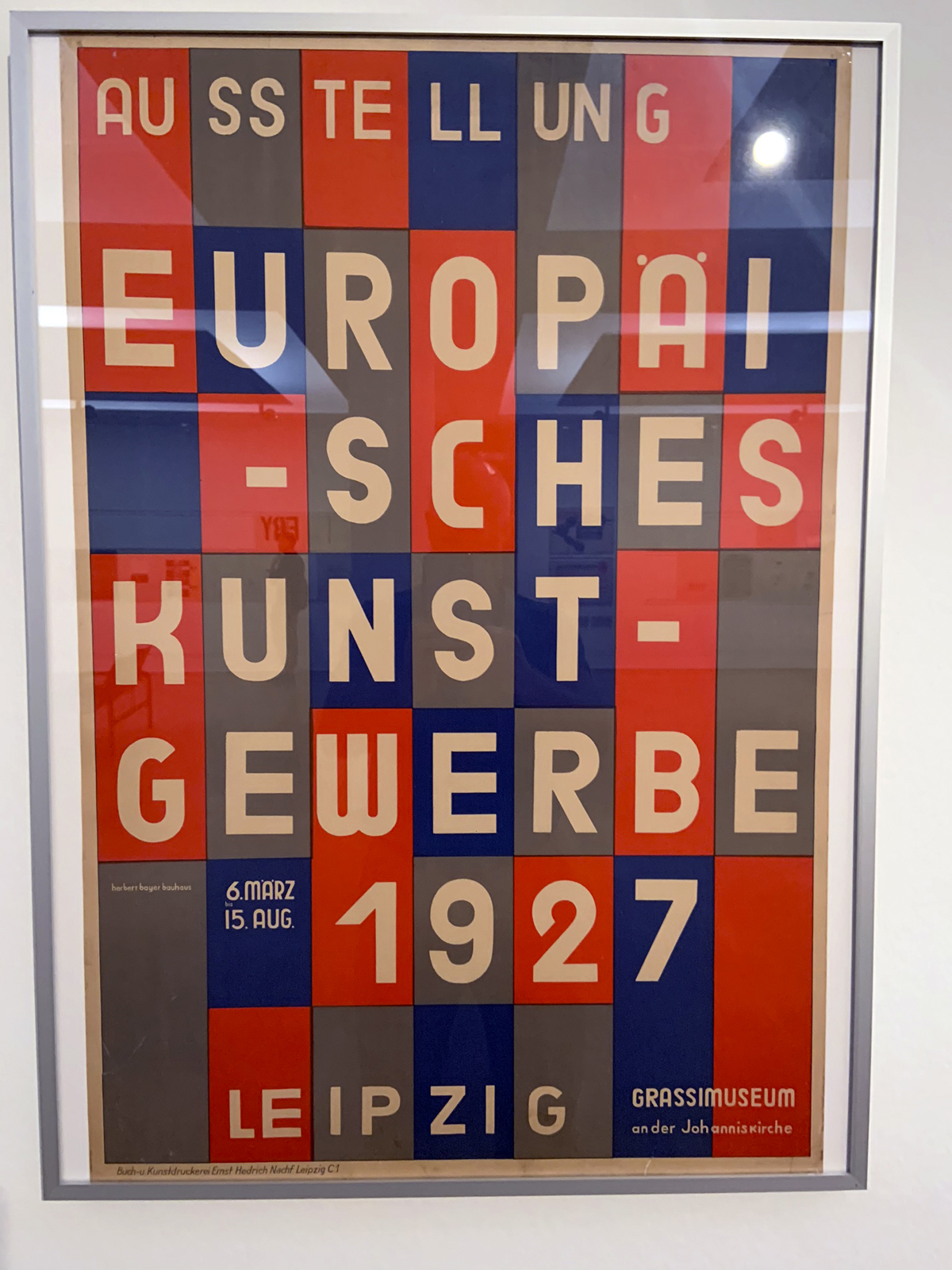
Herbert Bayer (1900-1985) 'Ausstellung Europäisches Kunstgewerbe' (Exhibition of European applied arts) 1927 (installation view)


Herbert Bayer (1900-1985)
Ausstellung Europäisches Kunstgewerbe (Exhibition of European applied arts) (installation view)
1927
Poster
Druckerei Ernst Hedrich Nachfolger, Leipzig Buchdruck
Ernst Hedrich printer, Leipzig Letterpress
Lithograph
Kunstbibliothek der Staatlichen Museen zu Berlin
Photo: Marcus Bunyan


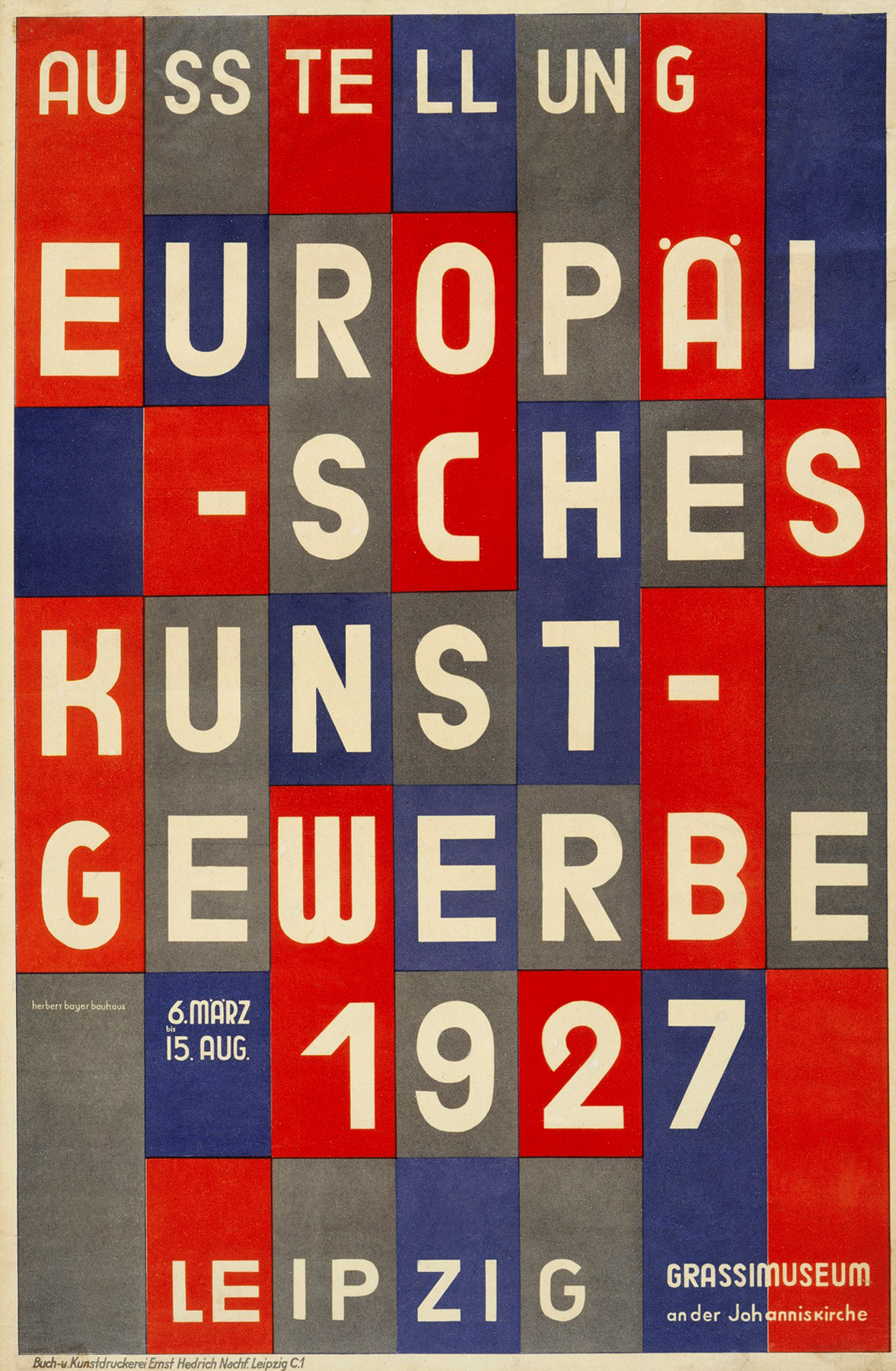
Herbert Bayer (1900-1985) 'Ausstellung Europäisches Kunstgewerbe' (Exhibition of European applied arts) 1927 from the exhibition 'László Moholy-Nagy and New Typography: A Reconstruction of a Berlin Exhibition from 1929' at the Staatliche Museen zu Berlin, Aug - Sept, 2019


Herbert Bayer (1900-1985)
Ausstellung Europäisches Kunstgewerbe (Exhibition of European applied arts)
1927
Poster
Druckerei Ernst Hedrich Nachfolger, Leipzig Buchdruck
Ernst Hedrich printer, Leipzig Letterpress
Lithograph
35 1/4 x 23 3/4″ (89.5 x 60.3cm)
Kunstbibliothek der Staatlichen Museen zu Berlin


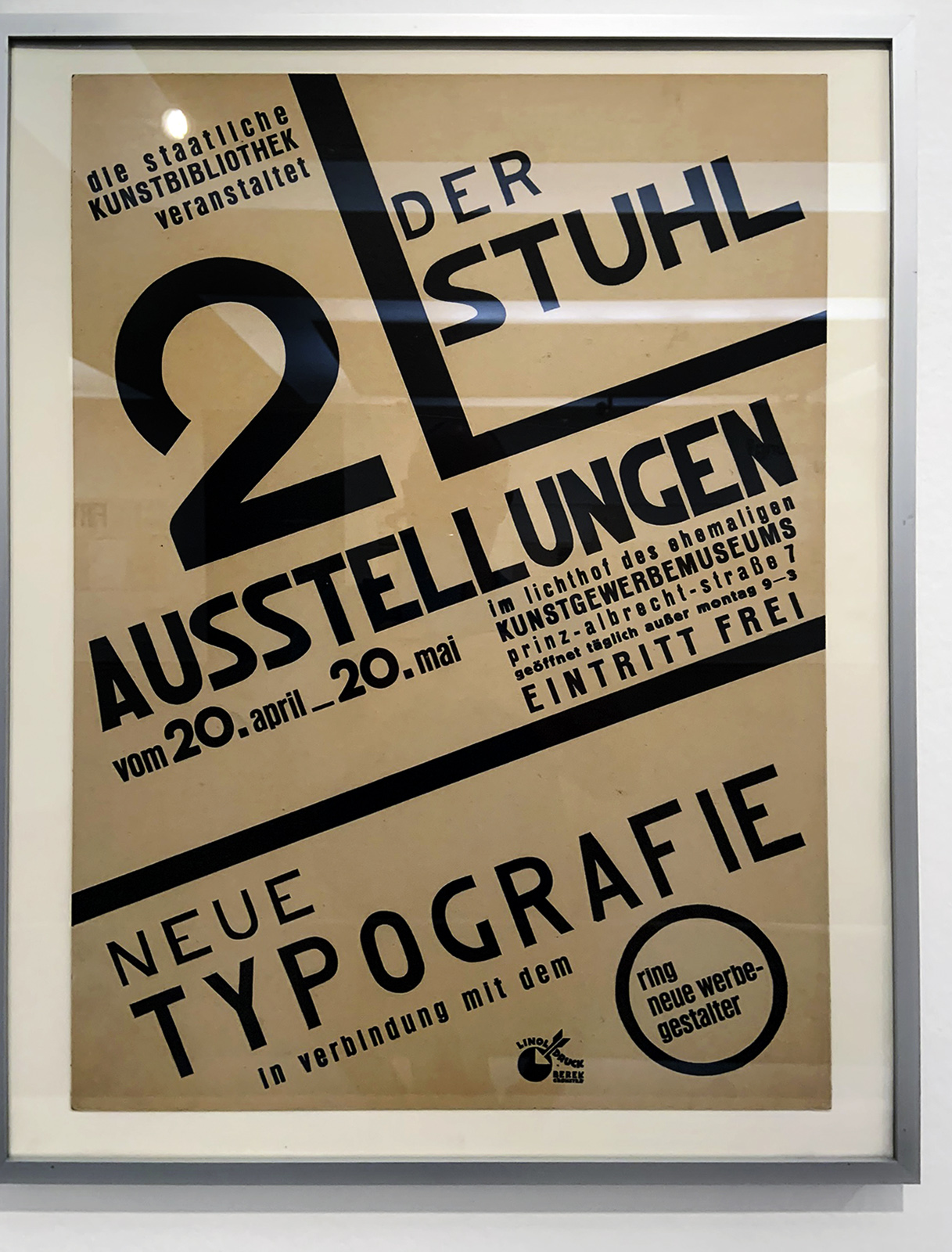
László Moholy-Nagy (Hungarian, 1895-1946) 'Der Stuhl. Neue Typografie' (New typography) 1929 (installation view)


László Moholy-Nagy (Hungarian, 1895-1946)
Der Stuhl. Neue Typografie (New typography) (installation view)
1929
Poster
Entwerfer Berek-Druck (Nachweiszeit: 1928-1940), Drucker
Designer Berek-Druck (record time: 1928-1940), printer
Printed in Berlin
Printing ink (black) & paper
Linocut
61.0 x 43.5cm
Kunstbibliothek der Staatlichen Museen zu Berlin
Photo: Marcus Bunyan


László Moholy-Nagy (Hungarian, 1895-1946) 'Umschläge zu den Bauhausbüchern, 1925-1930' (Covers for the Bauhaus books, 1925-1930) 1925-30 (installation view)


László Moholy-Nagy (Hungarian, 1895-1946)
Umschläge zu den Bauhausbüchern, 1925-1930 (Covers for the Bauhaus books, 1925-1930) (installation view)
1925-1930
Book covers
Druckerei Hesse & Becker, Leipzig
Hesse & Becker printing company, Leipzig
Druckerei Ohlenroth, Erfurt Klischees von Dr. von Löbbeke u. Co., Erfurt Buchdruck
Ohlenroth printing company, Erfurt Letterpress
Kunstbibliothek der Staatlichen Museen zu Berlin
Photo: Marcus Bunyan


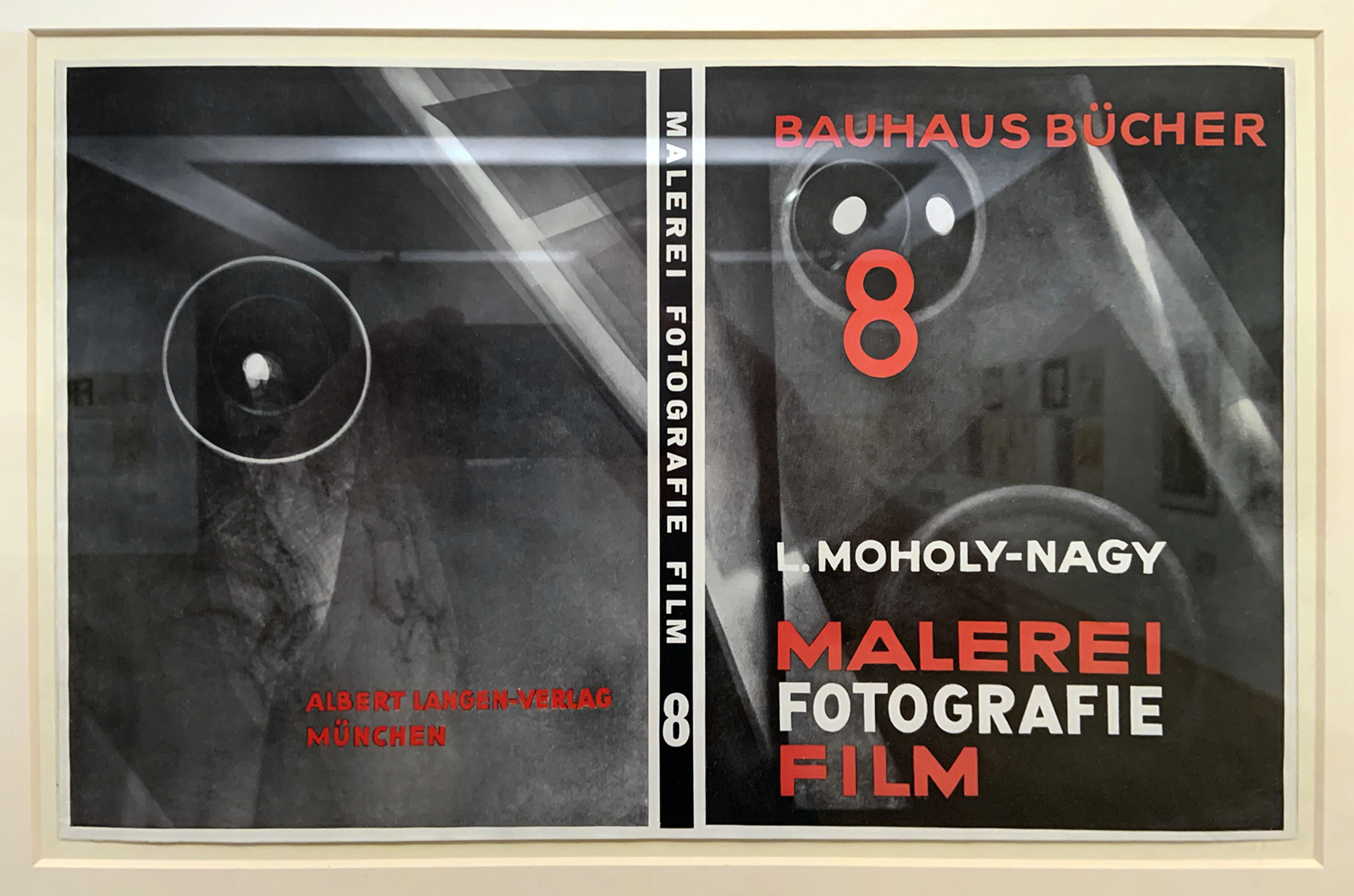
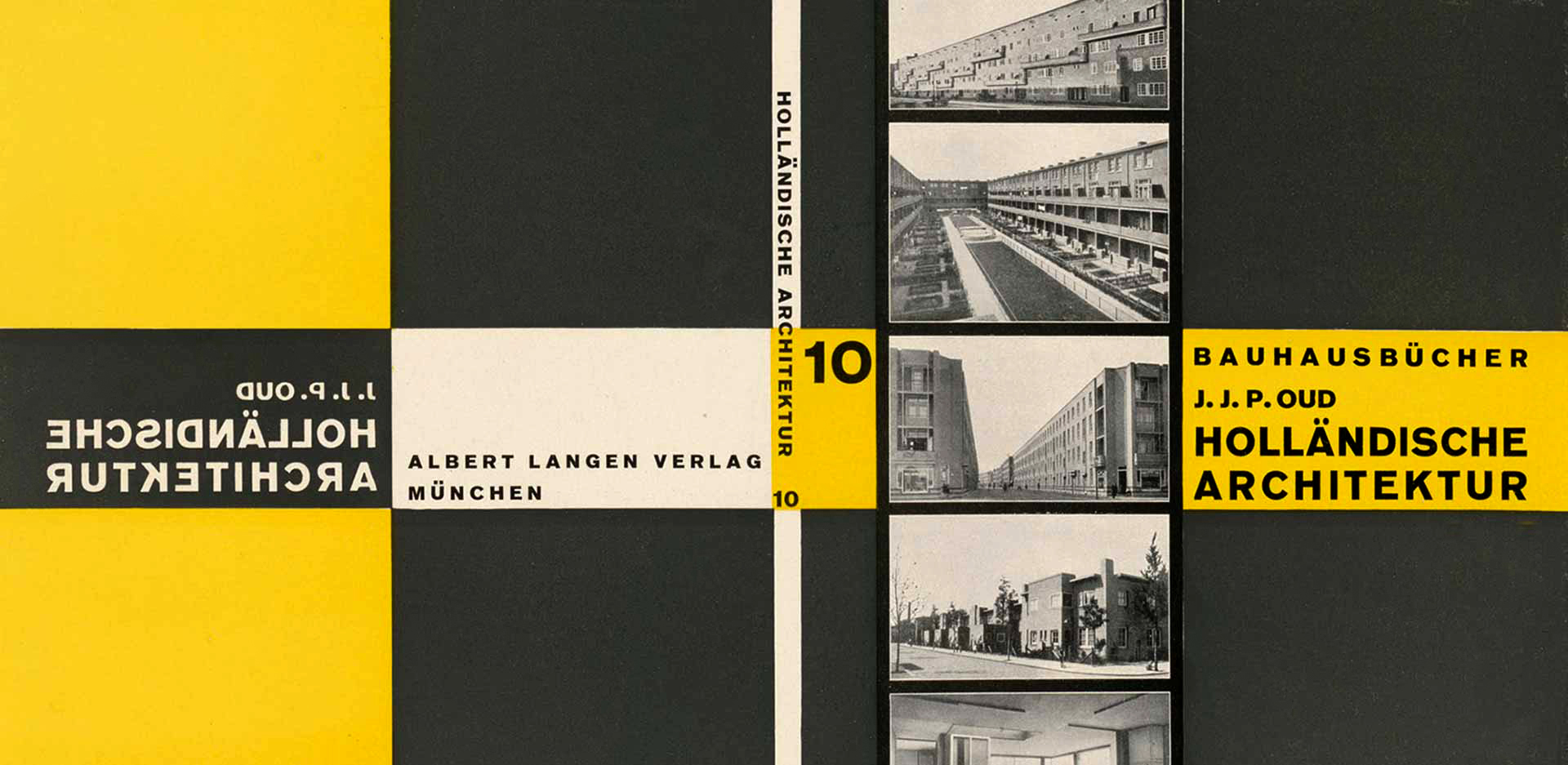
László Moholy-Nagy (Hungarian, 1895-1946) 'Bauhausbücher 8, L. Moholy-Nagy: Malerei, Fotografie, Film' 1925


László Moholy-Nagy (Hungarian, 1895-1946)
Bauhausbücher 8, L. Moholy-Nagy: Malerei, Fotografie, Film
1925
Albert Langen Verlag Herstellung, Entwerfer, Mitarbeit, Verleger
Albert Langen Verlag, Manufacture, designer, collaboration, publisher
Offset printing on paper and letterpress
Art Library / Collection of graphic design
Kunstbibliothek der Staatlichen Museen zu Berlin
Photo: Marcus Bunyan


Installation view of the exhibition 'László Moholy-Nagy and New Typography: A Reconstruction of a Berlin Exhibition from 1929' at the Staatliche Museen zu Berlin


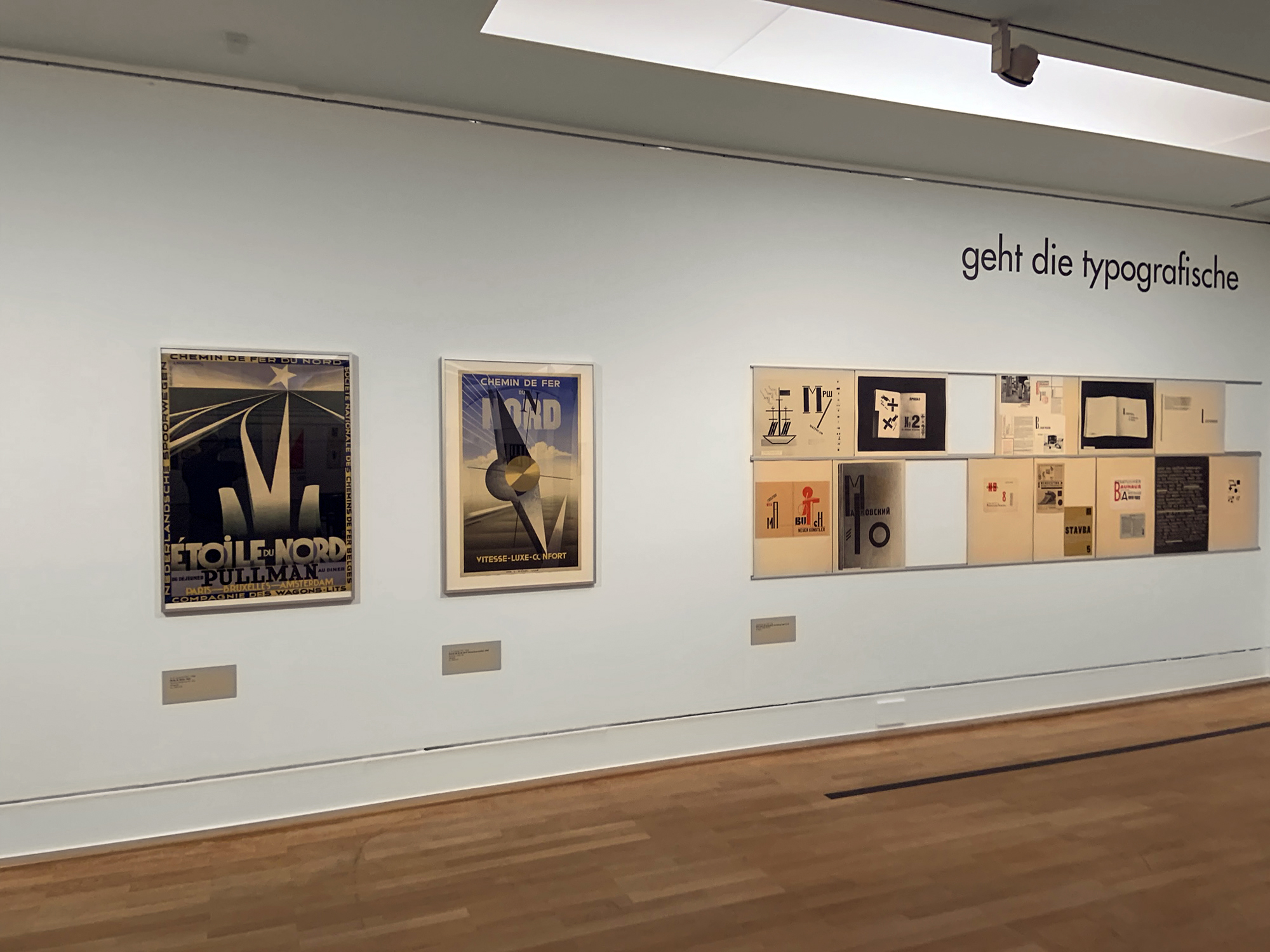
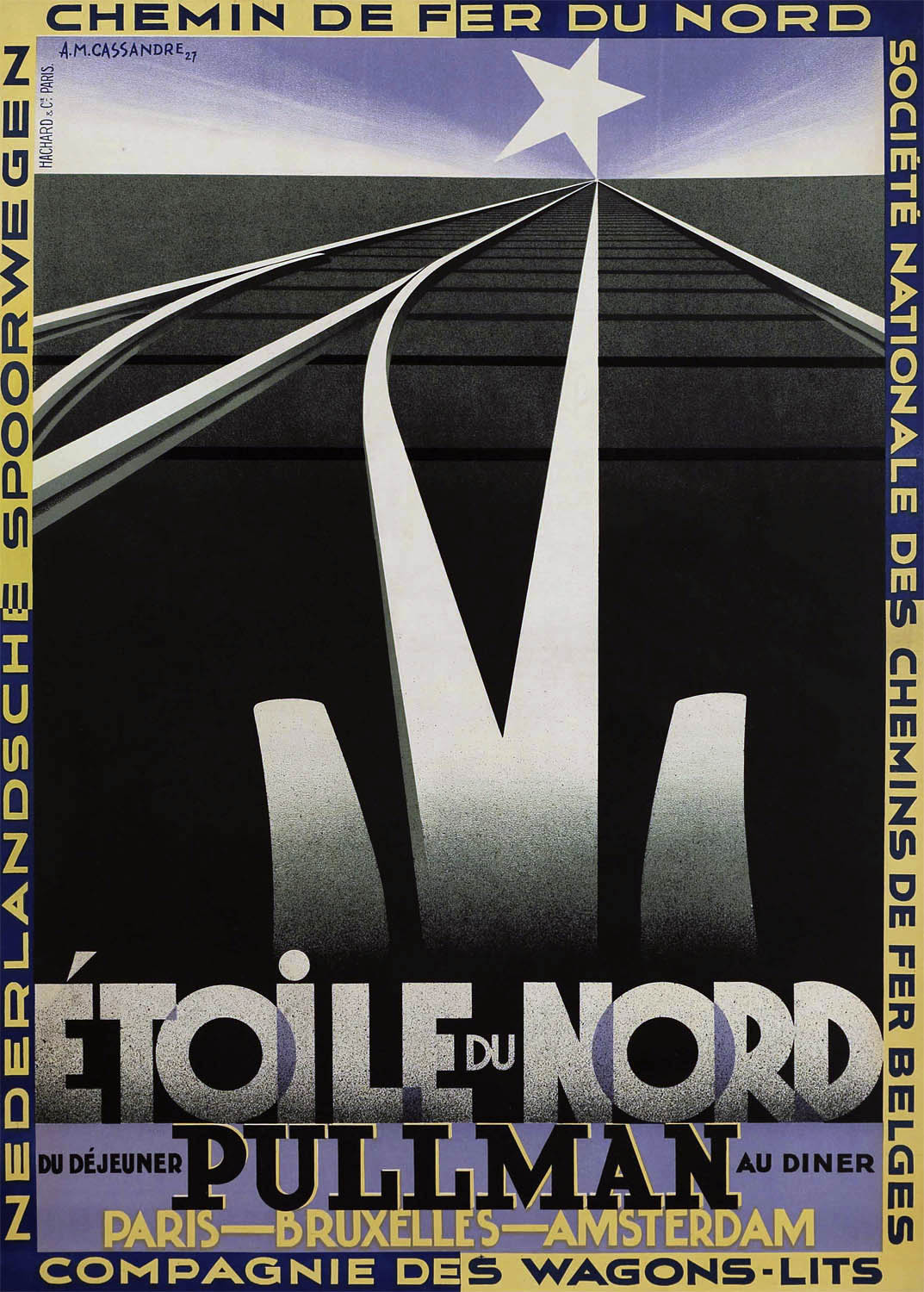
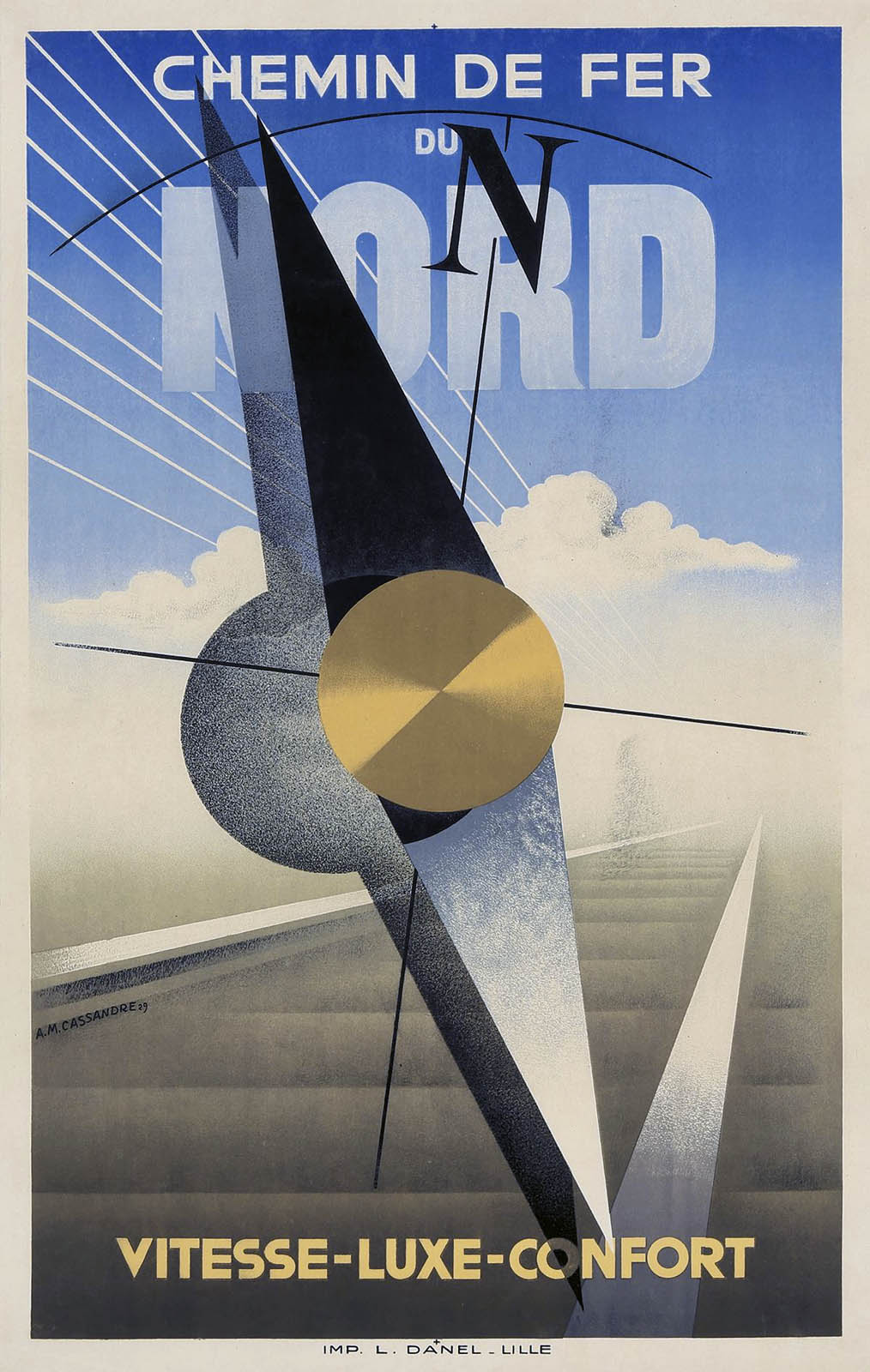
Installation view of the exhibition László Moholy-Nagy and New Typography: A Reconstruction of a Berlin Exhibition from 1929 at the Staatliche Museen zu Berlin showing at left, Etoile du Nord 1927 (below); and at second left, Chemin de Fer du Nord. Vitesse-Luxe-Confort 1929 (below)
Photo: Marcus Bunyan


A. M. Cassandre (French, 1901-1968) 'Etoile du Nord' (North Star) 1927 from the exhibition 'László Moholy-Nagy and New Typography: A Reconstruction of a Berlin Exhibition from 1929' at the Staatliche Museen zu Berlin, Aug - Sept, 2019


A. M. Cassandre (French, 1901-1968)
Etoile du Nord (North Star)
1927
Poster
Druckerei Hachard et Cie., Paris
Hachard et Cie. Printing house, Paris
Lithograph


A. M. Cassandre (French, 1901-1968)

Cassandre, pseudonym of Adolphe Jean-Marie Mouron (24 January 1901 – 17 June 1968) was a French painter, commercial poster artist, and typeface designer.

He was born Adolphe Jean-Marie Mouron in Kharkiv, Ukraine, to French parents. As a young man, Cassandre moved to Paris, where he studied at the École des Beaux-Arts and at the Académie Julian. The popularity of posters as advertising afforded him an opportunity to work for a Parisian printing house. Inspired by cubism as well as surrealism, he earned a reputation with works such as Bûcheron (Woodcutter), a poster created for a cabinetmaker that won first prize at the 1925 Exposition Internationale des Arts Décoratifs et Industriels Modernes.

Cassandre became successful enough that with the help of partners he was able to set up his own advertising agency called Alliance Graphique, serving a wide variety of clients during the 1930s. He is perhaps best known for his posters advertising travel, for clients such as the Compagnie Internationale des Wagons-Lits. He was a pioneer on airbrush arts.

His creations for the Dubonnet wine company were among the first posters designed in a manner that allowed them to be seen by occupants in moving vehicles. His posters are memorable for their innovative graphic solutions and their frequent denotations to such painters as Max Ernst and Pablo Picasso. In addition, he taught graphic design at the École des Arts Décoratifs and then at the École d’Art Graphique.

With typography an important part of poster design, the company created several new typeface styles. Cassandre developed Bifur in 1929, the sans serif Acier Noir in 1935, and in 1937 an all-purpose font called Peignot. In 1936, his works were exhibited at the Museum of Modern Art in New York City which led to commissions from Harper’s Bazaar to do cover designs.

Text from the Wikipedia website


A. M. Cassandre (French, 1901-1968) 'Chemin de Fer du Nord. Vitesse-Luxe-Comfort' (Northern Railway. Speed-Luxury-Comfort) 1929


A. M. Cassandre (French, 1901-1968)
Chemin de Fer du Nord. Vitesse-Luxe-Comfort (Northern Railway. Speed-Luxury-Comfort)
1929
Poster
Druckerei L. Danel, Lille
L. Danel printing house, Lille
Lithograph


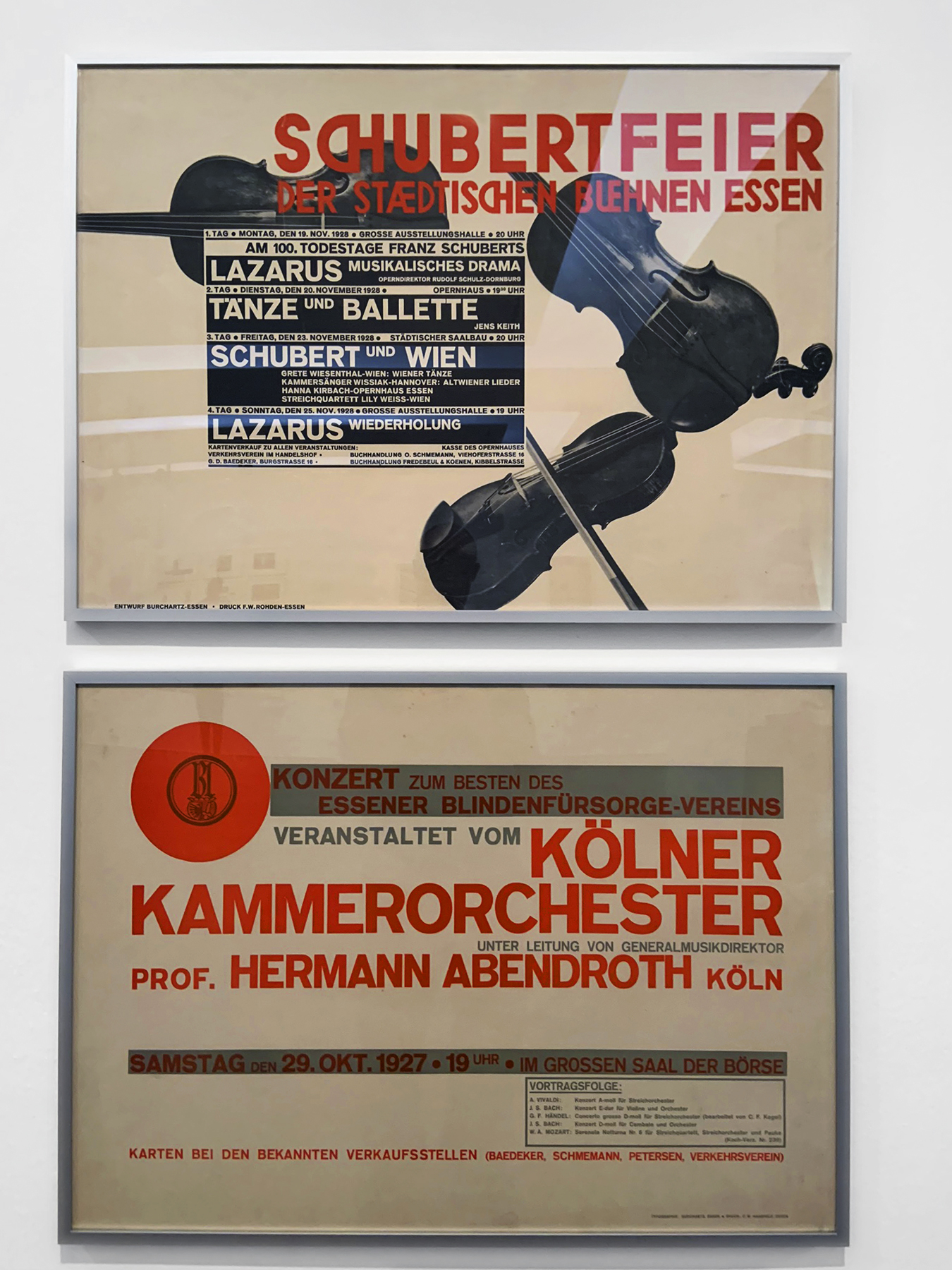
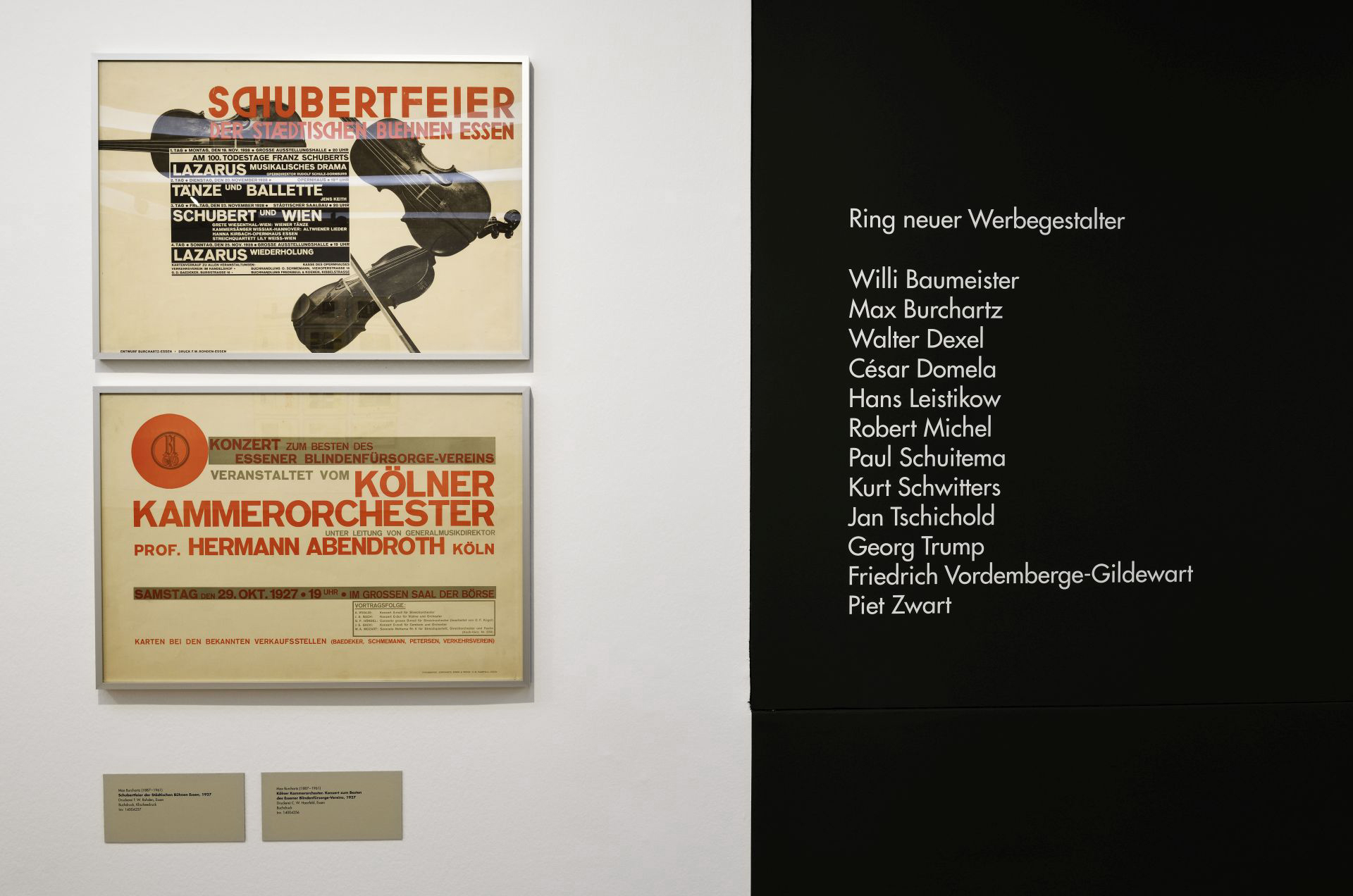
Max Burchartz (1887-1961) 'Posters' 1927


Max Burchartz (1887-1961)
Schubertfeier der Städtischen Bühnen Essen (Schubert celebration of the municipal theatres of Essen) (installation view)
1927
Poster
Druckerei F.W. Rohden Essen Buchdruck
F.W. Rohden Essen printing house
Letterpress

Max Burchartz (1887-1961)
Kölner Kammerorchester. Konzert aum Besten des Essener Blindenfürsorge-Vereins (Cologne Chamber Orchestra. Concert for the benefit of the Essen Blind Welfare Association) (installation view)
1927
Poster
Druckerei C.W. Haafeld, Essen Buchdruck
C.W. Haafeld, Essen printing house
Letterpress
Photo: Marcus Bunyan


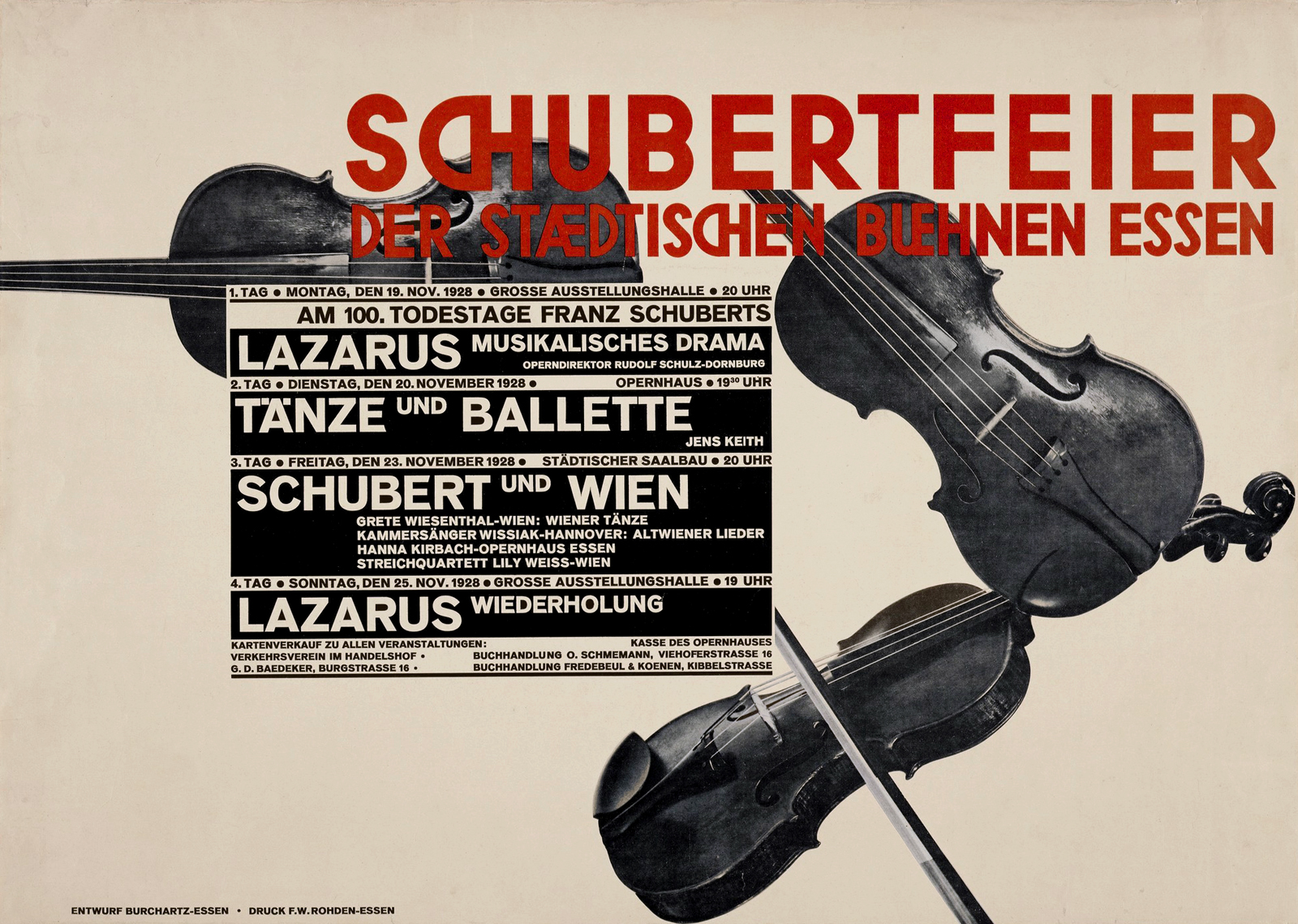
Max Burchartz (1887-1961) 'Schubertfeier der Städtischen Bühnen Essen' (Schubert celebration of the municipal theatres of Essen) 1927


Max Burchartz (1887-1961)
Schubertfeier der Städtischen Bühnen Essen (Schubert celebration of the municipal theatres of Essen)
1927
Poster
Druckerei F.W. Rohden Essen Buchdruck
F.W. Rohden Essen printing house
Letterpress


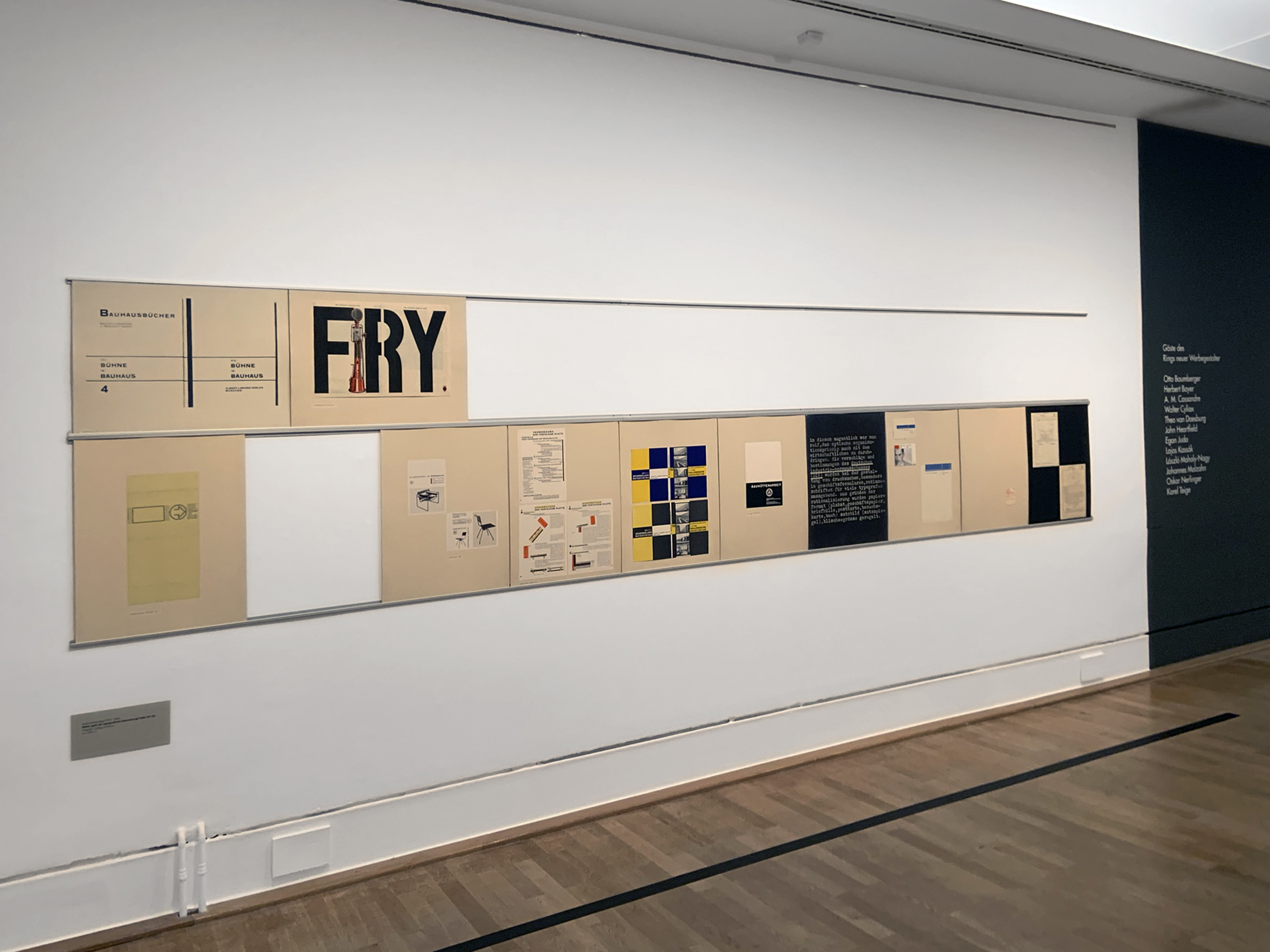
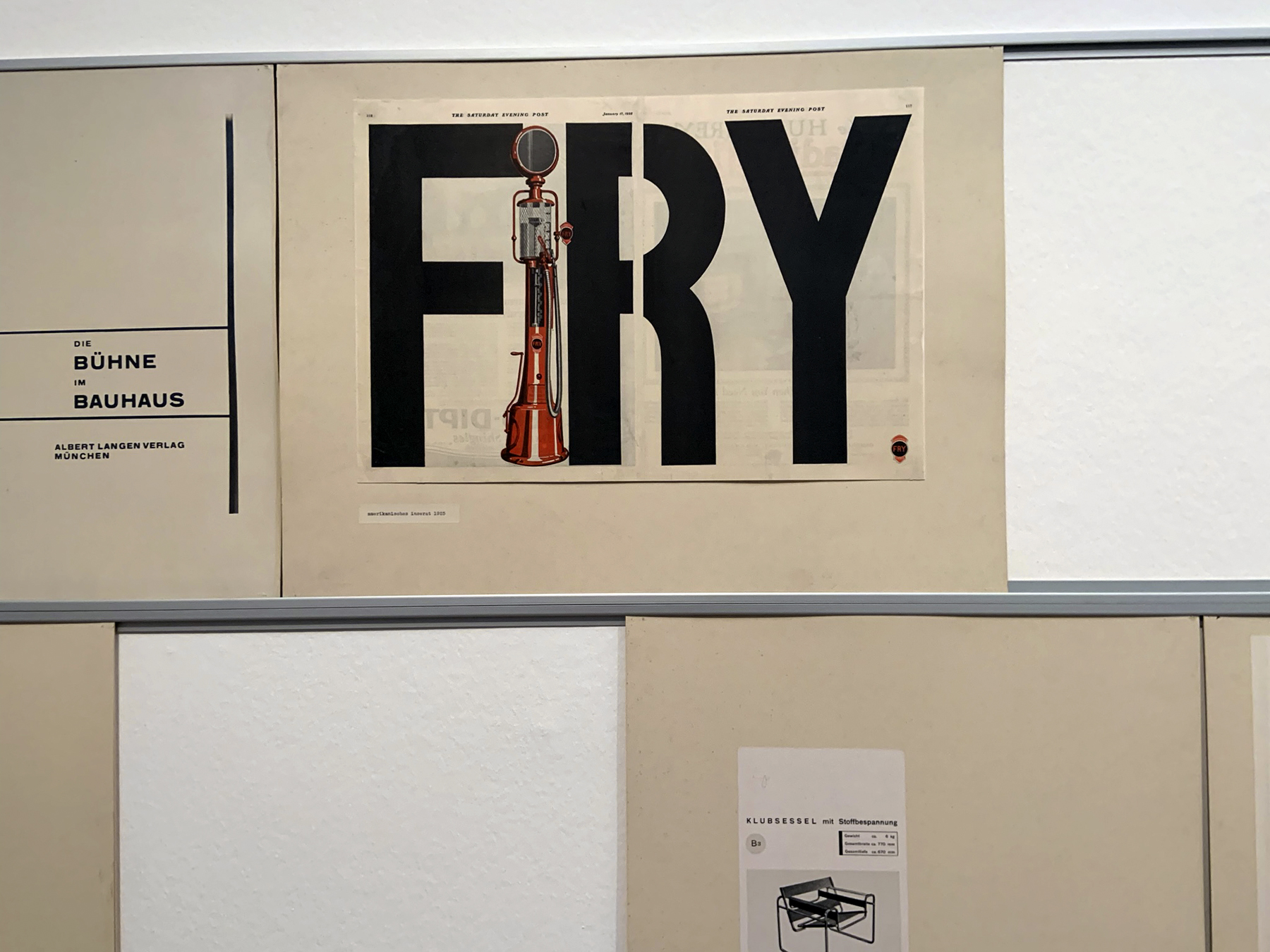
Installation view of the exhibition 'László Moholy-Nagy and New Typography: A Reconstruction of a Berlin Exhibition from 1929' at the Staatliche Museen zu Berlin

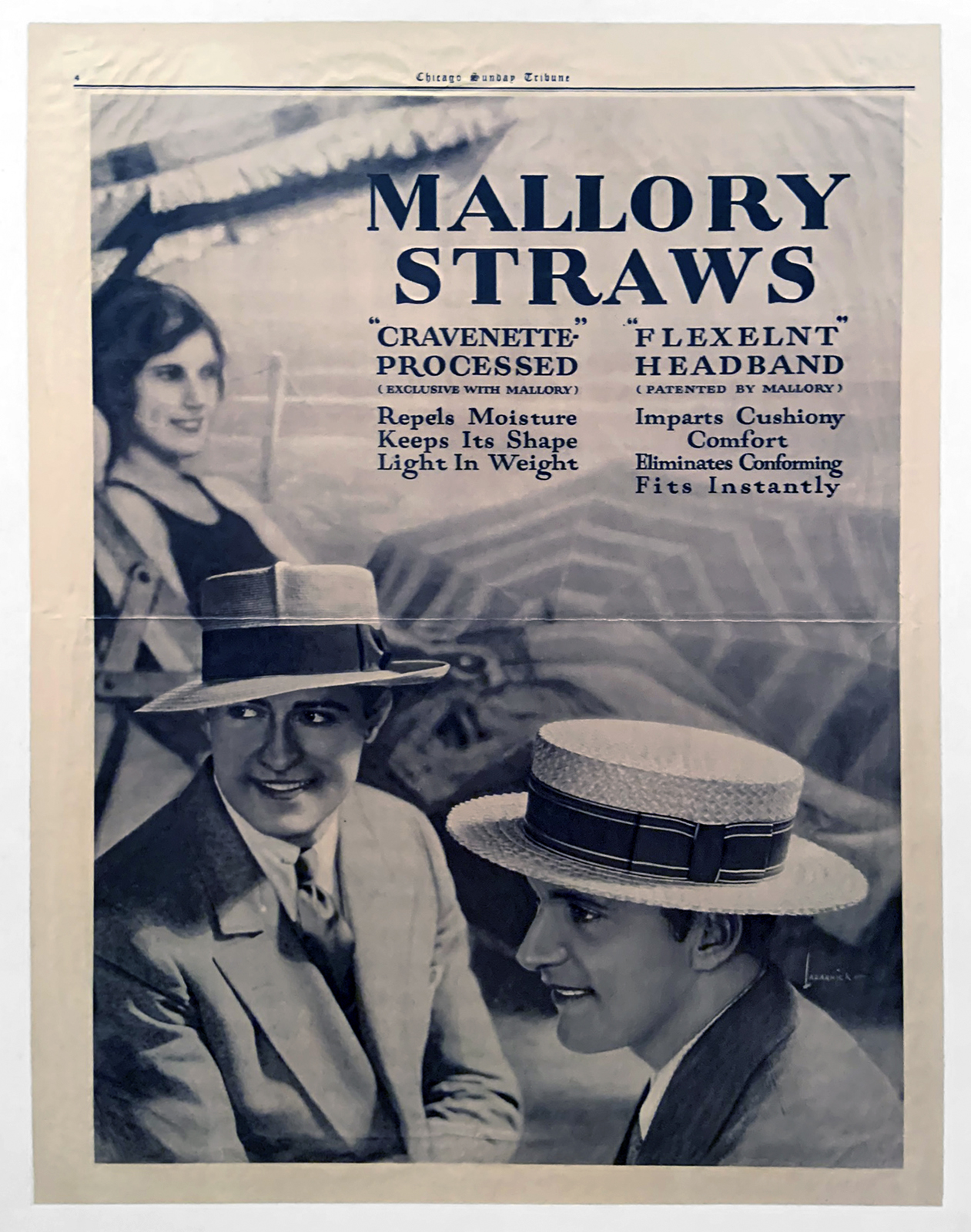
Installation view of the exhibition 'László Moholy-Nagy and New Typography: A Reconstruction of a Berlin Exhibition from 1929' at the Staatliche Museen zu Berlin showing American advertisement 1925 from 'The Saturday Evening Post'


Installation view of the exhibition László Moholy-Nagy and New Typography: A Reconstruction of a Berlin Exhibition from 1929 at the Staatliche Museen zu Berlin showing American advertisement 1925 from The Saturday Evening Post
Photos: Marcus Bunyan


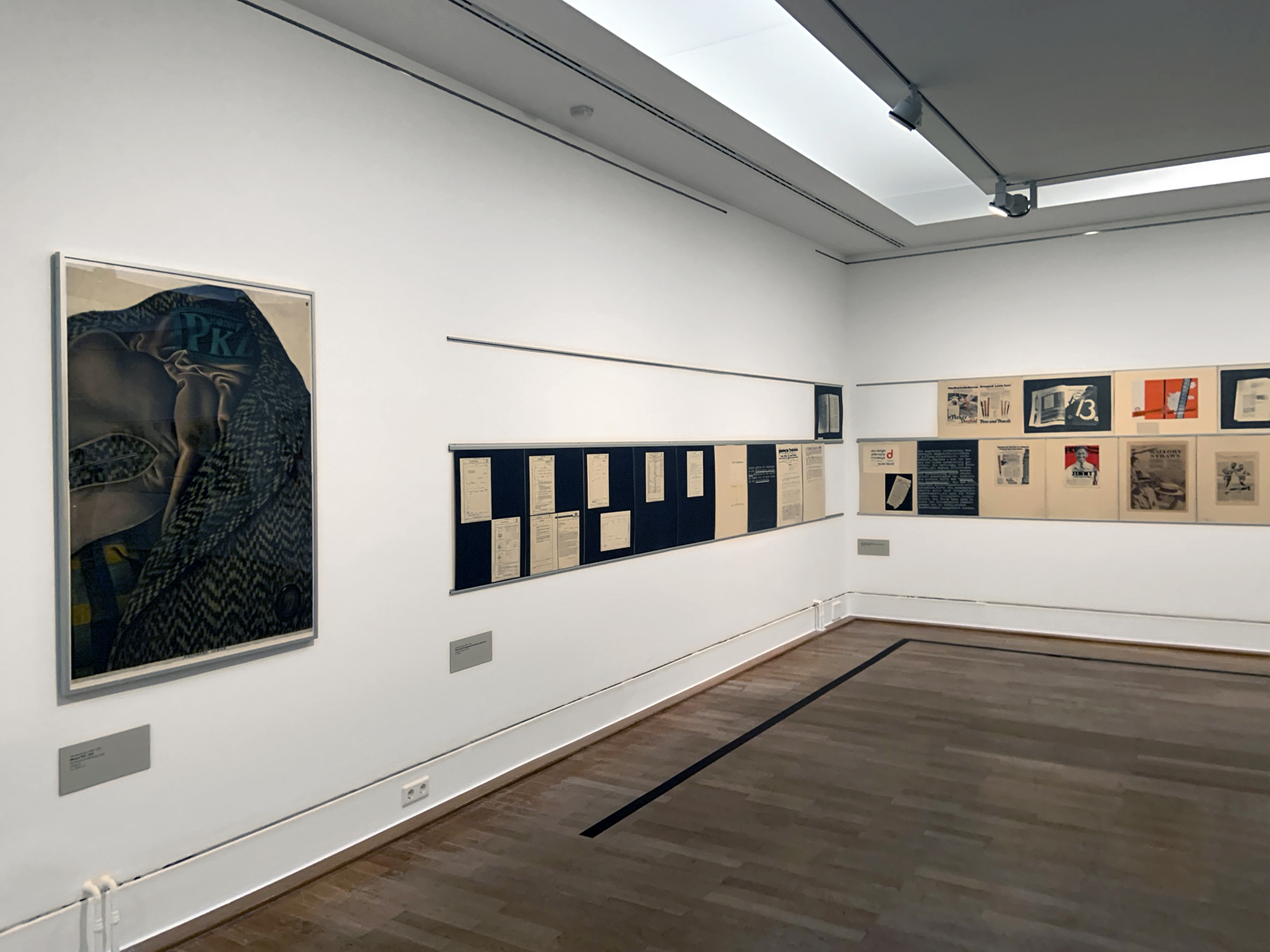
Installation view of the exhibition 'László Moholy-Nagy and New Typography: A Reconstruction of a Berlin Exhibition from 1929' at the Staatliche Museen zu Berlin showing at left, Otto Baumberger's 'Marque PKZ' 1923


Installation view of the exhibition László Moholy-Nagy and New Typography: A Reconstruction of a Berlin Exhibition from 1929 at the Staatliche Museen zu Berlin showing at left, Otto Baumberger’s Marque PKZ (1923, below)
Photo: Marcus Bunyan


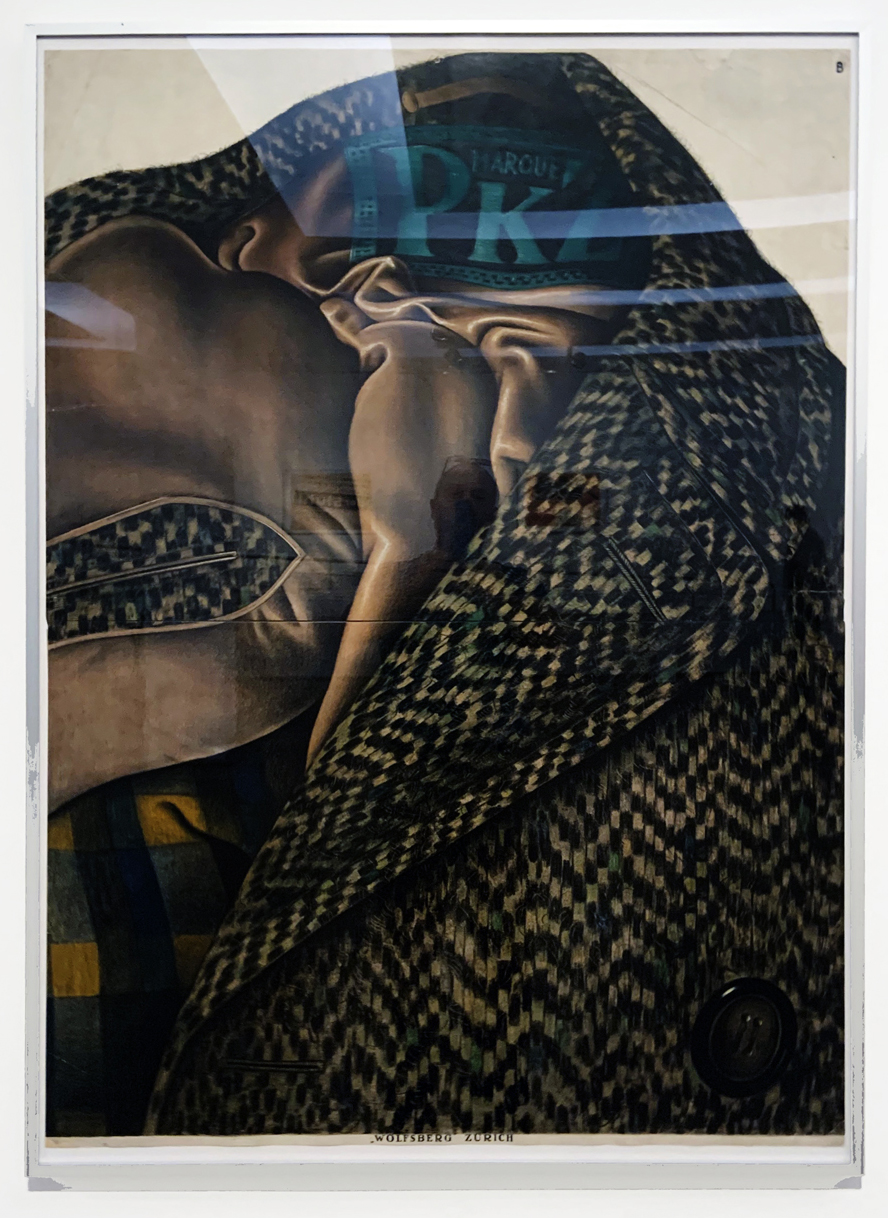
Otto Baumberger (1889-1961) 'Marque PKZ' 1923 (installation view)


Otto Baumberger (1889-1961)
Marque PKZ (installation view)
1923
Steindruckerei Wolfensberg, Zürich
Wolfensberg lithography, Zurich
Lithograph
Photo: Marcus Bunyan


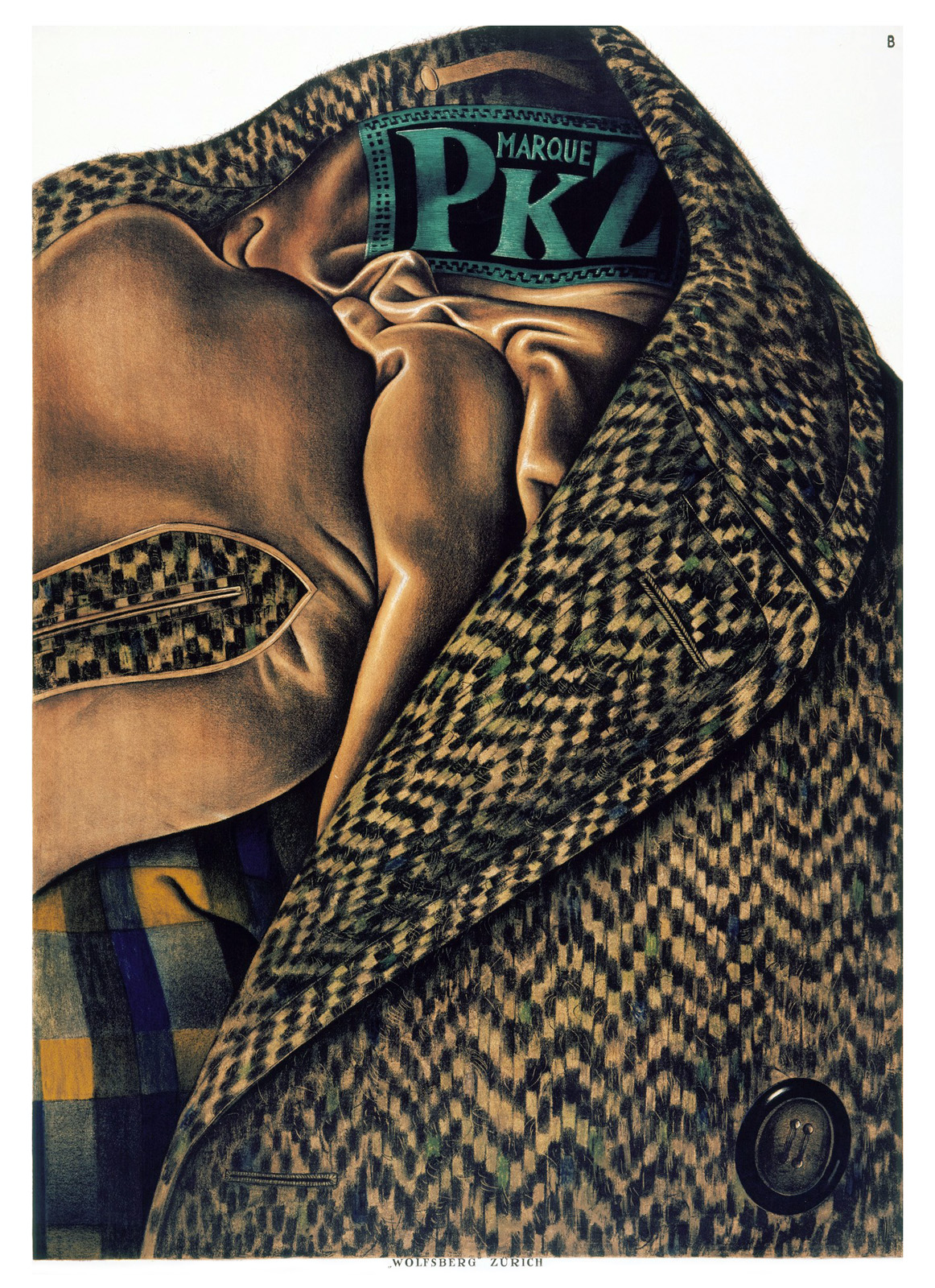
Otto Baumberger (1889-1961) 'Marque PKZ' 1923


Otto Baumberger (1889-1961)
Marque PKZ
1923
Steindruckerei Wolfensberg, Zürich
Wolfensberg lithography, Zurich
Lithograph


Otto Baumberger (21 May 1889 Altstetten, Zurich – 26 December 1961 Weiningen), was a noted Swiss painter and poster artist. Baumberger produced some 200 posters of great quality and style. His realistic rendering of a herringbone tweed coat became a classic of Swiss poster, an example of a Sachplakat (object poster).


Installation view of the exhibition 'László Moholy-Nagy and New Typography: A Reconstruction of a Berlin Exhibition from 1929' at the Staatliche Museen zu Berlin


Installation view of the exhibition László Moholy-Nagy and New Typography: A Reconstruction of a Berlin Exhibition from 1929 at the Staatliche Museen zu Berlin
Photo: Marcus Bunyan


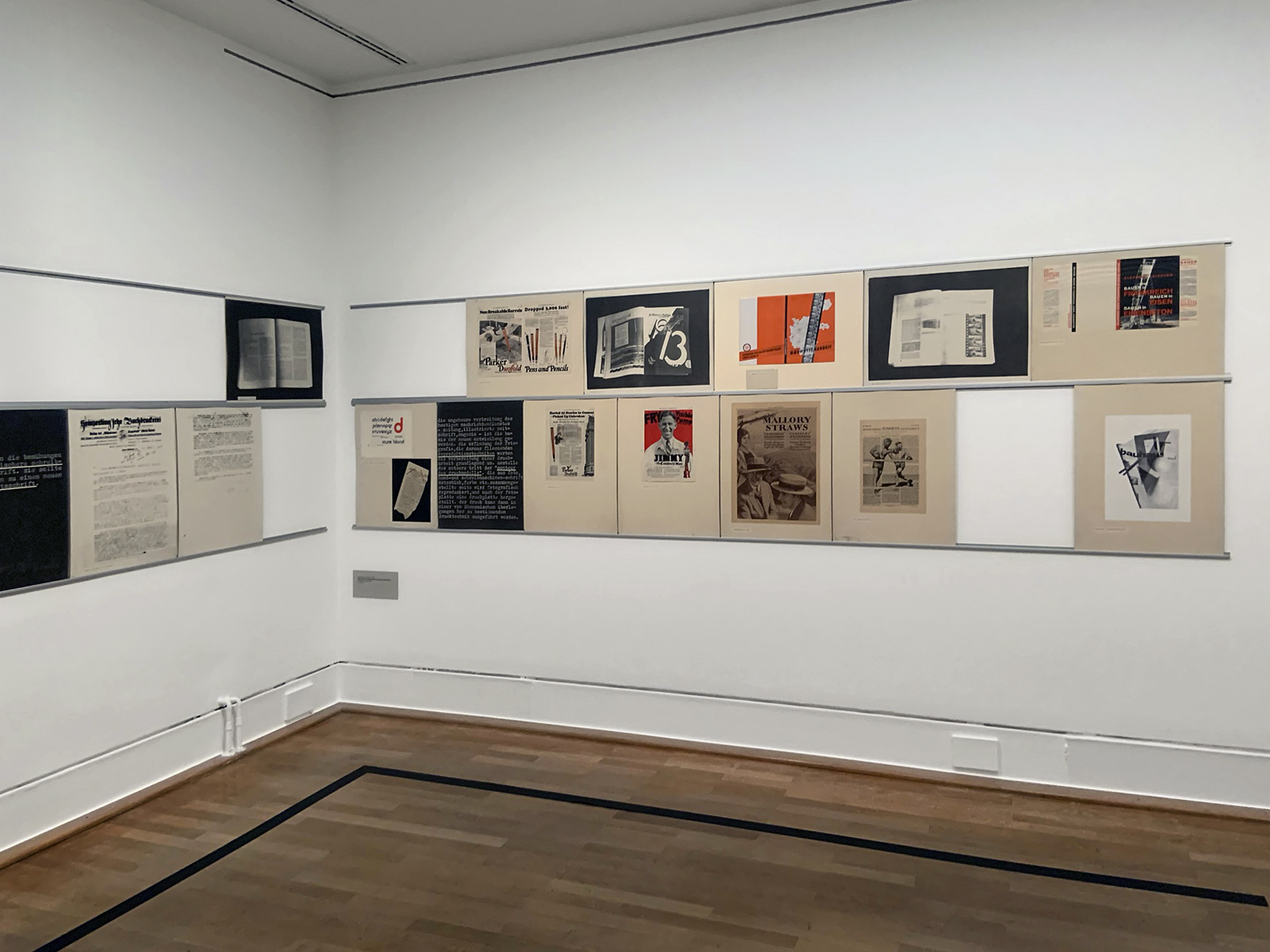
American advertisement. 'Mallory Straws' 1926


American advertisement
Mallory Straws (installation view)
1926
Chicago Sunday Tribune
Photo: Marcus Bunyan


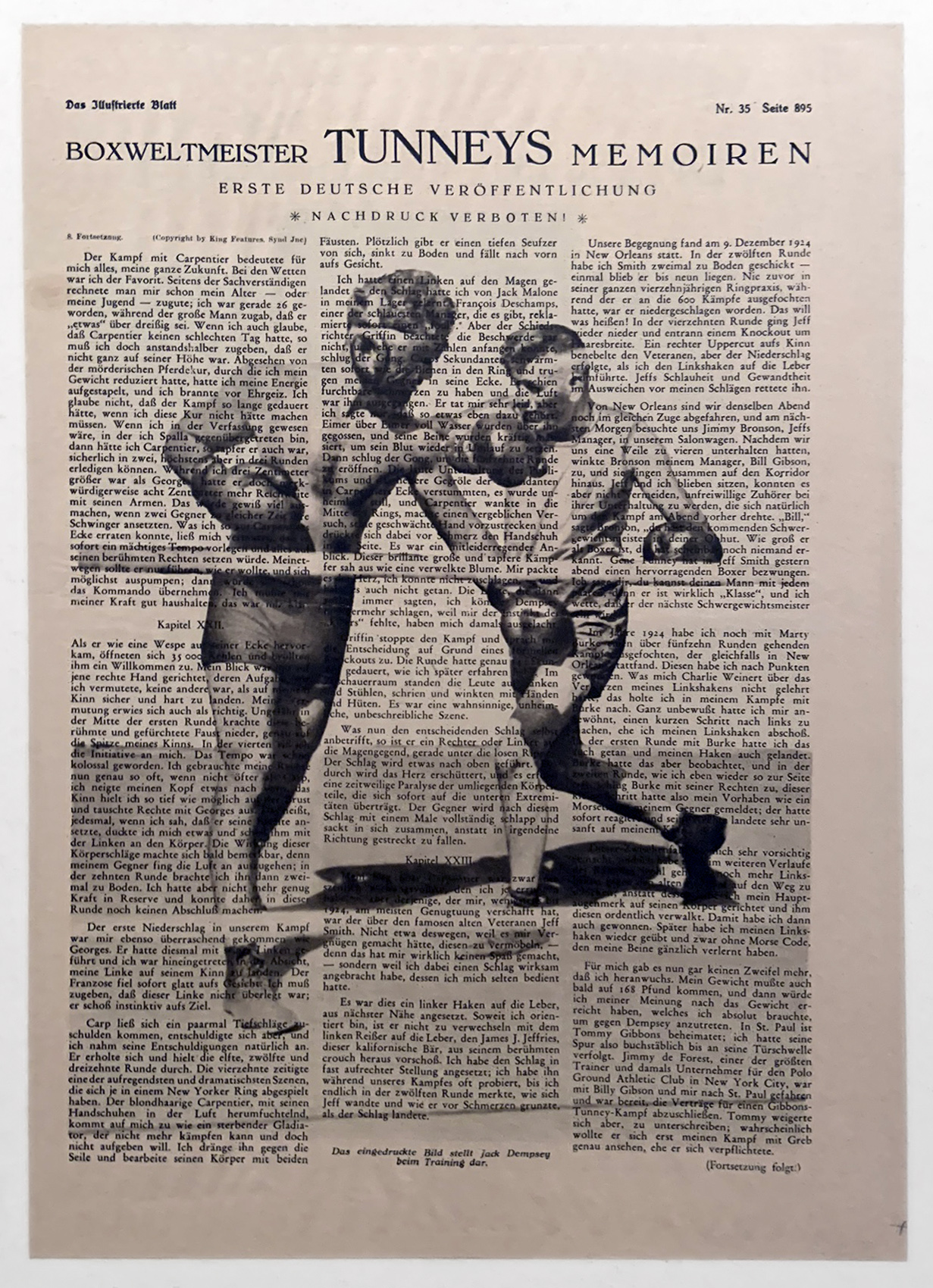
"Boxweltmeister Tunneys Memoiren (Boxing World Champion Tunney's Memoir)" 1927 (installation view)


Das Illustrierte Blatt (The Illustrated Sheet) Nr. 35, Page 895
“Boxweltmeister Tunneys Memoiren” (Boxing World Champion Tunney’s Memoir)
1927
First German publication

in

László Moholy-Nagy (Hungarian, 1895-1946)
Wohin geht die typographische Entwicklung? Tafel 55 (installation view)
Where is typography headed? Chart 55
1929
Collage
© Kunstbibliothek, Staatliche Museen zu Berlin, Herbert Bayer, VG Bild-Kunst, Bonn 2019
Photo: Marcus Bunyan


László Moholy-Nagy (Hungarian, 1895-1946) 'Where is typography headed? Chart 58' 1929 (installation view)


Herbert Bayer 1928

in

László Moholy-Nagy (Hungarian, 1895-1946)
Wohin geht die typographische Entwicklung?, Tafel 58 (installation view)
Where is typography headed? Chart 58
1929
Collage
© Kunstbibliothek, Staatliche Museen zu Berlin, Herbert Bayer, VG Bild-Kunst, Bonn 2019
Photo: Marcus Bunyan


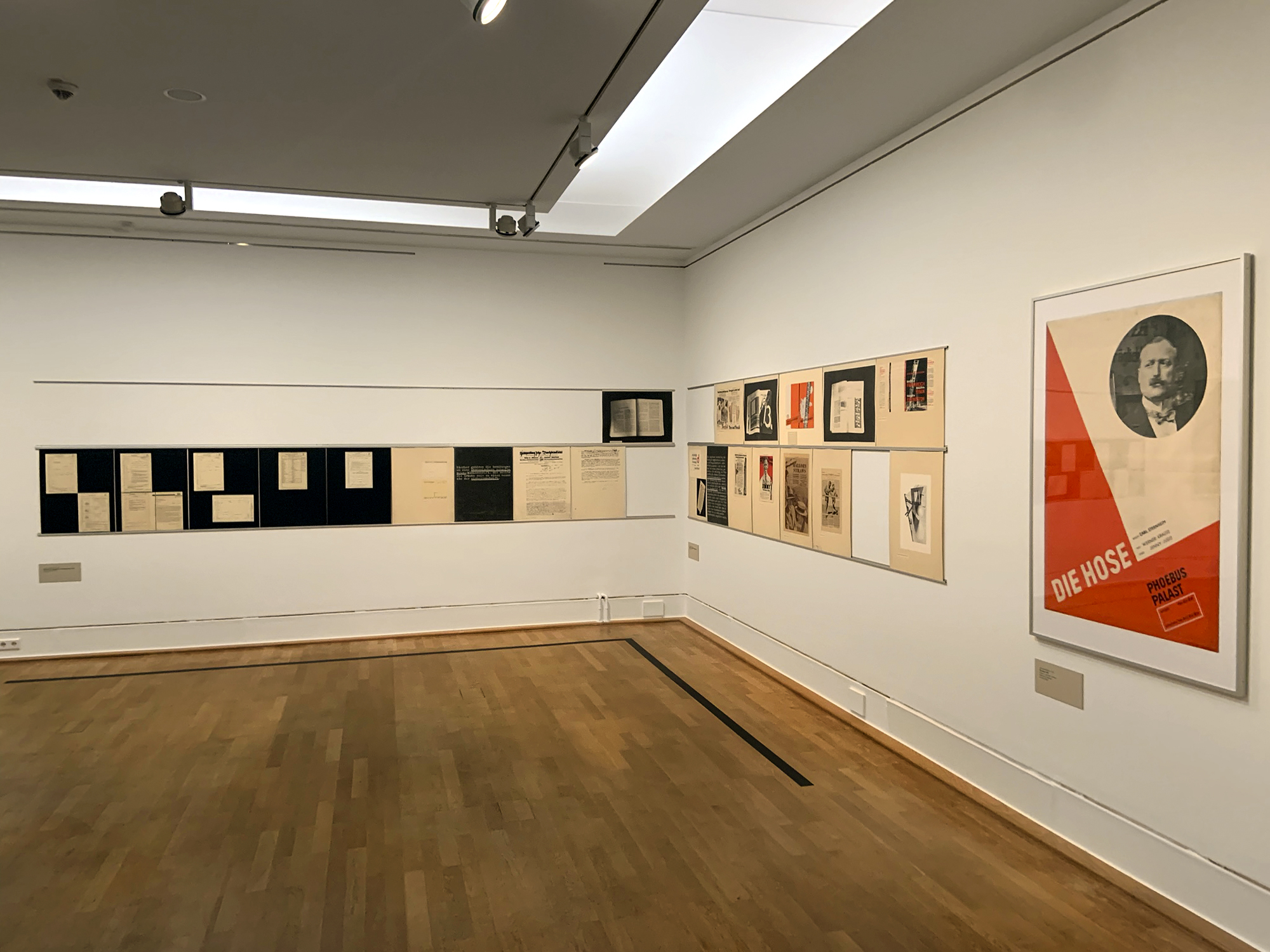
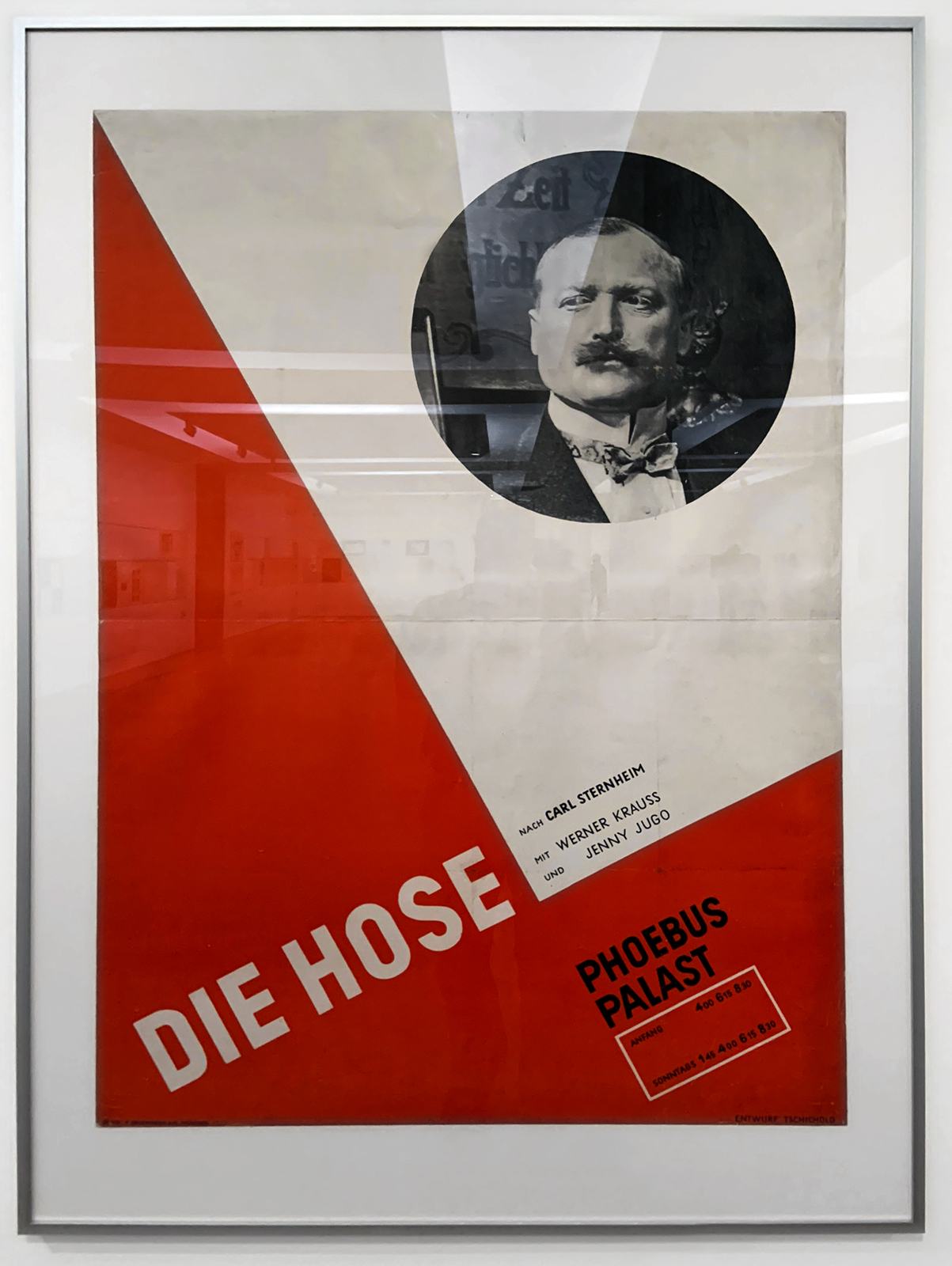
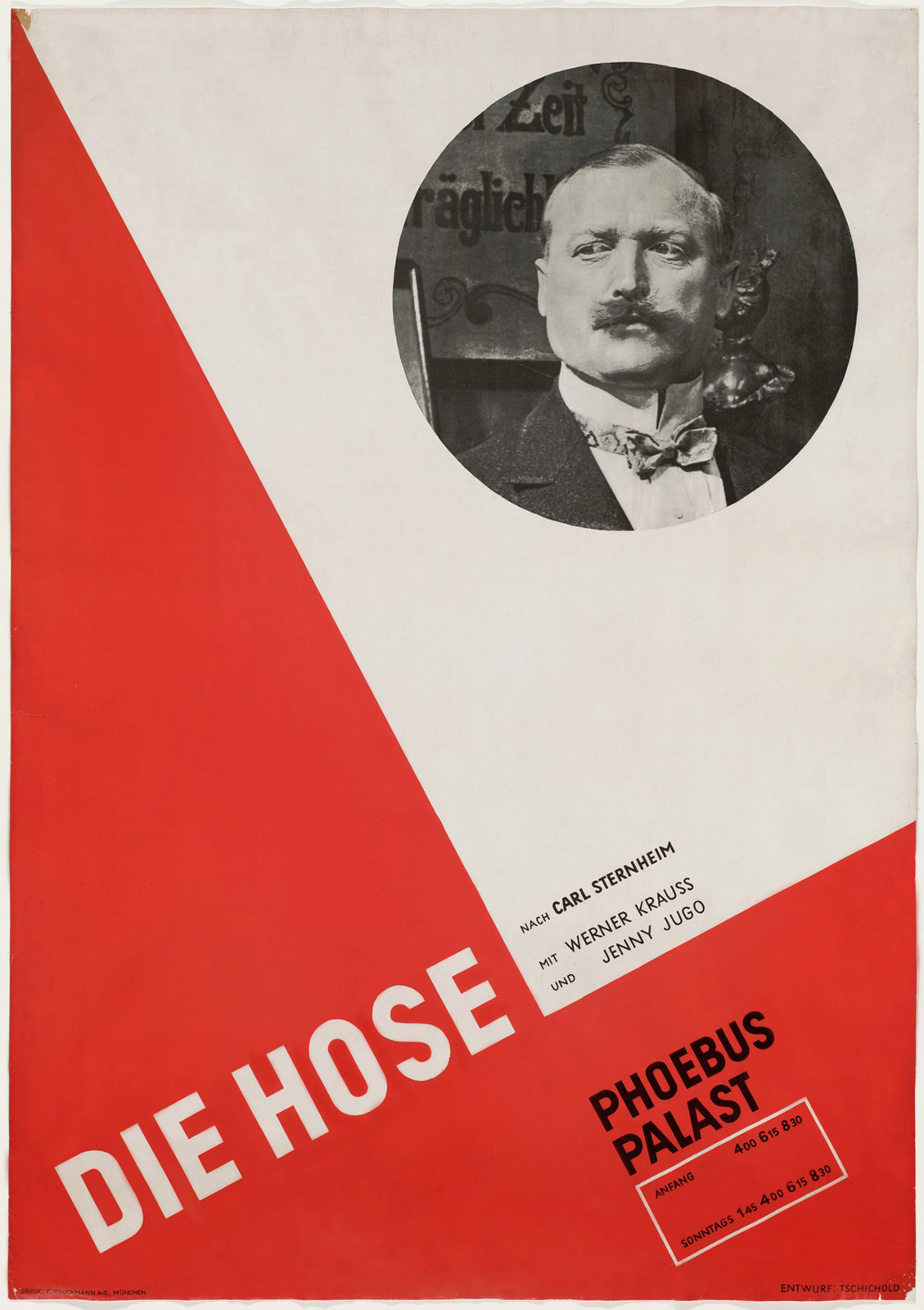
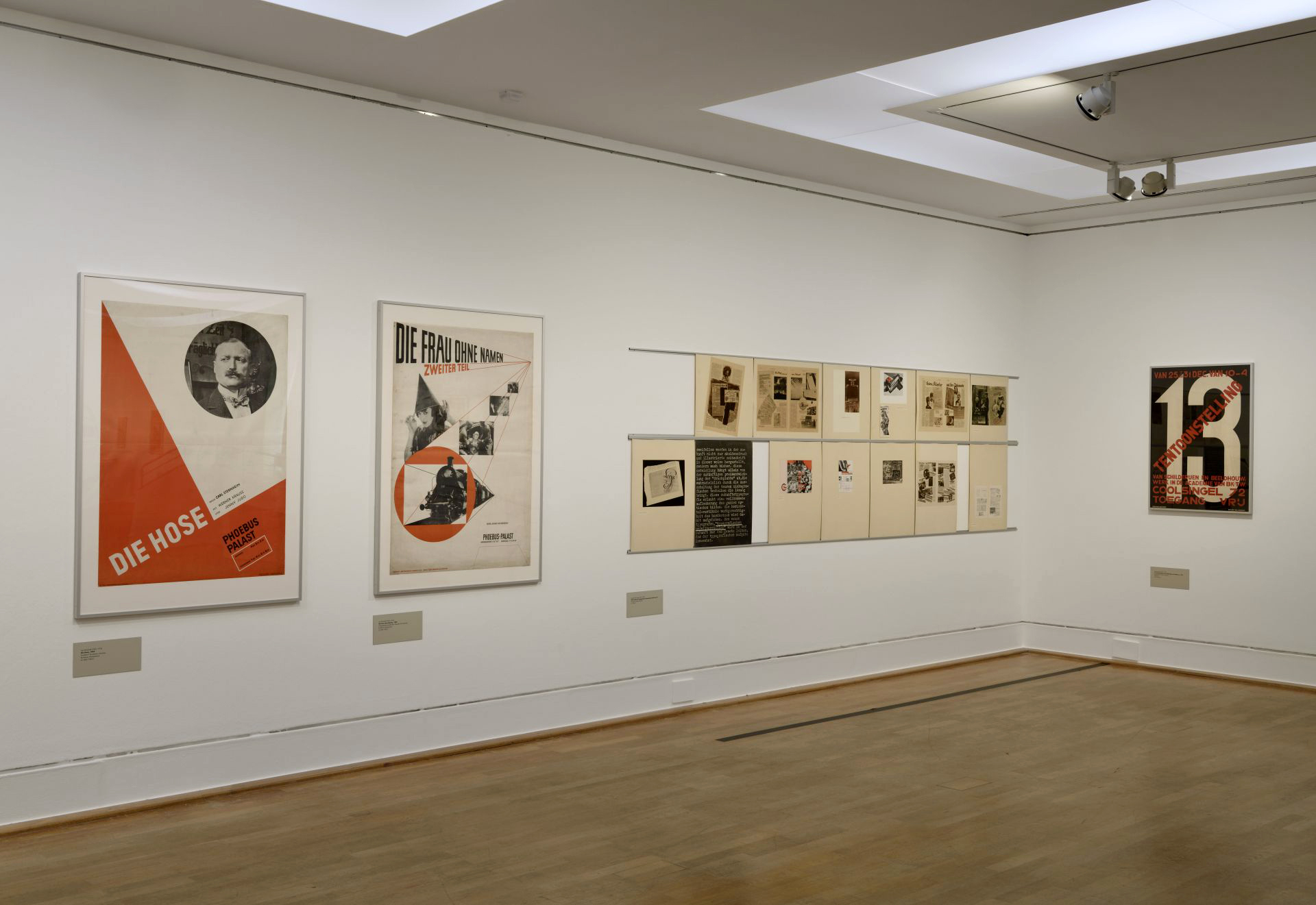
Jan Tschichold (1902-1974) 'Die Hose' (The pants) 1927 (installation view)


Jan Tschichold (1902-1974)
Die Hose (The pants) (installation view)
1927
F. Bruckmann printing house, Munich
Letterpress
Photo: Marcus Bunyan


Jan Tschichold (1902-1974) 'Die Hose' (The pants) 1927


Jan Tschichold (1902-1974)
Die Hose (The pants)
1927
F. Bruckmann printing house, Munich
Letterpress


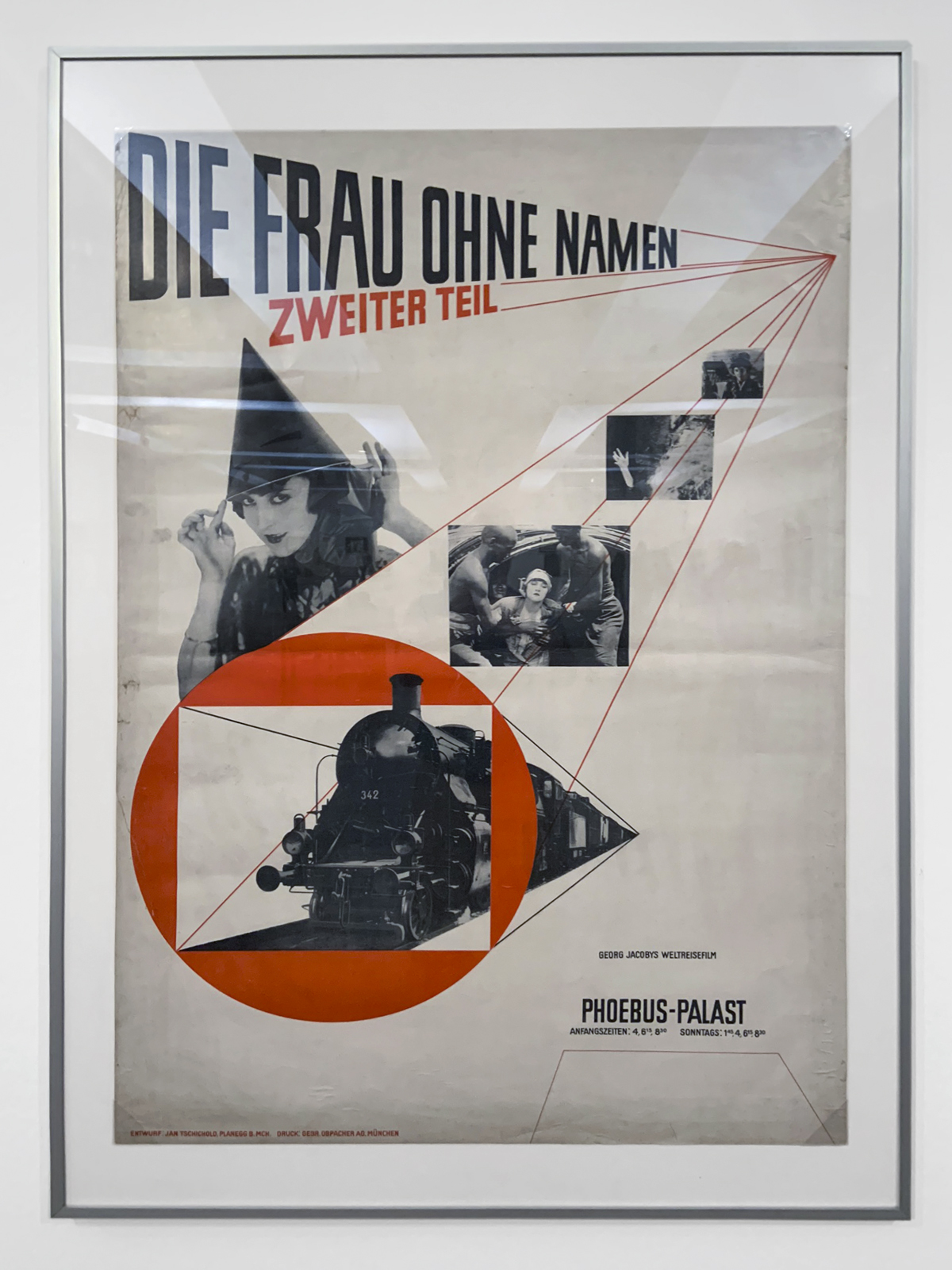
Jan Tschichold (1902-1974) 'Die Frau ohne Namen' (The woman without a name) 1927 (installation view)


Jan Tschichold (German, 1902-1974)
Die Frau ohne Namen (The woman without a name) (installation view)
1927
Lithographische Anstalt Gebr. Obpacher AG, Munich
Lithographic Institute Gebr. Obpacher AG, Munich
Letterpress
Photo: Marcus Bunyan


Jan Tschichold (German, 1902-1974)

Jan Tschichold (born Johannes Tzschichhold, also known as Iwan Tschichold, or Ivan Tschichold; 2 April 1902 – 11 August 1974) was a calligrapher, typographer and book designer. He played a significant role in the development of graphic design in the 20th century – first, by developing and promoting principles of typographic modernism, and subsequently (and ironically) idealising conservative typographic structures. His direction of the visual identity of Penguin Books in the decade following World War II served as a model for the burgeoning design practice of planning corporate identity programs. He also designed the much-admired typeface Sabon. …

This artisan background and calligraphic training set him apart from almost all other noted typographers of the time, since they had inevitably trained in architecture or the fine arts. It also may help explain why he never worked with handmade papers and custom fonts as many typographers did, preferring instead to use stock fonts on a careful choice from commercial paper stocks.

Although, up to this moment, he had only worked with historical and traditional typography, he radically changed his approach after his first visit to the Bauhaus exhibition at Weimar. After being introduced to important artists such as László Moholy-Nagy, El Lissitzky, Kurt Schwitters and others who were carrying out radical experiments to break the rigid schemes of conventional typography. He became sympathetic to this attempt to find new ways of expression and to reach a much more experimental way of working, but at the same time, felt it was important to find a simple and practical approach.

He became one of the most important representatives of the “new typography” and in a famous special issue of ‘typographic communications’ in 1925 with the title of “Elemental Typography”, he put together the new approaches in the form of a thesis.

After the election of Hitler in Germany, all designers had to register with the Ministry of Culture, and all teaching posts were threatened for anyone who was sympathetic to communism. Soon after Tschichold had taken up a teaching post in Munich at the behest of Paul Renner, they both were denounced as “cultural Bolshevists”. Ten days after the Nazis surged to power in March 1933, Tschichold and his wife were arrested. During the arrest, Soviet posters were found in his flat, casting him under suspicion of collaboration with communists. All copies of Tschichold’s books were seized by the Gestapo “for the protection of the German people”. After six weeks a policeman somehow found him tickets for Switzerland, and he and his family managed to escape Nazi Germany in August 1933.

Text from the Wikipedia website


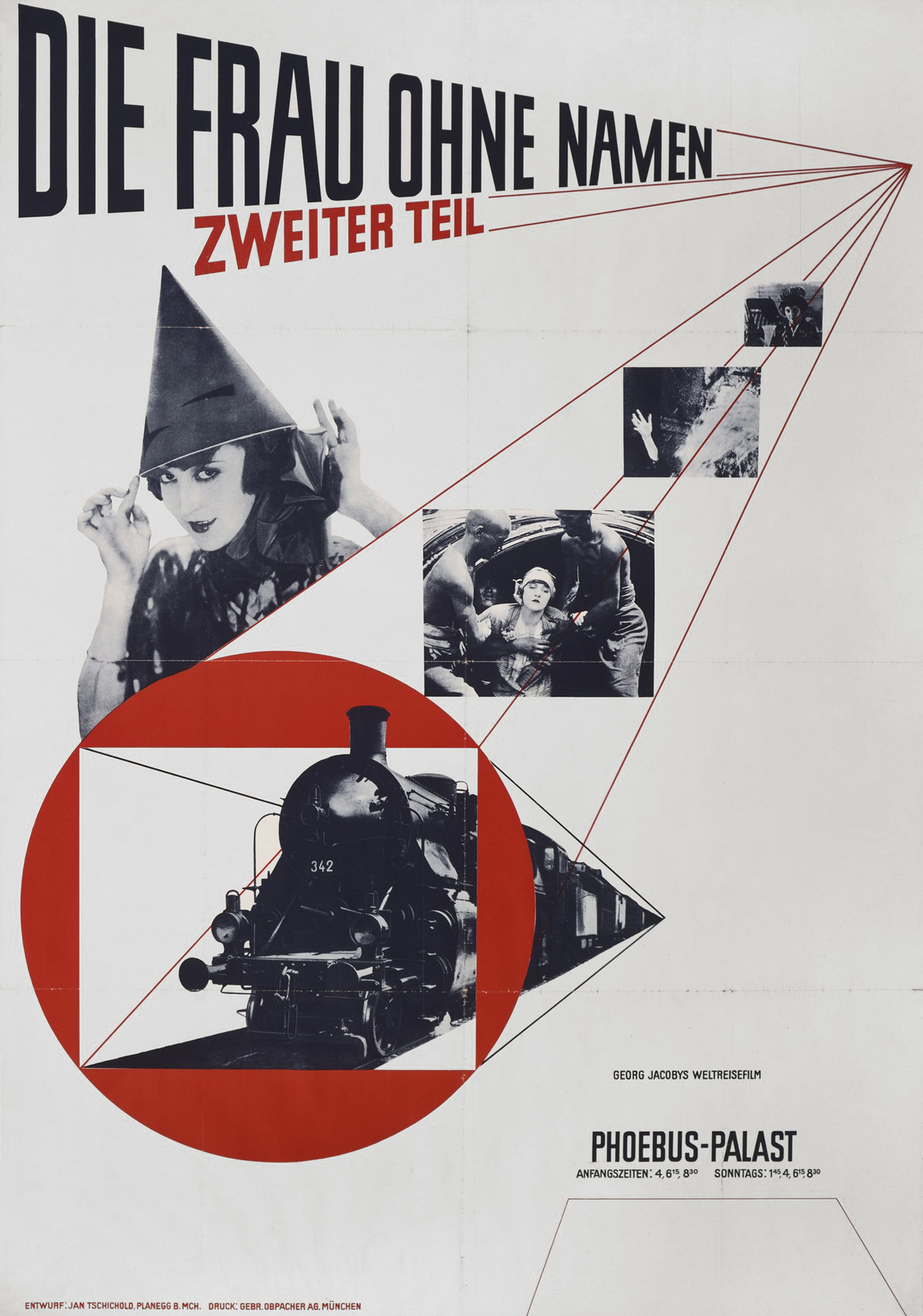
Jan Tschichold (German, 1902-1974) 'Die Frau ohne Namen' (The woman without a name) 1927


Jan Tschichold (1902-1974)
Die Frau ohne Namen (The woman without a name)
1927
Lithographische Anstalt Gebr. Obpacher AG, Munich
Lithographic Institute Gebr. Obpacher AG, Munich
Letterpress


As part of the bauhauswoche berlin 2019 (Bauhaus week Berlin 2019) the Kunstbibliothek is showing an historical exhibition room by the Bauhaus artist László Moholy-Nagy.

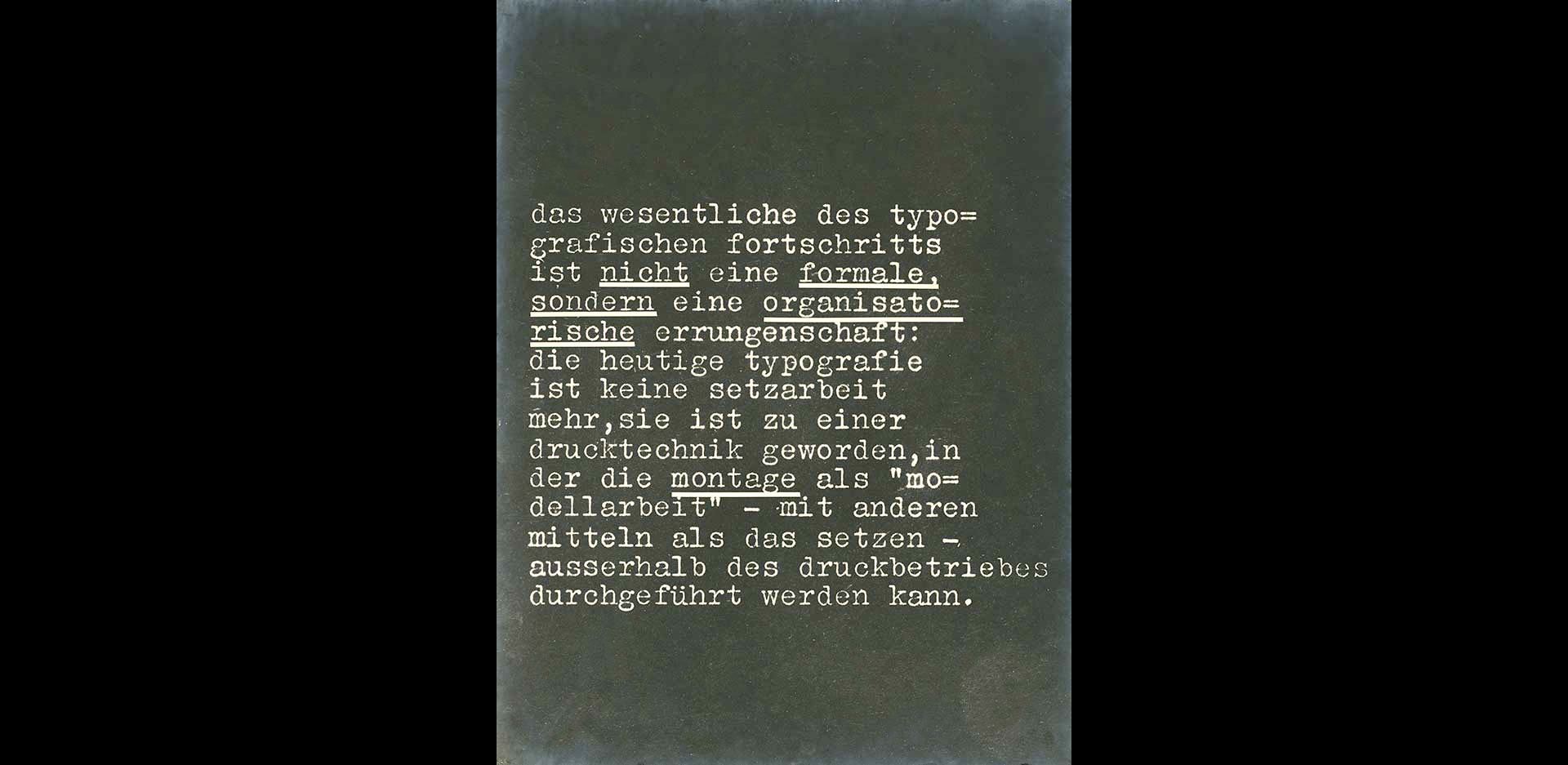
This pioneering exhibition room, entitled Wohin geht die typographische Entwicklung? (Where is typography headed?), was first shown in May 1929 in the Martin-Gropius-Bau as part of the exhibition Neue Typographie (“New Typography”), organised by the Staatliche Kunstbibliothek. Moholy-Nagy had been invited to design a room presenting the future of typography. He came up with 78 wall charts with photos, texts and pictures, all of which have been preserved. The exhibition room can therefore be shown again, complemented by additional posters, letterheads, and other specimens of New Typography from the Kunstbibliothek collection.

Moreover, well-known posters and advertisements from the Kunstbibliothek collection in the style known as New Typography augment the Moholy-Nagy exhibition. The selection includes works by Willi Baumeister, A. M. Cassandre, Walter Dexel, Johannes Molzahn, Kurt Schwitters and Jan Tschichold. The functional graphic design of New Typography, a style of advertising designed by artists that gained wide acceptance in the 1920s, broke with a long design tradition in the printing trade. Its aim was to create a contemporary design: first by propagating a standardisation of fonts and the industrial DIN norms, and second, by promoting ideals of readability, clarity and directness in keeping with the principles of Constructivist Art.

The exhibition focuses on this large-scale presentation with which artist Moholy-Nagy summed up years of his own teaching work at the Bauhaus and the ideas and visions of New Typography, ranging from Jan Tschichold and Willi Baumeister to Herbert Bayer. The exhibition programme includes evening discussions evaluating Moholy-Nagy’s ideas from a contemporary standpoint. An important part of the programme will be the launch of a new publication on Moholy-Nagy’s historical exhibition, edited in collaboration with Gutenberg Design Lab at Mainz University of Applied Sciences.

Text from the Staatliche Museen zu Berlin website


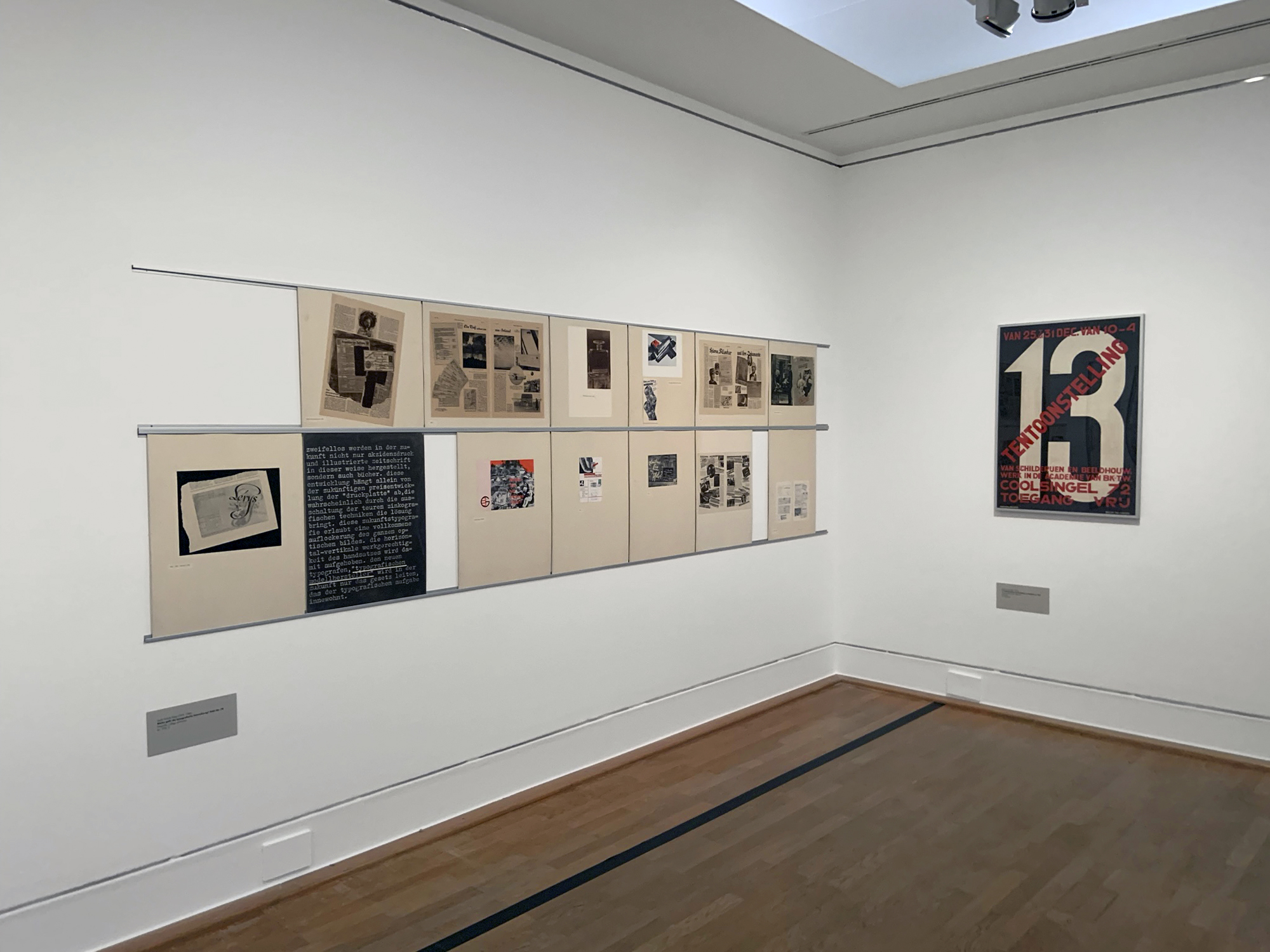
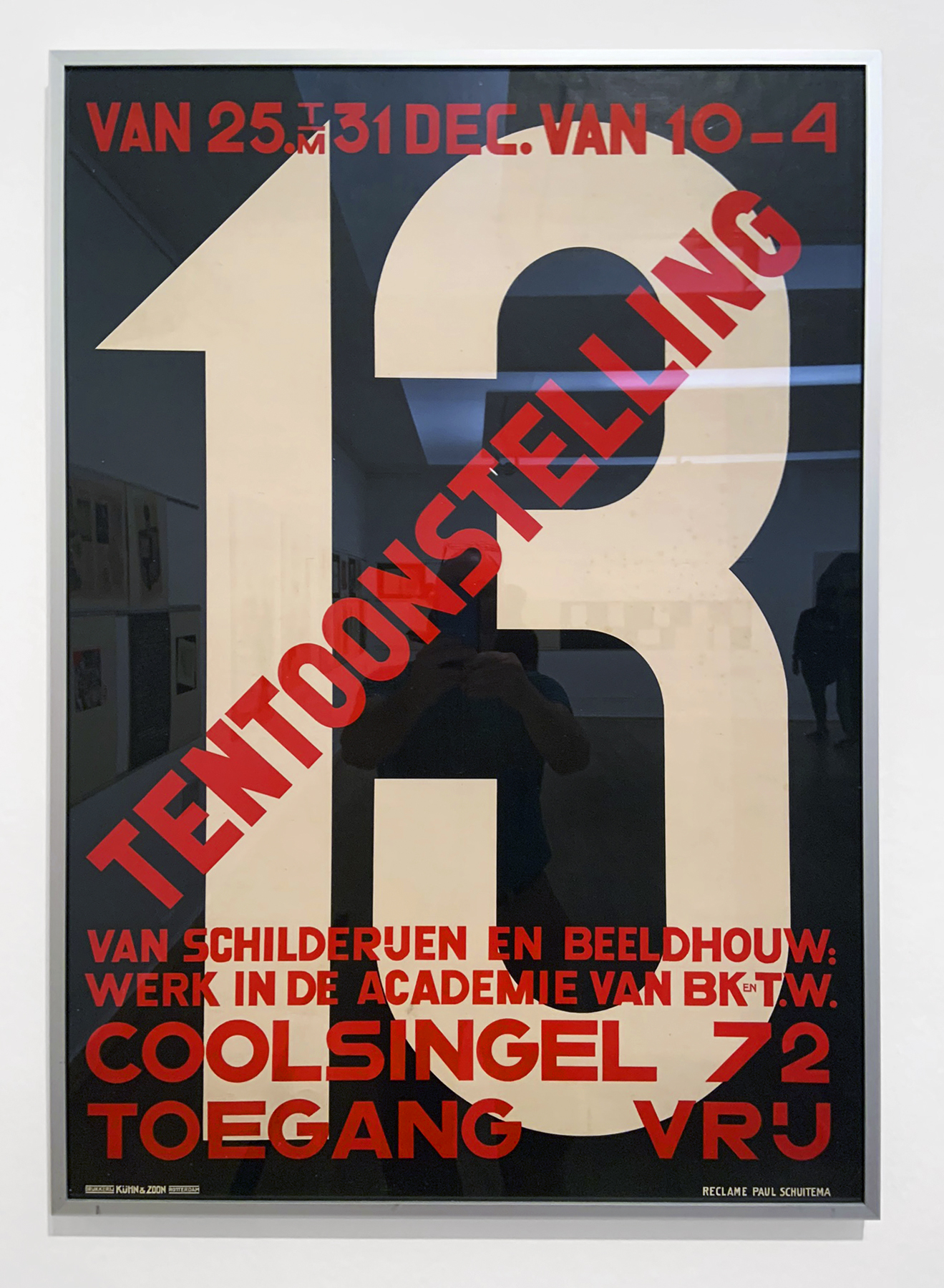
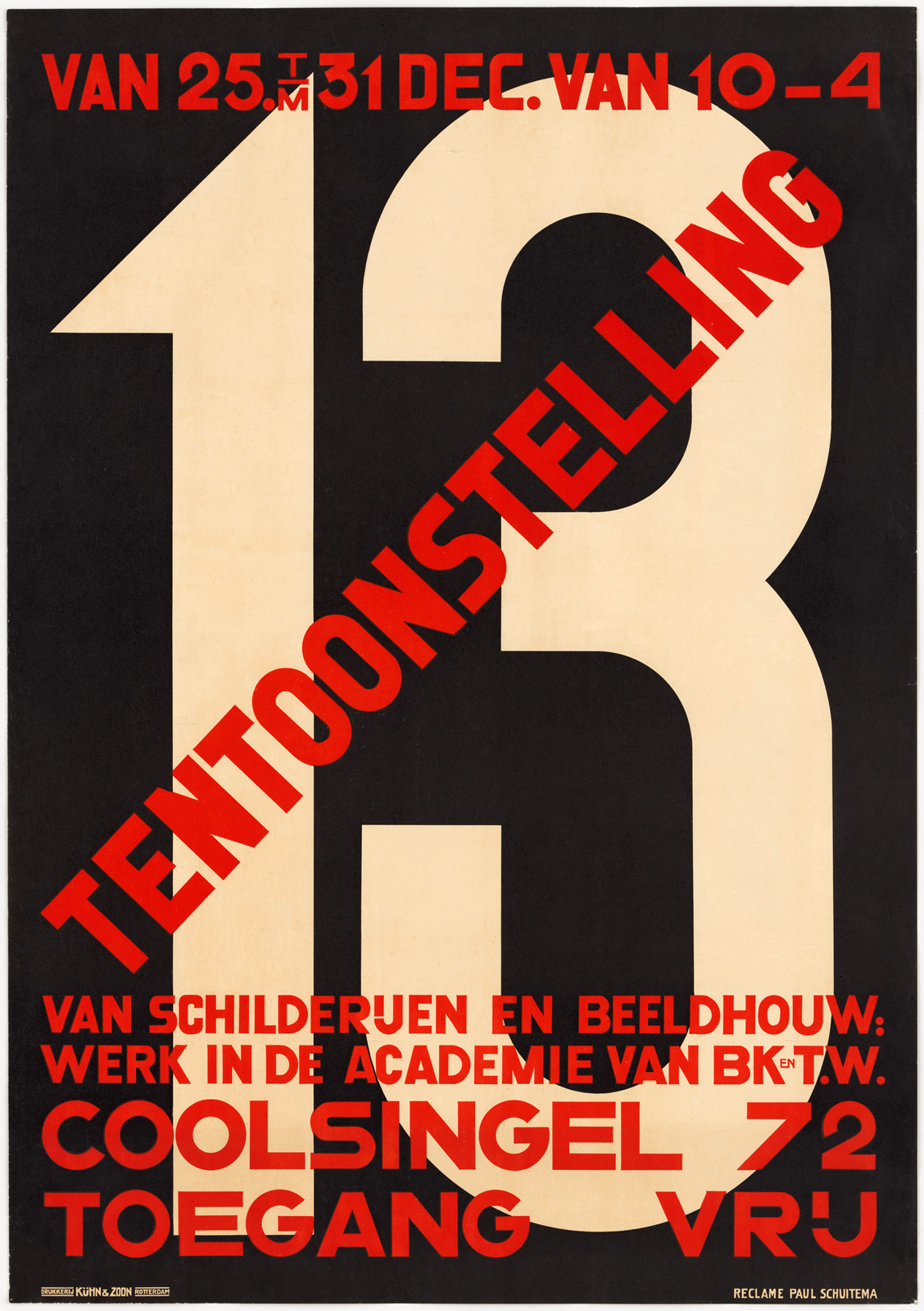
Installation view of the exhibition 'László Moholy-Nagy and New Typography: A Reconstruction of a Berlin Exhibition from 1929' at the Staatliche Museen zu Berlin showing at right, Paul Schuitema's '13 Tentoonstelling van Schilderijen en Beeldhouw' 1927


Installation view of the exhibition László Moholy-Nagy and New Typography: A Reconstruction of a Berlin Exhibition from 1929 at the Staatliche Museen zu Berlin showing at right, Paul Schuitema’s 13 Tentoonstelling van Schilderijen en Beeldhouw 1927
Photo: Marcus Bunyan


Paul Schuitema (1897-1973) '13 Tentoonstelling van Schilderijen en Beeldhouw' (13 Exhibition of Paintings and Sculptures) 1927 (installation view)


Paul Schuitema (1897-1973)
13 Tentoonstelling van Schilderijen en Beeldhouw (13 Exhibition of Paintings and Sculptures) (installation view)
1927
Kühn & Zoon printing house, Rotterdam
Lithograph
Photo: Marcus Bunyan


Paul Schuitema (1897-1973) '13 Tentoonstelling van Schilderijen en Beeldhouw' (13 Exhibition of Paintings and Sculptures) 1927


Paul Schuitema (Dutch, 1897-1973)
13 Tentoonstelling van Schilderijen en Beeldhouw (13 Exhibition of Paintings and Sculptures)
1927
Kühn & Zoon printing house, Rotterdam
Lithograph


Paul Schuitema (Dutch, 1897-1973)

Geert Paul Hendrikus Schuitema (February 27, 1897 in Groningen – October 25, 1973 in Wassenaar) was a Dutch graphic artist. He also designed furniture and expositions and worked as photographer, film director, painter and teacher for publicity design at the Royal Academy of Art in The Hague.

Industrial design

Schuitema studied at the Academie voor Beeldende Kunsten in Rotterdam. In the 1920s, he began to work on graphic design, applying the principles of De Stijl and constructivism to commercial advertising. Along with Gerard Kiljan and his famous colleague Piet Zwart, he followed ideas pioneered in the Soviet Union by El Lissitzky and Rodchenko, in Poland by Henryk Berlewi and in Germany by Kurt Schwitters.

During his employment at the NV Maatschappij Van Berkel Patent scale company in Rotterdam, Schuitema gained recognition for his original designs of stationery and publicity material, often using only the colours black, red and white and bold sans serif fonts. From 1926 on, he started working with photomontages, becoming one of the pioneers of this technique in the field of industrial design.

Even though he was a convinced socialist and often designed leftist publications directed at industrial workers, Schuitema also worked for major companies, such as Philips.

Text from the Wikipedia website


László Moholy-Nagy (Hungarian, 1895-1946) 'Where is typography headed? Chart 1' 1929


László Moholy-Nagy (Hungarian, 1895-1946)
Wohin geht die typographische Entwicklung?, Tafel 1
Where is typography headed? Chart 1

1929
Photograph on card
© Staatliche Museen zu Berlin, Kunstbibliothek


László Moholy-Nagy (Hungarian, 1895-1946) 'Where is typography headed? Chart 12' 1929


László Moholy-Nagy (Hungarian, 1895-1946)
Wohin geht die typographische Entwicklung?, Tafel 12
Where is typography headed? Chart 12

1929
Photograph on card
© Staatliche Museen zu Berlin, Kunstbibliothek


László Moholy-Nagy (Hungarian, 1895-1946) 'Where is typography headed? Chart 22' 1929


László Moholy-Nagy (Hungarian, 1895-1946)
Wohin geht die typographische Entwicklung?, Tafel 22
Where is typography headed? Chart 22

1929
Photograph on card
© Staatliche Museen zu Berlin, Kunstbibliothek


László Moholy-Nagy (Hungarian, 1895-1946) 'Where is typography headed? Chart 34' 1929


László Moholy-Nagy (Hungarian, 1895-1946)
Wohin geht die typographische Entwicklung?, Tafel 34
Where is typography headed? Chart 34

1929
Photograph on card
© Staatliche Museen zu Berlin, Kunstbibliothek


László Moholy-Nagy (Hungarian, 1895-1946) 'Where is typography headed? Chart 44' 1929


László Moholy-Nagy (Hungarian, 1895-1946)
Wohin geht die typographische Entwicklung?, Tafel 44
Where is typography headed? Chart 44

1929
Photograph on card
© Staatliche Museen zu Berlin, Kunstbibliothek


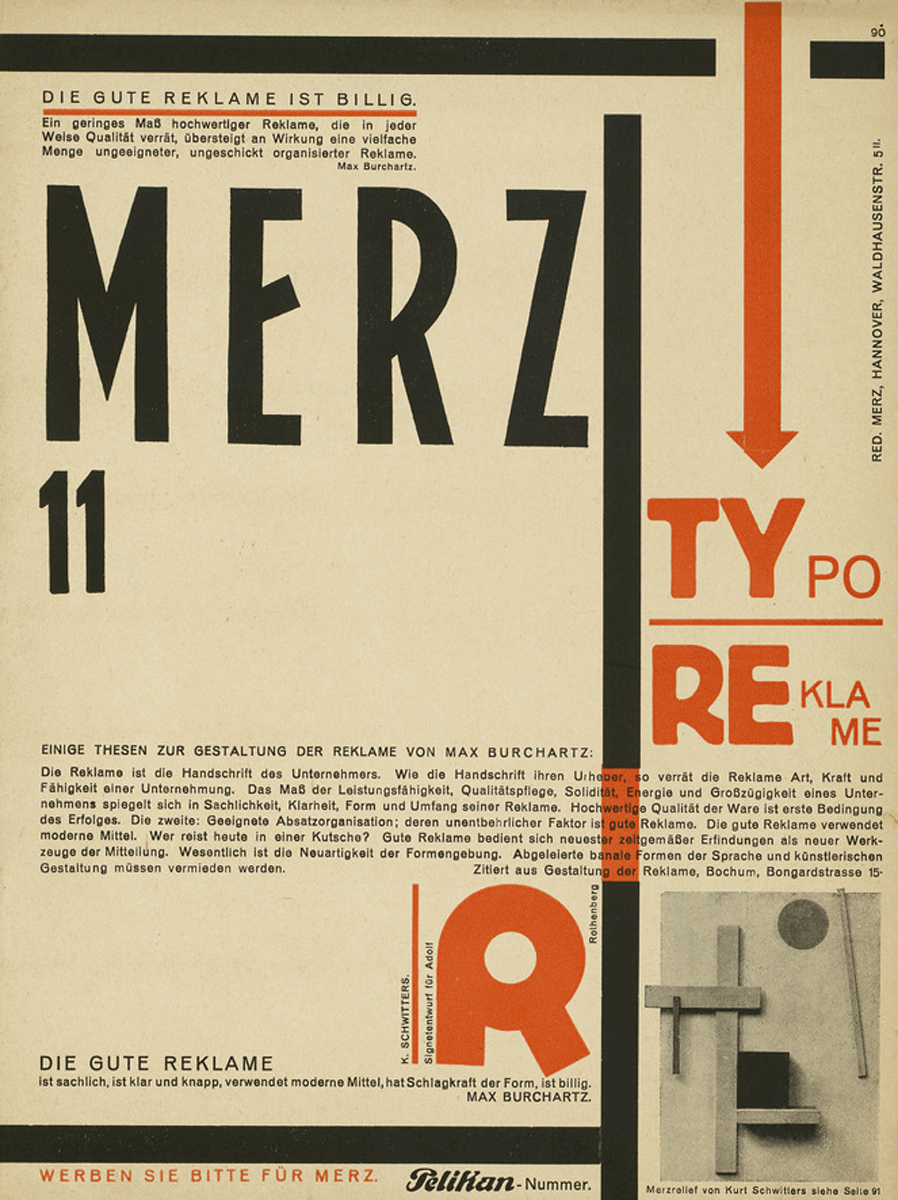
Kurt Schwitters (German, 1887-1948) 'Merz 11 Pelikan Nummer, Zeitschrift' 1924


Kurt Schwitters (German, 1887-1948)
Merz 11 Pelikan Nummer, Zeitschrift (Merz 11 Pelikan number, magazine)
1924
© Kunstbibliothek, Staatliche Museen zu Berlin


Kurt Schwitters (German, 1887-1948)

Kurt Hermann Eduard Karl Julius Schwitters (20 June 1887 – 8 January 1948) was a German artist who was born in Hanover, Germany. Schwitters worked in several genres and media, including dadaism, constructivism, surrealism, poetry, sound, painting, sculpture, graphic design, typography, and what came to be known as installation art. He is most famous for his collages, called Merz Pictures.

Internationalism, 1922-1937

Merz (periodical)

As the political climate in Germany became more liberal and stable, Schwitters’ work became less influenced by Cubism and Expressionism. He started to organise and participate in lecture tours with other members of the international avant-garde, such as Hans Arp, Raoul Hausmann and Tristan Tzara, touring Czechoslovakia, the Netherlands, and Germany with provocative evening recitals and lectures.

Schwitters published a periodical, also called Merz, between 1923 and 1932, in which each issue was devoted to a central theme. Merz 5 1923, for instance, was a portfolio of prints by Hans Arp, Merz 8/9, 1924, was edited and typeset by El Lissitsky, Merz 14/15, 1925, was a typographical children’s story entitled The Scarecrow by Schwitters, Kätte Steinitz and Theo van Doesburg. The last edition, Merz 24, 1932, was a complete transcription of the final draft of the Ursonate, with typography by Jan Tschichold.

His work in this period became increasingly Modernist in spirit, with far less overtly political context and a cleaner style, in keeping with contemporary work by Hans Arp and Piet Mondrian. His friendship around this time with El Lissitzky proved particularly influential, and Merz pictures in this period show the direct influence of Constructivism.

Thanks to Schwitters’ lifelong patron and friend Katherine Dreier, his work was exhibited regularly in the US from 1920 onwards. In the late 1920s he became a well-known typographer; his best-known work was the catalogue for the Dammerstocksiedlung in Karlsruhe. After the demise of Der Sturm Gallery in 1924 he ran an advertising agency called Merzwerbe, which held the accounts for Pelikan inks and Bahlsen biscuits, amongst others, and became the official typographer for Hanover town council between 1929 and 1934. Many of these designs, as well as test prints and proof sheets, were to crop up in contemporary Merz pictures. In a manner similar to the typographic experimentation by Herbert Bayer at the Bauhaus, and Jan Tschichold’s Die neue Typographie, Schwitters experimented with the creation of a new more phonetic alphabet in 1927. Some of his types were cast and used in his work. In the late 1920s Schwitters joined the Deutscher Werkbund (German Work Federation).

Exile, 1937-1948

Norway

As the political situation in Germany under the Nazis continued to deteriorate throughout the 1930s, Schwitters’ work began to be included in the Entartete Kunst (Degenerate Art) touring exhibition organised by the Nazi party from 1933. He lost his contract with Hanover City Council in 1934 and examples of his work in German museums were confiscated and publicly ridiculed in 1935. By the time his close friends Christof and Luise Spengemann and their son Walter were arrested by the Gestapo in August 1936 the situation had clearly become perilous.

On 2 January 1937 Schwitters, wanted for an “interview” with the Gestapo, fled to Norway to join his son Ernst, who had already left Germany on 26 December 1936. His wife Helma decided to remain in Hanover, to manage their four properties. In the same year, his Merz pictures were included in the Entartete Kunst exhibition titled in Munich, making his return impossible.

Text from the Wikipedia website


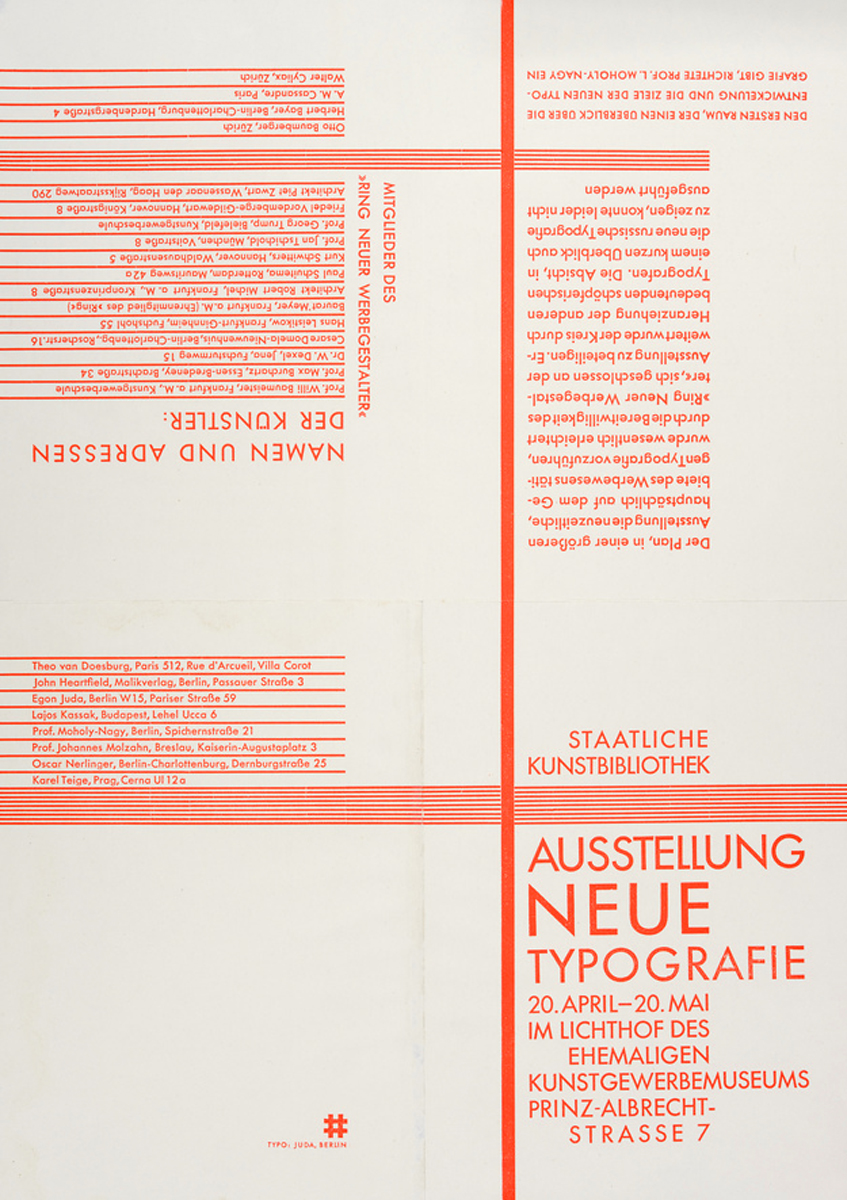
Egon Juda (German, b. 1895) 'Einladung zur Ausstellung "Neue Typographie"' (Invitation to the exhibition "New Typography") Berlin 1929


Egon Juda (German, b. 1895)
Einladung zur Ausstellung “Neue Typographie” (Invitation to the exhibition “New Typography”)
Berlin 1929
© Kunstbibliothek, Staatliche Museen zu Berlin


Installation view of the exhibition 'László Moholy-Nagy and New Typography: A Reconstruction of a Berlin Exhibition from 1929' at the Staatliche Museen zu Berlin

Installation view of the exhibition 'László Moholy-Nagy and New Typography: A Reconstruction of a Berlin Exhibition from 1929' at the Staatliche Museen zu Berlin

Installation view of the exhibition 'László Moholy-Nagy and New Typography: A Reconstruction of a Berlin Exhibition from 1929' at the Staatliche Museen zu Berlin

Installation view of the exhibition 'László Moholy-Nagy and New Typography: A Reconstruction of a Berlin Exhibition from 1929' at the Staatliche Museen zu Berlin

Installation view of the exhibition 'László Moholy-Nagy and New Typography: A Reconstruction of a Berlin Exhibition from 1929' at the Staatliche Museen zu Berlin


Installation views of the exhibition László Moholy-Nagy and New Typography: A Reconstruction of a Berlin Exhibition from 1929 at the Staatliche Museen zu Berlin showing at right,
Photos: Staatliche Museen zu Berlin


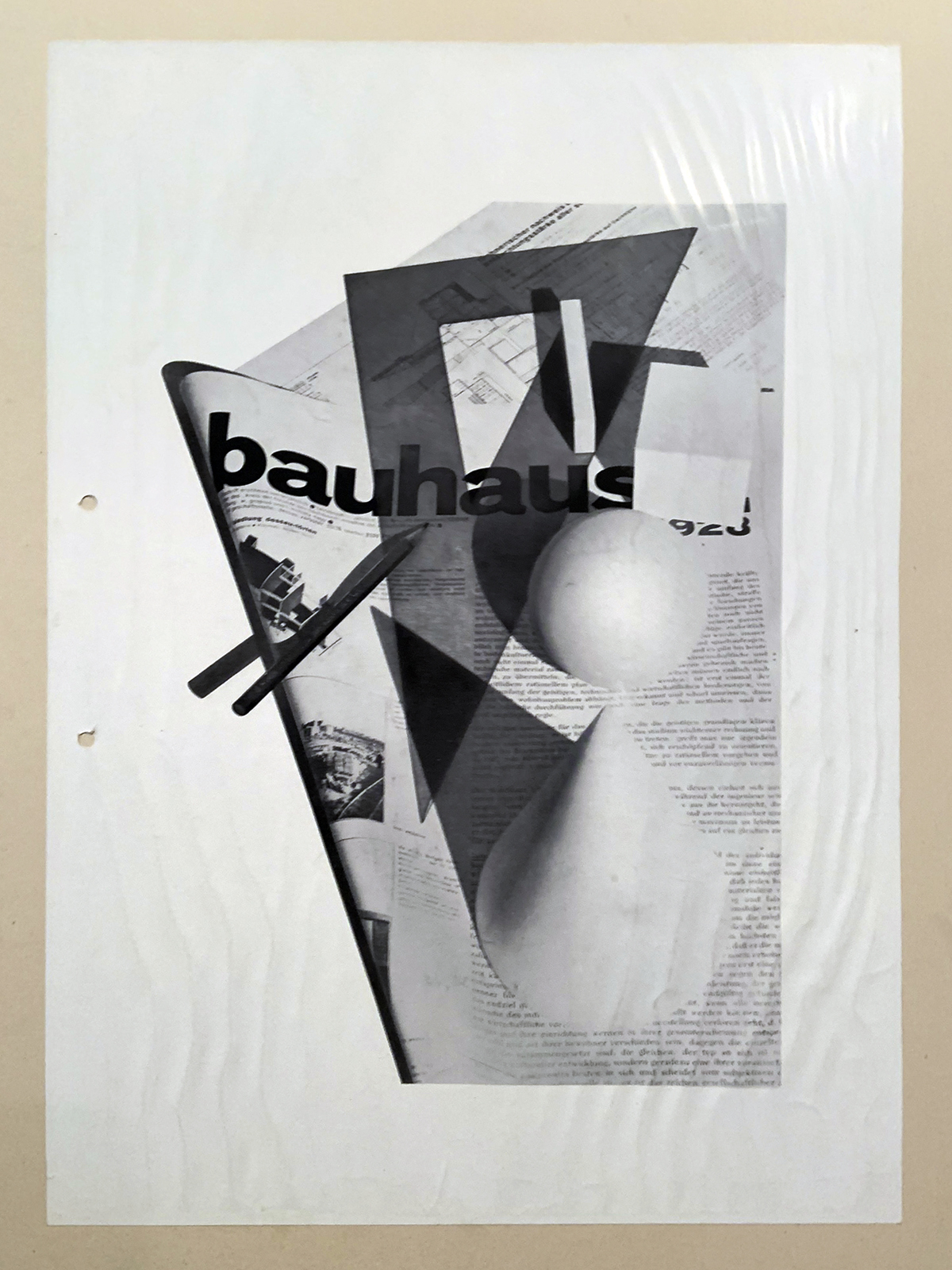
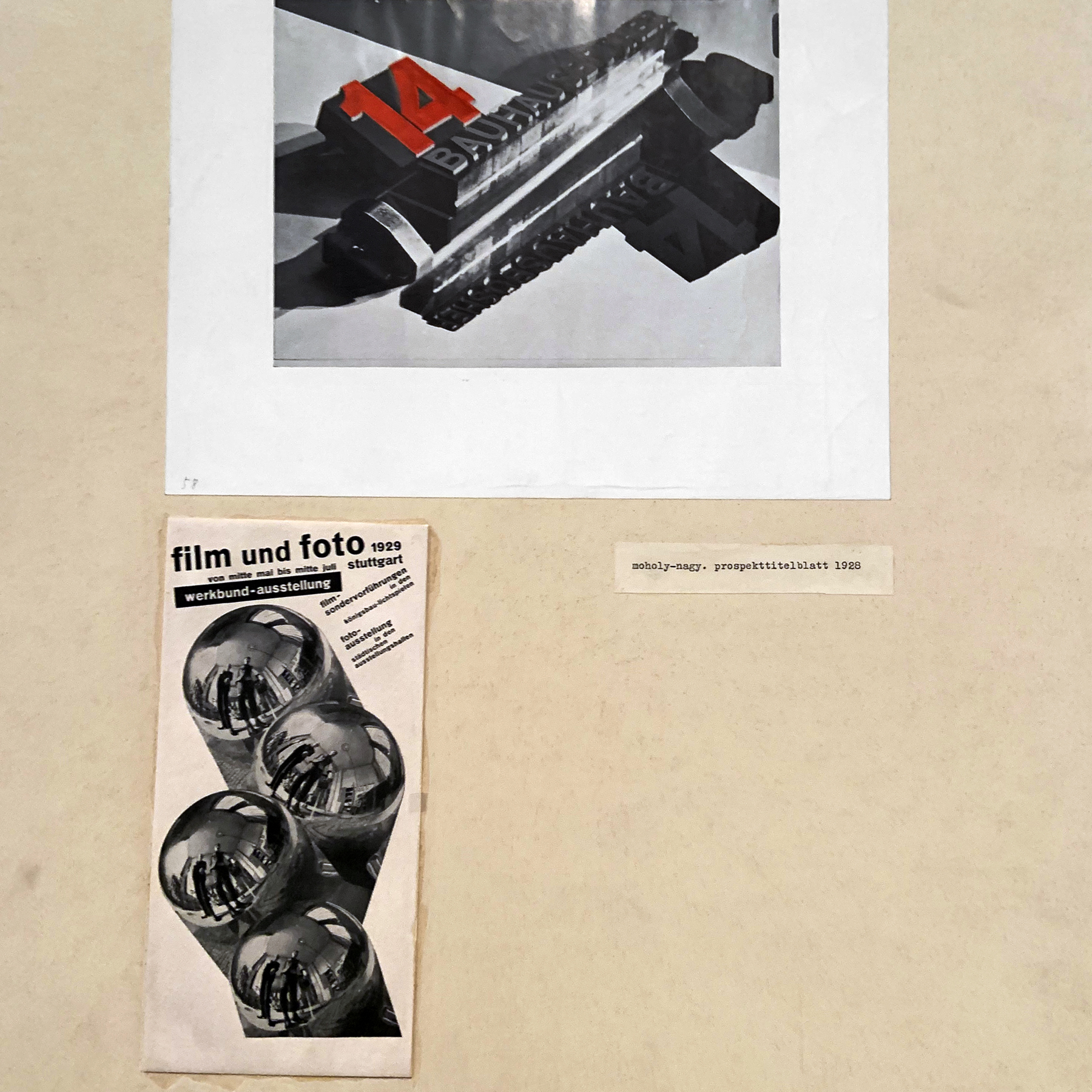
László Moholy-Nagy (Hungarian, 1895-1946) 'Prospekttitelblatt' (Prospectus title page) 1928 and 'film und foto' 1929 (installation view)


László Moholy-Nagy (Hungarian, 1895-1946)
Prospekttitelblatt (Prospectus title page) (installation view)
1928
film und foto
1929

in

László Moholy-Nagy (Hungarian, 1895-1946)
Wohin geht die typographische Entwicklung?
Where is typography headed?

1929
Photograph on card
© Staatliche Museen zu Berlin, Kunstbibliothek
Photo: Marcus Bunyan


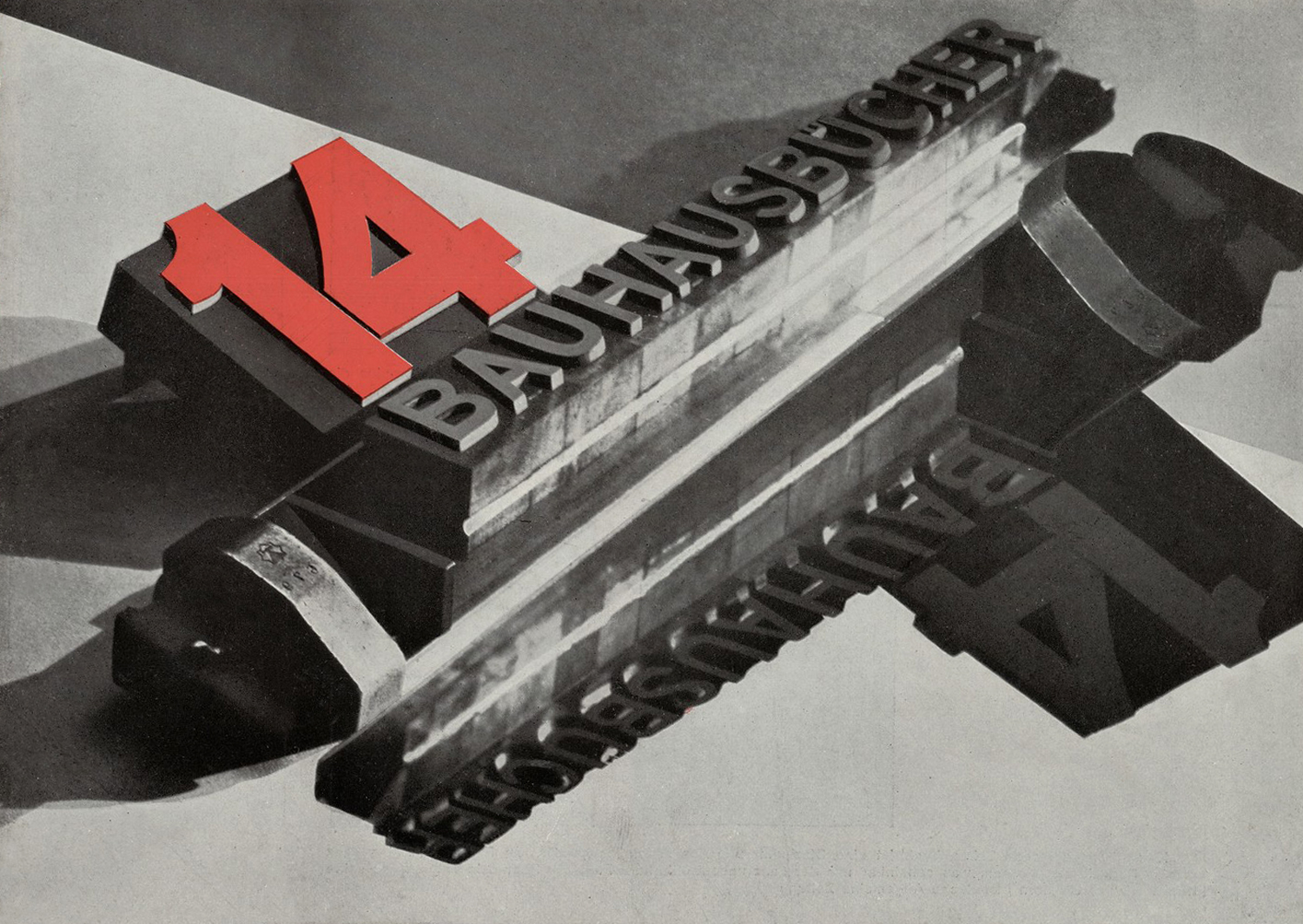
László Moholy-Nagy (Hungarian, 1895-1946) '14 Bauhausbücher' 1928


László Moholy-Nagy (Hungarian, 1895-1946)
14 Bauhausbücher
1928
Letterpress
5 7/8 x 8 1/4″ (14.9 x 21cm)


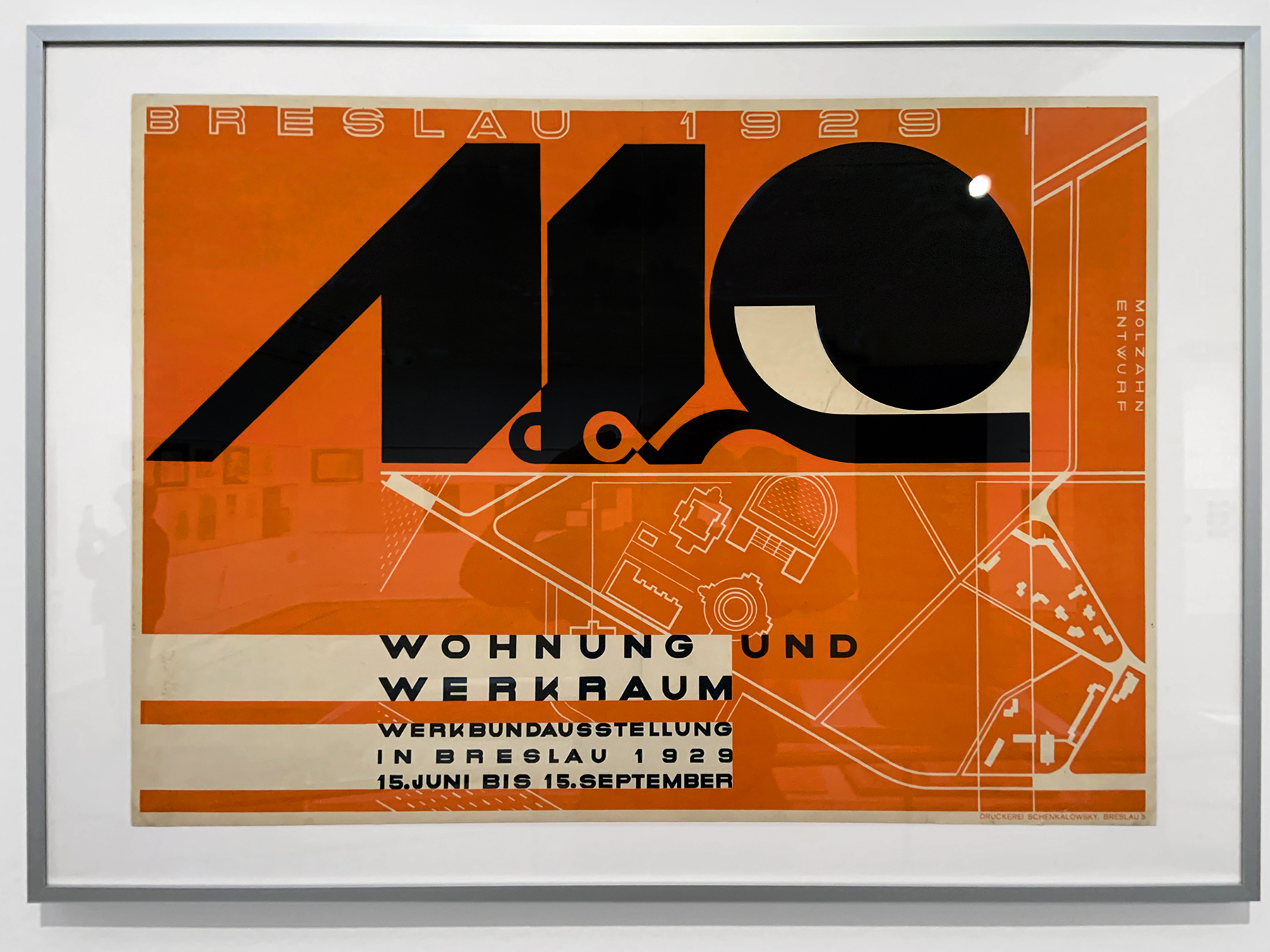
Johannes Molzahn (German, 1892-1965) 'Wohung und Werkraum, Werkbundausstellung in Breslau' (Apartment and workshop, Werkbund exhibition in Breslau) 1929 (installation view)


Johannes Molzahn (German, 1892-1965)
Wohung und Werkraum, Werkbundausstellung in Breslau (Apartment and workshop, Werkbund exhibition in Breslau) (installation view)
1929
Schenkalowsky, Breslau (Wroclaw) printing house
Lithograph
Photo: Marcus Bunyan


Johannes Molzahn (German, 1892-1965)

Johannes Ernst Ludwig Molzahn was born 21 May 1892 in Duisburg. He learned drawing and photography, but later concentrated on painting. 1908-1914 he stayed in Switzerland. Molzahn became acquainted with Herwarth Walden, Walter Gropius, Theo van Doesburg and El Lissitzky. He was a member of the Arbeitsrat für Kunst. After World War I he worked as a graphic designer and through intervention of Bruno Taut became a graphics teacher in Magdeburg. He was forbidden to work by the Nazis in 1933 and fired.Eight of his works were shown in the exhibition of entartete Kunst in 1937.

He emigrated to the United States in 1938 and returned to Germany 1959, settling in Munich. He died there 31 December 1965.

Text from the Wikipedia website


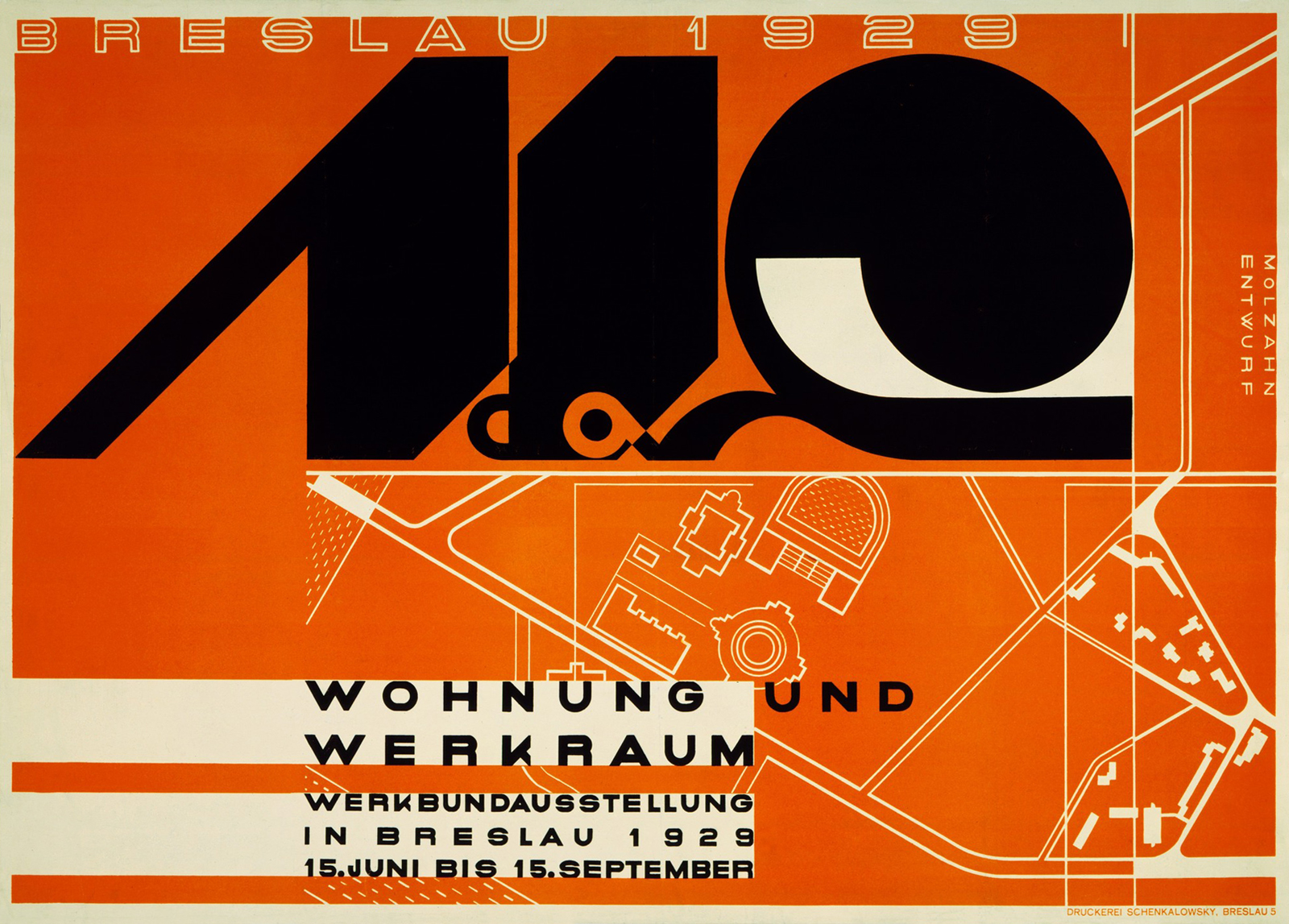
Johannes Molzahn (German, 1892-1965) 'Wohung und Werkraum, Werkbundausstellung in Breslau' (Apartment and workshop, Werkbund exhibition in Breslau) 1929


Johannes Molzahn (German, 1892-1965)
Wohung und Werkraum, Werkbundausstellung in Breslau (Apartment and workshop, Werkbund exhibition in Breslau)
1929
Schenkalowsky, Breslau (Wroclaw) printing house
Lithograph


Installation view of the exhibition 'László Moholy-Nagy and New Typography: A Reconstruction of a Berlin Exhibition from 1929' at the Staatliche Museen zu Berlin


1929 (installation view)
Photo: Marcus Bunyan


Kunstbibliothek
Matthäikirchplatz
10785 Berlin

Opening hours:
Sunday 10.00 – 18.00
Monday closed
Tuesday 10.00 – 18.00
Wednesday 10.00 – 18.00
Thursday 10.00 – 18.00
Friday 10.00 – 18.00
Saturday 10.00 – 18.00

Staatliche Museen zu Berlin website

LIKE ART BLART ON FACEBOOK

Back to top

Exhibition: ‘Art Deco. Graphic Design from Paris’ at the Museum für Kunst und Gewerbe Hamburg

Exhibition dates: 4th May – 30th September, 2018

Artists: George Barbier, Jean Carlu, AM. Cassandre, Paul Colin, Jean-Gabriel Domergue, Studio Dorland, Maurice Dufrène, Michel Dufet, Jean Dupas, Charles Gesmar, Raymond Gid, Natalja Gontscharowa, Agentur Havas, Auguste Herbin, Paul Iribe, Alexis Kow, André Lambert, Michail Larionow, Fernand Léger, Georges Lepape, Charles Loupot, André Édouard Marty, René Vincent, Gerda Wegener and others


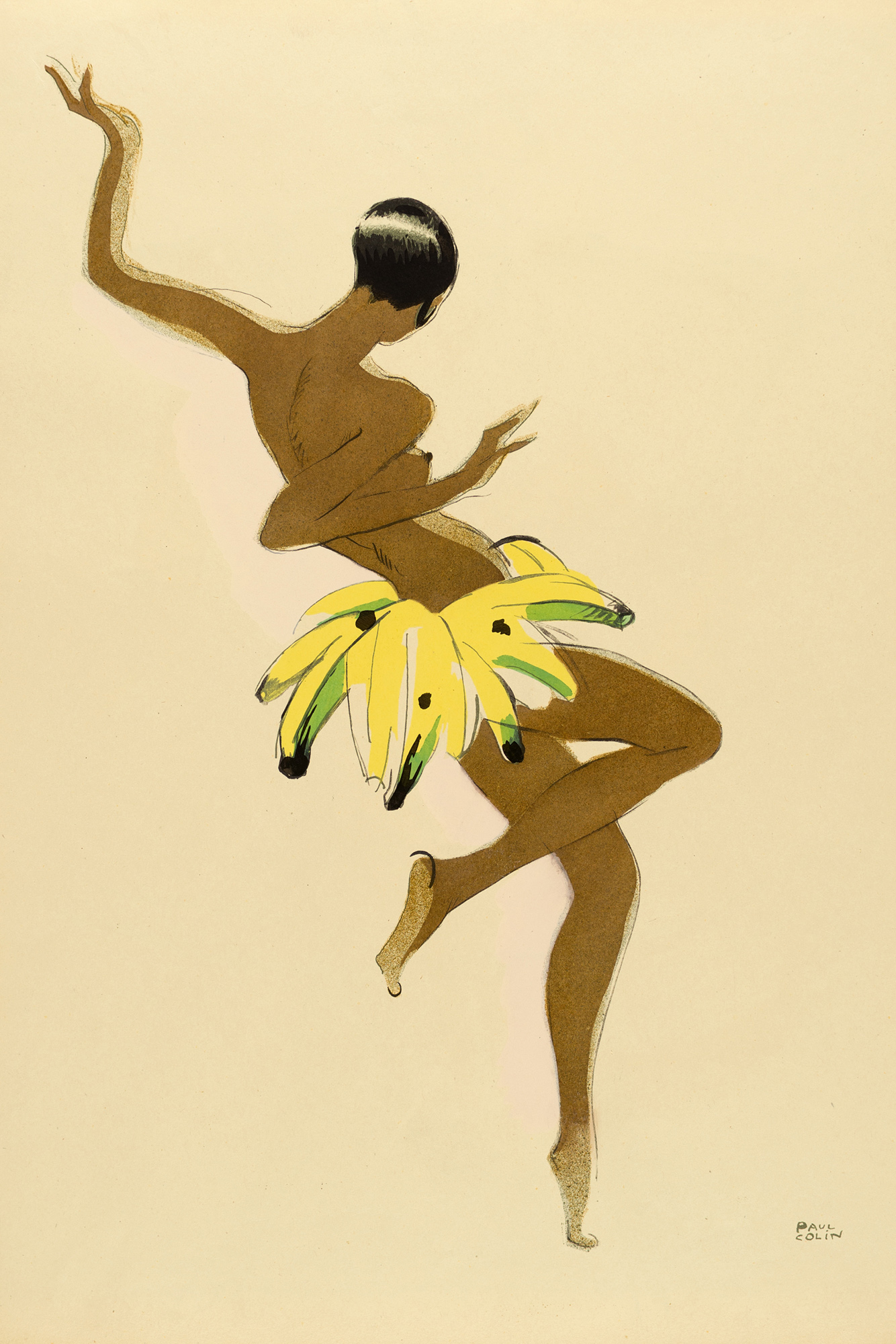
Paul Colin (French, 1892-1985) 'Josephine Baker in a Banana Skirt' 1927 from the exhibition 'Art Deco. Graphic Design from Paris' at the Museum für Kunst und Gewerbe Hamburg, May - Sept, 2018


Paul Colin (French, 1892-1985)
Josephine Baker in a Banana Skirt
1927
Sheet of the Portfolio Edition Le Tumulte noir
Lithograph, Pochoir Print
47 x 33cm
© VG Bild-Kunst, Bonn 2018


Colourful and graphic, these designs are just fab!

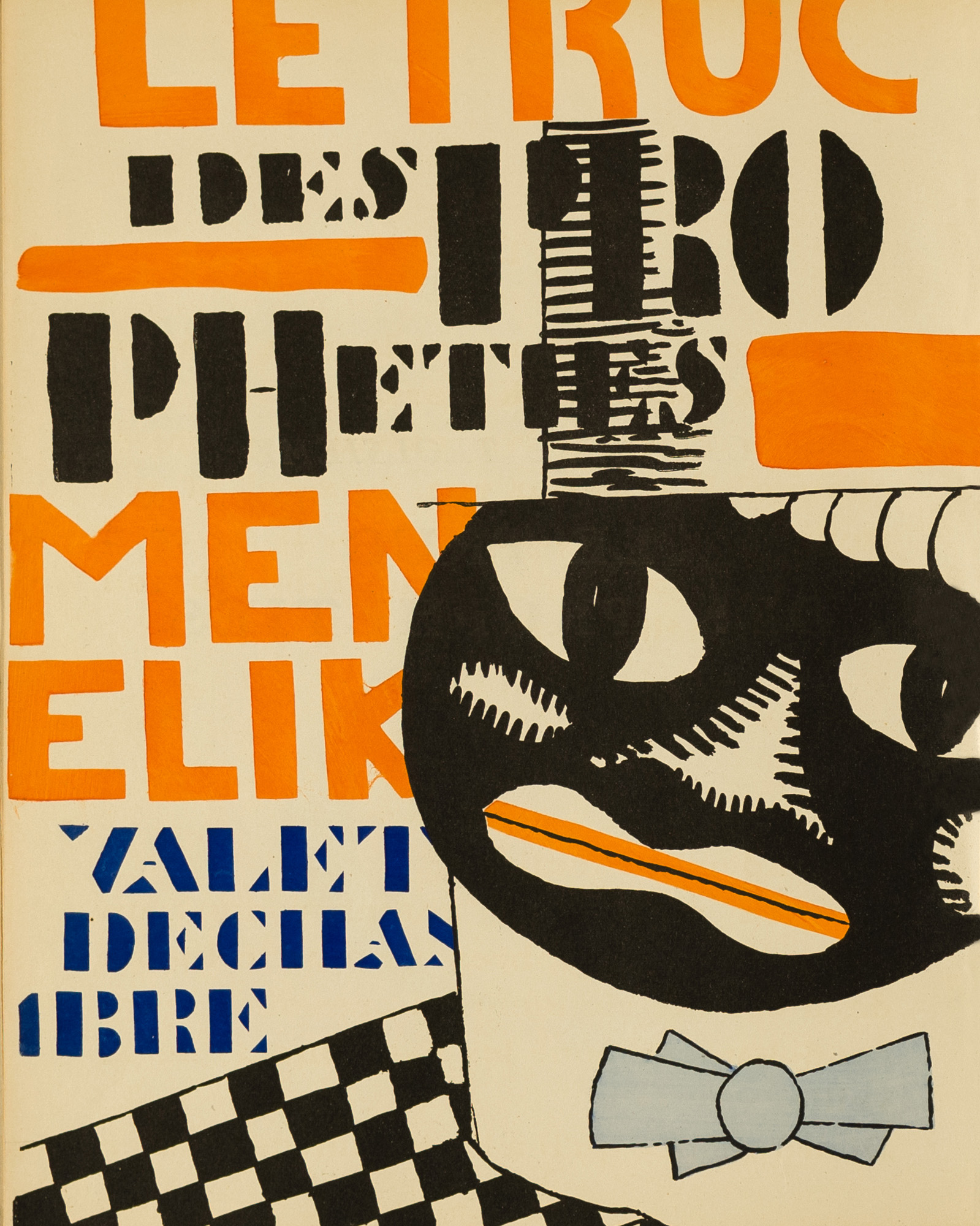
From the androgynous creatures in Georges Lepape’s Japonisme inspired Rugby (Waisted Costume by Redfern) 1914 to Fernand Léger’s avant-garde Illustration of Blaise Cendrars, La Fin du Monde 1919 (both below) these creations are elegant and sophisticated illustrations.

The outrageous curve of the out flung arm in Paul Colin’s Josephine Baker in a Banana Skirt 1927 (above), so evocative of the dancer is, on its own, worthy of your attention.

Dr Marcus Bunyan


Many thankx to the the Museum für Kunst und Gewerbe Hamburg for allowing me to publish the artwork in the posting. Please click on the photographs for a larger version of the image.


Paul Iribe (French, 1883-1935) Illustration of 'Les Robes des Paul Poiret' 1908 from the exhibition 'Art Deco. Graphic Design from Paris' at the Museum für Kunst und Gewerbe Hamburg, May - Sept, 2018


Paul Iribe (French, 1883-1935)
Illustration of Les Robes des Paul Poiret
1908
Etching and Pochoir print
31 x 27.7cm
Museum für Kunst und Gewerbe Hamburg


Paul Iribe (8 June 1883 – 21 September 1935) was a French illustrator and designer in the decorative arts. He worked in Hollywood during the 1920s and was Coco Chanel’s lover from 1931 to his death.


Georges Lepape (French, 1887-1971) 'We are watched - New Muffs for the Winter' 1913


Georges Lepape (French, 1887-1971)
We are watched – New Muffs for the Winter
1913
Panel of La Gazette du Bon Ton
Pochoir Print
24.5 x 19cm
© VG Bild-Kunst, Bonn 2018


Georges Lepape was a French poster artist, illustrator, and fashion designer. Lepape’s work incorporates orientalist motifs with fluid lines, bold coloration, and graphic stylisations that are evocative of the Art Nouveau movement, which includes Alphonse Mucha, Erté, Gustav Klimt, and Henri de Toulouse-Lautrec. The artist’s body of work spans across media, and he has contributed to the design of book covers, playbills, magazines, advertisements, and textiles. Born June 26, 1887 in Paris, France, Lepape studied at the Ecole des Beaux-Arts at the age of eighteen. In 1910 he began his iconic collaboration with artist and fashion designer Paul Poiret. The Musée des Arts Décoratifs in Paris held the first major exhibition of his work in 1920, and six years later he would be invited by publisher Condé Nast to work in New York. While there, he produced iconic cover art for Vogue and Vanity Fair magazines.

Text from the Artnet website


Georges Lepape (French, 1887-1971) 'Rugby (Waisted Costume by Redfern)' 1914


Georges Lepape (French, 1887-1971)
Rugby (Waisted Costume by Redfern)
1914
Panel of La Gazette du Bon Ton
Pochoir Print
24 x 19cm
© VG Bild-Kunst, Bonn 2018


The term Art Deco is used to describe a style of decorative art popular between the heyday of Art Nouveau and the emergence of the International Style in the 1950s, roughly contemporaneous with the radical forms of avant-garde artistic expression exemplified by De Stijl, the Russian avant-garde, and the Bauhaus. The origins can be traced to Paris circa 1910. After 1930, Art Deco diverged in various directions. It was subsumed by the pompous neoclassicism of the 1930s, for example in Fascist architecture in Italy, and it survived in the USA until the 1950s in bakelite radios and plastic handbags. The name was derived from the 1925 world exhibition of applied arts in Paris: Exposition internationale des arts décoratifs et industriels modernes. The very words Art Deco summon images of opulent curved forms, exquisite furniture, costly fabrics, and sophisticated garments – and only rarely of graphic art. And yet the printed image witnessed some remarkable achievements during this period. In recent years, the Museum für Kunst und Gewerbe Hamburg (MKG) has acquired a collection of Parisian prints mainly from the 1920s that is unparalleled anywhere in Germany. From a total of over 700 sheets, some 150 will be on view at the show, representing in equal measure posters, graphics (pochoir prints and lithographs), and advertisements printed chiefly in the magazines Vogue and L’Illustration. It may be surprising to see advertising placed on equal footing here with other graphic artworks, but these ads were often designed by leading artists and reflect the major themes of the times: the automobile, which reached an aesthetic culmination circa 1930; the French chanson, which rose to prominence in the 1920s; the Parisian Haute Couture created during this era; and, last but not least, dance and cabaret, which played an important role especially in Paris.

The Paris Art Deco posters are regarded internationally as a high point in the history of the poster. Adolphe Mouron, aka Cassandre, along with Charles Loupot, Jean Carlu, and Paul Colin were the leading poster artists. Each developed his own signature style. Cassandre is still today considered the greatest poster artist of the 20th century. Between 1925 and 1935, he produced around one hundred posters, each unique in its own way and many of them masterpieces that still convey a convincing balance between modern design and vivid effect. While Cassandre and Loupot were active mainly in the area of product advertising, Jean Carlu’s graphic works covered a broad spectrum from political poster to product advertising to theatre posters. Paul Colin by contrast specialised in imagery for the city’s theatre and cabaret stages. He portrayed many of the great singers and actors of the day. One of the highlights of the exhibition is Colin’s portfolio for the Revue nègre, Josephine Baker’s dance company, which performed several times in Paris and for which Colin also designed stage sets and costumes.

The first catalogue of a collection designed by the couturier Paul Poiret came out in 1908: Les robes de Paul Poiret – a sort of founding manifesto of Art Deco. Poiret, who deserves to be called one of the inventors of Haute Couture, presents therein his new women’s fashions, with high waists and long, swinging robes: the typical Art Deco silhouettes are born. The catalogue also boasts the first important pochoir prints, designed by Paul Iribe, a political cartoonist who also had success as a fashion illustrator.

Pochoir prints are a special feature in Parisian graphics. The term refers to a specific technique, but came to stand for a whole genre, namely for sophisticated and elegant illustration dealing mainly with fashion and – subtle – eroticism. Literally translated, pochoir means stencil printing, but there is much more involved in the actual practice. Most of the prints were produced using complex mixed techniques with varying proportions of manual labor. Unsuitable for large editions at low prices, the prints were destined instead for deluxe editions and upscale fashion journals such as the Gazette du Bon Ton.

Press release from Museum für Kunst und Gewerbe Hamburg


Fernand Léger (French, 1881-1955) Illustration of 'Blaise Cendrars, La Fin du Monde' 1919


Fernand Léger (French, 1881-1955)
Illustration of Blaise Cendrars, La Fin du Monde
1919
Lithograph
31.8 x 25cm
© VG Bild-Kunst, Bonn 2018


George Barbier (French, 1882-1932) 'Day and Night' 1924


George Barbier (French, 1882-1932)
Day and Night
1924
Panel of the Almanac Falbalas et Fanfreluches
Pochoir print
24 x 19cm
Museum für Kunst und Gewerbe Hamburg


George Barbier (French), né Georges Augustin Barbier, (1882-1932) was one of the great French illustrators of the early 20th century.

Born in Nantes, France on 16 October 1882, Barbier was 29 years old when he mounted his first exhibition in 1911 and was subsequently swept to the forefront of his profession with commissions to design theatre and ballet costumes, to illustrate books, and to produce haute couture fashion illustrations.

For the next 20 years Barbier led a group from the Ecole des Beaux Arts who were nicknamed by Vogue “The Knights of the Bracelet” – a tribute to their fashionable and flamboyant mannerisms and style of dress. Included in this élite circle were Bernard Boutet de Monvel and Pierre Brissaud (both of whom were Barbier’s first cousins), Paul Iribe, Georges Lepape, and Charles Martin.

During his career Barbier also turned his hand to jewellery, glass and wallpaper design, as well as writing essays and many articles for the prestigious Gazette du Bon Ton. In the mid-1920s he worked with Erté to design sets and costumes for the Folies Bergère, and in 1929 he wrote the introduction for Erté’s acclaimed exhibition and achieved mainstream popularity through his regular appearances in L’Illustration magazine.

Barbier died in 1932 at the very pinnacle of his success. He is buried in Cemetery Miséricorde, Nantes.

Text from the Wikipedia website


Charles Loupot (French, 1892-1962) 'The Blue Amazon' 1924


Charles Loupot (French, 1892-1962)
The Blue Amazon
1924
Illustration of La Gazette du Bon Ton
Pochoir Print and Halftone
24.7 × 19.2cm
© VG Bild-Kunst, Bonn 2018


Charles Loupot (20 July 1892 – 18 October 1962) was a French poster artist and painter. He was one of France’s most significant poster artists, along with A.M. Cassandre, Paul Colin, and Jean Carlu. His pioneering use of the lithographic technique was widely celebrated across his fifty year career.


Charles Loupot (French, 1892-1962) 'Official Poster for the International Exhibition of Decorative Arts' 1925


Charles Loupot (French, 1892-1962)
Official Poster for the International Exhibition of Decorative Arts
1925
Lithograph
120 × 77.5cm
© VG Bild-Kunst, Bonn 2018


Charles Gesmar (French, 1900-1928) 'Mistinguett' 1925


Charles Gesmar (French, 1900-1928)
Mistinguett
1925
Poster, Lithograph
120 × 77.5cm
Museum für Kunst und Gewerbe Hamburg


Auguste Herbin (French, 1882-1960) 'Bal de la Grande Course' 1925


Auguste Herbin (French, 1882-1960)
Bal de la Grande Course
1925
Poster, Lithograph
120.4 × 80.1cm
© VG Bild-Kunst, Bonn 2018


Auguste Herbin (29 April 1882 – 31 January 1960) was a French painter of modern art. He is best known for his Cubist and abstract paintings consisting of colourful geometric figures. He co-founded the groups Abstraction-Création and Salon des Réalités Nouvelles which promoted non-figurative abstract art.


Paul Colin (French, 1892-1985) 'Jean Borlin' 1925


Paul Colin (French, 1892-1985)
Jean Borlin
1925
Poster, Lithograph
120.6 × 90.3cm
© VG Bild-Kunst, Bonn 2018


Paul Colin (27 June 1892 – 18 June 1985) born in Nancy, France, died in Nogent-sur-Marne. Paul Colin was a prolific master illustrator of Decorative Arts posters. And he is the brother of Alexandre-Marie Colin.

Paul colin was a professional artist, scenographer, graphic designer and theatre painter. He specialises in theatre sets, book design and costume design. During his lifetime he created over 1900 posters and worked in theatre for more than 40 years. He was praised for the perfect combination of organic and graphic themes with geometric forms. He was influenced by Surrealism and Cubism, typically using very exaggerated shapes, striking colours and very stylised art forms in his work. He used a large palette of colours to emphasise the energy and meaning conveyed by his subjects, and his art is strongly in the style of the Art Deco movement. Many of his most famous illustrations were created for Jazz Age music and theatre. His designs incorporate jazz elements, bold and striking colours, Cubist and Surrealist. Highly stylised or characterised humanoids are strangely juxtaposed with geometrically overlapping objects such as Cubist collages. His own background in painting and his love of theatre helped him to become one of the most important French poster artists of the 1920s and 1930s.

Colin designed posters for artists and theatres such as Folies Bergères, the Moulin Rouge and the Champs Elysées Theatre. In addition, he produces posters for various festivals, exhibitions, products and companies. For example, he designed posters for French films such as Le Voyage Imaginaries and produced stage and costume designs for theatres. He has been teaching his skills for over 40 years at the “Ecole Paul Colin” graphic arts school in Paris, where many graphic artists and designers have benefited.

Text from the Wikipedia website


Paul Colin (French, 1892-1985) 'The Jazz Orchestra of Josephine Baker' 1925


Paul Colin (French, 1892-1985)
The Jazz Orchestra of Josephine Baker
1925
Sheet of the Portfolio Edition Le Tumulte noir
Lithograph, Pochoir Print
47 × 66cm
© VG Bild-Kunst, Bonn 2018


Paul Colin (French, 1892-1985) 'Josephine Baker, dancing' 1927


Paul Colin (French, 1892-1985)
Josephine Baker, dancing
1927
Sheet of the Portfolio Edition Le Tumulte noir
Lithograph, Pochoir Print
47 x 33cm
© VG Bild-Kunst, Bonn 2018


Rougemont. 'Mistinguett' 1928/29


Rougemont
Mistinguett
1928/29
Poster, Lithograph
157.5 x 117.2cm
Museum für Kunst und Gewerbe Hamburg


René Vincent (French, 1879-1936) 'Peugeot' 1928


René Vincent (French, 1879-1936)
Peugeot
1928
Poster, Lithograph
117,5 × 157.5cm
Museum für Kunst und Gewerbe Hamburg


René Vincent (1879-1936) was a French illustrator who was active in the 1920s-1930s. He worked in an Art Deco style and became famous for his poster designs. He was influential in the Art Deco movement in the period between the two world wars. His illustrations helped define advertising in the 20th century. …

Vincent was an illustrator for La Vie Parisienne, L’Illustration and Fantiso. When he came to the United States, he did work for the Saturday Evening Post and Harper’s Bazaar. Most of his contributions to these magazines were fashion illustrations. When he came back to France, he created a plethora of advertisements for Bugatti, Peugeot, Michelin, and Shell Oil Company. His most recognisable work is the 1925 Porto Ramos Pinto poster.

Text from the Wikipedia website


Paul Colin (French, 1892-1985) 'André Renaud' 1929


Paul Colin (French, 1892-1985)
André Renaud
1929
Poster, Lithograph
156,7 × 117.8cm
© VG Bild-Kunst, Bonn 2018


Roger Pérot (French, 1908-1976) 'Delahaye' 1932


Roger Pérot (French, 1908-1976)
Delahaye
1932
Poster, lithograph
160 x 120cm
Museum für Kunst und Gewerbe Hamburg


Unknown. Advert for the Parfume French Cancan in the 'Magazine L'Illustration' 1935


Unknown
Advert for the Parfume French Cancan in the Magazine L’Illustration
1935
Offset print
Museum für Kunst und Gewerbe Hamburg


Museum für Kunst und Gewerbe Hamburg
Steintorplatz, 20099 Hamburg

Opening hours:
Tuesday to Sunday 10 am – 6 pm
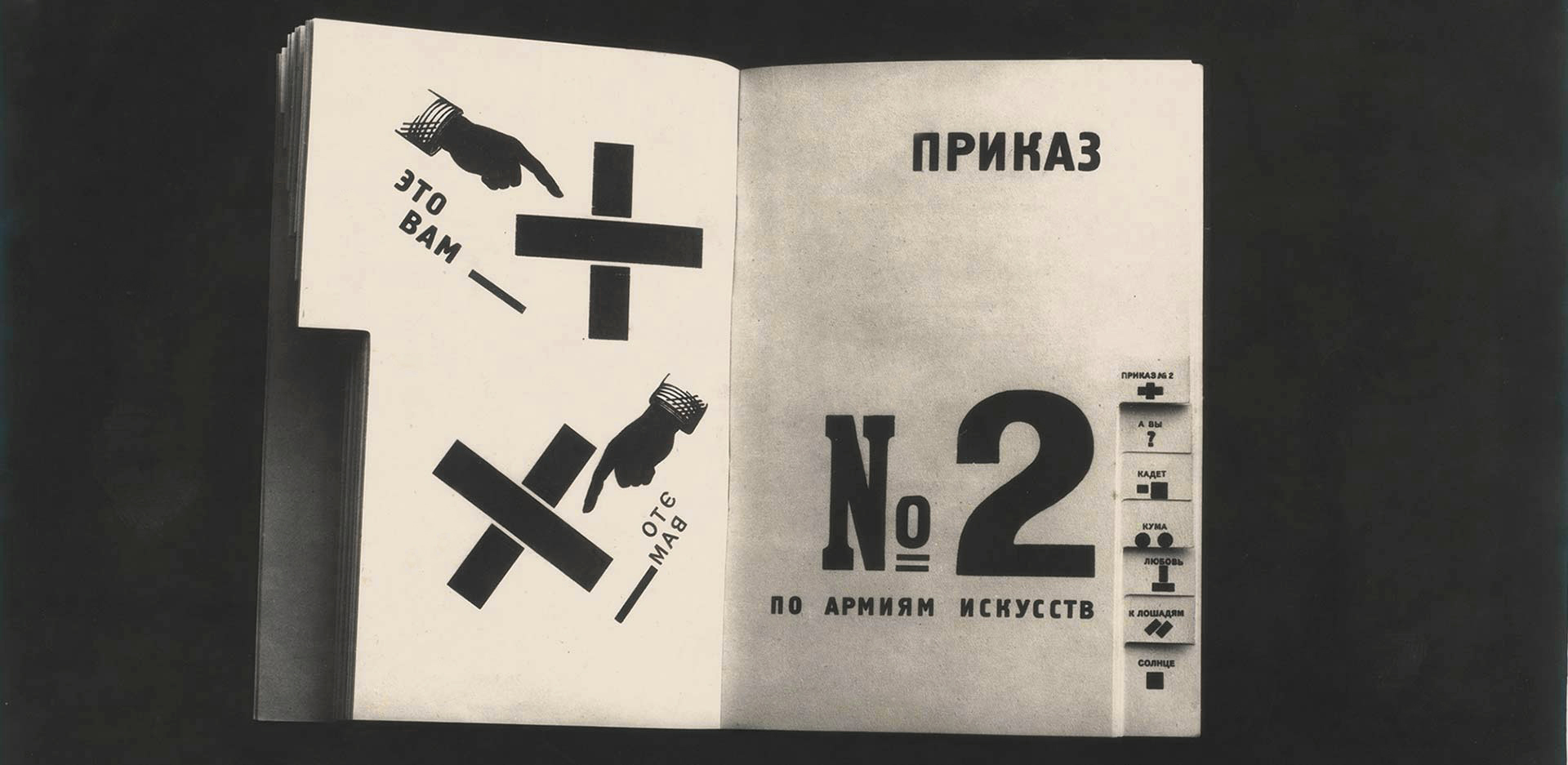
Thursday 10 am – 9 pm
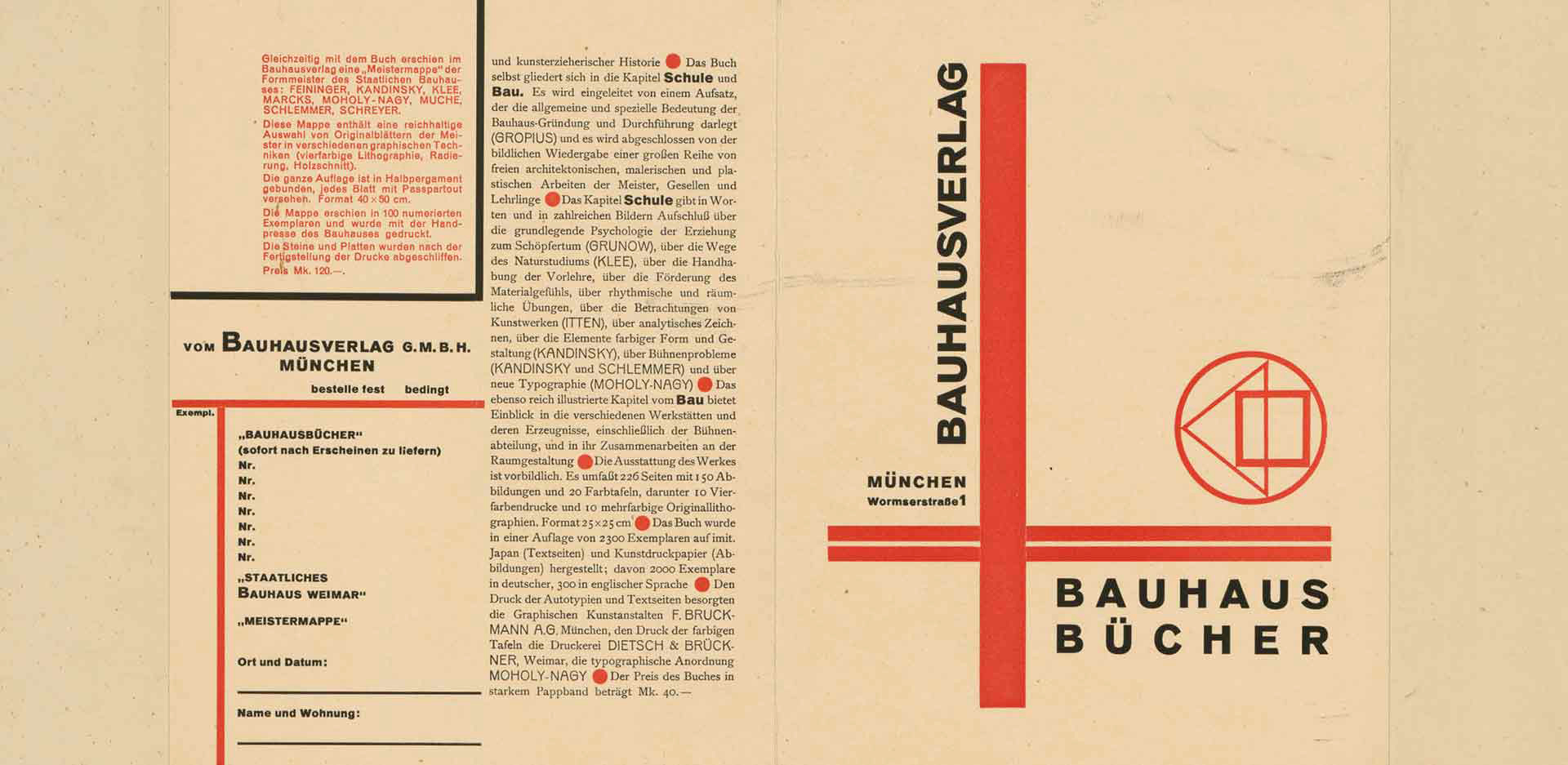
Closed Mondays

Museum fur Kunst und Gewerbe Hamburg website

LIKE ART BLART ON FACEBOOK

Back to top