We were asked to choose our favourite photograph, one that we could nominate as a great photograph. I chose a slightly different take on proceedings.
Dr Marcus Bunyan
Many thankx to my fellow speakers for their talks and to Director of the Centre for Contemporary Photography Naomi Cass for inviting me to speak at a wonderful evening. Please click on the photographs for a larger version of the image.
Alexander Gardner (American, 1821-1882) Lewis Paine 26th April, 1865 Albumen silver print from a Collodion glass plate negative
This is not my favourite photograph
A minute’s silence…
This is not my favourite photograph Nor may it be a great photograph… More interestingly to me, it is a remarkable photograph – one that you are able to make remarks on.
It is also a photograph that has haunted me for years.
Taken by Alexander Gardner in April 1865, this photograph is a portrait of Lewis Thornton Powell (aka Lewis Payne or Paine) who was one of the conspirators in the assassination of Abraham Lincoln which had happened the same month. The photograph has a background of dark metal, and was taken on one of the ironclads U.S.S. Montauk or Saugus, where the conspirators were for a time confined. Paine was executed in July 1865 just eight short weeks later.
Alexander Gardner (American, 1821-1882) Three photographs of Lewis Paine 26th April, 1865
This is the triptych of photographs by Gardner in the form they are usually displayed, like a three-panel renaissance altar-piece. The left and right hand photographs were taken within minutes of each other, with the camera in the same position, whereas in the centre photograph the camera has been lowered to show more of the body, and the image has been cropped at the top. In the central plate the figure of Paine has been raised up in the frame – almost prematurely brought back to life by his placement.
The centre image is the only one where Paine stares directly at the camera. He surveys the viewer with a gaze I find enigmatic.
This is a very modern face, a very contemporary face. His hair is just like Justin Beiber’s.
Who brushed his hair across for this picture, and would it normally be this long, or has it just been ignored because of his fate?
He still has good muscle tone – has he been exercising in his cell?
And finally his clothing – is it navy issue, as his top appears to have been given to him, perhaps the coarse, navy blue wool of the Northern states.
Noel Cordle Hot Dead Guys: Lewis Powell Posted on September 5th, 2010 Mere Musings blog [Online] Cited 01/12/2012 no longer available online
There’s even a web page dedicated to him on “hot dead guys” where there’s that awkward moment when one of Lincoln’s conspirators is so sexy its ridiculous…
He wasn’t all bad. Biographers of Powell describe him as a quiet, introverted boy who enjoyed fishing and caring for sick and injured animals. Apparently, Lewis was an intelligent, sensitive, soul with great potential.
Descriptions of Lewis from “The Life, Crime and Capture”
.
Alexander Gardner (American, 1821-1882) Lewis Paine (detail) 26th April, 1865 Albumen silver print from a Collodion glass plate negative
Could we say that he is left-handed given the different size of his fingers (?)
Roland Barthes (French, 1915-1980) Camera Lucida (La Chambre claire) 1980
Roland Barthes in his seminal work Camera Lucida said in Section 39: “He is dead and he is going to die…
“The photograph is handsome, as is the boy: that is the studium. But the punctum is: he is going to die. I read at the same time: this will be and this has been; I observe with horror an anterior future of which death is the stake. By giving me the absolute past of the pose, the photograph tells me death in the future. What pricks me is the discovery of this equivalence.”
If we were to place this image within the metaphysical school of photography which peaked with Paul Caponigro and Minor White we could say:
Hovering above his head, has his spirit already begun to leave his body?
One reading of his gaze is that he is really interested in what the photographer is doing – almost the gaze of an apprentice wanting to apply these skills in the future.
Given his fate is he insane because of his interest?
What is really going on in his mind – what is his perspective?
Another reading could be as looking out to the future in the hope of finding that he will be judged in another way.
And another is the immediacy of his gaze – it is a gaze that is happening now!
The other thing that I find quite mysterious is the distance of the photographer from the subject.
Was it fear that stopped him getting any closer or are there deck fittings we cannot see that prevented his approach?
What brought Paine to this place?
Michel Foucault calls the methods and techniques through which human beings constitute themselves, “Technologies of the self.” Foucault argued that we as subjects are perpetually engaged in processes whereby we define and produce our own ethical self-understanding. According to Foucault, technologies of the self are the forms of knowledge and strategies that “permit individuals to effect by their own means or with the help of others a certain number of operations on their own bodies and souls, thoughts, conduct, and way of being, so as to transform themselves in order to attain a certain state of immortality.”1
As we look into his eyes he knows that we know he is going to die, has already died but the intensity of that knowledge is brought into present time. What Paine emanates is a form of i-mortality.
I wonder, did Gardner ever show him the finished photographs before he died?
This is Barthes anterior future, a moment where truth is interpreted in the mind of the photographer, not out there but in here [points to head and heart], where past, present and future coalesce into single point in time – his death and our death are connected through his gaze, the knowledge of our discontinuity. Eons contracted into an eternal moment.
In this moment in time, what we are doing is we are making a list about the human condition when we talk about something that is remarkable. We are moving towards a language that defines the human condition…
But ultimately language can never fully describe the human condition, much as it may try… and this is why this photograph is remarkable, because it is ineffable, unknowable.
This photograph inhabits you, it haunts you like few others.
Early Wittgenstein described a world of facts pictured by thoughts. He said, “Don’t Think, But Look!”
I would add “Don’t think, but feel and look”
This photograph is a memoriam to a young man and his present death. As such it is a REMARKABLE photograph that haunts us all.
Dr Marcus Bunyan December 2012
1/ Foucault, Michel. “Technologies of the self,” in L. H. Martin, H. Gutman and P. H. Hutton (eds.). Technologies of the self. Amherst: University of Massachusetts Press, 1988,p. 18.
Postscript
George Cook (American, 1819-1902) Union ironclads firing on Fort Moultrie, S.C., (detail) 8th September 1863
“On the highest point of the battered dust heap that was the still untaken fortress of Sumter. the Confederate photographer, Cook, planted his camera on September 8, 1863, and took the first photograph of ironclads in action – the monitors W’echaten. Montauk and Passaic. as they were actually firing on the Confederate batteries at Fort Moultrie. The three low-freeboarded vessels, lying almost bows-on, at the distance of nearly two miles, look like great iron buoys in the channel, but the smoke from their heavy guns is drifting over the water, and the flames can almost be seen leaping from the turret ports. Although Fort Moultrie was the aim of their gunners, Cook, with his head under the dark cloth, saw on the ground glass a shell passing within a few feet of him. Another shell knocked one of plate-holders off the parapet into the rain-water cistern. He gave a soldier five dollars to fish it out for him. He got his picture – and was ordered off the parapet, since he was drawing upon the fort the fire of all the Union batteries on Morris Island. It seems incredible that such a daring photographic feat, and one of such historic interest, could have remained unpublished for nearly half a century – until one recalls the absence of any satisfactory method for reproducing photographs direct during the generation succeeding the war. Before photo-engraving became perfected, thirty years or more had passed, and most of the few negatives taken by Confederates had vanished through fire, loss, and breakage. Fortunately, this has been preserved one of the most vivid of any war.”
Francis Trevelyan Miller. “First Preface: Photographing The Civil War,” in The Photographic History of The Civil War In Ten Volumes. New York: The Review of Reviews, 1911, p. 24.
George Cook (American, 1819-1902) Union ironclads firing on Fort Moultrie, S.C., 8th September 1863 Photo courtesy of the Cook Collection, Valentine Richmond History
George Cook’s photograph of Union ironclads firing on Fort Moultrie, S.C., believed to be the world’s first combat photograph. Monitors engage Confederate batteries on Sullivan’s Island, Charleston, South Carolina. Photographed from one of the Confederate emplacements, the ships are identified as (from left to right): Weehawken, Montauk and Passaic. The monitor on the right appears to be firing its guns. Date is given as 8 September 1863, when other U.S. Navy ships were providing cover for Weehawken, which had gone aground on the previous day. She was refloated on the 8th after receiving heavy gunfire from the Confederate fortifications.
Kilburn Brothers (Edward and Benjamin Kilburn, American) Four monitors laid up in the Anacostia River, off the Washington Navy Yard c. 1866 Ships are (from left to right): USS Mahopac, USS Saugus, USS Montauk (probably), and either USS Casco or USS Chimo Photo mounted on a stereograph card, marked: “Photographed and published by Kilburn Brothers, Littleton, N.H.”
Anonymous photographer ‘Montauk’ at left, and ‘Lehigh’ at right, laid up at the Philadelphia Navy Yard, Pennsylvania c. late 1902 or early 1903 U.S. Naval Historical Center photograph
Anonymous photographer Saugus, in Trent’s Reach on the James River, Virginia c. early 1865 Note the mine sweeping “rake” attached to her bow U.S. Naval Historical Center photograph
Anonymous photographer Officers pose on deck of the Saugus, in front of the gun turret, probably while the ship was serving on the James River, Virginia c. early 1865 Note ship’s bell and other details of the turret and deck fittings U.S. Naval Historical Center photograph
The glorious paintings of Fritz Winter show a beautiful synergy with the abstract photographs. The relationship between painting and photography has always been a symbiotic one, a close mutualist relationship that has benefited both art forms.
This is fully evidenced in this outstanding posting, where I have tried to sequence the artworks to reflect the nature of their individuality and their interdependence.
Great blessings on the curators that assembled this exhibition: an inspired concept!
Dr Marcus Bunyan
Many thankx to the Pinakothek der Moderne, Munich for allowing me to publish the photographs in the posting. Please click on the photographs for a larger version of the image.
In his lesser known early work, the German painter Fritz Winter (1905-1976) made an obsessive analysis of the aesthetic aspects of light. As a Bauhaus student he was influenced by the international avant-garde’s boundless euphoria for light between Expressionism and Constructivism. The light of large cities with headlights, cinemas and illuminated advertisements gave a new impulse to aesthetics; x-rays, radioactivity and microphotography made it possible to perceive previously unknown sources of energy and natural phenomena.
In his pictures of light beams and crystals created in 1934-1936, Winter devoted himself with virtuosity to aspects such as the reflection, radiation and refraction of light. His virtually monochrome paintings incorporate crystal shapes and bundles of rays; they focus on the earth’s interior and the infinite expanse of the cosmos; they block the pictorial space with dark grids or lend it a glass-like transparency.
For the first time, 25 Licht-Bilder by Fritz Winter will be juxtaposed with an international selection of 40 of the earliest abstract photographs in history of art. In the 1910s to 1930s artists experimented with the most varied of photographic techniques to ascertain the genuine qualities of photography beyond the merely representative. The New Vision in photography and abstract painting become immediately obvious through the display of vintage prints and paintings side by side.
The exhibition combines 25 exceptional paintings by Fritz Winter from German museums and private collections as well as 40 international lenders of photographic works including Centre Pompidou, Paris, George Eastman House in Rochester, New York, Museum Folkwang, Essen, Museum für Kunst und Gewerbe, Hamburg, Neue Galerie Kassel, Kunsthalle Mannheim, Ann and Jürgen Wilde Foundation, Munich and Kunstmuseum Stuttgart.
Press release from the Pinakothek der Moderne website
Curator: Gabriele Schor, founding director of the VERBUND COLLECTION, Vienna, and Veit Ziegelmaier, curator for the Museum der Moderne Salzburg
Many thankx to the Museum Der Moderne Salzburg for allowing me to publish the text and photographs in the posting. Please click on the photographs for a larger version of the image.
In the exhibition open spaces | secret places, the MUSEUM DER MODERNE SALZBURG is showing artistic positions from 1970 until today from the SAMMLUNG VERBUND. The phenomenons of the perception of spaces and places will be visualised. The first part of the exhibition is dedicated to the medium of photography. Jeff Wall stages mysterious fragments of urban environments in peripheral area. Joachim Koester, Bernd and Hilla Becher, Tom Burr, Teresa Hubbard/Alexander Birchler and David Wojnarowicz explore the fragility of the present in the light of historical changes of space and time. Louise Lawler draws our attention to places where works of art are stored and presented. Janet Cardiff/George Bures Miller stage a journey through memories as an audiovisual space of experience…
The increasing spatialisation of art goes hand in hand with our life style, which has changed considerably in social and cultural terms as a result of new spatial conditions (virtual space, increased mobility). It is this fluctuating presence which seems to make us more acutely aware of our location. In the past we asked other people on the telephone “How are you?”, today we ask “Where are you?
All text from the Museum Der Moderne Salzburg website (including below)
Jeff Wall (American, b. 1946) Forest 2001 Jeff Wall / SAMMLUNG VERBUND, Wien Courtesy Jeff Wall Studio, Vancouver and Marian Goodman Gallery, New York/Paris
Jeff Wall (American, b. 1946) The Crooked Path 1991 Grossbilddia in Leuchtkasten Jeff Wall / SAMMLUNG VERBUND, Wien Courtesy Jeff Wall Studio, Vancouver and Marian Goodman Gallery, New York/Paris
Jeff Wall
Boys Cutting Through a Hedge, 2003 The Crooked Path, 1991 Forest, 2001
For more than thirty years now, Jeff Wall has been best known for his large-format light boxes in which the colours of his giant transparencies are brilliantly illuminated. In the first few decades of his career, he was celebrated as a peintre de la vie moderne [the painter of modern life] – to use Charles Baudelaire’s term – on account of his ability to combine traditional composition with themes of modern life. For the past decade, however, he has produced a number of large format black-and-white photographs that clearly belong in the context of his affinity for traditional documentary photography or straight photography. The group of three photographs in the SAMMLUNG VERBUND shows peripheral, unimportant places, underscoring Wall’s interest in the “unofficial use of places” (Jeff Wall). In Forest two people are claiming a makeshift private territory in a forest. The Crooked Path and Boys Cutting Through a Hedge, meanwhile, show places in which people have to find their way on the other side of conventional topography.
Jeff Wall (American, b. 1946) Boys Cutting Through a Hedge 2003 Grossbilddia in Leuchtkasten Jeff Wall / SAMMLUNG VERBUND, Wien Courtesy Jeff Wall Studio, Vancouver and Marian Goodman Gallery, New York/Paris
Historically and philosophically charged places form the prime themes in the photographical work of Danish artist Joachim Koester. The series The Kant Walks follows the great philosopher’s daily and precisely scheduled walks through his hometown Kaliningrad (formerly known as Königsberg), which Kant allegedly never left throughout his life. Drifting through Kaliningrad’s “psychogeography” (Joachim Koester), the artist rediscovers Kant’s walks. His photographs evoke impressions, both from the past and the present, as they visualise overgrown roads, disintegrating concrete buildings, and presumably abandoned and forgotten places.
Likewise, Koester creates a link to the past in histories. Juxtaposing historic, not less than 30 year old photographs – taken by Gordon Matta-Clark or Bernd and Hilla Becher to name just a few – with recently taken shots from the very same location evokes not one, but two “histories”: that of conceptual photography, and that of the places and events depicted.
Bernd (German, 1931-2007) and Hilla Becher (German, 1934-2015) Gasbehälter 1965-2001
Bernd and Hilla Becher
Entwürfe für Typologien, recorded in the 1960s, compiled 1970-1971 Gasbehälter, 1965-2001
Within 20th century art only a few artists have been able to combine their enduring artistic concept with an outstanding history of reception of their own work. The German photographer couple Bernd and Hilla Becher has been working strictly with documentary photography since the 1950s, and thus influences publications, exhibitions and art collections worldwide up to this day and even beyond the death of Bernd Becher in 2007, providing crucial impulses for the theory and history of art.
Ever since they started working together, Bernd and Hilla Becher were creating an inventory of industrial architecture, both in Europe and in the United States. Their black-and-white photographs depict furnaces, water towers, winding towers, factory buildings, cement and lime plants, entire mining sites as well as timbered houses. A sense of objectivity is innate to their approach to documentary photography. Bernd and Hilla Becher avoided any dramatic setting and confidently relied on the formal aesthetics of analog photography. Through strictly standardising the photographic process, the couple created the possibility to categorise their entire work in typologies, adding a whole new and important conceptual level to their oeuvre.
Tom Burr addresses a long-obsolete phenomenon. In 2005, he presented a white wooden house cut in two halves, entitled Split, outside on a lawn. Burr’s house is a response to the multiple-seat outhouse from the premodern era. Despite (or perhaps because of) the cramped conditions, he sees in it the symbol of “a lost type of intimacy”, repressed by our western societies from their collective consciousness “in favour of cool, smooth, and clean porcelain surfaces.” Considering Burr’s penchant for referencing selected avant-garde works, what comes to mind in relation to this work is Marcel Duchamp’s urinal Fountaine of 1917 and certainly Matta-Clark’s bisected Splitting house, also shown in the exhibition, as well as Minimal Art. Burr stages Split with aesthetic minimalism – cool, austere, and sober. At the same time, however, he unfolds a strange associative field of uncomfortable conditions: of closeness and intimacy, shame, smell, at times even disgust. The earth toilet was common from ancient times up until the 19th century. Installing a version of it in public space today is intended to have the function of an “alien”, a foreign element. Burr’s earlier photo series Unearthing the Public Restroom of 1994 traces experiences of public access, hygiene, privacy, sexuality, criminality, and surveillance that cluster around, and in fact produce, the history of the public restroom. Crime and sexuality, particularly homosexuality, caused many of these spaces to be shut down. What interests the artist is precisely this state of non-use, of abandonment, and the ghost-like presence.
The photo work Filmstills, created in 2000, marks a crucial step in the oeuvre of Teresa Hubbard and Alexander Birchler. Up to this work, the two Irish-Swiss artists were mainly known for their large-size photo series, such as Falling Down, Holes, or Gregor’s Room which were choreographed down to the smallest detail. Filmstills was the first work done outside the studio and on the spot. Filmstills show movie theatres in Berlin, which have been getting on in years. The Rio was closed some time ago and let go to ruin, whereas the Odeon still tries to maintain its hold against the flood of standardised movieplexes. Both shots are based on the same formal principle. A very narrow detail shows the respective main entrance with the cinema’s name written in big letters. The digital processing of the photographs as well as their sizes make the viewers perceive the cinemas as film stills or clips from a movie. In contrast to filmic illusion, here reality is fictionalised. The series Arsenal delivers melancholic interior views of the deserted premises of an abandoned independent cinema in Berlin, wherein only a female usher is still present.
In the summer of 1979, David Wojnarowicz a twenty-four-year-old self-taught artist, borrowed a broken camera to produce a series of black-and-white photographs entitled Arthur Rimbaud in New York.
The Rimbaud series proposes hypothetical scenarios involving the French Symbolist outlaw poet as if he existed a century later, showing Brian Butterick, the friend and temporary lover of the artist, with a mask of Rimbaud. Arthur Rimbaud in New York tracks provocative “locations and movements.” Meatpacking district, subway, piers and Coney Island (off-season) further characterise a generally invisible marginalisation reinforced by abiding unsightliness, tawdriness, and rustication. Desolate Hudson river pier warehouses or anonymous Times Square’s red-light district allude to cavalcades of outsiders whether artists, thieves, queers, young runaways, sex workers, injection drug users, the poor, or homeless. The Rimbaud series would forge links between the artist’s engagement in his own social marginality to that of peers and prior heroes, each one demonstrating the transformative potential of creative response to existential crisis.
Louise Lawler (American, b. 1947) Not Yet Titled 2004-2005
Louise Lawler is one of a group of artists associated with the so-called Pictures generation of the 1970s and 1980s. The Pictures generation conceived of the image as a “picture” – that is, as a set of representations that could be found or appropriated, was rarely original or unique, and that contradicted the claims of authenticity upheld by most modern aesthetics. Lawler’s Not Yet Titled belongs to a long series of projects that investigate the afterlife of artworks – what happens to them after they leave the artist’s studio and enter the domain of private homes or public institutions. This photograph captures Gordon Matta-Clark’s “building cut” Bingo (1974) just after it was installed in the contemporary art galleries of the recently renovated Museum of Modern Art in New York in 2004. Only the top of Bingo is visible in the near foreground, as the edges of Matta-Clark’s object alternately frames and obscures smaller black-and-white photographs of buildings by the contemporary artist Thomas Struth mounted on the gallery walls behind. Lawler’s luminous colour photograph demonstrates the ways in which an institution can change the meaning of an object, as it turns Bingo – already transformed from a building part into a sculpture – into an enigmatic framing device that calls into question the relationships between both the artworks and their context.
Exhibition brochure text from the exhibition Focus on Photography: Recent Acquisitions at the Mildred Lane Kemper Art Museum, Washington University in St. Louis, 2010. Used under fair use conditions for the purposes of education and research
Not Yet Titled, 2004-2005 Abbau, 2002 Not Yet Titled, 2004-2005 CS # 204, 1990 It Could Be Black and White, 1994-1996 Wall Pillow, 2010/2012
Louise Lawler’s gaze is fixed not on a single, isolated work of art, but rather on the institutional environment in which that particular work is viewed; this, astonishingly, turns out to lend works a completely different meaning. It is the private, semi-public or public context of the gallery or the museum which constantly reshapes, redefines, and refigures a work of art. In principle, Lawler takes pictures of existing situations, in the sense that she does not rearrange the works or make any changes to their position relative to each other. She quite often adopts an off-stage stance to this end, enabling her to view an exhibition from an angle which would normally be closed to visitors.
Wall Pillow, for instance, reveals the verso of a painting, while Abbau shows the absence of art – the two nails and a spotlight shining on a bare wall are all that remains after the work itself has been removed. For what she has done is to sever the magic thread that connects the work per se to the aura it acquires through its hanging. What is evident from Not Yet Titled and CS #204, is that the artist is clearly attracted first and foremost by those works of art which she herself values highly, such as by Gordon Matta-Clark’s façades and Cindy Sherman’s self portraits. Lawler’s photographs focus on the other side of the coin of institutional art presentation. Yet for all her apparent deconstruction, one still has the feeling that she wants to “rescue” these works and in doing so restore their original dignity.
The striking presence of female figures in Ulla von Brandenburg’s work suggests an interest in the conflicted role of nineteenth-century women and the continued complexity of the performance of gender roles and attitudes in contemporary society. Our uncertainty about the position of these women, who are frequently presented in a liminal state, and their potential vulnerability, align perfectly with von Brandenburg’s interest in shifting roles and meaning: Though commanding of attention, von Brandenburg’s female figures are often on the verge of hysteria or loss of control – a state of powerlessness that nevertheless enforces their centrality in the action taking place. The artist’s work Around, 2005 best embodies this state of deferral or ambiguity: von Brandenburg filmed a tightly packed group of figures standing in the middle of a street with their backs to the camera. As the camera travels around the group the figures shift their position so that no frontal aspect is ever revealed. A view of their faces is never revealed in this conspirative meeting. Around we go waiting for the glimpse that will reveal, well, what exactly? We are left standing in front of the projection watching this group of performers, each of us struggling to find the “right” position.
Eleanor Antin (American, b. 1935) 100 Boots 1971-1973 From the 51-part series, black and white postcards Eleanor Antin / SAMMLUNG VERBUND, Wien Courtesy the artist and Ronald Feldman Fine Arts, New York
Eleanor Antin
100 Boots, 1971-1973
For her 51-piece instalment 100 Boots Eleanor Antin positioned one hundred ordinary black rubber boots on various locations all over Southern California and consequently in New York City. She took photos, printed them on postcards and assembled a mailing list of about a thousand names – mainly artists, writers, critics, galleries, universities and museums – who received the various postcards over a period of two and a half years between 1971 and 1973. The first card, 100 Boots Facing the Sea, was mailed on the Ides of March, 1971, unannounced and without further comment. A few weeks later it was followed by 100 Boots on the Way to Church and three weeks thereafter by the next one.
In a total of 51 photographs, Eleanor Antin documented the travels of the 100 Boots, her so called “hero” – from a beach close to San Diego to a church, to a bank, to the supermarket, trespassing, under the bridge, to a saloon and on their travels eastward. Finally, on May 15th, 1973 100 Boots arrived at the Museum of Modern Art in New York. By this time, 100 Boots had long become an epic visual narrative and a picaresque work of conceptual art.
The works of Ceal Floyer are minimalist and restrained. Some visitors will walk past them without even taking note of them. What the artist addresses everyday situations and activities. It is this apparent insignificance that Ceal Floyer refuses to accept, and so the conceptual strategy she pursues is interrogating our modes of perception. For her piece Me/You (Love Me Tender) from 2009, the artist installs two loudspeakers facing each other, from which the words “me” and “you” can be heard. Between them, the silence becomes palpable. The title can be read as the key to the work since it makes clear that what is heard is an excerpt from Elvis Presley’s song “Love Me Tender.” Ceal Floyer condenses love to its very essence here, namely, to the notions of “me” and “you.”
On Air (2009) is a work in which title and material are one and the same. The words “on” and “air” do not usher in the work, they are the work itself. Ceal Floyer uses the red neon letters used by radio and TV stations to signal that a live broadcast is going on and mounts them above the museum’s or gallery’s exit door. As soon as the viewer connects with the recording studio it becomes clear that this is about a shifting of our perception: We see five letters and realise that the real content of this work is what can be heard. All the sounds, voices and talks from outside the museum are put “on air” here, and the museum, the place where we have learnt to contemplate works of art in silence, pauses to listen to everyday life outside the walls of the institution.
Gordon Matta-Clark (American, 1943-1978) Splitting (b) 1974 Gelatin silver print
Gordon Matta-Clark (American, 1943-1978) Conical Intersect 1975 Gelatin silver print
In spring 1973 Gordon Matta-Clark presented his gallerists Holly and Horace Solomon with an unusual idea. He wanted to saw a house into two halves, and asked them if they knew of anything that might be available. As it happened, Horace Solomon had just the thing. He had bought a house in a speculative real estate deal, and it was soon to be demolished. Matta-Clark was given permission to do what he wanted with it, although it was clear that the work would not last.
Matta-Clark completely cleared the house and, taking a chain-saw and a plumb line, made two parallel incisions into the house. He then cut diagonally through one half of the foundations of house. Next, one half (weighing fifteen tons) of the house started to slope downwards until a split appeared that measured sixty centimeters at the top of the roof. Lastly, Matta-Clark sawed off the four top corners of the house. These were later exhibited as a sculpture entitled Four Corners. The whole project took about four months in total and was demolished shortly after completion. A film, a series of photographs, photomontages, and an artist’s book – all autonomous works of art in their own right – documented the process.
Gordon Matta-Clark (American, 1943-1978) Office Baroque 1977/2005 Gelatin silver print
Museum der Moderne Salzburg Mönchsberg 32 5020 Salzburg Phone: +43 662 842220
Exhibition dates: 5th September – 2nd December, 2012
Curator: Klaus Albrecht Schröder, Director of the Albertina
Ishiuchi Miyako (Japanese, b. 1947) 1906#38 Nd Courtesy by The Third Gallery Aya
“The past neglect of the body in social theory was a product of Western mind-body dualism that divided human experience into bodily and cognitive realms. The knowledge-body distinction identifies knowledge, culture, and reason with masculinity and identifies body, nature, and emotion with femininity. Viewing human reason as the principal source of progress and emancipation, it perceives “the rational” as separate from, and exalted over, the corporeal. In other words, consciousness was grasped as separate from and preceding the body (Bordo 1993; Davis 1997). Following feminist thinking about women’s bodies in patriarchal societies, contemporary social theories shifted focus from cognitive dimensions of identity construction to embodiment in the constitution of identities (Davis 1997). Social construction theories do not view the body as a biological given but as constituted in the intersection of discourse, social institutions, and the corporeality of the body. Body practices, therefore, reflect the basic values and themes of the society, and an analysis of the body can expose the intersubjective meaning common to society. At the same time, discourse and social institutions are produced and reproduced only through bodies and their techniques (Frank 1991, 91). Thus, social analysis has expanded from studying the body as an object of social control and discipline “in order to legitimate different regimes of domination” (Bordo 1993; Foucault 1975, 1978, 1980) to perceiving it as a subject that creates meaning and performs social action (Butler 1990). The body is understood as a means for self-expression, an important feature in a person’s identity project (Giddens 1991), and a site for social subversiveness and self-empowerment (Davis 1997).”
Orna Sasson-Levy and Tamar Rapoport. “Body, Gender, and Knowledge in Protest Movements: The Israeli Case,” in ‘Gender & Society’ 17, 2003, p. 381. No longer available online. Used under fair use conditions for the purposes of education and research
Despite my great admiration for John Coplans’ photographs of his body, on the evidence of these press photographs and the attached video, this exhibition seems a beautiful if rather tame affair considering the subject matter.
Of course these photographs of the body can be understood as a means for self-expression and self-empowerment but there seems little social subversiveness in the choice of work on display.
The two Mapplethorpe’s are stylised instead of stonkingly subversive. The exhibition could have been taken photographs from his ‘X’ portfolio (the self portrait of him with a bull whip up his arse would have been particularly pleasing to see in this context). The exhibition could also have included some of the many artists using the body as protest during the AIDS crisis (perhaps some photographs by David Wojnarowicz or William Yang’s Sadness), the famous Burning Monk – The Self-Immolation (1963) by Malcolm Browne, photographs by Stellarc, Arthur Tress, Duane Michals, Nan Goldin, Diane Arbus, Francesca Woodman, Sally Mann, Cindy Sherman to name but a few; even the Farm Security Administration photographs of share cropper families by Walker Evans and Dorothea Lange would have had more impact than some of the photographs on display here.
Having not seen the entire exhibition it is hard to give an overall reading, but on the selection presented here it would seem that this was a missed opportunity, an exhibition where the body did not protest enough.
Dr Marcus Bunyan
Many thankx to the Albertina, Vienna for allowing me to publish the photographs in the posting. Please click on the photographs for a larger version of the image.
John Coplans (British, 1920-2003) Self Portrait Interlocking Fingers No 6 1999 Silver gelatin paper Albertina, Wien
The exhibition The Body as Protest highlights the photographic representation of the human body – a motif that has provided a wide variety of photographers with an often radical means of expression for their visual protest against social, political, but also aesthetic norms.
The show centres on an outstanding group of works by the artist John Coplans from the holdings of the Albertina. In his serially conceived large-format pictures, the photographer focused on the rendering of his own nude body, which he defamiliarised through fragmentation far from current forms of idealisation. Relying on extremely sophisticated lighting, he presented himself in a monumental and sculptural manner over many years. His photographs can be understood as amalgamations of theoretical and artistic ideas, which in the show are accentuated through selective juxtapositions with works by other important exponents of body-related art.
The body also features prominently in the work of other artists such as Hannah Wilke, Ketty La Rocca, Hannah Villiger, Vito Acconci, Bruce Nauman, Robert Mapplethorpe, and Miyako Ishiuchi. By means of these positions, such diverse themes as self-dramatisation, conceptual photography, feminism, body language, and even transience are analysed within an expanded artistic range. Moreover, the exhibition offers a differentiated view of the critical depiction of the human body as it has been practiced since 1970.
Text from the Albertina website
Ketty La Rocca (Italian, 1938-1976) Craniologia 1973 Radiografie mit überblendeter Fotografie SAMMLUNG VERBUND
“The photos of Thorne-Thomsen are truly magical … they engage you wistfully, holding you in a quiet, silent, attentive dreamspace.” Dr Marcus Bunyan
Exhibition dates: 12th September – 17th November, 2012
RAY K. METZKER:Pictus Interruptus RUTH THORNE-THOMSEN:Expeditions
Ray K. Metzker (American, 1931-2014) Pictus Interruptus (77EY24) 1977 Gelatin silver print
I like both these bodies of work but it is the enigmatic Expeditions that leave the most lasting impression on my subconscious, out imagining the abstract distortions of Metzker in my mind’s eye. While the images of Pictus Interruptus are interesting in a textural way, the photographs of Thorne-Thomsen are truly magical – like a photographic version of Joseph Cornell’s boxes they engage you wistfully, holding you in a quiet, silent, attentive dreamspace. Some of the photographs are almost Jungian in their holistic balance. Photographs such as Levitating Man and Trio are truly memorable, and in our over saturated media environment it is wonderful to find images that make us slow down and inhale their aura
You contemplate these images: that is the word, contemplation. Enjoy.
PS. Prima Materia, a title of one of Thorne-Thomsen’s series, “is, according to alchemists, the alleged primitive formless base of all matter, given particular manifestation through the influence of forms… The alchemical operation consists essentially in separating the prima materia, the so-called Chaos, into the active principle, the soul, and the passive principle, Mind-body dichotomy, the body. They are then reunited in personified form in the coniunctio, the ritual combination of sol and Luna, which yields the magical child – filius philosophorum – the reborn self, known as the ultima materia.” (Wikipedia)
Jung undertook an analysis of the ritual and processes of alchemy and found that while the alchemists were trying to turn lead into gold by melting the lead down and reforming it as gold, what they were actually doing was letting go of their old identity and reforming it anew. This could be seen as an early form of psychoanalysis that encouraged the process of what Jung calls individuation, the emergence of a new identity as the ego dissolves into the Self. “The symbols of the individuation process… mark its stages like milestones’, prominent among them for Jungians being ‘”the shadow, the Wise Old Man… and lastly the anima (female) in man and the animus (male) in woman”‘. Thus ‘there is often a movement from dealing with the persona at the start… to the ego at the second stage, to the shadow as the third stage, to the anima or animus, to the self as the final stage. Some would interpose the Wise Old Man and the Wise Old Woman as spiritual archetypes coming before the final step of the Self’.” (Wikipedia)
I see elements of this inner work in the art of Ruth Thorne-Thomsen.
Dr Marcus Bunyan
Many thankx to the Laurence Miller Gallery for allowing me to publish the photographs in the posting. Please click on the photographs for a larger version of the image.
Ray K. Metzker (American, 1931-2014) Pictus Interruptus (77FK42) 1977 Gelatin silver print
Ray K. Metzker (American, 1931-2014) Pictus Interruptus (78AD23) 1978 Gelatin silver print
Ray K. Metzker (American, 1931-2014) Pictus Interruptus (78BW19) 1978 Gelatin silver print
Ray K. Metzker (American, 1931-2014) Pictus Interruptus (80FP9a) 1980 Gelatin silver print
Ray K. Metzker (American, 1931-2014) Pictus Interruptus (77FK28) 1977 Gelatin silver print
Ray K. Metzker (American, 1931-2014) Pictus Interruptus (77FW60) 1977 Gelatin silver print
Ray K. Metzker (American, 1931-2014) Pictus Interruptus (76EO4) 1976 Gelatin silver print
Laurence Miller Gallery is pleased to present Two of a Mind, photographs by Ray K. Metzker and Ruth Thorne-Thomsen, made between 1976 and 1991. Presently husband and wife, these two influential photographers independently created innovative and highly personal work that challenge our willingness to believe and stimulate our need to imagine.
Both achieved this by inserting images and objects into the view of the camera, turning reality on its head. Ray Metzker’s Pictus Interruptus series, made between 1976 and 1981, offers us inexplicable images – landscapes and cityscapes disrupted by abstract forms that combine, complement, and contrast with recognisable elements of the city or the land. Coat hangers, magazine images, folded paper and board were some of the items placed before the camera lens. Ruth Thorne-Thomsen’s Expeditions and Door series, as well as Prima Materia and Songs of the Sea, made between 1976 and 1991, also utilised the insertion of objects in front of her pin-hole camera, things like plastic and metal toys, children’s charms, ornaments and trinkets. The resulting images feel like poems come to life – credible enough to seem real, yet imaginary enough to seem like dreams.
Ray (1931-2014) and Ruth (born 1943) met in Chicago in 1980, and immediately felt a kinship of spirit and mind. Each had been pursuing a personal photographic vision which took reality as a starting point and then explored the world of the imagination to challenge the general belief that what a photograph presents is truth. Metzker was more intrigued by the possibilities of form and space, while Thorne-Thomsen pursued the possibilities of mythology and dreams. For each artist, reality and artifice became intertwined and inseparable. This is the first exhibition in which their photographs are presented together. This showing of Metzker’s images also coincides with a major retrospective of his work at the J. Paul Getty Museum in Los Angeles, opening September 25th and continuing through February 24, 2013.
Text from the Laurence Miller Gallery website
Ruth Thorne-Thomsen (American, b. 1943) Echo Wisconsin 1991 From the series Songs of the Sea Gelatin silver print
Ruth Thorne-Thomsen (American, b. 1943) Icarus Figure Wisconsin 1993 From the series Songs of the Sea Gelatin silver print
Ruth Thorne-Thomsen (American, b. 1943) Paper Palms, California 1981 From the Expeditions Series Gelatin silver print
Ruth Thorne-Thomsen works with a pinhole camera, which is essentially a simple box that lets light in through a tiny hole rather than a lens. This setup is well-suited for photographing what Thorne-Thomsen calls her “environmental collages:” mythical, imagined scenes populated with miniature, handmade cardboard props and figurines. In “Paper Palms, California,” the photographer pulls back the curtain a bit on her own craft, allowing the edges of the paper props to disrupt the illusion of real space.
Text from the Philadelphia Museum of Art Facebook page
Ruth Thorne-Thomsen (American, b. 1943) Trio Wisconsin 1991 From the series Songs of the Sea Gelatin silver print
Ruth Thorne-Thomsen (American, b. 1943) Levitating Man, Wisconsin 1983 From the Door Series Gelatin silver print
Ruth Thorne-Thomsen (American, b. 1943) Chair Over Point Wisconsin 1983 From the Door Series Gelatin silver print
Laurence Miller Gallery
There is no longer a physical exhibition space for this gallery. Laurence Miller Gallery currently operates as a private fine art photography dealer.
Opening hours: We are open by appointment only, with locations in New Hope, Pa. and New York City.
“Crewdson’s tableaux act as a kind of threshold or hinge of experience – between interior and exterior, viewer and photograph.” Dr Marcus Bunyan
Exhibition dates: 28th September – 11th November, 2012
Curators: Estelle Af Malmborg, Jens Erdman Rasmussen, and Felix Hoffmann
Installation photographs of the series Beneath the Roses (2003-2008) from the exhibition Gregory Crewdson: In A Lonely Place at the Centre for Contemporary Photography (CCP), Fitzroy, Melbourne Photos: Dr Marcus Bunyan
Downfall of a dream: (n)framing the enigma in Gregory Crewdson’s Beneath the Roses
After the excoriating diatribe by Robert Nelson in The Age newspaper (“Unreal stills, unmoving images” Wednesday October 17 2012) I hope this piece of writing will offer greater insight into the work of this internationally renowned artist. With some reservations, I like Crewsdon’s work, I like it a lot – as do the crowds of people flocking to the Centre for Contemporary Photography, Fitzroy to see the exhibition. Never have I seen so many people at the CCP looking at contemporary photography before and that can only be a good thing.
Let’s get the basics out of the way first. The early series Fireflies are small silver gelatin photographs that capture “the tiny insects’ transient moments of light as they illuminate the summer night.” These are minor works that fail to transcend the ephemeral nature of photography, fail to light the imagination of the viewer when looking at these scenes of dusky desire and discontinuous lives. The series of beautiful photographs titled Sanctuary (2010) evidence the “ruin of the legendary Cinecittà studios, which was founded by Mussolini in the 1930s and is associated with the great Italian film director Federico Fellini.” Wonderful photographs of doorways, temples, dilapidated stage sets with excellent use of soft miasmic light creating an atmosphere of de/generation (as though a half-remembered version of Rome had passed down through the generations) interfaced with contemporary Rome as backdrop. The digital prints show no strong specular highlights, no deep blacks but a series of transmutable grey and mid tones that add to the overall feeling of romantic ruin. It is a pity that these photographs are not printed as silver gelatin photographs, for they would have had much more depth of feeling than they presently possess. They just feel a little “thin” to me to sustain the weight of atmosphere required of them.
But it is the series Beneath the Roses (2003-2008) that has made Crewdson truly famous. Shot using a large format camera, Crewdson makes large-scale photographs of elaborate and meticulously staged tableaux, which have been described as “micro-epics” that probe the dark corners of the psyche. Working in the manner of a film director, he leads a production crew, which includes a director of photography, special effects and lighting teams, casting director and actors. He typically makes several exposures that he later digitally combines to produce the final image. Photographs in the series of “brief encounters” include external dioramas (shot in a down at heel Western Massachusetts town), where Crewdson shuts down streets and lights the whole scene; to interior dialogues where houses are built on sound stages and the artist can control every detail of the production. Influences on these works include, but are not limited to:
David Lynch (Blue Velvet, Twin Peaks), Alfred Hitchcock (Vertigo), Steven Spielberg (Close Encounters), the paintings of Edward Hopper, Diane Arbus (the detritus of her photographic interiors), film noir, psychoanalysis, American suburbia, the American dream, the photographs of Walker Evans, Cindy Sherman and surrealism. Concepts that you could link to the work include loneliness, alienation, apathy, resignation, mystery, contemplation and confusion, identity, desire, memory and imagination.
Now to the nuts and bolts of the matter.
Another major influence that I will add is that of the great Italian director Federico Fellini (La Dolce Vita – The Sweet Life) who shot most of that film on the sets at Cinecittà studios in Rome. It is perhaps no coincidence that Crewdson, on his first overseas film shoot, shot the series Sanctuary at the very same location. Crewdson’s photographs in the series Beneath the Roses are an American form of “The Sweet Life.” In 1961, the New York Times film critic Bosley Crowther praised Fellini’s “brilliantly graphic estimation of a whole swath of society in sad decay and, eventually, a withering commentary on the tragedy of the over-civilized… Fellini is nothing if not fertile, fierce and urbane in calculating the social scene around him and packing it onto the screen. He has an uncanny eye for finding the offbeat and grotesque incident, the gross and bizarre occurrence that exposes a glaring irony. He has, too, a splendid sense of balance and a deliciously sardonic wit that not only guided his cameras but also affected the writing of the script. In sum, it is an awesome picture, licentious in content but moral and vastly sophisticated in its attitude and what it says.”1
The same could equally be said of the Crewdson and his masterpieces in Beneath the Roses.
Crewdson is in love with Fellini’s gesture – of the uplifting of the characters and their simultaneous descent into “sweet” hedonism, debauchery and decadence using the metaphor of downfall (downfall links each scene in La Dolce Vita, that of a “downward spiral that Marcello sets in motion when descending the first of several staircases (including ladders) that open and close each major episode.”)2 Crewdson’s “spectacular apocalypses of social enervation”3 mimic Fellini’s gestural flourishes becoming Crewdson’s theme of America’s downfall, America as a moral wasteland. Crewdson’s is “an aesthetic of disparity” that builds up a cumulative impression on the viewer that finds resolution in an “overpowering sense of the disparity between what life has been or could be, and what it actually is.”4
Crewdson’s cinematic encounters are vast and pin sharp when seen in the flesh. No reproduction on the web can do their physical presence justice; it is the details that delight in these productions. You have to get up close and personal with the work. His dystopic landscapes are not narratives as such, not stills taken from a movie (for that implies an ongoing story) but open-ended constructions that allow the viewer to imagine the story for themselves. They do not so much evoke a narrative as invite the viewer to create one for themselves – they are an “invitation” to a narrative, one that explores the anxiety of the (American) imagination, an invitation to empathise with the dramas at play within contemporary environments.
For me, Crewdson’s extra ordinary photographs are a form of enigma (a puzzling or inexplicable occurrence or situation), the picture as master puzzle (where all the pieces fit perfectly together in stillness) that contains a riddle or hidden meaning. Clues to this reading can be found in one of the photographs from the series (Blue Period, see detail image, below) where Crewdson deliberately leaves the door of a bedside cupboard open to reveal a “Perfect PICTURE PUZZLE” box inside. The viewer has to really look into the image and understand the significance of this artefact.
Another reading that I have formulated is of the transience of space and time within Crewdson’s series. In the disquieting, anonymous townscapes people look out from their porches (or the verandas are lit and empty), they abandon their cars or walk down desolate streets hardly ever looking directly out at the viewer. The photographs become sites of mystery and wonder hardly anchored (still precisely anchored?) in time and space. This disparity is emphasised in the interior dialogues. The viewer (exterior) looks at a framed doorway or window (exterior) looking into an scene (interior) where the walls are usually covered with floral wallpaper (interior / exterior) upon which hangs a framed image of a Monet-like landscape (exterior) (see detail image, above). Exterior, exterior, interior, interior / exterior, exterior. The trees of the landscape invade the home but are framed; exterior/framed, interior/mind. There is something mysterious going on here, some reflection of an inner state of mind.
In his visual mosaics Crewdson engages our relationship with time and space to challenge the trace of experience. His tableaux act as a kind of threshold or hinge of experience – between interior and exterior, viewer and photograph. His photographs are a form of monism in which two forces (interior / exterior) try to absorb each other but ultimately lead to a state of equilibrium. It is through this “play” that the context of the photographs and their relationship to each other and the viewer are “framed.” This device emphasises the aesthetic as much as information and encourages the viewer to think about the relationship between the body, the world of which it is part and the dream-reason of time.5
This intertextual (n)framing (n meaning unspecified number in mathematics) encourages the viewer to explore the inbetween spaces in the non-narrative / meta-narrative,”and by leaps (intuitive leaps, poetic leaps, leaps of faith)”6 encourage escapism in the imagination of the viewer. It is up to us as viewers to seek the multiple, disparate significances of what is concealed in each photograph as “felt knowledge” (Walter Benjamin), recalling to mind the sensory data placed before our eyes, something that can be experienced but cannot be explained by man: “the single moment of the present amidst the transience of life and searching for some kind of eternal truth.”7
Finally, in a more adverse reading of the photographs from the series Beneath the Roses, I must acknowledge the physically (not mentally) static nature of the images where every detail of the mise-en-scène is fully articulated and locked down: from the perfect trickle of blood running from the woman’s vagina in Blue Period, to the reflections in mirrors, the detritus of living scattered on the bedroom floor, the dirty telephone, packed suitcases and keys in locks to the desolate looks of the participants that never engage with the viewer.
Despite allusions of despair, in their efficacy (their static and certain world order), there is no real chthonic madness here, no real messiness of the capture of death, murder and the wastage of human life (famine, AIDS, cancer or the blood running over the pavement in one of Weegee’s murder scenes for example). This is Fellini’s gross and bizarre LITE. Americurbana “is being addressed with the same reserve and elegance that ensures that the institution – artistic, political, what you will – is upheld and never threatened. It is pre-eminently legible, it elicits guilt but not so much as to cause offence.”8
I must also acknowledge the male-orientated viewpoint of the photographs, where men are seated, clothed, lazy or absent and all too often women are doing the washing or cooking, are naked and vulnerable. In their portrayal of (usually) half dressed or naked females the photographs evidence a particularly male view of the world, one that his little empathy or understanding of how a female actually lives in the world. For me this portrait of the feminine simply does not work. The male photographer maintains control (and power) by remaining resolutely (in)visible.
Overall this is a outstanding exhibition that thoroughly deserves that accolades it is receiving. Sitting in the gallery space for an hour and a half and soaking up the atmosphere of these magnificent works has been for me one of the art experiences of 2012. Make sure that you do not miss these mesmerising prophecies.
Dr Marcus Bunyan
Footnotes
1/ Crowther’s review first published in The New York Times, April 20, 1961. In Fava and Vigano, 105 quoted in Anon. “La Dolce Vita,” on Wikipedia Footnote 30 [Online] Cited 20/10/2012
2/ Anon. “La Dolce Vita,” on Wikipedia Footnote 30 [Online] Cited 20/10/2012
3/ Sultanik, Aaron. Film, a Modern Art. Cranbury, N.J: Cornwall Books, 1986, p. 408
4/ Richardson, Robert. “Waste Lands: The Breakdown of Order,” in Bondanella (ed.), Federico Fellini: Essays in Criticism, p. 111 quoted in Anon. “La Dolce Vita,” on Wikipedia Footnote 30 [Online] Cited 20/10/2012
5/ Bacon, Julie Louise. “Liquid Archive: On Ambivalence,” in Liquid Archive. Melbourne: Monash University Museum of Art (MUMA), 2012, p. 119
6/ Kirshenblatt-Gimblett, Barbara. “The Museum – A Refuge for Utopian Thought,” in Rüsen, Jörn; Fehr Michael, and Ramsbrock, Annelie (eds.). Die Unruhe der Kultur: Potentiale des Utopischen. Velbrück Wissenschaft, 2004. In German.
7/ Kataoka, Mami commenting on the work of Allan Kaprow. “Transient Encounters,” in Broadsheet: Criticism, Theory, Art Vol 41.3, September 2012, p. 174
8/ Geczy, Adam. “A dish served lukewarm,” in Broadsheet: Criticism, Theory, Art Vol 41.3, September 2012, p. 177
Many thankx to the artist, Gagosian Gallery and the Centre for Contemporary Photography for allowing me to publish the photographs in the posting. Special thankx to Director of the CCP Naomi Cass and Ms. James McKee from Gagosian Gallery for facilitating the availability of the media images. Please click on the photographs for a larger version of the image.
Details from Gregory Crewdson’s Untitled (Blue Period) (2003-2005, above) from the series Beneath the Roses (2003-2008) Photos: Dr Marcus Bunyan
“The American middle-class nightmare: nothing is clean, orderly, idyllic, or romantic. In his perfectly staged, hyperrealistic tableaux, photographer Gregory Crewdson reveals the claustrophobic limbo and abyss of spiritual repression that is the typical suburb. Here, hushed-up violence, alienation, isolation, and emptiness are nothing new or unfamiliar, but rather part of the everyday neighbourhood experience.”
Gregory Crewdson, In a Lonely Place, Abrams Publishing, New York, 2011
“I have always been fascinated by the poetic condition of twilight. By its transformative quality. Its power of turning the ordinary into something magical and otherworldly. My wish is for the narrative in the pictures to work within that circumstance. It is that sense of in-between-ness that interests me.”
In a Lonely Place presents selections from three major series by Gregory Crewdson, Fireflies (1996), Beneath the Roses (2003-2008), Sanctuary (2010) and, presented for the first time, the video Field Notes (2009). The exhibition title comes from Nicholas Ray’s 1950s film noir of the same name, one of many films that inspired Crewdson. In a Lonely Place is evocative of an underlying mood-a quiet feeling of alienation and loneliness that links the three series selected by curators Estelle Af Malmborg, Jens Erdman Rasmussen and Felix Hoffmann. In a Lonely Place presents the first comprehensive exhibition of Crewdson’s work in Australia.
In Beneath the Roses, anonymous townscapes, forest clearings and broad, desolate streets are revealed as sites of mystery and wonder; similarly, ostensibly banal interiors become the staging grounds for strange human scenarios. Crewdson’s scenes are tangibly atmospheric: visually alluring and often deeply disquieting. Never anchored precisely in time or place, these and the other narratives of Beneath the Roses are located in the dystopic landscape of the anxious American imagination. Crewdson explores the American psyche and the dramas at play within quotidian environments.
In his most recent series, Sanctuary (2010), Crewdson has taken a new direction, shooting for the first time outside the US. During a trip to Rome, he visited the legendary Cinecittà studios, which was founded by Mussolini in the 1930s and is associated with the great Italian film director Federico Fellini. Crewdson discovered fragments of a past glory, with occasional unexpected views of the surrounding contemporary Roman suburbia. Cinecittà is a lonely place deserted by the film crews who once used the site to recreate settings of ancient Rome, medieval Italy and nineteenth-century New York.
In the intimate photographs of Fireflies, Crewdson portrays the mating ritual of fireflies at dusk, capturing the tiny insects’ transient moments of light as they illuminate the summer night. Unlike the theatrical scale of the Beneath the Roses and Sanctuary series, Fireflies is a quiet meditation on the nature of light and desire, as the images reflect not only upon the fleeting movements of the insects in their intricate mating ritual, but upon the notion of photography itself, in capturing a single ephemeral moment.
Gregory Crewdson received a BA from the State University of New York, Purchase, New York in 1985 and an MFA in Photography from Yale School of Art, Yale University, New Haven, Connecticut in 1988. He has exhibited widely in the United States and Europe. He is Associate Professor and Director of Graduate Studies in Photography at the Yale School of Art, Yale University. Gregory Crewdson is represented by Gagosian Gallery and White Cube Gallery.
Press release from the Gagosian Gallery website
Installation photographs of the series Sanctuary (2010) from the exhibition Gregory Crewdson: In A Lonely Place at the Centre for Contemporary Photography (CCP), Fitzroy, Melbourne Photos: Dr Marcus Bunyan
In this Ovation TV original special, acclaimed photographers Albert Maysles, Sylvia Plachy, Andrew Moore and Timothy Greenfield-Sanders discuss the impact their work has on their lives and on culture as a whole.
Gregory Crewdson is an American photographer who is best known for elaborately staged, surreal scenes of American homes and neighborhoods.
In this interview, acclaimed photographer, Gregory Crewdson shares with us insight into his techniques.
Unlike an earlier posting of photographs by a well known film director (the underwhelming, in fact pretty awful, Wim Wenders: Places, Strange and Quiet), these “lost” photographs by Dennis Hopper are very good. I love their quiet, intimate strength, their fun, wit and vivacity. The portraits capture the essence of the sitter with a decisive elegance and eloquence.
The photographs perfectly capture the social milieu of the time and the pervading ethos of the fracturing of the image plane, a la Gary Winogrand or Lee Friedlander. Nice to see the work full frame as well, meaning that the photographers’ previsualisation was strong in camera; that Hopper had an excellent understanding of the construction of the pictorial frame negating the necessity for cropping of the image.
Enlarging the face of Martin Luther King Jr., (below) and then looking into his eyes, I felt I had a connection with this person. Nostalgia, longing, sadness and joy at his life and the feeling that I was looking into the eyes of one of the great human beings of the twentieth century.
Dr Marcus Bunyan
Many thankx to Martin-Gropius-Bau for allowing me to publish the photographs in the posting. Please click on the photographs for a larger version of the image.
“I never made a cent from these photos. They cost me money but kept me alive. These are my photos. I started at eighteen taking pictures. I stopped at thirty-one. (…) These represent the years from twenty-five to thirty-one, 1961 to 1967. I didn’t crop my photos. They are full frame natural light Tri-X. I went under contract to Warner Brothers at eighteen. I directed Easy Rider at thirty-one. I married Brooke at twenty-five and got a good camera and could afford to take pictures and print them. They were the only creative outlet I had for these years until Easy Rider. I never carried a camera again.”
Dennis Hopper 1986
“The necessity to make these photos and paintings came from a real place – a place of desperation and solitude – with the hope that someday these objects, paintings, and photos would be seen filling the void I was feeling.”
The exhibition shows a spectacular portfolio of over four hundred vintage photographs taken by Dennis Hopper in the 1960s. Tucked away in five crates and forgotten, they were discovered after his death. There can be no doubt that these works are those personally selected by Hopper from the wealth of shots he took between 1961 and 1967 for the first major exhibition of his photography. The pictures themselves document how the works were installed in the Fort Worth Art Center Museum, Texas, in 1970 by himself and Henry T. Hopkins, the museum’s director at the time. None of these works have been displayed in Europe before. The portfolio that has now come to light is a treasure. It consists of small plates, sometimes numbered on the back with brief notes in Hopper’s hand and showing traces of wear. Mounted on cardboard, without frame of glass, they were attached directly to the wall.
The images have a legendary quality. Spontaneous, intimate, poetic, unabashedly political and keenly observed, they document an exciting epoch, its protagonists and milieus. These photographs reflect the atmosphere of an era, being outstanding testimonials to America’s dynamic cultural scene in the 1960s. On the viewer they exercise an irresistible attraction, bearing him away on a journey into the past, often into his own history.
Many of these pictures are icons, such as the portraits of Robert Rauschenberg, Andy Warhol, Paul Newman and Jane Fonda. They also cover a wide range of subjects. Dennis Hopper is interested in everything. Wherever he happens to be, whether in Los Angeles, New York, London, Mexico or Peru, he takes in his surroundings with empathy, enthusiasm and intense curiosity. He seeks and savours the “essential moment”, capturing the celebrities and types of his time with the camera: actors, artists, musicians, his family, bikers and hippies. He leaves an impressive photographic record of the “street life” of Harlem, of cemeteries in Mexico, and of bullfights in Tijuana. Hopper accompanies Martin Luther King Jr. on the march from Selma to Montgomery, Alabama, and, in images of great beauty and serenity, he converts the every day life and the neglected into a picture of beauty and silence as if converting Abstract Expressionism from the language of painting into that of photography.
Between 1961 and 1967 Hopper applied himself intensely on photography.
Hopper’s photographs are legendary images, spontaneous, intimate, and poetic as well as decidedly political and keenly observant – documents of an exciting period, its protagonists and milieus. Many of these photos have become iconic: the portraits of Robert Rauschenberg, Andy Warhol, Paul Newman or Jane Fonda. They also cover a range of topics and motifs. Hopper was interested in everything. Wherever he was, in Los Angeles, New York, London, Mexico or Peru, he was a precise observer, full of empathy and curiosity. He captured the geniuses of his day, the actors, artists, musicians and poets, his family and friends, the “scene”, bikers and hippies. He wandered the streets of Harlem and the graveyards of Durango and watched the bullfights in Tijuana with fascination. Hopper followed Martin Luther King Jr. with his camera on the march from Selma to Montgomery, Alabama. And he paid attention to things small, ordinary, and neglected, transforming the “remains of our world” into images of great beauty and tranquility, as if converting Abstract Expressionist painting into the language of photography.
Gelatine silver vintage prints, 1970 Collection of the Dennis Hopper Art Trust
More than four hundred photos came to light after Hopper’s death. He had selected them for his first photography exhibition in 1970 at the Fort Worth Art Center Museum. They show signs of wear: fingerprints, scratches, discolouration, a frayed corner or tiny dent. Mounted on cardboard, numbered on the back with notes in Hopper’s handwriting, they were hung directly on the wall from small wooden strips without frames or glass. The hanging in the Martin-Gropius-Bau is based on the original installation of 1970.
The vintage prints, in portrait and landscape format, are all of a similar size, c. 24 x 16cm; twenty of them are in a larger format (c. 33 x 23cm). Of the 429 Hopper chose for his first exhibition, eleven are believed lost; they are replaced here by new prints, which will be clearly indicated. In only two cases was it impossible to locate the corresponding negative, and a placeholder with the title is mounted instead. The rediscovered boxes contained an additional nineteen, unnumbered vintage prints along with the 429, which Hopper took with him to Fort Worth but probably never hung in the exhibition. They have been incorporated into the “Album” here (I-XIX).
Additional information on the photographs
1. Brooke Hayward, Marin Hopper
Brooke Hayward, born and raised in Los Angeles, was at home in the glamorous world of Hollywood through her parents, the film producer Leland Hayward and Hollywood star Margaret Sullavan, and Hopper in turn knew a lot of extraordinary people through his involvement in the acting and art worlds. Hopper and Hayward’s home became the center of an illustrious group of actors, artists, musicians, writers, and film producers. Soon after moving [into their house] they threw a “movie star party” for Andy Warhol to celebrate his second exhibition at the Ferus Gallery (1963).
“Since I was a small child, growing up in L.A., I remember that my dad was always capturing the scene around him through the lens of his camera. What he always described as taking the most pleasure in exploring, or focusing on, much like Marcel Duchamp signing the Hotel-Green-Sign for him on the night of his opening at the Pasadena Art Museum in 1963, and Rauschenberg’s practice, was the philosophy that an artist can point to something and claim it’s art because in that moment it is to them.” (Marin Hopper, 2012)
2. Los Angeles Art Scene
Walter Hopps and Edward Kienholz founded the Ferus Gallery at 736A North La Cienega Boulevard in March 1957. Ferus was very underground, like a crazy club with exhibitions, readings and fashion shows. “The openings were wild, everybody had a blast, and nobody made a penny.” Hopper attended every opening and went to performances and happenings, whether it was Oldenburg’s Los Angeles performance Autobodys in 1963, Robert Rauschenberg’s performance Pelican at the Culver City Ice Rink in 1966, or Allan Kaprow’s Fluids in 1967, when with the help of friends he stacked blocks of ice to form enclosures at different sites in Los Angeles.
In 1966, Claes Oldenburg made a piece of plaster wedding cake (which he stamped on the back) for each guest at the wedding party for Jim Elliot, curator at the Los Angeles County Museum of Art. Rauschenberg was wearing this stamp on his tongue when Hopper photographed him at the wedding.
3. New York
Hopper frequently traveled to New York, strolling through the Museum of Modern Art and the galleries, sometimes in the company of Henry Geldzahler, curator at the Metropolitan Museum of Art, and visited Warhol, at whose Factory he encountered Gerard Malanga, Taylor Mead or David Hockney. Hopper met Robert Rauschenberg in New York and visited Roy Lichtenstein in his studio.
In London, where he exhibited his assemblages at the Robert Fraser Gallery in 1964, he made the acquaintance of Peter Blake, one of the key figures of British Pop Art, David Hemmings, the star of Michelangelo Antonioni’s Blow up (1966), and Brian Jones of the Rolling Stones.
4. Civil Rights Marches
The Selma to Montgomery March: “[Marlon] Brando got me involved [in the march] … He pulled up in his car and said, ‘What are you doing day after tomorrow?’ and I said ‘Nothing’, and he said, ‘You want to go to Selma?’ And I said, ‘Sure, man. Thanks for asking me!’ [Then at the march, police] dogs were biting, and people were being bombed, and it was like, ‘Where are we?'” (Dennis Hopper)
The third march from Selma to Montgomery, the capital of Alabama, began on March 21, 1965, extended for 54 miles, took five days, and involved 4,000 marchers led by Martin Luther King Jr. and allies such as Ralph David Abernathy, Sr. It was the highpoint of the American Civil Rights Movements. Hundreds of ministers, priests, nuns, and rabbis followed King’s call to Selma. “It was like a holy crusade …” Numerous photographers, such as Spider Martin, James Karales, Steve Shapiro, and Bruce Davidson, documented the largest ever gathering of people during the civil rights movement in the South.
5. Mexico
He was completely obsessed with bullfighting and began attending fights regularly at the Tijuana arena in the 1950s. Hopper went to Mexico as an actor in 1965 when Henry Hathaway surprisingly offered him a role in his film The Sons of Katie Elder (1965).
A Western town was erected in the middle of Durango. Of course, Hopper had his camera with him. He photographed John Wayne and Dean Martin on the set and natives who were part of the crew or who just stopped by to watch, but he also roamed the area and the streets of Durango and Mexico City. In the 1920s and 1930s Mexico had held a great fascination for European as well as American avant-garde painters, photographers, and writers. Edward Weston lived in Mexico City; Henri Cartier-Bresson went there for a year in 1934, befriending the young photographer Manuel Álvarez Bravo. Their images have shaped our perception of that country, a perception that is also echoed by some of Hopper’s photographs.
Dennis Hopper The Lost Album – Vintage Prints From the Sixties book cover
Lying hidden away in Dennis Hopper’s home until their discovery months after the artist’s death in 2010, this collection of spectacular photographs, exhibited only once in 1969-70 at the Fort Worth Art Center Museum, is a testament to Hopper’s prolific and enormous talent behind the camera. These photographs are spontaneous, intimate, poetic, observant, and decidedly political. While some are portraits of figures within Hopper’s circle of actor, artist, musician, and poet friends – including Jane Fonda, Paul Newman, and Robert Rauschenberg – they also include images from his extensive travels in Los Angeles, New York, London, Mexico, and Peru. Hopper’s abiding support of the Civil Rights movement and social justice is evident in his shots from the march on Selma and Harlem street scenes. In images of beauty and stillness he transfers Abstract Expressionism into the artistic language of photography. Throughout this stunning volume Hopper’s sensitive, keenly observant eye shines through, making it clear that he was a deeply committed chronicler of the events that were unfolding around him.
Author: Petra Giloy-Hirtz Prestel 240 pages 25 x 2.5 x 30cm 25 September 2012
Curator: Phillip Prodger, Curator of Photography at the Peabody Essex Museum
Many thankx to the Peabody Essex Museum for allowing me to publish the photographs in the posting. Please click on the photographs for a larger version of the image.
This summer, the Peabody Essex Museum (PEM) will unveil an exhibition shedding new light on one of history’s most iconic and beloved photographers. Ansel Adams: At the Water’s Edge features more than 100 photographs combining famous images with extraordinary lesser-known works that focus on the artist’s treatment and exploration of water in all its forms. Full of energy and dynamism, Adams’ photographs of seascapes, beaches, bays, tide pools, clouds and waterfalls provide a fresh perspective on the artist’s celebrated career. Ansel Adams: At the Water’s Edge was organised by the Peabody Essex Museum where it will be on view for its exclusive U.S. engagement from June 9 through October 8, 2012, and will then travel to the National Maritime Museum in Greenwich, UK.
“Throughout his life, Adams was drawn to the water for its visual potential, exploring where elemental forces meet,” says Phillip Prodger, exhibition curator and PEM’s curator of photography. “As an innovative Modernist, he explored seriality, motion and time, using a range of techniques to capture a definitively fluid and elusive substance.”
In this exhibition, drawn from the Ansel Adams Archive at the Center for Creative Photography at the University of Arizona and other prominent private and institutional collections, viewers will have the opportunity to see the pictures that Adams made for himself. Both grand and intimate at turns, these personal, and sometimes experimental images express his thoughts about the natural world, and often push the boundaries between realism and abstraction. Ranging in size from 3 x 5-inch prints to 10 x 12-foot murals, many will be appearing publicly for the first time at the Peabody Essex Museum. Adams was one of the first photographers to work in the large-scale mural format which has now become standard among contemporary artists.
At the Water’s Edge provides a fresh look at Ansel Adams, as well-known and beloved pictures of rugged mountains, desert landscapes, and rocky cliffs blend with sparkling, spraying, whirling waters in all of their flowing power and reflective nuance. The undeniable attraction of water as a photographic subject captured Adams at an early age. The very first photograph Adams ever made, shown at PEM for the first time, features a watery pool at the Panama Pacific Exhibition of the 1915 World’s Fair, made when Adams was just 14 years old. Over time, his lens claimed the territory between Yosemite National Park and the Pacific, as well as Hawaii and Alaska, where he shot images shown in this exhibition.
Notably, he made a powerful group of photographs of New England, the only coastal location outside of California that Adams photographed steadily. Over a course of decades, he explored the coast from Connecticut to Maine, especially in Massachusetts, making repeated trips to Cape Cod and Boston’s North Shore.
Highlights
Visitors will have the opportunity to see rarely-viewed objects, including the print of Golden Gate before the Bridge that used to hang over Ansel Adams’ desk, and which he considered among his very best photographs. At the same time, stunning, oversized exhibition prints of iconic photographs including Clearing Winter Storm, Yosemite, Tetons and the Snake River, Grand Teton National Park and Stream, Sea, Clouds, Rodeo Lagoo, Marin County, California will be on display, among others.
One of the surprises revealed in At the Water’s Edge is Adams’ interest in using sequential imagery to freeze motion in time. An especially powerful example is the majestic surf sequence, San Mateo County Coast, California, 1940. Adams was possibly the first well-known photographer since Eadweard Muybridge to attempt to use photography in this way, employing seriality and sequence to create a cohesive narrative. Another series of photographs of Old Faithful Geyser, Yellowstone National Park, shows a different approach to sequentiality. A poignant exploration of form, movement and time, they can be viewed as Adams’ version of Monet’s haystacks. As with Monet, Adams visited Old Faithful at different times of day, photographing in varying light and changing atmospheric conditions.
Another unexpected addition is the exceedingly rare Japanese-style screen, Grass and Pool, 1948, dating from a period of tremendous creativity in Adams’ work. Standing on round metal feet, it was designed to be shown directly on the floor in a domestic environment. In subject and treatment, it was inspired by Asian painted screens in which picture planes are flattened and perspectives tilted. The three articulated panels can be angled to catch the light differently, the rhythm of the fold cleverly mirroring the angular pattern of the exposed grass.
For Adams, part of the appeal of creating such a work was thwarting conventional expectations about what a photograph might look like and where and how it could be shown. Like many modernists, Adams considered photographs not just as images but as objects – the craft and sheer physical presence of the work reinforced its significance as a work of art and the focus of contemplation.”
Press release from the Peabody Essex Museum website
Many thankx to the Albertina for allowing me to publish the photographs in the posting. Please click on the photographs for a larger version of the image.
This exhibition offers the first survey of the US artist Joel Sternfeld’s work in Austria. The Albertina shows eleven series by the photographer dating from between the early 1970s and 2007. Influenced by William Eggleston, but also by the colour theories of the Bauhaus, Joel Sternfeld, who was born in New York in 1944, began to experiment with colour photography in the 1970s and soon developed his own style. He brought colour to bear on a subject that had a long photographic tradition in the United States: the American social landscape. A critical observer, Sternfeld travelled across the USA for years, capturing the country and its inhabitants in all their peculiarities and contradictions. Most of his pictures explore political and social issues by representing their subjects’ relationship to nature or the landscape around them. Sternfeld’s photographs combine a documentary objective with an artist’s view. Their visual language has its predecessors in Walker Evans and Robert Frank, who were advocates of black-and-white photography, though. Seen against this background, Sternfeld’s photographs are to be understood not only as a chronicle of the last forty years’ American history, but also evidence a development process in the course of which colour came to bring forth an entirely specific visual language.
Nags Head
Next to William Eggleston and Stephen Shore, Joel Sternfeld ranks among the most important representatives of New Color Photography, a quite heterogeneous group of photographers who have relied on colour as a stylistic device for artistic photography since the 1970s. A perfectly natural means of expression today, colour was frowned upon in artistic photography in those days. While colour was used in popular photography, like in the fields of advertising and fashion, traditional artistic photographs were black-and-white. William Eggleston’s exhibition in the Museum of Modern Art New York in 1976, which was regarded as scandalous when it opened, proved to be a landmark event for the recognition of colour photography. Dating from 1975, Joel Sternfeld’s series Nags Head clearly testifies to the role of colour as a means of artistic expression. Precise colour areas are as important for the pictures’ composition as the motifs the photographer encountered on the beach of the town Nags Head in North Carolina.
First Pictures
Next to Nags Head, two series of colour photographs from the 1970s, Happy Anniversary Sweetie Face! and Rush Hour, stand for Joel Sternfeld’s early work. Following in the tradition of street photography, these series explore various scenes of American everyday culture in a humorous vein, capturing them in a seemingly spontaneous and random visual language. Supposed exposure mistakes and blurs as well as angles fragmentising the subjects suggest an intuitive and dynamic view of the world. The instantaneous character of the photographs manifests itself in the Rush Hour series in a particularly striking manner. Using a manual flash lighting up the faces of the passers-by for his compositions, Sternfeld emphasises the fleeting moment a photograph snatches from the continuum of time.
Colour proves to be key for the composition. Rich and full colour areas not only rhythmise and structure the arrangement, but represent pictorial values in their own right, which are not integrated in a homogeneous whole. This kind of photography which connects everyday motifs with the autonomy of colour has been influenced not least by William Eggleston, whom Sternfeld got to know in Harvard in 1976.
American Prospects
Sternfeld shot the series American Prospects while travelling through the United States in a Volkswagen bus for some years. Dating from between 1978 and 1987, the pictures explore people’s relationship to the American landscape as formed and informed by them. The microcosm of often bizarre everyday events that becomes visible here does more than just illustrate man’s problematic use and transformation of the landscape: it also offers a possibility for drawing conclusions on contemporary political and social conditions in the United States.
In American Prospects, Sternfeld frequently renders critical contents by relying on the sovereign use of sublime, vivid colour values and contrasts that seem to contradict the depicted serious circumstances. Colour, format, and static composition are grounded in Sternfeld’s use of a large-format camera. While he photographed his early series with a small-format camera, which allowed flexible movements and, thus, a spontaneous visual language, the more complicated handling of a large-format camera slows down the picture-taking process. Sternfeld selected his motifs very carefully and precisely planned his pictures’ composition in advance. Both the composition and the general motif of people in a landscape were essentially inspired by solutions of traditional painting like Pieter Bruegel the Elder’s and Jacob van Ruisdael’s.
Stranger Passing
Photographed within a period of fourteen years starting in 1987, Joel Sternfeld’s series Stranger Passing makes the human portrait its crucial issue. Depicted in situ, the subjects are characterised through their outward appearance, their clothes and poses, and the environs in which they present themselves. The pictures show a wide variety of social groups and milieus and centre on different life styles. Maintaining a reserved and detached view throughout, Sternfeld keeps a visible distance from his motifs and does not express a judgment – an artistic strategy already pursued by August Sander in his famous photographic project Menschen des 20. Jahrhunderts (People of the 20th Century) in the 1920s. But whereas Sander subsumed his models under their professional functions, Sternfeld focuses on representing the portrayed people’s individuality. Their often bizarre (self-) representation visualises comprehensive social contexts which, in total, offer a manifold and differentiated portrait of American society.
On This Site
Between 1993 and 1996, Joel Sternfeld photographed crime scenes hidden behind apparently everyday places. By depicting such places of destiny, Sternfeld has retrieved suppressed, concealed, or deliberately buried events for the collective memory and thus dismantled patriotic self-presentations of the US. The pictures reveal a conceptual approach to documentary photography. The comparatively neutral and detached shots show “only” the crime scenes and do not offer any details on the sequence of events. The particulars of the crime are to be found in a text which is part of the work. Image and text provide different contents, which the viewer is asked to put together.
Oxbow Archive
In Oxbow Archive (2005-2007), Sternfeld has made the scenery his sole subject by photographing an area near Northampton in Massachusetts through the changing seasons. The work explores the tradition of cultural norms and phenomena of US culture: the representation of landscapes in pictures has always been an essential dimension of American identity and cultural self-understanding. Wilderness and pristine nature are frequently depicted in stunning, idealised views – for which Ansel Adams and Edward Weston may be cited as examples. A famous painting by the American artist Thomas Cole from 1836 renders the region shown in Oxbow Archive as a heroic landscape in dramatic weather conditions seen from an elevated point of view. Sternfeld clearly rejects this visual language: he documents the uniqueness of the seasons’ changes beyond the sublime and picturesque of traditional landscape pictures from a low point of view and confronts the viewer with the clearly visible effects of man’s intervention in nature.
When it changed
After Sternfeld’s early series had already been informed by a socio-critical attitude, the projection When it changed unmistakably shows the photographer to be a documentarist with great political engagement. When it changed comprises fifty-three portraits of participants in a United Nations conference on climate change in Montreal in 2005. A text with prognoses and statements on climate change by scientists from the last twenty years provides a comment on the persons’ often serious and pessimistic faces.
Treading on Kings
For his project Treading on Kings Joel Sternfeld photographed the protests during the G8 summit in Genoa in 2001. During this meeting of the eight most powerful industrial nations in the world, which was accompanied by severe clashes between the demonstrators and the police, numerous protesters were wounded and one of the activists, Carlo Giuliani, was killed. Sternfeld’s thirty-three photographs portray the scenes of the confrontation as well as the protesters themselves. Accompanying texts offer statements by various participants of the demonstrations and explain the reasons for their engagement.
Walking the High Line
Walking the High Line (2000-2001) examines landscape as an indicator of ecologic and social transformations from a new perspective. The High Line is an abandoned railroad track in Manhattan, New York, a little over two kilometres long, which the photographer describes as a motific contrast between apparently untouched nature and urban development. While Sternfeld’s earlier series visualise the colonisation of nature by man, the relationship is reverted here. Nature has reconquered an urban space, the only sporadically visible rails hinting at the once busy traffic. In the case of Walking the High Line, the socio-political dimension characteristic of all of Sternfeld’s works has produced concrete results: the disused track was transformed into a public park in 2009 not least because of Sternfeld’s successful photographs.
Sweet Earth
The series Sweet Earth from 2006 shows Joel Sternfeld pursuing his photographic investigation of the American social landscape. Informed by the atmosphere of the 1990s, of the period immediately following the collapse of the Communist states, the photographs confront us with models of alternative communities. Texts provide us with information on the social experiments and their political, ecological, or religious reasons. By visualising historical and contemporary utopias, the artist offers a historical survey spanning from nineteenth-century communities to the counterculture of the 1960s and today’s new forms of living together. By confronting the viewer with heterogeneous life plans, Sternfeld not only fathoms the different values of present-day American society, but also questions the background and development of social norms and conventions.
Francis Frith (English, 1822-1898) The Pyramids of Dahshoor, From the East 1857 Albumen silver print 11.6 x 16.2cm The J. Paul Getty Museum, Los Angeles
“Hence the photographer’s most important and likewise most difficult task is not learning to manage his camera, or to develop, or to print. It is learning to see photographically.”
Edward Weston. The Complete Photographer. January 20, 1943
Many thankx to the J. Paul Getty Museum, Los Angeles for allowing me to publish the photographs in the posting. Please click on the photographs for a larger version of the image.
Sir John Frederick William Herschel (British, 1792-1871) Valley of the Saltina near Brieg at Entrance of the Simplon 1821 Graphite drawing made with the aid of a camera lucida 19.7 x 29.7cm (7 3/4 x 11 11/16 in.) Gift of the Graham and Susan Nash Collection The J. Paul Getty Museum, Los Angeles
Dr Samuel A. Bemis (American, 1793-1881) View within Crawford Notch, New Hampshire c. 1840 Daguerreotype The J. Paul Getty Museum, Los Angeles
Boston dentist Samuel Bemis, one of the first Americans to use a daguerreotype outfit successfully, practiced photography during his summer months in the White Mountains of New Hampshire. His landscape views of the area are the earliest surviving American photographs to depict untamed nature. Here he depicts a scene of rugged beauty.
An innovative amateur, Bemis was not a masterful technician of the complicated daguerreotype process. The dark tone of the sky and the light areas along the slope of the mountain indicate inadequate processing of the daguerreotype plate.
John Beasly Greene (American, 1832-1856) Thebes, Village of Ghezireh 1853-1854 Salted paper print from a waxed paper negative 9 1/8 x 12 inches The J. Paul Getty Museum, Los Angeles
John Greene was an archaeologist, the well-to-do son of a banker from Boston who lived in Paris, and a photographer. By 1853 the twenty-one-year-old Greene had learned to use Le Gray’s waxed-paper process, the technique of choice for traveling Frenchmen. That same year he made the first of two expeditions to Egypt and Nubia, bringing back more than two hundred negatives of monuments and landscapes, some ninety-four of which, printed by Blanquart-Evrard in 1854, comprise the album “Le Nil, monuments, paysages, explorations photographiques par J. B. Greene.” So rare are these albums that we assume that Greene published them at his own expense. On his second trip, in 1854-1855, he not only photographed but also excavated, especially at Medinet-Habou. During an archaeological and photographic expedition to Algeria the following winter, this exceptionally talented young man died of an undisclosed illness.
Greene’s Egyptian landscapes are startlingly barren. Coalescing from large, softly nuanced tonal planes, the views seem to shimmer above the page almost to the point of evaporating, like distant desert mirages. Generally, Greene placed the geological or archeological structure of these pictures at a distance, surrounded by sand and sky. This, the most minimal of his visions, sums up the Egyptian landscape. Stretching between the great river and the endless expanse of sky, and between the great river and the desert, is a thin band of fertile earth – the ligament of life that gave rise to a great civilisation. That the picture functions like a diagram may owe to Greene’s knowledge of hieroglyphics; the Egyptian pictograph for “country” is a flat, floating disk, hardly more than a horizontal line.
Text from the Metropolitan Museum of Art website
Charles Marville (French, 1813-1879) Fontainebleau 1854 Salted paper print 15.9 x 21.3cm (6 1/4 x 8 3/8 in.) The J. Paul Getty Museum, Los Angeles
Francis Frith (English, 1822-1898) The Pyramids of Dashour 1856-1857 Albumen silver print 6.8 x 6.5cm (2 11/16 x 2 9/16 in.) The J. Paul Getty Museum, Los Angeles Gift of Weston J. and Mary M. Naef
Edward Weston (American, 1886-1958) Kelp on Tide Pool, Point Lobos 1939 The J. Paul Getty Museum, Los Angeles
Rather than depicting a traditionally picturesque vista or capturing accurate perspective, photographers of the 20th century began to explore the various but particularly photographic ways that the natural world could be seen through the camera lens. Often this led to spatial experimentation. Taken at Point Lobos in California, this image by Edward Weston plays with the perception, and misperception, of space. The photographer cropped his photograph of a tide pool to show kelp puncturing the water’s surface in the foreground, while in the upper register an underwater landscape appears simultaneously near and far.
Callahan referred to this photograph, made shortly after an inspiring encounter with Ansel Adams, as “my first good picture.” Unlike Adams’s dramatic landscapes, Callahan’s composition focuses on an overlooked pedestrian setting in his native Detroit. Raising the horizon line, the artist achieved a delicate, calligraphic interplay among the reeds and telephone poles and their reflections across the surface of a bog.
In Focus: Picturing Landscape, at the J. Paul Getty Museum, the Getty Center, May 22 – October 7, 2012, offers a rich trove of landscape photography from some of the most innovative photographers in the genre. Drawn exclusively from the Getty Museum’s permanent collection, the exhibition brings together the work of twenty photographers, spanning the medium from the mid-1800s to the current decade, including Ansel Adams, Robert Adams, Manuel Alvarez Bravo, Imogen Cunningham, William Garnett, John Beasly Greene, Eliot Porter, Clifford Ross, Toshio Shibata and Edward Weston.
“The range of photographs chosen for this exhibition were selected from hundreds of extraordinary landscape works in the Getty Museum’s photography collection with an eye towards the various ways that photographers have responded to the daunting challenge of depicting the natural landscape photographically,” says Karen Hellman, assistant curator, Department of Photographs, the J. Paul Getty Museum, and curator of the exhibition.
Since the invention of the medium, photographers have turned to the landscape as a source of inspiration. Changing artistic movements and continual technical advancements have provided opportunities for camera artists to approach the subject in diverse and imaginative ways. The Getty originally presented In Focus: The Landscape in June 2008, curated by Brett Abbott. Expanding on the first presentation of photographs, this second exhibition on landscape in the Getty Museum’s In Focus series examines how photographers have sought to capture the breadth and perspective of the landscape through a camera lens. The exhibition is organised around three main themes: nineteenth-century technical developments by photographers such as Francis Frith who captured intriguing views of the Egyptian Pyramids in the 1850s; works that show purely photographic approaches such as those by Edward Weston and Harry Callahan; and more recent ways in which photographers have framed the landscape to make environmental and conceptual statements.
One of the earliest works in the exhibition is actually not a photograph but a drawing made by Sir John Frederick Herschel in 1821 with the aid of a camera lucida, an optical device sometimes used as a drawing aid by artists of the period. The exhibition also includes a very early full-plate daguerreotype of a landscape made by Boston dentist Samuel Bemis in 1840. During the first decades of the 20th century, artistic experimentation flourished and tested the boundaries of the genre. Photographers such as Edward Weston and Harry Callahan sought to explore the landscape as abstraction and pure form. In the second half of the 20th century, photographers began to explore the landscape in more socially conscious ways. Eliot Porter devoted himself to publishing work in concert with conservation efforts. Virginia Beahan has delved into the landscape as a site of human history, rather than simply a subject of aesthetic contemplation.
Contemporary artists continue to be inspired by the rich tradition of landscape photography. Also included in the exhibition is a large-scale photograph by Clifford Ross from his 2006 Mountain series, produced from extremely high-resolution digital files in order to make prints that came as close as possible to replicating reality. Several works will be on view for the first time, including a photograph taken in the forest of Fontainebleau, outside of Paris, by Charles Marville in the 1850s, and a photograph from Point Lobos, California, by Wynn Bullock, as well as a work by the Japanese photographer Toshio Shibata acquired with funds from the Getty Museum Photographs Council.
In Focus: Picturing Landscape is the eleventh installation of the ongoing In Focus series of thematic presentations of photographs from the Getty’s permanent collection, and includes twenty-two works by twenty photographers.
Press release from the J. Paul Getty Museum website
Nature and photography have been linked since the inception of the medium. Whether driven by the challenge of capturing the expanse and perspective of a vista or by the myriad possibilities of creating a unique artistic experience, the act of depicting the natural landscape has inspired photographers from the 1800s to the present.
To create this image, photographer William Garnett piloted his plane over sand bars in Cape Cod. In addition to the natural beauty of the ocean, the photographer invites us to explore space and perception in a unique way. The undulating forms of the sandbars play with the boundaries between foreground and background. Changing tones of blue challenge us to know if we look at water, sky, or even a view from outer space.
Here Beahan and McPhee delve into the landscape as a site of human history and conflict. With the High Sierra as a backdrop, rusty remnants of the Manzanar relocation camp, used to detain Japanese Americans during World War II, occupy the foreground. In the middle ground stand the desiccated trunks of an orchard, part of an 1860s settlement that was abandoned after the land’s water was diverted in the 1920s to irrigate Los Angeles. The orchard, in turn, had uprooted a community of Paiute Indians, who had lived there for generations.
A persistent aspect of picturing a landscape has been the concept of the ideal. Recent photographers have framed nature not only to emphasise its beauty but also to highlight its unattainability in a modern context.
Photographer Clifford Ross was inspired to create this image of Mount Sopris while on a family holiday. In order to, as the photographer put it, “grab as much of the mountain as [he] possibly could in one shot,” Ross invented a camera, the R1, which exposes 9 x 18 inch aerial film. When processed by hand and scanned, the negatives produce files with a hundred times higher resolution than those made with the average professional digital camera. Yet even though he pursues a near replica of reality, Ross also manipulates the digital file to re-create the landscape as he remembers experiencing it. Viewers have the ability to examine the scene in greater detail than they might even in person.
The J. Paul Getty Museum 1200 Getty Center Drive Los Angeles, California 90049

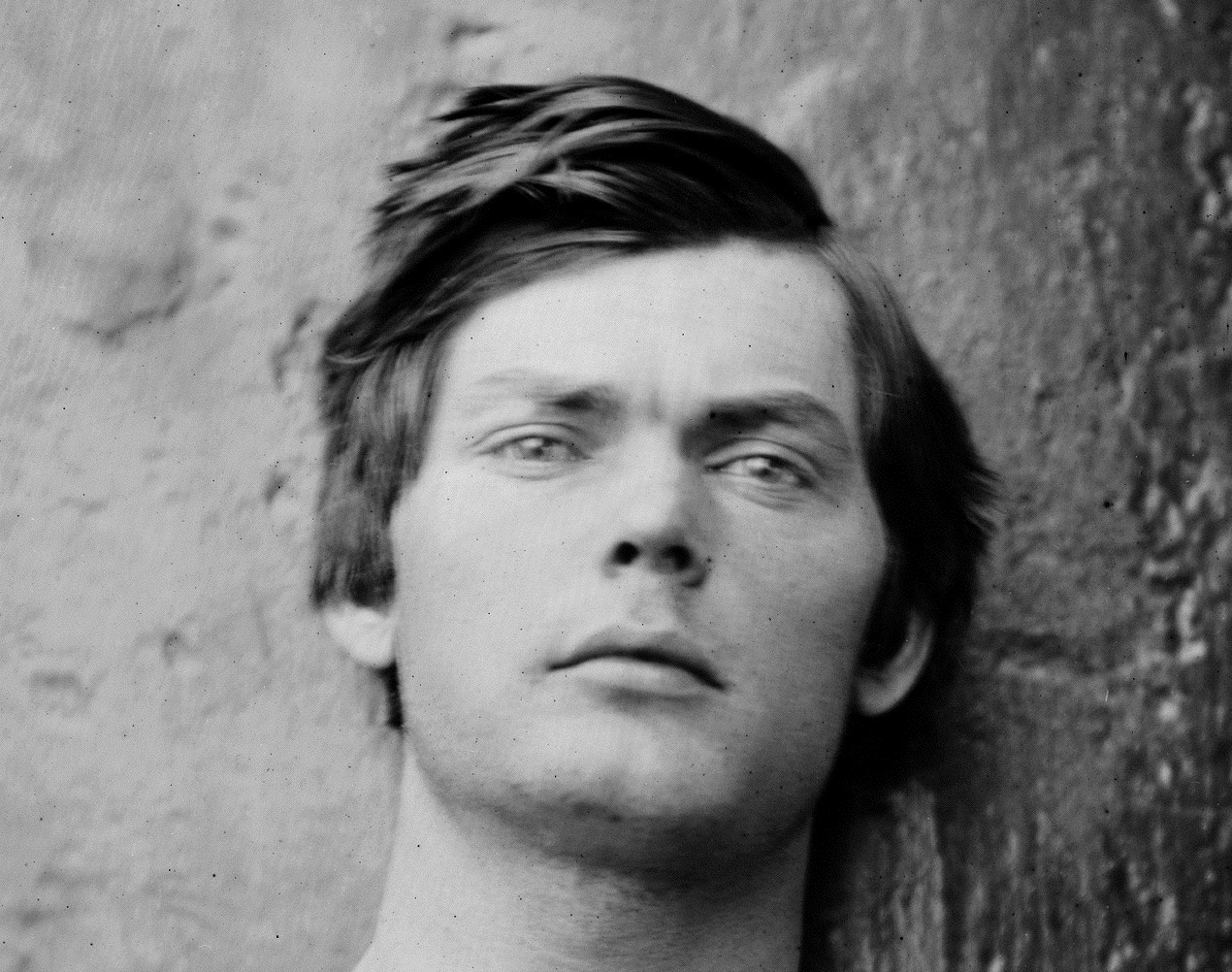
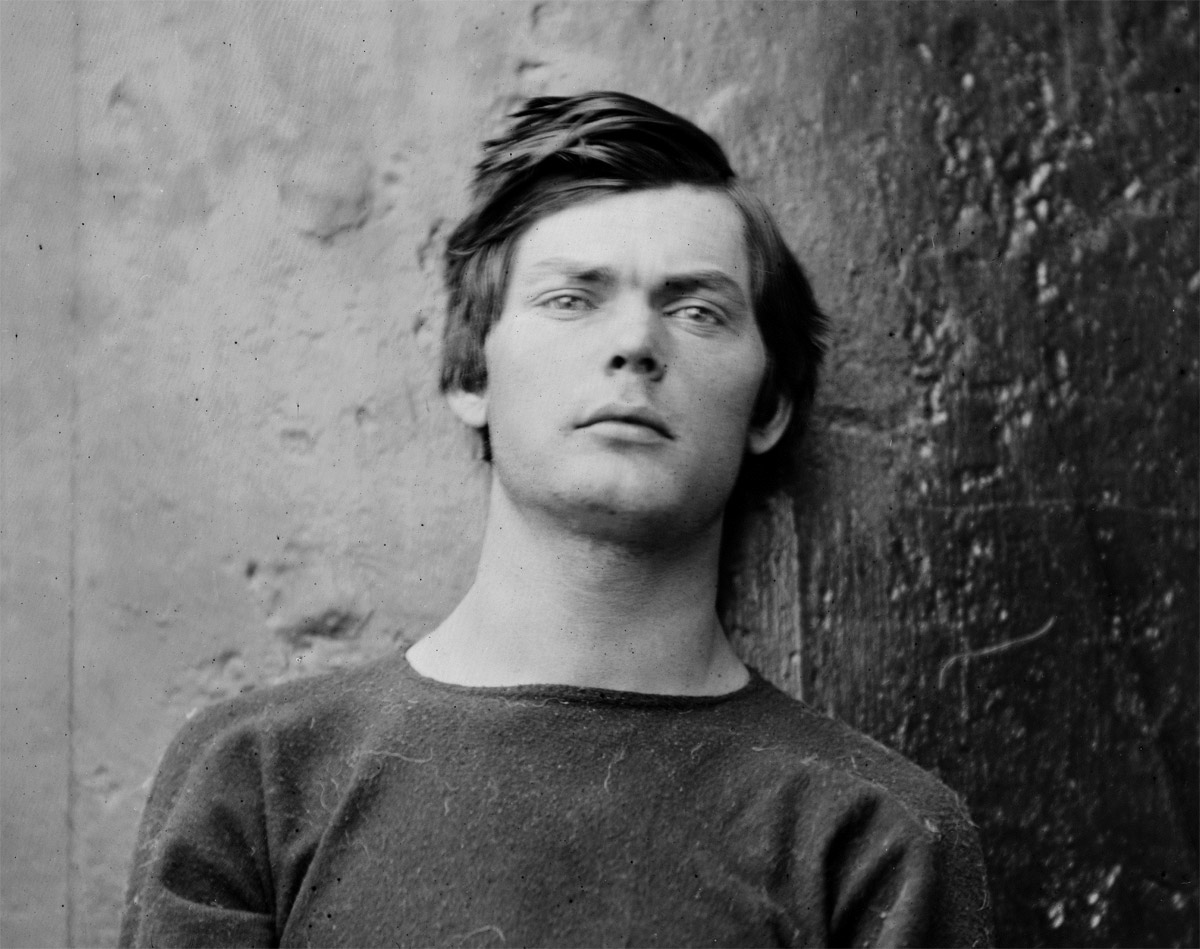
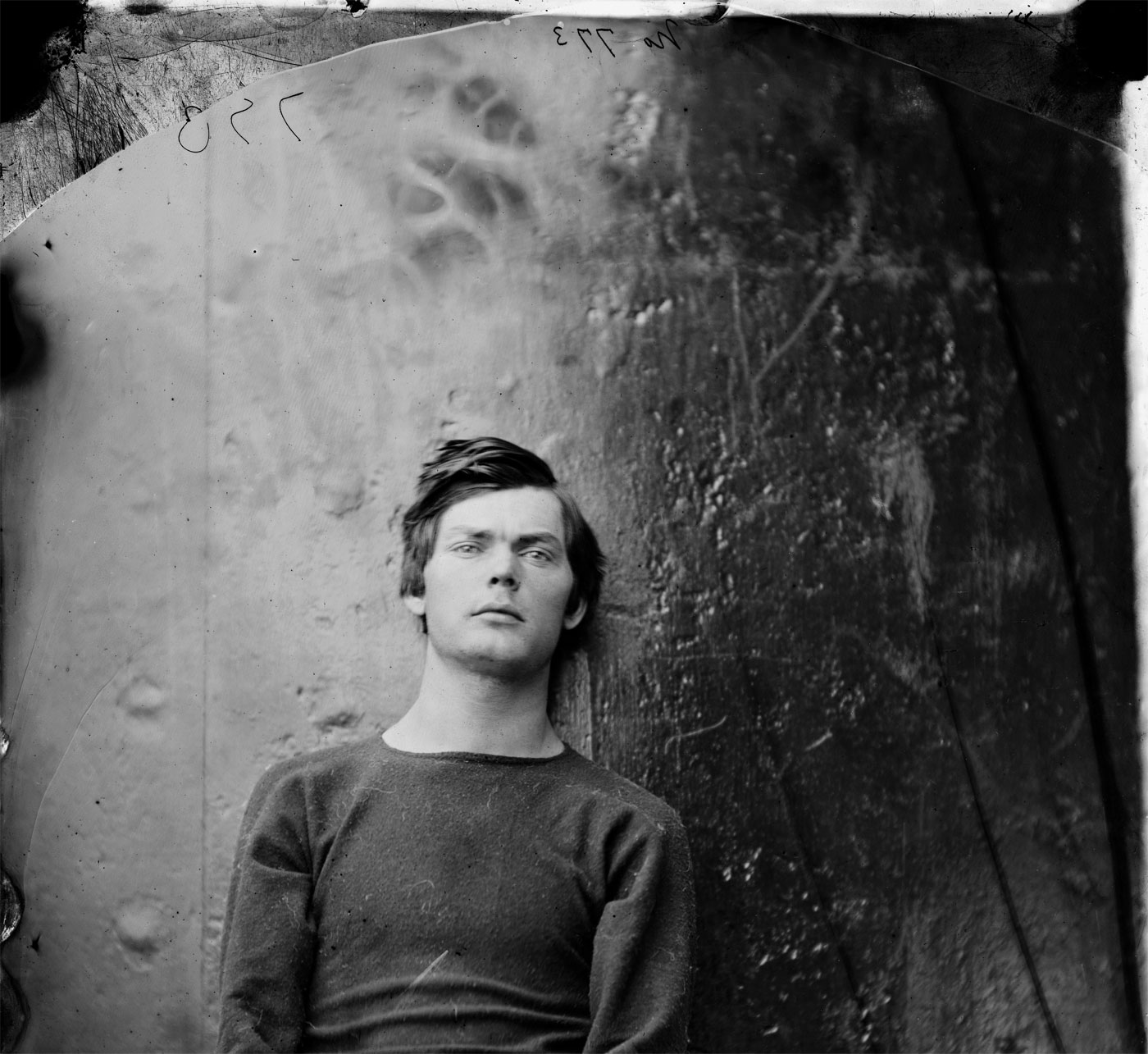
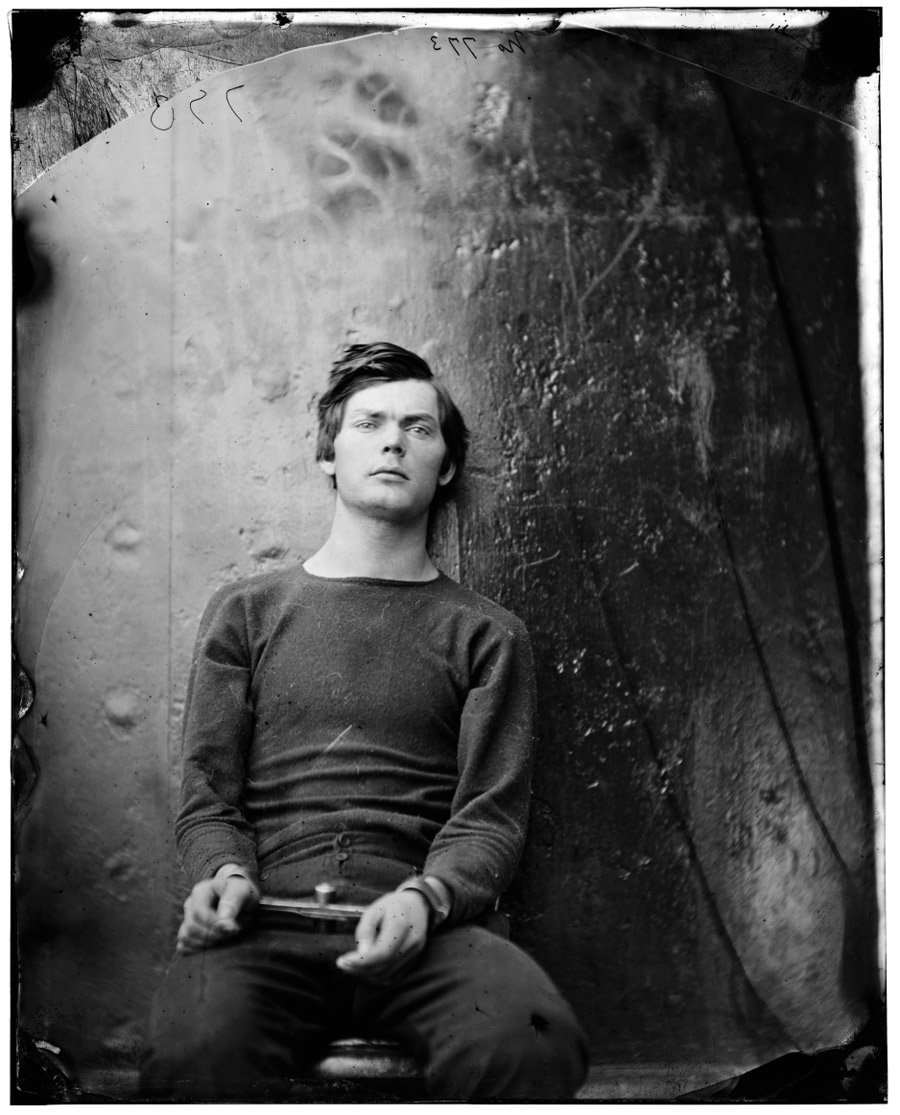

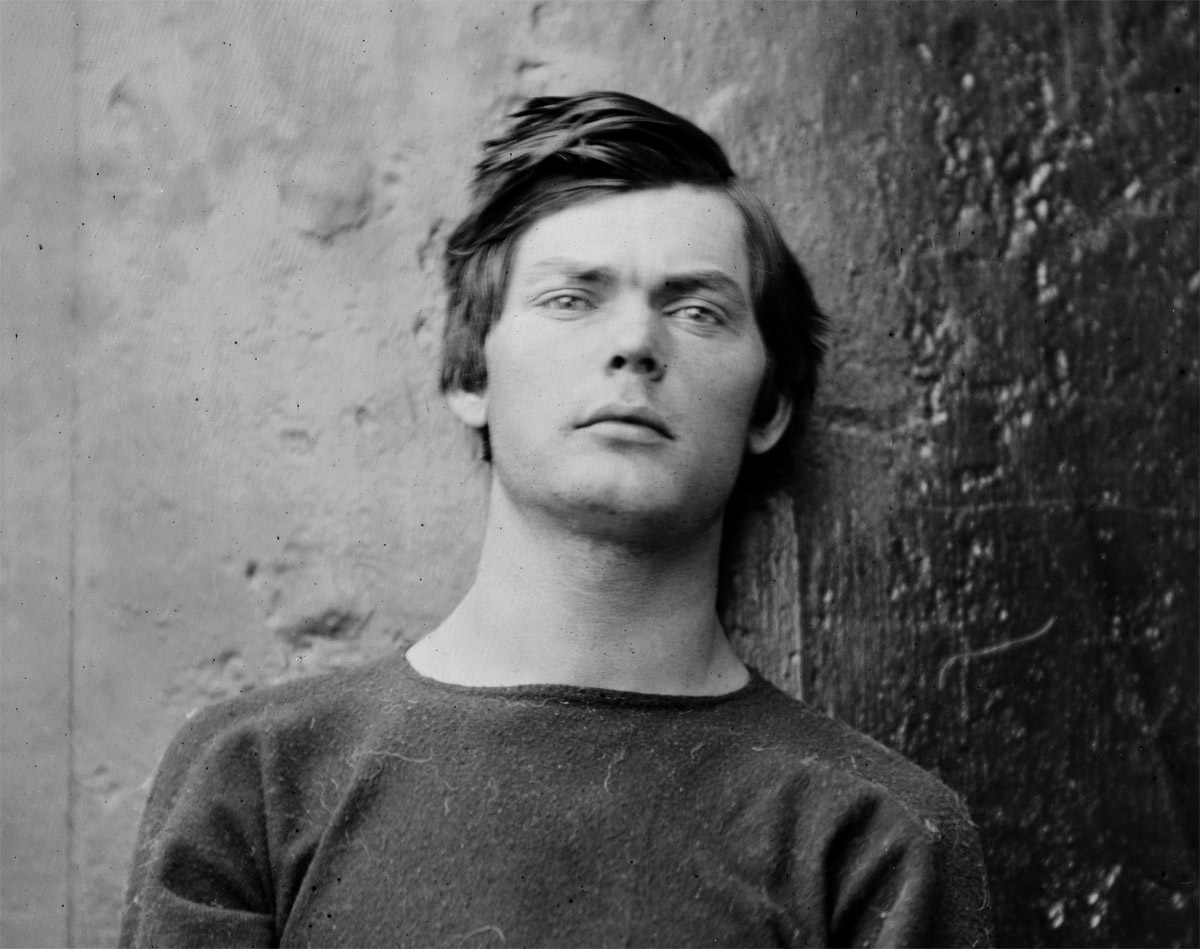
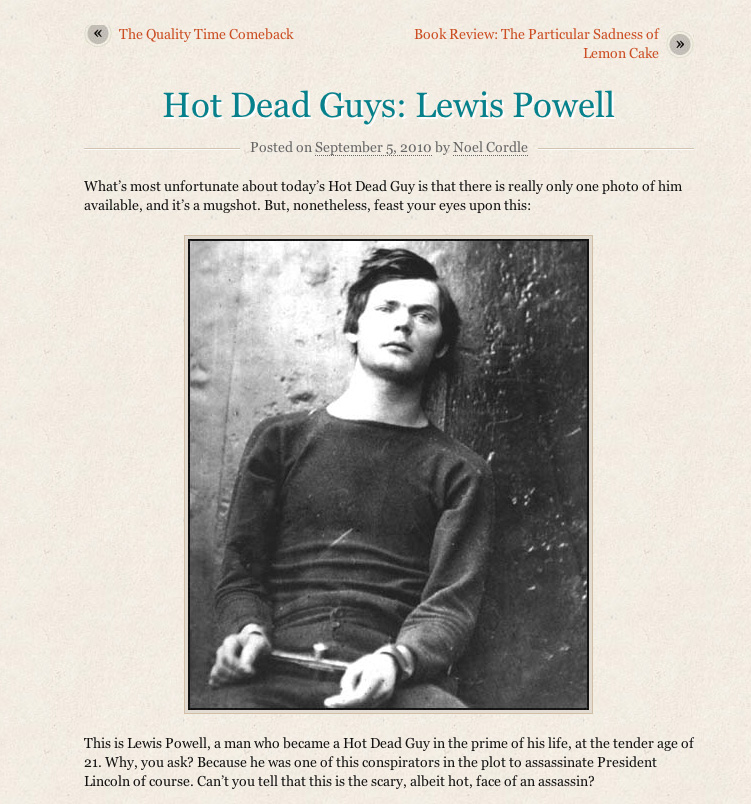
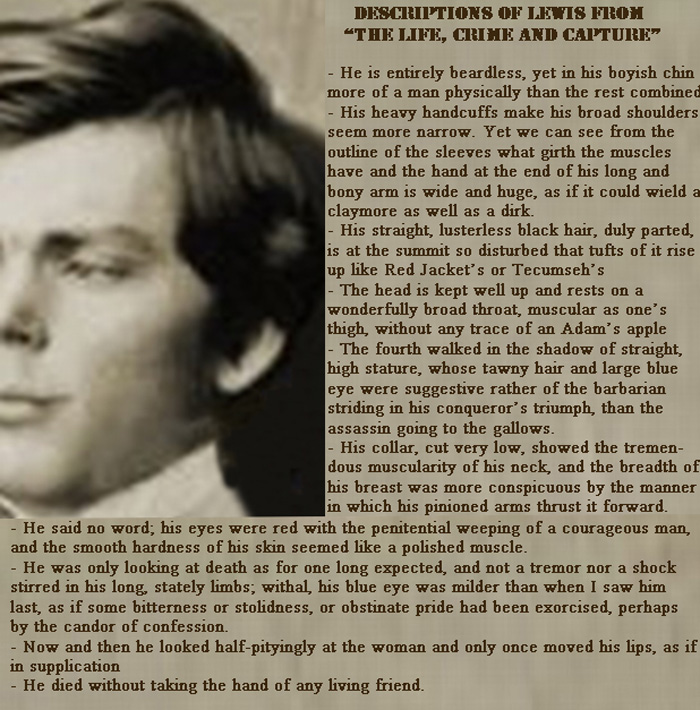
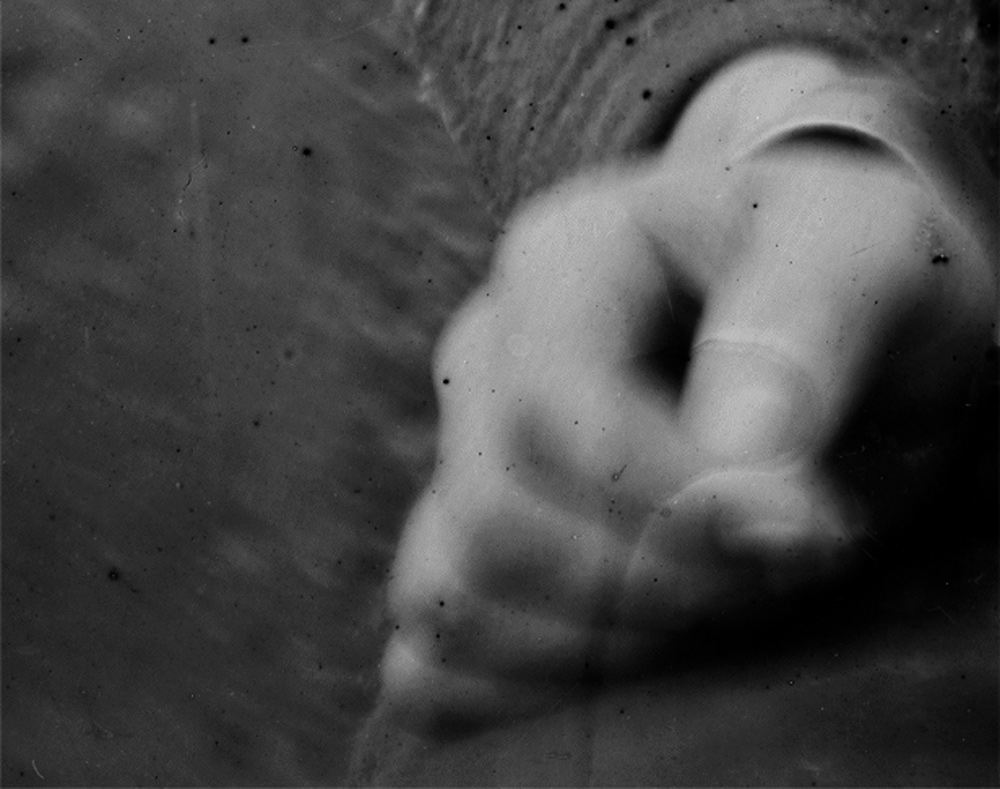
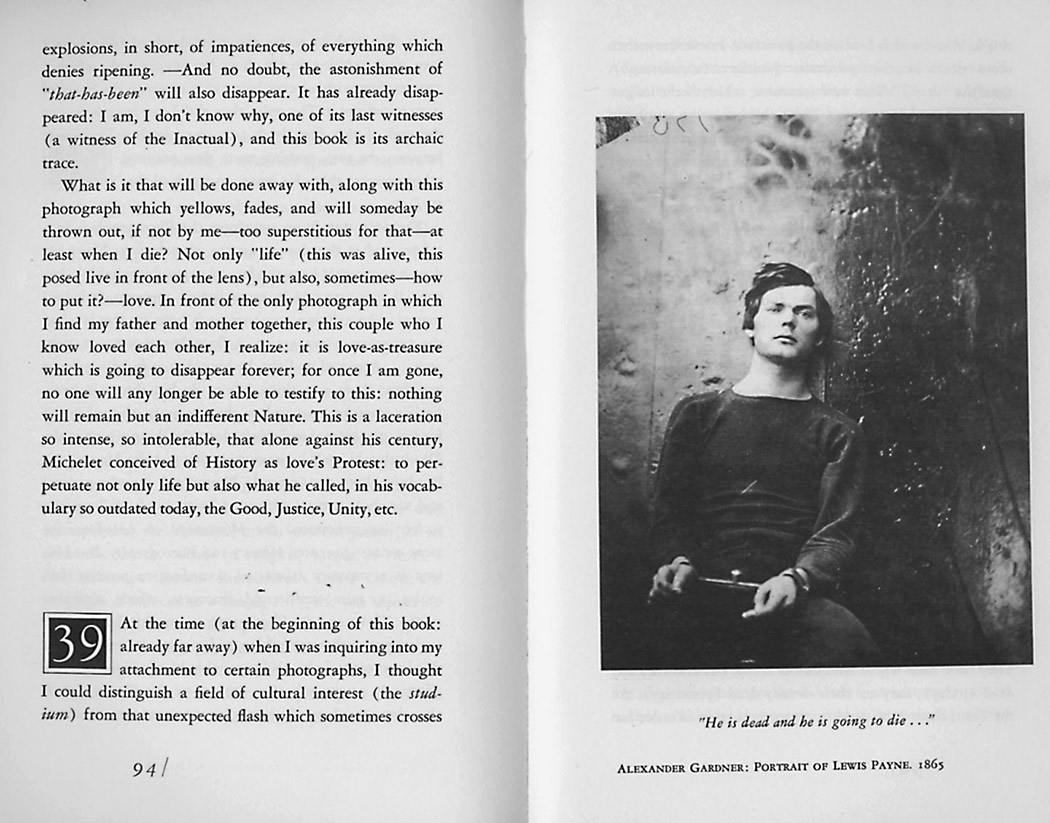
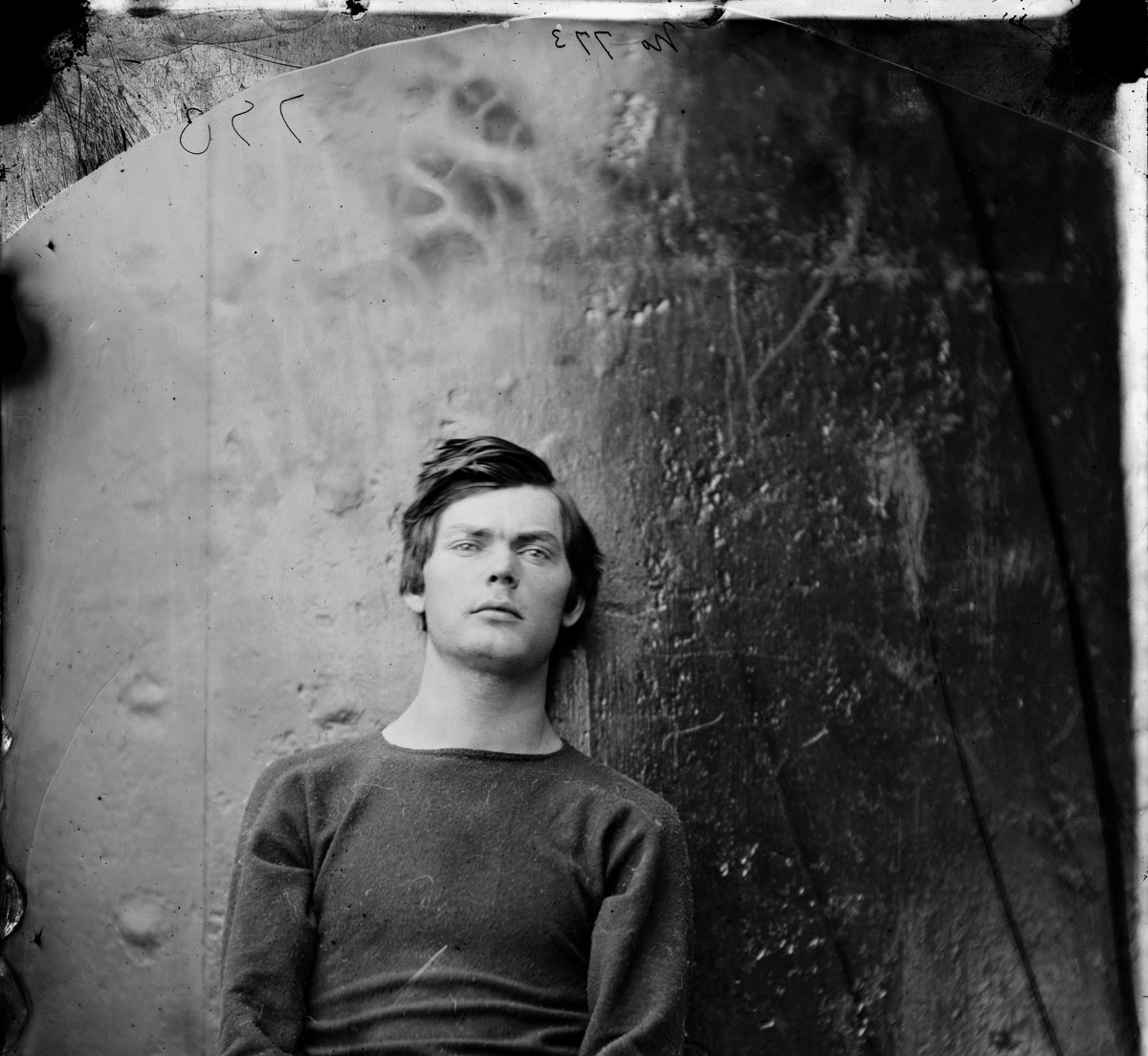
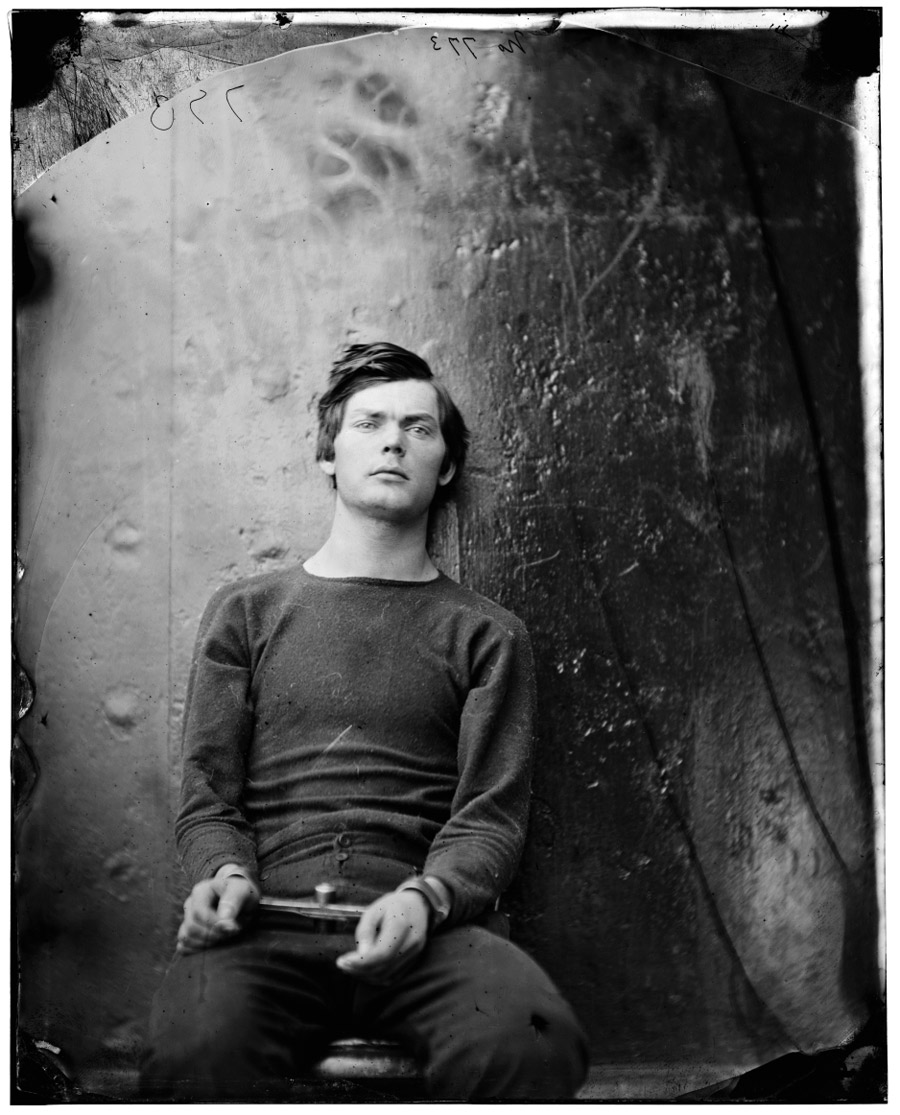
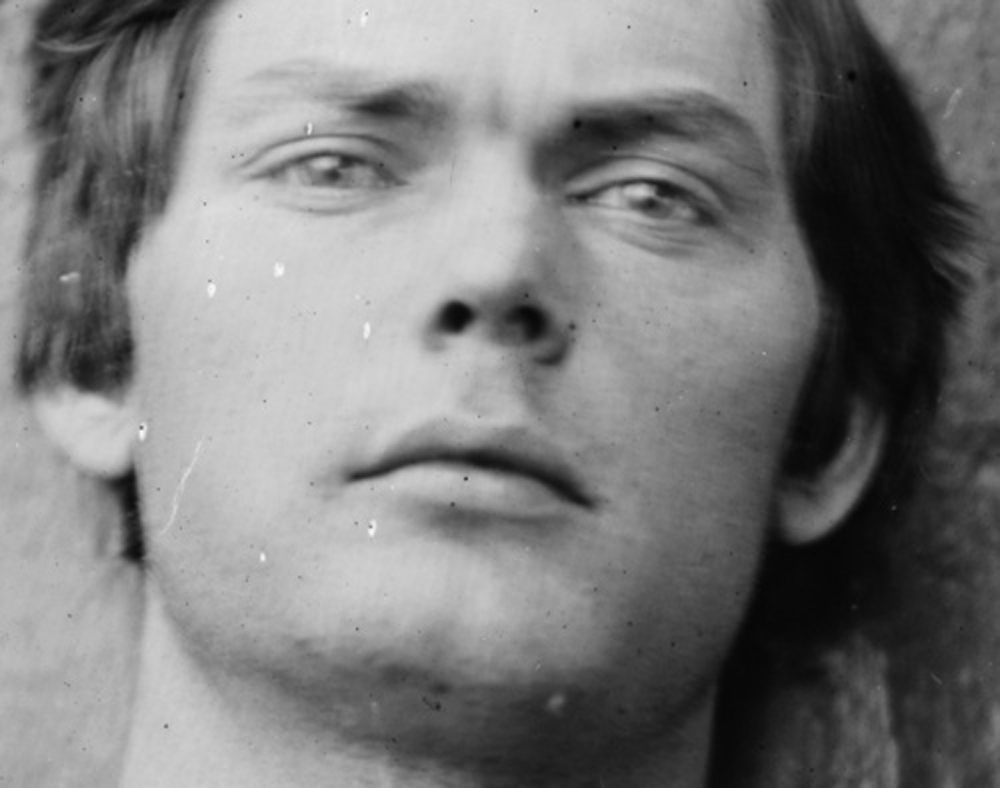
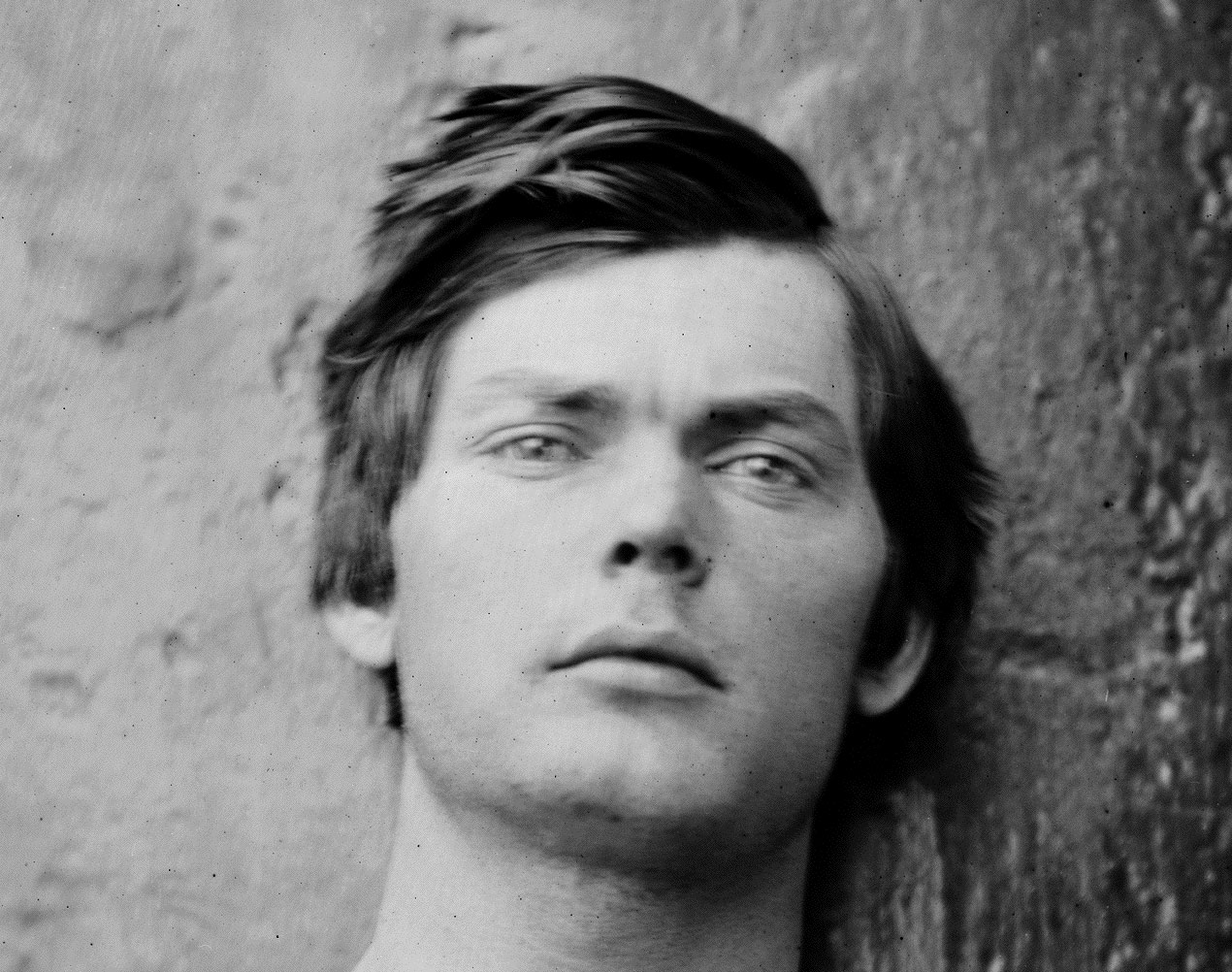
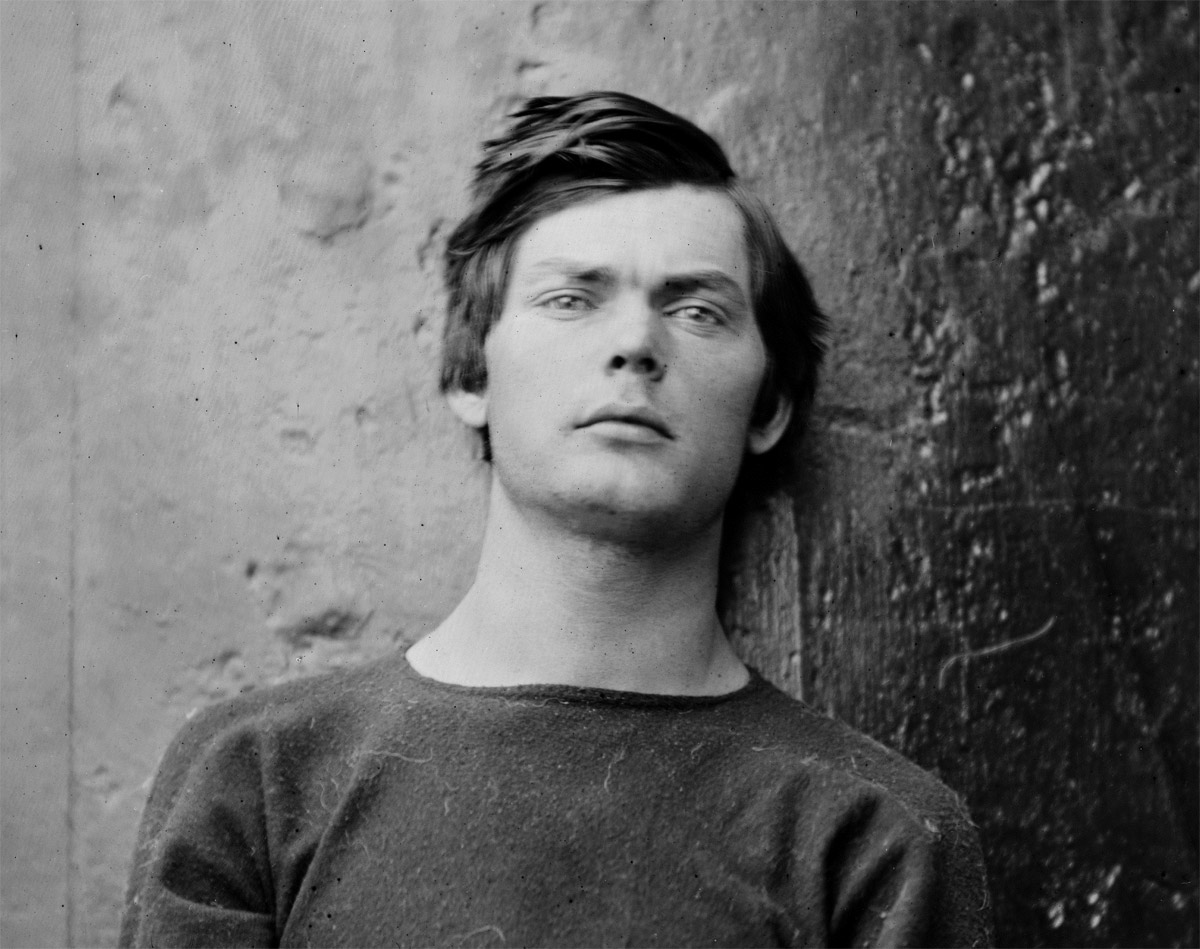
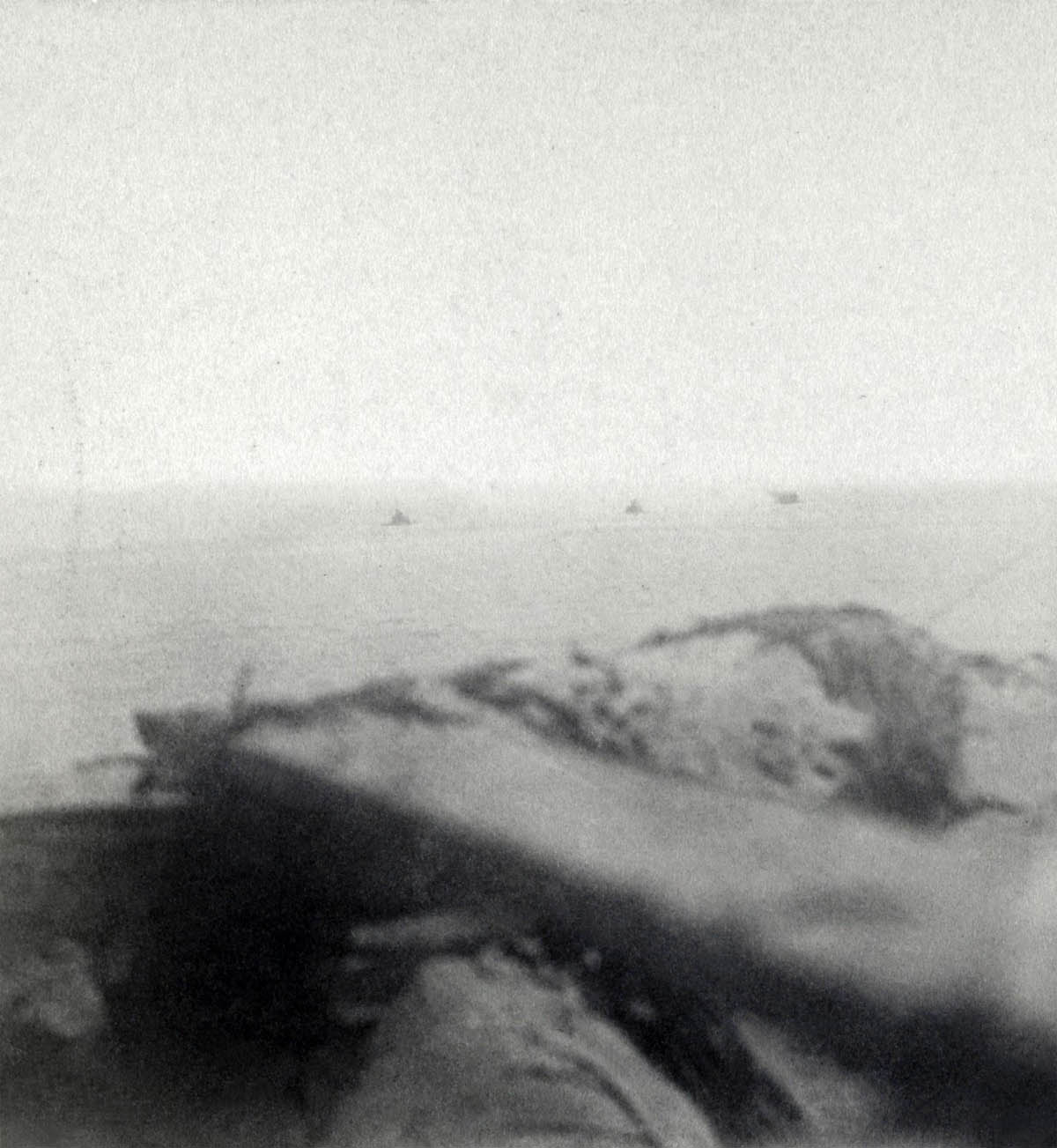
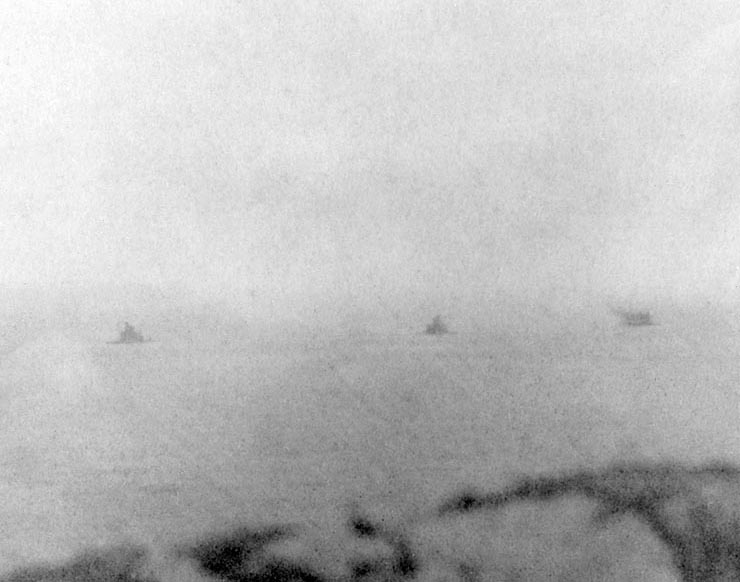
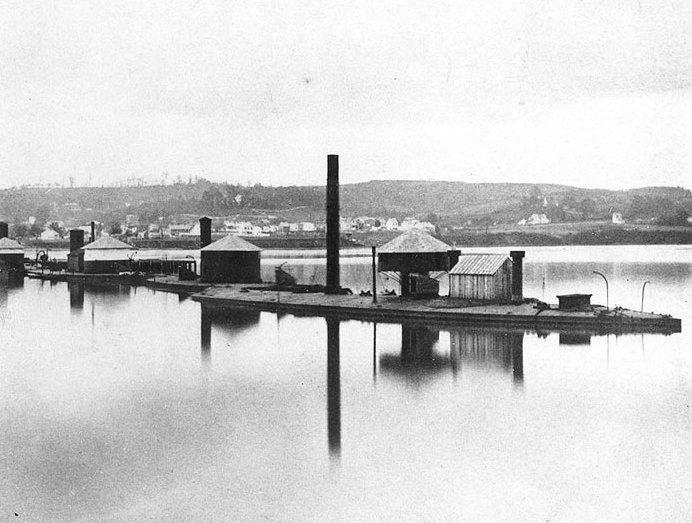
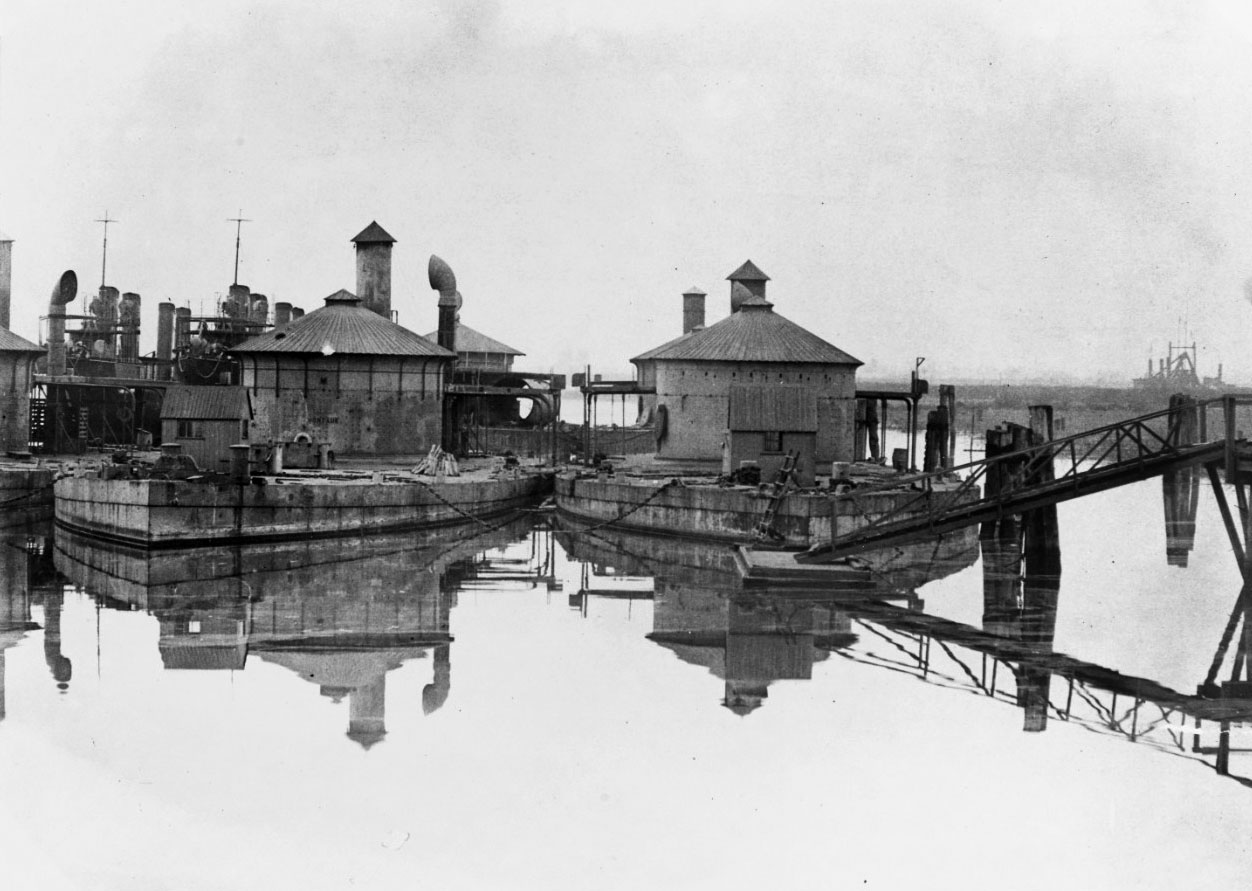
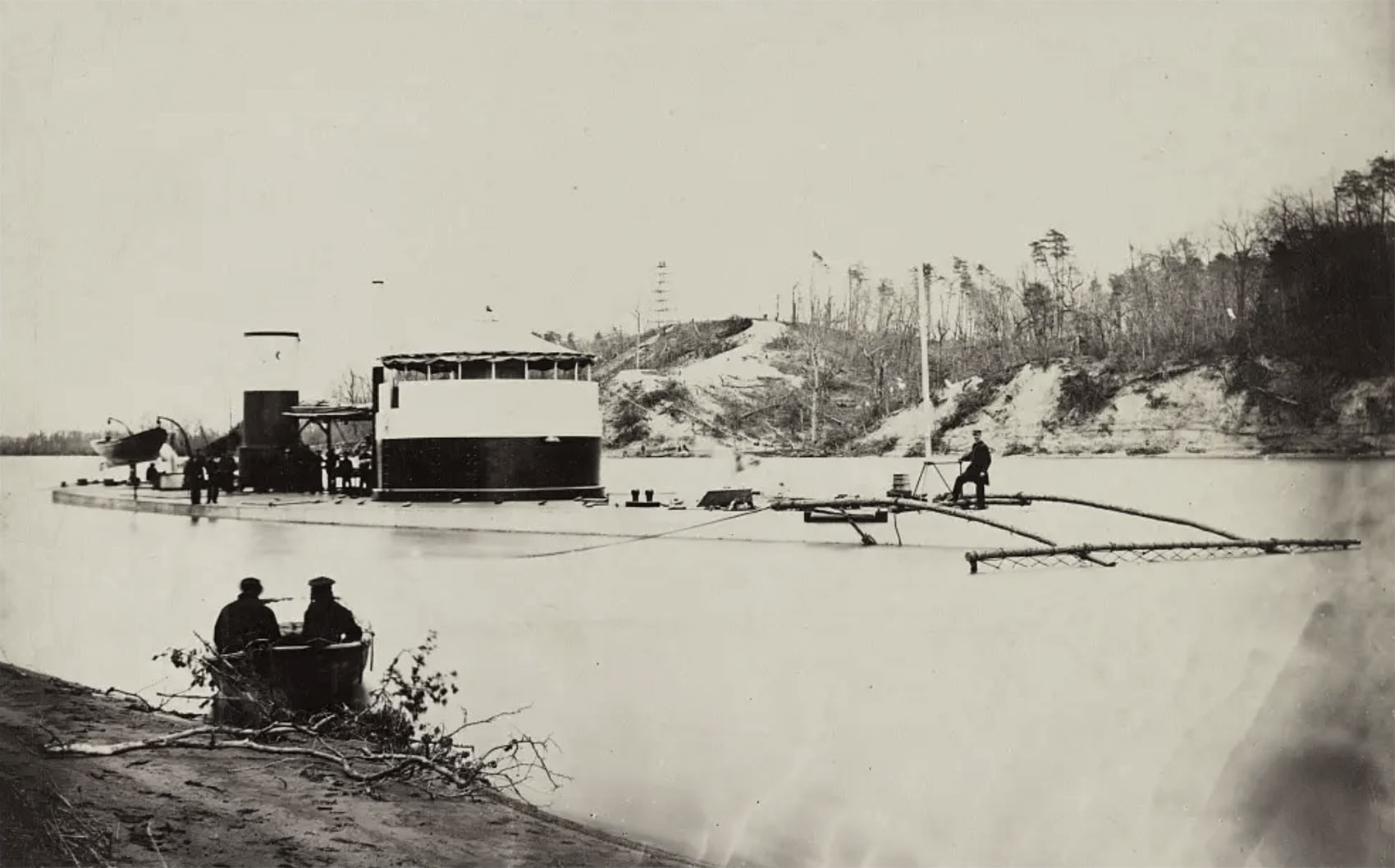
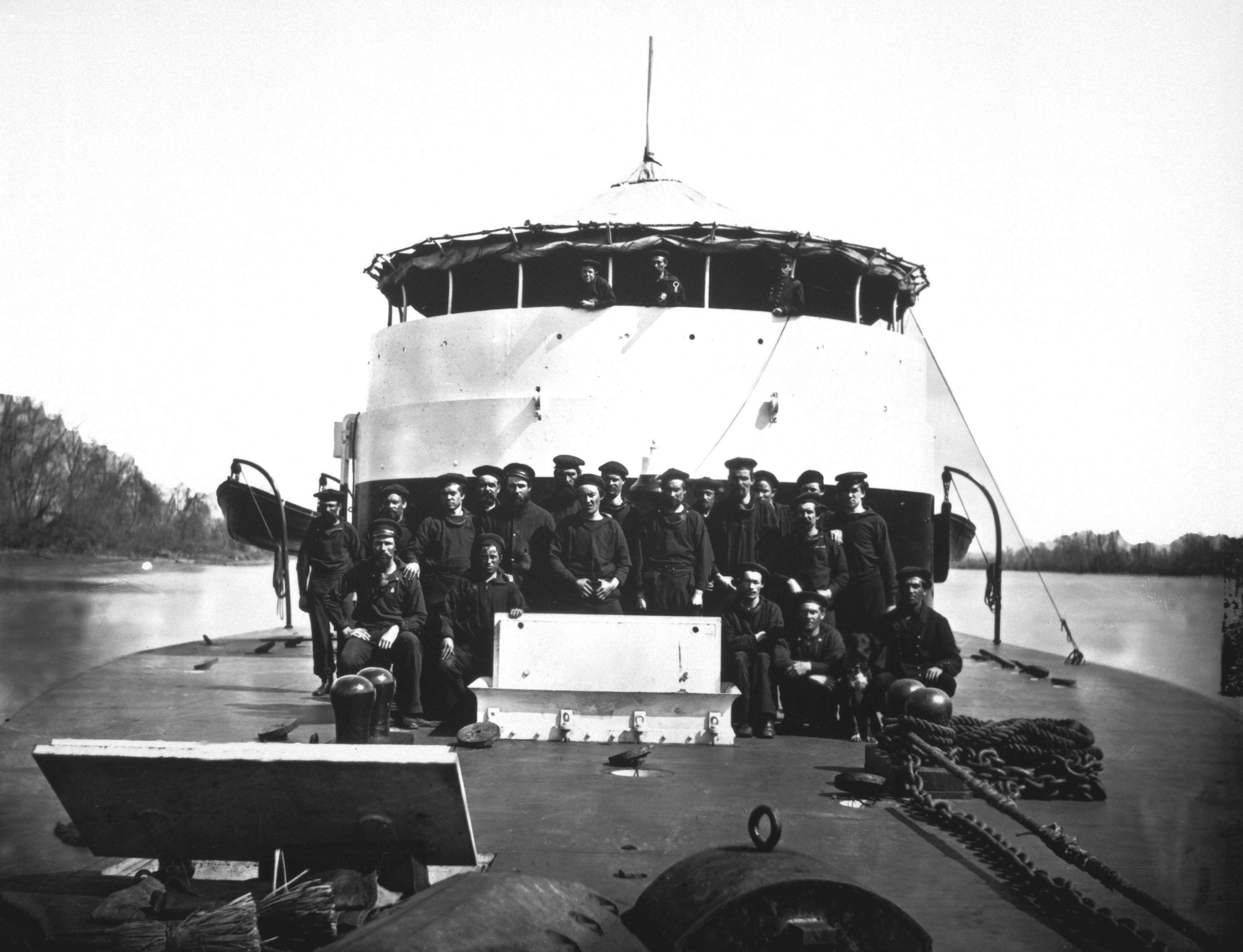


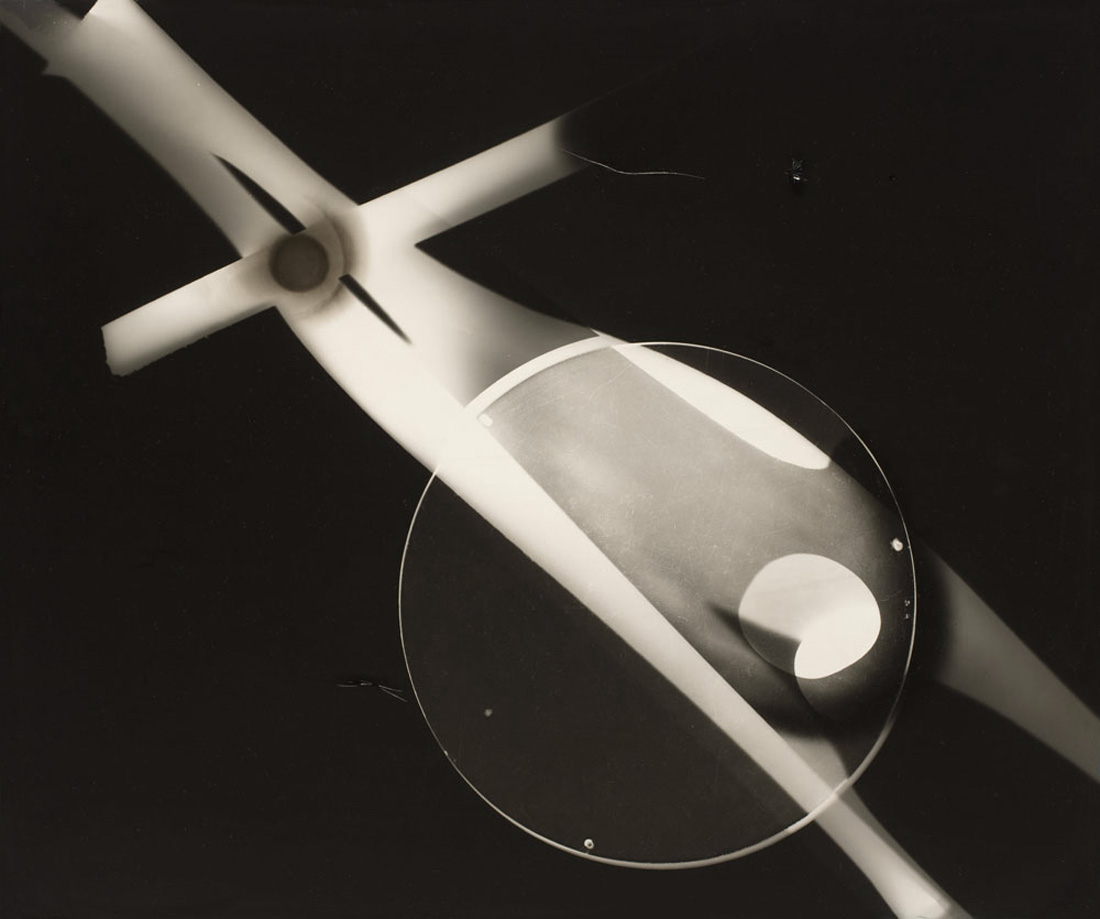
![Fritz Winter (German, 1905-1976) 'Stufungen [Gradations]' 1934](https://artblart.com/wp-content/uploads/2012/11/fritz-winter-stufungen-1934-web.jpg "Fritz Winter (German, 1905-1976) 'Stufungen [Gradations]' 1934")
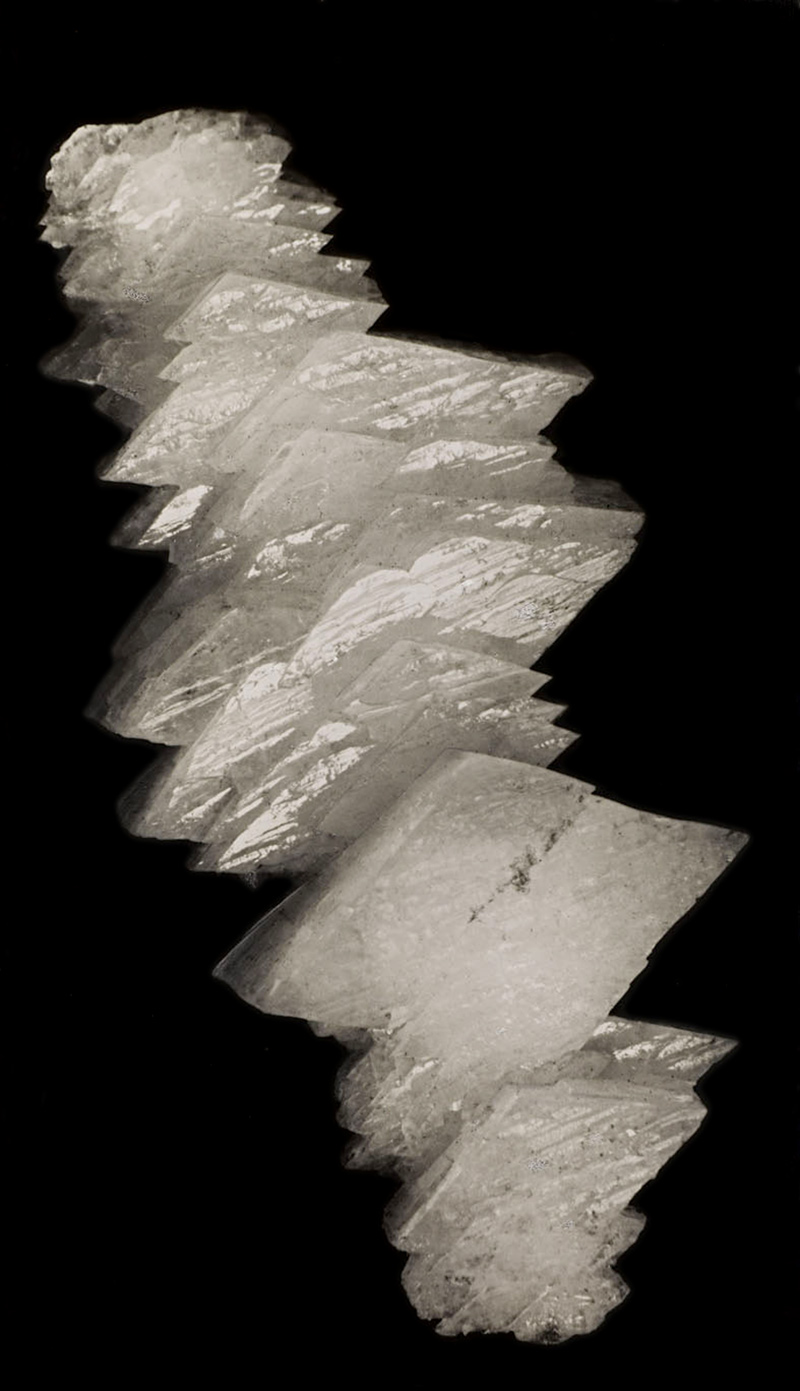
![Fritz Winter (German, 1905-1976) 'Weiß in Schwarz [White in Black]' 1934](https://artblart.com/wp-content/uploads/2012/11/fritz-winter-weic39f-in-schwarz-1934-web.jpg "Fritz Winter (German, 1905-1976) 'Weiß in Schwarz [White in Black]' 1934")


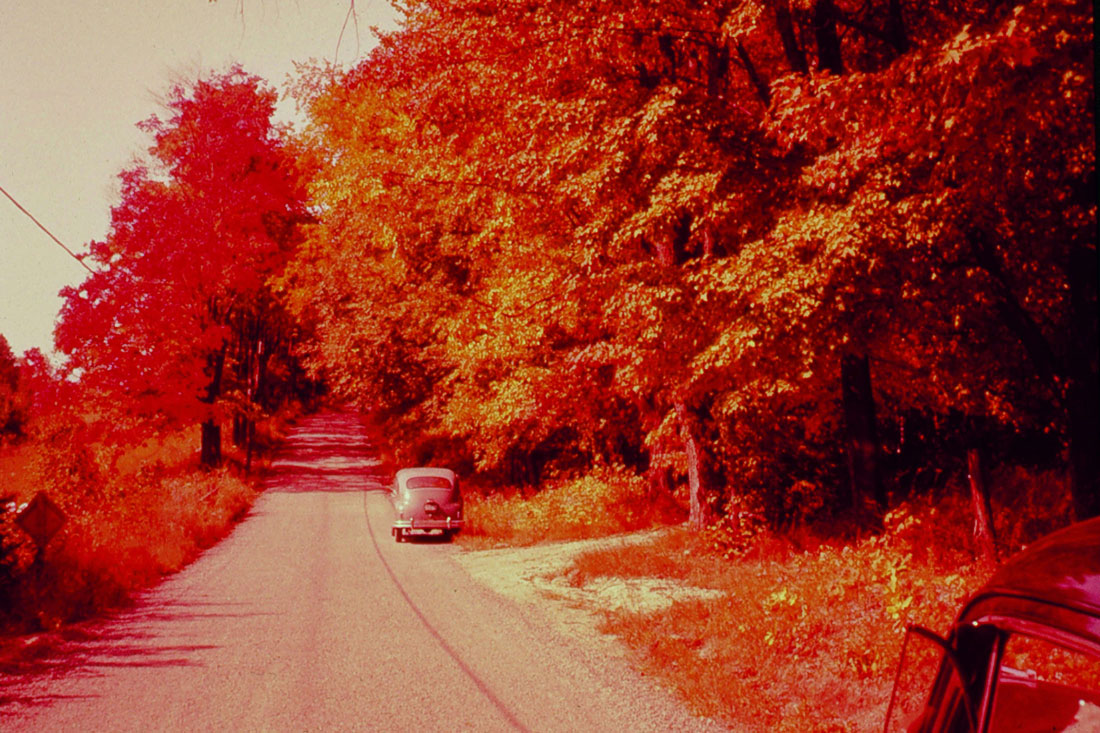

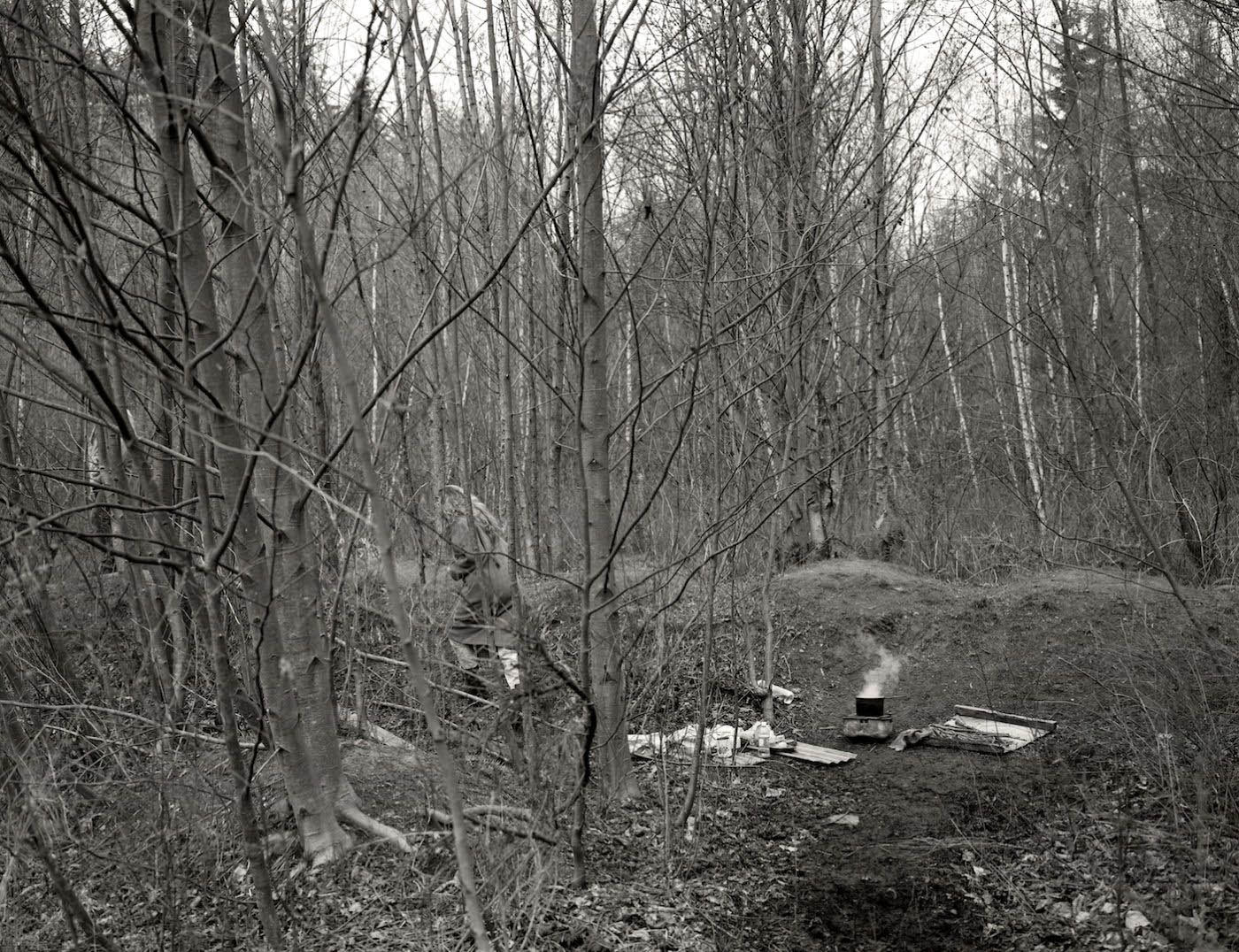
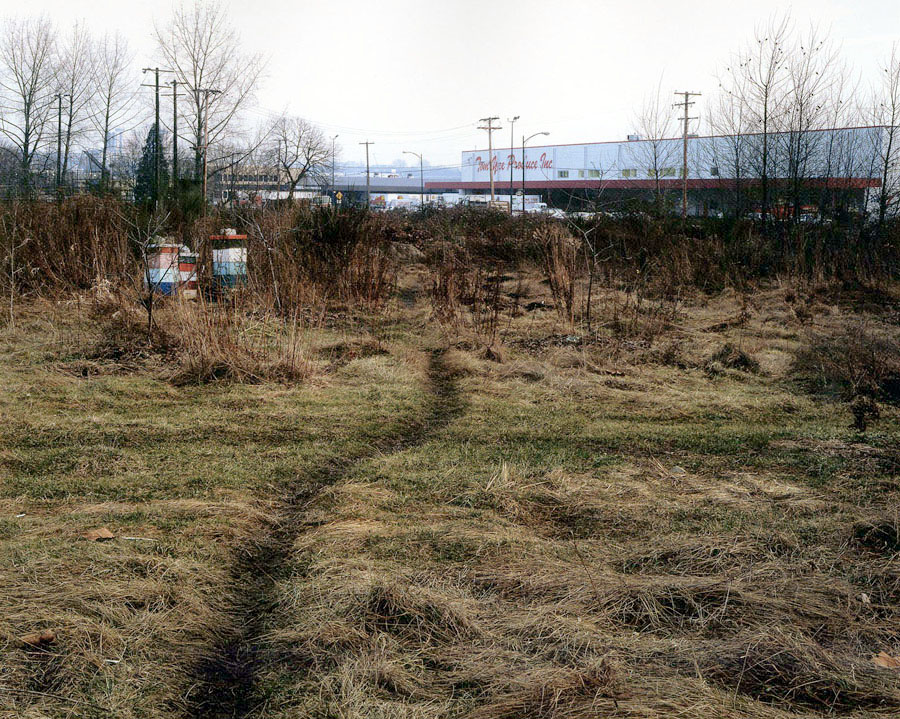
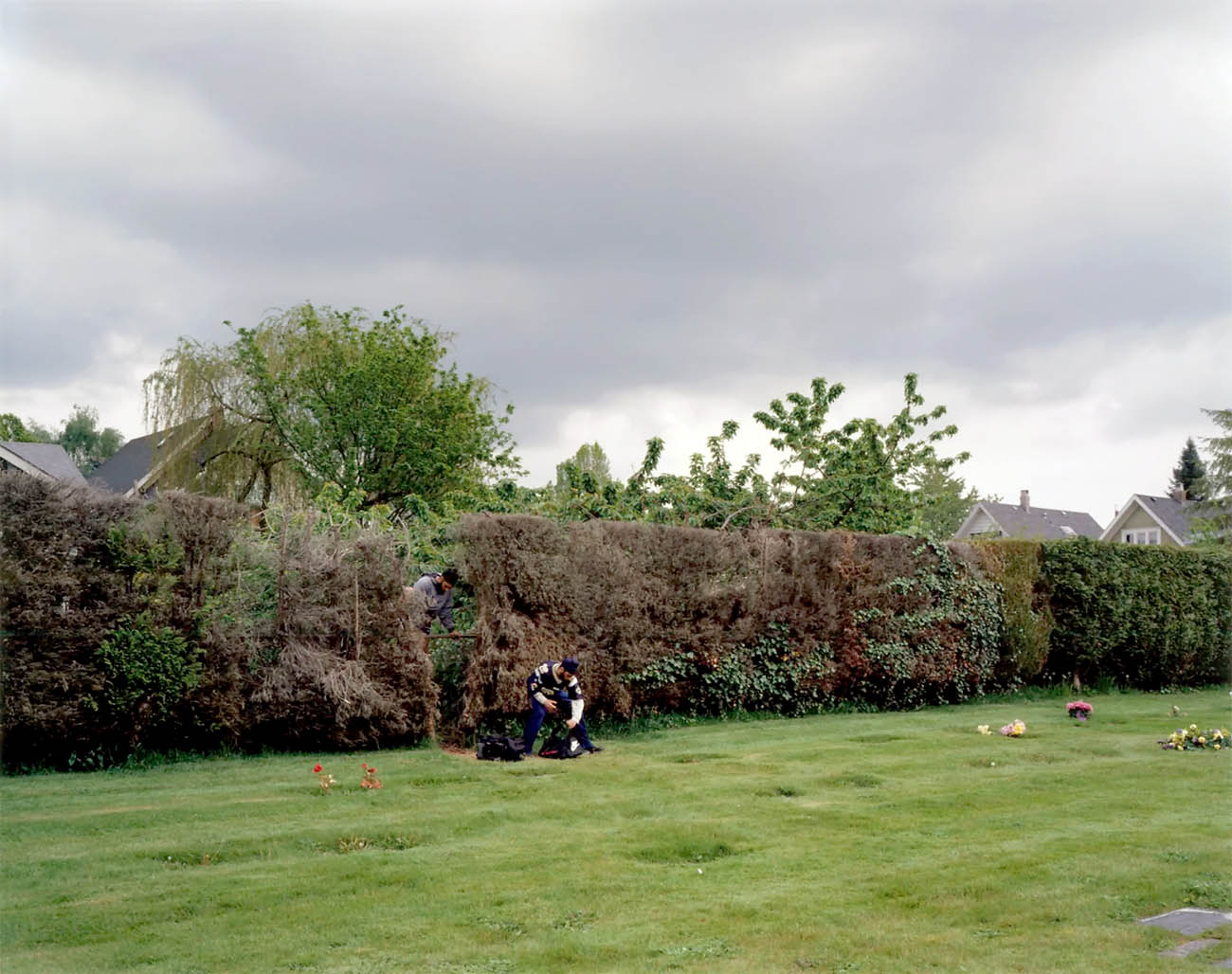
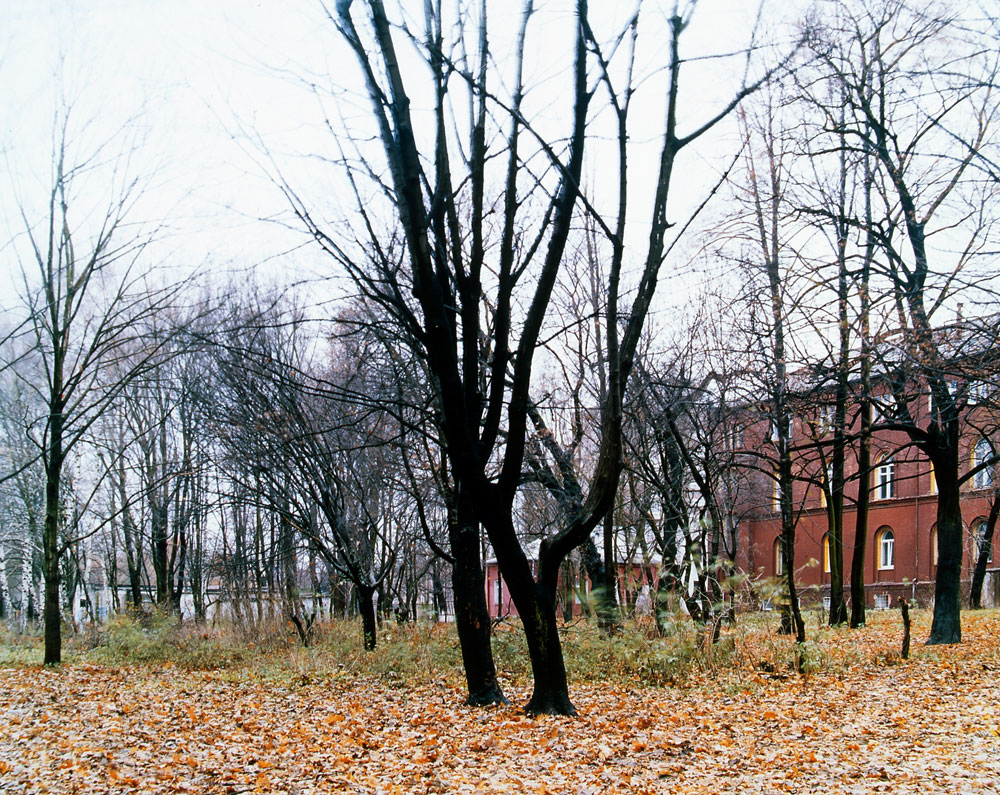
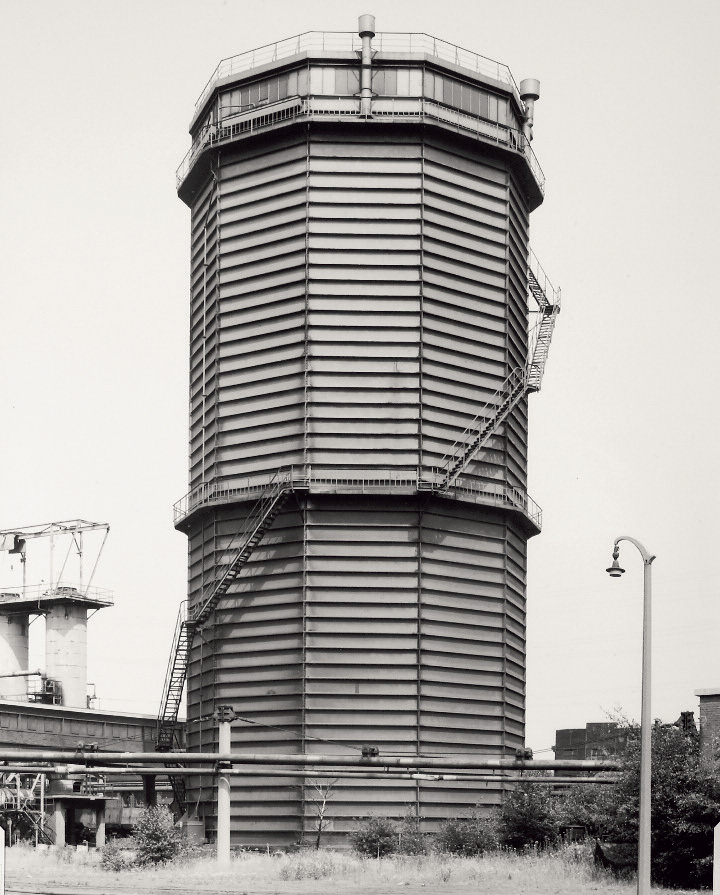
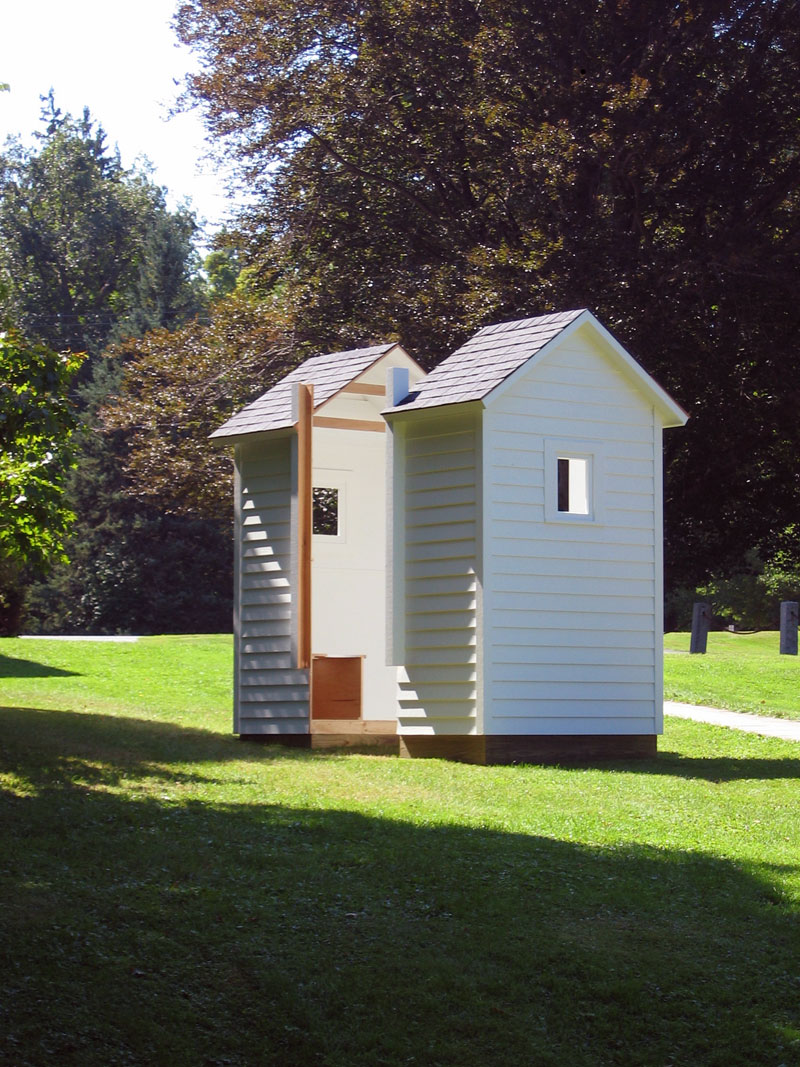
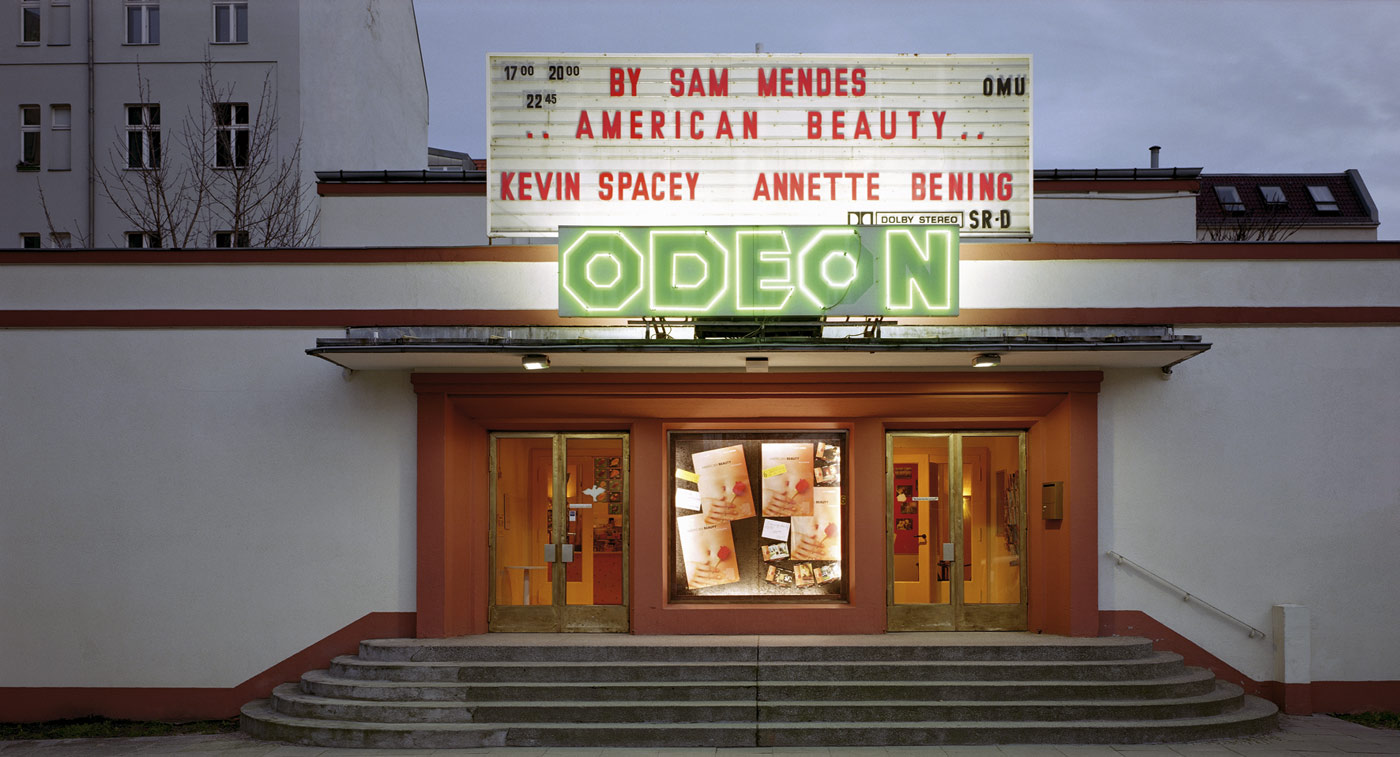

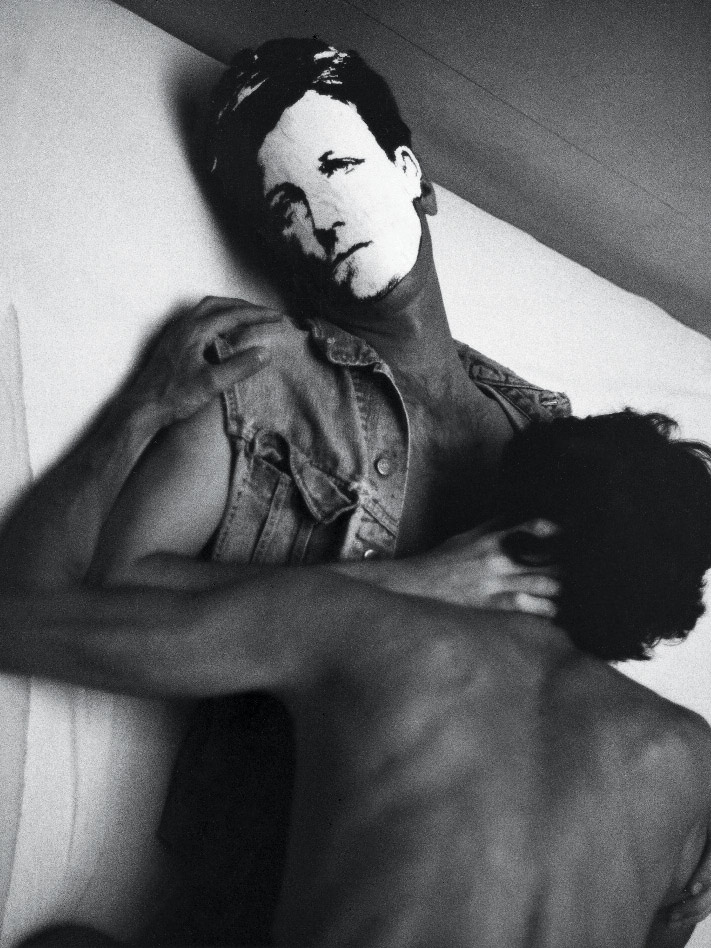

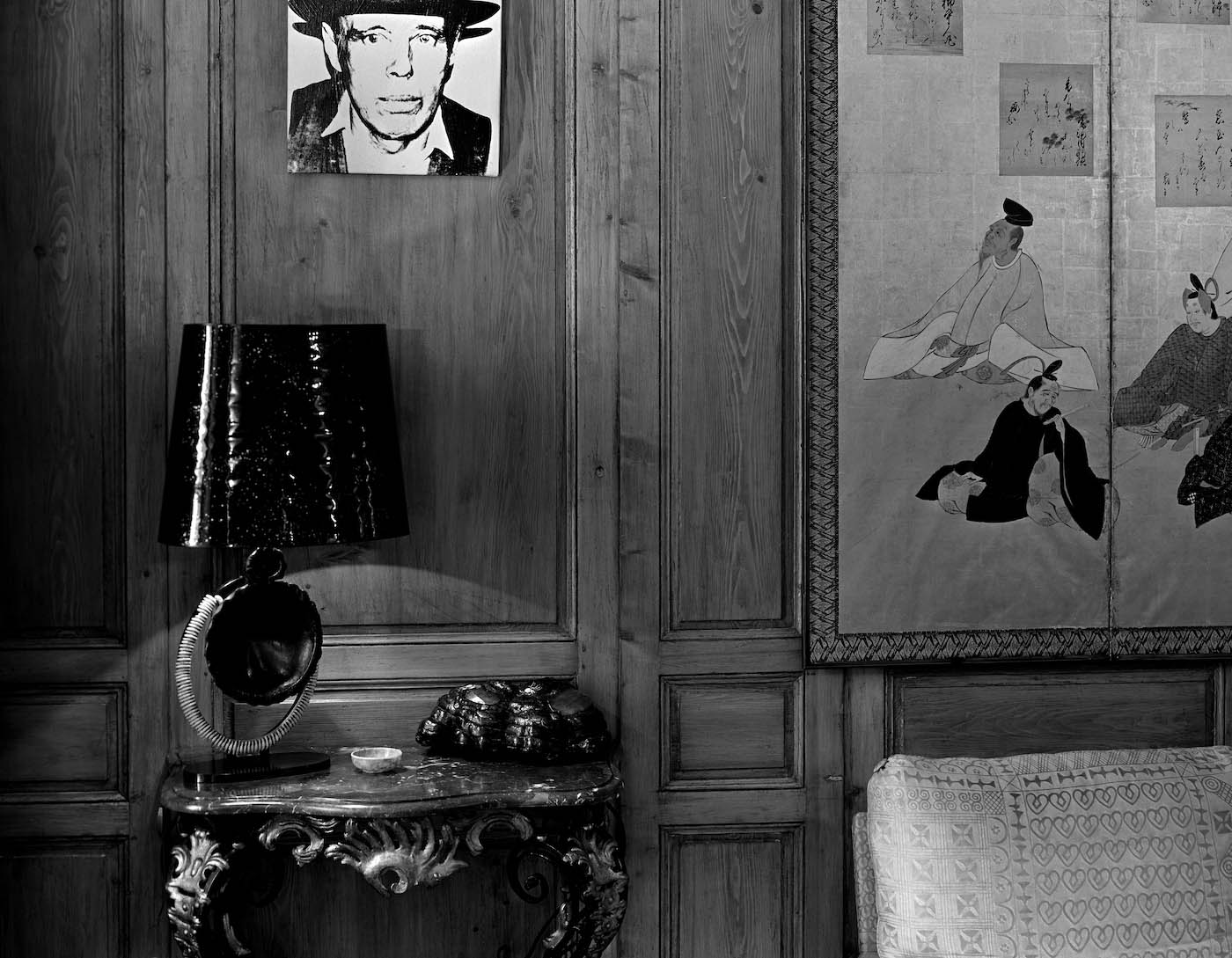
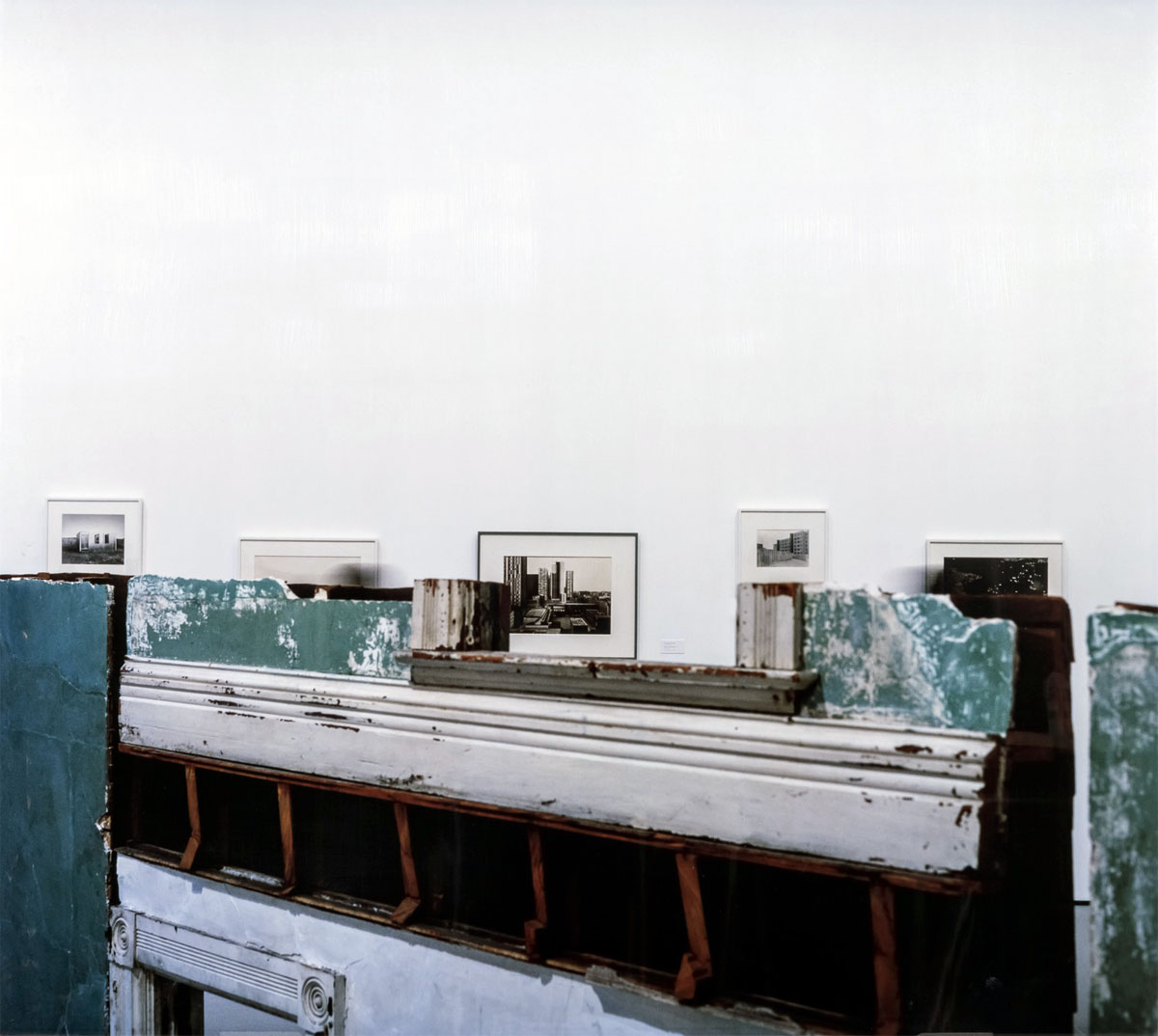
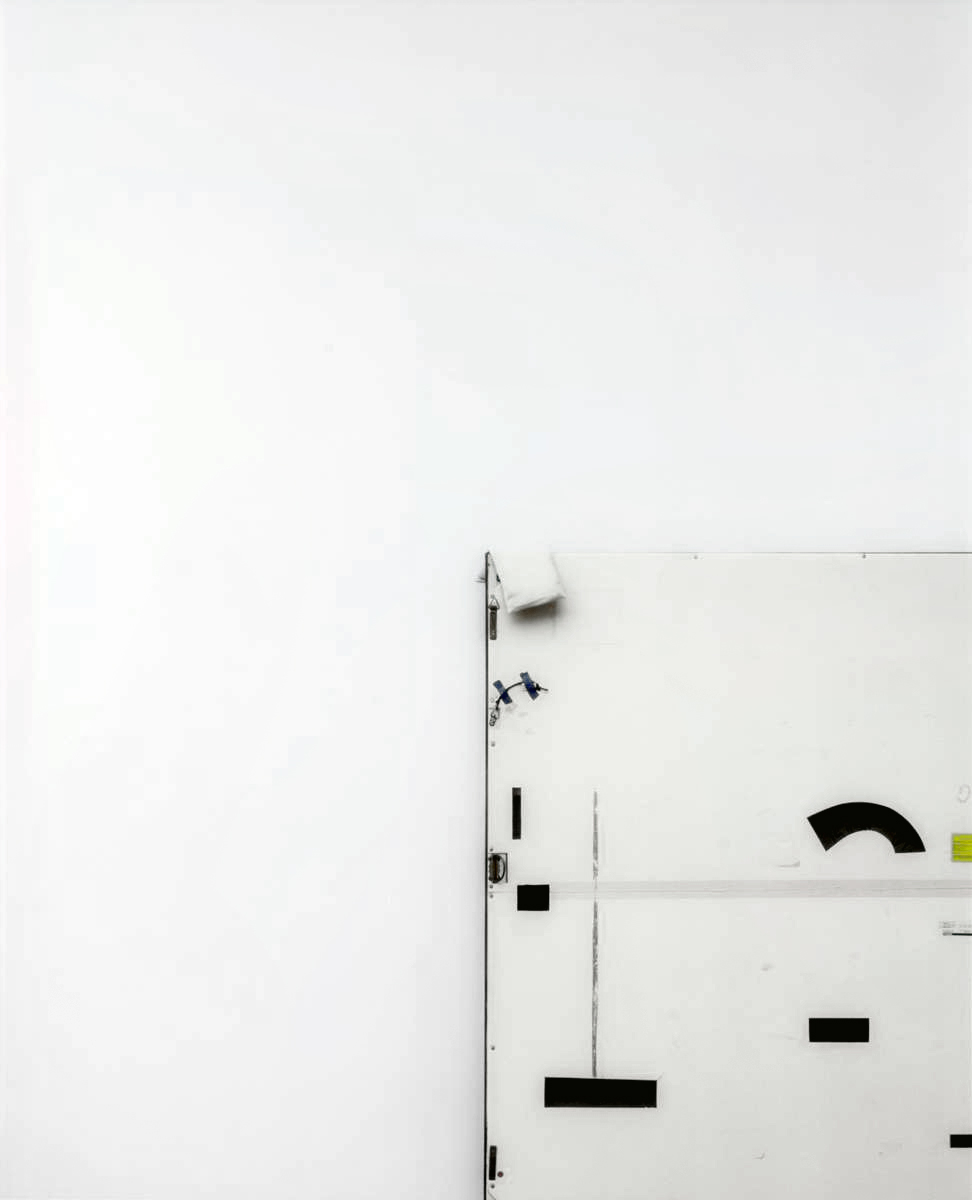
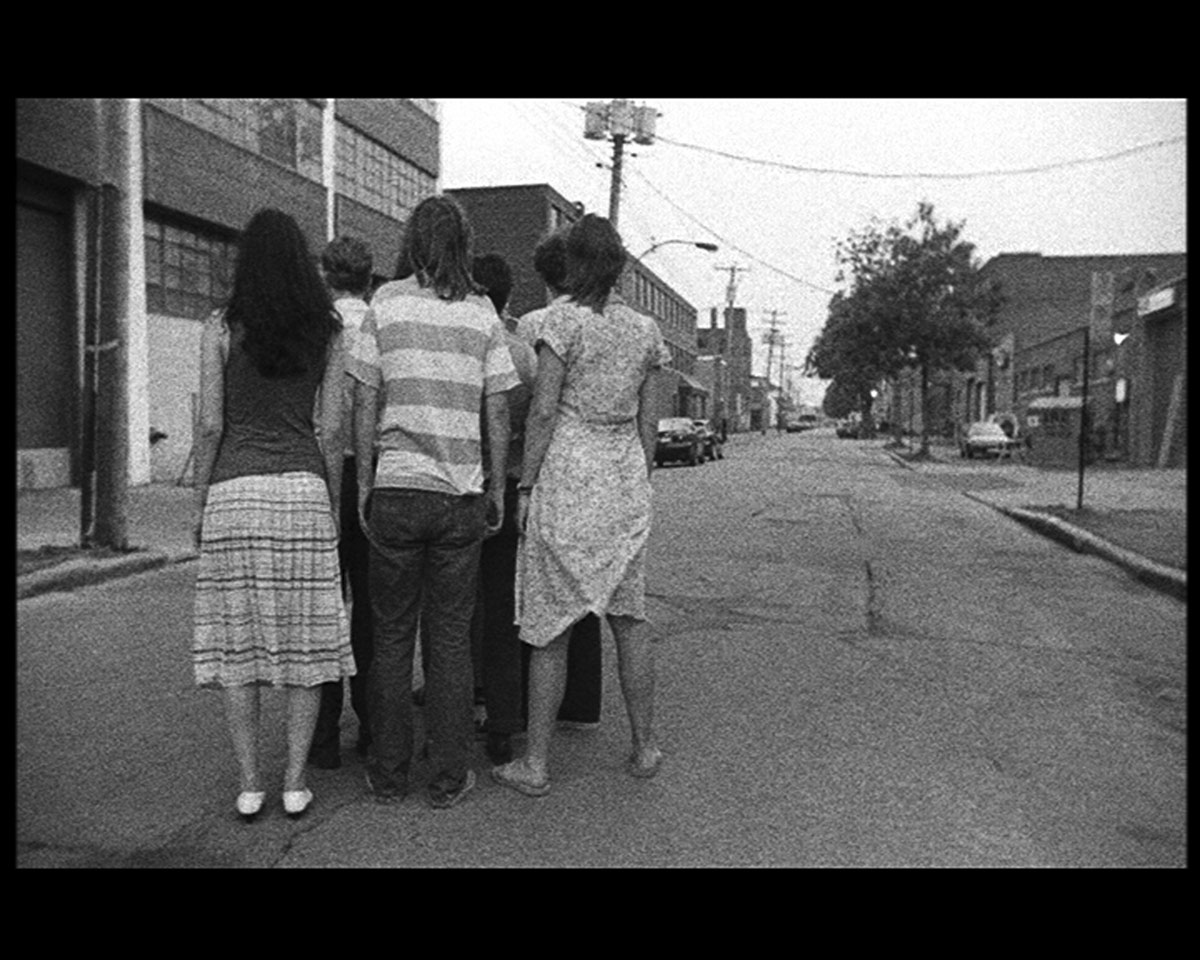
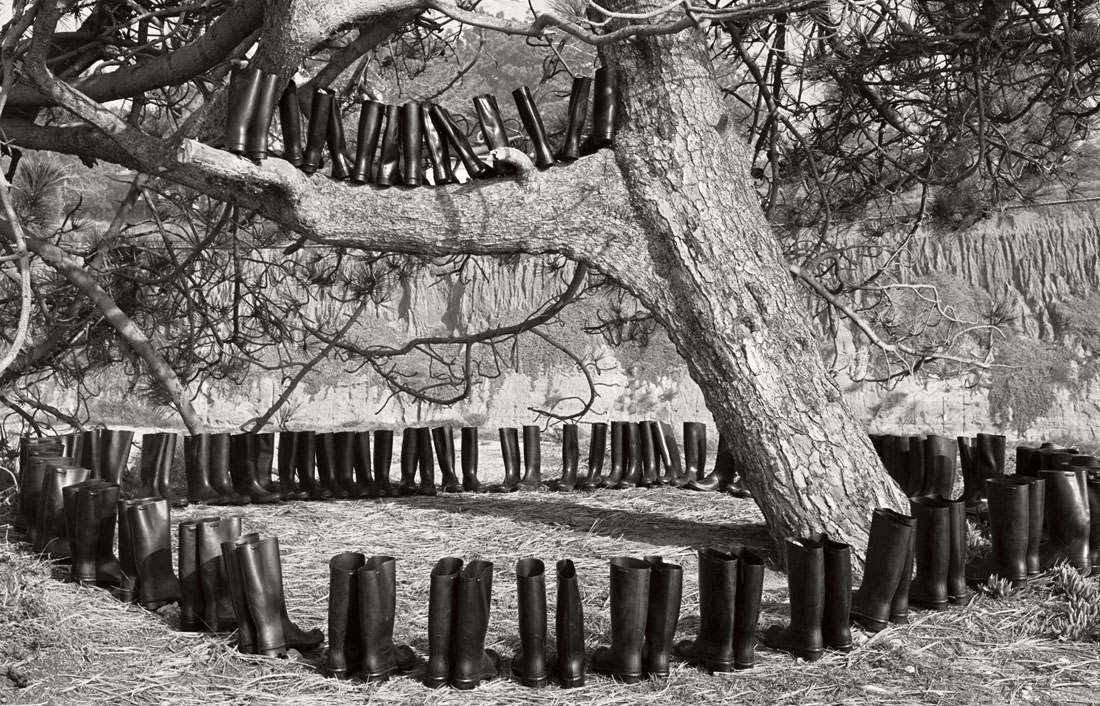
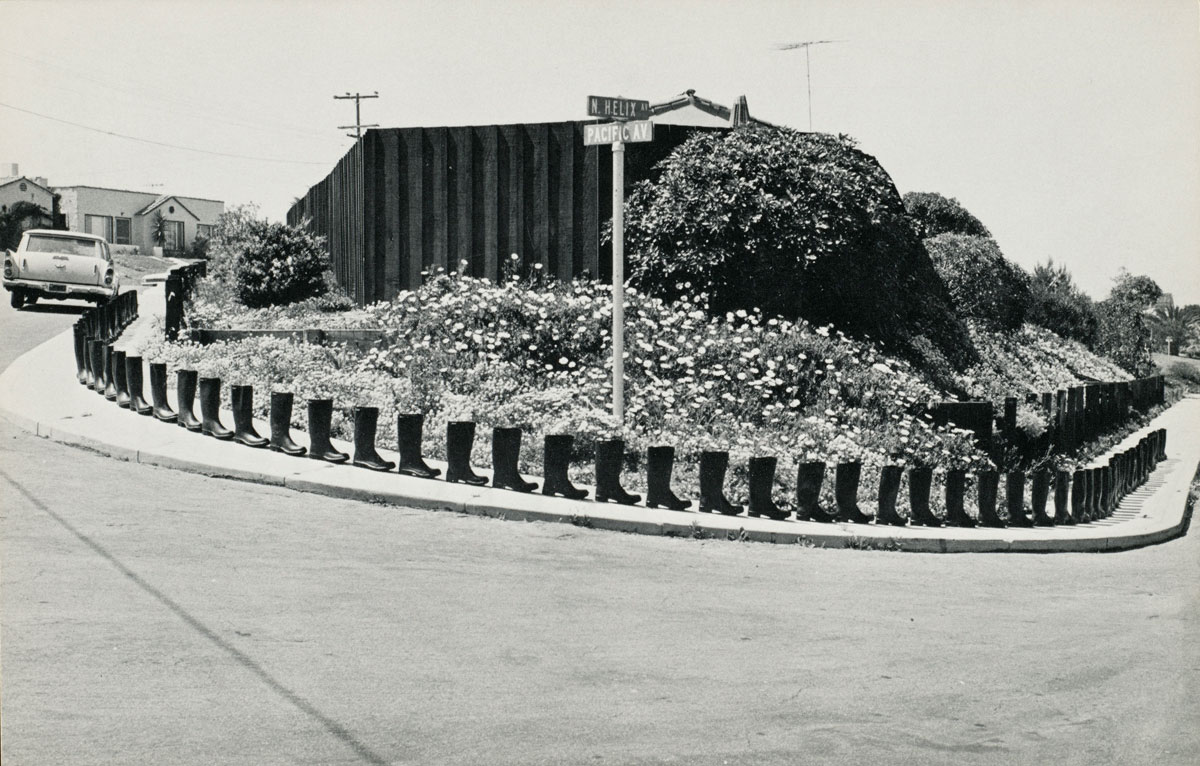

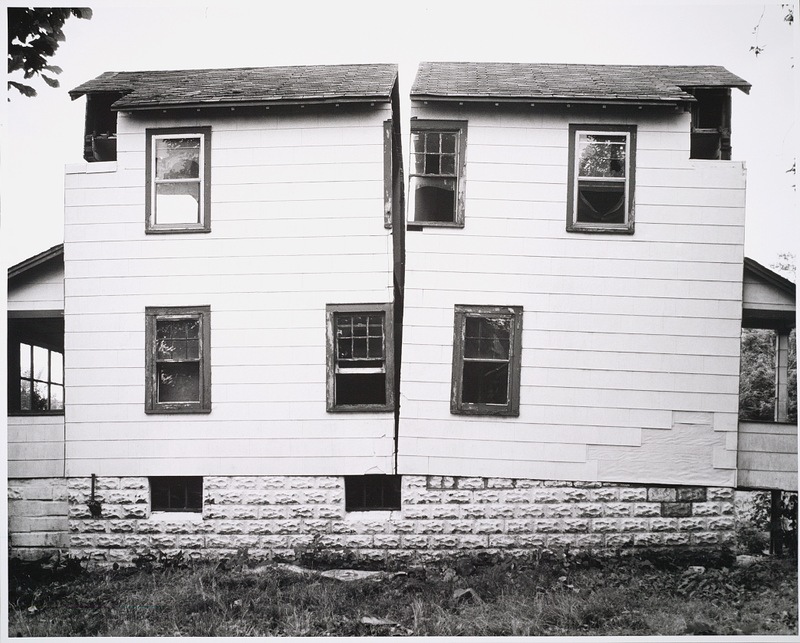
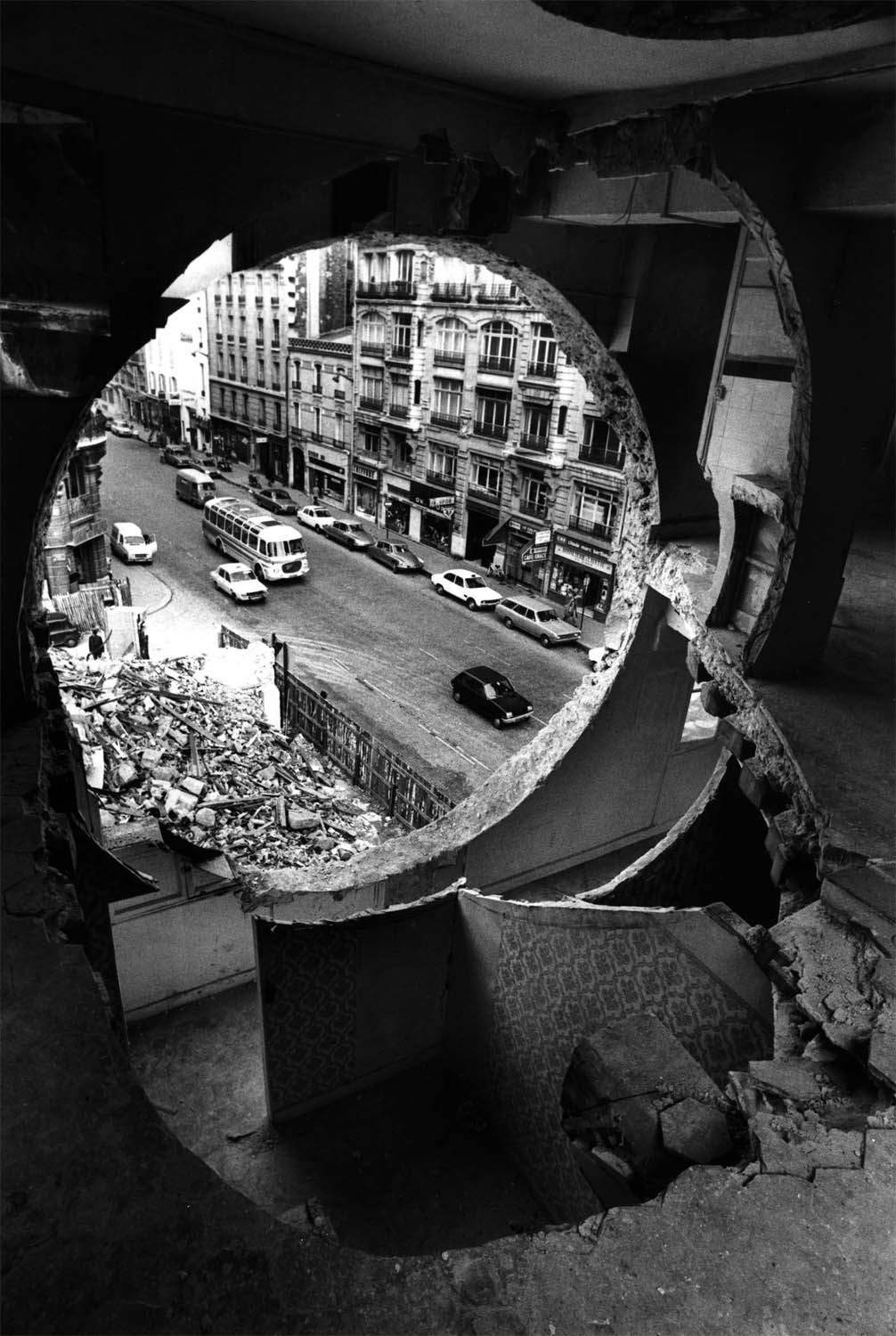
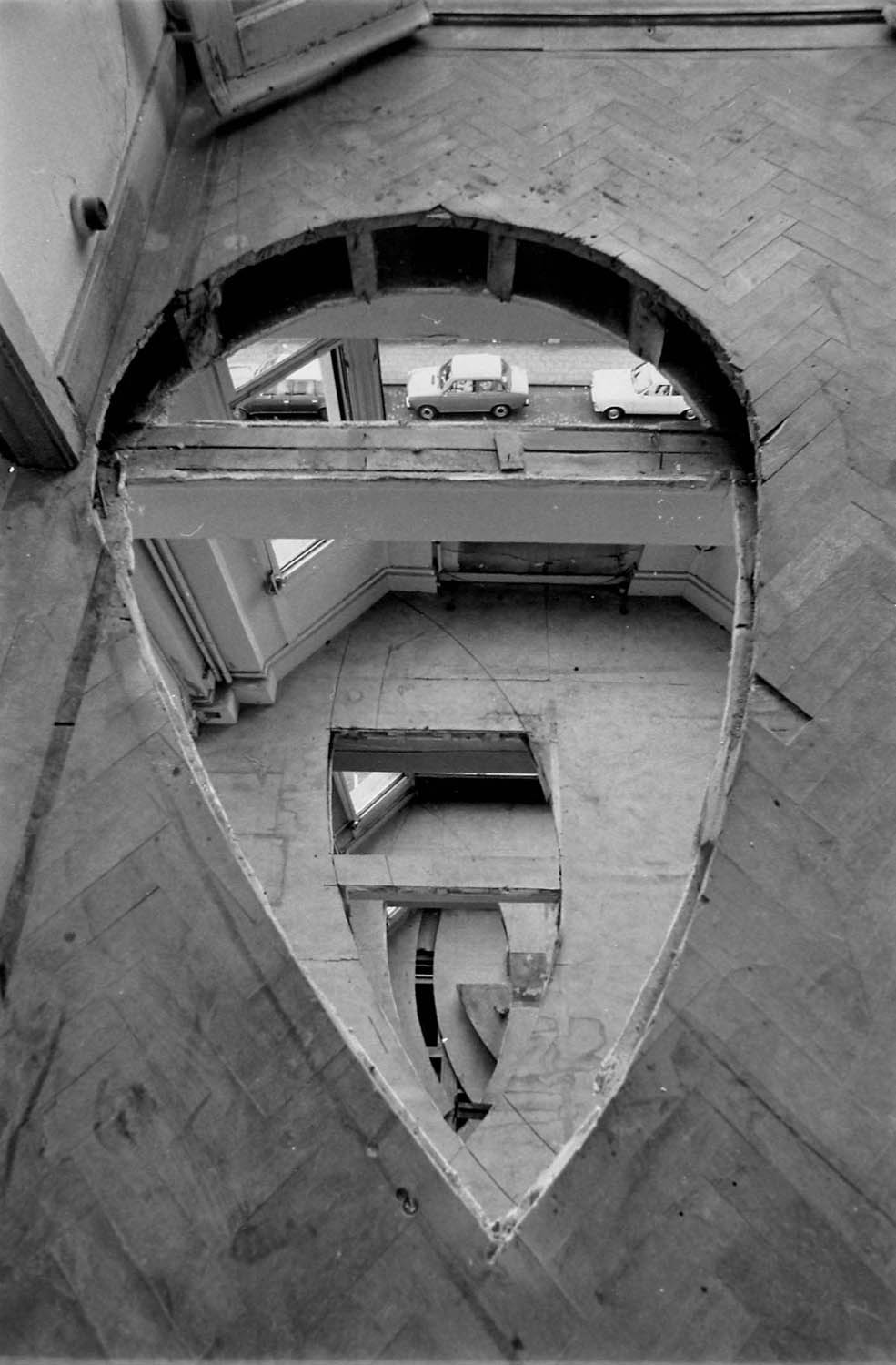
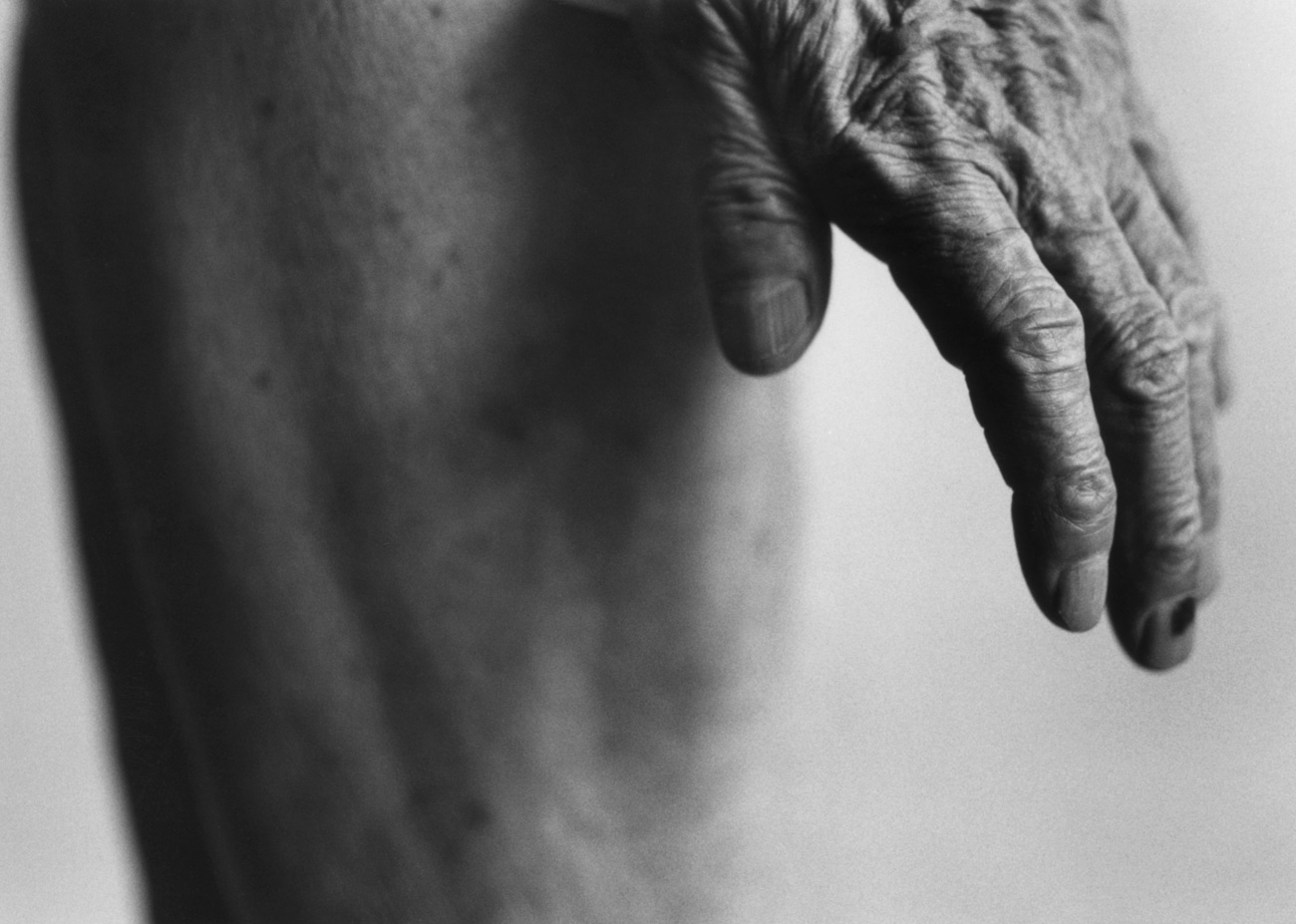


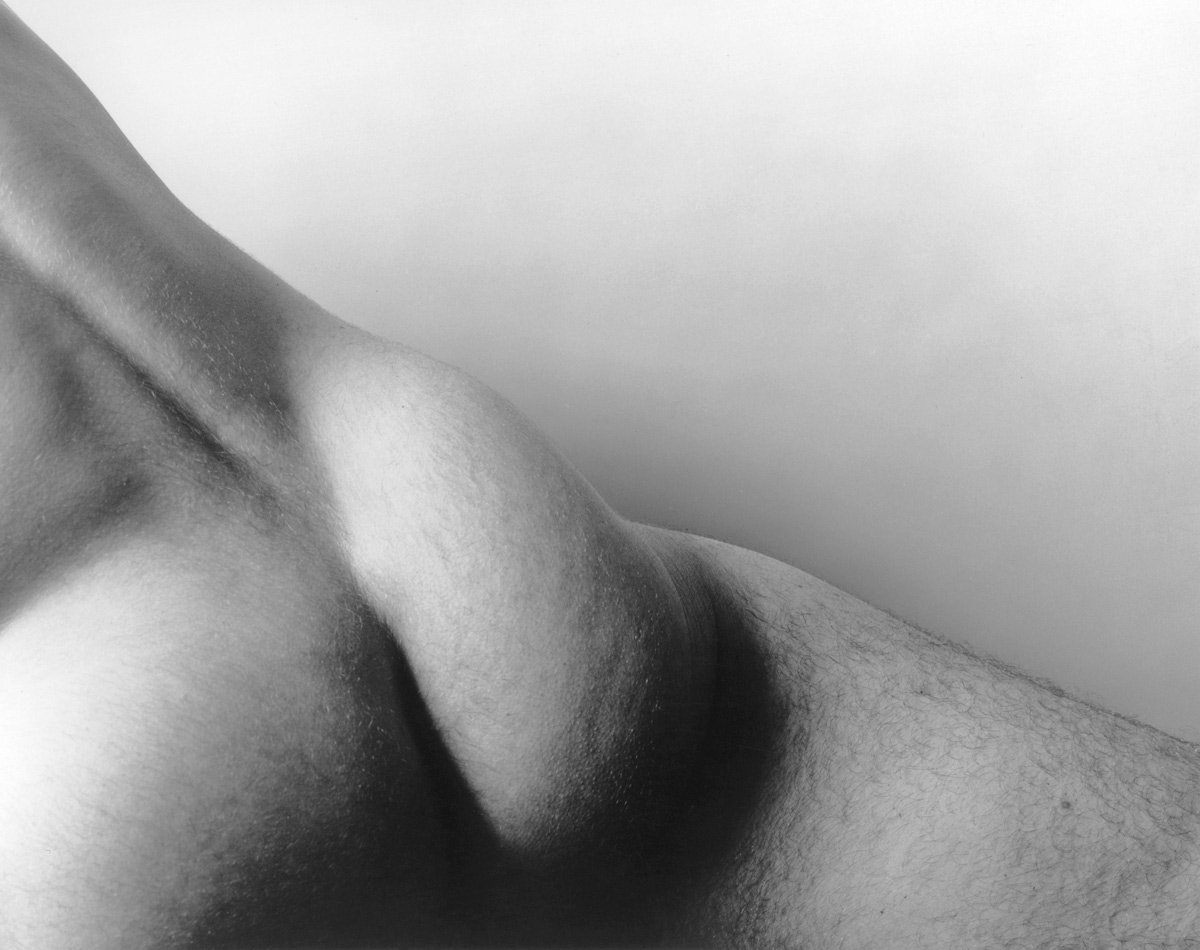

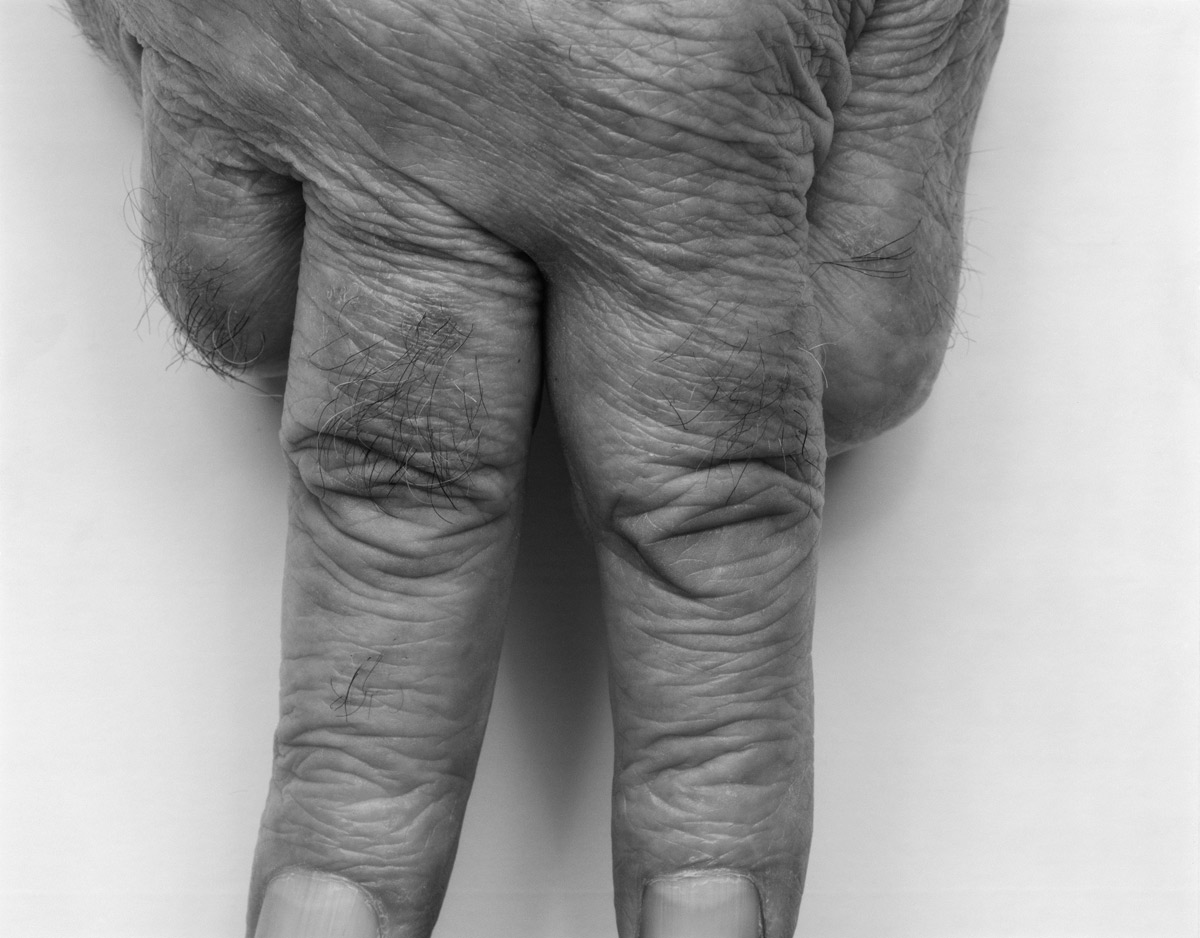
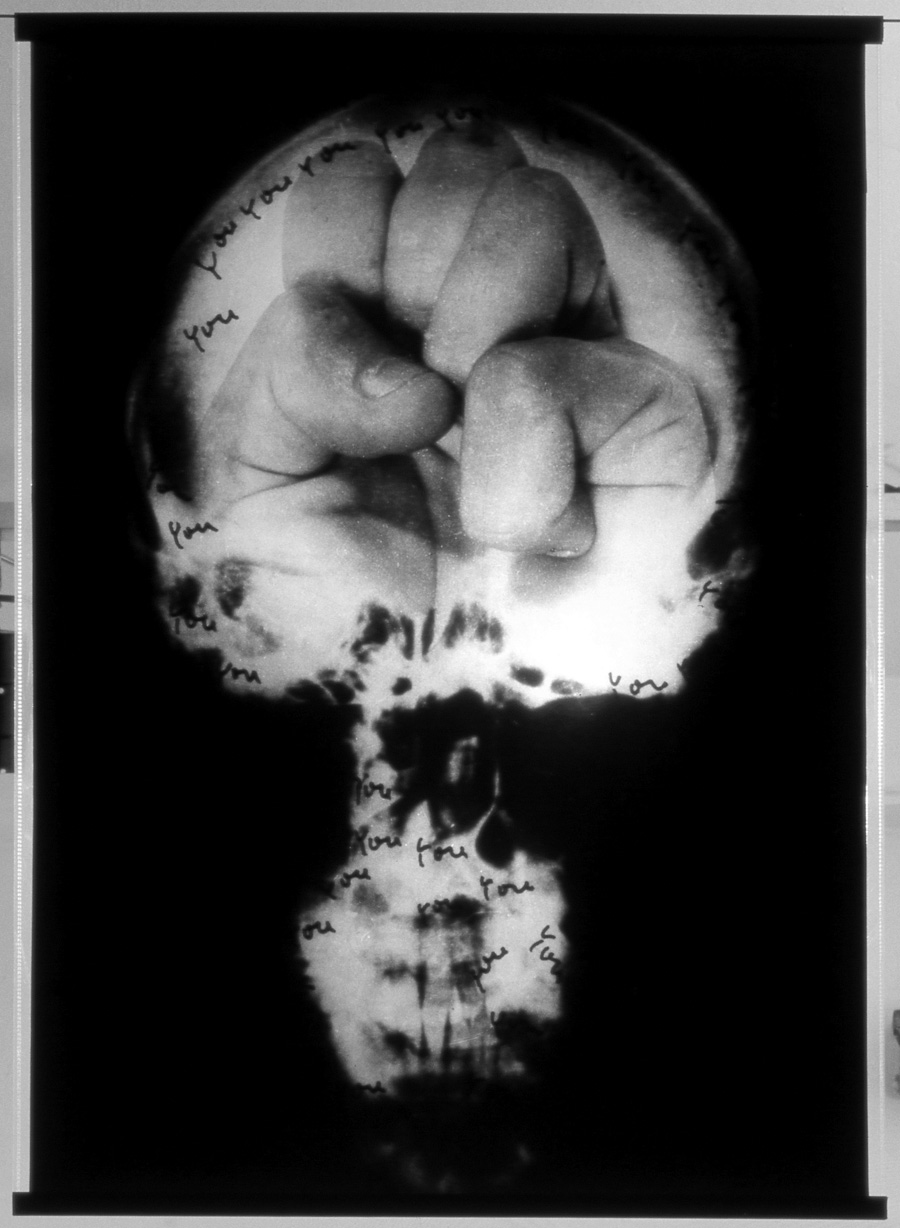

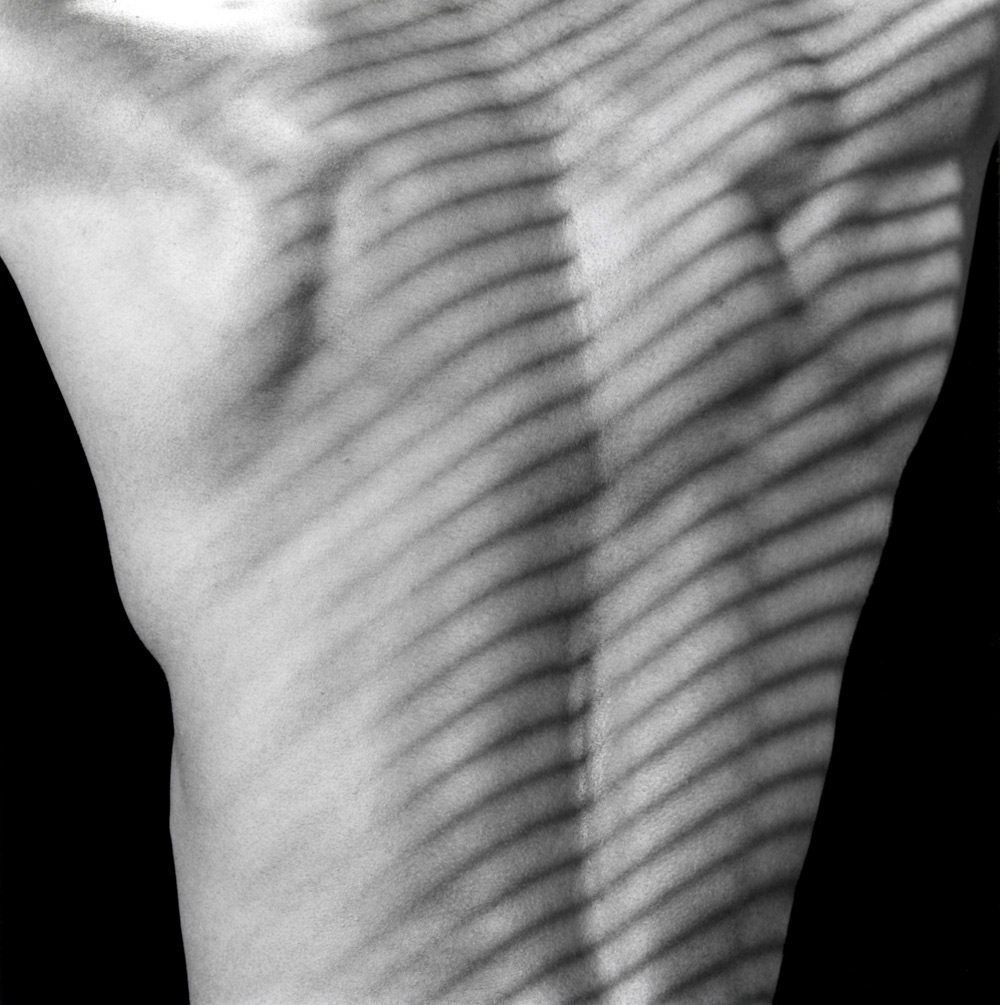

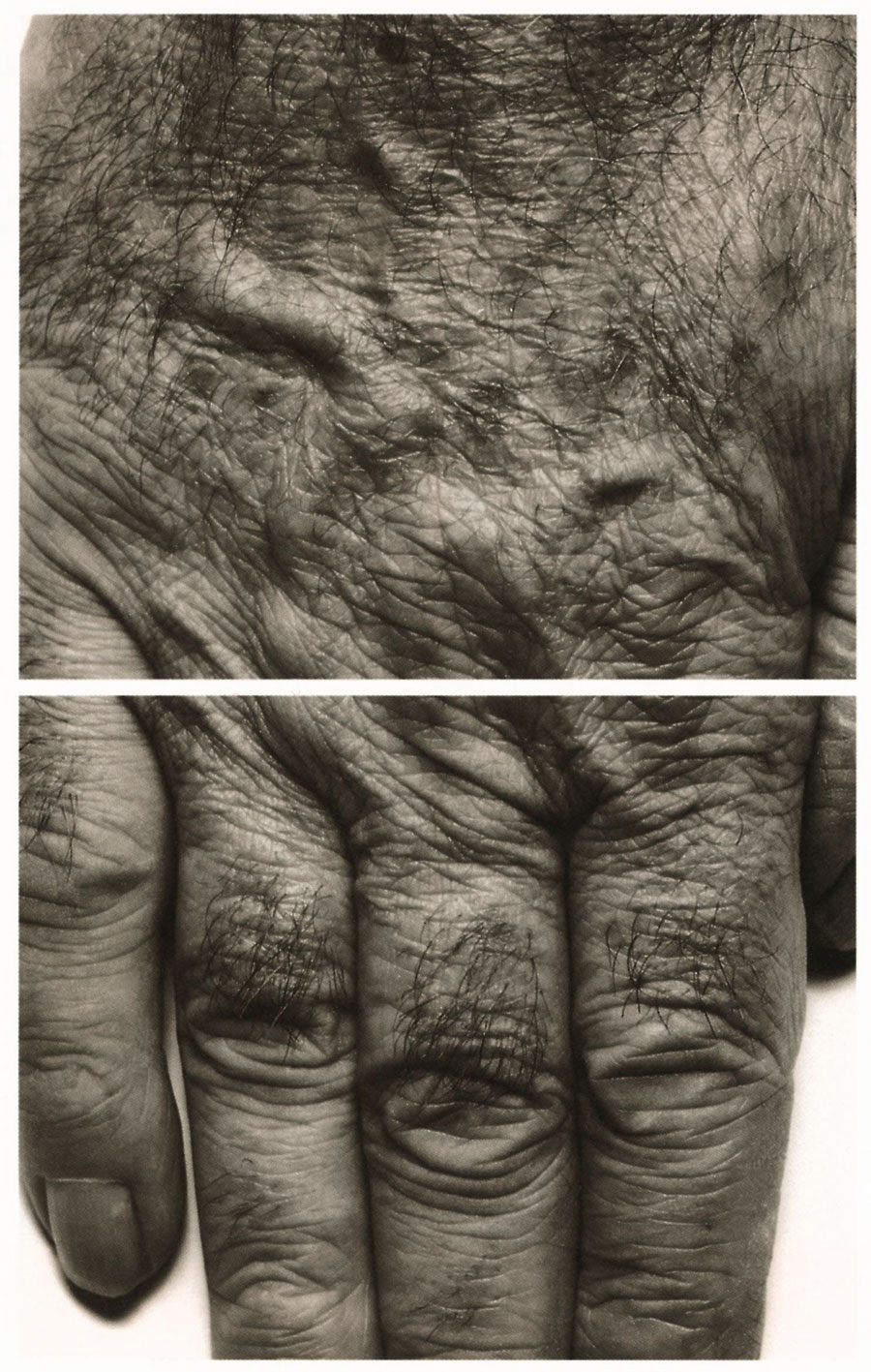
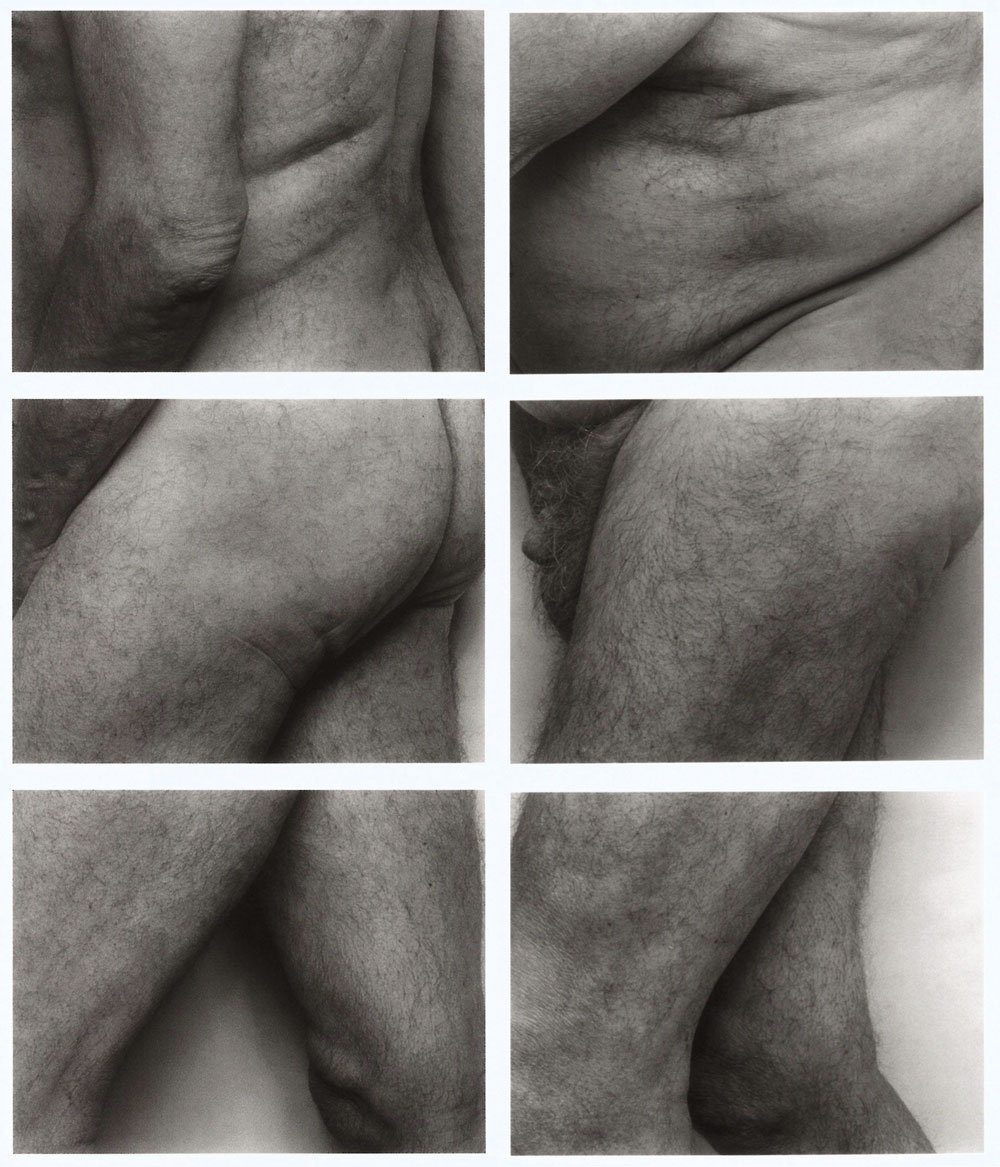
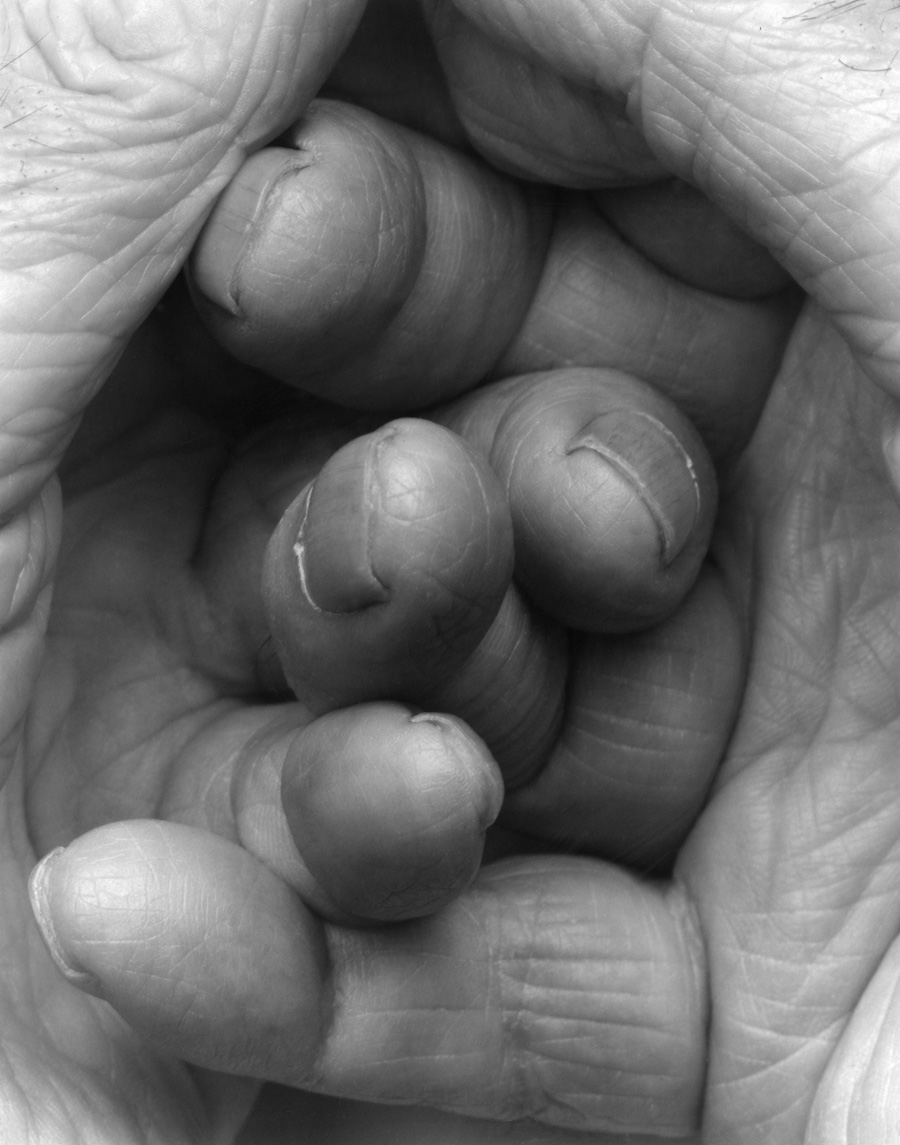
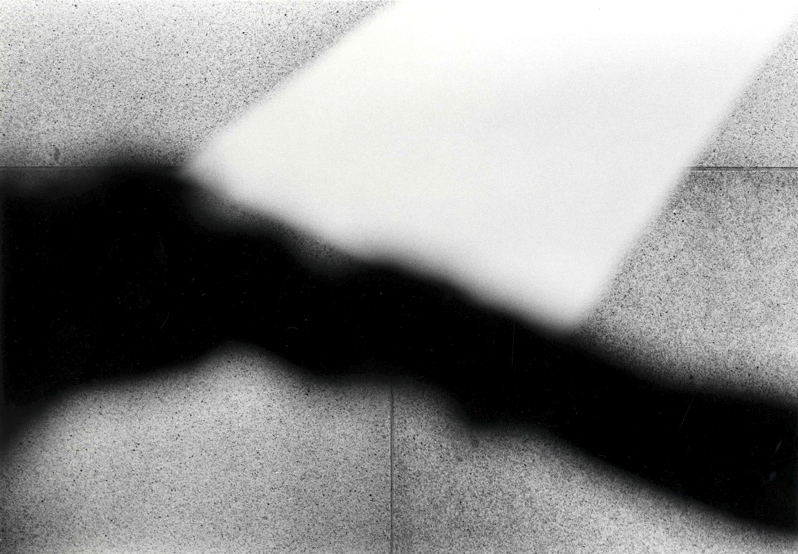
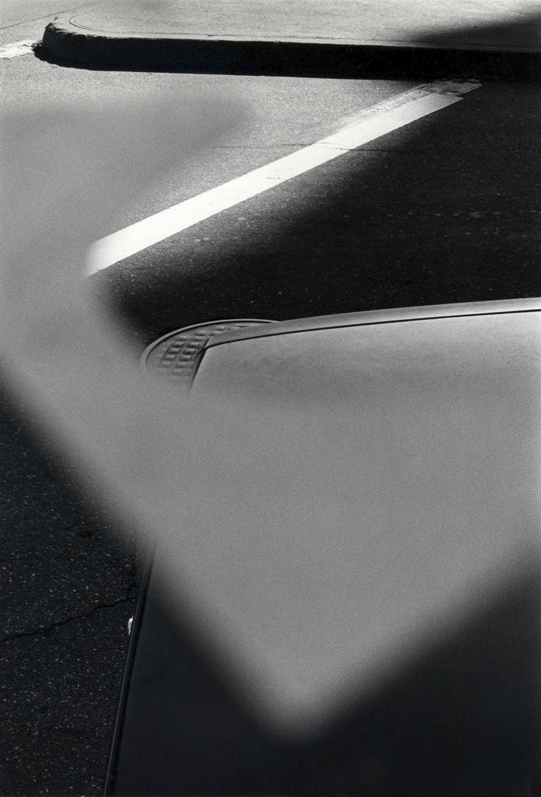
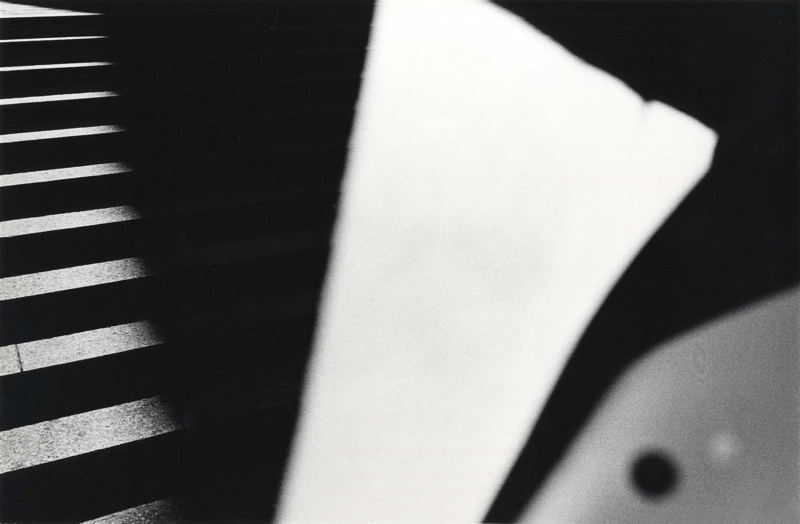
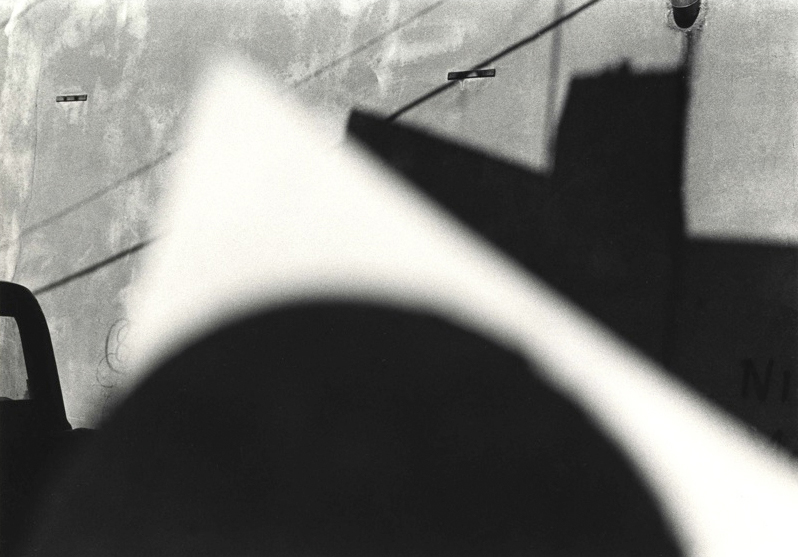

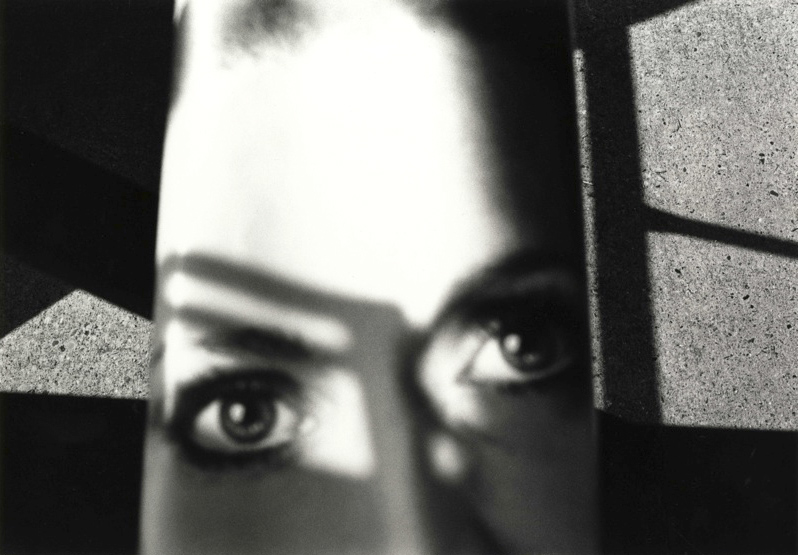

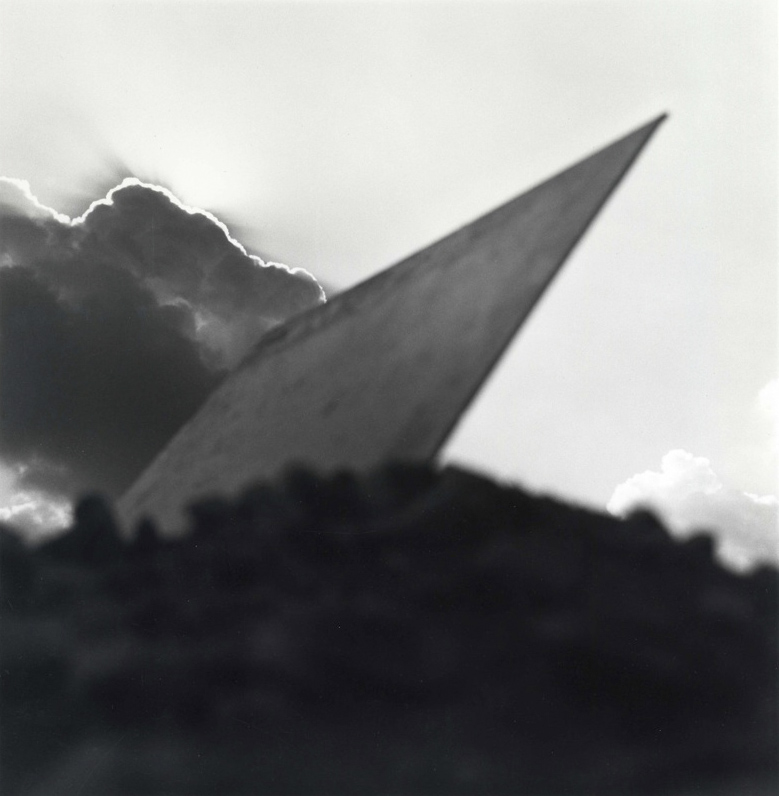
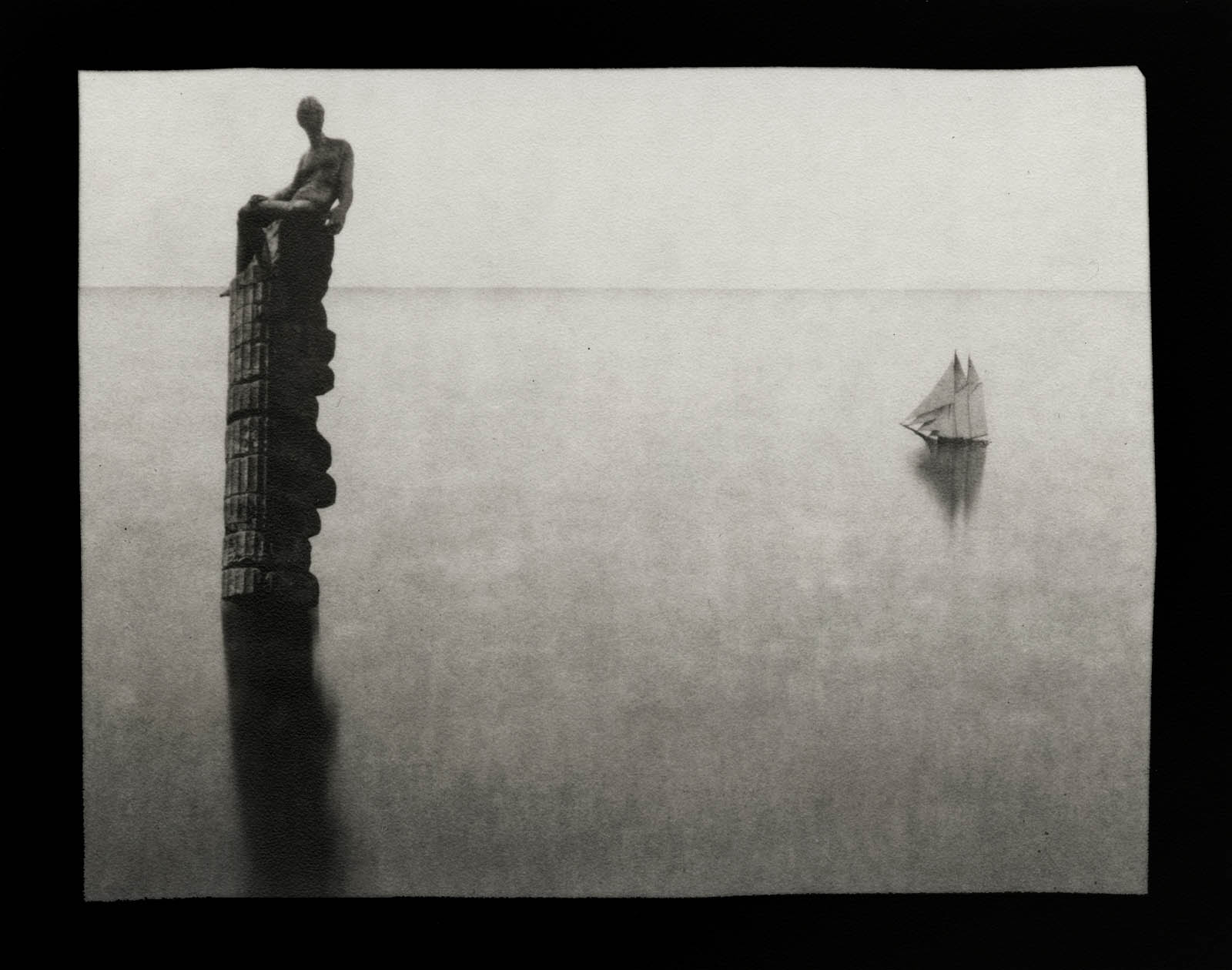
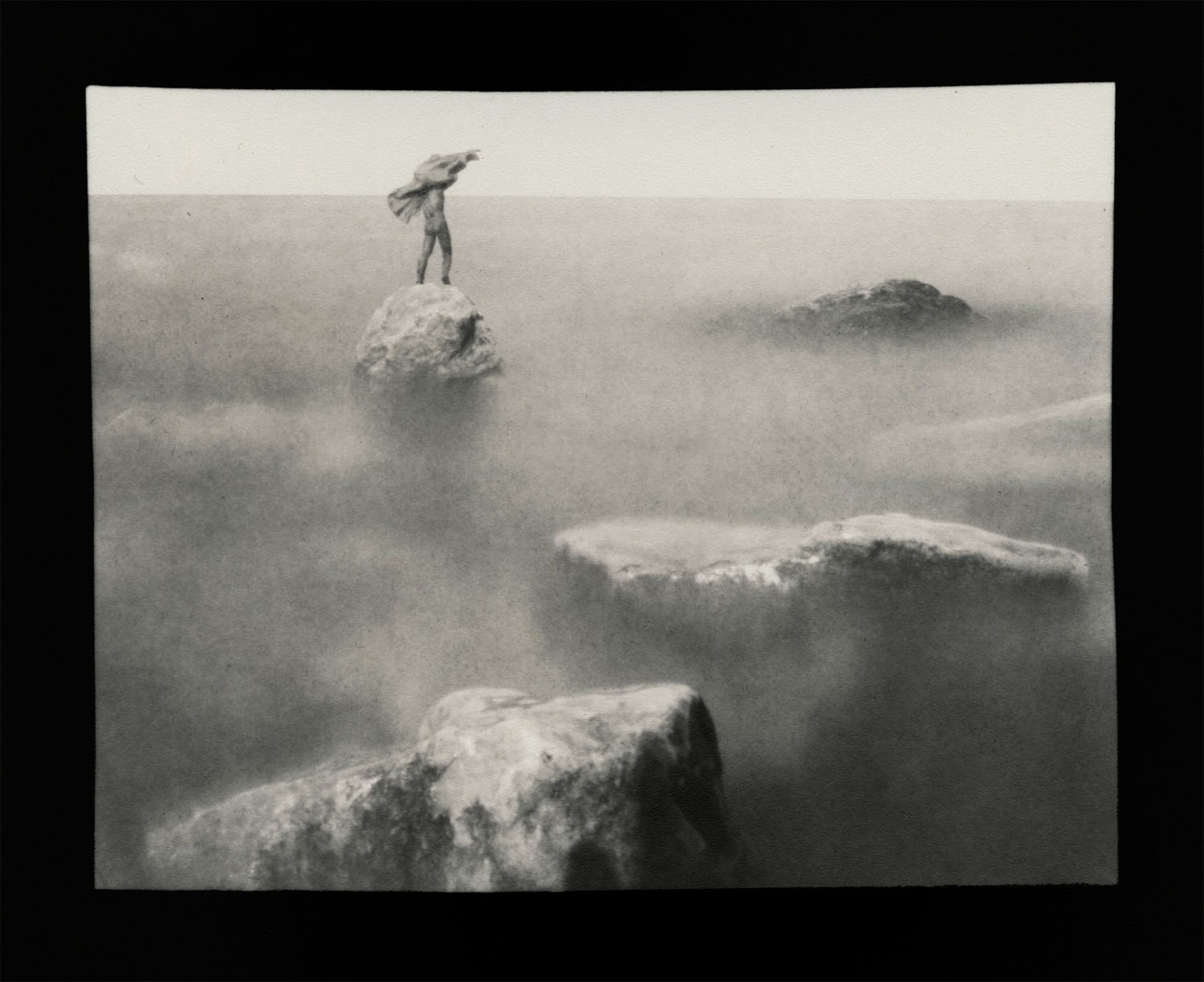
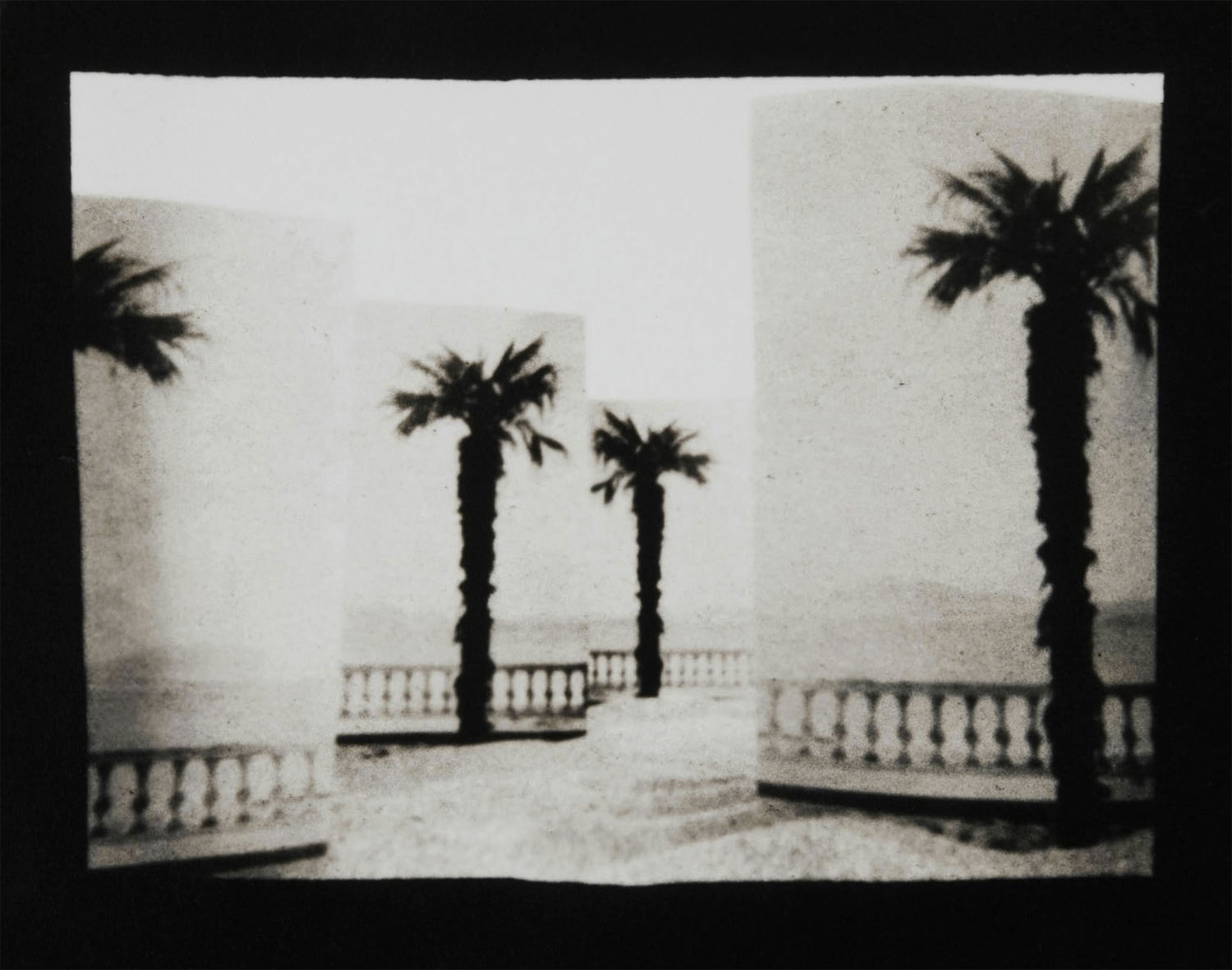
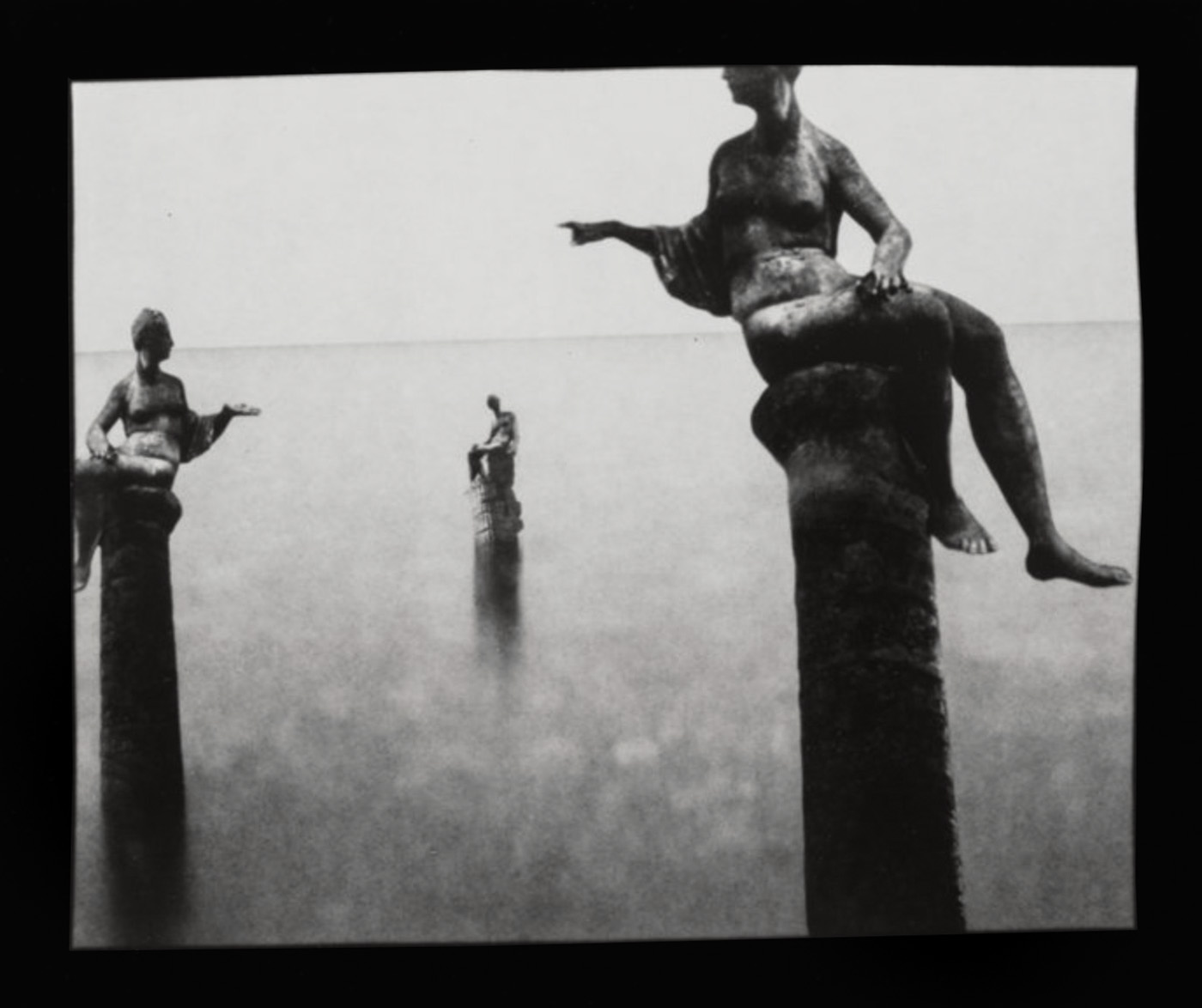
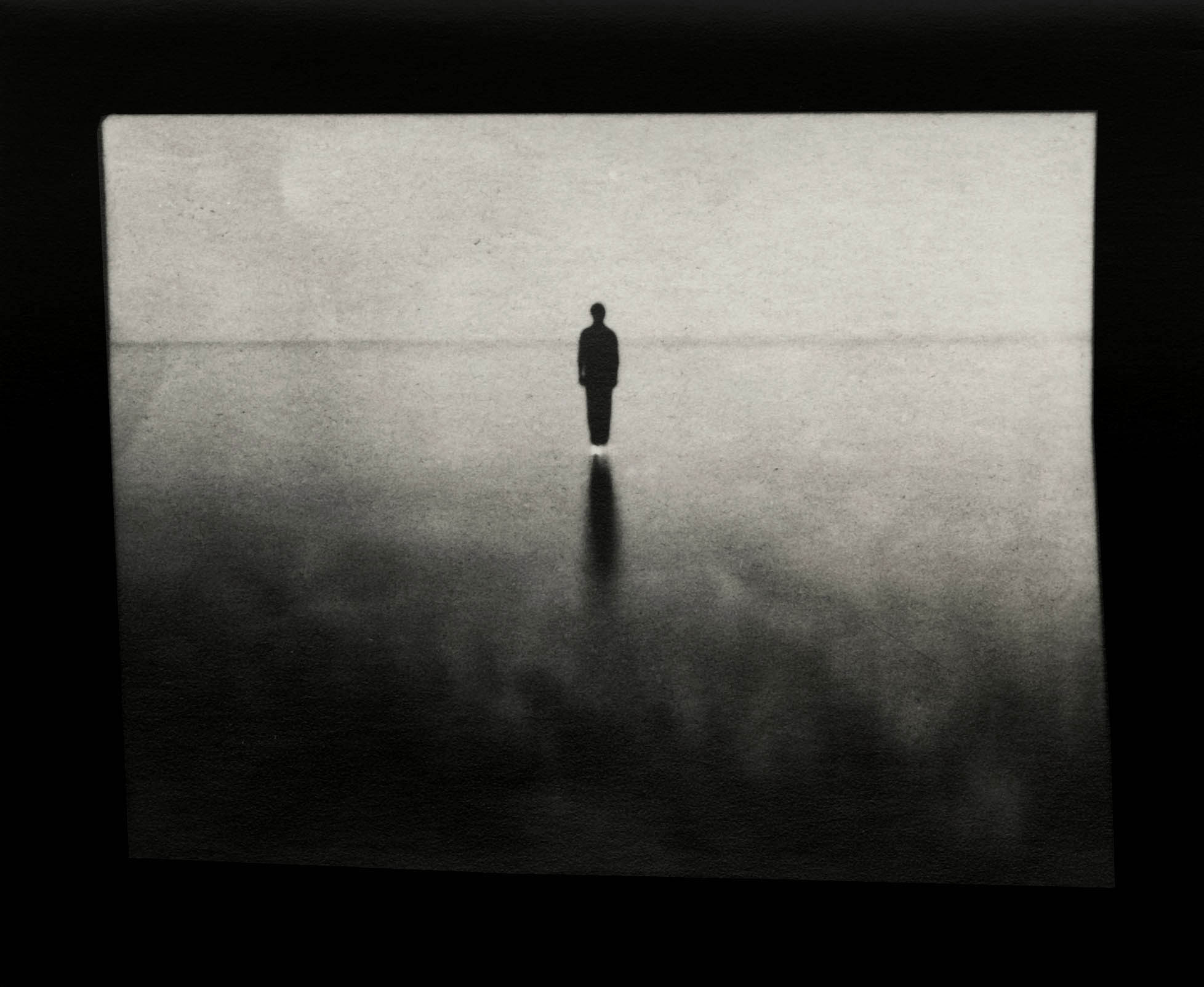


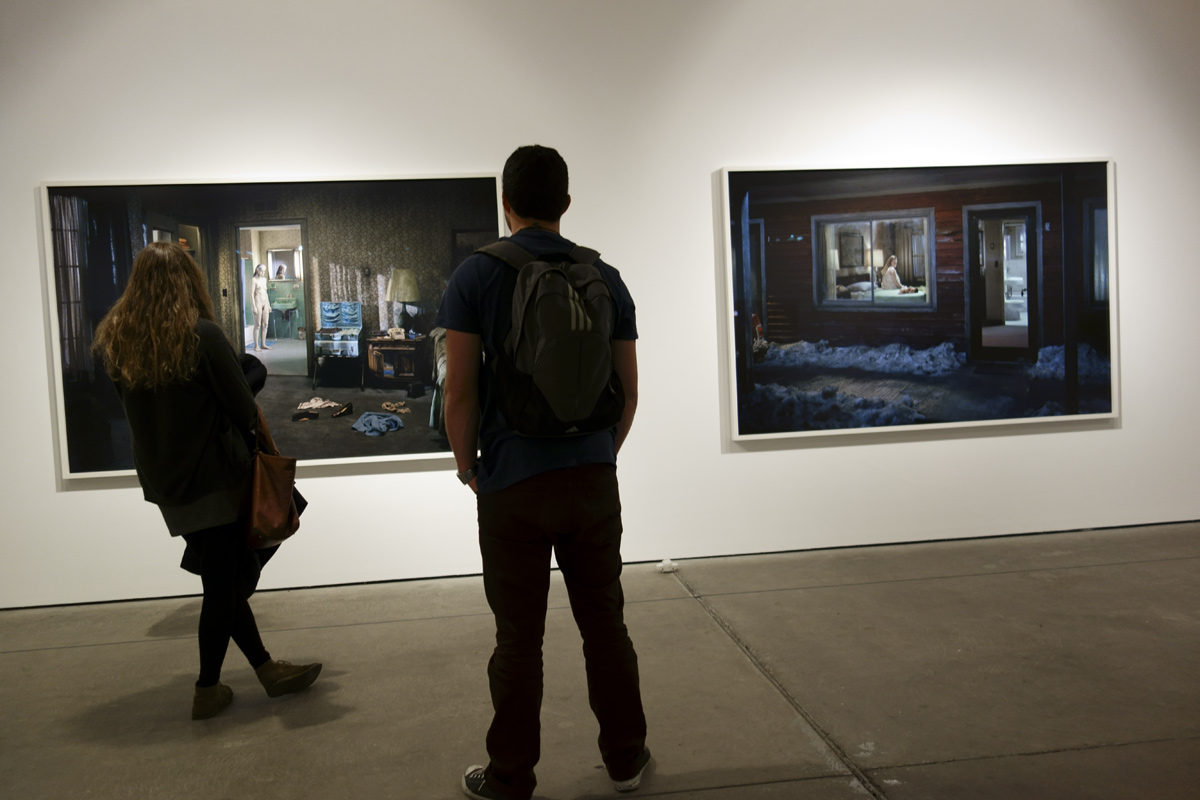


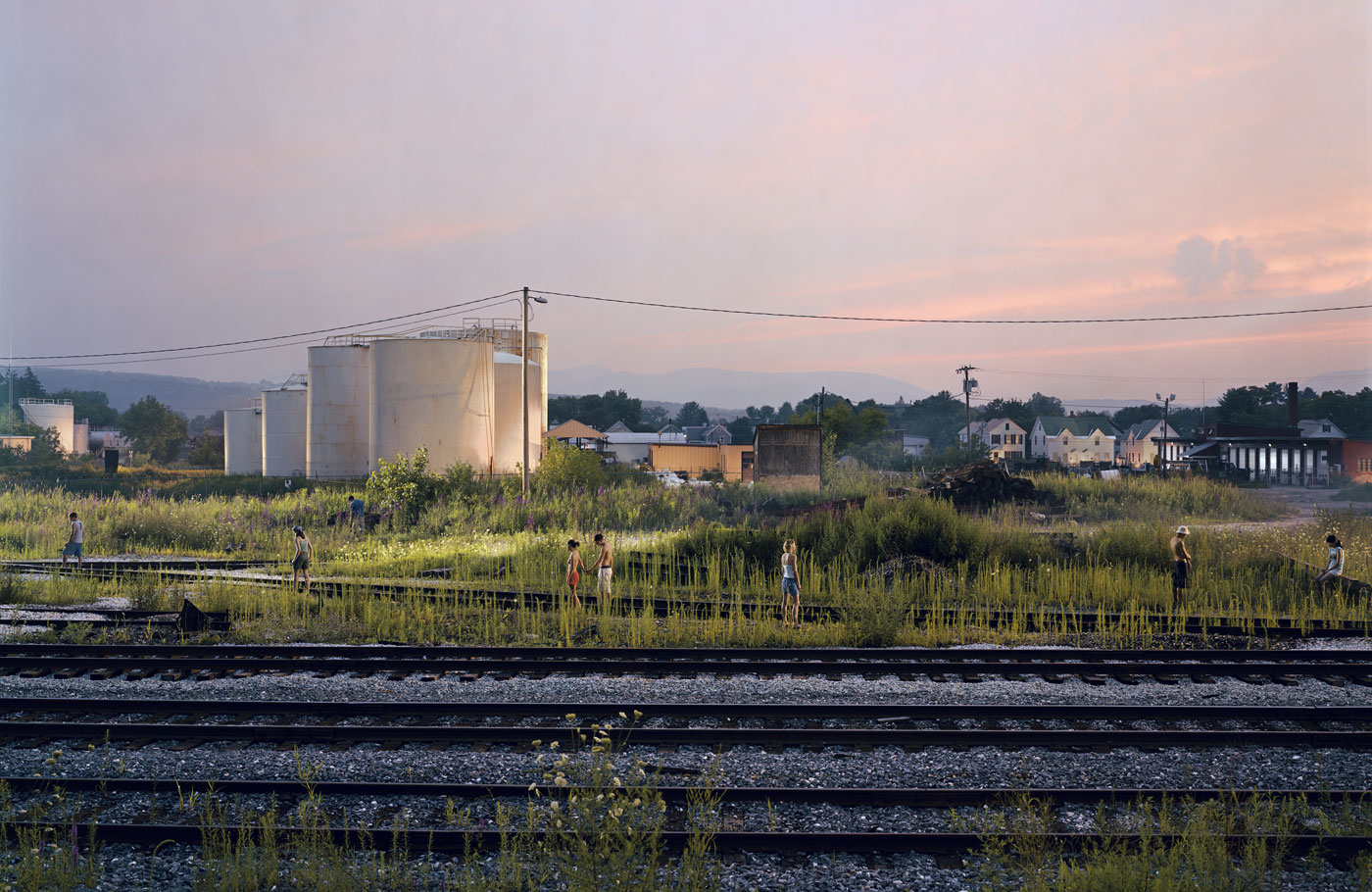


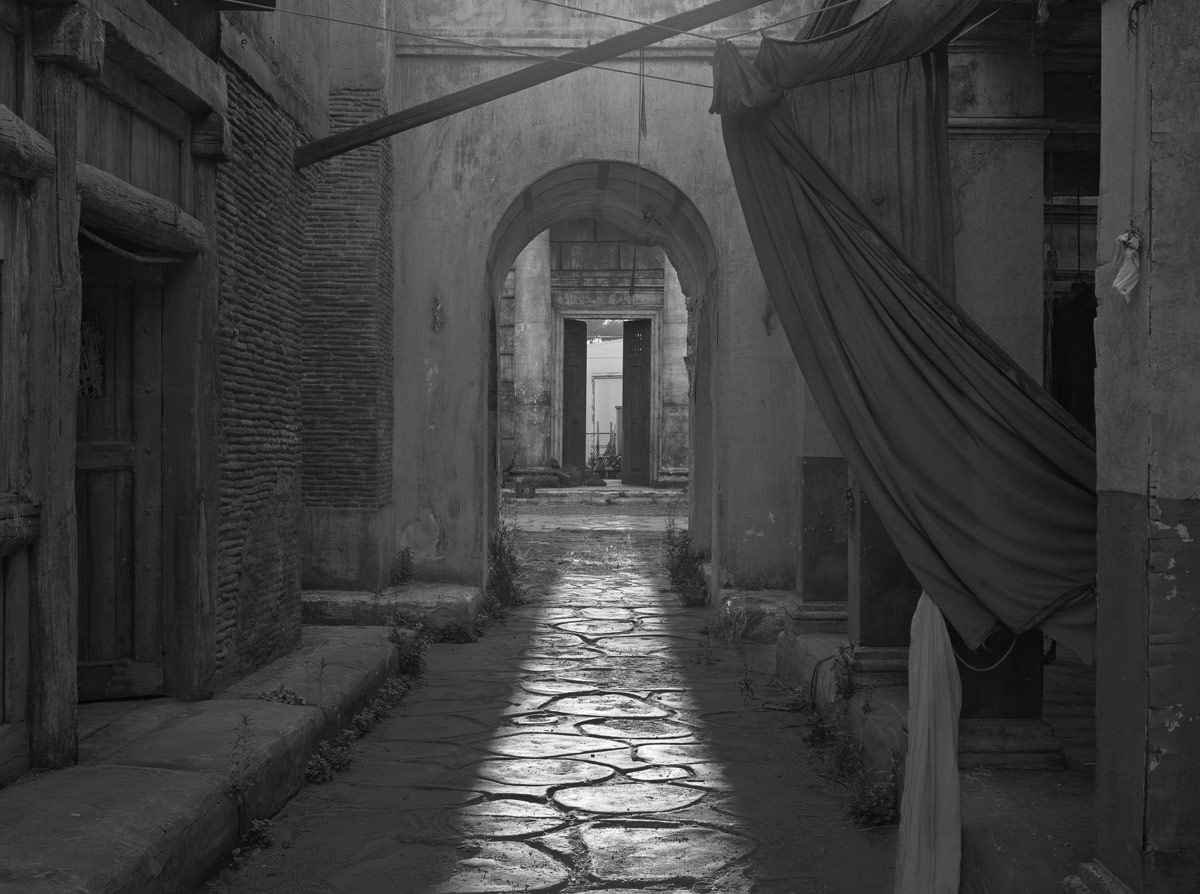


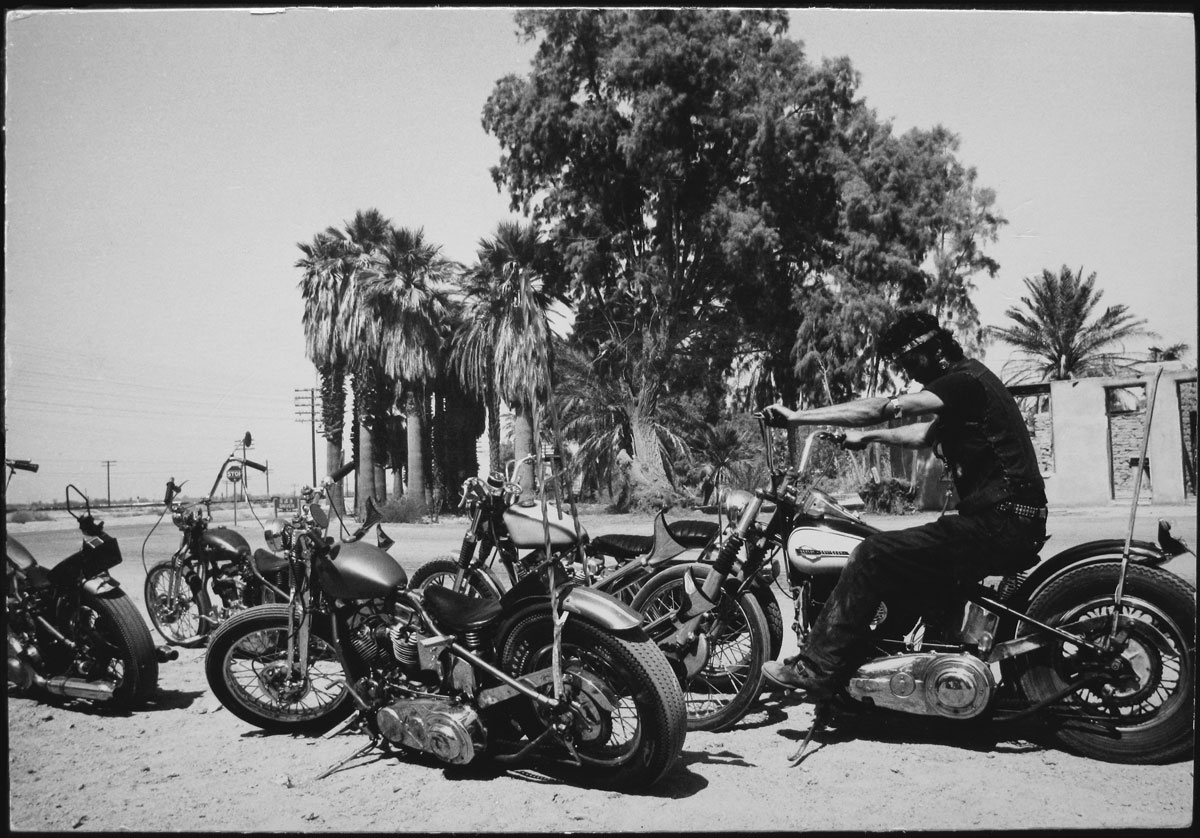
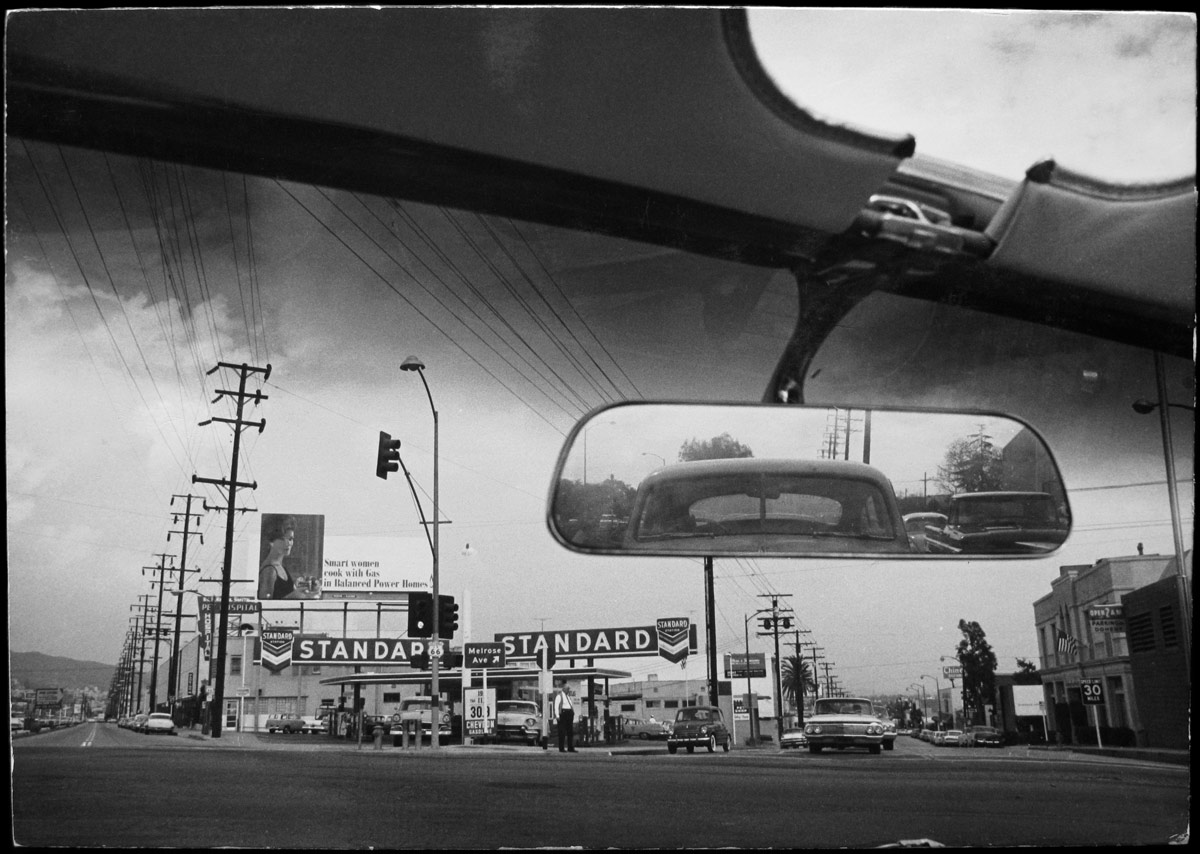


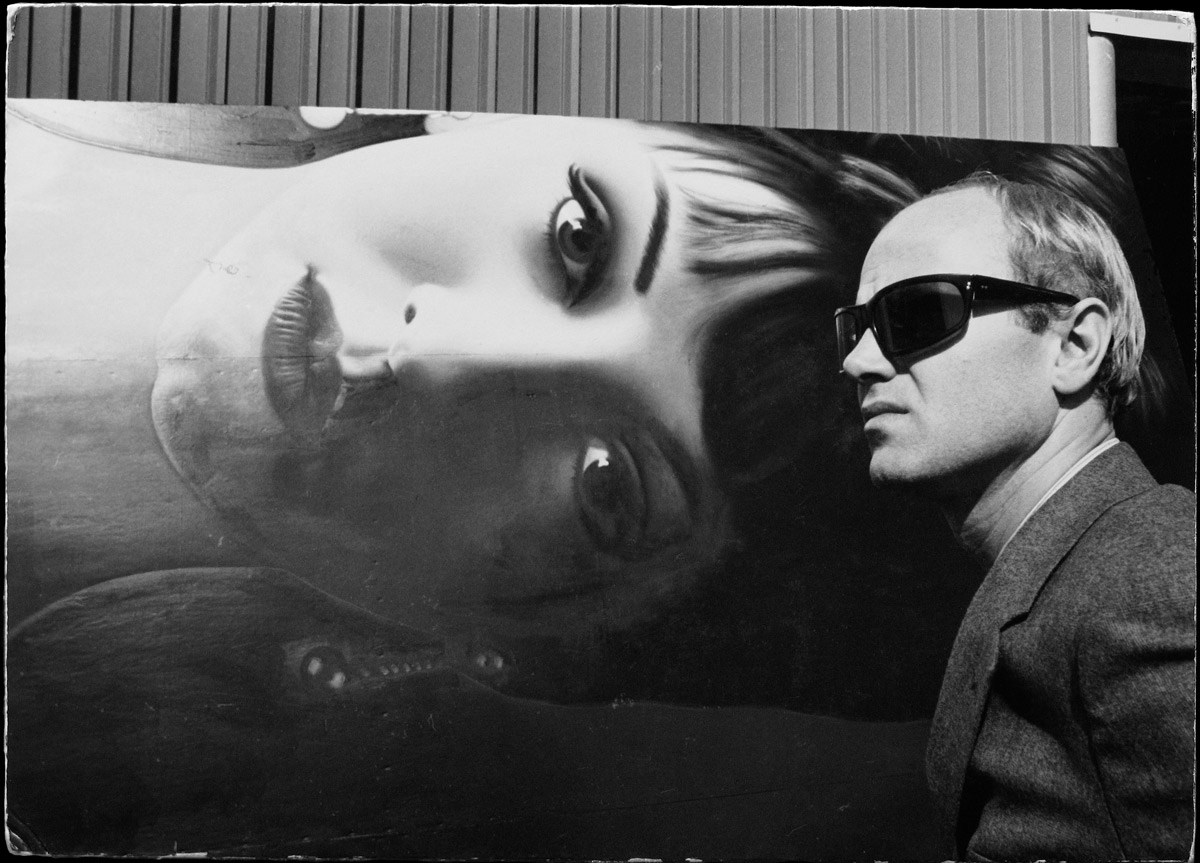
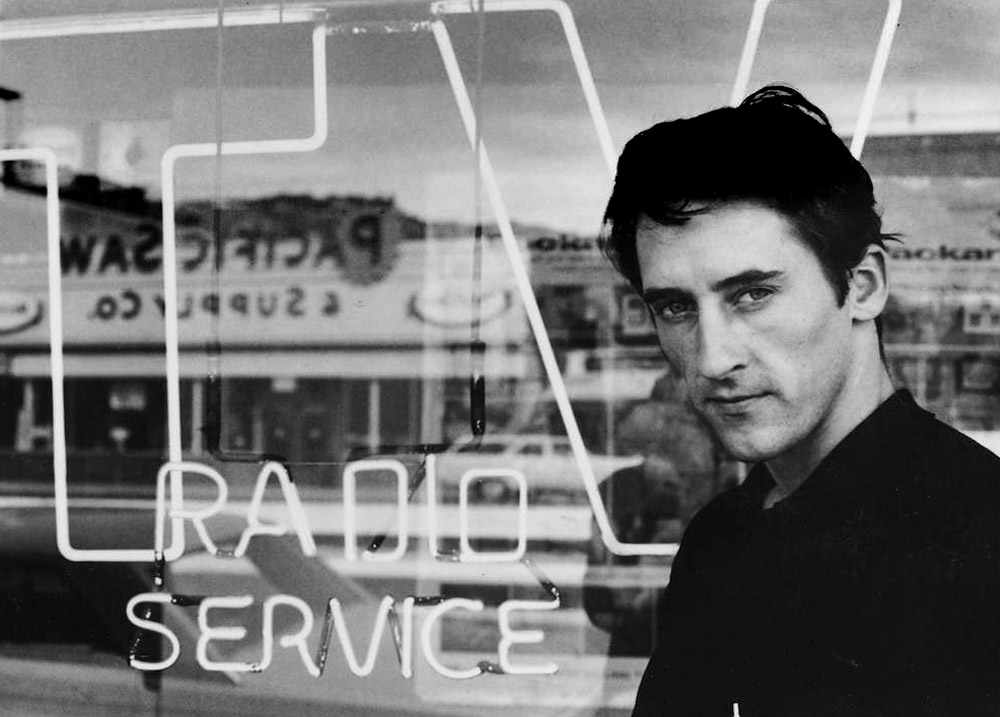
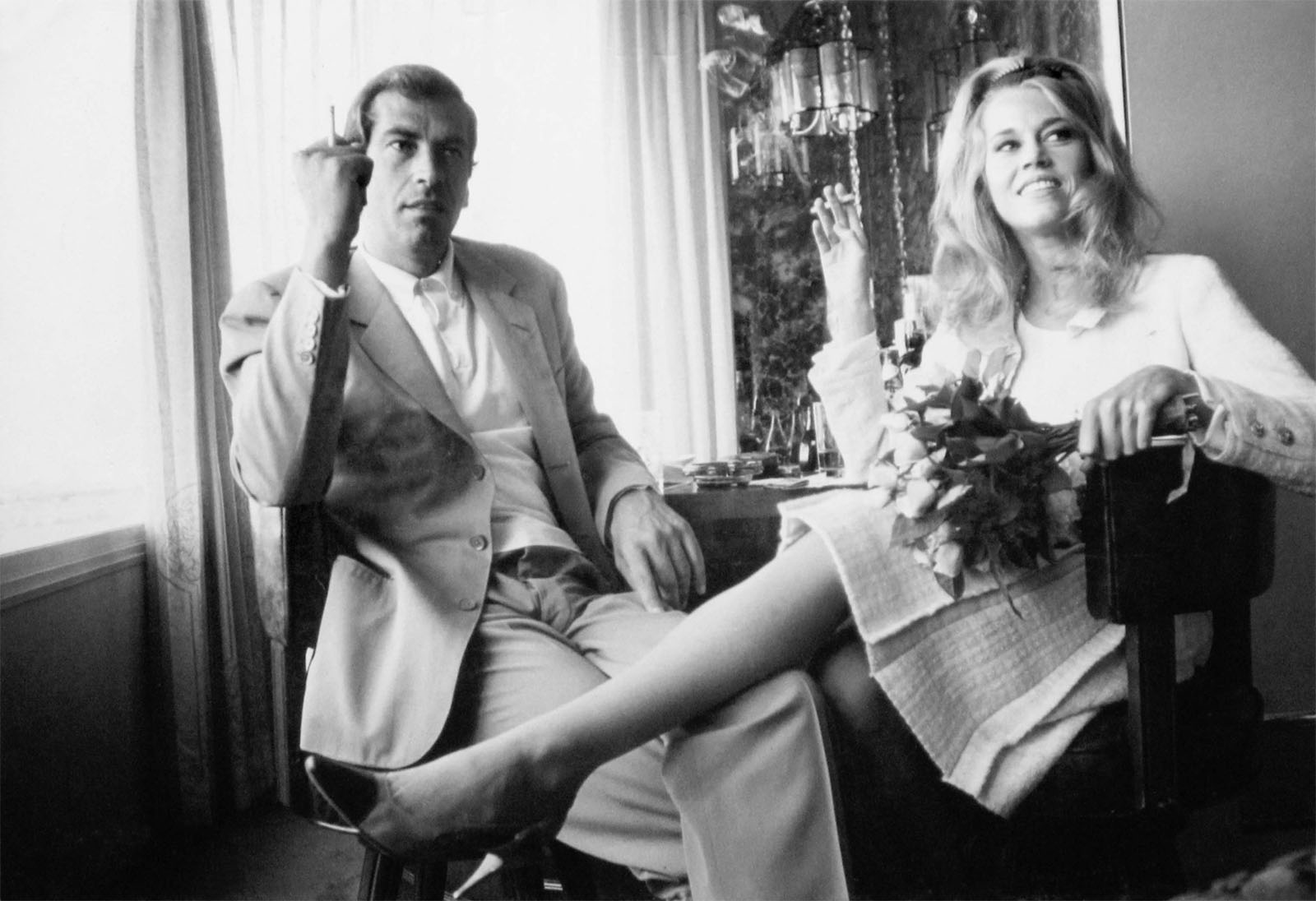
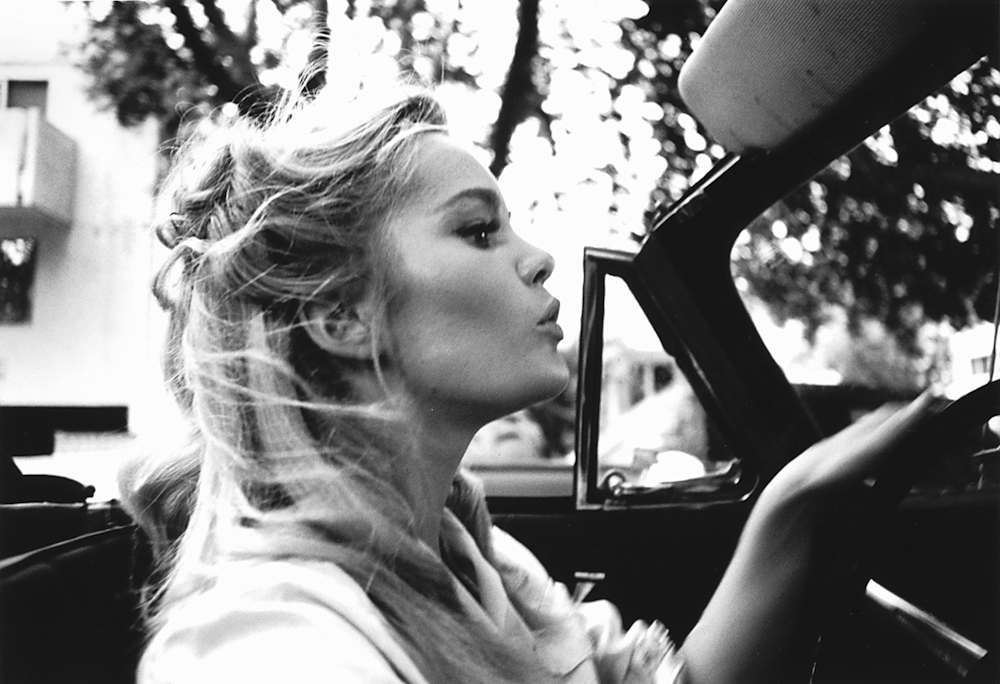


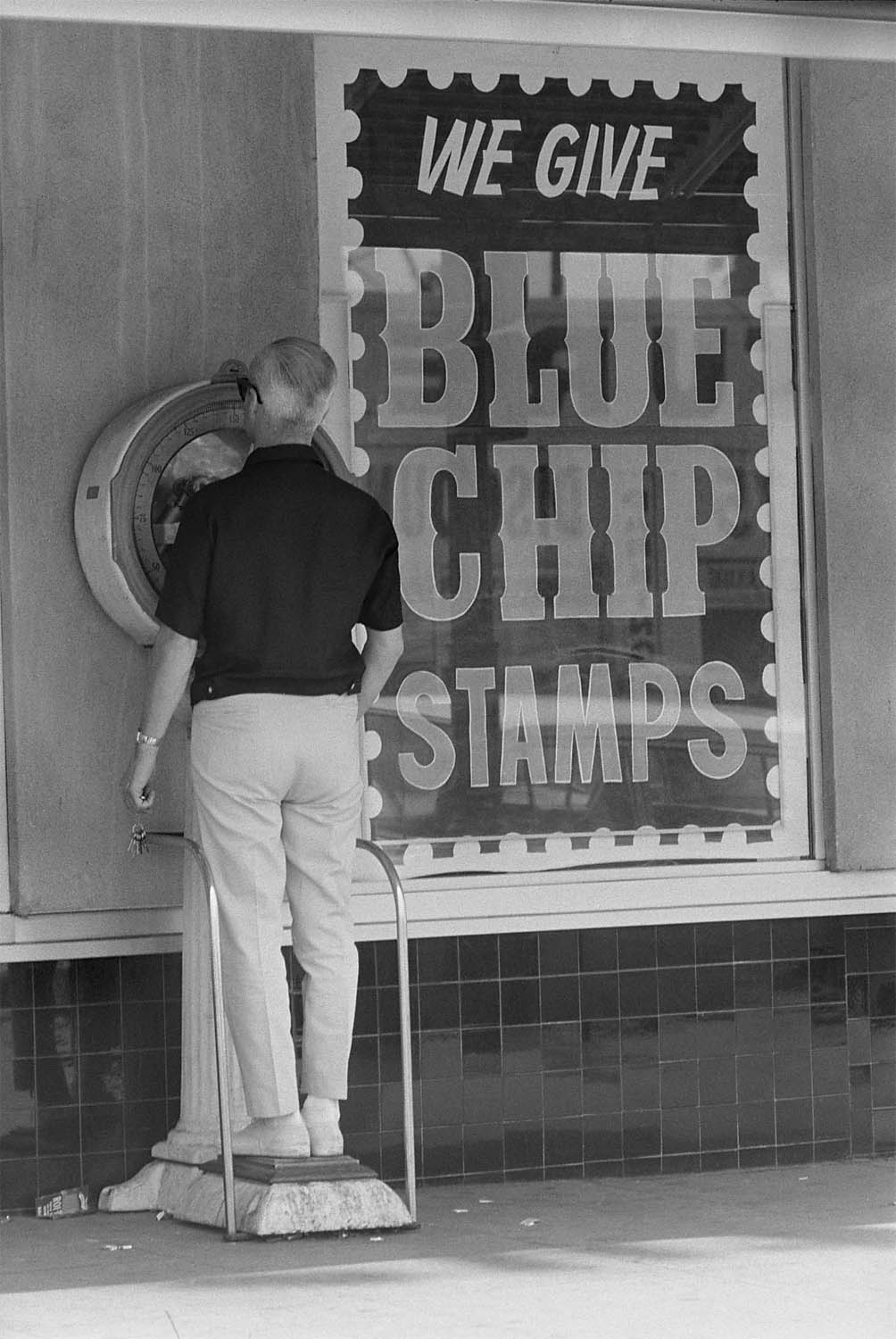


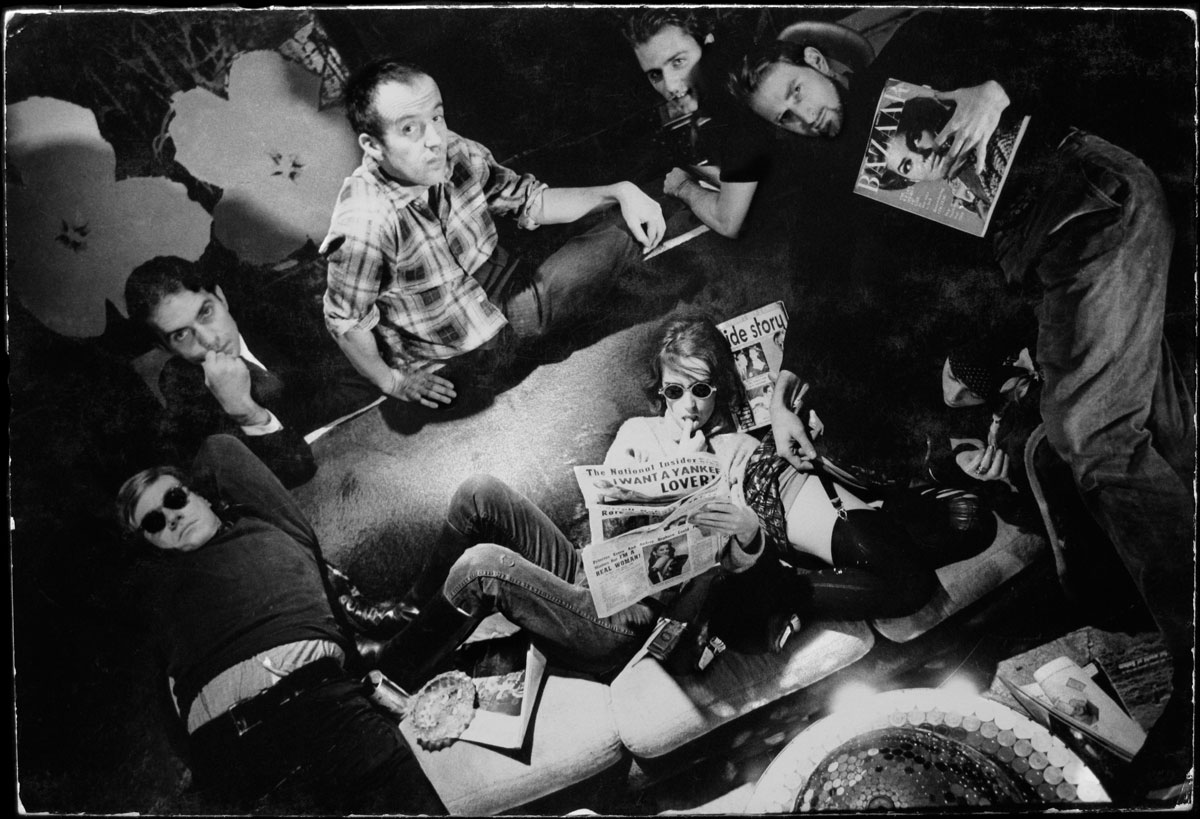
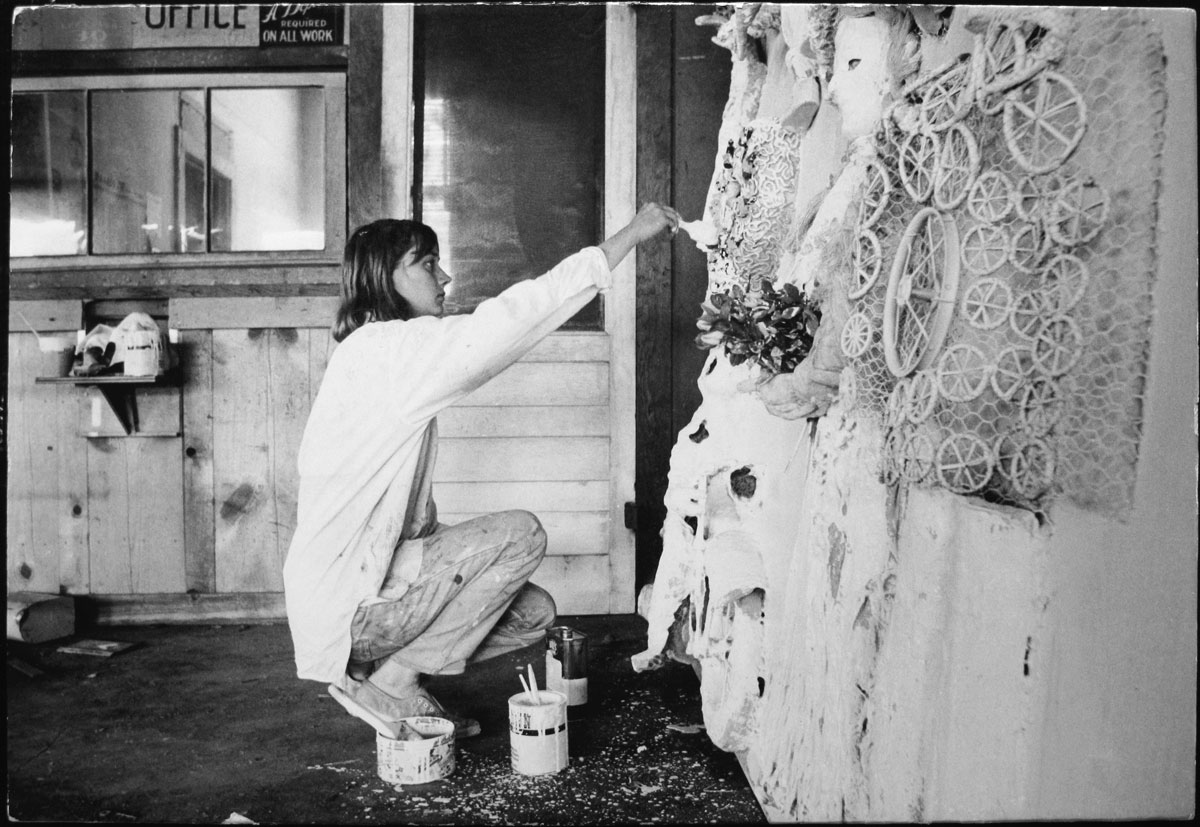
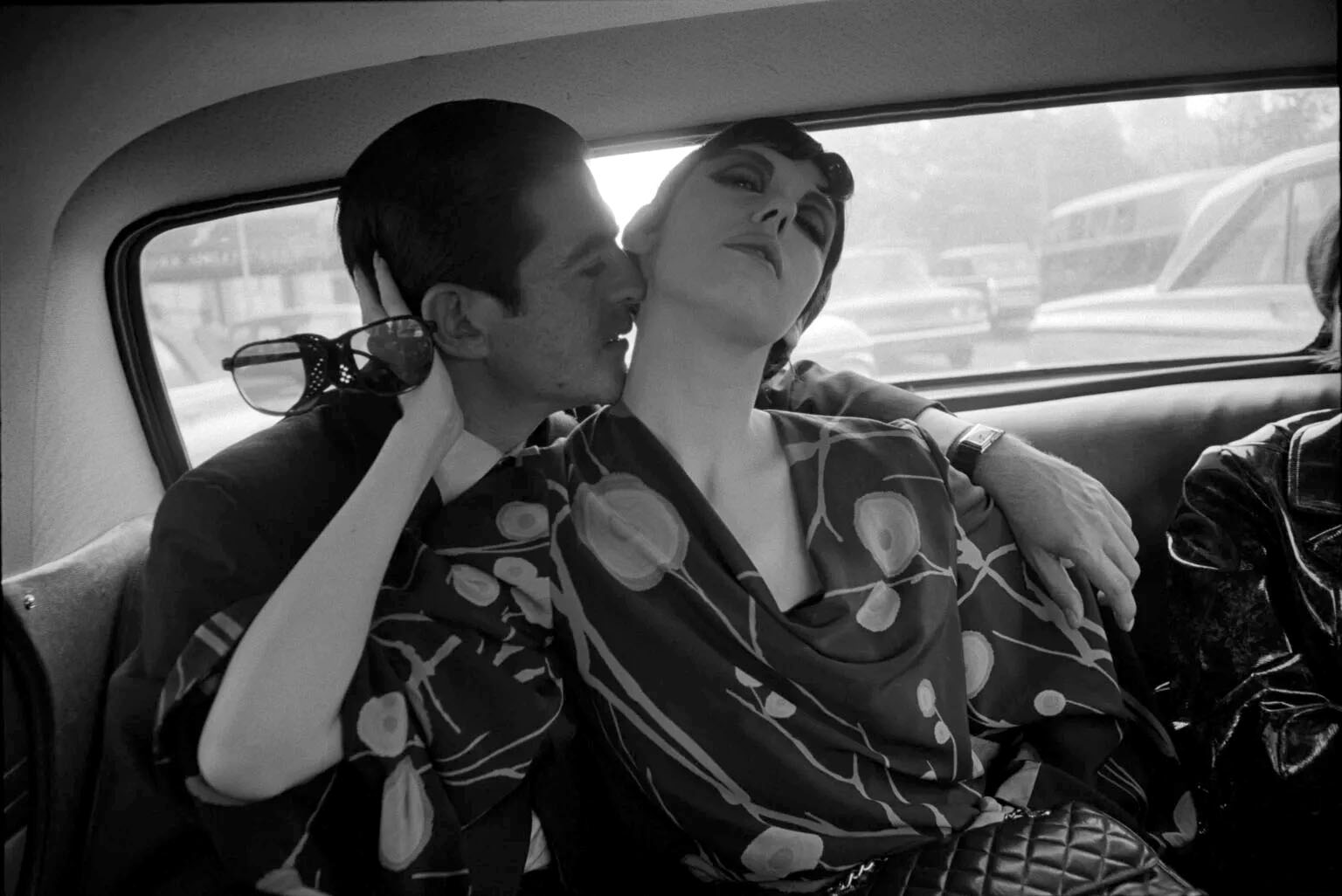
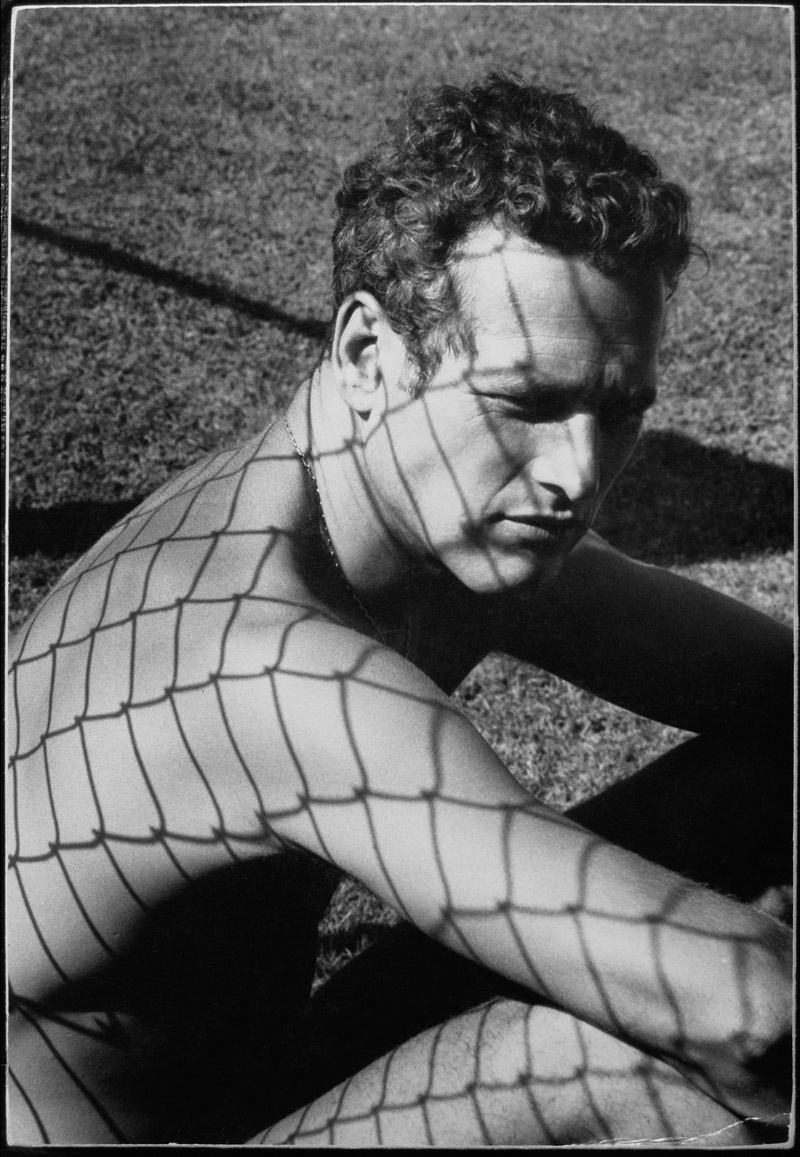
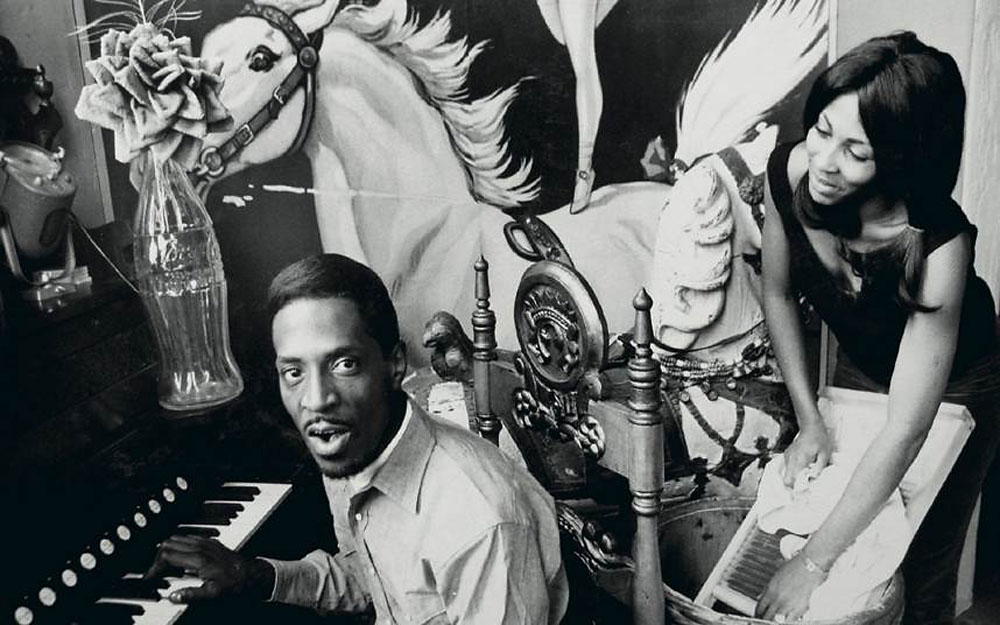
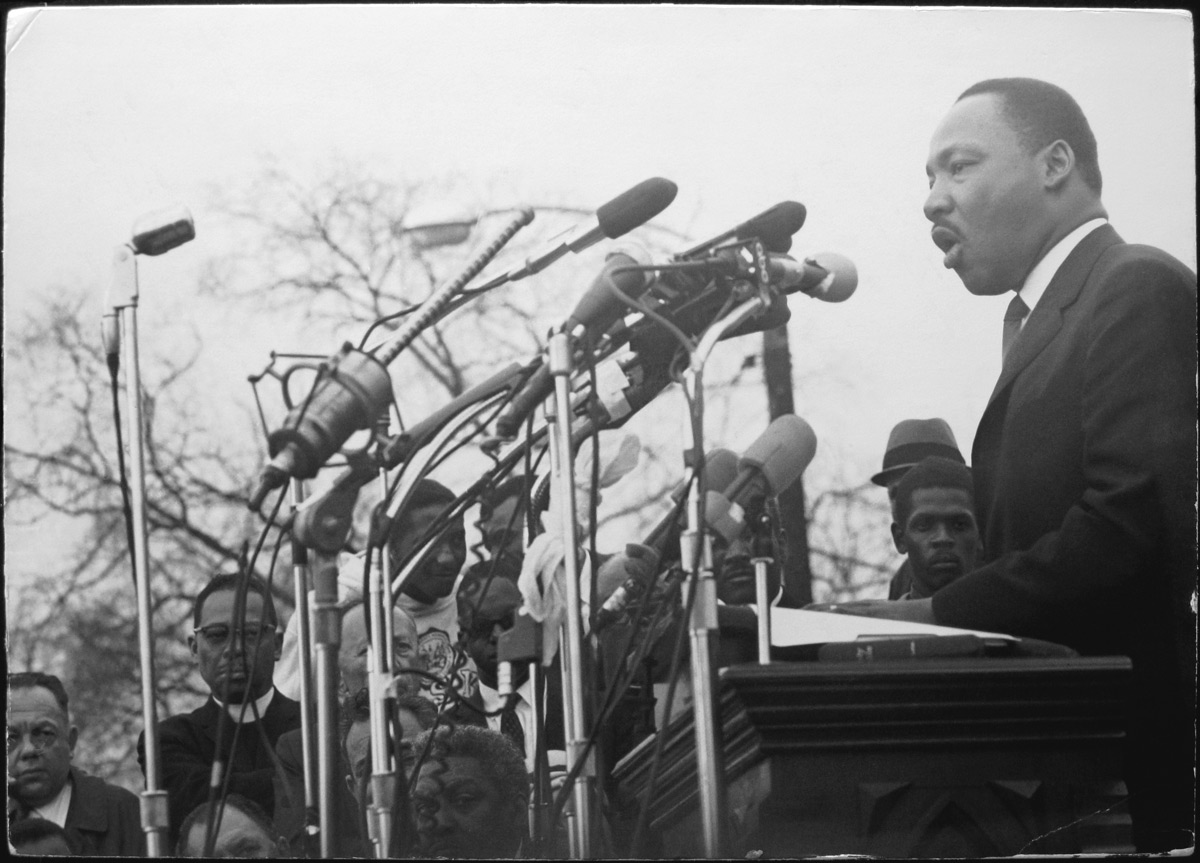
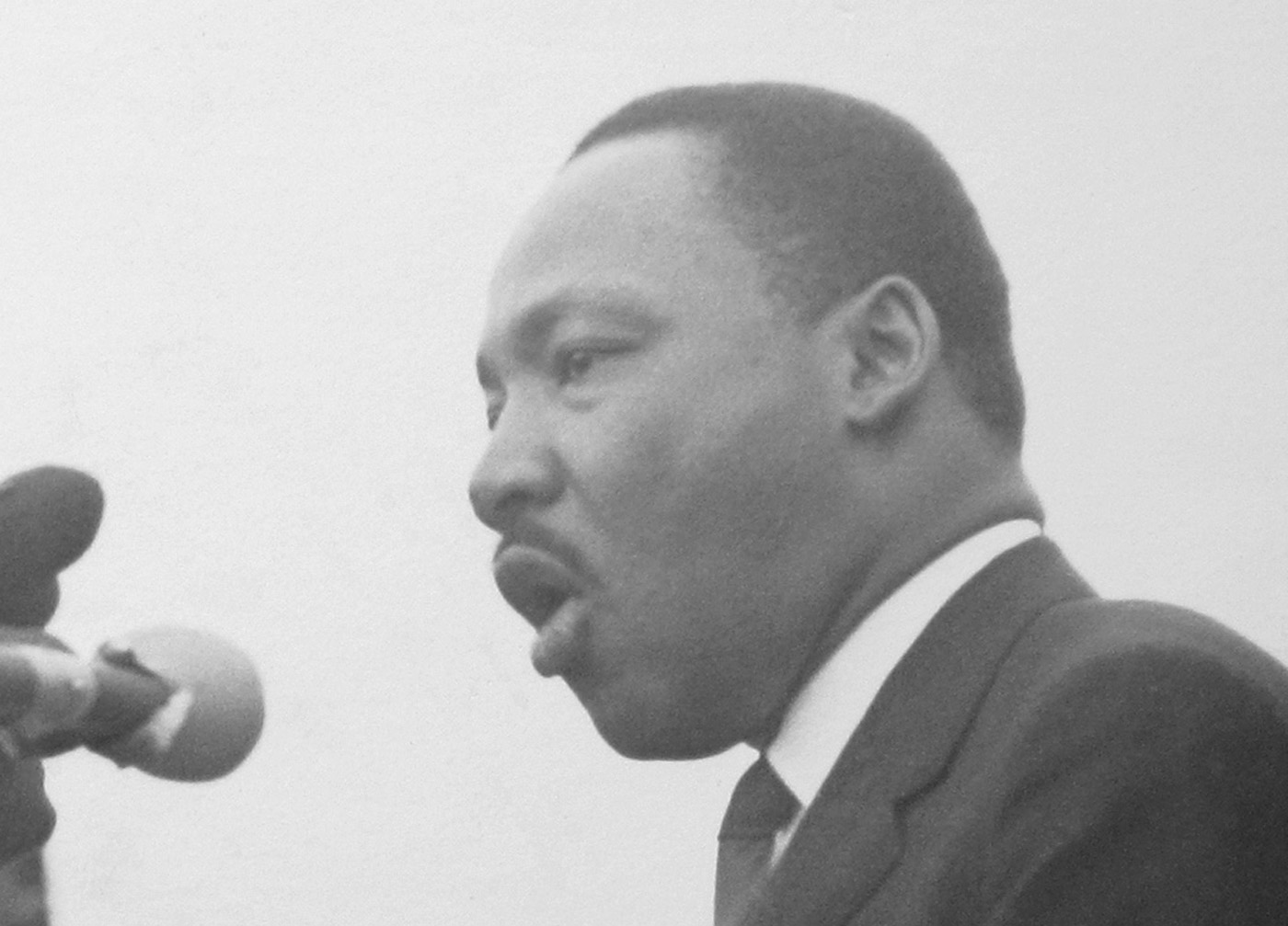
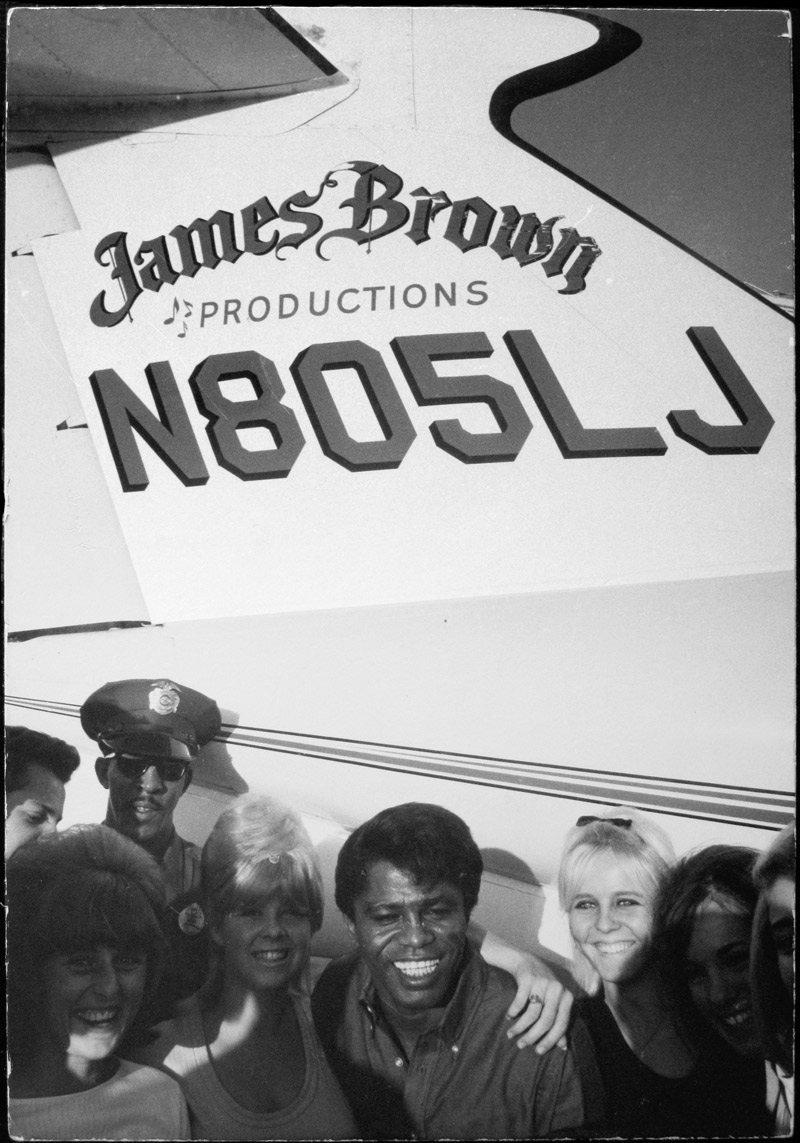


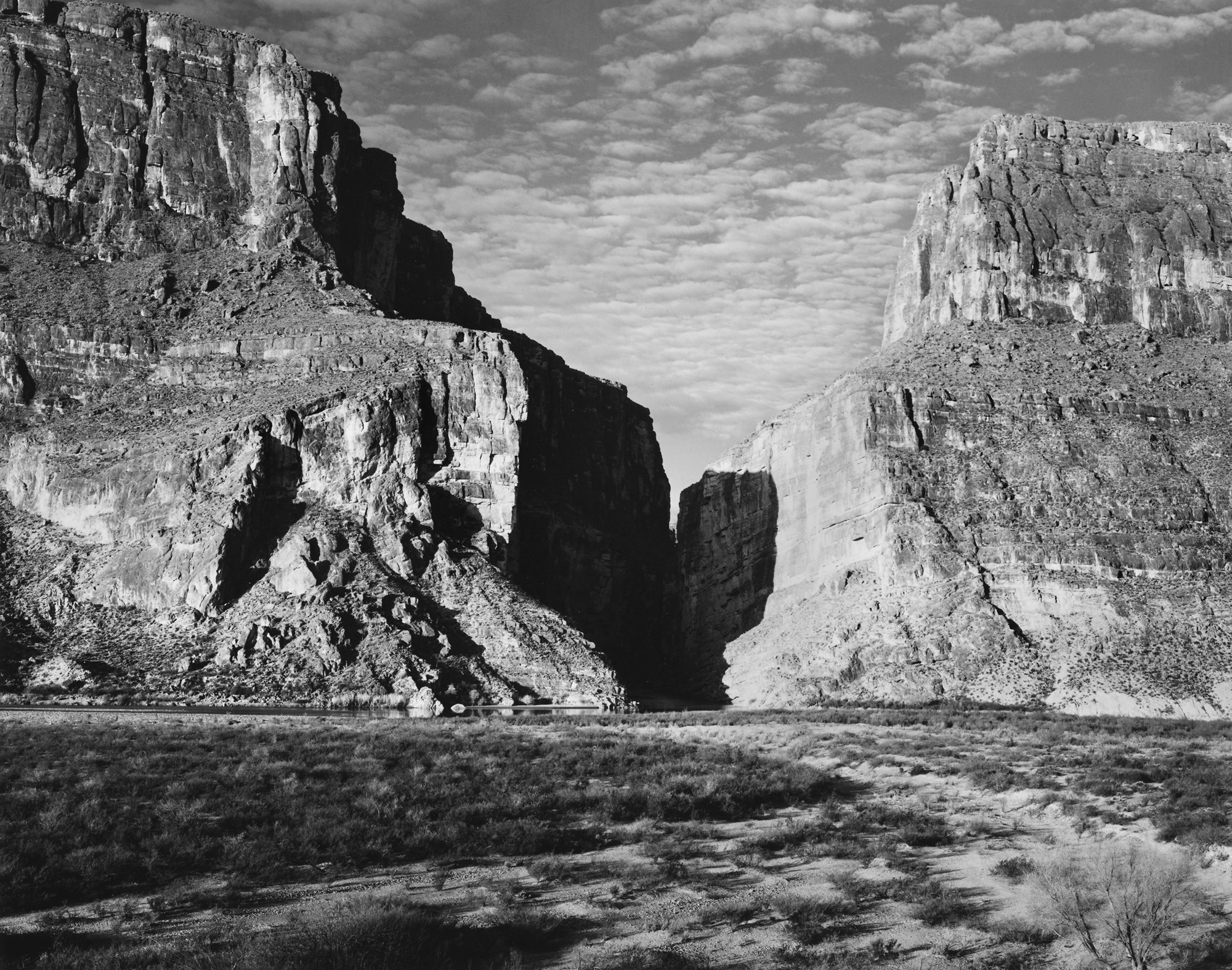
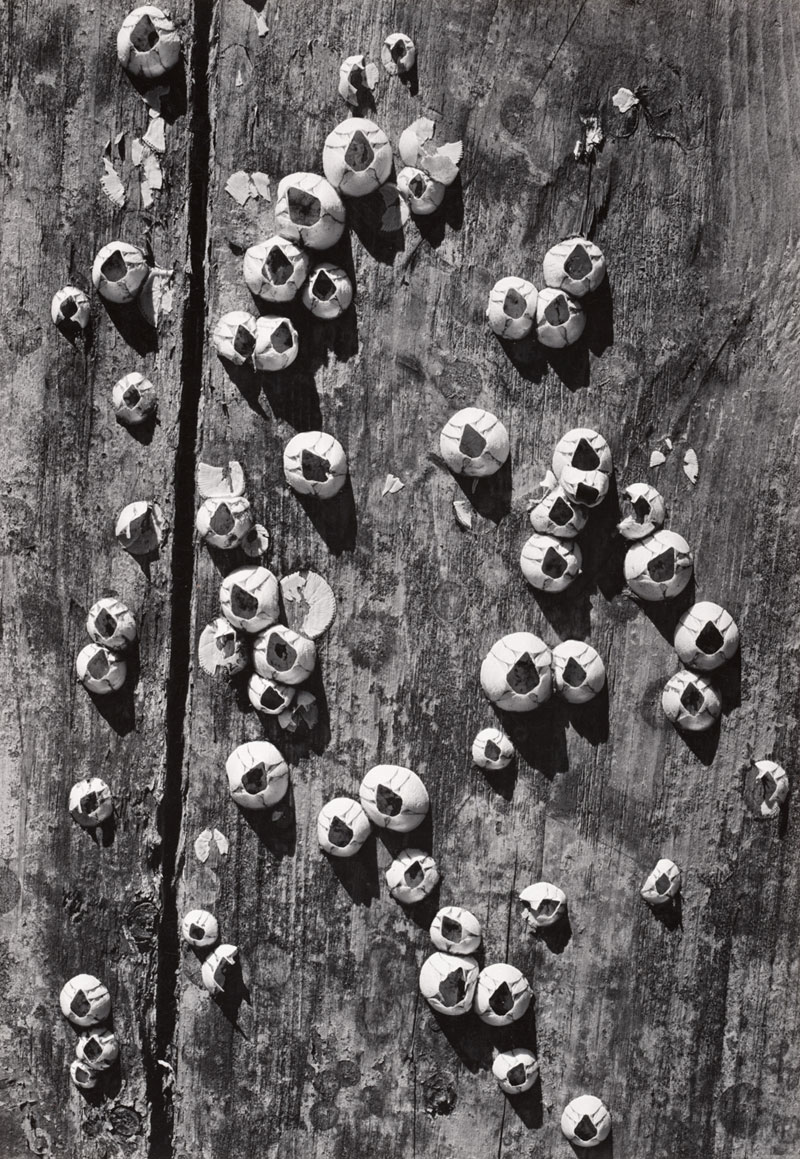

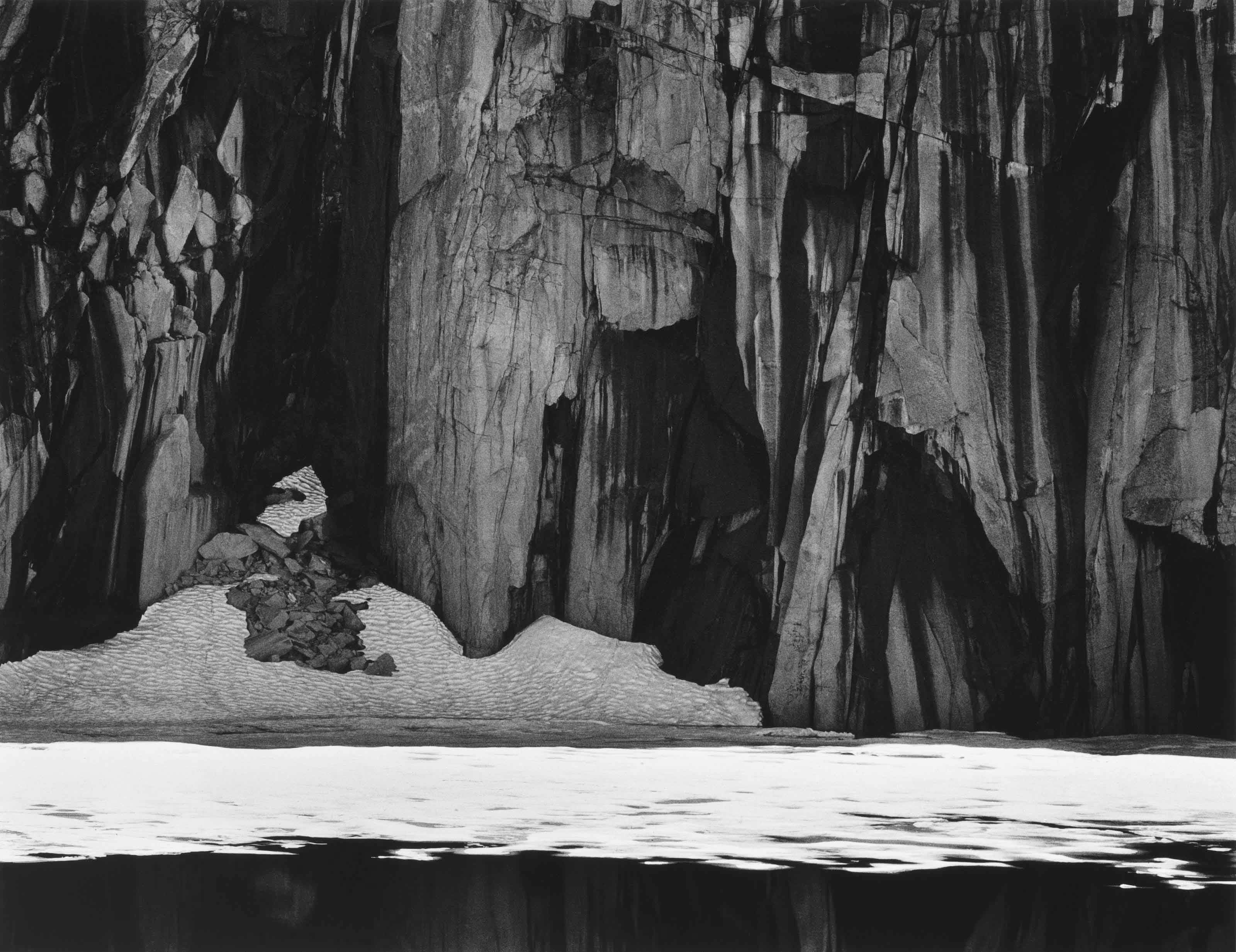


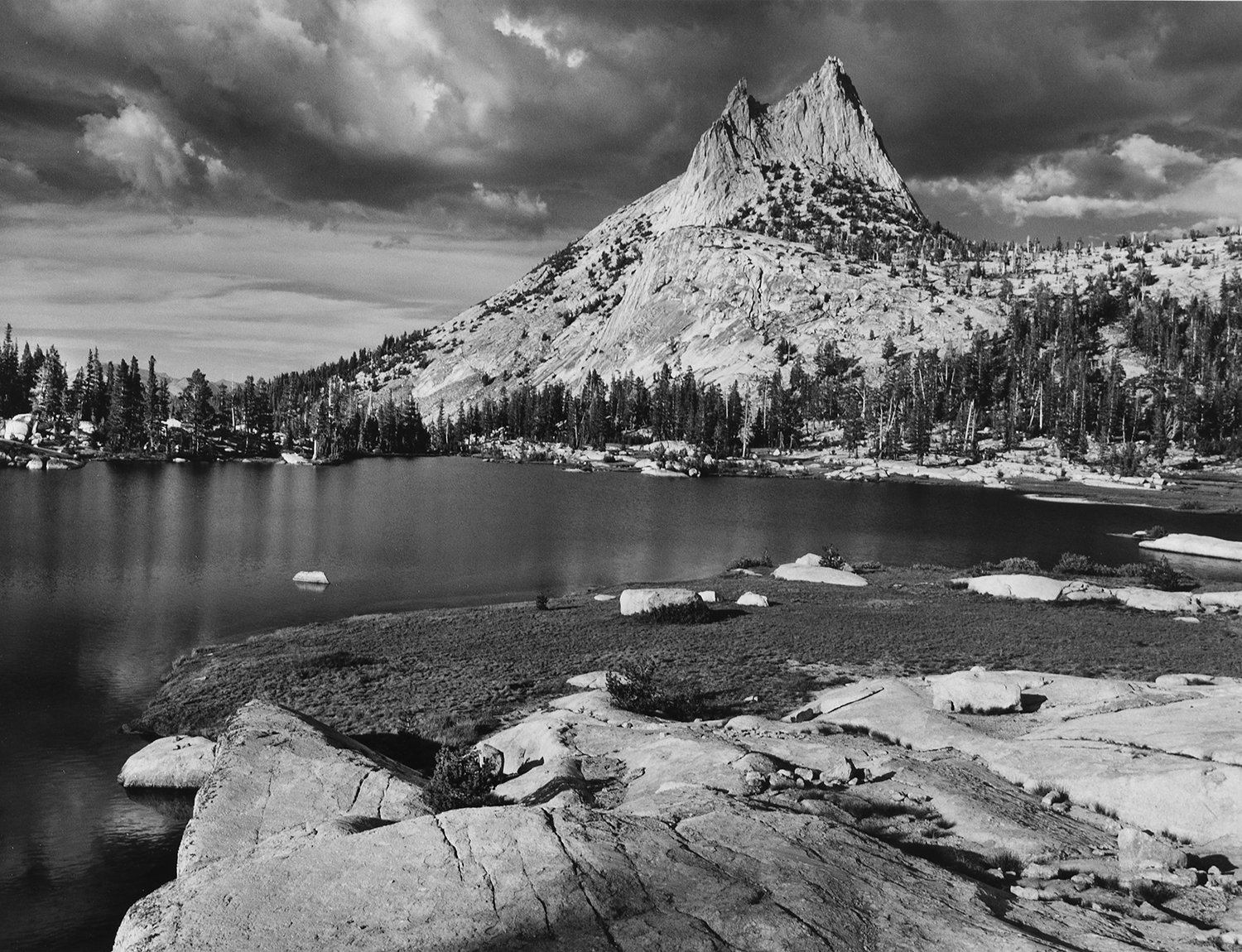
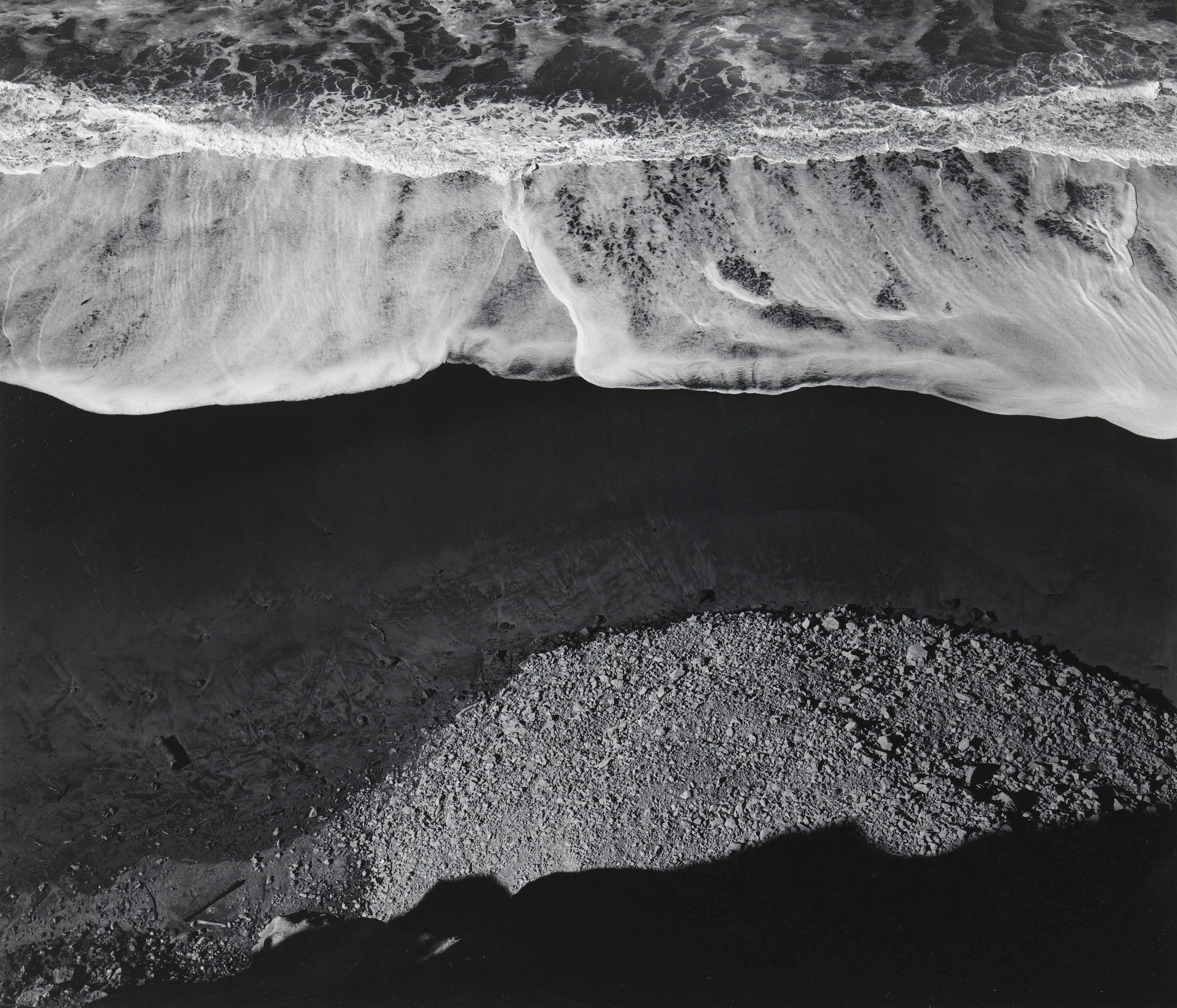


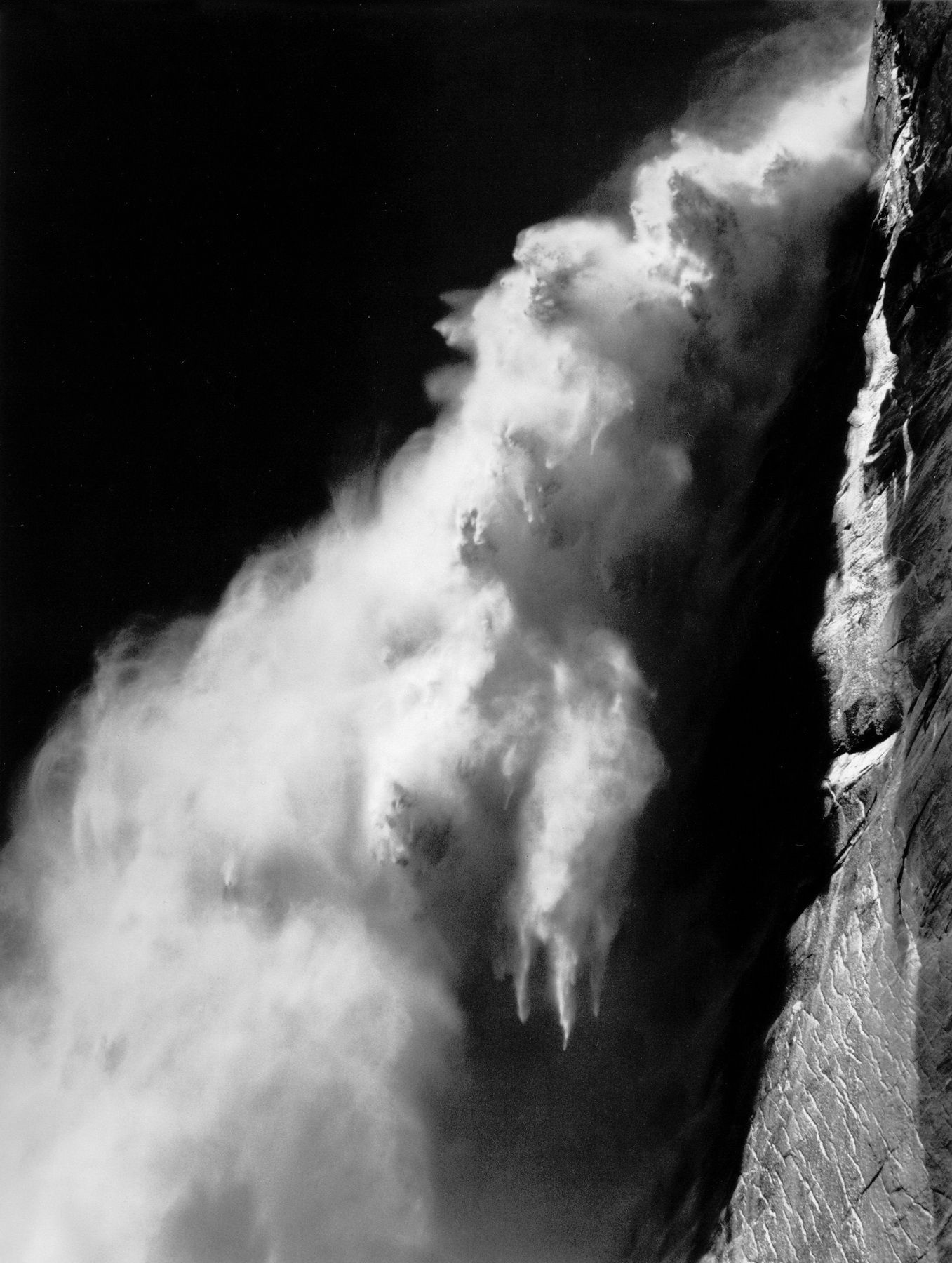

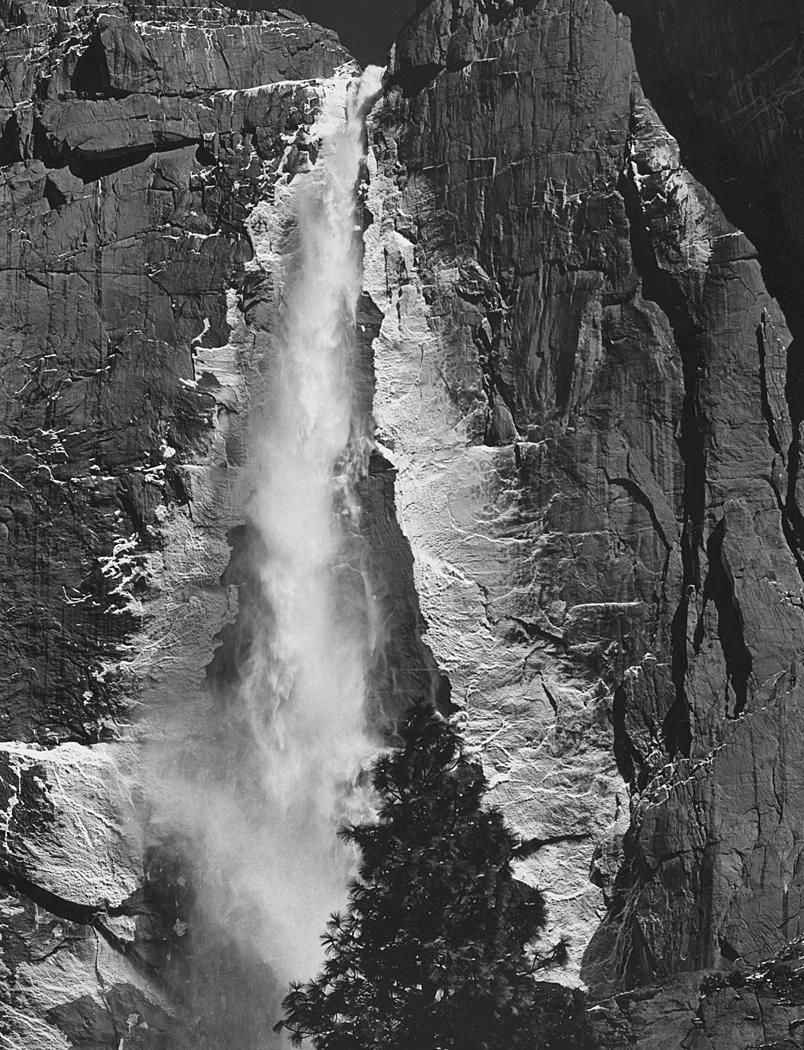
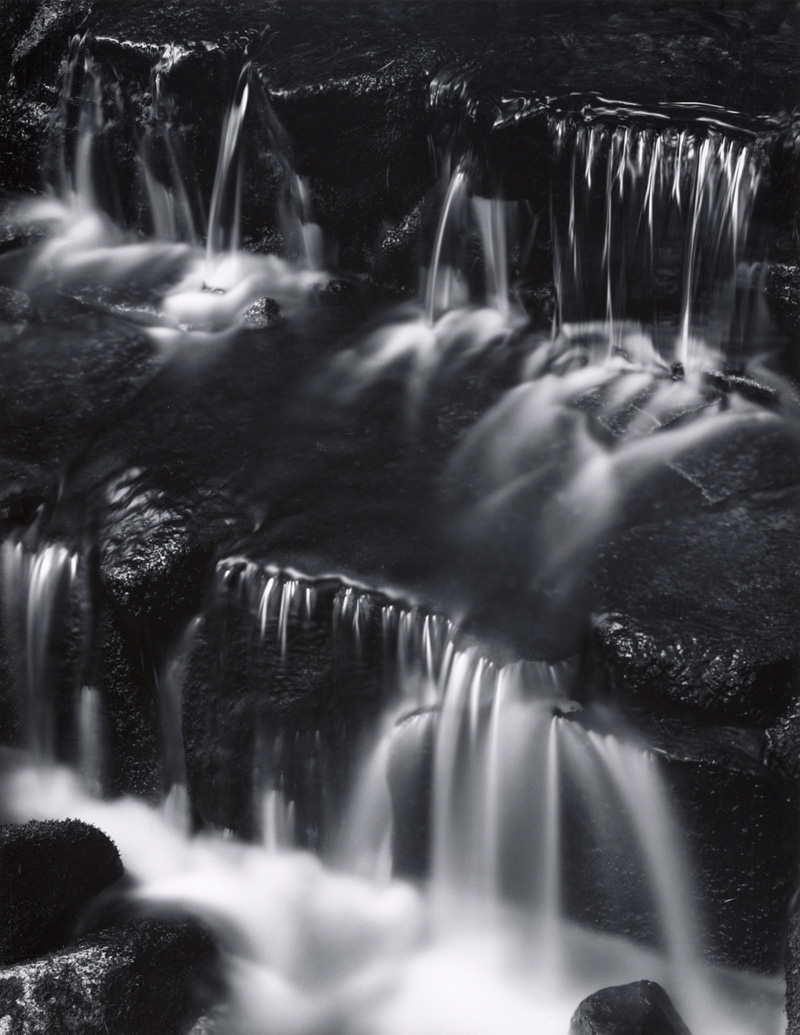

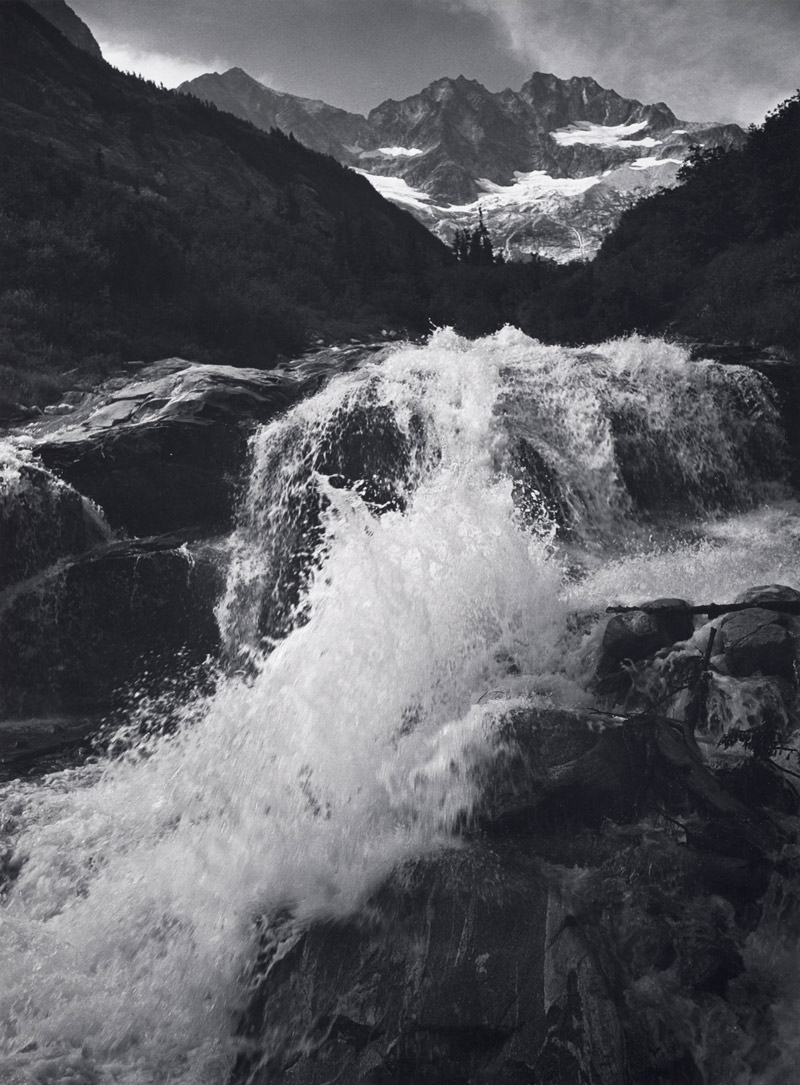


![Harry Callahan (American, 1912-1999) '[Detroit]' 1941](https://artblart.com/wp-content/uploads/2012/10/harry-callahan-detroit.jpg "Harry Callahan (American, 1912-1999) '[Detroit]' 1941")
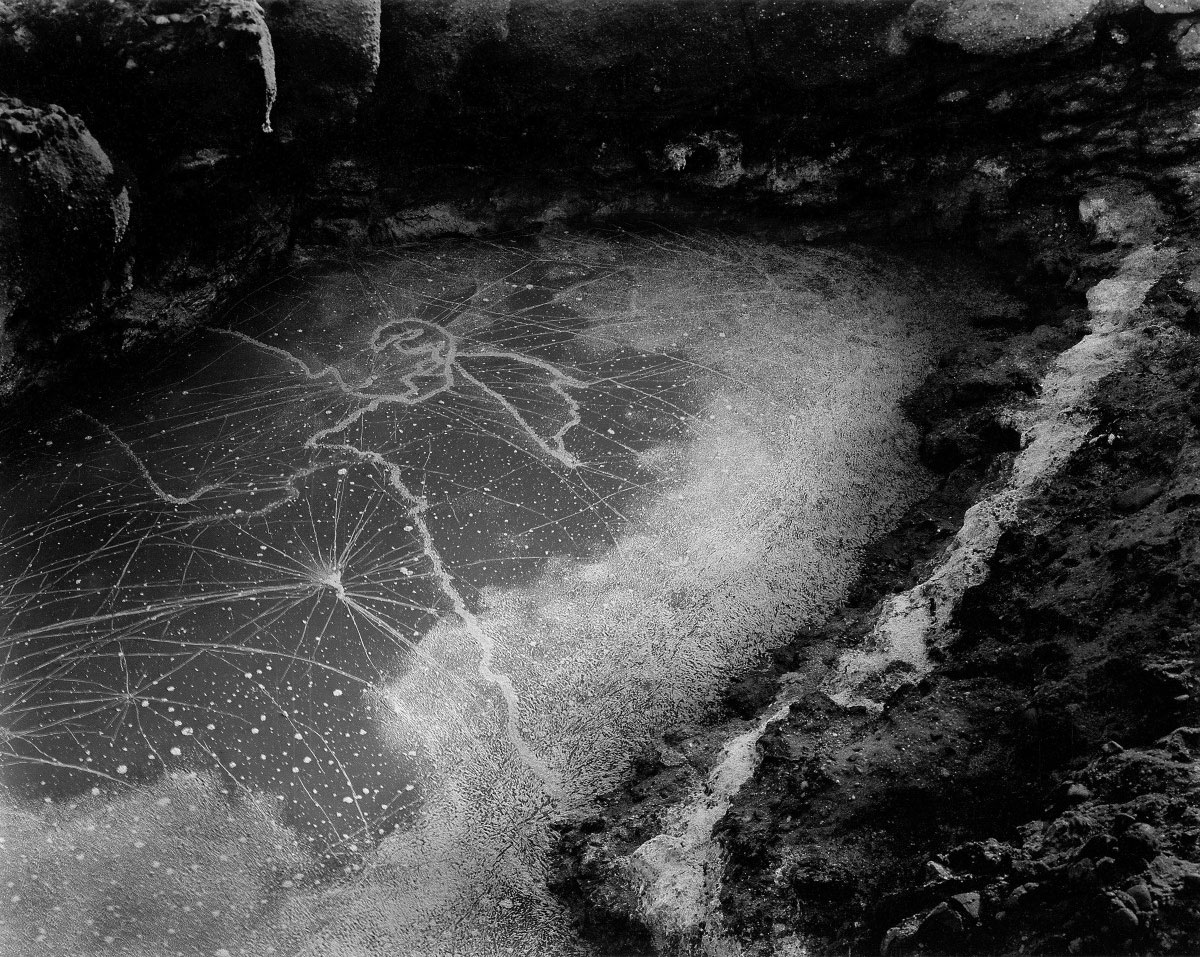

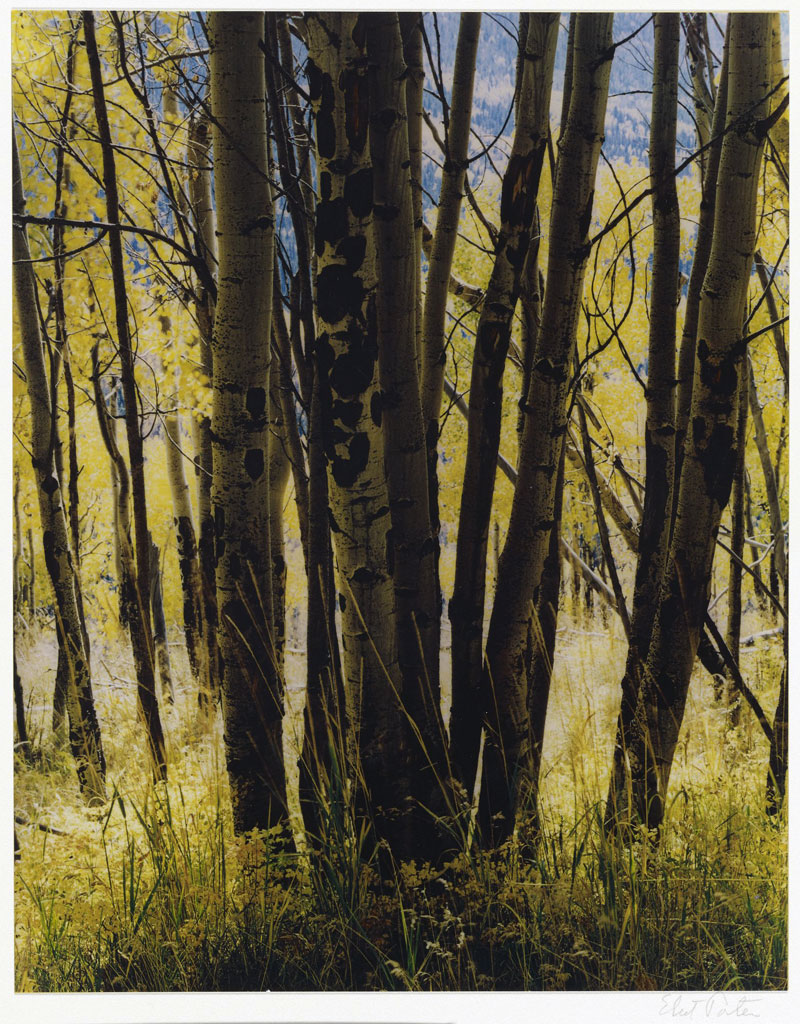


You must be logged in to post a comment.