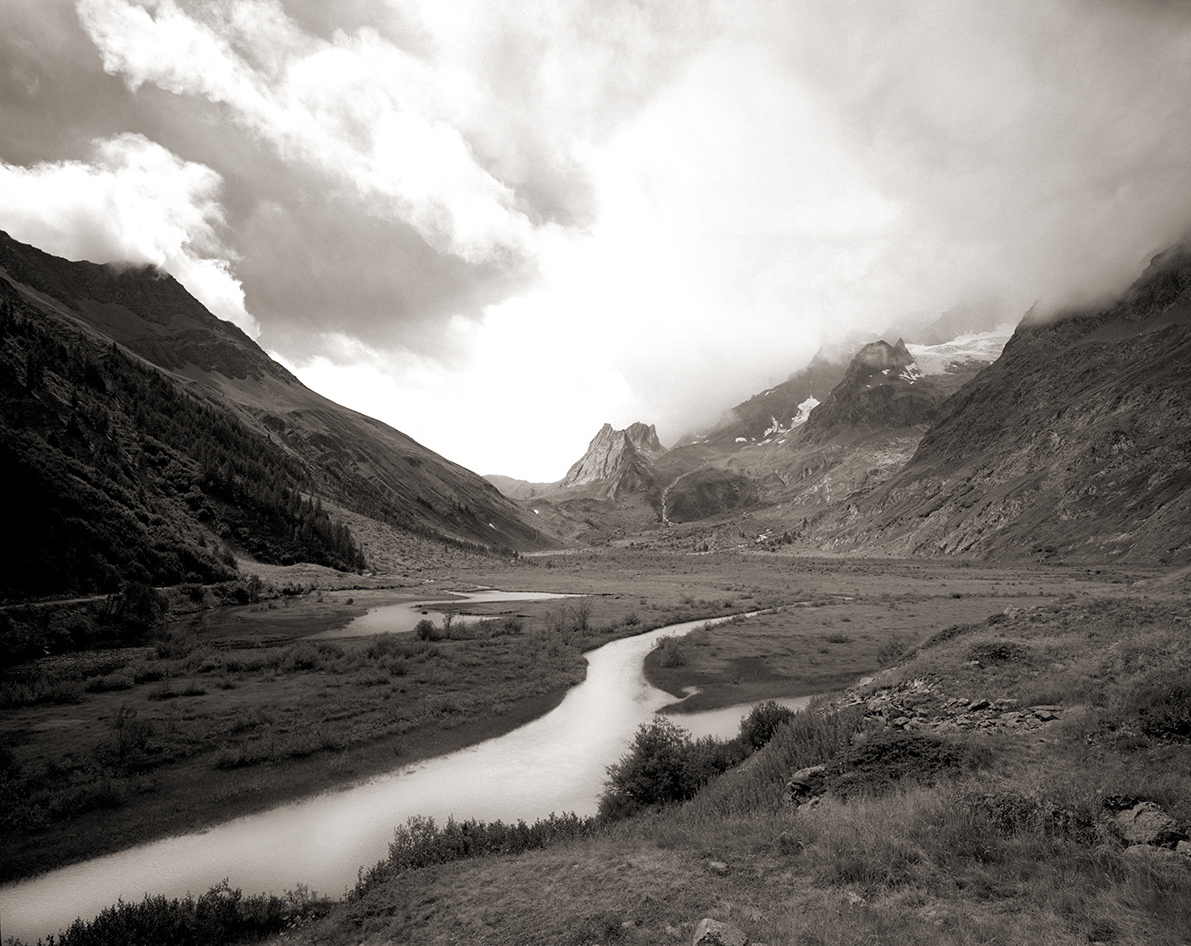
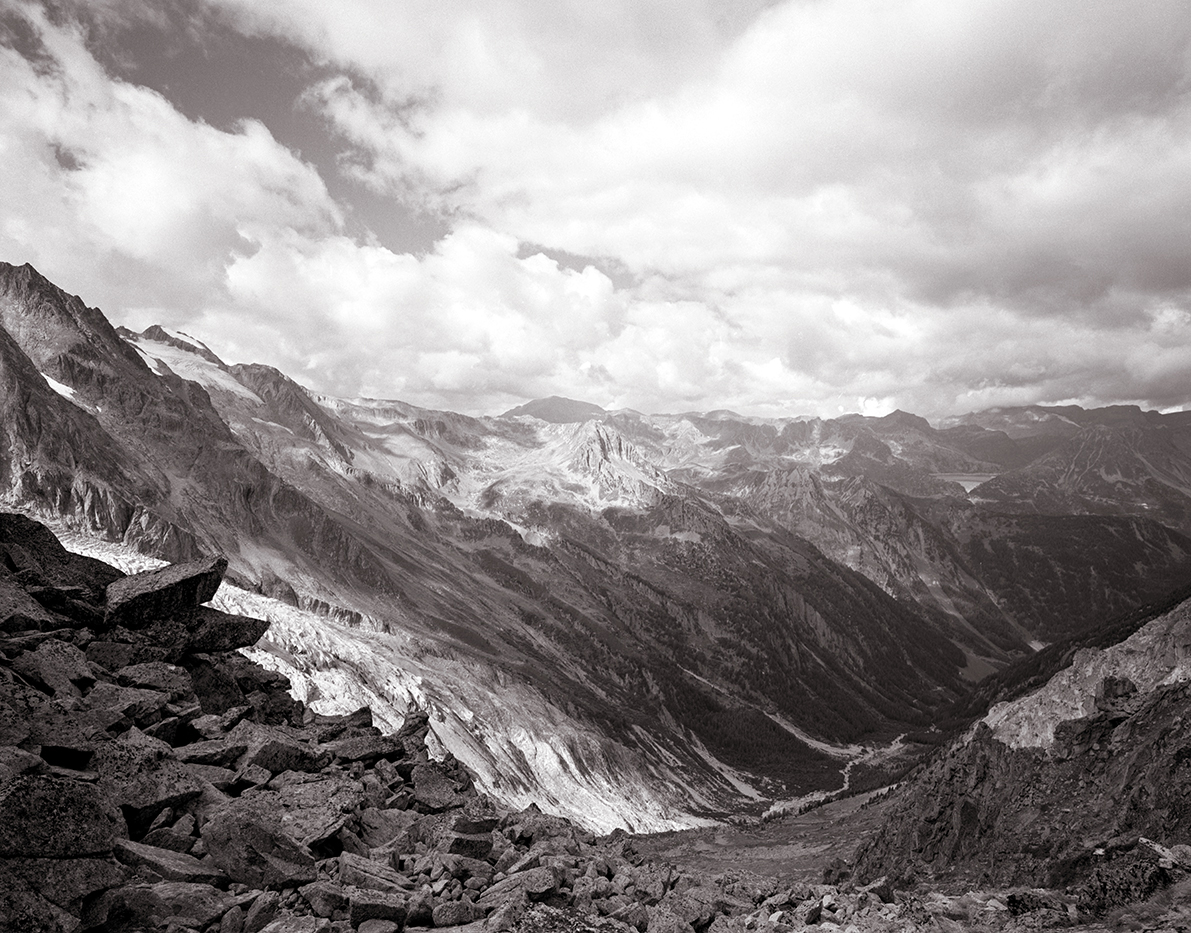
Tom Goldner (Australian, b. 1984) Valley 2015-2016 Silver gelatin print
It is such a pleasure to be able to walk into a gallery – in this case, one located in the recently restored Young Husband Wool Store in Kensington: a building originally built in the late 1800s which is now home to a vibrant community of artists, musicians, designers and makers – to view strong, fibre-based analogue black and white photographs printed by the artist from medium format negatives. No worrying about crappy, digital ink-jet prints which don’t do the tableau justice. Just the pure pleasure of looking at the wondrous landscape.
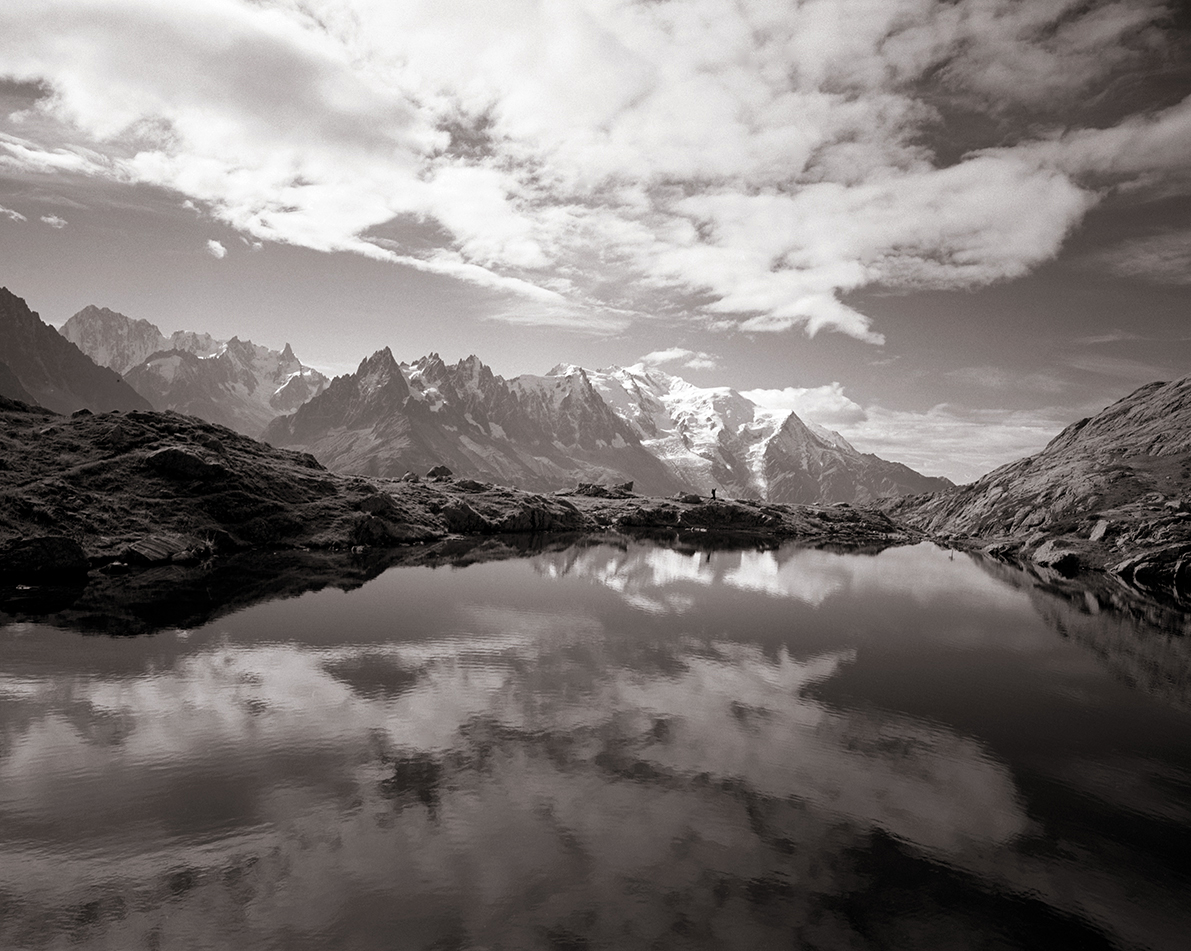
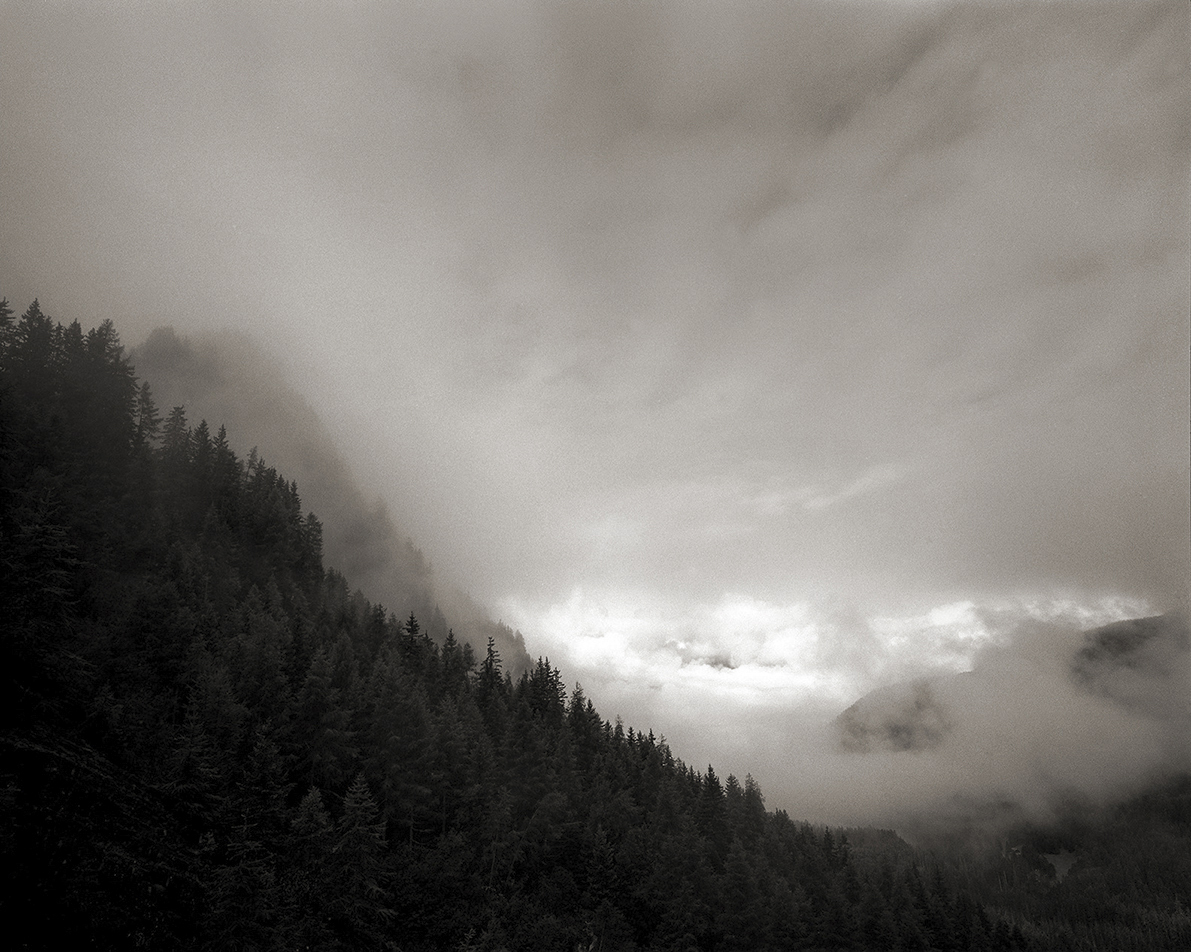
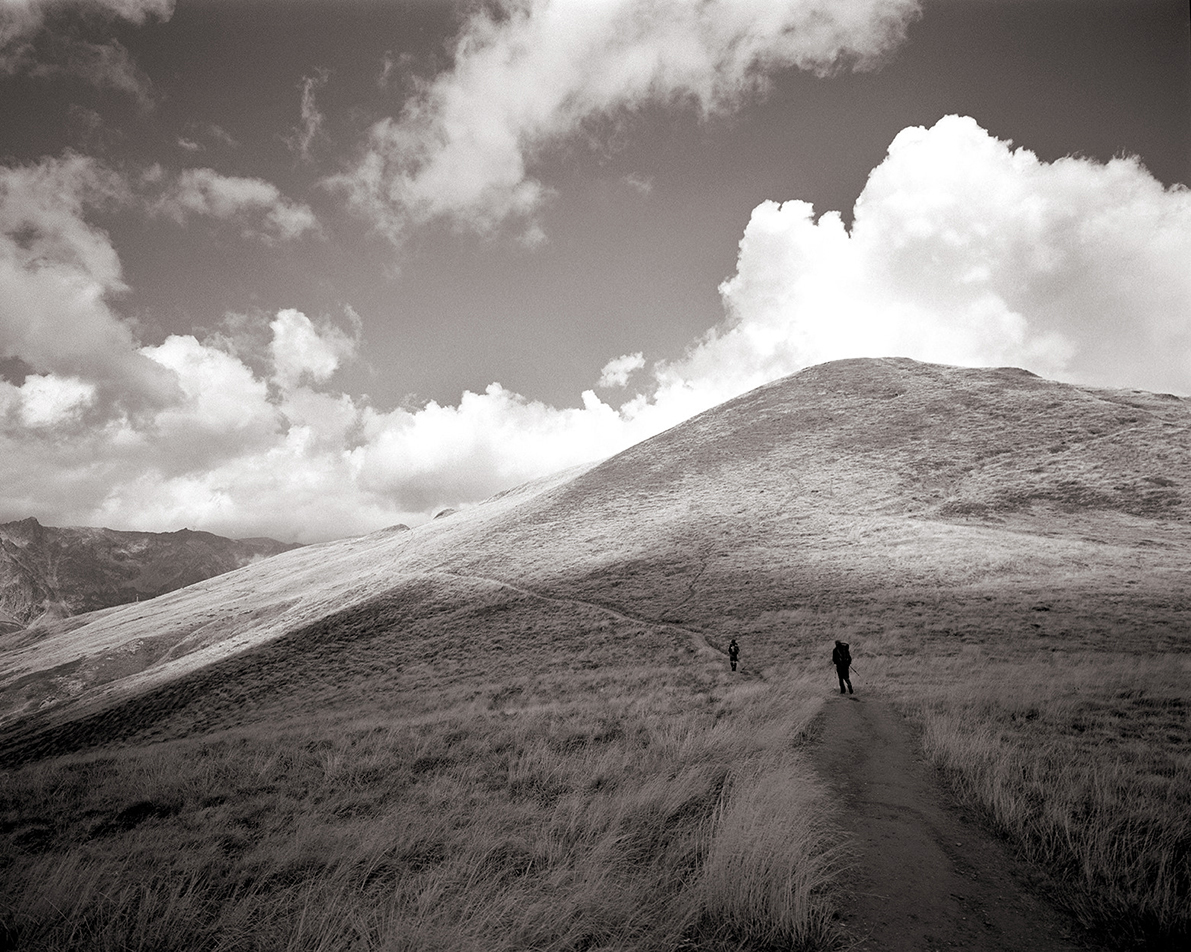
Goldner is working in the formalist way of modernist photographers and in a long tradition of mountain photography – a combination of travel, mountaineering and fine-art photography. As the text from the recent exhibition at the Musée de l’Elysée Vertical No Limit: Mountain Photography observes: “… photography invented the mountain landscape by revealing it to the eyes of the world. Photography is heir to a certain idea of the mountains and of the sublime, closely linked to pictorial romanticism.” In Goldner’s work, this romanticism is subdued but still present: reflection in lake, mist over treetop, and the capture of human figures in the landscape to give scale to the great beyond, a feature of Victorian landscape photography, mountain or otherwise.
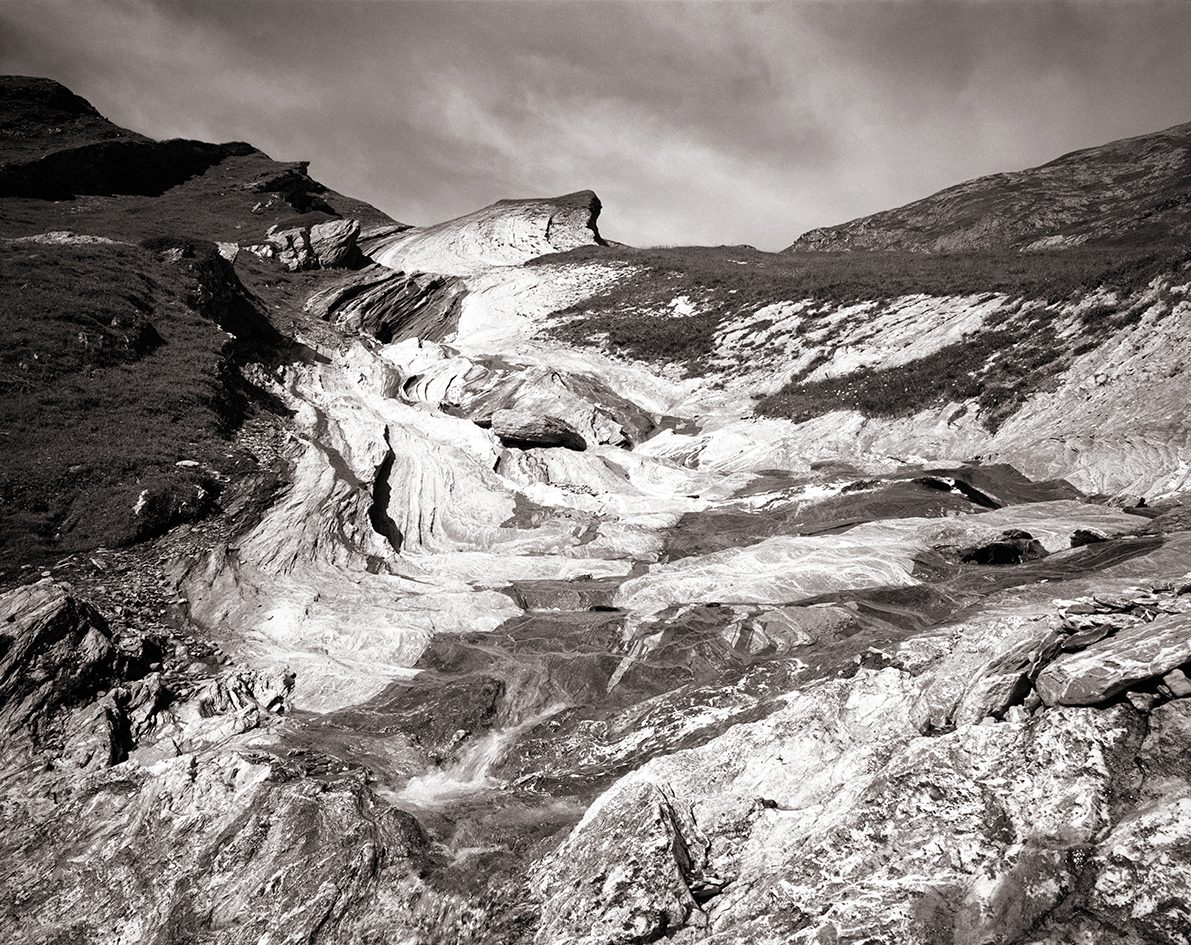
However, the photographs contain a certain innocence: not the romantic, isn’t the world grand BUT this is the world. Goldner celebrates photography by allowing the camera to do what it does best – capture reality. He takes things as they are. There is no waiting for a particularly dramatic sky, the artist just takes what he sees. In this sense his everyday skies undercut the dramatic romanticism of place by allowing the possibility that these images (or variations of them) could be taken day after day, year after year. This is the natural state of being of these places and he pushes no further.
This is where the title of the exhibition and words supporting it are confusing. There is nothing transitional, transnational, or transient about these images – no movement from one state to another as in a “passage” – and certainly no discernible difference from one year to the next. Goldner’s photographs show the everyday, just how it is. That is their glorious strength: their clarity of vision, their ability to celebrate the here and now, which can be witnessed every day in the passes and peaks around the Mont Blanc regions of France, Italy and Switzerland. And then I ask, is that innocence enough?
Dr Marcus Bunyan
Many thankx to Tom Goldner for allowing me to publish the photographs in the posting. Please click on the photographs for a larger version of the image.
Tom Goldner (Australian, b. 1984) Passage 2015-2016 Silver gelatin print
Tom Goldner (Australian, b. 1984) Lake 2015-2016 Silver gelatin print
The world around us is perpetually changing – ice melts, glaciers shift, weather changes and time passes. Nowhere stays the same, and neither do we.
Passage captures a transitional time in Tom Goldner’s photography practice. In 2015 and 2016, Tom made two physical expeditions around the Mont Blanc regions of France, Italy and Switzerland. Ever-conscious of the changing nature of the landscape – the fact that you could stand in the same spot one year later and find everything had changed – he shot fleeting moments on medium format film.
Back in Melbourne, Tom painstakingly developed and printed each photograph by hand in his darkroom. The experience reawakened his love of manual photography, and he saw parallels between the physical exertion of actually taking the pictures and the intense concentration needed in producing the series of atmospheric silver gelatin prints.
Artist’s statement
Tom Goldner (Australian, b. 1984) Pines 2015-2016 Silver gelatin print
Tom Goldner (Australian, b. 1984) Rocks 2015-2016 Silver gelatin print
Tom Goldner (Australian, b. 1984) Window (a) 2015-2016 Silver gelatin print
Tom Goldner (Australian, b. 1984) Window (b) 2015-2016 Silver gelatin print
Tom Goldner (Australian, b. 1984) Hill 2015-2016 Silver gelatin print
Tom Goldner (Australian, b. 1984) Col de la Seigne 2015-2016 Silver gelatin print
Tom Goldner (Australian, b. 1984) Aiguille du Midi 2015-2016 Silver gelatin print
Curator: Phillip Prodger, Curator of Photography at the Peabody Essex Museum
Many thankx to the Peabody Essex Museum for allowing me to publish the photographs in the posting. Please click on the photographs for a larger version of the image.
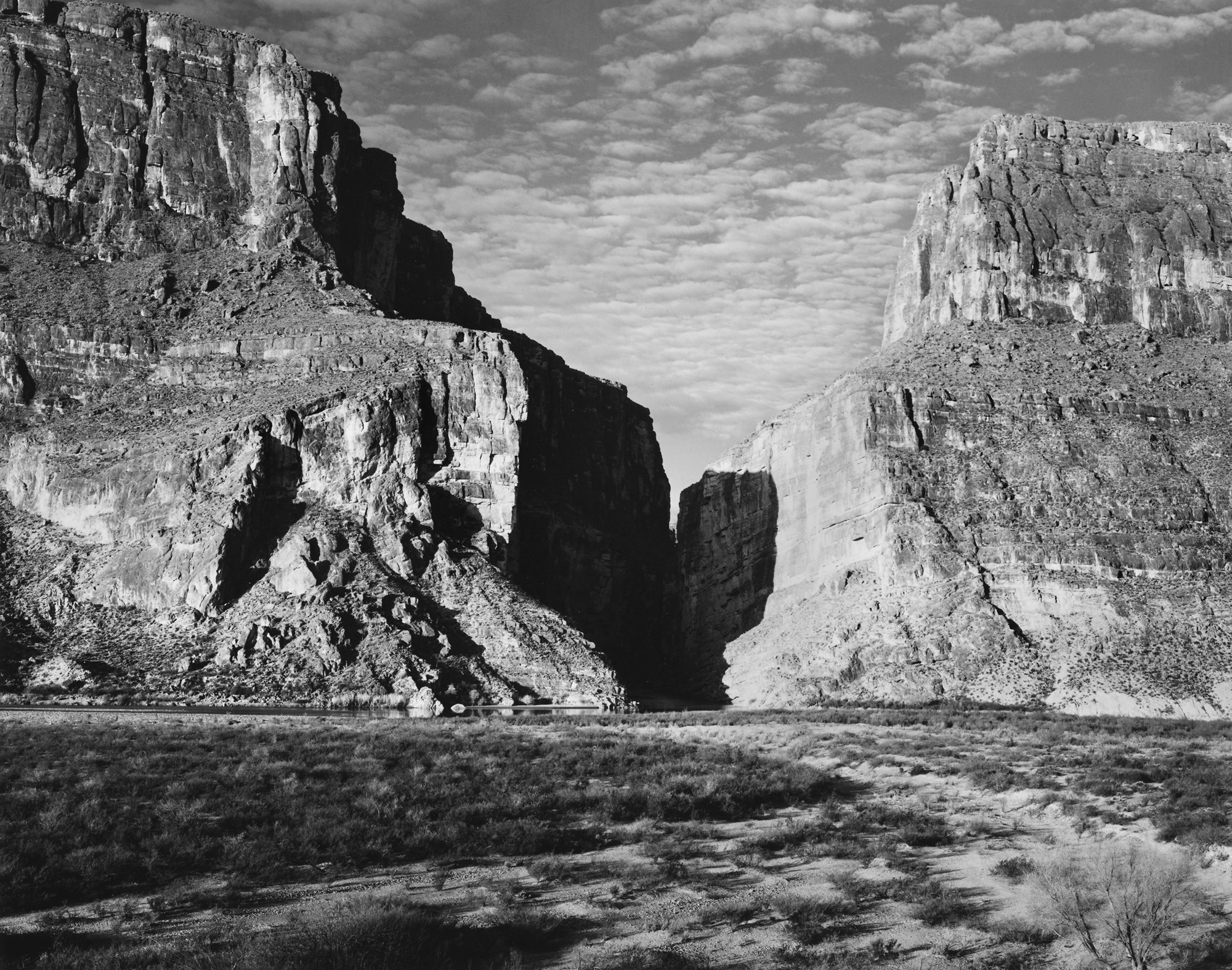
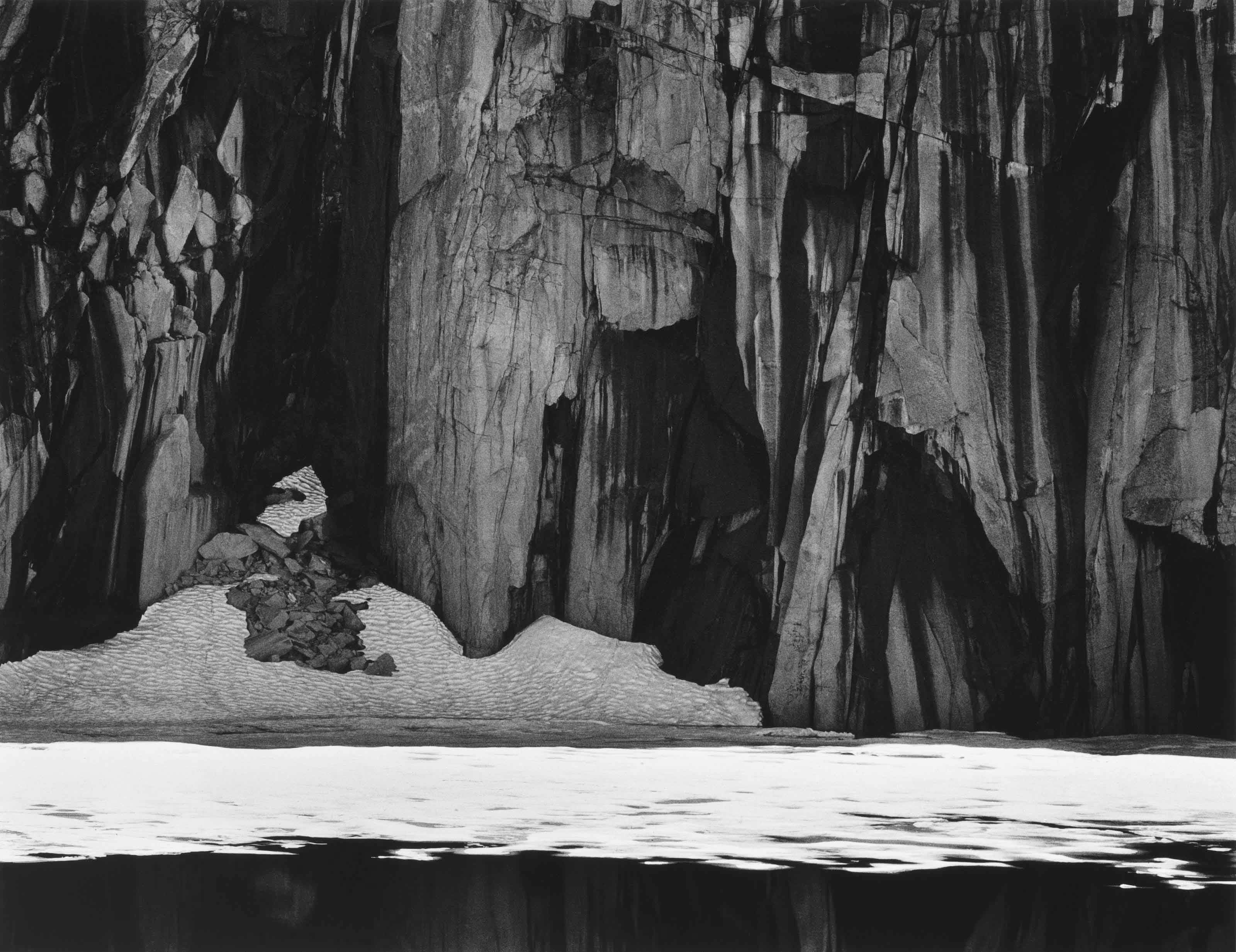
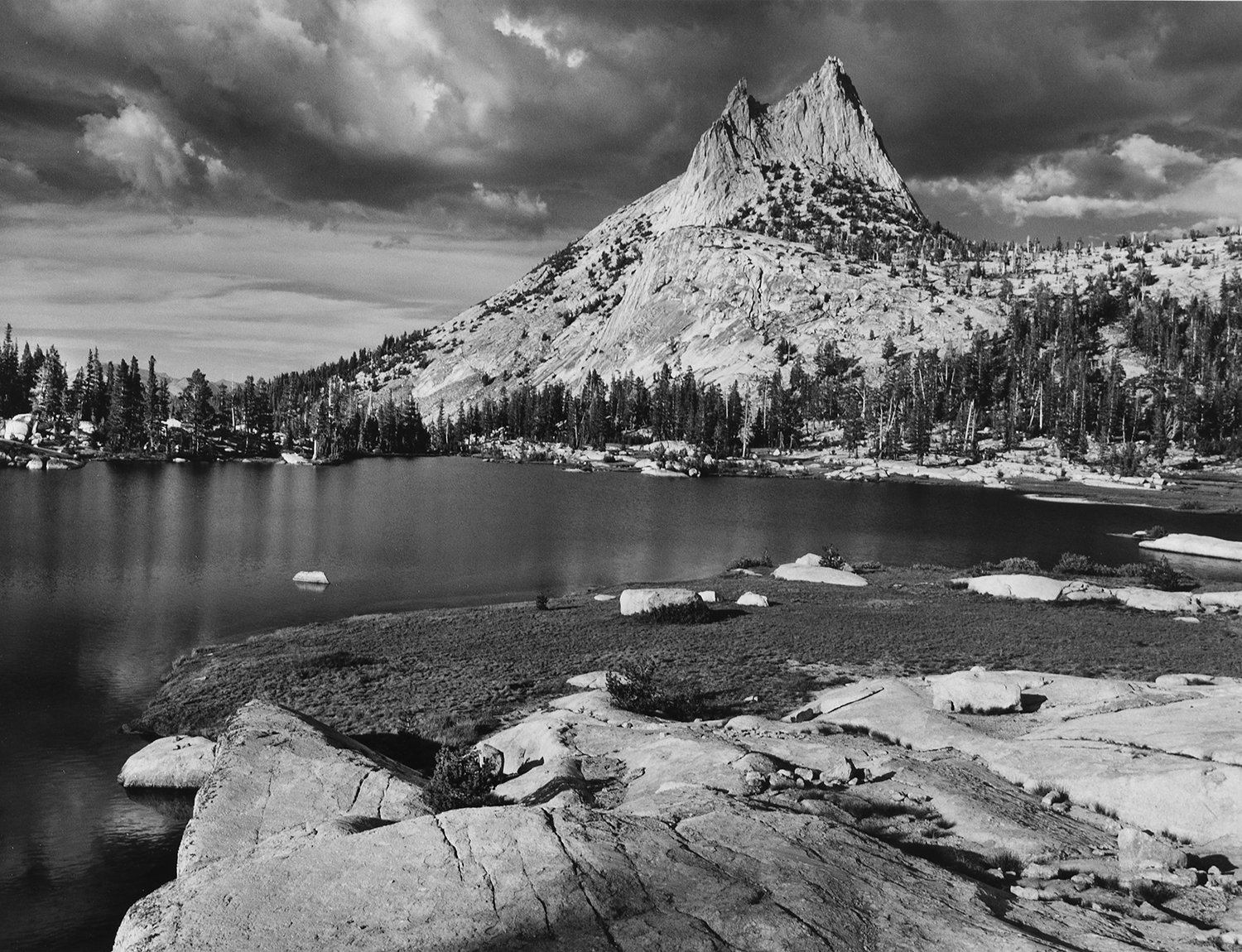
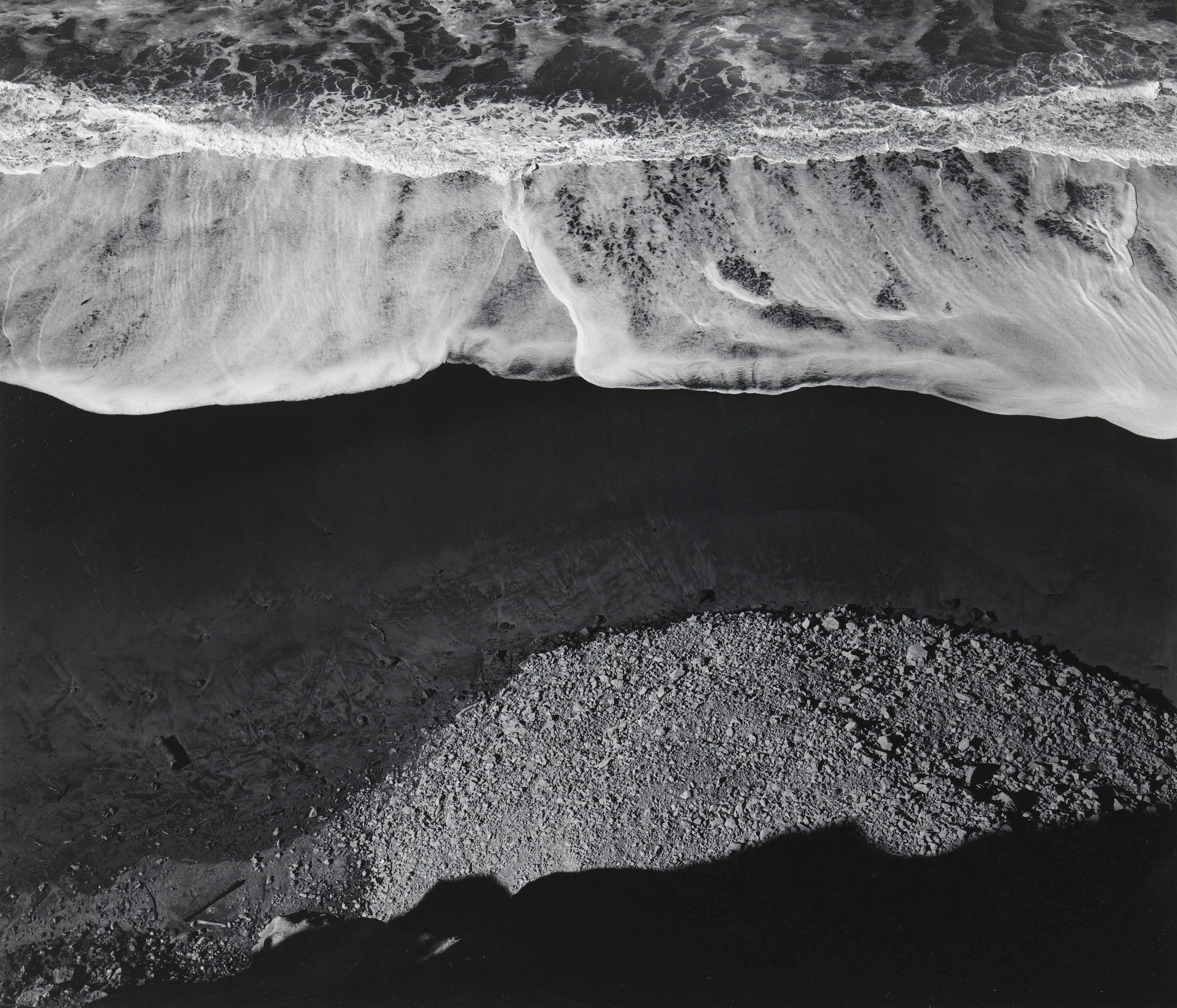
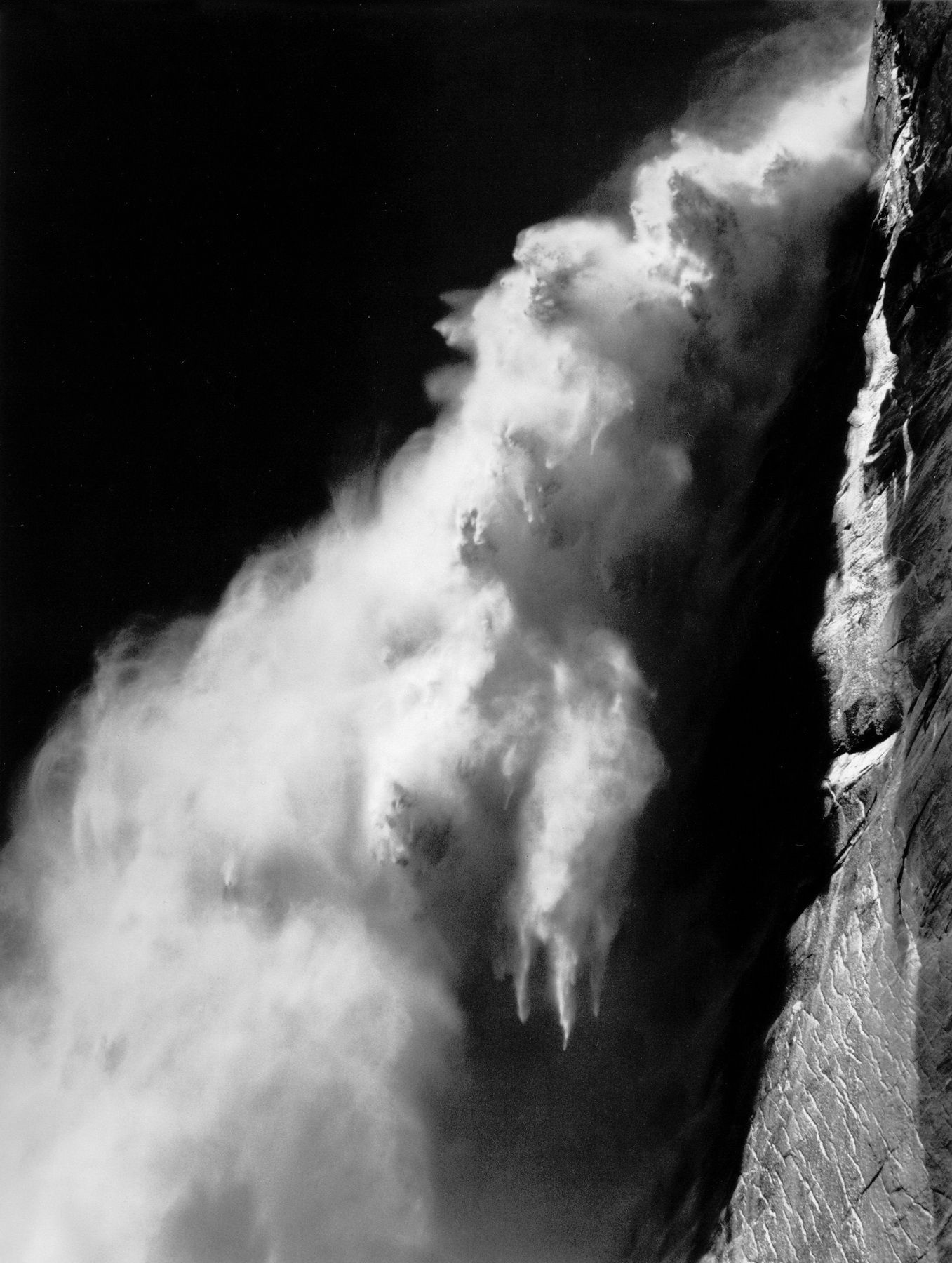
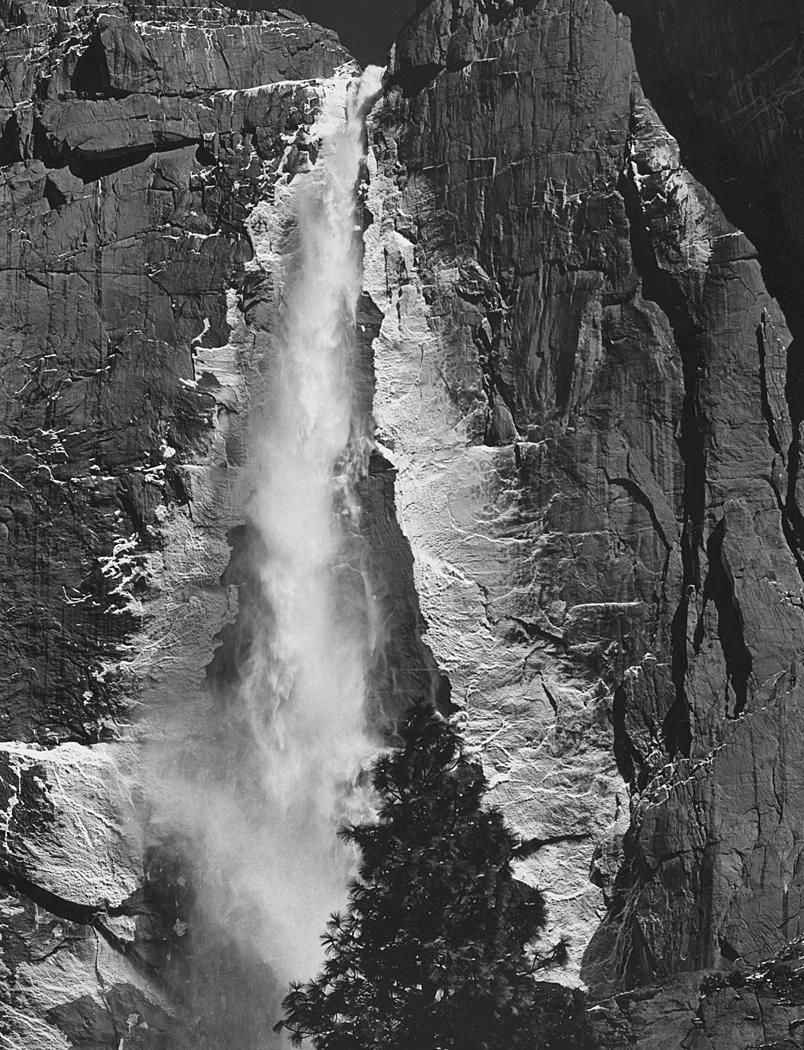
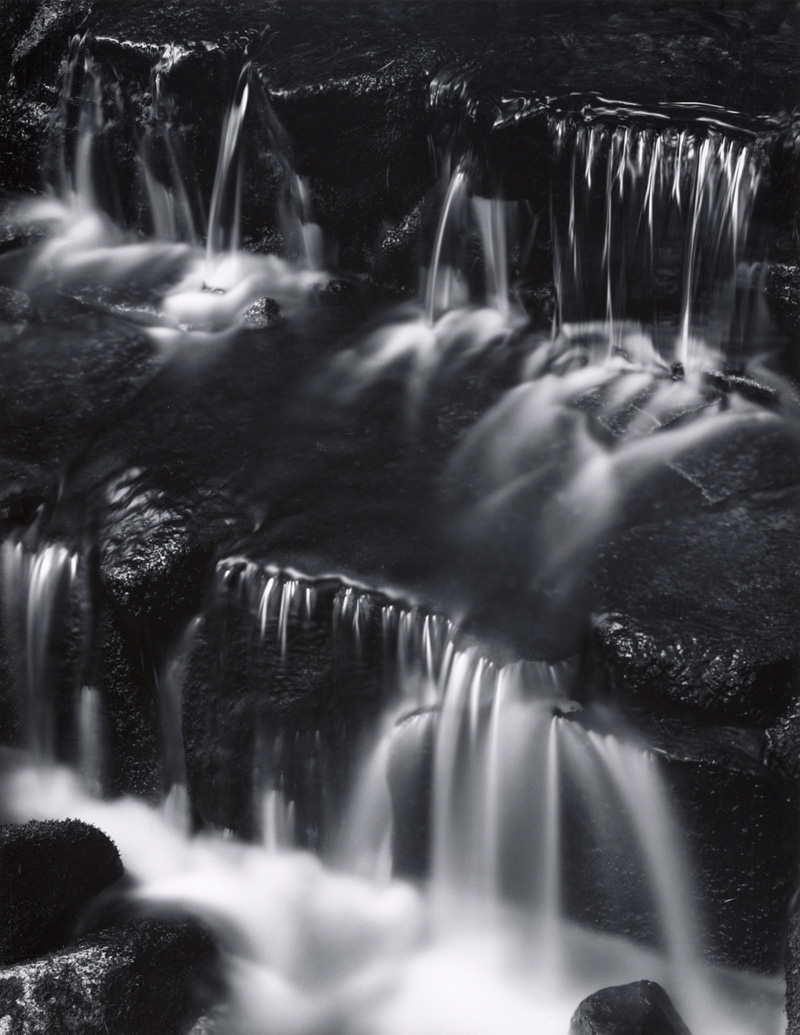
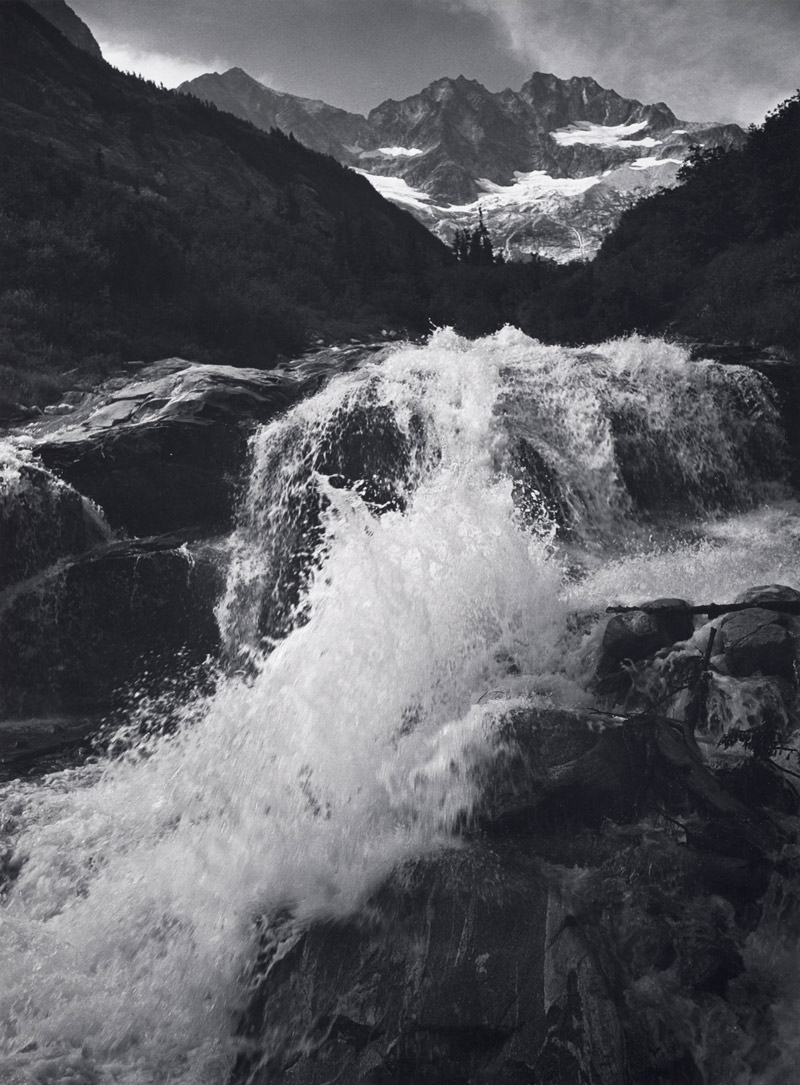
This summer, the Peabody Essex Museum (PEM) will unveil an exhibition shedding new light on one of history’s most iconic and beloved photographers. Ansel Adams: At the Water’s Edge features more than 100 photographs combining famous images with extraordinary lesser-known works that focus on the artist’s treatment and exploration of water in all its forms. Full of energy and dynamism, Adams’ photographs of seascapes, beaches, bays, tide pools, clouds and waterfalls provide a fresh perspective on the artist’s celebrated career. Ansel Adams: At the Water’s Edge was organised by the Peabody Essex Museum where it will be on view for its exclusive U.S. engagement from June 9 through October 8, 2012, and will then travel to the National Maritime Museum in Greenwich, UK.
“Throughout his life, Adams was drawn to the water for its visual potential, exploring where elemental forces meet,” says Phillip Prodger, exhibition curator and PEM’s curator of photography. “As an innovative Modernist, he explored seriality, motion and time, using a range of techniques to capture a definitively fluid and elusive substance.”
In this exhibition, drawn from the Ansel Adams Archive at the Center for Creative Photography at the University of Arizona and other prominent private and institutional collections, viewers will have the opportunity to see the pictures that Adams made for himself. Both grand and intimate at turns, these personal, and sometimes experimental images express his thoughts about the natural world, and often push the boundaries between realism and abstraction. Ranging in size from 3 x 5-inch prints to 10 x 12-foot murals, many will be appearing publicly for the first time at the Peabody Essex Museum. Adams was one of the first photographers to work in the large-scale mural format which has now become standard among contemporary artists.
At the Water’s Edge provides a fresh look at Ansel Adams, as well-known and beloved pictures of rugged mountains, desert landscapes, and rocky cliffs blend with sparkling, spraying, whirling waters in all of their flowing power and reflective nuance. The undeniable attraction of water as a photographic subject captured Adams at an early age. The very first photograph Adams ever made, shown at PEM for the first time, features a watery pool at the Panama Pacific Exhibition of the 1915 World’s Fair, made when Adams was just 14 years old. Over time, his lens claimed the territory between Yosemite National Park and the Pacific, as well as Hawaii and Alaska, where he shot images shown in this exhibition.
Notably, he made a powerful group of photographs of New England, the only coastal location outside of California that Adams photographed steadily. Over a course of decades, he explored the coast from Connecticut to Maine, especially in Massachusetts, making repeated trips to Cape Cod and Boston’s North Shore.
Highlights
Visitors will have the opportunity to see rarely-viewed objects, including the print of Golden Gate before the Bridge that used to hang over Ansel Adams’ desk, and which he considered among his very best photographs. At the same time, stunning, oversized exhibition prints of iconic photographs including Clearing Winter Storm, Yosemite, Tetons and the Snake River, Grand Teton National Park and Stream, Sea, Clouds, Rodeo Lagoo, Marin County, California will be on display, among others.
One of the surprises revealed in At the Water’s Edge is Adams’ interest in using sequential imagery to freeze motion in time. An especially powerful example is the majestic surf sequence, San Mateo County Coast, California, 1940. Adams was possibly the first well-known photographer since Eadweard Muybridge to attempt to use photography in this way, employing seriality and sequence to create a cohesive narrative. Another series of photographs of Old Faithful Geyser, Yellowstone National Park, shows a different approach to sequentiality. A poignant exploration of form, movement and time, they can be viewed as Adams’ version of Monet’s haystacks. As with Monet, Adams visited Old Faithful at different times of day, photographing in varying light and changing atmospheric conditions.
Another unexpected addition is the exceedingly rare Japanese-style screen, Grass and Pool, 1948, dating from a period of tremendous creativity in Adams’ work. Standing on round metal feet, it was designed to be shown directly on the floor in a domestic environment. In subject and treatment, it was inspired by Asian painted screens in which picture planes are flattened and perspectives tilted. The three articulated panels can be angled to catch the light differently, the rhythm of the fold cleverly mirroring the angular pattern of the exposed grass.
For Adams, part of the appeal of creating such a work was thwarting conventional expectations about what a photograph might look like and where and how it could be shown. Like many modernists, Adams considered photographs not just as images but as objects – the craft and sheer physical presence of the work reinforced its significance as a work of art and the focus of contemplation.”
Press release from the Peabody Essex Museum website
Curator: Thomas Schmutz, Curator and Deputy Director at Aargauer Kunsthaus
Many thankx to the Aargauer Kunsthaus for allowing me to publish the photographs in the posting. Please click on the photographs for a larger version of the image.
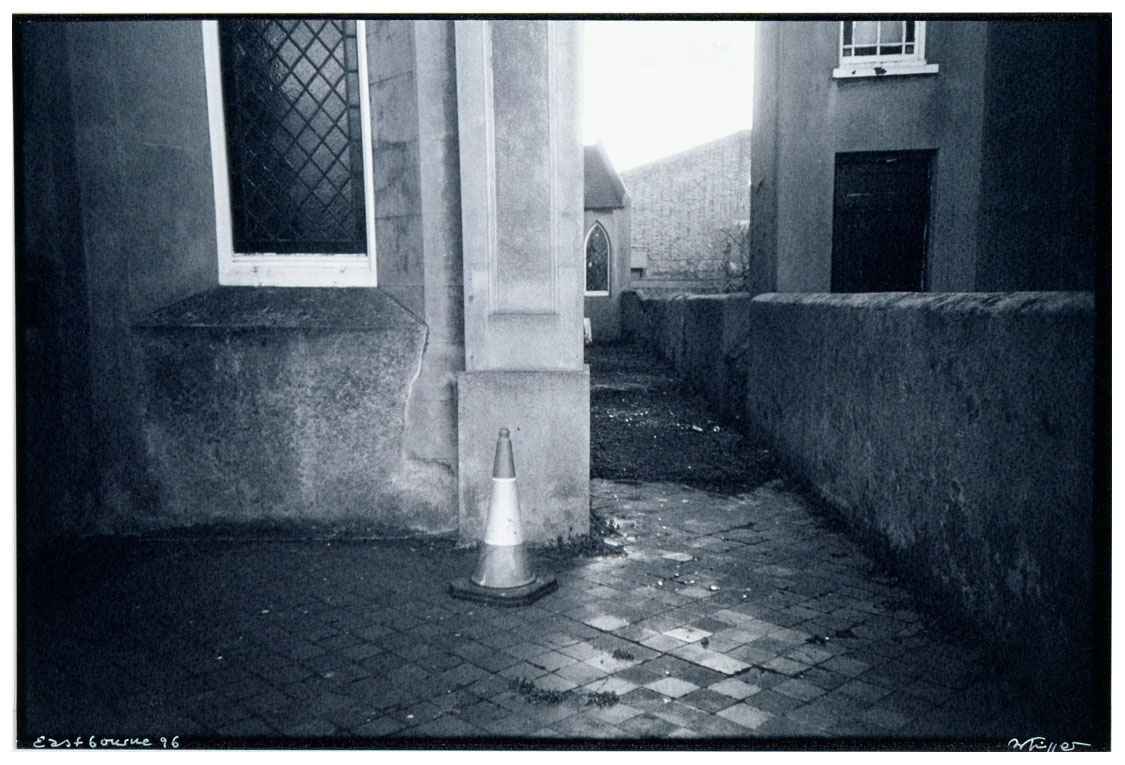
Art Ringger (Swiss, b. 1946) Eastbourne 1996 Black-and-white photograph on aluminium, embossed 20.3 x 30.3cm Aargauer Kunsthaus Aarau / deposited by the Andreas Züst Collection
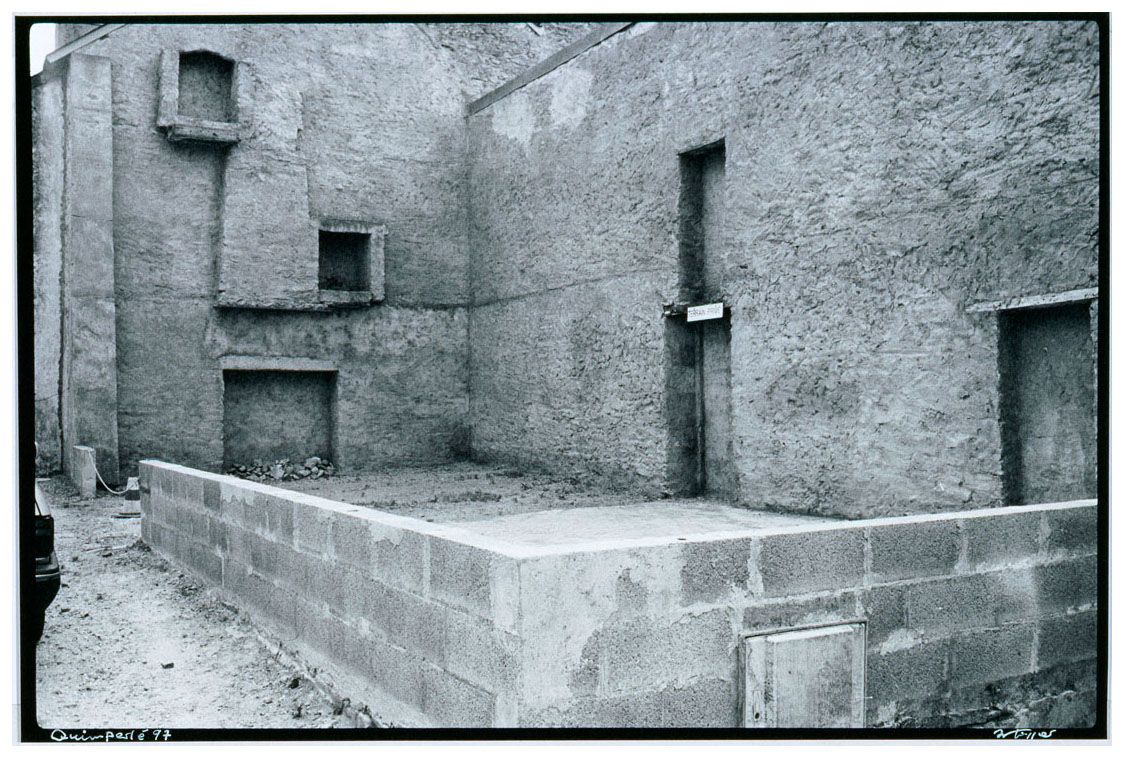
Art Ringger (Swiss, b. 1946) Quimperlé 1997 Black-and-white photograph on aluminium, embossed 19.9 x 29.7cm Aargauer Kunsthaus Aarau / deposited by the Andreas Züst Collection
Hannah Villiger (Swiss, 1951-1997) Arbeit 1979 Black-and-white photograph on baryte paper, matt 125 x 189.5cm Aargauer Kunsthaus Aarau / deposited by a private collection
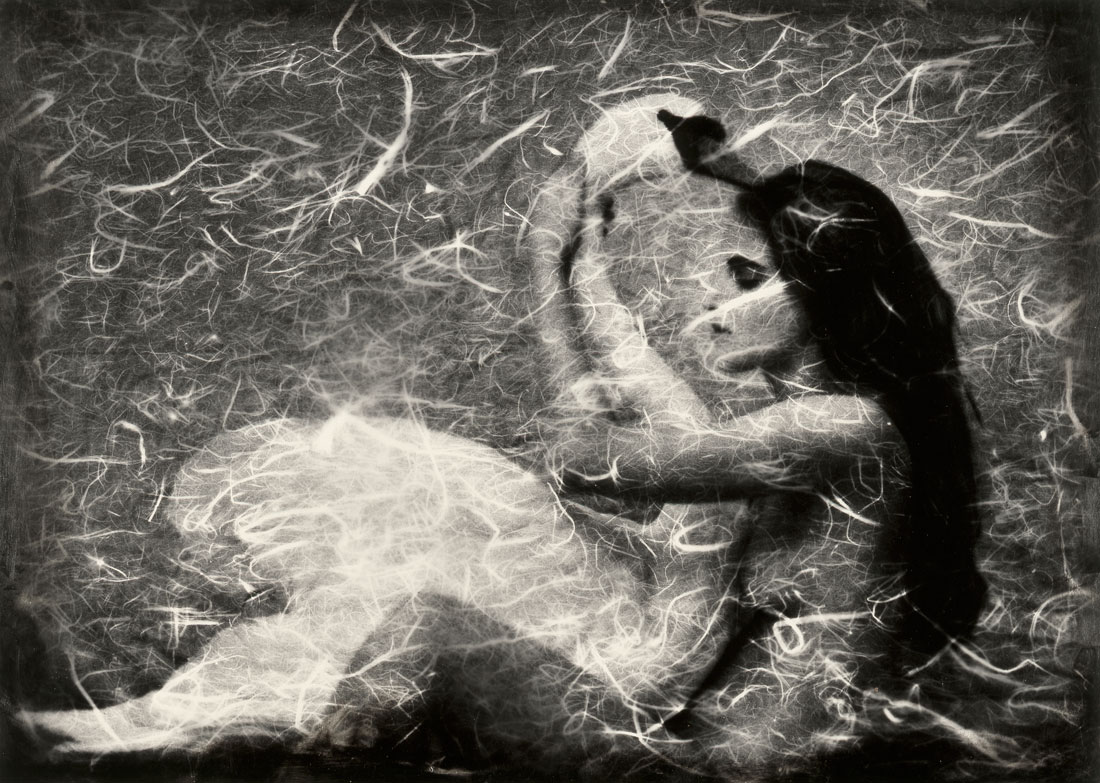
Claudia Böhm Leda 1991 Black-and-white photograph with retouching colour on paper 40 x 56cm Aargauer Kunsthaus Aarau / deposited by the Andreas Züst Collection
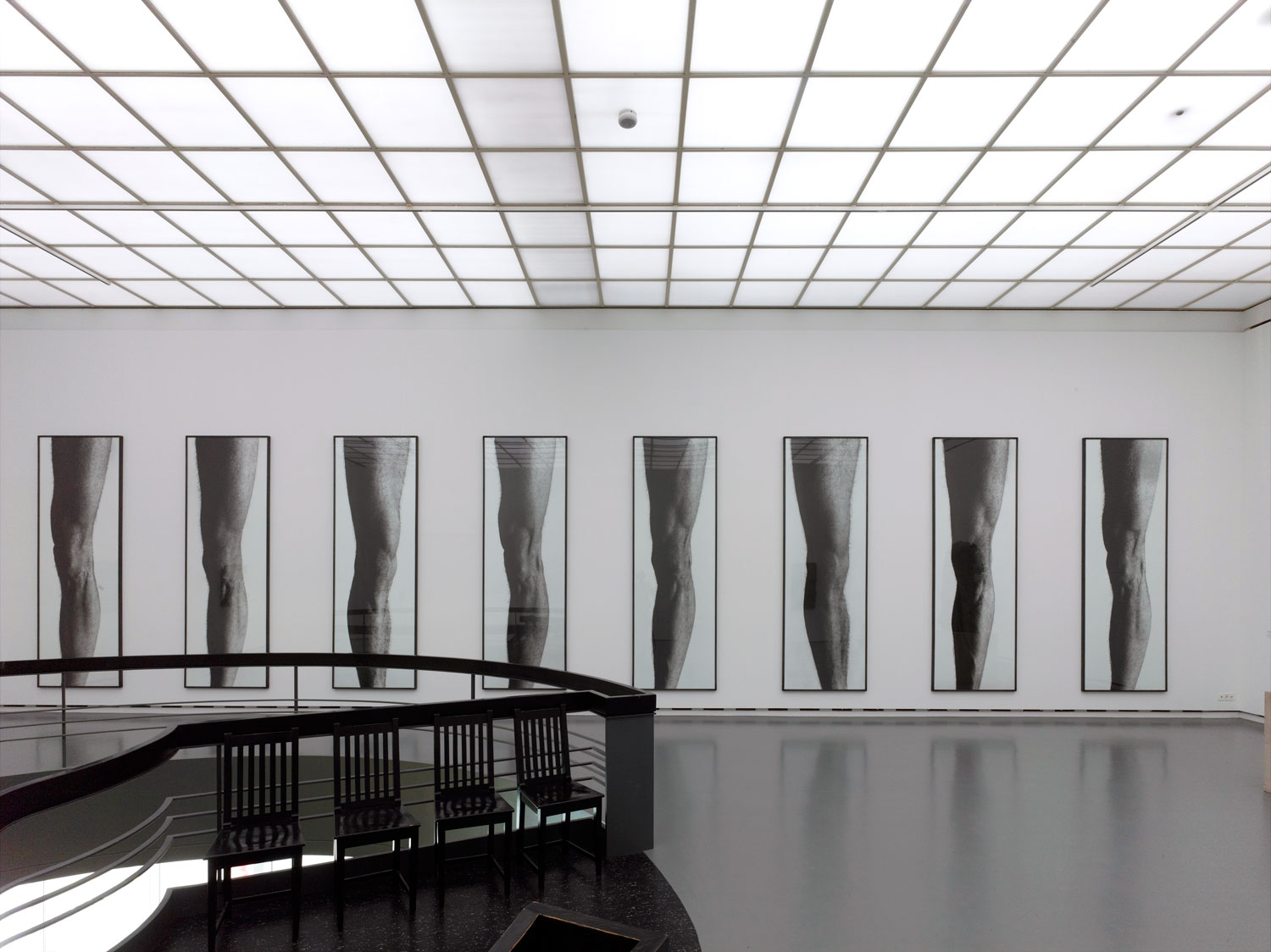
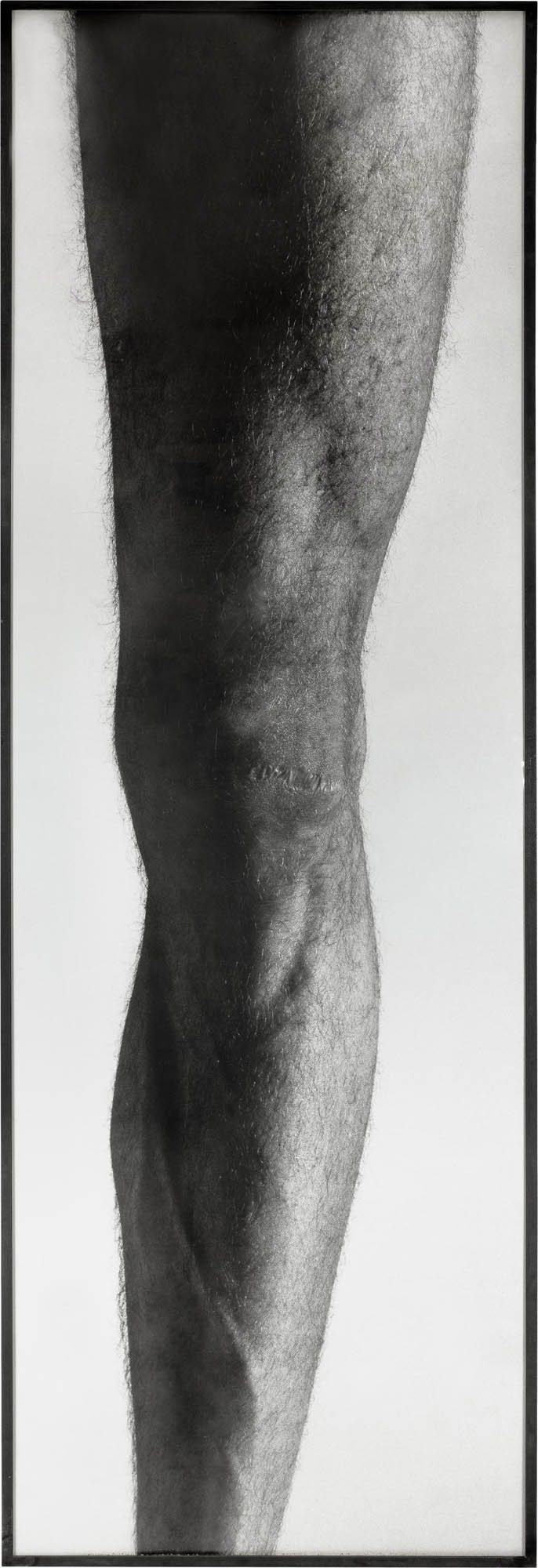
Installation view of the exhibition Light Sensitive – Photo Art from the Collection at Aargauer Kunsthaus showing photographs from Balthasar Burkhard’s work Das Knie (The Knee) 1983 Photo: Dominic Büttner, Zurich
Balthasar Burkhard (Swiss, 1944-2010) Das Knie (The Knee) (detail) 1983 Photography on baryta paper in original iron frame and on colour canvas 270 x 91cm, photography; 150.3 x 50.3cm, colour canvas
The exhibition Light Sensitive presents works from the rich photography holdings of the Aargauer Kunsthaus. In addition, it shows photographs of urban spaces by Andreas Tschersich and works by Bianca Dugaro.
Light Sensitive is a presentation of works from the collection of the Aargauer Kunsthaus that focuses on the medium of photography. The exhibition delves into the museum’s rich and quite substantial holdings of over 800 photographic works, sounding out core themes. In the process, two thematic focus areas come to the fore: on the one hand an exploration of the human body and on the other an examination of abstract, architectural or public space.
The 20th century has seen a major shift in the status of photography as an artistic medium, a change reflected by the holdings of the Aargauer Kunsthaus. Starting out with rather small-scale works of a documentary nature, photography graduated to photo art and today naturally takes its place among the wide range of artistic media. The exhibition Light Sensitive takes us on a journey of discovery through the collection, contrasting big names with unexpected work. A series of large-scale cityscapes by Berlin-based Swiss artist Andreas Tschersich as well as works by Swiss artist Bianca Dugaro complement the presentation.
Included in the exhibition are works by, among others Claudia Böhm, Balthasar Burkhard, Marie-Antoinette Chiarenza / Daniel Hauser, Hans Danuser, Silvie Defraoui, Achim Duchow, Olivia Etter, Nicolas Faure, Marc-Antoine Fehr, Peter Fischli / David Weiss, Katrin Freisager, Max Grüter / Patrick Rohner, Simone Hopferwieser, Markus Käch, Heiner Kielholz, Fred Knecht Engelbert, Rudolf Lichtsteiner, Urs Lüthi, Max Matter, Billy Eduard Albert Meier, Claudio Moser, Marianne Müller, Anita Niesz, Guido Nussbaum, Sigmar Polke, Markus Raetz, Ursina Rösch, Annelies Štrba, Beat Streuli, Hannah Villiger.
Press release from the Aargauer Kunsthaus website
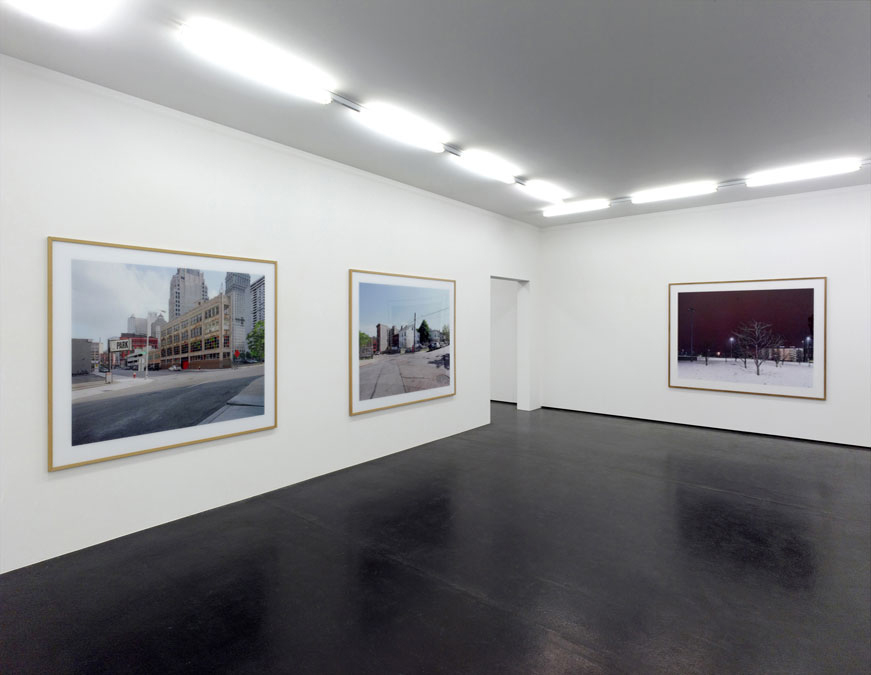
Installation view of the exhibition Light Sensitive: Photo Art from the Collection at Aargauer Kunsthaus showing the work of Andreas Tschersich including at left, Peripher 1903 (Detroit) 2011 (below); and at second left, Peripher 1337 (New York City) Nd (below) Photo: Dominic Büttner, Zurich
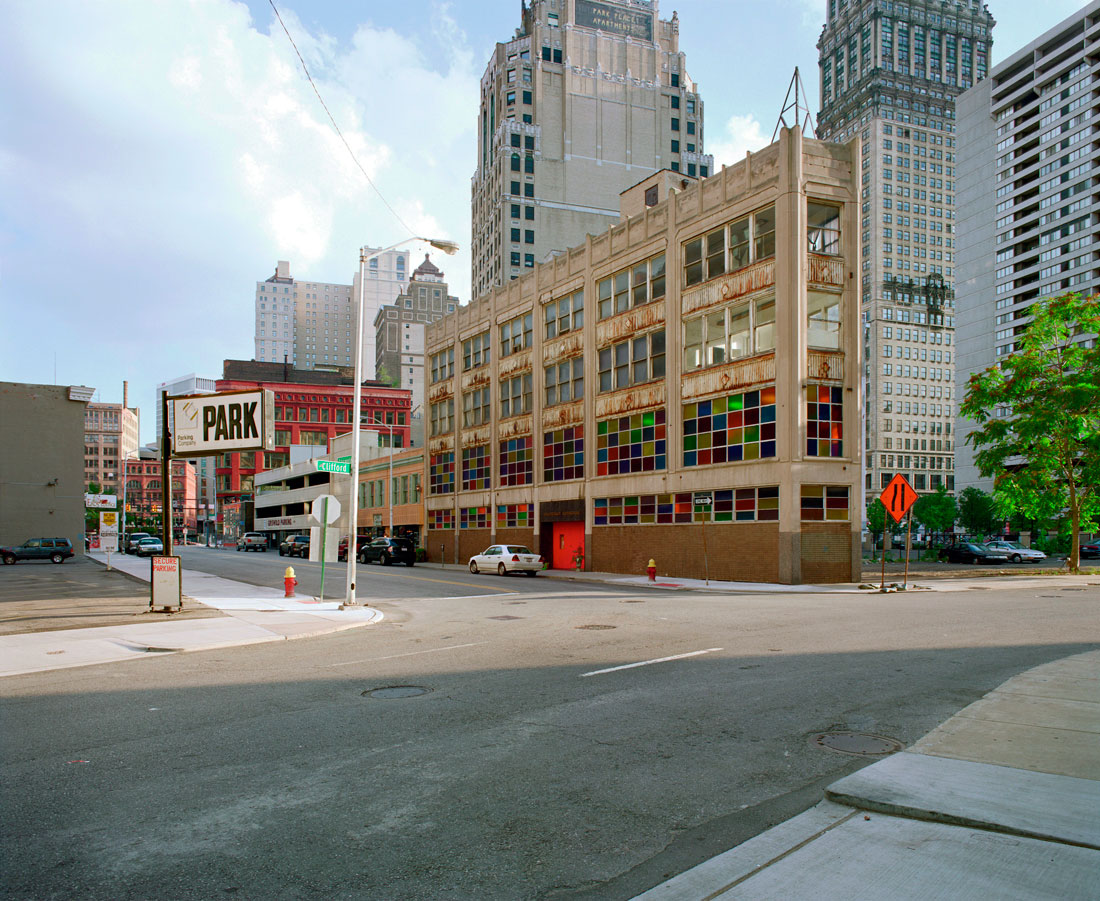
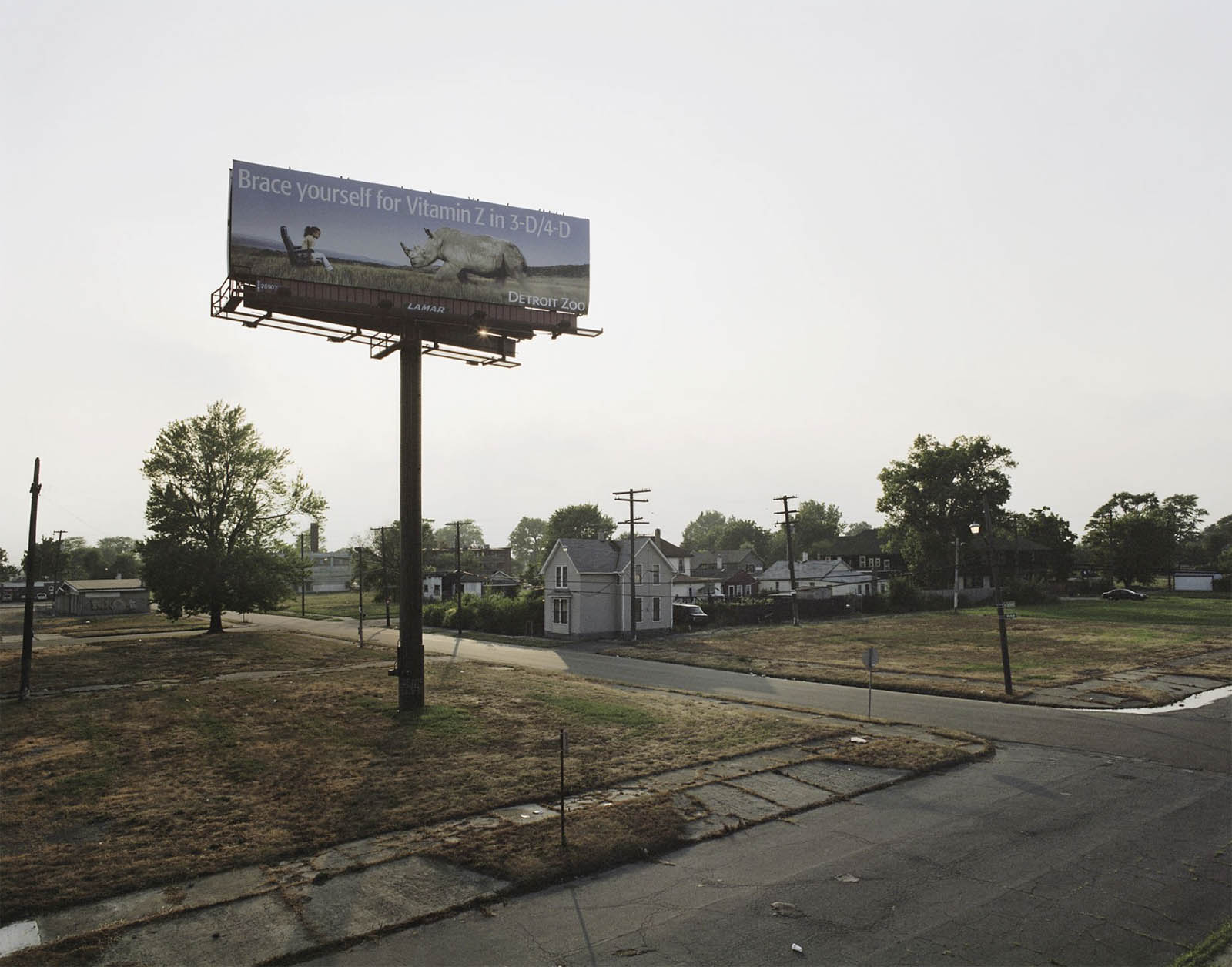
Andreas Tschersich (Swiss, b. 1971) Peripher 1903 (Detroit) 2011 C-Print / Diasec 198 x 167cm
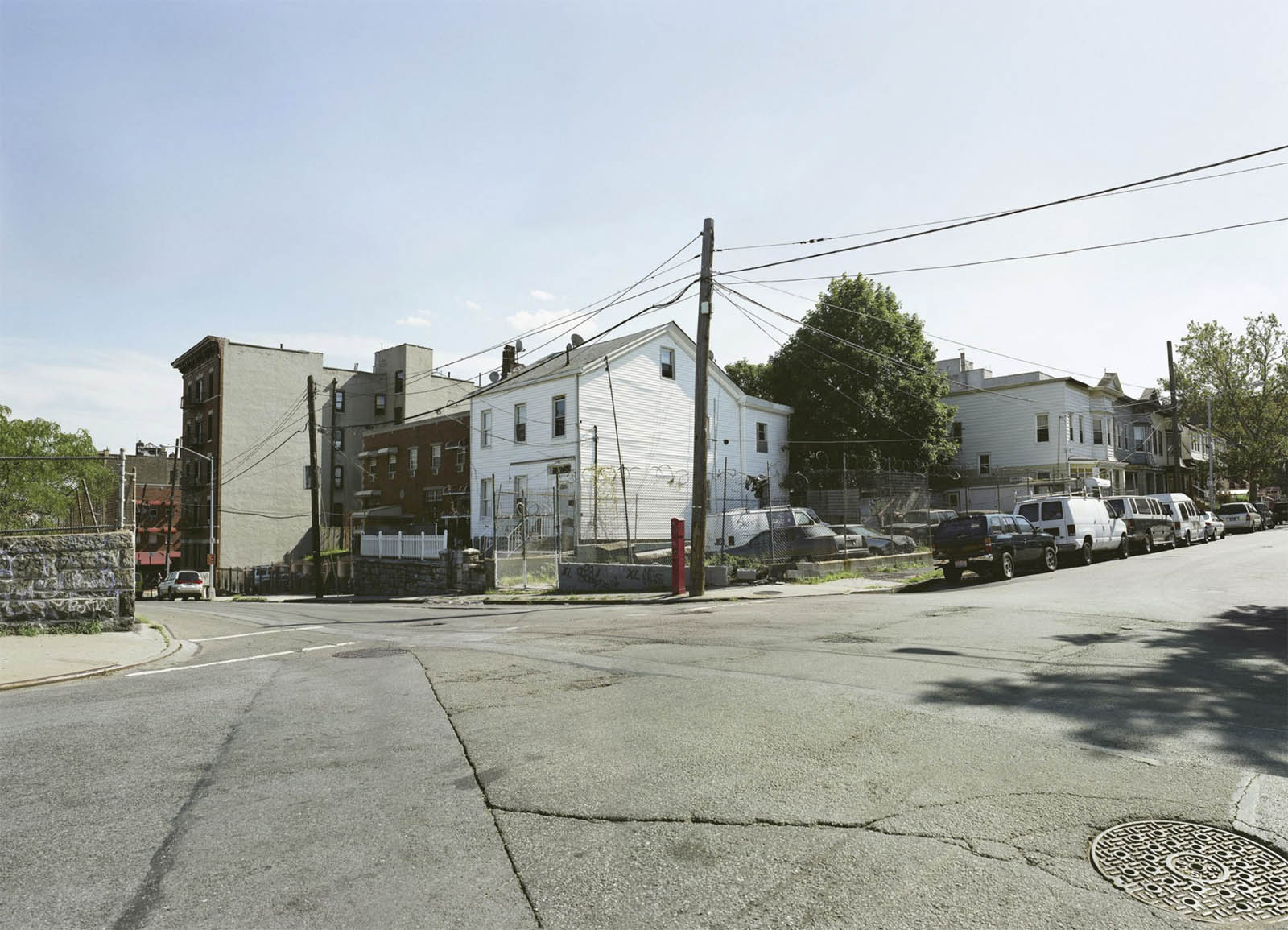
Andreas Tschersich (Swiss, b. 1971) Peripher 1337 (New York City) Nd C-Print / acrylic glass
Andreas Tschersich (Swiss, b. 1971) Peripher 1827 (Detroit) Nd C-Print / acrylic glass
“This engagement with the place makes it become a part of me. They have kind of grown on me. This is the reason I try, whenever possible, to revisit them to see how they are going. Normally the places have become worse or are completely gone. I seem to have the right touch for disappearing places…”
~ Andreas Tschersich
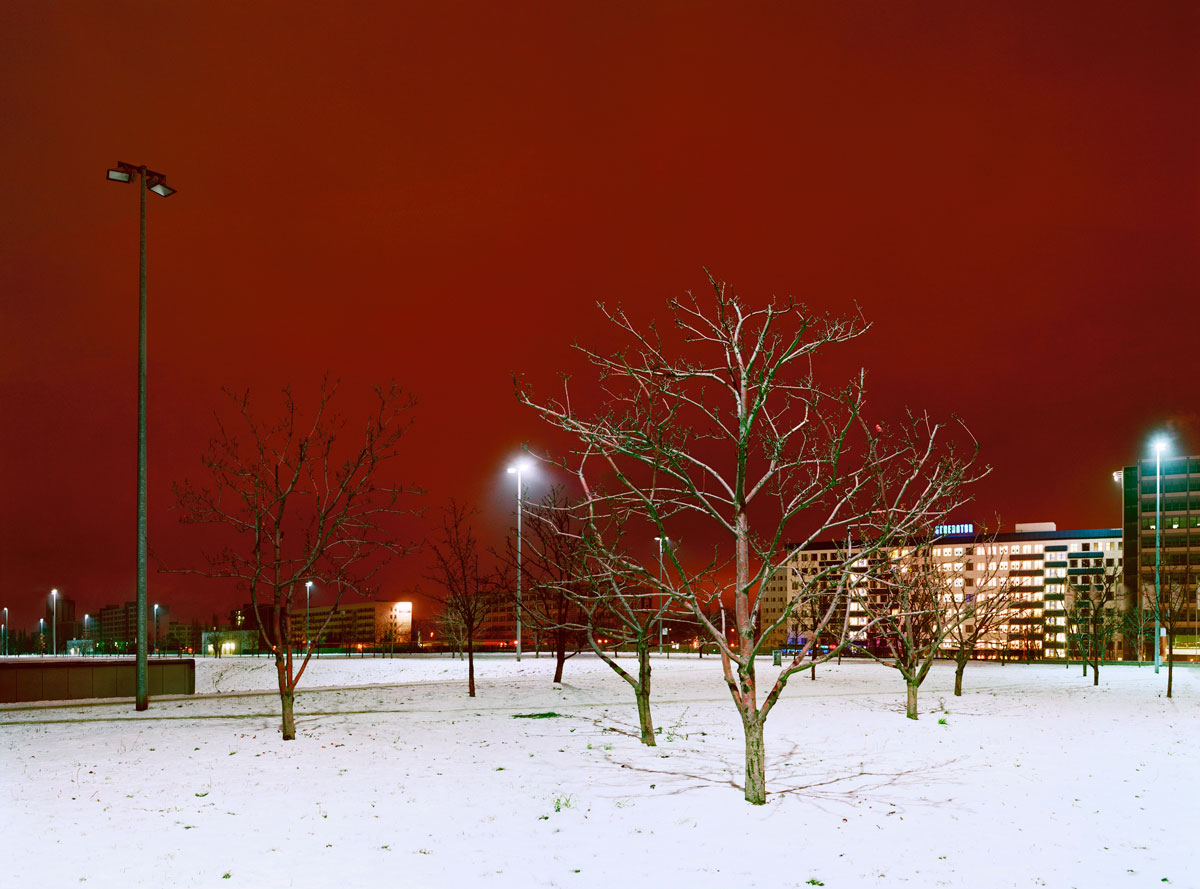
Andreas Tschersich (Swiss, b. 1971) Peripher 130 (Berlin) 2004 C-Print / acrylic glass 219 x 170cm
Billy Eduard Albert Meier (Swiss, b. 1937) Ohne Titel 1975 Photograph on paper, 8 parts 18 x 26.5cm Aargauer Kunsthaus Aarau / deposited by the Andreas Züst Collection
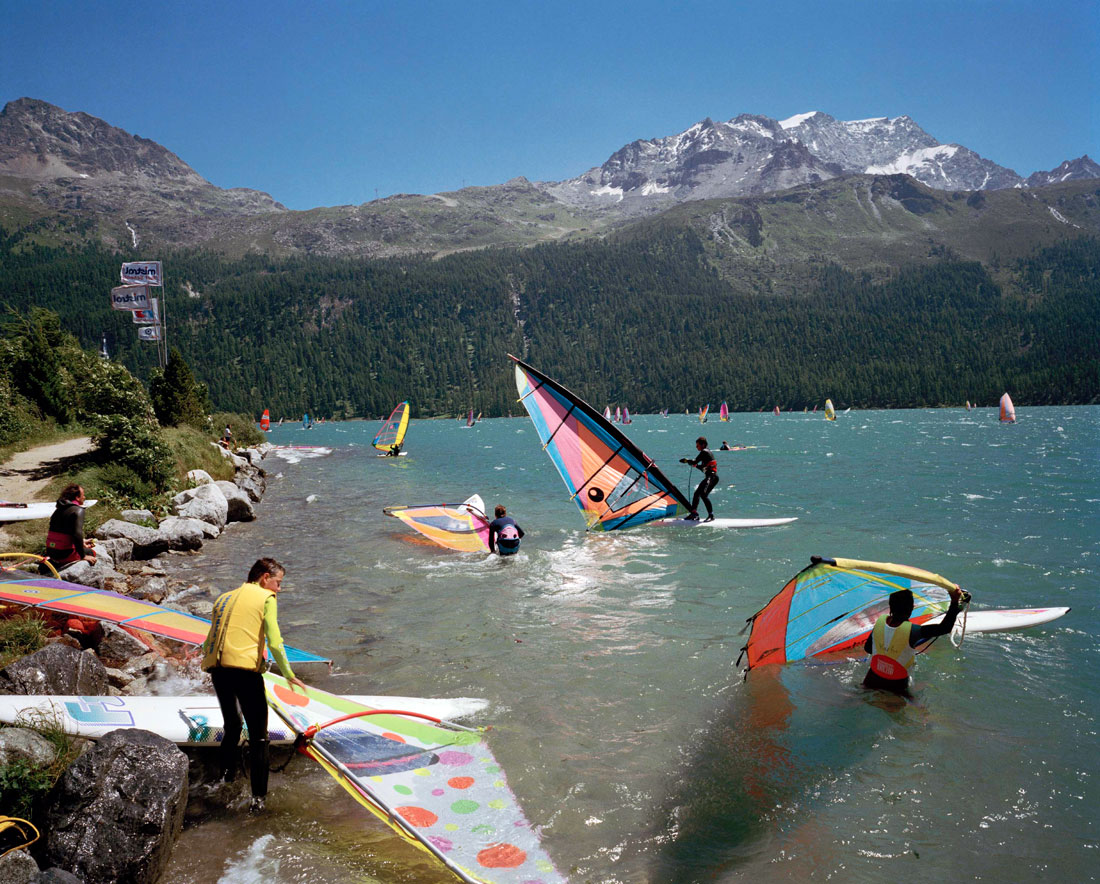
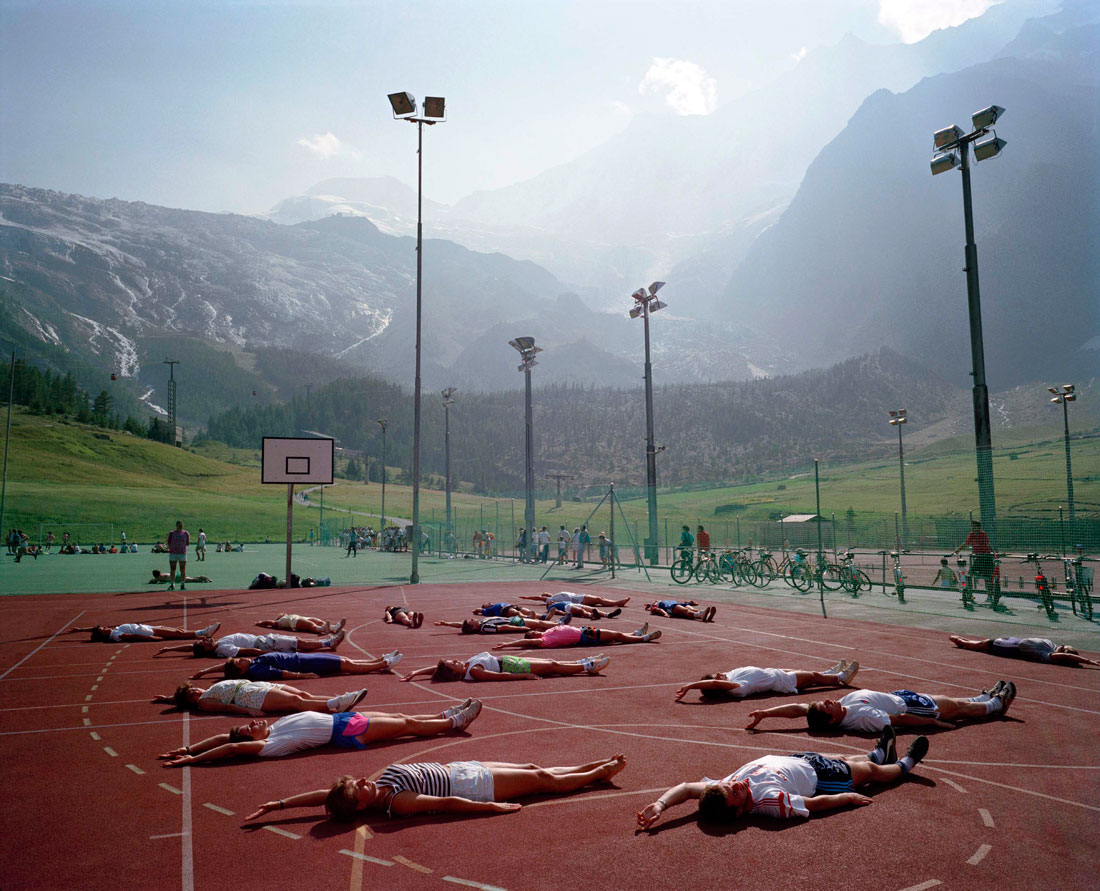
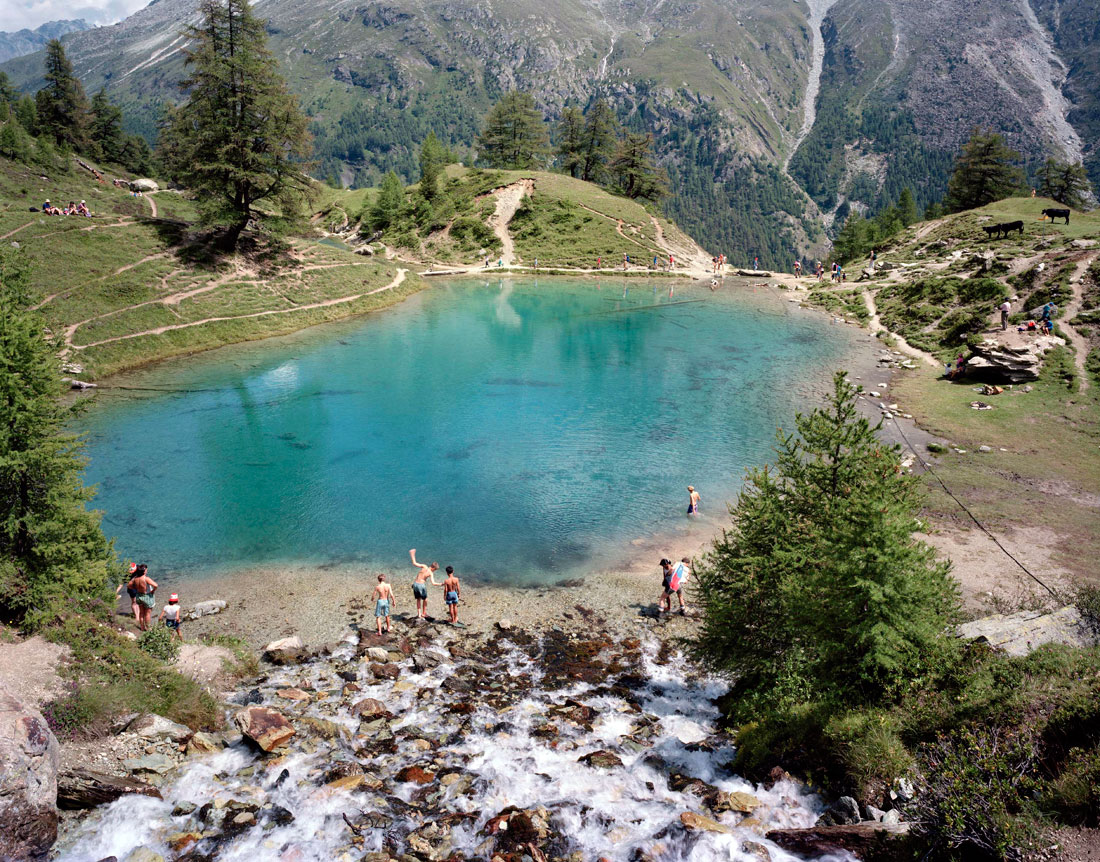
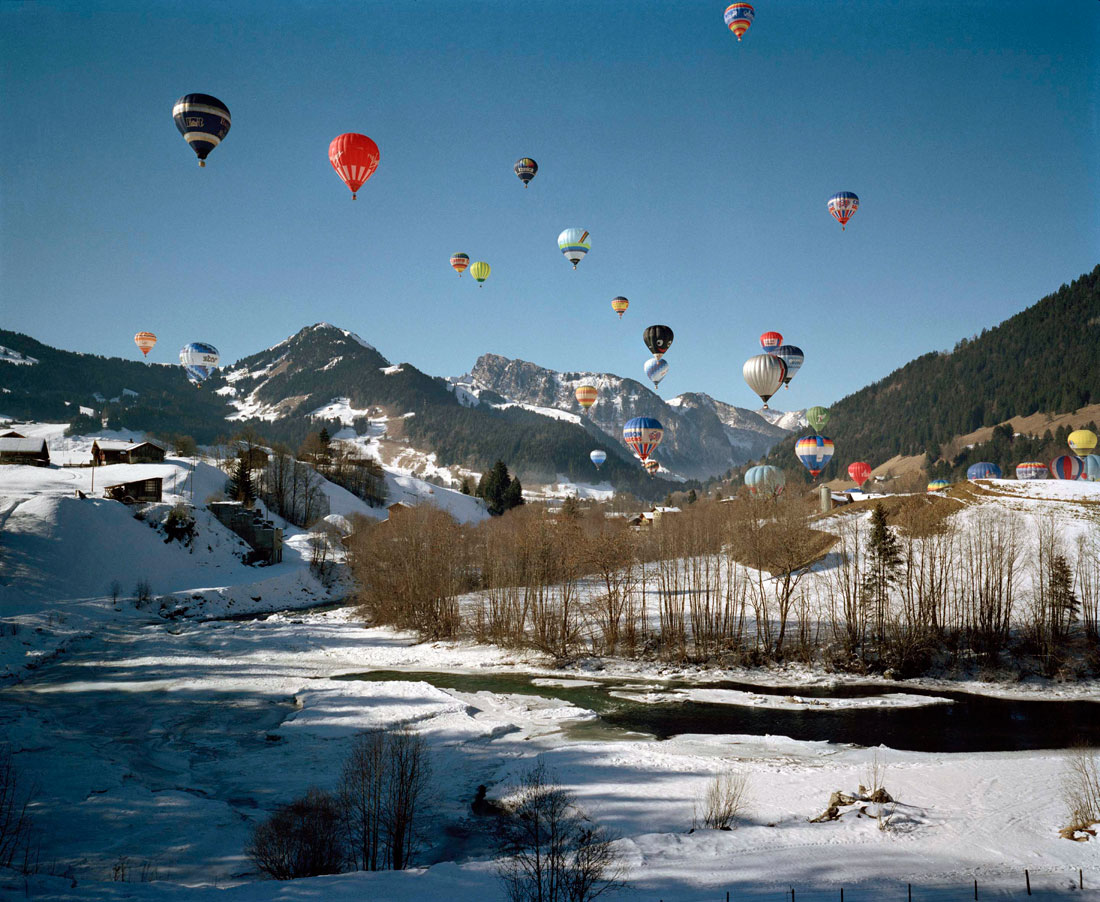
Nicolas Faure (Swiss, b. 1949) Silvaplana (GR), Juli 1988 Colour photograph on aluminium 63 x 80cm Aargauer Kunsthaus Aarau
Nicolas Faure (Swiss, b. 1949) Saas-Fee (VS), Juli 1989 Colour photograph on aluminium 63 x 80cm Aargauer Kunsthaus Aarau
Nicolas Faure (Swiss, b. 1949) Le Lac Bleu. Val d’Arolla (VS), August 1997 Colour photograph on aluminium 63 x 80cm Aargauer Kunsthaus Aarau
Born in Geneva in 1949, Nicolas Faure left his native city in 1976 to settle in New York and learn the technique of photography. Self-taught, he acquired his training by working in a lab and shooting documentary photos for publications like Time Life Books and GEO. After taking part in the 1978 group project American Vision, Faure returned to Switzerland in 1982.
Through group and individual portraits, he observed the relationship the Swiss have with clothing and popular forms of leisure (tennis, swimming pools, bicycles, etc.). In the early 1990s his art began to take shape around Swiss landscapes that had been refashioned by human beings and their activities. His body of photographic work now developed in three successive series, Pierres fétiches (fetish stones), Schweizer Autobahnen (Swiss motorways) and Paysage A (landscape A).














You must be logged in to post a comment.