Exhibition: ’31 Women. An Exhibition by Peggy Guggenheim’ at Fundación MAPFRE, Madrid

Exhibition dates: 19th September, 2024 – 5th January, 2025

Curator: Patricia Mayayo

Artists: Djuna Barnes / Xenia Cage / Leonora Carrington / Leonor Fini / Suzy Frelinghuysen / Elsa von Freytag-Loringhoven / Meraud Guinness Guevara / Anne Harvey / Valentine Hugo / Buffie Johnson / Frida Kahlo / Jacqueline Lamba / Eyre de Lanux / Gypsy Rose Lee / Hazel McKinley / Aline Meyer Liebman / Louise Nevelson / Meret Oppenheim / Milena Pavlovic-Barilli / Barbara Poe-Levee Reis / Irene Rice Pereira / Kay Sage / Gretchen Schoeninger / Sonja Sekula / Esphyr Slobodkina / Hedda Sterne / Sophie Taeuber-Arp / Dorothea Tanning / Julia Thecla / Pegeen Vail Guggenheim / Maria Helena Vieira da Silva


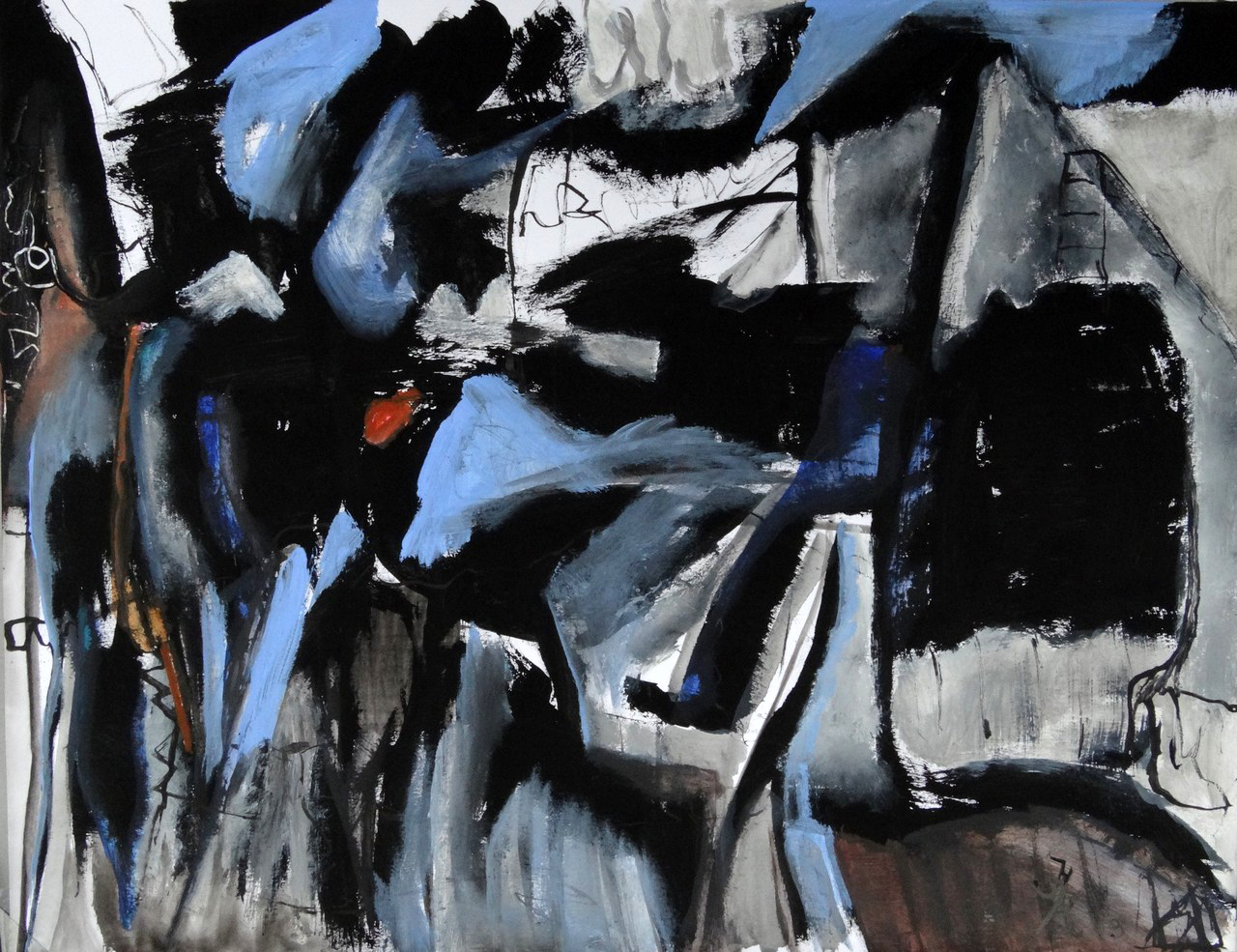
Aline Meyer Liebman (American, 1879-1966) 'Gray Day (Sand Dunes)' c. 1929 from the exhibition '31 Women. An Exhibition by Peggy Guggenheim' at Fundación MAPFRE, Madrid, Sept 2024 - Jan 2025


Aline Meyer Liebman (American, 1879-1966)
Gray Day (Sand Dunes)
c. 1929
Gouache on board
35.5 x 48cm
The 31 Women Collection
© 2022-2024 JPS Artworks LLC


Short biography: Aline Meyer Liebman (1879-1966). Born in Los Angeles, Aline Meyer Liebman studied at the Art Students League in New York and received the support of Georgia O’Keeffe and Alfred Stieglitz. By the 1930s she had already become a consolidated artist and was the subject of a solo show at Walker Galleries in 1936. Meyer Liebman was also known for her work as a collector of art and photography. She acquired works by O’Keeffe, Stieglitz, Edward Weston, and Max Ernst, among others. Liebman kept a broad circle of relationships with key people in the New York art world, such as Peggy Guggenheim, who included her work Painted Dream (1935) in Exhibition by 31 Women. Other notable facets include her political and philanthropic work: aside from supporting President Roosevelt, she became a member of the New York League of Women Voters and designed a poster for the organization in 1944.


While it is fantastic to see this “recreation” (many of the original art works are unknown or missing and others have been substituted by the same artist in their place) of Peggy Guggenheim’s 1943 Exhibition by 31 Women “organised in her New York gallery ‘Art of This Century’, one of the first exhibitions in the United States to showcase works exclusively by European and American women,” I am conflicted by this exhibition. Conflicted, conflicted, conflicted.

Wealthy white women uses influence and money to promote women artists when no one else would, a patron reinforcing female participation introducing “well-established figures within the artistic landscape as well as emerging talent.” But I have a feeling that this group of female artists was part of an elite cohort – a privileged, internalist, internationalist, undoubtedly incestuous (in terms of knowing each other) clique of humans that knew the right people, especially through their connections with male artists.

As ever with the art world, it’s not what you know it’s who you know. Which artist has the ear of which curator; which artist is “fashionable” at the moment; and which artist is supported by which patron and gallery. It’s all about connections, and these women, whether emerging or established, had those connections. They were part of an educated elite that was at one and the same time, both exclusive and excluding (no Black American or Asian artists here… think of the times!)

And while the relationship between art and bourgeois life central to an earlier ideal of culture (the artist and their patron) has changed since the Second World War and the playing field has become much more egalitarian, my cynicism and socialism still rails at those with power and how they withhold their largesse. You only have to look at the photograph of Peggy Guggenheim in the entrance hall of her eighteenth century Venetian palace or the naming of so many galleries in art museums after wealthy patrons to understand what I mean.

What did it mean for these women artists, at what level was it a recognition of their undoubted skill as artists, when so many largely vanished without trace?

Dr Marcus Bunyan


Many thankx to Fundación MAPFRE for allowing me to publish the photographs in the posting. Please click on the photographs for a larger version of the image.


The idea of the artist as central member of a spiritual elite embodying an alternative to Philistine commercialism, or even pointing the way to humankind’s salvation, has powered a variety of movements as different as Aestheticism, Realism, Dada, De Stijl, and Russian Constructivism. This was the conception of culture that crystallized in the notion of the avant-garde, whose “function” – in Clement Greenberg’s classic formulation of 1939 – was “to find a path along which it would be possible to keep culture moving in the midst of ideological confusion and violence.”[1]

Greenberg’s text touchingly reveals the double sense of the idea of culture, as both redeeming force of the existing system and as a sort of critique by enactment of an alternative set of values. In this conception, the essence of art, incarnated in the avant-garde, is its alienation from the norms of bourgeois society (hence, in the case of modernist abstraction, its abandonment of going systems of representation). On the other hand, Greenberg acknowledged that “No culture can develop without a social basis, without a source of stable income” and even that “in the case of the avant-garde, this was provided by an elite among the ruling class of that society from which it assumed itself to be cut off, but to which it has always remained attached by an umbilical cord of gold. The paradox is real.”[2]

This paradox is nothing but the place of culture in capitalist society, in its most concentrated form. Given the distinctive social character of art objects, as handmade luxury goods in a world dominated by mechanized mass production, they offer both their producers and their consumers an experience outside the “everyday life” of the market. Expressive, in its very freedom from monetary considerations, of the power of money and of the access to free time made possible by money, art is a token and a perk of social distinction for those who own and even for those who merely appreciate it. The artist, as producer of this token, shares in the distinction, though (for the most part) not in the wealth that supports the social practice of art as a whole. It was the very separation of the world of cultural production from the norm of capitalist investment and production that made it potentially so valuable. By means of critique, culture cleanses modern society of the sin of commercialism, allowing its dominating classes to see themselves as worthy inheritors of the position of the aristocracy they displaced.

The picture I have sketched here, hardly a novel one, evidently owes a great deal to Pierre Bourdieu’s analysis of what he calls “the field of cultural production.” That analysis reveals in particular the close relation between, on the one hand, the social antagonism between the producers of culture and the upper-class consumers from whom they are separated by style of life and self-conception as well as degree of social power, and, on the other, the fact that “the cult of art and the artist… is one of the necessary components of the bourgeois ‘art of living,’ to which it brings a ‘supplément d’âme,’ its spiritualistic point of honor.”[3] This cultural system, evolved during the nineteenth century, survived until well into the twentieth. But the last twenty years have seen the acceleration of a process of change, whose origin is traceable to the end of the Second World War.[4] What changed was not the centrality of the “cult of art” to the bourgeois “art of living” but the felt antipathy between art and bourgeois life central to the earlier ideal of culture.


Paul Mattick. “After the Gold Rush,” on the American Society for Aesthetics website 2010 [Online] Cited 12/12/2024


1/ C. Greenberg, “Avant-garde and Kitsch,” in idem, Art and Culture (Boston: Beacon Press, 1961), p. 5.
2/ Ibid., p. 8
3/ P. Bourdieu, The Field of Cultural Production (New York: Columbia University Press, 1993), p. 44.
4/ For an in-depth discussion, see Katy Siegel, Since ’45: American Art in the Age of Extremes (London: Reaktion, 2016)


Installation view of the exhibition '31 Women. An Exhibition by Peggy Guggenheim' at Fundación MAPFRE showing at left, Milena Pavlovic-Barilli's 'Juno and Vulcan' (1936); at second left, Leonora Carrington's 'The Horses of Lord Candlestick' (1938); and at right, Buffie Johnson's 'The Middle Way / The Great Mother Rules the Sky (Astor Mural)' (1949-1959)


Installation view of the exhibition 31 Women. An Exhibition by Peggy Guggenheim at Fundación MAPFRE showing at left, Milena Pavlovic-Barilli’s Juno and Vulcan (1936, below); at second left, Leonora Carrington’s The Horses of Lord Candlestick (1938, below); and at right, Buffie Johnson’s The Middle Way / The Great Mother Rules the Sky (Astor Mural) (1949-1959, below)


In 1943, the renowned art collector Peggy Guggenheim organised in her New York gallery ‘Art of This Century’, one of the first exhibitions in the United States to showcase works exclusively by European and American women, titled Exhibition by 31 Women. The show was conceived by Guggenheim in collaboration with Marcel Duchamp, and the artists were selected by a jury whose members included André Breton, Max Ernst and Duchamp himself. Guggenheim, as the sole woman on the jury, was in a privileged position to provide a female perspective in the selection process.

These women, many of whom were associated with Surrealism or abstraction, maintained an ambiguous position within both trends. Often, they employed these styles to reformulate and challenge them, preserving their independence and shedding light on the patriarchal assumptions underlying these artistic movements.

31 Women. An Exhibition by Peggy Guggenheim presents a curated selection and reinterpretation of that initiative, including all the artists featured in the original show. With this exhibition, the Foundation aims not only to honor Peggy Guggenheim’s significant role as one of the foremost patrons and collectors of the 20th century, but also shift the narrative away from viewing these women primarily through their connections with male artists. Instead, it highlights the networks of collaboration, solidarity, and friendship they established among themselves.

Text from the Fundación MAPFRE website


Sonja Sekula (American, 1918-1963) 'Waiting for Foam' 1944 from the exhibition '31 Women. An Exhibition by Peggy Guggenheim' at Fundación MAPFRE, Madrid, Sept 2024 - Jan 2025


Sonja Sekula (American, 1918-1963)
Waiting for Foam
1944
Oil on canvas
40.3 x 49.8cm
The 31 Women Collection
© Estate of Sonja Sekula
© 2022-2024 JPS Artworks LLC


Short biography: Sonja Sekula (1918-1963). Born in Lucerne from a Hungarian father and a Swiss mother, Sonja Sekula emigrated to New York in 1936, where her father had moved their family business. In 1938 she attempted suicide for the first time and from that point onward began suffering from mental health issues. Through her well-connected family, Sekula was able to meet André Breton and other European Surrealists in the early 1940s. In mid-decade, she travelled to Mexico and came into contact with Frida Kahlo and Leonora Carrington. Later, she traversed the northeastern United States, discovering the imagery of Native American people. The primitivist symbols in her canvases are interwoven with decorative patterns, intense colours, and a juxtaposition of viewpoints. At the time, Sekula’s work was well received by critics, some suggesting that there was a hidden symbolism related to her homosexuality. Aside from including her painting Composition at Exhibition by 31 Women, Peggy Guggenheim dedicated a solo exhibition to Sekula’s work in 1946. Two years later Sonja Sekula joined the Betty Parsons Gallery, which would host five solo exhibitions between 1948 and 1957. In 1951, a day after the opening of her third exhibition, she suffered a nervous breakdown. The artist spent the following years coming in and out of mental health clinics in the United States and Switzerland. In 1963 she committed suicide in her Zurich studio.
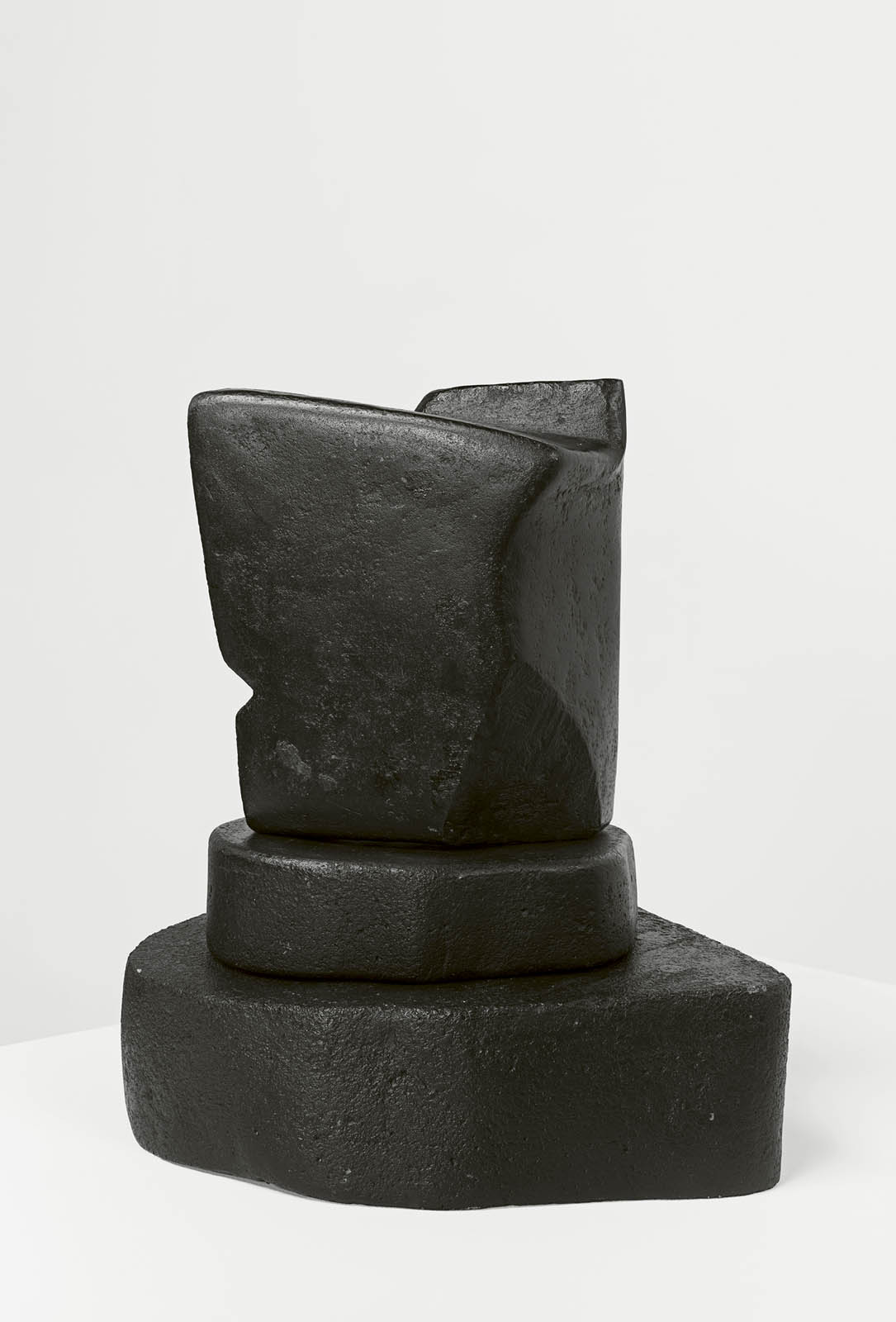
 

Louise Nevelson (American, 1899-1988) 'Untitled' 1933 from the exhibition '31 Women. An Exhibition by Peggy Guggenheim' at Fundación MAPFRE, Madrid, Sept 2024 - Jan 2025


Louise Nevelson (American, 1899-1988)
Untitled
1933
Black painted terracotta
The 31 Women Collection
© Louise Nevelson, VEGAP, Madrid, 2024
© 2022-2024 JPS Artworks LLC


Short biography: Louise Nevelson (1899-1988). Born in Ukraine, Louise Nevelson emigrated to the United States with her family at the age of six. After studying in Germany under Hans Hofmann, she settled in New York, where she met Frida Kahlo and Diego Rivera. Nevelson collaborated on one of Rivera’s murals while receiving lessons from George Grosz and Chaim Gross. Her first terracotta works – painted in black and often subject to the application of a form of engraving – reveal the influence of Central American art that she had come to know through Kahlo and Rivera. Furthermore, Louise Nevelson participated in the association American Abstract Artists (AAA) and was often in the company of Frederick Kiesler and Peggy Guggenheim, who selected her work Column for Exhibition by 31 Women. In the 1950s she began to accumulate a large collection of wooden fragments, which would give rise to her most characteristic working method. First, she painted each piece black, white, or gold. Later, she piled and stored the fragments. Finally, she assembled the pieces in large abstract constructions. In 1956 she began to use milk cartons and wood to produce small embedded reliefs, combining them to create increasingly large ensembles. Her work received much critical acclaim after her participation in the Moon Garden Plus exhibition in New York, in 1958.


Highlight

Fundación MAPFRE presents 31 Women. An Exhibition by Peggy Guggenheim, featuring works by thirty-one artists who participated in Exhibition by 31 Women, a show organised in 1943 by Peggy Guggenheim at her Art of This Century gallery in New York. Most of these creators, who came from Europe and the United States, were linked to the Surrealist movement or to abstraction, and included both well-established figures within the artistic landscape as well as emerging talent.

The exhibition highlights Peggy Guggenheim’s important role as a patron, addressing the context in which the artists she became associated with at her New York gallery developed their work, as well as the networks of collaboration that were established between them.

KEYS

Art Also Belongs to Women

In her famous article of 1971, “Why Have There Been No Great Women Artists”, Linda Nochlin stated: “In the field of art history, the white Western male viewpoint, has been unconsciously accepted as the viewpoint of the art historian.” This text finally advocated the role played by many women who had been dismissed on the basis of their gender throughout the history of art and have only recently begun to occupy the place they deserve – along with writers, mathematicians, philosophers, etc. The artists featured in 31 Women. An Exhibition by Peggy Guggenheim, such as Frida Kahlo, Maria Helena Vieira da Silva, Valentine Hugo, and Dorothea Taning, could easily figure in Nochlin’s list, which included figures such as Artemisia Gentileschi, Angelica Kauffmann, Safo, Jane Austen, Virginia Woolf, Gertrude Stein, and Emily Dickinson.

Surrealism

Surrealism, a term coined by Guillaume Apollinaire in 1917, refers to the movement led by André Breton, who defined it as “Psychic automatism in its pure state, by which one proposes to express – verbally, by means of the written word, or in any other manner – the actual functioning of thought.” Rooted in Dadaism and Sigmund Freud’s theories of psychoanalysis, Surrealists expressed themselves through writing, photography, performance, painting, collage, and music. Although Surrealism in principle advocated gender equality and supported the work of women artists, in practice women were considered almost as objects, rather than creative subjects.

Peggy Guggenheim

Patron and art lover, Peggy Guggenheim (New York, 1898 – Padova, 1979) was one of the most important collectors and promoters of avant-garde art of the 20th century. The daughter of Benjamin Guggenheim and Florette Seligman, and niece of Solomon R. Guggenheim, founder of the Guggenheim Museum in New York, she decided to move to Europe in 1921. In Paris she established relationships with Marcel Duchamp, Constantin Brancusi, and Djuna Barnes, among others. Later, she settled in London, where she opened her first gallery in 1938. Under the name Guggenheim Jeune, the gallery featured works by Vasili Kandinsky and Yves Tanguy. Prior to the Nazi occupation of France, Guggenheim returned to Paris and acquired some of the most important works in her collection, which she managed to take with her when she fled to the United States.

In 1942, once she had settled in New York, Guggenheim opened the Art of This Century Gallery on West 57th street. Aside from displaying her own collection, the space became a platform for young artists, among which were the women who took part in Exhibition by 31 Women.

THE EXHIBITION

In 1943 the renowned collector Peggy Guggenheim organised one of the first exhibitions dedicated exclusively to the work of European and North American women artists at her New York gallery Art of This Century. Titled Exhibition by 31 Women, the show was conceived by Guggenheim in collaboration with Marcel Duchamp. The selection of artists was carried out by a jury whose members included André Breton, Max Ernst, and Duchamp himself. As the only woman in the jury, Guggenheim was able to contribute a female perspective to the process. In the press release, the gallerist herself presented the exhibition as a “testimony to the fact that the creative ability of women is by no means restricted to the decorative vein, as could be deduced from the history of art by women throughout the ages.” Her objective was to present the work of these creators as independent artists, distancing them from the traditional roles they had been given as muses or models.

The list of works published for the exhibition did not contain photographs, only titles, which were often quite unspecific, such as “still life” or “composition”. With the exception of a few cases, it is difficult to ascertain which works were on display at 31 Women.

31 Women. An Exhibition by Peggy Guggenheim presents a selection and a reinterpretation of The 31 Women Collection repository; a collection created by the North American producer and collector Jenna Segal in 2020, featuring works by the same artists who participated in the historic exhibition of 1943.

Through this exhibition, Fundación MAPFRE aims to disseminate the work and vision conceived by Peggy Guggenheim at her New York Gallery, further breaking with the narrative that has often valued the contributions of women artists in terms of their relationships with male artists, while focusing more specifically on the networks of collaboration, solidarity, and friendship that were established between them. Associated mostly with Surrealism or abstraction, these women used said languages in an effort to reformulate and question them, maintaining their independence and highlighting the patriarchal precepts such movements were based on.

All of the works on display – close to forty – belong to The 31 Women Collection. Likewise, the exhibition also features photographs, publications, and other pieces; contextualising and complementing the show’s approximation to the scene of North American women artists of the time. Along with the exceptional loan from The 31 Women Collection, the exhibition is also supported by the Vitra Design Museum, the Lafuente Archive, and the Museo Nacional Centro de Arte Reina Sofía Documentation Center.

The exhibition discourse is articulated in different sections, the first of which introduces the viewer to the work carried out by Peggy Guggenheim at her Art of This Century gallery, and in particular her support of women artists of the time. The following sections pose an approximation to some of the main thematic axes and strategies explored by the creators featured in Exhibition by 31 Women, who sought to assert their independence and avoid clichés associated with the label “female artist” that were commonplace in the world of art at the time.

Art of This Century

In 1942 Peggy Guggenheim opened the Art of This Century gallery on the top floor of a building on West 57th Street in New York. Determined to create a space that would generate expectation, she hired the Austrian architect Frederick Kiesler, who designed custom furniture – one piece being featured in this exhibition – and projected a groundbreaking exhibition device to stimulate interactions between viewers and artworks.

The space had a profound impact on the artistic scene through a program of solo exhibitions that Guggenheim dedicated to numerous artists who would later become some of the most renowned creators of their time. The gallery also became an essential meeting point for European and North American avant-gardes. Among the most important initiatives developed by Guggenheim at her gallery were her support and promotion of the work of women artists, not only through group exhibitions, such as Exhibition by 31 Women and later The Women (1945), but also through the solo shows dedicated to some of the participants in said exhibitions, such as Sonja Sekula or Irene Rice Pereira.

The “Self” as Art

The role played by self-representation in the work of these artists was fundamental in their claim for independence and in their efforts to assert their identity versus traditional art historiography, in which women – when mentioned – appeared as secondary figures relegated to the roles of muses, wives, or companions of their male counterparts. Furthermore, in order to construct identities that were different to those assigned to them and escape from the gender roles imposed by the patriarchal society of the time, they adopted a number of languages that included autobiographical components, costumes, performances, and self-portraiture. This can be observed in works such as Woman in Armor I, by Leonor Fini, or Untitled (Self-Portrait), by Dorothea Tanning, for example.

In their quest to escape from social expectations and gender roles, self-representation became one of the creative strategies most widely adopted by women artists in the first half of the 20th century. Through elaborate costumes and extravagant make-up, which they wore in their daily lives or during improvised performances, Elsa von Freytag-Loringhoven and Leonor Fini constructed alternate identities that allowed them to elude the rigid female behavioral models determined by bourgeois ideology. Likewise, Hedda Sterne, Dorothea Tanning, and Meret Oppenheim spoke of their interest in blurring the boundaries of conventionally constructed identities through doubling, masquerades, and the confusion of reality against its reflection, which can be observed in their self-portraits. Similarly, Gypsy Rose Lee reinvented the genre of striptease – traditionally linked to popular culture – by challenging the contemporary understanding of the pose and of female nudes.

Elsa von Freytag-Loringhoven, Gypsy Rose Lee, and Leonora Carrington completed their self-creation work with the writing of their autobiographies, which seamlessly combined reality and invention. Writing novels about themselves allowed these artists to reflect on aspects of their past that might have been considered lurid – for instance, becoming the victim of rape by a group of men in Madrid as Carrington recounted in Down Below – or imagining alternative narratives of their lives. In similar fashion, Leonor Fini frequently took photographs of herself posing in black feather wigs and other props through which she fabricated imaginary personalities. Both Elsa von Freytag-Loringhoven and Gypsy Rose Lee, who had worked as dancers and strippers in burlesque shows and as professional models in art schools, were very aware of the need to take control of their own image, subverting the passive role that muses and female models still played within the avant-garde.
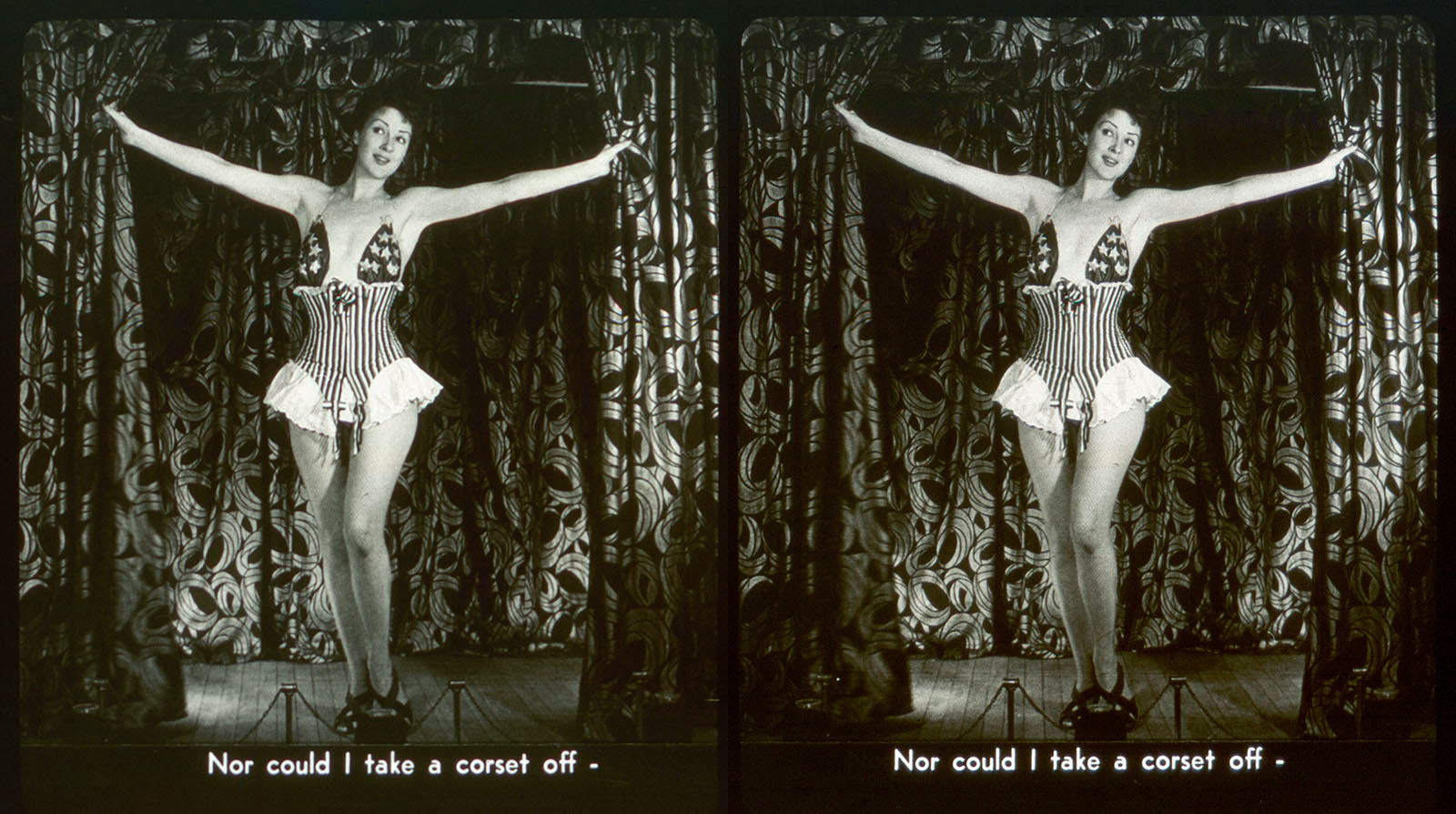
 

Gypsy Rose Lee (American, 1911-1970) 'Gypsy Rose Lee images for Tru-Vue stereoscope film: Striptease Stereoview #1306 Burlesque' 1933 (detail)


Gypsy Rose Lee (American, 1911-1970)
Gypsy Rose Lee images for Tru-Vue stereoscope film: Striptease Stereoview #1306 Burlesque (detail)
1933
Vintage Tru-Vue 16 pictures in film (13 of Gypsy Rose Lee)
The 31 Women Collection


Gypsy Rose Lee began performing as a stripper in burlesque shows and went on to appear in Broadway theaters. Her stripteases were greatly successful, allowing her to transform the genre. The fact that she talked while striping was truly groundbreaking and enabled her to draw attention away from the mere act of stripping, while presenting herself as a modern and entertaining woman. Likewise, her enunciation was unlike street slang: she recited with an outlandish high-class accent and incorporated phrases in French.

Short biography: Gypsy Rose Lee (1911-1970). Born under the name Rose Luise Hovick into a working-class family that performed in vaudeville theaters in Seattle, Washington, Gypsy Rose Lee began to work as a stripper in burlesque shows at the age of sixteen and went on to perform at important Broadway theaters. Her acts were enormously popular at the time, granting the genre respect and transforming it into something beyond the act of stripping. She began to collect works of art in the 1940s. Among such purchases were works by Max Ernst. This opened the doors to meetings with Peggy Guggenheim, who at that time was married to the German painter and would host the encounters at her house. In Exhibition by 31 Women, she exhibited a collage titled Self-Portrait. In 1957 Gypsy Rose Lee published her autobiography, culminating the life-long self-promotion and self-invention work that drove her entire career.
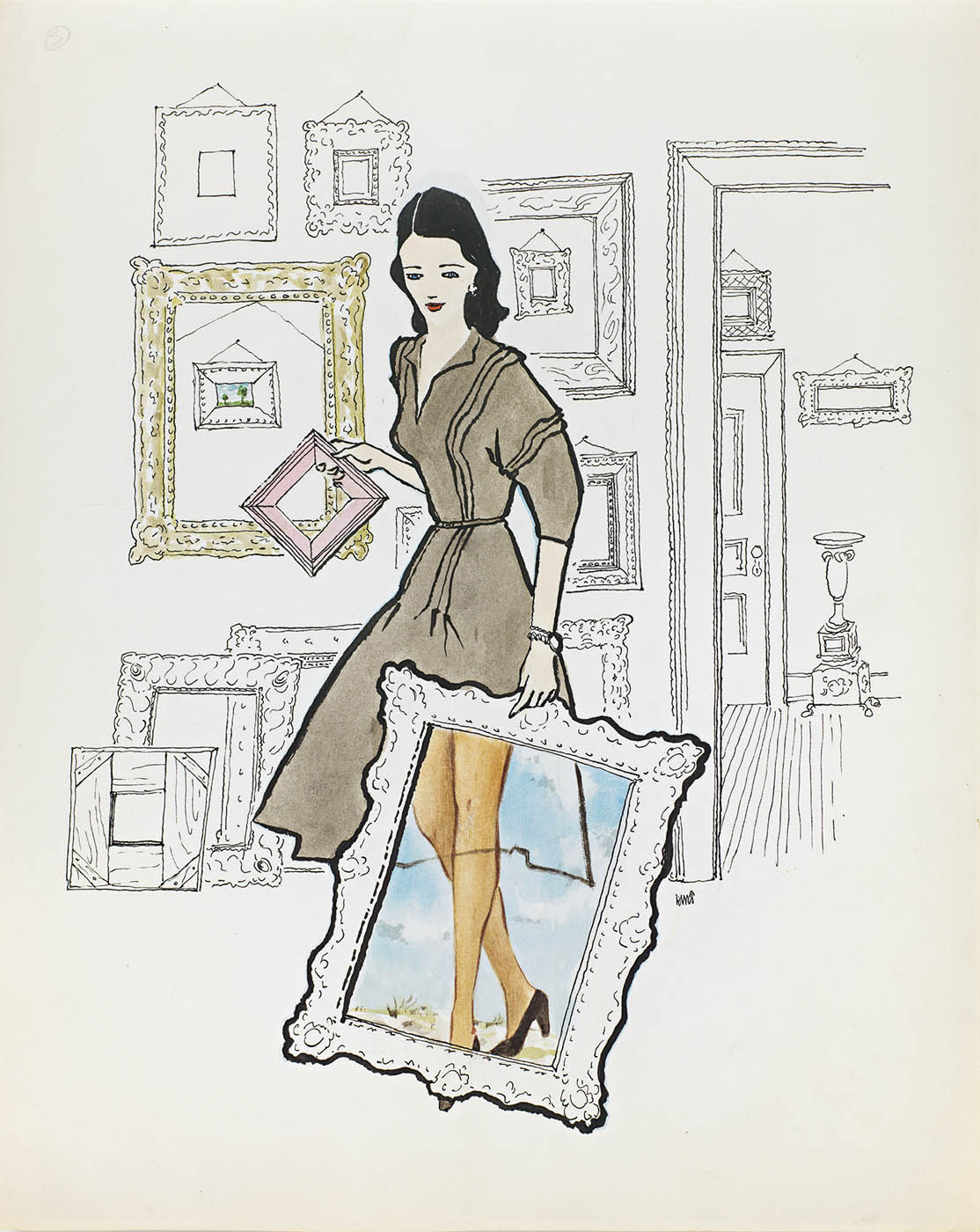
 

Dorothea Tanning (American, 1910-2012) 'Untitled (Self-Portrait)' c. 1940


Dorothea Tanning (American, 1910-2012)
Untitled (Self-Portrait)
c. 1940
Watercolour, ink and crayon on paper
36.5 x 29.2cm
The 31 Women Collection
© The estate of Dorothea Tanning, VEGAP, Madrid, 2024
© 2022-2024 JPS Artworks LLC


In this self-portrait from the early 1940s, Dorothea Tanning experimented with the limits of reality and representation. In a style akin to fashion figurines that often appeared in women’s magazines of the time, the artist portrayed herself in a room full of empty canvases. Her naked legs are reflected onto a framed glass that is pointed at the viewer, creating an impossible interplay of mirrors and altering the relationship between reality and reflection; inside and out.

Short biography: Dorothea Tanning (1910-2012). Born in a small town in Illinois, where she lived a solitary childhood, Dorothea Tanning developed an interest in dreams and fantasy since she was a child. After visiting Fantastic Art, Dada, Surrealism (1936) at MoMA, she felt attracted to Surrealism and travelled to Paris three years later with the objective of coming into contact with said group. Although she was forced to cut her stay short due to the outbreak of the war, the paintings she created upon her return to New York are proof of her strong Surrealist bias. In 1942, following the advice of gallerist Julien Levy, Max Ernst visited her studio and selected the works Birthday and Children’s Game for Exhibition by 31 Women. The visit also signified the beginning of a relationship between Tanning and Ernst, who separated from Peggy Guggenheim and married the artist in 1946. From the 1930s to the late 90s Tanning developed a prolific career. Her paintings, ballet designs, soft sculptures, and literary works reflect some of her recurring obsessions: the subversion of the bourgeoise domestic space, metamorphosis, the power of imagination, the gothic novel, and non-conventional images of girls and feminine figures.
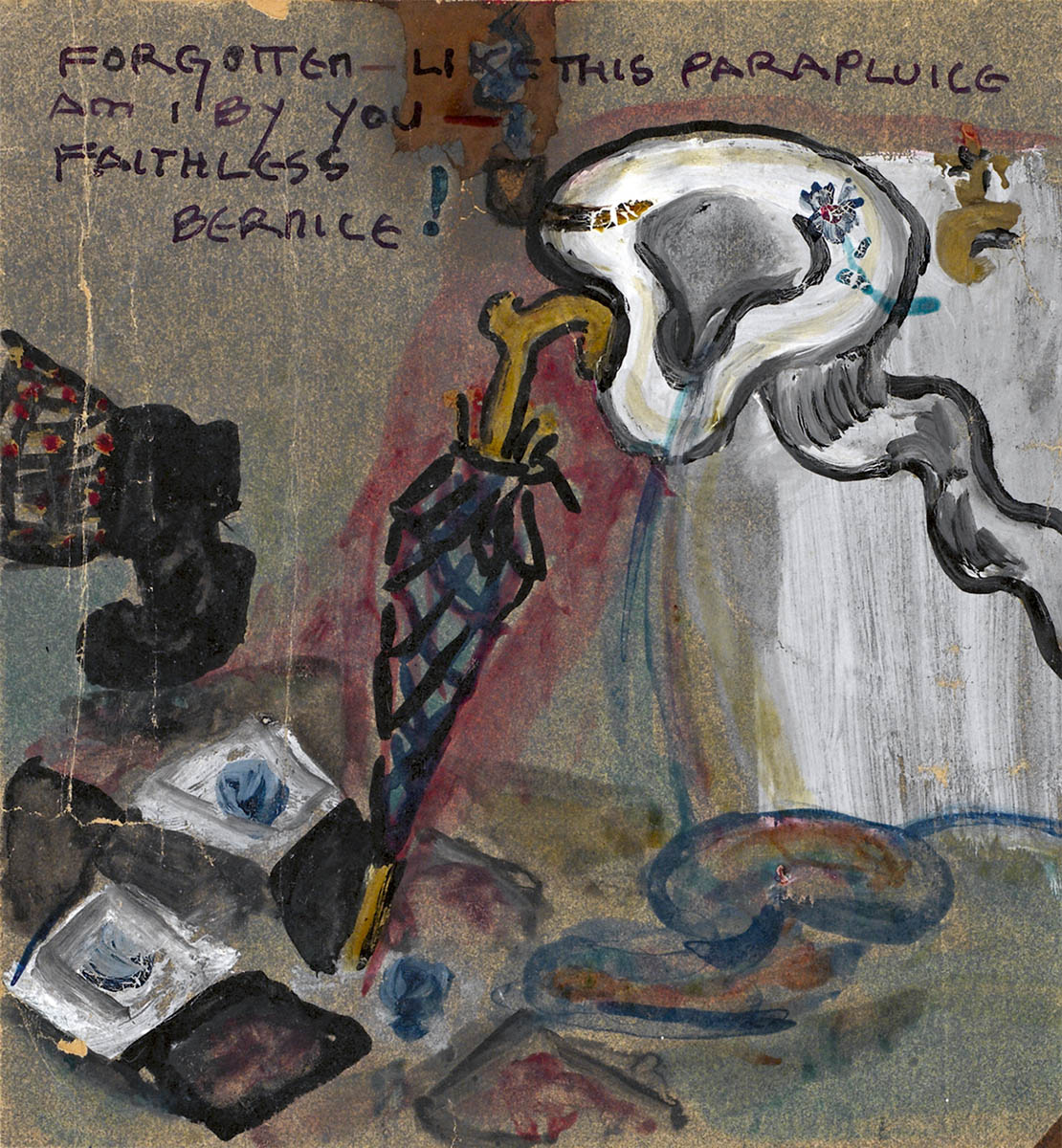
 

Elsa von Freytag-Loringhoven (German, 1874-1927) 'Forggtten Like This Parapluie Am I By You - Faithless Bernice!' 1923-1924


Elsa von Freytag-Loringhoven (German, 1874-1927)
Forggtten Like This Parapluie Am I By You – Faithless Bernice!
1923-1924
Gouache on foil
13 x 12cm
The 31 Women Collection
© 2022-2024 JPS Artworks LLC


The autobiographical component of this work has been linked to the closed umbrella, which lies uselessly at the center of the image and represents the loneliness felt by Elsa von Freytag-Loringhoven at a point when she had been abandoned by those who supported her both emotionally and financially. The treading foot that appears on the left of the composition symbolizes the passing of the years. The title of the work also expands on this notion, which is a direct interpellation to her friend and patron Berenice Abbott. On the other hand, the silhouette of the urinal alludes to the famous readymade by Marcel Duchamp, a work that a number of recent studies have attributed to Freytag-Loringhoven.

Short biography: Elsa von Freytag-Loringhoven (1874-1927). Born in Germany under the name Else Plötz, she became known as Else Endell, Else Greve, and finally Elsa von Freytag-Loringhoven through her numerous marriages over the course of several decades; evidence of her early interest in constructing herself as a character. At the age of eighteen she settled in Berlin, where she began to study art and worked as a variety artist and model. In 1913 she emigrated to New York and joined the Dadaist circle that gathered around the collectors Louise and Walter Arensberg. Elsa von Freytag’s work spanned several genres: poetry, autobiography, art, and artistic self-representation. Aside from producing sculptures with found elements, she used materials rescued from the streets and objects stolen from department stores to create costumes that she wore at Greenwich Village balls and during her walks through New York, combining them with striking make-up, extravagant hairdos, and other decorations. One of the objects she created with fragments from plumbing materials was on display at Exhibition by 31 Women. In 1923 she returned to Berlin and shortly after settled in Paris, where she scraped a living with the help of friends like Berenice Abbott and Djuna Barnes. She died under uncertain circumstances in 1927. Very few of her performances where documented and her work remained invisible to a great extent until the early 21st century. Some research suggests that she was the author of the famous readymade Fountain, considered one of Marcel Duchamp’s key works.


Strangely Familiar

In 1919 Freud coined the term unheimlich – which roughly translates into English as “ominous” or “uncanny”, and into French as “unsettling strangeness”. This aesthetic category, which is verging on beautiful, was adopted by the Surrealist movement and generally alludes to things that are familiar and attractive, but simultaneously produce a sense of unease and rejection. This is the underlying feeling in Gray Day (Sand Dunes), by Aline Meyer Liebman, or in the still lives by Meraud Guinness Guevara and Meret Oppenheim, which portray decontextualised familiar objects, provoking a sense of unease that is hard to explain. This sensation is accentuated in Spanish Customs by Dorothea Tanning and in Kay Sage’s The Fourteen Daggers, in which two mysterious figures covered in fabric seem to ascend a staircase to the sky.

Hence, Aline Meyer Liebman’s yellowish dunes are striking for their anthropomorphic forms, the Connecticut night sky appears as a fantastic explosion of flowers and stars in Jacqueline Lamba’s painting, and the viewer is unsettled by the incongruent characters and scenes that disrupt the peacefulness in Hazel McKinley and Pegeen Vail’s colourful landscapes. Furthermore, familiar objects seem to have lost their usual meaning in the puzzling dreamlike still lives by Meraud Guinness Guevara, Anne Harvey, Meret Oppenheim, and Gypsy Rose Lee, while Eyre de Lanux and Evelyn Wild’s rug designs combine primitivist and avant-garde elements that question the ideals of purity associated with modern domestic interiors. Kay Sage and Dorothea Tanning’s paintings are particularly unnerving as they transform the bourgeois house into a strange territory inhabited by ghostly figures and elongated shadows.
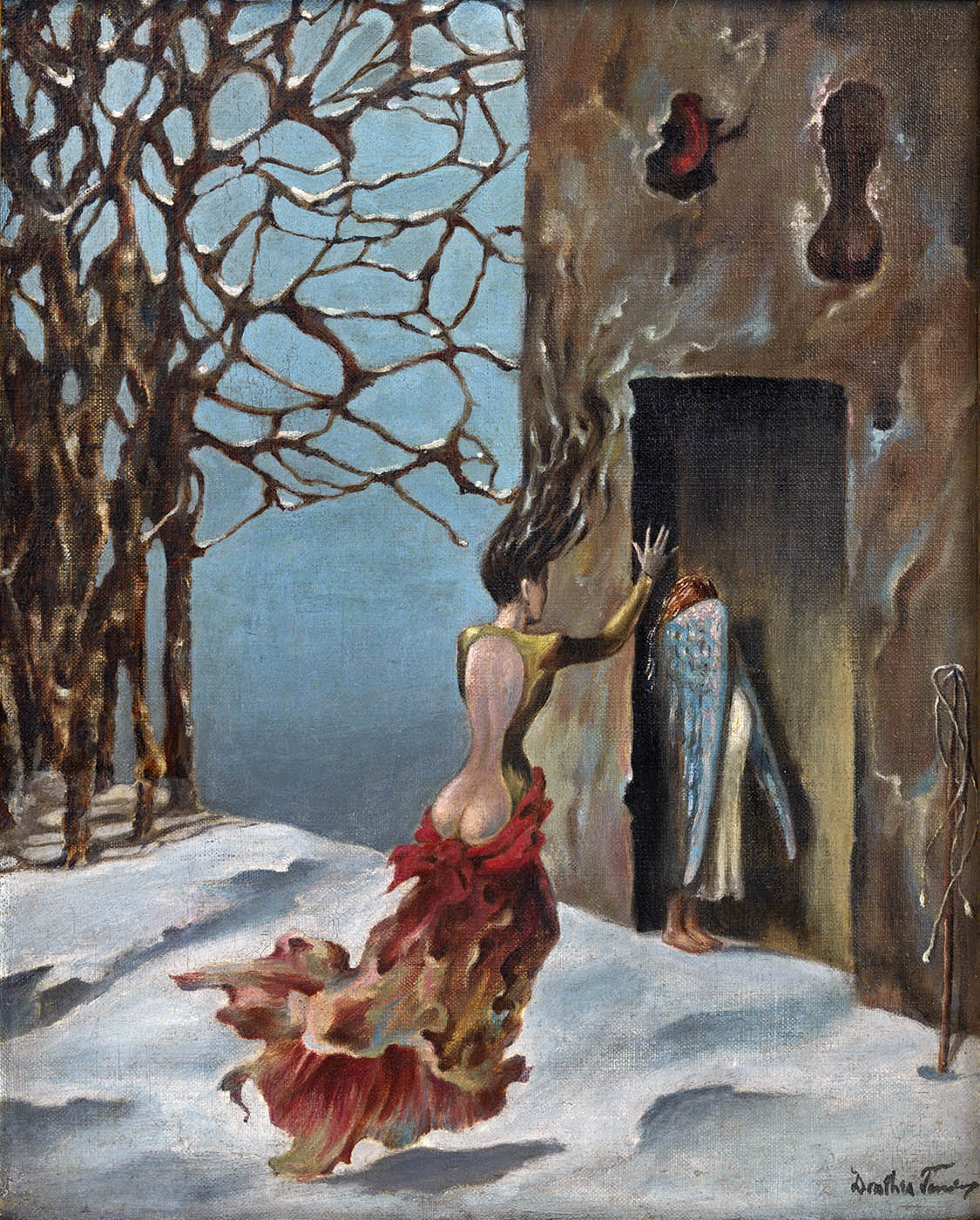
 

Dorothea Tanning (American, 1910-2012) 'Spanish Customs' 1943


Dorothea Tanning (American, 1910-2012)
Spanish Customs
1943
Oil on canvas
25.4 x 20.3cm
The 31 Women Collection
© The estate of Dorothéa Tanning, VEGAP, Madrid, 2024
© 2022-2024 JPS Artworks LLC


Meret Oppenheim (Swiss born Germany, 1913-1985) 'Souvenir of the Lunch in fur' 1936 / 1972


Meret Oppenheim (Swiss born Germany, 1913-1985)
Souvenir of the Lunch in fur
1936 / 1972
Fabric, paper, artificial fur and artificial flowers encased under glass
16.7 × 19.8cm
The 31 Women Collection
© Meret Oppenheim / VEGAP, Madrid, 2024
© 2022-2024 JPS Artworks LLC


Produced in 1972, this piece is a reinterpretation of one of Meret Oppenheim’s most renowned works, Déjeuner en Fourrure, which was on display for the first time in 1936 – the year it was produced – at an exhibition dedicated to Surrealist objects. The work garnered much recognition and was selected by Peggy Guggenheim for Exhibition by 31 Women. Dipleased by always seeing her name associated with this work, the artist wanted to make an ironic version of her infamous mug, recreating it with cheap materials: a perfect kitsch souvenir of the iconic work.

Short biography: Meret Oppenheim (1913-1985). Born in Berlin into a family of the liberal bourgeoisie, Meret Oppenheim studied at Rudolf Steiner’s school in Basel. Between 1932 and 1937 she spent much of her time in Paris, where she became close to the Surrealist movement. The photographs in which she posed for Man Ray and the enormous success of her objects – in particular Déjeuner en Fourrure [Breakfast with Furs] from 1936, acquired by MoMA and also on display at Exhibition by 31 Women – make her a Surrealist muse of sorts. Later, she expressed her irritation at seeing her name associated solely to that work and to Surrealism. In 1937 Oppenheim returned to Basel, where she battled depression and produced very little until 1954, when she resumed her artistic work with great impetus. Myths, dreams, literary sources, Jung’s psychoanalysis, gender roles, and social stereotyping were interwoven within her work, which also incorporated magical objects, poems, photographs, theatre costumes, and textile designs.
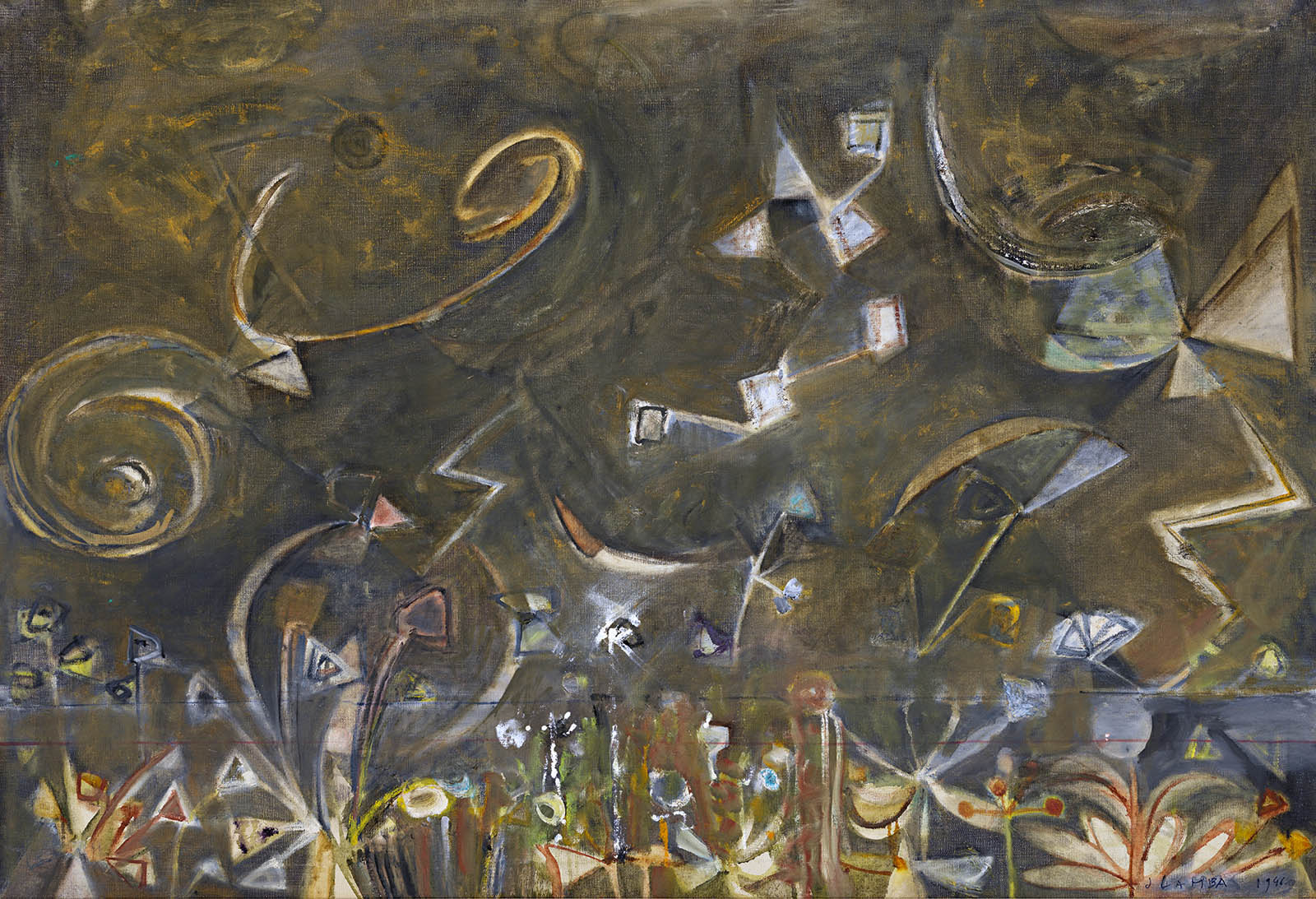
 

Jacqueline Lamba (French, 1910-1993) 'Roxbury, stars' 1946


Jacqueline Lamba (French, 1910-1993)
Roxbury, stars
1946
Oil on canvas
The 31 Women Collection
© Jacqueline Lamba, VEGAP, Madrid, 2024
© 2022-2024 JPS Artworks LLC


In the mid-1940s, Jacqueline Lamba and the North American Surrealist artist David Hare took a trip together through the western United States, where they came into contact with the cosmology and art of the indigenous peoples of North America. The typical brown colours of Amerindian fabrics dominate the palette of this canvas, in which Lamba portrayed the surroundings of her house in Roxbury and captured the unexpected reality that lies hidden behind a seemingly mundane landscape.

Short biography: Jacqueline Lamba (1910-1993). Born in France, Jacqueline Lamba spent her early years in Egypt, where her father – an engineer – passed away in a car accident in 1914. She returned to Paris with her mother and attended the École de l’Union Centrale des Arts Décoratifs. After the passing of her mother in 1927 Lamba survived with the meager wages she earned from her design work. Fascinated by André Breton’s Communicating Vessels, she began an intense and difficult romantic relationship with him. The couple married shortly after and had a daughter named Aube. Jacqueline Lamba always lamented being more recognised as Breton’s muse than for her collages, cadavre exquis, objects, and paintings, which would soon be on display at Surrealist exhibitions. In 1938 she travelled to Mexico with her husband. The couple was hosted by Diego Rivera and Frida Kahlo, whom she established a profound relationship with. Thanks to the patronage of Peggy Guggenheim, Lamba and Breton settled in New York in 1941 as they fled from the Nazis. Lamba exhibited her work at the inaugural show of the Art of This Century Gallery and participated in Exhibition by 31 Women. In 1944 she divorced Breton and began a relationship with David Hare. They settled in Connecticut in 1948 and had a son. Lamba lost interest in Surrealism and veered toward abstraction, focusing on the mythologies of indigenous populations from Mexico and the United Sates. In 1954, after separating from Hare, she returned to Paris and destroyed much of her prior work. She later confessed that she had first tried to please Breton and then Hare with her paintings, ensuring that she would only paint to please herself from that point onward. In 1967 the most comprehensive exhibition dedicated to her work in her lifetime was hosted at the Musée Picasso in Antibes.


Kay Sage (American, 1898-1963) 'The Fourteen Daggers' 1942


Kay Sage (American, 1898-1963)
The Fourteen Daggers
1942
Oil on canvas
40.6 × 33.3cm
The 31 Women Collection
© 2024 Estate of Kay Sage / VEGAP
© 2022-2024 JPS Artworks LLC


The conversion of domestic space into unusual territory reached its pinnacle in works such as this one. Sage imagined a bizarre interior space that opens up to a door behind which lies a staircase leading to the sky. The scene is inhabited by two ghostly figures covered in fabric that cast elongated shadows on the ground and accentuate the air of mystery. The motif of the open door reappears in Dorothea Tanning’s oil painting Spanish Customs, also on display in this room.

Short biography: Kay Sage (1898-1963). Born under the name Katherine Linn Sage into a wealth family from Albany, Kay Sage spent most of her childhood travelling through Europe with her mother, who had divorced her father in 1908. Although she never received a formal education, she went on to study at the Corcoran School of Art in Washington D. C. and at the British Academy in Rome, where she settled in 1920. Aside from coming into contact with the local artistic scene, Sage met Prince Ranieri di San Faustino, whom she married in 1925. During their ten years as a married couple, Sage dedicated little time to art. In 1937 she moved to Paris, where she came into contact with the members of the Surrealist group and began a romantic relationship with the painter Yves Tanguy, whom she married in 1941. With the outbreak of World War II, the couple migrated to Connecticut, where they would reside for the following years. During that period Sage developed her own style: uninhabited landscapes intersected by austere architectural forms, shadows, and floating fabrics that are simultaneously recognisable and enigmatic. Peggy Guggenheim selected her painting from 1942 At the Appointed Time – today preserved at the Newark Museum of Art – for Exhibition by 31 Women. In 1955 Tanguy died suddenly. This event led Sage into depression. Coupled with eyesight problems, she drifted away from painting. In the late 1950s she began to produce collages and write poetry. However, in January of 1963 Sage took her own life.


Bestiaries

Many of the artists featured in this exhibition – particularly those whose works are more closely linked with Surrealism – experimented with multiple personalities, which led them to identify themselves with animals that became their alter egos. As noted by Patricia Mayayo, curator of the show, “the animals embodied the search for other mythical or imaginary worlds where they could finally be free”. Hence, the female body is transformed into an eagle, a crow, or a deer in the works of Barbara Poe-Levee Reis, Milena Pavlovic-Barilli, Julia Thecla, and Frida Kahlo, while in Leonora Carrington’s The Horses of Lord Candlestick, the horse simultaneously embodies the dreaded paternal figure and the artist herself.

Women artists close to Surrealism granted particular importance to the representation of animals. Such is the case with works by Barbara Poe-Levee Reis and Milena Pavlovic-Barilli, in which animals often inhabited fictional landscapes or mythical worlds where women could imagine themselves freed from patriarchal norms. Likewise, in works by Julia Thecla, Frida Kahlo, and Leonor Fini, the depiction of women’s bodies being transformed into crows, deer, and cats refers to an alternate reality in which humans and animals are hybridized. Djuna Barnes imagined a collection of grotesque women with animal-like traits that challenged normative understandings of the feminine in an illustrated book of poems published in 1915. Valentine Hugo was inspired by the animals of the zodiac when designing costumes for a theatrical performance that took place at the Théâtre Champs-Elysées in Paris. Lastly, in Leonora Carrington’s painting, the horse appears as a more ambivalent figure that simultaneously embodies patriarchal authority and the liberation of women.

Since the 1930s, women had a growing presence in Surrealist initiatives. For example, in 1936 Leonor Fini, Valentine Hugo, Meret Oppenheim, and Sophie Taeuber-Arp participated in the exhibition Art, Dada, Surrealism hosted at MoMA. Six years later, Leonora Carrington and Kay Sage exhibited their work at First Papers of Surrealism, organised by André Breton and Marcel Duchamp in New York . Women also collaborated on the movement’s publications, either as authors or as illustrators; an example of which includes the series of eighteen drawings that Hugo produced in 1951 for Paul Éluard’s book of poems Le Phénix. Peggy Guggenheim’s work as a patron undoubtedly helped to reinforce female participation. Many of the artists included in the exhibition of 1943 had attended the meetings between North Americans and exiled Europeans organised by the collector at her house in New York. Some of the works on display at 31 Women were reproduced in the double issue of the Surrealist magazine VVV in 1943; an acknowledgement that most likely contributed to the show’s repercussion.


Valentine Hugo (French, 1887-1968) 'Fish. Costume project for the Théâtre des Champs-Elysées, Paris' 1950


Valentine Hugo (French, 1887-1968)
Fish. Costume project for the Théâtre des Champs-Elysées, Paris
1950
Pastel sobre papel negro
28.5 × 16cm
The 31 Women Collection
© Valentine Hugo, VEGAP, Madrid, 2024
© 2022-2024 JPS Artworks LLC


Short biography: Valentine Hugo (1887-1968). Born in Boulogne-sur-Mer under the name Valentine Gross, Valentine Hugo possessed a natural talent for drawing since her childhood. She studied at the École des Beaux-Arts in Paris, produced illustrations for fashion magazines, and frequently attended Diaghilev’s Ballets Russes. Inspired by the subject of dance, her drawings and paintings were on display at the Thèatre des Champs-Elysées in 1913. A friend of Erik Satie and Jean Cocteau, she also collaborated she also collaborated on thaeatrical sets and designs with Jean Hugo, her husband at the time. In 1926 she met André Breton – whom she would establish a short-lived romantic relationship with – and joined the circle of Surrealists. She participated in the exhibition Fantastic Art, Dada, Surrealism (MoMA, 1936), in the development of numerous cadavre exquis, and the illustration of Surrealist books. The influence of Surrealism can be perceived in her constructions, which are based on the unexpected encounter with objects and materials, as well as in the importance she grants to motifs such as dreams, night-time atmospheres, the marvelous, and ghostly apparitions. The drawing that was featured at Exhibition by 31 Women – which has since been lost – was poignantly titled Dream of 17/1/34. Hugo remained in France during the war, after which she focused on illustration, writing books of poems, and the production of theater costumes and sets.


Leonor Fini (Argentine-Italian, 1907-1996) 'Woman in Armor I' 1938


Leonor Fini (Argentine-Italian, 1907-1996)
Woman in Armor I
1938
Oil on canvas
37 x 27cm
The 31 Women Collection
© Leonor Fini, VEGAP, Madrid, 2024
© 2022-2024 JPS Artworks LLC


Short biography: Leonor Fini (1907-1996). Born in Argentina into a family marked by a dominant father, Leonor Fini fled with her mother to Trieste, Italy, when she was still a young girl. Fini taught herself art. At the age of seventeen she left the family home and moved to Milan and later to Paris, where her interest in the world of dreams and the unconscious led her to come into contact with the Surrealists. Although she was not officially part of the group, she participated in important Surrealist exhibitions such as Fantastic Art, Dada, Surrealism at MoMA in 1936. Hybrid figures such as the sphynx dominate her paintings, a motif she also explored through costumes and self-representation. The painting that was on display at Exhibition by 31 Women was in fact titled The Shepherdess of the Sphinxes. During the war she remained in Europe. Between 1944 and 1972, aside from continuing to paint, she focused intensely on the design of theatrical costumes and sets.
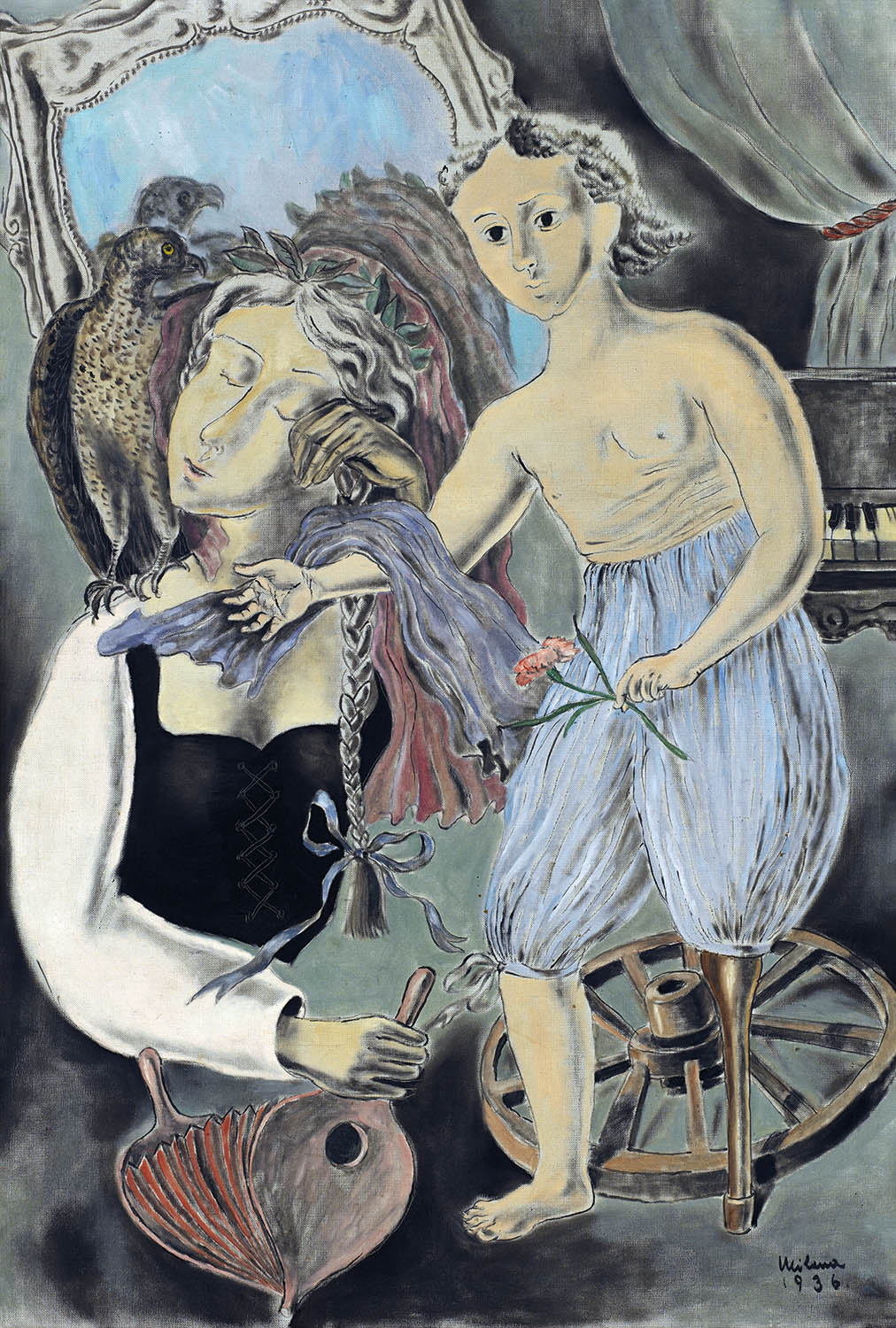
 

Milena Pavlovic-Barilli (Serbian, 1909-1945) 'Juno and Vulcan' 1936


Milena Pavlovic-Barilli (Serbian, 1909-1945)
Juno and Vulcan
1936
Oil on canvas
95.3 × 64.8cm
The 31 Women Collection
© 2022-2024 JPS Artworks LLC


The painting by Pavlovic draws from various sources: Mannerist art from the 16th century, Magical Realism, and Surrealism. It also incorporates motifs and mythical figures from classical antiquity, such as the Roman goddess Juno and her son Vulcan, protagonists of this canvas. The use of diluted colours, the impression that the characters are floating in space, and the apparently incongruent combination of a wide range of elements (the eagle, the piano, the wheel, the drapery, the bouquet of flowers, and the mirror) grant this painting a dreamlike and mysterious atmosphere.

Short biography: Milena Pavlovic-Barilli (1909-1945). Born in Serbia into a family with artistic inclinations, Milena Pavlovic-Barilli studied art in Munich between 1926 and 1928. There she was introduced to painting, fashion illustration, and drawing, creating an iconography based on stylised figures and wavy lines in which the influence of Art Nouveau is combined with echoes of orient. In 1931 she settled in Paris, where she came into contact with figures of Surrealism, such as André Breton, Jean Cocteau, and Paul Valéry. Regardless, her work drifted into a style that critics considered closer to Magical Realism. Everyday life was fused with fantasy in her paintings, while space was filled with enigmatic symbols: ancient columns that levitate, veiled faces of women, winged youths painted in pale hues, all of which grants her work a supernatural feel. She lived in New York between 1939 and 1945, where she focused on fashion illustration and costume and set designs for the theater. Her paintings, populated with elongated figures in architectural environments that seem rooted in the Renaissance, reflect her admiration for Mannerism. In 1940 she exhibited her work at the Julien Levy Gallery and established ties with the group of Surrealist immigrants. Her work Insomnia (1942) – which has since been lost – was on display at Exhibition by 31 Women. Her premature death in an accident in 1945 cut her career shot. In 1962 the Milena Pavlovic-Barilli Museum opened its doors at the house where she was born. The museum includes a broad selection of her paintings, drawings, letters, and personal objects.
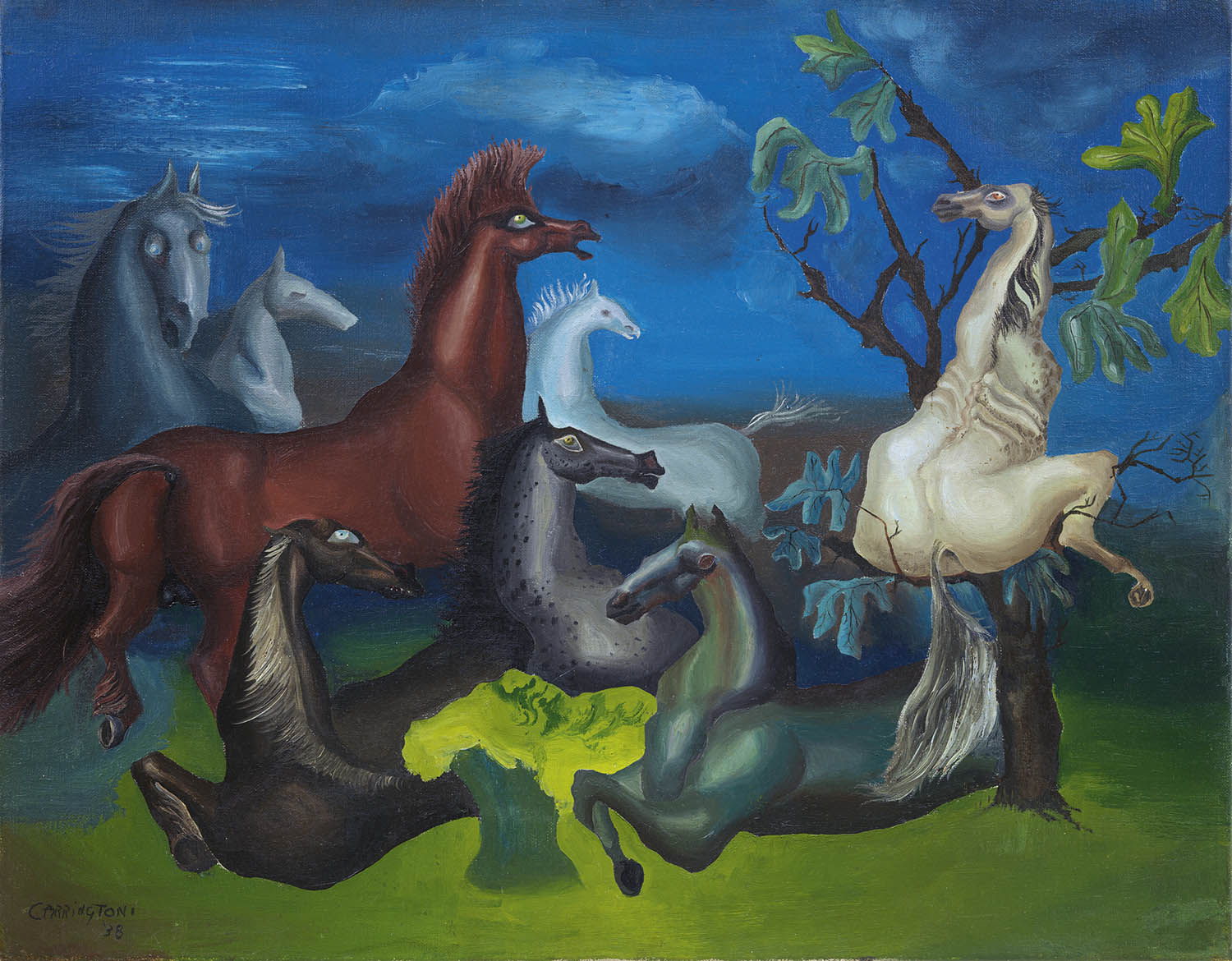
 

Leonora Carrington (Mexican born United Kingdom, 1917-2011) 'The Horses of Lord Candlestick' 1938


Leonora Carrington (Mexican born United Kingdom, 1917-2011)
The Horses of Lord Candlestick
1938
Oil on canvas
35.5 ×46cm
The 31 Women Collection
© 2024 Estate of Leonora Carrington / VEGAP
© 2022-2024 JPS Artworks LLC


Short biography: Leonora Carrington (1917-2011). Born into a wealthy English family, Leonora Carrington was fascinated by fairy tales and fantasy literature since she was a young girl. She studied art in Florence, Paris, and London under the guidance of Amédée Ozenfant. Her first works recreate legendary worlds populated by hybrid animal species and powerful female figures. In 1936 she discovered Surrealism during a visit to the International Surrealist Exhibition. Two years later she settled in the south of France with Max Ernst – whom she had established a relationship with – in an old house that the couple transformed into a work of total art. Carrington began to publish her first books containing short stories. In 1940, after the outbreak of the war and the arrest of Max Ernst, she fled to Madrid, where she became the victim of rape and was subsequently admitted to a psychiatric hospital in Santander; she would recount this experience in her book Down Below. After managing to migrate to New York in 1941 she participated in a number of initiatives promoted by exiled Surrealists, such as the exhibition First Papers of Surrealism and the magazine VVV. Peggy Guggenheim included two of her works The Horses of Lord Candlestick (1938, above) and the Joy of Skating (1941, below) in Exhibition by 31 Women. In 1943 Carrington settled in Mexico, where she would live until her death. She integrated into the community of exiled artists along with Kati Horna, Remedios Varo, and Benjamin Péret. Her paintings re-elaborated old themes and she delved into new ones: fantasy literature, female divinities, alchemy, magic, and Mexican mythologies.
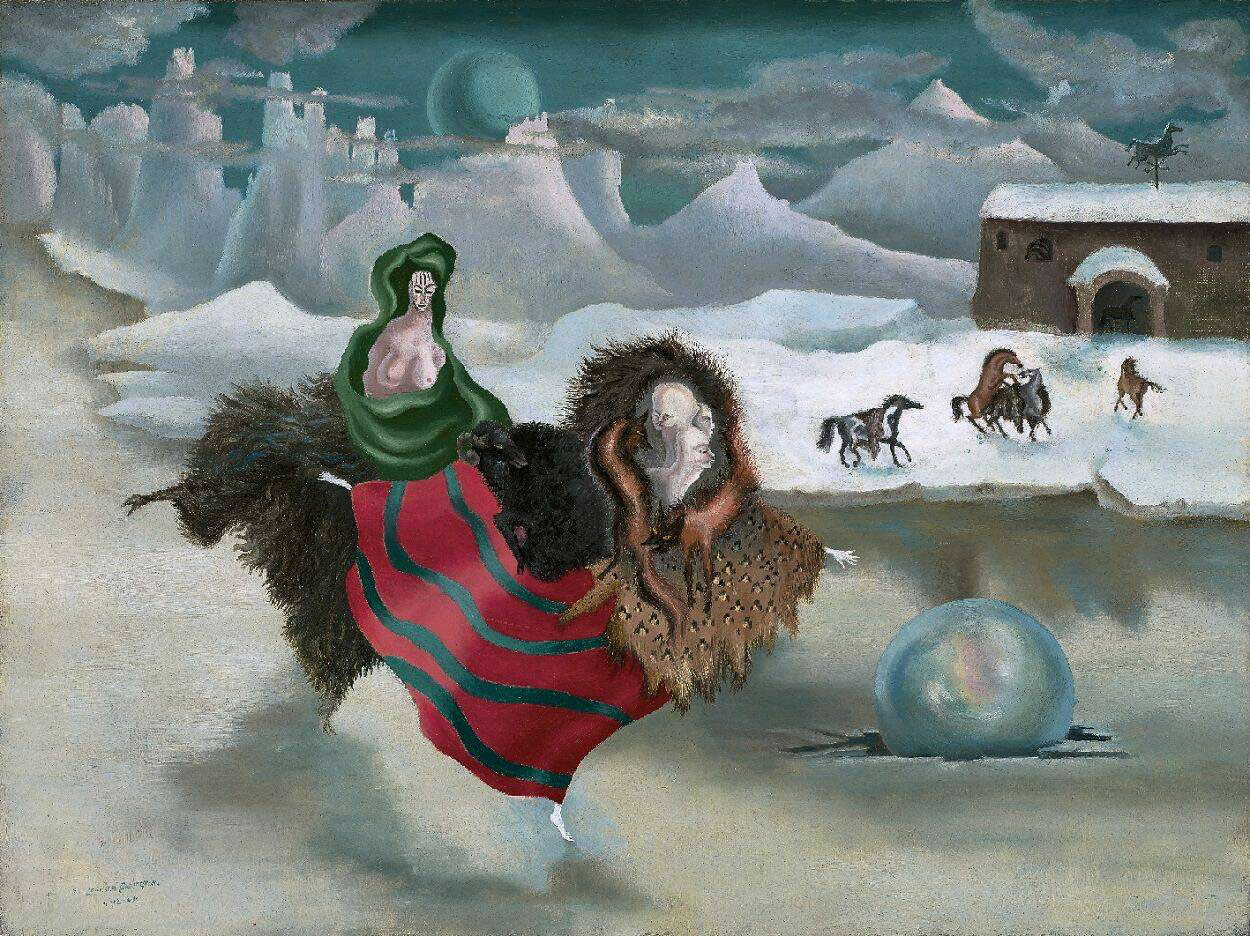
 

Leonora Carrington (Mexican born United Kingdom, 1917-2011) 'Joy of Skating' 1941


Leonora Carrington (Mexican born United Kingdom, 1917-2011)
Joy of Skating
1941
Oil on canvas
© 2024 Estate of Leonora Carrington / VEGAP
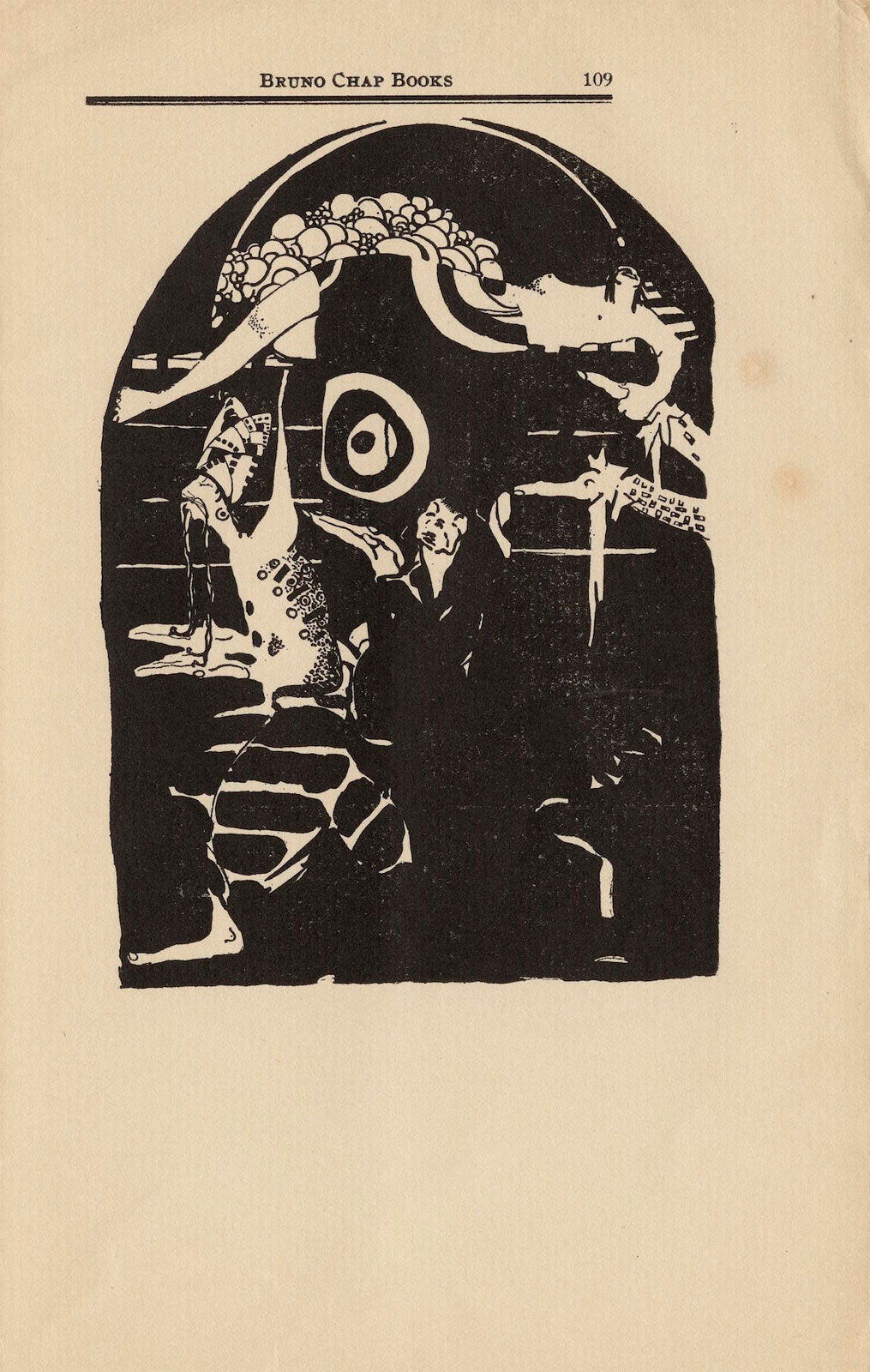
 

Djuna Barnes (American, 1892-1982) 'The Book of Repulsive Women, 4th image in the 1st edition' 1915


Djuna Barnes (American, 1892-1982)
The Book of Repulsive Women, 4th image in the 1st edition
1915
The 31 Women Collection


In the modern age of Taylorism and Fordism, women played a vital role in the functioning of the American system by efficiently arranging domestic life with a precision similar to that of the nation’s industry. In contrast with this mechanical monotony, Barnes imagined the “repulsive women” that appear in her poems and drawings as the antithesis of the model housewife. Some of these figures, such as the woman with donkey ears and animal-like features that can be observed in one of her illustrations, manage to question the very the boundaries of humanity.

Short biography: Djuna Barnes (1892-1982). Born in a colony of artists north of New York, Djuna Barnes studied art at the Pratt Institute and at the Art Students League. In 1915 she settled in the bohemian neighborhood of Greenwich Village, where she began her career as an artist and a writer. That same year she published The Book of Repulsive Women, a collection of poems that included her own illustrations, and began to work as a journalist. Best known for her experimental novel from 1936, Nightwood, Barnes cultivated all genres: narrative, poetry, theater, and journalism. In 1921 she moved to Paris, where she began a romantic relationship with the sculptor Thelma Wood and began to frequent the avant-garde circles of the Rive Gauche, establishing friendships with Gertrude Stein, Berenice Abbott, Natalie Clifford Barney, Elsa von Freytag-Loringhoven, and Peggy Guggenheim herself. With the outbreak of World War II, she moved back to New York, where her work Portrait of Alice was put on display at Exhibition by 31 Women. 


The Middle Way: Languages of Abstraction

Although many of the artists who participated in 31 Women fell within the sphere of influence of Surrealism, some of them were more inclined toward abstract languages. In the 1930s the North American art scene was dominated by social realism and regionalism. In an effort to promote abstraction, the association American Abstract Artists (AAA) was founded, an association which included members such as Suzy Frelinghuysen, Louise Nevelson, Irene Rice Pereira, and Esphyr Slobodkina. Abstraction began to progressively dominate the artistic landscape of North America and was configured in a way that highlighted the ideal of masculinity, whose epitome was Jackson Pollock. In the face of a discourse that hailed the language of expressionism as a reflection of the North American male, many of these artists opted to explore a “middle way” that could account for all of the possibilities afforded by abstraction. A great example of this can be found in The Middle Way / The Great Mother Rules the Sky (Astor Mural) by Buffie Johnson.

The association American Abstract Artists (AAA) was founded in 1936 with the objective of fostering the development of abstraction in the United States. It included members such as Suzy Frelinghuysen, Louise Nevelson, Irene Rice Pereira, and Esphyr Slobodkina. It is no coincidence that Slobodkina was one of the artists included by Ad Reinhardt in his vignette “How to Look at Modern Art in America” (1946), in which he traced the family tree of North American modern art. Other creators participated in key initiatives for the renovation of abstract practice in the United States, such as Gretchen Schoeninger, who attended the experimental art school New Bauhaus, founded by László Moholy-Nagy – a former professor at the historic German Bauhaus – in Chicago in 1947. Regardless, few artists who took part in 31 Women occupy an important place in the dominant narratives of North American abstract art. As Xenia Cage jokingly suggested in a collage produced from one of Jackson Pollock’s action paintings, perhaps the value of these artist’s works is compromised by the strong exaltation of masculinity, which at the time was characteristic of discourse. Buffie Johnson became aware of the marginalisation suffered by women in Abstract Expressionist circles early on. In the 1940s, determined to give value to female legacies, she undertook a research project on the imagery of the goddess mothers of antiquity, culminating in a book published in 1988.

The exhibition concludes with a relationship map detailing the connections established between the thirty-one artists who participated in the exhibition and Peggy Guggenheim. By highlighting the network of professional and personal links they constructed, the chart depicts the important role these artists played as agents in the art scene of the time beyond traditional conceptions of women artists as supporting characters.
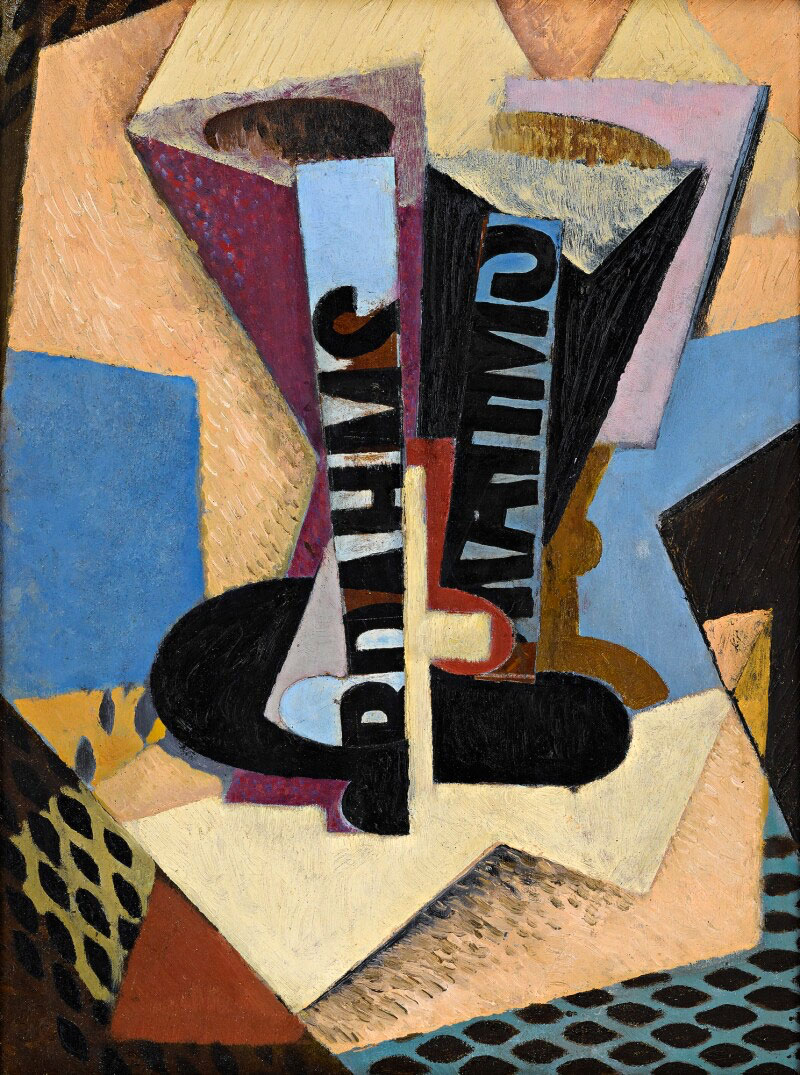
 

Suzy Frelinghuysen (American, 1911-1988) 'Untitled (Brahms Abstract)' 1945


Suzy Frelinghuysen (American, 1911-1988)
Untitled (Brahms Abstract)
1945
Oil and collage on Masonite


Suzy Frelinghuysen was part of the group of artists known as The Park Avenue Cubists, who proposed a reinterpretation of European Cubist heritage from a North American perspective. In her works, Frelinghuysen combined the influence of Synthetic Cubism, which she expanded on through the use of blue, lavender, and rusty hues, with constant references to the world of music; a field in which the artist also excelled as an opera singer.

Short biography: Suzy Frelinghuysen (1911-1988). Born into a wealthy family from Newark, New Jersey, Suzy Frelinghuysen was part of the group of artists knowns as The Park Avenue Cubists, along with Albert Eugene Gallatin, Charles G. Shaw, and George L. K. Morris – whom she married in 1935 – who advocated for a reinterpretation of European Cubist heritage from a North American perspective. In 1937 Frelinghuysen joined the association American Abstract Artists (AAA), founded in an effort to promote the development of abstract art in the United States, whose members included Louise Nevelson, Irene Rice Pereira, and Esphyr Slobodkina. After the war she temporarily quit art to focus on music, becoming a renowned opera singer. In her work, which was included in important group shows such as Exhibition by 31 Women, the influence of Synthetic Cubism was combined with constant references to the world of music.
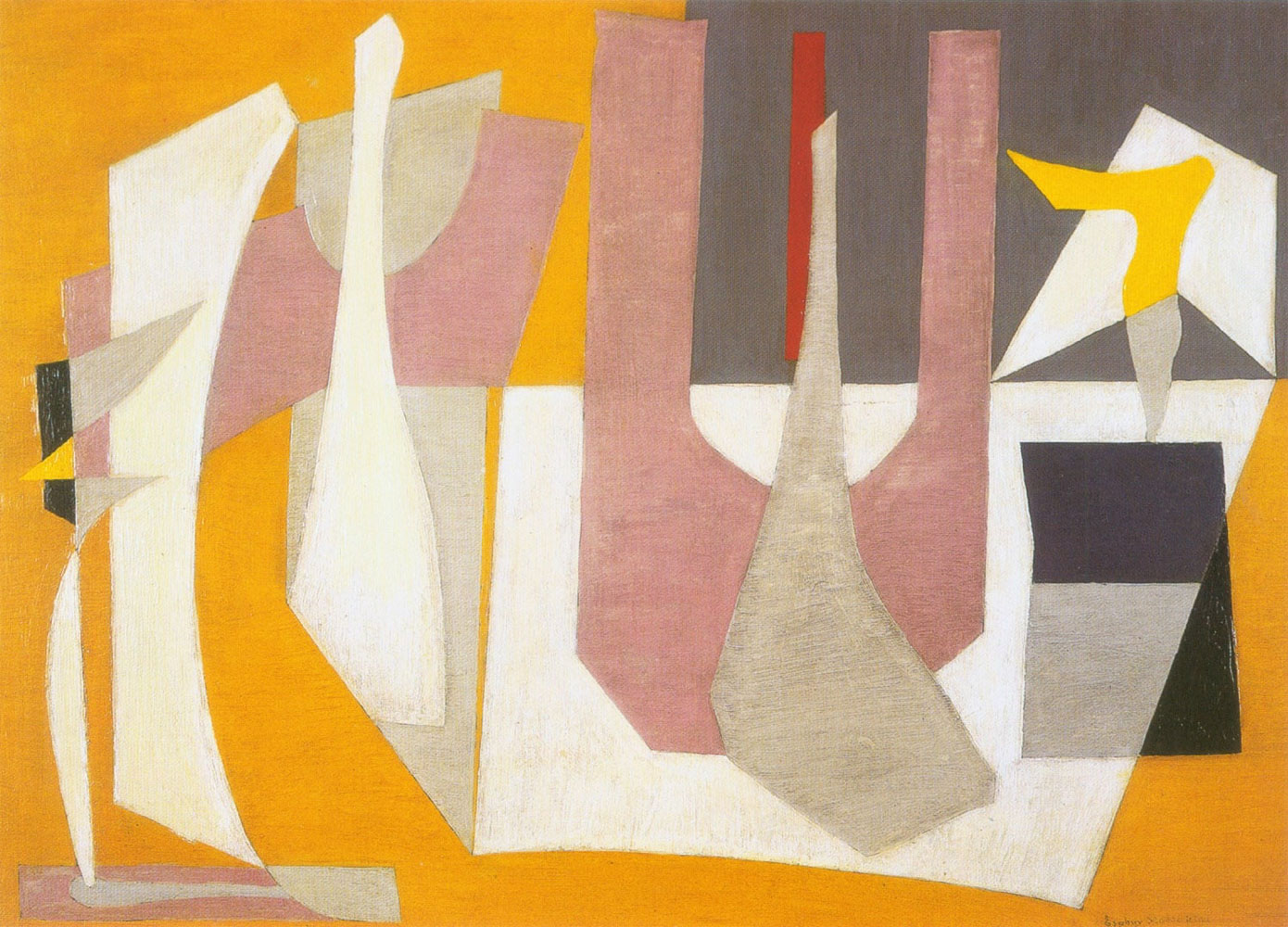
 

Esphyr Slobodkina (American born Russia, 1908-2002) 'Peacock Garden' 1938


Esphyr Slobodkina (American born Russia, 1908-2002)
Peacock Garden
1938
Oil on board


From the late 1930s, Slobodkina developed a style of her own based on the poetic combination of curved forms painted in lyrical hues. Along with the influence of Cubism and the technique of collage, the artist also demonstrated her interest in sewing and working with scraps, which she learned from her mother, a professional seamstress. One of the defining traits of her work was its interdisciplinary nature: aside from painting, Slobodkina created assemblages, produced murals, illustrated children’s books, and designed costumes and jewellery.

Short biography: Esphyr Slobodkina (1908-2002). Originally from Siberia, Esphyr Slobodkina moved to Manchuria with her family in order to escape from the Soviet Revolution. Since she was a child, she studied in the fields of art and music. In 1928 she moved to New York on her own, where she continued her studies at the National Academy of Design. From the late 1930s she developed her own style based on a combination of wavy forms in lyrical tones that, along with the influence of Cubism and collage, reflect her interest in the tradition of decorative arts from her native country. Her work stands out for its interdisciplinary nature: aside from painting, Slobodkina focused on assemblage, murals, the illustration of children’s books, and on jewelry and costume design. As one of the founders of the association American Abstract Artists (AAA), which she presided – also acting as treasurer and secretary – Slobodkina played an important role in the promotion of abstraction in the United States. Alfred H. Barr, director of MoMA, recommended her work to Peggy Guggenheim, who decided to include Memories (1942) – which has since been lost – in Exhibition by 31 Women.
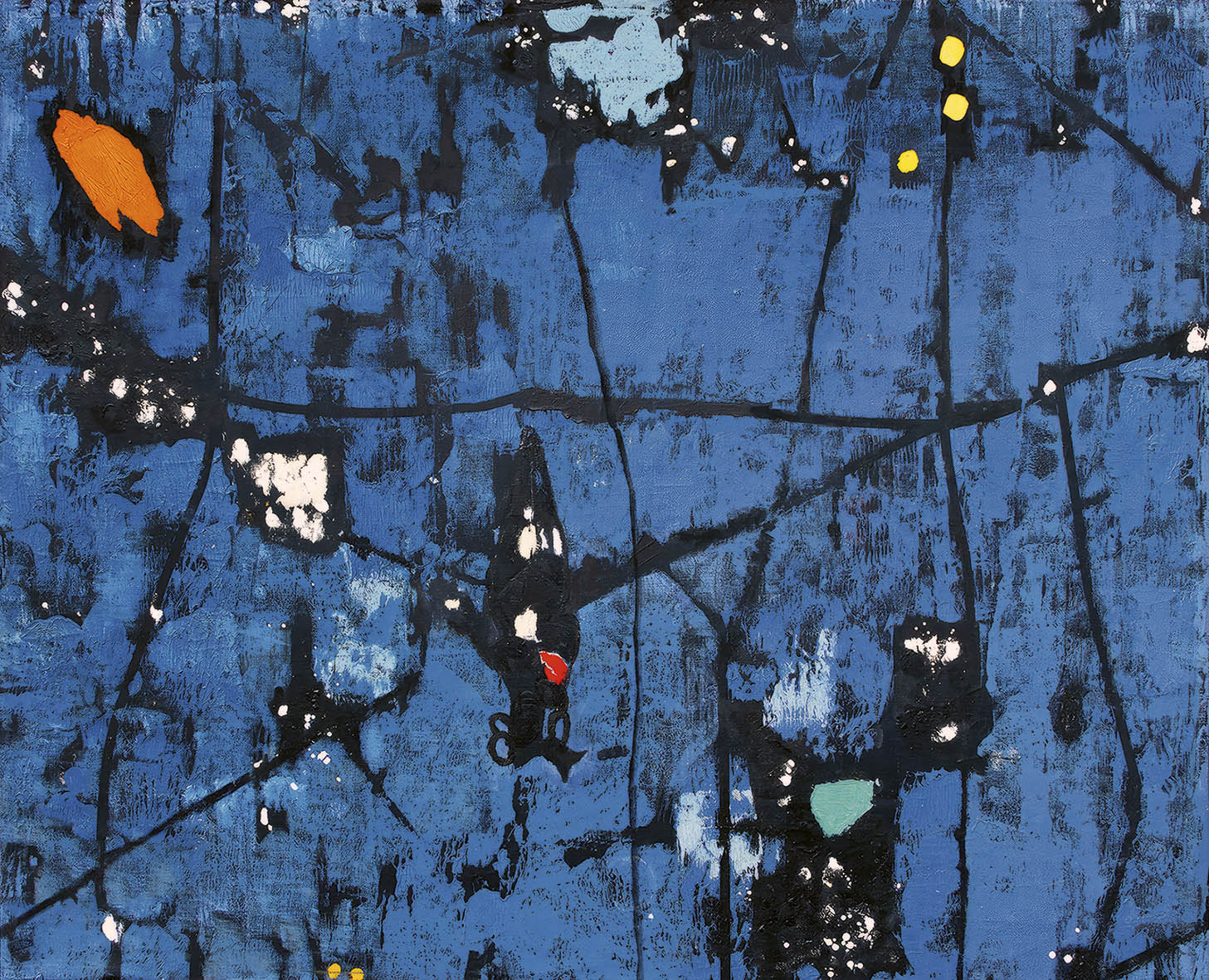
 

Buffie Johnson (American, 1912-2006) 'The Middle Way / The Great Mother Rules the Sky (Astor Mural)' 1949-1959


Buffie Johnson (American, 1912-2006)
The Middle Way / The Great Mother Rules the Sky (Astor Mural)
1949-1959
Oil on canvas
124.5 × 152.4cm
The 31 Women Collection
© Estate of Buffie Johnson


Between 1949 and 1959, Buffie Johnson produced what is considered one of her most important works: a great mural intended to decorate the Astor Theater in New York. This project was a true challenge for all those who negated women’s ability to create large format paintings. Thanks to the recovery of the mural by part of the Women’s Caucus prior to the theater’s demolition in 1982, some fragments, such as the one on display in this exhibition, are today part of public and private collections.

Short biography: Buffie Johnson (1912-2006). Born in New York, Buffie Johnson studied art at the University of Los Angeles. She later spent two years in Paris, where she established a friendship with Sonia Delaunay and other painters of the Parisian avant-garde. After completing her studies at the Académie Julian, she settled in New York in 1939. Johnson began to frequent several artistic circles, such as Peggy Guggenheim’s, who invited her to participate in Exhibition by 31 Women with the painting Déjeuner sur mer (1942). Outraged by the response of a Time Magazine critic who refused to review the exhibition arguing that he had never heard of outstanding women creators, Johnson attempted to publish an article on women artists that was rejected by several art magazines. This experience entailed the first awakening of her feminist consciousness. During the 1950s her work pivoted toward Abstract Expressionism. In parallel to her artistic career, she received a grant to study the imagery of the goddess mothers of antiquity, a work she would publish in 1988. Johnson’s early interest in the matriarchal tradition, which would also be reflected in many of her paintings, was embraced by second wave feminism in the late 1960s; a movement the artist would be actively involved in.


Sophie Taeuber-Arp (Swiss, 1889-1943) and Jean (Hans) Arp (German-French, 1886-1966) 'Vertical-Horizontal Composition [Conceived by Sophie Taeuber-Arp and executed in relief by Jean Arp]' 1927-1928 / 1943-1956


Sophie Taeuber-Arp (Swiss, 1889-1943) and Jean (Hans) Arp (German-French, 1886-1966)
Vertical-Horizontal Composition [Conceived by Sophie Taeuber-Arp and executed in relief by Jean Arp]
1927-1928 / 1943-1956
Oil on wood relief mounted on pavatex
The 31 Women Collection
© Arp Jean / Hans Arp, VEGAP, Madrid, 2024
© 2022-2024 JPS Artworks LLC


Sophie Taeuber-Arp produced works that were marked by the dissolution of artistic hierarchies and were very much her own. She experimented with painting, dance, sculpture, tapestry design, and puppet making. Vertical-Horizontal Composition might be related to the designs that the artist produced for the Café Aubette in Strasbourg. Taeuber-Arp’s protagonism in this work of total art, conceived on the basis of a dialogue between different artistic disciplines, has nevertheless been overshadowed by Jean Arp and Theo Van Doesburg’s participation in the project.

Short biography: Sophie Taeuber-Arp (1889-1943). Born in the Alpine city of Davos, Sophie Taeuber-Arp studied in Munich and Hamburg, where she absorbed the ideals of artistic fusion from the Arts and Crafts movement. She moved to Zurich during the outbreak of World War I and became involved in the Dada movement along with her future husband Hans Arp. She taught arts and crafts at the Zurich School of Commerce – a job that would support the couple for the following years – while attending expressive dance classes under Rudolf von Laban. She developed a style of work very much of her own, marked by the dissolution of artistic hierarchies. Taeuber-Arp experimented with painting, dance, furniture design, tapestries, interior design, and the construction of puppets and assemblages. In 1929 she quit teaching and moved to a house on the outskirts of Paris with her husband. Like other creators linked to non-objective art, she reacted to the push of Surrealism by becoming involved in associations such as Cercle et Carré and Abstraction-Création. In 1941 the couple left Paris fleeing from the arrival of the Nazis. They stayed at Peggy Guggenheim’s house in Veyrier for a few days before heading to the south of France. They decided not to leave Europe and sought refuge in Zurich. In 1943 Taeuber-Arp died in Zurich due to accidental poisoning from a heater.


Catalogue

Along with the reproduction of works on display and other materials within the exhibition, the catalogue includes an essay by Patricia Mayayo, curator of the show and professor of Art History at the Universidad Autónoma in Madrid, and a text by Lekha Hileman Waitoller, curator at the Guggenheim Museum in Bilbao. The publication also includes a succinct biography of each artist and a relationship map depicting the connections between Peggy Guggenheim and the artists featured in Exhibition by 31 Women.


Meret Oppenheim (Swiss born Germany, 1913-1985) 'Untitled (Helene Mayer)' 1936


Meret Oppenheim (Swiss born Germany, 1913-1985)
Untitled (Helene Mayer)
1936
The 31 Women Collection


Helene Julie Mayer (1910-1953) was a German-born fencer who won the gold medal at the 1928 Olympics in Amsterdam, and the silver medal at the 1936 Olympics in Berlin. She competed for Nazi Germany in Berlin, despite having been forced to leave Germany in 1935 and resettle in the United States because she was of Jewish descent.
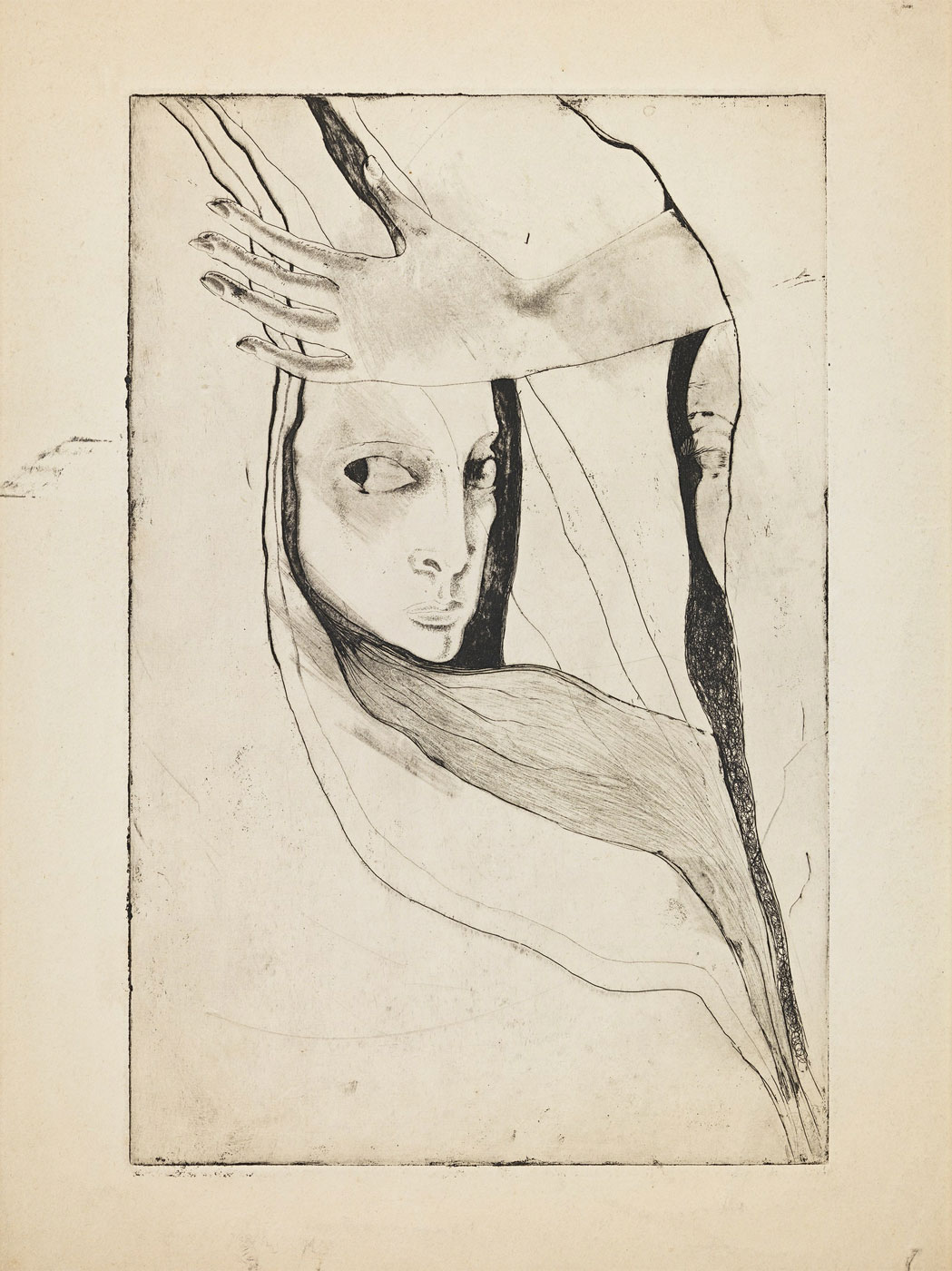
 

Hedda Sterne (American born Romania, 1910-2011) 'Self Portrait' 1936-1939


Hedda Sterne (American born Romania, 1910-2011)
Self Portrait
1936-1939
The 31 Women Collection


Short biography: Hedda Sterne (1910-2011). Born in Bucharest, Romania, under the name Hedwig Lindenberg, Hedda Sterne came into contact with her city’s Dada and Constructivist scenes from a young age. In 1928 she moved to Vienna and later to Paris, where she continued her studies attending the Académie de la Grande Chaumière and the studios of Fernand Léger and André Lhote. The following year she began to study philosophy and art history at the University of Bucharest. In 1932 she married her classmate Frederick Stern, whom she separated from a few years later. She came into contact with Parisian Surrealism through Romanian Surrealist Victor Brauner, which would greatly influence her early work. Thanks to recommendations by Brauner and Jean Arp, Peggy Guggenheim included several of Sterne’s collages in a group exhibition at her Guggenheim Jeune gallery in London. In 1941 she settled in New York, in an apartment close to Guggenheim’s mansion, who invited her to participate in her meetings of “exiled Surrealists” and included her work in Exhibition by 31 Women and The Women. Sterne also participated in important Surrealist exhibitions such as First Papers of Surrealism (1942). After the war she joined the Betty Parsons gallery, taking part in the circles of Abstract Expressionism. She was the only woman present in the famous image of the North American abstraction group “The Irascibles”, published in Life Magazine in 1951. Sterne would later express her discomfort in being more famous for her presence in said photograph than for her extensive career.
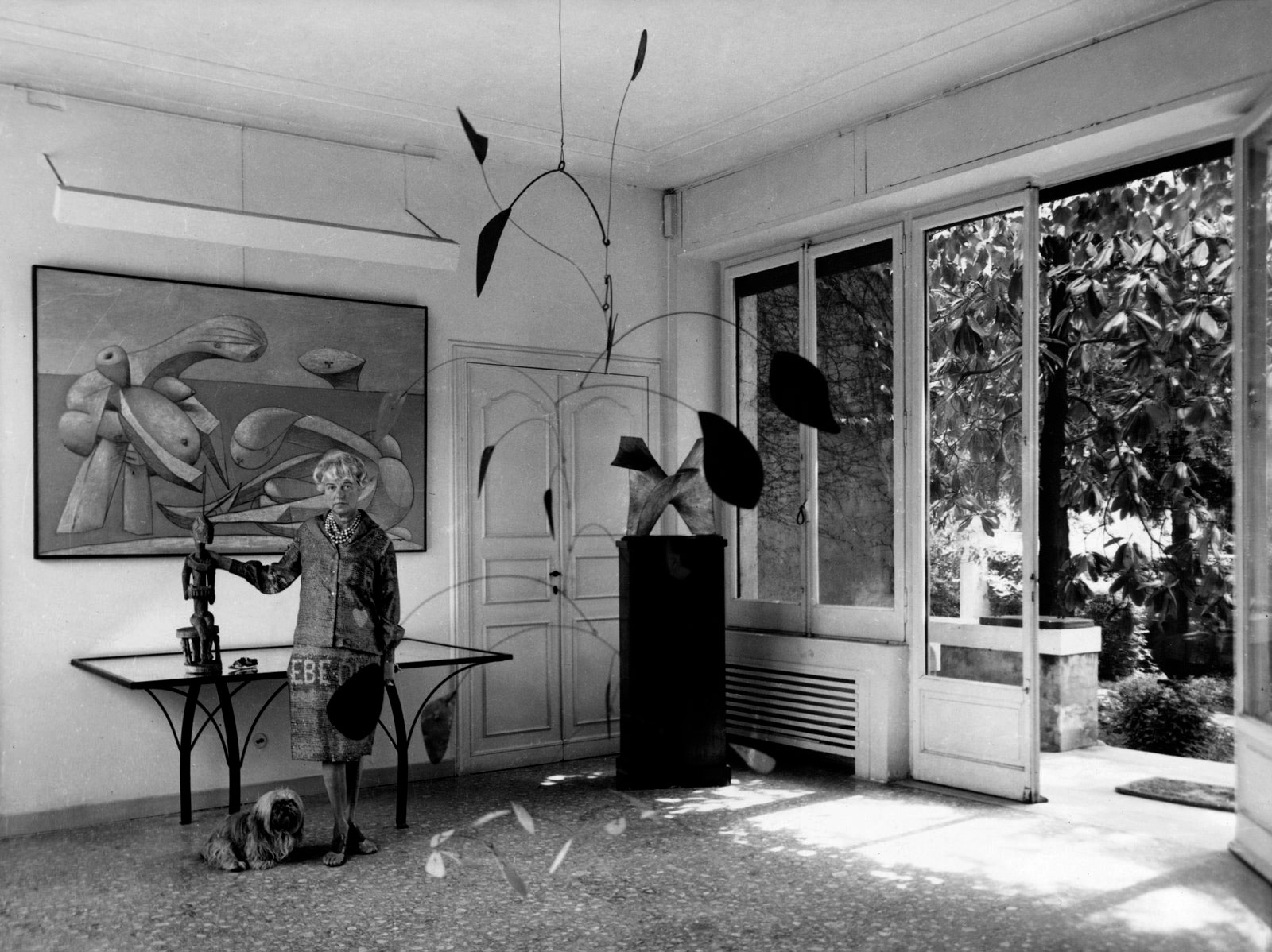
 

Peggy Guggenheim (1898-1979) in the entrance hall of her eighteenth century Venetian palace


Peggy Guggenheim (1898-1979) in the entrance hall of her eighteenth century Venetian palace. Hanging from the ceiling is a 1941 Alexander Calder mobile and behind her is a 1937 painting by Picasso titled On The Beach.
The 31 Women Collection
Photo: Keystone Features/Getty Images
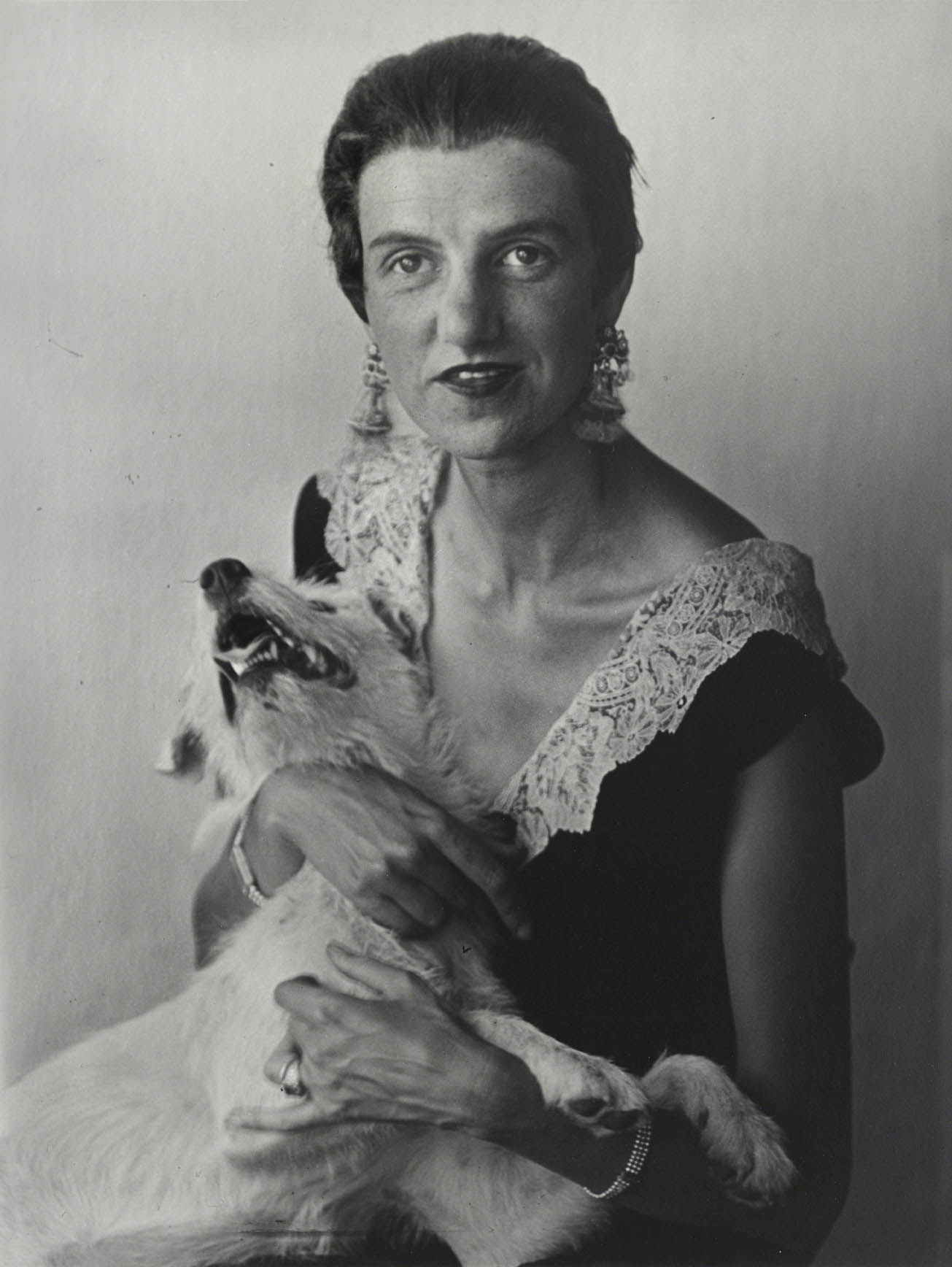
 

Berenice Abbott (American, 1898-1991) 'Peggy Guggenheim' 1926


Berenice Abbott (American, 1898-1991)
Peggy Guggenheim
1926
Gelatin Silver Print
The 31 Women Collection
© 2024 Estate of Berenice Abbott


Berenice Abbott (American, 1898-1991) [attributed to] 'Peggy Guggenheim poses at her Art of This Century Gallery in New York, October 22, 1942'


Berenice Abbott (American, 1898-1991) [attributed to]
Peggy Guggenheim poses at her Art of This Century Gallery in New York, October 22, 1942
© AP Photo / Tom Fitzsimmons
© 2024 Estate of Berenice Abbott


Fundación MAPFRE
Recoletos Exhibition Hall
Paseo Recoletos 23, 28004 Madrid

Opening hours:
Mondays (except holidays): 2pm – 8pm
Tuesday to Saturday: 11am – 8pm
Sunday and holidays: 11am – 7pm

Fundación MAPFRE website

LIKE ART BLART ON FACEBOOK

Back to top

Exhibitions: ‘Now, the new form of the past’ and ‘Senses’ at Kunstwerk! Liemers Museum, Netherlands

Exhibition dates: 16th June – 9th September 2018

Artists: Drager Meurtant (assemblages, NL) and Petra Senn (photography, D); Jeanine Keuchenius (paintings, NL) Kelly Elmendorp, Stijn Geutjes, Robert van der Kroft, Drager Meurtant, Winny de Meij, Petra Senn.


Drager Meurtant (Dutch, b. 1951) 'Green bird day' 2017


Drager Meurtant (Dutch, b. 1951)
Green bird day
2017

When the green bird / came to live / we agreed to call / it a day


Accumulating, life

I first had contact with Gerard Rutteman (artist alias Drager Meurtant) when he emailed me about a posting I had done on Art Blart about the Japanese photographer Shomei Tomatsu in 2015. Since then we have become firm friends. In 2017 on a trip to Europe, I caught a high speed train from Paris to the French city of Reims to meet him and his vivacious wife Jeanine. We spent a glorious day wandering the city, taking photographs, talking art, and eating a hearty lunch at a local brasserie. This pair of self-taught artists, creative human beings, are so talented.

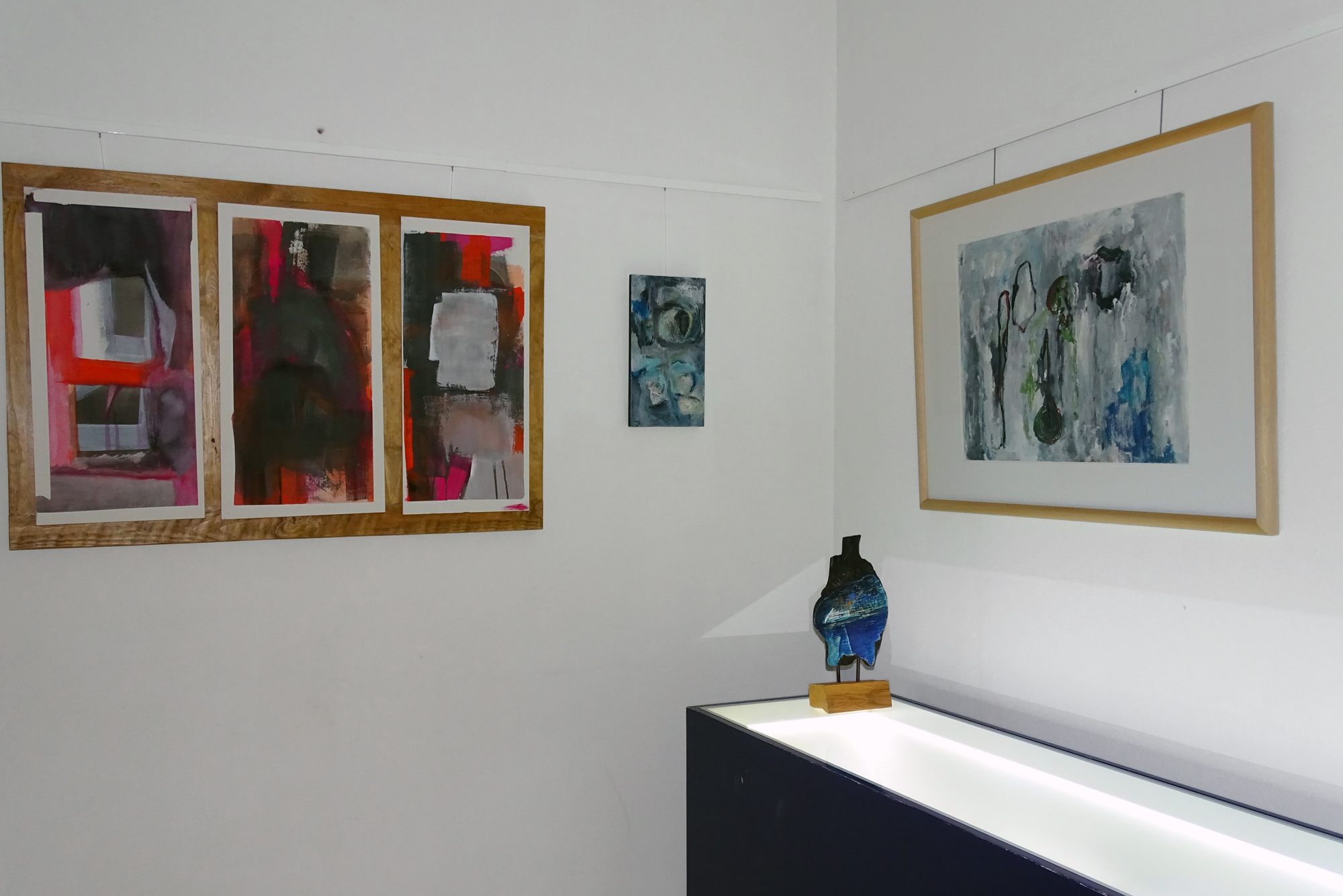
While I greatly admire Jeanine’s paintings with their powerful and poetic muscularity (in my mind, I note the influence of artists such as Pierre Soulages, Cy Twombly and Anselm Kiefer) and their use of colour which can be seen in other paintings on her website – and observe the photographs of Petra Senn (I would need to see more to make constructive comment) – it is the work of Drager Meurtant to which I am going to focus my attention in this text.

The path of Drager Meurtant reminds me of that of Australian artist Rosalie Gascoigne.

“Gascoigne worked as a teacher before moving to Australia in 1943 following her marriage to astronomer Ben Gascoigne. She discovered a natural talent for creating assemblages through the ensuing seventeen years spent in relative isolation on the stony terrain of Mount Stromlo, home to Stromlo Observatory, and the wheat belt of Monaro near Canberra, a landscape she designated as the crucible from which her art emerged… Gascoigne’s lifelong passion for collecting and arranging developed initially from the Sogetsu school of ikebana, with its emphasis on form and line rather than colour. Its general principles of valuing immediate response, the experience of materials, process and experiment with variations can be seen as underpinning all of her later work. The collection of discarded materials, such as farm machinery parts, for use as suitable vessels for her arrangements, led her to also make sculptural assemblages… Gascoigne had no formal art training, often asserting that her fifty-year apprenticeship was in looking. She began exhibiting in 1974 at the age of 57.”1

Gascoigne went on to become one of Australia’s most loved and respected artists.

Drager Meurtant spent most of his life as a veterinarian-biomedical researcher. He is an autodidact and, like Gascoigne, his apprenticeship as an artist was one of looking and writing poetry. Only in the last five years has he really been able to fully concentrate on his art practice. To my mind, he has the potential to become a much beloved artist of his country, and an international artist of high repute. I am palpably excited by his art and its development. There is a frisson of expectation every time I see new work; that frisson enhanced by the amplitude of the music he creates and the temperature of the environment that surrounds his work.

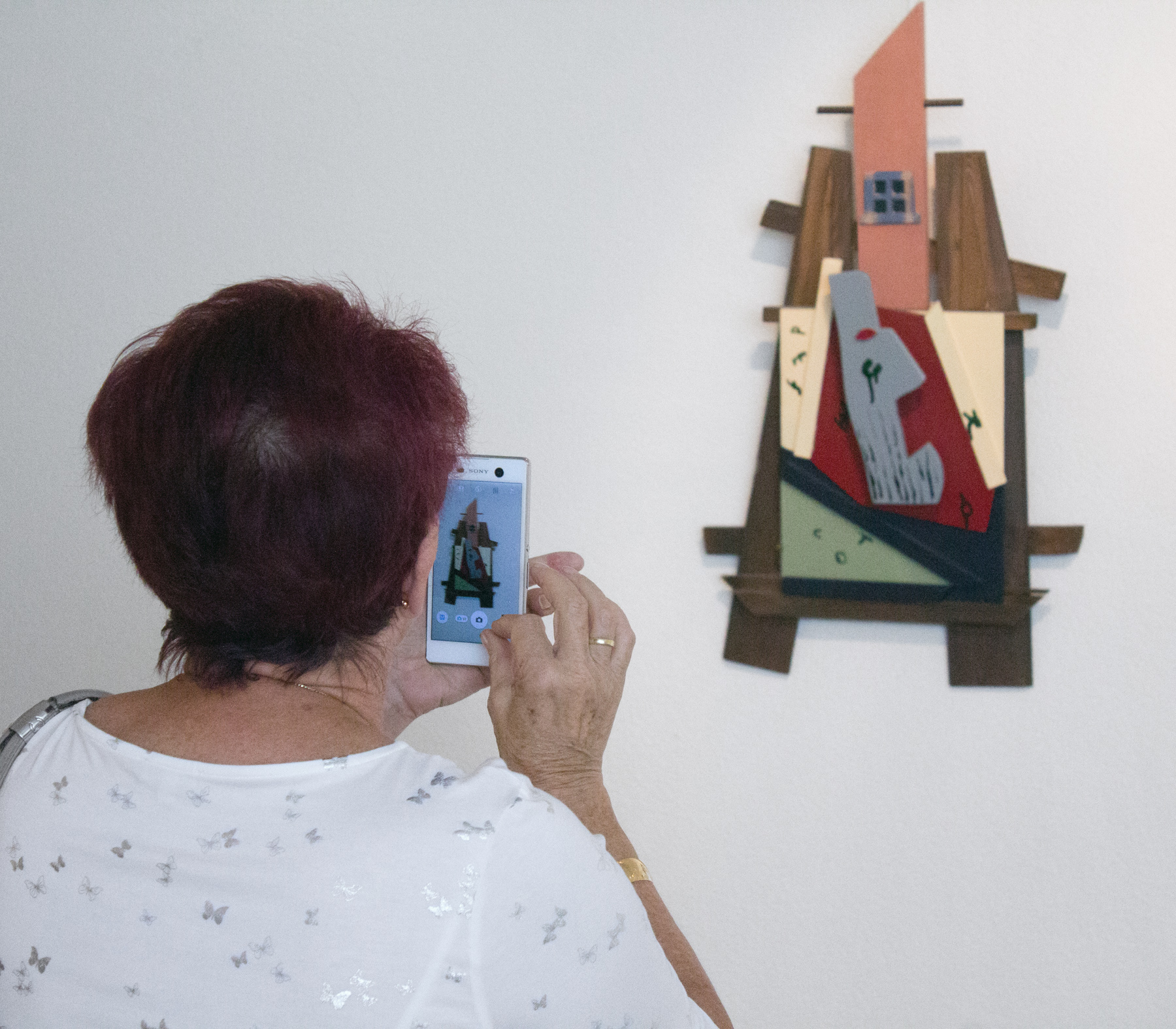
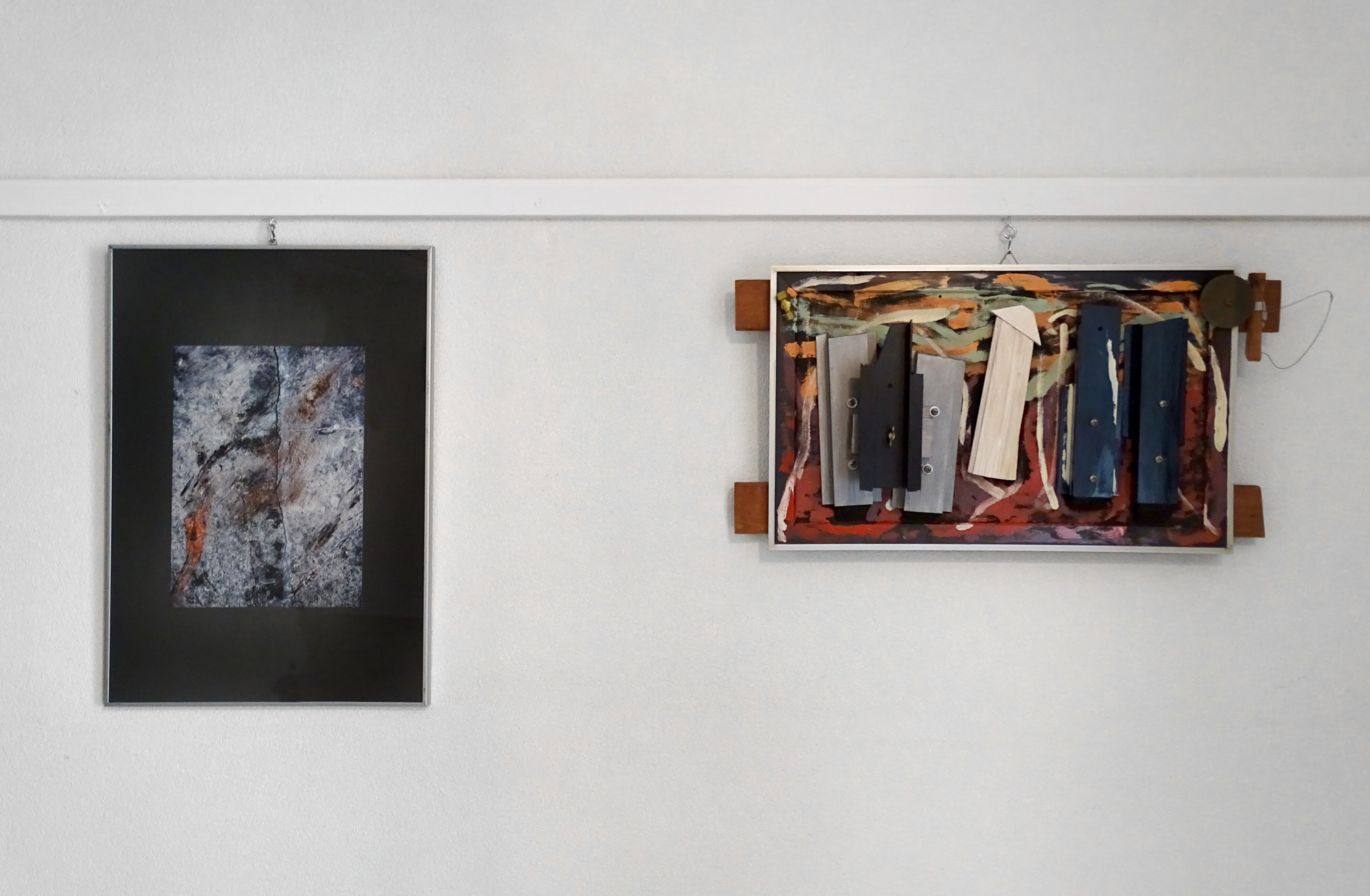
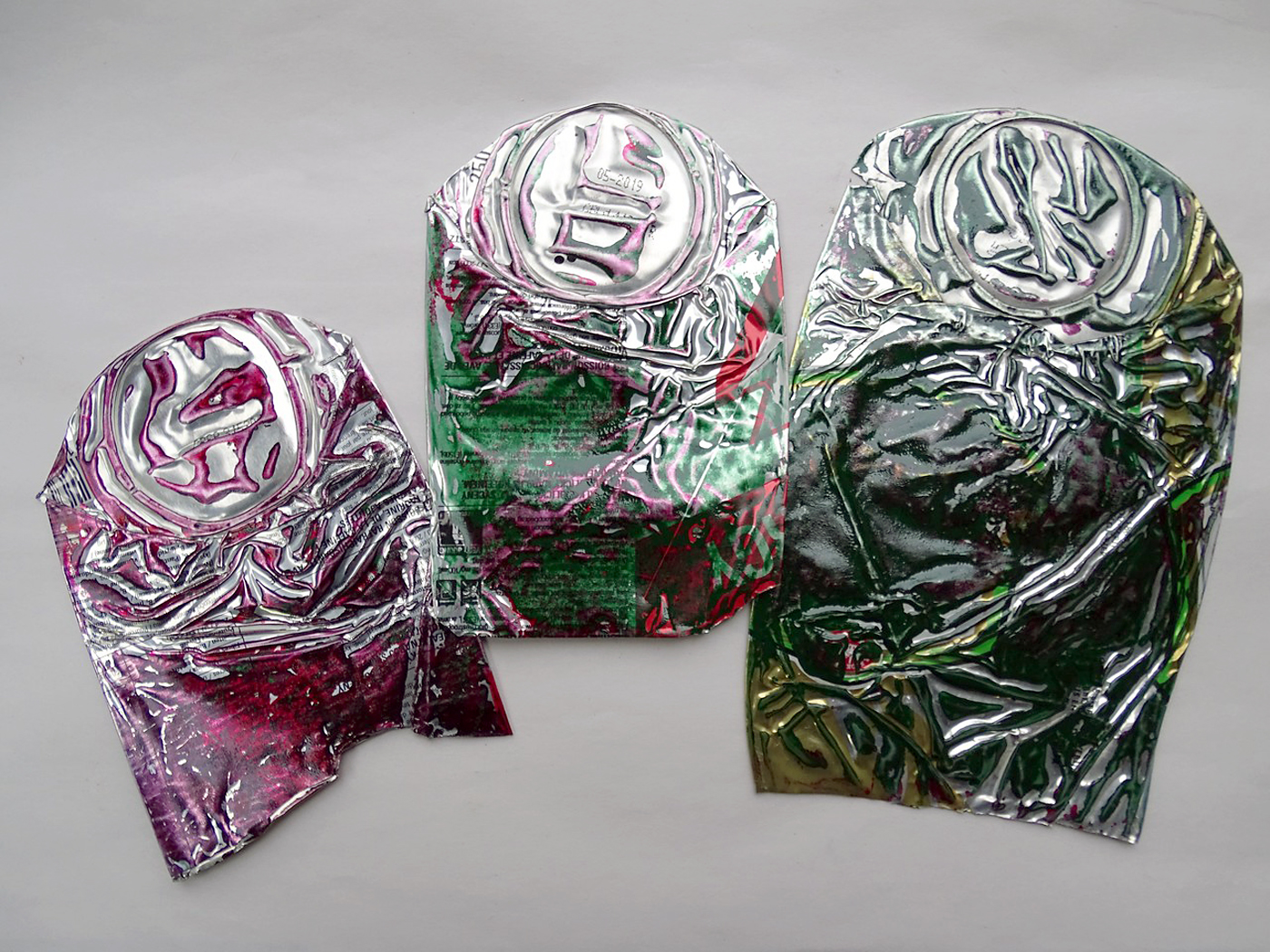
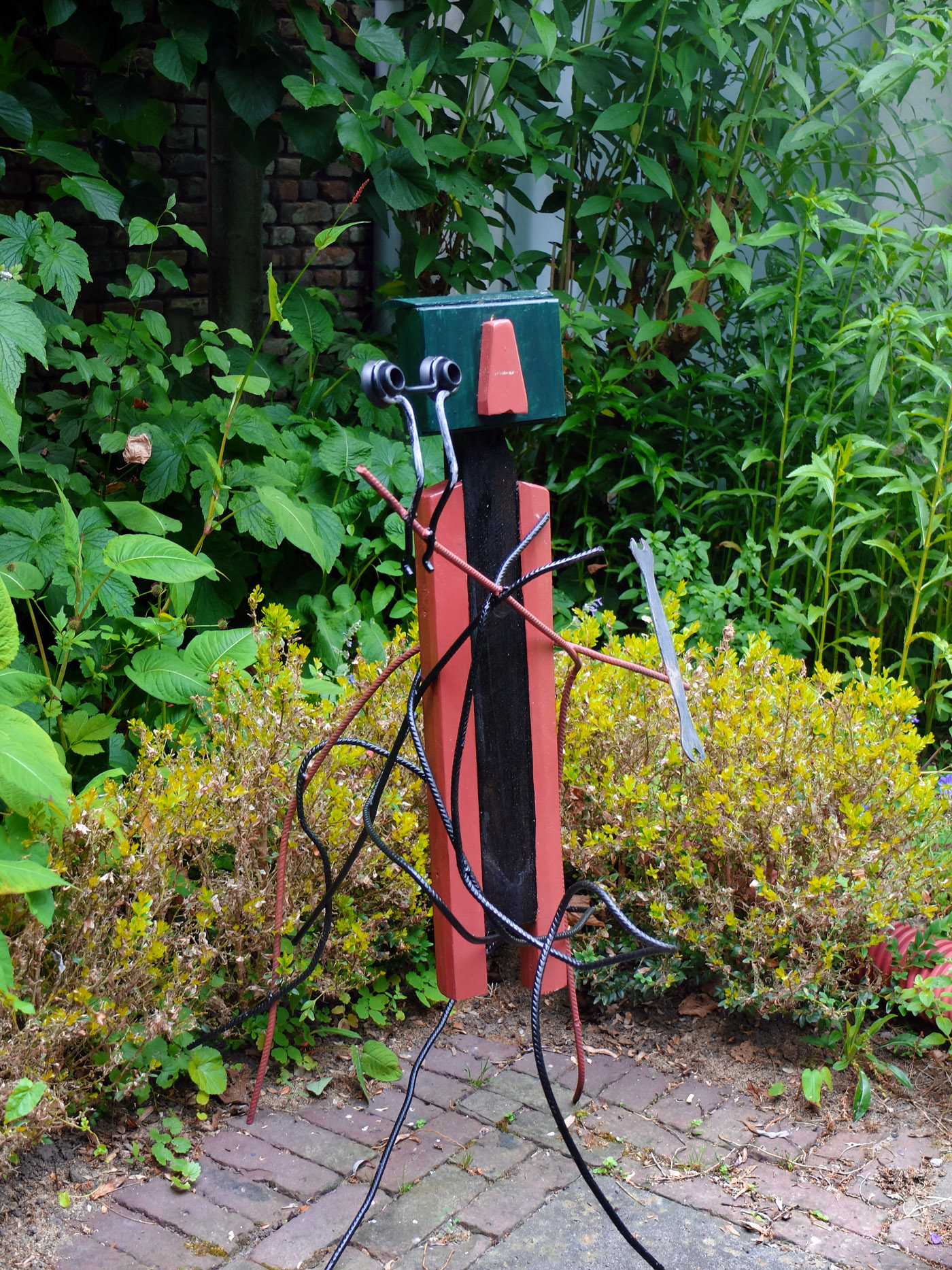
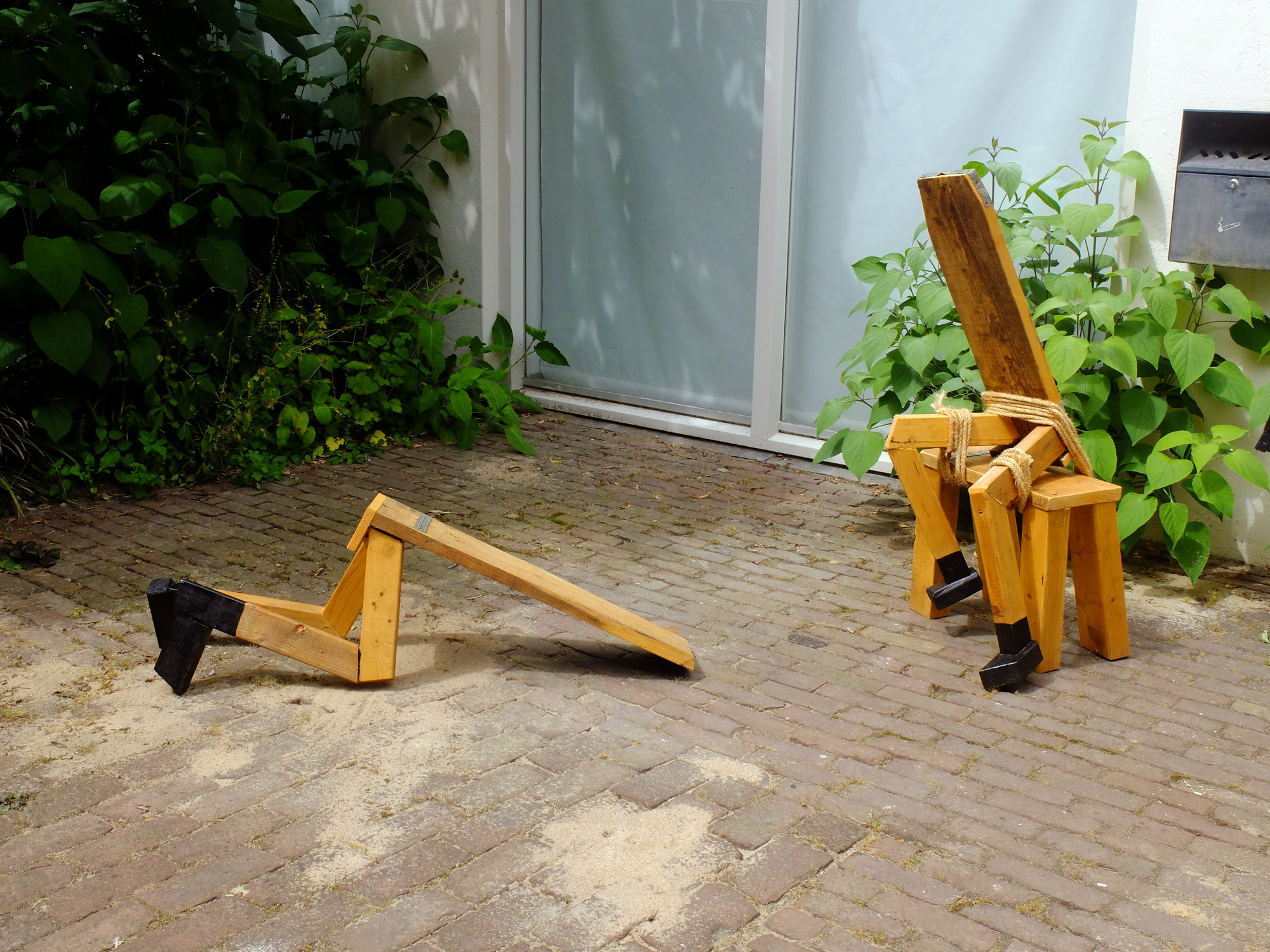
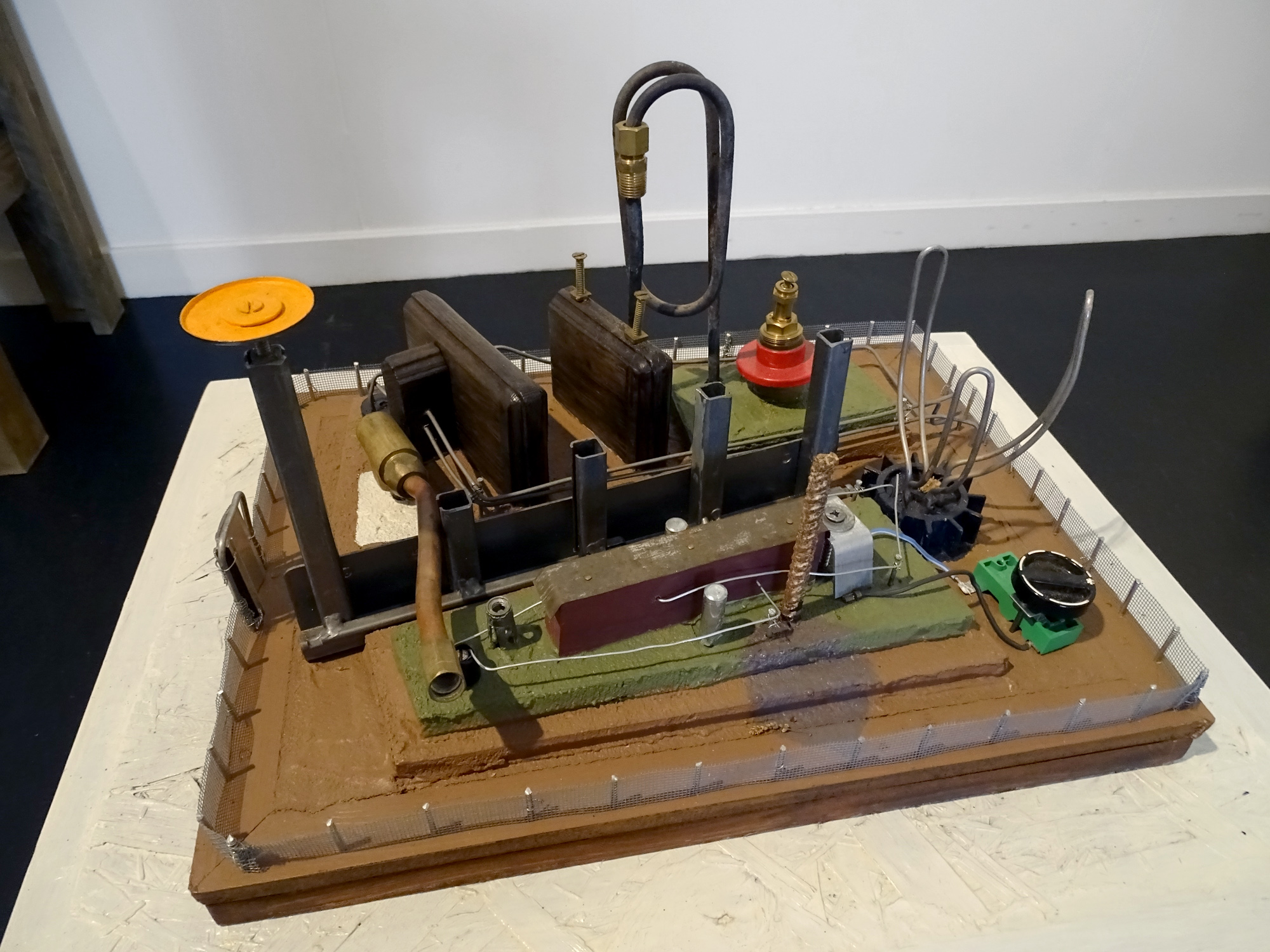
In this latest exhibition, there is a wonderful, tensional balance between elements and energy in his constructions. Much of the basic elements are from demolition- / remnant materials (“recycling art”), sometimes called objets trouvés: things coil around, are contained, wire, wood, recycled materials, energy, intimacy. His un/civilised forms of expression create an interplay between the conscious and the unconscious minds.

Drager is true to the integrity of his materials, the inherent qualities of natural and man made materials, and his vision. He incorporates primitive, mythical, spiritual and folkloric elements into his art. And his pleasure is in the layering and painting, in the materials, forms and, finally, in the art itself. Here is humour (The snake kept its mouth shut, 2018 below; the moustache of The Orator, 2016 below), ecology and spirit. A sense of mystery and purpose at one and the same time.

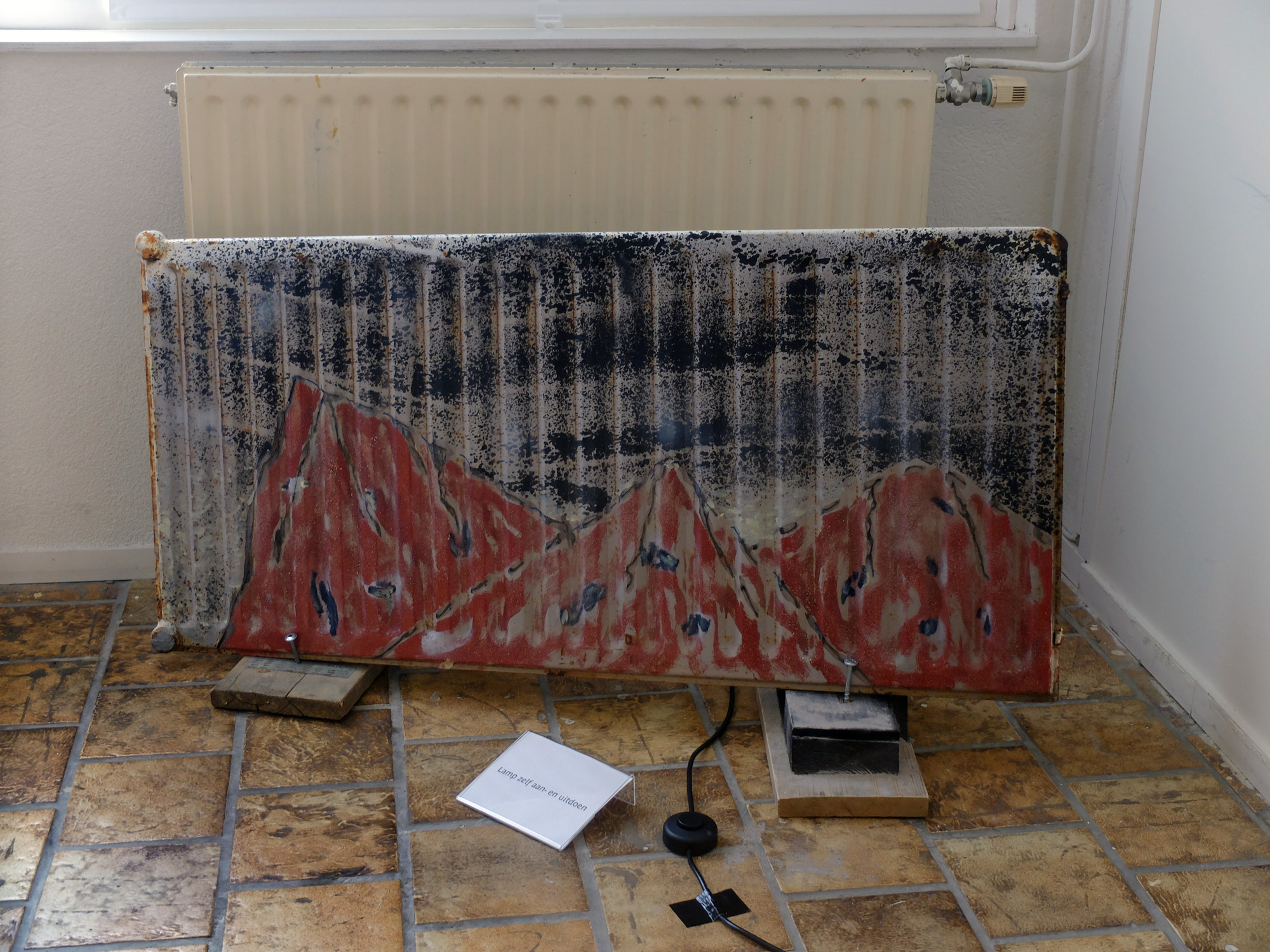
Riffing on Guy Debord’s concept of dérive (“drift” in English) which Debord defines as “a mode of experimental behaviour linked to the conditions of urban society: a technique of rapid passage through varied ambiances”2, I can relate Drager’s art to an unplanned journey through the urban landscape in which he drops his everyday relations and lets himself be drawn by the attractions of the terrain and the encounters he finds there. Drager’s attractions are the refuse of the human race. His encounters lead to the construction of contexts and situations, an artistic practice of “the happening”, which is a structured but unencumbered, expressive approach that encourages us to question our finite place in the world. Who else would paint a mountain on a radiator!

While I believe that some of the most important qualities in this world have their meanings proscribed by their opposite, some of these qualities have to be understood by reference only to themselves – which is very difficult – but must be attempted. A lot of things have been made too simple (taught in art schools?) by constructing fraught dichotomies. In other words, as an artist and as a human being, do not rely on binaries but just “on the thing itself”. Let it reveal itself to you – whether that is through Dada, an enigmatic self, of movement and form – or through some other mechanism. Drager has enough intellect and talent not to fall into the too simple, too easy, trap.

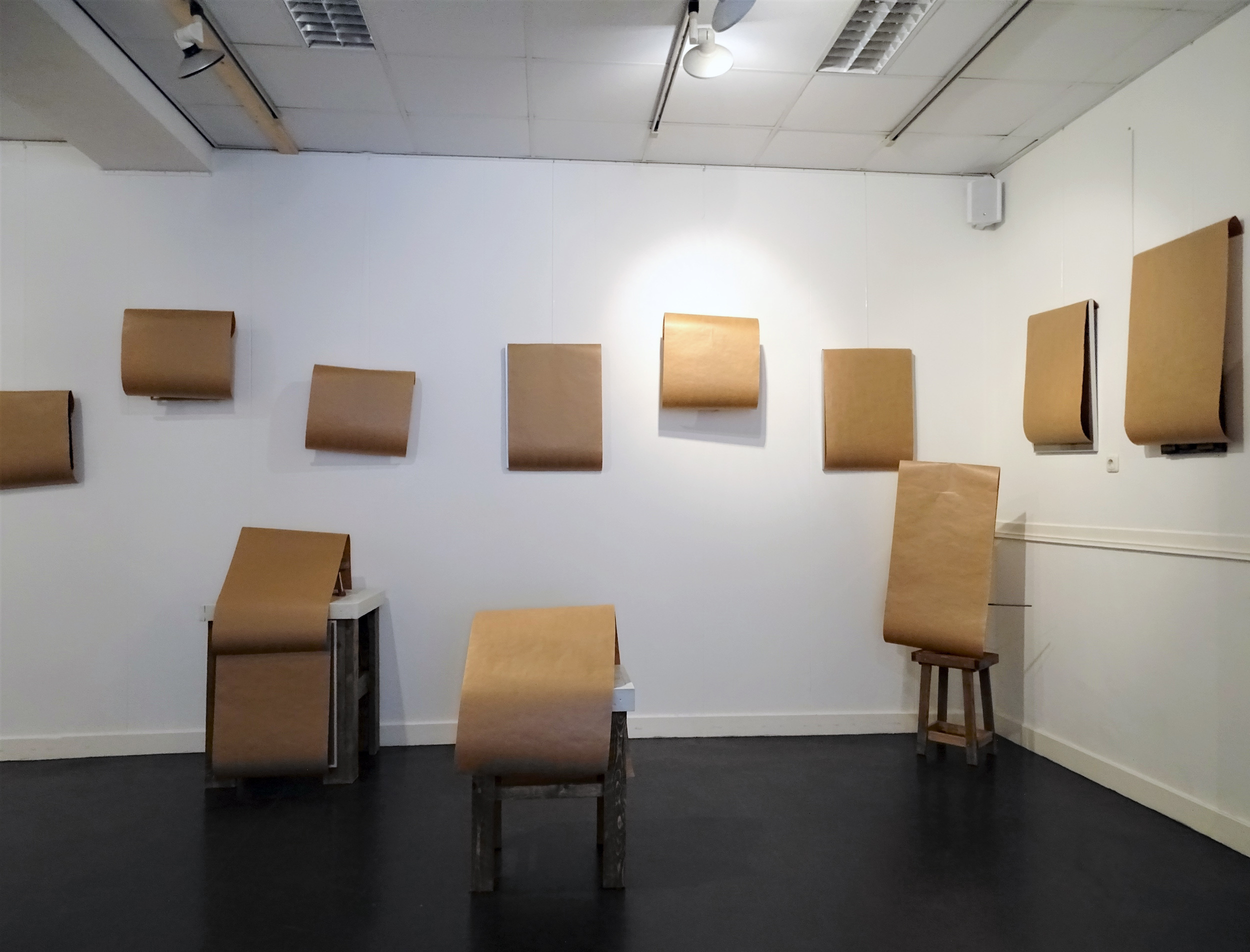
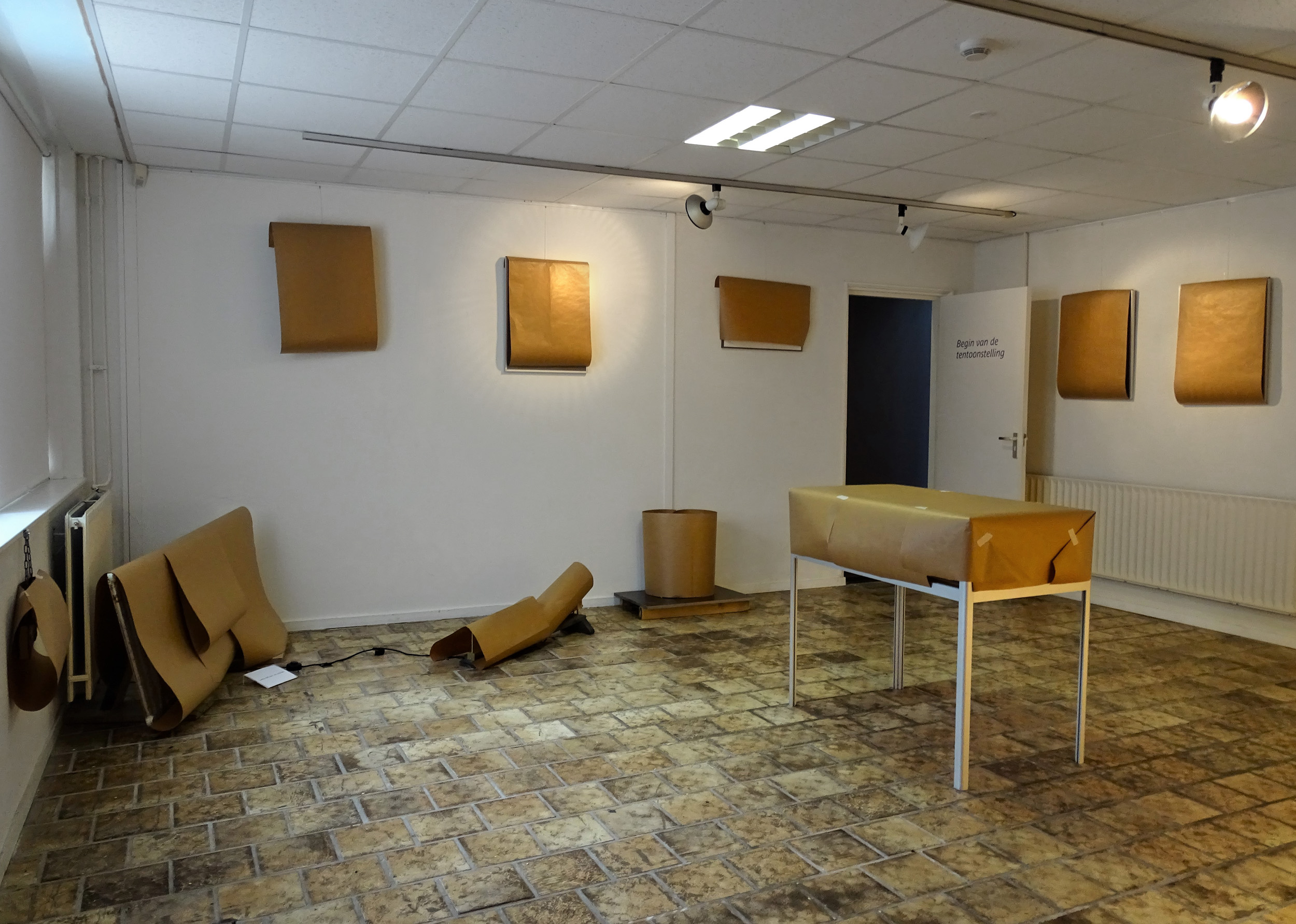
In this small regional gallery in the Netherlands, this visionary of the romantic, otherworldy (definition: devoted to intellectual or imaginative pursuits), utopian / dystopian unification of art and life constructs his paradoxes. I love the poetry that accompanies and informs his work; I love the brown butchers paper that covered “the happenings” before the unveiling; and I love the energy, the concern for the environment, and the construction and conceptualisation of his assemblages. I am challenged, in a good way, by his art.

The next step on the path for my friend is to keep the faith, is to keep making the art for himself and no one else. To keep them free and not contained by unwanted concerns. For, as he said to me, “in the end the path followed will be more interesting than the stakes raised in passing.” But curators please take note… here is a star of the future!

Dr Marcus Bunyan


1/ Anonymous. “Rosalie Gascoigne,” on the Art Gallery of New South Wales website 08/08/2018. No longer available online

2/ Guy Debord (1958) Definitions. Internationale Situationniste #1 (Paris, June 1958). Translated by Ken Knabb.


Many thankx to the artists and Kunstwerk! Liemers Museum for allowing me to publish the art work in the posting. Please click on the photographs for a larger version of the image.


“The creation of art, to me, is not work. The end-result is not seen as a piece, but as a whole. Since it brings me comfort and relieves stress, I call my assemblages ‘art-peaces’.”

“The essence of working with found objects (or scrap material) is that their different natures will enrich the composition as they are expressed in its different layers. This effect is based upon the divergent origins, structures and functions of these elements: wood, metal, glass, stone, cloth, plastic, etc. As a consequence, each bears a different weight and ease for ‘penetrance’ (transparency), that will influence the final form of the composition.”


Drager Meurtant


“Nearly every work of assemblage, in its relational structure, approaches abstract art” [but] “the practice of assemblage raises materials from the level of formal relations to that of associational poetry.”


Seitz, W. C. The Art of Assemblage. New York: Museum of Modern Art, 1961, p. 25, 84.


“It’s not where you take things from, it’s where you take them to.”


Jean-Luc Godard


Before the exhibition Now, the new form of the past opening


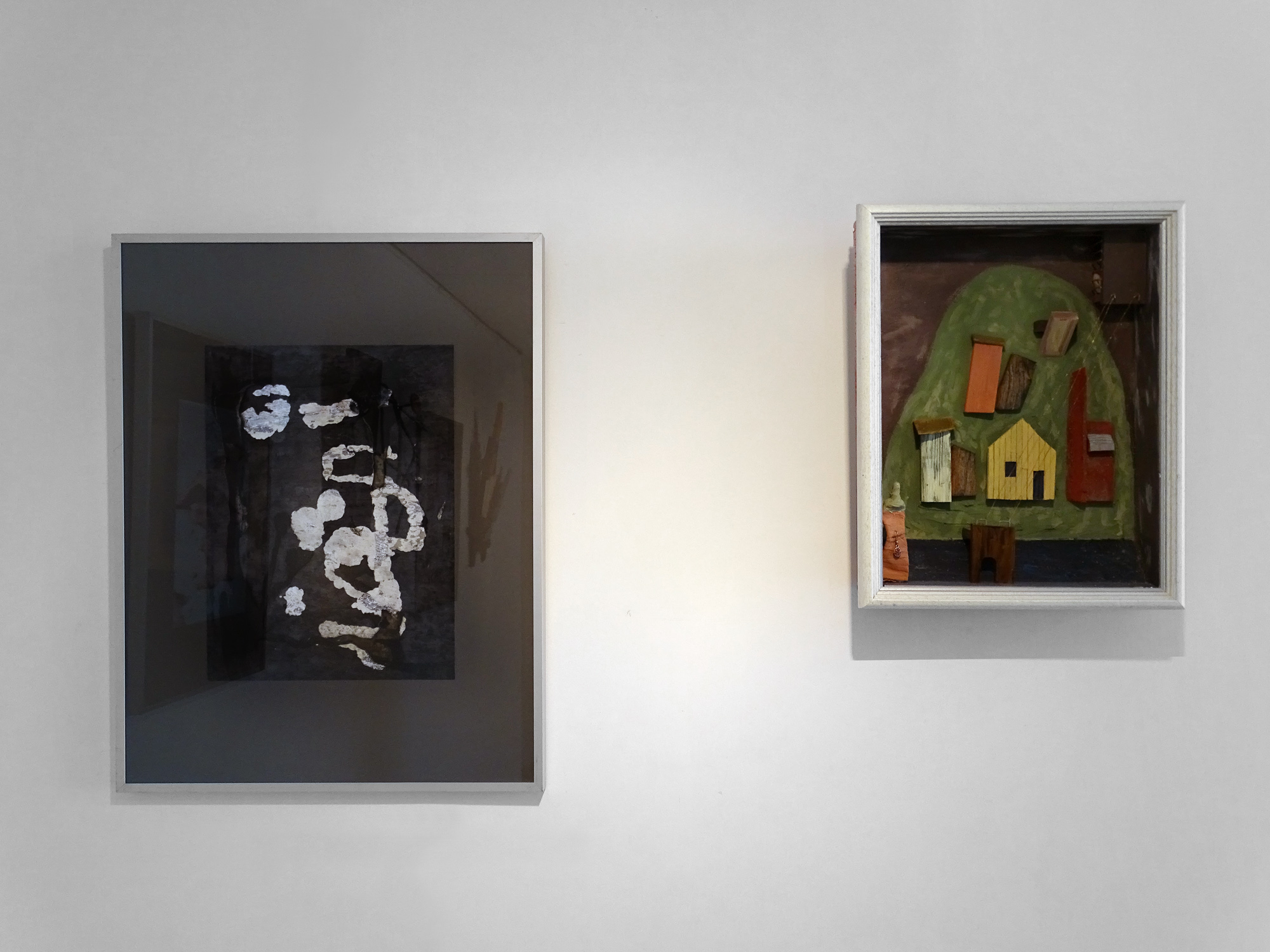
Before the opening of the exhibition 'Now, the new form of the past' at Kunstwerk! Liemers Museum, Netherlands

Before the opening of the exhibition 'Now, the new form of the past' at Kunstwerk! Liemers Museum, Netherlands

Before the opening of the exhibition 'Now, the new form of the past' at Kunstwerk! Liemers Museum, Netherlands

Before the opening of the exhibition 'Now, the new form of the past' at Kunstwerk! Liemers Museum, Netherlands

Before the opening of the exhibition 'Now, the new form of the past' at Kunstwerk! Liemers Museum, Netherlands


Before the opening of the exhibition Now, the new form of the past at Kunstwerk! Liemers Museum, Netherlands


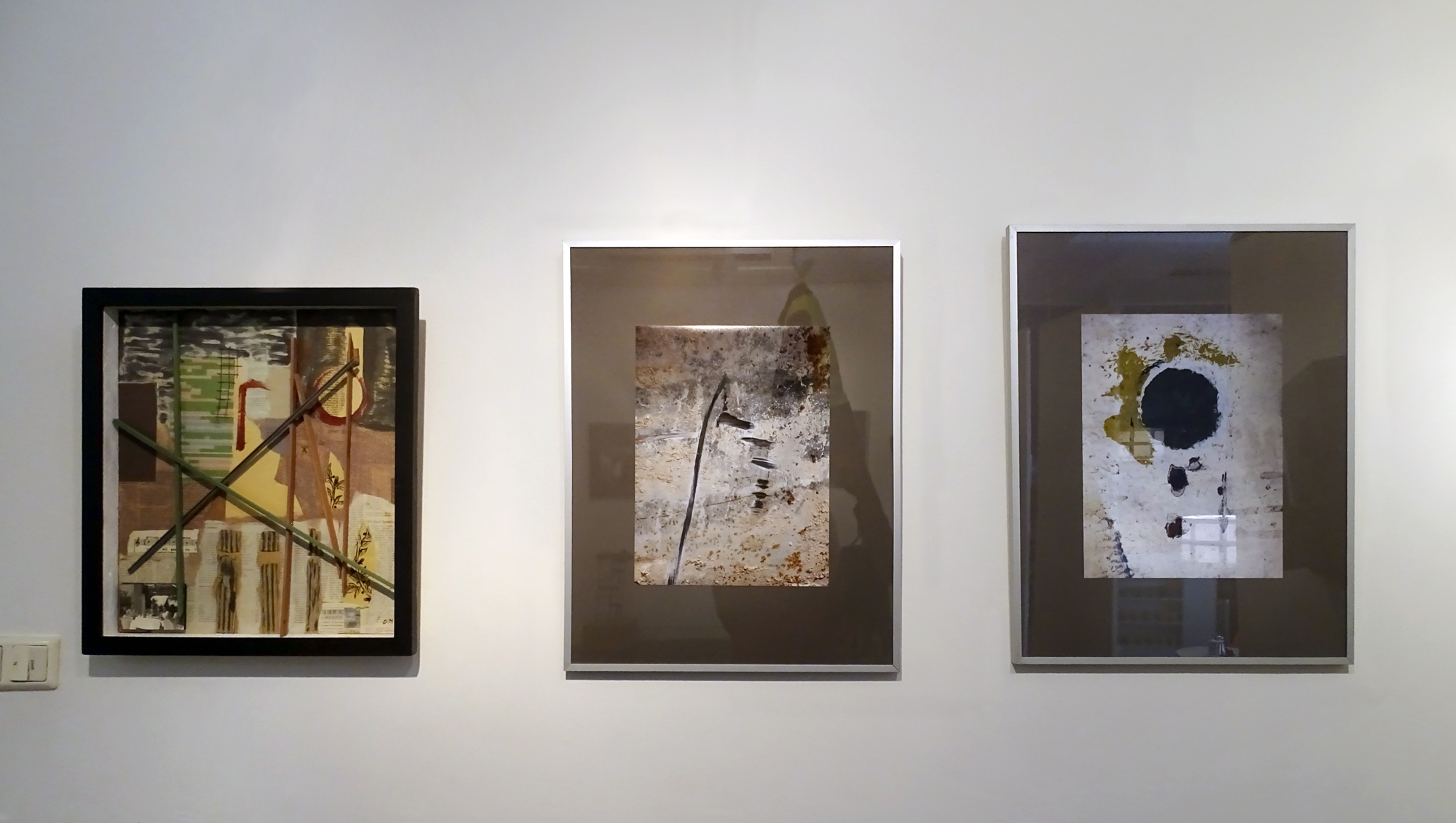
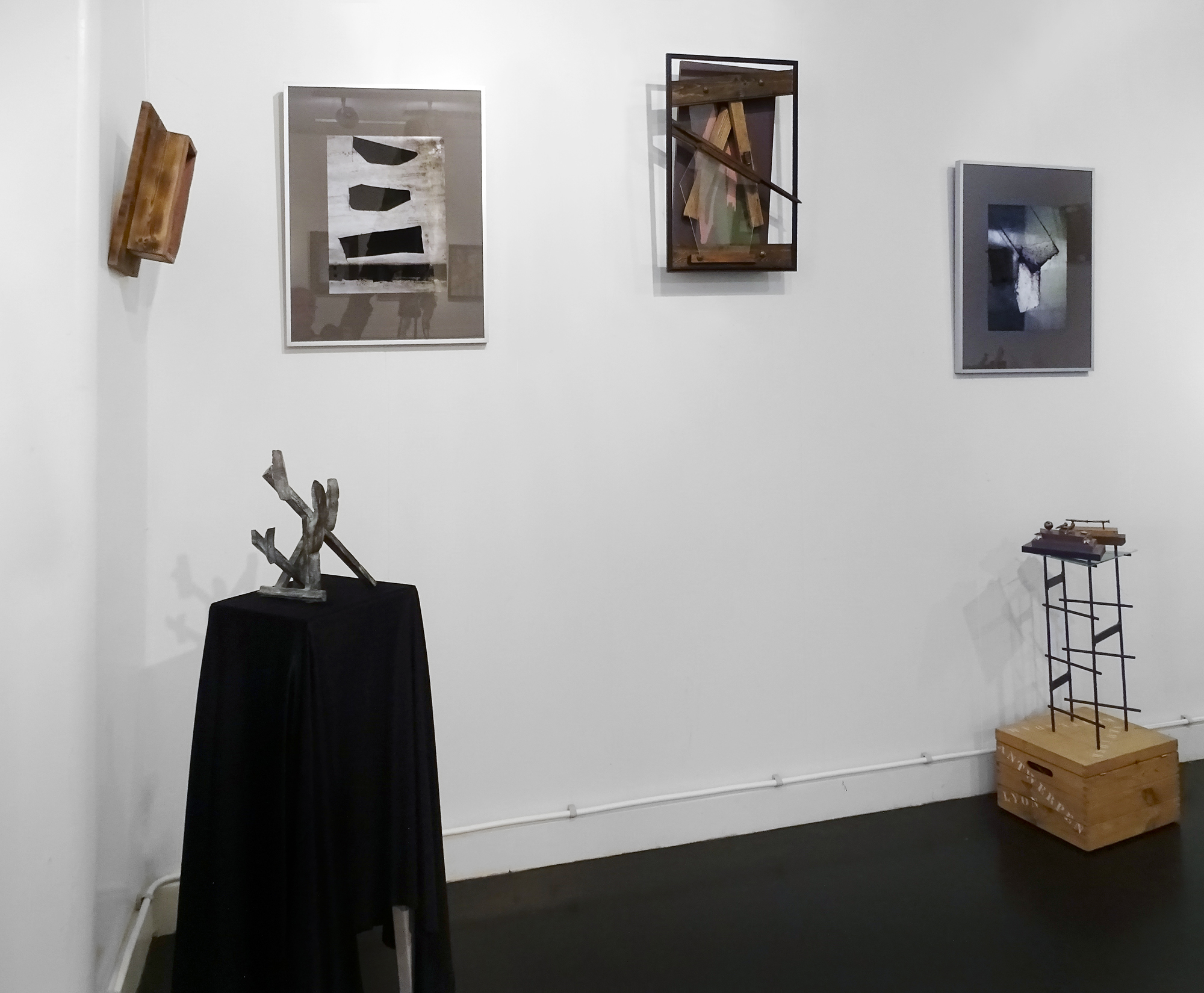
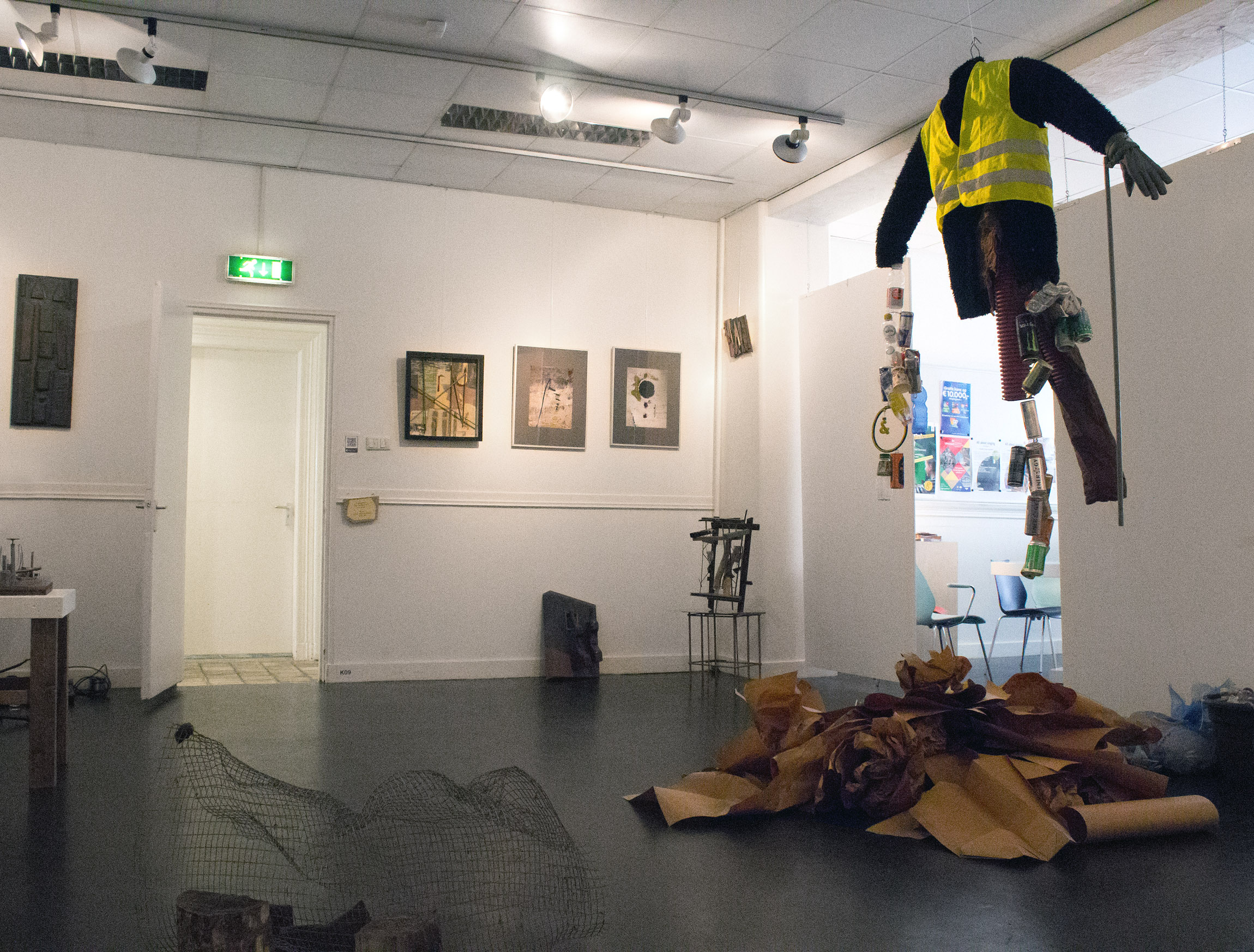
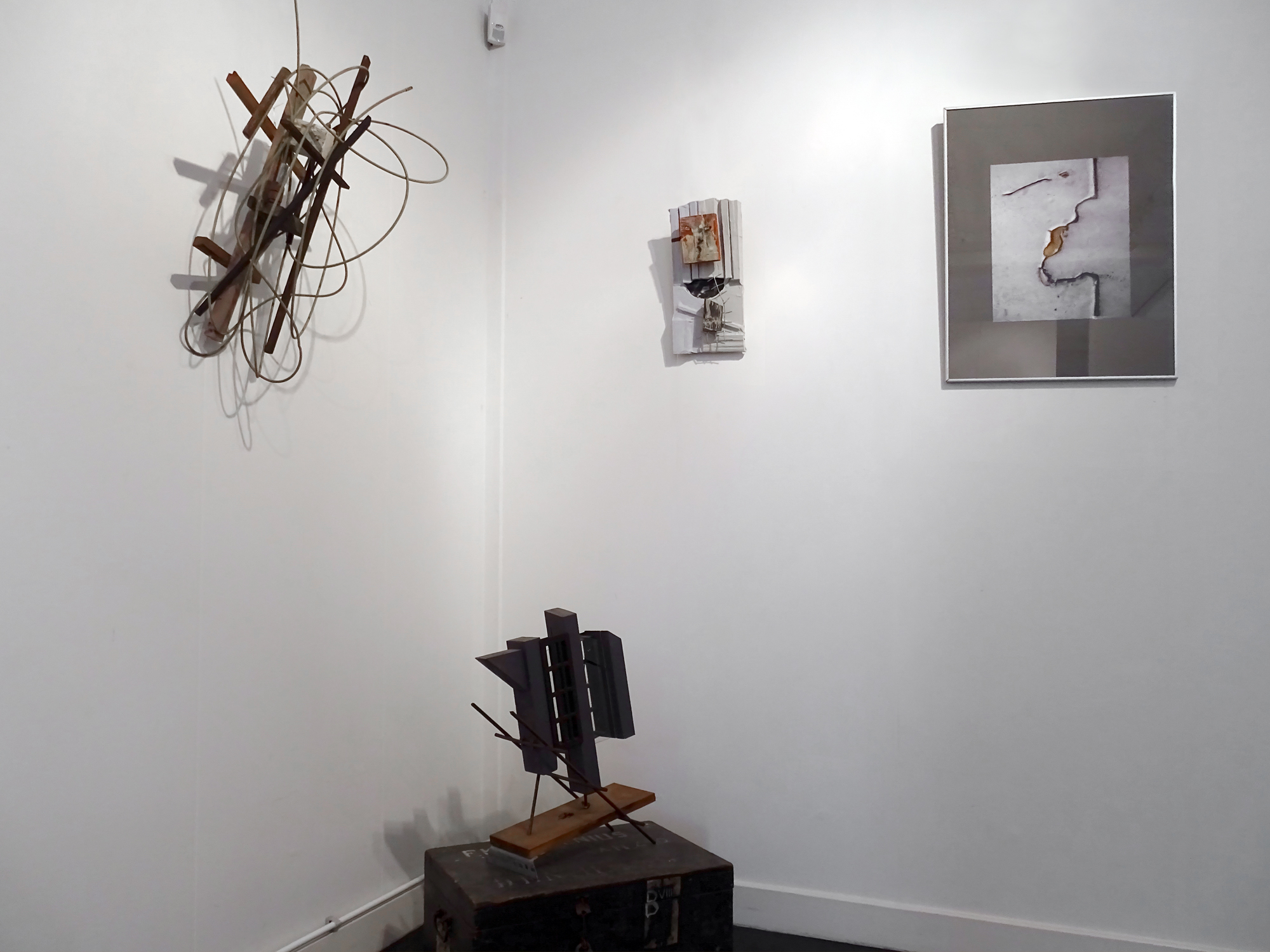
Now, the new form of the past is an exhibition based on international collaboration between Drager Meurtant (assemblages, NL) and Petra Senn (photography, D) with the theme Recycling Art . Both artists place most of the energy in their art and demand attention for its creativity, in the reuse of materials and objects.

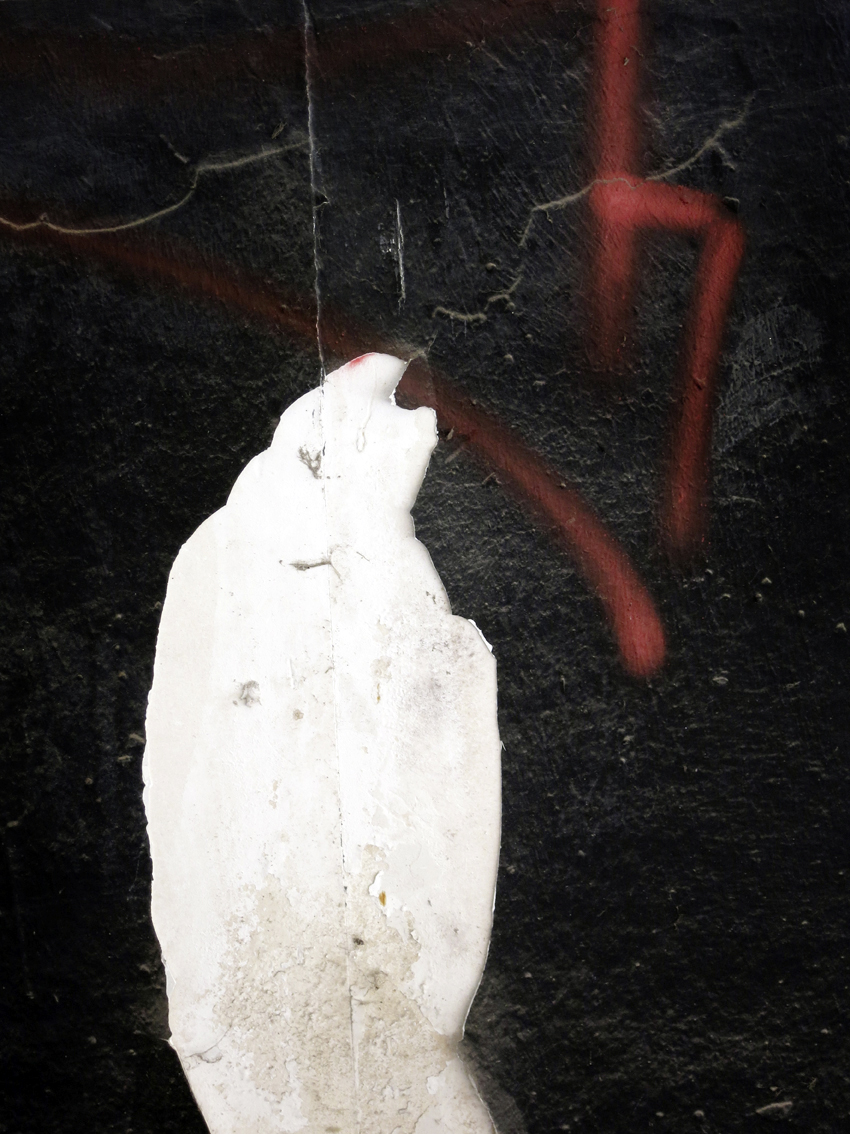
Drager uses demolition material and remnants from construction, plus objets trouvés, to make assemblages; while Petra uses weathered matter and the perishableness (transitoriness) of materials in her photographs. Every artwork thus carries echoes from the past within itself. Senses is a parallel exhibition of abstract paintings by Jeanine Keuchenius.

Text from the Kunstwerk! Liemers Museum website


The artists Drager Meurtant and Petra Senn first met on ‘pictify’, a social medium for artists (at present no longer accepting new art submissions.) After an exchange of some ‘faves’ and views, the retrospective The Trauma of Painting by Alberto Burro in the museum K21 in Düsseldorf, Germany, became the place where at the end of June 2016 the three, Petra Senn, Drager Meurtant and his artist-partner Jeanine Keuchenius, met in person. With the overwhelming artistic environment, the basis of a human and artistic interest became established. Thus, when Stijn Geutjes, the curator of Kunstwerk! Liemers Museum asked Drager about willingness to exhibit his art in the museum, the answer came with the suggestion of the theme “Now, the new form of the past”, and introduction of colleague Petra Senn as associate, and Jeanine to come with an addition of the theme “Senses”. After some discussion, and rising interest of Stijn Geutjes in the abstract photographies of Petra Senn, the decision came to exhibit in a collaborative effort, that included partaking in the selection process of works of the curator and the three artists.

Text by Drager Meurtant


Objets trouvés

An objets trouvé is a found object; a natural or discarded object found by chance and held to have aesthetic value; an ordinary object, as a piece of driftwood, a shell, or a manufactured article, that is treated as an object of art by one who finds it aesthetically pleasing.

The term relates directly to Marcel Duchamp’s readymades, Dada and Fluxus art. Art critics have coined the terms arte povera (Italian) and junk art (Anglo-American) to signify art which incorporates said objects.

Arte Povera is basically the legitimate justification for creating art of junk and found objects. Arte Povera was a term coined by the Italian art critic Germano Celant. He used the word to sum up a type of art which combined elements of conceptual art, minimal art and performance art. He conceived the idea of the art movement in reaction to the ever increasing commercialism within the art world. The artists embrace the ideas of using valueless materials such as earth, gravel, rocks or litter in order to create works of art.

Junk art is the flattering name is given to 20th and 21st-century art in which the artist uses refuse, scrap metal, urban waste or just anything viewed as useless or cast of from modern society. Junk art is very much synonymous with American artist Robert Rauschenberg. It is also very much part of the 1960s Italian movement Arte Povera. The movement was the product of Antoni Tàpies, Alberto Burri, Michelangelo Pistoletto, Piero Manzoni, and Lucio Fontana.

Anonymous text. “Objet trouvé art,” on the Xamou website [Online] Cited 17/02/2022. No longer available online

Found object

Found object originates from the French objet trouvé, describing art created from undisguised, but often modified, objects or products that are not normally considered materials from which art is made, often because they already have a non-art function. …

Found objects derive their identity as art from the designation placed upon them by the artist and from the social history that comes with the object. This may be indicated by either its anonymous wear and tear (as in collages of Kurt Schwitters) or by its recognisability as a consumer icon (as in the sculptures of Haim Steinbach). The context into which it is placed is also a highly relevant factor. The idea of dignifying commonplace objects in this way was originally a shocking challenge to the accepted distinction between what was considered art as opposed to not art. …

As an art form, found objects tend to include the artist’s output – at the very least an idea about it, i.e. the artist’s designation of the object as art – which is nearly always reinforced with a title. There is usually some degree of modification of the found object, although not always to the extent that it cannot be recognised, as is the case with ready-mades. Recent critical theory, however, would argue that the mere designation and relocation of any object, ready-mades included, constitutes a modification of the object because it changes our perception of its utility, its lifespan, or its status.

Text from the Wikipedia website


Installation views of the exhibition Now, the new form of the past


Installation view of the exhibition 'Now, the new form of the past' at Kunstwerk! Liemers Museum, Netherlands

Installation view of the exhibition 'Now, the new form of the past' at Kunstwerk! Liemers Museum, Netherlands

Installation view of the exhibition 'Now, the new form of the past' at Kunstwerk! Liemers Museum, Netherlands

Installation view of the exhibition 'Now, the new form of the past' at Kunstwerk! Liemers Museum, Netherlands

Installation view of the exhibition 'Now, the new form of the past' at Kunstwerk! Liemers Museum, Netherlands

Installation view of the exhibition 'Now, the new form of the past' at Kunstwerk! Liemers Museum, Netherlands


Installation views of the exhibition Now, the new form of the past at Kunstwerk! Liemers Museum, Netherlands showing the work of Drager Meurtant and Petra Senn


Installation view of the exhibition 'Now, the new form of the past' at Kunstwerk! Liemers Museum, Netherlands showing Drager Meurtant's work 'connection not wireless' (2014) top left, and Petra Senn's 'Persuasiveness' (2012) top right


Installation view of the exhibition Now, the new form of the past at Kunstwerk! Liemers Museum, Netherlands showing Drager Meurtant’s work connection not wireless (2014) top left, and Petra Senn’s Persuasiveness (2012) top right


Installation view of the exhibition 'Now, the new form of the past' at Kunstwerk! Liemers Museum, Netherlands showing Drager Meurtant's 'Under way' Nd


Installation view of the exhibition Now, the new form of the past at Kunstwerk! Liemers Museum, Netherlands showing Drager Meurtant’s Under way Nd


Installation view of the exhibition 'Now, the new form of the past' at Kunstwerk! Liemers Museum, Netherlands showing Drager Meurtant's work 'Swan in essence' (2014) at centre, with Petra Senn's 'Insubordination' (2017) top left and 'someone from the past I' (Nd) top right


Installation view of the exhibition Now, the new form of the past at Kunstwerk! Liemers Museum, Netherlands showing Drager Meurtant’s work Swan in essence (2014) at centre, with Petra Senn’s Insubordination (2017) top left and someone from the past I (Nd) top right


Installation view of the exhibition 'Now, the new form of the past' at Kunstwerk! Liemers Museum, Netherlands showing the work of Drager Meurtant and Petra Senn with DM's 'The promised land' (2016) at right


Installation view of the exhibition Now, the new form of the past at Kunstwerk! Liemers Museum, Netherlands showing the work of Drager Meurtant and Petra Senn with DM’s The promised land (2016) at right


About Drager Meurtant

In almost four decades since his training as as veterinarian-biomedical researcher, Drager Meurtant (artist alias of Gerard Rutteman) has channeled much creativity towards scientific publications and – in his free time – poetry. In more recent years, through a rapid learning curve, his creations have taken form as sculptures (in particular assemblages), collages, paintings and graphical works.

As autodidact and experienced carpenter, the circle saw, jig-saw, chisel, gouge, hammer are used to handle natural materials (wood, stone) in addition to manufactured (paper, cloth) and construction material (metal, glass, etcetera). Much of the basic elements are from demolition- / remnant materials (“recycling art”), sometimes objets trouvés. The assembly of contrasting elements creates tension, sometimes suspension.

The sculptures made by David Smith and (box) assemblages by Joseph Cornell, but also installations by Dieter Roth inspire Drager, as does the art by Joan Miró and members of CoBrA. The making of photographs is considered complementary to the assemblages, in an attempt to capture the fleeting world in which we live.


Drager Meurtant (Dutch, b. 1951) 'Movement from within' 2016


Drager Meurtant (Dutch, b. 1951)
Movement from within
2016
Three-dimensional sculpture, mixed media
Assemblage (relief), wood, paper, paint, sand, image
40 x 50 x 7cm

“When the pieces were seen fit / and fixed in their proper position / the movement was undeniable / as it arose from within”


Drager Meurtant (Dutch, b. 1951) 'Crawling, again' 2018


Drager Meurtant (Dutch, b. 1951)
Crawling, again
2018
Three-dimensional sculpture, mixed media
47 x 34 x 20cm

“How to make connections / of elements and the outside world? The answer to my question / came crawling, again”


Drager Meurtant (Dutch, b. 1951) 'Crawling, again' 2018 (installation view)


Drager Meurtant (Dutch, b. 1951)
Crawling, again (installation view)
2018
Three-dimensional sculpture, mixed media
47 x 34 x 20cm


Drager Meurtant (Dutch, b. 1951) 'Number 53' 2016 (installation view)


Drager Meurtant (Dutch, b. 1951)
Number 53 (installation view)
2016
Mixed media sculpture
Assemblage, wood, paper, metal, plaster, paint
31 x 36 x 9cm

“In former times / you could buy / petroleum, paraffin and coal / at number 53”


Drager Meurtant (Dutch, b. 1951) 'The Orator' 2016


Drager Meurtant (Dutch, b. 1951)
The Orator (installation view)
2016
Sculpture, wood, paint


Drager Meurtant (Dutch, b. 1951) 'Tegut' 2018


Drager Meurtant (Dutch, b. 1951)
Tegut
2018
Collage, paper
11 x 15cm

“The next generation / has more generations / to lean upon”


Drager Meurtant (Dutch, b. 1951) 'Three of a kind' 2018 (installation view)


Drager Meurtant (Dutch, b. 1951)
Three of a kind (installation view)
2018
Mixed media
24 x 32 x 1cm

“When presented three figures / of different size / and writing / and colour”


Drager Meurtant (Dutch, b. 1951) 'Three of a kind' 2018


Drager Meurtant (Dutch, b. 1951)
Three of a kind
2018
Mixed media
24 x 32 x 1cm


Drager Meurtant (Dutch, b. 1951) 'Mon Combat' 2018


Drager Meurtant (Dutch, b. 1951)
Mon Combat
2018
Installation of book, metal
60 x 30 x 5cm

Mon Combat by A. Tempspassé: there is always someone who sees argument to start a battle


Installation view of the exhibition 'Now, the new form of the past' at Kunstwerk! Liemers Museum, Netherlands showing Drager Meurtant's works 'the listener (needs protection)' (2018) at left, and 'The Mechanic' (2018) at right


Installation view of the exhibition Now, the new form of the past at Kunstwerk! Liemers Museum, Netherlands showing Drager Meurtant’s works the listener (needs protection) (2018) at left, and The Mechanic (2018) at right


Drager Meurtant (Dutch, b. 1951) 'The Mechanic' 2018


Drager Meurtant (Dutch, b. 1951)
The Mechanic
2018
Mixed media (wood, iron, paint)
105 x 65 x 65cm

“With good tools / you get everything moving”


Drager Meurtant (Dutch, b. 1951) 'The snake kept its mouth shut' 2018


Drager Meurtant (Dutch, b. 1951)
The snake kept its mouth shut
2018
Mixed media, trash
35 x 25 x 500cm

“Curling, the snake kept its mouth shut”


Drager Meurtant (Dutch, b. 1951) 'Destiny' 2018 (installation view)


Drager Meurtant (Dutch, b. 1951)
Destiny (installation view)
2018
Painting on discarded radiator with support
60 x 130cm


Drager Meurtant (Dutch, b. 1951) 'All humans are equal' 2018 (installation view)


Drager Meurtant (Dutch, b. 1951)
All humans are equal (installation view)
2018
Mixed media
100 x 50 x 200cm

All humans are equal. // To test this assumption / take two / and tilt the angle / and position towards, one another.


Drager Meurtant (Dutch, b. 1951) 'Rudimentary' 2016 (installation view)


Drager Meurtant (Dutch, b. 1951)
Rudimentary (installation view)
2016
Mixed media
23 x 13 x 16cm

“Mental metal / rudimentary face / mind you!”


Drager Meurtant (Dutch, b. 1951) 'The promised land' 2016


Drager Meurtant (Dutch, b. 1951)
The promised land
2016
Box assemblage
Mixed media, wood, board, metal, paint
34 x 44 x 10cm

“The promised land / cannot be for outsiders. // They may look / how it is, yonder.”


Drager Meurtant (Dutch, b. 1951) 'Steep-2' 2014 (installation view)


Drager Meurtant (Dutch, b. 1951)
Steep-2 (installation view)
2014
Mixed media, wood partly rotten, metal, paint and glass
35 x 23 x 10cm

Steep-2: The Monte Rotondo / is left behind / it weighs too much / for me. // The climbing rock of Feyr / I leave / to the climbers. // But / this wooden rock / serves as model / of a viewpoint on imagination.


Drager Meurtant (Dutch, b. 1951) 'The avail of propaganda' 2016


Drager Meurtant (Dutch, b. 1951)
The avail of propaganda
2016
Mixed media
Assemblage, wood, cloth, metal, paper, paint
43 x 21 x 8cm

“The avail of propaganda / is that you and I / do what / we detest.”


Drager Meurtant (Dutch, b. 1951) 'Twosome' Nd (installation view)


Drager Meurtant (Dutch, b. 1951)
Twosome (installation view)
Nd
Mixed media


Drager Meurtant (Dutch, b. 1951) 'fact-ohry' 2013 (installation view)


Drager Meurtant (Dutch, b. 1951)
fact-ohry (installation view)
2013
Mixed media
24 x 32 x 42cm

I said / now I will build a fact-ohry / and that / became factual. // With grabbing and placing / elements that together / took progressively the shape / of a fact-ohry / I became part of it. // Could shape the further design / and steer it at minor extent / but the end-result / was determined / by the starting point. // Voila.

(Note: This Fact-ohry is the only one with guarantee that risks during drilling for shale gas are secured.)


Drager Meurtant (Dutch, b. 1951) 'Progress (halted)' 2016 (installation view)


Drager Meurtant (Dutch, b. 1951)
Progress (halted) (installation view)
2016
Bronze
26 x 18 x 21cm

“When going forth / from wood to bronze / and grasping the result / I realised progress had halted. // A result stands in the way / of the learning process.”


Drager Meurtant (Dutch, b. 1951) 'Progress (halted)' 2016


Drager Meurtant (Dutch, b. 1951)
Progress (halted)
2016
Bronze
26 x 18 x 21cm


About Petra Senn

Petra’s work has mostly to do with memories and emotions. Her photos directly respond to the surrounding environment and use everyday experiences from the artist as a starting point. These experiences are often framed instances that would go unnoticed in their original context.

By contesting the division between the realm of memory and the realm of experience, she wants to amplify the astonishment of the spectator by creating compositions or settings that generate tranquil poetic images that leave traces and balances on the edge of recognition and alienation.

Her works appear as dreamlike images in which fiction and reality meet, well-known tropes merge, meanings shift, past and present fuse. Time and memory always play a key role. By applying abstraction, she absorbs the tradition of remembrance art into daily practice. She has a deep inner desire to protect the past from vanishing, both physically and, inevitably, mentally.

In her work Petra takes great care neither to simply reflect reality nor to just make visual statements. There is always left space for the spectators own emotions and opinions. She considers her work as visual stimulus, an invitation to enter ones inner world, knowing well that this process only works if she perceives deeper emotions while taking the pictures herself. Her search is for poetry in almost every item and condition.

Artist statement


Petra Senn. 'Her Lips' 2015


Petra Senn
Her Lips
2015


Petra Senn. 'Insubordination' 2017


Petra Senn
Insubordination
2017


Petra Senn. 'Persuasiveness' 2012


Petra Senn
Persuasiveness
2012


About Jeanine Keuchenius

Jeanine Keuchenius (1953, Indonesia) is a creative artist, dancer, and performer. Her background is as an art therapist (independent and within psychiatry) and social worker / pastoral worker. In the visual art she is an autodidact (a self-taught person), acquiring some skills at high school (teacher in visual art), she then followed several courses / workshops given by professional artists.

Jeanine’s painting uses paper, linen or panel, with palette filled with gouache, acrylic, oil, ink, with at times addition of tar, sand, and glue. Artists that inspire her are Henri Toulouse-Lautrec, Edvard Munch, Antoni Tapies and Emil Schumacher, but also the medium of modern dance moves her in her work, which is mostly abstract, but at times features more figurative elements. Sometimes echoes from mountain landscapes and abandoned hamlets (e.g. on the island of Corsica) are visualised. Her motto is: “In duet with myself.”


Installation views of the exhibition Senses


Installation view of the exhibition 'Senses' at Kunstwerk! Liemers Museum, Netherlands

Installation view of the exhibition 'Senses' at Kunstwerk! Liemers Museum, Netherlands


Installation views of the exhibition Senses at Kunstwerk! Liemers Museum, Netherlands


Jeanine Keuchenius (Dutch born Indonesia, b. 1953) 'Amulet' 2011 (installation view)


Jeanine Keuchenius (Dutch born Indonesia, b. 1953)
Amulet (installation view)
2011
Gouache on paper
50 x 65cm


Jeanine Keuchenius (Dutch born Indonesia, b. 1953) 'Amulet' 2011


Jeanine Keuchenius (Dutch born Indonesia, b. 1953)
Amulet
2011
Gouache on paper
50 x 65cm


Jeanine Keuchenius (Dutch born Indonesia, b. 1953) 'Pink and grey' 2012


Jeanine Keuchenius (Dutch born Indonesia, b. 1953)
Pink and grey (installation view)
2012
Gouache on paper
50 x 65cm

Each painting is the reflection of memory or dream.


Jeanine Keuchenius (Dutch born Indonesia, b. 1953) 'Pink and grey' 2012


Jeanine Keuchenius (Dutch born Indonesia, b. 1953)
Pink and grey
2012
Gouache on paper
50 x 65cm


Jeanine Keuchenius (Dutch born Indonesia, b. 1953) 'Lying figure 2' 2017


Jeanine Keuchenius (Dutch born Indonesia, b. 1953)
Lying figure 2 (installation view)
2017
Two-dimensional plaster cut, printed on newspaper
22 x 26cm


Jeanine Keuchenius (Dutch born Indonesia, b. 1953) 'Beautiful stay' 2014


Jeanine Keuchenius (Dutch born Indonesia, b. 1953)
Beautiful stay (installation view)
2014
Gouache on paper


Jeanine Keuchenius (Dutch born Indonesia, b. 1953) 'Unchained' 2016 (installation view)


Jeanine Keuchenius (Dutch born Indonesia, b. 1953)
Unchained (installation view)
2016
Mixed media on panel (bitumen, acrylic, sand on panel)
45 x 57cm


Jeanine Keuchenius (Dutch born Indonesia, b. 1953) 'Memory 1' 2018 (installation view)


Jeanine Keuchenius (Dutch born Indonesia, b. 1953)
Memory 1 (installation view)
2018
Mixed media on panel (acrylic, sand, plaster, oil on panel)
60 x 70cm


Jeanine Keuchenius (Dutch born Indonesia, b. 1953) 'Gribusella' 2014


Jeanine Keuchenius (Dutch born Indonesia, b. 1953)
Gribusella
2014
Acrylic on paper
50 x 65cm

Form and colour accompany depth and emotion


Jeanine Keuchenius (Dutch born Indonesia, b. 1953) 'Senses' 2012


Jeanine Keuchenius (Dutch born Indonesia, b. 1953)
Senses
2012
Acrylic on paper
50 x 65cm


Jeanine Keuchenius (Dutch born Indonesia, b. 1953) 'Bwual ènzo' 2014


Jeanine Keuchenius (Dutch born Indonesia, b. 1953)
Bwual ènzo
2014
Gouache on paper
50 x 65cm

Both when handling and avoiding themes, you sometimes walk in a circle.


Poster for the exhibitions 'Now, the new form of the past' and 'Senses'


Poster for the exhibitions Now, the new form of the past and Senses


Kunstwerk! Liemers Museum
Kerkstraat 16, 6901
AB Zevenaar, Nederland
Phone: +31 85 040 9971

Opening hours :
Tuesday to Sunday from 2pm – 5pm

Jeanine Keuchenius website

Drager Meurtant website

Petra Senn website

Kunstwerk! Liemers Museum website

LIKE ART BLART ON FACEBOOK

Back to top

Exhibition: ‘Surreal Encounters: Collecting the Marvellous: Works from the Collections of Roland Penrose, Edward James, Gabrielle Keiller and Ulla and Heiner Pietzsch’ at the Scottish National Gallery of Modern Art, Edinburgh

Exhibition dates: 4th June – 11th September, 2016

Curator: Keith Hartley


Marcus Bunyan (Australian, b. 1958) 'Self-portrait with gryphon and Joan Miro (Head of a Catalan Peasant) tattoo' 1998


Marcus Bunyan (Australian, b. 1958)
Self-portrait with gryphon and Joan Miró (Head of a Catalan Peasant) tattoo, both by Alex Binnie, London
1998


I have the five elements in tattoos. In the Head of a Catalan Peasant by Joan Miró featured in the posting, the red hat – in the form of a triangle – signifies ‘fire’ in Western occult mythology.


“Surrealism is not a movement. It is a latent state of mind perceivable through the powers of dream and nightmare.”

~ Salvador Dalí

 
“As beautiful as the chance encounter of a sewing machine and an umbrella on an operating table.”

~ Comte de Lautréamont

 
“A constant human error: to believe in an end to one’s fantasies. Our daydreams are the measure of our unreachable truth. The secret of all things lies in the emptiness of the formula that guard them.”

~ Floriano Martins


Many thankx to the Scottish National Gallery of Modern Art for allowing me to publish the art work in the posting. Please click on the photographs for a larger version of the image.


Joan Miró (Spanish, 1893-1983) 'Tête de Paysan Catalan' [Head of a Catalan Peasant] 1925 from the exhibition 'Surreal Encounters: Collecting the Marvellous: Works from the Collections of Roland Penrose, Edward James, Gabrielle Keiller and Ulla and Heiner Pietzsch' at the Scottish National Gallery of Modern Art, Edinburgh, June-  Sept, 2016


Joan Miró (Spanish, 1893-1983)
Tête de Paysan Catalan [Head of a Catalan Peasant]
1925
Oil on canvas
92.4 x 73cm
Collection: Scottish National Gallery of Modern Art
Purchased jointly with Tate, with the assistance of the Art Fund 1999


Francis Picabia (French, 1879-1953) 'Fille née sans mère' [Girl Born without a Mother] c. 1916-1917 from the Collections of Roland Penrose, Edward James, Gabrielle Keiller and Ulla and Heiner Pietzsch' at the Scottish National Gallery of Modern Art, Edinburgh, June-  Sept, 2016


Francis Picabia (French, 1879-1953)
Fille née sans mère [Girl Born without a Mother]
c. 1916-1917
Gouache and metallic paint on printed paper
50 x 65cm
Collection: Scottish National Gallery of Modern Art, purchased 1990


René Magritte (Belgian, 1898-1967) 'Au seuil de la liberté' (On the Threshold of Liberty) 1930


René Magritte (Belgian, 1898-1967)
Au seuil de la liberté (On the Threshold of Liberty)
1930
Oil on canvas
114 x 146cm
Collection: Museum Boijmans Van Beuningen, Rotterdam (Formerly collection of E. James), purchased 1966


André Masson (French, 1896-1987) 'Massacre' 1931


André Masson (French, 1896-1987)
Massacre
1931
Oil on canvas
Collection: Hamburger Kunsthalle, Hamburg/ Pietzsche Collection


Max Ernst (German, 1891-1976) 'La Joie de vivre' [The Joy of Life] 1936


Max Ernst (German, 1891-1976)
La Joie de vivre [The Joy of Life]
1936
Oil on canvas
73.5 x 92.5cm
Collection: National Galleries of Scotland
Purchased with the assistance of the Heritage Lottery Fund and the Art Fund 1995


Max Ernst (German, 1891-1976) 'The Fireside Angel' (The Triumph of Surrealism) 1937


Max Ernst (German, 1891-1976)
The Fireside Angel (The Triumph of Surrealism)
L’ange du foyer (Le triomphe du surréalisme)
1937
Oil on canvas
114 cm x 146cm


Dorothea Tanning (American, 1910-2012) 'Eine Kleine Nachtmusik' [A Little Night Music] 1943


Dorothea Tanning (American, 1910-2012)
Eine Kleine Nachtmusik [A Little Night Music]
1943
Oil on canvas
40.7 x 61cm
Collection: Tate (formerly collection of R. Penrose)
Purchased with assistance from the Art Fund and the American Fund for the Tate Gallery 1997


Apart from three weeks she spent at the Chicago Academy of Fine Art in 1930, Tanning was a self-taught artist. The surreal imagery of her paintings from the 1940s and her close friendships with artists and writers of the Surrealist Movement have led many to regard Tanning as a Surrealist painter, yet she developed her own individual style over the course of an artistic career that spanned six decades.

Tanning’s early works – paintings such as Birthday and Eine kleine Nachtmusik (1943, Tate Modern, London) – were precise figurative renderings of dream-like situations. Like other Surrealist painters, she was meticulous in her attention to details and in building up surfaces with carefully muted brushstrokes. Through the late 1940s, she continued to paint depictions of unreal scenes, some of which combined erotic subjects with enigmatic symbols and desolate space. During this period she formed enduring friendships with, among others, Marcel Duchamp, Joseph Cornell, and John Cage; designed sets and costumes for several of George Balanchine’s ballets, including The Night Shadow (1945) at the Metropolitan Opera House; and appeared in two of Hans Richter’s avant-garde films.

Over the next decade, Tanning’s painting evolved, becoming less explicit and more suggestive. Now working in Paris and Huismes, France, she began to move away from Surrealism and develop her own style. During the mid-1950s, her work radically changed and her images became increasingly fragmented and prismatic, exemplified in works such as Insomnias (1957, Moderna Museet, Stockholm). As she explains, “Around 1955 my canvases literally splintered… I broke the mirror, you might say.”

Text from the Wikipedia website


Marcel Duchamp (French, 1887-1968) 'La Boîte-en-valise (Box in a Suitcase) 1935-1941


Marcel Duchamp (French, 1887-1968)
La Boîte-en-valise (Box in a Suitcase)
1935-1941
Sculpture, leather-covered case containing miniature replicas and photographs of Duchamp’s works
10 x 38 x 40.5cm
Collection: Scottish National Gallery of Modern Art, presented anonymously 1989


Paul Delvaux (Belgian, 1897-1994) 'L'Appel de la Nuit (The Call of the Night)' 1938


Paul Delvaux (Belgian, 1897-1994)
L’Appel de la Nuit (The Call of the Night)
1938
Oil on canvas
110 x 145cm
Collection: Scottish National Gallery of Modern Art
Purchased with the support of the Heritage Lottery Fund and the Art Fund 1995


Delvaux’s paintings of the late 1920s and early 1930s, which feature nudes in landscapes, are strongly influenced by such Flemish Expressionists as Constant Permeke and Gustave De Smet. A change of style around 1933 reflects the influence of the metaphysical art of Giorgio de Chirico, which he had first encountered in 1926 or 1927. In the early 1930s Delvaux found further inspiration in visits to the Brussels Fair, where the Spitzner Museum, a museum of medical curiosities, maintained a booth in which skeletons and a mechanical Venus figure were displayed in a window with red velvet curtains. This spectacle captivated Delvaux, supplying him with motifs that would appear throughout his subsequent work. In the mid-1930s he also began to adopt some of the motifs of his fellow Belgian René Magritte, as well as that painter’s deadpan style in rendering the most unexpected juxtapositions of otherwise ordinary objects.

Delvaux acknowledged his influences, saying of de Chirico, “with him I realised what was possible, the climate that had to be developed, the climate of silent streets with shadows of people who can’t be seen, I’ve never asked myself if it’s surrealist or not.” Although Delvaux associated for a period with the Belgian surrealist group, he did not consider himself “a Surrealist in the scholastic sense of the word.” As Marc Rombaut has written of the artist: “Delvaux … always maintained an intimate and privileged relationship to his childhood, which is the underlying motivation for his work and always manages to surface there. This ‘childhood,’ existing within him, led him to the poetic dimension in art.”

The paintings Delvaux became famous for usually feature numbers of nude women who stare as if hypnotised, gesturing mysteriously, sometimes reclining incongruously in a train station or wandering through classical buildings. Sometimes they are accompanied by skeletons, men in bowler hats, or puzzled scientists drawn from the stories of Jules Verne. Delvaux would repeat variations on these themes for the rest of his long life…

Text from the Wikipedia website


Photograph album: International Surrealist Exhibition, London 1936, made 1936-1939 Images taken by Chancery. Images titled by Roland Penrose

Photograph album: International Surrealist Exhibition, London 1936, made 1936-1939 Images taken by Chancery. Images titled by Roland Penrose


Photograph album: International Surrealist Exhibition, London 1936
Made 1936-1939
Images taken by Chancery. Images titled by Roland Penrose
32.00 x 26.00cm
Collection: Scottish National Gallery of Modern Art
Photo: Antonio Reeve


Salvador Dalí (Spanish, 1904-1989) 'Mae West Lips Sofa' 1937-1938


Salvador Dalí (Spanish, 1904-1989)
Mae West Lips Sofa
1937-1938
Wood, wool
92 x 215 x 66cm
Museum Boijmans Van Beuningen, Rotterdam © Fundacion Gala – Salvador Dalí, Beeldrecht Amsterdam 2007.
© Salvador Dali, Fundació Gala-Salvador Dalí, DACS, 2015


Salvador Dalí (Spanish, 1904-1989) 'Couple aux têtes pleines de nuages' [Couple with their Heads Full of Clouds] 1936


Salvador Dalí (Spanish, 1904-1989)
Couple aux têtes pleines de nuages [Couple with their Heads Full of Clouds]
1936
Oil on canvas
Left figure: 82.5 x 62.5cm; right figure: 92.5 x 69.5cm
Collection: Museum Boijmans Van Beuningen, Rotterdam (Formerly collection of E. James)
Purchased with the support of The Rembrandt Association (Vereniging Rembrandt) 1979
© Salvador Dali, Fundació Gala-Salvador Dalí, DACS, 2015


Salvador Dalí (Spanish, 1904-1989) 'Impressions d'Afrique' (Impressions of Africa) 1938


Salvador Dalí (Spanish, 1904-1989)
Impressions d’Afrique (Impressions of Africa)
1938
Oil on canvas
91.5 x 117.5cm
Collection: Museum Boijmans Van Beuningen, Rotterdam (Formerly collection of E. James)
Purchased with the support of The Rembrandt Association (Vereniging Rembrandt), Prins Bernhard Fonds, Erasmusstichting, Stichting Bevordering van Volkskracht Rotterdam and Stichting Museum Boijmans Van Beuningen 1979
© Salvador Dali, Fundació Gala-Salvador Dalí, DACS, 2015


Leonora Carrington (Mexican born Britain, 1917-2011) 'The House Opposite' 1945


Leonora Carrington (Mexican born Britain, 1917-2011)
The House Opposite
1945
Tempera on board
33 x 82cm
West Dean College, part of the Edward James Foundation


“I painted for myself… I never believed anyone would exhibit or buy my work.”

Leonora Carrington was not interested in the writings of Sigmund Freud, as were other Surrealists in the movement. She instead focused on magical realism and alchemy and used autobiographical detail and symbolism as the subjects of her paintings. Carrington was interested in presenting female sexuality as she experienced it, rather than as that of male surrealists’ characterisation of female sexuality. Carrington’s work of the 1940s is focused on the underlying theme of women’s role in the creative process.

Text from the Wikipedia website


Masterpieces from four of the finest collections of Dada and Surrealist art ever assembled will be brought together in this summer’s major exhibition at the Scottish National Gallery of Modern Art (SNGMA). Surreal Encounters: Collecting the Marvellous will explore the passions and obsessions that led to the creation of four very different collections, which are bound together by a web of fascinating links and connections, and united by the extraordinary quality of the works they comprise.

Surrealism was one of the most radical movements of the twentieth century, which challenged conventions through the exploration of the subconscious mind, the world of dreams and the laws of chance. Emerging from the chaotic creativity of Dada (itself a powerful rejection of traditional values triggered by the horrors of the First World War) its influence on our wider culture remains potent almost a century after it first appeared in Paris in the 1920s. World-famous works by Salvador Dalí, Joan Miró, René Magritte, Leonora Carrington, Giorgio de Chirico, André Breton, Man Ray, Pablo Picasso, Max Ernst, Dorothea Tanning, Yves Tanguy, Leonor Fini, Marcel Duchamp and Paul Delvaux will be among the 400 paintings, sculptures, prints, drawings, artist books and archival materials, to feature in Surreal Encounters. The exhibition has been jointly organised by the SNGMA, the Museum Boijmans Van Beuningen, Rotterdam and the Hamburger Kunsthalle, where it will be shown following its only UK showing in Edinburgh.

Dalí’s The Great Paranoiac (1936), Lobster Telephone (1938) and Impressions of Africa (1938); de Chirico’s Two Sisters (1915); Ernst’s Pietà or Revolution by Night (1923) and Dark Forest and Bird (1927), and Magritte’s The Magician’s Accomplice (1926) and Not to be Reproduced (1937) will be among the highlights of this exceptional overview of Surrealist art. The exhibition will also tell the personal stories of the fascinating individuals who pursued these works with such dedication and discernment.

The first of these – the poet, publisher and patron of the arts, Edward James (1907-84) and the artist, biographer and exhibition organiser, Roland Penrose (1900-84) – acquired the majority of the works in their collections while the Surrealist movement was at its height in the interwar years, their choices informed by close associations and friendships with many of the artists. James was an important supporter of Salvador Dalí and René Magritte in particular, while Penrose was first introduced to Surrealism through a friendship with Max Ernst. The stories behind James’s commissioning of works such as Dalí’s famous Mae West Lips Sofa (1938) and Magritte’s The Red Model III (1937) and the role of Penrose in the production of Ernst’s seminal collage novel Une Semaine de Bonté (1934) will demonstrate how significant these relationships were for both the artists and the collectors. Other celebrated works on show that formed part of these two profoundly important collections include Tanning’s Eine Kleine Nachtmusik (1943); Magritte’s On the Threshold of Liberty (1937); Miró’s Head of a Catalan Peasant (1925); and The House Opposite (c. 1945) by Leonora Carrington

While the Penrose and James collections are now largely dispersed, the extraordinary collection of Dada and Surrealist art put together by Gabrielle Keiller (1908-95), was bequeathed in its entirety to the SNGMA on her death in 1995, the largest benefaction in the institution’s history. Keiller devoted herself to this area following a visit to the Venice home of the celebrated American art lover Peggy Guggenheim in 1960, which proved to be a pivotal moment in her life. She went on to acquire outstanding works such as Marcel Duchamp’s La Boîte-en-Valise (1935-41), Alberto Giacometti’s Disagreeable Object, to be Thrown Away (1931) and Girl Born without a Mother (c. 1916-17) by Francis Picabia. Recognizing the fundamental significance of Surrealism’s literary aspect, Keiller also worked assiduously to create a magnificent library and archive, full of rare books, periodicals, manifestos and manuscripts, which makes the SNGMA one of the world’s foremost centres for the study of the movement.

The exhibition will be brought up to date by the inclusion of works from the collection of Ulla and Heiner Pietzsch, who have spent more than 40 years in their quest to build up an historically balanced collection of Surrealism, which they have recently presented to the city of Berlin, where they still live. The collection features many outstanding paintings by Francis Picabia, Pablo Picasso, André Masson, Leonor Fini, Ernst, Tanguy, Magritte and Miró; sculptures by Hans Arp and Hans Bellmer; and works by André Breton, the leader of the Surrealists. Highlights include Masson’s Massacre (1931), Ernst’s Head of ‘The Fireside Angel’ (c. 1937), Picasso’s Arabesques Woman (1931) and Arp’s sculpture Assis (Seated) (1937).

The exhibition’s curator in Edinburgh, Keith Hartley, who is Deputy Director of the SNGMA, has said, “Surrealist art has captured the public imagination like perhaps no other movement of modern art. The very word ‘surreal’ has become a by-word to describe anything that is wonderfully strange, akin to what André Breton, the chief theorist of Surrealism, called ‘the marvellous’. This exhibition offers an exceptional opportunity to enjoy art that is full of ‘the marvellous’. It brings together many important works which have rarely been seen in public, by a wide range of Surrealist artists, and creates some very exciting new juxtapositions.”

Press release from SNGMA


Pablo Picasso (Spanish, 1881-1973) 'Tête' [Head] 1913


Pablo Picasso (Spanish, 1881-1973)
Tête [Head]
1913
Drawing, papiers collés with black chalk on card
43.5 x 33cm
Collection: Scottish National Gallery of Modern Art
Purchased with assistance from the Heritage Lottery Fund and the Art Fund 1995
Photo: Antonia Reeve
© DACS / Estate of Pablo Picasso


Max Ernst (German, 1891-1976) 'Pieta or Revolution by Night' 1923


Max Ernst (German, 1891-1976)
Pieta or Revolution by Night
1923
Oil on canvas


René Magritte (Belgian, 1898-1967) 'The Magician's Accomplice' 1926


René Magritte (Belgian, 1898-1967)
The Magician’s Accomplice
1926
Oil on canvas


René Magritte (Belgian, 1898-1967) 'L’Esprit comique (The Comic Spirit)' 1928


René Magritte (Belgian, 1898-1967)
L’Esprit comique (The Comic Spirit)
1928
Oil on canvas
75 x 60cm
Collection: Hamburger Kunsthalle, Hamburg/ Pietzsche Collection


Pablo Picasso (Spanish, 1881-1973) 'Femme aux arabesques (Arabesque Woman)' 1931


Pablo Picasso (Spanish, 1881-1973)
Femme aux arabesques (Arabesque Woman)
1931
Oil on canvas, 100 x 81cm
Hamburger Kunsthalle, Hamburg/ Pietzsche Collection


Max Ernst (German, 1891-1976) 'Jeune homme intrigué par le vol d’une mouche non-euclidienne' [Young Man Intrigued by the Flight of a Non-Euclidean Fly] 1942–1947


Max Ernst (German, 1891-1976)
Jeune homme intrigué par le vol d’une mouche non-euclidienne [Young Man Intrigued by the Flight of a Non-Euclidean Fly]
1942-1947
Oil and paint on canvas
82 x 66cm
Collection: Hamburger Kunsthalle, Hamburg/ Pietzsche Collection


Max Ernst (German, 1891-1976) 'Une semaine de bonté' [A Week of Kindness] 1934

Max Ernst (German, 1891-1976) 'Une semaine de bonté' [A Week of Kindness] 1934


Max Ernst (German, 1891-1976)
Une semaine de bonté [A Week of Kindness]
1934
Collage graphic novel


Une semaine de bonté [A Week of Kindness] is a graphic novel and artist’s book by Max Ernst, first published in 1934. It comprises 182 images created by cutting up and re-organising illustrations from Victorian encyclopaedias and novels.

The 184 collages of Une semaine de bonté [A Week of Kindness] were created during the summer of 1933 while Max Ernst was staying at Vigoleno, in northern Italy. The artist took his inspiration from wood engravings, published in popular illustrated novels, natural science journals or 19th century sales catalogues. With infinite care, he cut out the images that interested him and assembled them with such precision as to bring his collage technique to a level of incomparable perfection. Without seeing the original illustrations, it is difficult to work out where Max Ernst intervened. In the end, each collage forms a series of interlinked images to produce extraordinary creatures which evolve in fascinating scenarios and create visionary worlds defying comprehension and any sense of reality.

After La Femme 100 têtes [The Woman with one Hundred Heads] (1929) and Rêve d’une petite fille qui voulut entrer au Carmel [A Little Girl dreams of taking the Veil] (1930), Une semaine de bonté was Max Ernst’s third collage-novel. Ernst had originally intended to publish it in seven volumes associating each book with a day of the week. Moreover, the title referred to the seven days in Genesis. Yet it was also an allusion to the mutual aid association ‘La semaine de la bonté’ [The Week of Kindness], founded in 1927 to promote social welfare. Paris was flooded with posters from the organisation seeking support from everyone. Like the elements making up the collages, the title was also “borrowed” by Max Ernst.

The first four publication deliveries did not, however, achieve the success that had been anticipated. The three remaining ‘days’ were therefore put together into a fifth and final book. The books came out between April and December 1934, each having been bound in a different colour: purple, green, red, blue and yellow. In the final version, two works were taken out. The edition therefore consists of only 182 collages.

Anonymous text from the Musée D’Orsay website [Online] Cited 07/09/2016. No longer available online


Yves Tanguy (French, 1900-1955) 'Sans titre, ou Composition surréaliste' (Untitled, or Surrealist Composition) 1927


Yves Tanguy (French, 1900-1955)
Sans titre, ou Composition surréaliste (Untitled, or Surrealist Composition)
1927
Oil on canvas
54.5 x 38cm
Hamburger Kunsthalle, Hamburg/ Pietzsche Collection


Tanguy’s paintings have a unique, immediately recognisable style of nonrepresentational surrealism. They show vast, abstract landscapes, mostly in a tightly limited palette of colours, only occasionally showing flashes of contrasting colour accents. Typically, these alien landscapes are populated with various abstract shapes, sometimes angular and sharp as shards of glass, sometimes with an intriguingly organic look to them, like giant amoebae suddenly turned to stone.

Text from the Wikipedia website


Dorothea Tanning (American, 1910-2012) 'Voltage' 1942


Dorothea Tanning (American, 1910-2012)
Voltage
1942
Oil on canvas
29 x 30.9cm
Collection: Hamburger Kunsthalle, Hamburg/ Pietzsche Collection


Alberto Giacometti (Italian, 1901-1966) 'Objet désagréable, à jeter' [Disagreeable Object, to be Thrown away] 1931


Alberto Giacometti (Italian, 1901-1966)
Objet désagréable, à jeter [Disagreeable Object, to be Thrown away]
1931
Wood
19.6 x 31 x 29 cm
Collection: Scottish National Gallery of Modern Art, purchased 1990
© Bridgeman Art Library


Jean (Hans) Arp (French-German, 1886-1996) 'Assis' (Seated) 1937


Jean (Hans) Arp (French-German, 1886-1996)
Assis (Seated)
1937
Limestone
29.5 x 44.5 x 16cm
Collection: Hamburger Kunsthalle, Hamburg/ Pietzsche Collection


Joan Miró (Spanish, 1893-1983) 'Peinture' (Painting) 1925


Joan Miró (Spanish, 1893-1983)
Peinture (Painting)
1925
Oil on canvas
130 x 97cm
Hamburger Kunsthalle, Hamburg/ Pietzsche Collection


Joan Miró (Spanish, 1893-1983) 'Peinture' 1927


Joan Miró (Spanish, 1893-1983)
Peinture [Painting]
1927
Oil on canvas
33 x 24.1 cm
Collection: National Galleries of Scotland
Bequeathed by Gabrielle Keiller 1995


René Magritte (Belgian, 1898-1967) 'Le Modèle rouge III' (The Red Model III) 1937


René Magritte (Belgian, 1898-1967)
Le Modèle rouge III (The Red Model III)
1937
Oil on canvas
206 x 158 x 5cm
Collection: Museum Boijmans Van Beuningen, Rotterdam (Formerly collection of E. James)
Purchased with the support of The Rembrandt Association (Vereniging Rembrandt), Prins Bernhard Fonds, Erasmusstichting, Stichting Bevordering van Volkskracht Rotterdam Museum Boymans-van Beuningen Foundation 1979


René Magritte (Belgian, 1898-1967) 'La reproduction interdite' (Not to be Reproduced) 1937


René Magritte (Belgian, 1898-1967)
La reproduction interdite (Not to be Reproduced)
1937
Museum Boijmans Van Beuningen, Rotterdam
© Beeldrecht Amsterdam 2007
Photographer: Studio Tromp, Rotterdam
© ADAGP, Paris and DACS, London 2015


Scottish National Gallery of Modern Art
75 Belford Road
Edinburgh EH4 3DR
Phone: 0131 624 6200

Opening hours:
Daily 10am – 6pm

Scottish National Gallery of Modern Art website

LIKE ART BLART ON FACEBOOK

Back to top

Exhibition: ‘In Focus: Play’ at the J. Paul Getty Museum at the Getty Center, Los Angeles

Exhibition dates: 23rd December 2014 – 10th May 2015

Curator: organised by assistant curator Arpad Kovacs in the Department of Photographs at the J. Paul Getty Museum


Herman F. Nielson (American, active Niagara Falls, New York 1883 - early 1900s) 'View of Niagara Falls in Winter' c. 1885


Herman F. Nielson (American, active Niagara Falls, New York 1883 – early 1900s)
View of Niagara Falls in Winter
c. 1885
Gelatin silver print
19.1 x 24.3cm (7 1/2 x 9 9/16 in.)
The J. Paul Getty Museum, Los Angeles


The J. Paul Getty Museum always puts on the most interesting photography exhibitions. This looks to be no exception.

Marcus


Many thankx to the J. Paul Getty Museum for allowing me to publish some of the photographs in the posting. Please click on the photographs for a larger version of the image.


Platt D. Babbitt (American, 1823-1879, active Niagara Falls, New York 1853-1870) '[Scene at Niagara Falls]' c. 1855


Platt D. Babbitt (American, 1823-1879, active Niagara Falls, New York 1853-1870)
[Scene at Niagara Falls]
c. 1855
Whole plate daguerreotype
The J. Paul Getty Museum
CC This work is in the public domain


In the 1800s Prospect Point at Niagara Falls was a popular destination for travellers in search of a transcendent encounter with nature. The falls were revered as a sacred place that was recognised by the Catholic Church in 1861 as a “pilgrim shrine,” where the faithful could contemplate the landscape as an example of divine majesty. Two well-dressed couples are seen from behind as they stand on the shore downstream from the falls, gazing at its majestic splendour. The silhouetted forms – women wearing full skirts and bonnets and carrying umbrellas and men in stovepipe hats – are sharply outlined against the patch of shore and expansive, white foam. Platt D. Babbitt would customarily set up his camera in an open-sided pavilion and photograph groups of tourists admiring the falls without their knowledge, as he appears to have done here. Later he would sell the unsuspecting subjects their daguerreotype likenesses alongside the natural wonder.


Roger Fenton (English, 1819-1869) 'The Billiard Room, Mentmore' c. 1858


Roger Fenton (English, 1819-1869)
The Billiard Room, Mentmore
c. 1858
Albumen silver print
Height: 303mm (11.93 in)
Width: 306mm (12.05 in).
The J. Paul Getty Museum
CC This work is in the public domain


A group of fashionable men and women enjoy a game of billiards in a richly furnished salon. The recently completed billiards room, which was designed as a conservatory, is flooded with sunlight, illuminating the lavish interior and creating a dramatic pattern of light and shadows. Indoor photography was rare in the mid-1800s, but the abundance of light and Fenton’s skill with the wet-collodion process created a remarkably detailed portrait of the space and its inhabitants. Behind the woman standing in the doorway at the very far end of the salon, a marble bust, mantelpiece, and mirror can be seen in an adjacent room.

Mentmore House was a country residence of the wealthy Rothschild family, but little is known as to how Fenton came to photograph its interior or who the depicted individuals might be. Fenton accepted commissions to document several other country homes, and his surviving photographs of Mentmore House – both interior and exterior views – may have formed part of a commissioned album. Like Fenton’s Orientalist scenes, this image reveals a high degree of staging. Only one figure actually holds a cue stick, and several of the women wear hats that seem unusual for the indoor setting.


Camille Silvy (French, 1834-1910, active in London) 'Group of their Royal Highnesses the Princess Clementine de Saxe Cobourg Gotha, her Sons and Daughter, the Duke d'Aumale, the Count d'Eu, the Duke d'Alencon, and the Duke de Penthievre [in England]' 1864


Camille Silvy (French, 1834-1910, active in London)
Group of their Royal Highnesses the Princess Clementine de Saxe Cobourg Gotha, her Sons and Daughter, the Duke d’Aumale, the Count d’Eu, the Duke d’Alencon, and the Duke de Penthievre [in England]
1864
Albumen silver print
10.2 x 17cm (4 x 6 11/16 in.)


Camille Silvy (French, 1834-1910, active in London) 'Group of their Royal Highnesses the Princess Clementine de Saxe Cobourg Gotha, her Sons and Daughter, the Duke d'Aumale, the Count d'Eu, the Duke d'Alencon, and the Duke de Penthievre [in England]' 1864 (detail)


Camille Silvy (French, 1834-1910, active in London)
Group of their Royal Highnesses the Princess Clementine de Saxe Cobourg Gotha, her Sons and Daughter, the Duke d’Aumale, the Count d’Eu, the Duke d’Alencon, and the Duke de Penthievre [in England] (detail)
1864
Albumen silver print
10.2 x 17cm (4 x 6 11/16 in.)


Man Ray (American, 1890-1976) '[Marcel Duchamp and Raoul de Roussy de Sales Playing Chess]' 1925


Man Ray (American, 1890-1976)
[Marcel Duchamp and Raoul de Roussy de Sales Playing Chess]
1925
Gelatin silver print
16.7 x 22.5cm (6 9/16 x 8 7/8 in.)
The J. Paul Getty Museum, Los Angeles
© Man Ray Trust ARS-ADAGP


Weegee (Arthur Fellig) (American born Austria, 1899-1968) '[Summer, The Lower East Side, New York City]' Summer 1937


Weegee (Arthur Fellig) (American born Austria, 1899-1968)
[Summer, The Lower East Side, New York City]
Summer 1937
Gelatin silver print 26.5 x 33.3cm (10 7/16 x 13 1/8 in.)
The J. Paul Getty Museum, Los Angeles
© International Center of Photography


André Kertész (American born Hungary, 1894-1985) '[Underwater Swimmer]' Negative 1917; print 1970s


André Kertész (American born Hungary, 1894-1985)
[Underwater Swimmer]
Negative 1917; print 1970s
Gelatin silver print 17 x 24.7cm (6 11/16 x 9 3/4 in.)
The J. Paul Getty Museum, Los Angeles
© Estate of André Kertész


In Focus: Play, on view at the J. Paul Getty Museum at the Getty Center from December 23, 2014 through May 10, 2015, presents photographs that explore how notions of leisure and play have been represented over the course of the medium’s history. The nearly thirty works from the Museum’s permanent collection highlight a wide range of amusing activities, from quiet games like chess to more boisterous forms of recreation like skateboarding and visits to amusement parks and circuses. All of the photographs included in the exhibition illustrate the many ways people have chosen to spend their free time. The images also demonstrate inventive and improvised approaches, like unusual vantage points and jarring juxtapositions that photographers have employed to help capture the spontaneity of playfulness.

Organised by assistant curator Arpad Kovacs in the Department of Photographs at the J. Paul Getty Museum, this exhibition spans almost 175 years of the medium’s history and features the work of a variety of well-known and lesser-known photographers, including Diane Arbus, Henri Cartier-Bresson, Imogene Cunningham, Larry Fink, T. Lux Feininger, Roger Fenton, Andre Kertész, Man Ray, Alexander Rodchenko, Masato Seto, Camille Silvy, and Weegee, among others.

“Capturing our everyday lives has been one of photography’s central themes ever since its invention in the mid-nineteenth century,” says Timothy Potts, Director of the J. Paul Getty Museum. “So it is no surprise that images of people playing games and having fun is a rich seam within the history of photography that this exhibition and accompanying book bring to life brilliantly. This is photography at its entertaining and uplifting best.”

The introduction of photography in 1839 coincided with a bourgeoning culture of leisure. Changes in working and living conditions brought on by the Industrial Revolution created an unprecedented amount of free time for large numbers of people in Europe and the United States. In the 1850s, photographic studios began to capitalize on the development and growth of the tourism industry, promoting recreation as a photographic subject. Technological advancements in film and camera equipment during the early twentieth century facilitated the recording of dynamic activities such as sports and visits to amusement parks. Domestic and public spaces alike became sites where people performed for the camera and documented a break from daily routines.

During the nineteenth century, the eminent photographer Roger Fenton, who was widely recognised for visually documenting the Crimean War (1853-1856), also photographed intimate scenes that reflected casual pastimes. Included in the exhibition is his photograph from 1858 entitled, The Billiard Room, Mentmore House, in which a group of six people act out a scene of domestic amusement in a billiard room lined with a row of large windows.

The desire for pictures of everyday life flourished during the early twentieth-century. The illustrated press, which had grown in popularity in the United States and Europe since the 1920s, was especially interested in photographs of recreation and leisure. Photojournalists often searched for high-impact images that could tell compelling or amusing stories. Weegee (Arthur Fellig), a well-known tabloid photographer, kept his camera focused on New York City’s neighbourhoods. In the photograph Summer, Lower East Side, New York City, 1937, he recorded the ecstatic faces of boys and girls cooling off in the water from an open fire hydrant as they briefly co-opted a street for their own delight.

Tourist destinations with sweeping vistas, like Niagara Falls and Yosemite Valley, had been attracting photographers continuously since the 1850s. In a 1980 photograph from his Sightseer series, Roger Minick comments on the phenomenon of taking in the sights through visual juxtaposition. A tourist, seen from behind, obstructs the famous view of Yosemite Valley from Inspiration Point, a spot that is practically synonymous with photography. The woman wears a souvenir headscarf illustrated with views of the valley, underscoring the commodification of nature that pervades modern life.

In the 1990s, the photographer Lauren Greenfield began an ambitious project documenting various subcultures in Los Angeles. These works examine the social pecking order and rites of passage associated with youth culture. In her photograph “Free Sex” Party Crew Party, East Los Angeles, 1993, one gets a glimpse into the potential dangers associated with these wild demonstrations of unrestricted freedom and machismo.

“The photographs chosen for this exhibition demonstrate the wide range of approaches photographers have employed to capture people at play, along with a variety of sites that have traditionally signalled leisure and entertainment,” said Kovacs. “Visiting a museum would be included on that list of leisure-time activities. I can’t think of a better way to spend an afternoon.”

In Focus: Play is on view at the J. Paul Getty Museum at the Getty Center beginning December 23, 2014, through May 10, 2015.

Press release from the J. Paul Getty Museum


Unknown photographer. '[Barnum and Bailey Circus Tent in Paris, France]' 1901-1902


Unknown photographer
[Barnum and Bailey Circus Tent in Paris, France]
1901-1902
Gelatin silver print
22.2 x 58.1cm (8 3/4 x 22 7/8 in.)
The J. Paul Getty Museum, Los Angeles


Max Yavno (American, 1911-1985) 'Card Players, Los Angeles, California' 1949


Max Yavno (American, 1911-1985)
Card Players, Los Angeles, California
1949
Gelatin silver print
26.5 x 27.9cm
© 1988 Center for Creative Photography, The University of Arizona Foundation


Joe Schwartz (American, 1913-2013) 'East L.A. Skateboarders' 1950s


Joe Schwartz (American, 1913-2013)
East L.A. Skateboarders
1950s
Toned gelatin silver print
30.2 x 39cm (11 7/8 x 15 3/8 in.)
The J. Paul Getty Museum, Los Angeles
© Joe Schwartz


Bill Owens (American, b. 1938) 'Untitled (Swimming Pool)' 1973 or before


Bill Owens (American, b. 1938)
Untitled (Swimming Pool)
1973 or before
Gelatin silver print
17.1 x 21.5cm (6 3/4 x 8 7/16 in.)
The J. Paul Getty Museum, Los Angeles, Gift of Robert Harshorn Shimshak and Marion Brenner
© Bill Owens


Hiromi Tsuchida (Japanese, b. 1939) 'Counting Grains of Sand, Tsuruga' Negative 1985; print May 15, 1990


Hiromi Tsuchida (Japanese, b. 1939)
Counting Grains of Sand, Tsuruga
Negative 1985; print May 15, 1990
Gelatin silver print
28.1 x 42.5cm (11 1/16 x 16 3/4 in.)
The J. Paul Getty Museum, Los Angeles
© Hiromi Tsuchida


Roger Minick (American, b. 1944) 'Woman with Scarf at Inspiration Point, Yosemite National Park' 1980


Roger Minick (American, b. 1944)
Woman with Scarf at Inspiration Point, Yosemite National Park
1980
Chromogenic print
38.1 x 43.5cm (15 x 17 1/8 in.)
The J. Paul Getty Museum, Los Angeles
© Roger Minick


Lauren Greenfield (American, b. 1966) '"Free Sex" Party Crew Party, East Los Angeles' 1993


Lauren Greenfield (American, b. 1966)
“Free Sex” Party Crew Party, East Los Angeles
1993
Dye destruction print
32.4 x 48.9cm (12 3/4 x 19 1/4 in.)
The J. Paul Getty Museum, Los Angeles, Gift of Allison Amon & Lisa Mehling
© Lauren Greenfield/INSTITUTE


Masato Seto (Japanese born Thailand, b. 1953) 'picnic #32' 2005


Masato Seto (Japanese born Thailand, b. 1953)
picnic #32
2005
From the series picnic
Silver-dye bleach print
43.2 x 55cm
© Masato Seto


Photographer Masato Seto’s series picnic, produced between 1996 and 2005, takes a particularly intimate approach. Seto’s photographs get inside Tokyo’s private pockets of outdoor space, a highly coveted respite from the busy thrum of the Japanese urban lifestyle. They give us a glimpse of the hard-won leisure of local couples escaping the cramped quarters of high-rise living for the scarce green space of public parks.

The couples’ reactions to the camera’s intrusion range from shielding their faces to outright defiance, to simple staring curiosity. We feel like we’ve caught them in the act of doing something that we shouldn’t see. Representing one family, couple, or individual at a time, Seto situates his subjects in a detached reality of their own. He creates what critic Hiro Koike referred to as “invisible rooms” – plots of grass often defined by the customary plastic sheet – in which intimate moments have been openly displayed and captured.

Melissa Abraham, “An Intimate View of Tokyo,” on The Getty Iris blog, August 5, 2014 [Online] Cited 03/03/2015


T. Lux Feininger (American born Germany, 1910-2011) 'Am Strand (On the Beach)' c. 1929


T. Lux Feininger (American born Germany, 1910-2011)
Am Strand (On the Beach)
c. 1929
Gelatin silver print
23.8 x 17.8cm (9 3/8 x 7 in.)
The J. Paul Getty Museum, Los Angeles
© Estate of T. Lux Feininger


Brassaï (French born Hungary, 1899-1984) 'Kiss on the Swing' 1935-1937


Brassaï (French born Hungary, 1899-1984)
Kiss on the Swing
1935-1937
Gelatin silver print
29.7 x 23.3cm
© Estate Brassaï-RMN


Imogen Cunningham (American, 1883-1976) 'Self-Portrait with Grandchildren in Funhouse' 1955


Imogen Cunningham (American, 1883-1976)
Self-Portrait with Grandchildren in Funhouse
1955
Gelatin silver print
22.2 x 18.5cm (8 3/4 x 7 5/16 in.)
The J. Paul Getty Museum, Los Angeles
© Imogen Cunningham Trust


The J. Paul Getty Museum
1200 Getty Center Drive
Los Angeles, California 90049

Opening hours:
Daily 10am – 5pm

The J. Paul Getty Museum website

LIKE ART BLART ON FACEBOOK

Back to top

Exhibition: ‘Calder and Abstraction: From Avant-Garde to Iconic’ at the Los Angeles County Museum of Art (LACMA), Los Angeles

Exhibition dates: 24th November 2013 – 27th July 2014


Alexander Calder (American, 1898-1976) 'Blue Feather' c. 1948


Alexander Calder (American, 1898-1976)
Blue Feather
c. 1948
Sheet metal, wire and paint
42 x 55 x 18 inches
Calder Foundation, New York
© Calder Foundation, New York/Artists Rights Society (ARS)
Photo: Calder Foundation, New York/Art Resource NY


Any of them – or just one of them. I don’t care!

Just to have one in your home would be like wishing upon a star… to contemplate, to observe, to understand these inherently tactile sculptures. What a joy.

Marcus


Many thankx to the Los Angeles County Museum of Art (LACMA) for allowing me to publish the art work in the posting. Please click on the photographs for a larger version of the image. Download Calder and Abstraction: From Avant-Garde to Iconic Didactics (30kb pdf)


This slideshow requires JavaScript.


Installation view of 'Calder and Abstraction: From Avant-Garde to Iconic' at the Los Angeles County Museum of Art (LACMA)

Installation view of 'Calder and Abstraction: From Avant-Garde to Iconic' at the Los Angeles County Museum of Art (LACMA)

Installation view of 'Calder and Abstraction: From Avant-Garde to Iconic' at the Los Angeles County Museum of Art (LACMA)

Installation view of 'Calder and Abstraction: From Avant-Garde to Iconic' at the Los Angeles County Museum of Art (LACMA)

Installation view of 'Calder and Abstraction: From Avant-Garde to Iconic' at the Los Angeles County Museum of Art (LACMA)

Installation view of 'Calder and Abstraction: From Avant-Garde to Iconic' at the Los Angeles County Museum of Art (LACMA)

Installation view of 'Calder and Abstraction: From Avant-Garde to Iconic' at the Los Angeles County Museum of Art (LACMA)

Installation view of 'Calder and Abstraction: From Avant-Garde to Iconic' at the Los Angeles County Museum of Art (LACMA)

Installation view of 'Calder and Abstraction: From Avant-Garde to Iconic' at the Los Angeles County Museum of Art (LACMA)

Installation view of 'Calder and Abstraction: From Avant-Garde to Iconic' at the Los Angeles County Museum of Art (LACMA)

Installation view of 'Calder and Abstraction: From Avant-Garde to Iconic' at the Los Angeles County Museum of Art (LACMA)

Installation view of 'Calder and Abstraction: From Avant-Garde to Iconic' at the Los Angeles County Museum of Art (LACMA)

Installation view of 'Calder and Abstraction: From Avant-Garde to Iconic' at the Los Angeles County Museum of Art (LACMA)

Installation view of 'Calder and Abstraction: From Avant-Garde to Iconic' at the Los Angeles County Museum of Art (LACMA)


Installation views of Calder and Abstraction: From Avant-Garde to Iconic at the Los Angeles County Museum of Art (LACMA)
© Calder Foundation, New York/Artists Rights Society (ARS)
Photos: Fredrik Nilsen


The Los Angeles County Museum of Art (LACMA) presents Calder and Abstraction: From Avant-Garde to Iconic, the first monographic presentation of Alexander Calder’s work in a Los Angeles museum. Taking as its compass the large-scale sculpture Three Quintains (Hello Girls), a site-specific fountain commissioned by LACMA’s Art Museum Council in 1964 for the opening of LACMA’s Hancock Park campus, Calder and Abstraction brings together a range of nearly fifty abstract sculptures, including mobiles, stabiles, and maquettes for larger outdoor works, that span more than four decades of the artist’s career. The exhibition at LACMA is organised by LACMA’s senior curator of modern art Stephanie Barron and designed by Gehry Partners, LLP.

Barron remarks, “Calder is recognised as one of the greatest pioneers of modernist sculpture, but his contribution to the development of abstract modern sculpture – steeped in beauty and humour – has long been underestimated by critics. Calder was considered a full-fledged member of the European avant-garde, becoming friendly with André Breton, Marcel Duchamp, Joan Miró, and Piet Mondrian, and exhibited alongside Jean Arp, Wassily Kandinsky, Fernand Léger, and many of the Surrealists. His radical inventions move easily between seeming opposites: the avant-garde and the iconic, the geometric and the organic, art and science – an anarchic upending of the sculptural paradigm.”

Calder and Abstraction offers a window into the remarkably original thinking of this distinguished artist and elucidates his revolutionary and pivotal contribution to the development of modern sculpture,” says Michael Govan, CEO and Wallis Annenberg Director of LACMA. “Three Quintains (Hello Girls) at LACMA has for decades been seen as an emblem of the museum. Following in the footsteps of its legacy, our campus continues to be enhanced by large-scale, public art – most recently with the inclusion of Chris Burden’s Urban Light (2008) and Michael Heizer’s Levitated Mass (2012).”

Exhibition overview

Calder and Abstraction traces the evolution of abstraction in the artist’s sculptural practice. The exhibition, arranged in loose chronological order, presents highlights of Calder’s oeuvre from his earliest abstract works to the crescendo of his career in the late 1940s to his later public sculptural commissions. While he is considered one of the most popular artists of his time, his work also shares sensibilities with less immediately accessible artists, including the Surrealists and the champions of pure abstraction that made up the Abstraction-Création group, such as Robert Delaunay, Theo van Doesburg, and Kurt Schwitters, among others.

From 1926 to 1933, Pennsylvania-born Calder lived primarily in Paris and was a prevalent figure of the European avant-garde along with peers Marcel Duchamp, Joan Miró, Piet Mondrian, Jean Hélion, Wassily Kandinsky, Fernand Léger, Alberto Giacometti, fellow American Man Ray, and many of the Surrealists. At the time, Paris was the epicentre of creative production, and Surrealism was the most significant artistic movement in France. A number of his works from the 1930s referenced astronomy, a preoccupation shared by a number of avant-garde artists. In Gibraltar two off-kilter rods thrust upward from a plane encircling a wood base, suggesting a personal solar system. Calder was fascinated with representing the natural world and the cosmos as potent and brimming with energy: “When I have used spheres and discs … they should represent more than what they just are. … [T]he earth is a sphere but also has some miles of gas about it, volcanoes upon it, and the moon making circles around it. … A ball of wood or a disc of metal is rather a dull object without this sense of something emanating from it.”

A crucial encounter for Calder occurred in 1930 upon visiting artist Piet Mondrian’s studio. Calder credited Mondrian with opening his eyes to the term “abstract,” providing the catalyst to a new phase in his practice. Calder later described this visit as pivotal in his move towards abstraction: “The visit gave me a shock. … Though I had heard the word ‘modern’ before, I did not consciously know or feel the term ‘abstract.’ So now, at thirty-two, I wanted to paint and work in the abstract.”

Calder appropriated Surrealism’s affinity to curvilinear, biomorphic forms into his sculptures, and when he met Miró in 1928, the two men discovered a mutual admiration for each other’s work and developed a close friendship. As Calder stated, “Well, the archaeologists will tell you there’s a little bit of Miró in Calder and a little bit of Calder in Miró.”

The decade after he met Miró and Mondrian proved to be the most radical of Calder’s career. He embraced the Surrealist notion of integrating chance into his works in addition to the Constructivist idea that painting and sculpture should be freed from their standard constraints, such as gravity and traditional sculptural mass. He consequently developed his two signature typologies: the mobile, a term coined by Marcel Duchamp after a visit to Calder’s home and studio in 1931; and the stabile, named by Jean Arp in 1932.

Calder’s mobiles are hanging, kinetic sculptures made of discrete movable parts stirred by air currents, creating sinuous and delicate drawings in space. Either suspended or freestanding, these often large constructions consist of flat pieces of painted metal connected by wire veins and stems. Eucalyptus (1940), one of Calder’s first mature mobiles, was created during World War II. The piece can be seen as a composition of violent, tortured biomorphic shapes that suggest gaping mouths, body parts, sexual organs, and sinister weapons.

Stabiles, which were developed alongside Calder’s mobiles but came to full maturity later in his career, are stationary abstract sculptures, often with mobiles attached to them (standing mobiles). In several of Calder’s works from the 1940s – the most prolific decade of his sculptural production – he effectively blended the mobile and stabile forms, as seen in Laocoön (1947), in which the stabile supports graceful, arcing branches that cut a broad swath as they rotate at an irregular rhythm.

In the mid-1950s, Calder began working with quarter-inch steel (thicker than the aluminium he had used during the 1940s), which enabled him to construct larger, more durable, and more ambitious sculptures and posed him as an ideal collaborator with architects to create works for public spaces. With commissions from the city of Spoleto, Italy (1962), Montreal’s Expo (1967) and Grand Rapids, Michigan (1969) – represented in the exhibition by La Grande vitesse (intermediate maquette) – Calder began a virtually non-stop output of public sculpture until his death in 1976.

Calder’s public sculpture evolved at a time when communities were becoming increasingly proud of public sculpture, although his resolutely bold abstract forms, though hard to imagine now, were initially met with some controversy. Today encountering Calder’s iconic sculpture in the centre of a city, in front of a courthouse, in the midst of the Senate Office Building, or in front of a museum is a hallmark of postwar public sculpture that he helped to invent.

Exhibition design and installation

Calder was constantly in conversation and collaborated with other artists and architects in his lifetime, but a major architect has not designed a Calder show since the 1980s. Frank O. Gehry’s design for LACMA’s exhibition allows for quiet areas of contemplation, unexpected juxtapositions of related works, and opportunities for both intimate and panoramic views of the works. Gehry’s gently curved walls frame the sculptures and recall the harmony between art and architecture, emphasising the organic nature of Calder’s works. Gehry’s own method of developing architectural forms is inherently tactile, sharing some of the same hands-on techniques of a sculptor.

With the assistance of technology and effective planning, Calder and Abstraction at LACMA features a selection of sculptures that are animated throughout the course of the day.

Press release from the LACMA website


Alexander Calder (American, 1898-1976) 'Three Quintains (Hello Girls)' 1964


Alexander Calder (American, 1898-1976)
Three Quintains (Hello Girls)
1964
Sheet metal and paint with motor
275 x 288 inches
Los Angeles County Museum of Art
© Calder Foundation, New York/Artists Rights Society (ARS)
Photo: Museum Associates/LACMA


Alexander Calder (American, 1898-1976) 'Little Face' 1962


Alexander Calder (American, 1898-1976)
Little Face
1962
Sheet metal, wire and paint
42 x 56 inches
Los Angeles County Museum of Art
© Calder Foundation, New York/Artists Rights Society (ARS)
Photo: Museum Associates/LACMA


Alexander Calder (American, 1898-1976) 'Laocoön' 1947


Alexander Calder (American, 1898-1976)
Laocoön
1947
Sheet metal, wire, rod, string and paint
80 x 120 x 28 inches
The Eli and Edythe L. Broad Collection
© Calder Foundation, New York/Artists Rights Society (ARS)
Photo: Douglas M. Parker Studio, Los Angeles


Alexander Calder (American, 1898-1976) 'Yucca' 1941


Alexander Calder (American, 1898-1976)
Yucca
1941
Sheet metal, wire and paint
73 x 23 x 20 inches
Solomon R. Guggenheim Museum, New York, Hilla Rebey Collection, 1971
© Calder Foundation, New York/Artists Rights Society (ARS)
Photo: Solomon R. Guggenheim Foundation, New York, by Kristopher McKay


Alexander Calder (American, 1898-1976) 'Un effet du japonais' 1941


Alexander Calder (American, 1898-1976)
Un effet du japonais
1941
Sheet metal, rod, wire and paint
80 x 80 x 48 inches
Calder Foundation, New York
© Calder Foundation, New York/Artists Rights Society (ARS)
Photo: Calder Foundation, New York/Art Resource NY


Alexander Calder (American, 1898-1976) 'Gibraltar' 1936


Alexander Calder (American, 1898-1976)
Gibraltar
1936
Lignum vitae, walnut, steel rods, and painted wood
52 x 24 x 11 inches
The Museum of Modern Art, New York. Gift of the artist.
© Calder Foundation, New York/Artists Rights Society (ARS)
Digital image: © 2013 The Museum of Modern Art/Licences by SCALA/Art Resource, NY


Alexander Calder (American, 1898-1976) 'Constellation Mobile' 1943


Alexander Calder (American, 1898-1976)
Constellation Mobile
1943
Wood, wire, string and paint
53 x 48 x 35 inches
Calder Foundation, New York
© Calder Foundation, New York/Artists Rights Society (ARS)
Photo: Calder Foundation, New York/Art Resource NY


Alexander Calder (American, 1898-1976) 'Bougainvillier' 1947


Alexander Calder (American, 1898-1976)
Bougainvillier
1947
Sheet metal, wire, lead and paint
78 x 86 inches
Collection of John and Mary Shirley
© Calder Foundation, New York/Artists Rights Society (ARS)
Photo: Calder Foundation, New York/Art Resource NY


Alexander Calder (American, 1898-1976) 'Le Demoiselle' 1939


Alexander Calder (American, 1898-1976)
Le Demoiselle
1939
Sheet metal, wire and paint
58 x 21 x 29 inches
Glenstone
© Calder Foundation, New York/Artists Rights Society (ARS)


Alexander Calder (American, 1898-1976) 'Red Disc' 1947


Alexander Calder (American, 1898-1976)
Red Disc
1947
Sheet metal, wire and paint
81 x 78 inches
Frances A. Bass
© Calder Foundation, New York/Artists Rights Society (ARS)


Alexander Calder (American, 1898-1976) 'Untitled' 1947


Alexander Calder (American, 1898-1976)
Untitled
1947
Sheet metal, wire and paint
66 x 53 inches
Private collection
© Calder Foundation, New York/Artists Rights Society (ARS)
Photo: Calder Foundation, New York/Art Resource NY


Alexander Calder (American, 1898-1976) 'Trois Pics (intermediate maquette)' 1967


Alexander Calder (American, 1898-1976)
Trois Pics (intermediate maquette)
1967
Sheet metal, bolts, and paint
96 x 63 x 70 inches
Calder Foundation, New York
© Calder Foundation, New York/Artists Rights Society (ARS)
Photo: Calder Foundation, New York/Art Resource NY


Los Angeles County Museum of Art (LACMA)
5905 Wilshire Boulevard (at Fairfax Avenue)
Los Angeles, CA, 90036
Phone: 323 857 6000

Opening hours:
Monday, Tuesday, Thursday: 11am – 6pm
Friday: 11am – 8pm
Saturday, Sunday: 10am – 7pm
Closed Wednesday

LACMA website

LIKE ART BLART ON FACEBOOK

Back to top

Essay: ‘Made ready: A Philosophy of Moments’ Dr Marcus Bunyan / Exhibition: ‘Reinventing the Wheel: the Readymade Century’ at the Monash University Museum of Art (MUMA), Melbourne

Exhibition dates: 3rd October – 14th December 2013

Presented by Monash University Museum of Art in association with Melbourne Festival


Marcel Duchamp (French-American, 1887-1968) 'Bicycle wheel' 1913 reconstructed 1964 (installation view detail with Dr Marcus Bunyan)


Marcel Duchamp (French-American, 1887-1968)
Bicycle wheel (installation view detail) (with Dr Marcus Bunyan)
1913 reconstructed 1964
Painted wooden stool and bicycle wheel
Stool: 50.4cm (h.); wheel: 64.8cm (diam.); overall: 126.5cm (h.)
Collection: National Gallery of Australia, Canberra
Photo: © Joyce Evans


Monash University Museum of Art (MUMA) is generating an enviable reputation for holding vibrant, intellectually stimulating group exhibitions on specific ideas, concepts and topics. This exhibition is no exception. It is one of the best exhibitions I have seen in Melbourne this year. Accompanied by a strong catalogue with three excellent essays by Thierry de Duve, Dr Rex Butler and Patrice Sharkey, this is a must see exhibition for any Melbourne art aficionado before it closes. My favourite pieces were Jeff Koons’ tactile Balloon dog (Red) (1995, below) and the coupling, copulating lights of Lou Hubbard’s Stretch (2007, below).

I am not going to critique the exhibition pieces per se but offer some thoughts about the nature of the readymade below.

Dr Marcus Bunyan


Many thankx to MUMA for allowing me to publish the photographs in the posting. Please click on the photographs for a larger version of the image. All photographs taken at the opening © Monash University Museum of Art and Dr Marcus Bunyan unless otherwise stated.

Download this essay as a pdf (9.8Mb pdf) Text © Dr Marcus Bunyan


“This transition is a flash, a boundary where this becomes that, not then, not that – falling in love, jumping of a bridge. Alive : dead; presence : absence; purpose : play; mastery : exhaustion; logos : silence; worldly : transcendent. Not this, not that. It is an impossible presence, present – a moment of unalienated production that we know exists but we cannot define it, place it. How can we know love? We can speak of it in a before and after sense but it is always a past moment that we recognise.


Dr Marcus Bunyan. Made Ready: A Philosophy of Moments. December 2013


Made ready: A Philosophy of Moments

Dr Marcus Bunyan

December 2013


The readymade is everywhere in the world (for the readymade can be made of anything); the readymade is nowhere in the world. This is the paradox of the readymade: it does not exist in the world as art until after the artist has named it. In this sense it can be argued that there is no such thing as a readymade. It only comes into being through the will and intention of the artist. The readymade may live unnamed in the world for years but it does not exist in the world as art until the artist has intentionally named it (or made it). As Marcel Duchamp observes,

“It’s not the visual aspect of the readymade that matters, it’s simply that fact that it exists… Visuality is no longer the question: the readymade is no longer visible, so to speak. It is completely grey matter. It is no longer retinal.”1

The readymade is (initially) a concept of the brain and not of the eye. It is a commodity made by man living in the world made ready for identification as art ‘already made’ by the recognition of the artist of its exchange value – the object as transitory metonym which “stands in” for another place of being through a change of name or purpose. It is the intention of the artist to impose an (alternate) order on the object, an order in which the readymade questions aesthetic criteria and categories such as taste, authorship and intentionality. As Dr Rex Butler notes, “The work is not simply intended – which is an obvious fact about any work of art – but about an intention that has come to replace, while entirely reproducing, that which is the very embodiment of the contingent and unpredictable.”2

According to Thierry de Duve, the choosing of the object is accompanied by three other acts: naming the object, signing it and devising some original presentation for it.3 There are the so called unassisted readymades (such as Duchamp’s Bottle dryer, 1914 reconstructed 1964 below) and there are also plain, aided, sick, unhappy, reciprocal and semi-readymades.4 In reality no readymade is unassisted as all are called into being by the mind of the artist. But the concept of the readymade “heralds the realisation that art can be made from anything whatsoever.”5 If this is the case then the readymade “makes of all aesthetic judgements something unconvincing, derivative, second-hand,”6 perhaps even deliberately “invoking” criticism before the artwork is even constructed. If the inherent structural and aesthetic function of all things is predetermined, as though fulfilling some underlying design, it is the artists intentionality in naming the object as art – a model of explanation “that abducts from external products to internal processes, from what is visible to what must be inferred”7 – that deliberately places and fixes these objects in a new moment in space and time.

Through appropriation, readymades “make their claim to the dignity of an art object through some unexpected presentation that decontextualises them and pulls them away from their daily use.”8 Through appropriation, artists laud everyday objects as art for all to see.9 Through appropriation, art institutes emphasise the power of the art institution, the readymade made taxidermied, stuffed object, placed on a stand, an everyday object lauded as art for all to see. In this scenario, the desire of manufacturing that wants consumer objects to be seen as useful, valuable is inverted as readymades become institutional objects of desire just out of reach of the audience (10,000 dollar coins just lying around on the floor!). The death of the object as an object and its reanimation “to the dignity of an art object” is completed “simply by its presence in the museum.”10 As Elizabeth Wilson states, “The only defence against transgressive desire is to turn either oneself or the object of desire to stone.”11 In this case it is the museum officials that turn the object of desire into stone (by lionising them as readymades). In actuality, these objects that artists imagine explore the dichotomy between presence and absence and the nature of transgressive desire.

Essentially, the concept of the readymade is both elastic (like the band that holds together the brick and book cover in Claire Fontaine’s witty La société du spectacle brickbat 2006, below) and fixed (like the brick itself), the readymade being both a performative act (ritualised play) and citational practice by which discourse produces the effects it names.12 Further, a link can be made to Bachelard’s theory of space and imagination which describes literary space as reflexive, resonant and moulded by consciousness.13 In their playfulness the spatial dynamics of readymades challenge and illuminate the human, sensory possibility. They examine how the reality of contemporary life is disguised and concealed from view, and how human beings are alienated from the very objects that they produce. For the French philosopher and sociologist Henri Lefebvre, “(The) critique of everyday life is … at once a rejection of the inauthentic and the alienated, and an unearthing of the human which still lies buried therein.”14

“One avenue for this unearthing is what Lefebvre describes as moments of presence – fleeting, sensate instants in which the “totality of possibilities contained in daily existence” were revealed. While destined to pass in an instant, it is through such moments that we are able to catch glimpses of the relation between the everyday and the social totality.”15 This philosophy or theory of moments was developed in opposition to Bergson’s understanding of time as a linear duration (duree) of separate instances and for Lefebvre, these “moments are “experiences of detachment from the everyday flow of time” which puncture the banality of everyday life…”16

“All the activities that constitute everyday life must then be rethought in terms of a dialectic of presence and absence and each moment is simultaneously an opportunity for alienation and disalienation.”17 The readymade, then, explores the politically radical potential that lies within the everyday through play and the intentionality of the artist. Through representation, readymades mediate between absence and presence; through poësis they begin to inhabit another time and space.

“In the poetic act, presence is the given. Lefebvre intends ‘poetic’ to cover unalienated production – the Greek poësis – as he explained in The Production of Space (1974)… Presence and poësis stand outside social relations of production. Flashes of inspiration, moments when one feels ‘all together’ and ‘in touch’, are not determined by economic relations, and cannot be prevented, even in a prison camp.”18

Readymades are a reaction against the linear production of industry, which is both functional and hierarchical. They are a reaction against the banality and repetition of the everyday – of the hegemony of capitalist production and the social relations of everyday life. In a culture of use and use by, the readymade “inscribes the work of art within a network of signs and pre-existing material.”19 Theses assemblages enable us to ask the question, what makes aesthetic judgement possible. They offer an alternative form of resistance to the imposition of linear repetition, through a form of mental and visual play. The moment of the representation encloses a transition (something transitory, something which ‘traverses’)20 – through a plethora of creative, emotive and imaginative practices – from something stable to un/stable.

This transition is a flash, a boundary where this becomes that, not then, not that – falling in love, jumping of a bridge. Alive : dead; presence : absence; purpose : play; mastery : exhaustion; logos : silence; worldly : transcendent. Not this, not that. It is an impossible presence, present – a moment of unalienated production that we know exists but we cannot define it, place it. How can we know love? We can speak of it in a before and after sense but it is always a past moment that we recognise.

It is the same with the readymade. The inscriptions on the early readymades (such as the bottle dryer and urinal) detailing authorship, dates, times, places can be seen as an attempt to ‘fix’ an individual artwork in the flow of time, to distinguish it from its unacknowledged neighbour – like “fixing” a photograph. It is telling that when the bottle rack was lost and remade in the 1960s the text that was originally on the lower metal ring was lost with the object itself.21 The text sought to fix these transitory moments of absence : presence.

Søren Kierkegaard calls this transition a “leap,” where a human being chooses an ethical life-view, one that resides in the actual and not in an ironic-aesthetic attitude.

“It is important to see that choice, as the characteristic of the ethical lifeview, forms a radical break with the ironic spiral of the aesthetic attitude. Kierkegaard sometimes calls the ethical choice a “leap,” a term that expresses the fundamental uncertainty of each commitment to actuality: contrary to aesthetic fantasy, which is “safely” self-contained, the outcome of the individual’s ethical choice is dependent on actuality and therefore not fully under the individual’s control. This is a decisive difference between aesthetic irony (including meta-irony) and the ethical leap: instead of merely rejecting all actuality, the latter takes responsibility for a certain actuality and tries to reshape it.”22

And tries to reshape it. Thus we can say that readymades are human beings taking responsibility for their actuality by choosing to name an object as art, creating objects that challenge aesthetic value judgements and an ironic-aesthetic lifeview through their very presence, by their very selfness. Remembering (ah memory!), that it is always a past moment that we recognise. The familiar is not necessarily the known – it has to be named.

Dr Marcus Bunyan


Endnotes

1/ Duchamp, Marcel. “Talking about Readymades,” Interview by Phillipe Collin, June 21, 1967, quoted in Girst, Thomas. “Duchamp for Everyone,” in The Indefinite Duchamp. Germany: Hatje Cantz, 2013, p. 55 quoted in Day, Charlotte. “Introduction,” in Reinventing the Wheel: The Readymade Century. Melbourne: Monash University Museum of Art (MUMA), 2013, p. 85

2/ Butler, Rex. “Two Snapshots of the Readymade Today,” in Reinventing the Wheel: The Readymade Century. Melbourne: Monash University Museum of Art (MUMA), 2013, p. 98

3/ Duve, Thierry de. “Readymade,” in Reinventing the Wheel: The Readymade Century. Melbourne: Monash University Museum of Art (MUMA), 2013, p. 92

4/ Ibid.,

5/ Ibid.,

6/ Butler, op. cit.,

7/ Danto, Arthur C. “Criticism, advocacy, and the end-of-art condition: a working paper,” on Artnet website [Online] Cited 01/12/2013. www.artnet.com/magazine_pre2000/features/danto/danto97-3-6.asp

8/ Duve, op. cit. p. 91

9/ “Still, appropriationism, which defines the end-of-art condition, is pretty much the defining principle of our moment, putting, as it does, everything and every combination of things at the service of art, even including bad drawing and bad painting, since these, being designated, tell us only what kind of point the artist who appropriates them intends, not what kind of artist she or he is.”
Danto op. cit.,

10/ Duchamp, Marcel. Definition of the readymade in the Dictionnaire abrégé du Surréalisme quoted in Duve, op. cit. p. 92

11/ Wilson, Elizabeth. “The Invisible Flaneur,” in Watson, Sophie and Gibson, Katherine (eds.,). Postmodern Cities and Spaces. Cambridge, Mass: Blackwell, 1995, p. 75

12/ Butler, Judith. Bodies That Matter. New York: Routledge, 1993, p. 1-2

13/ See Bachelard, Gaston. The Poetics of Space. Boston: Beacon Press, 1958 (1994)

14/ Trebitsch, M. “Preface,” in Lefebvre, Henri. Critique of everyday life Vol. I. London: Verso, 1991, pp.ix-xxviii quoted in Butler, Chris. Law and the Social Production of Space. August 2003, p.60 [Online] Cited 01/12/2013. No longer available online

15/ Harvey, D. “Afterword,” in Lefebvre, Henri. The production of space. Blackwell, Oxford, 1991, see note 1, at p. 429 quoted in Butler, Chris. Ibid., p. 60

16/ Shields, Rob. Lefebvre, love and struggle: spatial dialectics. London: Routledge, 1999, see note 4, at p. 61 quoted in Butler, Chris. Ibid., p. 61

17/ Shields, Rob. Lefebvre, love and struggle: spatial dialectics. London: Routledge, 1999, see note 4, at p. 70 quoted in Butler, Chris. Ibid., p. 61

18/ Shields, Rob. Lefebvre, love and struggle: spatial dialectics. London: Routledge, 1999, p. 99 [Online] Cited 01/12/2013. Google Books website.

19/ Sharkey, Patrice. “When Everything is already a Readymade,” in Reinventing the Wheel: The Readymade Century. Melbourne: Monash University Museum of Art (MUMA), 2013, p. 107

20/ Lefebvre, Henri. The production of space. Blackwell, Oxford, 1991, p. 213 quoted in Shields, Rob op. cit., p. 99

21/ Duve, op. cit. p. 91

22/ Dulk, Allard Den. “Beyond Endless “Aesthetic” Irony: A Comparison of the Irony Critique of Søren Kierkegaard and David Foster Wallace’s Infinite Jest,” in Studies in the Novel Vol. 44, No. 3. University of North Texas: Fall 2012, pp. 325-345


Man Ray (American, 1890-1976) 'Cadeau (Gift)' 1921 reconstructed 1970 (installation view)


Man Ray (American, 1890-1976)
Cadeau (Gift) (installation view)
1921 reconstructed 1970
Iron with brass tacks and wooden base
Overall: 19.0 x 14.9 x 14.9cm; iron & base: 17.9 x 14.9 x 14.9cm; glass cover: 19.0cm (h.)
Collection: National Gallery of Australia, Canberra
Photo: © Marcus Bunyan


Marcel Duchamp. 'Bicycle wheel' 1913 and 'Bottle dryer' 1914 (installation view)


Marcel Duchamp (French-American, 1887-1968)
Bicycle wheel (installation view)
1913 reconstructed 1964
Painted wooden stool and bicycle wheel
Stool: 50.4cm (h.); wheel: 64.8cm (diam.); overall: 126.5cm (h.)
Collection: National Gallery of Australia, Canberra

Marcel Duchamp (French-American, 1887-1968)
Bottle dryer (installation view)
1914 reconstructed 1964
Galvanised iron bottle dryer
65 x 44 x 43cm (overall); base: 37.5cm (diam.)
Collection: National Gallery of Australia, Canberra

Martin Creed (British, b. 1968)
Work no. 88 A sheet of A4 paper crumpled into a ball (installation view)
1995
A4 paper, ed. 625/Unlimited
Approx. 2 in / 5.1cm diameter
Courtesy of the artist and Hauser & Wirth, London

Aleks Danko (Australian, b. 1950)
Art stuffing (installation view)
1970
Synthetic polymer paint on paper-stuffed hessian bag
75 x 58 x 30cm
Collection: Art Gallery of New South Wales – John Kaldor Family Collection
Photos: © Marcus Bunyan


Barry Humphries (Australian, 1934-2023) 'Battle of the plate' 1958 (installation view)


Barry Humphries (Australian, 1934-2023)
Battle of the plate (installation view)
1958
Welded steel forks
28.5 x 87 x 26.5cm
Heide Museum of Modern Art, Melbourne
Bequest of Barrett Reid 2000
Photo: © Joyce Evans


Haim Steinbach (Israeli-American, b. 1944) 'Untitled (graters, Victorian iron banks)' 1990 (installation view)

Haim Steinbach (Israeli-American, b. 1944) 'Untitled (graters, Victorian iron banks)' 1990 (installation view detail)

Haim Steinbach (Israeli-American, b. 1944) 'Untitled (graters, Victorian iron banks)' 1990 (installation view detail)


Haim Steinbach (Israeli-American, b. 1944)
Untitled (graters, Victorian iron banks) (installation view details)
1990
Aluminium laminated wood shelf with glass display case and objects
150 x 150 x 62cm (overall installed)
Collection: Art Gallery of New South Wales
Photos: © Marcus Bunyan


Tony Cragg (British, b. 1949) 'Spyrogyra' 1992 (installation view)

Tony Cragg (British, b. 1949) 'Spyrogyra' 1992 (installation view)


Tony Cragg (British, b. 1949)
Spyrogyra (installation views)
1992
Glass and steel
220.0 x 210.0cm
Collection: Art Gallery of New South Wales
Photo: © Marcus Bunyan


Tony Cragg (British, b. 1949) 'Spyrogyra' 1992 (installation view detail)


Tony Cragg (British, b. 1949)
Spyrogyra (installation detail)
1992
Glass and steel
220 x 210 cm
Collection: Art Gallery of New South Wales
Photo: © Marcus Bunyan


Arguably the most influential artistic development of the twentieth century, the readymade was set in motion one hundred years ago when Marcel Duchamp mounted an upturned bicycle wheel on a stool. Duchamp’s conversion of unadorned, everyday objects into fine art completely inverted how artistic practice was considered. Suddenly, art was capable of being everywhere and in everything. It was a revolutionary moment in modern art and the ripples from this epochal shift still resonate today.

Reinventing the Wheel: the Readymade Century pays tribute to Duchamp’s innovation, including two key examples of his work: Bicycle wheel 1913 and Bottle dryer 1914. Other important historical works that MUMA has borrowed for the exhibition reveal the readymade’s presence in Minimalism and Conceptual art as well as its echoes in Pop art. The exhibition traces some of the ways the readymade has been reinterpreted by subsequent artists in acts of homage to Duchamp or further expanding the possibilities the readymade has unfurled.

Among the various trajectories of the readymade, Reinventing the Wheel traces its elaborations in neo-dada practices, with a particular focus on everyday and vernacular contexts; the mysterious and libidinous potential of sculptural objects; institutional critique and nominal modes of artistic value. These discursive contexts also provide a foundation to explore more recent tendencies related to unmonumental and social sculpture, post-Fordism and other concerns, particularly among contemporary Australian artists. Bringing together works by over forty artists – from Duchamp and Man Ray to Andy Warhol and Martin Creed, along with some of Australia’s leading practitioners – this is a one-of-a-kind salute to an idea that continues to define the very nature of contemporary art.

“This is the most ambitious exhibition that MUMA has yet presented, including works that establish the historical moment of the readymade in Europe and its reception in the USA and in Australia. Most exciting is the opportunity for living artists to see their work as part of this ongoing history,” said Charlotte Day, Director of MUMA.

Press release from the MUMA website


Joseph Kosuth (American, b. 1945) 'One and three tables' 1965 (installation view)


Joseph Kosuth (American, b. 1945)
One and three tables (installation view)
1965
Wooden table, gelatin silver photograph, and photostat mounted on foamcore
Installation dimensions variable
Collection: Art Gallery of New South Wales
Photo: © Marcus Bunyan


Julian Dashper (New Zealand, b. 1960) 'Untitled (The Warriors)' 1998 (installation view)


Julian Dashper (New Zealand, b. 1960)
Untitled (The Warriors) (installation view)
1998
Vinyl on drumheads, drum kit
Dimensions variable
Courtesy of the Julian Dashper Estate and Michael Lett Auckland
Photo: © Marcus Bunyan


Masato Takasaka (Japanese Australian, b. 1977) 'Smile! Bauhaus babushka sundae boogie woogie (model for a prog rock SCULPTURE PARK)' 1999-2007/2013 (installation view detail)


Masato Takasaka (Japanese Australian, b. 1977)
Smile! Bauhaus babushka sundae boogie woogie (model for a prog rock SCULPTURE PARK) (installation view detail)
1999-2007/2013
MDF, vinyl, marker on foamcore, soft drink cans, acrylic, paper notepad from Bauhaus Museum giftshop, plastic wrapper, cardboard, polycarbonate sheeting, marker on paper, Metallica babushka dolls, toy guitar, sundae keyring
Dimensions variable
Courtesy of the artist and Studio Masatotectures, Melbourne
Photo: © Marcus Bunyan


Jeff Koons (American, b. 1955) 'Balloon dog (Red)' 1995 designed (installation view)


Jeff Koons (American, b. 1955)
Balloon dog (Red) (installation view)
1995 designed
Porcelain, ed. 1113/2300
11.3 x 26.3cm diameter
National Gallery of Victoria, Melbourne
Photo: © Marcus Bunyan


Lou Hubbard (Australian, b. 1957) 'Stretch' 2007 (installation view)


Lou Hubbard (Australian, b. 1957)
Stretch (installation view)
2007
Two ‘Studio K’ Planet lamps, fluorescent lights, MDF, acrylic paint and Perspex
108.3 x 251.8 x 29cm
Courtesy of the artist and Sarah Scout, Melbourne
Photo: © Marcus Bunyan


Andrew Liversidge (Australian, b. 1979) 'IN MY MIND I KNOW WHAT I THINK BUT THAT’S ONLY BASED ON MY EXPERIENCE' 2009 (installation view)


Andrew Liversidge (Australian, b. 1979)
IN MY MIND I KNOW WHAT I THINK BUT THAT’S ONLY BASED ON MY EXPERIENCE (installation view)
2009
10,000 $1 coins (AUD)
30 x 30 x 30cm
Courtesy of the artist and The Commercial Gallery, Sydney
Photo: © Marcus Bunyan


Andrew Liversidge (Australian, b. 1979) 'IN MY MIND I KNOW WHAT I THINK BUT THAT’S ONLY BASED ON MY EXPERIENCE' 2009 (installation view)


Andrew Liversidge (Australian, b. 1979)
IN MY MIND I KNOW WHAT I THINK BUT THAT’S ONLY BASED ON MY EXPERIENCE (installation view)
2009
10,000 $1 coins (AUD)
30 x 30 x 30cm
Courtesy of the artist and The Commercial Gallery, Sydney
Photo: © Joyce Evans


Callum Morton (Australian born Canada, b. 1965) 'Mayor' 2013 (installation view)


Callum Morton (Australian born Canada, b. 1965)
Mayor (installation view)
2013
Polyurethane resin, wood, fibreglass, synthetic polymer paint
290 x 200 x 26cm
City of Melbourne Art and Heritage Collection
Photo: © Marcus Bunyan


Claire Fontaine (Italian, b. 1975) 'La société du spectacle brickbat' 2006 (installation view)


Claire Fontaine (Italian, b. 1975)
La société du spectacle brickbat (installation view)
2006
Bricks and brick fragments, laser impression
178 x 108 x 58cm
Courtesy of the artist and Metro Pictures, New York
Photo: © Marcus Bunyan


Word History

The earliest sense of brickbat, first recorded in 1563, was “a piece of brick.” Such pieces of brick have not infrequently been thrown at others in the hope of injuring them; hence, the figurative brickbats (first recorded in 1929) that critics hurl at performances they dislike. The appearance of bat as the second part of this compound is explained by the fact that the word bat, “war club, cudgel,” developed in Middle English the sense “chunk, clod, wad,” and in the 16th century came to be used specifically for a piece of brick that was unbroken on one end.

1/ A piece of brick or similar material, esp one used as a weapon
2/ Blunt criticism the critic threw several brickbats at the singer


Monash University Museum of Art (MUMA)
Ground Floor, Building F.
Monash University Caulfield campus
900 Dandenong Road
Caulfield East, VIC 3145
Phone: 61 3 9905 4217

Opening hours:
Tuesday – Friday 10am – 5pm
Saturday 12 – 5pm
Closed Sunday and Monday

Monash University Museum of Art (MUMA) website
LIKE ART BLART ON FACEBOOK

Back to top

Exhibition: ‘Light Years: Conceptual Art and the Photograph, 1964-1977’ at the Art Institute of Chicago

Exhibition dates: 13th December 2011 – 11th March 2012


Many thankx to the Art Institute of Chicago for allowing me to publish the photographs in the posting. Please click on the photographs for a larger version of the image.


Marcel Broodthaers (Belgian, 1924-1976) 'Portrait of Maria Gilissen with Tripod' 1967


Marcel Broodthaers (Belgian, 1924-1976)
Portrait of Maria Gilissen with Tripod
1967
Gelatin silver emulsion on canvas with tripod
Approx. 66 x 43 x 24 inches


Mel Bochner (American, b. 1940) 'Surface Dis/Tension' 1968


Mel Bochner (American, b. 1940)
Surface Dis/Tension
1968
Gelatin silver print on aluminum mount
48 x 46″


John Baldessari (American, born 1931). 'The California Map Project Part I: California', 1969, exhibition copy 2011


John Baldessari (American, 1931-2020)
The California Map Project Part I: California
1969, exhibition copy 2011
Twelve inkjet prints of images and a typewritten sheet
Each image, 20.3 x 25.4cm (8 x 10 in); sheet, 21.6 x 27.9cm (8 1/2 x 11 in)
Courtesy of the artist and Marian Goodman Gallery, New York and Paris
© John Baldessari


Lothar Baumgarten (German, 1944-2018) 'The Origin of Table Manners' 1971


Lothar Baumgarten (German, 1944-2018)
The Origin of Table Manners
1971
Chromogenic print
45 x 57.5cm
Collection Sanders, Amsterdam


One of Baumgarten’s early works, The Origin of Table Manners is a wry illustration of the way in which colonial conquerors conflated Western notions of civility with notions of the civilised as part of their alibi for domination. Inspired by a text of the same name by the structuralist anthropologist Claude Levi-Strauss, the work consists of a table draped in a crisp, white tablecloth and set with fine china, with porcupine quills and the feathers of large birds standing in for silverware. When it was first shown, it was installed in a tony French restaurant near Baumgarten’s Paris gallery.

Chris Wiley. “Exhibition Review – Lothar Baumgarten at Marian Goodman Gallery” Nd on the Daylight Books website [Online] Cited 07/11/2024


Eleanor Antin (American, born 1935) '100 Boots' 1971-73


Eleanor Antin (American, b. 1935)
100 Boots
1971-1973
Fifty-one photolithographic postcards
Each 11.1 x 17.8cm (4 3/8 x 7 in)
The Art Institute of Chicago, Margaret Fisher Endowment
Courtesy Ronald Fedlman Fine Arts, New York, NY
© Eleanore Antin


Eleanor Antin (American, born 1935) '100 Boots' 1971-1973


Eleanor Antin (American, b. 1935)
100 Boots
1971-1973
Fifty-one photolithographic postcards
Each 11.1 x 17.8cm (4 3/8 x 7 in)
The Art Institute of Chicago, Margaret Fisher Endowment
Courtesy Ronald Fedlman Fine Arts, New York, NY
© Eleanore Antin


Ger van Elk (Dutch, b. 1941) 'The Rose more Beautiful than Art, but Difficult, therefore Art is Splendid' 1972


Ger van Elk (Dutch, b. 1941)
The Rose more Beautiful than Art, but Difficult, therefore Art is Splendid
1972
Slide projection, elven chromogenic slides projected onto watercolour in wooden frame
9 4/5 × 12 2/5 in | 25 × 31.5cm
Courtesy of the artist


John Baldessari (American, b. 1931) 'Throwing Three Balls in the Air to Get a Straight Line (Best of Thirty-Six Attempts)' 1973


John Baldessari (American, 1931-2020)
Throwing Three Balls in the Air to Get a Straight Line (Best of Thirty-Six Attempts)
1973
Portfolio of fourteen photolithographs
Each 24.7 x 32.7cm (9 11/16 x 12 7/8 in)
Museum of Contemporary Photography at Columbia College Chicago
© John Baldessari


Anselm Kiefer (German, b. 1945) 'Ausbrennen des Landkreises Buchen' (The Burning of the Rural District of Buchen) 1974


Anselm Kiefer (German, b. 1945)
Ausbrennen des Landkreises Buchen (The Burning of the Rural District of Buchen)
1974
Bound gelatin silver prints with ferric oxide and oil on woodchip paper
62 x 45cm
Hall colleciton


The 1960s and 1970s are recognised as the defining era of the Conceptual Art movement, a period in which centuries held assumptions about the nature of art itself were questioned and dissolved. Until now, the pivotal role that photography played in this movement has never been fully examined. The Art Institute of Chicago has organised the first major survey of influential artists of this period who used photography in ways that went far beyond its traditional definitions as a medium – and succeeded thereby in breaking down the boundaries of all mediums in contemporary art. Light Years: Conceptual Art and the Photograph, 1964-1977 – on view December 13, 2011 through March 11, 2012 – is the first exhibition to explore how artists of this era used photography as a hybrid image field that navigated among painting and sculpture, film, and book arts as well as between fine art and the mass media. More than 140 works by 57 artists will fill the Art Institute’s Regenstein Hall in this major exhibition that will be seen only in Chicago.

Bringing to the fore work from the Italian group Arte Povera as well as artists from Eastern Europe who are rarely shown in the United States, Light Years also includes many pieces that have not been on public display in decades by such major artists as Mel Bochner, Tony Conrad, Michael Heizer, Gordon Matta-Clark, and Emilio Prini. To open the exhibition, the Art Institute has arranged a special outdoor screening of Andy Warhol’s Empire, an eight-hour film of the Empire State Building. In a first for the United States, Warhol’s Empire will be projected from the Modern Wing’s third floor to be seen on the exterior of the Aon Center on Friday, December 9.

The acceptance of photography as fine art was an evolutionary process. Early 20th-century avant-garde movements such as Dada, Surrealism, and Constructivism articulated a new set of standards for art in which photography played a major role. By the 1930s, modernist photography found a small but influential niche in museum exhibitions and the art market, and vernacular forms such as photojournalism and amateur snapshots became a source of artistic inspiration. Engagement with mass media, exemplified in Pop Art, became prominent in the 1950s. Yet only with the advent of Conceptual Art did artists with training in painting, sculpture, and the graphic arts begin to make and exhibit their own photographs or photographic works as fine art.

Some Conceptual artists, such as Bruce Nauman, Ed Ruscha, and Valie Export took up photography seriously only for a few key months or years; others, like Eleanor Antin, John Baldessari, Jan Dibbets, and Annette Messager have worked in photography their entire careers. Photography showed the way forward from Minimal Art, Pop Art, and other movements in painting and sculpture. But it came with its own set of questions that these artists addressed with tremendous innovation. Questions of perspective, sequence, scale, and captioning which have a rich history in photography, were answered in entirely new ways and made into central concerns for art in general.

Photography in these artists’ hands was the antithesis of a separate and definable “medium.” It became instead “unfixed”: photobooks, photolithographs, photo canvases, photo grids, slide and film pieces, and even single prints all counted as valid creative forms. The variety of work showcased in Light Years is crucial to conveying the greatest contribution of the Conceptual era: to turn contemporary art into a field without a medium.

Light Years showcases a great number of works that have not been seen together – or at all – since the years around 1970. Victor Burgin’s Photopath, a life-size print of a 60-foot stretch of flooring placed directly on top of the floor that it records, has not been shown in more than 20 years and never in the United States. Likewise being shown for the first time in the U.S. are pieces by Italian artists Gilberto Zorio, Emilio Prini, Giulio Paolini, and others associated with the classic postwar movement Arte Povera. Paolini’s early photo-canvas Young Man Looking At Lorenzo Lotto (1967), an icon of European conceptualism, has only rarely been shown at all after entering a private collection in the early 1970s. Mel Bochner’s Surface Dis/Tension: Blowup (1969) has not been seen since its presentation at Marian Goodman Gallery in the now legendary 1970 exhibition Artists and Photographs, from which no visual documentation survives. Equally rare and important early works by Laurie Anderson, Marcel Broodthaers, Francesco Clemente, Tony Conrad, Gilbert & George, Dan Graham, Michael Heizer, and many others make the show a revelation for those interested in key figures of new art in the 1960s and ’70s. A special emphasis is placed on artists from Hungary, a centre for photoconceptual activity that has long been overlooked in Western Europe and the United States.

Press release from the Art Institute of Chicago


Alighiero Boetti (Italian, 1940-1994) 'AW:AB =L:MD (Andy Warhol: Alighiero Boetti = Leonardo: Marcel Duchamp)' 1967


Alighiero Boetti (Italian, 1940-1994)
AW:AB =L:MD (Andy Warhol: Alighiero Boetti = Leonardo: Marcel Duchamp)
1967
Silk screen print with graphite on paper
58.8 x 58.8cm (23 5/16 x 23 5/16 in)
Colombo Collection, Milan
© Artists Rights Society (ARS)


Alighiero Boetti (Italian, 1940-1994) 'Twins (Gemelli)' September 1968


Alighiero Boetti (Italian, 1940-1994)
Twins (Gemelli)
September 1968
Gelatin silver postcard
15.2 x 11.2cm (6 x 4 3/8 in)
Private Collection
© Artists Rights Society (ARS)


Bruce Nauman (American, b. 1941) 'Light Trap for Henry Moore No. 1' 1967


Bruce Nauman (American, b. 1941)
Light Trap for Henry Moore No. 1
1967
Gelatin silver print
157.5 x 105.7cm (62 x 41 5/8 in)
Glenstone
© Artists Rights Society (ARS).


Dennis Oppenheim (American, 1938-2011) 'Stage 1 and 2. Reading Position for 2nd Degree Burn Long Island. N.Y. Material... Solar Energy. Skin Exposure Time. 5 Hours June 1970' 1970


Dennis Oppenheim (American, 1938-2011)
Stage 1 and 2. Reading Position for 2nd Degree Burn Long Island. N.Y. Material… Solar Energy.  Skin Exposure Time. 5 Hours June 1970
1970
Two chromogenic photographic prints, plastic labelling tape, mounted together on green board with graphite annotations
Overall: 81 x 66cm (31 7/8 x 26 in)
Top photo: 20.1 x 25.8cm
Bottom photo: 20.2 x 25.5cm
Image/text area: 41.8 x 25.8cm
Dorothy and Herbert Vogel Collection
© Dennis Oppenheim Estate


The Art Institute of Chicago
111 South Michigan Avenue
Chicago, Illinois 60603-6404
Phone: (312) 443-3600

Opening hours:
Thursday – Monday 11am – 5pm
Closed Tuesdays and Wednesdays

The Art Institute of Chicago website

LIKE ART BLART ON FACEBOOK

Back to top

Exhibition: ‘In Focus: Making A Scene’ at The J. Paul Getty Museum, Los Angeles

Exhibition dates: 30th June – 18th October, 2009


Hill & Adamson (Scottish, active 1843-1848) '[Lane and Peddie as Afghans]' 1843 from the exhibition 'In Focus: Making A Scene' at The J. Paul Getty Museum, Los Angeles, June - Oct, 2009


Hill & Adamson (Scottish, active 1843-1848)
[Lane and Peddie as Afghans]
1843
Salted paper print from a paper negative
20.6 × 14.3cm (8 1/8 × 5 5/8 in.)
The J. Paul Getty Museum


The team of Hill and Adamson initially began making dramatic portrait photographs as studies for one of Hill’s composite paintings. They also produced costume studies, including this scene in which Arabic scholar Mr. Lane and Mr. (Peddie) Redding appear in foreign garb.


What a fabulous selection of photographs to illustrate a fascinating “scene”. I love staged, theatrical, constructed, conceptual, collaged, surreal, imaginary, narrative photography.

Dr Marcus Bunyan


Many thankx to the J. Paul Getty Museum for allowing me to publish the photographs in the posting. Please click on the photographs for a larger version of the image.


Unknown maker, French. 'Woman Reading to a Girl' c. 1845 from the exhibition 'In Focus: Making A Scene' at The J. Paul Getty Museum, Los Angeles, June - Oct, 2009


Unknown maker, French
Woman Reading to a Girl
c. 1845
Daguerreotype
9.1 × 7.1cm (3 9/16 × 2 13/16 in.)
The J. Paul Getty Museum


Through a skilful manipulation, the light coming from above and behind the figures casts the faces of mother and child in a softly modulated half-shadow. Their close grouping and familiar, intimate gestures evoke tenderness. The reflected light on the woman’s pointing finger and on the glowing white pages of the open book forms a strong visual triangle, drawing the viewer’s eye and serving to integrate and balance the composition.


Oscar Gustave Rejlander (British, born Sweden, 1813-1875) 'The Infant Photography Giving the Painter an Additional Brush' c. 1856 from the exhibition 'In Focus: Making A Scene' at The J. Paul Getty Museum, Los Angeles, June - Oct, 2009


Oscar Gustave Rejlander (British born Sweden, 1813-1875)
The Infant Photography Giving the Painter an Additional Brush
c. 1856
Albumen silver print
6 × 7.1cm (2 3/8 × 2 13/16 in.)
The J. Paul Getty Museum


Oscar Rejlander’s photograph could be read as a metaphor of his own career. The additional “brush” or image-making tool provided by photography to painters was evident from the beginnings of the medium. Many early practitioners arrived at photography from painting, as did Rejlander. Photographs were often thought of and used as sketching tools for painters. Although photographs never managed to signal the death of painting as initially predicted, they did frequently assume the function that drawing had traditionally held in relation to painting.

Compositionally, this is an unusual photograph. Rejlander employs a narrative device from painting: the use of figures, or parts of figures, as allegorical representations for ideas. A very young child represents the infant medium of photography. The Painter appears only as a hand extending into the frame at the upper left, although the traditional arts are also represented by the sculpture reproduction in the lower left corner. The Infant Photography, identified by the camera on which the child supports himself, faces away from the camera, his features totally obscured. The mirror behind the child gives a clear reflection of Rejlander at his camera, making this image.


Roger Fenton (English, 1819-1869) 'Contemplative Odalisque' 1858


Roger Fenton (English, 1819-1869)
Contemplative Odalisque
1858
Albumen silver print
35.9 × 43.8cm (14 1/8 × 17 1/4 in.)
The J. Paul Getty Museum
Gift of Professors Joseph and Elaine Monsen


Three years after traveling in the Crimea, Roger Fenton made a series of Orientalist photographs in his London studio using props gathered during his travels and non-Eastern models. Orientalism refers to just such romanticised depictions of imagined scenes of Muslim culture in the Ottoman Empire and its territories in the Near East and North Africa.

Orientalist scenes were more often fiction than fact. Cultural biases and misunderstandings were laid down on paper or canvas and frequently became the only source of information on the subjects depicted. When a group of these Orientalist photographs was exhibited in 1858, one reviewer described them as “truly representing some phases in the life of this interesting people.”

But not everyone so easily accepted Fenton’s images at face value; a more astute critic called for “the necessity of having real national types as models.” The same model shown here also appears as “Nubian” and “Egyptian” in other photographs by Fenton. This photograph may have originally been exhibited with the title The Reverie. The odalisque, meaning a slave or concubine in a harem, poses upon her sofa. Barefoot, blouse open, her surroundings convey a sensual disarray that conforms to an Orientalising fantasy of the available woman.


Julia Margaret Cameron (British, born India, 1815-1879) 'The Rosebud Garden of Girls' June 1868


Julia Margaret Cameron (British, born India, 1815-1879)
The Rosebud Garden of Girls
June 1868
Album silver print
29.4 × 26.7cm (11 9/16 × 10 1/2 in.)
The J. Paul Getty Museum


As evolutionary science and increasing secularism transformed the way Victorians understood the world, Cameron remained a devout Christian. She photographed influential public figures of her day as well as the women of her household, casting them in allegories of literary and religious subjects. Like her artistic contemporaries, the Pre-Raphaelite painters, who modelled their work on medieval religious and mythological art, Cameron intended her photographs to evince a connection between the spiritual and the natural realms.


Julia Margaret Cameron (British, born India, 1815-1879) 'Venus Chiding Cupid and Removing His Wings' 1872


Julia Margaret Cameron (British, born India, 1815-1879)
Venus Chiding Cupid and Removing His Wings
1872
Album silver print
32.4 × 27.3cm (12 3/4 × 10 3/4 in.)
The J. Paul Getty Museum


Lewis Carroll (British, 1832-1898) 'Saint George and the Dragon' June 26, 1875


Lewis Carroll (British, 1832-1898)
Saint George and the Dragon
June 26, 1875
Albumen silver print
12.2 × 16.2cm (4 13/16 × 6 3/8 in.)
The J. Paul Getty Museum


Like Alice’s Adventures in Wonderland and his other books, Carroll’s photographs are fantasies starring the children of his friends. In this production, the Kitchin siblings enacted the romantic legend of Saint George, the patron saint of England, who slayed a child-eating dragon before it devoured a princess. George later married the rescued princess and converted her pagan town to Christianity. Using crude stagecraft to reference key plot points, Carroll condensed the entire legend into a single scene in which the princess appears as both damsel in distress and bride.


Baron Wilhelm von Gloeden (German, 1856-1931) 'Untitled [Two Male Youths Holding Palm Fronds]' c. 1885 - 1905


Baron Wilhelm von Gloeden (German, 1856-1931)
Untitled [Two Male Youths Holding Palm Fronds]
c. 1885-1905
Albumen silver print
23.3 × 17.5cm (9 3/16 × 6 7/8 in.)
The J. Paul Getty Museum


Baron Wilhelm von Gloeden (German, 1856-1931) 'L'Offerta' (The Offering) 1902


Baron Wilhelm von Gloeden (German, 1856-1931)
L’Offerta (The Offering)
1902
Albumen silver print
22.4 × 16.8cm (8 13/16 × 6 5/8 in.)
The J. Paul Getty Museum


Von Gloeden left Germany and settled in a coastal town in Sicily, where he took up photography. His subjects were young native boys, whom he often photographed nude in classical compositions. Rather than reenact specific historical or literary scenes, von Gloeden mused nostalgically on the ancient Greek and Roman ancestry of his attractive models.


Guido Rey (Italian, 1861-1935) '[The Letter]' 1908


Guido Rey (Italian, 1861-1935)
[The Letter]
1908
Platinum print
21.9 × 17cm (8 5/8 × 6 11/16 in.)
The J. Paul Getty Museum


A deliberate homage to an earlier artistic style that Guido Rey admired, the composition derives from a painting made by Dutch artist Jan Vermeer in the 1600s. In this posed scene, a young suitor bearing flowers approaches a woman seated at her writing desk, with her pen poised in mid-air as she turns to greet him. A leaded glass window opens into her room, providing a natural light source for the photograph’s illumination. The mounted corner clock, decorative jar on the desk, and painting on the wall were Rey’s everyday household items or objects borrowed from friends, carefully chosen for period accuracy. Likewise, a seamstress who lived in the attic of Rey’s home in Turin created the costumes to his specifications.


Photography, although commonly associated with truthfulness, has been used to produce fiction since its introduction in 1839. The acceptance of staging, and the degree of its application, has varied greatly depending on the genre and the historical moment, but it has persisted as an artistic approach. The photographs in this exhibition, drawn exclusively from the J. Paul Getty Museum’s collection, make no pretence about presenting the world as it exists; instead, they are the productions of directors and actors who rely on stagecraft and occasional darkroom trickery to tell stories.
 Spanning photography’s history and expressing a range of sentiments, the images in this exhibition are inspired by art history, literature, religion, and mainstream media.

Like Alice’s Adventures in Wonderland and his other books, Lewis Carroll’s photographs are fantasies starring his friends’ children. In the image below, children enact the mythological story of Saint George, the patron saint of England, slaying a child-eating dragon before it could devour a princess.

Life Imitating Art

Well-represented in this exhibition are tableaux vivants (living pictures), inspired by the popular Victorian parlour game in which costumed participants posed to resemble famous works of art or literary scenes.
The genre paintings of 17th-century Dutch masters Johannes Vermeer and Pieter de Hooch fascinated Guido Rey. Not self-conscious about being slavish to the past, he carefully studied the paintings and then arranged similar tableaux for his camera. His photographs captured equally serene domestic scenes and mimicked the minute architectural details of 17th-century interiors, such as the leaded-glass windowpanes and the checkerboard floor.

Playing Dress Up

The exhibition also includes costume studies of people posing as literary characters and self-portraits of artists pretending to be other people. 

American painter and photographer Man Ray and the French artist Marcel Duchamp met in New York in 1915, and they began a playful, iconoclastic collaboration that resulted in the photograph (above), among others. Influenced by Dadaism, a cultural movement that rejected reason and logic in favour of anarchy and the absurd, their work embraced games of chance, performance, and wordplay. Here an irreverent Duchamp appears in women’s clothing as his alter ego, Rrose Sélavy, a pun on the French pronunciation “Eros, c’est la vie” (Sex, that’s life).

Imaginary Subjects

A number of photographs in the exhibition explore the medium’s capacity to visualise subjects of the imagination by using darkroom trickery to manipulate prints.
 An optician and family man, Ralph Eugene Meatyard photographed his children, friends, and neighbours enacting dramas in suburban backyards and abandoned buildings near his Lexington, Kentucky, home. He often used experimental techniques, such as multiple exposures and blurred motion. Uncanny details imbue Meatyard’s otherwise ordinary vernacular scenes with the qualities of a dream or supernatural vision.

Theatricality as a Critical Strategy

In recent decades there has been renewed interest in theatricality among contemporary photographers whose highly artificial scenes critique mainstream media and representation.
 In her series Family Docudrama Eileen Cowin blurs the boundaries between truth and fiction, and private behaviour and public performance. Drawing equally from family snapshots and soap operas, Cowin presents staged domestic scenes in which she and members of her family, including her identical twin sister, perform as actors. In these ambiguous, open-ended narratives, dramatic moments are exaggerated, and the camera’s glare is ever present.”

Text from The J. Paul Getty Museum website [Online] Cited 16/04/2019


Man Ray (American, 1890-1976) 'Rrose Sélavy (Marcel Duchamp)' 1923


Man Ray (American, 1890-1976)
Rrose Sélavy (Marcel Duchamp)
1923
Gelatin silver print
22.1 × 17.6cm (8 11/16 × 6 15/16 in.)
The J. Paul Getty Museum
© Man Ray Trust ARS-ADAGP


When Man Ray moved to Paris, he was greeted by his friend and artistic compatriot Marcel Duchamp, who introduced him to members of the Dada circle of writers and artists. The two men had collaborated in a number of creative endeavours in New York, including the creation of a female alter-ego for Duchamp named Rrose Sélavy (a pun on the French pronunciation Eros, c’est la vie “Sex, that’s life”). Man Ray photographed Duchamp several times as Rrose Sélavy.


Man Ray (American, 1890-1976) 'Larmes' 1930


Man Ray (American, 1890-1976)
Larmes (Tears)
1930-1932
Gelatin silver print
22.9 × 29.8cm (9 × 11 3/4 in.)
The J. Paul Getty Museum
© Man Ray Trust ARS-ADAGP


Judging from his inclusion of this image in other photographic compositions, Man Ray must have considered Tears one of his most successful photographs. A cropped version of it with a single eye also appears as the first plate in a 1934 book of his photographs.

Like the emotive expression of a silent screen star in a film still, the woman’s plaintive upward glance and mascara-encrusted lashes seem intended to invoke wonder at the cause of her distress. The face belongs to a fashion model who cries tears of glistening, round glass beads; the effect is to aestheticise the sentiment her tears would normally express. Man Ray made this photograph in Paris around the time of his breakup with his lover Lee Miller, and the woman’s false tears may relate to that event in the artist’s life.


Dora Maar (French, 1907-1997) 'Le Simulateur (The Pretender)' 1936


Dora Maar (French, 1907-1997)
Le Simulateur (The Pretender)
1936
Gelatin silver print
26.6 × 21.7cm (10 1/2 × 8 1/2 in.)
The J. Paul Getty Museum
© Dora Maar Estate/Artists Rights Society (ARS), New York/ADAGP, Paris


In this picture Dora Maar constructed her own reality by joining together several images and rephotographing them. The seamlessness of the photographic surface makes this construction believable and leaves the viewer wondering about the strange world the figure inhabits. On closer examination, the viewer may notice that the floor is an upside-down ceiling vault, that the bricked-in windows are drawn in by hand, and that the figure was added separately. Despite these discoveries, the picture resists logical interpretation.


Ralph Eugene Meatyard (American, 1925-1972) 'Untitled (Michael and Christopher Meatyard)' 1966


Ralph Eugene Meatyard (American, 1925-1972)
Untitled (Michael and Christopher Meatyard)
1966
Gelatin silver print
16.8 × 17.5cm (6 5/8 × 6 7/8 in.)
The J. Paul Getty Museum
Gift of Christopher Meatyard and Jonathan Greene
© Estate of Ralph Eugene Meatyard


An optician and family man, Meatyard photographed his children, friends, and neighbours enacting dramas in the suburban backyards and abandoned buildings of Lexington, Kentucky. He often used experimental techniques, such as multiple exposures and blurred motion. Uncanny details imbue Meatyard’s otherwise ordinary vernacular scenes with the qualities of a dream or supernatural vision.


Lucas Samaras (American born Greece, b. 1936) 'Photo-Transformation' November 22, 1973


Lucas Samaras (American born Greece, b. 1936)
Photo-Transformation
November 22, 1973
Polaroid SX-70 dye diffusion print
7.6 × 7.6cm (3 × 3 in.)
The J. Paul Getty Museum
© Lucas Samaras


In this self-portrait, Lucas Samaras reaches out as if trapped in the photograph. In sharp contrast to the indistinct background of his upper body, his crisply defined fingers curl forward, as if he is searching for a way to transcend a two-dimensional world of his own creation. An overriding sense of claustrophobia defines this image, underscored by the small scale of the Polaroid print. Samaras, a hermit-like person, made many Polaroid self-portraits like this in the 1970s as a means of observing himself. The images are open to a wide range of interpretation. Here, Samaras may have tried to convey the sense of isolation he experiences as a reclusive person.


Lucas Samaras (American born Greece, b. 1936) 'Photo-Transformation' September 9, 1976


Lucas Samaras (American born Greece, b. 1936)
Photo-Transformation
September 9, 1976
Polaroid SX-70 dye diffusion print
7.6 × 7.6cm (3 × 3 in.)
The J. Paul Getty Museum
© Lucas Samaras


As if engaging in a tug-of-war with himself, Lucas Samaras confronts and struggles with his own reflection in this self-portrait. The leg-less reflection is incomplete, however, giving the impression of a deformed adversary. A monochromatic polka-dot background and a vibrant green and red border act as a stage for this dramatic struggle.

Samaras’s Photo-Transformations, which he made in the 1970s as a means to examine various facets of himself, could be understood as visual manifestations of internal conflict. They are complex psychological investigations that, according to at least one critic, illustrate one person’s efforts toward spiritual healing.


Lucas Samaras (American, born Greece, 1936) 'Photo-Transformation, 1976'


Lucas Samaras (American born Greece, b. 1936)
Photo-Transformation, 1976
1976
Polaroid SX-70 dye diffusion print
7.6 × 7.6cm (3 × 3 in.)
The J. Paul Getty Museum
© Lucas Samaras


Submerged in narcissism, nothing remains… but “me and myself, I am my own audience, the other, contemplating my existence.”

Made in the 1970s as a means of studying himself, Lucas Samaras’s photographs illustrate the internal struggle that can occur between conflicting aspects of one personality. Bent over a captain’s chair, Samaras rests his head as if he is at the guillotine. Another blurry form hovers above, about to violently attack the submissive figure.

Samaras made his Photo-Transformations, a series of self-portraits, with SX-70 Polaroid film. Still wet, the film’s emulsions could be manipulated to alter the finished image. He used straight pins, rubber erasers, and other simple tools to “draw” into the developing surface. For this portrait, he created a diamond pattern over and around the dominant figure that underscores the frenzy of motion.


Joel Peter-Witkin (American, born 1939) 'Mother and Child (with Retractor, Screaming)' 1979


Joel Peter-Witkin (American, b. 1939)
Mother and Child (with Retractor, Screaming)
1979
Gelatin silver print
36 × 36cm (14 3/16 × 14 3/16 in.)
The J. Paul Getty Museum
© Joel-Peter Witkin


Eileen Cowin (American, born 1947) 'Untitled' from the series 'Family Docudrama' 1980-1983


Eileen Cowin (American, b. 1947)
Untitled from the series Family Docudrama
1980-1983
Chromogenic print
48.4 × 60.7cm (19 1/16 × 23 7/8 in.)
The J. Paul Getty Museum
Purchased with funds provided by the Photographs Council
© Eileen Cowin


In her series Family Docudrama Cowin blurs the boundaries between truth and fiction, and private behaviour and public performance. Drawing equally from family snapshots and soap operas, she presents staged domestic scenes in which she and members of her family, including her identical twin sister, perform as actors. In these ambiguous, open-ended narratives, dramatic moments are exaggerated and the camera’s glare is ever present.


The J. Paul Getty Museum
1200 Getty Center Drive
Los Angeles, California 90049

Opening hours:
Daily 10am – 5.30pm

The J. Paul Getty Museum website

LIKE ART BLART ON FACEBOOK

Back to top

Exhibition: ‘Man Ray: Unconcerned, but not indifferent’ at The Hague Museum of Photography, The Netherlands

Exhibition dates: 24th January – 19th April, 2009


Man Ray (American, 1890-1976) 'Self-portrait' 1924 from the exhibition 'Man Ray: Unconcerned, but not indifferent' at The Hague Museum of Photography, The Netherlands, Jan - April 2009


Man Ray (American, 1890-1976)
Self-portrait
1924
Gelatin silver print


Man Ray (1890-1976) used his camera to turn photography into an art – no mean feat for a man who tried almost all his life to avoid being described as a ‘photographer’. He preferred to be identified with his work in other media: drawings, paintings and Dadaist ready-mades. The exhibition entitled Unconcerned, but not indifferent at the Hague Museum of Photography is a large-scale retrospective of Man Ray’s art and life. It links paintings, drawings and (of course) photographs to personal objects, images and documents drawn from his estate to paint a picture of a passionate artist and – whatever his own feelings about the description – a great photographer.

Unconcerned, but not indifferent is the first exhibition to reveal Man Ray’s complete creative process: from observations, ideas and sketches right through to the final works of art. By establishing the linkage between art and inspiration, it gives a new insight into the work of Man Ray. The three hundred plus items on display are drawn from the estate of the artist, which is managed by the Man Ray Trust. Some of them have never been exhibited since the artist’s death in 1976 while others are on show for the first time ever.

Man Ray’s real name was Emmanuel Radnitzky. He was born in Philadelphia (USA) in 1890. The family soon moved to New York, where his artistic talent became increasingly apparent. Photography was not yet his medium: Man Ray, as he would later call himself, concentrated on painting and became friendly with Dadaist artist Marcel Duchamp, who persuaded him to move to Paris (France). There, Man Ray moved in highly productive artistic circles full of Surrealists and Dadaists. He began taking photographs of his own (and other people’s) works of art and gradually became more interested in the photographic images than in the originals – which he regularly threw away or lost once he had photographed them.

By this time, commercial and art photography had become his main source of income and he was displaying an unbridled curiosity about the potential of the medium. This prompted a great urge to experiment and the discovery or rediscovery of various techniques, such as the famous ‘rayographs’ (photograms made without the use of a camera). Man Ray left Paris to escape the Nazi occupation of France and moved to Los Angeles, where he abandoned commercial photography to concentrate entirely on painting and photographic experimentation. However, his next real surge of creativity occurred only after he returned to Paris with his wife Juliet in 1951. In the last twenty-five years of his life, he regularly harked back to his earlier work and was not afraid to quote himself. In that sense, Man Ray can be seen as a true conceptual artist: the idea behind the work of art always interested him more than its eventual execution. Man Ray died in Paris in 1976 and is buried in Montparnasse. His widow, Juliet, summed up the artist’s life in the epitaph inscribed on his tombstone: Unconcerned, but not indifferent.

The exhibition examines the four separate creative phases in Man Ray’s life. Each is closely connected with the place where he was living (New York, Los Angeles or Paris), his friends at the time and the sources of inspiration around him. Using Man Ray’s artistic legacy and – perhaps more particularly – the everyday objects that were so important to him, Unconcerned, but not indifferent reveals the world as he saw it through the lens of his camera.

The exhibition is being held in cooperation with the Man Ray Trust in Long Island, New York, and La Fábrica in Madrid.

Text from the The Hague Museum of Photography


Many thankx to The Hague Museum of Photography for allowing me to publish the photographs in the posting. Please click on the photographs for a larger version of the image.


Man Ray (American, 1890-1976) 'Rayograph' 1921 from the exhibition 'Man Ray: Unconcerned, but not indifferent' at The Hague Museum of Photography, The Netherlands, Jan - April 2009


Man Ray (American, 1890-1976)
Rayograph
1921
Gelatin silver print


Man Ray (American, 1890-1976) 'Noire et blanche' 1926


Man Ray (American, 1890-1976)
Noire et blanche
1926
Gelatin silver print


Man Ray (American, 1890-1976) 'La priere' (Prayer) 1930


Man Ray (American, 1890-1976)
La priere (Prayer)
1930
Gelatin silver print


Man Ray (American, 1890-1976) 'Larmes' 1930


Man Ray (American, 1890-1976)
Larmes (Tears)
1930
Gelatin silver print


Man Ray (American, 1890-1976) 'Solarisation' 1931


Man Ray (American, 1890-1976)
Solarisation
1931
Gelatin silver print


Man Ray (American, 1890-1976) 'Juliet with Flower' [Juliet Browner] 1950s


Man Ray (American, 1890-1976)
Juliet with Flower [Juliet Browner]
1950s
Painted transparency


Man Ray (American, 1890-1976) 'Yves Montand' 1950


Man Ray (American, 1890-1976)
Yves Montand
1950
© Man Ray Trust c/o Pictoright Amsterdam


Man Ray (American, 1890-1976) 'Permanent Attraction' 1948 / c. 1971


Man Ray (American, 1890-1976)
Permanent Attraction
1948 / c. 1971
Wood
© Man Ray Trust/Artists Rights Society (ARS), NY/ADAGP, Paris 2018


'Man Ray: Unconcerned, but not indifferent' catalogue cover


Man Ray: Unconcerned, but not indifferent catalogue cover


The Hague Museum of Photography
Stadhouderslaan 43
2517 HV Den Haag
Phone: 31 (0)70 – 33 811 44

Opening hours:
Tuesday – Sunday, 11 – 5pm
Closed Mondays

The Hague Museum of Photography website

LIKE ART BLART ON FACEBOOK

Back to top