Curators:Portraying a Nation: Germany 1919-1933 is made up of Otto Dix: The Evil Eye, Kunstsammlung Nordrhein-Westfalen, Düsseldorf and ARTIST ROOMS: August Sander, an exhibition of works from the ARTIST ROOMS collection of international modern and contemporary art. Otto Dix: The Evil Eye is curated by Dr Susanne Meyer-Büser, Kunstsammlung Nordrhein-Westfalen, Düsseldorf, Francesco Manacorda, Artistic Director and Lauren Barnes, Assistant Curator, Tate Liverpool. ARTIST ROOMS: August Sander is curated by Francesco Manacorda, and Lauren Barnes, Assistant Curator, with the cooperation of ARTIST ROOMS and the German Historical Institute.
Writing sociology: picturing an uncertain cultural landscape
There is something completely unexpected in the strange correlation and synergy between the work of these two artists.
While it is inadvisable to compare and contrast (why pick those particular images out of thousands!), I have paired several images from the exhibition together in this posting. Let’s look at the pairing above.
Technically, Sander’s photograph of The Painter Otto Dix and his Wife Martha (1925-1926) evidences a slightly flattened perspective especially in the “face on” aspect of the androgynous woman – but the photograph also possesses a surreal air, the silhouette of the woman’s hair contrasting with the swept back slickness of the man and his jutting, three-quarter profile. The unusual space between them adds admirably to the overall frisson of the photograph, it’s non/objectivity and performativity. In Dix’s painting Hugo Erfurth with Dog (1926) a greater distortion of perspective is in evidence. The mythic dog is painted as if photographed using a telephoto lens, while the man’s face is all over the place… the jaw elongated as if by using a wide angle lens, the front of the face flattened in an earnest manner. This is what painting can do, and is allowed to do, that photography can never match. But it doesn’t have to. It does it in a different way.
Here we need to excavate – that’s a good word for this investigation – we need to excavate the ethos in the zeitgeist. We need to understand the attitudes and aspirations of the cultural era in which these artists lived in order to comprehend the defining spirit of the period, as shown by the ideas and beliefs of the time. These artists emerge out of the same society, they inhabit the spirit of the age – those interwar years of the avant-garde, speed, and change; of poverty, postwar realities and politics; of The Great Depression, disfiguration and disenfranchisement.
I look at the obscurity of faces in Dix’s Assault Troops Advance under Gas (1924) and then adjust to the pensiveness of hand, pose and gaze in Sander’s Working Students (1926) … and then mentally add in Avedon’s later portraiture. Interesting. I look at Sander’s National Socialist, Head of Department of Culture (c. 1938) and note the “exemplary mastery of illumination”, but just as distinctively the averted gaze, the line on head where the unnamed man (who is he? what was his name?) had just taken his cap off. Just below is Dix’s Self-Portrait with Easel (1926) with three-quarter profile, piercing stare, bent finger. Who is capturing reality here? No body.
In his own way, Sander plays with the reality of time and space just as much as Dix. In my mind, Sander’s “staged performativity and the artifice of construction [which] is paramount to the surreal effects created,” are no less un/real than the paintings of Dix. There are things that just don’t fit. The strangeness of the era, the creation of these non/objective environments, cause an alignment of the stars between both artists. This is inspired curating, to bring these two extra-ordinary talents together.
These artists walked the same streets, they breathed the same air. They excavated the spirit of the age. And in so doing, their art becomes impervious to time.
Dr Marcus Bunyan
Many thankx to Tate Liverpool for allowing me to publish the photographs in the posting. Please click on the photographs for a larger version of the image.
“We want to see things completely naked, clear, almost without art. I invented the New Objectivity.”
Otto Dix, 1965
German artist Otto Dix was a committed painter of portraits. At a time when photography had diminished portraiture’s importance and the genre was seen as a deeply unfashionable pursuit for so-called serious artists, he was making a living – and cementing his reputation – out of exactly that. He commented:
“Painting portraits is regarded by modernist artists as a lower artistic occupation; and yet it is one of the most exciting and difficult tasks for a painter.”
Dix was a key supporter of the New Objectivity (Neue Sachlichkeit) movement, a name coined after an exhibition held in Mannheim, Germany in 1925. Described by art historian G.F. Hartlaub, as ‘new realism bearing a socialist flavour’, the movement sought to depict the social and political realities of the Weimar Republic.
Tate Liverpool presents the faces of Germany between the two World Wars seen through the eyes of painter Otto Dix (1891-1969) and photographer August Sander (1876-1964). Portraying a Nation: Germany 1919-1933 brings together two artists whose works document the glamour and misery of the Weimar Republic, a time of radical extremes and political and economic upheaval.
Portraying a Nation, which exhibits Dix and Sander as a pair for the first time, reflects a pivotal point in Germany’s history, as it introduced democratic rule in the aftermath of the First World War. The period was one of experimentation and innovation across the visual arts, during which both artists were concerned with representing the extremes of society, from the flourishing cabaret culture to intense poverty and civilian rebellions.
Featuring more than 300 paintings, drawings, prints and photographs, Portraying a Nation unites two complementary exhibitions. Otto Dix: The Evil Eye explores Dix’s harshly realistic depictions of German society and the brutality of war, while ARTIST ROOMS: August Sander presents photographs from Sander’s best known series People of the Twentieth Century, from the ARTIST ROOMS collection of international modern and contemporary art.
The exhibition focusses on the evolution of Dix’s work during his years in Düsseldorf, from 1922 to 1925, when he became one of the foremost New Objectivity painters, a movement exploring a new style of artistic representation following the First World War. Dix’s paintings are vitriolic reflections on German society, commenting on the country’s stark divisions. His work represents the people who made up these contradictions in society with highlights including Portrait of the Photographer Hugo Erfurth with Dog 1923, Self-Portrait with Easel 1926, as well as a large group of lesser known watercolours. Dix’s The War 1924 will also form a key element of the exhibition, a series of 50 etchings made as a reaction to and representation of the profound effect of his personal experiences of fighting in the First World War.
Sander’s photographs also observe a cross-section of society to present a collective portrait of a nation. Sander commenced his major photographic project People of the Twentieth Century in 1910, an ambitious task that occupied him until the 1950s. The project resulted in more than 600 images in which people were categorised into what he described as ‘types’, including artists, musicians, circus workers, farmers and, in the late 1930s, images of Nazi officers. More than 140 photographs from the ARTIST ROOMS collection will be displayed to create a large-scale timeline of Weimar Germany, placing individual subjects against a backdrop of the era’s tumultuous cultural and political history.
Portraying a Nation: Germany 1919-1933 is made up of Otto Dix: The Evil Eye, Kunstsammlung Nordrhein-Westfalen, Düsseldorf and ARTIST ROOMS: August Sander, an exhibition of works from the ARTIST ROOMS collection of international modern and contemporary art.
The ARTIST ROOMS collection is jointly owned by National Galleries of Scotland and Tate on behalf of the public, and was established through The d’Offay donation in 2008 with the assistance of the Heritage Memorial Fund, Art Fund and the Scottish and British governments. It is shared with UK museums and galleries including Tate, National Galleries of Scotland and a network of Associate venues through ARTIST ROOMS On Tour, which is a partnership until 2019 with lead Associate Ferens Art Gallery, supported by the National Lottery through Arts Council England, Art Fund and the National Lottery through Creative Scotland.
Otto Dix: The Evil Eye is curated by Dr Susanne Meyer-Büser, Kunstsammlung Nordrhein-Westfalen, Düsseldorf, Francesco Manacorda, Artistic Director and Lauren Barnes, Assistant Curator, Tate Liverpool. ARTIST ROOMS: August Sander is curated by Francesco Manacorda, and Lauren Barnes, Assistant Curator, with the cooperation of ARTIST ROOMS and the German Historical Institute.
Seen together, Sander’s images form a pictorial mosaic of inter-war Germany. Rapid social change and newfound freedom were accompanied by financial insecurity and social and political unrest. By photographing the citizens of the Weimar Republic – from the artistic, bohemian elite to the Nazis and those they persecuted – Sander’s photographs tell of an uncertain cultural landscape. It is a world characterised by explosions of creativity, hyperinflation and political turmoil. The faces of those he photographed show traces of this collective historical experience. Alfred Döblin, author of the 1929 novel Berlin Alexanderplatz said:
“Sander has succeeded in writing sociology not by writing, but by producing photographs – photographs of faces and not mere costumes.”
Dix served in the First World War from 1915, fighting on the Western front in the Battle of the Somme. Although an enthusiastic soldier – his service earned him the Iron Cross (Second Class) – Dix’s experiences affected him deeply. He marked the war’s 10th anniversary with a group of etchings entitled Der Krieg (The War), leaving few of the horrors of the front line to the imagination. Commenting later, he said:
“For years, [I] constantly had these dreams in which I was forced to crawl through destroyed buildings, through corridors through which I couldn’t pass. The rubble was always there in my dreams.”
From the early 1920s, he devoted himself to the study of old master painting techniques, using a layering effect, produced first with egg tempera and, later, finished with oils. This moved his contemporary George Grosz to jokingly call him ‘Otto Hans Baldung Dix’ (after the German old master Hans Baldung Grien). Later, Grosz would write:
“Dix did all the drawing in a thin tempera, then went over it with thin mastic glazes in various cold and warm tones. He was the only Old Master I ever watched using this technique.”
When the Nazis came to power in 1933, Dix was dismissed from his professorship teaching art at the Dresden Academy, where he had worked since 1927. The reason given was that, through his painting, he had committed a ‘violation of the moral sensibilities and subversion of the militant spirit of the German people’.
In the years following, some 260 of his works were confiscated by the Nazi Propaganda Ministry. Several of these works, including The Jeweller Karl Krall 1923 (which features in the Tate Liverpool exhibition Portraying a Nation), appeared in the Entartete Kunst (degenerate art) exhibition of 1937-1938. The exhibition was staged by the Nazis to destroy the careers of those artists they considered mentally ill, inappropriate or unpatriotic.
In the mid-1920s, Sander began his highly ambitious project People of the 20th Century. In it, Sander aimed to document Germany by taking portraits of people from all segments of society. The project adapted and evolved continuously, falling into seven distinct groups: ‘The Farmer’, ‘The Skilled Tradesman’, ‘The Woman’, ‘Classes and Professions’, ‘The Artists’, ‘The City’ and ‘The Last People’. Sander once said ‘The portrait is your mirror. It’s you’. He believed that, through photography, he could reveal the characteristic traits of people. He used these images to tell each person’s story; their profession, politics, social situation and background.
Sander did not use the newly invented Leica camera. Instead he remained devoted to an old-fashioned large-format camera, glass negatives and long exposure times. This allowed him to capture minute details of individual faces. Sander prized the daguerreotype, a photographic process introduced in the previous century, of which he said: ‘it cannot be surpassed in the delicacy of the delineation, it is objectivity in the best sense of the word’. Allied to this, his portraits were anonymous. Shot against neutral backgrounds and titled more often than not by profession alone, he let the images – and the faces in them – speak for themselves.
The ambition and reach of People of the 20th Century (both in terms of the quality of his photography and in his representation of a cross-section of society) made him a monumental figure of twentieth century photography. The likes of American social realist photographers such as Walker Evans and Dorothea Lange (whose works became iconic symbols of the depression), and later photographers such as Diane Arbus, each owe a debt to the trailblazing Sander. More recently, the work of conceptual artists such as Bernd and Hilla Becher (known for their typologies of industrial buildings and structures) and Rineke Dijkstra, whose photography is infused with psychological depth and social awareness, resonates with the influence of August Sander’s career-long project.
Installation view of the exhibition Thomas Struth: Figure Ground at Haus der Kunst, Munich Courtesy of the artist and Haus der Kunst, Munich
I have always liked this man’s work. His understanding of space, colour, form and photograph as aesthetic experience is sublime. His muscular compositions show evidence of clear thinking and seeing… an investigation into sachlichkeit, that is objectivity: the boundaries between human, animal and machine (the aesthetics of innovation).
And yet Struth’s “unheroic” images also show evidence of subjective forces at work: impulsion, chaos, and serendipity to name a few, capturing a ‘razzmatazz of sensations’ that challenge the existential nature of the human, ‘being’.
Dr Marcus Bunyan
Many thankx to Haus der Kunst for allowing me to publish the art work in the posting. Please click on the photographs for a larger version of the image.
“Most of the images are very unheroic.I have a strong relationship to clarity. That’s why my compositions and choices are very meticulous.”
Installation view of the exhibition Thomas Struth: Figure Ground at Haus der Kunst, Munich with Louvre 4, Paris (1989) centre left Courtesy of the artist and Haus der Kunst, Munich
Installation view of the exhibition Thomas Struth: Figure Ground at Haus der Kunst, Munich with Paradise 26 (Bougainville), Palpa, Peru (2003) to the right Courtesy of the artist and Haus der Kunst, Munich
This major exhibition by the pioneering German photographer Thomas Struth (born 1954) presents the most comprehensive survey of his genre-defining oeuvre. Covering four decades of work and every phase of his illustrious artistic career, the exhibition focuses especially on the aspect of Struth’s social interests which represent the important forces of his internationally influential artistic development. Starting with his first series Unbewusste Orte (Unconscious Places) published in 1987 through his current works that deal with the field of research and technology in the globalised world, Struth’s work develops its own specific analytical nature through his choice of subject matter, the manner of its photographic realisation and its modes of presentation. These aspirations are manifested in questioning the relevance of public space and transformation of cities, the cohesive factor of family solidarity, the importance of the relationship between nature and culture, and exploring the limits and possibilities of new technologies. The momentum of participation further characterises these aspirations, as Struth’s extensive pictorial inventions and strategies allow individual interpretation based on collective knowledge.
In this exhibition, early works and research materials related to the artist’s subject matter, and collected over several decades, are shown for the first time in the context of an exhibition, offering access and insight into Struth’s working methods. Together with the photographs, these materials elucidate his longstanding interests behind the different series, demonstrating the process of artistic translation before the perfection of the image.
Featuring around 130 works, two multichannel video installations, and a selection of archival material, the exhibition in Haus der Kunst is the largest survey of Struth’s artistic career to date. The survey links his early ideas to well-known series such as Straßen (Streets), Unbewusste Orte (Unconscious Places), Portraits, Museumsbilder (Museum Pictures), Paradise, and Audiences which are placed in dialogue with site-specific works like Löwenzahnzimmer (Dandelion Room), the landscape- and flower photographs that were made for the patients’ rooms at the Hospital on the Lindberg in Winterthur, Switzerland. It also includes photographs recently shown in the exhibition Nature & Politics. Within this interplay, the exciting ability of the artist to combine analysis and individual pictorial invention in multifaceted works and techniques builds an overarching idea on how to deal with the elementary matters of our times.
The exhibition is accompanied by a publication from Schirmer / Mosel Publishers, Munich, designed by Fernando Gutierrez, with texts by Thomas Weski, Ulrich Wilmes, Jana-Maria Hartmann, and an interview with the artist by Okwui Enwezor. The exhibition is organised by Haus der Kunst and curated by Thomas Weski.
Installation view of the exhibition Thomas Struth: Figure Ground at Haus der Kunst, Munich with Semi Submersible Rig, DSME Shipyard, Geoje Island (2007) at centre Courtesy of the artist and Haus der Kunst, Munich
Installation view of the exhibition Thomas Struth: Figure Ground at Haus der Kunst, Munich with Tokamak Asdex Upgrade Periphery, Max Planck IPP, Garching (2009) at left Courtesy of the artist and Haus der Kunst, Munich
Installation view of the exhibition Thomas Struth: Figure Ground at Haus der Kunst, Munich with The Faez Family, Rehovot (2009) second left Courtesy of the artist and Haus der Kunst, Munich
Take, for instance, Struth’s photograph “Chemistry Fume Cabinet, The University of Edinburgh” (2010). Ostensibly a photograph of a chemistry fume cabinet at the University of Edinburgh, photographed through a clear, glass window, the work is also a study in colour and form. Within a white background space, the back wall has black horizontal lines running along it, while the side walls have one vertical line each. These opposing lines create what appear to be a haphazard grid. A wide red horizontal structure runs across the front of the room, creating one more line that both breaks up and contributes to the grid. Various machines within the room, two square red panels on the left and right sides of the window, and six coloured balloons provide a series of objects that fit within the finely structured container of the photograph’s frame.
What struck me immediately upon seeing this image was how the various lines and objects interact with one another. Struth presents the viewer with a kind of interactive field in which she can either read the image “as is” – photograph documenting a chemistry fume cabinet – or as a purely aesthetic experience. Or, of course, she can do both, which is what makes Struth’s work so rich and gratifying. It is in the way his mastery of colour and other formal elements coincides with his documentation of the world.
Installation view of the exhibition Thomas Struth: Figure Ground at Haus der Kunst, Munich with Queen Elizabeth II & The Duke of Edinburgh, Windsor Castle (2010) at left Courtesy of the artist and Haus der Kunst, Munich
Installation view of the exhibition Thomas Struth: Figure Ground at Haus der Kunst, Munich with Aquarium, Atlanta, Georgia (2013) at right Courtesy of the artist and Haus der Kunst, Munich
“What the teachings of Bernd and Hilla Becher sparked off – and their students developed further – is a new conception of the artwork according to which the boundaries between sculpture, painting and photography dissolve in terms of media and aesthetics alike. In other words, in the very moment in history when photography emancipated itself to become an independent medium, it sounded its own death knell.” (Press release)
WHAT ABSOLUTE RUBBISH – the second sentence, that is!
Just look at the photographs as pictures.
The Bechers and their students’ photographs might invoke a new concept of the pictorial but that does not mean the death of photography far from it. In fact, this conceptualisation opens up an expanded terrain of becoming for photography (continuing the theme of the last post on the work of Walker Evans). In this sense, the work of these artists is vital to an understanding of the place of photography within the observation, construction and taxonomy of contemporary culture and its pictorial representation. Everything in contemporary art relates not to beauty or aesthetics but to the social.
Dr Marcus Bunyan
Many thankx to the Städel Museum for allowing me to publish the photographs in the posting. Please click on the photographs for a larger version of the image. For more information please see the interactive website.
One of the most radical changes in art’s relation to its aesthetic, media, and economic contexts is closely associated with the students of the first Becher Class at the Düsseldorf art academy – but even more so with the names of their teachers, Bernd and Hilla Becher. The exhibition brings together 200 major works, some in large format, by these important artists, as well as a selection of their early works.
“This is a purely economic architecture […]. It is erected, used and discarded.”
Becher, Bernd and Hilla cit. in: “Beauty in the Awful”, in: Time. The Weekly Newsmagazine, 94, 10, 5 September 1969, p. 69.
The same subject in nine different types: as in a scientific documentary the photos show nine coal silos before a neutral light-grey background. The Bechers’ photos all follow the same approach: from an elevated vantage point the artists photograph details and total views of objects or entire industrial facilities and position them centrally in the picture. Every detail is razor sharp. The sky is predominantly overcast. The photographs are black and white. Nothing is to distract from the subject, to guarantee a presentation that is as objective as possible.
Bernd Becher and Hilla Wobeser begin to collaborate in 1959. At the time both study at the art academy Düsseldorf. Two years later they marry. During the following five decades the artist couple produces mostly tableaus of several parts – consisting of three, nine, twelve or more photos; they call them typologies. Their subjects are disused headstocks, furnaces, oil refineries, water reservoir towers, grain silos, gasometres or even half-timbered houses in former workers’ settlements – all of them testimonies of a declining industrial culture.
The Bechers depict the half-timbered houses from the Siegerland in a sober and restrained fashion. The picture removes the buildings from their original context. One view follows the next. Thus the form of the single building becomes more important than its function. In the photographs the half-timbered houses become aesthetic objects with a sculptural character. Bernd and Hilla Becher do not present their images individually, but in a grid. Not the single photo is the work, but the total of the typology is.
When Hilla and Bernd Becher presented their works at the Städtische Kunsthalle Düsseldorf in 1969, this coincided with an exhibition on US-American minimal art – a juxtaposition that was to prove programmatic. In 1972 the American sculptor Carl Andre mentioned the insightful connection of the Bechers’ works and the movements of minimal and conceptual art. This prominent, art-theoretical connection significantly contributed to the great international success of the Bechers. This is also why – especially in the USA – the two are considered concept artists more than photographers. …
The Bechers’ method of working – ostensibly – is concerned with sobriety and anonymity, rigidity and objectivity. They work in series, where the whole and a part of this whole, total view and detail are balanced. Setting their photographs into the context of sculpture, they test the boundaries of the genres of photography and sculpture. Working and presenting their works in series, they move the photograph beyond the individual work: the viewer can never see everything at once; instead the eye oscillates between detail and general context.
From 27 April to 13 August 2017, the Städel Museum is staging a comprehensive survey on the Becher Class at the Düsseldorf art academy and the major paradigm shift in the medium of artistic photography with which the Bechers and their students are associated. With the aid of some 200 photographs by Volker Döhne, Andreas Gursky, Candida Höfer, Axel Hütte, Tata Ronkholz, Thomas Ruff, Jörg Sasse, Thomas Struth and Petra Wunderlich – a group of whom some enjoy international renown and others are due for rediscovery – the exhibition will examine the influence exerted by Bernd and Hilla Becher on their students at the Düsseldorf school. What unites the students’ works with those of their teachers? How do they differ? Is there really such a thing as the “Becher School” or is it ‘merely’ a matter of several highly successful photographers who happened to be studying at the ‘right place’ at an especially propitious moment in history? And how have those artists influenced our present conception of what a picture is? Taking the artist duo’s work as a point of departure, the exhibition “Photographs Become Pictures. The Becher Class” will acquaint viewers with the radical changes in the medium of artistic photography that became manifest in the works of the Becher pupils in the eighties and above all the nineties, and investigate the art-historical impact of this development up to the very present. It will feature major large-scale works as well as key early endeavours by the members of what is presumably the most influential generation of German photographers in the field of fine art.
The students of the first in a long line of Becher Classes at the Düsseldorfer art academy introduced elementary changes to contemporary art’s aesthetic, media and economic contexts. They not only contributed decisively to shaping international photography in the 1990s, but also fundamentally redefined the status and perception of artistic photography in general. Their works can be considered as one of the most self-confident emancipations of photography as art in the mediums history, while at the same time reflecting the (not merely digital) moment when the boundaries between the media dissolve.
“Bernd and Hilla Becher’s first – meanwhile world-famous – students played a tremendously important role in establishing photography as an expressive medium on a par with other art forms. The nine artists featured in our show occupy a realm where the distinction between painting and photography is no longer clear. The permeability of the boundary between the media is deliberate in their work, and in that respect they mirror one of the key focuses of the Städel Museum’s collection of contemporary art,” observes Städel director Dr Philipp Demandt. And exhibition curator Dr Martin Engler adds: “What the teachings of Bernd and Hilla Becher sparked off – and their students developed further – is a new conception of the artwork according to which the boundaries between sculpture, painting and photography dissolve in terms of media and aesthetics alike. In other words, in the very moment in history when photography emancipated itself to become an independent medium, it sounded its own death knell.”
The founding of a chair for artistic photography at the Düsseldorf art academy in 1976 provided perhaps the single most important impulse for a change in how the medium of photography was perceived. In close cooperation with his wife Hilla Becher, Bernd Becher held that chair until 1996. Even before their appointment to the Düsseldorf school, the Bechers had been taking pictures of historical industrial architecture, subscribing to a work concept that exceeded the scope of a common documentary approach in photography. They portrayed mining headframes, blast furnaces, gas tanks, water towers and other testimonies to a vanishing industrial culture – frontally, in central perspective, with fascinating depth of field, and where possible before the backdrop of a uniformly grey sky. They arranged the individual shots in grids to form large-scale tableaus they called typologies. The concern here was no longer merely the illustration of reality, but its perception. Reality could no longer be depicted singly, but only in a multiplicity of simultaneous images. From the formal aesthetic point of view, the staging of the pictorial subjects was now far more than documentary in nature. The affinity to minimal and concept art – evident in the rigour of the pictorial vocabulary, the industrial aesthetic and the new perception of a work in stages – is unmistakable.
Especially in their early work, the students of the first Becher Class explored their teachers’ artistic strategy with great intensity. Yet as they continued to pursue it in the nineties, they did so ever more independently, and in their own highly individual styles. With the aid of various strategies in terms of scale, presentation and motif, and not least of all with abstract pictorial inventions provoked by digital image techniques, they took the interpenetration of the mediums of painting and photography to an extreme. The result was a new concept of the picture that blurs aesthetic and media distinctions. “The dissolution of media boundaries, but also the use of technical innovations, are characteristic of the works of the first Becher Class. It is here that the impact of a changing media culture is felt,” explains Dr Jana Baumann, the co-curator of the exhibition.
A show devoted to such a complex phenomenon on the one hand, and such productive teaching activities on the other, must inevitably be limited in scope. “Photographs Become Pictures” concentrates deliberately on the students of the early years of the Becher Class, beginning with Höfer, Döhne, Hütte and Struth in 1976 and ending with the completion of Gursky’s and Sasse’s studies in 1987/1988. In retrospect, it is precisely in the heterogeneity of the first Becher Class – with its wide range of approaches that have influenced our present-day understanding of the pictorial image – that the success of Bernd and Hilla Becher’s teachings is evident.
Candida Höfer (b. 1944) is known above all for her pictures of public interiors such as libraries, universities, museums and waiting rooms. Nevertheless, the purely documentary aspect is ultimately of secondary importance to her, as is also true of her teachers. Particularly when she turned to colour photography, she began producing iconically clear shots of meaning-charged interiors extremely striking in their rigorous aesthetic. In composition, repetition and rhythm as well as the sculptural emphasis, Höfer’s formal staging of her interiors is reminiscent of the Becher typologies.
A distinct affinity to the typologies is also evident in early street shots by Thomas Struth (b. 1954), such as West Broadway, Tribeca, New York (1978) or Sommerstrasse, Düsseldorf (1980). He proceeded in a manner similar to his teachers, but broadened his spectrum of motifs. He is concerned in his work with cultural structures; in addition to streets he also depicts museums or religious cult sites and portrays families. With the aid of social and ethnological allusions he reveals orders and interrelationships, thus achieving a universal survey of human and their lifeworld in imagery.
Petra Wunderlich‘s (b. 1954) black-and-white series depict details of churches or quarries that the artist has introduced to a new, abstract compositional framework. By this method she reduces architecture visually to its stereometric tectonics in such a way that elementary architectonic forms unexpectedly emerge from the “broken” surfaces of nature. Wunderlich’s photographs, like those by the Bechers, can be read as sociological and historical testimonies.
The workgroups of Volker Döhne (b. 1953) closely resemble Bernd and Hilla Bechers’ typologies with regard to concept and motif alike. He developed series such as Small-Scale Iron Industry (1977/78) or Small Railway Bridges and Underpasses in the Bergisches and Märkisches Land (1979). With his experimental Colour (1979) series, he then emancipated himself from his teachers.
Tata Ronkholz (1940-1997) was interested primarily in factory gates, shop windows, beverage kiosks and snack bars, which she photographed in the even light of grey days. Many aspects of these works are strongly reminiscent of the Becher photographs: the consistent placement of the subject at the pictorial centre, the unchanging size of the prints, but also the serial, typologically comparative approach.
Thomas Ruff (b. 1958) is likewise deeply indebted to his teachers’ serial method, which we encounter in his work in ever-different formulations. His portraits as well as the strongly enlarged nocturnal shots of, in part, found material, convey his fundamentally sceptical attitude towards photography’s claim to truth and documentation. His persistent investigations of new pictorial sources and technologies are perhaps the most impressive demonstrations of the manner in which Ruff continues the approach of Bernd and Hilla Becher.
Axel Hütte‘s (b. 1951) early architectural details investigate social situations using a mode of photographic expression distinguished by distance and anonymity. Within this context, he devotes himself as much to spoiled landscapes as to supposedly untouched nature which nevertheless has always been formed by human intervention. A conspicuous aspect of his work is the strong reference to historical landscape painting, whose formal compositional principles he both copies and deconstructs. Whereas the Bechers directed their attention to the sculptural or conceptual potential of their pictures, Hütte focusses on painting as the leading medium of modern art.
Jörg Sasse (b. 1962) initially devoted himself to highly artificial and at the same time prosaic arrangements of petit-bourgeois domestic culture. His later “tableaus” represent a virtual antithesis to the reductive rigour of these early works. Using digital and analogue techniques alike, he began processing found pictures as well as images of his own making, in which context he blurred the distinction between painting and photograph beyond recognition.
Andreas Gursky‘s (b. 1955) early photographs are likewise characterised by a keen interest in everyday surroundings – the private as well as the public sphere, the context of work as well as leisure time. Like Sasse, he investigates the aesthetic boundary between photographic and painterly image production. By means of digital manipulations he uses to duplicate and mount the pictorial motif to the point of abstraction, he creates perplexing pictorial architectures that merge construction and reality in large-scale colour prints.
The development of the Becher Class shows how concept art’s expanding notion of the artwork led to a new concept of the pictorial including photography. What the teachers introduced in rudiments was taken by their students and the following generation of artists to a momentous change in the picturing of reality. The realisation that photography cannot reproduce reality impartially does not detract from the medium. On the contrary, it means an enhancement in terms of artistic potential. What is more, the lack of focus in the portrayal of reality – in the literal and figurative sense alike – enriches photography’s complexity. It is not least of digital changes that enables innovative pictorial invention. Yet the boundaries of the photographic image also became fluid in the development from individual work to typology and series, and from detail to overall image. The answer to all questions about the significance, classification, doctrine and conception of what we refer to as the “Becher School” can thus be found in an insight as simple as it is surprising: in the very moment in history when photography emancipated itself to become an independent medium, it sounded its own death knell.
Press release from the Städel Museum
At left in the bottom image, Axel Hütte (b. 1951) 15 artists USA (David McDermott, Stephen Prina, Mike Kelley, Peter McGough, David McDermott, Doug Starn, Mike Starn, Jeff Koons, Haim Steinbach, Ross Bleckner) 1988 (2003)(detail)
Candida Höfer (left) and Thomas Struth (b. 1954) Louvre 3, Paris 1989 1989 (2012) (right)
Thomas Struth (b. 1954) Paradiese 09 Xi Shuang Banna, Provinz Yunnan, China, 1999
Thomas Struth (German, b. 1954) Paradiese 09 Xi Shuang Banna, Provinz Yunnan, China, 1999
In the bottom image, Thomas Struth (b. 1954) The Consolandi Family, Mailand, 1996 (2014) (left)
Exhibition views “Photographs Become Pictures. The Becher Class” Photo: Städel Museum
The Bechers
For their photographs Bernd and Hilla Becher are awarded the “Golden Lion” in the category of “sculpture” at the Venice Biennale in 1990. How is that possible? Surprisingly at the time there was no separate category for photography at the Biennale. But this is not the real reason. Already in 1969 the first larger exhibition of the Bechers is called “Anonymous Sculptures”, just like their first volume of photographs. The artists very consciously link the genres of photography and sculpture. This idea informs their entire oeuvre.
Bernd Becher and Hilla Wobeser begin to collaborate in 1959. At the time both study at the art academy Düsseldorf. Two years later they marry. During the following five decades the artist couple produces mostly tableaus of several parts – consisting of three, nine, twelve or more photos; they call them typologies. Their subjects are disused headstocks, furnaces, oil refineries, water reservoir towers, grain silos, gasometres or even half-timbered houses in former workers’ settlements – all of them testimonies of a declining industrial culture.
An Overall Concept
When Hilla and Bernd Becher presented their works at the Städtische Kunsthalle Düsseldorf in 1969, this coincided with an exhibition on US-American minimal art – a juxtaposition that was to prove programmatic. In 1972 the American sculptor Carl Andre mentioned the insightful connection of the Bechers’ works and the movements of minimal and conceptual art. This prominent, art-theoretical connection significantly contributed to the great international success of the Bechers. This is also why – especially in the USA – the two are considered concept artists more than photographers.
The Bechers’ method of working – ostensibly – is concerned with sobriety and anonymity, rigidity and objectivity. They work in series, where the whole and a part of this whole, total view and detail are balanced. Setting their photographs into the context of sculpture, they test the boundaries of the genres of photography and sculpture. Working and presenting their works in series, they move the photograph beyond the individual work: the viewer can never see everything at once; instead the eye oscillates between detail and general context.
The artist couple directs the attention to formal, creative aspects of the photographed edifices at the same time allowing them to disappear in the typology’s grid. The rigidity of their pictorial vocabulary and the interest in an industrial aesthetic evidences the close proximity of the Bechers’ creative work to minimal and concept art.
Photography in Germany
“In principle it [photography] was a fallow field, where nothing ‘noteworthy’ had taken place in the past fifty years. We saw us in the tradition of objective photography of the 1920s; Bernd and Hilla Becher were the first to reconnect to this. There was absolutely nothing that we could fight or needed to disengage with. We could start from scratch.” ~ Thomas Ruff
“New Objectivity” this was the motto of the 1920s – also in photography. It was no longer the pictorial language of painting, but precision, focus and truth to detail, characteristics of photography that had garnered the artists’ interest.
The photographer August Sander focused on the society of the Weimar Republic and created a typology: in 1925 his pictorial atlas People of the 20th Century, where he systematically assembled hundreds of portraits of stereotypes of people of the most diverse social backgrounds and occupations. All of his sitters are portrayed frontally, which makes the photographs comparable. Sander also engaged in the photography of landscapes, industrial sites and cities.
Two more representatives of the photography of New Objectivity are also worth mentioning here: Albert Renger-Patzsch recorded industrial buildings and machinery in a sober directness. Karl Blossfeldt adopted scientific standards and photographed plants – always before a neutral background, removed from their natural setting.
Bernd and Hilla Becher draw on these approaches and develop them in their works. With a few exemptions, photography was not considered an autonomous artistic medium in Germany. Still in the 1960s, photography in art predominantly served as a means of documentation of actions, happenings and performances. Yet painting and photography interact. The painter Gerhard Richter for example, used photos as templates for his paintings since the early 1960s. The Bechers in turn greatly contributed to the recognition of photography as autonomous artistic medium with their photographs.
These are the students of the first Becher class. In 1976 Bernd Becher is appointed first professor for photography at the Düsseldorf Art Academy. In close cooperation with his wife Hilla he teaches there for twenty years. Their first students become artists, who will have a formative influence on photography in the 1980s and the 1990s internationally. The Becher students intensely study their teachers’ work. Especially in their early works comparable approaches develop: a distanced perspective, an interest in architecture and striving for technical precision.
The Bechers are preoccupied with an industrial architecture in decline, representative also of the social changes affecting the respective region. Taking this as a starting point, their students consider their direct surroundings and social contexts. They seek to identify systems of classification and in their photographs investigate the relationship of individual work and series. In the process the Becher students adopt their own positions. They discover new themes, techniques and creative strategies. Regardless of the distinctions they are indebted to the conceptual approach of their teachers, which they then developed in their individual ways.
In their teaching and their work Bernd and Hilla Becher explore a concept of the image, where medial and aesthetic distinctions of sculpture, painting and photography dissolve. Their students continue this work in very different ways. In the 1980s and 1990s their enquiries lead to a critical reflexion of the possibilities of representing reality. The lack of focus in the depiction of reality – literally and figuratively – represent an increase in artistic complexity. Innovative pictorial creations were now possible by way of digital intervention.
The borders of the photographic image blur at the stage between single work and typology and series. The alternation of perception, oscillating between detail and total image extend the possibilities of photography. The meaning of what is called “Becher school” can be summarised in a simple and surprising statement: at the historic moment, when photography becomes an independent medium, it also realises its potential and explores its limits. Photography reaches its limits, transgresses it and thus ultimately questions its existence.
Kiosks and Streets
The developments in American photography are also important to the Becher-students: Ed Ruscha, whose photos show everyday subjects, is one of their role models. In 1966 he creates Every Building on the Sunset Strip. With a simple handheld camera Ruscha photographs every building on the Los Angeles boulevard of that name; he presents his pictures in a fanfold or an artist’s book. This quickly reveals the serial principle behind the work. Volker Döhne’s approach in Reconstruction II is similar. He, too, documents the commercial architecture, largely determining the surrounding.
Ice cream parlour, garage, drug store, stationers, dwelling house, shoe shop – nicely aligned. Volker Döhne focuses on the urban space dominated by nondescript post war architecture and empty sites. Other than his American colleague Ed Ruscha, Döhne always positions his camera head-on in the same angle. Surprisingly this emphasises the buildings’ volume. Like his teachers Bernd and Hilla Becher he emphasises the three-dimensional, sculptural aspect of buildings and pursues a concept that he determined before he began to photograph.
The Bechers assemble identical, yet different photographs to a static tableau. Döhne on the other hand, required the viewer to move along the strip and proceed down the row of photographs. Above all the viewer must add together the photos of the Krefelder Straße by himself: the work forms as a result of the viewer’s active viewing and perception.
Cigarette and gumball machines are fixed to exterior walls. Advertising posters overlap. Beverages, magazines and sweets are visibly lined up behind glass. It is Tata Ronkholz’ serial presentation that enables the comparison of the kiosks and their study as a social phenomenon in urban contexts.
Kiosks are everyday meeting points and the setting for social life. At the same time their role fundamentally changed in the past decades. Ronkholz photographs kiosks as socially grown places. She positions them centrally in their architectural environment – people are absent. This is what the photos have in common with Becher-photographs. Like her teachers, Ronkholz is committed to the conservation and archiving of a changing urban culture.
Tata Ronkholz (German, 1940-1997) Dusseldorf, Sankt-Franziskusstraße 107 1977 Silver gelatin print on baryta paper 41.2 × 51.2cm Courtesy The Photographische Sammlung / SK Stiftung Kultur, Cologne / Permanent Loan of the Sparkasse KölnBonn
Tata Ronkholz (German, 1940-1997) Without title 1978 Silver gelatin print on baryta paper 41.2 × 51.2cm Courtesy The Photographische Sammlung / SK Foundation Culture, Cologne / Dauerleihgabe der Sparkasse KölnBonn
Tata Ronkholz (German, 1940-1997) Düsseldorf, Germany, Konkordiastraße 85 1978 Silver gelatin print on baryta paper 41.2 × 51.2cm Courtesy The Photographische Sammlung / SK Stiftung Kultur, Cologne / Permanent Loan of the Sparkasse KölnBonn
Picture Parallels
Bernd and Hilla Bechers students are linked to the work of their teachers in many ways. And yet they devote themselves, in part, to new motifs, subjects, and picture formats during their studies. In addition to architecture, they also photograph interiors, simple everyday objects or people.
In the early 1980s the Becher-students Axel Hütte and Thomas Ruff turn to portrait photography practically at the same time. They capture their models with neutral facial expressions, generally head-on before a monochrome background. The extreme setting makes the individual recede while the surface of the background dominates. In the series the single faces turn into an interchangeable motif somewhere between person and typology.
From Near and Far
The directions of the persons’ gazes differs. Nothing distracts from their faces. The neutral background and the close details are reminiscent of giant passport photographs. One almost overlooks that some of the sitters are famous artists today.
Axel Hütte’s portraits with their conscious play with blurring and sharpness are irritating: some areas in the photo show up the slightest detail, while others are slightly blurred – a conscious reference to the Bechers’ works, characterised by their extreme depth of focus. When observing Hütte’s works from close-up the face becomes a surface of structures. If one wants to see it in focus, one needs to distance oneself. Thus the viewer is kept at bay and always in motion.
Axel Hütte (German, b. 1951) 15 artists USA (David McDermott, Stephen Prina, Mike Kelley, Peter McGough, David McDermott, Doug Starn, Mike Starn, Jeff Koons, Haim Steinbach, Ross Bleckner) 1988 (2003) Silver gelatin print on baryta paper 113 x 91cm each Loan from the artist
Axel Hütte (German, b. 1951) 15 artists USA (David McDermott, Stephen Prina, Mike Kelley, Peter McGough, David McDermott, Doug Starn, Mike Starn, Jeff Koons, Haim Steinbach, Ross Bleckner) (detail) 1988 (2003) Silver gelatin print on baryta paper 113 x 91cm each Loan from the artist
Pictures Generation
Thomas Ruff explores the gap between reality and image. This is something he shares with the American artists of the so-called “Pictures Generation” from the 1970s and 1980s. This informal group of artists, among them Cindy Sherman, Sherrie Levine, Robert Longo and Richard Prince, grew up with a flood of pictures in cinema, television and the print media. Their works show distrust for the media, as well as a fascination with it. The artists make use of existing images from film, advertising and art. They copy, quote and redesign this material – more subtly than the artists from American Pop Art in the 1960s. Instead of working with found images in print, collage or painting, the artists of the “Pictures Generation” make small interventions. By introducing minor changes or by producing a practically identical copy of an image they very consciously play with conventional ways of perception. In their works they draw attention to mechanisms of picture production and the methods of artificial construction of reality through pictures.
Photos of Faces
Like Axel Hütte, Thomas Ruff does not believe in an image of human character. He is convinced that only the exterior reality – the appearance – can be represented. In this sense Ruff’s portraits are photos of faces that resemble expressionless surfaces. The monochrome background hides any hint at a recognisable location.
The face becomes a surface and thus resembles a projection screen for an advertising message. The serial juxtaposition turns the individual in Ruff’s photographs into a type that also represents a particular generation. The stereotypes communicated by mass media and the influence of images on individual and collective opinion-forming are being questioned.
Thomas Ruff (German, b. 1958) Portrait (G. Benzenberg) 1985 Chromogenic colour print 41 × 33cm Loan from the artist
“Looks good. Continue in colour.”
The bed, bath and living rooms, the kitchen unit and the furniture of the 1950s and 1970s, Thomas Ruff finds at the homes of relatives and friends in the Black Forest, where he comes from. Bernd and Hilla Becher preferably work in black and white. Ruff on the other hand starts experimenting with colour photography early on during his studies:
“At some point I started, making use of the colour practice, which I […] had developed, in my interiors, and I thought this looked better than in black and white photos. The colleagues said, you cannot do this. Then I also asked Bernd Becher and he said: “Looks good. Continue in colour.”
Thomas Ruff (German, b. 1958) Interior 3 A 1979 Chromogenic paint removal 45.7 x 39.4cm Loan from the artist
A Question of Mise-en-Scène
The two clips on yellow ground look like two flies. The bright background emphasises the form of the represented objects. Their original function becomes secondary. The simple stationary objects become worthy of the photographer’s meticulous attention. Jörg Sasse uses and parodies the strategies of advertising photography, ever concerned with presenting an object as something special.
From the start, Sasse’s work shows a painterly tendency as well as a penchant for abstraction. This is also apparent in a sequence of still lives with reduced colour and shapes. In his early work Sasse is interested in his immediate environment. He seeks to capture the unusual in the everyday. This links his work with the typologies of his teachers. Other than they do, Sasse does not give titles to his works; instead he gives them random numbers. This allows him to remove the represented object even further from its original context without offering a new interpretation.
Jörg Sasse (German, b. 1962) ST-84-12-06 1984 Chromogenic paint removal 18 × 24cm Art Collection Deutsche Börse, Deutsche Börse Photography Foundation
Kitchen, Bath Room and Living Room
Almost in symmetry Jörg Sasse’s photo shows a light blue jug and a glass jug on two hobs. It belongs to a series, which Sasse dedicated to modest interiors between the post war years and the economic miracle. Sometimes the photos show individual objects, sometimes a combination of two or three objects. They capture details of tiles, furniture or floors.
They give the impression as if the objects were arranged by coincident or as if the inhabitants had left them behind like this. At the same time the scenes appear to be very artificial. Sasse transforms colour, shape and structure of the interior settings into individual, abstract compositions. He focuses on formal contrasts, sequences and similarities. According to the artist it is “not the preoccupation with interiors but with the picture.” The photographer is more interested in the painterly composition than in the representation of reality.
The artists Axel Hütte and Thomas Struth share an interest in urban non-spaces, indistinct streets or architectures.
In the 1980s modernist residential dwellings like the brutalist, square James Hammett House in London, become increasingly less popular and are turned into social housing. The raw concrete façade of the London block of flats spreads across almost the entire picture. The empty square in front of it is abandoned. There is no sign of inhabitants: a forbidding place.
Like Bernd and Hilla Becher in their pictures of industrial buildings, Axel Hütte emphasises the angular and unwieldy shapes of the architecture in his London series. From a distance the sad, functional façade appears to be an abstract pattern of rhythmically changing shades of grey, behind which the architecture recedes.
Axel Hütte (German, b. 1951) James Hammett House 1982-1984 Silver gelatin print on baryte paper 66 x 80cm Loan of the artist
In the Street
The row of houses on New York’s 21st Street seems never ending. Old houses and modern high rises alternate and form a sequence of textures and geometric forms rich in contrast. Thomas Struth was struck by the deep street canyons of the metropolis. He took his photos from the middle of the street, positioning the camera at eye-level – a method that resembles that of his teachers. It is an unusual perspective unfamiliar to both pedestrians and drivers.
Struth begins capturing urban spaces already when in Cologne and Düsseldorf. A stipend takes him to New York in 1978. His photographic approach offers a completely new view of the city’s urbanity and structure.
“I may very well stem from the legacy of documentary photography and do use its means and perspective, but my true concern exceeds this. […] To me the street is a space, where manifold influences and historical events convene and become apparent. The public space has a subconscious language, addressing us continuously.”
Landscapes, families, places of leisure, libraries, museums – the subjects of the Becher-students are equally as varied as their approach to photography. Their own positions develop more and more, while shared characteristics with their teachers’ oeuvre become apparent.
“Not the subject, but the representation of a landscape is what matters to me.” ~ Axel Hütte
Almost two thirds of the picture are concealed by thick fog. The rocks in the foreground, however, are razor sharp. In Furka Axel Hütte plays with the contrast of diffusion and focussed parts of the picture. He explores landscape photography and thus consciously enters into competition with the genre of painting.
Foggy landscape is of great importance in the paintings of German Romanticism. This art movement, which began in the late 19th century, is characterised by mystic nature, where religious ideas are intertwined with subjective sentiment. Caspar David Friedrich is recognised as one of the most important representatives of Romanticist landscape painting. To him nature mirrored the human soul. In his painting Mountains in the Rising Fog, which he painted around 1835, the hills are veiled and only the outlines can be made out. In his photographs, Hütte refers to this tradition and employs similar techniques to guide the viewer’s gaze and to compose the picture. The landscape can be sensually grasped. The atmosphere and the subjective experience come to the fore. While his teachers sought the proximity to sculpture, Hütte’s work reflects the strategies of painting.
Axel Hütte (German, b. 1951) Furka 1994 (2012) Chromogenic colour print 56.7 × 65.7cm DZ BANK Kunstsammlung
The Silence Beside the Storm
Andreas Gursky’s works are dedicated to traffic hubs, mass events, economic centres, transit zones or places of leisure. Gursky’s focus is always on the common denominator and questions the relationship of man with nature and society. The photograph Teneriffa, Swimming Pool shows a holiday resort from a bird’s eye perspective that makes the tiny holidaymakers almost disappear. The force of nature represented by the foaming sea is in stark contrast with the artificial silence of the adjacent pool.
Like his teachers, Gursky keeps a distance to his subject. But unlike them he does not work in series and concentrates on single works. Bernd and Hilla Becher’s compositions are always about one centrally positioned object. Gursky’s images on the other hand are rich in detail and the motives are spread across the picture plane in captivating sharpness – he plays with visual challenge.
Andreas Gursky (German, b. 1955) Teneriffa, Swimming Pool 1987 Chromogenic colour print 104.5 × 127cm On loan from the artist / Courtesy Sprüth Magers
Own Vantage Points
Candida Höfer too, photographs public spaces. Her photographs follow the architecture of the buildings she finds. At the same time she chooses unusual positions for her camera and thus resists the symmetries or views prescribed by the spaces. Her photos defy architectural hierarchies and structures and thus communicate the spatial experience in a particular way.
Waiting Room Cologne III 1981 is an early example of Höfer’s artistic method. The furniture reaches diagonally into the space, a dynamic underscored by the pattern of the parquet flooring. The row of tables and chairs in the bottom corner is cut off by the edge. Instead of creating a balanced symmetrical composition, she works with alternative vantage points.
This allows Höfer to emphasise her personal view of the interior architecture. Concurrently she is enquiring how the architectural space is influenced by the way people use it in the course of time. The Waiting Room with Neo-Baroque décor dating from the second half of the 19th century forms a stark contrast to the simple furniture that is easily 100 years less old.
“By means of the print I then create my own space once again. It is not my intention to show the space in a manner as realistic as possible.”
Candida Höfer (German, b. 1944) Waiting Room Cologne III 1981 1981 Chromogenic colour print 155 × 155cm Art Collection Deutsche Börse, Deutsche Börse Photography Foundation
Libraries as Brand
Above all Candida Höfer is famous for her large-scale interior views of libraries devoid of people. The workspaces in the Bibliothèque nationale de France in Paris are lined up like books in libraries. The artist frequently focuses on places that preserve and order knowledge and culture. Apart from libraries she also worked on museums or operas. She is interested in how humans influence architecture through their culture. Her photos are always determined by a cool sobriety. This is what they have in common with the photographs of the Bechers. However, Höfer always works with the light and the space present in each situation. She strives to capture the atmosphere and aura of a space.
Candida Höfer (German, b. 1944) Bibliothèque Nationale de France Paris XIII 1998 1998 Chromogenic colour print 155 × 215cm Art Collection Deutsche Börse, Deutsche Börse Photography Foundation
The Picture in the Picture
In his series Museum Photographs Thomas Struth focuses on imposing interior spaces such as the gallery at the Louvre in Paris – unlike Höfer, he always shows the visitors, too. They become a multifaceted continuation of the figures in the paintings on the wall. Through the photograph Struth establishes a connection of pictorial space and real space, the painterly and photographic space. Here, the formerly competing media painting and photography enter into a dialogue as equals.
Simultaneously the viewer is confronted with different levels of viewing: those who contemplate Struth’s photos inevitably also observe the visitors at the Louvre contemplating the art works there. Thus the artist prompts a reflection on how we deal with art and its history, with seeing and being seen. Struth does not influence the positions of the visitors in his Museum Photographs. He waits for situations that can serve as the basis of his compositions. Struth merely decides on the space and the visual angle he takes.
Thomas Struth (German, b. 1954) Louvre 3, Paris 1989 1989 (2012) Chromogenic colour print 152.2 × 168.3cm DZ BANK Kunstsammlung im Städel Museum, Städel Museum, Frankfurt am Main
Family Relations
The photo The Consolandi Family, Milano by Thomas Struth belongs to the series Family Portraits, which shows relationships that are complex and full of tension. The viewer is challenged to explore the connections of the family, reflected in subtle looks, mimics or posture.
The Family Portraits evolved from an unpublished project, which Struth and a friend of his, a psychoanalyst, pursued in the early 1980s. Patients were asked to submit a couple of photographs that were typical of their families, which Struth then combined in a portfolio. Drawing on this project, the photographer began to work with family portraits he took. He photographed people he knew in their homes. The individuals were asked to choose their position in a space that the artist had selected. Struth’s psychological interest in the family as a social fabric is evident. The order resembles a sociagram after all.
Like the Bechers’ works, Struth’s photographs are determined by an intrinsic dynamic full of tension. While his teachers work with industrial fields of force, he balances psychological energies. This results in an alternation of perception – the eye sways between single pictorial elements and the total composition.
Thomas Struth (German, b. 1954) The Consolandi Family, Milan 1996 1996 (2014) Chromogenic colour print 178 × 214.2cm Art Collection Deutsche Börse, Deutsche Börse Photography Foundation
Picture Editing
In February 1982 the first great scandal about a digitally edited press picture occurs: for the title of the periodical National Geographic – actually indebted to scientific exactitude – the pyramids at Gizeh have been pushed closer together so they would fit the portrait format. This represents a fundamental shift in photo and media culture that also affects the work of the Becher students.
Ruff, Sasse and Gursky especially, develop their works digitally. This inevitably distances them from their teachers’ documentary approach more and more. The artists do not depict reality they create their own reality. This results in photographs that cannot be explained through analogue camera technology. The truth in the pictures is questioned, just like the viewer’s perception. In nascent form this approach is already present in the typologies created by the Bechers.
Digital interventions
This photo of an average residential block from 1987 marks a turning point in Thomas Ruff’s oeuvre. Things – namely a tree and a street sign – are missing. Ruff decided to have these details erased. He also retouched an opened skylight. This is one of the first digitally edited pictures in the circle of the Becher students. Ruff’s idea is to emphasise the symmetrical appearance and the hermetic quality of the building. Still, he is not really meddling with the picture’s structure of reality.
Ruff’s photos of the House Series confront the viewer with urban banality. The enormous scale of the works, measuring nearly 2 x 3 metres exaggerates the uneventfulness as a crucial characteristic of this architecture. From the 1980s the Becher students increasingly use large formats. They become a trademark of the group. Mostly presented with a wooden frame the artists elevate the photos to the level of paintings. Like the Bechers, Ruff worked in series, but no longer arranged his works in typologies. His series preserve the suspicion of a single image that might represent the world.
Thomas Ruff (German, b. 1958) House No. 1 1987 Chromogenic colour print 179 × 278cm Loan from the artist
Giant Grid
In photos like Paris, Montparnasse Andreas Gursky enlarges the image to a monumental scale of over four metres in width. He, too, relies on digital editing. The frontal view of the residential block is presented in strictly right-angular lines. The building is so wide that it would be impossible to capture it in a single photo. Hence, Gursky used two photos and joined them on the computer.
From a distance, the geometrical grid of the building looks abstract. The skeleton structure of the block also means that the windows offer hundreds of single images. However, it is impossible to simultaneously perceive the detail as well as the overall structure. Gursky requires the viewer to constantly alternate his focus between close-up and distance.
“My pictures are always composed for two aspects […]. The smallest detail can be read from close up. From afar they are mega-signs.”
Exhibition view “Photographs Become Pictures. The Becher Class” showing Andreas Gursky’s Paris, Montparnasse 1993 (before 2003) Photo: Städel Museum
Andreas Gursky (German, b. 1955) Paris, Montparnasse 1993 (before 2003) Chromogenic colour print 207 × 422cm On loan from the artist / Courtesy Sprüth Magers
Pixel and Pixel and Pixel
Sasse’s work 1546 (1993) also plays with perception at the border of abstraction. The single pixels as a trace of the digital reworking are immediately visible. The realistic representation of a curtain is ruptured. Instead pixel and square colour fields become the focus, while the original sense of space is lost. The photo appears two-dimensional.
Sasse takes up a basic issue with the illusion of space that has a long art historic tradition. Already in early Renaissance the artist and scholar Leon Battista Alberti considers painting as a window to the world. He considered it important for an illusionist way of painting to conceal the two-dimensionality of the canvas. In his oeuvre Sasses draws on this issue. He questions photography and painting’s claim to realism and questions the possibility of pictorially representing reality at all.
My hand is progressing slowly. A return to part-time work in the next couple of weeks, for which I will be grateful. It has been tough road dealing with this injury.
Dr Marcus Bunyan
Many thankx to the National Gallery of Victoria for allowing me to publish the photographs in the posting. Please click on the photographs for a larger version of the image.
Antoine-Louis Barye (French, 1796-1875) Walking tiger Tigre qui marche c. 1841, cast 1900 Bronze National Gallery of Victoria Felton Bequest, 1927
John Armstrong (English, 1893-1973) Invocation 1938 Tempera on plywood National Gallery of Victoria Purchased with funds donated by Ian Hicks AM and Dorothy Hicks, 2006
Invocation is one of a series of paintings, which John Armstrong begun in the 1930’s as a direct statement against the rise of Fascism in Europe. John Armstrong observed Fascism in Italy at first hand and became an active left wing campaigner against the proliferation of nuclear weapons. He was commissioned as an official war artist, designing a cover for a leaflet in the 1945 election campaign and contributed occasional articles and poetry to left wing journals. In his painting Victory, he imagined the result of a nuclear holocaust, which attracted the attention at the Royal Academy Summer Exhibition in 1958.
Text from the Leicester Galleries website [Online] Cited 17/07/2017. No longer available online
Eugène Atget (French, 1857-1927) Eclipse 1911, printed 1956- early 1970s Gelatin silver photograph National Gallery of Victoria Purchased, 1978
Surrogates and the Surreal
Atget’s photograph Pendant l’éclipse (During the eclipse) was featured on the cover of the seventh issue of the Parisian Surrealists’ publication La Révolution surréaliste, with the caption Les Dernières Conversions (The last converts), in June 1926. The picture was uncredited, as were the two additional photographs reproduced inside. Although Atget firmly resisted the association, his work – in particular his photographs of shop windows, mannequins, and the street fairs around Paris – had captured the attention of artists with decidedly avant-garde inclinations, such as Man Ray and Tristan Tzara. Man Ray lived on the same street as Atget, and the young American photographer Berenice Abbott (working as Man Ray’s studio assistant) learned of the French photographer and made his acquaintance in the mid-1920s – a relationship that ultimately brought the contents of Atget’s studio at the time of his death (in 1927) to The Museum of Modern Art almost forty years later.
Pierre Bonnard (France, 1867-1947) Siesta La Sieste 1900 Oil on canvas National Gallery of Victoria Felton Bequest, 1949
Eugène Boudin (French, 1824-1998) Low tide at Trouville Trouville, Mareé basse 1894 Oil on canvas National Gallery of Victoria Felton Bequest, 1939
John Brack (Australian, 1920-1999) Self-portrait 1955 Melbourne, Victoria Oil on canvas National Gallery of Victoria Purchased with the assistance of the National Gallery Women’s Association, 2000
Striking in its candour, with its subject stripped of vanity and dressed in early-morning attire, Self portrait is a piercing study of a man engaged in the intimacy of shaving. Although images of women at their toilette have been frequently depicted by both male and female Australian artists, it is unusual for men to be shown or to show themselves in this context. Modest in scale, Brack’s image is conceived in a complex yet subtle colour scheme, applied with clarity and precision.
Geoffrey Smith. “John Brack’s Self Portrait,” on the National Gallery of Victoria website 4th June 2014 [Online] Cited 21/12/2021
Britains Ltd, London manufacturer (English, 1860-1997) Milk float and horse no. 45F from the Model home farm series 1921-1961 c. 1950 Painted lead alloy National Gallery of Victoria Presented by Miss Lucy Kerley and her nephew John Kerley, 1982
Jacques Callot (French, 1592-1635) The firing squad L’Arquebusade Plate 12 from Les Misères et les malheurs de la guerre The miseries and misfortunes of war series 1633 Etching, 2nd of 3 states National Gallery of Victoria Purchased, 1950
Paul Caponigro (American, 1932-2024) Nahant, Massachusetts 1965 Gelatin silver photograph National Gallery of Victoria Purchased with the assistance of the National Gallery Society of Victoria, 1977
Jean Charles Cazin (French, 1841-1901, lived in England 1871-1875) The rainbow L’Arc-en-ciel late 1880s Oil on canvas National Gallery of Victoria Felton Bequest, 1913
Marshall Claxton (English, 1813-1881, lived in Australia 1850-1854) An emigrant’s thoughts of home 1859 Oil on cardboard National Gallery of Victoria Presented by the National Gallery Women’s Association, 1974
Marshall Claxton’s painting An emigrant’s thoughts of home (1859) belongs to a clutch of works, both fine and popular, both pictorial and literary, that for an Australasian audience are perhaps the most resonant of the many products of Victorian culture. Emigration, a social and political phenomenon for mid-nineteenth-century Britain, and the essential lubricant of British imperialism, inspired a profusion of paintings, prints, novels, plays, poems, essays and letters that speak eloquently about the realities and myths of Victorian Britain and its role in the world, engaging concepts of the family, womanhood, the artist’s role and function and, indeed, the meaning of life.
Olive Cotton (Australian, 1911-2003) Teacup ballet 1935, printed 1992 Gelatin silver photograph National Gallery of Victoria Purchased from Admission Funds, 1992
Among Cotton’s most famous photographs, Teacup ballet has very humble origins. It was taken after hours in the Dupain studio and used a set of cheap cups and saucers Cotton had earlier bought from a Woolworths store for use around the studio. As she later recounted: ‘Their angular handles suggested to me the position of “arms akimbo” and that led to the idea of a dance pattern’. The picture uses a range of formal devices that became common to Cotton’s work, especially the strong backlighting used to create dramatic tonal contrasts and shadows. The picture achieved instant success, and was selected for exhibition in the London Salon of Photography for 1935.
Olive Cotton (Australian, 1911-2003) The sleeper 1939, printed 1992 Gelatin silver photograph, ed. 4/25 National Gallery of Victoria Purchased from Admission Funds, 1992
The sleeper 1939, Olive Cotton’s graceful study of her friend Olga Sharp resting while on a bush picnic, made around the same time as Max Dupain’s Sunbaker, presents a different take upon the enjoyment of life in Australia. The woman is relaxed, nestled within the environment. The mood is one of secluded reverie.
Edward Curtis (American, 1868-1952) Kalóqutsuis – Qágyuhl 1914, printed 1915 Photogravure National Gallery of Victoria Gift of Ms Christine Godden, 1991
Not only was he one of the greatest ethnographic photographers of all time (as well as being an ethnographer recording more than 10,000 songs on a primitive wax cylinder, and writing down vocabularies and pronunciation guides for 75 languages) … he was also an aesthetic photographer. Looking at his photographs you can feel that he adhered to the principles of the nature and appreciation of beauty situated within the environment of the Native American cultures and peoples. He had a connection to the people and to the places he was photographing…
Curtis created a body of work unparrallleled in the annals of photography – an ethnographic study of an extant civilisation before it vanished (or so they thought at the time). Such a project stretched over thirty years, producing 45-50 thousand negatives “many of them on glass and some as large as fourteen by seventeen inches” of which 2,200 original photographs appeared in his magnum opus, The North American Indian…
While all great photographers have both technical skill and creative ability it is the dedication of this artist to his task over so many years that sets him apart. That dedication is critically coupled with his innate ability to capture the “spirit” of the Native American cultures and peoples, their humanity.
Frances Derham (Australian, 1894-1987) Building the bridge 1929 Colour linocut on Japanese paper National Gallery of Victoria Gift of Mr Richard Hodgson Derham, 1988
Kerry Dundas (Australian, b. 1931, lived in Europe 1958-1967) A girl is carried away under arrest From the Youth against the Bomb series 1961-1963 Gelatin silver photograph National Gallery of Victoria Purchased 1971
Max Dupain (Australian, 1911-1992) Bondi 1939 Gelatin silver photograph 30.3 × 29.5cm National Gallery of Victoria Purchased with the assistance of the Visual Arts Board, 1976
Walker Evans (American, 1903-1975) Hitchhikers, near Vicksburg, Mississippi 1936, printed c. 1975 Gelatin silver photograph National Gallery of Victoria Purchased 1975
Walker Evans (American, 1903-1975) Auto dump, near Easton, Pennsylvania 1935, printed c. 1975 Gelatin silver photograph National Gallery of Victoria Purchased 1975
William Frater (born Scotland 1890, arrived Australia 1913, died 1974) The blue nude c. 1934 Oil on canvas on cardboard National Gallery of Victoria Gift of Mrs Lina Bryans 1969
His contribution to art in Australia was, however, as a painter who introduced Post-Impressionist principles and challenged the notion that art was an imitation of nature.
Frater’s oeuvre developed between 1915 and 1920 towards a simplification of design, an interplay of massed lights and shadows, and sonorous low-keyed colour that reflected his interest in the classical seventeenth century painters in interaction with the analytical tonal theory of Max Meldrum. Notable examples of his predominantly figure and portrait paintings are ‘The artist’s wife reading’ (1915) and ‘Portrait of artist’s wife’ (1919). An experimental Colourist phase followed in the next decade. His first solo exhibition was held in May 1923 at the Athenaeum, Melbourne, and he exhibited with the Twenty Melbourne Painters from the late 1920s, and the Contemporary Group of Melbourne in the 1930s.
His approach in the 1930s was markedly indebted to Cézanne, especially in the portraits which predominated until his retirement… Frater gave aggressive leadership to the small group of modernists in the 1920s. His example, teaching, lecturing and crusty style of polemic did much to disrupt the academic style as the arbiter of pictorial values and to pioneer a change of taste in the community.
L. J. Course. “Frater, William (1890-1974),” on the Australian Dictionary of Biography website, published first in hardcopy 1981 [Online] Cited 23 December 2021
Emmanuel Frémiet (French, 1824-1910) Gorilla carrying off a woman Gorille enlevant une femme 1887 Bronze National Gallery of Victoria Gift of the artist 1907
Lee Friedlander (American, b. 1934) Hillcrest, New York 1970, printed c. 1977 Gelatin silver photograph National Gallery of Victoria Purchased 1977
Lee Friedlander (American, b. 1934) Mount Rushmore 1969, printed c. 1977 Gelatin silver photograph National Gallery of Victoria Purchased 1977
The ‘tourist gaze’
As Grundberg notes, Friedlander’s terse depiction shows both the sight and the tourists themselves, being brought into existence through the effects of looking, reflecting, framing and imaging. These, he adds, are all linked to the general project of culturally appropriating the natural world. ‘Natural site has become acculturated sight’ (Grundberg 1990: 15).
As the image makes clear, the ‘sight’ or the ‘site’ is a ‘seeing’ without a subject, for it pre-exists the arrival and activity of any individual tourist-photographer, who, once located there, is framed as much as framing. The sight is not so much an object to be viewers an already structured condition of seeing, a situation which places the sightseer even as he or she freely choose to look or shoot.
The effects of photography’s presence in the tourist system merely completed a process under way before photography’s birth. As tourists, even at the moment of photographing, even if touring cameraless, we are not so much looking as looking at images, or looking for images. Tourism provides us less with experience than with events to be seen, Or rather, events to look at. The privileging of the visual grants us separation from our own experience… We look on or look in through the distancing arrangements of the camera or through eyes educated to see with the same ontological remoteness. The world of the tourist is ‘over there’, in the past-present, in the exotic-ordinary. It is framed off, the object of imaging or description, in some spectacular distance, or set back as performance (Greenwood in Smith 1989).
Peter Osborne. Traveling Light: Photography, Travel and Visual Culture. Manchester University Press, 2000, pp. 81-82.
Barbara Hepworth (English, 1903-1975) Eidos 1947 Stone, synthetic polymer paint National Gallery of Victoria Purchased with the assistance of the Samuel E. Wills Bequest to commemorate the retirement of Dr E. Westbrook, Director of Arts for Victoria, 1981
Eidos a Greek term meaning “form” “essence”, “type” or “species”. The early Greek concept of form precedes attested philosophical usage and is represented by a number of words mainly having to do with vision, sight, and appearance. The words, εἶδος (eidos) and ἰδέα (idea) come from the Indo-European root *weid-, “see”.Eidos (though not idea) is already attested in texts of the Homeric era, the earliest Greek literature. This transliteration and the translation tradition of German and Latin lead to the expression “theory of Ideas.” The word is however not the English “idea,” which is a mental concept only.
The meaning of the term εἶδος (eidos), “visible form”, and related terms μορφή (morphē), “shape”, and φαινόμενα (phainomena), “appearances”, from φαίνω (phainō), “shine”, Indo-European *bhā-, remained stable over the centuries until the beginning of philosophy, when they became equivocal, acquiring additional specialised philosophic meanings.
Lewis Hine (American, 1874-1940) Sam Pine, 8 year old truant newsboy who lives at 717 West California Street 1917 Gelatin silver photograph National Gallery of Victoria Purchased 1980
David Hockney (born England 1937, worked in United States 1964-1968, 1975- ) Reclining figure 1975 Etching and liftground etching, ed. 38/75 National Gallery of Victoria Gift of Margaret Toll 2006
Edmond-François Aman-Jean (French, 1860-1936) Woman resting La Femme couchée c. 1904 Oil on canvas National Gallery of Victoria Felton Bequest 1905
Max Klinger (German, 1857-1920) Cast of artist’s hands 1920 plaster National Gallery of Victoria Gift of Mrs Marcelle Osins, 1994
Fred Kruger (Australian born Germany, 1831-1888) Coast scene, Mordialloc Creek, near Cheltenham c. 1871 Albumen silver photograph National Gallery of Victoria Gift of Mrs Beryl M. Curl, 1979
The best of the landscape photographs have nothing to do with Arcadian, pastoral life at all. For me, Kruger’s photographs only start to come alive when he is photographing gum trees against the sky. Anyone who has tried to photograph the Australian bush knows how difficult it is to evince a “feeling” for the bush and Kruger achieves this magnificently in a series of photographs of gum trees in semi-cleared land, such as Bush scene near Highton (c. 1879). These open ‘park-like’ landscapes are not sublime nor do they picture the spread of colonisation but isolate the gum trees against the sky. They rely on the thing itself to speak to the viewer, not a constructed posturing or placement of figures to achieve a sterile mise-en-scène.
Kusakabe Kimbei (Japanese, 1841-1934) No title (Couple with a cabinet photograph and ghost in background) 1880s Albumen silver photograph, colour dyes National Gallery of Victoria Purchased 2004
Kimbei Kusakabe arrived in Yokohama in 1856 and became Felice Beato’s pupil, hand-colouring his photographs until 1863. In 1881, he opened his own studio and promptly became one of the most prosperous and influential photographers of his generation, rivalling the Western artists that had until then dominated the market. With his coloured portraits, everyday scenes and landscapes, he is the purveyor of souvenir images for Westerners visiting Japan. Kimbei Kusakabe depicted men in serene social and economic contexts while women – his favourite subjects – were represented in romantic portraits as well as domestic and cultural scenes. The young mysterious and submissive geisha was particularly appealing to Western audiences and the Japanese photographer helped establish their visual identity as icons of feminine beauty and social etiquette. Kimbei Kusakabe’s rare images are a rich resource for the comprehension of a Japan that has now disappeared.
Text from The Red List website [Online] Cited 17/07/2017. No longer available online
Kusakabe Kimbei worked with Felice Beato and Baron Raimund von Stillfried as a photographic colourist and assistant before opening his own workshop in Yokohama in 1881, in the Benten-dōri quarter, and from 1889 operating in the Honmachi quarter. He also opened a branch in the Ginza quarter of Tokyo. Around 1885, he acquired the negatives of Felice Beato and of Stillfried, as well as those of Uchida Kuichi. Kusakabe also acquired some of Ueno Hikoma’s negatives of Nagasaki. He stopped working as a photographer in 1912-1913.
Dorothea Lange (American, 1895-1965) Towards Los Angeles, California 1936, printed c. 1975 Gelatin silver photograph National Gallery of Victoria Purchased 1975
Dorothea Lange (American, 1895-1965) Ditched, stalled and stranded, San Joaquin Valley, California 1935, printed c. 1975 Gelatin silver photograph National Gallery of Victoria Purchased 1975
Russell Lee (American, 1903-1986) Interlude, after watching the Fourth of July Parade, Vale, Oregon 1941, printed c. 1975 Gelatin silver photograph National Gallery of Victoria Purchased 1975
José López (born Cuba 1941, lived in United States c. 1961-1992, died United States 1992) Luis Medina (born Cuba 1942, lived in United States 1961-1985, died United States 1985) Boy asleep by the beach 1976 Gelatin silver photograph National Gallery of Victoria Purchased 1978
Ruth Maddison (Australian, b. 1945) No title (Woman collecting a Christmas present from the car) from the Christmas Holidays with Bob’s Family, Mermaid Beach, Queensland series 1977-1978, printed 1979 Gelatin silver photograph, coloured pencils and fibre tipped pen, ed. 1/5 National Gallery of Victoria Purchased 1980
This was a very hands on process, an observation confirmed by artist Ruth Maddison. “The process was like hand watering your garden, an intense exchange and engagement with the object. When I started I was completely untrained, but I loved the process. I just experimented in order to understand what medium does what on what paper surface. There was the beauty of its object and its physicality. I just loved the object.” Her series Christmas holiday with Bob’s family, Mermaid Beach, Queensland (1977-1978), photographed over Christmas Day and several days afterwards, evidences this magical transformation. Vernacular photographs of a typical Australia Christmas holiday become something else, transformed into beautiful, atypical representations of family, friendship, celebration and life.
Henri Matisse (France, 1869-1954) Reclining nude on a pink couch Nu couché sur canapé rose 1919 Oil on canvas National Gallery of Victoria Felton Bequest 1952
Amedeo Modigliani (born Italy 1884, lived in France 1906-1920, died France 1920) Nude resting c. 1916-1919 Pencil on buff paper; laid down National Gallery of Victoria Felton Bequest 1948
László Moholy-Nagy (born Hungary 1895, lived in Germany 1920-1934, lived in United States 1935-1937, United States 1937-1946, died United States 1946) Helsinki 1927, printed 1973 Gelatin silver photograph National Gallery of Victoria Purchased 1975
David Moore (Australian, 1927-2003) Migrants arriving in Sydney 1966 Gelatin silver photograph National Gallery of Victoria Purchased 1991
In this evocative image Moore condenses the anticipation and apprehension of immigrants into a tight frame as they arrive in Australia to begin a new life. The generational mix suggests family reconnections or individual courage as each face displays a different emotion.
Moore’s first colour image Faces mirroring their expectations of life in the land down under, passengers crowd the rail of the liner Galileo Galilei in Sydney Harbour was published in National Geographic in 1967.1 In that photograph the figures are positioned less formally and look cheerful. But it is this second image, probably taken seconds later, which Moore printed in black-and-white, that has become symbolic of national identity as it represents a time when Australia’s rapidly developing industrialised economy addressed its labour shortage through immigration. The strength of the horizontal composition of cropped figures underpinned by the ship’s rail is dramatised by the central figure raising her hand – an ambiguous gesture either reaching for a future or reconnecting with family. The complexity of the subject and the narrative the image implies ensured its public success, which resulted in a deconstruction of the original title, ‘European migrants’, by the passengers, four of whom it later emerged were Sydneysiders returning from holiday, alongside two migrants from Egypt and Lebanon.2 Unintentionally Moore’s iconic image has become an ‘historical fiction’, yet the passengers continue to represent an evolving Australian identity in relation to immigration.
1/ Max Dupain and associates: Accessed 17/06/2006. No longer available online 2/ Thomas D & Sayers A 2000, From face to face: portraits by David Moore, Chapter & Verse, Sydney
Henry Moore (English, 1898-1986) Reclining figure distorted – Sectional line 1979 Chalk, charcoal, wax crayon, ballpoint pen and watercolour over pencil National Gallery of Victoria Gift of Ginny Green, Sandra Bardas OAM family, Vicki Vidor OAM and Bindy Koadlow in memory of their parents Loti Smorgon AO and Victor Smorgon AC through the Australian Government’s Cultural Gifts Program, 2014
William De Morgan & Co., London (manufacturer, England 1872-1911) William De Morgan (designer, England 1839-1917) Startled tigers, dish c. 1880 Earthenware National Gallery of Victoria Felton Bequest 1980
Helen Ogilvie (Australian, 1902-1993) (Four figures seated at a table listening to a phonograph through earpieces) Illustration to Flinders Lane: recollections of Alfred Felton by Russell Grimwade. Melbourne University Press, Carlton, 1947 c. 1947 Wood-engraving on Japanese paper, proof National Gallery of Victoria
“What interested me I think were the English wood engravers. I would have seen them in reproductions in books … I think it appealed to me as an artistic expression because it was done so directly with the hand. I know that when a painter is painting the hand is connected with the brain. But with wood engraving it seemed to me it was almost more so. And I got very worked up about it, but I had no way of learning … I know how I got started. Eric Thake was the man who said to me, “I’ll show you how to use your tool.”‘
from Anne Ryan, ‘Australian etchings and engravings 1880s-1930s from the Gallery’s collection’, AGNSW, Sydney 2007
John Perceval (Australian, 1923-2000) Lover’s walk in the corn, summer, England 1964 Oil and toy mouse on canvas National Gallery of Victoria Presented through The Art Foundation of Victoria by Fingal Pastoral Property Limited, Fellow, 1997
Peter Peryer (New Zealand, 1941-2018) Seeing 1989 Gelatin silver photograph National Gallery of Victoria Purchased 1996
G. B. Poletto (Italian, 1915-1988) No title (Ava Gardner in wardrobe still for On the beach: Street) 1957 Gelatin silver photograph National Gallery of Victoria Purchased 2003
David Potts (Australian, 1926-2012, lived in England 1950-1955) Cat show, London 1953 Gelatin silver photograph National Gallery of Victoria Purchased through the KODAK (Australasia) Pty Ltd Fund 1975
August Sander (German, 1876-1964) Itinerant basket makers from the People of the Twentieth Century project 1929, printed 1973 Gelatin silver photograph National Gallery of Victoria Purchased 1974
Nomadism
In the literature on nomadism, there is considerable disagreement over the range of societies that should be designated as “nomadic,” but there is some consensus that at least three categories of mobile peoples should be recognised. The first category, to which many wish to restrict the term “nomadic,” is that of pastoral nomads… The second broad category of nomads is that of hunter-gatherers, whose mode of subsistence sets them apart from both pastoralists and sedentary farmers…
The third basic category is that of Gypsies, itinerant basket-makers, tinkers, weavers, mimes, magicians, musicians, horse dealers, nostrum traders, carnival people, circus performers, and so on. Characterised the variously as “service nomads,” “economic nomads,” “commercial nomads,” “craftsman nomads,” “non-food producing nomads,” “floating industrial populations,” “peripatetic tribes,” “peripatetic peoples” or plain “peripatetics,” these are spatially mobile peoples who primarily exploit resources in the social environment. They exploit what Berland and Salo call a distinct peripatetic niche: “the regular demand for specialised goods and/or services that more sedentary or pastoral communities cannot, or will not, support on a permanent basis.”
Ronald Bogue. Deleuze’s Way: Essays in Transverse Ethics and Aesthetics. London and New York: Routledge, 2007, pp. 114-115.
Ben Shahn (born Lithuania 1898, lived in United States c. 1925-1969, died United States 1969) A deputy with a gun on his hip during the September 1935 strike in Morgantown, West Virginia 1935, printed c. 1975 Gelatin silver photograph National Gallery of Victoria Purchased, 1975
Athol Shmith (Australian, 1914-1990) Misses Mary and Rae Plotkin, bridesmaids at the wedding of Mrs Edith Sheezel 1940 Hand-coloured gelatin silver photograph National Gallery of Victoria Gift of Mary Lipshut through the Australian Government’s Cultural Gift’s Program, 2012
Baron Raimund von Stillfried (Austrian, 1839-1911, lived throughout Europe and Asia 1871-1910) No title (Tattooed bettōs, porters) c. 1875, printed c. 1877-1880 Albumen silver photograph, colour dyes National Gallery of Victoria Purchased through the NGV Foundation with the assistance of The Herald & Weekly Times Limited, Fellow, 2001
“There are two employments which I have mentioned among those of domestic servants because they would be so classed by us, but which in Japan rank among the trades. The jinrikisha man and the groom belong, as a rule, to a certain class at the bottom of the social ladder, and no samurai would think of entering either of these occupations, except under stress of severest poverty. The bettōs, or grooms, are a hereditary class and a regular guild, and have a reputation, among both Japanese and foreigners, as a betting, gambling, cheating, good-for-nothing lot. An honest bettō is a rare phenomenon.”
Alice Mabel Bacon. Japanese Girls and Women. Boston and New York: Houghton Mifflin Company The Riverside Press, 1891, p. 319.
Hiroshi Sugimoto (born Japan 1948, lived in United States and Japan 1976- ) Winnetka Drive-In, Pb aramount 1993 Gelatin silver photograph, ed. 8/25 National Gallery of Victoria Bowness Family Fund for Contemporary Photography, 2009
Hiroshi Sugimoto’s famous series Theaters is represented in the exhibition by the work Winnetka Drive-In, Paramount (1993) where Sugimoto “photographs auditoriums of American movie theaters, and drive-in movies, during showings. The exposure time used for the photograph corresponds with the projection time of the film. This allows him to save the duration of the entire film in a single shot. What remains visible of the film’s time-compressed, individual images is the bright screen of the movie theater, which illuminates the architecture of the space. That its content retreats into the background makes the actual film a piece of information, manifesting itself in the (movie theater) space. As a result, instead of a content-related event, film presents itself here as the relationship between time and spatial perception.”3
If we think of the camera lens as being fully open, like an eye without blinking, for the duration of the length of the film then the shutter of the lens has to be set on “B” for Bulb which allows for long exposure times under the direct control of the photographer. “The term bulb is a reference to old-style pneumatically actuated shutters; squeezing an air bulb would open the shutter and releasing the bulb would close it… It appears that when instantaneous shutters were introduced, they included a B setting so that the familiar bulb behaviour could be duplicated with a cable release.”4 In other words light waves, reflecting from the surface of objects, are controlled by the photographer over an indefinite period (not the short “snap” of the freeze frame / the decisive moment), accumulating light from thousands of years in the past through the lens of the camera onto the focal plane, coalescing into a single image, controlled and constructed by the photographer.
Dr Marcus Bunyan from a review of the NGV exhibition Light Works 2012
3/ Kellein, Thomas and Sugimoto, Hiroshi. Time Exposed. Thames & Hudson, First edition, 1995, p. 91, quoted in Heike Helfert. “Hiroshi Sugimoto “Theaters”,” on the Media Art Net website Nd [Online] Cited 08/09/2012. 4/ Anonymous. “Bulb (photography),” on the Wikipedia website Nd [Online] Cited 08/09/2012.
James Thomas (English, 1854-1921, lived in Italy 1889-1906) Thyrsis 1914 Bronze, patina National Gallery of Victoria Felton Bequest, 1915
Joseph Turner (active in Australia 1856-1880s) No title (Laying the foundation stone of the Geelong clock tower) 1856 Daguerreotype leather, wood, silk, gilt metal and glass (case) National Gallery of Victoria Purchased, 1974
Market Square was a town square located in the centre of Geelong, Victoria, Australia. Consisting of eight acres (2.9 hectares) of land, the area was reserved by Governor Sir George Gipps as a town square during the initial surveying of Geelong. The area later became a produce market, before being progressively built upon. Today the Market Square Shopping Centre occupies the site, having been opened in 1985 by the City of Geelong…
A clock tower was built in the centre of the square in 1856. It was the idea of the second mayor of Geelong James Austin, who offered to pay for a clock tower in Geelong to mark his term as mayor. The clock was featured in The Illustrated London News in March 1855. Components for the clock arrived in Geelong on November 13, 1855 from England, but the location for the clock had yet to be decided. Suggestions of high ground at top of Moorabool, Yarra or Gheringhap Streets were put forward at the time, the indecision lasting into early 1856. In July 1857 a decision was made, and the foundation stone was finally laid in the Market Square…
The clock tower remained until October 1923 when it was demolished to make way for the CML Building. There was a public outcry, and no one was willing to demolish it. However, it was deemed too impractical to move intact, and was brought down by steel cables attached to traction engine. The site of the clock tower is marked by a plaque in the Market Square Shopping Centre.
If one thing matters, everything matters (A love letter to Wolfgang Tillmans)
I believe that Wolfgang Tillmans is the number one photo-media artist working today. I know it’s a big call, but that’s how I see it.
His whole body of work is akin to a working archive – of memories, places, contexts, identities, landscapes (both physical and imagined) and people. He experiments, engages, and imagines all different possibilities in and through art. As Adrian Searle observes in his review of the exhibition, “Tillmans’ work is all a kind of evidence – a sifting through material to find meaning.” And that meaning varies depending on the point of view one comes from, or adopts, in relation to the art. The viewer is allowed to make their own mind up, to dis/assemble or deepen relationships between things as they would like, or require, or not as the case may be. Tillmans is not didactic, but guides the viewer on that journey through intersections and nodal points of existence. The nexus of life.
Much as I admire the writing of art critic John McDonald, I disagree with his assessment of the work of Wolfgang Tillmans at Tate Modern (see quotation below). Personally, I find that there are many memorable photographs in this exhibition … as valuable and as valid a way of seeing the world in a contemporary sense, as Eggleston’s photographs are in a historic visualisation. I can recall Tillmans’ images just an intimately as I can Eggleston’s. But they are of a different nature, and this is where McDonald’s analysis is like comparing apples and pears. Eggleston’s classical modernist photographs depend on the centrality of composition where his images are perfectly self-contained, whether he is photographing a woman in a blue dress sitting on a kerb or an all green bathroom. They are of their time. Times have changed, and how we view the world has changed.
For Tillmans no subject matter is trivial (If One Thing Matters, Everything Matters – the title of a 2003 exhibition at Tate Britain), and how he approaches the subject is totally different from Eggleston. As he says of his work, his images are “calls to attentiveness.” What does he mean by this? Influenced by the work of the philosopher Jiddu Krishnamurti whom I have also studied, a call to attentiveness is a way of being open and responsive to the world around you, to its infinite inflections, and to not walk around as if in a dream, letting the world pass you by. To be open and receptive to the energies and connections of the world spirit by seeing clearly.
Krishnamurti insightfully observed that we do not need to make images out of every word, out of every vision and desire. We must be attentive to the clarity of not making images – of desire, of prejudice, of flattery – and then we might become aware of the world that surrounds us, just for what it is and nothing more.1 Then there would be less need for the absenting of self into the technological ether or the day dreams of foreign lands or the desire for a better life. But being aware is not enough, we must be attentive of that awareness and not make images just because we can or must. This is a very contemporary way of looking at the world. As Krishnamurti says,
“Now with that same attention I’m going to see that when you flatter me, or insult me, there is no image, because I’m tremendously attentive … I listen because the mind wants to find out if it is creating an image out of every word, out of every contact. I’m tremendously awake, therefore I find in myself a person who is inattentive, asleep, dull, who makes images and gets hurt – not an intelligent man. Have you understood it at least verbally? Now apply it. Then you are sensitive to every occasion, it brings its own right action. And if anybody says something to you, you are tremendously attentive, not to any prejudices, but you are attentive to your conditioning. Therefore you have established a relationship with him, which is entirely different from his relationship with you. Because if he is prejudiced, you are not; if he is unaware, you are aware. Therefore you will never create an image about him. You see the difference?”2
Then you are sensitive to every occasion, it brings its own right action. You are attentive and tremendously awake.
This is the essence of Tillmans work. He is tremendously attentive to the images he is making (“a representation of an unprivileged gaze or view” as he puts it) and to the associations that are possible between images, that we make as human beings. He is open and receptive to his conditioning and offers that gift to us through his art, if we recognise it and accept it for what it is. If you really look and understand what the artist is doing, these images are music, poetry and beauty – are time, place, belonging, voyeurism, affection, sex. They are archaic and shapeless and fluid and joy and magic and love…
They are the air between everything.
Dr Marcus Bunyan
1/ Krishnamurti. Beginnings of Learning. London: Penguin, 1975, p. 131 2/ Ibid., pp. 130-131
Many thankx to the Tate Modern for allowing me to publish the art work in the posting. Please click on the photographs for a larger version of the image.
“To look at Eggleston alongside those he has inspire [Wolfgang Tillmans and Juergen Teller for example] is to see a surprisingly old-fashioned artist. No matter how instinctive his approach or how trivial his subjects, Eggleston believes in the centrality of composition. His images are perfectly self-contained. They don’t depend on a splashy, messy installation or a political stance. …
In the current survey of Tillmans’s work at Tate Modern photos of every description are plastered across the walls in the most anarchic manner, with hardly a memorable composition. Yet this shapeless stuff is no longer reviled by the critics – it’s the height of fashion.”
John McDonald for The Sydney Morning Herald column. “William Eggleston: Portraits” on the John McDonald website June 1, 2017 [Online] Cited 17/12/2021
“For a long time in Britain, there was a deep suspicion of my work. People saw me as a commercial artist trying to get into the art world, and the work was dismissed as shallow or somehow lightweight. There are still many misconceptions about what I do – that my images are random and everyday, when they are actually neither. They are, in fact, the opposite. They are calls to attentiveness.”
The Tate show includes a room full of his “truth study centres”, which comprise often contradictory newspaper cuttings as well as photographs and pamphlets that aim to show how news is manipulated according to the political loyalties of those who produce it. As activists go, though, Tillmans is defiantly centre ground. “This is about strengthening the centre. I can understand left-wing politics from a passionate, idealistic point of view, but I do not think it is the solution to where we are now. The solution is good governance, moderation, agreement. Post-Brexit, post-Trump, the voices of reason need to be heard more than ever.”
The State We’re In, A, is part of Neue Welt [New World], the loose family of pictures I began at the end of the last decade. These had two points of departure: “What does the outside world look like to me 20 years after I began photographing?” and “What does it look like in particular with a new photographic medium?”
Wolfgang Tillmans
“This exhibition is not about politics, it’s about poetry, it’s about installation art. It’s about thinking about the world. I’ve never felt that l can be separated, because the political is only the accumulation of many people’s private lives, which constitute the body politics…”
“My work has always been motivated by talking about society, by talking about how we live together, by how we feel in our bodies. Sexuality, like beauty, is never un-political, because they relate to what’s accepted in society. Two men kissing, is that acceptable? These are all questions to do with beauty.”
“There is music. There is dancing. Bewilderment is part of the pleasure, as we move between images and photographic abstractions. Tillmans’ asks us to make connections of all kinds – formal, thematic, spatial, political. He asks what the limits of photography are. There are questions here about time, place, belonging, voyeurism, affection, sex. After a while it all starts to tumble through me.”
What are we to make of the world in which we find ourselves today? Contemporary artist Wolfgang Tillmans offers plenty of food for thought.
This is Wolfgang Tillmans’s first ever exhibition at Tate Modern and brings together works in an exciting variety of media – photographs, of course, but also video, digital slide projections, publications, curatorial projects and recorded music – all staged by the artist in characteristically innovative style. Alongside portraiture, landscape and intimate still lifes, Tillmans pushes the boundaries of the photographic form in abstract artworks that range from the sculptural to the immersive.
The year 2003 is the exhibition’s point of departure, representing for Tillmans the moment the world changed, with the invasion of Iraq and anti-war demonstrations. The social and political form a rich vein throughout the artist’s work. German-born, international in outlook and exhibited around the world, Tillmans spent many years in the UK and is currently based in Berlin. In 2000, he was the first photographer and first non-British artist to receive the Turner Prize.
Room one
Static interference typically appears on a television screen when an analogue signal is switched off. This can occur when a station’s official programme finishes for the night or if a broadcast is censored. In Tillmans’s Sendeschluss / End of Broadcast 2014 it represents the coexistence of two different generations of technology. The chaotic analogue static was displayed on a digital television, which allowed Tillmans’s high-resolution digital camera to record the pattern as it really appeared, something that would not have been possible with a traditional cathode ray tube television. This work shows Tillmans’s interest in questioning what we believe to be true: the seemingly black-and-white image turns out to be extremely colourful when viewed very close up.
Other works in this room reflect on digital printmaking and photography today. For example, the technical ability to photograph a nightscape from a moving vehicle without blurring, as in these images of Sunset Boulevard, is unprecedented. Itself the subject of many famous art photographs, this iconic roadway appears here littered with large format inkjet prints in the form of advertising billboards. In Double Exposure 2012-2013 Tillmans juxtaposes images of two trade fairs – one for digital printers, the other for fruit and vegetables. Encounter 2014 shows a different photo-sensitive process. A pot had been left on top of a planter preventing light from reaching the sprouts underneath and leaving them white, while the surrounding growths that caught the daylight turned green.
Television white noise that the artist photographed while in Russia. For Tillmans, the image signifies resistance on his part to making clear images, but without the text its ostensibly radical nature would not be known.
Installation view of room 1 (detail), with Sendeschluss / End of Broadcast I, 2014, at left
Tillmans spends much of his time in the studio, yet he only occasionally uses it as a set for taking portraits. Instead, it is where prints are made and exhibitions are planned in architectural models, and where he collects materials and generates ideas. Over the years this environment has become a subject for his photographs, presenting a radically different view of the artist’s studio to the more traditional depictions seen in paintings over the centuries.
These works made around the studio demonstrate Tillmans’s concern with the physical process of making photographs, from chemical darkroom processes and their potential to create abstract pictures without the camera, to digital technology that is vital to the production of contemporary images, and the paper onto which they are printed. Tillmans’s understanding of the material qualities of paper is fundamental to his work, and photographs can take on a sculptural quality in series such as Lighter, 2005-ongoing and paper drop, 2001-ongoing, seen later in the exhibition.
In CLC 800, dismantled 2011 Tillmans uses photography to record a temporary installation, the result of unfastening every single screw in his defunct colour photocopier. He prefers to photograph his three-dimensional staged scenarios rather than actually displaying them as sculptures. He has often described the core of his work as ‘translating the three dimensional world into two dimensional pictures’.
Perhaps as a continuation of his more textural photographs – depicting fabrics and still lifes so close up they become difficult to read – experiments in abstraction followed suit, many of them featuring what is perhaps his favourite motif: the fold, which, as the exhibition’s curator Chris Dercon kindly reminded us, was considered by the philosopher Leibniz as one of the most accurate ways to depict the complexities of the human soul.
Having spent the preceding decade working largely on conceptual and abstract photographs, in 2009 Tillmans embarked on the four-year project Neue Welt. Looking at the world with fresh eyes, he aimed to depict how it has changed since he first took up the camera in 1988. He travelled to five continents to find places unknown to him and visited familiar places as if experiencing them for the first time. Interested in the surface of things as they appeared in those lucid first days of being in a new environment, he immersed himself in each location for just a brief period. Now using a high resolution digital camera, Tillmans captured images in a depth of detail that is immediately compelling, but also suggests the excess of information that is often described as a condition of contemporary life.
Communal spaces, people, animals, and still-life studies of nature or food are just some of the subjects that feature in Neue Welt. Seen together, these images offer a deliberately fragmented view. Rather than making an overarching statement about the changing character of modern life, Tillmans sought only to record, and to create a more empathetic understanding of the world. Over the course of the project, however, some shrewd observations about contemporary worldviews did emerge. One related to the changing shape of car headlights, which he noted are now very angular in shape, giving them a predatory appearance that might reflect a more competitive climate.
In the mid-2000s, prompted by global events, such as the claim that Iraq had weapons of mass destruction, Tillmans became interested in the assertions made by individuals, groups or organisations around the world that their viewpoint represented the absolute truth about a number of political and ethical questions.
He began his wryly-named truth study center project in 2005. Photographs, clippings from newspapers and magazines, objects, drawings, and copies of his own images are laid out in deliberate – and often provocative – juxtapositions. These arrangements reflect the presentation of information by news outlets in print and online. They also draw attention to gaps in knowledge, or areas where there is room for doubt. For each installation, the material presented in the truth study centers is selected according to its topical and geographic context. In 2017, the subject of truth and fake news is at the heart of political discourse across the world. This iteration of the project focuses in particular on how constructions of truth work on a psychological and physiological level.
The Silver 1998-ongoing prints connect to reality in a different way. Made by passing monochromatically exposed photographic paper through a dirty photo-developing machine, they collect particles and residue from the rollers and liquids. This makes them, in effect, a record of the chemical and mechanical process from which they originate.
Tillmans has described how, as a photographer, he feels increasingly less obligated to reflect solely on the outside world through documentary images. In his abstract works, he looks inwards: exploring the rudiments of photographic processes and their potential to be used as a form of self-expression.
Like the Silver works in the previous room, the abstract Greifbar 2014-2015 images are made without a camera. Working in the darkroom, Tillmans traces light directly onto photographic paper. The vast swathes of colour are a record of the physical gestures involved in their construction, but also suggest aspects of the body such as hair, or pigmentation of the skin. This reference to the figurative is reflected in the title, which translates as ‘tangible’.
Tillmans has observed that even though these works are made by the artist’s hand, they look as though they could be ‘scientific’ evidence of natural processes. For him, this interpretation is important, because it disassociates the works from the traditional gestural technique of painting. That the image is read as a photographic record, and not the result of the artist’s brushstroke, is essential to its conceptual meaning.
Tillmans is interested in social life in its broadest sense, encompassing our participation in society. His photographs of individuals and groups are underpinned by his conviction that we are all vulnerable, and that our well-being depends upon knowing that we are not alone in the world.
Tillmans has observed that although cultural attitudes towards race, gender and sexuality have become more open over the three decades since he began his artistic practice, there is also greater policing of nightlife, and urban social spaces are closing down. His photographs taken in clubs, for example, testify to the importance of places where people can go today to feel safe, included, and free.
This concern with freedom also extends to the ways in which people organise themselves to make their voices heard. Images of political marches and protests draw attention to the cause for which they are fighting. They also form part of a wider study of what Tillmans describes as the recent ‘re-emergence’ of activism.
Playback Room is a space designed for listening to recorded music. The project first ran at Between Bridges, the non-profit exhibition space Tillmans opened in London in 2006 and has since transferred to Berlin. In three exhibition (‘Colourbox’, ‘American Producers’ ‘Bring Your Own’) that took place between September 2014 and February 2015, he invited visitors to come and listen to music at almost the same quality at which it was originally mastered.
Whereas live music can be enjoyed in concert halls and stadiums, and visual art can be enjoyed in museums, no comparable space exists for appreciating studio music. Musicians and producers spend months recording tracks at optimal quality, yet we often listen to the results through audio equipment and personal devices that are not fit for perfect sound reproduction. Playback Room is a response to this. An example of Tillmans’s curatorial practice, he has chosen to include it here to encourage others to think about how recorded music can be given prominence within the museum setting.
The three tracks you hear in this room are by Colourbox, an English band who were active between 1982 and 1987. Tillmans, a long-term fan of the band, chose their music for Playback Room because they never performed live, thus emphasising the importance of the studio recordings.
Room eight
Tillmans began experimenting with abstraction while in high school, using the powerful enlargement function of an early digital photocopier to copy and degrade his own photographs as well as those cut from newspapers. He describes the coexistence of chance and control involved in this process as an essential ingredient in most of his work.
Ever since then, he has found ways to resist the idea that the photograph is solely a direct record of reality. In 2011, this area of his practice was compiled for the first time in his book Abstract Pictures. For a special edition of 176 copies Tillmans manipulated the printing press, for example by running it without plates or pouring ink into the wrong compartments, to create random effects and overprinted pages.
Some of his abstract photographs are made with a camera and others without, through the manipulation of chemicals, light, or the paper itself. Importantly, however, Tillmans does not distinguish between the abstract and the representational. He is more interested in what they have in common. The relationship between photography, sculpture and the body, for example, is expressed in abstract photographs made by crumpling a sheet of photographic paper, but also in close-ups of draped and wrinkled clothing such as Faltenwurf (Pines) a, 2016 in Room 9.
Artist books, exhibition catalogues, newspaper supplements and magazine spreads, posters and leaflets are an integral part of Tillmans’s output. These various formats and the ways in which they are distributed or made visible in the public space allow him to present work and engage audiences in a completely different manner to exhibitions. For him the printed page is as valid a venue for artistic creation as the walls of a museum. Many such projects are vital platforms on which he can speak out about a political topic, or express his continued interest in subjects such as musicians, or portraiture in general.
Recently, the print layout has enabled Tillmans to share a more personal aspect of his visual archive. Originally designed as a sixty-six page spread for the Winter 2015/Spring 2016 edition of Arena Homme +, this grid of images looks back at Fragile, the name he gave as a teenager to his creative alter-ego. Spanning 1983 to 1989 – the year before he moved to England to study – the photographs and illustrations provide a sensitive insight into a formative period in Tillmans’s life, predating the time when he chose photography as his main medium of expression.
The layout is also an example of the intricate collaging technique that he has employed in printed matter since 2011, deliberately obscuring some images by overlapping others on top of them
An acute awareness of fragility endures across Tillmans’s practice in all of its different forms. Often this is expressed in his attentiveness to textures and surfaces. Collum 2011 is taken from Central Nervous System 2008-2013, a group of portraits featuring only one subject, where the focus on intimate details, such as the nape of the neck or the soft skin of the outer ear, both emphasises and celebrates the frailty of the human body.
Weed 2014, a four-metre tall photograph taken in the garden of the artist’s London home, invites us to consider the beauty and complexity of a plant usually seen as a nuisance. The dead leaf of a nearby fig tree appears as both a sculptural form and a memento mori. Dusty Vehicle 2012, photographed in Jeddah, Saudi Arabia, is highly specific in its depiction of texture, yet the reasons leading to this roadside arrangement remain a mystery.
The focus on a very few works in this room serves as an example of Tillmans’s varied approaches to exhibiting his prints. Though best known for installations comprising many pictures, he always places emphasis on the strength of the individual image. By pinning and taping work to the wall, as well as using frames, Tillmans draws attention to the edges of the print, encouraging the viewer to interact with the photograph as an object, rather than a conduit for an image.
In this room Tillmans highlights the coexistence of the personal, private, public, and political spheres in our lives. The simultaneity of a life lived as a sexual being as well as a political being, or in Tillmans’s case as a conceptual artist as well as a visually curious individual, plays out through the installation.
The entirely white view taken from the inside of a cloud, a word charged with multiple meanings, is presented alongside the close-up and matter-of-fact view of male buttocks and testicles. Like nackt, 2 2014, the small photograph The Air Between 2016 is the result of a lifelong interest in visually describing what it feels like to live in our bodies. Here the attention lies in photographing the air, the empty space between our skin and our clothes.
In still life, Calle Real II 2013, a severed agave chunk is placed on a German newspaper article describing the online depiction of atrocities by Islamic State. The image is as startling in its depiction of the finest green hues as it is in capturing how, simultaneously, we take in world events alongside details of our personal environment.
This room, which Tillmans considers as one work or installation in its entirety, is an example of his innovative use of different photographic prints and formats to reflect upon how we experience vastly different aspects of the world at the same time.
Tillmans has always been sensitive to the public side of his role as an artist, acknowledging that putting images out in the public world unavoidably places himself in the picture as well. His participation in activities such as lectures and interviews has been a platform for his voice from the beginning of his career.
Since 2014 he has also allowed performance to become a more prominent strand of his practice. Filmed in a hotel room in Los Angeles and an apartment in Tehran, Instrument 2015 is the first time that Tillmans has put himself in front of the camera for a video piece. Across a split screen, we see two separate occasions on which he has filmed himself dancing. The accompanying soundtrack was created by distorting the sound of his feet hitting the floor. In the absence of any other music, his body becomes an instrument.
On one side of the screen we see his body, on the other only his shadow. Referring to the shadow, New York Times critic Roberta Smith commented that:
“Disconcertingly, this insubstantial body is slightly out of sync with the fleshly one. It is a ghost, a shade, the specter that drives us all. The ease with which we want to believe that the two images are connected, even though they were filmed separately, might also act as a reminder to question what we assume to be true.”
Room thirteen
Portraiture has been central to Tillmans’s practice for three decades. For him, it is a collaborative act that he has described as ‘a good levelling instrument’. No matter who the sitter – a stranger or someone close to him, a public figure, an unknown individual, or even the artist himself – the process is characterised by the same dynamics: of vulnerability, exposure, honesty and always, to some extent, self-consciousness. Tillmans sees every portrait as resulting from the expectations and hopes of both sitter and photographer.
The portrait’s ability to highlight the relationship between appearance and identity is a recurring point of interest. In 2016, at HM Prison Reading, Tillmans took a distorted self-portrait in a damaged mirror once used by inmates. The disfigured result is the artist’s expression of the effects on the soul wrought by physical and psychological confinement and also censorship. Whoever looked into the reflective surface would gain a completely inaccurate impression of what they looked like, and how they are perceived by others.
“The image’s reference to both Dorian Gray and Francis Bacon is evident. This catapults a new association: perhaps Bacon was painting Gray all along. Insistently, fearlessly, longingly.
As with much of Bacon’s oeuvre, and the very particular picture of Dorian Gray, a distorted, forward-facing male figure intimidates the viewer with his unmade face. However, Tillsman’s piece is not a picture, it is a photograph. Here, the artist (as was the case with Bacon/Wilde) is not the one dissembling what’s inside the frame, subjecting it with his brush. No. In Tillsman’s image, a piece of thick glass distorts the artist. Here, the artist is no longer the lens that is able to affect his surroundings. Here, the surroundings distort the artist.
The message Tillsman delivers is clear: things have changed. The world disfigures the subject while the artist is trapped, forced to stand there and watch.”
Text by Ana Maria Caballero on The Drugstore Notebook website [Online] Cited 07/06/2017. No longer available online
Room fourteen
Symbol and allegory are artistic strategies Tillmans is usually keen to avoid. The State We’re In, A 2015 is a departure from this stance: the work’s title is a direct reference to current global political tensions. Depicting the Atlantic Ocean, a vast area that crosses time zones and national frontiers, it records the sea energised by opposing forces, but not yet breaking into waves. Differing energies collide, about to erupt into conflict.
The photographs in this room deal with borders and how they seem clear-cut but are actually fluid. In these images, borders are made tangible in the vapour between clouds, the horizon itself or the folds in the two Lighter photo-objects. The shipwreck left behind by refugees on the Italian island of Lampedusa, depicted in this photograph from 2008, is a reminder that borders, represented elsewhere in more poetic delineations, can mean a question of life and death.
The text and tables sculpture Time Mirrored 3 2017 represents Tillmans’s interest in connecting the time in which we live to a broader historical context. He always understands the ‘Now’ as the history of the future. Events perceived as having happened over a vast gulf of time between us and the past, become tangible when ‘mathematically mirrored’ and connected to more recent periods of time in our living memory.
In contrast to the epic themes of sea and time, the pictures of an apple tree outside the artist’s London front door, a subject he has photographed since 2002, suggest a day-to-day positive outlook.
Book for Architects 2014 is the culmination of Tillmans’s longstanding fascination with architecture. First presented at Rem Koolhaas’s 14th International Architecture Exhibition, Venice, 2013, it explores the contrast between the rationality and utopianism that inform design and the reality of how buildings and streets come to be constructed and inhabited.
In 450 images taken in 37 countries, across 5 continents, Tillmans hones in on the resourceful and ingenious ways in which people adapt their surroundings to fit their needs. These are individual and uncoordinated decisions that were not anticipated in architects’ plans, but still impact the contemporary built environment.
Across the double projection, we see examples of how buildings come to sit within a city plan, the ad-hoc ways in which they are modified, and the supposed ‘weaknesses’ of a space such as the corners where there are service doors, fire escapes, or alarm systems.
“He has said of his photographs that “they are a representation of an unprivileged gaze or view … In photography I like to assume exactly the unprivileged position, the position that everybody can take, that chooses to sit at an airplane window or chooses to climb a tower.”
Wolfgang Tillmans quoted in Peter Halley, Midori Matsui, Jan Verwoert, Wolfgang Tillmans, London 2002, p. 136
Wolfgang Tillmans has earned recognition as one of the most exciting and innovative artists working today. Tate Modern presents an exhibition concentrating on his production across different media since 2003. First rising to prominence in the 1990s for his photographs of everyday life and contemporary culture, Tillmans has gone on to work in an ever greater variety of media and has taken an increasingly innovative approach to staging exhibitions. Tate Modern brings this variety to the fore, offering a new focus on his photographs, video, digital slide projections, publications, curatorial projects and recorded music.
Social and political themes form a rich vein throughout Tillmans’s work. The destabilisation of the world has arisen as a recurring concern for the artist since 2003, an important year when he felt the world changed with the invasion of Iraq and anti-war demonstrations. In 2017, at a moment when the subject of truth and fake news is at the heart of political discourse, Tillmans presents a new configuration of his tabletop installation truth study center 2005-ongoing. This ongoing project uses an assembly of printed matter from pamphlets to newspaper cuttings to his own works on paper to highlight Tillmans’s continued interest in word events and how they are communicated in the media.
Wolfgang Tillmans: 2017 will particularly highlight the artist’s deeper engagement with abstraction, beginning with the important work Sendeschluss / End of Broadcast I 2014. Based on images the artist took of an analogue TV losing signal, this work combines two opposing technologies – the digital and the analogue. Other works such as the series Blushes 2000-ongoing, made without a camera by manipulating the effects of light directly on photographic paper, show how the artist’s work with abstraction continues to push the boundaries and definitions of the photographic form.
The exhibition includes portraiture, landscape and still lives. A nightclub scene might record the joy of a safe social space for people to be themselves, while large-scale images of the sea such as La Palma 2014 or The State We’re In, A 2015 document places where borders intersect and margins are ever shifting. At the same time, intimate portraits like Collum 2011 focus on the delicacy, fragility and beauty of the human body. In 2009, Tillmans began using digital photography and was struck by the expanded opportunities the technology offered him. He began to travel more extensively to capture images of the commonplace and the extraordinary, photographing people and places across the world for the series Neue Welt 2009-2012.
The importance of Tillmans’s interdisciplinary practice is showcased throughout the exhibition. His Playback Room project, first shown at his Berlin exhibition space Between Bridges, provides a space within the museum for visitors to experience popular music by Colourbox at the best possible quality. The video installation Instrument 2015 shows Tillmans dancing to a soundtrack made by manipulating the sound of his own footsteps, while in the Tanks Studio his slide projection Book for Architects 2014 is being shown for the first time in the UK. Featuring thirty-seven countries and five continents, it reveals the tension between architectural form and function. In March, Tillmans will also take over Tate Modern’s south Tank for ten days with a specially-commissioned installation featuring live music events.
Wolfgang Tillmans: 2017 is co-curated by Chris Dercon and Helen Sainsbury, Head of Programme Realisation, Tate Modern with Emma Lewis, Assistant Curator, Tate Modern. The exhibition is accompanied by a catalogue from Tate Publishing designed by Wolfgang Tillmans and a programme of talks and events in the gallery.
Press release from Tate Modern
Images from the exhibition
Installation view of the exhibition Wolfgang Tillmans: 2017 with at left, Sunset night drive (2014) and at centre right, Young Man, Jeddah (2012)
“Now the camera is staring into a big cardboard box, half-filled with pharmacist’s tubs and packages, 17 years’ supply of antiretroviral and other medications to treat HIV/AIDS. I imagine the sound that box would make if you shook it, what that sound might say about a human life, its vulnerability and value.”
Exhibition dates: 10th November, 2016 – 7th May, 2017
Curators: Shoair Mavlian with Simon Baker and Newell Harbin, Director of The Sir Elton John Photography Collection
Paul Strand (American, 1890-1976) Wall Street, New York 1915 Silver gelatin print The Sir Elton John Photographic Collection
Many thankx to Tate Modern for allowing me to publish the photographs in the posting. Please click on the photographs for a larger version of the image.
“This is a once-in-a-lifetime chance to see one of the world’s greatest private collections of photography, drawn from the classic modernist period of the 1920s-50s. An incredible group of Man Ray portraits are exhibited together for the first time, having been brought together by Sir Elton John over the past twenty-five years, including portraits of Matisse, Picasso, and Breton. With over 70 artists and nearly 150 rare vintage prints on show from seminal figures including Brassai, Imogen Cunningham, André Kertész, Dorothea Lange, Tina Modotti, and Aleksandr Rodchenko, this is a chance to take a peek inside Elton John’s home and delight in seeing such masterpieces of photography.”
Text from the Tate Modern website
Edward Weston (American, 1886-1958) White Door, Hornitos, California 1940 Silver gelatin print The Sir Elton John Photographic Collection
Tate Modern presents a major new exhibition, The Radical Eye: Modernist Photography from the Sir Elton John Collection, drawn from one of the world’s greatest private collections of photography. This unrivalled selection of classic modernist images from the 1920s to the 1950s features almost 200 works from more than 60 artists, including seminal figures such as Berenice Abbott, André Kertész, Man Ray, Alexandr Rodchenko and Edward Steichen among many others. The exhibition consists entirely of rare vintage prints, all created by the artists themselves, offering a unique opportunity to see remarkable works up close. The quality and depth of the collection allows the exhibition to tell the story of modernist photography in this way for the first time in the UK. It also marks the beginning of a long term relationship between Tate and The Sir Elton John Collection, as part of which Sir Elton and David Furnish have agreed to give important works to the nation.
The Radical Eye introduces a crucial moment in the history of photography – an exciting rupture often referred to as the ‘coming of age’ of the medium, when artists used photography as a tool through which they could redefine and transform visions of the modern world. Technological advancements gave artists the freedom to experiment and test the limits of the medium and present the world through a new, distinctly modern visual language. This exhibition reveals how the timeless genres of the portrait, nude and still life were reimagined through the camera during this period, also exploring photography’s unique ability to capture street life and architecture from a new perspective.
Featuring portraits of great cultural figures of the 20th century, including Georgia O’Keeffe by Alfred Stieglitz, Edward Weston by Tina Modotti, Jean Cocteau by Berenice Abbott and Igor Stravinsky by Edward Weston, the exhibition gives insight into the relationships and inner circles of the avant-garde. An incredible group of Man Ray portraits are exhibited together for the first time, having been brought together by Sir Elton John over the past twenty-five years, depicting key surrealist figures such as Andre Breton and Max Ernst alongside artists including Henri Matisse, Pablo Picasso and Dora Maar. Ground-breaking experimentation both in the darkroom and on the surface of the print, such as Herbert Bayer’s photomontage and Maurice Tabard’s solarisation, examine how artists pushed the accepted conventions of portraiture.
As life underwent rapid changes in the 20th century, photography offered a new means to communicate and represent the world. Alexandr Rodchenko, László Moholy-Nagy and Margaret Bourke-White employed the ‘worm’s eye’ and ‘bird’s eye’ views to create new perspectives of the modern metropolis – techniques associated with constructivism and the Bauhaus. The move towards abstraction is also explored, from isolated architectural elements to camera-less photography such as Man Ray’s rayographs and Harry Callahan’s light abstractions.
A dedicated section of the exhibition looks at the new approaches that emerged in capturing the human form, highlighted in rare masterpieces such as André Kertész’s Underwater Swimmer, Hungary 1917, while Imogen Cunningham’s Magnolia Blossom, Tower of Jewels 1925 and Tina Modotti’s Bandelier, Corn and Sickle 1927 feature in a large presentation dedicated to the Still Life. The important role of documentary photography as a tool of mass communication is demonstrated in Dorothea Lange’s Migrant Mother 1936 and Walker Evans’ Floyde Burroughs, Hale County, Alabama 1936, from the Farm Security Administration project.
The Radical Eye: Modernist Photography from the Sir Elton John Collection is at Tate Modern from 10 November 2016 until 7 May 2017. It is curated by Shoair Mavlian with Simon Baker and Newell Harbin, Director of The Sir Elton John Photography Collection. The exhibition is accompanied by an exclusive audio tour of the exhibition featuring commentary from Sir Elton John, and a major new catalogue from Tate Publishing including an interview with Sir Elton John by Jane Jackson.
Press release from Tate Modern
Max Dupain (Australian, 1911-1992) Sunbaker 1937 Silver gelatin print The Sir Elton John Photographic Collection
“We possess an extraordinary instrument for reproduction. But photography is much more than that. Today it is … bringing something entirely new into the world.”
László Moholy-Nagy, 1932
Artists in the modernist period explored what the camera could do that the human eye alone could not, and how this could be harnessed to present a new modern perspective on the world. Artist and theorist László Moholy-Nagy proclaimed that photography could radically change not just what, but how we see. He called this the ‘new vision’. Rather than emulating other art forms, photography began to embrace qualities unique to itself, from its ability to reproduce the world in sharp detail to its capacity to create new realities through the manipulation of light, chemicals and paper.
This re-evaluation of photography coincided with a period of upheaval. War, revolution and economic depression led to mass movements of people and great social change. The idea of the avant-garde took hold and dada and surrealism emerged, challenging both the art and social norms that had come before. At the same time, new art schools such as the Bauhaus in Germany and Vkhutemas in Russia fostered the role of the professional artist and challenged divisions between art and design.
The Radical Eye is arranged thematically and charts a changing emphasis from the subject of an image to the visual qualities of the photograph itself, irrespective of what it represents. The many vintage prints in this exhibition – made soon after the photographs were taken – give a rare insight into the artists’ processes and creative decisions, and foreground the photograph as a physical object. All works are shown in the frames in which they are displayed in the home of Sir Elton John and David Furnish.
Together, the works in this exhibition show how photography pushed the boundaries of the possible, changing the world through the ways in which it was seen and understood. ‘Knowledge of photography is just as important as that of the alphabet. The illiterates of the future will be ignorant of the use of camera and pen alike,’ wrote Moholy-Nagy in 1927, foreseeing the cultural dominance of the photographic image. This extraordinary period still impacts how we, the photo-literate future, read and create images today.
Alfred Stieglitz (American, 1864-1946) Georgia O’Keeffe 1922 Silver gelatin print The Sir Elton John Photographic Collection
“They collect themselves. Carefully, as if tying a cravat, they compose their features. Insolent, serious and conscious of their looks they turn around to face the world.”
From ‘Men before the Mirror’, published alongside portraits by Man Ray, 1934
Portraits
Modernist portraiture harnessed photography’s capacity to render an accurate likeness in clear, sharp focus and detail. But at the same time, artists and sitters pushed the conventions of portraiture with innovations in pose, composition and cropping.
Many of the portraits in this room are of artists, writers and musicians, giving a cross section of key cultural players of the time. Issues of control and collaboration arise particularly when the subject is an artist, raising the question of who is responsible for conveying the sitter’s persona. The modernist period also saw a boom of the illustrated press. Magazines reproduced photographic portraits of well-known figures which were instrumental in shaping their public images.
Man Ray (American, 1890-1976) Nusch Éluard 1928 Silver gelatin print The Sir Elton John Photography Collection Photograph: Man Ray Trust/ADAGP, Paris and DACS, London 2016
Nusch Éluard (born Maria Benz; June 21, 1906 – November 28, 1946) was a French performer, model and surrealist artist…
Nusch arrived in France as a stage performer, variously described as a small-time actress, a traveling acrobat, and a “hypnotist’s stooge”. She met Paul Éluard in 1930 working as a model, married him in 1934, produced surrealist photomontage and other work, and is the subject of “Facile,” a collection of Éluard’s poetry published as a photogravure book, illustrated with Man Ray’s nude photographs of her.
She was also the subject of several cubist portraits and sketches by Pablo Picasso in the late 1930s, and is said to have had an affair with him. Nusch worked for the French Resistance during the Nazi occupation of France during World War II. She died in 1946 in Paris, collapsing in the street due to a massive stroke.
Adolph de Meyer (European / American, 1868-1946) For Elizabeth Arden (The Wax Head) 1931 Silver gelatin print The Sir Elton John Photography Collection
Irving Penn (American, 1917-2009) Salvador Dali in New York 1947 Silver gelatin print The Sir Elton John Photography Collection Photograph: The Irving Penn Foundation
“The enemy of photography is convention, the fixed rules ‘how to do’. The salvation of photography comes from the experiment.”
László Moholy-Nagy, c. 1940
Experiments
This was not a period of discovery but of rediscovery. Artists were rewriting the preceding century’s rules of photographic technique, harnessing ‘mistakes’ such as distortions and double exposures, or physically manipulating the printed image, cutting, marking and recombining photographs. These interventions could occur at any point in the process, from taking the image to the final print.
Used in portraiture, such experiments allowed for more psychologically charged representations. However, the transformative power of a particular technique often becomes much more important than the particular subject of the image. Above all, the rich creative possibilities of the photographic process come to the fore. While artists were seriously investigating the medium, the results are often surprising and playful.
Josef Breitenbach (German, 1896-1984) Patricia, New York c. 1942 Silver gelatin print The Sir Elton John Photography Collection Photograph: Josef and Yaye Breitenbach Charitable Foundation, Courtesy Gitterman Gallery
“The camera should be used for a recording of life, for rendering the very substance and quintessence of the thing itself, whether it be polished steel or palpitating flesh.”
Edward Weston, 1924
Bodies
Experimental approaches to shooting, cropping and framing could transform the human body into something unfamiliar. Photographers started to focus on individual parts of the body, their unconventional crops drawing attention to shape and form, accentuating curves and angles. Fragmented limbs and flesh were depersonalised and could be treated like a landscape or still life, dissolving distinctions between different genres. Thanks to faster shutter speeds and new celluloid roll film, photographers could also freeze the body in motion outside of the studio for the first time, capturing dancers and swimmers with a clarity impossible for the naked eye.
Rudolph Koppitz (Austrian, 1884-1936) Movement Study 1925 Gelatin silver print The Sir Elton John Photography Collection Photograph: ADAGP, Paris and DACS London 2016
Man Ray (American, 1890-1976) Noire et Blanche 1926 Silver gelatin print The Sir Elton John Photography Collection Photograph: Man Ray Trust/ADAGP, Paris and DACS, London 2016
Edward Weston (American, 1886-1958) Nude 1936 Silver gelatin print The Sir Elton John Photography Collection Photograph: 1981 Center for Creative Photography, Arizona Board of Regents
Man Ray (American, 1890-1976) Dora Maar 1936 Silver gelatin print The Sir Elton John Photography Collection Photograph: Man Ray Trust/ADAGP, Paris and DACS, London 2016
Nino Migliori (Italian, b. 1926) Il Tuffatore (The Diver) 1951 Silver gelatin print The Sir Elton John Photography Collection
“The documentary photographer is trying to speak to you in terms of everyone’s experience.”
Dorothea Lange, 1934
Documents
During the 1930s, photographers refined the formula for what we now know as social documentary. To compel the public to look at less palatable aspects of contemporary society they married creative manipulation with an appeal to viewers’ trust in the photograph as an objective visual record. This combination proved itself uniquely capable of eliciting empathy but is fraught with artistic and ethical complexity. These works highlight the vexed position of documentary photographs: historical evidence, instruments of propaganda and, latterly, works of art.
The development of new technology – particularly the portable camera and roll film – allowed photographers to capture spontaneous moments unfolding in the everyday world. Taking viewers into neighbourhoods where they might never set foot, street photography and documentary opened up new perspectives socially as much as visually.
Dorothea Lange (American, 1895-1965) Migrant Mother 1936 Silver gelatin print The Sir Elton John Photographic Collection
Walker Evans (American, 1903-1975) Floyde Burroughs, a cotton sharecropper, Hale County, Alabama 1936 Silver gelatin print The Sir Elton John Photography Collection
Dorothea Lange (American, 1895-1965) A young girl living in a shack town near Oklahoma City, Oklahoma 1936 Silver gelatin print The Sir Elton John Photography Collection
Walker Evans (American, 1903-1975) Christ or Chaos? 1946 Gelatin silver print The Sir Elton John Photography Collection Photograph: Walker Evans Archives, The Metropolitan Museum of Art
“Contradictions of perspective. Contrasts of light. Contrasts of form. Points of view impossible to achieve in drawing and painting.”
Aleksandr Rodchenko, 1920s
Objects, Perspectives, Abstractions
The subjects and approaches of modernist photography vary widely, but are united by a fascination with the medium itself. Every image asks what photography is capable of and how it can be pushed further. This final room brings together three interlinked approaches. It shows the still life genre reimagined by photographers who used the technical capabilities of the camera to reveal the beauty of everyday things. Objects captured at unconventional angles or extreme close-up become strange, even unrecognisable.
A similar effect of defamiliarisation was accomplished by taking photographs from radically new perspectives, positioning a camera at the point of view of the ‘worm’s eye’ or ‘bird’s eye’. This created extreme foreshortening that transformed photographs from descriptive images of things into energetic compositions hovering between abstraction and representation.
Abstraction pushes against photography’s innate ability to record objectively. Radical techniques such as cameraless image-making simplified the medium to the point of capturing the play of light on photosensitive paper. By stripping it back to its most basic components, artists celebrated photography, not as a tool for reproduction, but as a creative medium capable of producing new imagery.
Edward Steichen (American, 1879-1973) A Bee on a Sunflower c. 1920 Gelatin silver print The Sir Elton John Photography Collection
Man Ray (American, 1890-1976) “Rayograph” 1923 Silver gelatin print The Sir Elton John Photography Collection Photograph: Man Ray Trust/ADAGP, Paris and DACS, London 2016
NEARLY A WEEK SINCE MY LAST POSTING SO LET’S MAKE THIS A GOOD ONE…
A fabulous posting on the photocollages of that most excellent of artists, Josef Albers, where the selection of images and their pairings “take on questions of duality, time, and narrative…” – to which I might add, questions of perspective and context. These photocollages are a revelation to me.
The complex photo narratives move image across time and space. This can be seen in the photomontage Untitled (Bullfight, San Sebastian) (1930/1932, below) where the multitude of photographs of a bullfight in San Sebastien, “can be read as a short story or experimental film, where we as viewers recognise that we are being transported to a distant time and place…”
Here the visual plane is fragmented, the scale mixed, shape, direction and space / time continuity confused. Structures are repeated; time is overlaid; perspective is shifted; narrative is multiplied. This is complex, New Vision image making, not just the downwards or upward looking objectivity of Russian constructivism, but a more nuanced splicing of time and space. The bullfight is magnificent in its “in the round” picturing … the splitting of the arena in the central images confuses direction, scale and circularity.
There are further “in the round” elements (mimicking Renaissance triple portrait painting such as Triple Portrait of Cardinal de Richelieu (1642) in the National Gallery of Art, London), seen in the work Amédée Ozenfant, summer 1931 (below) which, while objectifying the human countenance, contains that nugget of truth: that portraiture is an expression of humanism. Other photocollages, for example Road, Paznauntal, July 1930; Hotel staircases, Geneva, 1929 (with its Escher-like construction);Flooded trees and forest; and Dessau, end of winter, 1931 (all below), challenge our orientation in the world both physically and spiritually.
These photocollages, 70 of which were made between 1928 and 1932, were never discovered until after Albers was dead. No one ever knew he took photographs, but it was obviously important to him that he did so. Would he be able to say whether he was being serious, or he was having fun? Probably both. What a shame that they are often mutually exclusive in the last 30 -40 years.
It’s all very well to be able to say you are having fun – but what about being in this state (i.e. Albers state when he was compositing the photographs) and not even knowing … not even thinking of the question. Perhaps his was a private form of meditation on the nature of vision.
Dr Marcus Bunyan
(Written using dictation software, the rest all cut and paste)
Many thankx to MoMA for allowing me to publish the photographs in the posting. Please click on the photographs for a larger version of the image.
“Beginning at the Bauhaus in 1928, Albers made hundreds, perhaps thousands, of photographs with his handheld Leica camera, and he made thousands more, mostly while traveling, in the decades following his emigration to the United States in 1933. But we concern ourselves here with a group of seventy photocollages mounted to A3 boards, established as a standard size in Germany in 1922 at 29.7 by 42 centimetres (11 3/4 by 16 1/2 inches). No record exists of Albers ever having exhibited these collages in his lifetime, nor does he appear to have spoken of them. Yet in their rigorous construction and allusive potential, they represent a singularly creative body of work. The images Albers used to make these collages fall rather neatly into four categories – portraits, mannequins, the natural world, and the built environment – and Albers attends to a remarkably narrow subsection within each of these: The portraits feature only people Albers knew well – fellow Bauhäusler, family, and friends. The primary urban motif is the mannequin, which was also featured in the photographs of contemporaries such as Eugène Atget, Bill Brandt, Manuel Álvarez Bravo, Horacio Coppola, and scores of others who were attentive to the figures’ Surrealist echoes. His images of nature consist of mostly waves, some trees, and a few mountains, and there are only a handful of man-made structures. Albers’s limited range of subjects achieves new significance in his collages, where their selection and pairings take on questions of duality, time, and narrative, topics that resist being infused into single images of similar subjects.”
Sarah Hermanson Meister. “Josef Albers: An Open Mind for the Newer and Nearer,” from One and One Is Four: The Bauhaus Photocollages of Josef Albers, Museum of Modern Art, New York, 2016, pp. 11-12.
“The abstract language that Albers adopted for the great majority of his oeuvre precludes temporal specificity, which makes the close study of a number of his photocollages all the more compelling, specifically in Albers’s attentiveness to the complexity engendered by incorporating multiple photographs – each captured in a fraction of a second, but inevitably across time – into a single work.”
Sarah Hermanson Meister. “Josef Albers: An Open Mind for the Newer and Nearer,” from One and One Is Four: The Bauhaus Photocollages of Josef Albers, Museum of Modern Art, New York, 2016, p. 15.
“The image on the left shows Lissitzky smiling warmly, almost conspiratorially, at Albers. The background divides neatly into three tones – black, white, and gray – each of which corresponds loosely to Lissitzky’s (black) tie, (white) shirt, and the middle shades of the photographic spectrum that echo Lissitzky’s tanned complexion and balding pate. The horizontal image on the right is the same width but half the height of the vertical image, and in it we see Lissitzky almost in profile, looking toward his other likeness. This time the asymmetry of his placement within the frame is even more pronounced: his nose is cropped by the left edge, his forehead by the top, but the right half of the image is virtually empty. While we feel confident that these photographs were captured at the same meeting, the darker background in the right-hand image and the differentiation between Lissitzky’s shirt and collar (which, on the left, seem identical) remind the viewer of the variability of photographic representation. Albers mounted these prints with their top edges roughly aligned and with nearly equivalent space between their outside edges and the sides of the board: there is no evident rhyme or reason in the interstitial spaces. This irregularity draws the viewer’s attention to the geometric forms within each image and to the prints themselves, which might be construed as Albers’s nod to the dynamic geometric vocabulary that Lissitzky employed in his own art and design.”
Sarah Hermanson Meister. “Josef Albers: An Open Mind for the Newer and Nearer,” from One and One Is Four: The Bauhaus Photocollages of Josef Albers, Museum of Modern Art, New York, 2016, pp. 13-14.
“Nowhere does Albers change the rules of the game more profoundly than in his collages that feature a multitude of photographs. His collage of a bullfight in San Sebastian can be read as a short story or experimental film, where we as viewers recognise that we are being transported to a distant time and place, no less enchanting for its impossibility.
At the centre we find the nominal subject: a procession of banderilleros, picadors, and matadors. Surrounding this are three views of the arena filled with crowds, whose choreographed disjunction evokes the rhythm of the event they are gathered to see. The sweep of the arcade is plainly elevated in the central view, with a nearly symmetrical relationship to those architectural forms on the left and right, whereas the cropped edge of the ring awkwardly intersects its corresponding form, an oblique allusion, perhaps, to the impossibility of predicting the outcome of this highly ritualised event. The two images that anchor the bottom of the collage show more dramatic vantage points. A plethora of boater hats, caps, and a scattering of bare heads, each precisely described, is juxtaposed against a mass of automobiles presumably parked outside. These horizonless seas of repeated forms were common motifs for avant-garde photographers of the period. It is the tightly woven – but not flawless – relationships between these individual components, akin to cuts in a film, that reward our reconsideration of these elements with respect to the whole.”
Sarah Hermanson Meister. “Josef Albers: An Open Mind for the Newer and Nearer,” from One and One Is Four: The Bauhaus Photocollages of Josef Albers, Museum of Modern Art, New York, 2016, pp. 14-15.
“Of the seventy photocollages Albers made at this time, more than half feature but two photographic prints: their placement reveals both formal innovation and a sensitivity to the unique characteristics of the individual photographs. Albers’s photographs of the Eiffel Tower, made during a summer break from teaching, suggest his attentiveness to the range of possibilities offered by his Leica, and the close relationship between his work and that of his contemporaries. Both images in his collage feature plunging perspectives; the sunlight and shadow in the image on the left draw our attention to the diminutive figures below. Albers was not a particularly fastidious printer, yet he was surely attuned to the fact that every tone in the photograph on the right exists on the continuum of tones between the highlights and shadows on the left.Lest the viewer suspect that these are purely mechanical byproducts of the process, Albers trims each image with a subtly but noticeably irregular hand, underscoring the artist’s creative agency. This marriage of industry and craft was a hallmark of the Bauhaus. To further emphasise the aesthetic, non-documentary function of these photographs, Albers anchors them at the top left of his board, pointedly shifting the viewer’s perspective.”
Sarah Hermanson Meister. “Josef Albers: An Open Mind for the Newer and Nearer,” from One and One Is Four: The Bauhaus Photocollages of Josef Albers, Museum of Modern Art, New York, 2016, p. 14.
Josef Albers (American, born Germany, 1888-1976) is a central figure in 20th-century art, both as a practitioner and as a teacher at the Bauhaus, Black Mountain College, and Yale University. Best known for his iconic series Homages to the Square, Albers made paintings, drawings, and prints and designed furniture and typography. The least familiar aspect of his extraordinary career is his inventive engagement with photography, which was only discovered after his death. The highlight of this work is undoubtedly the photocollages featuring photographs he made at the Bauhaus between 1928 and 1932. At once expansive and restrained, this remarkable body of work anticipates concerns that Albers would pursue throughout his career: seriality, perception, and the relationship between handcraft and mechanical production.
The first serious exploration of Albers’s photographic practice occurred in a modest exhibition at MoMA in 1988, The Photographs of Josef Albers. In 2015, the Museum acquired 10 photocollages by Albers – adding to the two donated by the Josef and Anni Albers Foundation almost three decades ago – making its collection the most significant anywhere outside the Foundation. This installation celebrates both this landmark acquisition and the publication of One and One Is Four: The Bauhaus Photocollages of Josef Albers, which focuses exclusively on this deeply personal and inventive aspect of Albers’s work and makes many of these photocollages available for the first time.
Book
The Museum of Modern Art announces the release of One and One Is Four: The Bauhaus Photocollages of Josef Albers, the first publication to reproduce all 70 photocollages created by Josef Albers at the Bauhaus using photographs he made between 1928 and 1932. Hailed in his own lifetime as among the most important figures of 20th-century art, both as a practitioner and as a teacher at the Bauhaus, Black Mountain College, and Yale University, Albers (1888-1976) achieved widespread acclaim across a range of mediums, from glassworks and furniture design to printmaking and painting. Yet Albers’s engagement with modernist photography remained largely hidden until after his death, and it is only now that the entire series of unique photocollages the artist produced at the famed art school – before he and his wife fled Nazi Germany for the US – has been published together, many for the first time. At once expansive and restrained, this remarkable body of work anticipates concerns that Albers would pursue throughout his career: seriality, perception, and the relationship between handcraft and mechanical production.
One and One Is Four reveals an Albers at once familiar and unexpected – playful yet disciplined, personal yet enigmatic – through a body of work whose genius becomes fully apparent when considered as a whole. “Albers’s photocollages stand as remarkable contributions to the medium in their own right,” explains Sarah Hermanson Meister, Curator in the Department of Photography and the author of the book, “while they anticipate in important ways key concerns that would animate the artist’s work throughout his career, including his iconic Homages to the Square.” An essay by art historian and Bauhaus scholar Elizabeth Otto underscores the originality of Albers’s achievement through a survey of photocollages by Albers’s fellow Bauhäusler, and a contribution by MoMA conservator Lee Ann Daffner examines the artist’s materials to suggest new insights into these works, the discovery of which has been celebrated as one of the great art finds of the past century. The publication also includes a transcription of a lecture delivered by Albers at Black Mountain College in February 1943 titled “Photos as Photography and Photos as Art” – Albers’s sole public statement about the medium – and a preface by Nicholas Fox Weber, Executive Director of The Josef and Anni Albers Foundation.
The first serious exploration of Albers’s photographic practice occurred in a modest exhibition of 38 photographs organised by John Szarkowski at MoMA in 1988, The Photographs of Josef Albers. At the time, the Josef and Anni Albers Foundation donated two photocollages to the Museum. In 2015, the Museum acquired 10 additional photocollages by Albers, making its collection the most significant anywhere outside the Foundation. A new installation featuring 16 photocollages, on view from November 23, 2016, through April 2, 2017, in the Museum’s fifth-floor galleries, celebrates both the publication and this landmark acquisition. The exhibition is organised by Sarah Meister with Kristen Gaylord, Beaumont and Nancy Newhall Curatorial Fellow, Department of Photography. The exhibition is supported by the Annual Exhibition Fund.
It’s so good to see these essential, vital, rebellious images from Germany as a counterpoint and “additional chapter to the history of West German photography of the time beyond that of the Düsseldorf School,” ie. the New Objectivity of Bernd and Hilla Becher with their austere “images of the water towers, oil refineries and silos of the fast-disappearing industrial landscape of the Ruhr valley.”
“A special artistic approach emerged from a dialog between renowned photographers and amateurs, between conceptual approaches and documentary narrations, between technical mediation and substantive critique and altered the styles of many photographers over time thanks to its direct access to their reality.”
I love the rawness and directness of these images. They speak to me through their colour, high contrast, frontality and narrative. A conversation in art and life from people around the world.
Dr Marcus Bunyan
Many thankx to Museum Folkwang Essen and C/O Berlin for allowing me to publish the photographs in the posting. Please click on the photographs for a larger version of the image. All photographs from The Rebellious Image exhibition unless it states differently underneath the photograph.
The exhibition The Rebellious Image (December 9, 2016 – February 19, 2017) – part of the three-part collaborative project Werkstatt für Photographie 1976-1986 , held in association with C/O Berlin and Sprengel Museum Hannover – sheds light on this period of upheaval and generational change within German photography, focusing on the photography scene in Essen.
Towards the end of the 1970s, two developments took place in Essen: the first was a revolt, a search for a new path, for a ‘free’ form of artistic photography beyond the confines of photojournalism and commercial photography; the second was the institutionalisation of photography which occurred with the foundation of the Museum Folkwang’s Photographic Collection. Some 300 photographs and a range of filmic statements and documentary material help to bring this era of change and flux in the medium of photography back to life: showing the evolution of new visual languages which – in contrast to the Düsseldorf School’s aesthetics of distance ‘ placed an emphasis on colour, soft-focus blurring and fragmentation.
The show sets out from the climate of uncertainty that developed in the wake of the death of Otto Steinert in 1978, who, as a photographer, teacher and curator, had been particularly influential in Essen in the field of photojournalism. In the area of teaching, photographic design began to come to the fore, while with the founding of the Photographic Collection at Museum Folkwang under Ute Eskildsen, the institutionalisation of artistic photography began. Young students – among them, Gosbert Adler, Joachim Brohm, Uschi Blume, Andreas Horlitz and Petra Wittmar – developed a form of photography that was divorced from typical clichés and commercial utility. The impulse behind this development was provided by the Berlin-based photographer Michael Schmidt. In 1979 and 1980, he taught in Essen and fostered a close dialogue with the Berlin and American scenes.
Over seven chapters, The Rebellious Image traces the development of photography in the 1980s in Germany: the show presents the early alternative exhibitions of these young photographers and provides an insight into the formative projects of the first recipients of the Stipendium Für Zeitgenössische Deutsche Fotografie (German Contemporary Photography Award) awarded by the Alfried Krupp von Bohlen und Halbach-Stiftung. It shows how these young photographic artists refined topographic and documentary photography through their work with colour and their deliberate adoption of the anti-aesthetics of amateur photography. The Rebellious Image reflects on the debates and themes of the exhibition Reste Des Authentischen: Deutsche Fotobilder der 80er Jahre (The Remains of Authenticity: German Photography in the 80s). The largest and most ambitious photographic exhibition of this era, it took place in 1986 at the Museum Folkwang. This exhibition brought together representatives of the Berlin Werkstatt für Photographie, graduates of the Essen School and artists from the Rhineland who were united by their postmodern conception of reality. As such, The Rebellious Image presents a different, subjective perspective, which developed parallel to the objectivising style of the Düsseldorf School and their aesthetic of the large-format images.
The exhibition brings together important and rarely exhibited groups of works by former students in Essen such as Gosbert Adler, Volker Heinze, Joachim Brohm, Uschi Blume, Andreas Horlitz and Petra Wittmar. References to the American photography of the time – such as Stephen Shore, Larry Fink, Diane Arbus, Larry Clark or William Eggleston – make the preoccupations of this young scene apparent. In addition, with works by Michael Schmidt, Christa Mayer and Wilmar Koenig, members of the Berlin Werkstatt für Photographie are also represented.”
Press release from Museum Folkwang Essen
C/O Berlin is presenting the exhibition Kreuzberg – Amerika from December 10th, 2016 to February 12th, 2017. The exhibition is part of the project about the Werkstatt für Photographie 1976-1986, in which C/O Berlin, the Museum Folkwang Essen and the Sprengel Museum Hannover are presenting the history, influences and effects of the legendary Berlin-based photographic institute and its key players in an intercity cooperation.
“We try to help students to recognise or even find their personality, where photography becomes irrelevant with regard to its commercial applicability.” ~ Michael Schmidt, 1979
Starting in the 1970s, a unique departure in photography took place in Germany. A younger generation in various initiatives quickly established a new infrastructure for a different perspective on photography and consciously defined the medium as an independent art form – to this very day. The Werkstatt für Photographie (Workshop for Photography), founded in Berlin by Michael Schmidt in 1976, is one of these innovative models and as an institution was completely unique. That’s because it offered an openly accessible cultural production and intensified adult education beyond academic hurdles and without access limitations. A special artistic approach emerged from the unconventional dialog between renowned photographers and amateurs, between technical mediation and substantive critique as well as on the basis of documentary approaches. Its special access to reality defined styles for a long time. The Werkstatt für Photographie reached the international level through exhibitions, workshops and courses and established itself as an important location for the transatlantic photographic dialog between Kreuzberg, Germany and America. A unique and pioneering achievement!
In the beginning of the Werkstatt für Photographie, a strict documentary perspective prevailed that was based on the neutral aesthetic of the work of Michael Schmidt and concentrated on the blunt representation of everyday life and reality in a radical denial of common photographic norms. He and the young photographer scene later experimented with new forms of documentary that emphasised the subjective view of the author. They discovered colour as an artistic form of expression and developed an independent, artistic authorship with largely unconventional perspectives.
The Werkstatt für Photographie offered anyone who was interested a free space to develop their artistic talents. In addition to its open, international and communicative character, it was also a successful model for self-empowerment that at the same time was characterised by paradoxes. That’s because the vocational school set in the local community developed into a lively international network of contemporary photographers. The students were not trained photographers but rather self-taught artists and as such had a freer understanding of the medium than their professional counterparts. Moreover, the majority of teachers had no educational training but were all active in the context of adult education. At that time, there were also no curators for photography in Germany but the Werkstatt für Photographie were already independently hosting exhibitions alternating between unknown and renowned photographers…
On the occasion of the 40th anniversary of the Werkstatt für Photographie, C/O Berlin, the Museum Folkwang Essen and the Sprengel Museum Hannover are presenting a joint exhibition project, which for the first time portrays the history, influences and effects of this institution and its key players divided between three stages. Furthermore, the three stages outline the situation of a changing medium, which focuses on independent, artistic authorship encouraged by consciousness of American photography. As such, they’re designing a lively and multi-perspective presentation of photography in the 1970s and 1980s that adds an additional chapter to the history of West German photography of the time beyond that of the Düsseldorf School.
Text from the C/O Berlin website
Photography workshop 1976-1986. The beginnings / How it began. Part 1
On the occasion of the 40th anniversary of the workshop for photography, C/O Berlin, the Museum Folkwang, Essen, and the Sprengel Museum Hannover are presenting a joint exhibition project that describes the career of this institution and its actors for the first time. In addition, the three stations outline the situation of a medium on the move that – encouraged by the self-confidence of American photography – relies on independent, artistic authorship. The exhibitions create a lively, multi-perspective image of photography from the 1970s and 1980s, which adds another chapter to the history of West German photography at the time, in addition to the Düsseldorf School.
Andreas Langfeld studied photography at the Folkwang University in Essen. He is a freelance photographer and filmmaker. Svenja Paulsen is a scholarship holder in the Museum Curators for Photography program of the Alfried Krupp von Bohlen und Halbach Foundation. Between February and October 2016, on the occasion of the exhibition cooperation between C/O Berlin, Museum Folkwang and Sprengel Museum at the workshop for photography, they conducted interviews with the photographers involved.
Photography workshop 1976-1986. The Americans. Part 2
Photography workshop 1976-1986. Essen. Part 3
Photography workshop 1976-1986. Michael Schmidt. Part 4
Born in Dülken, Brohm studied at the Gesamthochschule, Essen and was one of the few photographers who used colour photography in the late 1970s. In his series Ruhr he tries to create a new view of the Ruhr area through the occasional recording of urban space. Brohm’s approach coincides with the claim of the then current “New Topographics” to capture the social reality in the direct environment in a documentary style. In the German-speaking photo landscape here he took a leading role.
The working-class district of Kreuzberg at the end of the 1970s on the outer edge of West Berlin – and yet the lively centre of a unique transatlantic cultural exchange. In the midst of the Cold War, the newly founded Werkstatt für Photographie (Workshop for Photography) located near Checkpoint Charlie started an artistic “air lift” in the direction of the USA, a democratic field of experimentation beyond traditional education and political and institutional standards. A special artistic approach emerged from a dialog between renowned photographers and amateurs, between conceptual approaches and documentary narrations, between technical mediation and substantive critique and altered the styles of many photographers over time thanks to its direct access to their reality. The Werkstatt für Photographie reached the highest international standing with its intensive mediation work through exhibitions, workshops, lectures, image reviews, discussions and specialised courses.
In 1976, the Berlin-based photographer Michael Schmidt founded the Werkstatt für Photographie at the adult education centre in Kreuzberg. Its course orientation with a focus on a substantive examination of contemporary photography was unique and quickly lead to a profound understanding of the medium as an independent art form. When the institution was closed in 1986, it fell into obscurity.
On the occasion of the 40th anniversary of the Werkstatt für Photographie, C/O Berlin, the Museum Folkwang Essen and the Sprengel Museum Hannover are presenting a joint exhibition project, which for the first time portrays the history, influences and effects of this institution and its key players divided between three stages. Furthermore, the three stages outline the situation of a changing medium, which focuses on independent, artistic authorship encouraged by consciousness of American photography. As such, they’re designing a lively and multi-perspective presentation of photography in the 1970s and 1980s that adds an additional chapter to the history of West German photography of the time beyond that of the Düsseldorf School.
C/O Berlin is addressing the history of the Werkstatt für Photographie in its contribution entitled Kreuzberg – Amerika (December 10, 2016 – February 12, 2017). Within the context of adult education, a unique forum for contemporary photography emerged. A special focus is placed on the exhibitions of the American photographers that were often presented in the workshop for the first time and had an enormous effect on the development of artistic photography in Germany. The exhibition combines the works of faculty, students and guests into a transatlantic dialogue.
The Museum Folkwang in Essen is exploring the reflection of the general change of those years in its own Folkwang history with its work entitled The Rebellious Image (December 9, 2016 – February 19, 2017). After the death of the influential photography teacher Otto Steinerts in 1978, a completely open and productive situation of uncertainty reigned. Essen became more and more of a bridgehead for the exchange with Berlin and a point of crystallisation for early contemporary photography in the Federal Republic. Along with Michael Schmidt, who made provocative points during his time as a lecturer at the GHS Essen, Ute Eskildsen counted among the key players at Museum Folkwang as a curator. Early photography based in Essen addressed urbanity and youth culture, discovered colour as a mode of artistic expression, asked questions following new documentarian approaches, authentic images and attitudes and contrasted the objective distance of the Düsseldorf School with a research-based and subjective view.
The Sprengel Museum Hannover complements both exhibitions with a perspective in which the focus rests on publications, institutions and exhibitions that encouraged the transatlantic exchange starting in the mid 1960s. Using outstanding examples And Suddenly this Expanse (December 11, 2016 – March 19, 2017) tells of the development of the infrastructure that laid the foundation for and accompanied the context of the documentarian approach. The photo magazine Camera also takes on an equally central role as the founding of the first German photo galleries such as Galerie Wilde in Cologne, Lichttropfen in Aachen, Galerie Nagel in Berlin and the Spectrum Photogalerie initiative in Hanover. The documenta 6 from 1977 and the photo magazines that emerged in the 1970s, particularly Camera Austria, have separate chapters devoted to them.
Werkstatt für Photographie 1976-1986 A cooperation between C/O Berlin, Museum Folkwang, Essen, and Sprengel Museum Hannover
Sprengel Museum Hannover And Suddenly this Expanse December 11, 2016 – March 19, 2017 www.sprengel-museum.de
C/O Berlin Kreuzberg – Amerika Werkstatt für Photographie 1976-86 December 10, 2016 – February 12, 2017 www.co-berlin.org
Thomas Ruff (German, b. 1958) press++28.19 2016 Chromogenic print 72 1/2 x 93 1/2 inches (184 x 237.5cm) Courtesy the artist and David Zwirner, New York/London
The first posting of a new year and we are off to a cracking start.
In my opinion, Thomas Ruff is one of the most creative contemporary photo-media artists working today. Since the early 1980s, Ruff has constantly pushed the boundaries of photographic creativity and its representation of space time, culture and identity. From the early interiors, through hyperrealist portraiture, haunting night vision photographs, stereoscopes, nudes based on internet pornography and my particular favourites, the “jpegs” series (see the David Zwirner website for a survey of Ruff’s work), the artist has a wonderful self-effacing way of interrogating contemporary culture. Ruff turns the world on its head by looking at things from a different point of view. Through the use of scale, colour, manipulation and the digital layering of information, he proposes an acknowledgment of the strangeness of the world in which we live and the fracturing of seemingly holistic identities.
The artist is at his probing best again in his new series, press++, which features photomontages of the back and front of press images of various subjects including film stars, car crashes, bank robbers, car advertisements and, most notably, planes and space exploration. “Interested equally in the subject matter (and any touch-ups) on the front of the paper and the words, stamps, signatures, and smudges on the back, he thus created seamless montages of image and text, in the process compromising the integrity of the former as well as adding relevant context. The overlap causes each side to lose its intended information and merge into a new image altogether.” As the press release continues, “press++ continues Ruff’s long-standing interest in the deconstruction of the image and the new structures of photography following digital technology… As layers of information coexist seamlessly, the idea of a source becomes increasingly obsolescent and the image acquires even greater agency. The information of the press image is lost in favour of an image of its own artistic value.”
In this sense, that the press image is lost in favour of an image that radiates it own artistic value, the strongest images in this new series are the plane and space exploration ones, and for this reason I have concentrated on them in this posting. The images of film stars, car advertisements, car crashes and bank robbers are much less successful – the film stars because the original image is already laden with cultural semiotics (beauty and the surreality of star power) that cannot be so easily broken down / overwritten; the car advertisements because of the prosaic nature of the original image and the box-like design of the cars; and the car crashes (Warhol) and bank robbers because of the strong verisimilitude of the original image, the photographs relationship to its referent, which does not allow the images to be transformed so easily into new artistic works.
Only in the works of planes and space exploration does the new series take flight – a flight of fancy if you like – through the deconstruction of the original image. Here, layers of information coexist seamlessly and the idea of a singular source becomes increasingly obsolescent. Here, aerodynamic planes soar “Beyond Earth”; Gloster “Meteor” aircraft strike vertically through the clouds surrounded by a spiralling blue line, as though the plane were breaking through the limits of the Earth; bursting Aerobee rockets are excised by thick black lines; Snark guided missiles engage Associated Press Wirephoto Notices of reproduction intent (in which, now, the rocket cannot be used for the purposes of trade); and a Little Joe rocket roars skyward through a space “3 cols full deep” on the PICTURE PAGE on November 5th 1959. The day of the week was a Thursday.
Only in these photomontages is the series really successful in its goal… to produce images with their own artistic value beyond that of the original document. But what a triumph these plane and space exploration images are. They take the picture away from its origins, the rockets and planes away from the Earth, and the viewer away from the stable ground on which they stand. Conceptually they are tight and inventive, subverting known taxonomies of pictorial construction. Spiritually, they take the viewer away from themselves into another world, into Barthes’ extended form of punctum: time. These vertiginous images are indeed “the vertigo of time defeated.” Full deep.
Dr Marcus Bunyan
Many thankx to David Zwirner for allowing me to publish the photographs in the posting. Please click on the photographs for a larger version of the image.
Thomas Ruff (born 1958) is a German photographer, known for his blown up passport-like photo large scale portrait, executed between 1981 and 1985. In 2003 he published a series of nudes based on internet pornography, which were digitally processed and obscured without using any camera or traditional photographic device. Ruff’s “Substrat” series (2002-2003), continued to explore digitally altered Web-based pictures, this time based on Japanese manga and anime cartoons, although the source material was altered and manipulated so the had no visual memory of the original image. In 2009, he produced “jpegs”, another large-scale series of photographs exclusively using downloaded images, which bared lots of jpeg compression artefacts.
Installation view of Thomas Ruff New Works at David Zwirner New York, 18 November 2016 – 05 January, 2017 showing at right, Tomas Ruff’s press++30.18, 2016. Chromogenic print, 87 1/2 x 72 1/2 inches (222.3 x 184cm)
Installation view of Thomas Ruff New Works at David Zwirner New York, 18 November 2016 – 05 January, 2017 showing at left, Thomas Ruff’s press++70.01, 2016. Chromogenic print, 72 1/2 x 88 3/4 inches (184 x 225.5cm)
Installation view of Thomas Ruff New Works at David Zwirner New York, 18 November 2016 – 05 January, 2017 showing at left, Thomas Ruff’s press++22.01, 2015. Chromogenic print, 88 15/16 x 72 7/8 inches (226 x 185cm); and at right, Thomas Ruff’s press++28.04, 2016. Chromogenic print, 92 1/2 x 72 1/2 inches (235 x 184cm)
Installation view of Thomas Ruff New Works at David Zwirner New York, 18 November 2016 – 05 January, 2017 showing at left, Thomas Ruff’s press++09.26, 2016. Chromogenic print, 72 1/2 x 92 5/8 inches (184 x 235.3cm)
Installation view of Thomas Ruff New Works at David Zwirner New York, 18 November 2016 – 05 January, 2017 showing at left, Thomas Ruff’s press++28.19, 2016. Chromogenic print, 72 7/8 x 93 3/4 inches (185 x 238cm); and at right, press++21.11, 2016. Chromogenic print, 102 x 72 1/2 inches (259.1 x 184 cm)
Installation view of Thomas Ruff New Works at David Zwirner New York, 18 November 2016 – 05 January, 2017 showing at left, Thomas Ruff’s press++21.11, 2016. Chromogenic print, 102 x 72 1/2 inches (259.1 x 184cm)
Thomas Ruff (German, b. 1958) press++28.04 2016 Chromogenic print 92 1/2 x 72 1/2 inches (235 x 184cm) Courtesy the artist and David Zwirner, New York/London
Thomas Ruff (German, b. 1958) press++70.01 2016 Chromogenic print 72 7/8 x 89 inches (185 x 226cm) Courtesy the artist and David Zwirner, New York/London
Thomas Ruff (German, b. 1958) press++32.10 2016 Chromogenic print 15 x 11 7/8 inches (38.1 x 30cm) Courtesy the artist and David Zwirner, New York/London
Thomas Ruff (German, b. 1958) press++65.33 2016 Chromogenic print 11 7/8 x 14 7/8 inches (30 x 37.6cm) Courtesy the artist and David Zwirner, New York/London
Thomas Ruff (German, b. 1958) press++65.21 2016 Chromogenic print 11 7/8 x 14 7/8 inches (30 x 37.6cm) Courtesy the artist and David Zwirner, New York/London
David Zwirner is pleased to present press++, a new series of works by Thomas Ruff on view at 533 West 19th Street in New York.
Working in distinct series since the late 1970s, Ruff has approached different genres of photography, including portraiture, architecture, astronomy, the nude, surveillance footage, reportage, and photograms. Using a wide range of technological approaches, and often pushing the limits of photographic representation in the process, he has reinvented historical conventions and expectations of the medium. In his considered approach to the means and possibilities of photography, Thomas Ruff explores a breadth of themes that is reflected in the range of techniques he employs: analogue and digital exposures taken by the artist exist in his practice alongside computer generated imagery, photographs from scientific archives, and pictures culled and manipulated from newspapers, magazines, and the Internet.
Shown here for the first time, press++ features large-scale photographs of archival media clippings from American newspapers that relate to the theme of space exploration. Ruff scanned the front and back of the original documents, which he has been collecting over several years, and combined the two sides in Adobe Photoshop. Interested equally in the subject matter (and any touch-ups) on the front of the paper and the words, stamps, signatures, and smudges on the back, he thus created seamless montages of image and text, in the process compromising the integrity of the former as well as adding relevant context. The overlap causes each side to lose its intended information and merge into a new image altogether. As such, the often disrespectful treatment of press pictures by newspaper editors becomes obvious, as text, cropping, and retouching can all fundamentally change the original document.
press++ continues Ruff’s long-standing interest in the deconstruction of the image and the new structures of photography following digital technology. It relates to earlier series by the artist including Newspaper Photographs (1990-1991), in which images were sourced from analog newspaper prints, and jpegs (2004-2007), where he used digitally disseminated photographs. The new works further recall the emergence of photomontage in Germany in the 1920s, where it was employed by Dada artists as a potent and subversive political tool. Ruff’s digital composites, however, are not concerned with the often fragmented and surrealistic effects produced by these art historical precedents, but with the treatment of the photographic image when it is redistributed and re-archived. As layers of information coexist seamlessly, the idea of a source becomes increasingly obsolescent and the image acquires even greater agency. The information of the press image is lost in favour of an image of its own artistic value.
Press release from David Zwirner
Thomas Ruff (German, b. 1958) press++01.38 2015 Chromogenic print 11 1/4 x 14 7/8 inches (30 x 37.8cm) Courtesy the artist and David Zwirner, New York/London
Thomas Ruff (German, b. 1958) press++09.27 2016 Chromogenic print 14 1/2 x 11 7/8 inches (36.9 x 30cm) Courtesy the artist and David Zwirner, New York/London
Thomas Ruff (German, b. 1958) press++20.56 2016 Chromogenic print 14 1/2 x 11 7/8 inches (36.7 x 30cm) Courtesy the artist and David Zwirner, New York/London
Thomas Ruff (German, b. 1958) press++21.11 2016 Chromogenic print 102 x 72 1/2 inches (259.1 x 184cm) Courtesy the artist and David Zwirner, New York/London
Thomas Ruff (German, b. 1958) press++22.01 2015 Chromogenic print 88 15/16 x 72 7/8 inches (226 x 185cm) Courtesy the artist and David Zwirner, New York/London
Thomas Ruff (German, b. 1958) press++01.64 2016 Chromogenic print 15 1/4 x 11 1/4 inches (38.5 x 30cm) Courtesy the artist and David Zwirner, New York/London
Thomas Ruff (German, b. 1958) press++24.75 2016 Chromogenic print 14 7/8 x 11 7/8 inches (37.6 x 30cm) Courtesy the artist and David Zwirner, New York/London
Thomas Ruff (German, b. 1958) press++25.05 2015 Chromogenic print 88 7/8 x 72 7/8 inches (226 x 185cm) Courtesy the artist and David Zwirner, New York/London
Thomas Ruff (German, b. 1958) press++02.20 2015 Chromogenic print 15 3/8 x 11 7/8 inches (39 x 30cm) Courtesy the artist and David Zwirner, New York/London
David Zwirner New York, NY 10011 Phone: 212 727 2070
Exhibition dates: 29th May, 2016 – 2nd January, 2017
Curators: Sarah Greenough, senior curator, department of photographs, and Philip Brookman, consulting curator, department of photographs, both National Gallery of Art, are the exhibition curators.
Louis Stettner (American, 1922-2016) Times Square, New York City 1952-1954 Gelatin silver print Sheet (trimmed to image): 42.1 x 27.5cm (16 9/16 x 10 13/16 in.) National Gallery of Art, Washington, Patrons’ Permanent Fund
The last posting of a fruitful year for Art Blart. I wish all the readers of Art Blart a happy and safe New Year!
The exhibition is organised around five themes – movement, sequence, narrative, studio, and identity – found in the work of Muybridge and Stieglitz, themes then developed in the work of other artists. While there is some interesting work in the posting, the conceptual rationale and stand alone nature of the themes and the work within them is a curatorial ordering of ideas that, in reality, cannot be contained within any one boundary, the single point of view.
Movement can be contained in sequences; narrative can be unfolded in a sequence (as in the work of Duane Michals); narrative and identity have a complex association which can also be told through studio work (eg. Gregory Crewdson), etc… What does Roger Mayne’s Goalie, Street Football, Brindley Road (1956, below) not have to do with identity, the young lad with his dirty hands, playing in his socks, in a poverty stricken area of London; why has Hiroshi Sugimoto’s Oscar Wilde (1999, below) been included in the studio section when it has much more to do with the construction of identity through photography – “Triply removing his portrait from reality – from Oscar Wilde himself to a portrait photograph to a wax sculpture and back to a photograph” – which confounds our expectations of the nature of photography. Photography is nefariously unstable in its depiction of an always, constructed reality, through representation(s) which reject simple causality.
To isolate and embolden the centre is to disclaim and disavow the periphery, work which crosses boundaries, is multifaceted and multitudinous; work which forms a nexus for networks of association beyond borders, beyond de/lineation – the line from here to there. The self-contained themes within this exhibition are purely illusory.
Dr Marcus Bunyan
Many thankx to the National Gallery of Art for allowing me to publish the photographs in the posting. Please click on the photographs for a larger version of the image.
“We can no longer accept that the identity of a man can be adequately established by preserving and fixing what he looks like from a single viewpoint in one place.”
John Berger. “No More Portraits,” in New Society August 1967
“Intersections: Photographs and Videos from the National Gallery of Art and the Corcoran Gallery of Art explores the connections between the two newly joined photography collections. On view from May 29, 2016, through January 2, 2017, the exhibition is organised around themes found in the work of the two pioneers of each collection: Eadweard Muybridge (1830-1904) and Alfred Stieglitz (1864-1946). Inspired by these two seminal artists, Intersections brings together more than 100 highlights of the recently merged collections by a range of artists from the 1840s to today.
Just as the nearly 700 photographs from Muybridge’s groundbreaking publication Animal Locomotion, acquired by the Corcoran Gallery of Art in 1887, became the foundation for the institution’s early interest in photography, the Key Set of more than 1,600 works by Stieglitz, donated by Georgia O’Keeffe and the Alfred Stieglitz Estate, launched the photography collection at the National Gallery of Art in 1949.”
Press release from the National Gallery of Art
Exhibition highlights
The exhibition is organised around five themes – movement, sequence, narrative, studio, and identity – found in the work of Muybridge and Stieglitz.
Movement
Works by Muybridge, who is best known for creating photographic technologies to stop and record motion, anchor the opening section devoted to movement. Photographs by Berenice Abbott and Harold Eugene Edgerton, which study how objects move through space, are included, as are works by Roger Mayne, Alexey Brodovitch, and other who employed the camera to isolate an instant from the flux of time.
Wall text
Eadweard Muybridge (English, 1830-1904) Horses. Running. Phyrne L. No. 40, from The Attitudes of Animals in Motion 1879 Albumen print Image: 16 x 22.4cm (6 5/16 x 8 13/16 in.) Sheet: 25.7 x 32.4cm (10 1/8 x 12 3/4 in.) National Gallery of Art, Washington, Gift of Mary and Dan Solomon
In order to analyse the movement of racehorses, farm animals, and acrobats, Muybridge pioneered new and innovative ways to stop motion with photography. In 1878, he started making pictures at railroad magnate Leland Stanford’s horse farm in Palo Alto, California, where he developed an electronic shutter that enabled exposures as fast as one-thousandth of a second. In this print from Muybridge’s 1881 album The Attitudes of Animals in Motion, Stanford’s prized racehorse Phryne L is shown running in a sequential grid of pictures made by 24 different cameras with electromagnetic shutters tripped by wires as the animal ran across the track. These pictures are now considered a critical step in the development of cinema.
Eadweard Muybridge (English, 1830-1904) Internegative for Horses. Trotting. Abe Edgington. No. 28, from The Attitudes of Animals in Motion 1878 Collodion negative Overall (glass plate): 15.3 x 25.4cm (6 x 10 in.) National Gallery of Art, Washington, Gift of Mary and Dan Solomon and Patrons’ Permanent Fund
This glass negative shows the sequence of Leland Stanford’s horse Abe Edgington trotting across a racetrack in Palo Alto, California – a revolutionary record of the changes in the horse’s gait in about one second. Muybridge composed the negative from photographs made by eight different cameras lined up to capture the horse’s movements. Used to print the whole sequence together onto albumen paper, this internegative served as an intermediary step in the production of Muybridge’s 1881 album The Attitudes of Animals in Motion.
Étienne Jules Marey (French, 1830-1904) Chronophotograph of a Man on a Bicycle c. 1885-1890 Glass lantern slide Image: 4 x 7.5cm (1 9/16 x 2 15/16 in.) Plate: 8.8 x 10.2cm (3 7/16 x 4 in.) National Gallery of Art, Washington, Gift of Mary and David Robinson
A scientist and physiologist, Marey became fascinated with movement in the 1870s. Unlike Muybridge, who had already made separate pictures of animals in motion, Marey developed in 1882 a means to record several phases of movement onto one photographic plate using a rotating shutter with slots cut into it. He called this process “chronophotography,” meaning photography of time. His photographs, which he published in books and showed in lantern slide presentations, influenced 20th-century cubist, futurist, and Dada artists who examined the interdependence of time and space.
William Henry Fox Talbot (English, 1800-1877) The Boulevards of Paris 1843 Salted paper print Image: 16.6 × 17.1cm (6 9/16 × 6 3/4 in.) Sheet: 19 × 23.2cm (7 1/2 × 9 1/8 in.) National Gallery of Art, Washington, New Century Fund
As soon as Talbot announced his invention of photography in 1839, he realised that its ability to freeze time enabled him to present the visual spectacle of the world in an entirely new way. By capturing something as mundane as a fleeting moment on a busy street, he could transform life into art, creating a picture that could be savoured long after the event had transpired.
David Octavius Hill (Scottish, 1802-1870) and Robert Adamson (Scottish, 1821-1848) Colinton Manse and weir, with part of the old mill on the right 1843-1847 Salted paper print Image: 20.7 x 14.6cm (8 1/8 x 5 3/4 in.) National Gallery of Art, Washington, Paul Mellon Fund
In 1843, only four years after Talbot announced his negative / positive process of photography, painter David Octavius Hill teamed up with engineer Robert Adamson. Working in Scotland, they created important early portraits of the local populace and photographed Scottish architecture, rustic landscapes, and city scenes. Today a suburb southwest of Edinburgh, 19th-century Colinton was a mill town beside a river known as the Water of Leith. Because of the long exposure time required to make this photograph, the water rushing over a small dam appears as a glassy blur.
Thomas Annan (Scottish, 1829-1887) Old Vennel, Off High Street 1868-1871 Carbon print Image: 26.9 x 22.3cm (10 9/16 x 8 3/4 in.) Sheet: 50.8 x 37.9cm (20 x 14 15/16 in.) National Gallery of Art, Washington, Patrons’ Permanent Fund
In 1868, Glasgow’s City Improvements Trust hired Annan to photograph the “old closes and streets of Glasgow” before the city’s tenements were demolished. Annan’s pictures constitute one of the first commissioned photographic records of living conditions in urban slums. The collodion process Annan used to make his large, glass negatives required a long exposure time. In the dim light of this narrow passage, it was impossible for the photographer to stop the motion of the restless children, who appear as ghostly blurs moving barefoot across the cobblestones.
Thomas Annan (Scottish, 1829-1887) Old Vennel, Off High Street (detail) 1868-1871 Carbon print Image: 26.9 x 22.3cm (10 9/16 x 8 3/4 in.) Sheet: 50.8 x 37.9cm (20 x 14 15/16 in.) National Gallery of Art, Washington, Patrons’ Permanent Fund
Alfred Stieglitz (American, 1864-1946) Going to the Post, Morris Park 1904 Photogravure Image: 30.8 x 26.4cm (12 1/8 x 10 3/8 in.) Sheet: 38.5 x 30.3cm (15 3/16 x 11 15/16 in.) National Gallery of Art, Washington, Alfred Stieglitz Collection
In the 1880s and 1890s, improvements in photographic processes enabled manufacturers to produce small, handheld cameras that did not need to be mounted on tripods. Faster film and shutter speeds also allowed practitioners to capture rapidly moving objects. Stieglitz was one of the first fine art photographers to exploit the aesthetic potential of these new cameras and films. Around the turn of the century, he made many photographs of rapidly moving trains, horse-drawn carriages, and racetracks that capture the pace of the increasingly modern city.
Harold Eugene Edgerton (American, 1903-1990) Wes Fesler Kicking a Football 1934 Gelatin silver print Image: 11 1/2 x 9 5/8 in. Sheet: 13 15/16 x 11 in. National Gallery of Art, Washington, Corcoran Collection (Museum Purchase with the aid of funds from the National Endowment for the Arts, Washington, D.C., a Federal Agency, and The Polaroid Corporation)
A professor of electrical engineering at the Massachusetts Institute of Technology, Edgerton in the early 1930s invited the stroboscope, a tube filled with gas that produced high-intensity bursts of light at regular and very brief intervals. He used it to illuminate objects in motion so that they could be captured by a camera. At first he was hired by industrial clients to reveal flaws in their production of materials, but by the mid-1930s he began to photography everyday events… Edgerton captured phenomena moving too fast for the naked eye to see, and revealed the beauty of people and objects in motion.
Alexey Brodovitch (American born Russia, 1898-1971) Untitled from “Ballet” series 1938 Gelatin silver print Overall: 20.4 x 27.5cm (8 1/16 x 10 13/16 in.) National Gallery of Art, Washington, Diana and Mallory Walker Fund
A graphic artist, Russian-born Brodovitch moved to the United States from Paris in 1930. Known for his innovative use of photographs, illustrations, and type on the printed page, he became art director for Harper’s Bazaar in 1934, and photographed the Ballets Russes de Monte Carlo during their American tours from 1935 to 1939. Using a small-format, 35 mm camera, Brodovitch worked in the backstage shadows and glaring light of the theatre to produce a series of rough, grainy pictures that convey the drama and action of the performance. This photograph employs figures in motion, a narrow field of focus, and high-contrast effects to express the stylised movements of Léonide Massine’s 1938 choreography for Beethoven’s Seventh Symphony.
Harry Callahan (American, 1912-1999) Detroit c. 1943 Dye imbibition print, printed c. 1980 Overall (image): 18 x 26.7cm (7 1/16 x 10 1/2 in.) Sheet: 27.31 x 36.83cm (10 3/4 x 14 1/2 in.) National Gallery of Art, Washington, Gift of the Callahan Family
Harry Callahan (American, 1912-1999) Camera Movement on Neon Lights at Night 1946 Dye imbibition print, printed 1979 Image: 8 3/4 x 13 5/8 in. Sheet: 10 3/8 x 13 15/16 in. National Gallery of Art, Washington, Corcoran Collection (Gift of Richard W. and Susan R. Gessner)
Frank Horvat (Italian, 1928-2020) Paris, Gare Saint-Lazare 1959 Gelatin silver print Overall: 39.3 x 26.2cm (15 1/2 x 10 5/16 in.) National Gallery of Art, Washington, Patrons’ Permanent Fund
Gare Saint-Lazare is one of the principal railway stations in Paris. Because of its industrial appearance, steaming locomotives, and teeming crowds, it was a frequent subject for 19th-century French painters – including Claude Monet, Édouard Manet, and Gustave Caillebotte – who used it to express the vitality of modern life. 20th-century artists such as Horvat also depicted it to address the pace and anonymity that defined their time. Using a telephoto lens and long exposure, he captured the rushing movement of travellers scattered beneath giant destination signs.
Roger Mayne (English, 1929-2014) Goalie, Street Football, Brindley Road 1956 Gelatin silver print Image: 34.7 × 29.1cm (13 11/16 × 11 7/16 in.) National Gallery of Art, Washington, Patrons’ Permanent Fund
From 1956 to 1961, Mayne photographed London’s North Kensington neighbourhood to record its emergence from the devastation and poverty caused by World War II. This dramatic photograph of a young goalie lunging for the ball during an after-school soccer game relies on the camera’s ability to freeze the fast-paced and unpredictable action. Because the boy’s daring lunge is forever suspended in time, we will never know its outcome.
Shōmei Tōmatsu (Japanese, 1930-2012) Rush Hour, Tokyo (detail) 1981 Gelatin silver print Sheet: 11 5/16 x 9 7/16 in. (28.73 x 23.97 cm) National Gallery of Art, Washington, Corcoran Collection (Gift of Michael D. Abrams)
Best known for his expressive documentation of World War II’s impact on Japanese culture, Tomatsu was one of Japan’s most creative and influential photographers. Starting in the early 1960s, he documented the country’s dramatic economic, political, and cultural transformation. This photograph – a long exposure made with his camera mounted on a tripod – conveys the chaotic rush of commuters on their way through downtown Tokyo. Tomatsu used this graphic description of movement, which distorts the faceless bodies of commuters dashing down a flight of stairs, to symbolise the dehumanising nature of work in the fast-paced city of the early 1980s.
Sequence
Muybridge set up banks of cameras and used electronic shutters triggered in sequence to analyse the motion of people and animals. Like a storyteller, he sometimes adjusted the order of images for visual and sequential impact. Other photographers have also investigated the medium’s capacity to record change over time, express variations on a theme, or connect seemingly disparate pictures. In the early 1920s, Stieglitz began to create poetic sequences of cloud photographs meant to evoke distinct emotional experiences. These works (later known as Equivalents) influenced Ansel Adams and Minor White – both artists created specific sequences to evoke the rhythms of nature or the poetry of time passing.
Wall text
Alfred Stieglitz (American, 1864-1946) From My Window at An American Place, Southwest March 1932 Gelatin silver print Sheet (trimmed to image): 23.8 x 18.4cm (9 3/8 x 7 1/4 in.) National Gallery of Art, Washington, Alfred Stieglitz Collection
Alfred Stieglitz (American, 1864-1946) From My Window at An American Place, Southwest April 1932 Gelatin silver print Sheet (trimmed to image): 23.8 x 18.8cm (9 3/8 x 7 3/8 in.) National Gallery of Art, Washington, Alfred Stieglitz Collection
Alfred Stieglitz (American, 1864-1946) Water Tower and Radio City, New York 1933 Gelatin silver print Sheet: 23.7 x 18.6cm (9 5/16 x 7 5/16 in.) National Gallery of Art, Washington, Alfred Stieglitz Collection
Whenever Stieglitz exhibited his photographs of New York City made in the late 1920s and early 1930s, he grouped them into series that record views from the windows of his gallery, An American Place, or his apartment at the Shelton Hotel, showing the gradual growth of the buildings under construction in the background. Although he delighted in the formal beauty of the visual spectacle, he lamented that these buildings, planned in the exuberance of the late 1920s, continued to be built in the depths of the Depression, while “artists starved,” as he said at the time, and museums were “threatened with closure.”
Ed Ruscha (American, b. 1937) Every Building on the Sunset Strip 1966 Offset lithography book: 7 x 5 3/4 in. (17.78 x 14.61cm) Unfolded (open flat): 7 x 276 in. National Gallery of Art, Washington, Corcoran Collection (Gift of Philip Brookman and Amy Brookman)
Vito Acconci (American, 1940-2017) Step Piece 1970 Five gelatin silver prints and four sheets of type-written paper, mounted on board with annotations in black ink Sheet: 76.2 x 101.6cm (30 x 40 in.) National Gallery of Art, Washington, Dorothy and Herbert Vogel Collection
Acconci’s Step Piece is made up of equal parts photography, drawing, performance, and quantitative analysis. It documents a test of endurance: stepping on and off a stool for as long as possible every day. This performance-based conceptual work is rooted in the idea that the body itself can be a medium for making art. To record his activity, Acconci made a series of five photographs spanning one complete action. Like the background grid in many of Muybridge’s motion studies, vertical panels in Acconci’s studio help delineate the space. His handwritten notes and sketches suggest the patterns of order and chaos associated with the performance, while typewritten sheets, which record his daily progress, were given to people who were invited to observe.
Narrative
The exhibition also explores the narrative possibilities of photography found in the interplay of image and text in the work of Robert Frank, Larry Sultan, and Jim Goldberg; the emotional drama of personal crisis in Nan Goldin’s image grids; or the expansion of photographic description into experimental video and film by Victor Burgin and Judy Fiskin.
Wall text
Alfred Stieglitz (American, 1864-1946) Judith Being Carted from Oaklawn to the Hill. The Way Art Moves 1920 Gelatin silver print Image: 24.1 x 18.8cm (9 1/2 x 7 3/8 in.) Sheet: 25.2 x 20.1cm (9 15/16 x 7 15/16 in.) National Gallery of Art, Washington, Alfred Stieglitz Collection
In 1920, Stieglitz’s family sold their Victorian summerhouse on the shore of Lake George, New York, and moved to a farmhouse on a hill above it. This photograph shows three sculptures his father had collected – two 19th-century replicas of ancient statues and a circa 1880 bust by Moses Ezekiel depicting the Old Testament heroine Judith – as they were being moved in a wooden cart from one house to another. Stieglitz titled it The Way Art Moves, wryly commenting on the low status of art in American society. With her masculine face and bared breast, Judith was much maligned by Georgia O’Keeffe and other younger family members. In a playful summer prank, they later buried her somewhere near the farmhouse, where she remained lost, despite many subsequent efforts by the perpetrators themselves to find her.
Dan Graham (American, 1942-2022) Homes for America 1966-1967 Two chromogenic prints Image (top): 23 x 34cm (9 1/16 x 13 3/8 in.) Image (bottom): 27.8 x 34cm (10 15/16 x 13 3/8 in.) Mount: 101 x 75cm (39 3/4 x 29 1/2 in.) Framed: 102 x 76.2 x 2.8cm (40 3/16 x 30 x 1 1/8 in.) National Gallery of Art, Washington, Glenstone in honour of Eileen and Michael Cohen
Beginning in the mid-1960s, conceptual artist Dan Graham created several works of art for magazine pages and slide shows. When Homes for America was designed for Arts magazine in 1966, his accompanying text critiqued the mass production of cookie-cutter homes, while his photographs – made with an inexpensive Kodak Instamatic camera – described a suburban world of offices, houses, restaurants, highways, and truck stops. With their haphazard composition and amateur technique, Graham’s pictures ironically scrutinised the aesthetics of America’s postwar housing and inspired other conceptual artists to incorporate photographs into their work. Together, these two photographs link a middle-class family at the opening of a Jersey City highway restaurant with the soulless industrial landscape seen through the window.
Larry Sultan (American, 1946-2009) Thanksgiving Turkey/Newspaper (detail) 1985-1992 Two plexiglass panels with screen printing Framed (Thanksgiving Turkey): 76 × 91cm (29 15/16 × 35 13/16 in.) Framed (Newspaper): 76 × 91cm (29 15/16 × 35 13/16 in.) Other (2 text panels): 50.8 × 76.2cm (20 × 30 in.) Overall: 30 x 117 in. National Gallery of Art, Washington, Corcoran Collection (Gift of the FRIENDS of the Corcoran Gallery of Art)
From 1983 to 1992, Sultan photographed his parents in retirement at their Southern California house. His innovative book, Pictures from Home, combines his photographs and text with family album snapshots and stills from home movies, mining the family’s memories and archives to create a universal narrative about the American dream of work, home, and family. Thanksgiving Turkey/Newspaper juxtaposes photographs of his mother and father, each with their face hidden and with adjacent texts where they complain about each other’s shortcomings. “I realise that beyond the rolls of film and the few good pictures … is the wish to take photography literally,” Sultan wrote. “To stop time. I want my parents to live forever.”
Shimon Attie (American, b. 1957) Mulackstrasse 32: Slide Projections of Former Jewish Residents and Hebrew Reading Room, 1932, Berlin 1992 Chromogenic print Unframed: 20 x 24 in. (50.8 x 60.96cm) National Gallery of Art, Washington, Corcoran Collection (Gift of Julia J. Norrell in honor of Hilary Allard and Lauren Harry)
Attie projected historical photographs made in 1932 onto the sides of a building at Mulackstrasse 32, the site of a Hebrew reading room in a Jewish neighbourhood in Berlin during the 1930s. Fusing pictures made before Jews were removed from their homes and killed during World War II with photographs of the same dark, empty street made in 1992, Attie has created a haunting picture of wartime loss.
Nan Goldin (American, b. 1953) Relapse/Detox Grid 1998-2000 Nine silver dye bleach prints Overall: 42 1/2 x 62 1/8 in. (107.95 x 157.8cm) National Gallery of Art, Washington, Corcoran Collection (Museum Purchase with funds donated by the FRIENDS of the Corcoran Gallery of Art)
Goldin has unsparingly chronicled her own community of friends by photographing their struggles, hopes, and dreams through years of camaraderie, abuse, addiction, illness, loss, and redemption. Relapse/Detox Grid presents nine colourful yet plaintive pictures in a slide show-like narrative, offering glimpses of a life rooted in struggle, along with Goldin’s own recovery at a detox center, seen in the bottom row.
Nan Goldin (American, b. 1953) Relapse/Detox Grid (detail) 1998-2000 Nine silver dye bleach prints Overall: 42 1/2 x 62 1/8 in. (107.95 x 157.8cm) National Gallery of Art, Washington, Corcoran Collection (Museum Purchase with funds donated by the FRIENDS of the Corcoran Gallery of Art)
Victor Burgin (British, b. 1941) Watergate 2000 Video with sound, 9:58 minutes National Gallery of Art, Washington, Corcoran Collection (Museum Purchase, with funds from the bequest of Betty Battle to the Women’s Committee of the Corcoran Gallery of Art)
An early advocate of conceptual art, Burgin is an artist and writer whose work spans photographs, text, and video. Watergate shows how the meaning of art can change depending on the context in which it is seen. Burgin animated digital, 160-degree panoramic photographs of nineteenth-century American art hanging in the Corcoran Gallery of Art and in a hotel room. While the camera circles the gallery, an actor reads from Jean-Paul Satre’s Being and Nothingness, which questions the relationship between presence and absence. Then a dreamlike pan around a hotel room overlooking the nearby Watergate complex mysteriously reveals Niagara, the Corcoran’s 1859 landscape by Frederic Church, having on the wall. In 1859, Niagara Falls was seen as a symbol of the glory and promise of the American nation, yet when Church’s painting is placed in the context of the Watergate, an icon of the scandal that led to Richard Nixon’s resignation, it assumes a different meaning and suggests an ominous sense of disillusionment.
Studio
Intersections also examines the studio as a locus of creativity, from Stieglitz’s photographs of his gallery, 291, and James Van Der Zee’s commercial studio portraits, to the manipulated images of Wallace Berman, Robert Heinecken, and Martha Rosler. Works by Laurie Simmons, David Levinthal, and Vik Muniz also highlight the postmodern strategy of staging images created in the studio.
Wall text
Nadar (Gaspard-Félix Tournachon) (French, 1820-1910) Self-Portrait with Wife Ernestine in a Balloon Gondola c. 1865 Gelatin silver print, printed c. 1890 8.6 × 7.7cm (3 3/8 × 3 1/16 in.) National Gallery of Art, Washington, Horace W. Goldsmith Foundation through Robert and Joyce Menschel
Nadar (a pseudonym for Gaspard-Félix Tournachon) was not only a celebrated portrait photographer, but also a journalist, caricaturist, and early proponent of manned flight. In 1863, he commissioned a prominent balloonist to build an enormous balloon 196 feet high, which he named The Giant. The ascents he made from 1863 to 1867 were widely covered in the press and celebrated by the cartoonist Honoré Daumier, who depicted Nadar soaring above Paris, its buildings festooned with signs for photography studios. Nadar made and sold small prints like this self-portrait to promote his ballooning ventures. The obviously artificial construction of this picture – Nadar and his wife sit in a basket far too small for a real ascent and are posed in front of a painted backdrop – and its untrimmed edges showing assistants at either side make it less of the self-aggrandising statement that Nadar wished and more of an amusing behind-the-scenes look at studio practice.
Alfred Stieglitz (American, 1864-1946) Self-Portrait probably 1911 Platinum print Image: 24.2 x 19.3cm (9 1/2 x 7 5/8 in.) Sheet: 25.3 x 20.3cm (9 15/16 x 8 in.) National Gallery of Art, Washington, Alfred Stieglitz Collection
Unlike many other photographers, Stieglitz made few self-portraits. He created this one shortly before he embarked on a series of portraits of the artists who frequented his New York gallery, 291. Focusing only on his face and leaving all else in shadow, he presents himself not as an artist at work or play, but as a charismatic leader who would guide American art and culture into the 20th century.
Alfred Stieglitz (American, 1864-1946) 291 – Picasso-Braque Exhibition 1915 Platinum print Image: 18.5 x 23.6 cm (7 5/16 x 9 5/16 in.) Sheet: 20.1 x 25.3 cm (7 15/16 x 9 15/16 in.) National Gallery of Art, Washington, Alfred Stieglitz Collection
291 was Stieglitz’s legendary gallery in New York City (its name derived from its address on Fifth Avenue), where he introduced modern European and American art and photography to the American public. He also used 291 as a studio, frequently photographing friends and colleagues there, as well as the views from its windows. This picture records what Stieglitz called a “demonstration” – a short display of no more than a few days designed to prompt a focused discussion. Including two works by Picasso, an African mask from the Kota people, a wasps’ nest, and 291’s signature brass bowl, the photograph calls into question the relationship between nature and culture, Western and African art.
James Van Der Zee (American, 1886-1983) Sisters 1926 Gelatin silver print Sheet (trimmed to image): 17.6 x 12.5cm (6 15/16 x 4 15/16 in.) National Gallery of Art, Washington, Horace W. Goldsmith Foundation through Robert and Joyce Menschel
James Van Der Zee was a prolific studio photographer in Harlem during a period known as the Harlem Renaissance, from the end of World War I to the middle of the 1930s. He photographed many of Harlem’s celebrities, middle-class residents, and community organisations, establishing a visual archive that remains one of the best records of the era. He stands out for his playful use of props and retouching, thereby personalising each picture and enhancing the sitter’s appearance. In this portrait of three sisters, clasped hands show the tender bond of the two youngest, one of whom holds a celebrity portrait, revealing her enthusiasm for popular culture.
Wallace Berman (American, 1926-1976) Silence Series #7 1965-1968 Verifax (wet process photocopy) collage Actual: 24 1/2 x 26 1/2 in. (62.23 x 67.31cm) National Gallery of Art, Washington, Corcoran Collection (Museum Purchase, William A. Clark Fund)
An influential artist of California’s Beat Generation during the 1950s and 1960s, Berman was a visionary thinker and publisher of the underground magazine Semina. His mysterious and playful juxtapositions of divers objects, images, and texts were often inspired by Dada and surrealist art. Silence Series #7 presents a cinematic sequence of his trademark transistor radios, each displaying military, religious, or mechanical images along with those of athletes and cultural icons, such as Andy Warhol. Appropriated from mass media, reversed in tone, and printed backward using an early version of a photocopy machine, these found images, pieced together and recopied as photomontages, replace then ew transmitted through the radios. Beat poet Robert Duncan once called Berman’s Verify collages a “series of magic ‘TV’ lantern shows.”
Doug and Mike Starn (American) Double Rembrandt (with steps) 1987-1991 Gelatin silver prints, ortho film, tape, wood, plexiglass, glue and silicone 2 interlocking parts: Part 1 overall: 26 1/2 x 13 7/8 in. Part 2 overall: 26 3/8 x 13 3/4 in. Overall: 26 1/2 x 27 3/4 in. National Gallery of Art, Washington, Gift of Susan and Peter MacGill
Doug and Mike Starn, identical twins who have worked collaboratively since they were thirteen, have a reputation for creating unorthodox works. Using take, wood, and glue, the brothers assembles sheets of photographic film and paper to create a dynamic composition that includes an appropriated image of Rembrandt van Rijn’s Old Man with a Gold Chain (1631). Double Rembrandt (with steps) challenges the authority of the austere fine art print, as well as the aura of the original painting, while playfully invoking the twins’ own double identity.
Martha Rosler (American, b. 1943) Cleaning the Drapes, from the series, House Beautiful: Bringing the War Home 1967-1972 Inkjet print, printed 2007 Framed: 53.5 × 63.3cm (21 1/16 × 24 15/16 in.) National Gallery of Art, Washington, Gift of the Collectors Committee and the Pepita Milmore Memorial Fund
A painter, photographer, video artist, feminist, activist writer, and teacher, Martha Rosler made this photomontage while she was a graduate student in the late 1960s and early 1970s. Frustrated by the portrayal of the Vietnam War on television and in other media, she wrote: “The images were always very far away and of a place we couldn’t imagine.” To bring “the war home,” as she announced in her title, she cut out images from Life magazine and House Beautiful to make powerfully layered collages that contrast American middle-class life with the realities of the war. She selected colour pictures of the idealised American life rich in the trappings of consumer society, and used black-and-white pictures of troops in Vietnam to heighten the contrast between here and there, while also calling attention to stereotypical views of men and women.
Sally Mann (American, b. 1951) Self-Portrait 1974 Gelatin silver print Image: 17 × 14.9cm (6 11/16 × 5 7/8 in.) Sheet: 35 × 27.2cm (13 3/4 × 10 11/16 in.) National Gallery of Art, Washington, Corcoran Collection (Gift of Olga Hirshhorn)
Sally Mann, who is best known for the pictures of her children she made in the 1980s and 1990s, began to photograph when she was a teenager. In this rare, early, and intimate self-portrait, the artist is reflected in a mirror, clasping her loose shirt as she stands in a friend’s bathroom. Her thoughtful, expectant expression, coupled with her finger pointing directly at the lens of the large view camera that towers above her, foreshadows the commanding presence photography would have in her life.
David Levinthal (American, b. 1949) Untitled (from the series Hitler Moves East) 1975 Gelatin silver print Sheet: 15 15/16 x 20 in. (40.48 x 50.8cm) Image: 10 9/16 x 13 7/16 in. (26.83 x 34.13cm) National Gallery of Art, Washington, Corcoran Collection (Gift of the artist)
Levinthal’s series of photographs Hitler Moves East was made not during World War II, but in 1975, when the news media was saturated with images of the end of America’s involvement in the Vietnam War. In this series, he appropriates the grainy look of photojournalism and uses toy soldiers and fabricated environments to stage scenes from Germany’s brutal campaign on the Eastern Front during World War II. His pictures are often based on scenes found in television and movies, further distancing them from the actual events. A small stick was used to prop up the falling soldier and the explosion was made with puffs of flour. Hitler Moves East casts doubt on the implied authenticity of photojournalism and calls attention to the power of the media to define public understanding of events.
Hiroshi Sugimoto (Japanese, b. 1948) Oscar Wilde 1999 Gelatin silver print Image: 148.59 × 119.6cm (58 1/2 × 47 1/16 in.) Framed: 182.25 × 152.4cm (71 3/4 × 60 in.) National Gallery of Art, Washington, Corcoran Collection (Gift of The Heather and Tony Podesta Collection)
Hiroshi Sugimoto (Japanese, b. 1948) Oscar Wilde (detail) 1999 Gelatin silver print Image: 148.59 × 119.6cm (58 1/2 × 47 1/16 in.) Framed: 182.25 × 152.4cm (71 3/4 × 60 in.) National Gallery of Art, Washington, Corcoran Collection (Gift of The Heather and Tony Podesta Collection)
While most traditional portrait photographers worked in studios, Sugimoto upended this practice in a series of pictures he made at Madame Tussaud’s wax museums in London and Amsterdam, where lifelike wax figures, based on paintings or photographs, as is the case with Oscar Wilde, are displayed in staged vignettes. By isolating the figure from its setting, posing it in a three-quarter-length view, illuminating it to convey the impression of a carefully lit studio portrait, and making his final print almost six feet tall, Sugimoto renders the artificial as real. Triply removing his portrait from reality – from Oscar Wilde himself to a portrait photograph to a wax sculpture and back to a photograph – Sugimoto collapses time and confounds our expectations of the nature of photography.
Vik Muniz (Brazilian, b. 1961) Alfred Stieglitz (from the series Pictures of Ink) 2000 Silver dye bleach print Image: 152.4 × 121.92cm (60 × 48 in.) Framed: 161.29 × 130.81 × 5.08cm (63 1/2 × 51 1/2 × 2 in.) National Gallery of Art, Washington, Corcoran Collection (Museum Purchase with funds provided by the FRIENDS of the Corcoran Gallery of Art)
Muniz has spent his career remaking works of art by artists as varied as Botticelli and Warhol using unusual materials – sugar, diamonds, and even junk. He has been especially interested in Stieglitz and has re-created his photographs using chocolate syrup and cotton. Here, he refashioned Stieglitz’s celebrated self-portrait using wet ink and mimicking the dot matrix of a halftone reproduction. He then photographed his drawing and greatly enlarged it so that the dot matrix itself becomes as important as the picture it replicates.
Identity
Historic and contemporary works by August Sander, Diane Arbus, Lorna Simpson, and Hank Willis Thomas, among others, make up the final section, which explores the role of photography in the construction of identity.”
Wall text
Witkacy (Stanislaw Ignacy Witkiewicz) (Polish, 1885-1939) Self-Portrait (Collapse by the Lamp/Kolaps przy lampie) c. 1913 Gelatin silver print 12.86 x 17.78cm (5 1/16 x 7 in.) National Gallery of Art, Washington, Foto Fund and Robert Menschel and the Vital Projects Fund
A writer, painter, and philosopher, Witkiewicz began to photograph while he was a teenager. From 1911 to 1914, while undergoing psychoanalysis and involved in two tumultuous relationships (one ending when his pregnant fiancée killed herself in 1914), he made a series of startling self-portraits. Close-up, confrontational, and searching, they are pictures in which the artist seems to seek understanding of himself by scrutinising his visage.
August Sander (German, 1876-1964) The Bricklayer 1929, printed c. 1950 Gelatin silver print Sheet (trimmed to image): 50.4 x 37.5cm (19 13/16 x 14 3/4 in.) National Gallery of Art, Washington, Gift of Gerhard and Christine Sander, in honour of the 50th Anniversary of the National Gallery of Art
In 1911, Sander began a massive project to document “people of the twentieth century.” Identifying them by their professions, not their names, he aimed to create a typological record of citizens of the Weimar Republic. He photographed people from all walks of life – from bakers, bankers, and businessmen to soldiers, students, and tradesmen, as well as gypsies, the unemployed, and the homeless. The Nazis banned his project in the 1930s because his pictures did not conform to the ideal Aryan type. Although he stopped working after World War II, he made this rare enlargement of a bricklayer for an exhibition of his photographs in the early 1950s.
Walker Evans (American, 1903-1975) Photographer’s Display Window, Birmingham, Alabama 1936 Gelatin silver print Image: 24.1 x 19.3cm (9 1/2 x 7 5/8 in.) Sheet: 25.2 x 20.3cm (9 15/16 x 8 in.) National Gallery of Art, Washington, Gift of Mr. and Mrs. Harry H. Lunn, Jr. in honor of Jacob Kainen and in Honor of the 50th Anniversary of the National Gallery of Art
Diane Arbus (American, 1923-1971) Triplets in their Bedroom, N.J., 1963 Gelatin silver print Image: 37.7 x 37.8cm (14 13/16 x 14 7/8 in.) Sheet: 50.4 x 40.4cm (19 13/16 x 15 7/8 in.) National Gallery of Art, Washington, R. K. Mellon Family Foundation
Celebrated for her portraits of people traditionally on the margins of society – dwarfs and giants – as well as those on the inside – society matrons and crying babies – Arbus was fascinated with the relationship between appearance and identity. Many of her subjects, such as these triplets, face the camera, tacitly aware of their collaboration in her art. Rendering the familiar strange and the strange familiar, her carefully composed pictures compel us to look at the world in new ways. “We’ve all got an identity,” she said. “You can’t avoid it. It’s what’s left when you take away everything else.”
Lorna Simpson (American, b. 1960) Untitled (Two Necklines) 1989 Two gelatin silver prints with 11 plastic plaques Overall: 101.6 x 254 cm (40 x 100 in.) National Gallery of Art, Washington, Gift of the Collectors Committee
From the mid-1980s to the present, Simpson has created provocative works that question stereotypes of gender, identity, history, and culture, often by combining photographs and words. Two Necklines shows two circular and identical photographs of an African American woman’s mouth, chin, neck, and collarbone, as well as the bodice of her simple shift. Set in between are black plaques, each inscribed with a single word: “ring, surround, lasso, noose, eye, areola, halo, cuffs, collar, loop.” The words connote things that bind and conjure a sense of menace, yet when placed between the two calm, elegant photographs, their meaning is at first uncertain. But when we read the red plaque inscribed “feel the ground sliding from under you” and note the location of the word “noose” adjacent to the two necklines, we realise that Simpson is quietly but chillingly referring to the act of lynching.
Hank Willis Thomas (American, b. 1976) And One 2011 Digital chromogenic print Framed: 248.29 × 125.73 × 6.35cm (97 3/4 × 49 1/2 × 2 1/2 in.) National Gallery of Art, Washington, Corcoran Collection (Gift of the artist and Jack Shainman Gallery, New York)
And One is from Thomas’s Strange Fruit series, which explores the concepts of spectacle and display as they relate to modern African American identity. Popularised by singer Billie Holiday, the series title Strange Fruit comes from a poem by Abel Meeropol, who wrote the infamous words “Black bodies swinging in the southern breeze; Strange fruit hanging from the poplar trees” after seeing a photograph of a lynching in 1936. In And One, a contemporary African American artist reflects on how black bodies have been represented in two different contexts: lynching and professional sports. Thomas ponders the connections between these disparate forms through his dramatic photograph of two basketball players frozen in midair, one dunking a ball through a hanging noose.
National Gallery of Art National Mall between 3rd and 7th Streets Constitution Avenue NW, Washington

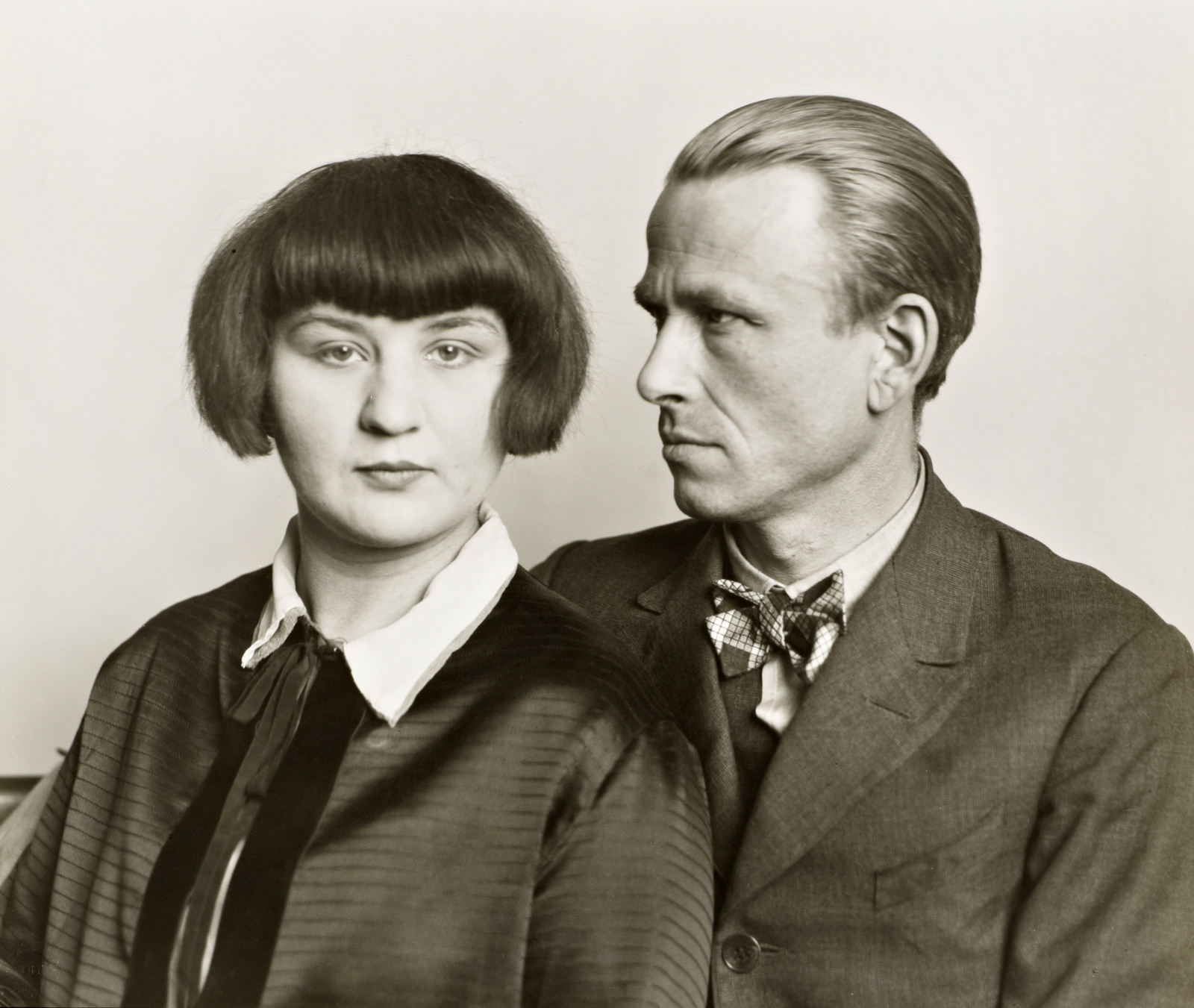


![August Sander (German, 1876-1964) 'Bohemians [Willi Bongard, Gottfried Brockmann]' c. 1922-1925, printed 1990](https://artblart.com/wp-content/uploads/2017/09/august-sander-bohemians-willi-bongard-gottfried-brockmann-c-1922e280935-web.jpg "August Sander (German, 1876-1964) 'Bohemians [Willi Bongard, Gottfried Brockmann]' c. 1922-1925, printed 1990")
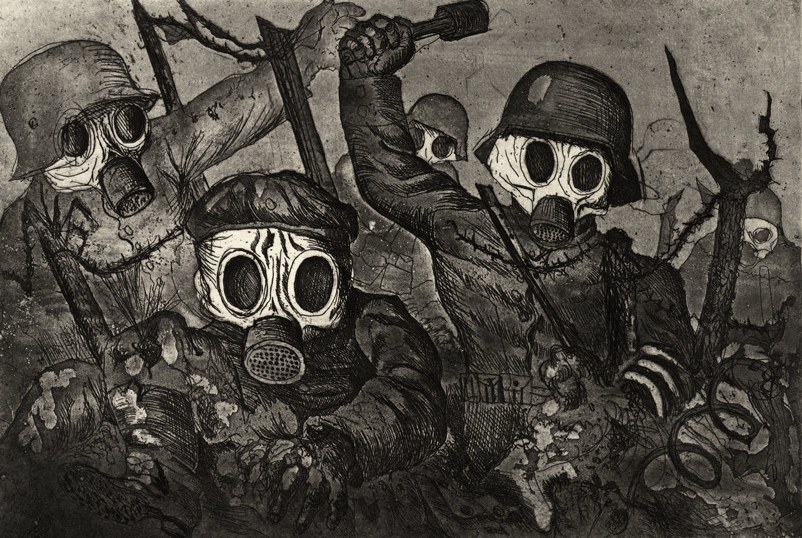


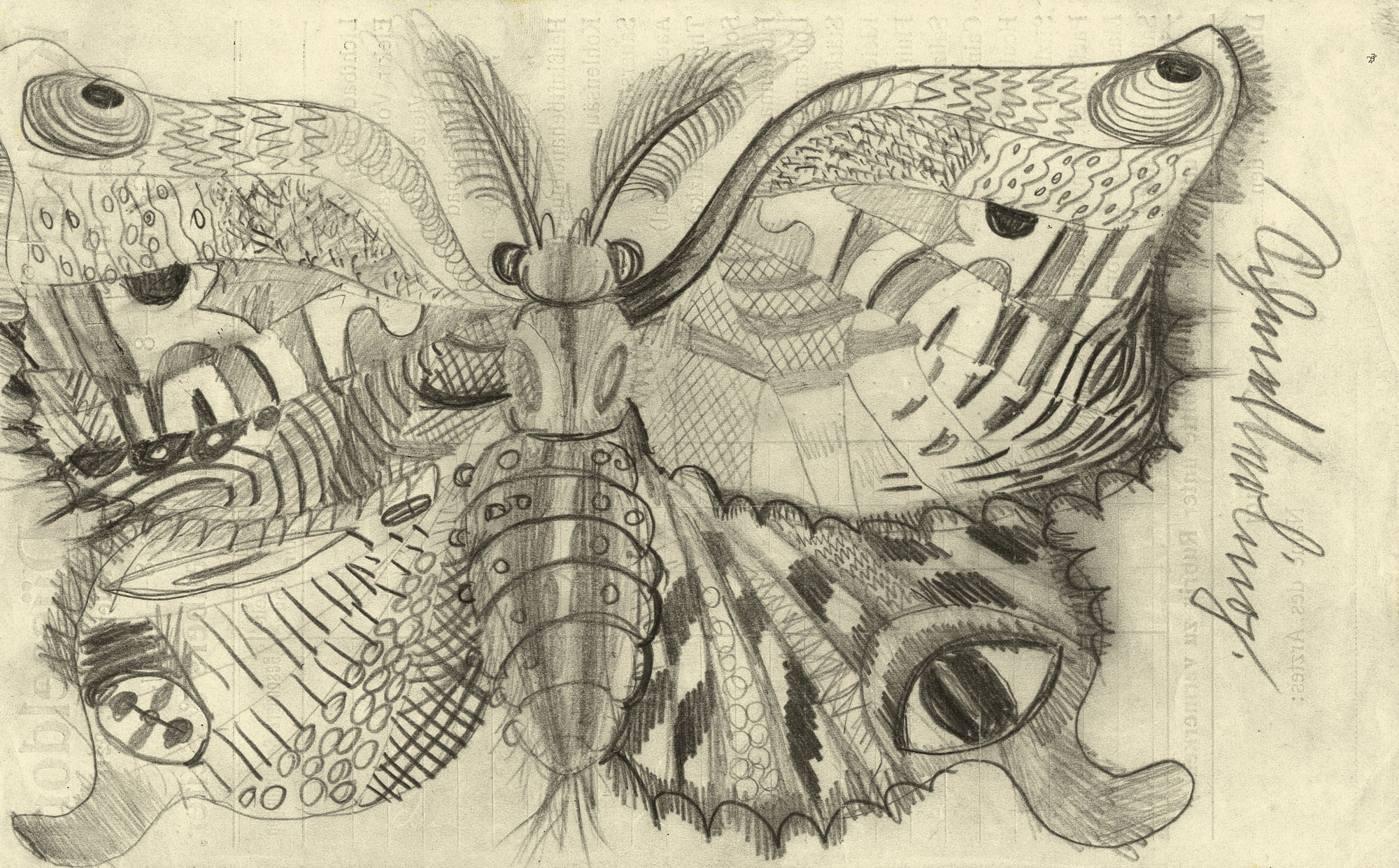
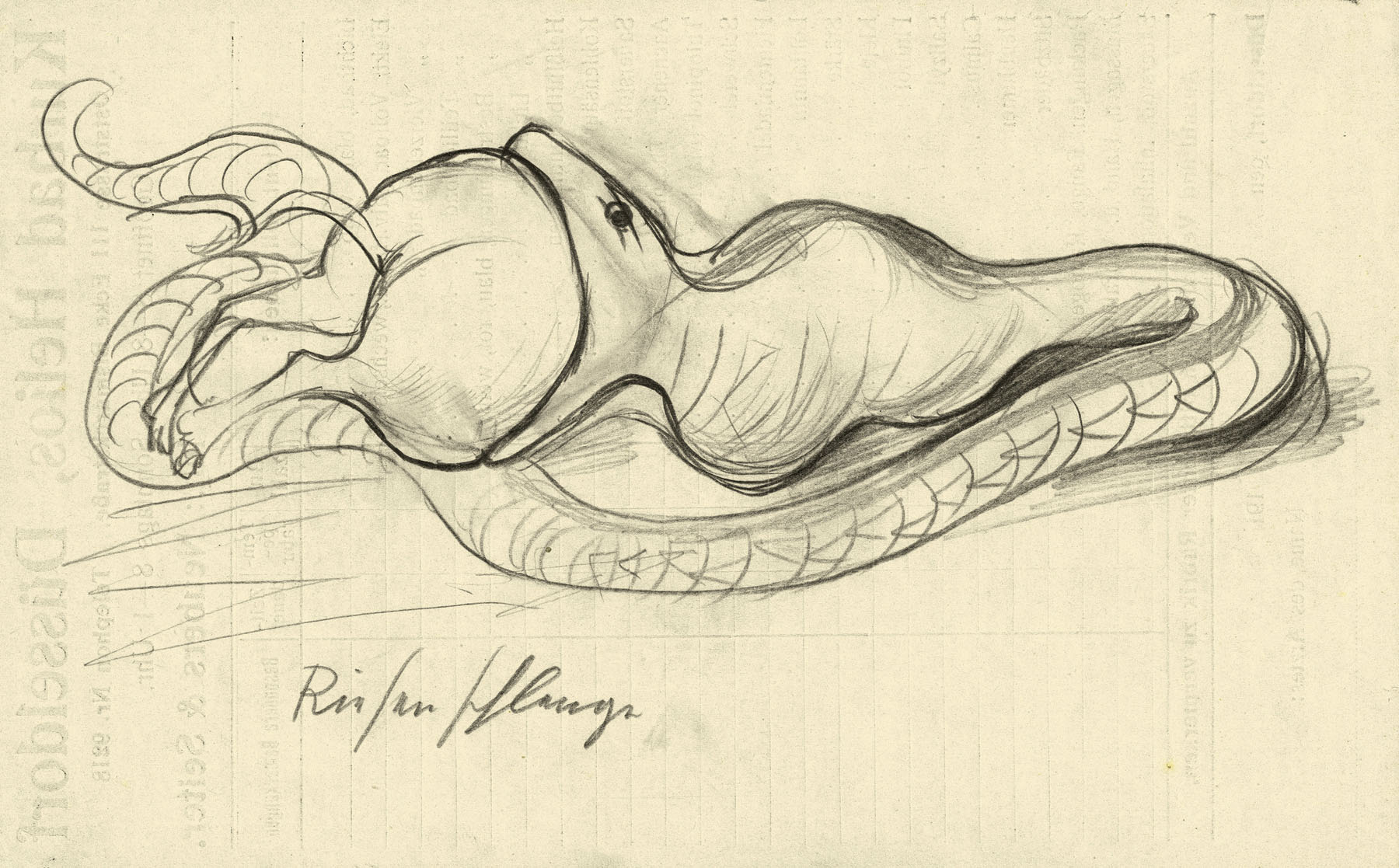


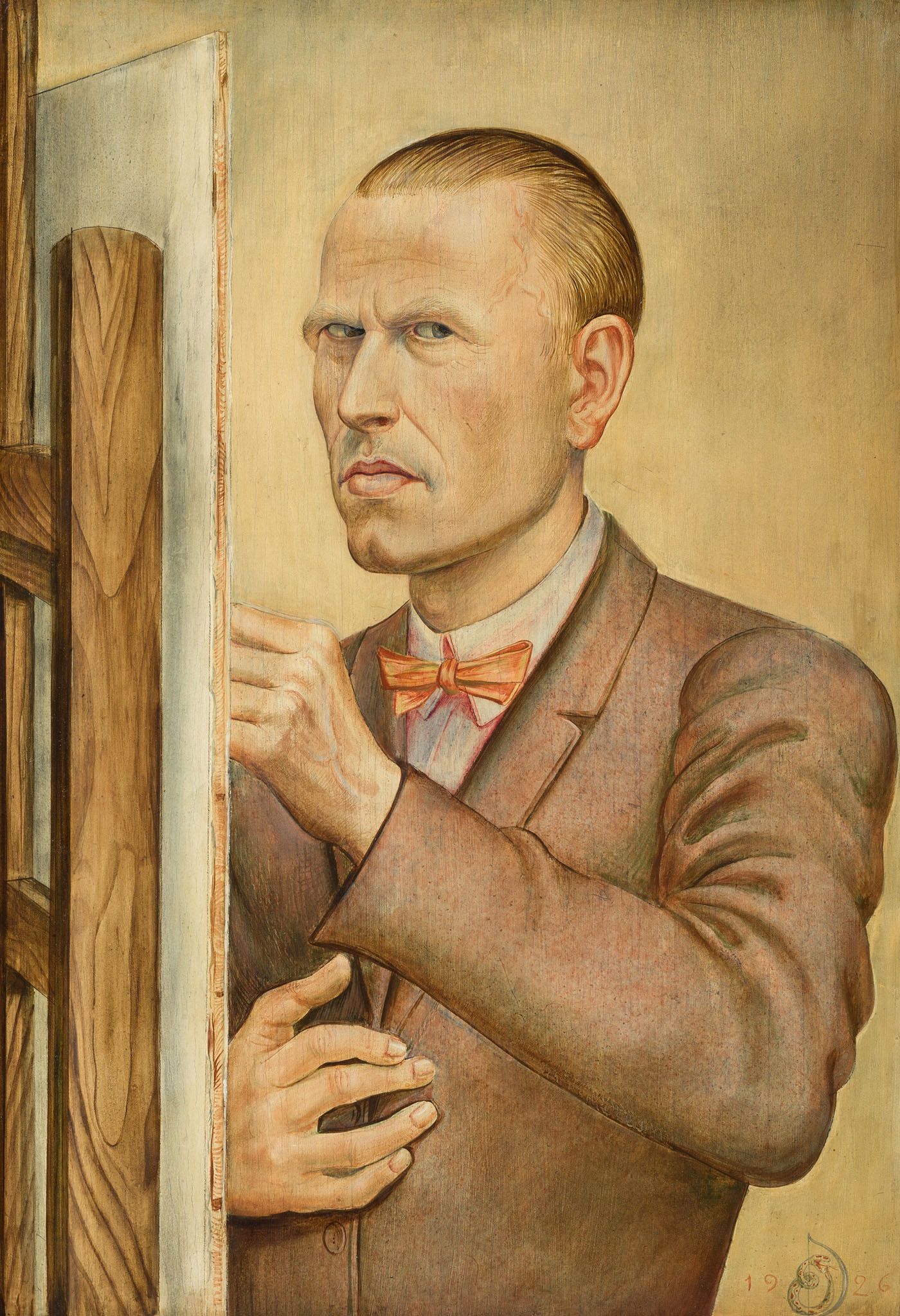
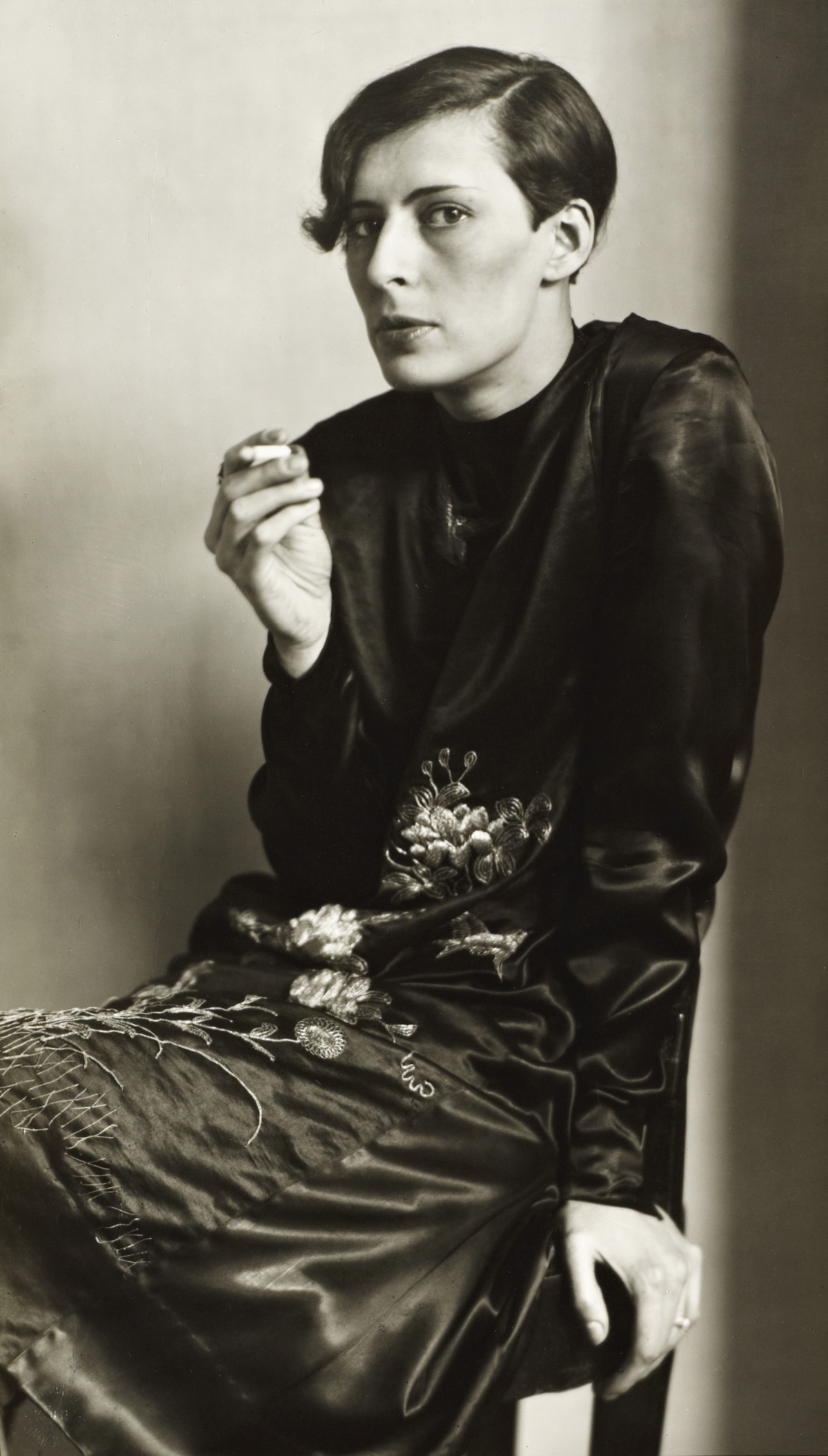


![August Sander (German, 1876-1964) 'Photographer [August Sander]' 1925, printed 1990](https://artblart.com/wp-content/uploads/2017/09/august_sander_august_sander_1925-web.jpg "August Sander (German, 1876-1964) 'Photographer [August Sander]' 1925, printed 1990")
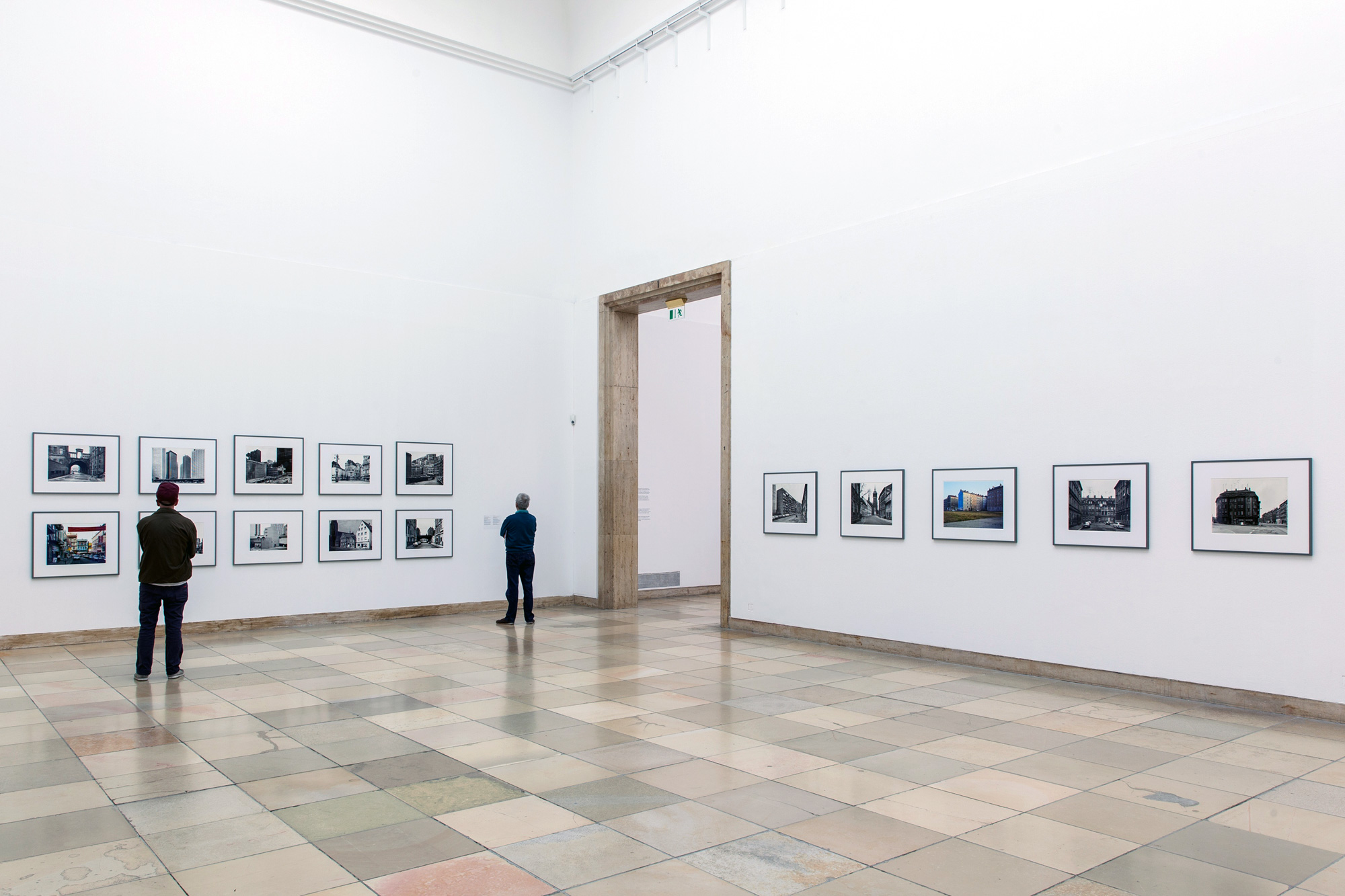
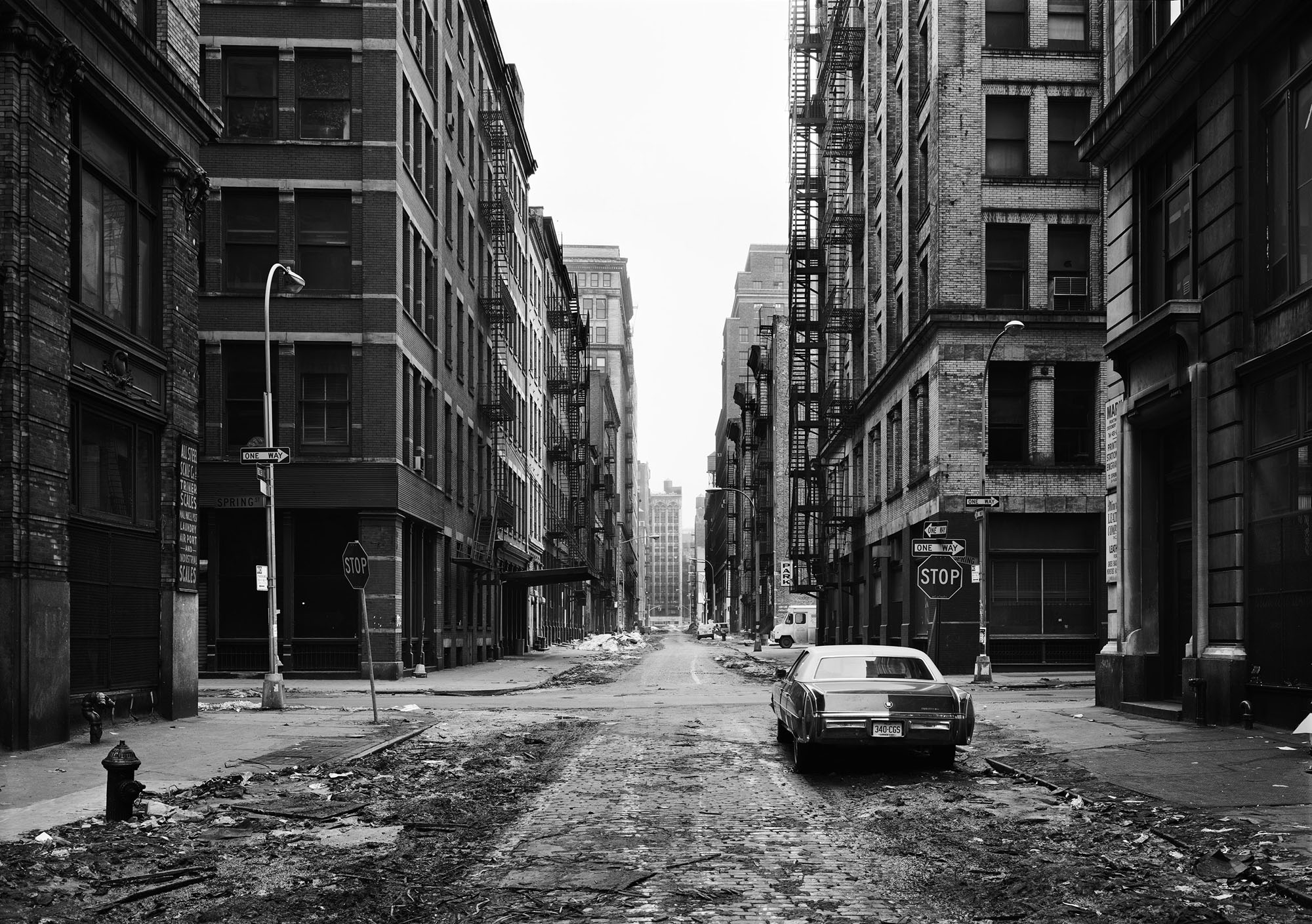

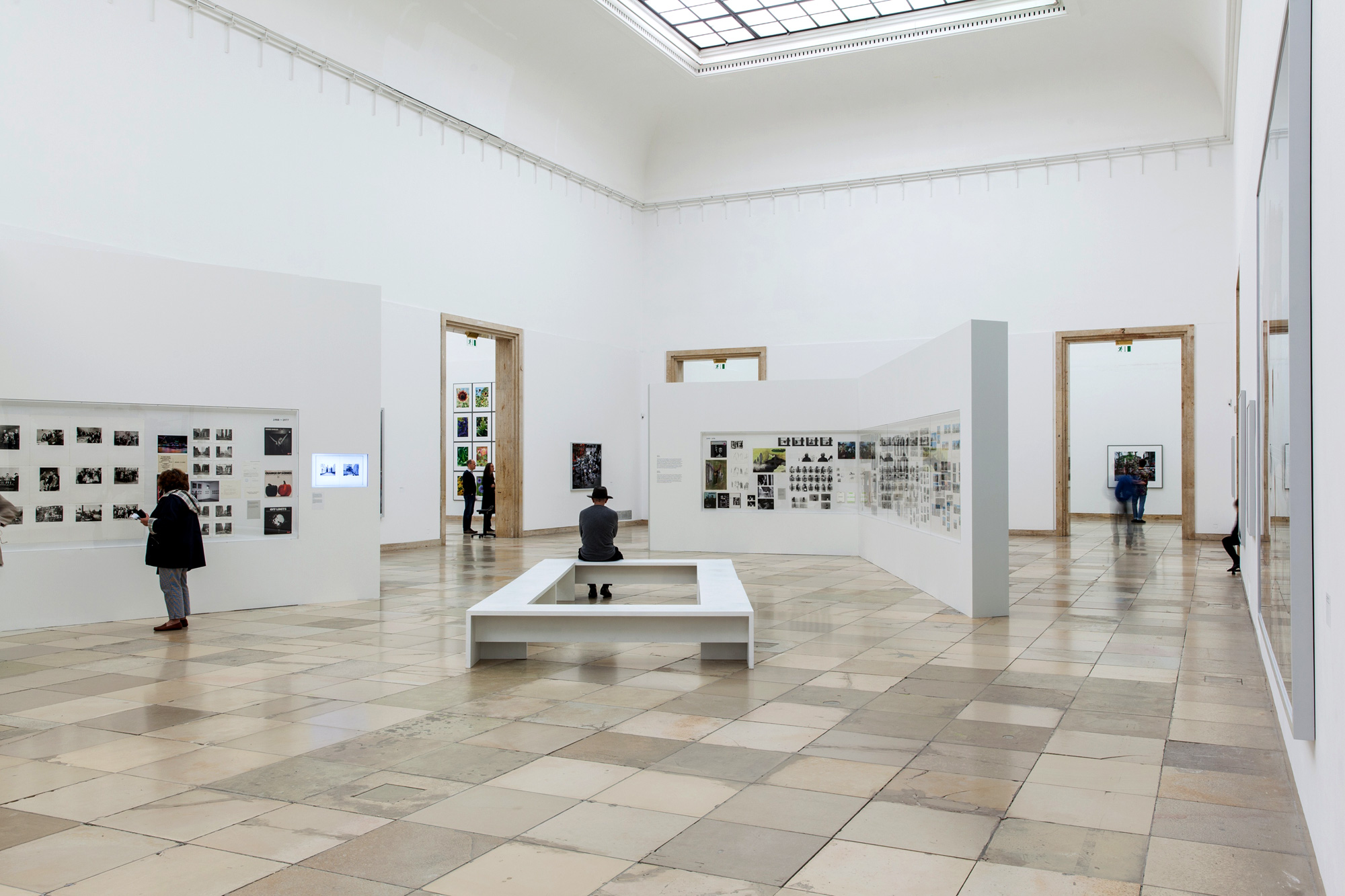

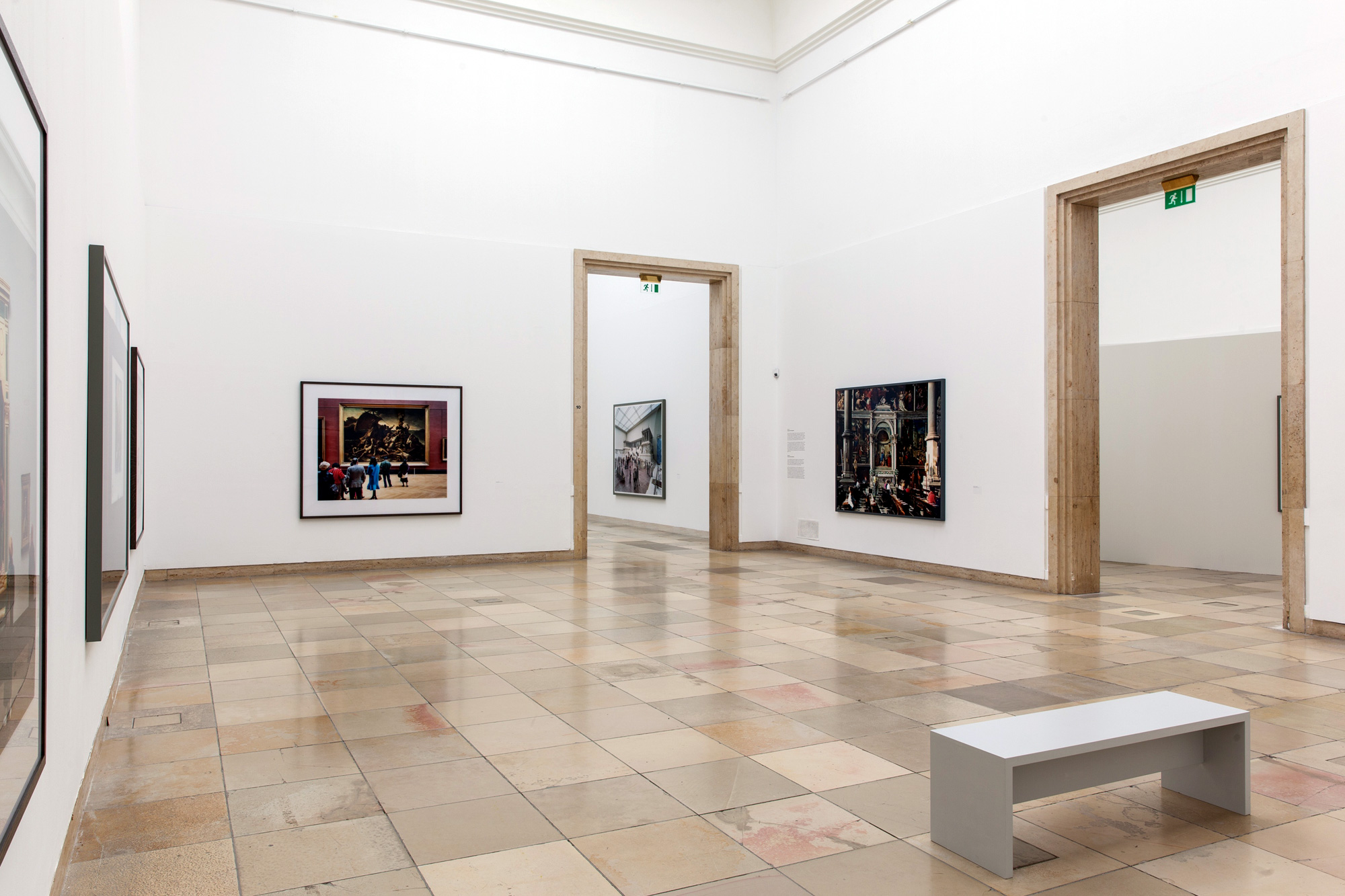

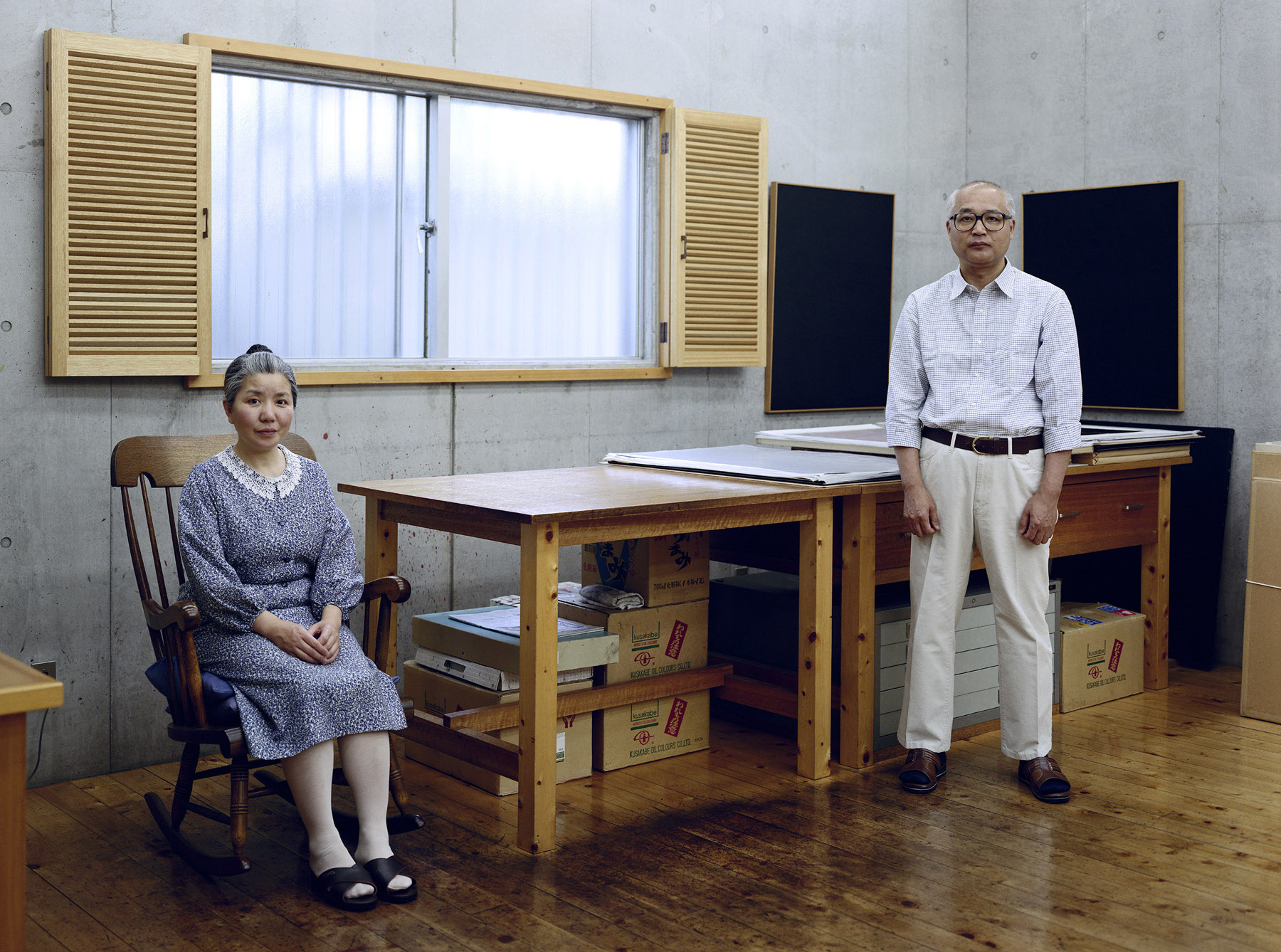


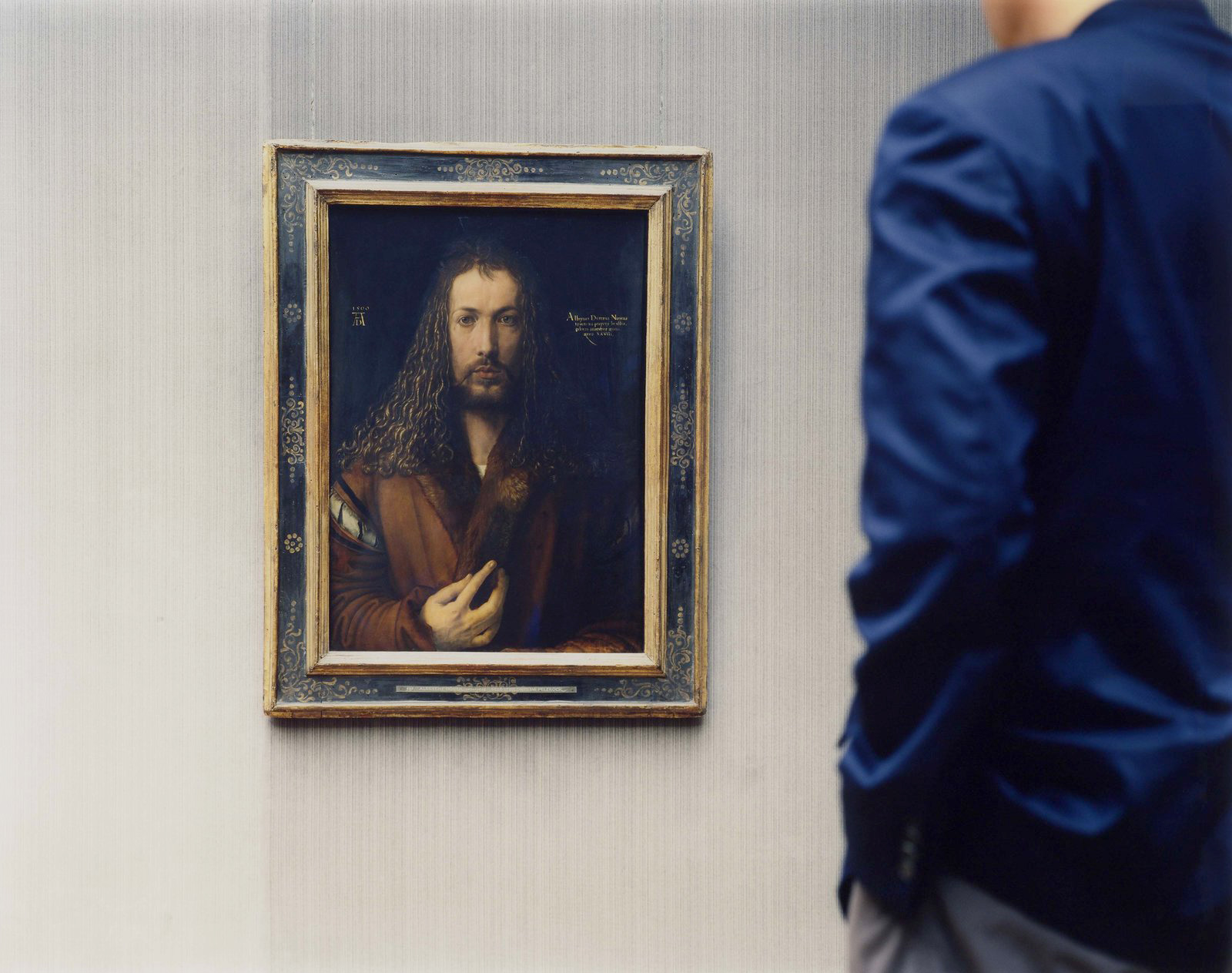

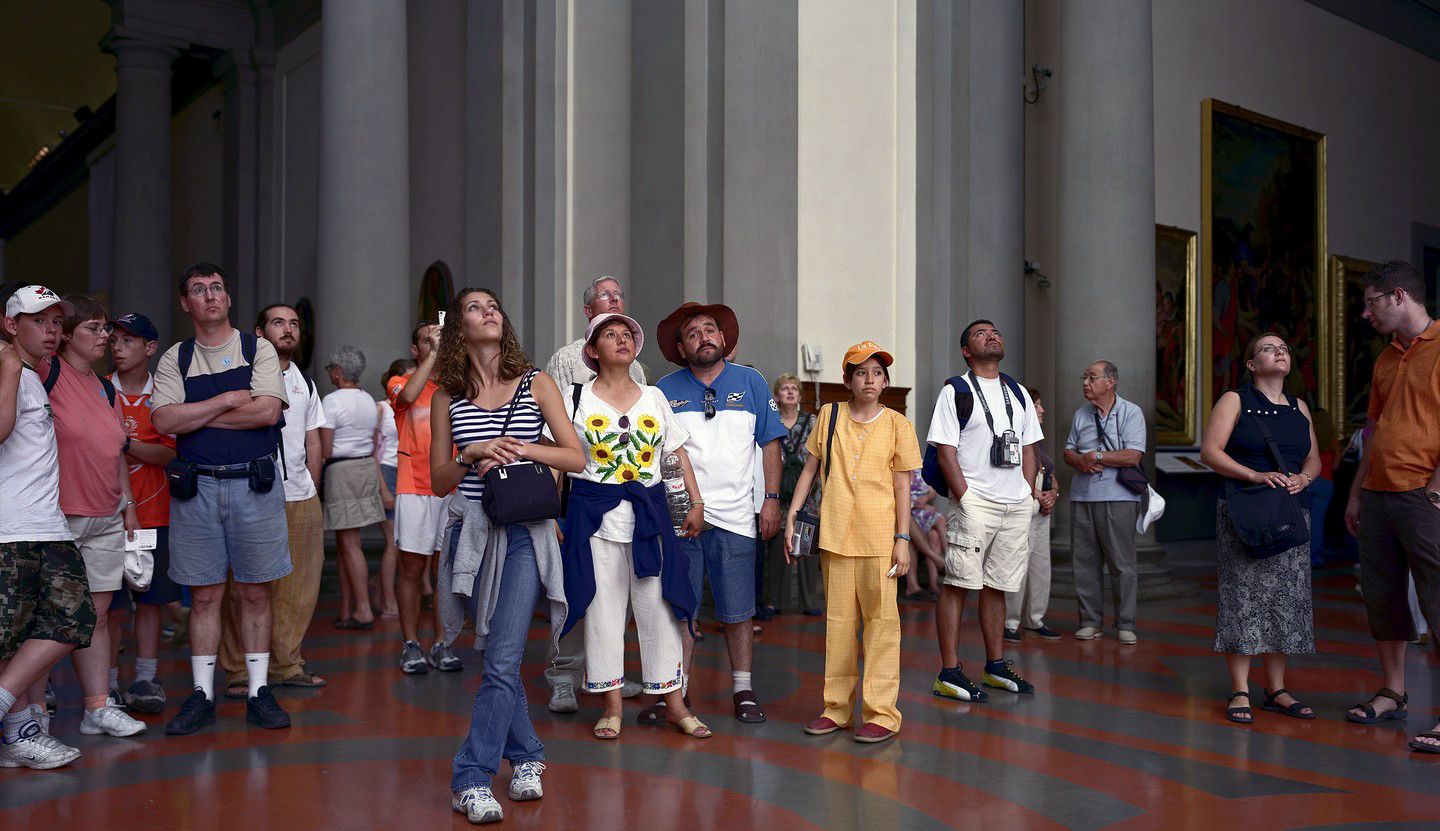
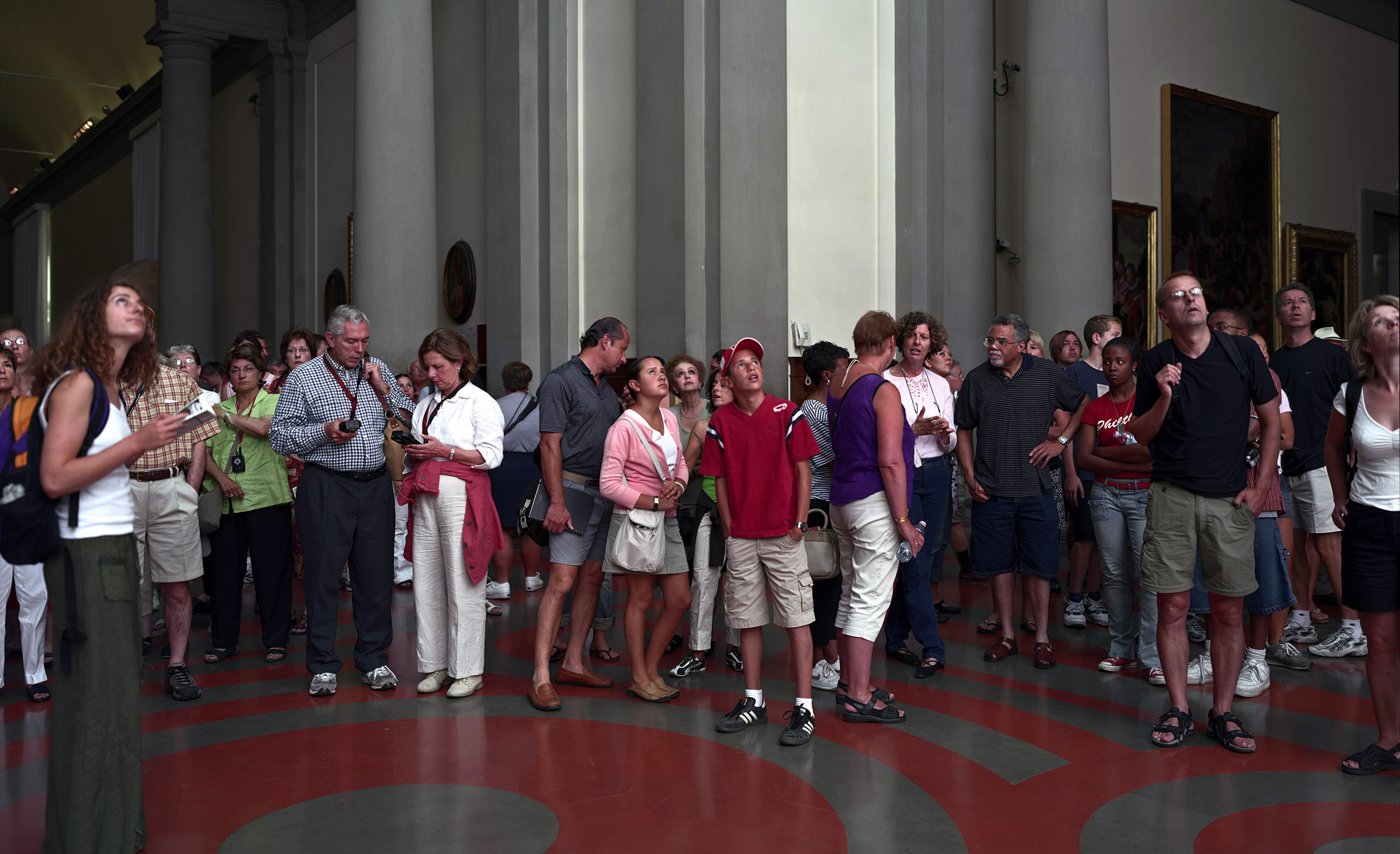
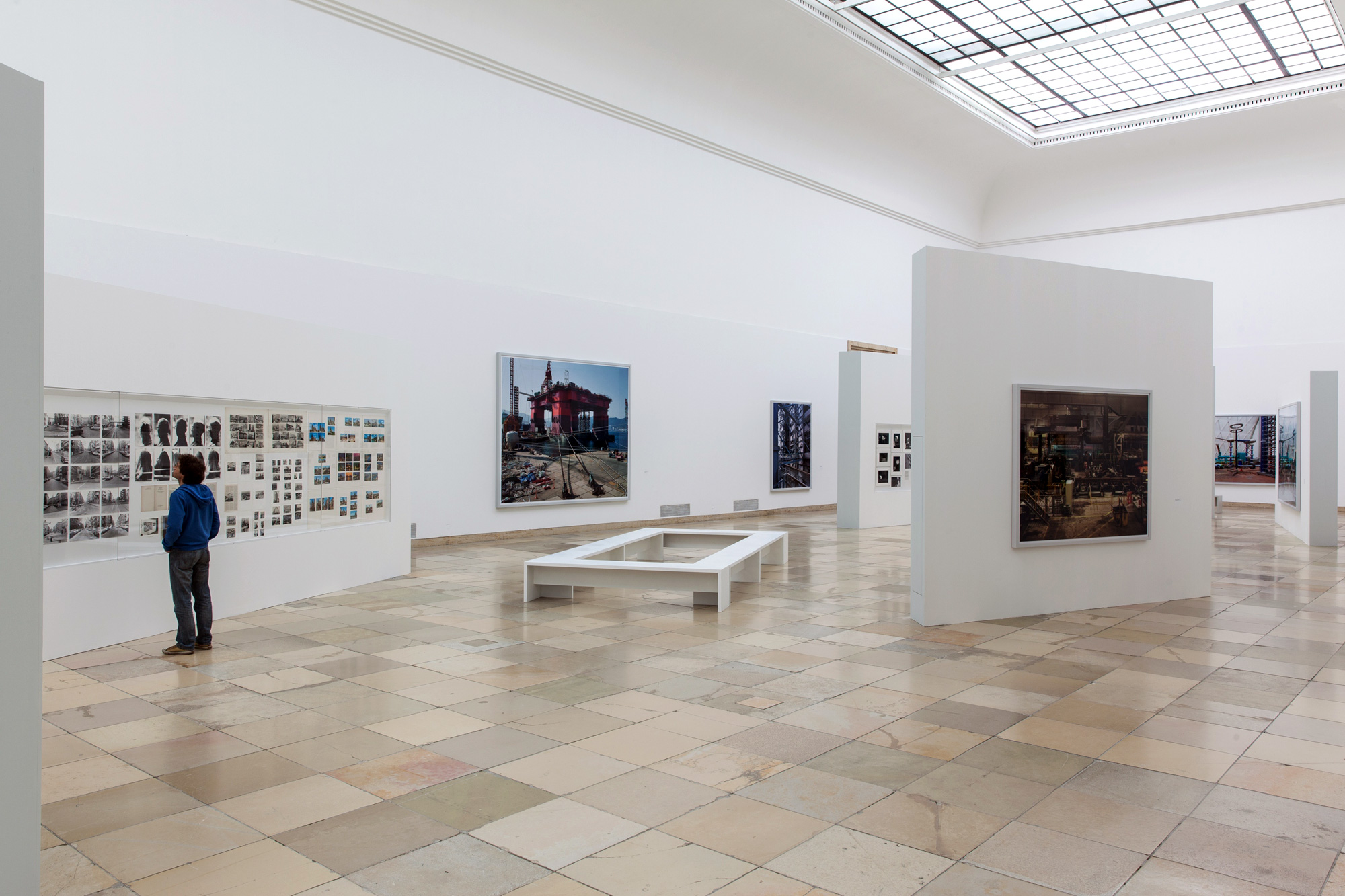
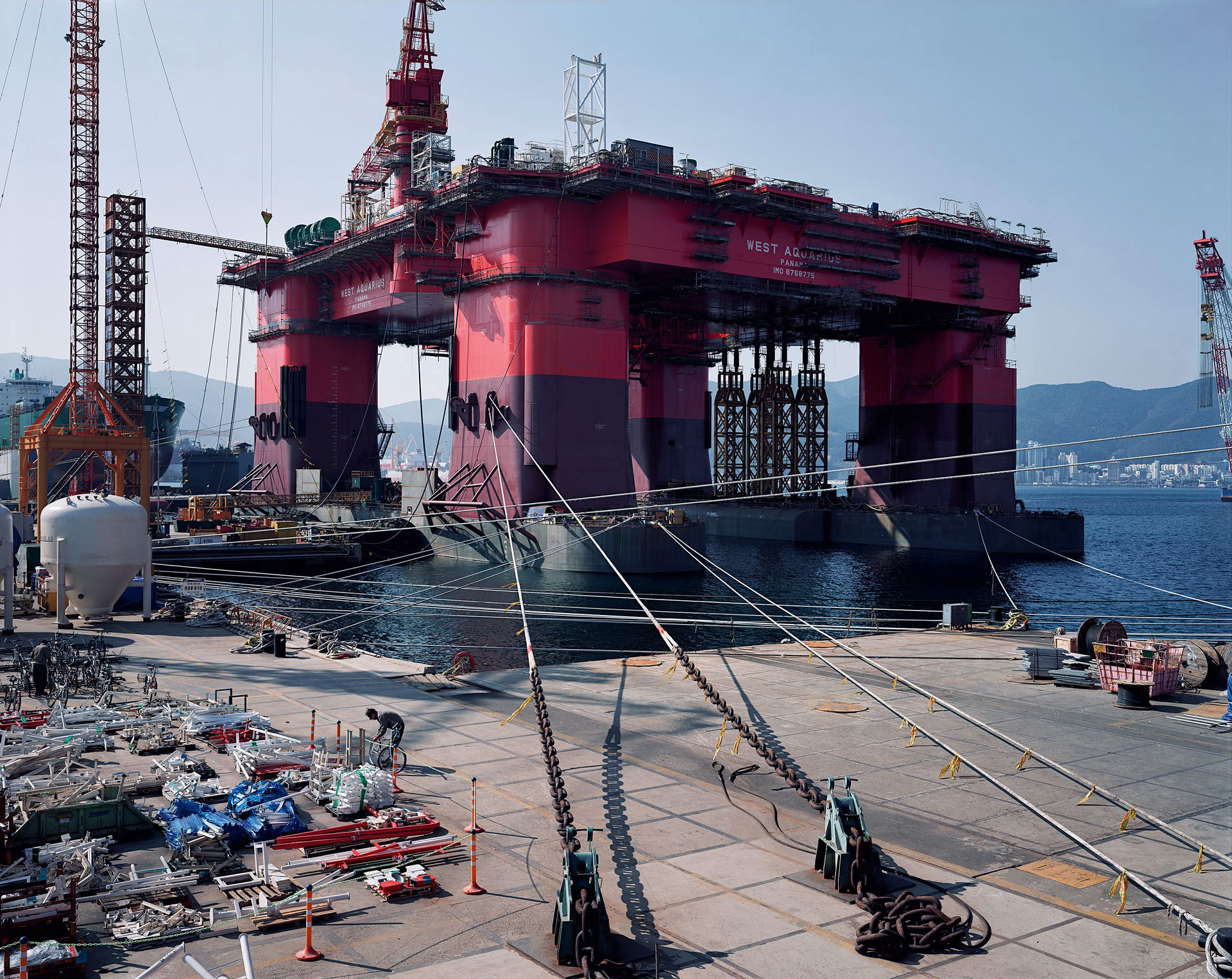

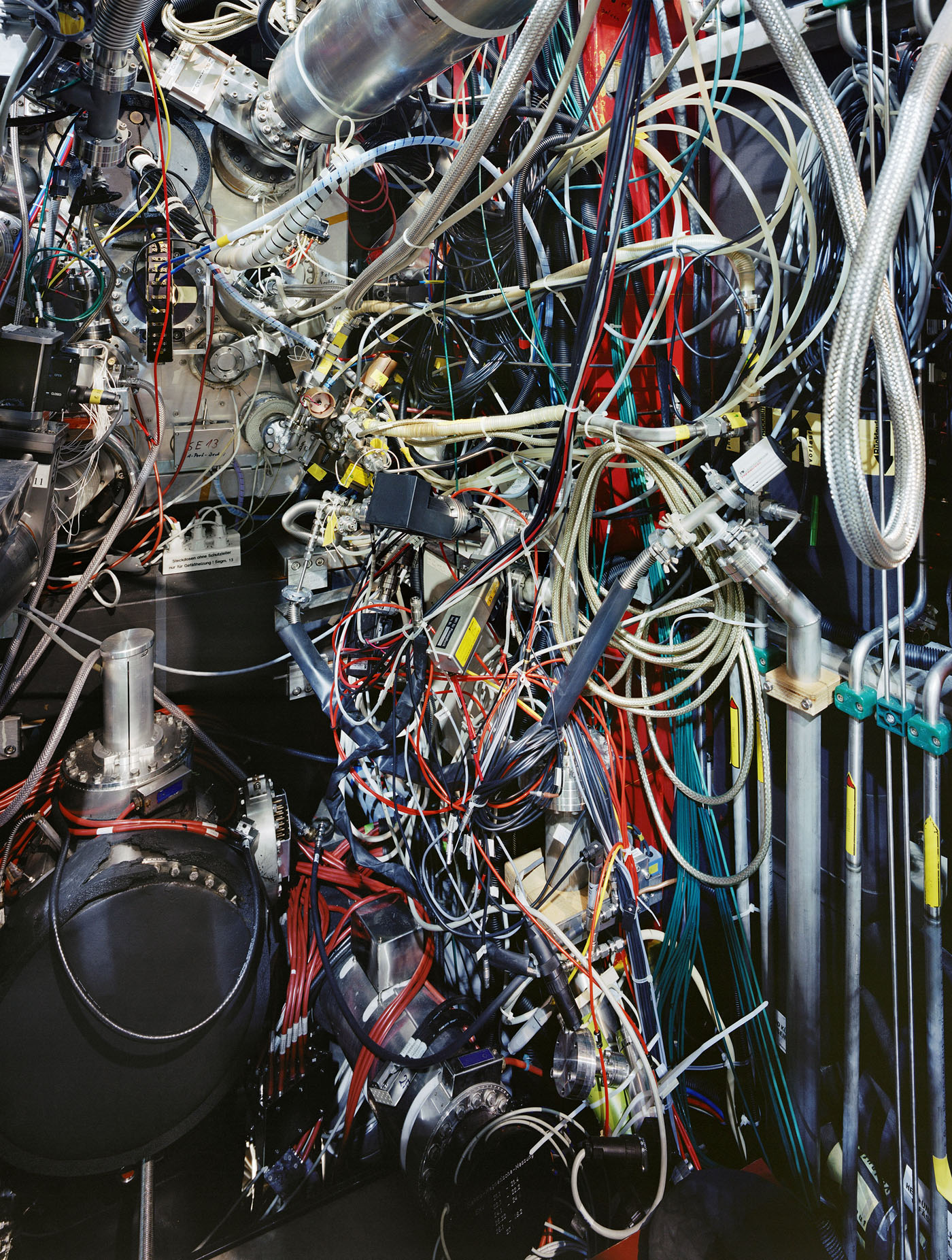

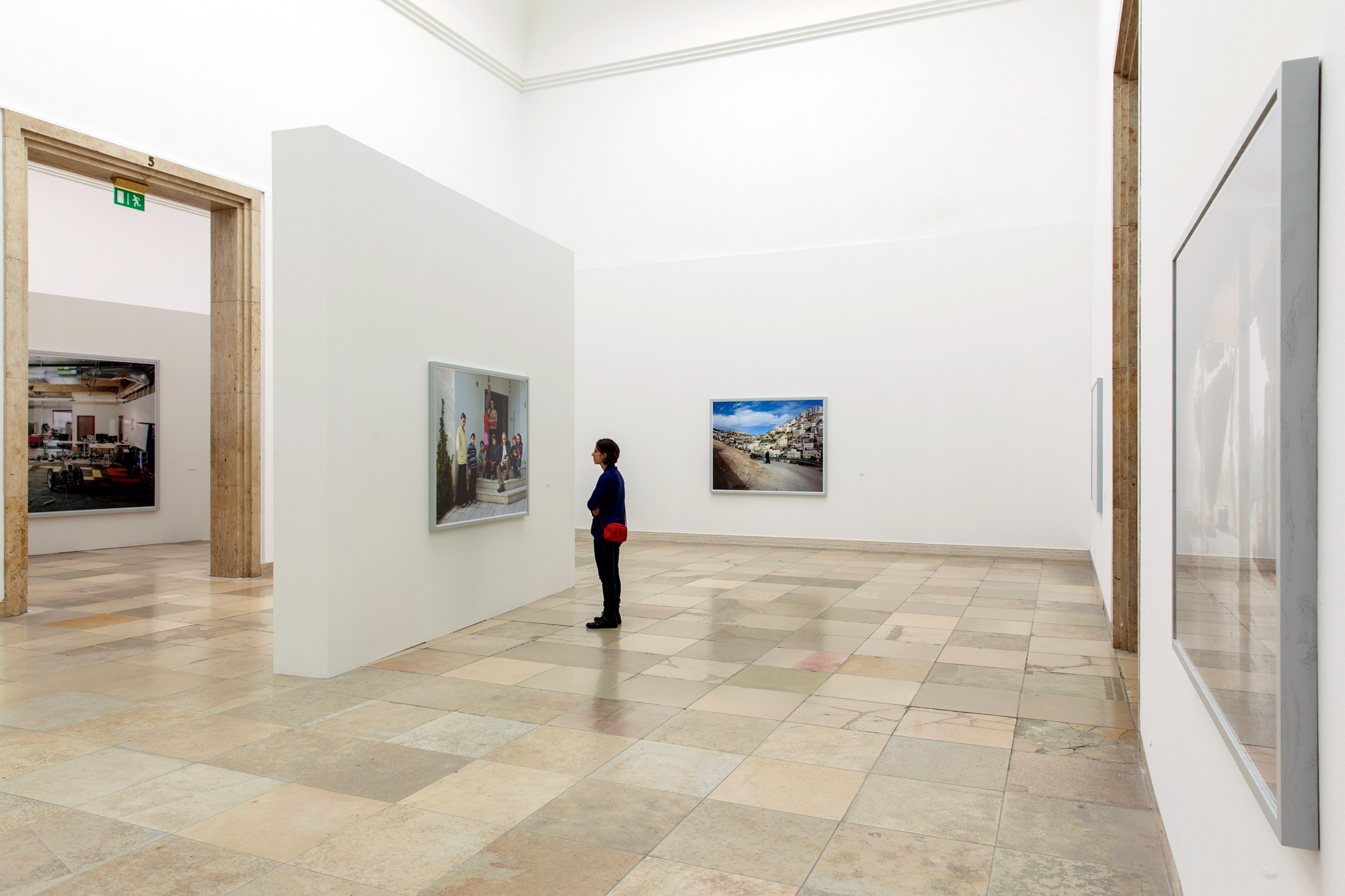

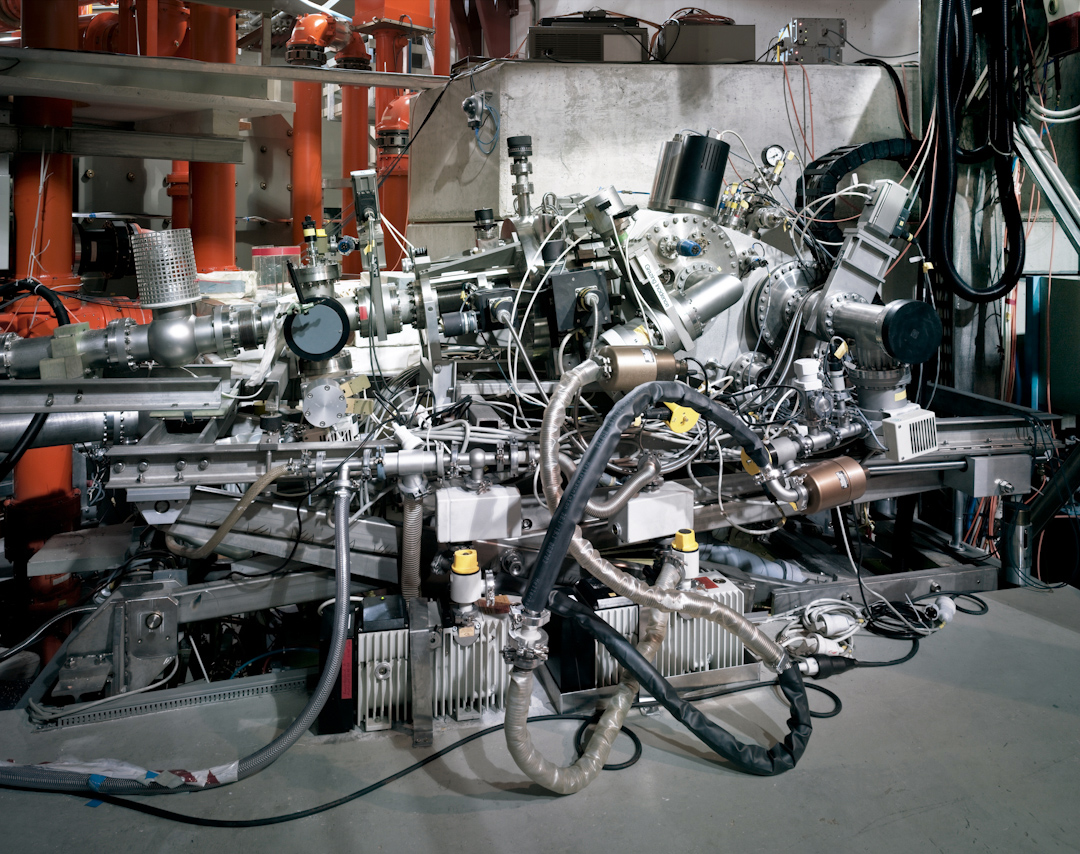
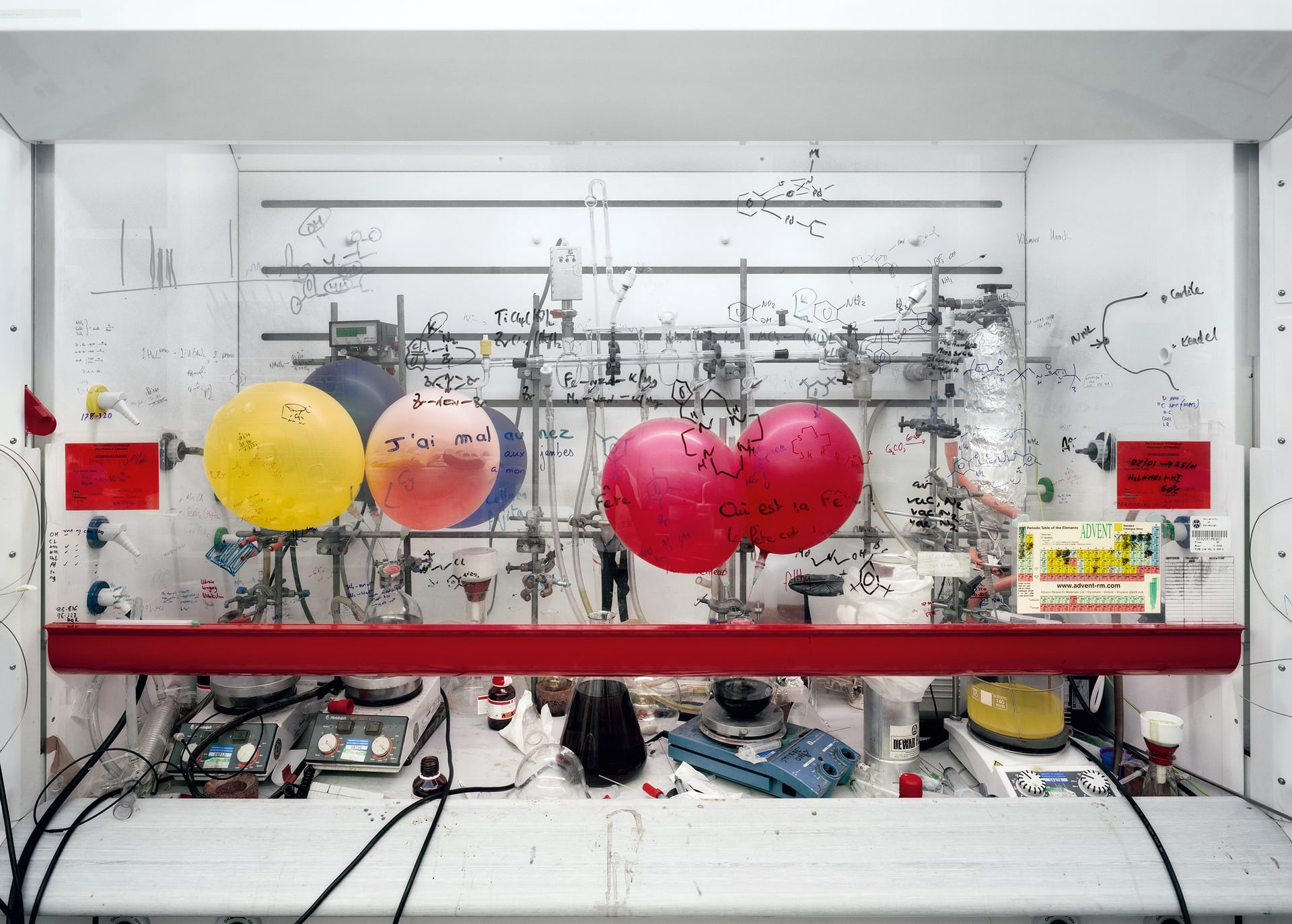

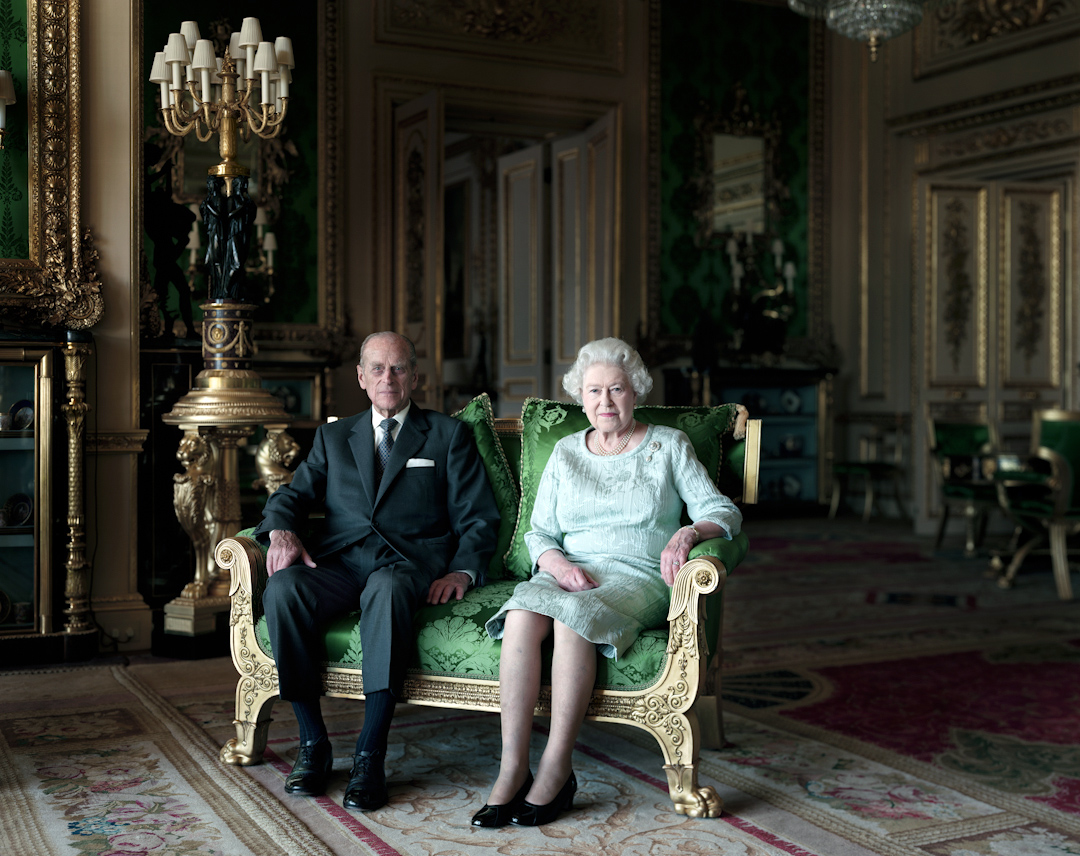
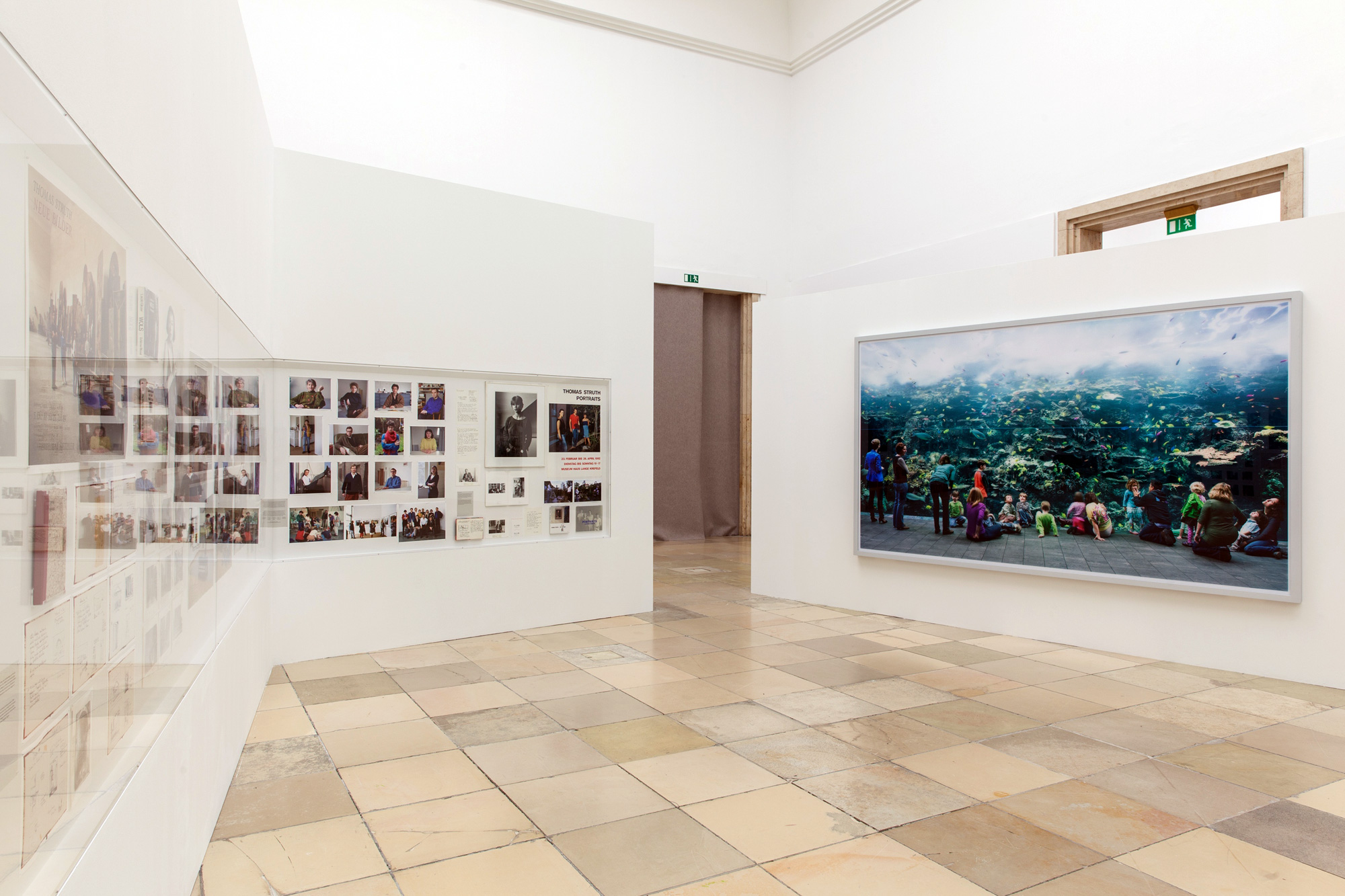

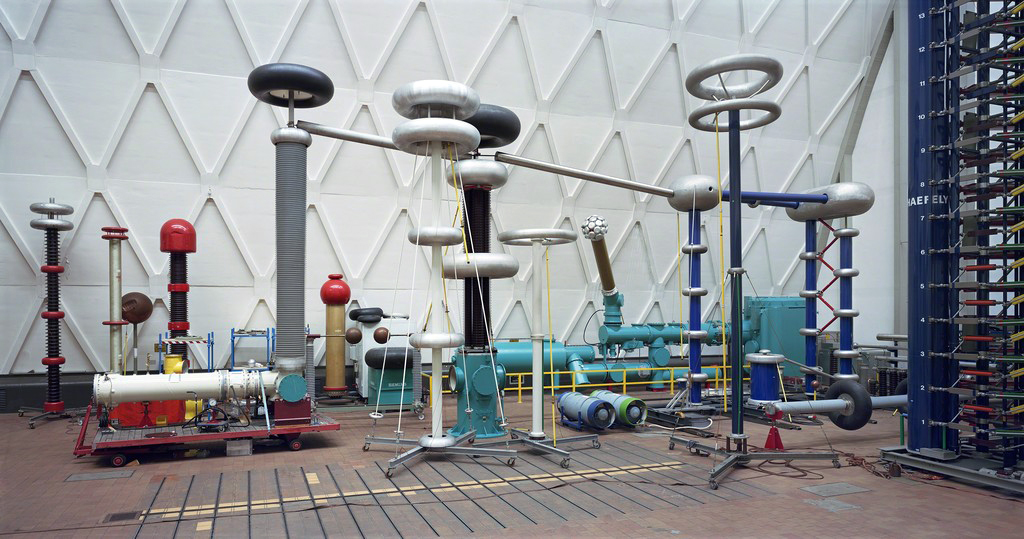
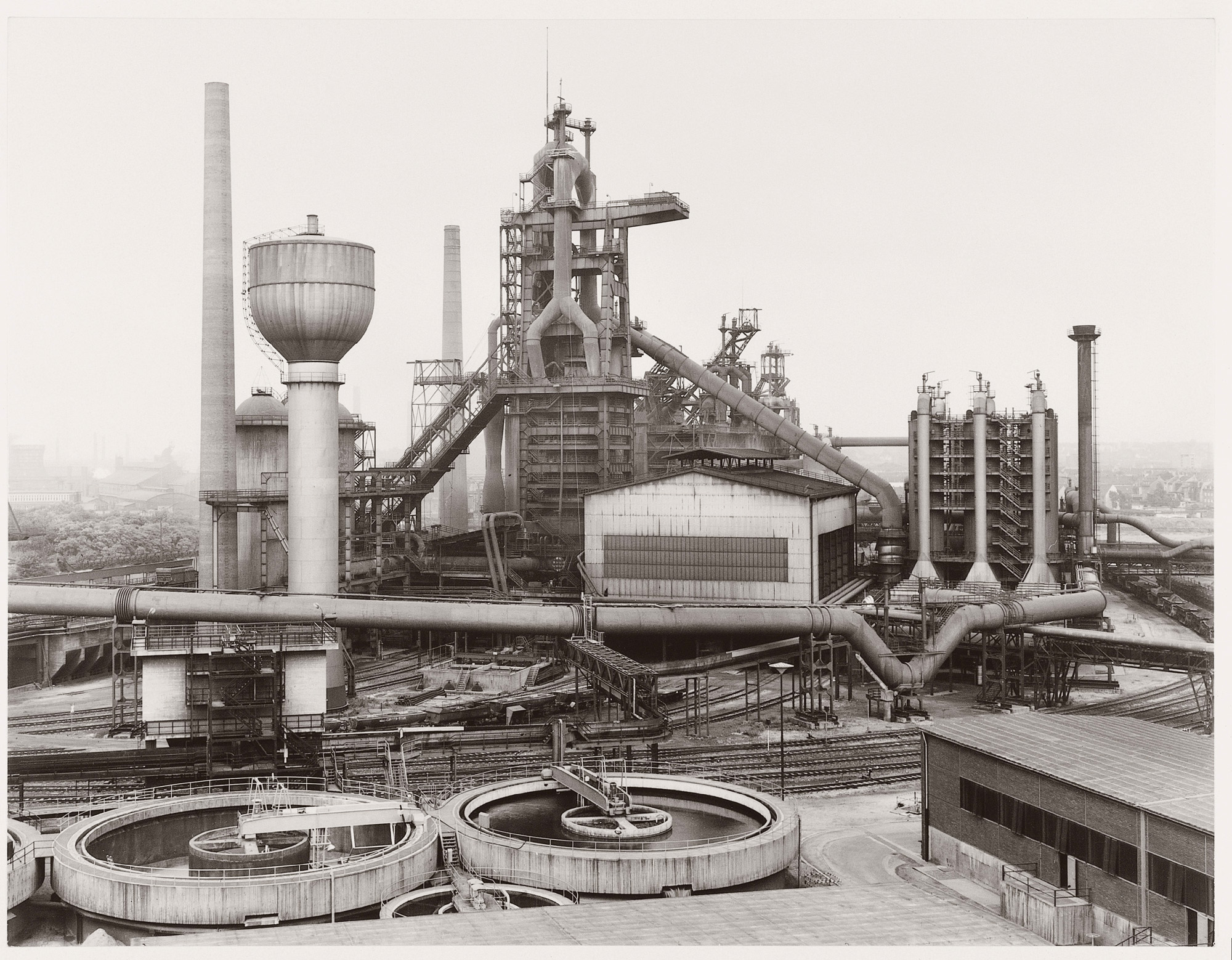


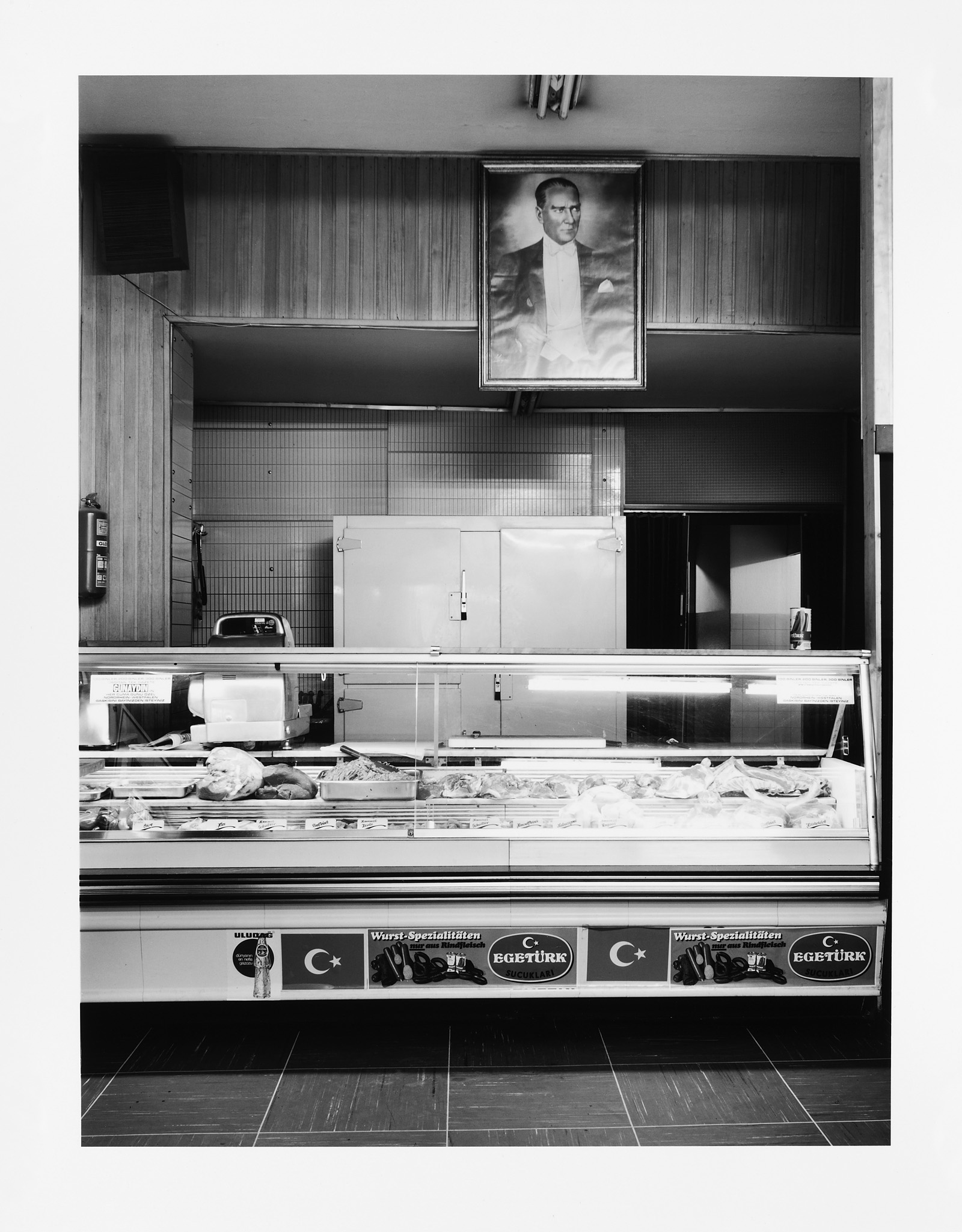

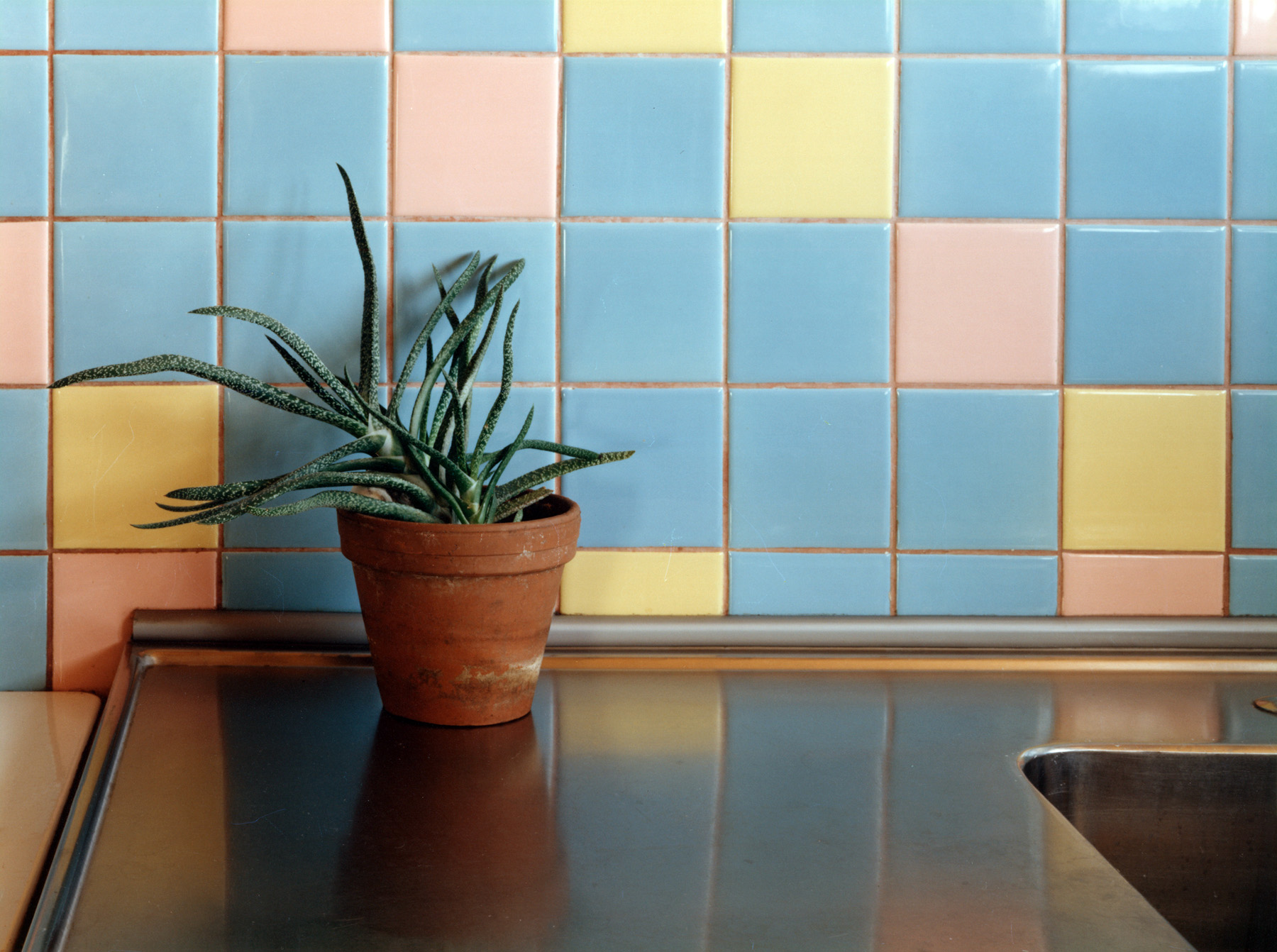
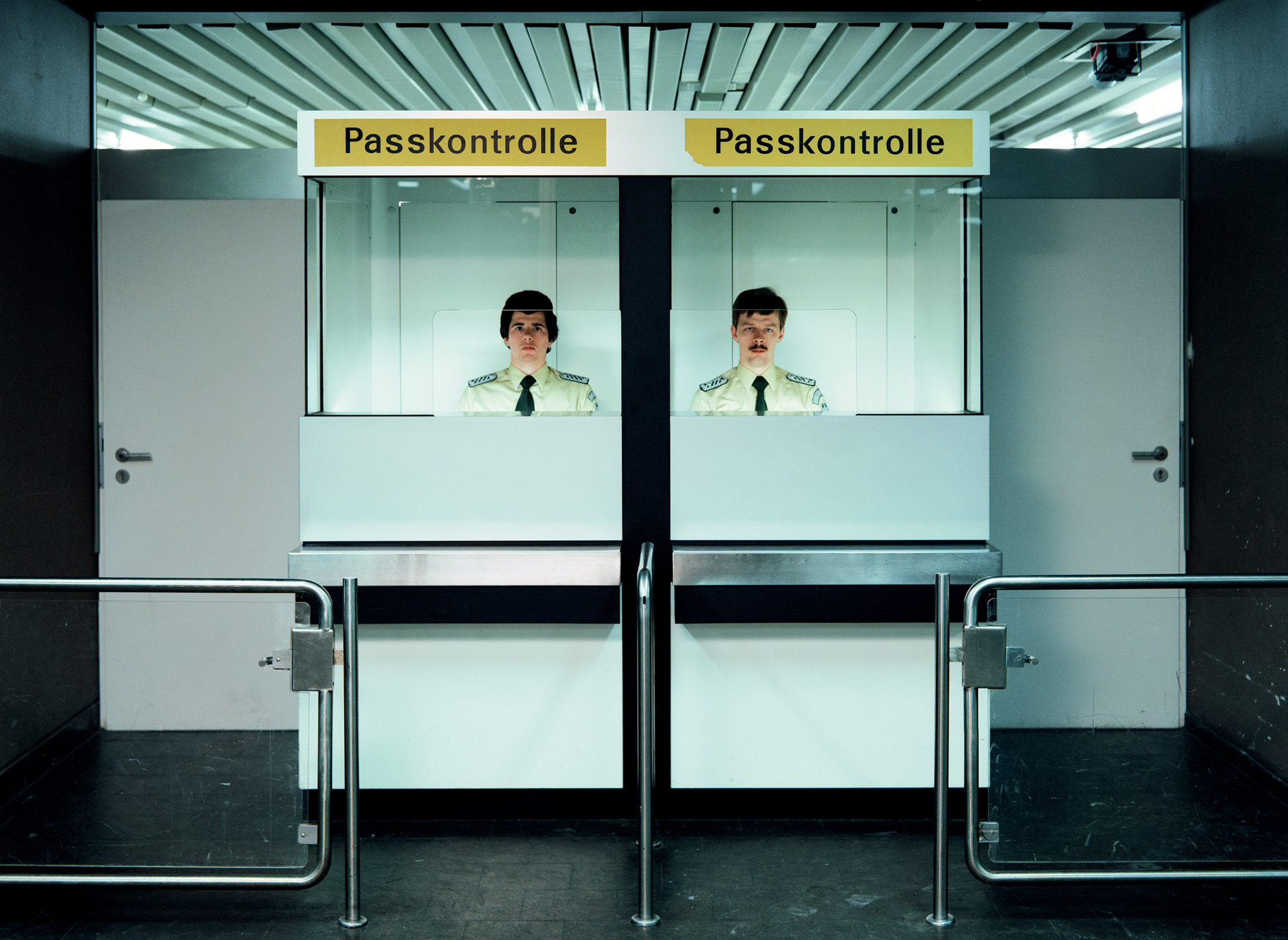
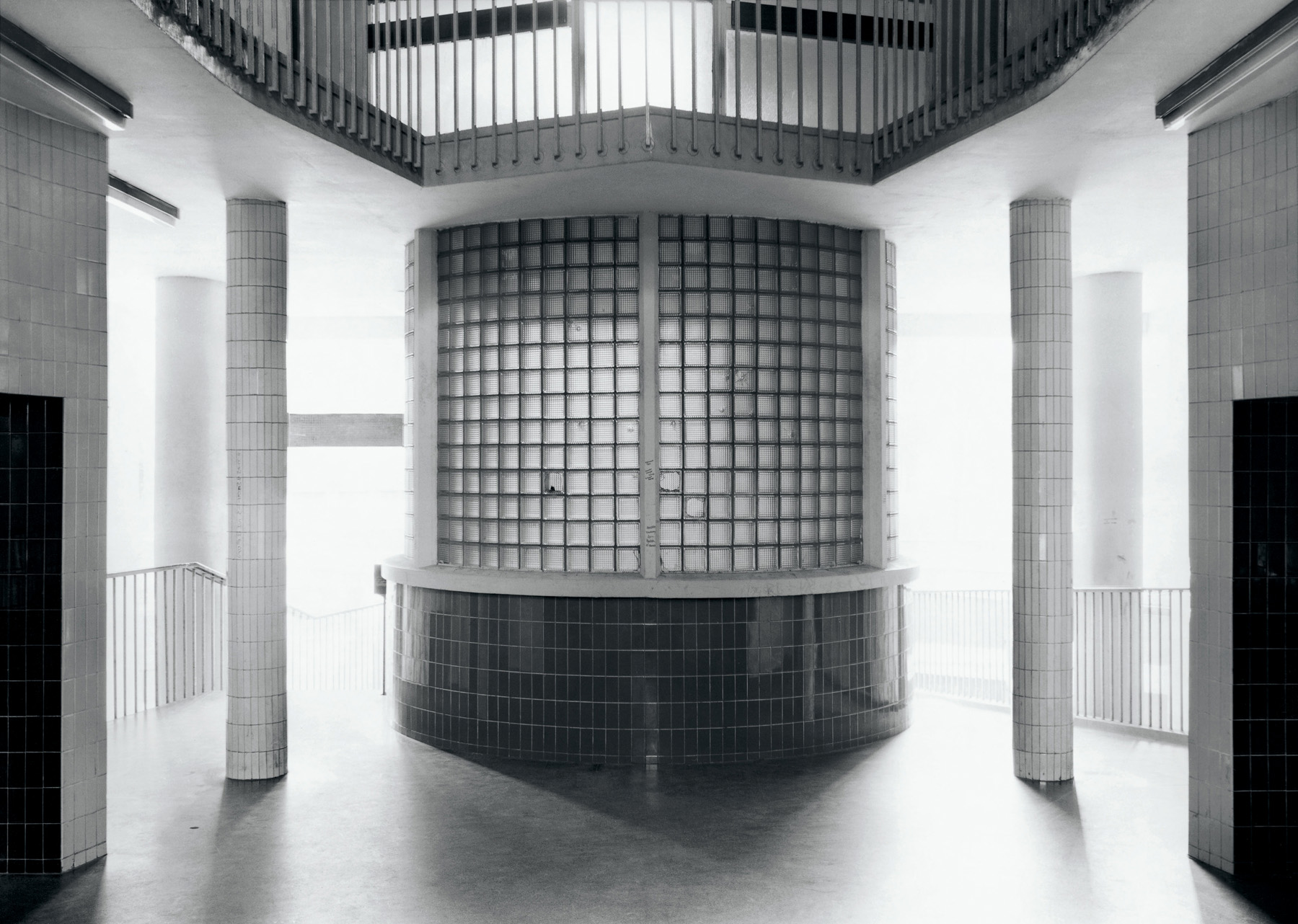
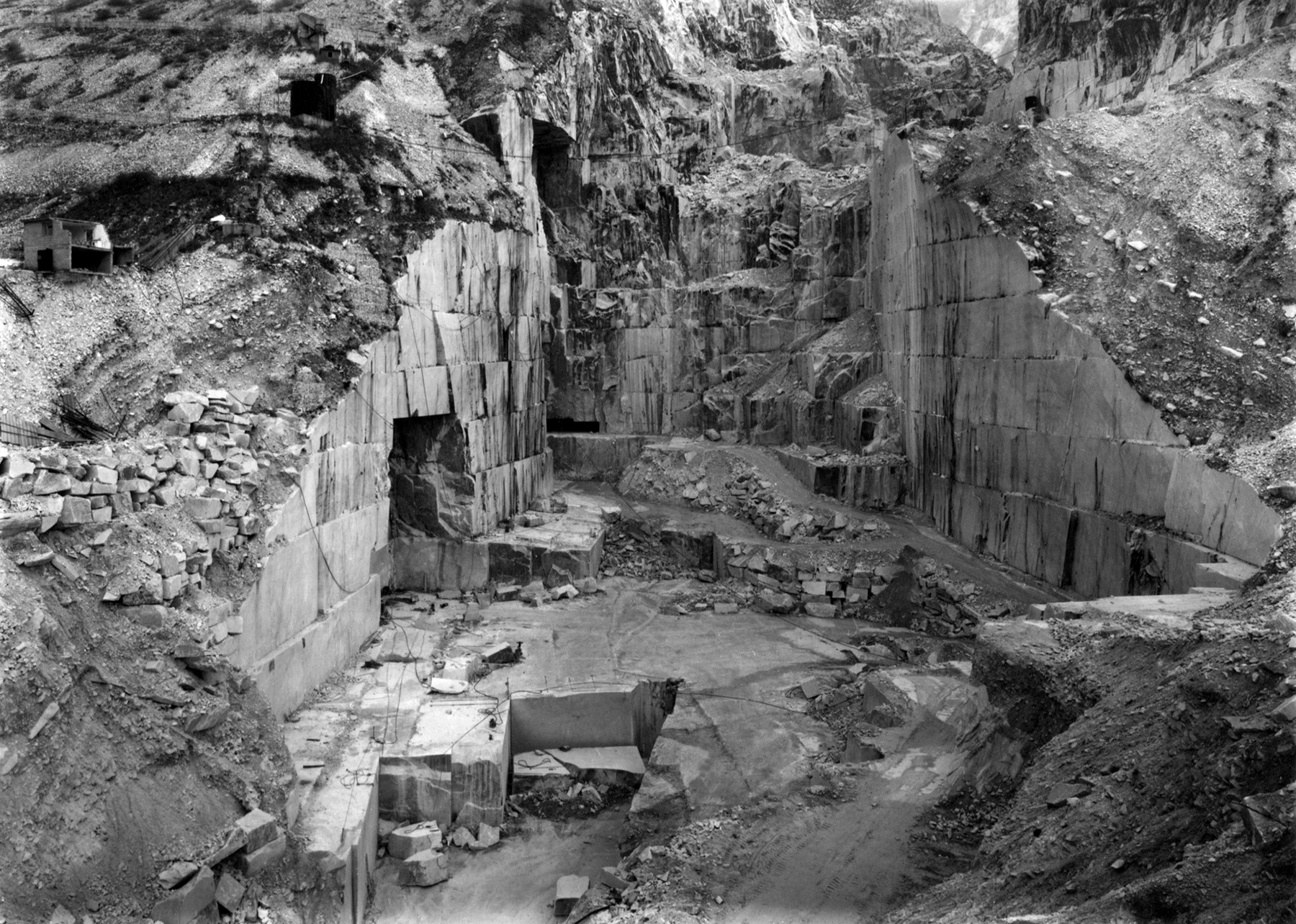

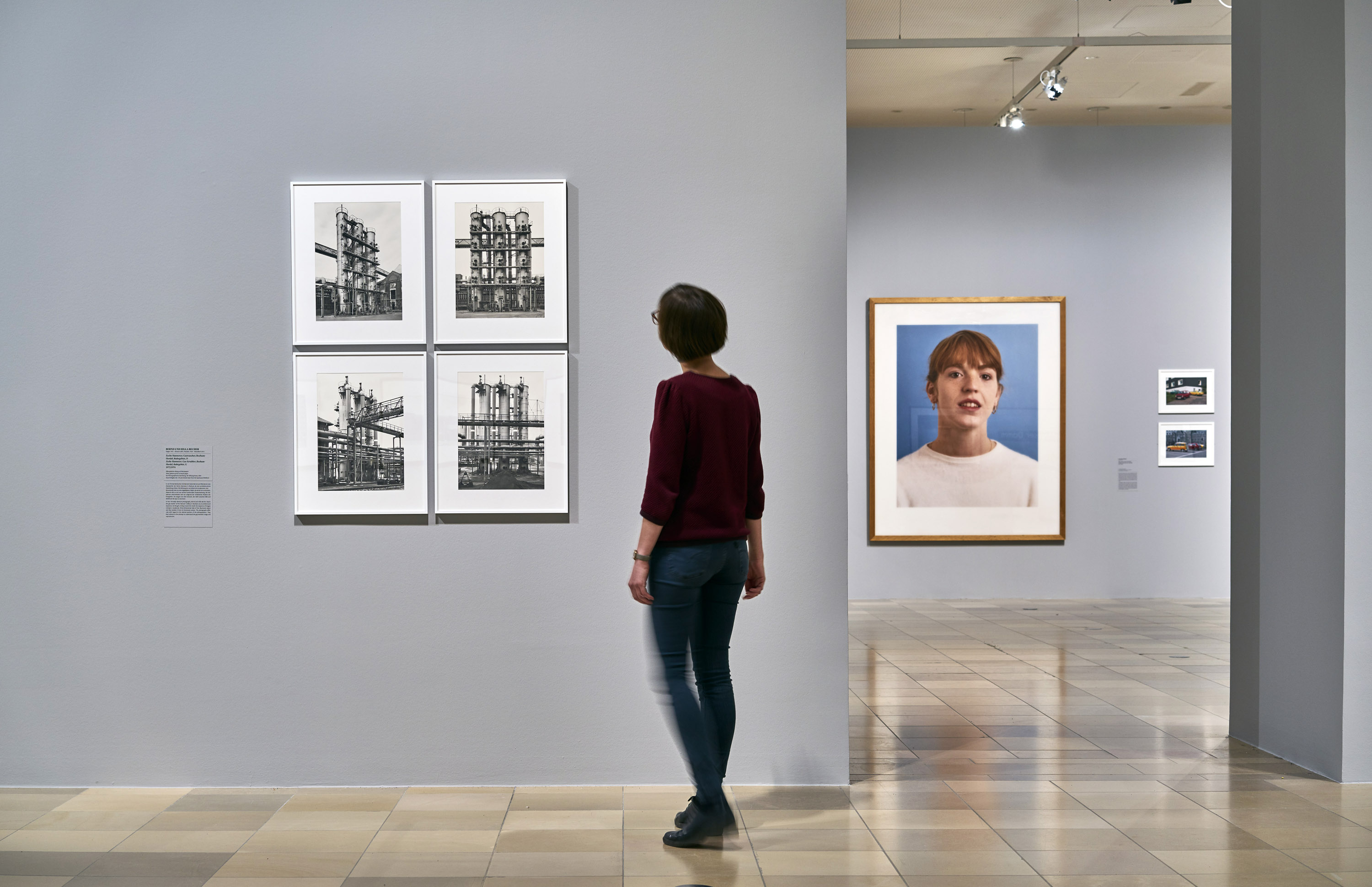
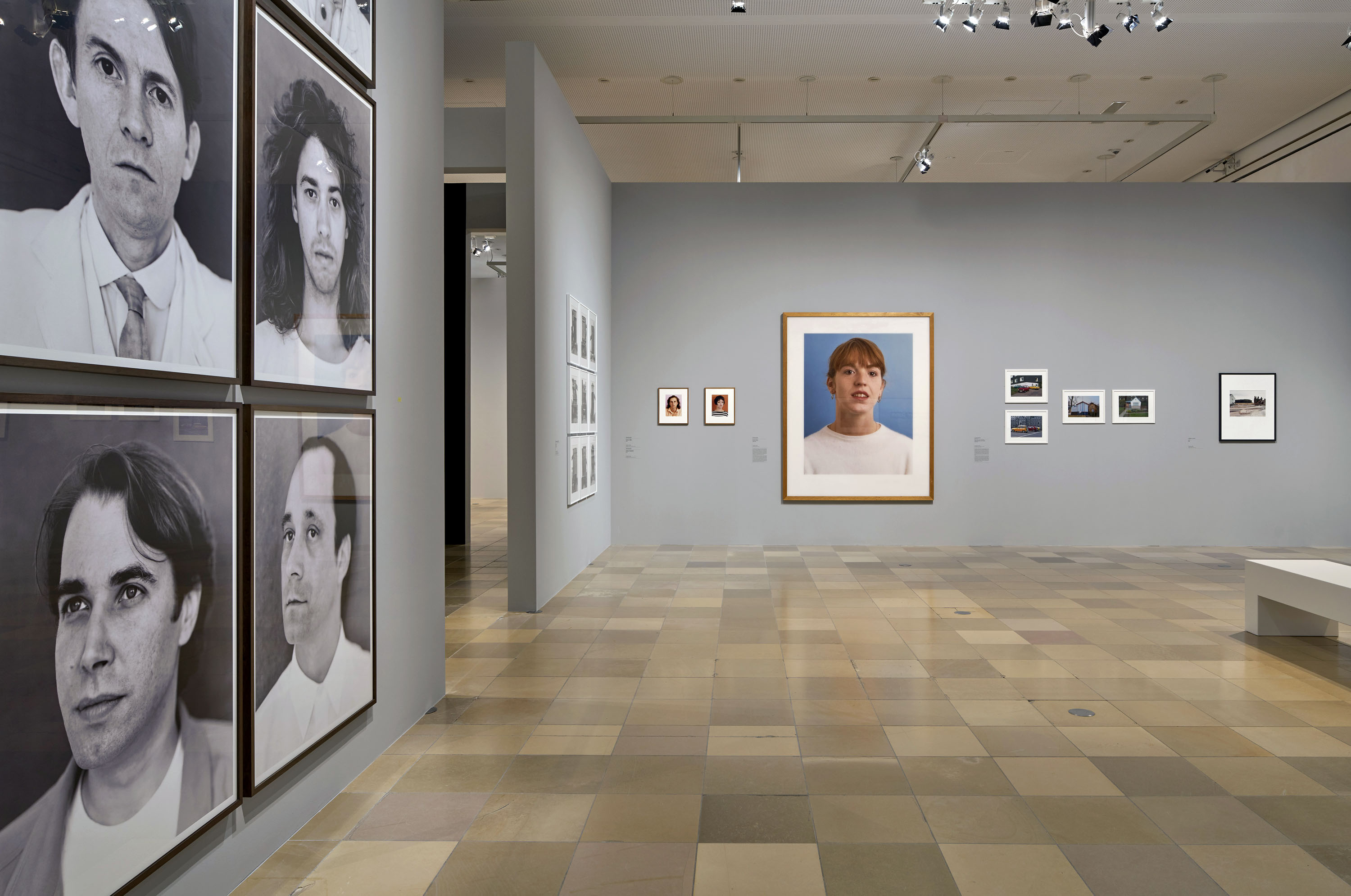
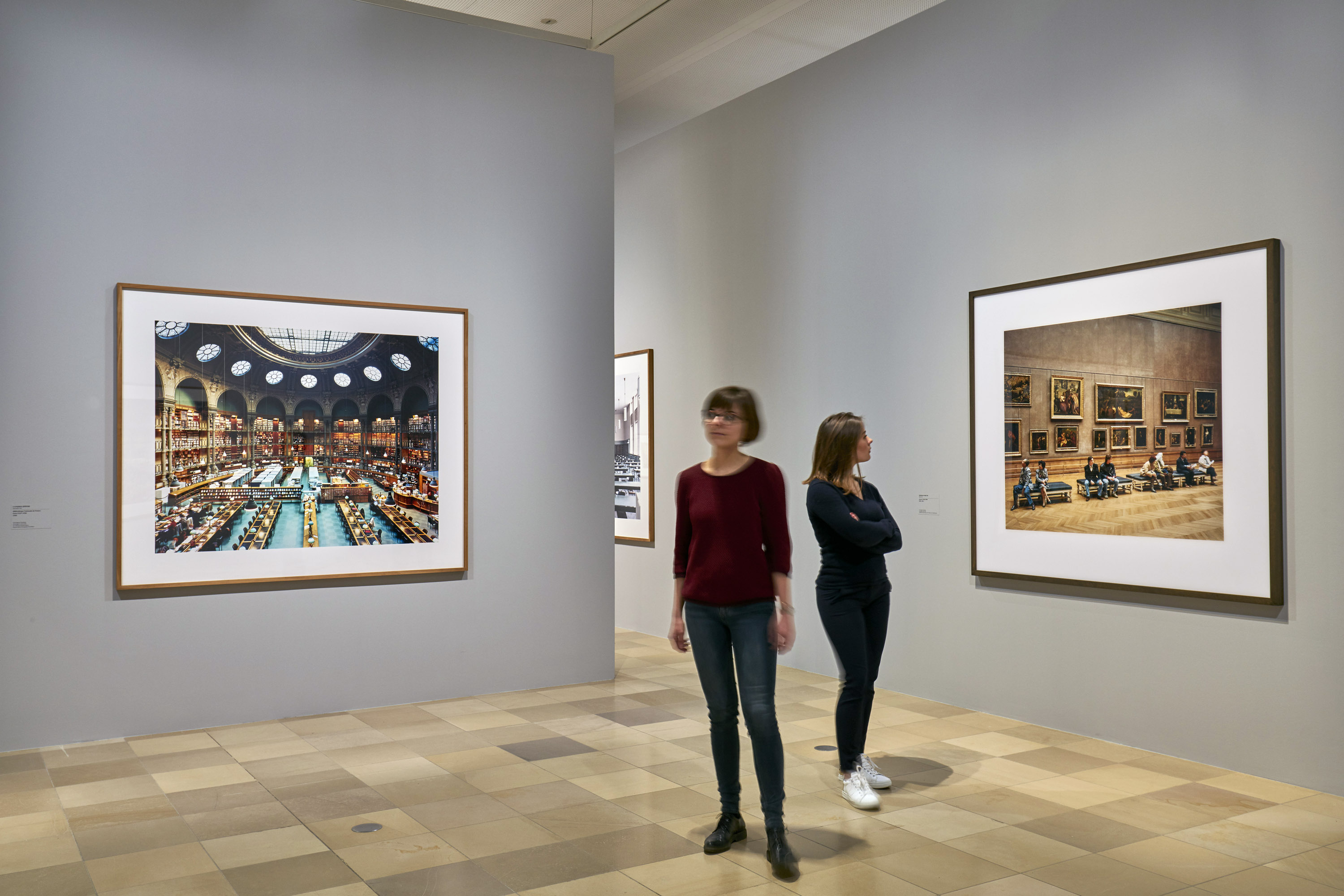


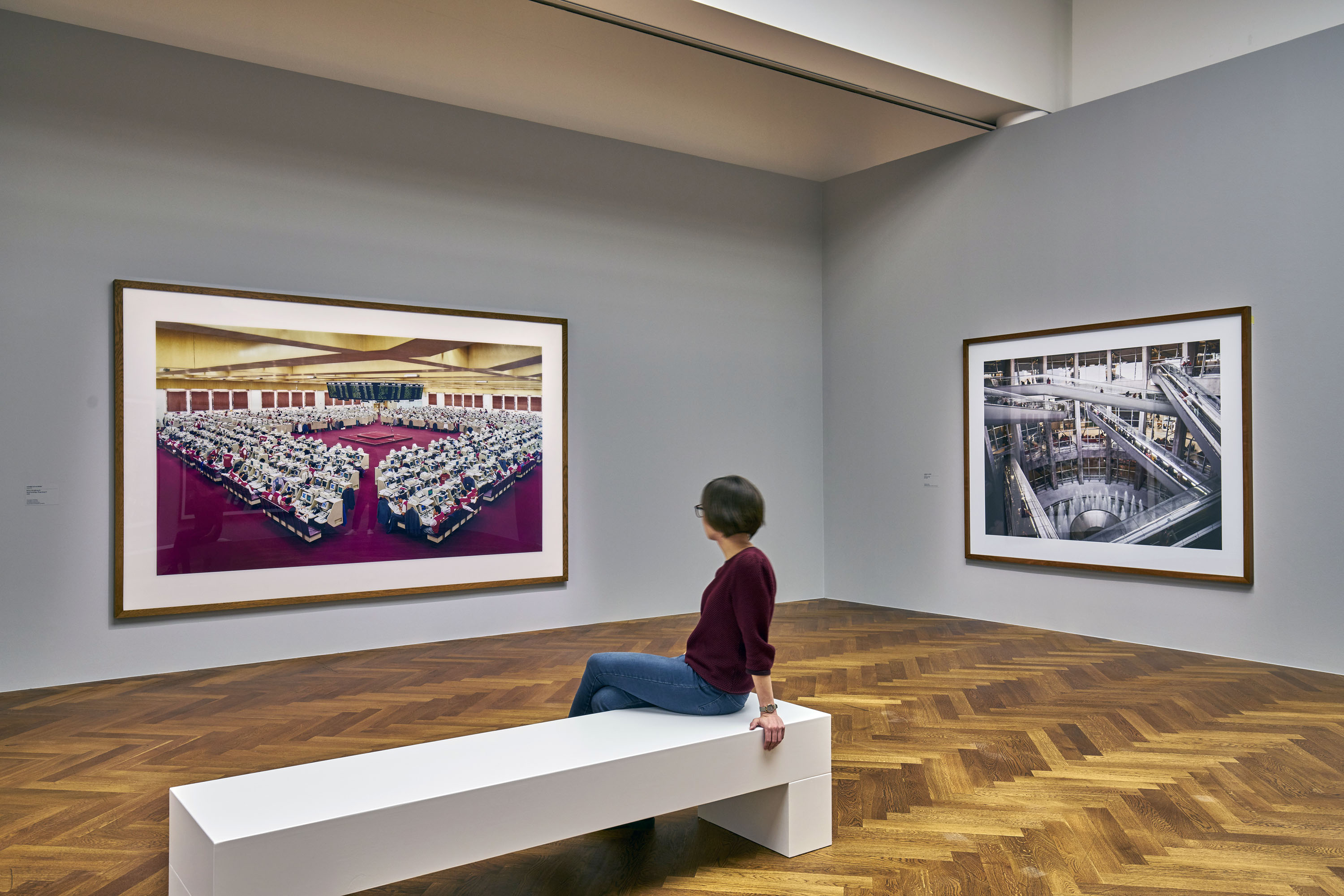
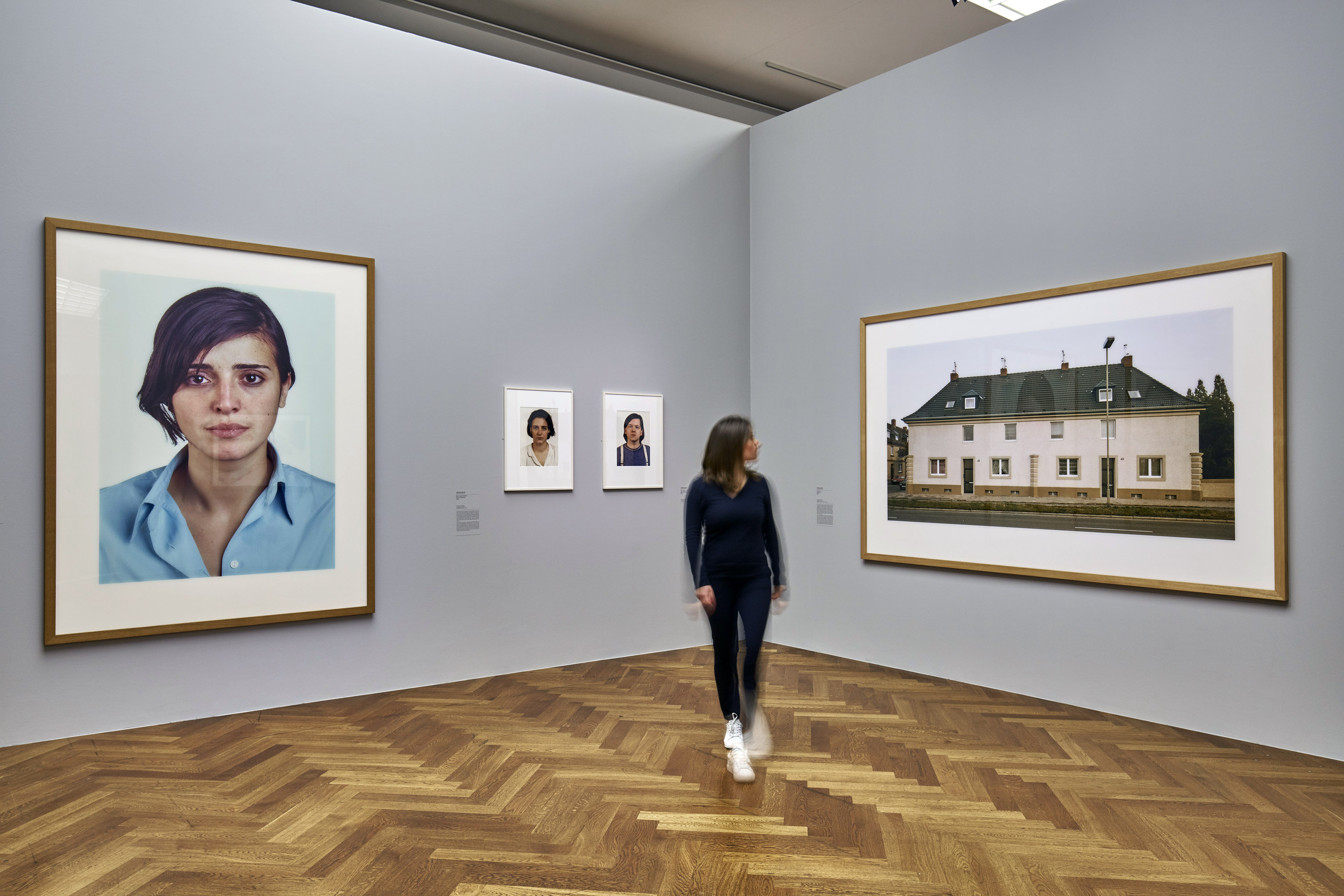


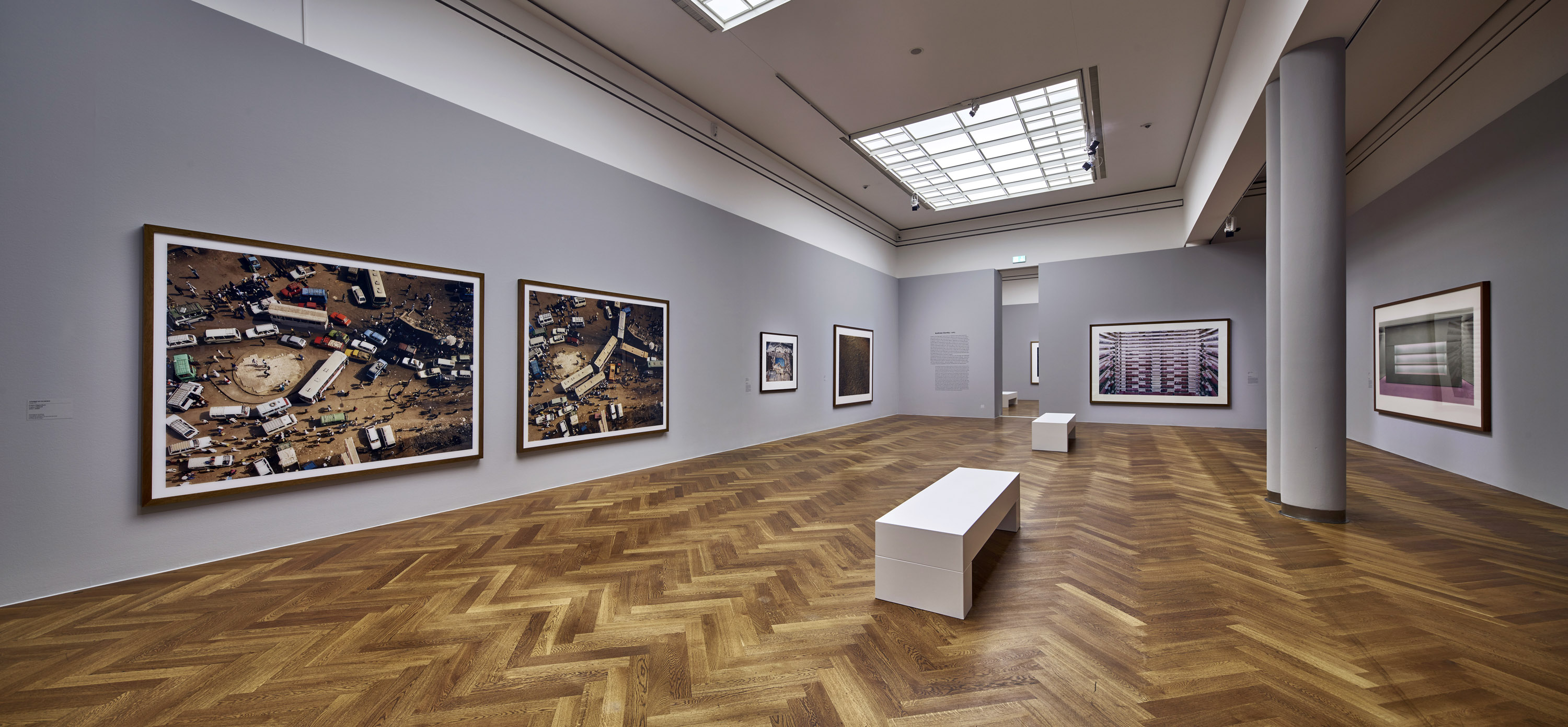


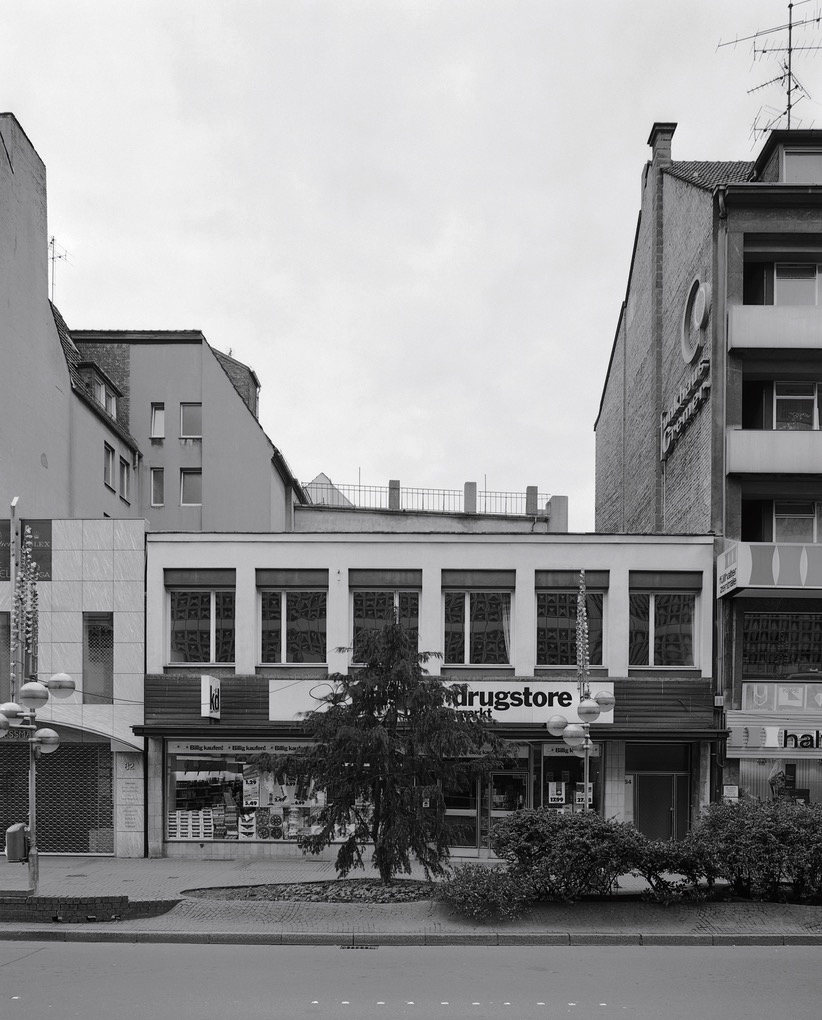


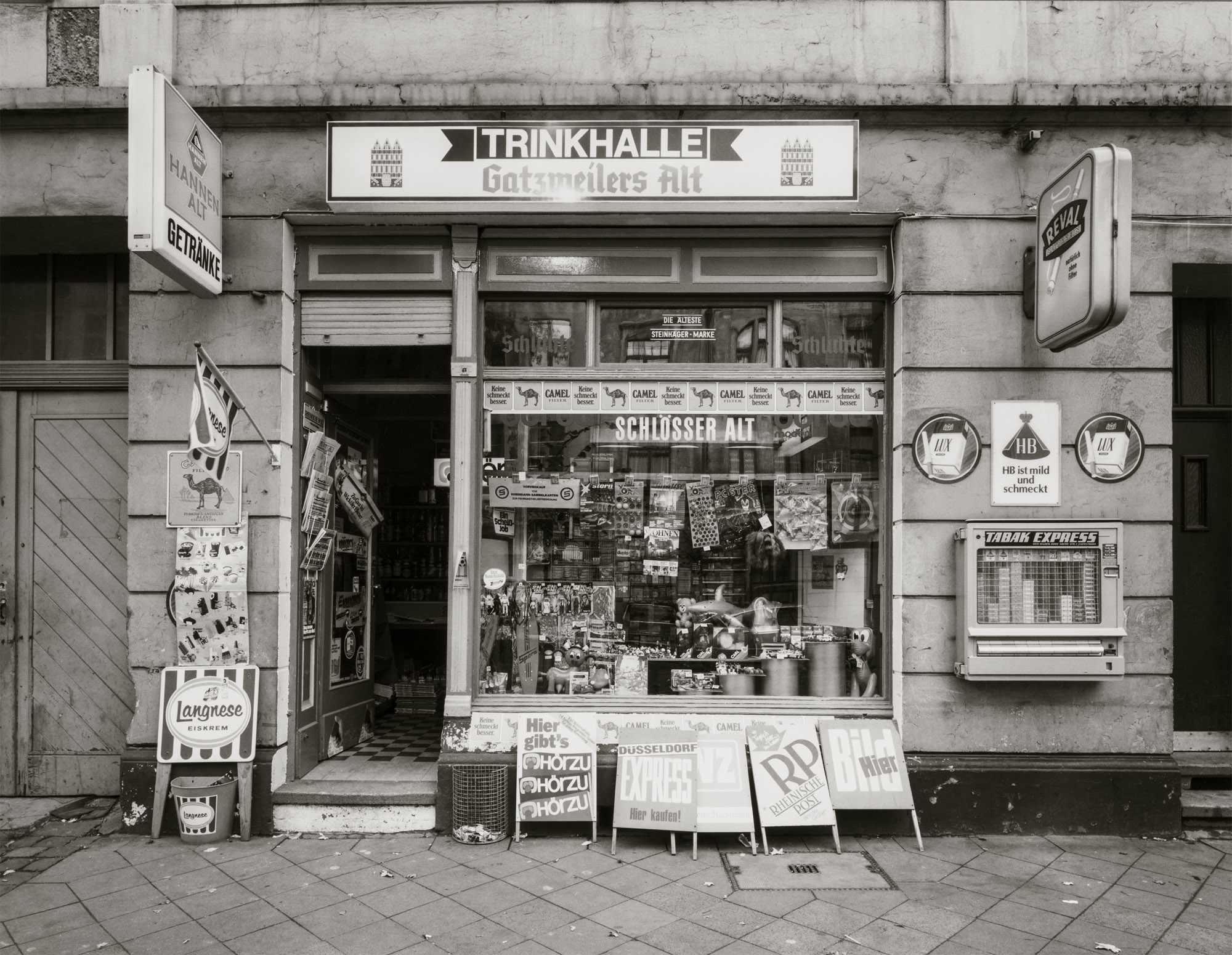
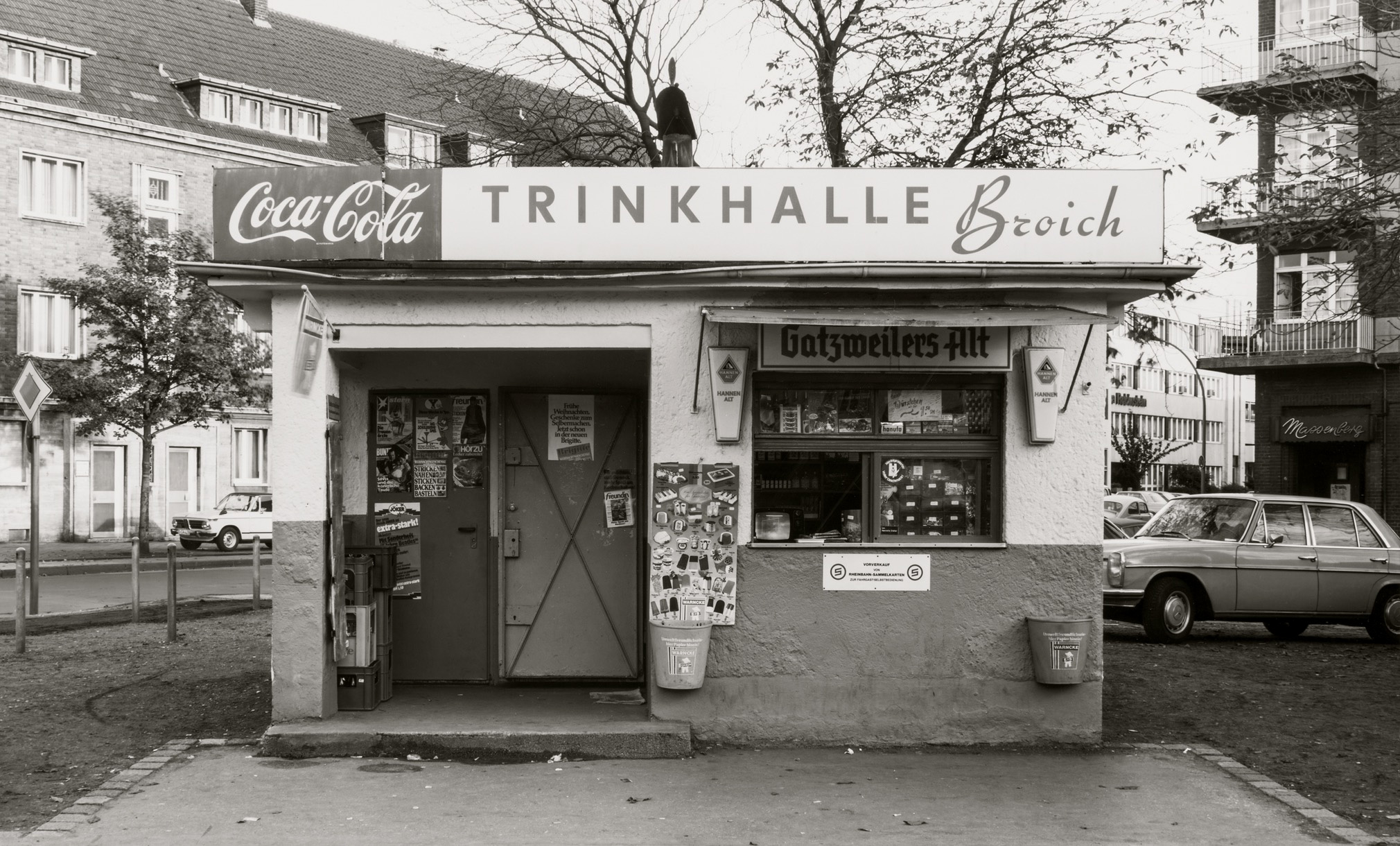


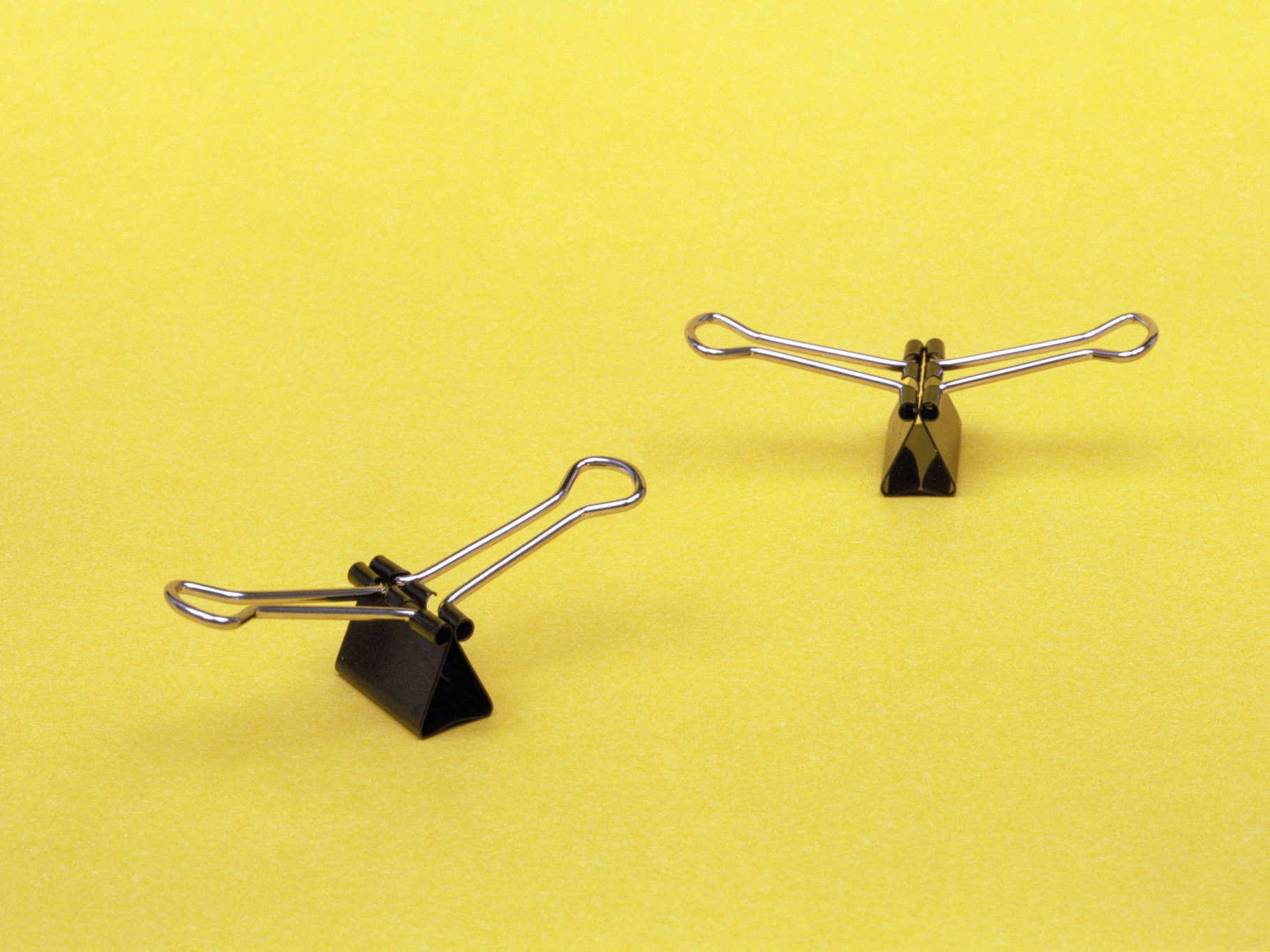
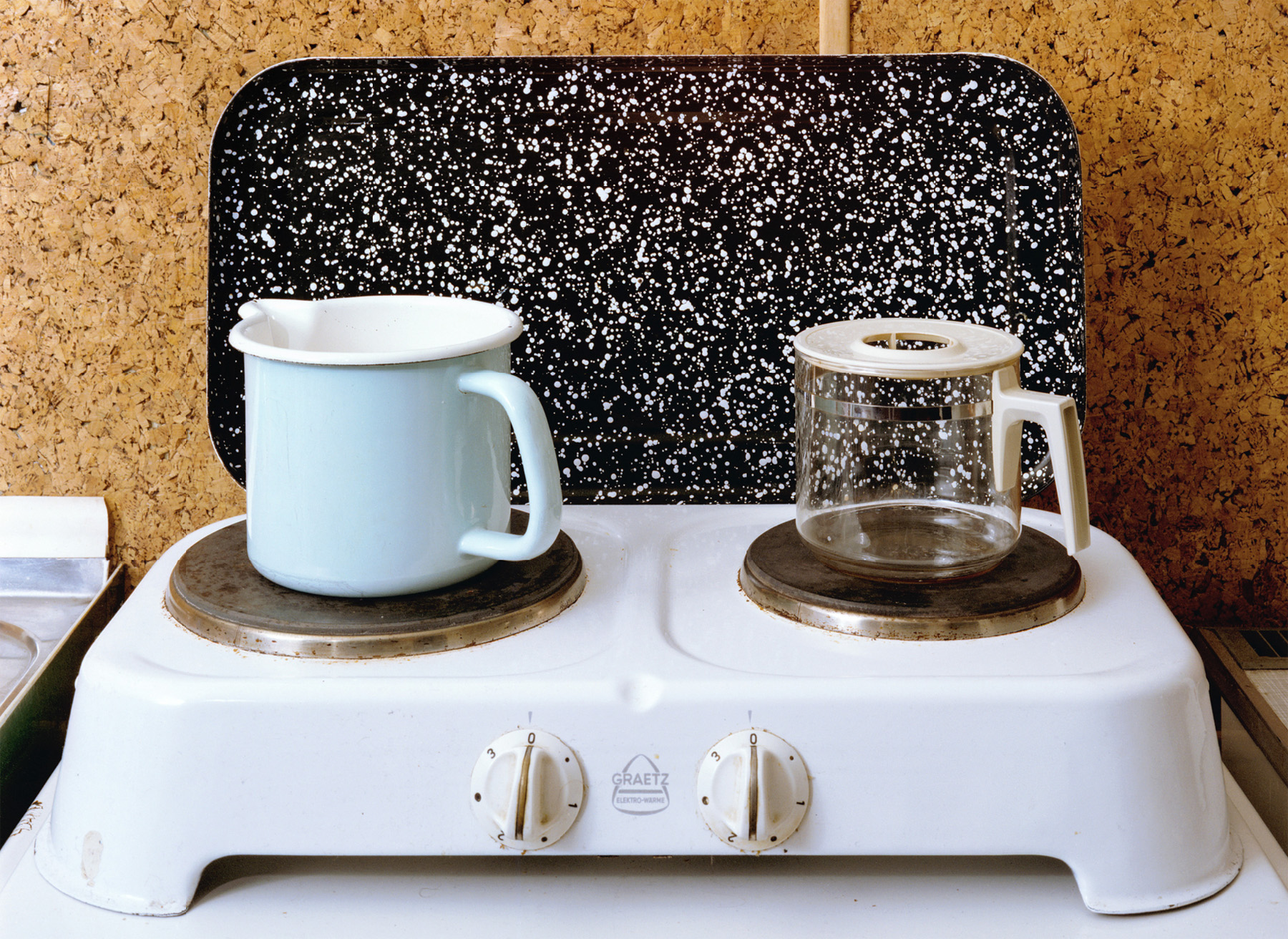


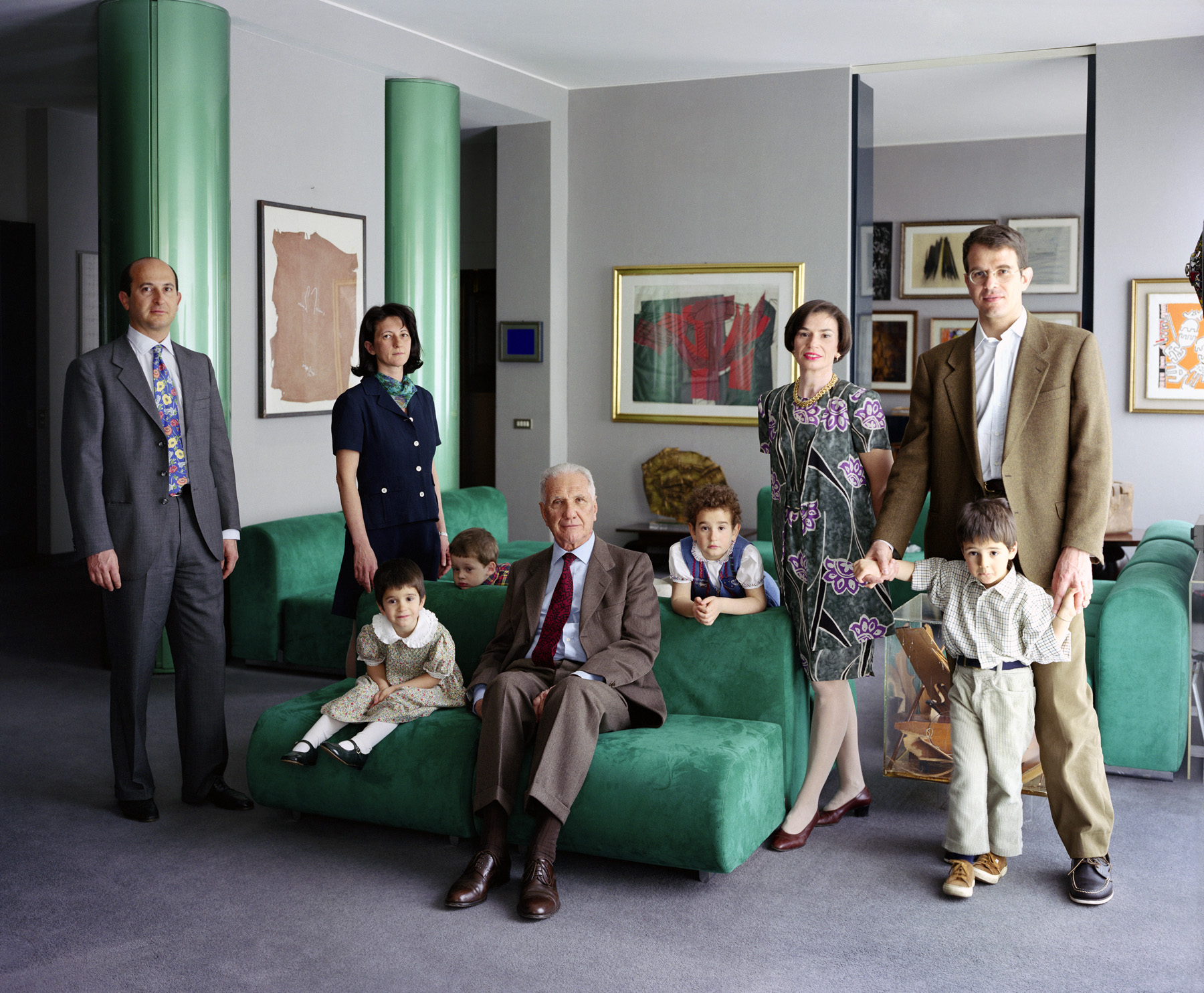
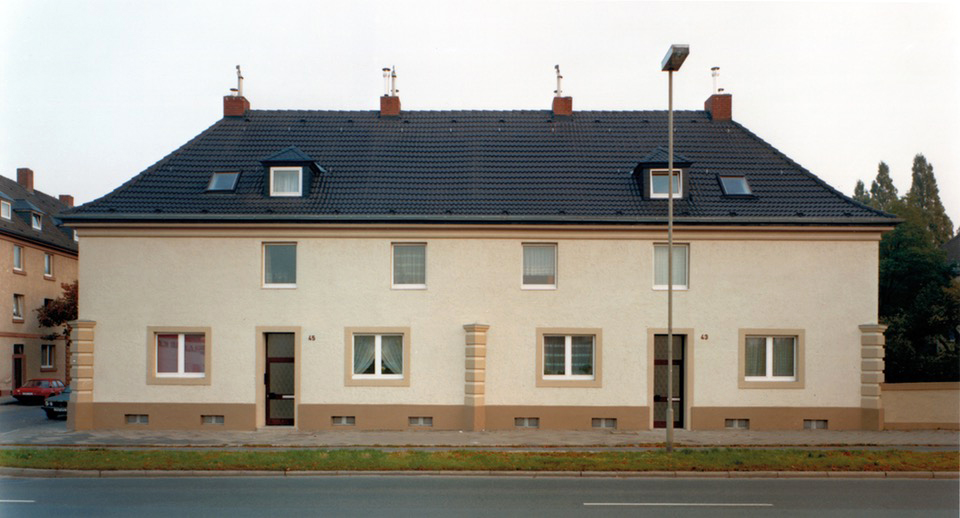
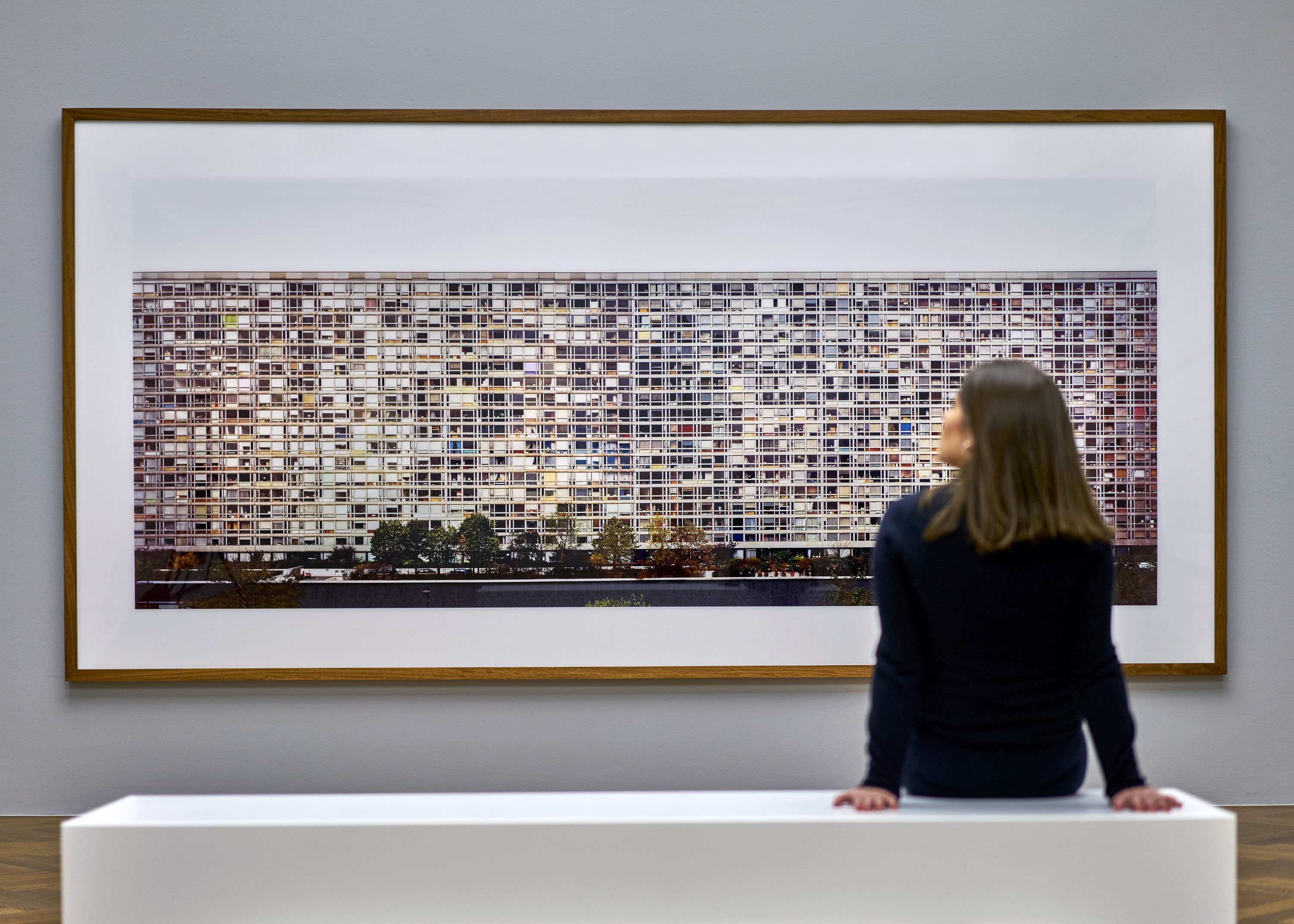
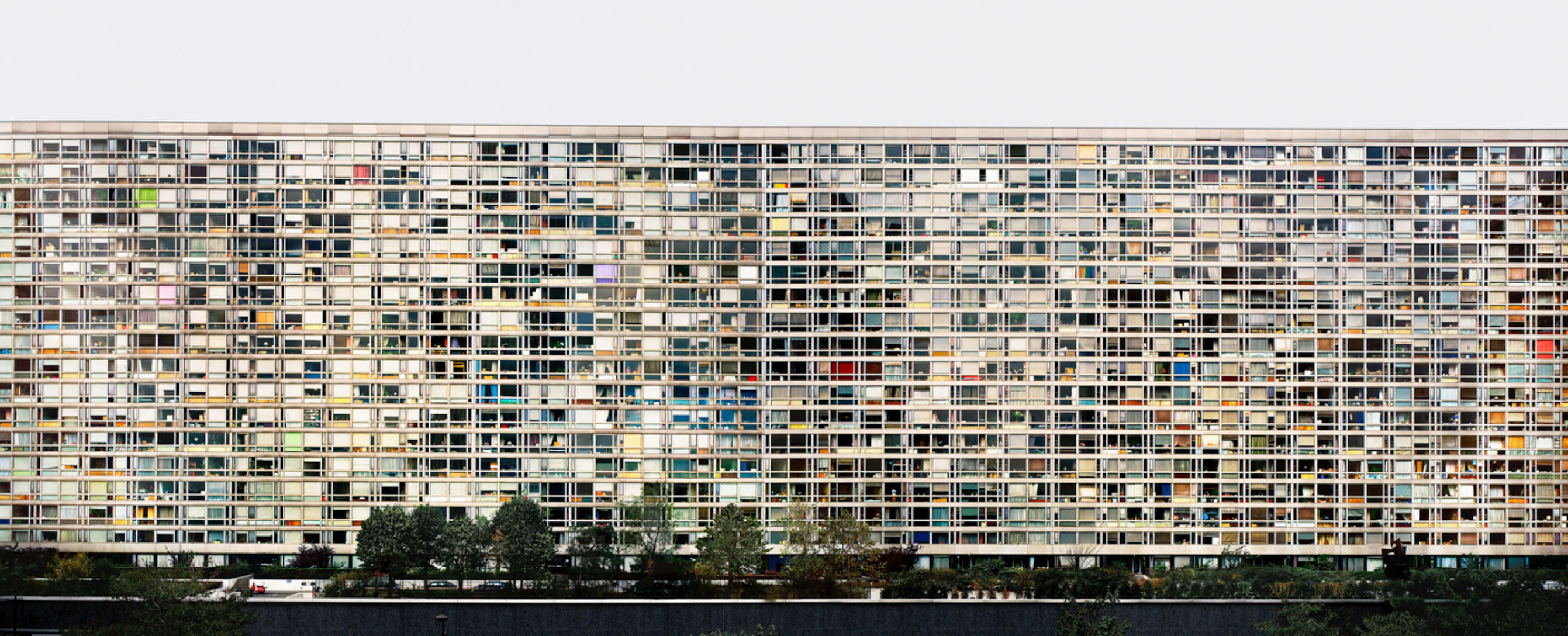


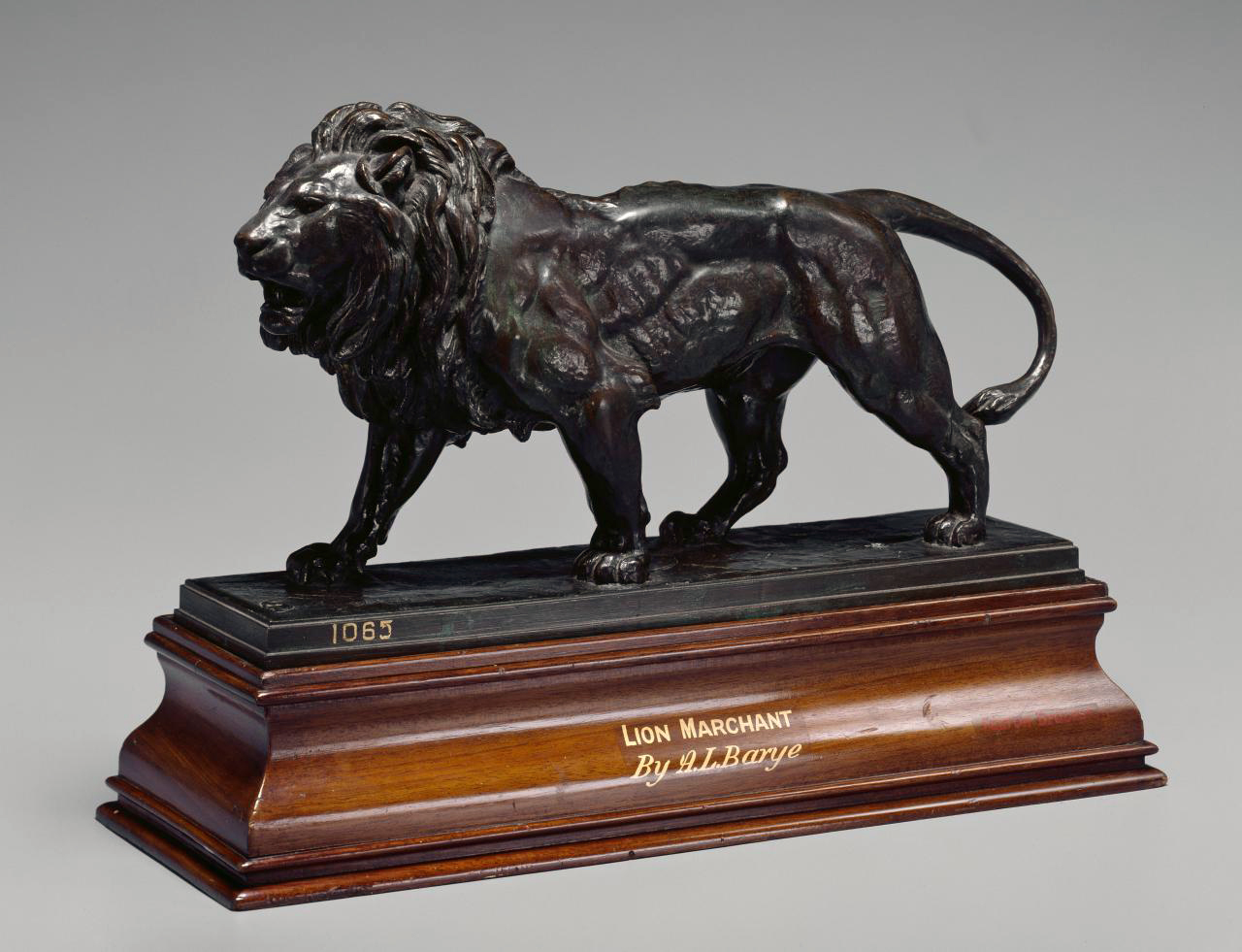
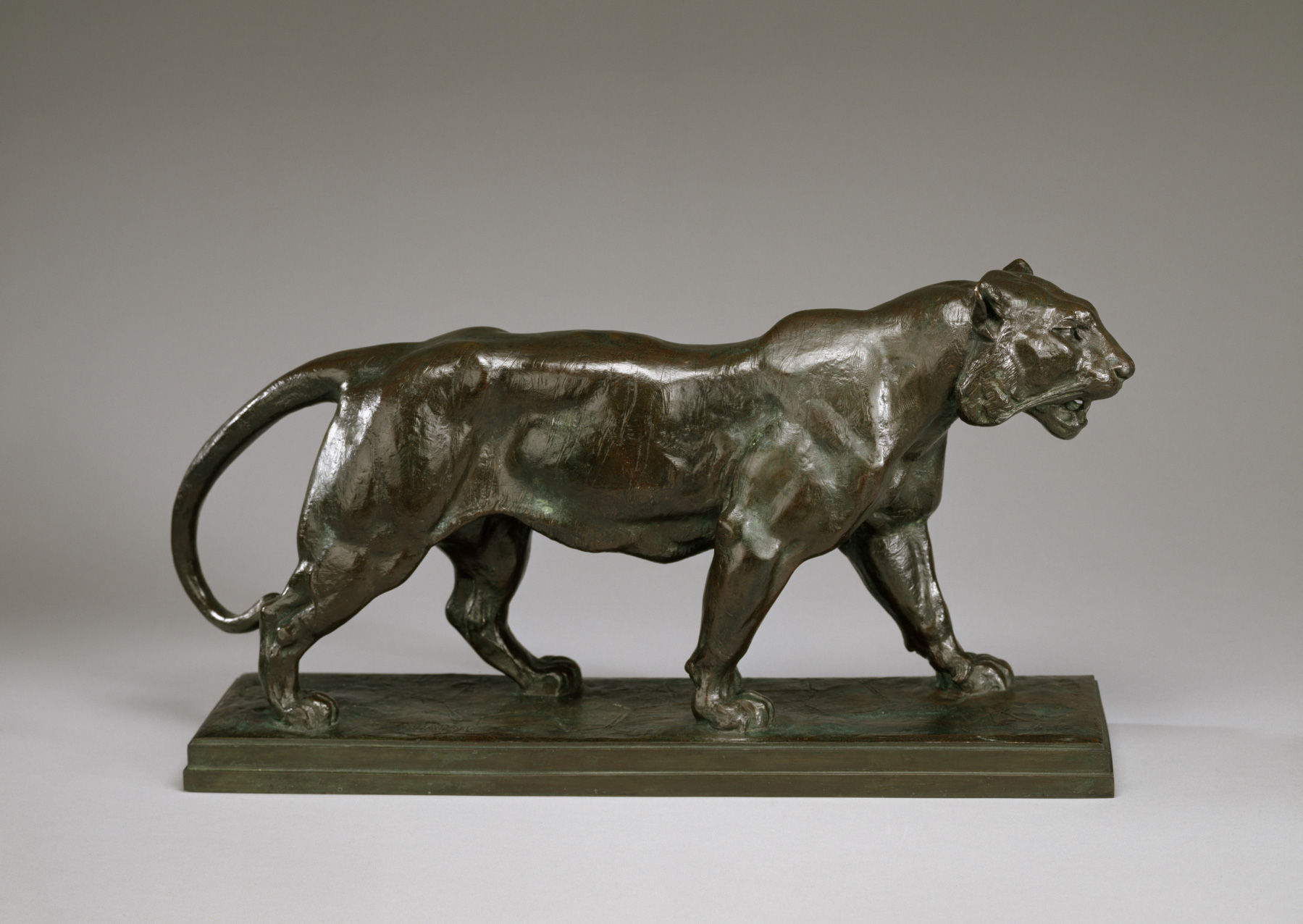


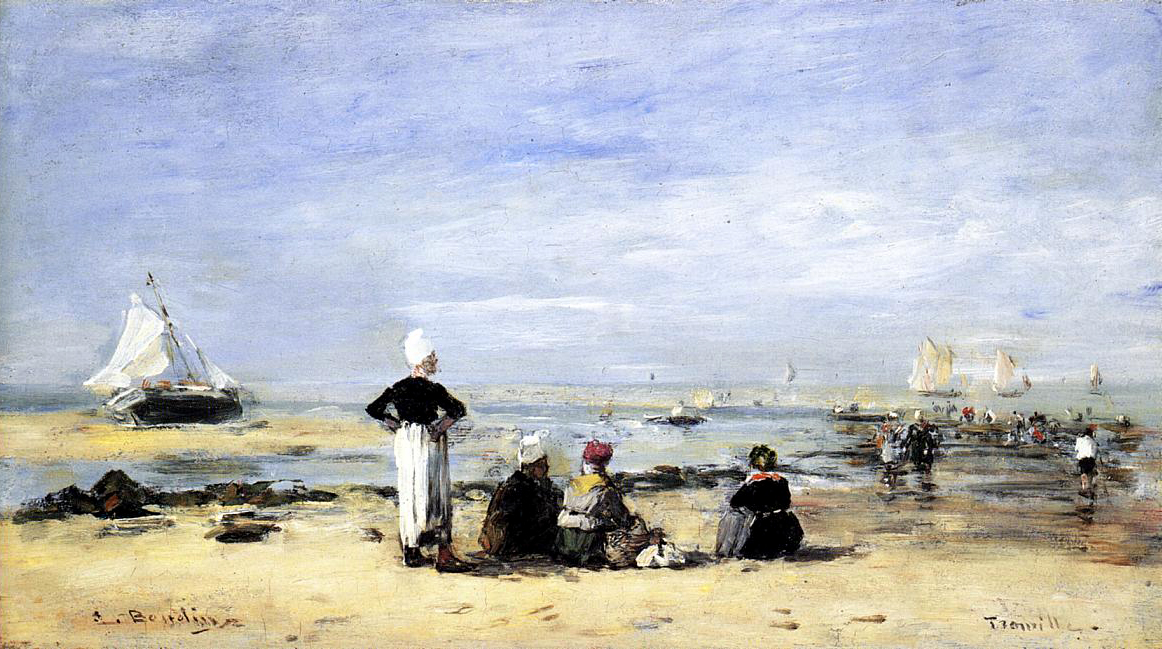

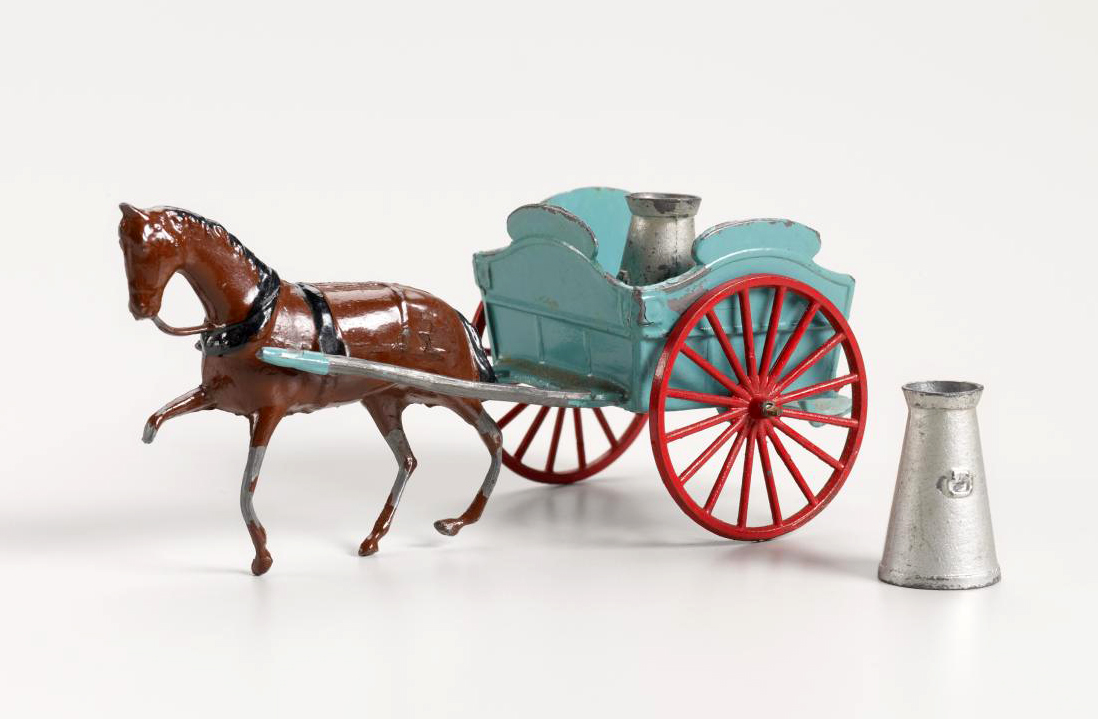


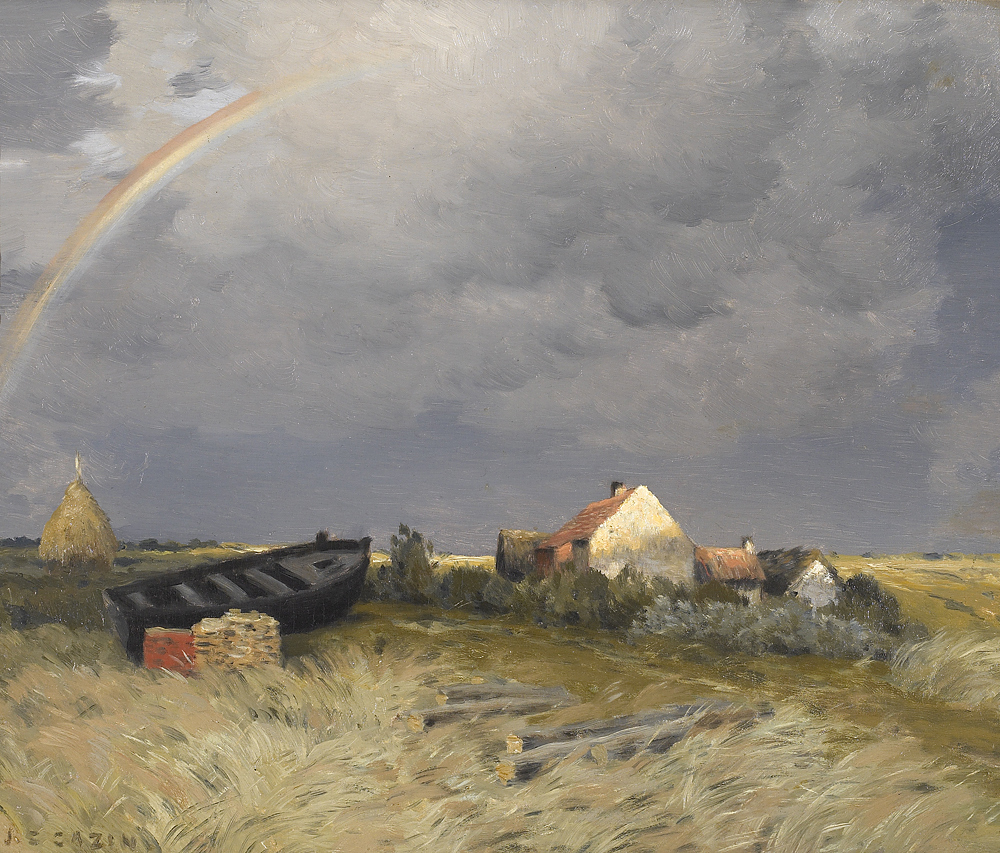
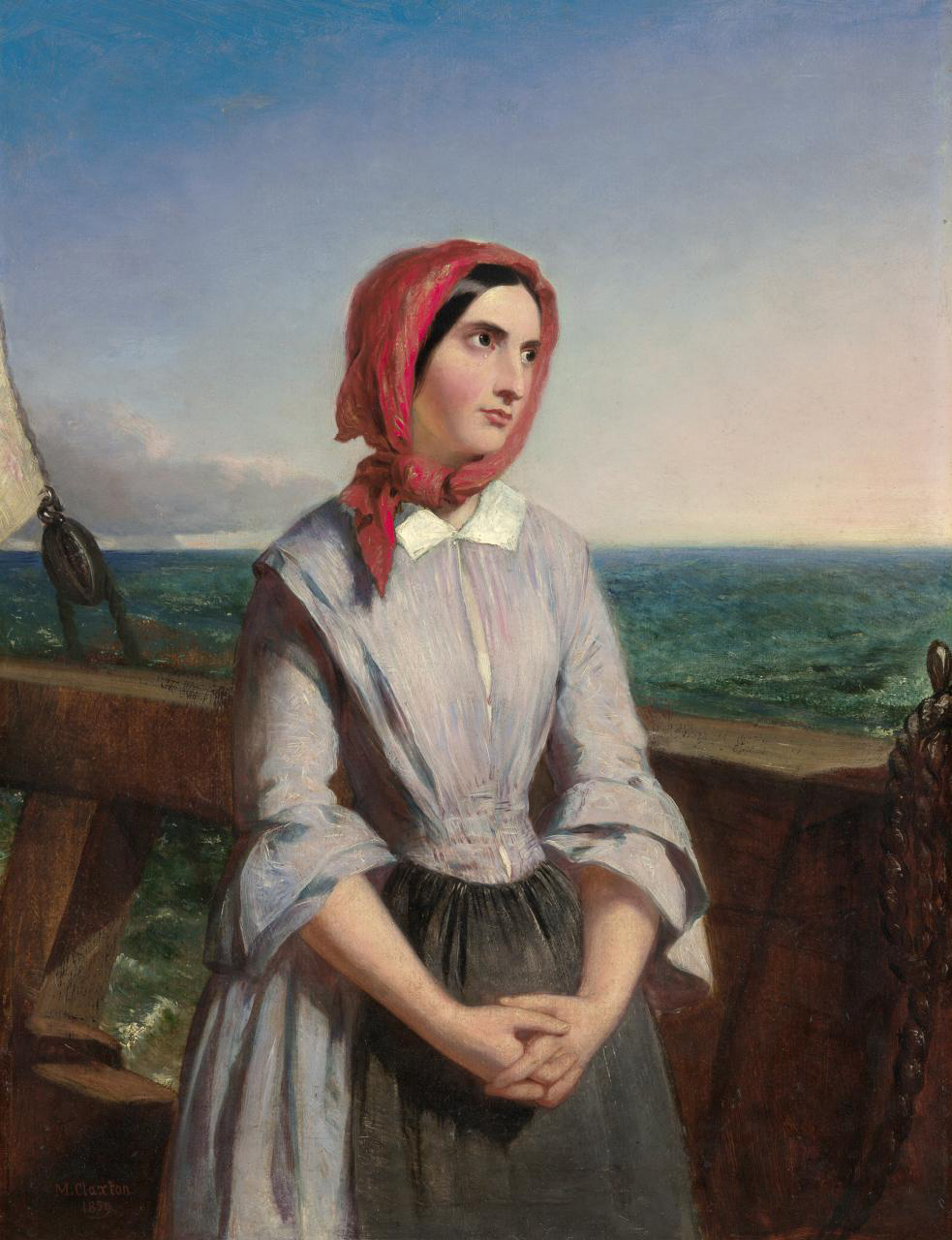

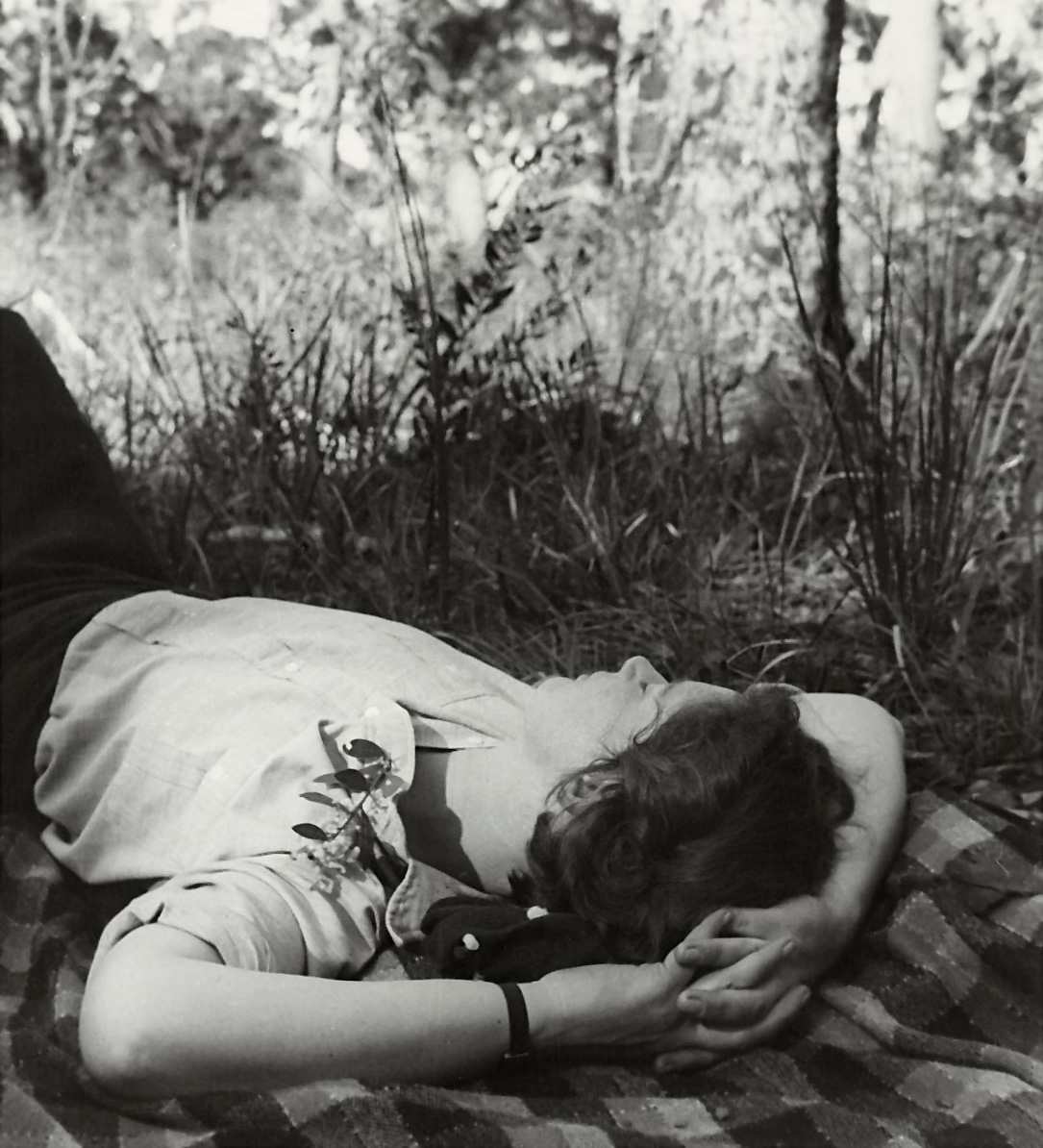
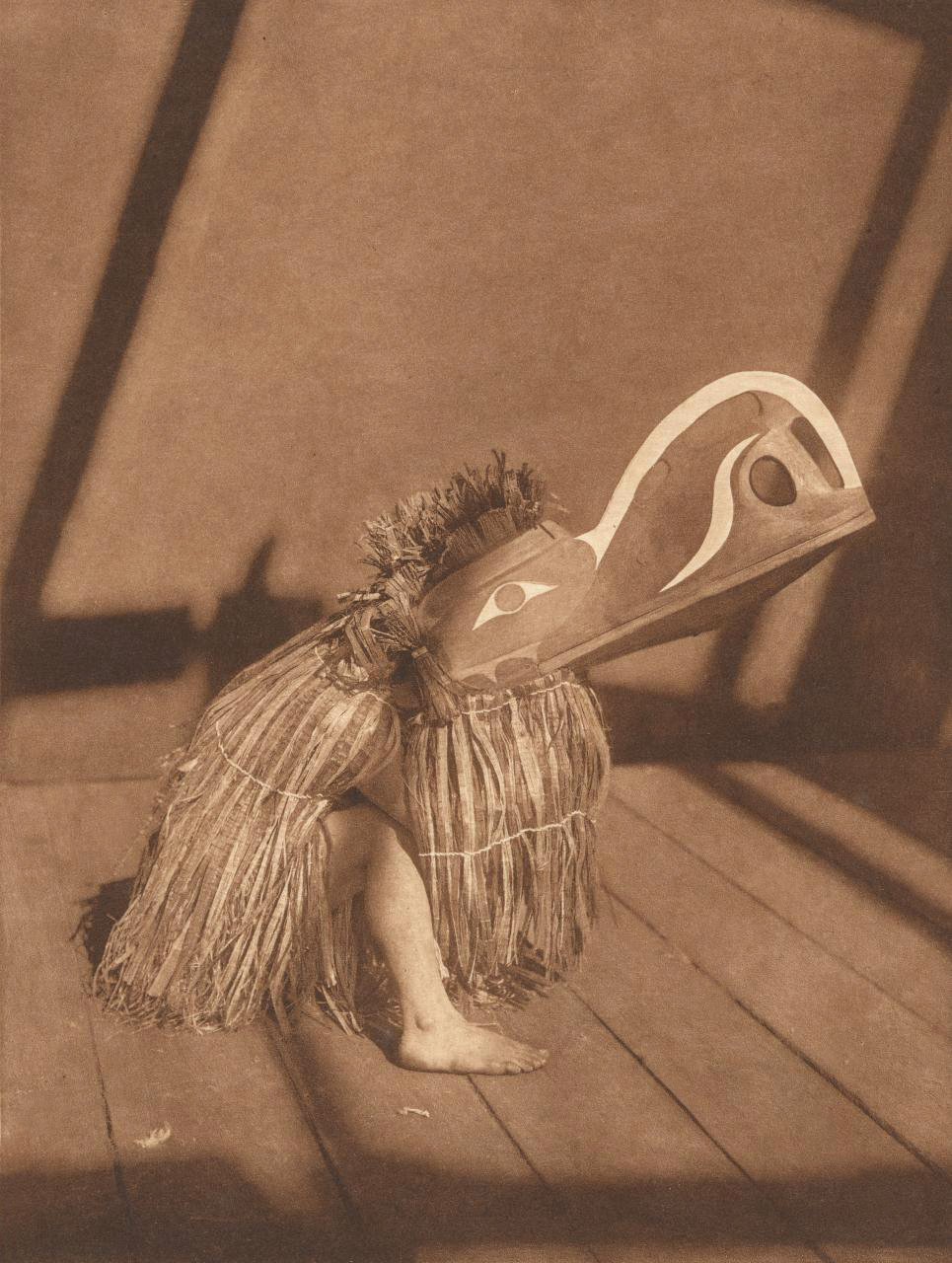

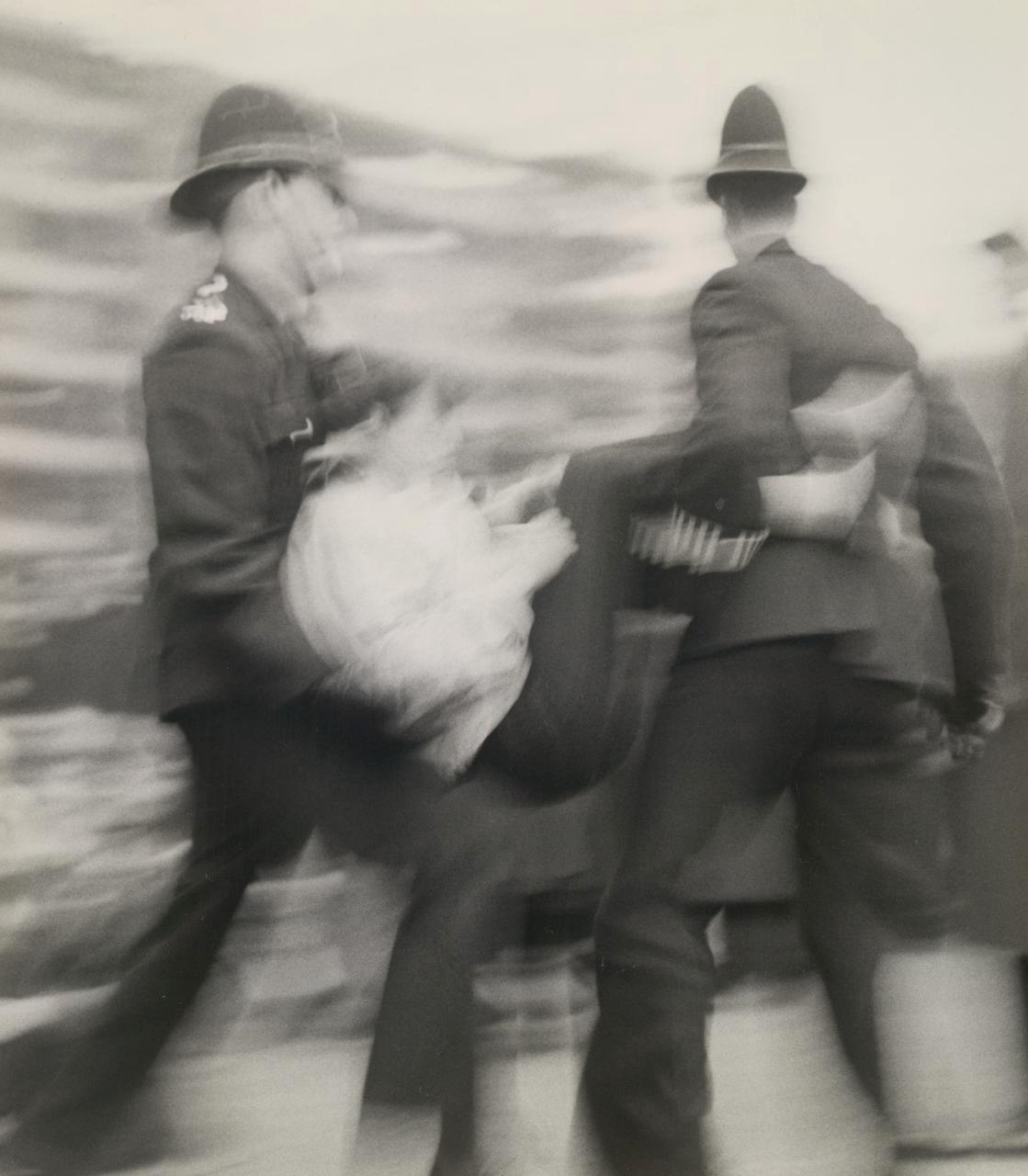


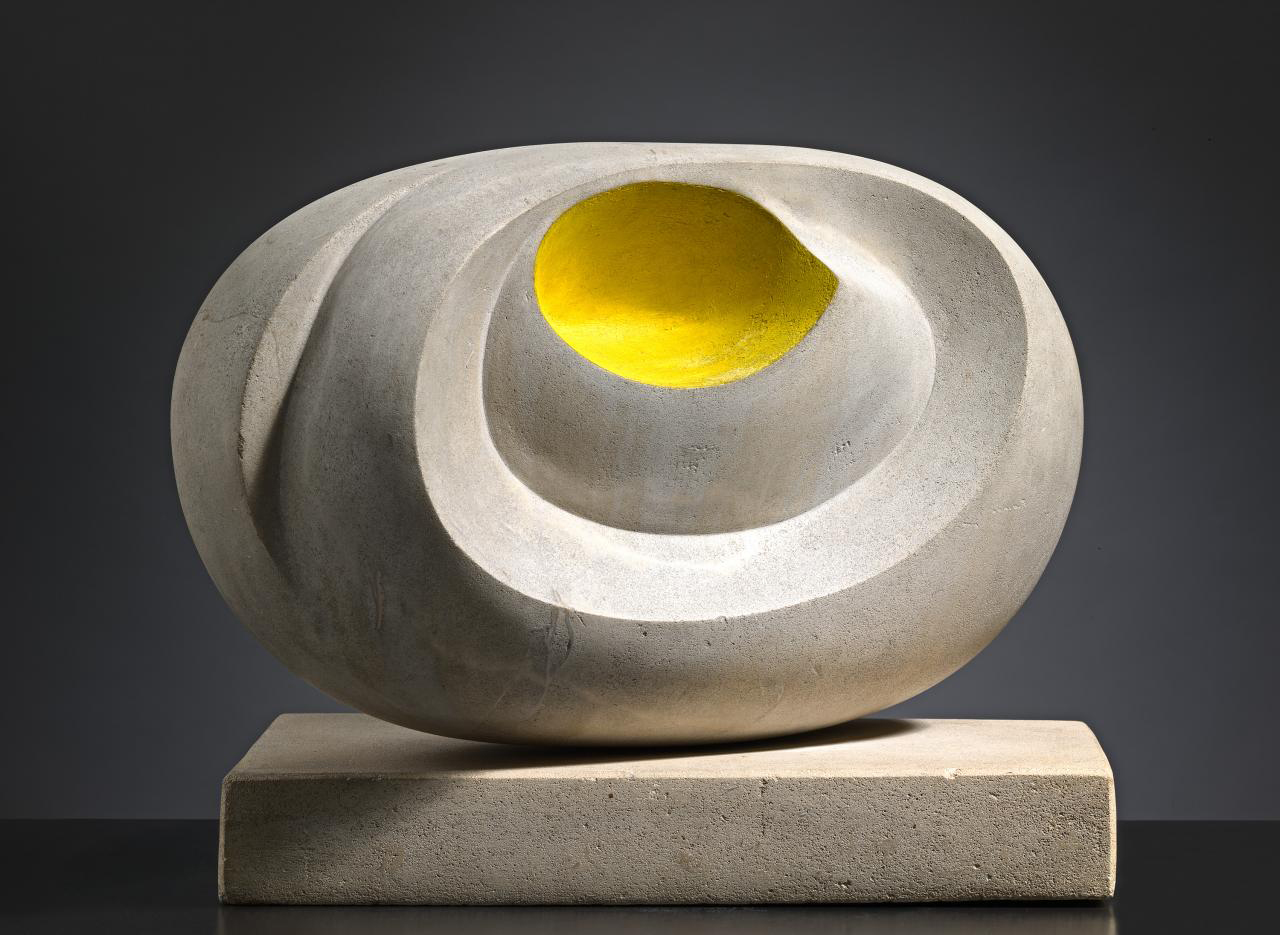
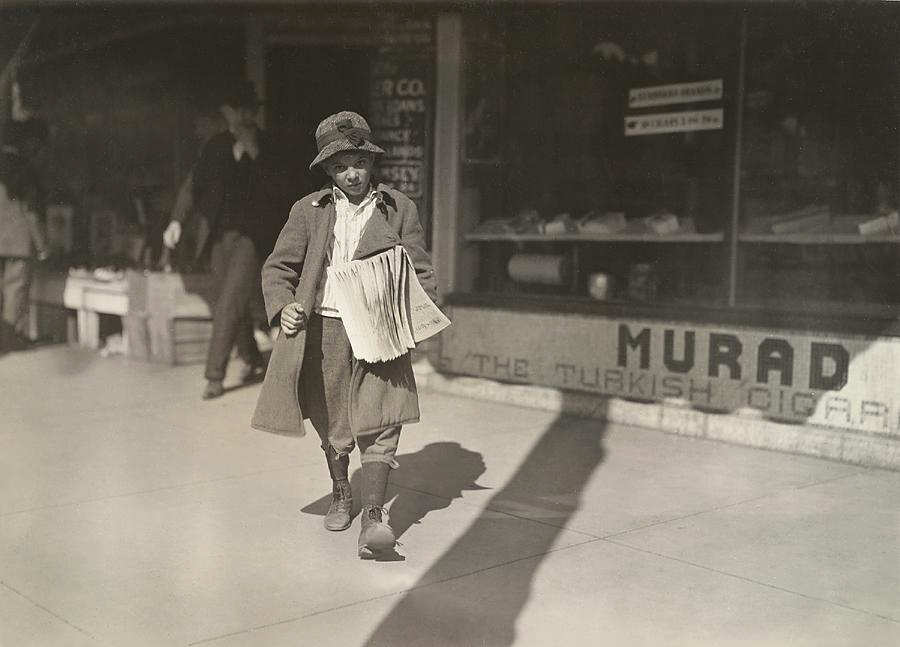
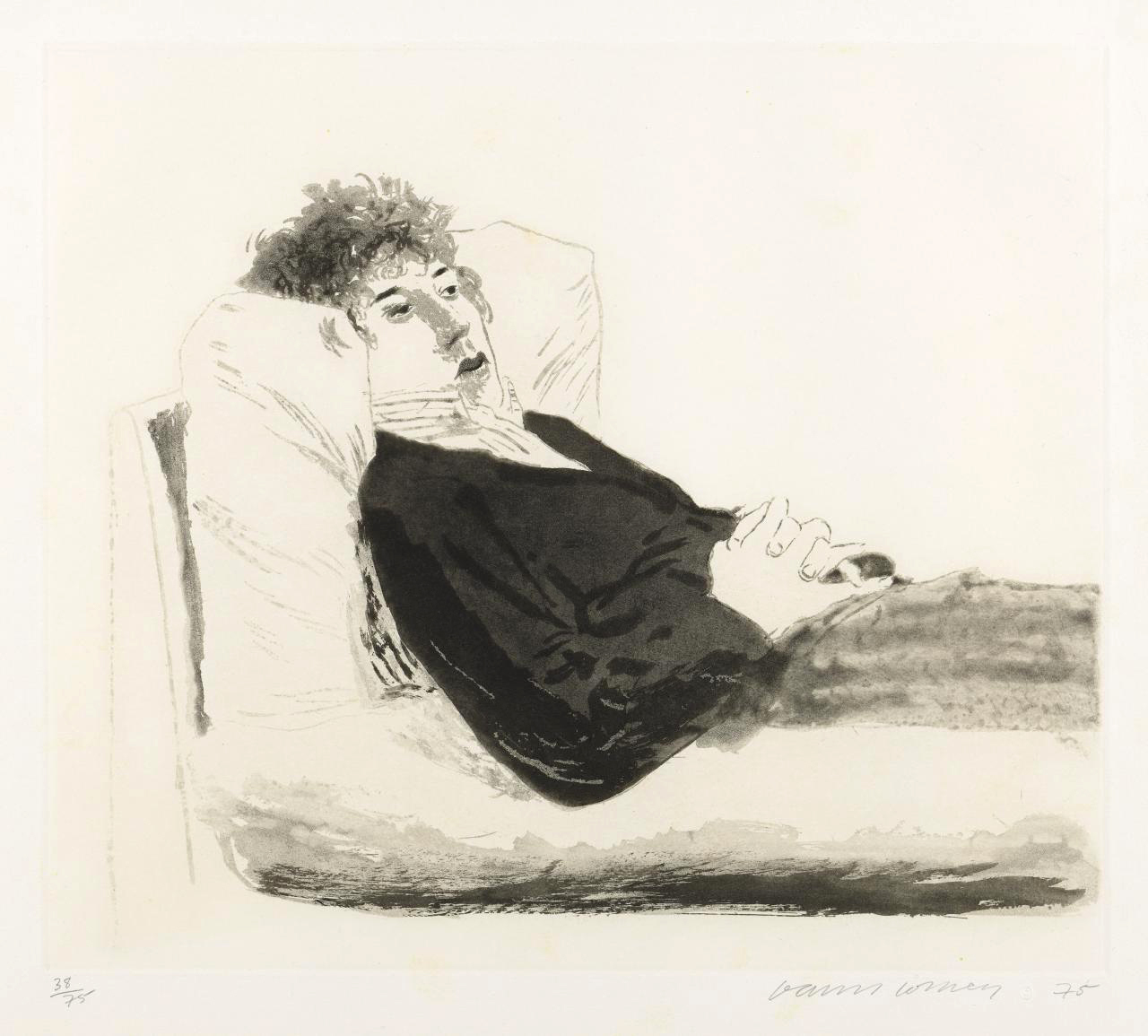

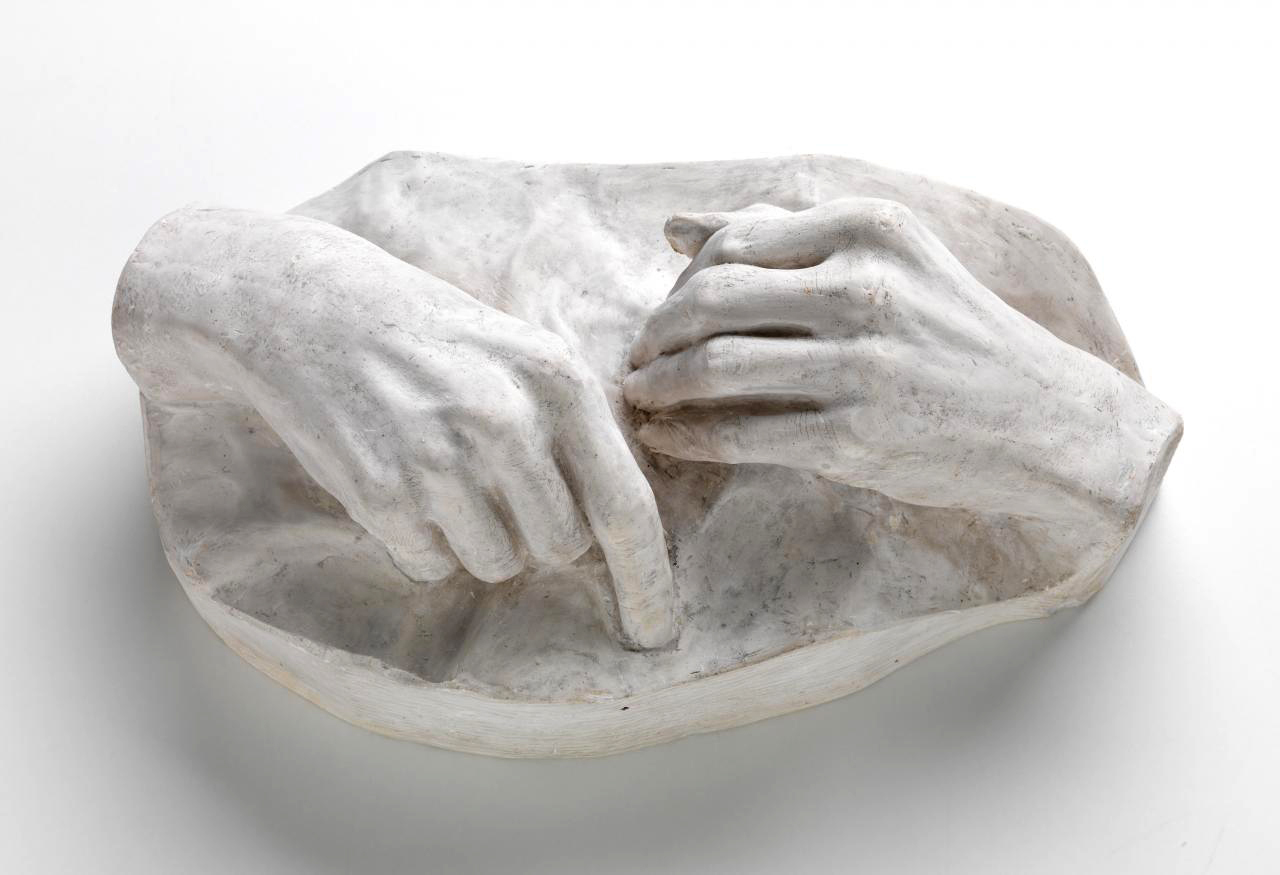


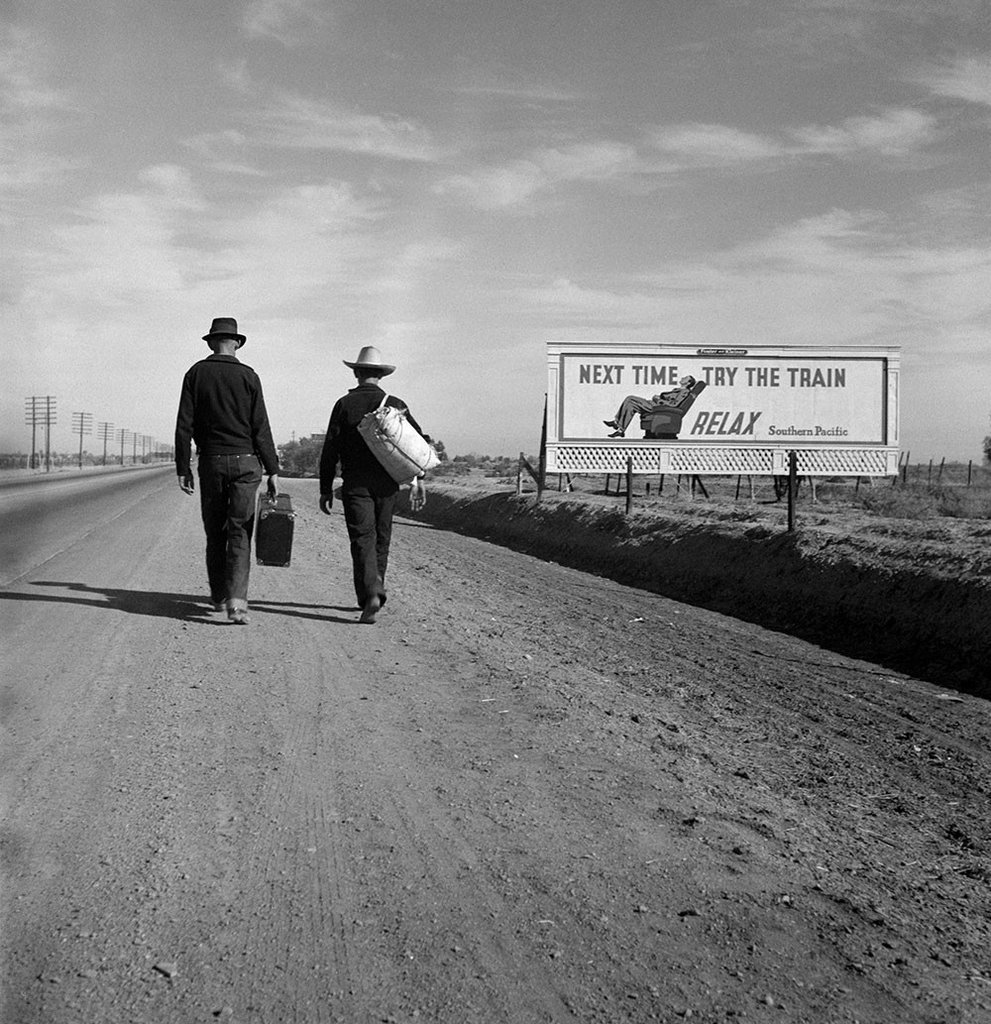

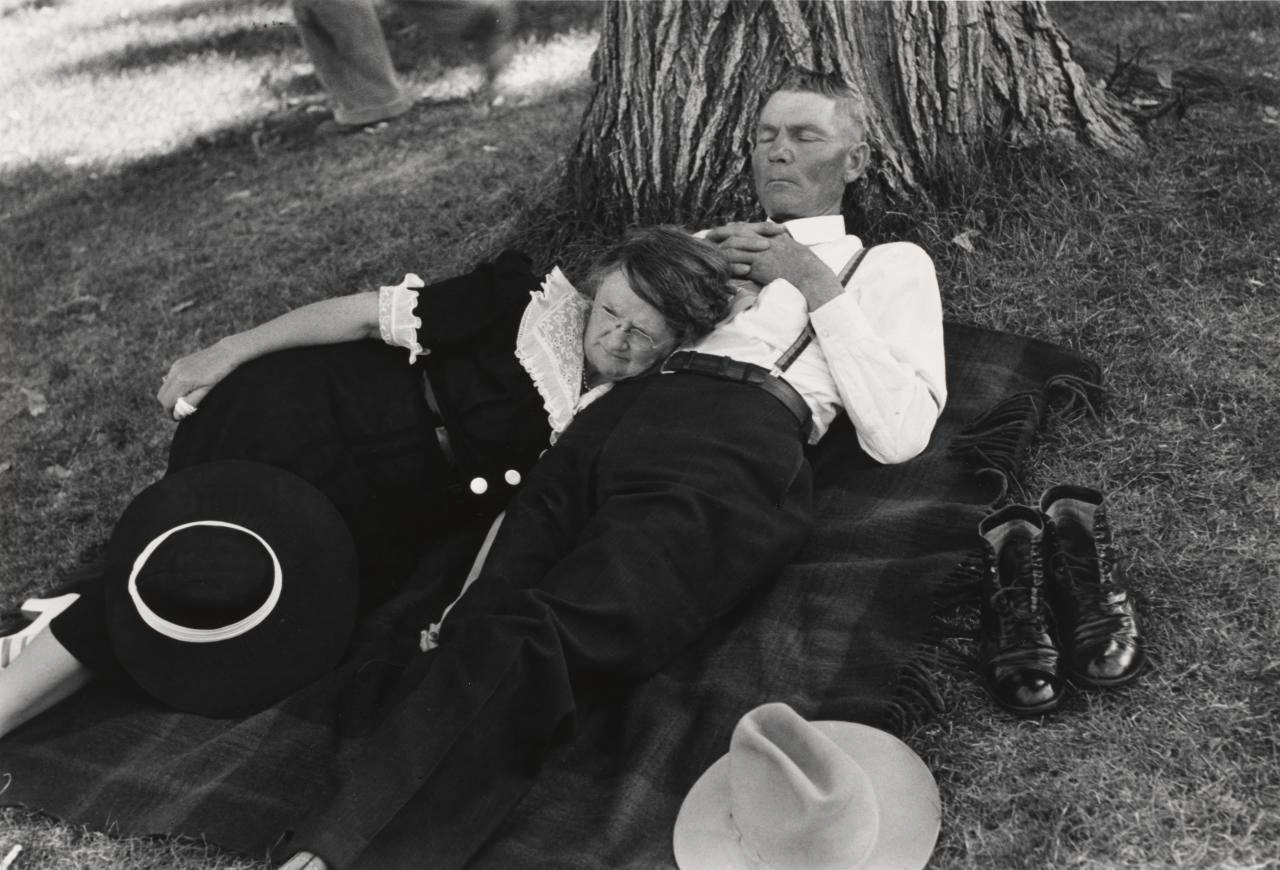


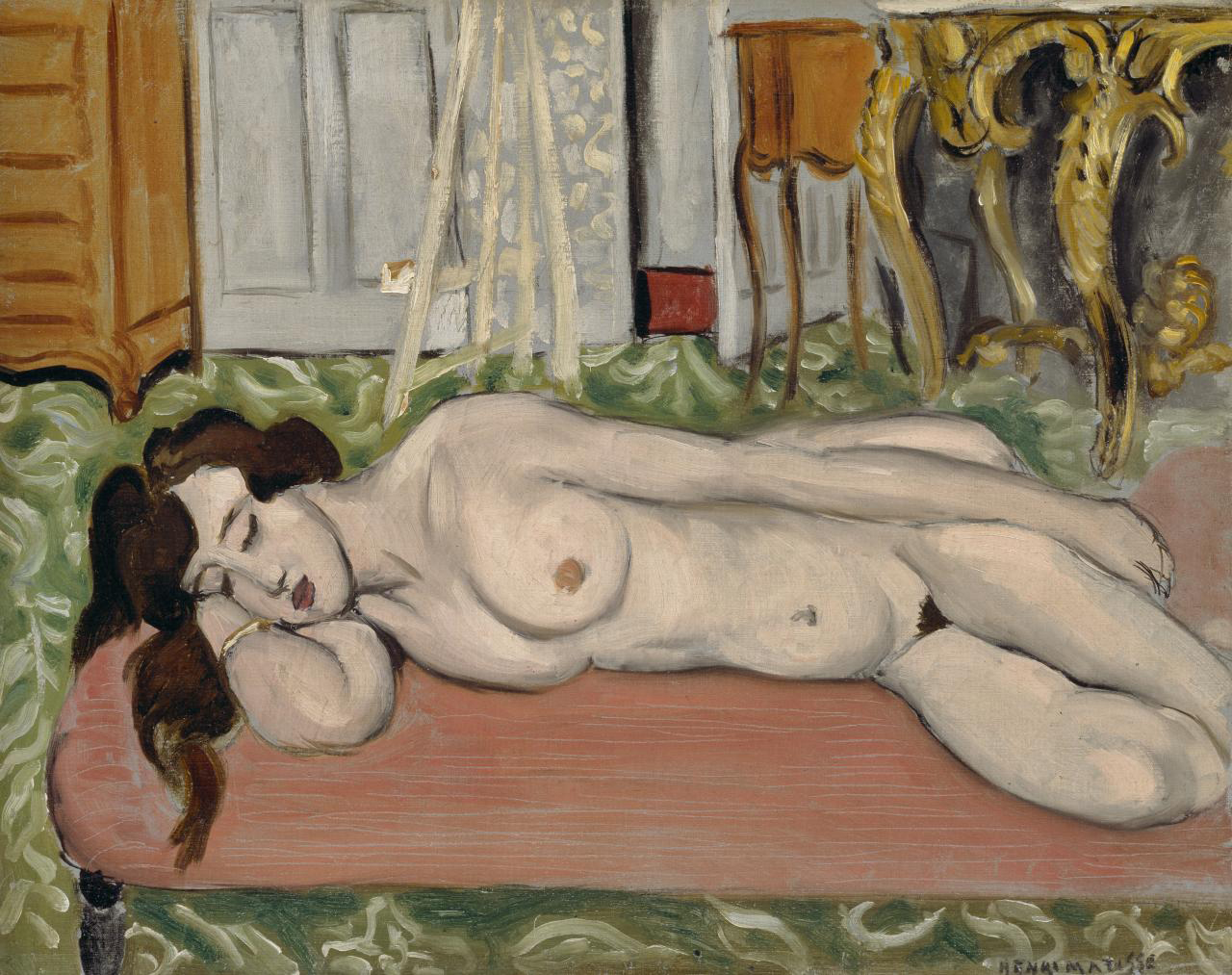


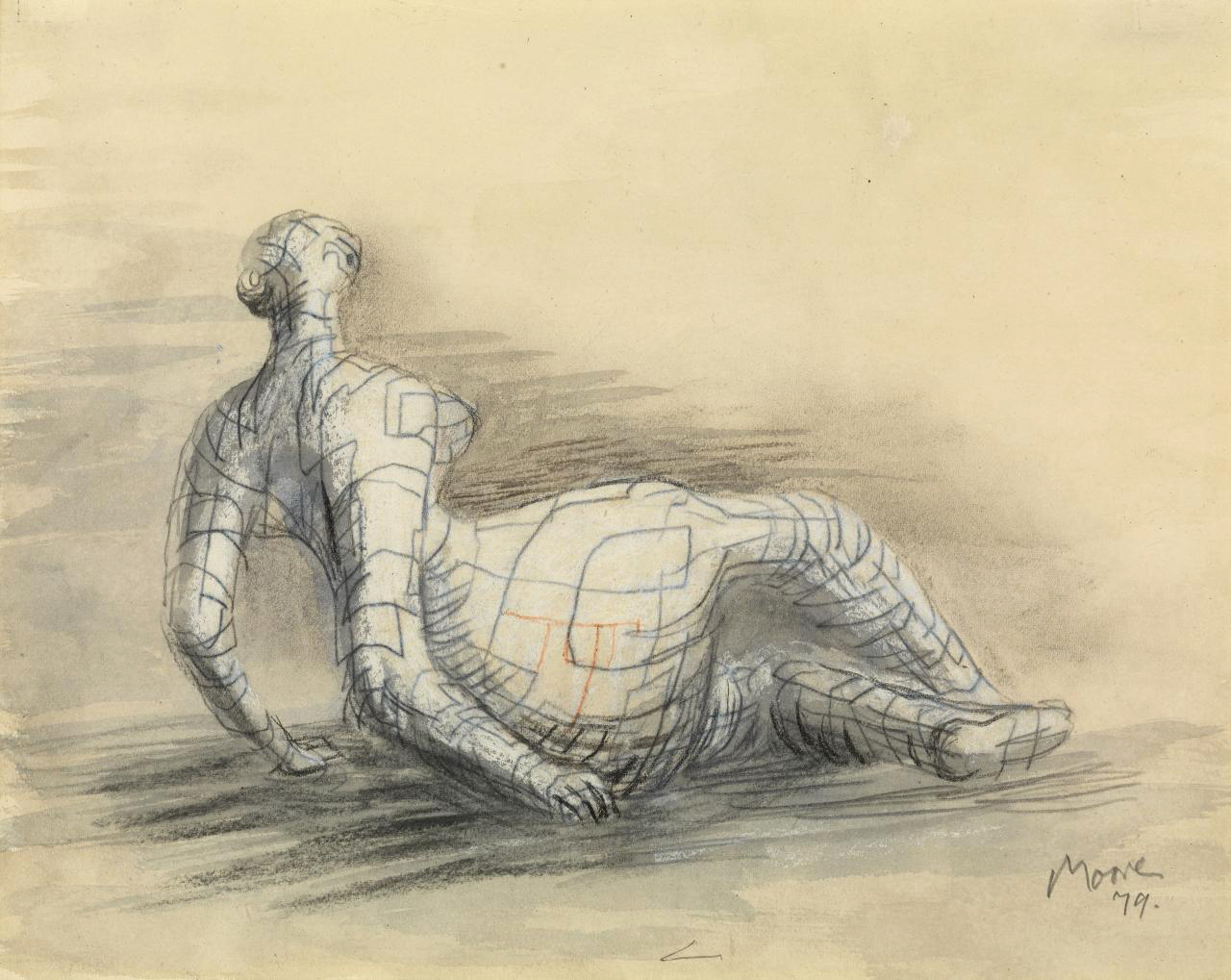

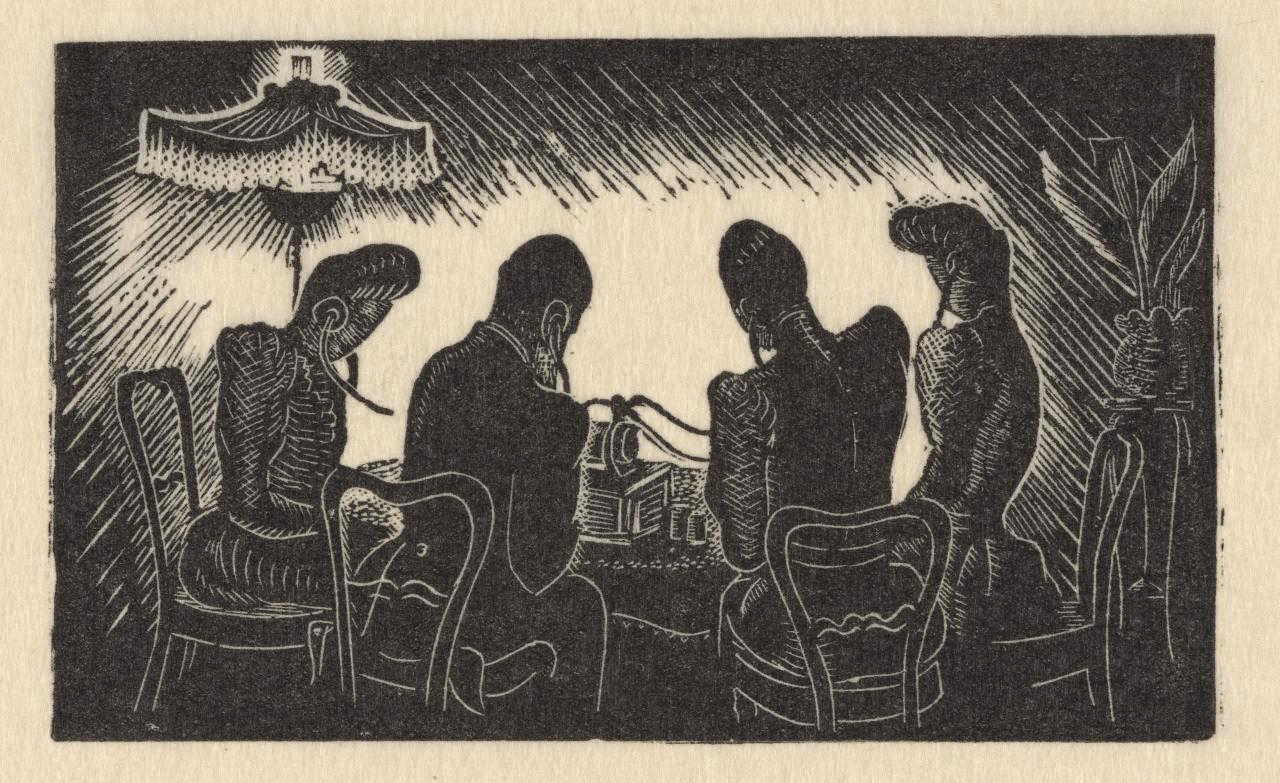
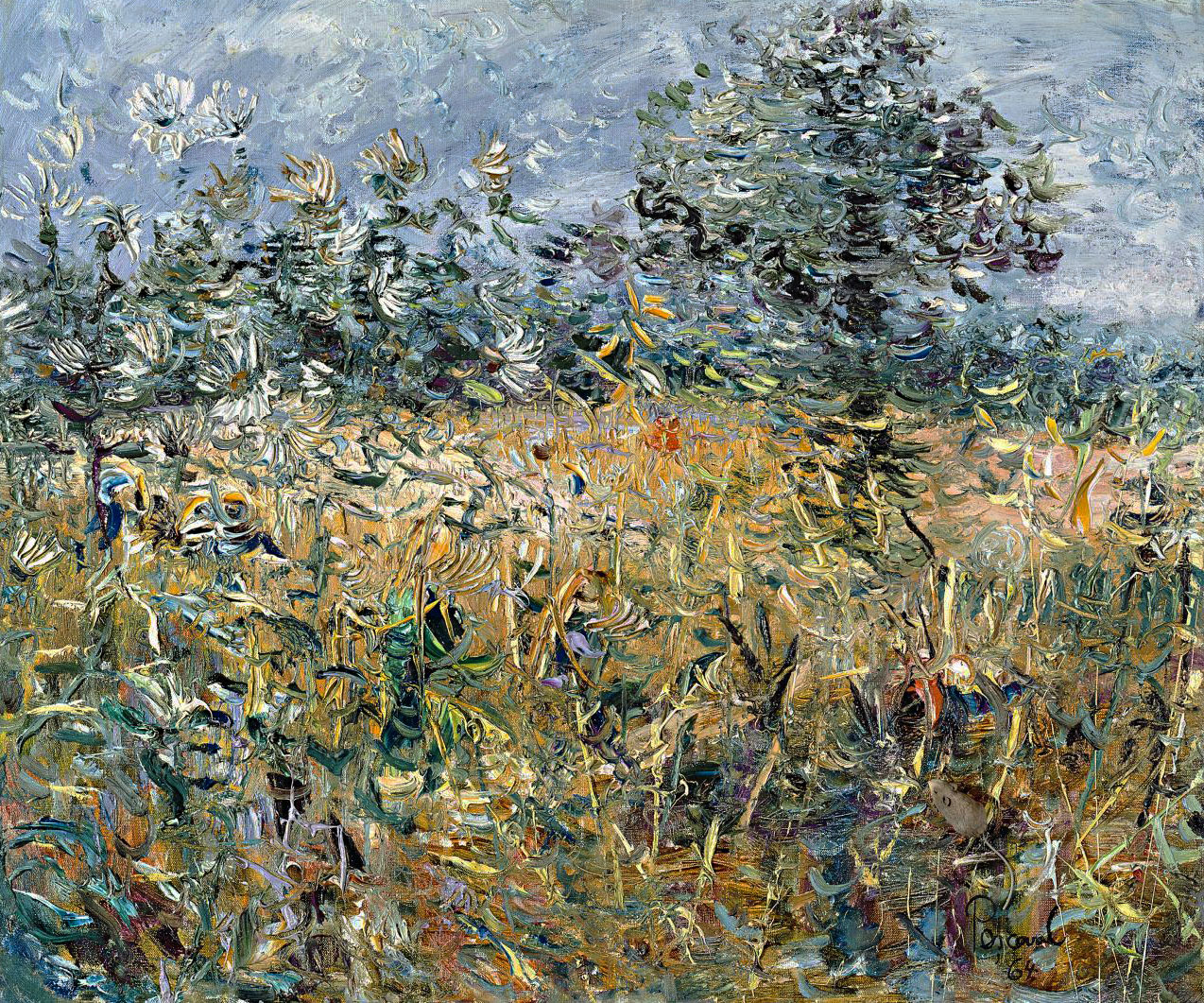

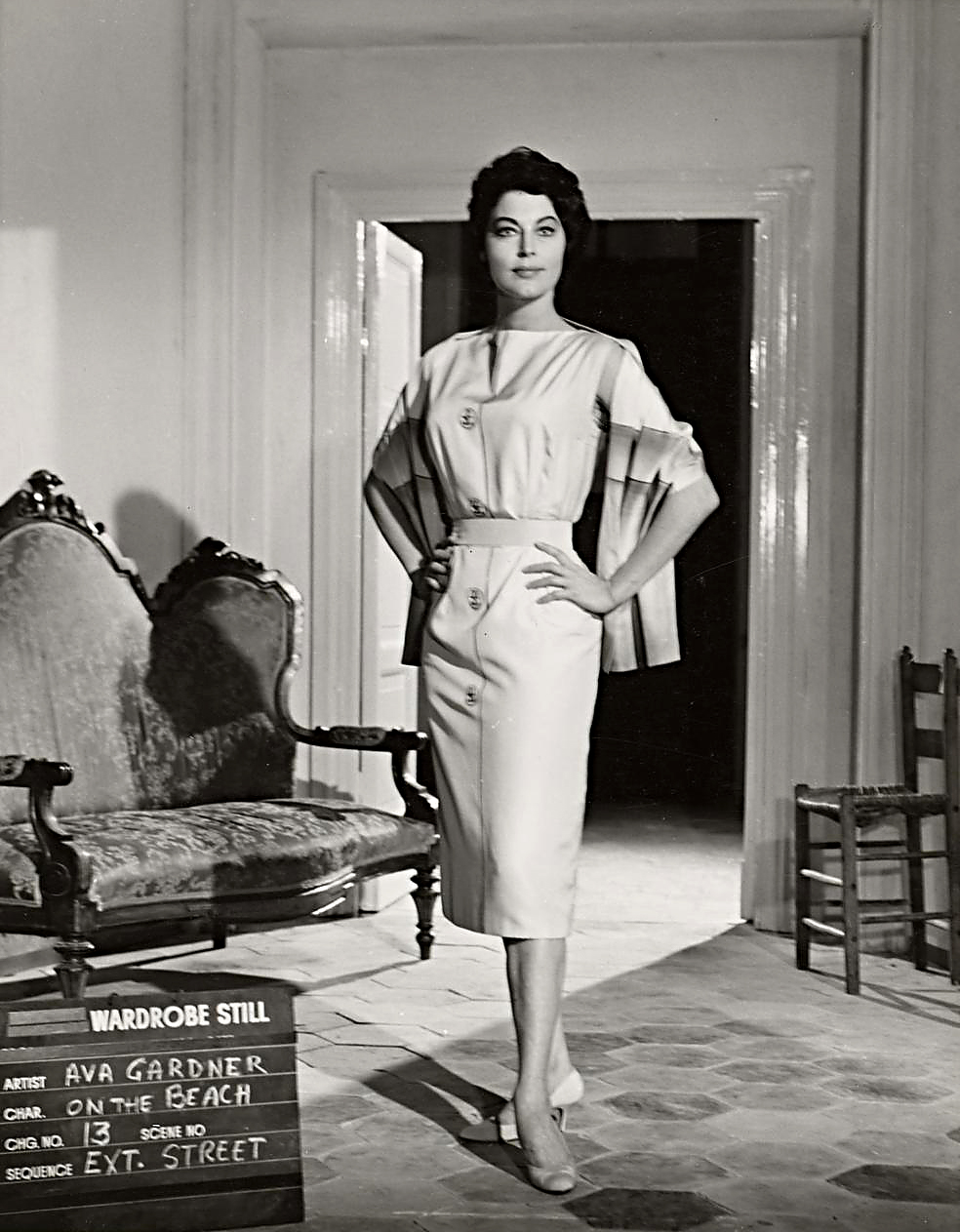

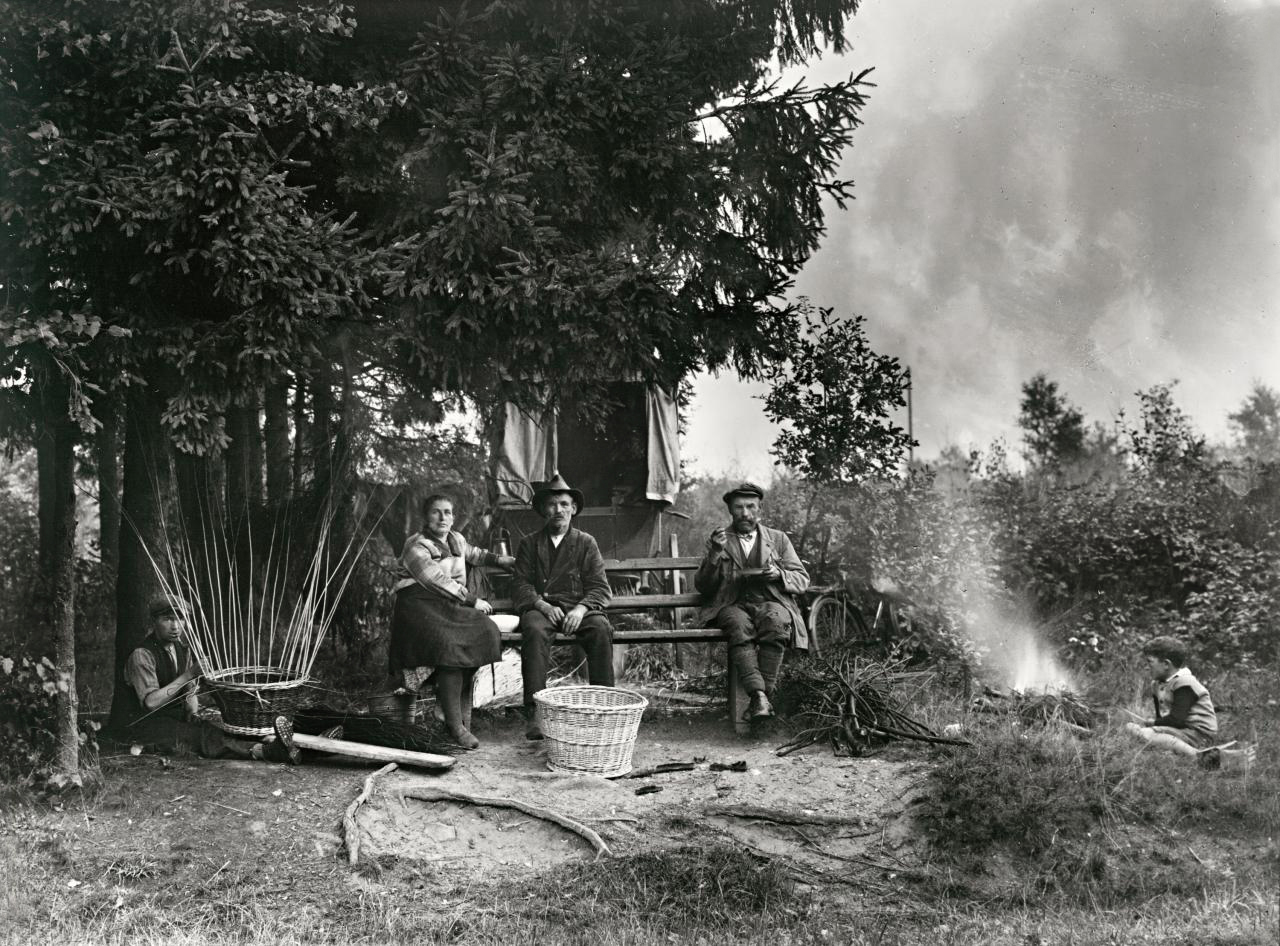


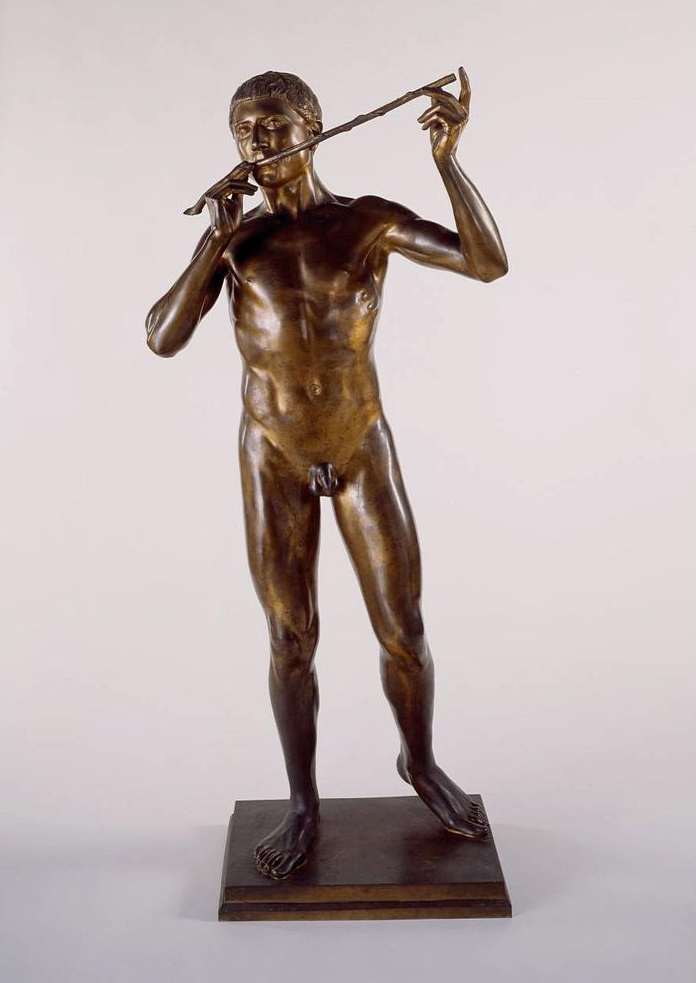
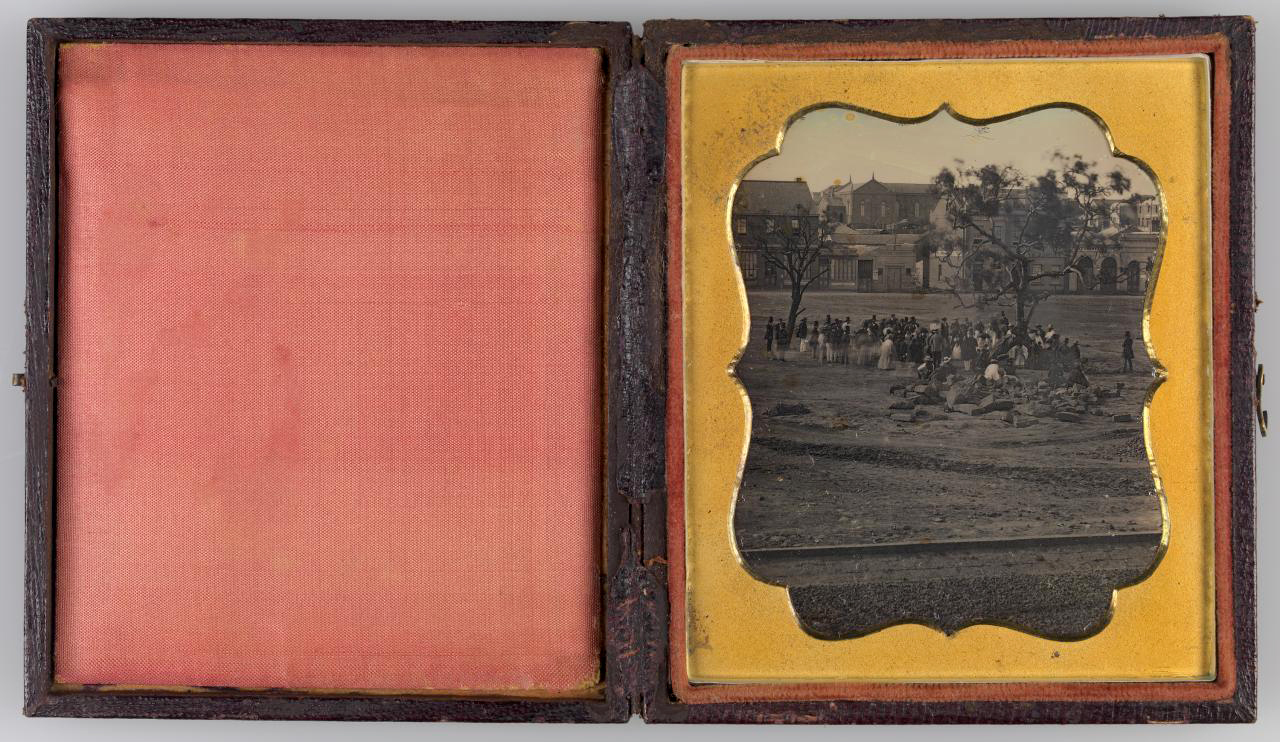


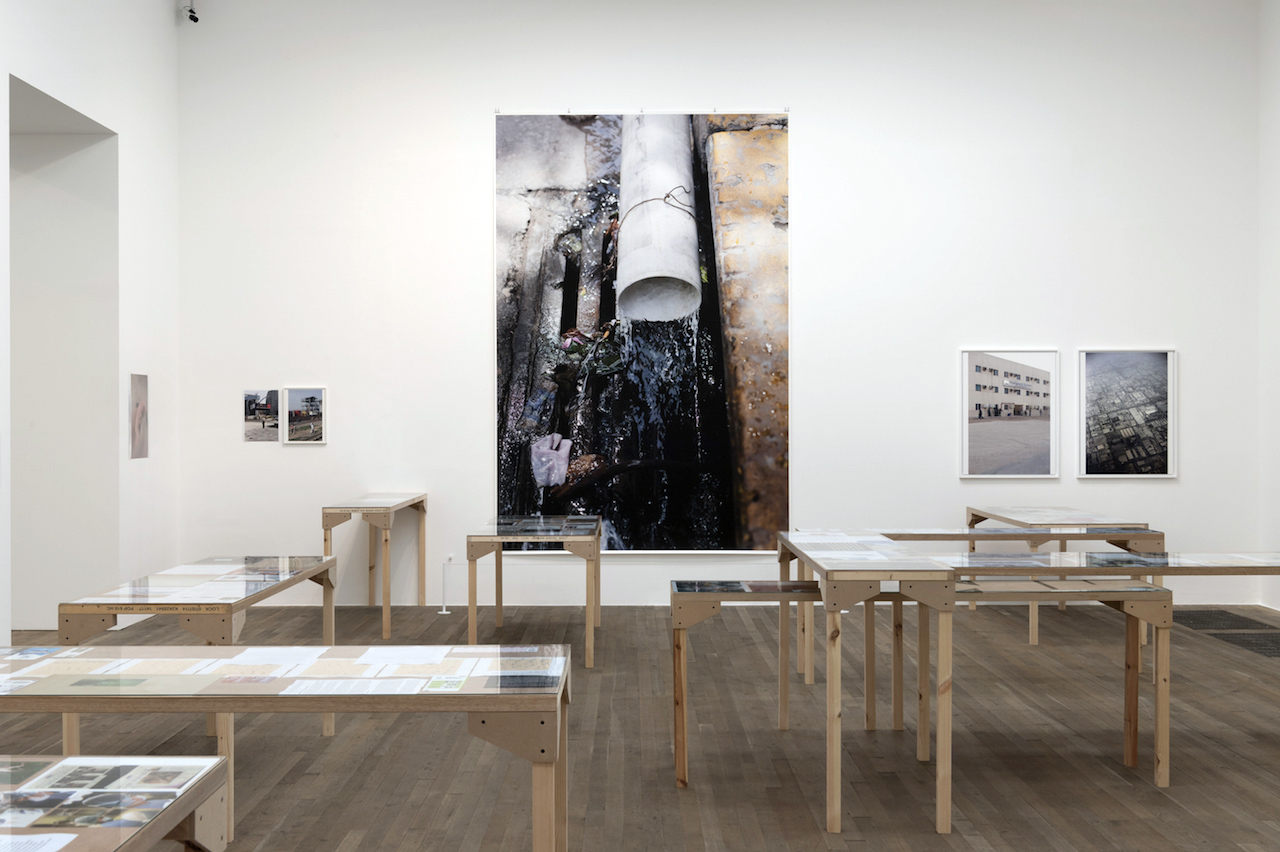
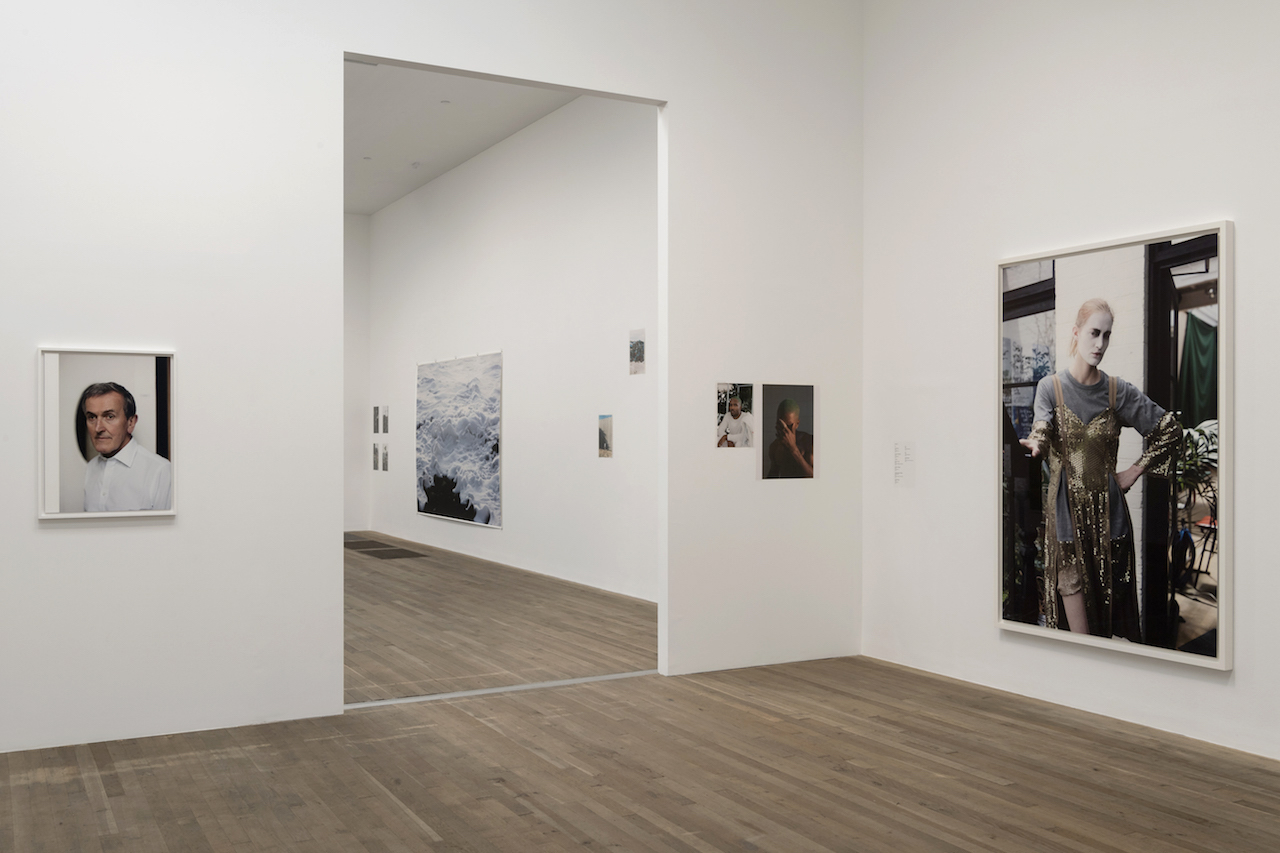




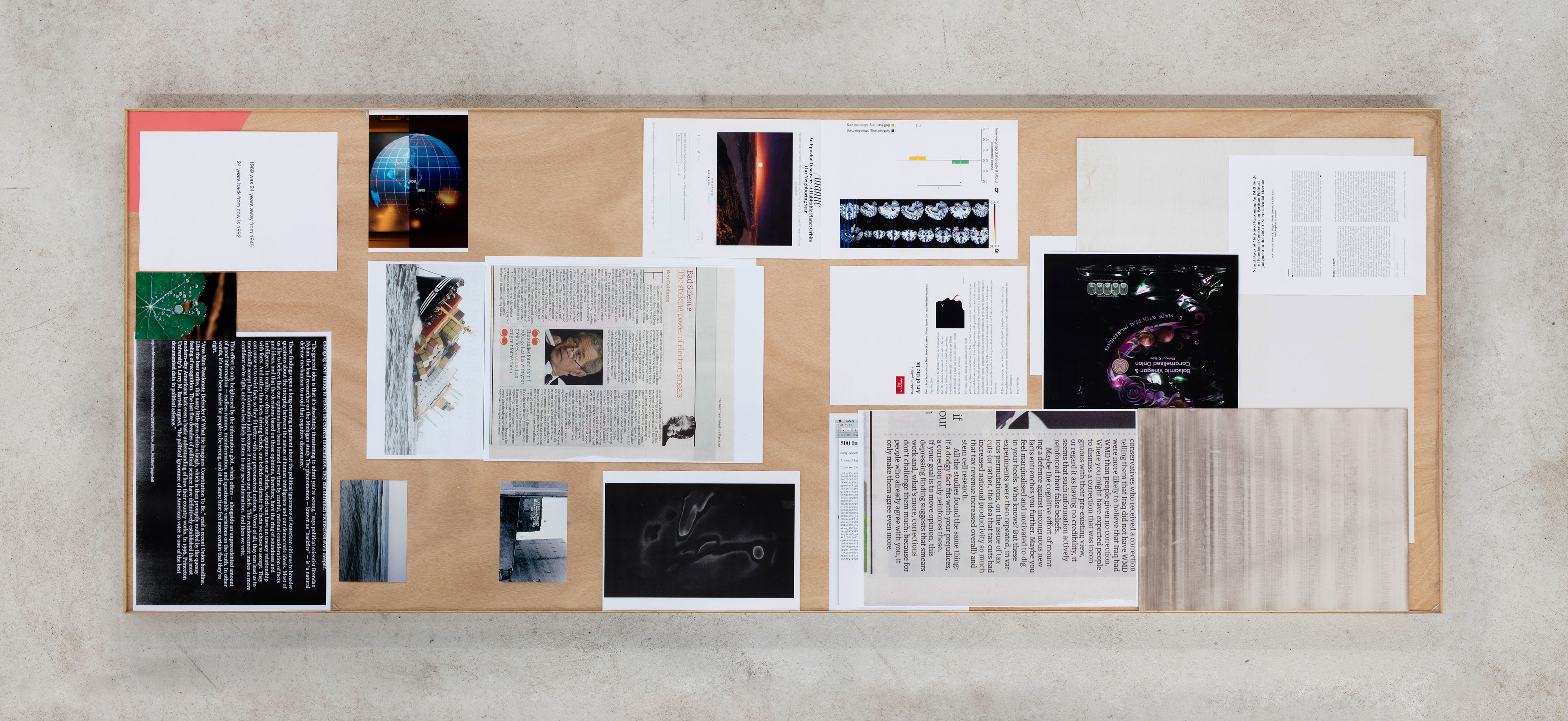


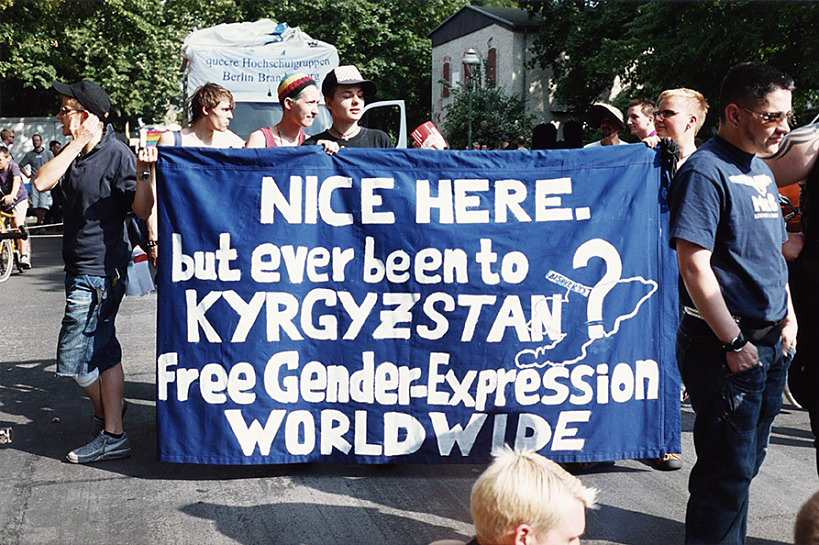






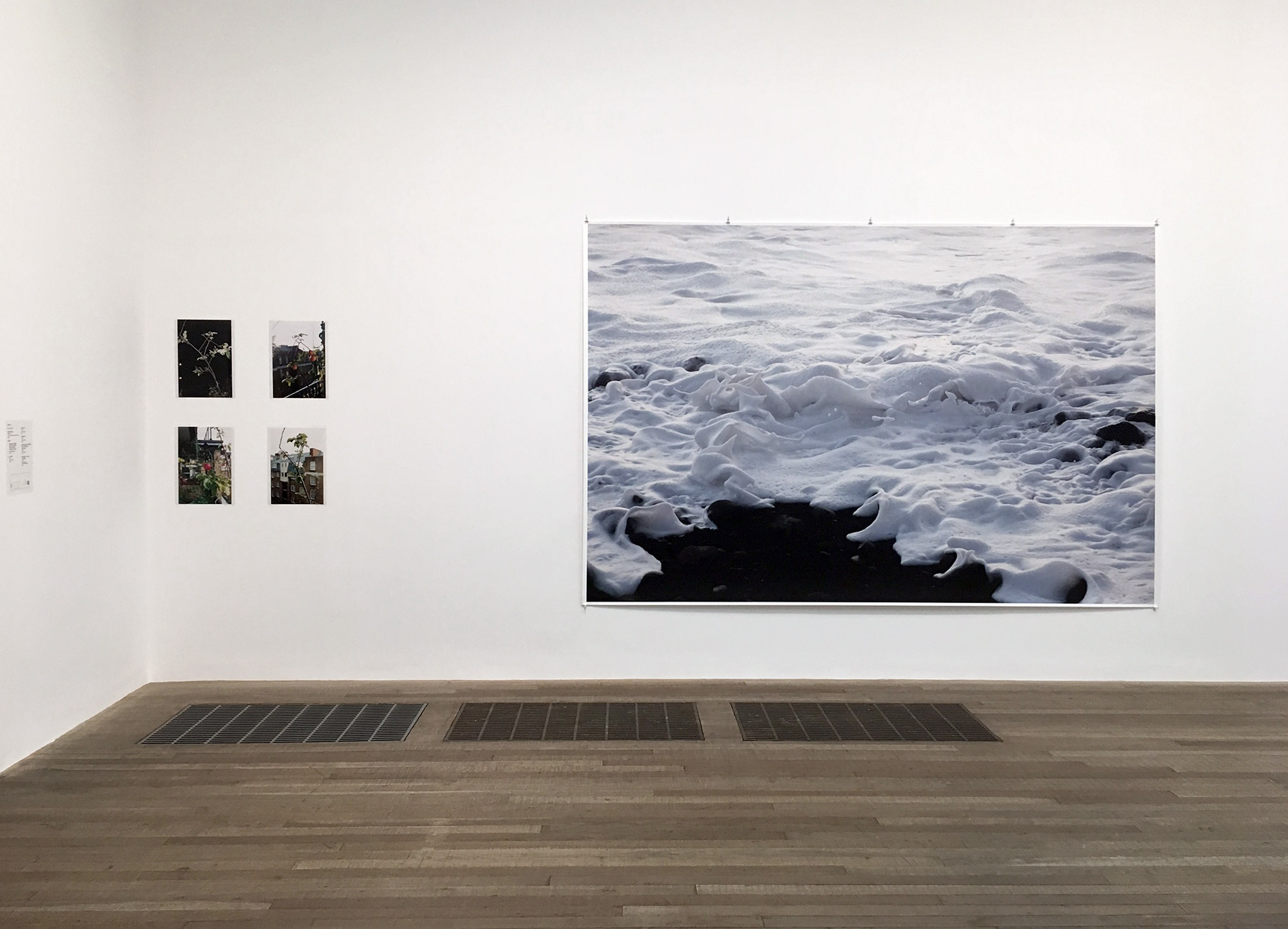



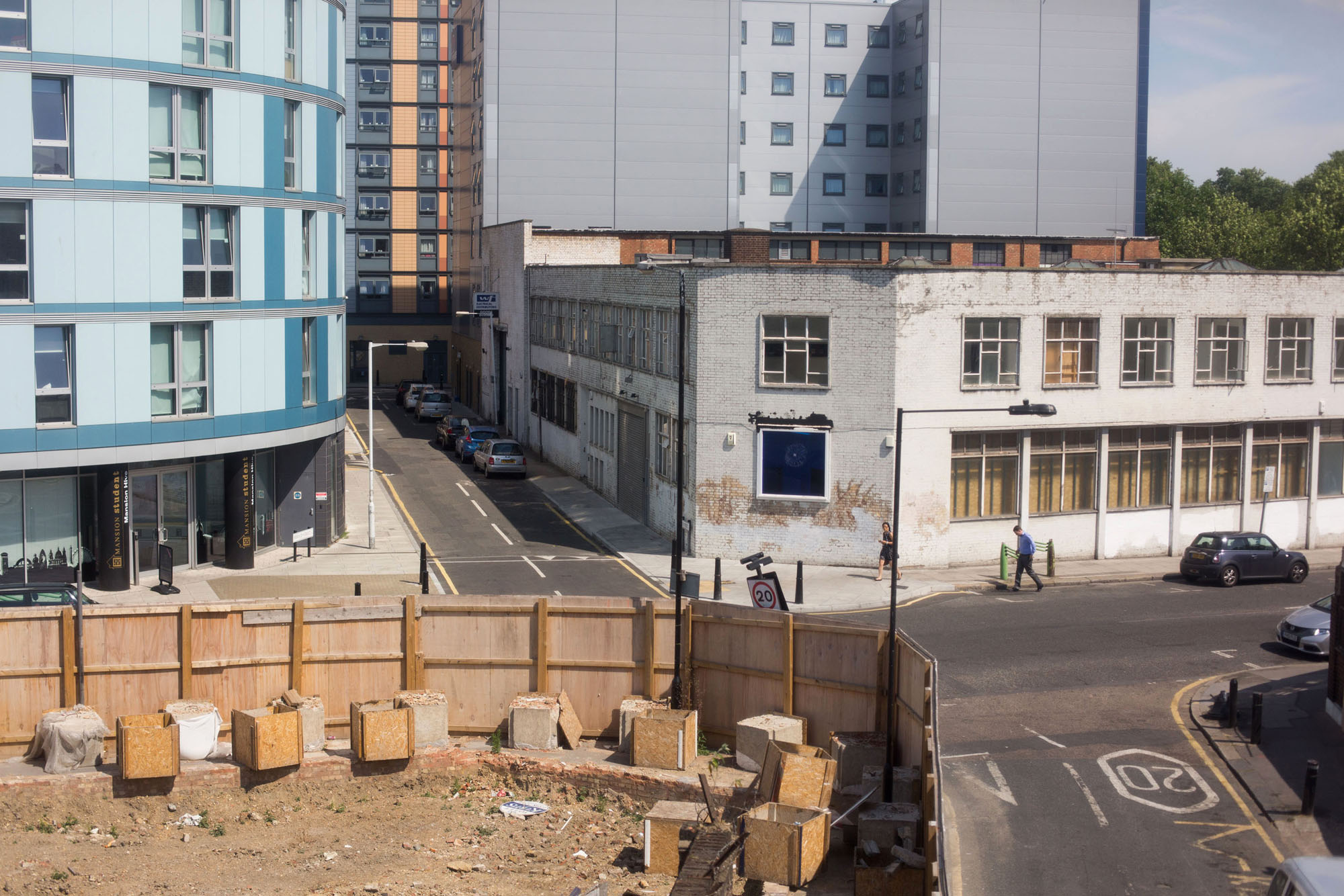
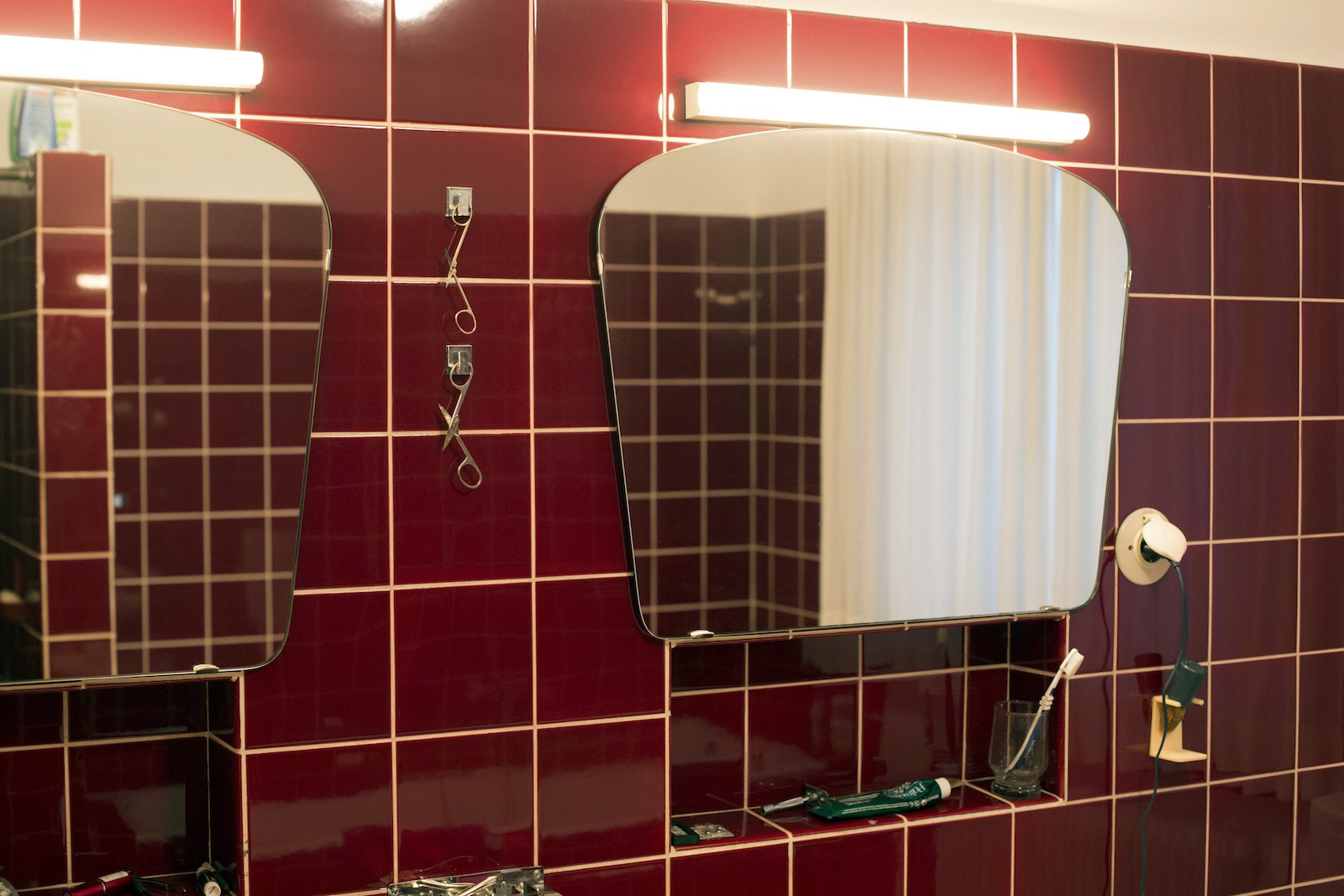
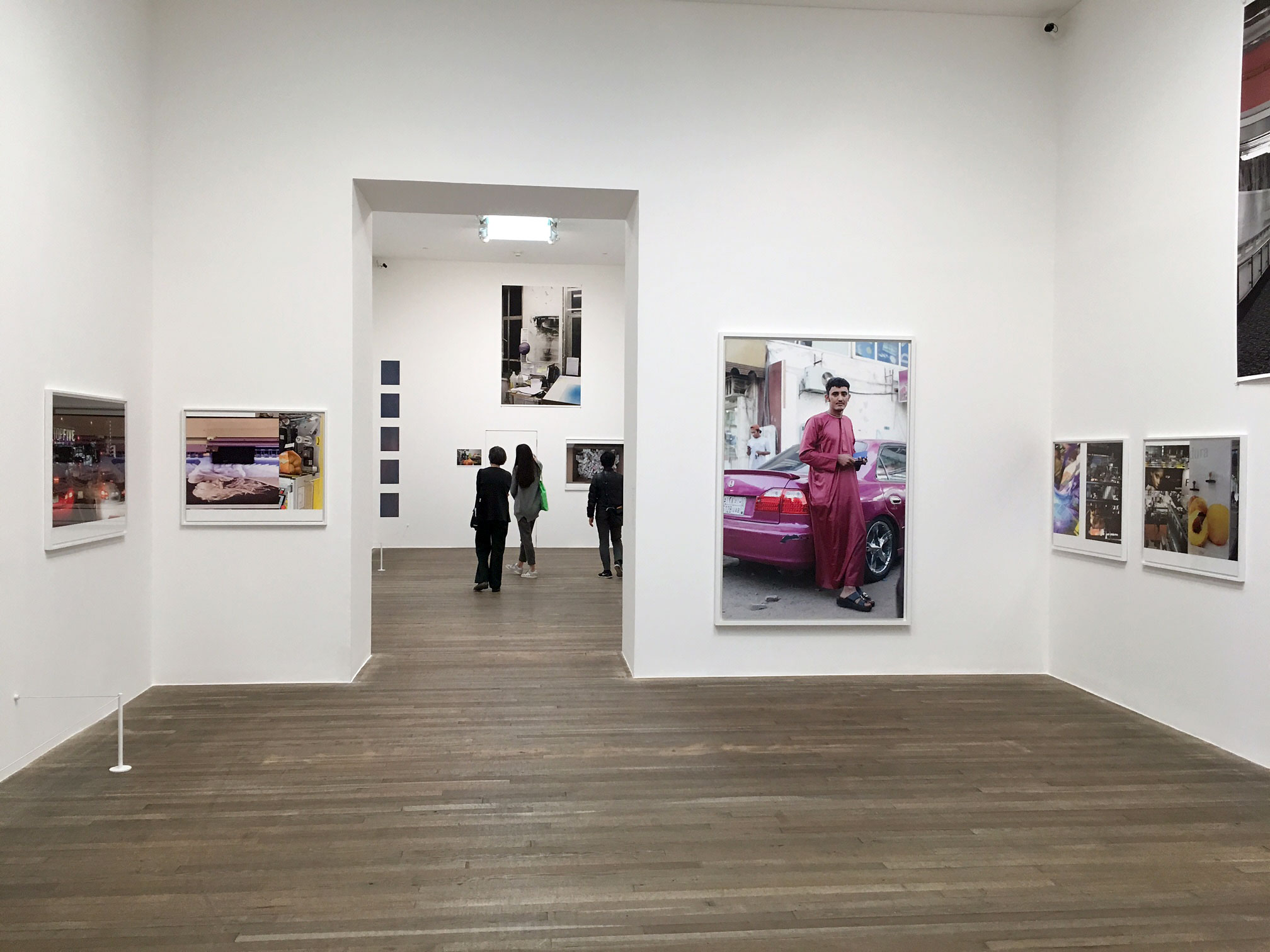







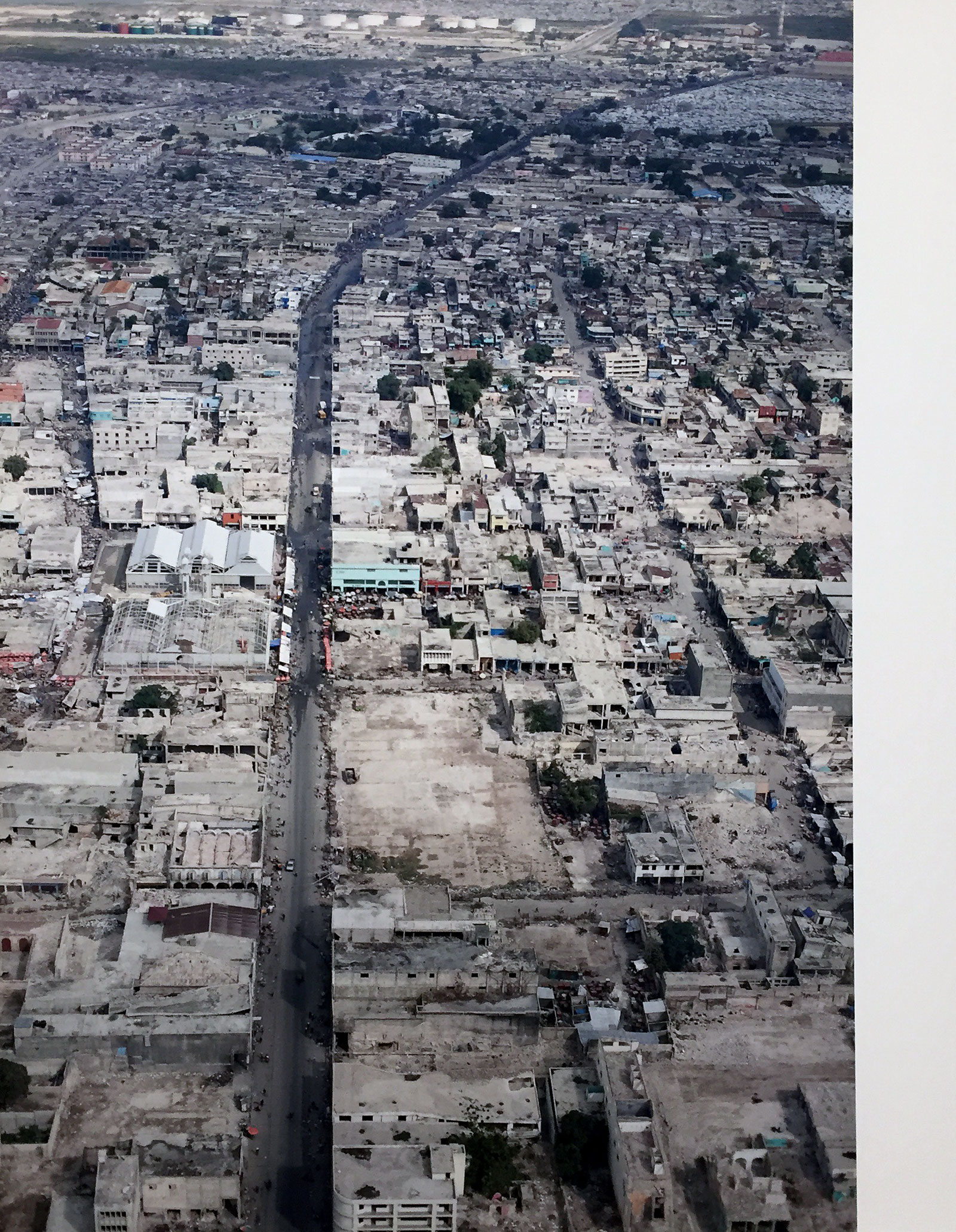


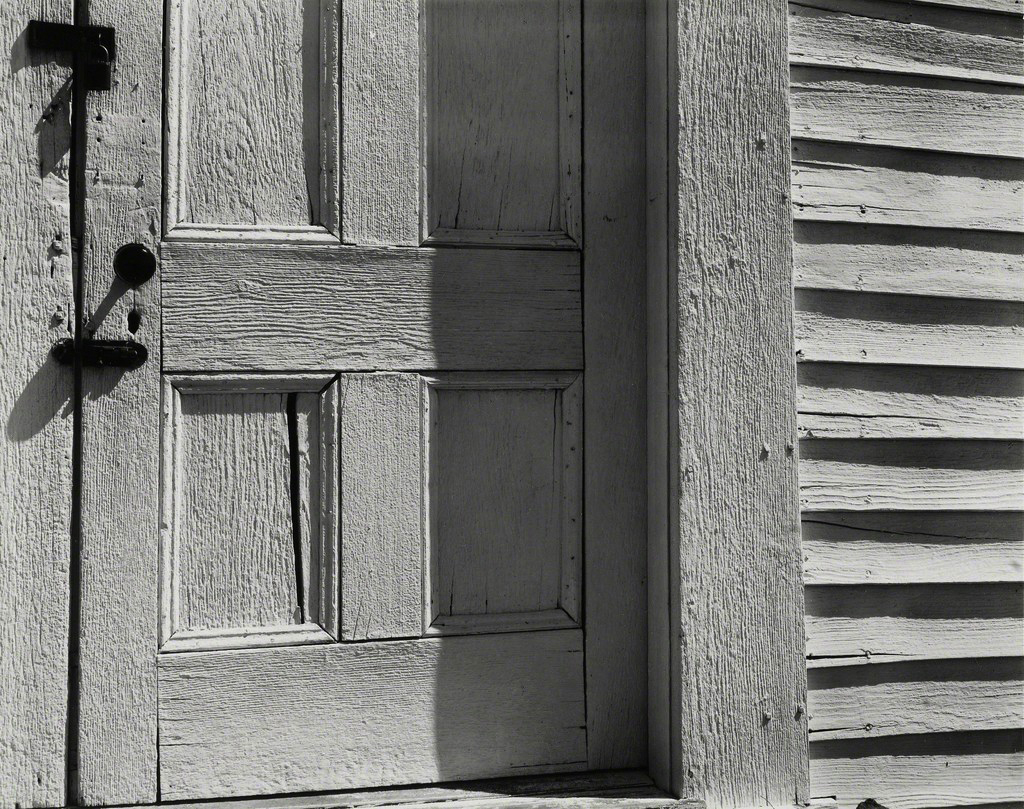
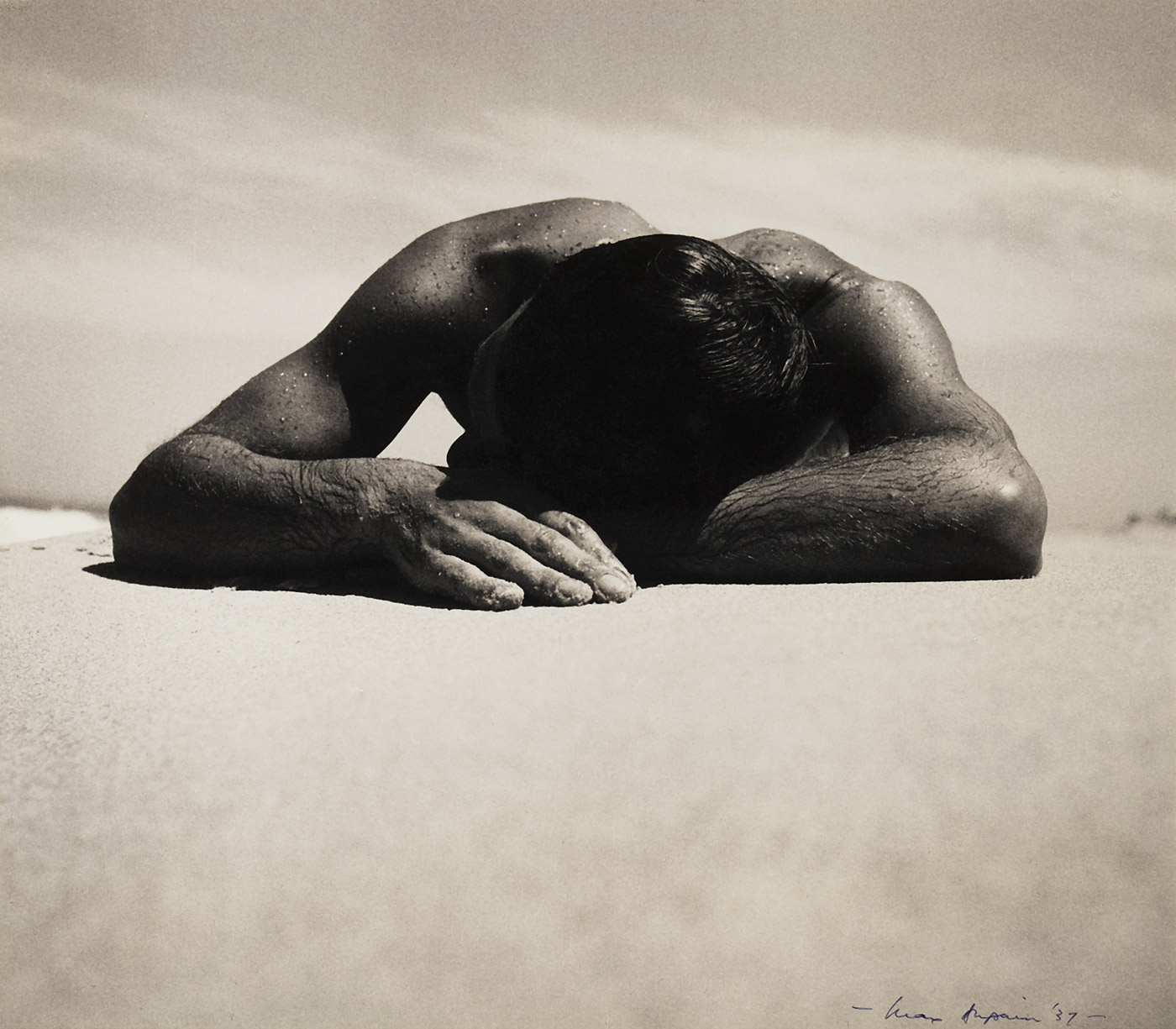


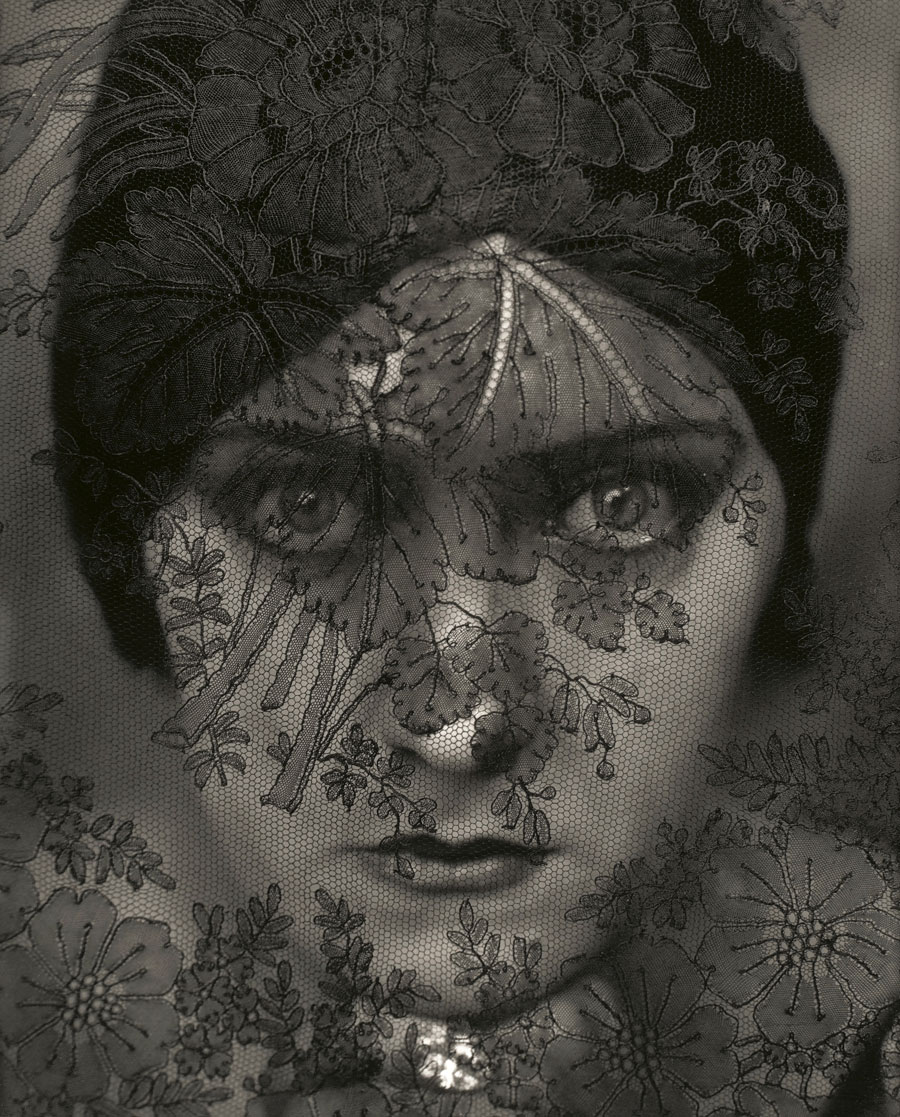





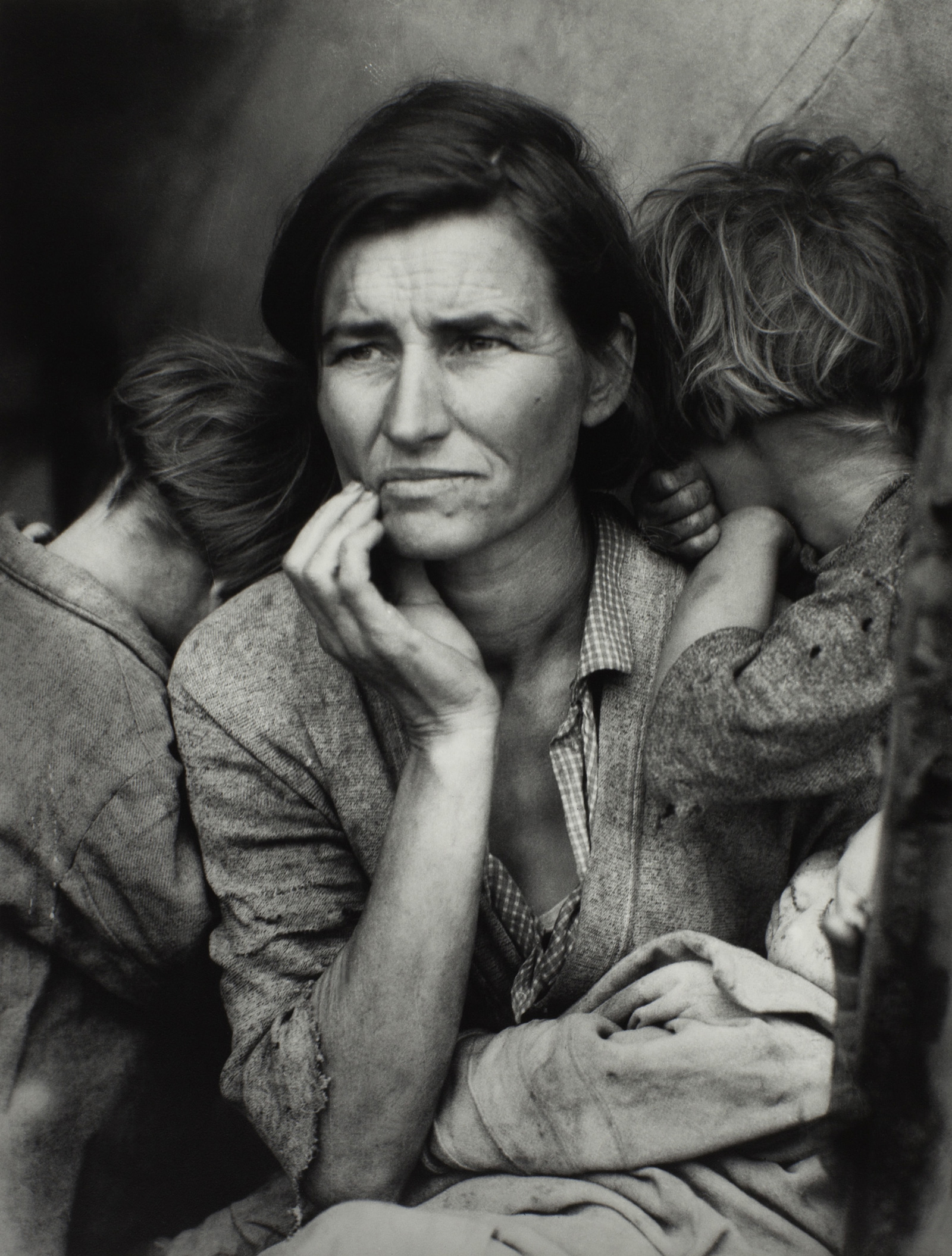
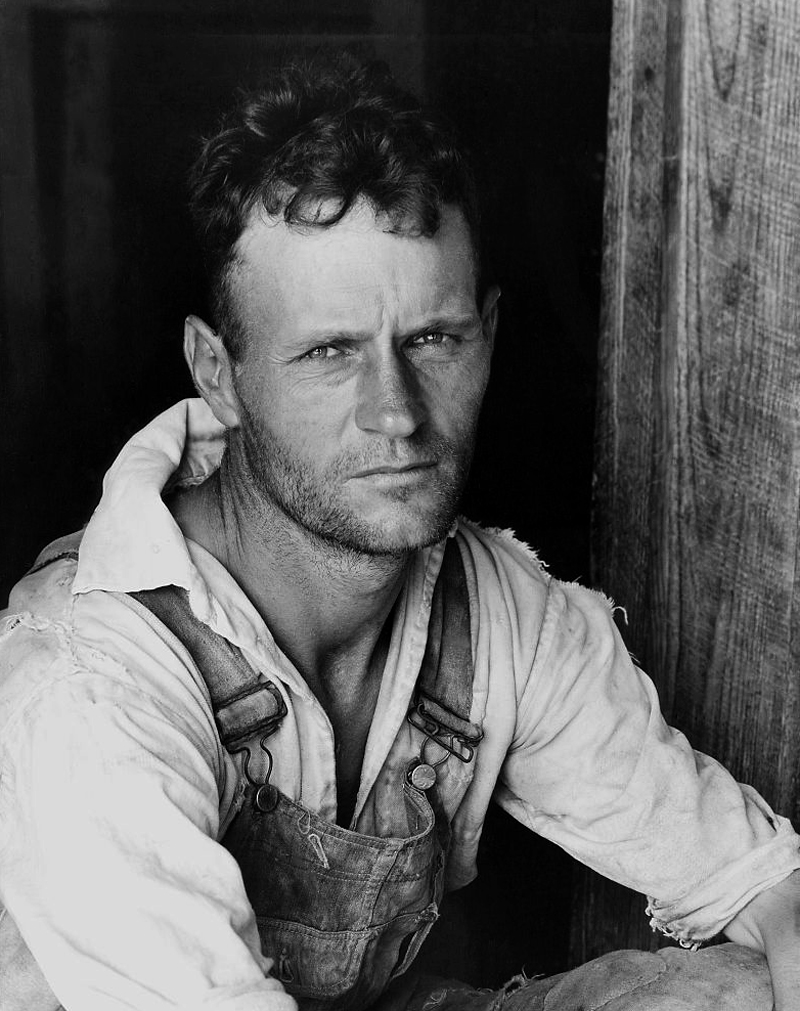


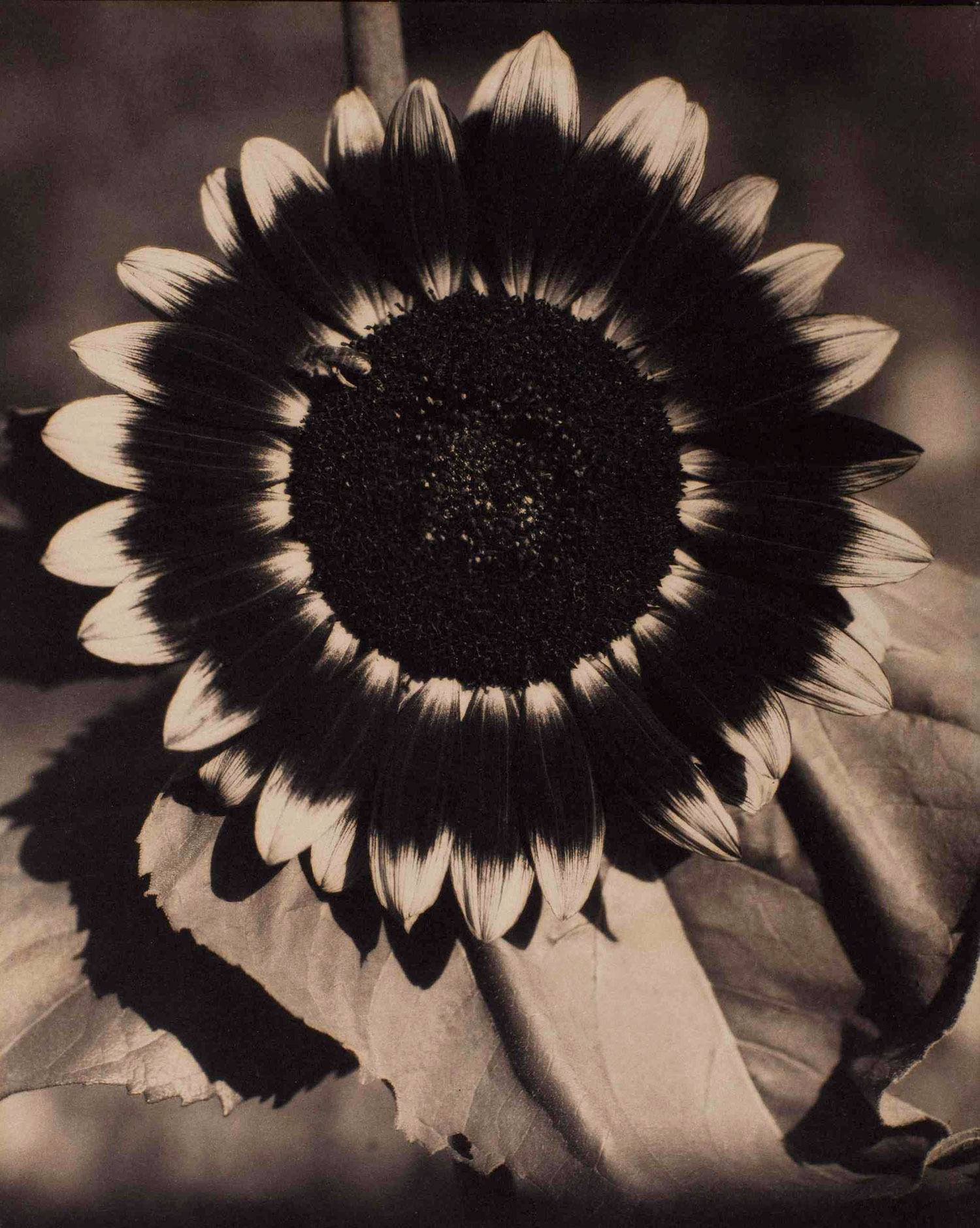


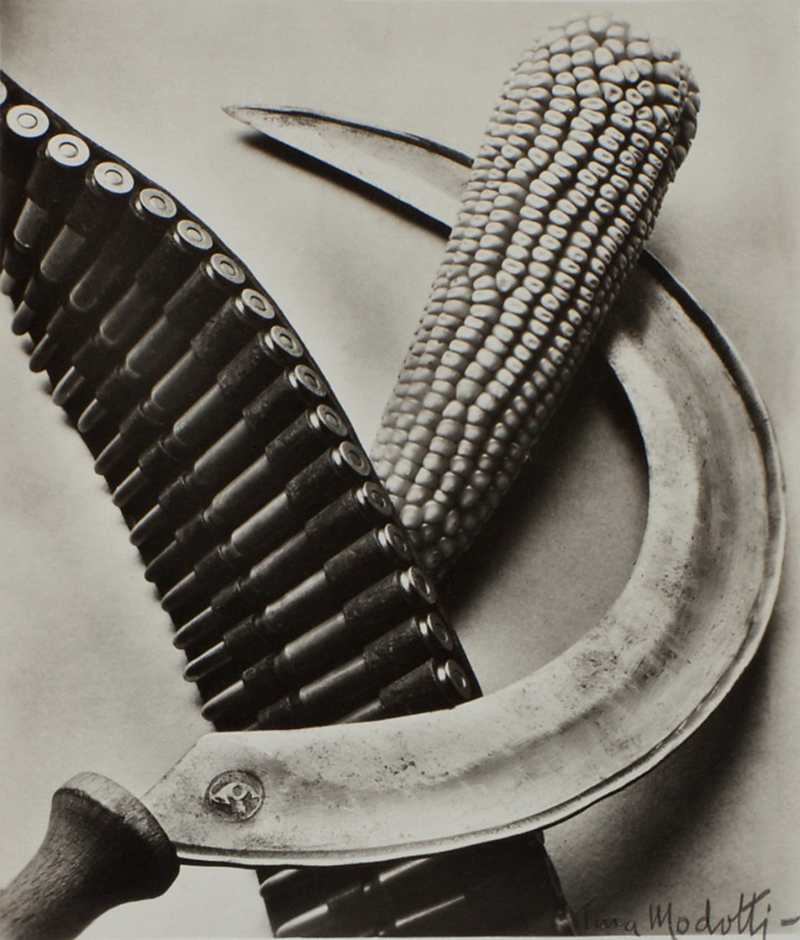







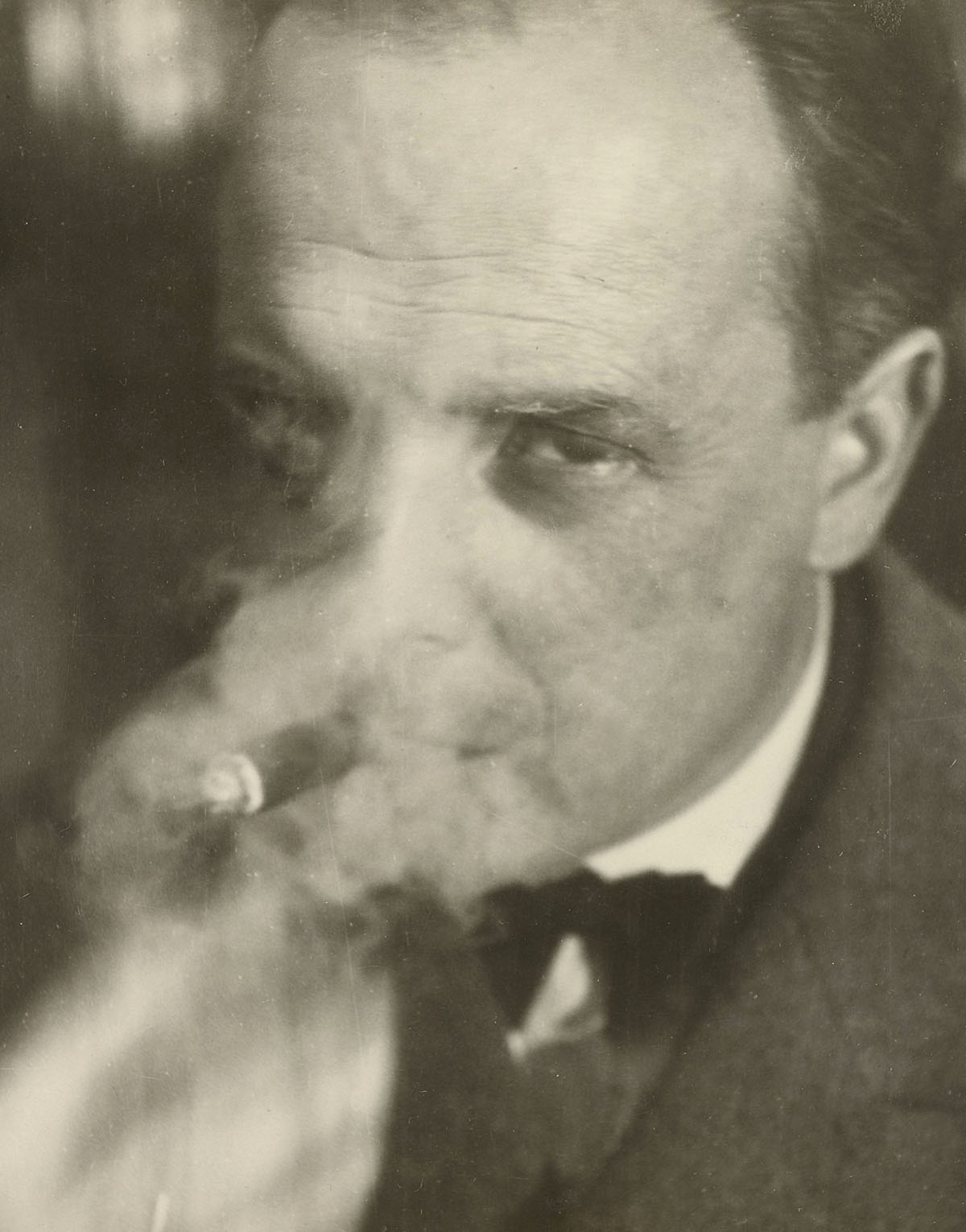


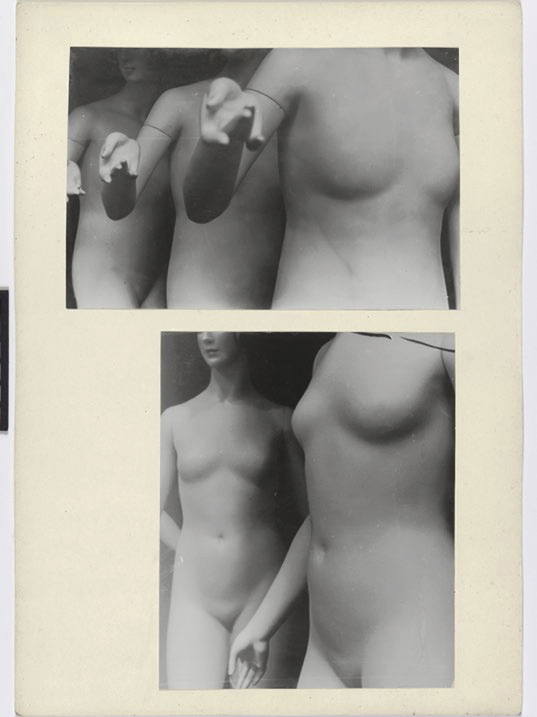
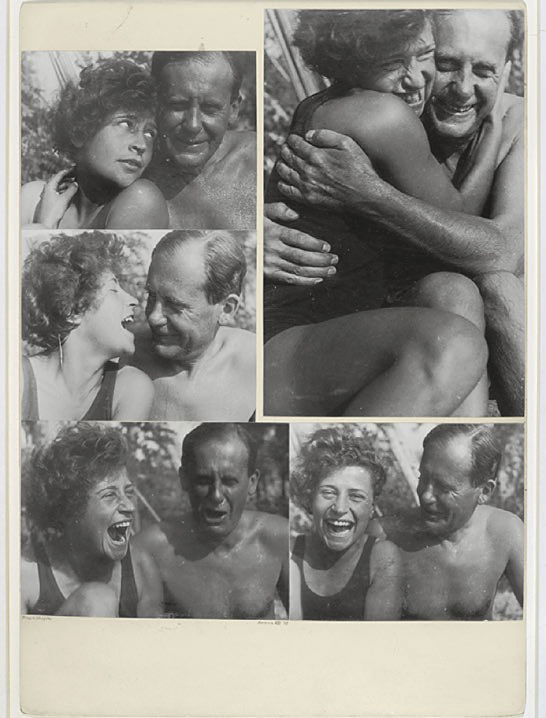
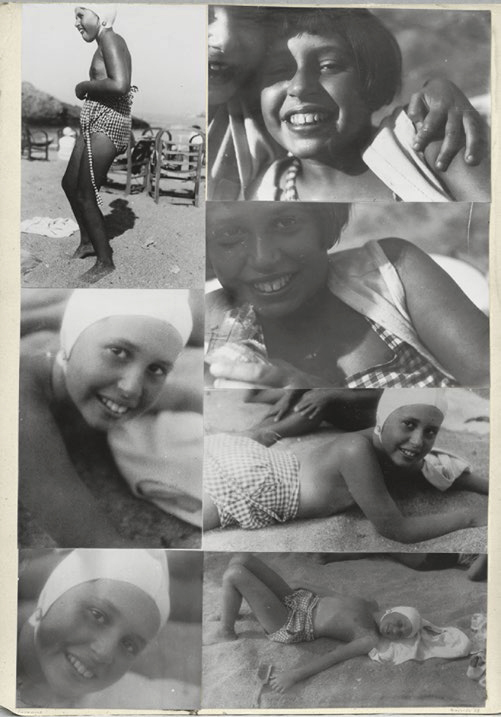

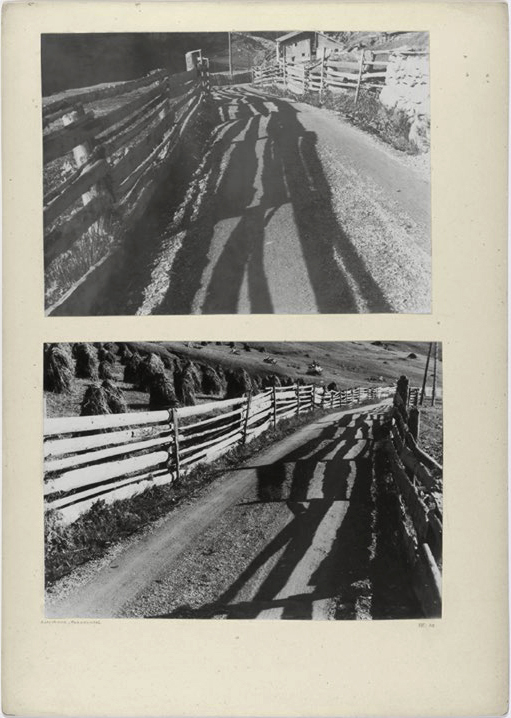

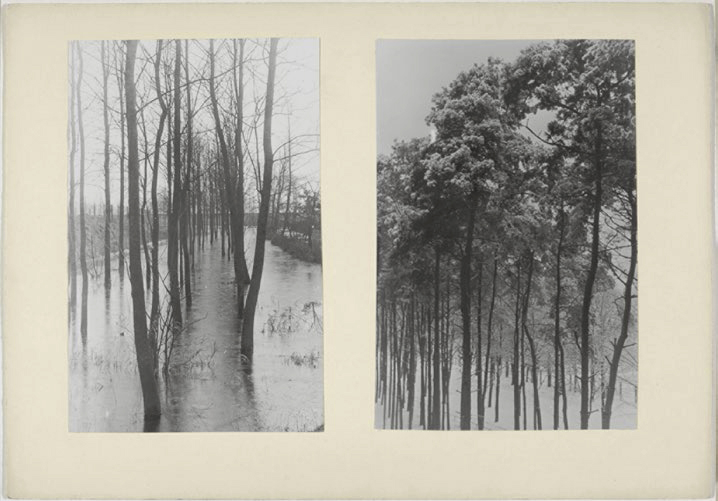


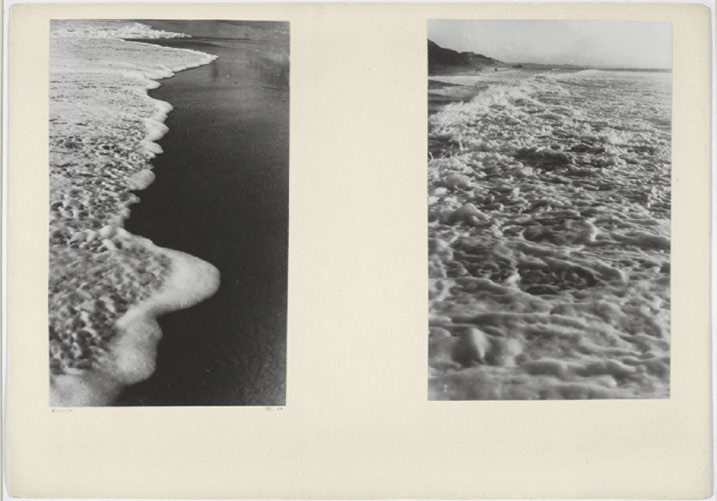
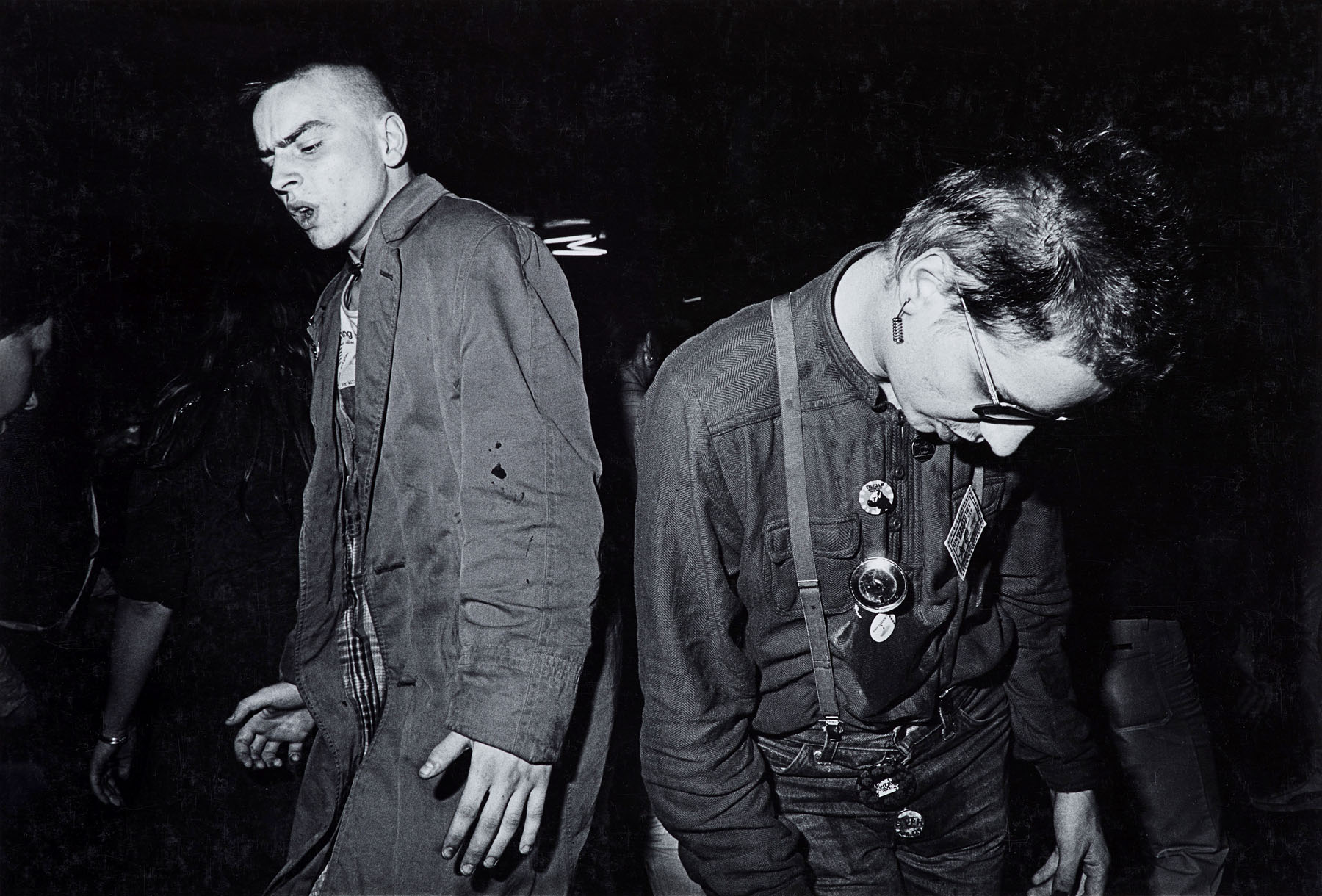

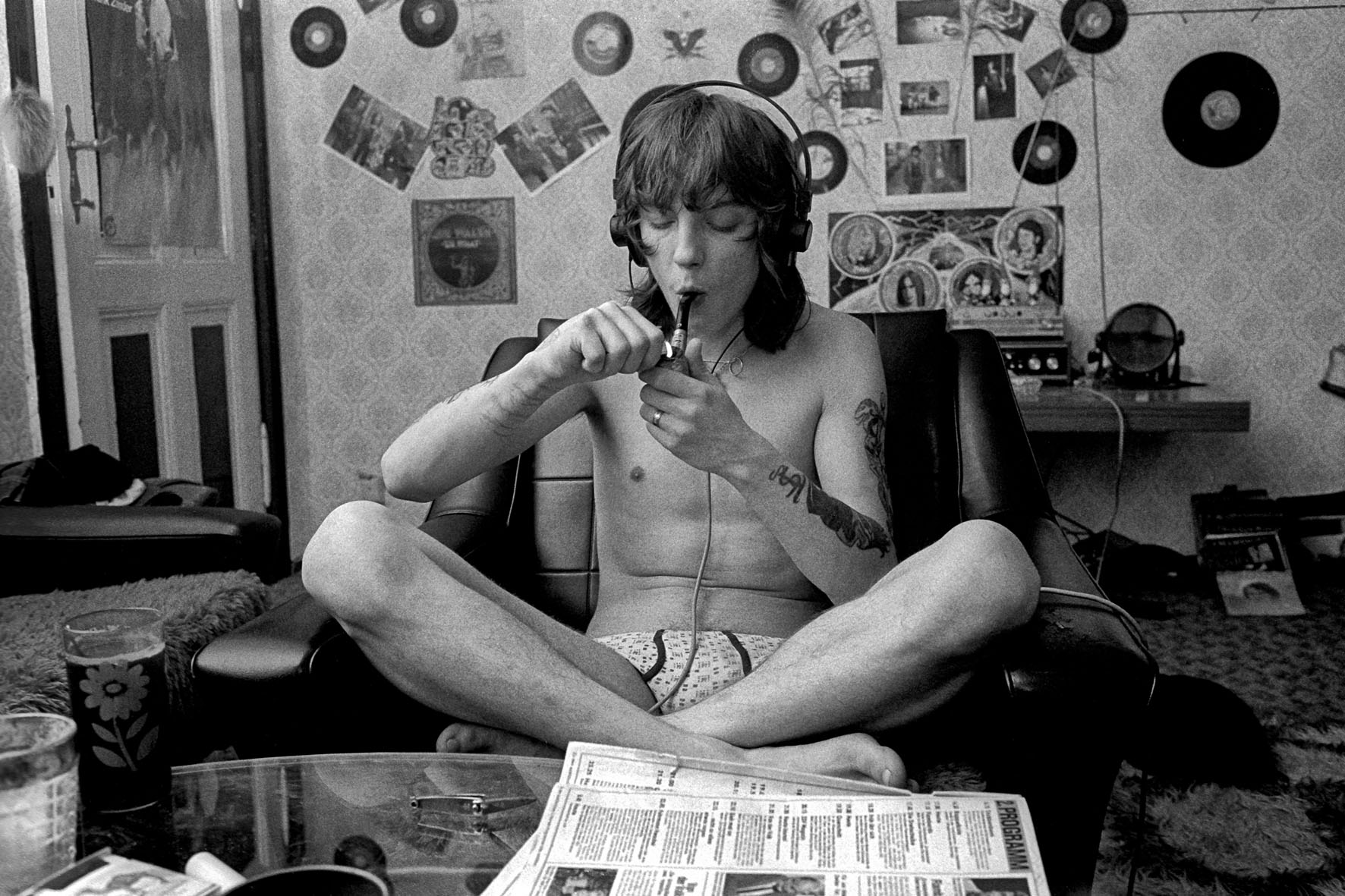
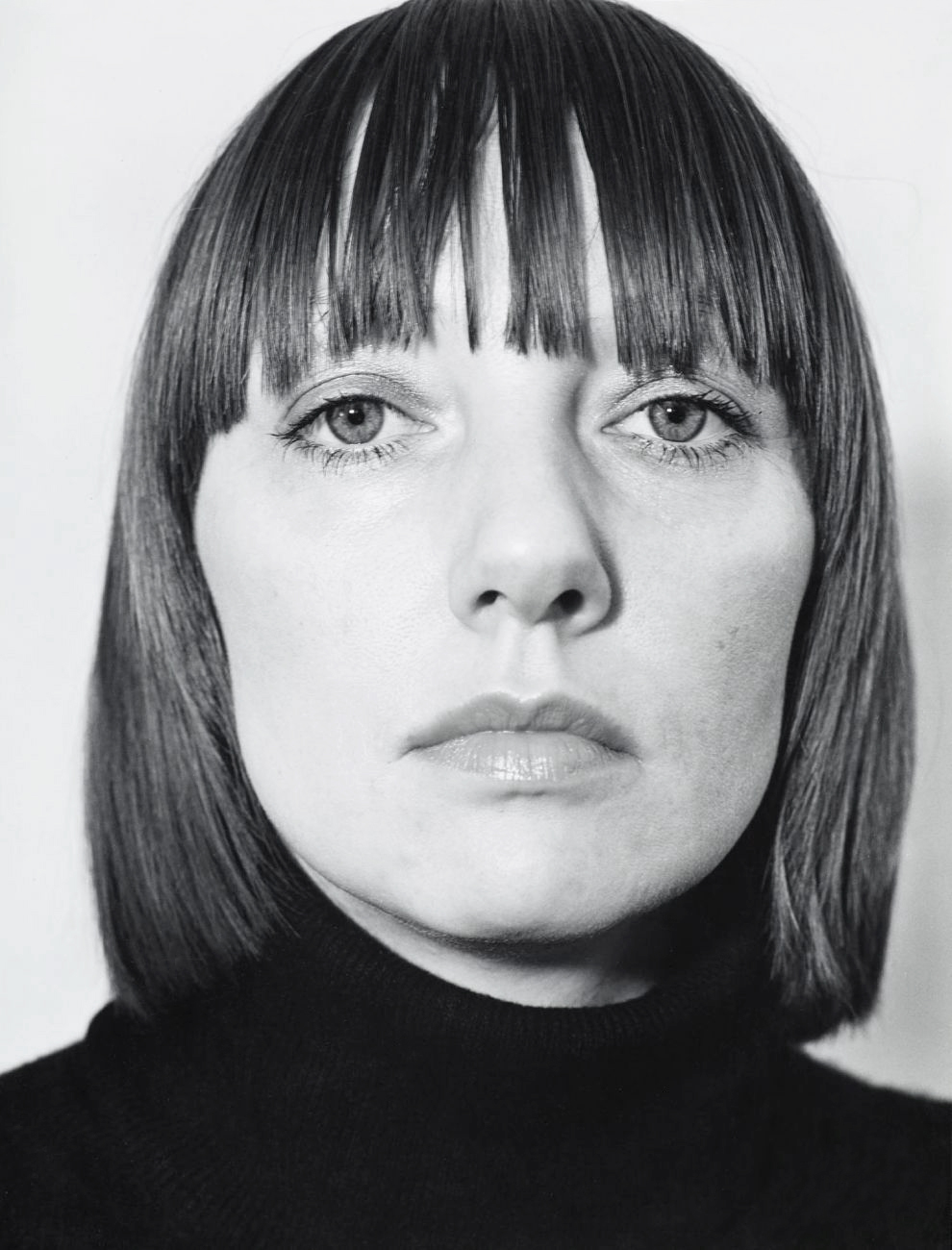
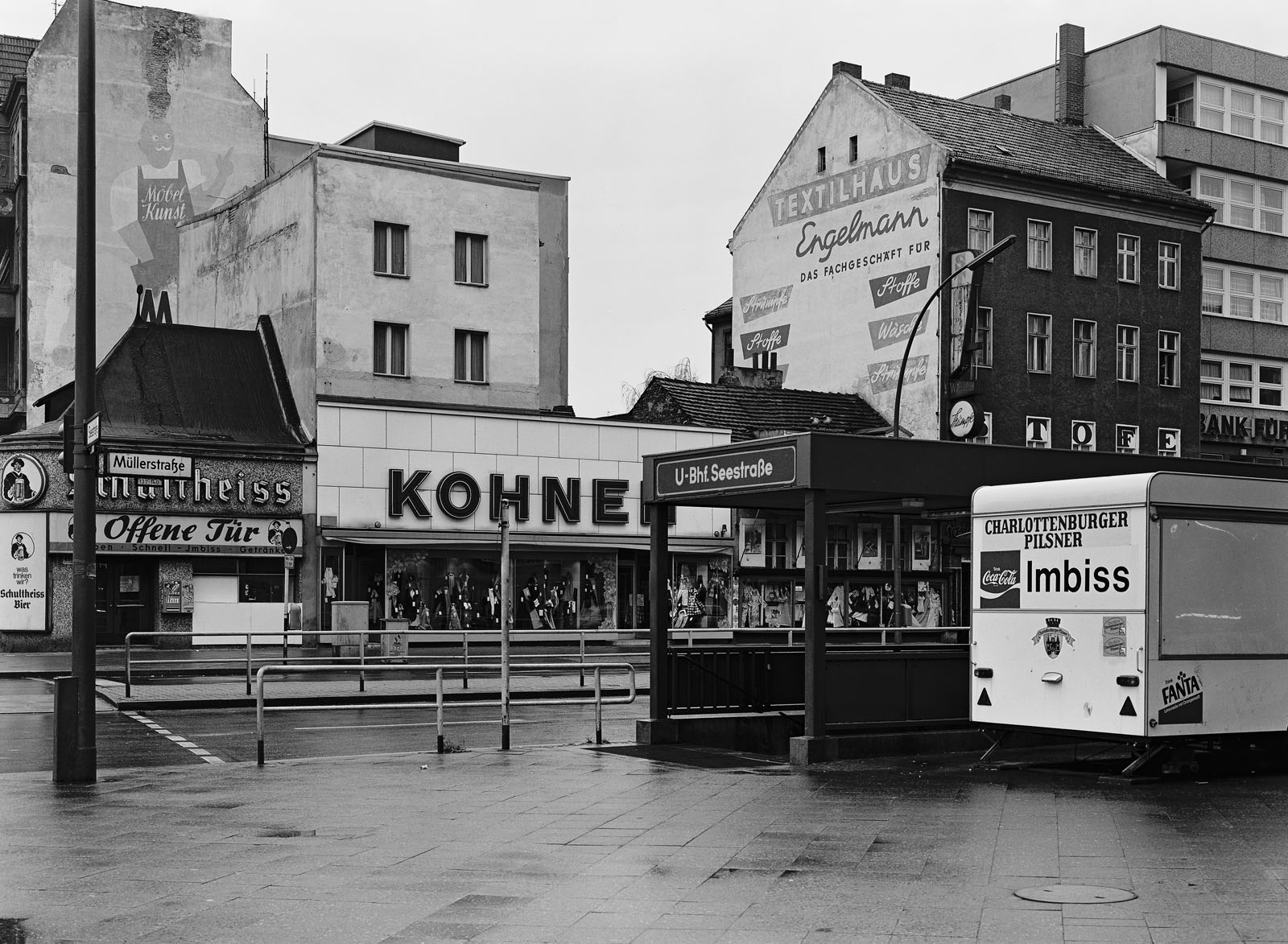
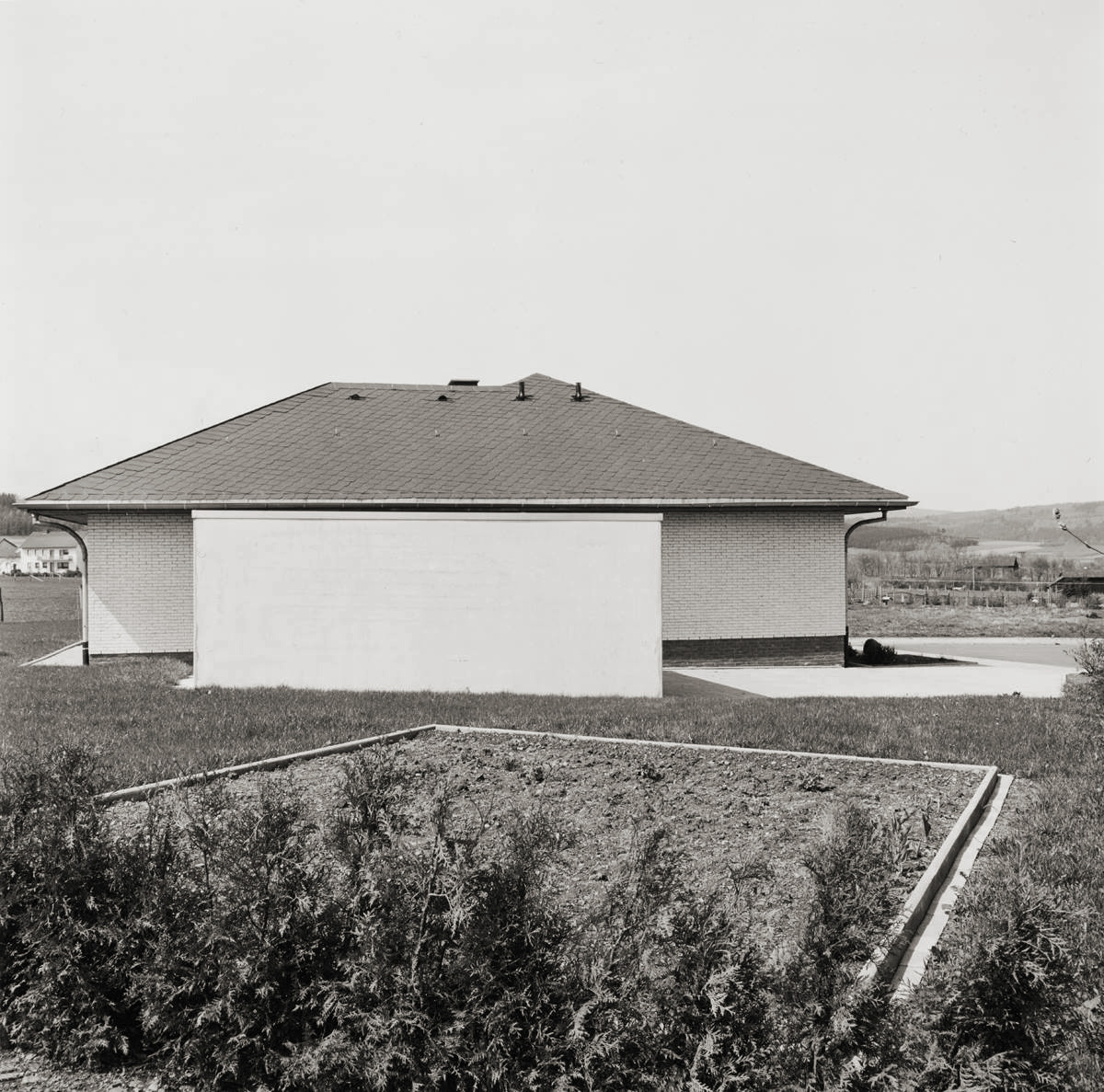
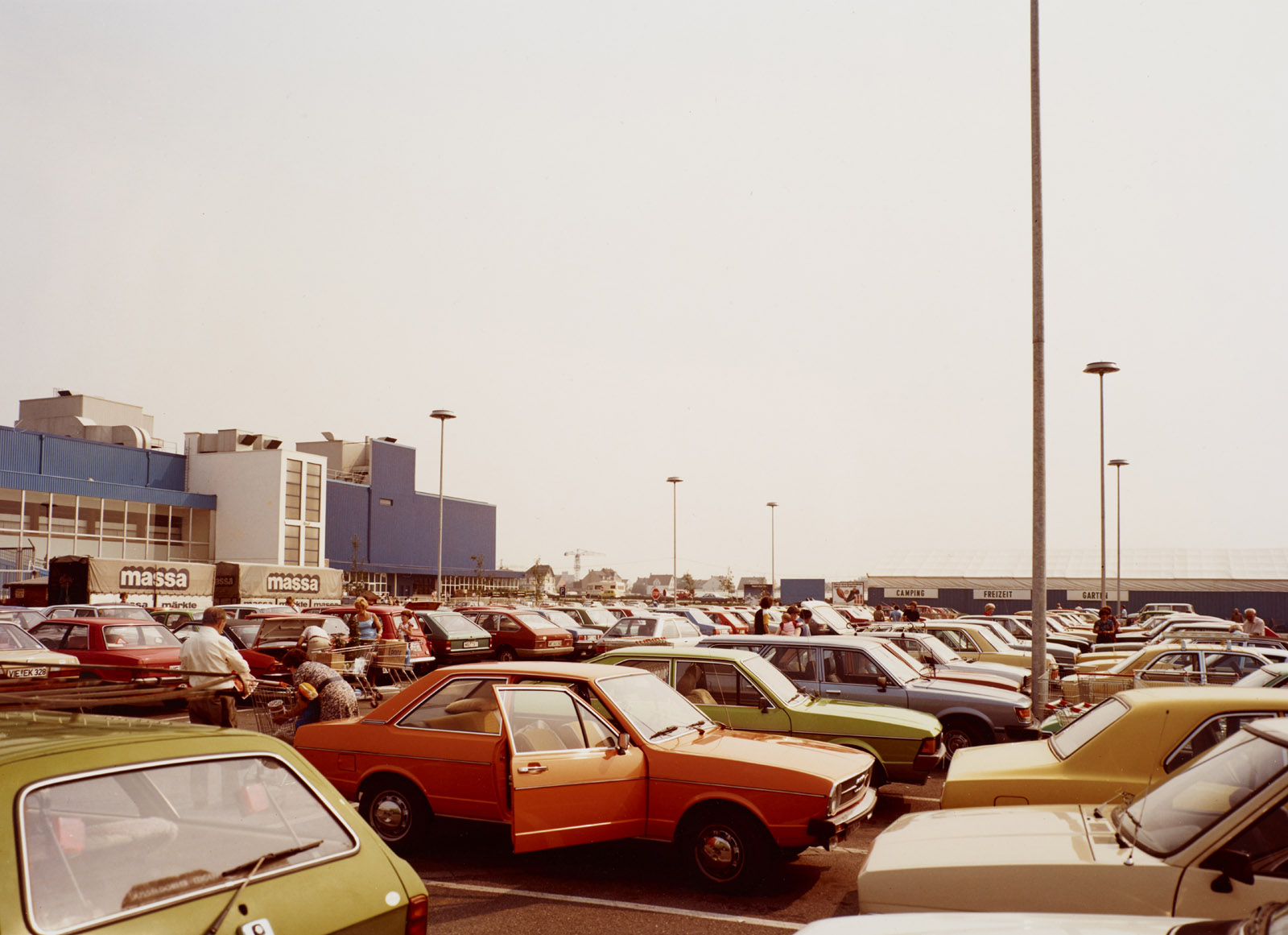
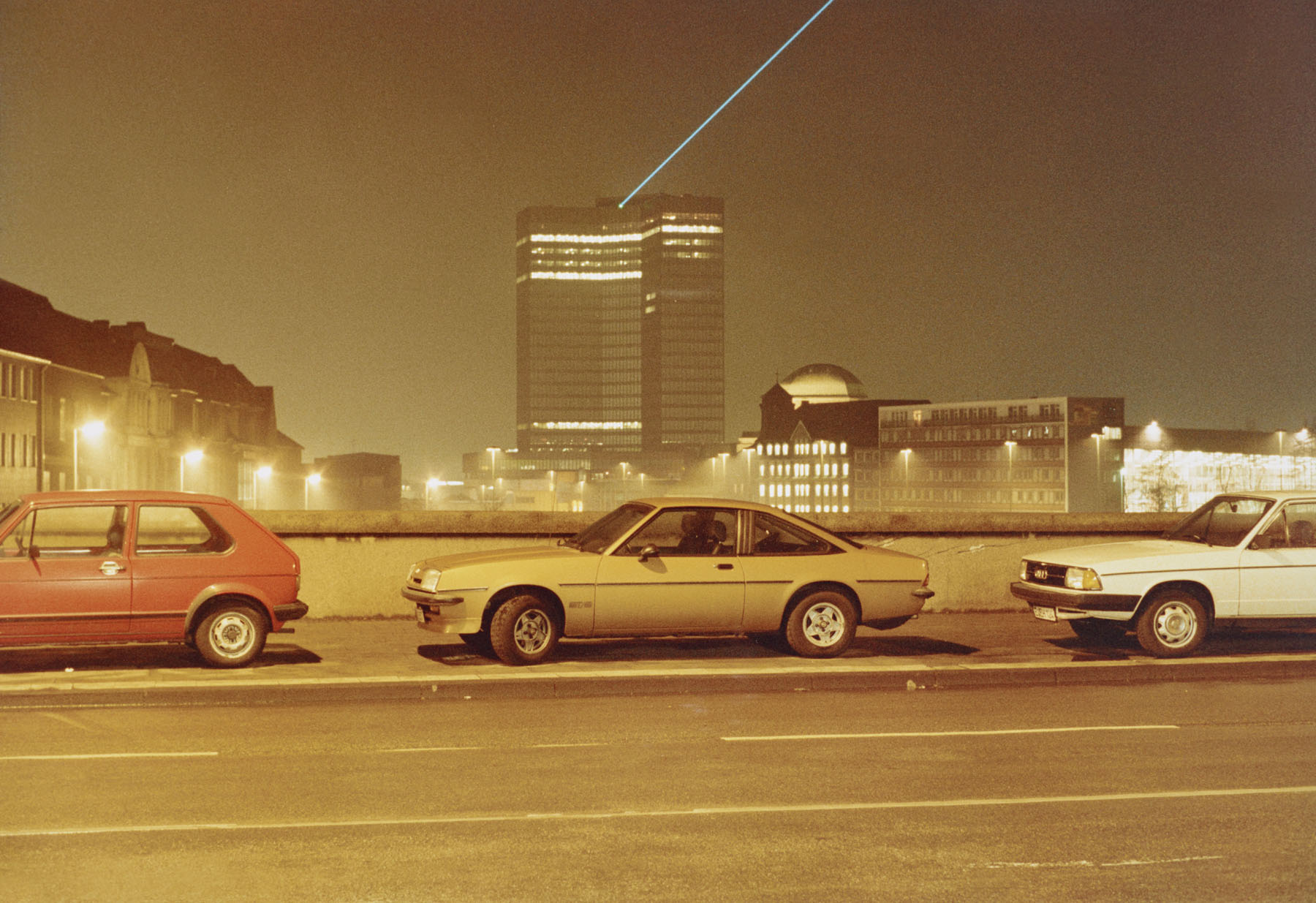
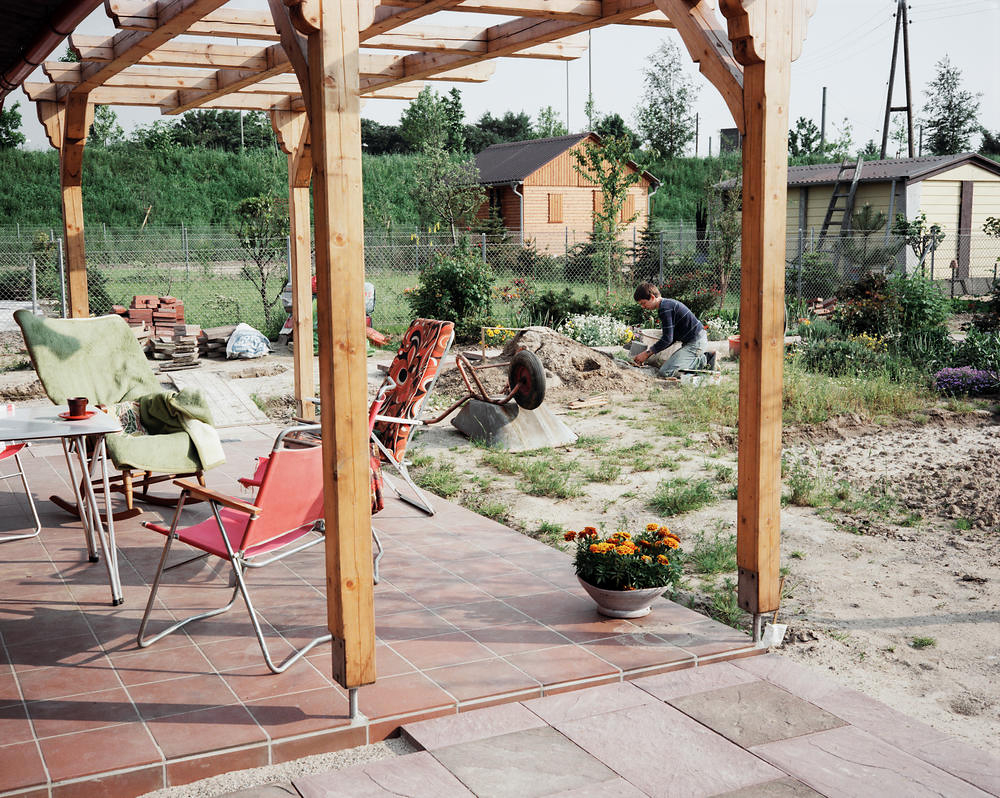

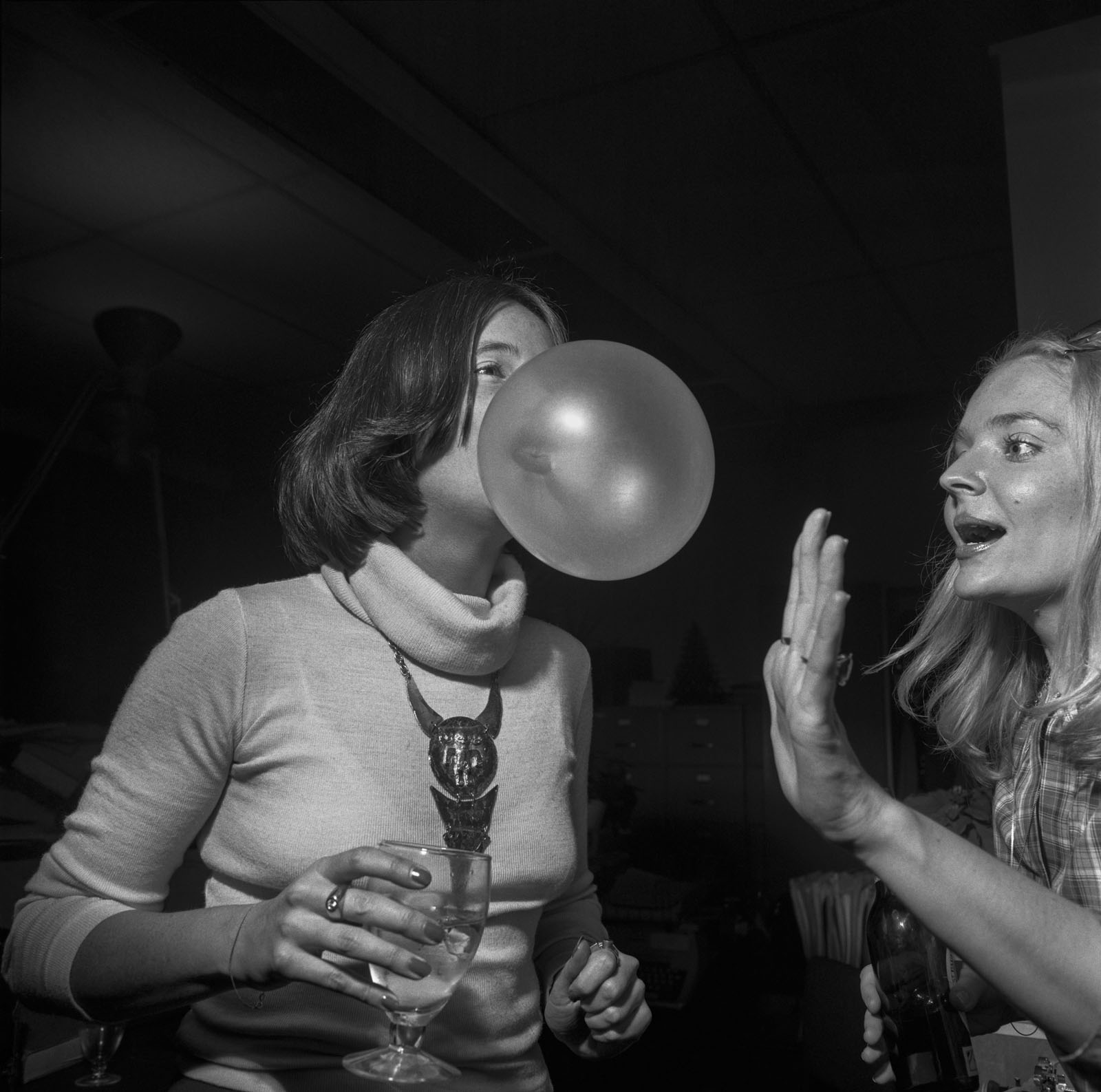
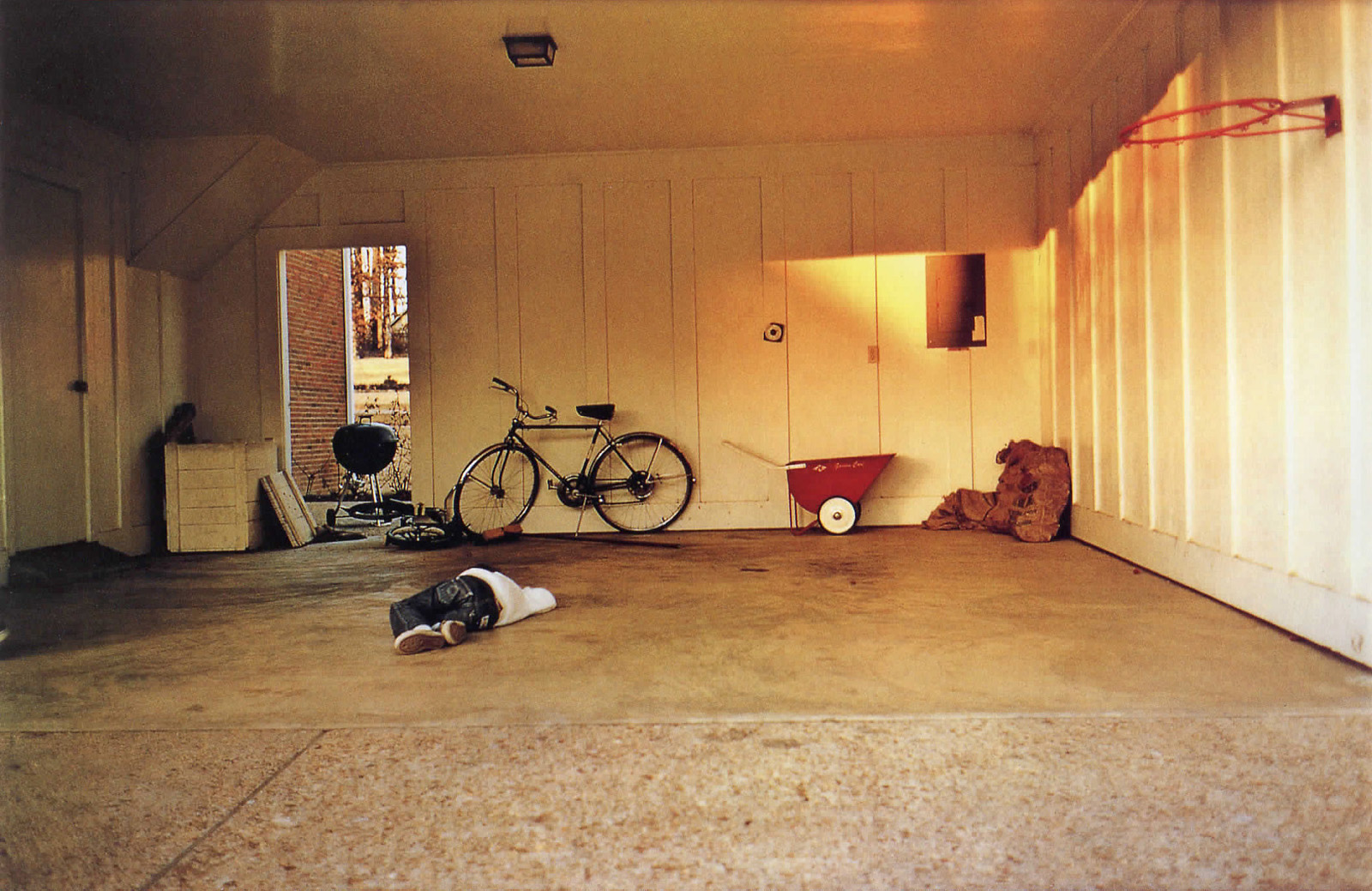
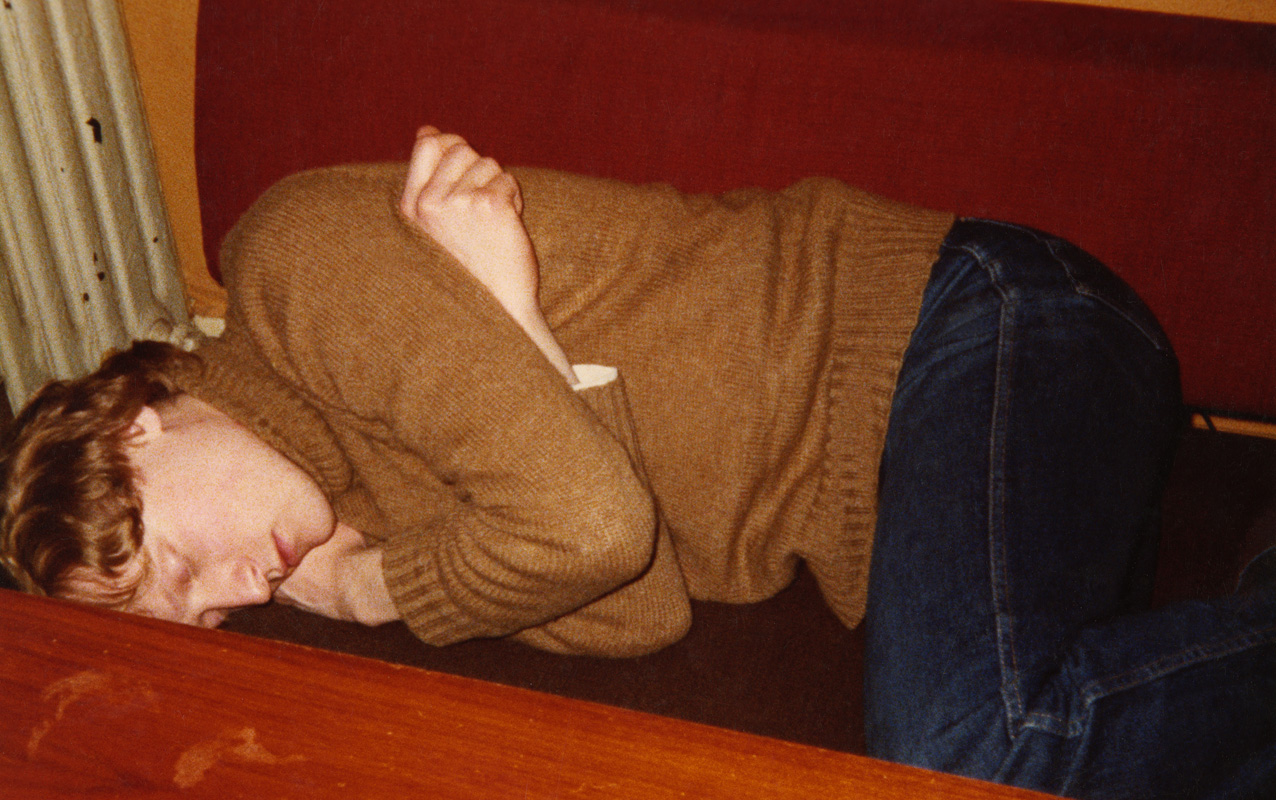
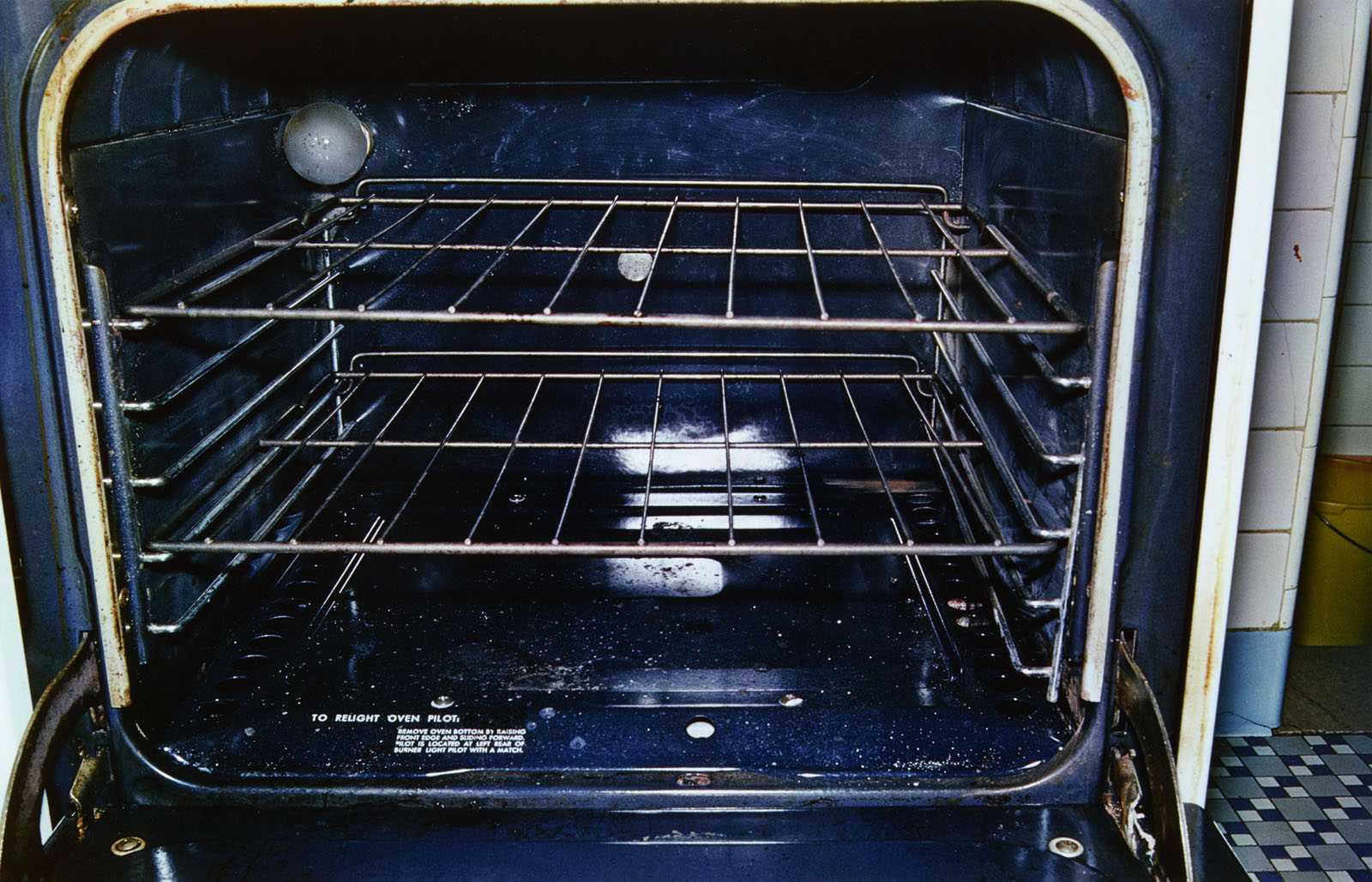
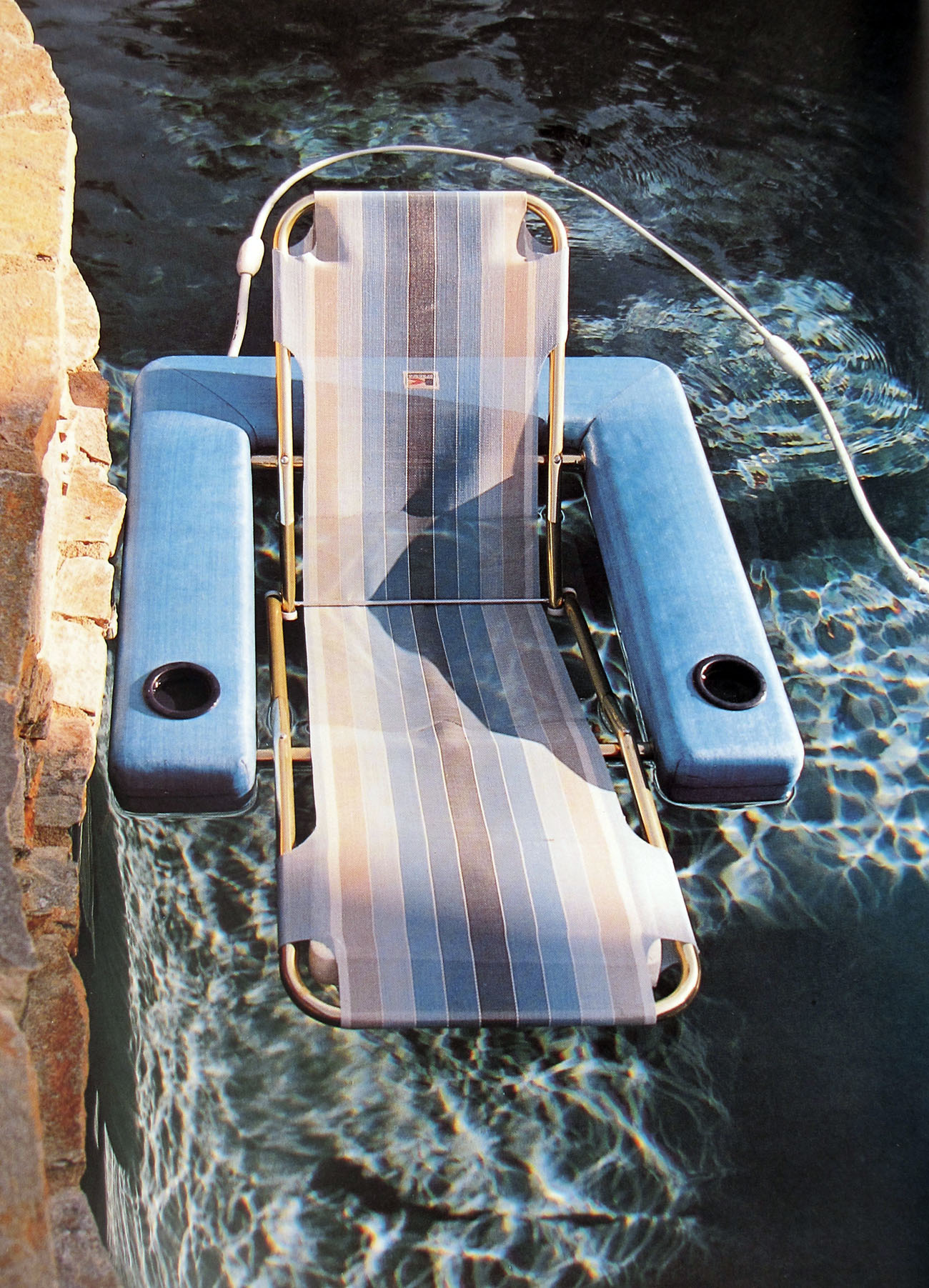
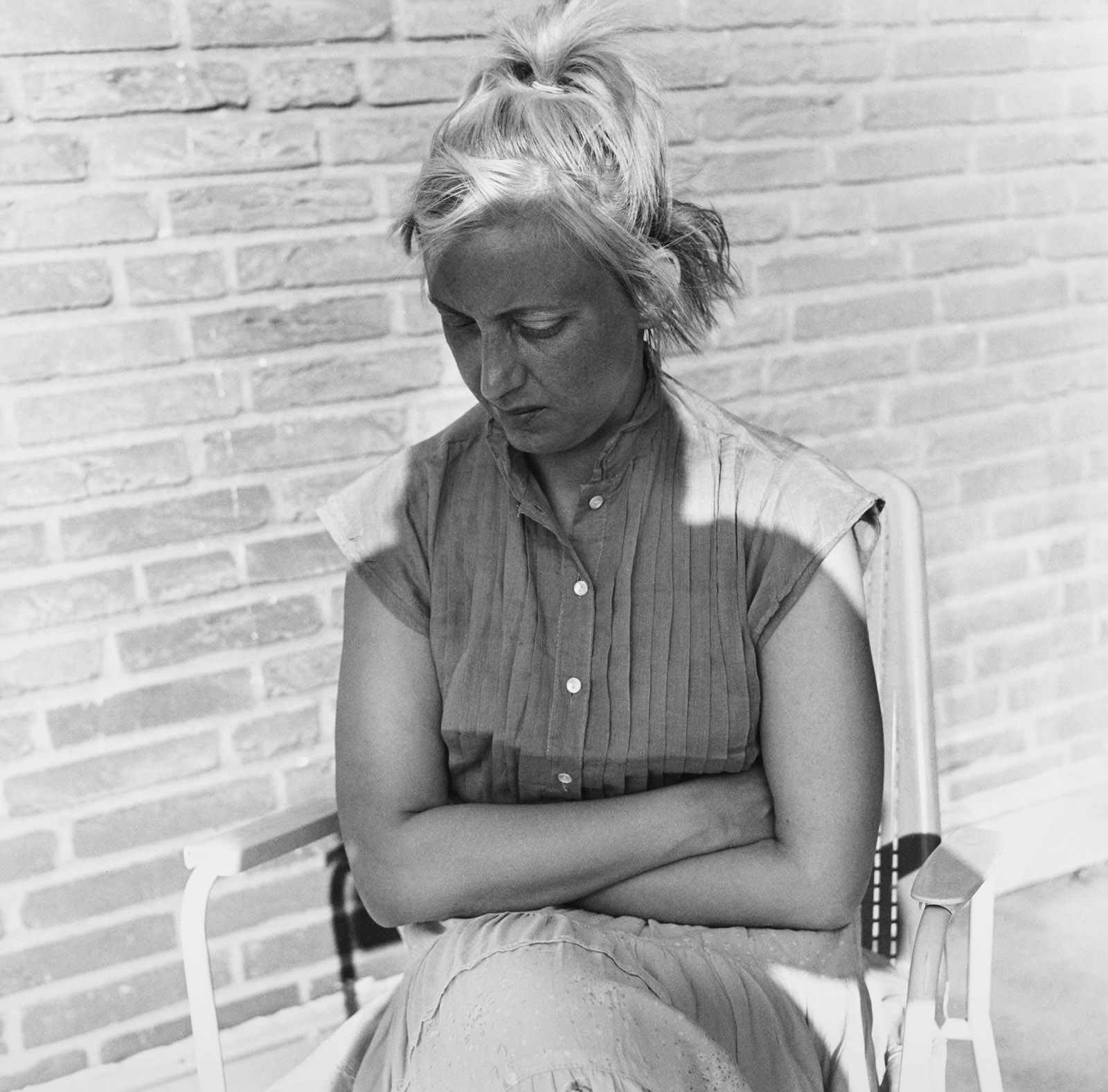


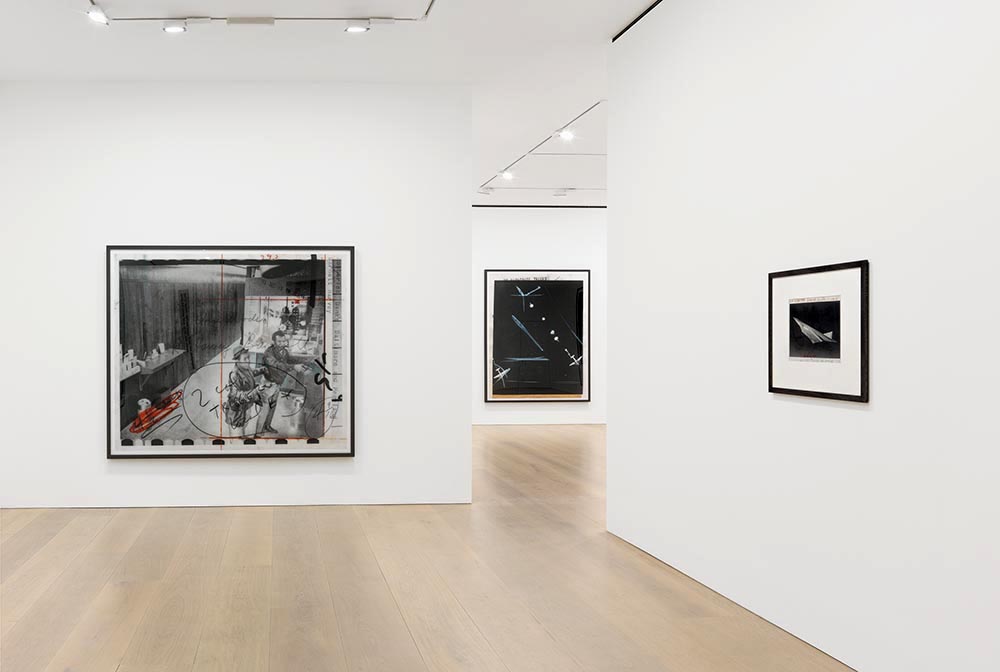

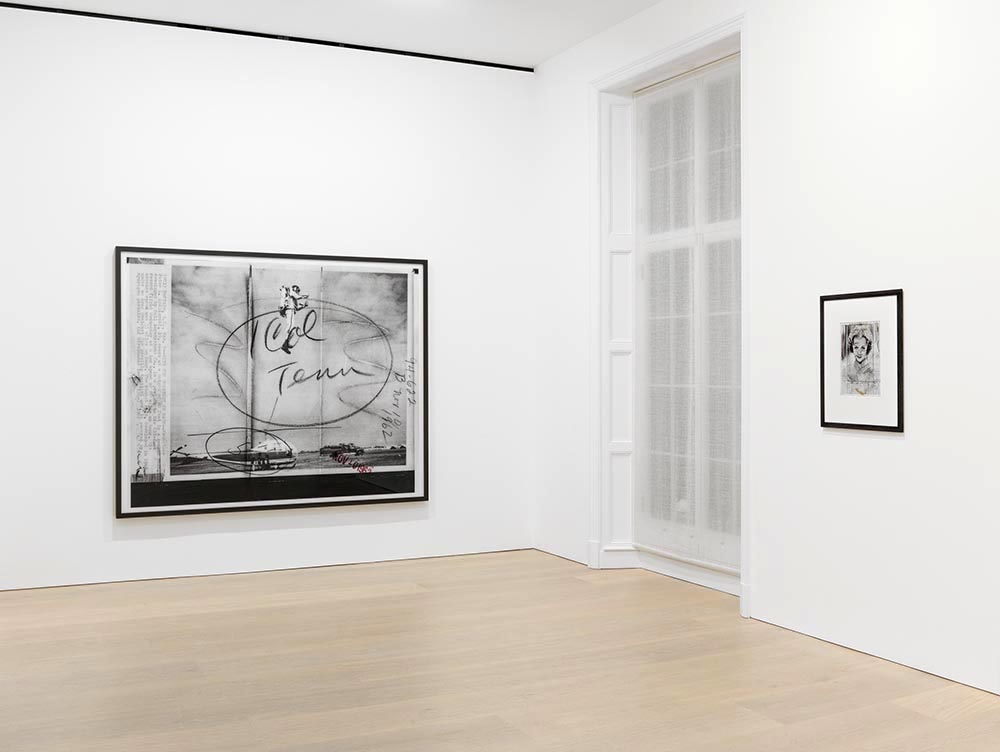
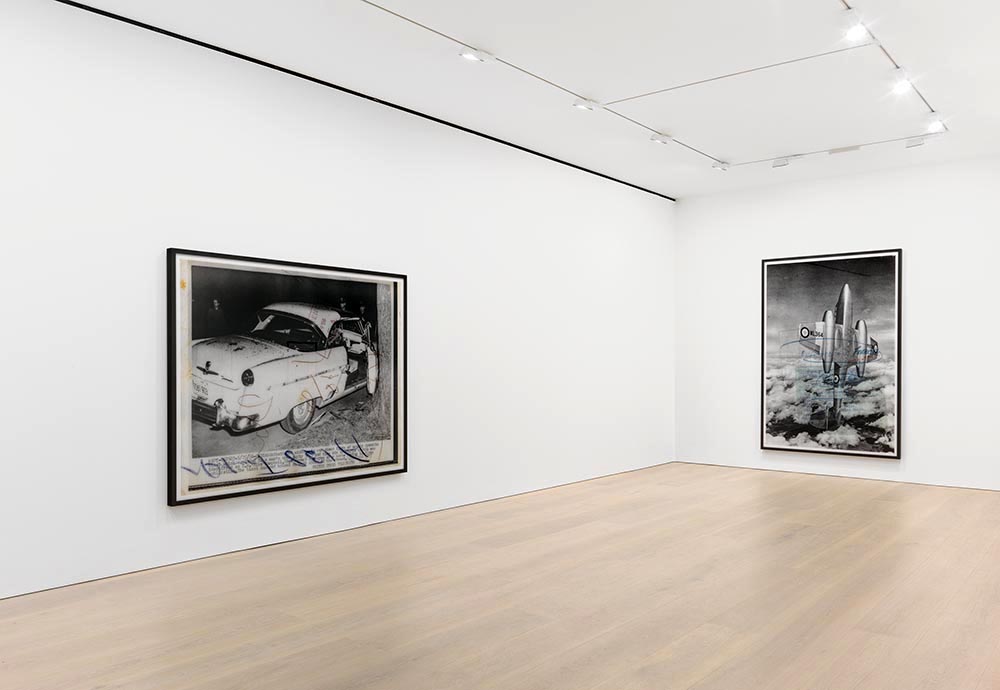
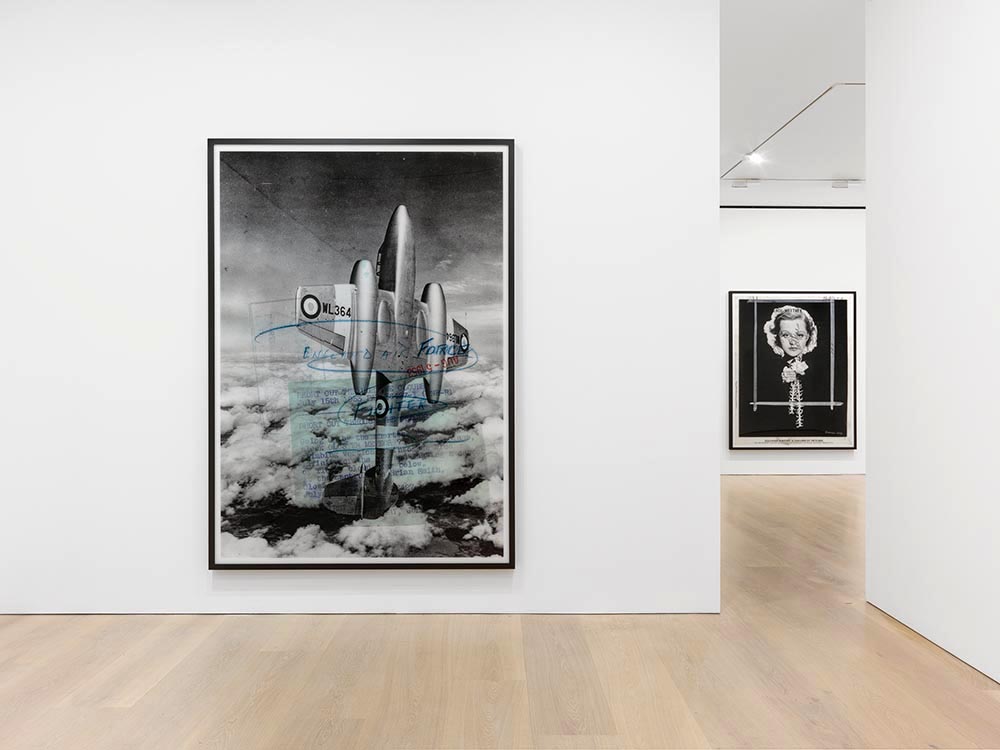
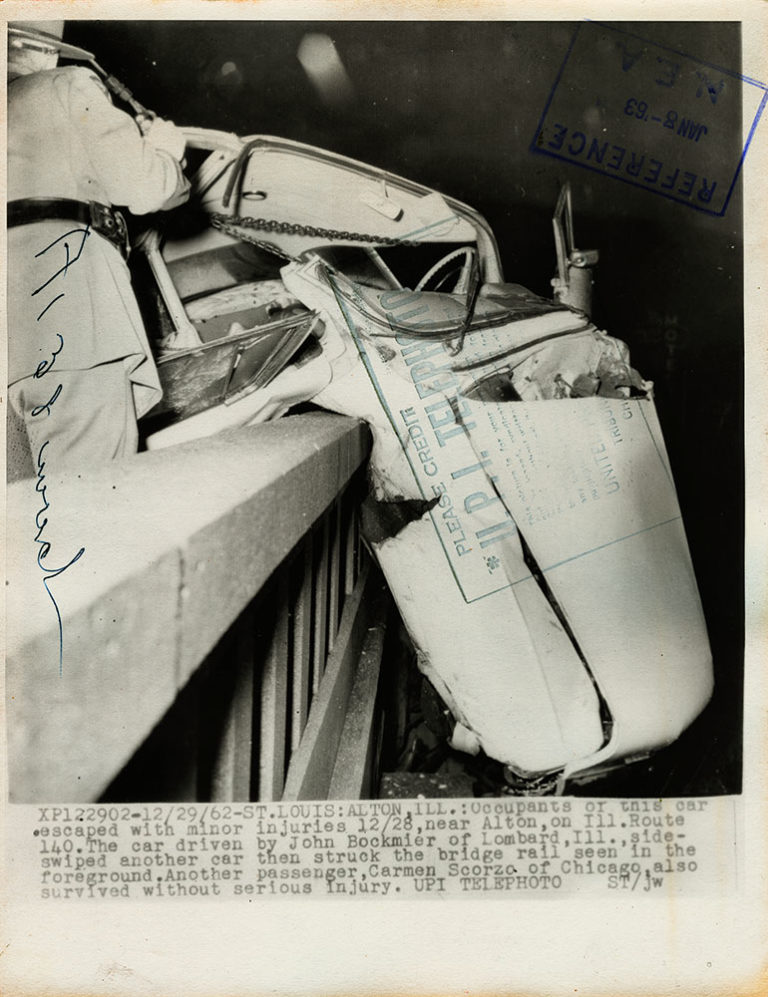

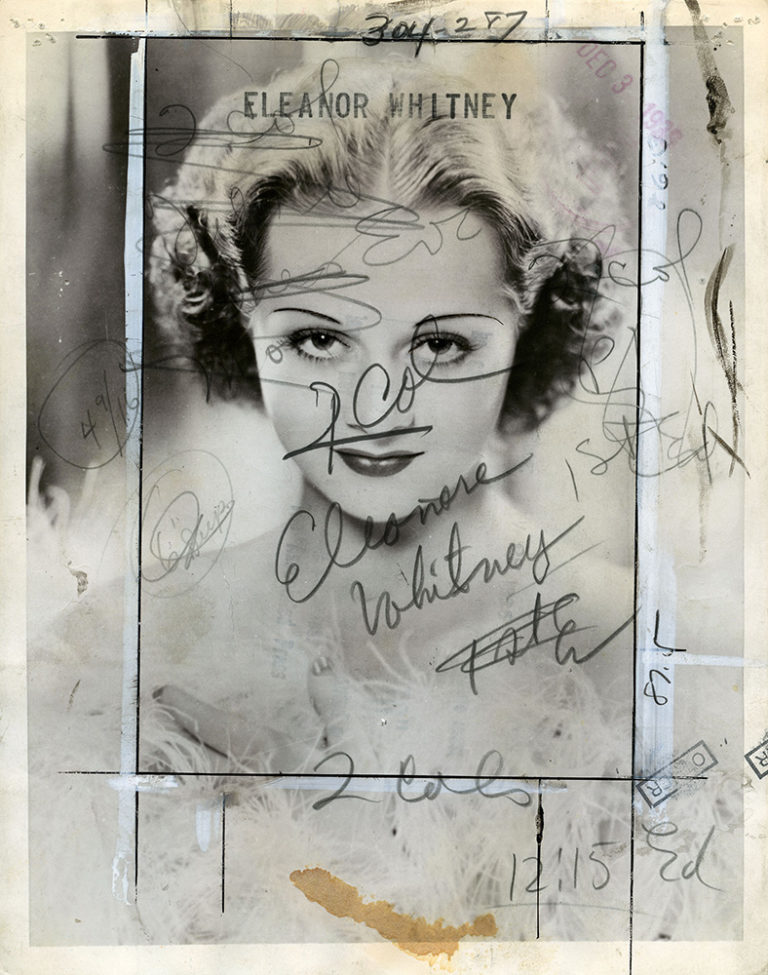
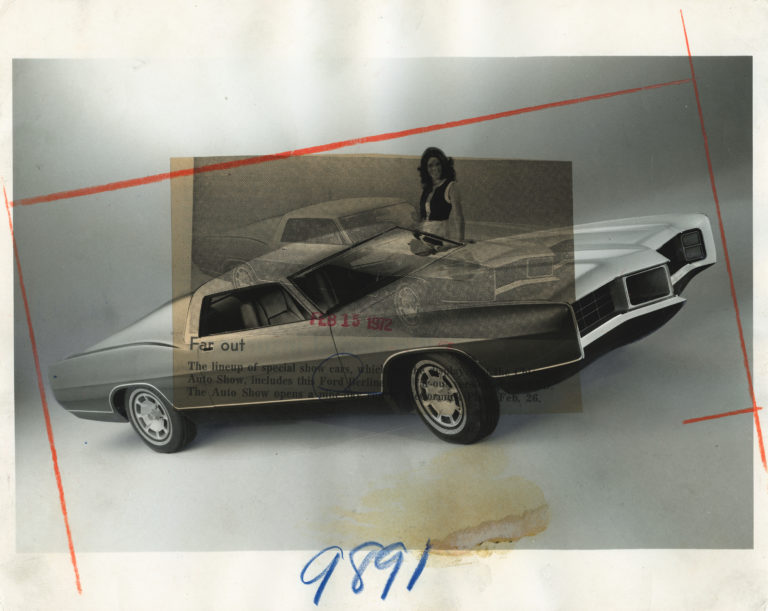






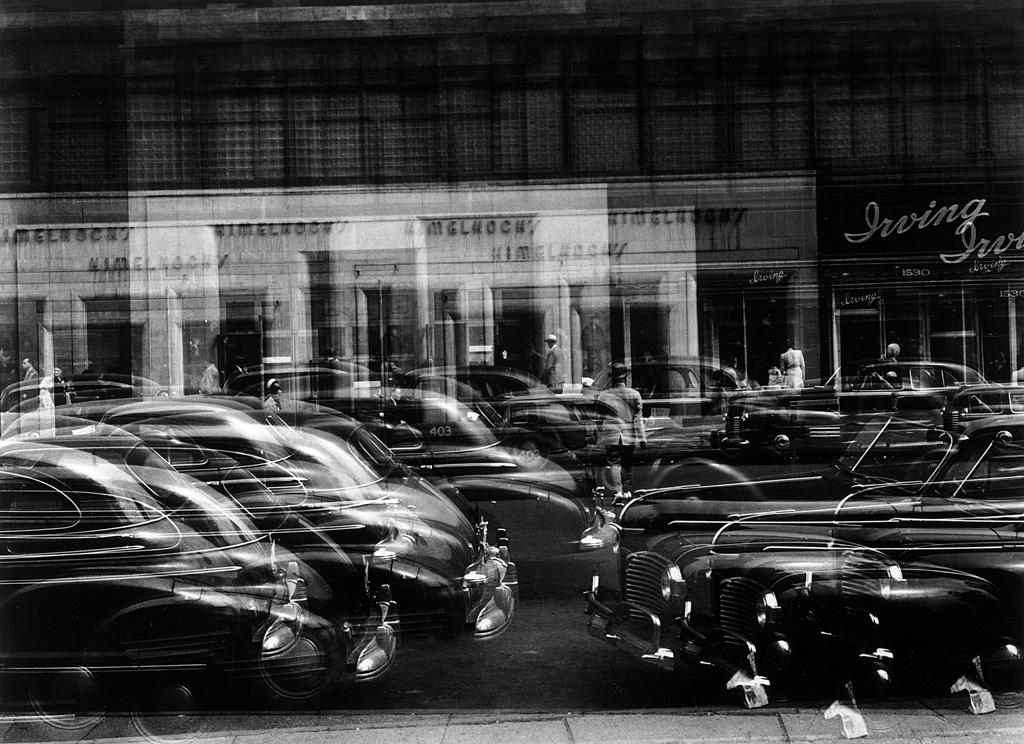
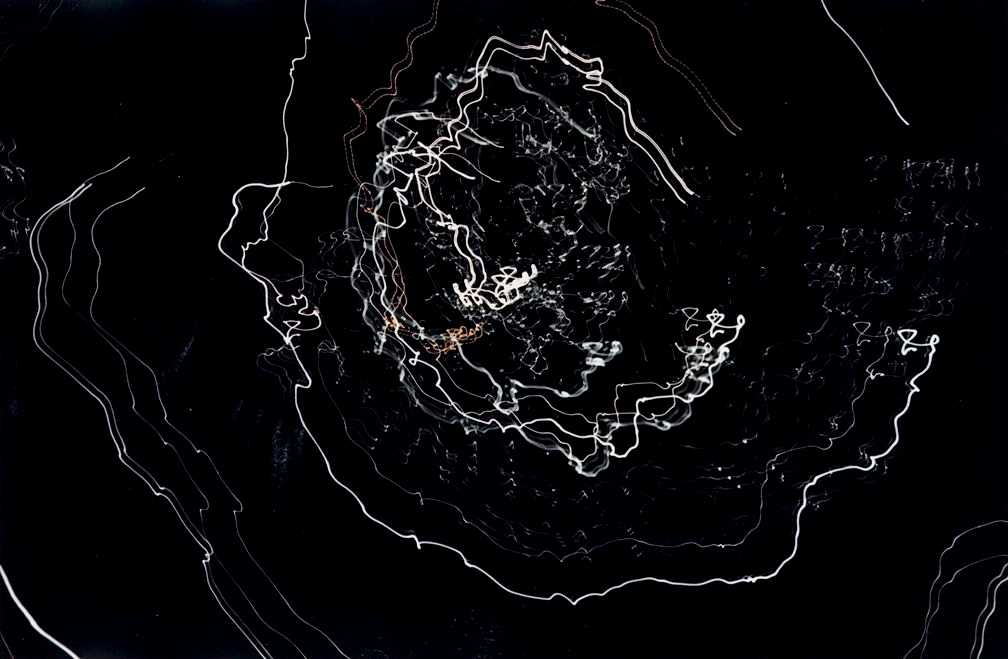
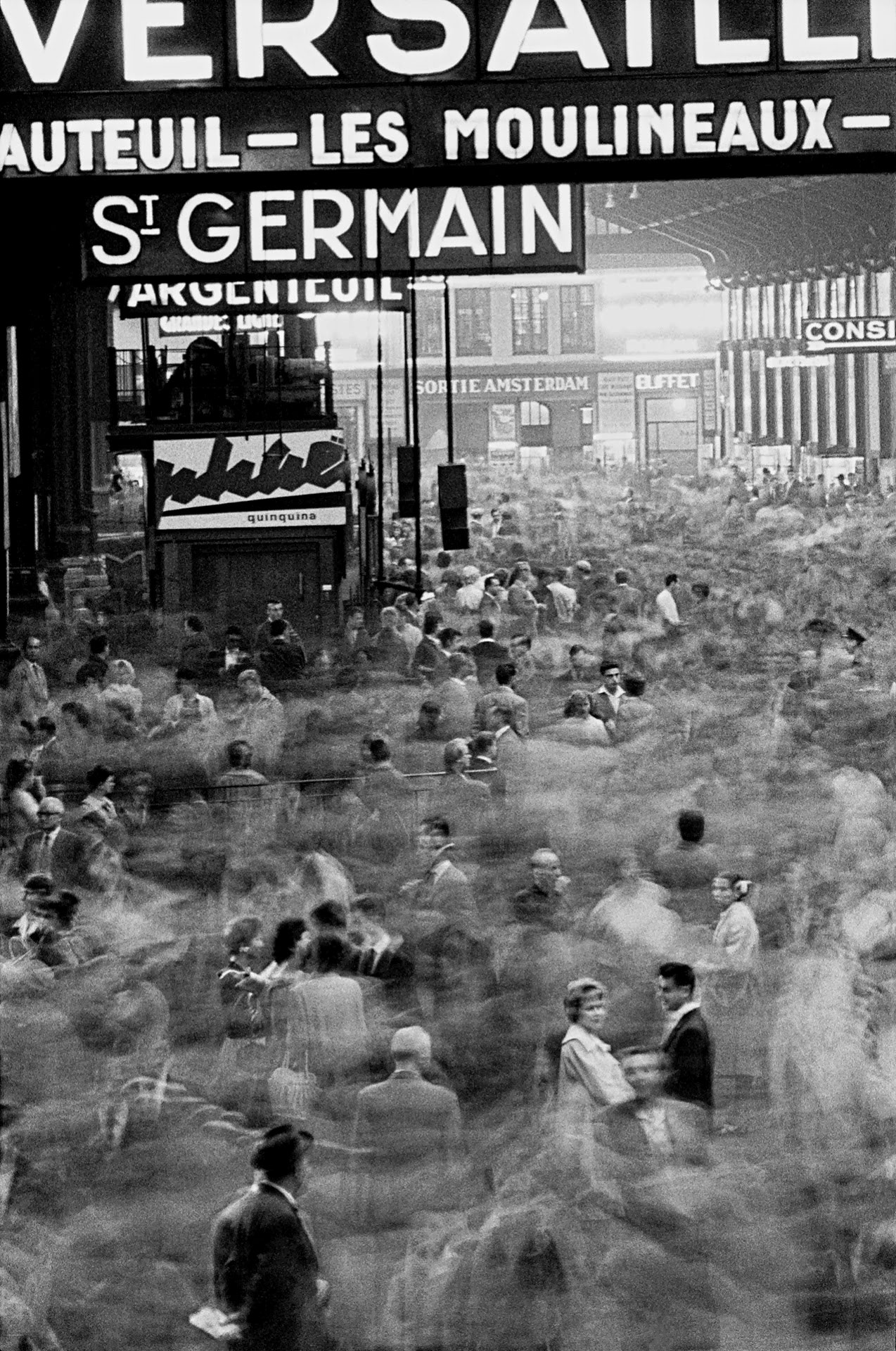
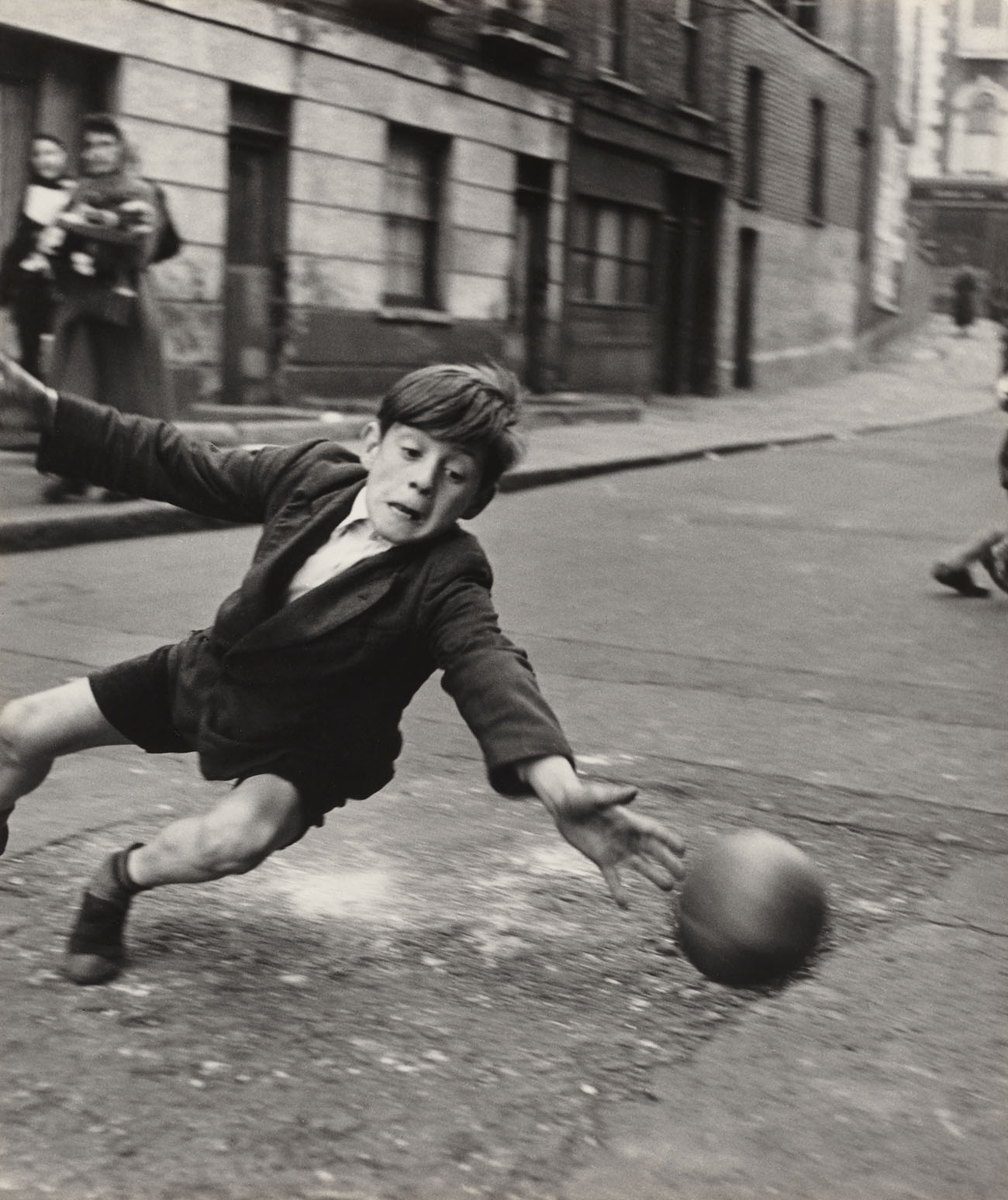
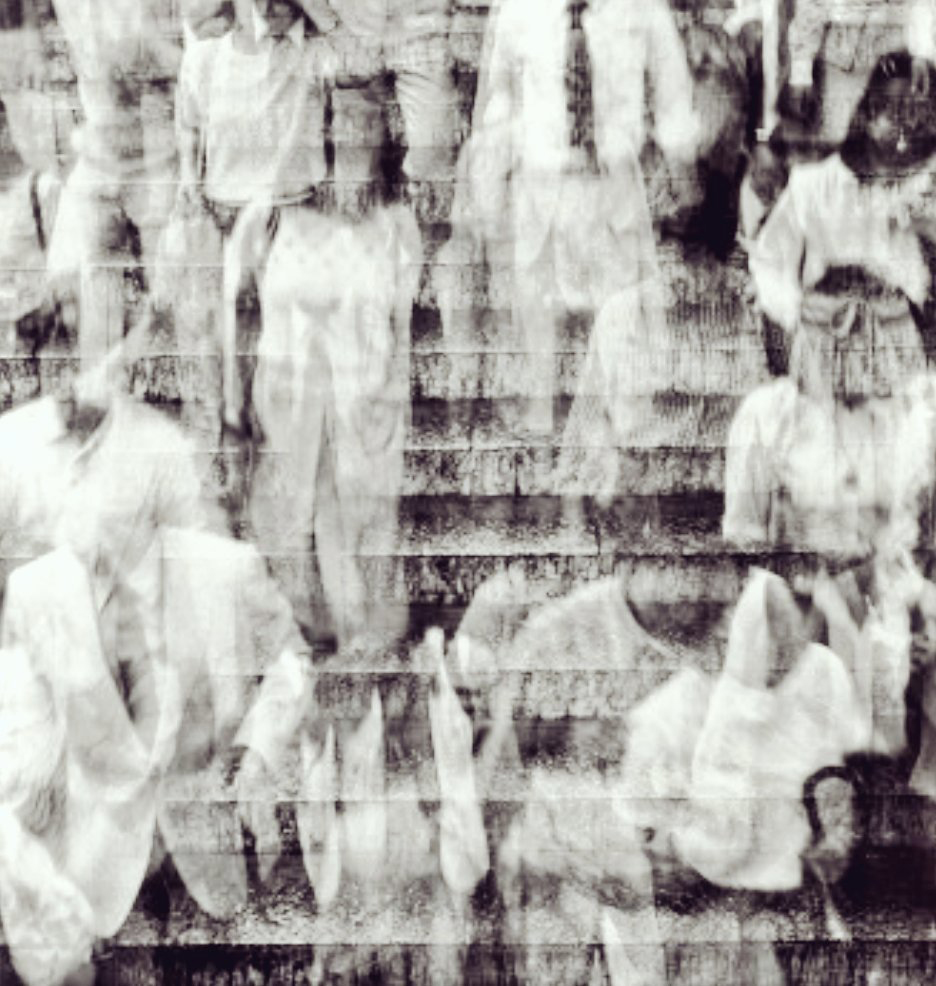


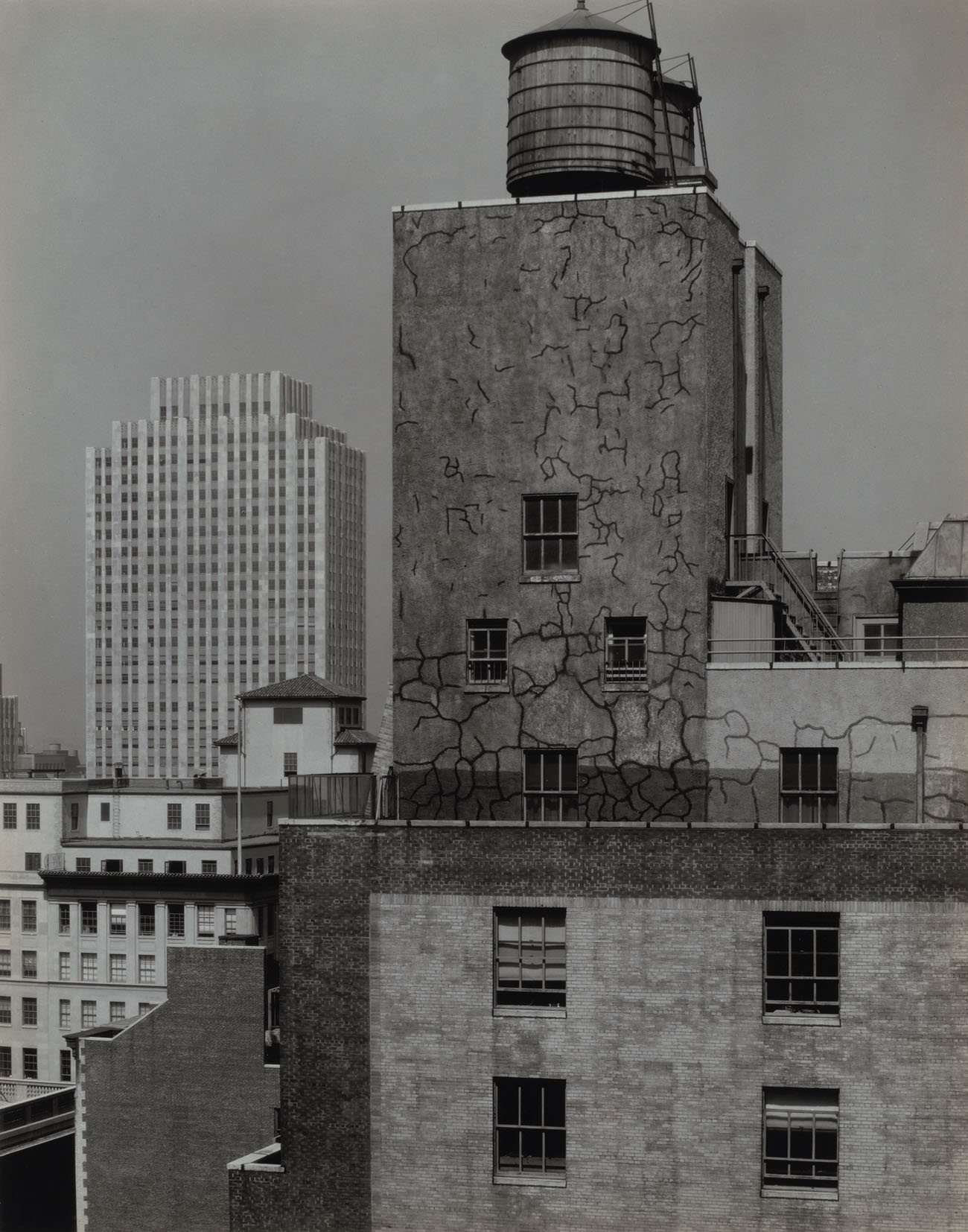
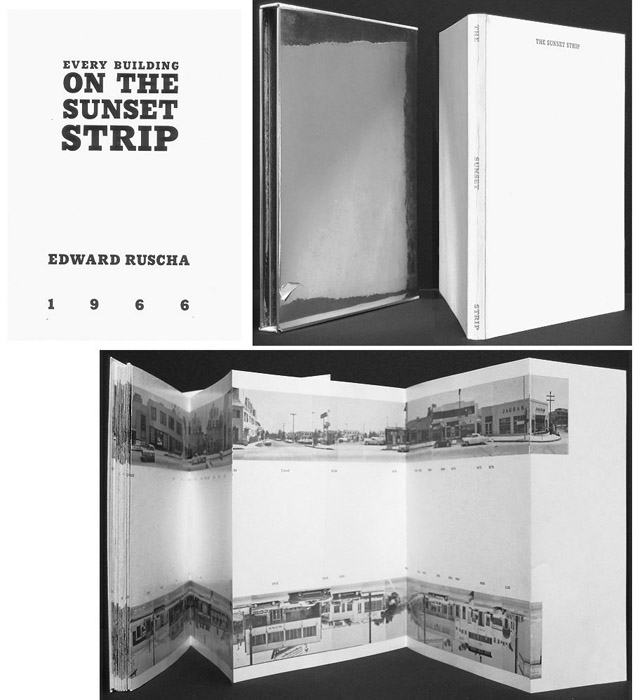
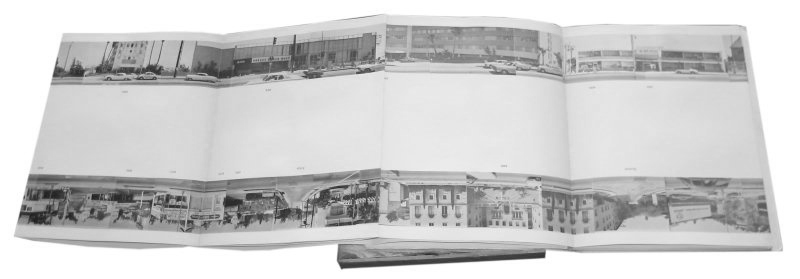

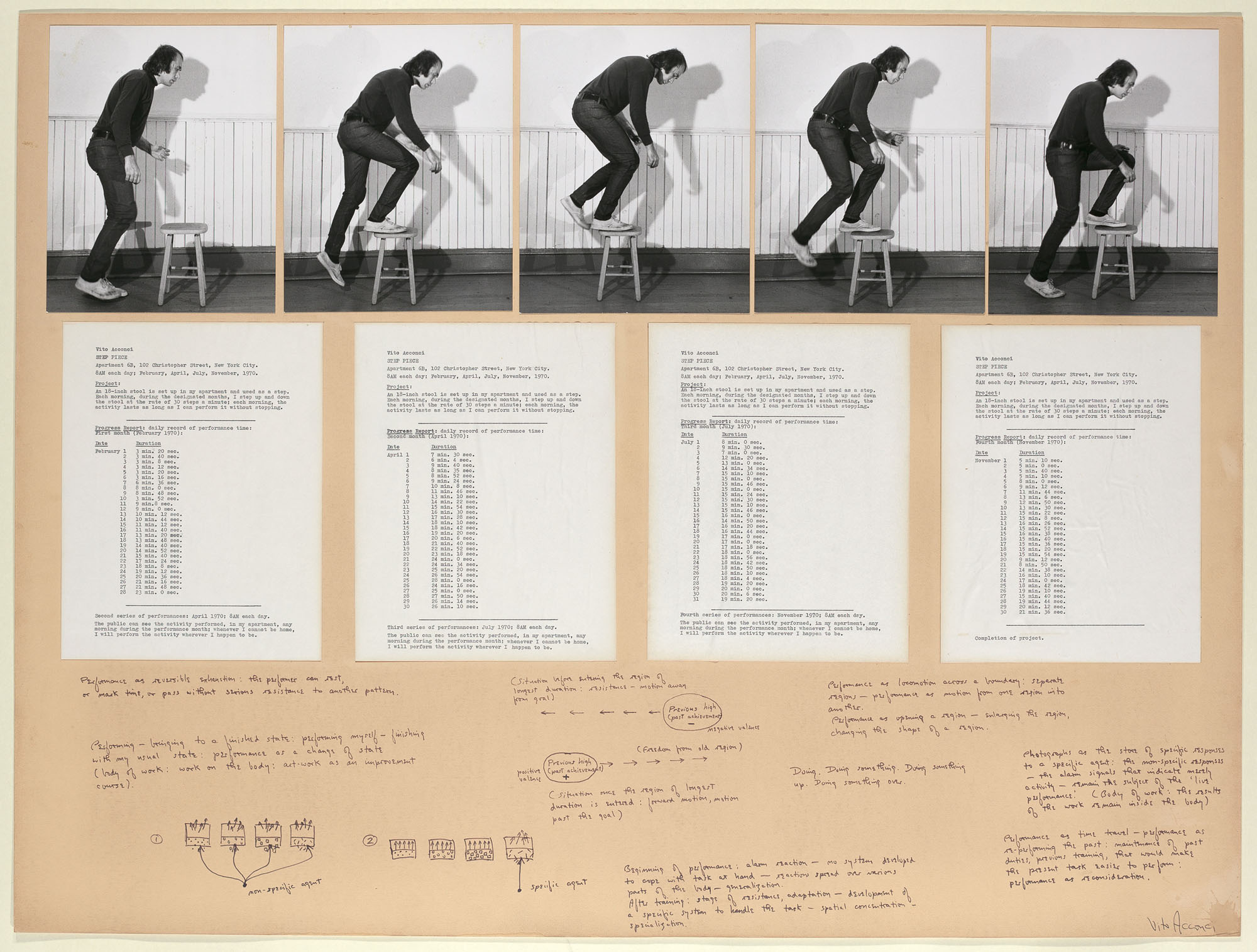

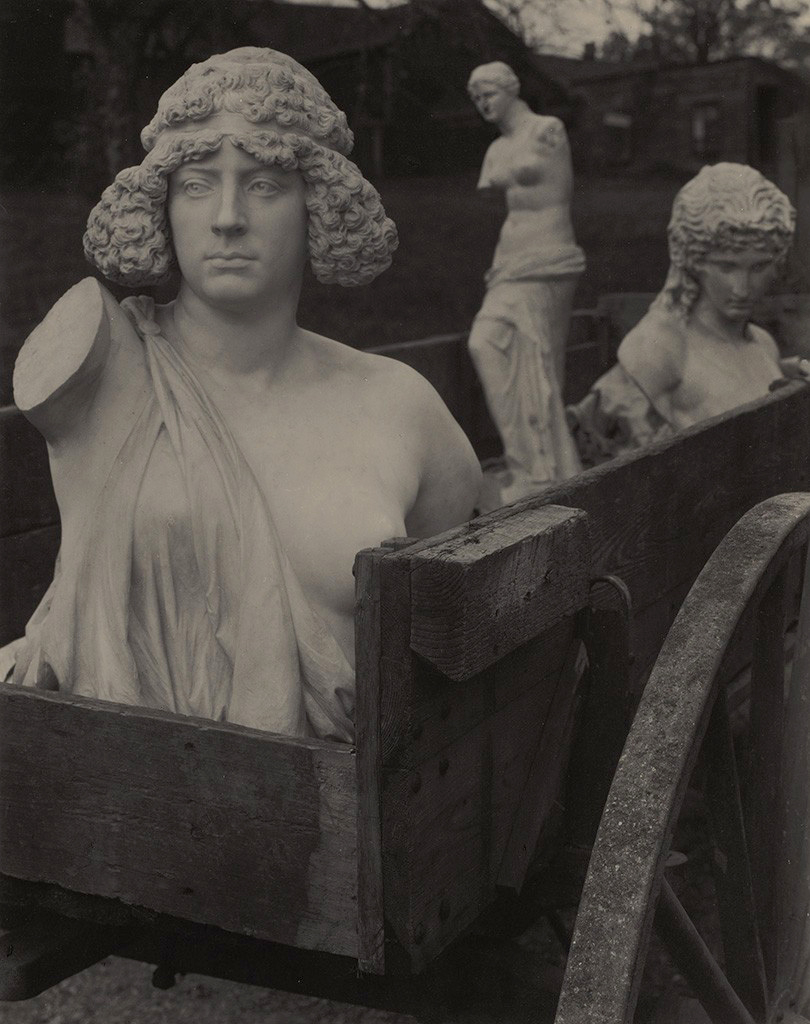
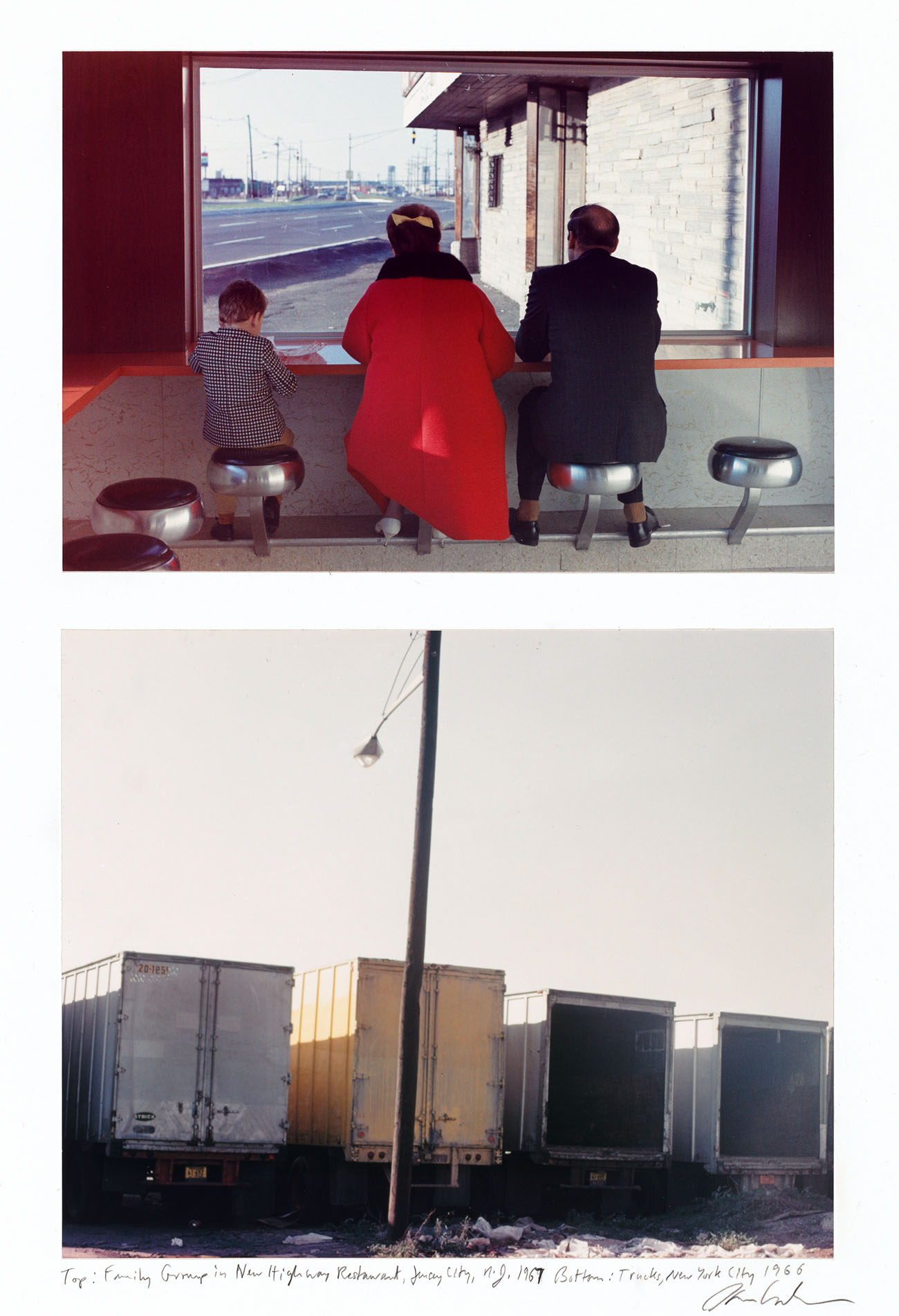
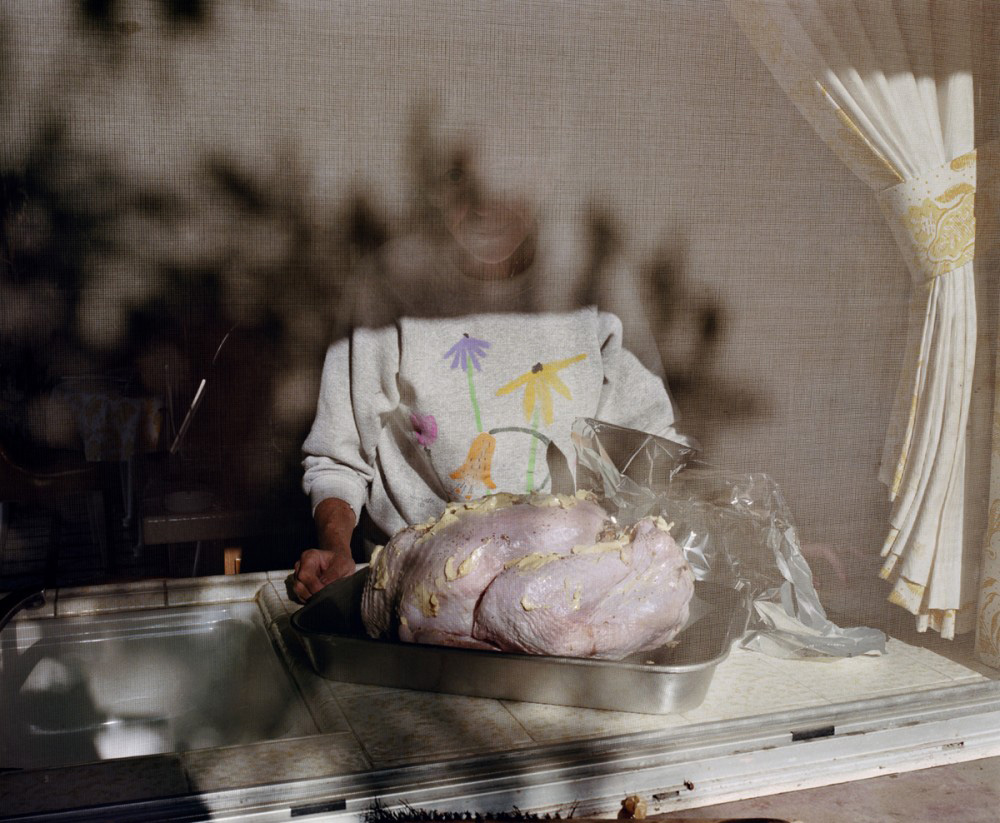
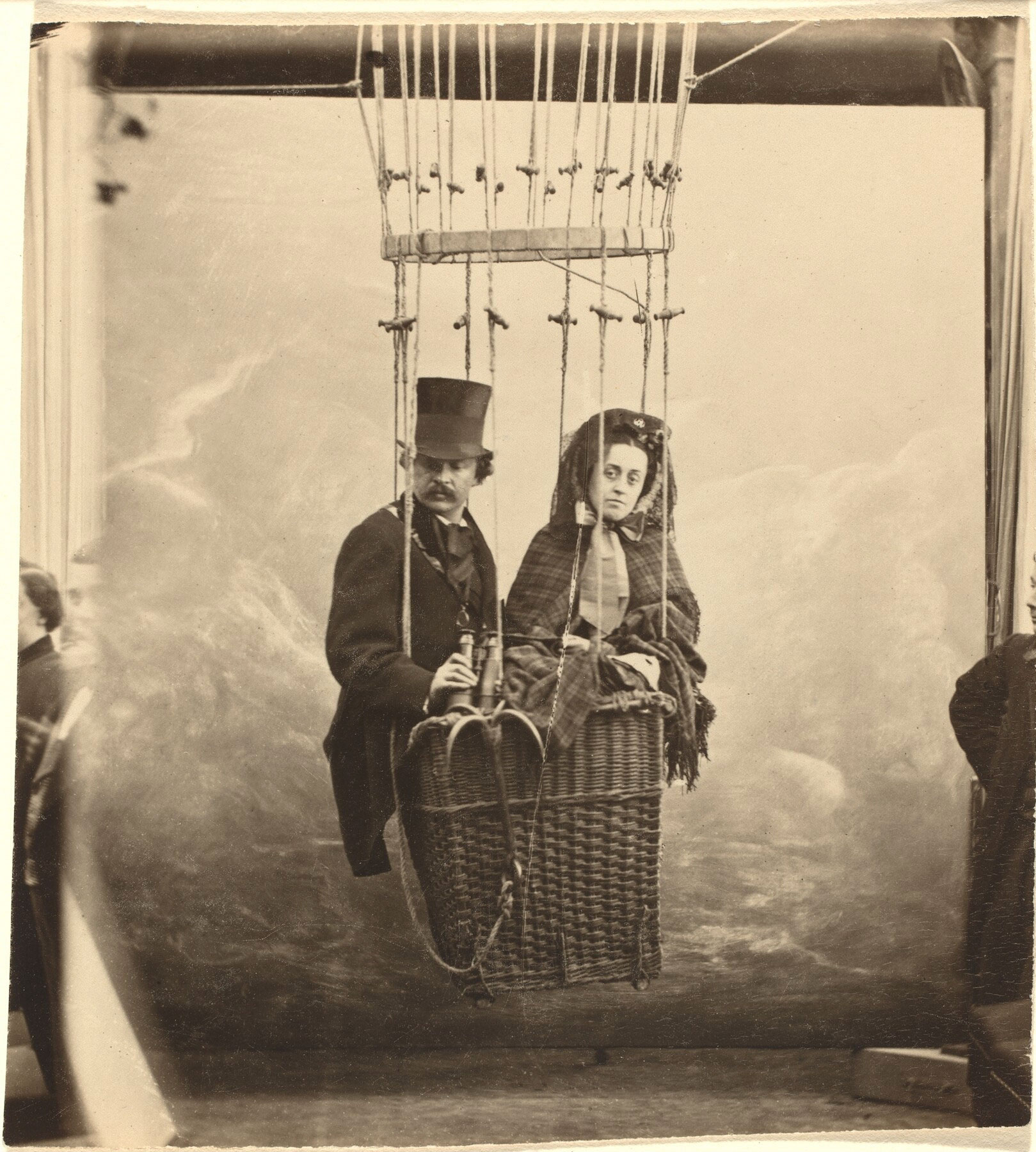

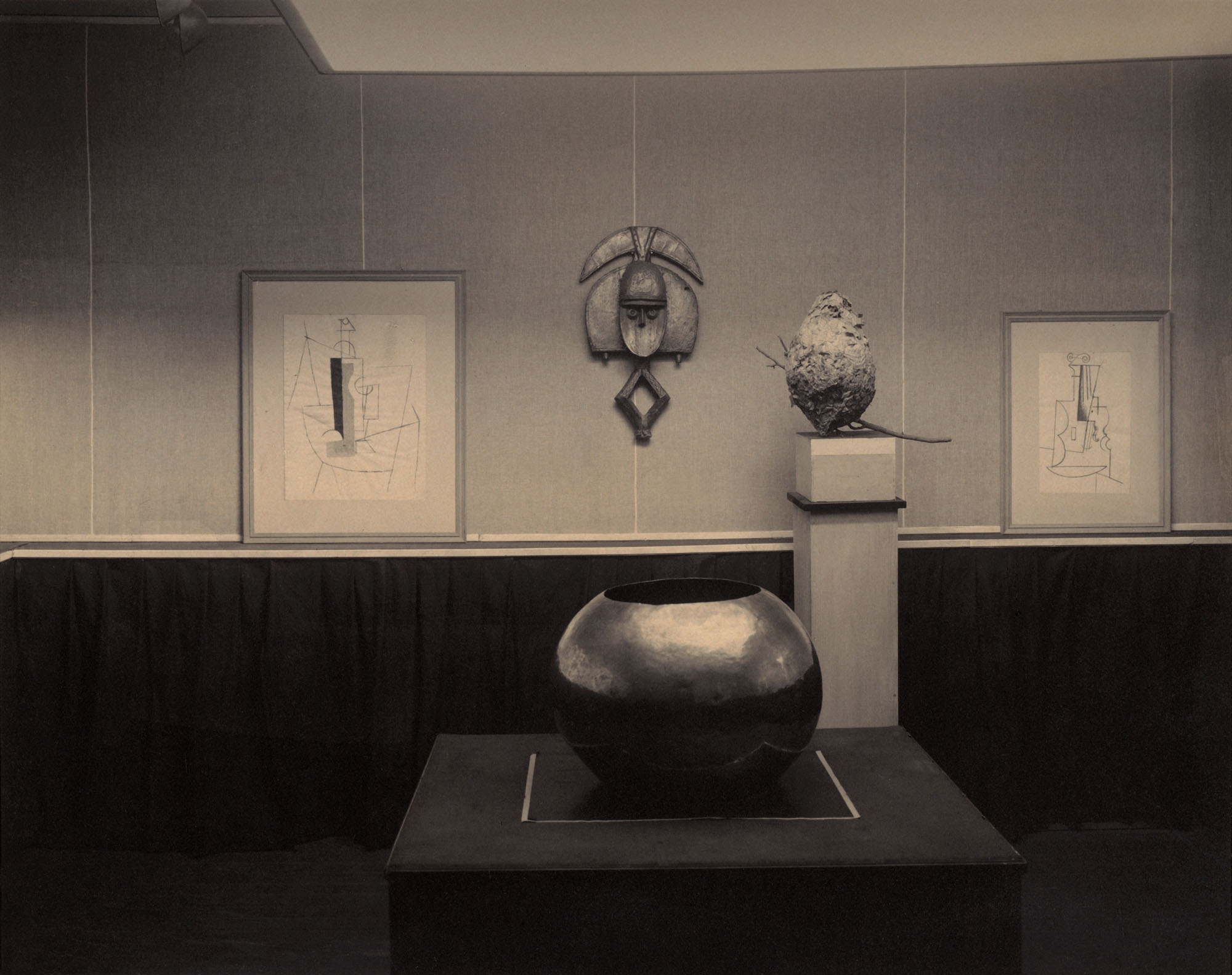
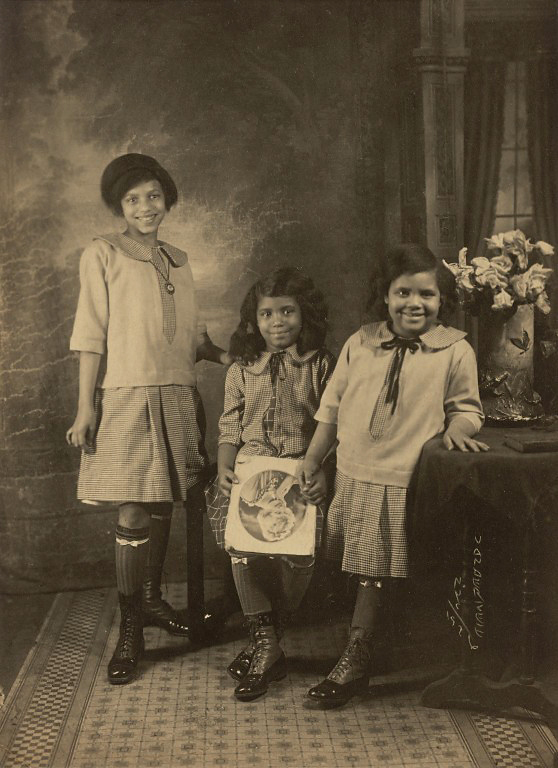
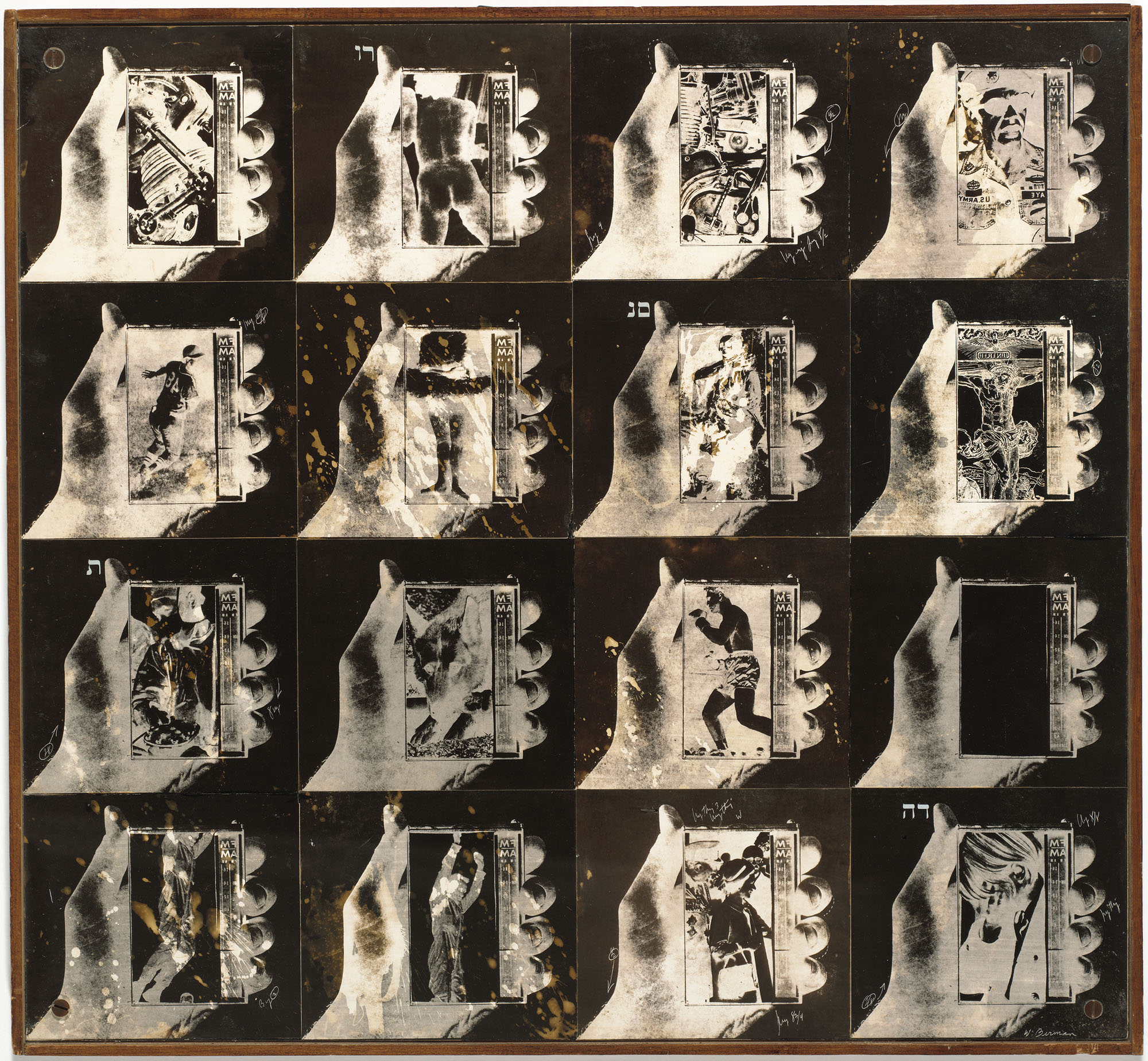
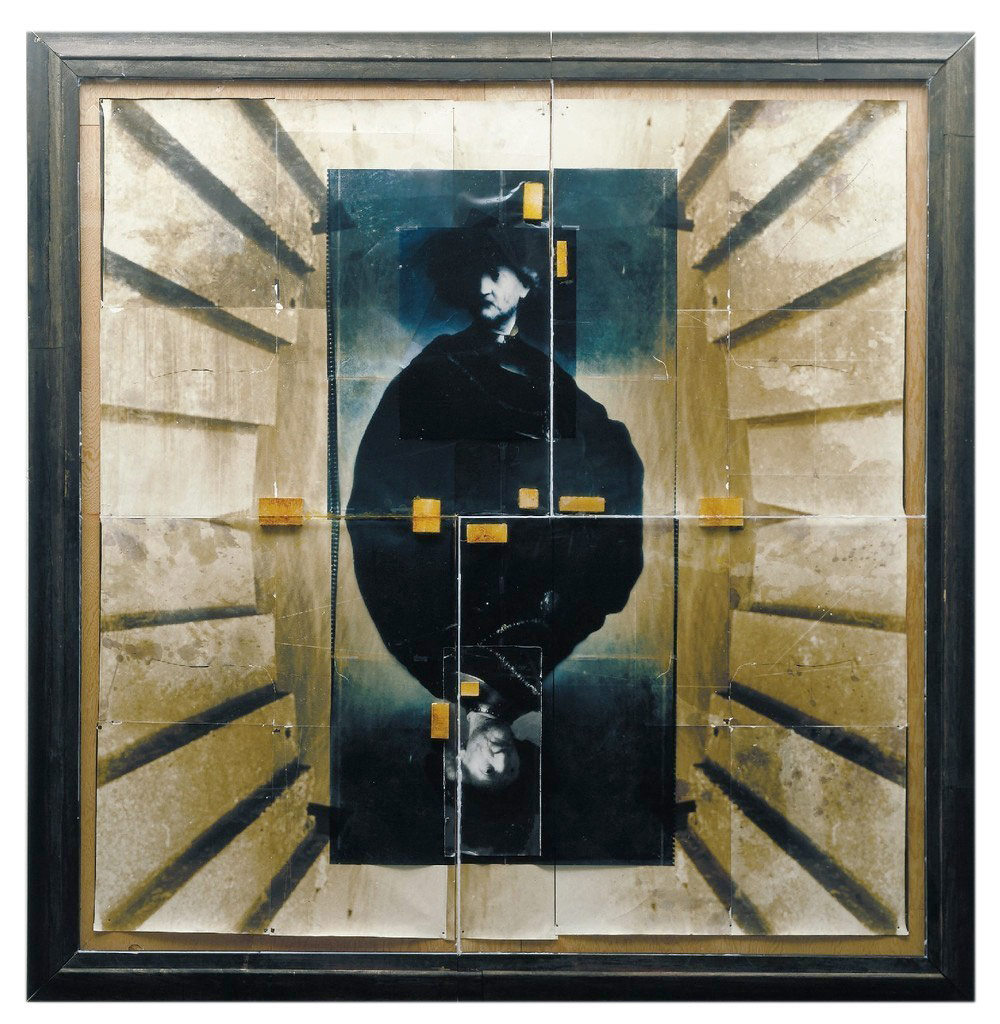
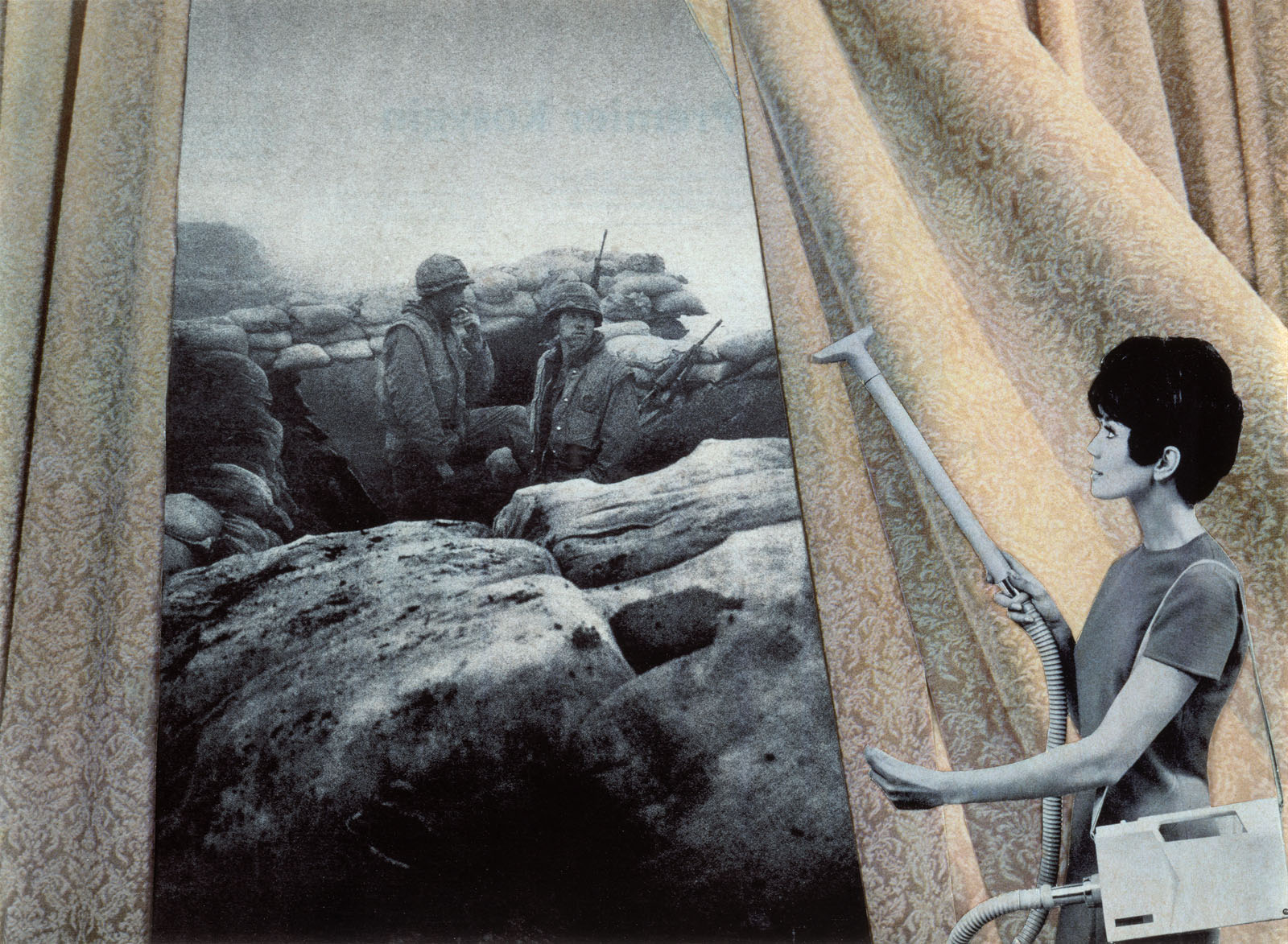

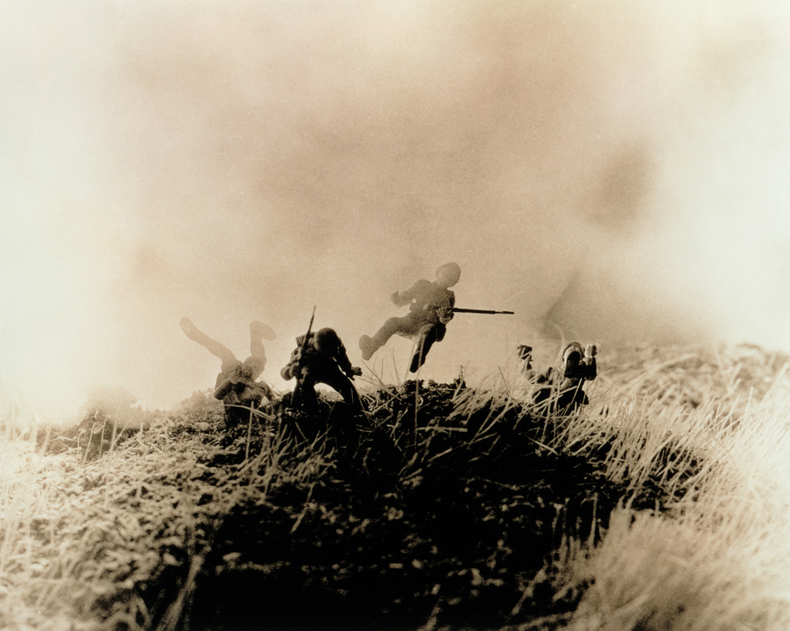


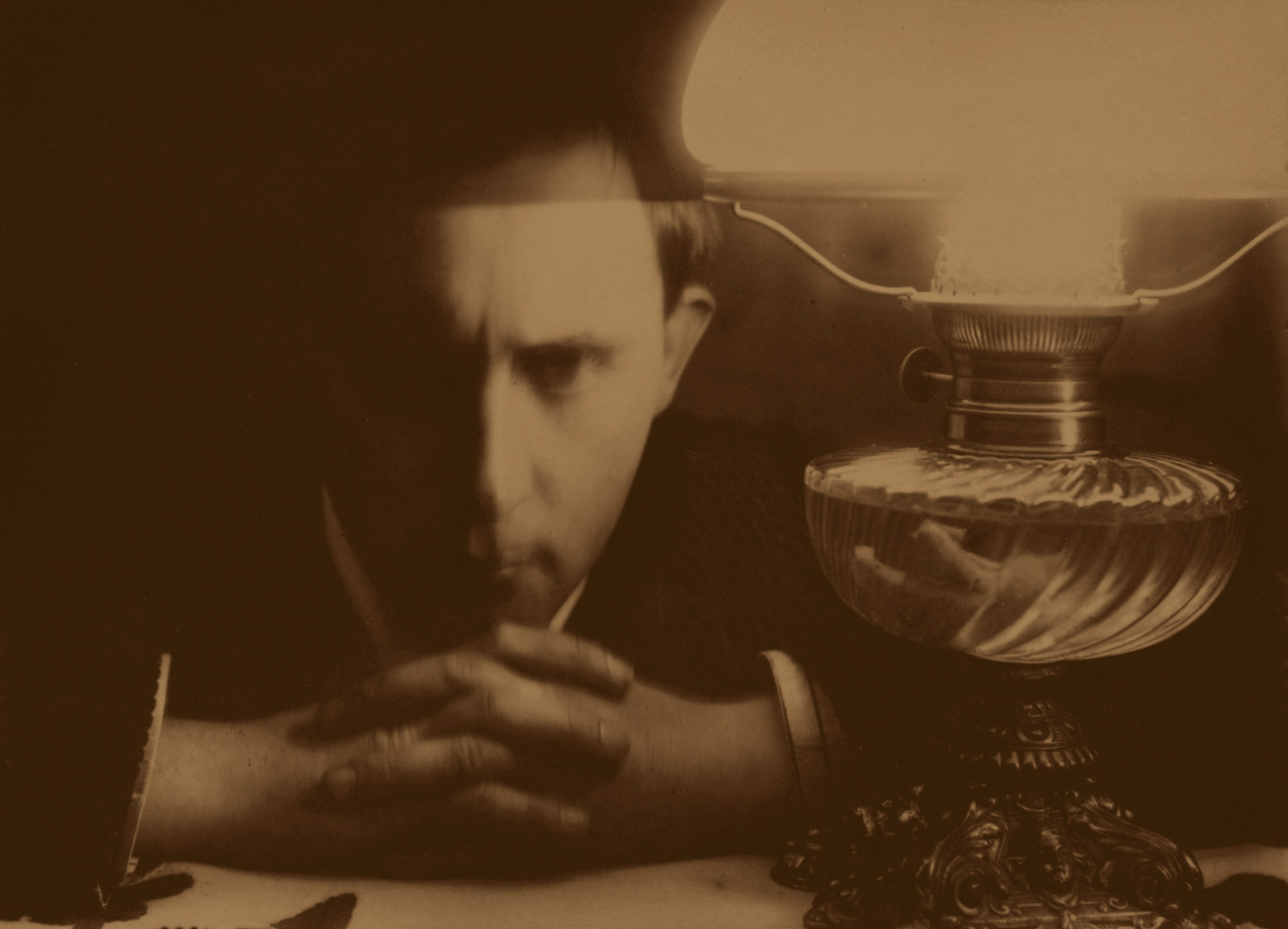


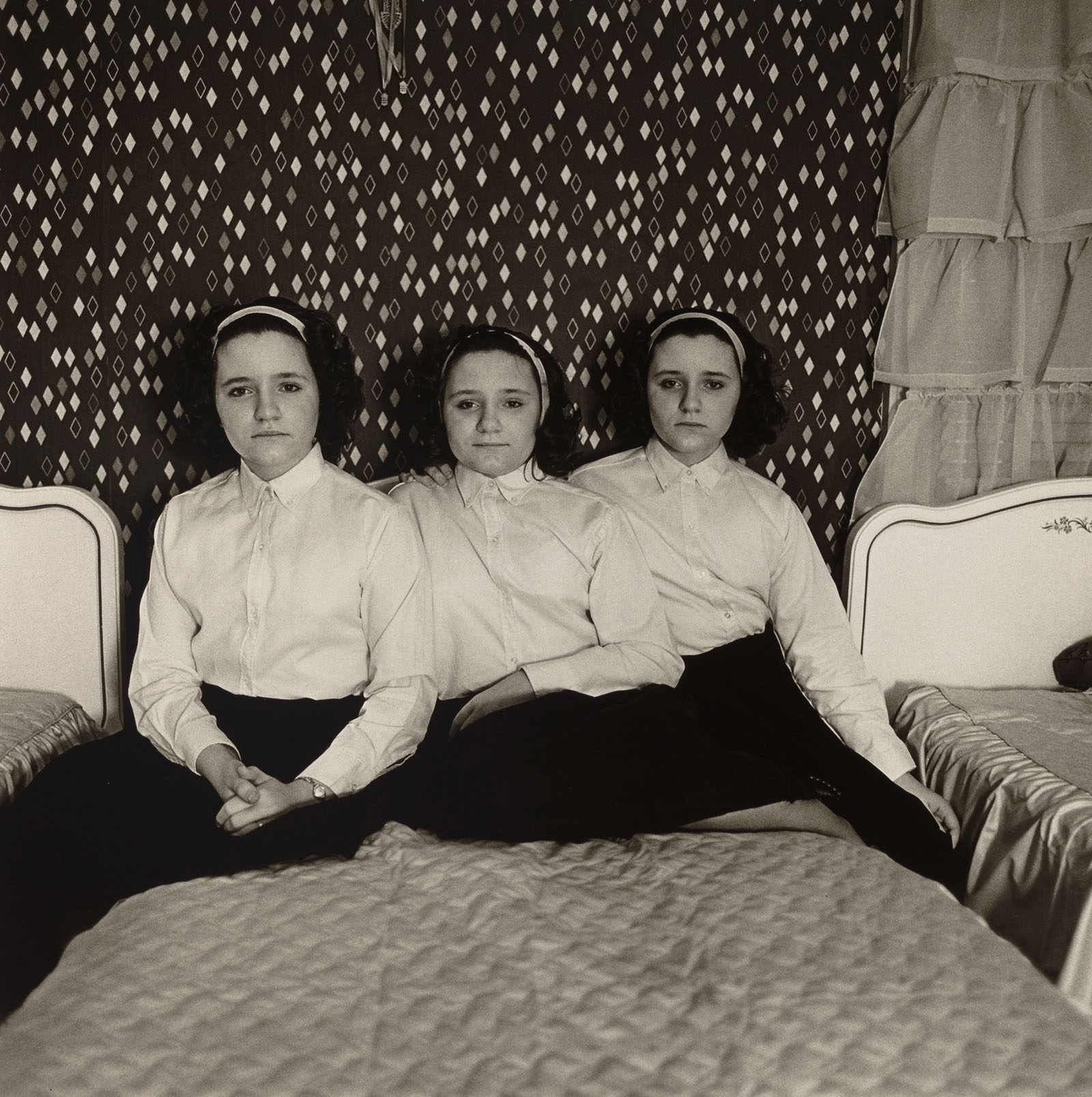
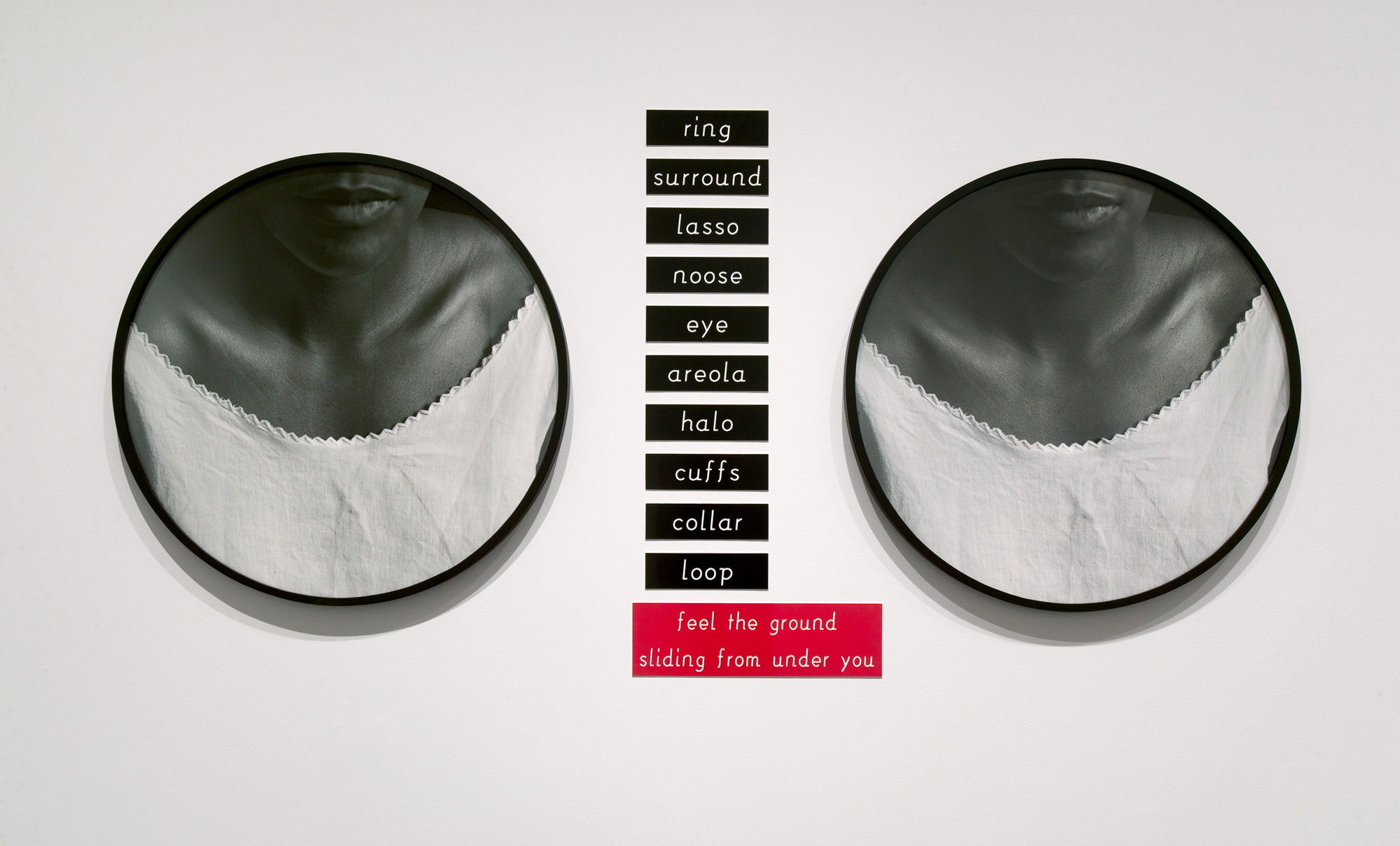
 Art Blart _ art and cultural memory archive
You must be logged in to post a comment.