Exhibitions: ‘The Rebellious Image: Kreuzberg’s “Werkstatt für Photographie” and the Young Folkwang Scene in the 1980s’ at Museum Folkwang Essen / ‘Kreuzberg – Amerika: Die Berliner Werkstatt für Photographie 1976-86’ at C/O Berlin, Germany

Museum Folkwang Essen exhibition dates: 9th December, 2016 – 19th February, 2017
C/O Berlin exhibition dates: 10th December, 2016 – 12th February, 2017
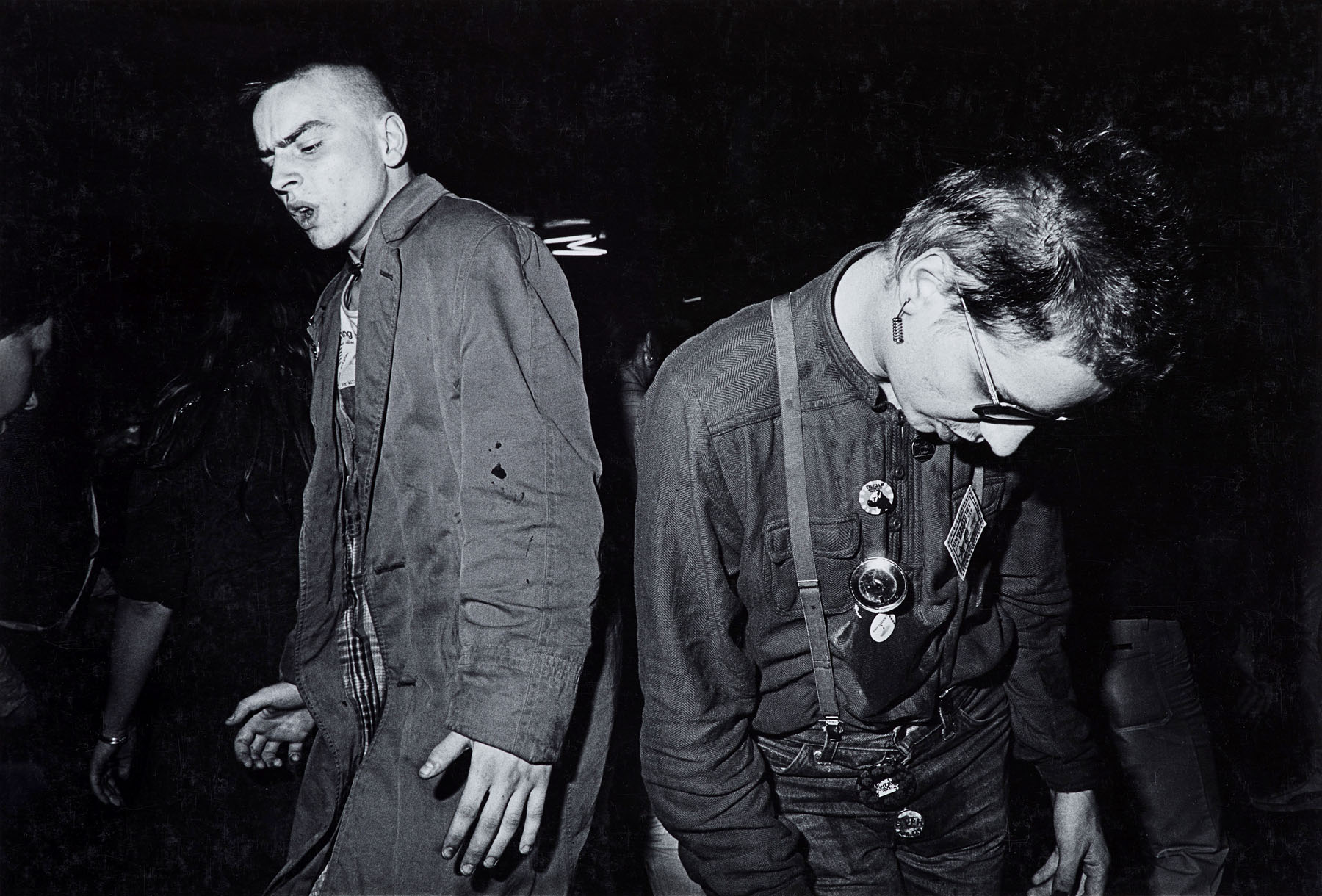
 

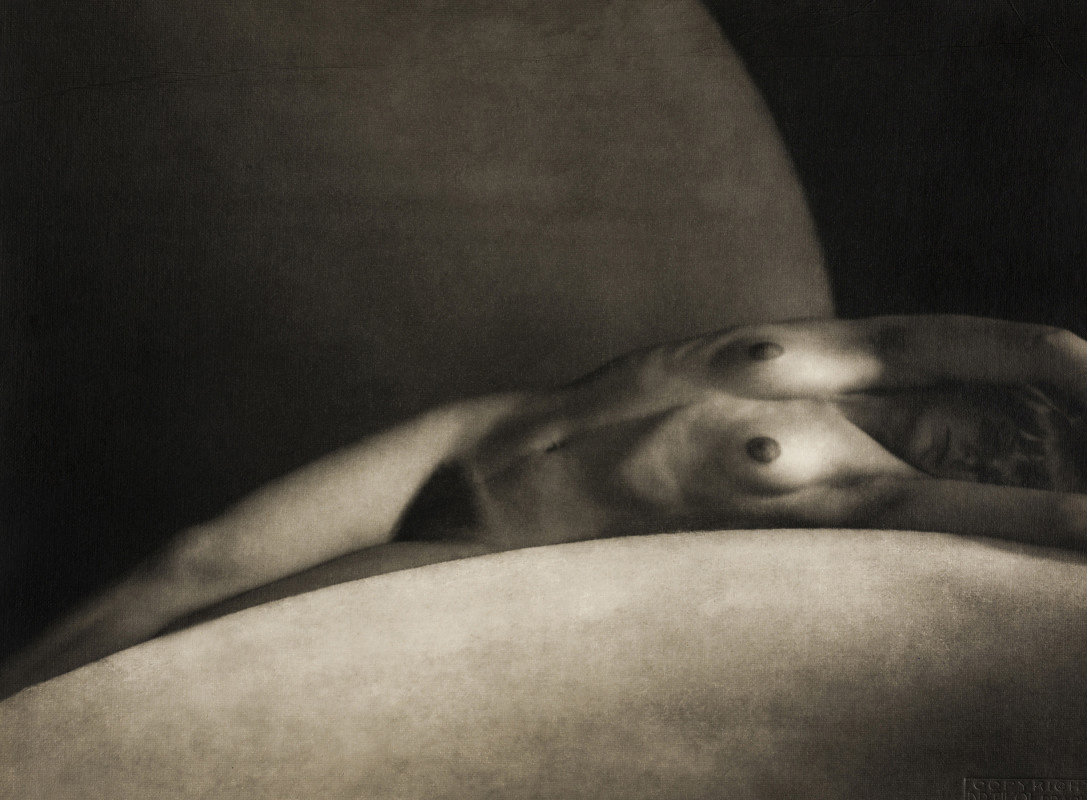
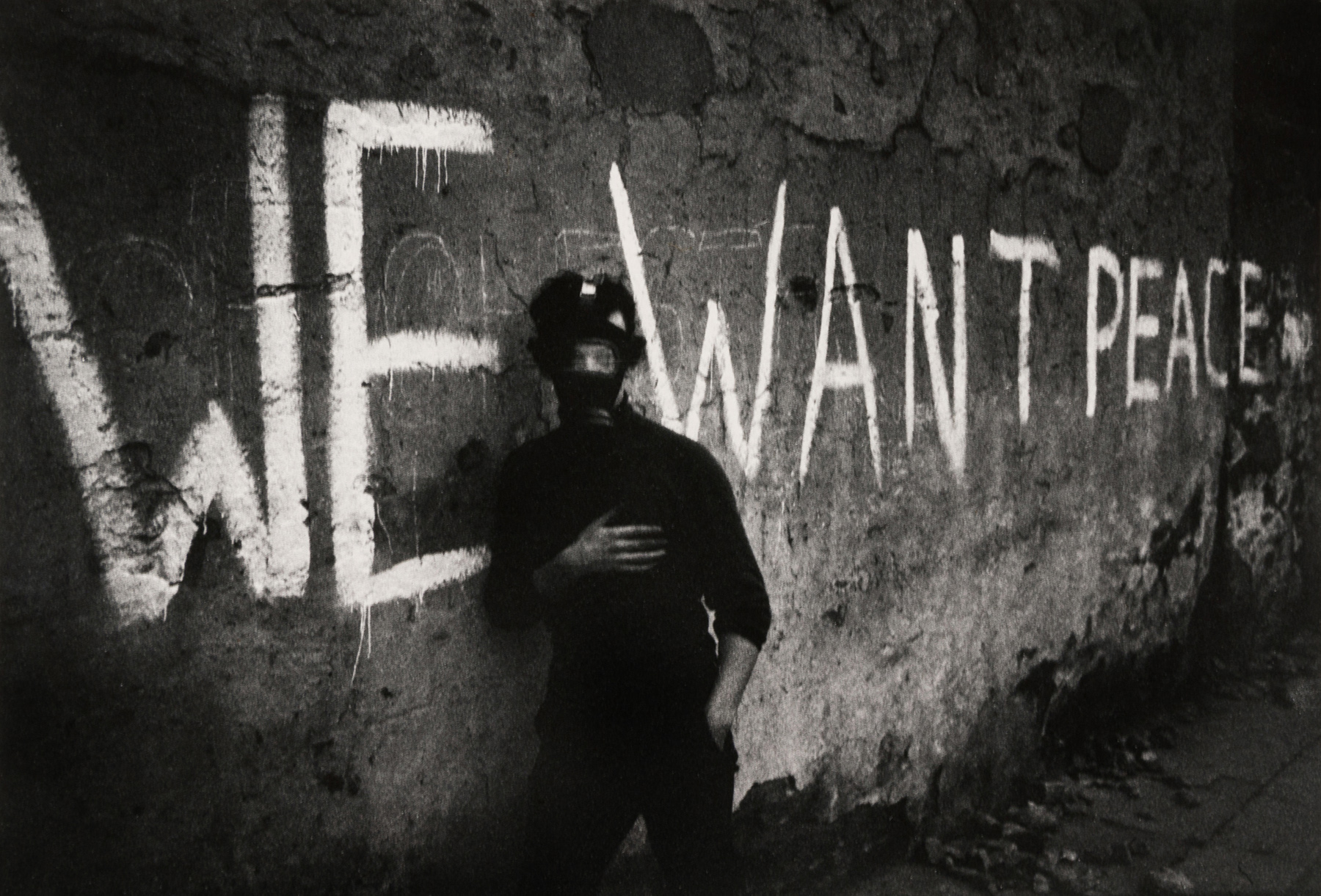
Uschi Blume. From the series 'Worauf wartest Du?' (What are you waiting for?) 1980


Uschi Blume
From the series Worauf wartest Du? (What are you waiting for?)
1980
Silver gelatine print
27.3 x 40.3cm
Museum Folkwang, Essen
© Uschi Blume


It’s so good to see these essential, vital, rebellious images from Germany as a counterpoint and “additional chapter to the history of West German photography of the time beyond that of the Düsseldorf School,” ie. the New Objectivity of Bernd and Hilla Becher with their austere “images of the water towers, oil refineries and silos of the fast-disappearing industrial landscape of the Ruhr valley.”

“A special artistic approach emerged from a dialog between renowned photographers and amateurs, between conceptual approaches and documentary narrations, between technical mediation and substantive critique and altered the styles of many photographers over time thanks to its direct access to their reality.”

I love the rawness and directness of these images. They speak to me through their colour, high contrast, frontality and narrative. A conversation in art and life from people around the world.

Dr Marcus Bunyan


Many thankx to Museum Folkwang Essen and C/O Berlin for allowing me to publish the photographs in the posting. Please click on the photographs for a larger version of the image. All photographs from The Rebellious Image exhibition unless it states differently underneath the photograph.
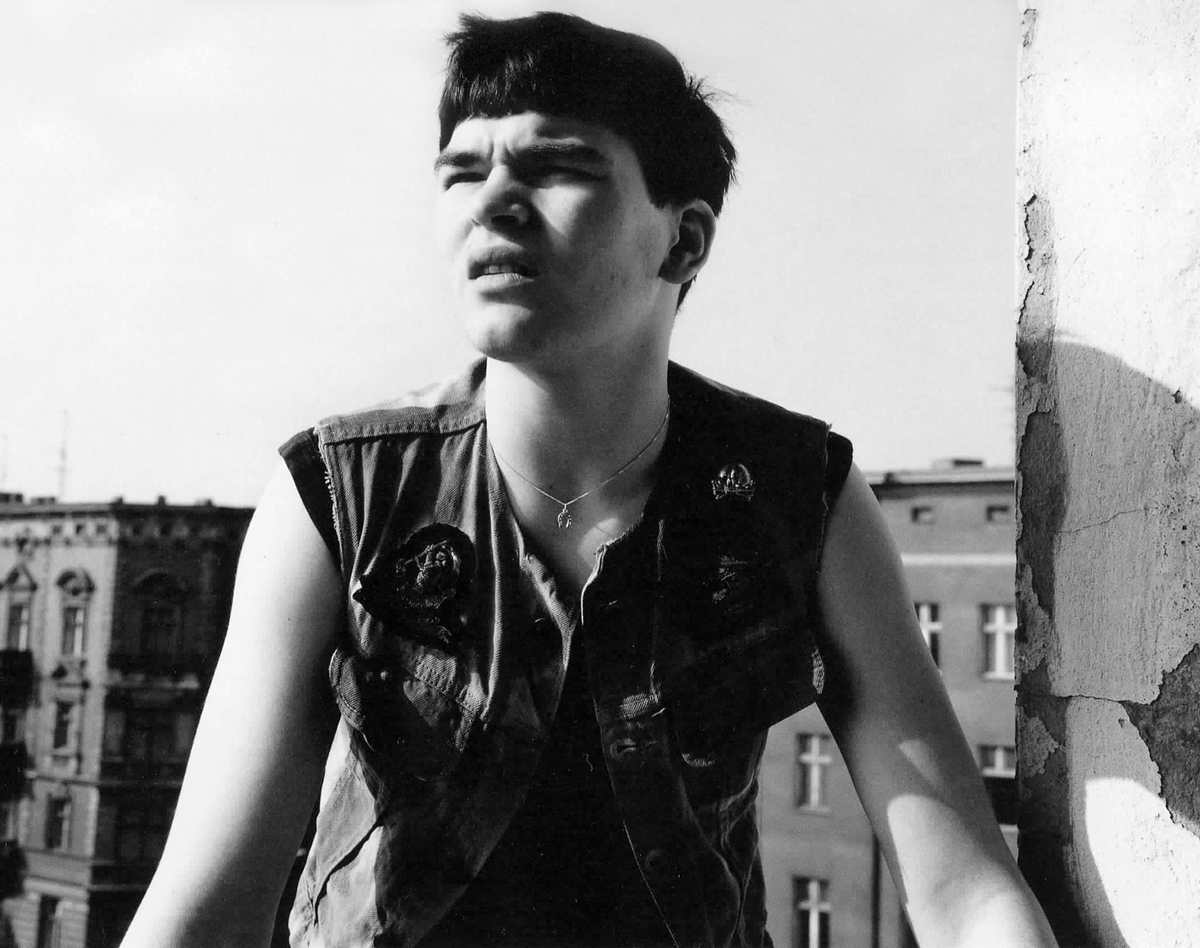


Michael Schmidt (German, 1945-2014) 'Untitled', from 'Portrait' 1983


Michael Schmidt (German, 1945-2014)
Untitled, from the series Portrait
1983
© Stiftung für Fotografie und Medienkunst, Archiv Michael Schmidt

From the exhibition at C/O Berlin Kreuzberg – Amerika
Die Berliner Werkstatt für Photographie 1976-86
10th December 2016 – 12th February 2017
 

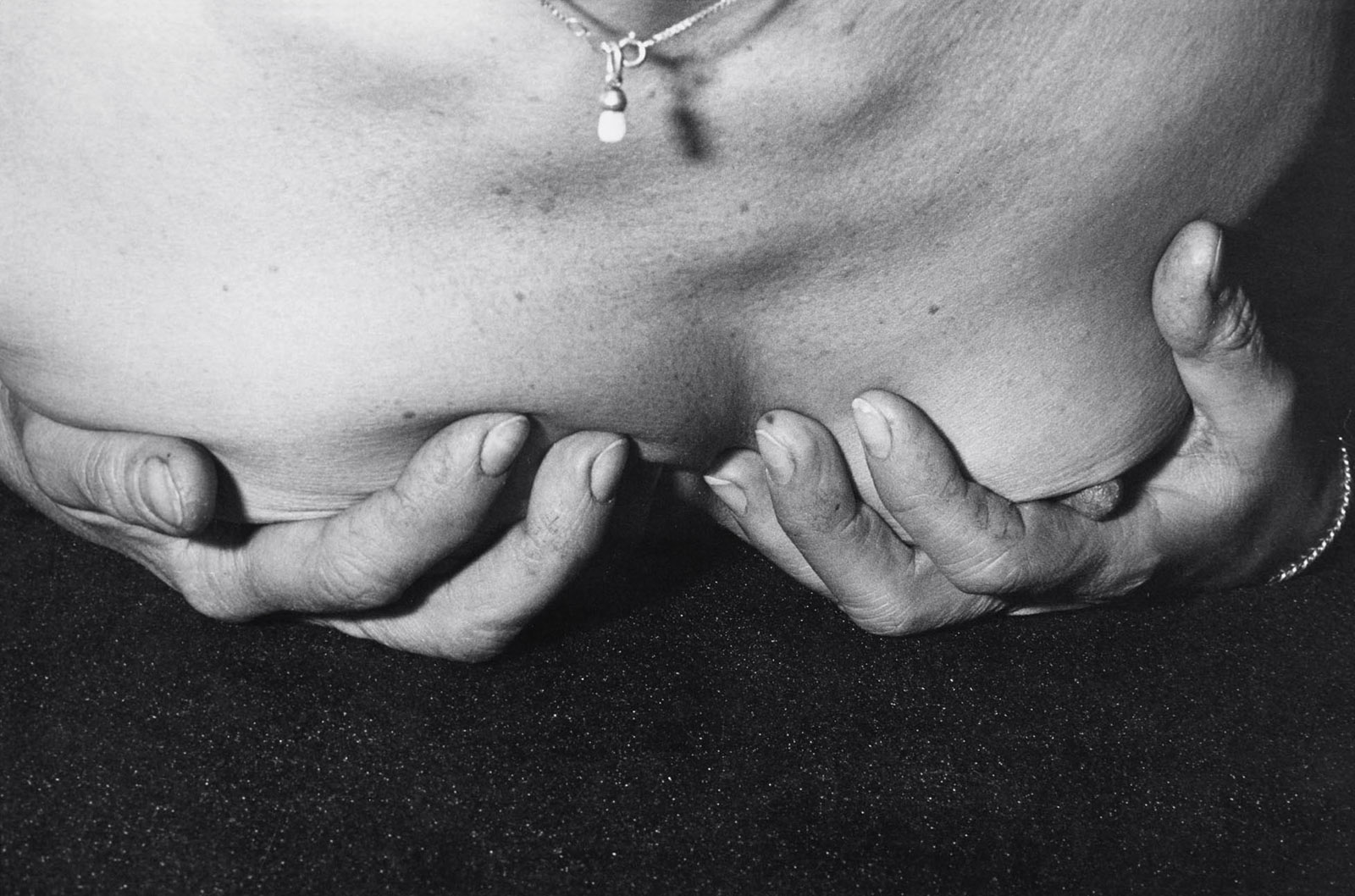
C/O Berlin Kreuzberg America

Michael Schmidt (German, 1945-2014) 'Menschenbilder Ausschnite' 1983/97


Michael Schmidt (German, 1945-2014)
Menschenbilder Ausschnite
1983/97
© Stiftung für Fotografie und Medienkunst, Archiv Michael Schmidt

From the exhibition at C/O Berlin Kreuzberg – Amerika
Die Berliner Werkstatt für Photographie 1976-86
10th December 2016 – 12th February 2017


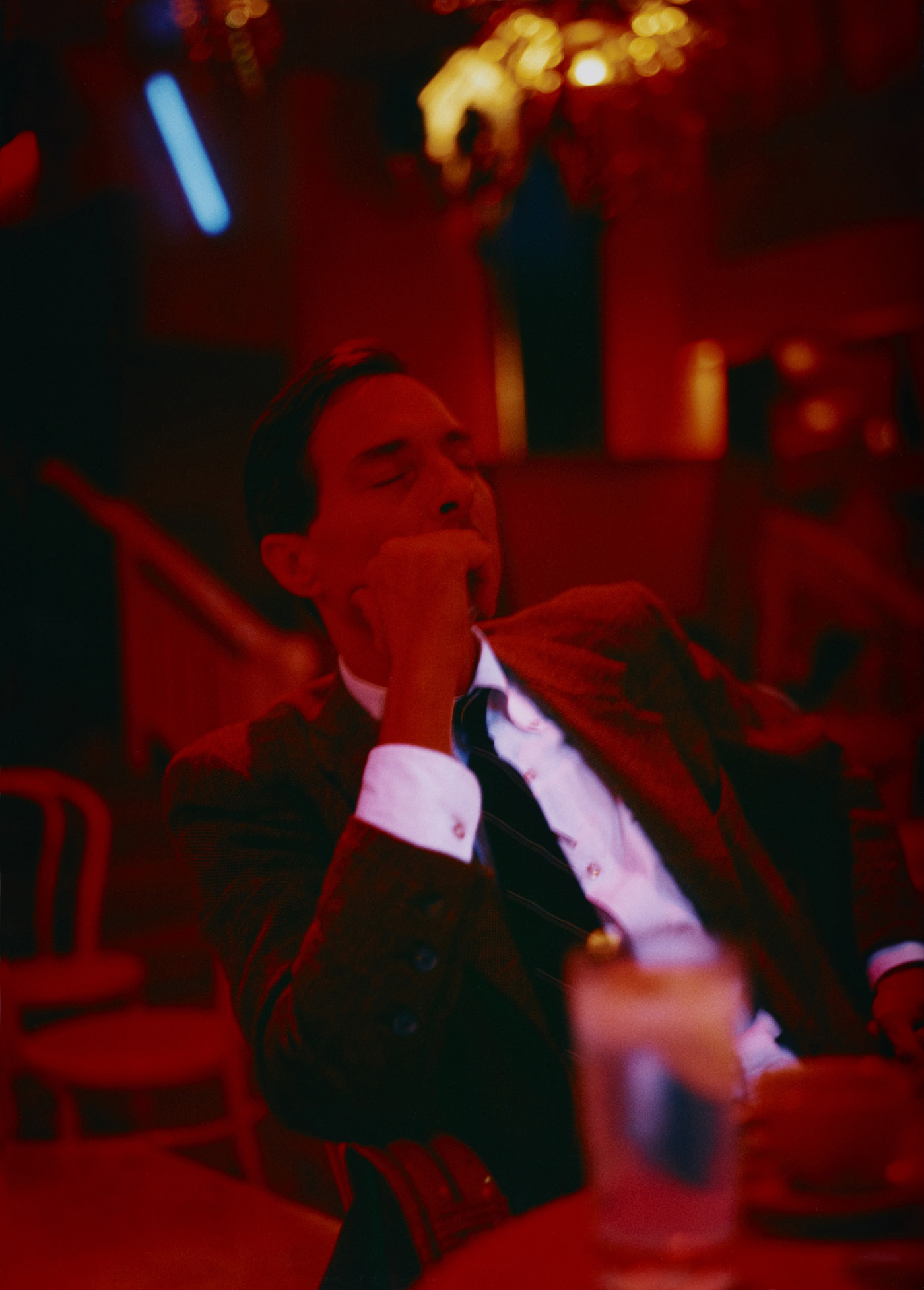
Larry Fink (American, 1941-2023) 'Peter Beard and friends' 1976


Larry Fink (American, 1941-2023)
Peter Beard and friends
1976
From the series Black Tie
Gelatin silver print
35.8 x 36.4cm
© Larry Fink
 

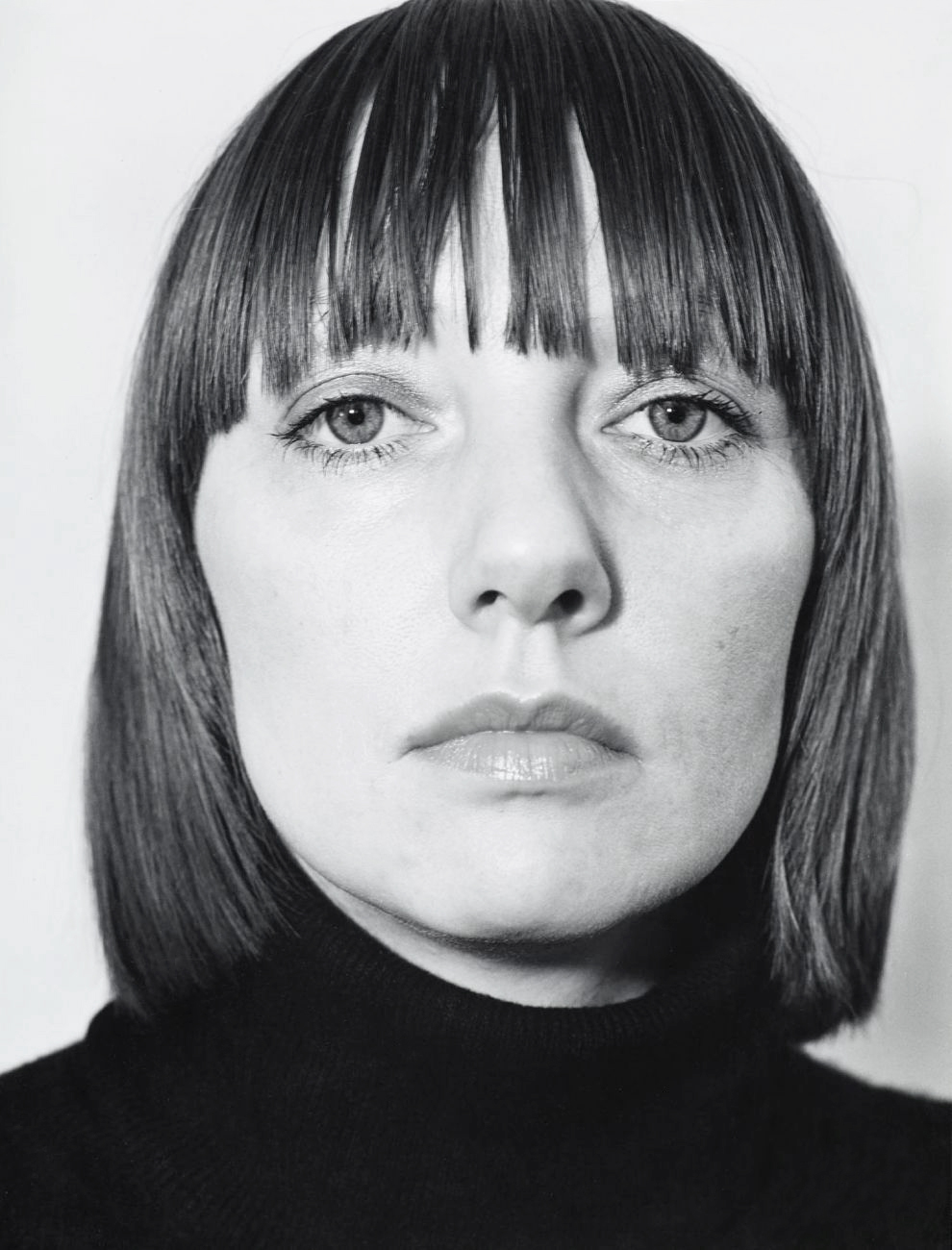
Ursula Kelm (German, b. 1942) 'Self portrait 4' 1983


Ursula Kelm (German, b. 1942)
Self portrait 4
1983
© Ursula Kelm

From the exhibition at C/O Berlin Kreuzberg – Amerika
Die Berliner Werkstatt für Photographie 1976-86
10th December 2016 – 12th February 2017
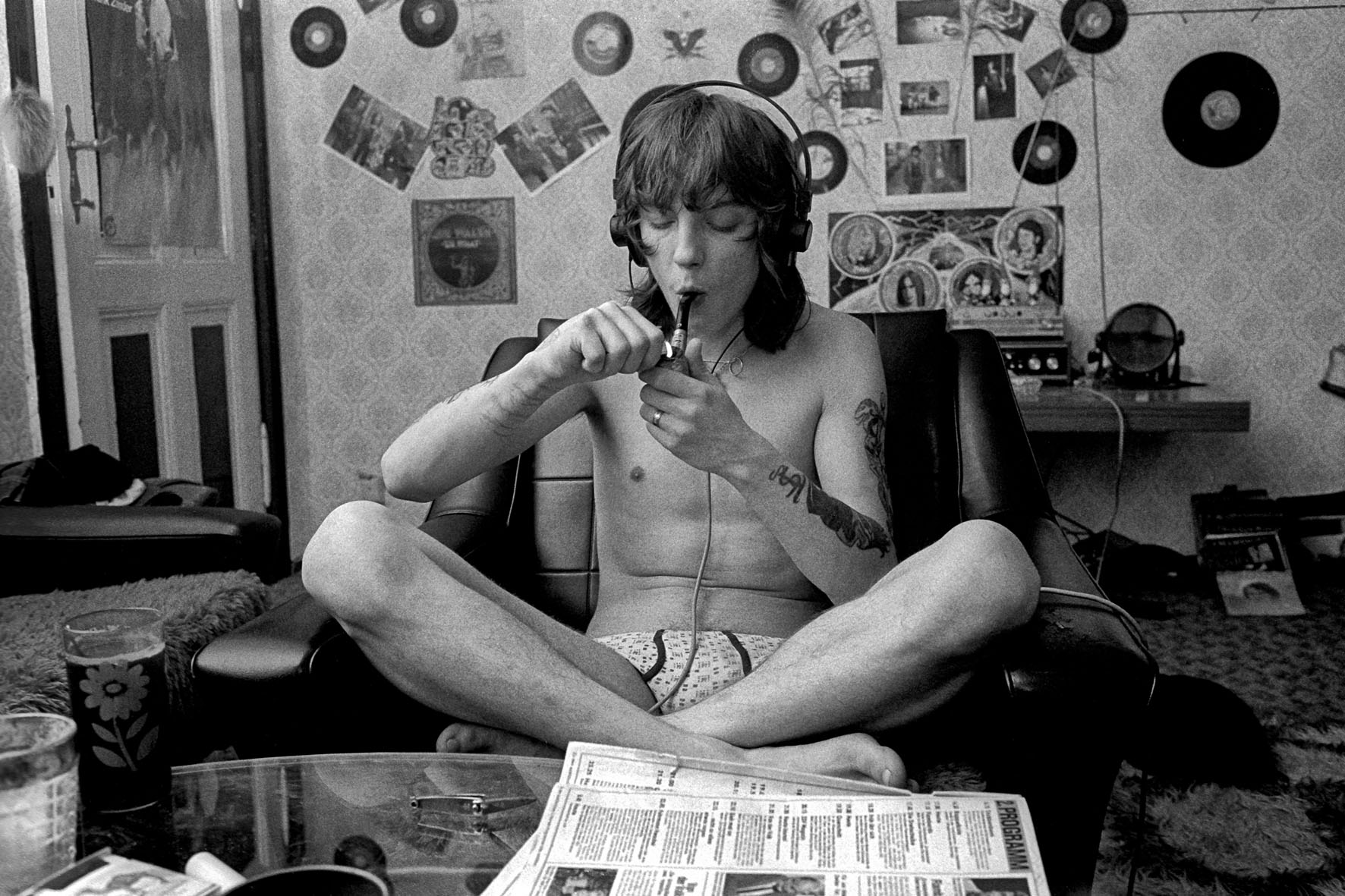
 

Wolfgang Eilmes (German, b. 1955) From the series 'Kreuzberg' 1979


Wolfgang Eilmes (German, b. 1955)
From the series Kreuzberg
1979
© Wolfgang Eilmes

From the exhibition at C/O Berlin Kreuzberg – Amerika
Die Berliner Werkstatt für Photographie 1976-86
10th December 2016 – 12th February 2017
 

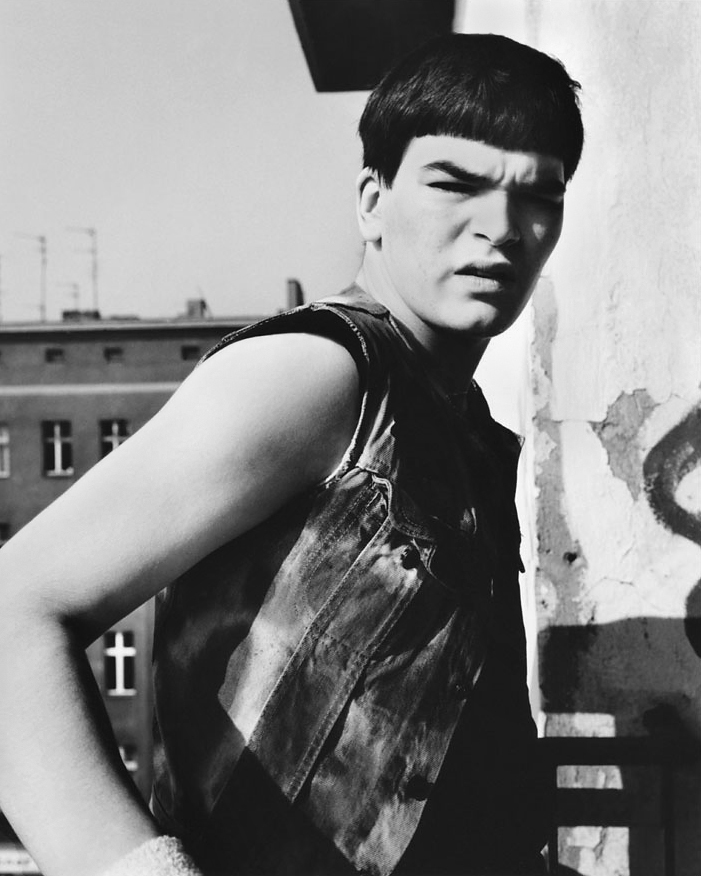
Wilmar Koenig (German, b. 1952) 'Untitled', from the series 'Portraits', 1981-1983


Wilmar Koenig (German, b. 1952)
Untitled, from the series Portraits, 1981-1983
© Wilmar Koenig

From the exhibition at C/O Berlin Kreuzberg – Amerika
Die Berliner Werkstatt für Photographie 1976-86
10th December 2016 – 12th February 2017
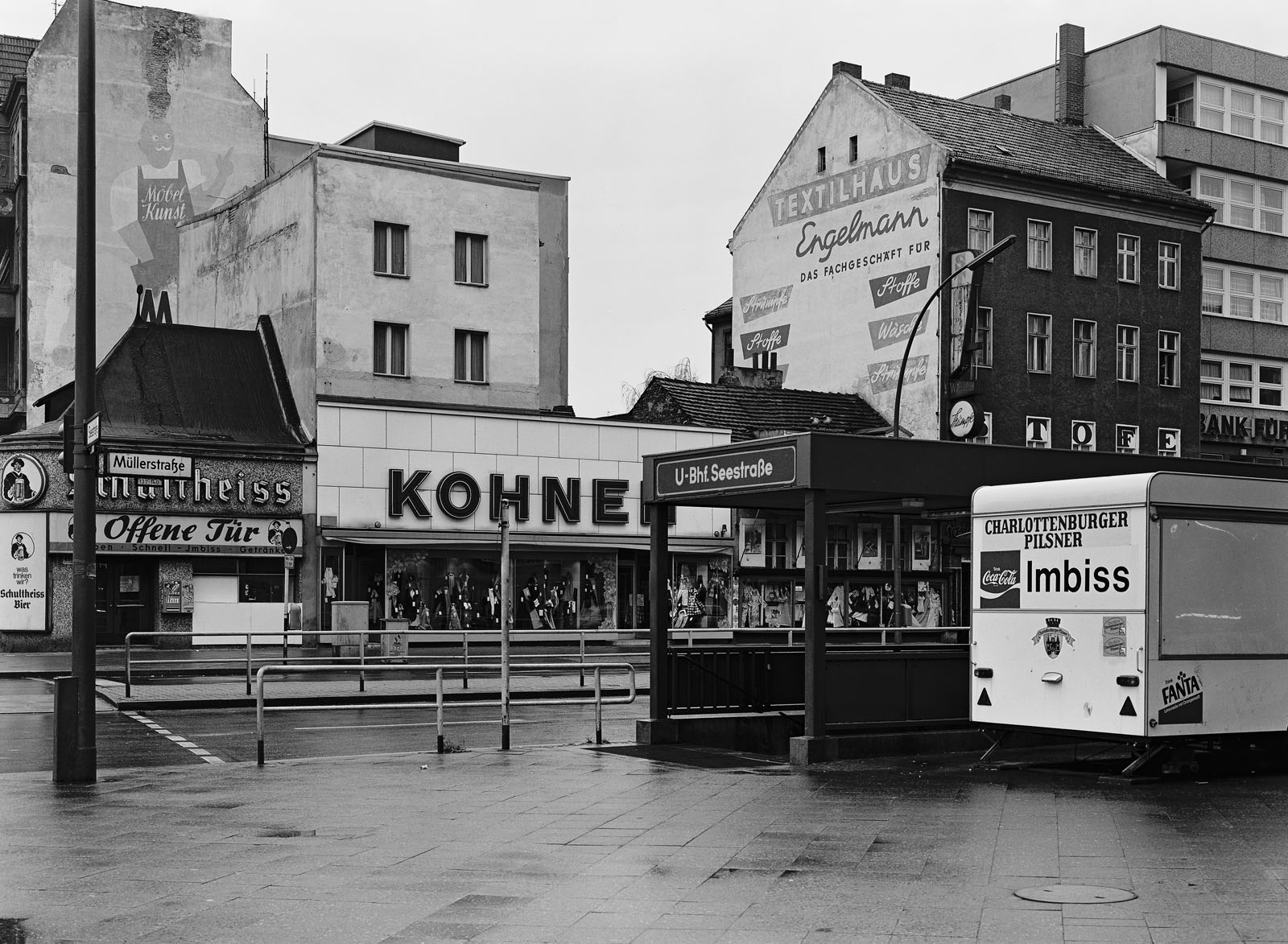
 

Michael Schmidt (German, 1945-2014) 'Müller-/Ecke Seestraße' 1976-1978


Michael Schmidt (German, 1945-2014)
Müller-/Ecke Seestraße
1976-1978
from the series Berlin-Wedding
1979
© Foundation for Photography and Media Art with Archive Michael Schmidt

From the exhibition at C/O Berlin Kreuzberg – Amerika
Die Berliner Werkstatt für Photographie 1976-86
10th December 2016 – 12th February 2017
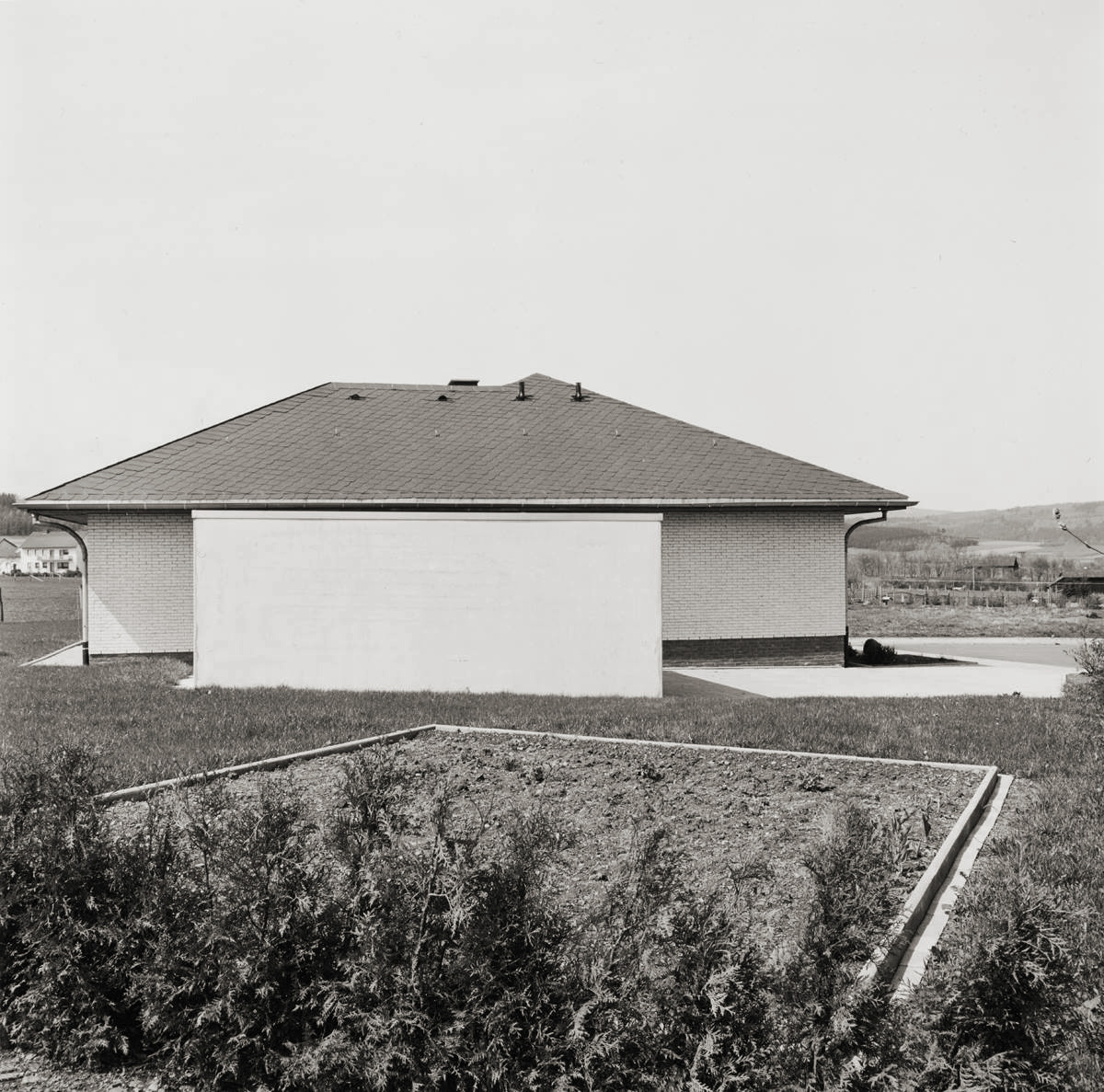
 

Petra Wittmar (German, b. 1955) From the series 'Medebach' 1979-1983


Petra Wittmar (German, b. 1955)
From the series Medebach
1979-83
Gelatin silver print
Courtesy of the artist
© Petra Wittmar
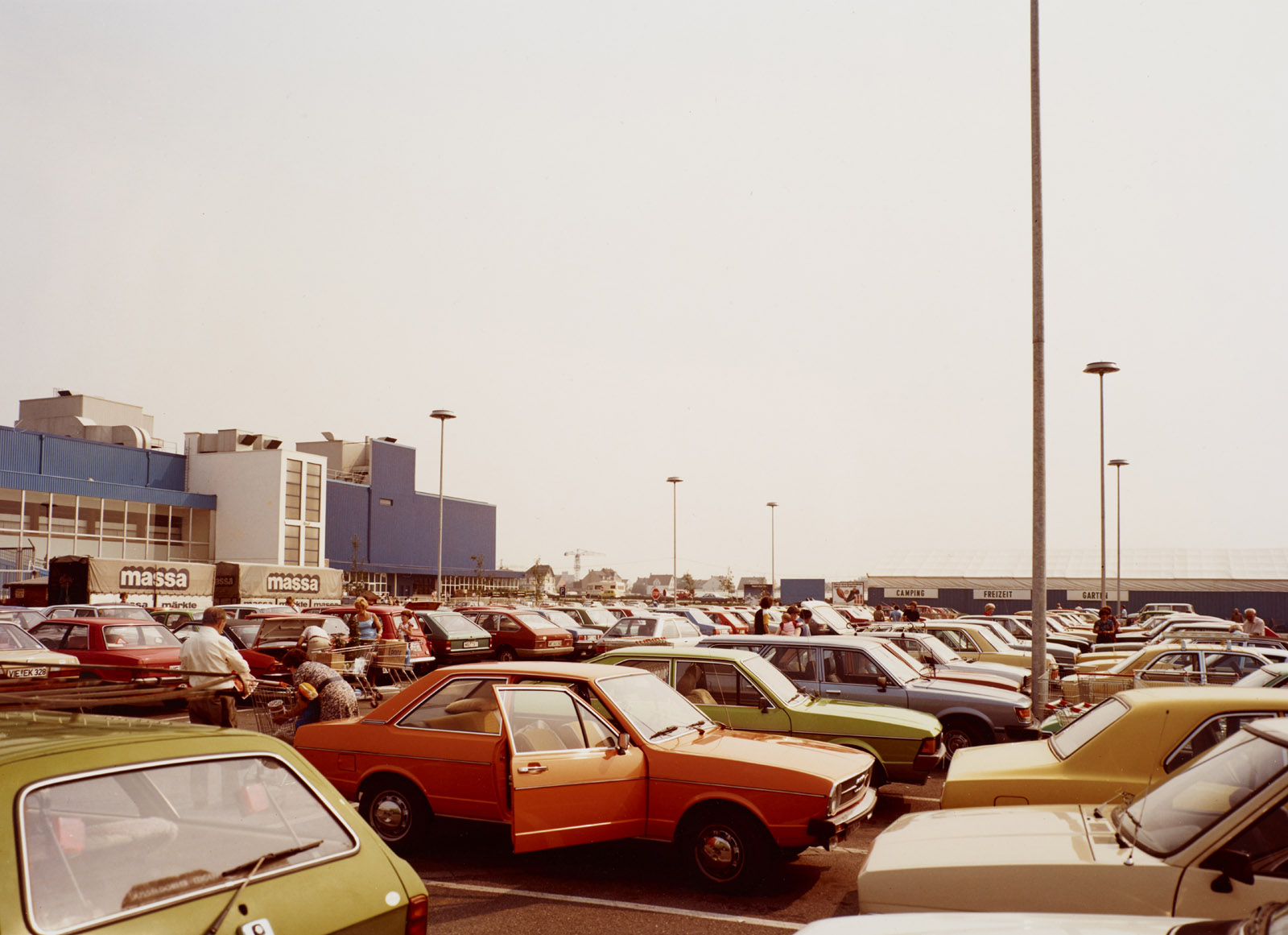
 

Wendelin Bottländer. 'Untitled' 1980


Wendelin Bottländer
Untitled
1980
From the series Stadtlandschaften (City landscapes)
C-Print
24 x 30.2cm
Courtesy of the artist
© Wendelin Bottländer
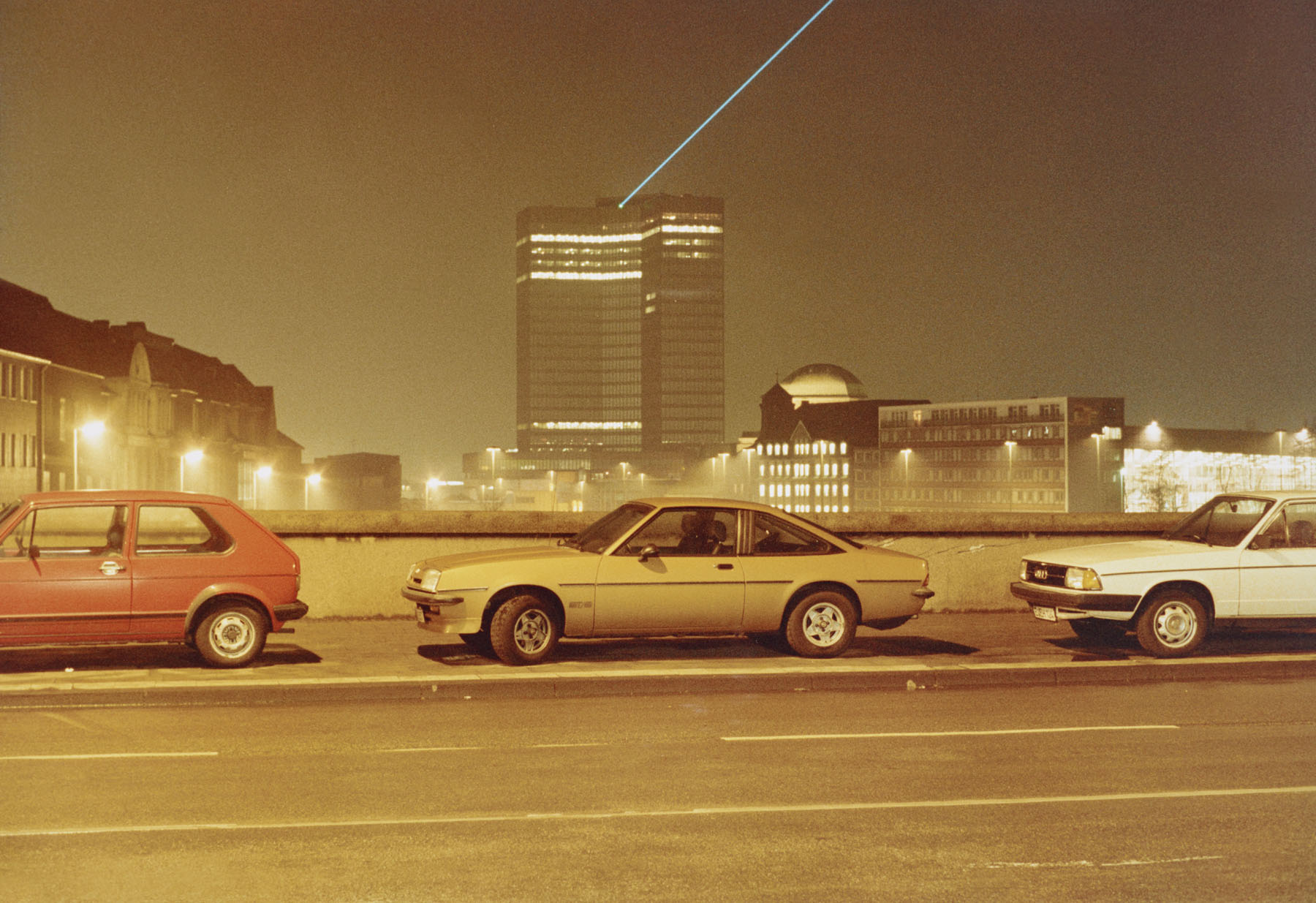
 

Andreas Horlitz (German, 1955-2016) 'Essen Frühling' (Essen Spring) 1981


Andreas Horlitz (German, 1955-2016)
Essen Frühling (Essen Spring)
1981
© Andreas Horlitz


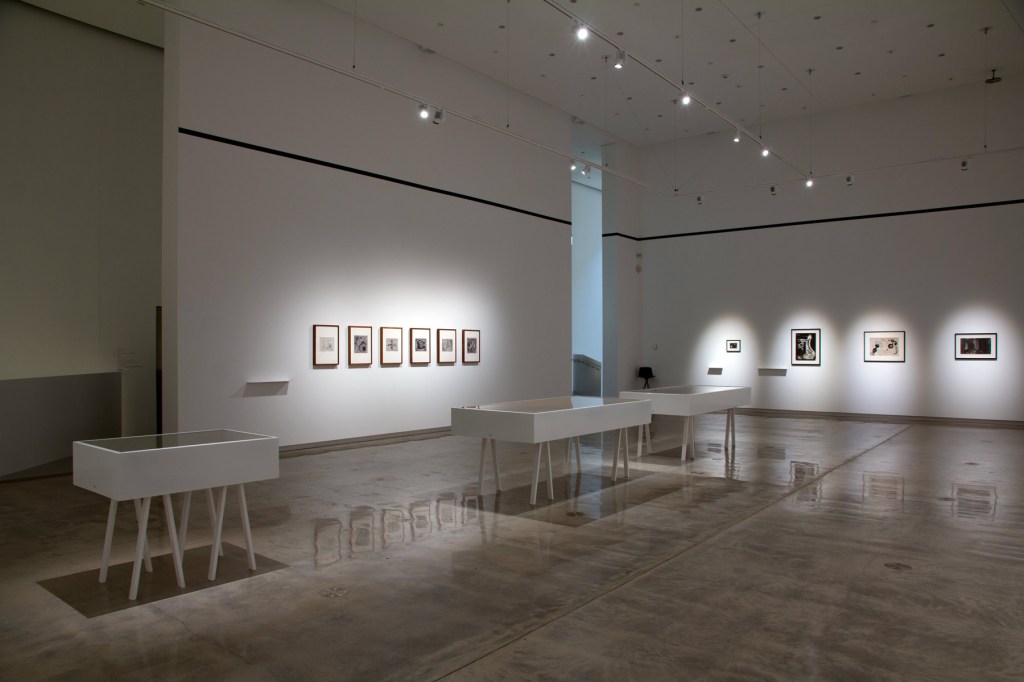
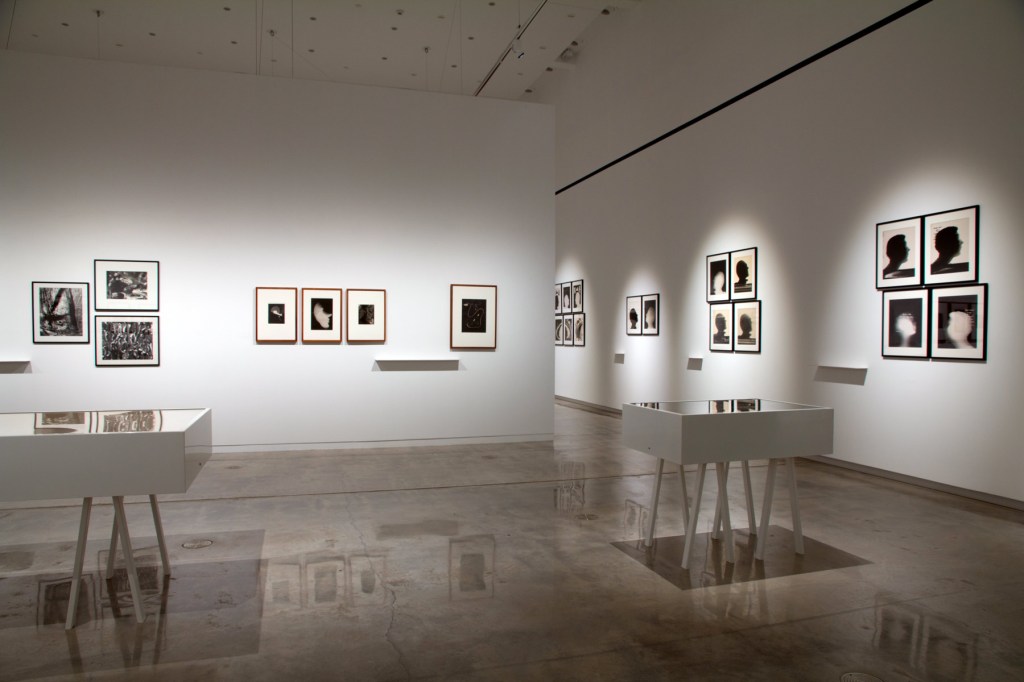
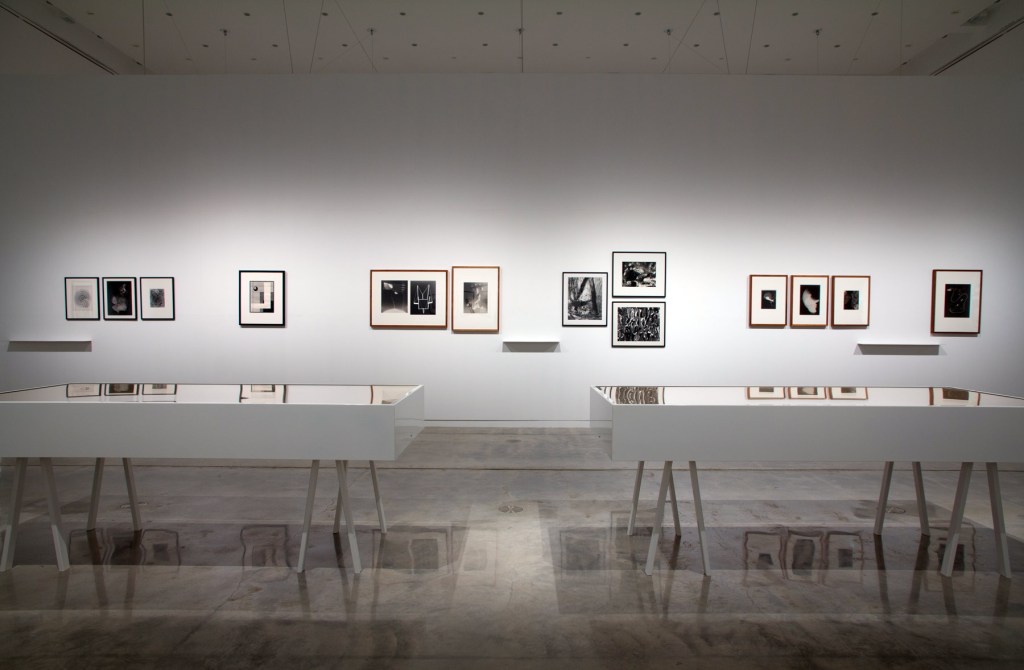
The exhibition The Rebellious Image (December 9, 2016 – February 19, 2017) – part of the three-part collaborative project Werkstatt für Photographie 1976-1986 , held in association with C/O Berlin and Sprengel Museum Hannover – sheds light on this period of upheaval and generational change within German photography, focusing on the photography scene in Essen.

Towards the end of the 1970s, two developments took place in Essen: the first was a revolt, a search for a new path, for a ‘free’ form of artistic photography beyond the confines of photojournalism and commercial photography; the second was the institutionalisation of photography which occurred with the foundation of the Museum Folkwang’s Photographic Collection. Some 300 photographs and a range of filmic statements and documentary material help to bring this era of change and flux in the medium of photography back to life: showing the evolution of new visual languages which – in contrast to the Düsseldorf School’s aesthetics of distance ‘ placed an emphasis on colour, soft-focus blurring and fragmentation.

The show sets out from the climate of uncertainty that developed in the wake of the death of Otto Steinert in 1978, who, as a photographer, teacher and curator, had been particularly influential in Essen in the field of photojournalism. In the area of teaching, photographic design began to come to the fore, while with the founding of the Photographic Collection at Museum Folkwang under Ute Eskildsen, the institutionalisation of artistic photography began. Young students – among them, Gosbert Adler, Joachim Brohm, Uschi Blume, Andreas Horlitz and Petra Wittmar – developed a form of photography that was divorced from typical clichés and commercial utility. The impulse behind this development was provided by the Berlin-based photographer Michael Schmidt. In 1979 and 1980, he taught in Essen and fostered a close dialogue with the Berlin and American scenes.

Over seven chapters, The Rebellious Image traces the development of photography in the 1980s in Germany: the show presents the early alternative exhibitions of these young photographers and provides an insight into the formative projects of the first recipients of the Stipendium Für Zeitgenössische Deutsche Fotografie (German Contemporary Photography Award) awarded by the Alfried Krupp von Bohlen und Halbach-Stiftung. It shows how these young photographic artists refined topographic and documentary photography through their work with colour and their deliberate adoption of the anti-aesthetics of amateur photography. The Rebellious Image reflects on the debates and themes of the exhibition Reste Des Authentischen: Deutsche Fotobilder der 80er Jahre (The Remains of Authenticity: German Photography in the 80s). The largest and most ambitious photographic exhibition of this era, it took place in 1986 at the Museum Folkwang. This exhibition brought together representatives of the Berlin Werkstatt für Photographie, graduates of the Essen School and artists from the Rhineland who were united by their postmodern conception of reality. As such, The Rebellious Image presents a different, subjective perspective, which developed parallel to the objectivising style of the Düsseldorf School and their aesthetic of the large-format images.

The exhibition brings together important and rarely exhibited groups of works by former students in Essen such as Gosbert Adler, Volker Heinze, Joachim Brohm, Uschi Blume, Andreas Horlitz and Petra Wittmar. References to the American photography of the time – such as Stephen Shore, Larry Fink, Diane Arbus, Larry Clark or William Eggleston – make the preoccupations of this young scene apparent. In addition, with works by Michael Schmidt, Christa Mayer and Wilmar Koenig, members of the Berlin Werkstatt für Photographie are also represented.”

Press release from Museum Folkwang Essen


C/O Berlin is presenting the exhibition Kreuzberg – Amerika from December 10th, 2016 to February 12th, 2017.  The exhibition is part of the project about the Werkstatt für Photographie 1976-1986, in which C/O Berlin, the Museum Folkwang Essen and the Sprengel Museum Hannover are presenting the history, influences and effects of the legendary Berlin-based photographic institute and its key players in an intercity cooperation.

“We try to help students to recognise or even find their personality, where photography becomes irrelevant with regard to its commercial applicability.” ~ Michael Schmidt, 1979

Starting in the 1970s, a unique departure in photography took place in Germany. A younger generation in various initiatives quickly established a new infrastructure for a different perspective on photography and consciously defined the medium as an independent art form – to this very day. The Werkstatt für Photographie (Workshop for Photography), founded in Berlin by Michael Schmidt in 1976, is one of these innovative models and as an institution was completely unique. That’s because it offered an openly accessible cultural production and intensified adult education beyond academic hurdles and without access limitations. A special artistic approach emerged from the unconventional dialog between renowned photographers and amateurs, between technical mediation and substantive critique as well as on the basis of documentary approaches. Its special access to reality defined styles for a long time. The Werkstatt für Photographie reached the international level through exhibitions, workshops and courses and established itself as an important location for the transatlantic photographic dialog between Kreuzberg, Germany and America. A unique and pioneering achievement!

In the beginning of the Werkstatt für Photographie, a strict documentary perspective prevailed that was based on the neutral aesthetic of the work of Michael Schmidt and concentrated on the blunt representation of everyday life and reality in a radical denial of common photographic norms. He and the young photographer scene later experimented with new forms of documentary that emphasised the subjective view of the author. They discovered colour as an artistic form of expression and developed an independent, artistic authorship with largely unconventional perspectives.

The Werkstatt für Photographie offered anyone who was interested a free space to develop their artistic talents. In addition to its open, international and communicative character, it was also a successful model for self-empowerment that at the same time was characterised by paradoxes. That’s because the vocational school set in the local community developed into a lively international network of contemporary photographers. The students were not trained photographers but rather self-taught artists and as such had a freer understanding of the medium than their professional counterparts. Moreover, the majority of teachers had no educational training but were all active in the context of adult education. At that time, there were also no curators for photography in Germany but the Werkstatt für Photographie were already independently hosting exhibitions alternating between unknown and renowned photographers…

On the occasion of the 40th anniversary of the Werkstatt für Photographie, C/O Berlin, the Museum Folkwang Essen and the Sprengel Museum Hannover are presenting a joint exhibition project, which for the first time portrays the history, influences and effects of this institution and its key players divided between three stages. Furthermore, the three stages outline the situation of a changing medium, which focuses on independent, artistic authorship encouraged by consciousness of American photography. As such, they’re designing a lively and multi-perspective presentation of photography in the 1970s and 1980s that adds an additional chapter to the history of West German photography of the time beyond that of the Düsseldorf School.

Text from the C/O Berlin website


Photography workshop 1976-1986. The beginnings / How it began. Part 1

On the occasion of the 40th anniversary of the workshop for photography, C/O Berlin, the Museum Folkwang, Essen, and the Sprengel Museum Hannover are presenting a joint exhibition project that describes the career of this institution and its actors for the first time. In addition, the three stations outline the situation of a medium on the move that – encouraged by the self-confidence of American photography – relies on independent, artistic authorship. The exhibitions create a lively, multi-perspective image of photography from the 1970s and 1980s, which adds another chapter to the history of West German photography at the time, in addition to the Düsseldorf School.

Andreas Langfeld studied photography at the Folkwang University in Essen. He is a freelance photographer and filmmaker. Svenja Paulsen is a scholarship holder in the Museum Curators for Photography program of the Alfried Krupp von Bohlen und Halbach Foundation. Between February and October 2016, on the occasion of the exhibition cooperation between C/O Berlin, Museum Folkwang and Sprengel Museum at the workshop for photography, they conducted interviews with the photographers involved.


Photography workshop 1976-1986. The Americans. Part 2


Photography workshop 1976-1986. Essen. Part 3


Photography workshop 1976-1986. Michael Schmidt. Part 4


Photography workshop 1976-1986. Hanover. Part 5
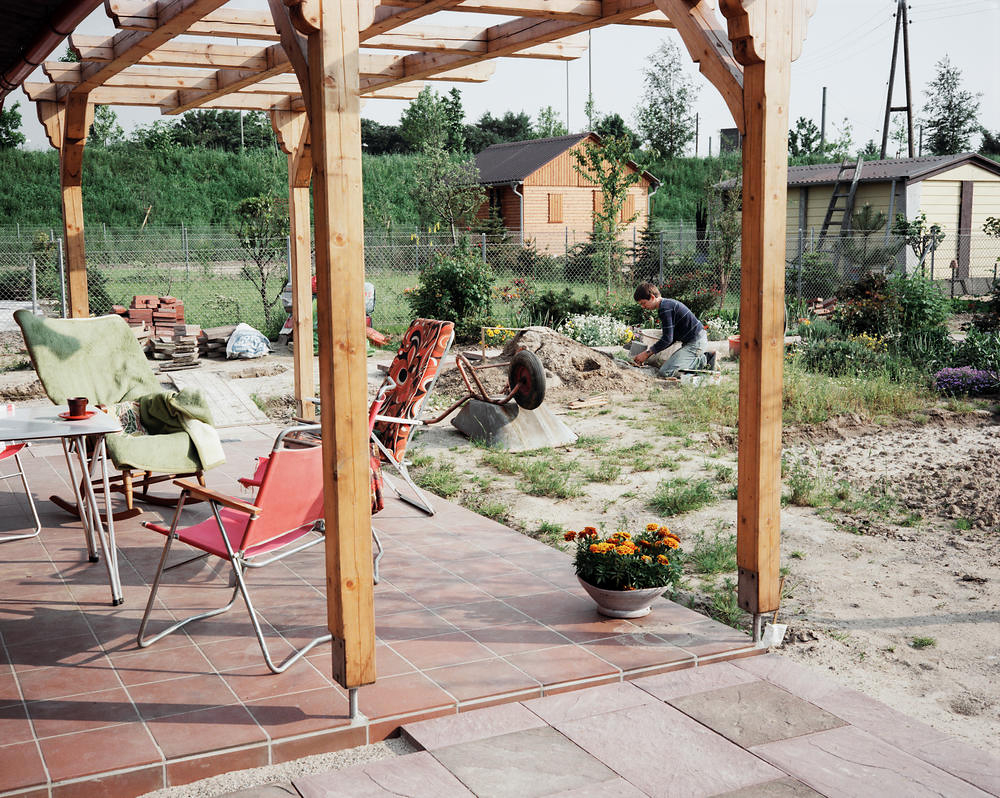
 

Andreas Gursky (German, b. 1955) 'Düsseldorf, Terrace' 1980


Andreas Gursky (German, b. 1955)
Düsseldorf, Terrace
1980
C-Print
43.2 x 49.4cm
© Andreas Gursky, VG Bild-Kunst, Bonn 2017
Courtesy of the artist + Sprüth Magers


Joachim Brohm (German, b. 1955) 'Revierpark Nienhausen, Gelsenkirchen' (Parking area Nienhausen, Gelsenkirchen) 1982


Joachim Brohm (German, b. 1955)
Revierpark Nienhausen, Gelsenkirchen
Parking area Nienhausen, Gelsenkirchen
1982
From the series Ruhr, 1980-1983
C-Print
22.2 x 27.2 cm
© Joachim Brohm
© VG Bild-Kunst, Bonn 2017


Reining in the picture
Joachim Brohm

Born in Dülken, Brohm studied at the Gesamthochschule, Essen and was one of the few photographers who used colour photography in the late 1970s. In his series Ruhr he tries to create a new view of the Ruhr area through the occasional recording of urban space. Brohm’s approach coincides with the claim of the then current “New Topographics” to capture the social reality in the direct environment in a documentary style. In the German-speaking photo landscape here he took a leading role.
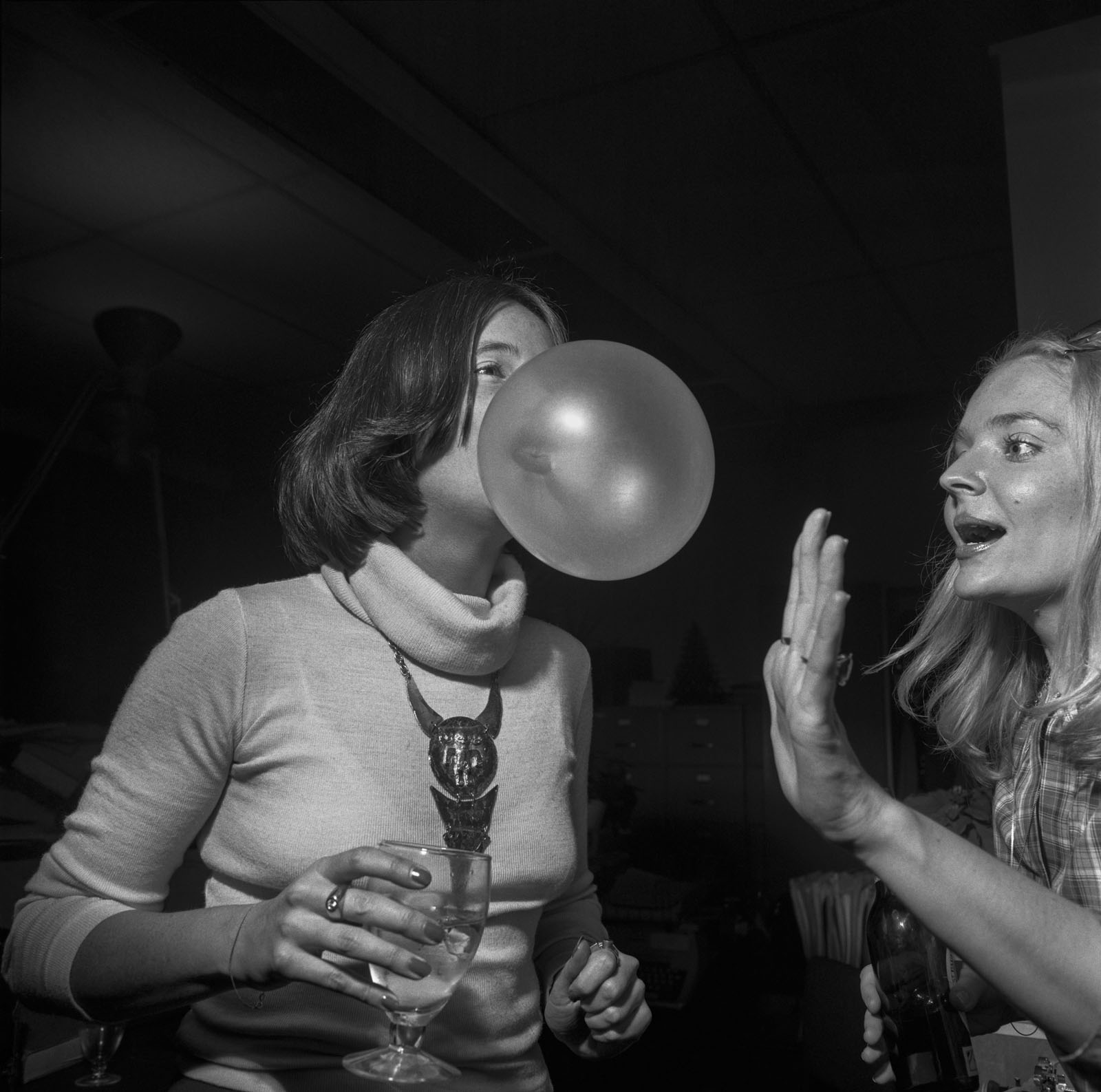
 

Larry Fink (American, 1941-2023) 'New York Magazine Party, New York City, October 1977'


Larry Fink (American, 1941-2023)
New York Magazine Party, New York City, October 1977
1977
From the series Social Graces
1984 © Larry Fink

From the exhibition at C/O Berlin Kreuzberg – Amerika
Die Berliner Werkstatt für Photographie 1976-86
10th December 2016 – 12th February 2017
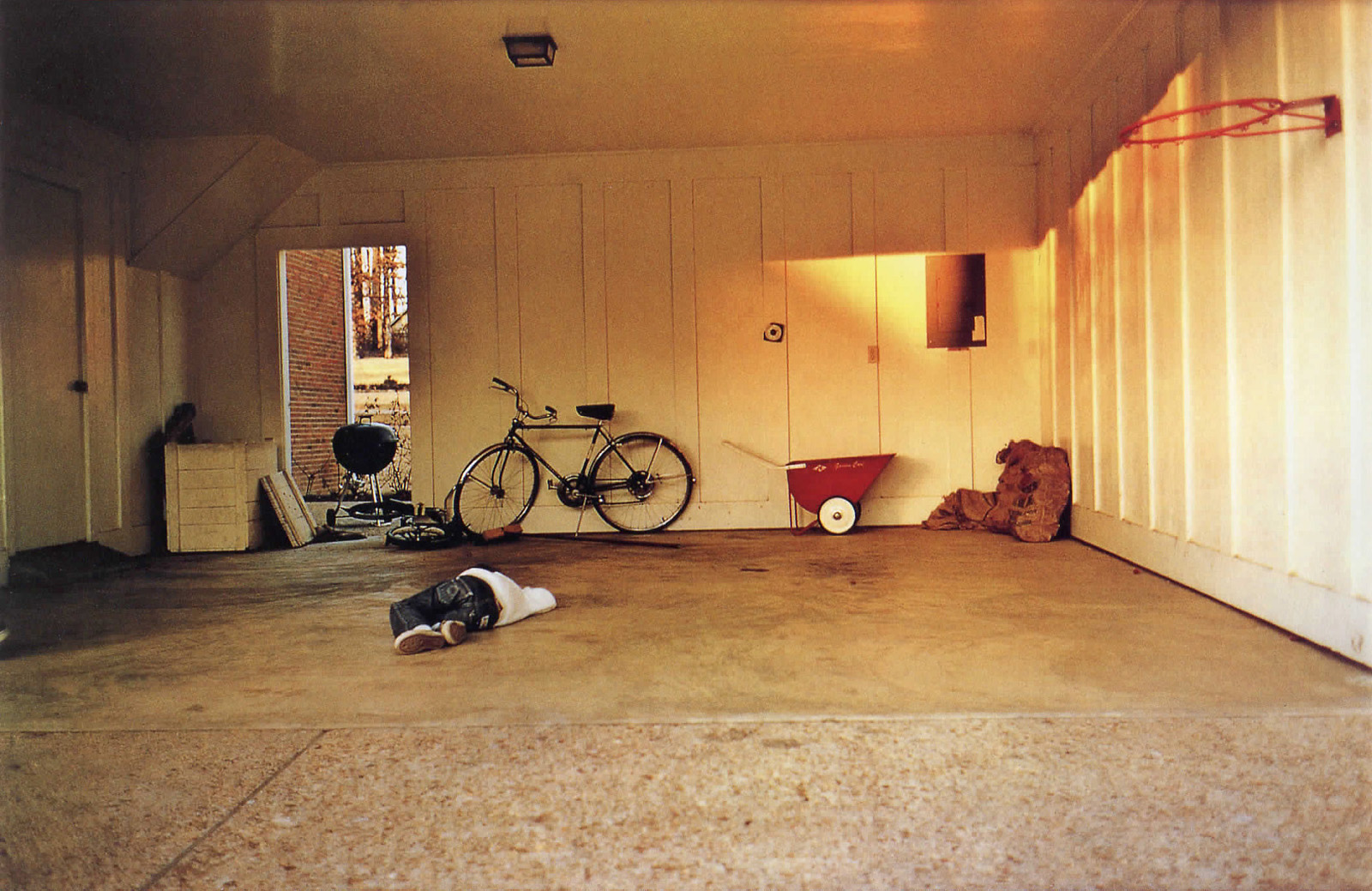
 

William Eggleston (American, b. 1939) 'Whitehaven, Mississippi' 1972


William Eggleston (American, b. 1939)
Whitehaven, Mississippi
1972
© William Eggleston, Courtesy Laurence Miller Gallery, New York

From the exhibition at C/O Berlin Kreuzberg – Amerika
Die Berliner Werkstatt für Photographie 1976-86
10th December 2016 – 12th February 2017
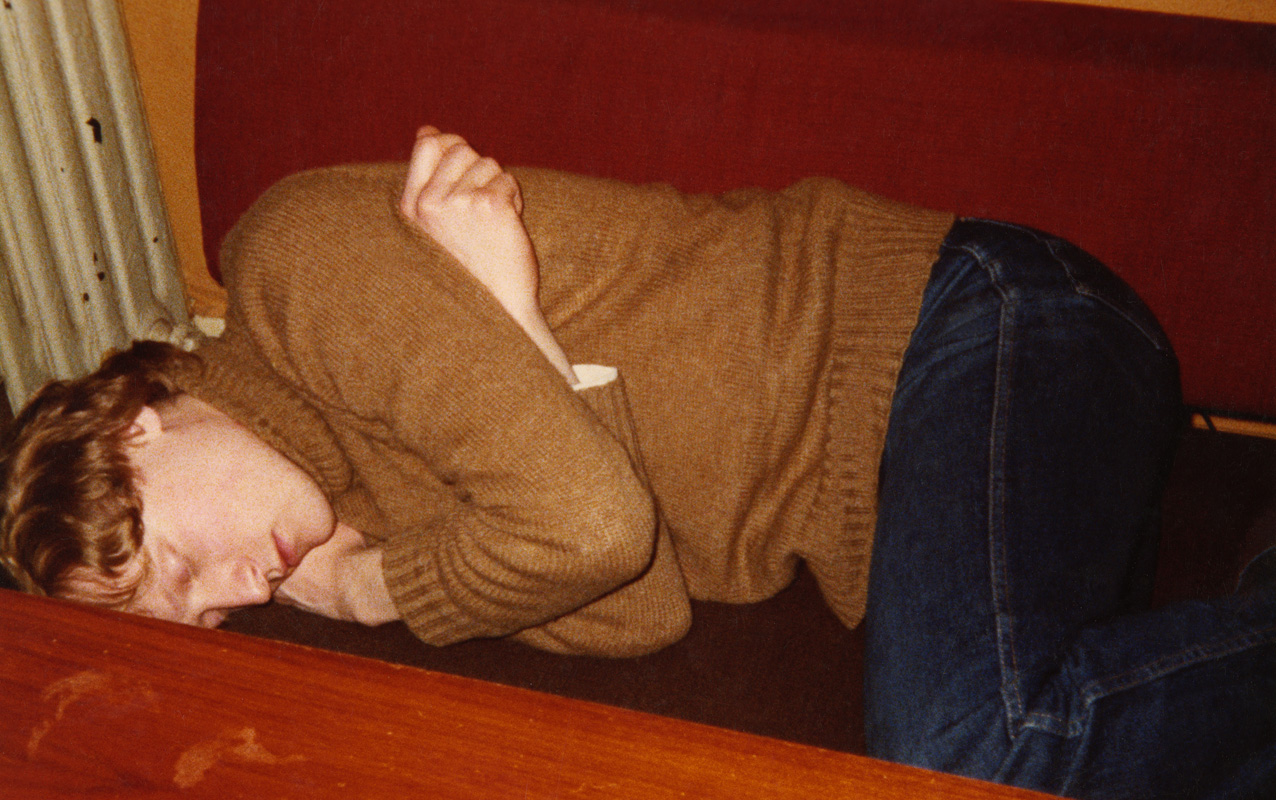
 

Gosbert Adler (German, b. 1956) From the series 'Ohne Titel' 1982-1983


Gosbert Adler (German, b. 1956)
from the series Ohne Titel
1982-83
© VG Bild-Kunst, Bonn 2016
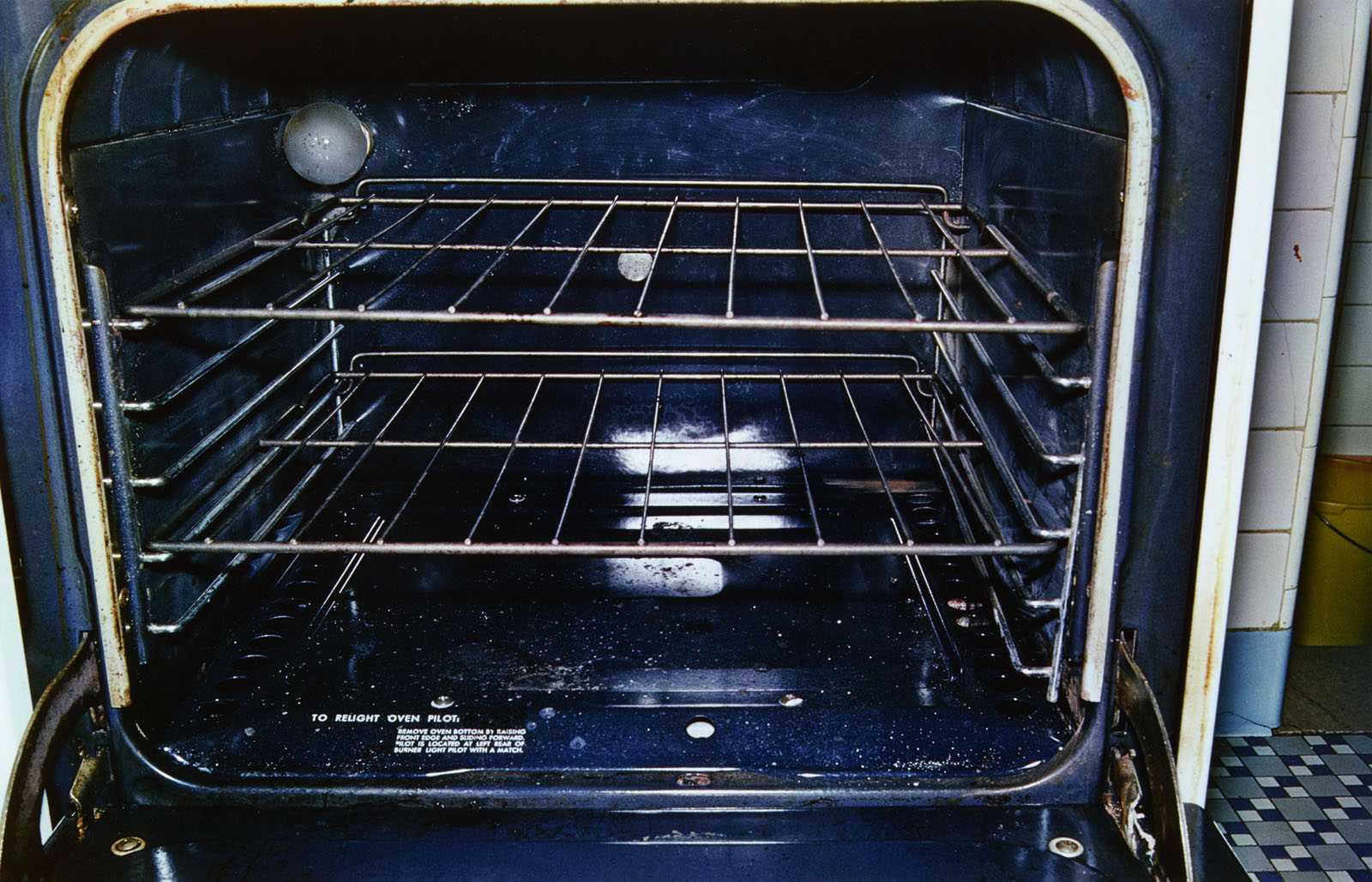
 

William Eggleston (American, b. 1939) 'Memphis' 1970


William Eggleston (American, b. 1939)
Memphis
1970
Dye-Transfer
33.5 x 51.5cm
© Eggleston Artistic Trust, Memphis
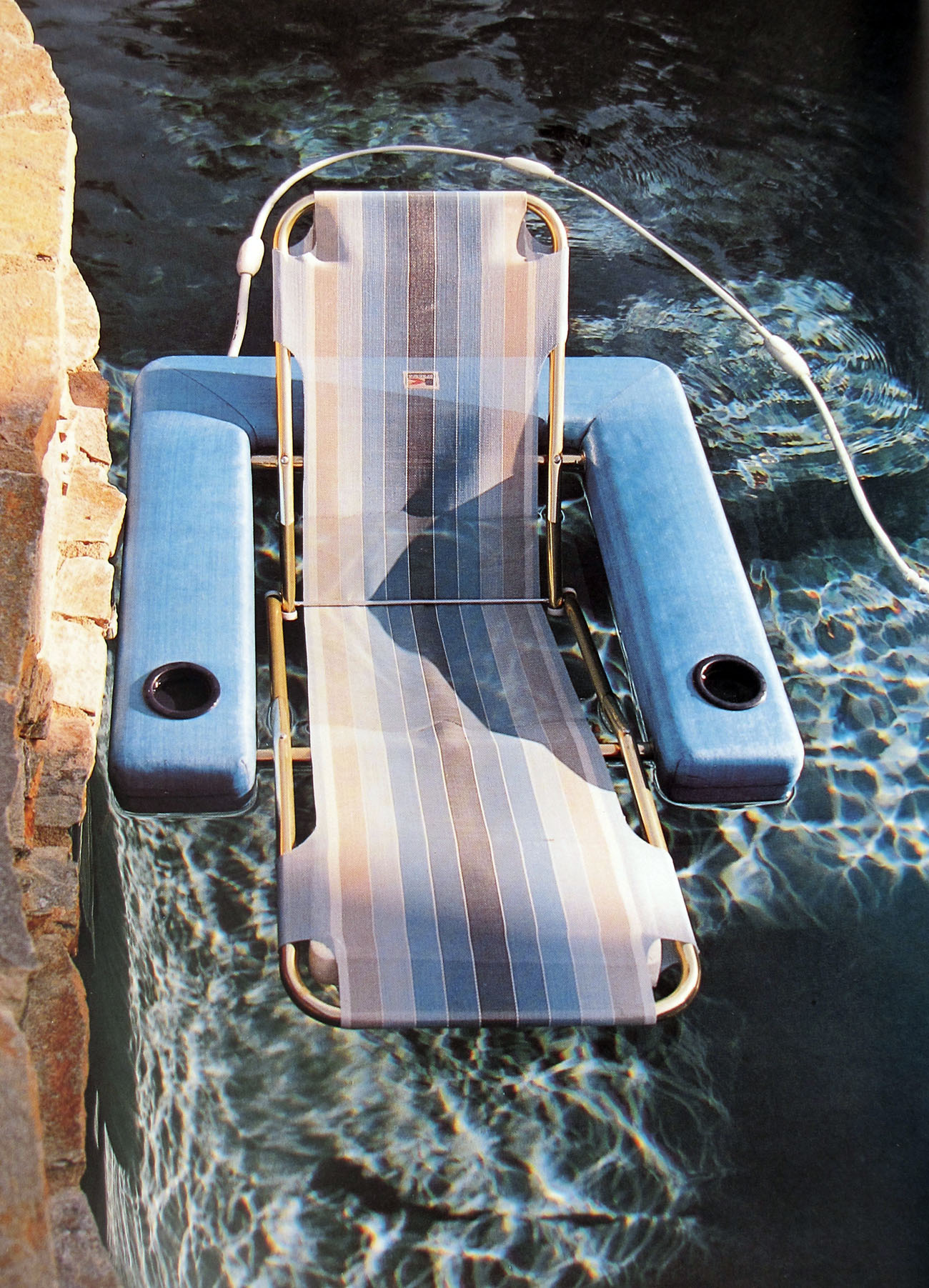
 

Wilmar Koenig (German, b. 1952) 'Floating Chair' 1984


Wilmar Koenig (German, b. 1952)
Floating Chair
1984
From the series Die Wege (The Ways)
C-Print
162 x 126.8cm
Courtesy Berlinische Galerie, Berlin
© Wilmar Koenig


The working-class district of Kreuzberg at the end of the 1970s on the outer edge of West Berlin – and yet the lively centre of a unique transatlantic cultural exchange. In the midst of the Cold War, the newly founded Werkstatt für Photographie (Workshop for Photography) located near Checkpoint Charlie started an artistic “air lift” in the direction of the USA, a democratic field of experimentation beyond traditional education and political and institutional standards. A special artistic approach emerged from a dialog between renowned photographers and amateurs, between conceptual approaches and documentary narrations, between technical mediation and substantive critique and altered the styles of many photographers over time thanks to its direct access to their reality. The Werkstatt für Photographie reached the highest international standing with its intensive mediation work through exhibitions, workshops, lectures, image reviews, discussions and specialised courses.

In 1976, the Berlin-based photographer Michael Schmidt founded the Werkstatt für Photographie at the adult education centre in Kreuzberg. Its course orientation with a focus on a substantive examination of contemporary photography was unique and quickly lead to a profound understanding of the medium as an independent art form. When the institution was closed in 1986, it fell into obscurity.

On the occasion of the 40th anniversary of the Werkstatt für Photographie, C/O Berlin, the Museum Folkwang Essen and the Sprengel Museum Hannover are presenting a joint exhibition project, which for the first time portrays the history, influences and effects of this institution and its key players divided between three stages. Furthermore, the three stages outline the situation of a changing medium, which focuses on independent, artistic authorship encouraged by consciousness of American photography. As such, they’re designing a lively and multi-perspective presentation of photography in the 1970s and 1980s that adds an additional chapter to the history of West German photography of the time beyond that of the Düsseldorf School.

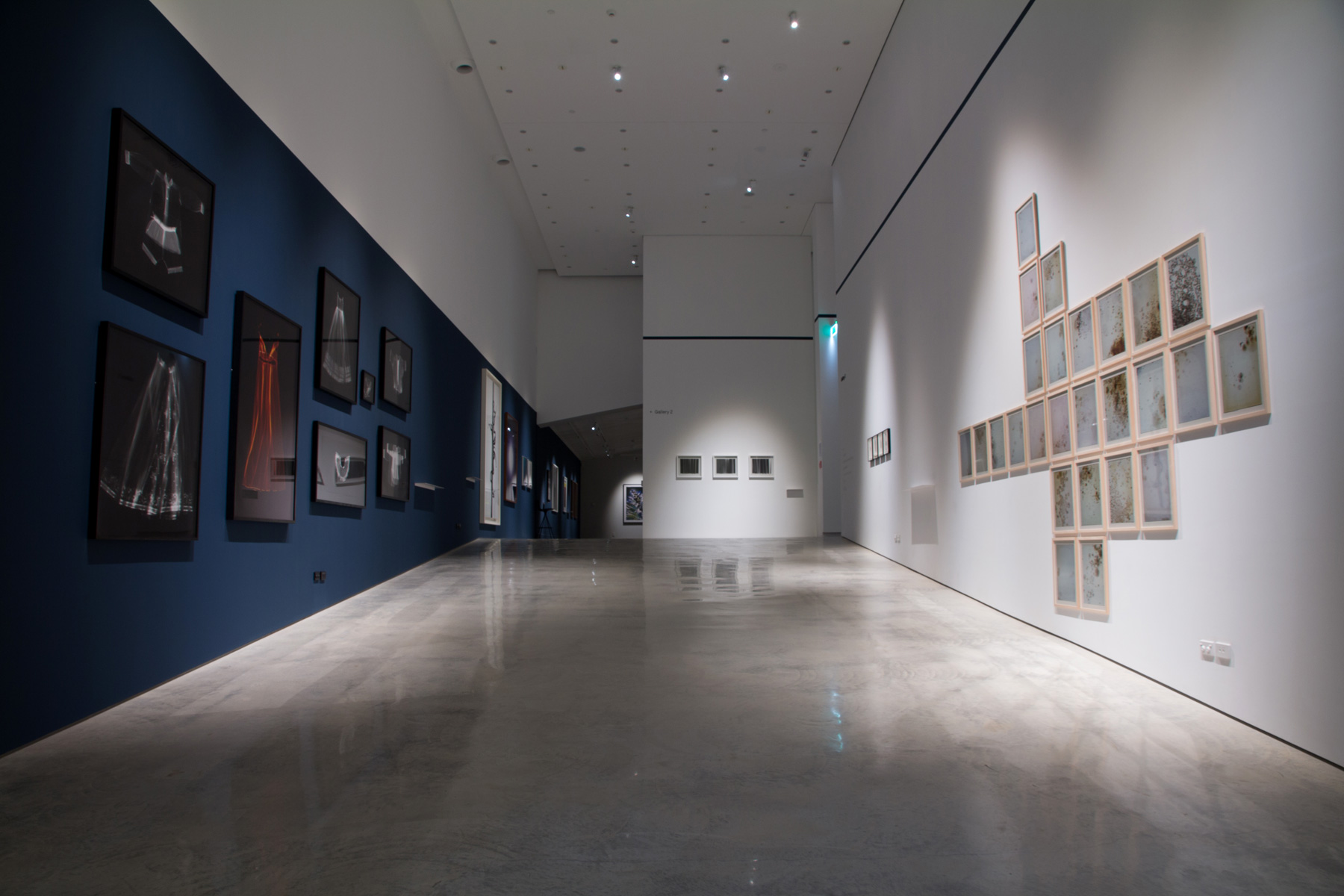
C/O Berlin is addressing the history of the Werkstatt für Photographie in its contribution entitled Kreuzberg – Amerika (December 10, 2016 – February 12, 2017). Within the context of adult education, a unique forum for contemporary photography emerged. A special focus is placed on the exhibitions of the American photographers that were often presented in the workshop for the first time and had an enormous effect on the development of artistic photography in Germany. The exhibition combines the works of faculty, students and guests into a transatlantic dialogue.

The Museum Folkwang in Essen is exploring the reflection of the general change of those years in its own Folkwang history with its work entitled The Rebellious Image (December 9, 2016 – February 19, 2017). After the death of the influential photography teacher Otto Steinerts in 1978, a completely open and productive situation of uncertainty reigned. Essen became more and more of a bridgehead for the exchange with Berlin and a point of crystallisation for early contemporary photography in the Federal Republic. Along with Michael Schmidt, who made provocative points during his time as a lecturer at the GHS Essen, Ute Eskildsen counted among the key players at Museum Folkwang as a curator. Early photography based in Essen addressed urbanity and youth culture, discovered colour as a mode of artistic expression, asked questions following new documentarian approaches, authentic images and attitudes and contrasted the objective distance of the Düsseldorf School with a research-based and subjective view.

The Sprengel Museum Hannover complements both exhibitions with a perspective in which the focus rests on publications, institutions and exhibitions that encouraged the transatlantic exchange starting in the mid 1960s. Using outstanding examples And Suddenly this Expanse (December 11, 2016 – March 19, 2017) tells of the development of the infrastructure that laid the foundation for and accompanied the context of the documentarian approach. The photo magazine Camera also takes on an equally central role as the founding of the first German photo galleries such as Galerie Wilde in Cologne, Lichttropfen in Aachen, Galerie Nagel in Berlin and the Spectrum Photogalerie initiative in Hanover. The documenta 6 from 1977 and the photo magazines that emerged in the 1970s, particularly Camera Austria, have separate chapters devoted to them.

Werkstatt für Photographie 1976-1986
A cooperation between C/O Berlin, Museum Folkwang, Essen, and Sprengel Museum Hannover

Sprengel Museum Hannover
And Suddenly this Expanse
December 11, 2016 – March 19, 2017
www.sprengel-museum.de

C/O Berlin
Kreuzberg – Amerika
Werkstatt für Photographie 1976-86
December 10, 2016 – February 12, 2017
www.co-berlin.org

Text from the Museum Folkwang Essen website
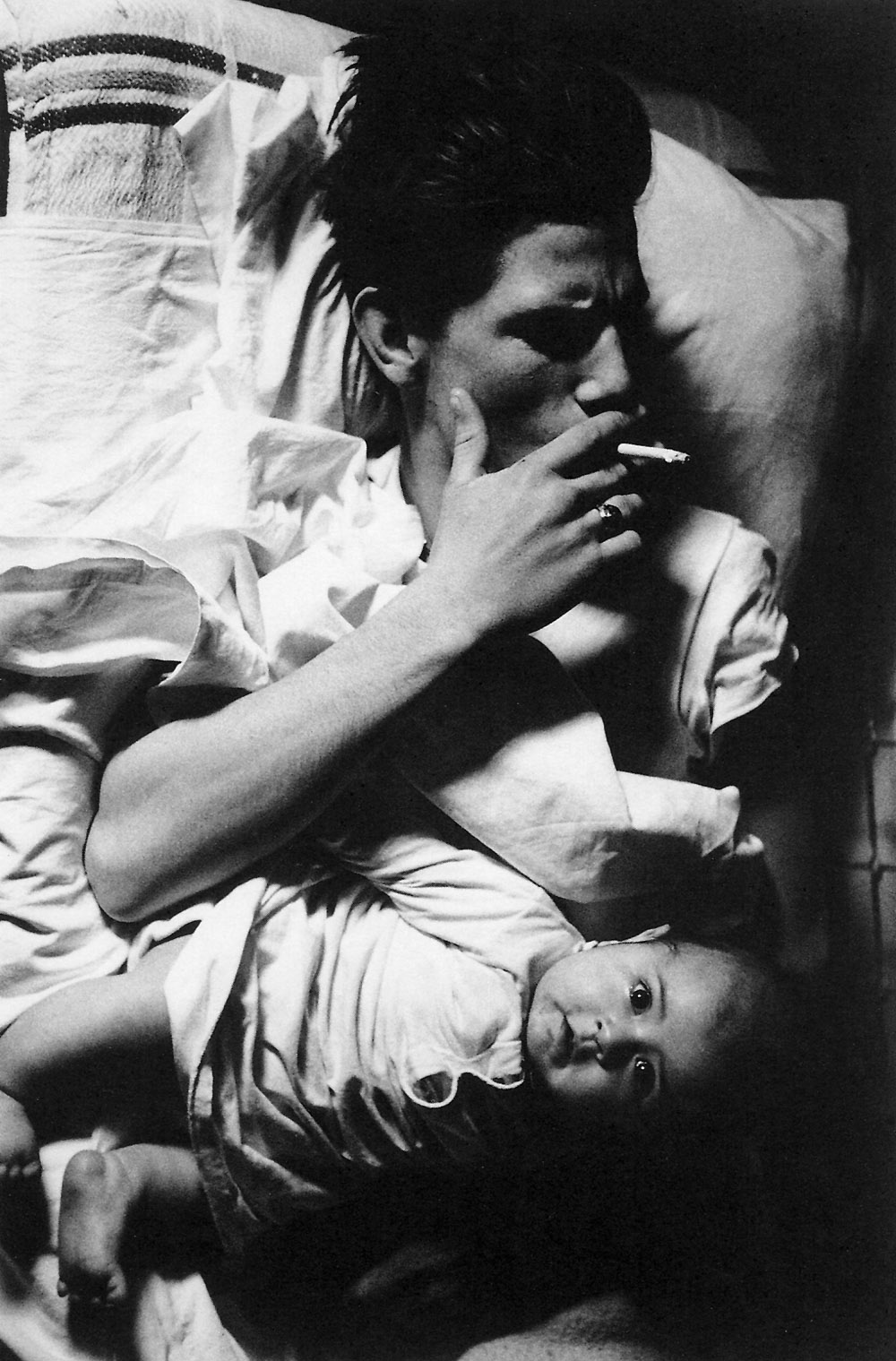
 

Larry Clark (American, b. 1943) 'Untitled' 1971


Larry Clark (American, b. 1943)
Untitled
1971
From the series Tulsa
Silver gelatin print
© Larry Clark, Courtesy of the artist and Luhring Augustine, New York

From the exhibition at  C/O Berlin Kreuzberg – Amerika
Die Berliner Werkstatt für Photographie 1976-86
10th Dezember 2016 – 12th February 2017
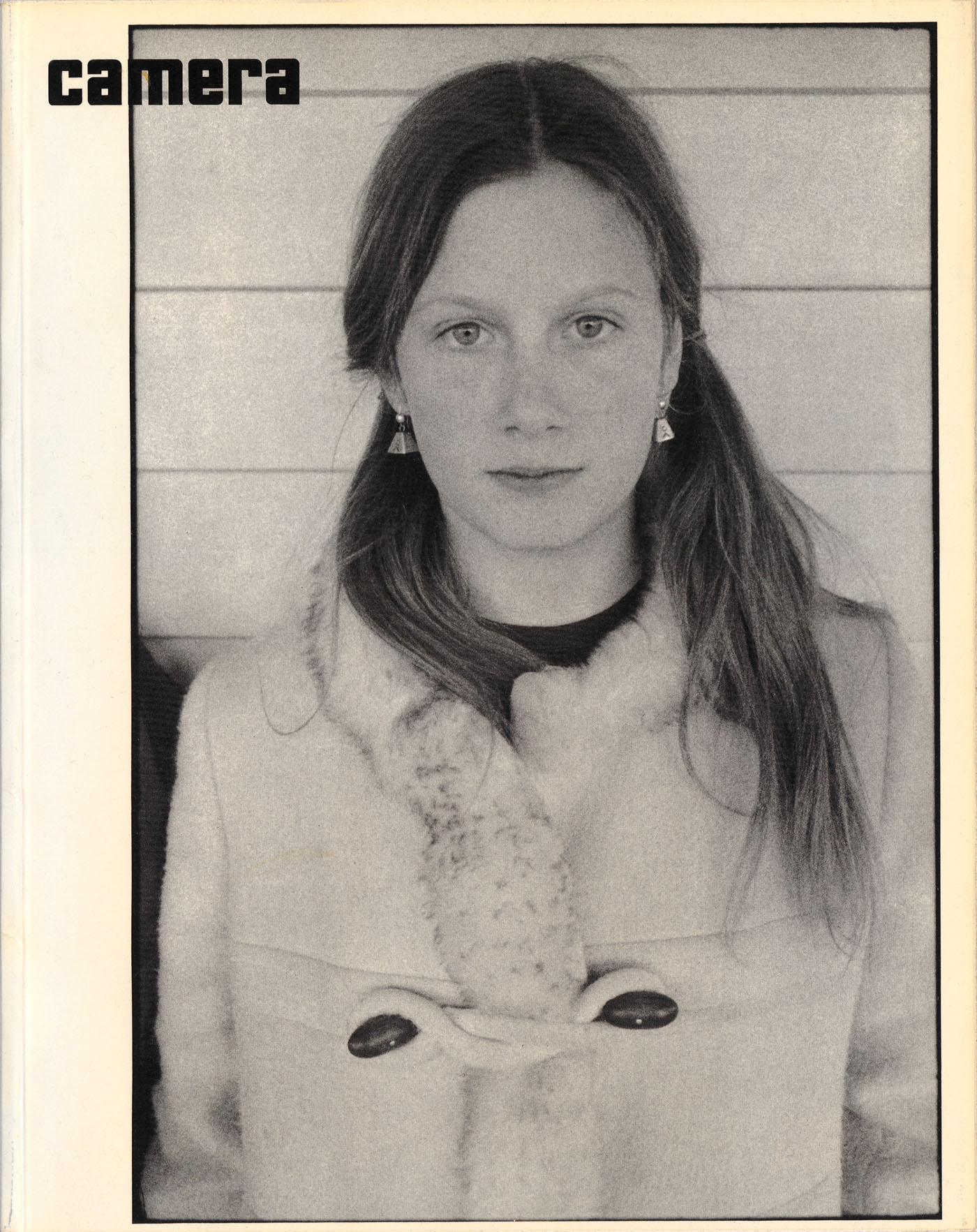
 

'Camera Nr. 8, August 1970' 1970


Camera Nr. 8, August 1970
1970
C. J. Bucher Verlag Luzern, Schweiz,
Title: John Gossage, Kodak TRI-X
Sprengel Museum Hannover

From the exhibition at Sprengel Museum Hannover And Suddenly this Expanse
December 11, 2016 – March 19, 2017
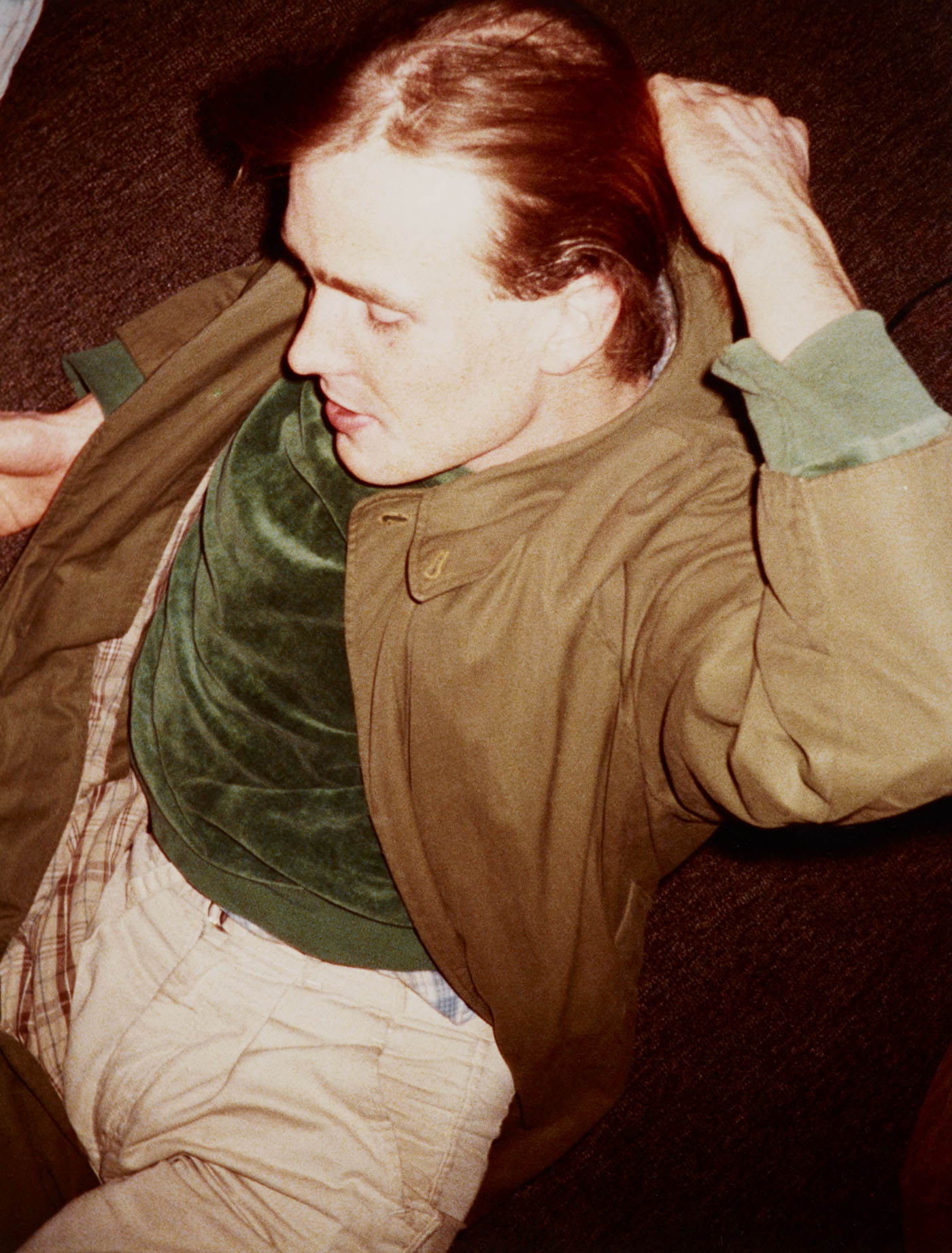
 

Gosbert Adler (German, b. 1956) 'Untitled' 1982


Gosbert Adler (German, b. 1956)
Untitled
1982
C-Print
38.4 x 29cm
© Gosbert Adler
© VG-Bild-Kunst, Bonn 2017
 

Volker Heinze (German, b. 1962) 'Bill Eggleston' 1985


Volker Heinze (German, b. 1962)
Bill Eggleston
1985
C-Print
85 x 62cm
© Volker Heinze
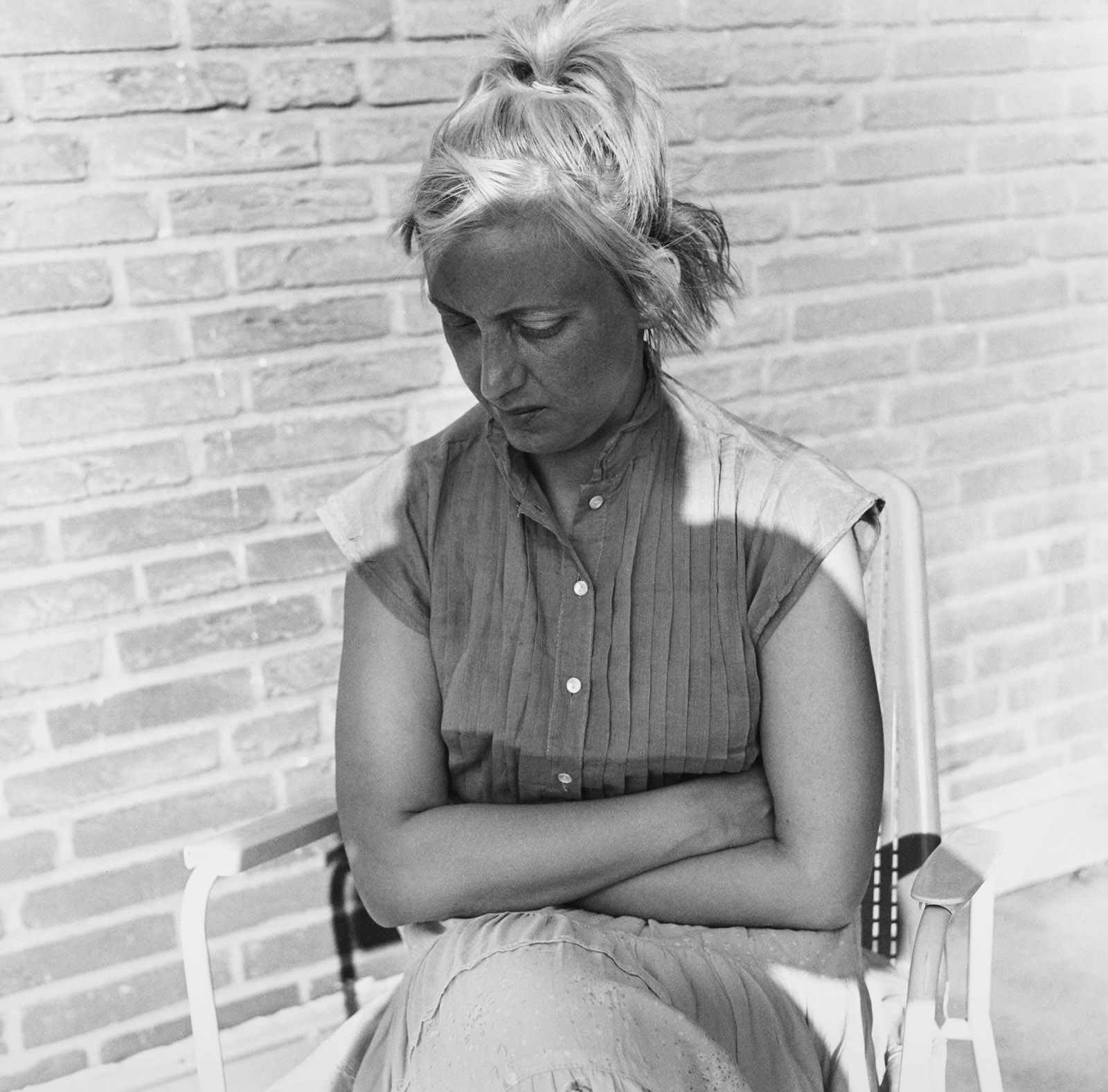
 

Christa Mayer (German, b. 1945) 'Untitled' 1983 from the series 'Abwesende, Porträts aus einer psychatrischen Langzeitstation' (Absentees, Portraits from a long term psychiatric ward)


Christa Mayer (German, b. 1945)
Untitled
1983
From the series Abwesende, Porträts aus einer psychatrischen Langzeitstation (Absentees, Portraits from a long term psychiatric ward)
Gelatin silver print
28.3 x 28.1cm
© Christa Mayer, VG Bild-Kunst, Bonn 2017

From the exhibition at  C/O Berlin Kreuzberg – Amerika
Die Berliner Werkstatt für Photographie 1976-86
10th Dezember 2016 – 12th February 2017


Museum Folkwang
Museumsplatz 1, 45128 Essen

Opening hours:
Tue, Wed 10am – 6pm
Thur, Fri 10am – 8pm
Sat, Sun 10am – 6pm
Mon closed

Museum Folkwang website

C/O Berlin
Hardenbergstraße 22-24, 10623 Berlin

Opening hours:
Daily 11am – 8pm

C/O Berlin website

LIKE ART BLART ON FACEBOOK

Back to top

Exhibition: ‘Thomas Ruff: New Works’ at David Zwirner, New York

Exhibition dates: 18th November, 2016 – 5th January, 2017


Thomas Ruff (German, b. 1958) 'press++28.19' 2016 from the exhibition Exhibition: 'Thomas Ruff: New Works' at David Zwirner, New York, Nov 2016 - Jan 2017


Thomas Ruff (German, b. 1958)
press++28.19
2016
Chromogenic print
72 1/2 x 93 1/2 inches (184 x 237.5cm)
Courtesy the artist and David Zwirner, New York/London


The first posting of a new year and we are off to a cracking start.

In my opinion, Thomas Ruff is one of the most creative contemporary photo-media artists working today. Since the early 1980s, Ruff has constantly pushed the boundaries of photographic creativity and its representation of space time, culture and identity. From the early interiors, through hyperrealist portraiture, haunting night vision photographs, stereoscopes, nudes based on internet pornography and my particular favourites, the “jpegs” series (see the David Zwirner website for a survey of Ruff’s work), the artist has a wonderful self-effacing way of interrogating contemporary culture. Ruff turns the world on its head by looking at things from a different point of view. Through the use of scale, colour, manipulation and the digital layering of information, he proposes an acknowledgment of the strangeness of the world in which we live and the fracturing of seemingly holistic identities.

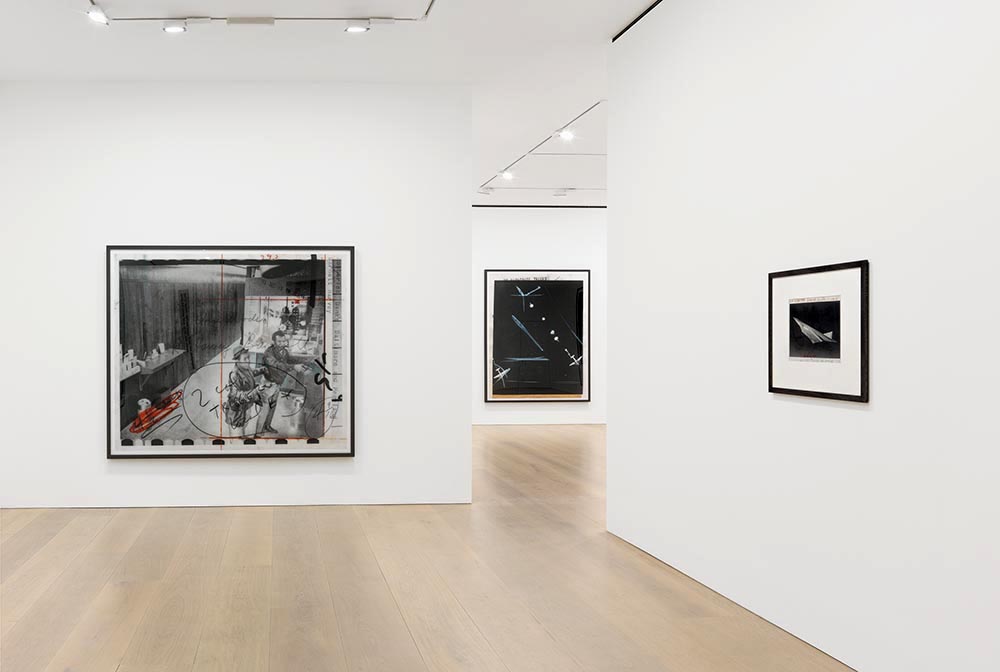
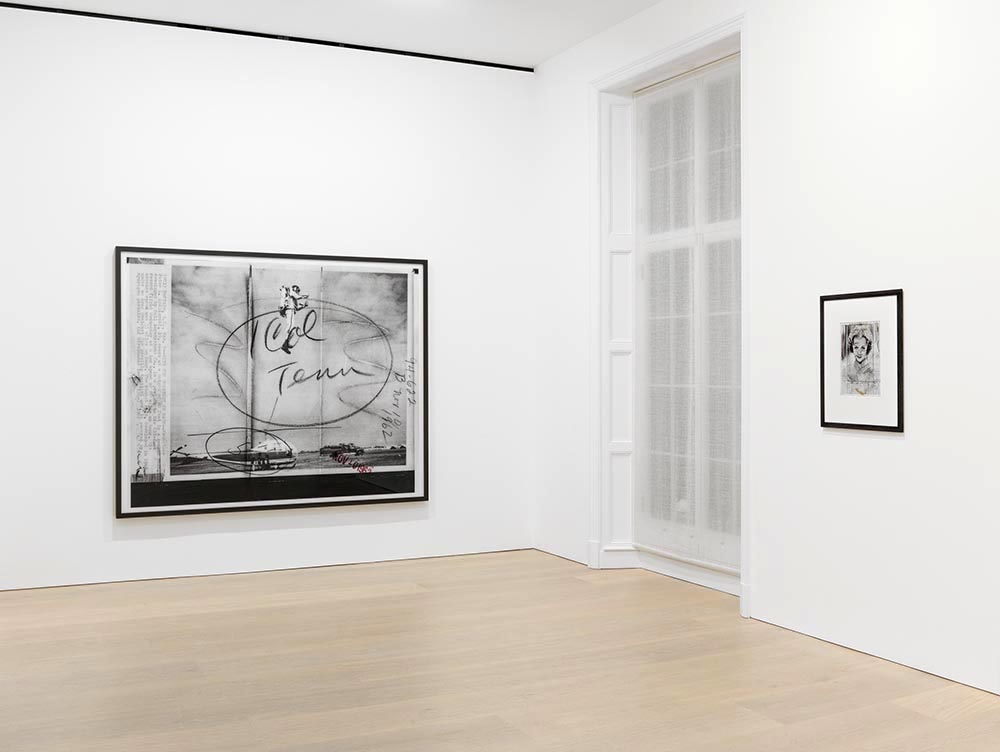
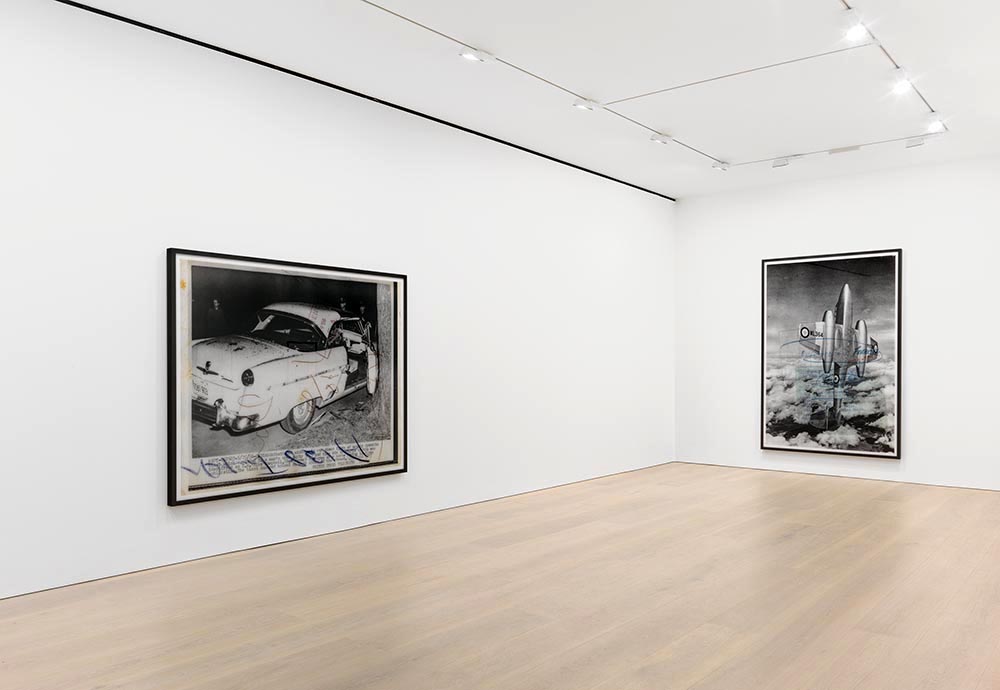
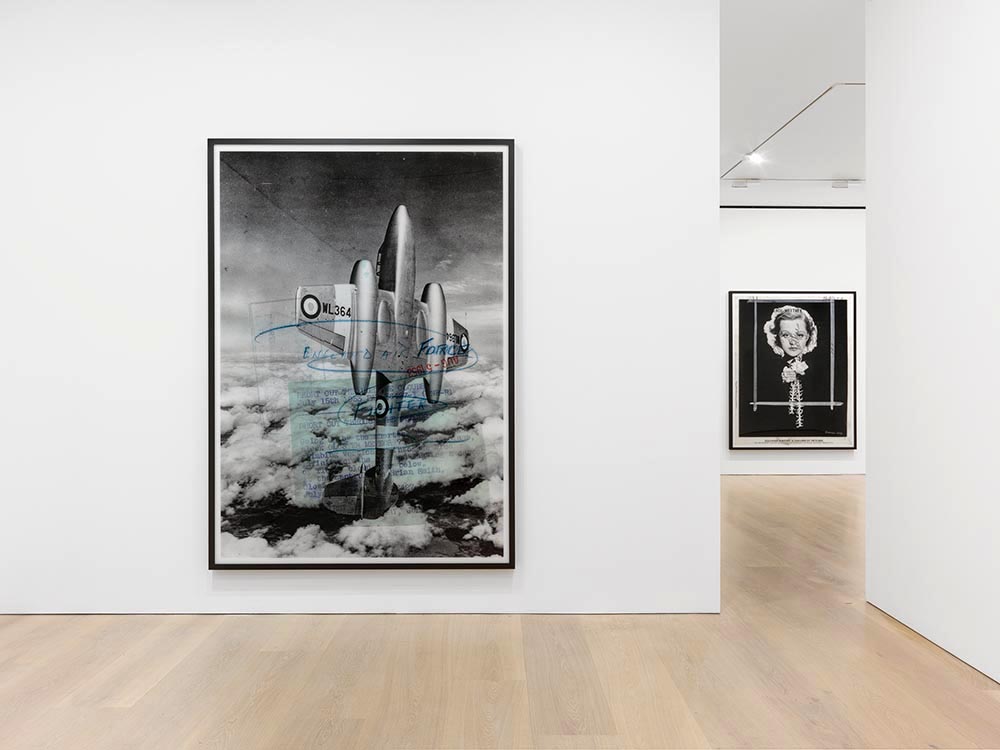
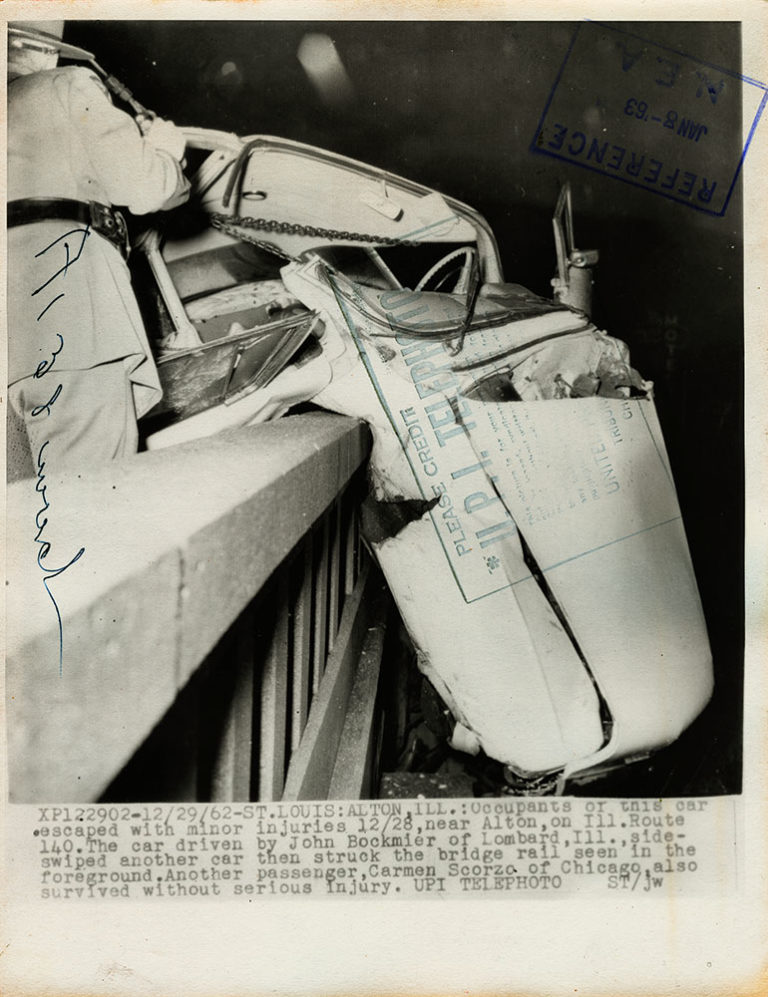
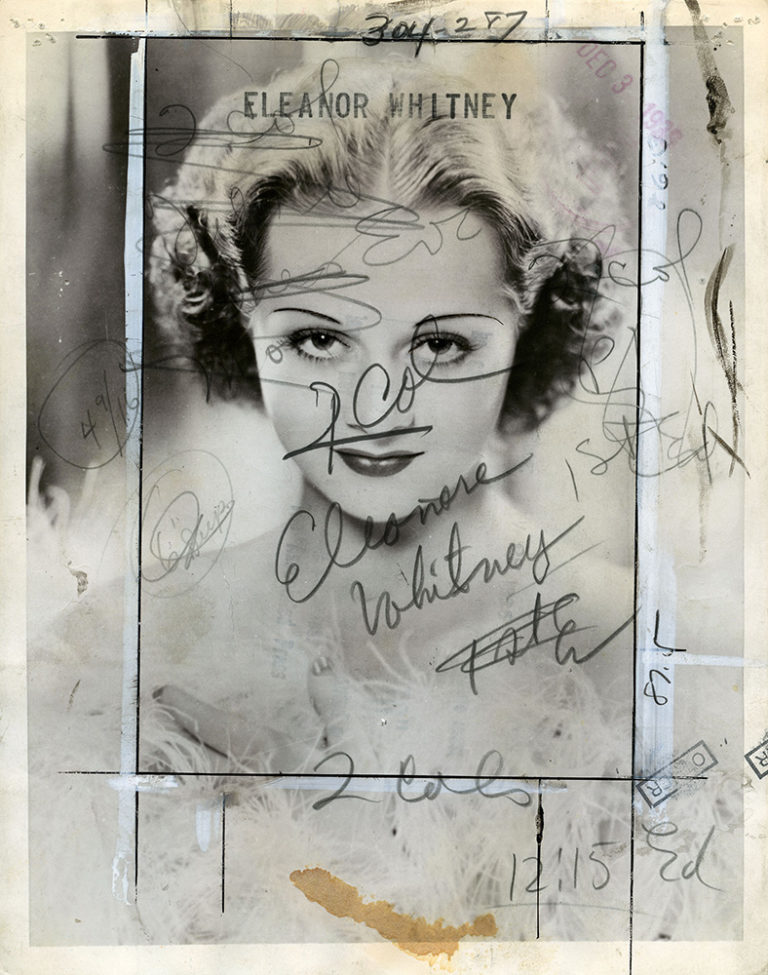
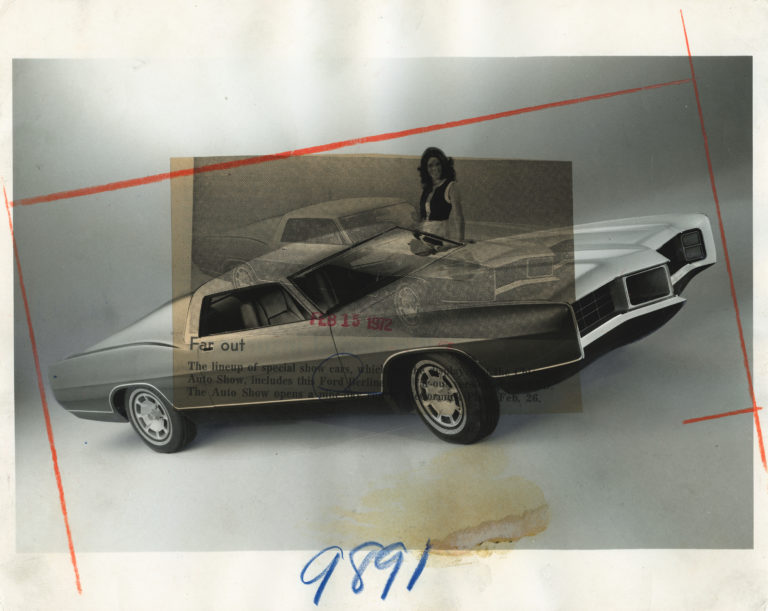
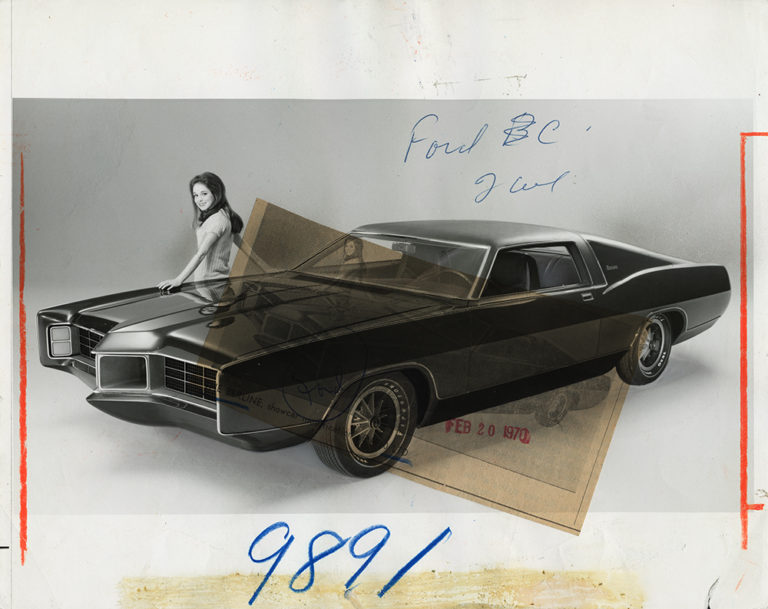
The artist is at his probing best again in his new series, press++, which features photomontages of the back and front of press images of various subjects including film stars, car crashes, bank robbers, car advertisements and, most notably, planes and space exploration. “Interested equally in the subject matter (and any touch-ups) on the front of the paper and the words, stamps, signatures, and smudges on the back, he thus created seamless montages of image and text, in the process compromising the integrity of the former as well as adding relevant context. The overlap causes each side to lose its intended information and merge into a new image altogether.” As the press release continues, “press++ continues Ruff’s long-standing interest in the deconstruction of the image and the new structures of photography following digital technology… As layers of information coexist seamlessly, the idea of a source becomes increasingly obsolescent and the image acquires even greater agency. The information of the press image is lost in favour of an image of its own artistic value.”

In this sense, that the press image is lost in favour of an image that radiates it own artistic value, the strongest images in this new series are the plane and space exploration ones, and for this reason I have concentrated on them in this posting. The images of film stars, car advertisements, car crashes and bank robbers are much less successful – the film stars because the original image is already laden with cultural semiotics (beauty and the surreality of star power) that cannot be so easily broken down / overwritten; the car advertisements because of the prosaic nature of the original image and the box-like design of the cars; and the car crashes (Warhol) and bank robbers because of the strong verisimilitude of the original image, the photographs relationship to its referent, which does not allow the images to be transformed so easily into new artistic works.

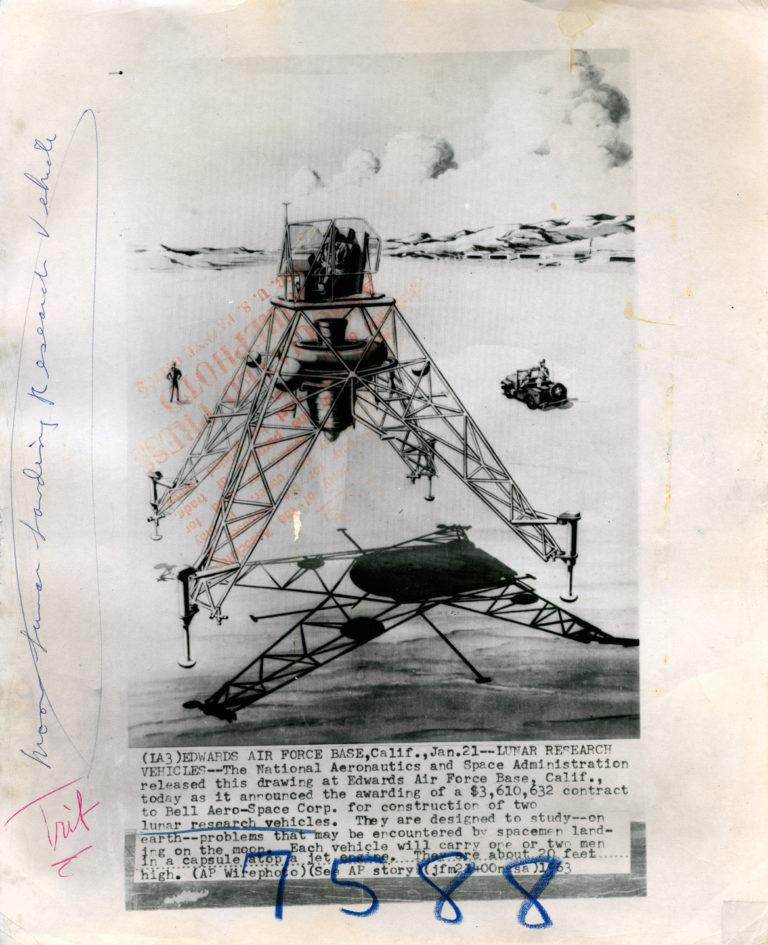
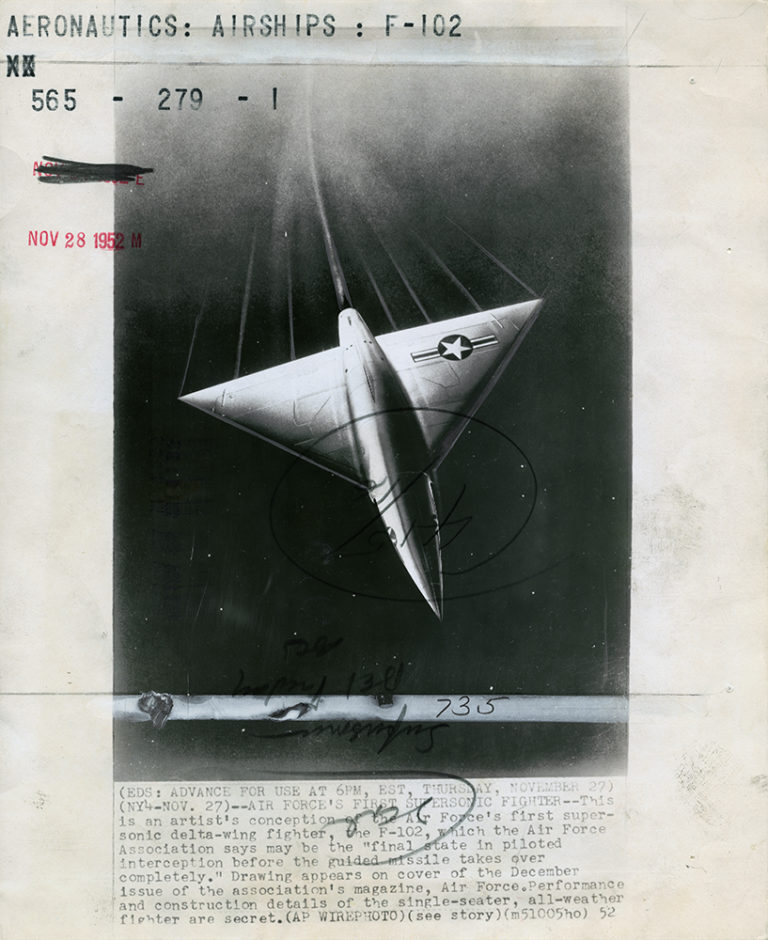
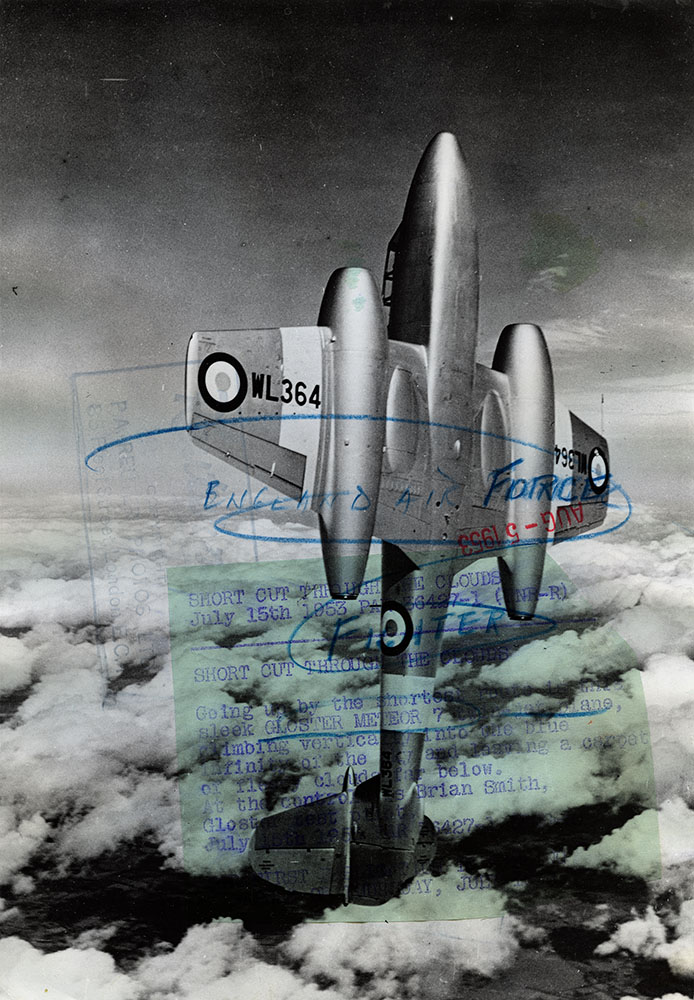
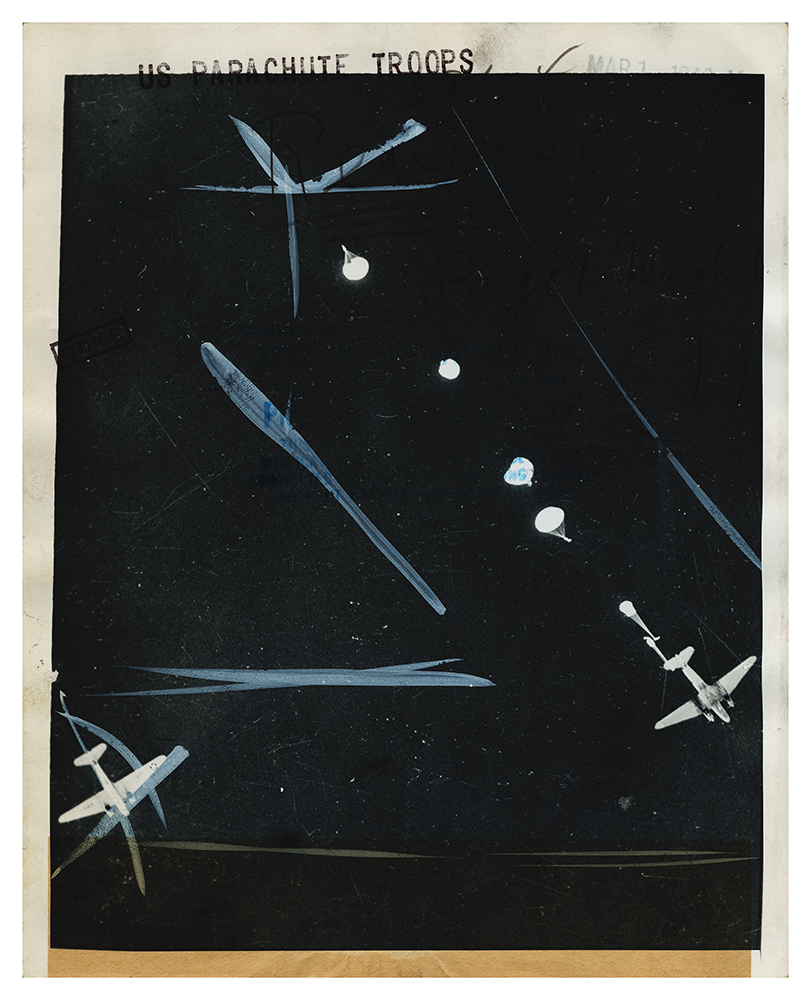
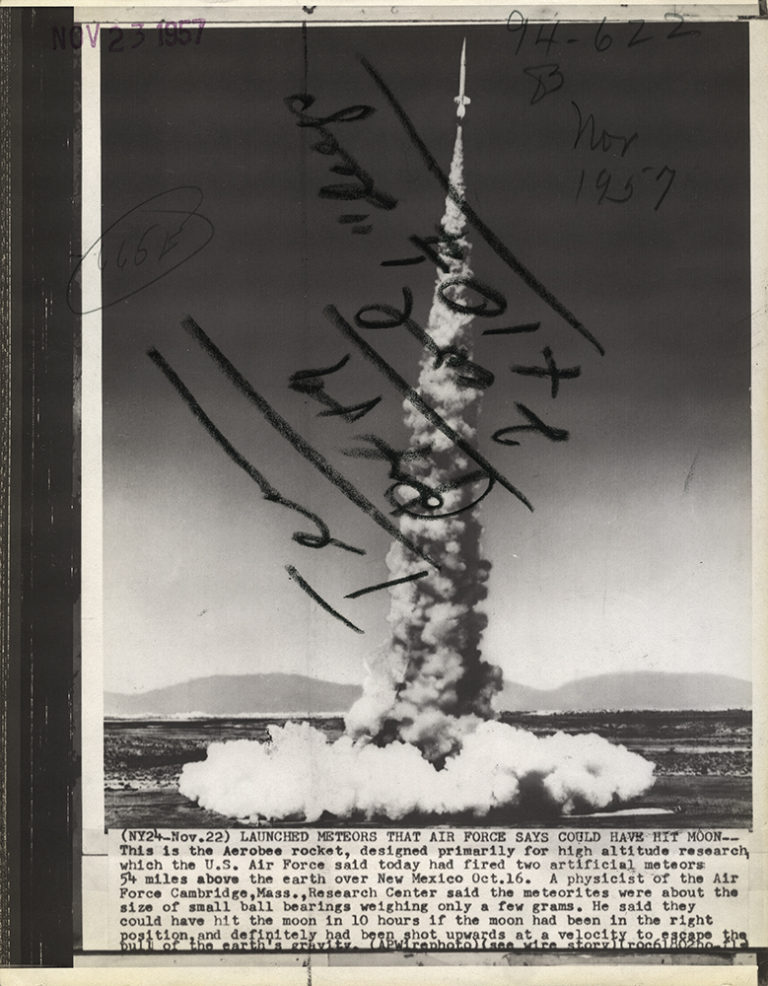
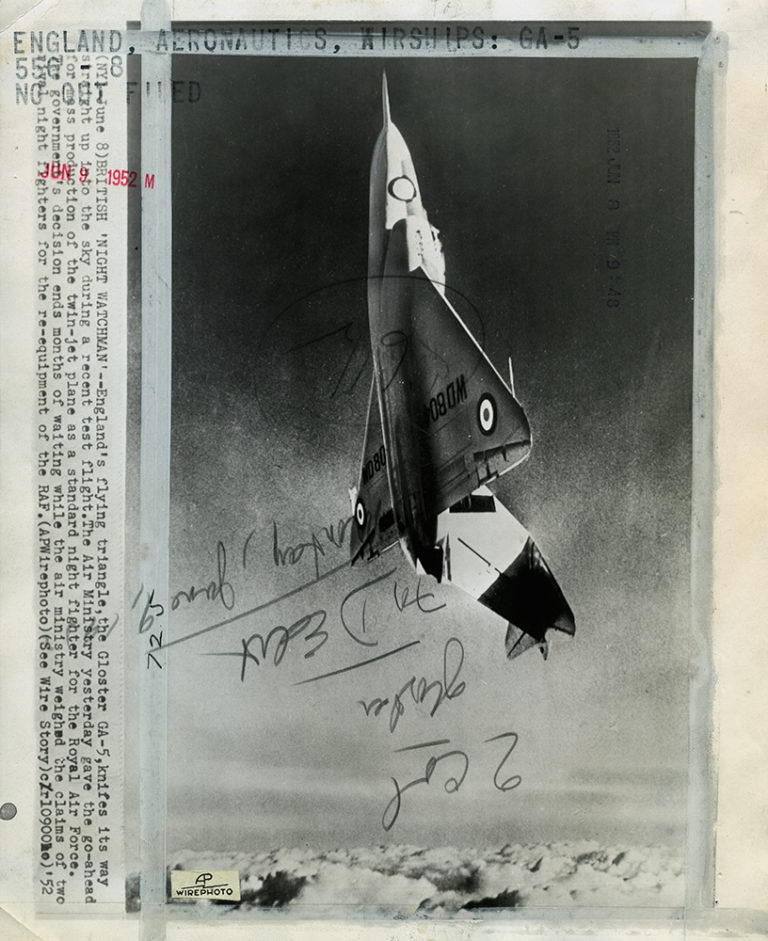
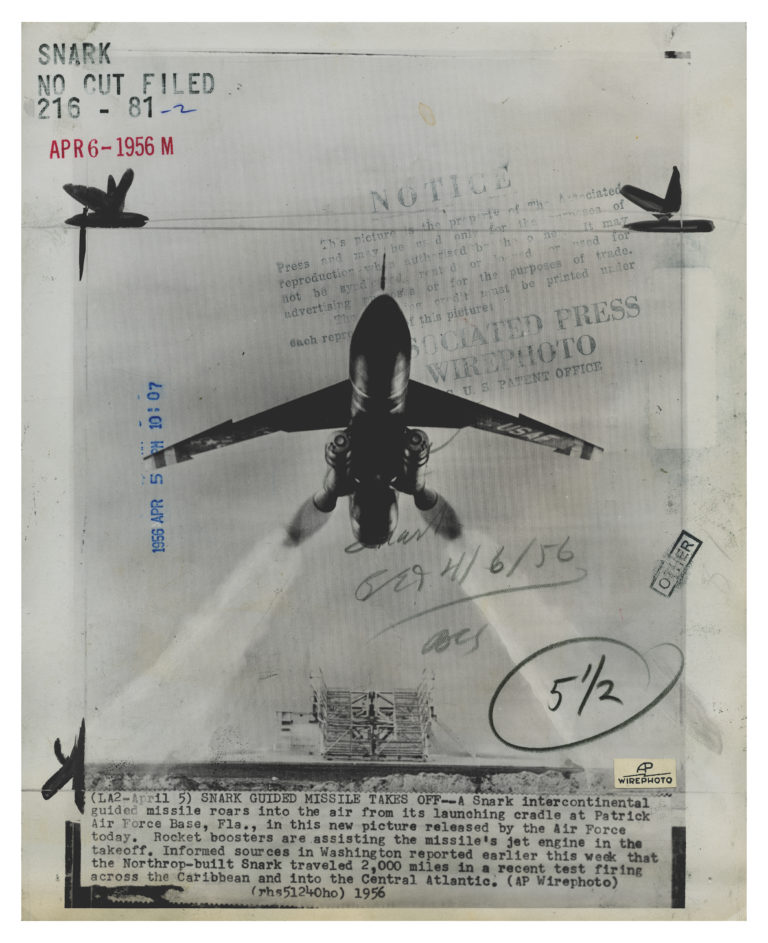
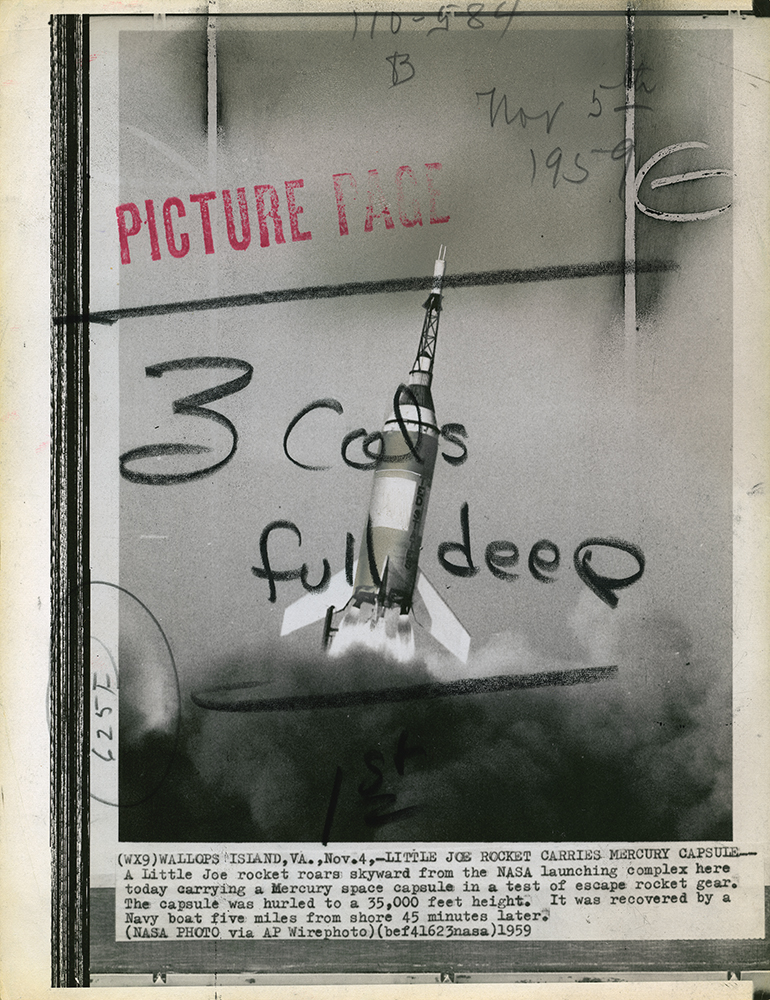
Only in the works of planes and space exploration does the new series take flight – a flight of fancy if you like – through the deconstruction of the original image. Here, layers of information coexist seamlessly and the idea of a singular source becomes increasingly obsolescent. Here, aerodynamic planes soar “Beyond Earth”; Gloster “Meteor” aircraft strike vertically through the clouds surrounded by a spiralling blue line, as though the plane were breaking through the limits of the Earth; bursting Aerobee rockets are excised by thick black lines; Snark guided missiles engage Associated Press Wirephoto Notices of reproduction intent (in which, now, the rocket cannot be used for the purposes of trade); and a Little Joe rocket roars skyward through a space “3 cols full deep” on the PICTURE PAGE on November 5th 1959. The day of the week was a Thursday.

Only in these photomontages is the series really successful in its goal… to produce images with their own artistic value beyond that of the original document. But what a triumph these plane and space exploration images are. They take the picture away from its origins, the rockets and planes away from the Earth, and the viewer away from the stable ground on which they stand. Conceptually they are tight and inventive, subverting known taxonomies of pictorial construction. Spiritually, they take the viewer away from themselves into another world, into Barthes’ extended form of punctum: time. These vertiginous images are indeed “the vertigo of time defeated.” Full deep.

Dr Marcus Bunyan


Many thankx to David Zwirner for allowing me to publish the photographs in the posting. Please click on the photographs for a larger version of the image.


Thomas Ruff (born 1958) is a German photographer, known for his blown up passport-like photo large scale portrait, executed between 1981 and 1985. In 2003 he published a series of nudes based on internet pornography, which were digitally processed and obscured without using any camera or traditional photographic device. Ruff’s “Substrat” series (2002-2003), continued to explore digitally altered Web-based pictures, this time based on Japanese manga and anime cartoons, although the source material was altered and manipulated so the had no visual memory of the original image. In 2009, he produced “jpegs”, another large-scale series of photographs exclusively using downloaded images, which bared lots of jpeg compression artefacts.


Installation view of 'Thomas Ruff New Works' at David Zwirner New York, 18 November 2016 - 05 January, 2017 showing at right, Tomas Ruff's 'press++30.18' 2016


Installation view of Thomas Ruff New Works at David Zwirner New York, 18 November 2016 – 05 January, 2017 showing at right, Tomas Ruff’s press++30.18, 2016. Chromogenic print, 87 1/2 x 72 1/2 inches (222.3 x 184cm)


Installation view of 'Thomas Ruff New Works' at David Zwirner New York, 18 November 2016 - 05 January, 2017 showing at left, Thomas Ruff's 'press++70.01' 2016


Installation view of Thomas Ruff New Works at David Zwirner New York, 18 November 2016 – 05 January, 2017 showing at left, Thomas Ruff’s press++70.01, 2016. Chromogenic print, 72 1/2 x 88 3/4 inches (184 x 225.5cm)


Installation view of 'Thomas Ruff New Works' at David Zwirner New York, 18 November 2016 - 05 January, 2017 showing at left, Thomas Ruff's 'press++22.01' 2015. Chromogenic print, 88 15/16 x 72 7/8 inches (226 x 185cm); and at right, Thomas Ruff's 'press++28.04' 2016. Chromogenic print, 92 1/2 x 72 1/2 inches (235 x 184cm)


Installation view of Thomas Ruff New Works at David Zwirner New York, 18 November 2016 – 05 January, 2017 showing at left, Thomas Ruff’s press++22.01, 2015. Chromogenic print, 88 15/16 x 72 7/8 inches (226 x 185cm); and at right, Thomas Ruff’s press++28.04, 2016. Chromogenic print, 92 1/2 x 72 1/2 inches (235 x 184cm)


Installation view of 'Thomas Ruff New Works' at David Zwirner New York, 18 November 2016 - 05 January, 2017 showing at left, Thomas Ruff's 'press++09.26' 2016


Installation view of Thomas Ruff New Works at David Zwirner New York, 18 November 2016 – 05 January, 2017 showing at left, Thomas Ruff’s press++09.26, 2016. Chromogenic print, 72 1/2 x 92 5/8 inches (184 x 235.3cm)


Installation view of 'Thomas Ruff New Works' at David Zwirner New York, 18 November 2016 - 05 January, 2017 showing at left, Thomas Ruff's 'press++28.19' 2016. Chromogenic print, 72 7/8 x 93 3/4 inches (185 x 238cm); and at right, 'press++21.11' 2016. Chromogenic print, 102 x 72 1/2 inches (259.1 x 184 cm)


Installation view of Thomas Ruff New Works at David Zwirner New York, 18 November 2016 – 05 January, 2017 showing at left, Thomas Ruff’s press++28.19, 2016. Chromogenic print, 72 7/8 x 93 3/4 inches (185 x 238cm); and at right, press++21.11, 2016. Chromogenic print, 102 x 72 1/2 inches (259.1 x 184 cm)


Installation view of 'Thomas Ruff New Works' at David Zwirner New York, 18 November 2016 - 05 January, 2017 showing at left, Thomas Ruff's 'press++21.11' 2016


Installation view of Thomas Ruff New Works at David Zwirner New York, 18 November 2016 – 05 January, 2017 showing at left, Thomas Ruff’s press++21.11, 2016. Chromogenic print, 102 x 72 1/2 inches (259.1 x 184cm)


Thomas Ruff (German, b. 1958) 'press++28.04' 2016 from the exhibition Exhibition: 'Thomas Ruff: New Works' at David Zwirner, New York, Nov 2016 - Jan 2017


Thomas Ruff (German, b. 1958)
press++28.04
2016
Chromogenic print
92 1/2 x 72 1/2 inches (235 x 184cm)
Courtesy the artist and David Zwirner, New York/London


Thomas Ruff (German, b. 1958) 'press++70.01' 2016


Thomas Ruff (German, b. 1958)
press++70.01
2016
Chromogenic print
72 7/8 x 89 inches (185 x 226cm)
Courtesy the artist and David Zwirner, New York/London


Thomas Ruff (German, b. 1958) 'press++32.10' 2016


Thomas Ruff (German, b. 1958)
press++32.10
2016
Chromogenic print
15 x 11 7/8 inches (38.1 x 30cm)
Courtesy the artist and David Zwirner, New York/London


Thomas Ruff (German, b. 1958) 'press++65.33' 2016


Thomas Ruff (German, b. 1958)
press++65.33
2016
Chromogenic print
11 7/8 x 14 7/8 inches (30 x 37.6cm)
Courtesy the artist and David Zwirner, New York/London


Thomas Ruff (German, b. 1958) 'press++65.21' 2016


Thomas Ruff (German, b. 1958)
press++65.21
2016
Chromogenic print
11 7/8 x 14 7/8 inches (30 x 37.6cm)
Courtesy the artist and David Zwirner, New York/London


David Zwirner is pleased to present press++, a new series of works by Thomas Ruff on view at 533 West 19th Street in New York.

Working in distinct series since the late 1970s, Ruff has approached different genres of photography, including portraiture, architecture, astronomy, the nude, surveillance footage, reportage, and photograms. Using a wide range of technological approaches, and often pushing the limits of photographic representation in the process, he has reinvented historical conventions and expectations of the medium. In his considered approach to the means and possibilities of photography, Thomas Ruff explores a breadth of themes that is reflected in the range of techniques he employs: analogue and digital exposures taken by the artist exist in his practice alongside computer generated imagery, photographs from scientific archives, and pictures culled and manipulated from newspapers, magazines, and the Internet.

Shown here for the first time, press++ features large-scale photographs of archival media clippings from American newspapers that relate to the theme of space exploration. Ruff scanned the front and back of the original documents, which he has been collecting over several years, and combined the two sides in Adobe Photoshop. Interested equally in the subject matter (and any touch-ups) on the front of the paper and the words, stamps, signatures, and smudges on the back, he thus created seamless montages of image and text, in the process compromising the integrity of the former as well as adding relevant context. The overlap causes each side to lose its intended information and merge into a new image altogether. As such, the often disrespectful treatment of press pictures by newspaper editors becomes obvious, as text, cropping, and retouching can all fundamentally change the original document.

press++ continues Ruff’s long-standing interest in the deconstruction of the image and the new structures of photography following digital technology. It relates to earlier series by the artist including Newspaper Photographs (1990-1991), in which images were sourced from analog newspaper prints, and jpegs (2004-2007), where he used digitally disseminated photographs. The new works further recall the emergence of photomontage in Germany in the 1920s, where it was employed by Dada artists as a potent and subversive political tool. Ruff’s digital composites, however, are not concerned with the often fragmented and surrealistic effects produced by these art historical precedents, but with the treatment of the photographic image when it is redistributed and re-archived. As layers of information coexist seamlessly, the idea of a source becomes increasingly obsolescent and the image acquires even greater agency. The information of the press image is lost in favour of an image of its own artistic value.

Press release from David Zwirner


Thomas Ruff (German, b. 1958) 'press++01.38' 2015


Thomas Ruff (German, b. 1958)
press++01.38
2015
Chromogenic print
11 1/4 x 14 7/8 inches (30 x 37.8cm)
Courtesy the artist and David Zwirner, New York/London


Thomas Ruff (German, b. 1958) 'press++09.27' 2016


Thomas Ruff (German, b. 1958)
press++09.27
2016
Chromogenic print
14 1/2 x 11 7/8 inches (36.9 x 30cm)
Courtesy the artist and David Zwirner, New York/London


Thomas Ruff (German, b. 1958) 'press++20.56' 2016


Thomas Ruff (German, b. 1958)
press++20.56
2016
Chromogenic print
14 1/2 x 11 7/8 inches (36.7 x 30cm)
Courtesy the artist and David Zwirner, New York/London


Thomas Ruff (German, b. 1958) 'press++21.11' 2016


Thomas Ruff (German, b. 1958)
press++21.11
2016
Chromogenic print
102 x 72 1/2 inches (259.1 x 184cm)
Courtesy the artist and David Zwirner, New York/London


Thomas Ruff (German, b. 1958) 'press++22.01' 2015


Thomas Ruff (German, b. 1958)
press++22.01
2015
Chromogenic print
88 15/16 x 72 7/8 inches (226 x 185cm)
Courtesy the artist and David Zwirner, New York/London


Thomas Ruff (German, b. 1958) 'press++01.64' 2016


Thomas Ruff (German, b. 1958)
press++01.64
2016
Chromogenic print
15 1/4 x 11 1/4 inches (38.5 x 30cm)
Courtesy the artist and David Zwirner, New York/London


Thomas Ruff (German, b. 1958) 'press++24.75' 2016


Thomas Ruff (German, b. 1958)
press++24.75
2016
Chromogenic print
14 7/8 x 11 7/8 inches (37.6 x 30cm)
Courtesy the artist and David Zwirner, New York/London


Thomas Ruff (German, b. 1958) 'press++25.05' 2015


Thomas Ruff (German, b. 1958)
press++25.05
2015
Chromogenic print
88 7/8 x 72 7/8 inches (226 x 185cm)
Courtesy the artist and David Zwirner, New York/London


Thomas Ruff (German, b. 1958) 'press++02.20' 2015


Thomas Ruff (German, b. 1958)
press++02.20
2015
Chromogenic print
15 3/8 x 11 7/8 inches (39 x 30cm)
Courtesy the artist and David Zwirner, New York/London


David Zwirner
New York, NY 10011
Phone: 212 727 2070

Opening hours:
Tuesday – Saturday, 10am – 6pm

David Zwirner website

LIKE ART BLART ON FACEBOOK

Back to top

Exhibition: ‘Intersections: Photographs and Videos from the National Gallery of Art and the Corcoran Gallery of Art’ at the National Gallery of Art, Washington

Exhibition dates: 29th May, 2016 – 2nd January, 2017

Curators: Sarah Greenough, senior curator, department of photographs, and Philip Brookman, consulting curator, department of photographs, both National Gallery of Art, are the exhibition curators.


Louis Stettner (American, 1922-2016) 'Times Square, New York City' 1952-1954 from the exhibition Exhibition: 'Intersections: Photographs and Videos from the National Gallery of Art and the Corcoran Gallery of Art' at the National Gallery of Art, Washington, May 2016 - Jan 2017


Louis Stettner (American, 1922-2016)
Times Square, New York City
1952-1954
Gelatin silver print
Sheet (trimmed to image): 42.1 x 27.5cm (16 9/16 x 10 13/16 in.)
National Gallery of Art, Washington, Patrons’ Permanent Fund


The last posting of a fruitful year for Art Blart. I wish all the readers of Art Blart a happy and safe New Year!

The exhibition is organised around five themes – movement, sequence, narrative, studio, and identity – found in the work of Muybridge and Stieglitz, themes then developed in the work of other artists. While there is some interesting work in the posting, the conceptual rationale and stand alone nature of the themes and the work within them is a curatorial ordering of ideas that, in reality, cannot be contained within any one boundary, the single point of view.

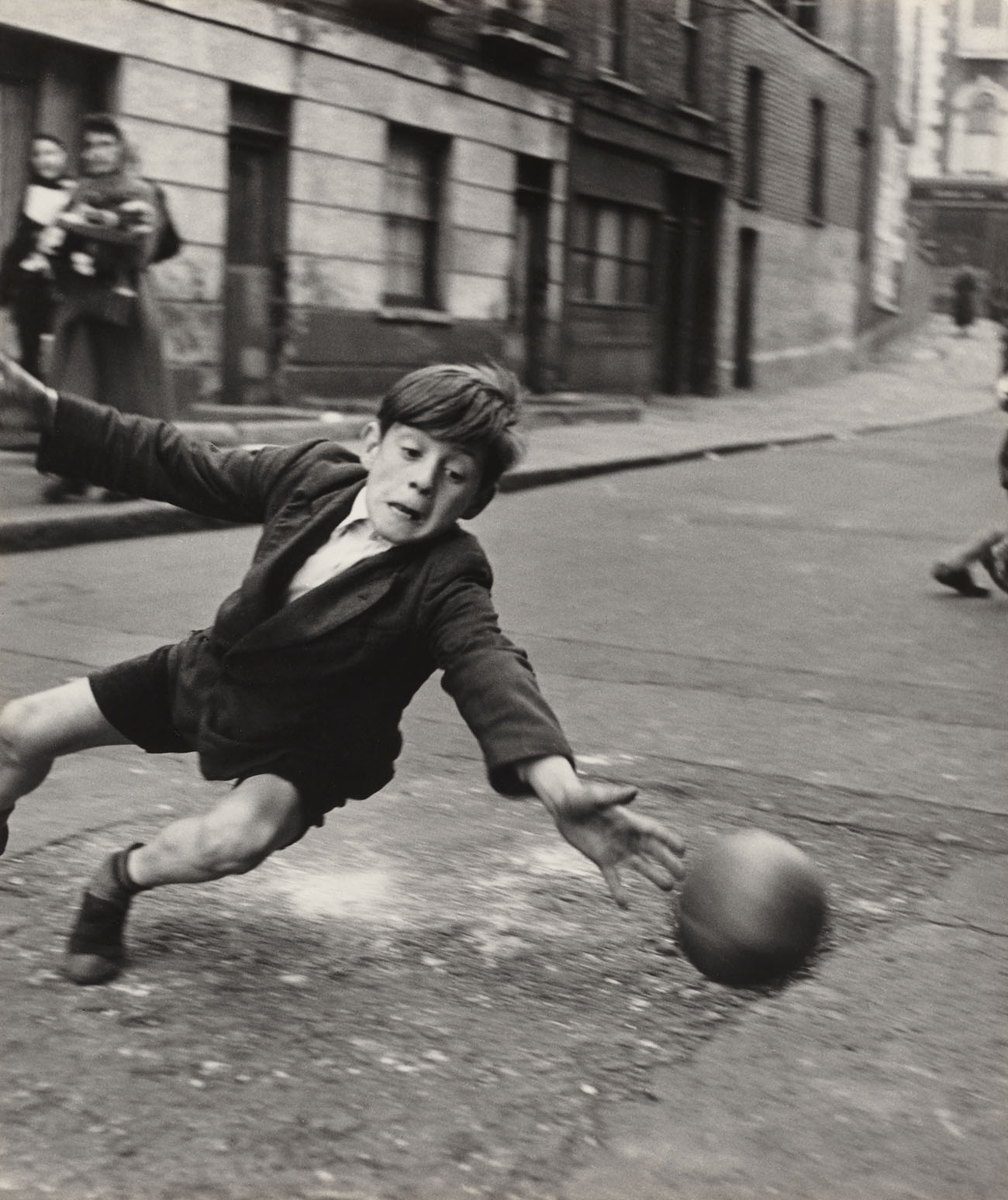
Movement can be contained in sequences; narrative can be unfolded in a sequence (as in the work of Duane Michals); narrative and identity have a complex association which can also be told through studio work (eg. Gregory Crewdson), etc… What does Roger Mayne’s Goalie, Street Football, Brindley Road (1956, below) not have to do with identity, the young lad with his dirty hands, playing in his socks, in a poverty stricken area of London; why has Hiroshi Sugimoto’s Oscar Wilde (1999, below) been included in the studio section when it has much more to do with the construction of identity through photography – “Triply removing his portrait from reality – from Oscar Wilde himself to a portrait photograph to a wax sculpture and back to a photograph” – which confounds our expectations of the nature of photography. Photography is nefariously unstable in its depiction of an always, constructed reality, through representation(s) which reject simple causality.

To isolate and embolden the centre is to disclaim and disavow the periphery, work which crosses boundaries, is multifaceted and multitudinous; work which forms a nexus for networks of association beyond borders, beyond de/lineation – the line from here to there. The self-contained themes within this exhibition are purely illusory.

Dr Marcus Bunyan


Many thankx to the National Gallery of Art for allowing me to publish the photographs in the posting. Please click on the photographs for a larger version of the image.


“We can no longer accept that the identity of a man can be adequately established by preserving and fixing what he looks like from a single viewpoint in one place.”


John Berger. “No More Portraits,” in New Society August 1967


“Intersections: Photographs and Videos from the National Gallery of Art and the Corcoran Gallery of Art explores the connections between the two newly joined photography collections. On view from May 29, 2016, through January 2, 2017, the exhibition is organised around themes found in the work of the two pioneers of each collection: Eadweard Muybridge (1830-1904) and Alfred Stieglitz (1864-1946). Inspired by these two seminal artists, Intersections brings together more than 100 highlights of the recently merged collections by a range of artists from the 1840s to today.

Just as the nearly 700 photographs from Muybridge’s groundbreaking publication Animal Locomotion, acquired by the Corcoran Gallery of Art in 1887, became the foundation for the institution’s early interest in photography, the Key Set of more than 1,600 works by Stieglitz, donated by Georgia O’Keeffe and the Alfred Stieglitz Estate, launched the photography collection at the National Gallery of Art in 1949.”

Press release from the National Gallery of Art


Exhibition highlights

The exhibition is organised around five themes – movement, sequence, narrative, studio, and identity – found in the work of Muybridge and Stieglitz.

Movement

Works by Muybridge, who is best known for creating photographic technologies to stop and record motion, anchor the opening section devoted to movement. Photographs by Berenice Abbott and Harold Eugene Edgerton, which study how objects move through space, are included, as are works by Roger Mayne, Alexey Brodovitch, and other who employed the camera to isolate an instant from the flux of time.

Wall text

Intersections wall text


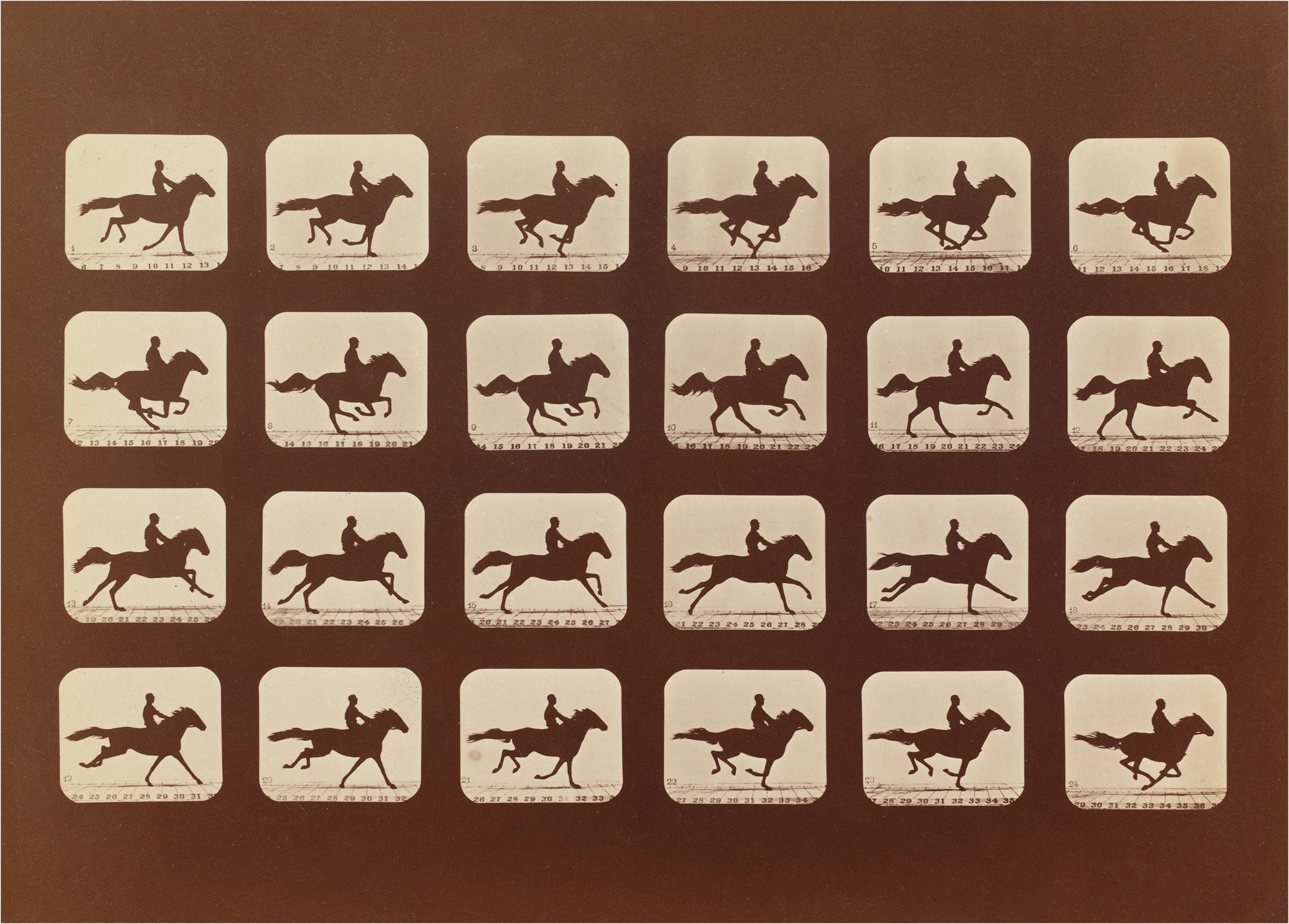
Eadweard Muybridge (English, 1830-1904) 'Horses. Running. Phyrne L. No. 40, from The Attitudes of Animals in Motion' 1879 from the National Gallery of Art and the Corcoran Gallery of Art' at the National Gallery of Art, Washington, May 2016 - Jan 2017


Eadweard Muybridge (English, 1830-1904)
Horses. Running. Phyrne L. No. 40, from The Attitudes of Animals in Motion
1879
Albumen print
Image: 16 x 22.4cm (6 5/16 x 8 13/16 in.)
Sheet: 25.7 x 32.4cm (10 1/8 x 12 3/4 in.)
National Gallery of Art, Washington, Gift of Mary and Dan Solomon


In order to analyse the movement of racehorses, farm animals, and acrobats, Muybridge pioneered new and innovative ways to stop motion with photography. In 1878, he started making pictures at railroad magnate Leland Stanford’s horse farm in Palo Alto, California, where he developed an electronic shutter that enabled exposures as fast as one-thousandth of a second. In this print from Muybridge’s 1881 album The Attitudes of Animals in Motion, Stanford’s prized racehorse Phryne L is shown running in a sequential grid of pictures made by 24 different cameras with electromagnetic shutters tripped by wires as the animal ran across the track. These pictures are now considered a critical step in the development of cinema.


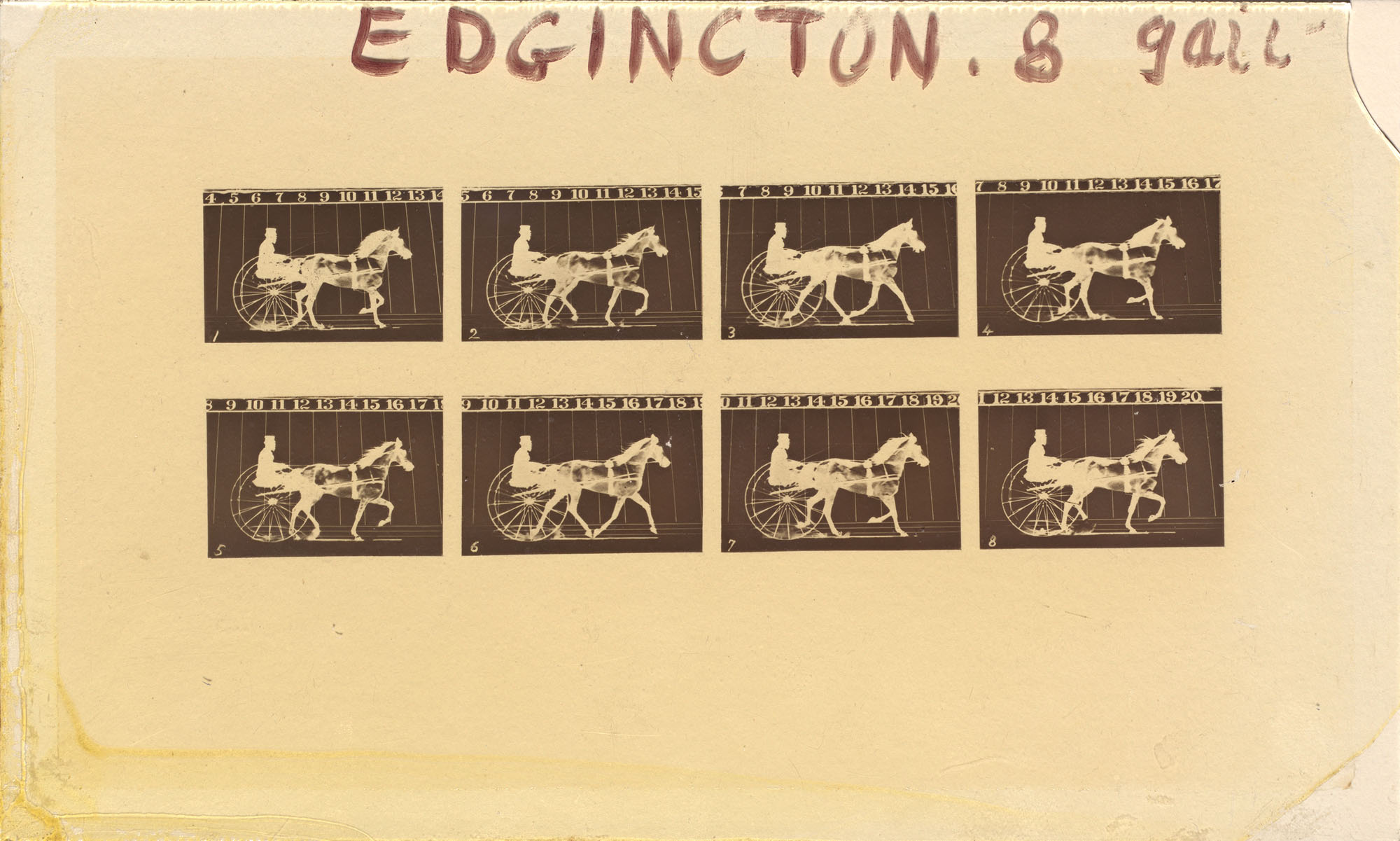
Eadweard Muybridge (English, 1830-1904) 'Internegative for Horses. Trotting. Abe Edgington. No. 28, from The Attitudes of Animals in Motion' 1878


Eadweard Muybridge (English, 1830-1904)
Internegative for Horses. Trotting. Abe Edgington. No. 28, from The Attitudes of Animals in Motion
1878
Collodion negative
Overall (glass plate): 15.3 x 25.4cm (6 x 10 in.)
National Gallery of Art, Washington, Gift of Mary and Dan Solomon and Patrons’ Permanent Fund


This glass negative shows the sequence of Leland Stanford’s horse Abe Edgington trotting across a racetrack in Palo Alto, California – a revolutionary record of the changes in the horse’s gait in about one second. Muybridge composed the negative from photographs made by eight different cameras lined up to capture the horse’s movements. Used to print the whole sequence together onto albumen paper, this internegative served as an intermediary step in the production of Muybridge’s 1881 album The Attitudes of Animals in Motion.


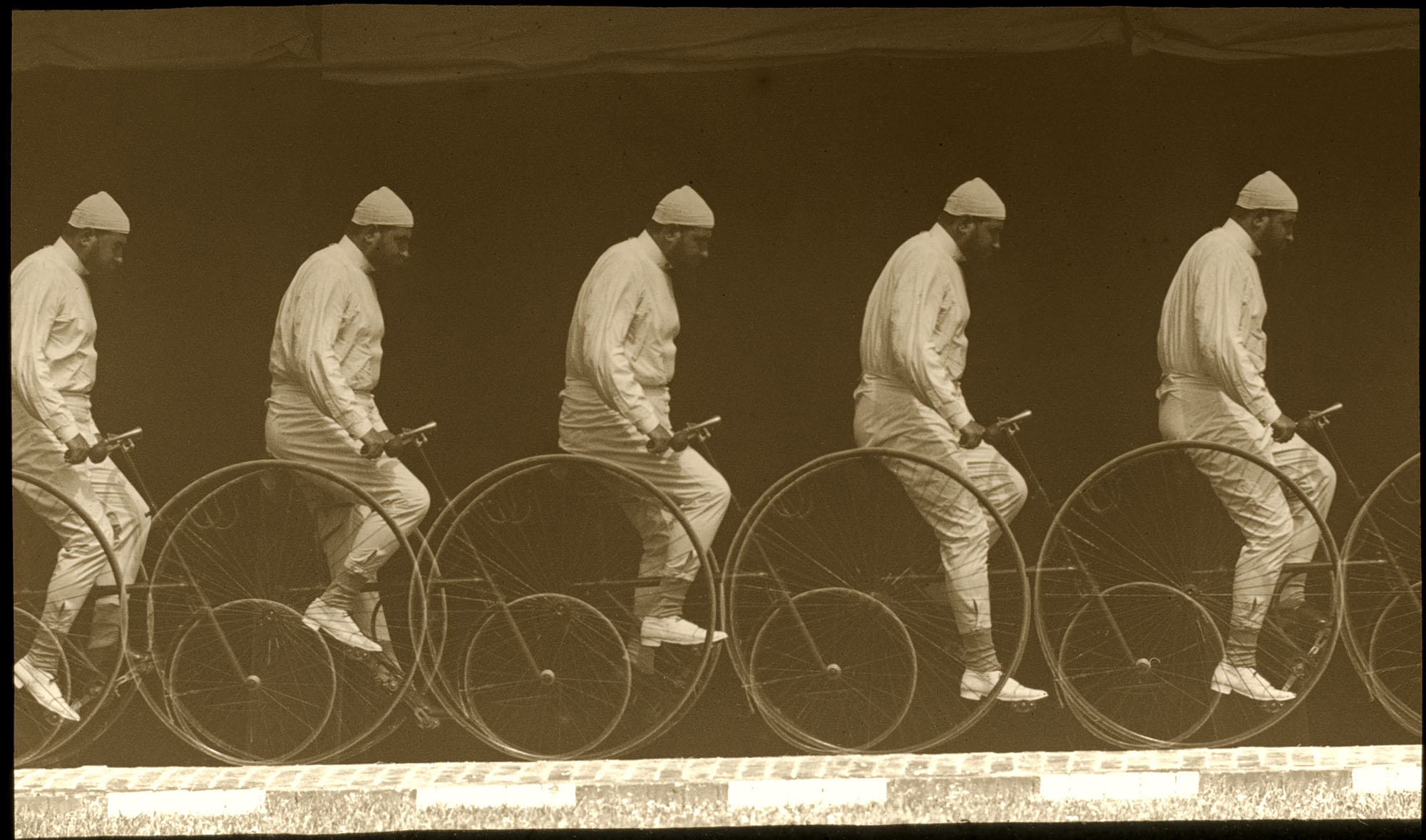
Étienne Jules Marey (French, 1830-1904) 'Chronophotograph of a Man on a Bicycle' c. 1885-1890


Étienne Jules Marey (French, 1830-1904)
Chronophotograph of a Man on a Bicycle
c. 1885-1890
Glass lantern slide
Image: 4 x 7.5cm (1 9/16 x 2 15/16 in.)
Plate: 8.8 x 10.2cm (3 7/16 x 4 in.)
National Gallery of Art, Washington, Gift of Mary and David Robinson


A scientist and physiologist, Marey became fascinated with movement in the 1870s. Unlike Muybridge, who had already made separate pictures of animals in motion, Marey developed in 1882 a means to record several phases of movement onto one photographic plate using a rotating shutter with slots cut into it. He called this process “chronophotography,” meaning photography of time. His photographs, which he published in books and showed in lantern slide presentations, influenced 20th-century cubist, futurist, and Dada artists who examined the interdependence of time and space.


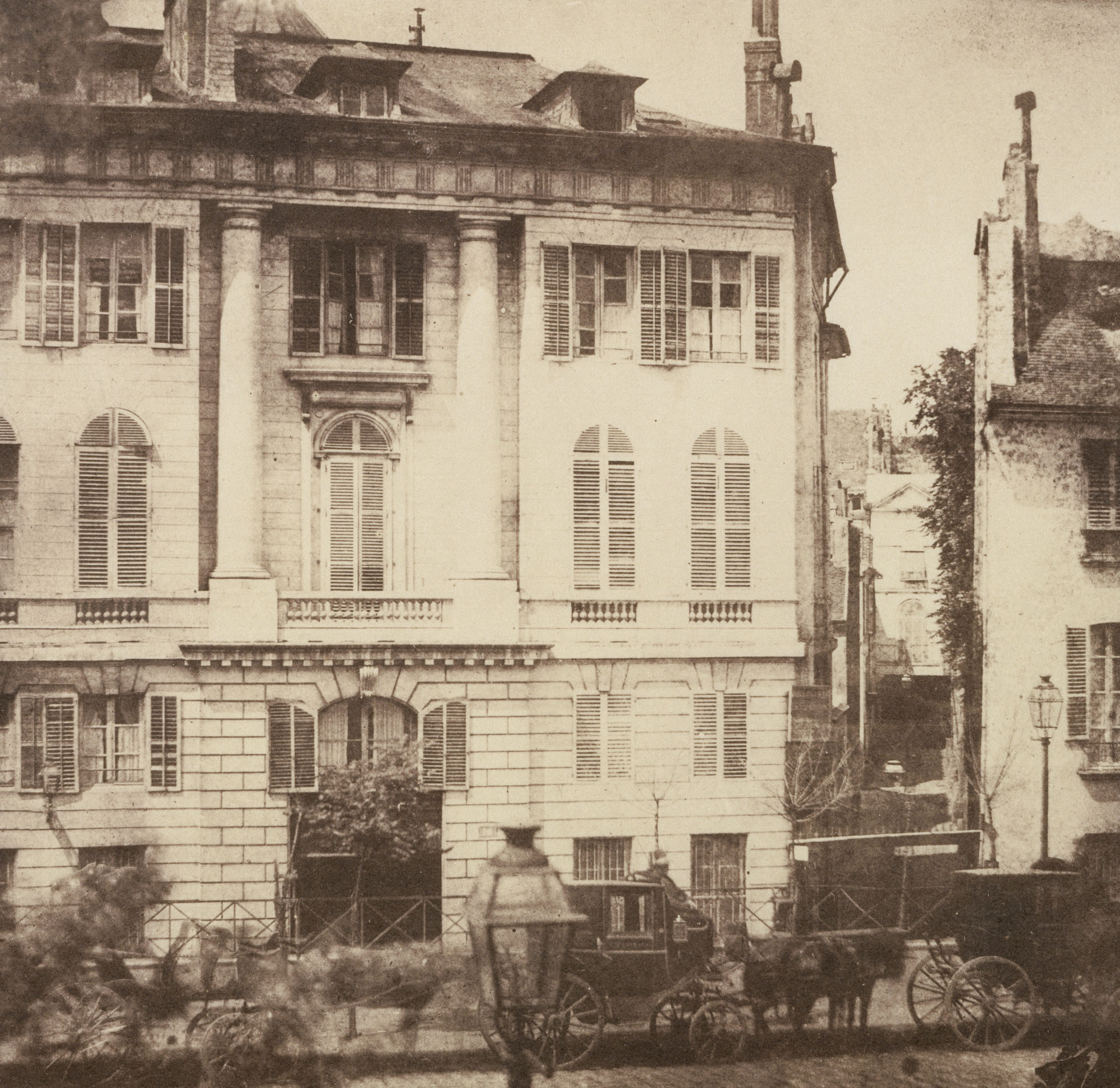
William Henry Fox Talbot (English, 1800-1877) 'The Boulevards of Paris' 1843


William Henry Fox Talbot (English, 1800-1877)
The Boulevards of Paris
1843
Salted paper print
Image: 16.6 × 17.1cm (6 9/16 × 6 3/4 in.)
Sheet: 19 × 23.2cm (7 1/2 × 9 1/8 in.)
National Gallery of Art, Washington, New Century Fund


As soon as Talbot announced his invention of photography in 1839, he realised that its ability to freeze time enabled him to present the visual spectacle of the world in an entirely new way. By capturing something as mundane as a fleeting moment on a busy street, he could transform life into art, creating a picture that could be savoured long after the event had transpired.


David Octavius Hill (Scottish, 1802-1870) and Robert Adamson (Scottish, 1821-1848) 'Colinton Manse and weir, with part of the old mill on the right' 1843-1847


David Octavius Hill (Scottish, 1802-1870) and Robert Adamson (Scottish, 1821-1848)
Colinton Manse and weir, with part of the old mill on the right
1843-1847
Salted paper print
Image: 20.7 x 14.6cm (8 1/8 x 5 3/4 in.)
National Gallery of Art, Washington, Paul Mellon Fund


In 1843, only four years after Talbot announced his negative / positive process of photography, painter David Octavius Hill teamed up with engineer Robert Adamson. Working in Scotland, they created important early portraits of the local populace and photographed Scottish architecture, rustic landscapes, and city scenes. Today a suburb southwest of Edinburgh, 19th-century Colinton was a mill town beside a river known as the Water of Leith. Because of the long exposure time required to make this photograph, the water rushing over a small dam appears as a glassy blur.


Thomas Annan (Scottish, 1829-1887) 'Old Vennel, Off High Street' 1868-1871


Thomas Annan (Scottish, 1829-1887)
Old Vennel, Off High Street
1868-1871
Carbon print
Image: 26.9 x 22.3cm (10 9/16 x 8 3/4 in.)
Sheet: 50.8 x 37.9cm (20 x 14 15/16 in.)
National Gallery of Art, Washington, Patrons’ Permanent Fund


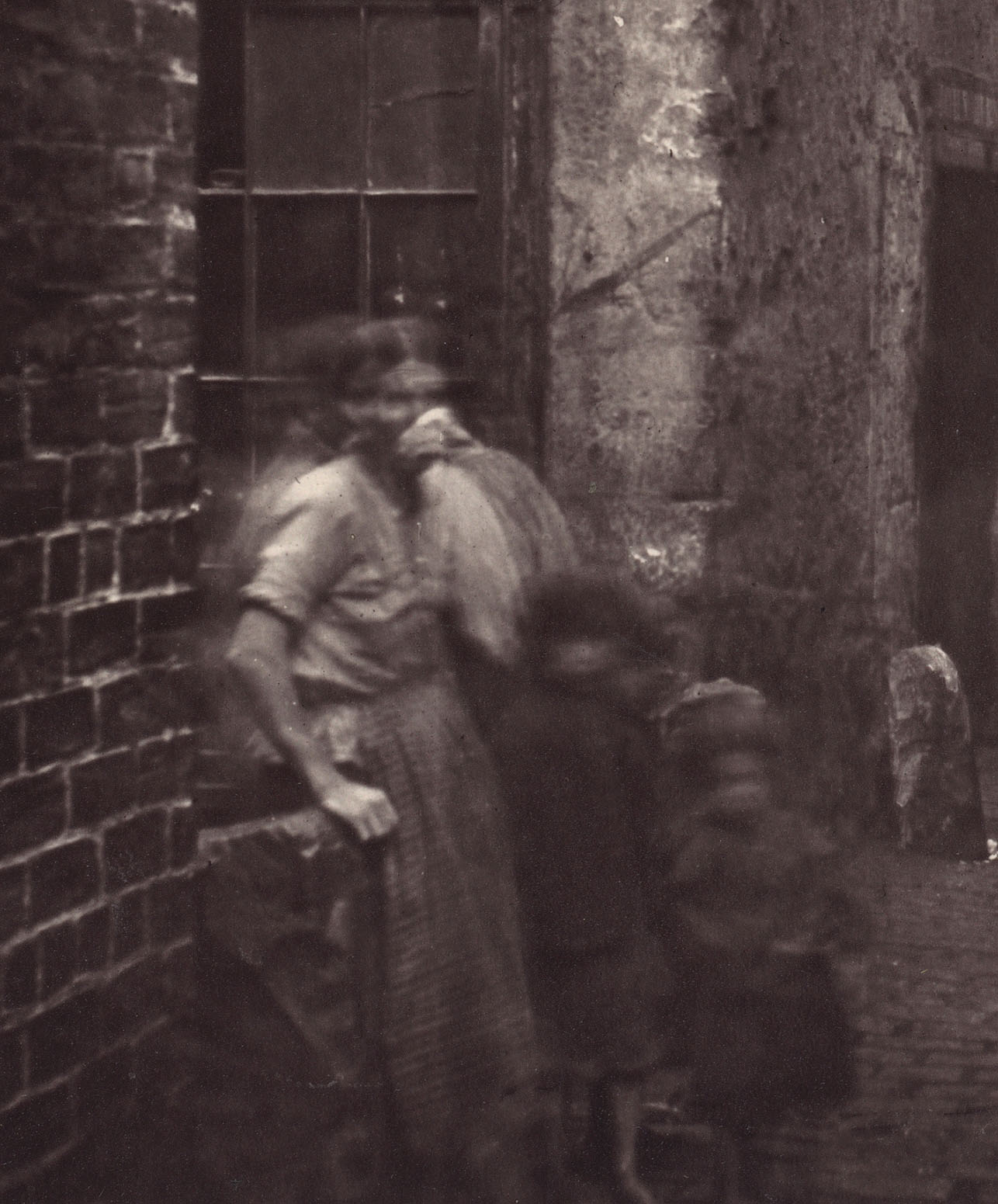
In 1868, Glasgow’s City Improvements Trust hired Annan to photograph the “old closes and streets of Glasgow” before the city’s tenements were demolished. Annan’s pictures constitute one of the first commissioned photographic records of living conditions in urban slums. The collodion process Annan used to make his large, glass negatives required a long exposure time. In the dim light of this narrow passage, it was impossible for the photographer to stop the motion of the restless children, who appear as ghostly blurs moving barefoot across the cobblestones.


Thomas Annan (Scottish, 1829-1887) 'Old Vennel, Off High Street' 1868-1871 (detail)


Thomas Annan (Scottish, 1829-1887)
Old Vennel, Off High Street (detail)
1868-1871
Carbon print
Image: 26.9 x 22.3cm (10 9/16 x 8 3/4 in.)
Sheet: 50.8 x 37.9cm (20 x 14 15/16 in.)
National Gallery of Art, Washington, Patrons’ Permanent Fund


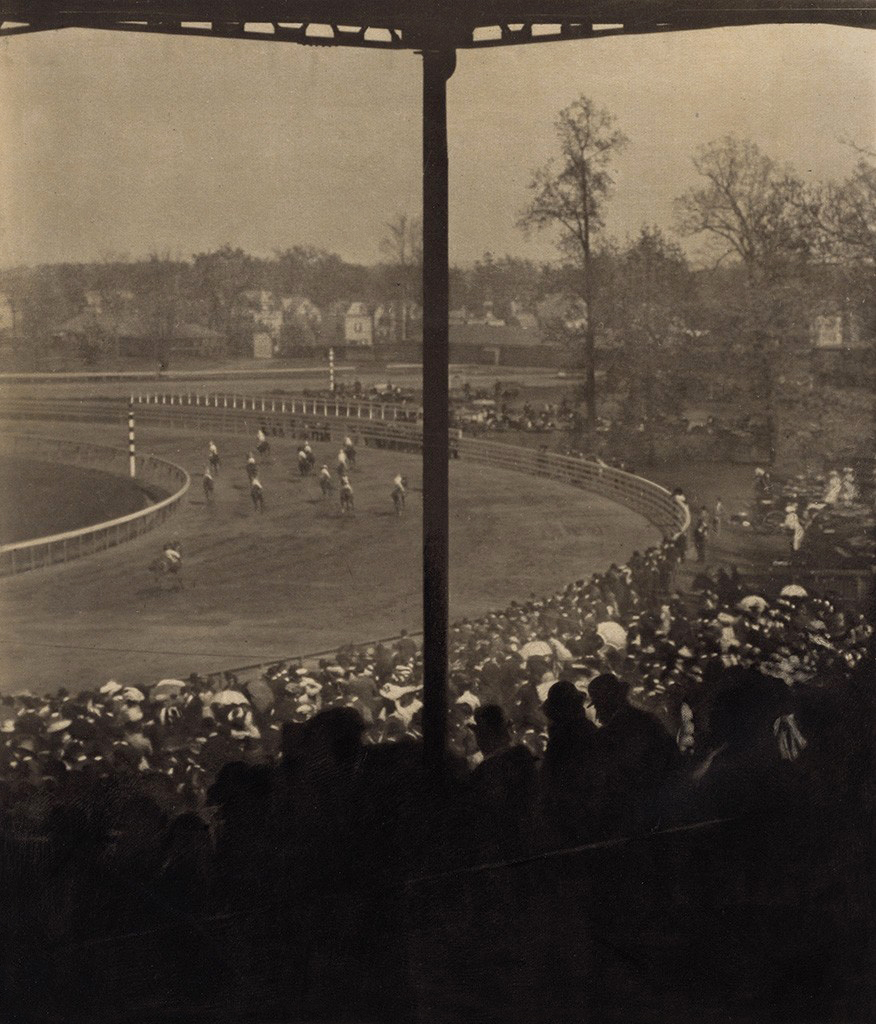
Alfred Stieglitz (American, 1864-1946) 'Going to the Post, Morris Park' 1904


Alfred Stieglitz (American, 1864-1946)
Going to the Post, Morris Park
1904
Photogravure
Image: 30.8 x 26.4cm (12 1/8 x 10 3/8 in.)
Sheet: 38.5 x 30.3cm (15 3/16 x 11 15/16 in.)
National Gallery of Art, Washington, Alfred Stieglitz Collection


In the 1880s and 1890s, improvements in photographic processes enabled manufacturers to produce small, handheld cameras that did not need to be mounted on tripods. Faster film and shutter speeds also allowed practitioners to capture rapidly moving objects. Stieglitz was one of the first fine art photographers to exploit the aesthetic potential of these new cameras and films. Around the turn of the century, he made many photographs of rapidly moving trains, horse-drawn carriages, and racetracks that capture the pace of the increasingly modern city.


Harold Eugene Edgerton (American, 1903-1990) 'Wes Fesler Kicking a Football' 1934


Harold Eugene Edgerton (American, 1903-1990)
Wes Fesler Kicking a Football
1934
Gelatin silver print
Image: 11 1/2 x 9 5/8 in.
Sheet: 13 15/16 x 11 in.
National Gallery of Art, Washington, Corcoran Collection (Museum Purchase with the aid of funds from the National Endowment for the Arts, Washington, D.C., a Federal Agency, and The Polaroid Corporation)


A professor of electrical engineering at the Massachusetts Institute of Technology, Edgerton in the early 1930s invited the stroboscope, a tube filled with gas that produced high-intensity bursts of light at regular and very brief intervals. He used it to illuminate objects in motion so that they could be captured by a camera. At first he was hired by industrial clients to reveal flaws in their production of materials, but by the mid-1930s he began to photography everyday events… Edgerton captured phenomena moving too fast for the naked eye to see, and revealed the beauty of people and objects in motion.


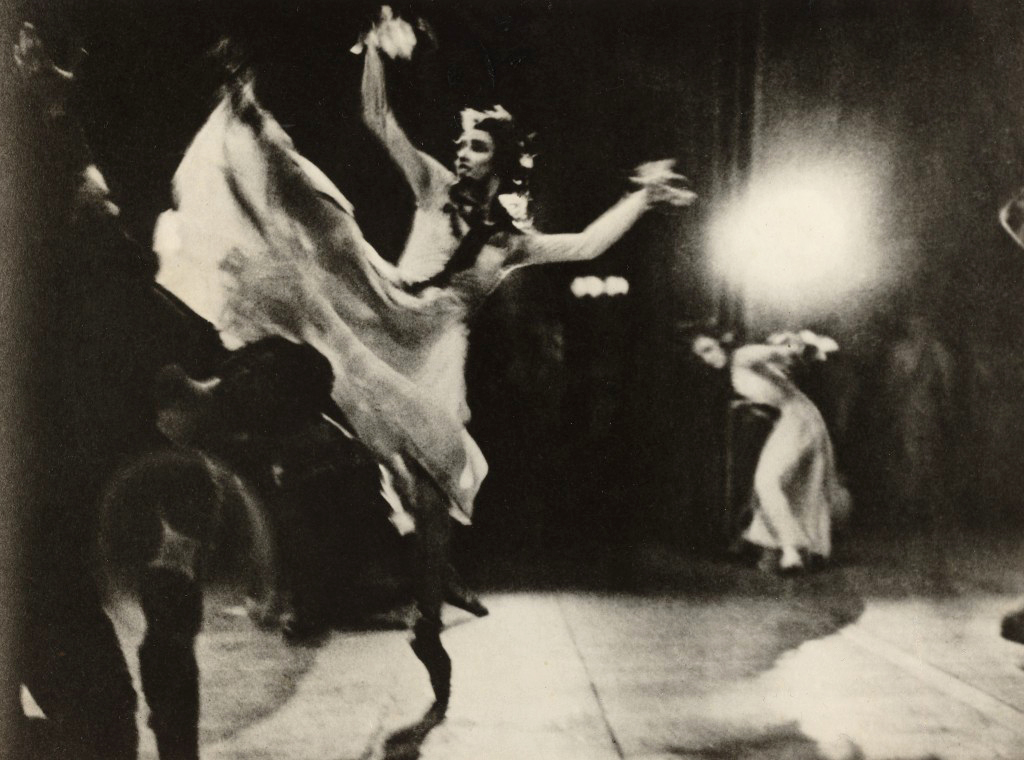
Alexey Brodovitch (American born Russia, 1898-1971) 'Untitled from "Ballet" series' 1938


Alexey Brodovitch (American born Russia, 1898-1971)
Untitled from “Ballet” series
1938
Gelatin silver print
Overall: 20.4 x 27.5cm (8 1/16 x 10 13/16 in.)
National Gallery of Art, Washington, Diana and Mallory Walker Fund


A graphic artist, Russian-born Brodovitch moved to the United States from Paris in 1930. Known for his innovative use of photographs, illustrations, and type on the printed page, he became art director for Harper’s Bazaar in 1934, and photographed the Ballets Russes de Monte Carlo during their American tours from 1935 to 1939. Using a small-format, 35 mm camera, Brodovitch worked in the backstage shadows and glaring light of the theatre to produce a series of rough, grainy pictures that convey the drama and action of the performance. This photograph employs figures in motion, a narrow field of focus, and high-contrast effects to express the stylised movements of Léonide Massine’s 1938 choreography for Beethoven’s Seventh Symphony.


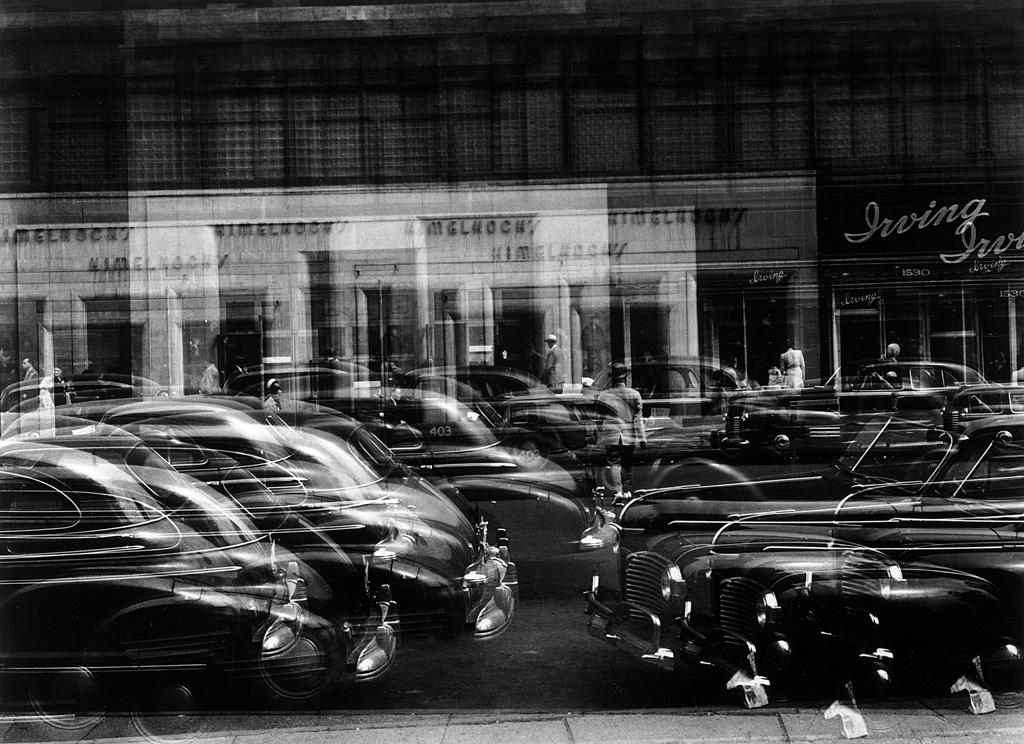
Harry Callahan (American, 1912-1999) 'Detroit' 1943


Harry Callahan (American, 1912-1999)
Detroit
c. 1943
Dye imbibition print, printed c. 1980
Overall (image): 18 x 26.7cm (7 1/16 x 10 1/2 in.)
Sheet: 27.31 x 36.83cm (10 3/4 x 14 1/2 in.)
National Gallery of Art, Washington, Gift of the Callahan Family


Harry Callahan (American, 1912-1999) 'Camera Movement on Neon Lights at Night' 1946


Harry Callahan (American, 1912-1999)
Camera Movement on Neon Lights at Night
1946
Dye imbibition print, printed 1979
Image: 8 3/4 x 13 5/8 in.
Sheet: 10 3/8 x 13 15/16 in.
National Gallery of Art, Washington, Corcoran Collection (Gift of Richard W. and Susan R. Gessner)


Frank Horvat (Italian, 1928-2020) 'Paris, Gare Saint-Lazare' 1959


Frank Horvat (Italian, 1928-2020)
Paris, Gare Saint-Lazare
1959
Gelatin silver print
Overall: 39.3 x 26.2cm (15 1/2 x 10 5/16 in.)
National Gallery of Art, Washington, Patrons’ Permanent Fund


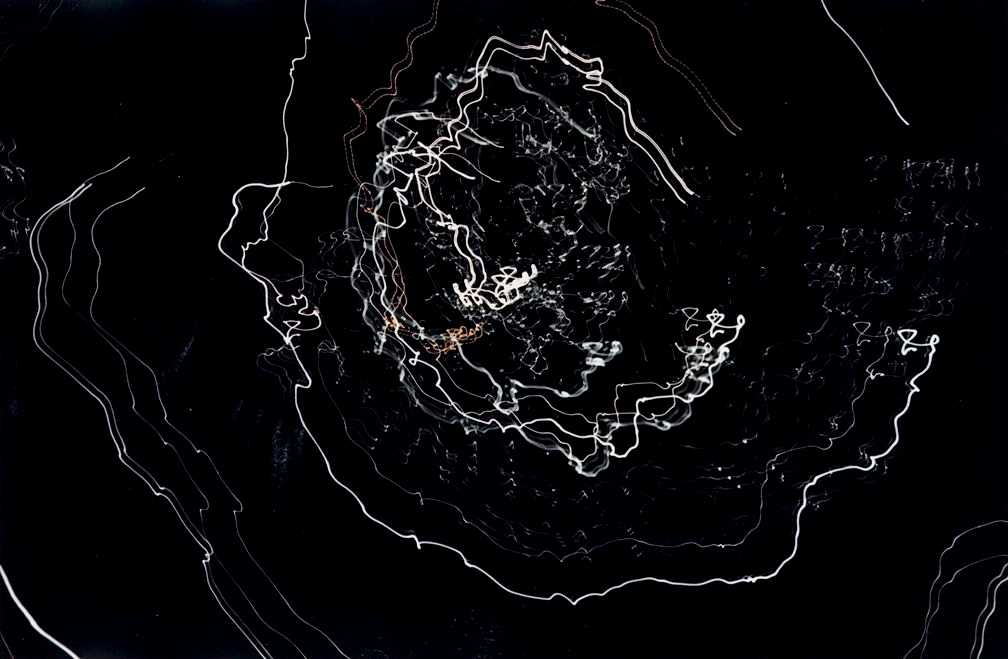
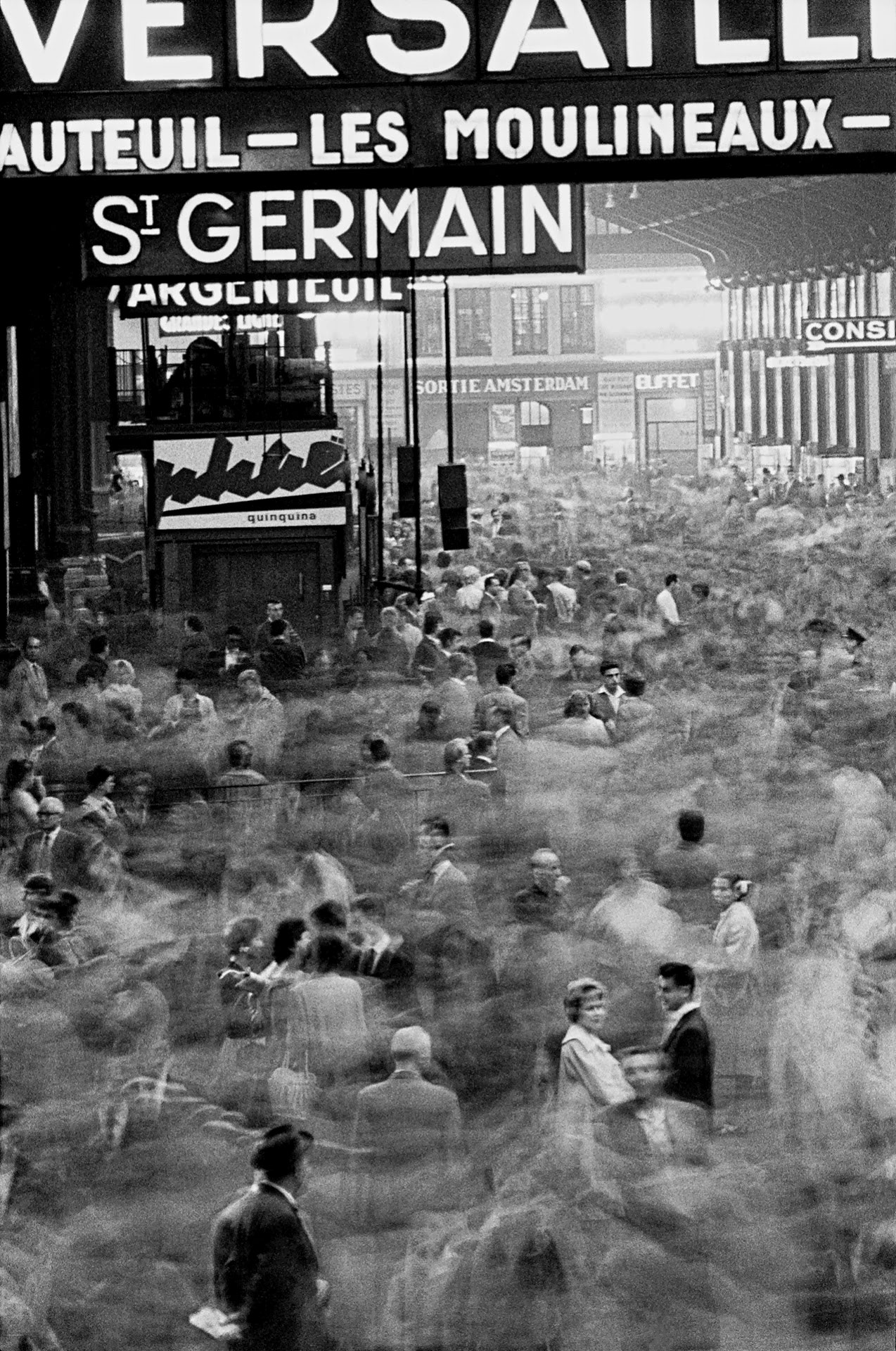
Gare Saint-Lazare is one of the principal railway stations in Paris. Because of its industrial appearance, steaming locomotives, and teeming crowds, it was a frequent subject for 19th-century French painters – including Claude Monet, Édouard Manet, and Gustave Caillebotte – who used it to express the vitality of modern life. 20th-century artists such as Horvat also depicted it to address the pace and anonymity that defined their time. Using a telephoto lens and long exposure, he captured the rushing movement of travellers scattered beneath giant destination signs.


Roger Mayne (English, 1929-2014) 'Goalie, Street Football, Brindley Road' 1956


Roger Mayne (English, 1929-2014)
Goalie, Street Football, Brindley Road
1956
Gelatin silver print
Image: 34.7 × 29.1cm (13 11/16 × 11 7/16 in.)
National Gallery of Art, Washington, Patrons’ Permanent Fund


From 1956 to 1961, Mayne photographed London’s North Kensington neighbourhood to record its emergence from the devastation and poverty caused by World War II. This dramatic photograph of a young goalie lunging for the ball during an after-school soccer game relies on the camera’s ability to freeze the fast-paced and unpredictable action. Because the boy’s daring lunge is forever suspended in time, we will never know its outcome.


Shōmei Tōmatsu (Japanese, 1930-2012) 'Rush Hour, Tokyo' 1981 (detail)


Shōmei Tōmatsu (Japanese, 1930-2012)
Rush Hour, Tokyo (detail)
1981
Gelatin silver print
Sheet: 11 5/16 x 9 7/16 in. (28.73 x 23.97 cm)
National Gallery of Art, Washington, Corcoran Collection (Gift of Michael D. Abrams)


Best known for his expressive documentation of World War II’s impact on Japanese culture, Tomatsu was one of Japan’s most creative and influential photographers. Starting in the early 1960s, he documented the country’s dramatic economic, political, and cultural transformation. This photograph – a long exposure made with his camera mounted on a tripod – conveys the chaotic rush of commuters on their way through downtown Tokyo. Tomatsu used this graphic description of movement, which distorts the faceless bodies of commuters dashing down a flight of stairs, to symbolise the dehumanising nature of work in the fast-paced city of the early 1980s.


Sequence

Muybridge set up banks of cameras and used electronic shutters triggered in sequence to analyse the motion of people and animals. Like a storyteller, he sometimes adjusted the order of images for visual and sequential impact. Other photographers have also investigated the medium’s capacity to record change over time, express variations on a theme, or connect seemingly disparate pictures. In the early 1920s, Stieglitz began to create poetic sequences of cloud photographs meant to evoke distinct emotional experiences. These works (later known as Equivalents) influenced Ansel Adams and Minor White – both artists created specific sequences to evoke the rhythms of nature or the poetry of time passing.

Wall text

Intersections wall text


Alfred Stieglitz (American, 1864-1946) 'From My Window at An American Place, Southwest' March 1932


Alfred Stieglitz (American, 1864-1946)
From My Window at An American Place, Southwest
March 1932
Gelatin silver print
Sheet (trimmed to image): 23.8 x 18.4cm (9 3/8 x 7 1/4 in.)
National Gallery of Art, Washington, Alfred Stieglitz Collection


Alfred Stieglitz (American, 1864-1946) 'From My Window at An American Place, Southwest' April 1932


Alfred Stieglitz (American, 1864-1946)
From My Window at An American Place, Southwest
April 1932
Gelatin silver print
Sheet (trimmed to image): 23.8 x 18.8cm (9 3/8 x 7 3/8 in.)
National Gallery of Art, Washington, Alfred Stieglitz Collection


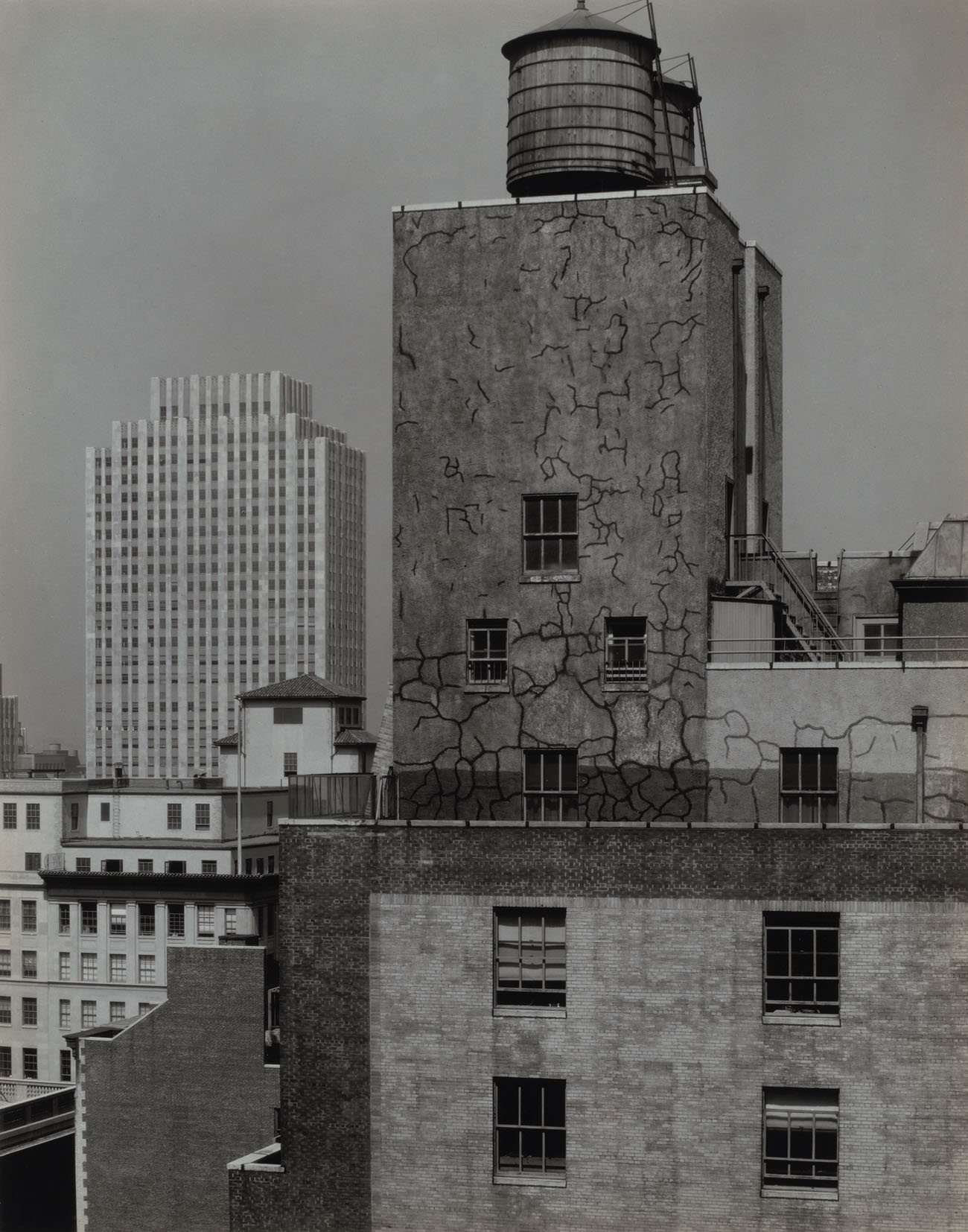
Alfred Stieglitz (American, 1864-1946) 'Water Tower and Radio City, New York' 1933


Alfred Stieglitz (American, 1864-1946)
Water Tower and Radio City, New York
1933
Gelatin silver print
Sheet: 23.7 x 18.6cm (9 5/16 x 7 5/16 in.)
National Gallery of Art, Washington, Alfred Stieglitz Collection


Whenever Stieglitz exhibited his photographs of New York City made in the late 1920s and early 1930s, he grouped them into series that record views from the windows of his gallery, An American Place, or his apartment at the Shelton Hotel, showing the gradual growth of the buildings under construction in the background. Although he delighted in the formal beauty of the visual spectacle, he lamented that these buildings, planned in the exuberance of the late 1920s, continued to be built in the depths of the Depression, while “artists starved,” as he said at the time, and museums were “threatened with closure.”


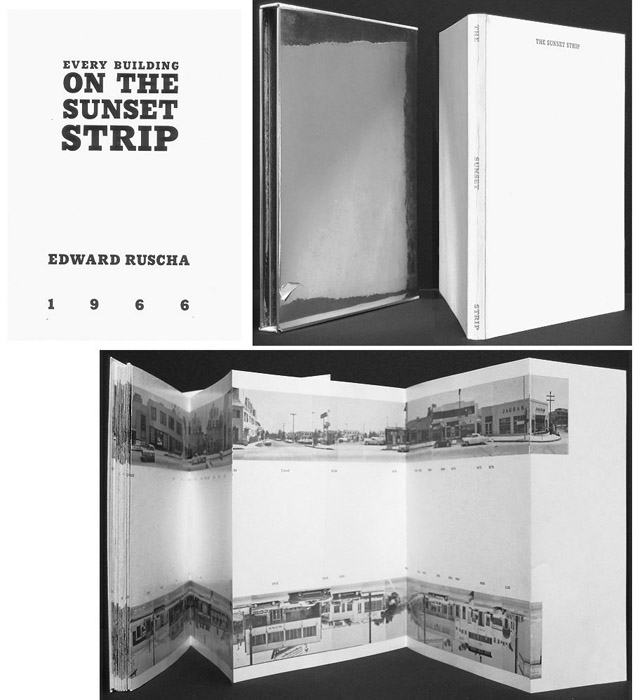
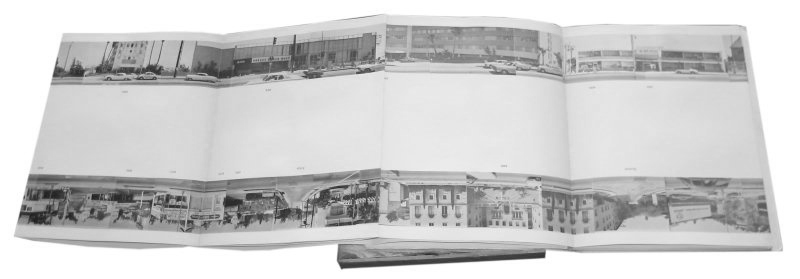
Ed Ruscha (American, b. 1937) 'Every Building on Sunset Strip' 1966

Ed Ruscha (American, b. 1937) 'Every Building on Sunset Strip' 1966

Ed Ruscha (American, b. 1937) 'Every Building on Sunset Strip' 1966


Ed Ruscha (American, b. 1937)
Every Building on the Sunset Strip
1966
Offset lithography book: 7 x 5 3/4 in. (17.78 x 14.61cm)
Unfolded (open flat): 7 x 276 in.
National Gallery of Art, Washington, Corcoran Collection (Gift of Philip Brookman and Amy Brookman)


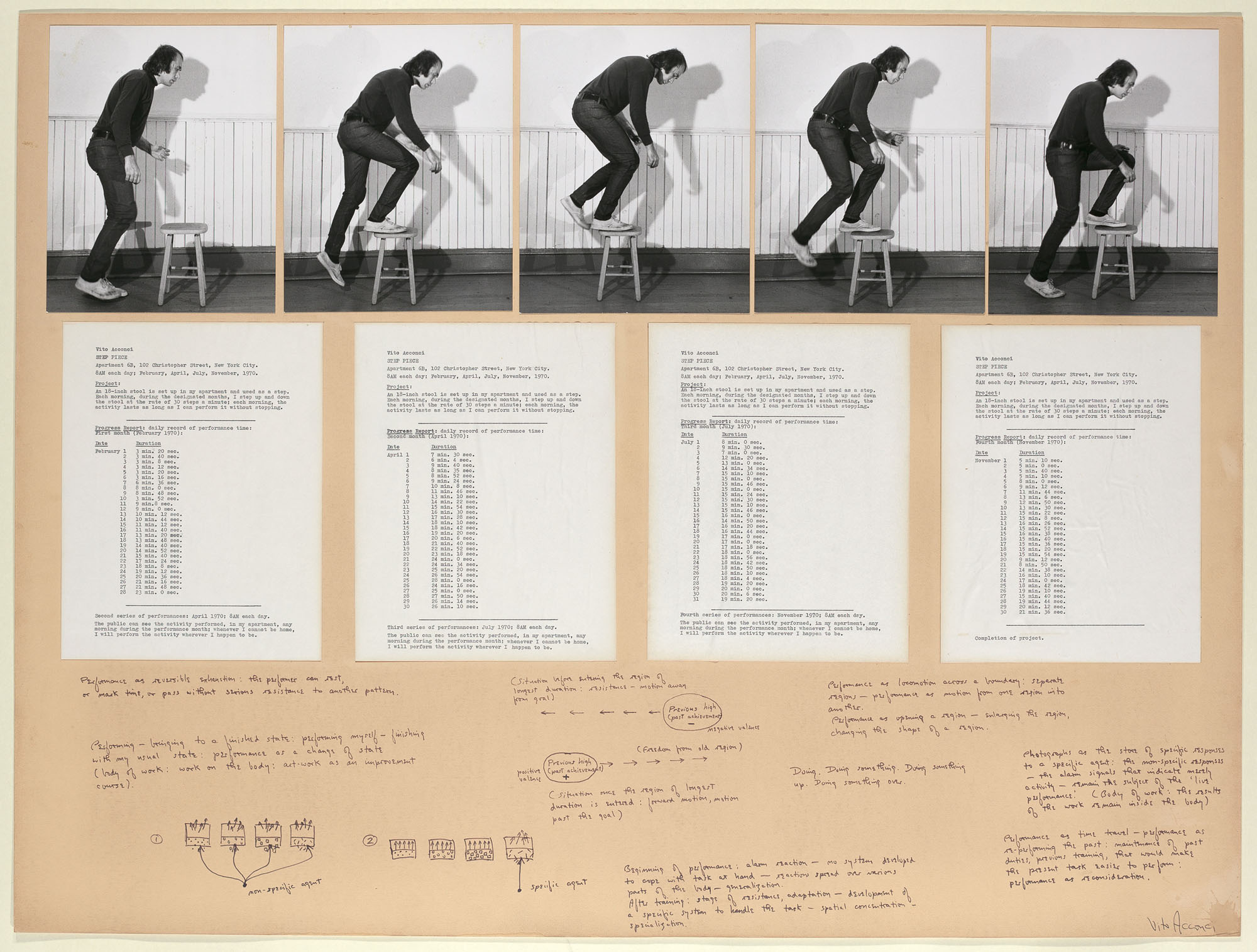
Vito Acconci (American, 1940-2017) 'Step Piece' 1970


Vito Acconci (American, 1940-2017)
Step Piece
1970
Five gelatin silver prints and four sheets of type-written paper, mounted on board with annotations in black ink
Sheet: 76.2 x 101.6cm (30 x 40 in.)
National Gallery of Art, Washington, Dorothy and Herbert Vogel Collection


Acconci’s Step Piece is made up of equal parts photography, drawing, performance, and quantitative analysis. It documents a test of endurance: stepping on and off a stool for as long as possible every day. This performance-based conceptual work is rooted in the idea that the body itself can be a medium for making art. To record his activity, Acconci made a series of five photographs spanning one complete action. Like the background grid in many of Muybridge’s motion studies, vertical panels in Acconci’s studio help delineate the space. His handwritten notes and sketches suggest the patterns of order and chaos associated with the performance, while typewritten sheets, which record his daily progress, were given to people who were invited to observe.


Narrative

The exhibition also explores the narrative possibilities of photography found in the interplay of image and text in the work of Robert Frank, Larry Sultan, and Jim Goldberg; the emotional drama of personal crisis in Nan Goldin’s image grids; or the expansion of photographic description into experimental video and film by Victor Burgin and Judy Fiskin.

Wall text

Intersections wall text


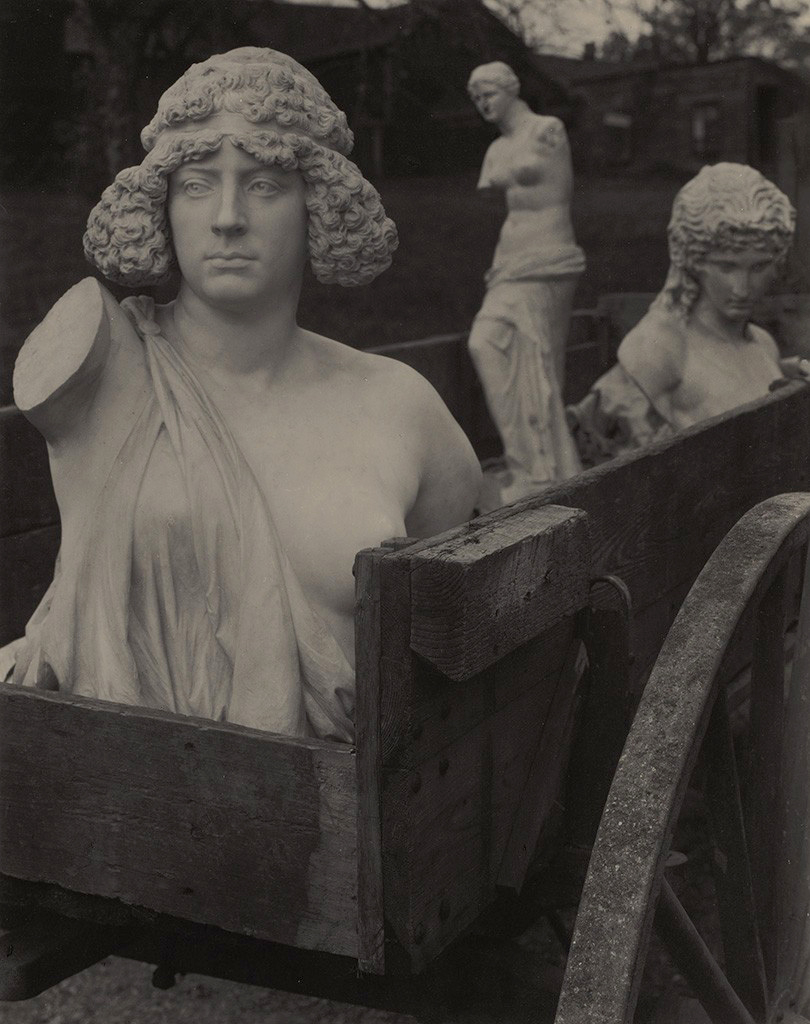
Alfred Stieglitz (American, 1864-1946) 'Judith Being Carted from Oaklawn to the Hill. The Way Art Moves' 1920


Alfred Stieglitz (American, 1864-1946)
Judith Being Carted from Oaklawn to the Hill. The Way Art Moves
1920
Gelatin silver print
Image: 24.1 x 18.8cm (9 1/2 x 7 3/8 in.)
Sheet: 25.2 x 20.1cm (9 15/16 x 7 15/16 in.)
National Gallery of Art, Washington, Alfred Stieglitz Collection


In 1920, Stieglitz’s family sold their Victorian summerhouse on the shore of Lake George, New York, and moved to a farmhouse on a hill above it. This photograph shows three sculptures his father had collected – two 19th-century replicas of ancient statues and a circa 1880 bust by Moses Ezekiel depicting the Old Testament heroine Judith – as they were being moved in a wooden cart from one house to another. Stieglitz titled it The Way Art Moves, wryly commenting on the low status of art in American society. With her masculine face and bared breast, Judith was much maligned by Georgia O’Keeffe and other younger family members. In a playful summer prank, they later buried her somewhere near the farmhouse, where she remained lost, despite many subsequent efforts by the perpetrators themselves to find her.


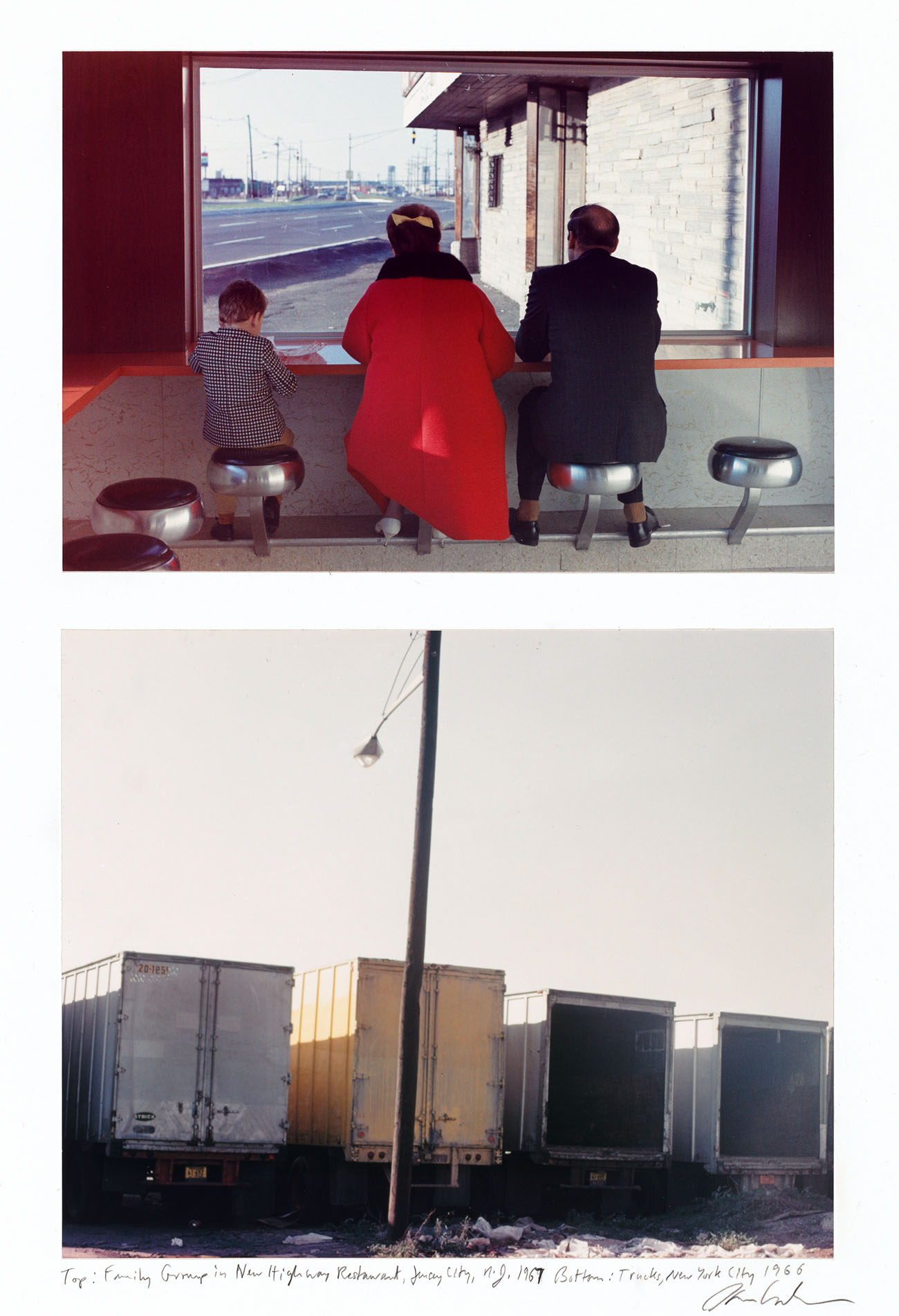
Dan Graham (American, 1942-2022) 'Homes for America' 1966-1967


Dan Graham (American, 1942-2022)
Homes for America
1966-1967
Two chromogenic prints
Image (top): 23 x 34cm (9 1/16 x 13 3/8 in.)
Image (bottom): 27.8 x 34cm (10 15/16 x 13 3/8 in.)
Mount: 101 x 75cm (39 3/4 x 29 1/2 in.)
Framed: 102 x 76.2 x 2.8cm (40 3/16 x 30 x 1 1/8 in.)
National Gallery of Art, Washington, Glenstone in honour of Eileen and Michael Cohen


Beginning in the mid-1960s, conceptual artist Dan Graham created several works of art for magazine pages and slide shows. When Homes for America was designed for Arts magazine in 1966, his accompanying text critiqued the mass production of cookie-cutter homes, while his photographs – made with an inexpensive Kodak Instamatic camera – described a suburban world of offices, houses, restaurants, highways, and truck stops. With their haphazard composition and amateur technique, Graham’s pictures ironically scrutinised the aesthetics of America’s postwar housing and inspired other conceptual artists to incorporate photographs into their work. Together, these two photographs link a middle-class family at the opening of a Jersey City highway restaurant with the soulless industrial landscape seen through the window.


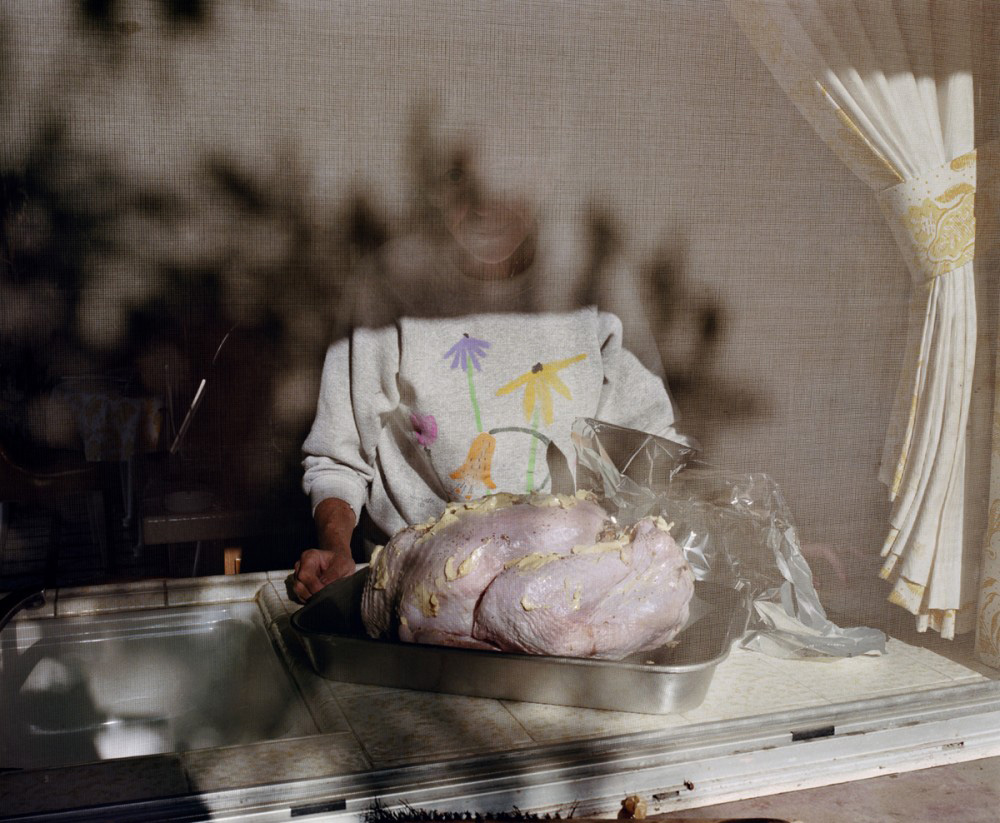
Larry Sultan (American, 1946-2009) 'Thanksgiving Turkey' 1985

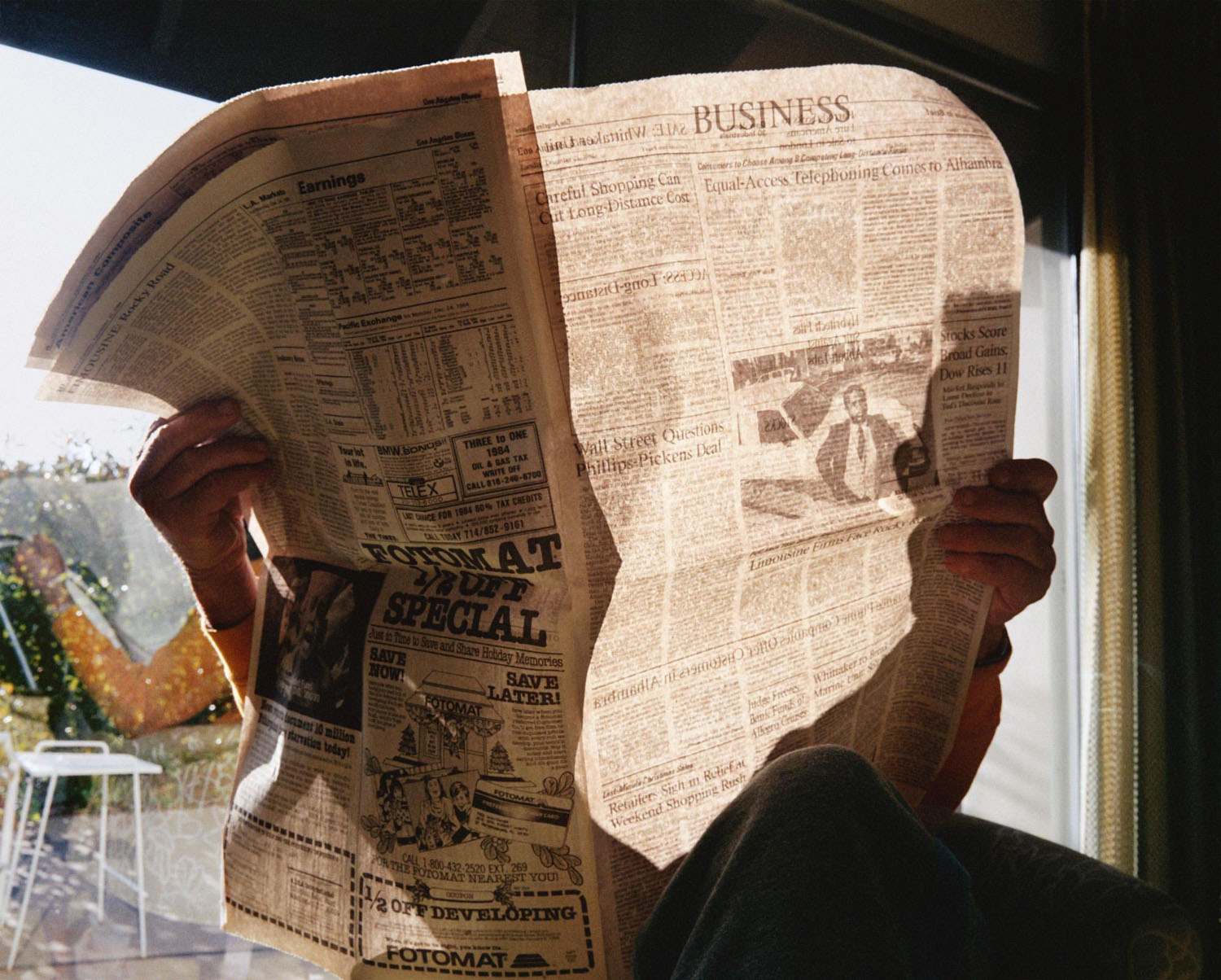
Larry Sultan (American, 1946-2009) 'Business Page' from the series 'Pictures from Home' 1985


Larry Sultan (American, 1946-2009)
Thanksgiving Turkey/Newspaper (detail)
1985-1992
Two plexiglass panels with screen printing
Framed (Thanksgiving Turkey): 76 × 91cm (29 15/16 × 35 13/16 in.)
Framed (Newspaper): 76 × 91cm (29 15/16 × 35 13/16 in.)
Other (2 text panels): 50.8 × 76.2cm (20 × 30 in.)
Overall: 30 x 117 in.
National Gallery of Art, Washington, Corcoran Collection (Gift of the FRIENDS of the Corcoran Gallery of Art)


From 1983 to 1992, Sultan photographed his parents in retirement at their Southern California house. His innovative book, Pictures from Home, combines his photographs and text with family album snapshots and stills from home movies, mining the family’s memories and archives to create a universal narrative about the American dream of work, home, and family. Thanksgiving Turkey/Newspaper juxtaposes photographs of his mother and father, each with their face hidden and with adjacent texts where they complain about each other’s shortcomings. “I realise that beyond the rolls of film and the few good pictures … is the wish to take photography literally,” Sultan wrote. “To stop time. I want my parents to live forever.”


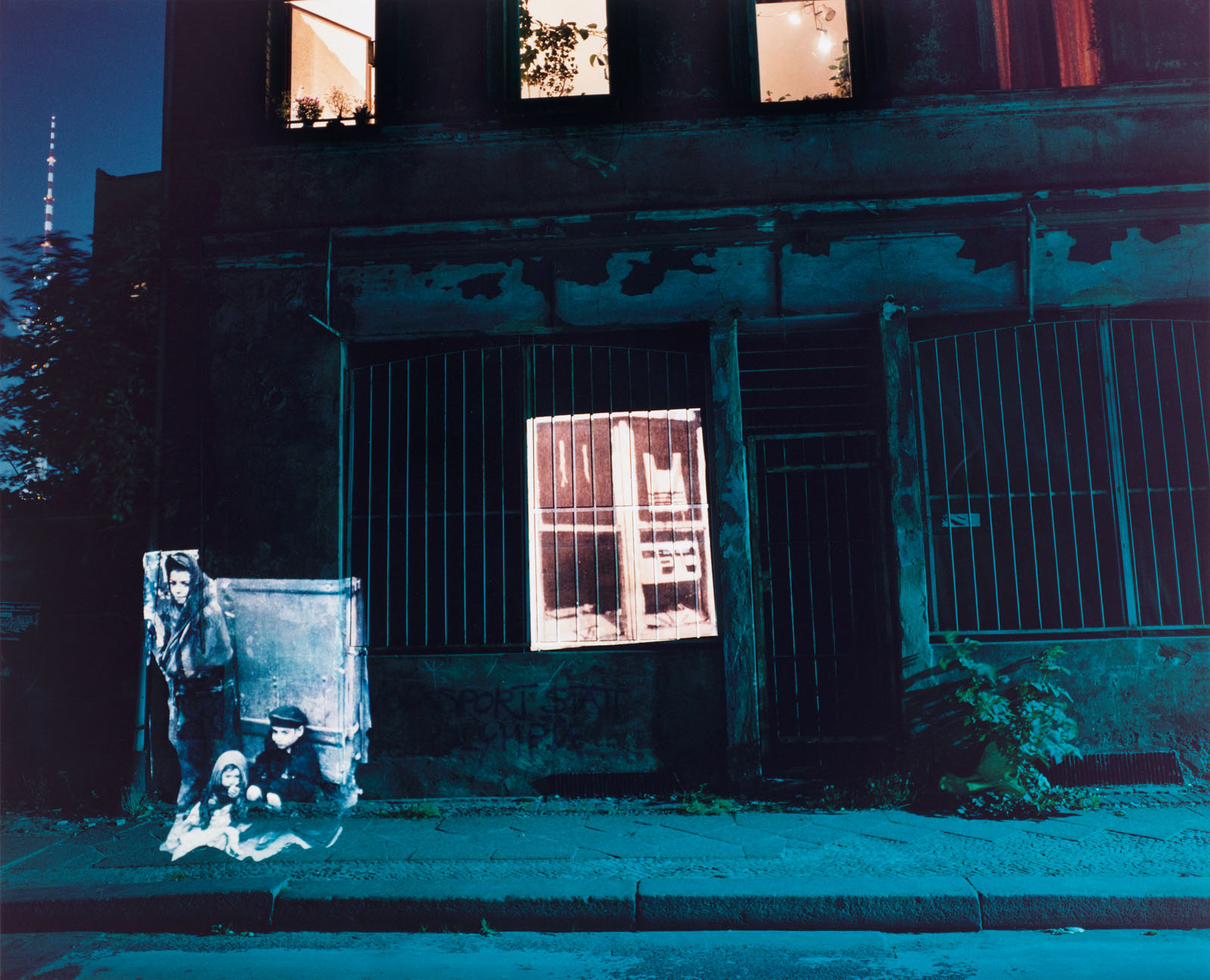
Shimon Attie (American, b. 1957) 'Mulackstrasse 32: Slide Projections of Former Jewish Residents and Hebrew Reading Room, 1932, Berlin' 1992


Shimon Attie (American, b. 1957)
Mulackstrasse 32: Slide Projections of Former Jewish Residents and Hebrew Reading Room, 1932, Berlin
1992
Chromogenic print
Unframed: 20 x 24 in. (50.8 x 60.96cm)
National Gallery of Art, Washington, Corcoran Collection (Gift of Julia J. Norrell in honor of Hilary Allard and Lauren Harry)


Attie projected historical photographs made in 1932 onto the sides of a building at Mulackstrasse 32, the site of a Hebrew reading room in a Jewish neighbourhood in Berlin during the 1930s. Fusing pictures made before Jews were removed from their homes and killed during World War II with photographs of the same dark, empty street made in 1992, Attie has created a haunting picture of wartime loss.


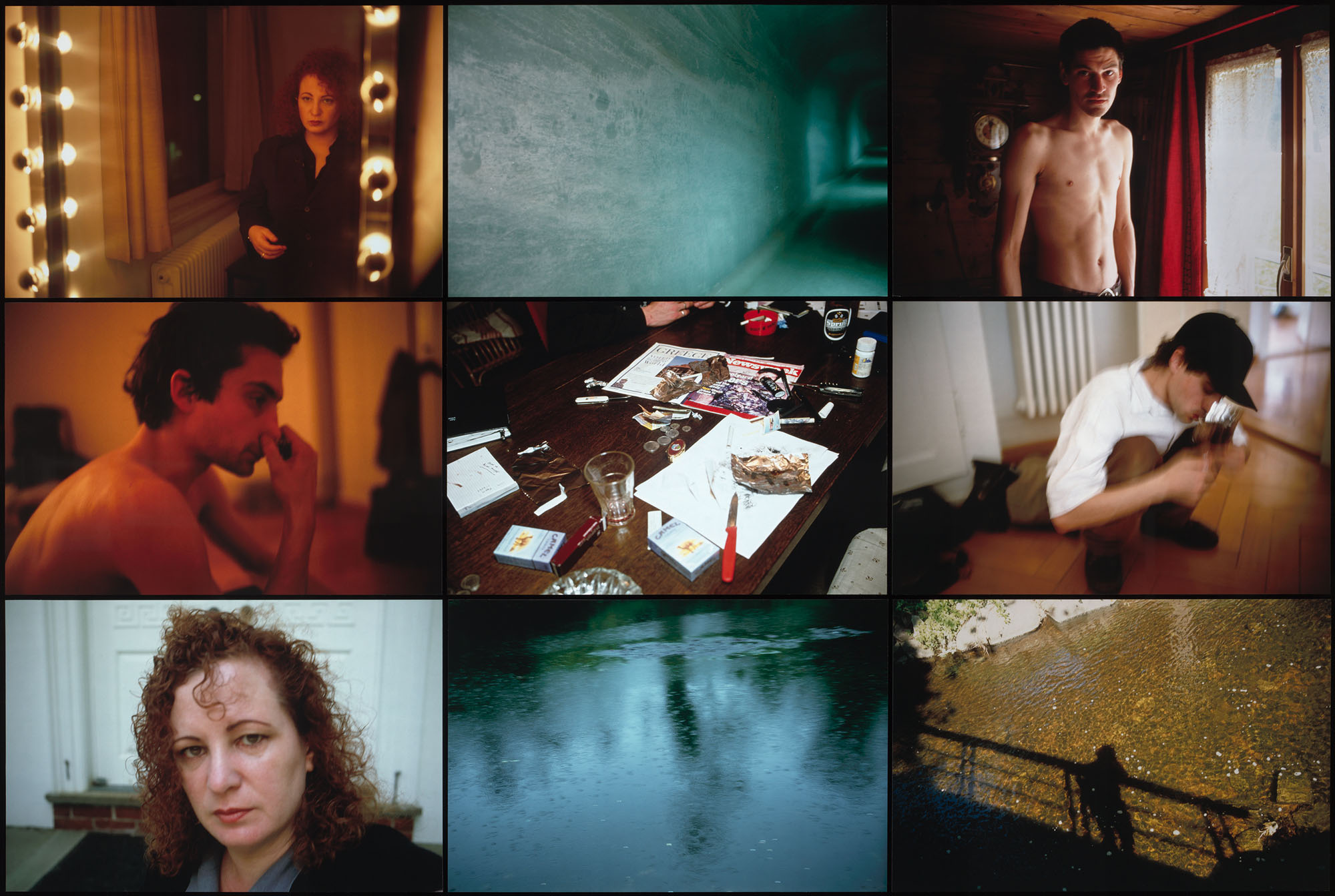
Nan Goldin (American, b. 1953) 'Relapse/Detox Grid' 1998-2000


Nan Goldin (American, b. 1953)
Relapse/Detox Grid
1998-2000
Nine silver dye bleach prints
Overall: 42 1/2 x 62 1/8 in. (107.95 x 157.8cm)
National Gallery of Art, Washington, Corcoran Collection (Museum Purchase with funds donated by the FRIENDS of the Corcoran Gallery of Art)


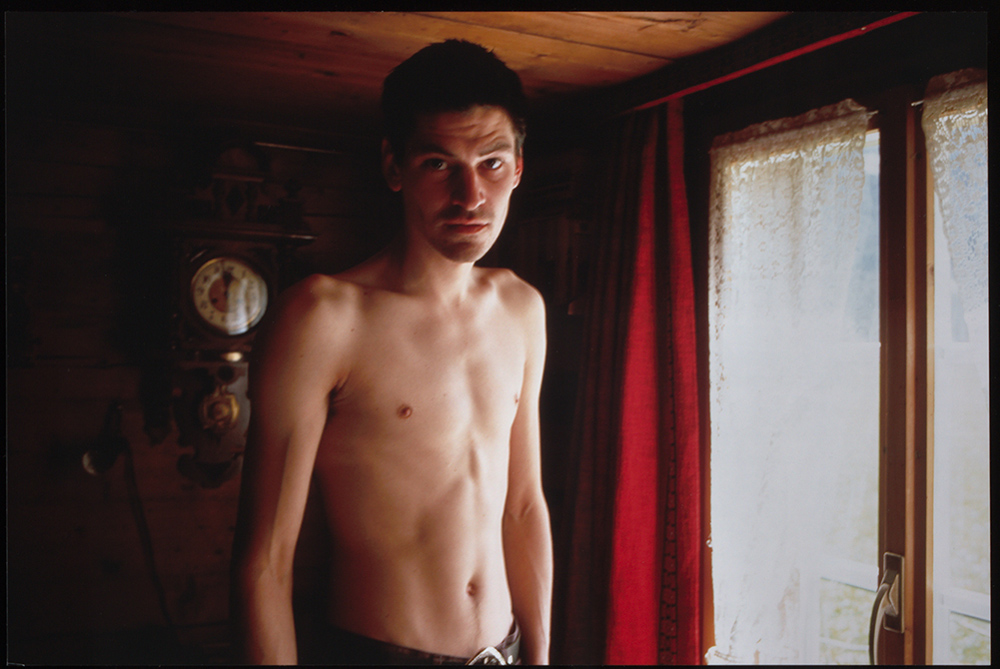
Goldin has unsparingly chronicled her own community of friends by photographing their struggles, hopes, and dreams through years of camaraderie, abuse, addiction, illness, loss, and redemption. Relapse/Detox Grid presents nine colourful yet plaintive pictures in a slide show-like narrative, offering glimpses of a life rooted in struggle, along with Goldin’s own recovery at a detox center, seen in the bottom row.


Nan Goldin (American, b. 1953) 'Relapse/Detox Grid' 1998-2000 (detail)


Nan Goldin (American, b. 1953)
Relapse/Detox Grid (detail)
1998-2000
Nine silver dye bleach prints
Overall: 42 1/2 x 62 1/8 in. (107.95 x 157.8cm)
National Gallery of Art, Washington, Corcoran Collection (Museum Purchase with funds donated by the FRIENDS of the Corcoran Gallery of Art)


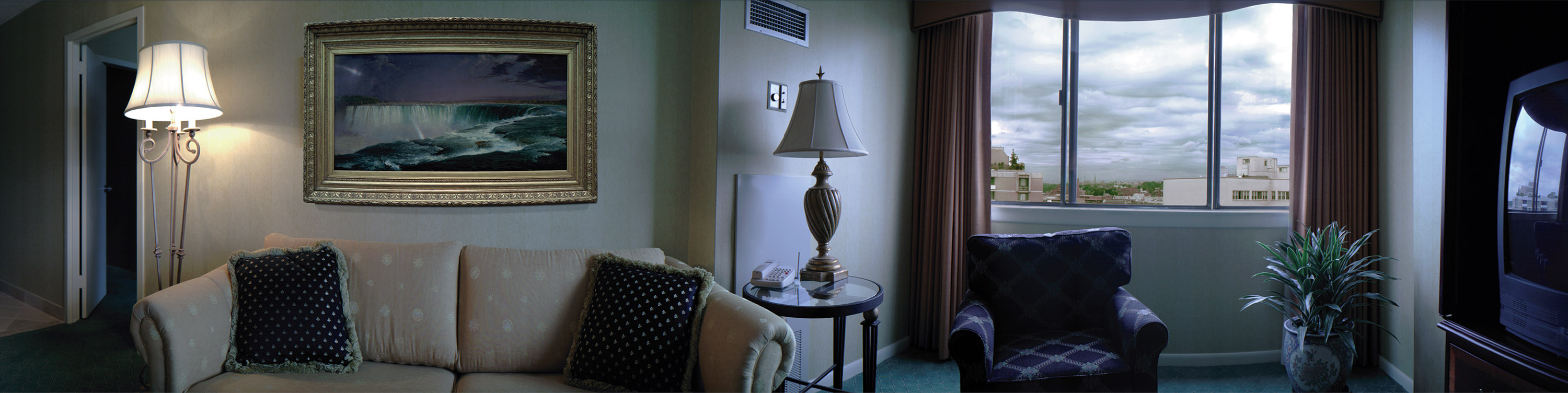
Victor Burgin (British, b. 1941) 'Watergate' 2000


Victor Burgin (British, b. 1941)
Watergate
2000
Video with sound, 9:58 minutes
National Gallery of Art, Washington, Corcoran Collection (Museum Purchase, with funds from the bequest of Betty Battle to the Women’s Committee of the Corcoran Gallery of Art)


An early advocate of conceptual art, Burgin is an artist and writer whose work spans photographs, text, and video. Watergate shows how the meaning of art can change depending on the context in which it is seen. Burgin animated digital, 160-degree panoramic photographs of nineteenth-century American art hanging in the Corcoran Gallery of Art and in a hotel room. While the camera circles the gallery, an actor reads from Jean-Paul Satre’s Being and Nothingness, which questions the relationship between presence and absence. Then a dreamlike pan around a hotel room overlooking the nearby Watergate complex mysteriously reveals Niagara, the Corcoran’s 1859 landscape by Frederic Church, having on the wall. In 1859, Niagara Falls was seen as a symbol of the glory and promise of the American nation, yet when Church’s painting is placed in the context of the Watergate, an icon of the scandal that led to Richard Nixon’s resignation, it assumes a different meaning and suggests an ominous sense of disillusionment.


Studio

Intersections also examines the studio as a locus of creativity, from Stieglitz’s photographs of his gallery, 291, and James Van Der Zee’s commercial studio portraits, to the manipulated images of Wallace Berman, Robert Heinecken, and Martha Rosler. Works by Laurie Simmons, David Levinthal, and Vik Muniz also highlight the postmodern strategy of staging images created in the studio.

Wall text

Intersections wall text


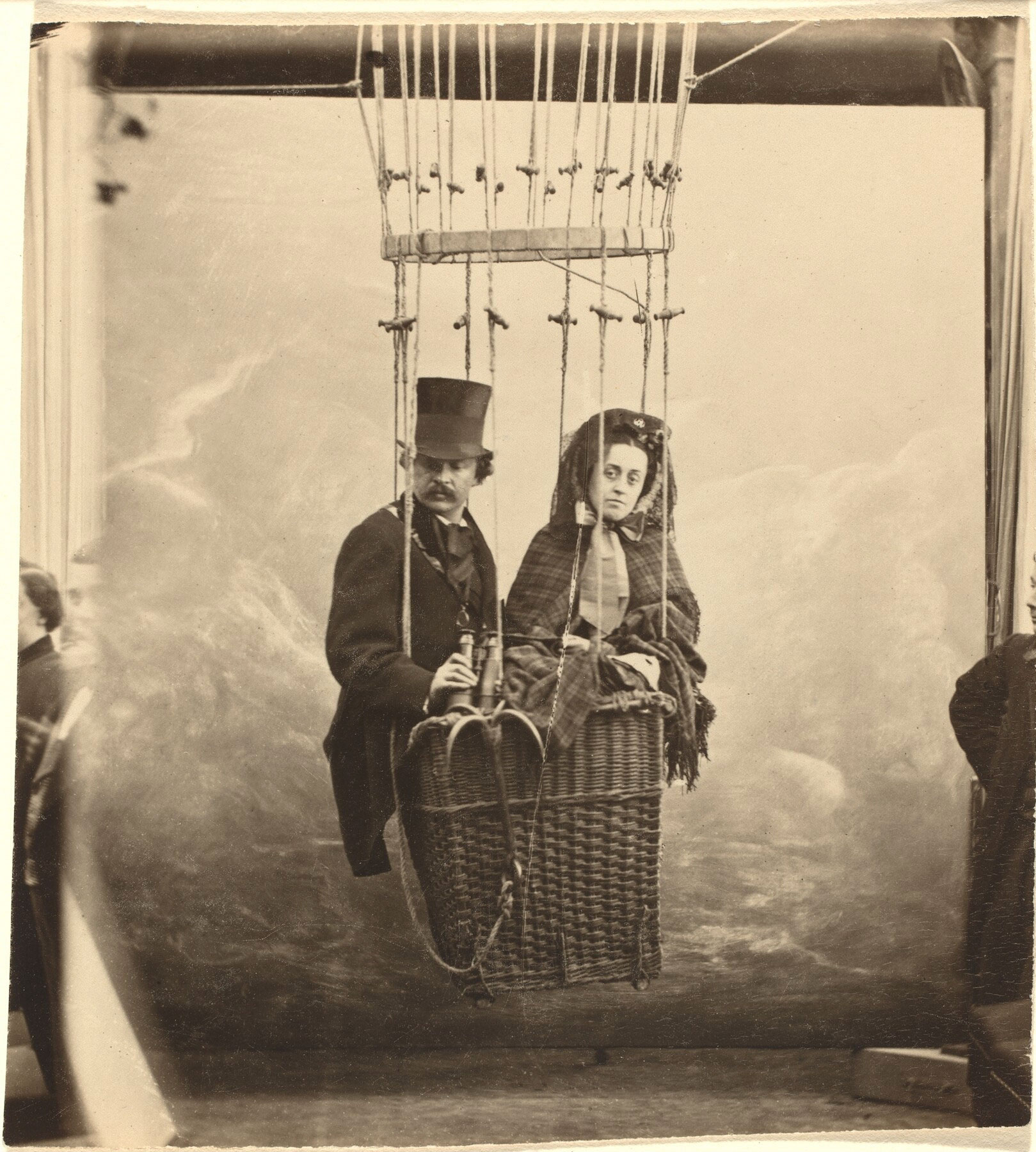
Nadar (Gaspard-Félix Tournachon) (French, 1820-1910) 'Self-Portrait with Wife Ernestine in a Balloon Gondola' c. 1865


Nadar (Gaspard-Félix Tournachon) (French, 1820-1910)
Self-Portrait with Wife Ernestine in a Balloon Gondola
c. 1865
Gelatin silver print, printed c. 1890
8.6 × 7.7cm (3 3/8 × 3 1/16 in.)
National Gallery of Art, Washington, Horace W. Goldsmith Foundation through Robert and Joyce Menschel


Nadar (a pseudonym for Gaspard-Félix Tournachon) was not only a celebrated portrait photographer, but also a journalist, caricaturist, and early proponent of manned flight. In 1863, he commissioned a prominent balloonist to build an enormous balloon 196 feet high, which he named The Giant. The ascents he made from 1863 to 1867 were widely covered in the press and celebrated by the cartoonist Honoré Daumier, who depicted Nadar soaring above Paris, its buildings festooned with signs for photography studios. Nadar made and sold small prints like this self-portrait to promote his ballooning ventures. The obviously artificial construction of this picture – Nadar and his wife sit in a basket far too small for a real ascent and are posed in front of a painted backdrop – and its untrimmed edges showing assistants at either side make it less of the self-aggrandising statement that Nadar wished and more of an amusing behind-the-scenes look at studio practice.


Alfred Stieglitz (American, 1864-1946) 'Self-portrait' 1907, printed 1930


Alfred Stieglitz (American, 1864-1946)
Self-Portrait
probably 1911
Platinum print
Image: 24.2 x 19.3cm (9 1/2 x 7 5/8 in.)
Sheet: 25.3 x 20.3cm (9 15/16 x 8 in.)
National Gallery of Art, Washington, Alfred Stieglitz Collection


Unlike many other photographers, Stieglitz made few self-portraits. He created this one shortly before he embarked on a series of portraits of the artists who frequented his New York gallery, 291. Focusing only on his face and leaving all else in shadow, he presents himself not as an artist at work or play, but as a charismatic leader who would guide American art and culture into the 20th century.


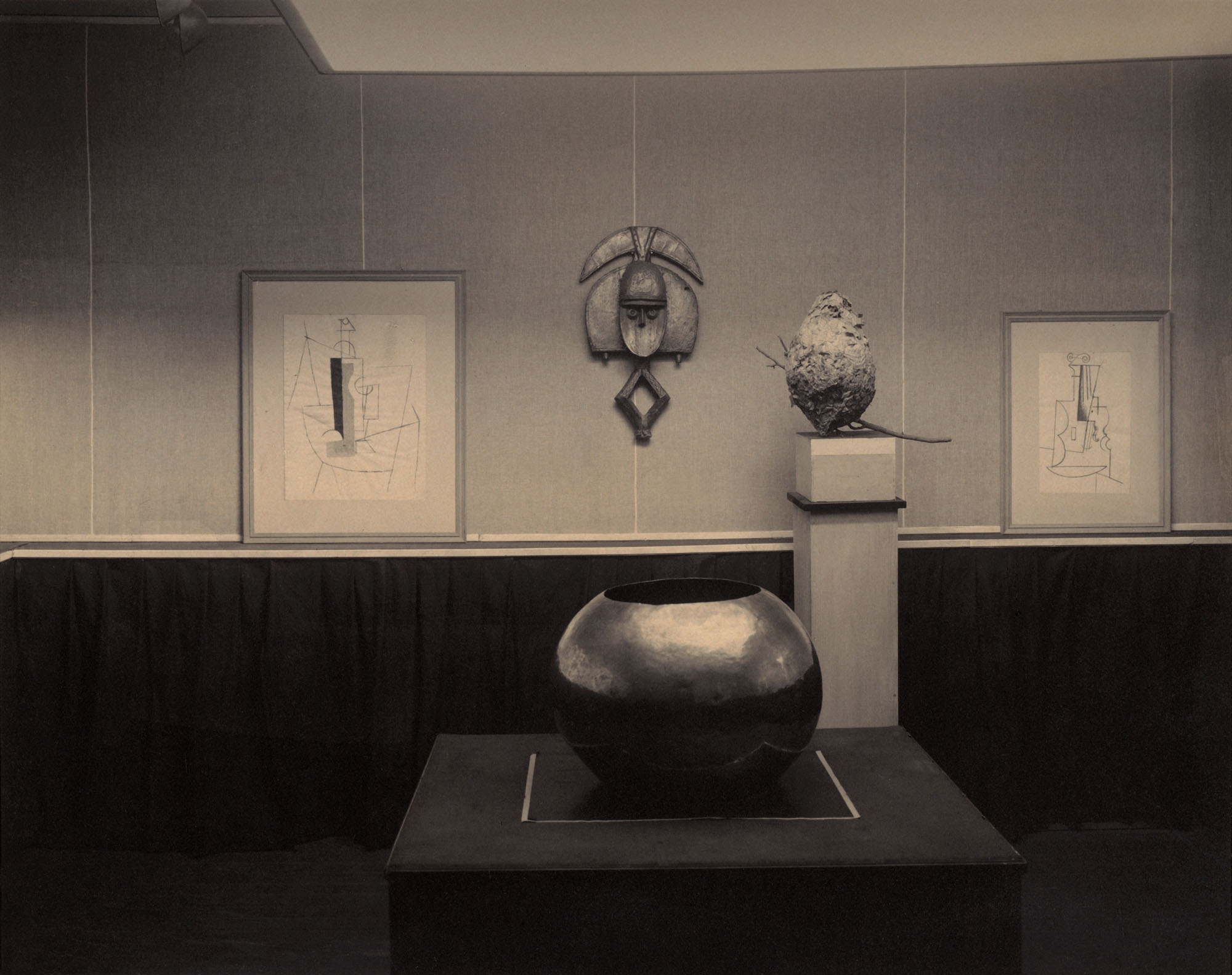
Alfred Stieglitz (American, 1864-1946) '291 – Picasso-Braque Exhibition' 1915


Alfred Stieglitz (American, 1864-1946)
291 – Picasso-Braque Exhibition
1915
Platinum print
Image: 18.5 x 23.6 cm (7 5/16 x 9 5/16 in.)
Sheet: 20.1 x 25.3 cm (7 15/16 x 9 15/16 in.)
National Gallery of Art, Washington, Alfred Stieglitz Collection


291 was Stieglitz’s legendary gallery in New York City (its name derived from its address on Fifth Avenue), where he introduced modern European and American art and photography to the American public. He also used 291 as a studio, frequently photographing friends and colleagues there, as well as the views from its windows. This picture records what Stieglitz called a “demonstration” – a short display of no more than a few days designed to prompt a focused discussion. Including two works by Picasso, an African mask from the Kota people, a wasps’ nest, and 291’s signature brass bowl, the photograph calls into question the relationship between nature and culture, Western and African art.


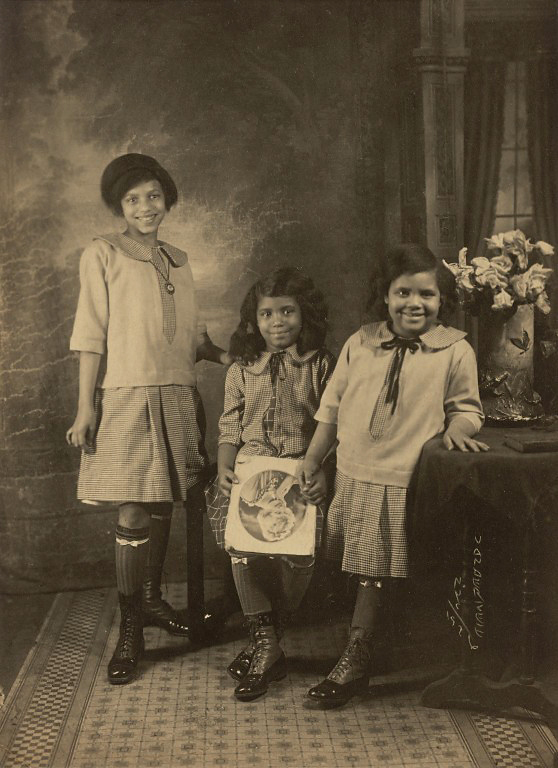
James Van Der Zee (American, 1886-1983) 'Sisters' 1926


James Van Der Zee (American, 1886-1983)
Sisters
1926
Gelatin silver print
Sheet (trimmed to image): 17.6 x 12.5cm (6 15/16 x 4 15/16 in.)
National Gallery of Art, Washington, Horace W. Goldsmith Foundation through Robert and Joyce Menschel


James Van Der Zee was a prolific studio photographer in Harlem during a period known as the Harlem Renaissance, from the end of World War I to the middle of the 1930s. He photographed many of Harlem’s celebrities, middle-class residents, and community organisations, establishing a visual archive that remains one of the best records of the era. He stands out for his playful use of props and retouching, thereby personalising each picture and enhancing the sitter’s appearance. In this portrait of three sisters, clasped hands show the tender bond of the two youngest, one of whom holds a celebrity portrait, revealing her enthusiasm for popular culture.


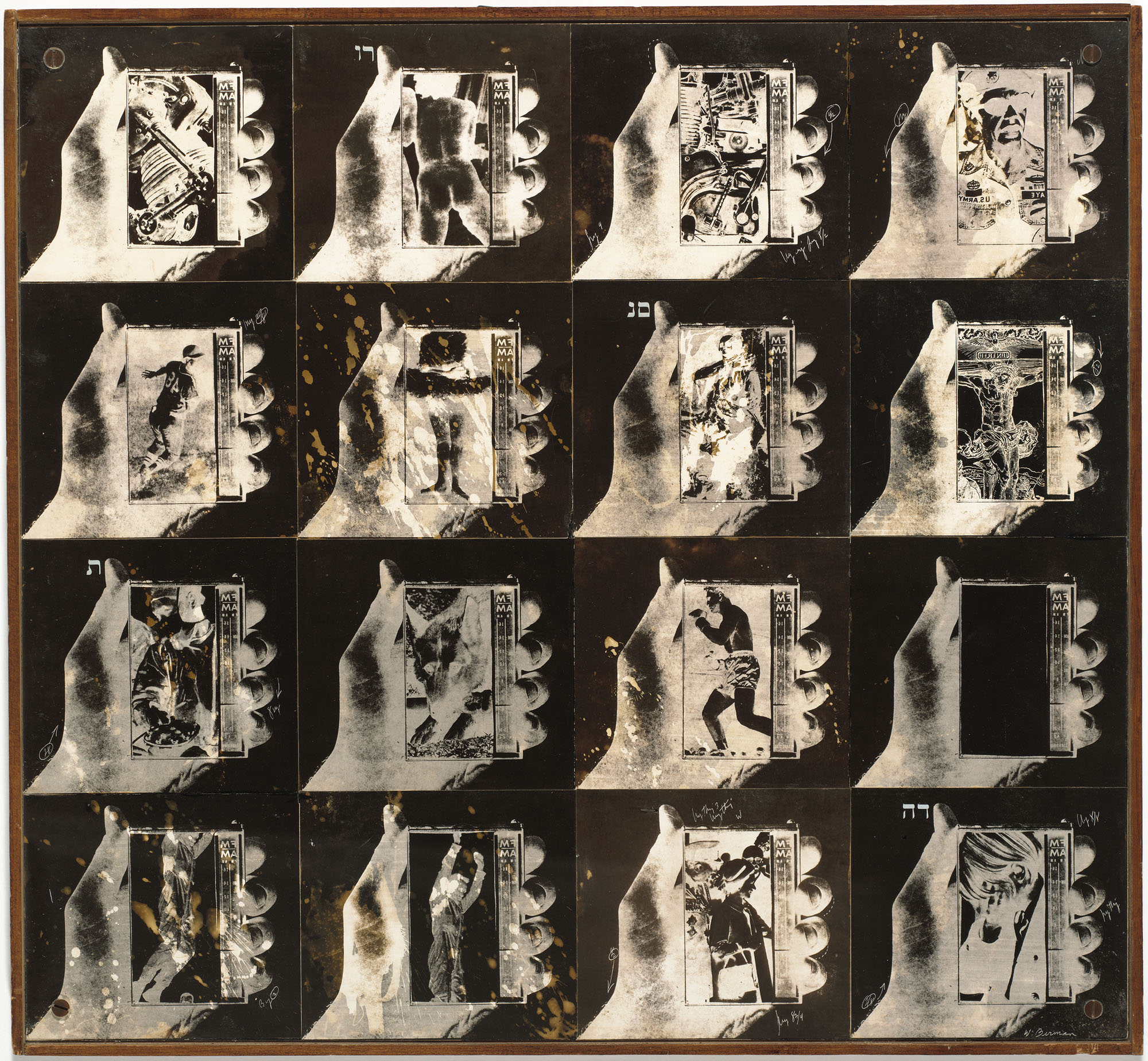
Wallace Berman (American, 1926-1976) 'Silence Series #7' 1965-1968


Wallace Berman (American, 1926-1976)
Silence Series #7
1965-1968
Verifax (wet process photocopy) collage
Actual: 24 1/2 x 26 1/2 in. (62.23 x 67.31cm)
National Gallery of Art, Washington, Corcoran Collection (Museum Purchase, William A. Clark Fund)


An influential artist of California’s Beat Generation during the 1950s and 1960s, Berman was a visionary thinker and publisher of the underground magazine Semina. His mysterious and playful juxtapositions of divers objects, images, and texts were often inspired by Dada and surrealist art. Silence Series #7 presents a cinematic sequence of his trademark transistor radios, each displaying military, religious, or mechanical images along with those of athletes and cultural icons, such as Andy Warhol. Appropriated from mass media, reversed in tone, and printed backward using an early version of a photocopy machine, these found images, pieced together and recopied as photomontages, replace then ew transmitted through the radios. Beat poet Robert Duncan once called Berman’s Verify collages a “series of magic ‘TV’ lantern shows.”


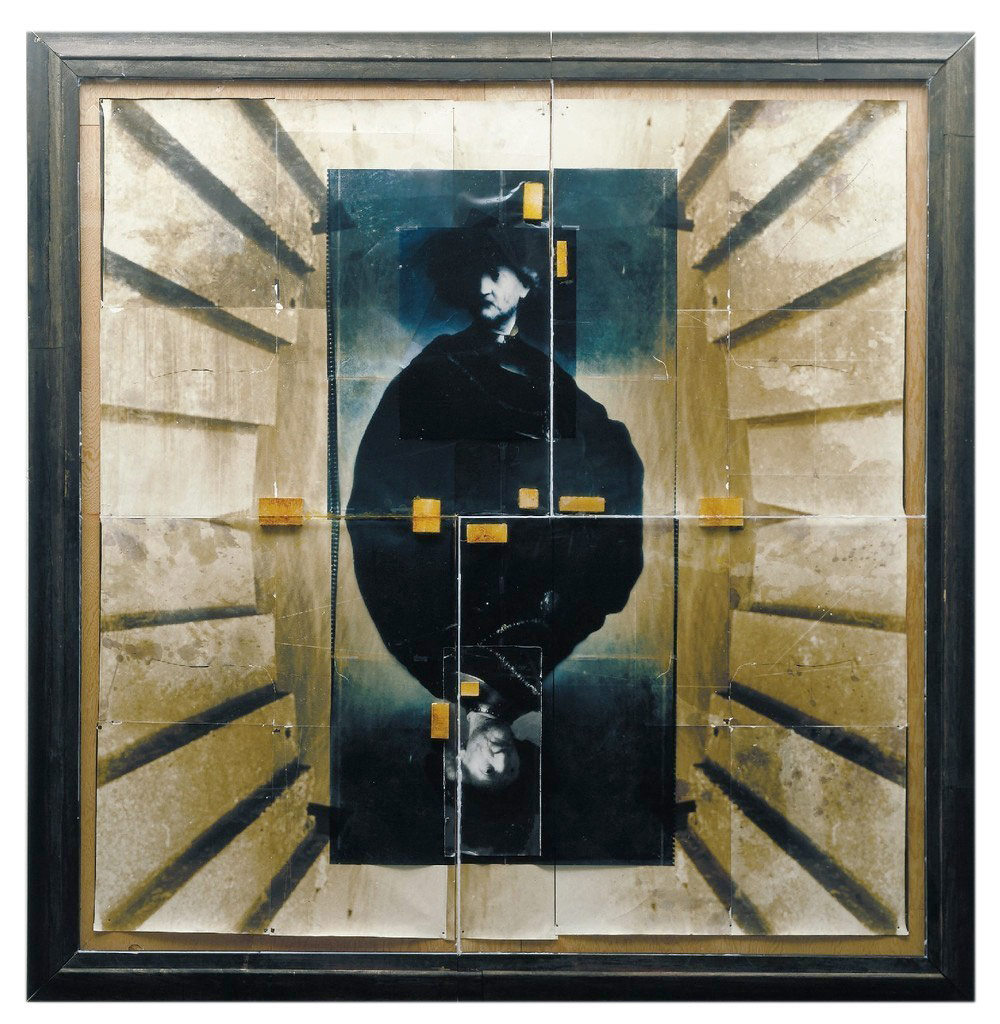
Doug and Mike Starn (American) 'Double Rembrandt with Steps' 1987-1991


Doug and Mike Starn (American)
Double Rembrandt (with steps)
1987-1991
Gelatin silver prints, ortho film, tape, wood, plexiglass, glue and silicone
2 interlocking parts:
Part 1 overall: 26 1/2 x 13 7/8 in.
Part  2 overall: 26 3/8 x 13 3/4 in.
Overall: 26 1/2 x 27 3/4 in.
National Gallery of Art, Washington, Gift of Susan and Peter MacGill


Doug and Mike Starn, identical twins who have worked collaboratively since they were thirteen, have a reputation for creating unorthodox works. Using take, wood, and glue, the brothers assembles sheets of photographic film and paper to create a dynamic composition that includes an appropriated image of Rembrandt van Rijn’s Old Man with a Gold Chain (1631). Double Rembrandt (with steps) challenges the authority of the austere fine art print, as well as the aura of the original painting, while playfully invoking the twins’ own double identity.


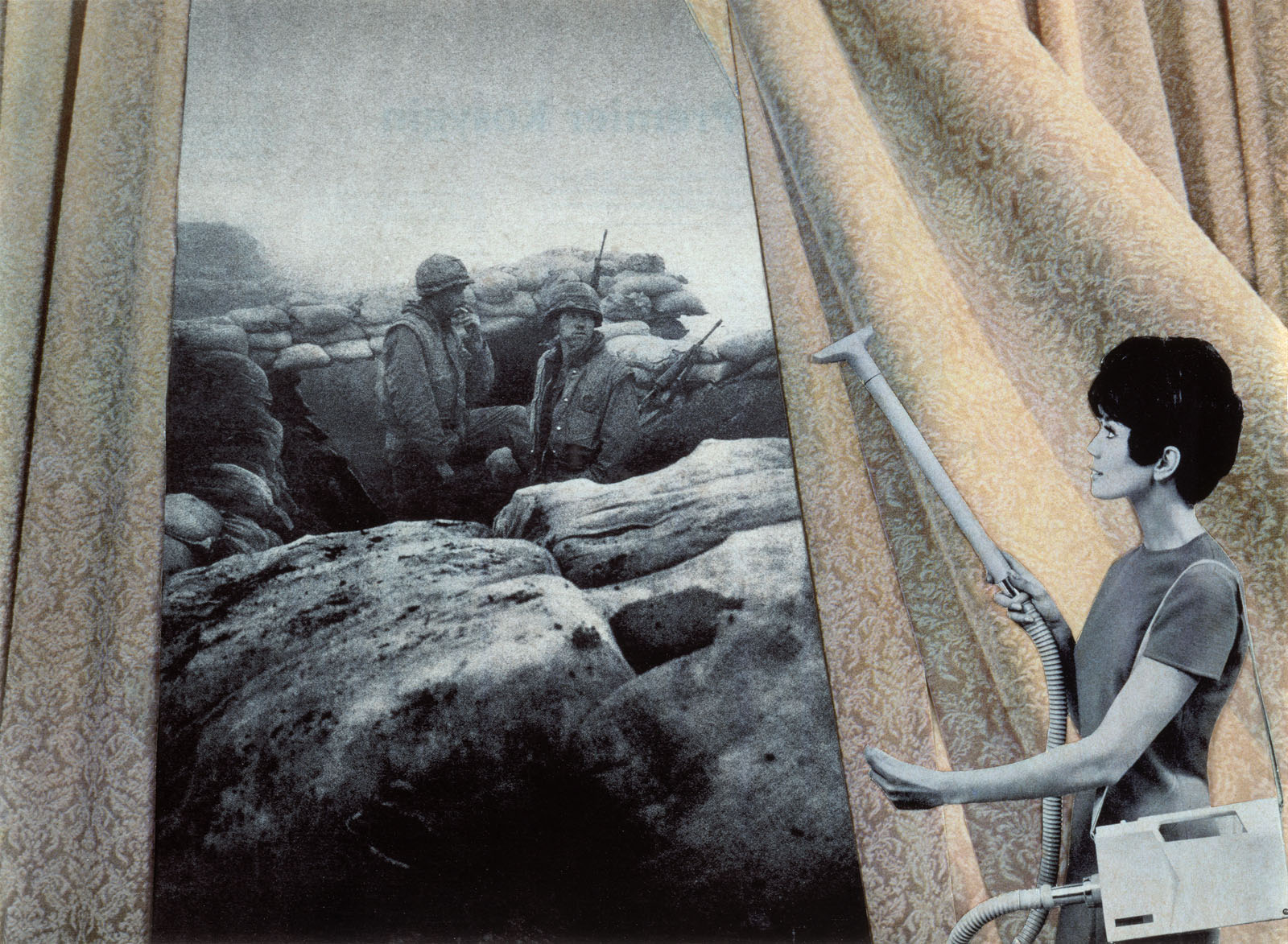
Martha Rosler (American, b. 1943) 'Cleaning the Drapes', from the series, 'House Beautiful: Bringing the War Home' 1967-1972


Martha Rosler (American, b. 1943)
Cleaning the Drapes, from the series, House Beautiful: Bringing the War Home
1967-1972
Inkjet print, printed 2007
Framed: 53.5 × 63.3cm (21 1/16 × 24 15/16 in.)
National Gallery of Art, Washington, Gift of the Collectors Committee and the Pepita Milmore Memorial Fund


A painter, photographer, video artist, feminist, activist writer, and teacher, Martha Rosler made this photomontage while she was a graduate student in the late 1960s and early 1970s. Frustrated by the portrayal of the Vietnam War on television and in other media, she wrote: “The images were always very far away and of a place we couldn’t imagine.” To bring “the war home,” as she announced in her title, she cut out images from Life magazine and House Beautiful to make powerfully layered collages that contrast American middle-class life with the realities of the war. She selected colour pictures of the idealised American life rich in the trappings of consumer society, and used black-and-white pictures of troops in Vietnam to heighten the contrast between here and there, while also calling attention to stereotypical views of men and women.


Sally Mann (American, b. 1951) 'Self-Portrait' 1974


Sally Mann (American, b. 1951)
Self-Portrait
1974
Gelatin silver print
Image: 17 × 14.9cm (6 11/16 × 5 7/8 in.)
Sheet: 35 × 27.2cm (13 3/4 × 10 11/16 in.)
National Gallery of Art, Washington, Corcoran Collection (Gift of Olga Hirshhorn)


Sally Mann, who is best known for the pictures of her children she made in the 1980s and 1990s, began to photograph when she was a teenager. In this rare, early, and intimate self-portrait, the artist is reflected in a mirror, clasping her loose shirt as she stands in a friend’s bathroom. Her thoughtful, expectant expression, coupled with her finger pointing directly at the lens of the large view camera that towers above her, foreshadows the commanding presence photography would have in her life.


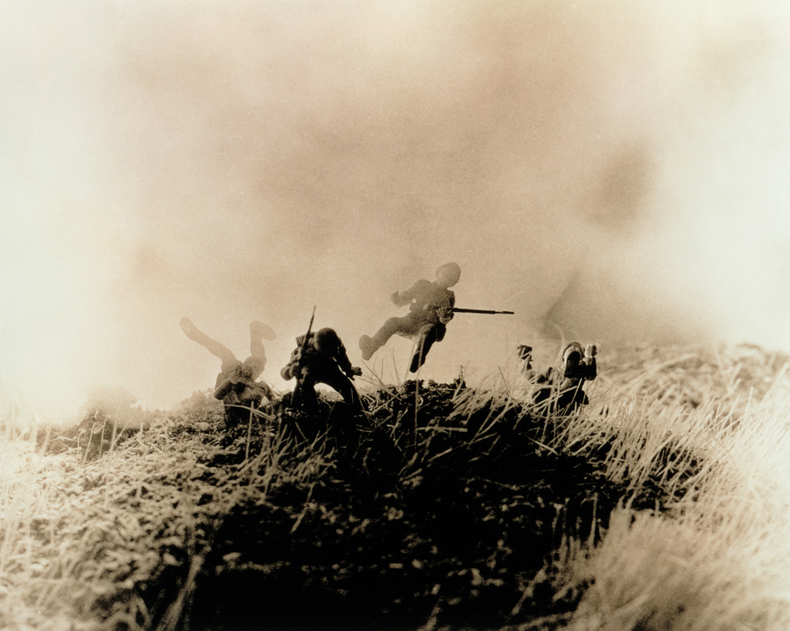
David Levinthal (American, b. 1949) 'Untitled (from the series Hitler Moves East)' 1975


David Levinthal (American, b. 1949)
Untitled (from the series Hitler Moves East)
1975
Gelatin silver print
Sheet: 15 15/16 x 20 in. (40.48 x 50.8cm)
Image: 10 9/16 x 13 7/16 in. (26.83 x 34.13cm)
National Gallery of Art, Washington, Corcoran Collection (Gift of the artist)


Levinthal’s series of photographs Hitler Moves East was made not during World War II, but in 1975, when the news media was saturated with images of the end of America’s involvement in the Vietnam War. In this series, he appropriates the grainy look of photojournalism and uses toy soldiers and fabricated environments to stage scenes from Germany’s brutal campaign on the Eastern Front during World War II. His pictures are often based on scenes found in television and movies, further distancing them from the actual events. A small stick was used to prop up the falling soldier and the explosion was made with puffs of flour. Hitler Moves East casts doubt on the implied authenticity of photojournalism and calls attention to the power of the media to define public understanding of events.


Hiroshi Sugimoto (Japanese, b. 1948) 'Oscar Wilde' 1999


Hiroshi Sugimoto (Japanese, b. 1948)
Oscar Wilde
1999
Gelatin silver print
Image: 148.59 × 119.6cm (58 1/2 × 47 1/16 in.)
Framed: 182.25 × 152.4cm (71 3/4 × 60 in.)
National Gallery of Art, Washington, Corcoran Collection (Gift of The Heather and Tony Podesta Collection)


Hiroshi Sugimoto (Japanese, b. 1948) 'Oscar Wilde' 1999 (detail)


Hiroshi Sugimoto (Japanese, b. 1948)
Oscar Wilde (detail)
1999
Gelatin silver print
Image: 148.59 × 119.6cm (58 1/2 × 47 1/16 in.)
Framed: 182.25 × 152.4cm (71 3/4 × 60 in.)
National Gallery of Art, Washington, Corcoran Collection (Gift of The Heather and Tony Podesta Collection)


While most traditional portrait photographers worked in studios, Sugimoto upended this practice in a series of pictures he made at Madame Tussaud’s wax museums in London and Amsterdam, where lifelike wax figures, based on paintings or photographs, as is the case with Oscar Wilde, are displayed in staged vignettes. By isolating the figure from its setting, posing it in a three-quarter-length view, illuminating it to convey the impression of a carefully lit studio portrait, and making his final print almost six feet tall, Sugimoto renders the artificial as real. Triply removing his portrait from reality – from Oscar Wilde himself to a portrait photograph to a wax sculpture and back to a photograph – Sugimoto collapses time and confounds our expectations of the nature of photography.


Vik Muniz (Brazilian, b. 1961) 'Alfred Stieglitz (from the series Pictures of Ink)' 2000


Vik Muniz (Brazilian, b. 1961)
Alfred Stieglitz (from the series Pictures of Ink)
2000
Silver dye bleach print
Image: 152.4 × 121.92cm (60 × 48 in.)
Framed: 161.29 × 130.81 × 5.08cm (63 1/2 × 51 1/2 × 2 in.)
National Gallery of Art, Washington, Corcoran Collection (Museum Purchase with funds provided by the FRIENDS of the Corcoran Gallery of Art)


Muniz has spent his career remaking works of art by artists as varied as Botticelli and Warhol using unusual materials – sugar, diamonds, and even junk. He has been especially interested in Stieglitz and has re-created his photographs using chocolate syrup and cotton. Here, he refashioned Stieglitz’s celebrated self-portrait using wet ink and mimicking the dot matrix of a halftone reproduction. He then photographed his drawing and greatly enlarged it so that the dot matrix itself becomes as important as the picture it replicates.


Identity

Historic and contemporary works by August Sander, Diane Arbus, Lorna Simpson, and Hank Willis Thomas, among others, make up the final section, which explores the role of photography in the construction of identity.”

Wall text

Intersections wall text


Witkacy (Stanislaw Ignacy Witkiewicz) (Polish, 1885-1939) 'Self-Portrait (Collapse by the Lamp/Kolaps przy lampie)' c. 1913


Witkacy (Stanislaw Ignacy Witkiewicz) (Polish, 1885-1939)
Self-Portrait (Collapse by the Lamp/Kolaps przy lampie)
c. 1913
Gelatin silver print
12.86 x 17.78cm (5 1/16 x 7 in.)
National Gallery of Art, Washington, Foto Fund and Robert Menschel and the Vital Projects Fund


A writer, painter, and philosopher, Witkiewicz began to photograph while he was a teenager. From 1911 to 1914, while undergoing psychoanalysis and involved in two tumultuous relationships (one ending when his pregnant fiancée killed herself in 1914), he made a series of startling self-portraits. Close-up, confrontational, and searching, they are pictures in which the artist seems to seek understanding of himself by scrutinising his visage.


August Sander (German, 1876-1964) 'The Bricklayer' 1929


August Sander (German, 1876-1964)
The Bricklayer
1929, printed c. 1950
Gelatin silver print
Sheet (trimmed to image): 50.4 x 37.5cm (19 13/16 x 14 3/4 in.)
National Gallery of Art, Washington, Gift of Gerhard and Christine Sander, in honour of the 50th Anniversary of the National Gallery of Art


In 1911, Sander began a massive project to document “people of the twentieth century.” Identifying them by their professions, not their names, he aimed to create a typological record of citizens of the Weimar Republic. He photographed people from all walks of life – from bakers, bankers, and businessmen to soldiers, students, and tradesmen, as well as gypsies, the unemployed, and the homeless. The Nazis banned his project in the 1930s because his pictures did not conform to the ideal Aryan type. Although he stopped working after World War II, he made this rare enlargement of a bricklayer for an exhibition of his photographs in the early 1950s.


Walker Evans (American, 1903-1975) 'Photographer's Display Window, Birmingham, Alabama' 1936


Walker Evans (American, 1903-1975)
Photographer’s Display Window, Birmingham, Alabama
1936
Gelatin silver print
Image: 24.1 x 19.3cm (9 1/2 x 7 5/8 in.)
Sheet: 25.2 x 20.3cm (9 15/16 x 8 in.)
National Gallery of Art, Washington, Gift of Mr. and Mrs. Harry H. Lunn, Jr. in honor of Jacob Kainen and in Honor of the 50th Anniversary of the National Gallery of Art


Diane Arbus (American, 1923-1971) 'Triplets in their Bedroom, N.J.,' 1963


Diane Arbus (American, 1923-1971)
Triplets in their Bedroom, N.J.,
1963
Gelatin silver print
Image: 37.7 x 37.8cm (14 13/16 x 14 7/8 in.)
Sheet: 50.4 x 40.4cm (19 13/16 x 15 7/8 in.)
National Gallery of Art, Washington, R. K. Mellon Family Foundation


Celebrated for her portraits of people traditionally on the margins of society – dwarfs and giants – as well as those on the inside – society matrons and crying babies – Arbus was fascinated with the relationship between appearance and identity. Many of her subjects, such as these triplets, face the camera, tacitly aware of their collaboration in her art. Rendering the familiar strange and the strange familiar, her carefully composed pictures compel us to look at the world in new ways. “We’ve all got an identity,” she said. “You can’t avoid it. It’s what’s left when you take away everything else.”


Lorna Simpson (American, b. 1960) 'Untitled (Two Necklines)' 1989


Lorna Simpson (American, b. 1960)
Untitled (Two Necklines)
1989
Two gelatin silver prints with 11 plastic plaques
Overall: 101.6 x 254 cm (40 x 100 in.)
National Gallery of Art, Washington, Gift of the Collectors Committee


From the mid-1980s to the present, Simpson has created provocative works that question stereotypes of gender, identity, history, and culture, often by combining photographs and words. Two Necklines shows two circular and identical photographs of an African American woman’s mouth, chin, neck, and collarbone, as well as the bodice of her simple shift. Set in between are black plaques, each inscribed with a single word: “ring, surround, lasso, noose, eye, areola, halo, cuffs, collar, loop.” The words connote things that bind and conjure a sense of menace, yet when placed between the two calm, elegant photographs, their meaning is at first uncertain. But when we read the red plaque inscribed “feel the ground sliding from under you” and note the location of the word “noose” adjacent to the two necklines, we realise that Simpson is quietly but chillingly referring to the act of lynching.


Hank Willis Thomas (American, b. 1976) 'And One' 2011


Hank Willis Thomas (American, b. 1976)
And One
2011
Digital chromogenic print
Framed: 248.29 × 125.73 × 6.35cm (97 3/4 × 49 1/2 × 2 1/2 in.)
National Gallery of Art, Washington, Corcoran Collection (Gift of the artist and Jack Shainman Gallery, New York)


And One is from Thomas’s Strange Fruit series, which explores the concepts of spectacle and display as they relate to modern African American identity. Popularised by singer Billie Holiday, the series title Strange Fruit comes from a poem by Abel Meeropol, who wrote the infamous words “Black bodies swinging in the southern breeze; Strange fruit hanging from the poplar trees” after seeing a photograph of a lynching in 1936. In And One, a contemporary African American artist reflects on how black bodies have been represented in two different contexts: lynching and professional sports. Thomas ponders the connections between these disparate forms through his dramatic photograph of two basketball players frozen in midair, one dunking a ball through a hanging noose.


National Gallery of Art
National Mall between 3rd and 7th Streets
Constitution Avenue NW, Washington

Opening hours:
Daily 10.00am – 5.00pm

National Gallery of Art website

LIKE ART BLART ON FACEBOOK

Back to top

Exhibition: ‘Emanations: The Art of the Cameraless Photograph’ at the Govett-Brewster Art Gallery/Len Lye Centre, New Plymouth, New Zealand Part 1

Exhibition dates: 29th April – 14 August, 2016

Curator: Geoffrey Batchen


Installation view of the exhibition 'Emanations: The Art of the Cameraless Photograph' at the Govett-Brewster Art Gallery


Installation view of the exhibition Emanations: The Art of the Cameraless Photograph at the Govett-Brewster Art Gallery


This is how best a contemporary art exhibition can show the work to advantage. Just gorgeous!

The well curated, comprehensive content is complemented by a beautifully paced hang nestled within stunning contemporary art spaces. Labels are not just plonked on the wall, but are discretely displayed on horizontal shelves next to the work – accessible but so as not to interrupt the flow of the work. Coloured walls add to the ambience of the installation and act as an adjunct to the colours of the art. Beautiful modernist contemporary display cabinets keep the spaces fresh and vibrant.

A discussion of the content of the exhibition to follow in part 2 of the posting.

Dr Marcus Bunyan


Many thankx to the Govett-Brewster Art Gallery for allowing me to publish the photographs in the posting. Please click on the photographs for a larger version of the image. All images are photographed by Bryan James.


“Exploring the art of cameraless photography, encompassing historical, modern and contemporary works. Emanations: The Art of the Cameraless Photograph is the first comprehensive survey of cameraless photography held anywhere in the world, presenting more than 200 examples, from 1839 – when photography’s invention was announced – through to contemporary artists. We present the most complete study of cameraless photography to date, focusing on the cameraless mode from the 1830s through to today and offering a global perspective on this way of working.

The theme of the exhibition is inspired by artist Len Lye’s cameraless photographs from 1930 and 1947, and it’s the first time all 52 of Lye’s photograms have been seen together. Emanations is an opportunity to put Lye’s photographic work in a suitably global context, surrounded by his predecessors, contemporaries and successors. Emanations includes many masterpieces of photographic art and showcases the talents of some of the world’s leading contemporary photographic artists.

The exhibition has work by photographic pioneers William Henry Fox Talbot and Anna Atkins, important modernist photographers Man Ray and László Moholy-Nagy, and many of today’s most significant photographic artists including Walead Beshty, Marco Breuer, Liz Deschenes, Joan Fontcuberta, Christian Marclay, Thomas Ruff, and Hiroshi Sugimoto. Emanations also includes work by both senior and emerging Australian and New Zealand artists, from Anne Noble and Anne Ferran to Andrew Beck and Justine Varga.

The exhibition presents artwork by more than 50 artists hailing from New Zealand, Australia, Japan, Poland, Czechoslovakia, Hungary, France, Germany, Italy, England, Canada and the United States. Almost every photographic process is included in the exhibition – photogenic drawings, calotypes, daguerreotypes, and tintypes, as well as gelatin silver, chromogenic and ink-jet photographic prints, photocopies, verifax and thermal prints.

The exhibition is accompanied by a major book by the same name and on the same theme, co-published by the Govett-Brewster Art Gallery and DelMonico Books/Prestel, based in New York and Munich. The book contains 184 full-page colour plates and a 25,000 word essay by Geoffrey Batchen. The Govett-Brewster is also publishing another book reproducing all the cameraless photographs by Len Lye, along with an essay by Wystan Curnow.

Emanations is curated by Geoffrey Batchen, Professor of Art History at Victoria University of Wellington, and a world-renowned historian and curator of photography.”

Text from the Govett-Brewster Art Gallery website


Installation view of Andrew Beck ‘Double Screen’ 2016 part of the exhibition 'Emanations: The Art of the Cameraless Photograph' at the Govett-Brewster Art Gallery

Installation view of Andrew Beck ‘Double Screen’ 2016 part of the exhibition 'Emanations: The Art of the Cameraless Photograph' at the Govett-Brewster Art Gallery

Installation view of Andrew Beck ‘Double Screen’ 2016 part of the exhibition 'Emanations: The Art of the Cameraless Photograph' at the Govett-Brewster Art Gallery


Installation views of
Andrew Beck (New Zealand, b. 1987)
Double Screen
2016
Glass, acrylic paint, gelatin silver photographs


In the 1930s, László Moholy-Nagy made art that combined a cameraless photograph, plexiglass and paint. New Zealand artist Andrew Beck works in a similar way to produce sculptural installations that complicate our expectations of the relationship between light and shadow, the natural and the artificial, images and objects, art and reality. He forces us to look very closely at what we are seeing, and even to critically reflect on the act of seeing itself.


Installation view of the exhibition 'Emanations: The Art of the Cameraless Photograph' at the Govett-Brewster Art Gallery with at left, works by Anne Ferran and at right, Joyce Campbell


Installation view of the exhibition Emanations: The Art of the Cameraless Photograph at the Govett-Brewster Art Gallery with at left, Anne Ferran and at right, Joyce Campbell


Installation view of Joyce Campbell ‘LA Bloom’ 2002 part of the exhibition 'Emanations: The Art of the Cameraless Photograph' at the Govett-Brewster Art Gallery


Installation view of
Joyce Campbell (New Zealand, b. 1971)
LA Bloom
2002
Cibachrome photographs
Courtesy of the artist, Auckland


In 2002 the New Zealand photographer Joyce Campbell decided to conduct a microbial survey of Los Angeles, a city in which she lives for part of each year. She swabbed the surfaces of plants and soil from twenty-seven locations chosen out of her Thomas Guide to the city. She then transferred each sample onto a sterilised plexiglass plate of agar and allowed it to grow as a living culture. The Cibachrome positive colour contact prints she subsequently made from these plates resemble abstract paintings and yet also offer a critical mapping of the relative fertility of this particular urban landscape, revealing its dependence on the politics of water distribution.


Installation view of Aldo Tambellini (Italy/US) 'Videograms' 1969


Installation view of
Aldo Tambellini
(Italian-American, 1930-2020)
Videogram, 1969
Videogram, 1969
Videogram, 1969
Videogram, 1969
Gelatin silver photographs


Although raised in Italy, Aldo Tambellini was working in New York in 1969 when he manipulated the cathode ray tube of a TV set into the shape of a spiral (for this artist, a universal sign of energy) and exposed sheets of light-sensitive paper by laying them over its screen. The calligraphic inscriptions that resulted made his paper look as if it had been scorched from the inside out. These ‘videograms,’ as Tambellini called them, highlight the chaos and chance operations that lurk just beneath the surface of technology’s apparent rationality.


Installation view of Shaun Waugh (New Zealand) 'ΔE2000 1.1' 2014 part of the exhibition of the exhibition 'Emanations: The Art of the Cameraless Photograph' at the Govett-Brewster Art Gallery

Installation view of Shaun Waugh (New Zealand) 'ΔE2000 1.1' 2014 part of the exhibition of the exhibition 'Emanations: The Art of the Cameraless Photograph' at the Govett-Brewster Art Gallery

Installation view of Shaun Waugh (New Zealand) 'ΔE2000 1.1' 2014 part of the exhibition of the exhibition 'Emanations: The Art of the Cameraless Photograph' at the Govett-Brewster Art Gallery


Installation views of
Shaun Waugh (New Zealand, b. 1982)
ΔE2000 1.1
2014
24 Agfa boxes with mounted solid colour inkjet photographs


This work by New Zealand artist Shaun Waugh began with the purchase of empty boxes that once held Agfa photographic paper. Waugh then took readings of all four sides of the inside lip of each box lid using a spectrophotometer, employing this data and Photoshop to generate a solid orange-red inkjet print. The box lid is used to frame a two-dimensional version of itself, bringing analogue and digital printing into an uncomfortably close proximity to create a memorial to a kind of photography that is now defunct. Hung salon style, like so many small paintings, Waugh’s work manages to turn the photograph inside out, and thus into something other than itself.


Wall text from the exhibition 'Emanations: The Art of the Cameraless Photograph' at the Govett-Brewster Art Gallery


Wall text from the exhibition Emanations: The Art of the Cameraless Photograph at the Govett-Brewster Art Gallery


Installation view of the exhibition 'Emanations: The Art of the Cameraless Photograph' at the Govett-Brewster Art Gallery with, at left, work by Anne Ferran and, at right, Adam Fuss


Installation view of the exhibition Emanations: The Art of the Cameraless Photograph at the Govett-Brewster Art Gallery with at left, Anne Ferran and at right, Adam Fuss


Installation view of the work of Anne Ferran (Australian, b. 1949) Untitled, 1998; Untitled, 1998; Untitled, 1998; Untitled (baby's petticoat), 1998; Untitled (collar), 1998; Untitled (baby's bonnet), 1998; Untitled (sailor suit), 1998; Untitled (shirts), 1998


Installation view of
Anne Ferran (Australian, b. 1949)
Untitled, 1998
Untitled, 1998
Untitled, 1998
Untitled (baby’s petticoat), 1998
Untitled (collar), 1998
Untitled (baby’s bonnet), 1998
Untitled (sailor suit), 1998
Untitled (shirts), 1998

Unique gelatin silver photographs


In 1998 Australian artist Anne Ferran was offered an artist-in-resident’s position at an historic homestead not far from Sydney that had been occupied by successive generations of the same family since 1813. Ferran spent six months systematically making contact prints using the dresses, bodices, skirts, petticoats, and collars still contained in the house. Hovering in a surrounding darkness, softly radiating an inner light, the ghostly traces of these translucent garments now act as residual filaments for a century of absorbed sunshine. Many of them have been patched over the years and their signs of wear and repair are made clear. This allows us to witness a history of the use of each piece of clothing, seeing inside them to those small and skilful acts of home economy – the labour of women – usually kept hidden from a public gaze.


Anne Ferran (Australian, b. 1949) 'Untitled (baby's bonnet)' 1998


Anne Ferran (Australian, b. 1949)
Untitled (baby’s bonnet)
1998
Unique gelatin silver photograph


Installation view of the exhibition Emanations: The Art of the Cameraless Photograph at the Govett-Brewster Art Gallery with, at left, work by Adam Fuss and, at right, Lisa Clunie


Installation view of the exhibition Emanations: The Art of the Cameraless Photograph at the Govett-Brewster Art Gallery with at left, Adam Fuss and at right, Lisa Clunie


installation view of Adam Fuss (UK/Australia/US) ‘Caduceus’ 2010 (left) and ‘Untitled’ 1991 (right)


Installation view of Adam Fuss (UK/Australia/US) Caduceus 2010 (left) and Untitled 1991 (right)


Born in England, raised in Australia, and resident in New York, Adam Fuss has produced a diverse range of large cameraless photographs since the 1980s, asking his light-sensitive paper to respond to the physical presence of such phenomena as light, water, a slithering snake, flocks of birds, and sunflowers.


Adam Fuss (British, b. 1961) 'Untitled' 1991 from the exhibition 'Emanations: The Art of the Cameraless Photograph' at the Govett-Brewster Art Gallery/Len Lye Centre, New Plymouth, New Zealand, April - August, 2016


Adam Fuss (British, b. 1961)
Untitled
1991
Type C photograph


Lisa Clunie (New Zealand) ‘Fold I’ 2014 from the exhibition 'Emanations: The Art of the Cameraless Photograph' at the Govett-Brewster Art Gallery/Len Lye Centre, New Plymouth, New Zealand, April - August, 2016


Lisa Clunie (New Zealand)
Fold I
2014
Silver gelatin photograph


The work of New Zealand artist Lisa Clunie looks back to the work of pioneer modernist László Moholy-Nagy in order to manifest the idea that our lives are shaped by a continual play of forces. Like Moholy, she wets her photographic paper and then tightly folds it, before moving the paper back and forth under her enlarger, selectively exposing these folds to the ‘force’ of light. The resulting work reminds us that a photograph has weight, surface, texture, tension and edges.


Installation view of the exhibition 'Emanations: The Art of the Cameraless Photograph' at the Govett-Brewster Art Gallery with at right, the work of Robert L. Buelteman


Installation view of the exhibition Emanations: The Art of the Cameraless Photograph at the Govett-Brewster Art Gallery with at right, the work of Robert L. Buelteman


Installation view of Robert L. Buelteman (American, b. 1954) ‘Cannabis sativa’ 2002 (left) and ‘Eucalyptus polyanthemos’ 2000 (right)


Installation view of
Robert L. Buelteman (American, b. 1954)
Cannabis sativa (left)
2002
Digital chromogenic development photograph

Robert L. Buelteman (American, b. 1954)
Eucalyptus polyanthemos (right)
2002
Digital chromogenic development photograph


The San-Franciscan artist Robert Buelteman takes his leaves and other botanical specimens and slices them into paper-thin sections, before charging them, in a complicated and dangerous process, with a pulse of 40,000 volts of electricity. This leaves behind a colorised trace on his photographic paper, a photogram in which these plants appear to be aflame, as if emitting an energy all their own. Hovering between life and death, this is a nature that seems to be on the cusp of its transmutation into something else entirely.


Installation view of the exhibition Emanations: The Art of the Cameraless Photograph at the Govett-Brewster Art Gallery with at centre, the work of Robert Owen and at right, Joan Fontcuberta


Installation view of the exhibition Emanations: The Art of the Cameraless Photograph at the Govett-Brewster Art Gallery with at centre, Robert Owen and at right, Joan Fontcuberta


Robert Owen (Australian, b. 1937) ‘Endings (Rothko died today) – Kodachrome 64, No. 21, 26/02/1970’ 2009


Robert Owen (Australian, b. 1937)
Endings (Rothko died today) – Kodachrome 64, No. 21, 26/02/1970
2009
Pigment ink-jet print


The photographic work of Australian artist Robert Owen is part of a broader tendency on the part of contemporary artists to reflect in morbid terms on aspects of photography’s past. Owen has been collecting film stubs since 1968. Although better known as a painter and sculptor, he recently decided to print these end strips of film as a series of large colour photographs, paying homage to this residue of the Kodak era in a chronological sequence of readymade chromatic fields. This one was collected on the day that the American abstract painter Mark Rothko killed himself.


Adam Fuss (British, b. 1961) 'Untitled' (from the series 'My Ghost') 2001


Adam Fuss (British, b. 1961)
Untitled (from the series My Ghost)
2001
Unique gelatin silver photograph


In his series, titled My Ghost, Adam Fuss put together a body of contact photographs of such things as plumes of smoke, patterns of light, a butterfly, a swan and a baptism dress. As his title suggests, Fuss’s work aims to evoke rather than describe; for all their evident tactility, these photographs are meant as metaphors, as prayers, perhaps even as poems.


Adam Fuss (British, b. 1961) both 'Untitled' 1989


Installation view of
Adam Fuss (British, b. 1961)
Untitled
1989
Cibachrome photograph

Adam Fuss (British, b. 1961)
Untitled
1989
Cibachrome photograph


Installation view of Joan Fontcuberta (Spain). ‘MN 62: OPHIUCUS (NGC 6266), AR 17 h. 01,2 min. / D -30º 07’’ (left) and ‘LAMBDA CORONAE AUSTRALIS (Mags 5,1/9,7 Sepn 29,2" AP 214º), AR 18 h 43,8 min. / D -38º 19’’ (right) both 1993

Installation view of Joan Fontcuberta (Spanish, b. 1955) ‘MN 62: OPHIUCUS (NGC 6266), AR 17 h. 01,2 min. / D -30º 07’’ (left) and ‘LAMBDA CORONAE AUSTRALIS (Mags 5,1/9,7 Sepn 29,2" AP 214º), AR 18 h 43,8 min. / D -38º 19’’ (right) both 1993


Installation views of
Joan Fontcuberta (Spanish, b. 1955)
MN 62: OPHIUCUS (NGC 6266), AR 17 h. 01,2 min. / D -30º 07′ (left)
LAMBDA CORONAE AUSTRALIS (Mags 5,1/9,7 Sepn 29,2″ AP 214º), AR 18 h 43,8 min. / D -38º 19′ (right)
both 1993
From the Constellations series
Cibachrome photographs


Photographs from the Constellations series by Spanish artist Joan Fontcuberta come filled with fields of sparkling blackness, their speckled surfaces redolent of infinite space and twinkling stars. Their titles imply we are looking upwards towards the heavens. But this artist’s prints actually record dust, crushed insects and other debris deposited on the windscreen of his car, a trace of the evidence of his own rapid passage through terrestrial space and time. The artist applied sheets of 8-by-10-inch film directly onto the glass windscreen and shone a light through, creating photograms which were then made into glossy Cibachrome prints.


Installation view of Paul Hartigan (New Zealand) 'Colourwords' 1980-1981 as part of the exhibition 'Emanations: The Art of the Cameraless Photograph' at the Govett-Brewster Art Gallery

Installation view of Paul Hartigan (New Zealand) 'Colourwords' 1980-1981 as part of the exhibition 'Emanations: The Art of the Cameraless Photograph' at the Govett-Brewster Art Gallery

Detail of Paul Hartigan (New Zealand, b. 1939) 'Colourwords' 1980-1981 as part of the exhibition 'Emanations: The Art of the Cameraless Photograph' at the Govett-Brewster Art Gallery

Detail of Paul Hartigan (New Zealand, b. 1939) 'Colourwords' 1980-1981 as part of the exhibition 'Emanations: The Art of the Cameraless Photograph' at the Govett-Brewster Art Gallery

Detail of Paul Hartigan (New Zealand, b. 1939) 'Colourwords' 1980-1981 as part of the exhibition 'Emanations: The Art of the Cameraless Photograph' at the Govett-Brewster Art Gallery

Detail of Paul Hartigan (New Zealand, b. 1939) 'Colourwords' 1980-1981 as part of the exhibition 'Emanations: The Art of the Cameraless Photograph' at the Govett-Brewster Art Gallery

Detail of Paul Hartigan (New Zealand, b. 1939) 'Colourwords' 1980-1981 as part of the exhibition 'Emanations: The Art of the Cameraless Photograph' at the Govett-Brewster Art Gallery


Installation views and detail of
Paul Hartigan (New Zealand, b. 1939)
Colourwords
1980-1981
Colour photocopy


Consistently defined by a subversive edge and a darkly witty humour, the work of New Zealand artist Paul Hartigan is often subtly permeated by astute social and political perceptions. Shortly after they were introduced into New Zealand in 1980, Hartigan explored the creative possibilities of a colour photocopying machine, making a series of images in which words and found objects ironically refer to each other in an endless loop. With the objects arranged to spell out their own colour, each picture offers an oscillation of word and meaning, flatness and dimension, art and detritus.


Installation view of Gavin Hipkins (New Zealand) ‘The Coil’ 1998 (left) and Lucinda Eva-May as part of the exhibition 'Emanations: The Art of the Cameraless Photograph' at the Govett-Brewster Art Gallery


Installation view of Gavin Hipkins (left) and Lucinda Eva-May (right) as part of the exhibition Emanations: The Art of the Cameraless Photograph at the Govett-Brewster Art Gallery


Installation view of Gavin Hipkins (New Zealand, b. 1968) ‘The Coil’ 1998


Installation view of
Gavin Hipkins (New Zealand, b. 1968)
The Coil
1998
Silver gelatin photographs


Inspired by the kinetic films of Len Lye, in the 1990s Gavin Hipkins made a series of cameraless photographs that play with sequence and implied movement. The 32 images that make up The Coil were made by resting polystyrene rings on sheets of photographic paper and then exposing them to light.


Installation view of Lucinda Eva-May (Australia) 'Unity in light #6' 2012 (left) 'Unity in light #9' 2012 (right)


Installation view of
Lucinda Eva-May (Australia)
Unity in light #6, 2012 (left)
Unity in light #9, 2012 (right)
C-type prints


Australian artist Lucinda Kennedy has sought to capture a phenomenological representation of the feelings and sensations of sexual intercourse through the direct imprint on sheets of photographic paper of this most primal of human interactions. Turned into a single blurred organism by the extended duration of the exposure, the artist and her partner become an abstraction, thereby aptly conjuring an experience that has always been beyond the capacity of mere description.


Installation view of the exhibition 'Emanations: The Art of the Cameraless Photograph' at the Govett-Brewster Art Gallery with at left, the work of Thomas Ruff, and at right, Justine Varga


Installation view of the exhibition Emanations: The Art of the Cameraless Photograph at the Govett-Brewster Art Gallery with at left, Thomas Ruff, and at right, Justine Varga


Installation view of Thomas Ruff (Germany, b. 1958) 'r.phg.07_II' 2013

Installation view of Thomas Ruff (Germany, b. 1958) 'r.phg.07_II' 2013


Installation views of
Thomas Ruff (Germany, b. 1958)
r.phg.07_II
2013
Chromogenic print


Thomas Ruff (Germany, b. 1958) 'r.phg.07_II' 2013


Thomas Ruff (Germany, b. 1958)
r.phg.07_II
2013
Chromogenic print


German artist Thomas Ruff uses his computers to construct virtual objects with simulated surfaces and to calculate the lights and shadows they might cast in different compositions. He then prints the results, in colour and at very large scale. Combining variations of spheres, curves, zig-zags and sharp edges, all set within richly coloured surrounds, Ruff’s images are both untethered abstractions and historical ciphers. Although referred to by the artist as photograms, the final prints are perhaps better conceived as being about the photogram, studiously replaying an analogue process in digital terms so as to make a spectacle of its logic.


Installation view of the exhibition 'Emanations: The Art of the Cameraless Photograph' at the Govett-Brewster Art Gallery with at left, Shimpei Takeda and at right, Justine Varga

Installation view of the exhibition 'Emanations: The Art of the Cameraless Photograph' at the Govett-Brewster Art Gallery


Installation view of the exhibition Emanations: The Art of the Cameraless Photograph at the Govett-Brewster Art Gallery with at left, Shimpei Takeda and at right, Justine Varga


Justine Varga (Australian, b. 1984) 'Exit (Red State)' 2014-2015


Justine Varga (Australian, b. 1984)
Exit (Red State)
2014-2015
Chromogenic photograph


Justine Varga (Australian, b. 1984) 'Desklamp' 2011-2012


Justine Varga (Australian, b. 1984)
Desklamp
2011-2012
Chromogenic photograph


Australian artist Justine Varga creates photographic works from an intimate and often prolonged exchange between a strip of film and the world that comes to be inscribed on it. Desklamp involved the year-long exposure of a large format negative placed on top of the artist’s desk lamp. Exit was derived from a similar piece of film that was scarred and weathered during a three-month exposure on her windowsill during a residency in London. Both were then turned into luscious colour photographs in the darkroom via various printing procedures.


Govett-Brewster Art Gallery/Len Lye Centre
Queen St, New Plymouth, New Zealand
Phone: +64 6 759 6060
Email: info@govettbrewster.com

Opening hours:
Daily 10am – 5pm

Govett-Brewster Art Gallery/Len Lye Centre website

LIKE ART BLART ON FACEBOOK

Back to top

Exhibition: ‘RealSurreal. Masterpieces of Avant-Garde Photography’ at Museum Bellerive, Zurich

Exhibition dates: 1st April – 24th July, 2016


Albert Renger-Patzsch (German, 1897-1966) 'Self portrait' 1926/1927 from the exhibition 'RealSurreal. Masterpieces of Avant-Garde Photography' at Museum Bellerive, Zurich, April - July, 2016


Albert Renger-Patzsch (German, 1897-1966)
Self portrait
1926/1927
Gelatin silver paper
16.9 x 22.8cm
Foto: Christian P. Schmieder, München
© Albert Renger Patzsch Archiv / Ann und Jürgen Wilde, Köln / 2015, ProLitteris, Zurich


I loved putting the Florence Henri and the skull together. Too exhausted after a long day at work to say much else!

Marcus


Many thankx to Museum Bellerive for allowing me to publish the photographs in the posting. Please click on the photographs for a larger version of the image.


“I believe in the future resolution of these two states, dream and reality, which are seemingly so contradictory, into a kind of absolute reality, a surreality, if one may so speak.”


André Breton


František Drtikol (Czech, 1883-1961) 'Circular segment (arch)' 1928 from the exhibition 'RealSurreal. Masterpieces of Avant-Garde Photography' at Museum Bellerive, Zurich, April - July, 2016


František Drtikol (Czech, 1883-1961)
Kreissegment [Bogen] / Circular segment (arch)
1928
Pigment print
21.3 x 28.7cm
Foto: Christian P. Schmieder, München
© František Drtikol – heirs, 2015


Brassaï (Hungarian-French, 1899-1984) 'Occasional magic (Germinating potato)' 1931


Brassaï (Hungarian-French, 1899-1984)
Gelegenheitsmagie (Keimende Kartoffel) / Occasional magic (Germinating potato)
1931
Gelatin silver print
Foto: © ESTATE BRASSAÏ – RMN


Grete Stern (Argentinian born Germany, 1904-1999) 'The Eternal eye / Das Ewige Auge' c. 1950


Grete Stern (Argentinian born Germany, 1904-1999)
The Eternal eye / Das Ewige Auge
c. 1950
Photomontage
Gelatin silver paper
39.5 x 39.5cm
Foto: Christian P. Schmieder, München
© Estate of Grete Stern Courtesy Galeria Jorge Mara – La Ruche, Buenos Aires, 2015


Grete Stern (Argentinian born Germany, 1904-1999)

In 1930 Stern and Ellen Rosenberg Auerbach founded ringl+pit, a critically acclaimed, prize-winning Berlin based photography and design studio. They used equipment purchased from Peterhans and became well known for innovative work in advertising. The name ringl+pit is from their childhood nicknames (Ringl for Grete, Pit for Ellen).

Intermittently between April 1930 and March 1933, Stern continued her studies with Peterhans at the Bauhaus photography workshop in Dessau, where she met the Argentinian photographer Horacio Coppola. In 1933 the political climate of Nazi Germany led her to emigrate with her brother to England, where Stern set up a new studio, soon to resume her collaboration there with Auerbach.

Stern first traveled to Argentina in the company of her new husband, Horacio Coppola in 1935. The newlyweds mounted an exhibition in Buenos Aires at Sur magazine, which according to the magazine, was the first modern photography exhibition in Argentina. In 1958, she became a citizen of Argentina.

In 1948 Stern began working for Idilio, an illustrated women’s magazine, targeted specifically at lower / lower-middle class women. In the late 1940s and early 1950s, Stern created Los Sueños as illustrations for the woman’s magazine Idilio and its column “El psicoanálisis te ayudará” (Psychoanalysis Will Help You). Readers were encouraged to submit their dreams to be analysed by the ‘experts’ as an aid for its readers to find “self-knowledge and self-aid that would help them succeed in love, family and work”. Each week, one dream would be selected, analysed in depth by the expert, Richard Rest, and then illustrated by Stern through photomontage. Stern created about 150 of these photomontages, of which only 46 survive in negatives. Stern’s photomontages are surreal interpretations of the readers’ dreams that often subtly pushed back on the traditional values and concepts in Idilio magazine by inserting feminist critique of Argentinian gender roles and the psychoanalytic project in her images. The Idilio series has often been compared to Francisco Goya’s Sueños drawings, a series of preliminary drawings for his later body of work, Los Caprichos; they have also been directly compared to Los Caprichos themselves.

Stern provided photographs for the magazine and served for a stint as a photography teacher in Resistencia at the National University of the Northeast in 1959 and continued to teach until 1985.

In 1985, she retired from photography, but lived another 14 years until 1999, dying in Buenos Aires on 24 December at the age of 95.

Text from the Wikipedia website


Hans Bellmer (German, 1902-1975) 'The Doll / Die Puppe' 1935


Hans Bellmer (German, 1902-1975)
The Doll / Die Puppe
1935
Gelatin silver paper
17.4 x 17.9cm
Foto: Christian P. Schmieder, München
© 2015, ProLitteris, Zurich


Avant-garde photographs seem like pictures from a dream world. From new kinds of compositions and perspectives to photomontage, technical experiments, and staged scenes, Real Surreal offers a chance to rediscover the range and multifacetedness of photography between the real and the surreal. The exhibition leads the visitor through the Neues Sehen (New Vision) movement in Germany, Surrealism in France, and the avant-garde in Prague. Thanks to rare original prints from renowned photographers between 1920 and 1950, this exhibition offers a chance to see these works in a new light. In addition to some 220 photographs, a selection of historical photography books and magazines as well as rare artists’ books allow visitors to immerse themselves in this new view of the world. Furthermore, examples of films attest to the fruitful exchanges between avant-garde photography and cinema during this time.

An exhibition in cooperation with the Kunstmuseum Wolfsburg


Josef Sudek (Czech, 1896-1976) 'Gipskopf / Plaster head' c. 1947


Josef Sudek (Czech, 1896-1976)
Gipskopf / Plaster head
c. 1947
Gelatin silver print
Foto: © Estate of Josef Sudek


Florence Henri (Swiss born United States, 1893-1982) 'Porträtkomposition (Erica Brausen)' 1931


Florence Henri (Swiss born United States, 1893-1982)
Porträtkomposition (Erica Brausen)
1931
Foto: © Galleria Martini and Ronchetti, Genova, Italy


Erwin Blumenfeld (American born Germany, 1897-1969) 'Totenschädel / Skull' 1932/1933


Erwin Blumenfeld (American born Germany, 1897-1969)
Totenschädel / Skull
1932/1933
Foto: © The Estate of Erwin Blumenfeld


Man Ray (American, 1890-1976) 'Electricity' 1931


Man Ray (American, 1890-1976)
Electricity
1931
Photoengraving
26 x 20.6cm
Foto: Christian P. Schmieder, München
© Man Ray Trust / 2015, ProLitteris, Zurich


Man Ray (American, 1890-1976) 'Rayograph (spiral)' 1923


Man Ray (American, 1890-1976)
Rayograph (spiral)
1923
Photogram
Gelatin silver paper
26.6 x 21.4cm
Foto: Christian P. Schmieder, München
© Man Ray Trust / 2015, ProLitteris, Zurich


Herbert Bayer (American born Austria, 1900-1985) 'Einsamer Grossstädter / Lonely city slickers' 1932/1969


Herbert Bayer (American born Austria, 1900-1985)
Einsamer Grossstädter / Lonely city slickers
1932/1969
Photomontage
Gelatin silver paper
35.3 x 28cm
Foto: Christian P. Schmieder, München
© 2015, ProLitteris, Zurich


Artistic polymath Herbert Bayer was one of the Bauhaus’s most influential students, teachers, and proponents, advocating the integration of all arts throughout his career. Bayer began his studies as an architect in 1919 in Darmstadt. From 1921 to 1923 he attended the Bauhaus in Weimar, studying mural painting with Vasily Kandinsky and typography, creating the Universal alphabet, a typeface consisting of only lowercase letters that would become the signature font of the Bauhaus. Bayer returned to the Bauhaus from 1925 to 1928 (moving in 1926 to Dessau, its second location), working as a teacher of advertising, design, and typography, integrating photographs into graphic compositions.

He began making his own photographs in 1928, after leaving the Bauhaus; however, in his years as a teacher the school was a fertile ground for the New Vision photography passionately promoted by his close colleague László Moholy-Nagy, Moholy-Nagy’s students, and his Bauhaus publication Malerei, Photographie, Film (Painting, photography, film). Most of Bayer’s photographs come from the decade 1928-38, when he was based in Berlin working as a commercial artist. They represent his broad approach to art, including graphic views of architecture and carefully crafted montages.

In 1938 Bayer emigrated to the United States with an invitation from Alfred H. Barr, Jr., founding director of The Museum of Modern Art, to apply his theories of display to the installation of the exhibition Bauhaus: 1919-28 (1938) at MoMA. Bayer developed this role through close collaboration with Edward Steichen, head of the young Department of Photography, designing the show Road to Victory (1942), which would set the course for Steichen’s influential approach to photography exhibition. Bayer remained in America working as a graphic designer for the remainder of his career.

Introduction by Mitra Abbaspour, Associate Curator, Department of Photography, 2014 on the MoMA website [Online] Cited 01/10/2021.


Herbert Bayer (American born Austria, 1900-1985) 'Self portrait' 1932


Herbert Bayer (American born Austria, 1900-1985)
Self portrait
1932
Photomontage
Gelatin silver paper
35.3 x 27.9cm
Foto: Christian P. Schmieder, München
© 2015, ProLitteris, Zurich


Genia Rubin (Russian, 1906-2001) 'Lisa Fonssagrives. Robe: Alix (Madame Grès)' 1937


Genia Rubin (Russian, 1906-2001)
Lisa Fonssagrives. Robe: Alix (Madame Grès)
1937
Gelatin silver paper
30.3 x 21.5cm
Foto: Christian P. Schmieder / Sammlung Siegert, München
© Sheherazade Ter-Abramoff, Paris


Genia Rubin (Russian, 1906-2001)

Genia Rubin (actually Jewgeni Germanowitsch Rubin, 1906-2001) was a Russian fashion and portrait photographer and painter .

Rubin left Russia in 1927 and initially assisted the cameraman Karl Freund in Berlin. He then studied photography at AGFA IG Farben. In 1929 Rubin went to Paris, where he worked as a still photographer in the Pathé film studios and as a portrait photographer. In 1931 he returned to Berlin, met the photographer Rolf Mahrenholz and opened his own photo studio on Berlin’s splendid boulevard, the Kurfürstendamm. It was soon discovered and launched by Franz Wolfgang Koebner, editor-in-chief of the popular magazines Das Magazin and Elegante Welt. In 1935 Rubin moved back to Paris, where he met Harry Ossip Meerson; after his departure for America Meerrson took over his studio. During this time Rubin photographed fashion for “Femina”, Harper’s Bazaar and Australian “The Home”. After the war he met the English court photographer Baron (Stirling Henry Nahum); until 1956 he worked alternately as a “fashion guest photographer” in “Baron’s Studios” in London and as a Parisian photo correspondent for the Daily Express.

Rubin had started to paint in Paris at this time. Through his acquaintance with André Breton, for example, he came into contact with contemporary painting in Paris and was among other things. In 1947 he took part in the international surrealist exhibition at the Maeght Gallery .

In 1957 Rubin stopped photographing fashion and took pictures of parks, gardens, palaces and art objects in France, England and Italy for “Maison et Jardin” (“House and Garden”, Condé-Nast ). From 1959 he devoted himself again to modern painting, also as a collector.

Text translated from the German Wikipedia website


Atelier Manassé. 'Mein Vogerl / My bird' c. 1928


Atelier Manassé
Mein Vogerl / My bird
c. 1928
Gelatin silver print
Foto: © IMAGNO/Austrian Archives


Studio Manasse

“… Olga Solarics (1896-1969) and her husband Adorjan von Wlassics (1893-1946) ran the Manasse’ Foto-Salon in Vienna from 1922-1938. Olga seems to have been the one interested in the photographic nude. She (or they) exhibited at the 1st International Salon of Nude Photography in Paris in 1933…”

“… Studio Manasse, which flourished in the 1930s in Vienna, captured more than just portrait photography bursting with erotic charge; it immortalised the fluid state of beauty and the ‘new woman’: confident in her own sexuality as she struggled to redefine her position in the modern world. Each picture offers a conflict of concepts, as provocative poses are presented in such traditional roles that the cynicism intended renders them humorously absurd. Adorjan and Olga Wlassics, a husband-and-wife team, founded Studio Manasse in the early 1920s. The first Manasse illustrations appeared in magazines in 1924, a booming industry at the time, as the movie industry skyrocketed and publications aimed to satisfy a public obsessed with glimpses into the world of glamour. Attracting some of the leading ladies of the time from film, theatre, opera, and vaudeville, Studio Manasse created masterpieces, employing all the techniques of makeup, retouching, and overpainting to keep their subjects happy while upholding an uncompromised artistic vision. Moulded bodies were dreams with alabaster or marble-like skin; backgrounds were staged so that the photographer could control each environment. And as their art found a home, the Wlassics found themselves able to afford a style of life similar to those reflected in their photographs. Their clients ran the gamut, from the advertising agencies to private buyers. When the Wlassics opened a new studio in Berlin, their business in Vienna was managed more and more by associates, until 1937, when the firm’s name was sold to another photographer. Adorjan passed away just 10 years later; Olga remarried and died in 1969… “

Text from the Historical Ziegfeld Group website Nd [Online] Cited 20/06/2016, No longer available online


Zentrum Architektur Zürich ZAZ Bellerive
Höschgasse 3, CH-8008 Zürich
Phone: 044 545 80 01

Opening hours:
Wednesday – Sunday 2pm – 6pm
Closed Monday and Tuesday

Museum Bellerive website

LIKE ART BLART ON FACEBOOK

Back to top

Exhibition: ‘1932: Rare Photographs by George Grosz’ at the Akim Monet Side by Side Gallery, Berlin

Exhibition dates: 15th January – 19th March, 2016


George Grosz (German, 1893-1959) 'Zeitvertreib an Bord der "New York" / Pastime on board the "New York"' New York, 1932 from the exhibition '1932: Rare Photographs by George Grosz' at the Akim Monet Side by Side Gallery, Berlin, Jan - March, 2016


George Grosz (German, 1893-1959)
Zeitvertreib an Bord der “New York”
Pastime on board the “New York”
New York, 1932
© George Grosz Estate


While the photographs of the bridge, rigging and pastimes aboard the twin-screw turbine steamer New York are the most avant-garde and successful (in terms of composition, light and pictorial space) in this posting, it is very interesting to observe how a German immigrant artist viewed New York through the lens of a Leica camera upon his arrival.

These photographs could be seen as typical tourist snapshots but there is a certain vivacity (don’t you just love that word, vivacity – viva/city) and angular disposition about them that raises them above the status of snapshots. Grosz captures the spatial abstractness, intensity and excitement of the metropolis in displaced beats and accents – the sense of the buildings closing in looking uptown on 42nd street, or the flashing of bodies frozen in perpetual motion.

These images are precursors to the work of other great immigrant photographers who made the journey to America – the Hungarian André Kertész in 1936 and, later, the Swiss Robert Frank in 1947. Even though these latter photographers have a completely different style to Grosz, all three artists cast their dispassionate eye over American culture. They view it from the standpoint of an outsider, reinterpreting what they see from a different point of view.

Dr Marcus Bunyan

Please note: I have added the postcard of the steamer SS New York, the photograph of the boxer Max Schmeling and the paintings by George Grosz to give some social, historical and artistic context to the photographs in the exhibition. These works are NOT included in the exhibition.


Many thankx to the Akim Monet Side by Side Gallery for allowing me to publish the photographs in the posting. Please click on the photographs for a larger version of the image.


“After his emigration to the USA in 1933, Grosz “sharply rejected [his] previous work, and caricature in general.” In place of his earlier corrosive vision of the city, he now painted conventional nudes and many landscape watercolours. More acerbic works, such as Cain, or Hitler in Hell (1944), were the exception. In his autobiography, he wrote: “A great deal that had become frozen within me in Germany melted here in America and I rediscovered my old yearning for painting. I carefully and deliberately destroyed a part of my past.” Although a softening of his style had been apparent since the late 1920s, Grosz’s work assumed a more sentimental tone in America, a change generally seen as a decline.”

Text from the Wikipedia website


George Grosz (German, 1893-1959) 'Sendemast und Takelage der "New York" / Transmitter and rigging of the "New York"' New York, 1932 from the exhibition '1932: Rare Photographs by George Grosz' at the Akim Monet Side by Side Gallery, Berlin, Jan - March, 2016


George Grosz (German, 1893-1959)
Sendemast und Takelage der “New York”
Transmitter and rigging of the “New York”
New York, 1932
© George Grosz Estate


Akim Monet Side by Side Gallery presents a selection of 60 photographs by George Grosz taken in 1932 in partnership with Ralph Jentsch, director of the George Grosz Estate.

George Grosz is well known for his painting and drawing. The DADA MARSHAL, the moralist and angry observer, whose obsessive eye misses nothing and whose cutting, razor-sharp line, records the dangers and problems of his time like no other.

Lesser known is George Grosz the photographer, who in 1932, during his first voyage to America, took camera in hand and in just a few days shot almost 200 multi-layered photos. Right before his departure for America to accept a teaching position, George Grosz bought his first camera in Berlin especially for this trip. With it he started to take photographs during the Atlantic crossing on a ship tellingly called the New York. He chose specific subject matter with a clear emphasis on angles. Behind the viewfinder of the objective camera, finding the right crop became for him a fascinating, creative moment.

His photography profoundly changed after his arrival. In New York, instead of structured stills, his photography was dominated by dynamic movement. In rapid shots taken from moving double-decker buses or in sequences of moving subjects, George Grosz captured the restless metropolis that fascinated him, as if he wanted to imitate cinema with these syncopated images. Chance and detail take the place of balanced composition. The whole, pulsating life of New York is seen through the eyes of the artist.

Text after: Jentsch, Ralph, George Grosz. Eye of the Artist, Photographs New York 1932, Weingarten, 2002.

Press release from the Akim Monet Side by Side Gallery


George Grosz (German, 1893-1959) 'Die Brücke der "New York" / The bridge of the "New York"' New York, 1932


George Grosz (German, 1893-1959)
Die Brücke der “New York”
The bridge of the “New York”
New York, 1932
© George Grosz Estate


Anonymous photographer. Knackstedt & Co (publisher) 'SS New York' Nd postcard

Anonymous photographer. Knackstedt & Co (publisher) 'SS New York' Nd postcard verso


Anonymous photographer
Knackstedt & Co (publisher)
SS New York (front and verso)
After 1926
Postcard


The Twin-Screw Turbine Steamer “New York”

Measurement: 21,500 tons gross • Length 633 ft. • Beam 79 ft. • Depth 56 ft. 5
Builders: Messrs. Blohm 6- Voss, of Hamburg (1926/27)

New York, the city after which the Hamburg-America Line (HAPAG) steamer “New York” was christened by the Lady Mayoress of the American metropolis on the occasion of her being launched in Hamburg on October 20, 1926. USA service, 1941 transferred to Deutsche Amerika Line, 1945 bombed at Kiel and capsized.


George Grosz (German, 1893-1959) 'Lower Manhattan' c. 1934


George Grosz (German, 1893-1959)
Lower Manhattan
c. 1934
Oil on cardboard
18 x 24 (45.7 x 61cm)
Gift of Dalzell Hatfield


George Grosz (German, 1893-1959) 'Im Doppeldeckerbus auf der 5th Avenue, Höhe 48th Street, mit der Collegiate Church of St. Nicholas rechts' (Aboard a double-decker on 5th Avenue at 48th street, with on the right the Collegiate Church of St. Nicholas) New York, 1932


George Grosz (German, 1893-1959)
Im Doppeldeckerbus auf der 5th Avenue, Höhe 48th Street, mit der Collegiate Church of St. Nicholas rechts
Aboard a double-decker on 5th Avenue at 48th street, with on the right the Collegiate Church of St. Nicholas
New York, 1932
© George Grosz Estate


George Grosz (German, 1893-1959) 'Im Doppeldeckerbus Downtown 5th Avenue, mit Blick Uptown auf die 42th Street' (Aboard a double-decker downtown on 5th Avenue looking uptown on 42nd street 1932), New York, 1932


George Grosz (German, 1893-1959)
Im Doppeldeckerbus Downtown 5th Avenue, mit Blick Uptown auf die 42th Street
Aboard a double-decker downtown on 5th Avenue looking uptown on 42nd street
New York, 1932
© George Grosz Estate


George Grosz (German, 1893-1959) 'Herald Square' New York, 1932


George Grosz (German, 1893-1959)
Herald Square
New York, 1932
© George Grosz Estate


George Grosz (German, 1893-1959) 'Street Scene' 1925


George Grosz (German, 1893-1959)
Street Scene
1925
Oil on canvas
81.3 × 61.3cm


George Grosz (German, 1893-1959) 'Eingang zur Subway Station 5th Avenue am Flat Iron Building' (Entrance of the Subway Station at 5th Avenue and the Flat Iron Building) New York, 1932


George Grosz (German, 1893-1959)
Eingang zur Subway Station 5th Avenue am Flat Iron Building
Entrance of the Subway Station at 5th Avenue and the Flat Iron Building
New York, 1932
© George Grosz Estate


George Grosz (German, 1893-1959) 'Max Schmeling beim Schauboxen in Kingston, 5. Juni 1932' (Max Schmeling at a boxing exhibition game in Kingston, 5th of June 1932) New York, 1932


George Grosz (German, 1893-1959)
Max Schmeling beim Schauboxen in Kingston, 5. Juni 1932
Max Schmeling at a boxing exhibition game in Kingston, 5th of June 1932
New York, 1932
© George Grosz Estate


The Greatest Boxing Fights of All Time – Max Schmeling vs Mickey Walker in 1932


Unknown photographer. 'Max Schmeling' 1929


Unknown photographer
Max Schmeling (German, 1905-2005)
“The Black Uhlan”
Heavyweight Champion
1930-1932


Maximillian Adolph Otto Siegfried “Max” Schmeling (September 28, 1905 – February 2, 2005) was a German boxer who was heavyweight champion of the world between 1930 and 1932. His two fights with Joe Louis in 1936 and 1938 were worldwide cultural events because of their national associations.

Starting his professional career in 1924, Schmeling came to the United States in 1928 and, after a ninth-round technical knockout of Johnny Risko, became a sensation. He became the first to win the heavyweight championship (at that time vacant) by disqualification in 1930, after opponent Jack Sharkey knocked him down with a low blow in the fourth round. Max retained his crown successfully in 1931 by a TKO victory over Young Stribling. A rematch in 1932 with Sharkey saw the American gaining the title from Schmeling by a controversial fifteen-round split decision. In 1933, Schmeling lost to Max Baer by a tenth-round TKO. The loss left people believing that Schmeling was past his prime. Meanwhile, Adolf Hitler and the Nazi Party took over control in Germany, and Schmeling came to be viewed as a ‘Nazi puppet.’

In 1936, Schmeling knocked out American rising star Joe Louis, placing him as the number one contender for Jim Braddock’s title, but Louis got the fight and knocked Braddock out to win the championship in 1937. Schmeling finally got a chance to regain his title in 1938, but Louis knocked him out in one round. During World War II, Schmeling served with the German Air Force (Luftwaffe) as an elite paratrooper (Fallschirmjäger). After the war, Schmeling mounted a comeback, but retired permanently in 1948.

After retiring from boxing, Schmeling worked for The Coca-Cola Company. Schmeling became friends with Louis, and their friendship lasted until the latter’s death in 1981. Schmeling died in 2005 aged 99, a sporting icon in his native Germany. Long after the Second World War, it was revealed that Schmeling had risked his own life to save the lives of two Jewish children in 1938.

Text from the Wikipedia website


George Grosz (German, 1893-1959) 'Sonntag in Manhattan / Sunday in Manhattan' New York, 1932


George Grosz (German, 1893-1959)
Sonntag in Manhattan
Sunday in Manhattan
New York, 1932
© George Grosz Estate


George Grosz (German, 1893-1959) 'New York street scene' Nd


George Grosz (German, 1893-1959)
New York street scene
c. 1930s
Watercolour


George Grosz (German, 1893-1959) 'Madison Avenue' New York, 1932


George Grosz (German, 1893-1959)
Madison Avenue
New York, 1932
© George Grosz Estate


Akim Monet Side by Side Gallery

This gallery has now closed but there is an archive website.

Akim Monet Side by Side Gallery website

LIKE ART BLART ON FACEBOOK

Back to top

Photograph: Werner Mantz. ‘Bridge’ 1929

17th January 2016


A single image posting, which is a rarity on Art Blart … just because the image is so fab. This is a brilliant image – the same year as Weston’s first Point Lobos images. Click on the image to enlarge it.

My friend and mentor Ian Lobb said of this image:

“I doubt that the film has been developed in a great tonal developer like pyrogallol or D-23. You would have to be the world’s finest technician to develop large format film as evenly as this in pyro – nor do the shadows show any compensation.

It is a standard developer – but a great film. There were films made by Adox (for example) that were rich in emulsion. I suspect a moderate filter to make the sky a little darker – (a yellow / green filter or an orange, probably the former guessing the colours beyond the bridge). The way the blue shadows under the bridge are so dark, it could be either of these filters. I don’t think a red, it would be too dramatic in the sky.

Anyhow it is all to do with the sharpness and the tonal separation in the middle greys. This is a very early example of pre-visualisation – and being able to execute that pre-visualisation. That is what I wanted to say!”


Werner Mantz (German, 1901-1983) 'Bridge' 1929


Werner Mantz (German, 1901-1983)
Bridge
1929
Silver gelatin print


Wern­er Mantz (German, 1901-1983) is known as one of the most promi­nent pho­to­g­ra­phers of the Neues Bauen move­ment of mod­er­nist ar­chi­tec­ture in Cologne dur­ing the 1920s. Born and raised in Cologne, in 1921 he opened a pho­to stu­dio, where he ini­tial­ly took por­traits of fa­mous in­tel­lec­tu­als, artists, and politi­cians. In 1926 he be­gan re­ceiv­ing com­mis­sions as an ar­chi­tec­tu­ral pho­to­g­ra­pher for Wil­helm Riphahn, Peter Franz Nöck­er, Cas­par Maria Grod, and other rep­re­sen­ta­tives of avant-garde ar­chi­tec­ture who im­ple­ment­ed Kon­rad Ade­nauer’s hous­ing pol­i­cy for a mod­ern Cologne. Architec­tu­ral mag­azines such as Bauwelt, Die Form, and Bauwarte fre­quent­ly pub­lished his works. Their ob­jec­tive, black-and-white aus­ter­i­ty gives the de­sert­ed build­ings and streets in Mantz’s pic­tures the ap­pear­ance of monu­men­tal back­drops of the mod­ern age. It was th­ese pic­tures that made Cologne’s mod­er­nist ar­chi­tec­ture renowned be­yond the boun­daries of the ci­ty.

In 1932 Mantz opened a se­cond stu­dio in Maas­tricht, and he moved to the Nether­lands in 1938. There he re­turned to por­trait pho­tog­ra­phy and spe­cial­ized in por­traits of chil­dren. He saw his por­traits as equal­ly im­por­tant as his ar­chi­tec­tu­ral pho­to­graphs, but they have not yet been ex­hibit­ed. The Mu­se­um Lud­wig will now bring to­gether th­ese two as­pects of his oeu­vre and will al­low vis­i­tors to ex­pe­ri­ence it in its his­tor­i­cal breadth and di­ver­si­ty for the first time ev­er.

Text from the Museum Ludwig website [Online] Cited 08/09/2021


LIKE ART BLART ON FACEBOOK

Back to top

Exhibition: ‘Karl Blossfeldt. From Nature’s Studio’ at Pinakothek der Moderne, Munich

Exhibition dates: 24th July – 25th October, 2015

Curator: Simone Förster


Karl Blossfeldt (German, 1865-1932) 'Four Herbariums with groomed Thistels and Delphinium' undated from the exhibition 'Karl Blossfeldt. From Nature's Studio' at Pinakothek der Moderne, Munich, July - October, 2015


Karl Blossfeldt (German, 1865-1932)
Four Herbariums with groomed Thistels and Delphinium
Undated
Stiftung Ann und Jürgen Wilde, Pinakothek der Moderne, Munich


Karl Blossfeldt’s photographs have been associated with Modernism (Bauhaus), Surrealism and New Objectivity / New Vision.

“Blossfeldt’s factual yet finely detailed imagery was praised by Walter Benjamin, who declared that Karl Blossfeldt ‘has played his part in that great examination of the inventory of perception, which will have an unforeseeable effect on our conception of the world’. He compared him to Maholy-Nagy and the pioneers of New Objectivity, and ranked his achievements alongside the great photographers August Sander and Eugene Atget. The Surrealists also championed him, and George Bataille included his images in the periodical Documents in 1929.” (Wikipedia)

Hailed as a master for discovering a hitherto ‘unknown universe’ and for his exemplary technical feats as a photographer Blossfeldt’s work is, nevertheless, decidedly subjective as author Hanako Murata notes in her excellent essay on the artist Material Forms in Nature: The Photographs of Karl Blossfeldt (2014).

“Not only did he carefully select, arrange, and in some cases physically modify his specimens, but his meticulous attention to detail and image refinement continued throughout each step of production, beginning with his negatives.”1

Blossfeldt uses the logic of the plant and the logic of his mind to achieve his final vision. A/symmetry as art form.

It was Blossfeldt’s conception of the world that created this inventory of perception. He was the human being who recognised these structures, who used the photographs as teaching aids, who saw them as art and a way of restoring the link between man and nature. His vision and his alone. Nothing was left to chance, everything was controlled. You only have to look at his Self portrait, Rome (1895, below) to see that here is a determined man. His body points one way in suit with braces and stiff, high collared shirt, hand clenched at waist while his head snaps towards us with the most incredible stare, almost piercing the viewer with its ferocity. You can still feel that stare after all these decades.

Ranking his photographs alongside that of Sander and Atget is a big call. Personally, too big a call. If I had to put my finger on it, what they lack for me is any form of context in relationship to an externalised nature. They rely on the form of the plant and not its relationship to the world in which it lives. To discover those forms in science and then transfer them to the field of art is a truly inspiring vision that only Blossfeldt had. He manipulated reality to achieve his beautiful, formal re/presentations. But do they take me to the places that Sander and Atget’s photographs do. No. Here is the thing itself, and not what else it can stand for.

Despite their call to Surrealism, their attention to detail leaves the images little room for rumination. Perhaps he took each step of that image refinement too far. Sometimes you need a little chaos in your world order, for the world of pattern cannot exist without randomness and mutation.

Dr Marcus Bunyan


Many thankx to Pinakothek der Moderne for allowing me to publish the photographs in the posting. Please click on the photographs for a larger version of the image.

1/ Hanako Murata. “Material Forms in Nature: The Photographs of Karl Blossfeldt,” in Mitra Abbaspour, Lee Ann Daffner, and Maria Morri Hambourg, eds. Object: Photo. Modern Photographs: The Thomas Walther Collection 1909-1949. An Online Project of The Museum of Modern Art. New York: The Museum of Modern Art, 2014

Download Hanako Murata’s essay Material Forms in Nature: The Photographs of Karl Blossfeldt (2.3Mb pdf)


“If I give someone a horsetail he will have no difficulty making a photographic enlargement of it – anyone can do that. But to observe it, to notice and discover its forms, is something that only a few are capable of.”

“My botanical documents should contribute to restoring the link with nature. They should reawaken a sense of nature, point to its teeming richness of form, and prompt the viewer to observe for himself the surrounding plant world.”

“The plant never lapses into mere arid functionalism; it fashions and shapes according to logic and suitability, and with its primeval force compels everything to attain the highest artistic form.”


Karl Blossfeldt


“The striking uniformity of Blossfeldt’s photographs suggests an excellent mastery of studio technique, and indeed, for all the prints’ subsequent associations with New Objectivity, Blossfeldt’s work was decidedly subjective, insofar as he was not shy about modifying his subjects or his images to achieve his final vision. Not only did he carefully select, arrange, and in some cases physically modify his specimens, but his meticulous attention to detail and image refinement continued throughout each step of production, beginning with his negatives.”


Hanako Murata Material Forms in Nature: The Photographs of Karl Blossfeldt 2014, p.2


Karl Blossfeldt (German, 1865-1932) 'Self portrait, Rome' 1895 from the exhibition 'Karl Blossfeldt. From Nature's Studio' at Pinakothek der Moderne, Munich, July - October, 2015


Karl Blossfeldt (German, 1865-1932)
Self portrait, Rome
1895
Stiftung Ann und Jürgen Wilde, Pinakothek der Moderne, München


Karl Blossfeldt (German, 1865-1932) 'Self portrait, Rome' 1895 (detail)


Karl Blossfeldt (German, 1865-1932)
Self portrait, Rome (detail)
1895
Stiftung Ann und Jürgen Wilde, Pinakothek der Moderne, München


Karl Blossfeldt (German, 1865-1932) 'Nature study (chestnut)' 1890s


Karl Blossfeldt (German, 1865-1932)
Nature study (chestnut)
1890s
Stiftung Ann und Jürgen Wilde, Pinakothek der Moderne, München


Karl Blossfeldt (German, 1865-1932) 'Papaver orientale. Oriental Poppy' before 1928


Karl Blossfeldt (German, 1865-1932)
Papaver orientale. Oriental Poppy
Before 1928
Stiftung Ann und Jürgen Wilde, Pinakothek der Moderne, München


The photographs of plants by the university professor and amateur photographer Karl Blossfeldt (1865-1932) are among the milestones in the history of 20th-century photography. To mark the 150th anniversary of Blossfeldt’s birth, the Ann and Jürgen Wilde Foundation at the Pinakothek der Moderne, Munich is staging a comprehensive exhibition on his life and work.

Focal points of the exhibition are Blossfeldt’s early training as a modeller, his work together with the reformer Moritz Meurer, the photographer’s own handcrafted designs and his teaching at the Königliche Kunstgewerbeschule in Berlin. The preliminary works he made for his seminal publication Urformen der Kunst (Art Forms in Nature) of 1928 and the reception it received at that time, for example at the Bauhaus in Dessau in 1929, form an additional aspect.

The exhibition comprises some 120 photographs, including numerous large-format, historical exhibition prints. Collages of his work, drawings in the artist’s own hand, drafts, archival material and documents render the concept behind Blossfeldt’s teaching and work visible.

The Ann and Jürgen Wilde Foundation manages the Karl Blossfeldt Archive with its unique holdings of original photographs, negatives and documents by Karl Blossfeldt. Together with a large volume of photographs in the Bayerische Staatsgemäldesammlungen, an exceptionally high-quality presentation of Karl Blossfeldt’s photographic work can now be staged and its development shown by means of historical documents and archival material that have hardly ever been seen by the general public.

Text from the Pinakothek der Moderne website


Karl Blossfeldt (German, 1865-1932) 'Adiantum pedatum. Maidenhair Fern' before 1926


Karl Blossfeldt (German, 1865-1932)
Adiantum pedatum. Maidenhair Fern
Before 1926
Stiftung Ann und Jürgen Wilde, Pinakothek der Moderne, München


Karl Blossfeldt (German, 1865-1932) 'Eryngium bourgatii. Bourgatis Eryngo' before 1928


Karl Blossfeldt (German, 1865-1932)
Eryngium bourgatii. Bourgatis Eryngo
Before 1928
Stiftung Ann und Jürgen Wilde, Pinakothek der Moderne, München


Karl Blossfeldt (German, 1865-1932) Heracleum sphondylium. Hogweed' 1898-1932


Karl Blossfeldt (German, 1865-1932)
Heracleum sphondylium. Hogweed
1898-1932
Stiftung Ann und Jürgen Wilde, Pinakothek der Moderne, München


Karl Blossfeldt (German, 1865-1932)

Karl Blossfeldt (June 13, 1865 – December 9, 1932) was a German photographer, sculptor, teacher, and artist who worked in Berlin, Germany. He is best known for his close-up photographs of plants and living things, published in 1929 as, Urformen der Kunst. He was inspired, as was his father, by nature and the way in which plants grow. He believed that ‘the plant must be valued as a totally artistic and architectural structure.’ Among his students at the Berlin Arts and Crafts School was Heinz Warneke. From 1924, he was professor at the Vereinigte Staatsschulen für freie und angewandete Kunst (United State School for Fine and Applied Art) in Berlin.

Blossfeldt made many of his photographs with a home-made camera that could magnify the subject up to thirty times its size, revealing details within a plant’s natural structure. Appointed for a teaching post at the Institute of Royal Arts Museum in 1898 (where he remained until 1930), he established an archive for his photographs. Blossfeldt never received formal training in photography. Blossfeldt developed a series of home-made cameras that allowed him to photograph plant surfaces in unprecedented magnified detail. This reflected his enduring interest in the repetitive patterns found in nature’s textures and forms.

In Berlin from the late nineteenth century until his death, Blossfeldt’s works were primarily used as teaching tools and were brought to public attention in 1928 by his first publication Urformen der Kunst (Art Forms in Nature). Published in 1928 when Blossfeldt was 63 and a professor of applied art at the Berliner Kunsthochschule (Berlin Academy of Art), Urformen der Kunst quickly became an international bestseller and in turn, made Blossfeldt famous almost overnight. His contemporaries were impressed by the abstract shapes and structures in nature that he revealed. Swiftly regarded as a seminal book on photography, Blossfeldt’s factual yet finely detailed imagery was praised by Walter Benjamin, who declared that Karl Blossfeldt ‘has played his part in that great examination of the inventory of perception, which will have an unforeseeable effect on our conception of the world’. He compared him to Maholy-Nagy and the pioneers of New Objectivity, and ranked his achievements alongside the great photographers August Sander and Eugene Atget. The Surrealists also championed him, and George Bataille included his images in the periodical Documents in 1929.

In 2001 Urformen der Kunst was included in “The Book of 101 Books” as one of the seminal photographic books of the twentieth century.

Text from the Wikipedia website


Karl Blossfeldt (German, 1865-1932) 'Blumenbachia hieronymi. Blumenbachia' 1898-1932


Karl Blossfeldt (German, 1865-1932)
Blumenbachia hieronymi. Blumenbachia
1898-1932
Stiftung Ann und Jürgen Wilde, Pinakothek der Moderne, München


Karl Blossfeldt (German, 1865-1932) 'Dipsacus laciniatus. Cutleaf Teasel' before 1927


Karl Blossfeldt (German, 1865-1932)
Dipsacus laciniatus. Cutleaf Teasel
Before 1927
Stiftung Ann und Jürgen Wilde, Pinakothek der Moderne, München


Karl Blossfeldt (German, 1865-1932) 'Equisetum hyemale. Winter Horsetail' before 1929


Karl Blossfeldt (German, 1865-1932)
Equisetum hyemale. Winter Horsetail
Before 1929
Stiftung Ann und Jürgen Wilde, Pinakothek der Moderne, München


Pinakothek der Moderne
Barer Strasse 40
Munich

Opening hours:
Daily except Monday 10am – 6pm
Thursday 10am – 8pm

Pinakothek der Moderne website

LIKE ART BLART ON FACEBOOK

Back to top

Exhibition: ‘When we share more than ever’ at Museum für Kunst und Gewerbe Hamburg

Exhibition dates: 19th June – 20th September, 2015

A project for the Triennial of Photography Hamburg 2015

Curators: Dr des. Esther Ruelfs and Teresa Gruber

Invited artists: Laia Abril, Ai Weiwei, Regula Bochsler, Natalie Bookchin, Heman Chong, Aurélien Froment, David Horvitz, Trevor Paglen, Doug Rickard, Taryn Simon, Jens Sundheim, Penelope Umbrico | From the Photography and New Media Collection of the MKG: Fratelli Alinari, Hanns-Jörg Anders, Nobuyoshi Araki, Francis Bedford, Félix Bonfils, Adolphe Braun, Natascha A. Brunswick, Atelier d’Ora / Benda, Minya Diez-Dührkoop, Rudolf Dührkoop, Harold E. Edgerton, Tsuneo Enari, Andreas Feininger, Lotte Genzsch, Johann Hamann, Theodor und Oscar Hofmeister, Thomas Höpker, Lotte Jacobi, Gertrude Käsebier, Kaku Kurita, Atelier Manassé, Hansi Müller-Schorp, Eardweard Muybridge, Arnold Newman, Terry Richardson, Max Scheler, Hildi Schmidt-Heins, Hiromi Tsuchida, Carl Strüwe, Léon Vidal, and more


Doug Rickard (American, b. 1968) '95zLs' 2012 from the exhibition 'When we share more than ever' at Museum für Kunst und Gewerbe Hamburg, June - Sept, 2015


Doug Rickard (American, b. 1968)
95zLs
2012
From the series N.A., 2011-2014
Archival Pigment Print
Courtesy Yossi Milo Gallery, New York
© Doug Rickard


A fascinating exhibition about the processes of archiving and transferring images and the associated interaction, combining historic and contemporary images to illuminate various chapters: “Sharing a Portrait,” “Sharing a Group,” “Sharing Memories,” “Sharing a Product,” “Sharing Lust,” “Sharing Evidence,” “Sharing Knowledge,” “Sharing the World,” “Sharing a Collection,” and “Sharing Photographs”.

“The chapters juxtapose historical and contemporary works in order to illuminate how the use and function of photographic images have changed and which aspects have remained the same despite the digital revolution. The exhibition begins with photography used in the service of people: to record a life, create a sense of community, or share memories. The following chapters deal with applied contexts, such as advertising photographs, erotic photography, photojournalism, scientific photography, and travel photos.”

“Conceived in archive format, the exhibition explores the archive’s possible forms and uses. The featured works from the collection were selected from the MKG’s holdings of some 75,000 photographs to show how different photographic practices have been assimilated over the years. The springboard for our reflections was the question of how the digital era of picture sharing has changed the function of a museum collection of photography, seeing as today digital image collections are just a mouse click away on online archives such as Google Images.”

But it could have been so much more, especially with 75,000 photographs to choose from. Looking at the plan for the exhibition and viewing the checklist would suggest that the small amount of work in each of the ten chapters leaves little room for any of the themes to be investigated in depth. Any one of these chapters would have made an excellent exhibition in its own right. What an opportunity missed for a series of major exhibitions that examined each important theme.

Dr Marcus Bunyan


Many thankx to the Museum für Kunst und Gewerbe Hamburg for allowing me to publish the photographs in the posting. Please click on the photographs for a larger version of the image.

Text in the posting is from the booklet When We Share More Than Ever.

Editors: Sabine Schulze, Esther Ruelfs, Teresa Gruber
Text editors: Esther Ruelfs, Teresa Gruber
Authors: Teresa Gruber (TG), Beate Pittnauer (BP), Esther Ruelfs (ER), Sven Schumacher (SS), Annika Sellmann (AS), Taryn Simon (TS), Johan Simonsen (JS), Emma Stenger (ES) Grafikdesign
Graphic design exhibition and booklet: Studio Mahr
Translation German-English: Jennifer Taylor


Sharing memories

Creating mementoes is one of the central functions of photography. In David Horvitz’s case, it is the mobile phone camera that gives two people a feeling of togetherness. The bond is created through an action. On two different continents, both people stand at the seaside at the same time, recording and sending images of the sunrise and sunset with their iPhones.

Photography connects us with the subject or the person depicted – even beyond the bounds of the time. The photo is an imprint; it transmits to us something that was once really there. Like a fingerprint or a footprint, it remains closely related to what it captures. This special quality of photography predestined it from the start to be a medium of memory. The daguerreotype of a little girl presented in the exhibition is framed by a braid of the child’s hair. The idea of carrying part of a loved one with us and thus generating a special feeling of closeness is reflected in the practice of making friendship or mourning jewellery out of hair – and in the way we treasure portrait photographs as keepsakes of those we love.

Emotional relationships can also be expressed by a certain photographic motif or by the body language of the sitters. The arms of the sisters in the photo by Gertrude Käsebier are closely intertwined, as are the hands of the couple in the daguerreotype by Carl Ferdinand Stelzner. The relationship between photographer and subject may also be the focus of the work. Natascha Brunswick as well as Rudolf Dührkoop and Käsebier use the camera, for example, to capture and hold onto intimate moments with their own families.

Dr des. Esther Ruelfs


David Horvitz (American, b. 1982) 'The Distance of a Day' 2013 from the exhibition 'When we share more than ever' at Museum für Kunst und Gewerbe Hamburg, June - Sept, 2015


David Horvitz (American, b. 1982)
The Distance of a Day
2013
Digital video on two iPhones, 12 min.
Courtesy Chert, Berlin
© David Horvitz


David Horvitz

With artworks in the form of books, photographs, installations, and actions, David Horvitz often explores varying conceptions of time and space, as well as interpersonal relationships and the dissemination of images via the internet. His work The Distance of a Day brings together all of these topics. With reference to the linguistic origin of the word “journey,” which defined the distance a traveler could cover in a day, Horvitz looks for two places located at opposite ends of the globe that are exactly one day apart. While his mother watches the sun set on a beach in his native California, the artist observes the sun rising over a Maldives island. Both document their simultaneous impressions with an iPhone, a device that today serves both for temporal and spatial orientation and which, as a communication medium, enables us to overcome the limits of space and time. Because it is a conceptual part of the performance, the iPhone is also used in the exhibition as a playback device.

Teresa Gruber


Carl Ferdinand Stelzner (German, 1805-1894) 'Unknown couple' 1830-1880


Carl Ferdinand Stelzner (German, 1805-1894)
Unknown couple
1830-1880
Framed daguerrotype
15.2 x 17.2cm
© Museum für Kunst und Gewerbe Hamburg


Carl Ferdinand Stelzner (German, 1805-1894) 'Unknown couple' 1830-1880 (detail)


Carl Ferdinand Stelzner (German, 1805-1894)
Unknown couple (detail)
1830-1880
Framed daguerrotype
15.2 x 17.2cm
© Museum für Kunst und Gewerbe Hamburg


Sharing a portrait

“Maxime carried portraits of actresses in every pocket. He even had one in his cigarette case. From time to time he cleared them all out and moved the ladies into an album (…) which already contained the portraits of Renee’s friends.”

This scene from Émile Zola’s The Kill testifies to the fad that started in the 1860s for mass-produced photographic calling cards, or “cartes de visite.” Contemporaries spoke of “cartomania” – long before anyone could imagine an artist like Ai Weiwei, who has posted 7,142 photographs on his Instagram profile since 2014. With the “invasion of the new calling card pictures,” photography left the private sphere of the middle-class family and fostered new social relationships. The demand for images of celebrities from politics, art, and literature grew as well.

“Galleries of contemporaries” and artist portraits like those produced by Lotte Jacobi and Arnold Newman responded to an avid interest in the physical and physiognomic appearance of well-known people. The photographers tried to capture not only the person’s likeness but also his character, whether inclose-ups that zero in on individual facial expressions or in staged portraits in which the surroundings give clues to the sitter’s personality.

What has changed since then is above all how we handle such images. The photographs that Minya Diez-Dührkoop took of the upper-class daughter Renate Scholz trace her growth and development in pleasingly composed studio portraits. In today’s Internet communities and on smartphones by contrast we encounter the portrait as a profile picture. This signature image, changeable at any time, may be a selfie or selected from a steadily growing pool of snapshots shared among friends.

Dr des. Esther Ruelfs


Ai Weiwei (Chinese, b. 1957) '16 June, 2014'


Ai Weiwei (Chinese, b. 1957)
16 June, 2014
Photo posted on Instagram, (https://instagram.com/aiww/)
Courtesy Ai Weiwei Studio
© Ai Weiwei


Ai Weiwei (Chinese, b. 1957) 'March 9, 2015'


Ai Weiwei (Chinese, b. 1957)
March 9, 2015
Photo posted on Instagram, (https://instagram.com/aiww/)
Courtesy Ai Weiwei Studio
© Ai Weiwei


Ai Weiwei (Chinese, b. 1957) 'January 30, 2015'


Ai Weiwei (Chinese, b. 1957)
January 30, 2015
Photo posted on Instagram, (https://instagram.com/aiww/)
Courtesy Ai Weiwei Studio
© Ai Weiwei


Minya Diez-Dührkoop (German, 1873-1929) 'Portraits of Renate Scholz' 1920-1939


Minya Diez-Dührkoop (German, 1873-1929)
Portraits of Renate Scholz
1920-1939
Silver gelatine prints, various formats
© Museum für Kunst und Gewerbe Hamburg


Minya Diez-Dührkoop (German, 1873-1929) 'Portraits of Renate Scholz' 1920-1939 (detail)


Minya Diez-Dührkoop (German, 1873-1929)
Portrait of Renate Scholz (detail)
1920-1939
Silver gelatine prints, various formats
© Museum für Kunst und Gewerbe Hamburg


Minya Diez-Dührkoop. 'Portraits of Renate Scholz' 1920-1939 (detail)


Minya Diez-Dührkoop (German, 1873-1929)
Portrait of Renate Scholz (detail)
1920-1939
Silver gelatine prints, various formats
© Museum für Kunst und Gewerbe Hamburg


Sharing a group

The photography pioneer William Henry Fox Talbot (1800-1877) notes in his serialised book The Pencil of Nature, published in six parts between 1844 and 1846: “Groups of figures take no longer time to obtain than single figures would require, since the camera depicts them all at once, however numerous they may be.” For groups such as the middle-class family, colleagues in a profession or company, or leisure-time clubs – all of which took on renewed importance in the 19th century – the new technology provided an affordable way to preserve their feeling of community for posterity. The professional photographer was able to stage for the camera a picture designed to convey the self-image of the group. The Hamburg-based photographer Johann Hamann and the Studio Scholz were active around the turn of the 19th century, when the demand for professional group and family portraits reached a high point.

The classic commissioned group portrait still persists today in the form of class photos. These document each individual’s curriculum vitae while serving both as nostalgic souvenirs and as a basis for building a relationship network that can be maintained via websites such as stayfriends.com. On the Internet and especially on Facebook, new types of groups are being generated whose members share specific interests or traits. The artist Natalie Bookchin delves into the phenomenon of the virtual group in her work Mass Ornament, for which she collected amateur videos from YouTube showing people dancing alone and arranged them into an ensemble. She thus examines the possibilities offered by the World Wide Web to bring together crowds of people who are in reality each alone in front of their own screen.

Teresa Gruber


Natalie Bookchin (American, b. 1962) 'Mass Ornament' 2009


Natalie Bookchin (American, b. 1962)
Mass Ornament
2009
Video, 7 Min.
Courtesy of the artist
© Natalie Bookchin


Natalie Bookchin (American, b. 1962) 'Mass Ornament' 2009 (detail)


Natalie Bookchin (American, b. 1962)
Mass Ornament (detail)
2009
Video, 7 Min.
Courtesy of the artist
© Natalie Bookchin


Natalie Bookchin (American, b. 1962) 'Mass Ornament' 2009


Natalie Bookchin (American, b. 1962)
Mass Ornament
2009
Video, 7 Min.
Courtesy of the artist
© Natalie Bookchin


Natalie Bookchin (American, b. 1962) 'Mass Ornament' 2009 (detail)


Natalie Bookchin (American, b. 1962)
Mass Ornament (detail)
2009
Video, 7 Min.
Courtesy of the artist
© Natalie Bookchin


Natalie Bookchin

Natalie Bookchin borrowed the title for her video from the prominent sociologist and film theorist Siegfried Kracauer. In his 1927 essay The Mass Ornament, Kracauer described the American dance troupe known as the Tiller Girls as the embodiment of capitalist production conditions after the First World War. He equated the automaton-like movements of the anonymous, interchangeable dancers with the assembly-line work in the factories. Bookchin’s work can likewise be understood as social commentary. She collects video clips of people dancing in front of webcams set up in their homes, which are posted on YouTube for all the world to see. The montage of such clips into a group choreography with almost synchronous dance moves paints a picture of individuals who share favourite songs, idols, and yearnings.

Instead of using today’s pop songs as soundtrack, Bookchin revives the movie music from Busby Berkeley’s Gold Diggers and Leni Riefenstahl’s Triumph of the Will (both from 1935). She thus generates an alienating effect while also reflecting on both the positive and negative connotations of movement in a group and of mass media.

Teresa Gruber


Johann Hamann (German, 1859-1935) 'The Women’s Department Forms an Artful Pyramid' 1903


Johann Hamann (German, 1859-1935)
The Women’s Department Forms an Artful Pyramid
1903
Albumen print
8.6 x 11.4cm
© Museum für Kunst und Gewerbe Hamburg


Johann Hamann

The Hamburg photographer Johann Hamann opened his first daylight studio in 1889 in Hamburg’s Gängeviertel but is better known for his work outside the studio. By using a magnesium powder flash, he succeeded in portraying individuals and especially groups in a natural environment even in poor lighting conditions. Butchers, cobblers, and gymnasts posed with their props and wearing their specific “uniforms” before his camera. From 1899 to 1906, Hamann produced a complete set of photos of ship captains working for the Hamburg-based shipping line HAPAG, on behalf of which he also photographed the emigration halls on Veddel Island in the Elbe River. His group photographs provide insights into the working life and club activities in the Hanseatic city around the turn of the century, and are often characterised by situational humour.

Teresa Gruber


Sharing knowledge

A droplet whirling off a rotating oil can, the impact of a falling drop of milk, or a bullet in flight are phenomena whose speed makes them imperceptible to the naked eye. With the help of a telescope or microscope, we can look into the distance and observe things that are too far away, or enlarge things that are too small to see, and with the aid of photography these things can then be captured in images that can be shared.

The objects of artist Trevor Paglen’s interest are military spy satellites, which he locates based on information on amateur websites and then captures using elaborate special cameras. His work draws on the aesthetics of scientific photography, inquiring into our faith in the objectivity of such images – a credibility that runs through the entire history of photography.

With the positivist mood pervading the 19th century, photography was associated much more closely with science than with art. Surveying and recording were central functions assigned to the new medium. The photographic work of Eadweard J. Muybrigde, Harold E. Edgerton, and Impulsphysik GmbH Hamburg-Rissen is associated with this applied context.

Already during the 19th century, however, the confidence invested in photography as a medium for capturing reality was being challenged by the exploration of borderline areas verging on the irrational and by metaphysical speculations. Myth and science overlapped here, especially when it came to recording invisible phenomena such as ultraviolet light, heat rays, and X-rays. These trends are evident in Carl Strüwe’s photomicrographs, which in his proclaimed “New Order” combine the aesthetics of scientific photography with esoteric notions of the archetype.

Dr des. Esther Ruelfs


Unknown photographer. Griffith & Griffith (publisher). 'Full Moon' 1850-1900


Unknown photographer
Griffith & Griffith
(publisher)
Full Moon
1850-1900
Albumen print on cardboard
8.8 x 17.8cm
© Museum für Kunst und Gewerbe Hamburg


Unknown photographer. Griffith & Griffith (publisher). 'Full Moon' 1850-1900 (detail)


Unknown photographer
Griffith & Griffith
 (publisher)
Full Moon (detail)
1850-1900
Albumen print on cardboard
8.8 x 17.8cm
© Museum für Kunst und Gewerbe Hamburg


One year after the invention of the daguerreotype in 1839, a photographic image was already made of the moon. The first stereographic photographs were presented by the chemist and amateur astronomer Warren de la Rue in 1858. Stereo images, which enjoyed great popularity in the latter half of the 19th century, consist of two photographs, which display a scene from slightly different perspectives, thus imitating the viewing angle of the human eyes and generating a spatial impression of the subject when viewed through a stereoscope.

Because the moon is too far from the earth to be able to photograph it from two different angles at once, a stereo photograph is only possible by taking into account optical libration, or the apparent “oscillation” of the moon. Due to the earth’s elliptical orbit, the half of the moon visible from earth is not always exactly the same. For a stereo photograph like the one the publisher Griffith & Griffith offered – certainly not as a scientific document – the shots that were combined were taken at an interval of several months.

Teresa Gruber


Trevor Paglen (American, b. 1974) 'MISTY 2/DECOY near Altair (Decoy Stealth Satellite; USA 144db)' 2010


Trevor Paglen (American, b. 1974)
MISTY 2/DECOY near Altair (Decoy Stealth Satellite; USA 144db)
2010
C-Print
101.6 x 127cm
Courtesy Galerie Thomas Zander, Köln
© Trevor Paglen


More pictures are being taken and digitised than ever before, innumerable snapshots pile up on hard disks and in clouds, are shared via the Internet and commented on. But portals such as Facebook and Flickr as well as professional databases only supersede older forms of archiving, transferring material, and interaction. For the Triennial of Photography Hamburg 2015, the Museum für Kunst und Gewerbe Hamburg (MKG) is examining these new collections and forms of usage. The MKG sees the future-oriented motto of the Triennial, “The Day Will Come,” as an opportunity to reflect on the sharing of images, under the title: When We Share More Than Ever. The exhibition shows how today’s rampant exchange of digital photos links in with the history of the analogue medium. In fact, photography has been a means of capturing, storing, and communicating visual impressions ever since its early days in the 19th century. In ten chapters, selected contexts are examined in which collecting and sharing images has played – and still plays – a role. More than 200 historical works from the MKG’s collection are set in counterpoint against twelve contemporary artistic projects. The present-day artists reflect in their works on the ways digital photography is used as well as on the mechanisms and implications of new media. They focus on the Internet as a new picture archive, with collections of images such as Apple Maps or photos on eBay, and on images such as those exchanged via mobile phones. Important aspects are the digital image collection as a research resource and inspiration for contemporary art, and the relevance of the classic analogue collection in relation to today’s often-invoked image overkill.

The exhibition is conceived as a kind of archive in order to explore the archive’s possible forms and uses. The featured works from the collection were selected from the MKG’s holdings of some 75,000 photographs to show how different photographic practices have been assimilated over the years. Rather than being a collection of only art photography, the MKG archive reflects the everyday uses of the medium. It gathers together various photographic applications, whether the scientific photos taken at an institute for impulse physics, the fashion spread created by Terry Richardson for Sisley, or Max Scheler’s report on Liverpool’s club scene for Stern magazine.

The chapters “Sharing a Portrait,” “Sharing a Group,” “Sharing Memories,” “Sharing a Product,” “Sharing Lust,” “Sharing Evidence,” “Sharing Knowledge,” “Sharing the World,” “Sharing a Collection,” and “Sharing Photographs” juxtapose historical and contemporary works in order to illuminate how the use and function of photographic images have changed and which aspects have remained the same despite the digital revolution. The exhibition begins with photography used in the service of people: to record a life, create a sense of community, or share memories. The following chapters deal with applied contexts, such as advertising photographs, erotic photography, photojournalism, scientific photography, and travel photos.

We share memories: While in the old days a manageable number of photographs found their way into albums, which were then taken out and perused on special family occasions, on today’s sharing platforms thousands of images are constantly being shared and “liked” around the clock. The works on view include pictures of Renate Scholz, whose affluent parents had the studio photographer Minya Diez-Dührkoop record each stage of her growth and development for fifteen years in annual portrait sessions. Studio portraits have been replaced today by snapshots, while the family photo album is complemented by the Internet portal Instagram. Ai Weiwei began in 2006 to post his diary photos in a text/image blog, which was taken offline by the Chinese authorities in 2009. Since 2014 he has been publishing daily picture messages on Instagram which are readable across language barriers.

We share the world: Starting in 1860, the Fratelli Alinari produced photographs that brought the art treasures of Italy to living rooms everywhere. As an armchair traveler, the 19th-century burgher could feel like a conqueror of far-off lands. Today, the same kind of cultural appropriation takes place instead on computer screens. Regula Bochsler and Jens Sundheim explore landscapes and cities via webcams and Apple Maps. And instead of traveling like a photojournalist to real-world hotbeds of social ferment, Doug Rickard journeys to the dark reaches of the YouTube universe. He shows us ostensibly private scenes not meant for public consumption – drug abuse, racial and sexual violence. The low-resolution, heavily pixelated stills excerpted from mobile phone videos suggest authenticity and turn us into silent witnesses and voyeurs.

We share knowledge: From its earliest days, photography has been indispensable for storing and sharing the results of scientific research and military expeditions. Trevor Paglen uses powerful precision astronomical telescopes to make “invisible” things visible, for example the American “Misty 2” stealth satellites used for reconnaissance, or a dummy put in place by the military intelligence service. In order to locate these satellites, Paglen actively participates in various networks set up by amateur satellite observers.

We share image collections: Before the invention of Google Image Search, analogue photo collections provided an opportunity to compare images. Museum archive cabinets can be seen as a precursor to today’s digital image databases. The Internet is increasingly taking on the function of a picture library, opening up new possibilities for classification and research. Artists like Taryn Simon investigate image collections to ascertain their ordering systems and their implications. Who controls what images we get to see and which ones vanish in the depths of the archives? Part of this chapter is the project “Sharing Blogs“.

The exhibition is dedicated to the broader question of how the function of a museum collection of photography has changed in the digital era, when vast digital image archives are only a mouse click away thanks to Google Image Search. The exhibits are arranged on a horizontal axis, in keeping with modern notions of how a database is set up. Everything is thus presented on a “neutral” plane, and the visitors are tasked with placing the images in context with the help of a “search aid” in the form of a booklet.”

Press release from Museum für Kunst und Gewerbe Hamburg


Sharing the World

Google Earth and the 3D Flyover feature of the Apple Maps software make the world accessible to all of us through images. The idea of a comprehensive photographic world archive that would be available to the general public began to spread soon after the invention of photography. In parallel with the expansion of the railway network in the mid-19th century, photographic societies were founded in France and the United Kingdom with plans to make, archive, and preserve pictures of cities, cultural heritage, and landscapes. Governments organised expeditions to photograph their dominions, and photographers and companies began specialising in producing picturesque scenes echoing the tradition of painted landscapes and engraved vedutes, developing a successful business model with international sales channels. Views of popular tourist attractions – for example famous buildings in Italy – were offered as an early form of souvenir. At the same time, such pictures allowed the Biedermeier burgher back home in his living room to become an armchair traveler without taking on the exertions and expense of visiting far-off places – just as the Internet surfer is able to do today.

Artistic works such as those by Regula Bochsler confront representations of reality on the World Wide Web that are ostensibly democratic and yet are in fact controlled by corporations. Bochsler has culled subjective images from the liquefied, constantly updated parallel universe and given them a lasting material form.

Teresa Gruber


Jens Sundheim (German, b. 1970) From the series '100100 Views of Mount Fuji' 2008-2010


Jens Sundheim (German, b. 1970)
From the series 100100 Views of Mount Fuji
2008-2010
Digital C-type prints
100 x 130cm
© Jens Sundheim


Regula Bochsler (Swiss, b. 1958) 'Downtown # 1' 2013


Regula Bochsler (Swiss, b. 1958)
Downtown # 1
2013
From the series The Rendering Eye, 2013
Inkjet print
80 x 100cm
© Regula Bochsler
Images based on Apple Maps


Regula Bochsler

For her project The Rendering Eye, the historian Regula Bochsler has been traveling through a virtual parallel universe since 2013 using the 3D flyover feature in Apple Maps. Unlike Google Streetview, Apple Maps gives the viewer a volumetric impression of cities and landscapes. In order to create these views, the mapped zones are scanned from an airplane using several cameras aligned at different angles. With the help of vector graphics as well as actual maps and satellite images, the software then automatically merges the countless overlapping photographs into a realistic view. The program was developed for the purpose of steering military rockets by the Swedish defence company Saab, which sold it to Apple in 2011 for around 240 million dollars. Under the pressure of competition from Google, Apple released its app before some major development bugs could be fixed. In her surreal-looking, carefully composed views of American cities, Bochsler preserves for posterity the image errors ( so-called “glitches”) in the program, which are gradually being corrected and disappearing, as well as the still-visible areas where photographs taken at different times are patched together. The result is an apocalyptic vision of a world of technoid artificiality and absolute control.

Teresa Gruber


Unknown photographer. 'Wissower Klinken, Photochrom Zürich' 1890


Unknown photographer
Wissower Klinken, Photochrom Zürich
1890
Photochromic print
16.5 x 22.2cm
© Museum für Kunst und Gewerbe Hamburg


Trevor Paglen (American, b. 1974) 'Detachment 3, Air Force Flight Test Center #2 Groom Lake, NV/ Distance ~ 26 Miles' 2008


Trevor Paglen (American, b. 1974)
Detachment 3, Air Force Flight Test Center #2 Groom Lake, NV/ Distance ~ 26 Miles
2008
C-Print
101.6 x 127cm
Courtesy Galerie Thomas Zander, Köln
© Trevor Paglen


Sharing evidence

Catastrophes and events are documented today by eyewitnesses at close range and communicated over the Internet. Mobile phone cameras even enable images to be transmitted directly: people involved in the incidents can share their perspective with a wide audience, the poor quality of the pixelated images often being perceived as a guarantee of their authenticity and credibility. The artist Doug Rickard also relies on this effect when he provides inside glimpses of marginal areas of American society on YouTube, assembling them to create picture stories that can be compared to classic photo reportage. By the early 1900s, photographic images were already established as evidence and information material that could be printed in newspapers. During World War II, the suitability of the medium as a means for objective documentation was then fundamentally called into question as photos were exploited for political propaganda purposes. Nevertheless, photojournalism experienced a heyday in the 1960s and 70s, before serious competition in the form of television posed a threat to print media and many magazines discontinued publication. Photographers such as Thomas Hoepker and Max Scheler supplied personal picture essays to Stern magazine in Hamburg that gave readers a look at different countries and told of the destinies of various individuals. With today’s citizen journalism, the evidential value of the photographic image seems to have once again regained its importance.

Teresa Gruber


Hanns-Jörg Anders (German, b. 1942) 'Riots in Northern Ireland' 1969


Hanns-Jörg Anders (German, b. 1942)
Riots in Northern Ireland
1969
Silver gelatine print
25.8 x 38.8cm
© Hanns-Jörg Anders – Red. STERN


Hanns-Jörg Anders (b. 1942) 'Unrests in Northern Ireland (Londonderry)' 1969


Hanns-Jörg Anders (German, b. 1942)
We want peace, Londonderry, Northern Ireland
May 1969
Silver gelatine print
25.8 x 38.8cm
© Hanns-Jörg Anders – Red. STERN


Sharing lust

In 1859, Charles Baudelaire derided the “thousands of greedy eyes” indulging in the shameless enjoyment of “obscene” photographs. He was referring in particular to stereoscopic images, which convey a realistic corporeal impression of piquant subjects when seen through a special optical device. In parallel with the spread of the photographic medium, the sales of erotic and pornographic pictures grew into a lucrative business. European production centres for such material were located around 1900 in the cities of Paris, Vienna, and Budapest. Illegal pictures could be had from vendors operating near train stations or through discreet mail-order. Two daguerreotypes in the Photography and New Media Collection bear witness to the early days of this pictorial tradition.

Starting in the 1910s, the new vogue for magazines and pin-ups coming out of the USA served to democratise and popularise erotic imagery. Studio Manassé in Vienna, for example, supplied numerous magazines with such photographs. While erotic imagery was increasingly co-opted by advertising, a new industry arose: the pornographic film, which increasingly competed with print media. Today, the spread of pornographic imagery on the Internet has taken on immense proportions, while digital technology has led to a boom in the sharing of amateur photos and films, as well as their commercialisation. Laia Abril shows by-products of this online marketing of private sex in her video work Tediousphilia.

Teresa Gruber


William H. Rau (American, 1855-1920) 'An Intruder' 1897


William H. Rau (American, 1855-1920)
An Intruder
1897
Albumen print on cardboard
8.8 x 17.8cm
© Museum für Kunst und Gewerbe Hamburg


Nobuyoshi Araki (Japanese, b. 1940) From the series 'Kimbaku' 1983


Nobuyoshi Araki (Japanese, b. 1940)
From the series Kimbaku
1983
Silver gelatin print
26 x 33.4cm
© Nobuyoshi Araki


Nobuyoshi Araki

Fragmented through artfully knotted ropes, the nude bodies of young women in Nobuyoshi Araki’s photographs are turned into objects of voyeuristic curiosity. Critical opinions in the literature are divided, with some emphasising the pictorial character of the images and others accusing the photographer of a sexist point of view catering to the exotic tastes of the European public. Araki’s photographs have thus set off a discussion on where to draw the line between pornography and art.

Araki’s photos were exhibited in the West for the first time in 1992. The show featured views of Tokyo, still lifes, and female nudes that dealt with love, loss, and sexuality – all intertwined into a very personal narration. From that point forward, the perception of Araki’s images became very selective, and at the latest with Tokyo Lucky Hole (1997) the obscene aspect came to the fore. In the 1980s, the photographer explored the escalating sex and entertainment boom in Tokyo. Araki himself insists on varied applications for his photographs. He displays them in a wide range of exhibition venues, from soup kitchens to museums, and publishes his images in art books as well as in porn magazines, S&M periodicals, and popular calendars. The images in the collection of the MKG were acquired in the mid-1980s, at a time when Araki was still unknown in Europe. The choices made already anticipate the selective perception of his work in the 1990s.

Dr des. Esther Ruelfs


Laia Abril (Spanish, b. 1986) 'Tediousphilia' 2014


Laia Abril (Spanish, b. 1986)
Tediousphilia
2014
Video, c. 4 min.
© Laia Abril/INSTITUTE


Laia Abril

Laia Abril’s series Tediousphilia shows young couples who set up a webcam in their bedroom in order to earn money by giving customers an intimate peek at their ostensibly private sex lives. This online peepshow concept is a phenomenon of the commercialisation of private sex on the internet. Abril is interested in the moments before the sexual act, taking a look behind the scenes, as it were, where the couples succumb to the lethargy of waiting while the camera is already rolling. The title is thus composed of the word tedious and the Greek term philia, indicating a preference or inclination, referring to the embracing of boredom before the impending performance. These “pre-intimate” moments seem almost more real and personal than what we imagine the pseudo-private performances must be like. The images of the waiting lovers illuminate the voyeuristic relationship between audience and performer, between private and public, focusing, as in other works by Abril, on themes such as sexuality, intimacy, and the media representation of human bodies.

Emma Stenger


Sharing products

Since the 1920s, consumer products have been advertised primarily through photographic images. Fuelled by the rapidly developing field of advertising and by advances in printing techniques, advertising photos began to proliferate in newspapers and magazines and on billboards. Advertisers increasingly relied on the suggestive power of the photographic images rather than on text or drawings as before.

Johannes Grubenbecher had his students take pictures of objects of daily use as a way of preparing them for work in the advertising field. The arrangement of object shots demonstrates the form and materiality of the items and reflect the image language of the 1920s, which focused on functionality and faithfulness to materials. By contrast, the commercial photographs by Hildi Schmidt-Heins and Arthur Benda from the 1930s stylise the objects as consumer fetishes. Benda has draped a silk nightgown as though it had just slipped off a woman’s shoulders and onto the floor in order to whet the observer’s desires, which he should then transfer onto the goods.

Today, nothing has changed in the fetishisation of merchandise through professional product photography. New, however, are the non-professional snapshots on consumer-to-consumer platforms such as eBay. Household items that are no longer needed are photographed by the owners themselves for sale to others. Penelope Umbrico uses this imagery in her work. She has collected photographs of tube televisions – an outdated technique – and presents them as a comment on the changes in our use of images brought about by inexpensive and ubiquitous digital photography, making pictures easy to upload to the appropriate platforms.

Dr des. Esther Ruelfs


Hildi Schmidt-Heins (German, b. 1915) 'Gartmann Schokolade' 1937


Hildi Schmidt-Heins (German, b. 1915)
Gartmann Schokolade
1937
Tempera on silver gelatine print
17.3 x 23cm
© Archiv Schmidt Heins


The sandwich boards created by Hildi Schmidt-Heins for the Stuhr Coffee Roastery and the Gartmann Chocolate Factory appeared as still images on Hamburg’s movie screens in 1937. She used open packaging so that potential customers could see the food product inside and also recognise it easily in the store. Her few commissions for advertisements came from her photography lecturer Johannes Grubenbecher during her studies at the Hansa Academy for Visual Arts. Schmidt-Heins focused in her studies on typeface design, attending the class conducted by the graphic designer Hugo Meier-Thur. Her silver gelatin prints with tempera lettering present a method of visual communication that fuses typography with product photography. Later, the photographer dedicated herself to the documentation of workspaces, taking pictures of workshops.

Annika Sellmann


Penelope Umbrico (American, b. 1957) 'Signals Still' 2011


Penelope Umbrico (American, b. 1957)
Signals Still
2011
C-Prints
23 x 30cm
Courtesy Mark Moore Gallery, USA, and XPO Gallery, Paris
© Penelope Umbrico


In her tableau Signals Still, Penelope Umbrico presents a collection of six sets of eleven photographs each of illuminated, imageless screens. The product photos were taken by the owners of the devices in order to provide proof of their working order to potential buyers. Umbrico scours consumer-to-consumer marketplaces like eBay and Craigslist for such images and groups them into individual types. By transforming the intangible pixel images into C-prints on Kodak paper, Umbrico then distances them from their original function as digital communication media. The artist appropriates the found material and imposes on it a shift in meaning. Minimal deviations in the angle of the shot and variations in the forms and colours of the monochromatic snowy light surfaces combine to form a collective template. The promise of modern technology – progress and mass availability – is juxtaposed with its somber flip side of obsolescence and superfluity. Umbrico’s use of contemporary digital media unites the tired flicker of the television screens into a chorus singing the requiem of an era.

Annika Sellmann


Sharing collections

“According to which criteria should a collection be organised? Perhaps by individual lectures, by masters, chronologically, topographically, or by material?” asked the curator Wilhelm Weimar in 1917. His query was prompted by the production of a slide cabinet holding 7,600 slides. His solution was to furnish each image carrier with a numerical code, so that they could be cross-referenced with a card catalogue in which the objects were filed under various keywords. His search aid was an early form of database.

Like this slide collection, the photographic reproductions created by Léon Vidal and Adolphe Braun to record and disseminate art treasures can also be understood as precursors to digital databases. Today, search engines such as Google Images are available to anyone with an Internet connection, presenting with their infinite number of comparison pictures a plethora of new possibilities for ordering and research, and supplanting the function of the photographic collection as image database. Photographs are no longer bound as physical media to a single storage location but have become immaterial and thus available anytime, anywhere. Images that once slumbered in archives, organised by strict criteria for ease of retrieval, become in Aurélien Froment’s film weightless ephemera. A magician moves them through space with a sweep of his hand, just as the modern user swipes his pictures across the digital interface.

Taryn Simon is also interested in such image ordering systems and how the images in them are accessed. By entering identical search terms in various national image search engines in her Image Atlas and then examining the standardised search results, she inquires into what the new archives remember and what they forget.

Dr des. Esther Ruelfs


'Glass diapositives for slide lectures from the archive of the MKG' Nd


Glass diapositives for slide lectures from the archive of the MKG
Nd
© Museum für Kunst und Gewerbe Hamburg


'Glass diapositives for slide lectures from the archive of the MKG' Nd (detail)

'Glass diapositives for slide lectures from the archive of the MKG' Nd (detail)

'Glass diapositives for slide lectures from the archive of the MKG' Nd (detail)


Glass diapositives for slide lectures from the archive of the MKG (detail)
Nd
© Museum für Kunst und Gewerbe Hamburg


In the late 1890s, photography’s triumphant advance also had an impact on the everyday work of the MKG. Under Justus Brinckmann, the museum’s first director, the objects in the collection were regularly recorded for the files with the help of a camera. The self-taught photographer Wilhelm Weimar, initially employed by the museum as a draftsman, thus managed in the course of fifteen years to produce some 1,700 shots of pieces in the collection. The prints were mounted on cardboard and filed according to functional groups. In case of theft or suspected counterfeiting, the object photos also served Brinckmann as evidence hat could be sent by post within a network of museums.

Art history as an academic discipline worked from the outset with photographic reproductions, which made it possible to compare far-flung works and to bring them together in a shared historical context. In his essay Le Musée imaginaire, author André Malraux even makes the claim that the history of art has been tantamount since the 19th century to the “history of the photographable.” The over 7,000 slides the museum has preserved of its own holdings and other objects, together with architectural images and exhibition photographs, were assembled for use in slide presentations, compellingly illustrating this idea of a museum without walls which can be rearranged at will according to prevailing contemporary thinking.

Annika Sellmann


Aurélien Froment (France, b. 1976) 'Théâtre de poche' 2007


Aurélien Froment (France, b. 1976)
Théâtre de poche
2007
with Stéphane Corréas
HD video with sound, c. 12 min.
Courtesy of the artist and Marcelle Alix, Paris
© Aurélien Mole


Aurélien Froment

The work Théâtre de Poche (2007) showcases in a seemingly infinite black space a contemporary form of magic with images. A magician in a trance-like state pushes photographs across an invisible surface like an iPhone user swiping through information on his touch screen. His sweeping motions pass through thin air, like those of a player at a Wii station. Froment thus connects these gestures, obviously influenced by contemporary electronic user interfaces, with a centuries old magic technique. The images, consisting of family photos, playing cards, found film stills, reproductions of non-European art, and arts and crafts items, are rearranged in new juxtapositions. They are resorted, lined up, and rethought, recalling Aby Warburg’s panels for his Mnemosyne Atlas. The artist is interested here in the discrepancy between sign and meaning, exploring how it shifts when the images are placed in new contexts and new, weightless archives.

Dr des. Esther Ruelfs


Sharing photographs

At the end of the 19th century, more and more amateur and professional photographers came together in the major cities of Europe to form groups. They shared the conviction that photography should be seen as an independent artistic medium, and they sought a forum in which to present their works. Magazines such as Camera Work, which was distributed internationally, as well as joint exhibitions, encouraged lively exchanges about stylistic developments and technical procedures while serving to expand and strengthen the network. The Pictorialists saw their pictures not as a mere medium for communicating information or as illustrations: they instead shared the photographs themselves as pictures in their own right, with a focus on their composition and the details of their execution.

The Hofmeister brothers put their artworks into circulation as photo postcards. The artist Heman Chong picks up on this popular tradition of collecting and sharing images by reproducing his numerous photographs as cards, taking recourse to the “old” medium of the postcard to highlight the fact that photographs are today mainly immaterial images shared via the Internet.

Platforms like Instagram and Flickr define themselves as global “photo communities” with millions of users and thousands of uploads per second. Image data is archived there, groups founded, albums curated, and an interactive space created through keywording with tags and comment functions. For the exhibition When We Share More Than Ever, examples of such virtual galleries are presented with commentary on the blog http://sharingmorethanever.tumblr.com/.

Teresa Gruber


Theodor (German, 1868-1943) and Oscar Hofmeister (German, 1871-1937) 'Postcards' 1910s and 1920s


Theodor (German, 1868-1943) and Oscar Hofmeister (German, 1871-1937)
Postcards
1910s and 1920s
Silver gelatine prints
14.8 x 10.6cm
3 Intaglio prints
14 x 8.9cm
© Museum für Kunst und Gewerbe Hamburg


Theodor (German, 1868-1943) and Oscar Hofmeister (German, 1871-1937) 'Postcards' 1910s and 1920s (detail)

Theodor (German, 1868-1943) and Oscar Hofmeister (German, 1871-1937) 'Postcards' 1910s and 1920s (detail)

Theodor (German, 1868-1943) and Oscar Hofmeister (German, 1871-1937) 'Postcards' 1910s and 1920s (detail)

Theodor (German, 1868-1943) and Oscar Hofmeister (German, 1871-1937) 'Postcards' 1910s and 1920s (detail)


Theodor (German, 1868-1943) and Oscar Hofmeister (German, 1871-1937)
Postcards (details)
1910s and 1920s
Silver gelatine prints
14.8 x 10.6cm
3 Intaglio prints
14 x 8.9cm
© Museum für Kunst und Gewerbe Hamburg


Theodor and Oscar Hofmeister

Theodor and Oscar Hofmeister, one a merchant and the other a judicial employee, discovered their passion for photography in the 1890s. Upon viewing international photography exhibitions at the Hamburger Kunsthalle, they became acquainted with the Viennese Pictorialists and were inspired to adopt similarly picturesque imagery coupled with advanced technical implementation. Starting in 1895, they began to exhibit their work and were soon recognised internationally as specialists in the multicolour gum bichromate printing process. Some of their large-format one-off images are found in the collection of the MKG.

A good idea of the brothers’ prodigious productivity and clever marketing is however supplied by their landscape scenes, which Munich publisher Hermann A. Wiechmann reproduced using the rotogravure process. He published these scenes taken on rambles through the countryside, meant to reflect the “characteristic effect” of various parts of the country and hence the “German soul,” in over twenty “homeland books,” combining them with poems by German authors, as well as in portfolios and as “Hofmeister picture postcards.” The Hofmeister brothers themselves amassed an extensive collection of postcards of their own making – addressed in some cases to family members – as well as copies of postcards by other photographers.

Teresa Gruber


Heman Chong (Malaysia, b. 1977) 'God Bless Diana' 2000-2004


Heman Chong (Malaysia, b. 1977)
God Bless Diana
2000-2004
Installation with postcards
© Heman Chong


Heman Chong (Malaysia, b. 1977) 'God Bless Diana' 2000-2004 (detail)


Heman Chong (Malaysia, b. 1977)
God Bless Diana (detail)
2000-2004
Installation with postcards
© Heman Chong


Heman Chong

In his conceptual works, the artist, writer, and curator Heman Chong often deals with social practices and different kinds of archives. The installation God Bless Diana presents 550 postcards as if in a museum shop display. The artist is alluding here to the contemporary flood of commercial and private photographs, inviting the viewer to respond and make his own selections. Chong offers viewers scenes evoking ephemeral traces and grotesque situations he has filtered out of the daily big-city jungle in Beijing, London, New York, and Singapore and captured on analogue 35mm film. In contrast to the data in an Internet image archive, the postcards are actual material objects: for one euro, as symbolic antipode to the exorbitant art market prices, the exhibition visitor can purchase his favourites among these works, take them home with him, and use them to curate his own “show” or as the bearer of a written message, thus sharing them with friends.

Teresa Gruber


Museum für Kunst und Gewerbe Hamburg
Steintorplatz, 20099 Hamburg

Opening hours:
Tuesday to Sunday 10am – 6pm
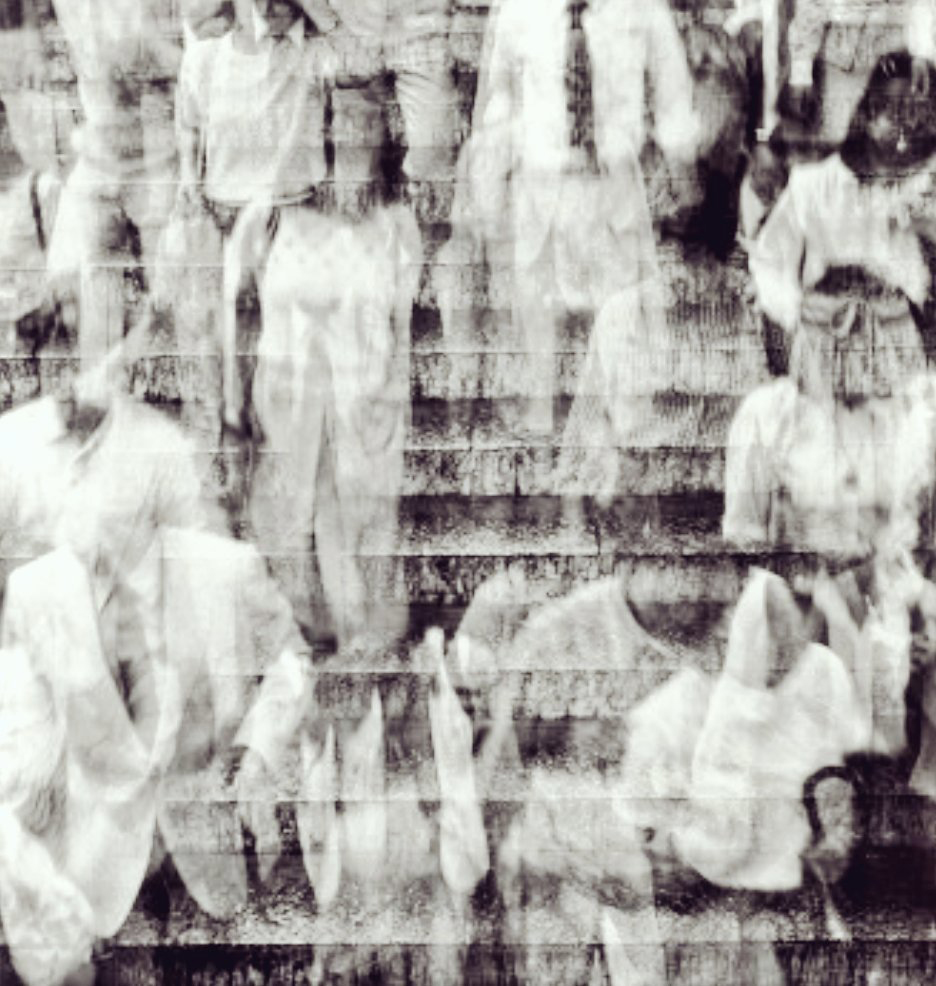
Thursday 10am – 9pm
Closed Mondays

Museum fur Kunst und Gewerbe Hamburg website
LIKE ART BLART ON FACEBOOK

Back to top

Exhibition: ‘Germaine Krull (1897-1985) A Photographer’s Journey’ at Jeu de Paume, Paris

Exhibition dates: 2nd June – 27th September, 2015

Curator: Michel Frizot, historian of photography


Germaine Krull (European, 1897-1985) 'Rue Auber in Paris' about 1928 from the exhibition 'Germaine Krull (1897-1985) A Photographer's Journey' at Jeu de Paume, Paris, June - September, 2015


Germaine Krull (European, 1897-1985)
Rue Auber in Paris
about 1928
Gelatin silver print
The Museum of Modern Art, New York. Thomas Walther Collection. Gift of David H. McAlpin, by exchange
© Estate Germaine Krull, Museum Folkwang, Essen


Je l’adore cette femme. Je pense que je suis en amour.

I absolutely love this women’s art. Everything she touches is inventive, vibrant, made with panache. The light, the hands, the angles, the objects – cranes and barges, brooding ancient architecture hanging in time – and then, to top it all off, the sensuality!

Left-wing convictions, lesbian love affairs, “the love of cars and road trips, the interest in women (whether writers or workers), the fascination with hands, and the free, maverick spirit that drove her work and kept her outside schools and sects.”

How can an artist make two piles of cauliflowers seem so enigmatic, so surreal and wondrous – like so many excised eyes of dead creatures staring at you, coming at you from out of the darkness. Les Halles de nuit (en toute amitié à Van Ecke) (around 1920, below) amazes me every time I look at it.

If I had to name one period above all others that I enjoy looking at most in the history of photography, the avant-garde period of the 1920s-30s would be up there near the very top. Especially the female photographers.

Dr Marcus Bunyan


Many thankx to Jeu de Paume for allowing me to publish the photographs in the posting. Please click on the photographs for a larger version of the image.


Germaine Krull: A Photographer’s Journey 

Michel Frizot, curator of the exhibition, talks about Germaine Krull, her life, her works and her publications.

Germaine Krull (Wilda-Poznań, East Prussia [after 1919: Poland], 1897 – Wetzlar, Germany, 1985) is at once one of the best-known figures in the history of photography, by virtue of her role in the avant-garde’s from 1920 to 1940, and a pioneer of modern photojournalism. She was also the first to publish in book form as an end in itself.


Germaine Krull (European, 1897-1985) 'Étalage: les mannequins [Display: mannequins]' 1928 from the exhibition 'Germaine Krull (1897-1985) A Photographer's Journey' at Jeu de Paume, Paris, June - September, 2015


Germaine Krull (European, 1897-1985)
Étalage: les mannequins [Display: mannequins]
1928
Gelatin silver print
10.8 x 15.7cm
Amsab-Institut d’Histoire Sociale, Gand
© Estate Germaine Krull, Museum Folkwang, Essen


Germaine Krull (European, 1897-1985) 'Mannequins in a shop window' 1930


Germaine Krull (European, 1897-1985)
Mannequins in a shop window
1930
Gelatin Silver Print
13.7 x 23.5cm
Collection Bouqueret-Rémy
© Estate Germaine Krull, Museum Folkwang, Essen


Hans Basler. 'Portait of Germaine Krull, Berlin' 1922


Hans Basler
Portait of Germaine Krull, Berlin
1922
Gelatin silver print
15.9 x 22cm
Museum Folkwang, Essen
© Estate Germaine Krull, Museum Folkwang, Essen


Germaine Krull (European, 1897-1985) 'Nude' Nd


Germaine Krull (European, 1897-1985)
Nude
Nd
Gelatin Silver Print
Collection Dietmar Siegert
© Estate Germaine Krull, Museum Folkwang, Essen


Anonymous photographer. 'Germaine Krull in her car, Monte-Carlo' 1937


Anonymous photographer
Germaine Krull in her car, Monte-Carlo
1937
Gelatin Silver Print
13 x 18.3cm
Museum Folkwang, Essen
© Germaine Krull Estate, Museum Folkwang, Essen


Germaine Krull (Wilda-Poznań, East Prussia [after 1919: Poland], 1897 – Wetzlar, Germany, 1985) is at once one of the best-known figures in the history of photography, by virtue of her role in the avant-garde’s from 1920 to 1940, and a pioneer of modern photojournalism. She was also the first to publish in book form as an end in itself.

The exhibition at Jeu de Paume revisits Germaine Krull’s work in a new way, based on collections that have only recently been made available, in order to show the balance between a modernist artistic vision and an innovative role in print media, illustration and documentation. As she herself put it – paradoxically, in the introduction to her Études de nu (1930) –, ‘The true photographer is the witness of each day’s events, a reporter.’

If Krull is one of the most famous women photographers, her work has been little studied in comparison to that of her contemporaries Man Ray, László Moholy-Nagy and André Kertész. Nor has she had many exhibitions: in 1967, a first evocation was put on at the Musée du Cinéma in Paris, then came the Rheinisches Landesmuseum, Bonn, in 1977, the Musée Réattu, Arles, in 1988, and the 1999 retrospective based on the archives placed at the Folkwang Museum, Essen.

The exhibition at Jeu de Paume focuses on the Parisian period, 1926-1935, and more precisely on the years of intensive activity between 1928 and 1933, by relating 130 vintage prints to period documents, including the magazines and books in which Krull played such a unique and prominent role. This presentation gives an idea of the constants that run through her work while also bringing out her aesthetic innovations. The show features many singular but also representative images from her prolific output, putting them in their original context.

Born in East Prussia (later Poland) to German parents, Krull had a chaotic childhood, as her hapless father, an engineer, travelled in search of work. This included a spell in Paris in 1906. After studying photography in Munich, Krull became involved in the political upheavals of post-war Germany in 1919, her role in the communist movement leading to a close shave with the Bolsheviks in Moscow. Having made some remarkable photographs of nudes during her early career, noteworthy for their freedom of tone and subject, in 1925 she was in the Netherlands, where she was fascinated by the metal structures and cranes in the docks, and embarked on a series of photographs that, following her move to Paris, would bear fruit in the portfolio Métal, publication of which placed her at the forefront of the avant-garde, the Nouvelle Vision in photography. Her new-found status earned her a prominent position on the new photographic magazine VU, created in 1928, where, along with André Kertész and Eli Lotar, she developed a new form of reportage that was particularly congenial to her, affording freedom of expression and freedom from taboos as well as closeness to the subject – all facilitated by her small-format (6 x 9cm) Icarette camera.

This exhibition shows the extraordinary blossoming of Krull’s unique vision in around 1930, a vision that is hard to define because it adapted to its subjects with a mixture of charisma and empathy, while remaining constantly innovative in terms of its aesthetic. It is essential, here, to show that Krull always worked for publication: apart from the modernist VU, where she was a contributor from 1928 to 1933, she produced reportage for many other magazines, such as Jazz, Variétés, Art et Médecine and L’Art vivant. Most importantly, and unlike any other photographer of her generation, she published a number of books and portfolios as sole author: Métal (1928), 100 x Paris (1929), Études de nu (1930), Le Valois (1930), La Route Paris-Biarritz (1931), Marseille (1935). She also created the first photo-novel, La Folle d’Itteville (1931), in collaboration with Georges Simenon. These various publications represent a total of some five hundred photographs. Krull also contributed to some important collective books, particularly on the subject of Paris: Paris, 1928; Visages de Paris, 1930; Paris under 4 Arstider, 1930; La Route Paris-Méditerranée, 1931. Her images are often disconcerting, atypical and utterly free of standardisation.

An energetic figure with strong left-wing convictions and a great traveller, Krull’s approach to photography was antithetical to the aesthetically led, interpretative practice of the Bauhaus or Surrealists. During the Second World War, she joined the Free French (1941) and served the cause with her camera, later following the Battle of Alsace (her photographs of which were made into a book). Shortly afterwards she left Europe for Southeast Asia, becoming director of the Oriental Hotel in Bangkok, which she helped turn into a renowned establishment, and then moving on to India where, having converted to Buddhism, she served the community of Tibetan exiles near Dehra-Dun.

During all her years in Asia, Krull continued to take photographs. Her thousands of images included Buddhist sites and monuments, some of them taken as illustrations for a book planned by her friend André Malraux. The conception of the books she published throughout her life was unfailingly original: Ballets de Monte-Carlo (1937); Uma Cidade Antiga do Brasil; Ouro Preto (1943); Chieng Mai (c. 1960); Tibetans in India (1968).

In her photojournalism, Krull began by focusing on the lower reaches of Parisian life, its modest, working population, the outcasts and marginal of the “Zone,” the tramps (subject of a hugely successful piece in VU), Les Halles and the markets, the fairgrounds evoked by Francis Carco and Pierre Mac Orlan (her greatest champion). The exhibition also explores unchanging aspects of her tastes and attachments: the love of cars and road trips, the interest in women (whether writers or workers), the fascination with hands, and the free, maverick spirit that drove her work and kept her outside schools and sects.

The works come from a public and private collections including the Folkwang Museum, Essen; Amsab, Institute for Social History, Ghent; the Ann and Jürgen Wilde Foundation, Pinakothek der Moderne, Munich; The Museum of Modern Art (MoMA), New York; the Centre Pompidou, Musée National d’Art Moderne, Paris; the Bibliothèque Nationale de France, Paris; the Collection Bouqueret-Rémy; the Dietmar Siegert Collection.

Press release from the Jeu de Paume


Germaine Krull (European, 1897-1985) 'Self Portrait with Icarette' around 1925


Germaine Krull (European, 1897-1985)
Self Portrait with Icarette
around 1925
Gelatin silver print
23.6 x 17.5cm
Purchase through the patronage of Yves Rocher, 2011. Former collection Bouqueret Christian. Centre Pompidou, Paris. National Museum of Modern Art / Industrial Design Centre
© Germaine Krull Estate, Museum Folkwang, Essen
Photo: © Centre Pompidou MNAM-CCI, Dist. RMN / picture Centre Pompidou-CCI MNAM


Germaine Krull (European, 1897-1985) 'Self Portrait, Paris' 1927


Germaine Krull (European, 1897-1985)
Self Portrait, Paris
1927
Gelatin silver print
23.9 x 17.9cm
Foundation Ann and Jürgen Wilde, Pinakothek der Moderne, Munich
© Estate Germaine Krull, Museum Folkwang, Essen


Germaine Krull (European, 1897-1985) 'Assia's profile' 1930


Germaine Krull (European, 1897-1985)
Assia’s profile
1930
Gelatin silver print
22.2 x 15.8cm
Collection Bouqueret-Rémy
© Estate Germaine Krull, Museum Folkwang, Essen


Germaine Krull (European, 1897-1985) 'Étude pour La Folle d’Itteville [Study for The Madwoman of Itteville]' 1931


Germaine Krull (European, 1897-1985)
Étude pour La Folle d’Itteville [Study for The Madwoman of Itteville]
1931
Gelatin silver print
21.9 x 16.4cm
Purchase through the patronage of Yves Rocher, 2011. Former collection Bouqueret Christian. Centre Pompidou, Paris. National Museum of Modern Art / Industrial Design Centre
© Germaine Krull Estate, Museum Folkwang, Essen.
Photo: © Centre Pompidou MNAM-CCI, Dist. RMN / Guy Carrard


Germaine Krull (European, 1897-1985) 'Advertising Study for Paul Poiret' 1926


Germaine Krull (European, 1897-1985)
Advertising Study for Paul Poiret
1926
Gelatin silver print
Purchase through the patronage of Yves Rocher, 2011. Former collection Bouqueret Christian. Centre Pompidou, Paris. National Museum of Modern Art / Industrial Design Centre
© Germaine Krull Estate, Museum Folkwang, Essen
Photo: © Centre Pompidou MNAM-CCI, Dist. RMN / Georges Meguerditchian


Germaine Krull (European, 1897-1985) 'Female nude' 1928


Germaine Krull (European, 1897-1985)
Female nude
1928
Gelatin silver print
21.6 x 14.4cm
Purchase through the patronage of Yves Rocher, 2011. Former collection Bouqueret Christian. Centre Pompidou, Paris. National Museum of Modern Art / Industrial Design Centre
© Germaine Krull Estate, Museum Folkwang, Essen
Photo: © Centre Pompidou MNAM-CCI, Dist. RMN / Guy Carrard


Germaine Krull (European, 1897-1985) 'Jean Cocteau' 1929


Germaine Krull (European, 1897-1985)
Jean Cocteau
1929
Gelatin silver print 1976
23.7 x 17.2cm
Bouqueret Remy collection
© Germaine Krull Estate, Museum Folkwang, Essen


Germaine Krull (European, 1897-1985) 'André Malraux' 1930


Germaine Krull (European, 1897-1985)
André Malraux
1930
Gelatin silver print
23 x 17.3cm
Museum Folkwang, Essen
© Estate Germaine Krull, Museum Folkwang, Essen


Germaine Krull (European, 1897-1985) 'Tibetan religious ceremony offering of the white scarf' Undated


Germaine Krull (European, 1897-1985)
Tibetan religious ceremony offering of the white scarf
Undated
Gelatin silver print
24.1 x 18.5cm
Museum Folkwang, Essen
© Germaine Krull Estate, Museum Folkwang, Essen


Germaine Krull (1897-1985) A Photographer’s Journey

A famous figure of the avant-garde in the 1920-1940s, Germaine Krull (Wilda, Poland, 1897 – Wetzlar, Germany, 1985) was a pioneer of modern photojournalism and of the photographic book. Produced mainly between 1928 and 1931, her innovative work cannot be understood outside the context of her chaotic and poorly educated childhood and her activist youth, which saw her become involved in the Spartacist uprising in Germany in 1919.

After Berlin, where she produced some ambiguous nude photographs in 1923, Paris was where her career as a photographer took off. She won acclaim for her fers, the photographs of metal structures, bridges and cranes that featured in her portfolio Métal (1928), their unusual angles and framing typical of the New Vision in photography. In March 1928 she began producing innovative reportage for the newly created photographic magazine VU, focusing particularly on Parisian life, the marginal world of humble folk and popular neighbourhoods, and the “Zone.”

Often disconcerting and seemingly casual, these images taken with a hand-held Icarette were nevertheless well received by a number of illustrated magazines. Krull innovated even more as sole author of books and portfolios, which were a novelty at this time: 100 x Paris (1929), Études de nu (1930), Le Valois (1930), La Route Paris-Biarritz (1931), Marseille (1935), and the first photo-novel (phototexte) with Georges Simenon, La Folle d’Itteville (1931). Taken together, these publications represent some five hundred photos.

A woman of action and initiative, Krull had a great love of cars and road travel (which inspired  several books), and was particularly interested in behaviour, gesture and the work of women, as well as in the expressiveness of hands. Her free, maverick spirit was always in evidence, as if taking a fresh look at the world also meant constantly rising to new challenges in her photography. “Germaine Krull,” noted Pierre Mac Orlan, “does not create easy anecdotes, but she makes visible the secret details that people do not always see.”

Berlin and Paris: early days

After a free adolescence, Germaine Krull studied  photography in Munich, later contributing to a portfolio of female nudes. Her involvement with the Spartacist uprising of 1919 led all the way to prisons in Moscow in 1921. Returning to photography in 1923, she produced more female nudes, with strong erotic connotations (one series shows two women “friends”). Moving to Paris in 1926, she worked as a fashion photographer, mainly for Sonia Delaunay’s textile studio.

1928: “My fers” and VU

In 1928 Krull became known for her fers, dramatically framed photographs of cranes, bridges and silos, and of the Eiffel Tower. Often low-angle shots, these established her as an “avant-garde” photographer. At the end of  the year her portfolio Métal (64 plates) had a tremendous impact in modernist photographic circles and in progressive artistic magazines (L’Art vivant, Jazz).

Reportage and magazines

Krull’s greatest contribution was in the field of  reportage, which she pioneered in March 1928 for the magazine VU. Her favourite subject was Parisian popular culture – fairgrounds and flea markets, bars and dance halls, tramps. Her approach was free and spontaneous, favouring closeness to the subject, photographed at eye height (as enabled by her 6 x 9 Icarette), rather than elegance and balance of composition. Her idiosyncratic and highly evocative images were appreciated by the bolder magazines, which published some six hundred of them between 1928 and 1934.

Paris, Paris!

For a determined photographer like Krull, the big city represented a unique set of opportunities with real potential: department stores, shop window mannequins, effects of lighting at night and the banks of the Seine were among the subjects. Enthusiastic about the book format, she published 100 x Paris, a book of a hundred unusual views of Paris, in 1929, and contributed to Visages de Paris by Warnod (1930), and Paris by Adolf Hallman (1930). Her images gave visual expression to the “social fantastic” explored by her friend, writer Pierre Mac Orlan (Quai des Brumes, 1927).

Cars, the open road

Krull was fascinated by cars, speed and machines. In Paris she photographed the teeming traffic. After a commission to take advertising photos for  the Peugeot 201 in 1929, she developed a strong enthusiasm for road trips, the great novelty of the day, and photographed sites glimpsed from inside the vehicle. This daring work bore fruit in a new kind of photography book, Le Valois de Gérard de Nerval (1930), La Route Paris-Biarritz (1931), La Route de Paris à la Méditerranée (1931) and Marseille (1935), an aesthetic and mental as well as geographical journey to the south.

Women

As a woman photographer, Krull took an interest in artistic women such as Colette, the actress Berthe Bovy who played in La Voix humaine by Cocteau, and the singer Damia. She was especially keen to do social reportage on women’s themes, a notable example being her series on working women in Paris, published by VU in 1931-1932. Her Études de nu (1930) was an aesthetic manifesto by virtue of its  fragmented and unstructured vision of the female body. Another innovation was her photography for La Folle d’Itteville, a ground-breaking photographic version of a Simenon story, featuring an enigmatic Mrs Hubbell.

“My collection of hands”

Krull was fascinated by hands, which she  photographed with a blend of imagination and  invention. Her “collection” included Cocteau with his hand in front of his eyes or mouth, and Malraux with his cigarette. In her reportage, she homed in on gestures and postures in which the hands were signally expressive. Shown on their own, they became portraits, intriguing the viewer.

Le Courrier littéraire, 1930

The second issue (April-May-June 1930) of this ephemeral magazine contained an astonishing  portfolio of Krull’s work, with 24 photos over 17  pages. The rather emphatic presentation showed  her as a true artist, and as part of the avant-garde of the day. A letter from Cocteau was reprinted by way of an introduction. In it, the poet, Krull’s friend, expresses his surprise at her striking photos, both of Berthe Bovy in La Voix humaine and of his own hands.

Free spirit

Krull liked to concentrate on “the visual side  of things” and escape from the documentary imperatives of reportage. Her bold framing, details and situations, her use of cast shadow and touch of fantasy stimulate the imagination and create surprise. Her series on superstitions, published in VU and Variétés, was conceived with the enthusiasm of an amateur photographer exclusively intent on the narrative power of the images. Without ever entering the world of Surrealism, her very individual vision brought out an unexpected strangeness in apparently ordinary things.

War

In 1940 Krull took the boat to Brazil, aiming to work for Free France. In 1942 she was sent to Brazzaville to set up a propaganda photography  service. She also produced reportage around French Equatorial Africa. In 1943 she travelled to Algiers as a reporter, then sailed with the troops of De Lattre, arriving in the South of France and heading up to Alsace, where she witnessed the Battle of Alsace and the liberation of the Vaihingen  concentration camp.

Asia

Keen to continue working as a reporter in Southeast Asia, in 1946 Krull settled in Bangkok. Not long after, she became manager of the Oriental Hotel there, which she turned into a highly renowned establishment. Drawn to Buddhism, she photographed its temples and statues in Thailand and Burma. Leaving her position at the hotel, she travelled to India, where she took up  the cause of the Tibetan exiles (Tibetans in India, 1968). Ill, impecunious, and having lost most of her prints, Krull returned to Germany, where she died on 30 July 1985.

The films

Through Joris Ivens, Krull was in touch with many of the avant-garde filmmakers of the day, including René Clair, Georges Lacombe and Alberto  Cavalcanti. Although she claimed to dislike cinema’s complicated interdependence of machines, script and actors, she did make two short films, both in 1931: Six pour dix francs (9 min) and Il partit pour un long voyage (11 min 20 s). The second, about a young boy who dreams of travel and distant  lands and hides on a barge on the Seine at Bercy, allowed her to take some “photographically” meticulous shots of activities along the river.

Michel Frizot
Exhibition curator


Germaine Krull (European, 1897-1985) 'Gibbs Advertising' L'Illustration, No. 4533, January 18, 1930


Germaine Krull (European, 1897-1985)
Gibbs Advertising
L’Illustration, No. 4533, January 18, 1930
36.7 x 27.8cm
Private collection
© Estate Germaine Krull, Museum Folkwang, Essen


Germaine Krull (European, 1897-1985) 'Pol Rab (illustrator)' 1930


Germaine Krull (European, 1897-1985)
Pol Rab (illustrator)
1930
Photomontage, Gelatin silver print
19.5 x 14.5cm
Amsab-Institute of Social History, Ghent
© Germaine Krull Estate, Museum Folkwang, Essen


Germaine Krull (European, 1897-1985) '100 x Paris' 1929


Germaine Krull (European, 1897-1985)
100 x Paris
1929
Cover, Publisher of the series Berlin-Westend
24.3 x 17.3cm
Private collection
© Germaine Krull Estate, Museum Folkwang, Essen


Germaine Krull (European, 1897-1985) 'Cover of the photogravure portfolio Métal (set of 64 plates)' 1928


Germaine Krull (European, 1897-1985)
Métal
Cover of the photogravure portfolio Métal (set of 64 plates)
1928
30 x 23.5cm
Collection Bouqueret-Rémy
© Estate Germaine Krull, Museum Folkwang, Essen


Germaine Krull (European, 1897-1985) 'Bridge crane, Rotterdam' from the series 'Métal', about 1926


Germaine Krull (European, 1897-1985)
Bridge crane, Rotterdam
about 1926
from the series Métal
Gelatin silver print
21.9 x 15.3cm
Foundation Ann and Jürgen Wilde, Pinakothek der Moderne, Munich
© Estate Germaine Krull, Museum Folkwang, Essen


Germaine Krull (European, 1897-1985) 'Ancient architecture: printing house Clock' 1928


Germaine Krull (European, 1897-1985)
Architecture ancienne: imprimerie de l’Horloge [Ancient architecture: printing house Clock]
1928
Gelatin silver print
21.9 x 15.2cm
Amsab-Institute of Social History, Ghent
© Germaine Krull Estate, Museum Folkwang, Essen


Germaine Krull (European, 1897-1985) 'Electric plant, Issy les Moulineaux' 1928


Germaine Krull (European, 1897-1985)
Electric plant, Issy les Moulineaux
1928
Gelatin silver print
22.6 x 16.6cm
Amsab-Institute of Social History, Ghent
© Germaine Krull Estate, Museum Folkwang, Essen


Germaine Krull (European, 1897-1985) 'Halls of Night (in friendship to Van Ecke)' around 1920


Germaine Krull (European, 1897-1985)
Les Halles de nuit (en toute amitié à Van Ecke) [Halls of Night (in friendship to Van Ecke)]
around 1920
Gelatin silver print
22 x 16.2cm
Amsab-Institute of Social History, Ghent
© Germaine Krull Estate, Museum Folkwang, Essen


Germaine Krull (European, 1897-1985) 'At the right corner, Paris' 1929


Germaine Krull (European, 1897-1985)
Au bon coin, Paris [At the right corner, Paris]
1929
Gelatin silver print
14.2 x 10.5cm
Collection Bouqueret-Rémy
© Estate Germaine Krull, Museum Folkwang, Essen


Germaine Krull (European, 1897-1985) 'Marseille' June 1930


Germaine Krull (European, 1897-1985)
Marseille
June 1930
Gelatin silver print
21.2 x 15.3cm
The Museum of Modern Art, New York. Thomas Walther Collection.Gift of Thomas Walther
© Estate Germaine Krull, Museum Folkwang, Essen
Photo: © 2015. Digital image, The Museum of Modern Art, New York/Scala, Florence


Jeu de Paume
1, Place de la Concorde
75008 Paris
métro Concorde
Phone: 01 47 03 12 50

Opening hours:
Tuesday – Sunday 11am – 7pm
Closed Mondays

Jeu de Paume website

LIKE ART BLART ON FACEBOOK

Back to top