Exhibition: ‘Beneath the Surface: Mining and American Photography’ at the National Gallery of Art, Washington

“While the photographs in this posting portray the cultures and communities associated with mining, the industries, towns and cities, the people and the landscapes what they don’t account for is the ongoing physical, psychological and emotional scars that the results of mining leave behind.” Dr Marcus Bunyan

Exhibition dates: 23rd May – 23rd August, 2026

C0-curators: Diane Waggoner, curator of photographs at the National Gallery of Art and Kristen Gaylord, Herzfeld Curator of Photography and Media Arts at Milwaukee Art Museum
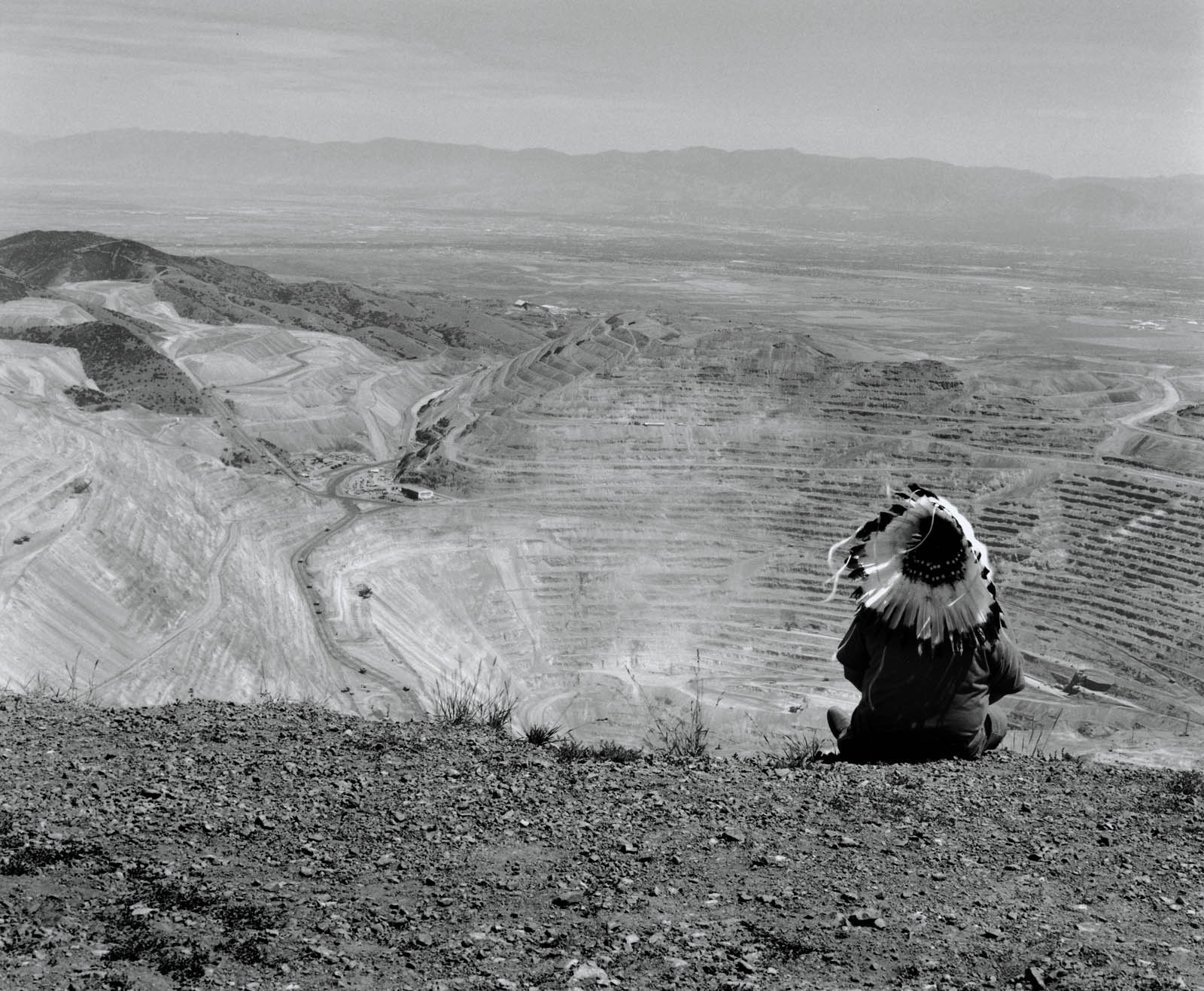
 

Zig Jackson, Rising Buffalo (Mandan, Hidatsa, Arikara) (b. 1957) 'Indian Man at Kennecott Copper Mine, Tooele, Utah' 2004


Zig Jackson, Rising Buffalo (Mandan, Hidatsa, Arikara) (b. 1957)
Indian Man at Kennecott Copper Mine, Tooele, Utah
2004
Gelatin silver print
Image: 33.0 x 40.6cm (13 x 16 in.)
Sheet: 40.6 x 50.8cm (16 x 20 in.)
San Francisco Museum of Modern Art
Accessions Committee purchase, by exchange, through a gift of Michael D. Abrams
© Zig Jackson
Photo: Tenari Tuatagaloa


The rape of the earth

Mining helps improve our lives in so many ways and yet the harm it causes the planet, the severe environmental degradation, indigenous dispossession and systemic violence associated with resource extraction is undeniable.

The phrase “the rape of the earth” “characterises the literal carving up of the landscape. Large-scale operations – such as open-cut mining – strip topsoil, destroy ecosystems, pollute water tables, and leave irreversible physical scars on the terrain. Indigenous groups, such as the Sámi feminists against mining in Sábme, use the phrase to describe how mining fractures the sacred, interdependent web of connection between land, humans, and nonhuman lifeworlds.” (Google AI)

The interdependent web of connection between land, humans and nonhuman lifeworlds running beneath the surface, hidden from view, that life force of the world and the cosmos that is so violently ruptured in the mining process.

While the photographs in this posting portray the cultures and communities associated with mining, the industries, towns and cities, the people and the landscapes what they don’t account for is the ongoing physical, psychological and emotional scars that the results of mining leave behind. Scars that riddle the earth’s surface as much as they do the minds of the people that love this planet as a holistic entity. You only have to look at Zig Jackson, Rising Buffalo’s photograph Indian Man at Kennecott Copper Mine, Tooele, Utah (2004, above) to understand what I mean.

When it’s all too late only then will we have realised what we have lost.

Dr Marcus Bunyan

.
Many thankx to the National Gallery of Art, Washington for allowing me to publish the photographs in the posting. Please click on the photographs for a larger version of the image.
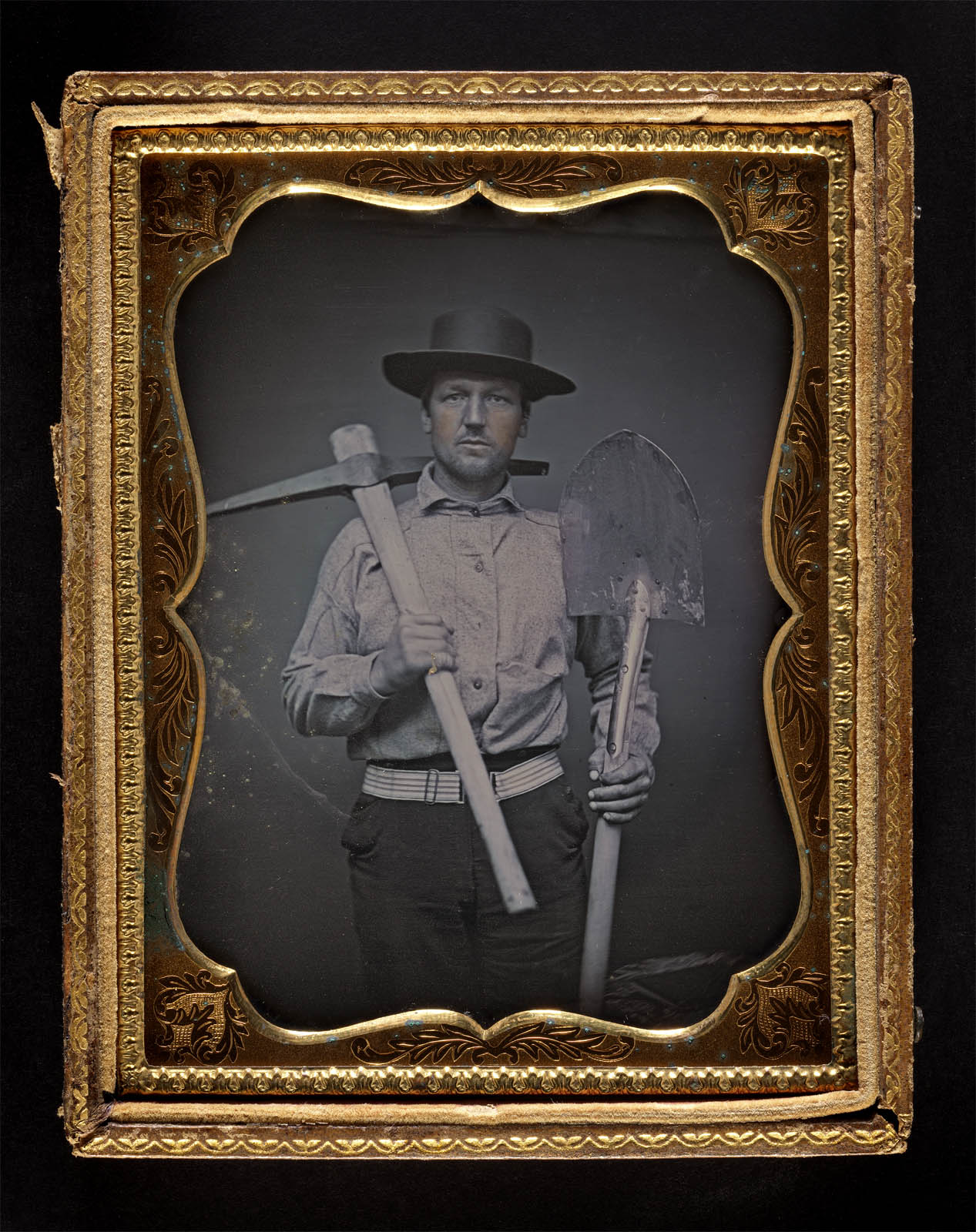


Unknown photographer (American) 'Portrait of a California gold miner with pick and shovel' c. 1855


Unknown photographer (American)
Portrait of a California gold miner with pick and shovel
c. 1855
Quarter-plate daguerreotype
Plate (quarter): 4 1/4 x 3 1/4 in. (10.8 x 8.26cm)
Case (tray): 4 11/16 x 3 5/8 x 3/8 in. (11.91 x 9.22 x 0.97cm)
The Nelson-Atkins Museum of Art, Kansas City, Missouri
Gift of the Hall Family Foundation


Environmental impacts of mining  

The environmental impacts of mining are significant. Establishing mining sites requires an enormous amount of construction, which often causes deforestation and loss of wildlife habitats and biodiversity.  

Surface mines, which require the use of explosives and heavy machinery to expose materials near the earth’s surface, cause massive canyon-sized holes in the land and lead to soil erosion and degradation around surrounding areas. Mountaintop removal mining, a method of coal mining, uses explosives to blast the entire top of a mountain.

Surface mines create a huge amount of waste materials. Mines release harmful substances into the air and water, and can cause serious health issues if inhaled or consumed. Mines also release acidic water, which can kill marine life and make freshwater unsuitable for drinking. Underground mining produces fewer waste materials than surface mines, but they are risky for mine workers. 

The mining industry emits carbon via transportation and energy use, and produces fossil fuels – the largest source of carbon emissions in the world.  

Even after mines are decommissioned, they continue to impact the environment. Acid mine drainage occurs after mines have been abandoned, and results in heavy metals entering water systems and harming the plants, animals and humans that consume it.

Social impacts of mining  

Mining can create employment opportunities, boost economies and provide investment for local development projects. However, mining operations that don’t respect human rights or protect the environment can cause significant harm to surrounding communities.

Anonymous. “Resource wealth, poverty, and environmental impact in mining,” on the Oxfam Australia website, 1 July 2025 [Online] Cited 18/08/2026
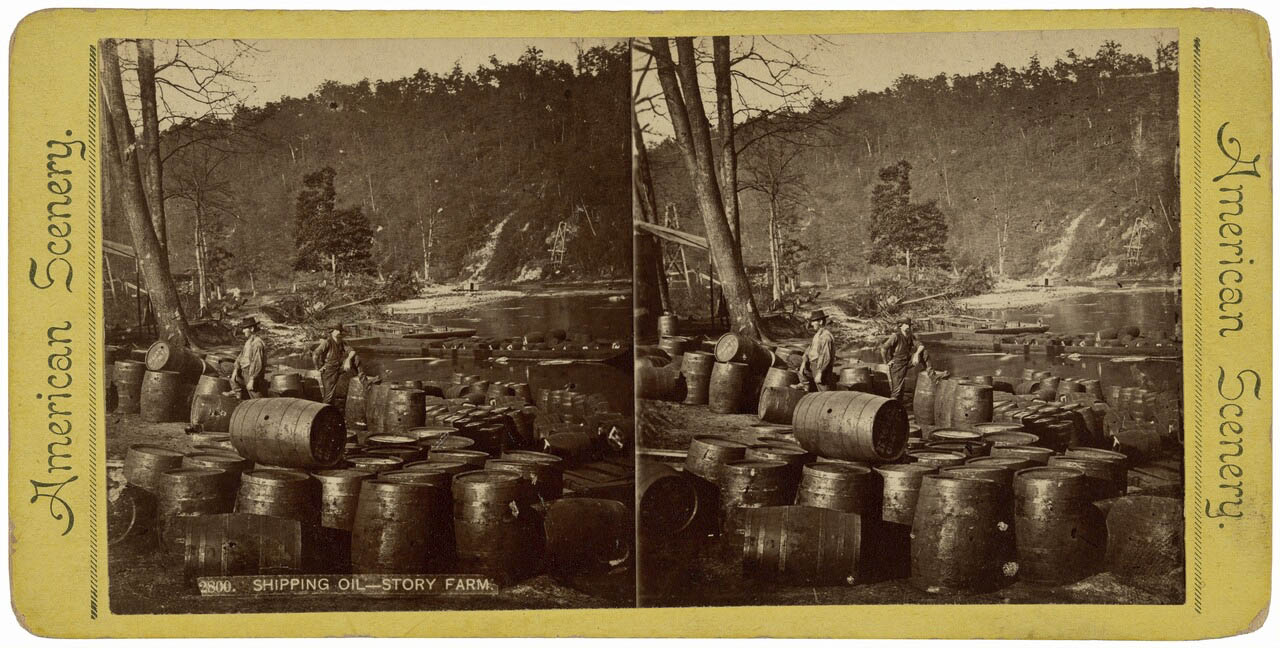
  

American 19th Century. 'Shipping Oil - Story Farm' 1860s-1870s


American 19th Century
Shipping Oil – Story Farm
1860s-1870s
Stereoscopic albumen silver print
Image/sheet: 7.94 × 14.92cm (3 1/8 × 5 7/8 in.)
Mount: 8.73 × 17.46cm (3 7/16 × 6 7/8 in.)
National Gallery of Art, Washington
Gift of Mary and Dan Solomon
Public domain
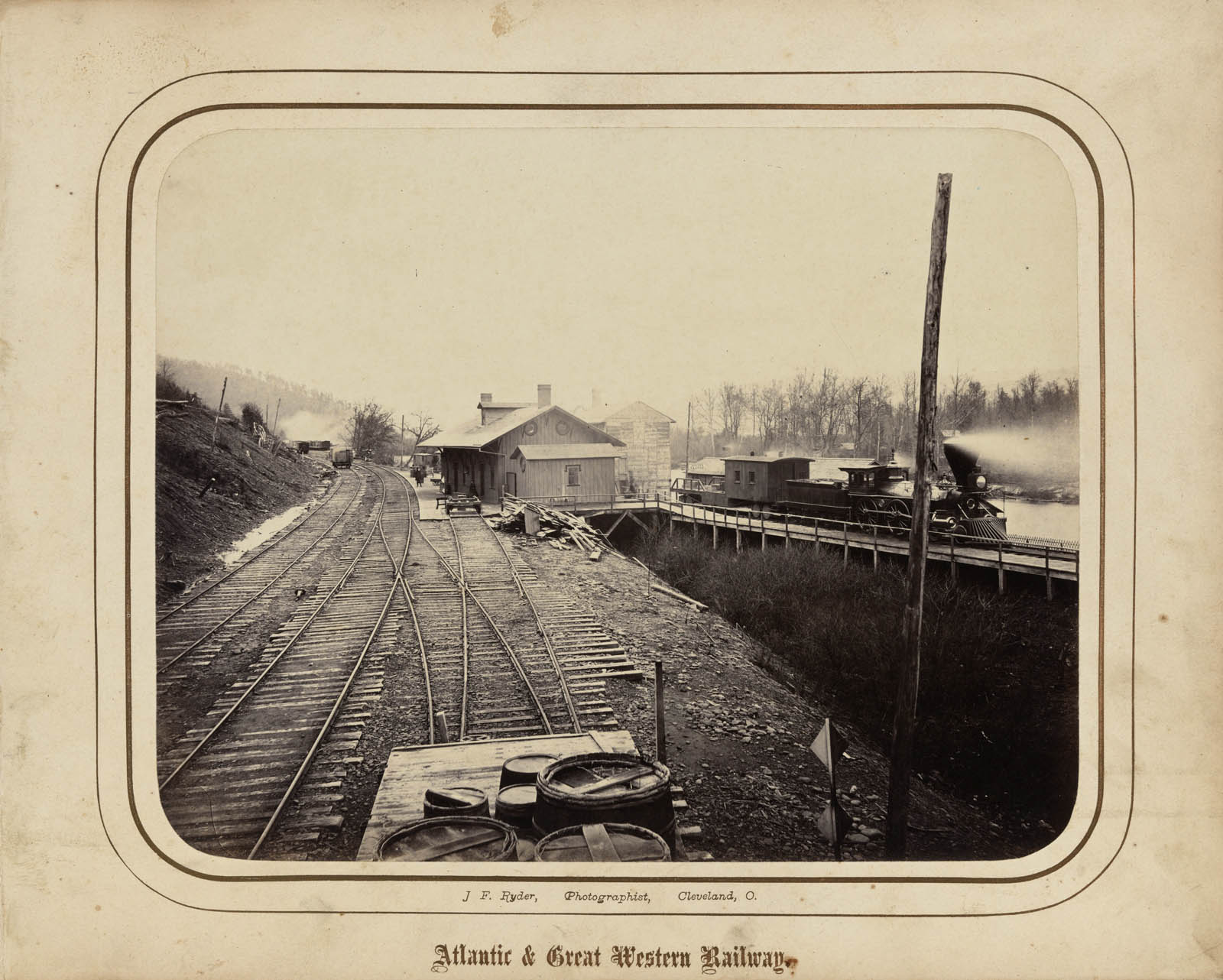
  

James F. Ryder (American, 1826-1904) 'Atlantic & Great Western Railway' 1862


James F. Ryder (American, 1826-1904)
Atlantic & Great Western Railway
1862
Albumen print
Image/sheet: 18.8 x 23.7cm (7 3/8 x 9 5/16 in.)
Mount: 25.3 x 32.4cm (9 15/16 x 12 3/4 in.)
Mat: 14 x 18 in.
National Gallery of Art, Washington
Alfred H. Moses and Fern M. Schad Fund
Public domain
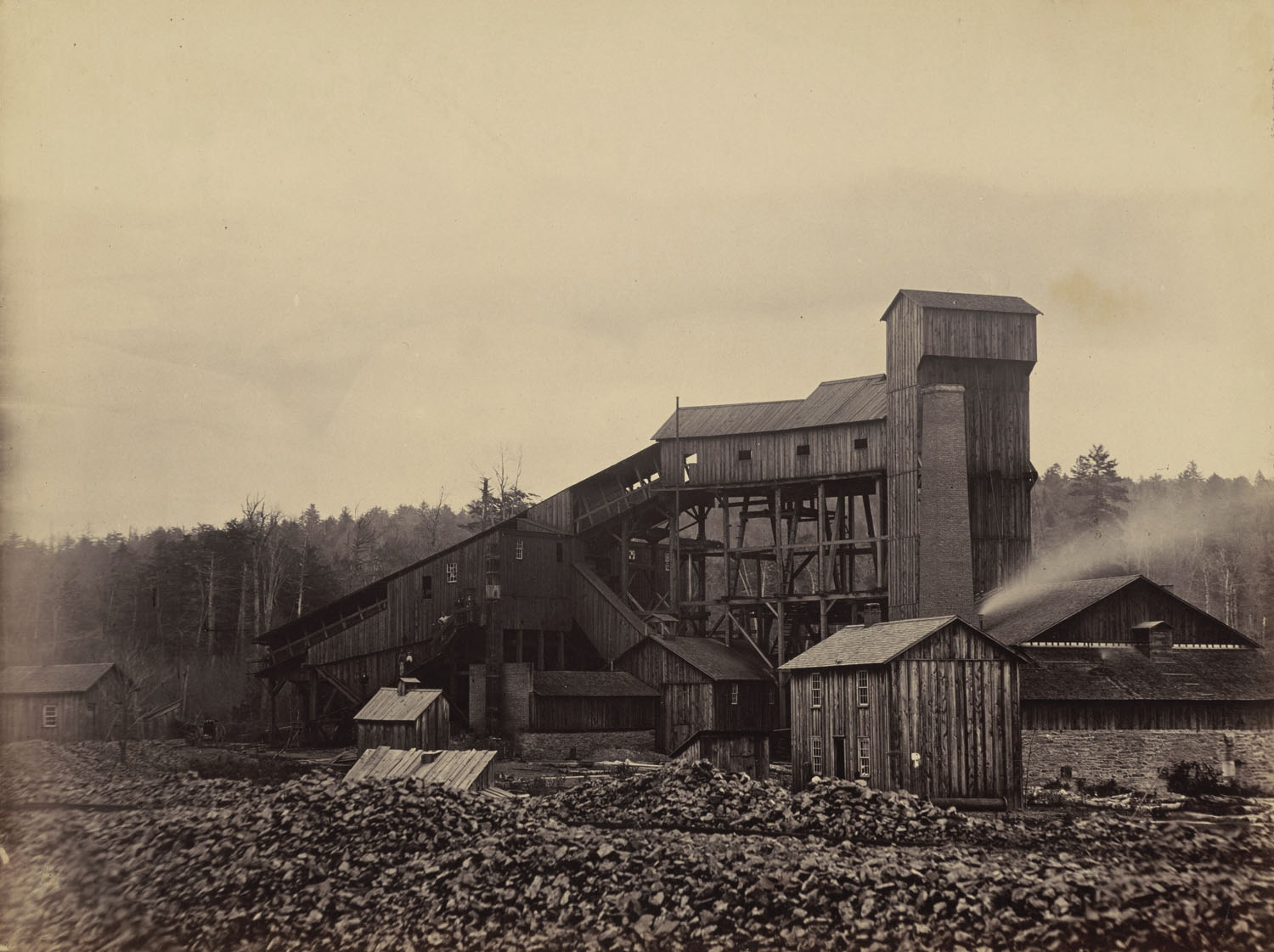
 

Thomas H. Johnson (American, b. 1821 - d. ?) 'Gibson's Breaker, Rushdale, Del. & Hudson Canal Co.,' c. 1863-1865


Thomas H. Johnson (American, b. 1821 – d. ?)
Gibson’s Breaker, Rushdale, Del. & Hudson Canal Co.,
c. 1863-1865
Albumen print
Image/sheet: 30.7 x 41cm (12 1/16 x 16 1/8 in.)
Mount: 44.3 x 53cm (17 7/16 x 20 7/8 in.)
Mat: 20 x 26 in.
National Gallery of Art, Washington
Alfred H. Moses and Fern M. Schad Fund
Public domain
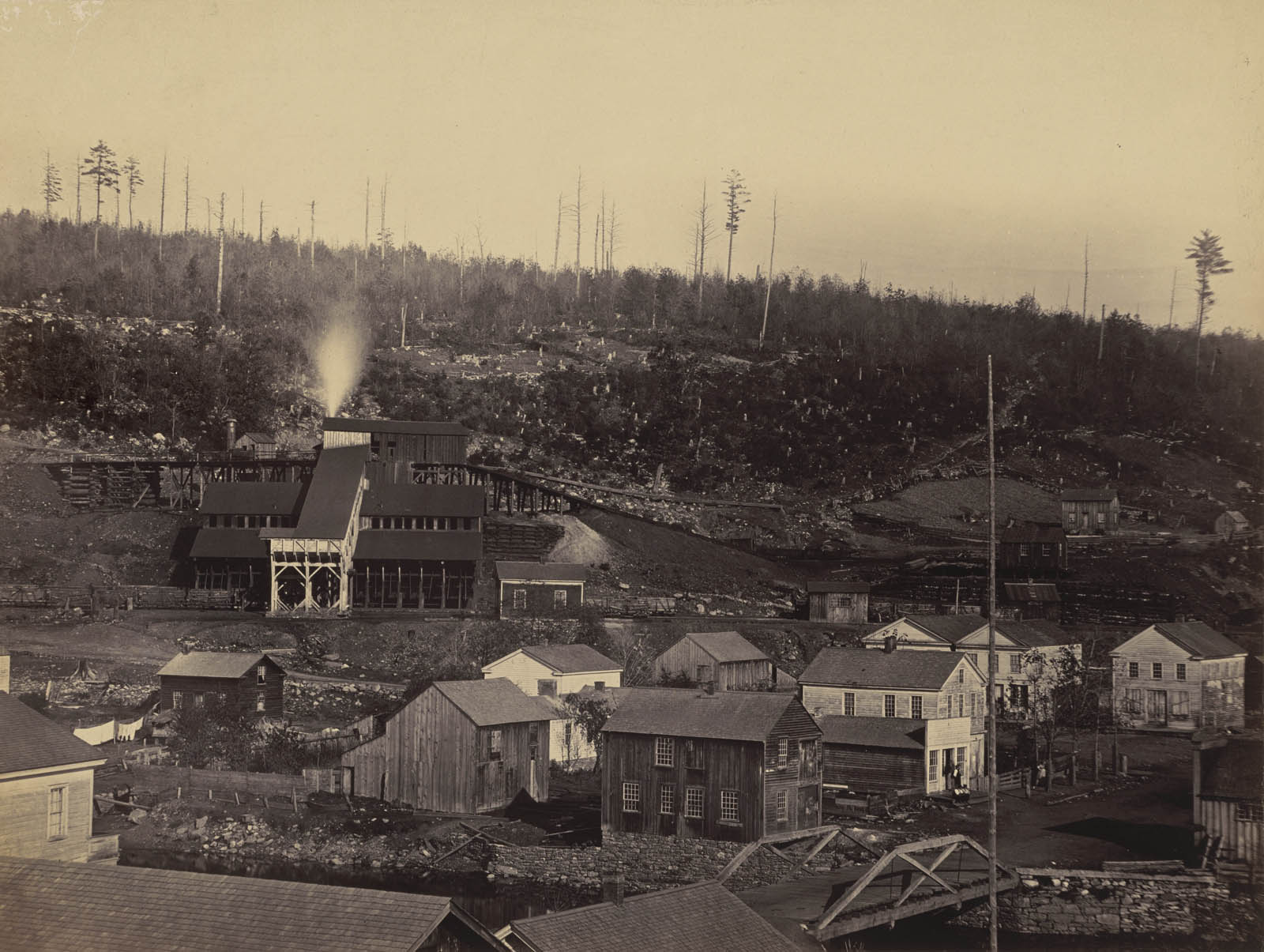
 

Thomas H. Johnson (American, b. 1821 - d. ?) 'Birdsey Breaker, Rushdale, Del. & Hudson Canal Co.,' 1863-1865


Thomas H. Johnson (American, b. 1821 – d. ?)
Birdsey Breaker, Archbald, Del. & Hudson Canal Co.,
1863-1865
Albumen print
Image/sheet: 30.6 x 40.8cm (12 1/16 x 16 1/16 in.)
Mount: 45.4 x 55.6cm (17 7/8 x 21 7/8 in.)
Mat: 20 x 26 in.
National Gallery of Art, Washington, Alfred H. Moses and Fern M. Schad Fund
Public domain
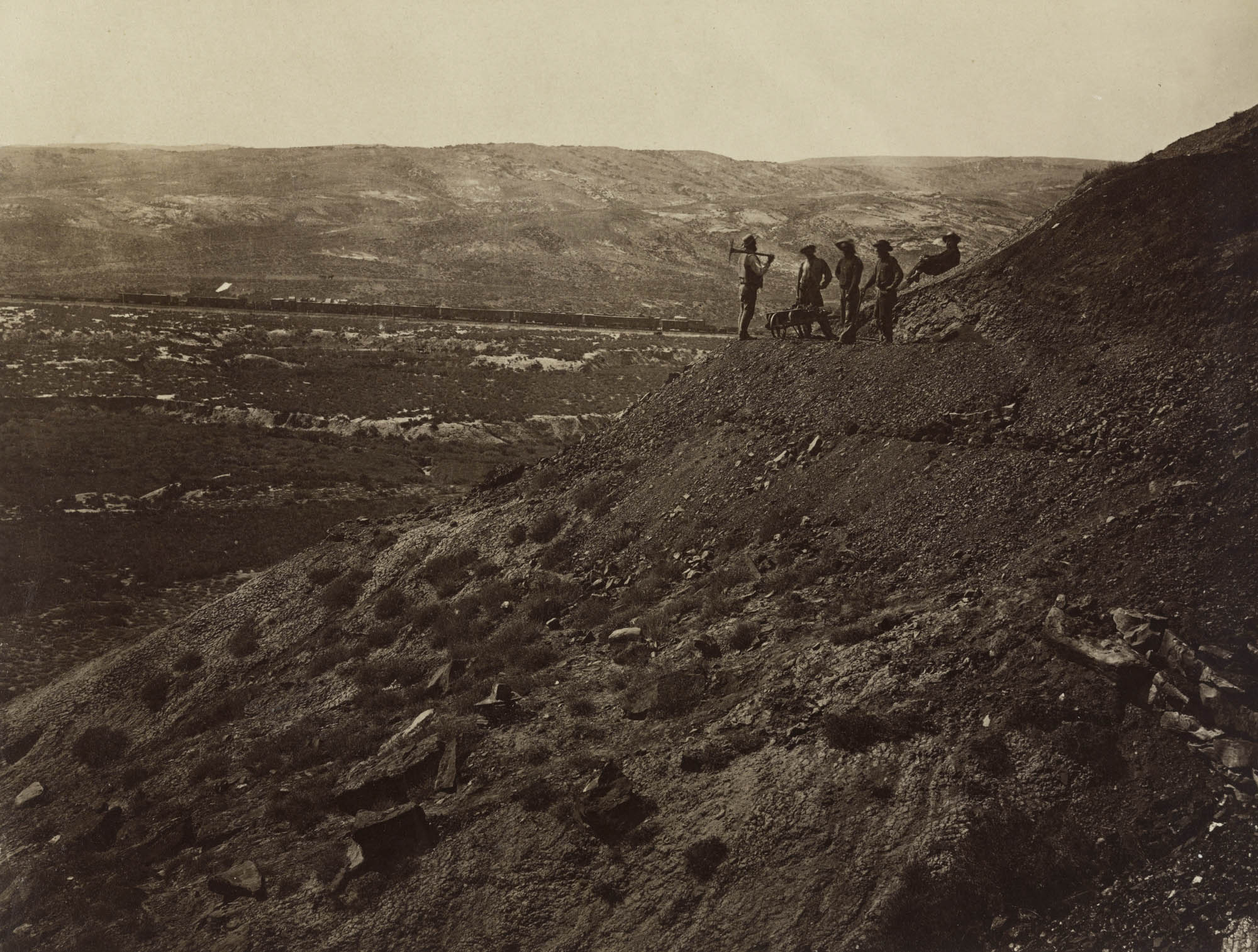
  

Andrew Joseph Russell (American, 1829-1902) 'Valley of Bitter Creek from Coal Mine' 1867-1869


Andrew Joseph Russell (American, 1829-1902)
Valley of Bitter Creek from Coal Mine
1867-1869
Albumen silver print
22.86 x 29.53cm (9 x 11 5/8 in.)
The Museum of Modern Art, New York
Gift of Union Pacific Railroad Company
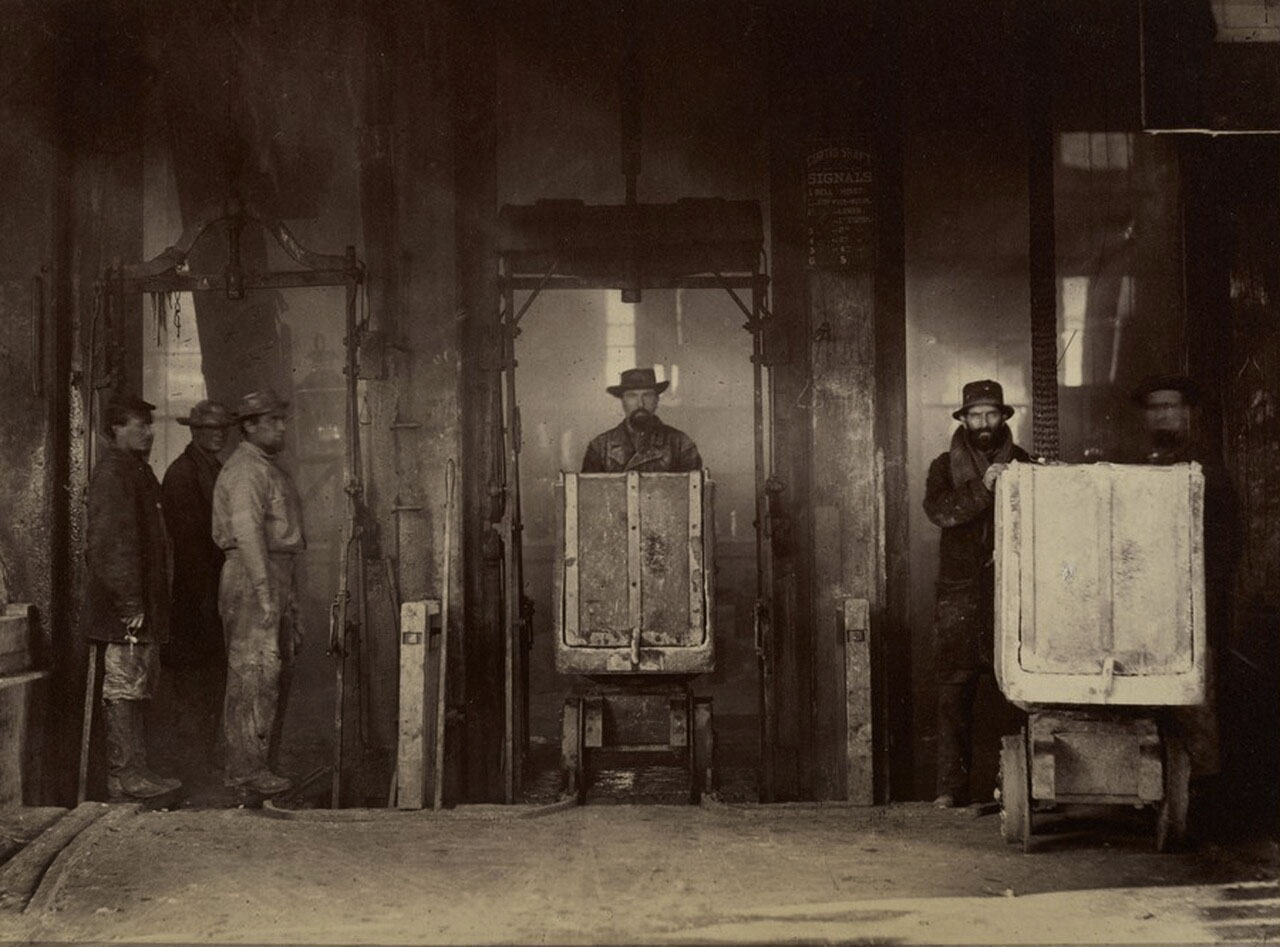
 

Timothy H. O'Sullivan (American born Ireland, 1840-1882) 'Savage Mine, Curtis Shaft, Virginia City, Nevada' 1868


Timothy H. O’Sullivan (American born Ireland, 1840-1882)
Savage Mine, Curtis Shaft, Virginia City, Nevada
1868
albumen silver print
Image: 14.45 x 19.53cm (5 11/16 x 7 11/16 in.)
Sheet: 19.53 x 26.83cm (7 11/16 x 10 9/16 in.)
Mount: 31.75 x 37.78cm (12 1/2 x 14 7/8 in.)
Amon Carter Museum of American Art, Fort Worth, Texas


Timothy O’Sullivan photographed men preparing to descend 900 feet into the mine.
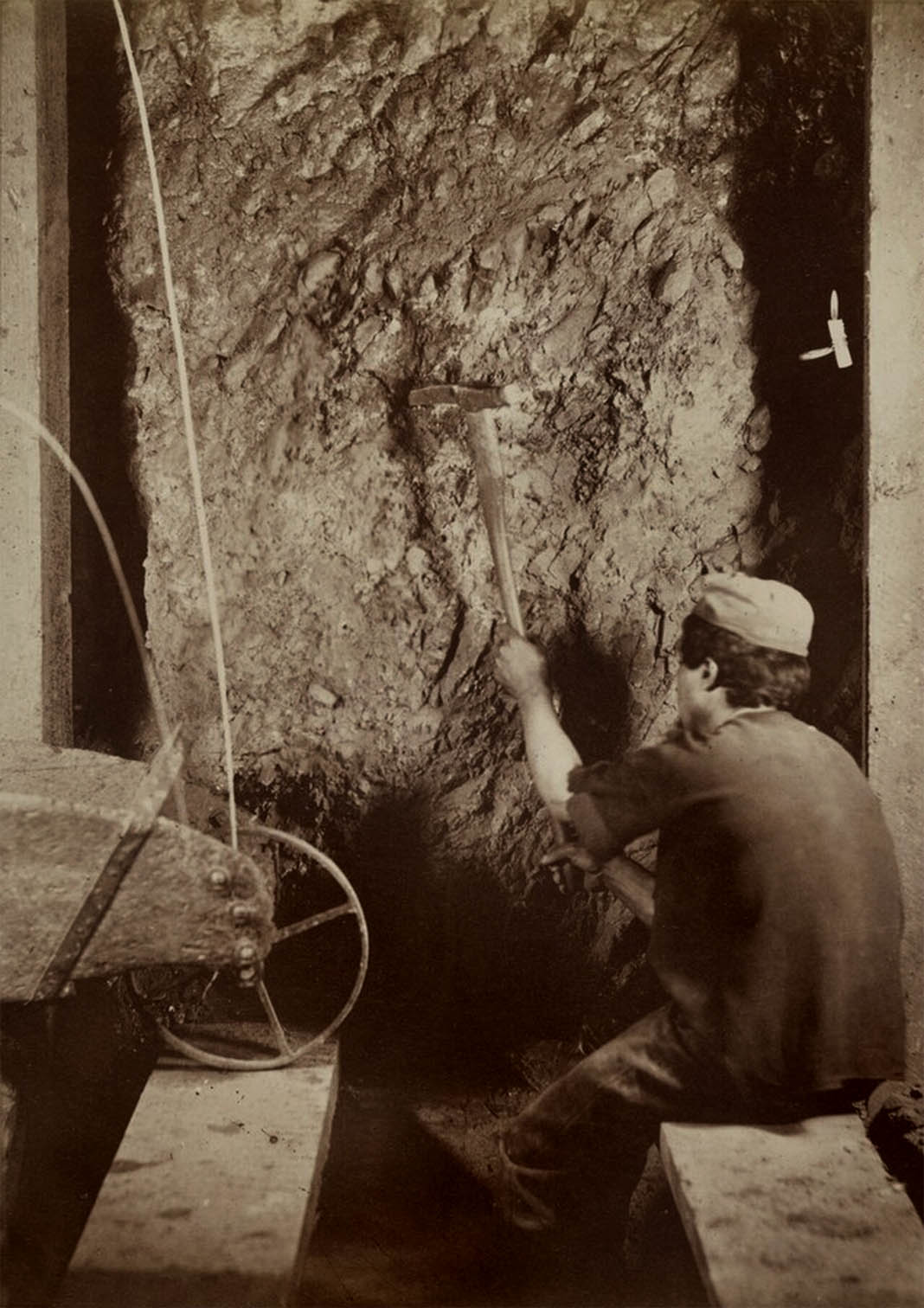
 

Timothy H. O'Sullivan (American born Ireland, 1840-1882) 'Comstock Mine, Virginia City, Nevada 1868 Comstock Mine, Virginia City, Nevada' 1868


Timothy H. O’Sullivan (American born Ireland, 1840-1882)
Comstock Mine, Virginia City, Nevada
1868
Albumen print
Image: 18.89 x 13.49cm (7 7/16 x 5 5/16 in.)
Sheet: 18.26 x 26.99cm (7 3/16 x 10 5/8 in.)
Mount: 31.59 x 37.31cm (12 7/16 x 14 11/16 in.)
Amon Carter Museum of American Art, Fort Worth, Texas


O’Sullivan used a magnesium flash to illuminate a miner wielding an axe underground.
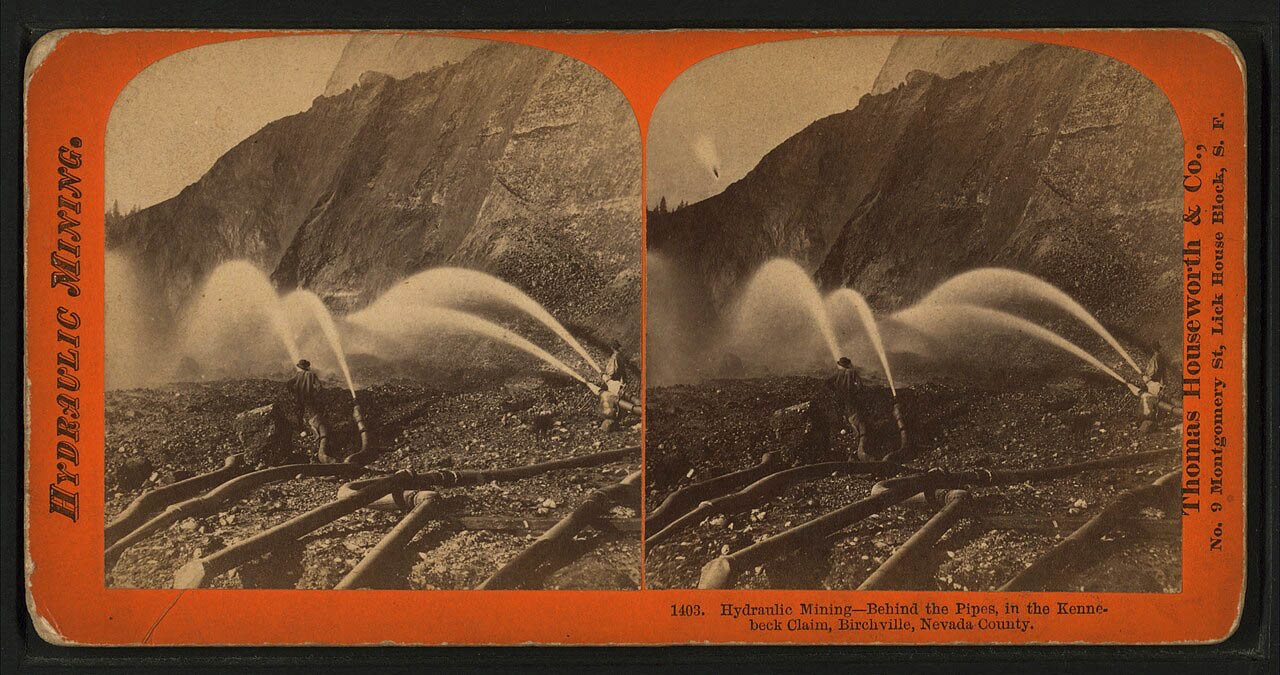
 

Thomas Houseworth (American, 1828-1916) 'Hydraulic Mining - Behind the Pipes, in the Kennebunk Claim, Birchville, Nevada County' c. 1868-1869


Thomas Houseworth (American, 1828-1916)
Hydraulic Mining – Behind the Pipes, in the Kennebunk Claim, Birchville, Nevada County
c. 1868-1869
Stereoscopic albumen prints
Image: 7.9 x 20.6cm (3 1/8 x 8 1/8 in.)
Sheet: 8.9 x 17.5cm (3 1/2 x 6 7/8 in.)
Wikipedia Commons Public domain


B.F. Childs (American, 1841-1921) 'New York, Iron Mine [Michigan]' c. 1871-1876


B.F. Childs (American, 1841-1921)
New York, Iron Mine [Michigan]
c. 1871-1876
Stereoscopic albumen print
Image: 7.9 x 15.9cm (3 1/8 x 6 1/4 in.)
Sheet: 8.7 x 17.5cm (3 7/16 x 6 7/8 in.)
Collection of Leonard A. Walle


Brainard F. Childs photographed a man outside an iron mine in Michigan. He’s dwarfed by its dark and cavernous entrance.

Brainard Fermont Childs (1841-1921) was an American 19th-century photographer best known for his studio portraits and stereoviews documenting the Great Lakes region, particularly Michigan’s Upper Peninsula.

Operating the Child’s Art Gallery in Marquette, Michigan, he captured extensive regional landscapes, scenes of early mining and shipping on Lake Superior, and local Ojibwe life. Today, many of his surviving albumen prints and glass-plate negatives are preserved in historical collections, including the British Museum.

Google AI
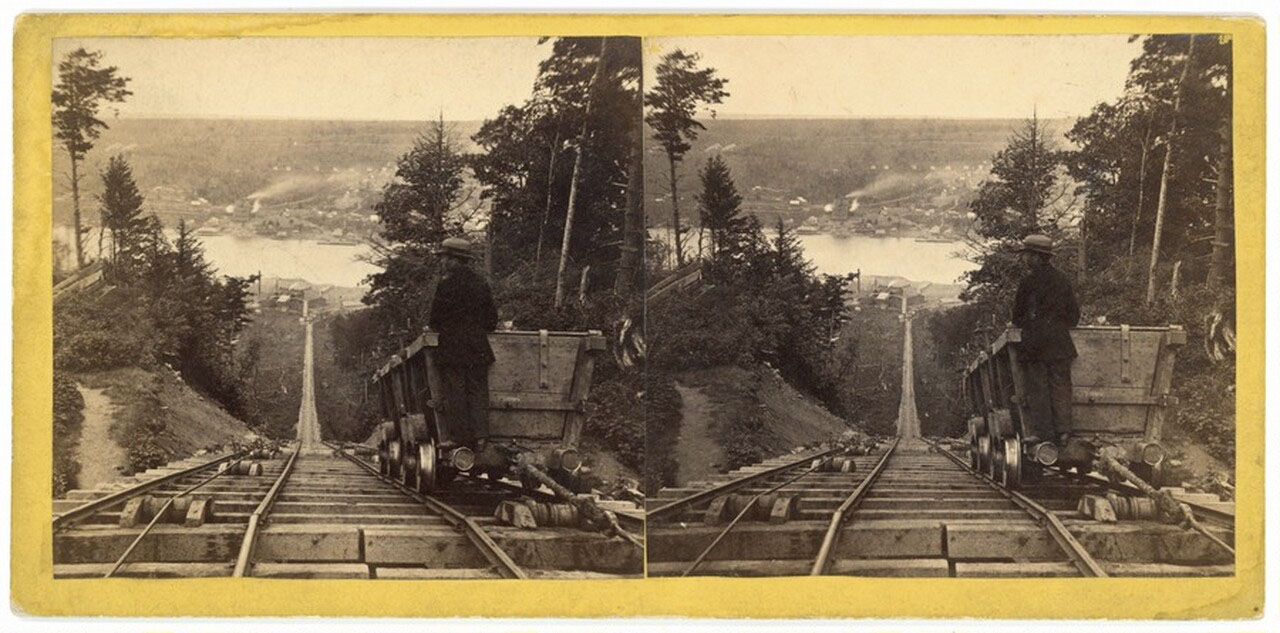
 

B.F. Childs (American, 1841-1921) 'Down the Franklin Tramroad' c. 1867-1868


B.F. Childs (American, 1841-1921)
Down the Franklin Tramroad
c. 1867-1868
Stereoscopic albumen prints
Image: 7.5 x 16.2cm (2 15/16 x 6 3/8 in.)
Sheet: 8.3 x 17.2cm (3 1/4 x 6 3/4 in.)
Collection of Leonard A. Walle


Dependent on precious metals from its inception, photography has always been intertwined with the natural resources that are fundamental to modern industrialised life. Beneath the Surface: Mining and American Photography is the first exhibition to exclusively examine how photographers from the mid-19th century to today have powerfully captured the effects of resource extraction on the land and communities of the United States. Featuring some 150 photographs that span 185 years, this exhibition focuses especially on the subterranean removal of the minerals and fossil fuels that power this country’s economy and industry. Together, these works demonstrate how photographers have drawn on changing technology and unique visual strategies to rise to the challenge of picturing these colossal industries.

Made for a variety of purposes, ranging from commercial boosterism and celebration of technical advancement to social documentation and community activism, the pictures in the exhibition shed light on how photography has revealed the costs of extraction and who benefits from its success. Divided into six broad, chronological sections that contextualise the complex history of photography and extraction, from daguerreotypes of the Gold Rush to large-scale, immersive photographs made in the last decade, Beneath the Surface highlights how artists have used photography to explore the relationship between extraction, society, and the environment.

This exhibition is curated by Diane Waggoner, curator of photographs, National Gallery of Art, and Kristen Gaylord, Herzfeld Curator of Photography and Media Arts, Milwaukee Art Museum.

The exhibition is organised by the National Gallery of Art, in collaboration with the Milwaukee Art Museum and the Amon Carter Museum of American Art.

Text from the National Gallery of Art website


Carleton E. Watkins (American, 1829-1916) 'Malakoff Diggins, North Bloomfield, Nevada County [California]' 1871


Carleton E. Watkins (American, 1829-1916)
Malakoff Diggins, North Bloomfield, Nevada County [California]
1871
Albumen print
Image: 41.59 x 54.61cm (16 3/8 x 21 1/2 in.)
Mount: 55.88 x 71.12cm (22 x 28 in.)
Amon Carter Museum of American Art, Fort Worth, Texas
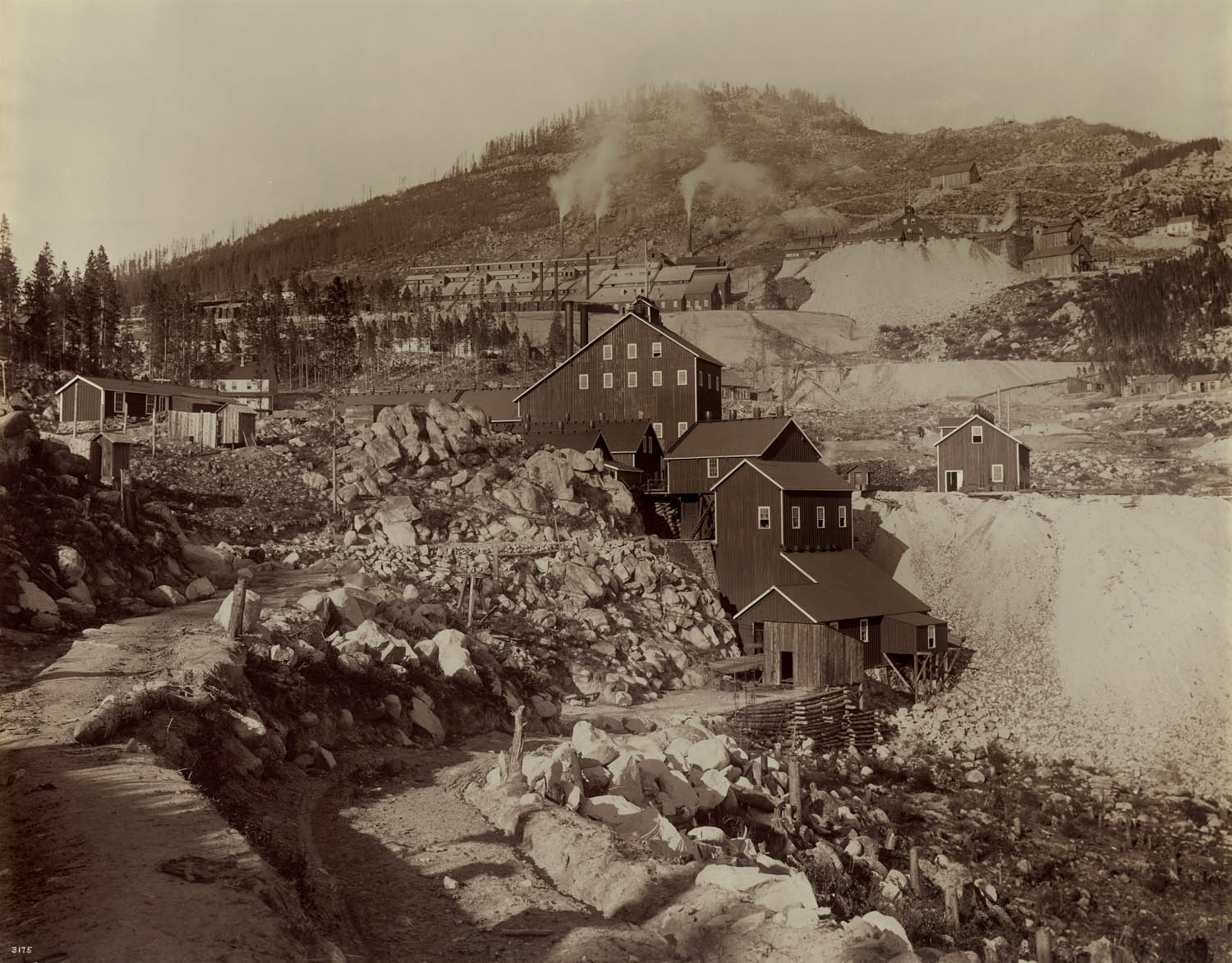
 

F. Jay Haynes (American, 1853-1921) 'Granite Silver Mine, Montana' c. 1880


F. Jay Haynes (American, 1853-1921)
Granite Silver Mine, Montana
c. 1880
Albumen print
Image: 42.7 x 54.5cm (16 13/16 x 21 7/16 in.)
Sheet: 43 x 54.9cm (16 15/16 x 21 5/8 in.)
Mat: 22 x 28 in.
National Gallery of Art, Washington
Gift of the UBS Art Collection
Public domain


Originally a studio photographer from the North Dakota Territory, Haynes spent most of his career documenting in pictures the development of the western territories. Commissioned in 1876 to make views along the route of the Northern Pacific Railroad, he traveled through the West until 1905, working in a railroad car equipped as both gallery and darkroom. Besides photographing spectacular views of natural scenery, Haynes produced an extensive record of the modification of the landscape by raliroad and industry.

On an 1881 trip to the newly created Yellowstone Park, via the new line of his railroad company employer, Haynes decided to pursue a commercial concession as park photographer. In 1884 he opened a studio and photography gallery in Yellowstone, selling to tourists prints of the park’s natural wonders, such as the Lone Star Geyser Cone. For more than thirty years Haynes served as the official photographer of Yellowstone National Park. 

Merry A. Foresta American Photographs: The First Century (Washington, D.C.: National Museum of American Art with the Smithsonian Institution Press, 1996) on the Smithsonian American Art Museum website Nd [Online] Cited 21/07/2026. Used under fair use conditions for the purposes of education and research
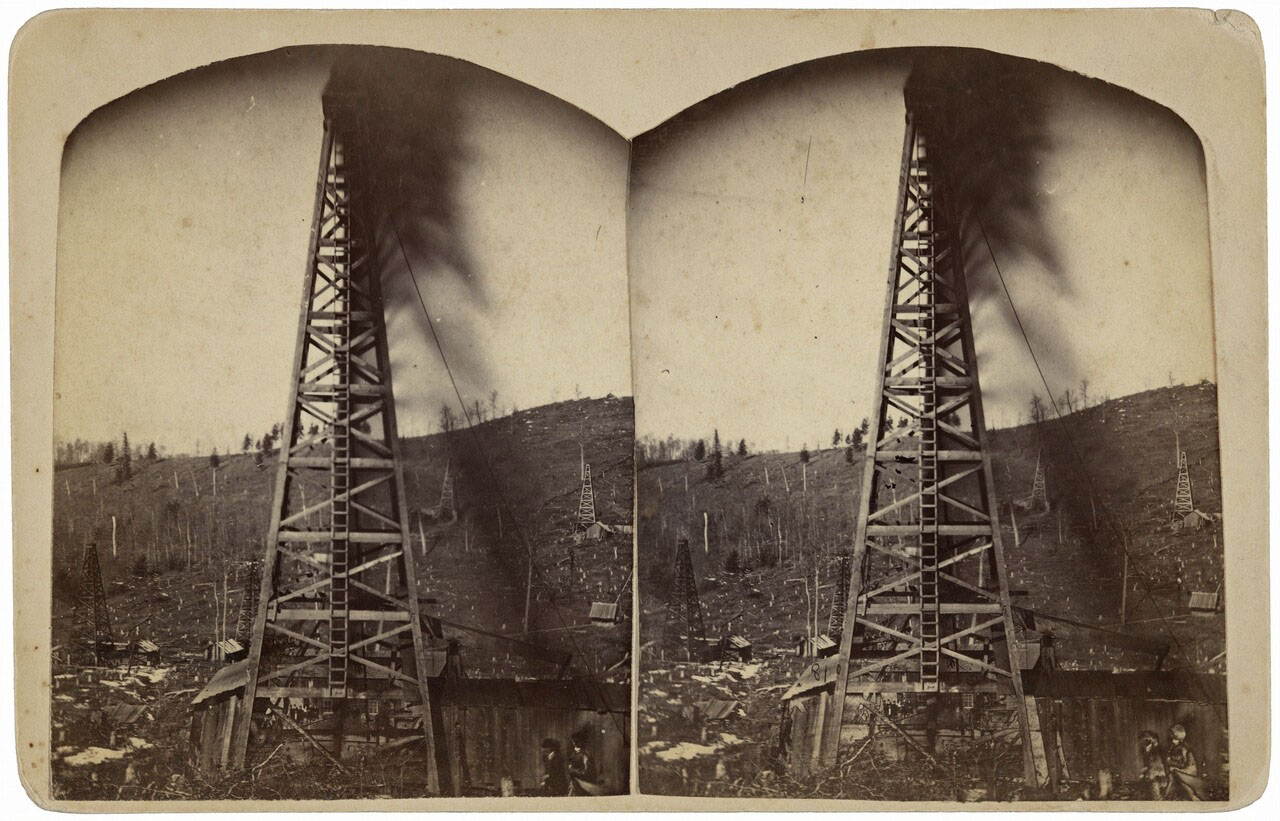
 

West & Waddell (American, Bradford, Pennsylvania, active 1880s) 'Flowing Well' 1880s


West & Waddell (American, Bradford, Pennsylvania, active 1880s)
Flowing Well
1880s
Stereoscopic albumen silver prints
National Gallery of Art, Washington
Gift of Mary and Dan Solomon
Public domain


Photographs of oil derricks document the rush that followed the discovery of oil in Pennsylvania in 1859.
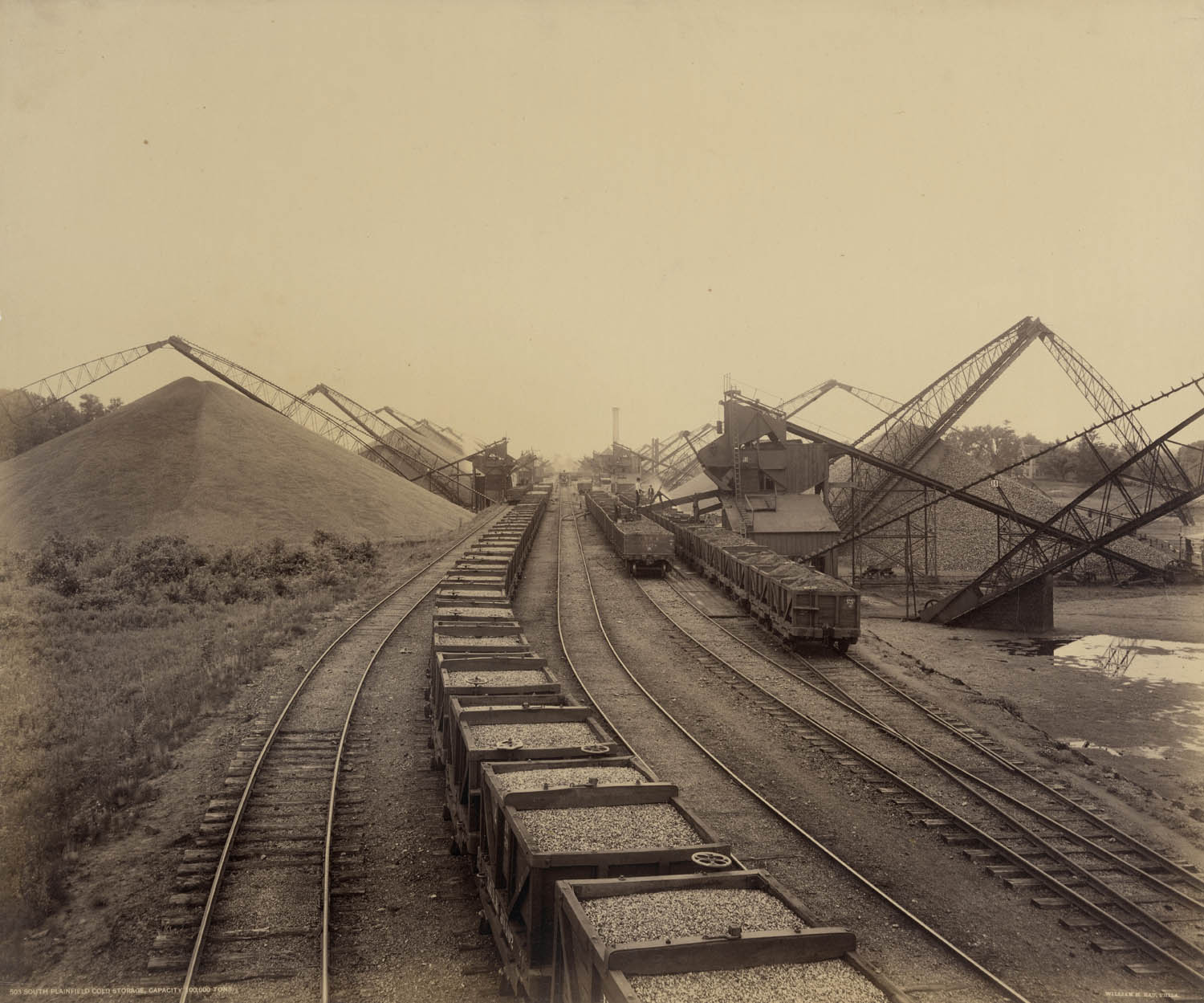
 

William H. Rau (American, 1855-1920) 'South Plainfield Coal Storage, capacity 100,000 tons' c. 1890


William H. Rau (American, 1855-1920)
South Plainfield Coal Storage, capacity 100,000 tons
c. 1890
Albumen print
Image: 43.5 x 52.1cm (17 1/8 x 20 1/2 in.)
Collection of Paul Sack
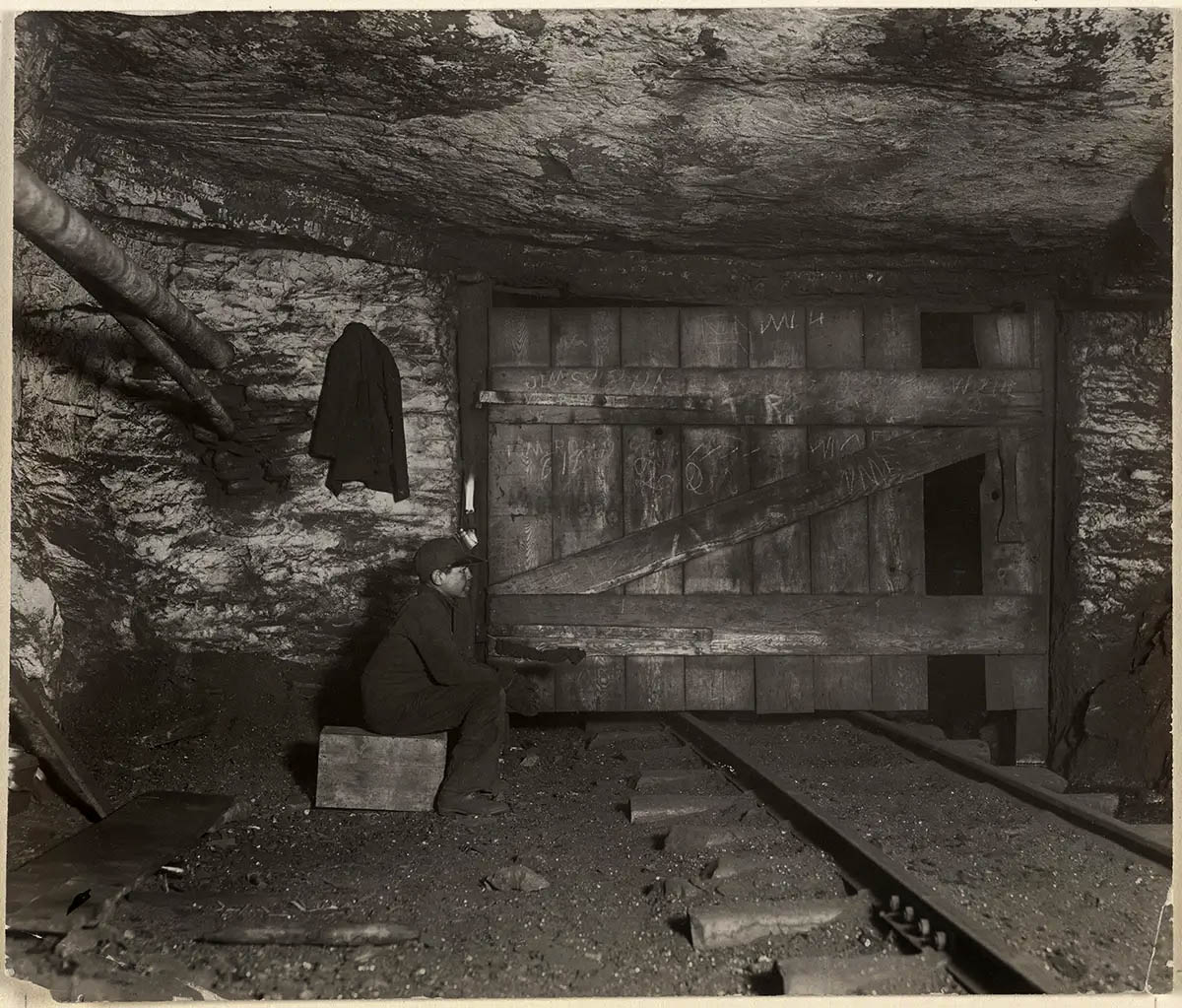
 

Lewis Wickes Hine (American, 1874-1940) '"A lonely job." Willie Bryden, a nipper, 13 yrs old, Pittston, Pa.,' 1911


Lewis Wickes Hine (American, 1874-1940)
“A lonely job.” Willie Bryden, a nipper, 13 yrs old, Pittston, Pa.,
1911
Gelatin silver print
Image: 11.43 x 13.49cm (4 1/2 x 5 5/16 in.)
Milwaukee Art Museum
Gift of Robert Mann



Frank J. Schlueter (American, 1874-1972)
Goose Creek, Tex. oil field
1917
Gelatin silver print, panorama
Sheet: 19.6 x 150.3cm (7 11/16 x 59 3/16 in.)
Prints & Photographs Division, Library of Congress, Washington D.C.
Public domain


Schlueter photographed the quickly growing Houston region in the first half of the twentieth century, retiring in 1964. Schlueter’s work was used by early oil producers in the region to document and promote their work


The National Gallery of Art presents Beneath the Surface: Mining and American Photography, the first exhibition to exclusively examine the relationship between resource extraction and American photography throughout its history. Spanning nearly 200 years, the exhibition examines how photographers have approached the challenge of capturing the significant but often hidden processes and impacts of the extraction of minerals, coal, and fossil fuels and its associated industries.

Featuring 150 photographs by more than 100 artists, including Richard Avedon, Walker Evans, Lewis Hine, LaToya Ruby Frazier, Dorothea Lange, David Maisel, Gordon Parks, Mitch Epstein, Carleton Watkins, Will Wilson, and more, Beneath the Surface reveals how generations of photographers have utilised evolving technologies and distinctive visual strategies to document the industries that power and shape modern life. Beneath the Surface will be on view at the National Gallery of Art from May 23 to August 23, 2026, before travelling to the Milwaukee Art Museum in Wisconsin and the Amon Carter Museum of American Art in Fort Worth, Texas.

“As a defining visual medium of our modern age, photography is an essential tool to capture and communicate our shared history,” said Kaywin Feldman, director of the National Gallery of Art. “Beneath the Surface brings together a dynamic range of works to shed light on the medium’s intersections with a shaping force in American history and industry.”

The featured works, many of which are drawn from the National Gallery’s significant photography collection, span early daguerreotypes from the time of the California Gold Rush in the mid-1800s to pictures of rapid industrialisation in the 20th century and contemporary photographs produced at an immense scale. This expansive selection traces the layered history of extraction and how artists have used photography as a lens through which to communicate the industry’s relationship with society and the natural world.

“Photography itself is dependent on precious metals for its very existence, from the light sensitivity of silver in early processes to the copper of contemporary digital-camera batteries. At the same time, it has been the principal visual medium employed to depict extractive industries, evolving alongside the expansion of mining on an industrial scale since the 19th century,” said Diane Waggoner, co-curator of the exhibition and curator of photographs at the National Gallery of Art. “Beneath the Surface unites photographs made for a variety of purposes, from explicitly promotional and commercial uses to documentation efforts and socially engaged activism, shedding light on both the rewards and costs of resource extraction.”

The exhibition orients visitors with an introductory gallery displaying contemporary work, foregrounding themes relevant to the current moment and providing a critical framework for understanding the six broad, chronological sections that follow. Viewers will encounter works not only by historical photographers recognised for their work in capturing mining, drilling, and industrial subjects, such as Carleton Watkins, Margaret Bourke-White, Marion Post Wolcott, and Bernd and Hilla Becher, but also by less expected practitioners Florence Kemmler, Alma Lavenson, and Mary Morris. The exhibition includes works by contemporary photographers Edward Burtynsky, Binh Danh, Terry Evans, Victoria Sambunaris, and Cara Romero, among others.

“For almost two centuries photographers have played a central role in public understanding of resource extraction, drawing on a succession of technologies and strategies to capture activities that enable modern life but resist portrayal,” said Kristen Gaylord, co-curator of the exhibition and Herzfeld Curator of Photography and Media Arts at Milwaukee Art Museum. “This exhibition demonstrates how, time and again, photographers have creatively pushed against the medium’s boundaries in a quest to impart the enormity of the country’s extractive activities and their effects.”

Beneath the Surface centres on the challenges artists face in capturing the colossal scale of extraction and its far-reaching impacts on communities and the environment. It also reveals the inventive strategies they have employed to depict this subject. The works on view reflect the full breadth of the medium, spanning landscapes, portraits of workers and panoramas of affected communities, photobooks, aerial imagery, analog and digital collage, camera-less photography, historical processes, narrative and performance work, and pictures that otherwise harness photography to communicate the scope of these industries.

Press release from the National Gallery of Art
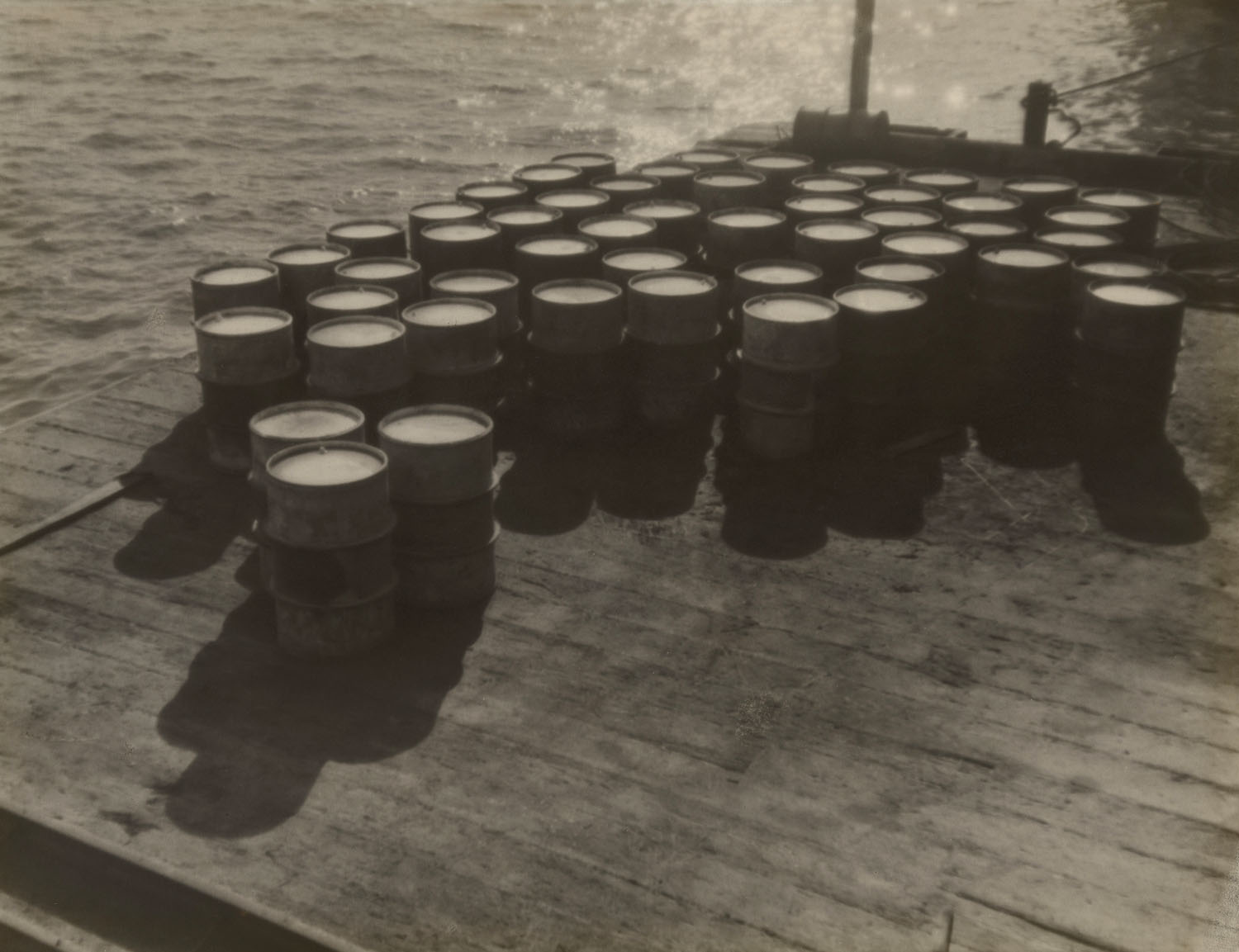
 

Florence Kemmler (American, 1900-1972) 'Oil Drums' c. 1929


Florence Kemmler (American, 1900-1972)
Oil Drums
c. 1929
Chlorobromide print
Image: 26.67 x 34.61cm (10 1/2 x 13 5/8 in.)
Mat: 18 x 22 in.
National Gallery of Art, Washington
Alfred H. Moses and Fern M. Schad Fund


The husband-and-wife team of Roland E. Schneider (1884-1934), and Florence B. Kemmler (1900-1972), were internationally exhibited salon photographers whose beautifully rendered works straddle both Pictorialist and modernist sensibilities. The San Diego couple worked together using the same 3 1/4 x 4 1/4 Graflex cameras and identical printing and mounting techniques. Nearly all their photographs were contact printed on warm, brownish black-toned chlorobromide papers.

Text from the Joseph Bellow Gallery website
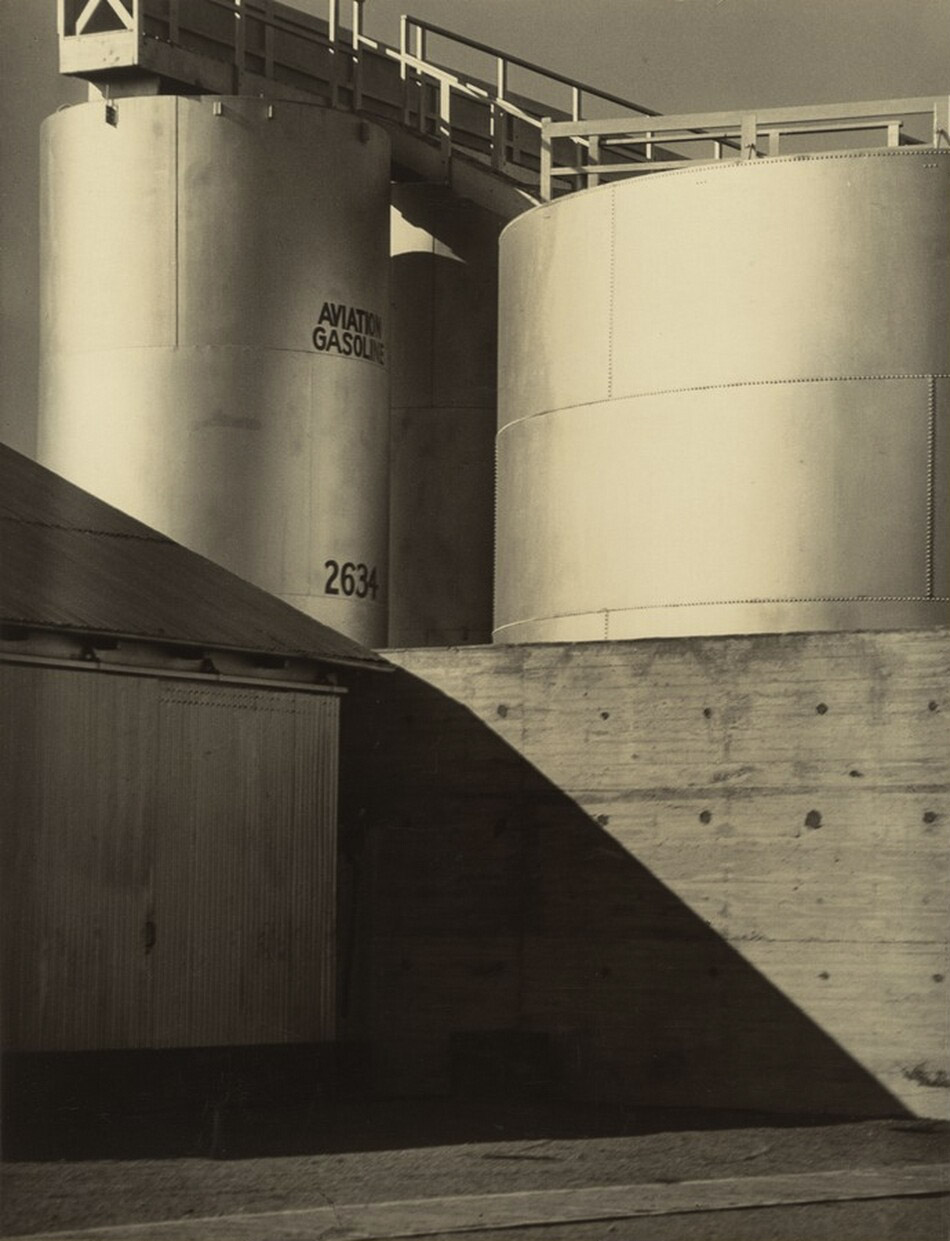
 

Alma Lavenson (American, 1897-1989) 'Tanks, Standard Oil Company' 1931


Alma Lavenson (American, 1897-1989)
Tanks, Standard Oil Company
1931
Gelatin silver print
Sheet (trimmed to image): 24 x 18.4cm (9 7/16 x 7 1/4 in.)
Mat: 20 x 16 in.
National Gallery of Art, Washington
The Marvin Breckinridge Patterson Fund for Photography


In 1930 she was introduced to Adams, Cunningham and Weston by art collector Albert Bender. Bender also wrote Lavenson a letter of introduction to give to Edward Weston. Two years later she was invited to participate in the famous Group f/64 show at the M.H. de Young Memorial Museum, although there is some uncertainty about whether she should actually be called a “member” of Group f/64, given her association with Pictorialism. The announcement for the show at the de Young Museum listed seven photographers in Group f/64 and said “From time to time various other photographers will be asked to display their work with Group f/64. Those invited for the first showing are: Preston Holder, Consuelo Kanaga, Alma Lavenson, Brett Weston.” However, in 1934 the group posted a notice in Camera Craft magazine that said “The F:64 group includes in its membership such well known names as Edward Weston, Ansel Adams, Willard Van Dyke, John Paul Edwards, Imogene [sic] Cunningham, Consuela [sic] Kanaga and several others.” Lavenson was not mentioned by name in that notice, but her name is always listed as being associated with the group because of her place in the first exhibition. She was included in an exhibition of photography “by members and associates of Group f.64” held at Gallery 210, Lucas Hall, University of Missouri, St. Louis, Apr. 3-30, 1978.

Text from the Wikipedia website
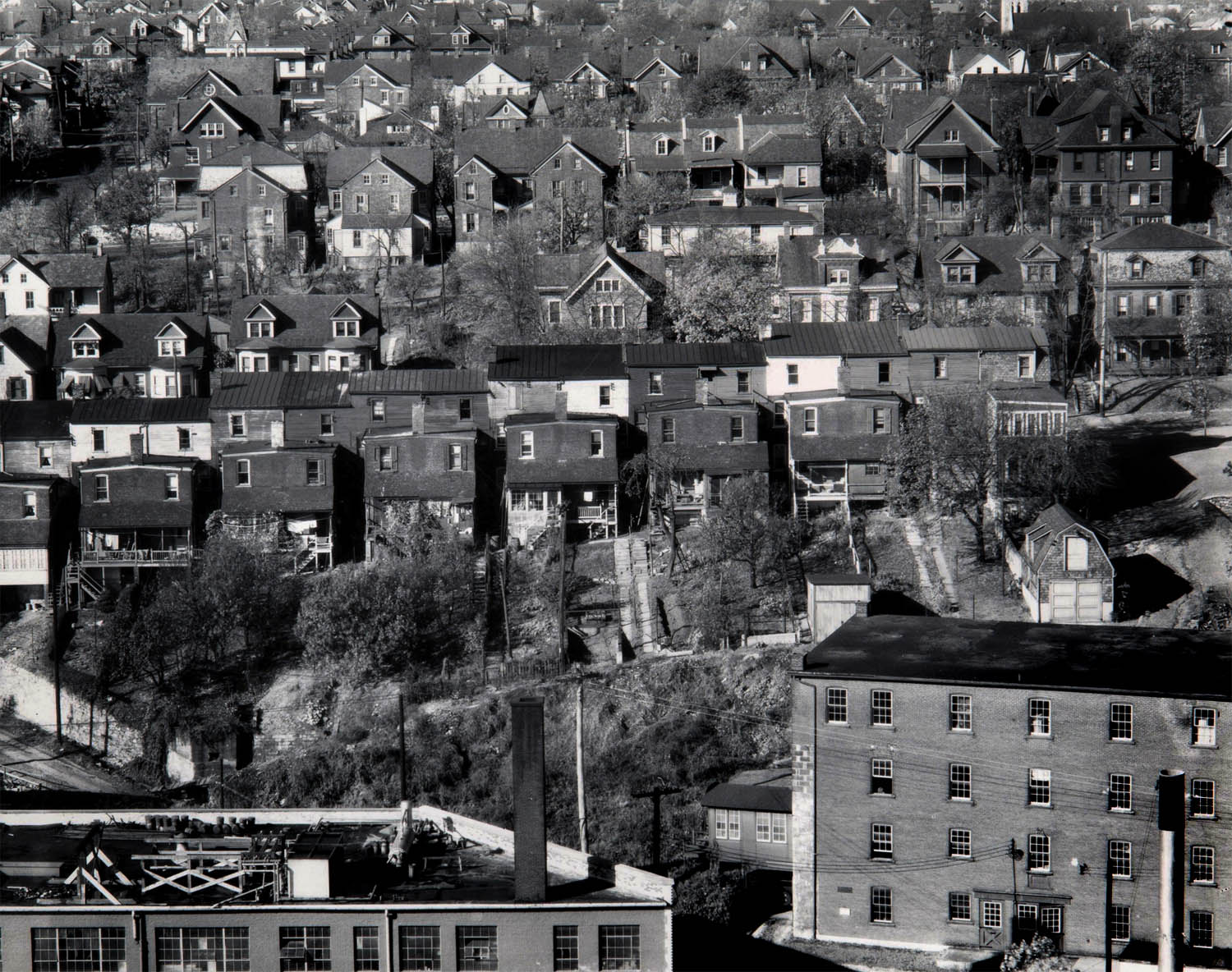
 

Walker Evans (American, 1903-1975) 'Bethlehem, Pennsylvania' 1936


Walker Evans (American, 1903-1975)
Bethlehem, Pennsylvania
1936
Gelatin silver print mounted on paperboard
Sheet (trimmed to image): 19 x 23.8cm (7 1/2 x 9 3/8 in.)
Support: 45.7 x 37.6cm (18 x 14 13/16 in.)
Mat: 16 x 20 in.
National Gallery of Art, Washington
Gift of Mary and David Robinson


In 1936, Walker Evans captured several iconic photographs in Bethlehem, Pennsylvania, during his landmark documentary work for the Resettlement Administration and Farm Security Administration. His lens famously depicted the stark juxtapositions of the city’s industrial boom, highlighting steel mills looming over residential neighbourhoods and graveyards, as well as scenes of local auto graveyards.
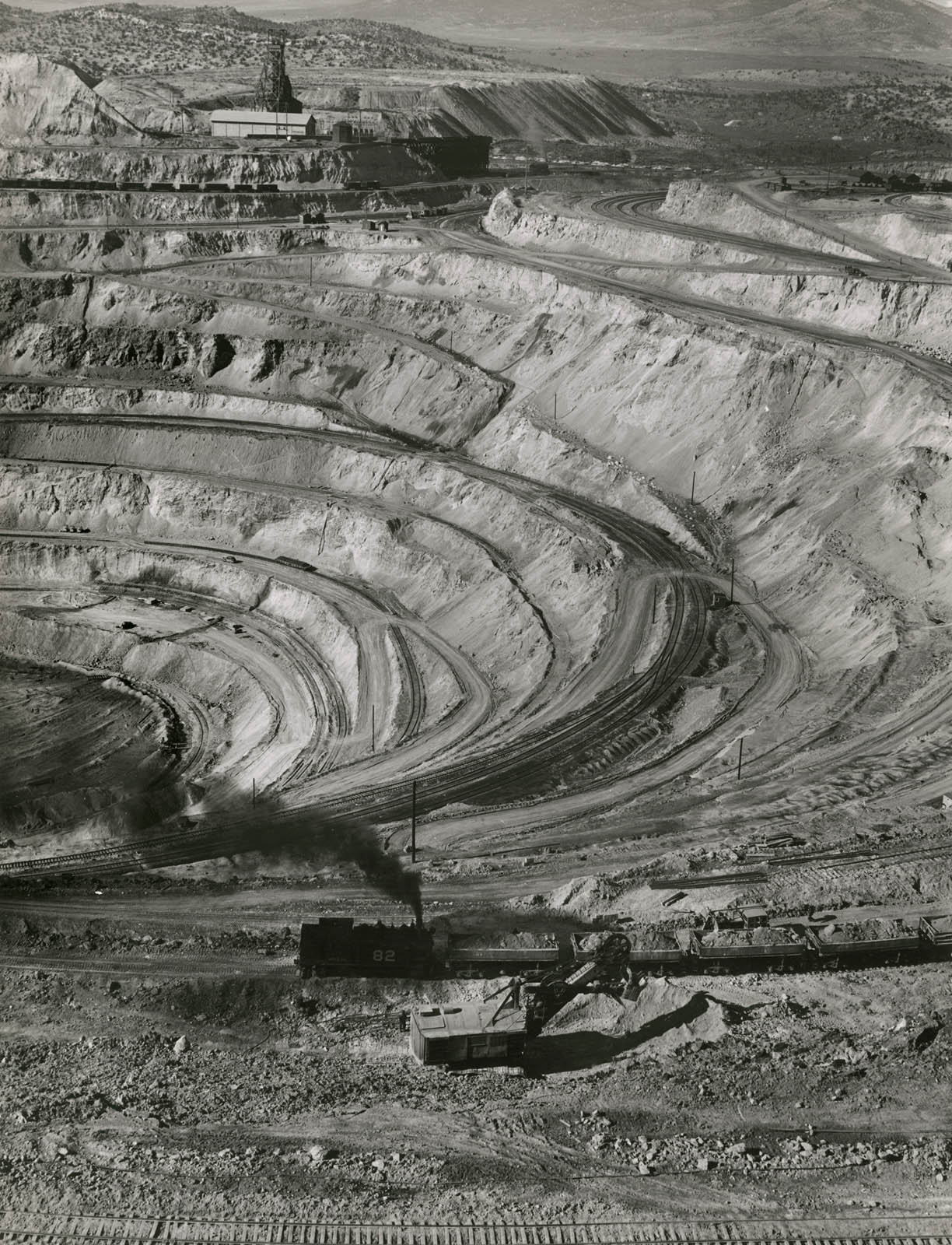
 

Arthur Rothstein (American, 1915-1985) 'Copper Pit, Ruth, Nevada' 1940


Arthur Rothstein (American, 1915-1985)
Copper Pit, Ruth, Nevada
1940
Gelatin silver print
Image: 24.13 x 18.73cm (9 1/2 x 7 3/8 in.)
Sheet: 25.4 x 20.32cm (10 x 8 in.)
Mat: 50.8 x 40.64cm (20 x 16 in.)
Black Dog Collection


Born in New York City in 1915, Arthur Rothstein showed an early interest in photography. While studying at Columbia University, he met economics instructor Roy Stryker, who would later establish the photographic section of the Resettlement Administration (later the Farm Security Administration) in Washington, DC. Appreciating Rothstein’s technical proficiency and enthusiasm for photography, Stryker hired him in 1935 as the first staff photographer for the FSA. Praised for the directness and immediacy of his imagery, Rothstein produced notable photographic series on farming communities in the Midwestern Dust Bowl. After leaving the FSA in 1940, Rothstein took a position as photographer for Look magazine; he remained there until 1971, ultimately serving as the magazine’s director of photography.

Text from the International Center of Photography website
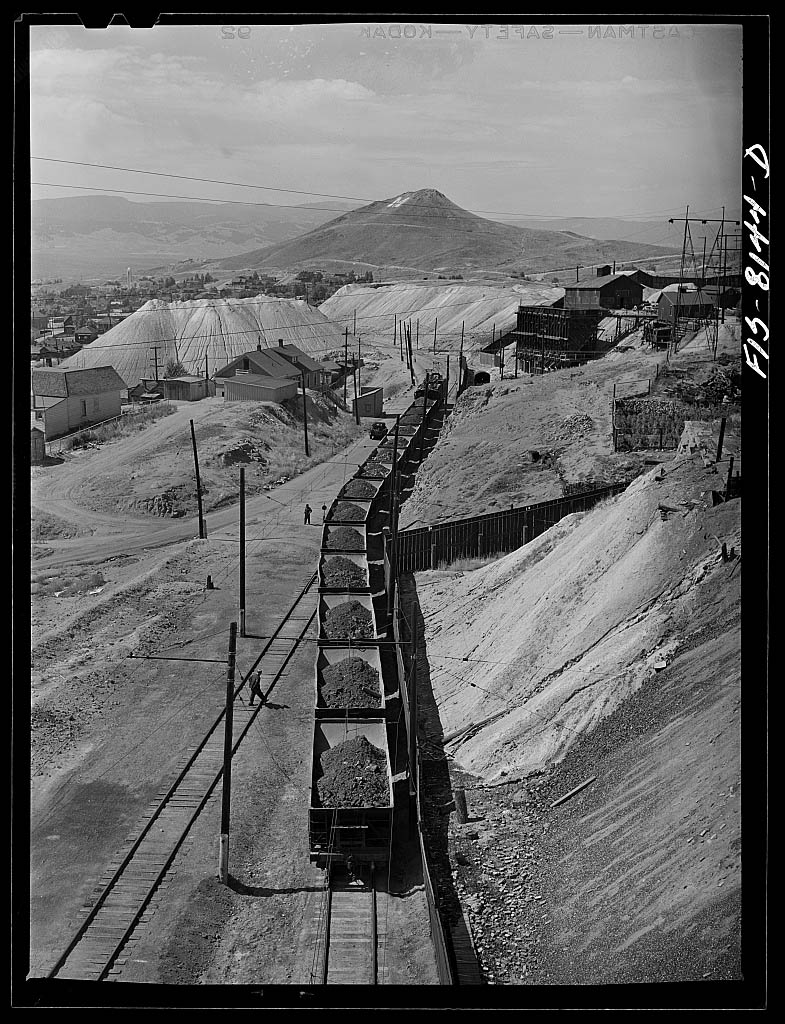
 

Russell Lee (American, 1903-1986) 'Butte, Montana. Anaconda Copper Mining Company. Train of fifty-ton cars of copper ore leaving mines at Butte for smelter at Anaconda Montana' 1942


Russell Lee (American, 1903-1986)
Butte, Montana. Anaconda Copper Mining Company. Train of fifty-ton cars of copper ore leaving mines at Butte for smelter at Anaconda Montana
1942
Gelatin silver print
Mount: 29.21 x 24.29cm (11 1/2 x 9 9/16 in.)
Prints & Photographs Division, Library of Congress, Washington D.C.
Public domain
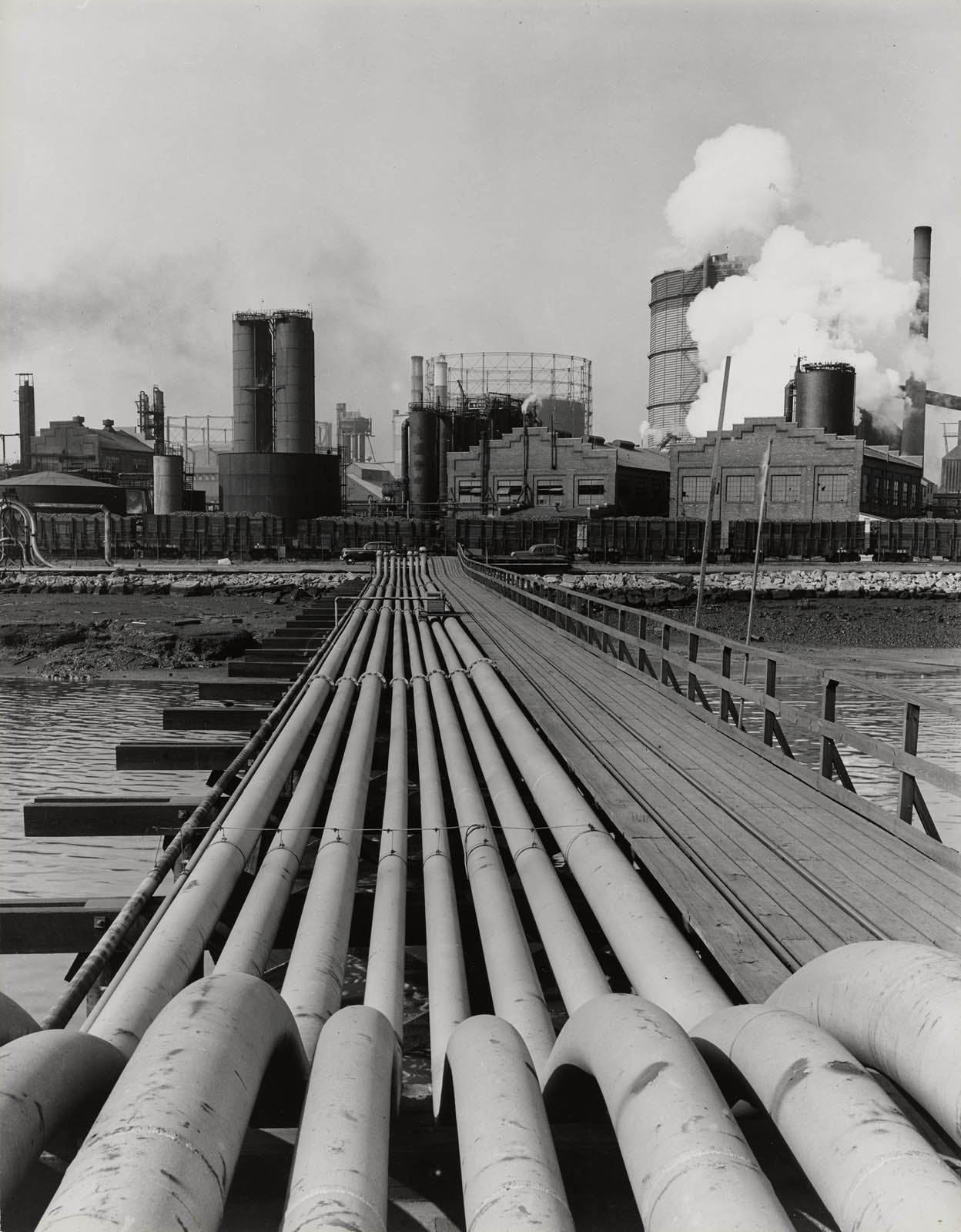
 

Gordon Parks (American, 1912-2006) 'Crude oil, fuel oil, gas oil, range oil and gasoline pipelines leading from the waterfront to the Everett Refinery. Everett, Massachusetts, May 1944' c. 1944


Gordon Parks (American, 1912-2006)
Crude oil, fuel oil, gas oil, range oil and gasoline pipelines leading from the waterfront to the Everett Refinery. Everett, Massachusetts, May 1944
c. 1944
Gelatin silver print
Sheet: 35.9 x 27.8cm (14 1/8 x 10 15/16 in.)
Photography Collection, Miriam and Ira D. Wallach Division of Art, Prints and Photographs, The New York Public Library, Astor, Lenox and Tilden Foundations
Courtesy of Exxon Mobil Corporation
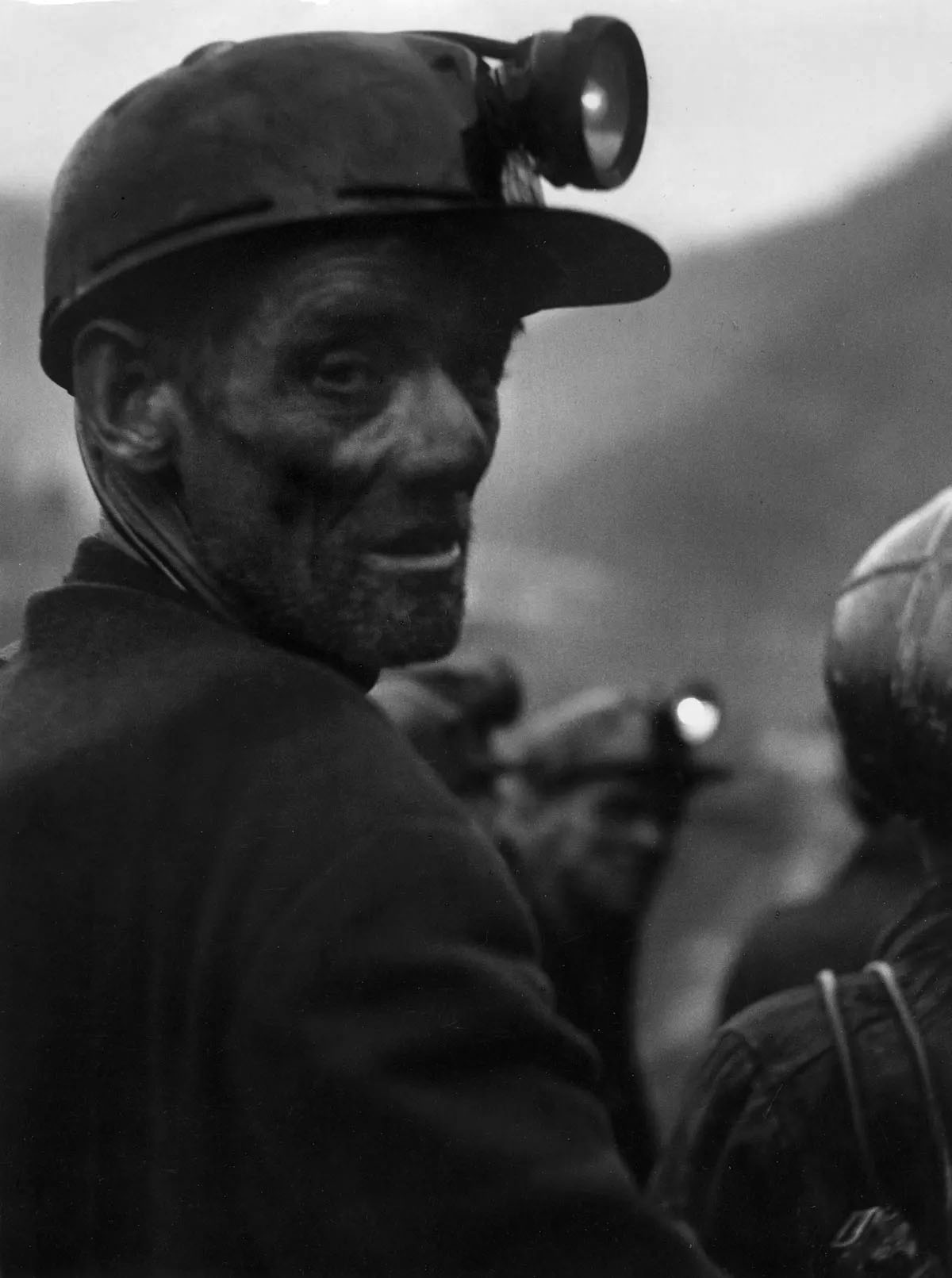
 

Fons Ianelli (American, 1917-1988) 'Jim Faye returning from the mines, Harlan County, Appalachia' 1946


Fons Ianelli (American, 1917-1988)
Jim Faye returning from the mines, Harlan County, Appalachia
1946
Gelatin silver print
Black Dog Collection
Courtesy Steven Kasher Gallery
© Fons Ianelli
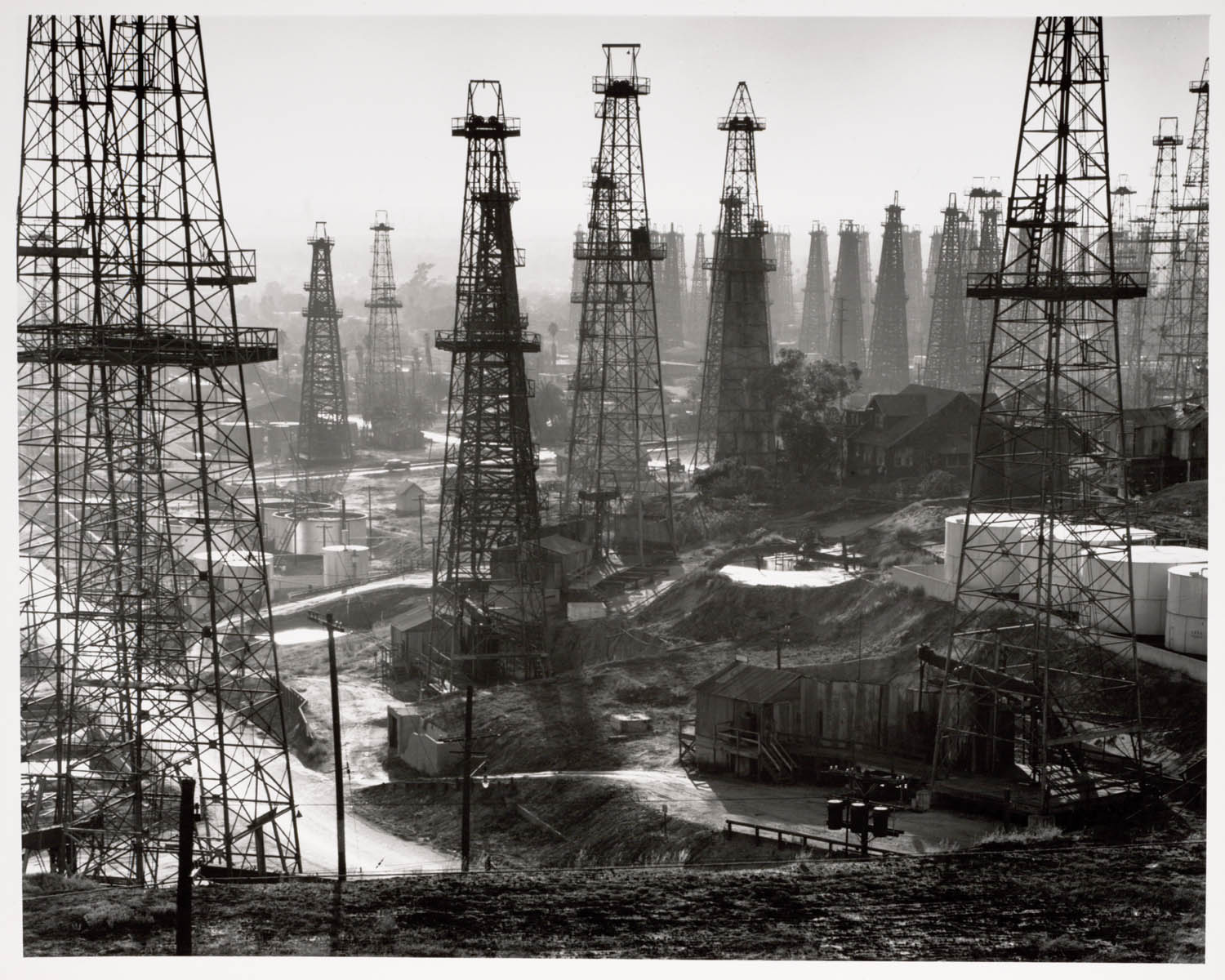
 

Andreas Feininger (American, 1906-1999) 'Oil Derricks on Signal Hall, California' 1948


Andreas Feininger (American, 1906-1999)
Oil Derricks on Signal Hall, California
1948
Gelatin silver print
Image: 20.32 x 25.08cm (8 x 9 7/8 in.)
San Francisco Museum of Modern Art, Gift of the Feininger Family
© Estate of Andreas Feininger
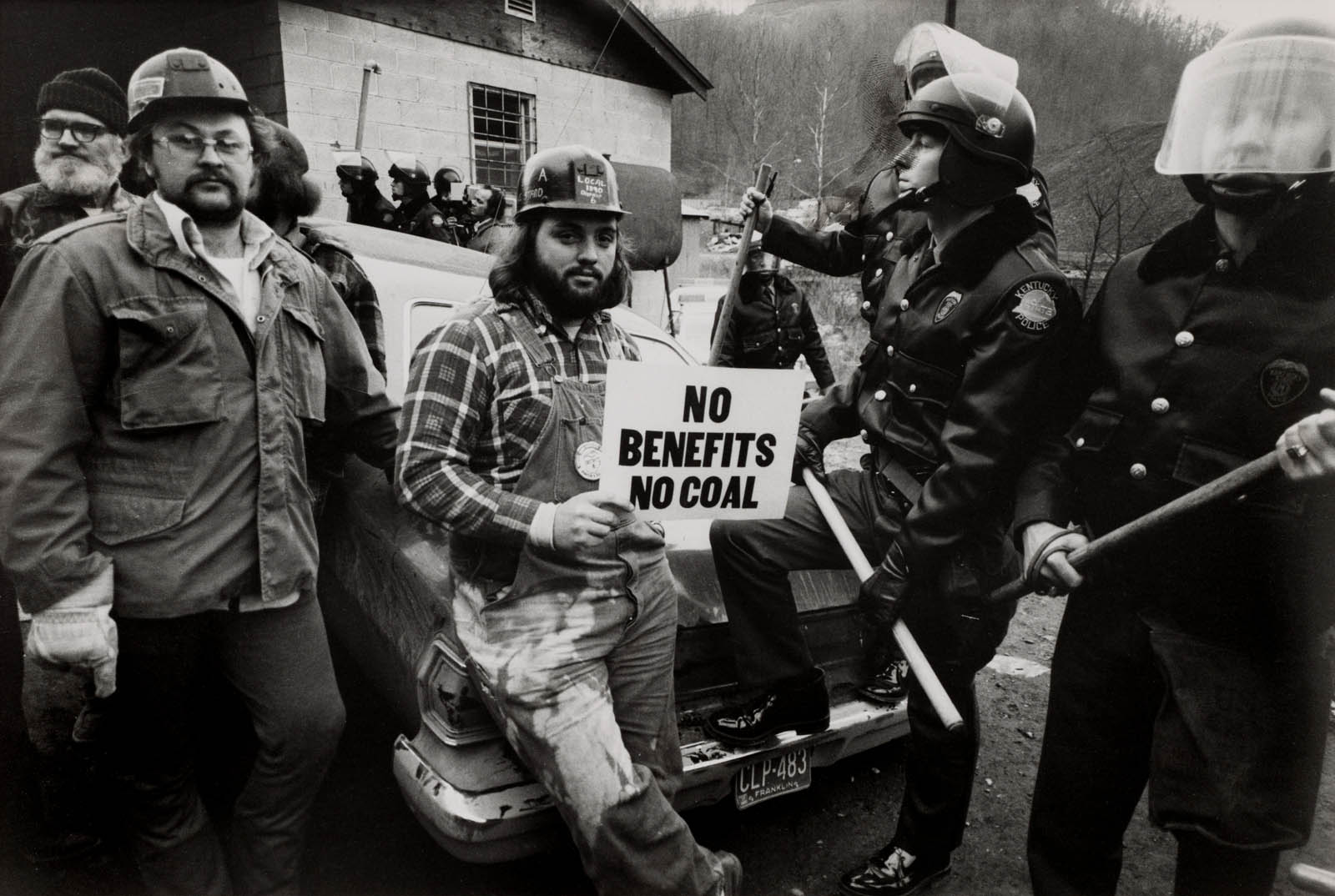
 

Arthur Grace (American, b. 1947) 'Coal Miners' Strike, Kelley's Creek Hollow, West Virginia' December 1977


Arthur Grace (American, b. 1947)
Coal Miners’ Strike, Kelley’s Creek Hollow, West Virginia
December 1977
Gelatin silver print
The J. Paul Getty Museum, Los Angeles
© Arthur Grace
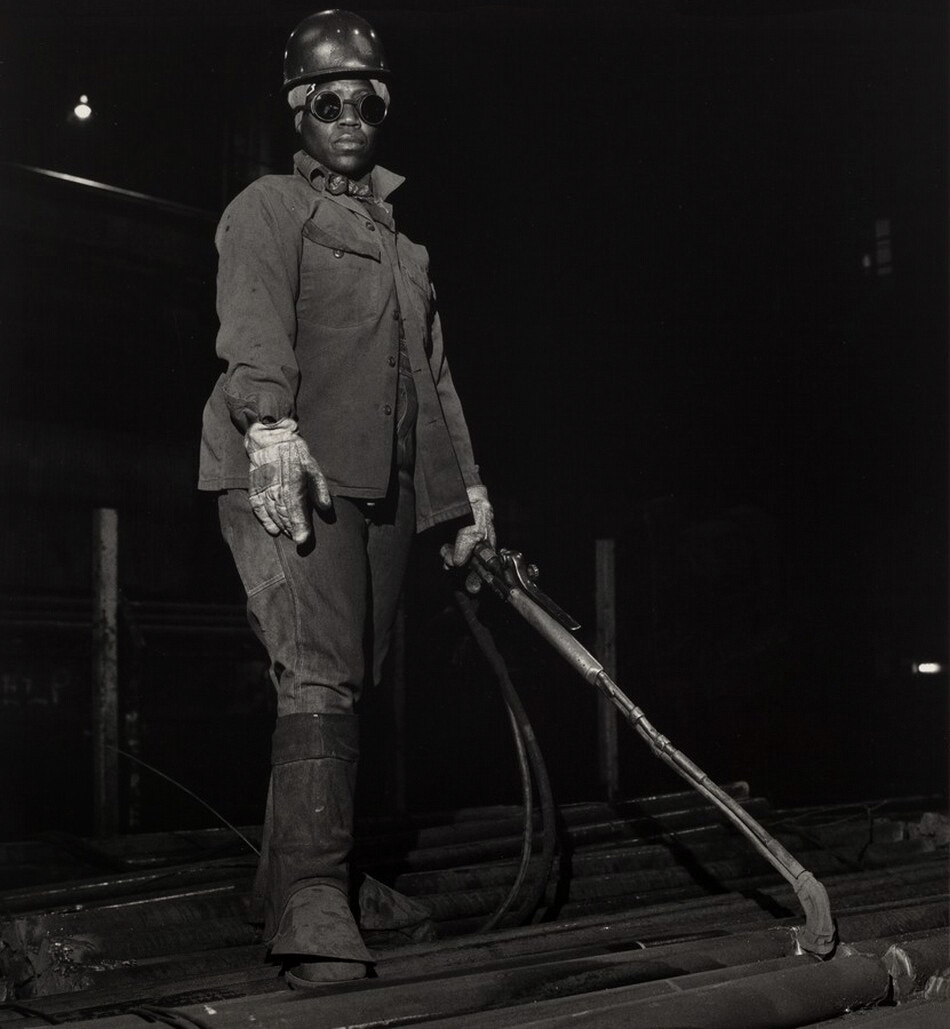
 

Milton Rogovin (American, 1909-2011) 'Doris McKinney, Republic Steel' 1978-1979


Milton Rogovin (American, 1909-2011)
Doris McKinney, Republic Steel
1978-1979
Gelatin silver print
Image: 18.3 x 17cm (7 3/16 x 6 11/16 in.)
Sheet: 25.3 x 20.3cm (9 15/16 x 8 in.)
Mat: 14 x 16 in.
National Gallery of Art, Washington
Gift of Pierre Cremieux and Denise Jarvinen
© 2025, the Estate of Milton Rogovin
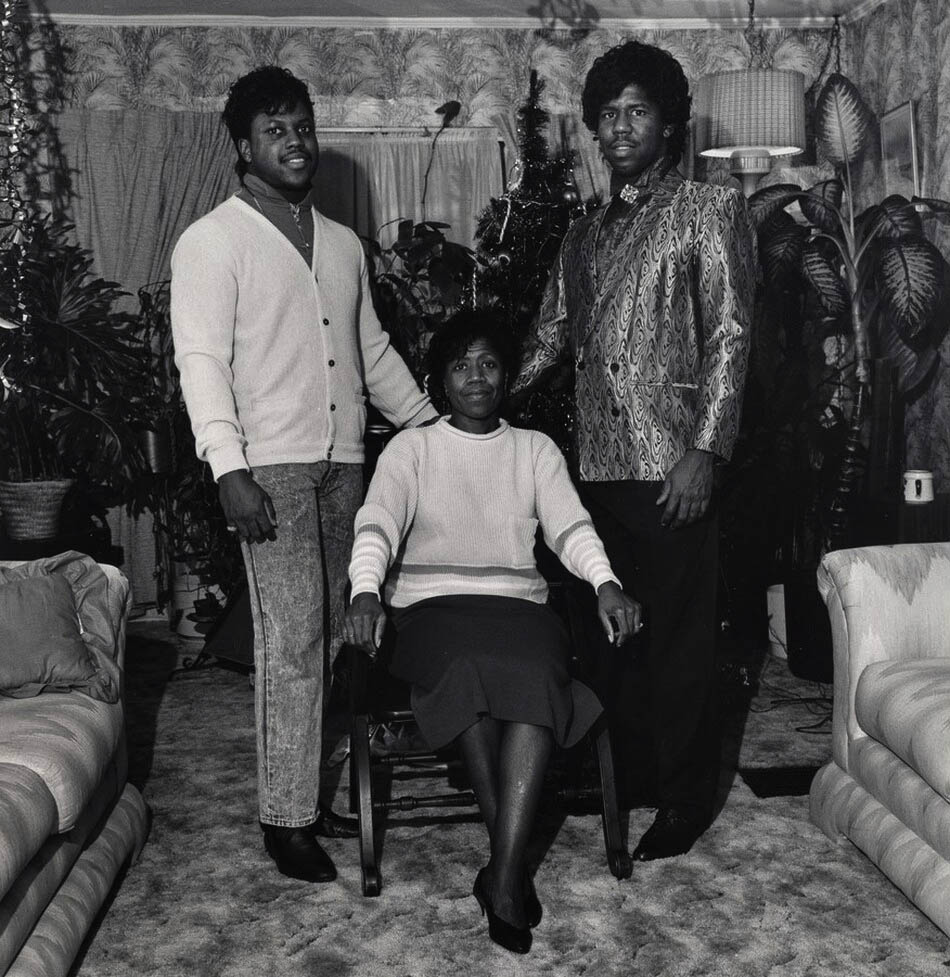
 

Milton Rogovin (American, 1909-2011) 'Doris McKinney with Her Two Sons, Republic Steel' 1987


Milton Rogovin (American, 1909-2011)
Doris McKinney with Her Two Sons, Republic Steel
1987
Gelatin silver print
Image: 18.1 x 17.7cm (7 1/8 x 6 15/16 in.)
Sheet: 25.2 x 20.3cm (9 15/16 x 8 in.)
Mat: 14 x 16 in.
National Gallery of Art, Washington
Gift of Pierre Cremieux and Denise Jarvinen
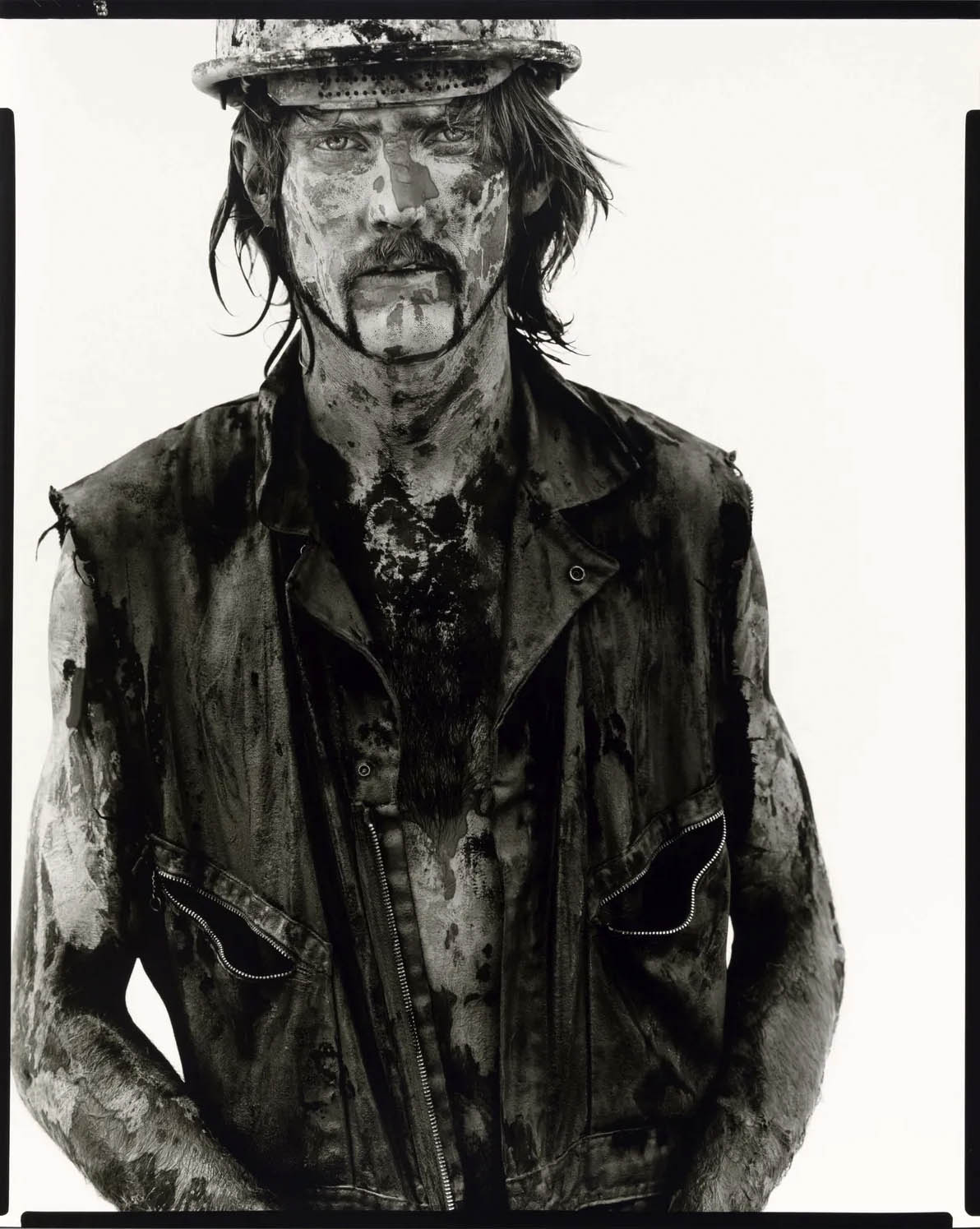
 

Richard Avedon (American, 1923-2004) 'Tom Stroud, oil field worker, Velma, Oklahoma, 6/12/80' 1980


Richard Avedon (American, 1923-2004)
Tom Stroud, oil field worker, Velma, Oklahoma, 6/12/80
1980
Gelatin silver print
Amon Carter Museum of American Art, Fort Worth, Texas
© The Richard Avedon Foundation
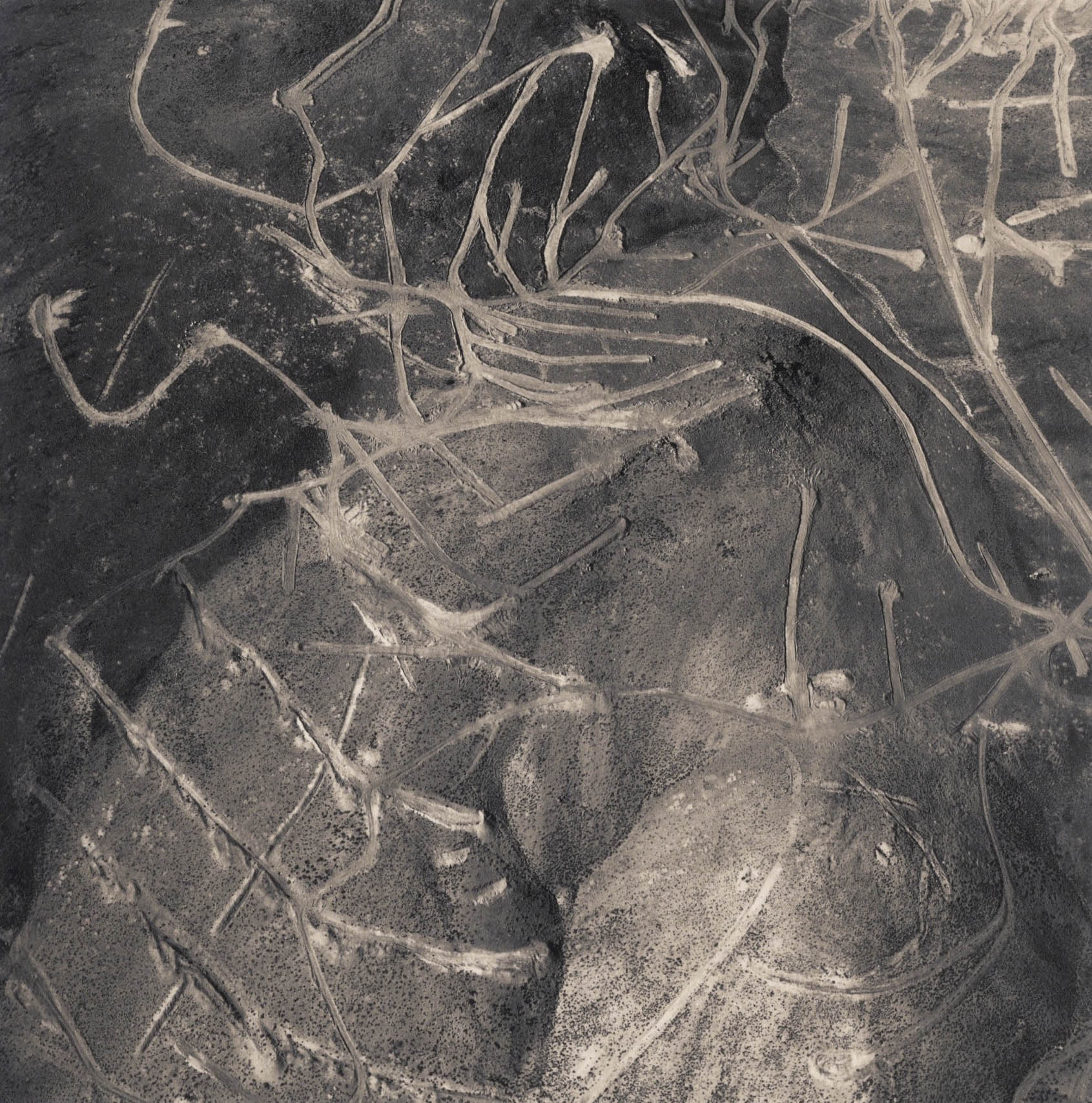
 

Emmet Gowin (American, b. 1941) 'Mining Exploration near Carson City, Nevada' 1988


Emmet Gowin (American, b. 1941)
Mining Exploration near Carson City, Nevada
1988
Gelatin silver print
Image: 24.5 x 25cm (9 5/8 x 9 13/16 in.)
Sheet: 27.7 x 35.5cm (10 7/8 x 14 in.)
Mat: 16 x 18 in.
National Gallery of Art, Washington, Gift of Jane P. Watkins


Photographing American Mining and Energy

Elizabeth Fortune

For nearly two centuries, American photography and the mining of valuable natural resources have been deeply intertwined. 

Introduced in 1839, photography premiered less than a decade before successive metal mining booms transformed the landscape and demographics of the American West. Emerging extractive industries hired photographers to promote their operations and attract investors and workers.

Since photography’s inception, artists have used a range of techniques and formats to depict resource extraction like coal mining and oil drilling, which often occurs in remote locations, sometimes underground. Their aims and attitudes range from enthusiastic boosterism to impassioned critique. Together, these photographers’ works unearth and make visible the history of industrial mining and its continued impact on our everyday lives and the American landscape.

Daguerreotypes

After the 1848 discovery of gold at Sutter’s Mill in California, hundreds of thousands of aspiring miners flocked to the West Coast. Posed with tools of his trade, this miner was one of many who sat for a daguerreotype to memorialise their quest for precious metals.

The mining of silver, copper, and mercury was essential for the creation of daguerreotypes: the process produces a unique image on a highly polished silver-coated copper plate.

Stereographs

Photographers took advantage of the stereograph to make immersive scenes of resource extraction. A popular photographic format from the mid-1850s to the early 1900s, the stereograph features two pictures of the same subject taken about 2 1/2 inches apart, roughly the distance between our eyes. When seen through a stereoscope viewer, the two pictures appear to combine into a three-dimensional image (the equivalent of early 3D glasses).

Photographers were dispatched across the country and American territories to document places of interest. Sites of resource extraction were a particular draw. The discovery and mining of oil, gold, silver, and other materials excited many with the promise of prosperity and beckoned fortune seekers to these burgeoning industries.

Commissions and Surveys

Mining companies, as well as related businesses like railroads, commissioned early photographers to document industrial infrastructure as a way to mark technological advancements and to attract investors.

The Delaware and Hudson Railroad and Canal Company hired Thomas H. Johnson to photograph the expansion of their coal mining operations in northeastern Pennsylvania These “breakers” broke coal into fragments and sorted them by size.

Government-sponsored surveys presented other opportunities for nineteenth-century photographers to travel across the country and document mining sites. While on a geological survey in 1868, Timothy O’Sullivan photographed silver mining at the Comstock Lode in Nevada. There, he produced some of the first subterranean photographs. 

Panoramas

The enormous scale demanded by resource extraction calls for a grand mode of representation. The panorama, derived from the Greek words for “complete” and “view,” is an ideal format. Its size and breadth can accommodate the vastness of industrial enterprises.

Frank Schlueter’s 1917 panoramic photograph, taken at Goose Creek, Texas, captures men and horses working alongside huge oil derricks, some so tall they extend beyond the picture frame. In 1901, oil was discovered at Spindletop along the Gulf Coast of Texas, which ushered in the modern petroleum industry and the Texas oil boom. Seeking business as a photographer, Schlueter opened a nearby studio and began accepting commissions for pictures of oil fields.

A century later, Indigenous photographer Lewis deSoto (Cahuilla) used the panoramic format to show power generation in California. Here, a picturesque coastline is dotted with palm trees and people enjoying the sunny Southern California day. In the distance rises the Encina Power Station, which permanently closed in 2018. The panorama’s wide vista reveals the looming presence of industry in even the most scenic of places.

The title refers to Carlsbad, the current name of the city where the beach is located, and Payómkawichum, the name Native Americans of the area call themselves. deSoto invokes the Indigenous name to link industrial power generation with the ancestral power imbued in the land.

Modernist Forms

Modernist photographers, with their interest in abstract shapes and daring camera angles, found a fitting subject in the sharp geometric forms of industrial facilities and machinery.

In the late 1920s, Margaret Bourke-White spent several months photographing inside the Otis Steel Company in Cleveland, Ohio. She called the evenings spent at the factory “a photographic paradise.” Bourke-White’s picture of glowing molten metal celebrates what she deemed the “beauty waiting to be discovered” at the plant.

In 1944, Gordon Parks joined a group of photographers hired by Standard Oil New Jersey to promote the company’s role in supporting the war effort. In Parks’s dynamic composition, orderly rows of cylindrical pipes converge at the horizon line, carrying oil to the Everett Finery in Massachusetts. Plumes of white steam hover over the refinery, suggesting a constant churn of manpower and machinery.

Aerial Views

Adopting a bird’s-eye view has allowed photographers to record the extent of resource extraction and the way it has marked our landscape. Photographers can also bypass access restrictions to industrial sites by flying overhead with a plane or drone. From the sky, a paradox emerges: although we can see more from a distance, the elevation skews scale and at times heightens the aesthetic appeal of earthbound places. 

Taken from a helicopter, Emmet Gowin’s picture of a mining exploration near Carson City, Nevada, reveals an elaborate pattern of topographical scars. Gowin acknowledged the distorting effect of viewing industrial sites from the sky, remarking, “From the air it seemed like everything I was seeing was miraculous.”

Photographer Will Wilson (Diné) used a drone to capture this aerial view of pearl and copper hued remediation ponds that hold residual waste from uranium mining. Located in northwest New Mexico on the lands of the Navajo Nation, Church Rock Mill is the site of the largest radioactive spill in American history. The radioactive waste poses risks to nearby communities and ecosystems. By surveilling the remediation ponds from above, Wilson calls attention to these hazardous sites.

Portraits

Pictures of laborers in extractive industries spotlight those who power our nation. Sometimes operating in high-risk environments, these workers feed important supply chains. Portrait photographers foreground the humanity of their subjects and individualise the massive workforce supporting our industrial economy.

From 1979 to 1985, Richard Avedon traveled across 17 American states to photograph working-class Americans for his portrait project In the American West. Coal miners and oil field workers were among his most frequent subjects. Avedon is known for his portraits of celebrities and politicians, but here he elevates each worker to a vaunted status.

Tom Stroud, an oil field worker from Velma, Oklahoma, stands before Avedon’s signature white backdrop and looks directly at the camera. His skin, clothing, and helmet are splotched with mud and oil (Avedon preferred to photograph subjects at the end of their shifts). The portrait’s large size – about five feet tall by four feet wide – gives monumental status to Stroud and his labor.

Large-Scale Color Photographs

At first glance, the tidy yards, pristine garden shed, and welcoming patio furniture form an idyllic suburban scene. But in the distance, massive smokestacks and a cooling tower overtake the hazy gray sky.

Mitch Epstein’s mammoth picture records the looming presence of the Amos Coal Power Plant in Raymond City, West Virginia. The exceptional size (62 x 80 inches) of Epstein’s composition places us within a serene neighbourhood dominated by the coal industry. Its monumental scale confronts us with the immensity of extractive operations and the impact these industries have on the lands and people of the United States.

Text from the National Gallery of Art website


In the Library: Photobooks and American Energy

This presentation draws from the National Gallery of Art Library collections. It looks at how artists use photobooks to reveal the impact of the energy industry on the American landscape and people.

In conjunction with Beneath the Surface: Mining and American Photography, the National Gallery of Art Library presents an installation of 25 books and 2 zines examining how photographers use photobooks to document the impact of energy extraction, production, and circulation on the American landscape and its communities.

The books and zines on view illustrate complex narratives about how America is powered today, revealing the visual strategies and design decisions contemporary photographers use to contextualise and share their work. In the library reading room adjacent to the exhibition area, additional photobooks are available for visitors to browse.

Books offer a different experience than seeing images on a wall or your social media feed. Complex stories are told when photos join text, other printed elements, and even the book binding. Come explore a wide-ranging selection of photobooks by contemporary photographers – then handle more examples in our reading room.

Curated by Yuri Long, special collections librarian at the National Gallery, this installation is on view from May 25 through August 21, 2026, in the East Building Library Atrium from 11.00 am to 4.30 pm, Monday through Friday, except federal holidays.

Text from the National Gallery of Art website
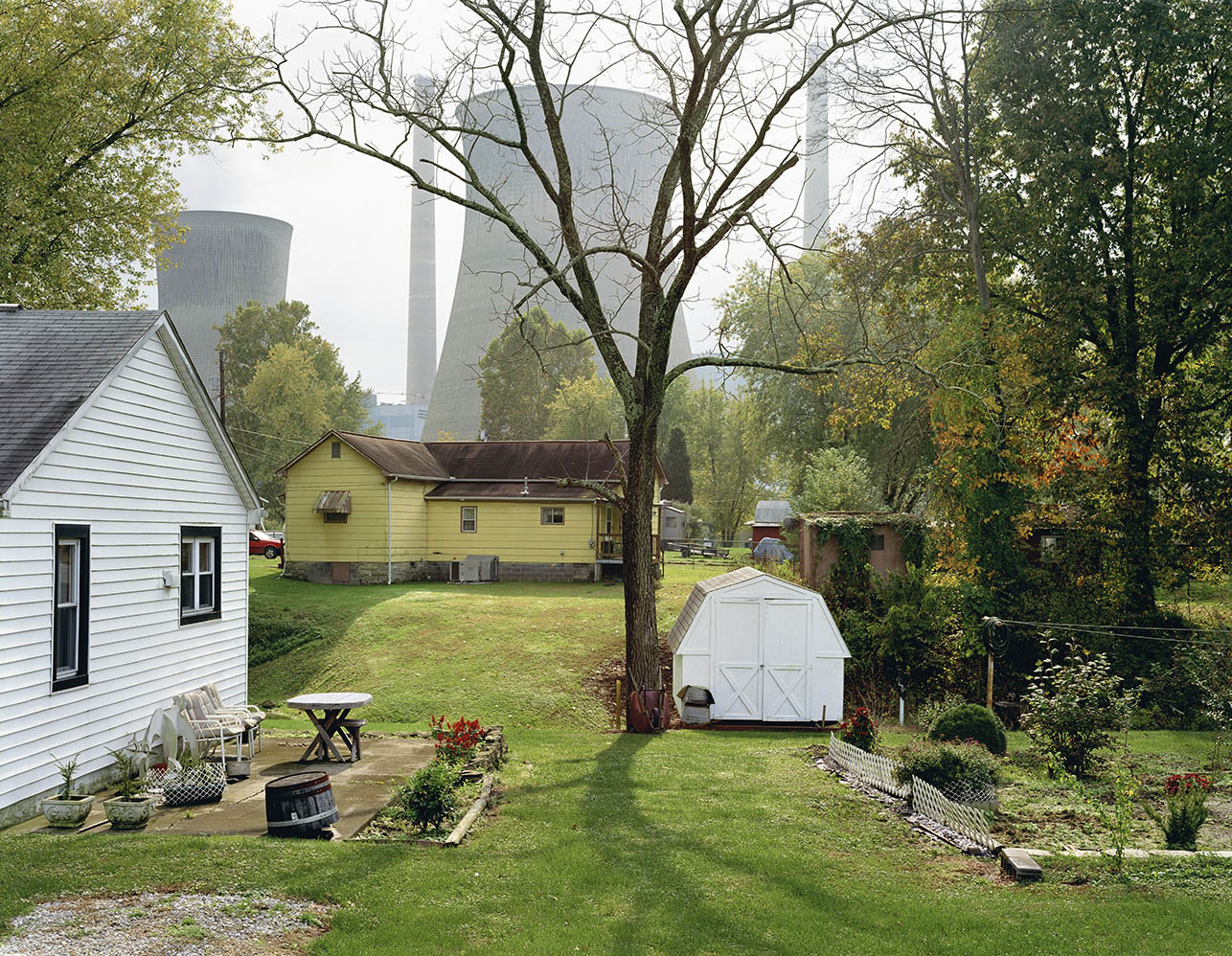
 

Mitch Epstein (American, b. 1952) 'Amos Coal Power Plant, Raymond City, West Virginia 2004' 2004, printed 2025


Mitch Epstein (American, b. 1952)
Amos Coal Power Plant, Raymond City, West Virginia 2004
2004, printed 2025
Inkjet print
Image/sheet: 157.48 x 203.2cm (62 x 80 in.)
Framed: 160.02 x 207.01 x 6.35cm (63 x 81 1/2 x 2 1/2 in.)
National Gallery of Art, Washington
Gift of the artist
© Mitch Epstein
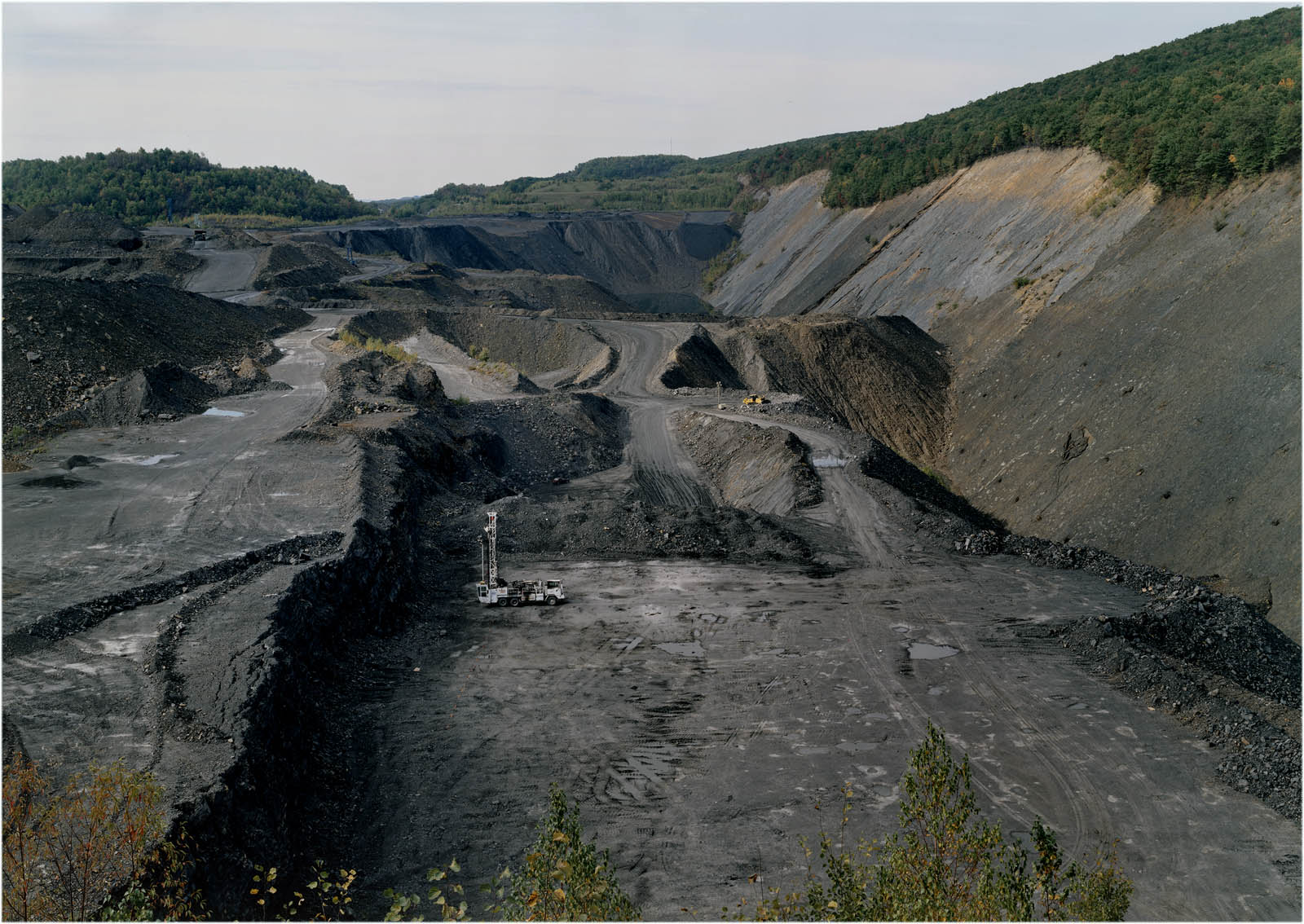
 

Victoria Sambunaris (American, b. 1964) 'Untitled (Coaldale, Pennsylvania)' 2007


Victoria Sambunaris (American, b. 1964)
Untitled (Coaldale, Pennsylvania)
2007
Chromogenic print
Overall: 99.06 x 139.7cm (39 x 55 in.)
Mat: 41 x 57 in. (approx.)
National Gallery of Art, Washington
Gift of Lannan Foundation
© Victoria Sambunaris and Yancey Richardson Gallery
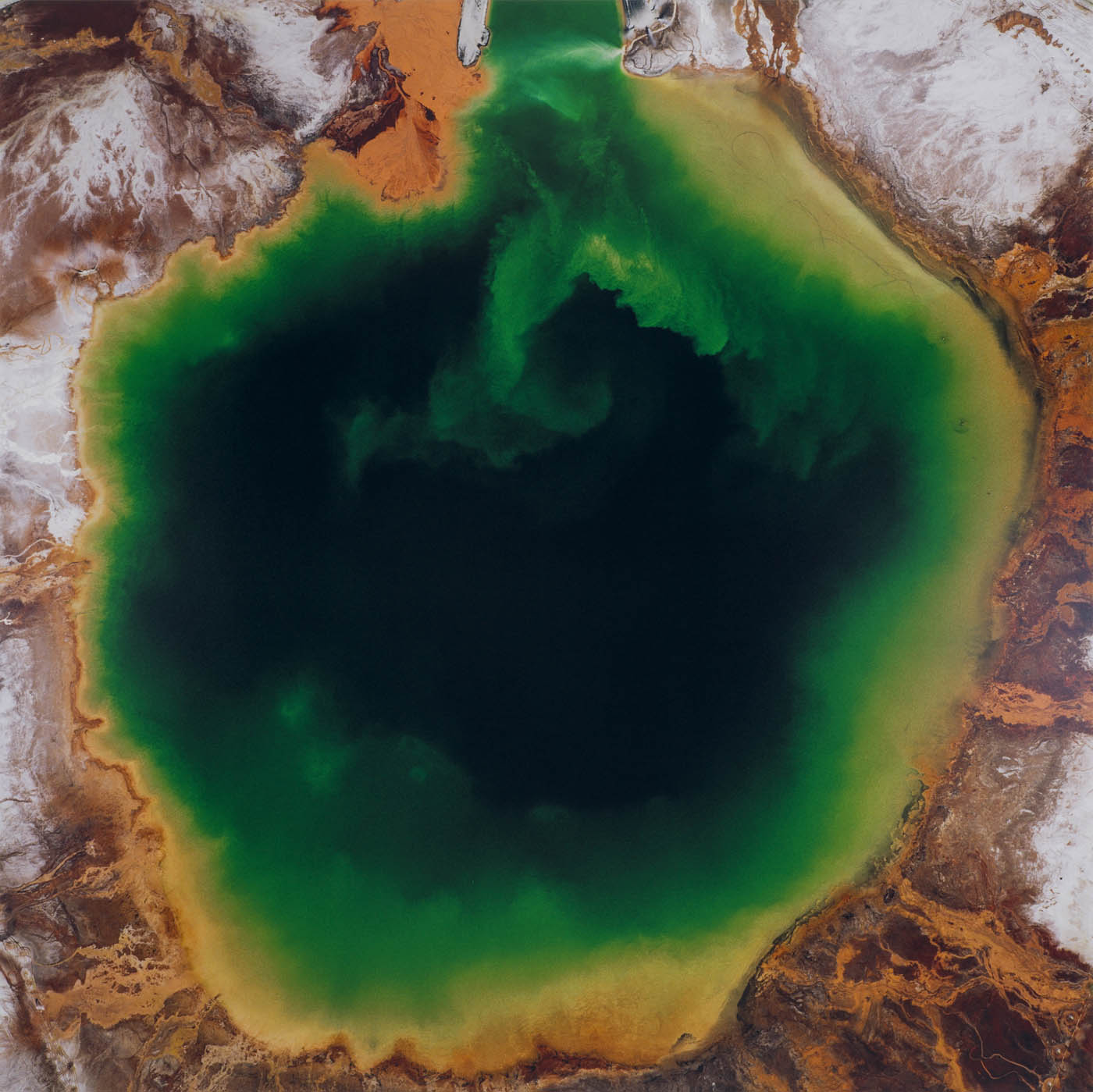
 

David Maisel (American, b. 1961) 'American Mine, Carlin, Nevada 1' 2007, printed 2024


David Maisel (American, b. 1961)
American Mine, Carlin, Nevada 1
2007, printed 2024
Inkjet print
Collection of Amy and Tony D’Orazio
© David Maisel. All rights reserved
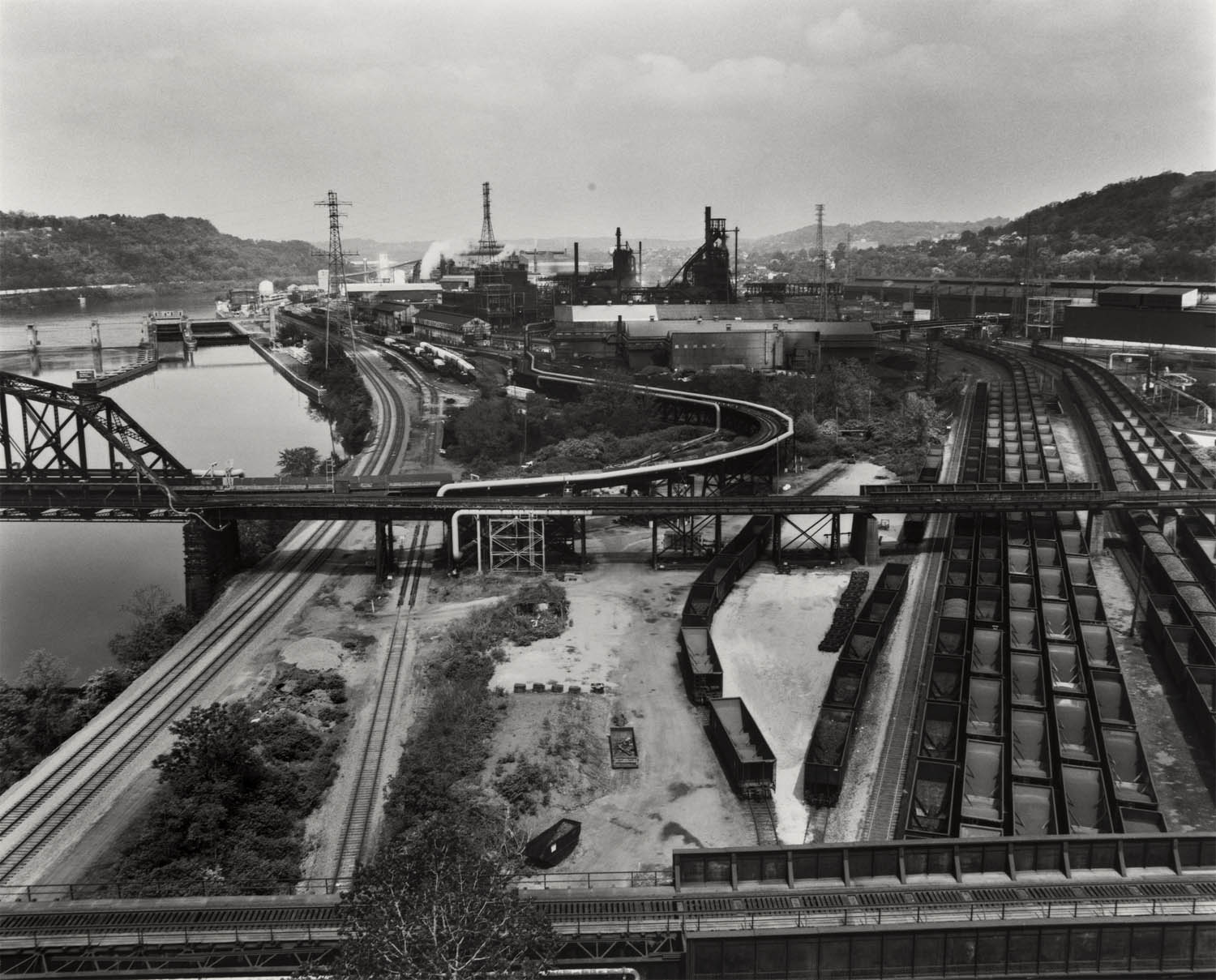
 

LaToya Ruby Frazier (American, b. 1982) 'U.S.S. Edgar Thomson Steel Works & Monongahela' 2013


LaToya Ruby Frazier (American, b. 1982)
U.S.S. Edgar Thomson Steel Works & Monongahela
2013
Gelatin silver print
Image/sheet: 121.29 x 151.77cm (47 3/4 x 59 3/4 in.)
Framed: 123.83 x 154.31 x 4.45cm (48 3/4 x 60 3/4 x 1 3/4 in.)
National Gallery of Art, Washington
Alfred H. Moses and Fern M. Schad Fund
© LaToya Ruby Frazier
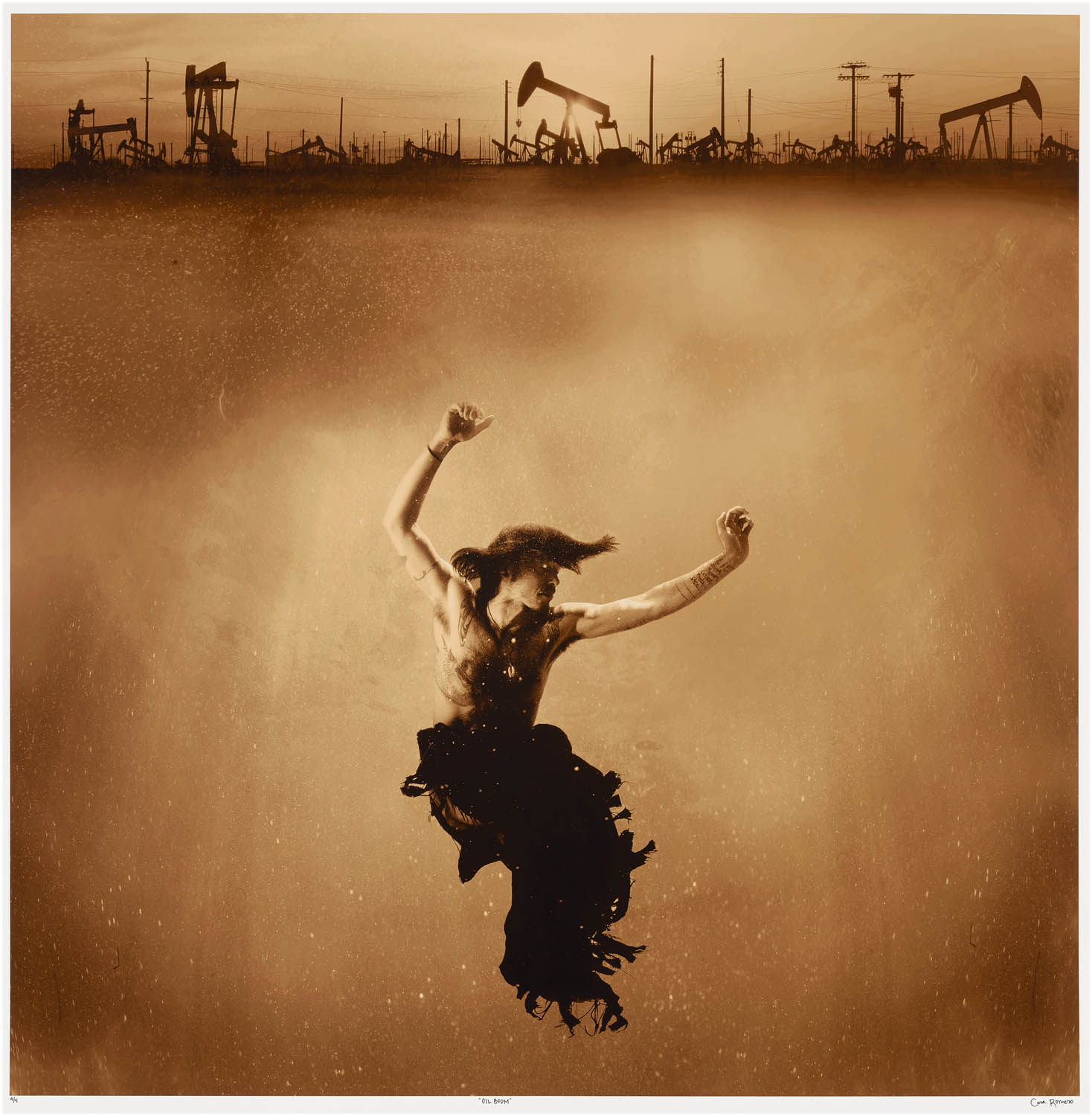
 

Cara Romero (Chemehuevi, b. 1977) 'Oil Boom' 2015, printed 2023


Cara Romero (Chemehuevi, b. 1977)
Oil Boom
2015, printed 2023
From the series Water Memories
inkjet print
Image: 101.6 x 100.33cm (40 x 39 1/2 in.)
Sheet: 111.76 x 110.49cm (44 x 43 1/2 in.)
National Gallery of Art, Washington
Gift of Funds from Renée Harbers Liddell
© Cara Romero. All rights reserved
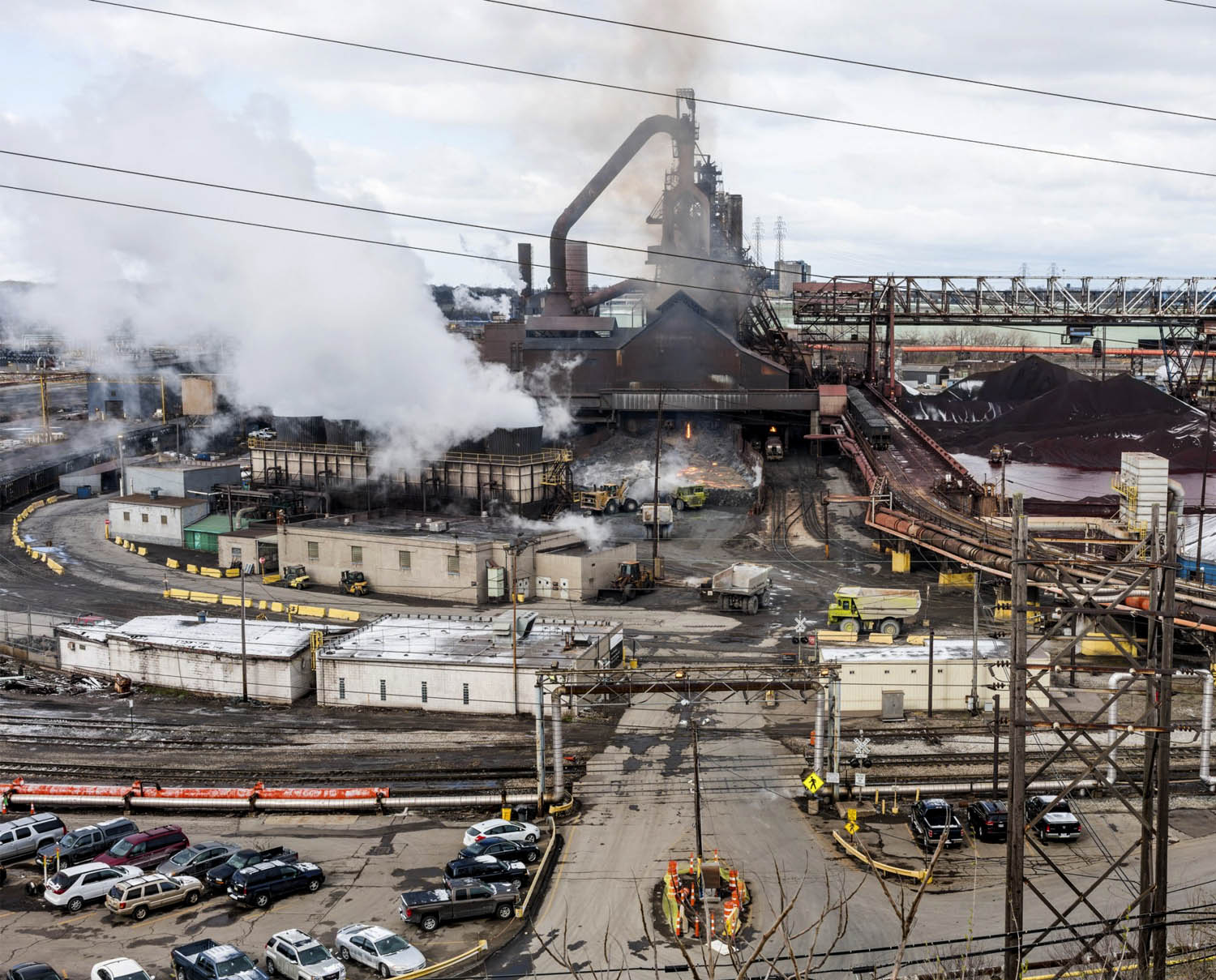
 

Andrew Borowiec (American, b. 1956) 'Blast Furnace, Cleveland' 2016


Andrew Borowiec (American, b. 1956)
Blast Furnace, Cleveland
2016
Inkjet print
Image: 67.95 x 101.6cm (26 3/4 x 40 in.)
Sheet: 80.01 x 111.76cm (31 1/2 x 44 in.)
Mat: 32 3/4 x 46 in.
National Gallery of Art, Washington, Charina Endowment Fund
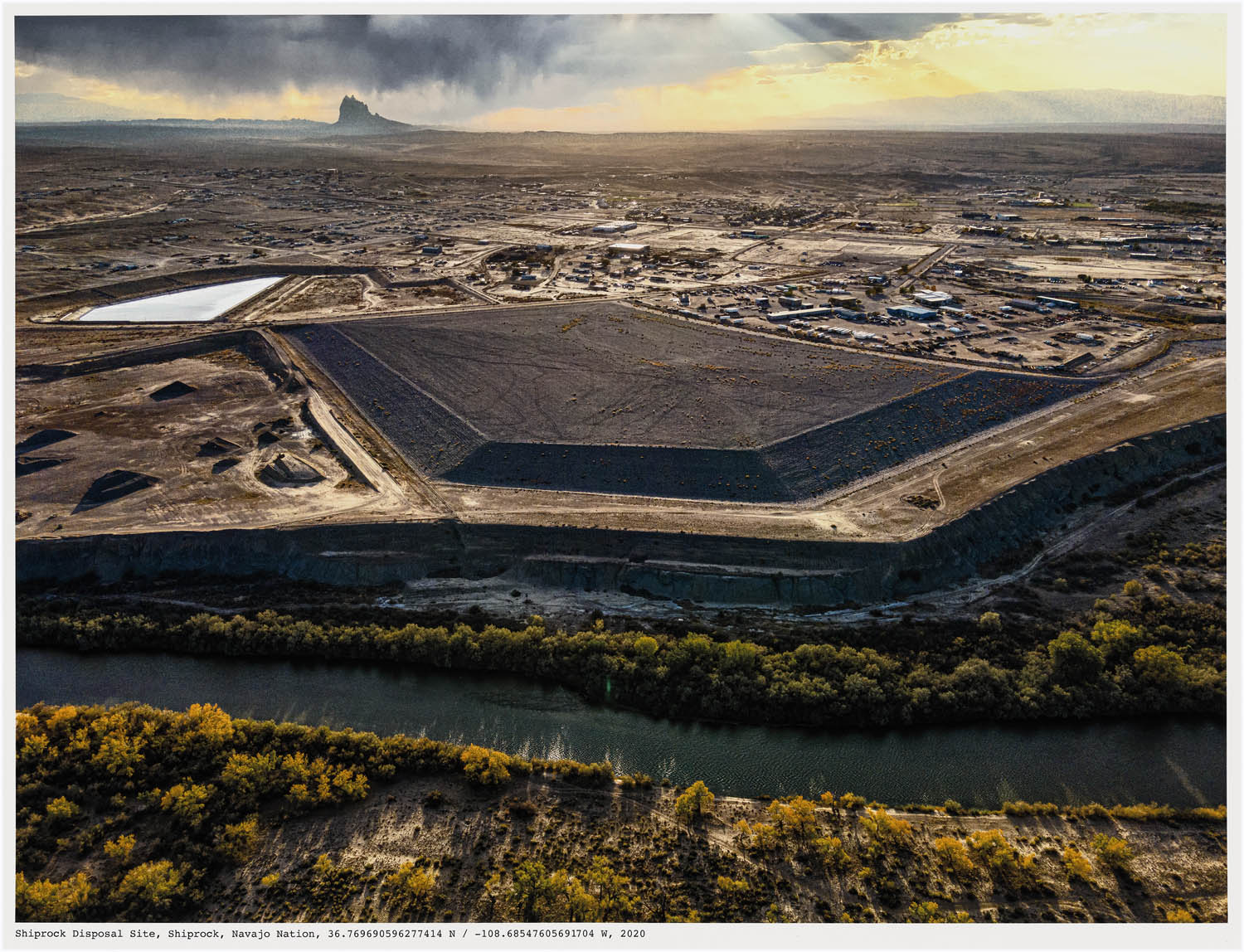
 

Will Wilson (Diné) (b. 1969) 'Shiprock Disposal Site, Shiprock, Navajo Nation, 36. 769690596277414 N / -108. 68547605691704 W' 2020


Will Wilson (Diné) (b. 1969)
Shiprock Disposal Site, Shiprock, Navajo Nation, 36. 769690596277414 N / -108. 68547605691704 W
2020
Inkjet print
Image: 60.96 x 121.92cm (24 x 48 in.)
Sheet: 94.62 x 109.22cm (37 1/4 x 43 in.)
Back mat: 35 15/16 x 43 1/2 in.
National Gallery of Art, Washington
Charina Endowment Fund in memory of Robert B. Menschel
Courtesy of the artist and www.dineconnect.org


National Gallery of Art
National Mall between 3rd and 7th Streets
Constitution Avenue NW, Washington

Opening hours:
Daily 10am – 5pm

National Gallery of Art website

LIKE ART BLART ON FACEBOOK

Back to top

Exhibition: ‘When we share more than ever’ at Museum für Kunst und Gewerbe Hamburg

Exhibition dates: 19th June – 20th September, 2015

A project for the Triennial of Photography Hamburg 2015

Curators: Dr des. Esther Ruelfs and Teresa Gruber

Invited artists: Laia Abril, Ai Weiwei, Regula Bochsler, Natalie Bookchin, Heman Chong, Aurélien Froment, David Horvitz, Trevor Paglen, Doug Rickard, Taryn Simon, Jens Sundheim, Penelope Umbrico | From the Photography and New Media Collection of the MKG: Fratelli Alinari, Hanns-Jörg Anders, Nobuyoshi Araki, Francis Bedford, Félix Bonfils, Adolphe Braun, Natascha A. Brunswick, Atelier d’Ora / Benda, Minya Diez-Dührkoop, Rudolf Dührkoop, Harold E. Edgerton, Tsuneo Enari, Andreas Feininger, Lotte Genzsch, Johann Hamann, Theodor und Oscar Hofmeister, Thomas Höpker, Lotte Jacobi, Gertrude Käsebier, Kaku Kurita, Atelier Manassé, Hansi Müller-Schorp, Eardweard Muybridge, Arnold Newman, Terry Richardson, Max Scheler, Hildi Schmidt-Heins, Hiromi Tsuchida, Carl Strüwe, Léon Vidal, and more


Doug Rickard (American, b. 1968) '95zLs' 2012 from the exhibition 'When we share more than ever' at Museum für Kunst und Gewerbe Hamburg, June - Sept, 2015


Doug Rickard (American, b. 1968)
95zLs
2012
From the series N.A., 2011-2014
Archival Pigment Print
Courtesy Yossi Milo Gallery, New York
© Doug Rickard


A fascinating exhibition about the processes of archiving and transferring images and the associated interaction, combining historic and contemporary images to illuminate various chapters: “Sharing a Portrait,” “Sharing a Group,” “Sharing Memories,” “Sharing a Product,” “Sharing Lust,” “Sharing Evidence,” “Sharing Knowledge,” “Sharing the World,” “Sharing a Collection,” and “Sharing Photographs”.

“The chapters juxtapose historical and contemporary works in order to illuminate how the use and function of photographic images have changed and which aspects have remained the same despite the digital revolution. The exhibition begins with photography used in the service of people: to record a life, create a sense of community, or share memories. The following chapters deal with applied contexts, such as advertising photographs, erotic photography, photojournalism, scientific photography, and travel photos.”

“Conceived in archive format, the exhibition explores the archive’s possible forms and uses. The featured works from the collection were selected from the MKG’s holdings of some 75,000 photographs to show how different photographic practices have been assimilated over the years. The springboard for our reflections was the question of how the digital era of picture sharing has changed the function of a museum collection of photography, seeing as today digital image collections are just a mouse click away on online archives such as Google Images.”

But it could have been so much more, especially with 75,000 photographs to choose from. Looking at the plan for the exhibition and viewing the checklist would suggest that the small amount of work in each of the ten chapters leaves little room for any of the themes to be investigated in depth. Any one of these chapters would have made an excellent exhibition in its own right. What an opportunity missed for a series of major exhibitions that examined each important theme.

Dr Marcus Bunyan


Many thankx to the Museum für Kunst und Gewerbe Hamburg for allowing me to publish the photographs in the posting. Please click on the photographs for a larger version of the image.

Text in the posting is from the booklet When We Share More Than Ever.

Editors: Sabine Schulze, Esther Ruelfs, Teresa Gruber
Text editors: Esther Ruelfs, Teresa Gruber
Authors: Teresa Gruber (TG), Beate Pittnauer (BP), Esther Ruelfs (ER), Sven Schumacher (SS), Annika Sellmann (AS), Taryn Simon (TS), Johan Simonsen (JS), Emma Stenger (ES) Grafikdesign
Graphic design exhibition and booklet: Studio Mahr
Translation German-English: Jennifer Taylor


Sharing memories

Creating mementoes is one of the central functions of photography. In David Horvitz’s case, it is the mobile phone camera that gives two people a feeling of togetherness. The bond is created through an action. On two different continents, both people stand at the seaside at the same time, recording and sending images of the sunrise and sunset with their iPhones.

Photography connects us with the subject or the person depicted – even beyond the bounds of the time. The photo is an imprint; it transmits to us something that was once really there. Like a fingerprint or a footprint, it remains closely related to what it captures. This special quality of photography predestined it from the start to be a medium of memory. The daguerreotype of a little girl presented in the exhibition is framed by a braid of the child’s hair. The idea of carrying part of a loved one with us and thus generating a special feeling of closeness is reflected in the practice of making friendship or mourning jewellery out of hair – and in the way we treasure portrait photographs as keepsakes of those we love.

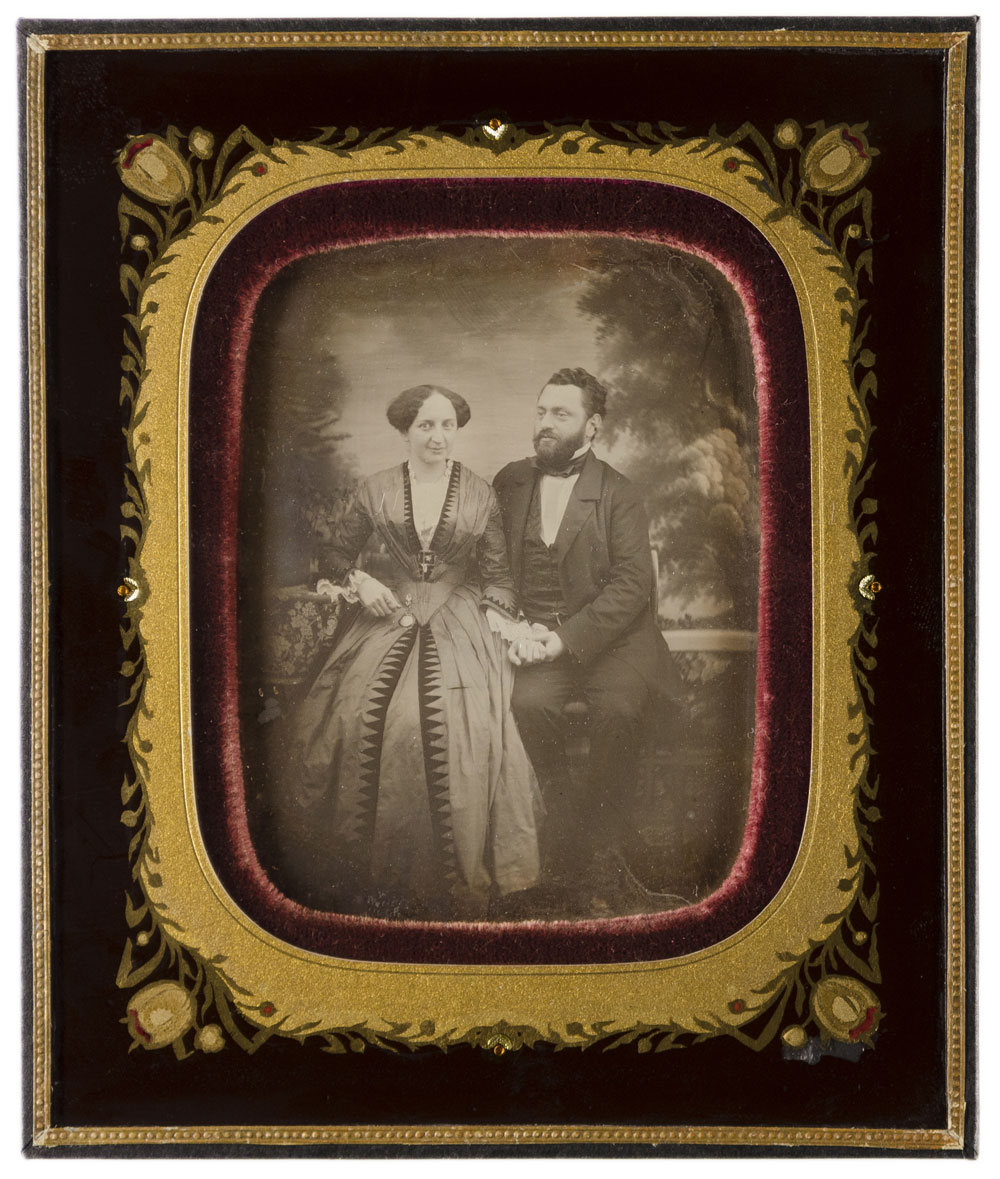
Emotional relationships can also be expressed by a certain photographic motif or by the body language of the sitters. The arms of the sisters in the photo by Gertrude Käsebier are closely intertwined, as are the hands of the couple in the daguerreotype by Carl Ferdinand Stelzner. The relationship between photographer and subject may also be the focus of the work. Natascha Brunswick as well as Rudolf Dührkoop and Käsebier use the camera, for example, to capture and hold onto intimate moments with their own families.

Dr des. Esther Ruelfs


David Horvitz (American, b. 1982) 'The Distance of a Day' 2013 from the exhibition 'When we share more than ever' at Museum für Kunst und Gewerbe Hamburg, June - Sept, 2015


David Horvitz (American, b. 1982)
The Distance of a Day
2013
Digital video on two iPhones, 12 min.
Courtesy Chert, Berlin
© David Horvitz


David Horvitz

With artworks in the form of books, photographs, installations, and actions, David Horvitz often explores varying conceptions of time and space, as well as interpersonal relationships and the dissemination of images via the internet. His work The Distance of a Day brings together all of these topics. With reference to the linguistic origin of the word “journey,” which defined the distance a traveler could cover in a day, Horvitz looks for two places located at opposite ends of the globe that are exactly one day apart. While his mother watches the sun set on a beach in his native California, the artist observes the sun rising over a Maldives island. Both document their simultaneous impressions with an iPhone, a device that today serves both for temporal and spatial orientation and which, as a communication medium, enables us to overcome the limits of space and time. Because it is a conceptual part of the performance, the iPhone is also used in the exhibition as a playback device.

Teresa Gruber


Carl Ferdinand Stelzner (German, 1805-1894) 'Unknown couple' 1830-1880


Carl Ferdinand Stelzner (German, 1805-1894)
Unknown couple
1830-1880
Framed daguerrotype
15.2 x 17.2cm
© Museum für Kunst und Gewerbe Hamburg


Carl Ferdinand Stelzner (German, 1805-1894) 'Unknown couple' 1830-1880 (detail)


Carl Ferdinand Stelzner (German, 1805-1894)
Unknown couple (detail)
1830-1880
Framed daguerrotype
15.2 x 17.2cm
© Museum für Kunst und Gewerbe Hamburg


Sharing a portrait

“Maxime carried portraits of actresses in every pocket. He even had one in his cigarette case. From time to time he cleared them all out and moved the ladies into an album (…) which already contained the portraits of Renee’s friends.”

This scene from Émile Zola’s The Kill testifies to the fad that started in the 1860s for mass-produced photographic calling cards, or “cartes de visite.” Contemporaries spoke of “cartomania” – long before anyone could imagine an artist like Ai Weiwei, who has posted 7,142 photographs on his Instagram profile since 2014. With the “invasion of the new calling card pictures,” photography left the private sphere of the middle-class family and fostered new social relationships. The demand for images of celebrities from politics, art, and literature grew as well.

“Galleries of contemporaries” and artist portraits like those produced by Lotte Jacobi and Arnold Newman responded to an avid interest in the physical and physiognomic appearance of well-known people. The photographers tried to capture not only the person’s likeness but also his character, whether inclose-ups that zero in on individual facial expressions or in staged portraits in which the surroundings give clues to the sitter’s personality.

What has changed since then is above all how we handle such images. The photographs that Minya Diez-Dührkoop took of the upper-class daughter Renate Scholz trace her growth and development in pleasingly composed studio portraits. In today’s Internet communities and on smartphones by contrast we encounter the portrait as a profile picture. This signature image, changeable at any time, may be a selfie or selected from a steadily growing pool of snapshots shared among friends.

Dr des. Esther Ruelfs


Ai Weiwei (Chinese, b. 1957) '16 June, 2014'


Ai Weiwei (Chinese, b. 1957)
16 June, 2014
Photo posted on Instagram, (https://instagram.com/aiww/)
Courtesy Ai Weiwei Studio
© Ai Weiwei


Ai Weiwei (Chinese, b. 1957) 'March 9, 2015'


Ai Weiwei (Chinese, b. 1957)
March 9, 2015
Photo posted on Instagram, (https://instagram.com/aiww/)
Courtesy Ai Weiwei Studio
© Ai Weiwei


Ai Weiwei (Chinese, b. 1957) 'January 30, 2015'


Ai Weiwei (Chinese, b. 1957)
January 30, 2015
Photo posted on Instagram, (https://instagram.com/aiww/)
Courtesy Ai Weiwei Studio
© Ai Weiwei


Minya Diez-Dührkoop (German, 1873-1929) 'Portraits of Renate Scholz' 1920-1939


Minya Diez-Dührkoop (German, 1873-1929)
Portraits of Renate Scholz
1920-1939
Silver gelatine prints, various formats
© Museum für Kunst und Gewerbe Hamburg


Minya Diez-Dührkoop (German, 1873-1929) 'Portraits of Renate Scholz' 1920-1939 (detail)


Minya Diez-Dührkoop (German, 1873-1929)
Portrait of Renate Scholz (detail)
1920-1939
Silver gelatine prints, various formats
© Museum für Kunst und Gewerbe Hamburg


Minya Diez-Dührkoop. 'Portraits of Renate Scholz' 1920-1939 (detail)


Minya Diez-Dührkoop (German, 1873-1929)
Portrait of Renate Scholz (detail)
1920-1939
Silver gelatine prints, various formats
© Museum für Kunst und Gewerbe Hamburg


Sharing a group

The photography pioneer William Henry Fox Talbot (1800-1877) notes in his serialised book The Pencil of Nature, published in six parts between 1844 and 1846: “Groups of figures take no longer time to obtain than single figures would require, since the camera depicts them all at once, however numerous they may be.” For groups such as the middle-class family, colleagues in a profession or company, or leisure-time clubs – all of which took on renewed importance in the 19th century – the new technology provided an affordable way to preserve their feeling of community for posterity. The professional photographer was able to stage for the camera a picture designed to convey the self-image of the group. The Hamburg-based photographer Johann Hamann and the Studio Scholz were active around the turn of the 19th century, when the demand for professional group and family portraits reached a high point.

The classic commissioned group portrait still persists today in the form of class photos. These document each individual’s curriculum vitae while serving both as nostalgic souvenirs and as a basis for building a relationship network that can be maintained via websites such as stayfriends.com. On the Internet and especially on Facebook, new types of groups are being generated whose members share specific interests or traits. The artist Natalie Bookchin delves into the phenomenon of the virtual group in her work Mass Ornament, for which she collected amateur videos from YouTube showing people dancing alone and arranged them into an ensemble. She thus examines the possibilities offered by the World Wide Web to bring together crowds of people who are in reality each alone in front of their own screen.

Teresa Gruber


Natalie Bookchin (American, b. 1962) 'Mass Ornament' 2009


Natalie Bookchin (American, b. 1962)
Mass Ornament
2009
Video, 7 Min.
Courtesy of the artist
© Natalie Bookchin


Natalie Bookchin (American, b. 1962) 'Mass Ornament' 2009 (detail)


Natalie Bookchin (American, b. 1962)
Mass Ornament (detail)
2009
Video, 7 Min.
Courtesy of the artist
© Natalie Bookchin


Natalie Bookchin (American, b. 1962) 'Mass Ornament' 2009


Natalie Bookchin (American, b. 1962)
Mass Ornament
2009
Video, 7 Min.
Courtesy of the artist
© Natalie Bookchin


Natalie Bookchin (American, b. 1962) 'Mass Ornament' 2009 (detail)


Natalie Bookchin (American, b. 1962)
Mass Ornament (detail)
2009
Video, 7 Min.
Courtesy of the artist
© Natalie Bookchin


Natalie Bookchin

Natalie Bookchin borrowed the title for her video from the prominent sociologist and film theorist Siegfried Kracauer. In his 1927 essay The Mass Ornament, Kracauer described the American dance troupe known as the Tiller Girls as the embodiment of capitalist production conditions after the First World War. He equated the automaton-like movements of the anonymous, interchangeable dancers with the assembly-line work in the factories. Bookchin’s work can likewise be understood as social commentary. She collects video clips of people dancing in front of webcams set up in their homes, which are posted on YouTube for all the world to see. The montage of such clips into a group choreography with almost synchronous dance moves paints a picture of individuals who share favourite songs, idols, and yearnings.

Instead of using today’s pop songs as soundtrack, Bookchin revives the movie music from Busby Berkeley’s Gold Diggers and Leni Riefenstahl’s Triumph of the Will (both from 1935). She thus generates an alienating effect while also reflecting on both the positive and negative connotations of movement in a group and of mass media.

Teresa Gruber


Johann Hamann (German, 1859-1935) 'The Women’s Department Forms an Artful Pyramid' 1903


Johann Hamann (German, 1859-1935)
The Women’s Department Forms an Artful Pyramid
1903
Albumen print
8.6 x 11.4cm
© Museum für Kunst und Gewerbe Hamburg


Johann Hamann

The Hamburg photographer Johann Hamann opened his first daylight studio in 1889 in Hamburg’s Gängeviertel but is better known for his work outside the studio. By using a magnesium powder flash, he succeeded in portraying individuals and especially groups in a natural environment even in poor lighting conditions. Butchers, cobblers, and gymnasts posed with their props and wearing their specific “uniforms” before his camera. From 1899 to 1906, Hamann produced a complete set of photos of ship captains working for the Hamburg-based shipping line HAPAG, on behalf of which he also photographed the emigration halls on Veddel Island in the Elbe River. His group photographs provide insights into the working life and club activities in the Hanseatic city around the turn of the century, and are often characterised by situational humour.

Teresa Gruber


Sharing knowledge

A droplet whirling off a rotating oil can, the impact of a falling drop of milk, or a bullet in flight are phenomena whose speed makes them imperceptible to the naked eye. With the help of a telescope or microscope, we can look into the distance and observe things that are too far away, or enlarge things that are too small to see, and with the aid of photography these things can then be captured in images that can be shared.

The objects of artist Trevor Paglen’s interest are military spy satellites, which he locates based on information on amateur websites and then captures using elaborate special cameras. His work draws on the aesthetics of scientific photography, inquiring into our faith in the objectivity of such images – a credibility that runs through the entire history of photography.

With the positivist mood pervading the 19th century, photography was associated much more closely with science than with art. Surveying and recording were central functions assigned to the new medium. The photographic work of Eadweard J. Muybrigde, Harold E. Edgerton, and Impulsphysik GmbH Hamburg-Rissen is associated with this applied context.

Already during the 19th century, however, the confidence invested in photography as a medium for capturing reality was being challenged by the exploration of borderline areas verging on the irrational and by metaphysical speculations. Myth and science overlapped here, especially when it came to recording invisible phenomena such as ultraviolet light, heat rays, and X-rays. These trends are evident in Carl Strüwe’s photomicrographs, which in his proclaimed “New Order” combine the aesthetics of scientific photography with esoteric notions of the archetype.

Dr des. Esther Ruelfs


Unknown photographer. Griffith & Griffith (publisher). 'Full Moon' 1850-1900


Unknown photographer
Griffith & Griffith
(publisher)
Full Moon
1850-1900
Albumen print on cardboard
8.8 x 17.8cm
© Museum für Kunst und Gewerbe Hamburg


Unknown photographer. Griffith & Griffith (publisher). 'Full Moon' 1850-1900 (detail)


Unknown photographer
Griffith & Griffith
 (publisher)
Full Moon (detail)
1850-1900
Albumen print on cardboard
8.8 x 17.8cm
© Museum für Kunst und Gewerbe Hamburg


One year after the invention of the daguerreotype in 1839, a photographic image was already made of the moon. The first stereographic photographs were presented by the chemist and amateur astronomer Warren de la Rue in 1858. Stereo images, which enjoyed great popularity in the latter half of the 19th century, consist of two photographs, which display a scene from slightly different perspectives, thus imitating the viewing angle of the human eyes and generating a spatial impression of the subject when viewed through a stereoscope.

Because the moon is too far from the earth to be able to photograph it from two different angles at once, a stereo photograph is only possible by taking into account optical libration, or the apparent “oscillation” of the moon. Due to the earth’s elliptical orbit, the half of the moon visible from earth is not always exactly the same. For a stereo photograph like the one the publisher Griffith & Griffith offered – certainly not as a scientific document – the shots that were combined were taken at an interval of several months.

Teresa Gruber


Trevor Paglen (American, b. 1974) 'MISTY 2/DECOY near Altair (Decoy Stealth Satellite; USA 144db)' 2010


Trevor Paglen (American, b. 1974)
MISTY 2/DECOY near Altair (Decoy Stealth Satellite; USA 144db)
2010
C-Print
101.6 x 127cm
Courtesy Galerie Thomas Zander, Köln
© Trevor Paglen


More pictures are being taken and digitised than ever before, innumerable snapshots pile up on hard disks and in clouds, are shared via the Internet and commented on. But portals such as Facebook and Flickr as well as professional databases only supersede older forms of archiving, transferring material, and interaction. For the Triennial of Photography Hamburg 2015, the Museum für Kunst und Gewerbe Hamburg (MKG) is examining these new collections and forms of usage. The MKG sees the future-oriented motto of the Triennial, “The Day Will Come,” as an opportunity to reflect on the sharing of images, under the title: When We Share More Than Ever. The exhibition shows how today’s rampant exchange of digital photos links in with the history of the analogue medium. In fact, photography has been a means of capturing, storing, and communicating visual impressions ever since its early days in the 19th century. In ten chapters, selected contexts are examined in which collecting and sharing images has played – and still plays – a role. More than 200 historical works from the MKG’s collection are set in counterpoint against twelve contemporary artistic projects. The present-day artists reflect in their works on the ways digital photography is used as well as on the mechanisms and implications of new media. They focus on the Internet as a new picture archive, with collections of images such as Apple Maps or photos on eBay, and on images such as those exchanged via mobile phones. Important aspects are the digital image collection as a research resource and inspiration for contemporary art, and the relevance of the classic analogue collection in relation to today’s often-invoked image overkill.

The exhibition is conceived as a kind of archive in order to explore the archive’s possible forms and uses. The featured works from the collection were selected from the MKG’s holdings of some 75,000 photographs to show how different photographic practices have been assimilated over the years. Rather than being a collection of only art photography, the MKG archive reflects the everyday uses of the medium. It gathers together various photographic applications, whether the scientific photos taken at an institute for impulse physics, the fashion spread created by Terry Richardson for Sisley, or Max Scheler’s report on Liverpool’s club scene for Stern magazine.

The chapters “Sharing a Portrait,” “Sharing a Group,” “Sharing Memories,” “Sharing a Product,” “Sharing Lust,” “Sharing Evidence,” “Sharing Knowledge,” “Sharing the World,” “Sharing a Collection,” and “Sharing Photographs” juxtapose historical and contemporary works in order to illuminate how the use and function of photographic images have changed and which aspects have remained the same despite the digital revolution. The exhibition begins with photography used in the service of people: to record a life, create a sense of community, or share memories. The following chapters deal with applied contexts, such as advertising photographs, erotic photography, photojournalism, scientific photography, and travel photos.

We share memories: While in the old days a manageable number of photographs found their way into albums, which were then taken out and perused on special family occasions, on today’s sharing platforms thousands of images are constantly being shared and “liked” around the clock. The works on view include pictures of Renate Scholz, whose affluent parents had the studio photographer Minya Diez-Dührkoop record each stage of her growth and development for fifteen years in annual portrait sessions. Studio portraits have been replaced today by snapshots, while the family photo album is complemented by the Internet portal Instagram. Ai Weiwei began in 2006 to post his diary photos in a text/image blog, which was taken offline by the Chinese authorities in 2009. Since 2014 he has been publishing daily picture messages on Instagram which are readable across language barriers.

We share the world: Starting in 1860, the Fratelli Alinari produced photographs that brought the art treasures of Italy to living rooms everywhere. As an armchair traveler, the 19th-century burgher could feel like a conqueror of far-off lands. Today, the same kind of cultural appropriation takes place instead on computer screens. Regula Bochsler and Jens Sundheim explore landscapes and cities via webcams and Apple Maps. And instead of traveling like a photojournalist to real-world hotbeds of social ferment, Doug Rickard journeys to the dark reaches of the YouTube universe. He shows us ostensibly private scenes not meant for public consumption – drug abuse, racial and sexual violence. The low-resolution, heavily pixelated stills excerpted from mobile phone videos suggest authenticity and turn us into silent witnesses and voyeurs.

We share knowledge: From its earliest days, photography has been indispensable for storing and sharing the results of scientific research and military expeditions. Trevor Paglen uses powerful precision astronomical telescopes to make “invisible” things visible, for example the American “Misty 2” stealth satellites used for reconnaissance, or a dummy put in place by the military intelligence service. In order to locate these satellites, Paglen actively participates in various networks set up by amateur satellite observers.

We share image collections: Before the invention of Google Image Search, analogue photo collections provided an opportunity to compare images. Museum archive cabinets can be seen as a precursor to today’s digital image databases. The Internet is increasingly taking on the function of a picture library, opening up new possibilities for classification and research. Artists like Taryn Simon investigate image collections to ascertain their ordering systems and their implications. Who controls what images we get to see and which ones vanish in the depths of the archives? Part of this chapter is the project “Sharing Blogs“.

The exhibition is dedicated to the broader question of how the function of a museum collection of photography has changed in the digital era, when vast digital image archives are only a mouse click away thanks to Google Image Search. The exhibits are arranged on a horizontal axis, in keeping with modern notions of how a database is set up. Everything is thus presented on a “neutral” plane, and the visitors are tasked with placing the images in context with the help of a “search aid” in the form of a booklet.”

Press release from Museum für Kunst und Gewerbe Hamburg


Sharing the World

Google Earth and the 3D Flyover feature of the Apple Maps software make the world accessible to all of us through images. The idea of a comprehensive photographic world archive that would be available to the general public began to spread soon after the invention of photography. In parallel with the expansion of the railway network in the mid-19th century, photographic societies were founded in France and the United Kingdom with plans to make, archive, and preserve pictures of cities, cultural heritage, and landscapes. Governments organised expeditions to photograph their dominions, and photographers and companies began specialising in producing picturesque scenes echoing the tradition of painted landscapes and engraved vedutes, developing a successful business model with international sales channels. Views of popular tourist attractions – for example famous buildings in Italy – were offered as an early form of souvenir. At the same time, such pictures allowed the Biedermeier burgher back home in his living room to become an armchair traveler without taking on the exertions and expense of visiting far-off places – just as the Internet surfer is able to do today.

Artistic works such as those by Regula Bochsler confront representations of reality on the World Wide Web that are ostensibly democratic and yet are in fact controlled by corporations. Bochsler has culled subjective images from the liquefied, constantly updated parallel universe and given them a lasting material form.

Teresa Gruber


Jens Sundheim (German, b. 1970) From the series '100100 Views of Mount Fuji' 2008-2010


Jens Sundheim (German, b. 1970)
From the series 100100 Views of Mount Fuji
2008-2010
Digital C-type prints
100 x 130cm
© Jens Sundheim


Regula Bochsler (Swiss, b. 1958) 'Downtown # 1' 2013


Regula Bochsler (Swiss, b. 1958)
Downtown # 1
2013
From the series The Rendering Eye, 2013
Inkjet print
80 x 100cm
© Regula Bochsler
Images based on Apple Maps


Regula Bochsler

For her project The Rendering Eye, the historian Regula Bochsler has been traveling through a virtual parallel universe since 2013 using the 3D flyover feature in Apple Maps. Unlike Google Streetview, Apple Maps gives the viewer a volumetric impression of cities and landscapes. In order to create these views, the mapped zones are scanned from an airplane using several cameras aligned at different angles. With the help of vector graphics as well as actual maps and satellite images, the software then automatically merges the countless overlapping photographs into a realistic view. The program was developed for the purpose of steering military rockets by the Swedish defence company Saab, which sold it to Apple in 2011 for around 240 million dollars. Under the pressure of competition from Google, Apple released its app before some major development bugs could be fixed. In her surreal-looking, carefully composed views of American cities, Bochsler preserves for posterity the image errors ( so-called “glitches”) in the program, which are gradually being corrected and disappearing, as well as the still-visible areas where photographs taken at different times are patched together. The result is an apocalyptic vision of a world of technoid artificiality and absolute control.

Teresa Gruber


Unknown photographer. 'Wissower Klinken, Photochrom Zürich' 1890


Unknown photographer
Wissower Klinken, Photochrom Zürich
1890
Photochromic print
16.5 x 22.2cm
© Museum für Kunst und Gewerbe Hamburg


Trevor Paglen (American, b. 1974) 'Detachment 3, Air Force Flight Test Center #2 Groom Lake, NV/ Distance ~ 26 Miles' 2008


Trevor Paglen (American, b. 1974)
Detachment 3, Air Force Flight Test Center #2 Groom Lake, NV/ Distance ~ 26 Miles
2008
C-Print
101.6 x 127cm
Courtesy Galerie Thomas Zander, Köln
© Trevor Paglen


Sharing evidence

Catastrophes and events are documented today by eyewitnesses at close range and communicated over the Internet. Mobile phone cameras even enable images to be transmitted directly: people involved in the incidents can share their perspective with a wide audience, the poor quality of the pixelated images often being perceived as a guarantee of their authenticity and credibility. The artist Doug Rickard also relies on this effect when he provides inside glimpses of marginal areas of American society on YouTube, assembling them to create picture stories that can be compared to classic photo reportage. By the early 1900s, photographic images were already established as evidence and information material that could be printed in newspapers. During World War II, the suitability of the medium as a means for objective documentation was then fundamentally called into question as photos were exploited for political propaganda purposes. Nevertheless, photojournalism experienced a heyday in the 1960s and 70s, before serious competition in the form of television posed a threat to print media and many magazines discontinued publication. Photographers such as Thomas Hoepker and Max Scheler supplied personal picture essays to Stern magazine in Hamburg that gave readers a look at different countries and told of the destinies of various individuals. With today’s citizen journalism, the evidential value of the photographic image seems to have once again regained its importance.

Teresa Gruber


Hanns-Jörg Anders (German, b. 1942) 'Riots in Northern Ireland' 1969


Hanns-Jörg Anders (German, b. 1942)
Riots in Northern Ireland
1969
Silver gelatine print
25.8 x 38.8cm
© Hanns-Jörg Anders – Red. STERN


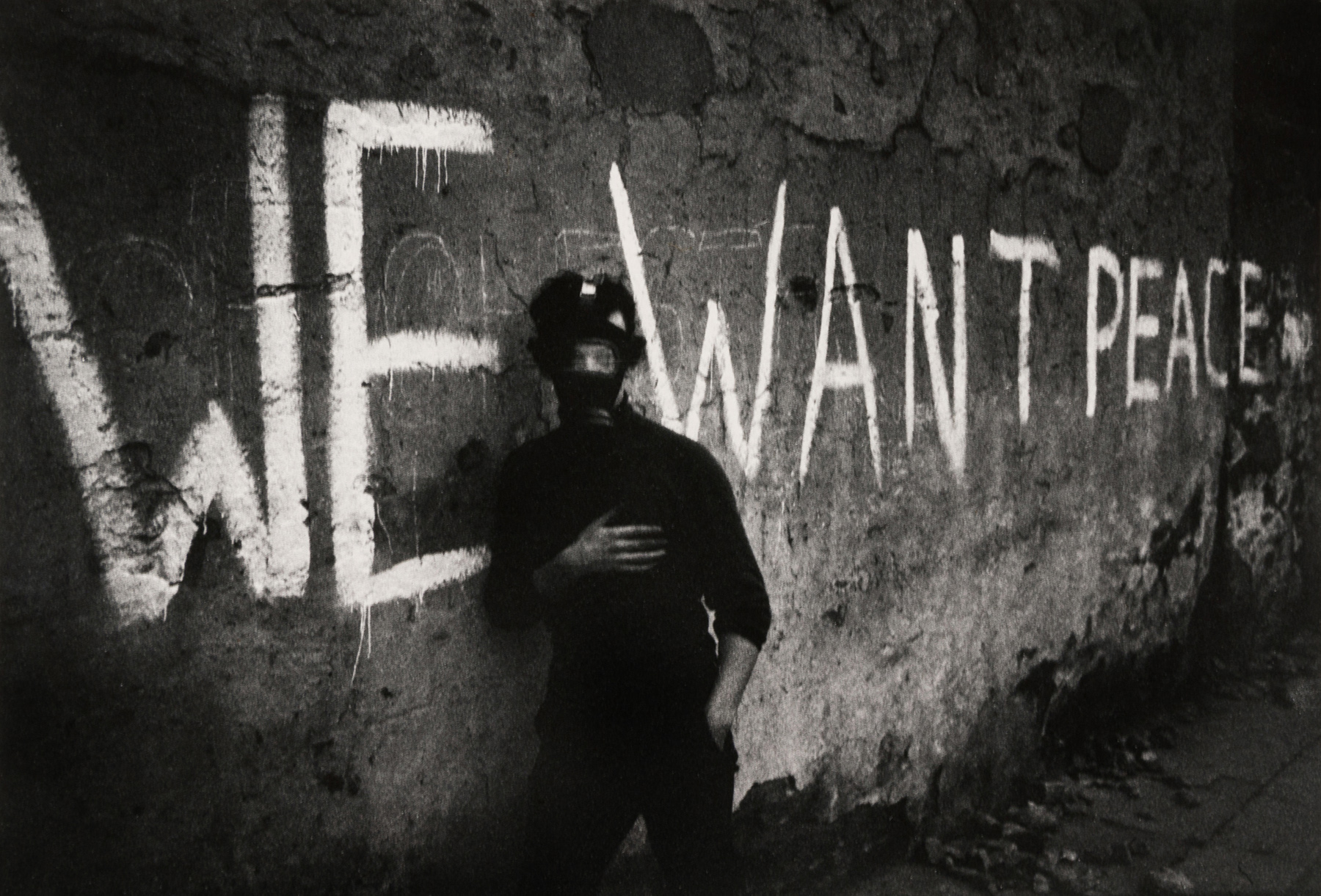
Hanns-Jörg Anders (b. 1942) 'Unrests in Northern Ireland (Londonderry)' 1969


Hanns-Jörg Anders (German, b. 1942)
We want peace, Londonderry, Northern Ireland
May 1969
Silver gelatine print
25.8 x 38.8cm
© Hanns-Jörg Anders – Red. STERN


Sharing lust

In 1859, Charles Baudelaire derided the “thousands of greedy eyes” indulging in the shameless enjoyment of “obscene” photographs. He was referring in particular to stereoscopic images, which convey a realistic corporeal impression of piquant subjects when seen through a special optical device. In parallel with the spread of the photographic medium, the sales of erotic and pornographic pictures grew into a lucrative business. European production centres for such material were located around 1900 in the cities of Paris, Vienna, and Budapest. Illegal pictures could be had from vendors operating near train stations or through discreet mail-order. Two daguerreotypes in the Photography and New Media Collection bear witness to the early days of this pictorial tradition.

Starting in the 1910s, the new vogue for magazines and pin-ups coming out of the USA served to democratise and popularise erotic imagery. Studio Manassé in Vienna, for example, supplied numerous magazines with such photographs. While erotic imagery was increasingly co-opted by advertising, a new industry arose: the pornographic film, which increasingly competed with print media. Today, the spread of pornographic imagery on the Internet has taken on immense proportions, while digital technology has led to a boom in the sharing of amateur photos and films, as well as their commercialisation. Laia Abril shows by-products of this online marketing of private sex in her video work Tediousphilia.

Teresa Gruber


William H. Rau (American, 1855-1920) 'An Intruder' 1897


William H. Rau (American, 1855-1920)
An Intruder
1897
Albumen print on cardboard
8.8 x 17.8cm
© Museum für Kunst und Gewerbe Hamburg


Nobuyoshi Araki (Japanese, b. 1940) From the series 'Kimbaku' 1983


Nobuyoshi Araki (Japanese, b. 1940)
From the series Kimbaku
1983
Silver gelatin print
26 x 33.4cm
© Nobuyoshi Araki


Nobuyoshi Araki

Fragmented through artfully knotted ropes, the nude bodies of young women in Nobuyoshi Araki’s photographs are turned into objects of voyeuristic curiosity. Critical opinions in the literature are divided, with some emphasising the pictorial character of the images and others accusing the photographer of a sexist point of view catering to the exotic tastes of the European public. Araki’s photographs have thus set off a discussion on where to draw the line between pornography and art.

Araki’s photos were exhibited in the West for the first time in 1992. The show featured views of Tokyo, still lifes, and female nudes that dealt with love, loss, and sexuality – all intertwined into a very personal narration. From that point forward, the perception of Araki’s images became very selective, and at the latest with Tokyo Lucky Hole (1997) the obscene aspect came to the fore. In the 1980s, the photographer explored the escalating sex and entertainment boom in Tokyo. Araki himself insists on varied applications for his photographs. He displays them in a wide range of exhibition venues, from soup kitchens to museums, and publishes his images in art books as well as in porn magazines, S&M periodicals, and popular calendars. The images in the collection of the MKG were acquired in the mid-1980s, at a time when Araki was still unknown in Europe. The choices made already anticipate the selective perception of his work in the 1990s.

Dr des. Esther Ruelfs


Laia Abril (Spanish, b. 1986) 'Tediousphilia' 2014


Laia Abril (Spanish, b. 1986)
Tediousphilia
2014
Video, c. 4 min.
© Laia Abril/INSTITUTE


Laia Abril

Laia Abril’s series Tediousphilia shows young couples who set up a webcam in their bedroom in order to earn money by giving customers an intimate peek at their ostensibly private sex lives. This online peepshow concept is a phenomenon of the commercialisation of private sex on the internet. Abril is interested in the moments before the sexual act, taking a look behind the scenes, as it were, where the couples succumb to the lethargy of waiting while the camera is already rolling. The title is thus composed of the word tedious and the Greek term philia, indicating a preference or inclination, referring to the embracing of boredom before the impending performance. These “pre-intimate” moments seem almost more real and personal than what we imagine the pseudo-private performances must be like. The images of the waiting lovers illuminate the voyeuristic relationship between audience and performer, between private and public, focusing, as in other works by Abril, on themes such as sexuality, intimacy, and the media representation of human bodies.

Emma Stenger


Sharing products

Since the 1920s, consumer products have been advertised primarily through photographic images. Fuelled by the rapidly developing field of advertising and by advances in printing techniques, advertising photos began to proliferate in newspapers and magazines and on billboards. Advertisers increasingly relied on the suggestive power of the photographic images rather than on text or drawings as before.

Johannes Grubenbecher had his students take pictures of objects of daily use as a way of preparing them for work in the advertising field. The arrangement of object shots demonstrates the form and materiality of the items and reflect the image language of the 1920s, which focused on functionality and faithfulness to materials. By contrast, the commercial photographs by Hildi Schmidt-Heins and Arthur Benda from the 1930s stylise the objects as consumer fetishes. Benda has draped a silk nightgown as though it had just slipped off a woman’s shoulders and onto the floor in order to whet the observer’s desires, which he should then transfer onto the goods.

Today, nothing has changed in the fetishisation of merchandise through professional product photography. New, however, are the non-professional snapshots on consumer-to-consumer platforms such as eBay. Household items that are no longer needed are photographed by the owners themselves for sale to others. Penelope Umbrico uses this imagery in her work. She has collected photographs of tube televisions – an outdated technique – and presents them as a comment on the changes in our use of images brought about by inexpensive and ubiquitous digital photography, making pictures easy to upload to the appropriate platforms.

Dr des. Esther Ruelfs


Hildi Schmidt-Heins (German, b. 1915) 'Gartmann Schokolade' 1937


Hildi Schmidt-Heins (German, b. 1915)
Gartmann Schokolade
1937
Tempera on silver gelatine print
17.3 x 23cm
© Archiv Schmidt Heins


The sandwich boards created by Hildi Schmidt-Heins for the Stuhr Coffee Roastery and the Gartmann Chocolate Factory appeared as still images on Hamburg’s movie screens in 1937. She used open packaging so that potential customers could see the food product inside and also recognise it easily in the store. Her few commissions for advertisements came from her photography lecturer Johannes Grubenbecher during her studies at the Hansa Academy for Visual Arts. Schmidt-Heins focused in her studies on typeface design, attending the class conducted by the graphic designer Hugo Meier-Thur. Her silver gelatin prints with tempera lettering present a method of visual communication that fuses typography with product photography. Later, the photographer dedicated herself to the documentation of workspaces, taking pictures of workshops.

Annika Sellmann


Penelope Umbrico (American, b. 1957) 'Signals Still' 2011


Penelope Umbrico (American, b. 1957)
Signals Still
2011
C-Prints
23 x 30cm
Courtesy Mark Moore Gallery, USA, and XPO Gallery, Paris
© Penelope Umbrico


In her tableau Signals Still, Penelope Umbrico presents a collection of six sets of eleven photographs each of illuminated, imageless screens. The product photos were taken by the owners of the devices in order to provide proof of their working order to potential buyers. Umbrico scours consumer-to-consumer marketplaces like eBay and Craigslist for such images and groups them into individual types. By transforming the intangible pixel images into C-prints on Kodak paper, Umbrico then distances them from their original function as digital communication media. The artist appropriates the found material and imposes on it a shift in meaning. Minimal deviations in the angle of the shot and variations in the forms and colours of the monochromatic snowy light surfaces combine to form a collective template. The promise of modern technology – progress and mass availability – is juxtaposed with its somber flip side of obsolescence and superfluity. Umbrico’s use of contemporary digital media unites the tired flicker of the television screens into a chorus singing the requiem of an era.

Annika Sellmann


Sharing collections

“According to which criteria should a collection be organised? Perhaps by individual lectures, by masters, chronologically, topographically, or by material?” asked the curator Wilhelm Weimar in 1917. His query was prompted by the production of a slide cabinet holding 7,600 slides. His solution was to furnish each image carrier with a numerical code, so that they could be cross-referenced with a card catalogue in which the objects were filed under various keywords. His search aid was an early form of database.

Like this slide collection, the photographic reproductions created by Léon Vidal and Adolphe Braun to record and disseminate art treasures can also be understood as precursors to digital databases. Today, search engines such as Google Images are available to anyone with an Internet connection, presenting with their infinite number of comparison pictures a plethora of new possibilities for ordering and research, and supplanting the function of the photographic collection as image database. Photographs are no longer bound as physical media to a single storage location but have become immaterial and thus available anytime, anywhere. Images that once slumbered in archives, organised by strict criteria for ease of retrieval, become in Aurélien Froment’s film weightless ephemera. A magician moves them through space with a sweep of his hand, just as the modern user swipes his pictures across the digital interface.

Taryn Simon is also interested in such image ordering systems and how the images in them are accessed. By entering identical search terms in various national image search engines in her Image Atlas and then examining the standardised search results, she inquires into what the new archives remember and what they forget.

Dr des. Esther Ruelfs


'Glass diapositives for slide lectures from the archive of the MKG' Nd


Glass diapositives for slide lectures from the archive of the MKG
Nd
© Museum für Kunst und Gewerbe Hamburg


'Glass diapositives for slide lectures from the archive of the MKG' Nd (detail)

'Glass diapositives for slide lectures from the archive of the MKG' Nd (detail)

'Glass diapositives for slide lectures from the archive of the MKG' Nd (detail)


Glass diapositives for slide lectures from the archive of the MKG (detail)
Nd
© Museum für Kunst und Gewerbe Hamburg


In the late 1890s, photography’s triumphant advance also had an impact on the everyday work of the MKG. Under Justus Brinckmann, the museum’s first director, the objects in the collection were regularly recorded for the files with the help of a camera. The self-taught photographer Wilhelm Weimar, initially employed by the museum as a draftsman, thus managed in the course of fifteen years to produce some 1,700 shots of pieces in the collection. The prints were mounted on cardboard and filed according to functional groups. In case of theft or suspected counterfeiting, the object photos also served Brinckmann as evidence hat could be sent by post within a network of museums.

Art history as an academic discipline worked from the outset with photographic reproductions, which made it possible to compare far-flung works and to bring them together in a shared historical context. In his essay Le Musée imaginaire, author André Malraux even makes the claim that the history of art has been tantamount since the 19th century to the “history of the photographable.” The over 7,000 slides the museum has preserved of its own holdings and other objects, together with architectural images and exhibition photographs, were assembled for use in slide presentations, compellingly illustrating this idea of a museum without walls which can be rearranged at will according to prevailing contemporary thinking.

Annika Sellmann


Aurélien Froment (France, b. 1976) 'Théâtre de poche' 2007


Aurélien Froment (France, b. 1976)
Théâtre de poche
2007
with Stéphane Corréas
HD video with sound, c. 12 min.
Courtesy of the artist and Marcelle Alix, Paris
© Aurélien Mole


Aurélien Froment

The work Théâtre de Poche (2007) showcases in a seemingly infinite black space a contemporary form of magic with images. A magician in a trance-like state pushes photographs across an invisible surface like an iPhone user swiping through information on his touch screen. His sweeping motions pass through thin air, like those of a player at a Wii station. Froment thus connects these gestures, obviously influenced by contemporary electronic user interfaces, with a centuries old magic technique. The images, consisting of family photos, playing cards, found film stills, reproductions of non-European art, and arts and crafts items, are rearranged in new juxtapositions. They are resorted, lined up, and rethought, recalling Aby Warburg’s panels for his Mnemosyne Atlas. The artist is interested here in the discrepancy between sign and meaning, exploring how it shifts when the images are placed in new contexts and new, weightless archives.

Dr des. Esther Ruelfs


Sharing photographs

At the end of the 19th century, more and more amateur and professional photographers came together in the major cities of Europe to form groups. They shared the conviction that photography should be seen as an independent artistic medium, and they sought a forum in which to present their works. Magazines such as Camera Work, which was distributed internationally, as well as joint exhibitions, encouraged lively exchanges about stylistic developments and technical procedures while serving to expand and strengthen the network. The Pictorialists saw their pictures not as a mere medium for communicating information or as illustrations: they instead shared the photographs themselves as pictures in their own right, with a focus on their composition and the details of their execution.

The Hofmeister brothers put their artworks into circulation as photo postcards. The artist Heman Chong picks up on this popular tradition of collecting and sharing images by reproducing his numerous photographs as cards, taking recourse to the “old” medium of the postcard to highlight the fact that photographs are today mainly immaterial images shared via the Internet.

Platforms like Instagram and Flickr define themselves as global “photo communities” with millions of users and thousands of uploads per second. Image data is archived there, groups founded, albums curated, and an interactive space created through keywording with tags and comment functions. For the exhibition When We Share More Than Ever, examples of such virtual galleries are presented with commentary on the blog http://sharingmorethanever.tumblr.com/.

Teresa Gruber


Theodor (German, 1868-1943) and Oscar Hofmeister (German, 1871-1937) 'Postcards' 1910s and 1920s


Theodor (German, 1868-1943) and Oscar Hofmeister (German, 1871-1937)
Postcards
1910s and 1920s
Silver gelatine prints
14.8 x 10.6cm
3 Intaglio prints
14 x 8.9cm
© Museum für Kunst und Gewerbe Hamburg


Theodor (German, 1868-1943) and Oscar Hofmeister (German, 1871-1937) 'Postcards' 1910s and 1920s (detail)

Theodor (German, 1868-1943) and Oscar Hofmeister (German, 1871-1937) 'Postcards' 1910s and 1920s (detail)

Theodor (German, 1868-1943) and Oscar Hofmeister (German, 1871-1937) 'Postcards' 1910s and 1920s (detail)

Theodor (German, 1868-1943) and Oscar Hofmeister (German, 1871-1937) 'Postcards' 1910s and 1920s (detail)


Theodor (German, 1868-1943) and Oscar Hofmeister (German, 1871-1937)
Postcards (details)
1910s and 1920s
Silver gelatine prints
14.8 x 10.6cm
3 Intaglio prints
14 x 8.9cm
© Museum für Kunst und Gewerbe Hamburg


Theodor and Oscar Hofmeister

Theodor and Oscar Hofmeister, one a merchant and the other a judicial employee, discovered their passion for photography in the 1890s. Upon viewing international photography exhibitions at the Hamburger Kunsthalle, they became acquainted with the Viennese Pictorialists and were inspired to adopt similarly picturesque imagery coupled with advanced technical implementation. Starting in 1895, they began to exhibit their work and were soon recognised internationally as specialists in the multicolour gum bichromate printing process. Some of their large-format one-off images are found in the collection of the MKG.

A good idea of the brothers’ prodigious productivity and clever marketing is however supplied by their landscape scenes, which Munich publisher Hermann A. Wiechmann reproduced using the rotogravure process. He published these scenes taken on rambles through the countryside, meant to reflect the “characteristic effect” of various parts of the country and hence the “German soul,” in over twenty “homeland books,” combining them with poems by German authors, as well as in portfolios and as “Hofmeister picture postcards.” The Hofmeister brothers themselves amassed an extensive collection of postcards of their own making – addressed in some cases to family members – as well as copies of postcards by other photographers.

Teresa Gruber


Heman Chong (Malaysia, b. 1977) 'God Bless Diana' 2000-2004


Heman Chong (Malaysia, b. 1977)
God Bless Diana
2000-2004
Installation with postcards
© Heman Chong


Heman Chong (Malaysia, b. 1977) 'God Bless Diana' 2000-2004 (detail)


Heman Chong (Malaysia, b. 1977)
God Bless Diana (detail)
2000-2004
Installation with postcards
© Heman Chong


Heman Chong

In his conceptual works, the artist, writer, and curator Heman Chong often deals with social practices and different kinds of archives. The installation God Bless Diana presents 550 postcards as if in a museum shop display. The artist is alluding here to the contemporary flood of commercial and private photographs, inviting the viewer to respond and make his own selections. Chong offers viewers scenes evoking ephemeral traces and grotesque situations he has filtered out of the daily big-city jungle in Beijing, London, New York, and Singapore and captured on analogue 35mm film. In contrast to the data in an Internet image archive, the postcards are actual material objects: for one euro, as symbolic antipode to the exorbitant art market prices, the exhibition visitor can purchase his favourites among these works, take them home with him, and use them to curate his own “show” or as the bearer of a written message, thus sharing them with friends.

Teresa Gruber


Museum für Kunst und Gewerbe Hamburg
Steintorplatz, 20099 Hamburg

Opening hours:
Tuesday to Sunday 10am – 6pm
Thursday 10am – 9pm
Closed Mondays

Museum fur Kunst und Gewerbe Hamburg website

LIKE ART BLART ON FACEBOOK

Back to top