Curators: Jennifer Blessing, Senior Curator, Photography, with Susan Thompson, Assistant Curator, Solomon R. Guggenheim Museum
My apologies, I am feeling very poorly at the moment, so just a small comment on this exhibition.
After the trilogy of 19th century photography, now for something completely different… two consecutive postings on contemporary photography.
In this art, the photograph becomes a conceptual “speech” act, where the artists speak with photographs, working with the context of the image – the image as concept, as talk.
It’s not just that the artists make photographic objects, they push what the medium can do. As the press release observes, “Theirs is a sort of “photo poetics,” an art that self-consciously investigates the laws of photography and the nature of photographic representation, reproduction, and the photographic object.” It is art that requires contemplation and meditation on source by Self. I have included several videos and extra text to illuminate aspects of the work in the posting.
I like the intertextuality that the artists employ when pushing the boundaries of photographic practice and representation, particularly Claudia Angelmaier’s series Works on Paper (2008-) and Lisa Oppenheim’s series The Sun is Always Setting Somewhere Else (2006).
Dr Marcus Bunyan
Many thankx to the Solomon R. Guggenheim Museum for allowing me to publish the photographs in the posting. Please click on the photographs for a larger version of the image.
99 SECONDS OF: PHOTO-POETICS: An Anthology / Guggenheim New York
The exhibition and its accompanying catalogue examine an important new development in contemporary photography, offering an opportunity to define the concerns of a younger generation of artists and contextualise their work within the history of art and visual culture. Drawing on the legacies of Conceptualism, these artists pursue a largely studio-based approach to still-life photography that centres on the representation of objects, often printed matter such as books, magazines, and record covers. The result is an image imbued with poetic and evocative personal significance – a sort of displaced self-portraiture – that resonates with larger cultural and historical meanings. Driven by a profound engagement with the medium of photography, these artists investigate the nature, traditions, and magic of photography at a moment characterised by rapid digital transformation. They attempt to rematerialise the photograph through meticulous printing, using film and other disappearing photo technologies, and creating artist’s books, installations, and photo-sculptures. While they are invested in exploring the processes, supports, and techniques of photography, they are also deeply interested in how photographic images circulate. Theirs is a sort of “photo poetics,” an art that self-consciously investigates the laws of photography and the nature of photographic representation, reproduction, and the photographic object.
Collier’s photographs offer a straightforward presentation of found images and printed ephemera, and explore themes of appropriation, iconography, and surrogacy… Though implicitly layered with feminist critiques of mass media, Collier’s images of famous women – especially those of other artists, like Cindy Sherman, for example – can also be interpreted as oblique self-portraits.
Text from the Guggenheim artist’s web page
“Ephemera and mediation are at the quiet center of Collier’s Crying, one of her works in the exhibition. Seen from across the room, “Crying” looks like a photograph overlaid upon a painted surface, or perhaps a portrait integrated within a two-dimensional space. The image, indeed a photo, is divided horizontally; the upper two-thirds are white, the bottom third is black, and on the left-hand side there is a small square close-up of a distraught woman crying. The woman is Ingrid Bergman, and this is the cover of the LP that accompanied her 1943 film For Whom the Bell Tolls. The LP is upright, facing the viewer dead-on, and up close we can see that there are a number of records behind it and that the flat spaces above and below are actually a white wall and black floor. The work is in no way overwhelming; there is nothing bombastic about it. Rather, the thrill of it comes from the reading it requires. Collier deploys her references strategically – this brings to mind abstract painting, Bas Jan Ader’s I’m Too Sad to Tell You, Bergman’s films and unconventional life, and the joy of the collector in the record store. Should that not be enough, it also awakens the empathy centers that begin firing when we see someone cry. Crying is part of a series involving records – others are of The Smiths and Sylvia Plath – but it contains the tensions within all of her work: advertising and fine art, nostalgia and distance, the camera and the eye. Collier has said she is interested in photographing objects that have “had previous lives… been handed and used,” and these rely on a kind of slow intertextuality; the gradual unfolding of meaning and feeling working towards a dizzying remove. It’s disorienting and evocative, a poetics in which the camera is not just the set-up but the punchline, and all the previous lives can be felt lurking beneath the surface.”
Anonymous text from “Woman with Camera: Anne Collier’s Feminist Image Critique,” on the Deutsche Bank ArtMag 88 website Nd [Online] Cited 13/03/2016. No longer available online
In the mid-2000s, the moving image took on a renewed prominence in Davey’s work. Inspired by her deep interest in the process of reading and writing, the artist’s essayistic video practice layers personal narrative with detailed explorations of the texts and lives of authors and thinkers she admires, such as Walter Benjamin, Jean Genet, and Mary Wollstonecraft. Davey’s own writing is central to her videos. The transcript of Fifty Minutes (2006), in which the artist reflects on her years in psychoanalysis, was published as a personal essay in the artist book Long Life Cool White: Photographs and Essays by Moyra Davey (2008), and her text “The Wet and the Dry” formed the basis of the narration of Les Goddesses (2011).
Shirreff’s work in photography, video, and sculpture reflects on the distance between an object and its representation, exploring the capacities of photography in conveying a sculptural experience.
Since scale and presence were central concerns of much mid-century abstract sculpture, Shirreff often draws on images of such works as she explores the disjunction between photographs and their subjects. Sculpture Park (Tony Smith) (2006), Shirreff’s first video work, features small cardboard maquettes the artist made of five Tony Smith sculptures. Filmed against a black background, their dark forms become discernible only as “snow” (Styrofoam) slowly accumulates on their surfaces. For subsequent video works, including Ansel Adams, RCA Building, circa 1940 (2009), Roden Crater (2009), and UN 2010 (2010), Shirreff photographed printed pictures of her subjects – often landscapes or iconic modernist buildings – under varying lighting conditions in the studio, inputting the resultant images into video editing software. These videos appear at first to be long, static shots of the subjects pictured, but eventually belie their own artifice as the viewer becomes gradually aware of the texture of the image surface.
Text from the Guggenheim artist’s web page
Lisa Oppenheim (American, b. 1975) The Sun is Always Setting Somewhere Else (detail) 2006 Slide projection of fifteen 35 mm slides, continuous loop, dimensions variable Solomon R. Guggenheim Museum, New York Purchased with funds contributed by the Photography Committee
Oppenheim’s work explores the interactions between an image, its source, and the context in which it is encountered. The Sun is Always Setting Somewhere Else (2006) originates from photographs of the setting sun taken by U.S. soldiers in Iraq, which Oppenheim found on the image-sharing website Flickr. Holding each photograph at arm’s length in such a way that it aligns with the horizon of the setting sun in the artist’s native New York, the artist reshot the images as the sun set within the frame. Presented as a 35 mm slide show, the significance of seemingly quotidian sunsets shifts with the knowledge of who captured them and where.
Text from the Guggenheim artist’s web page
Guggenheim Examines New Developments in Contemporary Photography with Photo-Poetics: An Anthology
The Solomon R. Guggenheim Museum presents Photo-Poetics: An Anthology, an exhibition documenting recent developments in contemporary photography and consisting of photographs, videos, and slide installations by ten international artists. With more than 70 works by Claudia Angelmaier, Erica Baum, Anne Collier, Moyra Davey, Leslie Hewitt, Elad Lassry, Lisa Oppenheim, Erin Shirreff, Kathrin Sonntag, and Sara VanDerBeek, the exhibition runs from November 20, 2015 – March 23, 2016, and presents a focused study into the nature, traditions, and magic of photography in the context of the rapid digital transformation of the medium.
Organised by Jennifer Blessing, Senior Curator, Photography, with Susan Thompson, Assistant Curator, Solomon R. Guggenheim Museum, Photo-Poetics: An Anthology offers an opportunity to define the concerns of a new generation of photographic artists and contextualise their work within the history of art and visual culture. These artists mainly pursue a studio-based approach to still-life photography that centres on the representation of objects, often printed matter such as books, magazines, and record covers. The result is often an image imbued with poetic and evocative personal significance that resonates with larger cultural and historical meanings.
The artists in the exhibition attempt to rematerialise the photograph through meticulous printing, using film and other disappearing photo technologies. Drawing on the legacies of Conceptualism and invested in exploring the processes and techniques of photography, they are also deeply interested in how photographic images circulate. Theirs is a sort of “photo poetics,” an art that self-consciously investigates the laws of photography and the nature of photographic representation, reproduction, and the photographic object. The works in the exhibition, rich with detail, reward close and prolonged regard; they ask for a mode of looking that is closer to reading than the cursory scanning fostered by the clicking and swiping functionalities of smartphones and social media. Both the exhibition and its accompanying catalogue are conceived as anthologies, as independent vehicles to introduce each artist’s important and unique practice. #photopoetics
Press release from the Solomon R. Guggenheim Museum
VanDerBeek’s photographs utilise a variety of formal strategies and references yet remain consistently engaged with issues of memory and the experience of time and space.
VanDerBeek first became known in the mid-2000s for photographs featuring her own makeshift sculptural configurations in which appropriated photos were combined into collages that resounded with personal and political meaning. Constructed in the studio out of found images and pieces of wood, metal, and string, these works, such as From the Means of Reproduction (2007) and Calder and Julia (2006), were created solely for the camera and were disassembled after being photographed.
Encompassing sculpture, photography, film, and drawing, Sonntag’s work offers a complex analysis of the nature of objects and the division between fiction and reality. Using stools, tripods, tables, and mirrors to create unusual perspectives, her installations strip meaning from readily identifiable objects via photographic experiments within the confines of her studio. Mittnacht (2008) comprises eighty-one slides of found images of paranormal phenomena photographed among the artist’s studio tools and furniture. The supernatural elements are enhanced by their disorienting placement within the studio, which both creates illusions and allows errors and smudges in processing to cast an eerie shadow on certain images in the series.
Taking art historical masterpieces – and, by extension, art history itself – as her referents, Angelmaier traces the photographic representation of artworks across the pages of textbooks, classroom slides, coffee table monographs, and postcards. Cognisant that major artworks are most often encountered via reproduction rather than in person, she highlights the analogue media that have facilitated the circulation of such images for many decades…
The larger scope of Angelmaier’s concerns is particularly evident in the series Works on Paper (2008- ). Here, the artist photographs the backlit versos of postcards from museum gift shops. The artwork pictured on a card’s front appears muted yet faintly discernible, while the caption information and museum insignia on the back remain fully legible. By foregrounding the text, logos, and barcodes, Angelmaier not only examines the material realities of the postcard, but the social and economic systems both the souvenir and the work it depicts inhabit.
Baum takes the printed page as her primary subject, photographing fragments of found language at close range. Commingling image and text, her works often operate simultaneously as both photograph and poem… For the Naked Eye series (2008- ), Baum directs her camera into the partially opened pages of stipple-edged paperbacks from the 1960s and ’70s, capturing slivers of image and text separated by the vertical striations of adjacent pages’ brightly dyed edges. Although the compositions are each the result of a single, unaltered photograph, they operate visually as collages and veer toward abstraction.
Lassry positions his photographic works as “pictures,” entities that operate simultaneously as both objects and images. In doing so, he shifts their relationship to the viewer, inviting a broader examination of how photographs are seen and understood.
Lassry regularly presents his photographs in lacquered frames that match the colours of his bright, saturated images, or in warm walnut frames in the case of his work in black and white. The artist used this approach as early as 2008, in works such as Wolf (Blue) (2008). The continuity between frame and photo, heightened by the absence of matting, highlights the physicality of the picture without disrupting the illusion of depth in the photographic image. Lassry’s pictures derive from his own studio-based photographs as well as appropriated imagery. In both cases, the images reference the language of advertising and stock photography – and the attendant notions of desire therein. However, the would-be product is either obscured or excluded, removing the sense of purpose that drives such imagery. The artist sometimes employs techniques such as double exposure, blurring, superimposition, or collage that create an unsettling instability within his pictures. In more recent works, Lassry has incorporated sculptural elements, most often silk valances that cover significant sections of the image, as in Untitled (Woman, Blond) (2013), or looping coloured wires that penetrate it, as in Untitled (Dolphins, Two) (2014).
Text from the Guggenheim artist’s web page
Leslie Hewitt (American, b. 1977) Riffs on Real Time (3 of 10) 2006-09 Chromogenic print 76.2 x 61cm Solomon R. Guggenheim Museum, New York Purchased with funds contributed by the Photography Committee
Commingling photography and sculpture, Hewitt’s works often present arrangements of personally and politically charged materials – including historically significant books and magazines from the 1960s and ’70s as well as family photos (not necessarily her own) – that conjure associative meaning through juxtaposition.
In Hewitt’s series Riffs on Real Time (2006-2009), snapshots lay atop appropriated printed matter shot against a wood floor or carpet so that the contrasting textures of these layered materials build up and outward toward the viewer. In Hewitt’s various photo-sculptural series, the photographs begin to pointedly inhabit the space of the viewer. Positioned on the floor, their frames lean against the gallery walls, asserting their own materiality and calling attention to the space of the gallery.
Text from the Guggenheim artist’s web page
Solomon R. Guggenheim Museum 1071 5th Avenue (at 89th Street) New York
Exhibition dates: 19th June – 20th September, 2015
A project for the Triennial of Photography Hamburg 2015
Curators: Dr des. Esther Ruelfs and Teresa Gruber
Invited artists: Laia Abril, Ai Weiwei, Regula Bochsler, Natalie Bookchin, Heman Chong, Aurélien Froment, David Horvitz, Trevor Paglen, Doug Rickard, Taryn Simon, Jens Sundheim, Penelope Umbrico | From the Photography and New Media Collection of the MKG: Fratelli Alinari, Hanns-Jörg Anders, Nobuyoshi Araki, Francis Bedford, Félix Bonfils, Adolphe Braun, Natascha A. Brunswick, Atelier d’Ora / Benda, Minya Diez-Dührkoop, Rudolf Dührkoop, Harold E. Edgerton, Tsuneo Enari, Andreas Feininger, Lotte Genzsch, Johann Hamann, Theodor und Oscar Hofmeister, Thomas Höpker, Lotte Jacobi, Gertrude Käsebier, Kaku Kurita, Atelier Manassé, Hansi Müller-Schorp, Eardweard Muybridge, Arnold Newman, Terry Richardson, Max Scheler, Hildi Schmidt-Heins, Hiromi Tsuchida, Carl Strüwe, Léon Vidal, and more
A fascinating exhibition about the processes of archiving and transferring images and the associated interaction, combining historic and contemporary images to illuminate various chapters: “Sharing a Portrait,” “Sharing a Group,” “Sharing Memories,” “Sharing a Product,” “Sharing Lust,” “Sharing Evidence,” “Sharing Knowledge,” “Sharing the World,” “Sharing a Collection,” and “Sharing Photographs”.
“The chapters juxtapose historical and contemporary works in order to illuminate how the use and function of photographic images have changed and which aspects have remained the same despite the digital revolution. The exhibition begins with photography used in the service of people: to record a life, create a sense of community, or share memories. The following chapters deal with applied contexts, such as advertising photographs, erotic photography, photojournalism, scientific photography, and travel photos.”
“Conceived in archive format, the exhibition explores the archive’s possible forms and uses. The featured works from the collection were selected from the MKG’s holdings of some 75,000 photographs to show how different photographic practices have been assimilated over the years. The springboard for our reflections was the question of how the digital era of picture sharing has changed the function of a museum collection of photography, seeing as today digital image collections are just a mouse click away on online archives such as Google Images.”
But it could have been so much more, especially with 75,000 photographs to choose from. Looking at the plan for the exhibition and viewing the checklist would suggest that the small amount of work in each of the ten chapters leaves little room for any of the themes to be investigated in depth. Any one of these chapters would have made an excellent exhibition in its own right. What an opportunity missed for a series of major exhibitions that examined each important theme.
Dr Marcus Bunyan
Many thankx to the Museum für Kunst und Gewerbe Hamburg for allowing me to publish the photographs in the posting. Please click on the photographs for a larger version of the image.
Text in the posting is from the booklet When We Share More Than Ever.
Editors: Sabine Schulze, Esther Ruelfs, Teresa Gruber Text editors: Esther Ruelfs, Teresa Gruber Authors: Teresa Gruber (TG), Beate Pittnauer (BP), Esther Ruelfs (ER), Sven Schumacher (SS), Annika Sellmann (AS), Taryn Simon (TS), Johan Simonsen (JS), Emma Stenger (ES) Grafikdesign Graphic design exhibition and booklet: Studio Mahr Translation German-English: Jennifer Taylor
Sharing memories
Creating mementoes is one of the central functions of photography. In David Horvitz’s case, it is the mobile phone camera that gives two people a feeling of togetherness. The bond is created through an action. On two different continents, both people stand at the seaside at the same time, recording and sending images of the sunrise and sunset with their iPhones.
Photography connects us with the subject or the person depicted – even beyond the bounds of the time. The photo is an imprint; it transmits to us something that was once really there. Like a fingerprint or a footprint, it remains closely related to what it captures. This special quality of photography predestined it from the start to be a medium of memory. The daguerreotype of a little girl presented in the exhibition is framed by a braid of the child’s hair. The idea of carrying part of a loved one with us and thus generating a special feeling of closeness is reflected in the practice of making friendship or mourning jewellery out of hair – and in the way we treasure portrait photographs as keepsakes of those we love.
Emotional relationships can also be expressed by a certain photographic motif or by the body language of the sitters. The arms of the sisters in the photo by Gertrude Käsebier are closely intertwined, as are the hands of the couple in the daguerreotype by Carl Ferdinand Stelzner. The relationship between photographer and subject may also be the focus of the work. Natascha Brunswick as well as Rudolf Dührkoop and Käsebier use the camera, for example, to capture and hold onto intimate moments with their own families.
With artworks in the form of books, photographs, installations, and actions, David Horvitz often explores varying conceptions of time and space, as well as interpersonal relationships and the dissemination of images via the internet. His work The Distance of a Day brings together all of these topics. With reference to the linguistic origin of the word “journey,” which defined the distance a traveler could cover in a day, Horvitz looks for two places located at opposite ends of the globe that are exactly one day apart. While his mother watches the sun set on a beach in his native California, the artist observes the sun rising over a Maldives island. Both document their simultaneous impressions with an iPhone, a device that today serves both for temporal and spatial orientation and which, as a communication medium, enables us to overcome the limits of space and time. Because it is a conceptual part of the performance, the iPhone is also used in the exhibition as a playback device.
“Maxime carried portraits of actresses in every pocket. He even had one in his cigarette case. From time to time he cleared them all out and moved the ladies into an album (…) which already contained the portraits of Renee’s friends.”
This scene from Émile Zola’s The Kill testifies to the fad that started in the 1860s for mass-produced photographic calling cards, or “cartes de visite.” Contemporaries spoke of “cartomania” – long before anyone could imagine an artist like Ai Weiwei, who has posted 7,142 photographs on his Instagram profile since 2014. With the “invasion of the new calling card pictures,” photography left the private sphere of the middle-class family and fostered new social relationships. The demand for images of celebrities from politics, art, and literature grew as well.
“Galleries of contemporaries” and artist portraits like those produced by Lotte Jacobi and Arnold Newman responded to an avid interest in the physical and physiognomic appearance of well-known people. The photographers tried to capture not only the person’s likeness but also his character, whether inclose-ups that zero in on individual facial expressions or in staged portraits in which the surroundings give clues to the sitter’s personality.
What has changed since then is above all how we handle such images. The photographs that Minya Diez-Dührkoop took of the upper-class daughter Renate Scholz trace her growth and development in pleasingly composed studio portraits. In today’s Internet communities and on smartphones by contrast we encounter the portrait as a profile picture. This signature image, changeable at any time, may be a selfie or selected from a steadily growing pool of snapshots shared among friends.
The photography pioneer William Henry Fox Talbot (1800-1877) notes in his serialised book The Pencil of Nature, published in six parts between 1844 and 1846: “Groups of figures take no longer time to obtain than single figures would require, since the camera depicts them all at once, however numerous they may be.” For groups such as the middle-class family, colleagues in a profession or company, or leisure-time clubs – all of which took on renewed importance in the 19th century – the new technology provided an affordable way to preserve their feeling of community for posterity. The professional photographer was able to stage for the camera a picture designed to convey the self-image of the group. The Hamburg-based photographer Johann Hamann and the Studio Scholz were active around the turn of the 19th century, when the demand for professional group and family portraits reached a high point.
The classic commissioned group portrait still persists today in the form of class photos. These document each individual’s curriculum vitae while serving both as nostalgic souvenirs and as a basis for building a relationship network that can be maintained via websites such as stayfriends.com. On the Internet and especially on Facebook, new types of groups are being generated whose members share specific interests or traits. The artist Natalie Bookchin delves into the phenomenon of the virtual group in her work Mass Ornament, for which she collected amateur videos from YouTube showing people dancing alone and arranged them into an ensemble. She thus examines the possibilities offered by the World Wide Web to bring together crowds of people who are in reality each alone in front of their own screen.
Natalie Bookchin borrowed the title for her video from the prominent sociologist and film theorist Siegfried Kracauer. In his 1927 essay The Mass Ornament, Kracauer described the American dance troupe known as the Tiller Girls as the embodiment of capitalist production conditions after the First World War. He equated the automaton-like movements of the anonymous, interchangeable dancers with the assembly-line work in the factories. Bookchin’s work can likewise be understood as social commentary. She collects video clips of people dancing in front of webcams set up in their homes, which are posted on YouTube for all the world to see. The montage of such clips into a group choreography with almost synchronous dance moves paints a picture of individuals who share favourite songs, idols, and yearnings.
Instead of using today’s pop songs as soundtrack, Bookchin revives the movie music from Busby Berkeley’s Gold Diggers and Leni Riefenstahl’s Triumph of the Will (both from 1935). She thus generates an alienating effect while also reflecting on both the positive and negative connotations of movement in a group and of mass media.
The Hamburg photographer Johann Hamann opened his first daylight studio in 1889 in Hamburg’s Gängeviertel but is better known for his work outside the studio. By using a magnesium powder flash, he succeeded in portraying individuals and especially groups in a natural environment even in poor lighting conditions. Butchers, cobblers, and gymnasts posed with their props and wearing their specific “uniforms” before his camera. From 1899 to 1906, Hamann produced a complete set of photos of ship captains working for the Hamburg-based shipping line HAPAG, on behalf of which he also photographed the emigration halls on Veddel Island in the Elbe River. His group photographs provide insights into the working life and club activities in the Hanseatic city around the turn of the century, and are often characterised by situational humour.
Teresa Gruber
Sharing knowledge
A droplet whirling off a rotating oil can, the impact of a falling drop of milk, or a bullet in flight are phenomena whose speed makes them imperceptible to the naked eye. With the help of a telescope or microscope, we can look into the distance and observe things that are too far away, or enlarge things that are too small to see, and with the aid of photography these things can then be captured in images that can be shared.
The objects of artist Trevor Paglen’s interest are military spy satellites, which he locates based on information on amateur websites and then captures using elaborate special cameras. His work draws on the aesthetics of scientific photography, inquiring into our faith in the objectivity of such images – a credibility that runs through the entire history of photography.
With the positivist mood pervading the 19th century, photography was associated much more closely with science than with art. Surveying and recording were central functions assigned to the new medium. The photographic work of Eadweard J. Muybrigde, Harold E. Edgerton, and Impulsphysik GmbH Hamburg-Rissen is associated with this applied context.
Already during the 19th century, however, the confidence invested in photography as a medium for capturing reality was being challenged by the exploration of borderline areas verging on the irrational and by metaphysical speculations. Myth and science overlapped here, especially when it came to recording invisible phenomena such as ultraviolet light, heat rays, and X-rays. These trends are evident in Carl Strüwe’s photomicrographs, which in his proclaimed “New Order” combine the aesthetics of scientific photography with esoteric notions of the archetype.
One year after the invention of the daguerreotype in 1839, a photographic image was already made of the moon. The first stereographic photographs were presented by the chemist and amateur astronomer Warren de la Rue in 1858. Stereo images, which enjoyed great popularity in the latter half of the 19th century, consist of two photographs, which display a scene from slightly different perspectives, thus imitating the viewing angle of the human eyes and generating a spatial impression of the subject when viewed through a stereoscope.
Because the moon is too far from the earth to be able to photograph it from two different angles at once, a stereo photograph is only possible by taking into account optical libration, or the apparent “oscillation” of the moon. Due to the earth’s elliptical orbit, the half of the moon visible from earth is not always exactly the same. For a stereo photograph like the one the publisher Griffith & Griffith offered – certainly not as a scientific document – the shots that were combined were taken at an interval of several months.
More pictures are being taken and digitised than ever before, innumerable snapshots pile up on hard disks and in clouds, are shared via the Internet and commented on. But portals such as Facebook and Flickr as well as professional databases only supersede older forms of archiving, transferring material, and interaction. For the Triennial of Photography Hamburg 2015, the Museum für Kunst und Gewerbe Hamburg (MKG) is examining these new collections and forms of usage. The MKG sees the future-oriented motto of the Triennial, “The Day Will Come,” as an opportunity to reflect on the sharing of images, under the title: When We Share More Than Ever. The exhibition shows how today’s rampant exchange of digital photos links in with the history of the analogue medium. In fact, photography has been a means of capturing, storing, and communicating visual impressions ever since its early days in the 19th century. In ten chapters, selected contexts are examined in which collecting and sharing images has played – and still plays – a role. More than 200 historical works from the MKG’s collection are set in counterpoint against twelve contemporary artistic projects. The present-day artists reflect in their works on the ways digital photography is used as well as on the mechanisms and implications of new media. They focus on the Internet as a new picture archive, with collections of images such as Apple Maps or photos on eBay, and on images such as those exchanged via mobile phones. Important aspects are the digital image collection as a research resource and inspiration for contemporary art, and the relevance of the classic analogue collection in relation to today’s often-invoked image overkill.
The exhibition is conceived as a kind of archive in order to explore the archive’s possible forms and uses. The featured works from the collection were selected from the MKG’s holdings of some 75,000 photographs to show how different photographic practices have been assimilated over the years. Rather than being a collection of only art photography, the MKG archive reflects the everyday uses of the medium. It gathers together various photographic applications, whether the scientific photos taken at an institute for impulse physics, the fashion spread created by Terry Richardson for Sisley, or Max Scheler’s report on Liverpool’s club scene for Stern magazine.
The chapters “Sharing a Portrait,” “Sharing a Group,” “Sharing Memories,” “Sharing a Product,” “Sharing Lust,” “Sharing Evidence,” “Sharing Knowledge,” “Sharing the World,” “Sharing a Collection,” and “Sharing Photographs” juxtapose historical and contemporary works in order to illuminate how the use and function of photographic images have changed and which aspects have remained the same despite the digital revolution. The exhibition begins with photography used in the service of people: to record a life, create a sense of community, or share memories. The following chapters deal with applied contexts, such as advertising photographs, erotic photography, photojournalism, scientific photography, and travel photos.
We share memories: While in the old days a manageable number of photographs found their way into albums, which were then taken out and perused on special family occasions, on today’s sharing platforms thousands of images are constantly being shared and “liked” around the clock. The works on view include pictures of Renate Scholz, whose affluent parents had the studio photographer Minya Diez-Dührkoop record each stage of her growth and development for fifteen years in annual portrait sessions. Studio portraits have been replaced today by snapshots, while the family photo album is complemented by the Internet portal Instagram. Ai Weiwei began in 2006 to post his diary photos in a text/image blog, which was taken offline by the Chinese authorities in 2009. Since 2014 he has been publishing daily picture messages on Instagram which are readable across language barriers.
We share the world: Starting in 1860, the Fratelli Alinari produced photographs that brought the art treasures of Italy to living rooms everywhere. As an armchair traveler, the 19th-century burgher could feel like a conqueror of far-off lands. Today, the same kind of cultural appropriation takes place instead on computer screens. Regula Bochsler and Jens Sundheim explore landscapes and cities via webcams and Apple Maps. And instead of traveling like a photojournalist to real-world hotbeds of social ferment, Doug Rickard journeys to the dark reaches of the YouTube universe. He shows us ostensibly private scenes not meant for public consumption – drug abuse, racial and sexual violence. The low-resolution, heavily pixelated stills excerpted from mobile phone videos suggest authenticity and turn us into silent witnesses and voyeurs.
We share knowledge: From its earliest days, photography has been indispensable for storing and sharing the results of scientific research and military expeditions. Trevor Paglen uses powerful precision astronomical telescopes to make “invisible” things visible, for example the American “Misty 2” stealth satellites used for reconnaissance, or a dummy put in place by the military intelligence service. In order to locate these satellites, Paglen actively participates in various networks set up by amateur satellite observers.
We share image collections: Before the invention of Google Image Search, analogue photo collections provided an opportunity to compare images. Museum archive cabinets can be seen as a precursor to today’s digital image databases. The Internet is increasingly taking on the function of a picture library, opening up new possibilities for classification and research. Artists like Taryn Simon investigate image collections to ascertain their ordering systems and their implications. Who controls what images we get to see and which ones vanish in the depths of the archives? Part of this chapter is the project “Sharing Blogs“.
The exhibition is dedicated to the broader question of how the function of a museum collection of photography has changed in the digital era, when vast digital image archives are only a mouse click away thanks to Google Image Search. The exhibits are arranged on a horizontal axis, in keeping with modern notions of how a database is set up. Everything is thus presented on a “neutral” plane, and the visitors are tasked with placing the images in context with the help of a “search aid” in the form of a booklet.”
Press release from Museum für Kunst und Gewerbe Hamburg
Sharing the World
Google Earth and the 3D Flyover feature of the Apple Maps software make the world accessible to all of us through images. The idea of a comprehensive photographic world archive that would be available to the general public began to spread soon after the invention of photography. In parallel with the expansion of the railway network in the mid-19th century, photographic societies were founded in France and the United Kingdom with plans to make, archive, and preserve pictures of cities, cultural heritage, and landscapes. Governments organised expeditions to photograph their dominions, and photographers and companies began specialising in producing picturesque scenes echoing the tradition of painted landscapes and engraved vedutes, developing a successful business model with international sales channels. Views of popular tourist attractions – for example famous buildings in Italy – were offered as an early form of souvenir. At the same time, such pictures allowed the Biedermeier burgher back home in his living room to become an armchair traveler without taking on the exertions and expense of visiting far-off places – just as the Internet surfer is able to do today.
Artistic works such as those by Regula Bochsler confront representations of reality on the World Wide Web that are ostensibly democratic and yet are in fact controlled by corporations. Bochsler has culled subjective images from the liquefied, constantly updated parallel universe and given them a lasting material form.
For her project The Rendering Eye, the historian Regula Bochsler has been traveling through a virtual parallel universe since 2013 using the 3D flyover feature in Apple Maps. Unlike Google Streetview, Apple Maps gives the viewer a volumetric impression of cities and landscapes. In order to create these views, the mapped zones are scanned from an airplane using several cameras aligned at different angles. With the help of vector graphics as well as actual maps and satellite images, the software then automatically merges the countless overlapping photographs into a realistic view. The program was developed for the purpose of steering military rockets by the Swedish defence company Saab, which sold it to Apple in 2011 for around 240 million dollars. Under the pressure of competition from Google, Apple released its app before some major development bugs could be fixed. In her surreal-looking, carefully composed views of American cities, Bochsler preserves for posterity the image errors ( so-called “glitches”) in the program, which are gradually being corrected and disappearing, as well as the still-visible areas where photographs taken at different times are patched together. The result is an apocalyptic vision of a world of technoid artificiality and absolute control.
Catastrophes and events are documented today by eyewitnesses at close range and communicated over the Internet. Mobile phone cameras even enable images to be transmitted directly: people involved in the incidents can share their perspective with a wide audience, the poor quality of the pixelated images often being perceived as a guarantee of their authenticity and credibility. The artist Doug Rickard also relies on this effect when he provides inside glimpses of marginal areas of American society on YouTube, assembling them to create picture stories that can be compared to classic photo reportage. By the early 1900s, photographic images were already established as evidence and information material that could be printed in newspapers. During World War II, the suitability of the medium as a means for objective documentation was then fundamentally called into question as photos were exploited for political propaganda purposes. Nevertheless, photojournalism experienced a heyday in the 1960s and 70s, before serious competition in the form of television posed a threat to print media and many magazines discontinued publication. Photographers such as Thomas Hoepker and Max Scheler supplied personal picture essays to Stern magazine in Hamburg that gave readers a look at different countries and told of the destinies of various individuals. With today’s citizen journalism, the evidential value of the photographic image seems to have once again regained its importance.
In 1859, Charles Baudelaire derided the “thousands of greedy eyes” indulging in the shameless enjoyment of “obscene” photographs. He was referring in particular to stereoscopic images, which convey a realistic corporeal impression of piquant subjects when seen through a special optical device. In parallel with the spread of the photographic medium, the sales of erotic and pornographic pictures grew into a lucrative business. European production centres for such material were located around 1900 in the cities of Paris, Vienna, and Budapest. Illegal pictures could be had from vendors operating near train stations or through discreet mail-order. Two daguerreotypes in the Photography and New Media Collection bear witness to the early days of this pictorial tradition.
Starting in the 1910s, the new vogue for magazines and pin-ups coming out of the USA served to democratise and popularise erotic imagery. Studio Manassé in Vienna, for example, supplied numerous magazines with such photographs. While erotic imagery was increasingly co-opted by advertising, a new industry arose: the pornographic film, which increasingly competed with print media. Today, the spread of pornographic imagery on the Internet has taken on immense proportions, while digital technology has led to a boom in the sharing of amateur photos and films, as well as their commercialisation. Laia Abril shows by-products of this online marketing of private sex in her video work Tediousphilia.
Fragmented through artfully knotted ropes, the nude bodies of young women in Nobuyoshi Araki’s photographs are turned into objects of voyeuristic curiosity. Critical opinions in the literature are divided, with some emphasising the pictorial character of the images and others accusing the photographer of a sexist point of view catering to the exotic tastes of the European public. Araki’s photographs have thus set off a discussion on where to draw the line between pornography and art.
Araki’s photos were exhibited in the West for the first time in 1992. The show featured views of Tokyo, still lifes, and female nudes that dealt with love, loss, and sexuality – all intertwined into a very personal narration. From that point forward, the perception of Araki’s images became very selective, and at the latest with Tokyo Lucky Hole (1997) the obscene aspect came to the fore. In the 1980s, the photographer explored the escalating sex and entertainment boom in Tokyo. Araki himself insists on varied applications for his photographs. He displays them in a wide range of exhibition venues, from soup kitchens to museums, and publishes his images in art books as well as in porn magazines, S&M periodicals, and popular calendars. The images in the collection of the MKG were acquired in the mid-1980s, at a time when Araki was still unknown in Europe. The choices made already anticipate the selective perception of his work in the 1990s.
Laia Abril’s series Tediousphilia shows young couples who set up a webcam in their bedroom in order to earn money by giving customers an intimate peek at their ostensibly private sex lives. This online peepshow concept is a phenomenon of the commercialisation of private sex on the internet. Abril is interested in the moments before the sexual act, taking a look behind the scenes, as it were, where the couples succumb to the lethargy of waiting while the camera is already rolling. The title is thus composed of the word tedious and the Greek term philia, indicating a preference or inclination, referring to the embracing of boredom before the impending performance. These “pre-intimate” moments seem almost more real and personal than what we imagine the pseudo-private performances must be like. The images of the waiting lovers illuminate the voyeuristic relationship between audience and performer, between private and public, focusing, as in other works by Abril, on themes such as sexuality, intimacy, and the media representation of human bodies.
Emma Stenger
Sharing products
Since the 1920s, consumer products have been advertised primarily through photographic images. Fuelled by the rapidly developing field of advertising and by advances in printing techniques, advertising photos began to proliferate in newspapers and magazines and on billboards. Advertisers increasingly relied on the suggestive power of the photographic images rather than on text or drawings as before.
Johannes Grubenbecher had his students take pictures of objects of daily use as a way of preparing them for work in the advertising field. The arrangement of object shots demonstrates the form and materiality of the items and reflect the image language of the 1920s, which focused on functionality and faithfulness to materials. By contrast, the commercial photographs by Hildi Schmidt-Heins and Arthur Benda from the 1930s stylise the objects as consumer fetishes. Benda has draped a silk nightgown as though it had just slipped off a woman’s shoulders and onto the floor in order to whet the observer’s desires, which he should then transfer onto the goods.
Today, nothing has changed in the fetishisation of merchandise through professional product photography. New, however, are the non-professional snapshots on consumer-to-consumer platforms such as eBay. Household items that are no longer needed are photographed by the owners themselves for sale to others. Penelope Umbrico uses this imagery in her work. She has collected photographs of tube televisions – an outdated technique – and presents them as a comment on the changes in our use of images brought about by inexpensive and ubiquitous digital photography, making pictures easy to upload to the appropriate platforms.
The sandwich boards created by Hildi Schmidt-Heins for the Stuhr Coffee Roastery and the Gartmann Chocolate Factory appeared as still images on Hamburg’s movie screens in 1937. She used open packaging so that potential customers could see the food product inside and also recognise it easily in the store. Her few commissions for advertisements came from her photography lecturer Johannes Grubenbecher during her studies at the Hansa Academy for Visual Arts. Schmidt-Heins focused in her studies on typeface design, attending the class conducted by the graphic designer Hugo Meier-Thur. Her silver gelatin prints with tempera lettering present a method of visual communication that fuses typography with product photography. Later, the photographer dedicated herself to the documentation of workspaces, taking pictures of workshops.
In her tableau Signals Still, Penelope Umbrico presents a collection of six sets of eleven photographs each of illuminated, imageless screens. The product photos were taken by the owners of the devices in order to provide proof of their working order to potential buyers. Umbrico scours consumer-to-consumer marketplaces like eBay and Craigslist for such images and groups them into individual types. By transforming the intangible pixel images into C-prints on Kodak paper, Umbrico then distances them from their original function as digital communication media. The artist appropriates the found material and imposes on it a shift in meaning. Minimal deviations in the angle of the shot and variations in the forms and colours of the monochromatic snowy light surfaces combine to form a collective template. The promise of modern technology – progress and mass availability – is juxtaposed with its somber flip side of obsolescence and superfluity. Umbrico’s use of contemporary digital media unites the tired flicker of the television screens into a chorus singing the requiem of an era.
Annika Sellmann
Sharing collections
“According to which criteria should a collection be organised? Perhaps by individual lectures, by masters, chronologically, topographically, or by material?” asked the curator Wilhelm Weimar in 1917. His query was prompted by the production of a slide cabinet holding 7,600 slides. His solution was to furnish each image carrier with a numerical code, so that they could be cross-referenced with a card catalogue in which the objects were filed under various keywords. His search aid was an early form of database.
Like this slide collection, the photographic reproductions created by Léon Vidal and Adolphe Braun to record and disseminate art treasures can also be understood as precursors to digital databases. Today, search engines such as Google Images are available to anyone with an Internet connection, presenting with their infinite number of comparison pictures a plethora of new possibilities for ordering and research, and supplanting the function of the photographic collection as image database. Photographs are no longer bound as physical media to a single storage location but have become immaterial and thus available anytime, anywhere. Images that once slumbered in archives, organised by strict criteria for ease of retrieval, become in Aurélien Froment’s film weightless ephemera. A magician moves them through space with a sweep of his hand, just as the modern user swipes his pictures across the digital interface.
Taryn Simon is also interested in such image ordering systems and how the images in them are accessed. By entering identical search terms in various national image search engines in her Image Atlas and then examining the standardised search results, she inquires into what the new archives remember and what they forget.
In the late 1890s, photography’s triumphant advance also had an impact on the everyday work of the MKG. Under Justus Brinckmann, the museum’s first director, the objects in the collection were regularly recorded for the files with the help of a camera. The self-taught photographer Wilhelm Weimar, initially employed by the museum as a draftsman, thus managed in the course of fifteen years to produce some 1,700 shots of pieces in the collection. The prints were mounted on cardboard and filed according to functional groups. In case of theft or suspected counterfeiting, the object photos also served Brinckmann as evidence hat could be sent by post within a network of museums.
Art history as an academic discipline worked from the outset with photographic reproductions, which made it possible to compare far-flung works and to bring them together in a shared historical context. In his essay Le Musée imaginaire, author André Malraux even makes the claim that the history of art has been tantamount since the 19th century to the “history of the photographable.” The over 7,000 slides the museum has preserved of its own holdings and other objects, together with architectural images and exhibition photographs, were assembled for use in slide presentations, compellingly illustrating this idea of a museum without walls which can be rearranged at will according to prevailing contemporary thinking.
The work Théâtre de Poche (2007) showcases in a seemingly infinite black space a contemporary form of magic with images. A magician in a trance-like state pushes photographs across an invisible surface like an iPhone user swiping through information on his touch screen. His sweeping motions pass through thin air, like those of a player at a Wii station. Froment thus connects these gestures, obviously influenced by contemporary electronic user interfaces, with a centuries old magic technique. The images, consisting of family photos, playing cards, found film stills, reproductions of non-European art, and arts and crafts items, are rearranged in new juxtapositions. They are resorted, lined up, and rethought, recalling Aby Warburg’s panels for his Mnemosyne Atlas. The artist is interested here in the discrepancy between sign and meaning, exploring how it shifts when the images are placed in new contexts and new, weightless archives.
Dr des. Esther Ruelfs
Sharing photographs
At the end of the 19th century, more and more amateur and professional photographers came together in the major cities of Europe to form groups. They shared the conviction that photography should be seen as an independent artistic medium, and they sought a forum in which to present their works. Magazines such as Camera Work, which was distributed internationally, as well as joint exhibitions, encouraged lively exchanges about stylistic developments and technical procedures while serving to expand and strengthen the network. The Pictorialists saw their pictures not as a mere medium for communicating information or as illustrations: they instead shared the photographs themselves as pictures in their own right, with a focus on their composition and the details of their execution.
The Hofmeister brothers put their artworks into circulation as photo postcards. The artist Heman Chong picks up on this popular tradition of collecting and sharing images by reproducing his numerous photographs as cards, taking recourse to the “old” medium of the postcard to highlight the fact that photographs are today mainly immaterial images shared via the Internet.
Platforms like Instagram and Flickr define themselves as global “photo communities” with millions of users and thousands of uploads per second. Image data is archived there, groups founded, albums curated, and an interactive space created through keywording with tags and comment functions. For the exhibition When We Share More Than Ever, examples of such virtual galleries are presented with commentary on the blog http://sharingmorethanever.tumblr.com/.
Theodor and Oscar Hofmeister, one a merchant and the other a judicial employee, discovered their passion for photography in the 1890s. Upon viewing international photography exhibitions at the Hamburger Kunsthalle, they became acquainted with the Viennese Pictorialists and were inspired to adopt similarly picturesque imagery coupled with advanced technical implementation. Starting in 1895, they began to exhibit their work and were soon recognised internationally as specialists in the multicolour gum bichromate printing process. Some of their large-format one-off images are found in the collection of the MKG.
A good idea of the brothers’ prodigious productivity and clever marketing is however supplied by their landscape scenes, which Munich publisher Hermann A. Wiechmann reproduced using the rotogravure process. He published these scenes taken on rambles through the countryside, meant to reflect the “characteristic effect” of various parts of the country and hence the “German soul,” in over twenty “homeland books,” combining them with poems by German authors, as well as in portfolios and as “Hofmeister picture postcards.” The Hofmeister brothers themselves amassed an extensive collection of postcards of their own making – addressed in some cases to family members – as well as copies of postcards by other photographers.
In his conceptual works, the artist, writer, and curator Heman Chong often deals with social practices and different kinds of archives. The installation God Bless Diana presents 550 postcards as if in a museum shop display. The artist is alluding here to the contemporary flood of commercial and private photographs, inviting the viewer to respond and make his own selections. Chong offers viewers scenes evoking ephemeral traces and grotesque situations he has filtered out of the daily big-city jungle in Beijing, London, New York, and Singapore and captured on analogue 35mm film. In contrast to the data in an Internet image archive, the postcards are actual material objects: for one euro, as symbolic antipode to the exorbitant art market prices, the exhibition visitor can purchase his favourites among these works, take them home with him, and use them to curate his own “show” or as the bearer of a written message, thus sharing them with friends.
Teresa Gruber
Museum für Kunst und Gewerbe Hamburg Steintorplatz, 20099 Hamburg
Curator: Ralph Goertz, director of the Institut für Kunstdokumentation (IKS) in collaboration with the artist himself and the Culture Department of Düsseldorf
Joel Meyerowitz (American, b. 1938) New York City
1963
Meyerowitz really comes into his own in the ’70s. Luscious colours and lascivious compositions in which the attention of the photographer is directed towards the relationship between object, light and time. The image becomes an object of fetishistic desire.
The hyperreal colours and placement of figures are crucial to this ocular obsession. Look at the image Gold corner, New York City (1974) and observe the precise, choreographed placement of the figures and how the colours flow, from orange/brown to green/blue and onto turquoise/red and polka dot, the central figure’s eyes shielded under a wide-brimmed hat, hand to head, model style. This is colour porn for the eyes. And Meyerowitz does it so well… the stretch of thigh and shadow in Los Angeles Airport, California (1976), the classic red of Truro (1976) or the bare midriff and raised yellow heel in New York City, 42nd and Fifth Ave (1974).
The best of these photos give you a zing of excitement and a surge of recognition – like a superlative Stephen Shore or an outstanding William Eggelston. At his best Meyerowitz is mesmerising.
Dr Marcus Bunyan
Many thankx to the NRW-Forum Düsseldorf for allowing me to publish the photographs in the posting. Please click on the photographs for a larger version of the image.
Joel Meyerowitz (American, b. 1938) Ballston Beach, Truro, Cape Cod
1976
Joel Meyerowitz (American, b. 1938) Los Angeles Airport, California
1976
Joel Meyerowitz (American, b. 1938) Dairyland, Provincetown
1976
Joel Meyerowitz (American, b. 1938) Truro
1976
Joel Meyerowitz (American, b. 1938) Red Interior, Provincetown, Massachusetts
1977
Joel Meyerowitz is a “street photographer” in the tradition of Henri Cartier-Bresson and Robert Frank, who influenced him greatly at the beginning of his career. Since the mid-seventies he has photographed exclusively in colour.
The artist was born in 1938 in the Bronx. He initially studied art, history of art and medical illustration at the Ohio State University. Back in New York City he began his career in 1959 as an Art Director and Designer. Particularly impressed by an encounter with the photographer Robert Frank, he started taking photographs in 1962 and in the same year he left the agency, devoting himself from this point on, exclusively to photography. He travelled through New York City and capturing the mood of the streets. He soon developed his distinctive sensitivity and his candid, people-focussed style, a very unique visual language. In 1966, he embarked on an 18 month trip through Europe, which both profoundly affected and also influenced him and can be described as an artistic turning point. Meyerowitz photographed many of his works from a moving car. These works were displayed in 1968 in his first exhibition at the Museum of Modern Art in New York: Photographs from a moving car, curated by the photography legend John Szarkowski. From the late seventies onward, Joel Meyerowitz concentrated exclusively on colour photography. In the first half of the seventies, he created numerous unique works of “street photography”. In order to further improve the image quality, the artist took another crucial step: in the mid 1970s he changed from the 35mm format to the 8 x 10″ plate camera.
In 1979, his first book Cape Light was published by Phaidon Verlag. The picture book sold over 100,000 copies and is to this day regarded as a milestone in colour photography. 17 further publications followed, most recently in 2012 with a comprehensive two-volume edition Taking my Time, a retrospective of 50 years of his photography, also published by Phaidon Verlag.
A few days after the attack on the World Trade Center, Meyerowitz began to document its destruction and reconstruction. As the only photographer, he received unrestricted access to the site of the incident. It resulted in over 8000 photographs for the The World Trade Center exhibition, which was displayed in the 9/11 Memorial Museum in New York City.
Joel Meyerowitz’ works have been and will be shown in numerous solo and group exhibitions around the world; several times in the Museum of Modern Art in New York City. On 27 September, the NRW Forum in Düsseldorf opens the most comprehensive retrospective of the artist. In addition, the works are represented in many international collections, including in the Museum of Modern Art and the Boston Museum of Fine Art.
Text from the NRW-Forum Düsseldorf website
Joel Meyerowitz (American, b. 1938) New York City
1965
Joel Meyerowitz (American, b. 1938) London, England
1966
Joel Meyerowitz (American, b. 1938) JFK Airport, New York City
1968
Joel Meyerowitz (American, b. 1938) Paris, France
1967
Joel Meyerowitz (American, b. 1938) New York City, 42nd and Fifth Ave
1974
Joel Meyerowitz (American, b. 1938) Dusk, New Jersey
1978
Archival pigment print
Joel Meyerowitz (born 1938 in New York) is, along with William Eggleston and Stephen Shore, one of the most important representatives of American New Colour Photography of the 1960s / 70s. After a first encounter with Robert Frank 1962, Meyerowitz decided to give up his job as art director in New York and to devote himself to photography. In particular, his photographs of street scenes of American cities, which he takes with his 35mm camera as fleeting moments, make him a precursor of street photography and his works icons of contemporary photography.
“Watching Life is all about Timing”
A first turning point in his photography was his annual trip to Europe in 1966/67, a trip which allowed him to critically question his colour photography. As early as 1968, he had his first solo exhibition at the Museum of Modern Art (MoMA) of works created in Europe under the title From a moving car. His first book, Cape Light (1978), in which he examines achromatic variations of light at Cape Cod, is now regarded as a milestone in photography. In addition to his film camera, which he always carries with him, Meyerowitz has been working since the late 1970s with the 8 x 10 plate camera, which allows him to capture the relationship between object, light and time in a new and more accurate way for him.
“Time is what Photography is About”
The exhibition at the NRW-Forum presents the entire photographic spectrum of 50 years of his photography for the first time in Germany. In addition to the early black / white and colour photographs of the 1960s / there will be years works from all business groups such as Cape Light, Portraits, Between the Dog and the Wolf and Ground Zero series, presented to allow the visitor a photographic and cultural image-comparison between Europe and the USA. In addition, the first documentary about the life and work of the photographer, created over a period of three years in France, Italy and the United States, will have its world premiere.”
Text from the NRW-Forum Düsseldorf website
Joel Meyerowitz (American, b. 1938) Gold corner, New York City
1974
Joel Meyerowitz (American, b. 1938) Madison Avenue, New York City
1975
Joel Meyerowitz (American, b. 1938) New York City
1975
Joel Meyerowitz (American, b. 1938) Provincetown
1977
Joel Meyerowitz (American, b. 1938) Roseville Cottages, Truro, Massachusetts
1976
Joel Meyerowitz (American, b. 1938) New York City
1963
Joel Meyerowitz (American, b. 1938) Cape Cod 1963
Joel Meyerowitz (American, b. 1938) Pool, Dusk, Sun in Window, Florida 1978
Joel Meyerowitz (American, b. 1938) Bay Sky, Provincetown, Massachusetts
1985
Joel Meyerowitz (American, b. 1938) Five more found, New York City
2001
Exhibition dates: 29th October – 29th November, 2014
Polixeni Papapetrou (Australian, 1960-2018) The Day Dreamer 2014 Pigment print 100 x 150cm
“Art does not reproduce the visible; rather, it makes visible.”
Paul Klee. Creative Credo [Schöpferische Konfession] 1920
When “facing” adversity, it is a measure of a person’s character how they hold themselves, what face they show to the world, and how their art represents them in that world. So it is with Polixeni Papapetrou. The courage of this artist, her consistency of vision and insightful commentary on life even while life itself is in the balance, are inspiring to all those that know her.
Papapetrou has always created her own language, integrating the temporal dissemination of the historical “case” into a two-dimensional space of simultaneity and tabulation (the various archetypes and ancient characters), into an outline against a ground of Cartesian coordinates.1 In her construction, in her observation and under her act of surveillance, Papapetrou moves towards a well-made description of the states of the body in the tables and classification of the psychological landscape. Her tableaux (the French tableau signifies painting and scene (as in tableau vivant), but also table (as in a table used to organise data)) are a classification and tabulation that is an exact “portrait” of “the” illness, the lost psyche of the title. Her images lay out, in a very visible way, the double makeover: of the outer and inner landscape.
These narratives are above all self-portraits. The idea that image, archetype and artist might somehow be one and the same is a potent idea in Papapetrou’s work. What is “rendered” visible in her art is her own spirit, for these visionary works are nothing less than concise, intimate, focused self-portraits. They speak through the mask of the commedia dell’ arte of a face half turned to the world, half immersed in imaginary worlds. The double skin (as though human soul, the psyche, is erupting from within, forcing a face-off) and triple skin (evidenced in the lack of depth of field of the landscape tableaux) propose an opening up, a revealing of self in which the anatomy (anatemnein: to tear, to open a body, to dissect) of the living is revealed. The images become an autopsy on the living and the dead: “a series of images, that would crystallize and memorize for everyone the whole time of an inquiry and, beyond that, the time of a history.”2
Papapetrou’s images become the “true retina” of seeing, close to a scientific description of a character placed on a two dimensional background (notice how the stylised clouds in The Antiquarian, 2014 match the fur hat trim). In the sense of evidence, the artist’s archetypes proffer a Type that is balanced on the edge of longing, poetry, desire and death, one that the objectivity of photography seeks to fix and stabilise. These images serve the fantasy of a memory: of a masked archetype in a made over landscape captured “exact and sincere” by the apparatus of the camera. A faithful memory of a tableau in which Type is condensed into a unique image: the visage fixed to the regime of representation,3 the universal become singular. This Type is named through the incorporated Text, the Legend: I am Day Dreamer, Immigrant, Merchant, Poet, Storyteller.
But even as these photographs seek to fix the Type, “even as the object of knowledge is photographically detained for observation, fixed to objectivity,”4 the paradox is that this kind of knowledge slips away from itself, because photography is always an uncertain technique, unstable and chaotic, as ever the psyche. In the cutting-up of bodies, cutting-up on stage, a staging aimed at knowledge – the facticity of the masked, obscured, erupting face; the corporeal surface of the body, landscape, photograph – the image makes visible something of the movements of the soul. In these heterotopic images, sites that relate to more stable sites, “but in such a way as to suspect, neutralise, or invert the set of relations that they happen to designate, mirror or reflect,”5 Papapetrou’s psyche, “creates the chain of tradition which passes a happening on from generation to generation.”6 In her commedia dell’ arte, an improvised comedy of craft, of artisans (a worker in a skilled trade), the artist fashions the raw material of experience in a unique way.7 We, the audience, intuitively recognise the type of person being represented in the story, through their half masks, their clothing and context and through the skilful dissemination of collective memory and experience.
Through her storytelling Papapetrou moves towards a social and spiritual transformation, one that unhinges the lost psyche. Her landscape narratives are a narrative of a recognisable, challenging, unstable non-linear art, an art practice that embraces “the speculative mystery of ancient roles… They’re all souls with divided emotions, torn between dream and reality, who like us, converge on the collective stage that is the world.” They are archetype as self-portrait: portraits of a searching, erupting, questioning soul, brave and courageous in a time of peril. And the work is for the children (of the world), for without art and family, extinction.
Dr Marcus Bunyan
Footnotes
1/ Adapted from Didi-Huberman, Georges. Invention of Hysteria: Charcot and the Photographic Iconography of the Salpetriere (trans. Alisa Hartz). Cambridge, Mass.: MIT Press, 2003, p. 24-25. I am indebted to the ideas of Georges Didi-Huberman for his analysis of the ‘facies’ and the experiments of Jean-Martin Charcot on hysteria at the Hôpital Salpêtrière in Paris in the 1880s.
2/ Ibid., p. 48
3/ Ibid., p. 49
4/ Ibid., p. 59
5/ Foucault, Michel. “Of Other Spaces,” in Diacritics Spring 1986, p. 24 quoted in Fisher, Jean. “Witness for the Prosecution: The Writings of Coco Fusco,” in Fusco, Coco. The Bodies That Were Not Ours. London: Routledge, 2001, pp. 226-227
6/ Fisher, Ibid., p. 227-228
7/ “One can go on and ask oneself whether the relationship of the storyteller to his material, human life, is not in itself a craftsman’s relationship, whether it is not his very task to fashion the raw material of experience, his own and that of others, in a solid, useful, and unique way.”
Benjamin, Walter. Illuminations (trans. by Harry Zohn; edited by Hannah Arendt). New York: Schocken Books, 1968 (2007), p. 108
Many thankx to Polixeni Papapetrou and Stills Gallery for allowing me to publish the photographs in the posting. Please click on the photographs for a larger version of the image. All images copyright of the artist.
“For her, history indicates a view of culture that is more congruent with mortality, with the biological swell of great things arising and perishing, brilliant and melancholy, august and yet brittle. Without judgement, she reorients history as phenomenology: it contains a bracing dimension of loss which is congruent with that fatal sentiment lodged in our unconscious, that our very being – our psyche – is ultimately lost…
Lost Psyche is always about lost cultural innocence, where culture gets too smart and ends by messing with an earlier equilibrium. Papapetrou identifies these moments not to promote gloom but to recognise all the parallels that make for redemption. Parts of the psyche are undoubtedly lost; but Papapetrou proposes and proves that they can still be poetically contacted.”
Robert Nelson 2014
Polixeni Papapetrou (Australian, 1960-2018) The Immigrant 2014 Pigment print 100 x 150cm
Polixeni Papapetrou (Australian, 1960-2018) The Merchant 2014 Pigment print 100 x 150cm
Polixeni Papapetrou (Australian, 1960-2018) The Orientalist
2014
Pigment print
100 x 150cm
Polixeni Papapetrou (Australian, 1960-2018) The Poet 2014 Pigment print 100 x 150cm
Polixeni Papapetrou (Australian, 1960-2018) The Storyteller 2014 Pigment print 100 x 150cm
In Lost Psyche, Polixeni Papapetrou portrays emblematic figures that have come to the end of their tradition, their rationale, their place in the world. These intriguing and charismatic characters – the poet, the tourist, the immigrant, among others – bring to life antique Victorian paper masks. Yet, despite being cast beyond our immediate reality, their costumes harking back to earlier times, their settings to fantastical places, these archetypal figures live on in the cultural imagination.
Internationally celebrated for an oeuvre that has consistently tested the boundaries of performance and photography, reality and fantasy, childhood and adulthood, Lost Psyche marks a significant return for Papapetrou. Having extensively explored the Australian landscape as a stage for her photographic fictions, and working in response to the natural and historical dramas of our country, this series takes us back into her studio and the expansive scope of imaginary worlds.
Expressive, luscious and knowingly naïve, the painted backdrops bring to mind the simple seduction of children’s storybooks. At the same time, they reference the painting heavyweights and photographic forerunners that are celebrated within art history. Papapetrou’s image The Duchess, for instance, echoes Goya’s commanding oil painting of the Duchess of Alba (1797). Yet, in this newly imagined version, the ‘role’ of Duchess is playfully acted not endured, and like the melodrama of theatre, the dark sky and downcast actor are softened to become illustrative and symbolic – a scene in a universal story. So too, The Orientalist evokes Felix Beato’s 19th Century photographic forays in Japan, recalling his hand-colouring techniques and depictions of social ‘types’.
Consciously foregrounding this ever-present potential for art to present stereotyped representations, Papapetrou reminds us how these social roles and ‘masks’ play out within our souls and psyche’s just as they do on the cultural stage. As a metaphor for the loss of childhood, a time in which we openly switch between characters, identities and roles, this work evokes the persistence of that imagination, as it lives on within the adult world.
In Lost Psyche, the speculative mystery of ancient roles enjoys a fantastical and touching afterlife. In the contemporary world we may also entertain the inner poet, the storyteller, the clown, the connoisseur, the courtesan, the day dreamer or the dispossessed. They’re all souls with divided emotions, torn between dream and reality, who like us, converge on the collective stage that is the world.
Polixeni Papapetrou is an internationally acclaimed artist. Her works feature in significant curated exhibitions, including recently the 13th Dong Gang International Photo Festival, Korea, the TarraWarra Biennale, VIC, Remain in Light, Museum of Contemporary Art, and Melbourne Now, National Gallery of Victoria. She exhibits worldwide, including in Paris, New York, Tokyo, Seoul, Athens and Berlin. Recent solo exhibitions include Under My Skin, Northern Centre for Contemporary Art, 2014, Between Worlds in Fotogràfica Bogotá, 2013, and A Performative Paradox,Centre for Contemporary Photography, 2013. Her work is held in numerous institutional collections, including the National Gallery of Australia, National Gallery of Victoria, Museum of Contemporary Art Australia, Monash Gallery of Art, Artbank, Fotomuseo, Colombia, and the Museum of Fine Arts, Florida, USA.
Press release from Stills Gallery
Polixeni Papapetrou (Australian, 1960-2018) The Antiquarian 2014 Pigment print 150 x 100cm
Polixeni Papapetrou (Australian, 1960-2018) The Duchess 2014 Pigment print 150 x 100cm
Polixeni Papapetrou (Australian, 1960-2018) The Summer Clown 2014 Pigment print 150 x 100cm
Polixeni Papapetrou (Australian, 1960-2018) The Troubadour 2014 Pigment print 150 x 100cm
Installation views of Jeff Wall: Tableaux, Pictures, Photographs, 1996-2013 at Stedelijk Museum Amsterdam Photos: Gert Jan van Rooij
What an absolutely beautiful space to show your work. Can you just imagine what you would create if you had the chance!
Dr Marcus Bunyan
Many thankx to the Stedelijk Museum for allowing me to publish the photographs in the posting. Please click on the photographs for a larger version of the image.
Jeff Wall (Canadian, b. 1946) Volunteer 1996 Gelatine silver print 221.5 x 313cm Courtesy of the artist
Jeff Wall (Canadian, b. 1946) The Flooded Grave 1998-2000 Transparency in lightbox 225.5 x 282 x 25cm Courtesy of the artist
Jeff Wall (Canadian, b. 1946) Invisible man by Ralp Ellison, The Prologue 1999-2000 Transparency in lightbox 174 x 250 x 25cm Courtesy of the artist
Jeff Wall: Tableaux, Pictures, Photographs, 1996-2013 presents recent work in colour and black and white, and features the new, previously unseen diptych Summer Afternoons (2013). It is the first major photography exhibition to be presented at the Stedelijk following its reopening in 2012.
Since the 1980s, Wall has produced critically acclaimed work in the form of colour transparencies backlit by fluorescent light strips and presented in lightboxes. He was one of the first artists to make photographs on a large scale. The standard lightbox was created for the primary purpose of outdoor advertising. In Wall’s work, this medium became a platform for his figurative tableaux, street scenes and interiors, landscapes and cityscapes. Wall explores themes such as the relationships between men and women and the boundary between metropolis and nature. He offers social commentary on violence and cultural miscommunication, and conjures seductive nightmarish fantasies and personal memories. These scenes provide the basis for photographic reconstructions of Wall’s experience. They derive their inherent suspense from a combination of extreme realism and sometimes elaborate artifice.
The exhibition hinges on the year 1996, which marked a turning point in Wall’s production: It was the first year that he produced black-and-white prints on paper. More immediately than the lightboxes, the black-and-white photographs suggest new relations of his work to documentary themes and aesthetics. But Wall also orchestrates the content of these images, employing tools borrowed from filmmaking. Wall sees photographs as autonomous, independent images and, strictly speaking, all his works are created using photographic means. At the same time, he analyses and expands the visual language of photography by adding elements from painting, cinema, theatre. In choosing his themes, Wall deconstructs common ideas and assumptions, including those relating to his own work. He has, for instance, also shot many “unstaged” images.
Curator Hripsimé Visser said: “Jeff Wall is first and foremost an ‘artist’s artist,’ he is well- known and much loved by other artists, as well as critics. With this exhibition, the Stedelijk hopes to create broader public awareness of Jeff Wall as one of the artists who uniquely and enduringly defined photography as a fine art medium. Wall’s work is classic, yet entirely contemporary at the same time. His themes are both commonplace and tension-filled. What at first seems straightforward and intelligible is also complex and enigmatic. Wall carefully selects his mode of display to be produced with an incredible eye for detail. The large scale of the images is a natural, integral feature of the work.”
Jeff Wall himself chose the title of this exhibition. It is a reference to the layers that can be found in his work. He says, “‘Tableau’ refers to the free-standing, autonomous object we look at from a distance, often when it is hanging on the wall in front of us. ‘Picture’ relates to that special and isolated image within the entire spectrum of image production available in a culture. And ‘photograph’ identifies it in the technical sense, and as medium, distinct from other ways of making tableaux or pictures.” Wall aims to present each photo as an independent, unique image, intended to be seen hanging on a wall, not as reproductions in a book. As such, Wall arranged this presentation to give each individual artwork the space it needs. The monumental scale of the work encourages viewers to experience the space that is evoked in the images. At the same time, the themes and formal and stylistic qualities of the different images prompt viewers to draw comparisons between them.
The exhibition will fan out across the Stedelijk’s former Hall of Honor, two adjacent gallery spaces in the historic building, and the Van den Ende Foundation Gallery in the new wing of the museum. Jeff Wall: Tableaux Pictures Photographs 1996-2013 was curated by Hripsimé Visser, in close collaboration with the artist and in collaboration with Kunsthaus Bregenz, Austria, and the Louisiana Museum of Modern Art, Humlebaeck, Denmark. The exhibition will travel to both museums.
Jeff Wall grew up in Vancouver and studied at the University of British Columbia and at the Courtauld Institute of Art in London. Since the late 1970s, he has been considered one of the art world’s most innovative contemporary photographers. His work has been the subject of recent solo exhibitions at the Pinakothek der Moderne, Munich (2013), the Museum of Modern Art, New York (2007), and Tate Modern, London (2005), among others. The Stedelijk Museum first presented Wall’s work in 1985.
Press release from the Stedelijk Museum Amsterdam website
Jeff Wall (Canadian, b. 1946) Overpass 2001 Transparency in lightbox 214 x 273.5 x 25cm Courtesy of the artist
Jeff Wall (Canadian, b. 1946) In Front of a Nightclub 2006 Transparency in lightbox 226 x 360 x 30cm Courtesy of the artist
Jeff Wall (Canadian, b. 1946) Knife Throw 2008 Inkjet print 195 x 267cm Courtesy of the artist
Jeff Wall (Canadian, b. 1946) Boy Falls From Tree 2010 Colour photograph 234.3 x 313.7cm Courtesy of the artist
Jeff Wall (Canadian, b. 1946) Boxing 2011 Colour photograph 222.9 x 303.5cm Courtesy of the artist
Forum: Jeff Wall – Artist Talk – 01-03-14
As part of the Public Program in conjunction with Jeff Wall: Tableaux Pictures Photographs 1996-2013 exhibition, the Stedelijk Museum is honoured to present a new stedelijk|forum afternoon with an artist talk by Jeff Wall, introduced by Hripsimé Visser (curator Photography, Stedelijk Museum Amsterdam).
A busy time with postings on the archive over the next week with a lot of exhibitions finishing on the 18th May 2014. The posting about this artist is one of the best of them. I have been wanting to show this artist on this site since it started, nearly 6 years ago. Finally, I get my chance!
I ask the question:
Who are the interesting photographers anywhere who are alive now?
That is – by looking at the ideas that are present in poetry, music, philosophy or even politics – who is there that is truly taking these ideas forward (or ideas that are as interesting). Or, who is arranging images with the elegance of a Sommer or an Atget or the dynamics of Arbus.
In other words whose acts am I hanging upon, so that I am waiting with great anticipation to see what they are going to do next?
Which living photographers would I walk over broken glass to see their work? = some
If I was being essential (and if you were walking over glass you would be), the list would be very short:
What both these image makers – for they are not photographers in the traditional sense – do, is problematise and reconfigure narration and visualisation in the conceptualisation of subject. Tillmans experiments with a sensory experiential backdrop against and within which the photographs are produced. Modes of perception and the regimes of emotion are inducted into the aesthetics of production and meaning so that, “the pictures communicate with each other in a way that is not bound to the pattern of a closed narrative or any particular line of argument.” The mobilisation and reversal of value and meaning are central strategies in Tillmans’ praxis, where realistic and abstract elements are never intentionally separated from each other, and where the physicality and space of the photographs is also acknowledged in the installation of the work.
A similar sensory experience can be observed in the work of Carrie Mae Weems, only this artist invites contemplation of issues surrounding race, gender, and class inequality – bringing to light the voices of marginalised and oppressed people and histories – through a multidimensional picture of history and humanity, intended to spur greater cultural awareness and compassion. As the press release observes, “Although her subjects are often African American, Weems wants “people of color to stand for the human multitudes” and for her art to resonate with audiences of all backgrounds… Weems often appropriates words and images, re-presenting them to viewers as biting reminders of the persistence of bigoted attitudes in the United States.”
This is the power of both artists work, the creation of open ended narratives, multidimensional pictures of history and humanity which allows the viewer to create a space beyond the art works.
Using ekphrasis – the structuring patterns of language, in Weems’ case emphasising the role of both spoken and written narrative – to vividly represent a wide range of perceptual experiences, she creates a complementary space outside of the art work in the reader’s mind. The author creates links, “designating the paths along which the reader may travel, and thus, in a much freer manner than modernist authors, structures the network of allusions, parallelisms, and juxtapositions that contribute to the sense of textual space.”1 This allows the viewer to create a language of personal associations and engages in them an autonomy of experience, one encouraged by the products, the texts and images that these authors create.
These thoughts come to mind. Some things we interpret and then remember that interpretation, but we are no longer involved in the actual act of interpretation – and there are other, probably fewer things that continue to involve us – where we never finish the first way of looking at them, we are always coming to them and not arriving. Unfortunately, I find a lot of things in the first group, and as much as theoreticians try to inspire me to re-interpret, the work they have done often only works as an adjunct to something that has settled.
The art of Weems and Tillmans resides, lives and breathes of the second category, for we can never be sure of the pattern of narrative, the form of aesthetic and thematic interaction and the specificity of the marginalised histories they examine. These histories apply to all of us.
Many thankx to The Solomon R. Guggenheim Museum for allowing me to publish the photographs in the posting. Please click on the photographs for a larger version of the image.
“Over the past thirty years, Carrie Mae Weems has yearned to insert marginalized peoples into the historical record. She does this not only to bring ignored or erased experiences to light but to provide a more multidimensional picture of humanity as a whole, a picture that ultimately will spur greater awareness and compassion. Weems believes deeply that “my responsibility as an artist is to … make art. beautiful and powerful, that adds and reveals; to beautify the mess of a messy world, to heal the sick and feed the helpless; to shout bravely from the roof-tops and storm barricaded doors and voice the specifics of our historic moment.””
Carrie Mae Weems quoted in Kathryn E. Delmez. “Introduction,” from Kathryn E. Delmez (ed.,). Carrie Mae Weems: Three Decades of Photography and Video. Yale University Press 2012, p. 1.
“Weems [work] exist at the intersection of photography and race, image and text.”
John Pultz
“Belying the myth that conceptual artists disdain the old-fashioned notion of aesthetics, Weems has long been consumed and galvanized by the idea of beauty. The notion of beauty encompasses and reaches beyond aesthetics. It is not a simple concept, as often there are unspoken political implications in her use. Beauty is a powerful adjective in her hands and an important tool in her work. Her work is always about beauty and purposely so. She seduces the viewer through the very process of creating luscious prints, or beautiful images, without ever using beauty purely to seduce. But no matter what one encounters within the text or within one’s own revelations about what the texts ultimately say, the religion of beauty always undergirds Weem’s vision and informs her work.”
Thelma Golden. “Some Thoughts on Carrie Mae Weems,” in Golden, T. and Piché Jr., T. Carrie Mae Weems: Recent Work, 1992-1998. New York: George Braziller, 1998, p. 32 quoted in Deborah Willis. “Photographing between the Lines: Beauty, Politics, and the Poetic Vision of Carrie Mae Weems,” in Kathryn E. Delmez (ed.,). Carrie Mae Weems: Three Decades of Photography and Video. Yale University Press 2012, p. 33.
The Solomon R. Guggenheim Museum presents Carrie Mae Weems: Three Decades of Photography and Video, the first major New York museum retrospective devoted to this socially motivated artist. Weems has long been acclaimed as one of the most eloquent and respected interpreters of African American experiences, and she continues to be an important influence for many young artists today. Featuring more than 120 works – primarily photographs, but also texts, videos, and an audio recording – as well as a range of related educational programs, this comprehensive survey offers an opportunity to experience the full breadth of the artist’s oeuvre and gain new insight into her practice.
Carrie Mae Weems: Three Decades of Photography and Video is organised by the Frist Center for the Visual Arts, Nashville, Tennessee. The exhibition has been curated by Kathryn Delmez, the Frist Center, where it opened in September 2012. The Solomon R. Guggenheim Museum presentation is organised by Jennifer Blessing, Senior Curator, Photography, with Susan Thompson, Assistant Curator. This exhibition is supported in part by The Robert Mapplethorpe Foundation. The Leadership Committee for Carrie Mae Weems: Three Decades of Photography and Video is also gratefully acknowledged for its support, including Jo Carole and Ronald S. Lauder, Robert Menschel Vital Projects, and Jack Shainman Gallery, as well as Henry Buhl, Crystal R. McCrary and Raymond J. McGuire, Beth Rudin DeWoody, Rhona Hoffman Gallery, Toby Devan Lewis, Louise and Gerald W. Puschel, and Miyoung Lee and Neil Simpkins. Additional funding is provided by the William Talbott Hillman Foundation and the New York State Council on the Arts.
The work of Carrie Mae Weems (b. 1953, Portland, Oregon) invites contemplation of issues surrounding race, gender, and class inequality. Over the past thirty years, Weems has used her art to bring to light the ignored or erased experiences of marginalised people. Her work proposes a multidimensional picture of history and humanity, intended to spur greater cultural awareness and compassion. Although her subjects are often African American, Weems wants “people of colour to stand for the human multitudes” and for her art to resonate with audiences of all backgrounds.
Organised in a loosely chronological order throughout two of the museum’s Annex Levels, the exhibition begins on Level 2 with the series Family Pictures and Stories (1978-1984). This series, like many of Weems’s early works, explores matters relating to contemporary black identity, highlighting individuals in social contexts – including in this case her own kin. Her landmark Kitchen Table Series (1990) employs text and photography to explore the range of women’s roles within a community, pointedly situating the photographs’ subject within a domestic setting. Selections from Weems’s Sea Islands Series (1991-1992), Africa (1993), and Slave Coast (1993) demonstrate her ongoing interest in language and storytelling. These works, made during the artist’s travels to the titular locales, pair images with evocative vernacular texts or etymological investigations that trace English words to African roots. The artist’s practice emphasises the role of both spoken and written narrative, reflecting her graduate studies in folklore.
Weems often appropriates words and images, re-presenting them to viewers as biting reminders of the persistence of bigoted attitudes in the United States. Her renowned series From Here I Saw What Happened and I Cried (1995-1996), presented on Annex Level 4, layers new text over found historical imagery to critique and lament prejudiced attitudes toward African Americans throughout the nineteenth and twentieth centuries. A yearning to investigate the underlying causes and effects of racism, slavery, and imperialism has spurred Weems to travel widely throughout the United States, Africa, Europe, and the Caribbean. During extended visits to these places, depicted in series such as Dreaming in Cuba (2002), The Louisiana Project (2003), and Roaming (2006), all represented in the exhibition, she looks to the surrounding land and architecture in order to foster communion with inhabitants past and present.
Video is a natural extension of Weems’s narrative photographic practice, also providing an opportunity for the artist to include music in her work. Although she worked in film during her undergraduate years at the California Institute of the Arts, Weems’s first major endeavour in the medium came in 2003-2004 with Coming Up for Air, a work comprised of series of poetic vignettes that will be screened in the New Media Theater in the Guggenheim’s Sackler Center for Arts Education. Other video works, including Italian Dreams (2006), Afro Chic (2009), and Constructing History: A Requiem to Mark the Moment (2008) will be integrated into the exhibition near related photographs.
Press release from The Solomon R. Guggenheim Museum website
Curator: Amanda Maddox, Assistant Curator of Photographs
William Henry Fox Talbot (English, 1800-1877) Boulevard des Italiens, Paris
1843
Salted paper print from a Calotype negative
16.8 x 17.3cm
The J. Paul Getty Museum, Los Angeles
Another gem of a photography exhibition from the Getty. These In Focus exhibitions are just a treasure: from Making a Scene, Still LifeandThe Sky to Los Angeles, Picturing the Landscape and now Architecture. All fabulous. To have a photography collection such as the Getty possesses, and to use it. To put on these fantastic exhibitions…
I like observing the transition between epochs (or, in more architectural terms, ‘spans’ of time), photographers and their styles. From the directness and frontality of Fox Talbot’s Boulevard des Italiens, Paris (1843, below) to the atmospheric ethereality of Atget’s angular The Panthéon (1924, below) taken just three years before he died; from the lambent light imbued in Frederick Evans’ architectural study of the attic at Kelmscott Manor (1896, below) to the blocked, colour, geometric facade of William Christenberry’s Red Building in Forest, Hale County, Alabama (1964, below).
I love architecture, I love photography. Put the two together and I am in heaven.
Dr Marcus Bunyan
Many thankx to the J. Paul Getty Museum for allowing me to publish the photographs in the posting. Please click on the photographs for a larger version of the image.
Eugéne Atget (French, 1857-1927) The Panthéon 1924 Gelatin silver chloride print on printing-out paper Image: 17.8 x 22.6cm The J. Paul Getty Museum, Los Angeles
Eugène Atget made this atmospheric study across the place Sainte-Geneviève toward the back of the Panthéon, a church boldly designed to combine the splendour of Greece with the lightness of Gothic churches. The church’s powerful colonnaded dome, Atget’s primary point of interest, hovers in the background, truncated by the building in the left foreground.
In order to make the fog-veiled Panthéon visible when printing this negative, Atget had to expose the paper for a long period of time. As a consequence of the long printing, the two buildings in the foreground are overexposed, appearing largely as black silhouettes. Together they frame the Panthéon, rendered entirely in muted greys. This photograph exceeds documentation to become more a study of mood and atmospheric conditions than of architecture.
Frederick Evans’s architectural study of the attic at Kelmscott Manor, a medieval house, part of which dates from 1280, is a visual geometry lesson. The composition is all angles and intersections, formed not only by the actual structure but also by the graphic definition of light within the space. Soft illumination bathes the area near the stairs, while the photograph’s foreground plunges into murky darkness. The sharp angles of intersecting planes are mediated by the rough-hewn craftsmanship of the beams and posts, almost sensuous in their sinewy imperfection and plainly wrought by hand. The platinum print medium favoured by Evans provides softened tonalities that further unify the triangles, squares, and diagonal lines of the dynamic composition.
William Christenberry began photographing this makeshift wooden structure in his native Alabama in 1974. Since that time, he has made nearly annual trips to document the facade of this isolated dwelling, located deep in the Talladega National Forest. Such vernacular structures were uncommon photographic subjects until Walker Evans, Ed Ruscha, William Eggleston, and other twentieth-century photographers elevated their stature. Like the edifices photographed by Eugène Atget, Bernd and HIlla Becher, and others, the buildings Christenberry recorded in the southern United States were often in disrepair and in danger of disappearing altogether.
Soon after its invention in 1839, photography surpassed drawing as the preferred artistic medium for recording and presenting architecture. Novel photographic techniques have kept pace with innovations in architecture, as both media continue to push artistic boundaries. In Focus: Architecture, on view October 15, 2013 – March 2, 2014 at the J. Paul Getty Museum, Getty Center, traces the long, interdependent relationship between architecture and photography through a selection of more than twenty works from the Museum’s permanent collection, including recently acquired photographs by Andreas Feininger, Ryuji Miyamoto, and Peter Wegner.
“Architectural photography was an integral part of the early days of the medium, with the construction of many of the world’s most important and magnificent structures documented from start to finish with the camera,” explains Timothy Potts, director of the J. Paul Getty Museum. “This exhibition demonstrates how architectural photography has grown from straightforward documentary style photographs in its early days to genre-bending works like those of Peter Wegner from 2009.”
Beginnings of Architectural Photography
Recognised for their accuracy and precision, photographs could render architectural details as never before and show the built environment during construction, after completion, or in ruin. Nineteenth-century photographers were eager to utilise the new medium to document historic sites and structures, as well as buildings that rose alongside them, or in their place. In 1859, Gustave Le Gray photographed the Mollien Pavilion, a structure that constituted part of the “New Louvre,” a museum expansion completed during the reign of Napoleon III. Le Gray’s picturesque composition highlighted the Pavilion’s ornamented façade and other intricate details that could inform the work of future architects. Louis-Auguste Bisson, a trained architect, worked with his brother Auguste-Rosalie to photograph grand architectural spaces such as Interior of Saint-Ouen Church in Rouen (1857). The Bisson brothers produced a monumental print, derived from a glass negative of the same size, to feature the nave of the structure in an interior view rarely depicted in 19th century photographs.
A burgeoning commercial market for tourist photographs emerged toward the end of the nineteenth century. Views of architectural landmarks and foreign ruins became popular souvenirs and tokens of the ancient world. Artists such as J.B. Greene, who ventured to exotic destinations, provided visions of historic sites in Egypt, while Louis-Émile Durandelle took a series of photographs that documented the construction of the Eiffel Tower in the years before it became a symbol of the modern era at the World’s Exposition of 1889. Durandelle’s frontal view of the structure underscored its perfect geometric form, and his photographs were the earliest of what became a popular motif for amateur and professional photographers. Other noted photographers of this period included Eugène Atget, who obsessively documented the streets and buildings of Paris before its modernisation, and Frederick H. Evans, who created poetic photographs of Romanesque and Gothic cathedrals.
The Rise of Modern Architectural Photography
As the commercial market for photographs expanded and technologies advanced, representations of architectural forms began to evolve as well. In the twentieth century, images of buildings developed in conjunction with the rise of avant-garde, experimental, documentary, and conceptual modes of photographic expression.
Andreas Feininger, who studied architecture in Weimar, followed what Bauhaus instructor László Moholy-Nagy called a “new vision” of photography as an autonomous artistic practice with its own laws of composition and lighting. In Portal in Greifswald (1928), Feininger created a negative print, or a photograph with reversed tonalities, resulting in a high contrast image that enhanced the mystery of the architectural subject and removed it from its ecclesiastical context.
“The experimental spirit that permeated photography in the first half of the twentieth century inspired new ways to look at architectural forms,” says Amanda Maddox, assistant curator of photographs at the J. Paul Getty Museum and curator of the exhibition. “As photographs could present buildings in abstracted, close-up, or fragmented views, they encouraged viewers to see the built environment around them as never before.”
At the same time the Bauhaus was influencing photographers throughout Europe, Walker Evans was at the forefront of vernacular photography in the United States, which elevated ordinary objects and events to photographic subjects. In keeping with this trend, architectural photography shifted its focus to ordinary domestic and functional buildings. Derelict and isolated dwellings feature prominently in the work of William Christenberry, whose photograph and “building construction” of Red Building in Forest, Hale County, Alabama (1994) will be on display in the exhibition.
Architecture as a photographic subject became more malleable at the end of the twentieth century, as artists continued to explore the symbolism and vitality of the modern cityscape. This transition is exemplified in Peter Wegner’s 32-part Building Made of Sky III (2009), in which the spaces between skyscrapers in New York, San Francisco and Chicago create buildings of their own. Wegner described the series as “the architecture of air, the space defined by the edges of everything else.” When presented as a grid, the works form a new, imaginary city.
Press release from the J. Paul Getty website
Gustave Le Gray (French, 1820-1884) Mollien Pavilion, the Louvre 1859 Albumen silver print Image: 36.7 x 47.9cm The J. Paul Getty Museum, Los Angeles
Standing opposite a newly built pavilion of the Louvre, Gustave Le Gray made this photograph when the sun’s position allowed him to best capture the details of the heavily ornamented facade, from the fluted columns on the ground level to the figurative group on the nearest gable. Paving stones lead the viewer’s eye directly to the corner of the pavilion, where the sunlit facade is further highlighted beside an area blanketed in shadow.
Though the extensive art collections of the Louvre had first been opened to the public in 1793, after the French Revolution, it was not until 1848 that the museum became the property of the state. Le Gray’s image shows the exuberance of the architecture undertaken shortly thereafter, during the reign of Napoléon III, when large sections of the building housed government offices.
The long, interdependent relationship between photography and architecture is the subject of this survey drawn from the Getty Museum’s collection. Spanning the history of the medium, the exhibition features twenty-four works by such diverse practitioners as William Henry Fox Talbot, Eugène Atget, Walker Evans, Bernd and Hilla Becher, and Ryuji Miyamoto. Seen together, the varied photographic representations of secular and sacred structures on display reveal how the medium has impacted our understanding and perception of architecture.
In the nineteenth century, photography surpassed drawing as the preferred artistic medium for recording and presenting architecture. Recognised for their accuracy and precision, photographs could render architectural elements as never before. The intricate ornamented facade, the sprawling sunlit Napoléon Courtyard, and the classical design of the Louvre appear in magnificent detail in Gustave Le Gray’s picturesque image of the Mollien Pavilion, a structure completed in the 1850s during the reign of Napoléon III.
Photographers working in the nineteenth century documented historic structures on the verge of disappearance as well as contemporary buildings erected before their eyes. They also captured the built environment during construction, after completion, and in ruin. This photograph by Louis-Émile Durandelle shows the Eiffel Tower, the centrepiece of the 1889 World Exposition, in November 1888 when only its four columns, piers, and first two platforms were in place.
With the advancement of photographic technologies and the modernisation of the built environment around the turn of the twentieth century came innovative representations of architecture. Compositions and photographic processes began to reflect the avant-garde and modernist sensibilities of the time, and photographs of buildings, churches, homes, and other structures often showcased these developments. Andreas Feininger, who trained as an architect, utilised an experimental printing technique to depict gothic St. Nikolai cathedral in Greifswald in a nontraditional way.
Images of architecture by contemporary photographers Robert Adams, William Christenberry, and others working in the documentary tradition often underscore the temporality of buildings. Vernacular structures found in his native Alabama are among the subjects Christenberry has systematically recorded for the past six decades. By returning year-after-year to photograph the same places, such as the red building shown above, Christenberry chronicles the decay (and sometimes the ultimate disappearance) of stores, tenant houses, churches, juke joints, and other rural buildings.
Experimental and conceptual approaches toward the representation of architecture have been embraced by photographers. Peter Wegner used skyscrapers in New York, San Francisco, and Chicago as his framing devices to feature the spaces between high rises that form buildings of their own. By upending images of these canyons, he created buildings made of sky. When presented as a grid, they form a new, imaginary city.
Text from the J. Paul Getty website
Henri Le Secq (French, 1818-1882) Tour de Rois à Rheims (Tower of the Kings at Rheims Cathedral) 1851 Salted paper print 35.1 x 25.9cm The J. Paul Getty Museum, Los Angeles
Louis-Émille Durandelle (French, 1839-1917) The Eiffel Rower: State of Construction 1888 Albumen silver print 43.2 x 34.6cm The J. Paul Getty Museum, Los Angeles
The Centennial Exposition of 1889 was organised by the French government to commemorate the French Revolution. Bridge engineer Gustave Eiffel’s 984-foot (300-meter) tower of open-lattice wrought iron was selected in a competition to erect a memorial at the exposition. Twice as high as the dome of St. Peter’s in Rome or the Great Pyramid of Giza, nothing like it had ever been built before. This view was made about four months short of the tower’s completion. Louis-Émile Durandelle photographed the tower from a low vantage point to emphasise its monumentality. The massive building barely visible in the far distance is dwarfed under the tower’s arches. Incidentally, the tower’s innovative glass-cage elevators, engineered to ascend on a curve, were designed by the Otis Elevator Company of New York, the same company that designed the Getty Center’s diagonally ascending tram.
Marcus Bunyan (Australian, b. 1958) Untitled 2013
From the series upside, down 2013
Digital photograph
upside, down
Finally, I got my act together for a new series of my own work titled upside, down (2013). The series is now online on my website or you can click on the thumbnails below to go the full image. There are 30 images in the series formed as a sequence. Below is a selection of images from the series. Please click on the photographs for a larger version of the image.
People have asked me what this series is about. It’s about the suspension of belief; it’s about taking an enormous, heavy war machine and floating it in mid air and the impossibility of this; it’s about looking at this structure of destruction as a constructivist object, looking at the mass of this object; it is about the disintegration of this object (for these are poor quality scans that when enlarged will fall apart) – about raising the object up and letting it fall into the world. It is against war.
People have said to me the images look strange, that they look better the right way up. I’m glad that they are inverted for the world is a very strange place, where we make huge machines just to kill ourselves. I’m glad they look strange, I’m glad they make you feel uncomfortable. They are meant that way.
The sculptor Fredrick White has observed that the work is also about the beauty of the object, emphasising its form by inverting the mass of the ship, and also the weight, compression and displacement of space – almost like a time slippage / fracture, a time portal to another world. This is very perceptive because the work is about all of these things. I love layering the work so it reveals different things!
Dr Marcus Bunyan
Photographs are available from this series for purchase. As a guide, a digital colour 16″ x 20″ costs $1000 plus tracked and insured shipping. For more information please see my Store web page.
“The initial feeling of the series was of a curtain rising – and that strongly draws us into the drama. But the whole series is very witty, very touching and appeals very strongly to the senses. There is an inevitability about the human condition here that is very sobering. In the end the strongest of your gestures are almost ignored by the viewer who becomes aware of this atmosphere.”
Text from my friend Ian Lobb
Marcus Bunyan (Australian, b. 1958) Untitled 2013
From the series upside, down
Digital photograph
Marcus Bunyan (Australian, b. 1958) Untitled 2013
From the series upside, down
Digital photograph
Marcus Bunyan (Australian, b. 1958) Untitled 2013
From the series upside, down
Digital photograph
Marcus Bunyan (Australian, b. 1958) Untitled 2013
From the series upside, down
Digital photograph
Marcus Bunyan (Australian, b. 1958) Untitled 2013
From the series upside, down
Digital photograph
Marcus Bunyan (Australian, b. 1958) Untitled 2013
From the series upside, down
Digital photograph
Marcus Bunyan (Australian, b. 1958) Untitled 2013
From the series upside, down
Digital photograph
Marcus Bunyan (Australian, b. 1958) Untitled 2013
From the series upside, down
Digital photograph
Marcus Bunyan (Australian, b. 1958) Untitled 2013
From the series upside, down
Digital photograph
Marcus Bunyan (Australian, b. 1958) Untitled 2013
From the series upside, down
Digital photograph
Marcus Bunyan (Australian, b. 1958) Untitled 2013
From the series upside, down
Digital photograph
Monash University Museum of Art (MUMA) is generating an enviable reputation for holding vibrant, intellectually stimulating group exhibitions on specific ideas, concepts and topics. This exhibition is no exception. It is one of the best exhibitions I have seen in Melbourne this year. Accompanied by a strong catalogue with three excellent essays by Thierry de Duve, Dr Rex Butler and Patrice Sharkey, this is a must see exhibition for any Melbourne art aficionado before it closes. My favourite pieces were Jeff Koons’ tactile Balloon dog (Red) (1995, below) and the coupling, copulating lights of Lou Hubbard’s Stretch (2007, below).
I am not going to critique the exhibition pieces per se but offer some thoughts about the nature of the readymade below.
“This transition is a flash, a boundary where this becomes that, not then, not that – falling in love, jumping of a bridge. Alive : dead; presence : absence; purpose : play; mastery : exhaustion; logos : silence; worldly : transcendent. Not this, not that. It is an impossible presence, present – a moment of unalienated production that we know exists but we cannot define it, place it. How can we know love? We can speak of it in a before and after sense but it is always a past moment that we recognise.“
Dr Marcus Bunyan. Made Ready: A Philosophy of Moments. December 2013
Made ready: A Philosophy of Moments
Dr Marcus Bunyan
December 2013
The readymade is everywhere in the world (for the readymade can be made of anything); the readymade is nowhere in the world. This is the paradox of the readymade: it does not exist in the world as art until after the artist has named it. In this sense it can be argued that there is no such thing as a readymade. It only comes into being through the will and intention of the artist. The readymade may live unnamed in the world for years but it does not exist in the world as art until the artist has intentionally named it (or made it). As Marcel Duchamp observes,
“It’s not the visual aspect of the readymade that matters, it’s simply that fact that it exists… Visuality is no longer the question: the readymade is no longer visible, so to speak. It is completely grey matter. It is no longer retinal.”1
The readymade is (initially) a concept of the brain and not of the eye. It is a commodity made by man living in the world made ready for identification as art ‘already made’ by the recognition of the artist of its exchange value – the object as transitory metonym which “stands in” for another place of being through a change of name or purpose. It is the intention of the artist to impose an (alternate) order on the object, an order in which the readymade questions aesthetic criteria and categories such as taste, authorship and intentionality. As Dr Rex Butler notes, “The work is not simply intended – which is an obvious fact about any work of art – but about an intention that has come to replace, while entirely reproducing, that which is the very embodiment of the contingent and unpredictable.”2
According to Thierry de Duve, the choosing of the object is accompanied by three other acts: naming the object, signing it and devising some original presentation for it.3 There are the so called unassisted readymades (such as Duchamp’s Bottle dryer, 1914 reconstructed 1964 below) and there are also plain, aided, sick, unhappy, reciprocal and semi-readymades.4 In reality no readymade is unassisted as all are called into being by the mind of the artist. But the concept of the readymade “heralds the realisation that art can be made from anything whatsoever.”5 If this is the case then the readymade “makes of all aesthetic judgements something unconvincing, derivative, second-hand,”6 perhaps even deliberately “invoking” criticism before the artwork is even constructed. If the inherent structural and aesthetic function of all things is predetermined, as though fulfilling some underlying design, it is the artists intentionality in naming the object as art – a model of explanation “that abducts from external products to internal processes, from what is visible to what must be inferred”7 – that deliberately places and fixes these objects in a new moment in space and time.
Through appropriation, readymades “make their claim to the dignity of an art object through some unexpected presentation that decontextualises them and pulls them away from their daily use.”8 Through appropriation, artists laud everyday objects as art for all to see.9 Through appropriation, art institutes emphasise the power of the art institution, the readymade made taxidermied, stuffed object, placed on a stand, an everyday object lauded as art for all to see. In this scenario, the desire of manufacturing that wants consumer objects to be seen as useful, valuable is inverted as readymades become institutional objects of desire just out of reach of the audience (10,000 dollar coins just lying around on the floor!). The death of the object as an object and its reanimation “to the dignity of an art object” is completed “simply by its presence in the museum.”10 As Elizabeth Wilson states, “The only defence against transgressive desire is to turn either oneself or the object of desire to stone.”11 In this case it is the museum officials that turn the object of desire into stone (by lionising them as readymades). In actuality, these objects that artists imagine explore the dichotomy between presence and absence and the nature of transgressive desire.
Essentially, the concept of the readymade is both elastic (like the band that holds together the brick and book cover in Claire Fontaine’s witty La société du spectacle brickbat 2006, below) and fixed (like the brick itself), the readymade being both a performative act (ritualised play) and citational practice by which discourse produces the effects it names.12 Further, a link can be made to Bachelard’s theory of space and imagination which describes literary space as reflexive, resonant and moulded by consciousness.13 In their playfulness the spatial dynamics of readymades challenge and illuminate the human, sensory possibility. They examine how the reality of contemporary life is disguised and concealed from view, and how human beings are alienated from the very objects that they produce. For the French philosopher and sociologist Henri Lefebvre, “(The) critique of everyday life is … at once a rejection of the inauthentic and the alienated, and an unearthing of the human which still lies buried therein.”14
“One avenue for this unearthing is what Lefebvre describes as moments of presence – fleeting, sensate instants in which the “totality of possibilities contained in daily existence” were revealed. While destined to pass in an instant, it is through such moments that we are able to catch glimpses of the relation between the everyday and the social totality.”15 This philosophy or theory of moments was developed in opposition to Bergson’s understanding of time as a linear duration (duree) of separate instances and for Lefebvre, these “moments are “experiences of detachment from the everyday flow of time” which puncture the banality of everyday life…”16
“All the activities that constitute everyday life must then be rethought in terms of a dialectic of presence and absence and each moment is simultaneously an opportunity for alienation and disalienation.”17 The readymade, then, explores the politically radical potential that lies within the everyday through play and the intentionality of the artist. Through representation, readymades mediate between absence and presence; through poësis they begin to inhabit another time and space.
“In the poetic act, presence is the given. Lefebvre intends ‘poetic’ to cover unalienated production – the Greek poësis – as he explained in The Production of Space (1974)… Presence and poësis stand outside social relations of production. Flashes of inspiration, moments when one feels ‘all together’ and ‘in touch’, are not determined by economic relations, and cannot be prevented, even in a prison camp.”18
Readymades are a reaction against the linear production of industry, which is both functional and hierarchical. They are a reaction against the banality and repetition of the everyday – of the hegemony of capitalist production and the social relations of everyday life. In a culture of use and use by, the readymade “inscribes the work of art within a network of signs and pre-existing material.”19 Theses assemblages enable us to ask the question, what makes aesthetic judgement possible. They offer an alternative form of resistance to the imposition of linear repetition, through a form of mental and visual play. The moment of the representation encloses a transition (something transitory, something which ‘traverses’)20 – through a plethora of creative, emotive and imaginative practices – from something stable to un/stable.
This transition is a flash, a boundary where this becomes that, not then, not that – falling in love, jumping of a bridge. Alive : dead; presence : absence; purpose : play; mastery : exhaustion; logos : silence; worldly : transcendent. Not this, not that. It is an impossible presence, present – a moment of unalienated production that we know exists but we cannot define it, place it. How can we know love? We can speak of it in a before and after sense but it is always a past moment that we recognise.
It is the same with the readymade. The inscriptions on the early readymades (such as the bottle dryer and urinal) detailing authorship, dates, times, places can be seen as an attempt to ‘fix’ an individual artwork in the flow of time, to distinguish it from its unacknowledged neighbour – like “fixing” a photograph. It is telling that when the bottle rack was lost and remade in the 1960s the text that was originally on the lower metal ring was lost with the object itself.21 The text sought to fix these transitory moments of absence : presence.
Søren Kierkegaard calls this transition a “leap,” where a human being chooses an ethical life-view, one that resides in the actual and not in an ironic-aesthetic attitude.
“It is important to see that choice, as the characteristic of the ethical lifeview, forms a radical break with the ironic spiral of the aesthetic attitude. Kierkegaard sometimes calls the ethical choice a “leap,” a term that expresses the fundamental uncertainty of each commitment to actuality: contrary to aesthetic fantasy, which is “safely” self-contained, the outcome of the individual’s ethical choice is dependent on actuality and therefore not fully under the individual’s control. This is a decisive difference between aesthetic irony (including meta-irony) and the ethical leap: instead of merely rejecting all actuality, the latter takes responsibility for a certain actuality and tries to reshape it.”22
And tries to reshape it. Thus we can say that readymades are human beings taking responsibility for their actuality by choosing to name an object as art, creating objects that challenge aesthetic value judgements and an ironic-aesthetic lifeview through their very presence, by their very selfness. Remembering (ah memory!), that it is always a past moment that we recognise. The familiar is not necessarily the known – it has to be named.
Dr Marcus Bunyan
Endnotes
1/ Duchamp, Marcel. “Talking about Readymades,” Interview by Phillipe Collin, June 21, 1967, quoted in Girst, Thomas. “Duchamp for Everyone,” in The Indefinite Duchamp. Germany: Hatje Cantz, 2013, p. 55 quoted in Day, Charlotte. “Introduction,” in Reinventing the Wheel: The Readymade Century. Melbourne: Monash University Museum of Art (MUMA), 2013, p. 85
2/ Butler, Rex. “Two Snapshots of the Readymade Today,” in Reinventing the Wheel: The Readymade Century. Melbourne: Monash University Museum of Art (MUMA), 2013, p. 98
3/ Duve, Thierry de. “Readymade,” in Reinventing the Wheel: The Readymade Century. Melbourne: Monash University Museum of Art (MUMA), 2013, p. 92
9/ “Still, appropriationism, which defines the end-of-art condition, is pretty much the defining principle of our moment, putting, as it does, everything and every combination of things at the service of art, even including bad drawing and bad painting, since these, being designated, tell us only what kind of point the artist who appropriates them intends, not what kind of artist she or he is.” Danto op. cit.,
10/ Duchamp, Marcel. Definition of the readymade in the Dictionnaire abrégé du Surréalisme quoted in Duve, op. cit. p. 92
11/ Wilson, Elizabeth. “The Invisible Flaneur,” in Watson, Sophie and Gibson, Katherine (eds.,). Postmodern Cities and Spaces. Cambridge, Mass: Blackwell, 1995, p. 75
12/ Butler, Judith. Bodies That Matter. New York: Routledge, 1993, p. 1-2
13/ See Bachelard, Gaston. The Poetics of Space. Boston: Beacon Press, 1958 (1994)
14/ Trebitsch, M. “Preface,” in Lefebvre, Henri. Critique of everyday life Vol. I. London: Verso, 1991, pp.ix-xxviii quoted in Butler, Chris. Law and the Social Production of Space. August 2003, p.60 [Online] Cited 01/12/2013. No longer available online
15/ Harvey, D. “Afterword,” in Lefebvre, Henri. The production of space. Blackwell, Oxford, 1991, see note 1, at p. 429 quoted in Butler, Chris. Ibid., p. 60
16/ Shields, Rob. Lefebvre, love and struggle: spatial dialectics. London: Routledge, 1999, see note 4, at p. 61 quoted in Butler, Chris. Ibid., p. 61
17/ Shields, Rob. Lefebvre, love and struggle: spatial dialectics. London: Routledge, 1999, see note 4, at p. 70 quoted in Butler, Chris. Ibid., p. 61
18/ Shields, Rob. Lefebvre, love and struggle: spatial dialectics. London: Routledge, 1999, p. 99 [Online] Cited 01/12/2013. Google Books website.
19/ Sharkey, Patrice. “When Everything is already a Readymade,” in Reinventing the Wheel: The Readymade Century. Melbourne: Monash University Museum of Art (MUMA), 2013, p. 107
20/ Lefebvre, Henri. The production of space. Blackwell, Oxford, 1991, p. 213 quoted in Shields, Rob op. cit., p. 99
21/ Duve, op. cit. p. 91
22/ Dulk, Allard Den. “Beyond Endless “Aesthetic” Irony: A Comparison of the Irony Critique of Søren Kierkegaard and David Foster Wallace’s Infinite Jest,” in Studies in the Novel Vol. 44, No. 3. University of North Texas: Fall 2012, pp. 325-345
Marcel Duchamp (French-American, 1887-1968) Bottle dryer (installation view)
1914 reconstructed 1964
Galvanised iron bottle dryer
65 x 44 x 43cm (overall); base: 37.5cm (diam.)
Collection: National Gallery of Australia, Canberra
Martin Creed (British, b. 1968) Work no. 88 A sheet of A4 paper crumpled into a ball (installation view)
1995
A4 paper, ed. 625/Unlimited
Approx. 2 in / 5.1cm diameter
Courtesy of the artist and Hauser & Wirth, London
Arguably the most influential artistic development of the twentieth century, the readymade was set in motion one hundred years ago when Marcel Duchamp mounted an upturned bicycle wheel on a stool. Duchamp’s conversion of unadorned, everyday objects into fine art completely inverted how artistic practice was considered. Suddenly, art was capable of being everywhere and in everything. It was a revolutionary moment in modern art and the ripples from this epochal shift still resonate today.
Reinventing the Wheel: the Readymade Century pays tribute to Duchamp’s innovation, including two key examples of his work: Bicycle wheel 1913 and Bottle dryer 1914. Other important historical works that MUMA has borrowed for the exhibition reveal the readymade’s presence in Minimalism and Conceptual art as well as its echoes in Pop art. The exhibition traces some of the ways the readymade has been reinterpreted by subsequent artists in acts of homage to Duchamp or further expanding the possibilities the readymade has unfurled.
Among the various trajectories of the readymade, Reinventing the Wheel traces its elaborations in neo-dada practices, with a particular focus on everyday and vernacular contexts; the mysterious and libidinous potential of sculptural objects; institutional critique and nominal modes of artistic value. These discursive contexts also provide a foundation to explore more recent tendencies related to unmonumental and social sculpture, post-Fordism and other concerns, particularly among contemporary Australian artists. Bringing together works by over forty artists – from Duchamp and Man Ray to Andy Warhol and Martin Creed, along with some of Australia’s leading practitioners – this is a one-of-a-kind salute to an idea that continues to define the very nature of contemporary art.
“This is the most ambitious exhibition that MUMA has yet presented, including works that establish the historical moment of the readymade in Europe and its reception in the USA and in Australia. Most exciting is the opportunity for living artists to see their work as part of this ongoing history,” said Charlotte Day, Director of MUMA.
The earliest sense of brickbat, first recorded in 1563, was “a piece of brick.” Such pieces of brick have not infrequently been thrown at others in the hope of injuring them; hence, the figurative brickbats (first recorded in 1929) that critics hurl at performances they dislike. The appearance of bat as the second part of this compound is explained by the fact that the word bat, “war club, cudgel,” developed in Middle English the sense “chunk, clod, wad,” and in the 16th century came to be used specifically for a piece of brick that was unbroken on one end.
1/ A piece of brick or similar material, esp one used as a weapon
2/ Blunt criticism the critic threw several brickbats at the singer
Monash University Museum of Art (MUMA)
Ground Floor, Building F.
Monash University Caulfield campus
900 Dandenong Road
Caulfield East, VIC 3145 Phone: 61 3 9905 4217
It is disappointing when you invite friends from Melbourne and interstate to an opening and one of them turns to you and says, “Well, what was all the fuss about?” The trick is to go with no expectation and you will never be disappointed and may even be pleasantly surprised. Unfortunately, not in this case.
Despite all the years, not to mention money, that have gone into the Crewdson-esque production of this small body of work, what emerges in my mind at least are three interesting and beautiful images (a ying / yang black circle / white circle and a red painted house) and not much else. The three images are outstanding in their psychological excoriation of suburban belonging. Through use of colour and form the images interrogate a sense of home, place, identity and ‘fitting in’ that suburbia promotes, though under the surface there bubbles away the heart of the malcontent (the film American Beauty is a perfect example of this paradigm). In their Zen-like intensity these are incisive, insightful images.
And that’s it. The rest of the exhibition is stocking-filled with a couple more images that don’t really work, a series of stills of a house being set on fire from a film of the same thing. The photos and film of the house being set on fire mean nothing, take me nowhere.* In a word this exhibition is ‘THIN’ to say the least.
While the NGV is to be congratulated for promoting contemporary art, including street art, there has to be at least some basis of depth to an artist’s work, not just the fact that they are”now a noted contemporary artist with a developing international standing.” This is not enough. When you really look at this work it is obvious it needs more matter, more substance. Like a house of cards its foundation is built on shifting sands, foundations that need time to develop and solidify, thoughts that needed greater time to be delineated and teased out. There is no rush with this kind of investigation and that’s what it feels like here – an interesting idea, painted over, over produced and not fully developed to the point where it becomes unmissable, unmistakable.
Dr Marcus Bunyan
* Look no further than Gregory Crewdson’s Untitled (House Fire)from the series Beneath the Roses (2004), for the use of a burning building to create an interesting narrative about hope and despair in suburbia.
The remarkable work of New York-based Australian artist Ian Strange will take centre stage at NGV Studio from 27 July. Suburban is the culmination of Strange travelling for two and a half years through neighbourhoods in the US. Working on a massive scale across key cities, Strange painted directly on to the surfaces and facades of suburban homes, and in some cases burnt them to the ground, to create a moving statement around Western ideas of home.
These unique interventions staged across the cities of Ohio, Detroit, Alabama, New Jersey, New York and New Hampshire were documented with a film crew and volunteers and will be shared at NGV Studio as part of Strange’s multifaceted photographic, film and installation work.
Cinematic in both tone and scale, Suburban investigates the iconography surrounding the family home and its place in the current economic climate. Through the work, Strange articulates his own conflicted relationship with suburbia he experienced growing up in the Australian suburbs, juxtaposed with living in New York City and the United States. Strange’s exploration of suburban experience articulates a distinctively Australian sensibility to a global audience.
David Hurlston, Curator of Australian Art, NGV, said that Strange was fast becoming recognised, both locally and internationally, for his distinctive practice and, in particular, for this new and unique body of work.
“We are excited to be able to present this ground-breaking exhibition of work by Ian Strange. From his early work as a street artist in Australia he is now a noted contemporary artist with a developing international standing. Strange is one of the most exciting young artists to have emerged from the street art genre in recent times,” Mr Hurlston said.
Suburban considers the status of the family home in the United States and Australia through nine large-scale photographic works and a dramatic multi-channel, surround sound video installation. Carefully selected fragments of the original houses will also be on display in the exhibition as both sculptural objects and social artefacts. Exhibiting artist Ian Strange said that Suburban was a culmination of more than two years’ work.
“This project has been all consuming for the past two and a half years of my life. I wanted to create a body of work that reacted to the icon of the suburban home and to the suburbs as a whole. The suburbs have played an important role in shaping who I am as a person and an artist. The suburbs have always been home, but I have always found suburbia isolating. Suburban is my reaction to that,” Mr Strange said.
Strange’s early artistic career evolved as a teenager growing up in the suburbs of Perth. Here he took on the name Kid-Zoom and from the late 1990s played an active role in Australia’s street art movement. After relocating to New York in 2010 under the mentorship of Ron English, he participated in the now legendary underground exhibition The Underbelly Project, before his first solo exhibition and pop-up show in the Meatpacking district, This City Will Eat Me Alive, which generated critical acclaim and attention from the art world. Now an internationally recognised artist living between the United States and Australia, Strange has more recently been exploring the notion of home and identity and exhibited in the inaugural Outpost Street Art Festival on Sydney Harbour’s Cockatoo Island with his work Home, a full-scale replication of his childhood house installed in the Turbine Hall.
Press release from the National Gallery of Victoria
On location in Detroit, July 2012 Photo: Jedda Andrews
Graffiti crosses the picket line
Dan Rule
Indeed, the works that populate the exhibition hardly fit the stylised representational or textual archetypes that have come to typify graffiti and street art. In this series, average suburban homes are immersed in monochrome-painted gestures and motifs or, in one case, flames. But while they bear a resemblance to impulse vandalism, their effect is allegorical rather than literal. In one work, a home in a Detroit street bears a bold, blood-red “X”, which could be read as a metaphor for the wave of loan foreclosures and socio-economic turmoil that has supplanted the city’s suburban dream. Another residence is coated in black paint but for an unpainted circular vacuum, a window into the psychological and emotional underpinnings behind the ideal of the weatherboard home on the spacious block.
And that’s precisely the level on which Strange sees the work operating. “There are some very strong political implications for this work … and I definitely acknowledge that,” he says. “But I was really careful not to make works that were just about these broken-down suburbs and this ‘ruin porn’ thing. I know that in Detroit they’re really sensitive about that kind of thing, and we were really aware of keeping this project focused on the idea of being a reaction to the icon of the house in the suburbs, rather than a reaction to some of those socio-economic factors.”



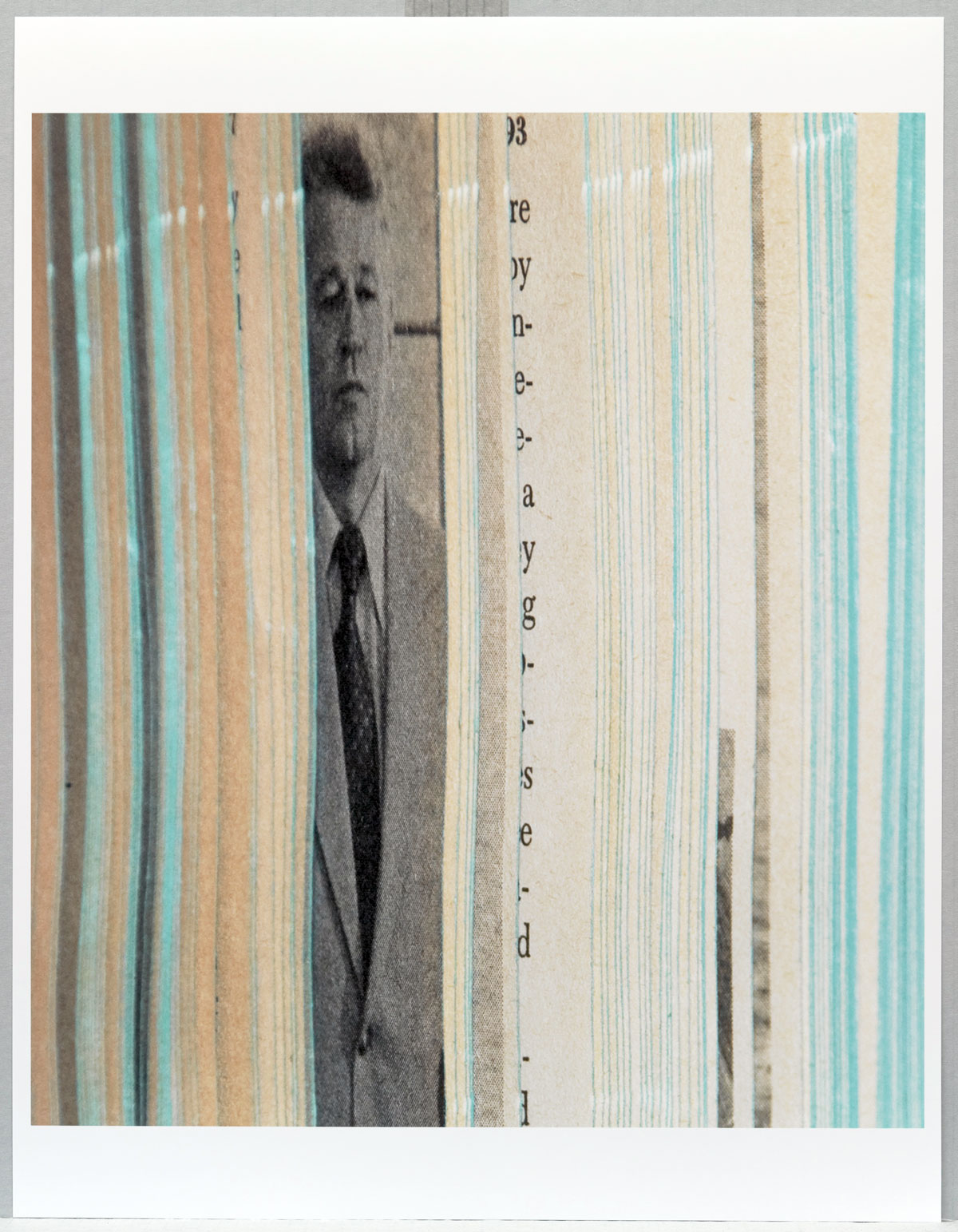


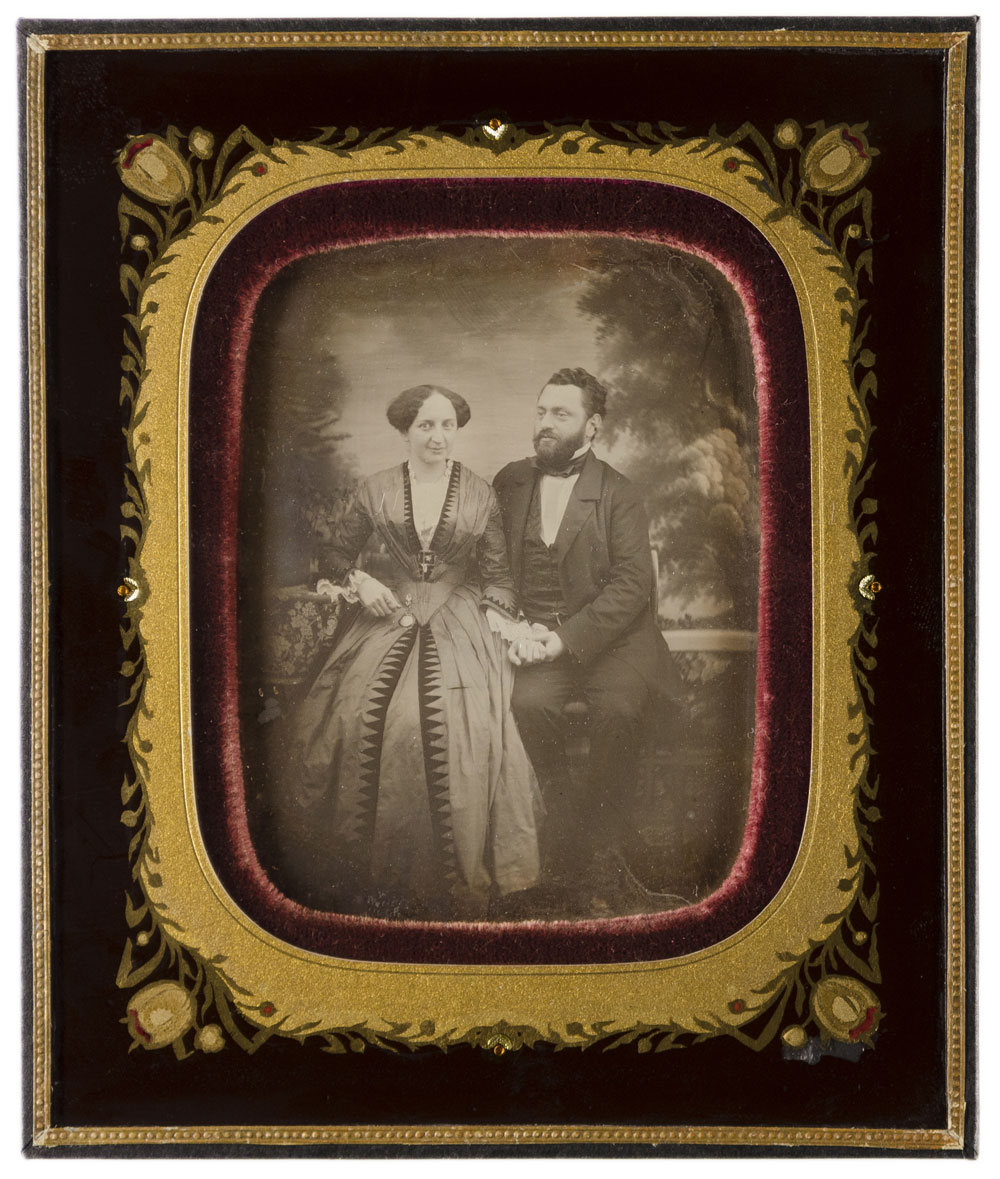


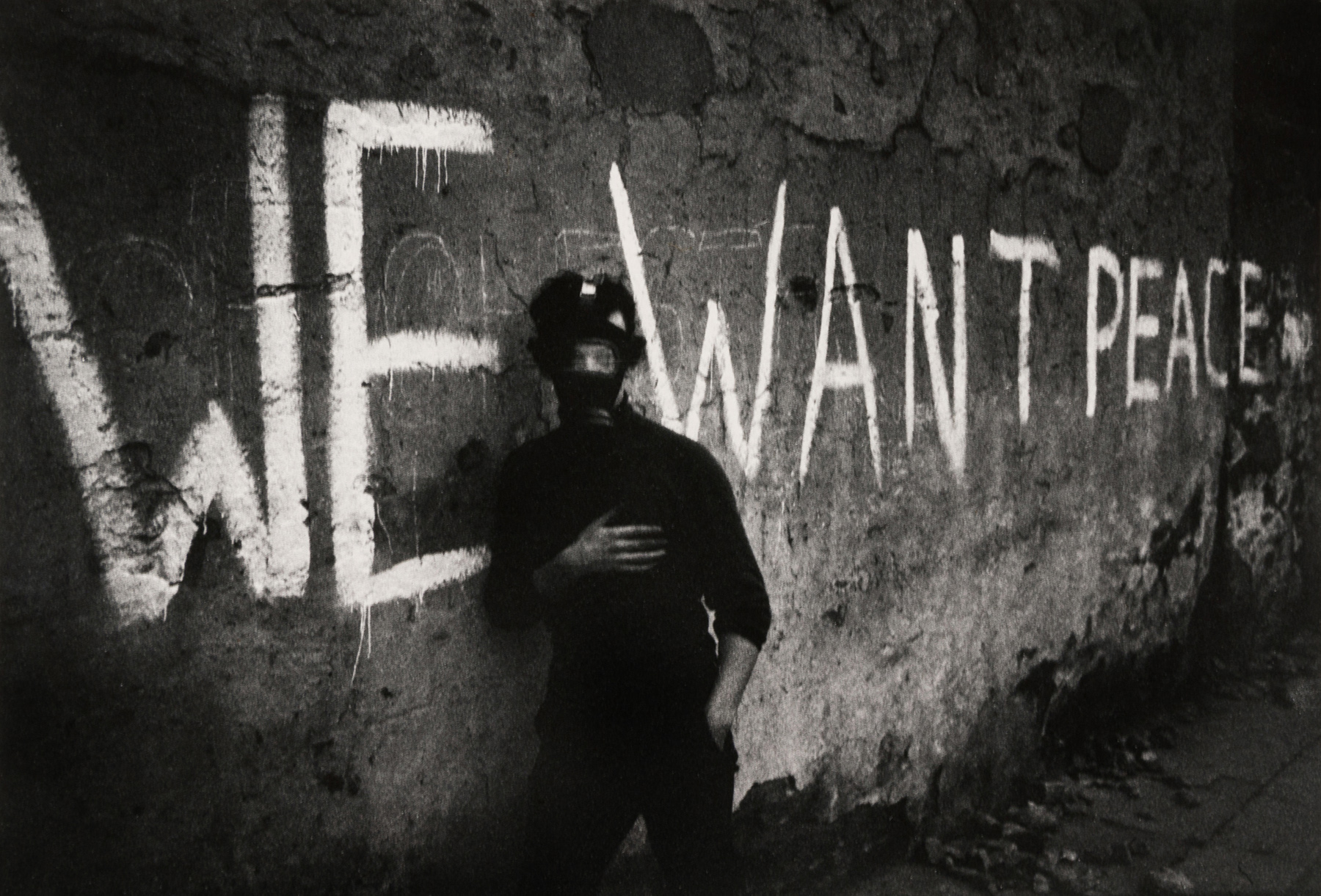




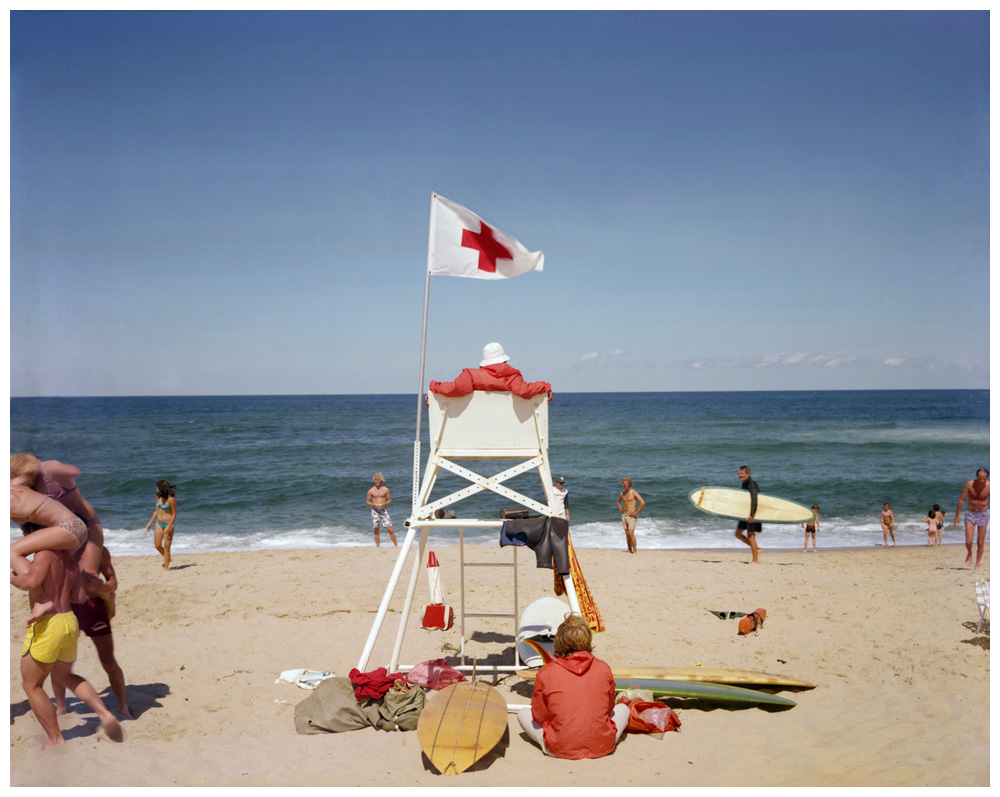

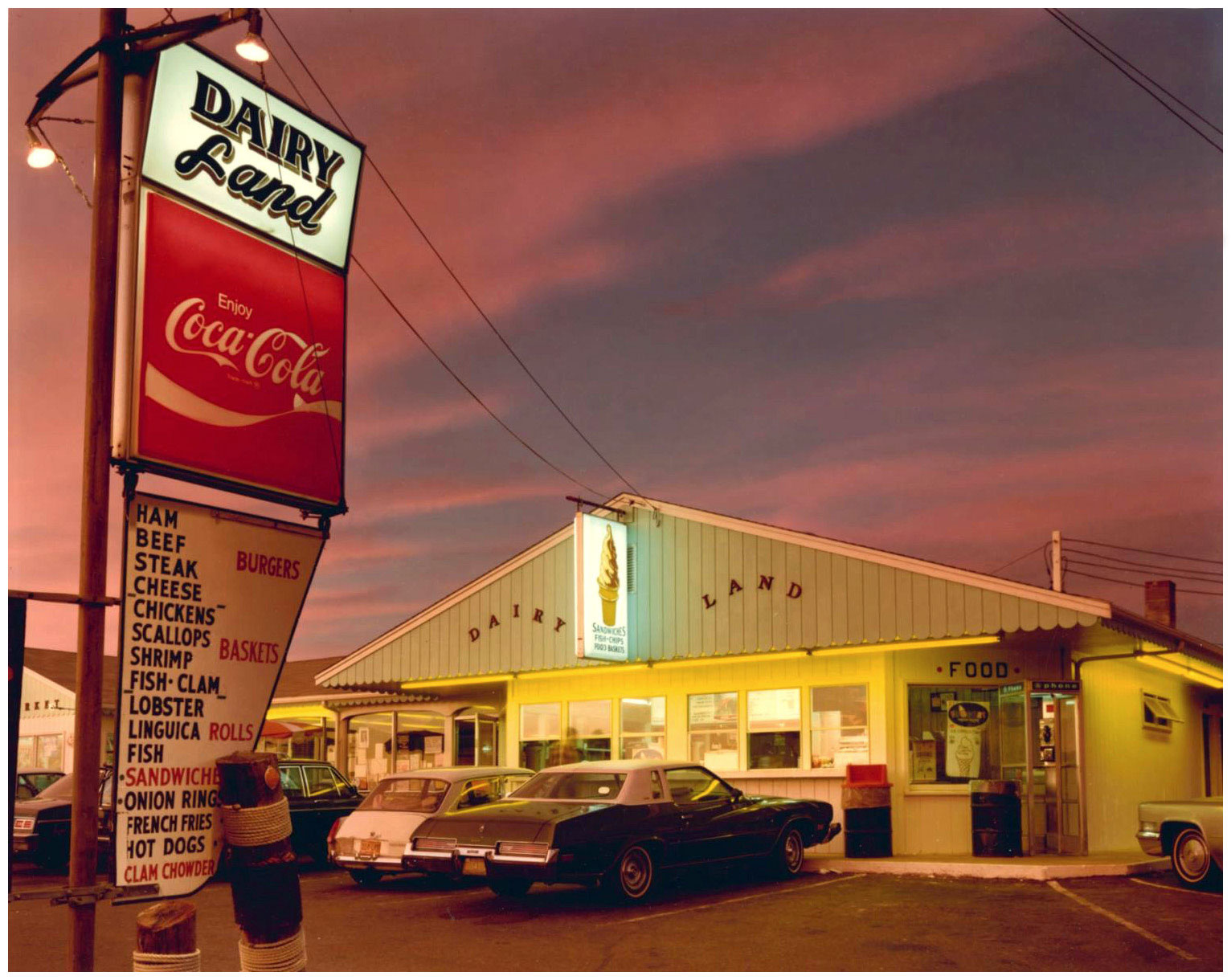
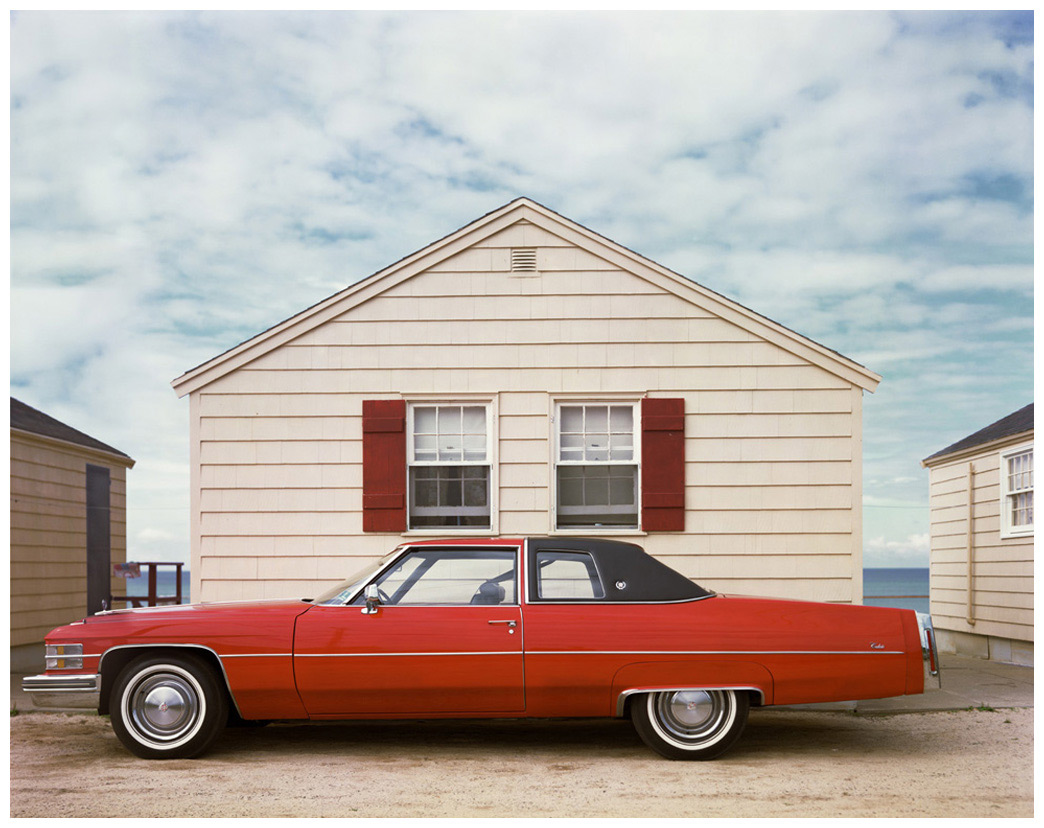


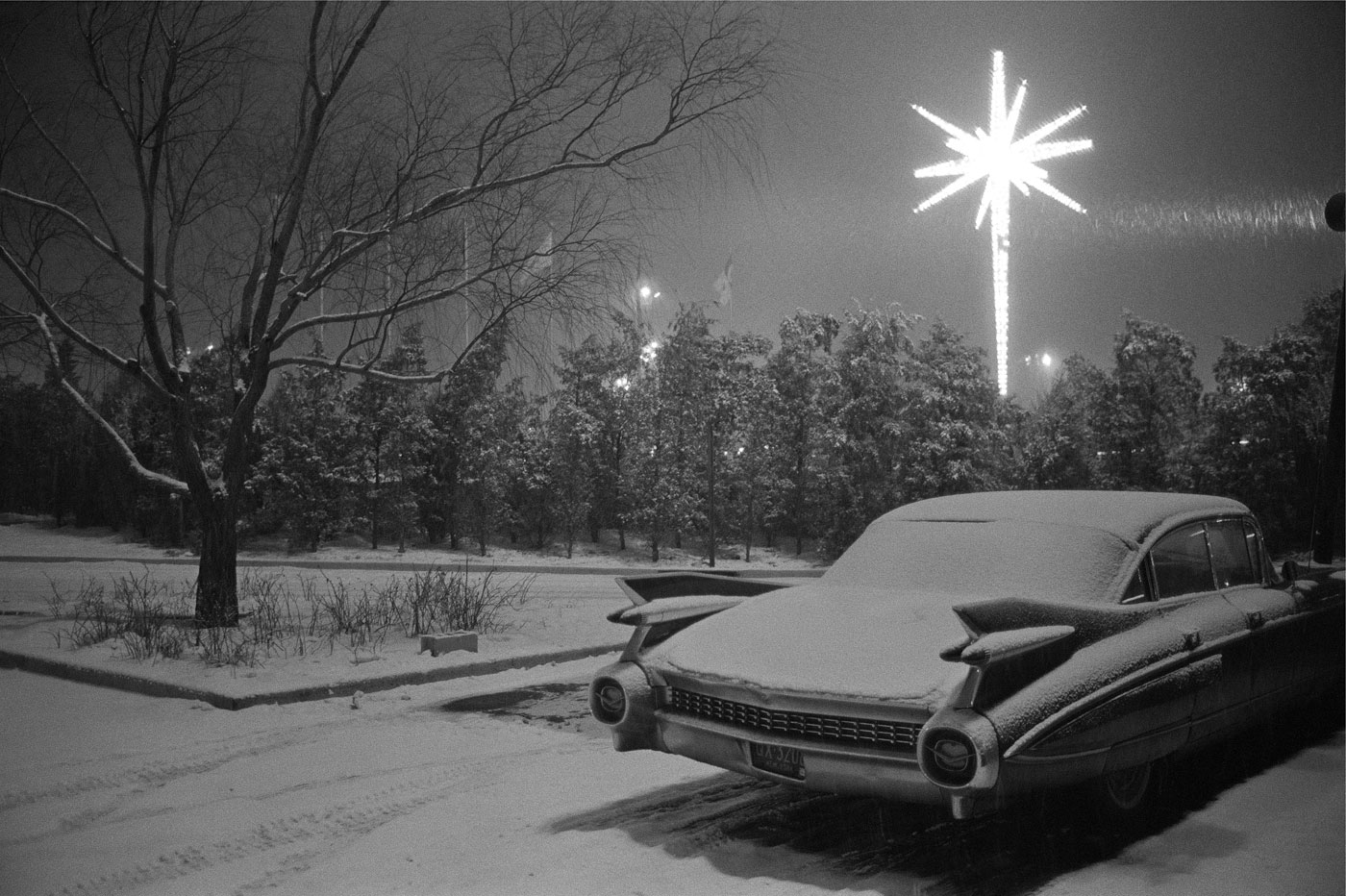

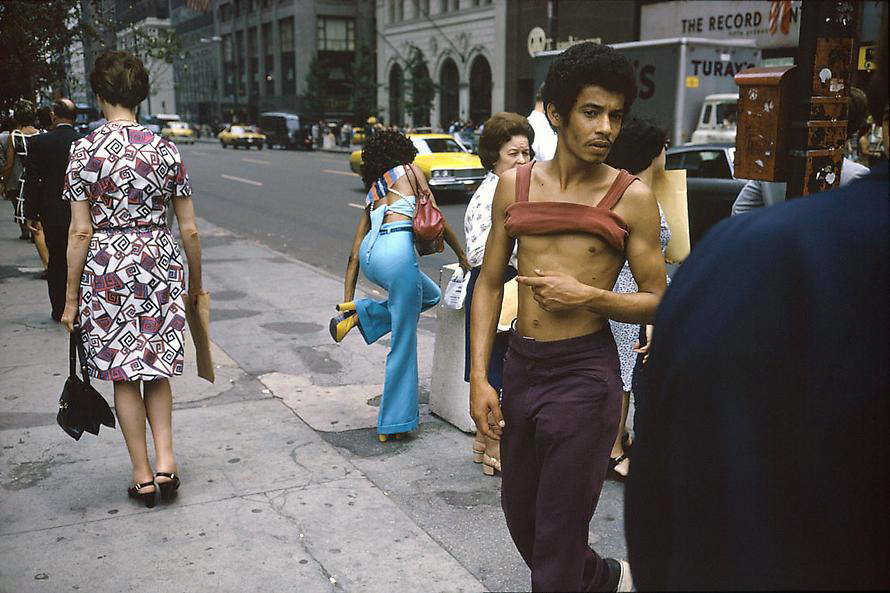

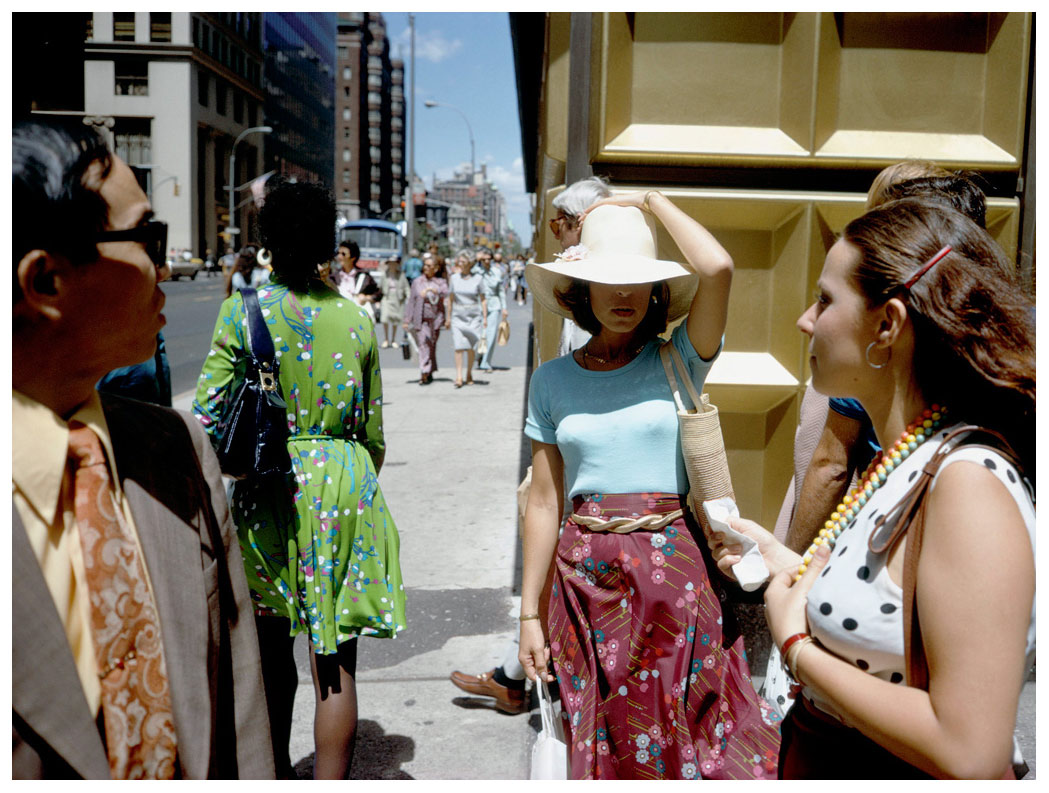
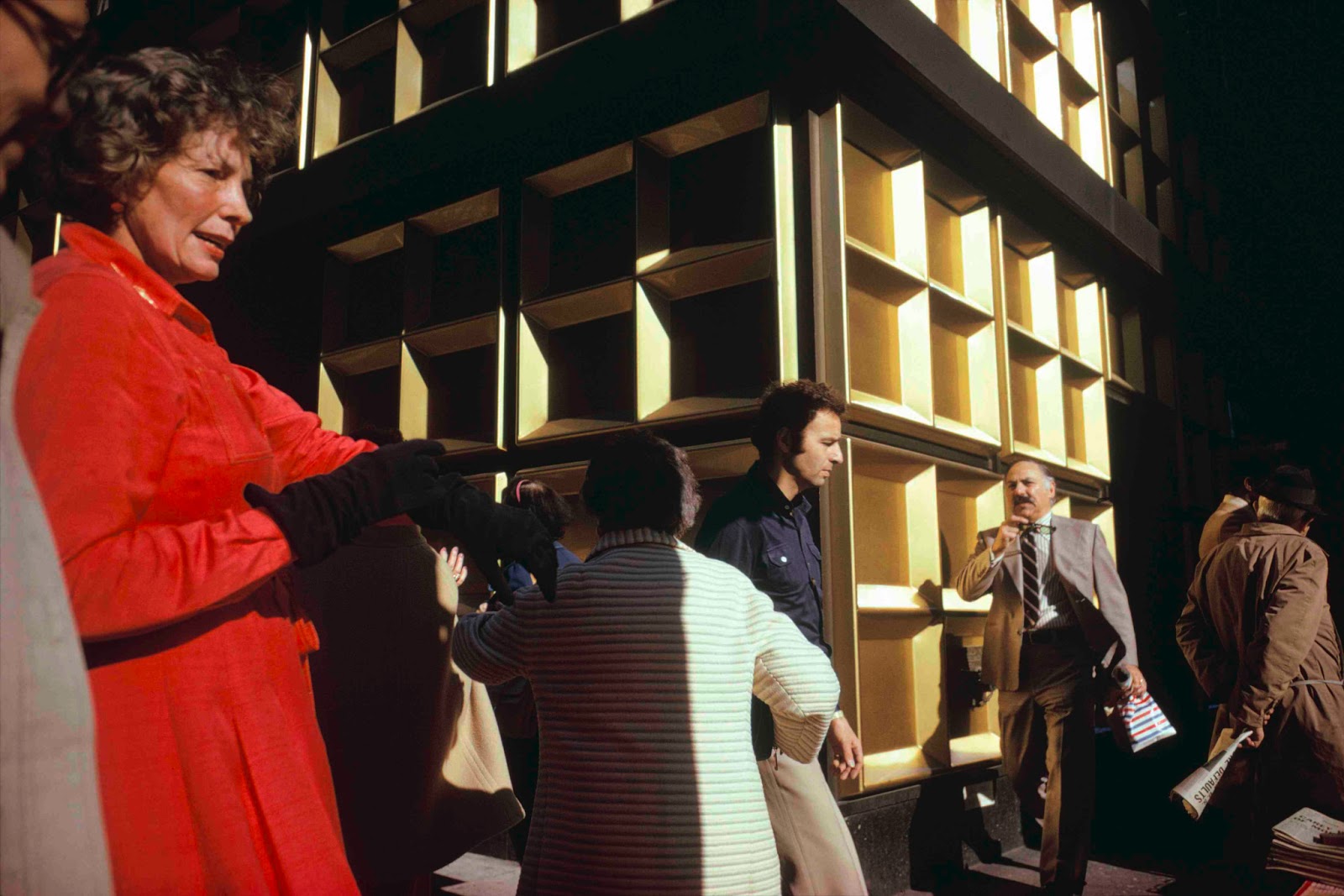


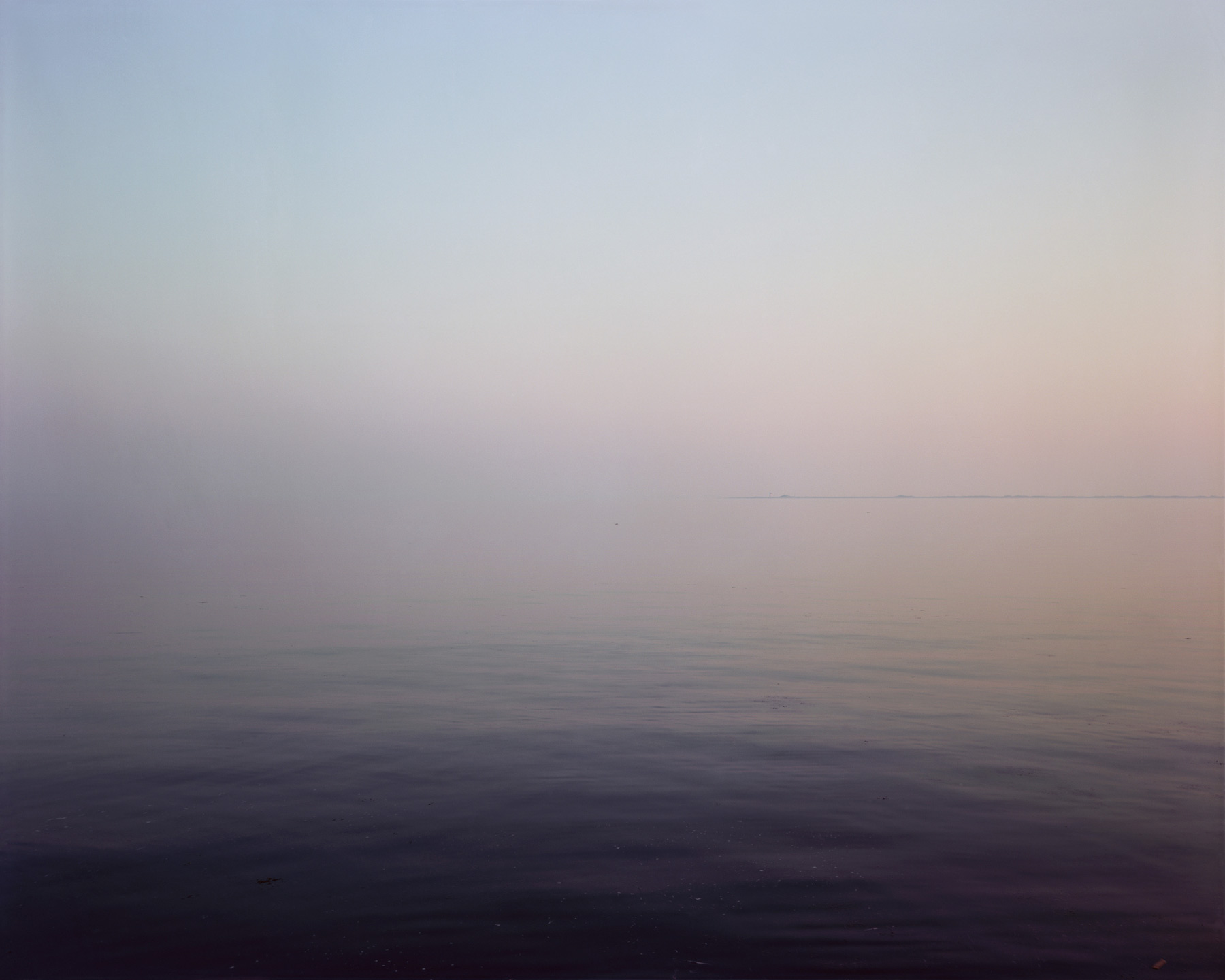
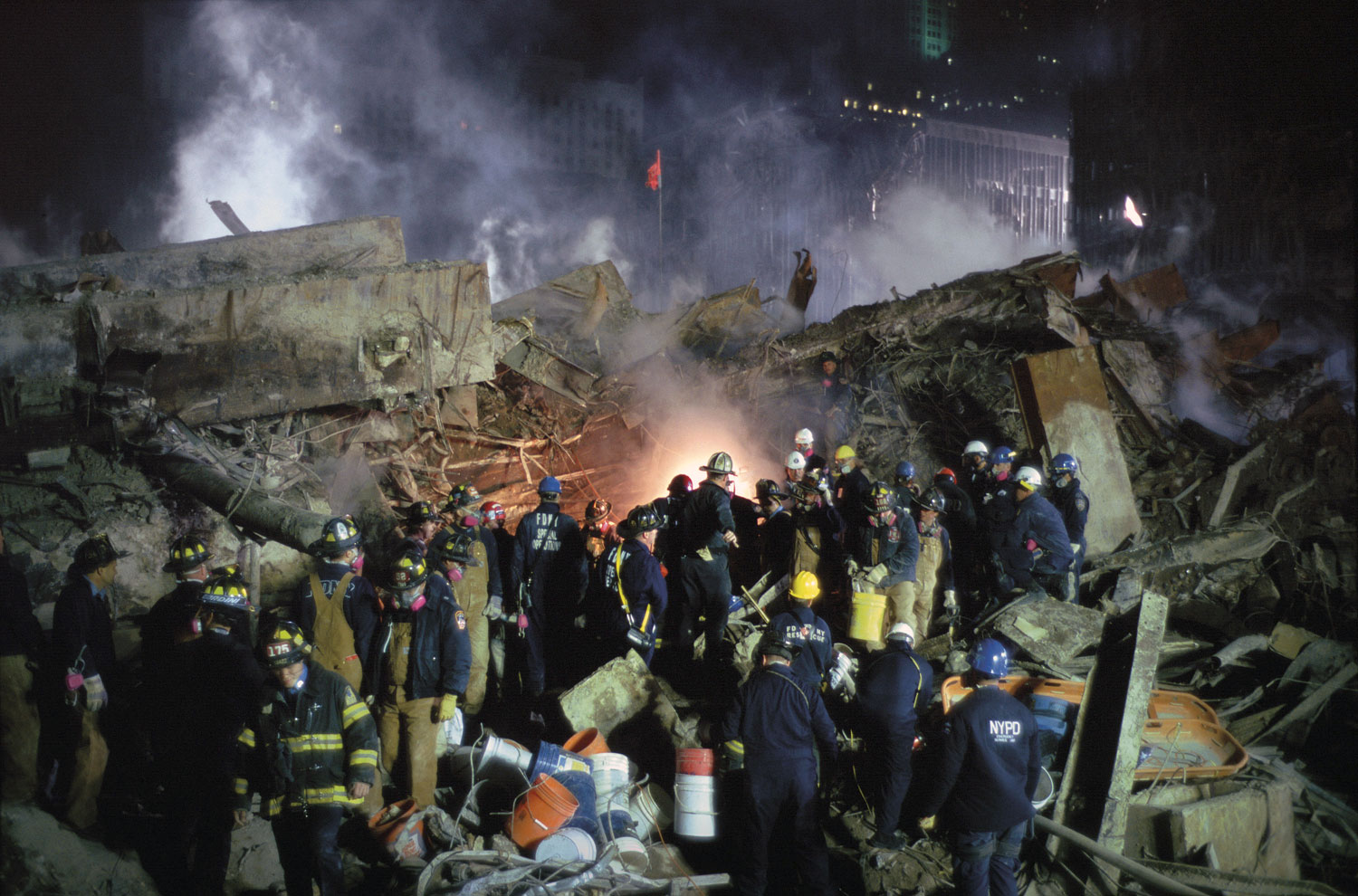
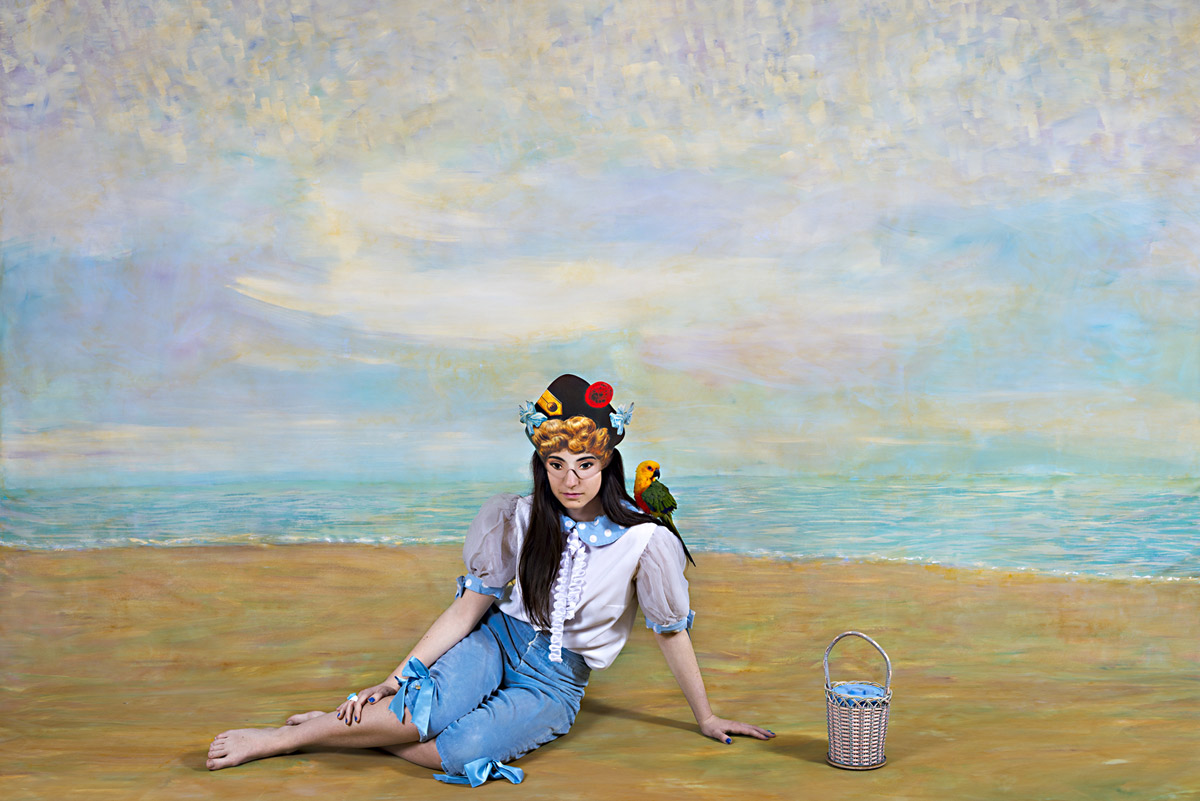
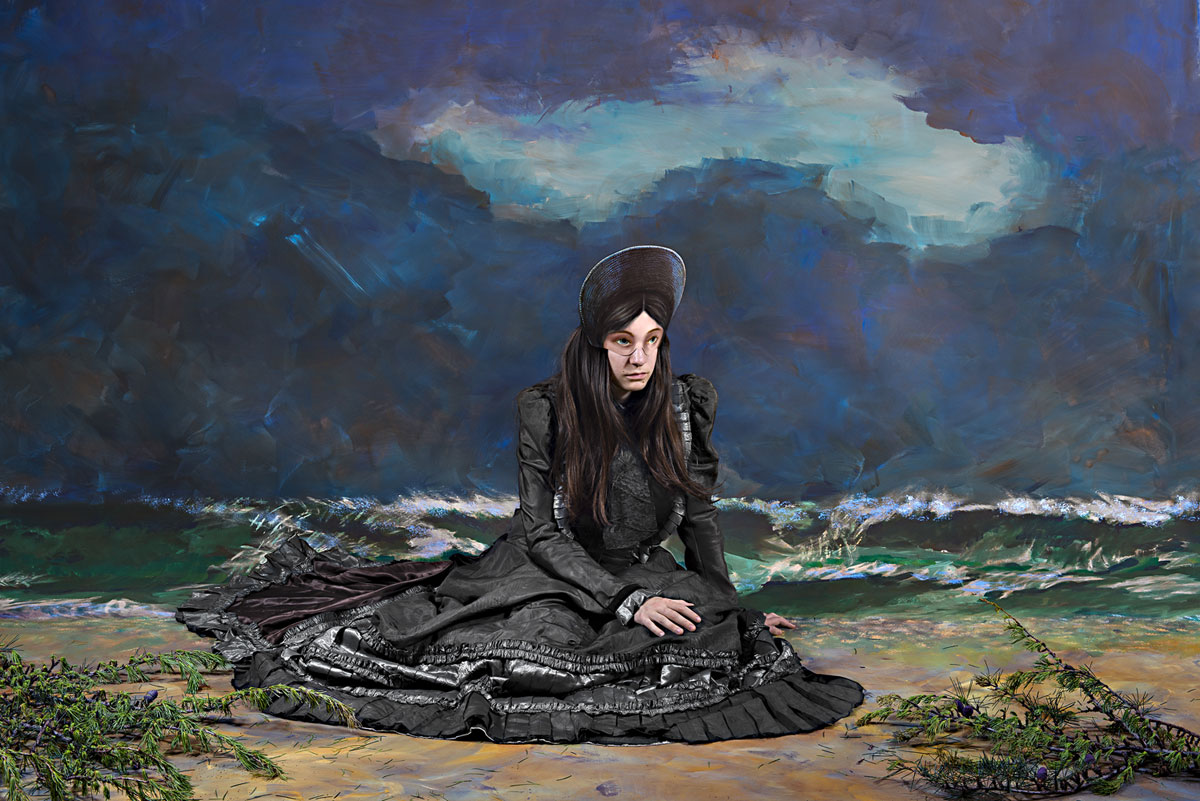
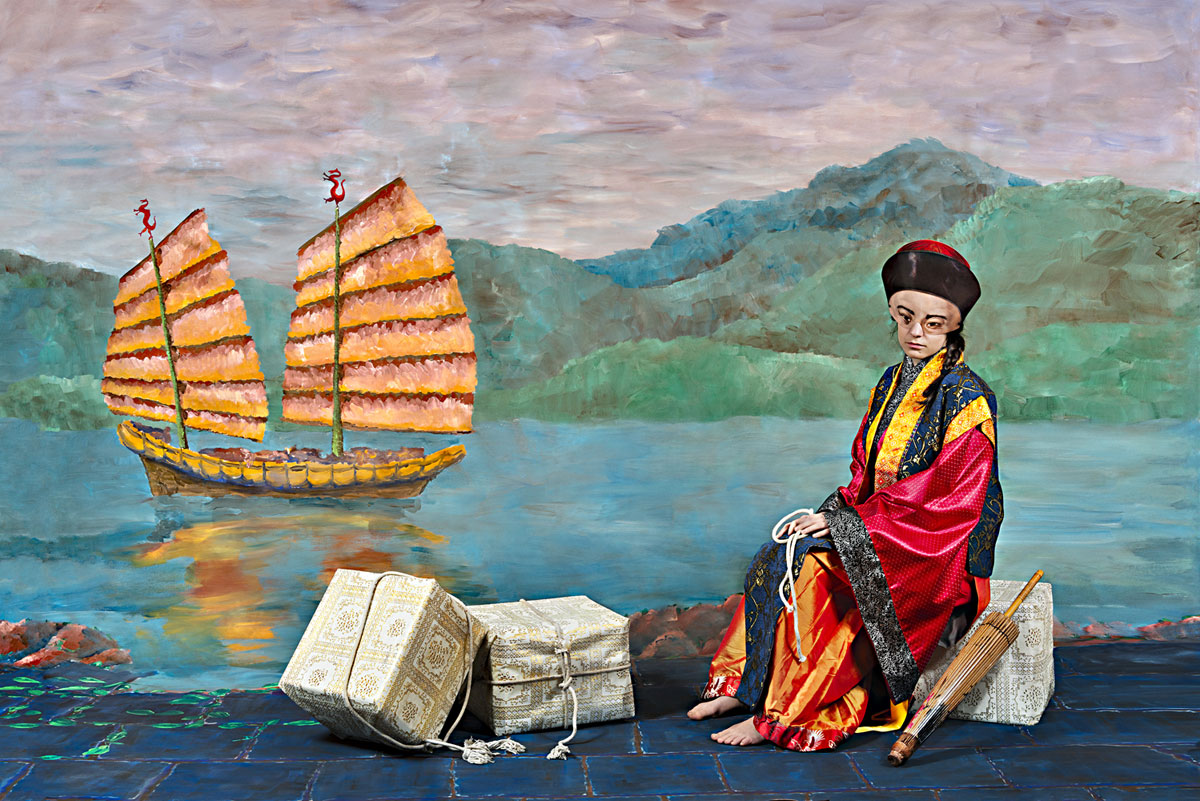
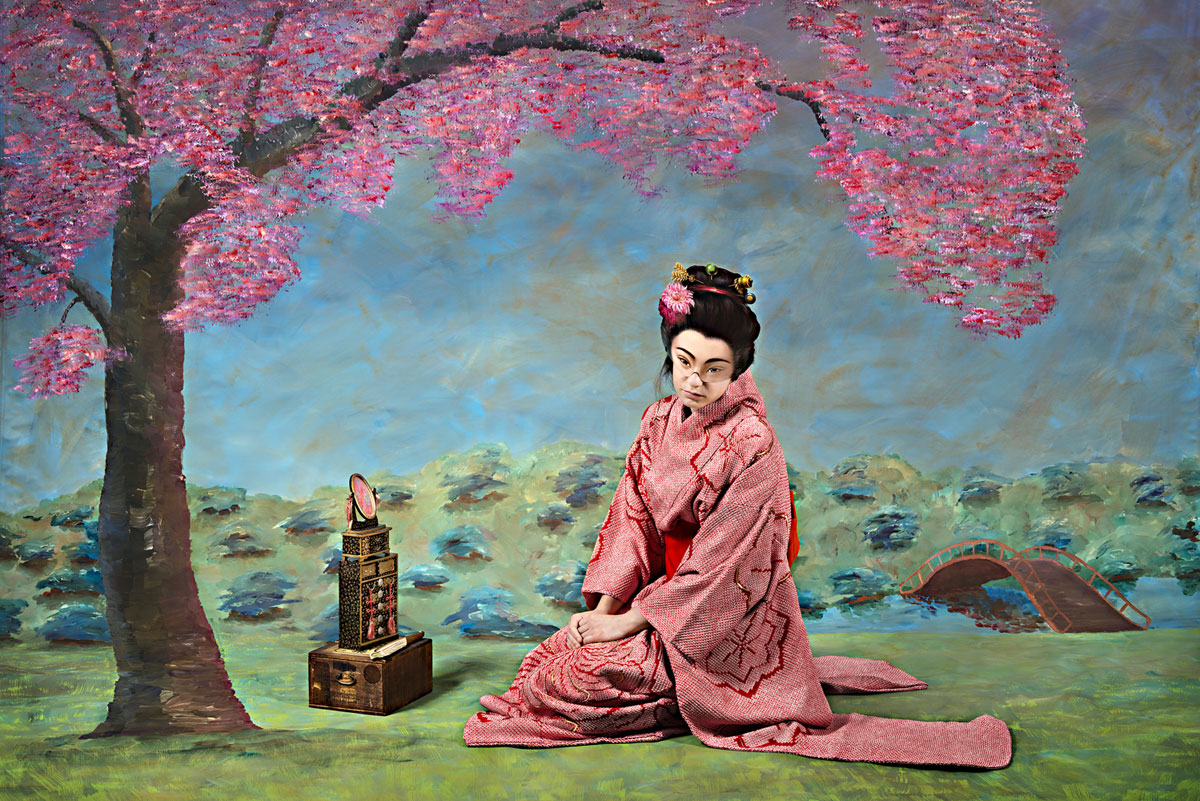
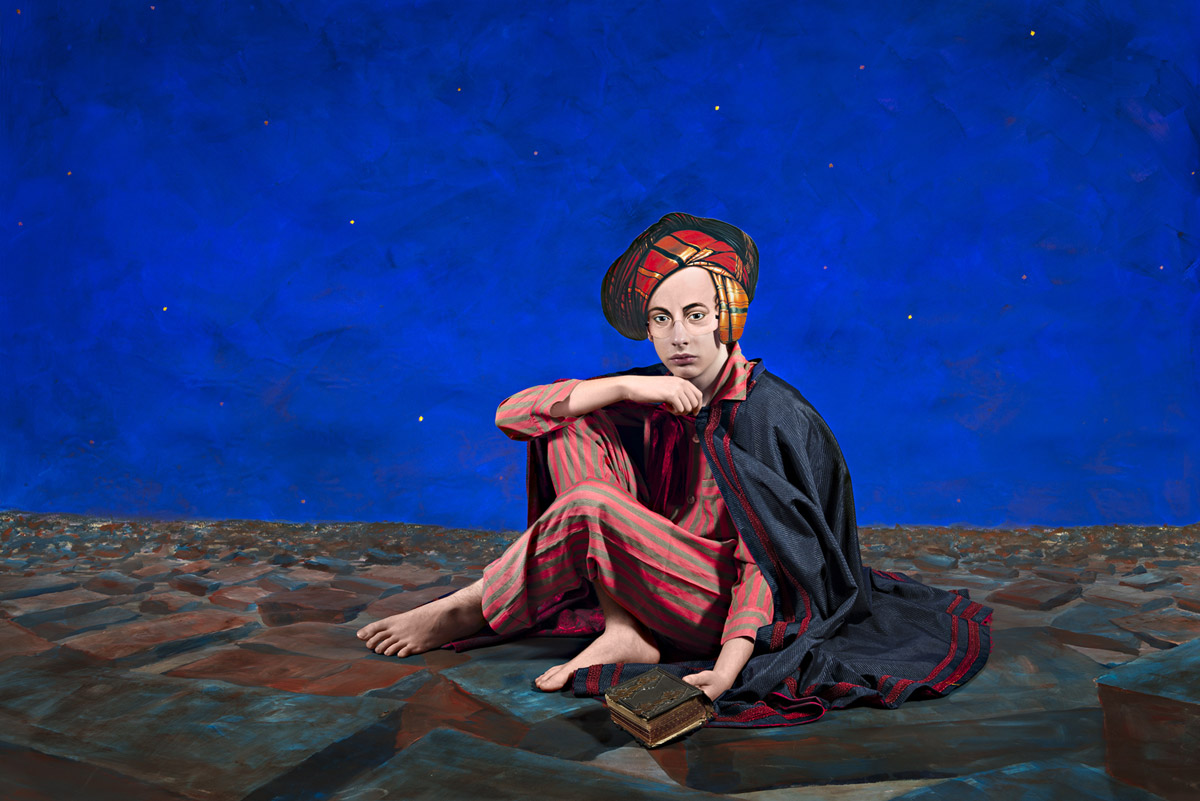
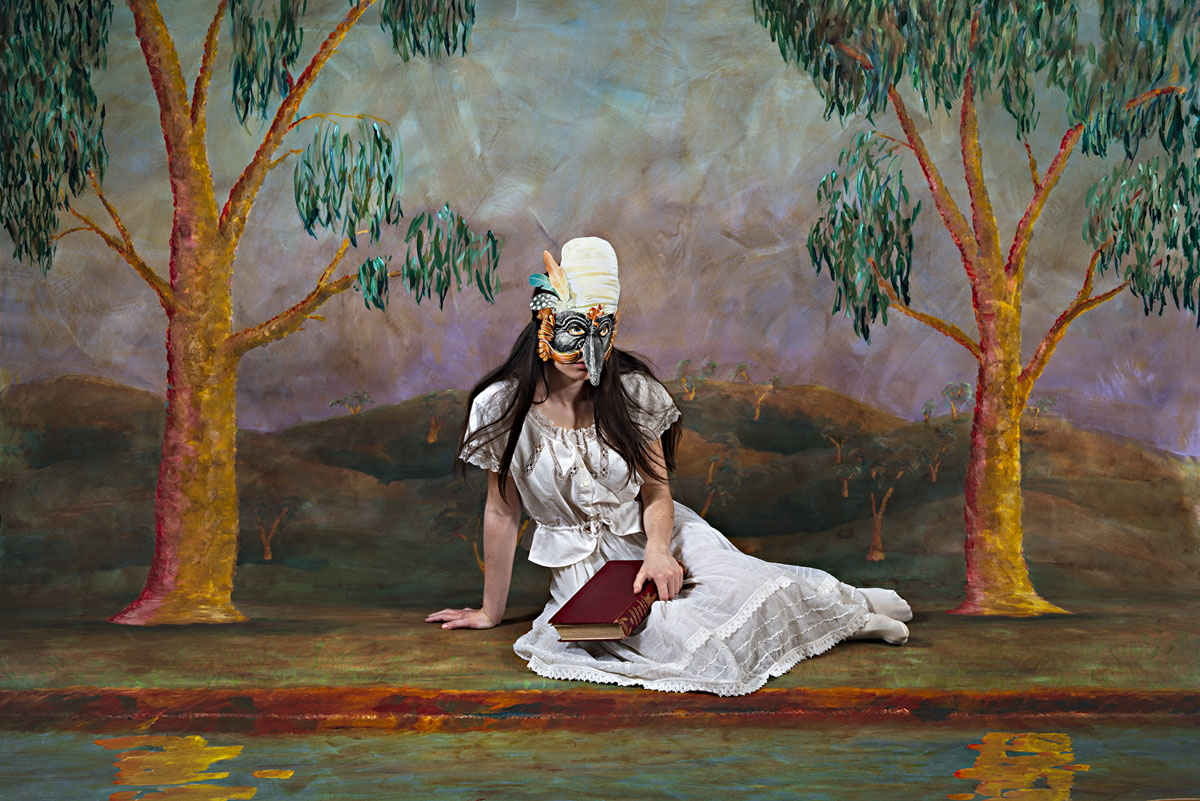
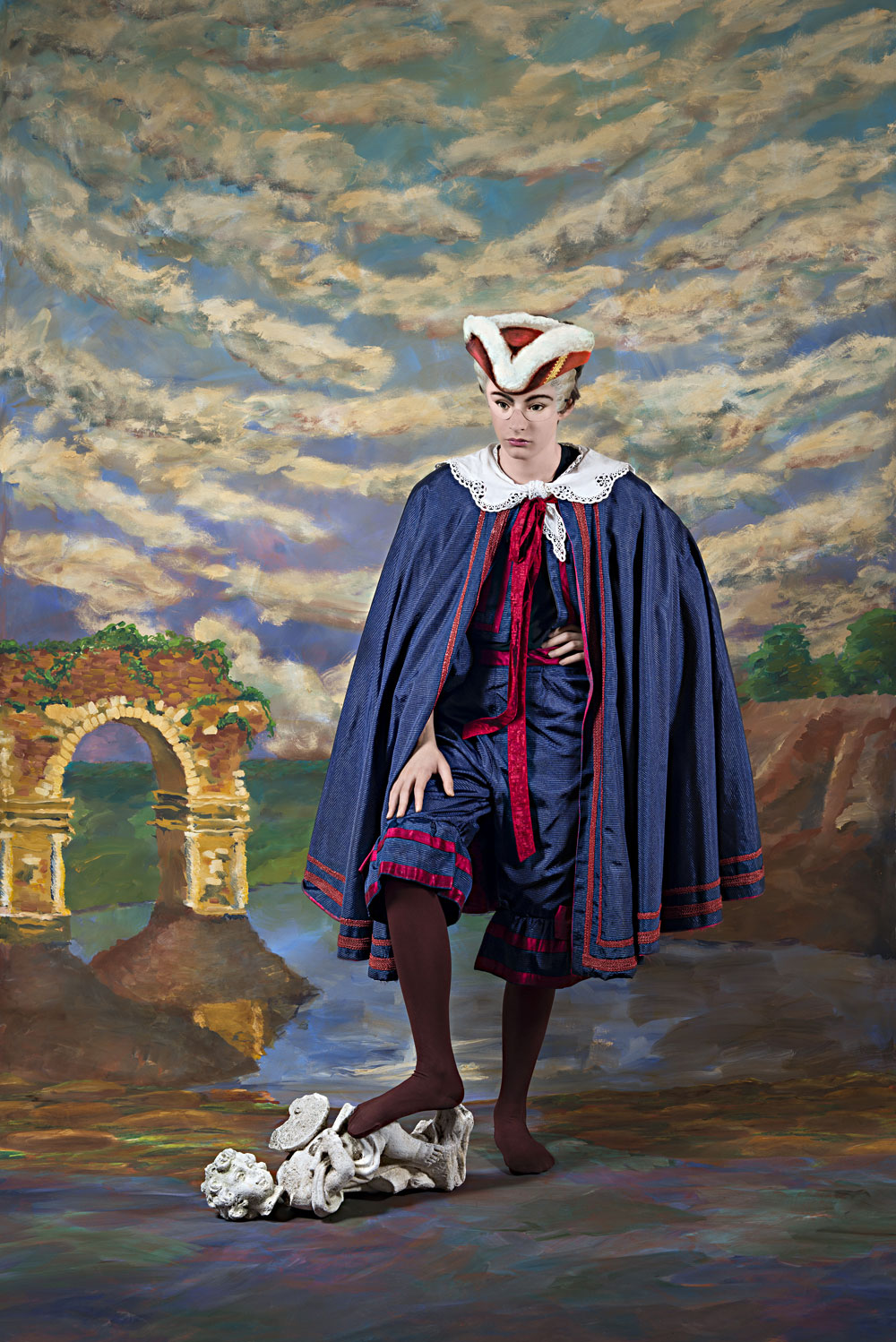

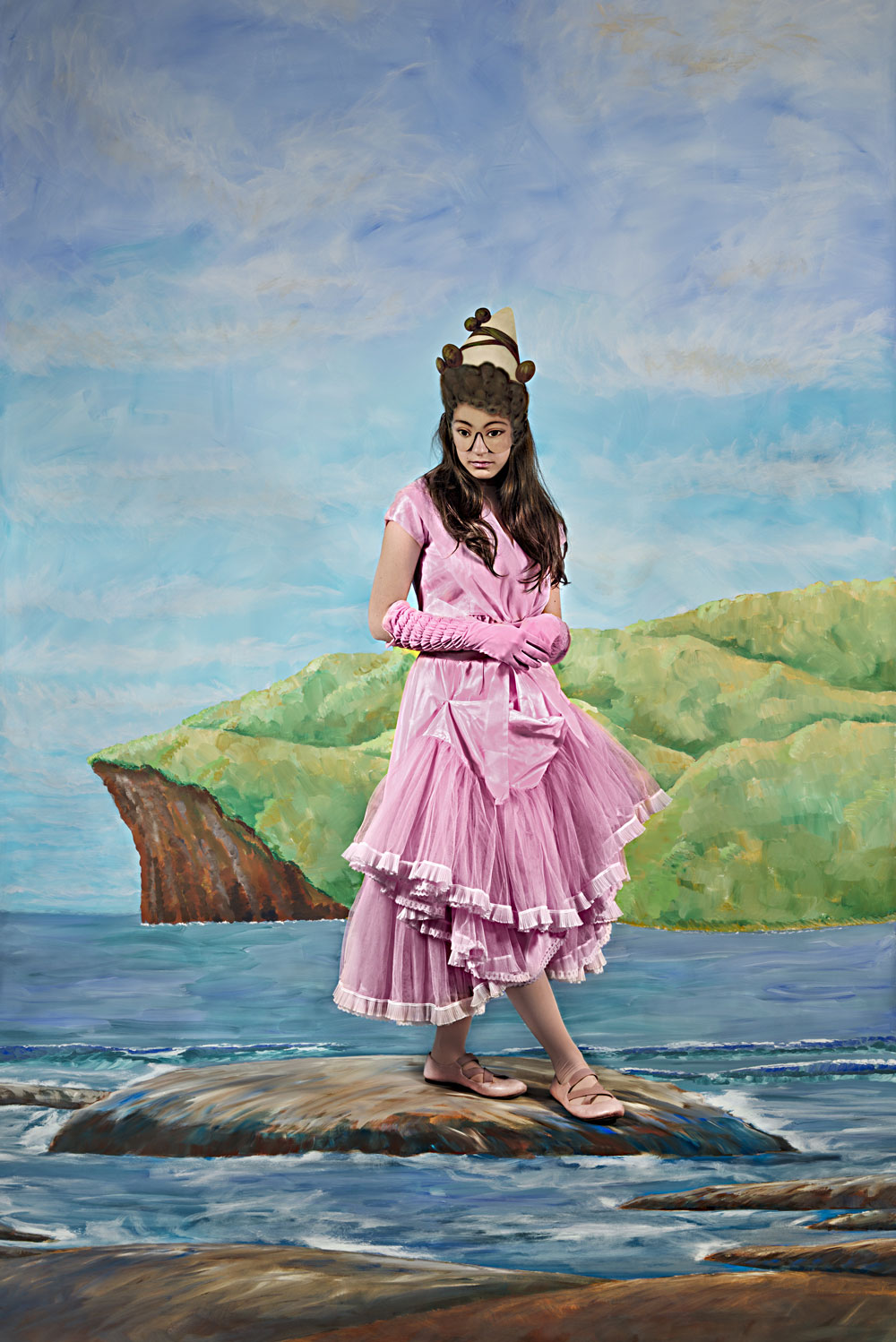
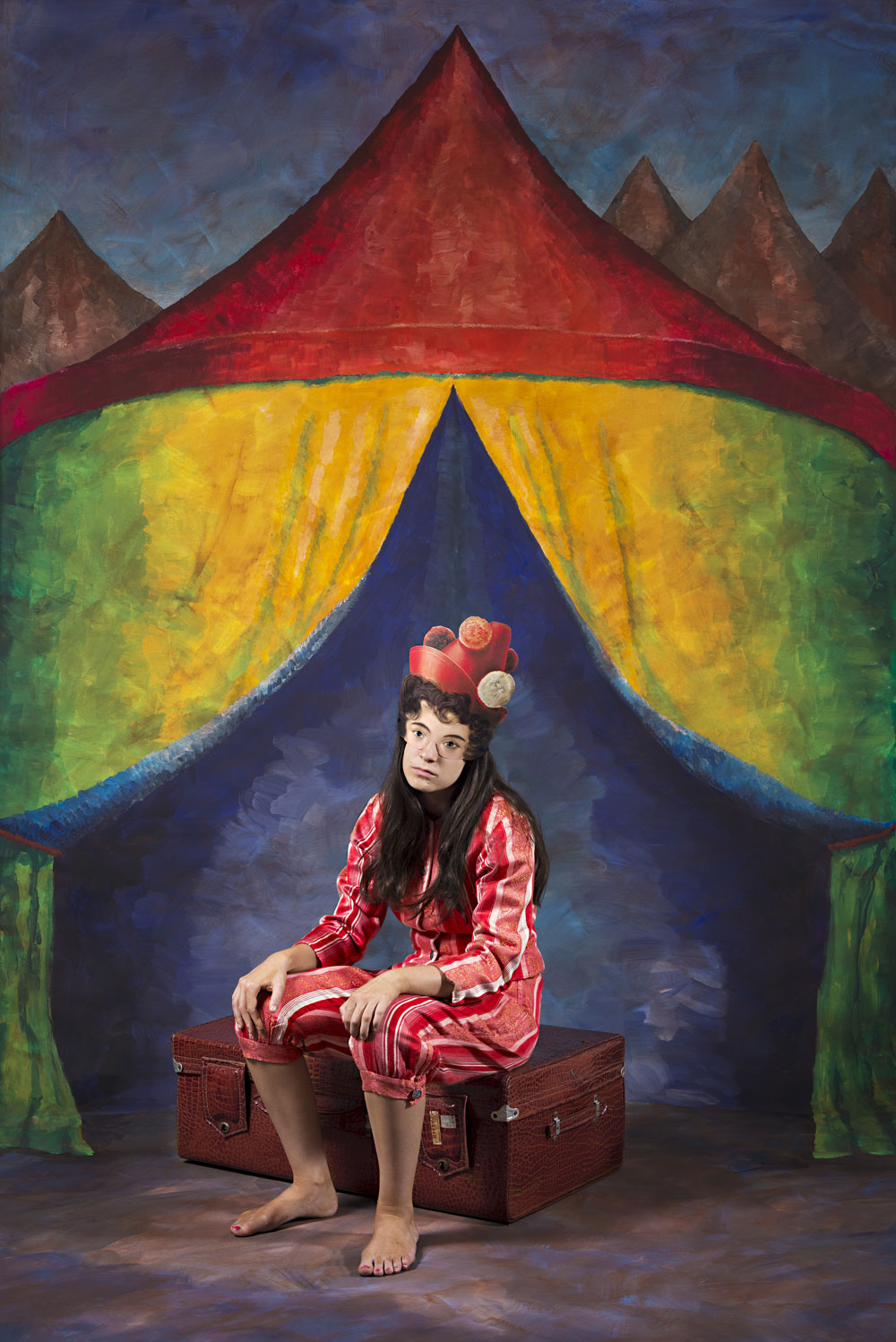
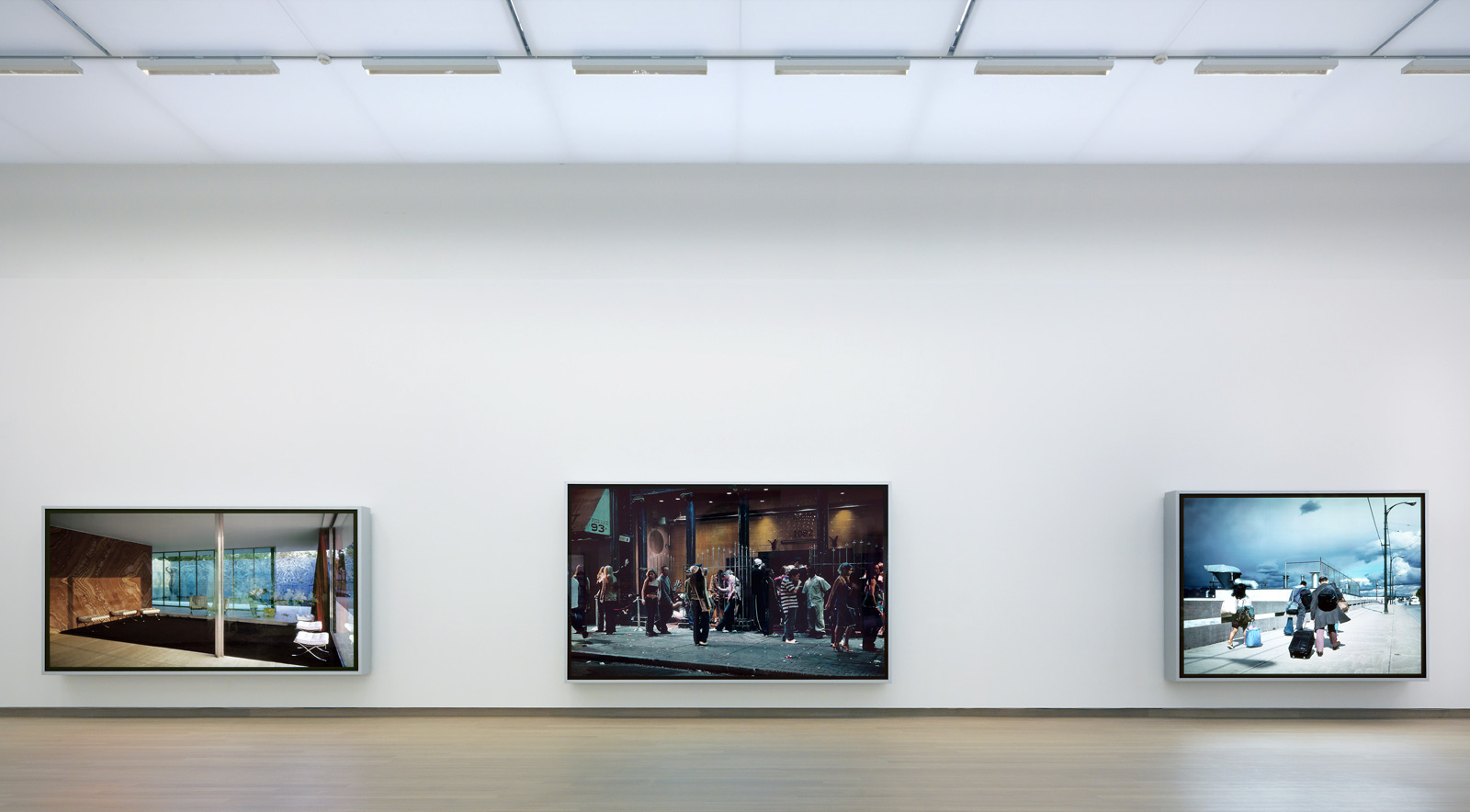
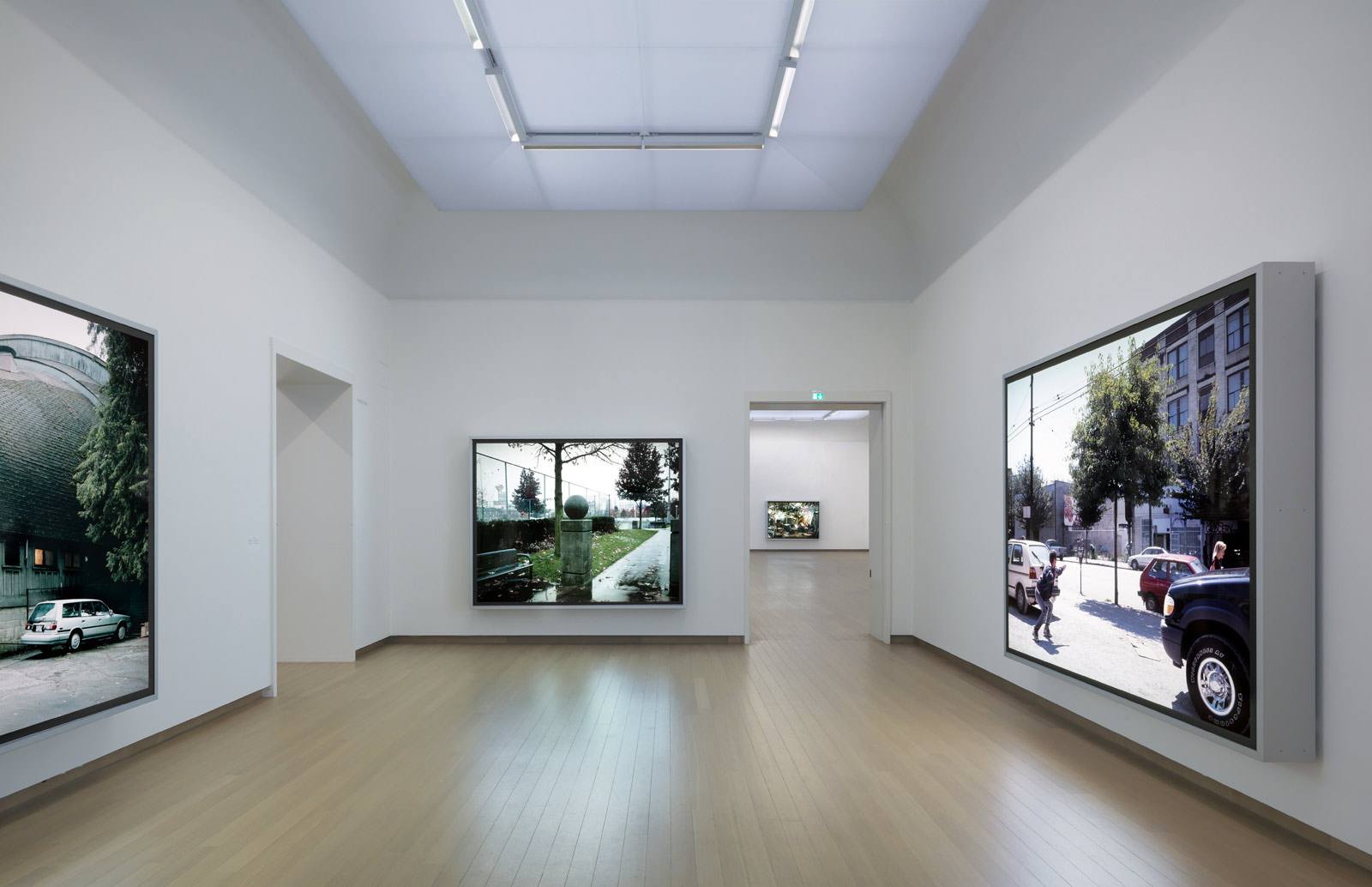
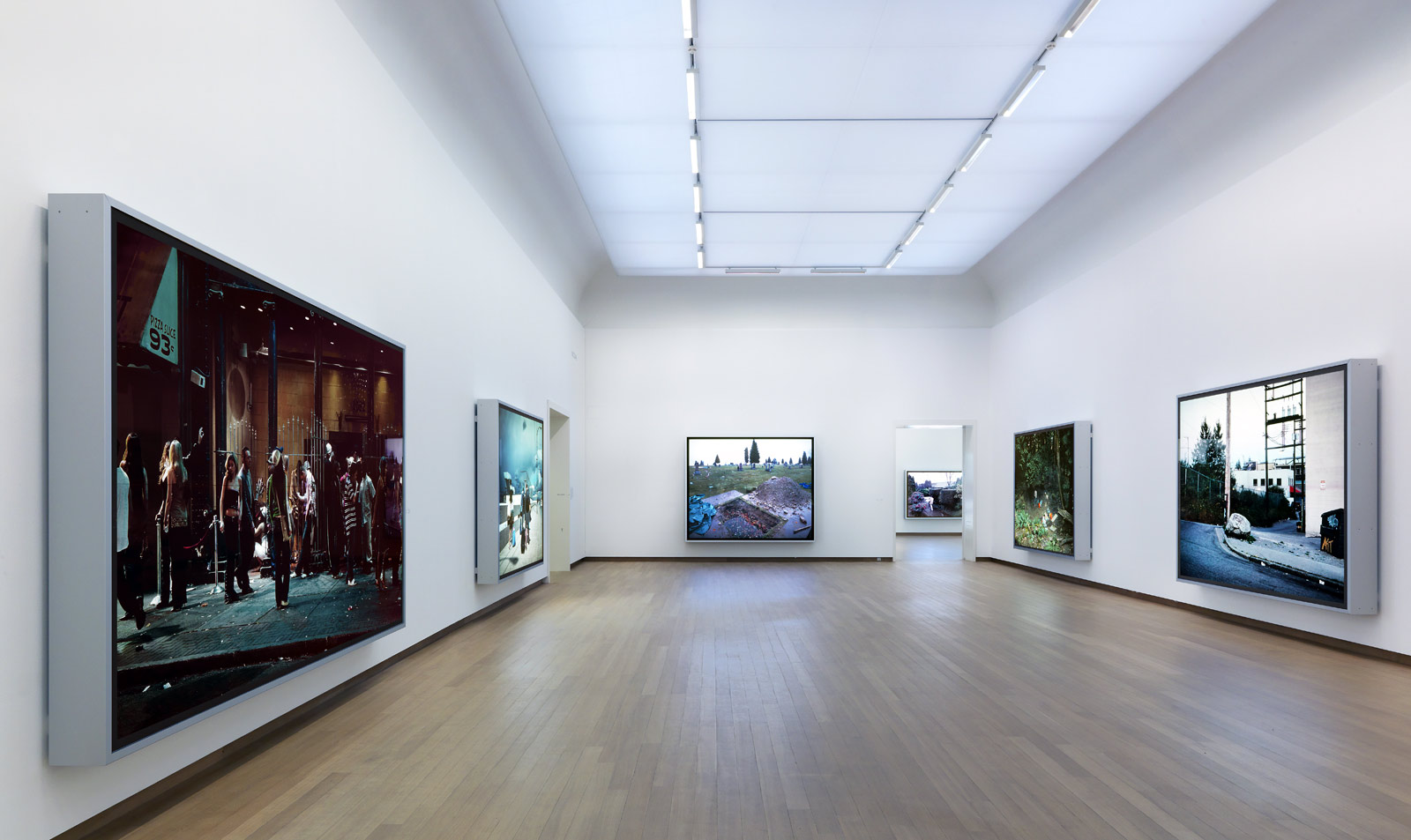
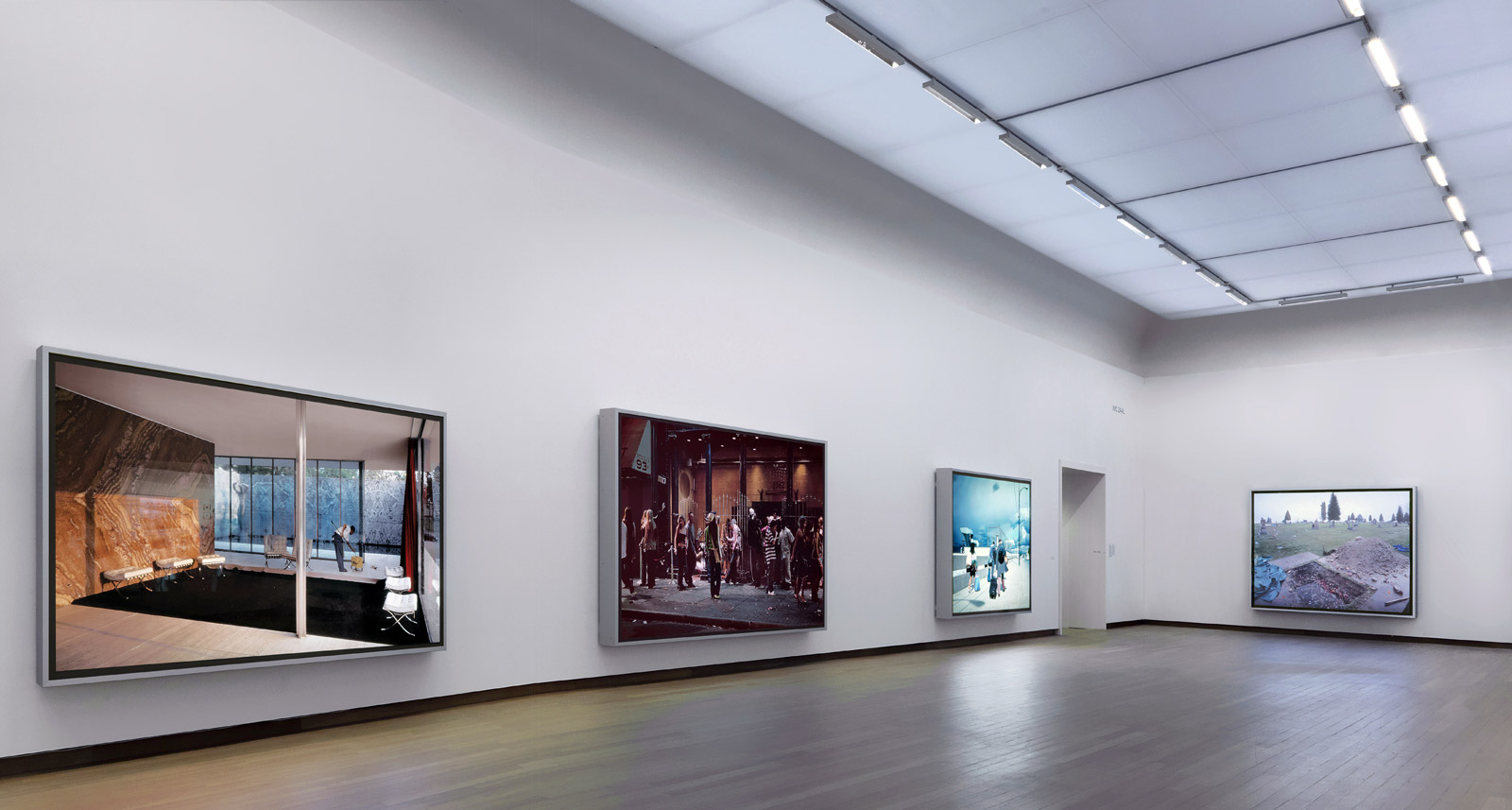
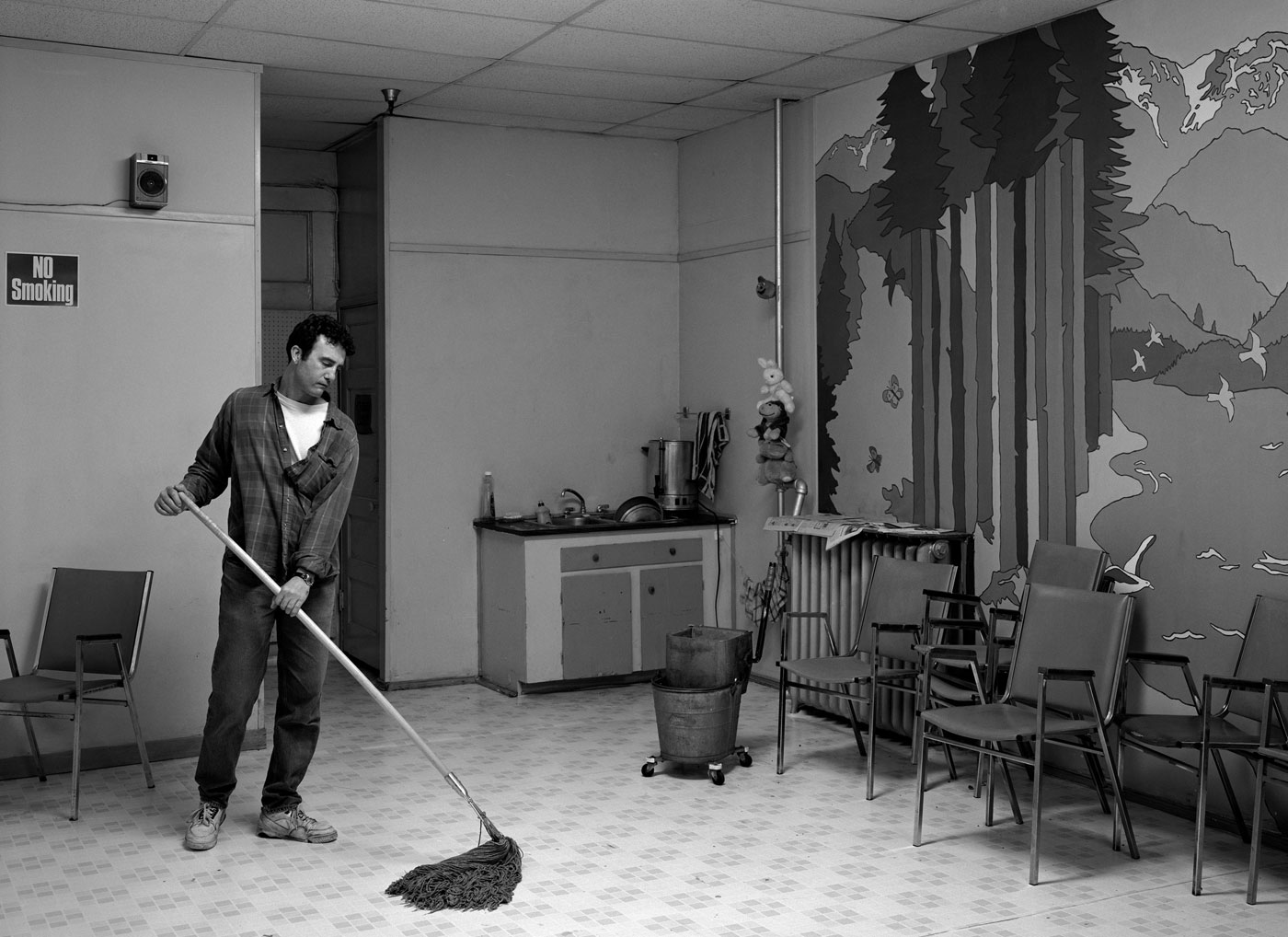
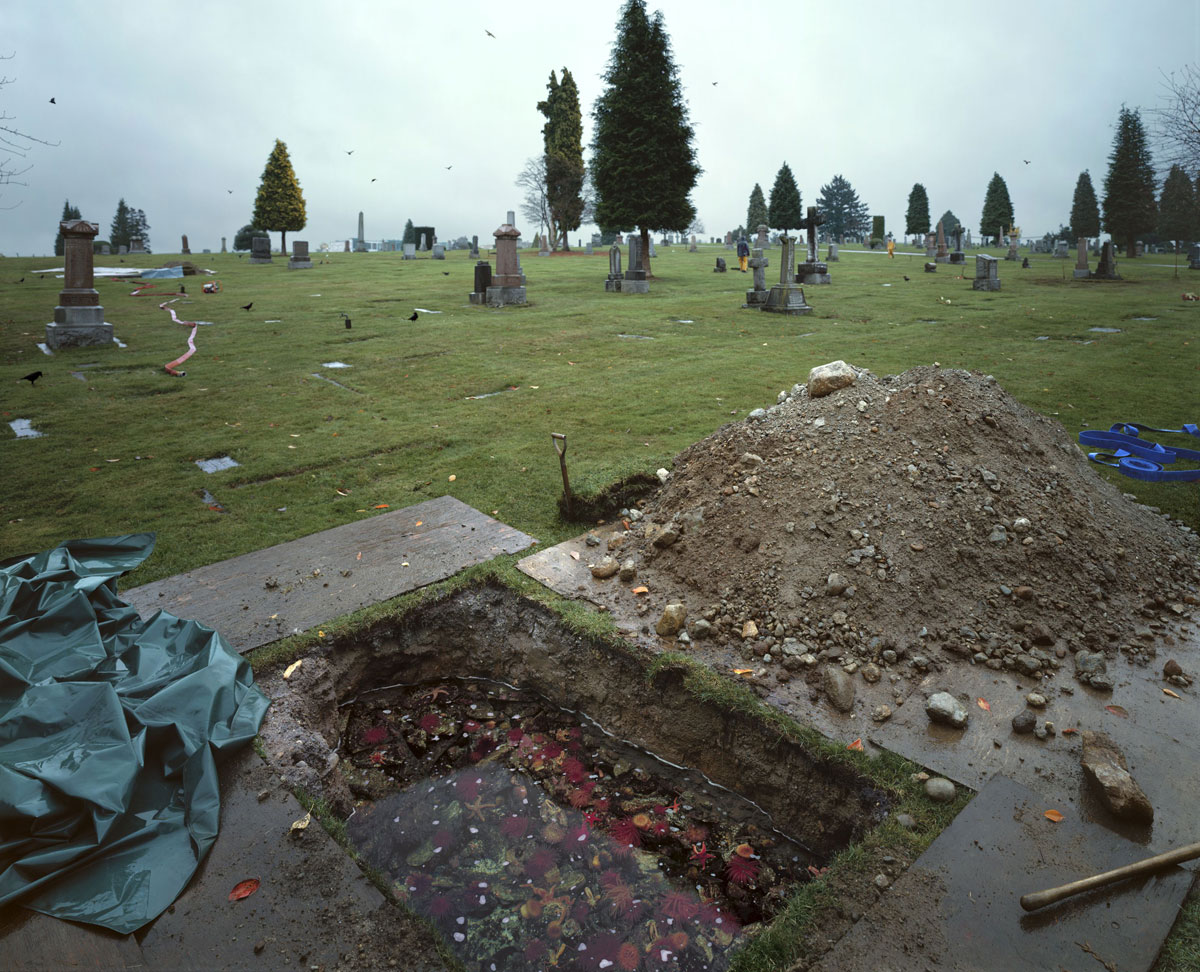
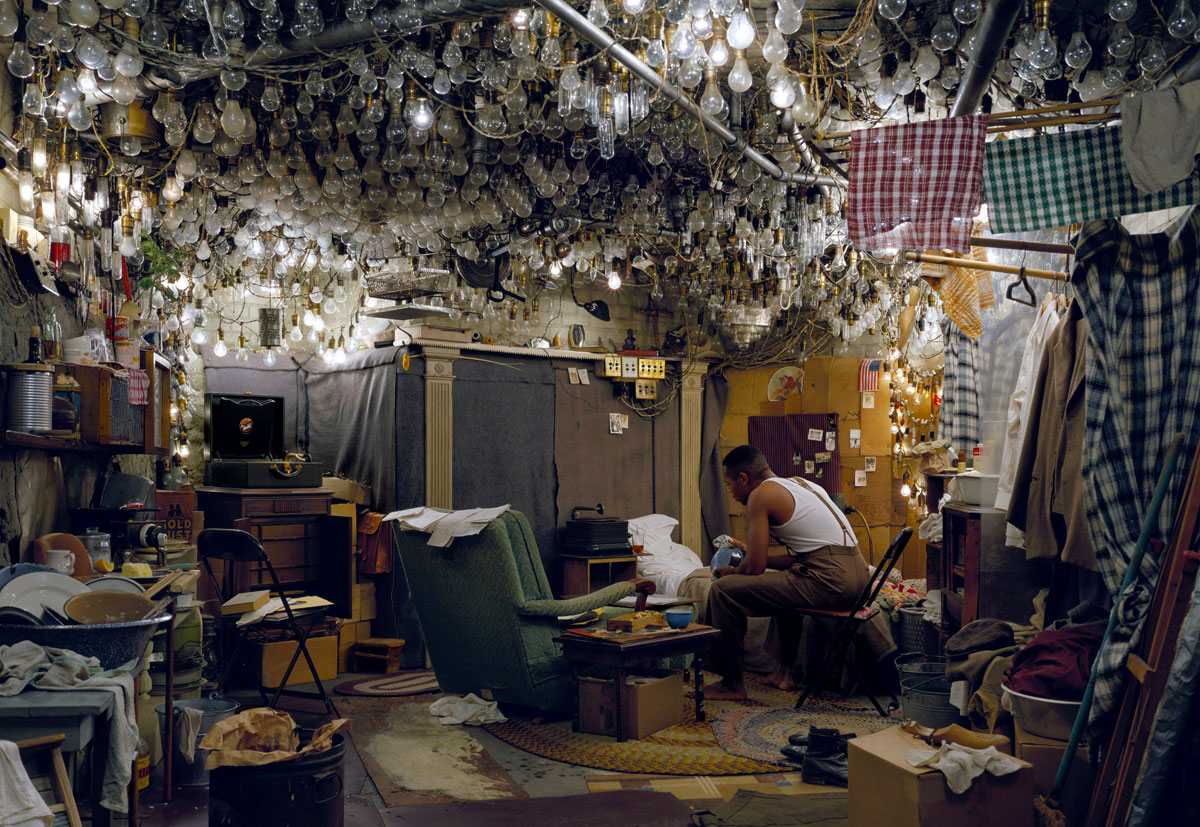
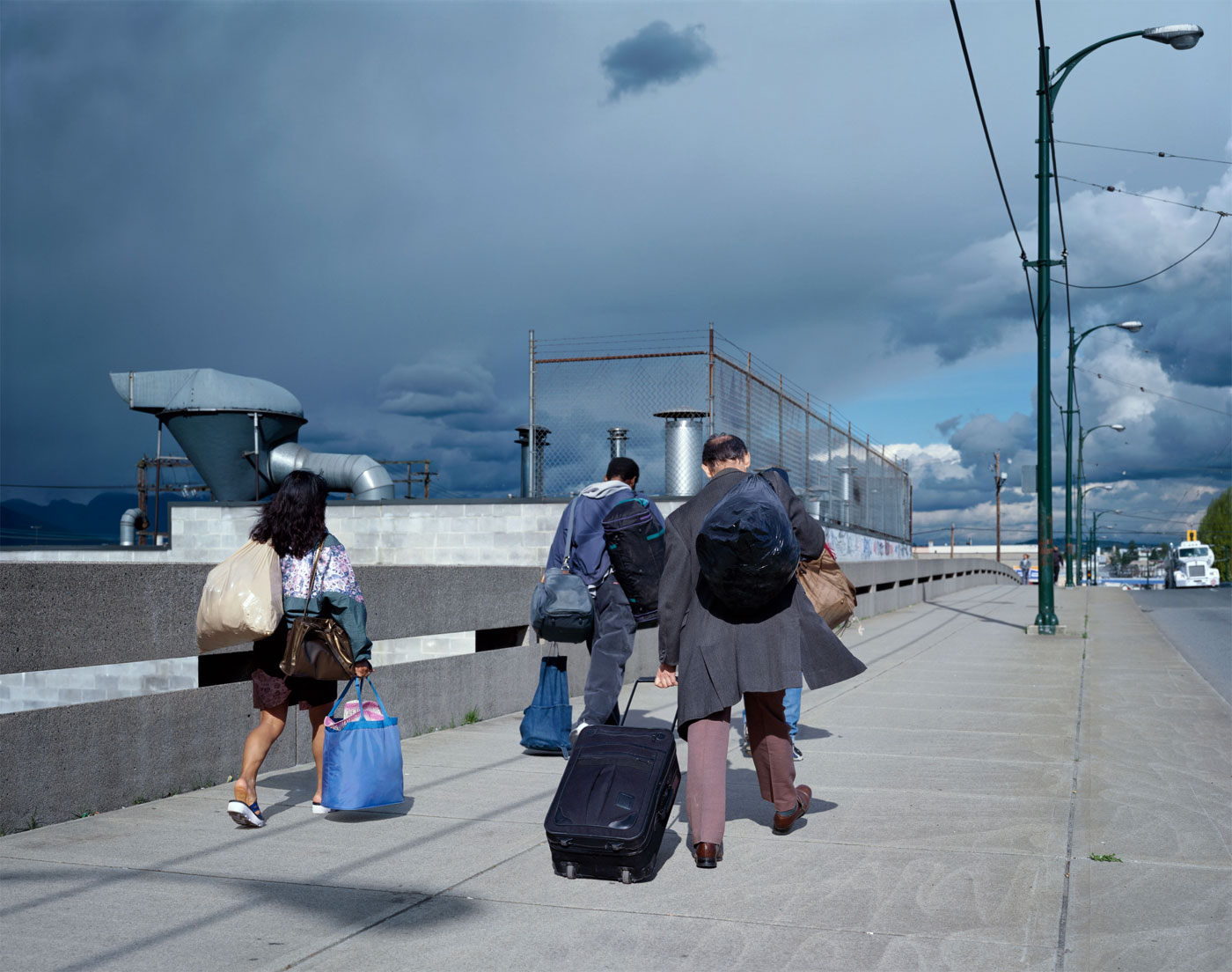
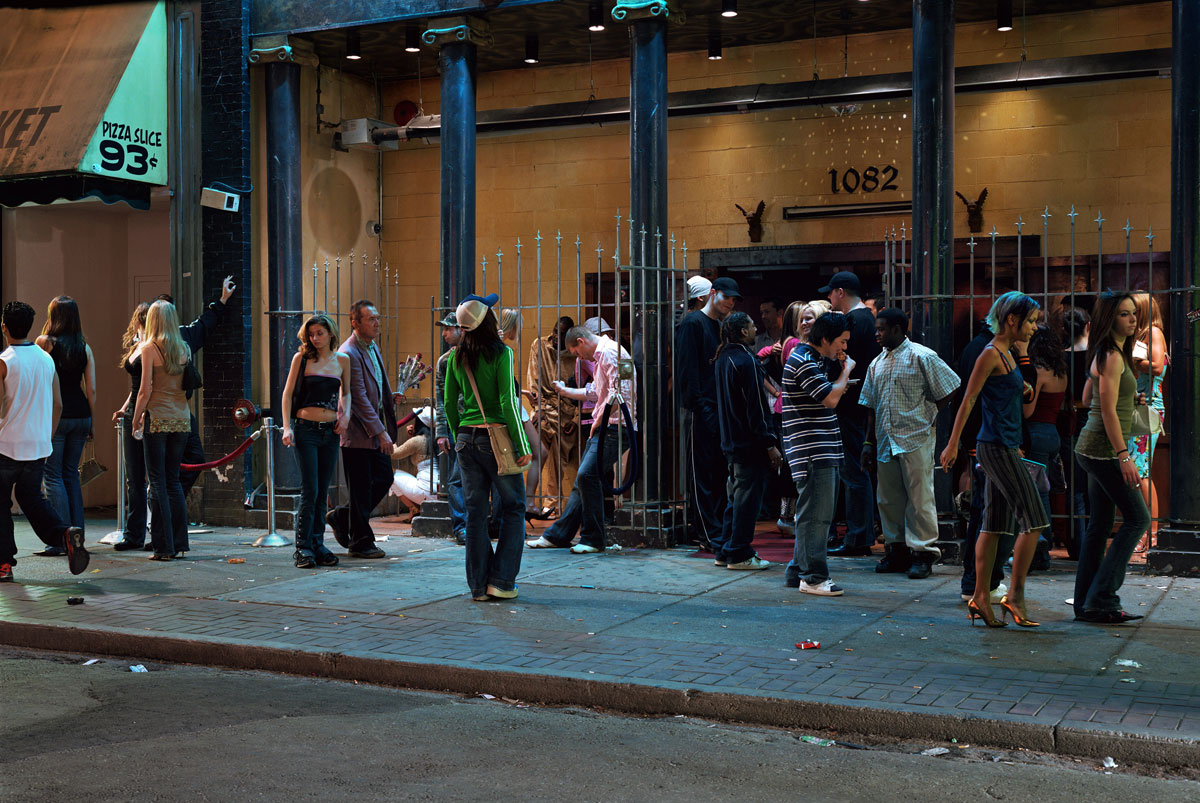
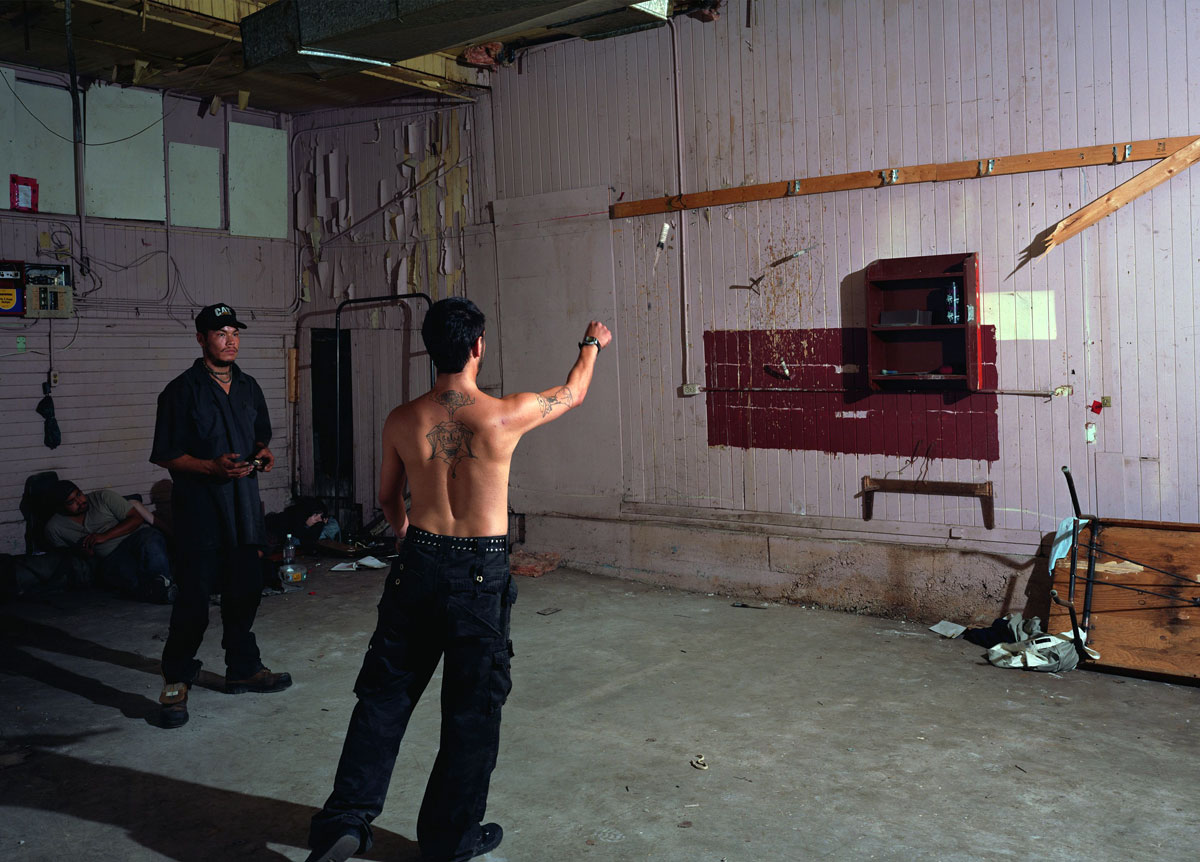
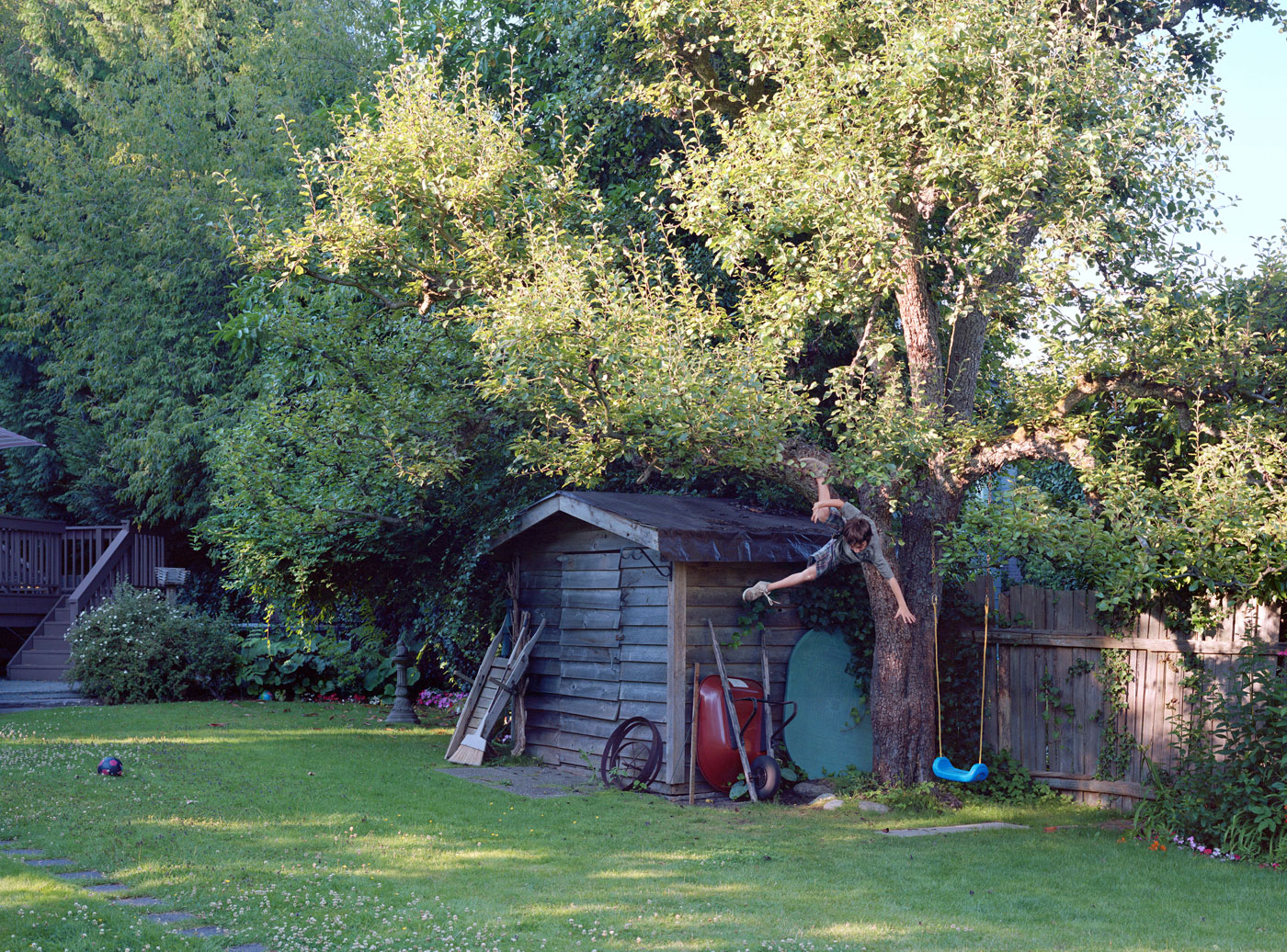

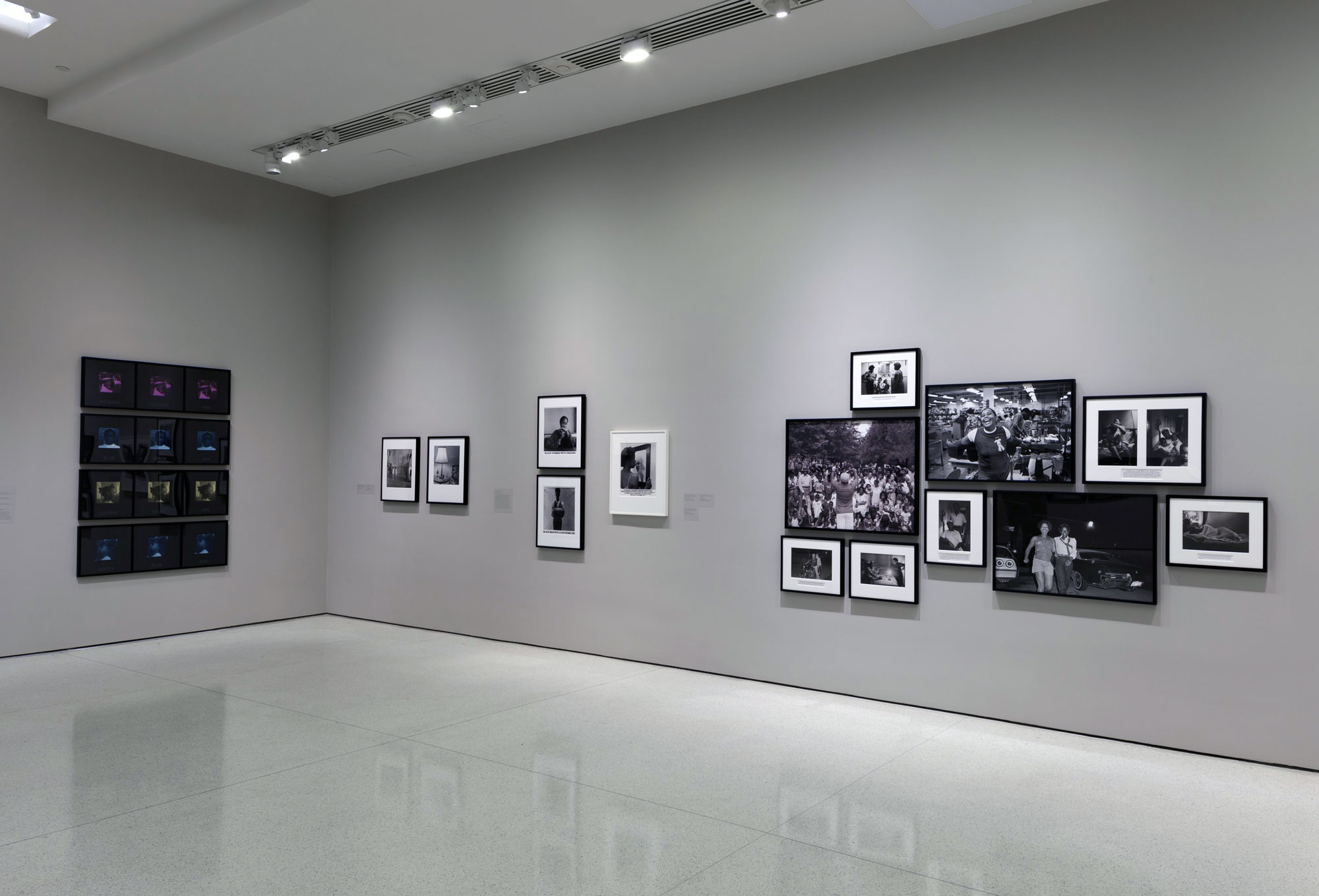
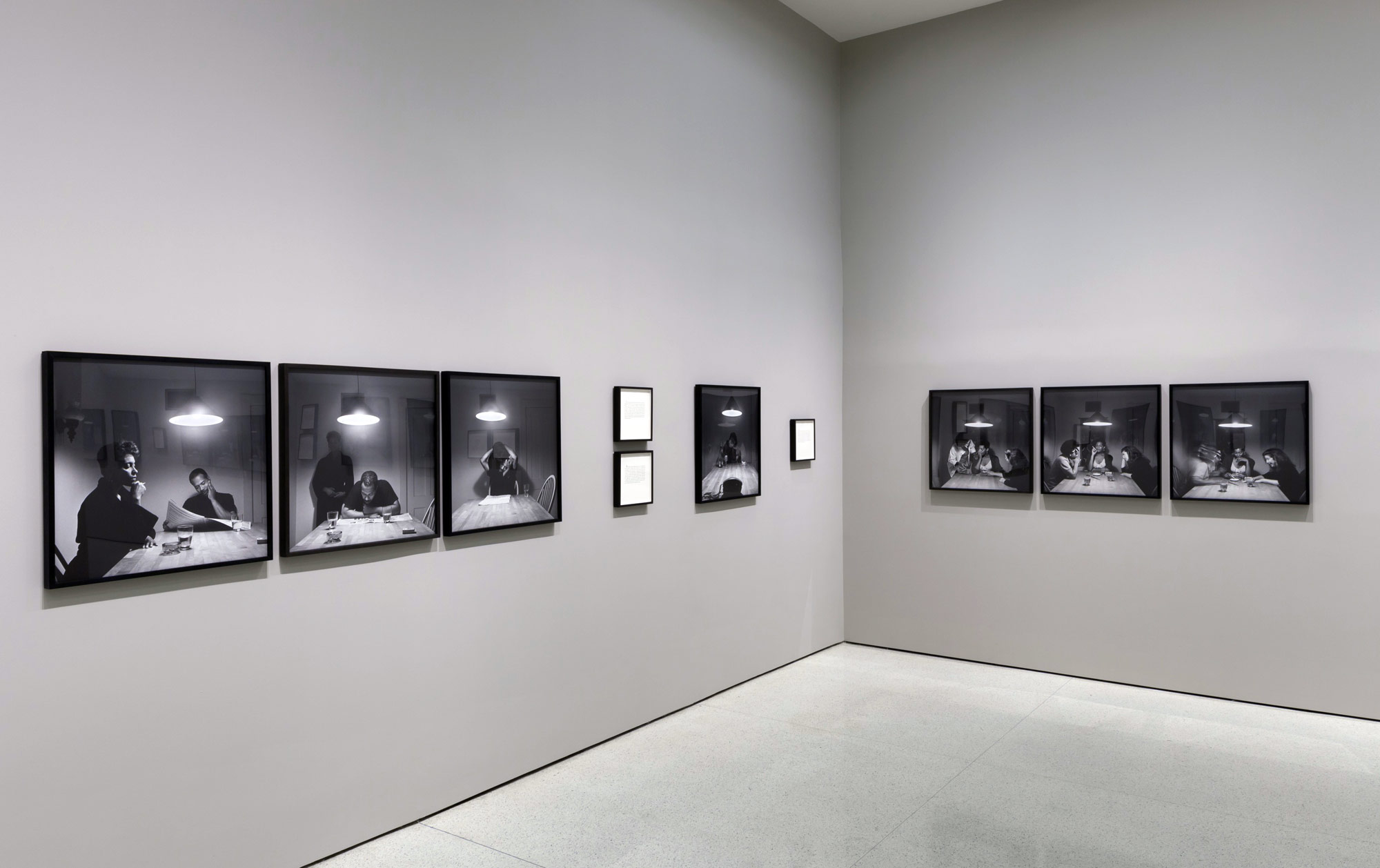
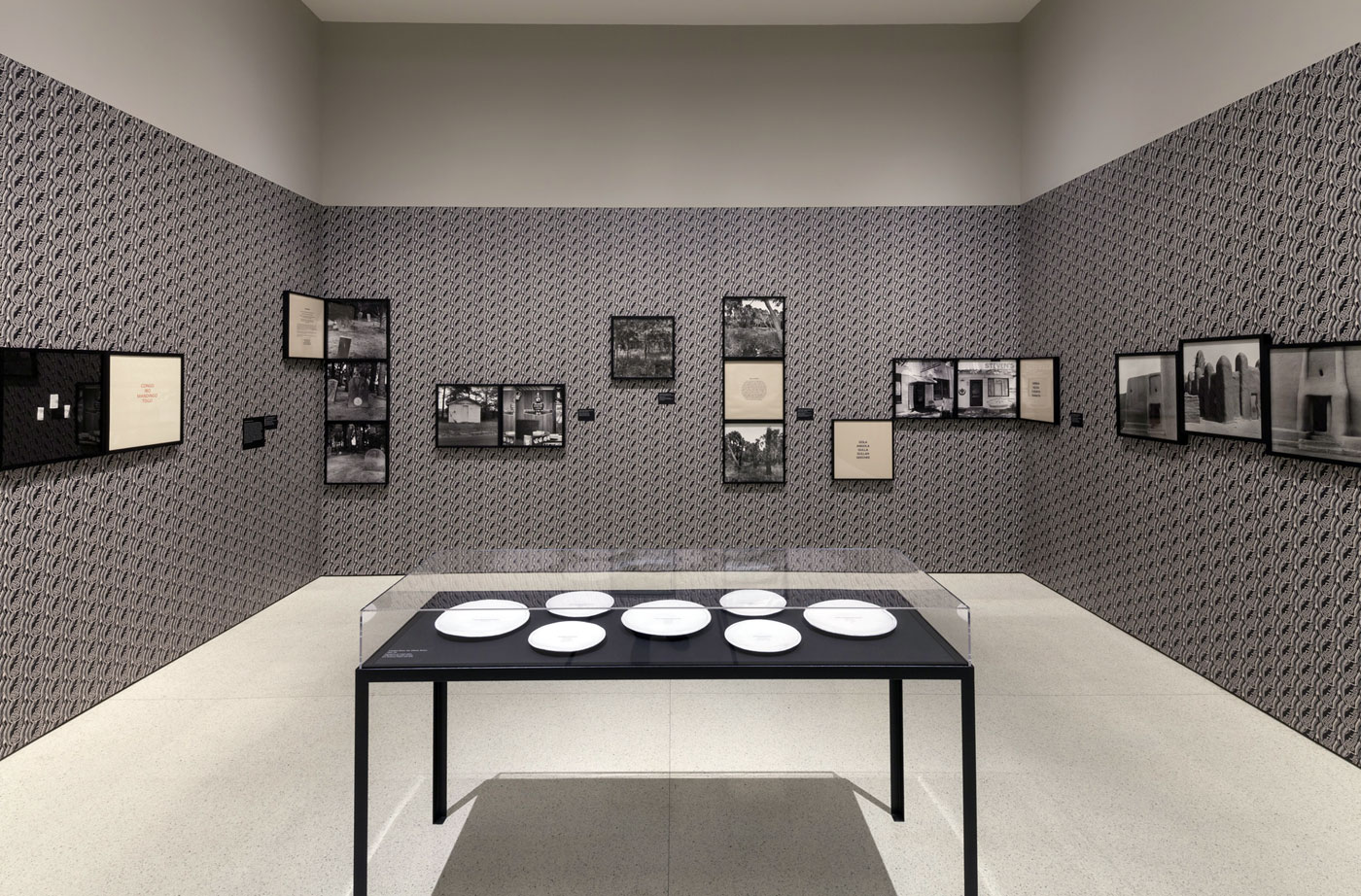
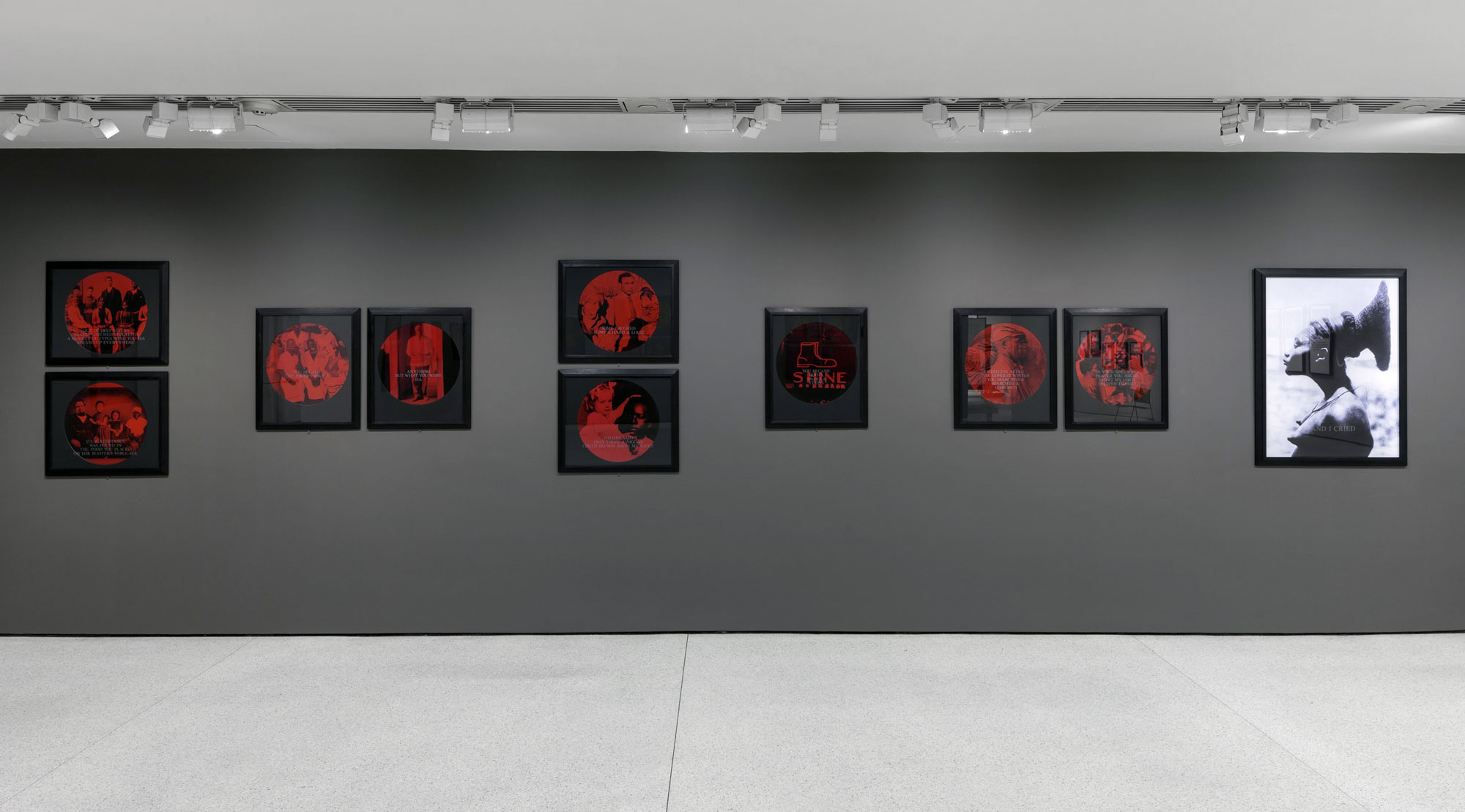
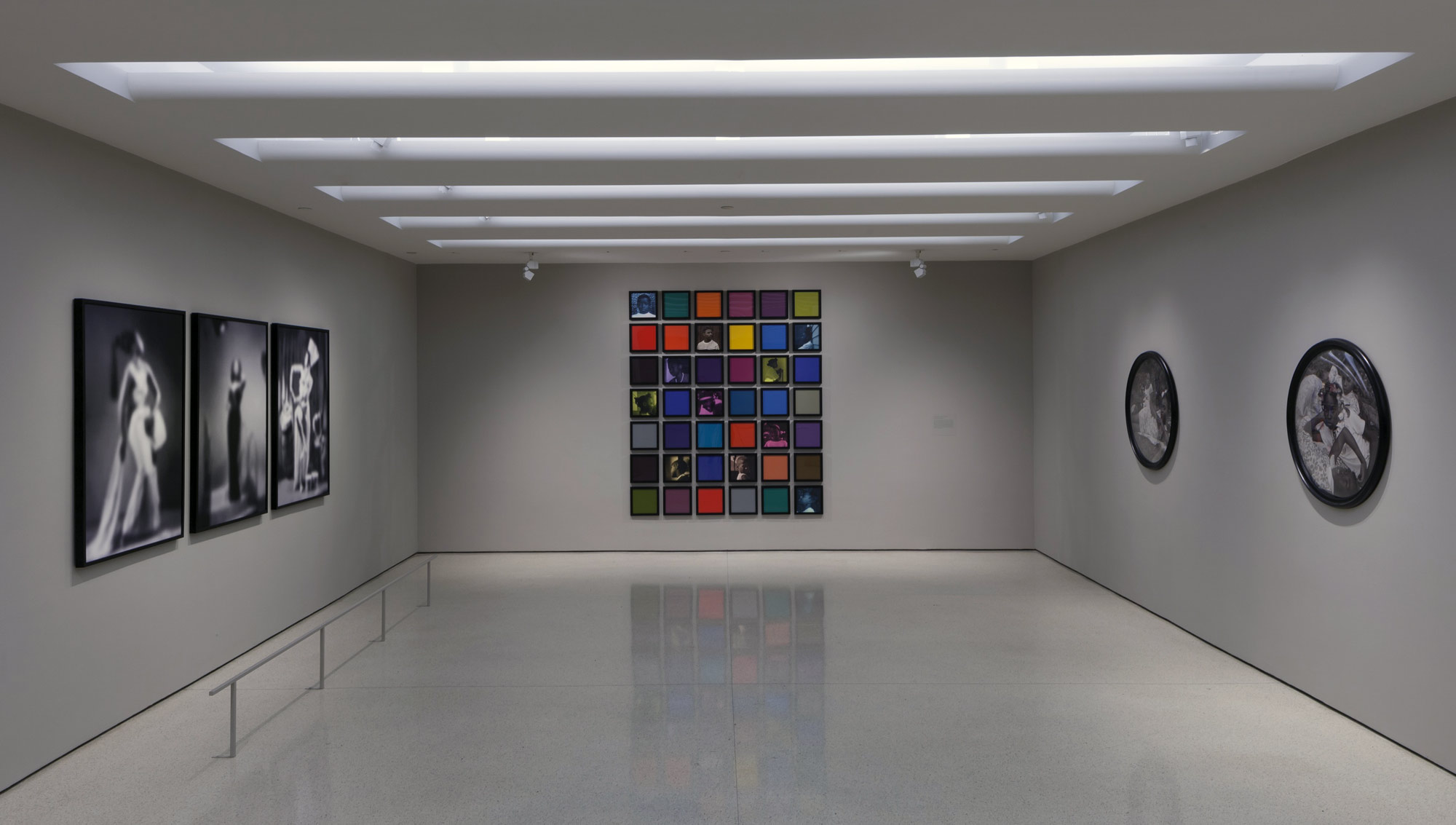
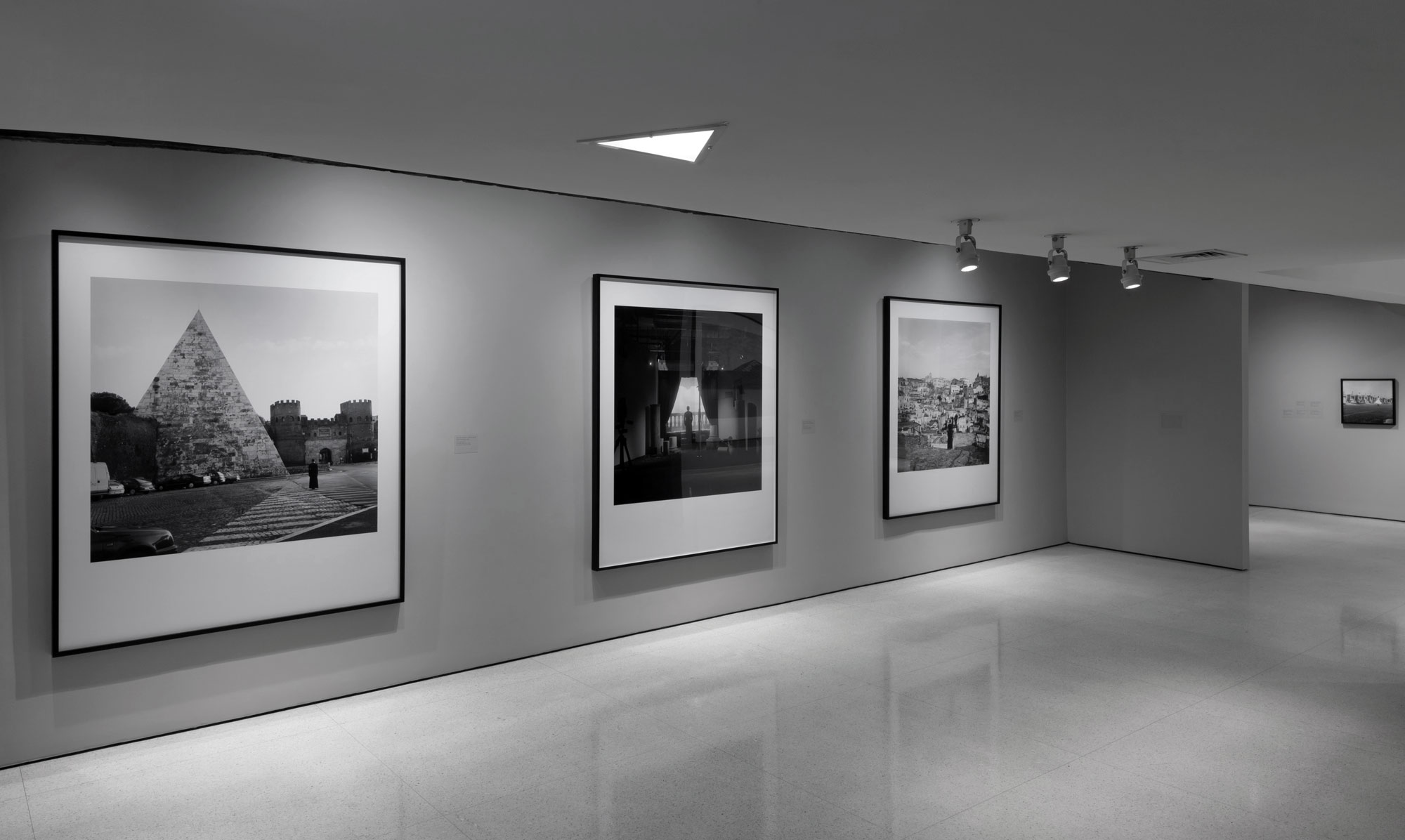
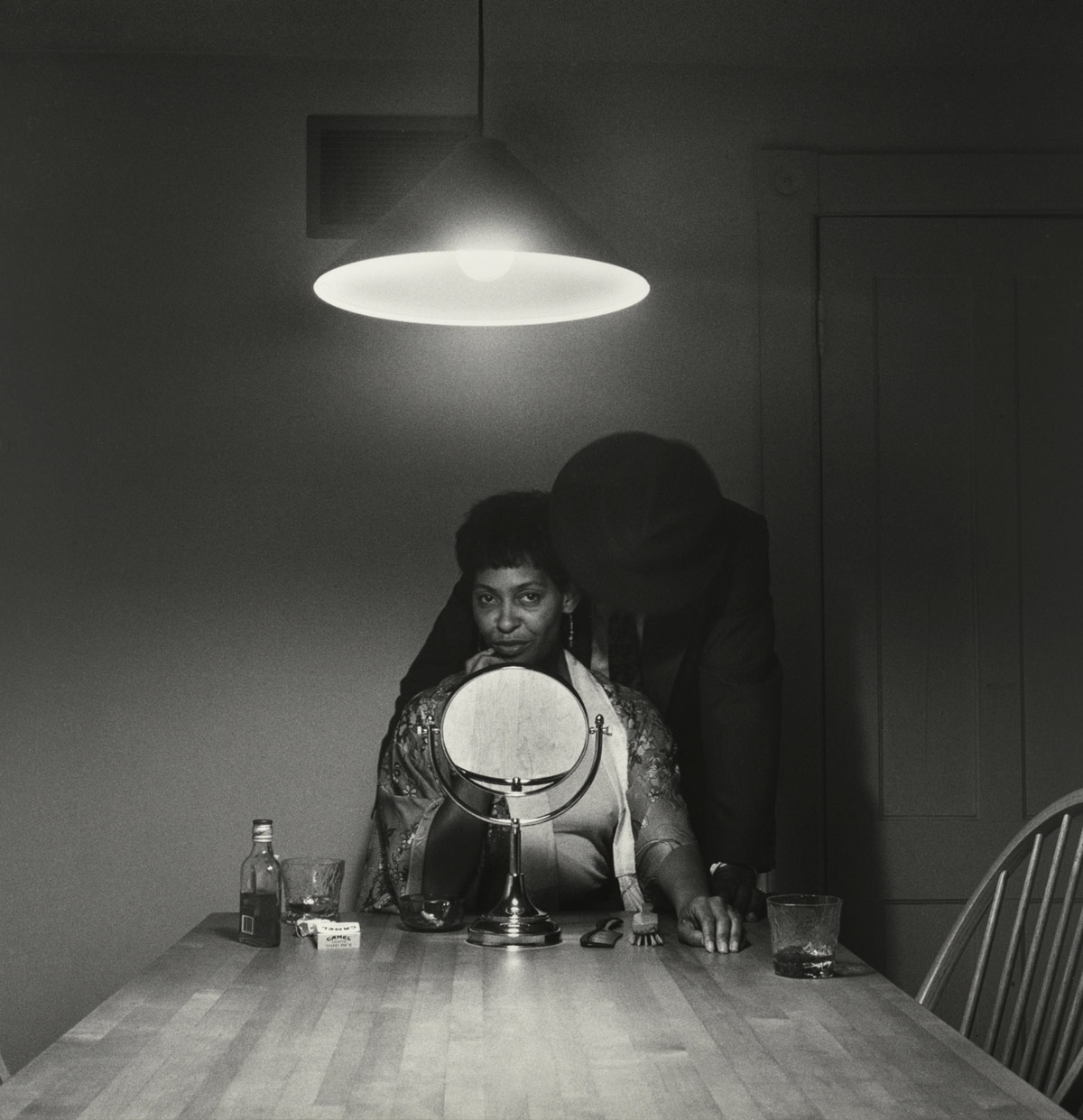
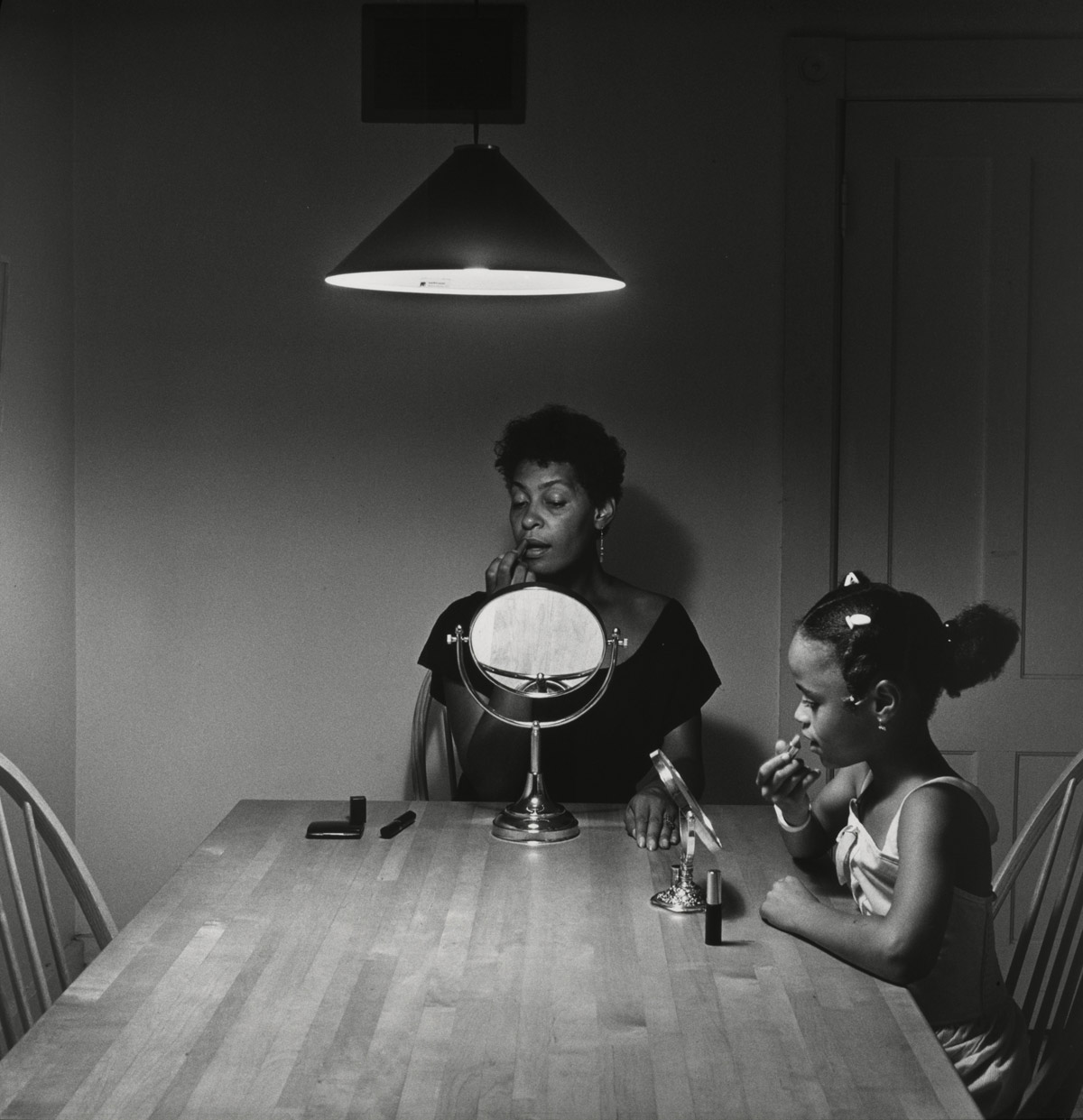
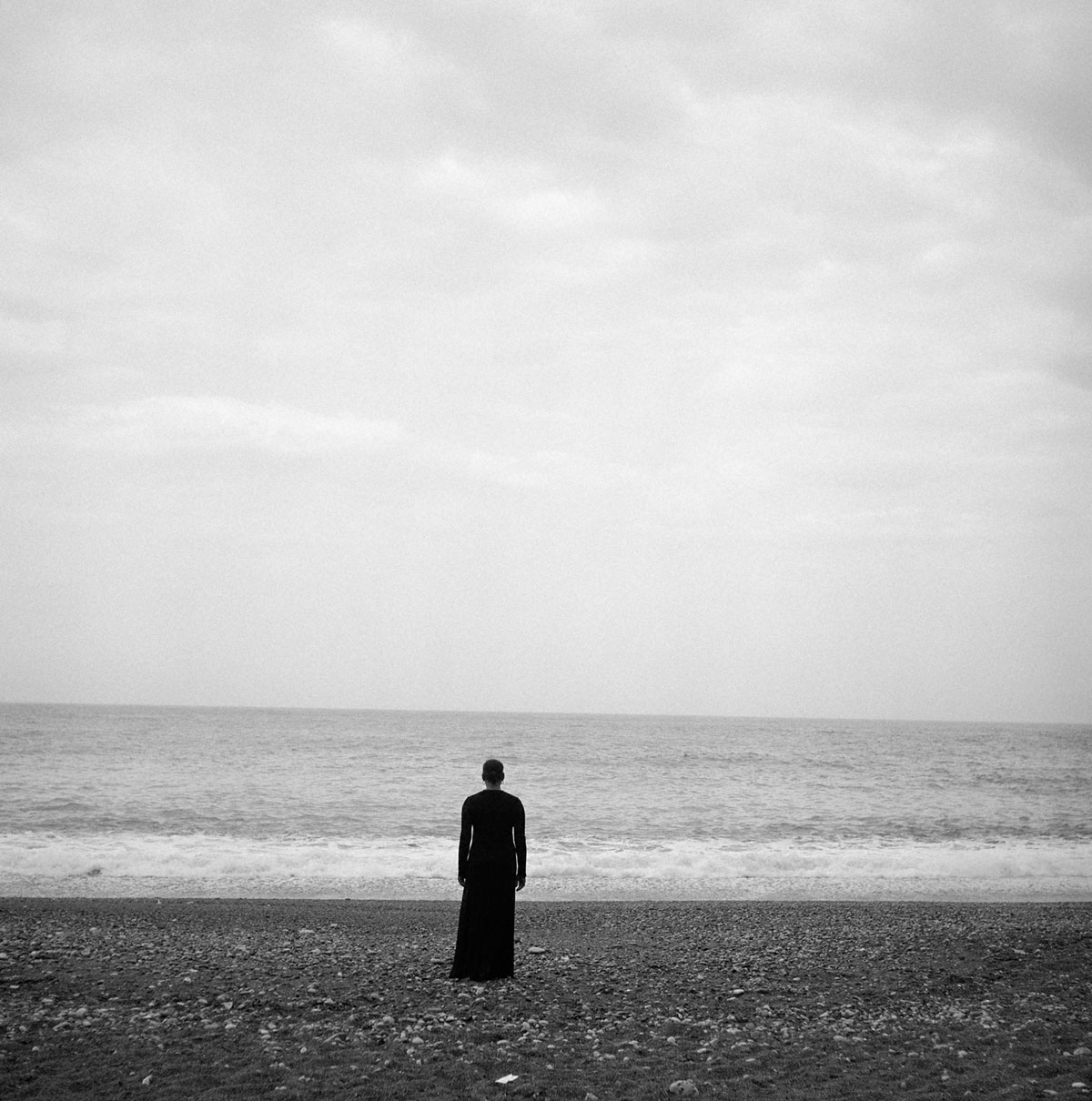
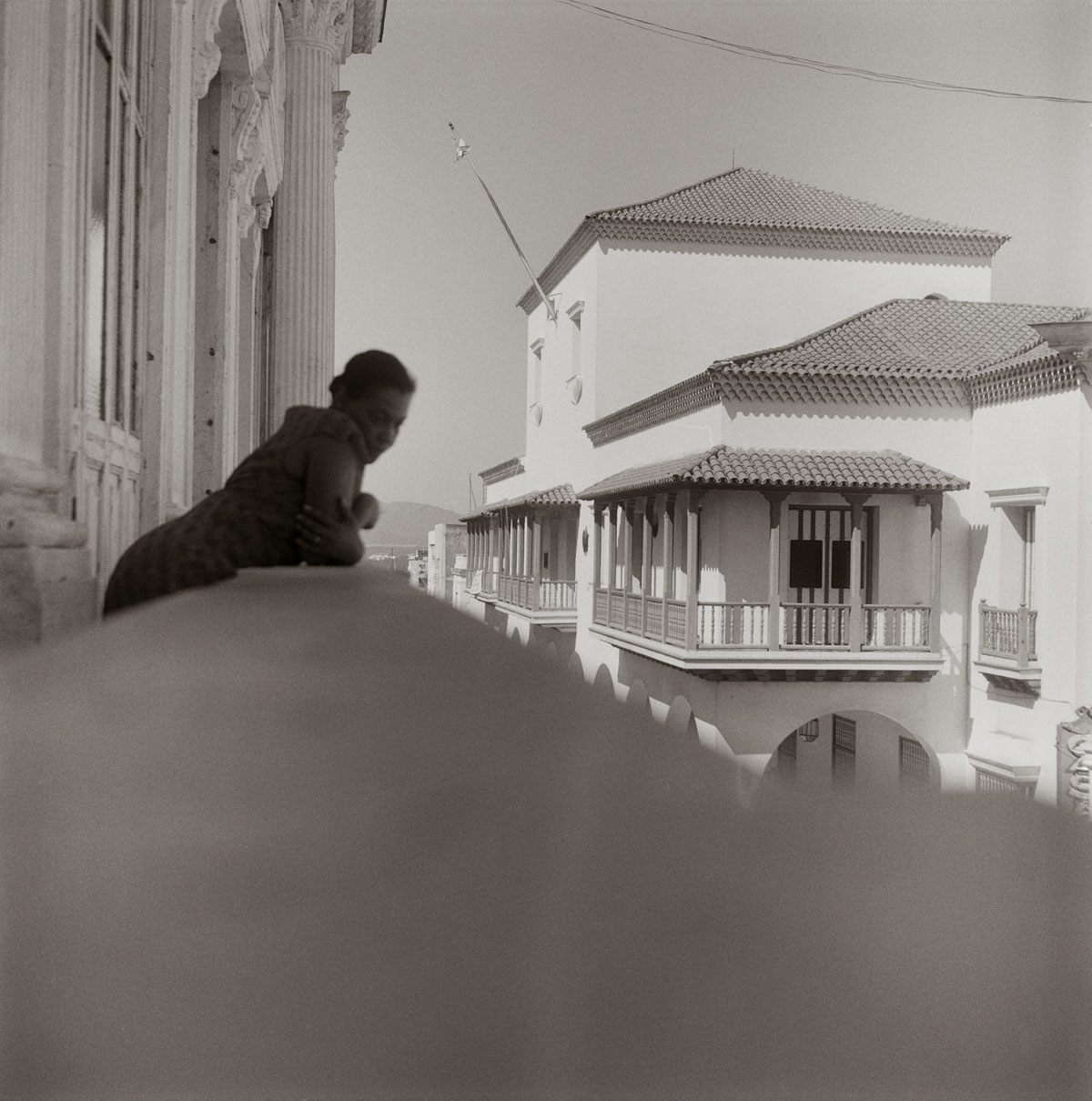
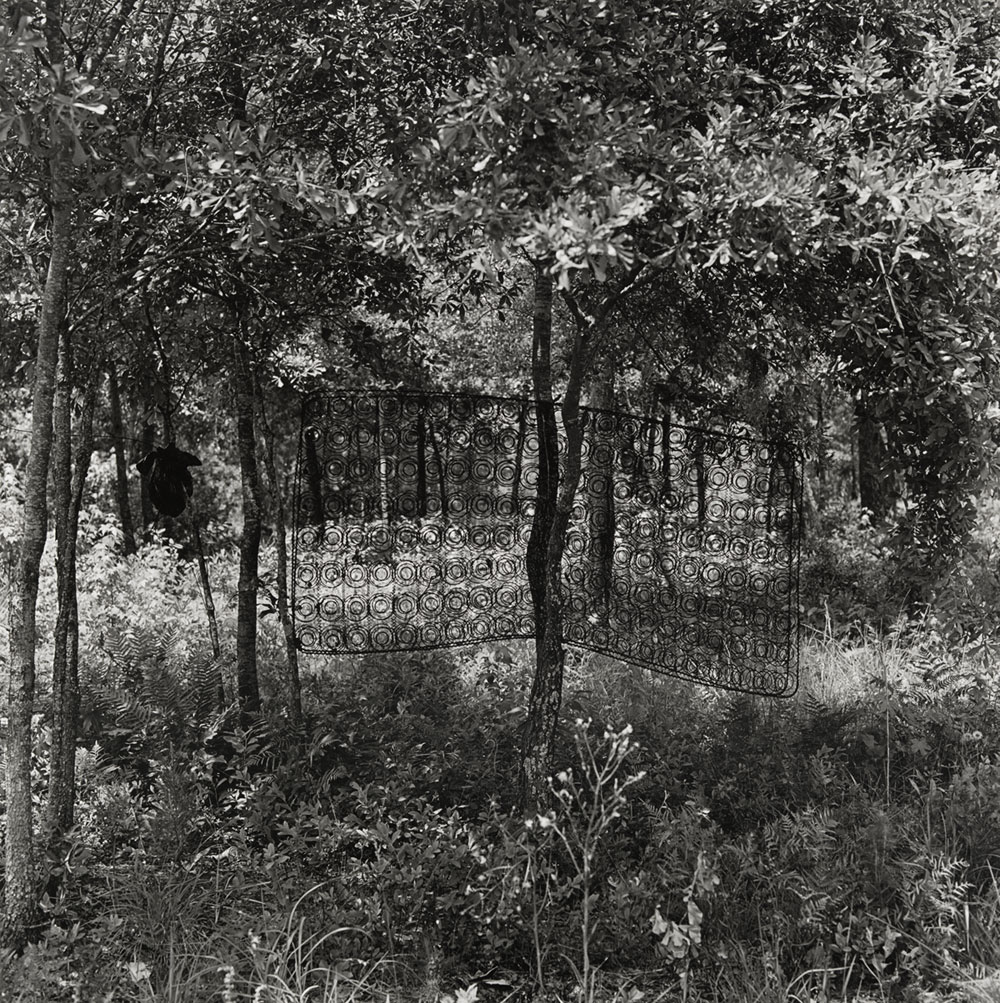
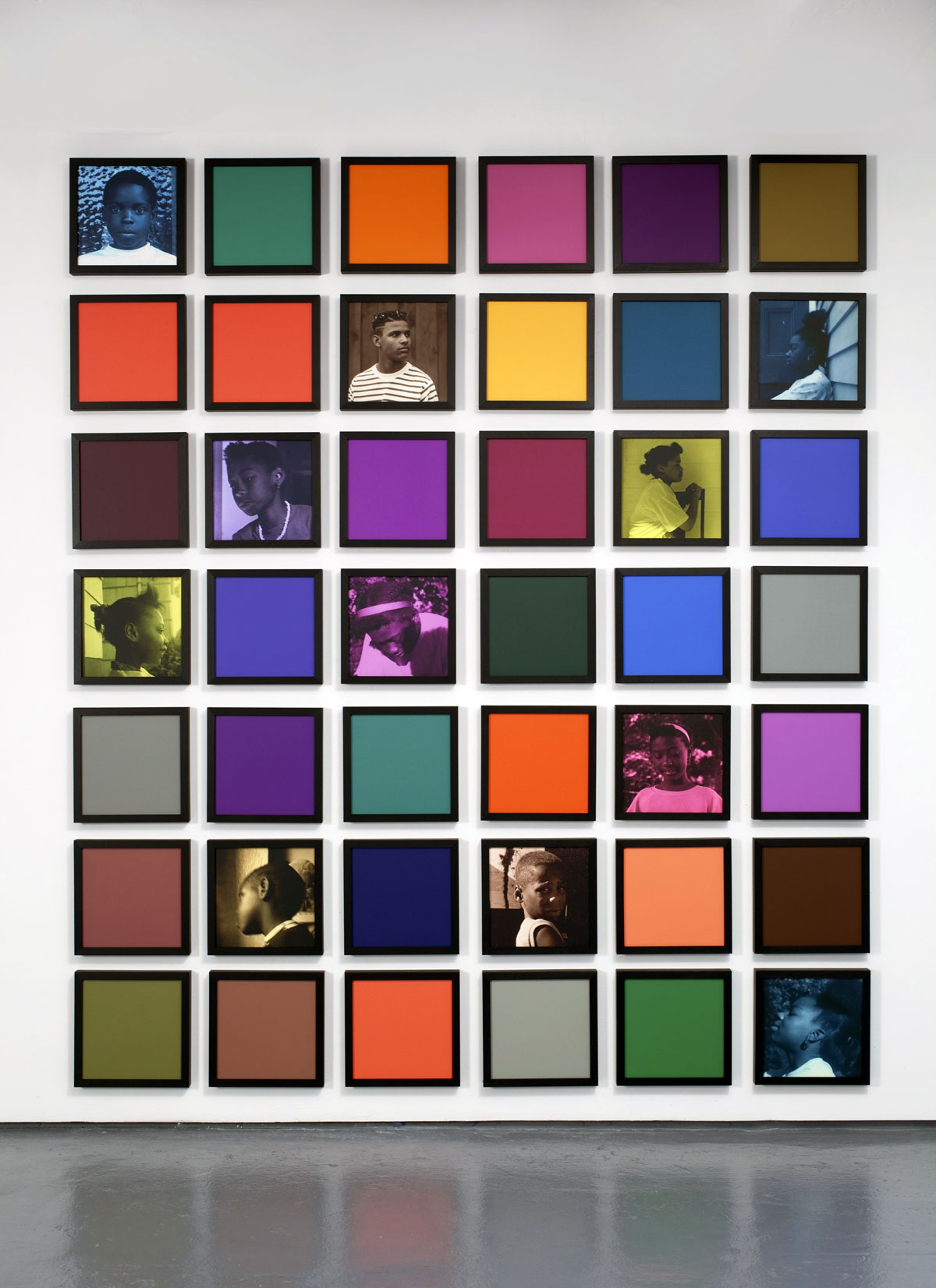


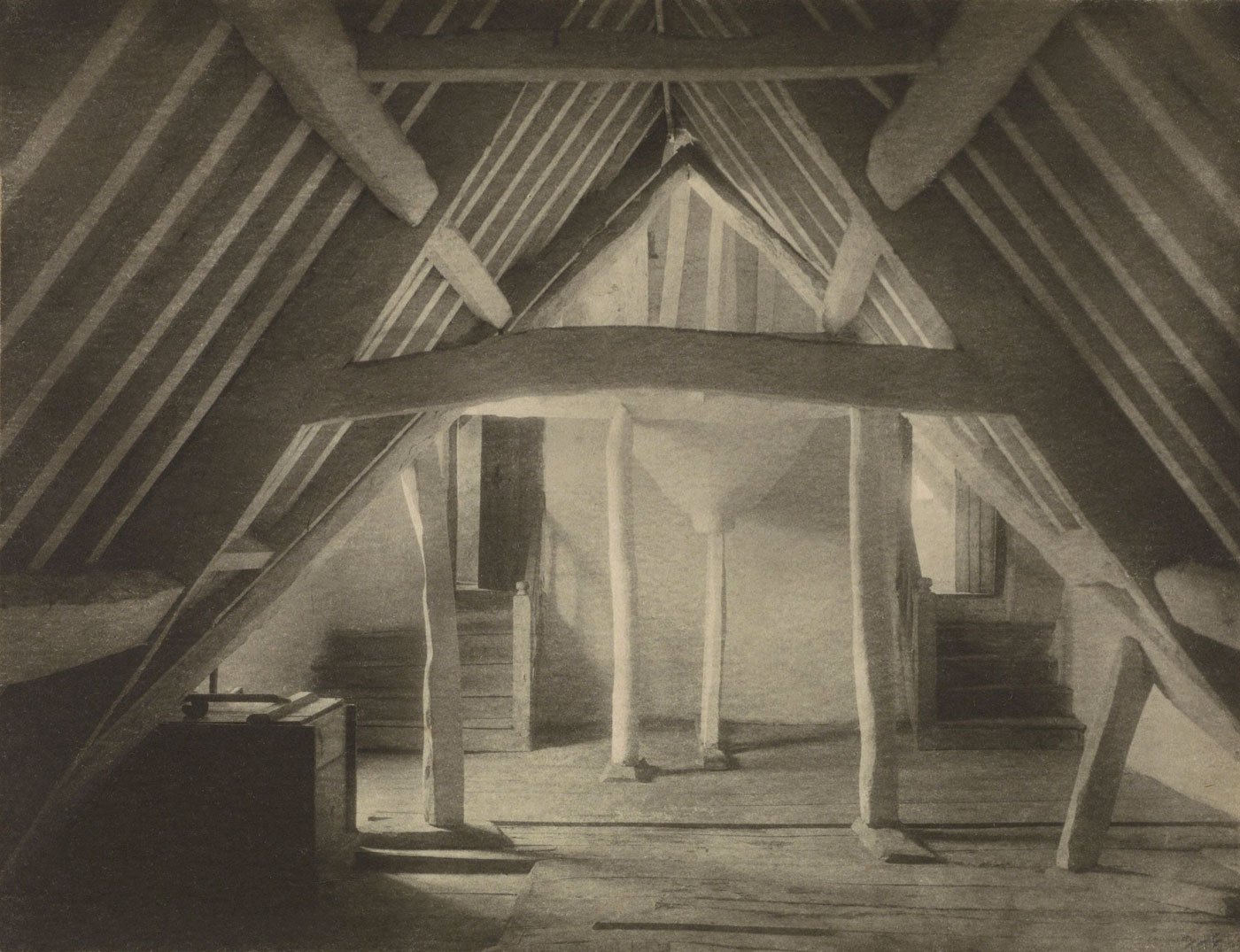


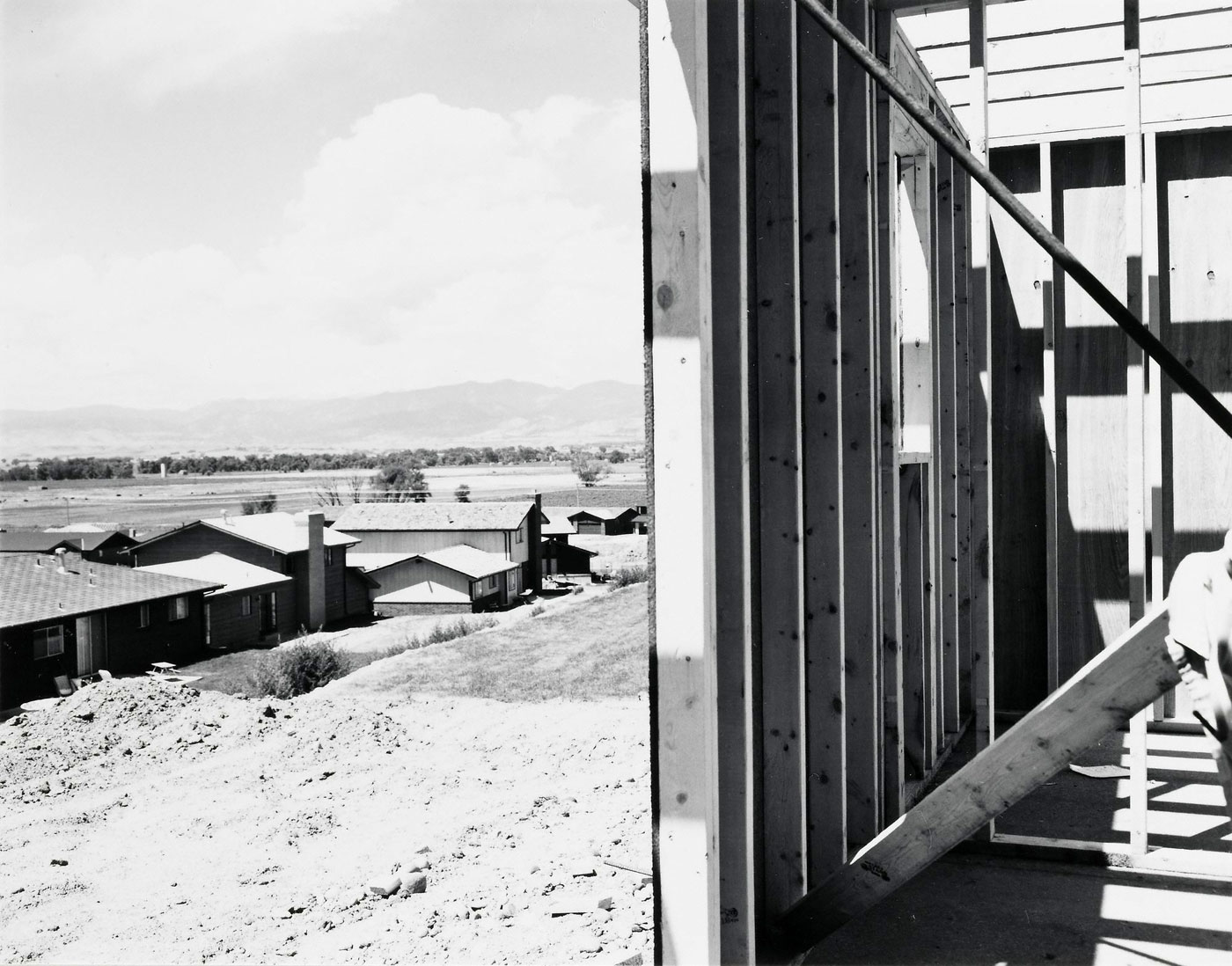


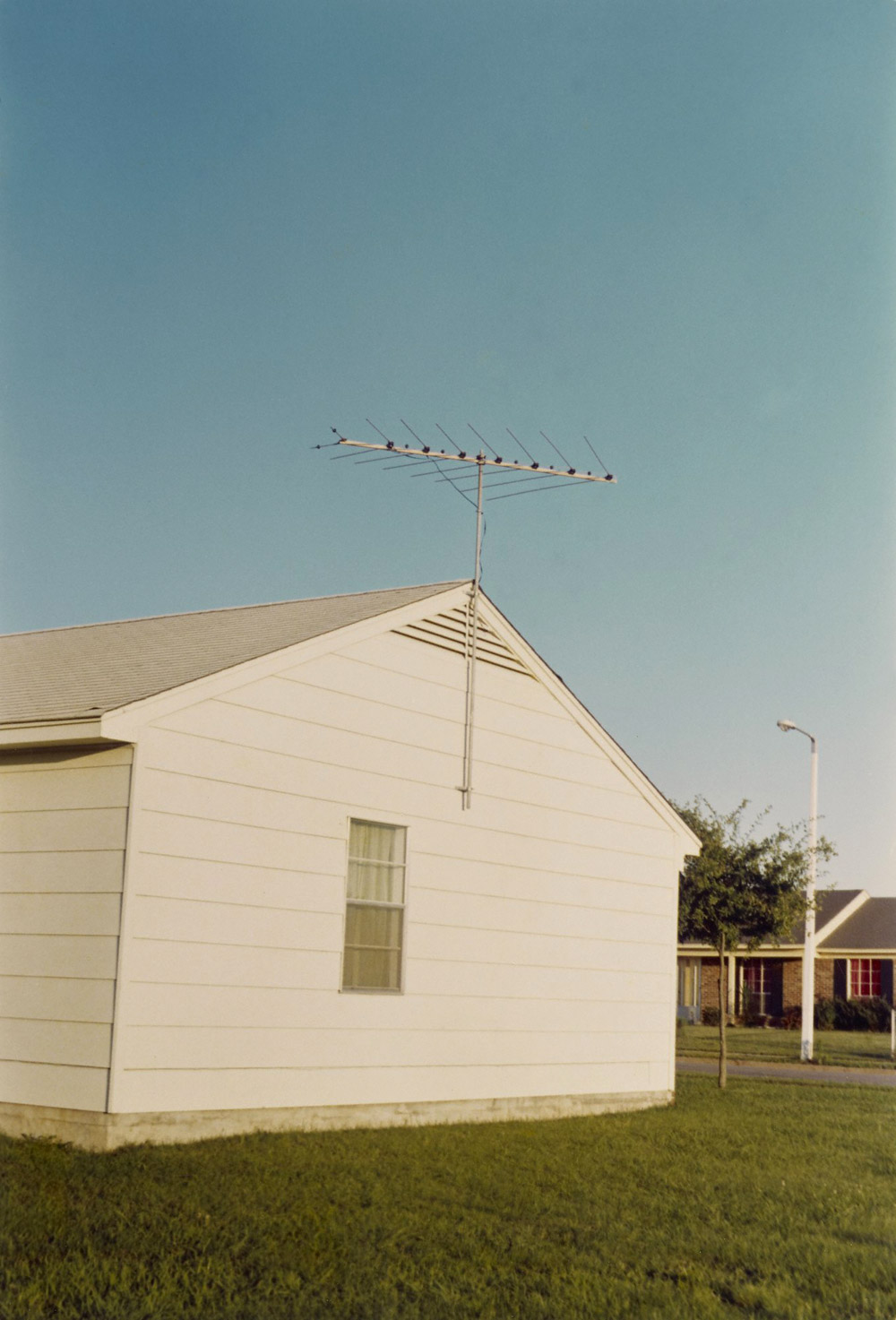


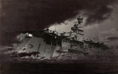


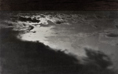


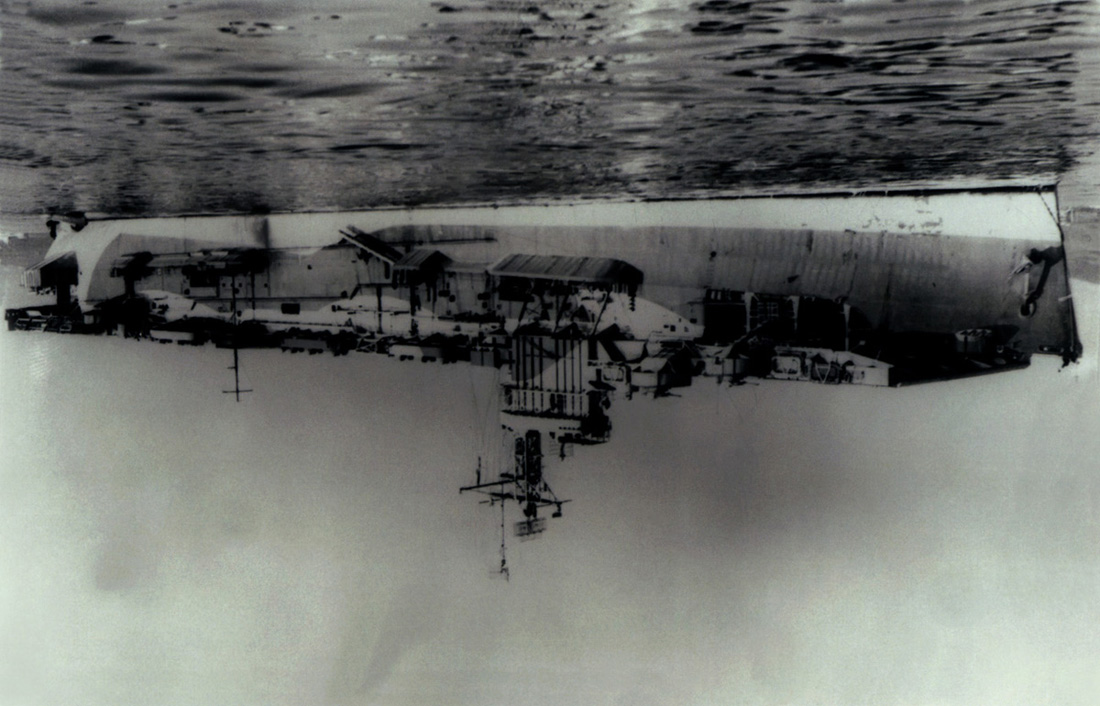
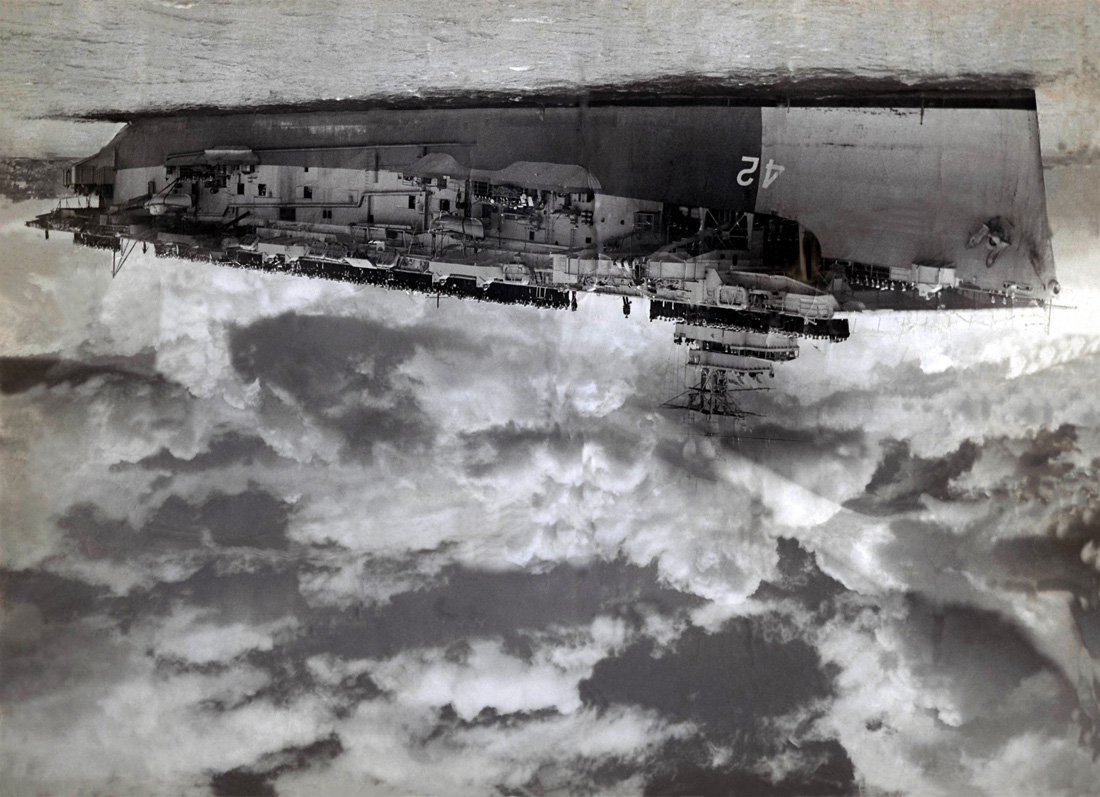




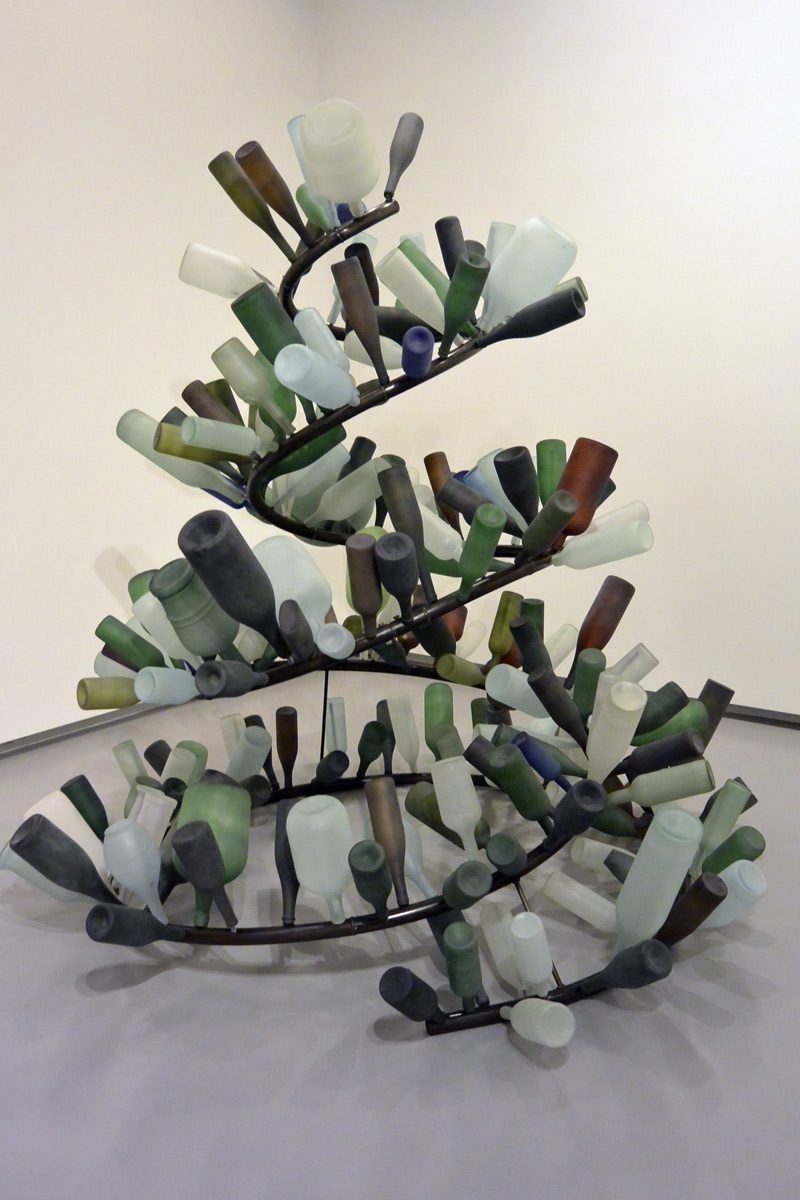


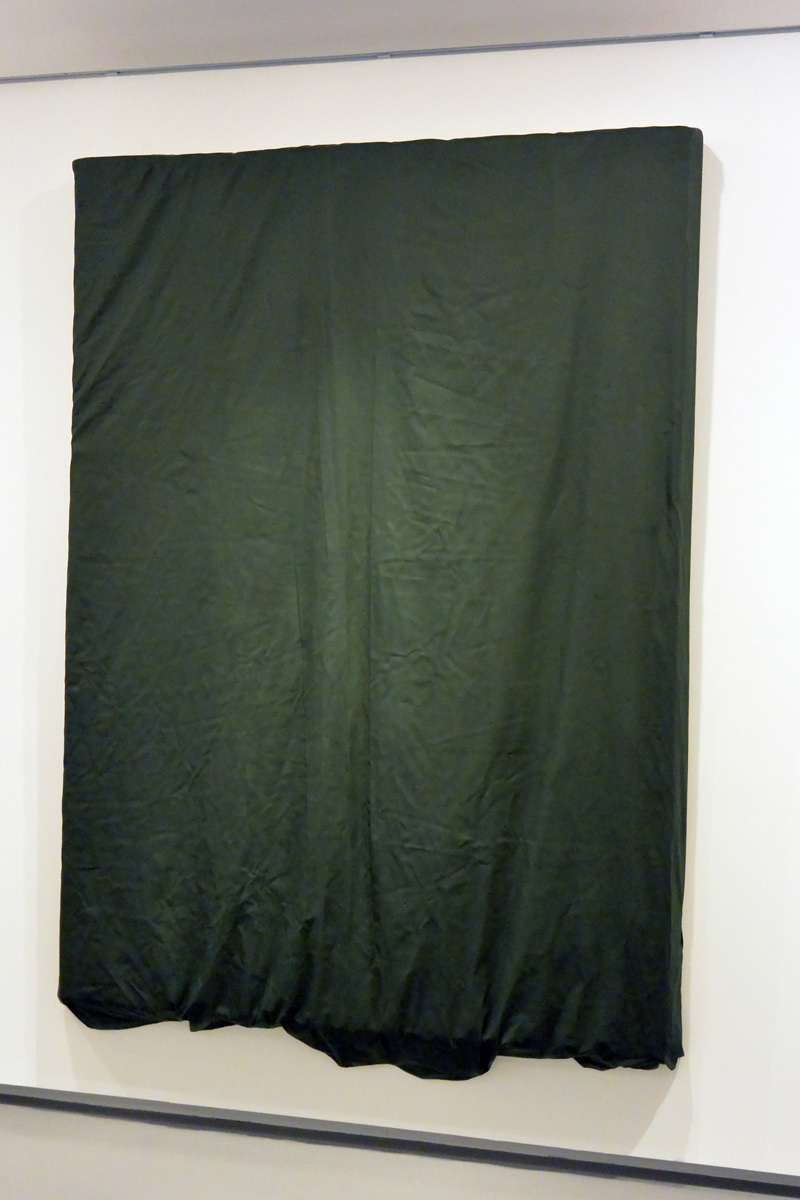

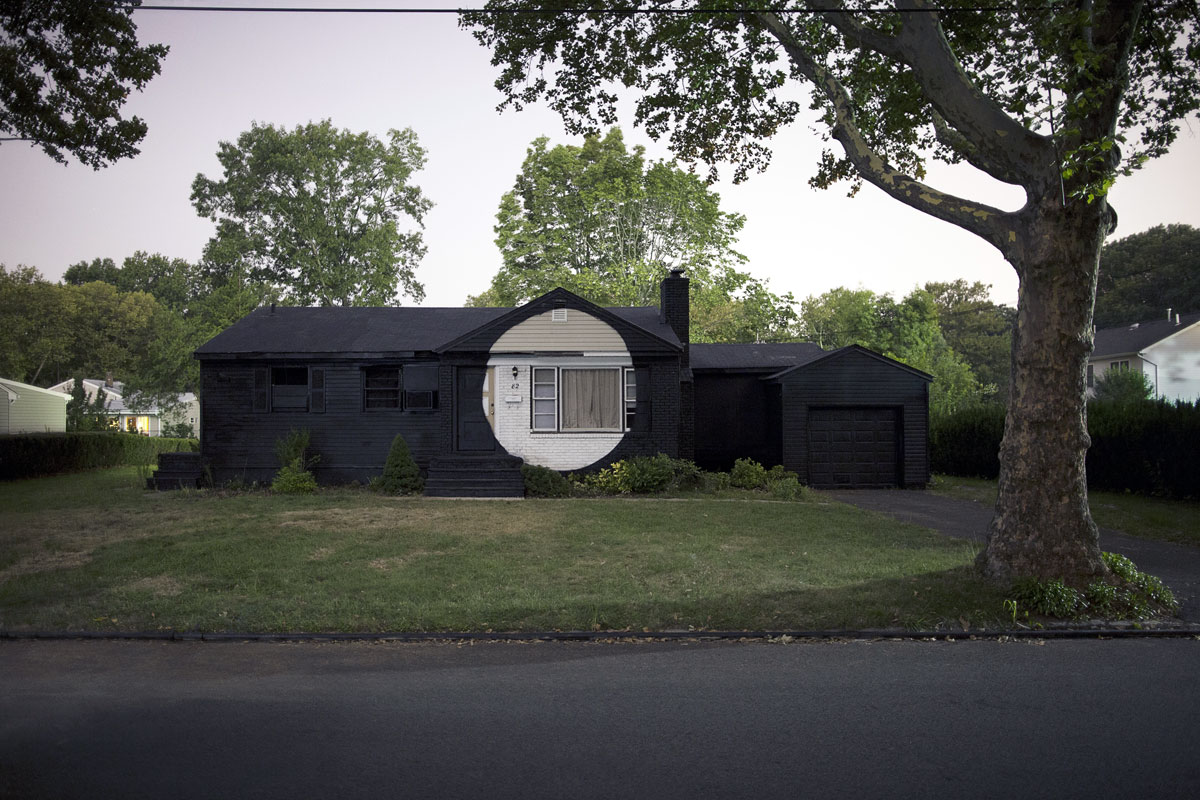


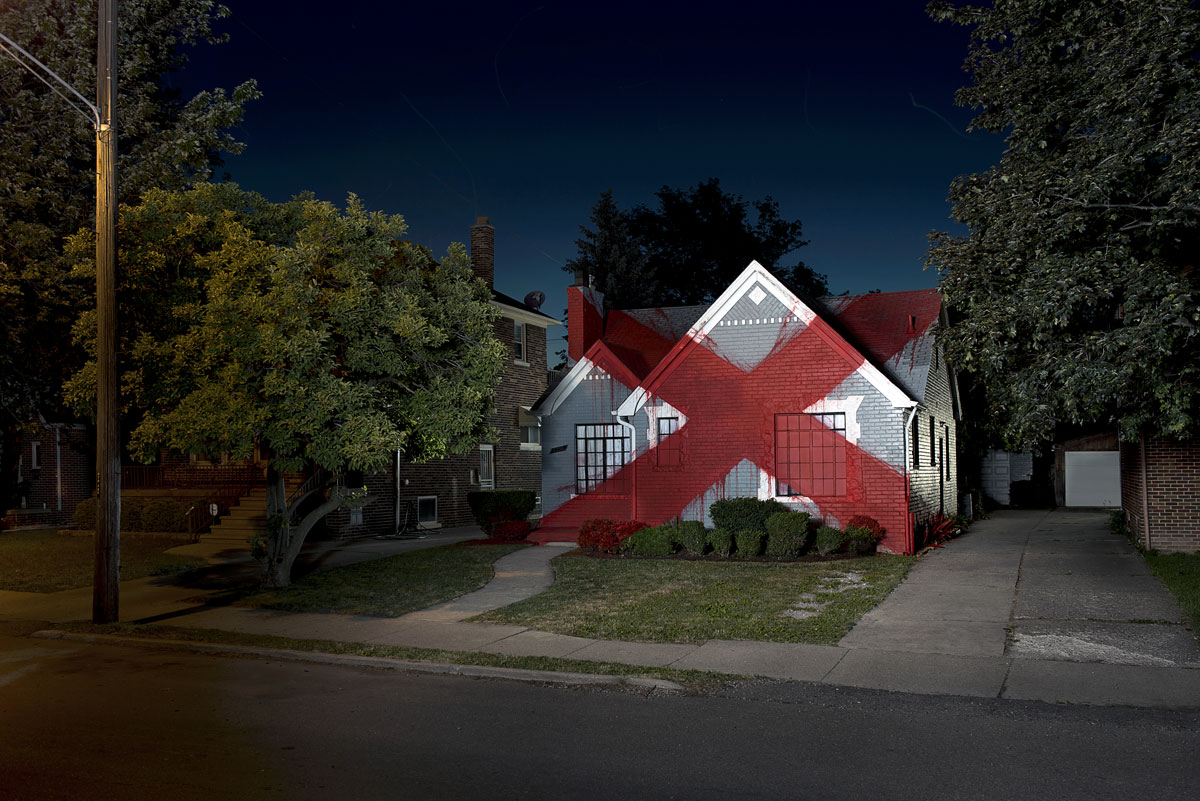



 Art Blart _ art and cultural memory archive
You must be logged in to post a comment.