Review: ‘Lost & Found: Family Photos Swept away by the 3.11 East Japan Tsunami’ at the Centre for Contemporary Photography (CCP), Fitzroy, Melbourne

Exhibition dates: 1st June – 15th July 2012


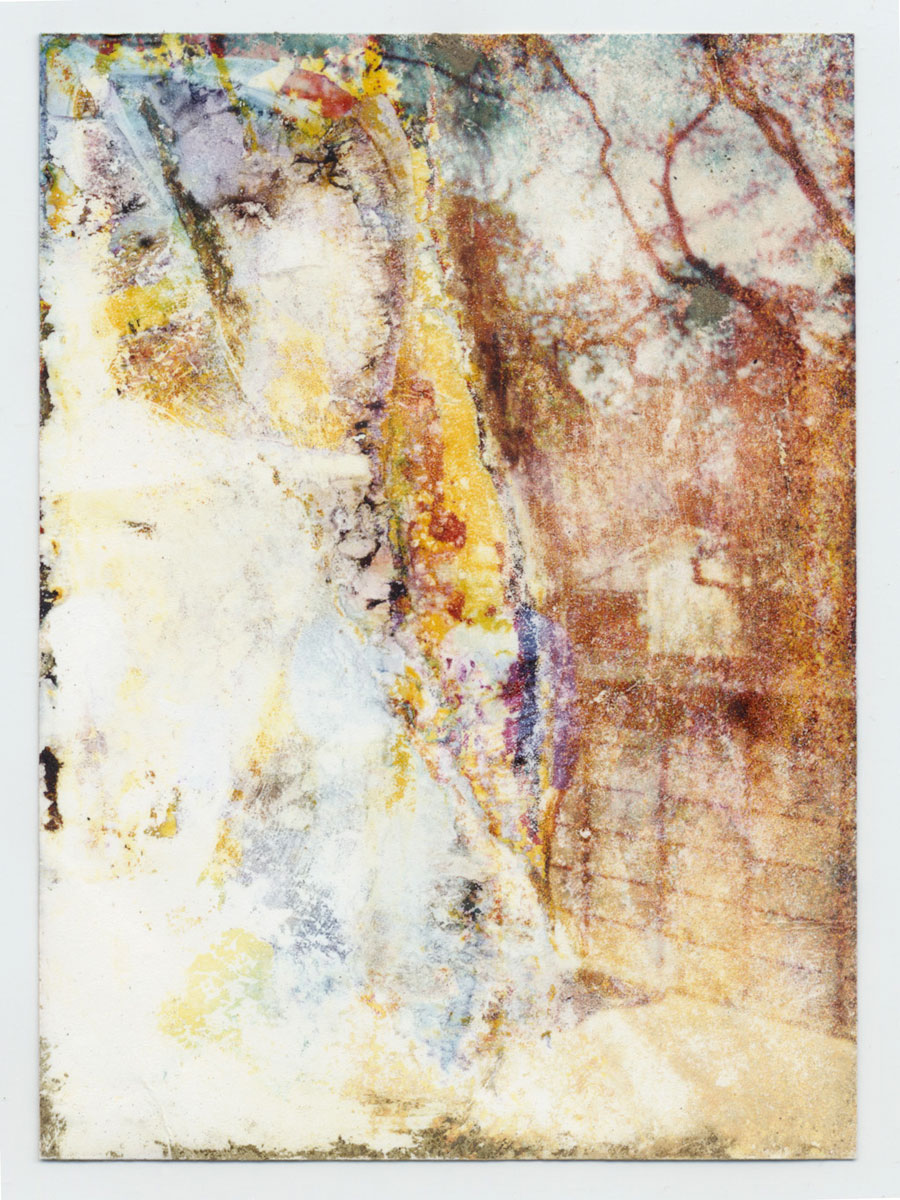
'Untitled' from 'Lost and Found' 2011


This is a profound exhibition of photographs that have been lost then found. Too damaged to be returned to the families of their missing owners after the 3.11 East Japan Tsunami they have been cleaned, dried, digitally catalogued and put on display. As remnants of disaster they have taken on an ethereal, abstract expressionist beauty.

Like Atget’s photographs (his “documents for artists”) they were never meant to be “art”, but through morphogenesis (‘beginning of the shape’) these snapshots of places, family and friends reveal their inherent form. This beginning of form has been exposed through displacement, washing and erasure. Through this process of erasure these anonymous images reveal their underlying structure with its link to alchemy, as the image dis/appears from view; they have become unfixed (as in the fixer that stabilises the image in the analogue darkroom) from reality. In this process they have become art.


The images are incredibly beautiful.

They hid secrets (of ownership, names, families and places, of time and space).

Something (energy, spirit?) emerges when you least expect it.


Photographs are coded, but usually so as to appear uncoded but here the link to the indexicality of the image – the idea of the visible as evidence of truth – has been broken. These photographs, taken out of their original context, have lost their specific use value in the particular time and place of their consumption. The fragmentation of this use value, together with the dissolution of their formal characteristics, means that they are freed of the conditions that limit and determine their meaning.1 As Annette Kuhn has written in The Power of the Image, “Meanings do not reside in images, then: they are circulated between representation, spectator and social function.”2 And in these images all three things have changed.

Further, the link between the image and its referent, the photograph and the thing being photographed has been irreversibly broken. As the French critic Maurice Blanchot has written, “The image has nothing to do with signification, meaning, as implied by the existence of the world, the effort of truth, the law and the brightness of the day. Not only is the image of an object not the meaning of that object and of no help in comprehending it, but it tends to withdraw it from its meaning by maintaining it in the immobility of a resemblance that it has nothing to resemble.”3 In other words (and especially in these photographs) it is this severance of meaning and its object, this resemblance of nothing.

But think about this idea:

THINK ABOUT THE IDEA OF RE(AS)SEMBLANCE!

DOES THE PHOTOGRAPH REASSEMBLE A SIGNIFICATION, A MEANING WHOLLY ITS OWN, OR IS THAT RE(AS)SEMBLANCE PART OF THE ORIGINAL MEANING OF THE OBJECT PHOTOGRAPHED?


In these photographs there is an obfuscation of reality in which the usually coded photographs now appear to be uncoded in some visceral sense. In fact there is a double obfuscation, a double effacement, as the images are displayed on the wall like a series of bathroom tiles in plastic sleeves, here not at one remove but at two (the clouding of the image and the clouding through the plastic). What emerges from this alchemical miasma is the ghost of the meaning of the object, where we acknowledge that the essence of these people did really exist. The recognition of their presence, this partial reassemblance of the context and meaning of the object originally photographed, is the strength of these images: our acknowledgment of some form of existence in the trace of the photograph, where seeing is subconsciously believing.

What we are left with in these images are vestiges of presence, remnants or traces of people that have passed on. In a kind of divine intervention, these photographs ask the viewer questions about the one fact that we cannot avoid in our lives, our own mortality, and what remains after we pass on. We can never know these people and places, just as we can never know the place and time of our death – when our “time” is up – but these photographs awaken in us a subconscious remembering: that we may be found (in life), then lost (through death), then found again in the gaze of the viewer looking at the photographs in the future present. We are (dis)continuous beings.

There is no one single reading of these photographs for “there are only competing narratives and interpretations of a world that cannot be wholly, accurately described.”4 These indescribable photographs impinge on our consciousness calling on us to remember even as the speed of contemporary life asks us to forget. This ethical act of looking, of mourning and remembering, of paying homage to presence acknowledges that we choose not to let pass into the dark night of the soul these traces of our forebears, for each emanation is deeply embedded within individual and cultural memory.

These photographs are a contemporary form of Western ‘dreaming’ in which we feel a link to the collective human experience. In this reification, we bear witness to the (re)assemblance of life, the abstract made (subconsciously) concrete, as material thing. These images of absent presence certainly reached out and touched my soul.

Vividly, I choose to remember rather than to forget.

Dr Marcus Bunyan


Footnotes

1/ Kuhn, Annette. The Power of the Image: Essays on Representation and Sexuality. London: Routledge and Kegan Paul, 1985, p. 6

2/ Ibid.,

3/ Blanchot, Maurice. The Gaze of Orpheus. New York: Barrytown, 1981, p. 85

4/ Townsend, Chris. Vile Bodies: Photography and the Crisis of Looking. Munich: Prestel, 1998, p. 10


Many thankx to Munemasa Takahashi, Kristian Haggblom and Karra Rees for their help and the CCP for allowing me to publish the photographs in the posting. Please click on the photographs to view a larger version of the image.


'Untitled' from 'Lost and Found' 2011


Opening of the 'Lost & Found' exhibition at the Centre for Contemporary Photography


Opening of the Lost & Found exhibition at the Centre for Contemporary Photography, Melbourne


'Untitled' from 'Lost and Found' 2011


'Untitled' from 'Lost and Found' 2011


'Untitled' from 'Lost and Found' 2011


Lost & Found is a profoundly moving exhibition of collected photographs recovered from the devastation following the earthquake and tsunami and subsequent nuclear catastrophe that took place in the Tohoku region in 2011. 

The tsunami not only swept the harbour away, but also houses, cars, trains; and many people lost their lives. Although no longer in the media, people in this region are still in great need. These photographs remind us of their presence and make us aware of their silent voices. The exhibition also gives us an opportunity to think about the relationship people have with their photographs.

The Lost & Found project is attempting to return pictures from the collection to their owners by cleaning, cataloguing and creating a digital database of the photographs. Many images were too badly damaged and can not be returned; rather than discard them, the project team decided to exhibit the imagery and give people the opportunity to see these photographs in the belief that they carry powerful messages. 

This project was initiated by Munemasa Takahashi and Hiroshi Hatate in Japan and Kristian Haggblom from Wallflower Photomedia Gallery in Australia. Funds raised will go directly to the people of Yamamoto-cho.

Text from the CCP website


'Untitled' from 'Lost and Found' 2011


'Untitled' from 'Lost and Found' 2011


'Untitled' from 'Lost and Found' 2011


'Untitled' from 'Lost and Found' 2011


'Untitled' from 'Lost and Found' 2011


All photographs are from the exhibition Lost & Found


Centre for Contemporary Photography

No permanent exhibition space at the moment

Centre for Contemporary Photography website

LIKE ART BLART ON FACEBOOK

Back to top

Exhibition: ‘Building the Revolution: 
Soviet Art and Architecture 1915-1935 with photographs by Richard Pare
’ at Martin-Gropius-Bau, Berlin

Exhibition dates: 5th April – 9th July 2012


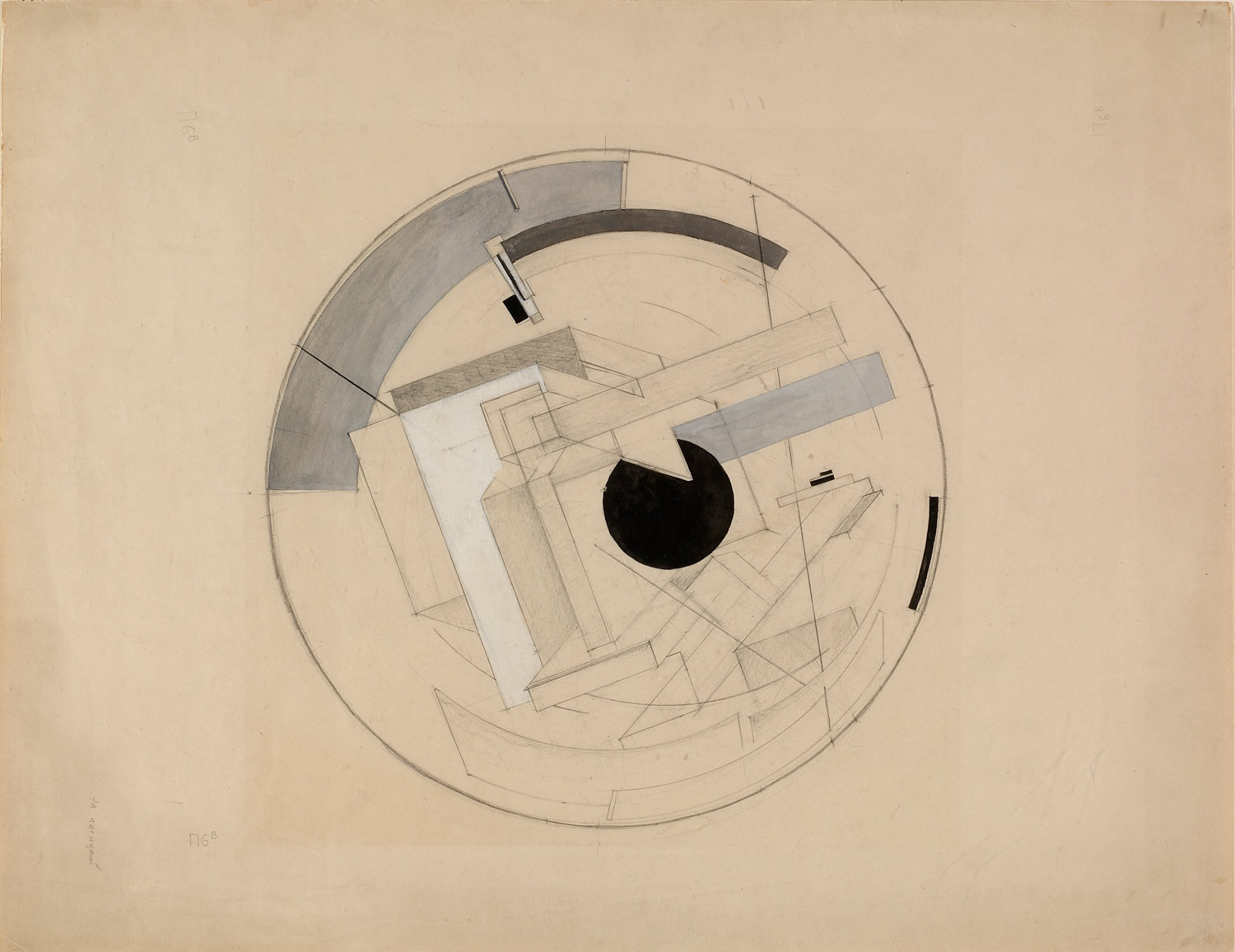
El Lissitzky (Russian, 1890-1941) 'Sketch for Proun 6B' 1919-1921


El Lissitzky (Russian, 1890-1941)
Sketch for Proun 6B
1919-1921
Pencil and gouache on paper
34.6 x 44.7cm
© Courtesy the State Museum of Contemporary Art
Costakis Collection, Thessaloniki


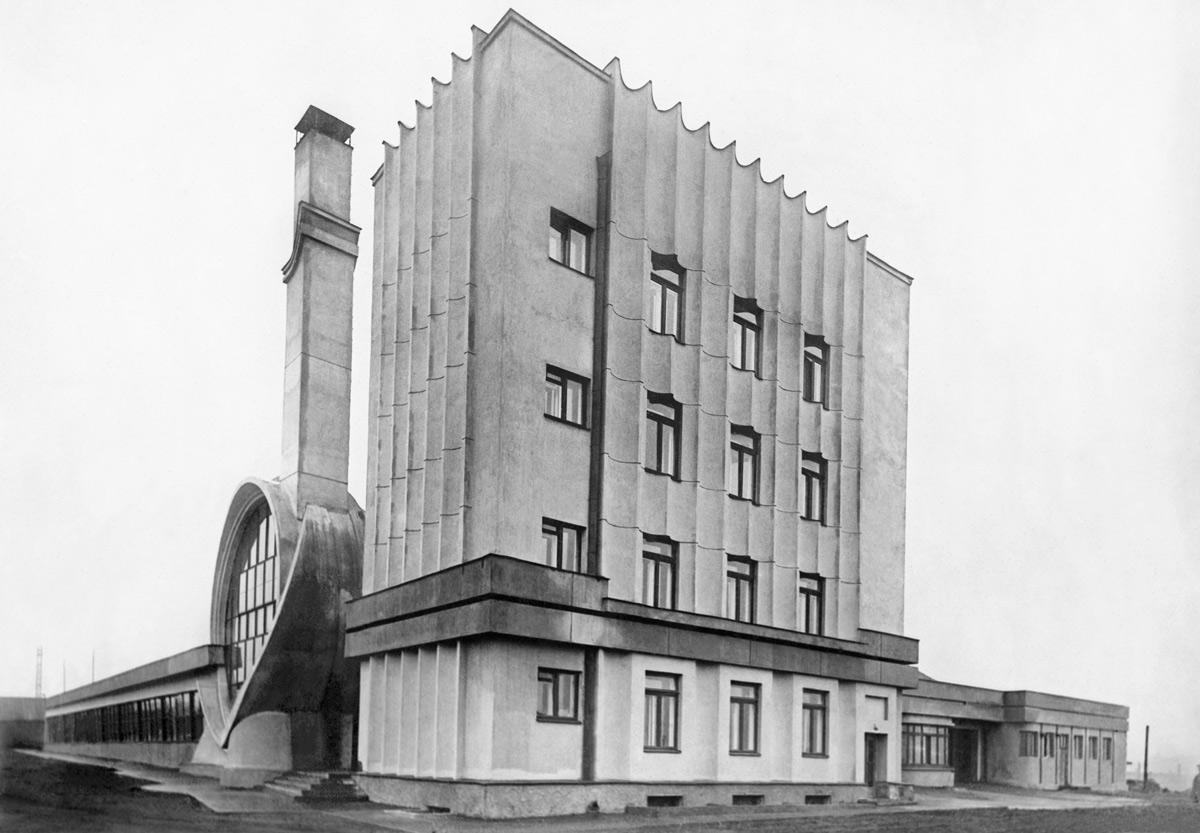
Ooh, ooh, ooh, I’m in love with the design and the photograph of the Gosplan Garage! The garage survived the Second World War but, like the Cathedral Sagrada Familia in Barcelona, it is now hemmed in and surrounded by cars and apartments (see the YouTube video GosPlan Garage (1934-1936) by Konstantin Melnikov). Looking at early photographs of both buildings – in the basement of the Sagrada Familia if you go, the Cathedral surrounded by green fields and cows – you realise what wonderful space they had to breathe, to exist in the world. Unfortunately, no more!

Dr Marcus Bunyan


Many thankx to Martin-Gropius-Bau for allowing me to publish the photographs in the posting. Please click on the photographs for a larger version of the image.


Photographer unknown. 'Gosplan Garage: general view' c. 1936


Photographer unknown
Gosplan Garage: general view
c. 1936
Archival Index Card and photographs(s)
13.6 x 20cm
Architects: Konstantin Melnikov with V. I. Kurochkin, 1936
© Courtesy the Department of Photographs, Schusev
State Museum of Architecture, Moscow


Melnikov, Konstantin Stepanovich (1890-1974)

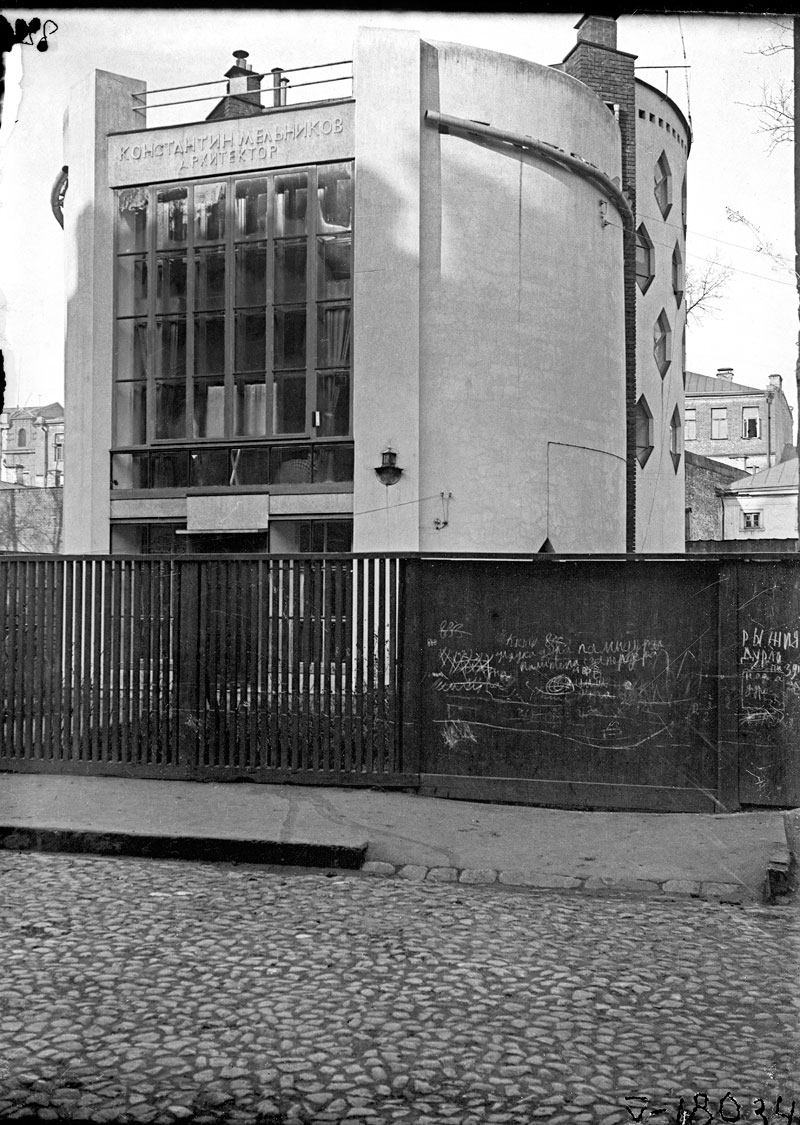
Born on the outskirts of Moscow into a poor family of peasant origin, Melnikov served a short apprenticeship as an icon painter and was then apprenticed to an engineering firm, one of whose owners noticed his talent for drawing and sent him to the Moscow Institute for Painting, Sculpture and Architecture. He graduated initially in painting and then in 1917 in architecture. From 1918 he worked in a Mossovet architectural studio under Aleksei Schusev and Ivan Zholtovskii but his early projects for housing schemes show him abandoning the Classicism of his teachers. In his pavilion for the Makhorka tobacco firm at the 1923 All-Union Agricultural Exhibition Melnikov developed this exuberant angularity by giving different parts of the pavilion different heights and setting the sloping roofs at right angles to each other. Irregular fenestration and an external staircase – crowded with visitors in some photographs – add to the sense of animation. The construction is entirely of timber, the first evidence of Melnikov’s abiding interest in combining traditional materials with avant-garde design. His Soviet Pavilion for the 1925 Exposition Internationale des Arts Décoratifs et Industriels Modernes in Paris would also feature timber construction, an animated roofscape and an external staircase. However, it achieved a more logical design by simplifying the plan into a rectangle bisected by stairs rising and descending across its centre. During the second half of the 1920s Melnikov completed five workers’ clubs in the Moscow region for the Rusakov (1927), Frunze, Kauchuk, Pravda and Burevestnik trades unions. He favoured interiors with large flexible spaces, sometimes using movable panels, and opposed the Functionalist tendency to create a large number of highly specialised areas. This gave him the freedom to mould bold internal volumes and create dramatic exteriors. His own house, consisting of two interlocking cylinders, was designed on the same principles (1927-1931). His garages – Bahkmetevskaia, Novo Ryanskaia and Gosplan (1936) – on the other hand, though still characterised by dramatic exteriors, are based on a careful analysis of vehicular movement. Despite being briefly associated with ASNOVA, Melnikov appears a rather solitary figure, his beliefs about the design process differing from the main groupings of 1920s architects. Heavily criticised in the 1930s for his ‘Formalism’, he was largely excluded from employment and teaching and no significant buildings were constructed to his design during the last 40 years of his life.


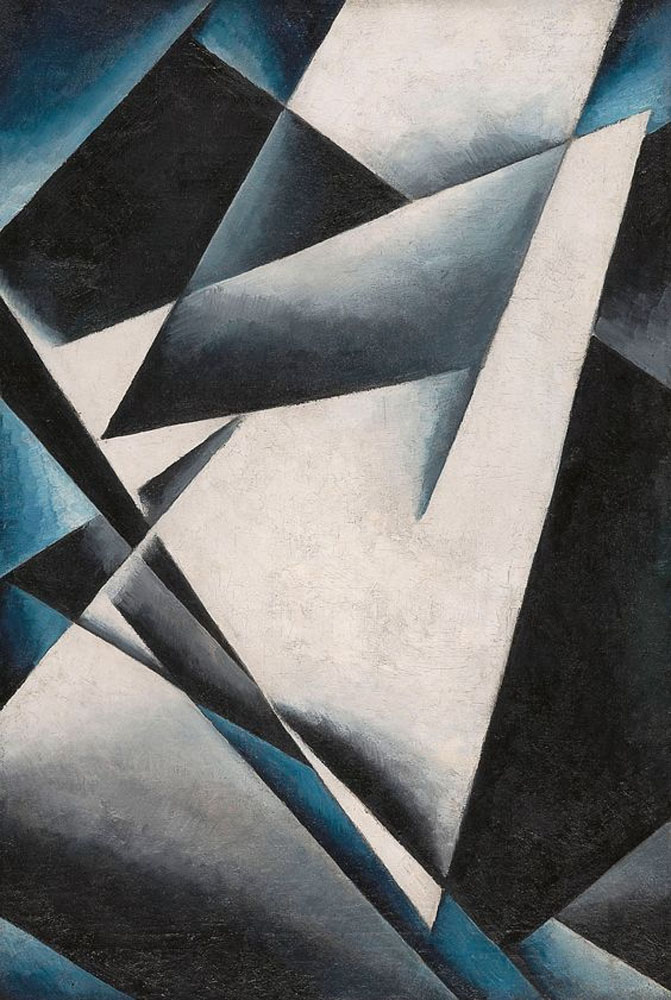
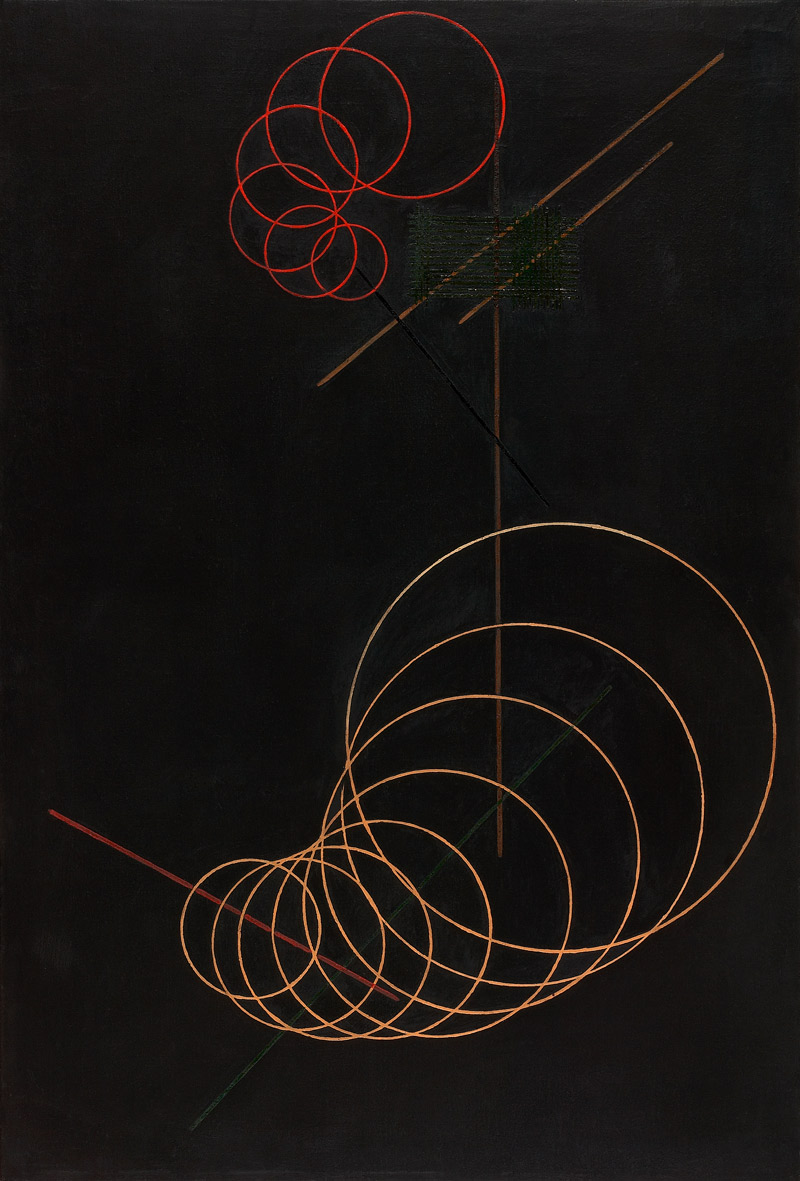
Liubov Popova (Russian-Soviet, 1889-1924) 'Painterly Architectonics' 1918-1919


Liubov Popova (Russian-Soviet, 1889-1924)
Painterly Architectonics
1918-1919
Oil on canvas
73.1 x 48.1cm
State Museum of Contemporary Art – G. Costakis Collection, Thessaloniki, Greece


Liubov Popova (Russian, 1889-1924) 'Spatial Force Construction' 1921


Liubov Popova (Russian, 1889-1924)
Spatial Force Construction
1921
Oil and marble dust on plywood
71 x 63.9cm
© Courtesy the State Museum of Contemporary Art
Costakis Collection, Thessaloniki


Photographer unknown.
Liubov Popova (Russian, 1889-1924) 'Maquette for City of the Future' 1921


Photographer unknown
Liubov Popova (Russian, 1889-1924)
Maquette for City of the Future
1921
© Studio International


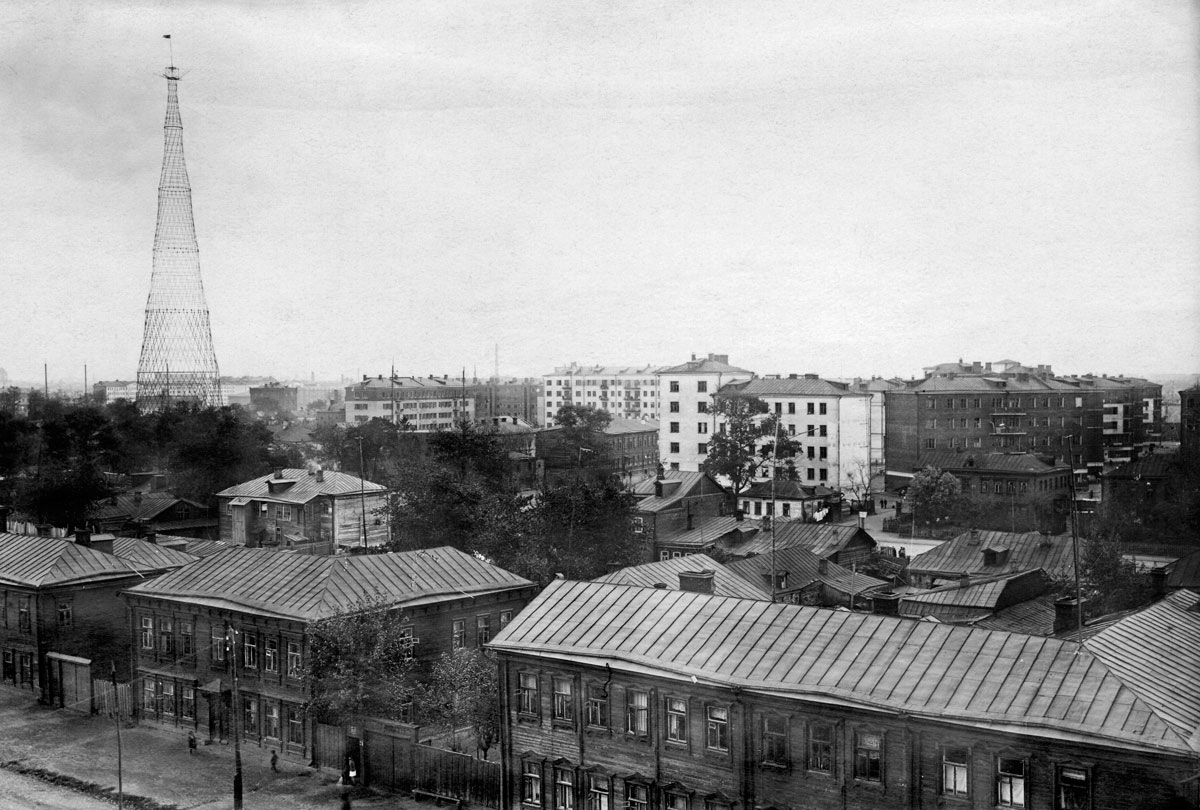
Photographer unknown. 'Havsko-Shabolovskii residential block and Shabolovska Radio tower viewed from the walls of the Donskoy Monastery' 1929


Photographer unknown
Havsko-Shabolovskii residential block and Shabolovska Radio tower viewed from the walls of the Donskoy Monastery
1929
Archival Index Card and photographs(s)
11.5 x 16.9cm
© Courtesy the Department of Photographs, Schusev
State Museum of Architecture, Moscow


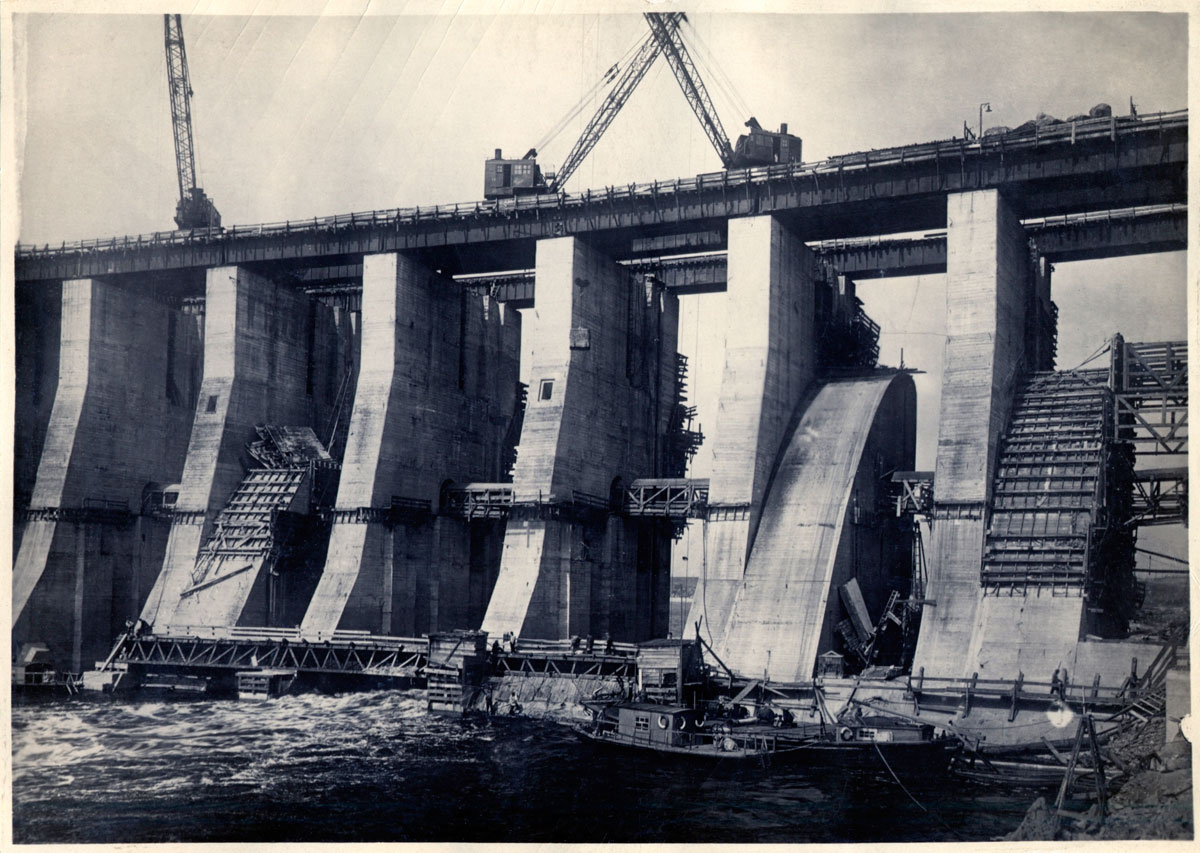
Photographer unknown. 'DneproGES: dam under construction' 1931


Photographer unknown
DneproGES: dam under construction
1931
Archival Index Card and photographs(s)
12.3 x 17.3cm
Aleksandr Vesnin, Nikolai Kolli, Georgii Orlov, Sergei Andrievskii, 1927-32
© Courtesy the Department of Photographs, Schusev
State Museum of Architecture, Moscow


The DneproGES Dam and Hydroelectric Power Station (designed with Nikolai Kolli, Georgii Orlov and Sergei Andrievskii, 1927-32) represents not only Vesnin’s first important industrial project but also a major achievement of Stalin’s First Five Year Plan.


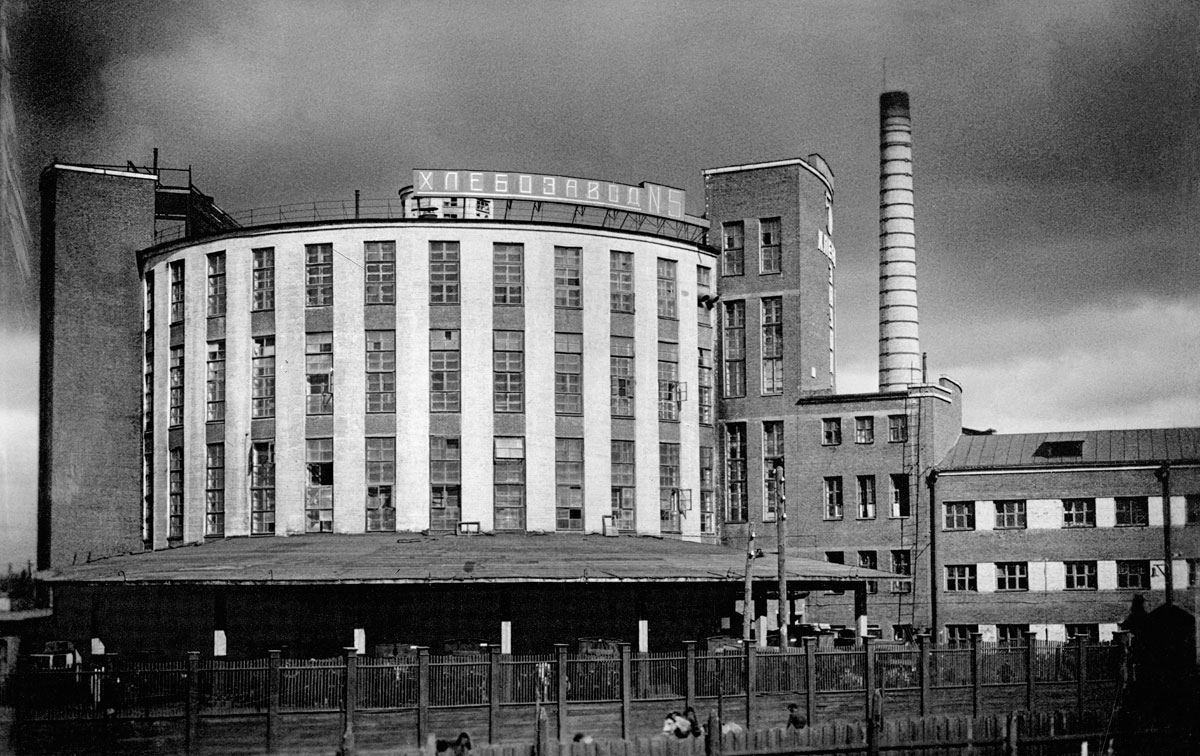
Photographer unkown. 'Bakery: exterior showing the four production levels' 1938


Photographer unkown
Bakery: exterior showing the four production levels
1938
Archival Index Card and photographs(s)
9.3 x 14.6cm
Engineer: Georgii Marsakov, 1931
© Courtesy the Department of Photographs, Schusev
State Museum of Architecture, Moscow


In 1931 the engineer Georgii Marsakov designed a mass-production bakery in Moscow and the Narvskii Factory Kitchen opened in St Petersburg to provide communal eating facilities for local residents. Rapid expansion of motorised transport called for a significant reappraisal of the garage, for which Konstantin Melnikov produced four highly innovative designs in Moscow.


The exhibition Building the Revolution sheds light on an area of the Soviet avant-garde that has remained relatively unknown in Europe and beyond: architecture. Even in Russia and the other successor states of the former Soviet Union the names of most of the architects have been largely forgotten. Their structures have not become part of the collective cultural memory to the extent that the “New Building” movement in the West has.

The exhibition presents this impressive chapter in the history of the avant-garde in an unusual way in that it binds together three thematic strands. Selected works of the early avant-garde, such as those of El Lissitzky, Gustav Klutsis, Liubov Popova, Alexander Rodchenko or Vladimir Tatlin, show the artists’ intense preoccupation from 1915 onwards with questions of form, space and texture. After the Revolution they were active in the various bodies concerned with the implementation of these ideals, such as the Commission for the Synthesis of Painting, Sculpture and Architecture (1919-1920). It was there that the architects Nikolai Ladovskii, Vladimir Krinsky and the painter Rodchenko created the first designs for town planning and communal housing. In 1919 Tatlin produced his famous design for a “Monument to the Third International” – a complex engineering structure with moving spaces. Although never built, its visionary potential, and dynamic formal language influenced the later architecture of Constructivism. Whereas the impressive pictures and drawings of the Costakis Collection in Thessaloniki make clear what a role was played by architectural themes in the early artistic designs, vintage prints from the Shchusev State Museum of Architecture in Moscow give an idea of the unleashing of architectural energies which took place a few years later. The historical photographs show that the new structures embodied a new age, not only in a typological sense, but in terms of scale. They towered above the old urban buildings and acted as a torch signalling the coming industrialisation and transformation of the country. The photographs of the renowned British architectural photographer, Richard Pare, on the other hand, lead the viewer back to the present. Pare had begun to rediscover this lost avant-garde in 1993. In the course of several trips to Moscow and St. Petersburg, as well as to the former Soviet republics, he documented what remained of the buildings. His shots bring out their beauty and the inventiveness of their creators while at the same time tracing the course of their decay. In that sense they draw a picture of a post-Soviet society that is unaware of its extraordinary heritage.

What was new about this architecture was not only the formal idiom, but also the tasks it was supposed to perform. With the building of the new society workers’ clubs, trade union houses, communal apartments, sanatoria for the workers, state-owned department stores, party and administrative buildings, as well as power stations and industrial plants to modernise the country.

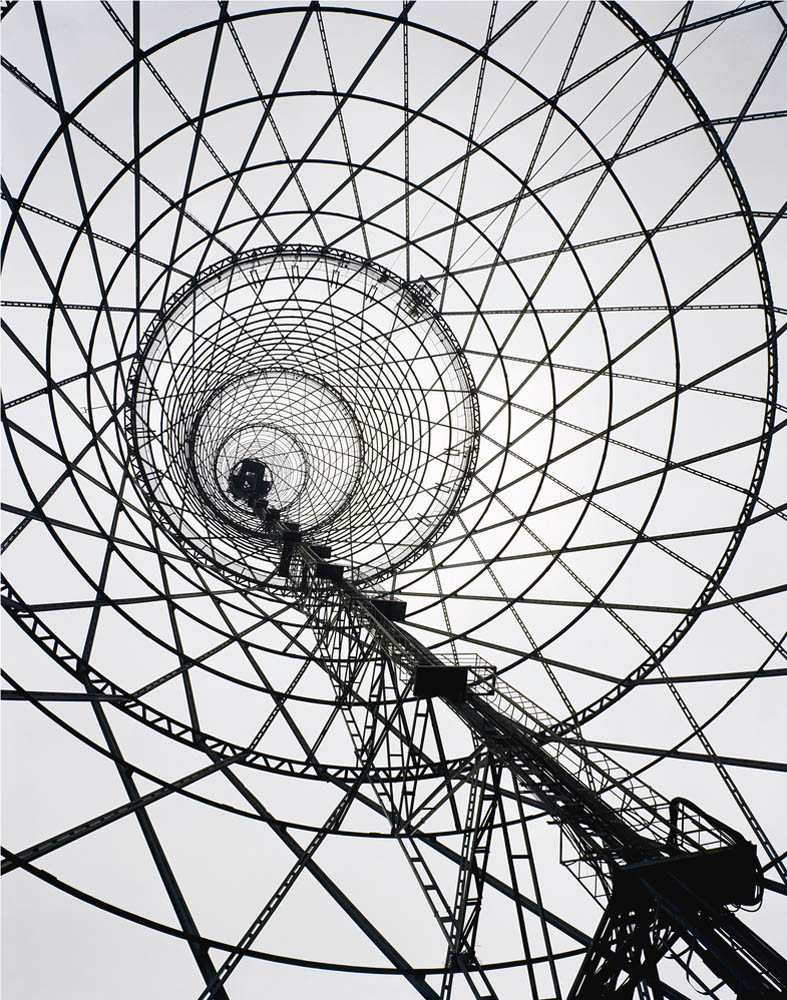
The first important structure to be erected after the Revolution was Vladimir Shukhov’s Shabolovka Radio Tower, built in the years 1919-1922 and consisting of six hyperboloids mounted on top of one another. At 150 metres it was the tallest tower in the world of its kind at the time. Its elegant filigree structure became a symbol of how all that was old and ponderous could be surmounted. Rodchenko’s well-known photos of the radio tower – today seen as icons of avant-garde photography – stress the dynamics from above and below. Pare’s shots of the tower focus more on details, thus emphasising the construction techniques of the time.

The achievements of Russian engineers like Shukhov, with their novel technical designs, influenced the development of an architecture that used clear, geometrical forms that were in keeping with its functions. In the course of the 1920s there arose two clearly defined tendencies in architecture: Rationalism and Constructivism. In 1923 representatives of the first founded the Association of New Architects (ASNOVA), whose leading light was Ladovskii. Among the Constructivists Alexander Vesnin and Moisei Ginzburg played major roles. In 1925 the Constructivist architects of Moscow joined together to form the Society of Contemporary Architects (OSA). There were also other tendencies as well as outstanding individualists, such as Konstantin Melnikov. Despite polemical squabbles among the tendencies a modern style of building had consolidated itself by the end of the 1920s.

In the course of the industrialisation of the country under the first Five-Year Plan (1928-1932) the building of new towns proceeded apace. This gave rise to questions concerning the concept of the city, for which various solutions were proposed, such as the “horizontal skyscrapers” for Moscow or Ladovskii’s “parabola” as the basic pattern of urban development. Quite a few of the buildings photographed by Pare were developed for communal living. The Narkomfin (People’s Commissariat for Finance) residential block built in Moscow in 1930 by Ginzburg and Ignati Milinis was one of the most experimental projects of that era. In addition to two floors of apartments it contained a communal canteen, a crèche, a gymnasium and a scullery. Other types of construction designed to promote the collectivist way of life were canteen kitchens, three of which were built in what was then Leningrad by a group associated with Iosif Meerzon and representing Rationalism. Workers’ clubs and palaces of culture offered numerous educational opportunities, symbolising with their dynamic forms the role of the new class in the urban environment.

When in the mid-1930s the political climate in the Soviet Union underwent a fundamental change, and a monumental style of architecture based on Classical models found favour with the powers that be, this exciting chapter of avant-gardism came to an end and sank into oblivion.


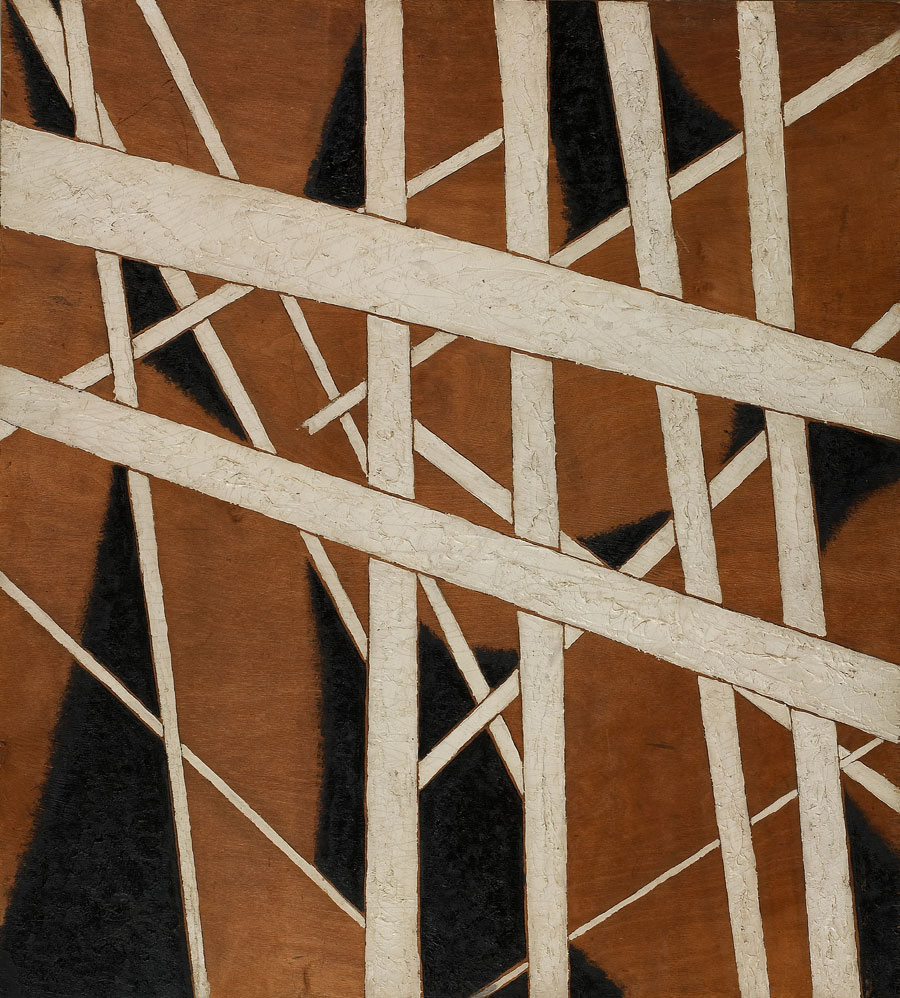
Alexander Rodchenko (Russian, 1891-1956) 'Linearism' 1920


Alexander Rodchenko (Russian, 1891-1956)
Linearism
1920
Oil on canvas
110.5 x 78cm
© Courtesy the State Museum of Contemporary Art
Costakis Collection, Thessaloniki


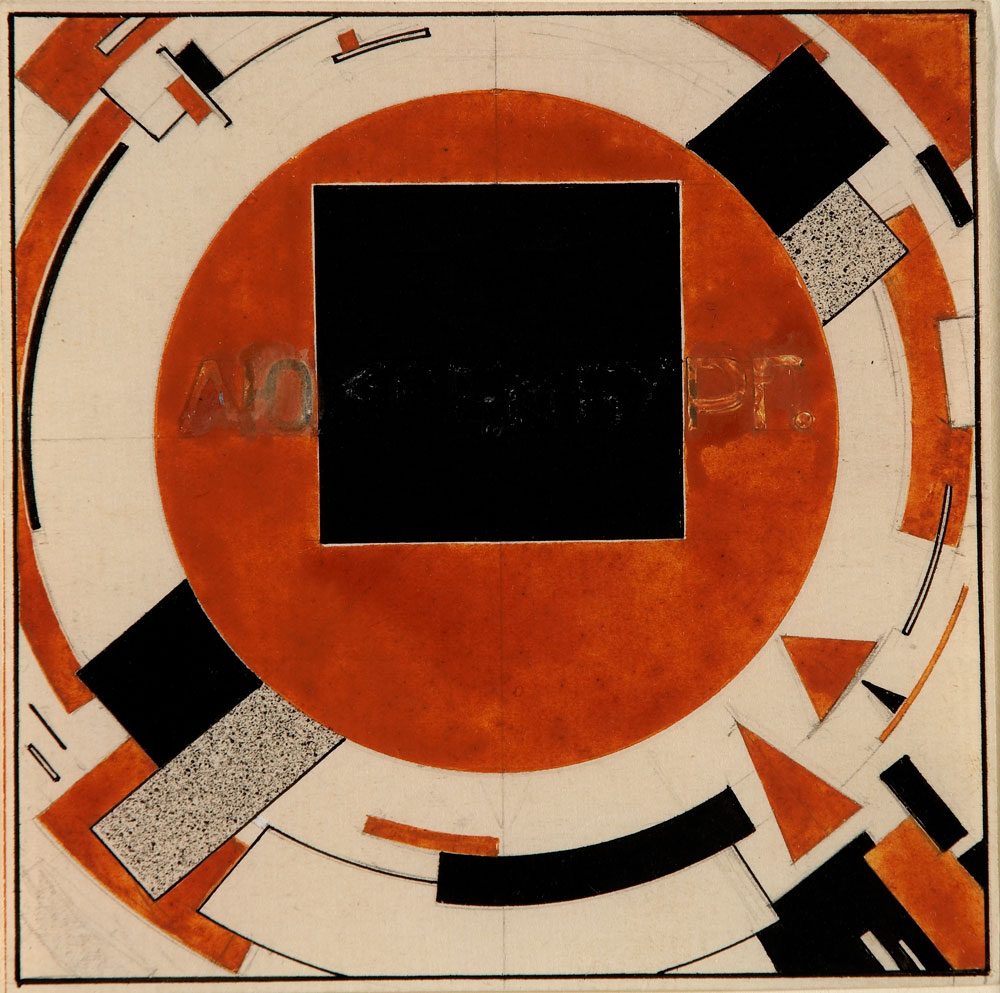
El Lissitzky (Russian, 1890-1941) 'Monument to Rosa Luxemburg' 1919-1921


El Lissitzky (Russian, 1890-1941)
Monument to Rosa Luxemburg
1919-1921
Pencil, ink and gouache on paper
9.7 x 9.7cm
© Courtesy the State Museum of Contemporary Art
Costakis Collection, Thessaloniki


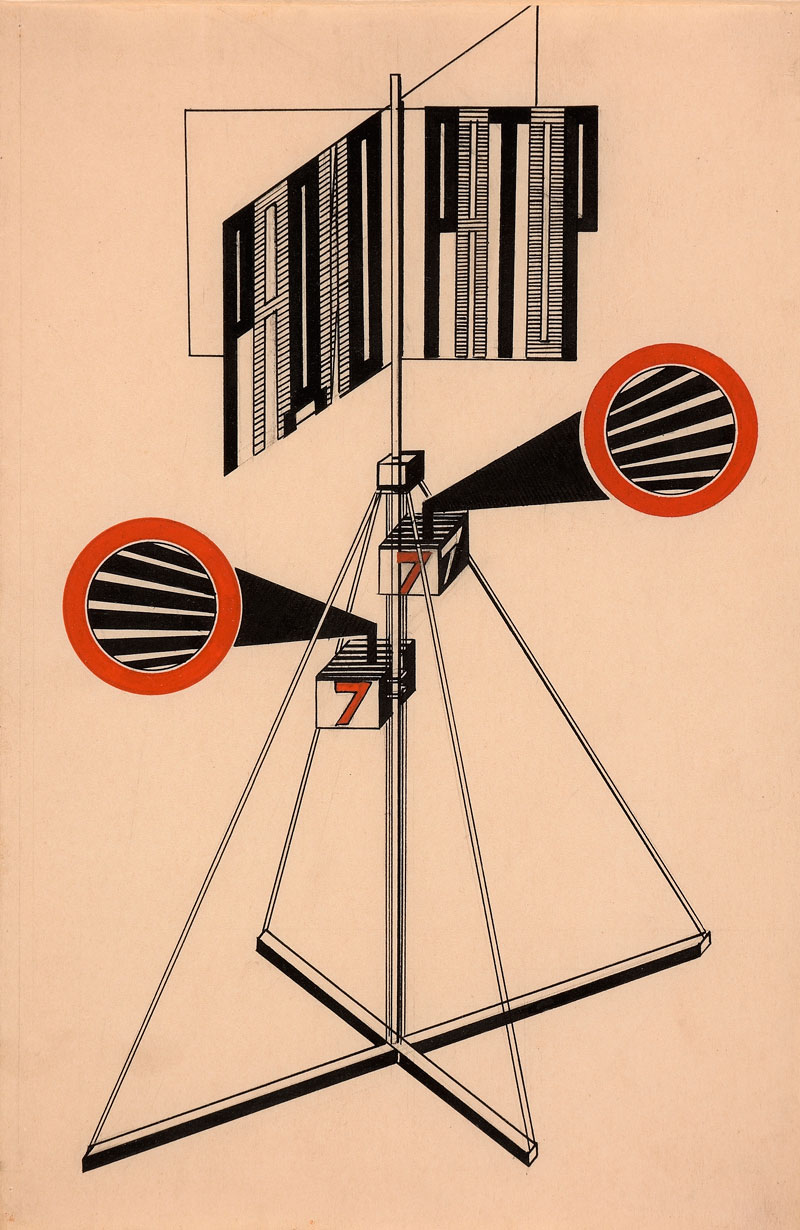
Gustav Klutsis (Latvian, 1895-1938) 'Design for Loudspeaker No.7' 1922


Gustav Klutsis (Latvian, 1895-1938)
Design for Loudspeaker No.7
1922
Pencil, ink and gouache on paper
26.9 x 17.7cm
© Courtesy the State Museum of Contemporary Art
Costakis Collection, Thessaloniki


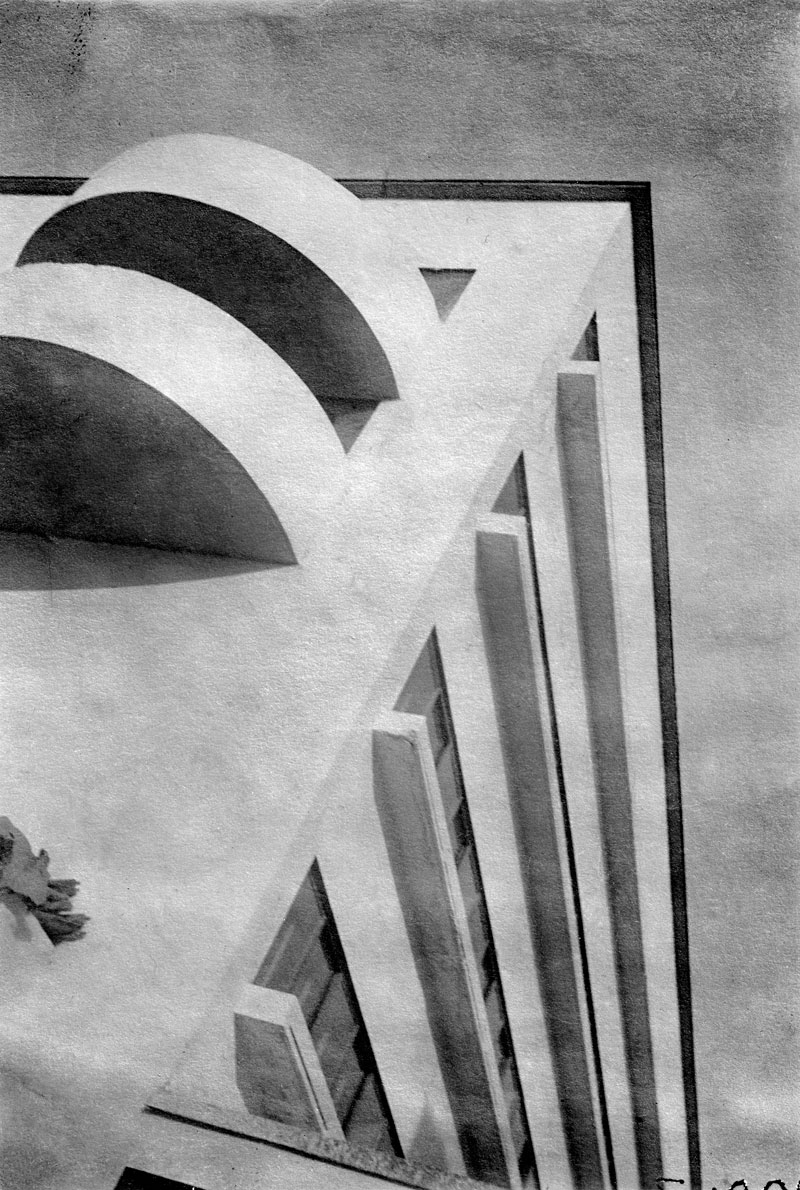
M.A. Ilyin (Russian) 'Narkomfin Communal House: corner detail of residential block' 1931


M.A. Ilyin (Russian)
Narkomfin Communal House: corner detail of residential block
1931
Archival Index Card and photographs(s)
11.6 x 8cm
Architects: Moisei Ginzburg, Ignatii Milinis, 1930
© Courtesy the Department of Photographs, Schusev
State Museum of Architecture, Moscow


Moisei Ginzburg

There was also the exchange with the Europeans. Le Corbusier came to Moscow and met and shared ideas with a number of architects including Moisei Ginzburg, the founder of the Constructivist movement and its chief theoretician. His 1924 treatise Style and Epoch was the most influential document of the Constructivist movement. Because he was Jewish, he was prevented from undertaking his architectural training in Russia and went to the École des Beaux-Arts in Paris and the Accademia di Belle Arti in Milan. Aleksandr Rodchenko travelled to Paris with Melnikov, who built the Soviet Pavilion at the 1925 Exposition Internationale des Arts Décoratifs et Industriels Modernes in Paris. They were all very well versed in European culture of the time. Ginzburg’s Style and Epoch responds to Le Corbusier’s Vers une architecture of the previous year, but Ginzburg takes the warship and the communal house rather than the luxury liner and the private villa as his examples.


M.A. Ilyin (Russian) 'Melnikov House: entrance façade' 1931


M.A. Ilyin (Russian)
Melnikov House: entrance façade
1931
Archival Index Card and photographs(s)
11.7 x 9cm
Konstantin Melnikov, 1927-31
© Courtesy the Department of Photographs, Schusev
State Museum of Architecture, Moscow


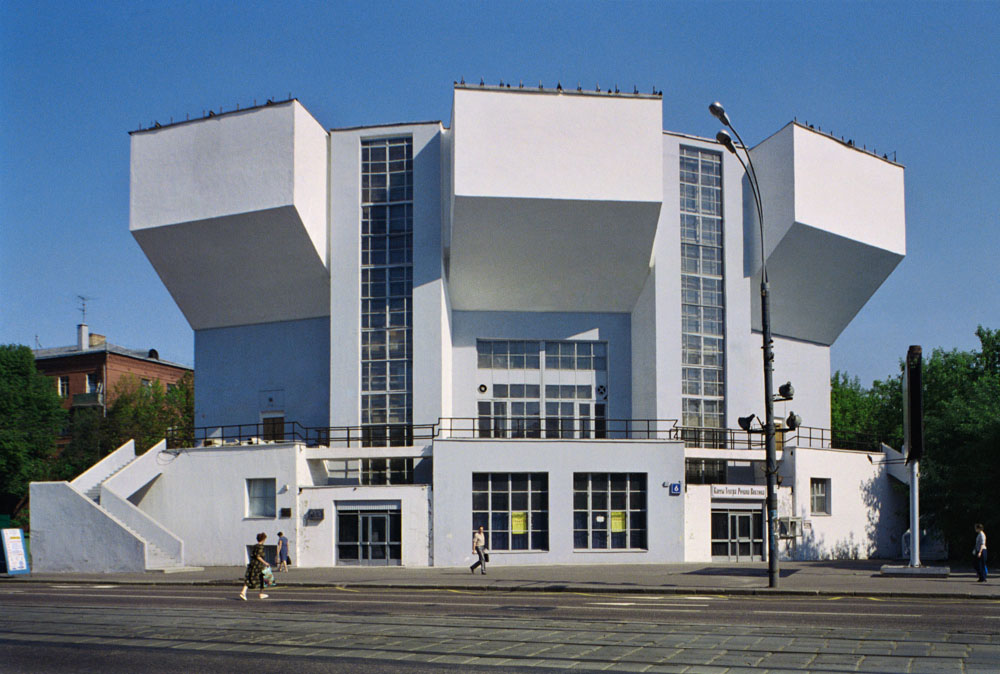
Richard Pare (English, b. 1948) 'Rusakov Workers' Club: general view showing the three auditorium segments' 1995


Richard Pare (English, b. 1948)
Rusakov Workers’ Club: general view showing the three auditorium segments
1995
Gelatin silver print
50.8 x 61cm
Courtesy Kicken Berlin
© Richard Pare


The Rusakov Workers’ Club (Russian: Дом культуры имени И.В.Русакова (рабочий клуб)) in Moscow is a notable example of constructivist architecture. Designed by Konstantin Melnikov, it was constructed in 1927–28. The club is built on a fan-shaped plan, with three cantilevered concrete seating areas rising above the base. Each of these volumes can be used as a separate auditorium, and combined they result in a capacity of over 1,000 people. At the rear of the building are more conventional offices. The only visible materials used in its construction are concrete, brick and glass. The function of the building is to some extent expressed in the exterior, which Melnikov described as a “tensed muscle”.

Text from the Wikipedia website


Richard Pare (English, b. 1948) 'Shabolovka Radio Tower' 1998


Richard Pare (English, b. 1948)
Shabolovka Radio Tower
1998
Gelatin silver print
154.8 x 121.9cm
Richard Pare, courtesy Kicken Berlin
© Richard Pare


The Shukhov Radio Tower (Russian: Шуховская башня), also known as the Shabolovka Tower (Шаболовская башня), is a broadcasting tower deriving from the Russian avant-garde in Moscow designed by Vladimir Shukhov. The 160-metre-high (520 ft) free-standing steel diagrid structure was built between 1920 and 1922, during the Russian Civil War.

Text from the Wikipedia website


Martin-Gropius-Bau Berlin
Niederkirchnerstraße 7
Corner Stresemannstr. 110
10963 Berlin
Phone: +49 (0)30 254 86-0

Opening hours:
Wednesday to Monday 10 – 19 hrs
Tuesday closed

Martin-Gropius-Bau website

LIKE ART BLART ON FACEBOOK

Back to top

Exhibition: ‘Pacific Standard Time: Art in Los Angeles 1950-1980’ at Martin-Gropuis-Bau Berlin

Exhibition dates: 15th March – 10th June 2012

List of artists represented: Peter Alexander, John Altoon, Chuck Arnoldi, John Baldessari, Larry Bell, Billy Al Bengston, Karl Benjamin, Ed Bereal, Tony Berlant, Wallace Berman, Marjorie Cameron, Cameron, Vija Celmins, Judy Chicago, Mary Corse, Ronald Davis, Richard Diebenkorn, Laddie John Dill, Melvin Edwards, Frederick Eversley, Lorser Feitelson, Llyn Foulkes, Sam Francis, Joe Goode, Robert Graham, Frederick Hammersley, George Herms, David Hockney, Stephan von Huene, Craig Kauffman, Edward Kienholz, Helen Lundeberg, John Mason, Allan McCollum, John McLaughlin, Ron Miyashiro, Ed Moses, Lee Mullican, Bruce Nauman, Helen Pashgian, Ken Price, Noah Purifoy, Ed Ruscha, Betye Saar, Henry Takemoto, DeWain Valentine, Gordon Wagner, Norman Zammitt.


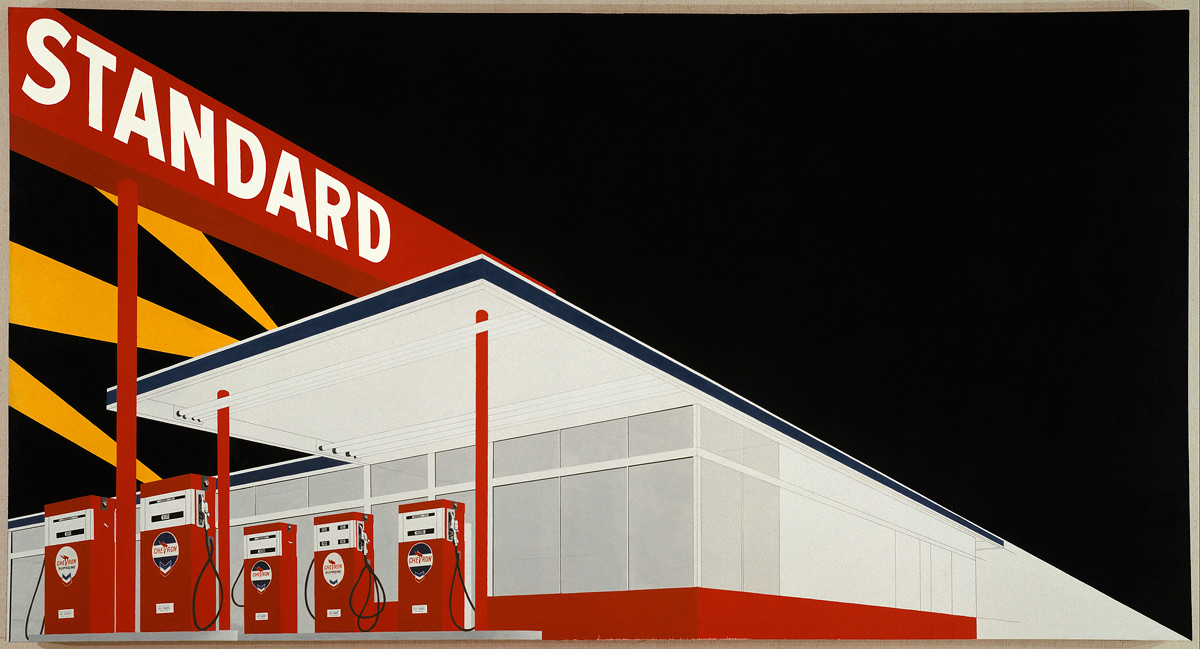
Ed Ruscha (American, b. 1937) 'Standard Station, Amarillo, Texas' 1963


Ed Ruscha (American, b. 1937)
Standard Station, Amarillo, Texas
1963
Oil on Canvas
Hood Museum of Art, Dartmouth College, Hanover, New Hampshire
Gift of James Meeker, Class of 1958, in memory of Lee English, Class of 1958, scholar, poet, athlete and friend to all


What a bumper posting – so much to enjoy and something for everyone!

Marcus


Many thankx to Martin-Gropuis-Bau for allowing me to publish the artwork in the posting. Please click on the photographs for a larger version of the image.


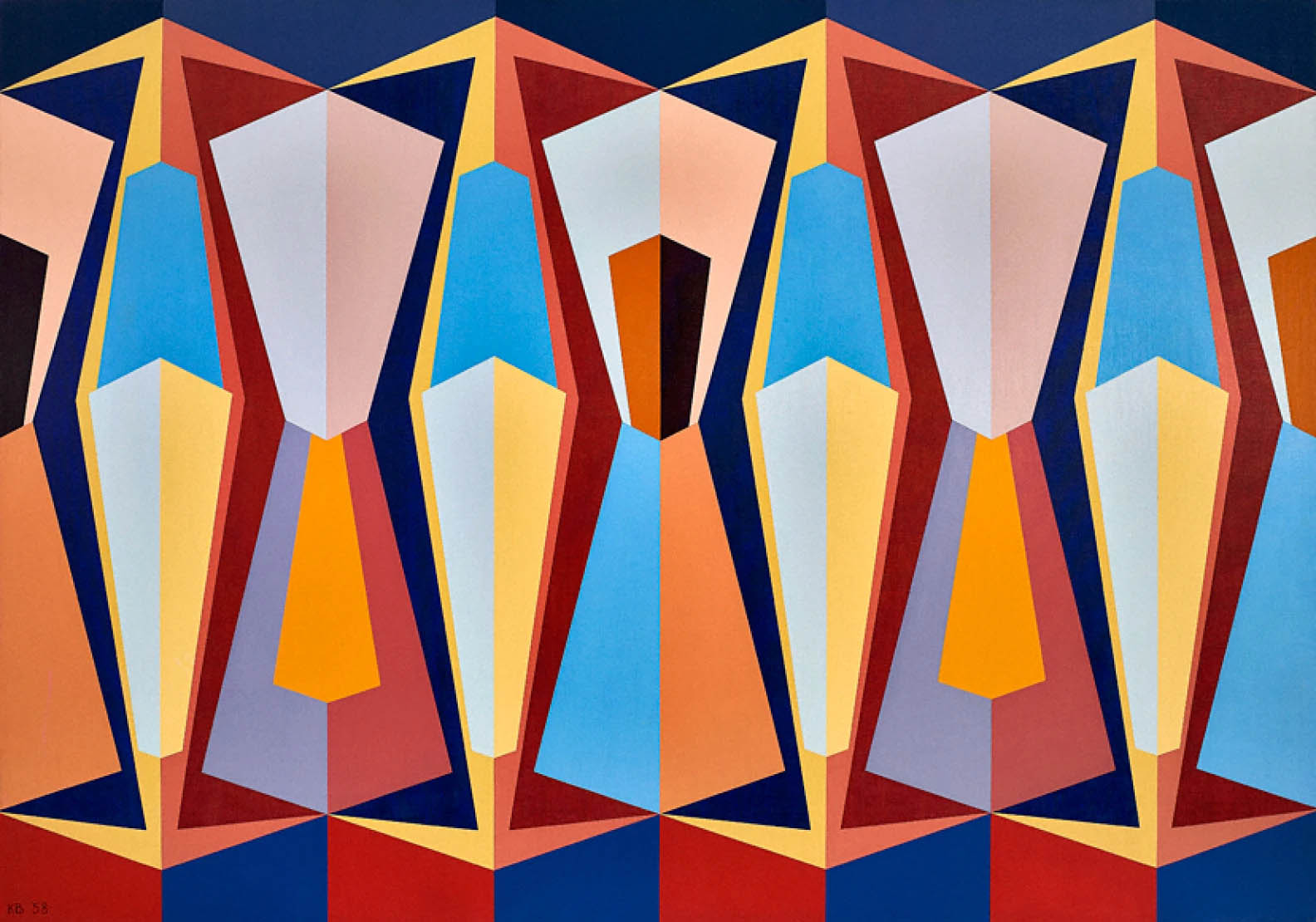
Karl Benjamin (American, 1925-2012) 'Stage II' 1959 


Karl Benjamin (American, 1925-2012)
Stage II
1959
Oil on canvas
50 x 70 inches; 127 x 177.8cm


Karl Stanley Benjamin (December 29, 1925 – July 26, 2012[1]) was an American painter of vibrant geometric abstractions, who rose to fame in 1959 as one of four Los Angeles–based Abstract Classicists and subsequently produced a critically acclaimed body of work that explores a vast array of color relationships. Working quietly at his home in Claremont, California, he developed a rich vocabulary of colors and hard-edge shapes in masterful compositions of tightly balanced repose or high-spirited energy. At once intuitive and systematic, the artist was, in the words of critic Christopher Knight, “a colorist of great wit and inventiveness.”

Text from the Wikipedia website


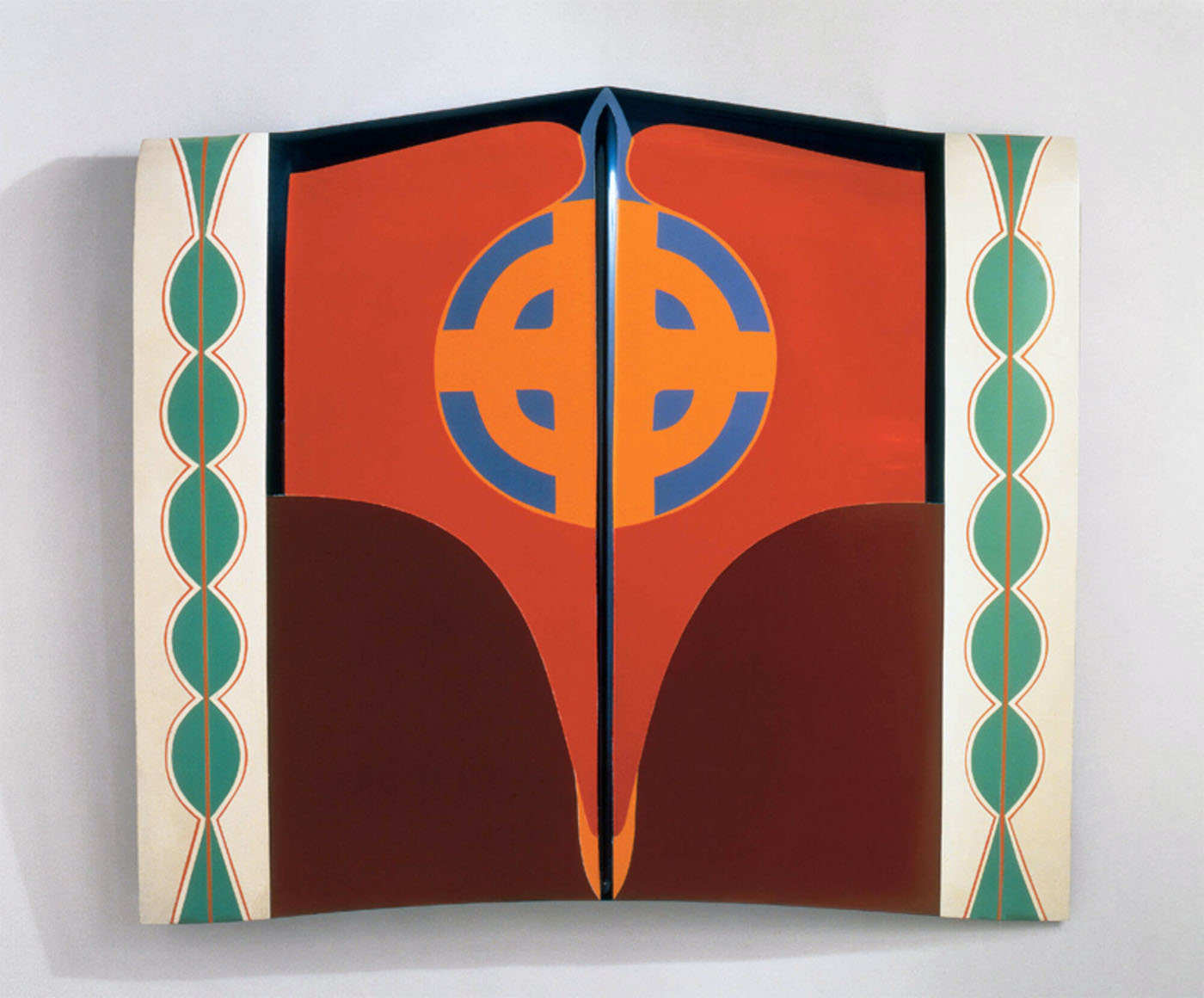
Judy Chicago (American, b. 1939) 'Car Hood' 1964


Judy Chicago (American, b. 1939)
Car Hood
1964
Sprayed acrylic and lacquer on car hood
109 x 125 x 11cm


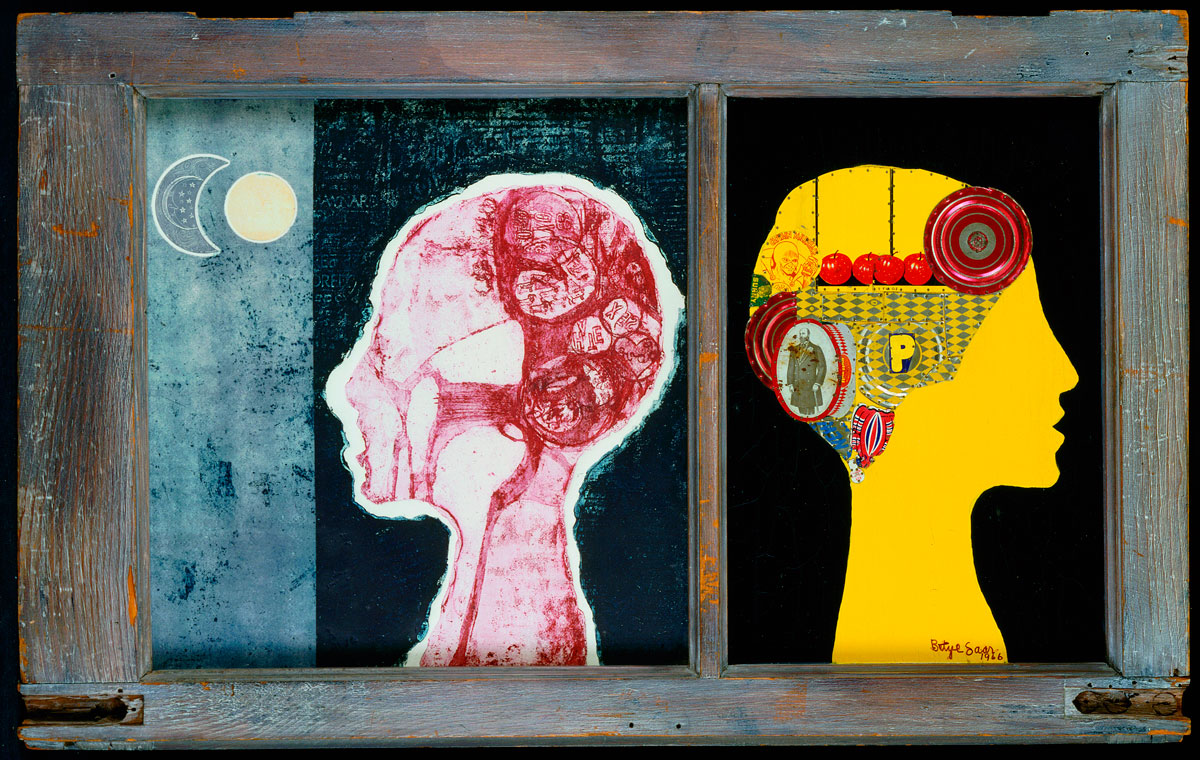
Betye Saar (African-American, b. 1926) 'The Phrenologer's Window' 1966


Betye Saar (African-American, b. 1926)
The Phrenologer’s Window
1966
Assemblage of two panel wood frame with print and collage
Private Collection; courtesy of Michael Rosenfeld Gallery, LLC, New York, NY


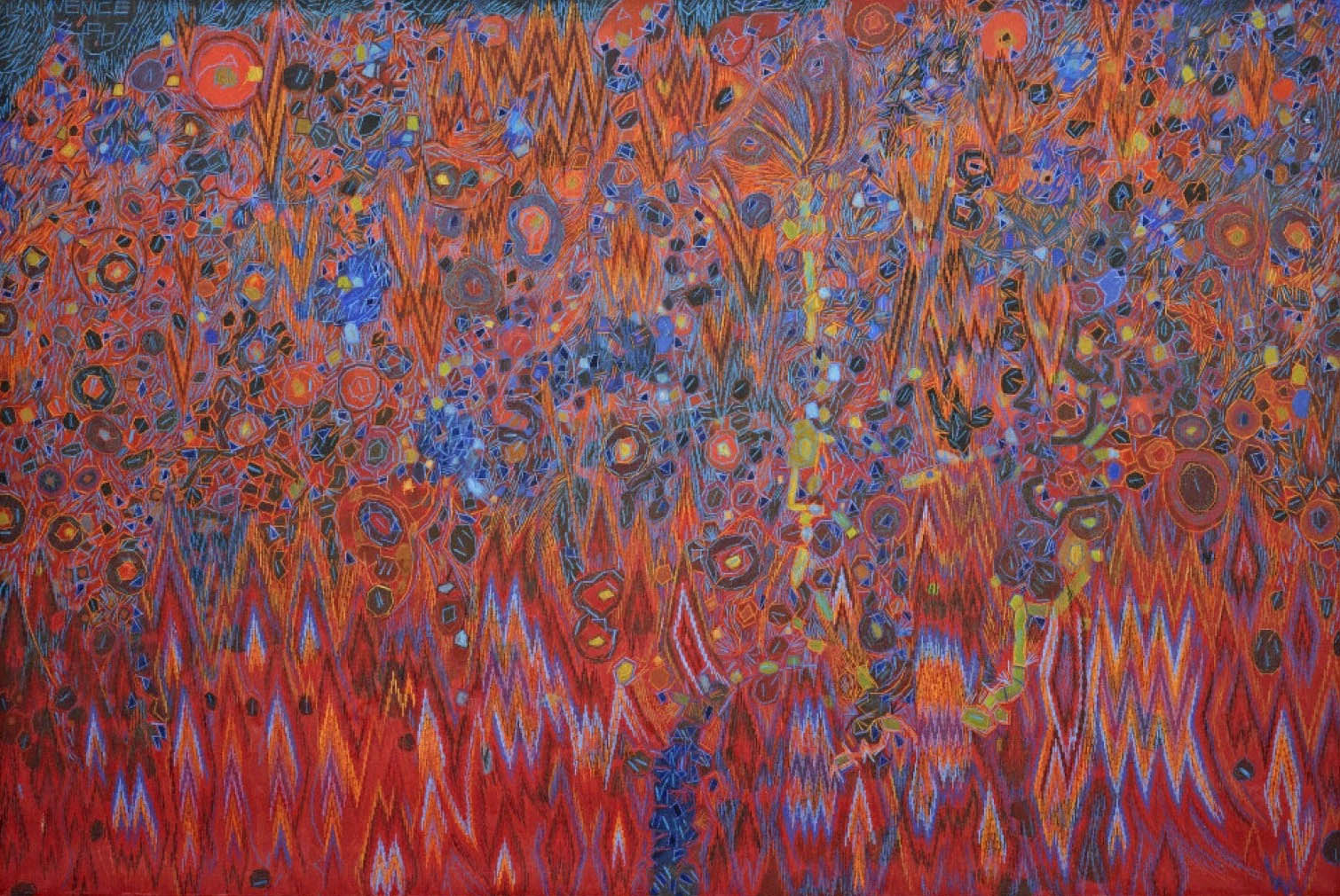
Lee Mullican (American, 1919-1998) 'Untitled (Venice)' 1967


Lee Mullican (American, 1919-1998)
Untitled (Venice)
1967
Oil on canvas


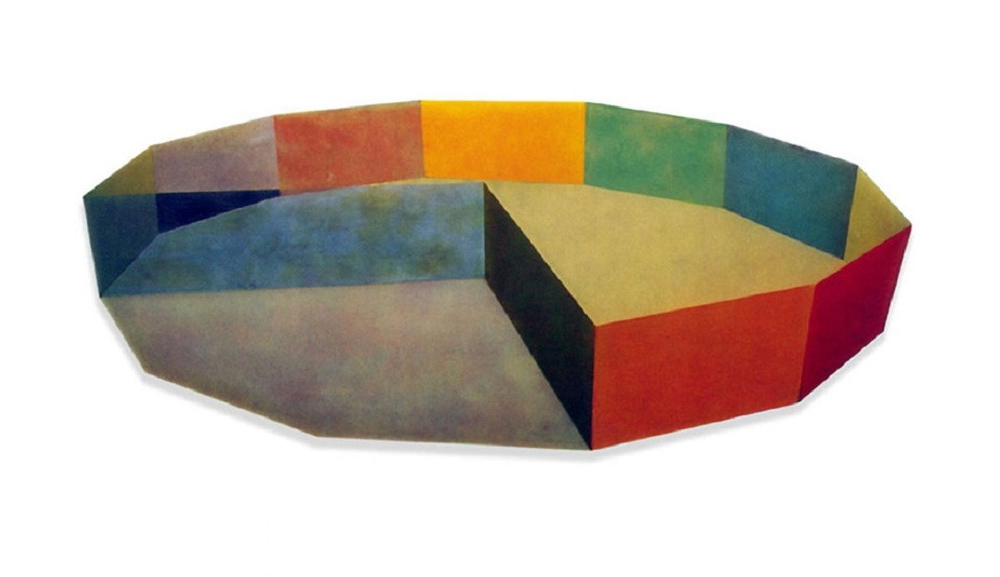
Ronald Davis (American, b. 1937) 'Vector' 1968


Ronald Davis (American, b. 1937)
Vector
1968
Polyester Resin and Fiberglass
60 1/2 x 132 inches (shaped)
Tate Gallery, London


Ronald “Ron” Davis (born 1937) is an American painter whose work is associated with geometric abstraction, abstract illusionism, lyrical abstraction, hard-edge painting, shaped canvas painting, color field painting, and 3D computer graphics. He is a veteran of nearly seventy solo exhibitions and hundreds of group exhibitions.


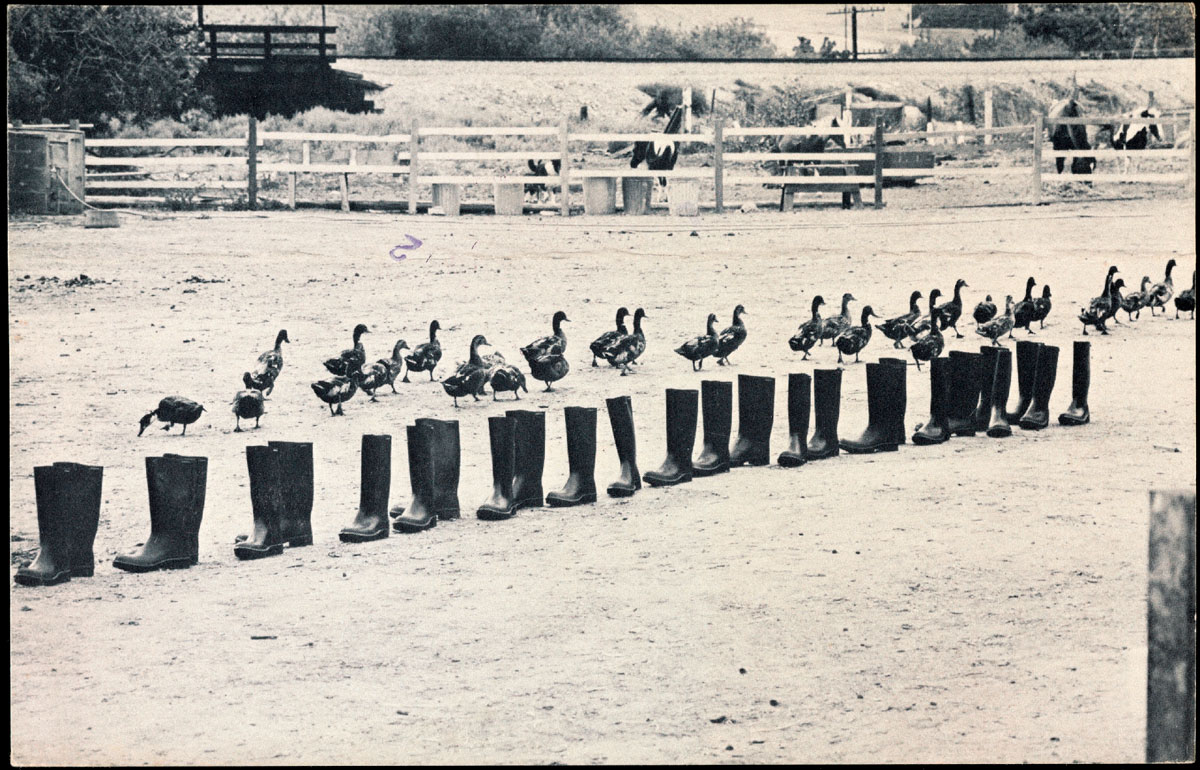
Eleanor Antin (American, b. 1935) '100 BOOTS Move On' 1971-1973


Eleanor Antin (American, b. 1935)
100 BOOTS Move On
1971-1973
Halftone reproduction
Getty Research Institute, Los Angeles, CA
© Eleanor Antin


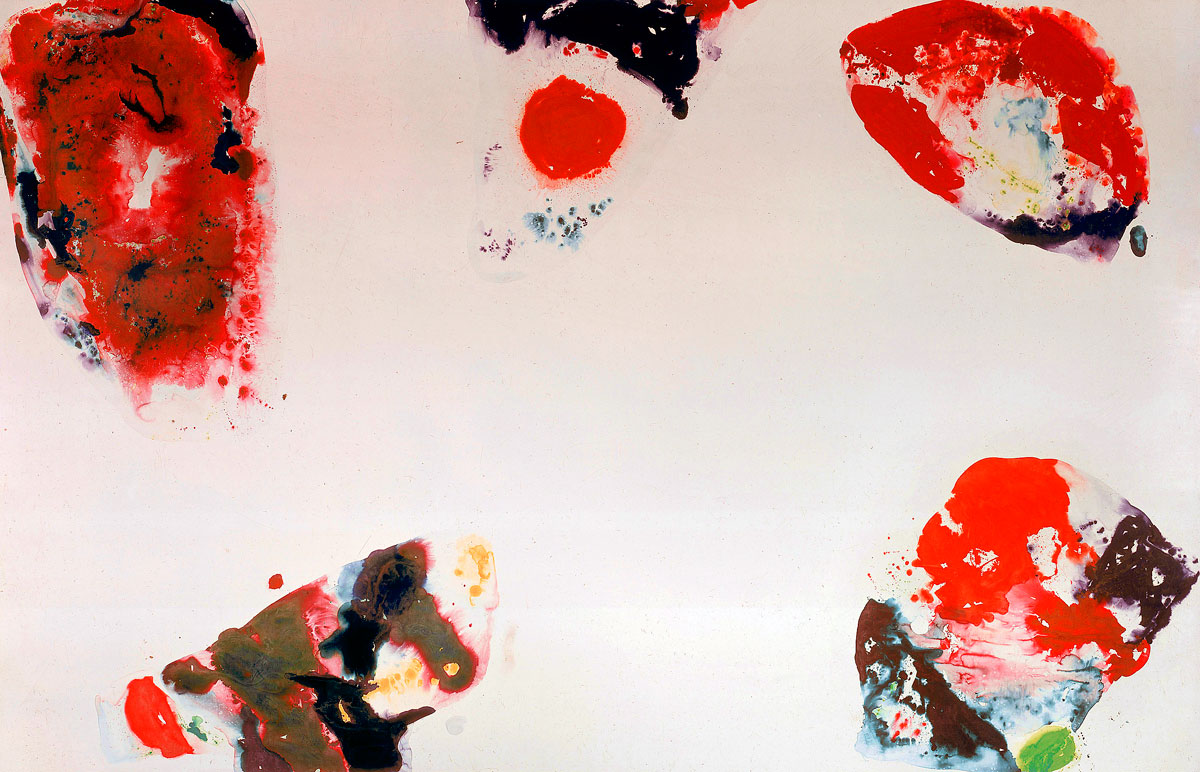
Sam Francis (American, 1923-1994) 'Berlin Red' 1969-1970


Sam Francis (American, 1923-1994)
Berlin Red
1969-1970
Acrylic on canvas
Nationalgalerie, Staatliche Museen zu Berlin
© Sam Francis Foundation, Cailfornia / VG Bild-Kunst, Bonn 2012
Foto: bpk / Nationalgalerie, SMB / Jörg P. Anders


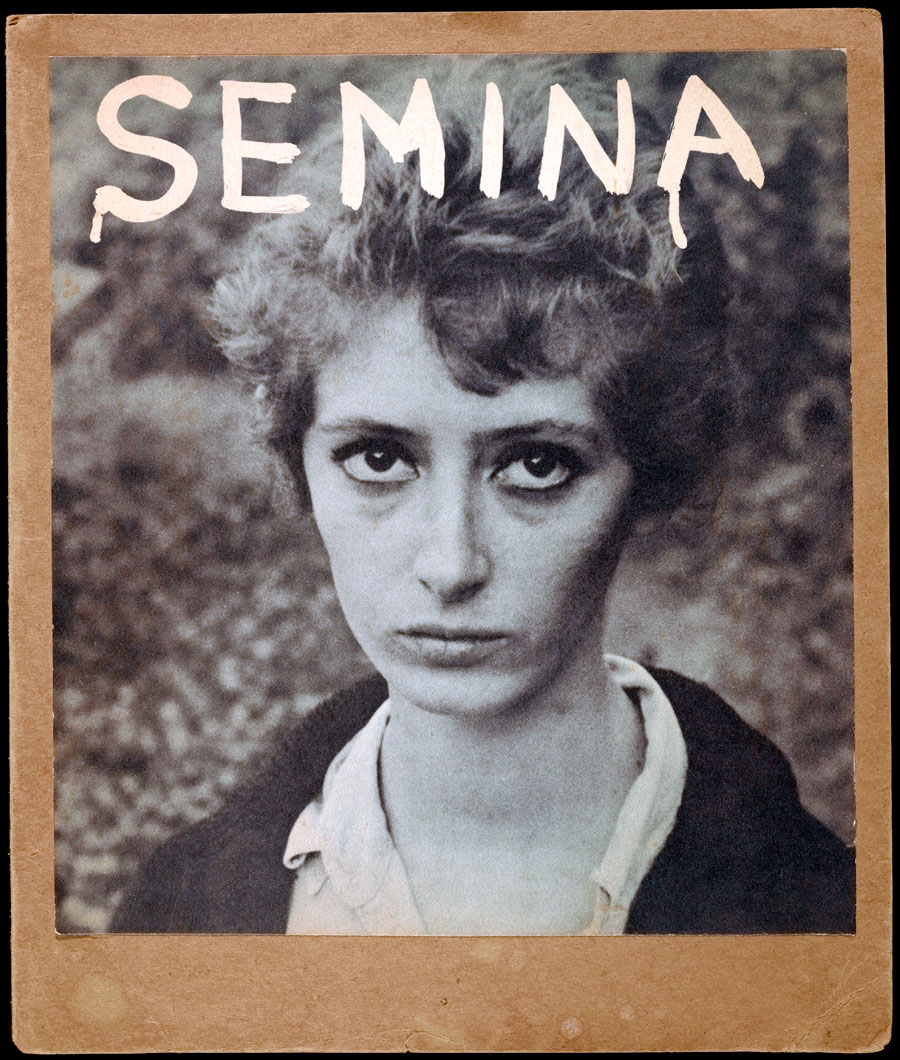
Wallace Berman (American, 1926-1976) 'Semina Cover with Wife (Photograph of Shirley Berman)' 1959


Wallace Berman (American, 1926-1976)
Semina Cover with Wife (Photograph of Shirley Berman)
1959
Halftone reproduction on cardstock
Getty Research Institute, Los Angeles, CA


The exhibition project Pacific Standard Time – Art in Los Angeles, 1950-1980 traces the development of the Los Angeles art scene during the post-war period, when the city on the Pacific hosted an impressively varied and versatile art scene, thus proving that it was more than Hollywood and a sprawling metropolis in the land of sunshine and palm trees. Pacific Standard Time features such internationally esteemed artists as John Baldessari, David Hockney, Edward Kienholz or Ed Ruscha as well as protagonists that are yet to be discovered like the abstract painters Helen Lundeberg and Karl Benjamin, the ceramicists Ken Price and John Mason, and sculptors such as De Wain Valentine.

The mega show – over 60 institutions and galleries in Los Angeles were involved – is taking the two main core exhibitions of the Getty Museum and the Getty Research Institute to Europe. The sole European venue is the Martin-Gropius-Bau in Berlin. The section of the exhibition that was to be seen in Los Angeles’ Getty Museum under the title of Crosscurrents in L.A. – Painting and Sculpture, 1950-1970, presents painting and sculpture. In the second part that was to be seen in Los Angeles under the title of Greetings from L.A. – Artists and Publics, 1950-1980, posters, artists’ catalogues, postcards, invitation cards and other memorabilia are shown which offer a deeper insight into the networks of the Los Angeles art scene at that time. For Berlin the show has been supplemented to include photographs by Julius Shulman, whose architectural shots defined the image of the Californian lifestyle in the 1950s. His incomparable sensibility and intuitive feel for composition and the ‘critical moment’ established him as a master of his craft.

Part One: Crosscurrents

The first part of the Berlin show brings together more than 70 works by over 50 artists and traces the rise of the Southern Californian art scene between 1945 and 1980. The list of names reads like a Who’s Who of today’s internationally esteemed artists, as people like John Baldessari, David Hockney, Edward Kienholz, Bruce Nauman or Ed Ruscha began their careers here.

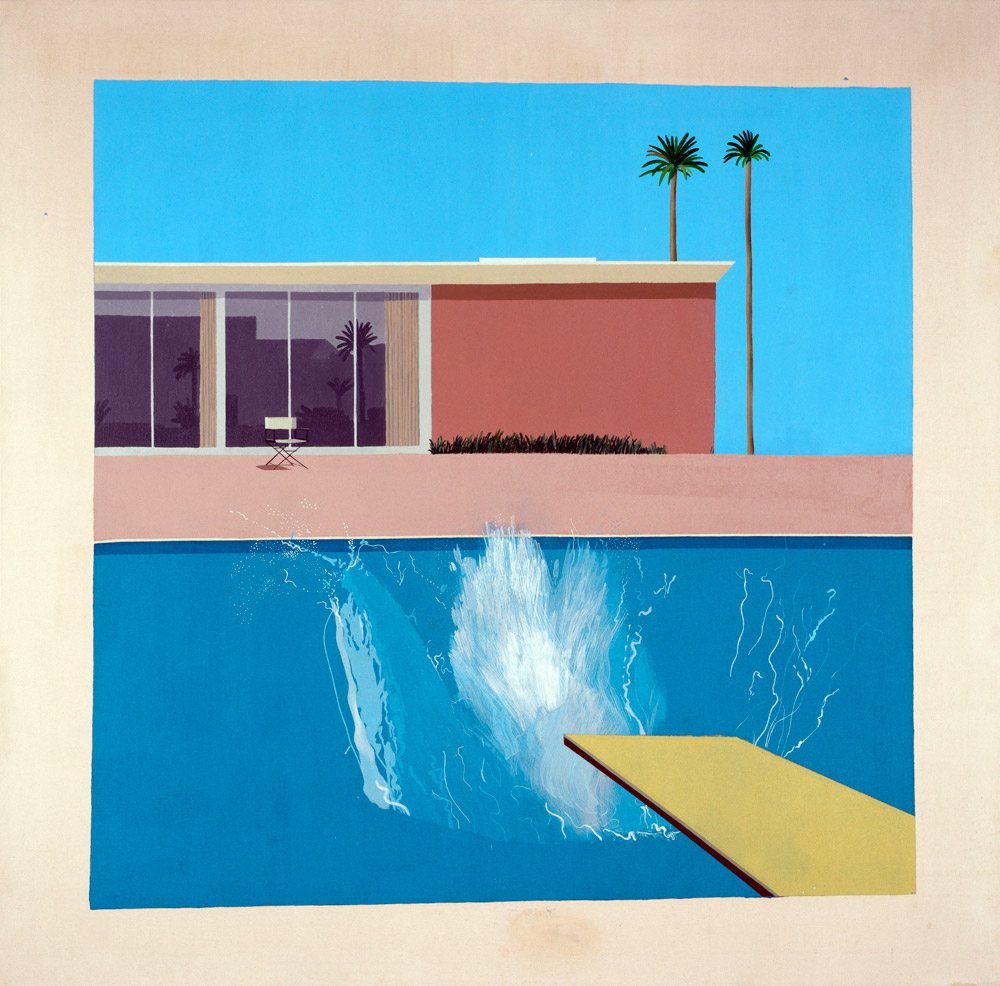
The entrée into Pacific Standard Time begins with British artist David Hockney’s iconic painting A Bigger Splash from the year 1967. It is one of the key pictures of the exhibition and stands for the hedonistic life under palm trees with permanent sunshine and never-ending parties.

The exhibition is structured both chronologically and thematically, comprising six sections that reflect the entire spectrum of the art trends that sprang up simultaneously in Los Angeles. Abstract works – ceramic sculptures and paintings of bleak clarity – are to be seen in the first section. The second section shows assemblage sculptures and collages by artists like George Herms, Wallace Berman and Ed Bereal, who paved the way for this artistic approach in the 1950s, and their successors, including many African-American artists. The third section documents the rise of Los Angeles to become an important art centre, while the fourth shows paintings by internationally recognised Los Angeles artists as Richard Diebenkorn, David Hockney and Ed Ruscha. It becomes clear that Southern California was one of the leading centres for large-format pop art and abstract painting in the 1960s. The fifth section examines how, at a time when painting was growing in significance on the Atlantic Coast of the USA, artists on the West Coast were beginning to extend their notions of traditional painting and sculpture, with perceptual phenomena and the material processes of artistic production coming to the fore. Here we find works that have arisen out of a collision between art and technology, such as a sculpture by De Wain Valentine, who uses industrial materials like polyester casting resin, or a canvas by Mary Corse, into which the smallest, high-grade reflecting glass microspheres have been worked. We are also introduced to a group of artists whose works show traces of their creation, such as those of Joe Goode, Allan McCollum, Ed Moses and Peter Alexander.

Berlin is supplementing the Getty exhibition by devoting a special room to the early international perception of art in Los Angeles. It will feature the works Berlin Red by Sam Francis, a 8 x 12 metre painting that was commissioned by Berlin’s Neue Nationalgalerie in 1969, and Volksempfängers (People’s Wireless) by Edward Kienholz. As a DAAD scholar Kienholz often lived in Berlin from 1973 on.

Another distinctive feature of the exhibition are the various room installations, including Stuck Red and Stuck Blue by James Turrell and Four Corner Piece by Bruce Nauman. In 1966 Turrell began working on his Light Room installations. In the work displayed in the Martin-Gropius-Bau that he designed in 1970, he uses light to dissolve the borders of spatial structures and transform them. In his Four Corner Piece from 1971 Bruce Nauman creates a particular spatial experience through the interplay of physical information vs. visual information.

Part Two: Greetings from L. A.

In the second part of the exhibition, elaborated by the Getty Research Institute, the Martin-Gropius-Bau shows over 200 objects – photographs, artists’ catalogues, books, posters, postcards, invitations, letters and artworks, of which many are on public view for the first time. We are given a sense of how Californian artists, through the involvement of a wide audience, brought art into contact with the general public. We also see how intensely the international networks linking groups of artists functioned.

Greetings from L.A. begins with Making the Scene and describes the gallery scene in Los Angeles from the 1950s to the 1970s. We are introduced to art dealers and collectors of the kind who congregated at La Cienega Boulevard – Rolf Nelson, Riko Mizuno and Betty Asher. On this gallery-lined boulevard, which crosses the Sunset Boulevard immortalised by Ed Ruscha, the reputation of Los Angeles as a city of modern and contemporary art was made.

Public Disturbances, the second section of the show, is devoted to three important exhibitions which drew fierce criticism and even led to arrests. Wallace Berman’s 1957 exhibition in the Ferus Gallery was closed down by the police. Violent controversies were triggered by the War Babies exhibition (1961) in the Huysman Gallery. There were also strong differences of opinion between the Los Angeles County Museum of Art (LACMA) and the Los Angeles County Board of Supervisors over the inclusion of Kienholz’s installation Back Seat Dodge ’38 (1964) in his grand retrospective of 1966.

The Private Assembly section of the exhibition focuses on the works created by Wallace Berman, George Herms, Charles Brittin and their circle in the 1950s and 1960s. The intimacy of these objects is explained not only by the unmistakable traces of artistic authorship they bear, but also by the fact that they were only accessible to a select, non-public audience. Mainly active outside the commercial gallery scene, this group of assemblage artists concentrated their energies on private artworks, which they handed over personally or sent by mail as a token of friendship.

The fourth section, Mass Media, introduces artists who selected the mass media as a model for their own art. Ed Ruscha, Allen Ruppersberg and Chris Burden occupied themselves with popular culture and mass production as alternative means of production and distribution. They used impersonal forms, such as those of objects or advertising materials commercially produced and sold as consumer goods. By avoiding conventional exhibition rooms, these artists reached a new public. They often exhibited anonymously, thus making the identity of artist and work secondary.

Art School as Audience, the fifth section of the exhibition, sheds light on the important role of art schools in the development of contemporary art forms. They served as the static pole, because in them artists constituted the audience of other fellow artists. The California Institute of the Arts, commonly known as CalArts, and its predecessor, the Chouinard Art Institute, were key venues for important groups of artists, as can be seen from the works of such students as Ed Ruscha and Joe Goode, and such teachers as John Baldessari, Miriam Schapiro and Judy Chicago. Other important forums were the new art faculties that came into existence at the universities and other higher education facilities in Los Angeles County. At the campuses of Irvine or San Diego in particular there was a stimulating audience for the experiments of such artists as Martha Rosler, Barbara Smith and Eleanor Antin.

The last section, The Art of Protest, examines how social and political developments mobilised artists to display their works in the street. In the 1960s Los Angeles became the scene of the first protests led by artists against the Vietnam War. This gave rise in 1966 to the construction of a Peace Tower at the corner of La Cienega and Sunset Boulevards. In the following decade it was feminism that moved many artists to become social activists, as can be seen from the work of Suzanne Lacy and Leslie Labowitz-Starus In Mourning and in Rage 1977, a highly esteemed protest performed on the steps of City Hall.

Greetings from L.A. offers a new look at art in Southern California by showing how the artists of this region changed the conventional relations between art and public and developed alternatives for a public role of art and its place in society.

The exhibition affords glimpses into some recently acquired archives, like those of Betty Asher, Hal Glicksman, George Herms, Wolfgang Stoerchle, High Performance magazine, the galleries of Rolf Nelson, Mizuno and Jan Baum as well as of the papers of Charles Brittin and Edmund Teske. These are supplemented by material from archives not normally associated with Southern California, such as the papers of the critics Irving Sandler, Barbara Rose and Lawrence Alloway of New York; of Marcia Tucker, the founder and curator of New York’s New Museum of Contemporary Art; and of the Kasmin Gallery, London.

Part Three: Julius Shulman

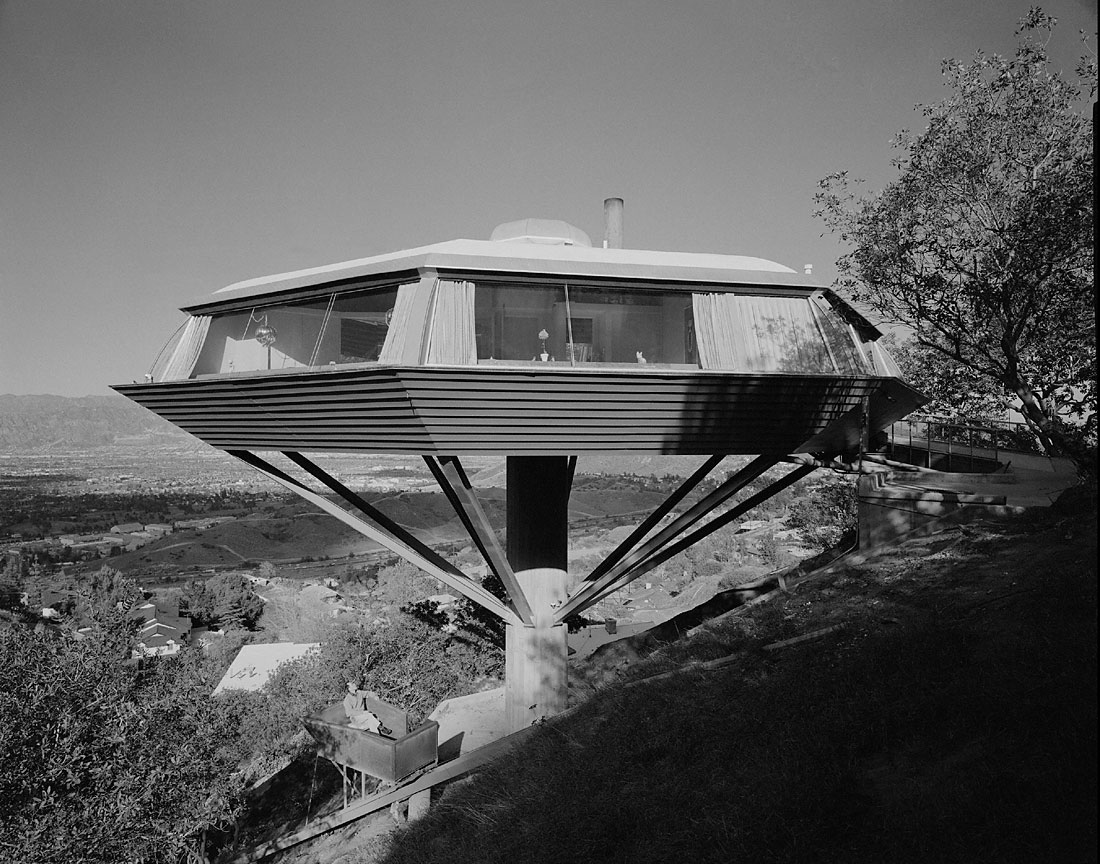
The last part of the Berlin exhibition shows over 50 photographs by Julius Shulman – the most important American photographer of architecture in the post-war period. For more than thirty years he photographed Modernist houses – built by Richard Neutra, Frank Lloyd Wright, or Frank Gehry – thus making many of them into architectural icons. The exhibition shows some of his key works.

Press release from Martin-Gropuis-Bau website


Julius Shulman (American, 1910-2009) 'Malin Residence, "Chemosphere”' 1960


Julius Shulman (American, 1910-2009)
Malin Residence, “Chemosphere”
1960
Gelatin silver print
Getty Research Institute, Los Angeles, CA
© J. Paul Getty Trust


Julius Shulman (American, 1910-2009) 'Case Study House #22' 1960


Julius Shulman (American, 1910-2009)
Case Study House #22
1960
Gelatin silver print
Getty Research Institute, Los Angeles, CA
© J. Paul Getty Trust


Charles Brittin (American, 1928-2011) 'Peace Tower' 1966


Charles Brittin (American, 1928-2011)
Peace Tower
1966
Silver-dye bleach print
Getty Research Institute, Los Angeles, CA
© J. Paul Getty Trust


Peter Alexander (American 1939-2020) 'Cloud Box (Large)' 1966


Peter Alexander (American 1939-2020)
Cloud Box (Large)
1966
Cast polyester resin
Janis Horn and Leonard Feldman
© Peter Alexander
Foto: Brian Forrest


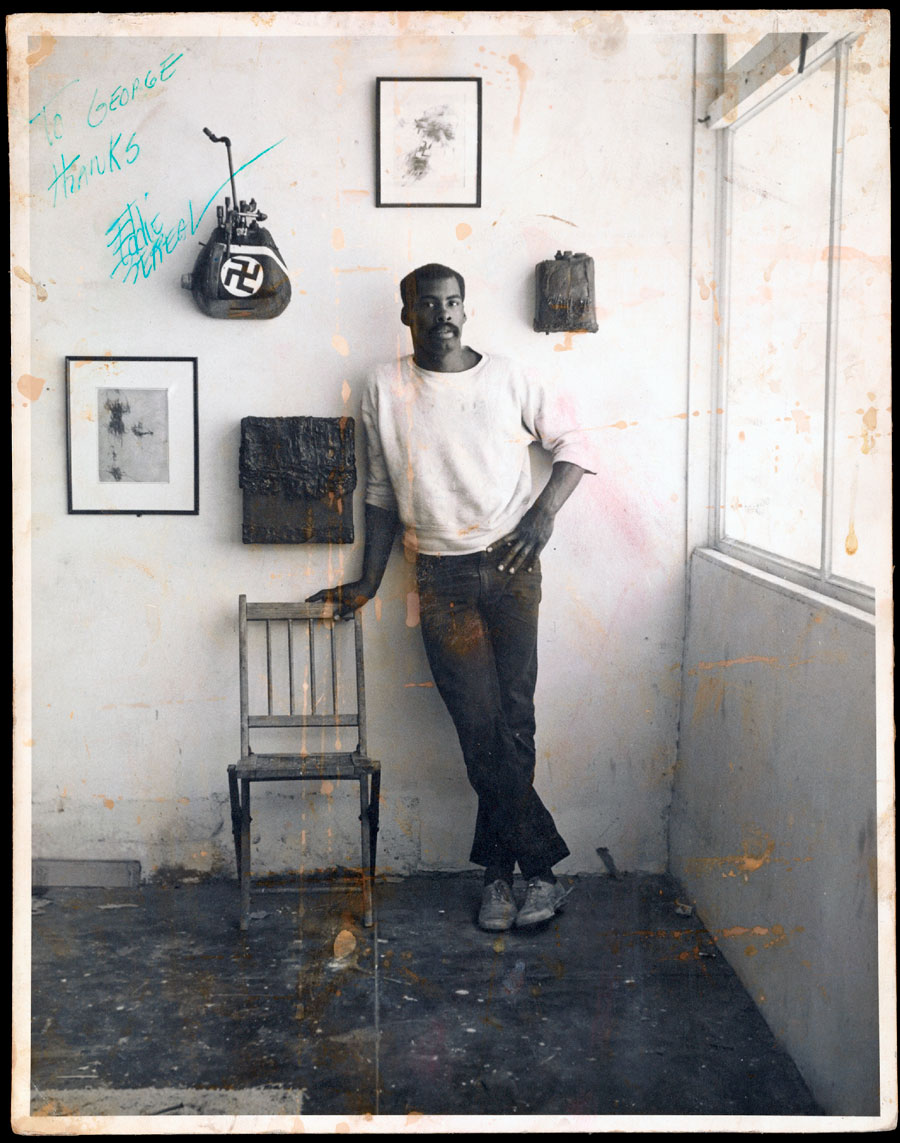
Jerry McMillan (American, b. 1936) 'Ed Bereal in His Studio' c. 1961


Jerry McMillan (American, b. 1936)
Ed Bereal in His Studio
c. 1961
Gelatin silver print mounted on board
Getty Research Institute, Los Angeles, CA
Gift of George Herms
© Jerry McMillan


David Hockney (British, b. 1937) 'A Bigger Splash' 1967


David Hockney (British, b. 1937)
A Bigger Splash
1967
Acrylic on canvas
96″ x 96″
© David Hockney
Tate Gallery, London, 2011


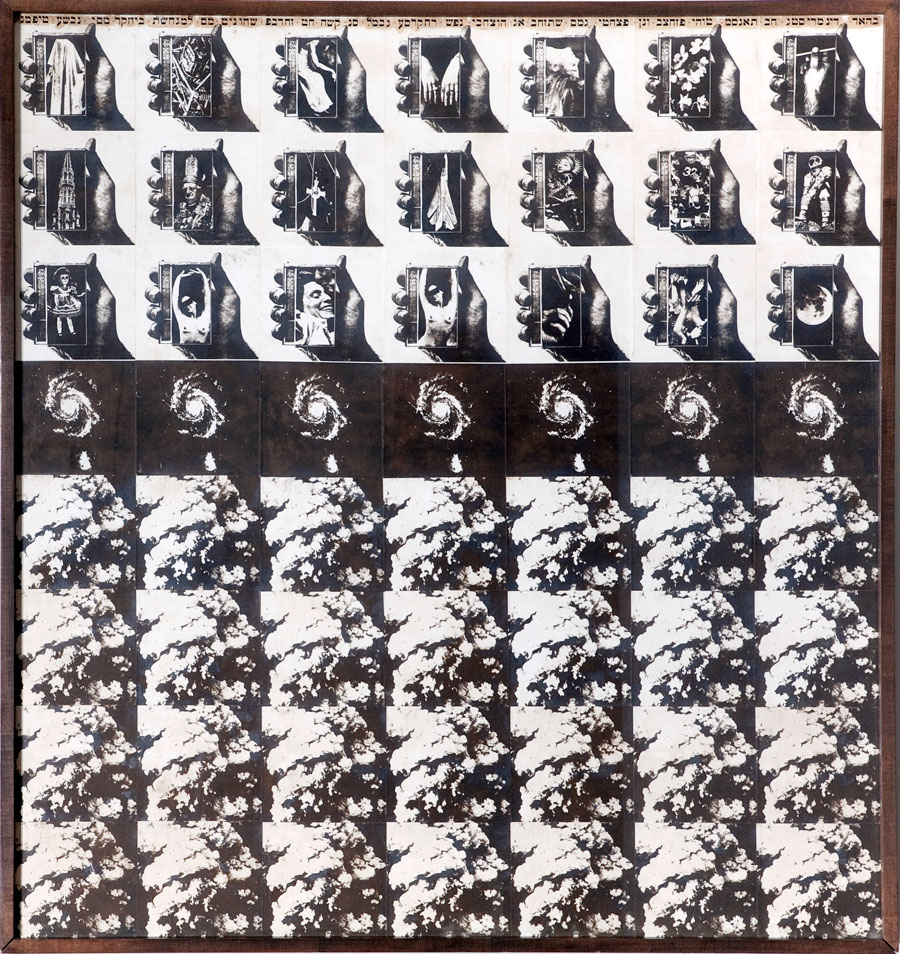
Wallace Berman (American, 1926-1976) 'Untitled (Verifax Collage)' 1969


Wallace Berman (American, 1926-1976)
Untitled (Verifax Collage)
1969
Verifax collage on board
Collection of Michael D. Fox, Berkeley CA, Courtesy Steven Wolf Fine Arts, San Francisco CA
© Courtesy of the Estate of Wallace Berman and Michael Kohn Gallery, Los Angeles
Foto: Joe Schopplein


Martin-Gropius-Bau Berlin
Niederkirchnerstraße 7
Corner Stresemannstr. 110
10963 Berlin
Phone: +49 (0)30 254 86-0

Opening Hours:
Wednesday to Monday 10 – 19hrs
Tuesday closed

Martin-Gropius-Bau website

LIKE ART BLART ON FACEBOOK

Back to top
Exhibition: ‘Time Exposures: Picturing a History of Isleta Pueblo in the 19th Century’ at the National Museum of the American Indian, New York

Exhibition dates: 17th September 2011 – 10th June 2012

George Gustav Heye Center, New York


Photographer unknown. 'Albuquerque Indian School Boys with Flags' c. 1900


Photographer unknown
Albuquerque Indian School Boys with Flags
c. 1900
9 x 12cm
Courtesy of the National Archives and Records Center


Another glorious, eclectic posting with a couple of knockout photographs, including Sumner Matteson’s Simon Zuni (1900, below) and George Wharton James’s Selling goods along tracks (late 1880s to early 1900s, below). The latter is a masterpiece of early modernist photography. Observe the spatial construction of the picture: open and yet closed at the same time. What do I mean by this? The image allows the eye to wander, to meander if you like among the structures while always having an escape into the sky, into the distance of the partially blocked vanishing point. The objects flow across the image plane like music; at left the dark shape and its shadow falling on the railway tracks hold in that side of the image. If the shape wasn’t there your eye would fall out of that side of the photograph, it would not be enclosed. It is this enclosure which forces your gaze into the distance. An asymmetrical balance is achieved with the train car at right, this time with the added punctum of the limply hanging flag to hold the viewer’s attention.

Most stunning of all is the composition in the centre, with changes in scale, orientation and direction – frontal, angled, away – and the commensurate shadows thrown from a setting sun. Reinforcing this flow is the chiaroscuro of the people selling goods – the white of the dress and the dark of the shawl, with the wonderfully raised arm breaking up the vanishing point / vertical composition. The shape of the dog lopping away parallel to the train tracks would normally lead us to an empty vista, the vanishing point on the horizon line of the image. Partially it still does, but the photographers skill in orientating his camera, in previsualising this tableaux (which must have been seen in a split second) is that the box car denies the eye an easy exit point. A series of telegraph poles at left hint at further human encroachment into the landscape, while at right the eye can finally leave the ground an ascend into the sky and escape into the beyond.

This is quite the most exquisite photograph I have seen in a long time.

Dr Marcus Bunyan


Many thankx to the National Museum of the American Indian, New York for allowing me to publish the photographs in the posting. Please click on the photographs for a larger version of the image.


Charles Lummis (American, 1859-1928) 'Cacique Bautista Chivira, with his wife and daughter Lupe Chivira and Rafaelita Chivira Charles' September 21, 1892


Charles Lummis (American, 1859-1928)
Cacique Bautista Chivira, with his wife and daughter Lupe Chivira and Rafaelita Chivira Charles
September 21, 1892
30.5 x 48cm
Courtesy of the Autry National Center/Southwest Museum, Los Angeles


Charles Lummis (American, 1859-1928) 'Group portrait' c. 1890's


Charles Lummis (American, 1859-1928)
Group portrait
c. 1890’s
15.425 x 24cm
Courtesy of the Autry National Center/Southwest Museum, Los Angeles


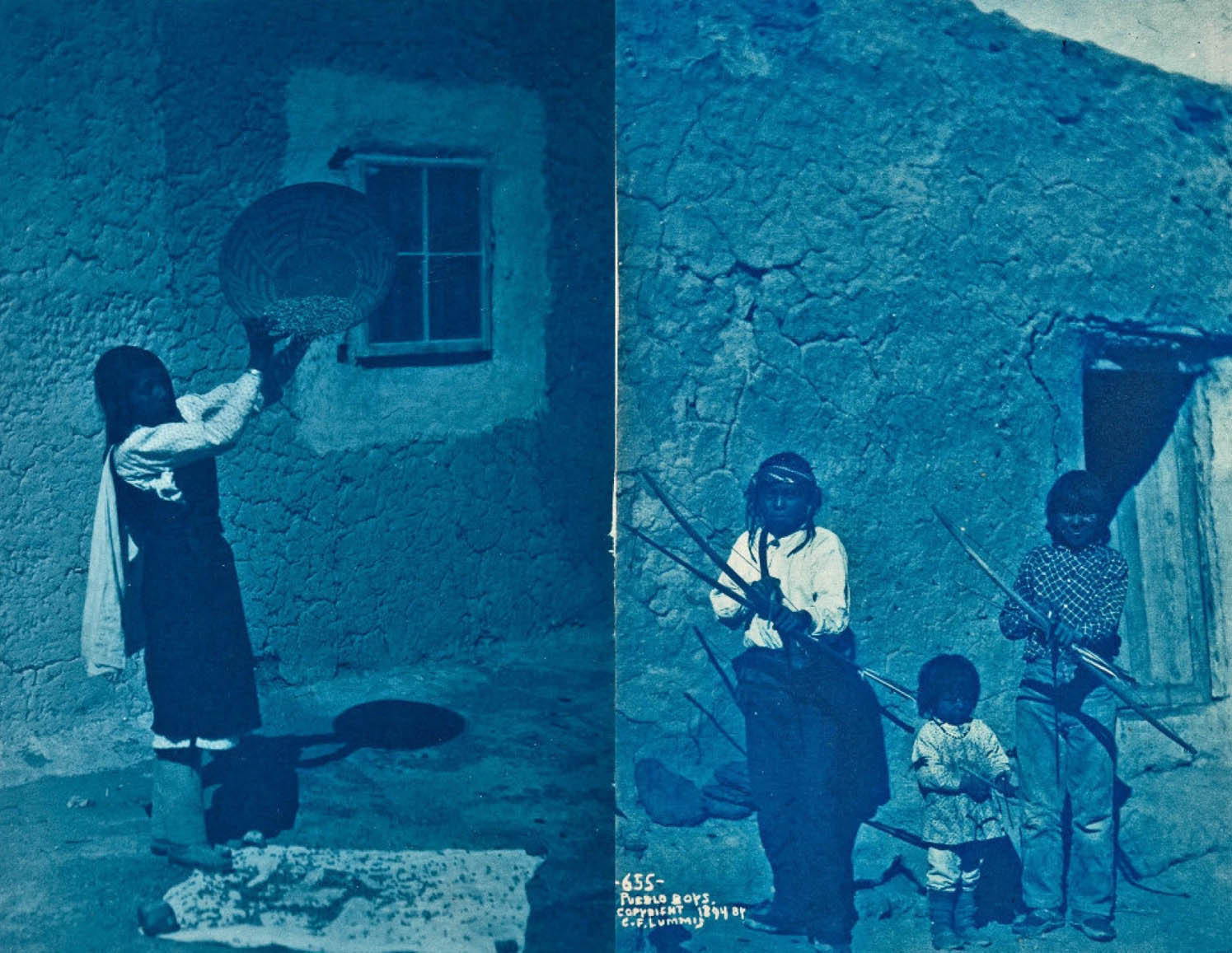
Charles Lummis (American, 1859-1928) 'Photograph of an Isleta girl winnowing beans, Isleta Pueblo, New Mexico' 1890 and Charles Lummis (American, 1859-1928) 'Photograph of three Isleta boys with bows and arrows, Isleta Pueblo, New Mexico' 1894


(Left)

Charles Lummis (American, 1859-1928)
Photograph of an Isleta girl winnowing beans, Isleta Pueblo, New Mexico
1890
Cyanotype
8 in x 5 in.
Courtesy of the Braun Research Library Collection, Autry Museum of the American West

(Right)

Charles Lummis (American, 1859-1928)
Photograph of three Isleta boys with bows and arrows, Isleta Pueblo, New Mexico
1894
Cyanotype
8 in x 5 in.
Courtesy of the Braun Research Library Collection, Autry Museum of the American West


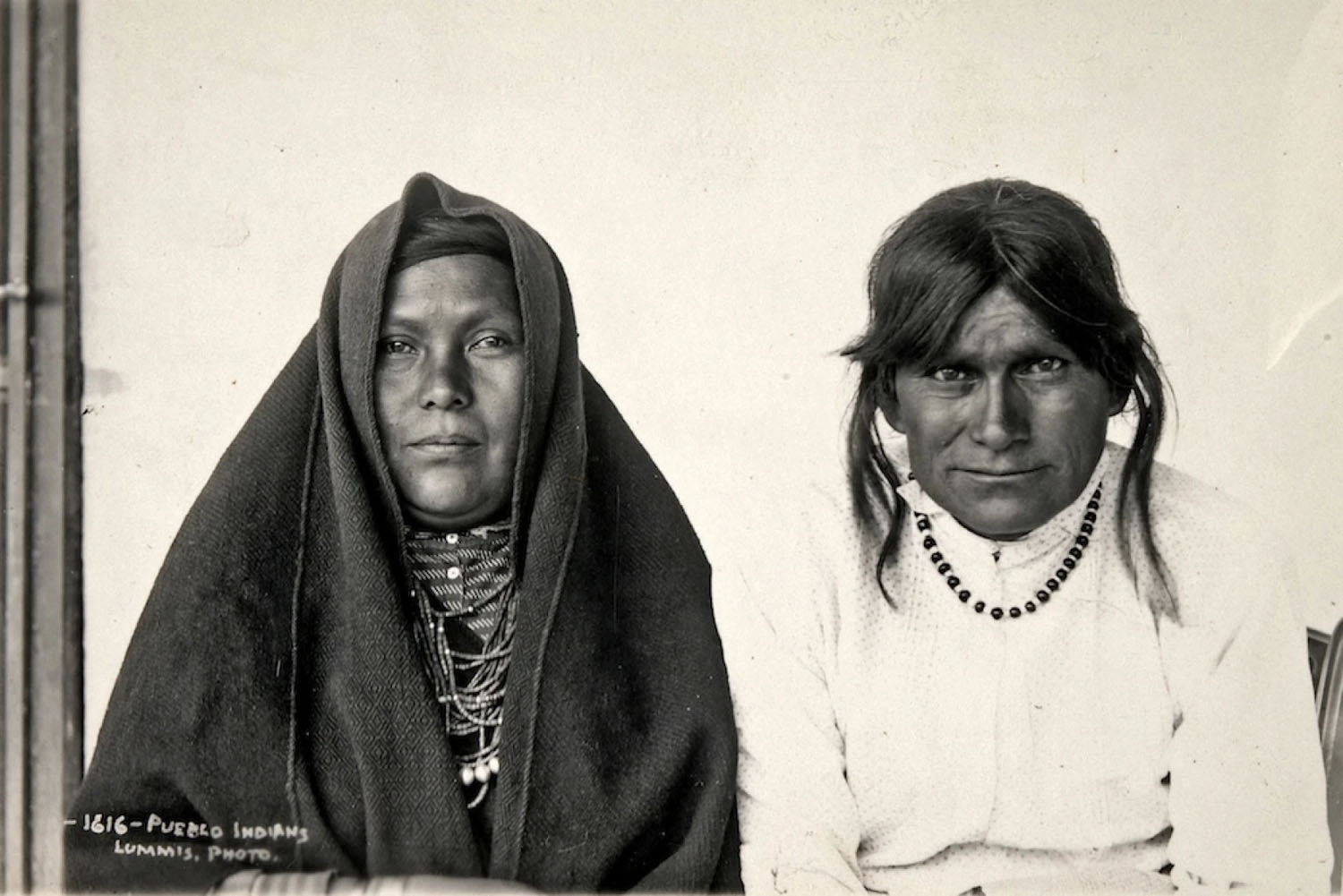
Charles Lummis (American, 1859-1928) 'Photograph of a Pueblo couple (probably Isleta or Taos), New Mexico' April 27, 1896


Charles Lummis (American, 1859-1928)
Photograph of a Pueblo couple (probably Isleta or Taos), New Mexico
April 27, 1896
5 in x 7 in.
Courtesy of the Braun Research Library Collection, Autry Museum of the American West


Charles Lummis (American, 1859-1928) 'Photograph of spectators watching races, Isleta Pueblo, New Mexico' April 19, 1896


Charles Lummis (American, 1859-1928)
Photograph of spectators watching races, Isleta Pueblo, New Mexico
April 19, 1896
5 in x 7 in.
Courtesy of the Braun Research Library Collection, Autry Museum of the American West


Charles Lummis (American, 1859-1928) 'Cyanotype photograph album: Bits of New Mexico and Arizona, Vol. 2' Nd


Charles Lummis (American, 1859-1928)
Cyanotype photograph album: Bits of New Mexico and Arizona, Vol. 2
Nd 
5.25″ x 9.25″
Courtesy of the Autry National Center/Southwest Museum, Los Angeles


The rapid changes forced on the Native American peoples of the American southwest are documented in Time Exposures: Picturing a History of Isleta Pueblo in the 19th Century. With more than 80 images and objects that detail life on the Isleta Pueblo Reservation after the arrival of the railroads in 1881, the exhibition opens Saturday, Sept. 17, at the Smithsonian’s National Museum of the American Indian in New York, the George Gustav Heye Center, and continues through Sunday, June 10, 2012.

In 1881, the railroad companies forcibly took land in the centre of Isleta Pueblo in the Rio Grande Valley and the rail lines built there brought scores of tourists. Prominent non-Native artists and photographers, such as Edward Curtis and Ben Wittick, traveled there to capture everyday Pueblo life. Organised by the people of Isleta Pueblo, Time Exposures portrays their lives before the arrival of tourists and other visitors, the changes imposed over the following decades and the ways in which the people of Isleta Pueblo worked to preserve their way of life.

Time Exposures is divided into three parts. In the first section, the cycle of the Isleta traditional year as it was observed in the mid-19th century is detailed. The second section describes the arrival of the Americans and the how this disrupted the Isleta way of living. In the third section, the exhibit examines the photos themselves as products of an outside culture. While exploring the underlying ideas and values of the photos, the exhibition questions their portrayal of Isleta people and ways. “In this exhibition, Native people respond to the stereotypical images of their lives that have been circulated by outsiders for centuries,” said Kevin Gover (Pawnee), director of the museum. “It is an opportunity for us all to learn the realities behind some of these popular and enduring photographs.”

“These photographs tell such an important story,” said John Haworth (Cherokee), director of the Heye Center. “The people of Isleta Pueblo fought to maintain their traditions despite radical and dramatic disruptions.”

Included in the exhibition are images by photographers Edward Curtis, A.C. Vroman, Karl Moon, John Hillers, Charles Lummis, Carlos Vierra, Sumner Matteson, Albert Sweeney, Josef Imhof and Ben Wittick. Time Exposures: Picturing a History of Isleta Pueblo in the 19th Century was organised by the people of the Pueblo of Isleta. A committee of Isleta Pueblo traditional leaders oversaw the development, writing and design of the exhibition. Time Exposures originally appeared at the Albuquerque Museum of Art and History in New Mexico.

Press release from the National Museum of the American Indian, New York website


George Wharton James (American, 1858-1923) 'Selling goods along tracks' late 1880s to early 1900s


George Wharton James (American, 1858-1923)
Selling goods along tracks
late 1880s to early 1900s
40 x 27cm
Courtesy of the Autry National Center/Southwest Museum, Los Angeles


Sumner Matteson (American, 1867-1920) 'Simon Zuni' 1900


Sumner Matteson (American, 1867-1920)
Simon Zuni
1900
46 x 33 cm
Photograph Courtesy of the Milwaukee Public Museum, Sumner W. Sumner Matteson Collection


In Time Exposures, we the people of Isleta Pueblo, a Native American community in New Mexico, tell our own story about this time and its lasting effects on our life today. Using a selection of over 300 historic photographs and an array of artefacts, the exhibit portrays our lives before the arrival of the Americans, the changes imposed over the following decades, and the ways in which our people worked to preserve our way of life. Through this process, the exhibit explains how we came to be who we are today.

The exhibit is divided into three parts. In the first section, we describe the cycle of our traditional year as it was observed in the mid-19th century. As a community, our lives were organised according to the seasons, farming, hunting and gathering practices and a regular sequence of ceremonies and rituals. Much has changed for us, but the cycles described here still define the contours of a parallel life we live today.

The second section of the exhibition describes the arrival of the Americans and the many ways in which this influx disrupted our way of living. The new authority took our lands and waters, prohibited hunts, and severely limited our access to plants and other resources. The exhibit shows how our people fought these changes and how we learned to become members of America on our own terms.

In the third section of the show, the exhibit examines the photographs themselves as products of white culture. The exhibit explores the underlying ideas and values of the photos, and asks what kind of record they truly represent of our people and our ways.

Text from the Time Exposures exhibition catalogue


Unknown photographer. 'Jose S. Abeita, bronco buster, in Magdalena' c. 1920


Unknown photographer
Jose S. Abeita, bronco buster, in Magdalena
c. 1920
25 x 40cm
Courtesy of the Autry National Center/Southwest Museum, Los Angeles


Charles Lummis (American, 1859-1928) 'Young Isleta Girl' Nd 


Charles Lummis (American, 1859-1928)
Young Isleta Girl
Nd 
Cabinet card
Courtesy of the Library of Congress


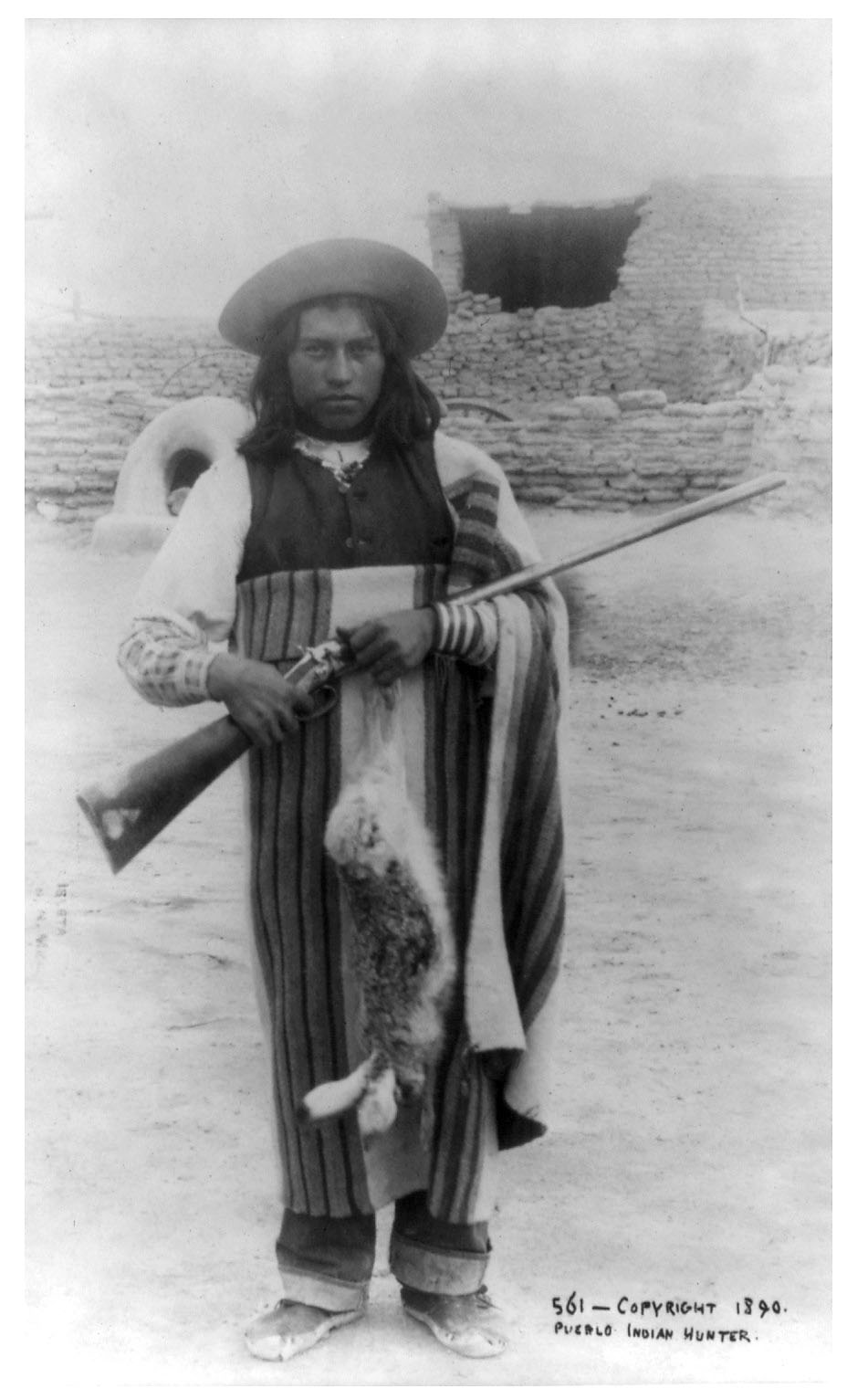
Charles Lummis (American, 1859-1928) 'Isleta hunter, Juan Diego' 1890


Charles Lummis (American, 1859-1928)
Isleta hunter, Juan Diego
1890
Courtesy of the Autry National Center/Southwest Museum, Los Angeles


Smithsonian National Museum of the American Indian
The George Gustav Heye Center
One Bowling Green, Battery Park, New York City
Phone: (212) 514-3700

Opening hours:
Every day from 10am – 5pm
Thursdays until 8pm

National Museum of the American Indian website

LIKE ART BLART ON FACEBOOK

Back to top
Exhibition: ‘Entre Nous: The Art of Claude Cahun’ at the Art Institute of Chicago

Exhibition dates:  25th February – 3rd June 2012


Claude Cahun (French, 1894-1954) 'Autoportrait' 1929


Claude Cahun (French, 1894-1954)
Autoportrait
1929
Gelatin silver print
24 x 19cm
Musée des Beaux-Arts de Nantes
© RMN/Gérard Blot


“In many ways, Cahun’s life was marked by a sense of role reversal, and her public identity became a commentary upon not only her own, but the public’s notions of sexuality, gender, beauty, and logic. Her adoption of a sexually ambiguous name, and her androgynous self-portraits display a revolutionary way of thinking and creating, experimenting with her audience’s understanding of photography as a documentation of reality. Her poetry challenged gender roles and attacked the increasingly modern world’s social and economic boundaries. Also Cahun’s participation in the Parisian Surrealist movement diversified the group’s artwork and ushered in new representations. Where most Surrealist artists were men, and their primary images were of women as isolated symbols of eroticism, Cahun epitomised the chameleonic and multiple possibilities of the female identity. Her photographs, writings, and general life as an artistic and political revolutionary continue to influence countless artists, namely Cindy Sherman, Nan Goldin and Del LaGrace Volcano.”


Text from the Wikipedia website


Cahun was a resistance fighter during the Second World War, was arrested, sentenced to death and survived. She lived with her longtime female partner and collaborator on Jersey from 1937 until 1954, the year of her death. Entre Nous means “Between Us,” such an appropriate title for their collaboration, love and partnership. What a talent, what a woman and gay to boot!

Dr Marcus Bunyan


Many thankx to the Art Institute of Chicago for allowing me to publish the photographs in the posting. Please click on the photographs for a larger version of the image.


Claude Cahun (French, 1894-1954) 'Autoportrait' 1929


Claude Cahun (French, 1894-1954)
Autoportrait
1929
Gelatin silver print
11.5 x 8.5cm
Jersey Heritage Collection
© Jersey Heritage


Claude Cahun (French, 1894-1954) 'Autoportrait' 1928


Claude Cahun (French, 1894-1954)
Autoportrait
1928
Gelatin silver print
13.9 x 9cm
Jersey Heritage Collection
© Jersey Heritage


Claude Cahun (French, 1894-1954) 'Autoportrait' 1927


Claude Cahun (French, 1894-1954)
Autoportrait
1927
Gelatin silver print
10.4 x 7.6cm
Soizic Audouard Collection


Claude Cahun (1894-1954) has something approaching cult status in today’s art world. However, her work was almost unknown until the early 1980s, when it was championed by the research of François Leperlier, after which exhibitions at the Musée des Beaux-Arts in Nantes (1994) and the Musée d’Art Moderne de la Ville de Paris (1995) brought it to public attention. Her life and work (both literary and artistic) bespeak an extraordinary libertarian personality who defied sexual, social and ethical conventions in what was an age of avant-garde and moral upheaval. Among her many photographs, it is undoubtedly her self-portraits that have aroused the greatest interest in recent years. Throughout her life, Cahun used her own image to dismantle the clichés surrounding ideas of identity. She reinvented herself through photography, posing for the lens with a keen sense of performance and role-play, dressed as a woman or a man, as a maverick hero, with her hair long or very short, or even with a shaved head. This approach was extended in innovative ways in her photographs of objects and use of photomontages, which asserted the primacy of the imagination and of metamorphosis.

By exploring the many different analyses made of Cahun’s work since the 1990s, and ranging across its different themes: from the subversive self-portraits that question identity, to her surrealist compositions, erotic metaphors and political forays, this exhibition confirms the modernity of a figure who, as a pioneer of self-representation and the poetry of objects, has been an important influence for many contemporary artists.

Metamorphoses of identity and the subversion of gender (I)

This set of photographs, going from 1913 to the end of the 1920s, includes some of Cahun’s major works, in which she staged her own persona, emphasising disguise and masks, and working through variations on gender: feminine, masculine, androgyne, undifferentiated. Sexual ambiguity is consciously cultivated and calls into question established norms and conventions. In 1928, she even represented herself with her head shaved, wearing a singlet, in profile, or with her hands against her face, or wearing a loose man’s jacket. Some of the mise-en-scènes from this period seem to anticipate contemporary performance.

Poetics of the object

The “assemblages of objects,” which make their appearance in around 1925, inventively explore what at the time was still a rather new form. This work came to wider attention in the Surrealist exhibition at the Charles Ratton gallery, in May 1936, and then with the commissioning of 22 photographic plates to illustrate a book of poems by Lise Deharme, Le Coeur de Pic (1937), prefaced by Paul Eluard. These photographs capture ephemeral set-ups, often in a natural setting (garden, beach). Each “sketch” is a composition of heterogeneous elements, both found and made, such as knickknacks in spun glass, sewing items, twigs, bones, insects, feathers, gloves, pieces of fabric, shoes, tools, etc. This “theatre of objects” has both a visual and symbolic significance, which Cahun explained in her text Prenez garde aux objets domestiques (1936).

Metamorphoses of identity and the subversion of gender (continued)

The 1930s saw Cahun continuing to explore images of the self. However, questions of sexual difference and its social and cultural construction were now less to the fore as she went deeper into the potential of situations and disguises and experimented with duplication in a way that extended the work of the photomontages from the late 1920s.

Metaphors of desire

Eschewing the direct and sometimes reifying display of the female body found in many paintings and photographs, Cahun opted for a more subtle kind of “veiled eroticism” using distance and irony. Here we find some very evocative examples of her calculating games with desire. Whether through the contained display of the body, allegory (the bacchante or faun, surrounded by sensuous vegetation), or anthropomorphic objects (the hermaphroditic “père”), she aimed to capture the essence of desire, to bring out its essential grounding in fantasy.

The two of us. Claude Cahun and Suzanne Malherbe (Marcel Moore)

The photograph Entre nous (1926) clearly establishes the spirit of this section, which evokes various aspects of Claude Cahun’s intimate relationship and artistic collaboration with her partner, Suzanne Malherbe. In fact, a number of the photographs here were taken by Suzanne following Claude’s suggestions. A double portrait from 1921 shows a surprising parallel which could be read as a metaphor of their relationship, a deep closeness and understanding between two strong personalities. The linchpin of this section is constituted by the four photomontages used to illustrate Aveux non avenus (1930), Cahun’s most significant literary work, gathering together all the artist’s main themes and obsessive metaphors. The plates were executed by Moore in collaboration with Claude Cahun.

Elective encounters

This series of portraits, which reflect the importance of friendship in the development of Cahun’s work, gives an idea of the figures who were important to her and influenced her, or to whom she felt close, among them Henri Michaux, Robert Desnos, André Breton, Jacqueline Lamba and Suzanne Malherbe. There are also two photographs from performances at Pierre Albert-Birot’s theatre Le Plateau (1929). They attest Cahun’s keen interest in theatre and acting.

Poetry and politics

In the 1930s Cahun’s positions grew increasingly radical in response to the rise of totalitarianism. She joined the Surrealists and associated with a number of groups on the left and far left. This radicalisation is reflected in her aesthetic. In line with the ideas put forward in her pamphlet Les Paris sont ouverts (1934), she exploited the subversive qualities of “indirect action” in the sphere of symbolic expression, making a number of objects in which poetry and politics are intimately intertwined. This process culminated when she used these pieces for two big series of photographs dominated by a mood of irony, revolt and provocation: “La Poupée” (The Doll), a figure fashioned out of newspaper, and “Le Théâtre” (The Theatre), a wooden mannequin surrounded by various elements and placed under a glass dome.

Beyond the visible. The last self-portraits

Close study of Cahun’s photographs reveals the presence of allusions to non-visible phenomena, pointing the way to other realities – and perhaps, too, beyond death. Her attraction to symbolism, her interest in Eastern doctrines and her closeness to Surrealism only confirmed the primacy of fantasy and metamorphosis evidenced in the intellectual and aesthetic approaches she took throughout her life. The series Le Chemin des chats (The Way of Cats, around 1949 and 1953), suggests a mediation on and questioning of reality and appearance. Cahun was a true cat lover: for her, this animal was the great intercessor, the medium of an intuitive contact between the visible and the invisible, leading to sensorial worlds that are both unfamiliar and yet very near.

Juan Vicente Aliaga and François Leperlier, curators of the exhibition


Claude Cahun (French, 1894-1954) 'Autoportrait' 1939


Claude Cahun (French, 1894-1954)
Autoportrait
1939
Gelatin silver print
10 x 8cm
Jersey Heritage Collection
© Jersey Heritage


Claude Cahun (French, 1894-1954) 'Autoportrait' 1926


Claude Cahun (French, 1894-1954)
Autoportrait
1926
Gelatin silver print
11.1 x 8.6cm
IVAM, Institut Valencià d’Art Modern, Generalitat


Born Lucy Schwob to a family of French intellectuals and writers, Claude Cahun (who adopted the pseudonym at age 22) is best known for the staged self-portraiture, photomontages, and prose texts she made principally between 1920 and 1940. Rediscovered in the late 1980s, her work has not only expanded our understanding of the Surrealist era but also serves as an important touchstone to later feminist explorations of gender and identity politics. In her self-portraits, which she began creating around 1913, Cahun dismantled and questioned preexisting notions of self and sexuality. Posing in costumes and elaborate make-up, Cahun appears masked as various personae: man or woman, hero or doll, both powerful and vulnerable. Almost a century after their making, these innovative photographs and assemblages remain remarkably relevant in their treatment of gender, performance, and identity.

From her university years until her death, Cahun was accompanied by her partner and artistic collaborator, Suzanne Malherbe, a childhood friend and stepsister. They surrounded themselves with members of the Surrealist movement and created work that embraced leftist politics. Cahun, with assistance from Malherbe (under the pseudonym Marcel Moore), produced photographs, assemblages, and publications from the 1920s on. The photograph Entre Nous (Between Us), featuring a pair of masks embedded in sand, gives the title to this show and is emblematic of their multifaceted relationship.

The first retrospective exhibition in the United States of Cahun’s work, Entre Nous: The Art of Claude Cahun brings together over 80 photographs and published material by Cahun and Moore, including several photomontages from their 1930 collaborative publication Aveux non avenus (Disavowals), and the only surviving object by Cahun, which is in the Art Institute’s permanent collection.

Organiser: This exhibition was organised by the Jeu de Paume, Paris, and coproduced with La Virreina Centre de la Imatge, Barcelona.

Press release from the Art Institute of Chicago website


Claude Cahun (French, 1894-1954) 'Combat de pierres' 1931


Claude Cahun (French, 1894-1954)
Combat de pierres
1931
Gelatin silver print
21 x 15.5cm
Private collection
© Béatrice Hatala


Claude Cahun (French, 1894-1954) 'Le Père' 1932


Claude Cahun (French, 1894-1954)
Le Père
1932
Gelatin silver print
23.6 x 17.7cm
LAC


Claude Cahun (French, 1894-1954) Marcel Moore (French, 1892-1972) 'Entre nous' (Between Us) 1926


Claude Cahun (French, 1894-1954) Marcel Moore (French, 1892-1972)
Entre nous (Between Us)
1926
Gelatin silver print
4 11/16 × 4 5/8 in (11.9 × 11.7cm)


While the motivation for these remarkable self-portraits seems rooted in a commitment to leftist politics and subversion of gender norms, I also feel a great sense of intimate domesticity beneath the surface. Cahun and Moore first met in 1909 when they were both teenagers. Eight years later, Cahun’s father married Moore’s mother, which must have given the couple a convenient excuse for their close relationship at a time when such lifestyle choices were less than accepted.

Our curators have surmised that Cahun’s camera did not have a timer on it, so many if not all of these self-portraits must have been created with Moore’s assistance. When the two moved to the Isle of Jersey in the 1930s to escape the political climate developing in France, they began to live in almost total seclusion. Though often taken outside around the grounds of their estate, the photographs from this period seem to the most private and familiar. Beyond the thoughtful self-presentation and artistic experimentation, there is a palpable sense of play, of close friends having fun.

An interesting aside: In July of 1940, the Nazis invaded Jersey where Cahun and Moore were still living. For the next four years, they engaged in active resistance against the Germans, producing and distributing counterpropaganda leaflets to Nazi soldiers on the island. Continuing the kind of dress-up they’d played together for years, the two would dress in disguises to infiltrate German outposts where they would disseminate anti-Nazi leaflets signed as “der Soldat ohne Namen” (the solider with no name). They were eventually arrested in 1944 and sentenced to death. Fortunately, the island was liberated before the executions could be carried out.

Extract from Robby Sexton, “Between You and Me,” on the Art Institute of Chicago website March 15, 2012 [Online] Cited 08/10/2024


Claude Cahun (French, 1894-1954) 'Aveux non avenus, planche III' 1929-1930


Claude Cahun (French, 1894-1954)
Aveux non avenus, planche III
1929-1930
Gelatin silver print photomontage
15 x 10cm
Private collection


The Art Institute of Chicago
111 South Michigan Avenue
Chicago, Illinois 60603-6404
Phone: (312) 443-3600

Opening hours:
Thursday – Monday 11am – 5pm
Closed Tuesdays and Wednesdays

The Art Institute of Chicago website

LIKE ART BLART ON FACEBOOK

Back to top

Exhibition: ‘Behind the Curtain – The Aesthetics of the Photobooth’ at the Musée de l’Elysée, Lausanne

Exhibition dates: February – 20th May 2012

Artists:
 Jean-Michel Alberola, Louis Aragon, Marie-Berthe Aurenche, Richard Avedon, Alain Baczynsky, Jared Bark, Marc Bellini, Jacques-André Boiffard, André Breton, Hansjürg Buchmeier, Anita Cruz-Eberhard, Sabine Delafon, Anne Deleporte, Paul Eluard, Max Ernst, Michael Fent, Michel Folco, Valentine Fournier, Lee Friedlander, Näkki Goranin, Jeff Grostern, Susan Hiller, Dick Jewell , Svetlana Khachaturova, Jürgen Klauke, Jacques-Henri Lartigue, Naomi Leibowitz, Leon Levinstein, Annette Messager, Willy Michel, Daniel Minnick, Suzanne Muzard, Raynal Pellicer, Mathieu Pernot, Steven Pippin, Jacques Prévert, Raymond Queneau, Arnulf Rainer, Timm Rautert, Bruno Richard, Gerhard Richter, Thomas Ruff, Michel Salsmann, Tomoko Sawada, Joachim Schmid, Cindy Sherman, Lorna Simpson, Dimitri Soulas, Yves Tanguy, Amanda Tetrault, Roland Topor, Franco Vaccari, Andy Warhol, Gillian Wearing, Jan Wenzel, David Wojnarowicz and the group Fluxus.


Franco Vaccari. '(Exhibition in real time: leave a photographic sign of your passage on these walls)' 1972 (detail)


Franco Vaccari (Italian, b. 1936)
Esposizione in tempo reale num. 4: Lascia su queste pareti una traccia fotografica del tuo passaggio (Exhibition in real time: leave a photographic sign of your passage on these walls) (detail)
1972
Collage of photobooths mounted on cardboard, gelatin silver prints
45.5 x 58.5cm
© Franco Vaccari, property of the Artist


This is one exhibition I wish I could really see in person. Such a fascinating subject!

The images are timeless, contextless and quite beguiling. The exhibition questions the aesthetics of the photobooth through six major themes: The Booth, Automatism, The Strip, Who Am I?, Who Are You?, Who Are We?. In Melbourne there are still two black and white photobooths outside the Elizabeth Street exit of Flinders Street railway station, standing there like silent sentinels of a bygone age. I remember when I was younger queueing to have my photograph taken, for student cards and for my first passport. You needed two nearly identical black and white shoulder up portraits, no smiling, no glasses on. Now you just go to the chemist for your colour renditions. The magic and the fun has gone.

The whole performance has the illusion of the cinematic. You queue to get in, drawing back the curtain and closing it behind you, as they close the doors of the cinema. The privacy of the booth, not in darkness but behind a curtain that shields your face from prying eyes but leaves the lower half of your body exposed. Behind where you will be sitting another curtain – drawn or open? What background do you want? You adjust the seat up and down so that your face is at the correct level with the mark on the screen, enter your money and wait. The red light comes on, you (com)pose yourself and a couple of seconds later: flash! Your eyes try to recover in time for the next red light: flash!

Time seems to slow down and almost stop between the flashes of light. The experience of your performance before the screen possesses such a visceral, tense, gut feel but also a disembodied feeling. I never know how I am going to look on the cinematic film strip, not at 24 frames a second, but at 4 frames per minute. What happens to the time in between? Standing outside the booth waiting for a strip of paper with your impression on it, not knowing what the images are going to be like, whether the development of the image in such a short space of time has worked correctly – and the smell of the chemicals on the paper as you handle the still wet strip. Magic…

Dr Marcus Bunyan


Many thankx to the Musée de l’Elysée for allowing me to publish the photographs in the posting. Please click on the photographs for a larger version of the image.


Mathieu Pernot (French, b. 1970) 'Jonathan, Mickael, Priscilla, Photobooth' 1996


Mathieu Pernot (French, b. 1970)
Jonathan, Mickael, Priscilla, cabine du photomaton (Jonathan, Mickael, Priscilla, Photobooth)
1996
Three gelatin silver prints
540 x 195cm
© Mathieu Pernot / collection Musée de l’Élysée, Lausanne


Cindy Sherman (American, b. 1954) 'Untitled' 1975


Cindy Sherman (American, b. 1954)
Untitled
1975
Gelatin silver print
30.5 x 20.4cm
© Courtesy of the Artist, Metro Pictures, collection Musée de l’Elysée, Lausanne


Gillian Wearing (English, b. 1963) 'Self Portrait at 17 Years Old' 2003


Gillian Wearing (English, b. 1963)
Self Portrait at 17 Years Old
2003
Framed C-type print
115.5 x 92cm
Collection of Contemporary Art Fundació ‘La Caixa’, Barcelone
© Gillian Wearing, courtesy Maureen Paley, London


Anne Deleporte (French, b. 1960) 'I.D. Stack #6' 1992


Anne Deleporte (French, b. 1960)
I.D. Stack #6
1992
Stack of photobooth portraits, gelatin silver and chromogenic prints
6 x 5 x 3cm
© Anne Deleporte


When the first photobooths were set up in Paris in 1928, the Surrealists used them heavily and compulsively. In a few minutes, and for a small price, the machine offered them, through a portrait, an experience similar to automatic writing. Since then, generations of artists have been fascinated by the concept of the photobooth. From Andy Warhol to Arnulf Rainer, Thomas Ruff, Cindy Sherman and Gillian Wearing, many used it to play with their identity, tell stories, or simply create worlds.

Behind the Curtain – the Aesthetics of the Photobooth, an exhibition created by the Musée de l’Elysée, is the first to focus on the aesthetics of the photobooth. It is divided into six major themes: the booth, the automated process, the strip, who am I ?, who are you?, who are we? Provider of standardised legal portraits, it is the ideal tool for introspection and reflection on others, whether individually or in groups. By bringing together over 600 pieces made on different media (photographs, paintings, lithographs and videos ) from sixty international artists, the exhibition reveals the influence of the photobooth within the artistic community, from its inception to the present day.

The exhibition questions the aesthetics of the photobooth through six major themes.

The Booth

An isolated space, closed in as if it were some sort of modern confessional, the photobooth is an invitation to the most intimate revelations. Generally located in public spaces-subway station, department store or train station-it also offers an extraordinary observation point onto the urban hustle and bustle. It is a world in between the intimate and the public, the inside and the outside, the debarred and the open.

Automatism

From the Surrealists to the most contemporary artists, all have been fascinated by the automatism of the photobooth. The machine does the work. The author vanishes behind the almighty technology. Malfunction can occur at times. The result is a form of poetry of the automatism made visible in its faults, failures or blunders.

The Strip

As a series of juxtaposed images, the strip recreates spatial or temporal continuities. It reconstructs improbable spaces: a closer look shows that, in fact, the adjacent image is the following image. Through this succession of images, the photobooth holds, as if folded into it, the principle of the cinema. Putting images side by side is already telling a story.

Who am I?

Identity is embodied within the space of the photobooth. It is a space for self-staging, where social, ethnic, sexual, community or any other identity can be strengthened or undone. One can pretend to ascertain one’s naked identity through the mirror of the photobooth, or on the contrary, by pulling faces or in disguise, to establish metamorphoses of the self. The photobooth is the ideal introspective tool.

Who are you?

The photobooth is not only a place suitable for self-reflection, it is also a place in which the other can be questioned, in particular through the legal identification system that delivers what is commonly referred to as ‘ID’. In devoting oneself to the compulsive and bulimic collecting of photobooth strips, one can also get lost in the faces of others.

Who are we?

While it allows us to reflect upon our own identity, or other people’s, the photobooth is also an opportunity to ponder about the nature of the couple, or the group. Inside the booth, some build their image through the mirror of the other, or of others; they pose in pairs or more, thus asserting their affiliation to a social entity. The photobooth reinforces our gregarious instinct; it embodies collective identity.

With works by Jacques-Henri Lartigue, Willy Michel, Lorna Simpson, Amanda Tetrault and the collection of albums of purikuras (see photograph below: in Japan, the name purikuras refers to a photo sticker booth or the product of such a photo booth. The name is a shortened form of the registered trademark Purinto Kurabu (プリント倶楽部). The term derives from the English print club. Jointly developed by Atlus and Sega, the first purikura machines were sold in July 1995).

Press release from the Musée de l’Elysée website


Anonymous. 'Collection of albums of purikuras' 1995-2010


Anonymous
Collection of albums of purikuras
1995-2010
Collection of digital images printed on stickers mounted in booklets
Various sizes from 9 x 12.8cm to 11.9 x 14.5cm
© Kenji Hirasawa (art collector)


Andy Warhol (American, 1928-1987) 'Frances Lewis' 1966


Andy Warhol (American, 1928-1987)
Frances Lewis
1966
Acrylic and silkscreen on linen, 12 panels
162.5 x 167.6cm
© Collection The Sydney and Frances Lewis Foundation / 2011
The Andy Warhol Foundation for the Visual Arts, Inc. / Artists Rights Society ( ARS ), New York


Jan Wenzel (German, b. 1972) 'Vohang (Curtain)' 2009


Jan Wenzel (German, b. 1972)
Vohang (Curtain)
2009
From the series Instant History
Montage of four photobooth prints, chromogenic prints
41.7 x 31.7cm
© Jan Wenzel / Kleinschmidt Fine Photographs


Yves Tanguy (French, 1900-1955) 'Selfportrait in a Photobooth' c. 1929


Yves Tanguy (French, 1900-1955)
Selfportrait in a Photobooth
c. 1929
Gelatin silver print
20.5 x 3.8cm
© Collection Musée de l’Elysée, Lausanne / 2011, ProLitteris, Zurich


Anonymous. 'Walter and I at the BIG SLIDE' c. 1970


Anonymous
Walter and I at the BIG SLIDE
c. 1970
Gelatin silver print
c. 20.5 x 3.8cm
© Collection Näkki Goranin


Arnulf Rainer (Austrian, b. 1929) 'No title (Automatenportraits)' August 1969

Arnulf Rainer (Austrian, b. 1929) 'No title (Automatenportraits)' August 1969

Arnulf Rainer (Austrian, b. 1929) 'No title (Automatenportraits)' August 1969


Arnulf Rainer (Austrian, b. 1929)
No title (Automatenportraits)
August 1969
Courtesy Galerie m Bochum
© Arnulf Rainer


Alain Baczynsky (Belgian, b. 1953) 'Regardez, il va peut-être se passer quelque chose …' 1979-1981


Alain Baczynsky (Belgian, b. 1953)
Regardez, il va peut-être se passer quelque chose… (Look, maybe it will be something going on…)
1979-1981
© Collection Centre Pompidou, dist. RMN


Susan Hiller (American-born artist who lived in London, 1940-2019) 'Midnight, Euston' 1983


Susan Hiller (American-born artist who lived in London, 1940-2019)
Midnight, Euston
1983
© Susann Hiller; Arts Council Collection, Southbank Centre, London


Jan Wenzel (German, b. 1972) 'Bastler II' 2000


Jan Wenzel (German, b. 1972)
Bastler II
2000
© Jan Wenzel & Kleinschmidt Fine Photographs


Musée de l’Elysée
18, avenue de l’Elysée CH
1014 Lausanne
Phone: + 41 21 316 99 11

Opening hours
Wednesday – Monday 10am – 6pm
Closed Tuesdays

Musée de l’Elysée website

LIKE ART BLART ON FACEBOOK

Back to top

Exhibition: ‘Warhol and Cars: American Icons’ at The Andy Warhol Museum, Pittsburgh

Exhibition dates: 5th February – 13th May 2012


Many thankx to The Warhol Museum for allowing me to publish the photographs of the art in the posting. Please click on the photographs for a larger version of the image.


Andy Warhol (American, 1928-1987) 'Car' 1950s


Andy Warhol (American, 1928-1987)
Car (1958 Cadillac Coupe DeVille)
c. 1958
Ink and Dr. Martin’s Aniline dye on Strathmore paper
13 1/4 x 25 5/8 in (33.7 x 65.1cm)
The Andy Warhol Museum, Pittsburgh; Founding Collection, Contribution The Andy Warhol Foundation for the VisualArts, Inc.,
© 2010 The Andy Warhol Foundation for the Visual Arts / Artists Rights Society (ARS), New York


I think of myself as an American artist; I like it here. I think it’s so great. I feel I represent the U.S. in my art but I’m not a social critic: I just paint those objects in my paintings because those are the things I know best… I’ve heard it said that my paintings are as much a part of the fashionable world as clothes and cars.


Andy Warhol, 1966


Andy Warhol (American, 1928-1987) 'Female Fashion Figure' 1950s


Andy Warhol (American, 1928-1987)
Female Fashion Figure (with 1959 Plymouth Sport Fury Convertible)
c. 1959
Ink and Dr. Martin’s Aniline dye on Strathmore paper
20 1/8 x 24 7/8 in (51.1 x 63.2cm)
The Andy Warhol Museum, Pittsburgh; Founding Collection, Contribution The Andy Warhol, Foundation for the Visual Arts, Inc.,
© 2010 The Andy Warhol Foundation for the Visual Arts / Artists Rights Society (ARS), New York


Andy Warhol (American, 1928-1987) '5 Deaths' 1963


Andy Warhol (American, 1928-1987)
5 Deaths
1963
Acrylic and silkscreen ink on canvas
20 1/8 x 30 in (51.1 x 76.2cm)
The Andy Warhol Museum, Pittsburgh; Founding Collection, Contribution The Andy Warhol Foundation for the Visual Arts, Inc.,
© 2010 The Andy Warhol Foundation for the Visual Arts / Artists Rights Society (ARS), New York.


Andy Warhol (American, 1928-1987) 'BMW M1 Art Race Car' 1979


Andy Warhol (American, 1928-1987)
BMW M1 Art Race Car
1979


Andy Warhol (American, 1928-1987) 'BMW M1 Art Race Car' 1979 (detail)


Andy Warhol (American, 1928-1987)
BMW M1 Art Race Car (detail)
1979


Warhol and Cars: American Icons is the first exhibition to examine Warhol’s enduring fascination with automotive vehicles as products of American consumer society. This exhibition features more than forty drawings, paintings, photographs, and related archival material spanning from 1946 to 1986. As one of the most iconic and influential artists of the 20th century, Andy Warhol has helped to define America. His signature images of such American products and celebrities as Campbell’s soup cans, Coca-Cola bottles, Marilyn Monroe, and Elizabeth Taylor have become instantly recognisable. The majority of the work in the exhibition is from The Andy Warhol Museum’s collection.

The exhibition, organised by the Montclair Art Museum in New Jersey, traces the development of Warhol’s work with cars throughout his career. Warhol and Cars highlights include drawing created in the 1940s; works on paper of the 1950s, as well as paintings and prints from the 60s, 70s and 80s. The exhibition is organised chronologically and thematically, tracing the development of Warhol’s work with cars throughout his career. Exhibition highlights include a rare, spontaneous drawing of the 1940s featuring a produce truck operated by Warhol’s brother Paul; works on paper of the 1950s, dating from the era of Warhol’s commercial magazine illustration; and paintings and prints from his important and poignant Car Crash series.

A key work is Twelve Cadillacs, part of a group of nine Warhol car paintings published in the November 1962 issue of Harper’s Bazaar, which commissioned Warhol to make a visual commentary on the phenomenon of the iconic American motor car. The repetition and grid organisation became a central feature of Warhol’s work. For the first time, Twelve Cadillacs will be juxtaposed with potential source images, as well as the related Seven Cadillacs and the hand-painted Lincoln Continental, both of which were also part of the Harper’s Bazaar commission. Also on view will be a related drawing and car model of Cadillacs from the Jean S. and Frederic A. Sharf Collection of American Automobile Art.

Warhol’s continued engagement with the theme of the automobile is seen in prints and paintings of the 1970s and 1980s based on Volkswagen advertisements, as well as in multiple photographs of European and American cars sewn together with thread into a format evocative of Warhol’s characteristic assembly-line aesthetic. An original BMW M-1 racing car that was hand-painted by Warhol will be on display in the entrance gallery. A film of Warhol painting a BMW in 1979 as part of the BMW Art Race Car Projects introduced by French race car driver Herve Poulin will be on view during the exhibition. The car is part of the BMW Museum’s collection in Munich and was last displayed in the United States at Grand Central Terminal in New York City in 2009.

Press release from The Warhol Museum website


Andy Warhol (American, 1928-87) '1978 BMW 320i Art Car Maquette' 1978


Andy Warhol (American, 1928-1987)
1978 BMW 320i Art Car Maquette
1978


Andy Warhol (American, 1928-1987) 'Police Car' 1983


Andy Warhol (American, 1928-1987)
Police Car
1983
From the series Paintings for Children
Synthetic polymer and silkscreen inks on canvas
The Andy Warhol Museum, Pittsburgh; Founding Collection, Contribution The Andy Warhol Foundation for the Visual Arts, Inc.,
© 2010 The Andy Warhol Foundation for the Visual Arts / Artists Rights Society (ARS), New York.


Andy Warhol (American, 1928-1987) 'European License Plate, 1976-1986' 1986


Andy Warhol (American, 1928-1987)
European License Plate, 1976-1986
1986
© AWF


Andy Warhol (American, 1928-1987) 'Truck' 1985


Andy Warhol (American, 1928-1987)
Truck
1985
© AWF


Andy Warhol (American, 1928-1987) 'Seven Cadillacs' 1962


Andy Warhol (American, 1928-1987)
Seven Cadillacs
1962
Silkscreen ink on linen
56 x 19 in (142.2 x 48.3cm)
The Andy Warhol Museum, Pittsburgh; Founding Collection, Contribution The Andy Warhol Foundation for the Visual Arts, Inc.,
© 2010 The Andy Warhol Foundation for the Visual Arts / Artists Rights Society (ARS), New York.


The Andy Warhol Museum
117 Sandusky Street
Pittsburgh, PA 15212-5890
Phone: 412-237-8300

Opening hours:
Thursday – Monday 10am – 5pm
Tuesday closed

Andy Warhol Museum website

LIKE ART BLART ON FACEBOOK

Back to top
Exhibition: ‘Cy Twombly: Photographs 1951-2010’ at the Centre for Fine Arts, Brussels

Exhibition dates: 1st February – 29th April 2012


Cy Twombly (American, 1928-2011) 'Foundry, Rome' 2000


Cy Twombly (American, 1928-2011)
Foundry, Rome
2000
Dryprint on cardboard
43.1 x 27.9cm
© Schirmer/Mosel Verlag – Nicola Del Roscio Foundation


“In a certain sense, Twombly operates like the Pictorialists: his photographs look almost like paintings in which light is captured in brushstrokes.”

Text from the press release


Many thankx to the Centre for Fine Arts, Brussels for allowing me to publish the photographs in the posting. Please click on the photographs for a larger version of the image.


Cy Twombly (American, 1928-2011) 'Untitled (Rome)' 1966


Cy Twombly (American, 1928-2011)
Untitled (Rome)
1966
Oil, wall paint, grease crayon on canvas
190 x 200cm
Sammlung Lambrecht-Schadeberg / Rubenspreisträger der Stadt Siegen im Museum für Gegenwartskunst


Cy Twombly (American, 1928-2011) 'Yard Sale, Lexington' 2008


Cy Twombly (American, 1928-2011)
Yard Sale, Lexington
2008
Dryprint on cardboard
43.1 x 27.9cm
© Schirmer/Mosel Verlag – Nicola Del Roscio Foundation


Cy Twombly (American, 1928-2011) 'Untitled, Lexington' 2008


Cy Twombly (American, 1928-2011)
Untitled, Lexington
2008
Dryprint on cardboard
43.1 x 27.9cm
© Schirmer/Mosel Verlag – Fondazione Nicola del Roscio


Cy Twombly (American, 1928-2011) 'The Artist's Shoes, Lexington' 2005


Cy Twombly (American, 1928-2011)
The Artist’s Shoes, Lexington
2005
Dryprint on cardboard
43.1 x 27.9cm
© Schirmer/Mosel Verlag – Nicola Del Roscio


As a tribute to the recently deceased artist, the Centre for Fine Arts is turning the spotlight on a less familiar aspect of his oeuvre. The exhibition includes more than 100 dryprint Polaroid photographs (selected by Twombly himself), along with a selection of other works by Twombly and a film portrait by Tacita Dean.

Cy Twombly (who was born in Lexington in 1928 and died in Rome in 2011) was one of the most important US artists of his generation. He made his name with large-scale abstract paintings whose free form and spontaneous dynamism recall calligraphy and graffiti. In his work Twombly often referred to the myths of Classical Greek and Roman Antiquity, to literature and to art history.

The exhibition focuses on a less familiar aspect of Twombly’s oeuvre: his photographic work. The photographs are an addition to the artist’s creative world and throw new light on it. At the request of the publishers Schirmer / Mosel, Twombly selected more than 100 never previously published Polaroid photographs for a catalogue that was published just before his death on 5 July 2011. This selection is the subject of a travelling exhibition that has already been seen in Germany at the Museum Brandhorst (in Munich) and the Museum für Gegenwartskunst (in Siegen). At the Centre for Fine Arts the exhibition is being expanded, in collaboration with Dr. Hubertus von Amelunxen, who wrote an essay for the Twombly catalogue and who has made a selection for BOZAR of drawings and paintings by Twombly that reveal in greater depth the interplay of lines and light in his work. In addition, the exhibition is complemented by the screening of Tacita Dean’s intimate film portrait “Edwin Parker” (which takes its name from Twombly’s official given names).

Twombly and photography

Twombly took up photography back in his student days in the 1950s and continued to take photographs throughout his career. It was only in the 1990s, however, that he went public with his photographic work in gallery exhibitions and publications.

All the photographs in the exhibition were taken with a Polaroid camera, enlarged, printed using a special kind of dryprint, and reproduced in limited editions. This procedure, developed by Twombly himself, gives the photographs a hazy glow and a coarse grain. Twombly further reinforced this impression of blurring by playing with light and shade, by overexposure and sophisticated colour saturation, and by employing extreme close-ups. The lack of definition gives his photographs a certain indefinable quality and a poetic dimension. Our attention is no longer drawn to the subject, but to the texture of the picture. In a certain sense, Twombly operates like the Pictorialists: his photographs look almost like paintings in which light is captured in brushstrokes.

The subjects of his Polaroid photographs are extremely diverse. There are traditional still lifes with tulips, lemon leaves, and angel trumpets, alongside photographs of temples and atmospheric landscapes. Twombly surprises the viewer with intimate images of everyday objects such as his slippers, a detail from a painting, his brushes, a snapshot of his studio, etc.

The photographs are fascinating because they throw new light on Twombly’s creative spirit and visual language. These intangible, fragile images are permeated by the same themes that inspired the artist’s paintings, drawings, sculptures, and graphic art. The atmospheric colours and diffuse motifs of his photographs are an unexpected addition to his creative universe. Twombly’s oeuvre, moreover, is all about light – and is photography not the medium of light par excellence?

Tacita Dean

In the course of the exhibition circuit visitors can see an intimate film portrait of Twombly, Edwin Parker by the British artist Tacita Dean. The film takes its title from Twombly’s official given names (“Cy” is a traditional nickname in his family). The publicity-shy Twombly had become a mythical figure in the world of contemporary art. Dean’s film offers a rare insight into the artist’s life. The camera follows Twombly as he looks at his pictures in his studio, reads letters, looks through the louvres at the traffic in the city of his birth, or sits around a table with old friends and orders a meal. Tacita Dean is a British contemporary artist, known above all for her films. Her latest work to date is FILM, a 35 mm film continuously projected on a 13-metre-high monolith, which can be seen in the Turbine Hall at Tate Modern until 11 March 2012.

Press release from the Centre for Fine Arts website


Cy Twombly (American, 1928-2011) 'Brushes, Lexington' 2005


Cy Twombly (American, 1928-2011)
Brushes, Lexington
2005
Dryprint on cardboard
43.1 x 27.9cm
© Schirmer/Mosel Verlag – Nicola Del Roscio Foundation


Cy Twombly (American, 1928-2011) 'Tulips, Rome' 1985


Cy Twombly (American, 1928-2011)
Tulips, Rome
1985
Dryprint on cardboard
43.1 x 27.9cm
© Schirmer/Mosel Verlag – Nicola Del Roscio Foundation


Cy Twombly (American, 1928-2011) 'Cabbages, Gaeta' 1998


Cy Twombly (American, 1928-2011)
Cabbages, Gaeta
1998
Dryprint on cardboard
43.1 x 27.9cm
© Schirmer/Mosel Verlag – Nicola Del Roscio Foundation


Cy Twombly (American, 1928-2011) 'Painting detail of Roses, Gaeta' 2009


Cy Twombly (American, 1928-2011)
Painting detail of Roses, Gaeta
2009
Dryprint on cardboard
43.1 x 27.9cm
© Schirmer/Mosel Verlag – Fondazione Nicola del Roscio


Cy Twombly (American, 1928-2011) 'Sunset, Gaeta' 2009


Cy Twombly (American, 1928-2011)
Sunset, Gaeta
2009
Dryprint on cardboard
43.1 x 27.9cm
© Schirmer/Mosel Verlag – Nicola Del Roscio Foundation


Cy Twombly (American, 1928-2011) 'Painting Detail and "By the Ionian Sea" Sculpture, Bassano in Teverina' 1992


Cy Twombly (American, 1928-2011)
Painting Detail and “By the Ionian Sea” Sculpture, Bassano in Teverina
1992
Dryprint on cardboard
43.1 x 27.9cm
© Schirmer/Mosel Verlag – Nicola Del Roscio Foundation


Cy Twombly (American, 1928-2011) 'Interior, Rome' 1980


Cy Twombly (American, 1928-2011)
Interior, Rome
1980
Dryprint on cardboard
43.1 x 27.9cm
© Schirmer/Mosel Verlag – Fondazione Nicola del Roscio


Centre for Fine Arts
Rue Ravenstein 23
1000 Bruxelles
Info and Tickets 02 507 82 00

Opening hours:
Tuesday – Sunday 10am – 6pm
Closed Mondays

BOZAR website

LIKE ART BLART ON FACEBOOK

Back to top

Exhibition: ‘Gerhard Richter. Atlas’ at the Staatliche Kunstsammlungen Dresden

Exhibition dates: 4th February – 22nd April 2012


Installation photograph of 'Gerhard Richter. Atlas' at Kunsthalle im Lipsiusbau, Staatliche Kunstsammlungen Dresden 2012


Installation photograph of Gerhard Richter. Atlas
Kunsthalle im Lipsiusbau
Photograph: David Brandt, 2012
© Gerhard Richter Archive, Staatliche Kunstsammlungen Dresden


Meaning arises out of context – or the lack of it. Unlike the grids of the Bechers which promote multiple ways of seeing and construct narrative tension these images do not increase the photographic narrative. They are like the parrots, finches or scarab beetles in a display case at a natural history museum – part of a taxonomic classification system, where one out of a thousand is the most impressive beetle, the bird with the brightest plumage, where the composition is the most surprising. Multiples as collected here are fascinating but emerge from a slightly obsessive mind (which any collectors mind is!)

This photomontage of impressions, ground and movement blurs the history and memory embedded in each photograph. The assemblage of all these visions ranges far and wide but ultimately collapses time and space into one huge universal snapshot. As in advertising imagery the individual documentary-style images mean relatively little – it is the overall impression that impinges on the consciousness. If you watch MTV and stop to analyse the individual images in a pop video you soon acknowledge their vacuousness. The context of the singular image is lost. In this display the grid controls the photographs position relative to each other and the viewer – a compositional design matrix that has a symbolic function. The grid both decontextualises and recontextualises the floating signifier.

Richter obviously uses them as an aide-memoire. Some remind me of the folded photographs found in Francis Bacon’s studio; others Bacon’s portraits of blurred bodies; yet more, ethnographic mappings of Indigenous bodies or criminals cut out of newspapers. Others remind me of Surrealist experiments and the colour photographs the paintings of Gerhard Richter. Funny about that…

They may be the source material of a great artist but in this regimented form of prosaic knowledge they become like bugs caught in amber.

Dr Marcus Bunyan


Many thankx to the Staatliche Kunstsammlungen Dresden for allowing me to publish the photographs in the posting. Please click on the photographs for a larger version of the image.


“I see countless landscapes, photograph barely one in 100,000, and paint barely 1 in 100 of those that I photograph,”


Gerhard Richter, 1986


“If the grids of art are about arrangement, synchronic vision, connections and knowledge, a standing back to grasp a pattern, then the grids of life are just as much about chance, disconnections among the connections, and the inability of the elements within the grid to perceive, and know, the larger patterns of which they are a part, so that it is only a ‘higher’ consciousness standing outside the grid that will be able to see it all (with or without understanding it). How you know and form a grid depends on whether you are inside or outside it. You can ‘form’ a grid both actively and passively, wittingly and unwittingly – either by simply being part of a grid or by actually assembling one… The grid becomes a potentially totalizing system with which reality (the real of experience as well as the real of the mind), another totalizing system, must endlessly play its games of elusiveness and containment, chaos and order, freedom and necessity.”


Aveek Sen. “The Grid and More,” in ‘What We Talk About When We Talk About Photography,’ on the Fotomuseum Winterthur website, 7th April 2012


Gerhard Richter. Atlas

The film for the special exhibition!

The ATLAS occupies an outstanding position in Gerhard Richter’s entire work. It is both the basis of his painterly oeuvre and an independent work. As a so-called work in progress, the artist, who was born on February 9, 1932 in Dresden, has repeatedly revised and supplemented the ATLAS for more than four decades.

The ATLAS was on display in a special exhibition at the Gerhard Richter Archive of the Dresden State Art Collections.


Installation photograph of 'Gerhard Richter. Atlas' at Kunsthalle im Lipsiusbau, Staatliche Kunstsammlungen Dresden 2012


Installation photograph of Gerhard Richter. Atlas
Kunsthalle im Lipsiusbau
Photograph: David Brandt, 2012
© Gerhard Richter Archive, Staatliche Kunstsammlungen Dresden


Gerhard Richter (German, b. 1932) 'Atlas. Plate 68. Photo experiment' 1969


Gerhard Richter (German, b. 1932)
Atlas. Plate 68. Photo experiment
1969
© Gerhard Richter 2011


Portrait of Gerhard Richter 1966


Portrait of Gerhard Richter
1966
© Gerhard Richter, Köln 2012


In celebration of Gerhard Richter’s 80th birthday, the Gerhard Richter Archive of the Staatliche Kunstsammlungen Dresden presents the ATLAS of the artist in the Kunsthalle im Lipsiusbau. The ATLAS takes a prominent role in the oeuvre of Gerhard Richter. It is the basis of many of his paintings just as it is an artwork in its own right. The ATLAS consists of approximately 800 framed panels with more than 15,000 photographs, newspaper clippings, sketches and designs, which Richter had accumulated for work in his studio from the early 1960s onwards. In 1972, he ordered and arranged the collection on boards and presented it under the title ATLAS for the first time. Ever since then, he has continuously added new material. The conceptual character of the ATLAS offers unique insights into the mindset of the artist, into the development of some ideas for works as well as into the creational process of several of his paintings.

Gerhard Richter’s ATLAS merits a special place within his oeuvre as a whole. It not only forms the basis of his entire work as a painter but is also an autonomous artwork in its own right. Born in Dresden on 9th February 1932, Richter has been constantly revising and augmenting this “work in progress” for more than four decades.

ATLAS may be seen as an accompaniment, commentary and extension of the entire oeuvre of Gerhard Richter, for it also develops its own perspectives and poses its own questions. ATLAS is Richter’s reflection not only on his own work but also on the everyday world of images that he himself has documented photographically in their thousands. “I see countless landscapes, photograph barely one in 100,000, and paint barely 1 in 100 of those that I photograph,” Richter wrote in 1986. This photographed, yet and seemingly inexhaustible flood of images has afforded Richter a concentrated, ready accessibility of motifs for his future works. Indeed, for some of his paintings, he has been able to draw upon old motifs in his ATLAS, some of them dating back more than a decade.

The accompanying artist’s book “ATLAS” is not just intended as a means of documenting the exhibition. Gerhard Richter sees it as an alternative presentation to the exhibited panels, one that permits an additional, different, non-linear approach to the material. By 1964, Richter had collected a vast amount of pictorial source material for his painting, first keeping it in drawers and portfolios. Five years later he began to sift through this material with a critical eye, grouping the individual photographs, reproductions and sketches into different themes and pasting them onto separate panels. Richter then soon recognised the intrinsic artistic quality of these collections of source material and, in 1972, framed the panels and exhibited them at the Museum Hedendaagse Kunst in Utrecht under the title ATLAS. Meanwhile this repository of source material has grown from its original 343 panels to its present 783, with more than 8,000 individual motifs.

Press release from the Staatliche Kunstsammlungen Dresden website


Gerhard Richter (German, b. 1932) 'Atlas. Tafel 5. Album Photos' 1962-1968


Gerhard Richter (German, b. 1932)
Atlas. Plate 9. Photographs of papers and books etc
1962-1968
© Gerhard Richter 2011


Gerhard Richter (German, b. 1932) 'Atlas. Plate 5. Album Photos' 1962-1968


Gerhard Richter (German, b. 1932)
Atlas. Plate 5. Album Photos
1962-1968
© Gerhard Richter 2011


Gerhard Richter (German, b. 1932) 'Atlas. Plate 58. Double exposure' Nd


Gerhard Richter (German, b. 1932)
Atlas. Plate 58. Double exposure
Nd
© Gerhard Richter 2011


Gerhard Richter (German, b. 1932) 'Atlas. Plate 422. Baysricher forest' 1982


Gerhard Richter (German, b. 1932)
Atlas. Plate 422. Baysricher forest
1982
© Gerhard Richter 2011


Gerhard Richter (German, b. 1932) 'Atlas. Plate 13. Photographs of papers and books etc' 1964-67


Gerhard Richter (German, b. 1932)
Atlas. Plate 13. Photographs of papers and books etc
1964-1967
© Gerhard Richter 2011


Gerhard Richter (German, b. 1932) 'Atlas. Plate 651. Reichstag' 1998


Gerhard Richter (German, b. 1932)
Atlas. Plate 651. Reichstag
1998
© Gerhard Richter 2011


Gerhard Richter (German, b. 1932) 'Atlas. Plate 31 for 48 Portraits' 1971


Gerhard Richter (German, b. 1932)
Atlas. Plate 31 for 48 Portraits
1971
© Gerhard Richter 2011


Staatliche Kunstsammlungen Dresden
Residenzschloss Taschenberg 2
01067 Dresden Germany

Kunsthalle im Lipsiusbau opening hours:
Daily 10am – 6pm
Closed Mondays

Staatliche Kunstsammlungen Dresden website

LIKE ART BLART ON FACEBOOK

Back to top
Notes from the lecture ‘Anti-Entropy: A natural History of the Studio’ by William Kentridge at the Australian Centre for the Moving Image (ACMI), Melbourne

Date: 8th March 2012


Edward Francis Burney (English, 1760-1848) 'A view of Philip James de Loutherbourg's Eidophusikon' c. 1782
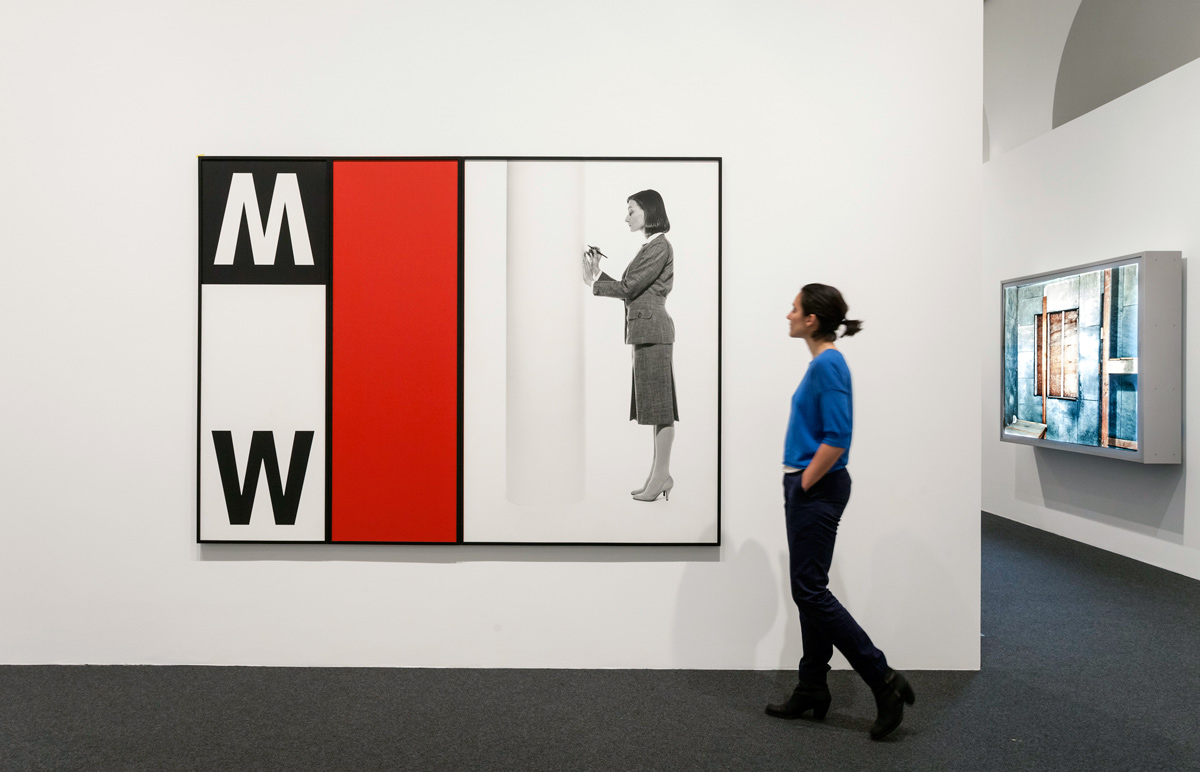
 

Edward Francis Burney (English, 1760-1848)
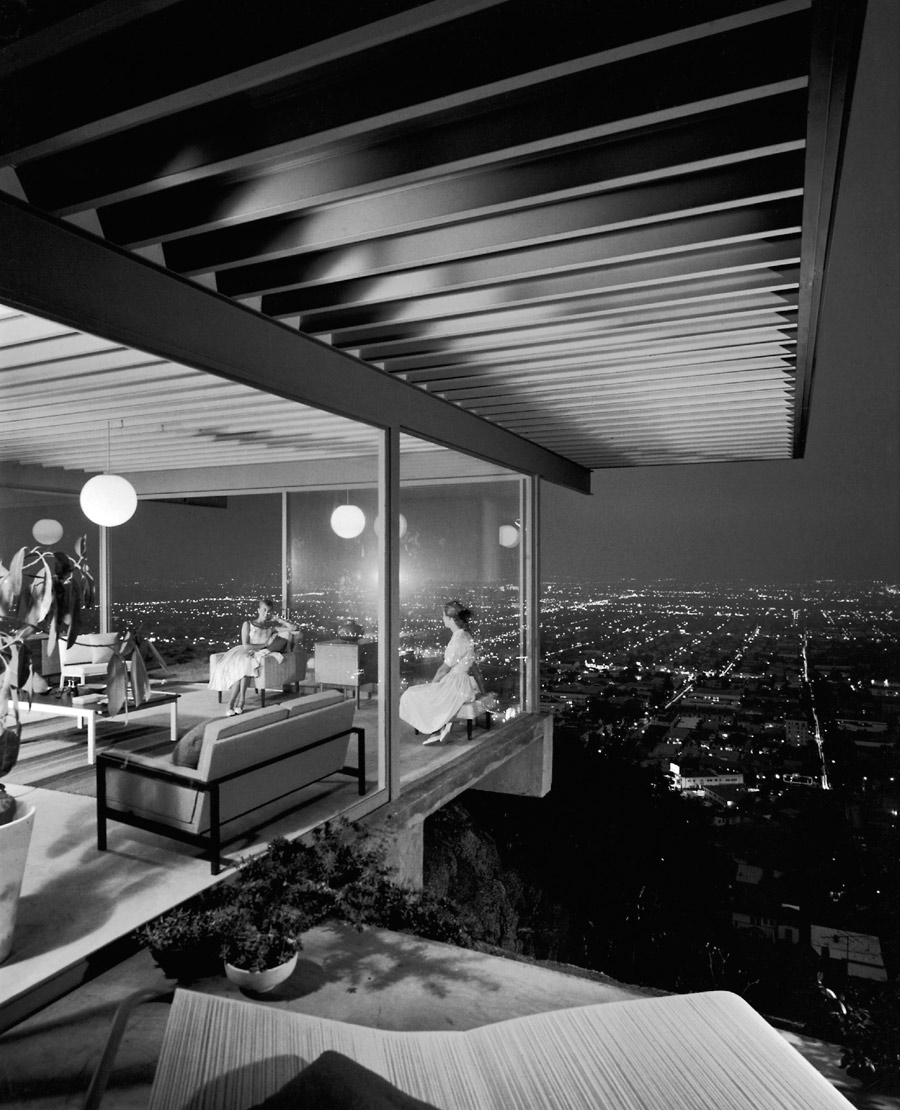
A view of Philip James de Loutherbourg’s Eidophusikon
c. 1782
At left a man bowing to a woman, to right figures seated on a bench in the foreground, watching a scene titled ‘Satan Arraying his Troops on the Banks of a Fiery Lake, with the Raising of the Palace of Pandemonium’ during a performance of Milton’s “Paradise Lost” on a stage labelled EIDOPHUSIKON in a cartouche above
Pen and grey ink and grey wash, with watercolour
© The Trustees of the British Museum


A munificence of Minor White and the revelation of the object through contemplation could be found in the lecture by William Kentridge. As an artist you must keep repeating and constructively playing and something else, some new idea, some new way of looking at the world may emerge. As a glimpse into the working methodology of one of the worlds great artists the lecture was fascinating stuff!

Images in this posting are used under fair use for commentary and illustration of the lecture notes. No copyright breach is intended. © All rights remain with the copyright holder. My additions to the text can be found in [ ] brackets.


On self-doubt as an artist

“At four in the morning there are no lack of branches for the crow of doubt to land upon.”


On Memory

“Memory – both memory and the forgetting of memory. For example, the building of monuments [monuments to the Holocaust, to wars] takes the responsibility of remembering away.”


On Play

“We absolutely want to make sense of the world in that way. That’s one of the principles of play – that however much you distort and break things apart, in the end we will try to reconstruct them in some way to make sense of the world. I think that every child does it. It’s fundamental.”


On Looking

“It’s the capacity for recognition that makes a difference between order and disorder in looking at visual images. And it’s the vocabulary of recognisable images that we have inside us, which is completely vital to what it is to see. I don’t really buy the idea that order and disorder are the same.”


William Kentridge


First History of the Cinema

Performances of Transformation

~ Cinema
~ Shadow dancing
~ Eidophusikon (The Eidophusikon was a piece of art, no longer extant, created by 18th century English painter Philip James de Loutherbourg. It opened in Leicester Square in February 1781.Described by the media of his day as “Moving Pictures, representing Phenomena of Nature,” the Eidophusikon can be considered an early form of movie making. The effect was achieved by mirrors and pulleys.
~ Quick change artist
~ Stage magicians


All work against the time of the audience e.g. the quick change artist may take 3 seconds, the sunset in a Georges Méliès film may take 2 minutes instead of 2 hours. The technology / scrims / screens happen at different speeds but the different times become one in the finished film. There is an elision of time: appearances / disappearances. Stopping time [changing a scene, changing clothing etc…], starting time again.


Méliès starring in 'The Living Playing Cards' 1904


George Méliès starring in The Living Playing Cards (1904)


Second History of the Cinema

The sedimented gaze of the early camera. The slow chemicals meant that the object had to wait under the camera’s gaze for minutes. People were held in place by stiff neck braces to capture the trace of their likeness. Congealed time.

On the other hand, in cinema, a tear forward becomes a repair in reverse.

By rolling the film in reverse there is a REVERSAL of time, a REMAKING of the world – the power to be more than you are – by reversing to perfection. You throw a book or smash a plate: in reverse they become perfect again, a utopian world.

YOU MUST GIVE YOURSELF OVER TO PLAY!

Giving yourself over to what the medium suggests, you follow the metaphor back to the surface. Following the activity [of play] back to its root. Projecting forwards, projecting backwards. There is endless rehearsal, constant repetition, then discovering the nature of the final shot or drawing to be made. New ideas get thrown around: leaning into the experience, the experiment, the repetition, the rehearsal.

Four elements

1/ something to be seen

2/ the utopian perfection: perfectibility

3/ the grammar of learning that action

4/ Greater ideas, further ideas and thoughts; potentiality and its LOSS
Further meanings arise


How is this achieved?
Rehearsal, repetition

New thoughts will arise being led by the body in the studio NOT in the mind. Not conceptual but the feeling of the body walking in the studio.

The physical action as the starting point not the concept.

Six different degrees of tension

1/ Least tension in the body possible: slumped

2/ Relaxed

3/ Neutral

4/ Purpose: an impulse to make things happen – desire

5/ Insistence: listen to me, this is very important

6/ Manic: Noh theatre with its rictus of the body


What the body suggests is the construction of an image.

There are different degrees of tension in these performances. What do they suggest? This reverse osmosis from one state to another?


Third History of Cinema

Technologies of Looking

Pre-cinematic devices – a process of seeing in the world, of looking. Produces a reconfigured seeing, the invisible made [moving] visible.

Stereoscope

3D world made into a 2D image put back into 3D by our brains. The nature of binocularity, of depth perception. We see an illusion of depth, a construction by the eyes. Our brain is a muscle combining the two images. Depth of Field (DOF): focusing at different distances, we are inside the field of the image. Peripheral vision is blanked off; we look through a magnifying glass. A machine for demonstrating seeing.

Text from the Wikipedia website


William Kentridge (South African, b. 1955) Drawing for the film 'Stereoscope' 1998-1999


William Kentridge (South African, b. 1955)
Drawing for the film Stereoscope
1998-1999
Charcoal, pastel, and coloured pencil on paper
The Museum of Modern Art, New York
© 2008 William Kentridge


Zoetrope by William George Horner, 1834


Zoetrope by William George Horner, 1834


Zoetrope

An illusion of movement not depth. Double revelation:

A/ the brain constructed illusion of movement
B/ Caught in time [as the action goes around and around] and wanting to get out of it!

THIS IS CRITICAL – THE ACTION OF REPETITION IS IMPORTANT!

In the reordering, in the crack, something else may emerge, some new idea may eventuate. The tearing of time. 

[Marcus: the cleft in time]

Text from the Wikipedia website

The Etching Press

There are erotics built into the language of the etching, but there is also a logic built into the machine used for etching. The Proof print, arriving at the first state. Going on the journey from artist as maker to artist as viewer through the mechanism of the etching press.


Artist/Maker unknown. 'Claude Glass' manufactured in England, 18th century


Artist / Maker unknown
Claude Glass, manufactured in England
18th century
V & A


Claude Glass

“A Claude glass (or black mirror) is a small mirror, slightly convex in shape, with its surface tinted a dark colour. Bound up like a pocket-book or in a carrying case, black mirrors were used by artists, travellers and connoisseurs of landscape and landscape painting. Black Mirrors have the effect of abstracting the subject reflected in it from its surroundings, reducing and simplifying the colour and tonal range of scenes and scenery to give them a painterly quality).”

Text from the Wikipedia website


“The Claude glass was standard equipment for Picturesque tourists, producing instant tonal images that supposedly resembled works by Claude. “The person using it ought always to turn his back to the object that he views,” Thomas West explained in his Guide to the Lakes. “It should be suspended by the upper part of the case… holding it a little to the right or the left (as the position of the parts to be viewed require) and the face screened from the sun.”

Object Type

A Claude Glass – essentially a small, treated mirror contained in a box – is a portable drawing and painting aid that was widely used in the later 18th century by amateur artists on sketching tours. The reflections in it of surrounding scenery were supposed to resemble some of the characteristics of Italian landscapes by the famous 17th-century painter and sketcher Claude Lorrain, hence the name.

Materials & Use

The ‘glass’ consists of a slightly convex blackened mirror, which was carried in the hand and held up to the eye. The image thus seen was the scenery behind – rather than in front of – the user. The mirror’s convexity reduced extensive views to the dimensions of a small drawing. The use of a blackened rather than an ordinary silvered mirror resulted in a somewhat weakened reflection, which stressed the prominent features in the landscape at the expense of detail. It also lowered the colour key. A larger version of this device is said on occasion to have been fixed to the windows of horse-drawn carriages in order to reflect the passing scenery.”

From the V & A website


Artist/Maker unknown. 'Claude Glass' manufactured in England, 18th century


Artist / Maker unknown
Claude Glass, manufactured in England
18th century
V & A


Anamorphic Mirror

A counter intuitive way of drawing; turning 2D into 3D. The landscape has no edge, like a carrousel.

A LINK TO THE ENDLESS CIRCLING AND WALKING AROUND THE STUDIO!


Anamorphic drawing and cone shaped mirror


Anamorphic drawing and cone shaped mirror


William Kentridge studio


William Kentridge studio
Photo by John Hodgkiss
Art Tatler


The Studio

In the studio you gather the pieces together like a kind of Zoetrope. You may arrive at a new idea, a new starting point. Repetition, going around and around your head (at four in the morning!). There must be a truce between the artist as maker and the artist as viewer. As in earlier times, you walk the cloisters, you promenade.

You find the walk that is the prehistory of the drawing, that is the prehistory to the work.

A multiple, fragmented, layered performance of walking. You are trying to find the grammar of the studio – the necessary stupidity. Making a space for uncertainty. The conscious suppression of rationality. At some point, emerging, escaping the Zoetrope, from the physical making, something will be revealed. The spaces open up by the stupidities. Something new emerges.

THIS IS THE SPACE OF THE STUDIO.


Australian Centre for the Moving Image (ACMI)
Federation Square, Melbourne, Australia

William Kentridge: Five Themes

Thursday 8 March – Sunday 27 May 2012
Exhibition open daily 10am – 6pm

ACMI website

LIKE ART BLART ON FACEBOOK

Back to top