These images are good to see… but not really what I want to see.
I want to see some of the early work, and some of the S/M photographs. You never get to see these online. It’s almost as though the Robert Mapplethorpe Foundation is too scared to authorise the online publication of these works, for fear of – heaven forbid – letting people understand all the facets of Mapplethorpe’s work.
Its the origin story and the picturing of his sexual proclivities that are some of his most powerful work… and we never get to see them. Eros (denied).
Dr Marcus Bunyan
Many thankx to the Museum of Contemporary Art Kiasma for allowing me to publish the photographs in the posting. Please click on the photographs for a larger version of the image.
The American photographer Robert Mapplethorpe (1946-1989) lived a life of passion in the New York underground and rock scenes in the 1970s and ’80s. That passion also made its way into his art.
Consisting of more than 250 works, the retrospective exhibition in the Museum of Contemporary Art Kiasma offers a broad overview of the key periods of Mapplethorpe’s career. In their aspiration for perfection, Mapplethorpe’s pictures blend beauty and eroticism with pain, pleasure and death. Mapplethorpe also photographed his celebrity friends such as Patti Smith, Andy Warhol and Richard Gere. Although solidly anchored in their time, his photographs are also universal and topical even today.
Arriving from Paris to Helsinki, the high-profile exhibition is a unique opportunity to learn about the art and life of one of the most important photographic artists of our time. The exhibition is curated by Jérôme Neutres from Paris with Director Pirkko Siitari and Chief Curator Marja Sakari from Kiasma.
This exhibition is organised by The Finnish National Gallery – Museum of Contemporary Art Kiasma and the Réunion des Musées Nationaux – Grand Palais, with the collaboration of the Robert Mapplethorpe Foundation New York.
Exhibition themes
Body sculpture
“If I had been born one hundred or two hundred years ago, I might have been a sculptor, but photography is a very quick way to see, to make sculpture.”
~ Robert Mapplethorpe
Mapplethorpe became interested in photographing sculpture during his first trip to Paris in the early 1970s. He also began taking pictures of people in poses that imitated classical sculptures. Lisa Lyon, the first World Women’s Bodybuilding Champion, was the subject in many of the pictures.
Body and geometry
Mapplethorpe prized order and purity of form in his art. He was also particular about the frames of his pictures, which he often designed himself. He had great respect for the long history of art. Some of his nude studies echo Leonardo da Vinci’s Vitruvian Man which shows an idealised human body inside a circle and a square
Still lifes and body details
“I am looking for perfection in form. I do that with portraits. I do it with cocks. I do it with flowers.”
~ Robert Mapplethorpe
Mapplethorpe’s still lifes and pictures of body parts play with stormy associations. They are distinctly corporeal and vitalistic, whether the subject is an exposed penis or an aubergine on a table. Mapplethorpe said he looked at all objects in precisely the same way. According to Patti Smith, “Robert infused objects, whether for art or life, with his creative impulse, his sacred sexual power. He transformed a ring of keys, a kitchen knife, or a simple wooden frame into art.”
Chapel and Colour bracket
“I was a Catholic boy, I went to church every Sunday. A church has a certain magic and mystery for a child.”
~ Robert Mapplethorpe
Mapplethorpe came from a Roman Catholic family, but his interest in the church was primarily aesthetic. He said he wanted his pictures to be viewed like altars. The figure of a crucified Christ appears in some of his works, as does the human skull, a traditional reminder of death. Instead of suffering, however, the images convey a sense of sinful pleasure. Mapplethorpe worked with colour film starting in the late 1970s, but did not routinely exhibit his colour photos until the end of the 1980s.
Mapplethorpe and women
“Lisa Lyon reminded me of Michelangelo’s subjects, because he did muscular women.”
~ Robert Mapplethorpe
Poet and musician Patti Smith was Mapplethorpe’s first and last model and muse. Mapplethorpe photographed covers for Smith’s albums and books of poems. Another important model was the body builder Lisa Lyon, who is the subject of Mapplethorpe’s book Lady: Lisa Lyon. Both women could be described as androgynous. Locating himself in the same intermediate space between femininity and masculinity, Mapplethorpe photographed himself in drag.
Portraits
New York and the Chelsea Hotel in particular were places where the American cultural intelligentsia used to gather in the 1970s. There Mapplethorpe met writers, musicians and artists such as William Burroughs, Iggy Pop and David Hockney, and enjoyed the attention lavished on him. He became the court photographer of certain cultural circles, his camera capturing friends, celebrities and famous figures in the art world.
Eros
“I don’t think anyone understands sexuality. It’s about an unknown, which is why it’s so exciting.”
~ Robert Mapplethorpe
Sadomasochism, S&M, was both sex and magic for Mapplethorpe. Like the French writer Jean Genet, he too wanted to elevate things into art that were not yet considered art. Mapplethorpe’s depiction of fetishes in his photographs was deliberately formal. He documented spontaneous acts only very infrequently. The sex he captured in his pictures was neither malicious nor repugnant. S&M is about desire and pleasure, and above all about trust.
Polaroids
“I’m trying to record the moment I’m living in and where I’m living, which happens to be in New York. These pictures could not have been done at any other time.”
~ Robert Mapplethorpe
Mapplethorpe got his first Polaroid camera in 1970 and fell in love with its simplicity: there were few adjustments to make and you could see the results instantly. Because the film was expensive, Mapplethorpe felt that every picture had to be perfect. Precision and economy became a habit that endured throughout his career. In 1975, he switched over to the more versatile Hasselblad 500.
Still moving
“We were like two children playing together, like the brother and sister in Cocteau’s ‘Enfants Terribles’.”
~ Patti Smith
Robert Mapplethorpe and Patti Smith began their creative careers together. Frequently they would not plan their projects in advance. The experimental short Still Moving had no script, and Smith improvised her movements and lines. The camera operator was Lisa Rinzler. “He wordlessly guided me. I was an oar in the water and his the steady hand,” Smith has said.
Robert Mapplethorpe – Portraits
New York was home to America’s cultural intelligentsia in the 1970s. Mapplethorpe was the court photographer of the cultural elite. His portraits feature his friends, celebrities and influential figures on the art scene.
Installation views of the exhibition Robert Mapplethorpe at the Museum of Contemporary Art Kiasma, Helsinki Finnish National Gallery / Pirje Mykkänen
Who’s who?
~ Princesse Diane de Beauvau French aristocrat, model and fashion muse
~ Bruno Bischofberger Swiss gallerist and art dealer known for bringing American Pop Art to Europe, long-term associate of Andy Warhol
~ Louise Bourgeois French-born sculptor known for her gigantic spider sculptures
~ Miep Brons Dutch porn dealer
~ William Burroughs Writer and primary figure of the Beat Generation
~ Alistair Butler New York dancer
~ Patrice Calmettes French photographer
~ Truman Capote American author and journalist whose best known titles include Breakfast at Tiffany’s and In Cold Blood
~ Leo Castelli American-Italian gallerist, influential promoter of contemporary art in New York
~ Katherine Cebrian San Francisco socialite
~ Francesco Clemente Italian-born contemporary artist
~ Ed and Melody Mapplethorpe’s brother Edward and his girlfriend at the time, Melody, a friend of Mapplethorpe’s
~ Richard Gere American actor, idolised at the time of this portrait following his performance in American Gigolo
~ Philip Glass and Robert Wilson Glass is a contemporary composer, Wilson a director and playwright. At the time of this portrait, they had worked together on their opera Einstein on the Beach
~ Keith Haring American Pop and graffiti artist
~ Deborah Harry Singer and actress, best known as lead singer of Blondie
~ David Hockney and Henry Geldzahler Hockney is a British artist and Pop Art pioneer. Belgian-born Geldzahler was a curator, critic and art historian
~ Grace Jones Jamaican-born singer, producer, actress and model
~ Amanda Lear French singer, performer, painter and author, friend of celebrities such as David Bowie, Salvador Dalí and Brian Jones
~ Annie Leibovitz American photographer whose work featured on the cover Rolling Stone and Vanity Fair
~ Roy Lichtenstein American painter, sculptor and leading Pop artist
~ Lisa and Robert Mapplethorpe and his long-term muse, bodybuilder Lisa Lyon
~ John McKendry Curator of prints and photographs at the Metropolitan Museum of Art and personal friend who first introduced Mapplethorpe to the MET’s fine art photography collection
~ Louise Nevelson American sculptor
~ Yoko Ono Japanese-born artist and musician
~ Philippe French socialite
~ Iggy Pop Singer, songwriter and actor known for his energetic stage presence as lead singer of The Stooges
~ Robert Rauschenberg American artist who inspired later generations of artists including Andy Warhol and Roy Lichtenstein, regarded as a major figure in the transition from Abstract Expressionism to Pop Art
~ Isabella Rossellini Italian-born actress, model, filmmaker, author, and philanthropist
~ Giorgio di Sant’Angelo Italian-born fashion designer
~ Arnold Schwarzenegger Budding actor and award-winning bodybuilder at the time of this portrait, he later achieved world renown as a Hollywood star and Governor of California
~ Cindy Sherman American contemporary artist, known for photographs analysing women’s roles and place in society
~ Holly Solomon A self-anointed ‘Pop princess’, Solomon was a prominent collector and subsequent dealer of contemporary art. She was famously immortalised by other artists such as Andy Warhol and Roy Lichtenstein
~ Susan Sontag American writer and essayist
~ Tom of Finland Finnish artist and illustrator. His drawings had a major influence on gay culture from the 1970s onwards. Mapplethorpe and Andy Warhol were among his admirers
~ Sam Wagstaff Curator, collector, Mapplethorpe’s lifetime companion and artistic mentor
~ Andy Warhol Pop Art pioneer and filmmaker, greatly admired by Mapplethorpe
~ Edmund White American author, known for his work on gay themes
Curators: Dr Mikhail Dedinkin, Deputy Head of the Western European Art Department at the Hermitage, working Dr Ted Gott, Senior Curator of International Art at the National Gallery of Victoria
Installation view of room 1 of the exhibition Masterpieces from the Hermitage: The Legacy of Catherine the Great at NGV International, Melbourne featuring Alexander Roslin (Swedish 1718-93) Portrait of Catherine II 1776-77 Photo: Marcus Bunyan
A scintillating exhibition at NGV International which showcases one of the world’s greatest art collections. Exhibition design is outstanding (particularly the floor tiling), as are the Da Vinci, Titian, Rembrandt, van Dyck, Rubens and Flemish still life. Among my favourites is a small Watteau Savoyard with a Marmot (1716) which is absolutely still, delicate and exquisite: I thought of the photographs of Atget, his street sellers, when I saw this painting; and Frans Snyders’ tour-de-force Concert of birds (1630-40) which has such presence.
Well done to the curators, the Hermitage Museum and the NGV for staging such a magnificent exhibition.
Masterpieces from the Hermitage: The Legacy of Catherine the Great showcases one of the world’s greatest art collections. Featuring works by artists including Rembrandt, Rubens, Velázquez and Van Dyck, the exhibition offers a dazzling array of works including the finest group of Dutch and Flemish art to come to Australia.
This exclusive Melbourne exhibition will also highlight the innovation and vision of Catherine the Great, whose inexhaustible passion for education, the arts and culture heralded a period of enlightenment in the region. The extraordinary works sourced and commissioned by Catherine during her thirty-four year reign, created the foundations for the Hermitage today – considered to be one of the world’s greatest treasure houses of art and decorative arts. The exhibition will offer audiences an immersive experience, recreating the rich atmosphere of the Hermitage to showcase these exquisite works.
German-born Catherine the Great (Catherine II) came to power in 1762, aged thirty-three, and ruled Russia for the next thirty-four years, until her death in 1796. She saw herself as a Philosopher Queen, a new kind of ruler in the Age of Enlightenment. Guided by Europe’s leading intellectuals, she modernised Russia’s economy, industry and government, drawing inspiration both from Antiquity and contemporary cultural and political developments in Western Europe. A fluent speaker of Russian, French and German, Catherine was largely self-educated, independent, idealistic and visionary.
While her reign was not always peaceful, Catherine sought to bring order, stability and prosperity to the vast Russian Empire. Her ideals of abolishing serfdom and ensuring the equality of all citizens under the law were ahead of her time, and strongly resisted by the nobility of the day; however, she achieved numerous other reforms, including the introduction of paper money and modernisation of Russia’s education system. French philosopher Denis Diderot, who visited St Petersburg in 1773, described an audience with Catherine as being ‘more like study than anything else: she is a stranger to no subject; there is no man in the Empire who knows her nation as well as she’.
Room 1 Catherine the collector
Between 1762 and 1796, the years of her reign, Catherine the Great oversaw a period of cultural renaissance in Russia. The world of ideas in which she was deeply involved from an early age found tangible expression in the material world the Empress later created around herself. The great complexes of imperial buildings Catherine constructed reflected her informed interest in both Classical and Chinese culture.
Catherine not only assembled a collection of Old Master paintings equal in scale and quality to leading European collections, but also paid considerable attention to the acquisition of contemporary art. While the richness and technical perfection of her diverse collections of decorative arts aimed to dazzle and please, they also had the more practical purpose of raising standards of artistic production in Russia. The fact that more than 400 exemplary works of art from her personal collection, including paintings, sculptures, drawings, porcelain, silver and precious gems, are seen here for the first time in Australia is cause for celebration.
Installation views of room 1 of the exhibition Masterpieces from the Hermitage: The Legacy of Catherine the Great at NGV International, Melbourne featuring Alexander Roslin (Swedish 1718-1793) Portrait of Catherine II 1776-1777 Photos: Marcus Bunyan
Installation views of room 1 of the exhibition Masterpieces from the Hermitage: The Legacy of Catherine the Great at NGV International, Melbourne featuring in the last three photographs, the Sèvres Cameo Service. Cameo Service 1778-1779. Sevres Porcelain Factory (manufacturer) France, est. 1756. The State Hermitage Museum, St. Petersburg. Photos: Marcus Bunyan
Sèvres Cameo Service
The Sèvres Cameo Service (1778-1779) relates to Catherine’s great passion for collecting engraved gemstones. Comprising 797 individual pieces designed to serve dinner, dessert and coffee to sixty people, the Cameo Service was commissioned from the celebrated Sèvres porcelain manufactory outside Paris as a present for Catherine’s court ‘favourite’, Prince Grigory Potemkin. The Empress’s monogram, ‘E II’ (the Russian version of her name being Ekaterina), woven from garlands of flowers and surmounted by a crown, adorned almost every object in the service.
Production of the service was both time consuming and labour-intensive. The exquisite blue element alone – made from separate layers of copper enamel that gradually seeped into the porcelain and set the pure colour – required five firings. In addition to the hundreds of porcelain objects decorated with painted and sculpted cameos and related silverware, the service also included grand central table decorations fashioned from biscuit, or unglazed cream-coloured porcelain, by the sculptor Louis-Simon Boizot. These decorations illustrated tales from Greek mythology, and were presided over by a grand biscuit statue of Catherine the Great as Minerva, the Roman goddess of wisdom and the arts.
Installation views of room 1 of the exhibition Masterpieces from the Hermitage: The Legacy of Catherine the Great at NGV International, Melbourne Photos: Marcus Bunyan
Exhibition passageway
Installation view of passageway video of the exhibition Masterpieces from the Hermitage: The Legacy of Catherine the Great at NGV International, Melbourne Photo: Marcus Bunyan
Room 2 Italian art
When Catherine the Great began collecting European art, opportunities to acquire fine Italian Old Master paintings were already severely limited. Demand from wealthy collectors was high and the marketplace was saturated with misattributed works, some of which inevitably made their way to the Hermitage and other great collections.
Despite this, Catherine achieved great success collecting sixteenth and seventeenth century paintings, particularly from Venice, including great paintings by Titian, Paris Bordone and the enigmatic Lorenzo Lotto. These are complemented by fine examples of Roman and Florentine paintings, such as the famous Female nude (Donna nuda), by an artist very close to Leonardo da Vinci. This select group of paintings beautifully illustrate developments in figurative art, portraiture and religious art in Italy from the sixteenth to the eighteenth century.
In the early years of her reign, Catherine the Great acquired en masse several large collections of drawings representing all the main European schools. This set the foundations for the current Hermitage Museum’s outstanding Cabinet of Drawings. In terms of quality, Catherine’s acquisitions of Italian drawings were of the highest standard. The majority of these date from the mid sixteenth to late eighteenth centuries and include many rare and precious works.
Installation view of room 2 of the exhibition Masterpieces from the Hermitage: The Legacy of Catherine the Great at NGV International, Melbourne showing at centre, Domenico Fetti (Italian 1589-1623) Portrait of an actor 1620s Photo: Marcus Bunyan
Domenico Fetti (Italian, 1589-1623) Portrait of an actor (installation view) 1620s Oil on canvas The State Hermitage Museum, St. Petersburg Photo: Marcus Bunyan
Domenico Fetti was court painter to Gerdinand II Gonzaga, Duke of Mantua, when he made this striking portrait of an actor. It is though to be Tristano Martinelli who made his fame working in the commedia dell’arte tradition. It is believe that Marinelli created and popularised the standard roll of the Harlequin in theatre. Fetti himself was involved with the theatre in both Mantua and Venice.
Installation view of room 2 of the exhibition Masterpieces from the Hermitage: The Legacy of Catherine the Great at NGV International, Melbourne featuring at centre, Paris Bordone (Italian 1500-1571) Portrait of a lady with a boy Mid 1530s Photo: Marcus Bunyan
Paris Bordone (Italian, 1500-1571) Portrait of a lady with a boy (installation view) Mid 1530s Oil on canvas 97cm (38.1 in) x 77cm (30.3 in) The State Hermitage Museum, St. Petersburg Photo: Marcus Bunyan
This work by Venetian artist Paris Bordone is a typical example of formal Renaissance portraiture. Bordone’s main aim was to show the high social standing of the sitters, so he painted their luxurious costumes in great detail. He draws our attention to the sumptuous sleeves of this woman’s dress, the headgear resembling a turban, as well as her opulent jewellery. Bordone was one of Titian’s most talented pupils whose work is characterised by a level of precision not often present in his master’s work. This painting entered the Hermitage as a work by Giorgione.
Paris Bordone (Italian 1500-1571) Portrait of a lady with a boy Mid 1530s Oil on canvas 97cm (38.1 in) x 77cm (30.3 in) The State Hermitage Museum, St. Petersburg Public domain
Installation view of room 2 of the exhibition Masterpieces from the Hermitage: The Legacy of Catherine the Great at NGV International, Melbourne showing at left in the bottom image, Domenico Capriolo (Italian c. 1494-1528) Portrait of a young man 1512 and to the right, Lorenzo Lotto (Italian c. 1480-1556) The Rest on the Flight into Egypt with Saint Justine 1529-1530 Photos: Marcus Bunyan
Portrait of a young man by the Venetian master Domenico Capriolo captures the intellectual values of Renaissance art. Everything that surrounds this youth speaks of his interests, such as the church that indicates his piety; the statue of Venus that reveals his passion for Antiquity; and the folder (containing verses or drawings) that illustrates the richness of his inner world. The painting is dated 1512 and the artist’s name symbolised by a medallion containing a Capreolus, or deer, which is a play on his name. Such allusions were common in Renaissance art and would have been readily understood by his contemporaries.
Lorenzo Lotto (Italian c. 1480-1556) The Rest on the Flight into Egypt with Saint Justine (installation views) 1529-1530 Oil on canvas 82cm (32.2 in) x 133cm (52.3 in) The State Hermitage Museum, St. Petersburg Photos: Marcus Bunyan
Lorenzo Lotto is a much admired sixteenth-century Venetian artist. The Rest on the Flight into Egypt with Saint Justine has the typical dynamism of Lotto’s work, achieved not only through the poses, gestures and movement of the foliage, but also through his intense colour palette and the juxtaposition of resonant blues with red and yellow tones. Here, the Holy Family has been joined by Saint Justine of Padua, martyred in 304 AD, identifiable through her attribute of a sword piercing her breast. Justine was a very popular subject for artists of Northern Italy.
Lorenzo Lotto (Italian c. 1480-1556) The Rest on the Flight into Egypt with Saint Justine 1529-1530 Oil on canvas 82cm (32.2 in) x 133cm (52.3 in) The State Hermitage Museum, St. Petersburg Public domain
Installation view of room 2 of the exhibition Masterpieces from the Hermitage: The Legacy of Catherine the Great at NGV International, Melbourne showing Leonardo da Vinci (school of) Female nude (Donna Nuda) Early 16th century Photo: Marcus Bunyan
Leonardo da Vinci (school of) Female nude (Donna Nuda) (installation view) Early 16th century Oil on canvas 86.5cm (34 in) x 66.5cm (26.1 in) The State Hermitage Museum, St. Petersburg Photo: Marcus Bunyan
This painting entered the Hermitage collection as a work by Leonardo da Vinci, but is now widely accepted to be by one of his close followers, possibly his pupil Salai. Perhaps more important is that it may be a close copy of a lost painting by Leonardo. Female nude (Donna Nuda) also shares some of the qualities of the famous Mona Lisa c. 1503-1519, in the Louvre Museum, Paris; namely the repetition of the pose, the position of the hands and the landscape setting seen behind a stone ledge in front of which the figure is set. This is the most refined of numerous variants of this composition in existence.
Leonardo da Vinci (school of) Female nude (Donna Nuda) Early 16th century Oil on canvas 86.5cm (34 in) x 66.5cm (26.1 in) The State Hermitage Museum, St. Petersburg Public domain
Room 3 Flemish art
In the seventeenth century, Flanders comprised the Catholic-dominated Southern Netherlands or ‘Spanish’ Austrian Netherlands, an area larger than modern Belgium. Thanks in large part to the talents of artist Peter Paul Rubens, the Flanders or ‘Flemish’ school in this era became very prestigious. While chiefly a painter, Rubens had far-reaching stylistic influence on many visual art forms, from prints to silverware and architecture. Every leading artist of seventeenth-century Flanders studied in, passed through or was connected with Rubens’s studio.
A diplomat and court insider, Rubens operated on an international stage. His art was correspondingly monumental; characterised by large forms modelled with loose brushstrokes in glowing, brilliant colours. Rubens’s pupil Anthony van Dyck and collaborator Cornelis de Vos led the way in bringing new naturalism to portraiture. While they catered to different markets (van Dyck to the nobility and de Vos to a rich merchant class) their mutual influence is apparent.
Flanders was a nation built on trade, and Flemish artists travelled widely, especially to Italy. From Italy they brought back new pictorial trends, such as the theatrical naturalism of Caravaggio. Flemish artists excelled in naturalistic effects, which they applied even to traditionally humble subjects, such as still lifes and animal pictures, seen to brilliant effect in the art of Frans Snyders and David Teniers II.
Installation views of room 3 of the exhibition Masterpieces from the Hermitage: The Legacy of Catherine the Great at NGV International, Melbourne showing in the centre in the bottom photograph, Peter Paul Rubens and workshop (Flemish 1577-1640) The Adoration of the Magi, c. 1620 at centre Photos: Marcus Bunyan
Rubens painted the subject of the Adoration of the Magi (Matthew 2:1) more often than any other episode from Christ’s life. Rendered at life-sized scale, this painting combines the humility of Christ’s birth with splendid, worldly pageantry. Three Kings from the East are shown crowding into Christ’s stable (portrayed as a cave, in an allusion to Christ’s later interment) wearing gold- embroidered silks and satins, and offering gifts. The eldest king, Caspar, kneels before Christ with gold; behind him is Melchior, with frankincense; and Balthazar with myrrh, used for embalming. With the help of his studio, Rubens produced more than sixty altarpieces during his career.
Installation views of room 3 of the exhibition Masterpieces from the Hermitage: The Legacy of Catherine the Great at NGV International, Melbourne Photos: Marcus Bunyan
Peter Paul Rubens (Flemish 1577-1640) Roman Charity (Cimon and Pero) (installation view) c. 1612 Oil on canvas 141cm (55.5 in) x 180cm (70.8 in) The State Hermitage Museum, St Petersburg Acquired from the collection of Count Cobenzl, Brussels, 1768 Photo: Marcus Bunyan
Roman Charity (Cimon and Pero) depicts a story told by the Roman historian Valerius Maximus in his Factorum ac dictorum memorabilium libri IX (Nine Books of Memorable Deeds and Sayings), written around 30 AD. The story involves Cimon, an old man awaiting execution in prison who was not given food. Cimon’s daughter Pero visited him, and suckled him at her breast like a child. Pero’s nourishing of Cimon was considered an outstanding example of paying honour to one’s parents.
Peter Paul Rubens (Flemish 1577-1640) Roman Charity (Cimon and Pero) c. 1612 Oil on canvas 141cm (55.5 in) x 180cm (70.8 in) The State Hermitage Museum, St Petersburg Acquired from the collection of Count Cobenzl, Brussels, 1768 Public domain
Room 4 Dutch art
The Hermitage holds the finest collection of Dutch art outside the Netherlands. While Peter the Great (1672-1725) had a passion for Dutch art and acquired some notable masterpieces, Catherine the Great established the depth and breadth of this extraordinary collection, beginning in 1764 with her first acquisitions. In that year Catherine purchased 317 paintings that had been assembled for Frederick II of Prussia by the German merchant Johann Ernst Gotzkowsky. Among this substantial group were more than 100 Dutch paintings by the most notable masters.
In 1769 Catherine purchased the collection of Count Heinrich von Brühl, which included spectacular landscapes by Jacob van Ruisdael, Isaack Jansz. van Ostade and Aert van der Neer, as well as four Rembrandt portraits, including the wonderful Portrait of a scholar, 1631. For the rest of her life Catherine continued to add outstanding Dutch works to her rich collection.Although the paintings and drawings from the Dutch school included here are only a fragment of the extensive and diverse collection assembled by Catherine the Great, they reveal her artistic preferences and taste.
Installation views of room 4 of the exhibition Masterpieces from the Hermitage: The Legacy of Catherine the Great at NGV International, Melbourne with Rembrandt Harmensz van Rijn (Dutch 1606-1669) Portrait of a scholar 1631 at centre Photos: Marcus Bunyan
Rembrandt painted Portrait of a scholar shortly after moving from his native Leiden to Amsterdam in 1630. He had already established a growing reputation in Leiden and was enticed to the capital by the art dealer Hendrick van Uylenburgh, father of his future wife Saskia. Once completing the move, Rembrandt rapidly became the city’s leading artist, mainly on account of dazzling portraits such as this early masterpiece. He then secured the most prestigious commissions from wealthy and powerful citizens of Amsterdam.
Room 5 French taste
The Russian aristocracy spoke French and modelled their manners and style on those of the French Court. Catherine followed the vast intellectual strides of the French philosophes with passionate interest. She also embraced the arts, luring French artists, architects and craftsmen to St Petersburg.
Catherine relied on agents and advisors in France and Germany to identify and acquire works of art on her behalf. In this way she acquired the collection of Paris banker Louis Antoine Crozat, Baron de Thiers and other important bodies of work in France. Her holdings of French art came to encompass works by Renaissance masters as well as seventeenth-century landscapes and history paintings.
Catherine also acquired examples of work of her own century by Rococo artists such as Antoine Watteau. The playful, erotic and at times wistful art of Watteau’s generation gave rise to the intimate and worldly art of François Boucher, whose pictures Catherine also purchased. The Empress collected modern masterpieces created in reaction to French courtly and decadent styles. Her paintings by Jean-Baptiste Siméon Chardin are premier examples of a new, moralising directness in ambitious French art.
Catherine’s buying in France was not limited to French art. Also in this room are paintings by great German, Spanish and Italian masters that were acquired in Paris from prestigious collections under the direction of Catherine’s French advisors.
Installation views of room 5 of the exhibition Masterpieces from the Hermitage: The Legacy of Catherine the Great at NGV International, Melbourne Photos: Marcus Bunyan
Room 6 Catherine and the world
For Catherine the Great, collecting art was part of a wider economic and diplomatic program designed to stimulate economic and cultural activity at home and abroad. At a meeting in December 1762 with the Moscow Senate, Catherine suggested that consuls be stationed in Spain, Holland and England not only to promote maritime trade but also to source luxury goods and works of art as examples for Russian artists and manufacturers to aspire to.
Through Catherine’s consuls and agents, such items began to flow into St Petersburg, steadily elevating that city into a vibrant centre of European culture. While her cultural sympathies were French, Catherine was also very curious about Britain – the economic success story of the age. She informed herself about Britain’s trade, commerce, manufacturing, philosophy and political system, and purchased works by modern British neoclassical masters, such as Joseph Wright of Derby and Joshua Reynolds. Examples of Spanish, Italian and German art were often not sourced in their own countries of origin but acquired as a part of larger collections.
Installation views of room 6 of the exhibition Masterpieces from the Hermitage: The Legacy of Catherine the Great at NGV International, Melbourne with the 1773 sculpture Catherine II by Jean-Antoine Houdon (French 1741-1826) at centre Photos: Marcus Bunyan
Room 7 The Walpole collection
In 1779 Catherine the Great acquired 198 paintings from a celebrated collection formed by Sir Robert Walpole, 1st Earl of Orford, Britain’s first prime minister. They were bought from the family estate, Houghton Hall, and sold by Walpole’s grandson, George Walpole, 3rd Earl of Orford, who approached the Russian ambassador to Britain directly about the sale. At more than £40,000, the price was high, but the transaction was concluded in only two months. Attempts were made to keep this famous collection in Britain, to no avail.
The Walpole collection was outstanding in quality, and significantly enhanced the Hermitage’s range of Flemish and Italian works. The Russian ambassador to Great Britain, Alexey Musin-Pushkin, who organised the valuable purchase, wrote to Catherine the Great: ‘The greater part of the nobility here are displaying general dissatisfaction and regret that these paintings are being allowed out of this country, and are setting in train various projects to keep them here … No little assistance comes from Lord Orford’s zealous desire to unite [the collection for] the gallery of Your Imperial Majesty, rather than to sell it to parliament itself or, least of all, to divide it through sale to different individuals’.
Installation views of room 7 of the exhibition Masterpieces from the Hermitage: The Legacy of Catherine the Great at NGV International, Melbourne showing in the bottom image, Frans Snyders (Flemish 1579-1657) Concert of birds, 1630-1640 at right and Frans Snyders (Flemish 1579-1657) Cook at a kitchen table with dead game, c. 1636-1637 at second left Photos: Marcus Bunyan
Frans Snyders (Flemish 1579-1657) Concert of birds (installation view) 1630-1640 Oil on canvas 137cm (53.9 in) x 240cm (94.4 in) The State Hermitage Museum, St Petersburg Acquired from the collection of Sir Robert Walpole, Houghton Hall, 1779 Photo: Marcus Bunyan
An important place in Flemish seventeenth-century painting is occupied by two specific genres: animal painting and the still life. One of the most important animal and still-life painters was Frans Snyders, a very close collaborator of Peter Paul Rubens who often painted still-life details and animals on the master’s canvases. Snyders’s superb skill as a painter of animals is revealed by Concert of birds, based on a subject from Aesop’s Fables. It shows a gathering of feathered creatures screeching and singing under the direction of an owl seated on a dried branch in front of an open music score.
Frans Snyders (Flemish 1579-1657) Concert of birds 1630-1640 Oil on canvas 137cm (53.9 in) x 240cm (94.4 in) The State Hermitage Museum, St Petersburg Acquired from the collection of Sir Robert Walpole, Houghton Hall, 1779 Public domain
Frans Snyders (Flemish 1579-1657) Concert of birds (installation view detail) 1630-1640 Oil on canvas 137cm (53.9 in) x 240cm (94.4 in) The State Hermitage Museum, St Petersburg Acquired from the collection of Sir Robert Walpole, Houghton Hall, 1779 Photo: Marcus Bunyan
Frans Snyders (Flemish 1579-1657) Cook at a kitchen table with dead game (installation view detail) c. 1636-1637 Oil on canvas The State Hermitage Museum, St. Petersburg Photo: Marcus Bunyan
Frans Snyders was the son of the owner of one of Antwerp’s largest wine and eating houses. His dramatically realistic still lifes celebrate the exotic variety of rare fowls available at Antwerp’s markets. Images of dead animals being prepared for a banquet were understood in Snyder’s time as lessons in Christian morality. Many Dutch and Flemish still lifes featuring the sacrifice of an animal for the table functioned as allusions to Christ’s Passion and the transience of the flesh.
Frans Snyders (Flemish 1579-1657) Cook at a kitchen table with dead game c. 1636-1637 Oil on canvas 171cm (67.3 in) x 173cm (68.1 in) The State Hermitage Museum, St. Petersburg Public domain
Installation views of room 7 of the exhibition Masterpieces from the Hermitage: The Legacy of Catherine the Great at NGV International, Melbourne showing at left in the bottom image, Anthony van Dyck (Flemish 1599-1641) Portrait of Philadelphia and Elizabeth Wharton, 1640 Photos: Marcus Bunyan
This is one of the most charming portraits of children paint by van Dyck, who had particular talent for such works. It is one of a group of family portraits commissioned from can Dyck by Philip, Lord Wharton in the late 1630s. Van Dyck worked in England for approximately ten ears and brought a new standard of elegance and style to English portraiture. He largely conveyed this through his flair for painting lavish costumes and sumptuous fabrics, a sensibility he carried through to his portraits of children.
Anthony van Dyck (Flemish 1599-1641) Portrait of Philadelphia and Elizabeth Wharton 1640 Oil on canvas 162cm (63.7 in) x 130cm (51.1 in) Hermitage Museum Public domain
Room 8 China
Eighteenth-century Enlightenment fascination with the East, particularly China, is reflected by Catherine the Great’s architectural and landscaping works completed in St Petersburg and at her summer and winter palaces, as well as by her collecting of Oriental curiosities and philosophical texts. Russian interest in China can be traced to the reign of the Romanov tsars in the seventeenth century, when several missions brought back Chinese treasures and goods to the Russian Court. Importantly, in 1689 the first treaty between Russia and China was signed at Nerchinsk, outlining the border between the countries and rules about caravan trade.
Like many educated people of her time, Catherine was fascinated by the concept of the enlightened ruler thought to be found in China, such as the Kangxi Emperor (reigned 1662-1722), Yongzhèng Emperor (reigned 1723-35), and Qianlong Emperor (reigned 1736-95). One of her regular and most influential correspondents was French philosopher Voltaire, who praised the Celestial Kingdom, its monarchs and men of wisdom; only in China, he thought, was a man’s life, honour and property truly protected by law. Such a clear link between Catherine’s desire for justice and order in Russia and general perceptions of good Chinese government, combined with the Enlightenment fashion for curiosities of all kinds, led to great Russian interest in China in the second half of the eighteenth century.
Installation views of room 8 of the exhibition Masterpieces from the Hermitage: The Legacy of Catherine the Great at NGV International, Melbourne Photos: Marcus Bunyan
Gorgeous catalogue with luscious plates, insightful text by Bill Henson (below) and evocative poetry by John Kinsella. Stars on the front cover and silver edged pages. No expense spared in production, with money literally thrown at the project, or so it would seem.
The curator, Helen Carroll, talking about ‘wonder’: “It is a capacity for wonder that makes us human”. Henson talking about ‘wonder’ and ‘love’ – about moments that change your life when looking at and breathing in great art.
Then why does this exhibition feel so… well, needless?
Despite some fascinating individual works of art, collectively there is little wonder on show here.
Perhaps it is because this exhibition looks to be a cut down version of the one first shown at the Art Gallery of Western Australia in 2012, with many works missing from what are listed in the catalogue. Or perhaps it is the hang which at the Ian Potter Museum of Art consists of two rooms on the ground floor of the museum, one housing lighter works, the other dark works. Too dichotomous for my tastes. Nothing is ever so cut and dried.
Perhaps it’s the fact that the concept of the exhibition – light in its many guises – seems to have been tagged onto a groups of art works which are anything but about light. Or are about light in a roundabout, merry-go-round kind of way. The wall text states, “Rather than a chronological or stylistically ordered presentation, the exhibition follows a loosely intuitive flow of ideas and imagery, moving through night to day. The artists in this exhibition explore light from the perspective of the optical experience, the connection between the starts and the cycles of life on earth; and from diverse cultural, mythic and spiritual points of departure.” Apparently the works are more about the phenomena of light than about light itself.
While the art works are interesting in their own right they don’t really work together cohesively as a group to investigate the theme of the exhibition. Trying to burden a collection of art bought for investment purposes with a concept not “natural” to the work, or just a curator’s idea of what seems implicit in the work but is just a cerebral construction, simply does not work in this case. As I looked around the exhibition, I felt the works were more about the physicality of time and space (of history and place), about links in the existential chain, than they were about light. For me, this evinced Mikhail Bakhtin’s notion of the ‘chronotype’ – meaning ‘the connectedness of temporal and spatial relationships that are artistically expressed’ (in literature). Perhaps the intuitive flow of ideas and imagery and the multiple points of departure work against the very idea the exhibition seeks to investigate. This is so broadly thematic (the effects of light on the world) that it needed to be more focused in its conceptualisation.
It’s also a real worry when text panels in the exhibition quote Richard Goyder, Managing Director, Wesfarmers Limited, as saying that this is the first time that Wesfarmers has showcased the contemporary art of the collection, “and the works selected for Luminous World illustrate some of the ways in which the collection has grown in recent years. For instance, the inclusion of art from New Zealand, where Wesfarmers has a significant business presence, and the heightened emphasis on representing the great diversity of contemporary Indigenous art.”
The inclusion of New Zealand art because Wesfarmers has a significant business presence – not the quality or wonder of the art work – but a business presence. And only now are they collecting contemporary Indigenous art, after the collection has been in existence for more than three decades, 1977 being the first acquisition date. At least he is being refreshingly honest about why the art work has been added to the collection, but it does not give you confidence in the choice of the art work being displayed here.
Goyder, Carroll and Kinsella also proselytise about the benefits of employee’s living with this art in their daily working lives and that may be the case. But for the casual visitor to the gallery this collection of art left me feeling cold and clammy – like a fish out of water.
As the add for Reflex copy paper says with more humour than any of this work can muster, I didn’t find “enwhitenment”, or wonder, within the gallery walls. Oh, the luminosity of it all.
‘What is the night?’ Macbeth enquires in the banquet scene, once the ghost of Banquo has departed and his wide has dismissed their mystified guests. Deprived of sleep, and half-psychotic, he urgently needs to know the time. But this is also, implicitly, a philosophical question that hints at the ontological meaning of the night…
Macbeth, Shakespeare’s most elaborate meditation on the night, is a sustained, if not obsessive, exploration of the nocturnal as a realm of alternative values – ones that contradict and threaten to undermine those of the diurnal regime that is ostensibly the domain of politics in the early modern period. In this violent, vengeful tragedy, the language and culture of the medieval night, incarnated above all in the witches, irrupts into the more enlightened languages and culture of a purportedly post-medieval epoch. An apocalyptic night, in Macbeth’s barbaric court, is one of the forces that shape realpolitik. In the Renaissance, a period in which daily life encroaches more and more on the night, especially in public settings, in the form of elaborately lit masques at court, Macbeth thus stages the limits of enlightenment.
At a time when more systematic, socially centralized modes of illumination are increasingly disrupting older patterns of rest, including biphasic sleep – so that, for the early modern ruling class at least, night starts to feel like an extension of the day, its observe rather than its inverse – Shakespeare dramatises the tyrannical attraction, the absolutism, of darkness. Macbeth describes a process of nocturnalisation whereby the night irresistibly colonises the day, fatally infiltrating both the state and the protagonist’s consciousness. To use a word that has some currency in the seventeenth century, but has long since fallen out of use, Shakespeare’s drama is a study of ‘benightment’.”
Matthew Beaumont. “What is the Night?” in Matthew Beaumont. Nightwalking: A Nocturnal History of London, Chaucer to Dickens. London and New York: Verso, 2015, pp. 86-87.
Luminous World brings together a selection of contemporary paintings, objects and photographs from the Wesfarmers Collection in a conversation about light. Through works of scale and conceptual invention that chart the range and depth of the collection, this exhibition presents significant contemporary paintings, photographs and objects by leading Australian and New Zealand artists acquired by Wesfarmers over three decades and shared together for the first time with the Australian public.
The Potter is the fifth venue for this touring exhibition which to date has travelled to Charles Darwin University Art Gallery, Darwin; National Library of Australia, Canberra; Samstag Museum of Art, Adelaide; and The Academy Gallery, University of Tasmania.
Brook Andrew (1970- ) is a Sydney born / Melbourne based interdisciplinary artist of Wiradjuri and Scottish heritage. Andrew’s conceptual based practice incorporates, sculpture, photography, installation, video and performance. The Replicant 2006 series reflects (literally) upon the act of looking, and consequent interchanges between nature and culture, subject and object, real and represented. These dualities fit broadly within the artist’s addressing of Australian identity, polemics and the politics of difference.
For the Replicant 2006 series Andrew borrowed taxidermied specimens from the education department at the Australian Museum, Sydney. These included native species of indigenous significance such as an owl, possum, flying fox and parrot. He shot each animal – artificially propped in their natural poses – and digitally manipulated each image so as to appear duplicated, a process that evolved out of the Kalar midday 2004 series.
” … And yet certain things – particular experiences that we have are exceptional. They stand apart from the rest of the general activity.
What causes this apprehension of significance – of something in face powerfully apprehended yet not always fully understood?
And why is it that all of us, at some time or other, with have this ‘epiphany’ – Christian or otherwise – in the presence of some work of art, in the experiencing of a performance piece or some unexpected encounter with the true magic of a particular piece of sculpture?
When it happens, I always think of it as being as if one’s life – and everything that it contains – had just been ever so slightly changed, forever. Nothing, if you will, is ever quite the same again.
What happens, I think, is simply that we fall in love – and it’s the apprehension of unexpected beauty that causes us to fall in love.
The sheer force of such beauty can affect us as if it were an act of nature – and of course it is, for despite the arrogance of some theoreticians, culture is never outside nature.
I think that it is this intense, if often quite subtle, love for the subject, and the resultant emotional and intellectual interdependence within that relationship – be it in musical form, something in the visual arts, theatre of dance – that is responsible for – and in fact makes possible at all – these great and fortunate encounters in the arts. …
Stare back into time and all kinds of very ‘personal’ things return your gaze. This has always, to me, seemed to a large extent to be what art is about. Sure, it’s personal, but it’s also millennial. …
The best art always heightens our sense of mortality. This is not morbidity that I am talking about – rather, we feel more alive in the presence of great art and this is because of a profound sense of continuity – our sense of being inside nature – is expanded.
If you like, art suggests the immortal in all of us.
When we listen to Michelangeli – or, say, Jörg Demus playing Kinderszenen – and we sense that simultaneously proximate and intimate yet utterly abstract presence (was that someone? Schumann perhaps?) and at the same time sense the unbridgeable gulf that exists between ourselves and that distant past – we know that we are in the presence of something magical.
In the end I think that it is love that fuels this activity – that animates the speculative capacity in all of us – and heightens this sense of wonder.
Excerpts from Bill Henson’s speech “Reflections,” in Luminous World catalogue. Perth: Wesfarmers Limited, 2012, pp. 23-24.
Installation views of the exhibition Luminous World: Contemporary Art from the Wesfarmers Collection at The Ian Potter Museum of Art, The University of Melbourne Photos: Marcus Bunyan
While the subject of my photographs has shifted from the landscape of the American Southwest and Tasmania, and the minimal horizons of the Southern ocean, and the icy wastes of Antarctica, to sacred architecture and the sky at both day and night, my art has remained essentially spiritual – for more than two decades I have been exploring a contemporary expression of the sublime – a transcendental experience of awe with the vast space and time of existence.
David Stephenson, 1998
Bill Henson (Australian, b. 1955) Untitled 39/139 1990-91 Paris Opera Project Type C photograph 127 × 127cm Series of 50 Edition of 10 + 2 A/Ps
Works focusing on light and darkness, and how light creates and reveals our world, from one of Australia’s pre-eminent corporate art collections compiled by Wesfarmers over the past 30 years, will be exhibited at the Ian Potter Museum of Art at The University of Melbourne.
The exhibition, Luminous World: Contemporary art from the Wesfarmers Collection, presents a diverse selection of contemporary paintings, photography and works of sculpture. The works traverse a diversity of cultural, aesthetic and philosophical perspectives, with the curatorial premise of how contemporary artists explore the phenomenon of light in their work.
Some 50 artists from Australia and New Zealand are featured in the exhibition including: Susan Norrie, Rosemary Laing, Howard Taylor, Dale Frank, Paddy Bedford, Bill Henson, Fiona Pardington (NZ), Brian Blanchflower, Brook Andrew, Timothy Cook and Nyapanyapa Yunupingu. Included alongside the art is a major new body of poetry by John Kinsella, written in response to works in the exhibition. These are published for the first time under the imprint of Fremantle Press in the book Luminous World, with new writing by artist Bill Henson and composer Richard Mills.
Ian Potter Museum of Art Director, Ms Kelly Gellatly said, “Luminous World highlights the strengths of the Wesfarmers Collection, which has generously been shared, through the tour of the exhibition, with the wider community.
“In bringing together works across a range of media by Indigenous and non-Indigenous artists, Luminous World successfully showcases both the depth and continuing resonance of contemporary Australian practice in a rich, open-ended and exploratory conversation about light.
“To know and experience light and its effects however, one must equally understand its other – darkness. Together, these concerns create an exhibition experience that is at once intellectual, emotional and experiential,” Ms Gellatly said.
The Wesfarmers Collection was started in 1977, and is housed in the Wesfarmers offices around Australia and shared with the community through a loan and exhibition program. A Wesfarmers and Art Gallery of Western Australia touring exhibition.
Press release from The Ian Potter Museum of Art website
Installation views of the exhibition Luminous World: Contemporary Art from the Wesfarmers Collection at The Ian Potter Museum of Art, The University of Melbourne Photos: Marcus Bunyan
“For more than three decades Wesfarmers has been collecting Australian art. From General Manager John Bennison’s first acquisition in 1977 of a pastoral scene by the Australian impressionist Elioth Gruner, Wesfarmers’ purpose was to accentuate the value of art in the workplace and encourage and understanding of the importance to society of supporting creative thinking and artistic vision. The company has always been committed to sharing its collection with the community through exhibitions and loans and by opening our workplaces for groups to view the art in our offices.
This is the first time Wesfarmers has showcased the contemporary art in the collection, and the works selected for Luminous World illustrate some of the ways in which the collection has grown in recent years. For instance, the inclusion of art from New Zealand, where Wesfarmers now has a significant business presence, and the heightened emphasis on representing the great diversity of contemporary indigenous art.
We thank the artists whose resonant and timeless works form part of Australia’s rich cultural heritage and hope that the Australian public will enjoy these works and marvel at the ingenuity and artistic vision they represent, as Wesfarmers does, surround by inspirational art in our daily lives.”
Richard Goyder Managing Director, Wesfarmers Limited
The visual world is defined by light; everything we see is processed by the eye as patterns of brightness and colour. Monumental formations in the landscape as well as the most subtle nuances of atmosphere are made real to us by the action of light, transmitted in wavelengths as an infinitely varied register of colour that combine within the eye to shape our sense of space and form.
It is the action of light reflecting off, refracting through and being absorbed by the substance of the world that enables the eye to perceive contours, hues, and textures and mark the passing of time from day to night and season to season.
Luminous World presents a diverse selection of contemporary paintings, photography and works of sculpture, acquired by the Wesfarmers Collection over thirty years and considered through the lens of how contemporary artists variously utilise the phenomenon of light in their work.
Rather than a chronological or stylistically ordered presentation, it follows a loosely intuitive flow of ideas and imagery moving through night to day. The artists in this exhibition explore light from the perspective of the optical experience, the connection between the stars and the cycles of life on earth; and from diverse cultural, mythic and spiritual point of departure.
Published for the first time in the Luminous World catalogue are recent poems by John Kinsella, written in response to selected works in the exhibition, together with new writing by artist Bill Henson and composer Richard Mills that extend an artistic dialogue in which all can share.
This painting depicts the country known as Parwalla, which is Nyumi’s father’s country. This country is far to the south of Balgo in the Great Sandy Desert, west of Kiwirrkurra, and is dominated by tali (sand hills). Parwalla is a large swampy area, which fills with water after the wet season rain and consequently produces an abundance of bush foods. The majority of Nyumi’s painting shows the different bush foods, including kantjilyi (bush raisin), pura (bush tomato) and minyili (seed). The whiteish colours, which dominate the painting, represent the spinifex that grows strong and seeds after the wet season rains. These seeds are white in colour, and grow so thickly they obscure the ground and other plants below.
Biography
When Nyumi was only a very young child her mother died at Kanari soakwater close to Jupiter Well. As a young girl, Nyumi lived with her family group in their country. As a teenager she walked along the Canning Stock Route into the old mission with her father and family group. There she was given clothes and taken to Billiluna Station to be trained as a domestic worker and to work for the wives of the station managers around the region.
Nyumi commenced painting in 1987 and emerged as a leading artist in the late 1990s. She is married to the artist Palmer Gordon and has four daughters, three of whom are still living and beginning to paint with strong encouragement from Nyumi. Her elder brothers Brandy Tjungurrayi and Patrick Olodoodi are both senior lawmen and recognised artists. Nyumi is a very strong culture woman and dancer and an enthusiastic teacher of culture to children, ensuring the traditional dances and songs are kept alive.
Nyumi’s paintings are mainly concerned with the abundant bush food in the country belonging to her family. Initially, she worked with a thick brush, covering the canvas with fluent lines in tones of yellow, green and red. She has now developed a strong personal style of thick impasto dotting, to build up fields of texture heavily laden with white, in which motifs of camp sites, coolamons, digging sticks and bush tucker stand out.
Brumby mound #5 2003 is one of a series of photographs by Rosemary Laing that explores the way European culture has often been uncomfortably imposed on an ancient land. Laing chooses a desert-scape that many identify as quintessentially Australian as the setting for her interventions. The location is the Wirrimanu community lands around Balgo in north-east Western Australia. Onto these traditional lands Laing has incongruously placed items of mass-produced furniture painted to mimic the surroundings.
The words ‘brumby mound’ in her title are a reference to the introduced horses (or brumbies) that are feral and roam uncontrolled, much like the spread of furniture. The seductive beauty of these panoramic images shows the vast spectacle of the Australian bush and makes the disjunction of the natural and the unnatural all the more apparent.
Feather – a Wiradjuri word for feather and wing are the same, Gawuurra. Probably Cowra, the name of a town to the south, comes from this. In contemporary Aboriginal practices of other groups, feather-appendage is extended in meaning to string tassel, sacred string marking a journey, connecting landscapes, people, family lineages, and, importantly, the embryo cord linking child and mother.
A wing of the eagle hawk, Malyan, a skin name, a scary dream-being overhead. Is it guardian angel or assassin? In the south-east, a feather left behind is often evidence of such a spiritual visit.
At the funeral of actor and activist Bob Maza in 2000, his son held his father’s Bible and recollected his words, ‘to dare to dream your dreams’. It’s interesting that Michael Riley chose to avoid the word ‘dream’ in naming his final photographic work cloud (2000), avoiding glib connections to ‘Dreamtime’. What rolls past our eyes and through our senses is the culmination of self-examination. In a series of poetic photographic texts made increasingly poignant through events in his personal life, these are dreams of childhood memories in Dubbo, New South Wales: dreams of floating, of release…
cloud appears as more personal and free. A floating feather; a sweeping wing; a vigilant angel; the cows from ‘the mission’ farm; a single Australian Plague Locust in flight, referring to the cyclical swarms of locusts; a comforting Bible; and a graceful emblematic returning boomerang. The boomerang is really the only overtly Aboriginal image in the series and the locust is one of the few native species left that is visible and cannot be swept aside. It persists…
Through the large, simply superimposed images of cloud, Michael was trying to minimalise things, to distil his ideas about physical reality and spirit. All are dichotomously connected to Dubbo and Riley and are also universal. They are not about a place but a state, the surrealistic cow with mud and manure on its hoofs floating by. In contrast to Empire’s scenes of a decayed, overworked and desolated landscape, there is no physical land in the cloud imagery.
Aboriginal creation stories begin with a sunrise and follow the journeys of an original being across a physical, seasonal and emotional landscape – seeing, experiencing, and naming this and that plant, animal, climatic occurrence and emotional feelings. Religious song cycles follow this progression. Michael’s set of large, single-subject memories can almost be thought of as a Wiradjuri song cycle of his land and his life.”
Extract from Djon Mundine. “Wungguli – Shadow: Photographing the spirit and Michael Riley” on the “Michael Riley: sights unseen” National Gallery of Australia website Nd [Online] Cited 10/08/2021. No longer available online
“Paddy Bedford was a senior Gija lawman born at Bedford Downs Station in the East Kimberly region. Like many indigenous artists, he lived a long life as a stockman before he looked upon the Turkey Creek elders – Rover Thomas and Paddy Jiminji – to begin painting. Bedford’s first works were made with the inception of the Jirrawun Aboriginal Art Cooperative in 1997.
The distinctive minimalist style of his work is but a mask to the multifarious layers of meaning. Bedford’s paintings are inspired by the distinctive landscape and stories of his country in the East Kimberly region of Western Australia, as he depicts from an aerial perspective the traditional dreamings of the Cockatoo, Emu and Turkey; the massacres of local Aboriginal people during the colonial period; as well as episodes from his own life as a stockman and as a senior elder of his community.
Merrmerrji-Queensland Creek, 2005 is characteristically sparse in composition with bold forms, a rhythmic application of dotted fluid lines and a powerfully imposing colour palate, which is gained from a wet-on-wet mixture of white and ochre pigments suspended in a fast drying acrylic medium. The effect is a pearly radiant luminosity, an ambience of the sacred.”
Text from the Annette Larkin Fine Art website. No longer available online.
The Ian Potter Museum of Art The University of Melbourne, Corner Swanston Street and Masson Road Parkville, Victoria 3010
Even after nearly six years of making this website, I still get a thrill bringing you the next posting.
And what a posting it is.
Even as their countrymen lay starving in the cities and dying on the fields of battle in World War One, the Romanov’s still kept spending. Oh how the once mighty fell in a heap of their own making. But sometimes you just need a bit of dynastic, debauched (and beautiful) bling to brighten your capitalist day … and to remind you that nothing lasts forever and karma will always have its way.
As a t-shirt in an op-shop that I saw today said, “Workers … possess the power.” And that is why governments, tyrants and despotic royalty will always be afraid of them.
Marcus
Many thankx to the Oklahoma City Museum of Art for allowing me to publish the photographs in the posting. Please click on the photographs for a larger version of the image.
Pavel Ovchinnikov (Russian, 1830-1888), Russian jeweller, silversmith, goldsmith, enameller, merchant, industrialist. Hallmark: П.О. or П.Овчинниковъ in a rectangle. Trained in his brother’s workshop and opened a factory in Moscow, where he revived the art of enamelling and worked in the Neo-Russian style. Official purveyor to Tsar Alexander III, Grand Duke Mikhail Nikolaevich, King Victor Emmanuel II of Italy and King Christian IX of Denmark. Awarded the Légion d’honneur and the Order of the Iron Crown. Member of the Moscow City Duma.
Alexander Yaroslavich Nevsky (Russian: Алекса́ндр Яросла́вич Не́вский; pronounced [ɐlʲɪˈksandr jɪrɐˈslavʲɪtɕ ˈnʲɛfskʲɪj] Ukrainian: Олександр Ярославович Не́вський); 13 May 1221 – 14 November 1263) served as Prince of Novgorod, Grand Prince of Kiev and Grand Prince of Vladimir during some of the most difficult times in Kievan Rus’ history.
Commonly regarded as a key figure of medieval Rus’, Alexander – the grandson of Vsevolod the Big Nest – rose to legendary status on account of his military victories over German and Swedish invaders while agreeing to pay tribute to the powerful Golden Horde. He was proclaimed as a saint of the Russian Orthodox Church by Metropolite Macarius in 1547. Popular polls rank Alexander Nevsky as the greatest Russian hero in history.
Upon the death of Hiskias Pendin in 1882, Carl Fabergé took sole responsibility for running the company. Carl was awarded the title Master Goldsmith, which permitted him to use his own hallmark in addition to that of the firm. Carl Fabergé’s reputation was so high that the normal three-day examination was waived. For several years, Carl Faberge’s main assistant in the designing of jewellery was his younger brother, Agathon Faberge (1862-1895), who had also trained in Dresden.
Carl and Agathon were a sensation at the Pan-Russian Exhibition held in Moscow in 1882. Carl was awarded a gold medal and the St. Stanisias Medal. One of the Fabergé pieces displayed was a replica of a 4th-century BC gold bangle from the Scythian Treasure in the Hermitage. The Tsar declared that he could not distinguish the Fabergé’s work from the original and ordered that objects by the House of Fabergé should be displayed in the Hermitage as examples of superb contemporary Russian craftsmanship. The House of Fabergé with its range of jewels was now within the focus of Russia’s Imperial Court.
When Peter Carl took over the House, there was a move from producing jewellery in the then fashionable French 18th century style, to becoming artist-jewellers. Having acquired the title of Supplier to the Court from Tsar Alexander III on May 1, 1885, Fabergé had full access to the important Hermitage Collection, where he was able not only to study but also to find inspiration for developing his unique style. Influenced by the jewelled bouquets created by the eighteenth century goldsmiths, Jean-Jacques Duval and Jérémie Pauzié, Fabergé re-worked their ideas, combining them with his accurate observations and fascination for Japanese art. This resulted in reviving the lost art of enamelling and concentrating on setting every single stone in a piece to its best advantage. Indeed, it was not unusual for Agathon to make ten or more wax models so that all possibilities could be exhausted before deciding on a final design. Shortly after Agathon joined the firm, the House introduced objects deluxe: gold bejewelled items embellished with enamel ranging from electric bell pushes to cigarette cases, including objects de fantaisie.
In 1885, Tsar Alexander III gave the House of Fabergé the title; ‘Goldsmith by special appointment to the Imperial Crown’.
The Kovsh is a traditional drinking vessel or ladle from Russia. It was oval-shaped like a boat with a single handle and may be shaped like a water bird or a norse longship. Originally the Kovsh made from wood and used to serve and drink mead, with specimens excavated from as early as the tenth century. Metal Kovsh began to appear around the 14th century, although it also continued to be carved out of wood and was frequently brightly painted in peasant motifs. By the 17th century, the Kovsh was often an ornament rather than a practical vessel, and in the 19th century it was elaborately cast in precious metals for presentation as an official gift of the tsarist government.
Feodor Ivanovich Rückert, Russian silver- and goldsmith of German origin, Fabergé workmaster. Born in Moscow in 1840. Worked with Carl Fabergé from 1887. His mark Ф.Р. (F.R. in Russian Cyrillic) can be found on cloisonné enamel objects made in Moscow, sold independently or by Fabergé.
More than 230 rare and storied treasures created by the House of Fabergé will be celebrated in a new exhibition at the Oklahoma City Museum of Art. Fabergé: Jeweler to the Tsars will be on view from June 20 through September 27, 2015. The exhibition, drawn from the Collection of the Virginia Museum of Fine Arts, Richmond, will showcase Karl Fabergé’s fine craftsmanship in pieces of jewellery and adornments once belonging to the Russian Imperial family.
“This exhibition represents a double honour for the Oklahoma City Museum of Art – the opportunity to collaborate with the Virginia Museum of Fine Arts and to showcase the largest Fabergé collection outside of Russia,” said E. Michael Whittington, OKCMOA President and CEO. “The technical and artistic virtuosity of the Fabergé workshop is without parallel. Individually, these objects are breathtaking. Collectively, they represent a unique window into an empire and subsequent revolution that dramatically altered 20th century history. We are proud to present such an extraordinary collection of treasures to our community.”
From dazzling Imperial Easter eggs to delicate flower ornaments and from enchanting animal sculptures to cigarette cases, photograph frames and desk clocks, Fabergé often turned the most mundane objects into miniature works of art. The vast majority of his designs were never repeated, and most pieces were made entirely by hand. The success of his business was inextricably linked to the patronage of the Romanov dynasty and the close ties among the British, Danish and Russian royal families, who often exchanged works by Fabergé as personal gifts.
The Imperial Tsesarevich Easter Egg of 1912, which will be on view at OKCMOA, was a gift to Empress Alexandra from her husband, Emperor Nicholas II. The egg commemorates their son, Alexsei, who nearly died the previous year of haemophilia. For the shell, craftsmen joined six wedges of highly prized lapis lazuli and hid the seams with an elaborate gold filigree encasement. Inside the egg, a diamond encrusted Romanov family crest frames a two-sided portrait of the young child.
These objects were associated with refinement and luxury because the House of Fabergé was known for accepting nothing less than perfection as well as for being business savvy. Beyond the elegant showrooms in Moscow and Saint Petersburg, hundreds of the country’s finest goldsmiths, enamellers, stone carvers, gem cutters and jewellers were at work creating innovative and complex designs that could not be readily imitated.
The presence of the Romanov family – Emperor Nicholas II, Empress Alexandra and their five children – is most intimately felt in the exhibition through the display of more than 40 family photographs held in enamelled Fabergé frames. These family photographs and jewels were some of the only possessions the Romanovs took with them when they were forced out of St. Petersburg during the Revolution. In an effort to preserve their wealth, the Romanov daughters are said to have sewn Fabergé jewels into their undergarments. In the end, their diamond-lined corsets managed to prolong their execution and sealed the fate for the inevitable fall of the dynasty.
Press release from the Oklahoma City Museum of Art
In Christian iconography, Christ Pantocrator refers to a specific depiction of Christ. Pantocrator or Pantokrator (Greek: Παντοκράτωρ) is, used in this context, a translation of one of many names of God in Judaism. When the Hebrew Bible was translated into Greek as the Septuagint, Pantokrator was used both for YHWH Sabaoth “Lord of Hosts” and for El Shaddai “God Almighty”. In the New Testament, Pantokrator is used once by Paul (2 Cor 6:18). Aside from that one occurrence, the author of the Book of Revelation is the only New Testament author to use the word Pantokrator. The author of Revelation uses the word nine times, and while the references to God and Christ in Revelation are at times interchangeable, Pantokrator appears to be reserved for God alone.
Peter the Great Egg, is a jewelled Easter egg made under the supervision of the Russian jeweller Peter Carl Fabergé in 1903, for the last Tsar of Russia, Nicholas II. Tsar Nicholas presented the egg to his wife, the Czarina Alexandra Fyodorovna. Made in the Rococo style, the Peter the Great Egg celebrated the two-hundredth anniversary of the founding of St. Petersburg in 1703.
Executed in gold, the curves are set with diamonds and rubies. The body of the egg is covered in laurel leaves and bulrushes that are chased in 14-carat green gold. These symbolise the source of the “living waters”. The spiky heads are set with square rubies. White enamel ribbons inscribed with historical details encircle the egg. On the top of the egg is an enamelled wreath which encircles Nicholas II’s monogram. The bottom of the egg is adorned with the double-headed imperial eagle, made of black enamel and crowned with two diamonds.
The paintings representing the “before” and “after” of St. Petersburg in 1703 and 1903. The front painting features the extravagant Winter Palace, the official residence of Nicholas II two hundred years after the founding of St. Petersburg. Opposite this, on the back of the egg, is a painting of the log cabin believed to be built by Peter the Great himself, representative of the founding of St. Petersburg on the banks of the Neva River. On the sides of the egg are portraits of Peter the Great in 1703 and Nicholas II in 1903. Each of the miniatures is covered by rock crystal. The dates 1703 and 1903, worked in diamonds, appear on either side of the lid above the paintings of the log cabin and Winter Palace, respectively.
Below each painting are fluttering enamel ribbons with inscriptions in black Cyrillic letters. The inscriptions include: “The Emperor Peter the Great, born in 1672, founding St. Petersburg in 1703”, “The first little house of the Emperor Peter the Great in 1703”, “The Emperor Nicholas II born in the 1868 ascended the throne in 1894” and “The Winter Palace of His Imperial Majesty in 1903.”
The surprise is that when the egg is opened, a mechanism within raises a miniature gold model of Peter the Great’s monument on the Neva, resting on a base of sapphire. The model was made by Gerogii Malychevin. The reason for this choice of surprise is the story of a legend from the 19th century that says enemy forces will never take St. Petersburg while the “Bronze Horseman” stands in the middle of the city.
The Imperial Tsesarevich Easter Egg, created by workmaster Henrik Wigström, has six lapis lazuli segments with double-headed eagles, winged caryatids, hanging canopies, scrolls, flower baskets, and sprays that conceal the joints. It is set with a large solitaire diamond at the base, and a table diamond (a thin, flat diamond) on top over the Cyrillic monogram AF (for Alexandra Feodorovna) and the date 1912. The surprise found inside is a portrait painted on ivory, front and back, of the tsesarevich in a diamond-set, double-headed eagle standing on a lapis lazuli pedestal. In addition to assisting Perkhin with 26 imperial eggs, Henrik Wigström produced 20 to 21 additional eggs between 1906 and 1916, including this masterpiece.
Henrik Immanuel Wigström (1862-1923) was one of the most important Fabergé workmasters along with Michael Perchin. Perchin was the head workmaster from 1886 until his death in 1903, when he was succeeded by his chief assistant Henrik Wigstrom. These two workmasters were responsible for almost all the imperial Easter eggs.
Once in Madsén’s employment, his master’s trade with Russia, as well as his numerous business contacts here, brought him to work in St. Petersburg. It is unknown who employed Wigström on his arrival in the capital, but Wigström became assistant in 1884, at the age of 22, to Perchin, whose shop at that time was already working exclusively for Fabergé. Wigström became head workmaster at Fabergé after Perchin’s death in 1903. The number of craftsmen in Wigström’s workshop diminished drastically with the outbreak of World War I. By 1918, the Revolution forced the complete closing of the House of Fabergé. Aged 56, Wigström retreated almost empty-handed to his summer house, on Finnish territory, and died there in 1923.
His art is similar to Perchin’s but tends to be in the Louis XVI, Empire, or neo-classical style. Nearly all the Fabergé hardstone animals, figures and flowers from that time period were produced under his supervision.
Michael Evlampievich Perchin (Russian: Михаил Евлампьевич Перхин) (1860-1903) was born in Okulovskaya in Olonets Governorate (now Republic of Karelia) and died in St. Petersburg. He was one of the most important Fabergé workmasters along with Henrik Wigström. Perchin became the leading workmaster in the House of Fabergé in 1886 and supervised production of the eggs until his death in 1903. The eggs he was responsible for were marked with his initials.
He worked initially as a journeyman in the workshop of Erik August Kollin. In 1884 he qualified as a master craftsman and his artistic potential must have been obvious to Fabergé who appointed him head workmaster in 1886. His workshop produced all types of objets de fantasie in gold, enamel and hard stones. All the important commissions of the time, including some of the Imperial Easter Eggs, the renowned “Fabergé eggs”, were made in his workshop. His period as head Fabergé workmaster is generally acknowledged to be the most artistically innovative, with a huge range of styles from neo-Rococo to Renaissance.
Johannes Zehngraf (born April 18, 1857 in Nykøbing Falster, Denmark; † February 7, 1908 in Berlin) was a Danish painter of miniatures and chief miniaturist in the house of Carl Peter Fabergé in St. Petersburg. He was the son of painter and photographer Christian Antoni Zehngraf and Rebecca de Lemos and married on January 27, 1880 in Aalborg Caroline Ludovica Lund (* June 30, 1856; † after 1908), the daughter of Carl Ludvig Lund and Pouline Elisabeth Poulsen.
Zehngraf learned in Aalborg with his father the art of photography and worked at first as a photographer, later in Aarhus, Odense and Malmö (1886-1889). The small-scale retouching his photographs led him then to miniature painting. As a miniaturist he settled down in 1889 in Berlin and counted the European royal houses to its customers. He led the photographic realism with their richness of detail in his painting. Portraits of the Russian Emperor Alexander III., His wife, the Empress Maria Feodorovna, the Danish Princess Thyra and a series of portraits of eleven miniature effigies of the Danish King Christian IX family testify to his skill. He painted, among others, the thumbnails on the Lily of the Valley Faberge Egg (1898)
The tapering, pentagonal parasol handle has panels of pink guilloché enamel painted with dendritic motifs within opaque-white enamel borders. A diamond is centered on each panel and Louis XVI-style floral decorations are set between the panels. Atop the handle is a brilliant-cut diamond finial in a rose-cut diamond surround with diamond-set fillets.
Marks: Early initials of workmaster Mikhail Perkhin, assay mark of St. Petersburg before 1899, 56 zolotnik
This is a fascinating exhibition at The Ian Potter Museum of Art, one of the best exhibitions I have seen this year in Melbourne. Unlike the disappointing exhibition Earth Matters: contemporary photographers in the landscape at the Monash Gallery of Art this exhibition, which addresses roughly the same subject matter (climate change and its devastating impact on the earth’s many ecosystems; contemporary notions of nature and the sublime) this exhibition is nuanced and fresh, celebrating “the unique capacity art has to cut through prevailing rhetoric to stimulate individuals both intellectually and emotionally in the face of current environmental issues.”
Every piece of art in this exhibition is emotionally, intellectually and aesthetically challenging. There is no “dead wood” here. As the press release states, “Nature / Revelation features international and Australian artists who are engaged with poetic and philosophical concerns, and whose work offers potentially enlightening experiences that energise our relationship to the natural world.” And it is true!
I spent over two hours on a couple of visits to this exhibition and came away feeling en/lightened in mind and body. From the formal beauty of Ansel Adams classical black and white photographs to the mesmerising, eternal video Boulder Hand (2012) by Gabriel Orozco; from the delightful misdirection of Mel O’Callaghan’sMoons to the liminal habitats of Jamie North; and from the constructed clouds of Berndnaut Smilde to the best piece in the exhibition, Jonathan Delafield Cook’s Sperm whale (Physeter macrocephalus) (2013, below) – every piece deserved its place in this exhibition. I would go as far as to say that Delafield Cook’s Sperm whale is the best piece of art that I have seen since Mark Hilton’s dontworry(2013) which featured in the Melbourne Now exhibition at the National Gallery of Victoria. The sheer scale and beauty of the work (with its graphite on canvas attention to detail) and that doleful eye staring out at the viewer, is both empowering and unnerving. It deserves to be in an important collection.
While nature and the world we live in offers moments of revelation, so did the art in this exhibition. The art possesses moments of wonder for the viewer. Kudos to curator Joanna Bosse and The Ian Potter Museum of Art for putting on a top notch show.
Installation photograph of the exhibition Nature/Revelation at The Ian Potter Museum of Art, Melbourne showing photographs by Ansel Adams Photo: Marcus Bunyan
Installation photograph of the exhibition Nature/Revelation at The Ian Potter Museum of Art, Melbourne showing at right, photographs by Ansel Adams; and at left, a detail of Jonathan Delafield Cook’s Sperm whale (Physeter macrocephalus) 2013 Photo: Marcus Bunyan
Installation photograph of the exhibition Nature/Revelation at The Ian Potter Museum of Art, Melbourne showing Jonathan Delafield Cook’s Sperm whale (Physeter macrocephalus), 2013 Photos: Marcus Bunyan
Jonathan Delafield Cook (British, b. 1965) Sperm whale (Physeter macrocephalus) (detail) 2013 Graphite on canvas 6 panels: 245 x 1200 cm overall Courtesy the artist and Olsen/Irwin Gallery, Sydney Photo: Marcus Bunyan
Jonathan Delafield Cook’s life size drawing of a Sperm Whale specimen possesses a haunting melancholy… [He] creates an encounter that recalls those between Ahab and Moby Dick immortalised in Hermann Melville’s famous novel. Being face-to-face, eye-to-eye with this majestic sentient being – distinguished for having the largest brain of any creature known to have lived on the Earth – is an awe-inspiring experience. The overwhelming enormity of scale and the panorama-like expanse of the whale’s skin rouse an acute awareness of our own small presence in the room (in the world).
Delafield Cook’s work belongs to the naturalist tradition, and his detailed charcoal drawing intensifies the physical qualities of the subject in a way that renders it both a forensic study and an otherworldly fantasy. The personal history of this sleek leviathan is writ large, like graffiti, on its skin: the abrasions, the exfoliations, scars and its ragged tail tell of unknown adventures in an environment that lies beyond our own experience, but one not exempt from degradation or environmental change.
Installation photograph of the exhibition Nature/Revelation at The Ian Potter Museum of Art, Melbourne showing showing at centre right, photographs by Ansel Adams Photo: Marcus Bunyan
Gabriel Orozco(Mexican, b. 1962) Boulder Hand 2012 Video 54 seconds Courtesy of the artist
Installation photograph of the exhibition Nature/Revelation at The Ian Potter Museum of Art, Melbourne showing at left, Mel O’Callaghan’s Moons 2014; and at right, Gabriel Orozco’s video Boulder Hand 2012 Photo: Marcus Bunyan
Installation photographs of the exhibition Nature/Revelation at The Ian Potter Museum of Art, Melbourne showing Mel O’Callaghan’s Moons 2014 Photos: Marcus Bunyan
Mel O’Callaghan (Australian, b. 1975) Moons (II) 2014 pigmented inkjet print 100 x 100cm Courtesy the artist and Galerie Allen, Paris, and Galeria Belo Galsterer, Lisbon
Climate change and its devastating impact on the earth’s many ecosystems is arguably today’s most critical global issue. Nature/Revelation celebrates the unique capacity art has to cut through prevailing rhetoric to stimulate individuals both intellectually and emotionally in the face of current environmental issues. Focusing on contemporary notions of nature and the sublime, the exhibition affirms that the world we live in offers moments of revelation, and that nature can provoke a range of associations – both fantastical and grounded – that profoundly affect us.
Nature/Revelation features international and Australian artists who are engaged with poetic and philosophical concerns, and whose work offers potentially enlightening experiences that energise our relationship to the natural world. Artists include Ansel Adams, Jonathan Delafield Cook, David Haines, Andrew Hazewinkel and Susan Jacobs, Jamie North, Mel O’Callaghan, Gabriel Orozco and Berndnaut Smilde. The exhibition also raises questions about concepts of nature and culture following the arguments of philosopher Timothy Morton.
This exhibition forms a key component of the ‘Art+climate=change’ festival presented by Climarte: arts for a safer climate. This festival of climate change related arts and ideas includes curated exhibitions at a number of museums and galleries alongside a series of keynote lectures and forums featuring local and international speakers.
The University of Melbourne, with the Potter as project leader, is the Principal Knowledge Partner of the Climarte program.
Text from The Ian Potter Museum of Art website
Installation photographs of the exhibition Nature/Revelation at The Ian Potter Museum of Art, Melbourne showing at left on the floor, Jamie North’s Portal II and Slag bowl I & II 2014; and at right, David Haines’ Day & Night 2005-2015 Photos: Marcus Bunyan
Jamie North (Australian, b. 1971) Portal II 2014 Cement, marble waste, limestone, steel slag, coal ash, plastic fibre, tree fern slab, various Australian native plants and Spanish moss 2 components: 107.0 x 26.0 x 26.0cm each Courtesy the artist and Sarah Cottier Gallery, Sydney
Jamie North (Australian, b. 1971) Slag bowl I & II 2013 Concrete, coal ash, steel slag, Australian native plants and moss 15 x 37 x 37cm each Courtesy the artist and Sarah Cottier Gallery, Sydney Photos: Marcus Bunyan
Viewers often mistake Jamie North’s sculptures for actual relics. The sculptures are in fact carefully crafted to emulate liminal habitats where hardy plant species grow in inhospitable conditions. More than mere simulation, each work is itself a miniature ecosystem and has to be tended accordingly.
The sculptures are cast from materials that are commonly found in industrial settings (steel slag, coal ash, marble dust, and concrete) and include local native flora. The specifics of locality are important to North, and his work is a subtle investigation of local environmental systems and the character of place as well as the adaptability of nature in urban settings…
North has an interest in terraforming – the theoretical process of deliberately modifying the atmosphere, temperature, surface topography or ecology of a planet to be similar to the biosphere of Earth. Here, he creates his own terraforms as a reflection on the environmental manipulations that taking place in the everyday.
David Haines (Australian born England, 1966) Day & Night 2005-2015 Two channel video projection Courtesy of the artist and Sarah Cotter Gallery, Sydney
Throughout his practice – which comprises investigations into the elemental in carious media – David Haines explores sensation in both seen and unseen forms. He has a particular interest in latent energies, such as aromas, sound waves and electromagnetic currents.
Haines revisits the classic language of the sublime in his 2004 two-channel video installation Day & night. He presents dual images of the sublime: one an immense cliff face with a sea surging against its rocky base; the other a brooding cloudscape, its form gradually unfolding with a mesmeric momentum. The work is simultaneously serene and disturbing, and awakens that range of complex emotions that Kant named the ‘supersensible’ – beyond the range of what is normally perceptible by the senses. The over-riding emotional rush – the presentiment of danger – associated with this experience is a trademark of the sublime.
The abstract sense of danger shifts however when we notice the tiny figure clinging to the cliff face. The scene is abruptly divested of its fantastical quality (its symbolic power is suddenly made real), as we can’t help but identify with the solitary figure. No longer merely observers, we become participants in the scene before us. The perilous figure in Haines’ work provides a touchstone in terms of the overwhelming grandeur of nature. In the context of the exhibition, s/he could represent each of us as we confront the seemingly insurmountable environmental and humanitarian challenges resulting from the increasingly catastrophic effects of global warming.
Installation photographs of the exhibition Nature/Revelation at The Ian Potter Museum of Art, Melbourne showing at left, Berndnaut Smilde’s Nimbus – Probe 2012 and Nimbus D’Aspremont 2010; and at right, Jamie North’s Portal II and Slag bowl I & II 2014 Photo: Marcus Bunyan
Berndnaut Smilde (Dutch, b. 1978) Nimbus D’Aspremont 2012 Digital C-type print mounted on diabond 75 x 110cm Courtesy the artist and Ronchini Gallery, London
Berndnaut Smilde (Dutch, b. 1978) Nimbus – Probe 2010 Digital C-type print mounted on diabond 75 x 112cm Courtesy the artist and Ronchini Gallery, London
The Ian Potter Museum of Art The University of Melbourne, Corner Swanston Street and Masson Road Parkville, Victoria 3010
Curators: Carol Jacobi, Curator, British Art 1850-1915, Tate Britain, Simon Baker, Curator, Photography and International Art, Tate, and Hannah Lyons, Assistant Curator, 1850-1915, Tate
“Salt prints are the very first photographs on paper that still exist today. Made in the first twenty years of photography, they are the results of esoteric knowledge and skill. Individual, sometimes unpredictable, and ultimately magical, the chemical capacity to ‘fix a shadow’ on light sensitive paper, coated in silver salts, was believed to be a kind of alchemy, where nature drew its own picture.”
These salted paper prints, one of the earliest forms of photography, are astonishing. The delicacy and nuance of shade and feeling; possessing a soft, luxurious aesthetic that is astounding today… but just imagine looking at these images at the time they were taken. The shock, the recognition, the delight and the romance of seeing aspects of your life and the world around you, near and far, drawn in light – having a physical presence in the photographs before your eyes. The aura of the original, the photograph AS referent – unlike contemporary media saturated society where the image IS reality, endlessly repeated, divorced from the world in which we live.
The posting has taken a long time to put together, from researching the birth and death dates of the artists (not supplied), to finding illustrative texts and biographies of each artist (some translated from the French). But the real joy in assembling this posting is when I sequence the images. How much pleasure does it give to be able to sequence Auguste Salzmann’sTerra Cotta Statuettes from Camiros, Rhodes followed by three Newhaven fishermen rogues (you wouldn’t want to meet them on a dark night!), and then the totally different feel of Fenton’s Group of Croat Chiefs. Follow this up with one of the most stunning photographs of the posting, Roger Fenton’s portrait Captain Mottram Andrews, 28th Regiment (1st Staffordshire) Regiment of Foot of 1855 and you have a magnificent, almost revelatory, quaternity/eternity.
Dr Marcus Bunyan
Many thankx to Tate Britain for allowing me to publish the photographs in the posting. Please click on the photographs for a larger version of the image.
Calvert Jones (Welsh, December 4, 1804 – November 7, 1877) The Fruit Sellers c. 1843 Photograph, salted paper print from a paper negative
David Hill (Scottish, 1802-1870)and Robert Adamson (Scottish, 1821-1848) Five Newhaven fisherwomen c. 1844 Photograph, salted paper print from a paper negative
David Hill (Scottish, 1802-1870) and Robert Adamson (Scottish, 1821-1848) The Gowan [Margaret and Mary Cavendish] c. 1843-1844 Photograph, salted paper print from a paper negative
Salt and Silver: Early Photography 1840-1860 is the first major exhibition in Britain devoted to salt prints, the earliest form of paper photography. The exhibition features some of the rarest and best early photographs in the world, depicting daily activities and historic moments of the mid 19th century. The ninety photographs on display are among the few fragile salt prints that survive and are seldom shown in public. Salt and Silver: Early Photography 1840-1860 opens at Tate Britain on 25 February 2015.
In the 1840s and 50s, the salt print technique introduced a revolutionary new way of creating photographs on paper. It was invented in Britain and spread across the globe through the work of British and international photographers – artists, scientists, adventurers and entrepreneurs of their day. They captured historic moments and places with an immediacy not previously seen, from William Henry Fox Talbot’s images of a modern Paris street and Nelson’s Column under construction, to Linnaeus Tripe’s dramatic views of Puthu Mundapum, India and Auguste Salzmann’s uncanny studies of statues in Greece.
In portraiture, the faces of beloved children, celebrities, rich and poor were recorded as photographers sought to catch the human presence. Highlights include Fox Talbot’s shy and haunting photograph of his daughter Ela in 1842 to Nadar’s images of sophisticated Parisians and Roger Fenton’s shell-shocked soldiers in the Crimean war.
William Henry Fox Talbot unveiled this ground-breaking new process in 1839. He made the world’s first photographic prints by soaking paper in silver iodide salts to register a negative image which, when photographed again, created permanent paper positives. These hand-made photographs ranged in colour from sepia to violet, mulberry, terracotta, silver-grey, and charcoal-black and often had details drawn on like the swishing tail of a horse. Still lifes, portraits, landscapes and scenes of modern life were transformed into luxurious, soft, chiaroscuro images. The bold contrasts between light and dark in the images turned sooty shadows into solid shapes. Bold contrasts between light and dark turned shadows into abstract shapes and movement was often captured as a misty blur. The camera drew attention to previously overlooked details, such as the personal outline of trees and expressive textures of fabric.
In the exciting Victorian age of modern invention and innovation, the phenomenon of salt prints was quickly replaced by new photographic processes. The exhibition shows how, for a short but significant time, the British invention of salt prints swept the world and created a new visual experience.
Salt and Silver: Early Photography 1840 – 1860 is organised in collaboration with the Wilson Centre for photography. It is curated by Carol Jacobi, Curator, British Art 1850-1915, Tate Britain, Simon Baker, Curator, Photography and International Art, Tate, and Hannah Lyons, Assistant Curator, 1850-1915, Tate. ‘Salt and Silver’ – Early Photography 1840-1860 is published by Mack to coincide with the exhibition and will be accompanied by a programme of talks and events in the gallery.
Press release from the Tate website
William Henry Fox Talbot (British, 11 February 1800 – 17 September 1877) Scene in a Paris Street 1843 Photograph, salted paper print from a paper negative
By 1841, Talbot had dramatically reduced, from many minutes to just seconds, the exposure time needed to produce a negative, and on a trip to Paris to publicise his new calotype process he took a picture from his hotel room window, an instinctive piece of photojournalism. The buildings opposite are rendered in precise and exquisite detail, the black and white stripes of the shutters neat alternations of light and shade. In contrast to the solidity of the buildings are the carriages waiting on the street below; the wheels, immobile, are seen in perfect clarity, while the skittish horses are no more than ghostly blurs.
William Henry Fox Talbot (British, 11 February 1800 – 17 September 1877) Nelson’s Column Under Construction, Trafalgar Square 1844 Salted paper print from a glass plate negative
William Henry Fox Talbot (British, 11 February 1800 – 17 September 1877) Nelson’s Column Under Construction, Trafalgar Square 1844 Salted paper print from a glass plate negative
This is the first exhibition in Britain devoted to salted paper prints, one of the earliest forms of photography. A uniquely British invention, unveiled by William Henry Fox Talbot in 1839, salt prints spread across the globe, creating a new visual language of the modern moment. This revolutionary technique transformed subjects from still lifes, portraits, landscapes and scenes of daily life into images with their own specific aesthetic: a soft, luxurious effect particular to this photographic process. The few salt prints that survive are seldom seen due to their fragility, and so this exhibition, a collaboration with the Wilson Centre for Photography, is a singular opportunity to see the rarest and best early photographs of this type in the world.
“The technique went as follows: coat paper with a silver nitrate solution and expose it to light, thus producing a faint silver image. He later realised if you apply salt to the paper first and then spread on the silver nitrate solution the resulting image is much sharper. His resulting photos, ranging in colour from sepia to violet, mulberry, terracotta, silver-grey, and charcoal-black, were shadowy and soft, yet able to pick up on details that previously went overlooked – details like the texture of a horse’s fur, or the delicate silhouette of a tree.”
Priscilla Frank. “The First Paper Photographs Were Made With Salt, And They Look Like This,” on the Huffington Post website 03/06/2015 [Online] Cited 03/06/2015. Used under fair use conditions for the purposes of education and research
William Henry Fox Talbot (British, 11 February 1800 – 17 September 1877) Cloisters, Lacock Abbey 1843
William Henry Fox Talbot (11 February 1800 – 17 September 1877)
William Henry Fox Talbot (11 February 1800 – 17 September 1877) was a British scientist, inventor and photography pioneer who invented the salted paper and calotype processes, precursors to photographic processes of the later 19th and 20th centuries. Talbot was also a noted photographer who made major contributions to the development of photography as an artistic medium. He published The Pencil of Nature (1844), which was illustrated with original prints from some of his calotype negatives. His work in the 1840s on photo-mechanical reproduction led to the creation of the photoglyphic engraving process, the precursor to photogravure. Talbot is also remembered as the holder of a patent which, some say, affected the early development of commercial photography in Britain. Additionally, he made some important early photographs of Oxford, Paris, Reading, and York.
John Beasly Greene (French-American, 1832-1856) El Assasif, Porte de Granit Rose, No 2, Thébes 1854 Salted paper print from a waxed plate negative
John Beasly Greene (French-American, 1832-1856)
A French-born archeologist based in Paris and a student of photographer Gustave Le Gray, John Beasly Greene became a founding member of the Société Française de Photographie and belonged to two societies devoted to Eastern studies. Greene became the first practicing archaeologist to use photography, although he was careful to keep separate files for his documentary images and his more artistic landscapes.
In 1853 at the age of nineteen, Greene embarked on an expedition to Egypt and Nubia to photograph the land and document the monuments and their inscriptions. Upon his return, Louis Désiré Blanquart-Evrard published an album of ninety-four of these photographs. Greene returned to Egypt the following year to photograph and to excavate at Medinet-Habu in Upper Egypt, the site of the mortuary temple built by Ramses III. In 1855 he published his photographs of the excavation there. The following year, Greene died in Egypt, perhaps of tuberculosis, and his negatives were given to his friend, fellow Egyptologist and photographer Théodule Devéria.
James Robertson (British, 1813-1888) and Felice Beato (Italian-British, 1832 – 29 January 1909) Pyramids at Giza 1857 Photograph, salted paper print from a glass plate negative
James Robertson (British, 1813-1888)
James Robertson (1813-1888) was an English photographer and gem and coin engraver who worked in the Mediterranean region, the Crimea and possibly India. He was one of the first war photographers.
Robertson was born in Middlesex in 1813. He trained as an engraver under Wyon (probably William Wyon) and in 1843 he began work as an “engraver and die-stamper” at the Imperial Ottoman Mint in Constantinople. It is believed that Robertson became interested in photography while in the Ottoman Empire in the 1840s.
In 1853 he began photographing with British photographer Felice Beato and the two formed a partnership called Robertson & Beato either in that year or in 1854 when Robertson opened a photographic studio in Pera, Constantinople. Robertson and Beato were joined by Beato’s brother, Antonio on photographic expeditions to Malta in 1854 or 1856 and to Greece and Jerusalem in 1857. A number of the firm’s photographs produced in the 1850s are signed Robertson, Beato and Co. and it is believed that “and Co.” refers to Antonio.
In late 1854 or early 1855 Robertson married the Beato brothers’ sister, Leonilda Maria Matilda Beato. They had three daughters, Catherine Grace (born in 1856), Edith Marcon Vergence (born in 1859) and Helen Beatruc (born in 1861). In 1855 Robertson and Felice Beato travelled to Balaklava, Crimea where they took over reportage of the Crimean War from Roger Fenton. They photographed the fall of Sevastopol in September 1855. Some sources have suggested that in 1857 both Robertson and Felice Beato went to India to photograph the aftermath of the Indian Rebellion, but it is more probable that Beato travelled there alone. Around this time Robertson did photograph in Palestine, Syria, Malta, and Cairo with either or both of the Beato brothers.
In 1860, after Felice Beato left for China to photograph the Second Opium War and Antonio Beato went to Egypt, Robertson briefly teamed up with Charles Shepherd back in Constantinople. The firm of Robertson & Beato was dissolved in 1867, having produced images – including remarkable multiple-print panoramas – of Malta, Greece, Turkey, Damascus, Jerusalem, Egypt, the Crimea and India. Robertson possibly gave up photography in the 1860s; he returned to work as an engraver at the Imperial Ottoman Mint until his retirement in 1881. In that year he left for Yokohama, Japan, arriving in January 1882. He died there in April 1888.
James Robertson (British, 1813-1888) Base of the Obelisk of Theodosius, Constantinople 1855 Salted paper print from a glass plate negative
Exhibition of intriguing images that charts the birth of photography
Another week, another photography show about death. It’s not officially about death, mind you; it’s officially about the years 1840 to 1860, when photographers made their images on paper sensitised with silver salts. The process was quickly superseded, but the pictures created this way have a beautiful artistic softness and subtlety of tone, quite apart from the fact that every single new photograph that succeeded represented a huge leap forward in the development of the medium. You see these early practitioners start to grasp the scope of what might be possible. Their subjects change, from ivy-covered walls and carefully posed family groups to more exotic landscapes and subjects: Egypt, India, the poor, war.
By the time you get to Roger Fenton’s portrait Captain Lord Balgonie, Grenadier Guards of 1855 you have an inkling of how photography is changing how we understand life, for ever. Balgonie is 23. He looks 50. His face is harrowed by his service in the Crimean War, his eyes bagged with fatigue, fear and what the future may hold. He survived the conflict, but was broken by it, dying at home two years after this picture was taken. That is yet to come: for now, he is alive.
This sense of destiny bound within a picture created in a moment is what is new about photography, and you start to see it everywhere, not just in the images of war. It’s in William Henry Fox Talbot’s The Great Elm at Lacock: a huge tree against a mottled sky, battered by storms. It’s in John Beasly Greene’s near-abstract images of Egyptian statuary, chipped, cracked, alien. And it’s in the portraits of Newhaven fisherwomen by DO Hill and Robert Adamson (their cry was ‘It’s not fish, it’s men’s lives’). In a world where death is always imminent, photography arrives as the perfect way to preserve life, and the perfect way to leave your mark, however fleeting.
Chris Waywell. “Salt and Silver: Early Photography 1840-1860,” on the Time Out London website 22 July 2015 [Online] Cited 18/12/2022. Used under fair use conditions for the purposes of education and research
Eugène Piot was a French journalist, art critic, art collector and photographer. His pen name was Nemo. Piot was born in Paris.
Paul Marés (French) Ox cart in Brittany c. 1857 Photograph, salted paper print from a paper negative
One of the most beautiful photographs in this exhibition is Paul Marès Ox Cart, Brittany, c. 1857. At first it seems a picturesque scene of bucolic tranquillity, the abandoned cart an exquisite study in light and tone. But on the cottage wall are painted two white crosses, a warning – apparently even as recently as the 19th century – to passers-by that the household was afflicted by some deadly disease. Photography’s ability to indiscriminately aestheticise is a dilemma that has continued to present itself ever since, especially in the fields of reportage and war photography.
Around 1850 Frénet meets in Lyon personalities involved in the nascent photography, and he has to discover this technique to reproduce the frescoes he painted in Ainay. Curious, he is passionate about this new medium that offers him a respite space in the setbacks he suffers with his painting.
Frénet applies the stereotyped views taken of the time involving heavy stagings and is one of the first to practice the instant, the familiar and intimate subject. Five years before Nadar he produces psychological portraits and engages in close-up. He sees photography as an art, the opinion which has emerged in the first issue of the magazine La Lumière (The Light), text of the young and ephemeral gravure company founded in 1851. Frénet open a professional practice photography in 1866 and 1867 in Lyon. Unknown to the general public, his photographic work was discovered in 2000 at the sale of his photographic collection, many parts were purchased by the Musée d’Orsay.
In June 1856, in the midst of his work at the Louvre, Baldus set out on a brief assignment, equally without precedent in photography, that was in many ways its opposite: to photograph the destruction caused by torrential rains and overflowing rivers in Lyon, Avignon, and Tarascon. From a world of magnificent man-made construction, he set out for territory devastated by natural disaster; from the task of re-creating the whole of a building in a catalogue of its thousand parts, he turned to the challenge of evoking a thousand individual stories in a handful of transcendent images. Baldus created a moving record of the flood without explicitly depicting the human suffering left in its wake. The “poor people, tears in their eyes, scavenging to find the objects most indispensable to their daily needs,” described by the local Courier de Lyon, are all but absent from his photographs of the hard-hit Brotteaux quarter of Lyon, as if the destruction had been of biblical proportions, leaving behind only remnants of a destroyed civilization.
Malcolm Daniel. “Édouard Baldus (1813-1889),” in Heilbrunn Timeline of Art History. New York: The Metropolitan Museum of Art, 2000 [Online] Cited 16/12/2022. Used under fair use conditions for the purposes of education and research
Auguste Salzmann (French, 1824-1872) painter, photographer and archaeologist who pioneered the use of photography in the recording of historic sites. He excavated archaeological material in Rhodes in collaboration with Alfred Biliotti.
Roger Fenton (British, 28 March 1819 – 8 August 1869) Cossack Bay, Balaclava 1855
It is likely that in autumn 1854, as the Crimean War grabbed the attention of the British public, that some powerful friends and patrons – among them Prince Albert and Duke of Newcastle, secretary of state for war – urged Fenton to go the Crimea to record the happenings. He set off aboard HMS Hecla in February, landed at Balaklava on 8 March and remained there until 22 June. The resulting photographs may have been intended to offset the general unpopularity of the war among the British people, and to counteract the occasionally critical reporting of correspondent William Howard Russell of The Times.The photographs were to be converted into woodblocks and published in the less critical Illustrated London News. Fenton took Marcus Sparling as his photographic assistant, a servant known as William and a large horse-drawn van of equipment…
Despite summer high temperatures, breaking several ribs in a fall, suffering from cholera and also becoming depressed at the carnage he witnessed at Sebastopol, in all Fenton managed to make over 350 usable large format negatives. An exhibition of 312 prints was soon on show in London and at various places across the nation in the months that followed. Fenton also showed them to Queen Victoria and Prince Albert and also to Emperor Napoleon III in Paris. Nevertheless, sales were not as good as expected.
A woman who carries a canteen for soldiers; a vivandière.
Roger Fenton (British, 28 March 1819 – 8 August 1869) Captain Lord Balgonie, Grenadier Guards 1855 Photograph, salted paper print from a paper negative
Roger Fenton (British, 28 March 1819 – 8 August 1869) Captain Lord Balgonie, Grenadier Guards 1855 Photograph, salted paper print from a paper negative
If I had to choose a figure it would be the Franco-American, archaeological photographer John Beasly Greene. His career was short and dangerous, he died at 24, but he challenged the trend towards clarity that dominated his field. Instead, he used the limits of the medium – burn-out, shadow, halation and the beautiful grainy texture of the print itself – to explore the poetic ambiguity of Egyptian sites.
This revolutionary photographic process transformed subjects, still lifes, portraits, landscapes and scenes of daily life into images. It brings it’s own luxurious aesthetic, soft textures, matt appearance and deep rich red tones, the variations seen throughout this exhibition is fascinating to observe. It’s also an incredible opportunity to view the original prints in an exhibition format, which has never been done before on a scale like this before.
The process starts with dipping writing paper in a solution of common salt, then partly drying it, coating it with silver nitrate, then drying it again, before applying further coats of silver nitrate, William Henry Fox Talbot pioneered what became known as the salt print and the world’s first photographic print! The specifically soft and luxurious aesthetic became an icon of modern visual language.
The few salt prints that survive are rarely seen due to their fragility. This exhibition is extremely important to recognise this historical process as well as a fantastic opportunity to see the rarest and best up close of early photographs of this type in the world.
Anon. “Salt and Silver: Early Photography 1840-1860,” on the Films not dead website [Online] Cited 03/06/2015. No longer available online. Used under fair use conditions for the purposes of education and research
Tournachon’s nickname, Nadar, derived from youthful slang, but became his professional signature and the name by which he is best known today. Poor but talented, Nadar began by scratching out a living as a freelance writer and caricaturist. His writings and illustrations made him famous before he began to photograph. His keenly honed camera eye came from his successful career as a satirical cartoonist, in which the identifying characteristic of a subject was reduced to a single distinct facet; that skill proved effective in capturing the personality of his photographic subjects.
Nadar opened his first photography studio in 1854, but he only practiced for six years. He focused on the psychological elements of photography, aiming to reveal the moral personalities of his sitters rather than make attractive portraits. Bust- or half-length poses, solid backdrops, dramatic lighting, fine sculpturing, and concentration on the face were trademarks of his studio. His use of eight-by-ten-inch glass-plate negatives, which were significantly larger than the popular sizes of daguerreotypes, accentuated those effects.
At one point, a commentator said, “[a]ll the outstanding figures of [the] era – literary, artistic, dramatic, political, intellectual – have filed through his studio.” In most instances these subjects were Nadar’s friends and acquaintances. His curiosity led him beyond the studio into such uncharted locales as the catacombs, which he was one of the first persons to photograph using artificial light.
Lodoisch Crette Romet (1823-1872) A Lesson of Gustave Le Gray in His Studio [Antoine-Emile Plassan] 1850-1853 24.2 x 17.7cm Photograph, salted paper print from a paper negative
John S. Johnston (American, c. 1839 – December 17, 1899) One of Dr Kane’s Men [possibly William Morton] c. 1857
John S. Johnston was a late 19th-century maritime and landscape photographer. He is known for his photographs of racing yachts and New York City landmarks and cityscapes. Very little is known about his life. He was evidently born in Britain in the late 1830s, and was active in the New York City area in the late 1880s and 1890s. He died in 1899.
William Morton
“Belief in the Open Polar Sea theory subsided until the mid-1800s, when Elisha Kent Kane set forth on a number of expeditions north with hopes of finding this theorised body of water. On an 1850s expedition organised by Kane, explorer William Morton, believing he discovered the Open Polar Sea, described a body of water containing…
“Not a speck of ice… As far as I could discern, the sea was open… The wind was due N(orth) – enough to make white caps, and the surf broke in on the rocks in regular breakers.”
Morton, however, did not find the Open Polar Sea – he found a small oasis of water. Morton’s quote is likely tinged with a desire to raise the spirits of his boss, Kane, who saw the Polar Sea as a possible utopia, an area brimming with life amidst a harsh arctic world.”
Keith Veronese. “The Open Polar Sea, a balmy aquatic Eden at the North Pole?” on the Gizmodo website 4/20/12 [Online] Cited 03/06/2015. Used under fair use conditions for the purposes of education and research
David Hill (Scottish, 1802-1870)and Robert Adamson (Scottish, 1821-1848) Thought to be Elizabeth Rigby c. 1844 Photograph, salted paper print from a paper negative
Jean-Baptiste Frénet (French – Lyon, 31 January 1814 – Charly, 12 August 1889) Thought to be a Mother and Son c. 1855 Photograph, salted paper print from a collodion negative transferred from glass to paper support
William Henry Fox Talbot (British, 11 February 1800 – 17 September 1877) The Photographer’s Daughter, Ela Theresa Talbot 1843-1844
Roger Fenton (British, 28 March 1819 – 8 August 1869) Portrait of a Woman c. 1854 Photograph, salted paper print from a glass plate negative
John Wheeley Gough Gutch (1809-1862) was a British surgeon and editor. He was also a keen amateur naturalist and geologist, and a pioneer photographer.
In 1851, Dr. Gutch gave up his medical practice to become a messenger for Queen Victoria, and he began photographing the many cities he visited on his diplomatic missions. During a trip to Constantinople, he became seriously ill, resulting in permanent partial paralysis that ended his public service career. While undergoing experimental treatments in Malvern, England, Dr. Gutch again turned to photography as a cure for his melancholy. His works were exhibited throughout London and Edinburgh from 1856-1861, and he became a frequent contributor to the Photographic Notes publication. Dr. Gutch’s camera of choice was Frederick Scott Archer’s wet-plate camera because he liked the convenience of developing glass negatives within the camera, which eliminated the need for a darkroom. However, the camera proved too cumbersome for him to handle, and had to be manipulated by one of his photographic assistants. His photographs were printed on salt-treated paper and were placed into albums he painstakingly decorated with photographic collages.
Dr. Gutch’s “picturesque” photographic style was influenced by artist William Gilpin. Unlike his mid-nineteenth century British contemporaries who recorded urban expansion, he preferred focusing on ancient buildings, rock formations, archaeological ruins, and tree-lined streams. In 1857, an assignment for Photographic Notes took him to Scotland, northern Wales, and the English Lake District, where he photographed the lush settings, but not always to his satisfaction. Two years’ later, he aspired to photograph and document the more than 500 churches in Gloucestershire, a daunting and quite expensive task. He fitted his camera with a Ross Petzval wide-angle lens and managed to photograph more than 200 churches before illness forced him to abandon the ambitious project. Fifty-three-year-old John Wheeley Gough Gutch died in London on April 30, 1862.
Anonymous text. “John Wheeley Gough Gutch,” on the Historic Camera website Nd [Online] Cited 03/06/2015. Used under fair use conditions for the purposes of education and research
Co-curators: Elizabeth Siegel, Associate Curator of Photography, and Sarah Kelly Oehler, Gilda and Henry Buchbinder Associate Curator of American Art at the Art institute of Chicago
Again, I am drawn to these impressive avant-garde works of art. I’d have any of them residing in my flat, thank you very much. The Dalí, Delaunay and Léger in painting and drawing for me, and in photography, the muscular Ilse Bing, the divine Umbo and the mesmeric, disturbing can’t take your eyes off it, Witkiewicz self-portrait.
Dr Marcus Bunyan
Many thankx to the Art Institute of Chicago for allowing me to publish the art works in the posting. Please click on the photographs for a larger version of the image.
“Everything had broken down in any case, and new things had to be made out of the fragments.”
Luis Buñuel (Spanish, 1900-1983) and Salvador Dalí (Spanish, 1904-1989) Un Chien Andalou 1929
Director – Luis Buñuel Writers – Salvador Dali, Luis Buñuel Cast – Simone Mareuil, Pierre Batcheff
Un Chien Andalou (An Andalusian Dog) is a 1929 Franco-Spanish silent surrealist short film by Spanish director Luis Buñuel and artist Salvador Dalí. Buñuel’s first film, it was initially released in a limited capacity at Studio des Ursulines in Paris, but became popular and ran for eight months.
Un Chien Andalou has no plot in the conventional sense of the word. With disjointed chronology, jumping from the initial “once upon a time” to “eight years later” without events or characters changing, it uses dream logic in narrative flow that can be described in terms of the then-popular Freudian free association, presenting a series of tenuously related scenes.
Ballet Mécanique (1923-1924) is a Dadaist post-Cubist art film conceived, written, and co-directed by the artist Fernand Léger in collaboration with the filmmaker Dudley Murphy (with cinematographic input from Man Ray). It has a musical score by the American composer George Antheil. However, the film premiered in silent version on 24 September 1924 at the Internationale Ausstellung neuer Theatertechnik (International Exposition for New Theater Technique) in Vienna presented by Frederick Kiesler. It is considered one of the masterpieces of early experimental filmmaking.
Ballet mécanique (1924) | MoMA
Ballet mécanique, conceived by painter Fernand Léger and photographed by filmmaker Dudley Murphy (possibly with some involvement from Man Ray), is a rhythmic interplay between human and object. Affected by his experience of fighting in World War I, and in particular by the mustard gas attack that left him hospitalised for a year, Léger became fascinated with mechanical technology, which would feature heavily in his post-1917 art. Ballet mécanique, his only film, is an example of this juxtaposition of man and machine: gears and pendulums vs. eyes and mouths, pistons pumping vs. a woman’s endless climb up the stairs, clocks vs. legs. A kaleidoscopic combination of faces and kitchen utensils, Ballet mécanique was completely unlike contemporary commercial movies, and would pave the way for other revolutionary films like Metropolis and Limite.
If you were to see Ballet mécanique installed in one of our galleries or projected in one of our theaters, it would look a little different than it does here – the frameline would be stabilised and the edges of the picture would either be cropped or camouflaged with masking around the screen. However, we are presenting this version the way a scholar visiting the Film Study Center would see it on a flatbed viewing machine, with a slight bounce to the image and the sprocket holes visible, and without live musical accompaniment. (The score, composed by George Antheil and usually performed as a separate concert piece, was finished several years after Ballet mécanique premiered and is significantly longer than the film.)
MoMA text from the YouTube website
Claude Cahun (French, 1894-1954) Object 1936 The Art Institute of Chciago Through prior gift of Mrs. Gilbert W. Chapman
A century ago, society and life were changing as rapidly and radically as they are in today’s digital age. Quicker communication, faster production, and wider circulation of people, goods, and ideas – in addition to the outbreak of World War I – produced a profoundly new understanding of the world, and artists in the early years of the 20th century responded to these issues with both exhilaration and anxiety. Freeing themselves from the restraints of tradition, modern artists developed groundbreaking pictorial strategies that reflect this new shift in perception.
Shatter Rupture Break, the first exhibition in The Modern Series, explores the manifold ways that ideas of fragmentation and rupture, which permeated both the United States and Europe, became central conceptual and visual themes in art of the modern age. Responding to the new forms and pace of the metropolis, artists such as Robert Delaunay and Gino Severini disrupted traditional conventions of depth and illusionism, presenting vision as something fractured. Kurt Schwitters and George Grosz explored collage, using trash and bits and pieces of printed material in compositions to reflect social and political upheaval and produce something whole out of fragments. In the wake of new theories of the mind as well as the literal tearing apart of bodies in war, artists such as Hans Bellmer, Salvador Dalí, and Stanisław Witkiewicz produced photographs and objects revealing the fractured self or erotic dismemberment. The theme of fragmentation was ubiquitous as inspiration for both the formal and conceptual revolutions in art making in the modern age.
Shatter Rupture Break unites diverse objects from across the entire holdings of the Art Institute – paintings, sculpture, works on paper, photographs, decorative arts and designed objects, textiles, books, and films – to present a rich cacophony that exemplifies the radical and generative ruptures of modern art.
The Modern Series
A quintessentially modern city, Chicago has been known as a place for modern art for over a century, and the Art Institute of Chicago has been central to this history. The Modern Series exhibitions are designed to bring together the museum’s acclaimed holdings of modern art across all media, display them in fresh and innovative ways within new intellectual contexts, and demonstrate the continued vitality and relevance of modern art for today.
Text from the Art Institute of Chicago website
Robert Delaunay (French, 1885-1941) Champs de Mars: The Red Tower 1911/1923 The Art Institute of Chicago Joseph Winterbotham Collection
Stuart Davis (American, 1892-1964) Ready-to-Wear 1955 The Art Institute of Chicago Restricted gift of Mr. and Mrs. Sigmund W. Kunstadter; Goodman Endowment
Designed by Ruben Haley Made by Consolidated Lamp and Glass Company “Ruba Rombic” Vase 1928/1932 Art Institute of Chicago Raymond W. Garbe Fund in honor of Carl A. Erikson; Shirley and Anthony Sallas Fund
The Art Institute of Chicago is introducing an innovative new series of exhibitions that presents works from the museum’s acclaimed collection of modern art in reimagined ways that demonstrate the continued vitality and significance these works have today.
The Modern Series debuts with Shatter Rupture Break, opening Sunday, February 15, in Galleries 182 and 184 of the museum’s Modern Wing. The exhibition unites such diverse objects as paintings, sculpture, works on paper, photographs, decorative arts and designed objects, textiles, books, and films.
“We wanted to explore how the idea of rupture permeated modern life in Europe and the Americas,” said Elizabeth Siegel, Associate Curator of Photography, who, with Sarah Kelly Oehler, the Gilda and Henry Buchbinder Associate Curator of American Art, took the lead in organising the first exhibition. “It served as an inspiration for revolutionary formal and conceptual developments in art making that remain relevant today.”
A century ago, society was changing as rapidly and radically as it is in today’s digital age. Quicker communication, faster production, and wider circulation of people, goods, and ideas – in addition to the outbreak of World War I – produced a profoundly new understanding of the world, and artists responded with both anxiety and exhilaration. Freeing themselves from the restraints of tradition, modern artists developed groundbreaking pictorial strategies that reflected this new shift in perception.
Responding to the new forms and pace of cities, artists such as Robert Delaunay (French, 1885-1941) and Gino Severini (Italian, 1883-1966) disrupted traditional conventions of depth and illusionism, presenting vision as something fractured. Delaunay’s Champs de Mars: The Red Tower fragments the iconic form of the Eiffel Tower, exemplifying how modern life – particularly in an accelerated urban environment – encouraged new and often fractured ways of seeing. Picturesque vistas no longer adequately conveyed the fast pace of the modern metropolis.
The human body as well could no longer be seen as intact and whole. A devastating and mechanised world war had returned men from the front with unimaginable wounds, and the fragmented body became emblematic of a new way of understanding a fractured world. Surrealists such as Hans Bellmer (German, 1902-1975), Claude Cahun (French, 1894-1954) and Salvador Dalí (Spanish, 1904-1989) fetishised body parts in images, separating out eyes, hands, and legs in suggestive renderings. A more literal representation of the shattered body comes from Chicago’s own Ivan Albright, who was a medical draftsman in World War I. In his rarely shown Medical Sketchbook, he created fascinatingly gruesome watercolours that documented injured soldiers and the x-rays of their wounds.
Just as with the body, the mind in the modern era also came to be seen as fragmented. Stanislaw Witkiewicz (Polish, 1885-1939) produced a series of self-portraits as an act of psychological exploration. His work culminated in one stunning photograph made by shattering a glass negative, which he then reassembled and printed, thus conveying an evocative sense of a shattered psyche. The artistic expression of dreams and mental imagery perhaps reached a pinnacle not in a painting or a sculpture, but in a film. Luis Buñuel and Salvador Dalí’s film Un chien andalou (An Andalusian Dog) mystified viewers with its dreamlike narrative, dissolves from human to animal forms, dismembered body parts, and shockingly violent acts in an attempt to translate the unconscious mind onto a celluloid strip.
Kurt Schwitters (German, 1887-1948) and George Grosz (German, 1893-1959) explored collage, which took on new importance for avant-garde artists thanks to the aesthetic appeal and widespread availability of mass-produced media. Schwitters used the ephemera of German society to create what he called Merz, an invented term signifying an artistic practice that included collage, assemblage, painting, poems, and performance. The Art Institute owns a significant group of these collages by Schwitters, and six will appear in the exhibition. The use of thrown-away, ripped up, and scissored-out pieces of paper, divorced from their original meaning and reassembled with nails and glue into new objects, was an act that exposed the social and political disruptions of a German society that seemed broken and on the edge of collapse in the aftermath of World War I.
Shatter Rupture Break is unusual in that it unites objects from across the entire museum – from seven curatorial departments as well as the library. This multiplicity is significant because modern artists did not confine themselves to one medium, but explored different visual effects across a variety of media. As well, the show prominently features the voices of artists, writers, scientists, and other intellectuals of the period. The goal is to create a dynamic space that evokes the electrifying, disruptive, and cacophonous nature of modern art at the time.
“We hope to excite interest in the modern period as a crucial precursor to the changes of our own time, to show how what might seem old now was shockingly fresh then,” said Oehler.
Considered one of the finest and most comprehensive in the world, the Art Institute’s collection of modern art includes nearly 1,000 works by artists from Europe and the Americas. The museum was an early champion of modern artists, from its presentation of the Armory Show in 1913 to its early history of acquiring major masterpieces. This show highlights some recent acquisitions of modern art, but also includes some long-held works that have formed the core of the modern collection for decades. Shatter Rupture Break celebrates this history by bringing together works that visitors may know well, but have never seen in this context or with this diverse array of objects.”
Florence Henri is rapidly becoming one of my favourite photographers, an artist who emerged during one of the golden periods of photography, the avant-garde of the 1920s-30s. While we have seen some of these photographs before in a previous posting, there are some new and delightful images to enjoy here.
If you believe the text by Priscilla Frank, “Meet Florence Henri, The Under-Acknowledged Queen Of Surrealist Photography,” on the Huffington Post website [02/20/2015], you could be forgiven for thinking that her photography is based on Surrealist themes. Nothing could be farther from the truth. There is nothing about Henri’s photographs to suggest that they are based on the creative potential of the unconscious mind exemplified by the irrational juxtaposition of images. Henri’s photographs are quite logical and ordered, being an investigation into space, time and object using the “extension of the formal and structural aesthetics of Cubism, Purism and Constructivism.”
Her geometric abstractions “exploited the dialogue between realism and abstraction… and she explored spatial extension and fragmentation in her utter modern vocabulary. Her still life and abstract compositions achieved by balancing abstraction with a pure and essential subject were created in the spirit of the machine age. She viewed space as if it were elastic, distorting figure and ground and altering planes through the use of mirrors and lenses.”
Through attention and attentiveness to subject, Henri achieved her results by using created space to investigate the fragmentation and distortion of the world. Her art is not about the production of phenomena (the spectacle), but about the creation of volumes that are in an of space itself. As Donald Judd’s observes of his created volumes in 1981: “… familiar objects, objects as we habitually perceive them, assume physical neutrality because they and their environment are deactivated: “They are points in space, and space is an empty surround. Instead, what is needed is a created space, space made by someone, space that is formed as a solid, the two the same, with the space and the solid defining each other.” Objects in and of space, the two the same: this was the crux. Judd did more than set new solids into existing voids. He formed solids and their correlative spaces as an integrated operation, as if he were establishing an architecture from the ground up, creating the entire environment, intensifying it, saturating it with its own sensation.”1
In a photographic sense, Henri can be seen as a precursor to Judd’s volumes, creating her own worlds from the ground up, creating the entire environment where the space and the object are one and the same thing… only to then record and flatten that space into the essential nature of the photograph, its physicality. Her sensory affects “remain fixed in the concatenation of materials, structure and placement that generates it. They are the lived equivalent of those conditions, experienced as continuous in time – hence, timeless – remaining wholly the same until interrupted.”2 How appropriate for Henri’s photographs for they do indeed have a timeless “air”, a transcendence of the time and place they were taken, a transcendence of the space which her volumes inhabit. Objects in and of space, the two the same.
As Judd observes, “Time and space don’t exist [as idealised abstractions]; they are made by events and positions. Time and space can be made and don’t have to be found like stars in the sky or rocks on a hillside.” Time and space are grounded in being human: they exist when someone experiences them.”3 Here is the nub of the matter, for it matters that we experience Henri’s photographs each in its definite time and space. Henri’s being is immersed in these volumes and they hold our interest because the created environments are saturated with her own sensations.
Dr Marcus Bunyan
Footnotes
1/ Donald Judd quoted in Richard Shiff. “Sensous Thoughts,” in Marianne Stockebrand (ed.,). Donald Judd. The Multicolored Works. Yale University Press, 2014, p. 106
2/ Ibid.,
3/ Ibid., p. 107.
Many thankx to the Jeu de Paume for allowing me to publish the photographs in the posting. Please click on the photographs for a larger version of the image.
“With photography, what I really want to do is compose the image, as I do in painting. The volumes, lines, shadows and light should submit to my will and say what I would like them to say. All of this under the strict control of the composition, because I do not claim to be able to explain the world or to explain my own thoughts.”
Florence Henri in an interview with Attilio Colombo, “Specchio, essenzialità, geometría,” in ‘Florence Henri’ (Milan: Gruppo Editoriale Fabbri, 1983)
“Henri soon recognised the medium’s capacity as a pictorial language and outlet for creative expression. Upon returning to France [from the Bauhaus], Henri began to develop a large body of photographic work based upon her Bauhaus experience and an extension of the formal and structural aesthetics of Cubism, Purism and Constructivism. These non-objective principles forged an alternative to the then-dominant French art movement Surrealism. Henri transcended the avant-garde of one art form to that of another…
Henri’s greatest experimentation with geometric abstraction occurred during the period between 1929-1930… In the photographic work, Florence Henri exploited the dialogue between realism and abstraction, but always maintained a recognisable subject. She was concerned with transparency and movement, and she explored spatial extension and fragmentation in her utter modern vocabulary.
Her still life and abstract compositions achieved by balancing abstraction with a pure and essential subject were created in the spirit of the machine age. She viewed space as if it were elastic, distorting figure and ground and altering planes through the use of mirrors and lenses.”
Lynne Warren. ‘Encyclopedia of Twentieth-Century Photography’, 3-Volume set. Routledge, 2005, p. 691.
Florence Henri. Mirror of the avantgarde illustrates the desire of the Jeu de Paume to highlight the important role played by women photographers from the 1920s to the 1950s, and follows on from previous exhibitions devoted to Claude Cahun, Kati Horna, Eva Besnyö, Berenice Abbott, Lisette Model, Laure Albin Guillot and indeed, Lee Miller.
The exhibition brings together, for the first time in France, over 130 vintage prints by Florence Henri, as well as rare documents and publications, revealing the artist’s photographic production. Influenced by Constructivism, Cubism and Surrealism, Florence Henri’s work is part of the exciting creative tenor of the period, during which, photography, like cinema or architecture, embodied a spirit of innovation and progress, as well as a certain unconventionality in terms of the dominant visual order.
Familiar with Bauhaus, Florence Henri was one of the figures of the European artistic intelligentsia of the time. Her friendship with Fernand Léger, the Delaunays, Hans Arp, László Moholy-Nagy and Theo van Doesburg would have a profound influence on her work. In 1929, Florence Henri opened a photography studio in Paris. It soon rivalled that of Man Ray’s. Her classes were very well-attended and her talents as a portrait photographer were quickly recognised.
It is not so much the image alone as the constant research that brings Florence Henri’s work to life. Lines and geometric compositions are recurring elements in her photographs. Over the years, she made her compositions increasingly complex through the use of mirrors, industrial and natural objects, or through collage and superposition. The exhibition attempts to both decipher and highlight the work of Florence Henri in terms of reflections, perspective, the depth of field and photomontage – key technical experimentations in the history of modern photography.
“All that I know, and how I know this, is primarily made up of abstract elements: spheres, planes, and grids whose parallel lines provide numerous opportunities, without taking into account the mirrors I use, to present the same object from several different angles within a single photograph, in order to yield, in the same way, different visions that complement and complete each other, and which when taken as a whole, are better able to explain it. Essentially, all of this is much more difficult to explain than to do.”
Florence Henri in an interview with Attilio Colombo, “Specchio, essenzialità, geometría,” in ‘Florence Henri’ (Milan: Gruppo Editoriale Fabbri, 1983)
Florence Henri (New York 1893 – Compiègne (France) 1982) was a multi-faceted artist, who was first known for her paintings before making a name for herself as a major figure in avant-garde photography between the end of the 1920s and the beginning of the 1940s. She lived in Silesia, Munich, Vienna, Rome and above all Berlin, before finally settling in Paris in 1924 and devoting herself to photography. This medium enabled her to experiment new relationships with space, in particular by the use of mirrors and other objects in her compositions.
The Jeu de Paume is presenting a vast panorama of Florence Henri’s photographic production from 1927 to 1940, including her self-portraits, abstract compositions, portraits of artists, nudes, photomontages, photocollages, as well as documentary photos taken in Rome, Paris and Brittany. The exhibition comprises vintage prints, various documents and published material.
When she was young, Florence Henri studied music and painting in England and Germany. In 1919, when she was a student at the Berlin Academy of Arts, she made the acquaintance of writer and art historian Carl Einstein and became friends with several figures of the avant-garde, including Hans Arp, Adrian Ludwig Richter, John Heartfield and Lázló Moholy-Nagy. She took classes with Paul Klee and Vassily Kandinsky at the Bauhaus in Weimar. In 1924 she moved to Paris, where she followed classes at the Académie Montparnasse, whose director was André Lhote, then at the Académie moderne (founded by Fernand Léger and Amédée Ozenfant). In 1927, after a visit to Bauhaus in Dessau, she abandoned painting in favour of photography. It was at this time that she produced her famous self-portraits in mirrors and her still lifes; the result of her first steps in the spatial research that she would carry out through the medium of photography.
Between the end of the 1920s and the beginning of the 1930s, three mythical exhibitions in terms of the history of European photography took place in Germany: “Fotografie der Gegenwart” at the Folkwang Museum in Essen (1929); “Film ind Foto” (Fifo) organised the same year by the Deutscher Werkbund in Stuttgart and “Das Lichtbild” held in Munich (1931). These exhibitions bore witness to the rapid expansion of new photographic concepts and a rupture with tradition. Fifo marked the zenith of the Neues Sehen (New Vision) movement of which László Moholy-Nagy was an exponent and “Das Lichtbild” marked the triumph of Neue Sachlichkeit (New Objectivity), whose leading representative was Albert Renger-Patzsch.
Florence Henri was invited to show an important number of prints at these three exhibitions in recognition of her photographic production during this fundamental period that saw the photography used to free our vision and open out onto new experiences.
Florence Henri’s studio rivalled that of Man Ray, even if she had also opened a school of photography where Lisette Model and Gisèle Freund, amongst others, would enrol. In fact, despite the central position that her oeuvre occupied in avant-garde photography at the end of the 1920s, her reputation as a portraitist in Paris, and the fact that her photos had been published in many of the period’s illustrated magazines such as Arts et Métiers and Lilliput etc, Florence Henri’s body of work remains largely unknown.
László Moholy-Nagy’s* comments are a perfect illustration of Florence Henri’s position: “With Florence Henri’s photos, photographic practice enters a new phase, the scope of which would have been unimaginable before today. Above and beyond the precise and exact documentary composition of these highly defined photos, research into the effects of light is tackled not only through abstract photograms, but also in photos of real-life subjects. The entire problem of manual painting is taken onboard by the photographic process and is manifestly given a whole new depth thanks to this new optical instrument. Reflections and spatial relationships, superposition and intersections are just some of the areas explored from a totally new perspective and viewpoint.”
*László Moholy-Nagy, “Zu den Fotografien von Florence Henri”, i10, No 17-18, Amsterdam, December 20, 1928.
Her most well-known work is a self-portrait, in which Henri sits before a mirror, dolled up almost as if in drag. Two silver balls lay reflected up against the mirror, equivocal symbols of both testicles and breasts. Henri, influential in both her artistic style and personal styles, toyed with gender binaries, using her personal appearance to emphasise the performative nature of gender. The artist was married to a Swiss house servant, but went on to have other relationships with both men and women, including a longtime affair with artist and model Margarete Schall.
Henri established herself as a formidable photographer, and remained consistent in her work up until World War II. Then her work declined considerably, both due to lack of materials and the prohibitions imposed under the Nazi occupation. Henri briefly returned to painting, but her central period of output remained in the 1920s and 1930s. Her compositions, simultaneously warm, playful, clever and inquisitive, set the stage for future explorations into the limits of photography, or lack thereof.
Her earliest compositions introduce an element that would be fundamental for her artistic investigations, namely the mirror. Using a very limited number of elements, Henri created extremely complex images characterised by the fragmentation of space and the use of multiple viewpoints. They include one of her best-known works, the self-portrait looking in the mirror with two metal spheres, which may be said to embody the spirit of freedom typical of that period, conveying the image of a modern and emancipated female artist, one who failed to conform to the societal status traditionally assigned to women.
Multiple exposure
Florence Henri uses methods such as multiple exposures when shooting, or a combination of several negatives, some inverted, to obtain abstract images, in which she manages to bestow static objects with a sense of dynamism. Florence Henri’s output during this early phase can be described as a perfect synthesis between abstract geometrical painting and the innovations of New Vision photography.
“Florence Henri’s work lured me to come to Paris in 1929. I wanted to live in a place where images were made that coincided with my own concepts.”
~ Ilse Bing, quoted in Gisèle Freund’s preface to Ilse Bing 1929/1955: Femmes de l’enfance à la vieillesse
Advertising photography
In the field of professional photography, Florence Henri stands out for her very personal approach to advertising photography. Indeed, her images are the natural extension of her photographic experimentation and investigations using objects and mirrors.
Collages
She quickly substitutes industrial objects with natural elements in her compositions. In addition, she introduces a new tool in her work: collage. She makes them with fragments of prints, and then reproduces them to create the final print. She also introduces a new technique into her work – collage – thereby underlining her interest in autonomous images that move away from a simple reproduction of reality, all the while emphasising the conceptual work of the artist.
Shadows
Her quest for experimentation leads Florence Henri to work on the shadows passing vertically through the frame, creating a dark gap that interrupts and fragments the continuity of the image.
Nu composition
Their aesthetic characteristics clearly place the works grouped under the title Nu composition as part of the formal research Florence Henri carried out from the early 1930s, where the mastery of the composition obviously remains the central concern of her work.
Here, the camera is positioned at a slight distance in order to capture the sensuality of the female form, while natural objects – hyacinths and shells – or other more enigmatic elements, such as a comb or cards, also appear in the frame.
Rome
In late 1931 and early 1932, Florence Henri visits Rome where she takes a series of photographs, notably at the Roman Forum, but also at Saint Peter’s Square, which she uses, upon her return to Paris, as material for numerous collages, developing the technique she had already used in certain of her still lifes.
Portrait composition
The series Portrait Composition, is characterised by the tight framing of the central figurer – though some are models, most are her friends, including Grete Willers, Sonia Delaunay, Woty Werner, Kurt Wilhelm-Kästner, Fernand Léger, and Tulia Kaiser. The artist often makes use of harsh lighting, which marks the traits or make-up of her subjects with a diagonal composition or even distorts the image.
Brittany
The photographs taken in Brittany, which at first glance could be seen as purely documentary, reveal a very carefully considered attention to structure. In some of the more general shots, Florence Henri inserts a blurred, graphic element between the lens and the landscape, thereby going against the idea of photography as merely capturing reality, and once again, reinforcing the notion of composition.
Store windows
When Florence Henri strolls through Paris with her camera, her images reveal a very different preoccupation to that of other photographers. Faithful to her attention to structure, in the reflections of store windows she finds the same spirit that brings life to her studio compositions using mirrors. In 1936, Florence Henri moves to the Rue Saint-Romain in Montparnasse, where she makes use of the terrace to work in natural light, and to pursue her study of the fragmentation of the image through the use of shadows and reflections. She also returns to her self-portrait work.
The Prince saw the Parthenon on 30 May, the day before Bedford took this photograph. The group drove there in a carriage at 8am, stopping on the way to see a newly excavated amphitheatre. At the Acropolis, the royal party was joined by the Director of Antiquities who showed them the site. The Prince described the ruins as ‘beautiful’.
The photograph is signed, dated and captioned in the negative, ‘F Bedford Athens 163’, 31 May 1862. See RCIN 2861702 for another print of the same image.
These photographs are absolutely glorious!
Bedford had one advantage… what subject matter to work with. The quality is outstanding and the images really bring these treasures alive. The photographs breathe history, but they also breathe the space and light that surround these great monuments.
It takes special skill as an artist to position the camera in just the right place – to tension the image, to let it breathe, to capture the magic of their continued existence – like Charles Marville and Eugène Atget did with the streets of Old Paris. You can see why Francis Bedford was considered one of the finest landscape photographers in Victorian England.
Just look at the space in photographs such as Acropolis and Temple of Jupiter Olympus (31 May 1862, below) and, my favourite, Tombs of the Memlooks at Cairo (25 Mar 1862, below). In the latter, vibrations in the energy of the air and the earth – oscillating at numerous frequencies simultaneously – flow towards the viewer like a sound wave, akin to musical harmonics.
These works veritably sing to you. You only have to look at the stereograph by an anonymous photographer of the same subject to realise what a master photographer like Bedford can achieve.
Please look at these photographs at the large size. They are truly stunning.
Dr Marcus Bunyan
Many thankx to The Queen’s Gallery for allowing me to publish the photographs in the posting. Please click on the photographs for a larger version of the image.
“This exhibition follows the journey taken by the Prince of Wales (later King Edward VII) in 1862, as he undertook a four month tour around the Middle East. Seen through the photographs of Francis Bedford (1815-1894), the first photographer to travel on a royal tour, it explores the cultural and political significance Victorian Britain attached to the region, which was then as complex and contested as it remains today.
The tour took the Prince to Egypt, Palestine and the Holy Land, Syria, Lebanon, Turkey and Greece where he met rulers, politicians and other notable figures, and travelled in a manner not associated with royalty – by horse and camping out in tents. On the royal party’s return to England, Francis Bedford’s work was displayed in what was described as “the most important photographic exhibition that has hitherto been placed before the public.”
The photograph shows marble blocks from the frieze that ran around all four sides of the Parthenon, a temple dedicated to the goddess Athena. The frieze was sculpted probably between 438 and 432 BC. In the early 19th century, Thomas Bruce the 7th Earl of Elgin removed about half of the surviving marble blocks from the Parthenon. In 1816 they ended up in the British Museum. The head of the Prince’s party, Robert Bruce, was the younger son of the 7th Earl. Bedford photographed several of the blocks which remained in Athens.
The photograph is signed, captioned and dated in the negative, ‘F Bedford Athens’, 31 May 1862. See RCIN 2861704 for another print of the same image.
After leaving Constantinople, the royal party sailed to Athens. Their first stop upon arrival was to visit the King and Queen of Greece. They then spent two days sightseeing and shopping before rejoining the Royal Yacht. The Erechtheum, set on the Acropolis, is a Greek temple probably built between 421 and 406 BC. The figures of six maidens (the ‘caryatids’) are used to support the porch.
The photograph is signed, captioned and dated in the negative, ‘F Bedford Athens’, 30 May 1862. See RCIN 2861708 for another print of this image.
The best-known and most-copied examples are those of the six figures of the Caryatid Porch of the Erechtheion on the Acropolis at Athens. One of those original six figures, removed by Lord Elgin in the early 19th century, is now in the British Museum in London. The Acropolis Museum holds the other five figures, which are replaced onsite by replicas. The five originals that are in Athens are now being exhibited in the new Acropolis Museum, on a special balcony that allows visitors to view them from all sides. The pedestal for the Caryatid removed to London remains empty. From 2011 to 2015, they were cleaned by a specially constructed laser beam, which removed accumulated soot and grime without harming the marble’s patina. Each Caryatid was cleaned in place, with a television circuit relaying the spectacle live to museum visitors.
Although of the same height and build, and similarly attired and coiffed, the six Caryatids are not the same: their faces, stance, draping, and hair are carved separately; the three on the left stand on their right foot, while the three on the right stand on their left foot. Their bulky, intricately arranged hairstyles serve the crucial purpose of providing static support to their necks, which would otherwise be the thinnest and structurally weakest part.
The columns in the foreground are part of the remains of the Olympieion, also known as the Temple of Olympic Zeus. This vast temple was dedicated to Zeus, King of the Gods. During the Roman period, it was renowned as the largest temple in Greece. The Acropolis, with the ruins of the Parthenon, can be seen beyond.
The photograph is signed, captioned and dated in the negative, ‘F Bedford Athens’, 31 May 1862. See RCIN 2861698 for another print of this image.
The royal party spent about a day and a half exploring Baalbek. Most of the time was spent in and around this temple. The Prince wrote in his journal that ‘Mr Bedford took some excellent views of it, which will be a great addition to his collection of photographs.’
The photograph is signed, captioned and dated in the negative, ‘F Bedford Baalbec’. The number in the Day & Son series is 111.
The six standing columns are all that remain of the colonnade that ran around the outside of the Temple of Jupiter. The columns are the largest in the world, at a height of 22.9 metres. A legend about the founding of Baalbek stated that a race of giants constructed the buildings.
The photograph is signed, captioned and dated in the negative, ‘F Bedford Baalbec’. It is number 106 in the Day & Son series.
In 334 BC, Alexander The Great conquered Baalbek and the process of Hellenization began. After the death of Alexander the Great, the Ptolemies of Egypt invaded Baalbek and they renamed it to Heliopolis, the City of the Sun. They identified Baal with Zeus and the temple was mentioned as a place of oracular divination. During the Greek era, the court was enlarged and a podium was completed to support a classic temple that was never built.
During the Roman era, Baalbek entered its golden age. In 15 BC, Julius Caesar settled in Baalbek and began the construction of a temple complex consisting of three temples: Jupiter (God of sky and thunder), Bacchus (God of agriculture and wine), and Venus (God of love and beauty). On a nearby hill, the Romans built the temple of Mercury. The construction of the temple complex was completed in several phases over three centuries during the Roman Empire.
Extract from Lauren Zak, “Baalbek: The Unsolved Enigma,” on the Exposing the Truth website, June 23, 2014 [Online] Cited 12/07/2021. Used under fair use conditions for the purposes of education and research
The ‘colossi’ are two statues of the Pharaoh Amenhotep III, standing about 18 m (60 ft) high. They are all that remain of a large mortuary temple to Amenhotep, originally serving as guardians to the entrance of the temple. During the Roman period, one of the statues was believed to ‘sing’ at dawn and thus was linked to the legendary figure of Memnon. As the son of Eos the dawn, he was believed to greet her each morning with a sigh.
The photograph is signed, captioned and dated in the negative. The number in the Day & Son series is 38.
The twin statues depict Amenhotep III (fl. 14th century BC) in a seated position, his hands resting on his knees and his gaze facing eastwards (actually ESE in modern bearings) towards the river. Two shorter figures are carved into the front throne alongside his legs: these are his wife Tiy and mother Mutemwiya. The side panels depict the Nile god Hapy.
The statues are made from blocks of quartzite sandstone which was quarried at el-Gabal el-Ahmar (near modern-day Cairo) and transported 675 km (420 mi) overland to Thebes. (They are too heavy to have been transported upstream on the Nile.) The blocks used by later Roman engineers to reconstruct the northern colossus may have come from Edfu (north of Aswan). Including the stone platforms on which they stand – themselves about 4 m (13 ft) – the colossi reach a towering 18 m (60 ft) in height and weigh an estimated 720 tons each The two figures are about 15 m (50 ft) apart.
Both statues are quite damaged, with the features above the waist virtually unrecognisable. The southern statue is a single piece of stone, but the northern figure has a large extentive crack in the lower half and above the waist consists of 5 tiers of stone. These upper levels consist of a different type of sandstone, and are the result of a later (Roman Empire) reconstruction attempt. It is believed that originally the two statues were identical to each other, although inscriptions and minor art may have varied.
The original function of the Colossi was to stand guard at the entrance to Amenhotep’s memorial temple (or mortuary temple): a massive construct built during the pharaoh’s lifetime, where he was worshipped as a god-on-earth both before and after his departure from this world. In its day, this temple complex was the largest and most opulent in Egypt. Covering a total of 35 hectares (86 acres), even later rivals such as Ramesses II’s Ramesseum or Ramesses III’s Medinet Habu were unable to match it in area; even the Temple of Karnak, as it stood in Amenhotep’s time, was smaller.
The Prince and his companions visited the pyramids on camels, which the Prince described as ‘not at all an unpleasant mode of conveyance’. They viewed the Sphinx just before sunset and decided to set up an encampment below the pyramids where they slept for the night in order to climb the Great Pyramid before sunrise the following day.
The photograph is signed, captioned and dated in the negative, ‘F Bedford Pyramids Gizeh’. The number in the Day & Son series is 14.
In 1862, the 20-year-old Prince of Wales, eldest son of Queen Victoria and Prince Albert (and the future King Edward VII), embarked on a tour of the Middle East, accompanied by the photographer Francis Bedford. The resulting images, produced little more than 20 years after the arrival of photography, were the first-ever visual record of a royal tour.
A new exhibition Cairo to Constantinople: Early Photographs of the Middle East on view at The Queen’s Gallery, Buckingham Palace this Friday reveals the Prince’s journey through Egypt, Palestine and the Holy Land, Syria, Lebanon, Turkey and Greece in over 100 spectacular photographs.
The Prince of Wales’s four-month tour, the first official royal tour of the Middle East, had been carefully planned by his parents to occupy him after university and before he was married. Despite Prince Albert’s sudden death just two months earlier in December 1861, Queen Victoria was determined that her son’s visit should go ahead. The Prince travelled in a manner unassociated with royalty at the time, by horse and camping in tents, and met rulers, politicians and other notable figures throughout his journey. He diligently recorded his travels in a private journal, which is on show for the first time.
Photography of a royal tour was a new concept, inspired in part by Queen Victoria and Prince Albert’s avid interest in the medium. Francis Bedford had already impressed the Queen with his photographs of places associated with Prince Albert’s childhood in Germany, an earlier royal commission. In mid-February 1862, the Photographic News announced that the Prince of Wales was to be accompanied by ‘eight gentlemen only’, including Mr Bedford, on a tour to be undertaken ‘in as private a manner as possible’. The presence of a photographer was “the first public act which illustrates that the heir to England’s throne takes as deep an interest in photography as his late royal father.”
The main purpose of Bedford’s work was to capture historic and sacred landscapes – the young Prince and his companions appear in only three of the 191 surviving photographs. Two of these were taken in Egypt, showing the party in front of the pyramids at Giza and at the Temple of Amun at Karnak, ancient Thebes. In the third, they are having lunch under a fig tree at Capernaum, on the northern shore of the Sea of Galilee. The rest of the photographs reflect a growing public demand for romantic images of biblical sites, Egyptian and Greek ruins, and mosques. By the 1860s leisure travel to the Middle East was increasing, stimulated by major archaeological discoveries in the region. The introduction of steamships to Alexandria in 1840 had cut journey times and made the area more accessible for European pilgrims and tourists.
In his lifetime, Francis Bedford was considered one of the greatest British photographers, and on his return from the Middle East many of his photographs of the royal tour were exhibited to the public in a gallery on New Bond Street. Among those now on display for the first time since then are views of the Colossi of Memnon and of the Temple of Horus at Edfu on the west bank of the Nile, in which Bedford’s portable darkroom can be seen in the shadow of the temple. Bedford would have had to take a large amount of equipment with him, including plates, tripods, lenses, chemicals and a darkroom, as well as the camera itself.
A number of antiquities collected by the Prince also are on display for the first time. They include an ancient Egyptian papyrus inscribed with the Amduat, a funerary text which describes the journey of regeneration of Re, the Egyptian sun god, and pottery vessels from an excavation on the island of Rhodes. Also among the objects is a marble fragment from Syria inscribed From the remains of the Christian Quarter at Damascus, May. 1862. Syria, reflecting the devastation caused by the 1860 conflict between the Christian Maronites and the Druze, when the Christian quarter in Damascus was destroyed. A marble bust of Princess Alexandra, who married the Prince the following year, shows her wearing a brooch set with one of the scarabs acquired by the Prince in Egypt, which is also on display.
Sophie Gordon, Royal Collection Trust, curator of the exhibition, said, “Today royal tours are widely photographed, and the pictures are transmitted instantly around the world. Bedford’s photographs were not seen by the public until over a month after the royal party’s return to England, but his presence on the tour was widely reported in the press. The intense interest in his work at the time shows just how innovative and ground-breaking a move it was to invite Bedford to accompany the tour.”
Writer and broadcaster John McCarthy, who has written the foreword to the exhibition publication, said, “The first thing that strikes me about Bedford’s photographs is how good they are. It is only 20 or 30 years after the invention of the medium, and yet the quality of the images is stunning. They manage to bring alive the places the royal party visited, capturing the majesty and romance of what were then largely unvisited sites. One hundred and fifty years on and the Middle East continues to hold our attention – for the wonderful sites, but also for the political landscape in which they are set.
A group of eight men, with the Prince of Wales (later Edward VII) at the centre and Prince Louis of Hesse standing on the right. The Prince of Wales rests his hand against his face, while an open book is held in front of him.
This photograph was taken at the beginning of the Prince of Wales’s tour to the Middle East. He travelled out by train through Europe, meeting various dignitaries en route. Prince Louis of Hesse (who was to marry the prince’s sister, Princess Alice, in July 1862) met the royal party in Darmstadt on 8 February 1862. The Prince of Wales and Prince Louis were photographed with a number of the party who accompanied the Prince from Windsor. The Prince wrote about the occasion in his journal, ‘before luncheon we went through the ordeal of being photography by Mr. Albert and the result was very successful’.
Edfu is the site of an important temple complex to the falcon-headed god Horus, constructed between 237 and 51 BC. The main gateway, properly known as the First Pylon, is covered in carvings showing the Pharaoh Ptolemy XII defeating his enemies in the presence of the god Horus and goddess Hathor, both of whom appear twice, on either side of the gateway.
The photograph is signed, captioned and dated in the negative, ‘F Bedford Edfou’. The number in the Day & Son series is 23.
Edfu is the site of an important temple complex to the falcon-headed god Horus, constructed between 237 and 51 BC. The main gateway, properly known as the First Pylon, is covered in carvings showing the Pharaoh Ptolemy XII defeating his enemies in the presence of the god Horus and goddess Hathor, both of whom appear twice, on either side of the gateway.
The photograph is signed, captioned and dated in the negative, ‘F Bedford Edfou’. The number in the Day & Son series is 22.
Edfu was one of several temples built during the Ptolemaic period, including Dendera, Esna, Kom Ombo and Philae. Its size reflects the relative prosperity of the time. The present temple, which was begun “on 23 August 237 BC, initially consisted of a pillared hall, two transverse halls, and a barque sanctuary surrounded by chapels.” The building was started during the reign of Ptolemy III and completed in 57 BC under Ptolemy XII. It was built on the site of an earlier, smaller temple also dedicated to Horus, although the previous structure was oriented east-west rather than north-south as in the present site. A ruined pylon lies just to the east of the current temple; inscriptional evidence has been found indicating a building program under the New Kingdom rulers Ramesses I, Seti I and Ramesses II. A naos of Nectanebo II, a relic from an earlier building, is preserved in the inner sanctuary, which stands alone while the temple’s barque sanctuary is surrounded by nine chapels.
The temple of Edfu fell into disuse as a religious monument following Theodosius I’s edict banning non-Christian worship within the Roman Empire in 391. As elsewhere, many of the temple’s carved reliefs were razed by followers of the Christian faith which came to dominate Egypt. The blackened ceiling of the hypostyle hall, visible today, is believed to be the result of arson intended to destroy religious imagery that was then considered pagan.
Over the centuries, the temple became buried to a depth of 12 metres (39 ft) beneath drifting desert sand and layers of river silt deposited by the Nile. Local inhabitants built homes directly over the former temple grounds. Only the upper reaches of the temple pylons were visible by 1798, when the temple was identified by a French expedition. In 1860 Auguste Mariette, a French Egyptologist, began the work of freeing Edfu temple from the sands.
The Temple of Edfu is nearly intact and a very good example of an ancient Egyptian temple. The Temple of Edfu’s archaeological significance and high state of preservation has made it a centre for tourism in Egypt and a frequent stop for the many riverboats that cruise the Nile. In 2005, access to the temple was revamped with the addition of a visitor centre and paved carpark. A sophisticated lighting system was added in late 2006 to allow night visits.
Once the royal party returned to Cairo, Francis Bedford spent some time photographing the sites alone while the Prince undertook a separate programme of events. Bedford visited a number of fine examples of Islamic architecture. Emir Qawsun was one of the most powerful emirs during the 14th century. His tomb and khanqah (a large hall for gatherings for prayer and meditation) were built in 1335-1336.
The photograph is signed, captioned and dated in the negative, ‘F Bedford Cairo’. The number in the Day & Son series is 9.
Anonymous photographer View of the Tombs of the Memlook Kings, Cairo, Egypt Nd 7.75 x 4.2 inches From the collection of Dr Paula Sanders, Rice University
View of Mosque of Mohammed Ali in Cairo, Egypt. Alabaster building seen across square, with 2 tall minarets centre. Single row of columns supporting round arches lining court, left. The mosque was built in the Ottoman style between 1830 and 1848 for the son of the ruler Muhammad Ali Pasha (Mehmet Ali). The Prince of Wales and his party visited the mosque on 3 March 1862. They climbed to the roof to get a view of the town and country, and were able to see the pyramids in the distance. They also visited Mehmet Ali’s tomb within the mosque (he died in 1849).
The photograph is signed, captioned and dated in the negative, ‘F Bedford Cairo’. The number in the Day & Son series is 10.
The Prince spent a few days in Cairo before travelling down the Nile. The royal party were taken to visit the Mosque of Muhammad Ali (r. 1805-1848), who was the founder of the dynasty ruling the country at that time. The Mosque, only completed in 1857, remains today one of the most prominent landmarks in the city.
The photographer, Francis Bedford, wrote in his catalogue of this scene, “This light and elegant edifice has long and justly been celebrated as one of the most beautiful fountains in the mosks of Cairo. As is apparent in the Photograph, it is fast hastening to decay; and it is altogether to be lamented that among the inhabitants of modern Egypt so little provision is made for the repair and preservation of interesting monuments of ancient art.” (Bedford photographic catalogue 1862, pp. 4-5).
The photograph is signed, captioned and dated in the negative, ‘F Bedford Cairo’. The number in the Day & Son series is 11.
The Garden of Gethsemane has always been identified as an olive grove. Here the carefully tended, centuries-old olive trees are easily identified.
The photograph is signed, captioned and dated (incorrectly as 2 March 1862) in the negative, ‘F Bedford Gethsemane’. The number in the Day & Son series is 68.
The Mount of Olives rises to the east of Jerusalem. The walled enclosure to the right contains the site identified as the Garden of Gethsemane. After the Last Supper, Jesus went to the garden where he prayed, accompanied by St Peter, St John and St James the Greater. Jesus was subsequently betrayed by Judas in the garden and arrested.
The photograph is signed, captioned and dated (incorrectly as 2 March 1862) in the negative, ‘F Bedford Jerusalem’. The number in the Day & Son series is 63.
The Islamic shrine was constructed on a site traditionally identified with Solomon’s Temple, which was later replaced with the Second Temple only to be destroyed by the Romans. The Dome of the Rock was constructed between 688 and 691 AD. The ‘rock’ is believed to be the place from where the prophet Muhammad ascended to Heaven in his Night Journey. Other traditions identify the rock as the place where Abraham was asked to sacrifice Isaac.
The photograph is signed, captioned and dated in the negative, ‘F Bedford Jerusalem’. The number in the Day & Son series is 55.
The Royal Yacht reached Jaffa (modern-day Tel Aviv) on 29 March. The following day the royal party set out on horses in the direction of Jerusalem. En route they visited Beit Ur al-Foqa from where they could view the Valley of Ajalon, the site of a famous biblical battle, fought by Joshua, the leader of the Israelites, against the Amorite kings.
The photograph is signed, captioned and dated in the negative, ‘F Bedford Bethoron’. The number in the Day & Son series is 50.
View across rooftops of dilapidated buildings in Damascus. Minarets and dome of Great Mosque visible in distance, left. The ruins were a consequence of the conflict during the 1860 massacres.
The photograph is signed, captioned and dated in the negative, ‘F Bedford Damascus’. The number in the Day & Son series is 95.
View up Straight Street – narrow lane running between Christian and Jews’ Quarter in Damascus. Buildings either side stand in ruins.
The ‘Street called Straight’ led out of the Christian quarter. Signs of the 1860 conflict are still apparent in the photograph. The street, however, was known as the place where St Paul (formerly Saul) regained his sight and converted to Christianity, having been blinded by holy light three days earlier while travelling on the road to Damascus. The Christian quarter is to the north-east of the street. This reflects a decision made in 636 by Khalid Ibn al-Walid, the Muslim conqueror of Damascus, to retain the orthodox churches in this area and to continue to provide access for the Christians to these buildings.
The photograph is signed, captioned and dated in the negative, ‘F Bedford Damascus’. The number in the Day & Son series is 97.
View of the Galata Tower, in the Galata district of Constantinople [Istanbul]. The tower was built by the Genoese community in 1348 and was known as the ‘Christea Turris’ [Tower of Christ]. Various restoration works have taken place over the years, and the tower now has a conical turret at the top, rather than the two-storey pavilion seen in the photograph. The Prince of Wales makes no mention in his journal of visiting or climbing the tower. It was not far from the arsenal and the Nusretiye Mosque, which he visited on 21 May 1862.
The photograph is signed and captioned in the negative, ‘F Bedford Constantinople’. See RCIN 2861678 for another print of this image.
The Romanesque style tower was built as Christea Turris (Tower of Christ) in 1348 during an expansion of the Genoese colony in Constantinople. Galata Tower was the tallest building in Istanbul at 219 1/2 feet (66.9 m) when it was built in 1348. It was built to replace the old Tower of Galata, an original Byzantine tower named Megalos Pyrgos (English: Great Tower) which controlled the northern end of the massive sea chain that closed the entrance to the Golden Horn. That tower was on a different site and was largely destroyed in 1203, during the Fourth Crusade of 1202-1204.
The upper section of the tower with the conical cap was slightly modified in several restorations during the Ottoman period when it was used as an observation tower for spotting fires. According to the Seyahatname of Ottoman historian and traveller Evliya Çelebi, in circa 1630-1632, Hezarfen Ahmet Çelebi flew as an early intercontinental aviator using artificial wings for gliding from this tower over the Bosphorus to the slopes of Üsküdar on the Anatolian side, nearly six kilometres away. Evliyâ Çelebi also tells of Hezarfen’s brother, Lagari Hasan Çelebi, performing the first flight with a rocket in a conical cage filled with gunpowder in 1633.
Starting from 1717 the Ottomans began to use the tower for spotting fires in the city. In 1794, during the reign of Sultan Selim III, the roof of the tower made of lead and wood, and the stairs were severely damaged by a fire. Another fire damaged the building in 1831, upon which a new restoration work took place.
In 1875, during a storm, the conical roof on the top of the building was destroyed. The tower remained without this conical roof for the rest of the Ottoman period. Many years later, during the restoration works between 1965 and 1967, the conical roof was reconstructed. During this final restoration in the 1960s, the wooden interior of the tower was replaced by a concrete structure and it was commercialised and opened to the public.
The Colossus of Rhodes, one of the seven wonders of the ancient world, was said to have straddled the entrance to the harbour into Rhodes Town. The Colossus was a statue of the Titan Helios, standing at about 30 m (107 ft) high. It was constructed to commemorate an unsuccessful siege of the island in 305 BC.
The photograph is signed and captioned in the negative, ‘F Bedford Rhodes’.
The Grotto, or ‘Great Cave’, on the small island of Antiparos, has been a tourist attraction for hundreds of years. The Prince of Wales described his visit, “A ride of 45 minutes brought us to the entrance of a large grotto or cave which is 60 fathoms in depth. We descended it by means of rope and rope ladders, and it was by no means an easy job. … There are some very fine stalactites in the cave.”
The photograph is signed and captioned in the negative, ‘F Bedford Antiparos’. See RCIN 2861673 for another print of this image.
Photographic title page from Francis Bedford’s Middle East views of 1862. Includes a copy of Bedford’s view of the ‘Mosque of Omar from the Governor’s House’ in Jerusalem
A carte-de-visite portrait of the Prince of Wales (right) with Prince Louis of Hesse (Grand Duke Ludwig IV). Prince Louis was engaged to marry the Prince’s sister, Princess Alice.
This photograph was taken when the Prince was travelling across Europe in order to meet the royal yacht at Venice, in order to commence his tour of the Middle East. Both princes wear overcoats and hats, and are smoking cigarettes; the Prince of Wales is holding a cane. The Prince later wrote about this occasion in his journal, “Before luncheon we went through the ordeal of being photographed by Mr Albert and the result was very successful” (11 February 1862).
The Queen’s Gallery Buckingham Palace Road, London SW1A 1AA, United Kingdom Phone: +44 20 7766 7300
Opening hours: 10.00 – 17.30 Closed Tuesdays and Wednesdays
Curators: Ann Temkin, The Marie-Josée and Henry Kravis Chief Curator of Painting and Sculpture, and Paulina Pobocha, Assistant Curator, Department of Painting and Sculpture
Many thankx to MoMA for allowing me to publish the photographs in the posting. Please click on the photographs for a larger version of the image.
“Begun in 1984, the sink series appeared during the darkest period of the AIDS epidemic. Gober, who is gay, responded to the tragedy with poetic indirection: the sinks’ cold air of clinical hygiene. The Times critic John Russell nailed the artistic effect: “Minimal forms with maximum content.” The fact that the content must be intuited by the viewer, who is free to regard the sinks as just cleverly manufactured found objects, typifies Gober’s circumspection. His works are enigmatic but not coy, morally driven but not aggrieved. They radiate a quality that is as rare in life as it is in art: character. …
The heart is an excitable physical organ that registers sensations of fight or flight and of love or aversion: the first and last unimpeachable witness to what can’t help but matter, for good and for ill, in every life.”
Peter Schjeldahl. “Found Meanings: A Robert Gober Retrospective,” October 6, 2014 in ‘The Art World’ October 13, 2014 Issue on ‘The New Yorker’ website [Online] Cited 09/07/2021. Used under fair use conditions for the purposes of education and research
Chronicling a 40-year career, Robert Gober: The Heart Is Not a Metaphor is the first large-scale survey of Robert Gober’s (American, b. 1954) work to take place in the United States. The exhibition is on view from October 4, 2014 to January 18, 2015, and features approximately 130 works across several mediums, including individual sculptures, immersive sculptural environments, and a distinctive selection of drawings and prints. Robert Gober: The Heart Is Not a Metaphor is organised by Ann Temkin, The Marie-Josée and Henry Kravis Chief Curator, and Paulina Pobocha, Assistant Curator, Department of Painting and Sculpture, MoMA, working in close collaboration with the artist.
Early on, Gober’s sculptures declared themselves an indispensable part of the landscape of late-twentieth century art; since then they have continued to evolve while remaining tightly bound to the principles outlined by the artist almost four decades ago. Gober places narrative at the centre of his endeavour, embedding themes of sexuality, religion, and politics into work drawn from everyday life. Spare in its use of images and motifs while protean in its capacity to generate meaning, Gober’s work is an art of contradictions: intimate yet assertive, straightforward yet enigmatic. Taking imagery familiar to anyone – doors, sinks, legs – Gober dislocates, alters, and estranges what we think we know. Although a first glance might suggest otherwise, all of Gober’s objects are entirely handmade, by the artist and by collaborators with the necessary expertise.
The earliest works in the exhibition date from the mid-to-late 1970s when Gober was largely working in two dimensions. A painting of the house he grew up in Connecticut hangs at the entrance to the galleries. The first room of the exhibition offers an introduction to Gober’s career, as told through five works: a sculpture of a paint can, a man’s leg, and a closet, as well as a drawing and a small print.
Between 1983 and 1986, Gober created more than 50 sculptures of sinks and scores of related drawings. Based on real sinks, including one in the artist’s childhood home, Gober built them from wood, plaster, and wire lath, and finished them with multiple coats of paint to mimic the appearance of enamel. But, crucially, they lack faucets and plumbing. The sinks’ appearance coincided with the early years of the AIDS epidemic, and their uselessness spoke to the impossibility of cleansing oneself. The sculptures on view in the second gallery of the exhibition were featured in Gober’s first show of sinks, held at the Daniel Weinberg Gallery, Los Angeles, in 1985.
Gober’s early and straightforward sink sculptures gave way in 1985 to a group of distorted sinks whose bodies are variably stretched, bent, multiplied, and divided. The evolution of form registers in the works’ titles: self-evident descriptions become increasingly expressive (eg. The Sink Inside of Me). By the mid-1980s, the artist’s preoccupation with domestic objects expanded to include sculptures of furniture such as beds and playpens, as well as an armchair, on view in the third gallery. Between 1986 and 1987, Gober created Two-Partially Buried Sinks, among the last sink sculptures of the decade. This work is positioned outside the walls of the Museum on a scaffold, and can be viewed through the gallery’s window.
In 1989 at the Paula Cooper Gallery, Gober exhibited his first room-sized installations. Each is framed by wallpapers: a pattern pairing a sleeping white man and a lynched black man in one, and line drawings of male and female genitalia in the other, both of which are on view in the following galleries. These backdrops powerfully inflect the sculptures contained within: a freestanding bridal gown and hand-painted plaster cat litter bags in the first room and a bag of donuts with cast-pewter drains inset into the walls in the second. With characteristic concision, Gober sets off a complex swirl of questions about the unease surrounding issues to everyday life in America.
Gober made Slides of a Changing Painting between 1982 and 1983. During this year, he painted on a small Masonite board and photographed the imagery as it changed over time. Eventually, he had accumulated more than 1,000 slides, which he edited down and organised into a slide projection that he showed in 1984. After the exhibition, Gober put the slides away. When he revisited the project around 1990, he realised that he had unknowingly employed many of the same images in his subsequent sculptures. Slides of a Changing Painting has continued to be generative; it provides a nearly complete index of Gober’s visual themes and vocabulary. The work is on view in a gallery centrally located within the exhibition.
The human figure was absent from Gober’s sculptural repertoire until 1989, when he made his first sculpture of a man’s leg, a breakthrough that ushered in many related works. Single legs wearing trousers and shoes and truncated at mid-shin were followed by pairs of legs that Gober left whole to the waist. He showed these surreal sculptures in a 1991 exhibition in Paris, recreated in the following gallery. Three pairs of legs, augmented by candles, drains, and a musical score, are positioned around the perimeter of a room wallpapered with a kaleidoscopic landscape of a beech forest in autumn. In the centre of the gallery sits a human-sized cigar composed of tobacco sheafs purchased from a Pennsylvania supplier. To learn how to preserve this organic material as it aged, Gober consulted an expert at the American Museum of Natural History. Seeking out specialists’ advice on complicated projects is a hallmark of the artist’s craft based practice.
The works on view in the following gallery were made by artists Anni Albers, Robert Beck, Cady Noland, and Joan Semmel; photographs by Nancy Shaver hang in the adjoining space. Gober brought these objects together for the first time in an exhibition he organised at the Matthew Marks Gallery, New York in 1999. Gober has been curating exhibitions since the mid-1980s, most recently focusing on monographic presentations of the works by American artists Charles Burchfield and Forrest Bess. The contemporary artists included in this gallery share with Gober daring approaches to the representation of sexuality, violence, and American culture.
The immersive installation Gober conceived for a 1992 exhibition at the Dia Center for the Arts, New York is on view nearby. All three rooms of that original presentation are reconstructed: an antechamber, a central gallery, and a dark cul-de-sac. The main space features a hand-painted mural, executed in a paint-by-number method by scenic painters, depicting a forest inspired by the landscape of Long Island’s North Fork. Barred prison windows, through which a blue sky is visible, interrupt the verdant panorama. Placed throughout the gallery are hand-painted plaster sculptures of boxes of rat bait and bundles of newspapers – actually photolithographic facsimiles of newspapers featuring real and invented content. After a six-year absence from Gober’s work, sinks reappeared in the installation at Dia, water now running freely from their faucets.
Following the introduction of mens’ legs into his sculptural vocabulary, Gober cast the leg of a young boy and used that mould as the basis for several subsequent works, including a fireplace where legs take the place of firewood, a vision invoking childhood nightmares and uncensored fairy tales. Also on view is a sculpture of a suitcase that occupies space below ground as well as above. Its lid opens to reveal a sewer grate and a brick shaft that leads to a subterranean tidal pool complete with seaweed, mussel shells, and starfish. Visible through the depths of the water, amid the marine life, are the legs of a man and baby, one holding the other in a manner suggestive of baptism. While primarily a sculptor, Gober has worked across a range of media throughout his career including drawing and printmaking. Drawings sit the closest to his work in three dimensions; most of his sculptures and installations are preceded by preparatory drawings. A selection of Gober’s works on paper is also on view in this gallery.
The final installation included in the exhibition was made in response to the attacks of September 11, 2001, and results from Gober’s desire to create a space of refuge and reflection. The overall structure evokes the interior of a church: a central aisle separating rows of pews leads to an altar-like area flanked by two chapels. From the nipples of a headless Christ, regenerative “living water” flows into a large hole jackhammered into the floor. In the pastel drawings hanging on the side walls, the power of human embrace confronts the harrowing news contained within the photo-lithographed pages of the September 12, 2001, issue of The New York Times. In this installation, the overt references to Catholicism explore the vitality of such symbolism in the wake of contemporary tragedy.
Over the past decade, Gober’s sculptures have become increasingly complex, both technically and iconographically. The artist sometimes uses casts of existing sculptures and combines them to create hybrid objects, as in the conjunction of a chest, a stool, and a twisted network of children’s legs. Elsewhere, Gober pushes recognisable imagery into unpredictable terrain: a sink’s backsplash morphs into gnarled planks of wood interwoven with casts of fragmented arms. New motifs, such as a surrealistically melting rifle, also have entered the artist’s visual universe. The strangeness of these new sculptures is presaged by Prayers Are Answered (1980-1981), an early work loosely based on a Catholic church on 7th Street and Avenue B in the East Village. Rather than the traditional religious scenes to be found in paintings lining the walls, Gober has furnished the church with murals depicting the harshness of daily life in the city.
The exhibition’s final gallery presents works made as early as 1979 and as recently as this past spring. Images of domestic objects and architecture and themes of childhood and the body reverberates across the decades. The dollhouse placed on the floor is one of several that Gober designed and built during his first years in New York City, as one way of earning a living. The sculpture and installations that would follow may be considered life-size realisations of the imaginative potential contained within these small structures.
Published in conjunction with the exhibition and prepared in close collaboration with the artist, Robert Gober: The Heart Is Not a Metaphor traces the development of his work, highlighting themes and motifs to which he has returned throughout the decades. The book features an essay by Hilton Als – a text both wide-ranging and personal – and an in-depth narrative of Gober’s life. The rich selection of images illustrates every phase of the artist’s career, and includes previously unpublished photographs from his own archive. Hardcover. 6.5″w x 9.75″h; 272 pages; 169 illustrations. ISBN: 978-0-87070-946-3. $45.
Ann Temkin
The Marie-Josée and Henry Kravis Chief Curator of Painting and Sculpture The Museum of Modern Art
Ms. Temkin assumed the role of Chief Curator of Painting and Sculpture in 2008, after joining The Museum of Modern Art in 2003 as Curator. During her tenure, Ms. Temkin has worked extensively with her colleagues on reimagining the Painting and Sculpture collection galleries at the Museum. Along with Robert Gober: The Heart Is Not A Metaphor, her exhibitions at MoMA include Ileana Sonnabend: Ambassador for the New (2013); Abstract Expressionist New York(2010); Gabriel Orozco (2009); and Color Chart: Reinventing Color, 1950 to Today (2008). Prior to MoMA, Ms. Temkin was the curator of modern and contemporary art at the Philadelphia Museum of Art from 1990 to 2003, where she organised such exhibitions as Barnett Newman (2002), Constantin Brancusi (1995), and Thinking is Form: The Drawings of Joseph Beuys (1994).
Paulina Pobocha
Assistant Curator, Department of Painting and Sculpture The Museum of Modern Art
Ms. Pobocha is an assistant curator in the Department of Painting and Sculpture at The Museum of Modern Art. She joined the Museum in 2008 and has worked on the exhibitions Gabriel Orozco (2009) and Abstract Expressionist New York (2010). In 2013 she co-organised Claes Oldenburg: The Street and The Store. She has also worked extensively with the Museum’s collection. Prior to MoMA, Ms. Pobocha was a Joan Tisch Fellow at the Whitney Museum of American Art, where she lectured on a broad range of subjects in contemporary and modern art. In 2011, she was appointed Critic at the Yale University School of Art.
Press release from the MoMA website
Robert Gober (American, b. 1954)
X Pipe Playpen 2013-14
Wood and bronze
26 1/8 x 55 x 55″ (66.4 x 139.7 x 139.7cm)
Collection the artist



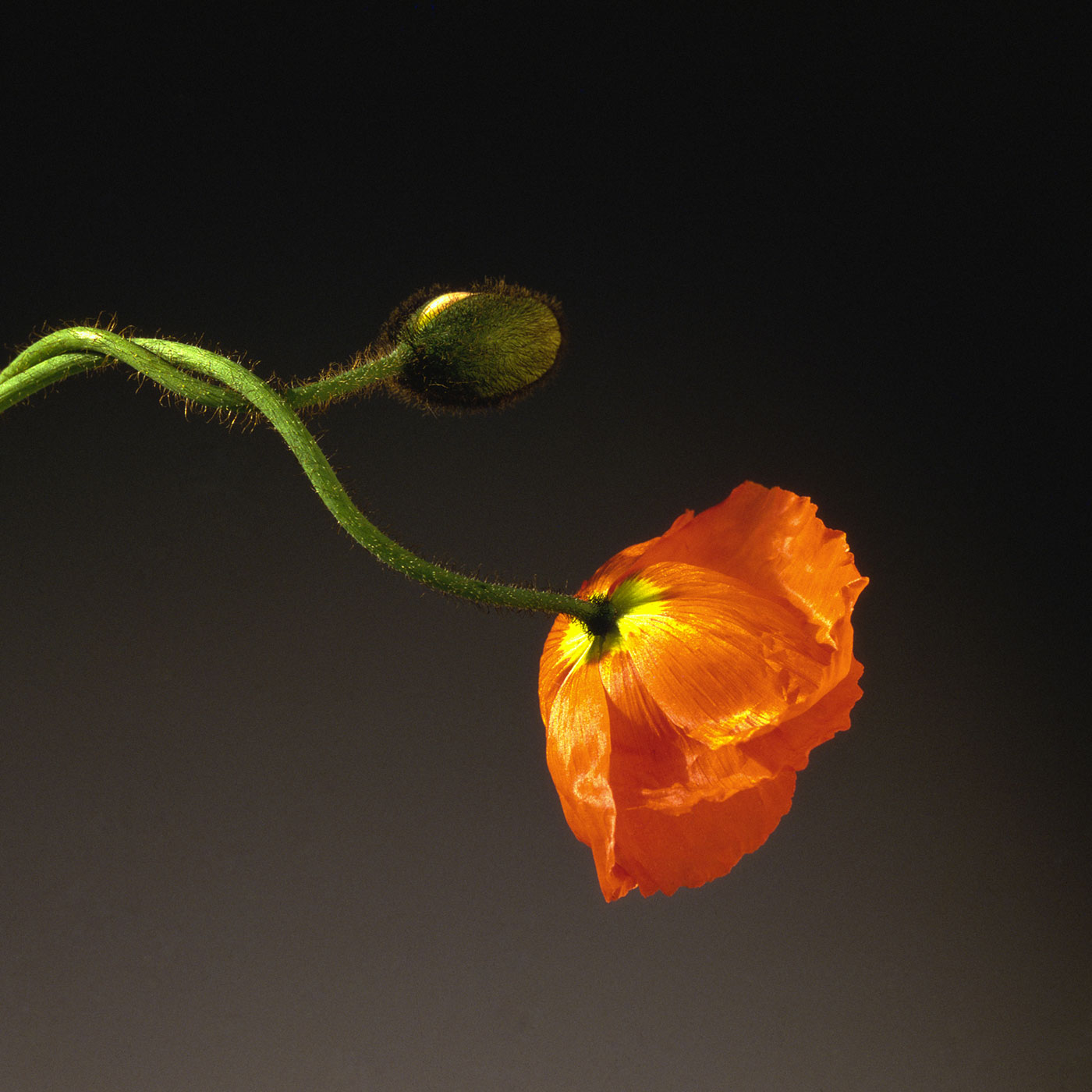


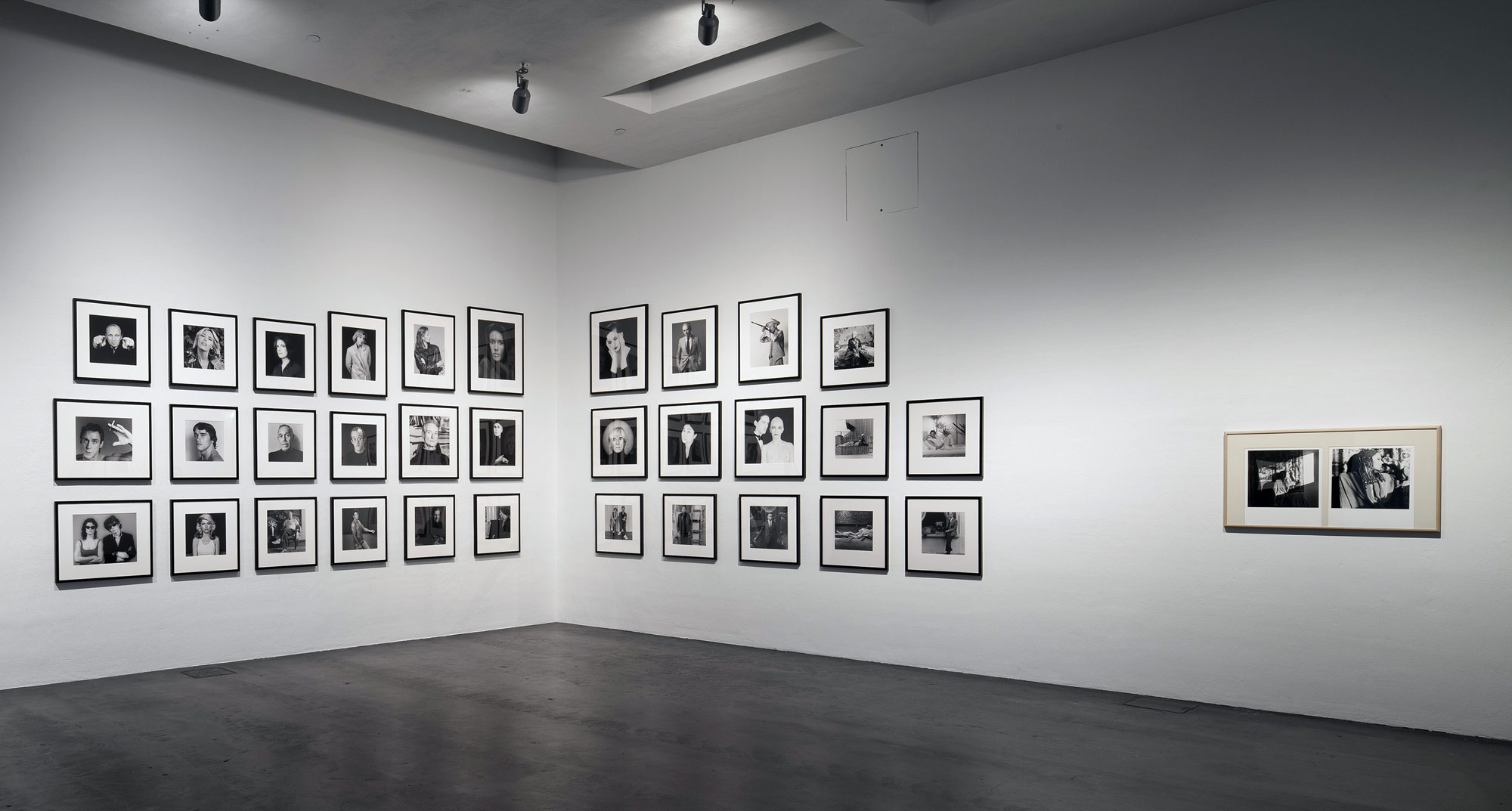

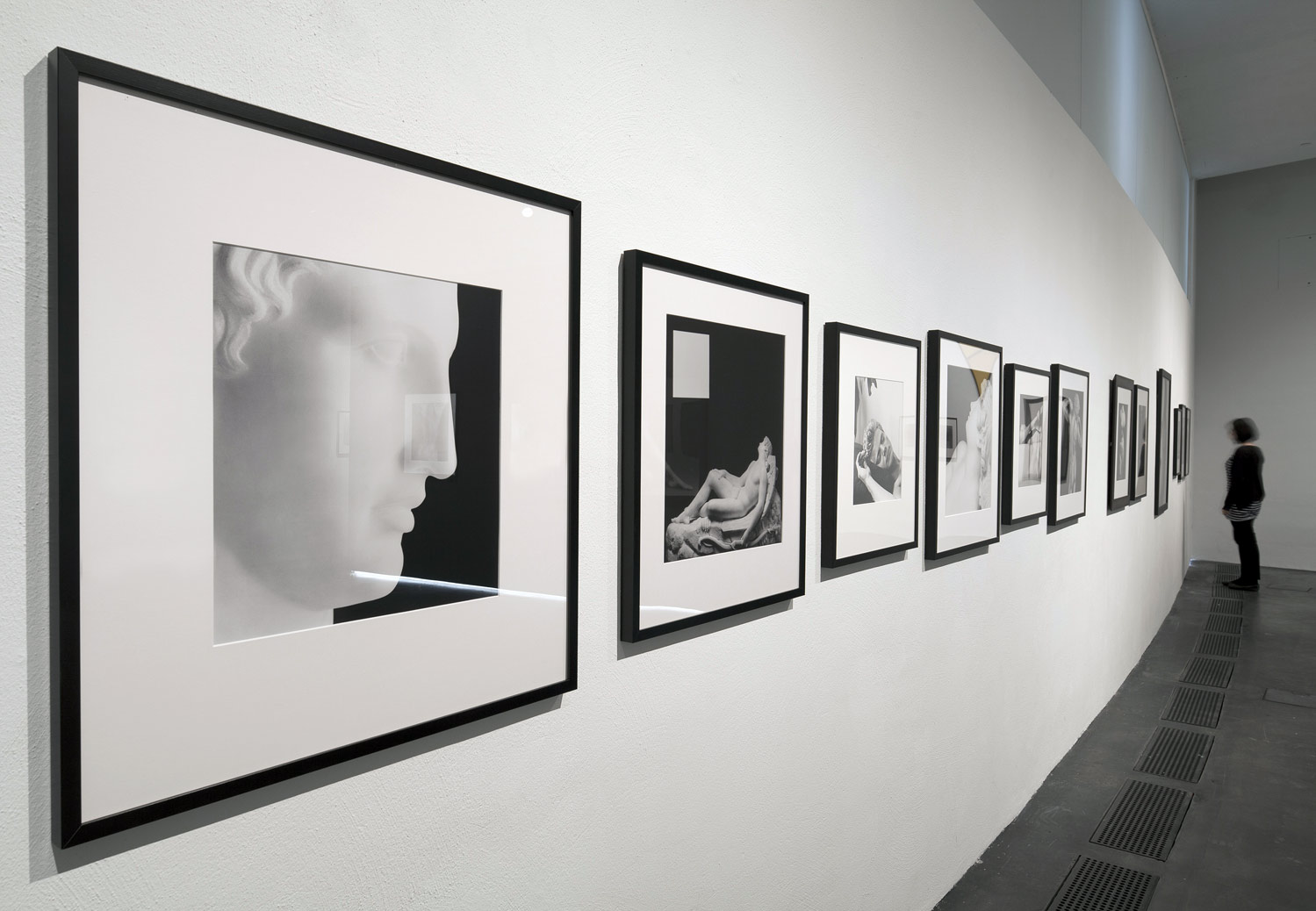
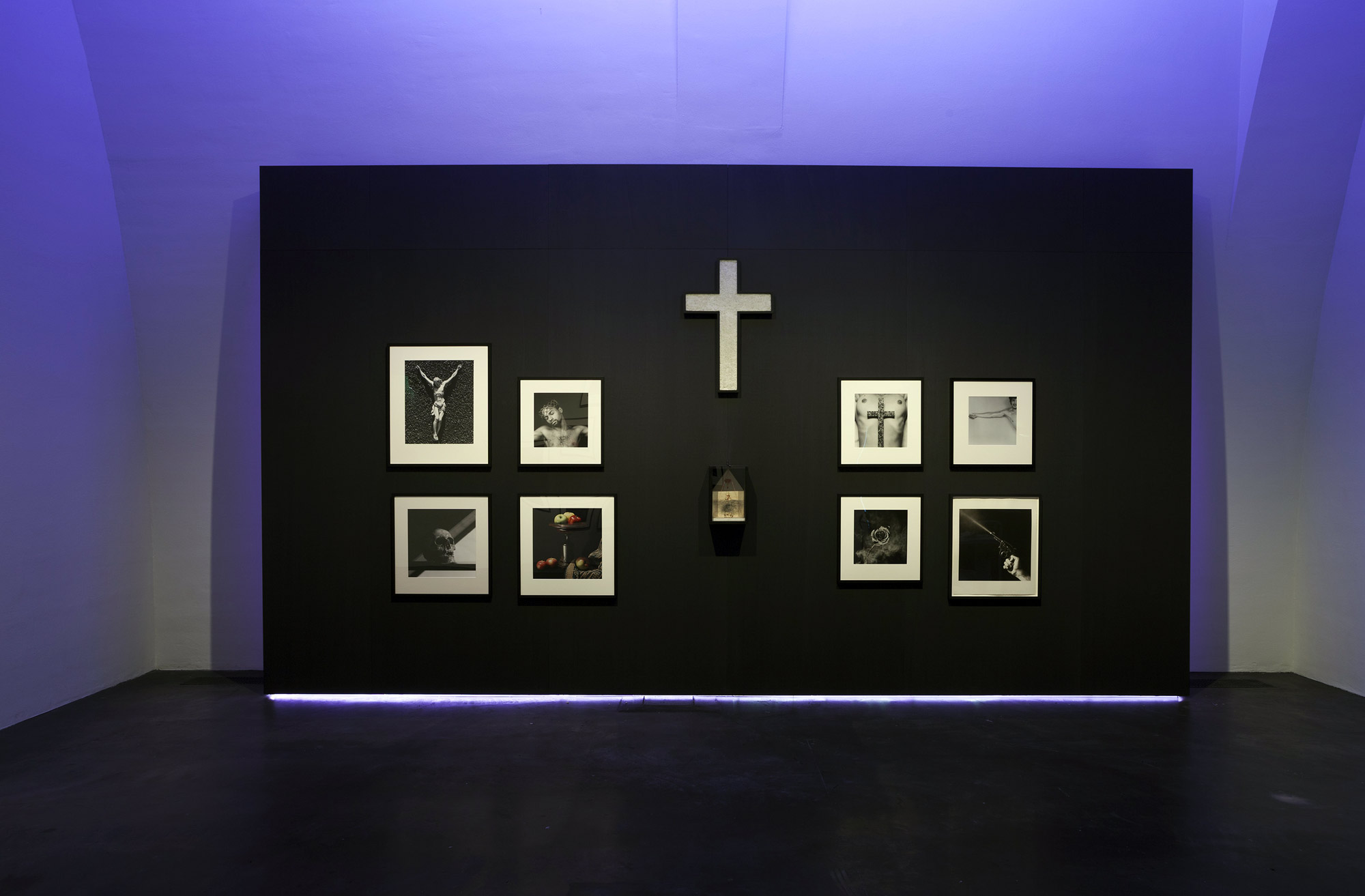


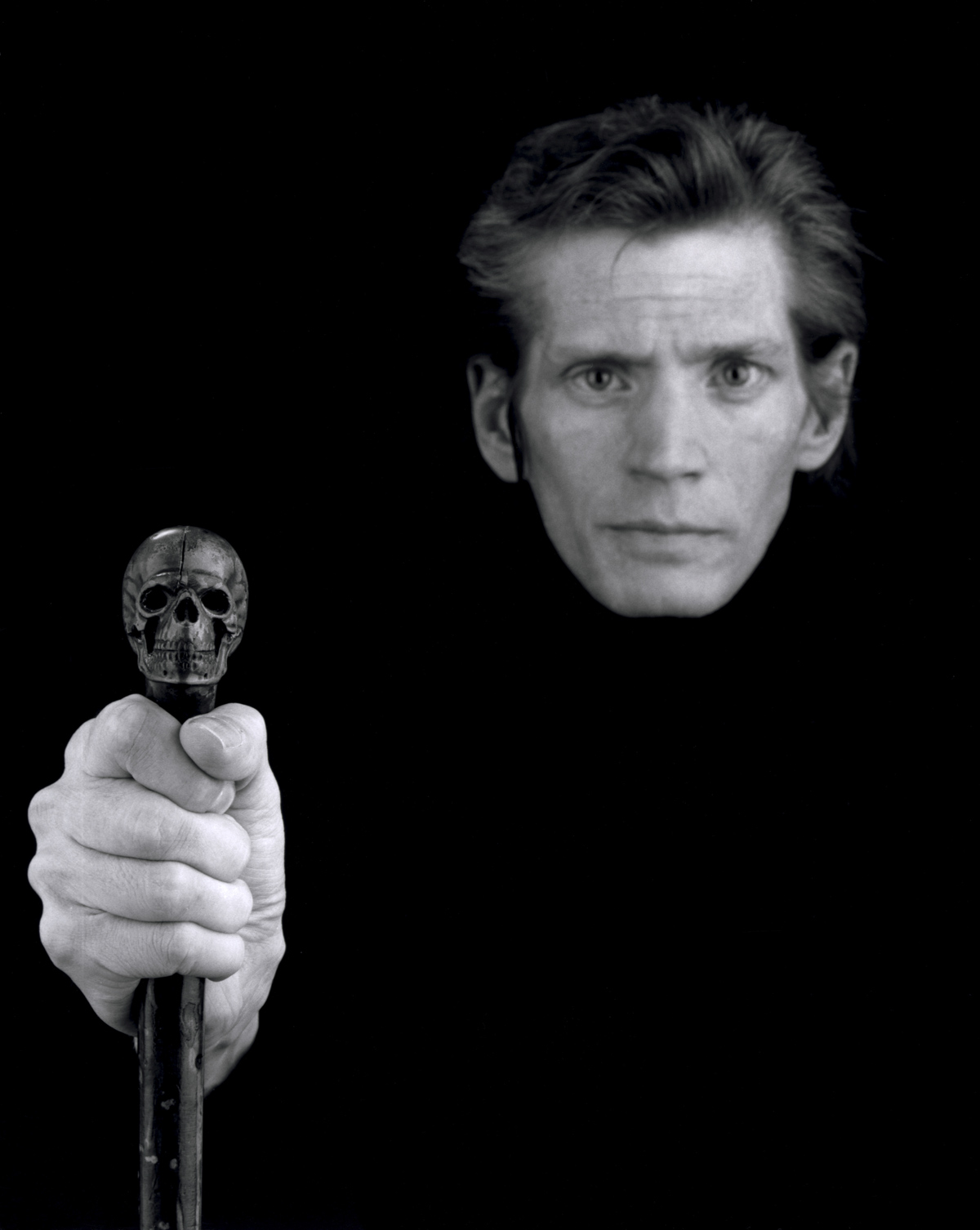


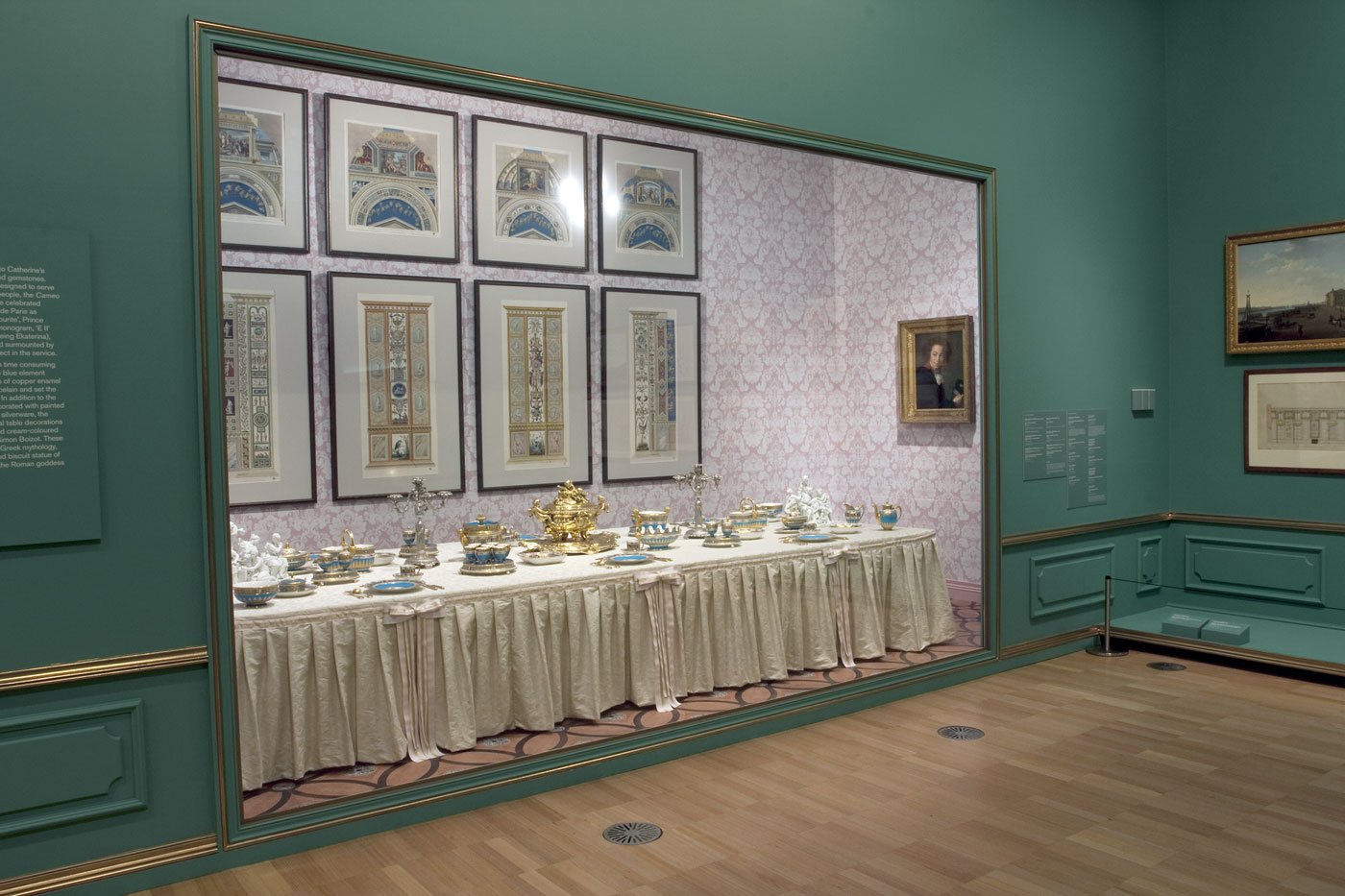


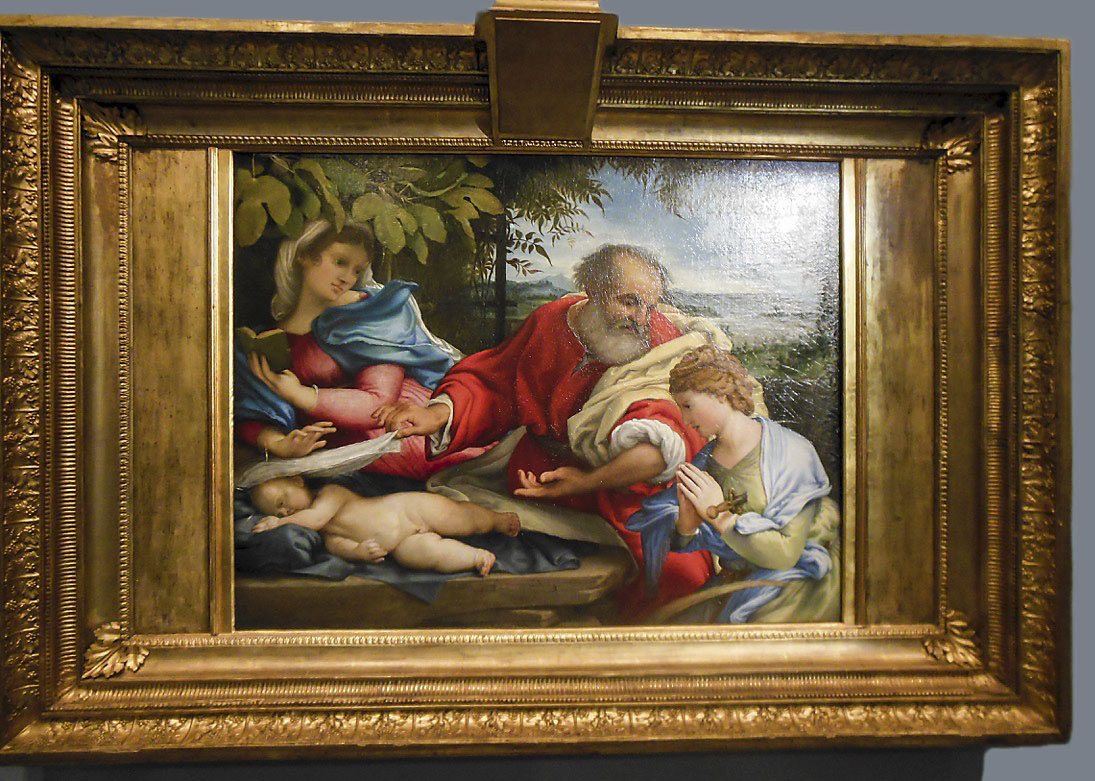


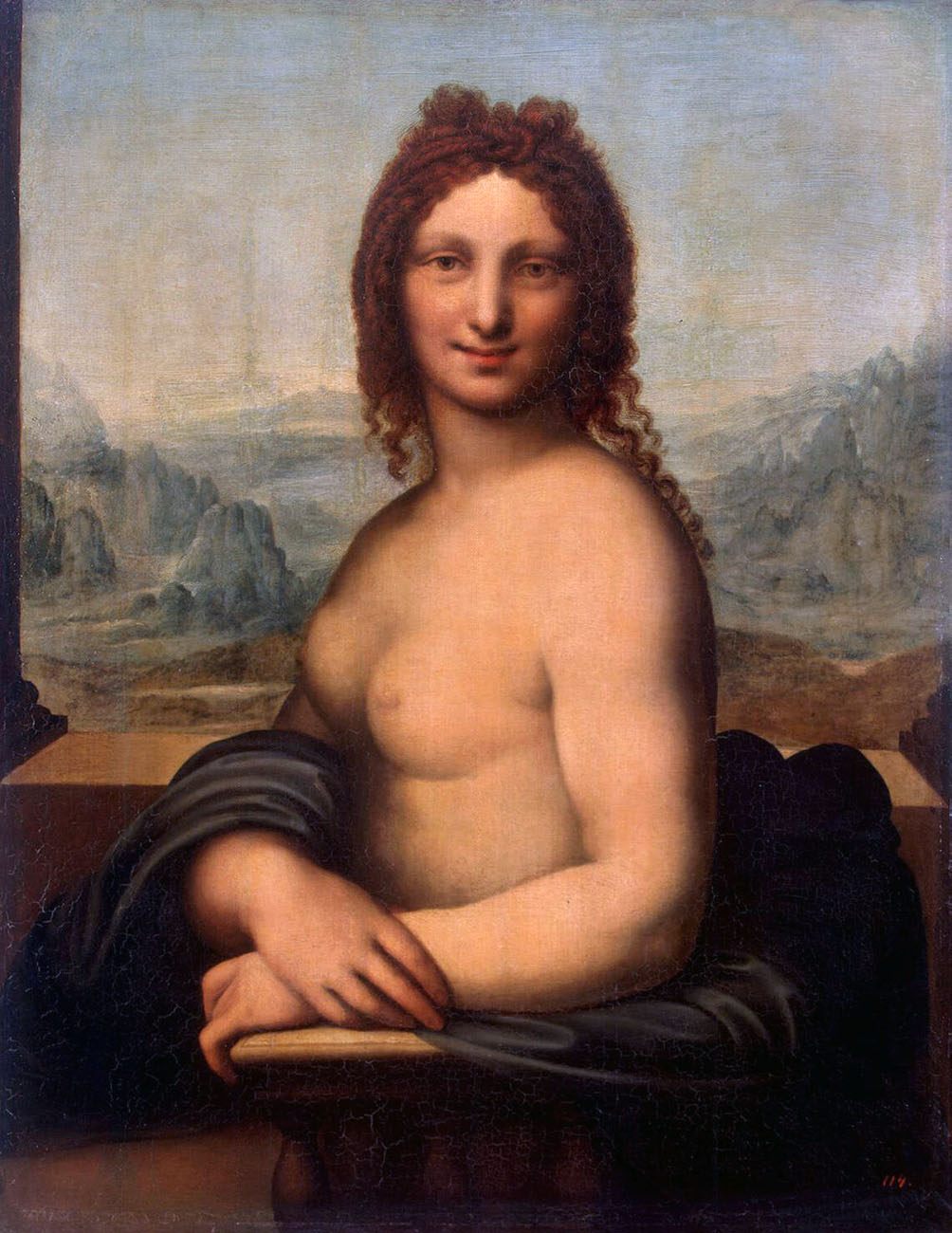


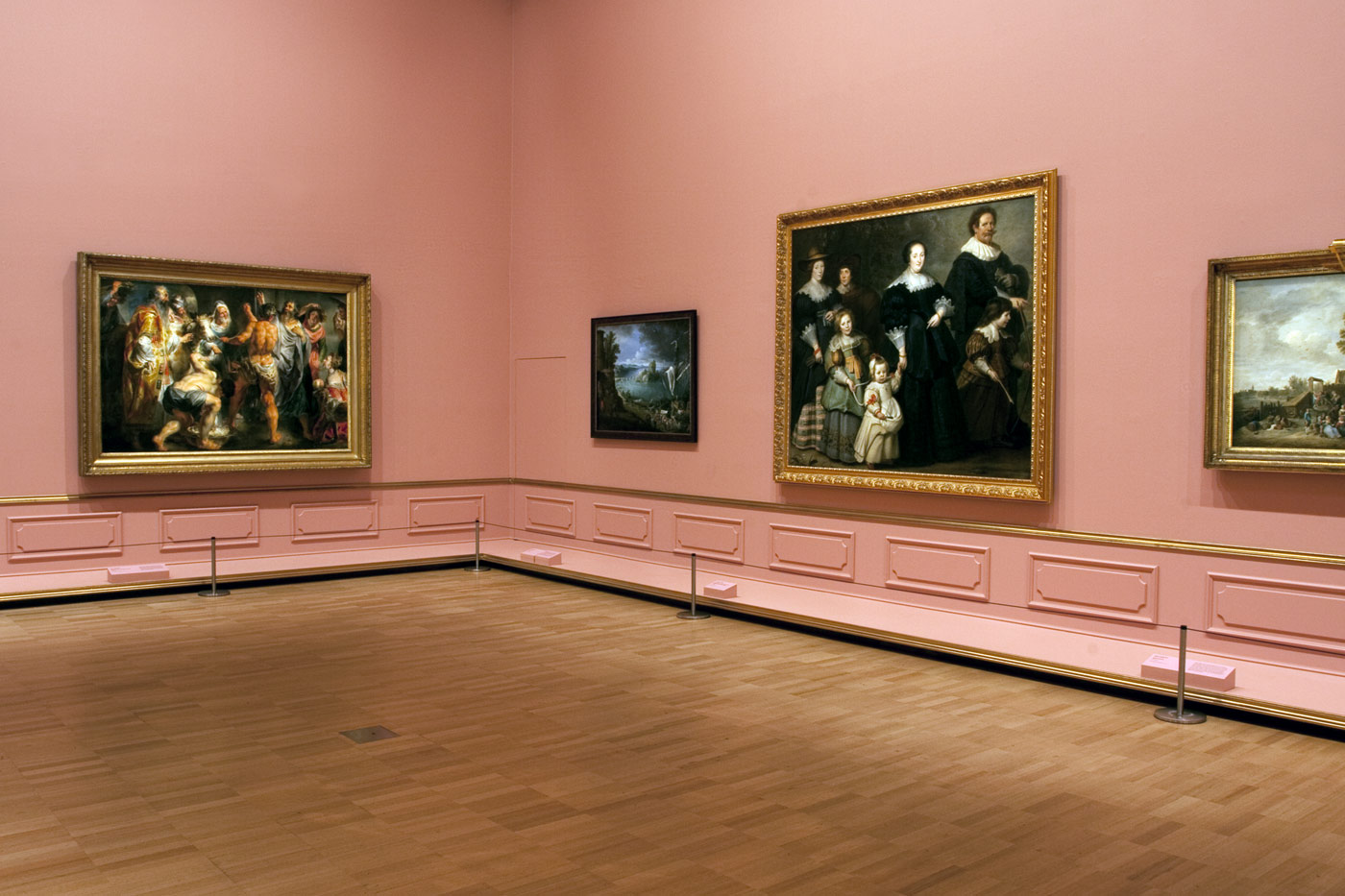


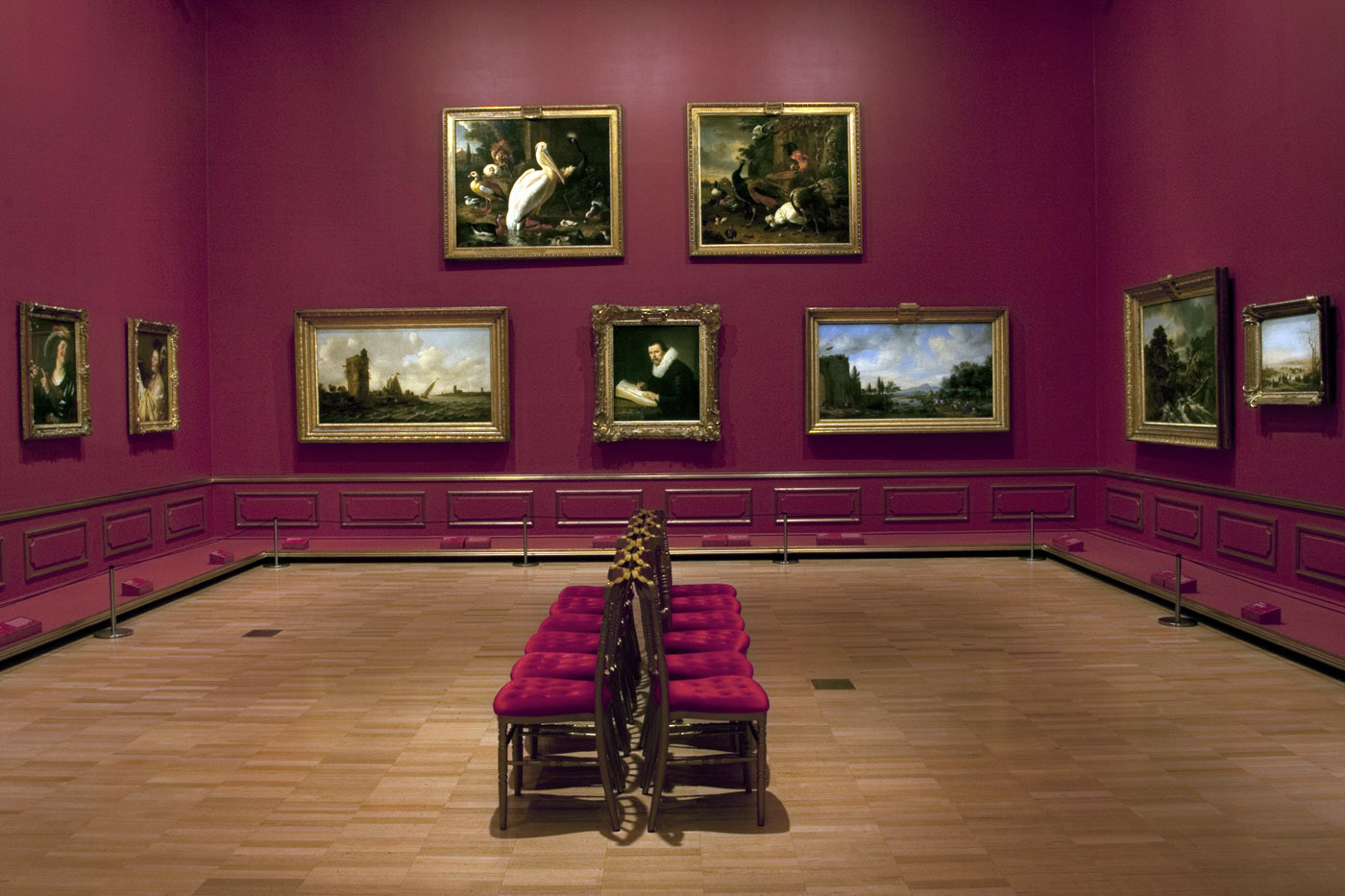
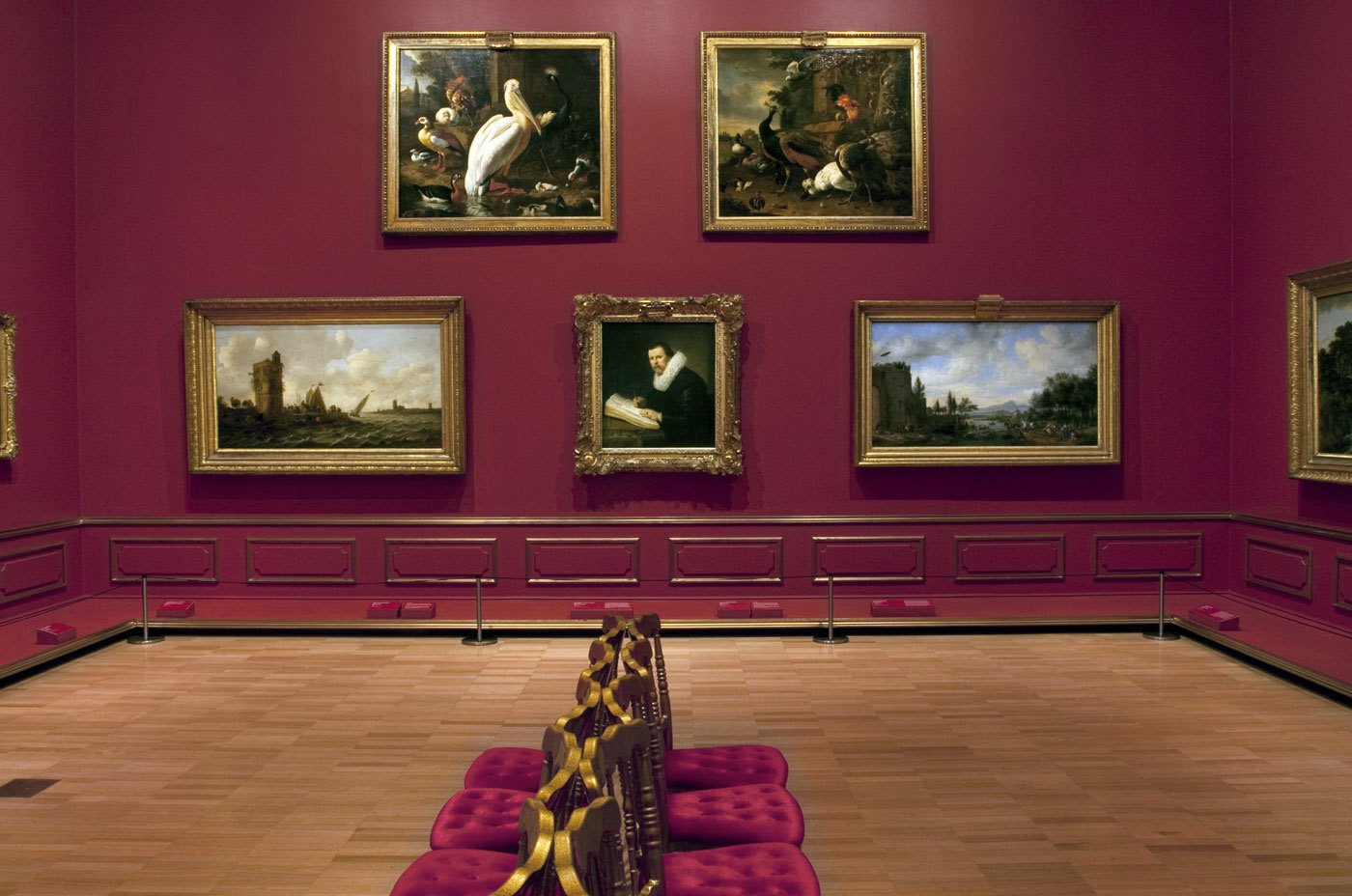


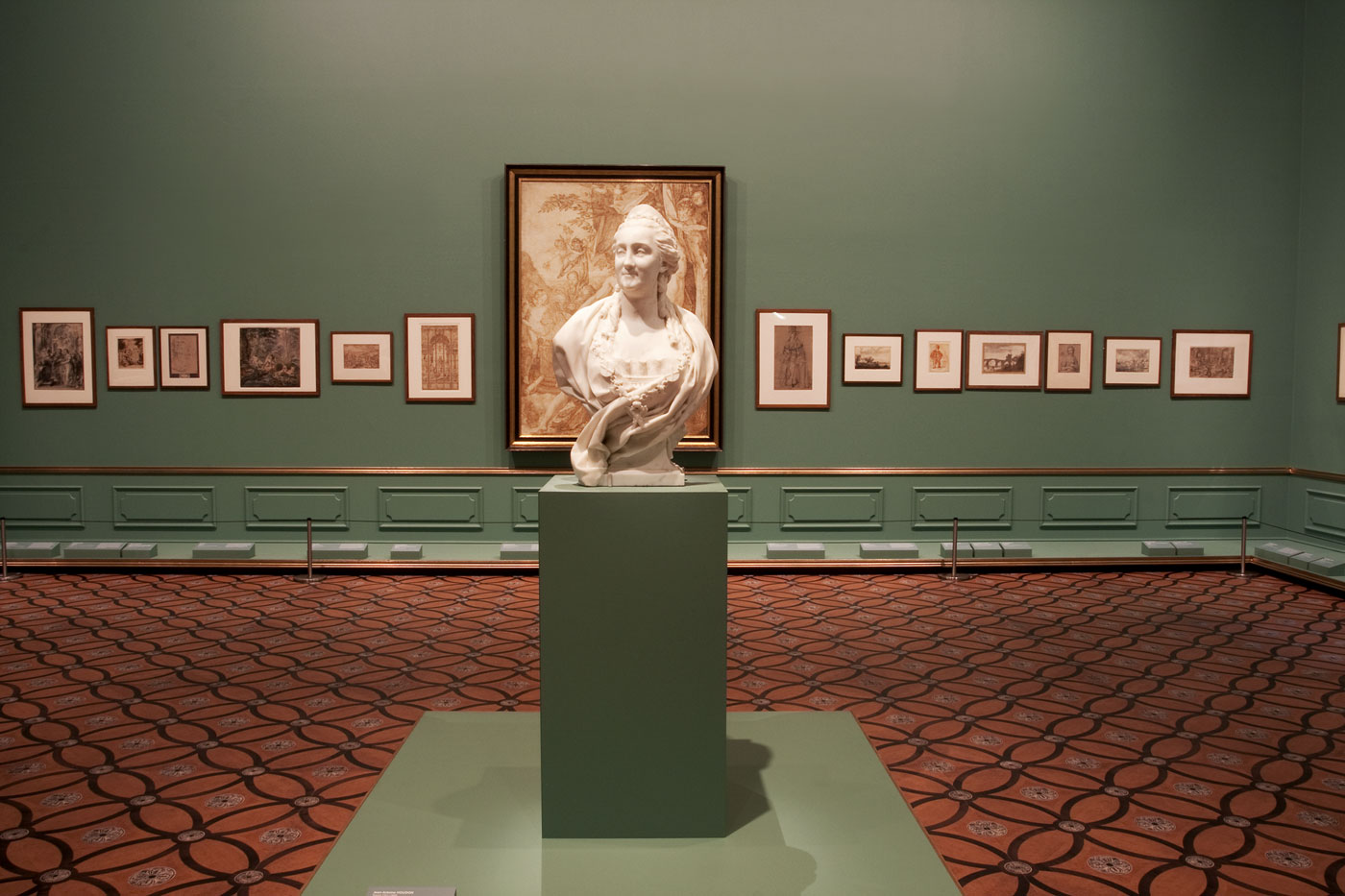


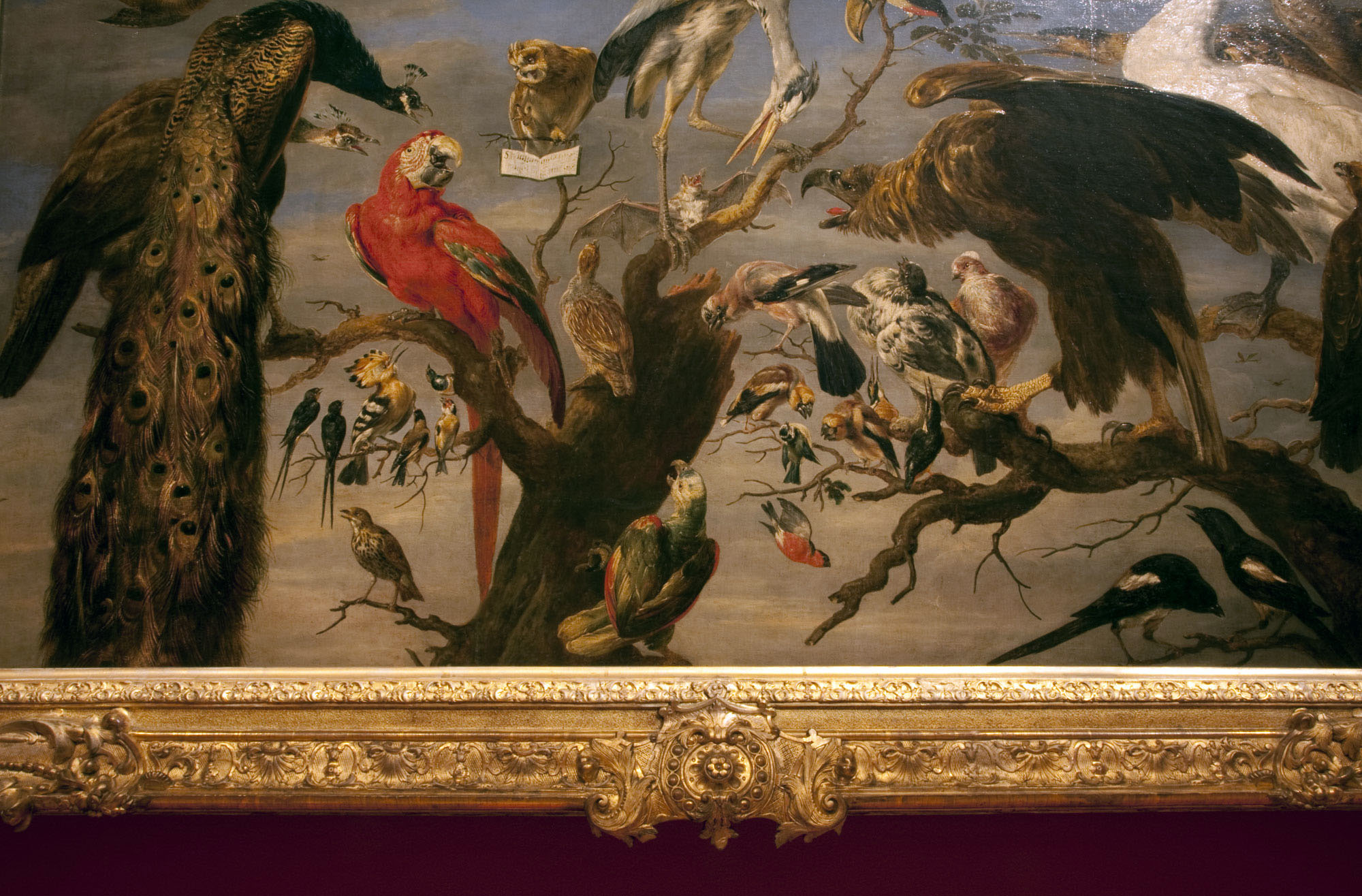


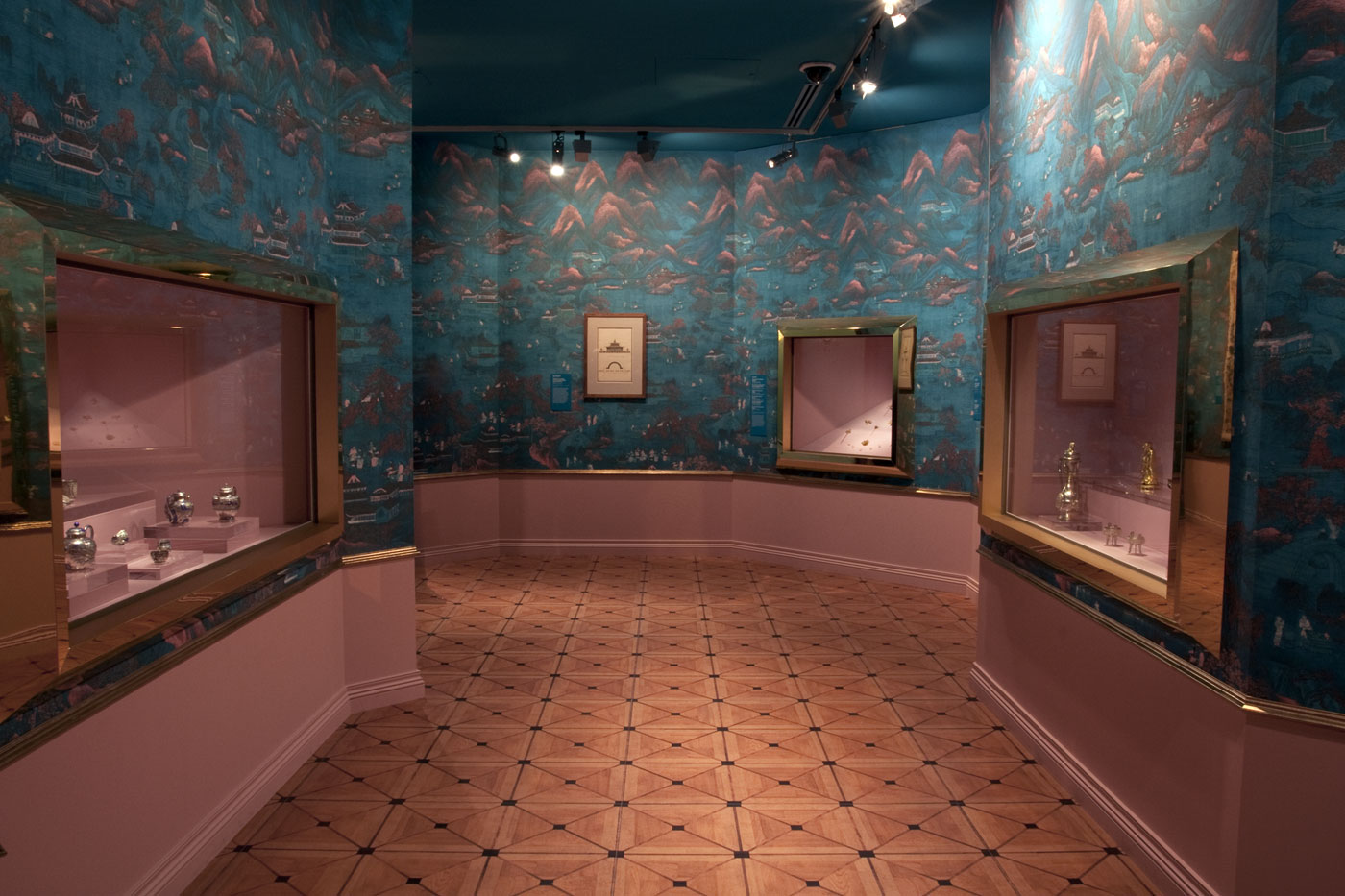


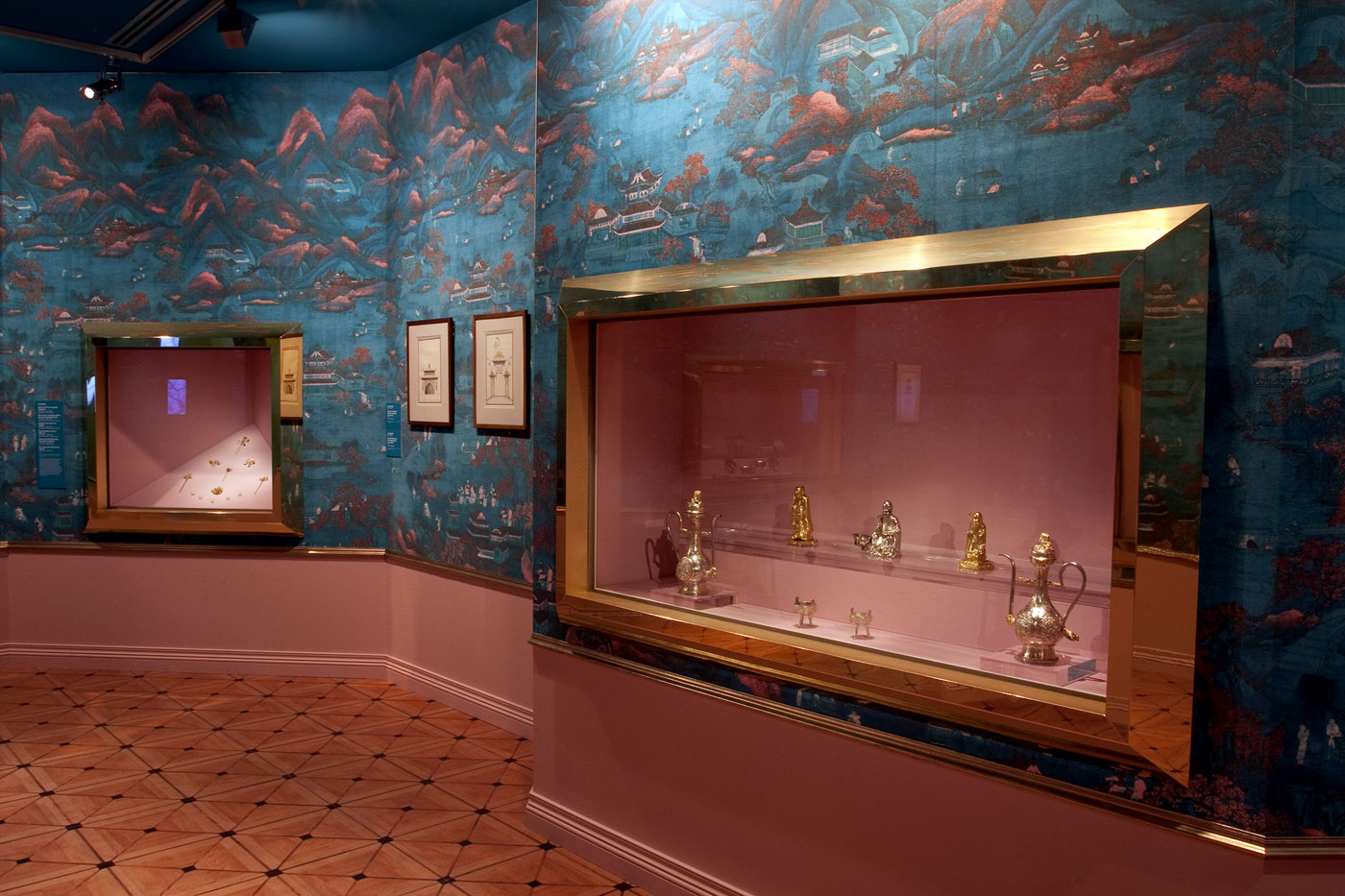

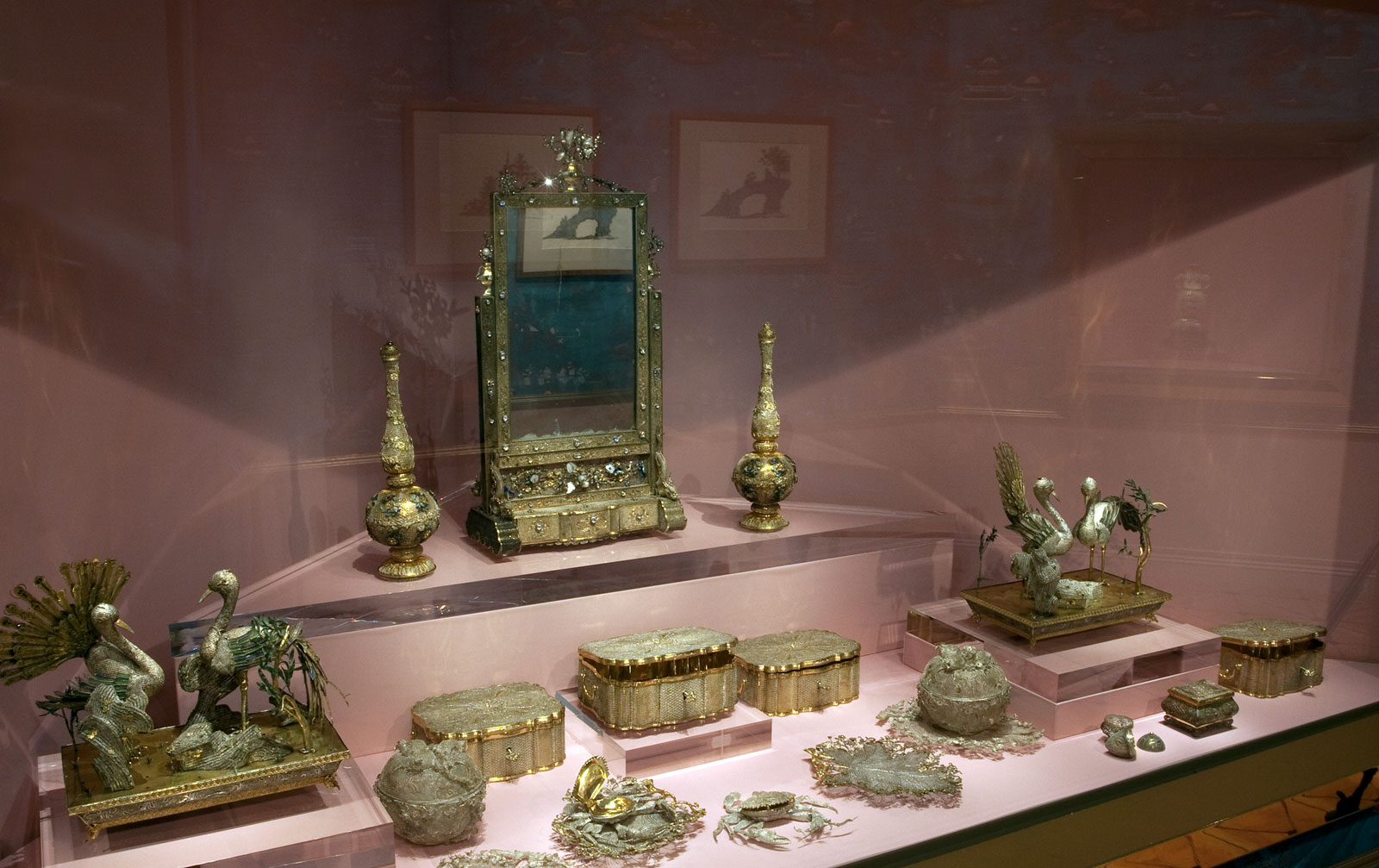


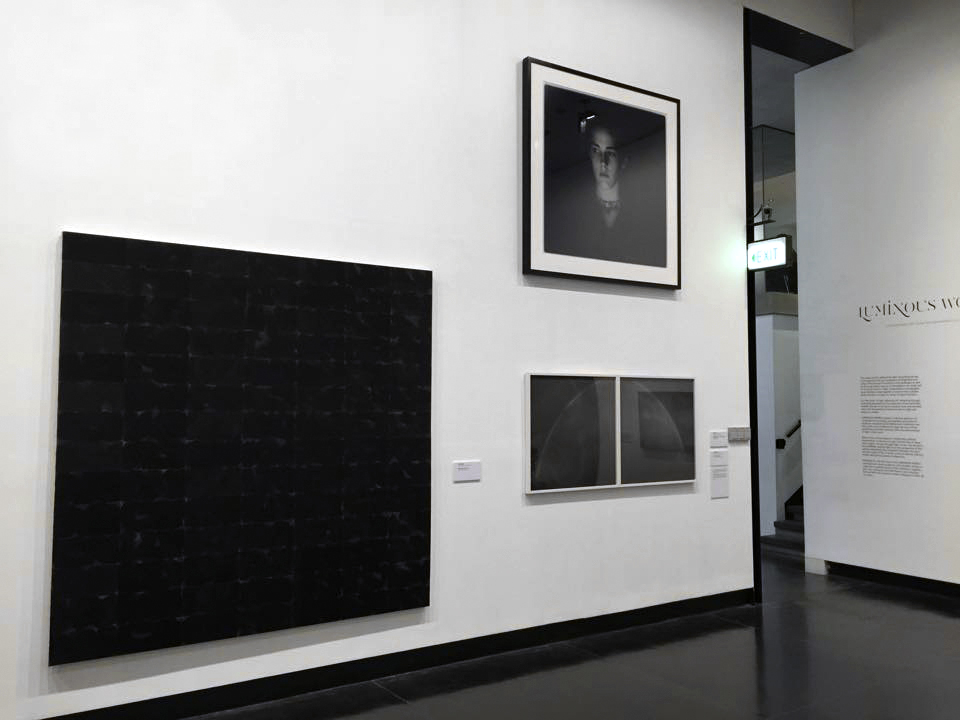


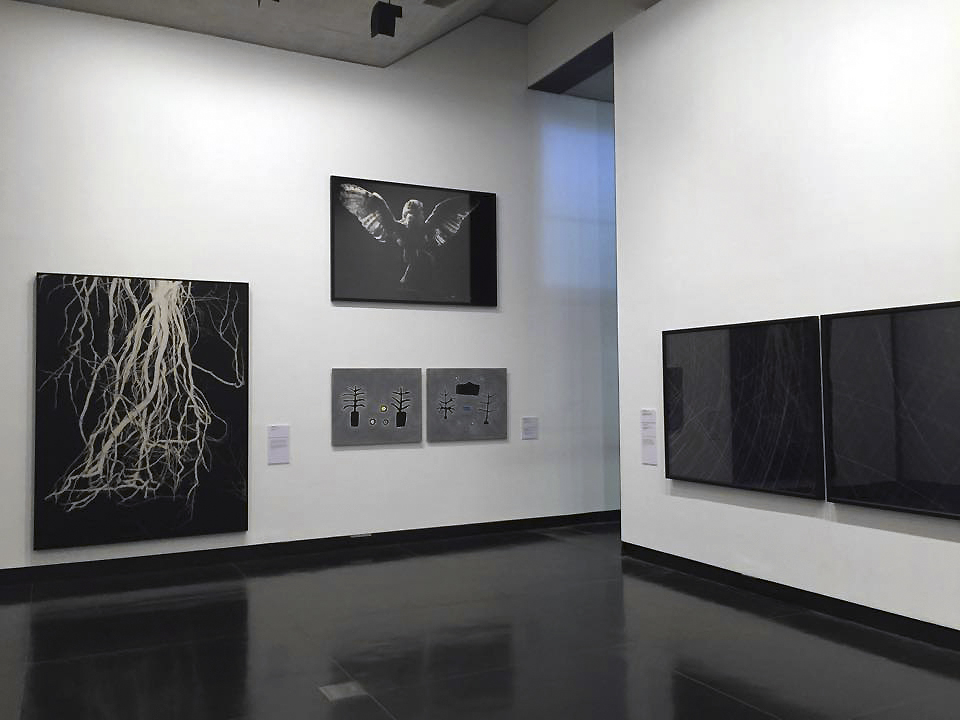


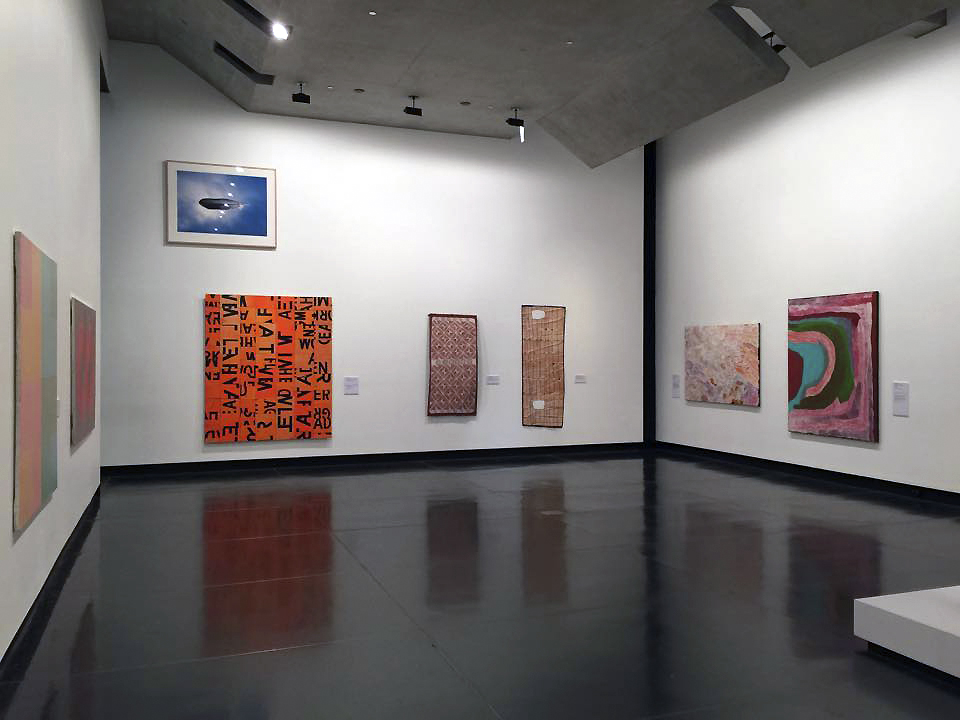
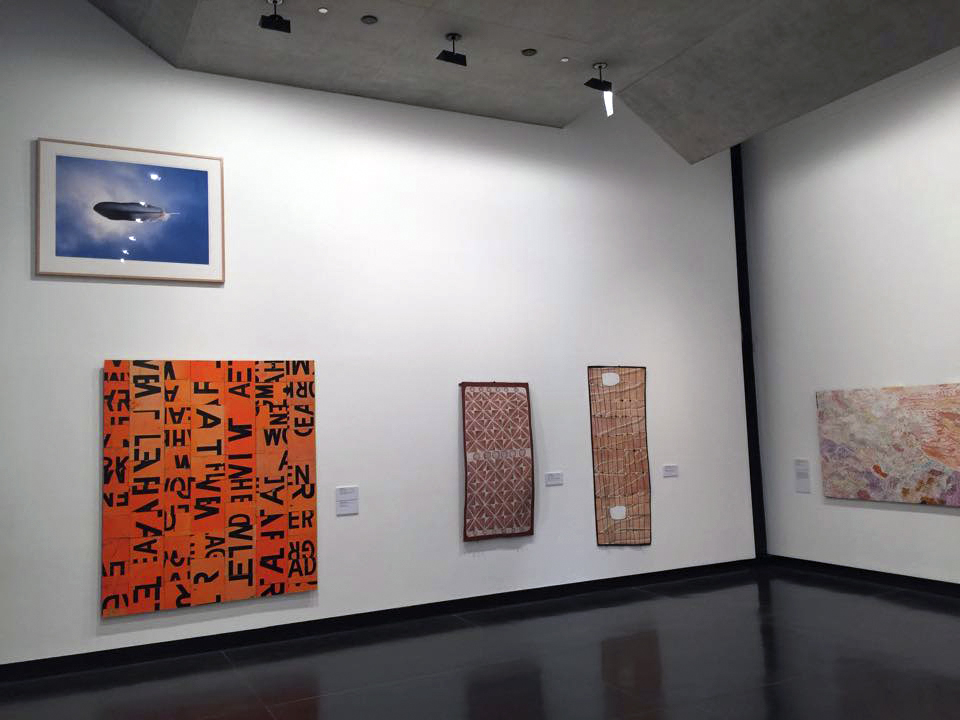
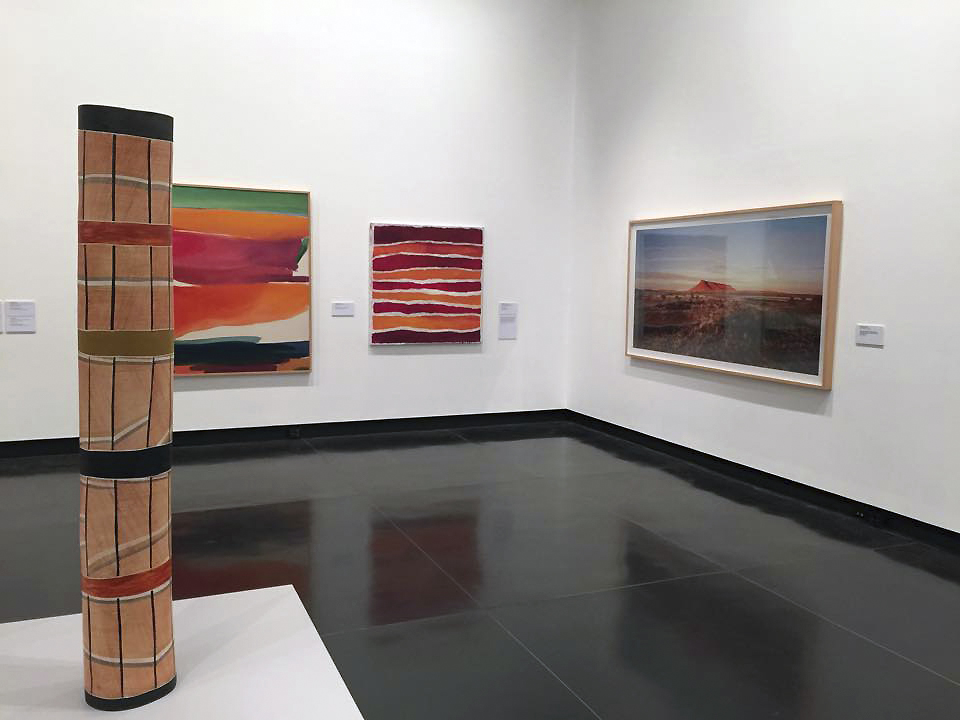
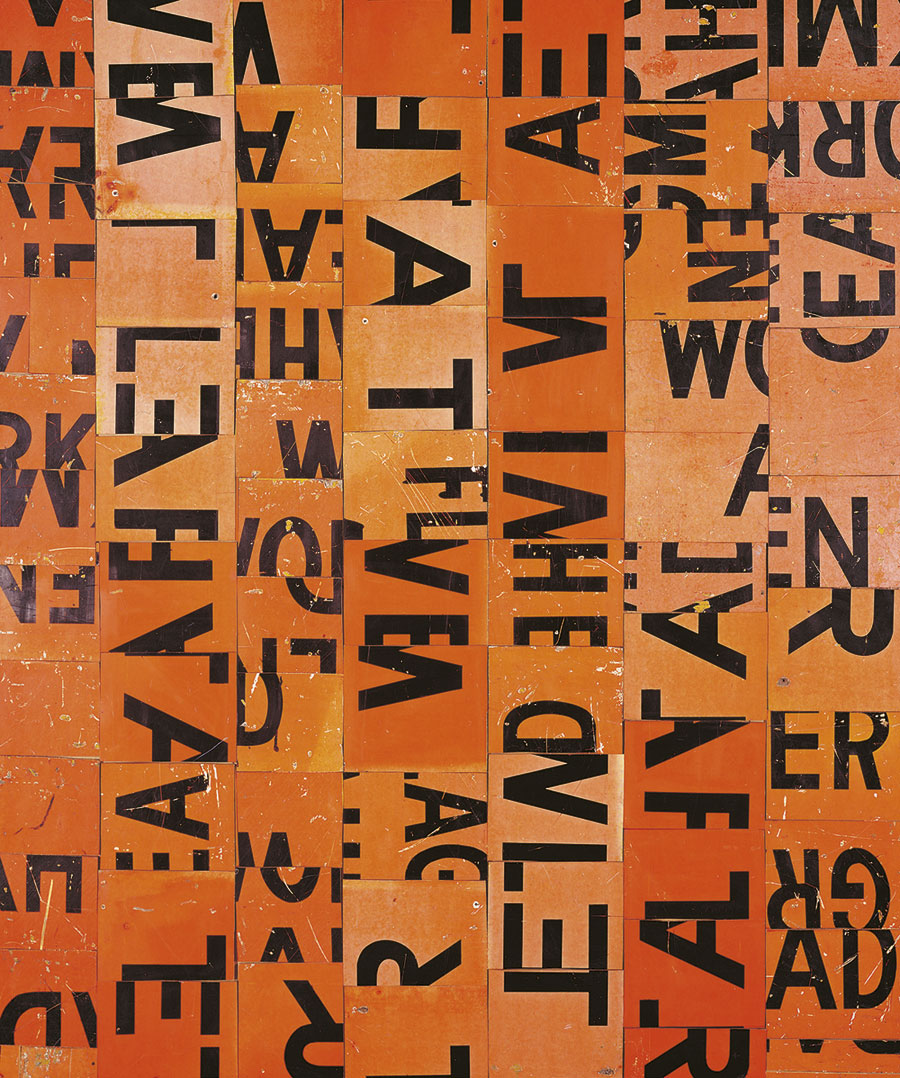


![Michael Riley (Australian, 1960-2004) 'Untitled' from the series 'Cloud [Feather]' 2000](https://artblart.com/wp-content/uploads/2015/05/riley-web.jpg "Michael Riley (Australian, 1960-2004) 'Untitled' from the series 'Cloud [Feather]' 2000")
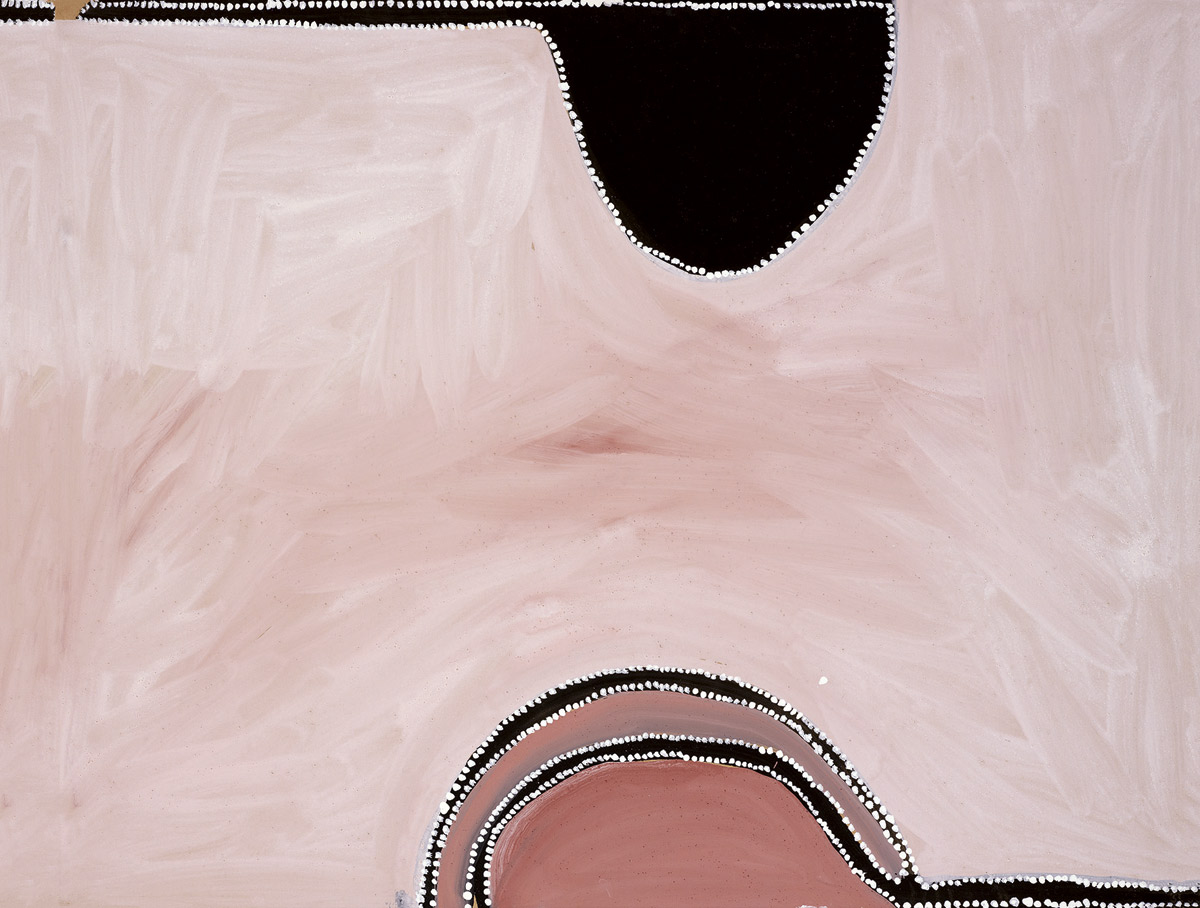


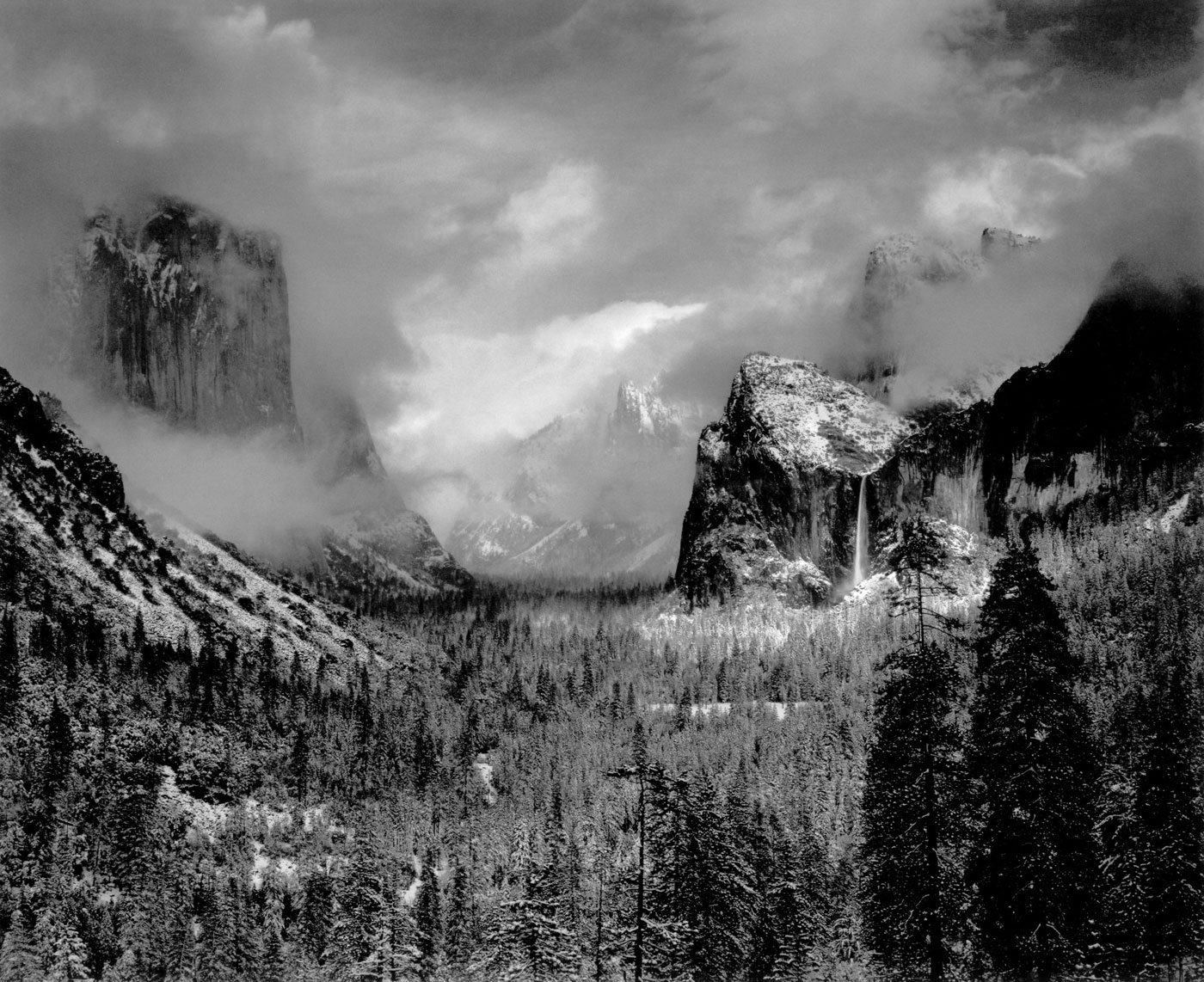
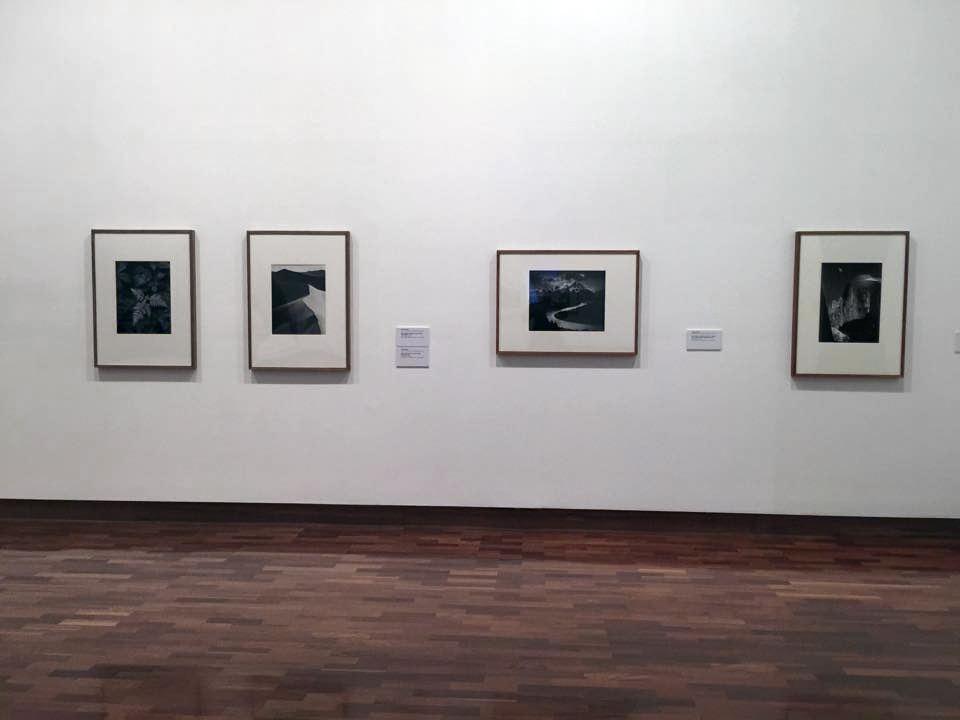
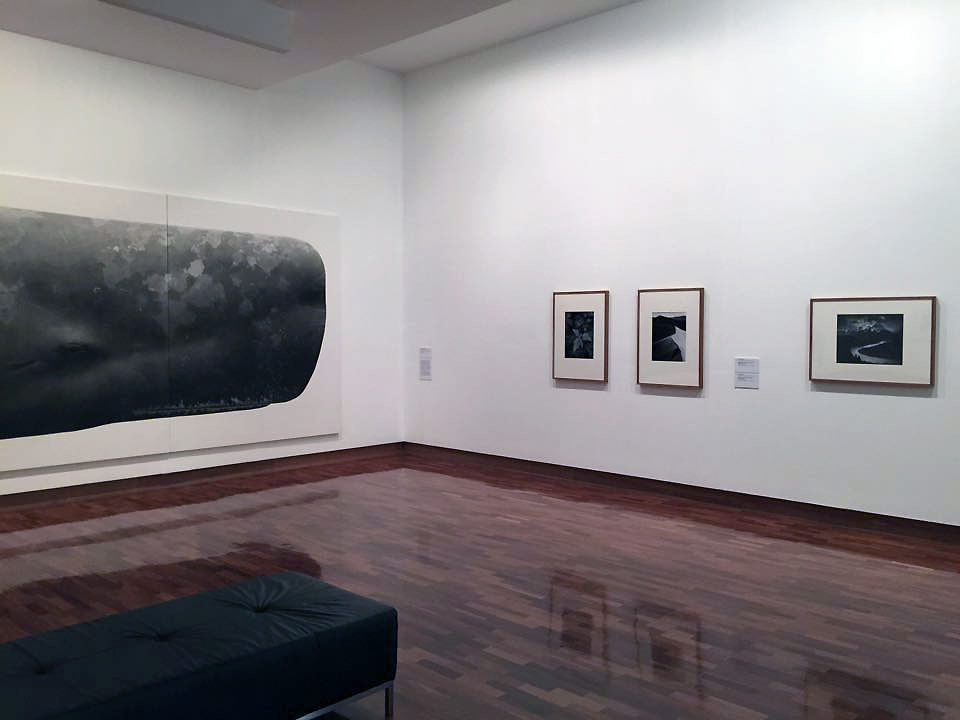
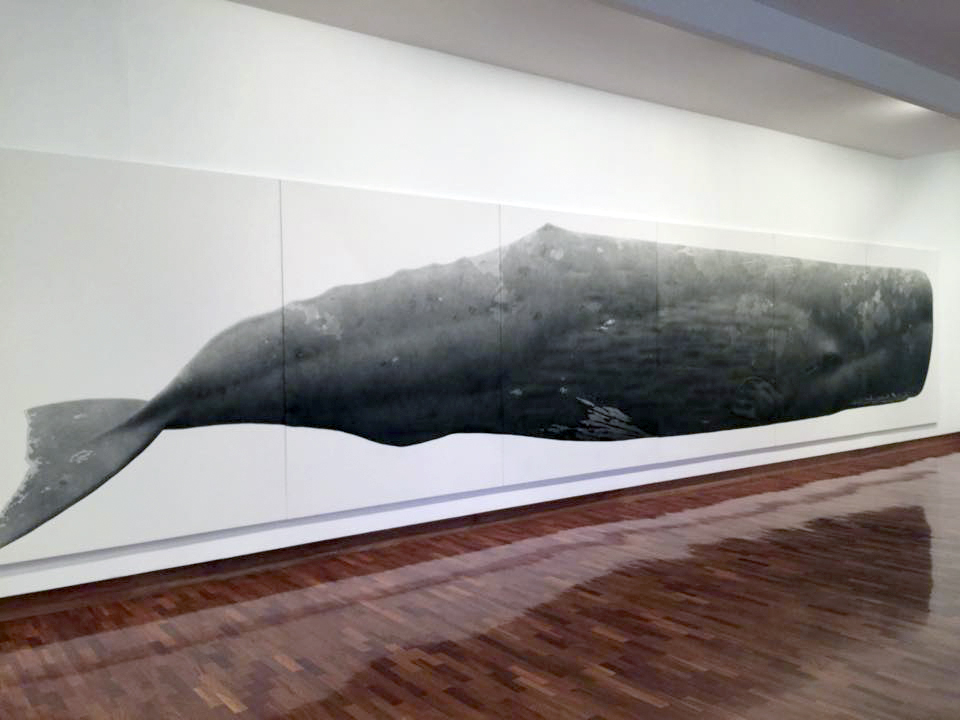
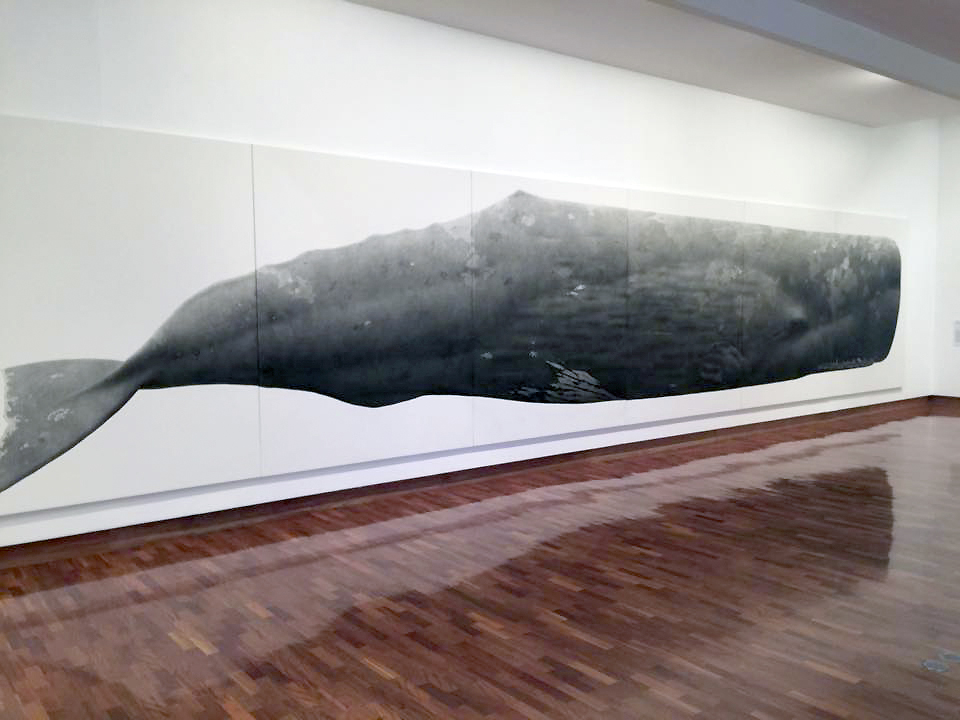
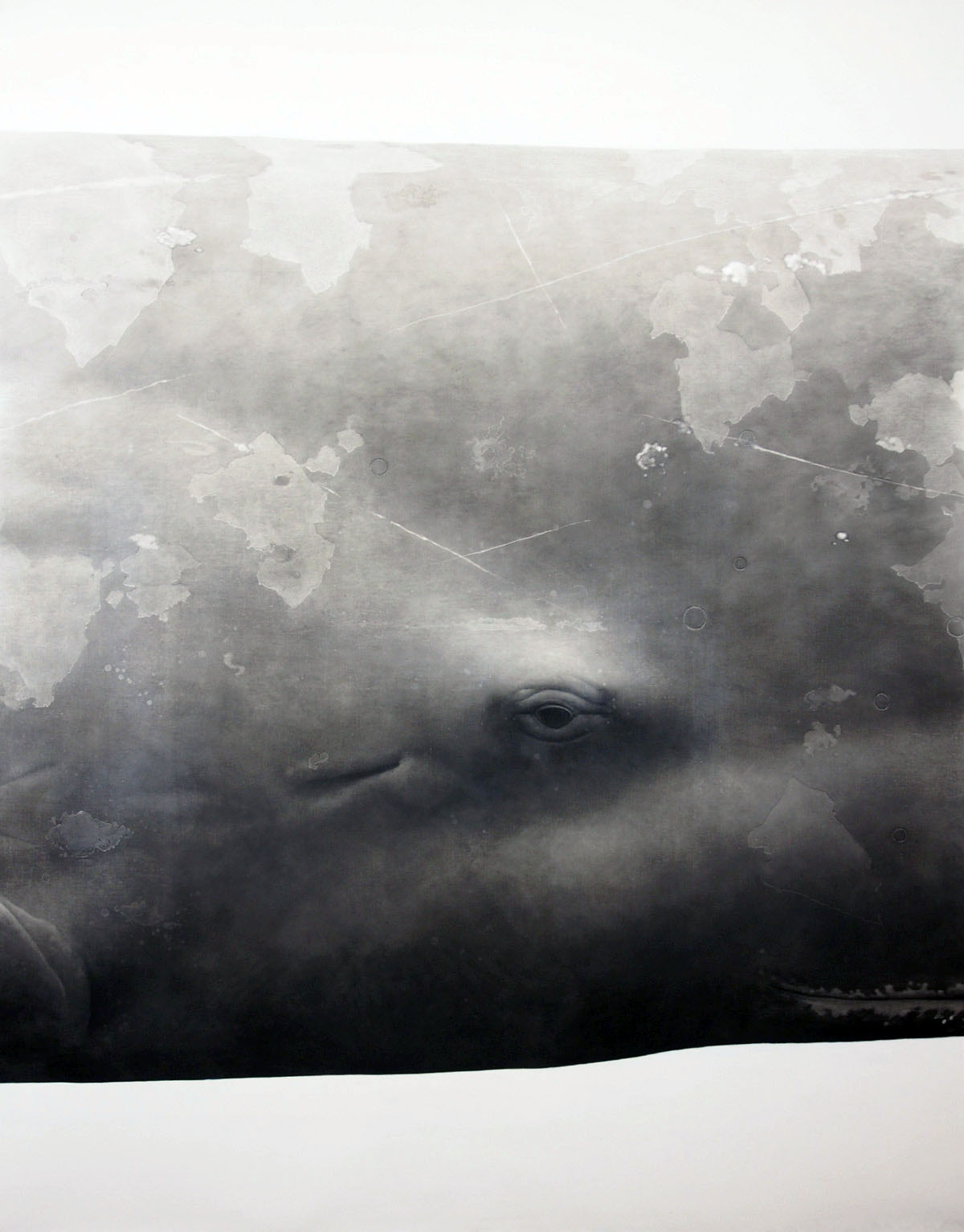
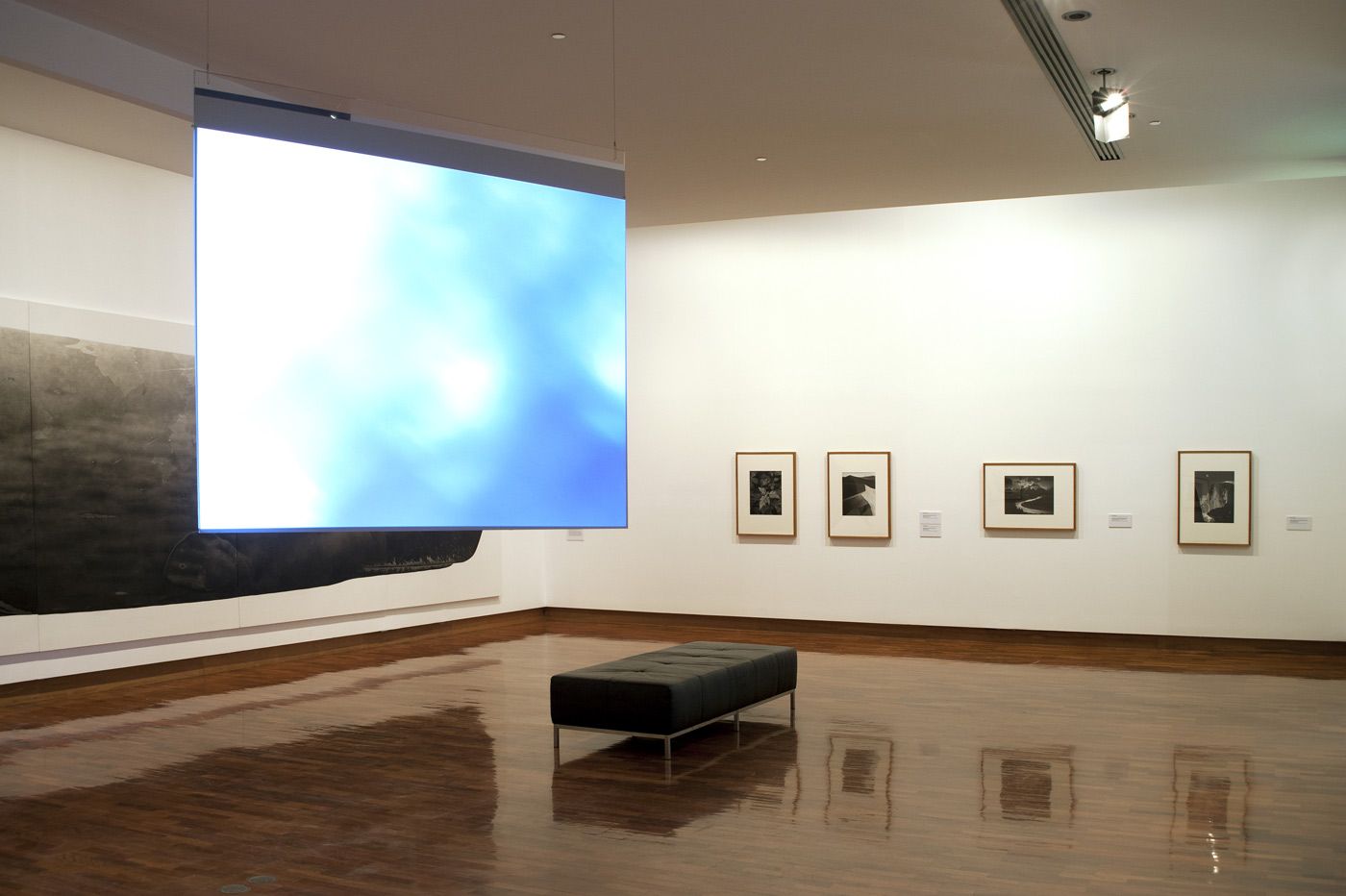
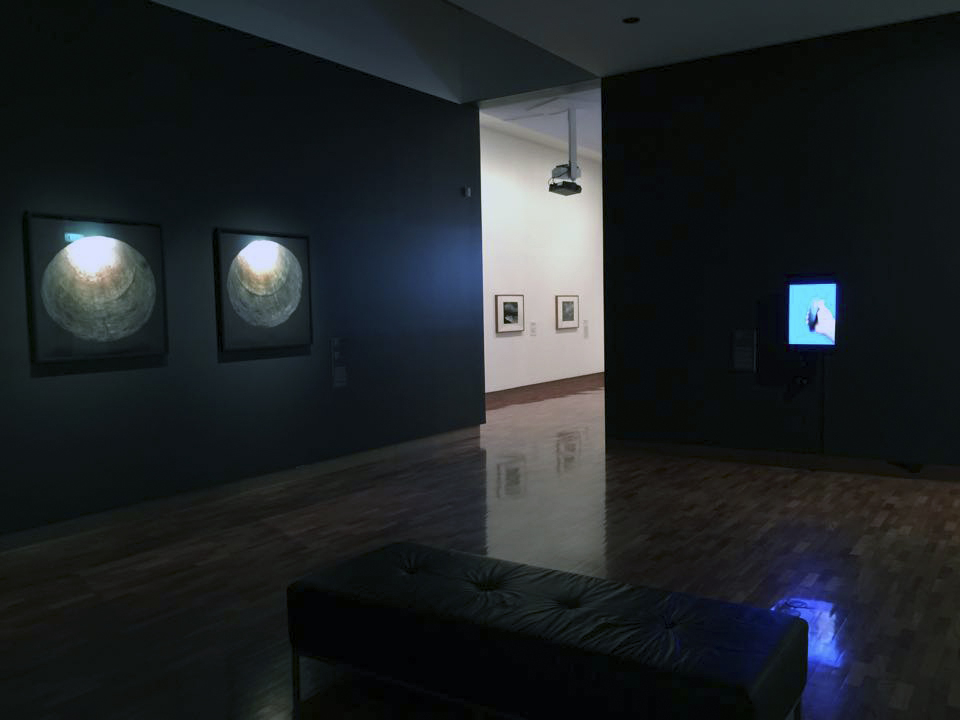
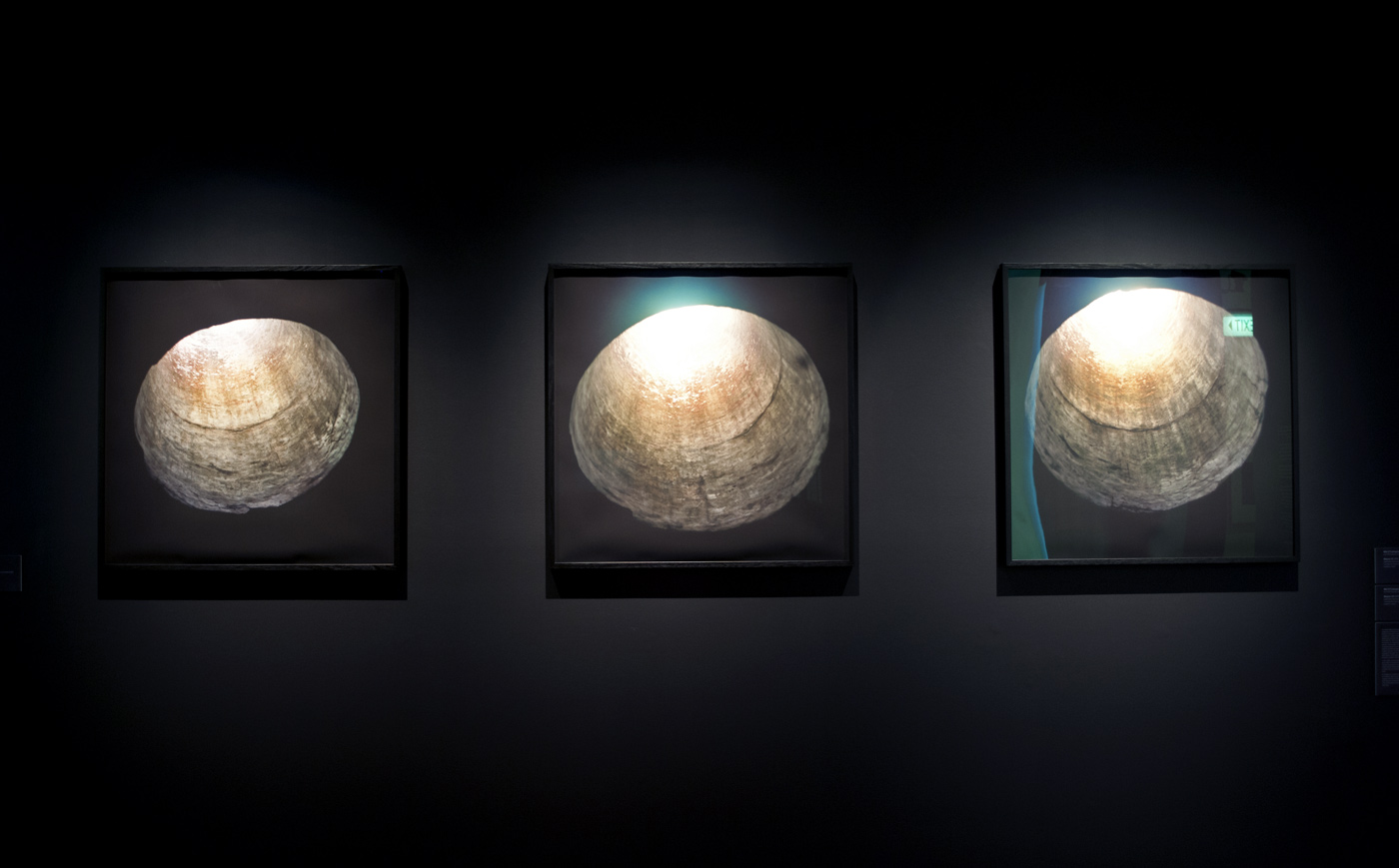
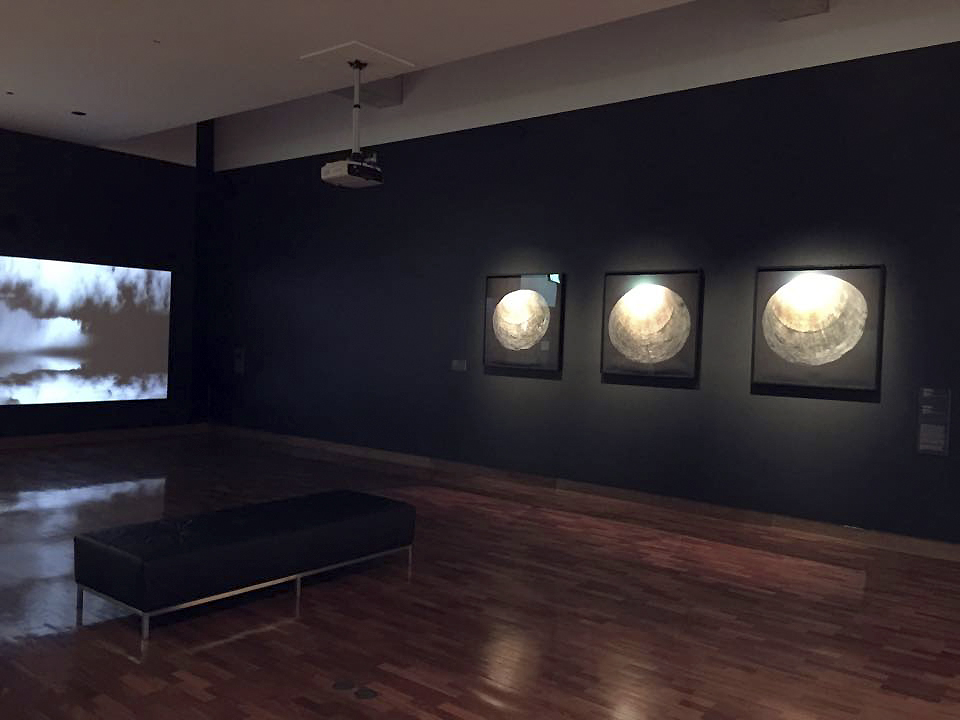
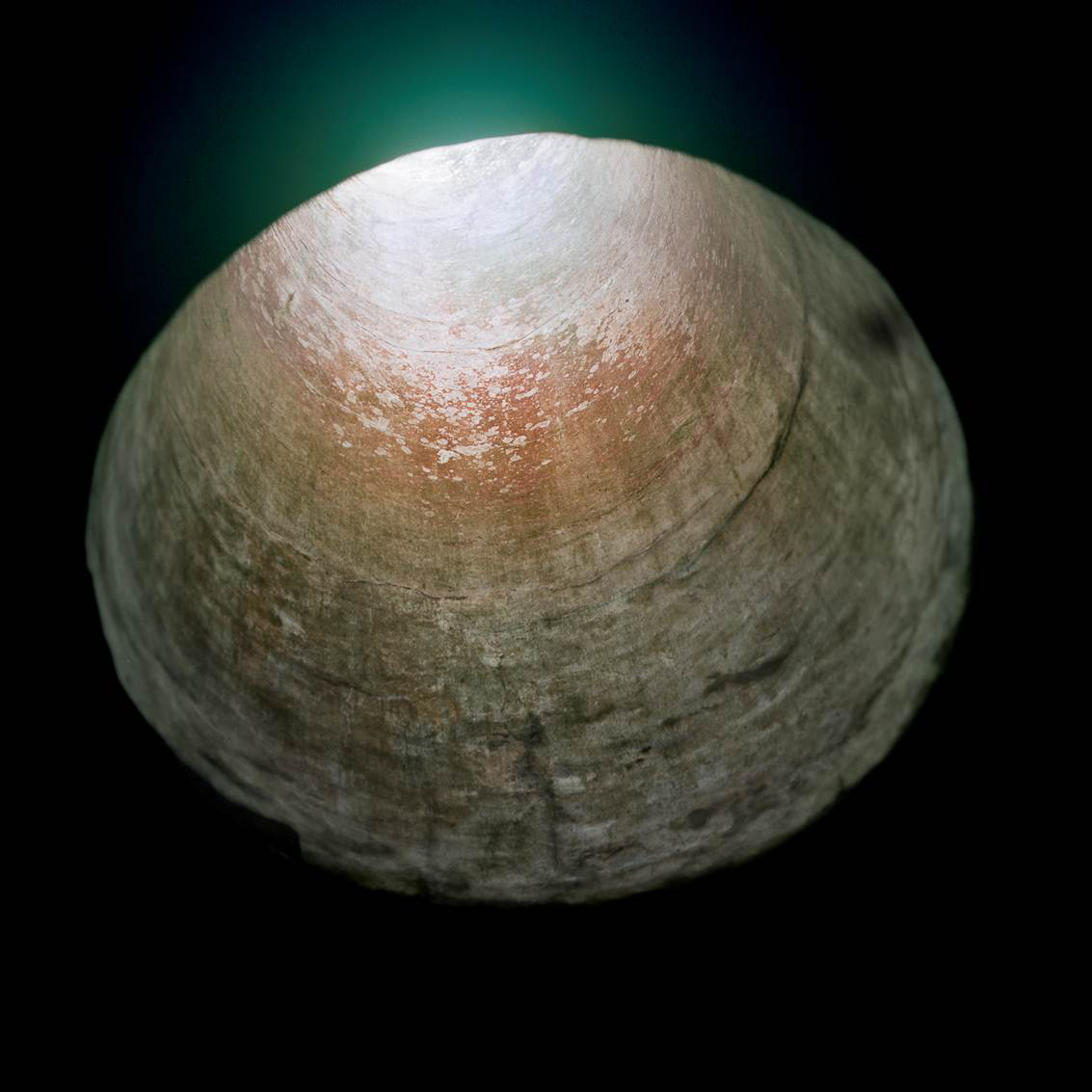
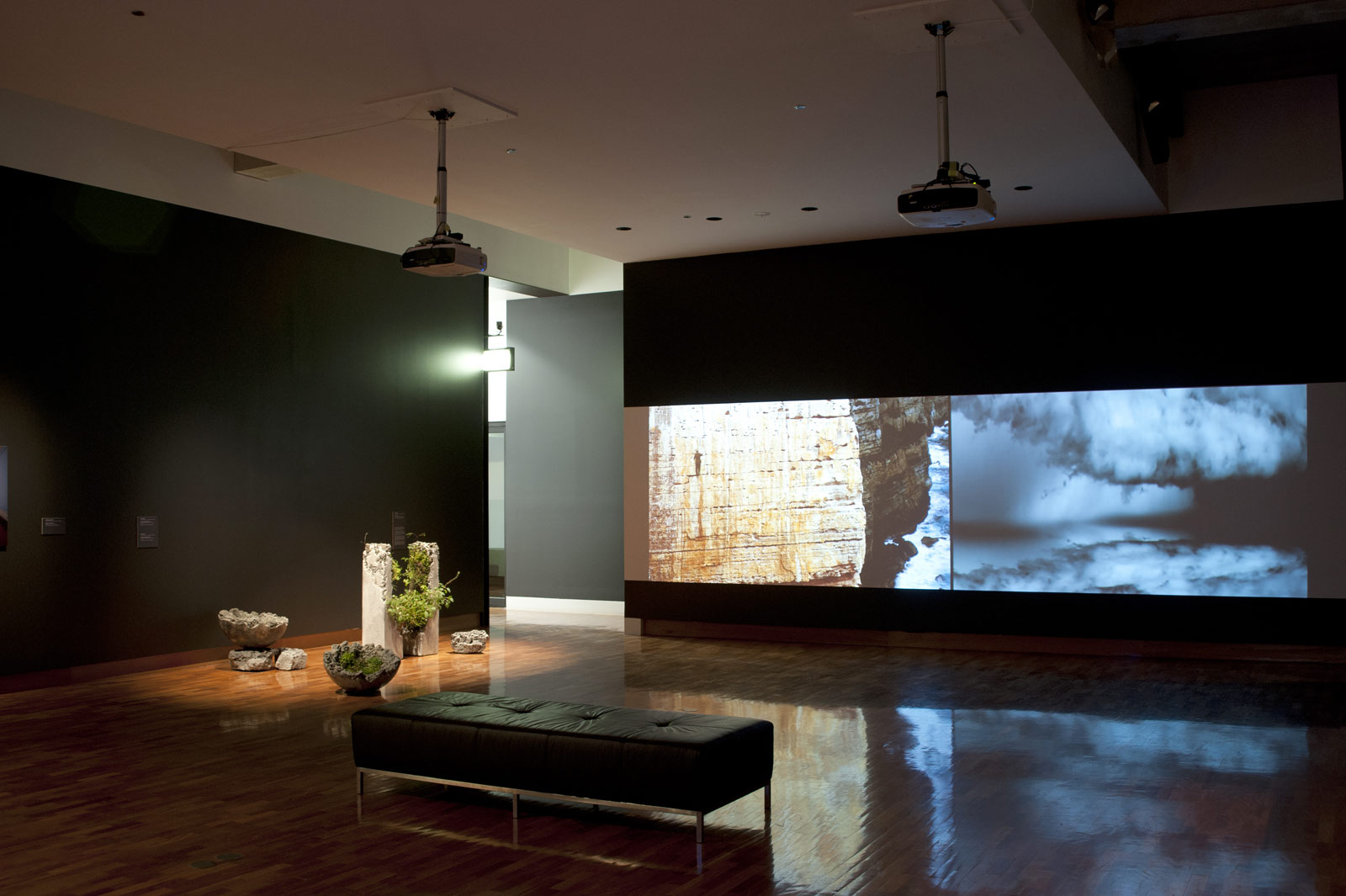
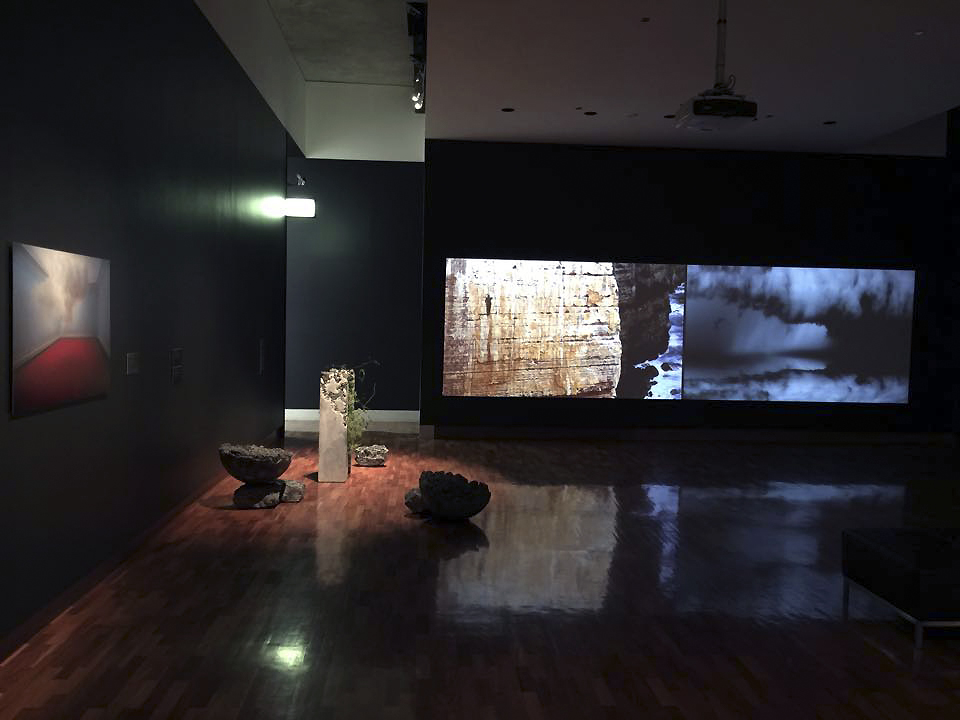


![David Hill (Scottish, 1802-1870) and Robert Adamson (Scottish, 1821-1848) 'The Gowan [Margaret and Mary Cavendish]' c. 1843-1848](https://artblart.com/wp-content/uploads/2015/06/david-hill-and-robert-adamson-the-gowan-margaret-and-mary-cavendish-c-1843-1848-web.jpg "David Hill (Scottish, 1802-1870) and Robert Adamson (Scottish, 1821-1848) 'The Gowan [Margaret and Mary Cavendish]' c. 1843-1848")






![John S. Johnston (American, c. 1839 - December 17, 1899) 'One of Dr Kane’s Men [possibly William Morton]' c. 1857](https://artblart.com/wp-content/uploads/2015/06/john-s-johnston-one-of-dr-kanes-men-possibly-william-morton-c-1857-web.jpg "John S. Johnston (American, c. 1839 - December 17, 1899) 'One of Dr Kane’s Men [possibly William Morton]' c. 1857")


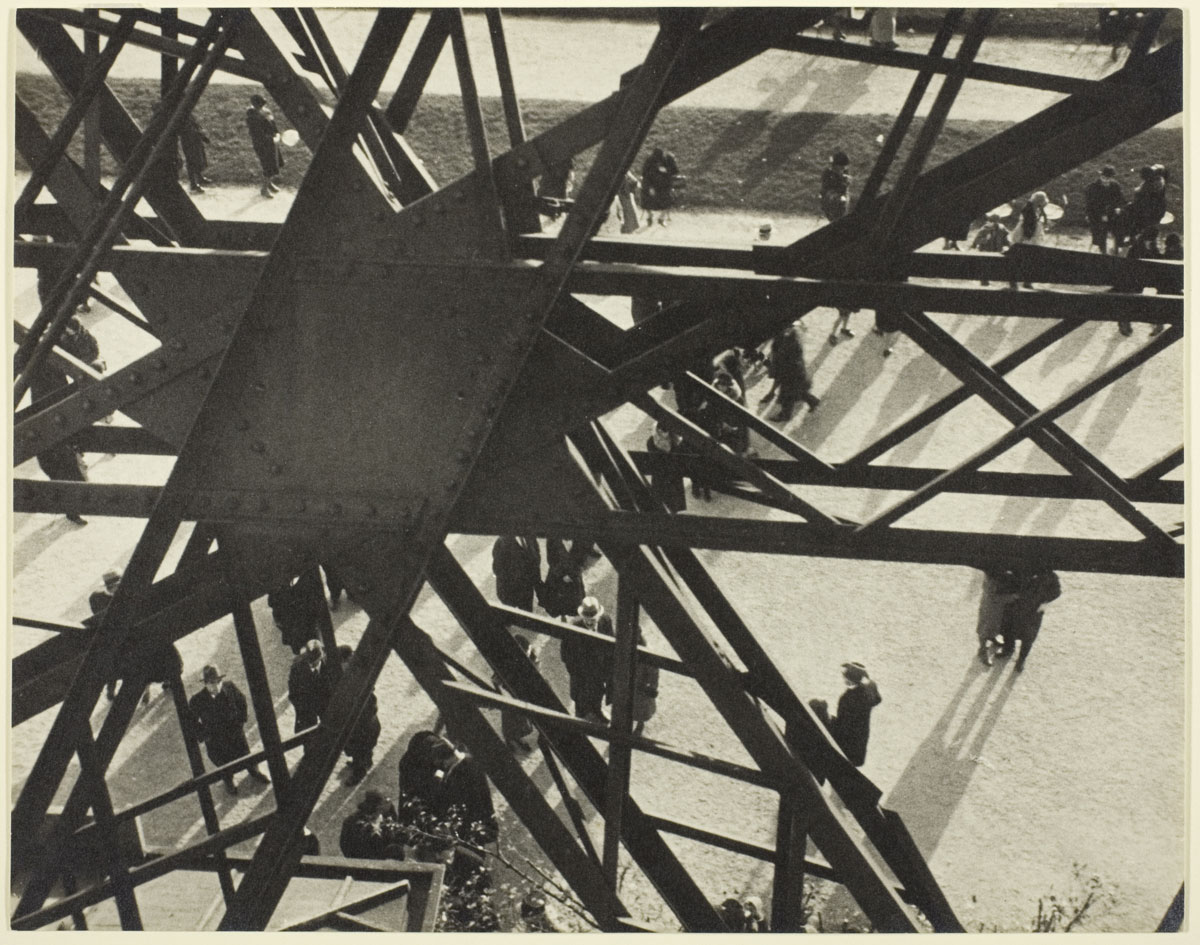
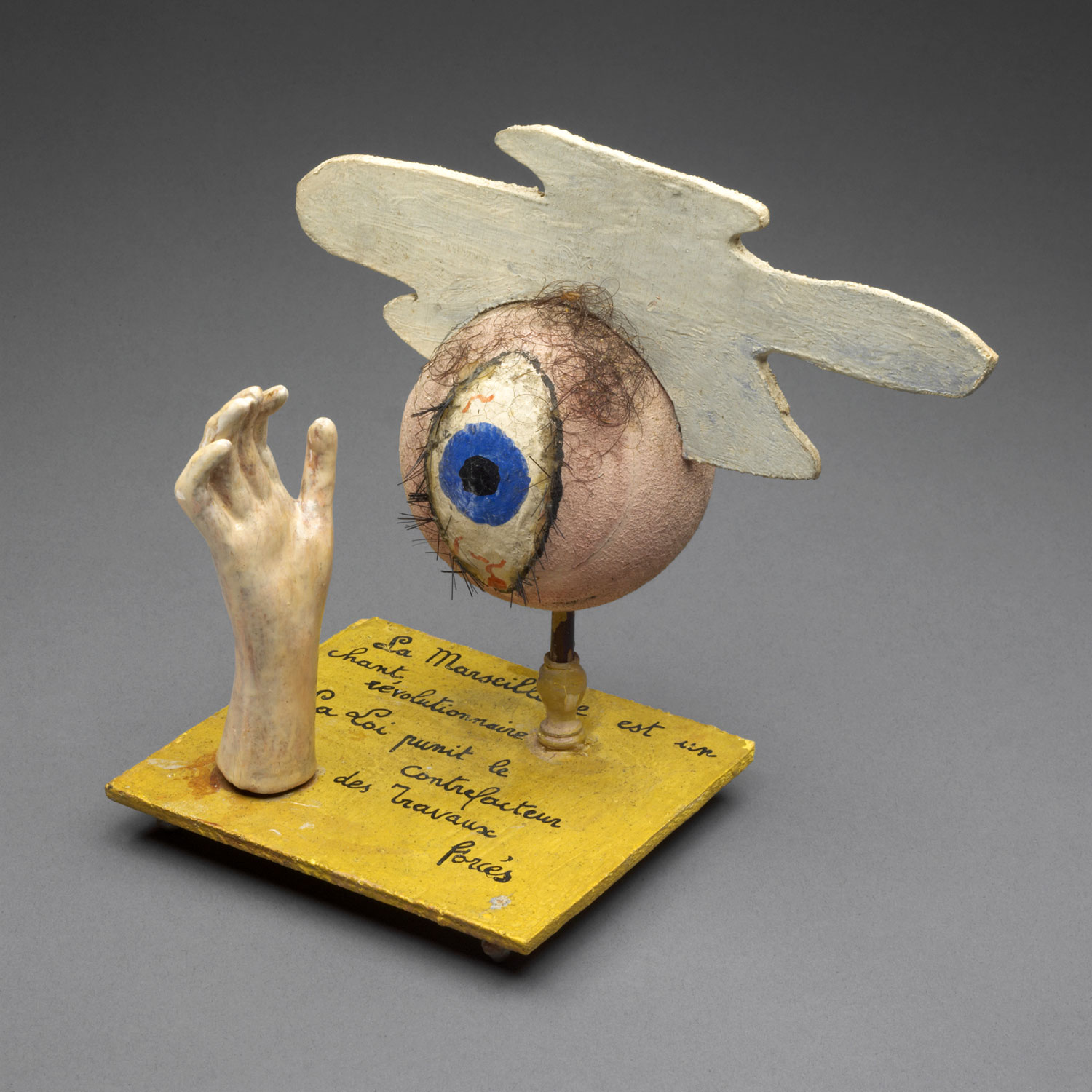


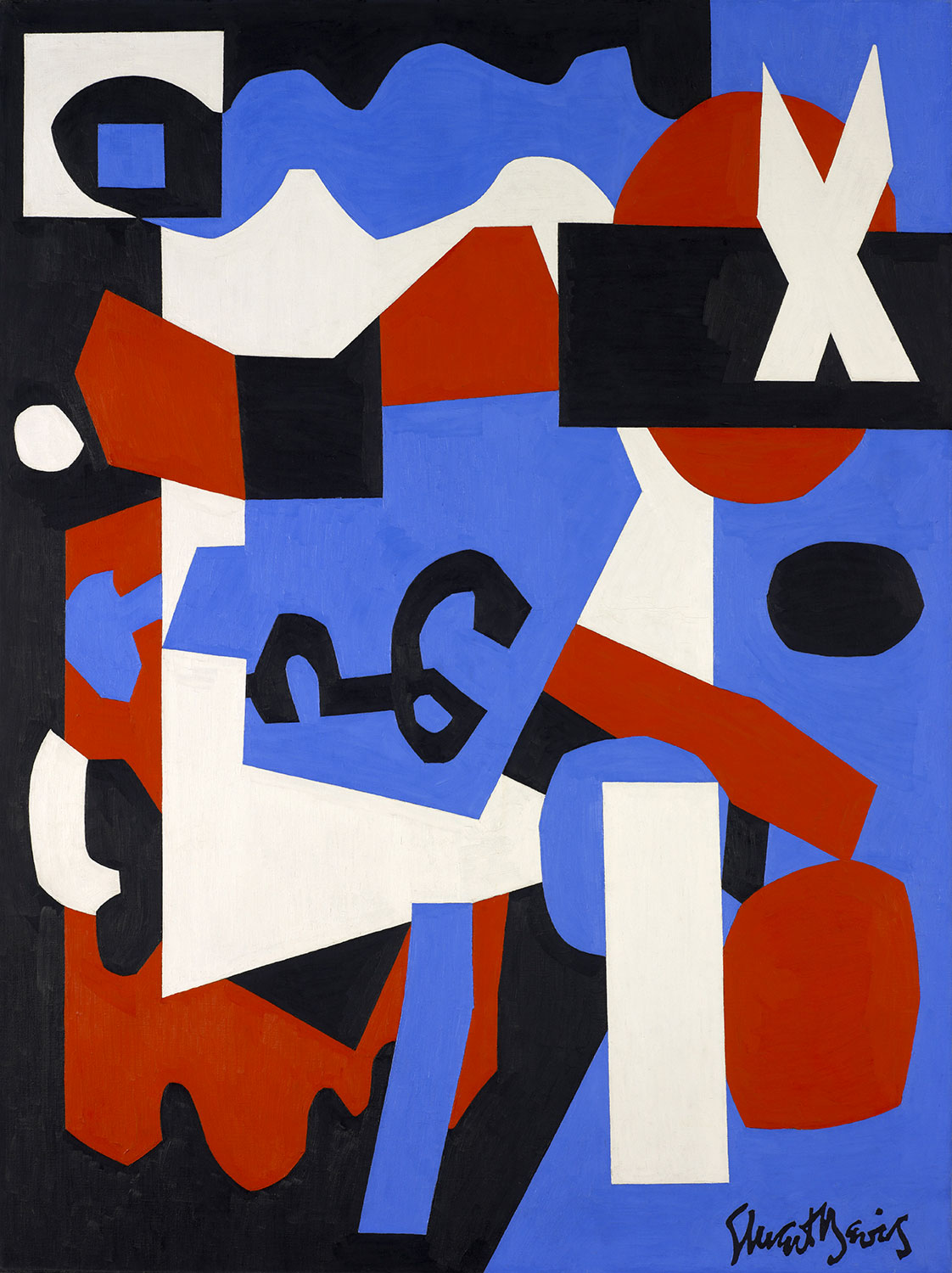


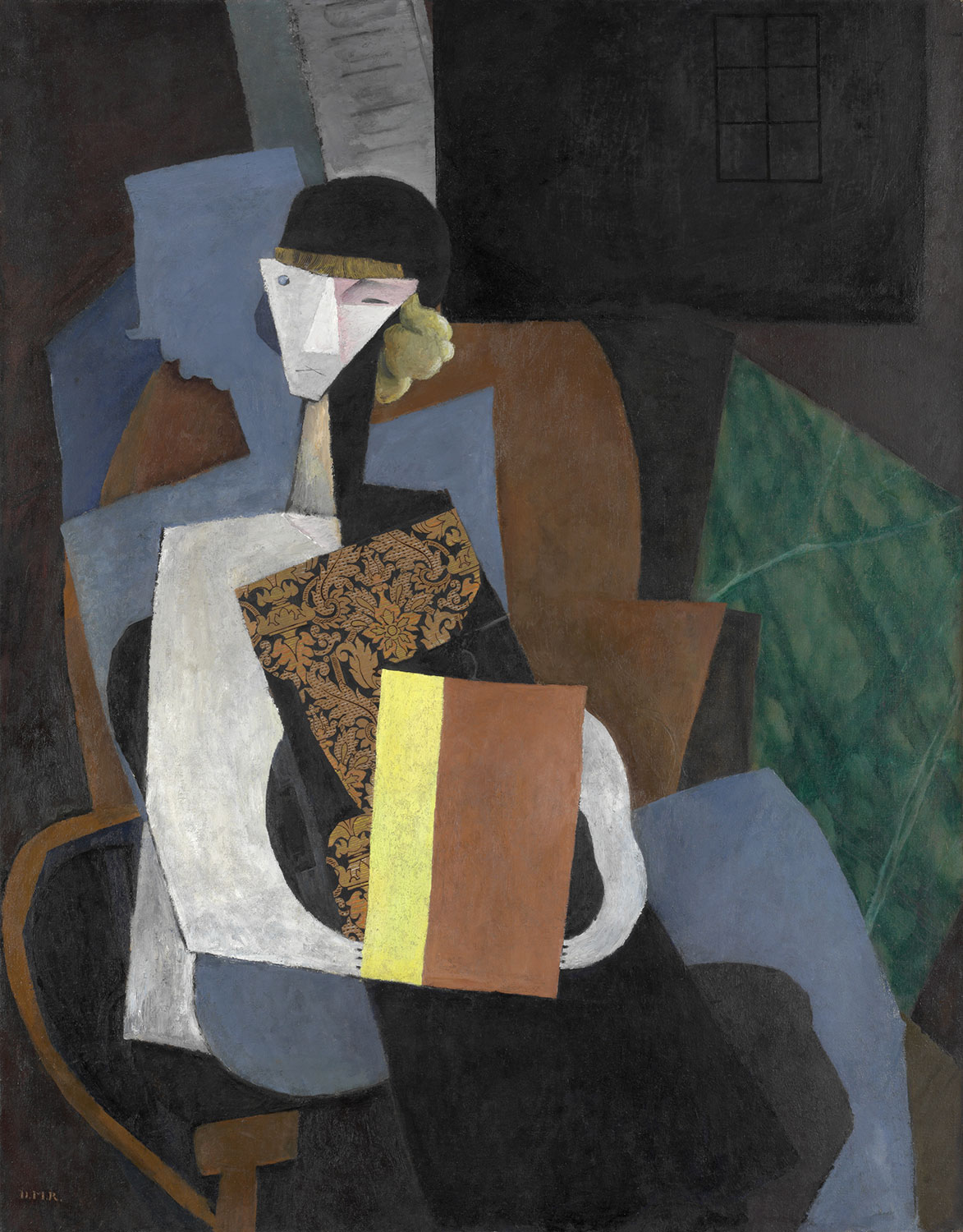

![Stanisław Ignacy Witkiewicz (Polish, 1885-1939) 'Self-Portrait, Zakopane [Broken Glass]' 1910](https://artblart.com/wp-content/uploads/2015/03/witkiewicz_self-portrait-zakopane-web.jpg "Stanisław Ignacy Witkiewicz (Polish, 1885-1939) 'Self-Portrait, Zakopane [Broken Glass]' 1910")

![Florence Henri (New York 1893 - Compiègne 1982) 'Composition abstraite [Still-life composition]' 1929](https://artblart.com/wp-content/uploads/2015/03/florencehenri_08_compositionabstraite-web.jpg "Florence Henri (New York 1893 - Compiègne 1982) 'Composition abstraite [Still-life composition]' 1929")

![Florence Henri (New York 1893 - Compiègne 1982) 'Mannequin de tailleur [Tailor's mannequin]' 1930-1931](https://artblart.com/wp-content/uploads/2015/03/florencehenri_05__mannequindetailleur-web.jpg "Florence Henri (New York 1893 - Compiègne 1982) 'Mannequin de tailleur [Tailor's mannequin]' 1930-1931")
![Florence Henri (New York 1893 - Compiègne 1982) 'Composition Nature morte [Still-life composition]' 1931](https://artblart.com/wp-content/uploads/2015/03/florencehenri_10_compositionnaturemorte-web.jpg "Florence Henri (New York 1893 - Compiègne 1982) 'Composition Nature morte [Still-life composition]' 1931")
![Florence Henri (New York 1893 - Compiègne 1982) 'Pont [Bridge]' 1930-1935](https://artblart.com/wp-content/uploads/2015/03/florencehenri_21_pont-web.jpg "Florence Henri (New York 1893 - Compiègne 1982) 'Pont [Bridge]' 1930-1935")


![Florence Henri (New York 1893 - Compiègne 1982) 'Autoportrait [Self-portrait]' 1928](https://artblart.com/wp-content/uploads/2015/03/florencehenri_01_autoportrait-web.jpg "Florence Henri (New York 1893 - Compiègne 1982) 'Autoportrait [Self-portrait]' 1928")
![Florence Henri (New York 1893 - Compiègne 1982) 'Femme aux cartes [Woman with cards]' 1930](https://artblart.com/wp-content/uploads/2015/03/florencehenri_11_femmeauxcartes-web.jpg "Florence Henri (New York 1893 - Compiègne 1982) 'Femme aux cartes [Woman with cards]' 1930")

![Florence Henri (New York 1893 - Compiègne 1982) 'Fenêtre [Window]' 1929](https://artblart.com/wp-content/uploads/2015/03/florencehenri_06_fenetre-web.jpg "Florence Henri (New York 1893 - Compiègne 1982) 'Fenêtre [Window]' 1929")
![Florence Henri (New York 1893 - Compiègne 1982) 'Composition Nature morte [Still-life composition]' 1931](https://artblart.com/wp-content/uploads/2015/03/florencehenri_09_compositionnaturemorte-web.jpg "Florence Henri (New York 1893 - Compiègne 1982) 'Composition Nature morte [Still-life composition]' 1931")
![Florence Henri (New York 1893 - Compiègne 1982) 'Composition Nature morte [Still-life composition]' c. 1933](https://artblart.com/wp-content/uploads/2015/03/florencehenri_17_compositionnaturemorte-web.jpg "Florence Henri (New York 1893 - Compiègne 1982) 'Composition Nature morte [Still-life composition]' c. 1933")

![Florence Henri (New York 1893 - Compiègne 1982) 'Robert Delaunay' c. 1935 'Bretagne [Brittany]' 1937-1940](https://artblart.com/wp-content/uploads/2015/03/florencehenri_19_bretagne-web.jpg "Florence Henri (New York 1893 - Compiègne 1982) 'Robert Delaunay' c. 1935 'Bretagne [Brittany]' 1937-1940")
![Florence Henri (New York 1893 - Compiègne 1982) 'Structure (intérieur du Palais de l'Air, Paris, Exposition Universelle) [Structure (Interior of the Palais de l'Air, Paris, World's Fair)]' 1937](https://artblart.com/wp-content/uploads/2015/03/florencehenri_20_structure-web.jpg "Florence Henri (New York 1893 - Compiègne 1982) 'Structure (intérieur du Palais de l'Air, Paris, Exposition Universelle) [Structure (Interior of the Palais de l'Air, Paris, World's Fair)]' 1937")
![Florence Henri (New York 1893 - Compiègne 1982) 'Autoportrait [Self-portrait]' 1938](https://artblart.com/wp-content/uploads/2015/03/florencehenri_18_autoportrait-web.jpg "Florence Henri (New York 1893 - Compiègne 1982) 'Autoportrait [Self-portrait]' 1938")
![Francis Bedford (English, 1815-1894) (photographer) 'South West View of the Parthenon [on the Acropolis, Athens, Greece]' 31 May 1862 from the exhibition 'Cairo to Constantinople: Early Photographs of the Middle East' at The Queen's Gallery, Buckingham Palace, London, November 2014 - February 2015](https://artblart.com/wp-content/uploads/2015/02/south-west-view-of-the-parthenon-web.jpg "Francis Bedford (English, 1815-1894) (photographer) 'South West View of the Parthenon [on the Acropolis, Athens, Greece]' 31 May 1862 from the exhibition 'Cairo to Constantinople: Early Photographs of the Middle East' at The Queen's Gallery, Buckingham Palace, London, November 2014 - February 2015")
![Francis Bedford (English, 1815-1894) (photographer) 'Portions of the Frieze of the Parthenon [Athens, Greece]' 31 May 1862 from the exhibition 'Cairo to Constantinople: Early Photographs of the Middle East' at The Queen's Gallery, Buckingham Palace, London, November 2014 - February 2015](https://artblart.com/wp-content/uploads/2015/02/portions-of-the-frieze-of-the-parthenon-web.jpg "Francis Bedford (English, 1815-1894) (photographer) 'Portions of the Frieze of the Parthenon [Athens, Greece]' 31 May 1862 from the exhibition 'Cairo to Constantinople: Early Photographs of the Middle East' at The Queen's Gallery, Buckingham Palace, London, November 2014 - February 2015")
![Francis Bedford (English, 1815-1894) (photographer) 'The Caryatid porch of the Erechtheum [Athens, Greece]' 30 May 1862](https://artblart.com/wp-content/uploads/2015/02/the-caryatid-porch-of-the-erechtheum-web.jpg "Francis Bedford (English, 1815-1894) (photographer) 'The Caryatid porch of the Erechtheum [Athens, Greece]' 30 May 1862")
![Francis Bedford (English, 1815-1894) (photographer) 'Acropolis and Temple of Jupiter Olympus [Olympieion, Athens]' 31 May 1862](https://artblart.com/wp-content/uploads/2015/02/acropolis-and-temple-of-jupiter-olympus-web.jpg "Francis Bedford (English, 1815-1894) (photographer) 'Acropolis and Temple of Jupiter Olympus [Olympieion, Athens]' 31 May 1862")
![Francis Bedford (English, 1815-1894) (photographer) 'The Temple of Jupiter from the north west [Baalbek, Lebanon]' 3 May 1862](https://artblart.com/wp-content/uploads/2015/02/the-temple-of-jupiter-web.jpg "Francis Bedford (English, 1815-1894) (photographer) 'The Temple of Jupiter from the north west [Baalbek, Lebanon]' 3 May 1862")
![Francis Bedford (English, 1815-1894) (photographer) 'The Temple of the Sun and Temple of Jupiter [Baalbek, Lebanon]' 4 May 1862](https://artblart.com/wp-content/uploads/2015/02/the-temple-of-the-sun-web.jpg "Francis Bedford (English, 1815-1894) (photographer) 'The Temple of the Sun and Temple of Jupiter [Baalbek, Lebanon]' 4 May 1862")
![Francis Bedford (English, 1815-1894) (photographer) 'The Colossi on the plain of Thebes [Colossi of Memnon]' 17 Mar 1862](https://artblart.com/wp-content/uploads/2015/02/the-colossi-on-the-plain-of-thebes-web.jpg "Francis Bedford (English, 1815-1894) (photographer) 'The Colossi on the plain of Thebes [Colossi of Memnon]' 17 Mar 1862")

![Joseph Albert (German, 1825-1886) (photographer) '[The Prince of Wales with Prince Louis of Hesse, and companions, in Munich, February 1862]' 1862](https://artblart.com/wp-content/uploads/2015/02/the-prince-of-wales-and-companions-web.jpg "Joseph Albert (German, 1825-1886) (photographer) '[The Prince of Wales with Prince Louis of Hesse, and companions, in Munich, February 1862]' 1862")
![Francis Bedford (English, 1815-1894) (photographer) 'View through the Great Gateway into the Grand Court of the Temple of Edfou [Temple of Horus, Edfu]' 14 Mar 1862](https://artblart.com/wp-content/uploads/2015/02/view-through-the-great-gateway-web.jpg "Francis Bedford (English, 1815-1894) (photographer) 'View through the Great Gateway into the Grand Court of the Temple of Edfou [Temple of Horus, Edfu]' 14 Mar 1862")
![Francis Bedford (English, 1815-1894) (photographer) 'The Great Propylon of the Temple at Edfou [Pylon of the Temple of Horus, Edfu]' 14 Mar 1862](https://artblart.com/wp-content/uploads/2015/02/the-great-propylon-of-the-temple-at-edfou-web.jpg "Francis Bedford (English, 1815-1894) (photographer) 'The Great Propylon of the Temple at Edfou [Pylon of the Temple of Horus, Edfu]' 14 Mar 1862")
![Francis Bedford (English, 1815-1894) (photographer) 'Tombs of the Memlooks at Cairo [Mausoleum and Khanqah of Emir Qawsun]' 25 Mar 1862](https://artblart.com/wp-content/uploads/2015/02/tombs-of-the-memlooks-at-cairo-web.jpg "Francis Bedford (English, 1815-1894) (photographer) 'Tombs of the Memlooks at Cairo [Mausoleum and Khanqah of Emir Qawsun]' 25 Mar 1862")
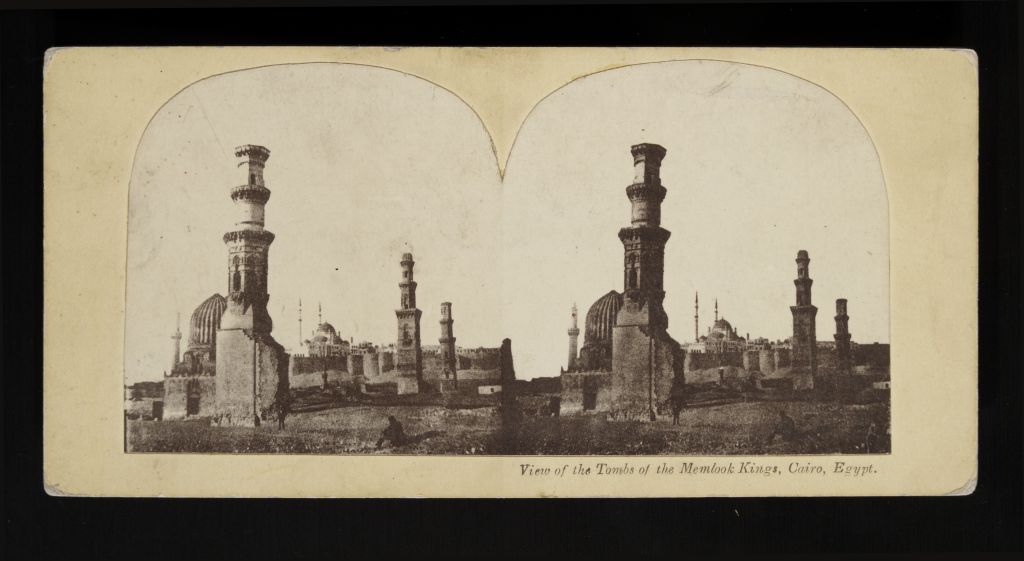
![Francis Bedford (English, 1815-1894) (photographer) 'Mosque of Mehemet Ali [Mosque of Muhammad Ali, Cairo]' 8 March 1862](https://artblart.com/wp-content/uploads/2015/02/mosque-of-mehemet-ali-web.jpg "Francis Bedford (English, 1815-1894) (photographer) 'Mosque of Mehemet Ali [Mosque of Muhammad Ali, Cairo]' 8 March 1862")
![Francis Bedford (English, 1815-1894) (photographer) 'Fountain in the Court of the Mosque of Mehemet Ali [Mosque of Muhammad Ali, Cairo]' 3 Mar 1862](https://artblart.com/wp-content/uploads/2015/02/fountain-in-the-court-of-the-mosque-web.jpg "Francis Bedford (English, 1815-1894) (photographer) 'Fountain in the Court of the Mosque of Mehemet Ali [Mosque of Muhammad Ali, Cairo]' 3 Mar 1862")
![Francis Bedford (English, 1815-1894) (photographer) 'Garden of Gethsemane [Jerusalem]' 2 Apr 1862](https://artblart.com/wp-content/uploads/2015/02/garden-of-gethsemane-web.jpg "Francis Bedford (English, 1815-1894) (photographer) 'Garden of Gethsemane [Jerusalem]' 2 Apr 1862")
![Francis Bedford (English, 1815-1894) (photographer) 'The Mount of Olives and Garden of Gethsemane [Jerusalem]' 2 Apr 1862](https://artblart.com/wp-content/uploads/2015/02/the-mount-of-olives-web.jpg "Francis Bedford (English, 1815-1894) (photographer) 'The Mount of Olives and Garden of Gethsemane [Jerusalem]' 2 Apr 1862")
![Francis Bedford (English, 1815-1894) (photographer) 'West Front of the Mosque of Omar [Dome of the Rock, Jerusalem]' 1 Apr 1862](https://artblart.com/wp-content/uploads/2015/02/west-front-of-the-mosque-of-omar-web.jpg "Francis Bedford (English, 1815-1894) (photographer) 'West Front of the Mosque of Omar [Dome of the Rock, Jerusalem]' 1 Apr 1862")
![Francis Bedford (English, 1815-1894) (photographer) 'Upper Bethoron [Beit Ur al-Foqa and the Valley of Ajalon]' 31 Mar 1862](https://artblart.com/wp-content/uploads/2015/02/upper-bethoron-web.jpg "Francis Bedford (English, 1815-1894) (photographer) 'Upper Bethoron [Beit Ur al-Foqa and the Valley of Ajalon]' 31 Mar 1862")
![Francis Bedford (English, 1815-1894) (photographer) 'Damascus - from a minaret in the Christian quarter [Syria]' 30 Apr 1862](https://artblart.com/wp-content/uploads/2015/02/damascus-web.jpg "Francis Bedford (English, 1815-1894) (photographer) 'Damascus - from a minaret in the Christian quarter [Syria]' 30 Apr 1862")
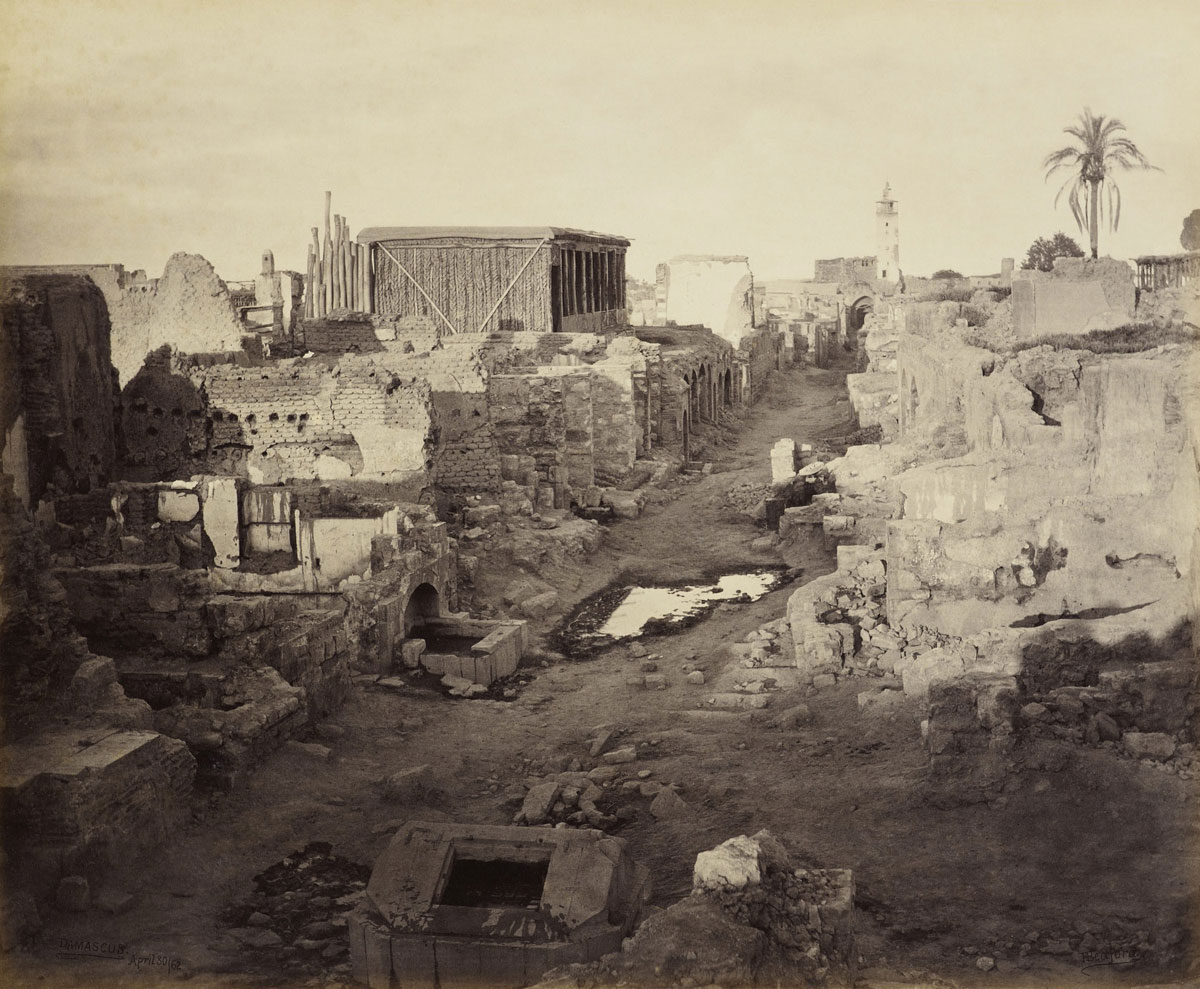
![Francis Bedford (English, 1815-1894) (photographer) 'Tower of Galata and part of Turkish burial ground [Istanbul, Turkey]' 21 May 1862](https://artblart.com/wp-content/uploads/2015/02/tower-of-galata-web.jpg "Francis Bedford (English, 1815-1894) (photographer) 'Tower of Galata and part of Turkish burial ground [Istanbul, Turkey]' 21 May 1862")
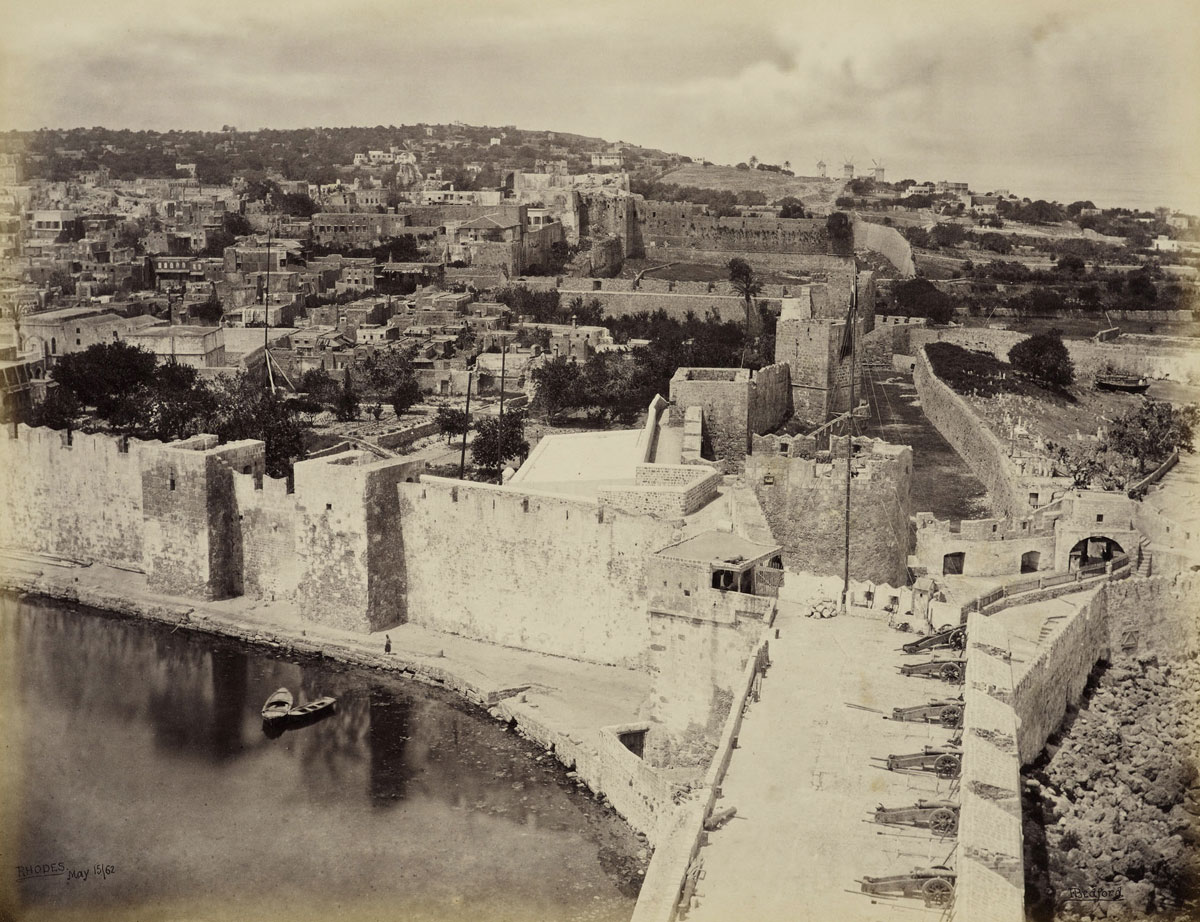


![Joseph Albert (English, 1825-1886) (photographer) '[The Prince of Wales and Prince Louis of Hesse, 11 February 1862]' Feb 1862](https://artblart.com/wp-content/uploads/2015/02/the-prince-of-wales-web.jpg "Joseph Albert (English, 1825-1886) (photographer) '[The Prince of Wales and Prince Louis of Hesse, 11 February 1862]' Feb 1862")


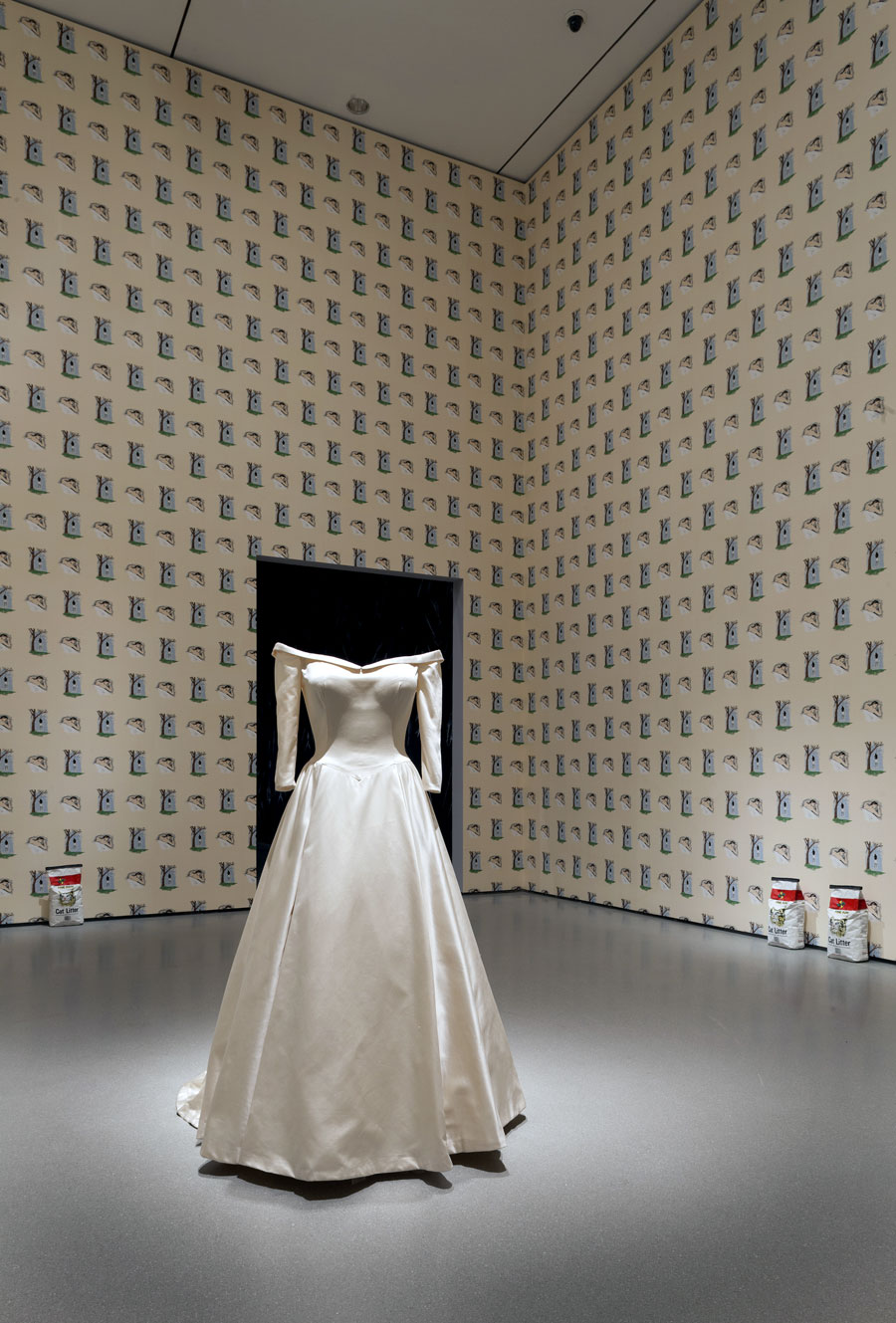






You must be logged in to post a comment.