As Minor White’s artist bookThe Temptation of St. Anthony is Mirrors (1948) is a visual love poem to Tom Murphy, so my artist book The Songs of Eternity (1994) is a visual love poem to my then long-time partner Paul. Both are exceedingly rare books: there are two copies of White’s book and there is one copy of mine.
The prints are even more beautiful in the flesh (so to speak).
Marcus
I am scanning my negatives made during the years 1991-1997 to preserve them in the form of an online archive as a process of active memory, so that the images are not lost forever. These photographs were images of my life and imagination at the time of their making, the ideas I was thinking about and the people and things that surrounded me.
Photographs are available from this series for purchase. As a guide, a vintage 8″ x 10″ silver gelatin print costs $700 plus tracked and insured shipping. For more information please see my store web page.
*PLEASE NOTE THIS POSTING CONTAINS ART PHOTOGRAPHS OF MALE NUDITY – IF YOU DO NOT LIKE PLEASE DO NOT LOOK, FAIR WARNING HAS BEEN GIVEN*
The Songs of Eternity
Images and poetry by M. Bunyan 1994
I stood at the edge of the precipice / and peered in as William Blake would say
The timepiece of eternity / swung hands through all the hours
so how naive I’ve been / not to see its powers
Did I deceive / or was I led
What a rude awakening / throughout my head
Many fabulous things were said /
many a doubt was in silence bled …
Nothing is certainty but the change – I was must be strong to attain
Depth, spirit, integrity and the rest
This affirmation I will confirm – not in conformity but in my own special way
Not this way nor that but my own path / that one day will whisper gently in my ear
Be strong, for we have much to say / when the sea becomes the sky.
Strong in your arms I become your scent
Lying in my bed the sheets of flowers enfold me
Trusting in my heart I know
Today Yesterday Tomorrow
The Songs of Eternity
Marcus Bunyan (Australian, b. 1958) Shroud 1994 From the series The Songs of Eternity Silver gelatin photograph
I stood at the edge of the precipice / and peered in as William Blake would say
Marcus Bunyan (Australian, b. 1958) Paul, shadows 1994 From the series The Songs of Eternity Silver gelatin photograph
The timepiece of eternity / swung hands through all the hours
Marcus Bunyan (Australian, b. 1958) Eternal timepiece 1994 From the series The Songs of Eternity Silver gelatin photograph
so how naive I’ve been / not to see its powers
Marcus Bunyan (Australian, b. 1958) Paul, head covered 1994 From the series The Songs of Eternity Silver gelatin photograph
Did I deceive / or was I led
Marcus Bunyan (Australian, b. 1958) Pendent #1 1994 From the series The Songs of Eternity Silver gelatin photograph
What a rude awakening / throughout my head
Marcus Bunyan (Australian, b. 1958) Untitled 1994 From the series The Songs of Eternity Silver gelatin photograph
Many fabulous things were said /
Marcus Bunyan (Australian, b. 1958) Untitled 1994 From the series The Songs of Eternity Silver gelatin photograph
many a doubt was in silence bled …
Marcus Bunyan (Australian, b. 1958) Suspension #1 1994 From the series The Songs of Eternity Silver gelatin photograph
Nothing is certainty but the change – I was must be strong to attain
Marcus Bunyan (Australian, b. 1958) Chrysalis 1994 From the series The Songs of Eternity Silver gelatin photograph
Depth, spirit, integrity and the rest
Marcus Bunyan (Australian, b. 1958) Décolleté 1994 From the series The Songs of Eternity Silver gelatin photograph
This affirmation I will confirm – not in conformity but in my own special way
Marcus Bunyan (Australian, b. 1958) Paul, doorway (for Georgia O’Keeffe) 1994 From the series The Songs of Eternity Silver gelatin photograph
Not this way nor that but my own path / that one day will whisper gently in my ear
Marcus Bunyan (Australian, b. 1958) Pendent #2 1994 From the series The Songs of Eternity Silver gelatin photograph
Be strong, for we have much to say / when the sea becomes the sky.
Marcus Bunyan (Australian, b. 1958) Shadow, wreath 1994 From the series The Songs of Eternity Silver gelatin photograph
Strong in your arms I become your scent
Marcus Bunyan (Australian, b. 1958) Madonna, male 1994 From the series The Songs of Eternity Silver gelatin photograph
Lying in my bed the sheets of flowers enfold me
Marcus Bunyan (Australian, b. 1958) Suspension #2 1994 From the series The Songs of Eternity Silver gelatin photograph
Trusting in my heart I know
Marcus Bunyan (Australian, b. 1958) Paul, wreath and hands 1994 From the series The Songs of Eternity Silver gelatin photograph
Today Yesterday Tomorrow
Marcus Bunyan (Australian, b. 1958) Untitled 1994 From the series The Songs of Eternity Silver gelatin photograph
Many thankx to Martin-Gropius-Bau, Berlin for allowing me to publish the art work in the posting. Please click on the photographs for a larger version of the image.
Marcus
“One can also pursue politics with art.
Everything that intervenes in the processes of life, and transforms them, is politics.”
Hans Richter
The oeuvre of Hans Richter (1888-1976) spanned nearly seven decades. Born in Berlin, he was one of the most significant champions of modernism. Berlin, Paris, Munich, Zurich, Moscow and New York were the major stations of his life. He was a painter and draughtsman, a Dadaist and a Constructivist, a film maker and a theoretician, as well as a great teacher. His great scroll collages remain icons of art history to this day. His work is characterised by a virtually unparalleled interpenetration of different artistic disciplines. The link between film and art was his major theme. Many of the most famous artists of the first half of the twentieth century were among his friends.
Hans Richter Ghosts Before Breakfast – 1929 German DaDa silent film
Hans Richter created the film Ghosts Before Breakfast (Vormittagsspuk) in 1928. This was a silent experimental avant-garde film and it was the fifth film that he had made. The film is considered to be one of the first surrealist films ever made. Richter’s interest in Dadaism is shown directly in this work as he challenges the art standards of the time by presenting a theme of obscurity and fantasy. Clocks, legs, ladders, hats, and people undergo total irrational happenings in unusual settings. Men have beards magically appear and disappear before the viewer’s eyes. All strange manner of things are brought together by associative logic. The flying hats perform this function by continually reappearing in the sequence of shots to tie the film together. Richter tries to increase the viewer’s knowledge of reality of showing them surrealist fantasy. He accomplished this through his use of rhythm, and his use of the camera.
Rhythm is a very important element in all of Richter’s works. In this film rhythm is shown in the use of movement in the characters. All of the characters seem to move at the same space distance from one another and at the same speed. This clarifies a sense of rhythm and intensifies a sense of stability within the frame. The same number of characters or items also seems to preserve rhythm… if there are three hats then in the next shot there are three men. The numbers do fluctuate, but a number would remain constant throughout a couple of shots. Shapes in the film also preserve rhythm. This can be seen in Richter’s bulls-eye scene, where the circles of the bulls-eye fill the screen and are spaced equally apart from one another. The target then breaks up and the circles the spread out in the frame to relocate in different areas continuing the rhythm.
The original score, attributed to Paul Hindemith, was destroyed in the Nazi purge of ‘degenerate art’.
Dreams That Money Can Buy 1947 (Fantasy Film) Hans Richter, Max Ernst, Marcel Duchamp, Man Ray
A young man discovers he can create dreams and sells them to others. The film as a whole is an exploration of the subconscious mind and the interplay between dreams and reality. This frame story serves as a link between several dream sequences created by leading visual artists. An attempt to bring the work of surrealist artists to a wider public. The avant-garde / surrealism / dadaism artists who contributed to the film include Max Ernst, Marcel Duchamp, Man Ray, Alexander Calder, Fernand Léger, and Richter himself.
Text from the YouTube website
Dreams That Money Can Buy excerpt – John Cage dream sequence
Joe/Narcissus (Jack Bittner) is an ordinary man who has recently signed a complicated lease on a room. As he wonders how to pay the rent, he discovers that he can see the contents of his mind unfolding whilst looking into his eyes in the mirror. He realises that he can apply his gift to others (“If you can look inside yourself, you can look inside anyone!”), and sets up a business in his room, selling tailor-made dreams to a variety of frustrated and neurotic clients. Each of the seven surreal dream sequences in the diegesis is in fact the creation of a contemporary avant-garde and / or surrealist artist (such as Marcel Duchamp, Alexander Calder, Max Ernst et al). Joe’s waiting room is full within minutes of his first day of operation, “the first instalment of the 2 billion clients” according to the male narrator in voiceover, whose voice is the only one we hear in the non-dream sequences.
Hans Richter (1888-1976) life’s work spans nearly 70 years. Born in Berlin, he is one of the most important protagonists of modernity. Berlin, Paris, Munich, Zurich, Moscow and New York are stages of his life. He was a painter and draftsman, Dadaist and Constructivist, filmmakers and theorists, and also a great teacher. His great scroll collages remain icons of art history to this day. His work is characterised by a virtually unparalleled interpenetration of different artistic disciplines. The link between film and art was his major theme. Many of the most famous artists of the first half of the 20th Century were his friends.
Hans Richter: Encounters from Dada to the Present is the title of one of his books, published in the 1970s. By that time in the West in postwar Germany there had been a rediscovery of this important artist, outlawed by the Nazis, whose work was shown in 1937 in the infamous exhibition “Degenerate Art”. For the first time since the 1980s, this big Berlin artist has a dedicated exhibition in his home town, with over 140 works, including his important films and about 50 works of those artists who were influenced by Hans Richter. Hans Richter worked with multimedia in an era when this term hadn’t even been invented. The movie he saw as part of Modern Art: “Film absolutely opens your eyes to what the camera is and what it can and wants to do.”
The Los Angeles County Museum of Art has developed the exhibition with the Martin-Gropius-Bau and the Centre Pompidou Metz. Timothy Benson has curated it. The program explains how Richter understood his cross-disciplinary work and what effect his work had on the art of the 20th century. In ten chapters, the exhibition describes the extensive work of the artist: Early Portraits / War and Revolution / Dada / Richter and Eggeling / Magazine “G” / Malevich and Richter / Film and Photo (FIFO) / Painting / Series / Confronting the Object. Important works of the avant-garde as well as films, photographs, and extensive documentary material make this exhibition an important artistic event.
Hans Richter was active in the broad field of the European avant-garde beginning in the 1910s. Not only art, but also the new medium of film interested him from the very start of his artistic career. In 1908 Hans Richter began his studies at the School of Fine Arts in Berlin. He switched to Weimar the following year. In 1910 he studied at the Académie Julian in Paris. Starting in 1913 he was associated with Herwarth Walden’s gallery Der Sturm and became acquainted with the artists of the “Brücke” and the “Blauer Reiter”. He distributed Marinetti’s “Futurist Manifesto” to hackney drivers in Berlin. In 1914 he also drew for Franz Pfemfert’s magazine Die Aktion and was called up to military service in the summer of that year. In 1916, having suffered severe wounds, he travelled to Zurich (“an island in a sea of fire, steel and blood”) where, together with Tristan Tzara, Hugo Ball and others, he founded the Dada movement, about which he would one day write: ” … it was a storm that broke over the art of that time just as the war broke over the peoples.”
In 1918 he met Viking Eggeling, with whom he conducted his first film experiments as precursors of “abstract film”. Both dreamt of discovering a universal language within film which could promote peace among human beings. In 1919 Richter served as chairman of the “Action Committee for Revolutionary Artists” in the Munich Soviet Republic. He was arrested shortly after the entry of Reichswehr troops. His mother Ida secured his release.
Richter’s first film, Rythmus 21 in 1921 [see below], was a scandal – the audience attempted to beat up the pianist. Moholy-Nagy regarded it as “an approach to the visual realisation of a light-space-continuum in the movement thesis”. The film, which is now recognised as a classic, also attracted the attention of Theo van Doesburg, who invited Richter to work on his magazine De Stijl. In 1922 Richter attended two famous congresses where many of the most significant avant-gardists of the era assembled: The Congress of International Progressive Artists in Düsseldorf and the International Congress of Constructivists and Dadaists – the Dada movement was dismissed on this occasion. In 1923 Richter and other artists founded the short-lived but celebrated Magazine G: Material zur Elementaren Gestaltung (G: Materials for Elemental Form-Creation) (G for “Gestaltung”, i.e. design), which sought to build a bridge between Dadaism and Constructivism. Prominent contributors included Arp, Malevich, El Lissitzky, Mies van der Rohe, Schwitters and van Doesburg.
In 1927 Richter worked with Malevich, who was then visiting Berlin for his first large exhibition, on a – naturally, “suprematist” – film, which, however, was never completed due to the political situation.
Text from Martin-Gropius-Bau website
Rhythmus 21 (1921) | MoMA
Hans Richter was convinced that he invented abstract cinema with Rhythmus 21. He didn’t, but he was an important early figure who quickly became one of the biggest names among the avant-garde, producing an impressive body of work that continuously pushed the boundaries of cinema for more than 40 years. Richter believed that film appealed more to the sense of sight than painting could, and he used his roots as a Cubist painter to explode the rectangle of the film frame.
The first in Richter’s series of animated “rhythm” shorts, Rhythmus 21 plays with form and depth, as squares and rectangles pulse and change size in comparison both to one another and to the film frame itself. Animated completely by hand, the work sets the stage for Richter’s subsequent explorations of the time-based medium of film – and for the burgeoning field of experimental animation and the artists who would come after him, such as Len Lye, Oskar Fischinger, and John and Faith Hubley. Additionally, Richter’s creative, radical use of light, shadow, and shape were a markedly different viewing experience for 1910s and ’20s audiences accustomed to seeing newsreels, serials, and narrative films, and whose exposure to animation would likely have been limited to nickelodeons and cartoons based on comic strips, like Gertie the Dinosaur. Richter embraced the Dadaist ethos of collaboration and worked with many Dada artists – most famously with Marcel Duchamp, Max Ernst, Fernand Léger, and Man Ray in Dreams That Money Can Buy – while inspiring younger experimental filmmakers like Shirley Clarke.
Text from the YouTube website
Hans Richter’s first truly surrealist film was Rhythmus 21. Richter broke from conventions of the time when rather than attempting to visually orchestrate formal patterns, he focused instead on the temporality of the cinematic viewing experience. He emphasised movement and the shifting relationship of form elements in time. His major creative breakthrough, in other words, was the discovery of cinematic rhythm…
For Richter, rhythm, “as the essence of emotional expression”, was connected to a Bergsonian life force:
Rhythm expresses something different from thought. The meaning of both is incommensurable. Rhythm cannot be explained completely by thought nor can thought be put in terms of rhythm, or converted or reproduced. They both find their connection and identity in common and universal human life, the life principle, from which they spring and upon which they can build further. (Richter, Hans. “Rhythm,” in Little Review, Winter 1926, p. 21)
Completed by using stop motion and forward and backward printing in addition to an animation table, the film consists of a continuous flow of rectangular and square shapes that “move” forward, backward, vertically, and horizontally across the screen (Gideon Bachmann and Jonas Mekas. “From Interviews With Hans Richter during the Last Ten Years,” in Film Culture, No. 31, Winter 1963-1964, p. 29). Syncopated by an uneven rhythm, forms grow, break apart and are fused together in a variety of configurations for just over three minutes (at silent speed). The constantly shifting forms render the spatial situation of the film ambivalent, an idea that is reinforced when Richter reverses the figure-background relationship by switching, on two occasions, from positive to negative film. In so doing, Richter draws attention to the flat rectangular surface of the screen, destroying the perspectival spatial illusion assumed to be integral to film’s photographic base, and emphasising instead the kinetic play of contrasts of position, proportion and light distribution. By restricting himself to the use of square shapes and thus simplifying his compositions, Richter was able to concentrate on the arrangement of the essential elements of cinema: movement, time and light. Disavowing the beauty of “form” for its own sake, Rhythmus ’21 instead expresses emotional content through the mutual interaction of forms moving in contrast and relation to one another. Nowhere is this more evident than in the final “crescendo” of the film, in which all of the disparate shapes of the film briefly coalesce into a Mondrian-like spatial grid before decomposing into a field of pure light.
Suchenski, Richard. “Hans Richter” on the Senses of Cinema website [Online] Cited 19/06/2014. Used under fair use conditions for the purposes of education and research
“Influenced by cubism and its search for structure, but not satisfied with what it offered, I found myself between 1913-1918 increasingly faced with the conflict of suppressing spontaneous expression in order to gain an objective understanding of a fundamental principle with which I could control the ‘heap of fragments’ inherited from the cubists. Thus I gradually lost interest in the subject – in any subject – and focused instead on the positive-negative (white-black) opposition, which at least gave me a working hypothesis whereby I could organise the relationship of one part of a painting to the other.”
Richter, Hans. “Easel-Scroll-Film,” in Magazine of Art, No. 45 (February 1952), p. 82.
In 1929 Richter curated the film section of the famous FiFo exhibition (Film und Foto), a milestone in the history of the cinematic and photographic arts. More than 1,000 photos were presented – curated by, among others, Edward Weston and Edward Steichen for the USA and El Lissitzky for the USSR. More than sixty silent films were shown, including works by Duchamp, Egeling, Léger, Man Ray and Chaplin. This important exhibition, initiated by the German Werkbund (which was founded in 1907), was also shown in the Martin-Gropius-Bau, which in those days was called “the former Museum of Applied Arts” – a fact that is rarely mentioned in current photographic histories. On this occasion, Richter published his first film book: Film Enemies of Today, Film Friends of Tomorrow.
That same year, the first Congress of Independent Film was held in the remote Swiss castle of “La Sarraz”: Hans Richter was invited along with Sergei Eisenstein, Bela Balazs, Walter Ruttmann and others. He made a film with Eisenstein, which has since been lost. The Congress is still regarded as the first festival dedicated solely to film. Back then, the still young art of film-making had to struggle for recognition. Also in 1929 the SA (“Sturmabteilung” or Nazi “Brown Shirts”) declares him the first time a “Kulturbolschewisten” – a “cultural Bolshevik”.
In 1930 he travelled to Moscow to make the film Metal. But objections by the Soviet government prevented its completion. In 1933, when the Nazis seized power and Richter was living in Moscow, storm troopers sacked his Berlin flat and made off with his art collection. Fearing for his life, he was soon forced to flee Moscow without a penny to his name. In the Netherlands he made advertising films for Philips. He also worked for a number of chemical companies that were eager to invest in film as an advertising medium. He sought permanent residency in France and Switzerland. In Switzerland, he and Anna Seghers cooperated on a script, and in 1939 Jean Renoir arranged for him to create a major film project in Paris. But the outbreak of war prevented this film as well.
When the Swiss Foreign Police ask him to leave the country he succeeds in 1941, with emigration to the United States. Hilla Rebay, artist and once a member of Ricther’s famous Berlin “November Group” is at this time advisor to the New York art patron Solomon Guggenheim. With his help they can implement their idea of a “Temple of Non-Objectivity” – the Museum of Non-Objective Painting (1939), later the Guggenheim. The museum provided Richter with the necessary invitation and a Jewish support fund for refugees sponsored his long journey. In 1942 Richter became a teacher for film – and later director – at the Institute of Film Techniques at the College of the City of New York. Until 1956 he trained students who were later counted among the great figures of American independent film, including Stan Brackhage, Shirley Clarke, Maya Deren and Jonas Mekas.
In 1940s America, after a fifteen-year pause, Richter began painting again. In 1943/44 he created his great scroll paintings and collages about the war: Stalingrad, Invasion and Liberation of Paris. After the war he made the episodic film Dreams That Money Can Buy, working alongside five of the most famous artists of the twentieth century: Léger, Ernst, Calder, Ray and Duchamp. In 1946 he presented his first great American art exhibition in Peggy Guggenheim’s Art of This Century gallery.
In the 1950s, Richter returned to Europe for the first time following his emigration to deliver lectures. Portions of his art collection, which he had left behind in Germany following his move to Moscow, were returned to him. Numerous exhibitions led to the rediscovery of Hans Richter’s works in Western Europe as well. He worked in Connecticut during the summers and spent his winters in Ascona near his artist friends. Richter experienced an extraordinarily prolific creative phase during which – after he set aside his painting utensils in the late 1960s – many works appeared using special collage techniques. In 1971 he became a member of the Berlin Academy of the Arts. By the time of his death in Switzerland in 1976, his work was shown and appreciated in many exhibitions in Western Europe. Now, for the first time in over thirty years, Hans Richter can be rediscovered in an exhibition from Los Angeles.
Stephen Dupont (Australian, b. 1967) Untitled #16 2010 Silver gelatin print and ink 20 x 16″ (51 x 40.5cm) / edition of 5 + 2 AP’s
This is a wonderful exhibition by Stephen Dupont at Edmund Pearce Gallery. Using a 4″ x 5″ Polaroid type 55 and striping away the emulsion, Dupont is left with a fine grain large format black and white negative (which he can use in an enlarger) with the “Polaroid frame look”, which he incorporates into the silver gelatin prints.1
Most of the photographs are glorious, notably the ones where Dupont pulls back from his subject to reveal the context of the sitter (much like taking the mat off a Daguerreotype to reveal more of the studio hidden underneath). I particularly like where you can see two hands poking over the top of the white sheet hiding the person behind (see Untitled #08 2010, below). The spontaneity and improvisation of this act is very appealing.
As Dupont observes this allows him “to reveal the audience gathering and the environment around the sheet. This is meant to give the viewer a real sense of place and time, and a window onto the streets of Haridwar.” This technique gives the images real presence, they fairly “sing” to me from the gallery wall. And then! to surround the silver with hand printed Indian textile stamps in red ink… these images are really something.
Dupont’s incisiveness at the coal face of the pictorial plane is also exemplary. Notice the construction of Untitled #14 (2010, below), and observe the arms of the protagonists. An arm is raised aloft mirroring the arm of the swami in the photograph behind and also the supporting pole of the tent at top right. His other arm points to the earth but this is crossed by the arm of an out of focus man at left, which forms a strong diagonal intervention into the image as he reaches out. The money and mobile phone, at bottom left, add to the incongruity of the scene.
I am less enamoured with Dupont’s riff on Richard Avedon’s contextless background portraits. They don’t really possess the power or presence of the photographs mentioned above or of Avedon’s portraits from the series In The American West. I would have also liked to have seen the field journal (the small images at the bottom of the posting) in the exhibition. It would have been fascinating to read the text and view the other textile stamp designs. Finally, a couple of prints at a much larger size would have been good to see, to break the regularity of the series.
Having said that, you really have to see these images in the flesh for they look so much better than when reproduced online. The red is luminous and it is a joy to see good silver gelatin prints instead of so-so digital failures (Polly Borland I hope your ears are burning). This exhibition is a perfect example of what Bill Henson was talking about in his recently curated exhibition Wildcards: Bill Henson shuffles the deck at Monash Gallery of Art (MGA) where he states that his interest “is in the photograph as an object, in the physical presence of the print or whatever kind of technology is being used to make it…”2 where the images appeal not just to the eye but to the whole body, “because photographs are first and foremost objects, their size, shape grouping and texture are as important as the images they’re recording.”3
These photographs have, as Henson notes of some photographs, “the ability to suggest some other thing and that’s what draws you in.”4 You stand in front of the best of these images and contemplate them with a sense of wonder, for they suggest to the viewer – through the hand and eye of the artist in the analogue process, through the hand of the artist when applying the wood block printing which was made with much spontaneity and feeling – other worlds of which we know very little brought close to our imagination.
Through their inherent textures and tonalities, their physical presence, there is a sense of the people who populate that place, but more than that, there is a sense of our own fragility and mortality. A feeling of anOther existence for our life if we had been born into such worlds.
That is what makes these images so compelling.
Dr Marcus Bunyan
Footnotes
1/ According to Wikipedia, “Type 55 negatives are the famous source of the “Polaroid frame look” … the Polaroid reagent / gel is squeezed between the negative and positive. Some of the reagent is trapped underneath the onion-skin-like frame that crops the print into a perfect 4 x 5 image. This reagent however creates an impression of that frame on the negative, which is not protected. The result is a perfect negative, but with imperfect frame-like image surrounded 3 of the four sides, while the 4th side shows the impression of the connective mesh that controls aspects of the Polaroid packet’s sleeve functionality.”
2/ Interview with Bill Henson by Toby Fehily posted 01 Feb 2014 on the Art Guide Australia website [Online] Cited 18/02/2014. No longer available online
Many thankx to Edmund Pearce Gallery for allowing me to publish the photographs in the posting. Please click on the photographs for a larger version of the image.
Stephen Dupont (Australian, b. 1967) Untitled #08 2010 Silver gelatin print and ink 20 x 16″ (51 x 40.5cm) / edition of 5 + 2 AP’s
Stephen Dupont (Australian, b. 1967) Untitled #14 2010 Silver gelatin print and ink 20 x 16″ (51 x 40.5cm) / edition of 5 + 2 AP’s
Stephen Dupont (Australian, b. 1967) Untitled #04 2010 Silver gelatin print and ink 20 x 16″ (51 x 40.5cm) / edition of 5 + 2 AP’s
Edmund Pearce is excited to present a solo exhibition by legendary Australian photographer Stephen Dupont, entitled The White Sheet Series Number 1. This new series was shot during India’s most important Hindu Festival, Kumbh Mela, and features portraits of pilgrims and visitors combined with hand printed Indian textile stamps.
Stephen Dupont has produced a remarkable body of visual work throughout his career; hauntingly beautiful photographs of fragile cultures and marginalised peoples. He captures the human dignity of his subjects with great intimacy and his images have received international acclaim for their artistic integrity and valuable insight into the people, culture and communities that have existed for hundreds of years, yet are fast disappearing from our world.
Mark Feeney of the Boston Globe states, “Inevitably, Dupont is an outsider; yet he’s an engaged outsider, full of calm, clear-eyed curiosity. There’s not just a sense of place in his work but also something that matters even more: a sense of the people who populate that place.”
Stephen’s work has earned him a number of photography’s most prestigious prizes, including a Robert Capa Gold Medal citation from the Overseas Press Club of America. His work has featured in influential publications such as The New Yorker, Aperture and The New York Times Magazine; and he has had major exhibitions in London, Paris, New York, Sydney, Canberra, Tokyo, and Shanghai. His photographic artist books and portfolios are held in numerous private collections and by prestigious institutions such as the National Gallery of Australia, the National Library of Australia, the British Library and the Library of Congress in Washington DC to name but a few.
Press release from the Edmund Pearce Gallery website
Stephen Dupont (Australian, b. 1967) Untitled #07 2010 Silver gelatin print and ink 20 x 16″ (51 x 40.5cm) / edition of 5 + 2 AP’s
Stephen Dupont (Australian, b. 1967) Untitled #13 2010 Silver gelatin print and ink 20 x 16″ (51 x 40.5cm) / edition of 5 + 2 AP’s
Stephen Dupont (Australian, b. 1967) Untitled #12 2010 Silver gelatin print and ink 20 x 16″ (51 x 40.5cm) / edition of 5 + 2 AP’s
Stephen Dupont (Australian, b. 1967) Untitled #18 2010 Silver gelatin print and ink 20 x 16″ (51 x 40.5cm) / edition of 5 + 2 AP’s
Richard Avedon at work
Richard Avedon (American, 1923-2004) Bill Curry, drifter, Interstate 40, Yukon, Oklahoma, 6/16/80 1980 From In the American West, 1979-1984
This body of work is a selection of portraits I made in 2010 at India’s most important Hindu festival called the Kumbh Mela. In one of four locations every four years Hindu pilgrims and visitors descend into the holy waters of the Ganges River to purify the soul in a spiritual ritual considered the largest peaceful gathering in the world. The photographs were taken in Haridwar of pilgrims and sadhus I chose randomly during that festival.
Inspired by an earlier series I made of anonymous portraits of Afghans in Kabul titled Axe Me Biggie, or Mr Take My Picture, but instead of an existing Afghan outdoor studio backdrop I chose the white sheet this time for its purity and simplicity. My subjects were asked to simply stand and pose before my camera. I use a white bed sheet to create an outdoor studio that not only captures my subject but also allows me to reveal the audience gathering and the environment around the sheet. This is meant to give the viewer a real sense of place and time, and a window onto the streets of Haridwar. Had I used the backdrop in a conventional way, to solely isolate a person, you’d have the impression that they were taken anywhere – New York, Sydney, or in a studio. This process is a creative choice and allows me with some control over my sitter but brings with it the spontaneity and surprise of what may take place around the zone I am working in: the gaze of someone holding the sheet that has no idea they are in the frame, or a hand holding the sheet or something else that crops up in front or behind. In the end my portraits are environmental or even landscapes.
Over many years of travel throughout India I have been collecting textile stamps and I decided to use them on my photographs. The research and experiments started in my field journal and then to the final hand printed images in this show. I wanted to create a relationship with Indian design and cloth, the Polaroid borders and the people in my pictures. Much like my photographic practice here the wood block printing was made with much spontaneity and feeling. The photographs have been handcrafted by Chris Reid at Blanco Negro using warmtone paper and processed in a specialised developer for unique tonality.
The von Gloeden is stunning and some of the paintings are glorious: the muscularity / blood red colour in Falguière by Lutteurs d’Alexandre (1875, below); the beauty of Ángel Zárraga’s Votive Offering (Saint Sebastian) (1912, below); the sheer nakedness and earthiness of the Freud; and the colour, form and (homo)eroticism of The Bath by Paul Cadmus (1951, below), with their pert buttocks and hands washing suggestively.
But there is nothing too outrageous here. Heaven forbid!
After all, this is the male nude as curatorial commodity.
Dr Marcus Bunyan
Many thankx to the Musée d’Orsay for allowing me to publish the art work in the posting. Please click on the photographs for a larger version of the image.
“The high brow peep show is divided thematically into depictions of religion, mythology, athleticism, homosexuality, and shifting notions of manliness. Wandering the Musee’s grand halls you will see rippling Greco-Roman Apollonian gods, Egon Schiele’s finely rendered, debauched self portraits and David LaChapelle’s 90s macho-kitsch celebs. Edward Munch’s hazy, pastel bathers mingle with Lucian Freud’s grossly erotic fleshy animals and reverent depictions of Christ and Saint Sebastian, showing the many ways to interpret a body sans outerwear.”
Priscilla Frank. “‘Masculine/Masculine’ Explores Male Nude Throughout Art History And We Couldn’t Be Happier (NSFW),” on the Huffpost Arts and Culture website, 26/09/2013 updated 07/12/2017 [Online] Cited 02/01/2021. Used under fair use conditions for the purposes of education and research
In the late 19th century, Belgium was one of the great centres of European symbolism. Jean Delville’s paintings and writings expressed the most esoteric side of the movement. In the mid-1880s, Delville’s discovery of the symbolist milieu in Paris and the friendships he made there led him to break with the naturalism inherited from his academic training. Thus his friendship with the Sâr Péladan and his regular attendance at the Salon of the Rose+Croix, testified to his belief in an intellectual art which focused on evocation more than description.
School of Plato, a decoration intended for the Sorbonne but never installed there, is a striking work in many respects. Its monumental size and its ambitious message – an interpretation of classical philosophy seen through the prism of the symbolist ideal – set it apart. The manifesto makes no secret of its references, from Raphael to Puvis de Chavannes, but envelops them in the strange charm of a deliberately unreal colour range. The ambiguity emanating from this fin de siècle Mannerism knowingly blurs the borderline between purity and sensuality.
In this work the arrangement of the bathers is brilliantly orchestrated – a complex grouping of foregrounded figures is contrapuntally arranged against another group occupying the middle ground. There is a strong classical echo to the triangular, pedimental architecture of these four foregrounded figures, anchoring the work compositionally. The effect is to create an architecturally interlocking circle of figures surrounding a group of bathers in the water or sitting on the banks. The corporeal presence of the foregrounded figures and the luminosity of their skin tones are echoed in the volumetric forms of the cumulus clouds that loom in the background. We see Cézanne’s technical confidence in the way the terrain has been flattened and the treescape simplified. He uses trees here not for their anecdotal fidelity, but to anchor the composition at key points.
There is an undeniable sense of ritual in this work. Some commentators interpret the scene as baptismal – Cézanne became a devout catholic in 1890 – with the figure at left pouring water over the head of a partially submerged bather to his right. But it is also clear here that Cézanne mixes the sacred with the profane. There is a celebratory, Arcadian purity which finds its mirror in the compositional structure as a whole, whether it be the way in which light reflects off the facets of the bodies or in which it is refracted off the looming cloud masses. A paganistic, sensual exuberance informs the way in which the figures circle the bathers in the water, which Henri Matisse’s famous The dance 1910 will later recall. (Matisse was a great admirer of Cézanne’s work and owned a number of his paintings.) And it is probably no coincidence that the ‘attendant’ holds a luminous, vulva-shaped towel at the very centre of the composition. Grammatically, the title Baigneurs does not preclude the possibility that some of the participants may be female – the seated figure who is, significantly, adjacent to the towel, appears to be clearly female, for example. Bathers, then, is redolent with meaning. This is a powerfully multivalent work, and along with the later The large bathers paintings of 1894-1905 and 1900-1905, is considered to be one of Cézanne’s great masterpieces.
Mark Henshaw
Text from the National Gallery of Canberra website [Online] Cited 02/01/2021
This red/pink monochrome that characterises The Adolescents first appeared after Picasso’s visit to Gosol with his partner Fernande. The earth in this village in the Catalan Pyrenees was done in an unusual ochre colour that Picasso included in his “Rose Period” (1904-1906). Two nude figures, outlined and modelled on a monochrome background, give the image a sculptural and classical character. The poses are hieratic: the young man crosses his arms above his head, while the young woman, or androgynous adolescent, balances a pitcher on her head in a timeless pose. Jean Cassou highlighted the Mediterranean character of this brief phase in Picasso’s art, and its relationship with the art of Maillol (1861-1944). Undulating lines can be made out below the legs of the two figures. This in fact is the sketch from another composition intended to be in horizontal format, but which the artist chose to erase. Paul Guillaume bought this beautiful painting in 1930. It came from the art dealer Ambroise Vollard (1866-1939). The “pink classicism” of this painting seems to anticipate the period after 1906 of the “return to order”, which characterised Picasso’s work in the 1920s, and which corresponds with other paintings in the Orangerie like the large Bathers of the 1920s.
Provenance: Ambroise Vollard, Paris; Paul Guillaume (1930); Domenica Walter
Text from the Musée de l’Orangerie website [Online] Cited 08/01/2021
Auguste Rodin (French, 1840-1917) The Age of Bronze 1875-1876 Bronze H. 180.5cm ; W. 68.5cm ; D. 54.5cm
Made in Brussels, this figure, one of Rodin’s most famous works, attests to the sculptor’s masterly skill and his attention to living nature that informs the pose and the modelling. A young Belgian soldier, Auguste Ney,was the model for this statue devoid of any element that would shed light on the subject’s identity. The untitled work was exhibited at the Cercle Artistique, Brussels, in 1877, then, entitled The Age of Bronze, at the Salon in Paris, where it caused a scandal.
Also known as The Awakening Man or The Vanquished One, the statue recalls one of the early ages of mankind. There was originally a spear in the left hand, as is shown in a photograph by Gaudenzio Marconi, but Rodin decided to suppress the weapon so as to free the arm of any attribute and infuse the gesture with a new liberality.
Accused of having used a life cast of his sitter, when the statue was shown in Paris, Rodin had to prove that the quality of his sculpture’s modelling came from a thorough study of profiles, not from a life cast. His critics eventually recognised that the sculptor was innocent of any trickery. The scandal, however, did draw attention to Rodin and earned him the commission for The Gates of Hellin 1880.
Text from the Musée Rodin website [Online] Cited 08/01/2020. Used under fair use conditions for the purposes of education and research
While it has been quite natural for the female nude to be regularly exhibited, the male nude has not been accorded the same treatment. It is highly significant that until the show at the Leopold Museum in Vienna in the autumn of 2012, no exhibition had opted to take a fresh approach, over a long historical perspective, to the representation of the male nude. However, male nudity was for a long time, from the 17th to 19th centuries, the basis of traditional Academic art training and a key element in Western creative art. Therefore when presenting the exhibition Masculine/Masculine, the Musée d’Orsay, drawing on the wealth of its own collections (with several hitherto unknown sculptures) and on other French public collections, aims to take an interpretive, playful, sociological and philosophical approach to exploring all aspects and meanings of the male nude in art. Given that the 19th century took its inspiration from 18th century classical art, and that this influence still resonates today, the Musée d’Orsay is extending its traditional historical range in order to draw a continuous arc of creation through two centuries down to the present day. The exhibition will include the whole range of techniques: painting, sculpture, graphic arts and, of course, photography, which will have an equal place in the exhibition.
To convey the specifically masculine nature of the body, the exhibition, in preference to a dull chronological presentation, takes the visitor on a journey through a succession of thematic focuses, including the aesthetic canons inherited from Antiquity, their reinterpretation in the Neo-Classical, Symbolist and contemporary eras where the hero is increasingly glorified, the Realist fascination for truthful representation of the body, nudity as the body’s natural state, the suffering of the body and the expression of pain, and finally its eroticisation. The aim is to establish a genuine dialogue between different eras in order to reveal how certain artists have been prompted to reinterpret earlier works. In the mid 18th century, Winckelmann examined the legacy of the divine proporzioni of the body inherited from Antiquity, which, in spite of radical challenges, still apply today having mysteriously come down through the history of art as the accepted definition of beauty. From Jacques-Louis David to George Platt-Lynes, LaChapelle and Pierre et Gilles, and including Gustave Moreau, a whole series of connections is revealed, based around issues of power, censorship, modesty, the boundaries of public expectation and changes in social mores.
Winckelmann’s glorification of Greek beauty reveals an implicit carnal desire, relating to men as well as women, which certainly comes down through two centuries from the “Barbus” group and from David’s studio, to David Hockney and the film director James Bidgood. This sensibility also permeates the turn of the 19th and 20th centuries as it questions its own identity, as we see in the extraordinary painting École de Platon [School of Plato], inexplicably purchased by the French state in 1912 from the Belgian artist Delville. Similarly, the exhibition will reveal other visual and intellectual relationships through the works of artists as renowned as Georges de La Tour, Pierre Puget, Abilgaard, Paul Flandrin, Bouguereau, Hodler, Schiele, Munch, Picasso, Bacon, Mapplethorpe, Freud and Mueck, while lining up some surprises like the Mexican Angel Zarraga’s Saint Sébastien (Saint Sebastian), De Chirico’s Les Bains mystérieux (Mysterious Baths) and the erotica of Americans Charles Demuth and Paul Cadmus.
This autumn therefore, the Musée d’Orsay will invite the visitor to an exhibition that challenges the continuity of a theme that has always interested artists, through unexpected yet productive confrontations between the various revivals of the nude man in art.”
Why had there never been an exhibition dedicated to the male nude until Nackte Männer at the Leopold Museum in Vienna last year? In order to answer this question, the exhibition sets out to compare works of different eras and techniques, around great themes that have shaped the image of the male body for over two centuries.
We must distinguish above all between nudity and the nude: a body simply without clothes, that causes embarrassment with its lack of modesty, is different from the radiant vision of a body restructured and idealised by the artist. Although this distinction can be qualified, it highlights the positive, uninhibited approach to the nude in western art since the Classical Period.
Today, the nude essentially brings to mind a female body, the legacy of a 19th century that established it as an absolute and as the accepted object of male desire. Prior to this, however, the female body was regarded less favourably than its more structured, more muscular male counterpart. Since the Renaissance, the male nude had been accorded more importance: the man as a universal being became a synonym for Mankind, and his body was established as the ideal human form, as was already the case in Greco-Roman art. Examples of this interpretation abound in the Judeo-Christian cultural heritage: Adam existed before Eve, who was no more than his copy and the origin of sin. Most artists being male, they found an “ideal me” in the male nude, a magnified, narcissistic reflection of themselves. And yet, until the middle of the 20th century, the sexual organ was the source of a certain embarrassment, whether shrunken or well hidden beneath strategically placed drapery, thong or scabbard.
From the 17th century, training of the highest standard was organised for the most privileged artists. In sculpture and in history painting, the ultimate aim of this teaching was to master the representation of the male nude: this was central to the creative process, as the preparatory studies had to capture the articulation of the body as closely as possible, whether clothed or not, in the finished composition.
In France, pupils studied at the Académie Royale then at the Académie des Beaux-Arts, working from drawings, engravings, sculptures “in the round” and life models. Right up until the late 20th century, these models were exclusively male, for reasons of social morality, but also because the man was considered to have the archetypal human form. In order to be noble and worthy of artistic representation, and to appeal to all, this could not be the body of an ordinary man: the distinctive features of the model had to be tempered in order to elevate the subject.
Above all, the artists of Antiquity and of the Renaissance were considered to have established an ideal synthesis of the human body without being distracted by individual characteristics. For Winckelmann, the German 18th century aesthete, the ideal beauty of Greek statues could only be embodied by the male nude. But although it inspired numerous artists, the “noble simplicity and quiet grandeur” of Winckelmann’s gods was undermined by other interpretations of Classical art: the torment of Laocoon, a work from late Antiquity, can be seen in the work of the Danish painter Abildgaard, while David advocated a much more Roman masculinity. Even when challenged, reinterpreted and renewed by the 20th century avant-garde, the Classical male nude and its rich legacy remains an object of fascination right up to the inter-war years and up to the present day.
The concept and the word “hero” itself come from ancient Greece: whether a demigod or simply a mortal transcending his human condition to become an exemplum virtutis, he embodies an ideal. The admiration for Classical art and culture explains the ubiquity of the hero in Academic painting, particularly in subjects given to candidates of the Prix de Rome: great history painting thrived on the exploits of supermen in the most perfect bodies.
This connection between anatomy and heroic virtue, conveying noble and universal values, goes back to the Neo-Platonic concept linking beauty and goodness. The hero’s nudity has been so self-evident that the “heroic nude” has become the subject of a recurrent debate about the representation of great men, past or present, no matter how incongruous the result may appear.
Heroism is not a state, rather a means by which the strength of character of an exceptional being man is revealed: although Hercules’ strength is inseparable from his exploits, it was David’s cunning that overcame the powerful Goliath. In both cases they are endowed with a warrior’s strength, which was particularly valued by a 19th century thirsting for virility and patriotic assertion: more than ever, this was the ideal to be attained. We had to wait for the 20th century crisis of masculinity before we could see the renewal of the status of the increasingly contemporary hero, and the diversification of his physical characteristics. However, whether a star or a designer like Yves Saint-Laurent, or even the young men on the streets of Harlem painted by the American Kehinde Wiley, the evocative power of nudity remains.
The 20th century witnessed the start of a new way of looking at the human body where the focus was on medical aspects and hygiene, and this had a considerable impact on the concept of the artistic nude. Numerous physical education movements and gymnasia appeared. People were captivated by the figure of the “sportsman” and, as in the work of the painter Eugene Jansson, came to admire and covet the virile power of his body in action. This concept is realised in culturalism, the narcissistic admiration of a body that has become an object to be fashioned like an artwork in its own right. Modern man with his athletic morphology has become a new potential ideal: he embodies a beauty that invites comparison with Greco-Roman art.
Linked with the affirmation of national identity, the athlete has come to personify the brute force of the nation and an ability to defend the country in times of war. During the 1930s in the United States, the image of the athlete evolved in a distinctive way, highlighting the ordinary man as a mixture of physical strength and bravery. Totalitarian regimes, however, perverted the cult of the athlete in order to promote their own ideology: Germany linked it in a demiurgic way with the made-up concept of the “Aryan” race, while Mussolini’s government erected marble idols on the Stadio dei Marmi.
As he moves outside the established order, the mythological hero risks the anger of the gods and the jealousy of men. Although his passions, his moral shortcomings and occasionally his frailties stem from his human condition, he is happy to possess the perfect form of the gods: thus the artist and the spectator find expression of a perfect self. The great dramatic destinies thus give character to the compositions, and enable them to interpret a whole range of emotions from determination to despair, from hostility to eternal rest.
Although it is a platitude to say that feelings are expressed most accurately in the face – from the theorised and institutional drawings of Charles Le Brun to the “tête d’expression” competition at the Ecole des Beaux-Arts – one must not underestimate the key role of the body and the anatomy as vehicles for expressing emotion: certain formal choices even led to generally accepted conventions.
Mythology and the Homeric epic abound with stories of the ill-fated destinies and destructive passions of heroes, whose nudity is justified by its origins in ancient Greece: Joseph-Désiré Court displays the broken body of the ill-fated Hippolytus, a premonition of the transposition in the ancient world of Mort pour la patrie [Dying for The Fatherland] of Lecomte du Nouÿ.
Nude Veritas
The Realist aesthetic, which came to the fore in western art during the 19th century, had a dramatic effect on the representation of male nudity. The human body, represented as nature intended, was no longer seen from the decorous distance that characterised the idealised image of the nude, a goal to be achieved through Academic drawing exercises. In this context, where revealing the body was an affront to modesty – in the male-dominated society of the 19th century, the unclothed male appeared even more obscene and shocking than the unclothed female – the male nude gradually became less common as female figures proliferated.
This reversal did not mean, however, that naked men disappeared altogether: scientific study of the male nude, aided by new techniques such as the decomposition of movement through a series of photographs taken in rapid succession – chronophotography – brought advances in the study of anatomy and transformed the teaching of art students. From then on, it was less a case, for the most avant-garde artists, of striving to reproduce a canon of beauty inherited from the past, than of representing a body that retained the harmony of the model’s true characteristics.
The evocative power of the nude inspired artists like the Austrian Schiele to produce nude self portraits that revealed the existential torments of the artist. Invested at times with a Christ-like dimension, these depictions, moving beyond realism into introspection, continued to be produced right up to the 21st century, especially in photography.
The fascination for reality established in artistic circles in the mid 19th century prompted a thorough renewal of religious painting. Although resorting to the classical idealisation of the body seemed to be consistent with religious dogma, artists like Bonnat breathed fresh life into the genre by depicting the harsh truth of the physical condition of biblical figures.
This principle was already at work in Egalité devant la mort (Equality before Death), by Bouguereau, who, in his early work, in the final days of Romanticism, exploited the power of the image of an ordinary corpse. Rodin, far from enhancing the appearance of the novelist that he was invited to celebrate, sought to render Balzac’s corpulent physique with implacable accuracy, without diminishing his grandeur in any way.
The question is thus raised of art’s relationship to reality, a question Ron Mueck tackles in his work. And the strange effect brought about by a change of scale gives an intensity to the dead body of his father that echoes the dead figure in Bouguereau’s painting.
Including the naked body in a landscape was not a new challenge for 19th century artists. In many aspects, this was recurrent in large-scale history painting, and a demanding artistic exercise by which a painter’s technical mastery was judged. It was about making the relationship between the naked body and its setting as accurate as possible in terms of proportion, depth and light. Although Bazille’s Pêcheur à l’épervier [Fisherman with a Net] is one of the most successful attempts – in a contemporary context – at depicting a naked man in an atmospheric light that the Impressionists later took for their own, he nevertheless observed the principles of academic construction.
Masculine nudity in nature took another meaning as society was transformed through technical advances and urbanisation. Man was now seeking a communion with nature, that could reconcile him with the excesses and the sense of dislocation created by the modern world, while still conforming to the theories of good health advocating physical exercise and fresh air.
In pain
In allowing themselves to deviate from the classical norms, artists opened up new possibilities for a more expressive representation of a body in the throes of torment or pain. The decline of the Academic nude and of classical restraint explains this predilection for ordeals: Ixion’s for example, condemned by Zeus to be bound to an eternally spinning wheel of fire.
The writhing body can also express torment of a more psychological nature. The pain experienced by the male body naturally relates to the issues of power between men and women in contemporary society: the naked body can be demeaning and, in certain circumstances, likely to call into question virility and male domination. In this respect, Louise Bourgeois’ choice of a male figure for her Arch of Hysteria was not a random one.
The martyr can, nevertheless, inspire compositions other than the tortured body: the death of Abel, killed by his brother Cain in the Book of Genesis, seems, on the contrary, to have inspired the pose of a totally relaxed body at the point of death. This abandon, however, conveyed a certain ambivalence that artists were determined to exploit: the body, often magnified and in state of morbid ecstasy, was in fact there for the spectator to relish. In these cases, suffering was merely a device to justify fetishising the body once again. In contrast with this seductive treatment, photographers engaged in experiments to divide the body into individual parts, in an aesthetic or even playful approach.
Judeo-Christian culture has undeniably influenced the representation of the naked man since the beginning of modern art. However, the Catholic concept of the body has been at variance with nudity since Paleochristian times: the body is merely the corporeal envelope from which the soul is freed on death. Influenced by theologians advocating the union of the sensory and the spiritual, nudity gradually became accepted for important figures such as Christ and Saint Sebastian. Their martyred bodies, transcended by suffering endured through faith, paradoxically allowed the human soul to come close to God.
For the Catholic church, the vulnerability of Christ’s body, subjected to suffering and bearing the stigmata, is evidence of his humanity, while his divinity is revealed in his inspired expression and his idealised body, a legacy of the underlying classical models. The figure of Saint Sebastian is especially complex: this popular saint, the epitome of the martyr who survives his first ordeal, embodies the victory of life over death. This life force is no doubt related to his youthful beauty and his naked body, both of which made their appearance in the 17th century. This being the case, his representation gradually moves away from Catholic dogma, and acquires an unprecedented freedom and life of its own: his sensuality is more and more obvious, whereas his suffering is at times impossible to detect. In this quest for sensual pleasure, and until the 20th century, the only taboo was to reveal the penis.
Boris Ignatovitch (Russian, 1899-1976) Douche (Shower) 1932 Silver gelatin photograph
In Shower, a group of young athletes enjoys a therapeutic water massage; in the foreground is the back of a young man, whose stately figure takes up almost the entire frame. The masterful light and airiness of the image have a stunning aesthetic effect, illuminating the drops of water that are sprinkled across the spine and muscles of his tanned back. Aleksandr Deineka (1899-1969) was so captivated by the powerful composition of Shower that he recreated the scene in his painting After the Battle (1937-1942, below).
Text from the Nailya Alexander Gallery website [Online] Cited 10/01/2021
Aleksandr Deyneka (Russian, 1899-1969) After the Battle 1937-1942 Oil on canvas Kursk State Art Gallery
This painting was inspired by a photograph by legendary Soviet photographer Boris Ignatovich that he had presented to Deyneka (above). The artist thought the composition with an athlete in the foreground was perfection itself. However, he had difficulty transferring it to the canvas, and the painting took five years to complete. Deyneka finished it at the height of World War II, which is why the athletes in the title had turned into soldiers.
Anonymous text from the Russia Beyond website December 2019 [Online] Cited 10/01/2021
“This male homoeroticism maintains close ties with the revolutionary project to destroy the family and traditional marriage and the construction of new types of social relations based on collective values above all, with the idea that the bonds of friendship and camaraderie between men (homosociality, “male bonding”) are equally or more important than heterosexual bonding. It is mainly in the period from the Revolution to the 1930s the values of friendship and camaraderie seem particularly highlighted the detriment of the bonds of love, very devalued as “petty-bourgeois”, but even more later, with the Stalinist project of “restoration” of the family, it can be assumed that the emotional and romantic in the heterosexual couple have never been a pervasive and rewarding cultural representation of magnitude of that which may be known in the West. [11] The researcher Lilya Kaganovsky, analysing the Soviet visual culture (especially cult films of the 1930s and 1940s), speaks of “heterosexual panic” in response to the concept of “homosexual panic” coined by Eve K. Segdwick: according Kaganovsky, Soviet cultural works largely reflects the idea that the relations of friendship, especially homosocial, particularly between men, is a moral value than heterosexual relationships. [12] In such a cosmology, heterosexual relationships could be perceived from within oneself and risk jeopardising the homosocial relationships of camaraderie and friendship, and the same social and national cohesion, thought to be based on collective values that conflicts with the value of exclusivity in the couple, “cozy comforts of home” [13].”
Mona. “Représenter le corps socialiste: l’exemple du peintre A. Deïneka (1899-1969),” on the Genre, politique et sexualités website, 16th April 2012 (translation by Google translate). No longer available online. Used under fair use conditions for the purposes of education and research
The Temptation of the male
An acknowledged desire for the male body, and the liberalisation of social conventions gave rise to some daring works from the mid 20th century onwards. In the United States, in spite of its puritan outlook since the Second World War, Paul Cadmus did not balk at depicting a pick up scene between men in a most unlikely Finistère. While the physical attraction of the body remained confined for a long time to the secrecy of private interiors, it was increasingly evident in public, in exclusively masculine social situations like communal showers or in the guise of a reconstructed Platonic Antiquity.
Eroticism is even presented quite crudely by Cocteau, whose influence on the young Warhol is undeniable. Beauty and seduction part company when the ideal transmitted by references to the past takes root in idiosyncratic practices and contemporary culture, as Hockney has expressed so accurately in his painting.
For many years, the male body in art had been the subject of “objectification”. The unrestrained admiration for the perfection of the Greco-Roman nudes, a purely intellectual reconstruction of a body that had become the canon of beauty, meant that no interpretation of the nude was considered improper, even Winckelmann’s, with its powerful erotic charge.
Although Academic circles naturally encouraged the nude in great history paintings, certain subjects retained elements of sensuality and ambiguity. At the turn of the 19th century, discussion of the characteristics of the two sexes and their respective boundaries aroused interest in the bisexual amours of Jupiter and Apollo, while the formula of the young hero dying in the arms of his male lover was met with particular interest.
Girodet’s Endymion is depicted as an ephebe, his body caressed sensuously by the rays of the moon goddess, inspiring numerous homoerotic interpretations. With the Symbolists, as with Gustave Moreau, the difference between the sexes results in the downfall of a vulnerable man overcome by an inexorable and destructive force that is seen as feminine. However, at the other extreme, and in a less dramatic way, Hodler depicts the awakening of adolescent love between a self-obsessed young man and a girl who is captivated by his charm.
The sensuality and acknowledged eroticisation considered to be appropriate to the female body during the 19th century struck a serious blow against the traditional virility of the male nude: this blow was not fatal however, as the male nude was still very visible in the 20th century. Sexual liberation expressed, loud and clear, a feeling of voluptuousness and, often with few reservations, endowed the male body with a sexual charge. The model was usually identified, an assertive sign as a statement of the individuality: with Pierre and Gilles, where mythology and the contemporary portrait become one.
From the 1870s, Alexandre Falguière worked simultaneously as a painter and sculptor. Wrestlers, which was his first large painting, caught the critics’ eye and won him a second-class medal at the Salon in 1875. The theme of modern wrestling, fashionable in the Romantic period, had enjoyed a revival in the 1850s. After the Franco-Prussian War of 1870, the figure of the wrestler took on another meaning: his courage was held up as an example to develop the young citizens’ fighting spirit.
Critics were divided between those who scorned “the painting of a sculptor” and the larger group of those who recognised that Falguière had the talent of a true painter. The discussion also focused on the painting’s realism. Some commentators, who preferred the antique, slated the triviality of the theme, seeing nothing more than banal fairground wrestlers. Defenders of realism, on the other hand, enthused over the modernity of the subject and the lack of idealisation.
From 1876, Falguière nonetheless forsook modern subjects in his painting and turned to historical, mythological, literary or religious themes. If Castagnary is to be believed, the painting “was no more than a response to a dare by a painter faintly infatuated with himself and his talent.” Falguière perhaps produced The Wrestlers to prove that he was also a painter.
Text from the Musée d’Orsay website [Online] Cited 06/01/2021
Lucian Freud (British, 1922-2011) Naked Man on Bed 1989 Oil on canvas
Lucian Freud (British, 1922-2011) David and Eli 2004 Oil on canvas
Masculin / Masculin – La video on YouTube
Musée d’Orsay 62, rue de Lille 75343 Paris Cedex 07 France
Key Curatorial and Leadership Figures: Max Delany: Lead Curator / Senior Curator of Contemporary Art; Simone LeAmon: Curator, Design Wall & Design in Everyday Life; Fleur Watson: Curator, Architecture; Ewan McEoin: Curator, Architecture / Design; Tony Ellwood: NGV Director, who initiated the project as a comprehensive survey of Melbourne’s creative scene, along with numerous guest curators to represent various creative fields.
This is the first of a two-part posting on the huge Melbourne Now exhibition at the National Gallery of Victoria, Melbourne. The photographs in this posting are from the NGV International venue in St Kilda Road. The second part of the posting features photographs of work at NGV Australia: The Ian Potter Centre at Federation Square. Melbourne Now celebrates the latest art, architecture, design, performance and cultural practice to reflect the complex cultural landscape of creative Melbourne.
Keywords
Place, memory, anxiety, democracy, death, cultural identity, spatial relationships.
The best
Daniel Crooks An embroidery of voids 2013 video.
Highlights
Patricia Piccinini The Carrier 2012 sculpture; Mark Hilton dontworry 2013 sculpture.
Honourable mentions
Stephen Benwell Statues various dates sculpture; Rick Amor mobile call 2012 painting; Destiny Deacon and Virginia Fraser Melbourne Noir 2013 installation.
Disappointing
The weakness of the photography. With a couple of notable exceptions, I can hardly recall a memorable photographic image. Some of it was Year 12 standard.
Low points
~ The lack of visually interesting and beautiful art work – it was mostly all so ho hum in terms of pleasure for the eye
~ The preponderance of installation / design / architectural projects that took up huge areas of space with innumerable objects
~ The balance between craft, form and concept
~ Too much low-fi art
~ Too much collective art
~ Little glass art
~ Weak third floor at NGV International
~ Two terrible installations on the ground floor of NGVA
Verdict
As with any group exhibition there are highs and lows, successes and failures. Totally over this fad for participatory art spread throughout the galleries. Too much deconstructed / performance / collective design art that takes the viewer nowhere. Good effort by the NGV but the curators were, in some cases, far too clever for their own (and the exhibitions), good. 7/10
Please note: All text below the images is from the guide book.
“Although the word “new” recurs like an incantation in the catalogue essays many exhibits are variations on well-worn themes. The trump cards of Melbourne Now are bulk and variety… It’s astonishing that curators still seem to assume that art which proclaims its own radicality must be intrinsically superior to more personal expressions. Yet mediocrity recognises no such distinctions. Most of this show’s avant-garde gestures are no better than clichés.”
John Macdonald. “Review of Melbourne Now,” in the Sydney Morning Herald, Saturday 11 January, 2014 [Online] Cited 03/10/2022
“A rich, inspiring critical context prevails within Melbourne’s contemporary art community, reflecting the complexity of multiple situations and the engaging reality of a culture that is always in the process of becoming. Local knowledge is of course specific and resists generalisation – communities are protean things, which elide neat definition and representation. Notwithstanding the inevitable sampling and partial account which large-scale survey exhibitions unavoidably present, we hope that Melbourne Now retains a sense of semantic density, sensory intensity and conceptual complexity, harnessing the vision and energy that lie within our midst. Perhaps most importantly, the contributors to Melbourne Now highlight the countless ways in which art is able to change, alter and invigorate the senses, adding new perspectives and modes of perceiving the world in which we live.”
Max Delany. “Metro-cosmo-polis: Melbourne now” 2013
With 10,000 paper planes – aftermath (1), 2011, Coulter encountered Melbourne’s intellectual heart, the State Library of Victoria (SLV). Being awarded the Georges Mora Foundation Fellowship in 2010 allowed Coulter to realise a concept he had been developing since he worked at the SLV in the late 1990s. The result is a playful intervention into what is usually a serious place of contemplation. Coulter’s paper planes, launched by 165 volunteers into the volume of the Latrobe Reading Room, give physical form to the notion of ideas flying through the building and the mind. This astute work investigates the striking contrast between the strict discipline of the library space and its categorisation system and the free flow of creativity that its holdings inspire in the visitor.
The drawings OK and KO, both 2013, which decorate the horizontal surfaces of two table-tennis tables and contain four large self-portraits portraying unease and concern, are more restrained. The hirsute beards of McGregor’s earlier works have evolved into all enveloping geometric grids, their hand-drawn asymmetry creating a subtle sense of distortion that contradicts the inherently flat surface of the tables.
Best known for his brooding urban landscapes, Amor’s work in Melbourne Now,Mobile call, 2012, stays true to this theme. The painting speaks to the heart of urban living in its depiction of a darkened city alleyway, with dim, foreboding lighting. A security camera on the wall surveys the scene, a lone, austere figure just within its watch. The camera represents the omnipresent surveillance of our modern lives, and an uneasy air of suspicion permeates the painting’s subdued, grey landscape. Amor’s reflections on the urban landscape are solemn, restrained and often melancholic. Quietly powerful, his work alludes to a mystery in the banality of daily existence. Mobile call is a realistic portrayal of a metropolitan landscape that opens our eyes to a strange and complex world.
Cloaked combat, 2013, is a visual exploration of the material and technological conflicts between cultures, and how these differences enable one culture to assert dominance over another. Five Aboriginal bark shields, customarily used in combat to deflect spears, repel psychedelic arrows shot from a foreign weapon. Fired by an unseen intruder cloaked in contemporary European camouflage, the psychedelic arrows rupture the bark shields and their diamond designs of identity and place, violating Aboriginal nationhood and traditional culture. The jarring clash of weapons not only illustrates a material conflict between these two cultures, but also suggests a deeper struggle between old and new. In its juxtaposition of prehistoric and modern technologies, Cloaked combat highlights an uneven match between Indigenous and European cultures and discloses the brutality of Australia’s colonisation.
Anchored around a dynamic tapestry of data by Melbourne data artist Greg More, this exhibit offers a window into the ‘system of systems’ that makes up the modern city, peeling back the layers to reveal a sea of information beneath us. Data ebbs and flows, creating patterns normally inaccessible to the naked eye. Set against this morphing data field, an analogue human survey asks the audience to guide the future design of Melbourne through choice and opinion. ZOOM proposes that every citizen influences the future of the city, and that the city in turn influences everyone within it. Accepting this co-dependent relationship empowers us all to imagine the city we want to create together.
For Melbourne Now Campbell presents DUNNO (T. Towels), 2012, a work that continues his fascination with the vernacular culture of suburban Australia. Comprising eighty-five tea towels, some in their original condition and others that Campbell has modified through the addition of ‘choice’ snippets of Australian slang and cultural signifiers, this seemingly quotidian assortment of kitsch ‘kitchenalia’ is transformed into a mock heroic frieze in which we can discover the values and dramas of our present age.
Initiation, 2013, a mural-scale, multi-panelled hoarding that subverts the negative stereotyping of Indigenous people living in contemporary Australian cities. This declarative, renegade installation work is a psychedelic farrago of street art, native flora and fauna, Kamilaroi patterns, X-ray images and text that addresses what it means to be an urban Aboriginal person. By yoking together contrary elements of graffiti, advertising, bling, street slogans and Kamilaroi diamond geometry, Rennie creates a monumental spectacle of resistance.
Installation view of Reko RennieInitiation, 2013 Photo: Marcus Bunyan
Shields from Papua New Guinea held in the National Gallery of Victoria’s collection provided an aesthetic catalyst for the artists to develop an open-ended series of their own ‘shields’. The Belief includes shields made by Burchill and McCamley between 2004 and 2013. In part, this installation meditates on the form and function of shields from the perspective of a type of reverse ethnography. As the artists explain:
“The shield is an emblematic form ghosted by the functions of attack and defence and characterised by the aggressive display of insignia … We treat the shield as a perverse type of modular unit. While working with repetition, each shield acts as a carrier or container for different types and registers of content, motifs, emblems and aesthetic strategies. The series as a whole, then, becomes a large sculptural collage which allows us to incorporate a wide range of responses to making art and being alive now.”
Melbourne Now is an exhibition unlike any other we have mounted at the National Gallery of Victoria. It takes as its premise the idea that a city is significantly shaped by the artists, designers, architects, choreographers, intellectuals and community groups that live and work in its midst. With this in mind, we have set out to explore how Melbourne’s visual artists and creative practitioners contribute to the dynamic cultural identity of this city. The result is an exhibition that celebrates what is unique about Melbourne’s art, design and architecture communities.
When we began the process of creating Melbourne Now we envisaged using several gallery spaces within The Ian Potter Centre: NGV Australia; soon, however, we recognised that the number of outstanding Melbourne practitioners required us to greatly expand our commitment. Now spreading over both The Ian Potter Centre: NGV Australia and NGV International, Melbourne Now encompasses more than 8000 square metres of exhibition space, making it the largest single show ever presented by the Gallery.
Melbourne Now represents a new way of working for the NGV. We have adopted a collaborative curatorial approach which has seen twenty of our curators work closely with both external design curators and many other members of the NGV team. Committing to this degree of research and development has provided a great opportunity to meet with artists in their studios and to engage with colleagues across the city as a platform not only for this exhibition, but also for long-term engagement.
A primary aim throughout the planning process has been to create an exhibition that offers dynamic engagement with our audiences. From the minute visitors enter NGV International they are invited to participate through the exhibition’s Community Hall project, which offers a diverse program of performances and displays that showcase a broad concept of creativity across all art forms, from egg decorating to choral performances. Entering the galleries, visitors discover that Melbourne Now includes ambitious and exciting contemporary art and design commissions in a wide range of media by emerging and established artists. We are especially proud of the design and architectural components of this exhibition which, for the first time, place these important areas of practice in the context of a wider survey of contemporary art. We have designed the exhibition in terms of a series of curated, interconnected installations and ‘exhibitions within the exhibition’ to offer an immersive, inclusive and sometimes participatory experience.
Viewers will find many new art commissions featured as keynote projects of Melbourne Now. One special element is a series of commissions developed specifically for children and young audiences – these works encourage participatory learning for kids and families. Artistic commissions extend from the visual arts to architecture, dance and choreography to reflect Melbourne’s diverse artistic expression. Many of the new visual arts and design commissions will be acquired for the Gallery’s permanent collections, leaving the people of Victoria a lasting legacy of Melbourne Now.
The intention of this exhibition is to encourage and inspire everyone to discover some of the best of Melbourne’s culture. To help achieve this, family-friendly activities, dance and music performances, inspiring talks from creative practitioners, city walks and ephemeral installations and events make up our public programs. Whatever your creative interests, there will be a lot to learn and enjoy in Melbourne Now. Melbourne Now is a major project for the NGV which we hope will have a profound and lasting impact on our audiences, our engagement with the art communities in our city and on the NGV collection. We invite you to join us in enjoying some of the best of Melbourne’s creative art, design and architecture in this landmark exhibition.
Tony Ellwood
Director, National Gallery of Victoria
Foreword from the Melbourne Now exhibition guide book
Adapting the quotidian formats of snapshot photography, home videos, community TV and performance modes drawn from vaudeville and minstrel shows, Deacon’s artistic practice is marked by a wicked yet melancholy comedic and satirical disposition. In decidedly lo-fi vignettes, friends, family and members of Melbourne’s Indigenous community appear in mischievous narratives that amplify and deconstruct stereotypes of Indigenous identity and national history. For Melbourne Now, Deacon and Fraser present a trailer for a film noir that does not exist, a suite of photographs and a carnivalesque diorama. The pair’s playful political critiques underscore a prevailing sense of postcolonial unease, while connecting their work to wider global discourses concerned with racial struggle and cultural identity.
For Melbourne Now Sylvester presents For you, 2013, an illuminated dance floor utilising the current palette of colours of an international make-up brand. By tapping into commonly felt fears of embarrassment and the desire to show off in front of others, For you provides a gentle push onto a dance floor flush in colours already proven by market research to appear flattering on the widest cross-section of people. It is a work that plays on viewers’ vanity while acting as their support. In Sylvester’s own words, this work ‘will make you look good whilst enjoying it. It is for you‘.
Assembling over 250 outstanding commissions, acquired and loaned works and installations, Melbourne Now explores the idea that a city is significantly shaped by the artists, designers and architects who live and work in its midst. It reflects the complexity of Melbourne and its unique and dynamic cultural identity, considering a diverse range of creative practice as well as the cross-disciplinary work occurring in Melbourne today.
Melbourne Now is an ambitious project that represents a new direction for the National Gallery of Victoria in terms of its scope and its relationship with audiences. Drawing on the talents of more than 400 artists and designers from across a wide variety of art forms, Melbourne Now will offer an experience unprecedented in this city; from video, sound and light installations, to interactive community exhibitions and artworks, to gallery spaces housing working design and architectural practices. The exhibition will be an immersive, inclusive and participatory exhibition experience, providing a rich and compelling insight into Melbourne’s art, design and cultural practice at this moment. Melbourne Now aims to engage and reflect the inspiring range of activities that drive contemporary art and creative practice in Melbourne, and is the first of many steps to activate new models of art and interdisciplinary exhibition practice and participatory modes of audience engagement at the NGV.
The collaborative curatorial structure of Melbourne Now has seen more than twenty NGV curators working across disciplinary and departmental areas in collaboration with exhibition designers, public programs and education departments, among others. The project also involves a number of guest curators contributing to specific contexts, including architecture and design, performance and sound, as well as artist-curators invited to create ‘exhibitions within the exhibition’, develop off-site projects and to work with the NGV’s collection. Examples of these include Sampling the City: Architecture in Melbourne Now, curated by Fleur Watson; Drawing Now, curated by artist John Nixon, bringing together the work of forty-two artists; ZOOM, an immersive data visualisation of cultural demographics related to the future of the city, convened by Ewan McEoin; Melbourne Design Now, which explores creative intelligence in the fields of industrial, product, furniture and object design, curated by Simone LeAmon; and un Retrospective, curated by un Magazine. Other special projects present recent developments in jewellery design, choreography and sound.
Numerous special projects have been developed by NGV curators, including Designer Thinking, focusing on the culture of bespoke fashion design studios in Melbourne, and a suite of new commissions and works by Indigenous artists from across Victoria which reflect upon the history and legacies of colonial and postcolonial Melbourne. The NGV collection is also the subject of artistic reflection, reinterpretation and repositioning, with artists Arlo Mountford, Patrick Pound and The Telepathy Project and design practice MaterialByProduct bringing new insights to it through a suite of exhibitions, videos and performative installations.
In our Community Hall we will be hosting 600 events over the four months of Melbourne Now offering a daily rotating program of free workshops, talks, catwalks and show’n’tells run by leaders in their fields. And over summer, the NGV will present a range of programs and events, including a Children’s Festival, dance program, late-night music events and unique food and beverage offerings.
The exhibition covers 8000 square metres of space, covering much of the two campuses of the National Gallery of Victoria, and moves into the streets of Melbourne with initiatives such as the Flags for Melbourne project, ALLOURWALLS at Hosier Lane, walking and bike tours, open studios and other programs that will help to connect the wider community with the creative riches that Melbourne has to offer.
A camera’s ability to act as an extension of our eyes and to capture and preserve images renders it a potent instrument. In the case of Constable, this power has particular resonance and added poignancy. The artist lives with profound vision impairment and his compelling, hand-modelled ceramic reinterpretations of the camera – itself sometimes referred to as the ‘invented eye’ – possess an altogether more moving presence. For Melbourne Now, Constable has created a special group of his very personal cameras.
Marrinon’s art lingers romantically somewhere between the past and present. Her figures engage with notions of formal classical sculpture, with references to Hellenistic and Roman periods, yet remain quietly contemporary in their poise, scale, adornments and subject matter. Each work has a sophisticated and nonchalant air of awareness, as if posing for the audience. Informed by feminism and a keen sense of humour, Marrinon’s work is anti-heroic and anti-monumental. The figures featured in Melbourne Now range from two young siblings, Twins with skipping rope, New York, 1973, 2013, and a young woman, Debutante, 2009, to a soldier, Patriot in uniform, 2013, presented as a pantheon of unlikely types.
Andrew’s Vox: Beyond Tasmania, 2013, renders palpable as contemporary art a central preoccupation of his humanist practice – the legacy of historical trauma on the present. Inspired by a rare volume of drawings of fifty-two Tasmanian Aboriginal crania, Andrew has created a vast wunderkammer containing a severed human skeleton, anthropological literature and artefacts. The focal point of this assemblage of decontextualised exotica is a skull, which lays bare the practice of desecrating sacred burial sites in order to snatch Aboriginal skeletal remains as scientific trophies, amassed as specimens to be studied in support of taxonomic theories of evolution and eugenics. Andrew’s profound and humbling memorial to genocide was supported in its first presentation by fifty-two portraits and a commissioned requiem by composer Stéphanie Kabanyana Kanyandekwe.
Commissioned for Melbourne Now, Crooks’s most recent video work focuses his ‘time-slice’ treatment on the city’s famous laneways. As the camera traces a direct, Hamiltonian pathway through these lanes, familiar surroundings are captured in seamless temporal shifts. Cobblestones, signs, concrete, street art, shadows and people gracefully pan, stretch and distort across our vision, swept up in what the artist describes as a ‘dance of energy’. Exposing the underlying kinetic rhythm of all we see, Crooks’s work highlights each moment once, gloriously, before moving on, always forward, transforming Melbourne’s gritty and often inhospitable laneways into hypnotic and alluring sites.
Senbergs’s significance as a contemporary artist and his understanding of the places he depicts and their meanings make his contribution to Melbourne Now essential. Drawing inspiration from Scottish poet Edwin Muir’s collection The labyrinth (1949), Senbergs’s Extended Melbourne labyrinth, 2013, takes us on a journey through the myriad streets and topography that make up our sprawling city. His characteristic graphic style and closely cropped rendering of the city’s urban thoroughfares is at once enthralling and unsettling. While the artist neither overtly celebrates nor condemns his subject, there is a strong sense of Muir’s ‘roads that run and run and never reach an end’.
For Melbourne Now Pound has created The gallery of air, 2013, a contemporary wunderkammer of works of art and objects from across the range of the NGV collection. There are Old Master paintings depicting the effect of the wind, and everything from an exquisite painted fan to an ancient flute and photographs of a woman sighing. When taken as a group these disparate objects hold the idea of air. Added to works from the Gallery’s collection is an intriguing array of objects and pictures from Pound’s personal collection. On entering his installation, visitors will be drawn into a game of thinking and rethinking about the significance of the objects and how they might be activated by air. Some are obvious, some are obscure, but all are interesting.
For Melbourne Now, Fusinato presents Aetheric plexus (Broken X), 2013, a dispersed sculpture comprising deconstructed stage equipment that is activated by the presence of the viewer, triggering a sensory onslaught with a resonating orphic haze. The work responds to the wider context of galleries, in the artist’s words, ‘changing from places of reflection to palaces of entertainment’ by turning the engulfed audience member into a spectacle.
In her most recent project, Jacobs fabricates a rudimentary version of the material Hemacite (also known as Bois Durci) – made from the blood of slaughtered animals and wood flour – which originated in the late nineteenth century and was moulded with hydraulic pressure and heat to form everyday objects, such as handles, buttons and small domestic and decorative items. The attempt to re-create this outmoded material highlights philosophical, economic and ethical implications of manufacturing and considers how elemental materials are reconstituted. Wood flour for pig iron (vessel for mixing metaphors), 2013, included in Melbourne Now, explores properties, physical forces and processes disparately linked across various periods of history.
dontworry, 2013, included in Melbourne Now, is the most ambitious and personal work Hilton has made to date. A dark representation of events the artist witnessed growing up in suburban Melbourne, this wall-based installation presents an unnerving picture of adolescent mayhem and bad behaviour. Extending across nine intricately detailed panels, each corresponding to a formative event in the artist’s life, dontworry can be understood as a deeply personal memoir that explores the transition from childhood to adulthood, and all the complications of this experience. Detailing moments of violence committed by groups or mobs of people, the installation revolves around Hilton’s continuing fascination with the often indistinguishable divide between truth and myth.
Henri van Noordenburg (Australian born Netherlands, b. 1967) Composition XXI 2013 Hand carved archival pigment print 30 x 30cm
Three solid exhibitions at Edmund Pearce Gallery. All three have interesting elements and strong images. All three have their positives and negatives.
Henri van Noordenburg presents us with a European, colonialist take on the Australian landscape in his new series Efface, similar in their vernacular to early Australian painters visions of their new homeland, with their longing for an “original” home many leagues away over the sea. Except Noordenburg’s interventions look nothing like any Australian landscape I know, heavily influenced as they are by the work of French artist and engraver Gustav Doré (1832-1883) and Japanese wood block prints. His dark, brooding, subterranean art works – in which the artist photographs himself naked and bruised, prints this image on a large sheet of black photographic paper, then hand carves the landscape with a scalpel back into the paper base, isolating but at the same time surrounding the vulnerable, exposed body – image a gothic, melancholy vision of man lost in the wilderness. Here the body (self) is helpless before various forces, but these forces must still be engaged before some progress (pilgrims progress?) can be made.
The technique is truly extraordinary and the artist sets up a “perceptible tension” between technique and form, etching and photograph, body and bulimic (as in excessive), landscape. These ‘synthetic landscapes’ whose form is produced by spatial reorganisation and topographical interventions, man-made spaces, serve as background for what the artist wants us to see as our collective existence.1 Unfortunately, the conceptualisation of the work seems, well, a little confused. And perhaps that is the point. Noordenburg, with his Dutch heritage, is apparently still unsure of his place in a multicultural Australia, even after a few decades living here. But, I feel his point of departure for this work still remains uncertain. And this leads to uncertain outcomes for the viewer.
This uncertainty in the point of departure makes it difficult for the viewer to empathise with the stylistic inclinations of the landscape or the work as a whole. Somehow, it all seems so remote from too much. We can all sympathise with the “humanity” of the work, its anguish and sense of dislocation and wish it well, but I was left a little non-plussed by the visual evidence presented to me. If the exhibition was about wildness (not wilderness) and craziness (not a form of identity dislocation), then it would have been spot on:
“God against man. Man against God. Man against nature. Nature against man. Nature against God. God against nature. Very funny religion!”
D.T. Suzuki (1870-1966)
Amber McCaig‘s series Imagined Histories image “contemporary people captured by a sharp technology… [as they] aspire to join the consciousness of another epoch” (Robert Nelson). Small, intense prints, hung in pairs, re-present figures dressed in renaissance costume acting out the fantasy of living in a romantic, historical era. The portraits are paired with still life of wooden boxes filled with allegorical objects full of symbolic representation. The portraits are strong (the incongruity of an Asian knight is particularly effective), and the relationship between portrait and still life is ambiguous and nuanced. However, the still life become repetitive with the constant placement of images at the back of the box coupled with objects situated towards the front of the box. A study of the magical boxes of the artist Joseph Cornell would have been beneficial in this regard.
I feel that there needs to be more layering in the construction of the individual photographs and between the works in the series as a whole, not just the pairs of images. While the work is a little one dimensional in this imagined time, this is a good beginning to an ongoing investigation.
While Sally Mann’s body of work What Remains is the rolled-gold standard for this kind of work, Greg Elms series What Remains offers an interesting forensic amplification of skeletal “nature”. These animalistic portraits of nature mort are eloquent, strong and forthright. Some work better than others. The Cheetah skull, the Vervet monkey skull (with Rayban Aviator sunglass eyes) and best of them all, the magnificent, constructivist Black cockatoo skull – are all haunting in their deathly presence. Some of the smaller skulls lack these works muscularity, especially when they are printed horizontally on a vertical piece of photographic paper, which simply does not work.
Whether the series needed the ironic commentary of the titles, or the trope of hanging the conceptualisation of the series on the back of global warming, is also debatable. I think the best images are strong enough, and the conviction of the artist obvious enough over numerous bodies of work, that the viewer does not need to be spoon fed this rationalisation.
Dr Marcus Bunyan
1/ Jackson, J. B. Discovering the Vernacular Landscape. New Haven: Yale University Press, 1984, p. 8 quoted in Goldswain, Phillip. “Surveying the Field, Picturing the Grid: John Joseph Dwyer’s Urban Industrial Landscapes,” in Goldswain, Phillip and Taylor, William (eds.,). An Everyday Transience: The Urban Imaginary of Goldfields Photographer John Joseph Dwyer. Crawley, WA: University of Western Australia Publishing, 2010, p. 75.
Many thankx to Edmund Pearce Gallery for allowing me to publish the photographs in the posting. Please click on the photographs for a larger version of the image.
Gustave Doré (French, 1832-1883) llustration of Lord Alfred Tennyson’s Idylls of the King 1868
Henri van Noordenburg (Australian born Netherlands, b. 1967) Composition X 2012 Hand carved archival pigment print 106 x 106cm
Abstracted within the landscape, the artist features as the protagonist facing the threats of a seemingly hostile bush. Efface references The Expulsion from the Garden of Eden with a focus on the overlaying of a European aesthetic on the physical and intellectual landscape. Starting with self portraits set amid a featureless black background, the photographic surface is hand etched to reveal the landscape.
Van Noordenburg describes the process of self-nude photography as an “incredible mix between strength and weakness, frustration and containment a feeling of euphoria and adrenaline”. Feelings, which mirror van Noordenburg’s attempts to assimilate within a dominant culture.
Text from the Edmund Pearce Gallery website
Henri van Noordenburg (Australian born Netherlands, b. 1967) Composition XXII 2013 Hand carved archival pigment print 30 x 30cm
Henri van Noordenburg (Australian born Netherlands, b. 1967) Composition XXIII 2013 Hand carved archival pigment print 30 x 30cm
Between Here and There
The figure that haunts these images is far from a signifier of passivity and calm. Dwarfed and subjugated by that which surrounds, his naked form seems deep in the throes the landscape’s implicit bewilderment and assault. His pallid, naked flesh is scarred and reddened and soiled, the reproach of this eerie land leaving an acrid evidence.
The work of Henri van Noordenburg veers towards the anxieties of juncture, displacement and exodus – art history, religious mythology, the socio-cultural tropes of migration and dislocation and the tensions of the photographic medium underlie his visual and allegorical language.
Indeed, the sensibilities and narratives that punctuate the Dutch-born artist’s new series, Efface, are significant on several levels. The immediately perceptible tension is that of technique and form. Beginning their lives as nude photographic self-portraits (the body set against a vast, featureless, black backdrop), van Noordenburg’s renderings of the Australian landscape and wilderness are in fact painstakingly realised hand-etchings. The photographic surface is an amalgam, the physicality of the photographic object unmistakable. In an era of fluctuation and change for the now ubiquitous digital form, van Noordenburg attempts to reengage, reinterpret and gain further understanding of the photograph’s physical roots.
The formal and stylistic inclinations that the artist achieves via such a process offers another intriguing layer. Resting upon the myth of the Expulsion from the Garden of Eden, this loaded series operates in the shadows of art history, forging a Romantic European imagining of the landscape and broaching its loaded colonialist underpinnings. Just as van Noordenburg’s photographic visage wanders a landscape created via the hand and the imagination, the European man stalks the myth of the non-European landscape as a base, inhospitable threat. Allegories and references double back on one another; themes of movement, displacement, exile and expulsion break bread with the iconography of the colonialist gaze.
That it is van Noordenburg’s own image that haunts these works – his body writhing, crouched or prone amid the bush – proves telling. Though living in Australia for the best part of two decades, the artist is an outsider in a nation that remains in acute denial of the extent of its immigrant foundations. Whether white, black, yellow or brown, the great myth of a quintessential Australianness – one that exists on a plane distinct from the cultural melange that marks the Australian reality – threatens to dislocate all who fail to blindly buy in.
In the suite of works that populate Efface, van Noordenburg sets himself adrift, haunted by his own place in history, mythology and the wider Australian scheme. Though we live in an increasingly borderless and post-national world, some things tend not to change.
Dan Rule
Amber McCaig (Australian) Ute von Tangermunde 2013 Archival pigment print 48 x 33cm
Amber McCaig (Australian) Untitled VII 2013 Archival pigment print 48 x 33cm
“Using a combination of portraits and still life elements, Amber recreates an exploration into the idea of identity and imagination, providing an insight into what it is like to live out fantasies in everyday life. Laden with armour, treasure chests, maps and lore, these fantasies show the power of our imagination and what is possible if we dare to dream.”
Text from the Edmund Pearce Gallery website
Amber McCaig (Australian) The Knight Errant 2013 Archival pigment print 60 x 42cm
Amber McCaig (Australian) Untitled IV 2013 Archival pigment print 60 x 42cm
Amber McCaig (Australian) The Knight 2013 Archival pigment print 60 x 42cm
Amber McCaig (Australian) Untitled III 2013 Archival pigment print 60 x 42cm
Greg Elms (Australian, b. 1960) We knew it was serious, but we were kind of busy (Black cockatoo skull) 2013 Archival pigment print 85 x 110cm
“This taxonomy series of large-scale prints, which acts as an amplification of its forensic nature, is an examination of where our relationships with animals are headed. Whilst those with vested interests may deride climate change, it is beyond dispute that there is a decline in many species of fauna (and flora). In 21st century life, where the distractions are numerous and social media pervasive, 24-hour news counteracts important issues amidst a blur of information overload… Elms work investigates the natural world exploring themes of reality, mortality and the sublime.”
Text from the Edmund Pearce Gallery website
Greg Elms (Australian, b. 1960) It got overrun by other news (Wombat skull, aerial view) 2013 Archival pigment print 70 X 55cm
Respice post te!
There is something incredibly human about Greg Elms’ latest suite of works. Something uncannily and immediately recognisable in these gaping eyes and grimacing teeth. What links each of the ‘individuals’ here is very simple. It is not just death, it is the cause of death. These are forensic portraits of homicide victims, genocidal talismans for the perpetrator. Enjoy them, for it is we who must plead futile innocence.
Stripped of fur and flesh, they were beforehand stripped of the flora and fauna that sustained them, they were humiliated, out-numbered and out equipped and we? Well it’s simple. We needed more coffee plantations, more timber, more cultivation, more food for our yapping pets.
I’m not suggesting here that Elms is some kind of tree-hugging animal lover. But I am saying that, like the best forensic analysts, he has identified his victims well.
Elms himself gives away much of the story behind this cruelly grinning menagerie. Think of how many times in recent decades you have read the kinds of commentary that Elms utilises here as titles; “We knew it was serious, but we were kind of busy,” “Lobbyists were employed to dispute the facts,” “It got overrun by other news,” “We felt like we were helpless,” “It would’ve been fine if Newscorp was onside.”
These are everyday, generic comments. All too much so. think: Global Warming, human genocide, animal extinctions. Just everyday comments accompanied by a shrug of the shoulders. One could add “too late now.” Elms himself adds: “Everything comes and goes…”
But if there is beauty in Apocalypse then Elms has found it. There is an elegance alongside a silence in these animalistic portraits of nature mort. These un-furred memento mori.
The Latin phrase, memento mori, translates essentially as “Remember that you must die.” Another translation of the term reads Respice post te! Hominem te esse memento – Look behind you! Remember that you are but a man! But here in Elms’ portraits it is the Vervet Monkey, the Black Cockatoo, the Cheetah. Indeed, the only thing missing is the skull of the human.
But there is time enough for that…
Ashley Crawford
Greg Elms (Australian, b. 1960) We felt sort of helpless to stop the extinction (Cheetah skull) 2012 Archival pigment print 110 x 85cm
Greg Elms (Australian, b. 1960) You won’t get away with this for much longer (Vervet monkey skull) 2011 Archival pigment print 110 x 85cm
A slight switch in gears for the next two postings. Conceptual, sculptural, minimal, monochromatic, corporeal, haptically varied surfaces that are absolutely fascinating…
Dr Marcus Bunyan
Many thankx to the Städel Museum for allowing me to publish the artwork in the posting. Please click on the photographs for a larger version of the art.
Ennio Vicario (Italian, 1935-2023) Manzoni in his studio in Via Fiori Oscuri 1958 Gelatin silver print
Ennio Vicario (Italian, 1935-2023) Manzoni in his studio in Via Fiori Oscuri 1958 Gelatin silver print
Despite his short career, Piero Manzoni (Italian, 1933‒1963), who died an early death at the age of twenty-nine, is regarded as one of the most momentous representatives of Italian art after 1945. Manzoni would have celebrated his eightieth birthday on July 13, 2013. The Städel will pay tribute to this key figure of the European post-war avant-garde with a comprehensive survey to mark the occasion exactly fifty years after the artist’s death. Piero Manzoni. When Bodies Became Art will be the first Manzoni retrospective ever to be staged in the German-speaking world. The exhibition, on display from June 26 to September 22, 2013, will highlight the radical character of the artist’s multifaceted position: Manzoni not only submitted Duchamp’s concept of the ready-made to a far-reaching revision, but also thought central discourses of Modernism like monochromy through to the end and opened painting into the fields of the everyday world and commodity aesthetics. With works like Merda d’artista – (allegedly) 30 grams of artist’s shit in a strictly limited edition – or Socle du monde (Base of the World, 1961) – a pedestal elevating the world to an artwork – Manzoni created two icons within the more recent history of art. More than one hundred works from all phases of Manzoni’s productive career will offer complex insights into a still persuasive and influential oeuvre between Art Informel and the emergence of a new concept of art, Modernism and neo-avant-garde, art and the everyday world. Manzoni’s still unbroken influence on contemporary art production will be illustrated in the exhibition by works of the artists Erwin Wurm (b. 1954), Leni Hoffmann (b. 1962), and Bernard Bazile (b. 1952), which – offering an essayistic introduction to the show ‒explore central dimensions of Manzoni’s oeuvre regarding their relevance to the present.
“Though Piero Manzoni had a pivotal position in the cross-European ZERO network and, as a breathtaking innovator of the concept of art, strikes us hardly less avantgarde today, he is far less known than many of his ZERO colleagues in these parts. Fifty years after his sudden death, we want to change this situation with the first presentation of Manzoni’s work in a museum outside Italy for more than two decades,” says Max Hollein, Director of the Städel Museum.
“The exhibition is not only aimed at shedding light on the wide variety of Manzoni’s work produced within only a few years, but also at examining his enormous impact on the paradigm change in the art of the 1960s. Manzoni actually paved the way for today’s art, exercising an influence on Body Art and Performance Art, as well as on Conceptual Art and Land Art,” explains Dr. Martin Engler, Head of the Städel’s Contemporary Art Collection and curator of the show.
Piero Manzoni was born the son of Valeria Meroni and Egisto Manzoni, Count of Chiosca and Poggiolo, in Soncino, Lombardy, on July 13, 1933. He began to study law in 1951 and philosophy in 1955, when he also presented his first solo exhibition in Soncino. This was about the time he got to know artists of the CoBrA group, of the “Spatialist” movement around Lucio Fontana, and finally the “Arte Nucleare” group he joined in 1957. It was in Rotterdam where he presented his first solo show abroad in 1958. One year after, Manzoni founded the Azimut Gallery in Milan together with Enrico Castellani. The dato Gallery was the first to exhibit his work in Frankfurt in 1961. At the age of twenty-nine, Piero Manzoni died from a heart attack in his studio in Milan.
Piero Manzoni. When Bodies Became Art opens on the ground floor of the Städel’s Exhibition Building with early works by the artist, which oscillate between informal grounds and strongly abstracted figurativeness. Mirroring the agent provocateur and avant-gardist’s mediating role within the international ZERO network, his early oeuvre is displayed next to selected works by such contemporaries as Lucio Fontana, Alberto Burri, or Yves Klein, as well as by ZERO artists like Günther Uecker or Heinz Mack. Thus, the presentation conveys an idea of both Manzoni’s intricate network of relationships and the interaction and exchange with his closely affiliated colleagues in Düsseldorf, Amsterdam, Frankfurt am Main, Paris, or Copenhagen right from the beginning.
In the adjoining, completely open exhibition space, forty-three works of Manzoni’s central Achromes series provide the basis of the presentation ‒or rather interlock the artist’s different strands of production: a band running along all four outside walls unfolds a seamless chronology of this epochal group of works, which spans the entire exhibition. Between 1957 and his death in 1963, Manzoni produced about six-hundred of these paintings without colour, whose different forms of appearance made them a background of reference for his whole oeuvre. Thanks to the open exhibition architecture the Achromes enclose the artist’s performative, body-related workgroups presented in the centre of the hall with the help of a freestanding architectural display.
Manzoni did without any direct artistic gesture when creating his “colourless” works. His “white” painting, defined by the absence of colour – white or “achrome” meaning in the colour of the material for him – takes a special position in the context of the international ZERO movement and its turn toward monochromy: Manzoni saw his Achromes as paintings in spite of their ultimate reduction on the one hand, yet extended them by everyday elements like rolls or Styrofoam by body and space on the other. Employing materials such as plaster of Paris, kaolin, or synthetic fibres, he relied on means with sculptural qualities which initiated a transition process from the picture into a third, corporeal dimension. The velvety, satiny, shining and haptically varied surfaces show the conceptual severity that characterises the description of this aesthetic concept to be a lie.
After his reduction of colour, Manzoni also radically reduced its counterpart, the line, to the core of its essence. Starting in 1959, Manzoni produced more than one hundred and thirty conceptual works he categorised as Linee (Lines). This group confronts us with the idea of the isolated line as a reduced artistic gesture: the uniform horizontal lines drawn on long strips of paper were rolled up in cardboard tubes and thus hidden from the eye. The works are presented in their tubes positioned upright like figurines. The highlight of this series is definitely the line Manzoni drew at a newspaper’s printers in Herning, Denmark, in 1960: it was more than seven kilometres long and stored in a zinc cylinder.
Manzoni’s endeavours as an artist centred on the issue of the body, an issue consistently derived from the corporeality of his Achromes and Linee. From the late 1950s on, he also dedicated himself to two further series: Corpi d’aria (Bodies of Air) and Fiato d’artista (Artist’s Breath) ‒ works vacillating between object and biology, between body and concept. The exhibited balloons, formerly filled with their owners’ or Manzoni’s breath, related to a body discourse that anticipated the 1970s and was also reflected in other works by the artist like in the performance Consumazione dell’arte (Consumption of Art, 1960), in which he marked hard-boiled eggs with his thumbprint and offered them to the audience to eat. The thumbprint is to be read as Manzoni’s most reduced physical trace which becomes a sign of his identity as individual, body, and artist.
The provocative impact of Manzoni’s probably best known group of works, Merda d’artista (Artist’s Shit, 1961), is still unbroken even five decades after the artist’s death: thirty grams of artist’s shit in strictly limited compact cans, which were allegedly sold on the art market for the price of gold. This series may be understood as a logical continuation of Manzoni’s earlier art consumption performances: the artist’s body becomes the biological medium for the production of art, and Duchamp’s ready-made finds itself grounded in human biology. The exhibition comprises eleven cans of this series combining high and low, the spiritual and the abstract with the concrete and the physical and thus radically extends the traditional concept of art.
The resulting discourse of the body finds its culmination in the artist’s Sculture viventi (Living Sculptures, 1961) displayed in the show. Declaring bodies to be art by means of a pedestal, these works by Manzoni appropriate man as a living work of art: whoever steps onto the pedestal is elevated to a living sculpture and object of art for the time being. Going beyond the concept of the ready-made, Manzoni made the body the material of his art. His approach involved the viewer and opened the door for the Actionist Art of the 1960s and 1970s. The work Socle du monde (Base of the World, 1961), which is also among the Städel’s exhibits, focuses on the whole world at once: a plinth presumably placed upside down elevates the world, including man, to a work of art in an all-embracing manner.
The presentation of three contemporary positions – Erwin Wurm (b. 1954), Leni Hoffmann (b. 1962), and Bernard Bazile (b. 1952) – provides an essayistic introduction to the show in the foyer of the Exhibition Building, a foreword exploring central dimensions of Manzoni’s oeuvre regarding their relevance to the present. The Austrian artist Erwin Wurm will present the visitor as a living sculpture in one of his One Minute Sculptures he conceived especially for the show at the Städel. Leni Hoffmann’s re-edition of the longest line from Manzoni’s series Linee follows up the present reception of the artist’s work by realising a well-nigh endless line on the rotary press of a daily newspaper. The French artist Bernhard Bazile will show two of his works. In his film project Die Besitzer (The Owners) he interviews forty-nine collectors whose holdings comprise a sample of Manzoni’s Merda d’artista and, talking about the motives for their acquisition, reflect on the artist’s oeuvre far beyond the actual subject of the conversation. The show also comprises the Merda d’artista sample Bazile opened in 1989 and since then presents as his own work under the title Boîte ouverte de Piero Manzoni.
The exhibition Piero Manzoni. When Bodies Became Art highlights the achievements of an artist who, in a radically innovative way, succeeded in condensing issues of late Modernism into a differentiated oeuvre that would prove to be a landmark for contemporary art. Today, Manzoni’s works mark a key position that has given birth to a conceptual discourse of the body and become the yardstick for a new, extended understanding of art which still clearly informs today’s debates.
This work is innately Freudian just in name, let alone in content. The Oedipus complex is one of the most well recognised components of Freudian theory and it is seen in this work names after it in many ways. The first is through the process of condensation. This can be seen as the bird headed man, which shows up in many of Ernst’s images: the association in this image between the man and the bird is the desire of man to be free from the inhibitions imposed upon him by society, and despite the fact that these two still retain their separate identities, they are consistent with Freud’s ideas. In the case of this work, the head is removed from the body, showing a detachment from true feeling and true understanding of life. Another Freudian idea is the use of the joke, which is seen in the treatment of several of the objects in this work. Such as the contrast and juxtaposition of the wall, the over-sized fingers, upside down eyes on the birds, and the balloon in the aft of the painted collage. Several other associations relating this work to Freud can be drawn as well.
This work has intense sexual undercurrents. The nut represents the female and the crack in the nut is a symbol for the vulva. The cracking of the nut by the hands of a male is a metaphor for sexual intercourse and also gender roles in traditional patriarchal cultures. The idea of the treatment of woman and of her place within society is also visible in another piece by Ernst, The Tottering Woman. In this piece, he addresses the constraints in which woman are held in the world and the patriarchy that she must deal with on a daily basis. It also touches upon the objectification of woman as well. Hoffman also theorises that the squeezing of the nut has implications of sadomasochistic roles as the nut is being dominated and crushed, the spike is punishing the hand equally and finally, once forced open, the “nut” could always snap back shut, injuring the index finger and thereby is a signifier of neurotic sexual attachment. The bird head towards the back of the picture plane is tethered by some sort of rope, which could be seen as societal restrictions on deviant sexuality and possibly is a reaction to the taboo associated with incest. Additionally, the arrow as it pierces the shell of the nut could be seen as a phallic signifier or also as a representation for the idea of love and then a refutation of the existence of love within the constraints of sexual desire and sexuality. The imagery in this piece by Ernst is intensely psychosexual in nature and content and can be seen mostly in those terms.
In defence of picking Oedipus Rex to write about in the context of collage, it is true that it is an oil painting, but its imagery was taken from print sources and then was transposed into the work by the act of painting them. The nut squeezing image was taken from an article entitled “Experience sur l’elasticite, faite avec une noix,” from the popular 19th century French Magazine La Nature.
Anonymous. “Ernst: Chance, Collage and the Study of Freud,” on the Center for Biological Computing, Indiana State University Department of Life Sciences website [Online] Cited 12/12/2020. No longer available online. Used under fair use conditions for the purposes of education and research
This is one of the rare pictures by Max Ernst which refer directly to a political incident. He commented on this: “The Fireside Angel is a picture I painted after the defeat of the Republicans in Spain. This is, of course, an ironical title for a kind of clumsy oaf which destroys everything that gets in the way. That was my impression in those days of the things that might happen in the world. And I was right.” The Fireside Angel is depicted as an avenging character from the Bible. Its destructive potential is stressed by its aggressive colouring. In the figure of the angel, blind traumatising force is expressed, against which mankind is defenceless. Since there is no hope for negotiations with an inhuman force, the blind aggressor seems even more frightening.
With the exhibition of over 160 of his works at the Fondation Beyeler in cooperation with the Albertina, Vienna, the “artist of the century” Max Ernst (1891-1976) will be given the first comprehensive retrospective in Switzerland since his death as well as the first held in a German-speaking country since 1999.
Max Ernst is one of Modernism’s most versatile artists. After his beginnings as a rebellious Dadaist in Cologne, he moved to Paris in 1922, where he soon became one of the pioneers of Surrealism. He was interned twice as an enemy alien during the Second World but was released thanks to the intervention of the poet Paul Éluard, who was his friend. In 1941 Max Ernst fled to the USA, where he found new stimuli for his work as well as providing new impulses for the generation of young American artists. A decade later he returned to a Europe that had been devastated by the war and where the once highly esteemed Max Ernst seemed to have been forgotten, only to be rediscovered as one of the 20th century’s most multifaceted artists. In 1958, having renounced his German nationality in 1948 in order to take US citizenship, Max Ernst eventually became a French citizen.
Ernst was indeed one of the “artists of the century” – not only because of the high quality and wide range of his oeuvre but also because of the length of his creative career, which lasted around 60 years from 1915 to 1975. Active at a time of tremendous artistic, social, political and technical upheaval, he knew how to integrate these changes into his oeuvre, which therefore reflects key characteristics of the 20th century. The pleasure Max Ernst took in experimenting with different techniques made him a pioneer of multimedia expression. With no apparent effort, he combined in his work the themes, styles and techniques that were important to successive generations. His ceaseless quest for new forms of expression, questions and subjects is emblematic of modern man. Max Ernst appears to us as the artist who never wanted to find himself, as he once said: “A painter is lost when he finds himself”.
With his early Dadaist experience, his key position among the Surrealists and his prelude to action painting, Max Ernst travelled between worlds and cultures, moving to Paris from Cologne and from New York back to France. At a time of political unrest, he maintained his critical, creative gaze, seeking refuge in a country, the USA, which he scarcely knew but to which he nonetheless responded with curiosity and which provided him with important impulses for his late work. With exhibitions in New York, projects in Arizona and Touraine, participation in the Venice Biennale and Documenta, Max Ernst was an early 20th century example of the kind of “cultural and artistic nomad” who only later became a customary figure.
Collage
As early as 1919, Max Ernst started working with the technique of collage, which he used to design or simulate new pictorial realities. He created his collages from illustrations taken from various novels, textbook catalogues, natural science journals and 19th century sales catalogues. He excised the fragments from wood engravings, using a scalpel in order to achieve cut edges that were perfectly exact and smooth. In around 1929 / 1930 Max Ernst created his most famous collage novels La femme 100 têtes (Hundred-Headed Woman / Headless Woman) and Rêve d’une petite fille qui voulut entrer au Carmel (A little Girl dreams of taking the Veil), which are among Surrealism’s most fascinating, enigmatic works.
Frottage
In around 1925, Max Ernst began his Natural History series, in which he used the technique of frottage for the first time (the French word frotter means “to rub”) as a semi-automatic procedure. He placed objets trouvés he found outdoors, such as leaves and wood, under a sheet of paper and rubbed over them with a pencil. Then he took the structures that emerged and transformed them into fantastic pictures. In his frottages, Ernst breathes new life into lifeless objects, giving them another, to some extent uncustomary, significance. Max Ernst developed frottage while he was staying in Brittany. In his essay Beyond Painting he describes a kind of visionary revelation that caused him to use the wooden floor and other objects in his guest-house room as objects for his frottages.
Grattage
Grattage is an artistic technique used by Max Ernst in painting that he developed in around 1927 as an extension of frottage. In a first phase, he applied several superimposed layers of paint to a canvas. Underneath the painting ground that he prepared in that way, he placed objects such as metal grids, wooden boards and string, the relief of which could be seen through the canvas. In order to transfer those structures to the picture, he scratched away the top layers of paint (gratteris the French word for “to scratch”). In a subsequent phase, he reworked the patterns that had become visible, transforming them into forests, shellflowers, birds and petrified cities.
Decalcomania
Decalcomania is a transfer technique in which the damp pigment on a piece of glass or a sheet of paper is pressed against a canvas, leaving behind fine streaks, bubbles or marbled traces of paint when they are removed. In a subsequent phase, the artist reworks the complex surface structure. This artistic technique had already been developed in the 18th century and was used by other Surrealist artists too. Max Ernst adopted the technique in the late 1930s, using it to represent mysterious landscapes peopled by eery faces, figures and animals hiding in the thickets of nature.
Oscillation
In around 1942, while an exile in the USA, Max Ernst started developing the technique of oscillation. He let paint drip out of a tin perforated with a number of holes, which he attached to a long string and swung to and fro over the canvas. This largely uncontrollable and, once again, semi-automatic procedure created reticulated compositions of circles, lines and points on the surface that were reminiscent of planets’ orbits. Oscillation was an innovative technique that not only extended the range of Surrealism’s artistic repertoire but also heralded Jackson Pollock’s Drip Painting.
At the First Limpid Word is one such puzzle. A monumental work, it formed part of the decoration of the house that Max Ernst shared with Paul Éluard and his wife Gala (who later became Dalí’s muse). It was only in the 1960s that the wall painting, which had been painted over, was rediscovered. This painting, “an allegory of seduction,” is such a simple composition but is filled with symbolism in colour and subject.
Like many of Ernst’s paintings during his Paris period (1922-1941), Ubu Imperator resembles a collage in painted form. The artist’s knowledge of Freudian theories, familiarity with myth and extreme wit are reflected in this early painting, which is now considered proto-Surrealist due to its strange juxtapositions.
In Ubu Imperator (1923), an anthropomorphic top dances in a vast, empty landscape. Such works captured early on the surrealist notion of estrangement and commitment to the subconscious, but also they seem surprisingly contemporary. The red Ubu Imperator marked the entry of Ernst in the articulated stage of surrealism by his use of a literary narrative that was sometimes personal, sometimes political. In this seminal work a spinning top, a red carcass with iron reinforcement, and human hands express an astonishing image of the Ubu Father, a grotesque symbol of authority invented by Alfred Jarry. Other paintings suggest Ernst’s impressions of ancient Buddhist temples (à la Angkor Wat) as inspired from his trip to Asia following the breakup of his famous ménage à trois with Gala and Paul Eluard. This structure and thickly overgrown plants appear in many of his engravings and grattage [Grattage is a surrealist painting technique that involves laying a canvas prepared with a layer of oil paint over a textured object and then scraping the paint off to create an interesting and unexpected surface (Tate)] oil paintings, such as The Entire City (1935-1936) and The Petrified City (1935).
Valery Oisteanu. “Max Ernst: A Retrospective,” on the The Brooklyn Rail website, May 2005 [Online] Cited 12/12/2020. Used under fair use conditions for the purposes of education and research
The Pleiades, companions of Artemis, were the seven daughters of the titan Atlas and the sea-nymph Pleione born on Mount Cyllene. They are the sisters of Calypso, Hyas, the Hyades, and the Hesperides. The Pleiades were nymphs in the train of Artemis, and together with the seven Hyades were called the Atlantides, Dodonides, or Nysiades, nursemaids and teachers to the infant Bacchus. There is some debate as to the origin of the name Pleiades. Previously, it was accepted the name is derived from the name of their mother, Pleione. However, the name Pleiades may derive from πλεῖν(to sail) because of their importance in delimiting the sailing season in the Mediterranean Sea. (Wikipedia)
For Ernst eroticism was another way of entering the unconscious, of escaping from convention, and possibly of tweaking bourgeois taste. But he was aware that adult sexuality had its limits, as is apparent in the exquisite Approaching Puberty… (1921). A photograph of a nude, faceless girl floats in a blue space stratified by horizontal lines, suggesting water or the sky. A few strangely disparate forms surround the girl, and the short text at the bottom ends, “The gravitation of the undulations does not yet exist.” The title, this line, and the fact that the girl floats in space rather than standing on the ground – as most of Ernst’s figures do – suggests that he sees in pubescence a kind of weightless freedom. In a related but nonsexual image, an Untitled c. 1921 collage, four schoolboys peer out of their classroom (from which a wall is missing) at a vast blue sky in which a hot-air balloon floats. A schoolmaster stands alone and ignored at his desk; next to him one of the boys balances a giant pencil on a pointer. What’s learned in school, Ernst seems to say, is far less important than visions of the sky.
Fred Camper. “Max Ernst’s Theater of Reveries,” on the Chicago Reader website, November 1993 [Online] Cited 12/12/2020. Used under fair use conditions for the purposes of education and research
In Max Ernst’s painting Napoleon in the Wilderness (1941), a strange whimsical trumpet appears in the hand of a female figure that seems to have sprung from the sinister rock and coral formations of a world in ruin. This painting formed part of suite of decalcomania [A transfer technique, developed in the 18th century, in which ink, paint, or another medium is spread onto a surface and, while still wet, covered with material such as paper, glass, or aluminium foil, which, when removed, transfers a pattern that may be further embellished upon. The technique was adopted by the Surrealists to create imagery by chance rather than through conscious control (MoMA)] works, in which Carrington’s semi-naked figure haunts a series of eerie landscapes, richly textured and abundant with mythological hybrid forms. Between periods of internment during the war, Ernst had managed to continue painting, producing haunting images of his abandoned lover in works that evoke his own sense of loss and grief in macabre scenes that promise both decay and renewal.
Text from Natalya Lusty, Surrealism, Feminism, Psychoanalysis. Ashgate Publishing, 2007.
The exhibition is a chronological presentation of all the major creative phases and groups of themes in Max Ernst’s work, opening with Capricorn, his most important sculpture. Max Ernst, who was born on 2 April 1891 in Brühl (Germany), first learnt about painting from his father. He had a conservative, middle-class upbringing, against which he soon rebelled. Starting in 1910, he studied art history as well as psychology, Romance languages and philosophy. Initially influenced by Expressionism and Futurism, he soon came in contact with other artists and art movements.
His early work City with Animals demonstrates this unique combination of different styles, displaying both Cubist and Futurist features. His encounter with Hans Arp (also represented in the Beyeler Collection along with the Surrealists Dalí, Giacometti and Miró) came at a time full of turmoil. Dada is born; the years after the First World War are a time of radical change, protest and experimentation.
Dada brings Max Ernst into contact with Surrealist artists. He ceases to be just a German artist and becomes a leading figure in the Surrealist art movement in Paris. There his works begin to acquire enigmatic qualities, for the unconscious and dreams are important elements of Surrealism, which it took over from psychoanalysis. Max Ernst remains an innovator, experimenting with frottage from the mid-1920s onwards. Hybrid creatures are created from different natural species; his interest in the natural sciences finds expression in his works.
At the First Limpid Word is one such puzzle. A monumental work, it formed part of the decoration of the house that Max Ernst shared with Paul Éluard and his wife Gala (who later became Dalí’s muse). It was only in the 1960s that the wall painting, which had been painted over, was rediscovered. The Blessed Virgin Chastising the Infant Jesus is an equally spectacular work, a scandal-provoking painting with blasphemous elements that deconstructs the traditional sacred image of the Madonna, representing a radical liberation from Ernst’s middle class roots. One whole room in the exhibition is developed to the theme of the forest, with a number of masterpieces from that series. Considerable importance is also attached to the series of Horde paintings from the late 1920s; the metamorphosed figures convey the theme of transformation. With the Flowers and Cities series (which focus on the antitheses of nature and culture), other important groups of themes are also presented.
Room 11 will contain a number of key works with the jungle paintings from the second half of the 1930s including Nature at Dawnwith its dark, sinister character. Different traditions are echoed here, ranging from borrowings from Henri Rousseau to the Romanticism of a painter like Caspar David Friedrich. With The Robing of the Bride there is not only an obvious reference to Renaissance art but also a more differentiated context. The transformation of a woman into an animal and vice versa is an erotic motif that the painting conveys through a number of details. The Fireside Angel, on the other hand, thematises the Spanish Civil War of the late 1930s, with which many artists and intellectuals concerned themselves. With the brightly coloured, mask-like, terrifying dimension of its figure, which seems to fly towards the viewer as an unstoppable whirlwind between aggression and mockery, Max Ernst prefigures the political catastrophe that was to befall Europe.
Ernst’s late work displays thematic caesura – on the one hand, a poetical and sensuous contemplation using over-painting in the refined, technically innovative work The Garden of France and, on the other, Birth of a Galaxy, a splendid late work in which air, water, earth and light all rise into a starry firmament. As a free spirit – ironical, elegant and rebellious – and a man of many different facets, Max Ernst today remains an artist whose work is both accessible and complex. His works speak to us, evoking uncharted depths and hidden mysteries, as well as prompting reflection. Like mercury – which continuously changes shape in a fascinating way, hence being impossible to grasp – Max Ernst is still an exceptional artist almost forty years after his death, exemplary in his artistic independence and possessing an urge for freedom and a bold readiness for innovation in his work and life that preserve his oeuvre from stylistic opportunism and conventionality.
Max Ernst’s creativity in handling sources of imagery and inspiration, the breaks between his many phases and types of subject matter, are still capable of astonishing viewers today. Like a revolutionary of vision, he rearranged images and elements, and as a Surrealist established links between pictures and the viewer’s unconscious mind. What remained a constant was the persistence of Ernst’s rebellion. Like his life, he once said, his work was “not harmonious in the sense of classical composers.” A master of metamorphosis, Ernst was a searcher and discoverer, an honorary doctor of philosophy who increasingly expanded his range of investigation to include astronomy, ethnology, ornithology, mathematics and psychoanalysis, following up his love of the natural sciences and creative chance.
The Robing of the Bride (1939-1941; Venice, Guggenheim) employs Renaissance perspective devices and Cranach-like figures to represent a pagan marriage.
Dorothea Margaret Tanning (August 25, 1910 – January 31, 2012) was an American painter, printmaker, sculptor and writer. She created ballet sets and costumes for George Balanchine’s Night Shadow, at the Metropolitan Opera House and others. She also appeared in Hans Richter’s avant-garde films. As an artist she was influenced by Dada and Surrealism and married fellow Surrealist Max Ernst.
As she recounts in her memoirs, Birthday and Between Lives, when Ernst visited her studio in 1942, they played chess, fell in love, and embarked on a life together that soon took them to Sedona, Arizona, and later to France. They met at a party in 1942 and after he would drop by Dorothea’s studio where she painted for a Surrealist movement exhibition of art by women for Peggy Guggenheim’s Art of This Century. In that exhibition, Tanning’s work showed along with the work of Louise Nevelson and Gypsy Rose Lee. Soon after this encounter Ernst moved in with her.
They married in 1946, in a double wedding with Man Ray and Juliet Browner in Hollywood, after Ernst’s divorce from Peggy Guggenheim. They remained married for 30 years until his death. In 1949, Tanning and Ernst moved to France, where they divided their time between Paris, Touraine and later Provence. They would often host guest such as Balanchine, Henri Cartier-Bresson, Marcel Duchamp, Pavel Tchelitchew and Dylan Thomas. In 1957 Tanning and Ernst moved to France again because Max Ernst was denied citizenship as a German during the McCarthy era. When speaking on her relationship with Ernst in an interview, Tanning said: “I was a loner, am a loner, good Lord, it’s the only way I can imagine working. And then when I hooked up with Max Ernst, he was clearly the only person I needed and, I assure you, we never, never talked art. Never.”
After Max Ernst died in 1979 Dorothea Tanning returned to the United States.
Text from the Wikipedia website
Max Ernst with rocking horse, Paris 1938 2013, ProLitteris, Zurich Photo: Max Ernst Museum Brühl des LVR, Stiftung Max Ernst
Fondation Beyeler Beyeler Museum AG Baselstrasse 77, CH-4125 Riehen, Switzerland
Opening hours: 10 am – 6 pm daily, Wednesdays until 8 pm
There are some very poignant and disturbing photographs in this posting.
The youth of some of the combatants (Private Wood sits against a blank wall in a photographer’s studio. He is sixteen years old and will not see seventeen. An orphan, he joined Company H in Social Circle, Georgia, on July 3, 1861, and before the end of the year died of pneumonia in a Richmond hospital). The sheer brutality and pointlessness of war. Bloated and twisted bodies, inflated like balloons. Starved and beaten human beings.
And yet, you look at the photograph “Slave Pen” – the office of those ‘Dealers in Slaves’ now guarded by Union soldiers (above) – or the photograph of Wilson, Branded Slave from New Orleans and the photograph of the anonymous African American soldier fighting for the Union cause directly below and you understand just one of the reasons that this was such a bloody conflict: it was about the right of all men to be free, to throw off the bonds of servitude.
To be replaced all these years later by another institutional power – the power of government, the power of government to surveil its people at any and all times.
Praise be the land of the free.
Dr Marcus Bunyan
Many thankx to the Metropolitan Museum of Art for allowing me to publish the photographs in the posting. Please click on the photographs for a larger version of the image.
“It was, indeed, a ‘harvest of death.’ … Such a picture conveys a useful moral: It shows the blank horror and reality of war, in opposition to its pageantry. Here are the dreadful details! Let them aid in preventing such another calamity falling upon the nation.”
“Before the war, a child three years old, would sell in Alexandria, for about fifty dollars, and an able-bodied man at from one thousand to eighteen hundred dollars. A woman would bring from five hundred to fifteen hundred dollars, according to her age and personal attractions.”
Alexander Gardner
“In your hands, my dissatisfied fellow-countrymen, and not in mine, is the momentous issue of civil war. The Government will not assail you. You can have no conflict without being yourselves the aggressors. You have no oath registered in heaven to destroy the Government, while I shall have the most solemn one to ‘preserve, protect, and defend it’.”
“We are not enemies, but friends. We must not be enemies. Though passion may have strained it must not break our bonds of affection. The mystic chords of memory, stretching from every battlefield and patriot grave to every living heart and hearthstone all over this broad land, will yet swell the chorus of the Union, when again touched, as surely they will be, by the better angels of our nature.”
“The dogmas of the quiet past, are inadequate to the stormy present. The occasion is piled high with difficulty, and we must rise – with the occasion. As our case is new, so we must think anew, and act anew.”
In 1861, at the outset of the Civil War, the Confederate government moved its capital from Montgomery, Alabama, to Richmond, Virginia, to be closer to the front and to protect Richmond’s ironworks and flour mills. On April 2, 1865, as the Union army advanced on Richmond, General Robert E. Lee gave the orders to evacuate the city. A massive fire broke out the following day, the result of a Confederate attempt to destroy anything that could be of use to the invading Union army. In addition to consuming twenty square blocks, including nearly every building in Richmond’s commercial district, it destroyed the massive Gallego Flour Mills, situated on the James River and seen here. Alexander Gardner, Mathew B. Brady’s former gallery manager, then his rival, made numerous photographs of the “Burnt District” as well as this dramatic panorama from two glass negatives. The charred remains have become over time an iconic image of the fall of the Confederacy and the utter devastation of war.
A display of three photographs of American Civil War soldiers in the exhibition, “Photography and the American Civil War” April 1, 2013 at The Metropolitan Museum of Art in New York. The three albumen silver prints are all by Gayford & Speidel, “Private Christopher Anderson, Company F, 108th Regiment, U.S. Colored Infantry, January-May 1865” (L), “Private Louis Troutman, Company F, 108th Regiment, U.S. Colored Infantry, January-May 1865”, (C) and “Private Gid White, Company F, 108th Regiment, U.S. Colored Infantry, January-May 1865”, (R). AFP PHOTO/Stan HONDA
This melancholy young volunteer was a member of the Eleventh New York Infantry, an early war regiment organised in New York City in May 1861. Primarily composed of volunteers from the city’s many fire companies, the men were also known as the First Fire Zouaves. Along with other volunteer units, the Eleventh helped capture Alexandria, Virginia on May 24, 1861, just a day after the state formally seceded from the Union.
Timothy H. O’Sullivan (American, born Ireland, 1840-1882) A Harvest of Death, Gettysburg, Pennsylvania July 1863 Printer: Alexander Gardner (American, Glasgow, Scotland 1821-1882 Washington, D.C.) Publisher: Alexander Gardner (American, Glasgow, Scotland 1821-1882 Washington, D.C.) Albumen silver print from glass negative 17.8 × 22.5cm (7 × 8 7/8 in.) Gilman Collection, Museum Purchase, 2005
This photograph of the rotting dead awaiting burial after the Battle of Gettysburg is perhaps the best-known Civil War landscape. It was published in Gardner’s Photographic Sketch Book of the War (1866), the nation’s first anthology of photographs. The Sketch Book features ten photographic plates of Gettysburg – eight by Timothy H. O’Sullivan, who served as a field operator for Alexander Gardner, and two by Gardner himself. The extended caption that accompanies this photograph is among Gardner’s most poetic: “It was, indeed, a ‘harvest of death.’ … Such a picture conveys a useful moral: It shows the blank horror and reality of war, in opposition to its pageantry. Here are the dreadful details! Let them aid in preventing such another calamity falling upon the nation.”
This photograph of the aftermath of the Battle of Gettysburg appears in the two-volume opus Gardner’s Photographic Sketch Book of the War (1865-1866). Gardner’s publication is egalitarian. Offended by Brady’s habit of obscuring the names of his field operators behind the deceptive credit “Brady,” Gardner specifically identified each of the eleven photographers in the publication; forty-four of the one hundred photographs are credited to Timothy O’Sullivan. Gardner titled the plate Field Where General Reynolds Fell, Battlefield of Gettysburg. But the photograph, its commemorative title notwithstanding, relates a far more common story: six Union soldiers lie dead, face up, stomachs bloated, their pockets picked and boots stolen. As Gardner described the previous plate, aptly titled The Harvest of Death, this photograph conveys “the blank horror and reality of war, in opposition to its pageantry.”
Unknown artist Captain Charles A. and Sergeant John M. Hawkins, Company E, “Tom Cobb Infantry,” Thirty-eighth Regiment, Georgia Volunteer Infantry 1861-1862 Quarter-plate ambrotype with applied colour David Wynn Vaughan Collection Photo: Jack Melton
The vast majority of war portraits, either cased images or cartes de visite, are of individual soldiers. Group portraits in smaller formats are more rare and challenged the field photographer (as well as the studio gallerist) to conceive and execute an image that would honour the occasion and be desirable – saleable – to multiple sitters. For the patient photographer, this created interesting compositional problems and an excellent opportunity to make memorable group portraits of brothers, friends, and even members of different regiments.
In this quarter-plate ambrotype, Confederate Captain Charles Hawkins of the Thirty-eighth Regiment, Georgia Volunteer Infantry, on the left, sits for his portrait with his brother John, a sergeant in the same regiment. They address the camera and draw their fighting knives from scabbards. Charles would die on June 13, 1863, in the Shenandoah Valley during General Robert E. Lee’s second invasion of the North. John, wounded at the Battle of Gaines’s Mill in June 1862, would survive the war, fighting with his company until its surrender at Appomattox.
Reed Brockway Bontecou (American, 1824-1907) Union Private John Parmenter, Company G, Sixty-seventh Pennsylvania Volunteers (Union Private John Parmenter Under Anesthesia on an Operating Table with His Amputated Foot) June 21, 1865 Carte de visite format albumen silver print from glass negative 5.7 x 9.1 cm (2 1/4 x 3 9/16 in.) Collection Stanley B. Burns, M.D.
In this remarkable carte de visite, Private Parmenter lies unconscious from anaesthesia on an operating table at Harewood Hospital in Washington, D.C. To save his patient’s life, Doctor Bontecou amputated the soldier’s wounded, ulcerous foot. Before the discovery of antibiotics, gangrene was a dreaded and deadly infection that greatly contributed to the high mortality rate of soldiers during the Civil War.
Better known for his later views commissioned by the Union Pacific Railroad, A. J. Russell, a captain in the 141st New York Infantry Volunteers, was one of the few Civil War photographers who was also a soldier. As a photographer-engineer for the U.S. Military Railroad Con struction Corps, Russell’s duty was to make a historical record of both the technical accomplishments of General Herman Haupt’s engineers and the battlefields and camp sites in Virginia. This view of a slave pen in Alexandria guarded, ironically, by Union officers shows Russell at his most insightful; the pen had been converted by the Union Army into a prison for captured Confederate soldiers.
Between 1830 and 1836, at the height of the American cotton market, the District of Columbia, which at that time included Alexandria, Virginia, was considered the seat of the slave trade. The most infamous and successful firm in the capital was Franklin & Armfield, whose slave pen is shown here under a later owner’s name. Three to four hundred slaves were regularly kept on the premises in large, heavily locked cells for sale to Southern plantation owners. According to a note by Alexander Gardner, who published a similar view, “Before the war, a child three years old, would sell in Alexandria, for about fifty dollars, and an able-bodied man at from one thousand to eighteen hundred dollars. A woman would bring from five hundred to fifteen hundred dollars, according to her age and personal attractions.”
Late in the 1830s Franklin and Armfield, already millionaires from the profits they had made, sold out to George Kephart, one of their former agents. Although slavery was outlawed in the District in 1850, it flourished across the Potomac in Alexandria. In 1859, Kephart joined William Birch, J. C. Cook, and C. M. Price and conducted business under the name of Price, Birch & Co. The partnership was dissolved in 1859, but Kephart continued operating his slave pen until Union troops seized the city in the spring of 1861.
More than 200 of the finest and most poignant photographs of the American Civil War have been brought together for the landmark exhibition Photography and the American Civil War, opening April 2 at The Metropolitan Museum of Art. Through examples drawn from the Metropolitan’s celebrated holdings of this material, complemented by exceptional loans from public and private collections, the exhibition will examine the evolving role of the camera during the nation’s bloodiest war. The “War between the States” was the great test of the young Republic’s commitment to its founding precepts; it was also a watershed in photographic history. The camera recorded from beginning to end the heartbreaking narrative of the epic four-year war (1861-1865) in which 750,000 lives were lost. This traveling exhibition will explore, through photography, the full pathos of the brutal conflict that, after 150 years, still looms large in the American public’s imagination.
At the start of the Civil War, the nation’s photography galleries and image purveyors were overflowing with a variety of photographs of all kinds and sizes, many examples of which will be featured in the exhibition: portraits made on thin sheets of copper (daguerreotypes), glass (ambrotypes), or iron (tintypes), each housed in a small decorative case; and larger, “painting-sized” likenesses on paper, often embellished with India ink, watercolour, and oils. On sale in bookshops and stationers were thousands of photographic portraits on paper of America’s leading statesmen, artists, and actors, as well as stereographs of notable scenery from New York’s Broadway to Niagara Falls to the canals of Venice. Viewed in a stereopticon, the paired images provided the public with seeming three-dimensionality and the charming pleasure of traveling the world in one’s armchair.
Photography and the Civil War will include: intimate studio portraits of armed Union and Confederate soldiers preparing to meet their destiny; battlefield landscapes strewn with human remains; rare multi-panel panoramas of the killing fields of Gettysburg and destruction of Richmond; diagnostic medical studies of wounded soldiers who survived the war’s last bloody battles; and portraits of Abraham Lincoln as well as his assassin John Wilkes Booth. The exhibition features groundbreaking works by Mathew B. Brady, George N. Barnard, Alexander Gardner, and Timothy O’Sullivan, among many others. It also examines in-depth the important, if generally misunderstood, role played by Brady, perhaps the most famous of all wartime photographers, in conceiving the first extended photographic coverage of any war. The exhibition addresses the widely held, but inaccurate, belief that Brady produced most of the surviving Civil War images, although he actually made very few field photographs during the conflict. Instead, he commissioned and published, over his own name and imprint, negatives made by an ever-expanding team of field operators, including Gardner, O’Sullivan, and Barnard.
The exhibition will feature Gardner’s haunting views of the dead at Antietam in September 1862, which are believed to be the first photographs of the Civil War seen in a public exhibition. A reporter for the New York Times wrote on October 20, 1862, about the images shown at Brady’s New York City gallery: “Mr. Brady has done something to bring home to us the terrible reality and earnestness of war. If he has not brought bodies and laid them in our dooryards and along the streets, he has done something very like it… Here lie men who have not hesitated to seal and stamp their convictions with their blood – men who have flung themselves into the great gulf of the unknown to teach the world that there are truths dearer than life, wrongs and shames more to be dreaded than death.”
Approximately 1,000 photographers worked separately and in teams to produce hundreds of thousands of photographs – portraits and views – that were actively collected during the period (and over the past century and a half) by Americans of all ages and social classes. In a direct expression of the nation’s changing vision of itself, the camera documented the war and also mediated it by memorialising the events of the battlefield as well as the consequent toll on the home front.
Among the many highlights of the exhibition will be a superb selection of early wartime portraits of soldiers and officers who sat for their likenesses before leaving their homes for the war front. In these one-of-a-kind images, a picture of American society emerges. The rarest are ambrotypes and tintypes of Confederates, drawn from the renowned collection of David Wynn Vaughan, who has assembled the country’s premier archive of Southern portraits. These seldom-seen photographs, and those by their Northern counterparts, will balance the well-known and often-reproduced views of bloody battlefields, defensive works, and the specialised equipment of 19th-century war.
The show will focus special attention on the remarkable images included in the two great wartime albums of original photographs: Gardner’s Photographic Sketch Book of War and George N. Barnard’s Photographic Views of Sherman’s Campaign, both released in 1866. The former publication includes 100 views commissioned, sequenced, and annotated by Alexander Gardner. This two-volume opus provides an epic documentation of the war seen through the photographs of 11 artists, including Gardner himself. It features 10 plates of Gettysburg, including Timothy O’Sullivan’s A Harvest of Death, Gettysburg, and Gardner’s Home of a Rebel Sharpshooter, Gettysburg, both of which are among the most well-known and important images from the early history of photography. The second publication includes 61 large-format views by a single artist, George N. Barnard, who followed the army campaign of one general, William Tecumseh Sherman, in the final months of the war – the “March to the Sea” from Tennessee to Georgia in 1864 and 1865. The exhibition explores how different Barnard’s photographs are from those in Gardner’s Sketch Book, and how distinctly Barnard used the camera to serve a nation trying to heal itself after four long years of war and brother-versus-brother bitterness.
Among the most extraordinary, if shocking, photographs in the exhibition are the portraits by Dr. Reed Brockway Bontecou of wounded and sick soldiers from the war’s last battles. Drawn from a private medical teaching album put together by this Civil War surgeon and head of Harewood Hospital in Washington, D.C., and on loan from the celebrated Burns Archive, the photographs are notable for their humanity and their aesthetics. They recall Walt Whitman’s words from 1865, that war “was not a quadrille in a ball-room. Its interior history will not only never be written, its practicality, minutia of deeds and passions, will never be suggested.” Bontecou’s medical portraits offer a glimpse of what the poet thought was not possible.
In addition to providing a thorough analysis of the camera’s incisive documentation of military activity and its innovative use as a teaching tool for medical doctors, the exhibition explores other roles that photography played during the war. It investigates the relationship between politics and photography during the tumultuous period and presents exceptional political ephemera from the private collection of Brian Caplan, including: a rare set of campaign buttons from 1860 featuring original tintype portraits of the competing candidates; a carved tagua nut necklace featuring photographic portraits of Confederate President Jefferson Davis and two members of his cabinet; and an extraordinary folding game board composed of photographic likenesses of President Lincoln and his generals. The show also includes an inspiring carte de visite portrait of the abolitionist and human rights activist Sojourner Truth. A former slave from New York State, she sold photographs of herself to raise money to educate emancipated slaves, and to support widows, orphans, and the wounded. And finally the exhibition includes the first photographically illustrated “wanted” poster, a printed broadside with affixed photographic portraits that led to the capture John Wilkes Booth and his fellow conspirators after the assassination of President Lincoln in April 1865.
Press release from the Metropolitan Museum of Art website
Unknown (American) [Broadside for the Capture of John Wilkes Booth, John Surratt, and David Herold] Artist: Alexander Gardner (American, Glasgow, Scotland 1821-1882 Washington, D.C.) Photography Studio: Silsbee, Case & Company (American, active Boston) Photography Studio: Unknown April 20, 1865 Ink on paper with three albumen silver prints from glass negatives Sheet: 60.5 x 31.3cm (23 13/16 x 12 5/16 in.) Each photograph: 8.6 x 5.4cm (3 3/8 x 2 1/8 in.) Collages Gilman Collection, Purchase, The Horace W. Goldsmith Foundation Gift, through Joyce and Robert Menschel, 2005
On the night of April 14, 1865, just five days after Lee’s surrender to Grant at Appomattox, John Wilkes Booth shot Lincoln at the Ford Theatre in Washington, D.C. Within twenty-four hours, Secret Service director Colonel Lafayette Baker had already acquired photographs of Booth and two of his accomplices. Booth’s photograph was secured by a standard police search of the actor’s room at the National Hotel; a photograph of John Surratt, a suspect in the plot to kill Secretary of State William Seward, was obtained from his mother, Mary (soon to be indicted as a fellow conspirator), and David Herold’s photograph was found in a search of his mother’s carte-de-visite album. The three photographs were taken to Alexander Gardner’s studio for immediate reproduction. This bill was issued on April 20, the first such broadside in America illustrated with photographs tipped onto the sheet. The descriptions of the alleged conspirators combined with their photographic portraits proved invaluable to the militia. Six days after the poster was released Booth and Herold were recognised by a division of the 16th New York Cavalry. The commanding officer, Lieutenant Edward Doherty, demanded their unconditional surrender when he cornered the two men in a barn near Port Royal, Virginia. Herold complied; Booth refused. Two Secret Service detectives accompanying the cavalry, then set fire to the barn. Booth was shot as he attempted to escape; he died three hours later. After a military trial Herold was hanged on July 7 at the Old Arsenal Prison in Washington, D.C. Surratt escaped to England via Canada, eventually settling in Rome. Two years later a former schoolmate from Maryland recognised Surratt, then a member of the Papal Guard, and he was returned to Washington to stand trial. In September 1868 the charges against him were nol-prossed after the trial ended in a hung jury. Surratt retired to Maryland, worked as a clerk, and lived until 1916.
Attributed to McPherson & Oliver (American, active New Orleans and Baton Rouge, Louisiana, 1860s) The Scourged Back April 1863 Albumen silver print from glass negative 8.7 x 5.5cm (3 7/16 x 2 3/16 in.) International Center of Photography, Purchase, with funds provided by the ICP Acquisitions Committee, 2003
Gordon, a runaway slave seen with severe whipping scars in this haunting carte-de-visite portrait, is one of the many African Americans whose lives Sojourner Truth endeavoured to better. Perhaps the most famous of all known Civil War-era portraits of slaves, the photograph dates from March or April 1863 and was made in a camp of Union soldiers along the Mississippi River, where the subject took refuge after escaping his bondage on a nearby Mississippi plantation.
On Saturday, July 4, 1863, this portrait and two others of Gordon appeared as wood engravings in a special Independence Day feature in Harper’s Weekly. McPherson & Oliver’s portrait and Gordon’s narrative in the newspaper were extremely popular, and photography studios throughout the North (including Mathew B. Brady’s) duplicated and sold prints of The Scourged Back. Within months, the carte de visite had secured its place as an early example of the wide dissemination of ideologically abolitionist photographs.
J. W. Jones (American, active Orange, Massachusetts, 1860s) Emaciated Union Soldier Liberated from Andersonville Prison 1865 Albumen silver print from glass negative Image: 9 x 5.5cm (3 9/16 x 2 3/16 in.) Brian D. Caplan Collection
Most soldiers who survived Andersonville Prison were marked for life. This portrait of an unidentified former prisoner is one of many that document the intense cruelty of prison life during the Civil War. It would be another eighty years, at the end of World War II, before anyone would see comparable pictures of man’s inhumanity to man.
George Wertz (American, active Kansas City, Missouri, 1860s) Private William Henry Lord, Company I, Eleventh Kansas Volunteer Cavalry 1863-1865 Albumen silver print from glass negative 8.4 x 5.6cm (3 5/16 x 2 3/16 in.) W. Bruce and Delaney H. Lundberg Collection
Private William Henry Lord, a cavalryman, sits alert and ready for the next ride. A yet unmuddied enlistee from “Bleeding Kansas,” the last state to enter the Union before Fort Sumter, Lord was in the Eleventh Kansas Volunteer Cavalry; he was wounded in the shoulder in October 1864 but rejoined his company and was mustered out in September 1865.
Unknown photographer March from Annapolis to Washington, Robert C. Rathbone, Sergeant Major, Seventh Regiment, New York Militia April 24, 1861 Albumen silver print from glass negative 8.9 x 5.4cm (3 1/2 x 2 1/8 in.) Michael J. McAfee Collection
The Seventh Regiment, New York Militia was among the first military groups to leave for Washington, D.C., after Lincoln’s call to arms in April 1861. In or near Annapolis, en route to the nation’s capital, Sergeant Major Rathbone posed for his portrait. He annotated his likeness with enough information to suggest that this image might be the first (identifiable) photograph of a soldier made after the fall of Fort Sumter. Representative of thousands of similar portraits, this study of an officer seen against a blank wall with just a hint of a studio column is typical of the simplicity of the earliest war pictures.
Note the stand just visible behind Sergeant Major Rathbone’s feet to brace the sitter for the long exposures necessary.
Mathew B. Brady (American, near Lake George, New York 1823? – 1896 New York) General Robert E. Lee 1865 Albumen silver print from glass negative 14 x 9.3cm (5 1/2 × 3 11/16 in.) Gilman Collection, Museum Purchase, 2005
Confederate General Robert E. Lee surrendered his army to Union General Ulysses S. Grant at Appomattox Court House, Virginia, on April 9, 1865. The Civil War was over. If not whole, the nation was at least reunited, and the slow recovery of Reconstruction could begin. As soon as he heard that Lee had left Appomattox and returned to Richmond, Mathew B. Brady headed there with his camera equipment. The Lees’ Franklin Street residence had survived the fires that had devastated many of the commercial sections of the city. Through the kindness of Mrs. Lee and a Confederate colonel, Brady received permission to photograph the general on April 16, 1865, just two days after President Lincoln’s assassination. Brady’s portrait of General Lee holding his hat, on his own back porch, is one of the most reflective and thoughtful wartime likenesses. The fifty-eight-year-old Confederate hero poses in the uniform he had worn at the surrender. It would be Brady’s last wartime photograph.
Charles Paxson (American, active New York, 1860s) Wilson, Branded Slave from New Orleans 1863 Albumen silver print from glass negative 8.4 x 5.3cm (3 5/16 x 2 1/16 in.) Private Collection, Courtesy of William L. Schaeffer
On January 30, 1864, to fan the anti-slavery cause and promote the sale of abolitionist photographs, Harper’s Weekly published this carte de visite and three others as wood engravings. The newspaper also included stirring bibliographies of the emancipated slaves. The editors noted that Wilson Chinn was about sixty years old. His former master, Volsey B. Marmillion, a sugar planter near New Orleans, “was accustomed to brand his negroes, and Wilson has on his forehead the letters ‘V.B.M.'”
Gayford & Speidel (Active Rock Island, Illinois, 1860s) Private Louis Troutman, Company F, 108th Regiment, U.S. Colored Infantry January – May 1865 Albumen silver print from glass negative 8.8 x 5.4cm (3 7/16 x 2 1/8 in.) Thomas Harris Collection
Samuel Masury (American, 1818-1874) Frances Clalin Clayton 1864-1866 Albumen silver print from glass negative 9.4 x 5.6cm (3 11/16 x 2 3/16 in.) Buck Zaidel Collection
Frances Clayton is an exception – a woman who served in the Union army by disguising herself as a man. In a popular carte de visite collected by soldiers at the end of the war, she poses here as Jack Williams and suggestively holds the handle of a cavalry sword between her crossed legs. The facts of her life story and military service are difficult to confirm, but it is believed that she served in the Missouri cavalry (or infantry) beside her husband, who died at the Battle of Stones River in late December 1862.
Reed Brockway Bontecou (American, 1824-1907) Private Samuel Shoop, Company F, 200th Pennsylvania Infantry April-May 1865 Albumen silver print from glass negative 18.9 x 13.1cm (7 7/16 × 5 3/16 in.) Gift of Stanley B. Burns, M.D. and The Burns Archive, 1992
The last great battle of the Civil War was the siege of Petersburg, Virginia – a brutal campaign that led to Confederate General Robert E. Lee’s surrender on April 9, 1865. Samuel Shoop, a twenty-five-year-old private in Company F of the 200th Pennsylvania Volunteers, received a gunshot wound in the thigh at Fort Steadman on the first day of the campaign (March 25) and was evacuated to Harewood Hospital in Washington, D.C. His leg was amputated by Dr. Reed Brockway Bontecou, surgeon in charge, who also made this clinical photograph. It was intended, in part, to serve as a tool for teaching fellow army surgeons and is an extremely rare example of the early professional use of photography in America.
George N. Barnard (American, 1819-1902) Bonaventure Cemetery, Four Miles from Savannah 1866 Albumen silver print from glass negative 34 x 26.4cm (13 3/8 x 10 3/8 in.) Gilman Collection, Purchase, Ann Tenenbaum and Thomas H. Lee Gift, 2005
Sojourner Truth (c. 1797 – November 26, 1883) was the self-given name, from 1843 onward, of Isabella Baumfree, an African-American abolitionist and women’s rights activist. Truth was born into slavery in Swartekill, Ulster County, New York, but escaped with her infant daughter to freedom in 1826. After going to court to recover her son, she became the first black woman to win such a case against a white man. Her best-known extemporaneous speech on gender inequalities, “Ain’t I a Woman?”, was delivered in 1851 at the Ohio Women’s Rights Convention in Akron, Ohio. During the Civil War, Truth helped recruit black troops for the Union Army; after the war, she tried unsuccessfully to secure land grants from the federal government for former slaves.
Text from the Wikipedia website
Mathew B. Brady (American born Ireland, 1823/1824-1896 New York) Edward Anthony (American, 1818-1888) Abraham Lincoln February 27, 1860 Albumen silver print from glass negative Carte-de-visite The Meserve-Kunhardt Foundation
Three months before his nomination as the Republican Party candidate for president, Abraham Lincoln went East, stopping in New York City on February 27, 1860, to give a speech at the Cooper Institute (now the Cooper Union for the Advancement of Science and Art). Many considered Lincoln’s powerful antislavery lecture as his most important to date. The closing words spurred his audience and the country at large: “Let us have faith that right makes might, and in that faith, let us, to the end, dare to do our duty as we understand it.”
Earlier in the day he sat for this portrait at Mathew B. Brady’s gallery on Broadway and Tenth Street, just a few blocks from the lecture hall. Although his visit to the studio could not have lasted long, the result of this first of many portrait sessions with Brady was a simple but powerful image that would alter the visual landscape during the upcoming election. In a single exposure on a silver-coated sheet of glass, Brady captured the odd physiognomy of the man who would change the course of American history.
Unknown photographer (American) [Private James House with Fighting Knife, Sixteenth Georgia Cavalry Battalion, Army of Tennessee] 1861-1862? Ambrotype Sixth-plate; ruby glass David Wynn Vaughan Collection Image: Jack Melton
This portrait of a cavalryman is an excellent example of a well-armed Confederate soldier. Private House wears a slouch hat and a checked battle shirt seen through the gaps in a modified woollen shell jacket with tabbed button closures. He brandishes his fighting knife and for quick use has half removed a pocket revolver from its belted holster. Perhaps the most frightening weapons in House’s personal arsenal may be his focused stare and his set jaw.
16th Cavalry Battalion was assembled in May, 1862, at Big Shanty, Georgia, and was composed of six companies. It served in East Tennessee and Southwest Virginia and took part in the engagements at Blue Springs, Bean’s Station, Cloyd’s Mountain, and Marion. In January, 1865, the battalion merged into the 13th Georgia Cavalry Regiment. Lieutenant Colonels F.M. Nix and Samuel J. Winn, and Major Edward Y. Clarke were its commanding officers.
Unknown photographer (American) [Private James House with Fighting Knife, Sixteenth Georgia Cavalry Battalion, Army of Tennessee] (detail) 1861-1862? Ambrotype Sixth-plate; ruby glass David Wynn Vaughan Collection Image: Jack Melton
Unknown photographer (American) Union Sergent John Emery 1861-1865 Tintype Plate: 8.9 x 6.4cm (3 1/2 x 2 1/2 in.) Case: 10 × 8.9cm (3 15/16 × 3 1/2 in.) The Horace W. Goldsmith Foundation Fund, through Joyce and Robert Menschel, 2012
The only details presently known about this handsome, young Union sergeant wearing a striped bowtie and an imported English snake belt buckle derive from a small paper note found behind the portrait inside the thermoplastic case: “Uncle John Emery / brother of / Lucy King / buried at E. Concord / died in 1876 / buried at back in right corner.”
Unknown photographer (American) [Private Thomas Gaston Wood, Drummer, Company H, “Walton Infantry,” Eleventh Regiment Georgia Volunteer Infantry] 1861 Tintype Plate: 6.4 x 5.1cm (2 1/2 x 2 in.) David Wynn Vaughan Collection
Private Wood sits against a blank wall in a photographer’s studio. He is sixteen years old and will not see seventeen. An orphan, he joined Company H in Social Circle, Georgia, on July 3, 1861, and before the end of the year died of pneumonia in a Richmond hospital. Wood seems proud of his shell jacket and especially his kepi, which he marked under the brim with his initials. The photographer tipped up the cap to reveal the sitter’s handiwork, but the letters are laterally reversed in the tintype. As a musician, he poses without any prop other than his uniform, the buttons touched with gold.
The Metropolitan Museum of Art 1000 Fifth Avenue at 82nd Street New York, New York 10028-0198 Phone: 212-535-7710
Opening hours: Sunday – Tuesday and Thursday: 10am – 5pm Friday and Saturday: 10am – 9pm Closed Wednesday
What an impression (on the sentient mind) this artist makes!
Dr Marcus Bunyan
Many thankx to the WestLicht Gallery for allowing me to publish the photographs in the posting. Please click on the photographs for a larger version of the image.
“The modern city with its multi-storey buildings, plants, factories […], all this […] has changed the psychology of the traditional perception to a great extent. It seems as if only a camera is able to illustrate modern life.”
“Photography – the new, fast and real reflection of the world – should make it possible to map the world from all points of view […]. In order to educate man to a new vision, everyday familiar objects must be shown to him with totally unexpected perspectives and in unexpected situations. New objects should be depicted from different sides in order to provide a complete impression of the object.”
“We must revolutionise our optical perception. We must remove the veil from our eyes.”
“Contradictions of perspective. Contrasts of light. Contrasts of form. Points of view impossible to achieve in drawing and painting. Foreshortenings with a strong distortion of the objects, with a crude handling of matter. Moments altogether new, never seen before… compositions whose boldness outstrips the imagination of painters… Then the creation of those instants which do not exist, contrived by means of photomontage. The negative transmits altogether new stimuli to the sentient mind and eye.”
Alexander Rodchenko (1891-1956) was a driving force in the Russian avant-garde and is considered one of the great innovators of photography in the first half of the 20th century. In 1924, already well-known as a painter, sculptor and graphic artist, he conquered traditional photography with the slogan “Our duty is to experiment!” Dynamic compositions, stark contrasts, unconventional angles and the use of photomontage are the defining characteristics of his photographic language.
Rodchenko’s visual compositions and constructivist manifestos have been highly influential in the development of modern photography. With more than 200 photographs on display, the exhibition explores Rodchenko’s dynamic vision and the extraordinary range of his work. Alongside renowned, iconic images like Portrait of the Artist’s Mother (1924), Steps (1929) or Girl with a Leica (1934) WestLicht presents many rare vintage prints, which are complemented by a selection of Rodchenko’s posters, publications and typographic works.
As a prominent figure of constructivism, Rodchenko significantly shaped the development of Russian art in the early years of the Revolution. He was also a catalyst of a photography movement, similar to the New Objectivity pioneered by Albert Renger-Patzsch in Germany and the Group f/64 in the USA. “New, unexpected foreshortenings, unusual perspectives, bold light and shadow combinations reproduce fragments of the social reality that are as sharp and clear as possible” (Catalogue for Film and Photo Exhibition, Stuttgart, 1929).
The development of this new reality involved a radical departure from traditional perspectives. As Rodchenko pointed out in an essay on Ways of Contemporary Photography, in 1928: “The modern city with its multi-storey buildings, plants, factories […], all this […] has changed the psychology of the traditional perception to a great extent. It seems as if only a camera is able to illustrate modern life.” Central to Rodenchko’s argumentation was the belief that the camera could act as an active eye of contemporaries, destroying the primacy of the normal view – the navel perspective – established by painting. For Rodchenko the camera lens was “the pupil of the educated person in socialist society.”
Just as the revolution created the new socialist man and swept away the old order, photography should overcome the outdated perception and allow a modern outlook. “Photography – the new, fast and real reflection of the world – should make it possible to map the world from all points of view […]. In order to educate man to a new vision, everyday familiar objects must be shown to him with totally unexpected perspectives and in unexpected situations. New objects should be depicted from different sides in order to provide a complete impression of the object.” According to Rodchenko’s significant and much-quoted claim: “We must revolutionise our optical perception. We must remove the veil from our eyes.”
Curated by Olga Sviblova, Director of the Moscow House of Photography Museum.”

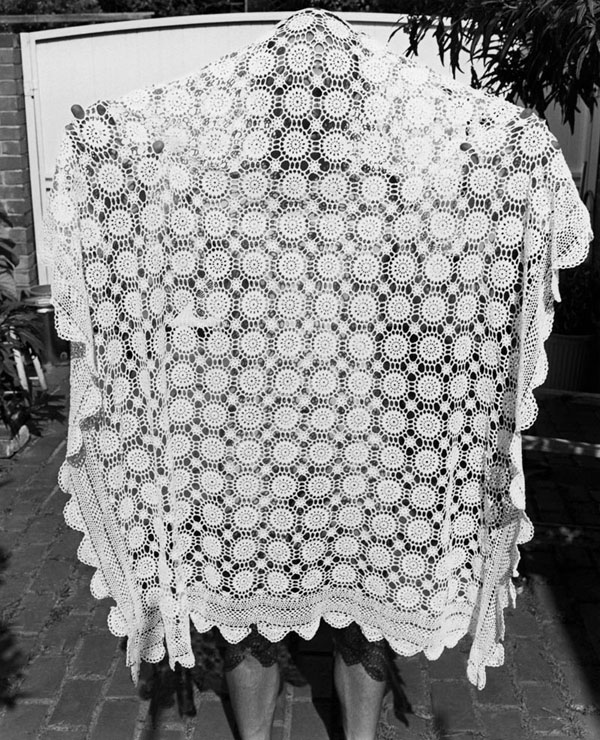
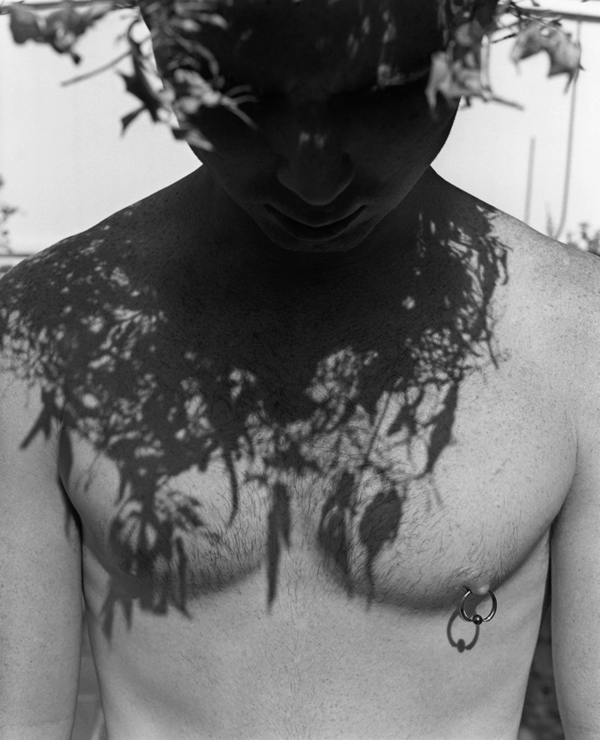
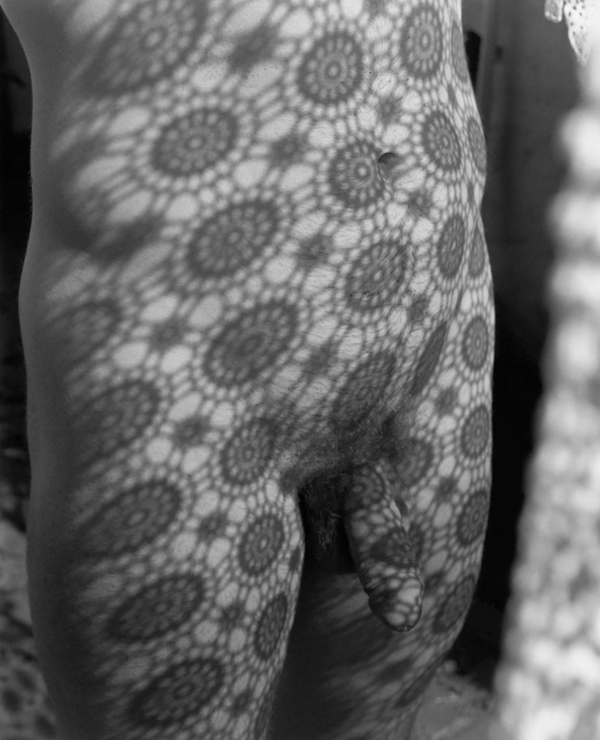
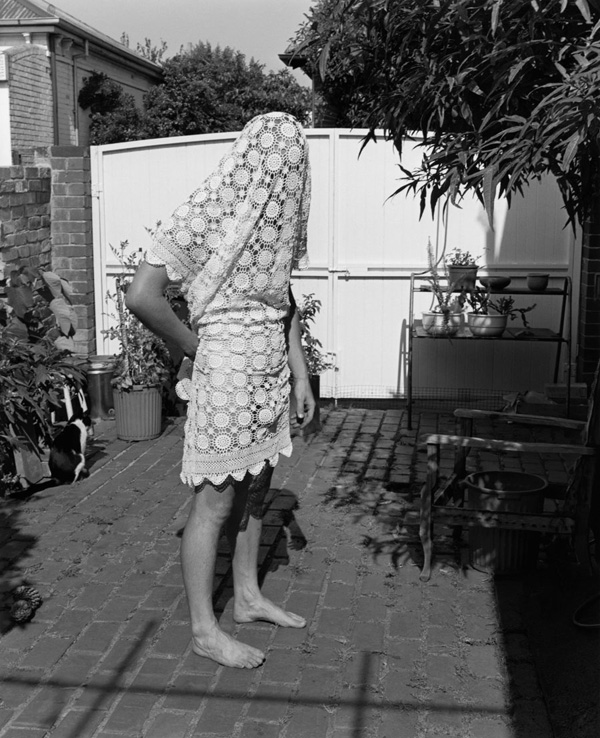
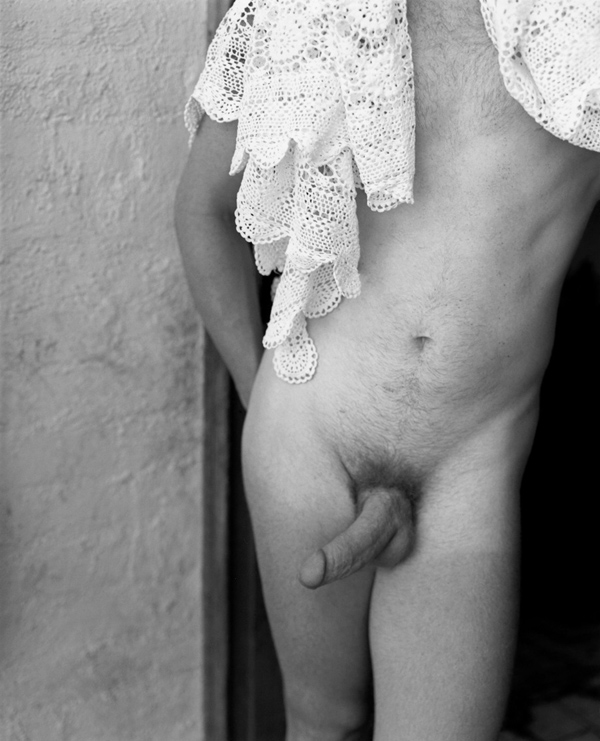
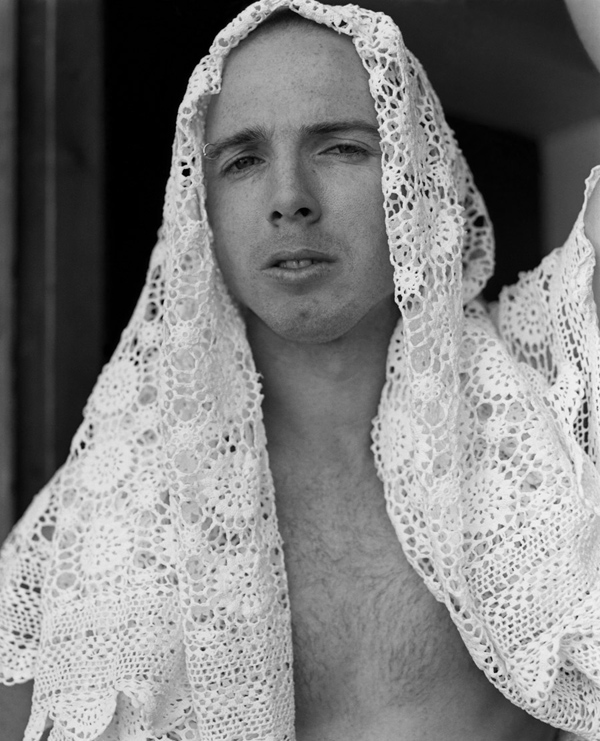
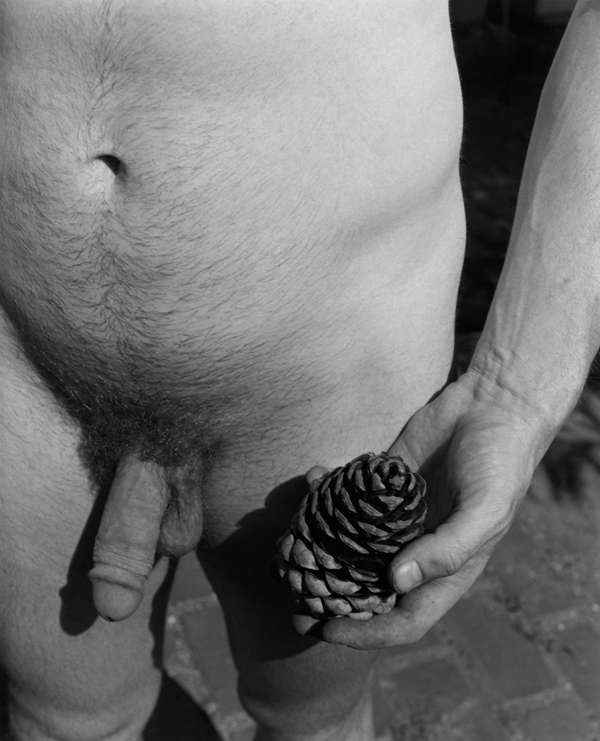
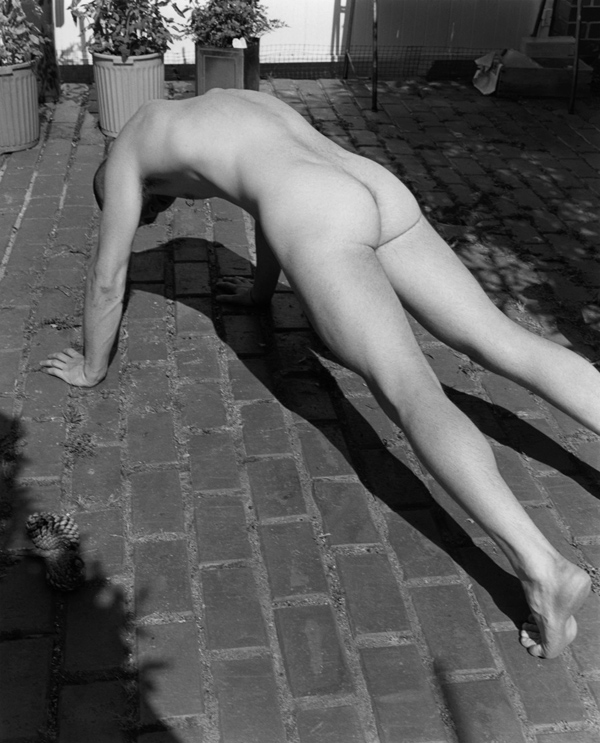
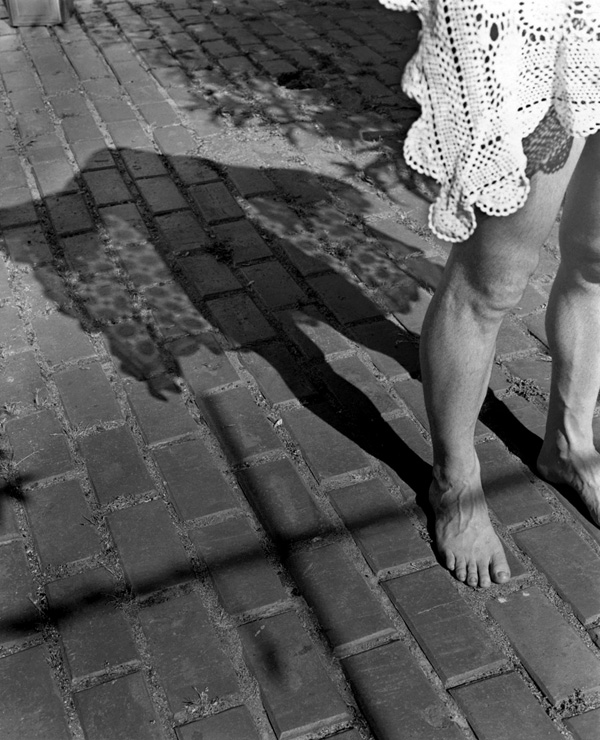
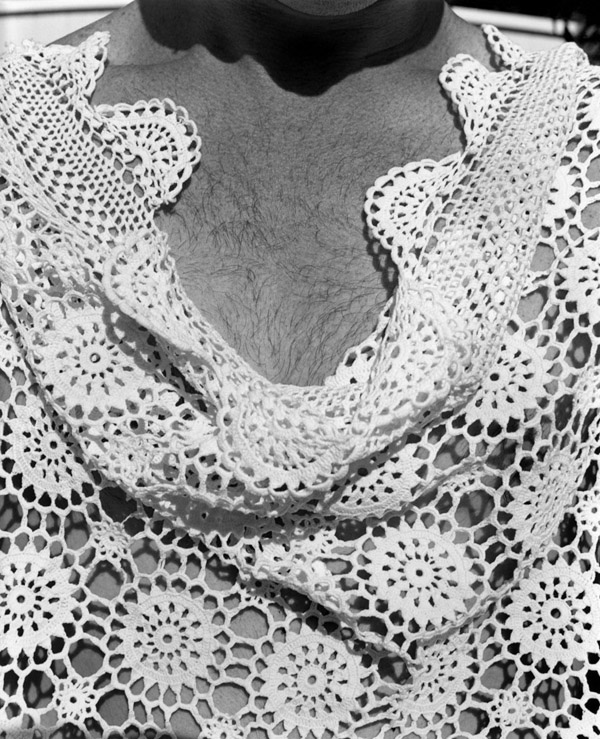
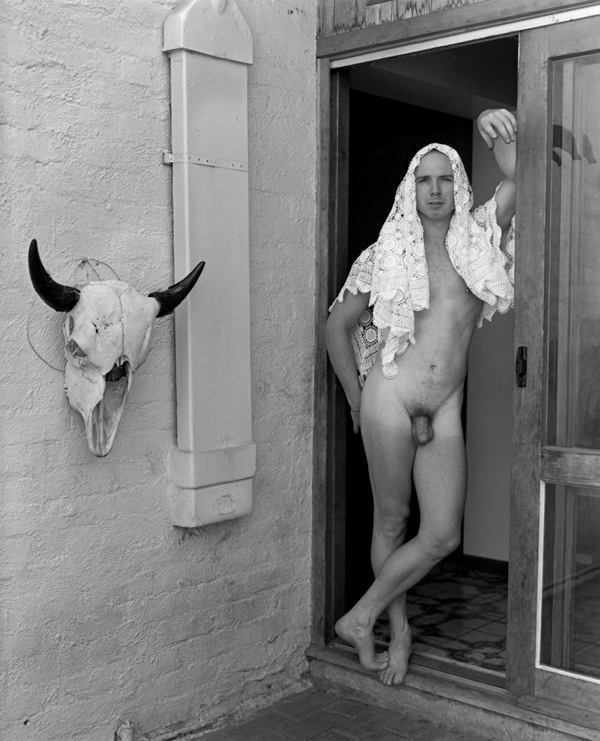
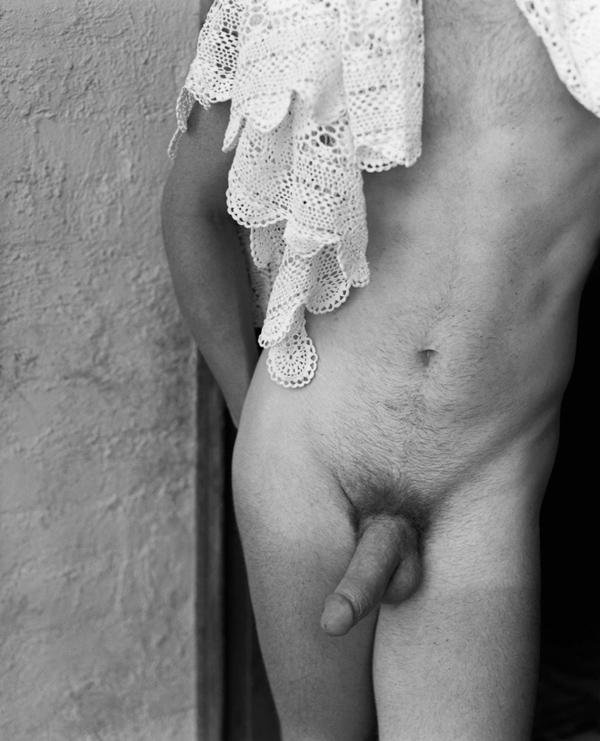
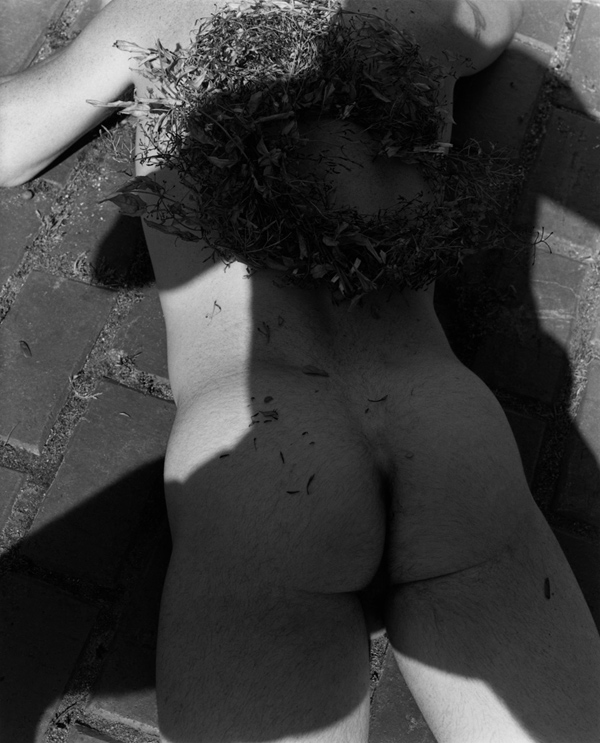
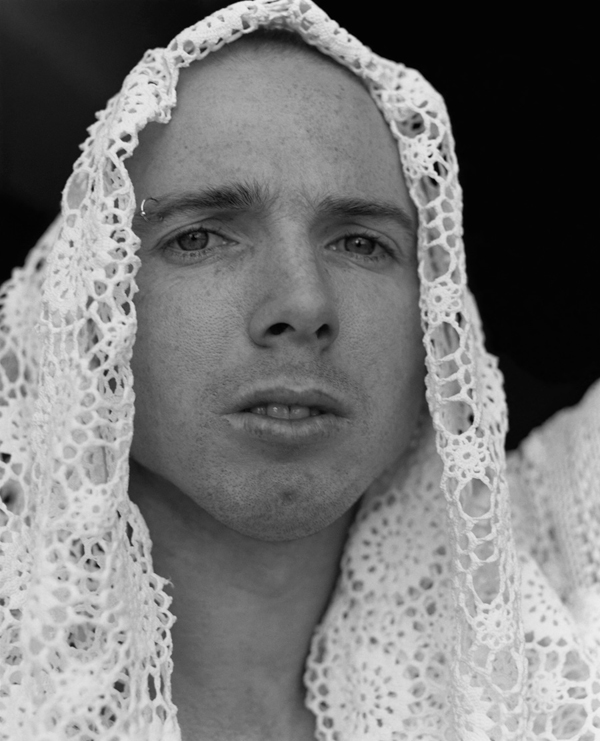
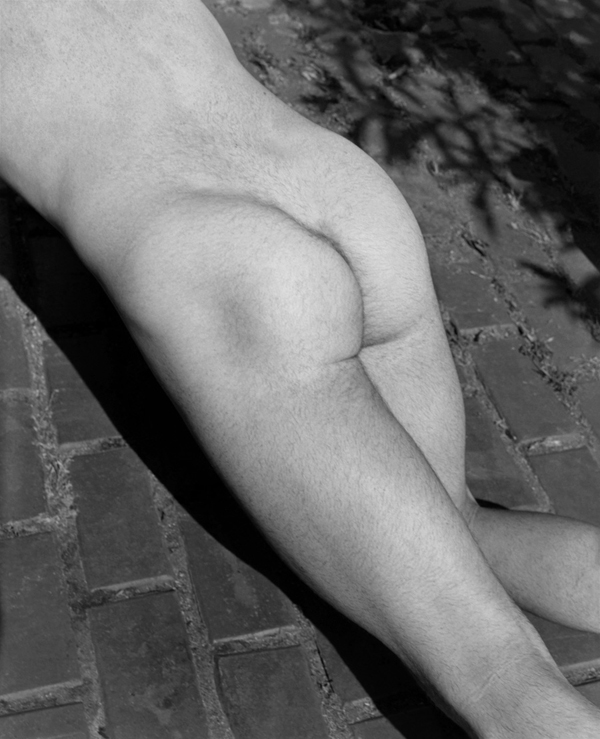
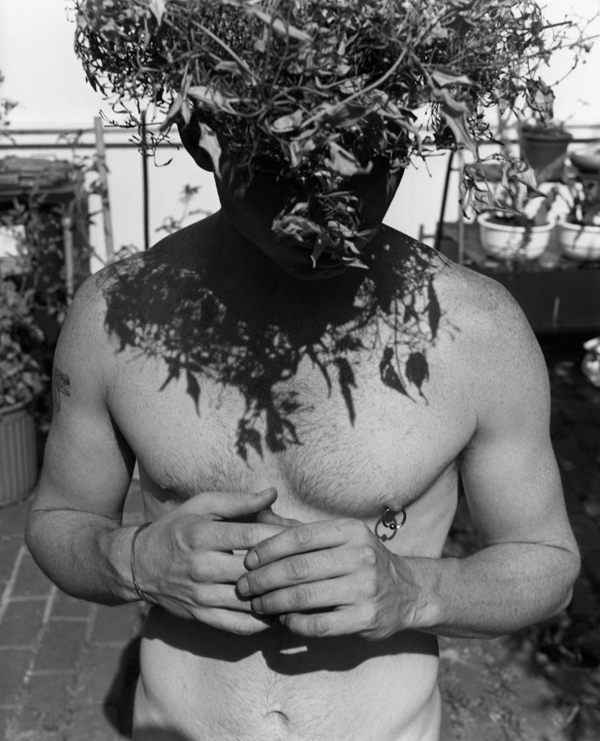
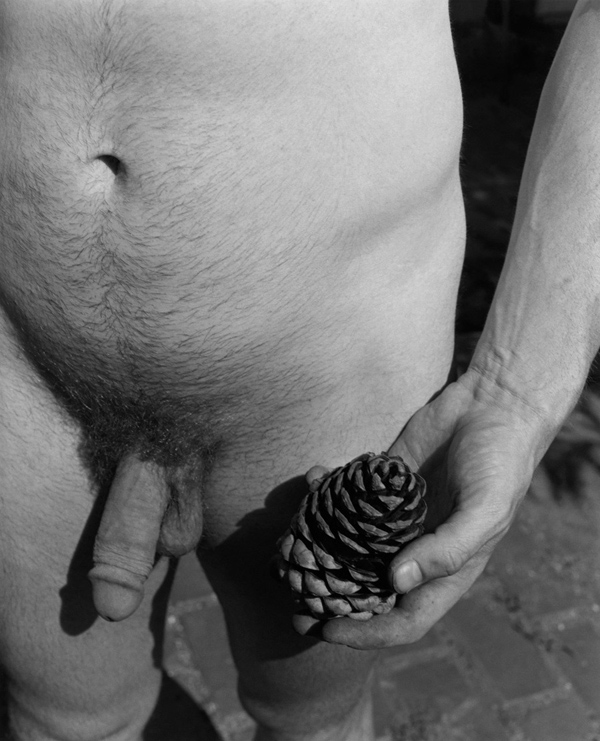


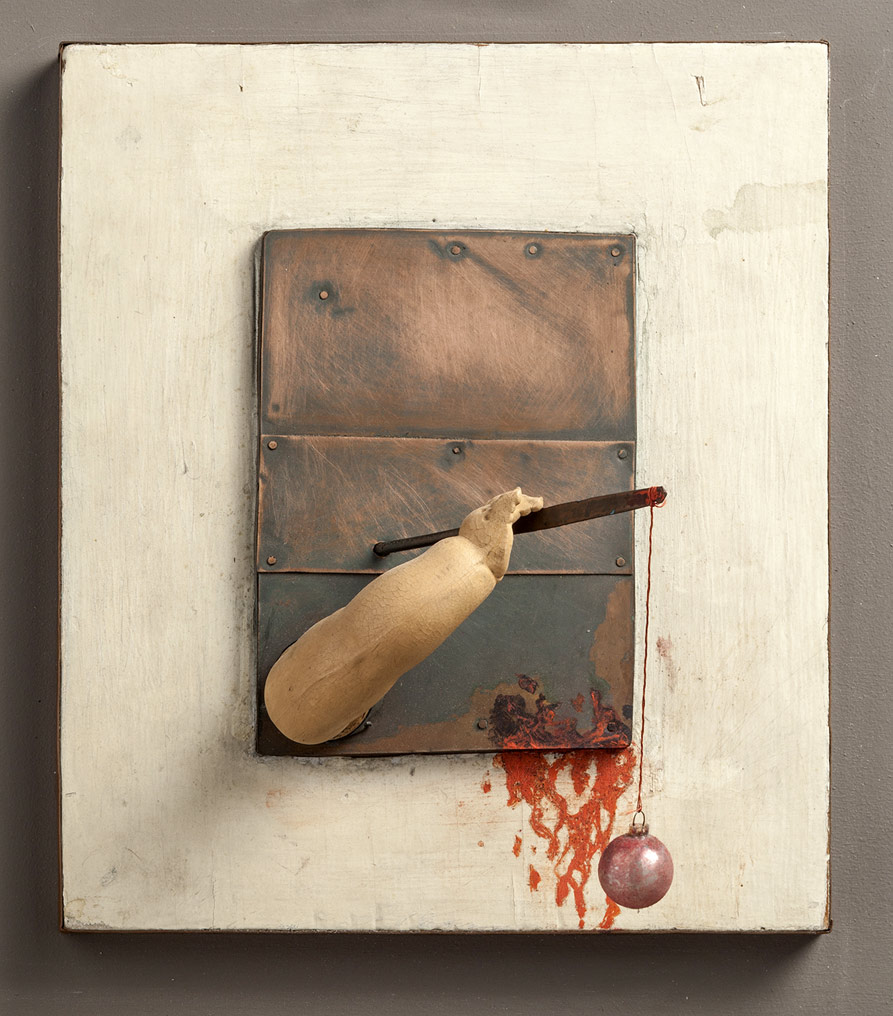


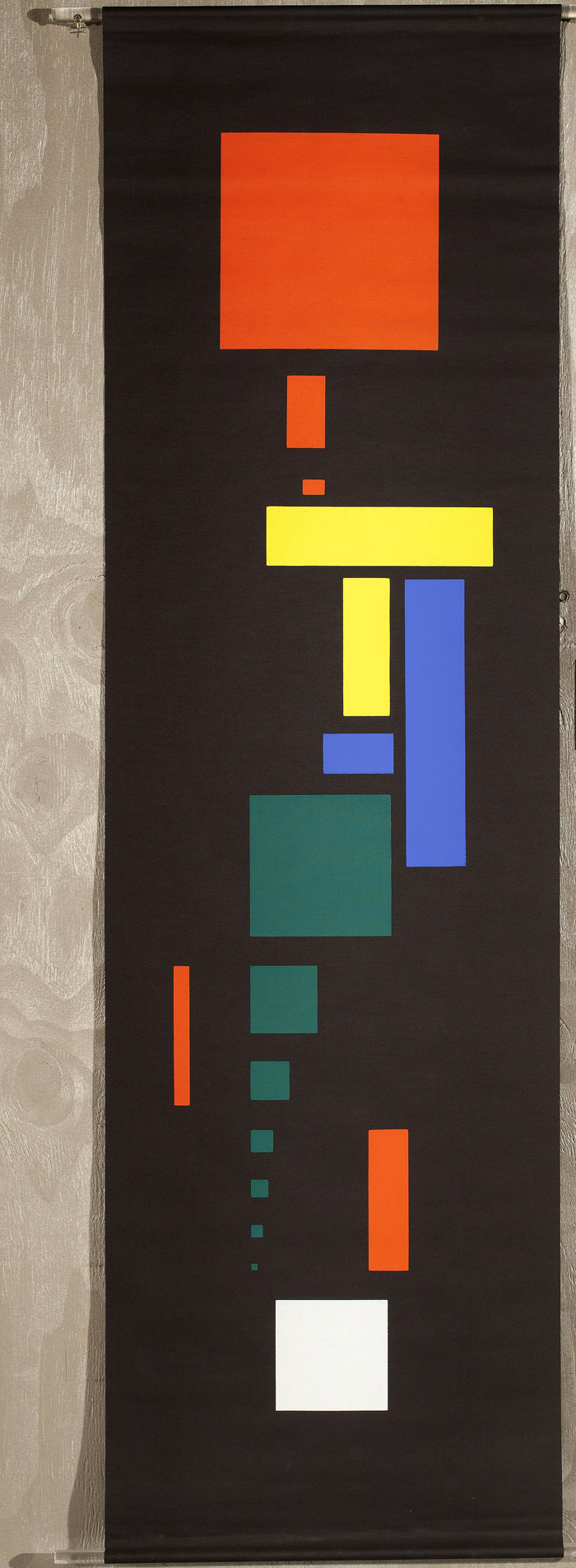


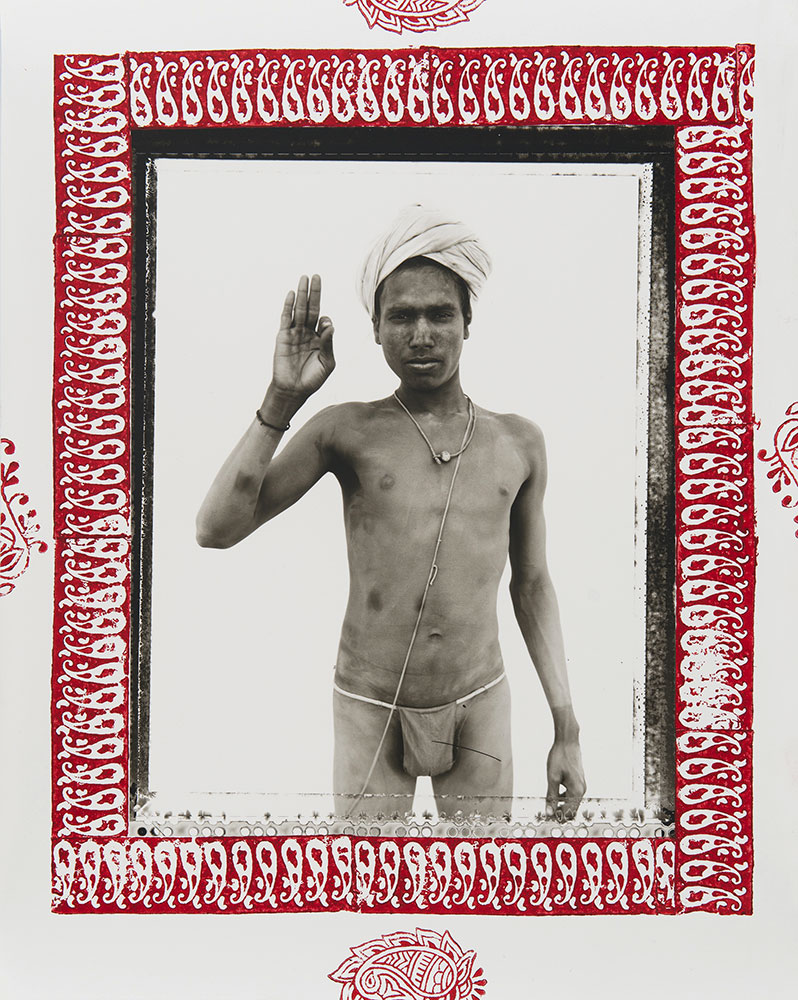


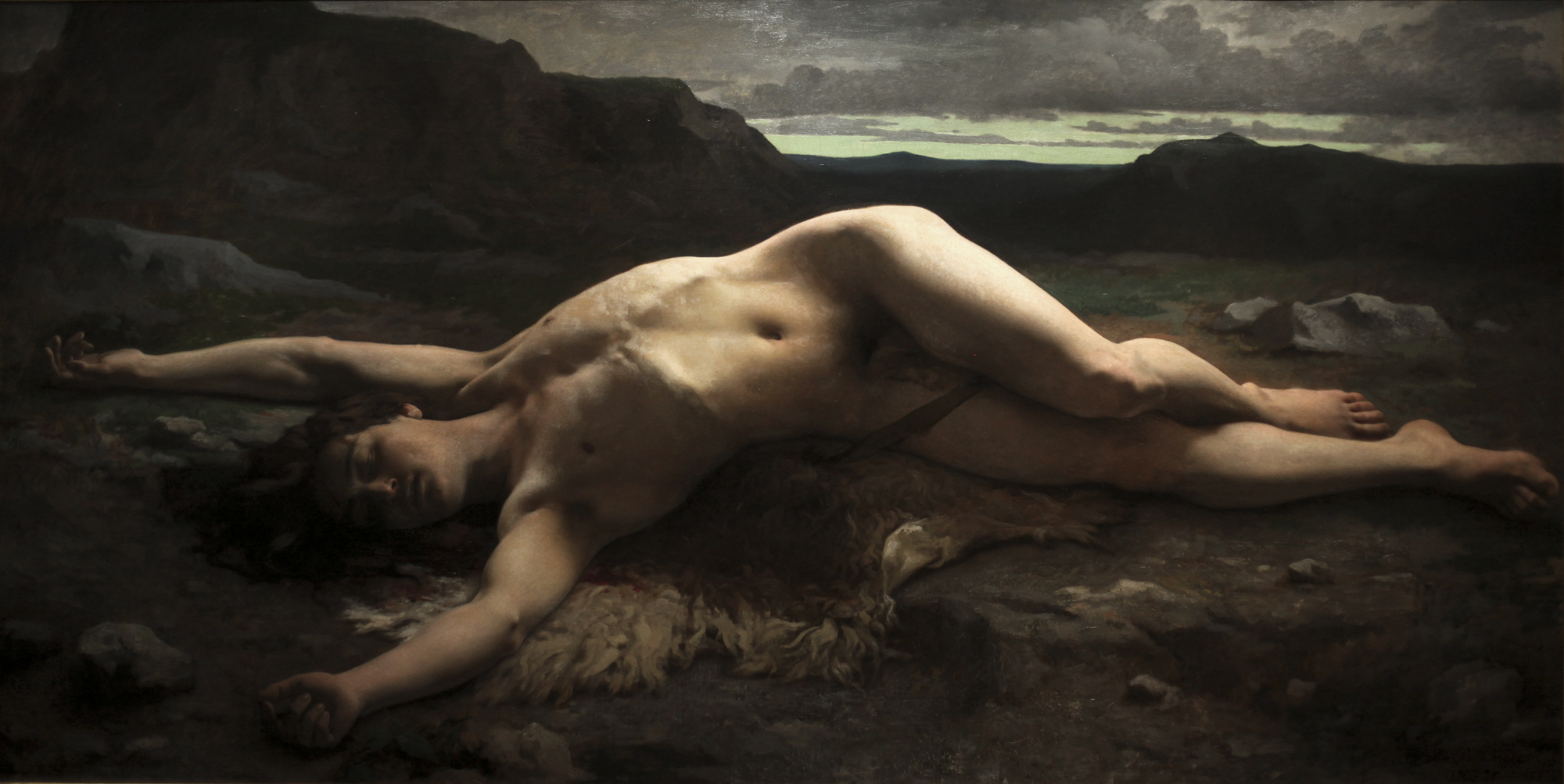
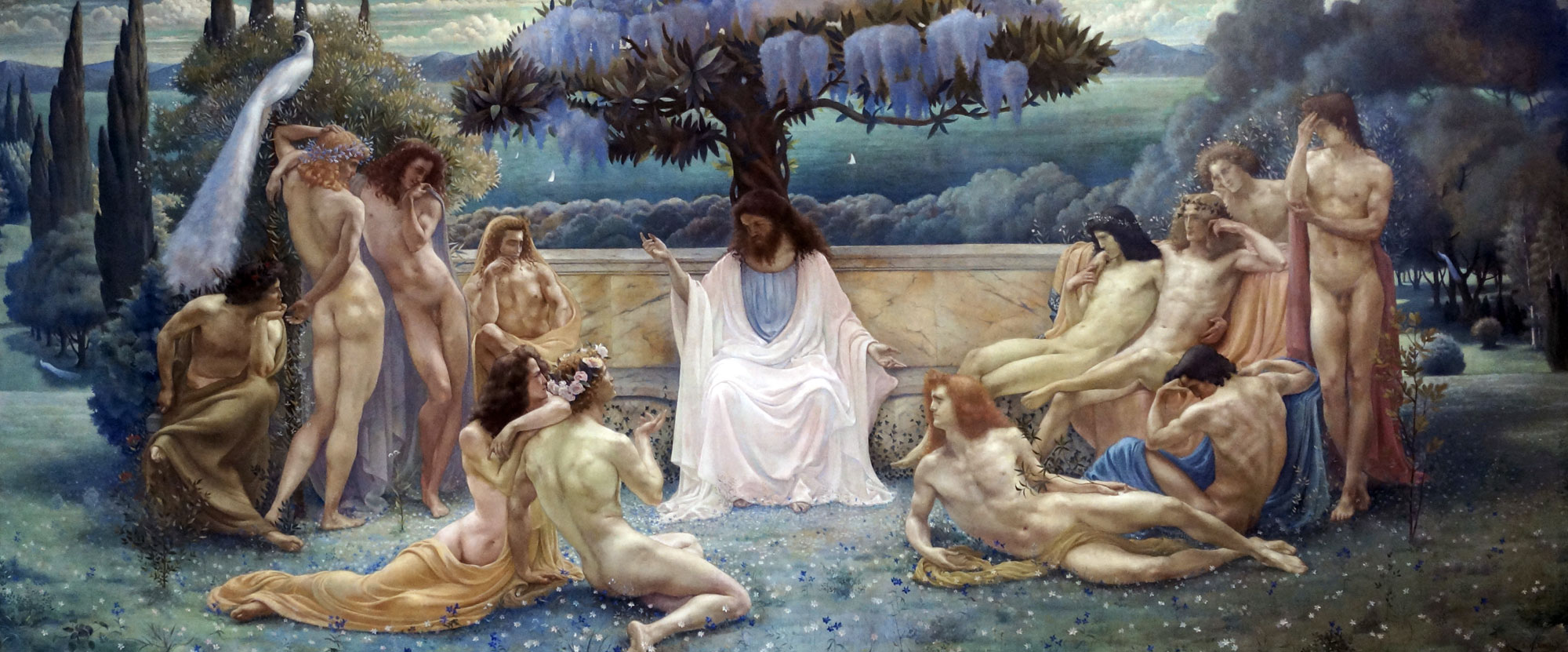
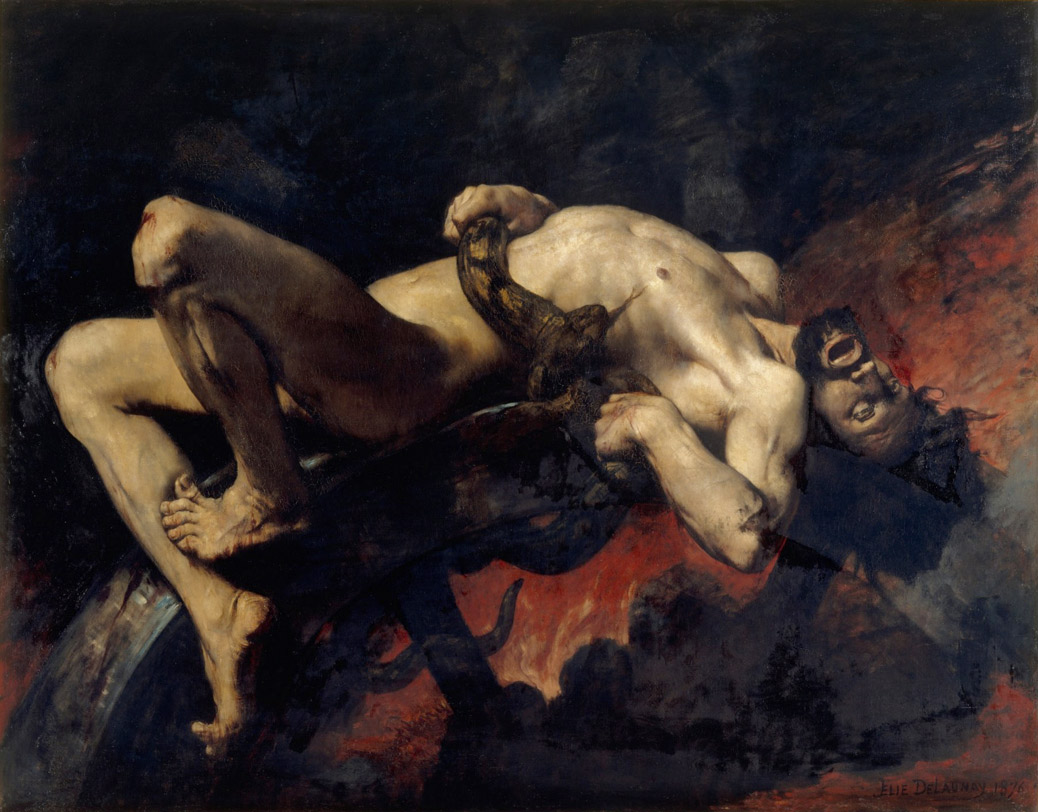
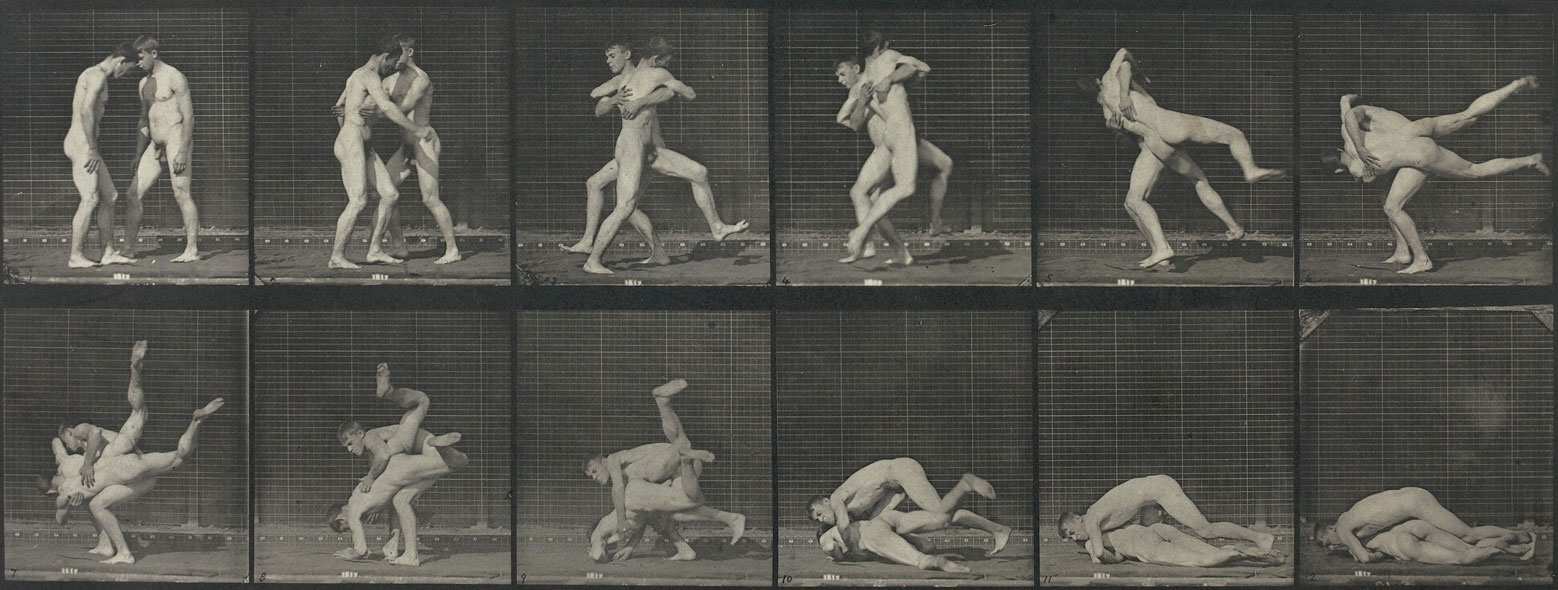
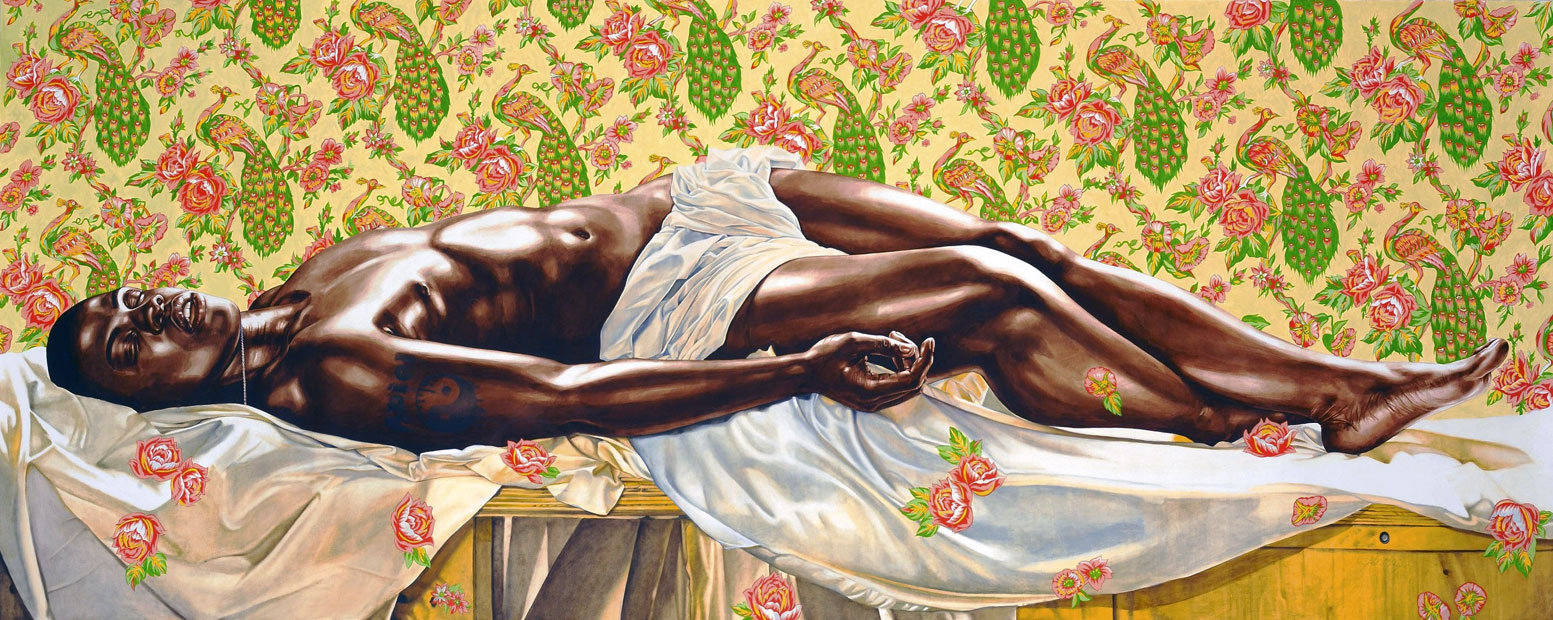
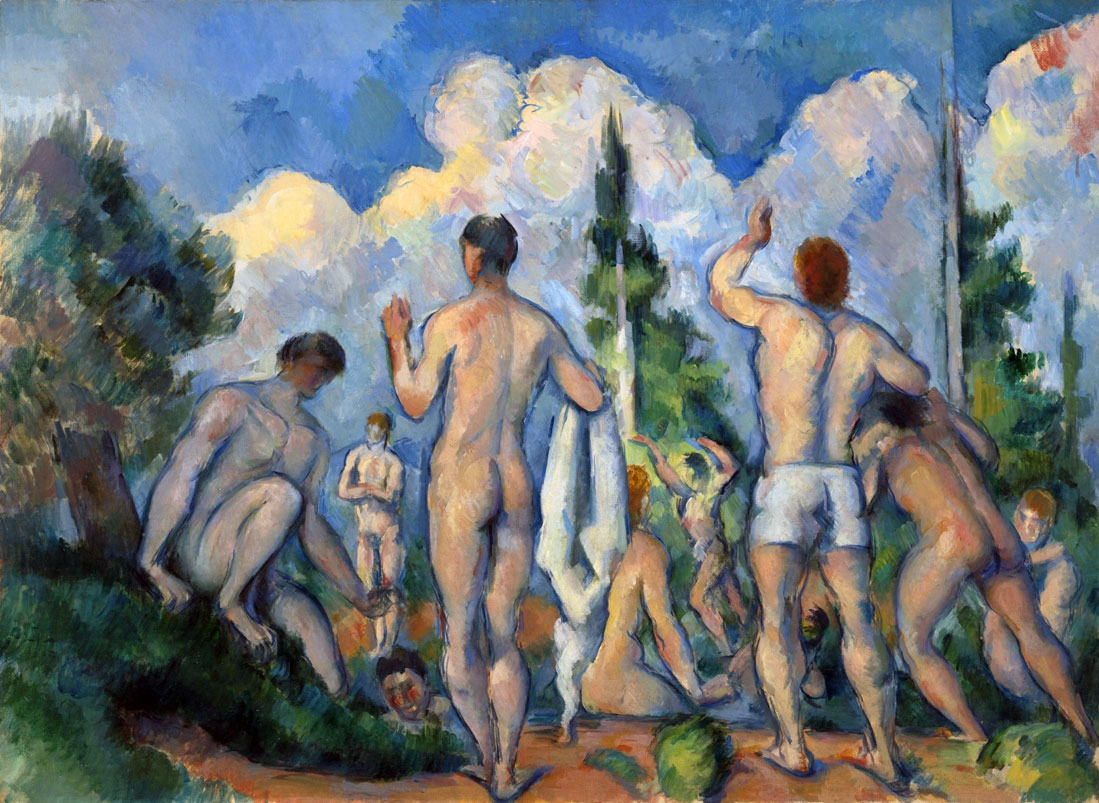
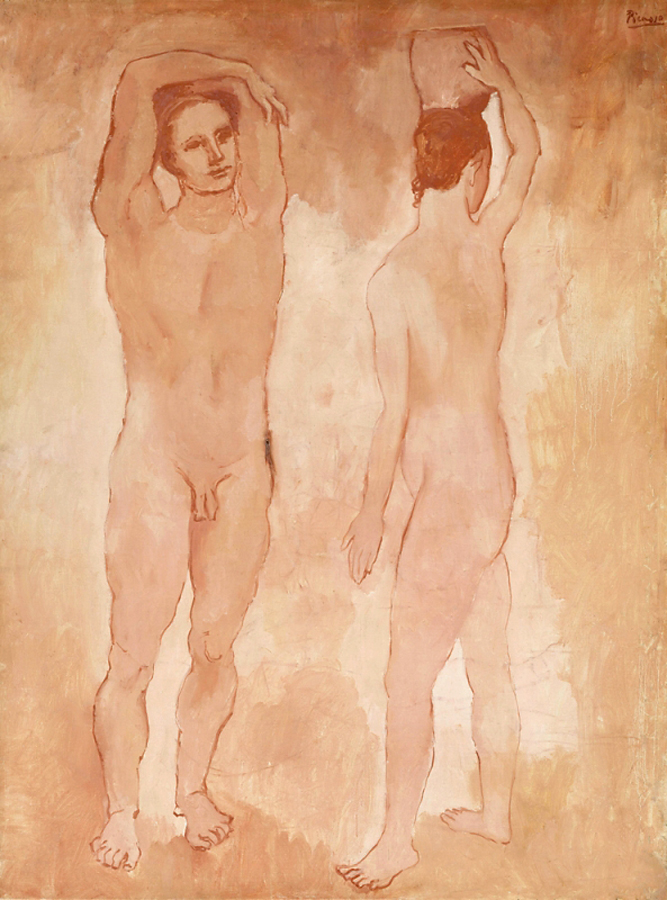

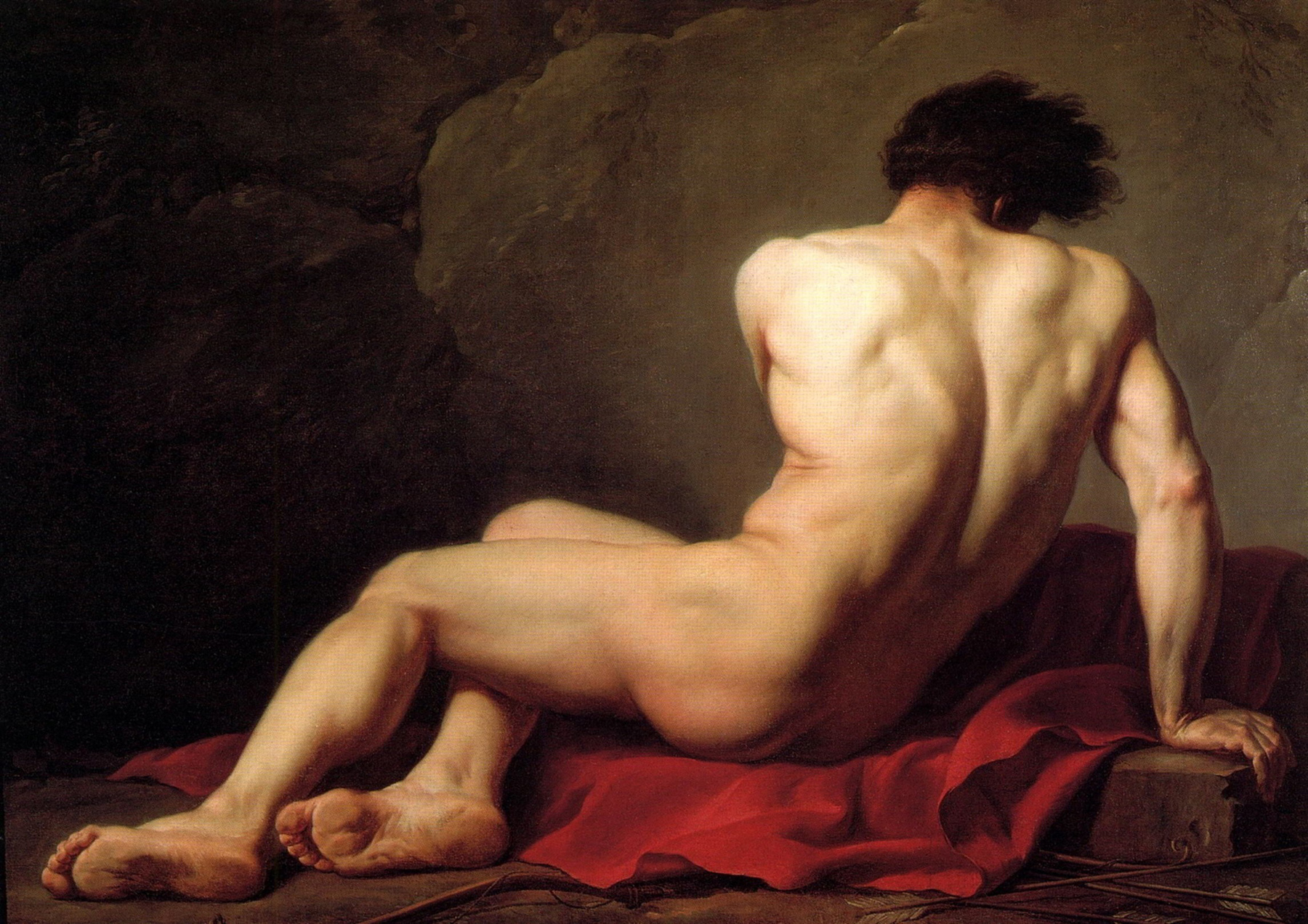
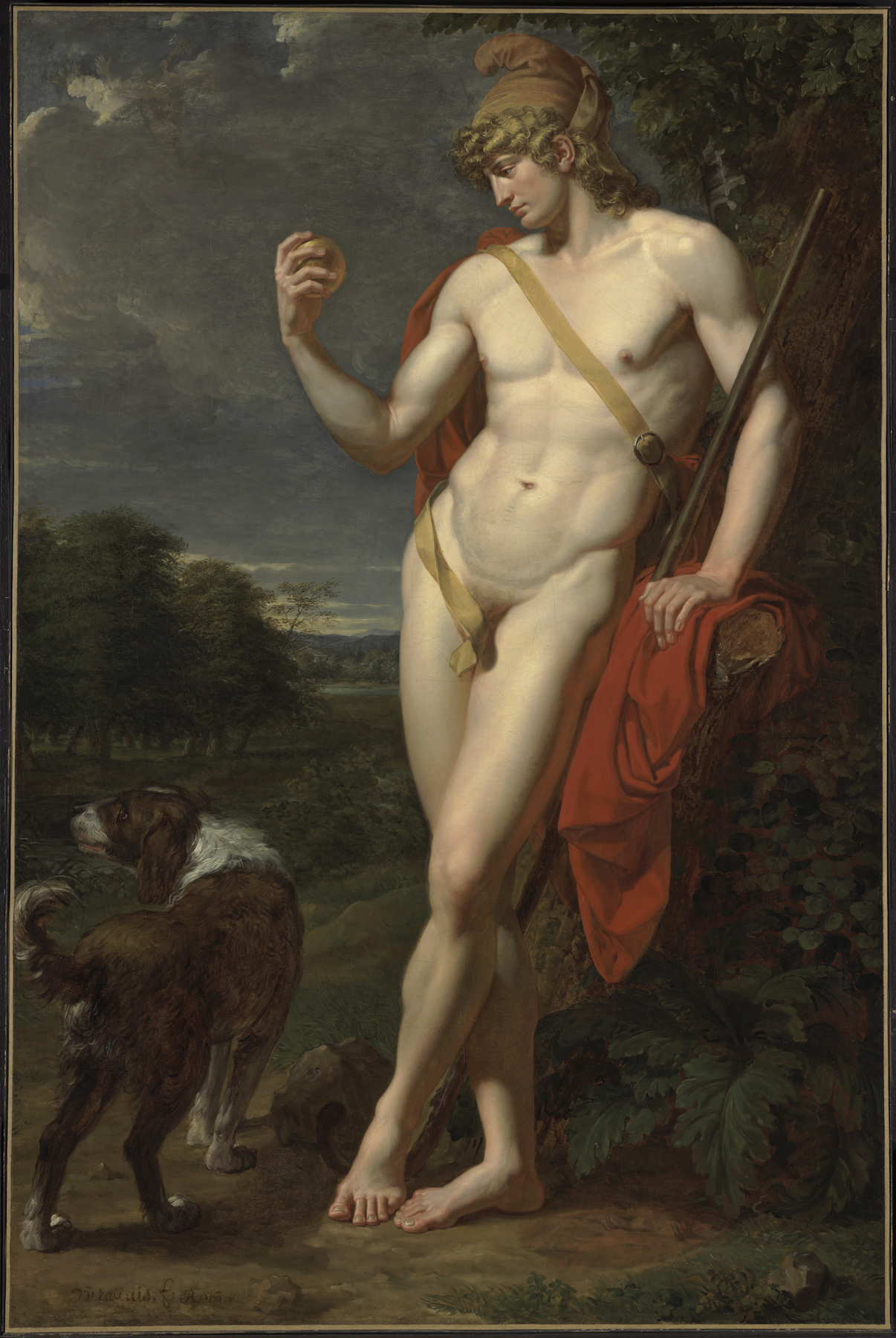
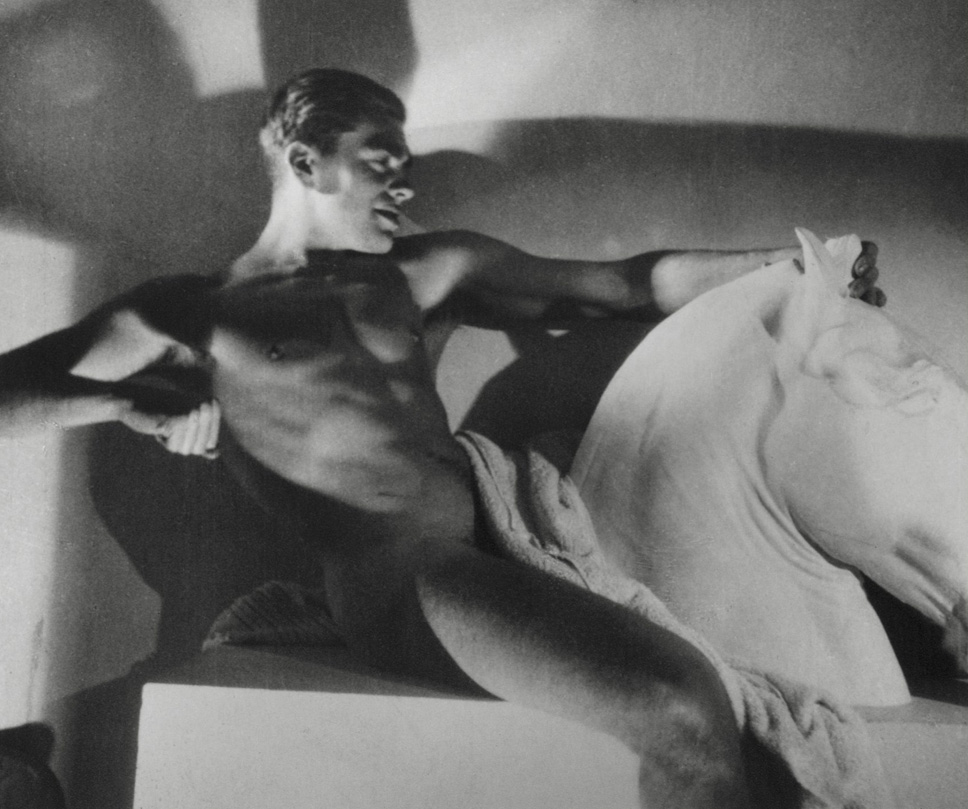
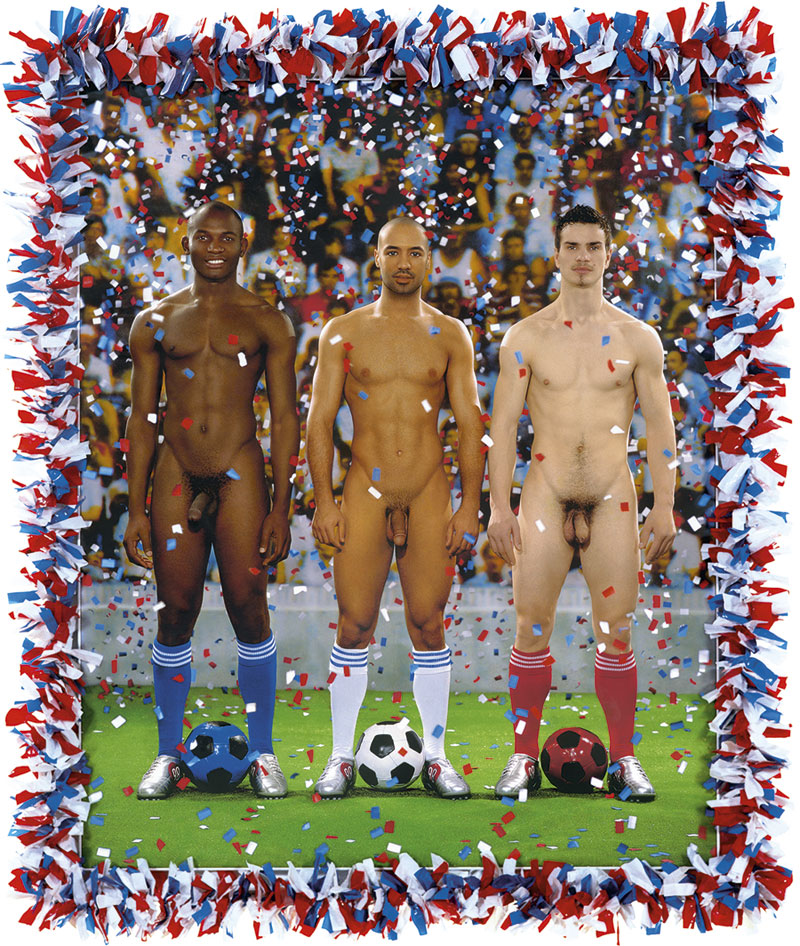
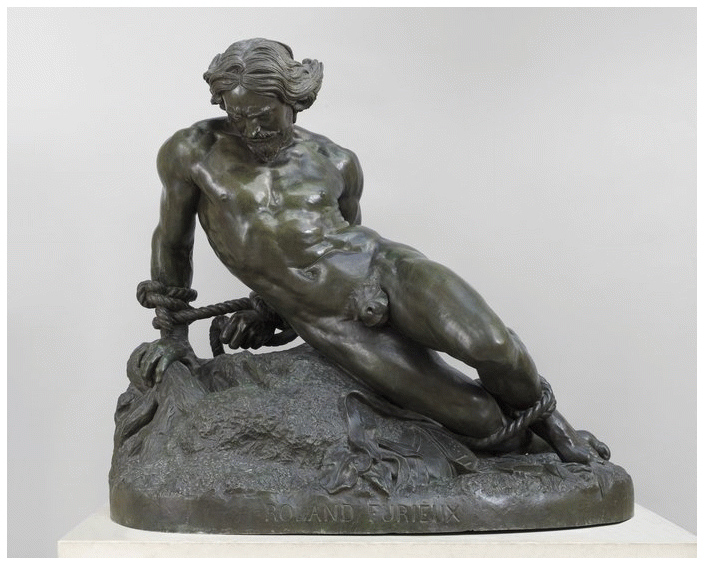
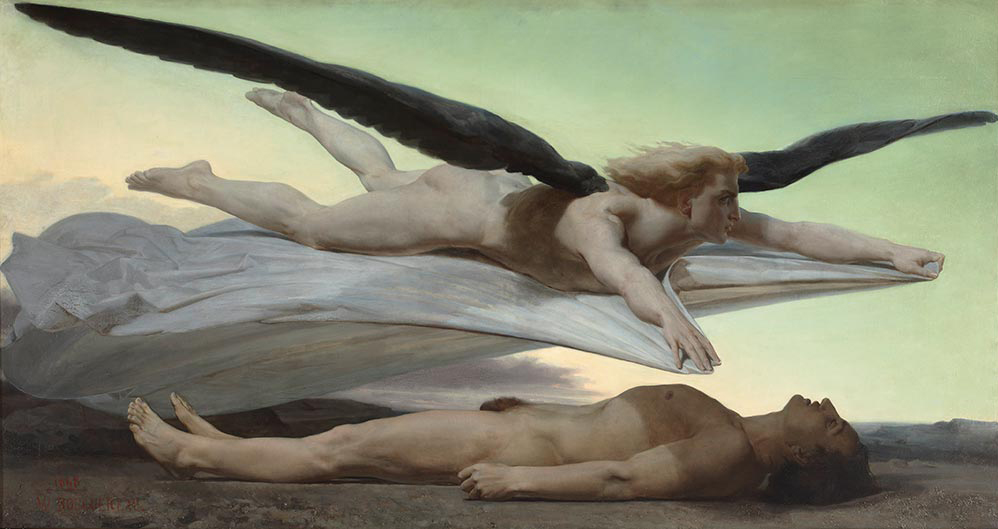
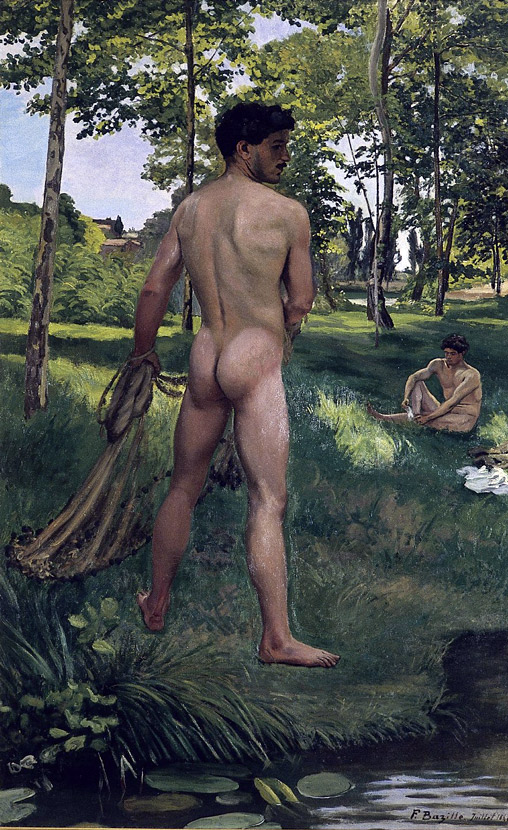
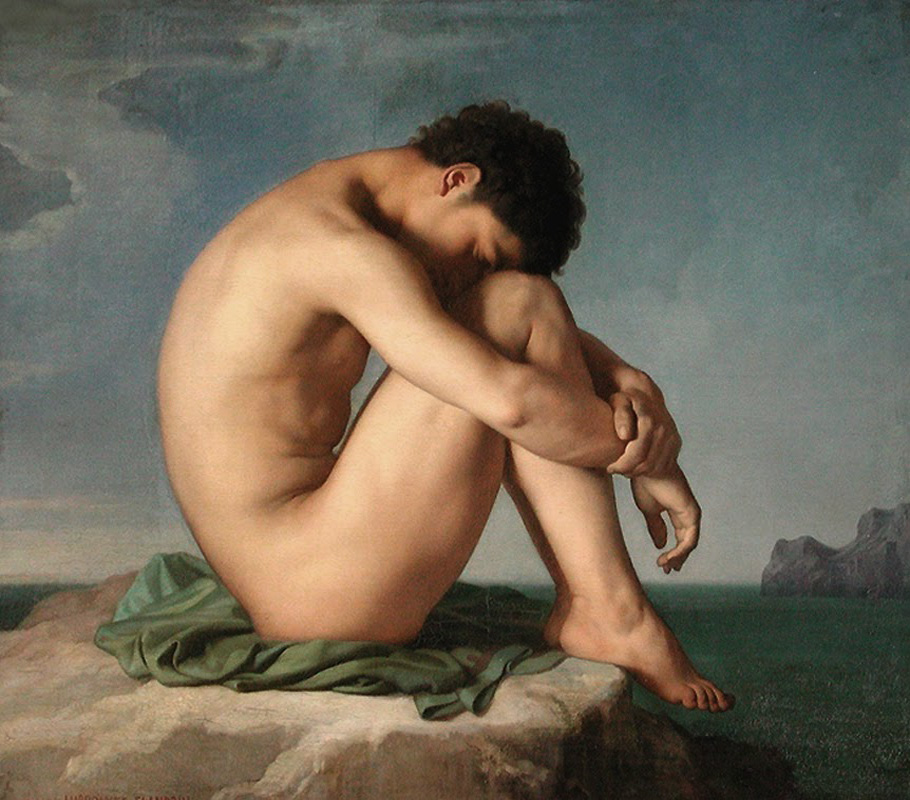
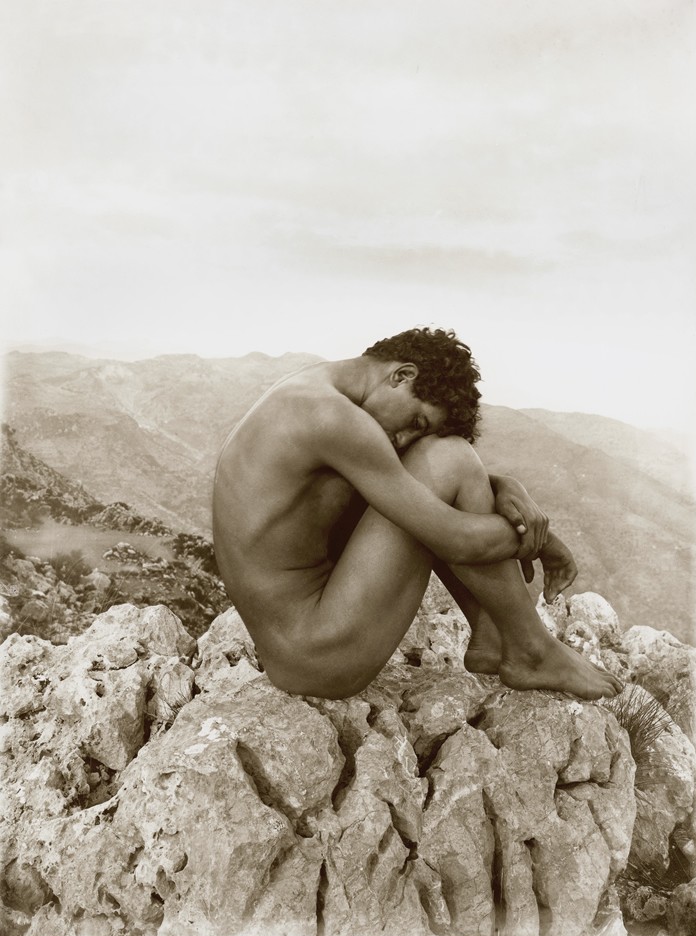
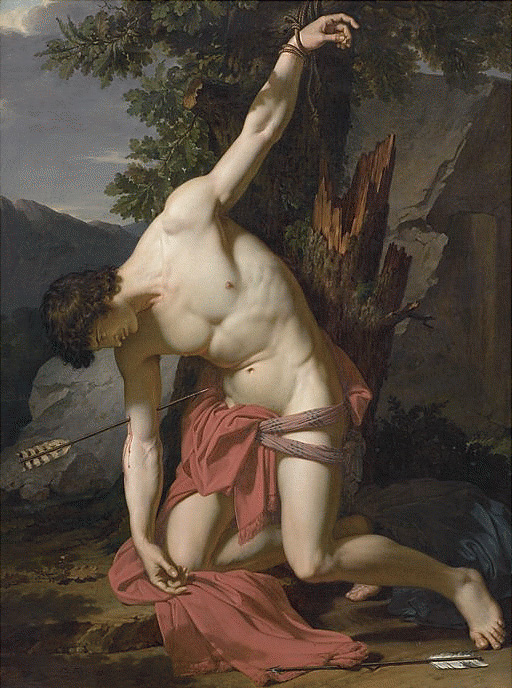
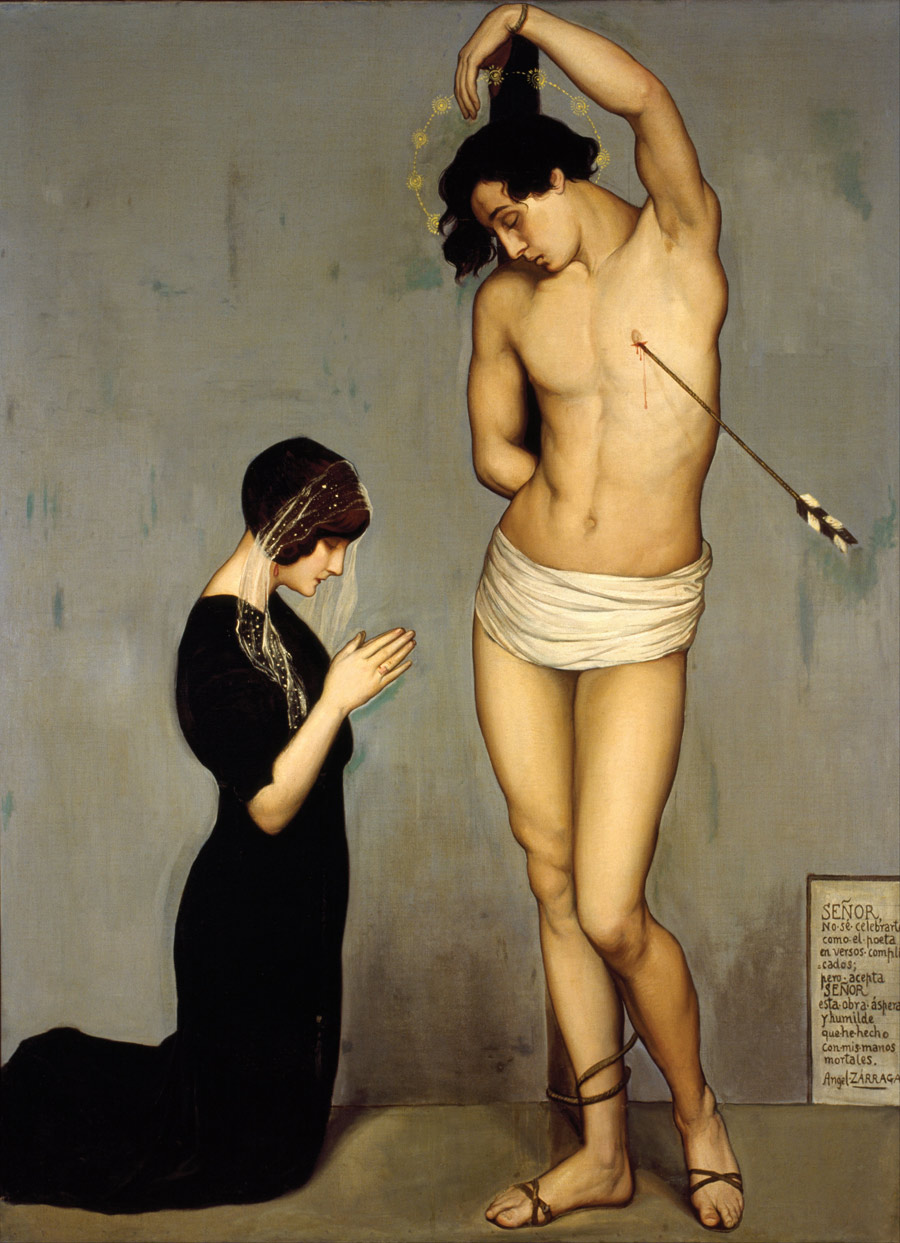
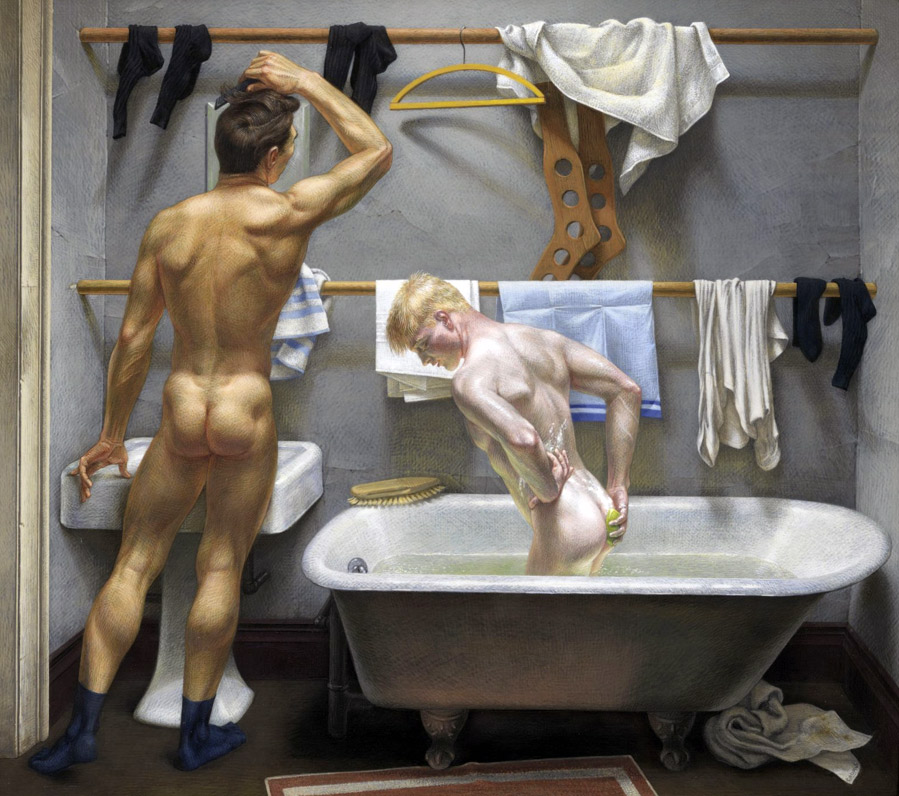
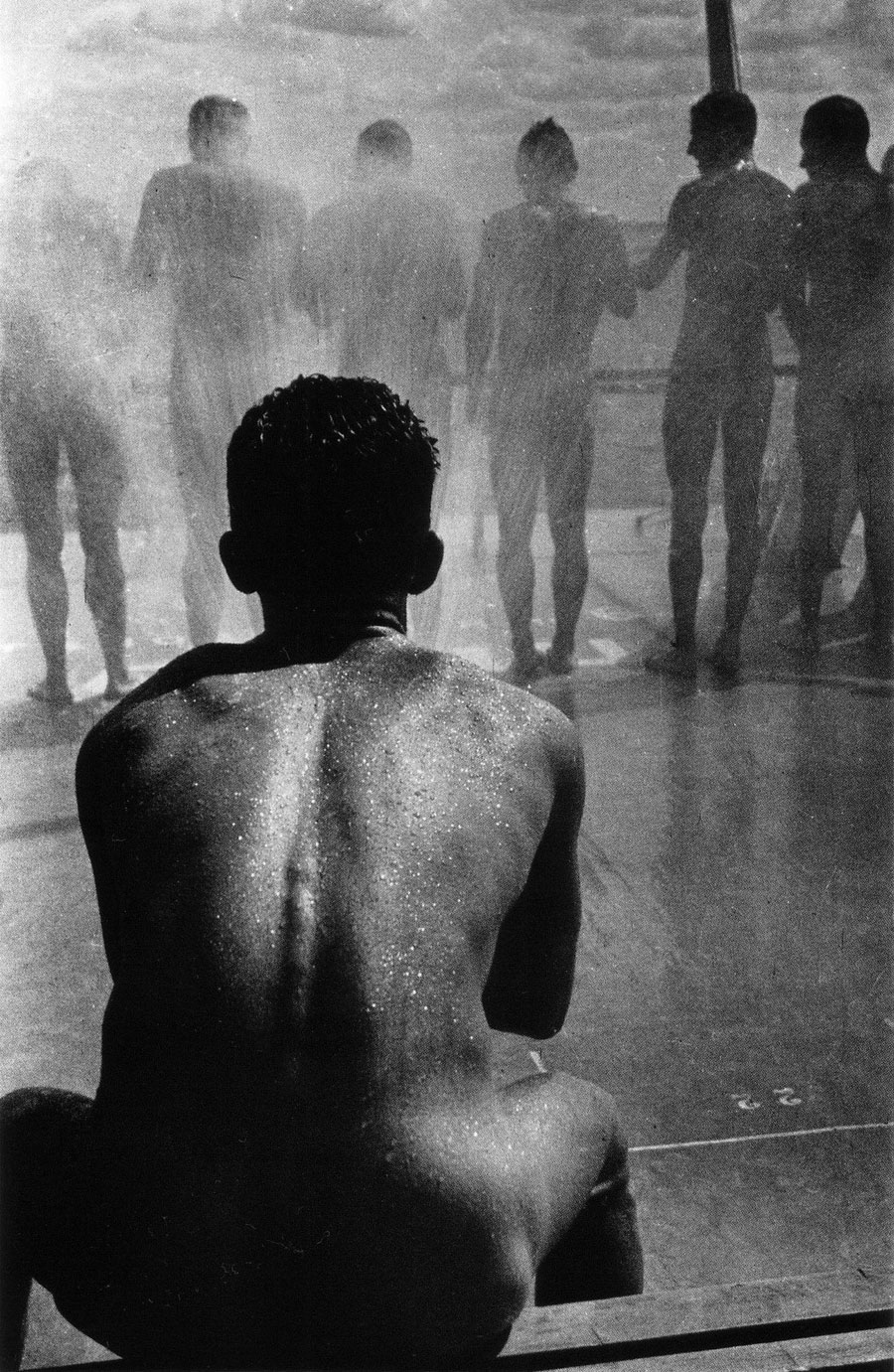
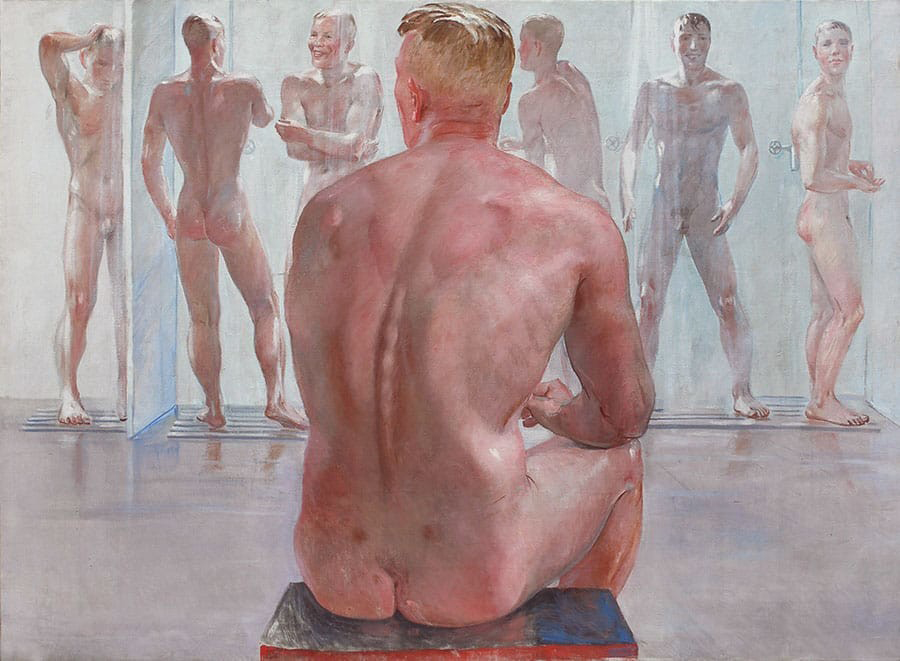
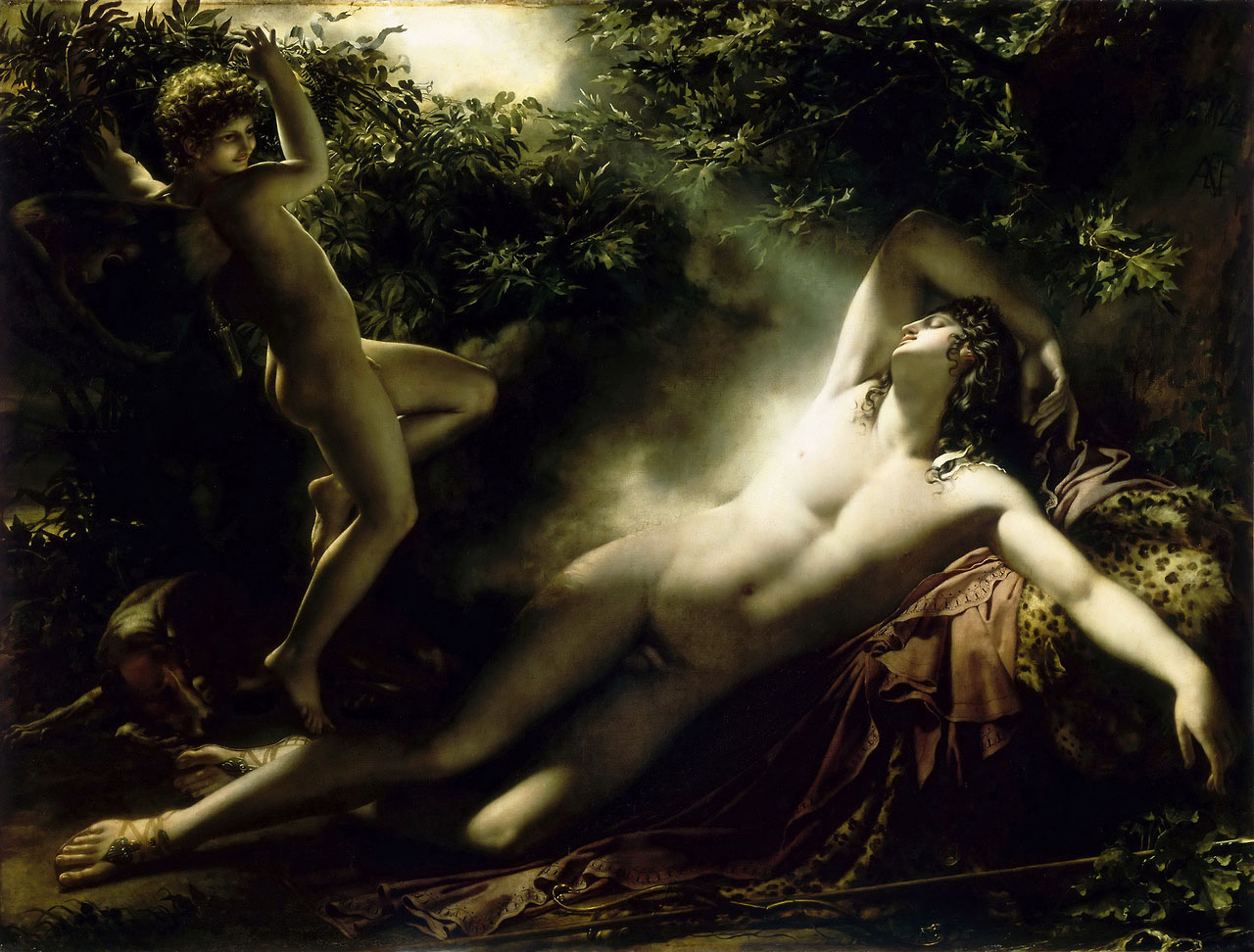
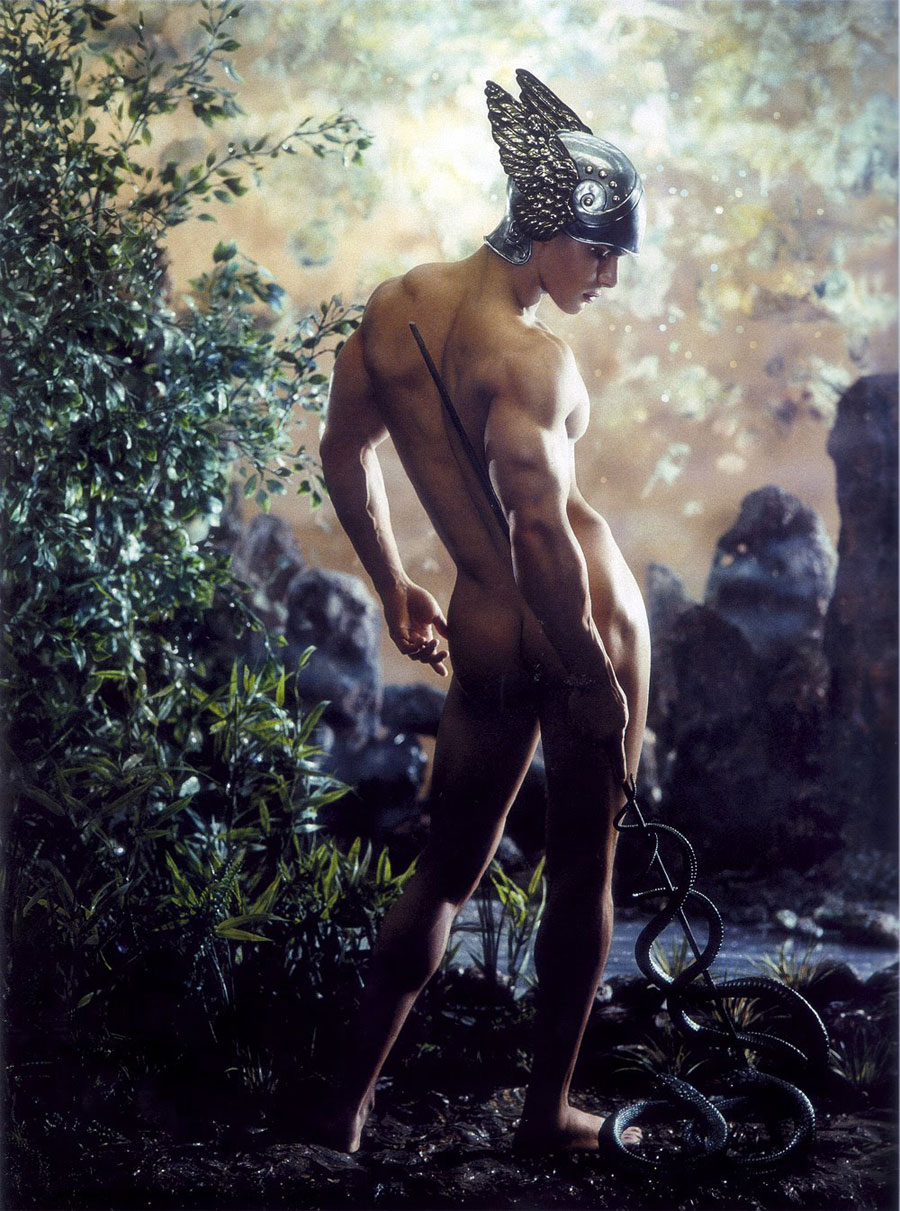
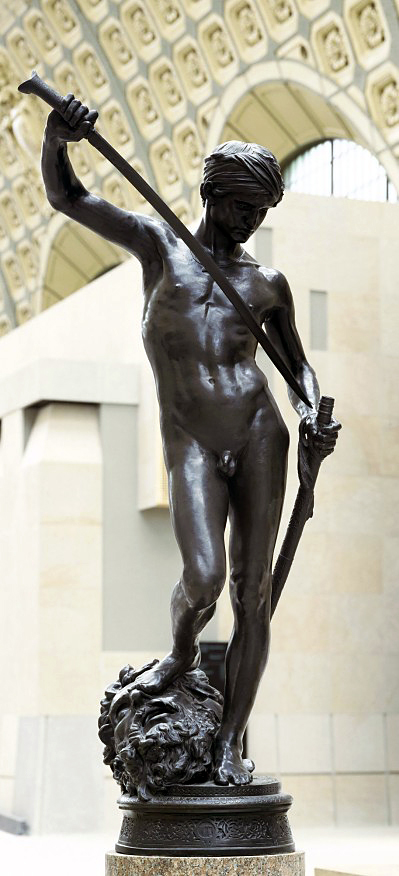
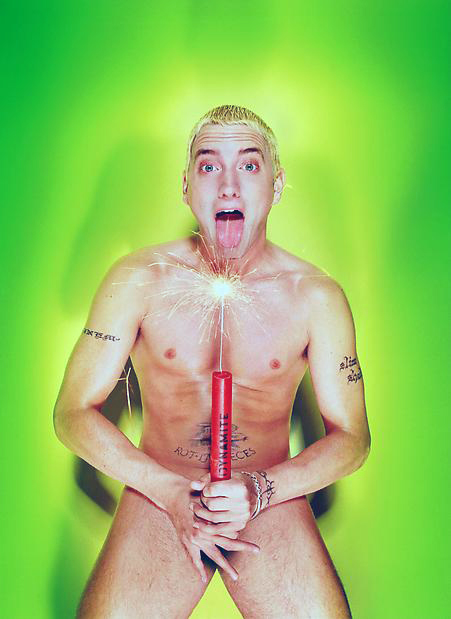
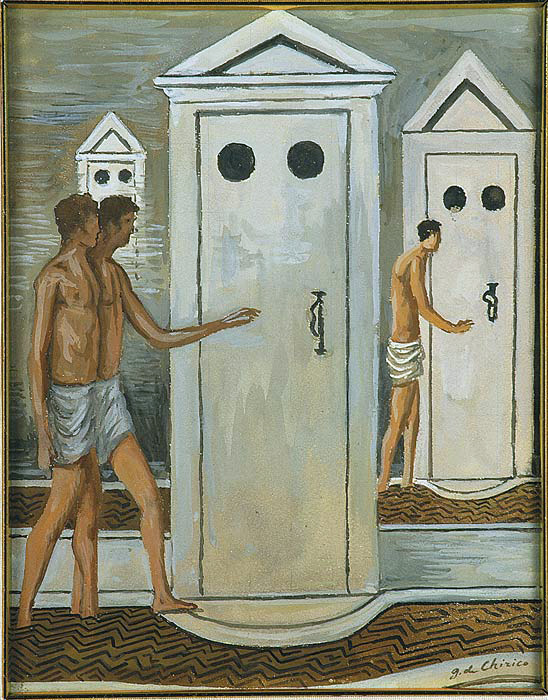
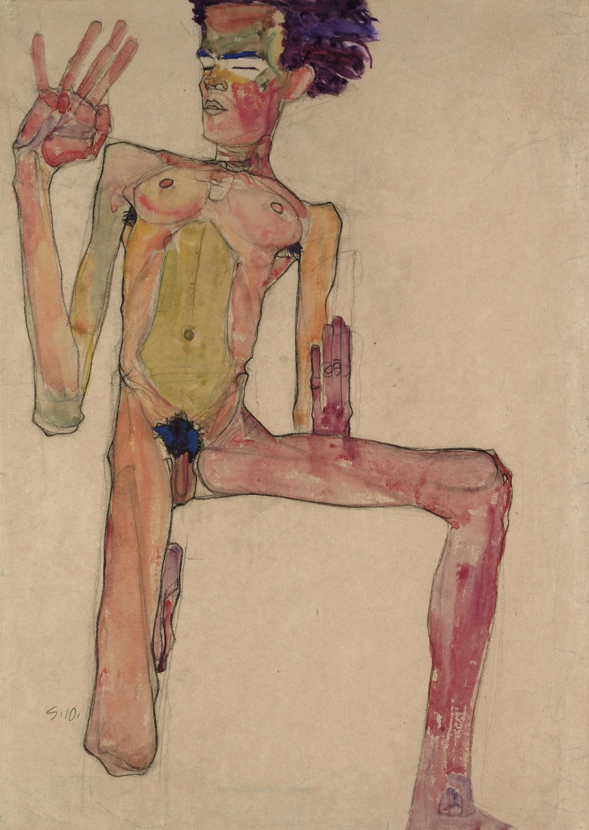
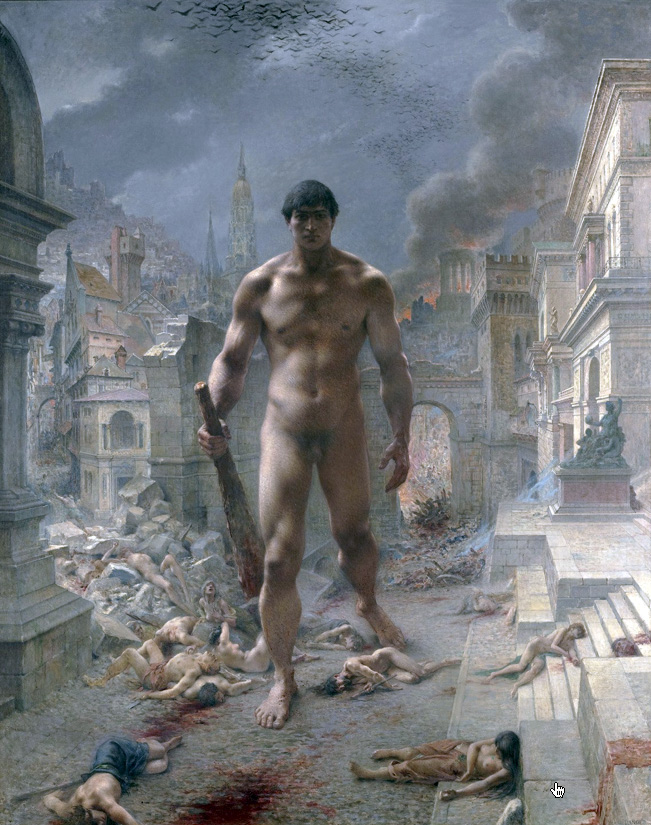
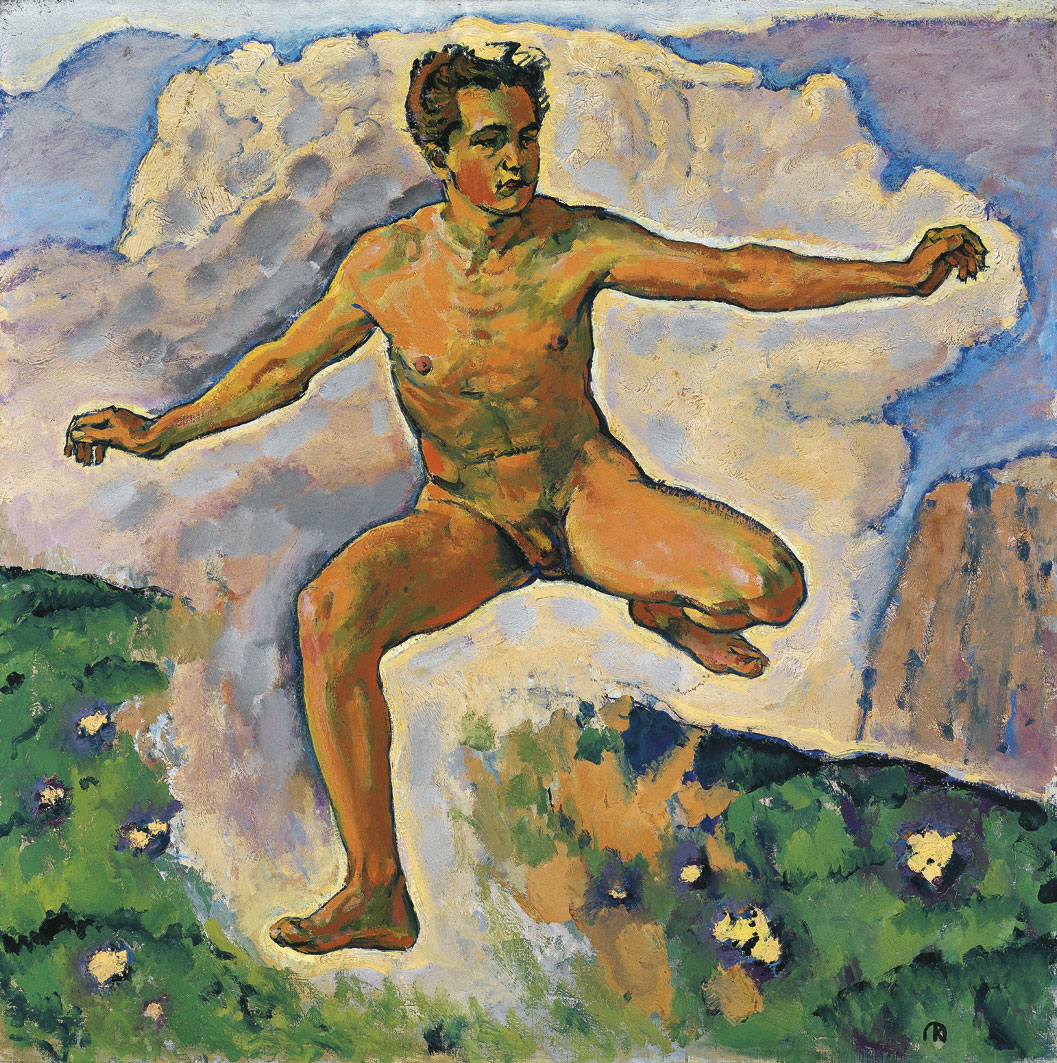
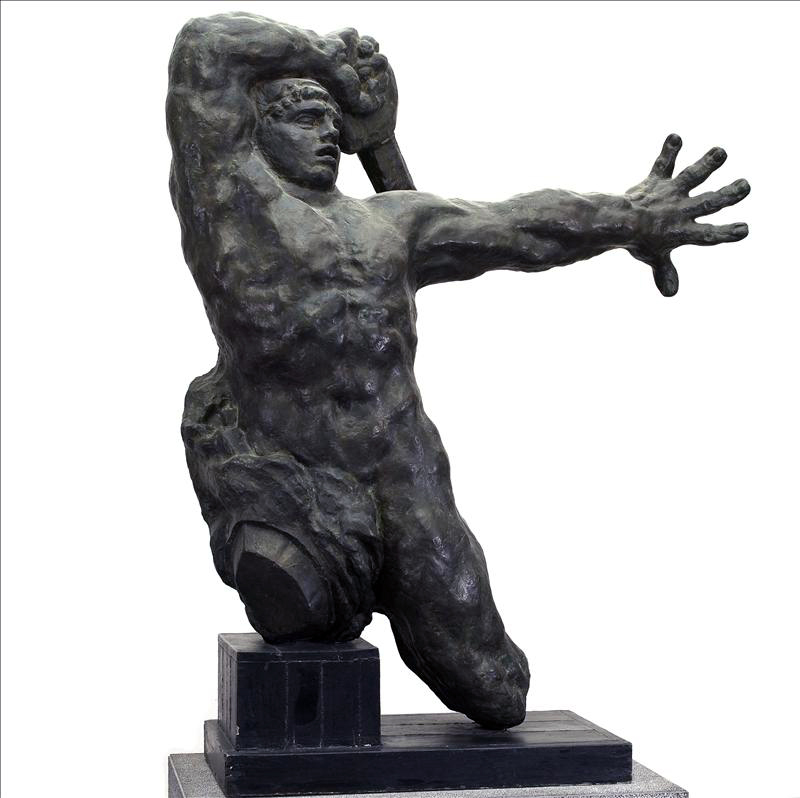
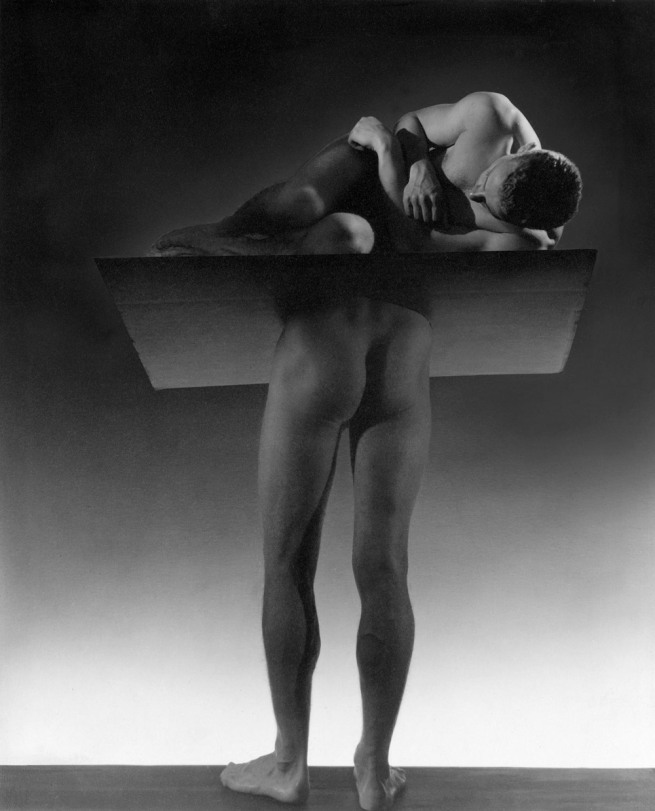
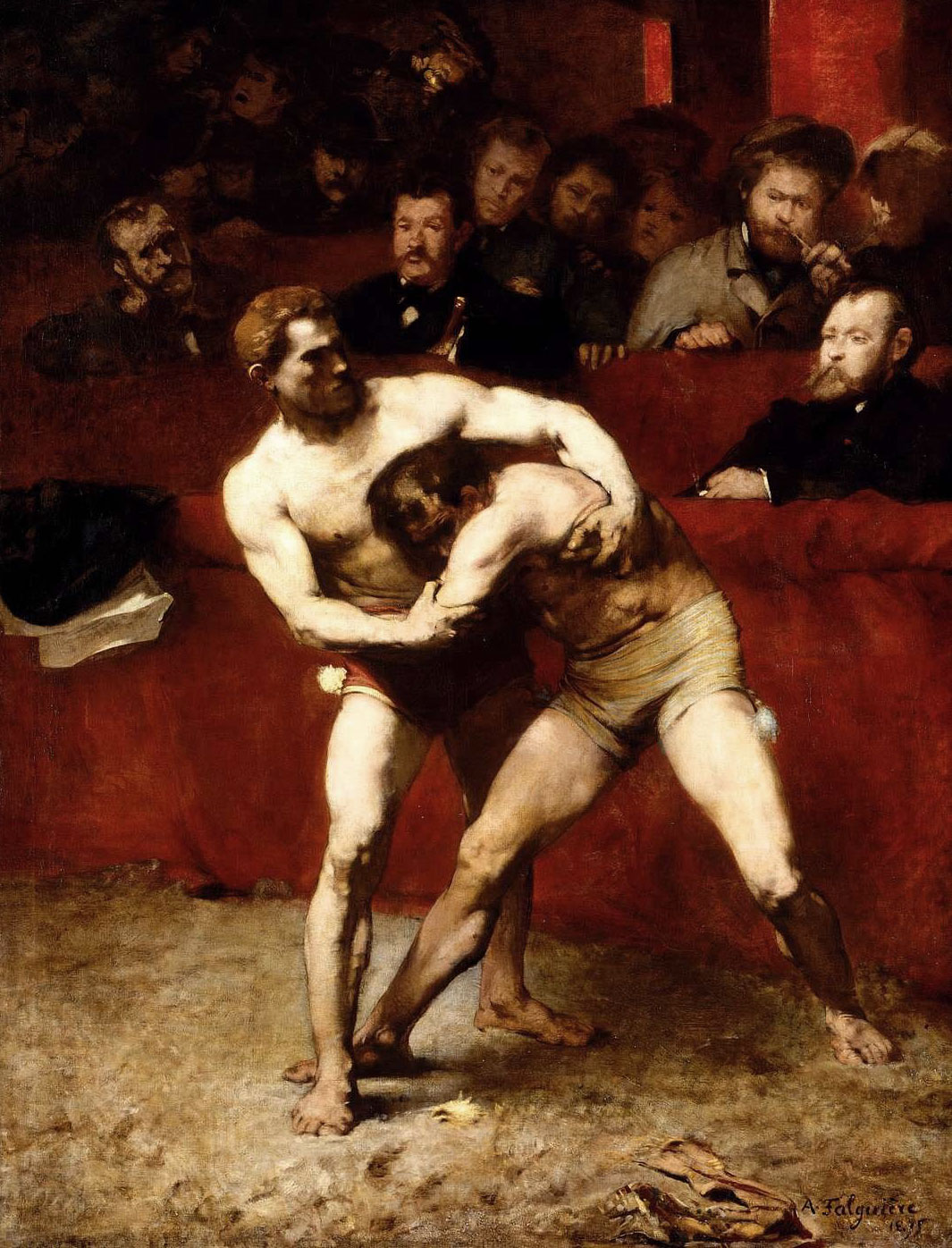
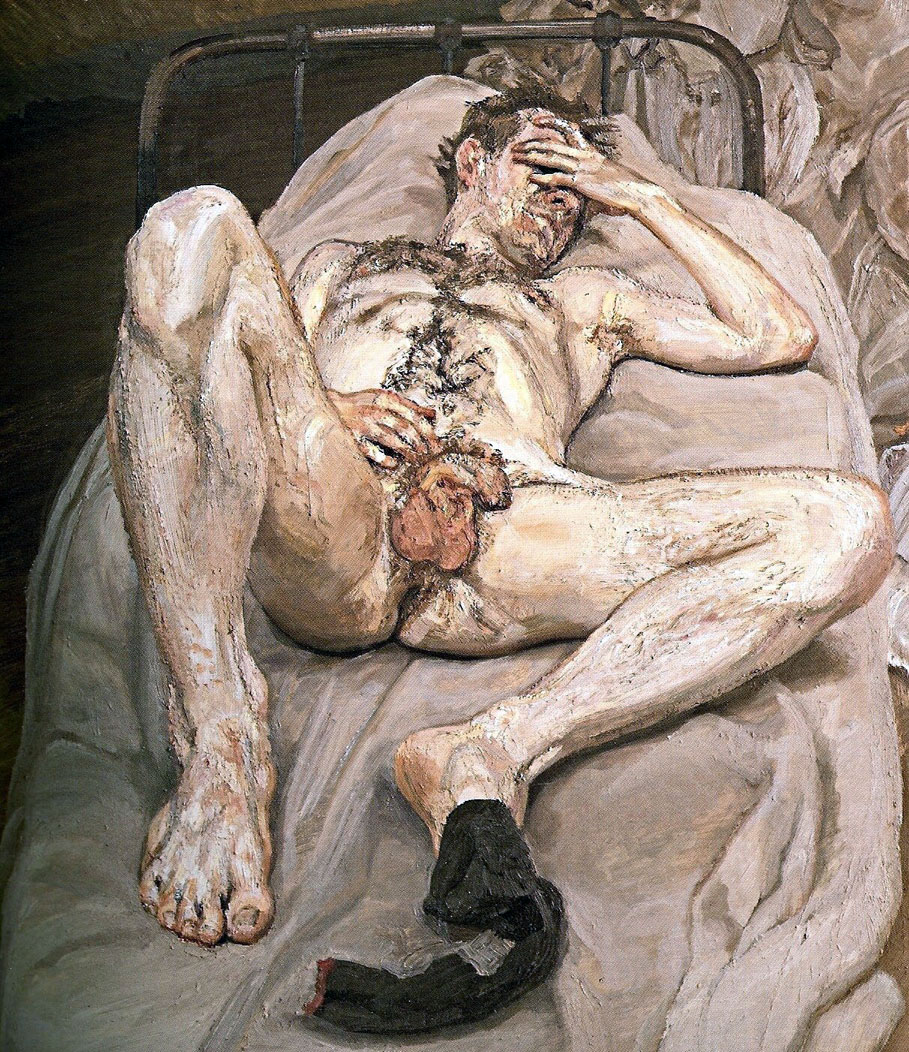
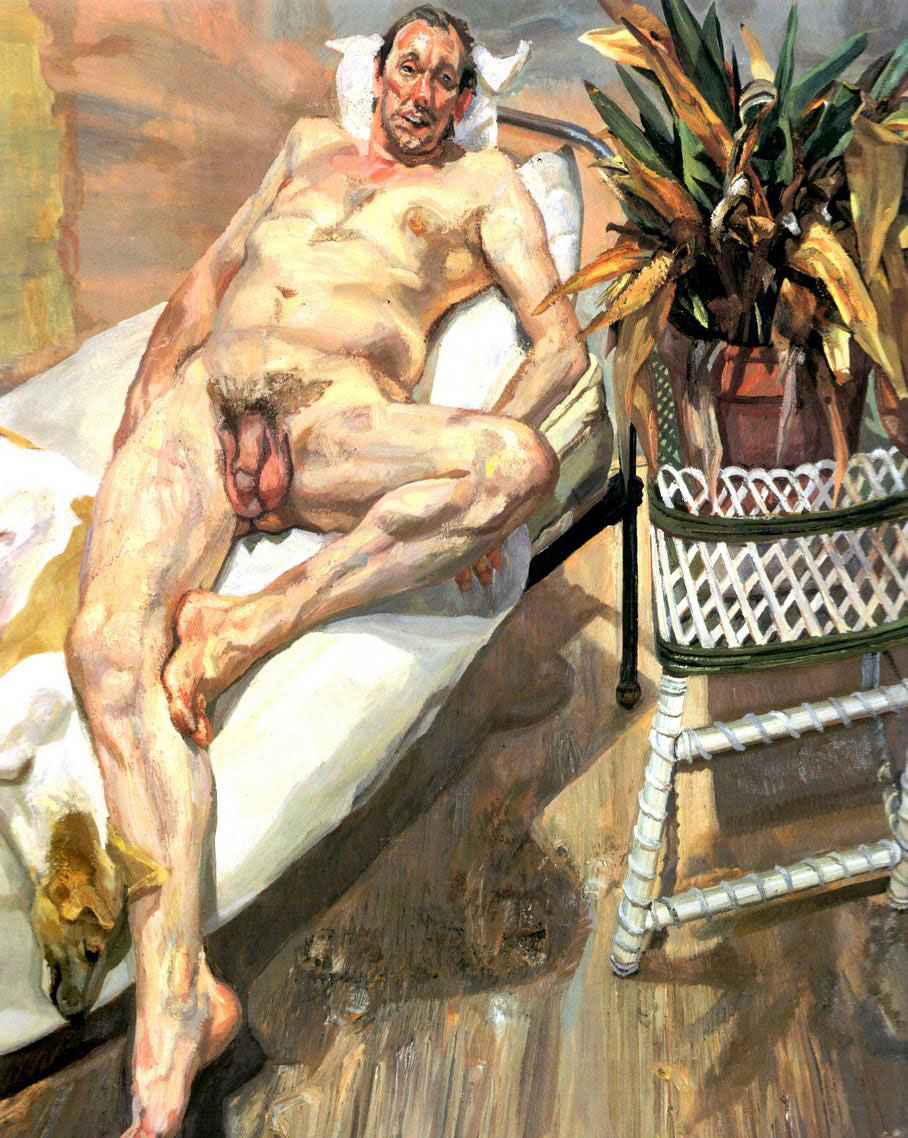
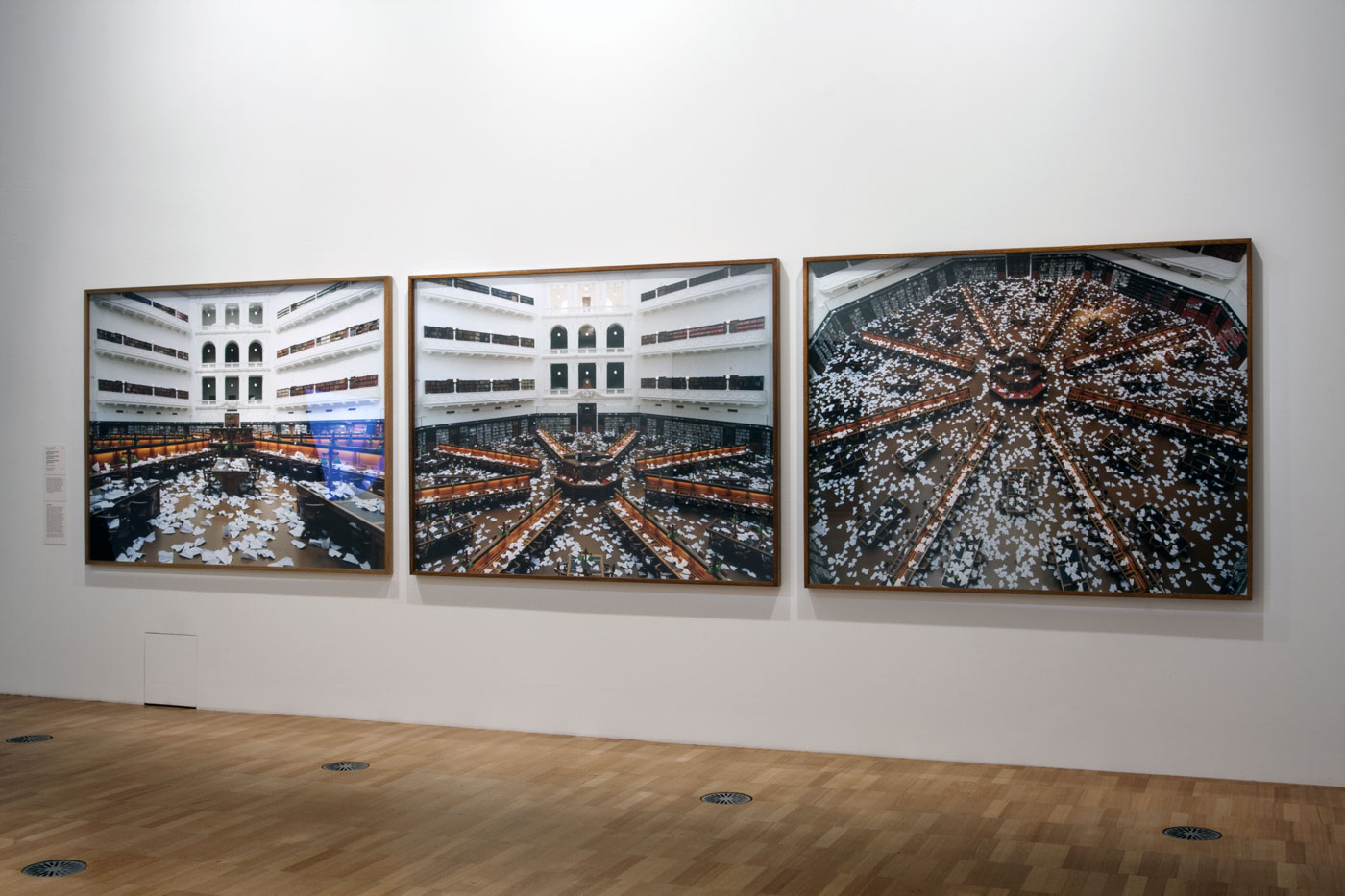
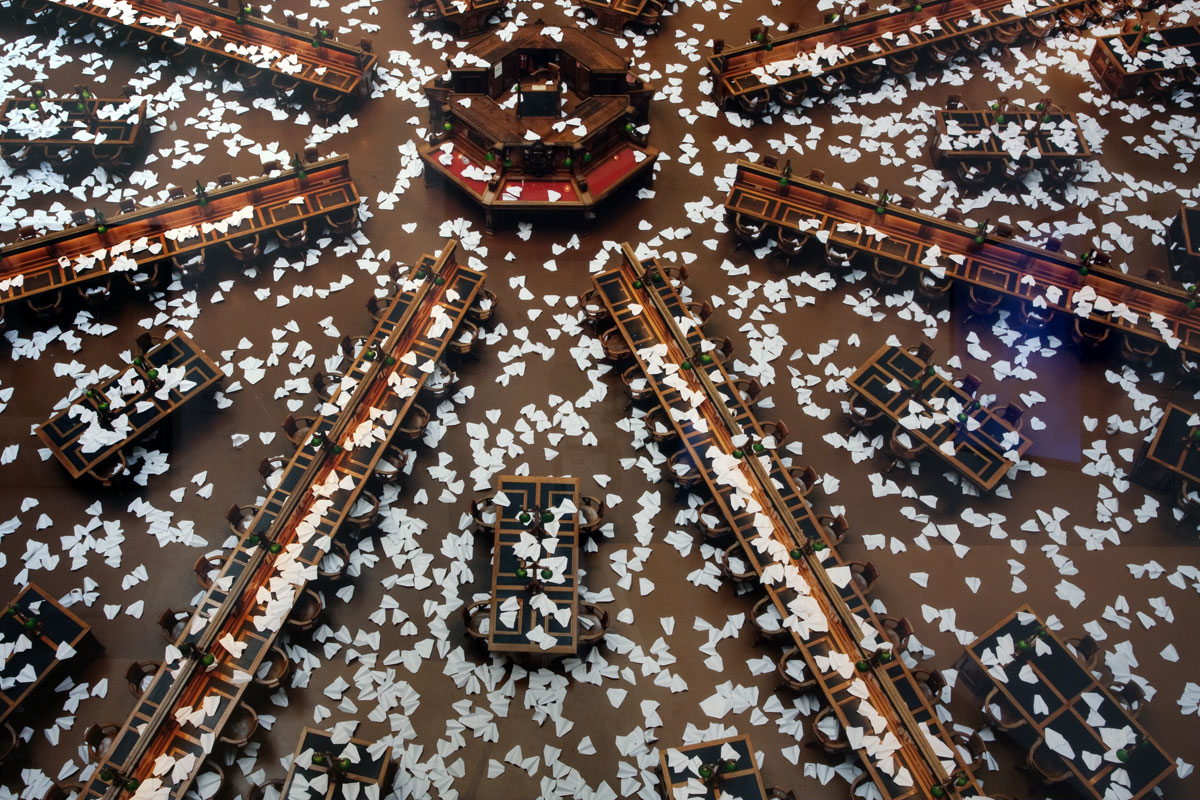
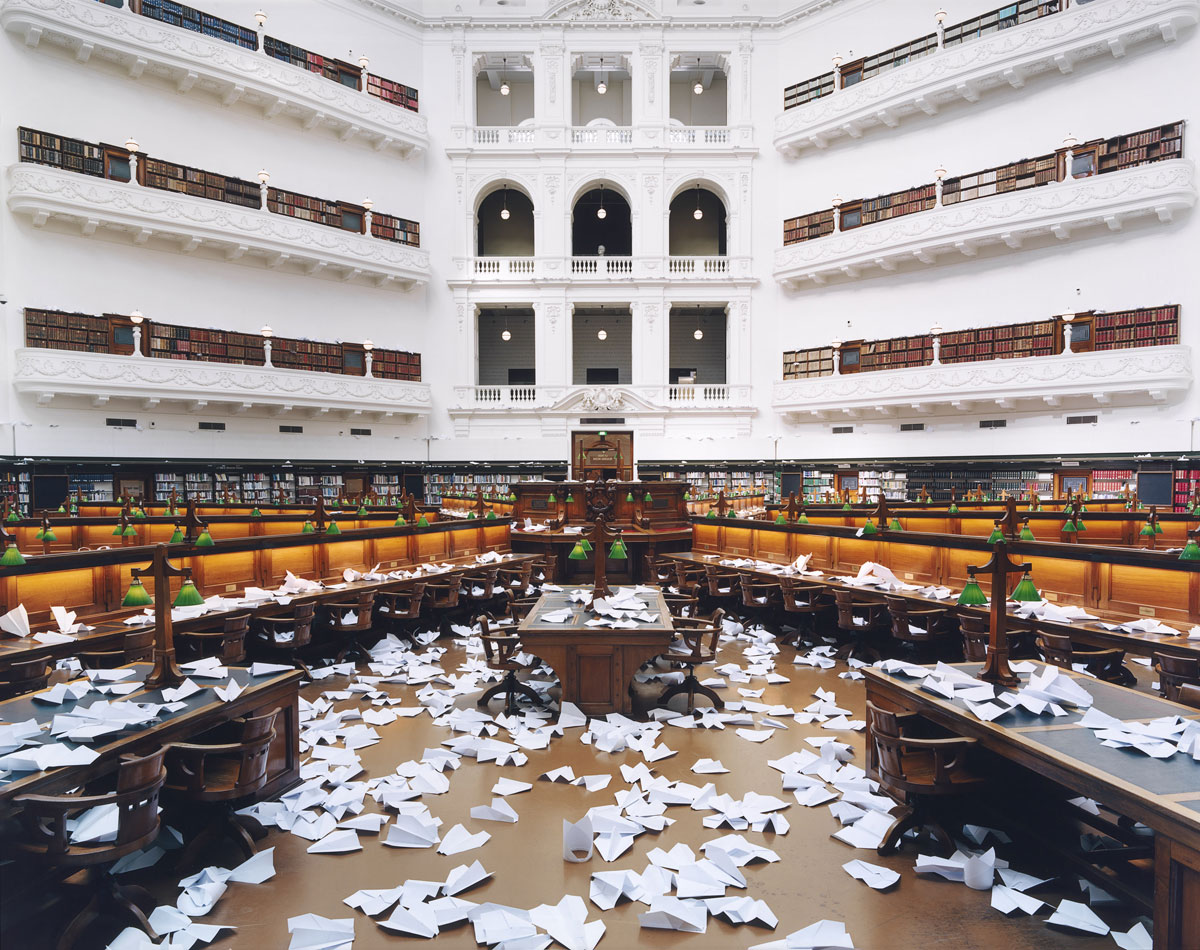


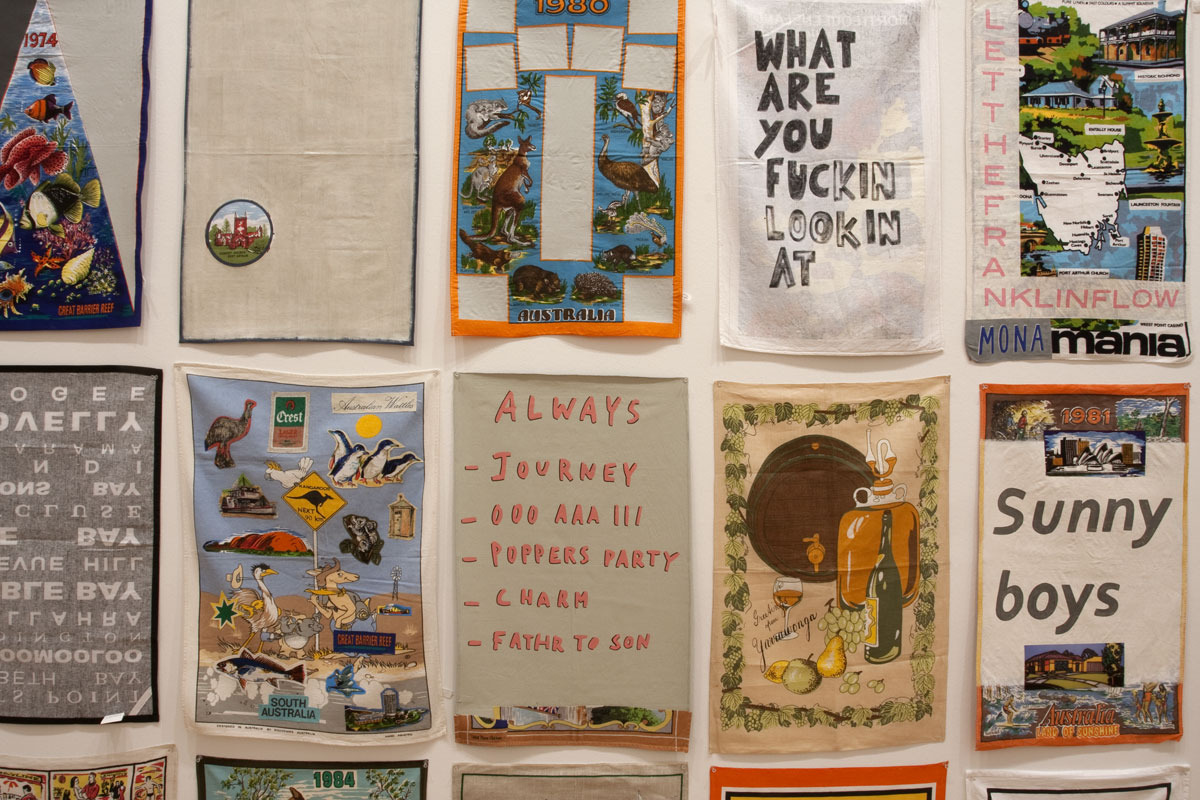


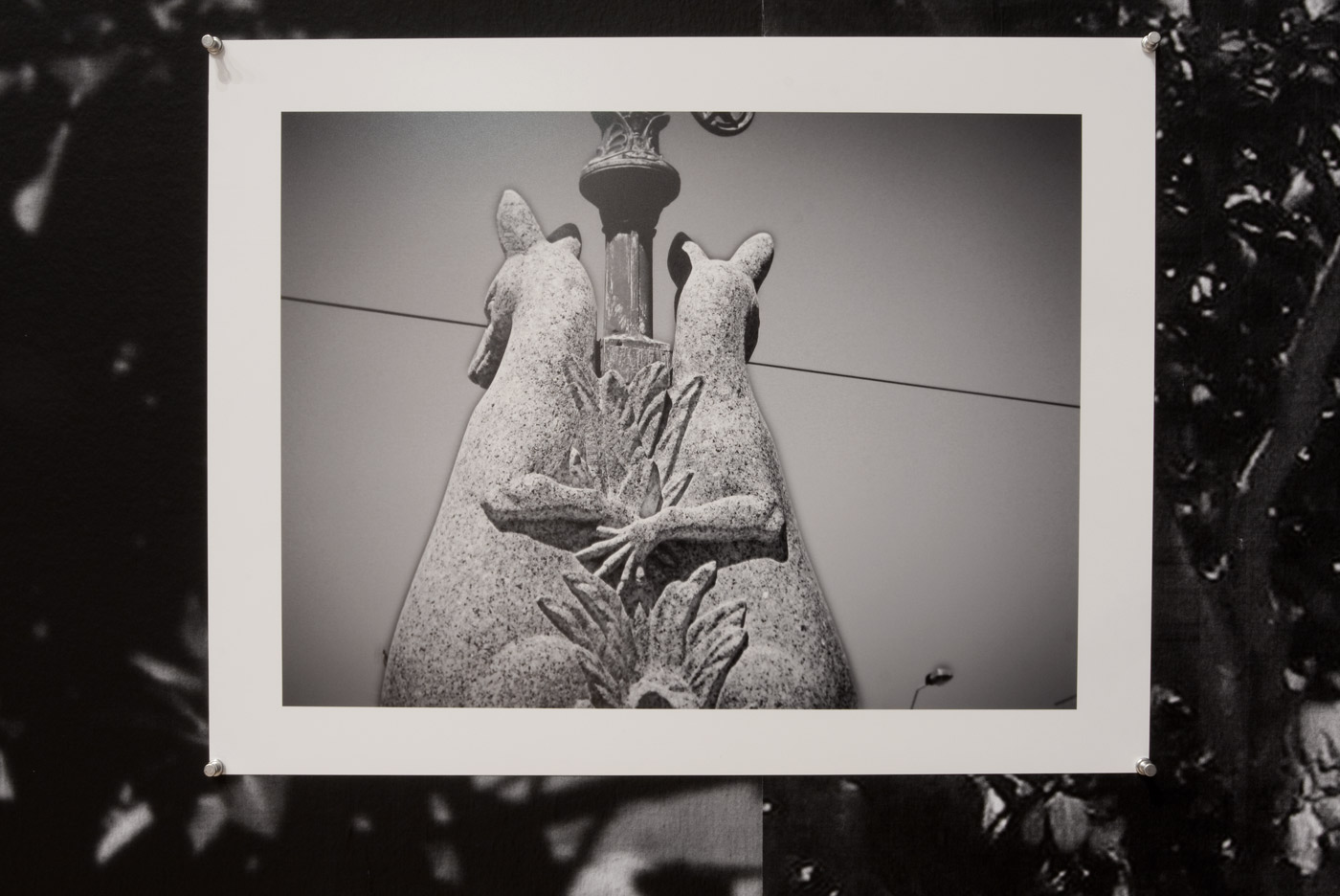


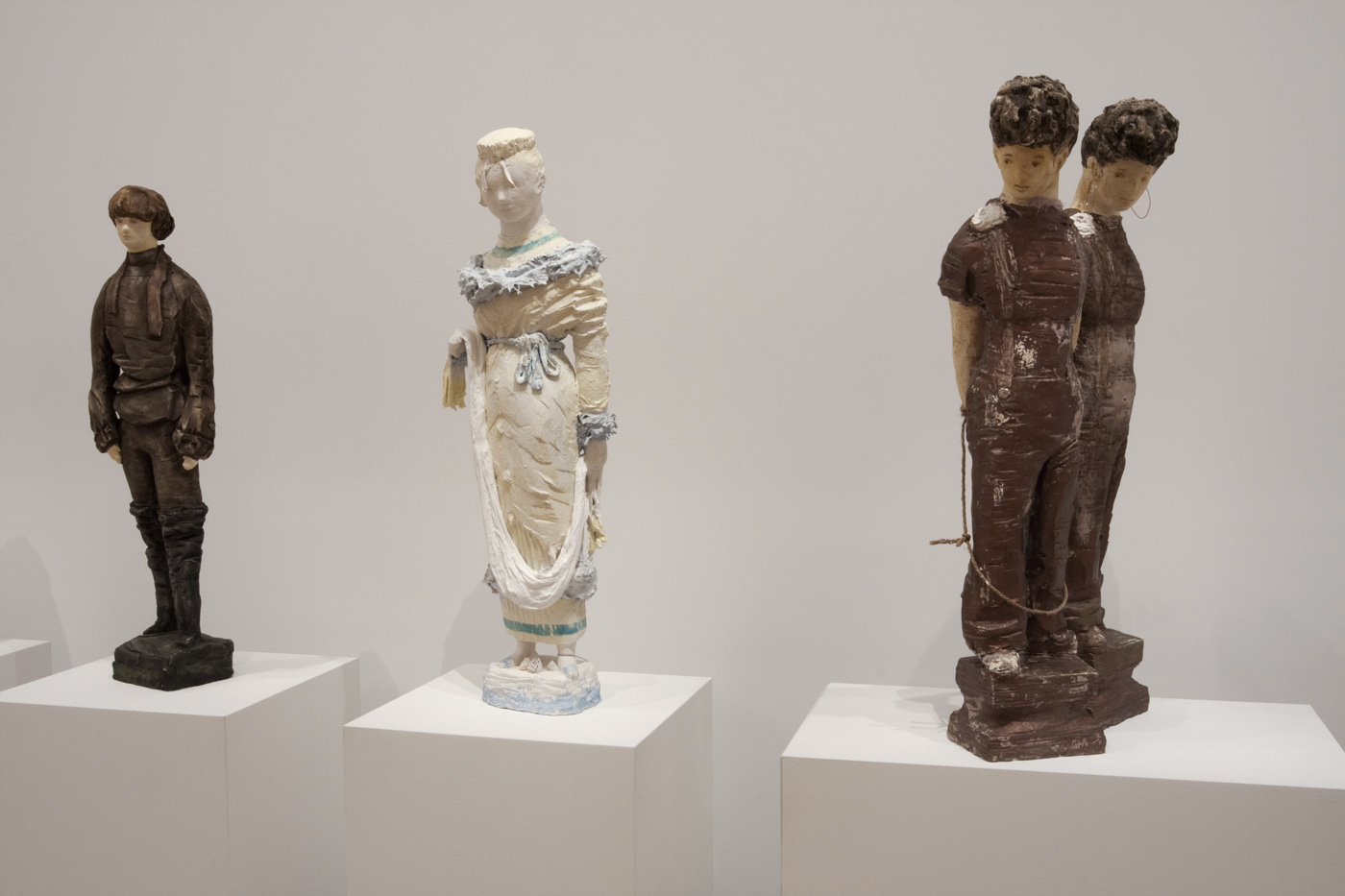

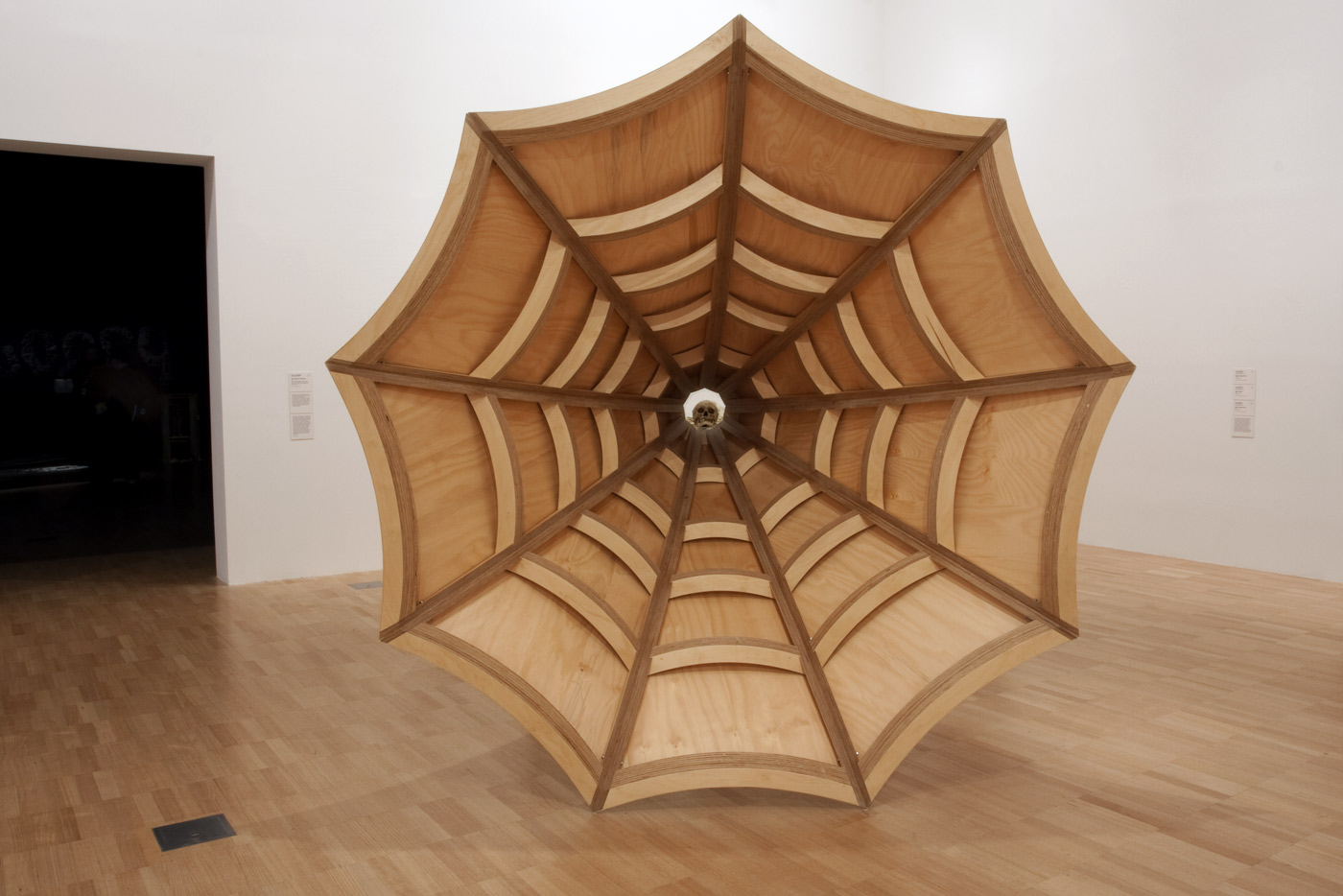


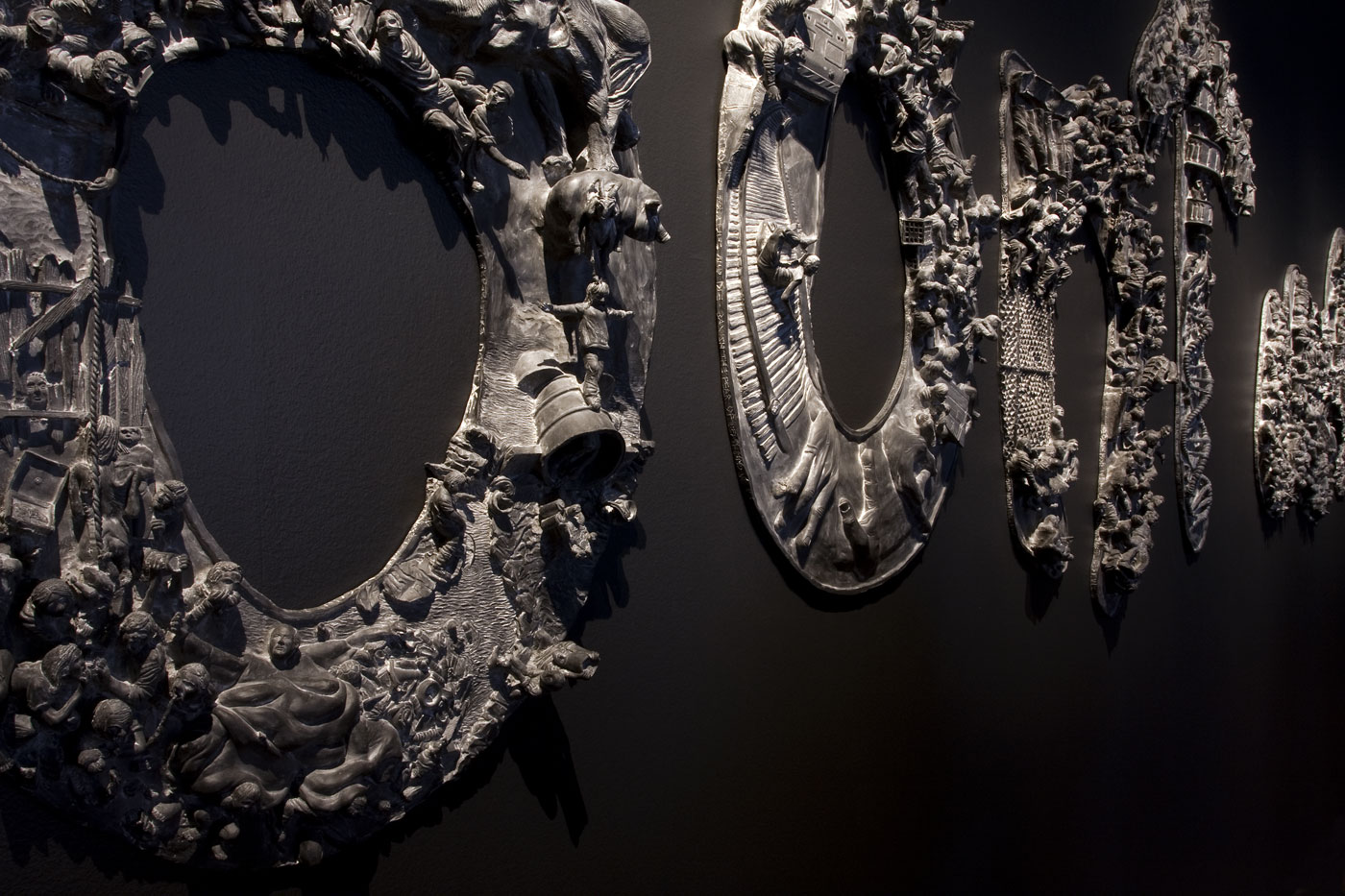

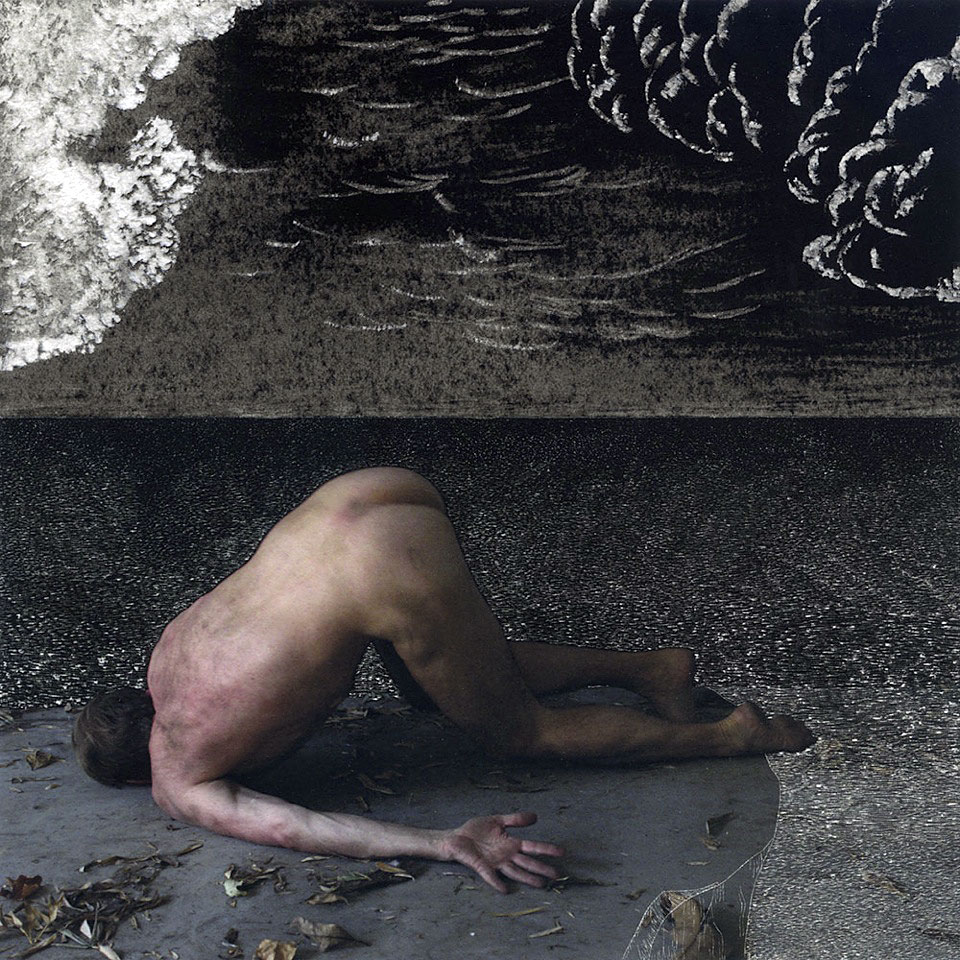
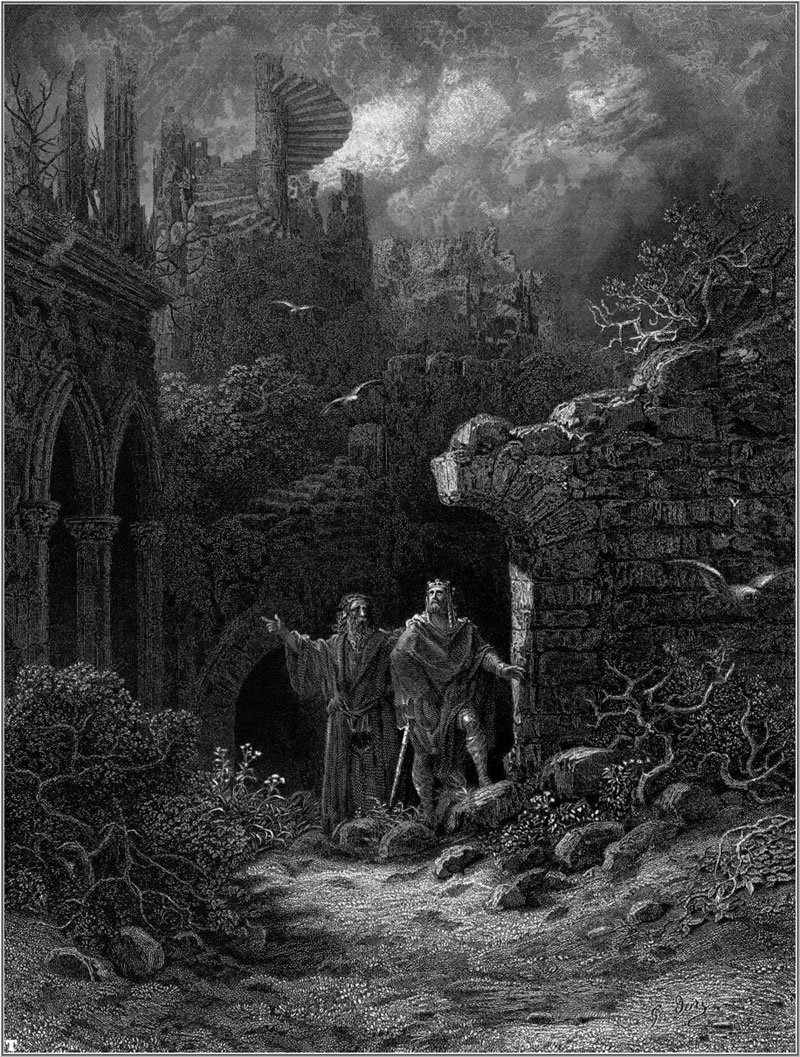
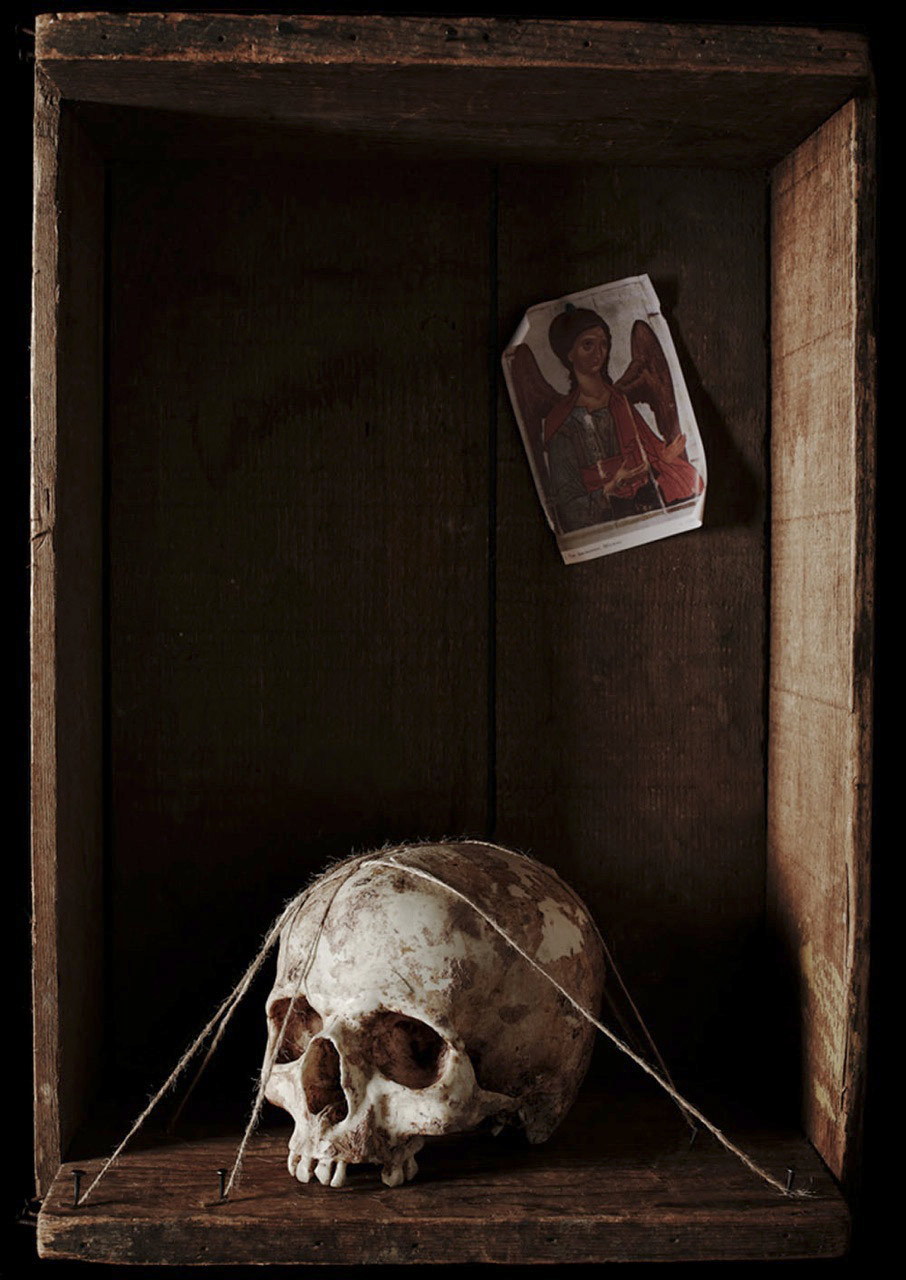
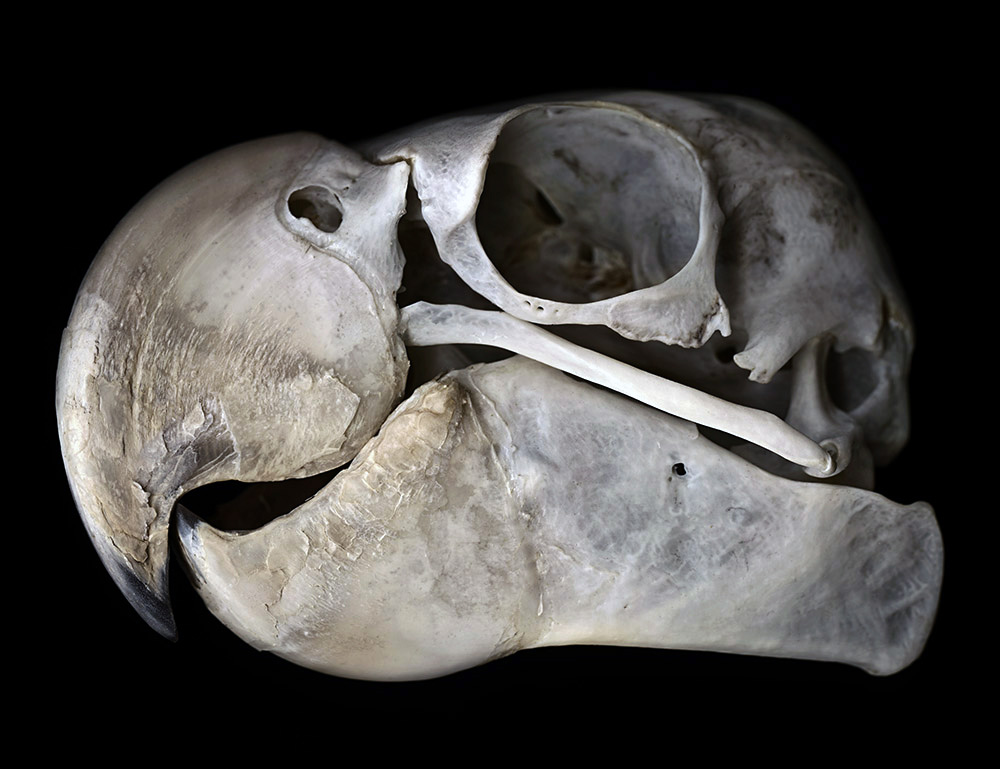
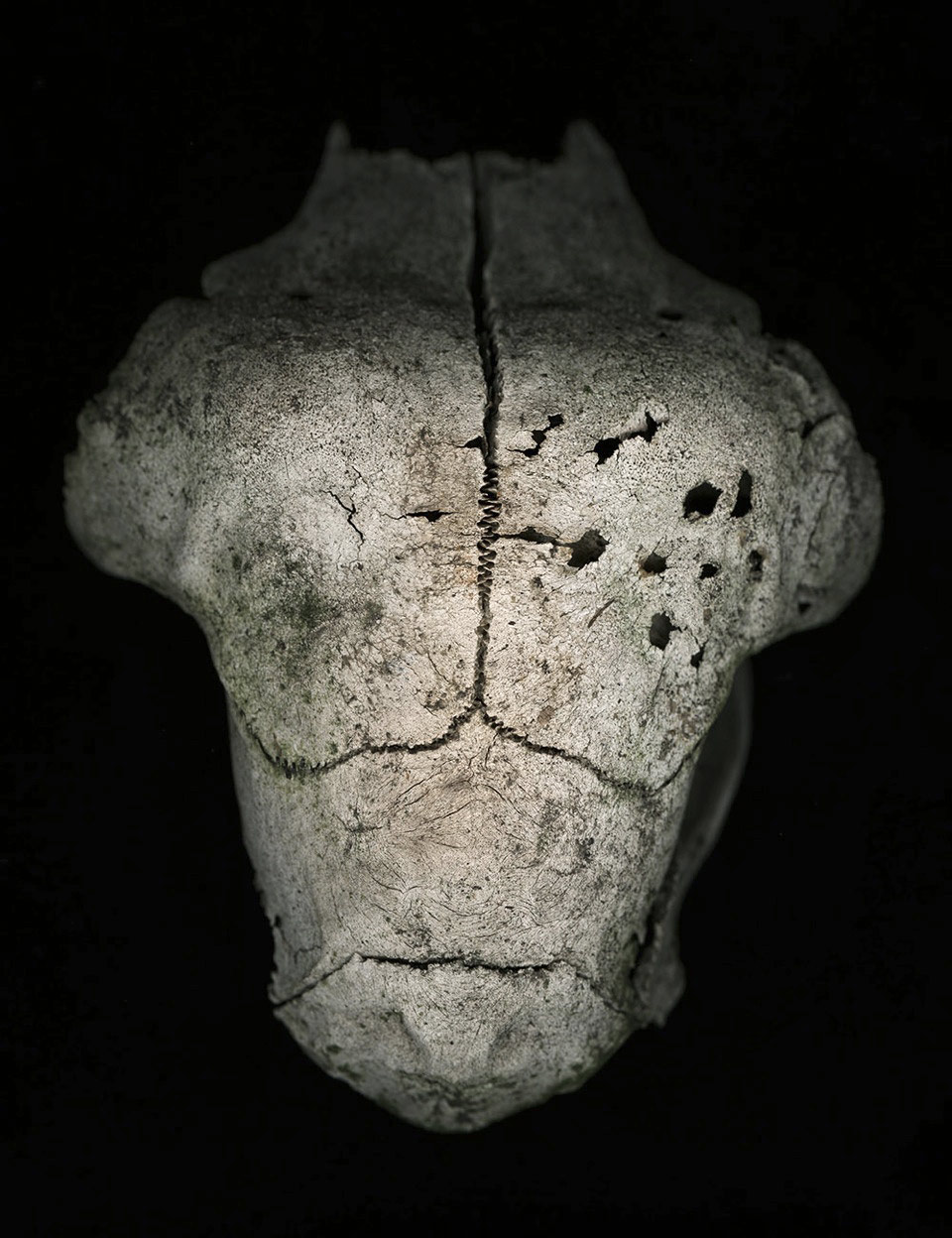
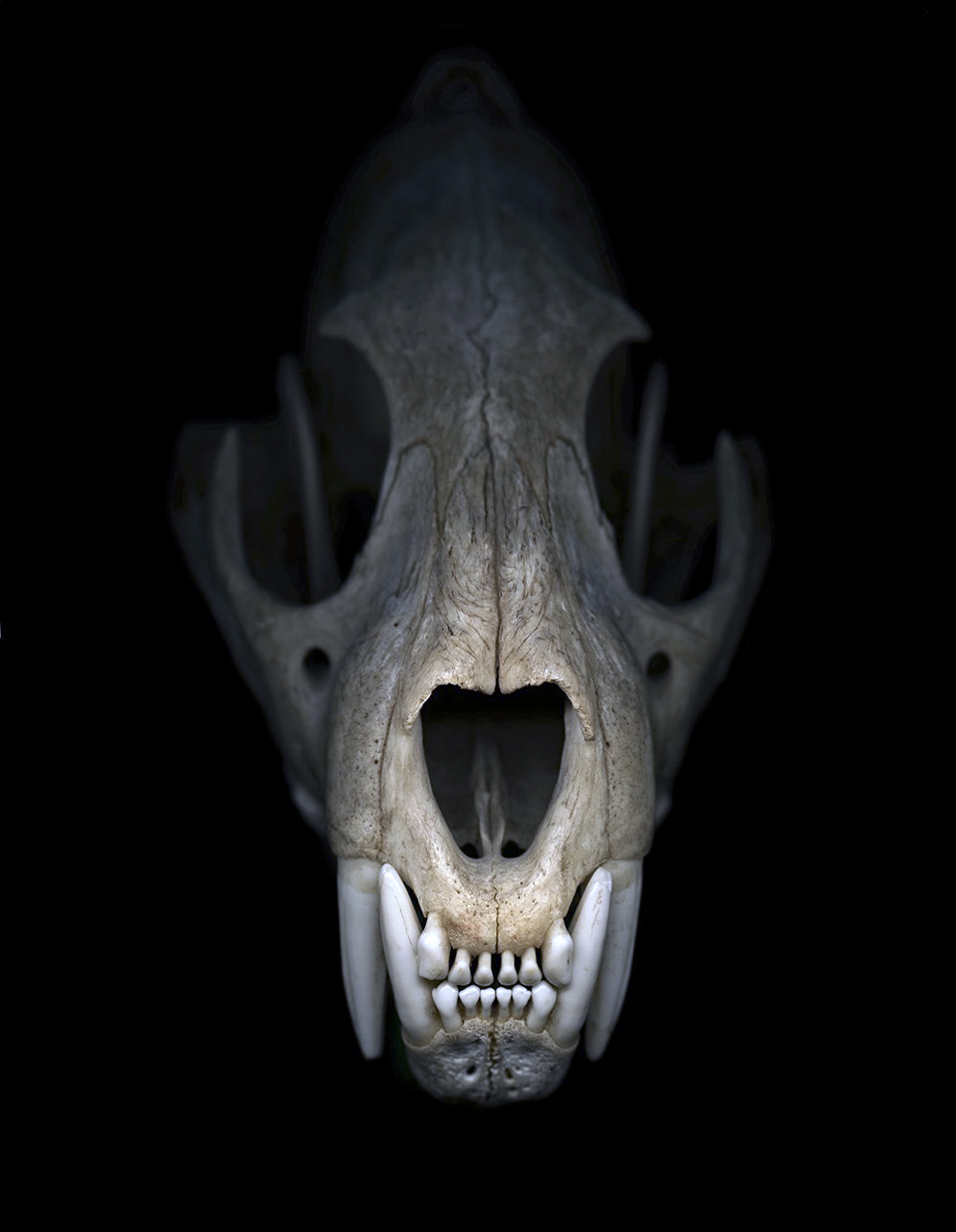



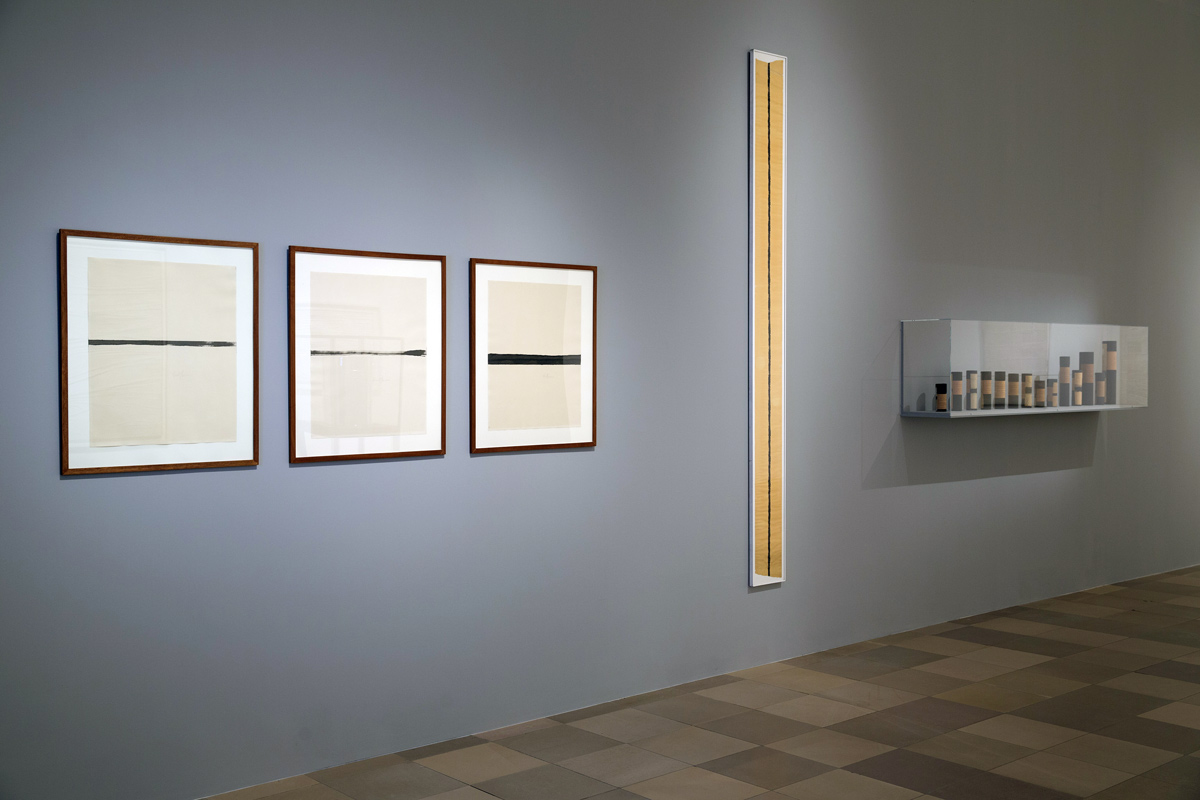


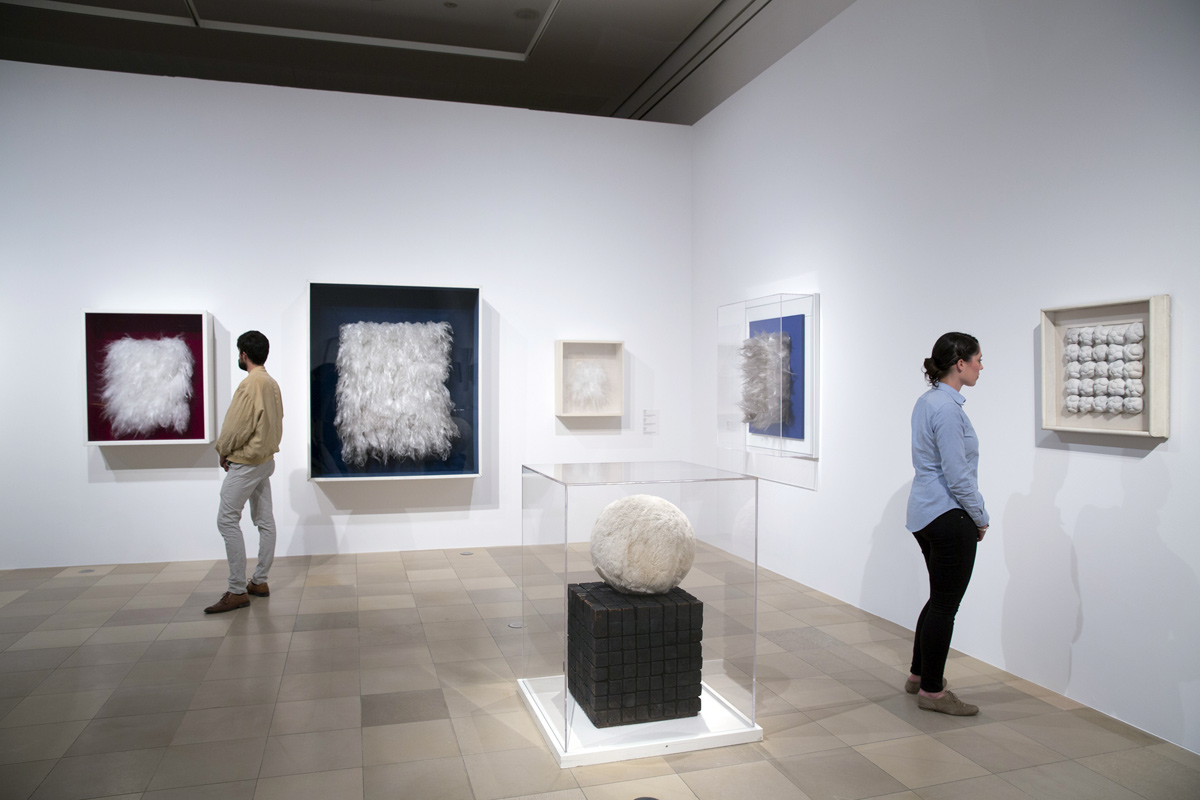


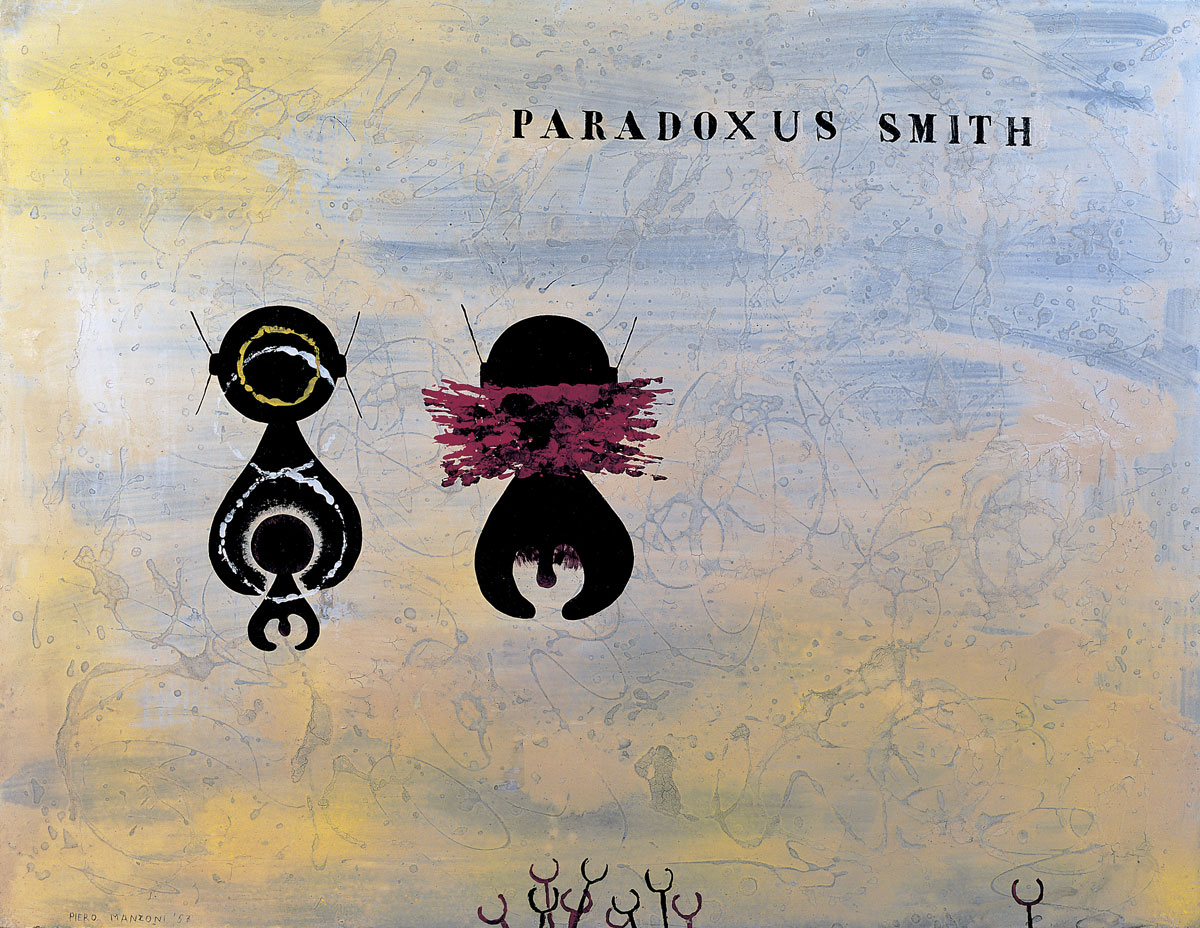


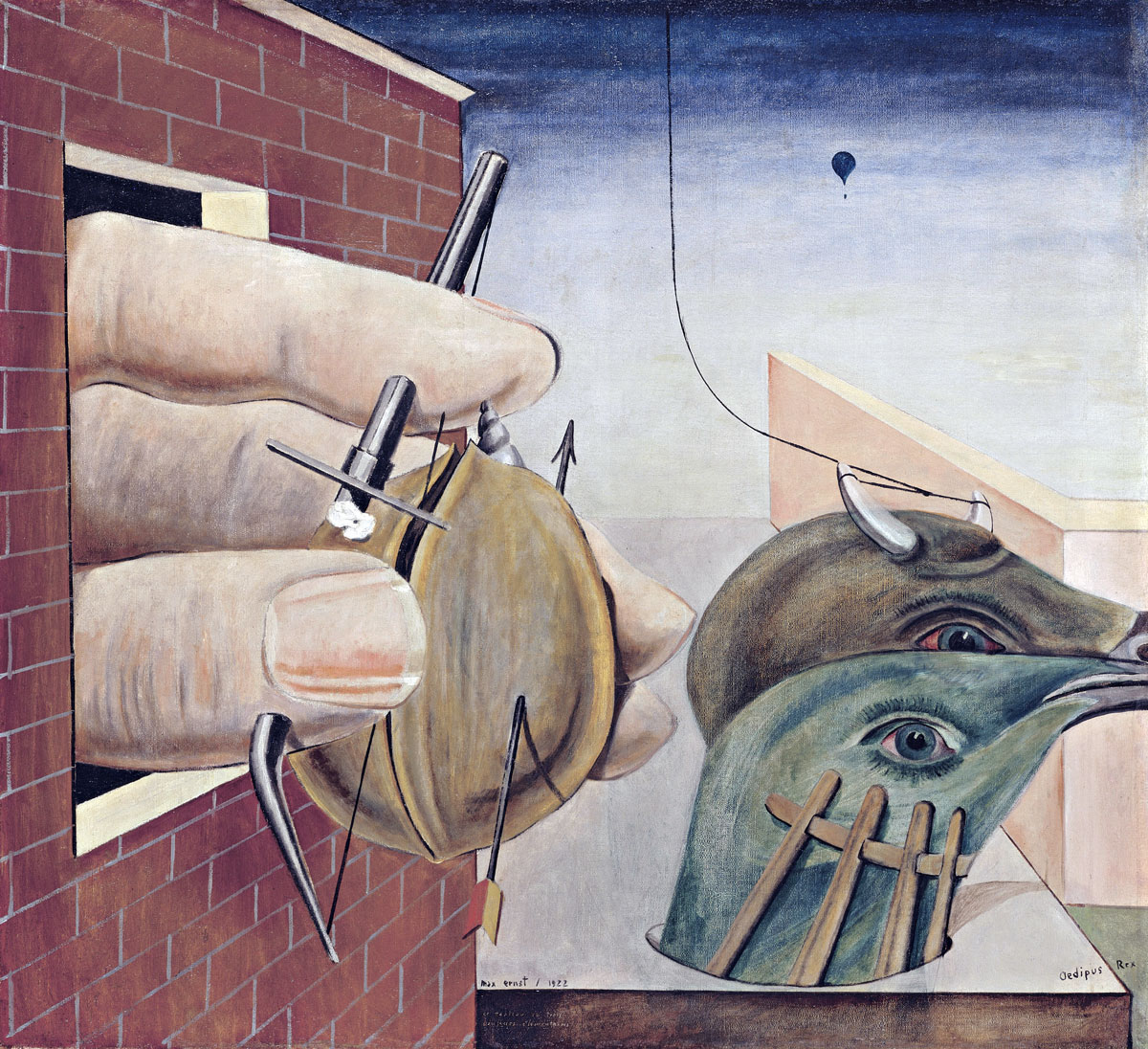


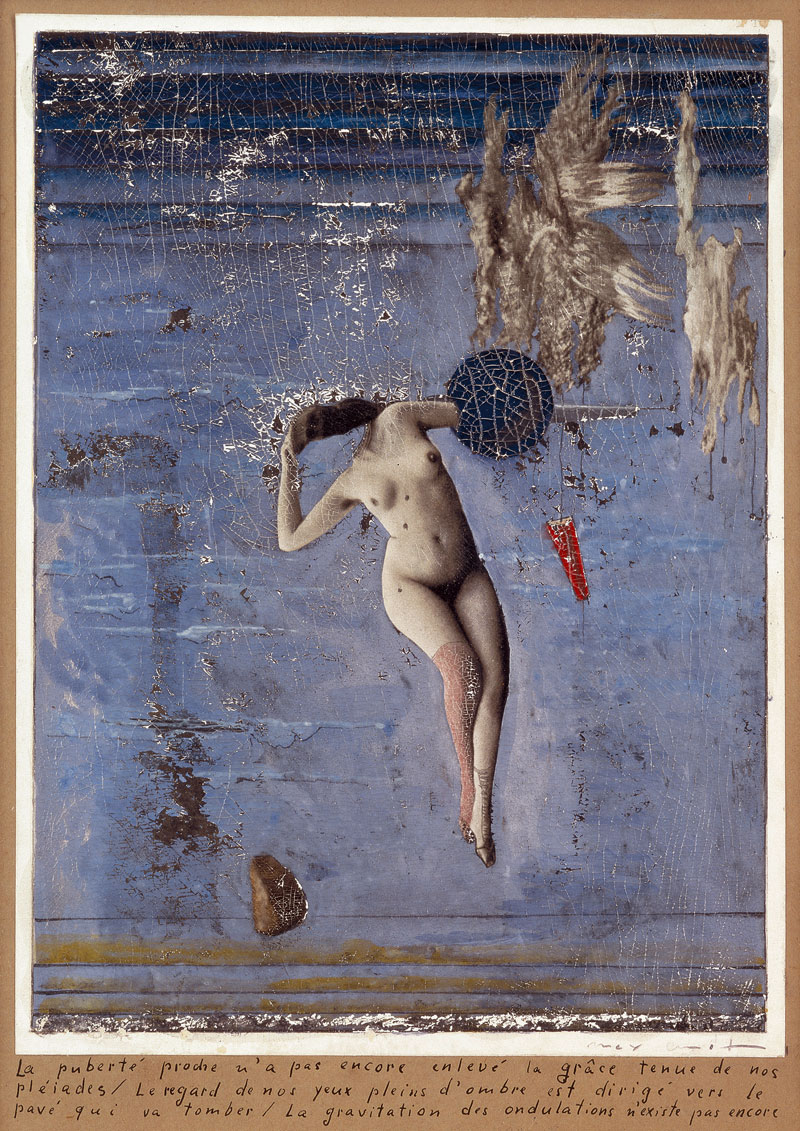


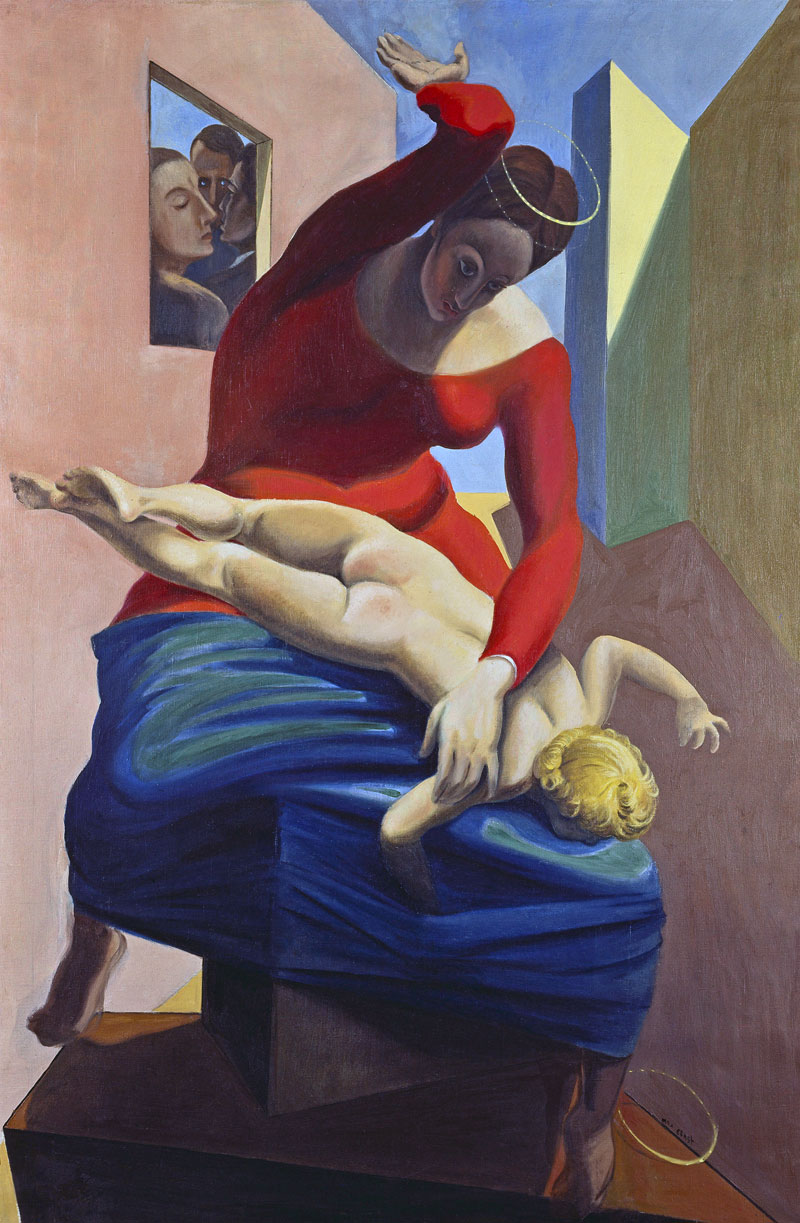


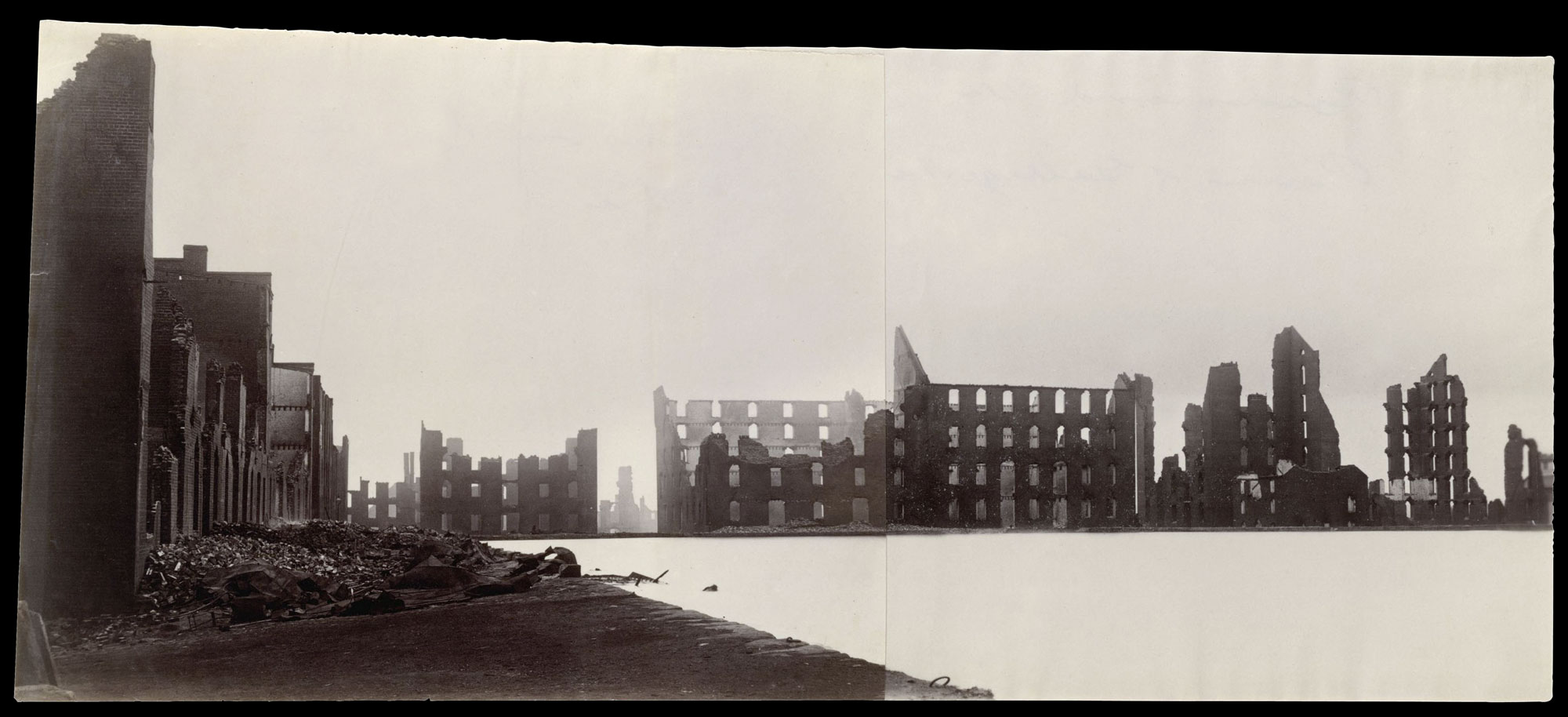
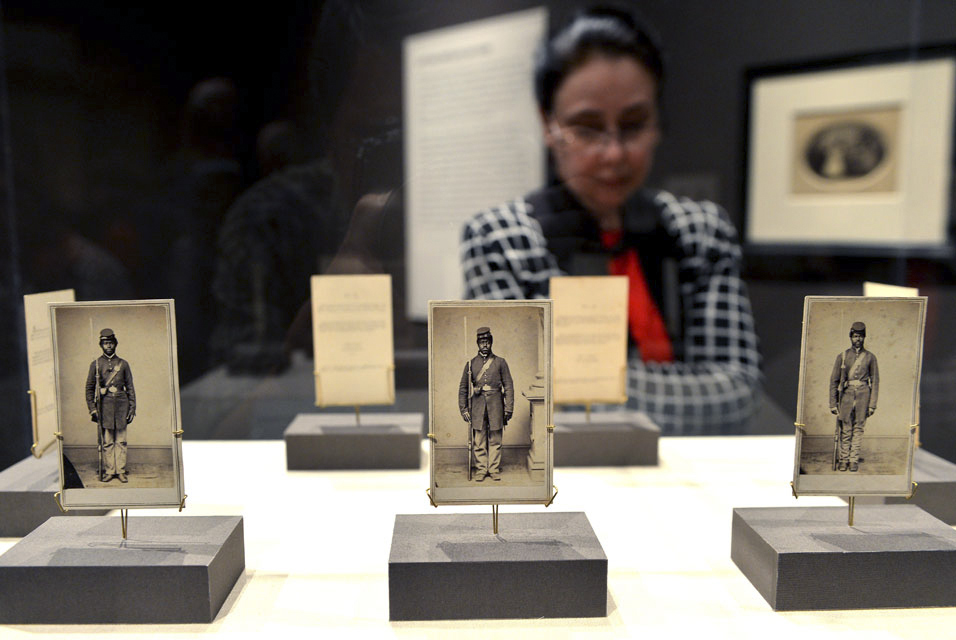


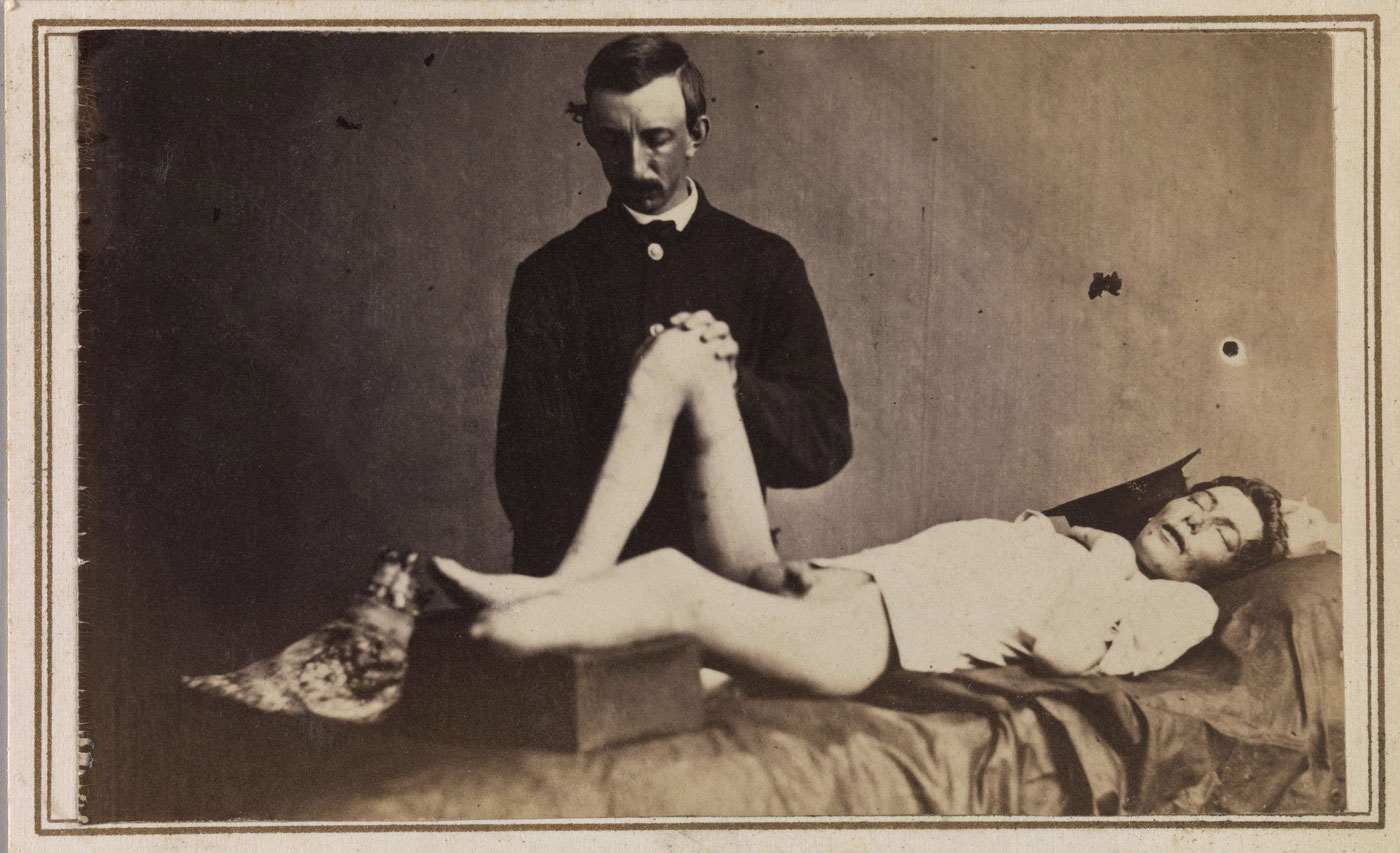


![Unknown (American) '[Broadside for the Capture of John Wilkes Booth, John Surratt, and David Herold]' April 20, 1865](https://artblart.com/wp-content/uploads/2013/08/broadside-for-the-capture-of-john-wilkes-booth-web.jpg "Unknown (American) '[Broadside for the Capture of John Wilkes Booth, John Surratt, and David Herold]' April 20, 1865")






![Unknown photographer (American) '[Private James House with Fighting Knife, Sixteenth Georgia Cavalry Battalion, Army of Tennessee]' 1861-1862?](https://artblart.com/wp-content/uploads/2013/08/39-james-house-web.jpg "Unknown photographer (American) '[Private James House with Fighting Knife, Sixteenth Georgia Cavalry Battalion, Army of Tennessee]' 1861-1862?")
![Unknown photographer (American) '[Private James House with Fighting Knife, Sixteenth Georgia Cavalry Battalion, Army of Tennessee]' 1861-1862? (detail)](https://artblart.com/wp-content/uploads/2013/08/39-james-house-detail.jpg "Unknown photographer (American) '[Private James House with Fighting Knife, Sixteenth Georgia Cavalry Battalion, Army of Tennessee]' 1861-1862? (detail)")

![Unknown photographer (American) '[Private Thomas Gaston Wood, Drummer, Company H, "Walton Infantry," Eleventh Regiment Georgia Volunteer Infantry]' 1861](https://artblart.com/wp-content/uploads/2013/08/private-thomas-gaston-wood-web.jpg "Unknown photographer (American) '[Private Thomas Gaston Wood, Drummer, Company H, \"Walton Infantry,\" Eleventh Regiment Georgia Volunteer Infantry]' 1861")




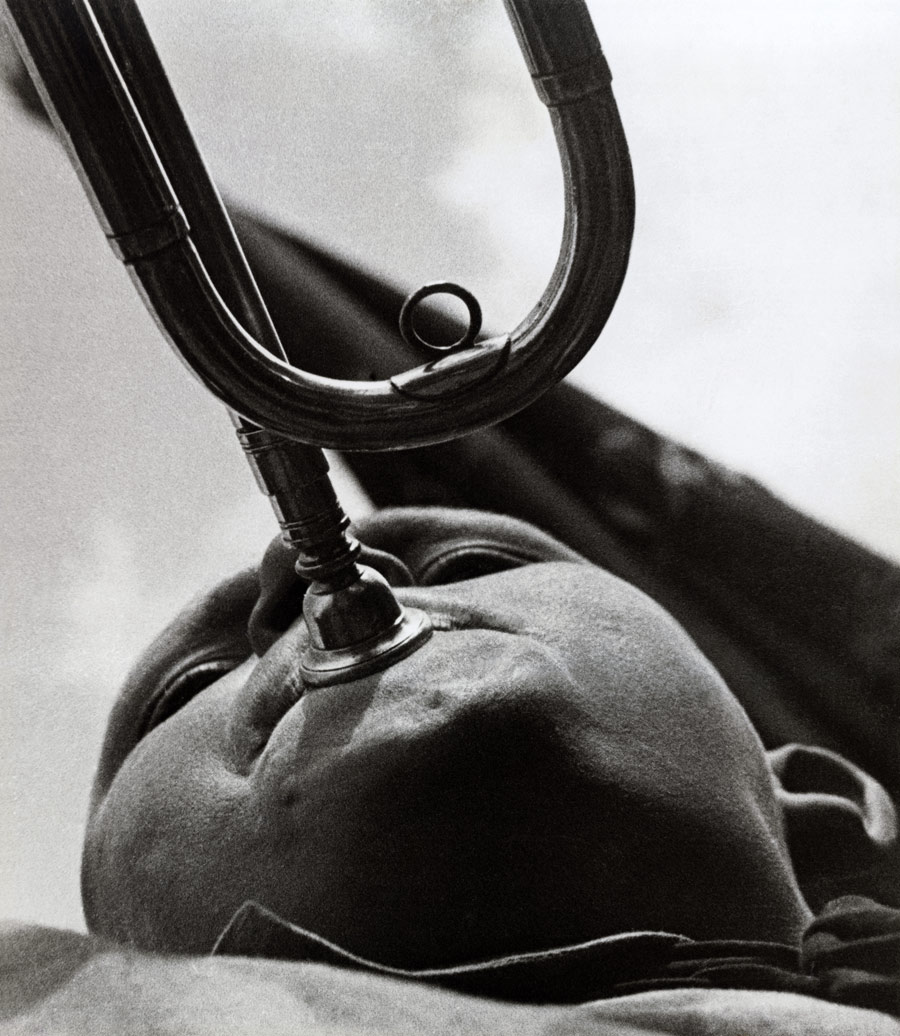


You must be logged in to post a comment.