Exhibition: ‘Brassaï: Secret Paris’ at Heide Museum of Modern Art, Melbourne

Exhibition dates: 25th July – 15th November, 2026

Co-curators: Lesley Harding, Heide Artistic Director; Philippe Ribeyrolles, manager and curator of the Estate Brassaï; and Emmanuelle de l’Ecotais, nephew of the artist, and renowned French photography curator


Brassaï (Hungarian-French, 1899-1984) 'Vue à travers le pont Royal en direction du pont Solférino' (View through the pont Royal toward the pont Solférino) c. 1933


Brassaï (Hungarian-French, 1899-1984)
Vue à travers le pont Royal en direction du pont Solférino (View through the pont Royal toward the pont Solférino)
c. 1933
Gelatin silver print
Estate Brassaï Succession, Philippe Ribeyrolles


Atmosphere

This is a superb exhibition of the photographs of Hungarian-French photographer, sculptor, medallist, writer, and filmmaker Brassaï (1899-1984) at Heide Museum of Modern Art.

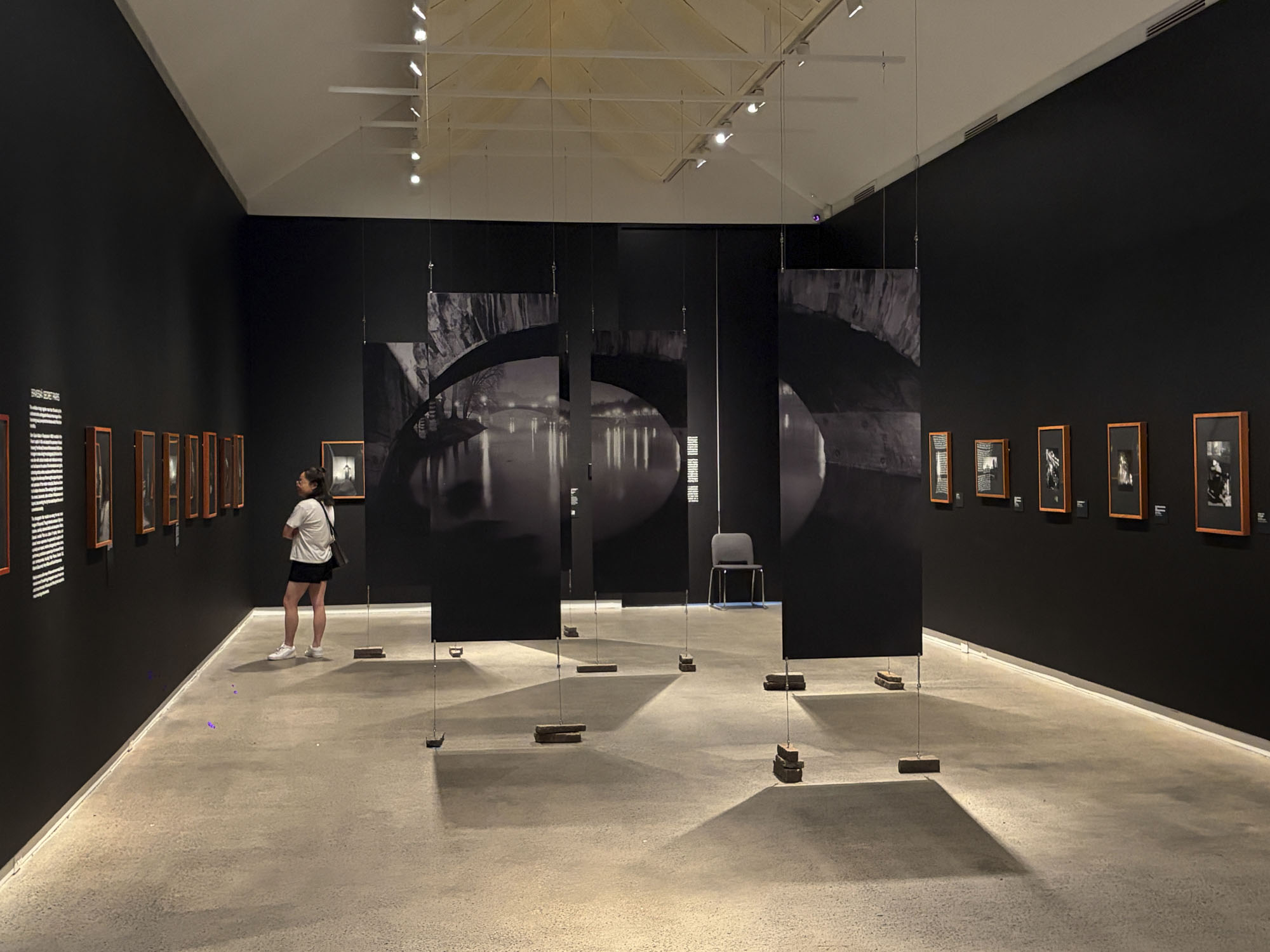
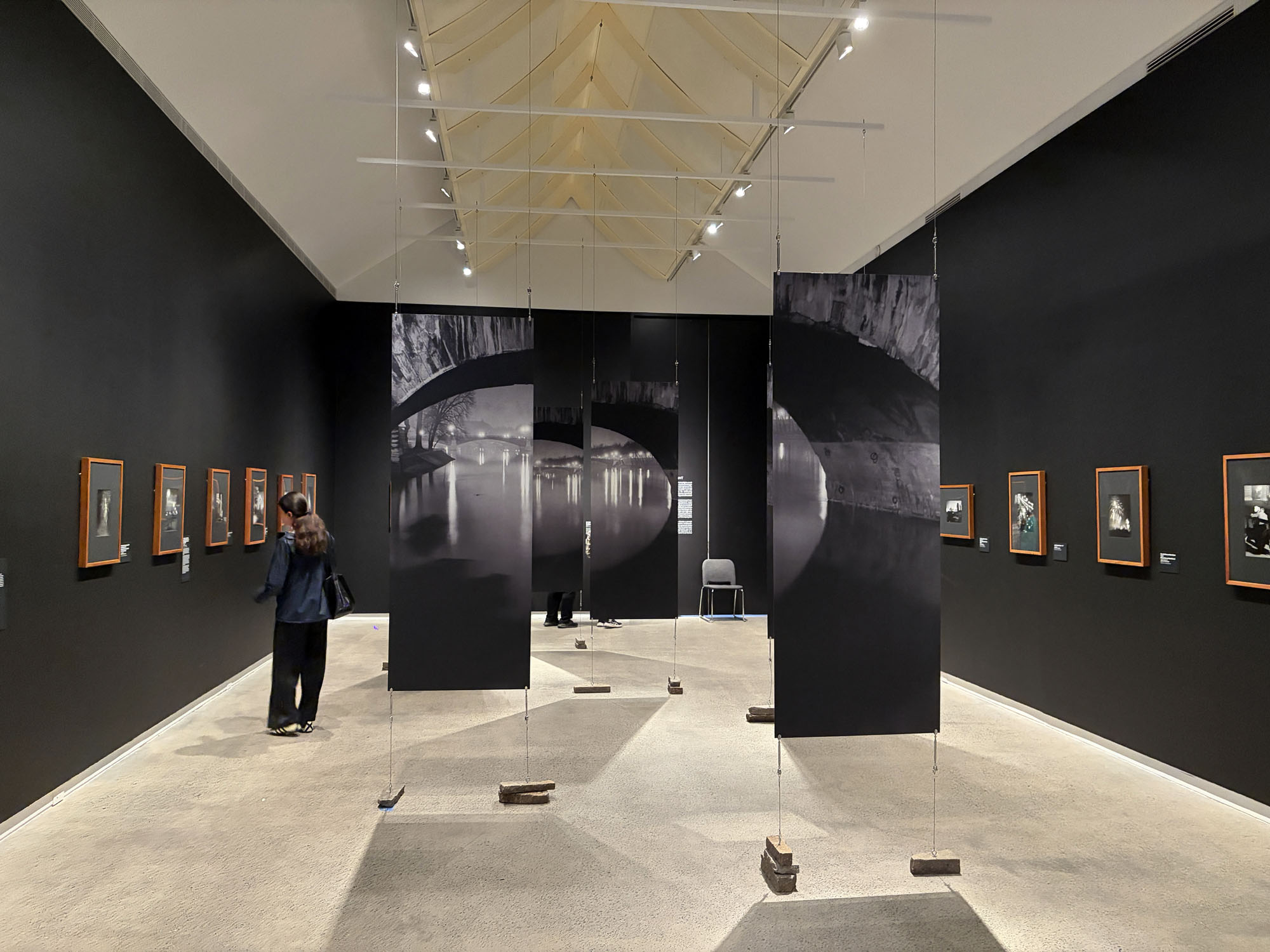
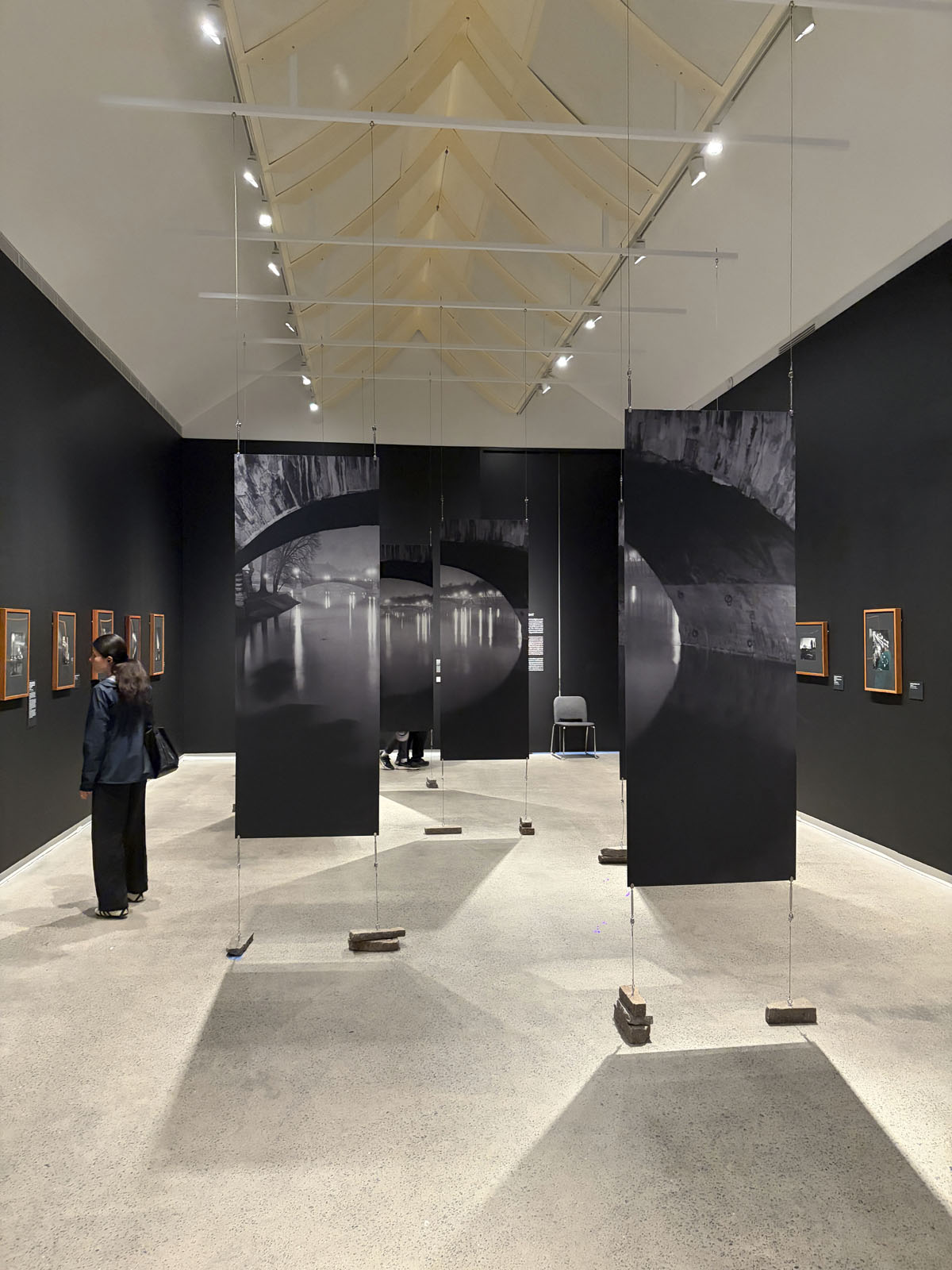
What a pleasure it is to wander the beautiful installation, the hanging, fragmented banner images forming a shimmering whole, much like the atmosphere of Brassaï’s mainly vintage photographs presented in the exhibition.

There is a certain feeling to Brassaï’s vintage prints and I have been thinking about this a lot since seeing the exhibition. And the word I came up with is, sfumato.

“Sfumato (derived from the Italian word sfumare, meaning “to tone down” or “to evaporate like smoke”) is an Italian Renaissance painting technique that softens the transitions between colours and tones, creating a hazy, smoky effect without harsh lines, borders, or abrupt outlines.” (Wikipedia)

Let us be clear, this is not Pictorialism with all its softness and painterly effect, but in Brassaï’s vintage prints a feeling, a feeling, of soft tonality in sharpness – no heavy blacks or strident whites – just a wonderful “atmosphere” of night, presence, people, smoky bars, balls, of degustation – a sequence of many small portions of the urban landscape.

Bill Brandt, who was so inspired by Brassaï’s book Paris de Nuit (1933) that he produced his book A Night in London in 1938, wanted atmosphere to not merely aim to represent a place but to capture its very essence in a single image, to provoke in the viewer an emotional response from the contemplation of the work: “Thus it was I found atmosphere to be the spell that charged the commonplace with beauty. … I only know it is a combination of elements … which reveals the subject as familiar and yet strange.”1

This same smokiness, atmosphere, can be observed in the vintage prints of Brassaï in the exhibition, but not in the similarly sized later reprints. They somehow don’t “hold” to the same feeling even though they are well printed. The tonality and sfumato are somehow lost. The photographic paper of the time, the developer, Brassaï’s way of visualising the print, and knowing exactly what he wanted to say in the final print. All of these things combine to make the whole.

My only quibble, and it’s a very small one, is the title of the exhibition: Secret Paris. A secret means, among other things, a fact or piece of knowledge intentionally concealed from others or known only to a specific person or small group.

None of this society was “intentionally” concealed from others, and it certainly wasn’t a secret from those who took part in the culture of Montparnasse. To presume it was a secret is to buy into a conservative, patriarchal world view in which the government, men and religion hold power over women and heterogeneous people of difference at a time of greater sexual freedom and liberation. The title reinforces this objectification, even today.

While Brassaï was documenting the city that existed beyond the view of conventional society – the intimate gatherings and private moments, the bohemian energy and the inky night time vistas – with “the creative eye of a storyteller” to compile a portrait of a city, these heterotopia2 – spaces that contest, or invert normal society – were well known to those with knowledge of these supposedly hidden dimensions, these counter-sites.

Dr Marcus Bunyan


1/ Anonymous text from Fundación MAPFRE. “Landscapes described,” from the exhibition posting Bill Brandt at the Fundación Mapfre, Madrid, June – August 2021 on Art Blart: art and cultural memory archive, August 22, 2021 [Online] Cited 06/11/2026.

2/ “Michel Foucault introduced the concept of heterotopia (Greek: héteros for “other”, tópos for “place”) to describe real, physical spaces that function as “worlds within worlds” or counter-sites. Unlike utopias, which are completely unreal or imagined spaces, heterotopias exist in reality and mirror, contest, or invert normal society.”

Anonymous. “Heterotopia (space),” on the Wikipedia website Nd [Online] Cited 06/11/2026


All installation photographs © Marcus Bunyan. Please click on the photographs for a larger version of the image.


Walk through of the exhibition Brassaï: Secret Paris at Heide Museum of Modern Art, Melbourne, 25th July – 15th November, 2026
Video: Marcus Bunyan


Main gallery
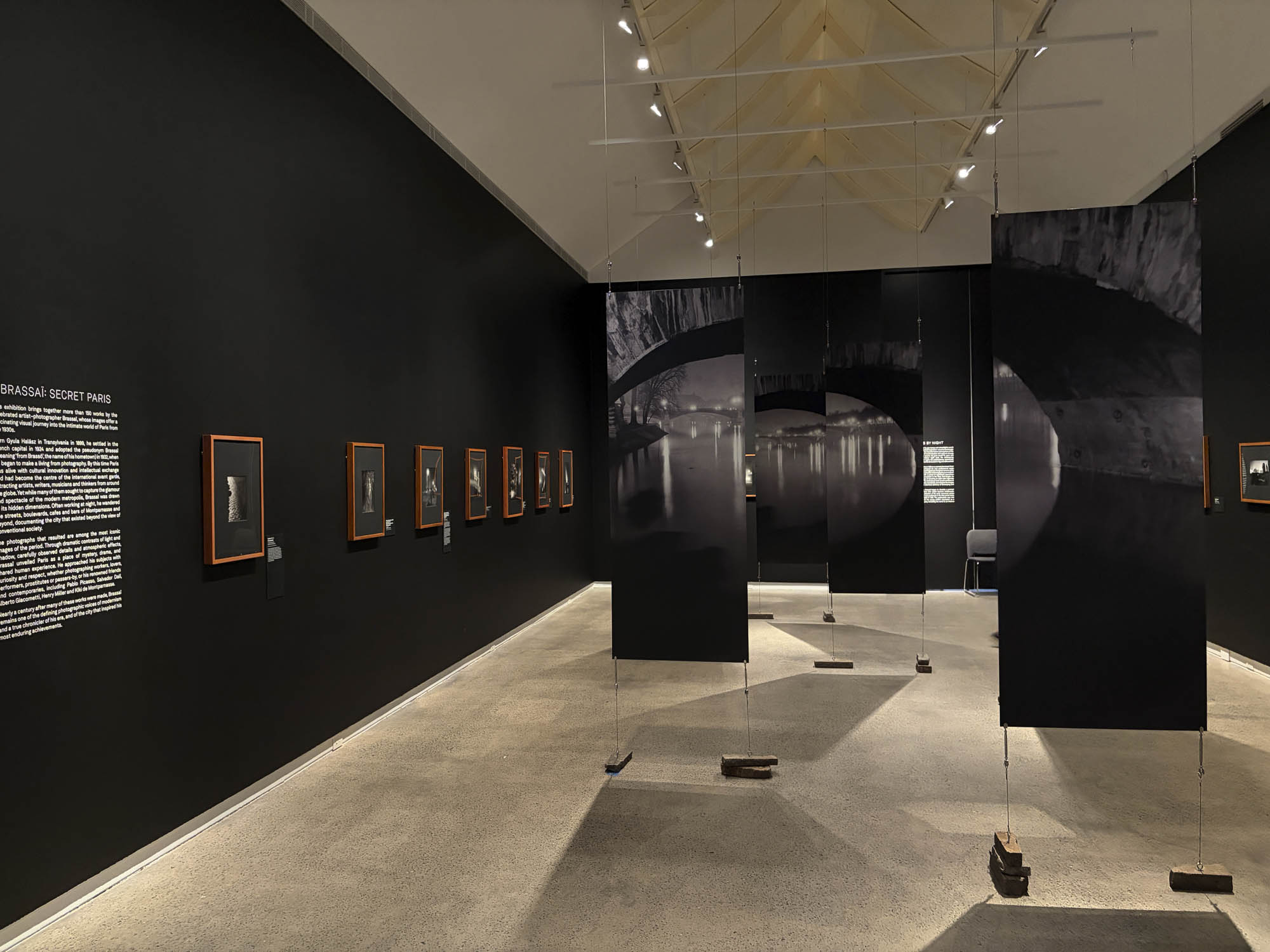
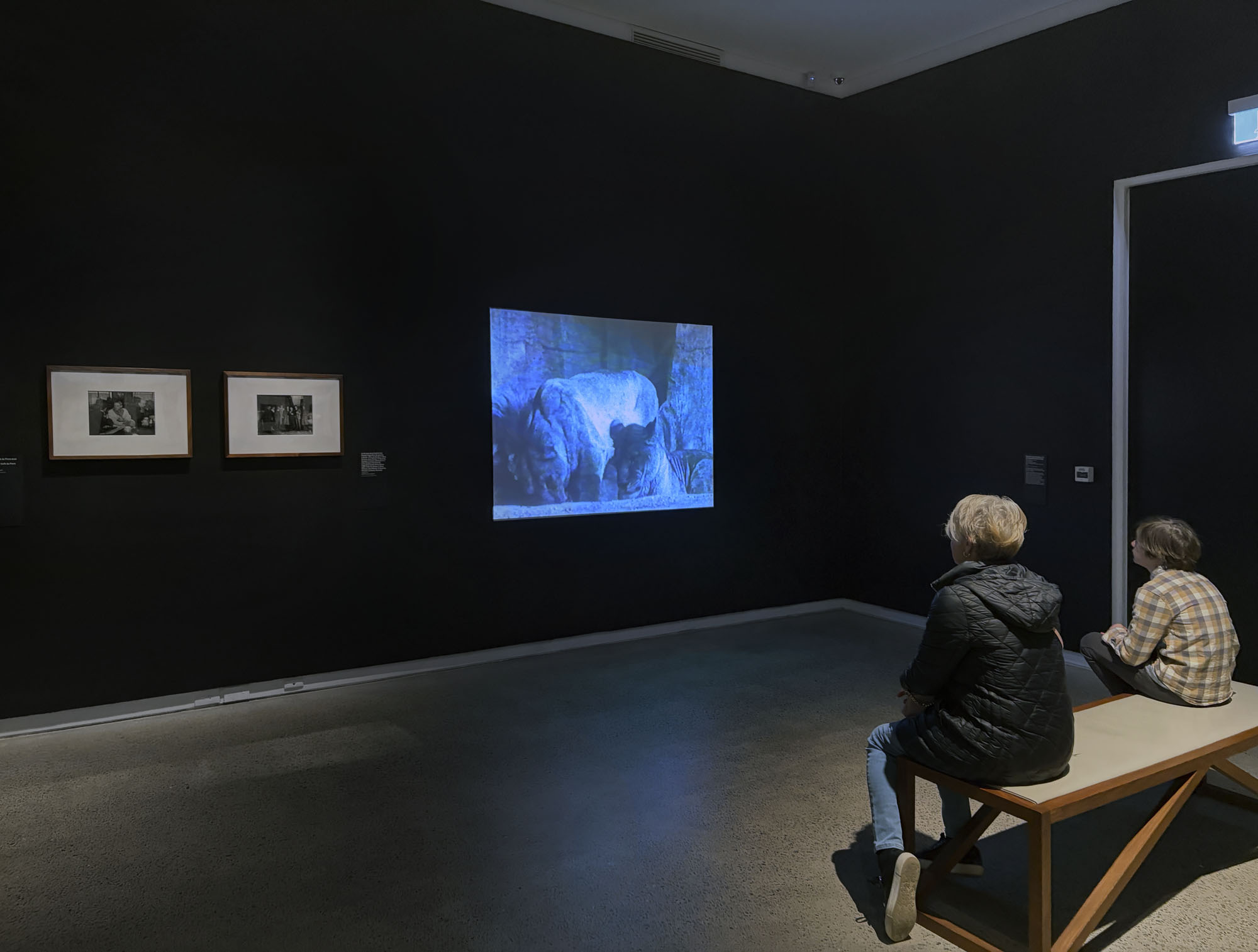
Installation view of the exhibition 'Brassaï: Secret Paris' at Heide Museum of Modern Art, Melbourne, July - November, 2026
Installation view of the exhibition 'Brassaï: Secret Paris' at Heide Museum of Modern Art, Melbourne, July - November, 2026 Installation view of the exhibition 'Brassaï: Secret Paris' at Heide Museum of Modern Art, Melbourne, July - November, 2026 showing the main gallery space looking left
Installation view of the exhibition 'Brassaï: Secret Paris' at Heide Museum of Modern Art, Melbourne, July - November, 2026 showing the main gallery space looking left


Installation views of the exhibition Brassaï: Secret Paris at Heide Museum of Modern Art, Melbourne, July – November, 2026 showing the main gallery space looking left
Photos: Marcus Bunyan
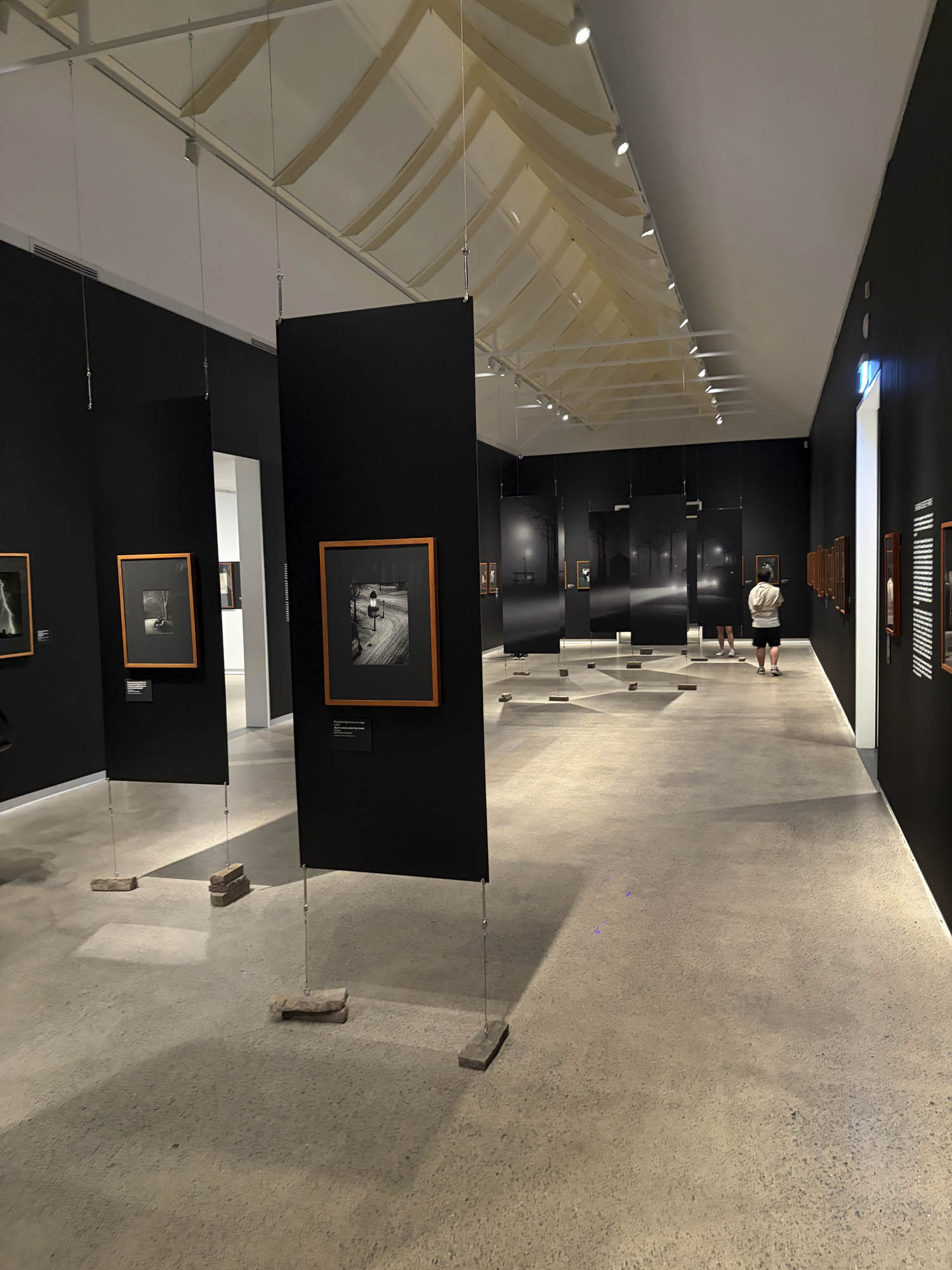
 

Installation view of the exhibition 'Brassaï: Secret Paris' at Heide Museum of Modern Art, Melbourne, July - November, 2026 showing the main gallery space looking left from the right hand side


Installation view of the exhibition Brassaï: Secret Paris at Heide Museum of Modern Art, Melbourne, July – November, 2026 showing the main gallery space looking left from the right hand side
Photo: Marcus Bunyan
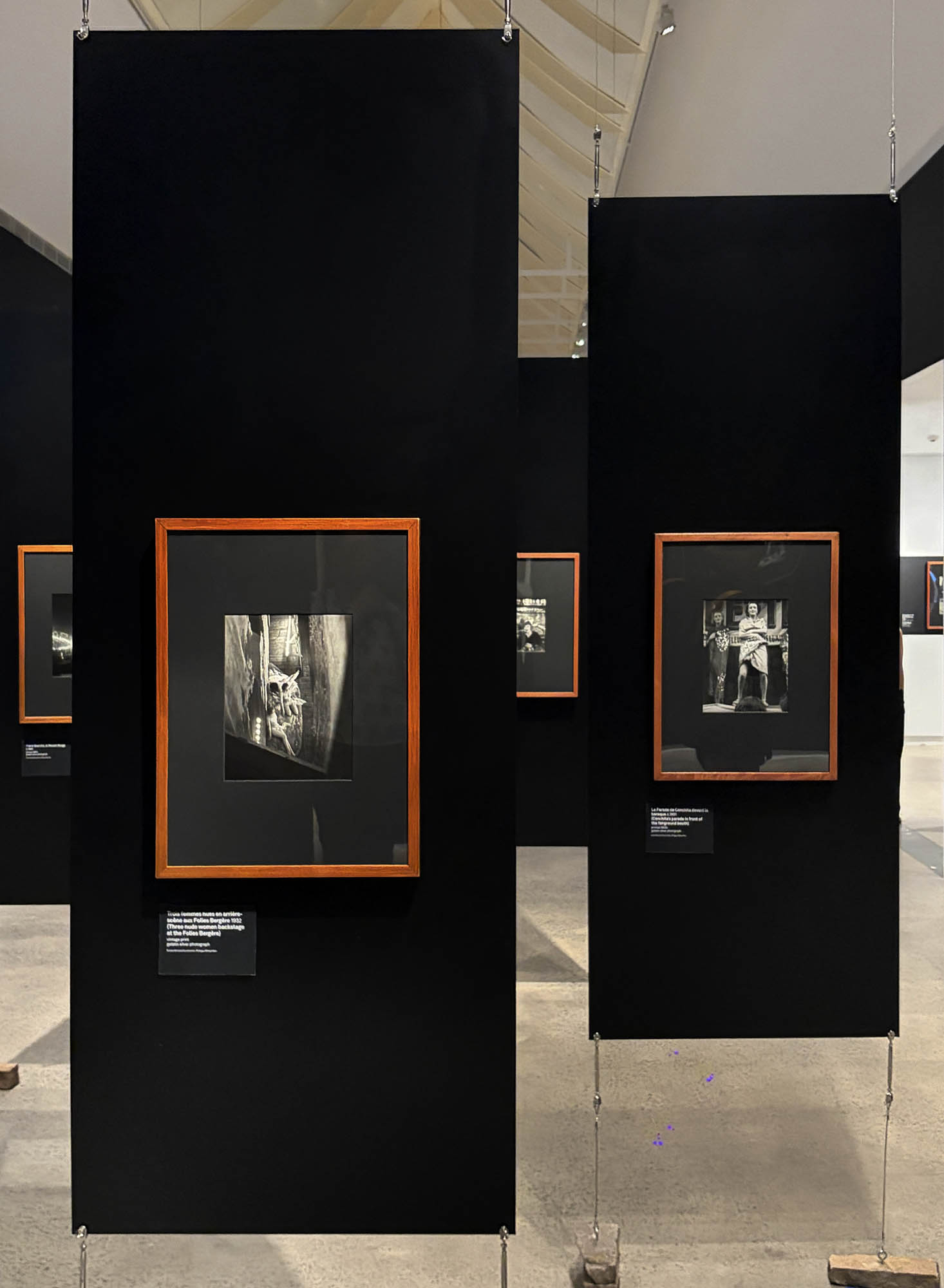
 

Installation view of the exhibition 'Brassaï: Secret Paris' at Heide Museum of Modern Art, Melbourne, July - November, 2026 showing the main gallery space right hand side


Installation view of the exhibition Brassaï: Secret Paris at Heide Museum of Modern Art, Melbourne, July – November, 2026 showing the main gallery space right hand side
Photo: Marcus Bunyan
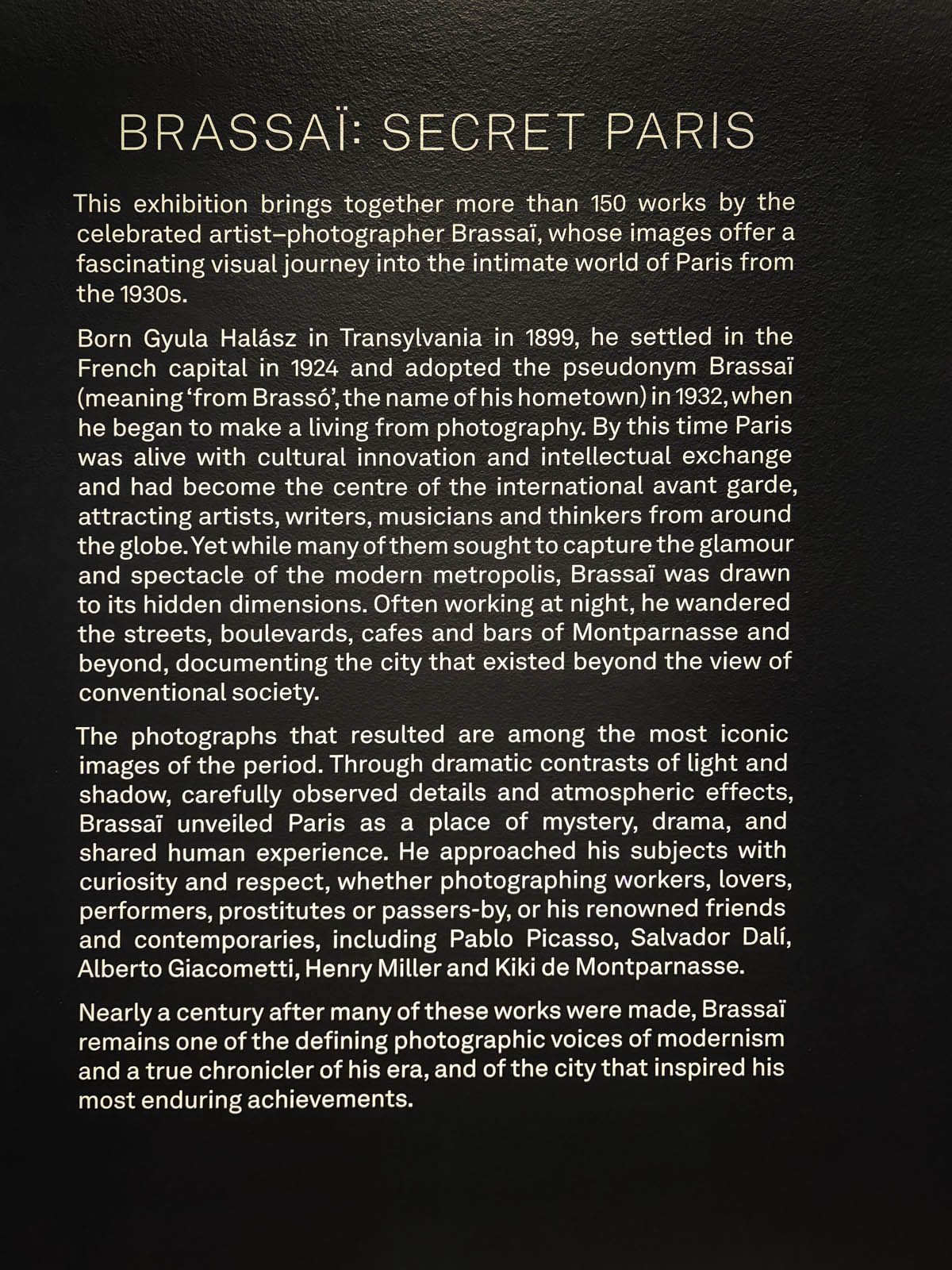
 

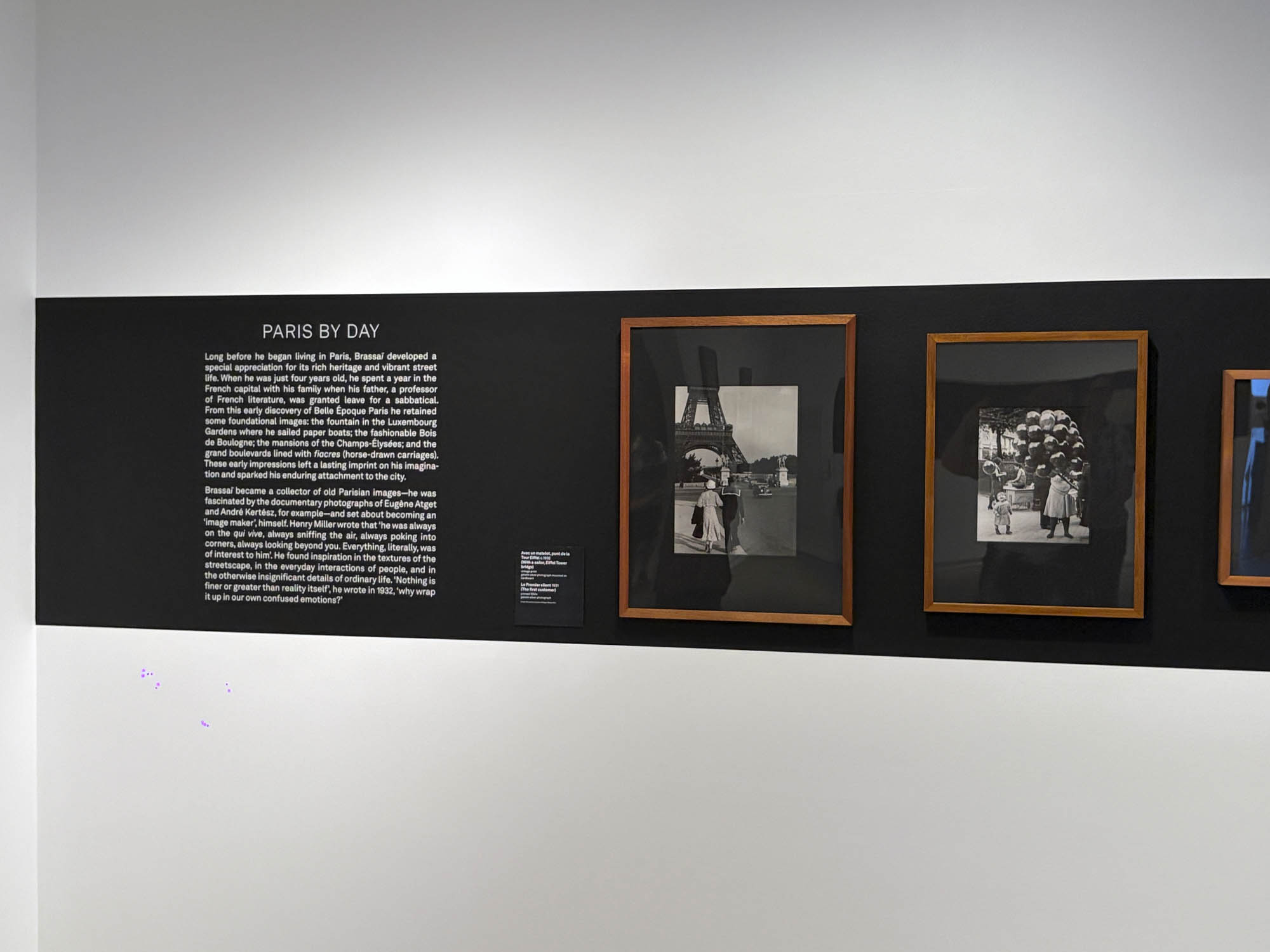
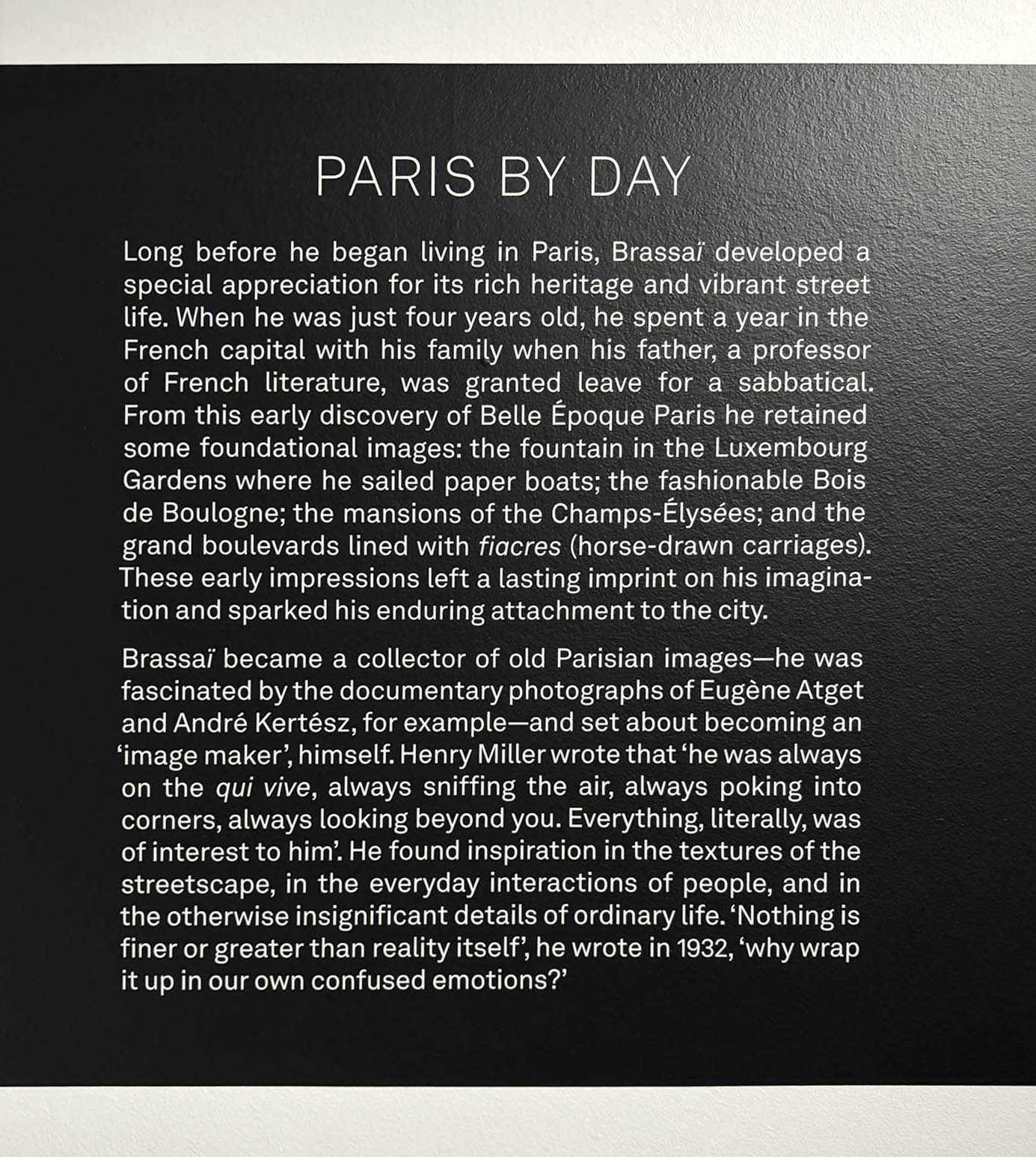
Wall text from the exhibition 'Brassaï: Secret Paris' at Heide Museum of Modern Art, Melbourne, July - November, 2026 from the main gallery


Wall text from the exhibition Brassaï: Secret Paris at Heide Museum of Modern Art, Melbourne, July – November, 2026 from the main gallery
Photo: Marcus Bunyan
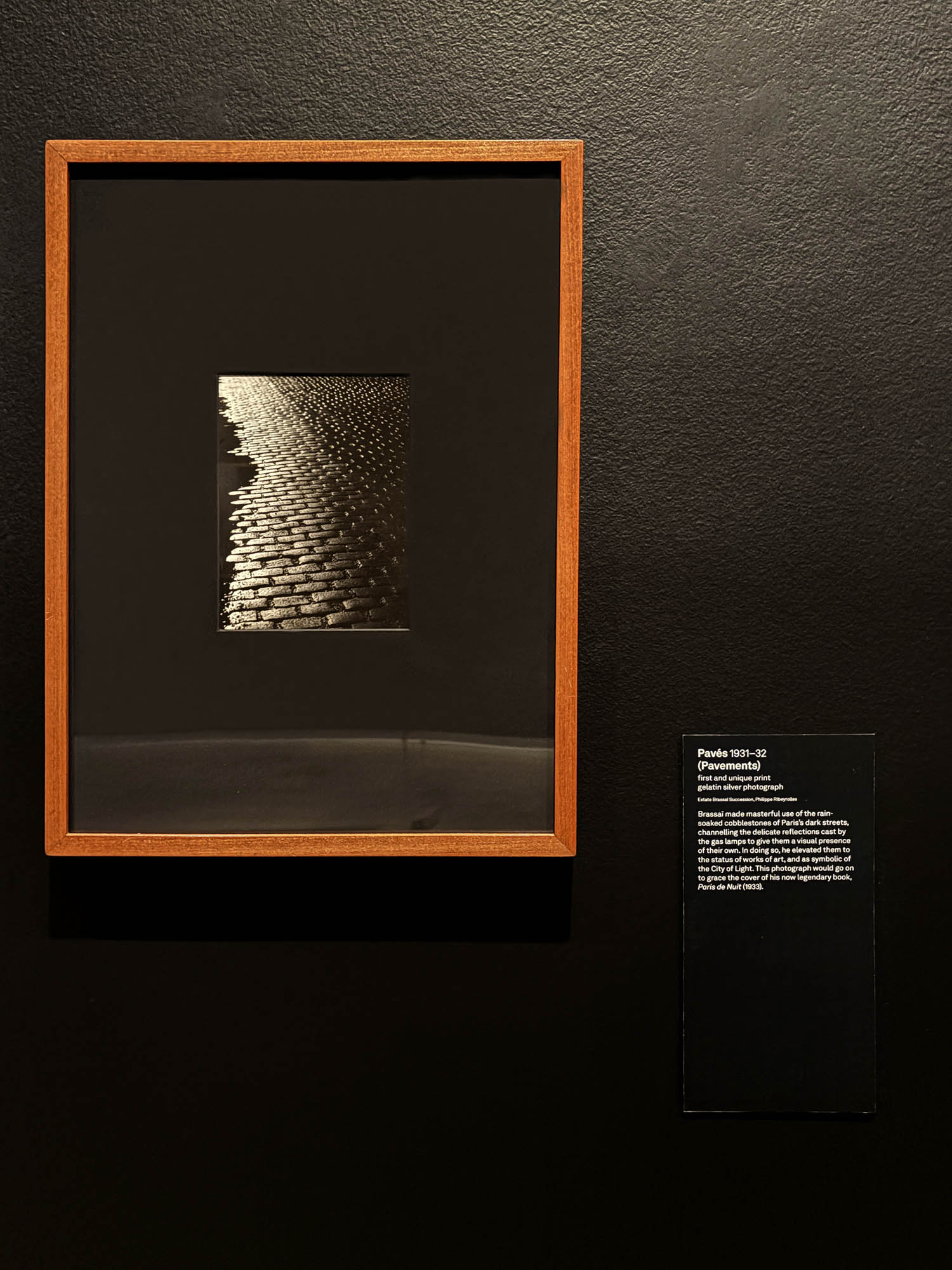
 

Installation view of the exhibition 'Brassaï: Secret Paris' at Heide Museum of Modern Art, Melbourne, July - November, 2026 showing the photograph 'Pavés' (Pavements) 1931-32 first and unique gelatin silver photograph


Installation view of the exhibition Brassaï: Secret Paris at Heide Museum of Modern Art, Melbourne, July – November, 2026 showing the photograph Pavés (Pavements) 1931-32 first and unique gelatin silver photograph
Photo: Marcus Bunyan


Brassaï made masterful use of the rain-soaked cobblestones of Paris’s dark streets, channeling the delicate reflections cast by the gas lamps to give them a visual presence of their own. In doing so, he elevated them to the status of works of art, and as symbolic of the City of Light. This photograph would go on to grace the cover of his now legendary book Paris de Nuit (1933).

Label text from the exhibition Brassaï: Secret Paris at Heide Museum of Modern Art, Melbourne, July – November, 2026
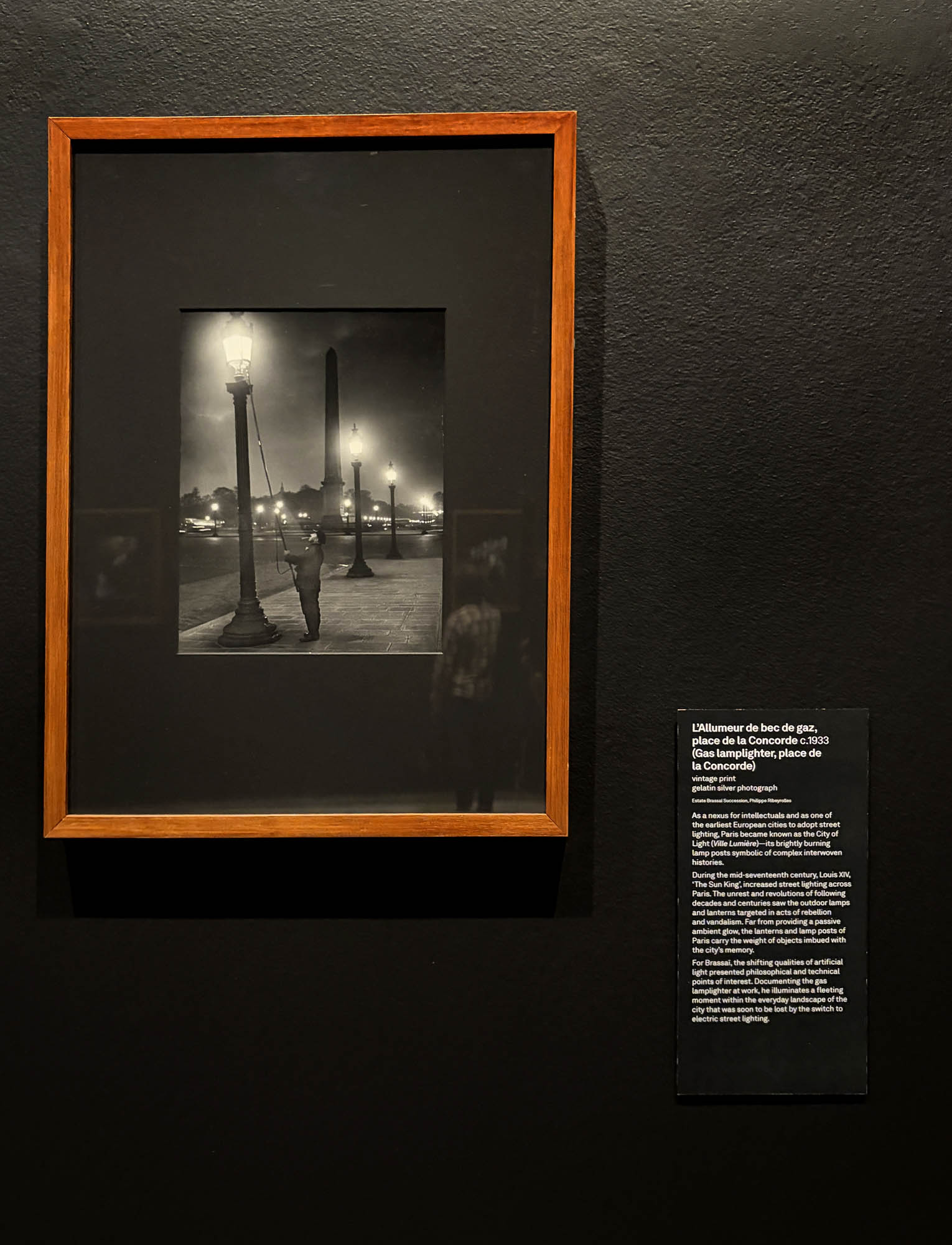
 

Installation view of the exhibition 'Brassaï: Secret Paris' at Heide Museum of Modern Art, Melbourne, July - November, 2026 showing the photograph 'L'Allumeur de bec de gaz, place de la Concorde' (Gas lamplighter, place de la Concorde) c. 1933 vintage gelatin silver photograph


Installation view of the exhibition Brassaï: Secret Paris at Heide Museum of Modern Art, Melbourne, July – November, 2026 showing the photograph L’Allumeur de bec de gaz, place de la Concorde (Gas lamplighter, place de la Concorde) c. 1933 vintage gelatin silver photograph
Photo: Marcus Bunyan


As a nexus for intellectuals and as one of the earliest European cities to adopt street lighting, Paris became known as the City of Light (Ville Lumière) – its brightly burning lamp posts symbolic of complex interwoven histories.

During the mid-seventeenth century, Louis XIV, ‘The Sun King’, increased street lighting across Paris. The unrest and revolutions of following decades and centuries saw the outdoor lamps and lanterns targeted in acts of rebellion and vandalism. Far from providing a passive ambient glow, the lanterns and lamp posts of Paris carry the weight of objects imbued with the city’s memory.

For Brassaï, the shifting qualities of artificial light presented philosophical and technical points of interest. Documenting the gas lamplighter at work, he illuminates a fleeting moment within the everyday landscape of the city that was soon to be lost by the switch to electric street lighting.

Label text from the exhibition
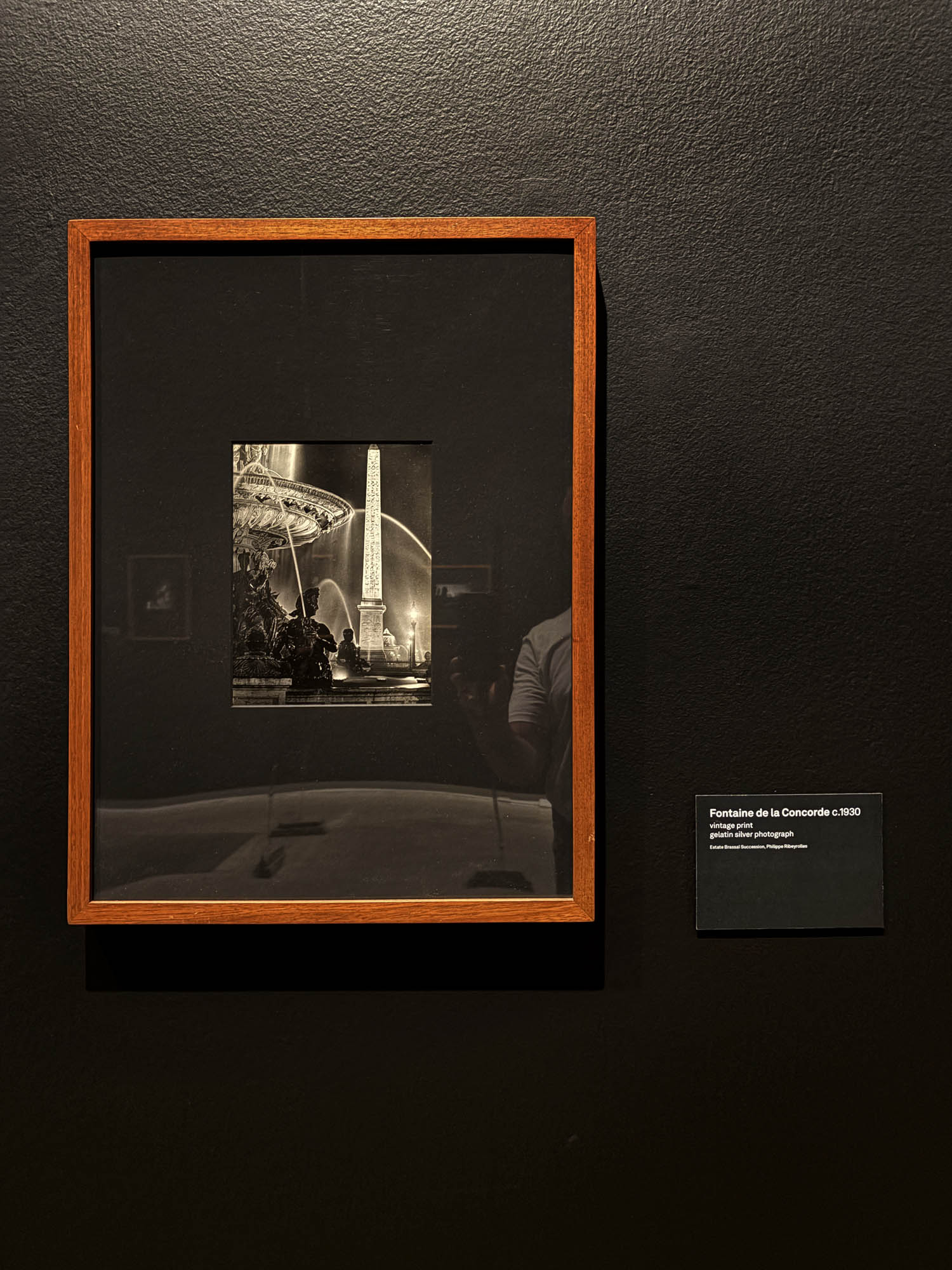
 

Installation view of the exhibition 'Brassaï: Secret Paris' at Heide Museum of Modern Art, Melbourne, July - November, 2026 Installation view of the exhibition Brassaï: Secret Paris at Heide Museum of Modern Art, Melbourne, July - November, 2026 showing the photograph 'Fontaine de la Concorde' c. 1930 vintage gelatin silver photograph


Installation view of the exhibition Brassaï: Secret Paris at Heide Museum of Modern Art, Melbourne, July – November, 2026 showing the photograph Fontaine de la Concorde c. 1930 vintage gelatin silver photograph
Photo: Marcus Bunyan
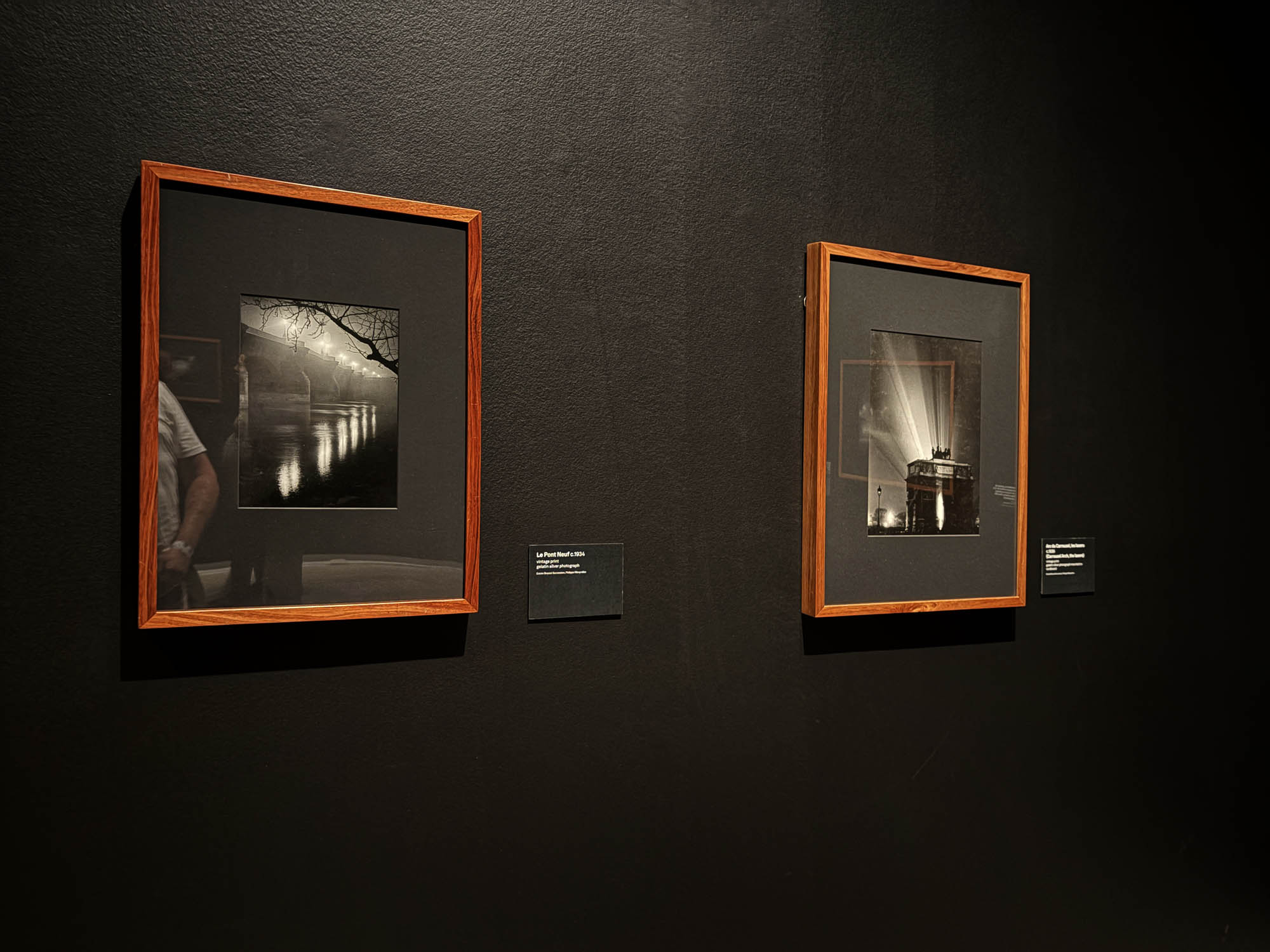
 

Installation view of the exhibition 'Brassaï: Secret Paris' at Heide Museum of Modern Art, Melbourne, July - November, 2026 showing at left the photograph 'Le Pont Neuf' c. 1934 vintage gelatin silver print


Installation view of the exhibition Brassaï: Secret Paris at Heide Museum of Modern Art, Melbourne, July – November, 2026 showing at left the photograph Le Pont Neuf c. 1934 vintage gelatin silver print
Photo: Marcus Bunyan
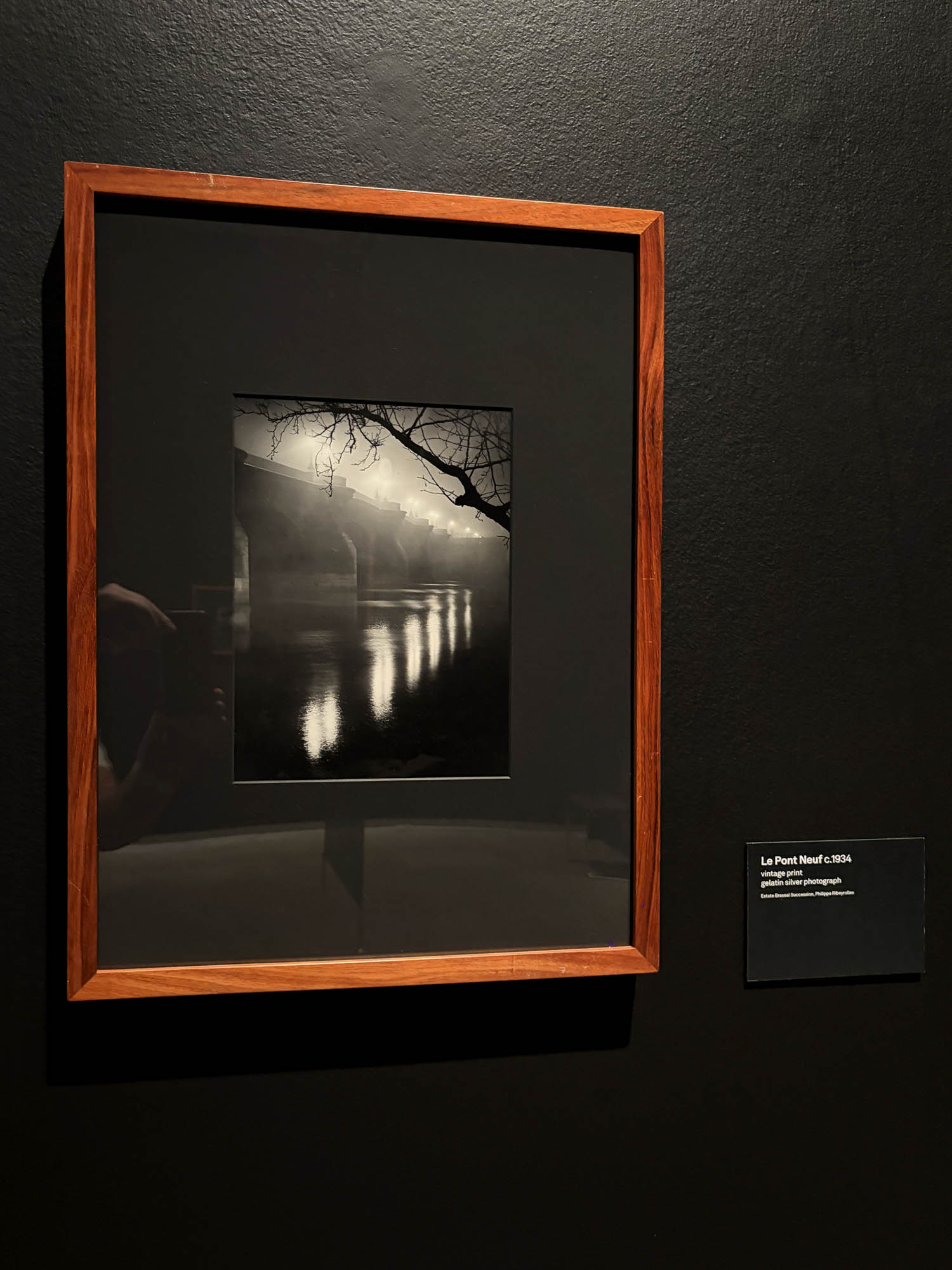
 

Installation view of the exhibition 'Brassaï: Secret Paris' at Heide Museum of Modern Art, Melbourne, July - November, 2026 showing the photograph 'Le Pont Neuf' c. 1934 vintage gelatin silver print


Installation view of the exhibition Brassaï: Secret Paris at Heide Museum of Modern Art, Melbourne, July – November, 2026 showing the photograph Le Pont Neuf c. 1934 vintage gelatin silver print
Photo: Marcus Bunyan
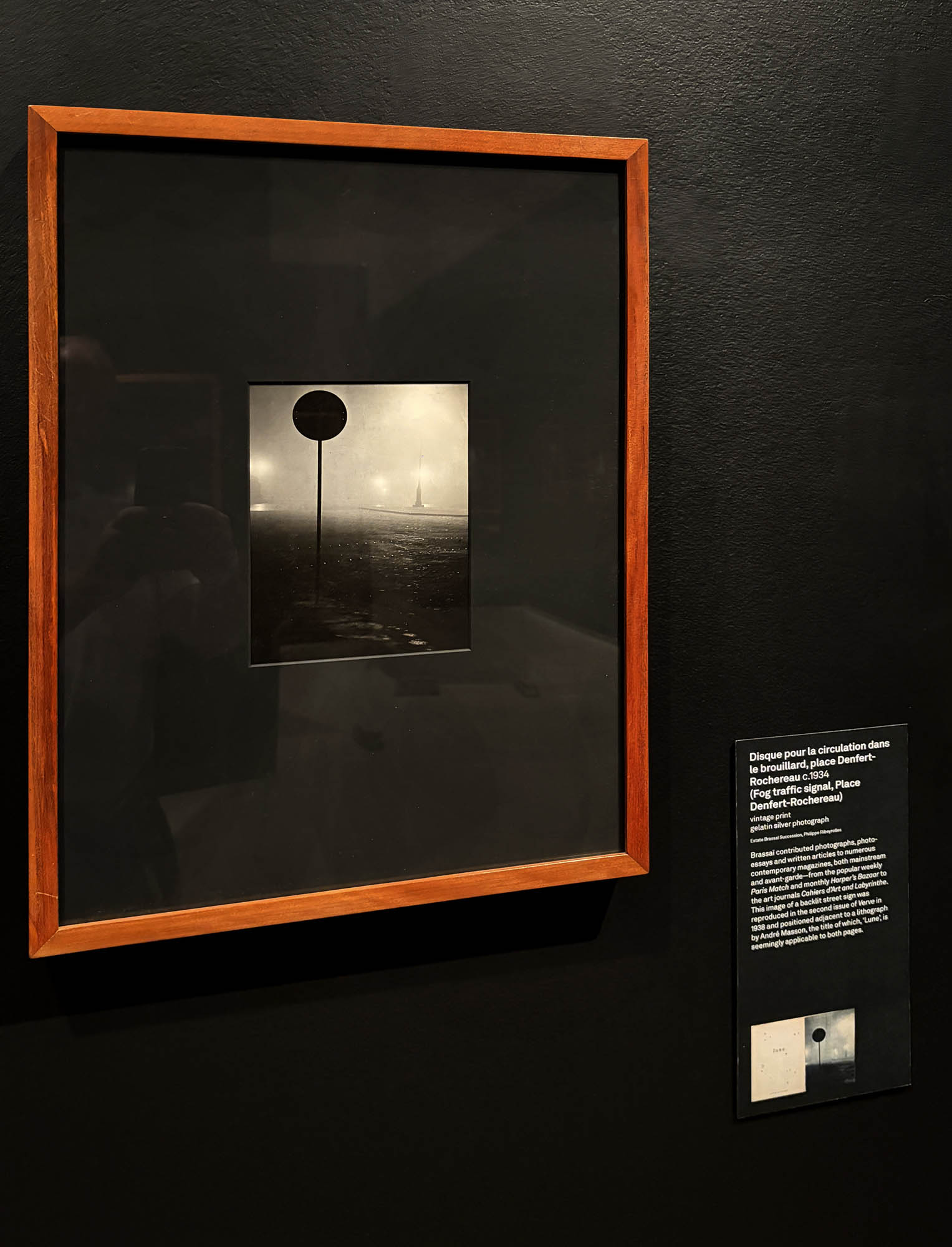
 

Installation view of the exhibition 'Brassaï: Secret Paris' at Heide Museum of Modern Art, Melbourne, July - November, 2026 showing the photograph 'Disque pour la circulation dans le brouillard, place Denfert-Rochereau' (Fog traffic signal, place Denfert-Rochereau) c. 1934 vintage gelatin silver print


Installation view of the exhibition Brassaï: Secret Paris at Heide Museum of Modern Art, Melbourne, July – November, 2026 showing the photograph Disque pour la circulation dans le brouillard, place Denfert-Rochereau (Fog traffic signal, place Denfert-Rochereau) c. 1934 vintage gelatin silver print
Photo: Marcus Bunyan
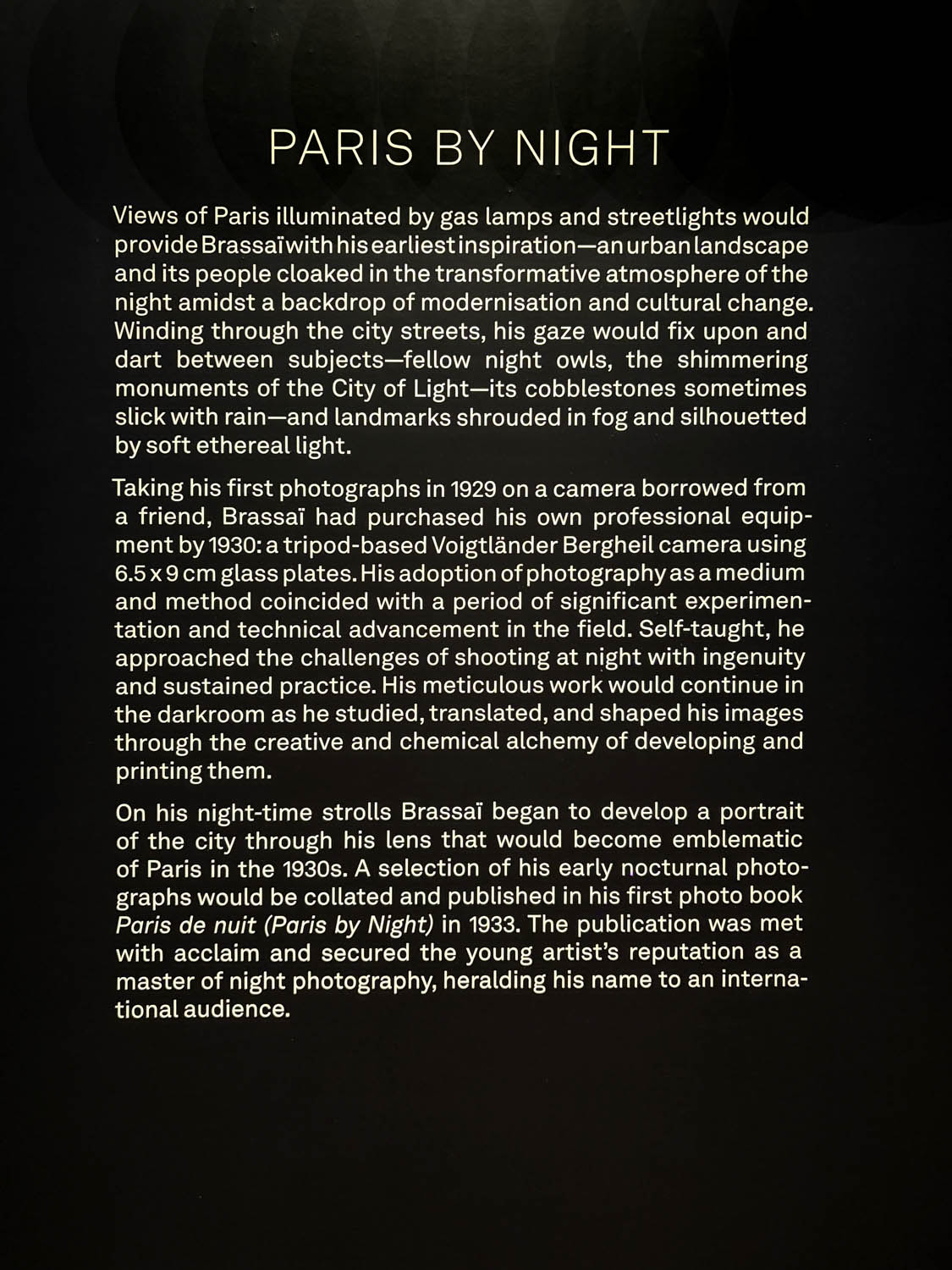
 

Wall text from the exhibition 'Brassaï: Secret Paris' at Heide Museum of Modern Art, Melbourne, July - November, 2026 from the main gallery


Wall text from the exhibition Brassaï: Secret Paris at Heide Museum of Modern Art, Melbourne, July – November, 2026 from the main gallery
Photo: Marcus Bunyan
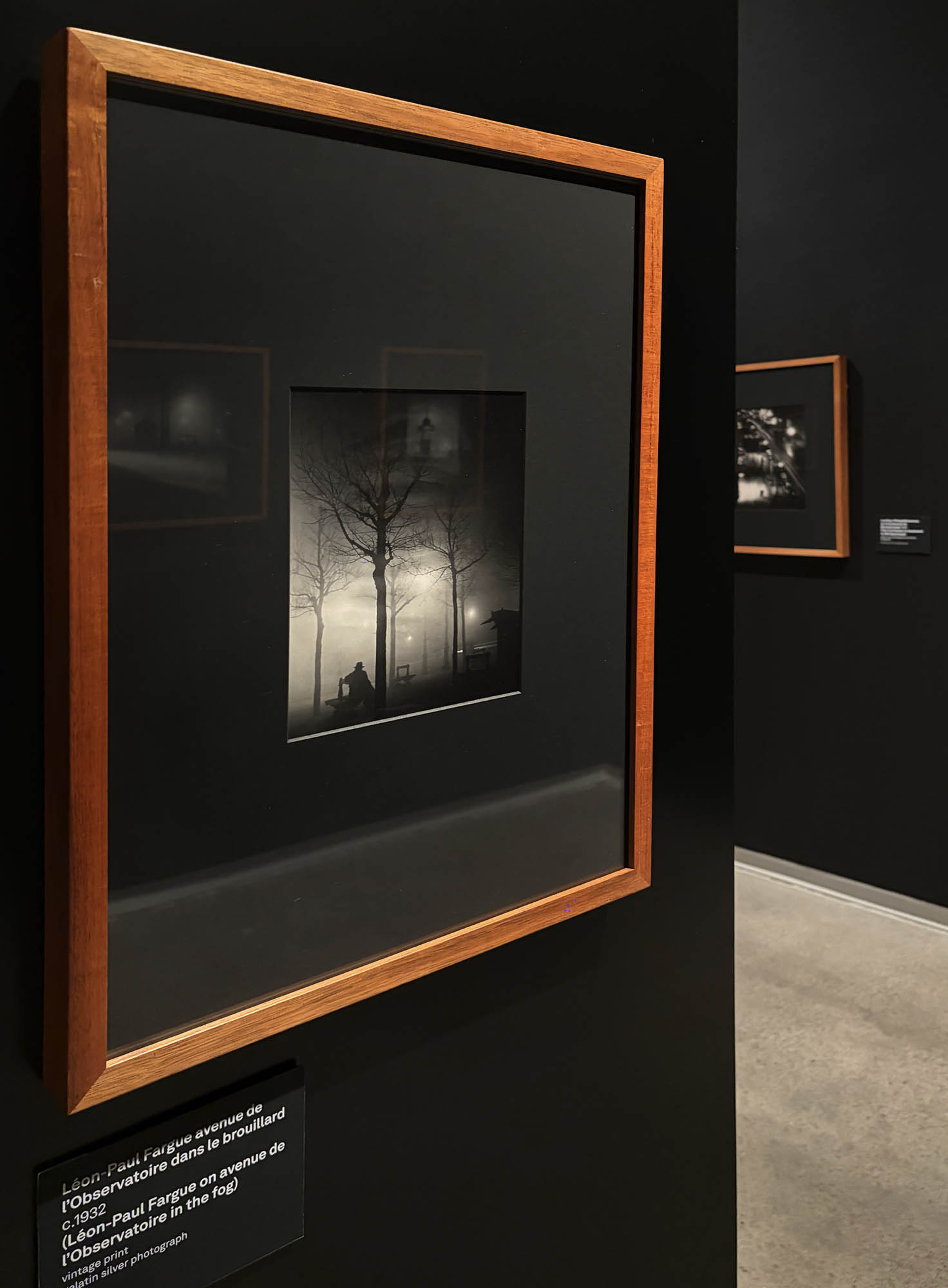
 

Installation view of the exhibition 'Brassaï: Secret Paris' at Heide Museum of Modern Art, Melbourne, July - November, 2026 showing the photograph 'Léon-Paul Prague avenue de l'Observatoire dans le brouillard' (Léon-Paul Frague on avenue de l'Observatoire in the fog) c. 1932 vintage gelatin silver print


Installation view of the exhibition Brassaï: Secret Paris at Heide Museum of Modern Art, Melbourne, July – November, 2026 showing the photograph Léon-Paul Prague avenue de l’Observatoire dans le brouillard (Léon-Paul Frague on avenue de l’Observatoire in the fog) c. 1932 vintage gelatin silver print
Photo: Marcus Bunyan
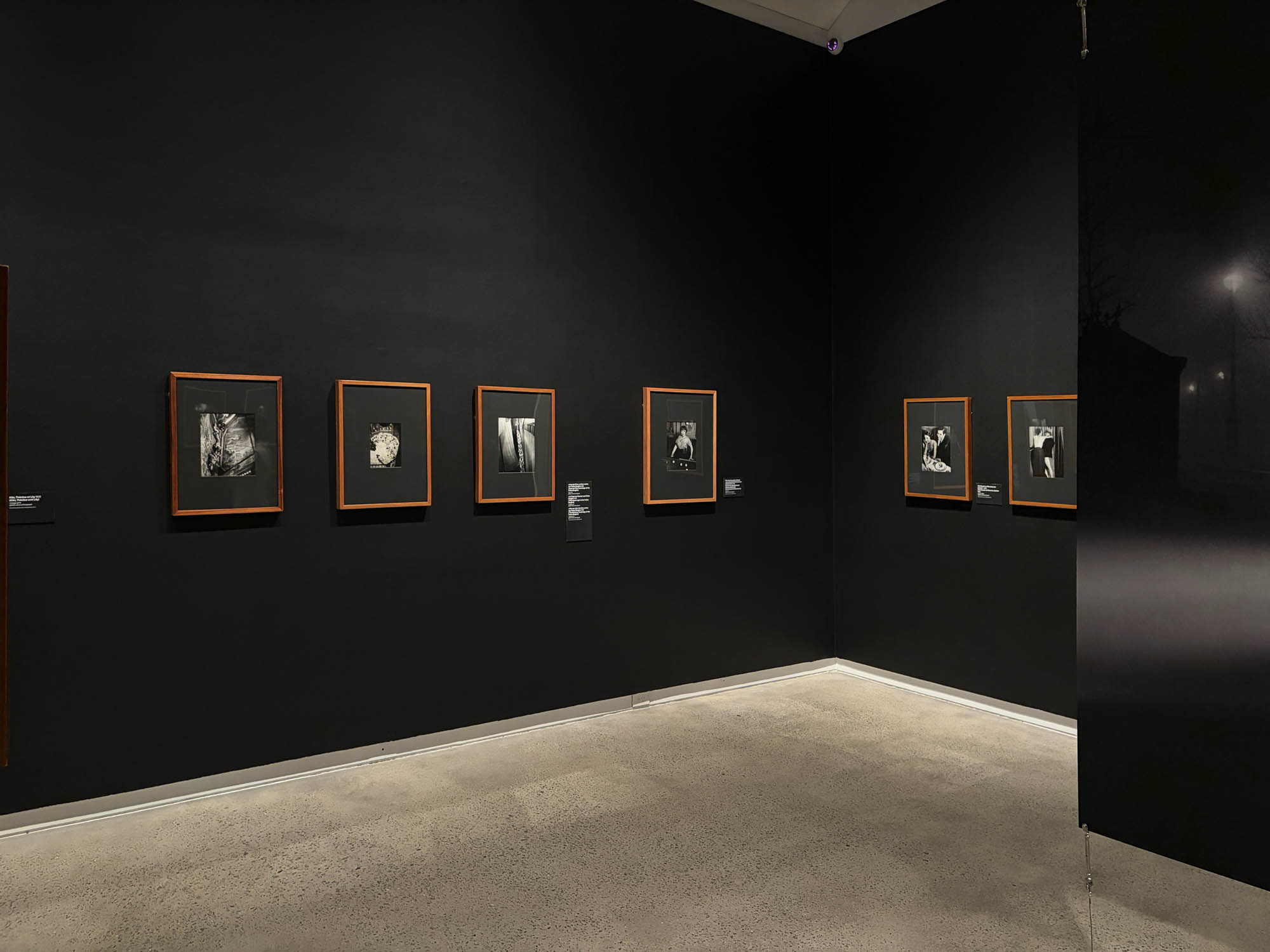
 

Installation view of the exhibition 'Brassaï: Secret Paris' at Heide Museum of Modern Art, Melbourne, July - November, 2026


Installation view of the exhibition Brassaï: Secret Paris at Heide Museum of Modern Art, Melbourne, July – November, 2026
Photo: Marcus Bunyan
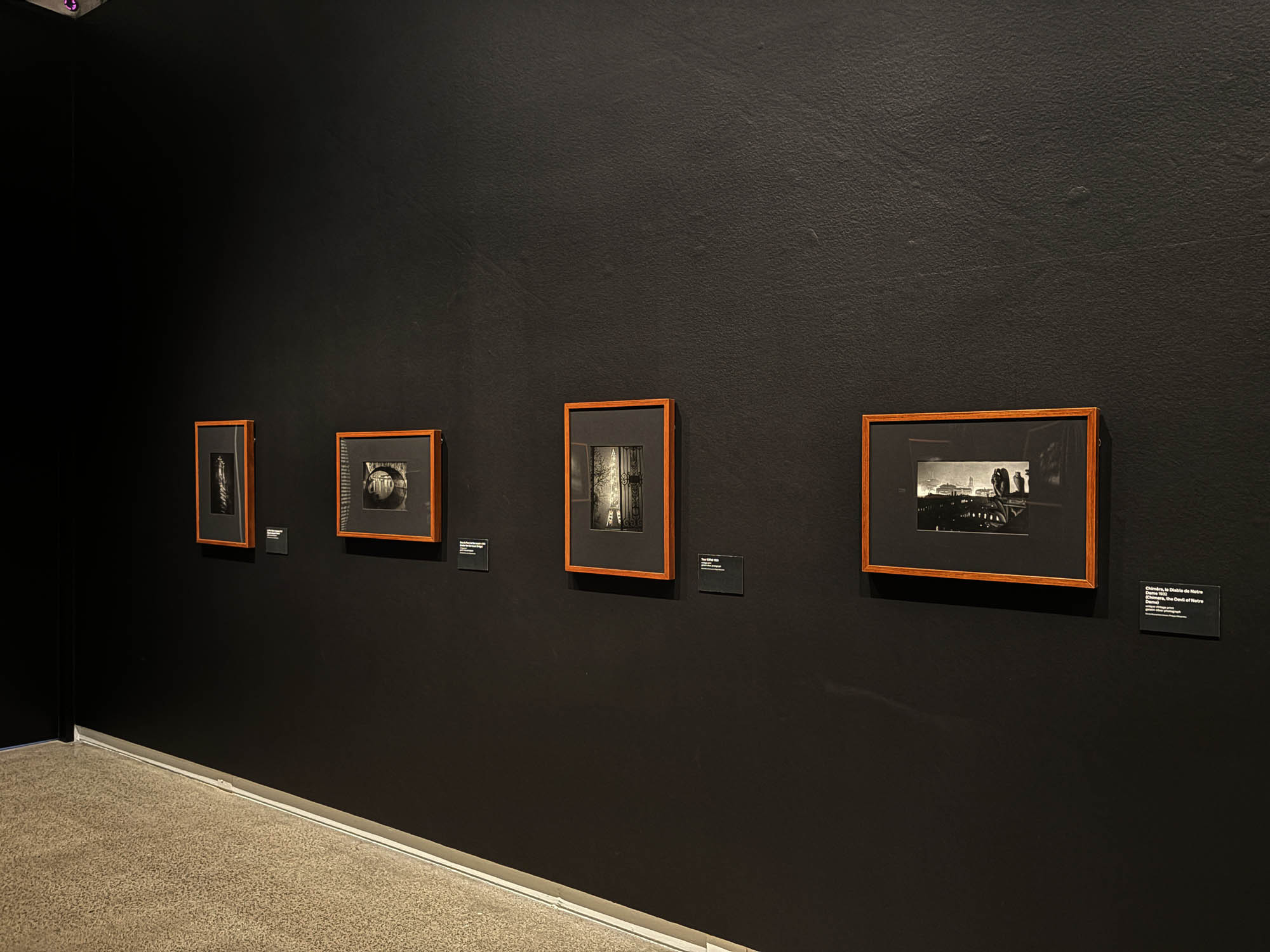
 

Installation view of the exhibition 'Brassaï: Secret Paris' at Heide Museum of Modern Art, Melbourne, July - November, 2026


Installation view of the exhibition Brassaï: Secret Paris at Heide Museum of Modern Art, Melbourne, July – November, 2026
Photo: Marcus Bunyan
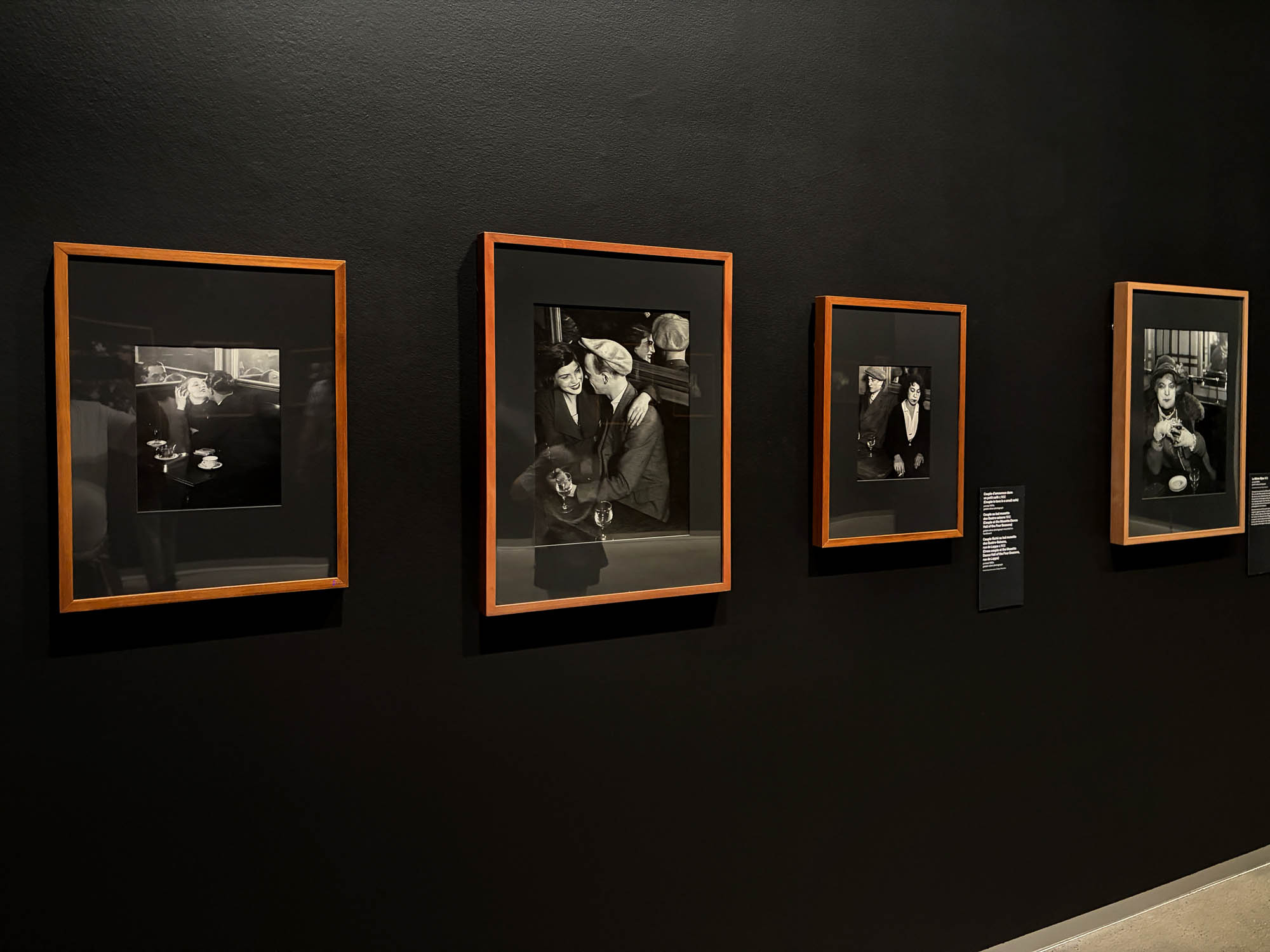
 

Installation view of the exhibition 'Brassaï: Secret Paris' at Heide Museum of Modern Art, Melbourne, July - November, 2026 showing from left to right, 'Couple d'amoureux dans un petit café, quartier Italie' (Loving Couple in a Small Café, Place d'Italie) c. 1932 vintage gelatin silver print; 'Couple au bal musette des Quatre Saisons' (Couple at the Musette Dance Hall of the Four Seasons) 1932; 'Couple croisé au bal musette des Quatre-Saisons, rue de Lappe' (Cross couple at the Musette Dance Hall of the Four Seasons, rue de Lappe) c. 1932 vintage gelatin silver print; 'La Môme Bijou, Bar de la Lune, Montmartre' (La Môme Bijou, Bar de la Lune, Montmartre) 1932


Installation view of the exhibition Brassaï: Secret Paris at Heide Museum of Modern Art, Melbourne, July – November, 2026 showing from left to right, Couple d’amoureux dans un petit café, quartier Italie (Loving Couple in a Small Café, Place d’Italie) c. 1932 vintage gelatin silver print; Couple au bal musette des Quatre Saisons (Couple at the Musette Dance Hall of the Four Seasons) 1932; Couple croisé au bal musette des Quatre-Saisons, rue de Lappe (Cross couple at the Musette Dance Hall of the Four Seasons, rue de Lappe) c. 1932 vintage gelatin silver print; La Môme Bijou, Bar de la Lune, Montmartre (La Môme Bijou, Bar de la Lune, Montmartre) 1932
Photo: Marcus Bunyan


Brassaï (Hungarian-French, 1899-1984) 'Bal des Quatre Saisons, rue de Lappe' c. 1932


Brassaï (Hungarian-French, 1899-1984)
Couple au bal musette des Quatre Saisons (Couple at the Musette Dance Hall of the Four Seasons)
c. 1932
Vintage gelatin silver print
Estate Brassaï Succession, Philippe Ribeyrolles
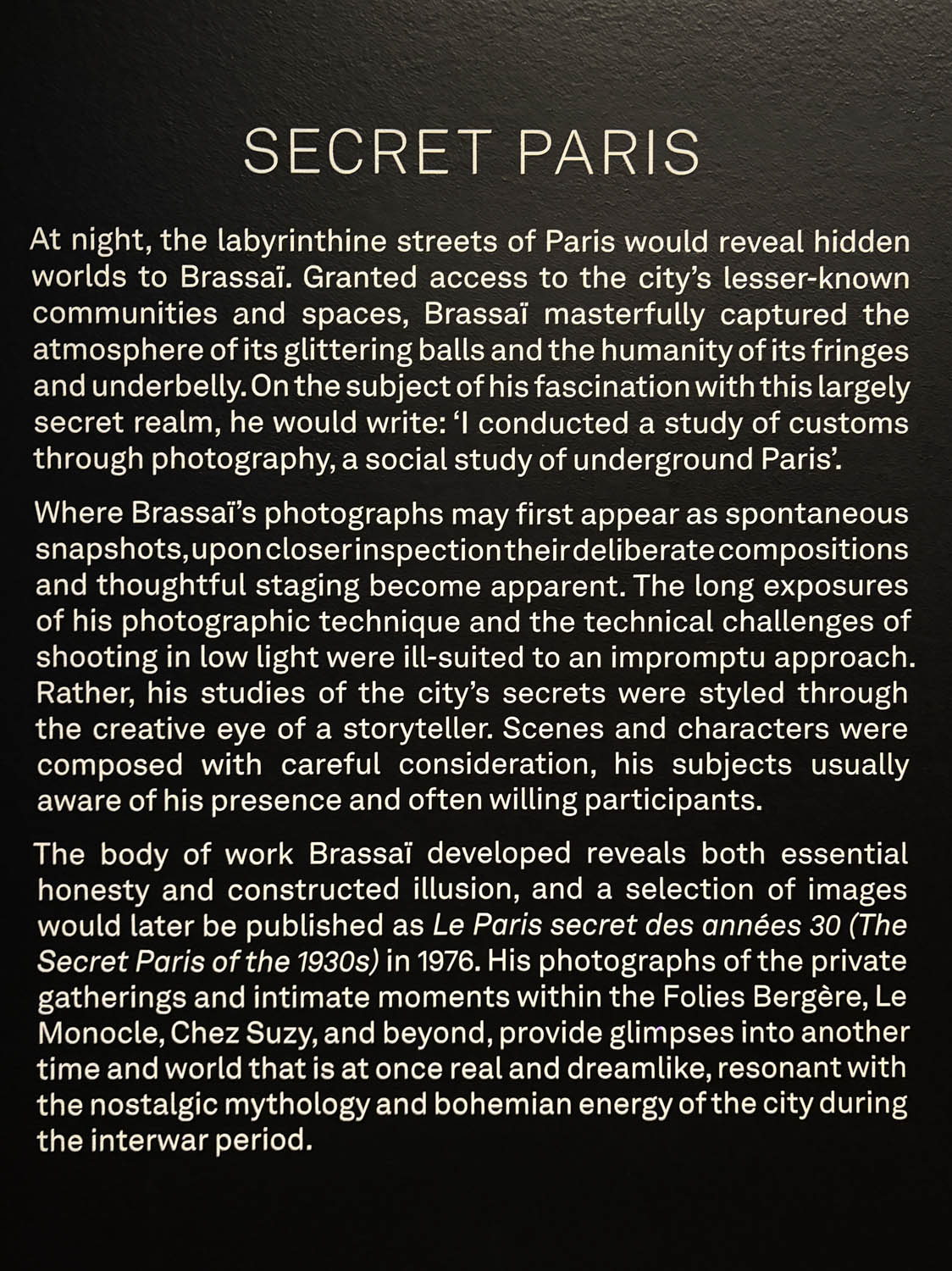
 

Wall text from the exhibition 'Brassaï: Secret Paris' at Heide Museum of Modern Art, Melbourne, July - November, 2026 from the main gallery


Wall text from the exhibition Brassaï: Secret Paris at Heide Museum of Modern Art, Melbourne, July – November, 2026 from the main gallery
Photo: Marcus Bunyan
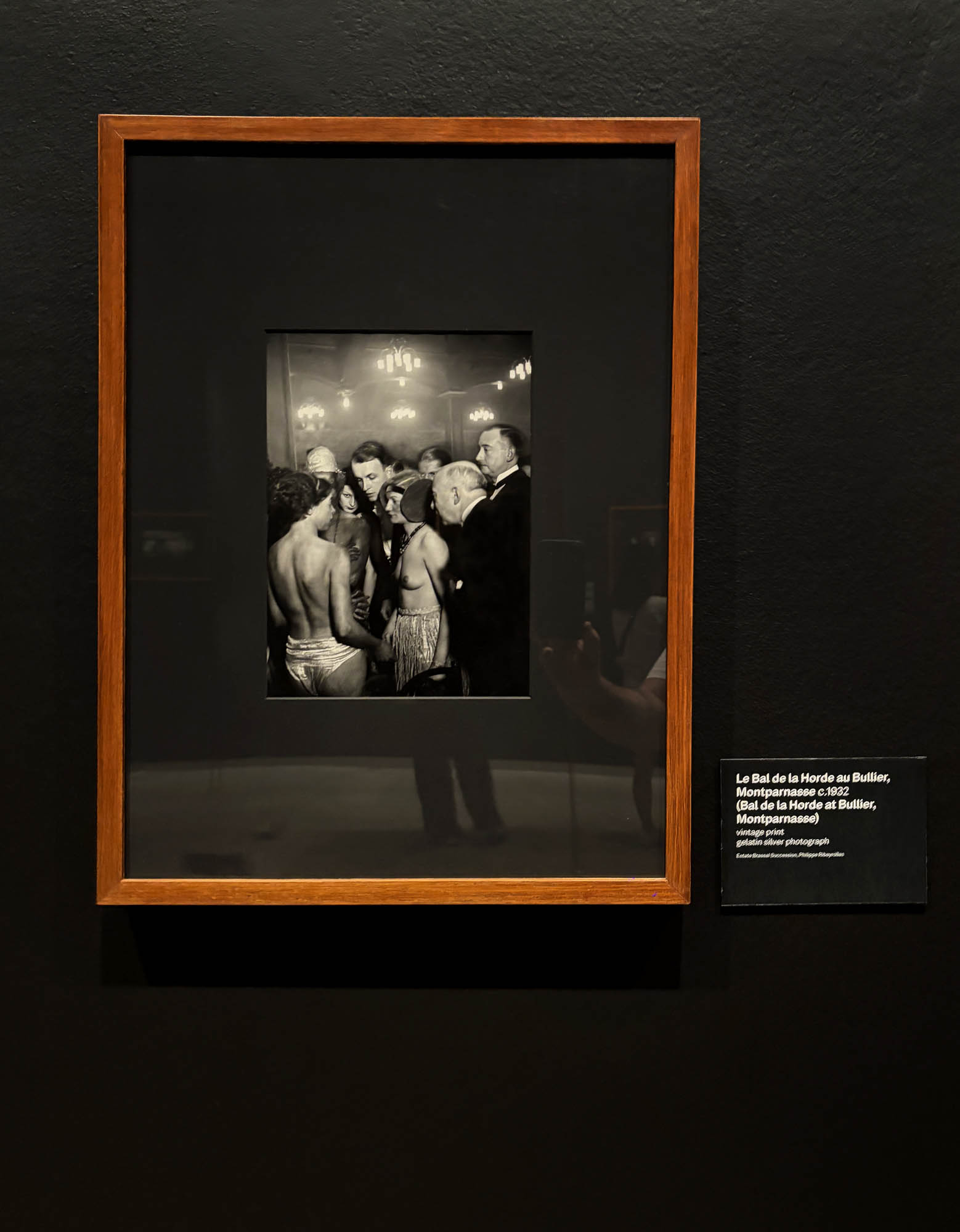
 

Installation view of the exhibition 'Brassaï: Secret Paris' at Heide Museum of Modern Art, Melbourne, July - November, 2026


Installation view of the exhibition Brassaï: Secret Paris at Heide Museum of Modern Art, Melbourne, July – November, 2026 showing the photograph La Bal de la Horde au Bullier, Montparnasse (Bal de la Horde at Bullier, Montparnasse) c. 1932 vintage gelatin silver print
Photo: Marcus Bunyan
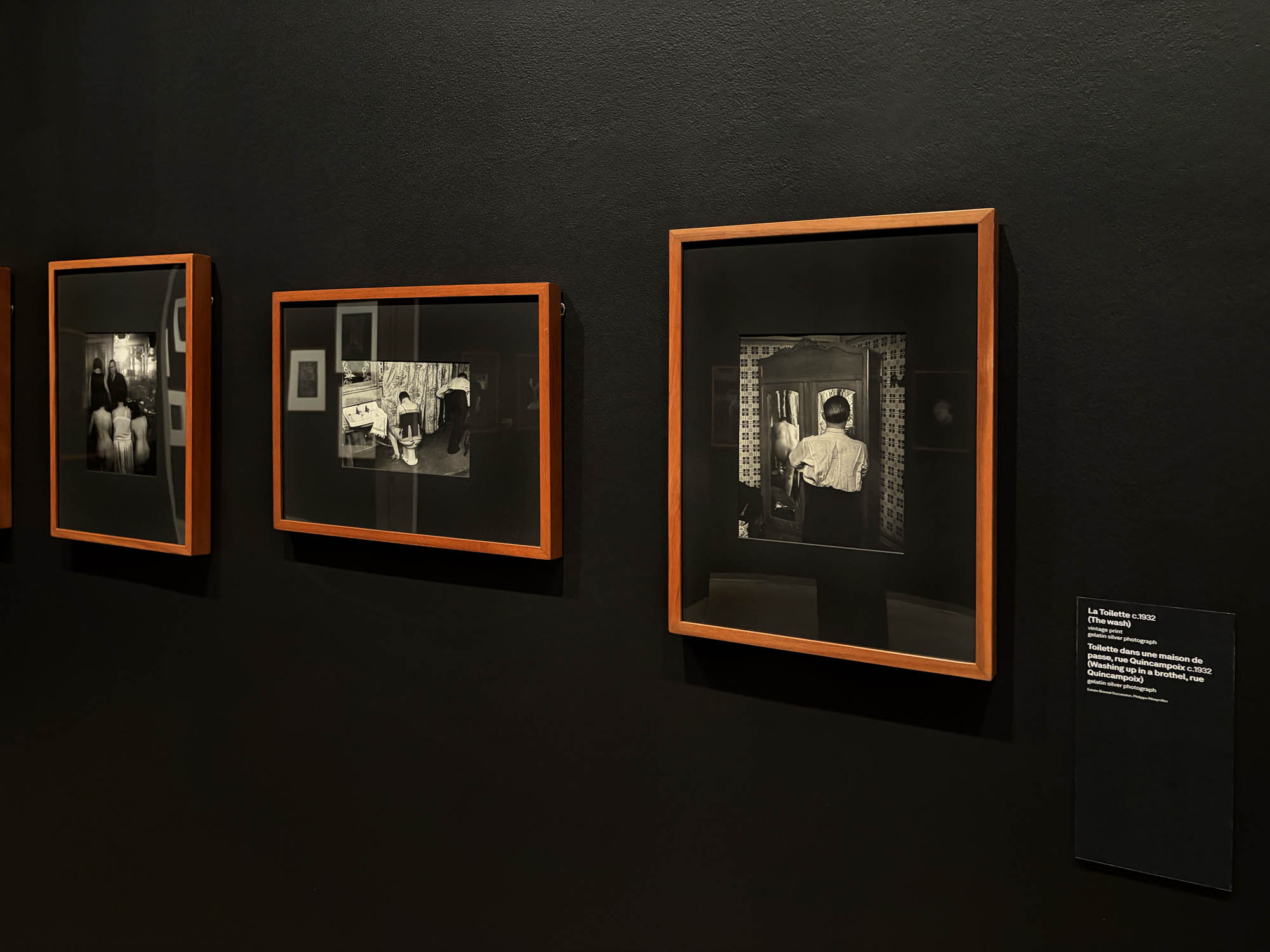
 

Installation view of the exhibition 'Brassaï: Secret Paris' at Heide Museum of Modern Art, Melbourne, July - November, 2026 showing at second left, 'Toilette dans une maison de passe, rue Quinncampoix' (Washing up in a brothel, rue Quincampoix) c. 1932 gelatin silver print; and at right, 'La Toilette' (The wash) c. 1932 vintage gelatin silver print


Installation view of the exhibition Brassaï: Secret Paris at Heide Museum of Modern Art, Melbourne, July – November, 2026 showing at second left, Toilette dans une maison de passe, rue Quinncampoix (Washing up in a brothel, rue Quincampoix) c. 1932 gelatin silver print; and at right, La Toilette (The wash) c. 1932 vintage gelatin silver print
Photo: Marcus Bunyan
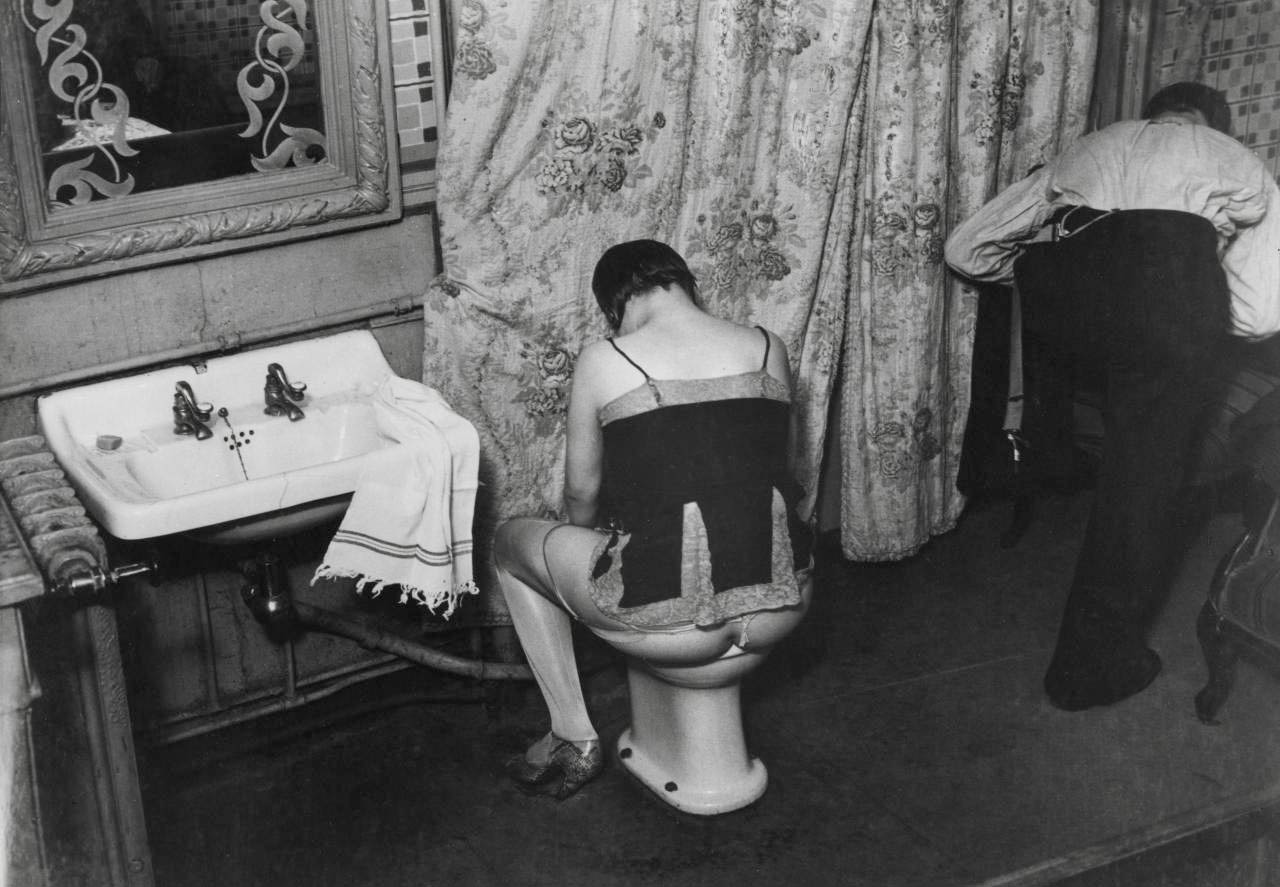
 

Brassaï (Hungarian-French, 1899-1984)
'Toilette dans une maison de passe, rue Quinncampoix' (Washing up in a brothel, rue Quincampoix)
c. 1932


Brassaï (Hungarian-French, 1899-1984)
Toilette dans une maison de passe, rue Quinncampoix (Washing up in a brothel, rue Quincampoix)
c. 1932
Gelatin silver print
Estate Brassaï Succession, Philippe Ribeyrolles


Brassaï (Hungarian-French, 1899-1984) 'La Toilette' (The wash) c. 1932


Brassaï (Hungarian-French, 1899-1984)
La Toilette (The wash)
c. 1932
Vintage gelatin silver print
Estate Brassaï Succession, Philippe Ribeyrolles


This exhibition will present the most comprehensive survey of the work of the eminent Hungarian-born, French photographer Brassaï yet to be seen in Australia. With a focus on the artist’s iconic images of the city and its people by night, the exhibition will also consider his friendship with Picasso and other leading figures of the Parisian avant-garde, his experiments with Surrealism, and his hallmark photographs of graffiti. Produced in collaboration with the artist’s estate, this survey brings together more than 150 vintage prints and offers a fascinating visual journey into the intimate world of Paris in the 1930s.

Text from the Heide Museum of Modern Art website


Gallery two
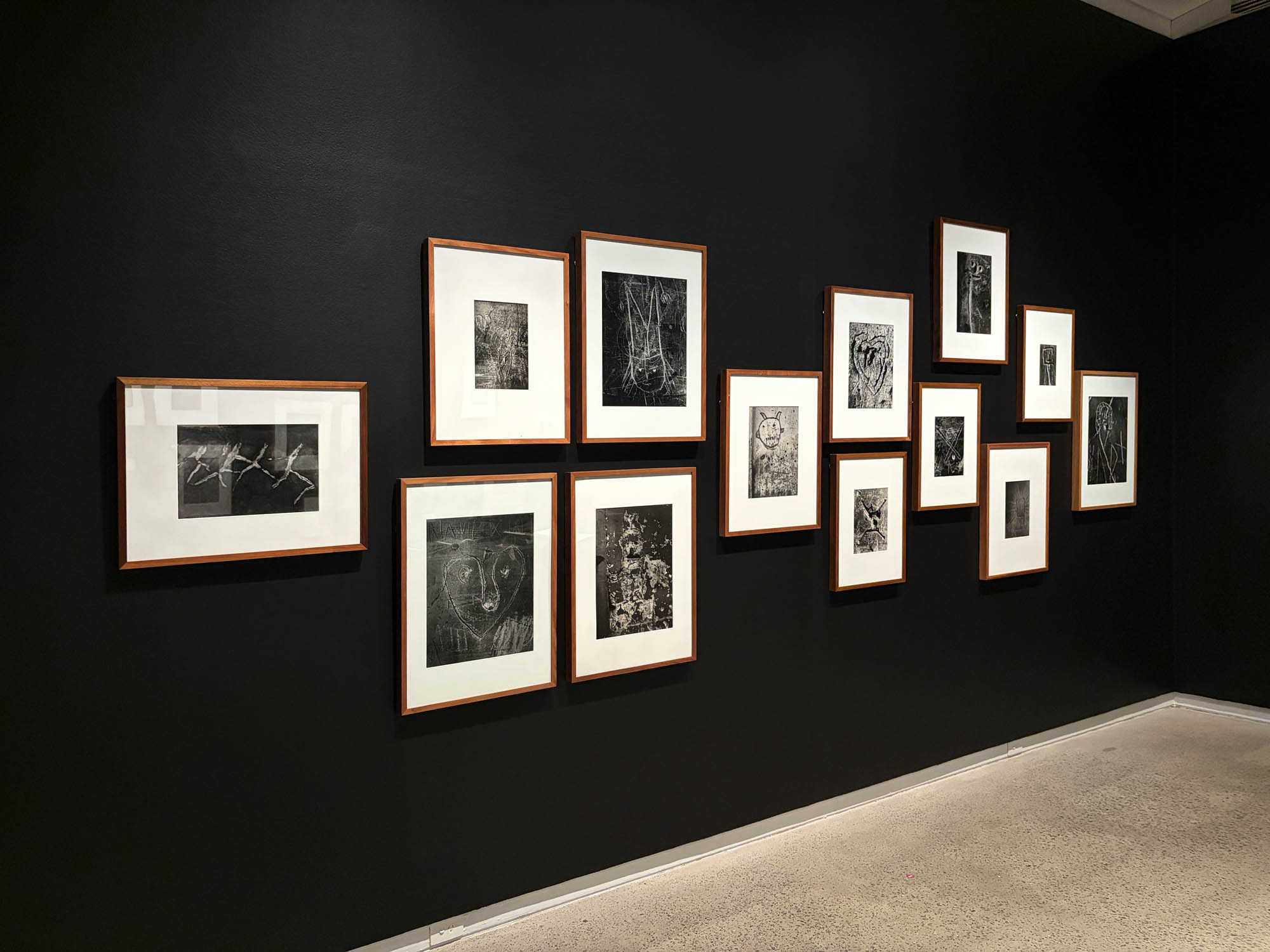
Installation view of the exhibition 'Brassaï: Secret Paris' at Heide Museum of Modern Art, Melbourne, July - November, 2026 showing photographs from the series 'Graffiti'  in gallery two


Installation view of the exhibition Brassaï: Secret Paris at Heide Museum of Modern Art, Melbourne, July – November, 2026 showing photographs from the series Graffiti (titles below) in gallery two
Photo: Marcus Bunyan
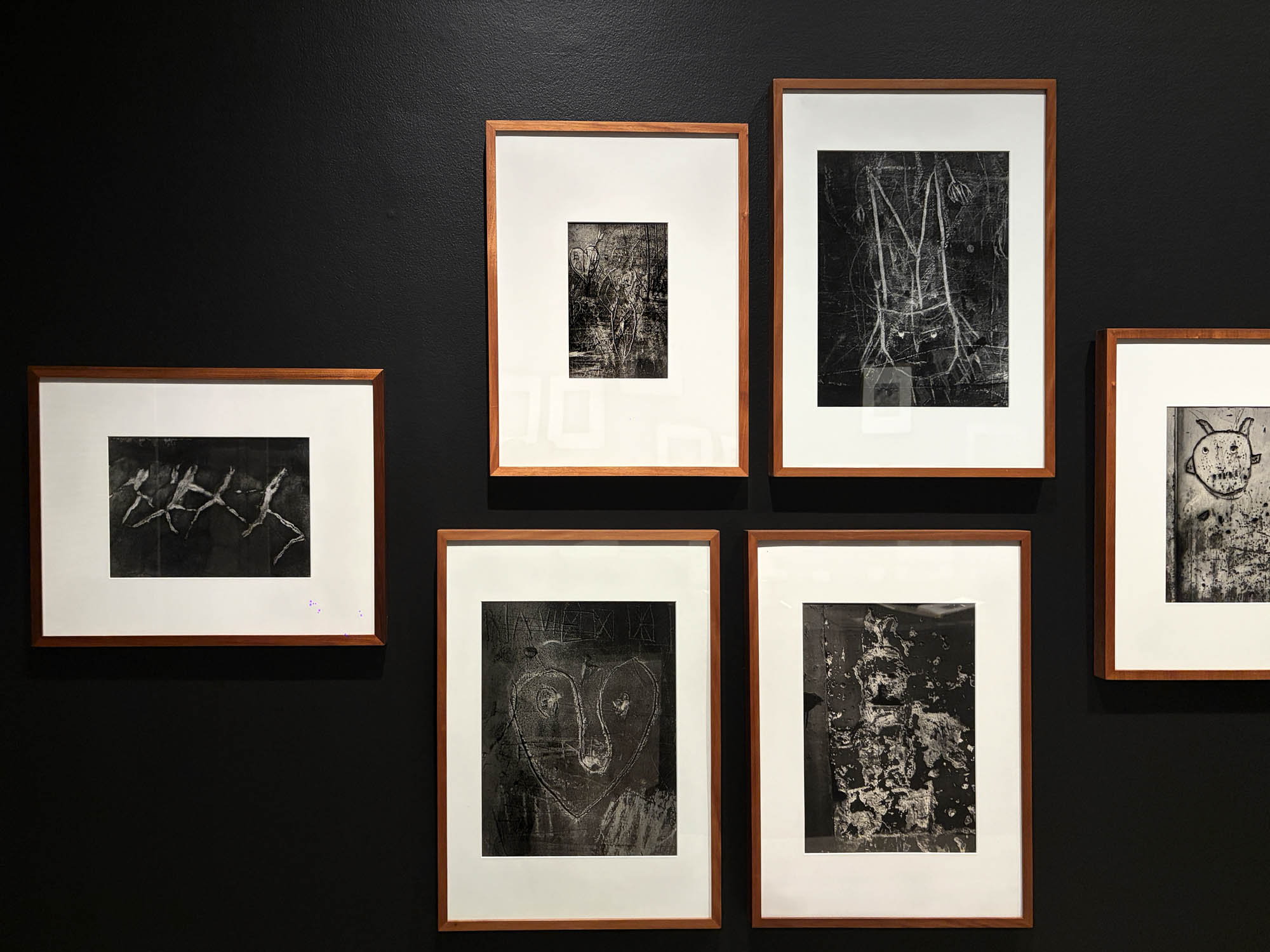
 

Installation view of the exhibition 'Brassaï: Secret Paris' at Heide Museum of Modern Art, Melbourne, July - November, 2026 showing photographs 1-6 from the series 'Graffiti'


Installation view of the exhibition Brassaï: Secret Paris at Heide Museum of Modern Art, Melbourne, July – November, 2026 showing photographs 1-6 from the series Graffiti (titles below)
Photo: Marcus Bunyan
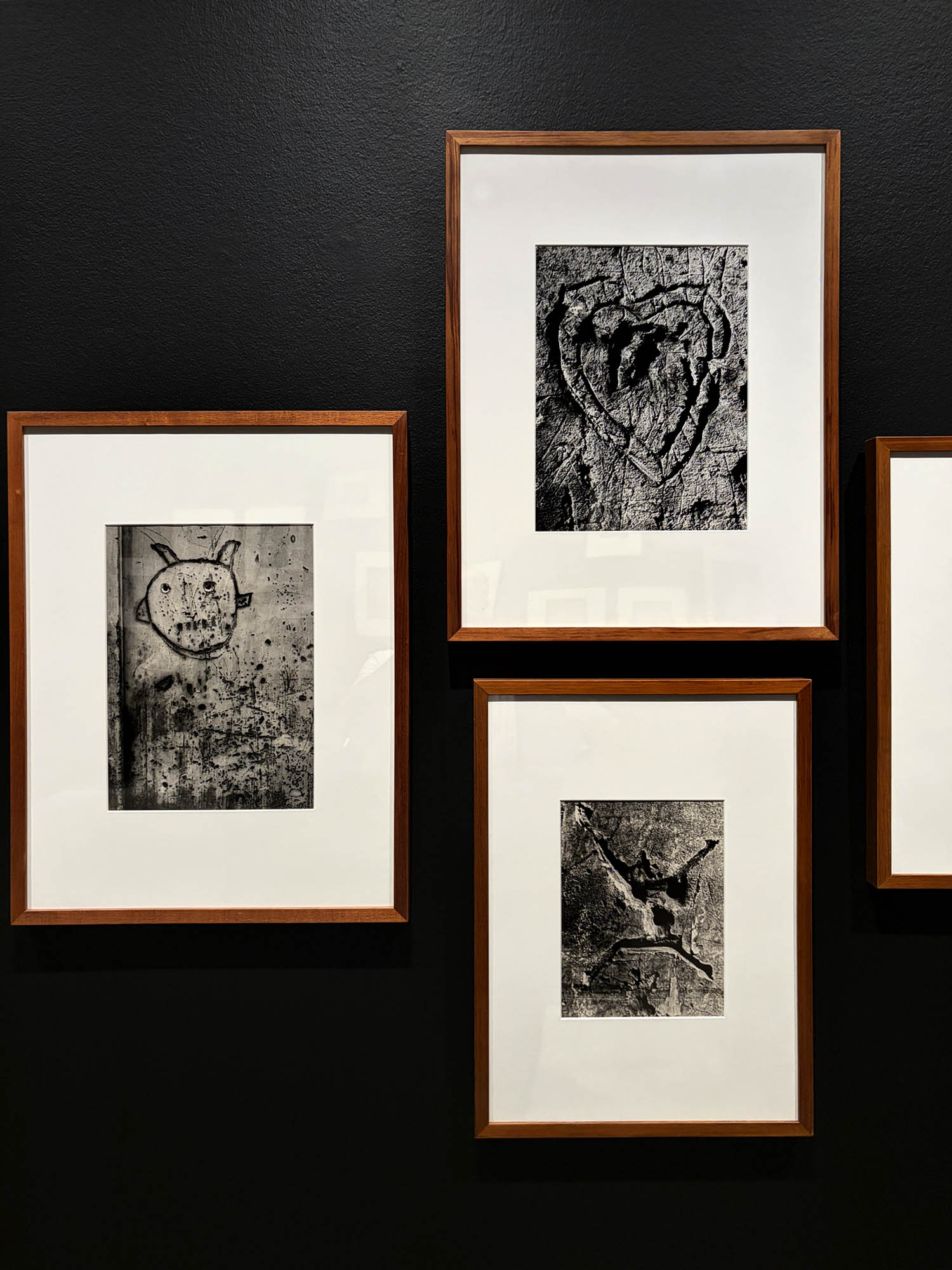
 

Installation view of the exhibition 'Brassaï: Secret Paris' at Heide Museum of Modern Art, Melbourne, July - November, 2026 showing photographs 6-8 from the series 'Graffiti'


Installation view of the exhibition Brassaï: Secret Paris at Heide Museum of Modern Art, Melbourne, July – November, 2026 showing photographs 6-8 from the series Graffiti (titles below)
Photo: Marcus Bunyan
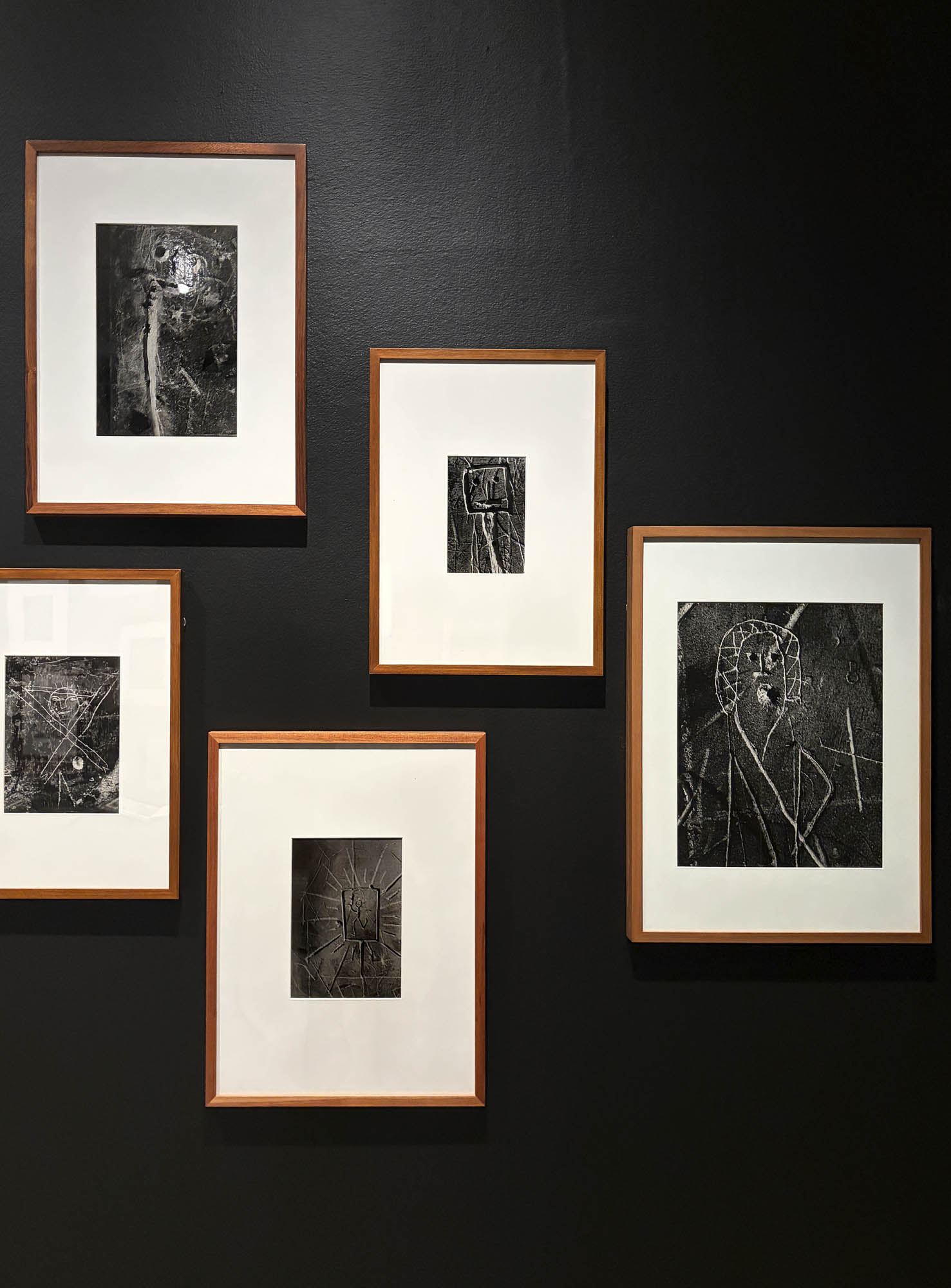
 

Installation view of the exhibition 'Brassaï: Secret Paris' at Heide Museum of Modern Art, Melbourne, July - November, 2026 showing photographs 9-13 from the series 'Graffiti'


Installation view of the exhibition Brassaï: Secret Paris at Heide Museum of Modern Art, Melbourne, July – November, 2026 showing photographs 9-13 from the series Graffiti (titles below)
Photo: Marcus Bunyan
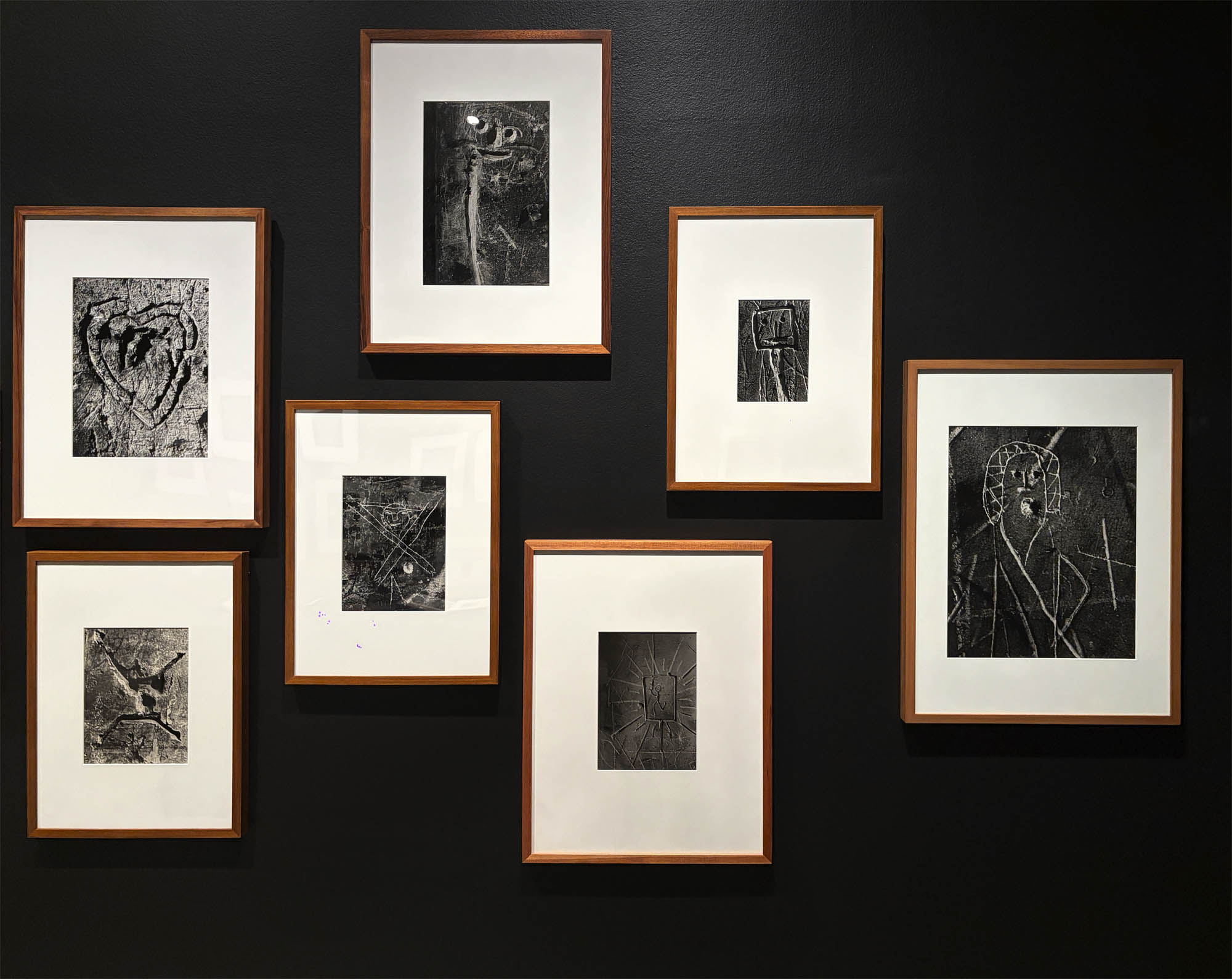
 

Installation view of the exhibition 'Brassaï: Secret Paris' at Heide Museum of Modern Art, Melbourne, July - November, 2026 showing photographs 7-13 from the series 'Graffiti'


Installation view of the exhibition Brassaï: Secret Paris at Heide Museum of Modern Art, Melbourne, July – November, 2026 showing photographs 7-13 from the series Graffiti (titles below)
Photo: Marcus Bunyan
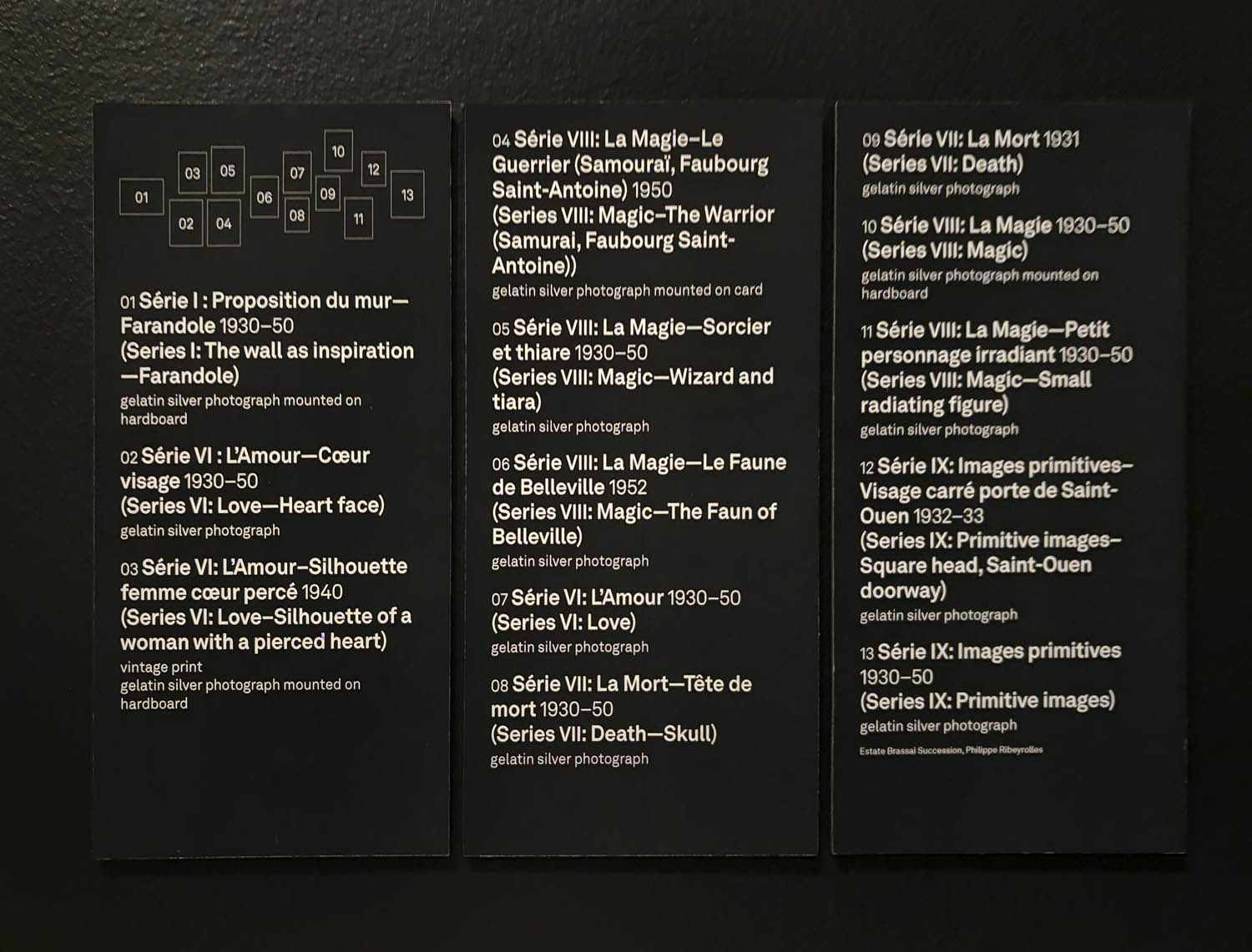
 

Titles for the series 'Graffit'i for the photograph (above) from the exhibition 'Brassaï: Secret Paris' at Heide Museum of Modern Art, Melbourne, July - November, 2026


Titles for the series Graffiti for the photograph (above) from the exhibition Brassaï: Secret Paris at Heide Museum of Modern Art, Melbourne, July – November, 2026
Photo: Marcus Bunyan
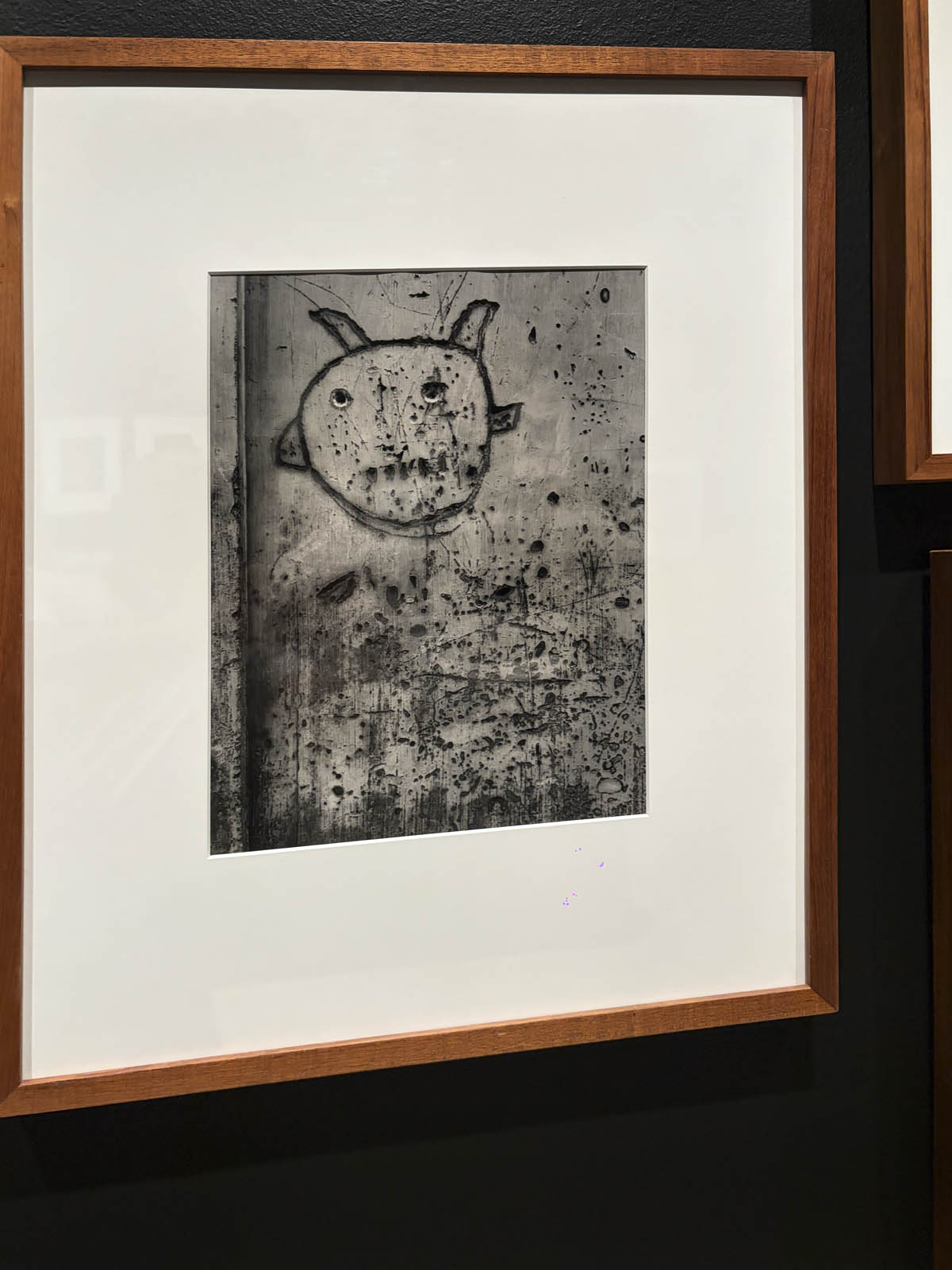
 

Brassaï (Hungarian-French, 1899-1984) 'Série VII: La Mort - Tête de Morte' (Series VII: Death - Skull) 1930-1950 (installation view)


Brassaï (Hungarian-French, 1899-1984)
Série VII: La Mort – Tête de Morte (Series VII: Death – Skull) (installation view)
1930-1950
Gelatin silver photograph
Estate Brassaï Succession, Philippe Ribeyrolles
Photo: Marcus Bunyan
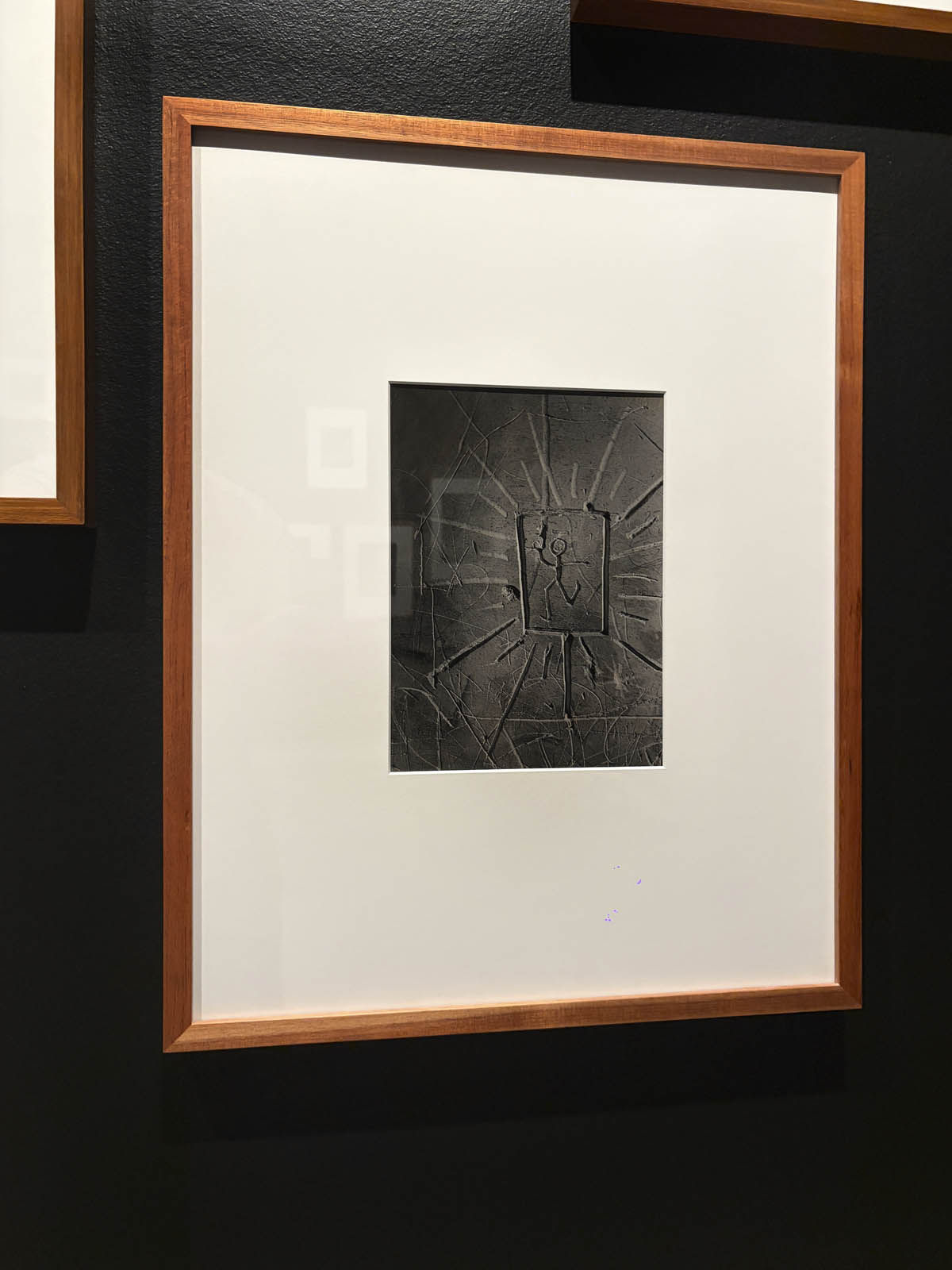
 

Brassaï (Hungarian-French, 1899-1984) 'Série VIII: La Magie - Petit personnage irradiant' (Series VIII: Magic - Small radiating figure) 1930-1950 (installation view)


Brassaï (Hungarian-French, 1899-1984)
Série VIII: La Magie – Petit personnage irradiant (Series VIII: Magic – Small radiating figure) (installation view)
1930-1950
Gelatin silver photograph
Estate Brassaï Succession, Philippe Ribeyrolles
Photo: Marcus Bunyan
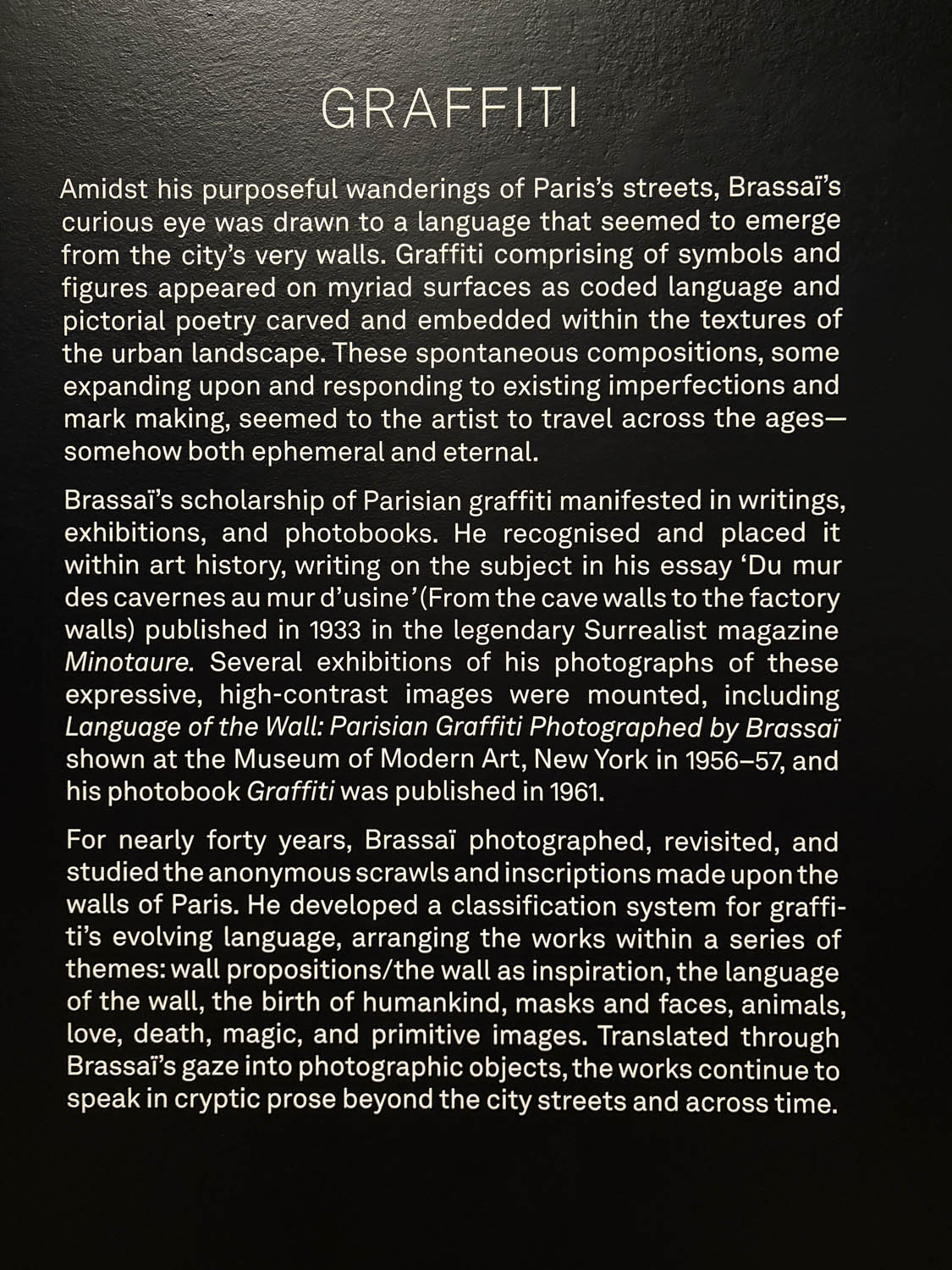
 

Wall text from the exhibition 'Brassaï: Secret Paris' at Heide Museum of Modern Art, Melbourne, July - November, 2026 from gallery two


Wall text from the exhibition Brassaï: Secret Paris at Heide Museum of Modern Art, Melbourne, July – November, 2026 from gallery two
Photo: Marcus Bunyan
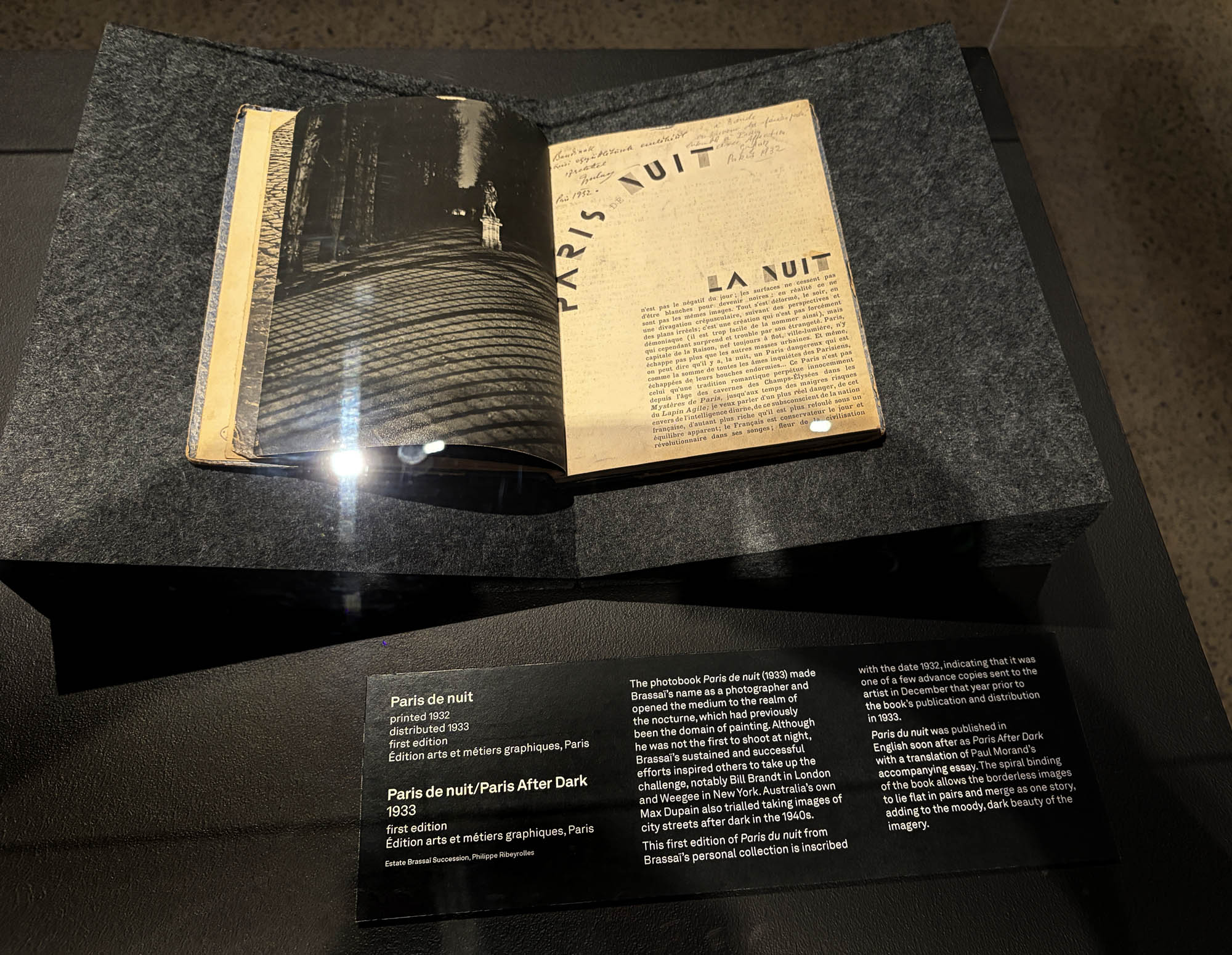
 

'Paris de nuit/Paris After Dark' (installation view) 1933 First edition from the exhibition 'Brassaï: Secret Paris' at Heide Museum of Modern Art, Melbourne, July - November, 2026


Paris de nuit/Paris After Dark (installation view)
1933
First edition
Printed 1932, distributed 1933
Edition arts et métiers graphiques, Paris
Estate Brassaï Succession, Philippe Ribeyrolles
Photo: Marcus Bunyan


The photobook Paris de nuit (1933) made Brassaï’s name as a photographer and opened the medium to the realm of the nocturne, which had previously been the domain of painting. Although he was not the first to shoot at night, Brassai’s sustained and successful efforts inspired others to take up the challenge, notably Bill Brandt in London and Weegee in New York. Australia’s own Max Dupain also trialled taking images of city streets after dark in the 1940s.

The first edition of Paris du nuit from Brassaï’s personal collection is inscribed with the date 1932, indicating that it was one of a few advance copies sent to the artist prior to the book’s publication and distribution in 1933.

Paris de nuit was published in English soon after as Paris After Dark with a translation of Paul Morand’s accompanying essay. The spiral binding of the book allows the borderless images to lie flat in pairs and merge as one story, adding to the moody, dark beauty of the imagery.

Label text from the exhibition Brassaï: Secret Paris at Heide Museum of Modern Art, Melbourne, July – November, 2026
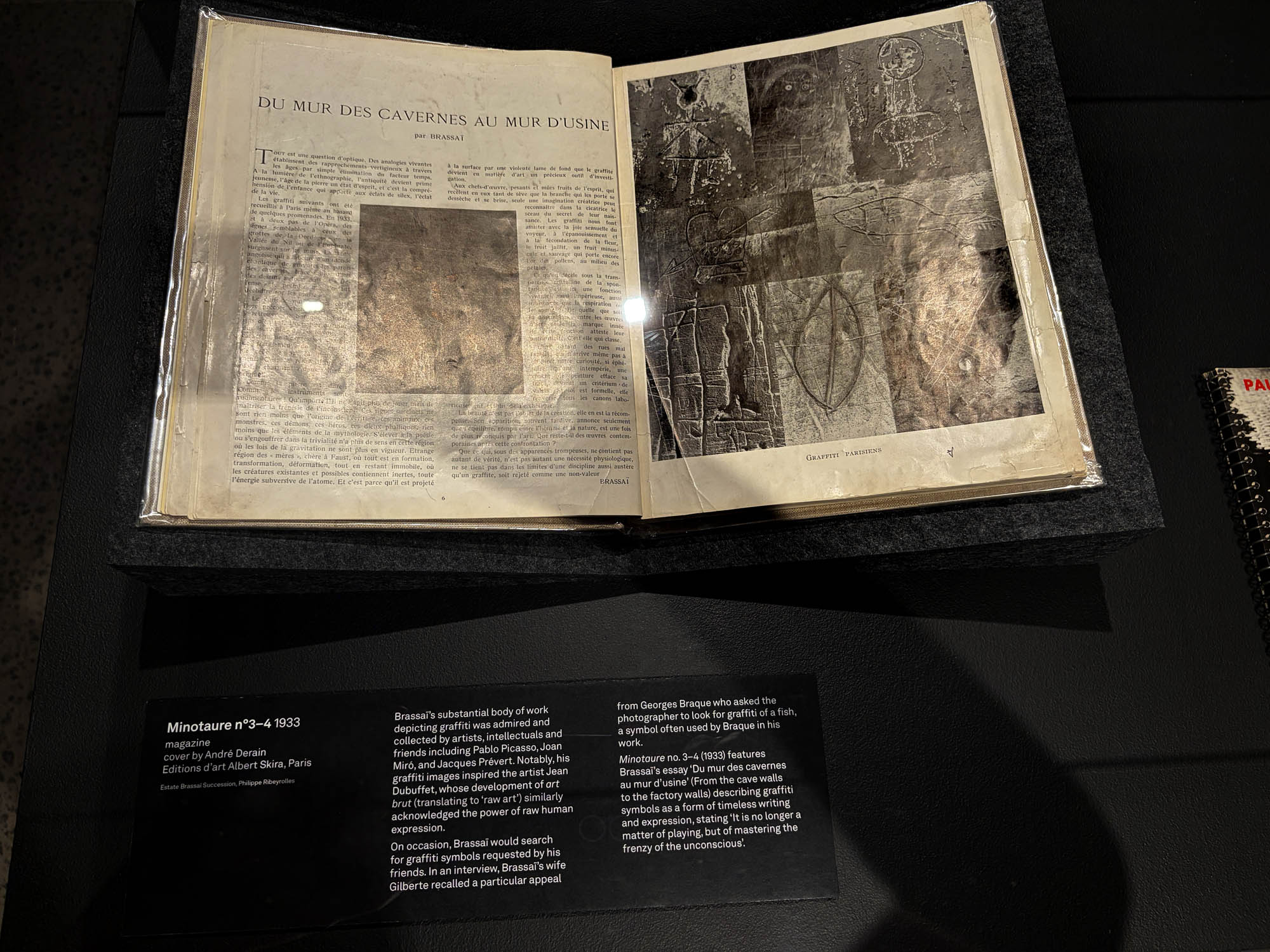
 

'Minotaure' no.3-4 (installation view) 1933 from the exhibition 'Brassaï: Secret Paris' at Heide Museum of Modern Art, Melbourne, July - November, 2026


Minotaure no.3-4 (installation view)
1933
Magazine
Cover by André Derain
Editions d’art Albert Skira, Paris
Estate Brassaï Succession, Philippe Ribeyrolles
Photo: Marcus Bunyan


Brassaï’s substantial body of work depicting graffiti was admired and collected by artists, intellectuals and friends including Pablo Picasso, Joan Miró, and Jacques Prévert. Notably, his graffiti images inspired the artist Jean Dubuffet, whose development of art brut (translating to ‘raw art’) similarly acknowledged the power of raw human expression.

On occasion, Brassaï would search fro graffiti symbols requested by his friends. In an interview, Brassaï’s wife Gilberte recalled a particular appeal from Georges Braque who asked the photographer to look for graffiti of a fish, a symbol often used by Braque in his work.

Minotaure no.3-4 (1933) features Brassaï’s essay ‘Du mur des cavernes au mur d’usine’ (From the cave walls to the factory walls) describing graffiti symbols as a form of timeless writing and expression, stating ‘It is no longer a matter of playing, but of mastering the frenzy of the unconscious’.

Label text from the exhibition Brassaï: Secret Paris at Heide Museum of Modern Art, Melbourne, July – November, 2026
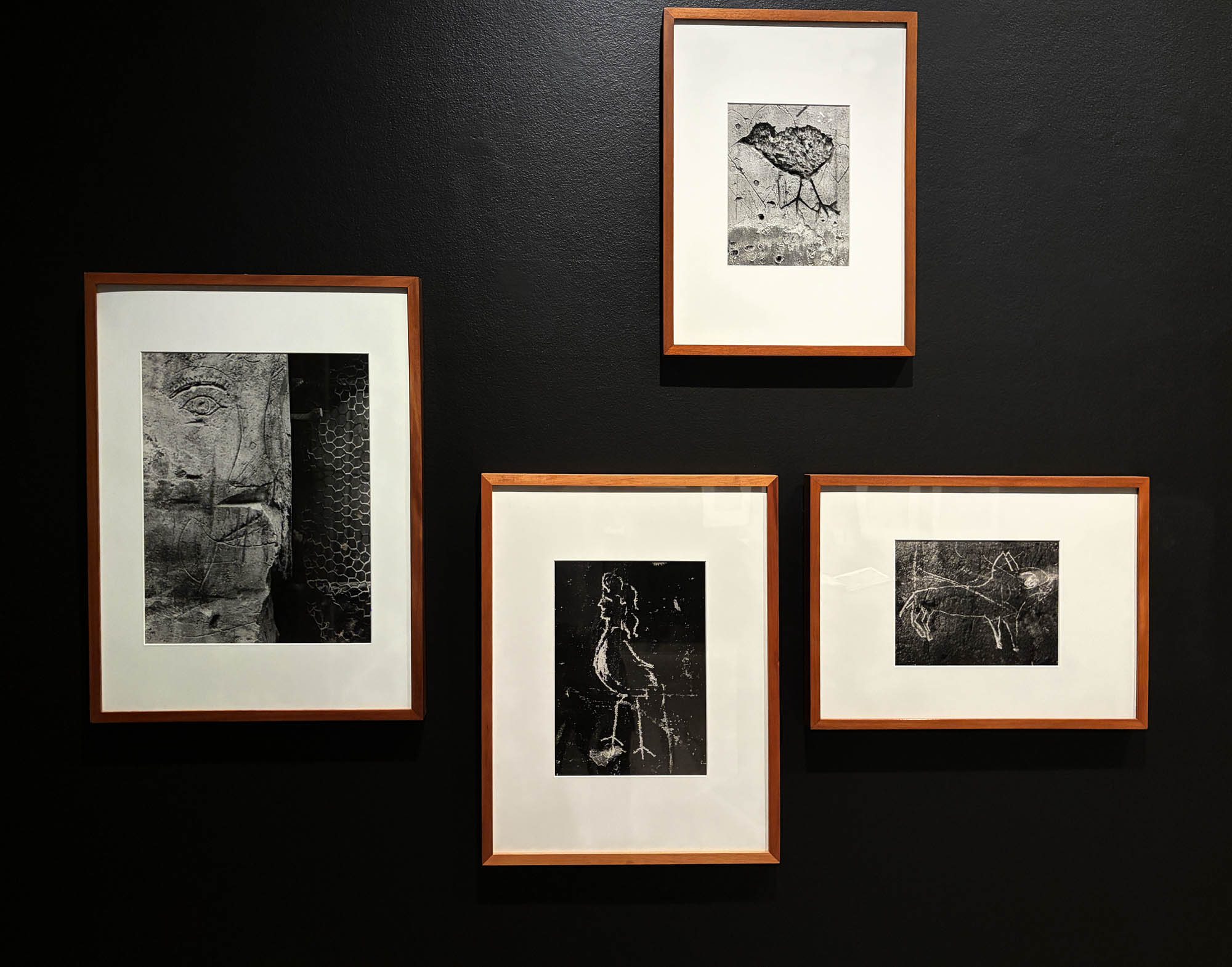
 

Installation view of the exhibition 'Brassaï: Secret Paris' at Heide Museum of Modern Art, Melbourne, July - November, 2026 showing photographs from the series 'Graffiti'


Installation view of the exhibition Brassaï: Secret Paris at Heide Museum of Modern Art, Melbourne, July – November, 2026 showing photographs 1-4 from the series Graffiti (titles below)
Photo: Marcus Bunyan
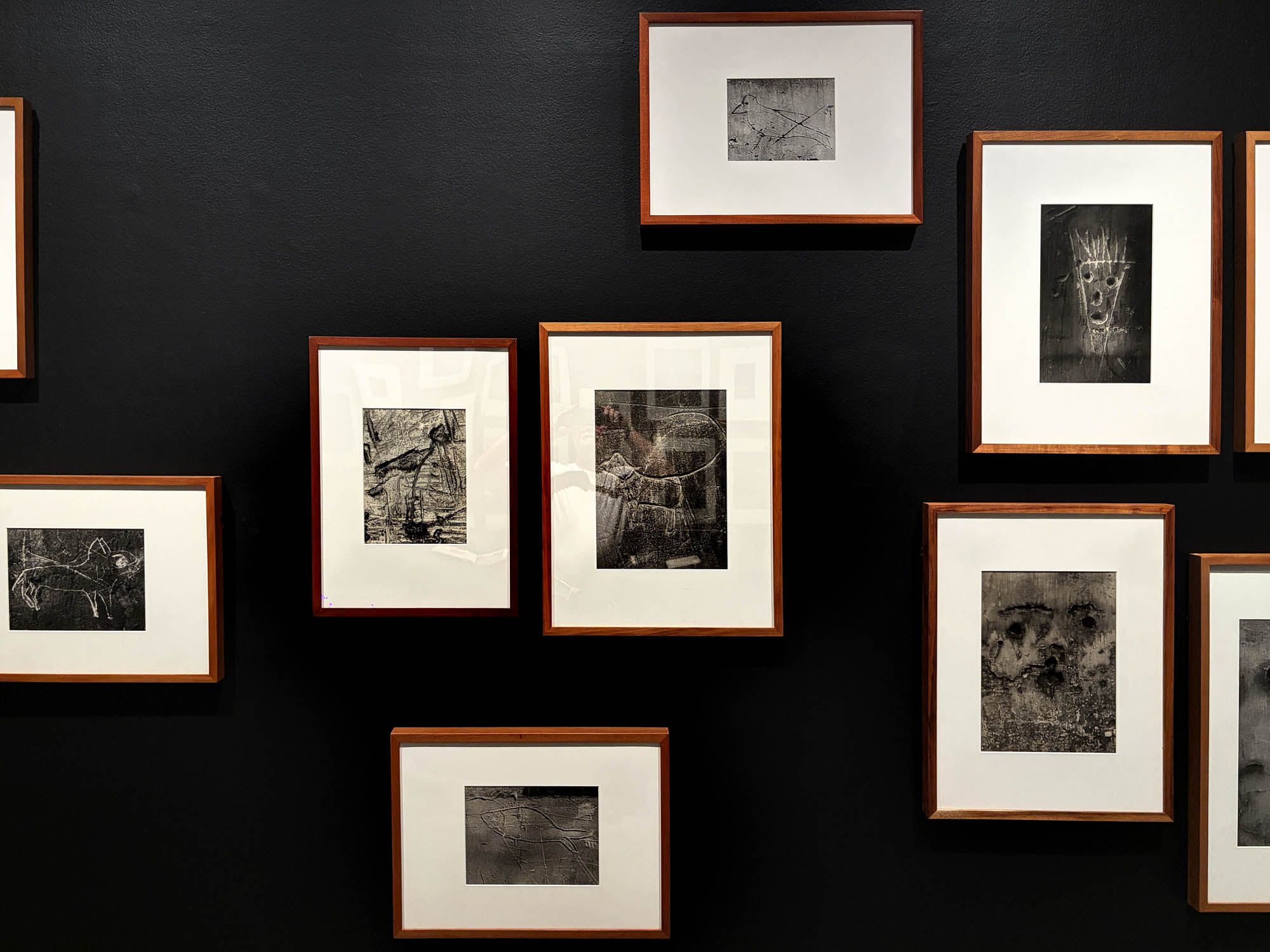
 

Installation view of the exhibition 'Brassaï: Secret Paris' at Heide Museum of Modern Art, Melbourne, July - November, 2026 showing photographs 4-10 from the series 'Graffiti'


Installation view of the exhibition Brassaï: Secret Paris at Heide Museum of Modern Art, Melbourne, July – November, 2026 showing photographs 4-10 from the series Graffiti (titles below)
Photo: Marcus Bunyan
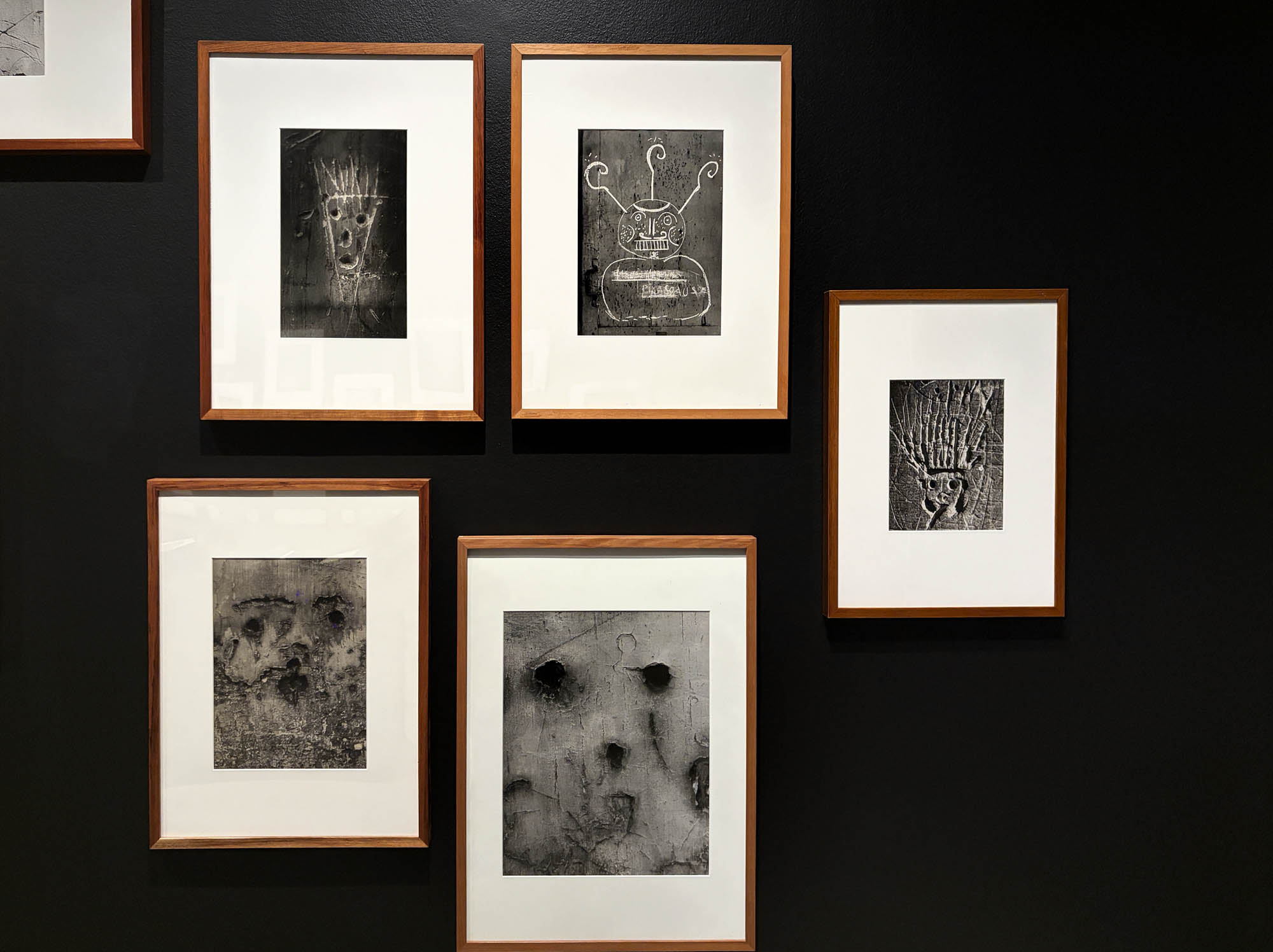
 

Installation view of the exhibition 'Brassaï: Secret Paris' at Heide Museum of Modern Art, Melbourne, July - November, 2026 showing photographs 9-13 from the series 'Graffiti'


Installation view of the exhibition Brassaï: Secret Paris at Heide Museum of Modern Art, Melbourne, July – November, 2026 showing photographs 9-13 from the series Graffiti (titles below)
Photo: Marcus Bunyan


No. 12: While best known as a photographer and writer, Brassaï’s talents extended to a wide variety of disciplines including sculpture and drawing. In his images of graffiti, his appreciation of graphic and volumetric elements, informed by his practice as a sculptor and draughtsman, is clearly articulated.

Within the etched graffiti works, the linear qualities of the imagery are made manifest through contrasting shadows born of a shift in surface depth. Created through an alternate graffiti drawing methodology, Mademoiselle Picaseau, rather than being carved deeply into the wall’s surface, presents as a ghostly chalked apparition of expressive and stylised line work.

Label text from the exhibition Brassaï: Secret Paris at Heide Museum of Modern Art, Melbourne, July – November, 2026 from gallery two
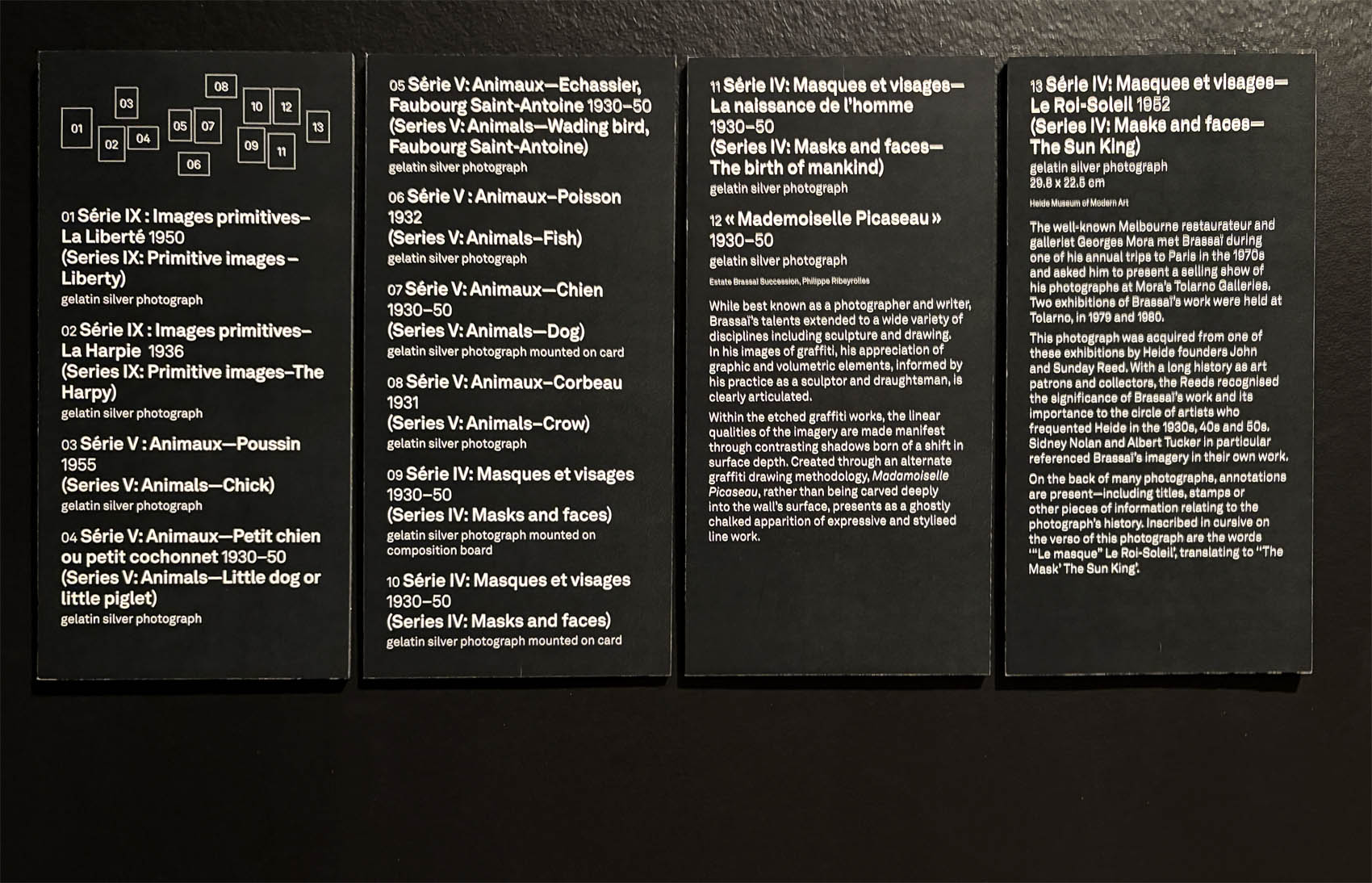
 

Titles for the series 'Graffiti' for the photographs (above) from the exhibition 'Brassaï: Secret Paris' at Heide Museum of Modern Art, Melbourne, July - November, 2026


Titles for the series Graffiti for the photographs (above) from the exhibition Brassaï: Secret Paris at Heide Museum of Modern Art, Melbourne, July – November, 2026
Photo: Marcus Bunyan
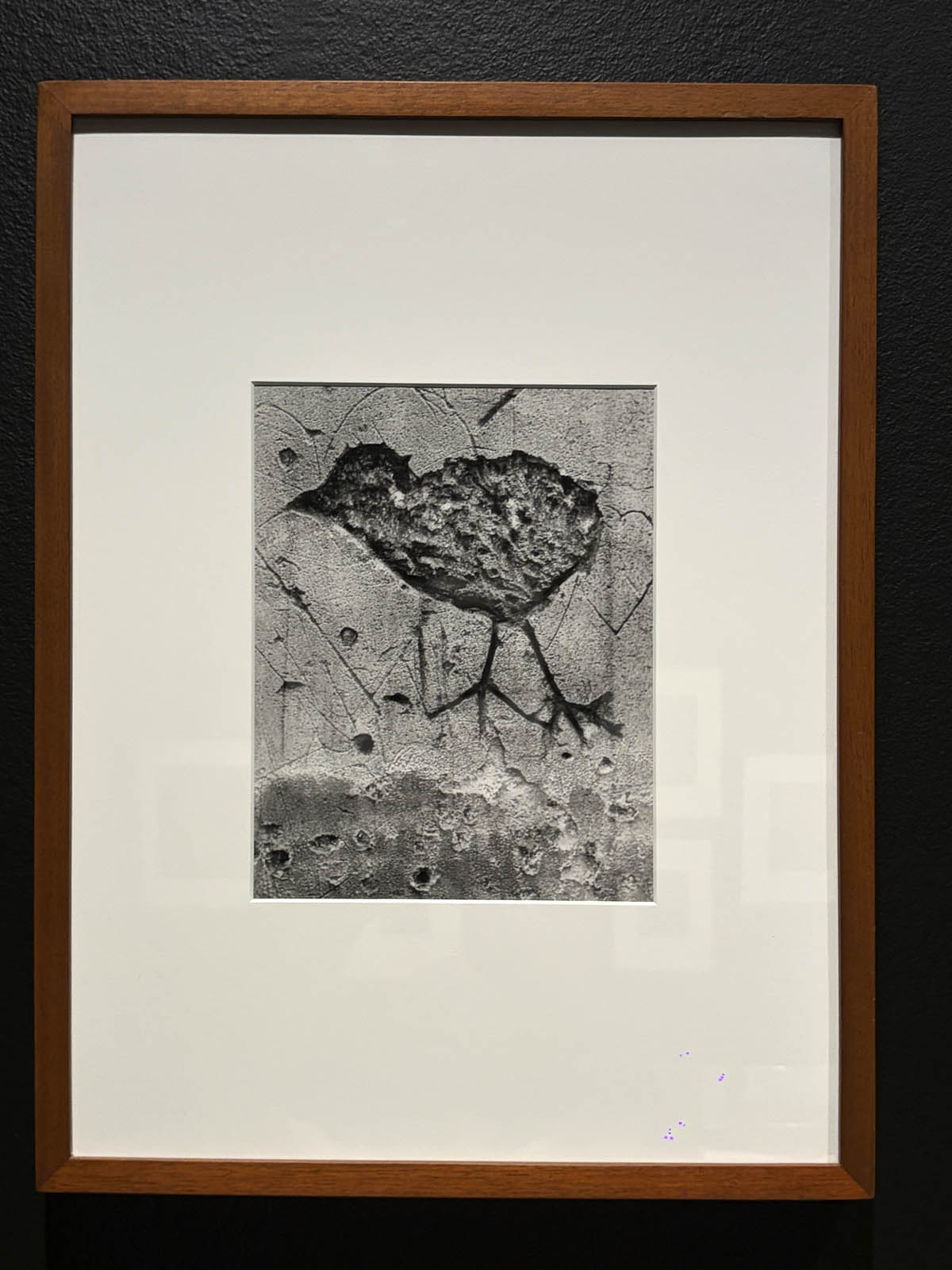
 

Brassaï (Hungarian-French, 1899-1984) 'Série V: Animaux - Poussin' (Series VIII: Animals - Chick) 1955 (installation view)


Brassaï (Hungarian-French, 1899-1984)
Série V: Animaux – Poussin (Series VIII: Animals – Chick) (installation view)
1955
Gelatin silver photograph
Estate Brassaï Succession, Philippe Ribeyrolles
Photo: Marcus Bunyan
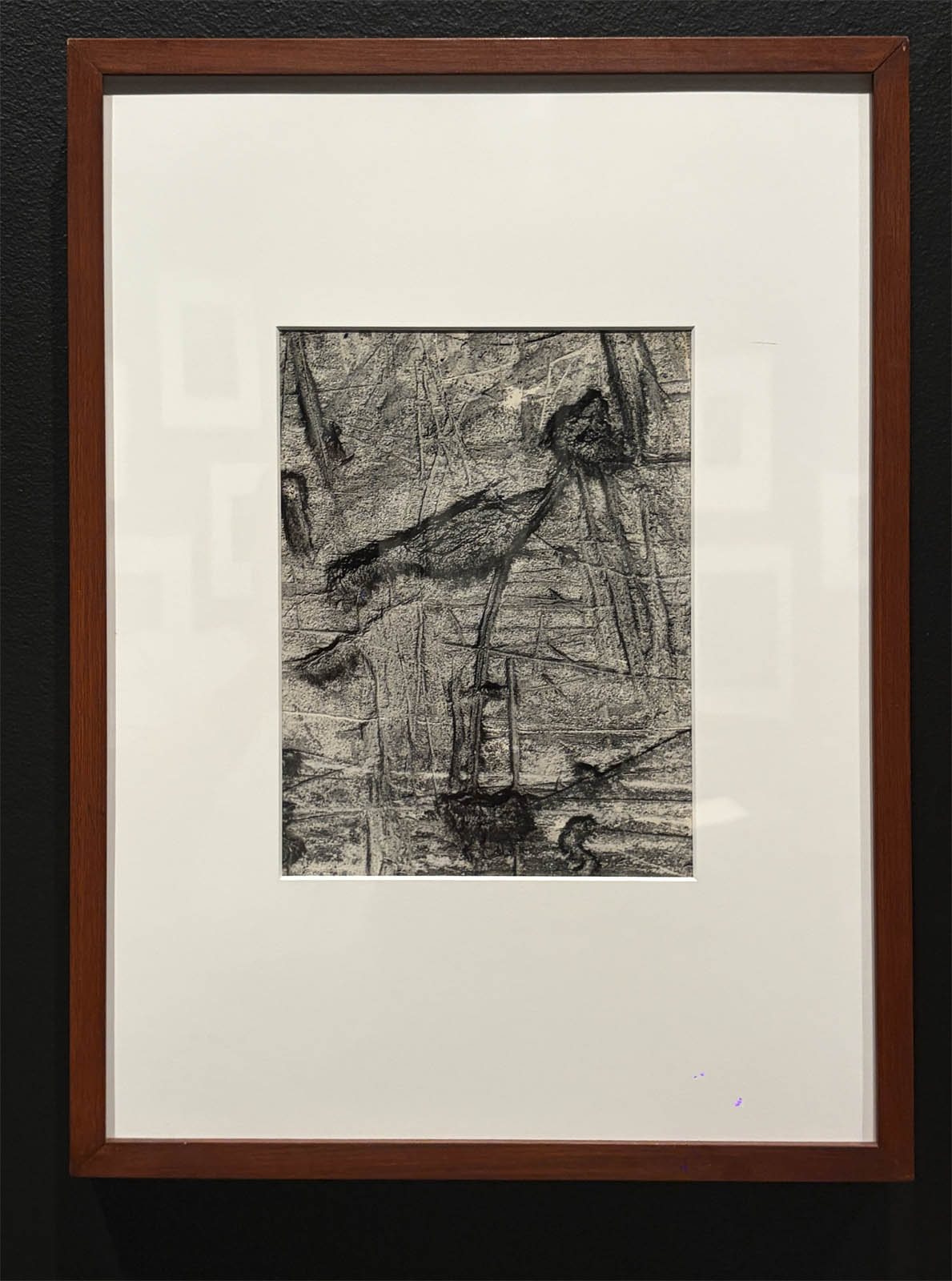
 

Brassaï (Hungarian-French, 1899-1984) 'Série V: Animaux - Enchassier, Faubourg Saint-Antoine' (Series VIII: Animals - Wading Bird, Faubourg Saint-Antoine) 1930-1950 (installation view)


Brassaï (Hungarian-French, 1899-1984)
Série V: Animaux – Enchassier, Faubourg Saint-Antoine (Series VIII: Animals – Wading Bird, Faubourg Saint-Antoine) (installation view)
1930-1950
Gelatin silver photograph
Estate Brassaï Succession, Philippe Ribeyrolles
Photo: Marcus Bunyan
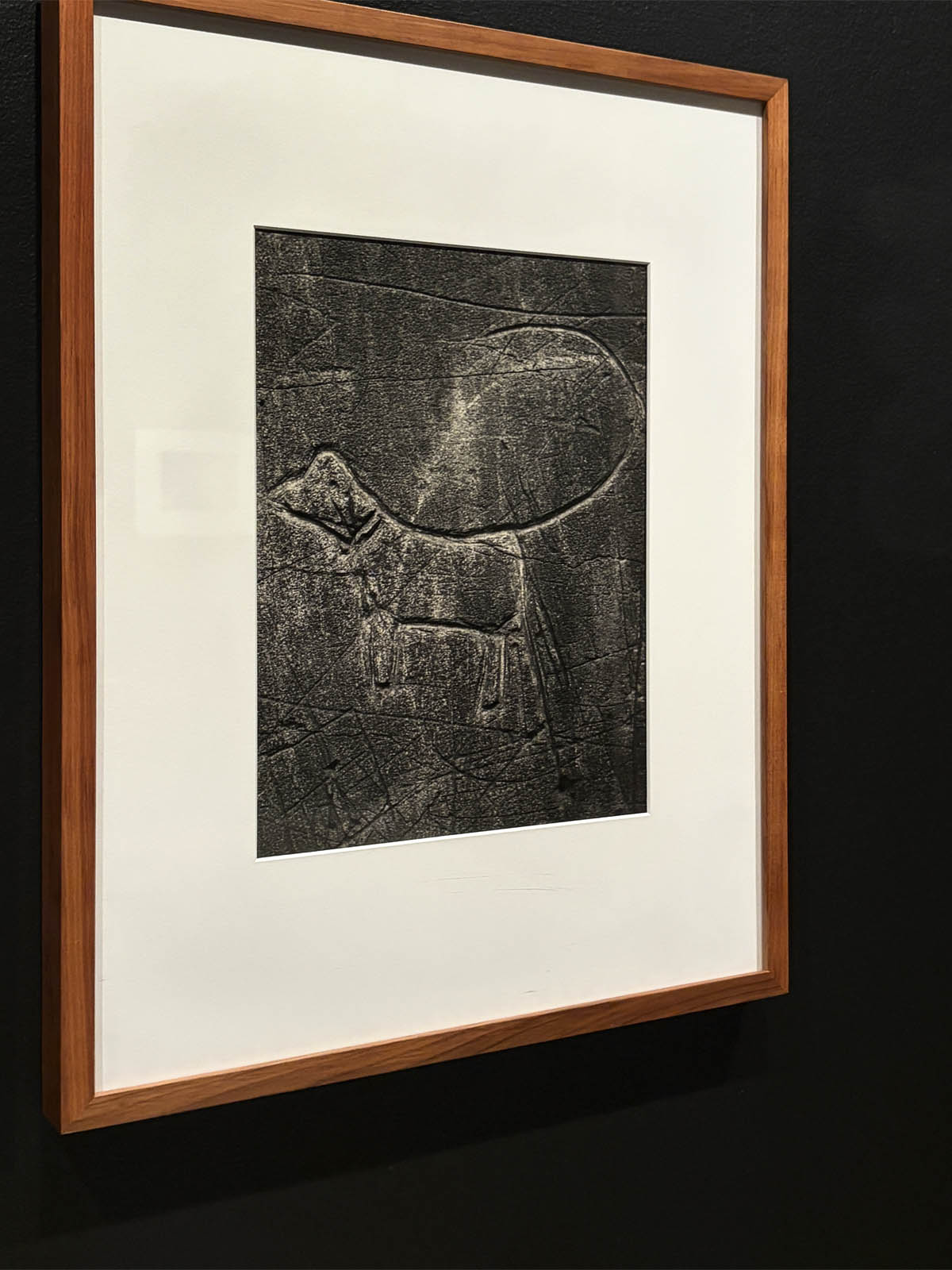
 

Brassaï (Hungarian-French, 1899-1984) 'Série V: Animaux - Chien' (Series VIII: Animals - Dog) 1930-1950 (installation view)


Brassaï (Hungarian-French, 1899-1984)
Série V: Animaux – Chien (Series VIII: Animals – Dog) (installation view)
1930-1950
Gelatin silver photograph mounted on card
Estate Brassaï Succession, Philippe Ribeyrolles
Photo: Marcus Bunyan
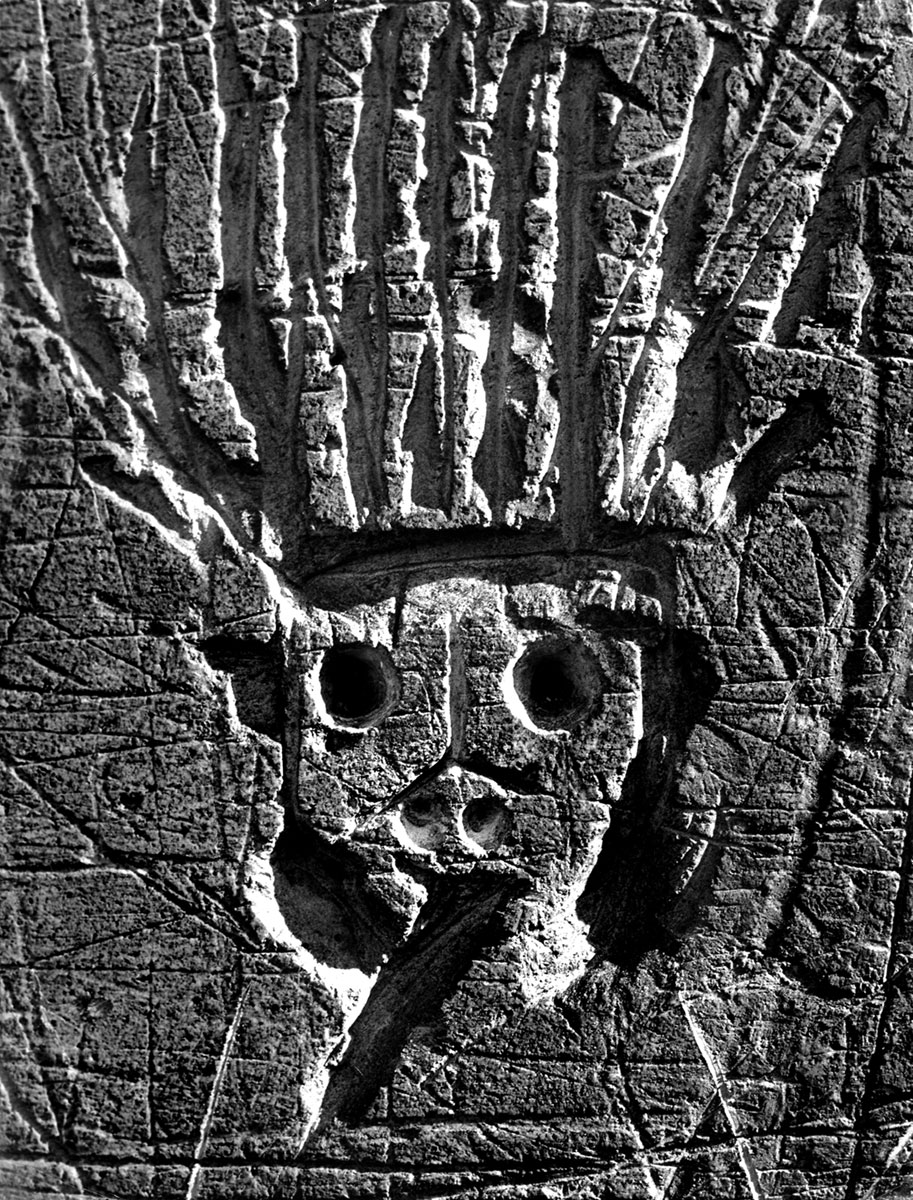
 

Brassaï (Hungarian-French, 1899-1984) 'Série IV: Masques et visages - Le Roi-Soleil' (Series IV: Masks and facts - The Sun King) 1952


Brassaï (Hungarian-French, 1899-1984)
Série IV: Masques et visages – Le Roi-Soleil (Series IV: Masks and faces – The Sun King)
1952
Gelatin silver photograph
29.8 x 22.5cm
Heide Museum of Modern Art


The well-known Melbourne restaurateur and gallerist George Mora met Brassaï during one of his annual trips to Paris in the 1970s and asked him to present a selling show of his photographs at Mora’s Tolarno Galleries. Two exhibitions of Brassaï’s work were held at Tolarno, in 1979 and 1980.

This photograph was acquired from one of these exhibitions by Heide founders John and Sunday Reed. With a long history as art patrons and collectors, the Reeds recognised the significance of Brassaï’s work and its importance to the circle of artists who frequented Heide in the 1930s, 40s and 50s. Sidney Nolan and Albert Tucker in particular referenced Brassaï’s imagery in their own work.

On the back of many photographs, annotations are present – including titles, stamps or other pieces of information relating to the photograph’s history. Inscribed in cursive on the verso of this photograph are the words ‘”Le masque” Le Roi-Soleil’, translating to ‘”The Mask” The Sun King’.

Label text from the exhibition Brassaï: Secret Paris at Heide Museum of Modern Art, Melbourne, July – November, 2026 from gallery two


Heide Museum of Modern Art has announced Brassaï: Secret Paris, a major survey exhibition of work by the eminent Hungarian-born French photographer Brassaï, presented from 25 July – 15 November 2026.

The exhibition marks the most comprehensive presentation of Brassaï’s work ever seen in Australia, and his first solo exhibition in the country in over five decades. It is the third major modernist photography exhibition presented by Heide in five years, following the acclaimed Man Ray and Max Dupain in 2025 and Surrealist Lee Miller in 2023.

Brassaï: Secret Paris brings together more than 150 original vintage prints depicting the City of Light in the 1930s. Co-curated by Heide Artistic Director Lesley Harding, Philippe Ribeyrolles, manager and curator of the Estate Brassaï and nephew of the artist, and renowned French photography curator Emmanuelle de l’Ecotais, the exhibition encompasses Brassaï’s greatest achievements. These include his iconic atmospheric black-and-white images of Paris and its people by night, his relationships with leading figures of the Parisian avant-garde, his experiments with Surrealism, and hallmark photographs of graffiti captured at the dawn of contemporary street art.

Lesley Harding, Artistic Director Heide Museum of Modern Art, said: “Brassaï is one of the great photographers of the twentieth century, and we are delighted to bring this depth of work to Australian audiences for the first time in a generation. His images continue to resonate nearly a century on, and in presenting the full breadth of his practice, from night photographs and graffiti to surrealist experiments and portraits of his inner circle, this exhibition at Heide reveals an artist of remarkable range and vision.”

Philippe Ribeyrolles of the Estate Brassaï said: “This exhibition was prepared in the heart of Paris, in the very place where Brassaï lived and where his memory still endures. I personally wished to imbue this presentation with the familial spirit and soul that belonged to the Brassaï I knew, and which I strive to preserve in my capacity as the artist’s nephew. For this reason, the exhibition is conceived as an invitation to journey into the heart of an oeuvre focused primarily on the secret Paris of the 1930s, through a selection of photographs whose prints were all made by Brassaï himself. For Henry Miller, Brassaï was the ‘Eye of Paris’. Even today, it is this eye that teaches us not only how to see, but above all how to look.”

Born in 1899 in Transylvania (present-day Romania), Brassaï arrived in Paris in the 1920s, where he would spend the remainder of his working life. Working through the night in Montparnasse and its surroundings, Brassaï documented an unseen Paris, its cafes, bars, street corners, sex workers and the demimonde, with a clarity and psychological depth that set him apart from his contemporaries. In 1933 he published the photo book, Paris de nuit (Paris by Night), which established him as one of the defining photographers of the 20th century.

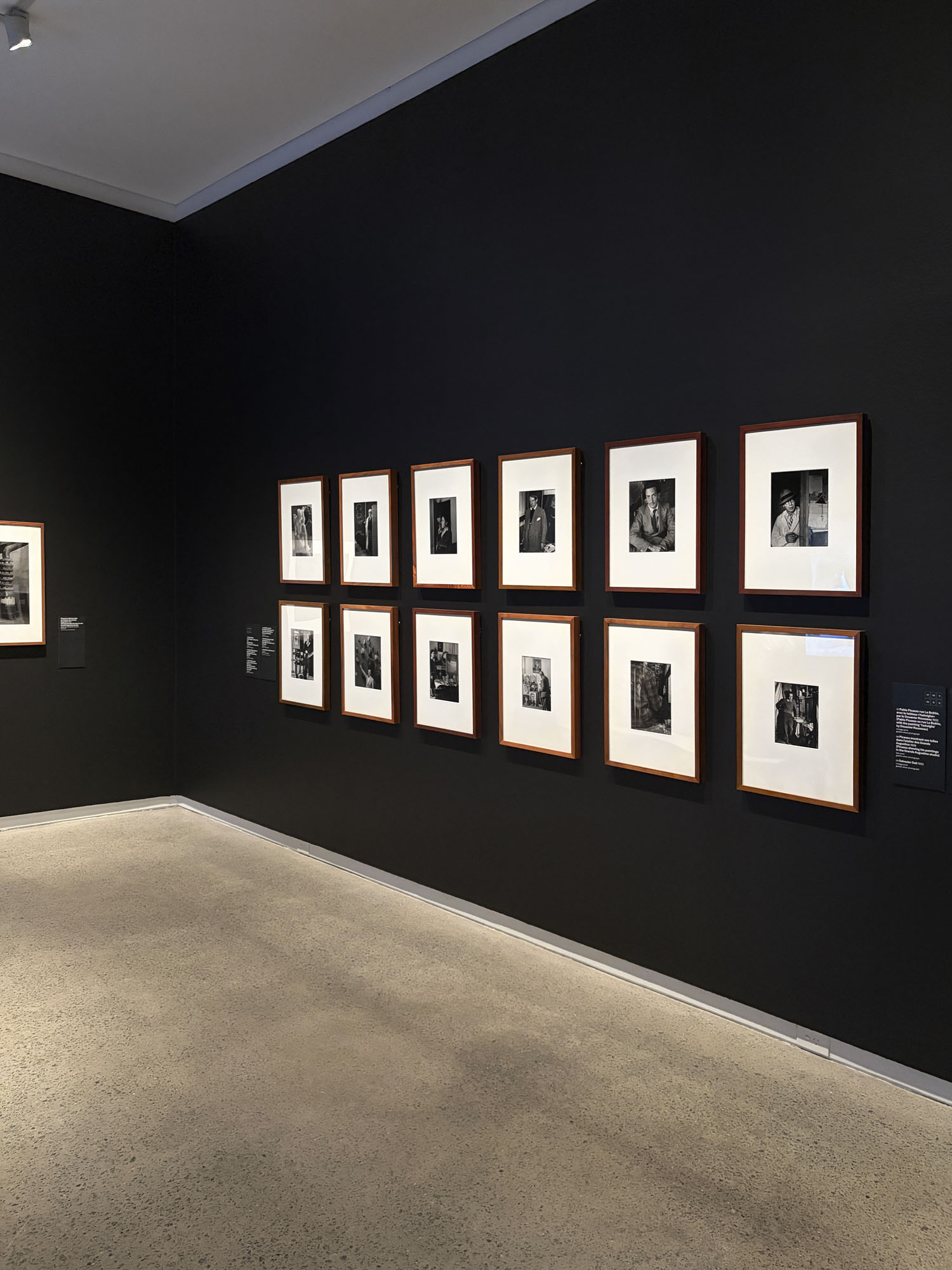
Central to the exhibition is Brassaï’s close friendship with Pablo Picasso, documented across decades of photographs made in Picasso’s studio, alongside portraits of Salvador Dalí, writer Henry Miller, and cabaret singer Kiki de Montparnasse. Moving within the innermost circles of the Parisian avant-garde, Brassaï captured these figures with the same intimacy he brought to the city’s margins. 

Other significant works in the exhibition trace Brassaï’s sustained interest in early graffiti: crude marks, faces and figures carved into the stone walls of Paris, which he photographed over many years. These photographs, presented in his landmark 1956 exhibition Language of the Wall at MoMA New York, position Brassaï as an observer of vernacular mark-making at a moment before contemporary street art existed as a category.

The exhibition will also include his experimental portfolio, Transmutations (1934-1935), containing photomontage and collage inspired by the Dadaists and Surrealists, exploring alternative realities below the surface of the photographic image.

Adding local context to the exhibition, Brassaï had a relationship with Australian art dealer Georges Mora, and had two exhibitions at his Tolarno Galleries in Melbourne in 1979 and 1980. A work purchased by Heide founders John and Sunday Reed during that period will be included in the exhibition.

Accompanying Brassaï: Secret Paris is a comprehensive catalogue featuring an essay by Gael Newton AM tracing Brassaï’s impact on Australian photography including W.L. Lucke-Meyer’s photo book, Melbourne by Night (1933), a personal contribution on the man and artist by Philippe Ribeyrolles, a curatorial overview by Emmanuelle de l’Ecotais, and new research on Brassaï’s influence on the Heide artists by Lesley Harding.

The exhibition has been designed by Mel Bright, Eliza Ng, Maryna Popova and Pei She Lee of Melbourne architecture firm Studio Bright, who previously designed the celebrated Barbara Hepworth: In Equilibrium exhibition at Heide in 2022.

Press release from Heide Museum of Modern Art


Gallery three
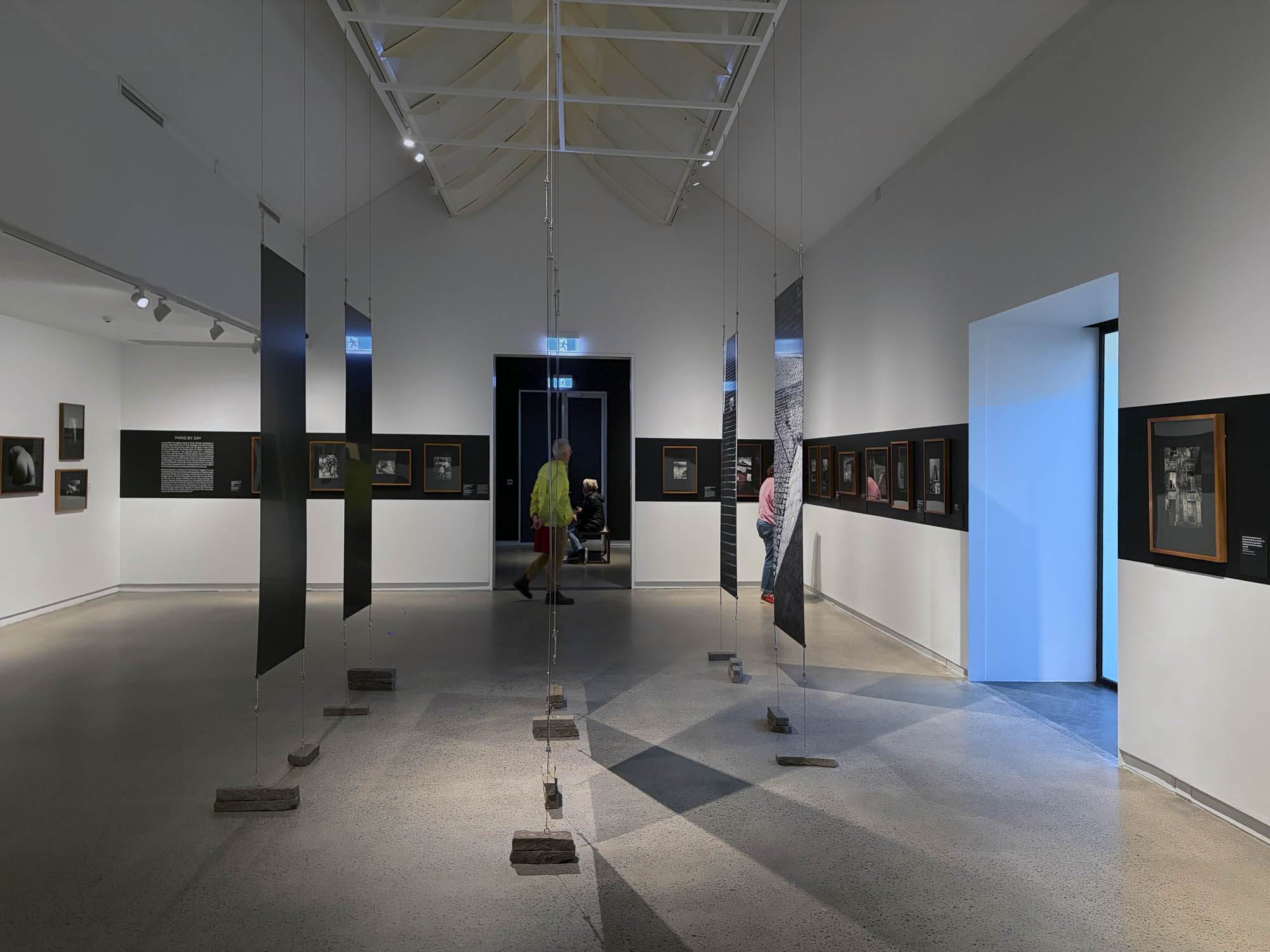
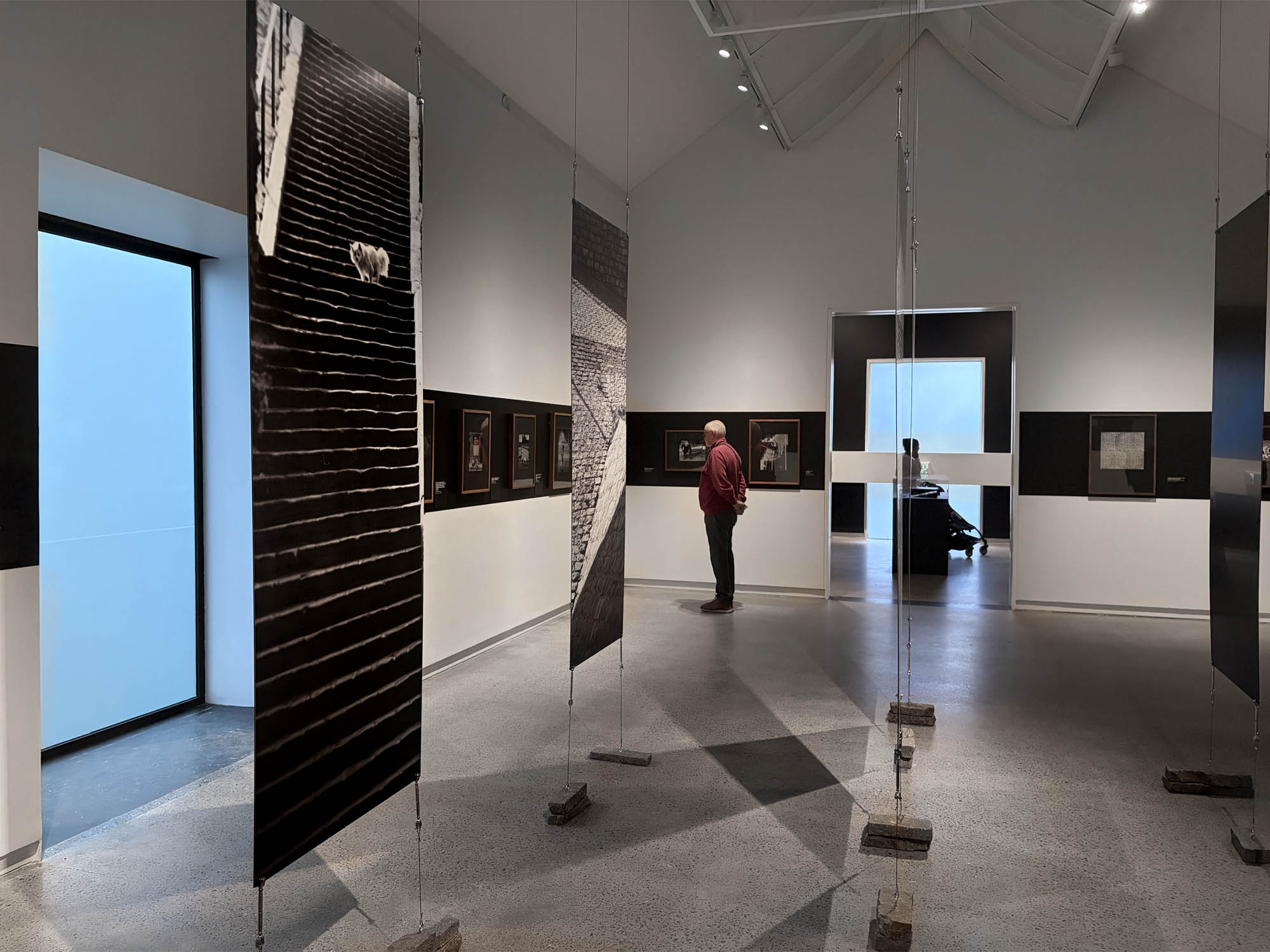
Installation view of the exhibition 'Brassaï: Secret Paris' at Heide Museum of Modern Art, Melbourne, July - November, 2026 showing gallery three


Installation views of the exhibition Brassaï: Secret Paris at Heide Museum of Modern Art, Melbourne, July – November, 2026 showing gallery three
Photos: Marcus Bunyan
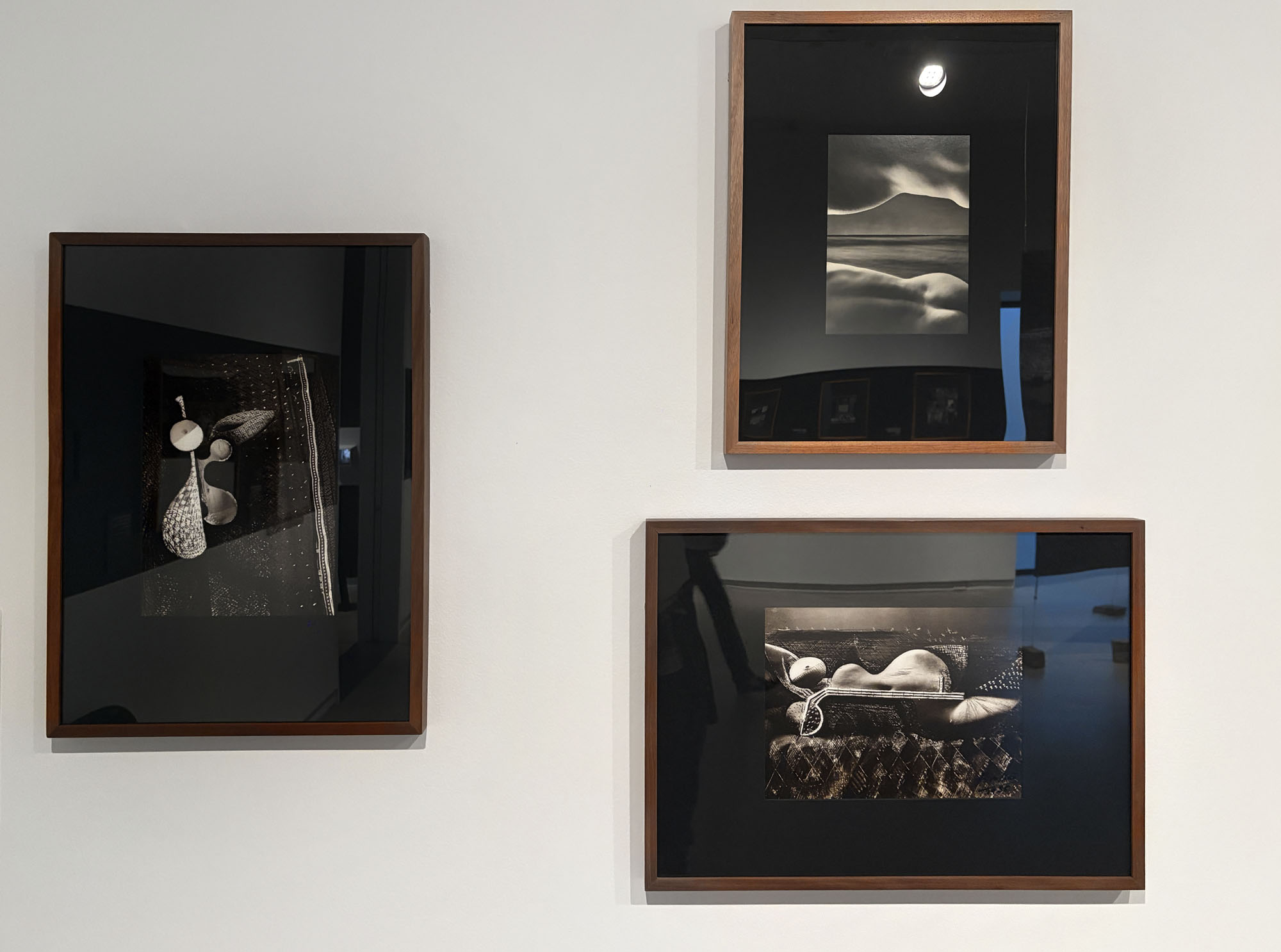
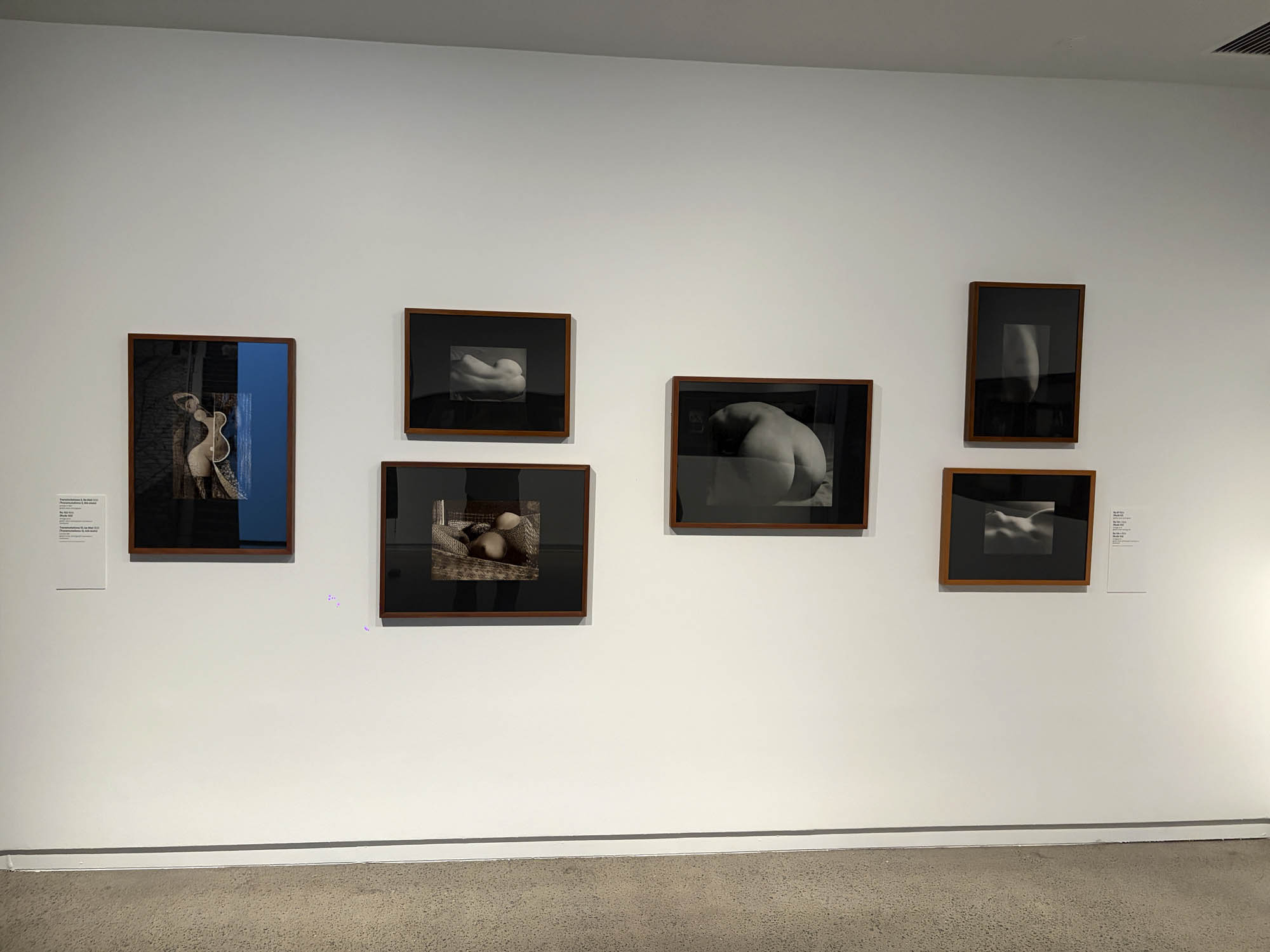
 

Installation view of the exhibition 'Brassaï: Secret Paris' at Heide Museum of Modern Art, Melbourne, July - November, 2026


Installation views of the exhibition Brassaï: Secret Paris at Heide Museum of Modern Art, Melbourne, July – November, 2026 showing gallery three
Photos: Marcus Bunyan
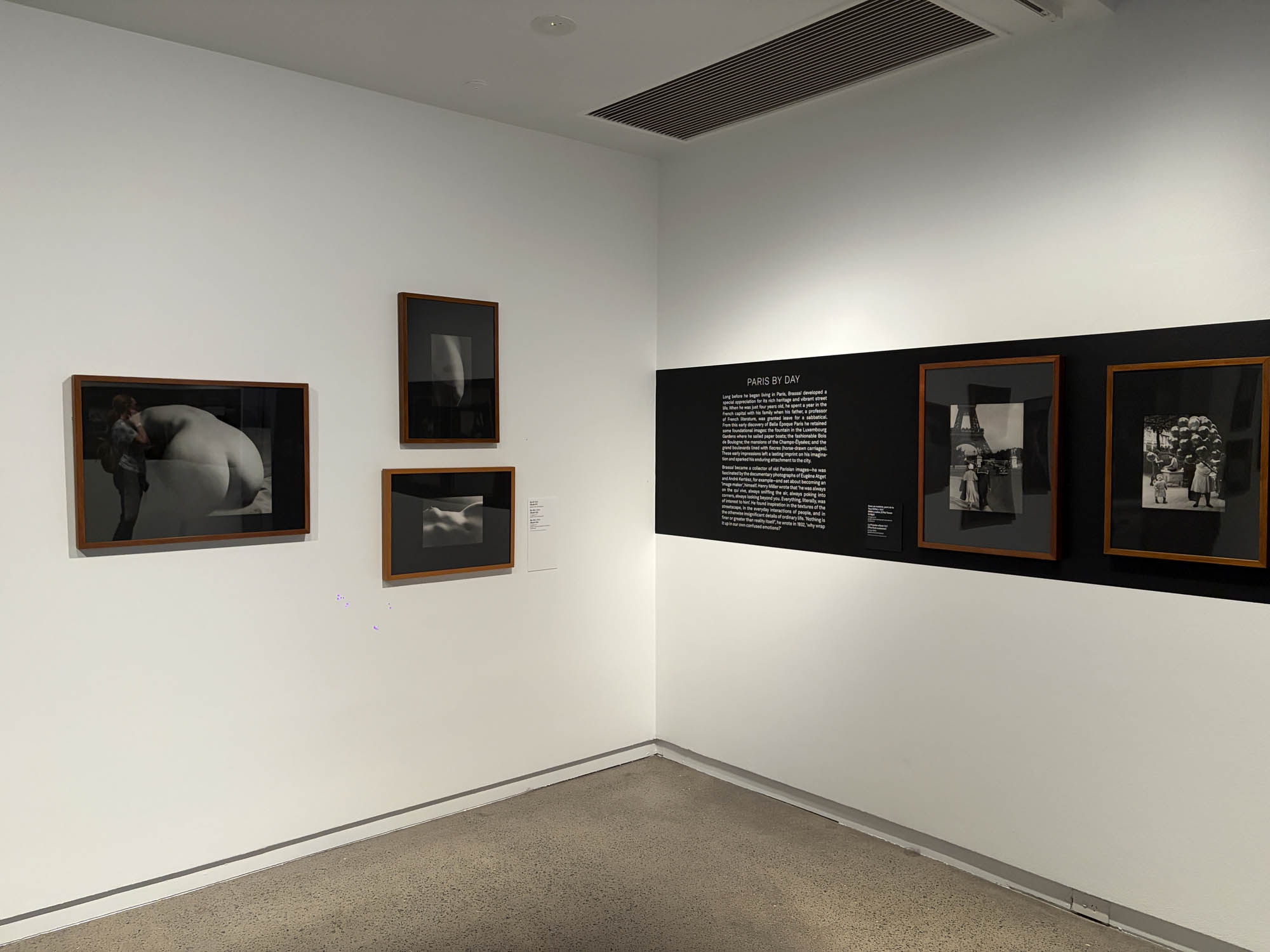
 

Installation view of the exhibition 'Brassaï: Secret Paris' at Heide Museum of Modern Art, Melbourne, July - November, 2026


Wall text from the exhibition Brassaï: Secret Paris at Heide Museum of Modern Art, Melbourne, July – November, 2026 from gallery three
Photo: Marcus Bunyan
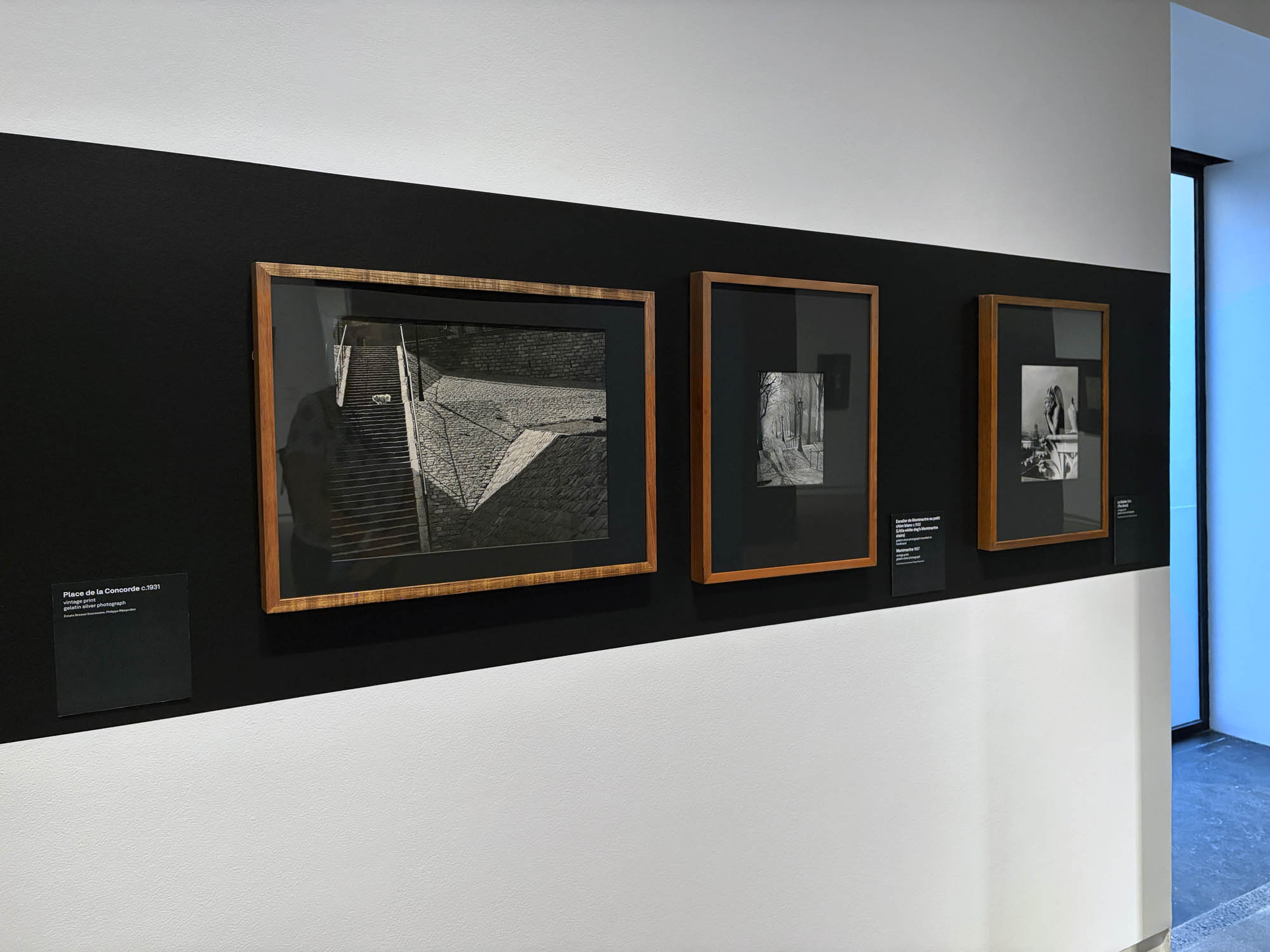
 

Installation view of the exhibition 'Brassaï: Secret Paris' at Heide Museum of Modern Art, Melbourne, July - November, 2026 showing at centre the photograph 'Escalier de la Butte Montmartre' (Steps of Montmartre) 1937


Installation view of the exhibition Brassaï: Secret Paris at Heide Museum of Modern Art, Melbourne, July – November, 2026 showing at centre the photograph Escalier de la Butte Montmartre (Steps of Montmartre) 1937 vintage gelatin silver print (below)
Photo: Marcus Bunyan


Brassaï (Hungarian-French, 1899-1984) 'Escalier de la Butte Montmartre/Steps of Montmartre' c. 1937


Brassaï (Hungarian-French, 1899-1984)
Escalier de la Butte Montmartre (Steps of Montmartre)
c. 1937
Vintage gelatin silver print
Estate Brassaï Succession, Philippe Ribeyrolles
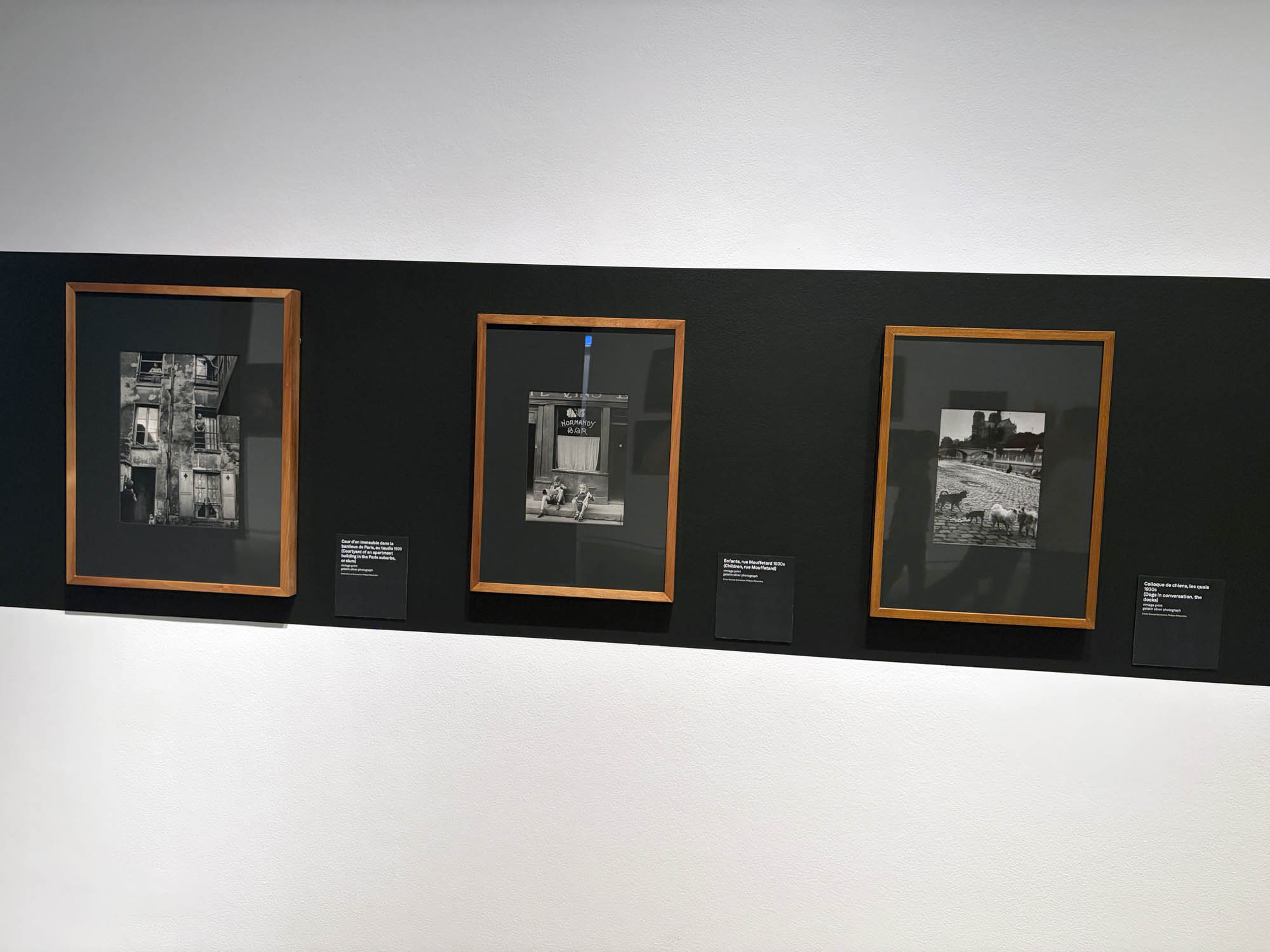
 

Installation view of the exhibition 'Brassaï: Secret Paris' at Heide Museum of Modern Art, Melbourne, July - November, 2026


Installation view of the exhibition Brassaï: Secret Paris at Heide Museum of Modern Art, Melbourne, July – November, 2026 showing at centre the photograph Enfants, rue Mouffetard (Chilren, rue Mouffetard) 1930s vintage gelatin silver print (below)
Photo: Marcus Bunyan
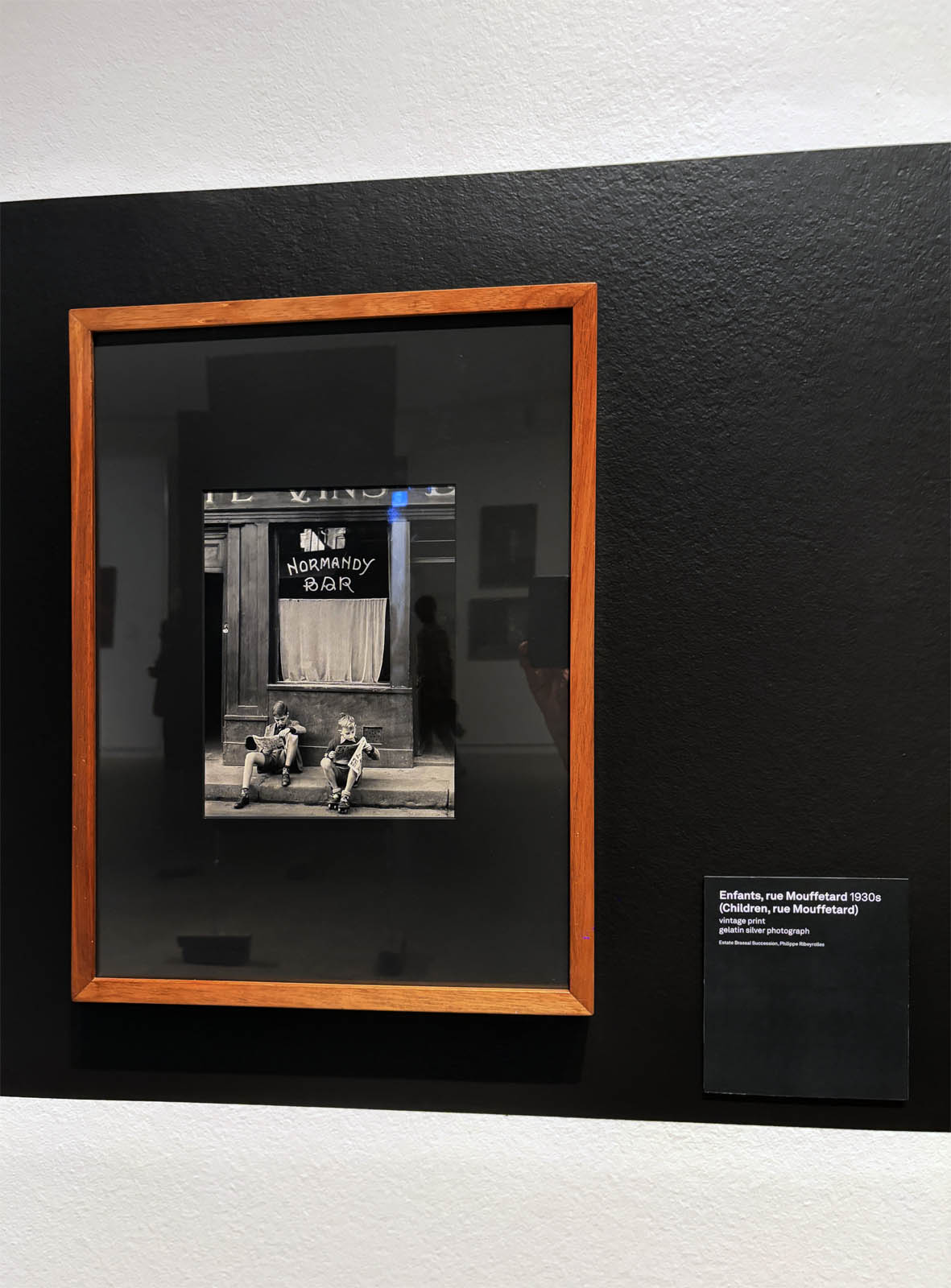
 

Brassaï (Hungarian-French, 1899-1984) 'Enfants, rue Mouffetard' (Children, rue Mouffetard) 1930s (installation view)


Brassaï (Hungarian-French, 1899-1984)
Enfants, rue Mouffetard (Children, rue Mouffetard) (installation view)
1930s
Vintage gelatin silver print
Estate Brassaï Succession, Philippe Ribeyrolles
Photo: Marcus Bunyan
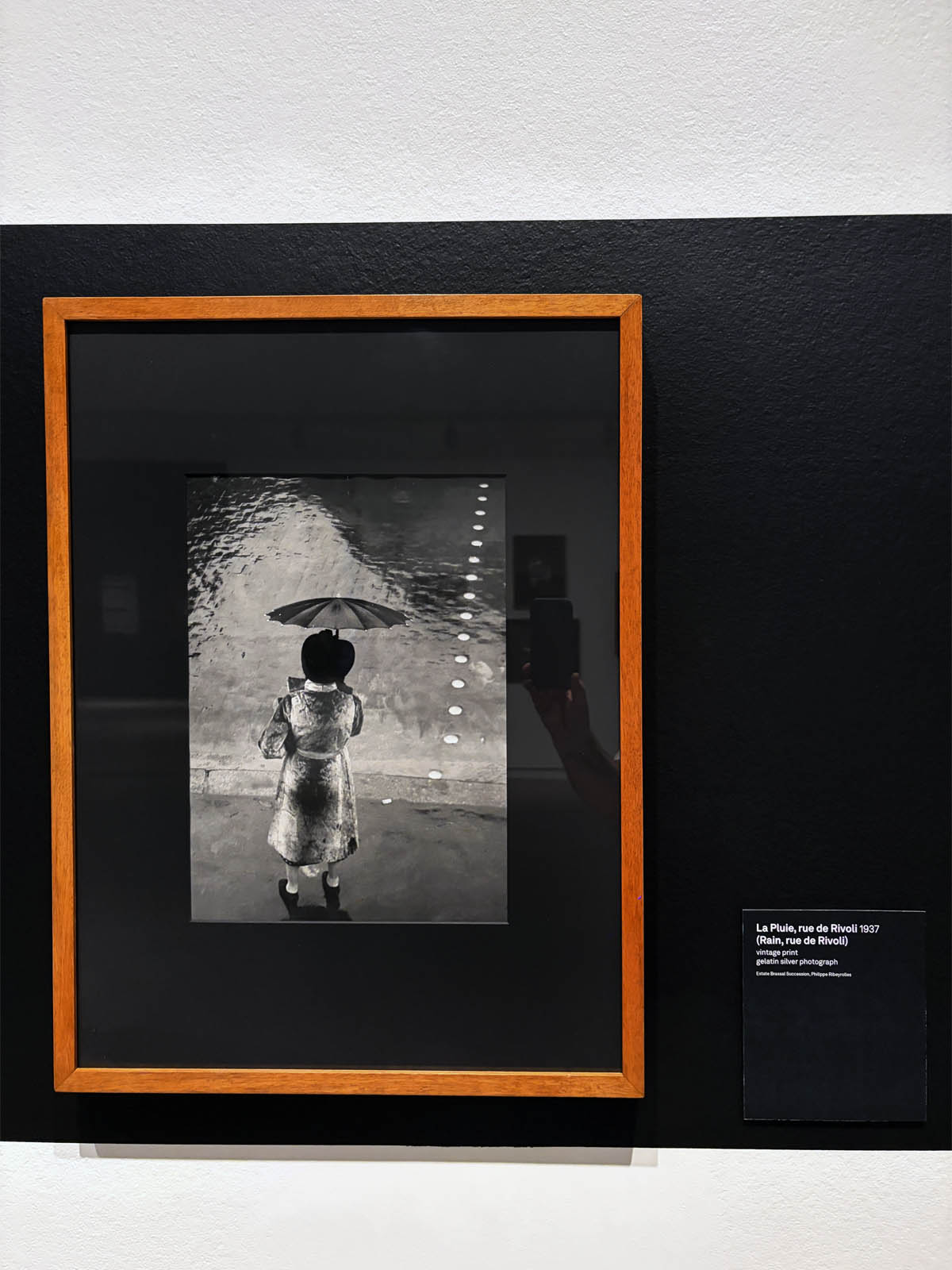
 

Brassaï (Hungarian-French, 1899-1984) 'La Pluie, rue de Rivoli' (Rain, rue de Rivoli) 1937 (installation view)


Brassaï (Hungarian-French, 1899-1984)
La Pluie, rue de Rivoli (Rain, rue de Rivoli) (installation view)
1937
Vintage gelatin silver print
Estate Brassaï Succession, Philippe Ribeyrolles
Photo: Marcus Bunyan


Gallery four
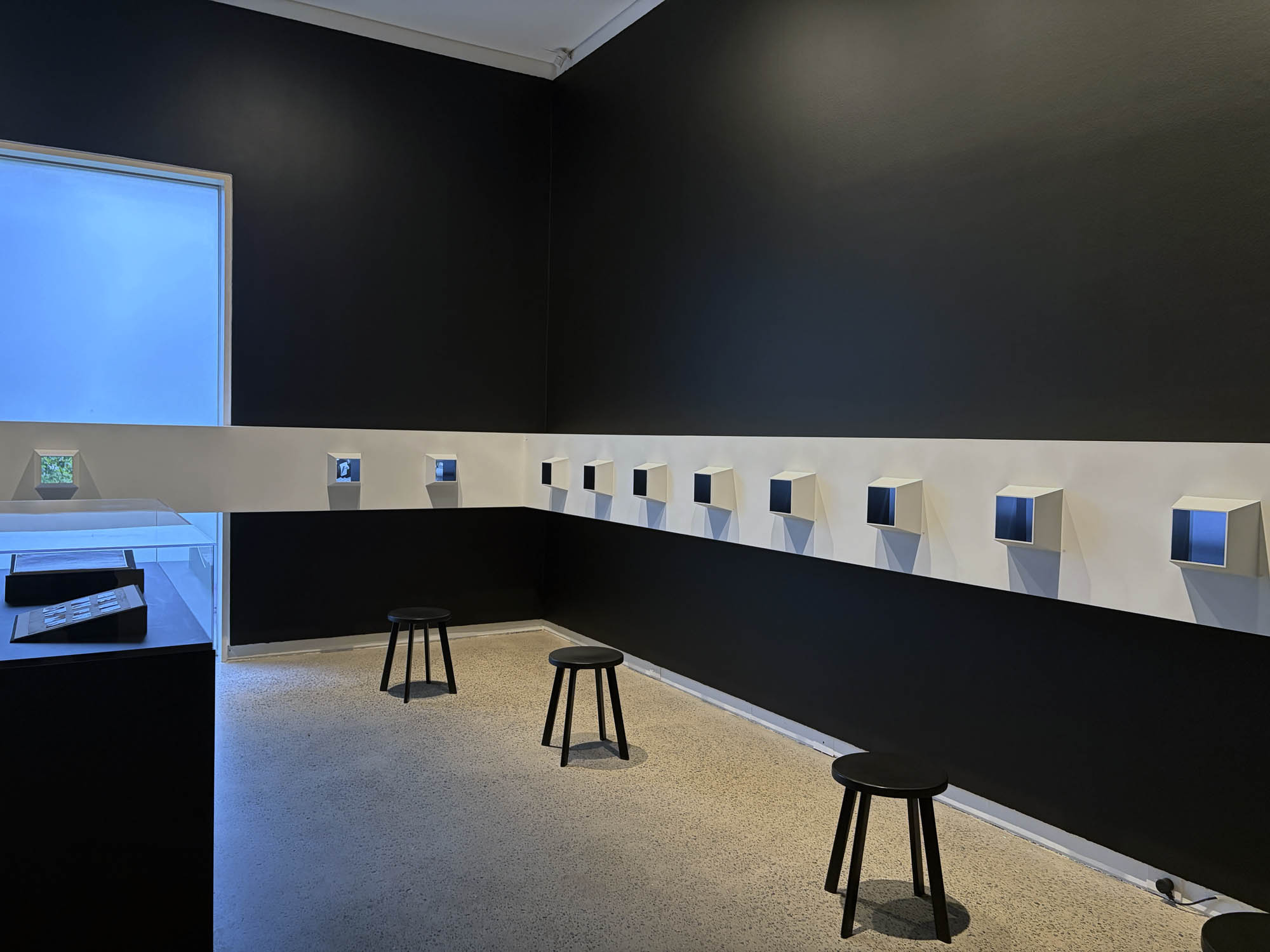
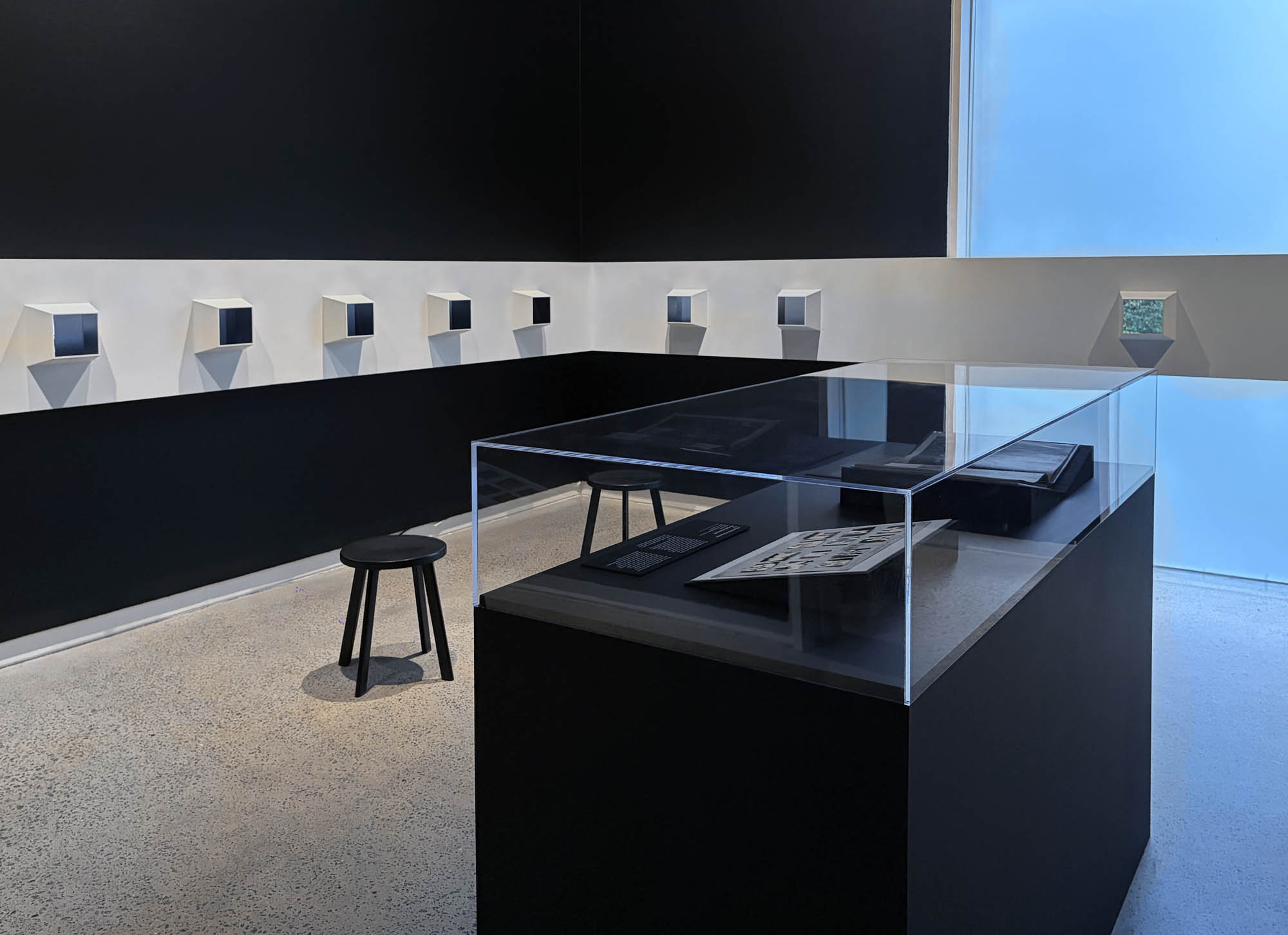
Installation view of the exhibition 'Brassaï: Secret Paris' at Heide Museum of Modern Art, Melbourne, July - November, 2026 showing gallery four


Installation view of the exhibition Brassaï: Secret Paris at Heide Museum of Modern Art, Melbourne, July – November, 2026 showing gallery four
Photos: Marcus Bunyan
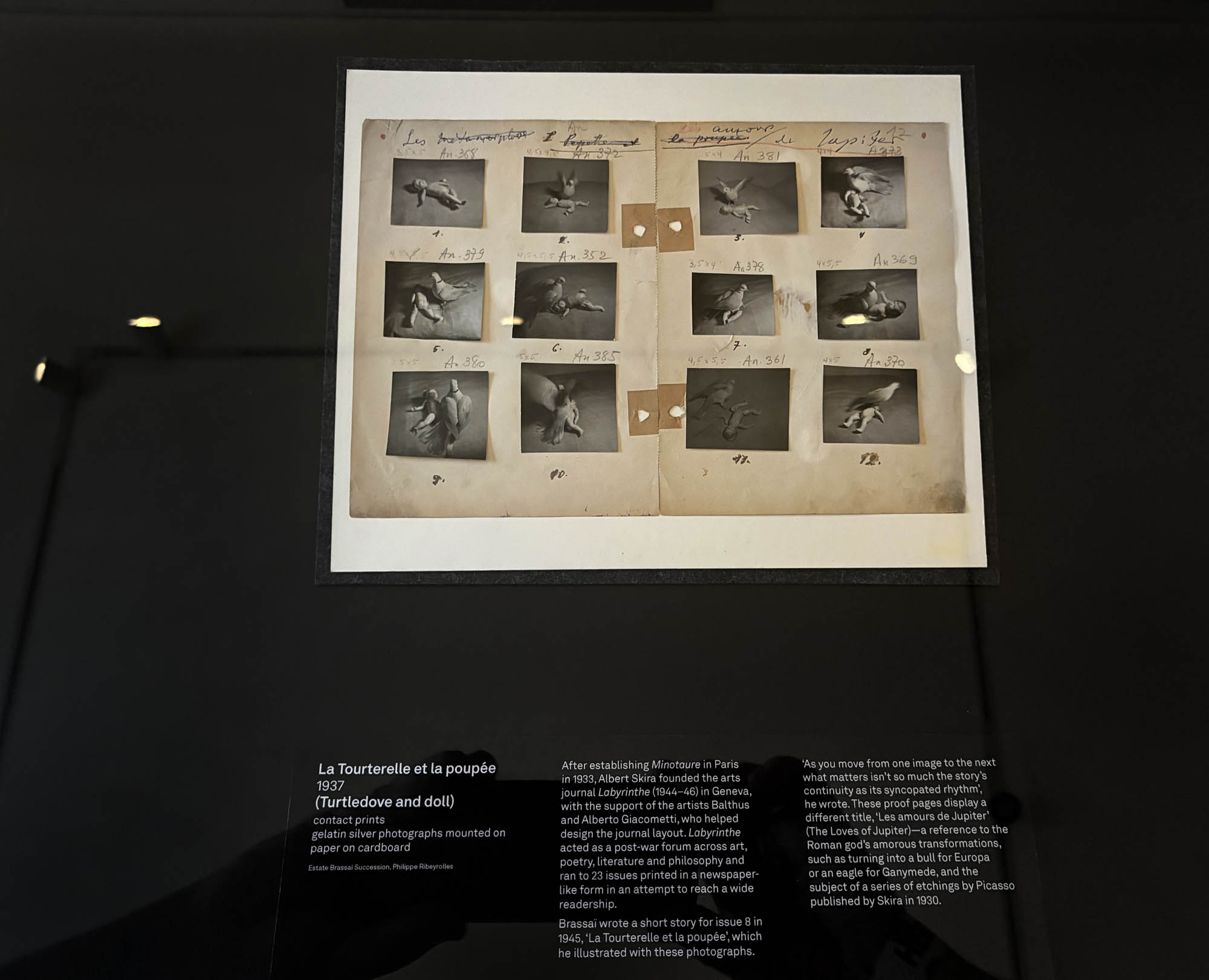
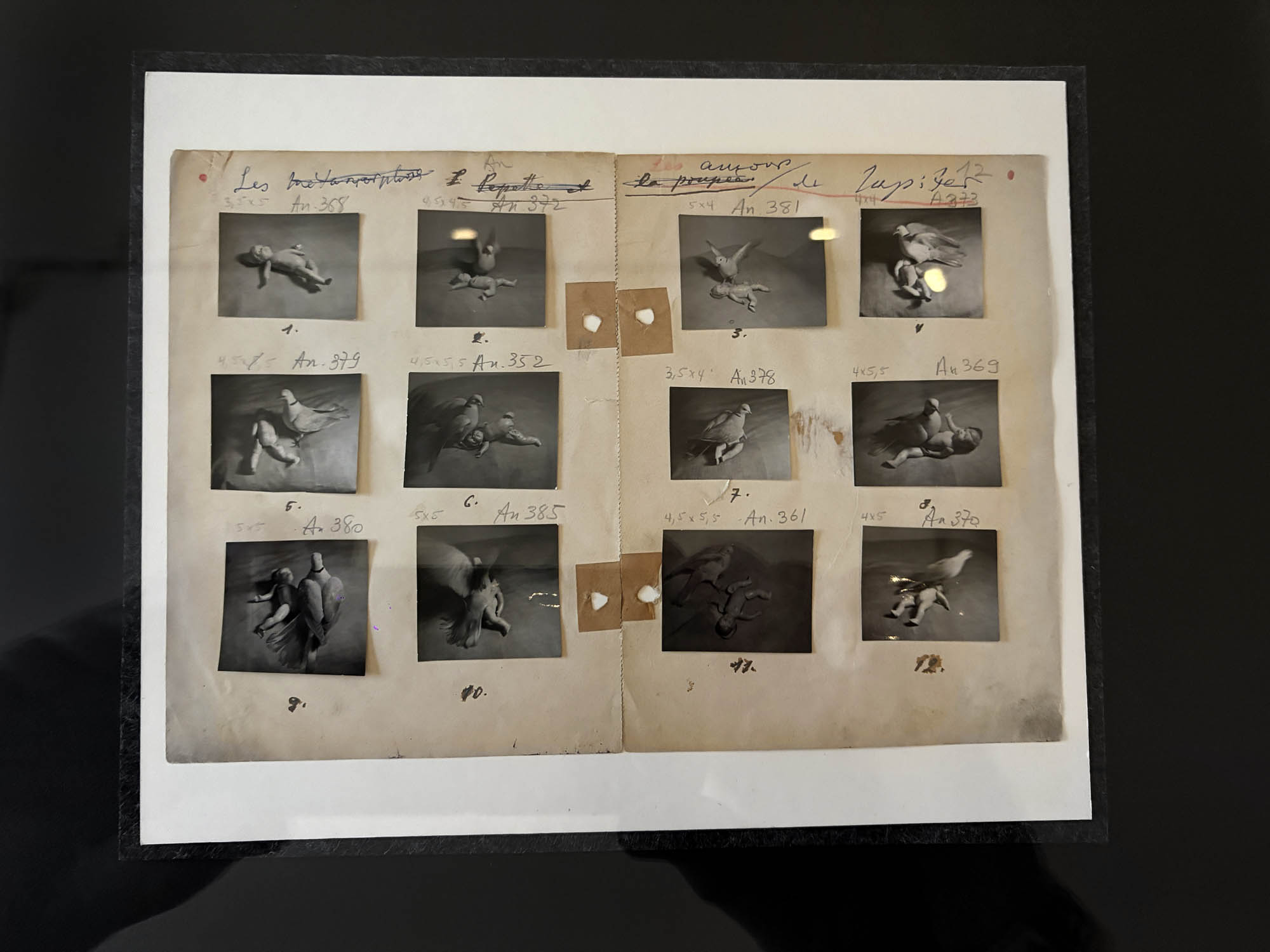
 

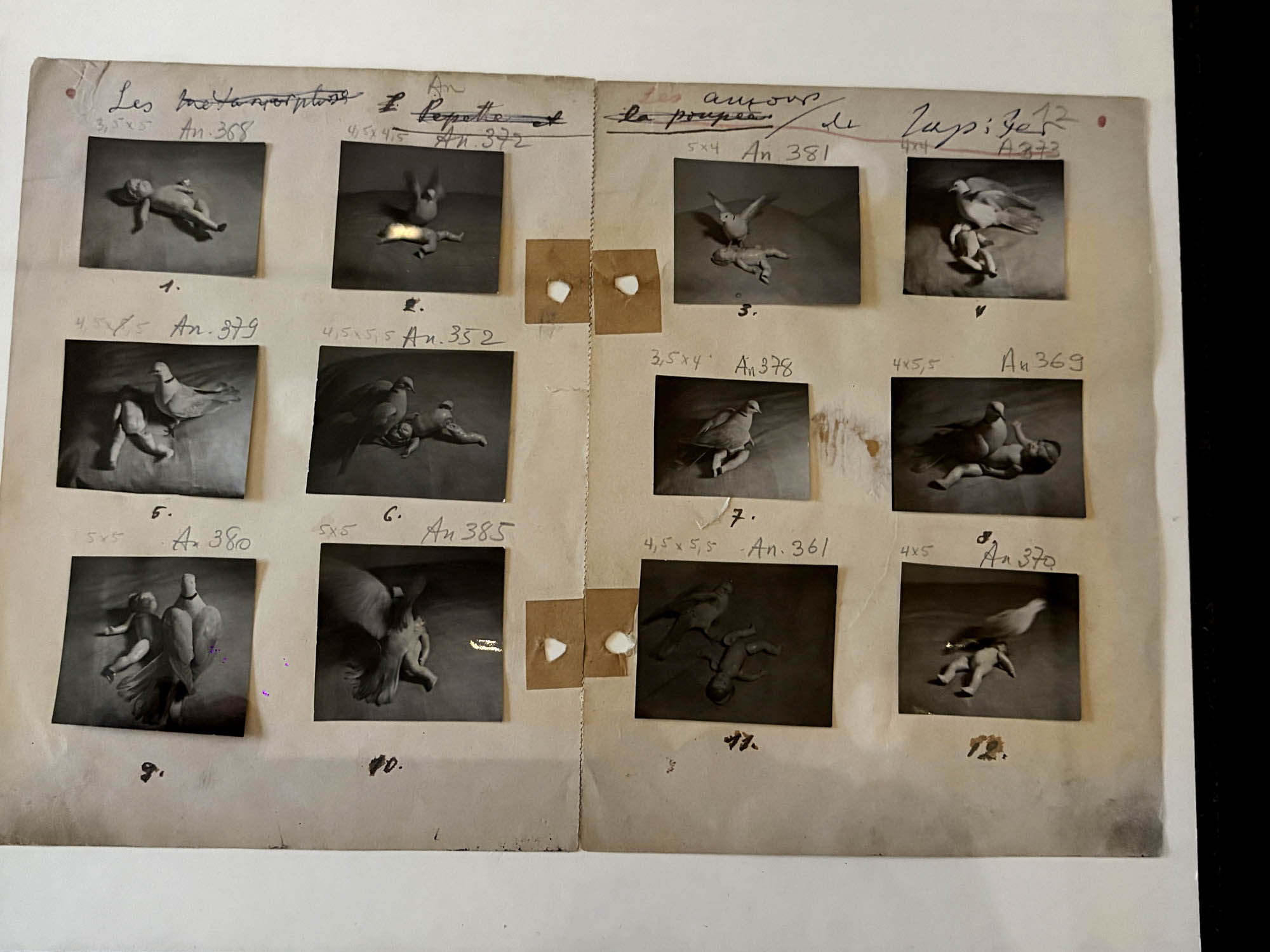
Installation view of the exhibition 'Brassaï: Secret Paris' at Heide Museum of Modern Art, Melbourne, July - November, 2026 showing in a vitrine the contact prints 'La Tourterelle et la poupée' (Turtledove and doll) 1937


Brassaï (Hungarian-French, 1899-1984)
La Tourterelle et la poupée (Turtledove and doll) (installation view)
1937
Contact gelatin silver photographs mounted on paper on cardboard
Estate Brassaï Succession, Philippe Ribeyrolles
Photos: Marcus Bunyan


After establishing Minotaure in Paris in 1933, Albert Skira founded the arts journal Labyrinthe (1944-1946) in Geneva, with the support of the artists Balthus and Alberto Giacometti, who helped design the journal layout. Labyrinthe acted as a post-war forum across art, poetry, literature and philosophy and ran to 23 issues printed in a newspaper-like form in an attempt to reach a wide readership.

Brassaï wrote a short story for issue 8 in 1945 ‘La Tourterelle et la poupée’, which he illustrated with these photographs.

‘As you move from one image to the next what matters isn’t so much the story’s continuity as its syncopated rhythm’, he wrote. These proof pages display a different title, ‘Les amours de Jupiter’ (The Loves of Jupiter) – a reference to the Roman god’s amorous transformations, such as turning into a bull for Europa or an eagle for Ganymede, and the subject of a series of etchings by Picasso published by Skira in 1930.

Label text from the exhibition Brassaï: Secret Paris at Heide Museum of Modern Art, Melbourne, July – November, 2026
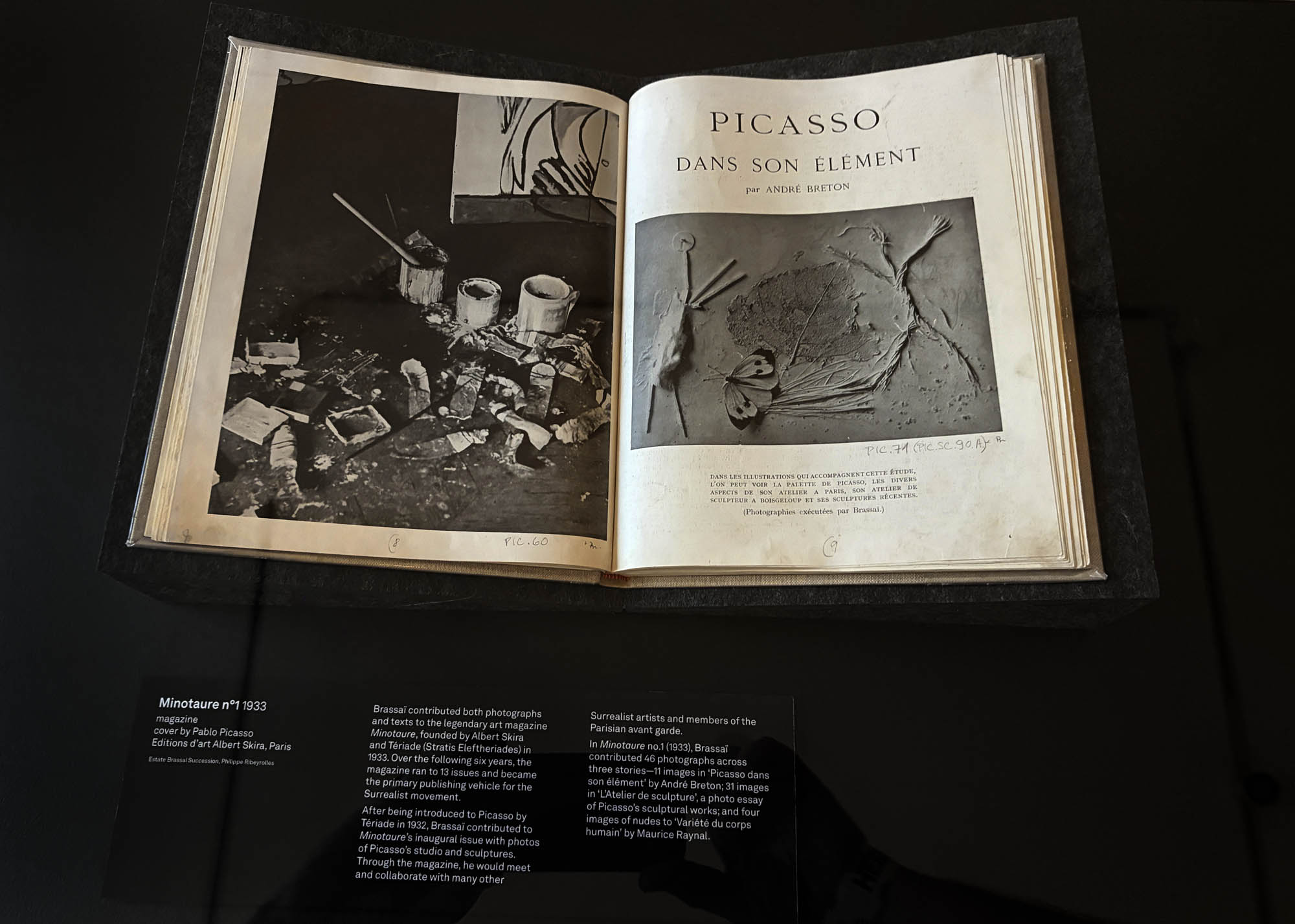
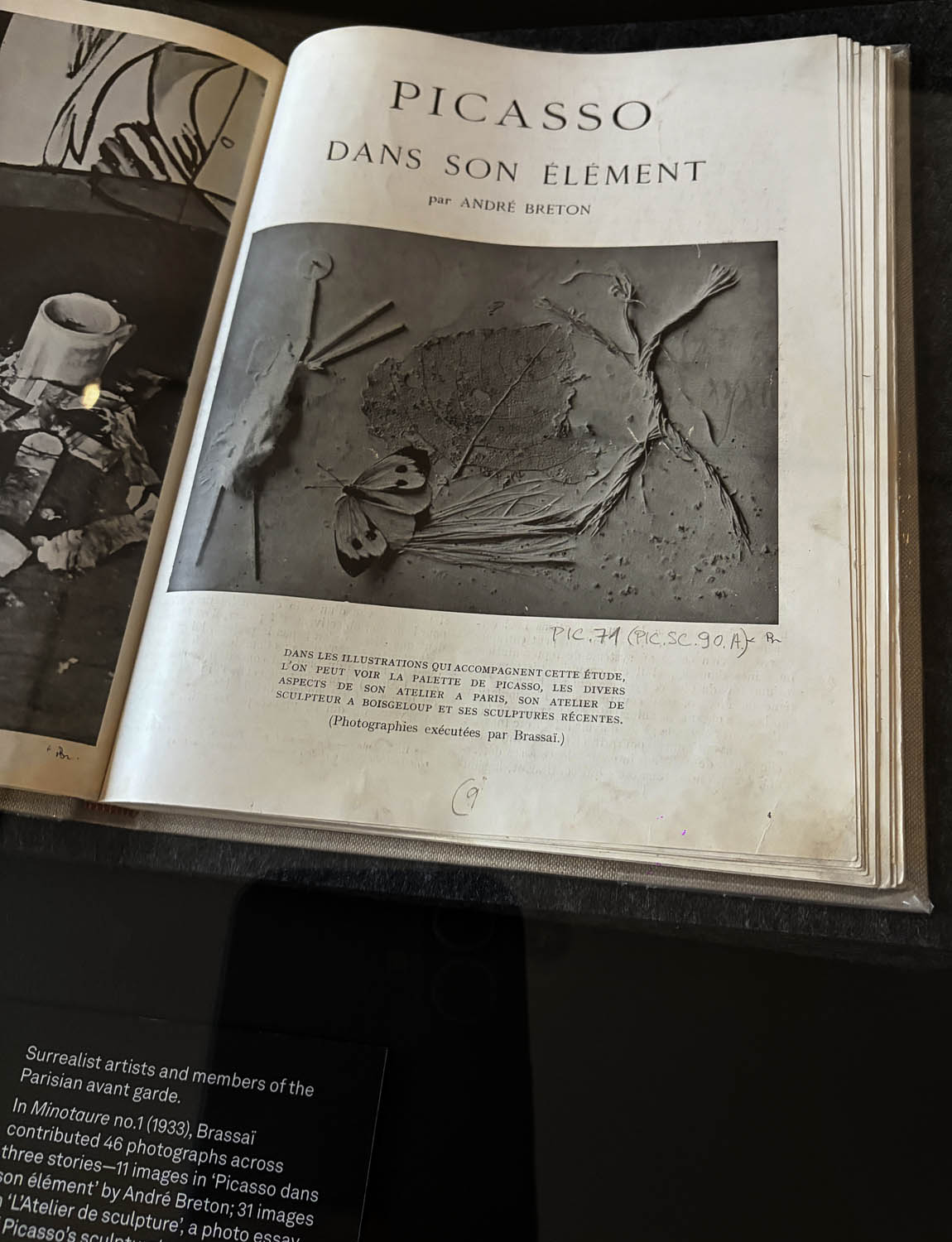
 

Installation view of the exhibition 'Brassaï: Secret Paris' at Heide Museum of Modern Art, Melbourne, July - November, 2026 showing in a vitrine 'Minotaure' no.1


Minotaure no.1 (installation view)
1933
Magazine
Cover by Pablo Picasso
Editions d’art Albert Skira, Paris
Photos: Marcus Bunyan


Brassaï contributed both photographs and texts to the legendary art magazine Minotaure, founded by Albert Skira and Tériade (Stratis Eleftheriades) in 1933. Over the following six years, the magazine ran to 13 issues and became the primary publishing vehicle for the Surrealist movement.

After being introduced to Picasso by Tériade in 1932, Brassaï contributed to Minotaure‘s inaugural issues with photos of Picasso’s studio and sculptures. Through the magazine, he would meet and collaborate with many other Surrealist artists and members of the Parisian avant-garde.

In Minotaure no.1 (1933), Brassaï contributed 46 photographs across three stories- 11 images in ‘Picasso dans son élément’ by André Breton; 31 images in ‘L’Atelier de sculpture’, a photo essay of Picasso’s sculptural works; and four images of nudes to ‘Variété du corps human’ by Maurice Raynal.

Label text from the exhibition Brassaï: Secret Paris at Heide Museum of Modern Art, Melbourne, July – November, 2026


Gallery five
Installation view of the exhibition 'Brassaï: Secret Paris' at Heide Museum of Modern Art, Melbourne, July - November, 2026 showing gallery five


Installation views of the exhibition Brassaï: Secret Paris at Heide Museum of Modern Art, Melbourne, July – November, 2026 showing gallery five
Photos: Marcus Bunyan


Heide Museum of Modern Art
7, Templestowe Road
Bulleen, Victoria 3105

Opening hours:
(Heide II and Heide III)
Tuesday – Sunday 10.00am – 5.00pm

Heide Museum of Modern Art website

LIKE ART BLART ON FACEBOOK

Back to top

Exhibition: ‘Max Ernst’ at Fondation Beyeler, Riehen, Switzerland

Exhibition dates: 26th May – 8th September, 2013


Many thankx to the Fondation Beyeler for allowing me to publish the images in the posting. Please click on the images for a larger version of the art.


Max Ernst (German, 1891-1976) The Entire City La ville entière 1935/36 from the exhibition 'Max Ernst' at Fondation Beyeler, Riehen, Switzerland, May-  September, 2013


Max Ernst (German, 1891-1976)
The Entire City
La ville entière

1935-1936
Oil on canvas
60 x 81cm
Kunsthaus Zurich
© 2013, ProLitteris, Zurich
Photo: Kunsthaus Zurich


Max Ernst (German, 1891-1976) Nature at Dawn (Evensong) La nature à l’aurore (Chant du soir) 1938 from the exhibition 'Max Ernst' at Fondation Beyeler, Riehen, Switzerland, May-  September, 2013


Max Ernst (German, 1891-1976)
Nature at Dawn (Evensong)
La nature à l’aurore (Chant du soir)

1938
Oil on canvas
81 x 100cm
Private collection
© 2013, ProLitteris, Zurich


Max Ernst (German, 1891-1976) 'Painting for Young People' 1943


Max Ernst (German, 1891-1976)
Painting for Young People
1943
Oil on canvas
60.5 x 76.5cm
The Ulla and Heiner Pietzsch Collection, Berlin
© 2013, ProLitteris, Zurich
Photo: Jochen Littkemann, Berlin


Max Ernst (German, 1891-1976) Woman, Old Man, and Flower Weib, Greis und Blume 1924


Max Ernst (German, 1891-1976)
Woman, Old Man, and Flower
Weib, Greis und Blume

1924
Oil on canvas
97 x 130cm
The Museum of Modern Art, New York
© 2013, ProLitteris, Zurich
Photo: © 2013, Digital image, The Museum of Modern Art, New York / Scala, Florence


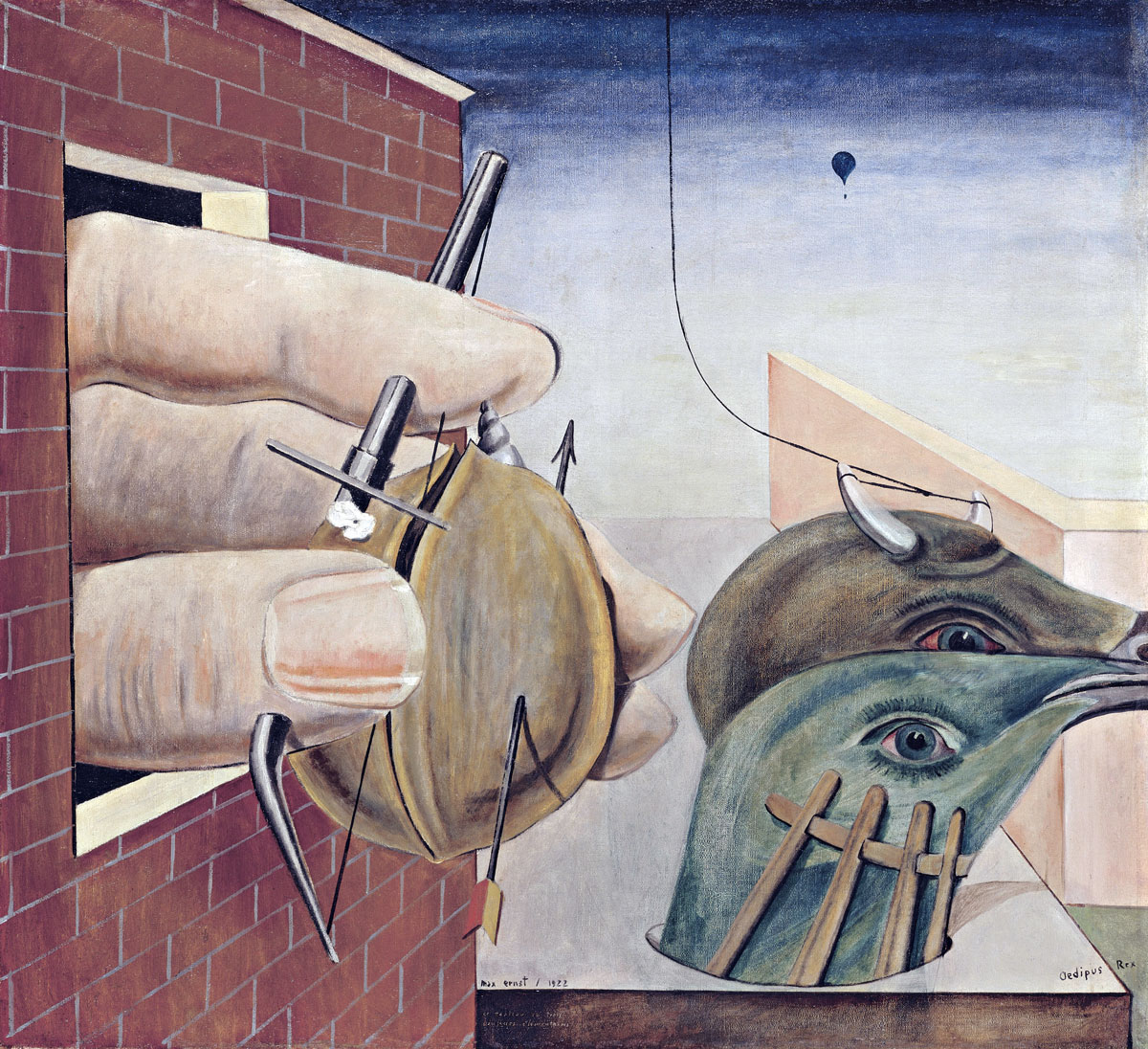
Max Ernst (German, 1891-1976) 'Oedipus Rex' 1922


Max Ernst (German, 1891-1976)
Oedipus Rex
1922
Oil on canvas
93 x 102cm
Private collection
© 2013, ProLitteris, Zurich


This work is innately Freudian just in name, let alone in content. The Oedipus complex is one of the most well recognised components of Freudian theory and it is seen in this work names after it in many ways. The first is through the process of condensation. This can be seen as the bird headed man, which shows up in many of Ernst’s images: the association in this image between the man and the bird is the desire of man to be free from the inhibitions imposed upon him by society, and despite the fact that these two still retain their separate identities, they are consistent with Freud’s ideas. In the case of this work, the head is removed from the body, showing a detachment from true feeling and true understanding of life. Another Freudian idea is the use of the joke, which is seen in the treatment of several of the objects in this work. Such as the contrast and juxtaposition of the wall, the over-sized fingers, upside down eyes on the birds, and the balloon in the aft of the painted collage. Several other associations relating this work to Freud can be drawn as well.

This work has intense sexual undercurrents. The nut represents the female and the crack in the nut is a symbol for the vulva. The cracking of the nut by the hands of a male is a metaphor for sexual intercourse and also gender roles in traditional patriarchal cultures. The idea of the treatment of woman and of her place within society is also visible in another piece by Ernst, The Tottering Woman. In this piece, he addresses the constraints in which woman are held in the world and the patriarchy that she must deal with on a daily basis. It also touches upon the objectification of woman as well. Hoffman also theorises that the squeezing of the nut has implications of sadomasochistic roles as the nut is being dominated and crushed, the spike is punishing the hand equally and finally, once forced open, the “nut” could always snap back shut, injuring the index finger and thereby is a signifier of neurotic sexual attachment. The bird head towards the back of the picture plane is tethered by some sort of rope, which could be seen as societal restrictions on deviant sexuality and possibly is a reaction to the taboo associated with incest. Additionally, the arrow as it pierces the shell of the nut could be seen as a phallic signifier or also as a representation for the idea of love and then a refutation of the existence of love within the constraints of sexual desire and sexuality. The imagery in this piece by Ernst is intensely psychosexual in nature and content and can be seen mostly in those terms.

In defence of picking Oedipus Rex to write about in the context of collage, it is true that it is an oil painting, but its imagery was taken from print sources and then was transposed into the work by the act of painting them. The nut squeezing image was taken from an article entitled “Experience sur l’elasticite, faite avec une noix,” from the popular 19th century French Magazine La Nature.

Anonymous. “Ernst: Chance, Collage and the Study of Freud,” on the Center for Biological Computing, Indiana State University Department of Life Sciences website [Online] Cited 12/12/2020. No longer available online. Used under fair use conditions for the purposes of education and research


Max Ernst (German, 1891-1976) The Fireside Angel (The Triumph of Surrealism) L’ange du foyer (Le triomphe du surréalisme) 1937


Max Ernst (German, 1891-1976)
The Fireside Angel (The Triumph of Surrealism)
L’ange du foyer (Le triomphe du surréalisme)

1937
Oil on canvas
114 x 146cm
Private collection
© 2013, ProLitteris, Zurich


This is one of the rare pictures by Max Ernst which refer directly to a political incident. He commented on this: “The Fireside Angel is a picture I painted after the defeat of the Republicans in Spain. This is, of course, an ironical title for a kind of clumsy oaf which destroys everything that gets in the way. That was my impression in those days of the things that might happen in the world. And I was right.” The Fireside Angel is depicted as an avenging character from the Bible. Its destructive potential is stressed by its aggressive colouring. In the figure of the angel, blind traumatising force is expressed, against which mankind is defenceless. Since there is no hope for negotiations with an inhuman force, the blind aggressor seems even more frightening.


With the exhibition of over 160 of his works at the Fondation Beyeler in cooperation with the Albertina, Vienna, the “artist of the century” Max Ernst (1891-1976) will be given the first comprehensive retrospective in Switzerland since his death as well as the first held in a German-speaking country since 1999.

Max Ernst is one of Modernism’s most versatile artists. After his beginnings as a rebellious Dadaist in Cologne, he moved to Paris in 1922, where he soon became one of the pioneers of Surrealism. He was interned twice as an enemy alien during the Second World but was released thanks to the intervention of the poet Paul Éluard, who was his friend. In 1941 Max Ernst fled to the USA, where he found new stimuli for his work as well as providing new impulses for the generation of young American artists. A decade later he returned to a Europe that had been devastated by the war and where the once highly esteemed Max Ernst seemed to have been forgotten, only to be rediscovered as one of the 20th century’s most multifaceted artists. In 1958, having renounced his German nationality in 1948 in order to take US citizenship, Max Ernst eventually became a French citizen.

Ernst was indeed one of the “artists of the century” – not only because of the high quality and wide range of his oeuvre but also because of the length of his creative career, which lasted around 60 years from 1915 to 1975. Active at a time of tremendous artistic, social, political and technical upheaval, he knew how to integrate these changes into his oeuvre, which therefore reflects key characteristics of the 20th century. The pleasure Max Ernst took in experimenting with different techniques made him a pioneer of multimedia expression. With no apparent effort, he combined in his work the themes, styles and techniques that were important to successive generations. His ceaseless quest for new forms of expression, questions and subjects is emblematic of modern man. Max Ernst appears to us as the artist who never wanted to find himself, as he once said: “A painter is lost when he finds himself”.

With his early Dadaist experience, his key position among the Surrealists and his prelude to action painting, Max Ernst travelled between worlds and cultures, moving to Paris from Cologne and from New York back to France. At a time of political unrest, he maintained his critical, creative gaze, seeking refuge in a country, the USA, which he scarcely knew but to which he nonetheless responded with curiosity and which provided him with important impulses for his late work. With exhibitions in New York, projects in Arizona and Touraine, participation in the Venice Biennale and Documenta, Max Ernst was an early 20th century example of the kind of “cultural and artistic nomad” who only later became a customary figure.

Collage

As early as 1919, Max Ernst started working with the technique of collage, which he used to design or simulate new pictorial realities. He created his collages from illustrations taken from various novels, textbook catalogues, natural science journals and 19th century sales catalogues. He excised the fragments from wood engravings, using a scalpel in order to achieve cut edges that were perfectly exact and smooth. In around 1929 / 1930 Max Ernst created his most famous collage novels La femme 100 têtes (Hundred-Headed Woman / Headless Woman) and Rêve d’une petite fille qui voulut entrer au Carmel (A little Girl dreams of taking the Veil), which are among Surrealism’s most fascinating, enigmatic works.

Frottage

In around 1925, Max Ernst began his Natural History series, in which he used the technique of frottage for the first time (the French word frotter means “to rub”) as a semi-automatic procedure. He placed objets trouvés he found outdoors, such as leaves and wood, under a sheet of paper and rubbed over them with a pencil. Then he took the structures that emerged and transformed them into fantastic pictures. In his frottages, Ernst breathes new life into lifeless objects, giving them another, to some extent uncustomary, significance. Max Ernst developed frottage while he was staying in Brittany. In his essay Beyond Painting he describes a kind of visionary revelation that caused him to use the wooden floor and other objects in his guest-house room as objects for his frottages.

Grattage

Grattage is an artistic technique used by Max Ernst in painting that he developed in around 1927 as an extension of frottage. In a first phase, he applied several superimposed layers of paint to a canvas. Underneath the painting ground that he prepared in that way, he placed objects such as metal grids, wooden boards and string, the relief of which could be seen through the canvas. In order to transfer those structures to the picture, he scratched away the top layers of paint (gratter is the French word for “to scratch”). In a subsequent phase, he reworked the patterns that had become visible, transforming them into forests, shellflowers, birds and petrified cities.

Decalcomania

Decalcomania is a transfer technique in which the damp pigment on a piece of glass or a sheet of paper is pressed against a canvas, leaving behind fine streaks, bubbles or marbled traces of paint when they are removed. In a subsequent phase, the artist reworks the complex surface structure. This artistic technique had already been developed in the 18th century and was used by other Surrealist artists too. Max Ernst adopted the technique in the late 1930s, using it to represent mysterious landscapes peopled by eery faces, figures and animals hiding in the thickets of nature.

Oscillation

In around 1942, while an exile in the USA, Max Ernst started developing the technique of oscillation. He let paint drip out of a tin perforated with a number of holes, which he attached to a long string and swung to and fro over the canvas. This largely uncontrollable and, once again, semi-automatic procedure created reticulated compositions of circles, lines and points on the surface that were reminiscent of planets’ orbits. Oscillation was an innovative technique that not only extended the range of Surrealism’s artistic repertoire but also heralded Jackson Pollock’s Drip Painting.

Press release from the Fondation Beyeler website


Max Ernst (German, 1891-1976) At the First Limpid Word Au premier mot limpide 1923


Max Ernst (German, 1891-1976)
At the First Limpid Word
Au premier mot limpide

1923
Oil on plaster, transferred to canvas
232 x 167cm
Kunstsammlung Nordrhein-Westfalen, Düsseldorf
© 2013, ProLitteris, Zurich
Photo: Walter Klein, Düsseldorf


At the First Limpid Word is one such puzzle. A monumental work, it formed part of the decoration of the house that Max Ernst shared with Paul Éluard and his wife Gala (who later became Dalí’s muse). It was only in the 1960s that the wall painting, which had been painted over, was rediscovered. This painting, “an allegory of seduction,” is such a simple composition but is filled with symbolism in colour and subject.


Max Ernst (German, 1891-1976) 'Ubu Imperator' 1923


Max Ernst (German, 1891-1976)
Ubu Imperator
1923
Oil on canvas
100 x 81cm
Musée national d’art moderne, Centre Georges Pompidou, Paris
© 2013, ProLitteris, Zurich
Photo: © Centre Pompidou, MNAM-CCI, Dist. RMN-Grand Palais / Philippe Migeat


Like many of Ernst’s paintings during his Paris period (1922-1941), Ubu Imperator resembles a collage in painted form. The artist’s knowledge of Freudian theories, familiarity with myth and extreme wit are reflected in this early painting, which is now considered proto-Surrealist due to its strange juxtapositions.

In Ubu Imperator (1923), an anthropomorphic top dances in a vast, empty landscape. Such works captured early on the surrealist notion of estrangement and commitment to the subconscious, but also they seem surprisingly contemporary. The red Ubu Imperator marked the entry of Ernst in the articulated stage of surrealism by his use of a literary narrative that was sometimes personal, sometimes political. In this seminal work a spinning top, a red carcass with iron reinforcement, and human hands express an astonishing image of the Ubu Father, a grotesque symbol of authority invented by Alfred Jarry. Other paintings suggest Ernst’s impressions of ancient Buddhist temples (à la Angkor Wat) as inspired from his trip to Asia following the breakup of his famous ménage à trois with Gala and Paul Eluard. This structure and thickly overgrown plants appear in many of his engravings and grattage [Grattage is a surrealist painting technique that involves laying a canvas prepared with a layer of oil paint over a textured object and then scraping the paint off to create an interesting and unexpected surface (Tate)] oil paintings, such as The Entire City (1935-1936) and The Petrified City (1935).

Valery Oisteanu. “Max Ernst: A Retrospective,” on the The Brooklyn Rail website, May 2005 [Online] Cited 12/12/2020. Used under fair use conditions for the purposes of education and research


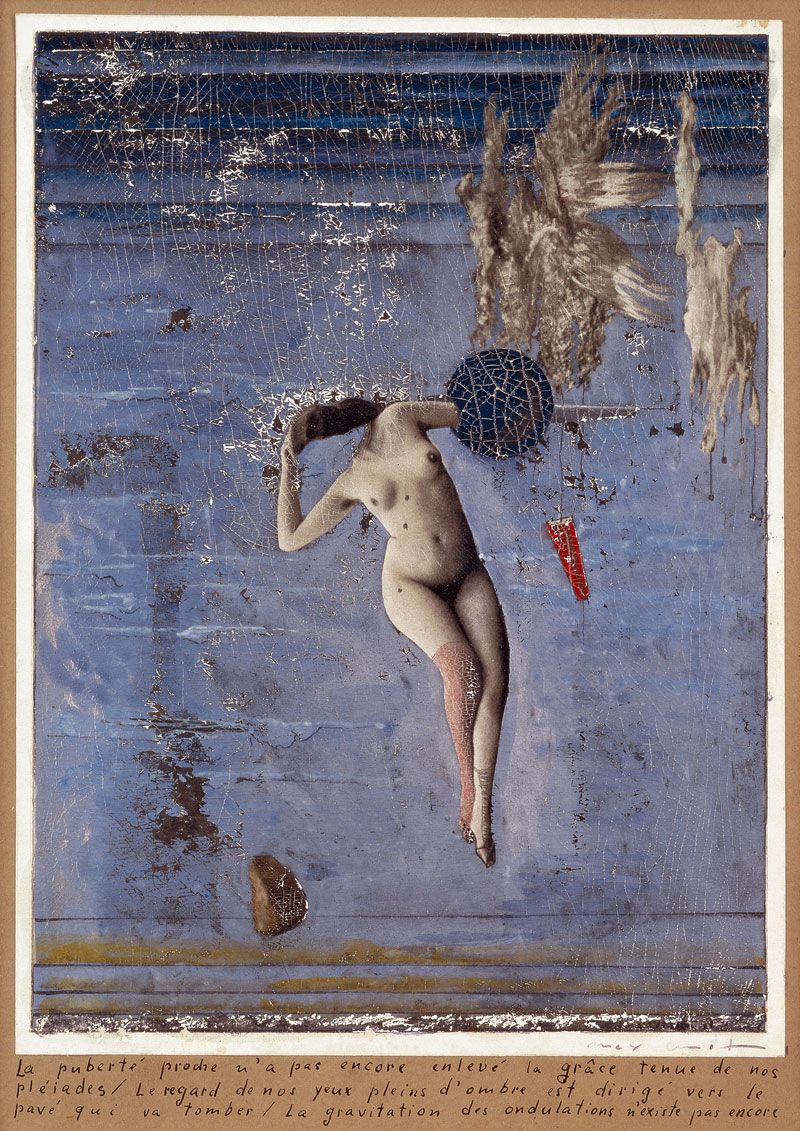
Max Ernst (German, 1891-1976) 'Approaching Puberty… (The Pleiades)' La puberté proche... (les pléiades) 1921


Max Ernst (German, 1891-1976)
Approaching Puberty… (The Pleiades)
La puberté proche… (les pléiades)

1921
Collage, gouache, and oil on paper, mounted on cardboard
24.5 x 16.5cm
Private collection
© 2013, ProLitteris, Zurich


The Pleiades, companions of Artemis, were the seven daughters of the titan Atlas and the sea-nymph Pleione born on Mount Cyllene. They are the sisters of Calypso, Hyas, the Hyades, and the Hesperides. The Pleiades were nymphs in the train of Artemis, and together with the seven Hyades were called the Atlantides, Dodonides, or Nysiades, nursemaids and teachers to the infant Bacchus. There is some debate as to the origin of the name Pleiades. Previously, it was accepted the name is derived from the name of their mother, Pleione. However, the name Pleiades may derive from πλεῖν(to sail) because of their importance in delimiting the sailing season in the Mediterranean Sea. (Wikipedia)

For Ernst eroticism was another way of entering the unconscious, of escaping from convention, and possibly of tweaking bourgeois taste. But he was aware that adult sexuality had its limits, as is apparent in the exquisite Approaching Puberty… (1921). A photograph of a nude, faceless girl floats in a blue space stratified by horizontal lines, suggesting water or the sky. A few strangely disparate forms surround the girl, and the short text at the bottom ends, “The gravitation of the undulations does not yet exist.” The title, this line, and the fact that the girl floats in space rather than standing on the ground – as most of Ernst’s figures do – suggests that he sees in pubescence a kind of weightless freedom. In a related but nonsexual image, an Untitled c. 1921 collage, four schoolboys peer out of their classroom (from which a wall is missing) at a vast blue sky in which a hot-air balloon floats. A schoolmaster stands alone and ignored at his desk; next to him one of the boys balances a giant pencil on a pointer. What’s learned in school, Ernst seems to say, is far less important than visions of the sky.

Fred Camper. “Max Ernst’s Theater of Reveries,” on the Chicago Reader website, November 1993 [Online] Cited 12/12/2020. Used under fair use conditions for the purposes of education and research


Max Ernst (German, 1891-1976) 'Napoleon in the Wilderness' 1941


Max Ernst (German, 1891-1976)
Napoleon in the Wilderness
1941
Oil on canvas
46.3 x 38cm
The Museum of Modern Art, New York
© 2013, ProLitteris, Zurich
Photo: © 2013, Digital image, The Museum of Modern Art, New York / Scala, Florence


In Max Ernst’s painting Napoleon in the Wilderness (1941), a strange whimsical trumpet appears in the hand of a female figure that seems to have sprung from the sinister rock and coral formations of a world in ruin. This painting formed part of suite of decalcomania [A transfer technique, developed in the 18th century, in which ink, paint, or another medium is spread onto a surface and, while still wet, covered with material such as paper, glass, or aluminium foil, which, when removed, transfers a pattern that may be further embellished upon. The technique was adopted by the Surrealists to create imagery by chance rather than through conscious control (MoMA)] works, in which Carrington’s semi-naked figure haunts a series of eerie landscapes, richly textured and abundant with mythological hybrid forms. Between periods of internment during the war, Ernst had managed to continue painting, producing haunting images of his abandoned lover in works that evoke his own sense of loss and grief in macabre scenes that promise both decay and renewal.

Text from Natalya Lusty, Surrealism, Feminism, Psychoanalysis. Ashgate Publishing, 2007.


The exhibition is a chronological presentation of all the major creative phases and groups of themes in Max Ernst’s work, opening with Capricorn, his most important sculpture. Max Ernst, who was born on 2 April 1891 in Brühl (Germany), first learnt about painting from his father. He had a conservative, middle-class upbringing, against which he soon rebelled. Starting in 1910, he studied art history as well as psychology, Romance languages and philosophy. Initially influenced by Expressionism and Futurism, he soon came in contact with other artists and art movements.

His early work City with Animals demonstrates this unique combination of different styles, displaying both Cubist and Futurist features. His encounter with Hans Arp (also represented in the Beyeler Collection along with the Surrealists Dalí, Giacometti and Miró) came at a time full of turmoil. Dada is born; the years after the First World War are a time of radical change, protest and experimentation.

Dada brings Max Ernst into contact with Surrealist artists. He ceases to be just a German artist and becomes a leading figure in the Surrealist art movement in Paris. There his works begin to acquire enigmatic qualities, for the unconscious and dreams are important elements of Surrealism, which it took over from psychoanalysis. Max Ernst remains an innovator, experimenting with frottage from the mid-1920s onwards. Hybrid creatures are created from different natural species; his interest in the natural sciences finds expression in his works.

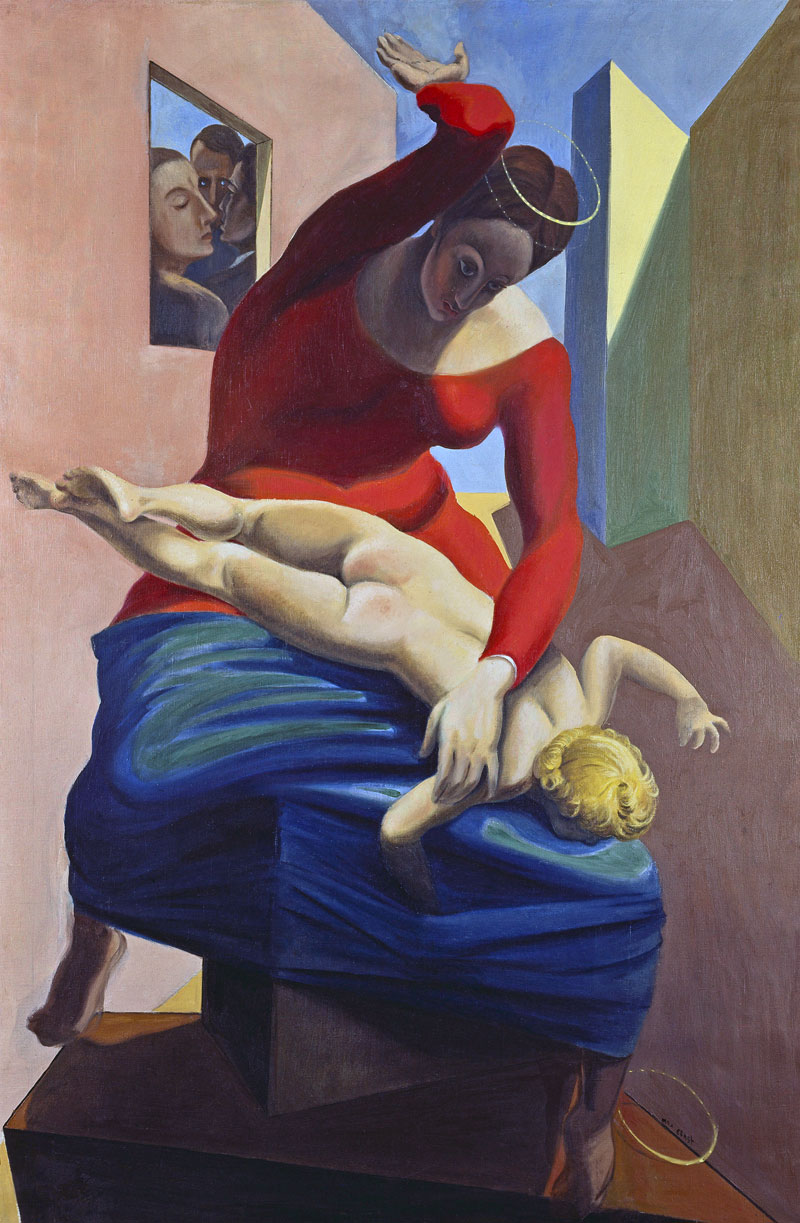
At the First Limpid Word is one such puzzle. A monumental work, it formed part of the decoration of the house that Max Ernst shared with Paul Éluard and his wife Gala (who later became Dalí’s muse). It was only in the 1960s that the wall painting, which had been painted over, was rediscovered. The Blessed Virgin Chastising the Infant Jesus is an equally spectacular work, a scandal-provoking painting with blasphemous elements that deconstructs the traditional sacred image of the Madonna, representing a radical liberation from Ernst’s middle class roots. One whole room in the exhibition is developed to the theme of the forest, with a number of masterpieces from that series. Considerable importance is also attached to the series of Horde paintings from the late 1920s; the metamorphosed figures convey the theme of transformation. With the Flowers and Cities series (which focus on the antitheses of nature and culture), other important groups of themes are also presented.

Room 11 will contain a number of key works with the jungle paintings from the second half of the 1930s including Nature at Dawn with its dark, sinister character. Different traditions are echoed here, ranging from borrowings from Henri Rousseau to the Romanticism of a painter like Caspar David Friedrich. With The Robing of the Bride there is not only an obvious reference to Renaissance art but also a more differentiated context. The transformation of a woman into an animal and vice versa is an erotic motif that the painting conveys through a number of details. The Fireside Angel, on the other hand, thematises the Spanish Civil War of the late 1930s, with which many artists and intellectuals concerned themselves. With the brightly coloured, mask-like, terrifying dimension of its figure, which seems to fly towards the viewer as an unstoppable whirlwind between aggression and mockery, Max Ernst prefigures the political catastrophe that was to befall Europe.

Ernst’s late work displays thematic caesura – on the one hand, a poetical and sensuous contemplation using over-painting in the refined, technically innovative work The Garden of France and, on the other, Birth of a Galaxy, a splendid late work in which air, water, earth and light all rise into a starry firmament. As a free spirit – ironical, elegant and rebellious – and a man of many different facets, Max Ernst today remains an artist whose work is both accessible and complex. His works speak to us, evoking uncharted depths and hidden mysteries, as well as prompting reflection. Like mercury – which continuously changes shape in a fascinating way, hence being impossible to grasp – Max Ernst is still an exceptional artist almost forty years after his death, exemplary in his artistic independence and possessing an urge for freedom and a bold readiness for innovation in his work and life that preserve his oeuvre from stylistic opportunism and conventionality.

Max Ernst’s creativity in handling sources of imagery and inspiration, the breaks between his many phases and types of subject matter, are still capable of astonishing viewers today. Like a revolutionary of vision, he rearranged images and elements, and as a Surrealist established links between pictures and the viewer’s unconscious mind. What remained a constant was the persistence of Ernst’s rebellion. Like his life, he once said, his work was “not harmonious in the sense of classical composers.” A master of metamorphosis, Ernst was a searcher and discoverer, an honorary doctor of philosophy who increasingly expanded his range of investigation to include astronomy, ethnology, ornithology, mathematics and psychoanalysis, following up his love of the natural sciences and creative chance.

Press release from the Fondation Beyeler website


Max Ernst (German, 1891-1976) The Robing of the Bride L'habillement de l’épousée / de la mariée 1940


Max Ernst (German, 1891-1976)
The Robing of the Bride
L’habillement de l’épousée / de la mariée

1940
Oil on canvas
129.6 x 96.3cm
Peggy Guggenheim Collection, Venice (Solomon R. Guggenheim Foundation, New York)
© 2013, ProLitteris, Zurich
Photo: Peggy Guggenheim Collection, Venice (Solomon R. Guggenheim Foundation, New York)


The Robing of the Bride (1939-1941; Venice, Guggenheim) employs Renaissance perspective devices and Cranach-like figures to represent a pagan marriage.


Max Ernst (German, 1891-1976) The Blessed Virgin Chastising the Infant Jesus before Three Witnesses: André Breton, Paul Éluard and the Artist La Vierge corrigeant l’enfant Jésus devant trois témoins: André Breton, Paul Éluard et le peintre 1926


Max Ernst (German, 1891-1976)
The Blessed Virgin Chastising the Infant Jesus before Three Witnesses: André Breton, Paul Éluard and the Artist
La Vierge corrigeant l’enfant Jésus devant trois témoins: André Breton, Paul Éluard et le peintre

1926
Oil on canvas
196 x 130cm
Museum Ludwig, Cologne
© 2013, ProLitteris, Zurich
Photo: Peter Willi / ARTOTHEK


Max Ernst (German, 1891-1976) The Immaculate Conception L'immaculée conception 1929


Max Ernst (German, 1891-1976)
The Immaculate Conception
L’immaculée conception

1929
Master illustration for La femme 100 têtes, chapter 1, plate 12
Collage on paper
14.2 x 14.5cm
Private collection
© 2013, ProLitteris, Zurich


La Femme 100 Têtes 1967 with English Subtitles


'Dorothea Tanning and Max Ernst with the cement sculpture Capricorne (Capricorn), Sedona, Arizona' 1948


Dorothea Tanning and Max Ernst with the cement sculpture Capricorne (Capricorn), Sedona, Arizona
1948
© 
2013, ProLitteris, Zurich
Photo: Max Ernst Documentation, Deutsches Forum für Kunstgeschichte, Paris / John Kasnetsis


Dorothea Margaret Tanning (American, 1910-2012)

Dorothea Margaret Tanning (August 25, 1910 – January 31, 2012) was an American painter, printmaker, sculptor and writer. She created ballet sets and costumes for George Balanchine’s Night Shadow, at the Metropolitan Opera House and others. She also appeared in Hans Richter’s avant-garde films. As an artist she was influenced by Dada and Surrealism and married fellow Surrealist Max Ernst.

As she recounts in her memoirs, Birthday and Between Lives, when Ernst visited her studio in 1942, they played chess, fell in love, and embarked on a life together that soon took them to Sedona, Arizona, and later to France. They met at a party in 1942 and after he would drop by Dorothea’s studio where she painted for a Surrealist movement exhibition of art by women for Peggy Guggenheim’s Art of This Century. In that exhibition, Tanning’s work showed along with the work of Louise Nevelson and Gypsy Rose Lee. Soon after this encounter Ernst moved in with her.

They married in 1946, in a double wedding with Man Ray and Juliet Browner in Hollywood, after Ernst’s divorce from Peggy Guggenheim. They remained married for 30 years until his death. In 1949, Tanning and Ernst moved to France, where they divided their time between Paris, Touraine and later Provence. They would often host guest such as Balanchine, Henri Cartier-Bresson, Marcel Duchamp, Pavel Tchelitchew and Dylan Thomas. In 1957 Tanning and Ernst moved to France again because Max Ernst was denied citizenship as a German during the McCarthy era. When speaking on her relationship with Ernst in an interview, Tanning said: “I was a loner, am a loner, good Lord, it’s the only way I can imagine working. And then when I hooked up with Max Ernst, he was clearly the only person I needed and, I assure you, we never, never talked art. Never.”

After Max Ernst died in 1979 Dorothea Tanning returned to the United States.

Text from the Wikipedia website


'Max Ernst with rocking horse, Paris' 1938


Max Ernst with rocking horse, Paris
1938
2013, ProLitteris, Zurich
Photo: Max Ernst Museum Brühl des LVR, Stiftung Max Ernst


Fondation Beyeler
Beyeler Museum AG
Baselstrasse 77, CH-4125
Riehen, Switzerland

Opening hours:
10 am – 6 pm daily, Wednesdays until 8 pm

Fondation Beyeler website

LIKE ART BLART ON FACEBOOK

Back to top