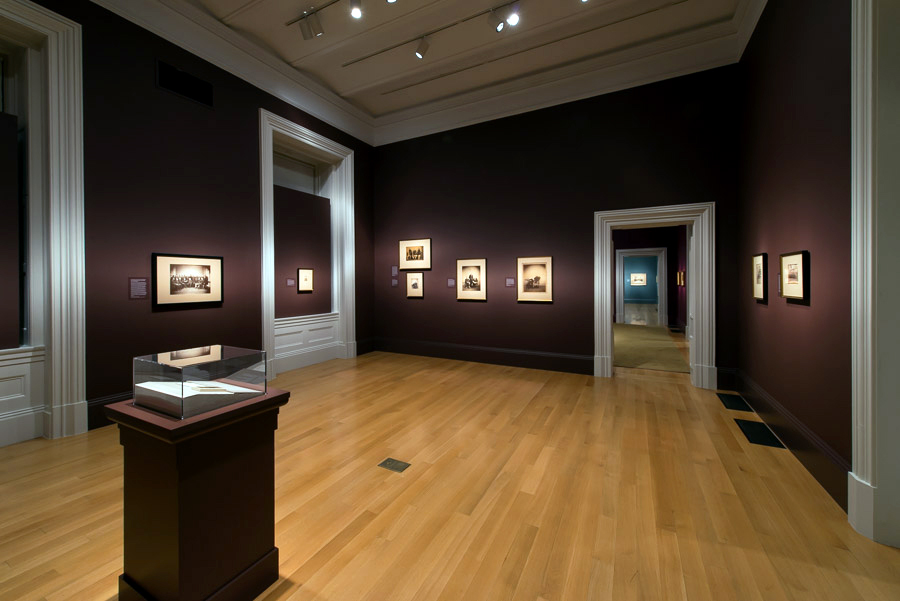
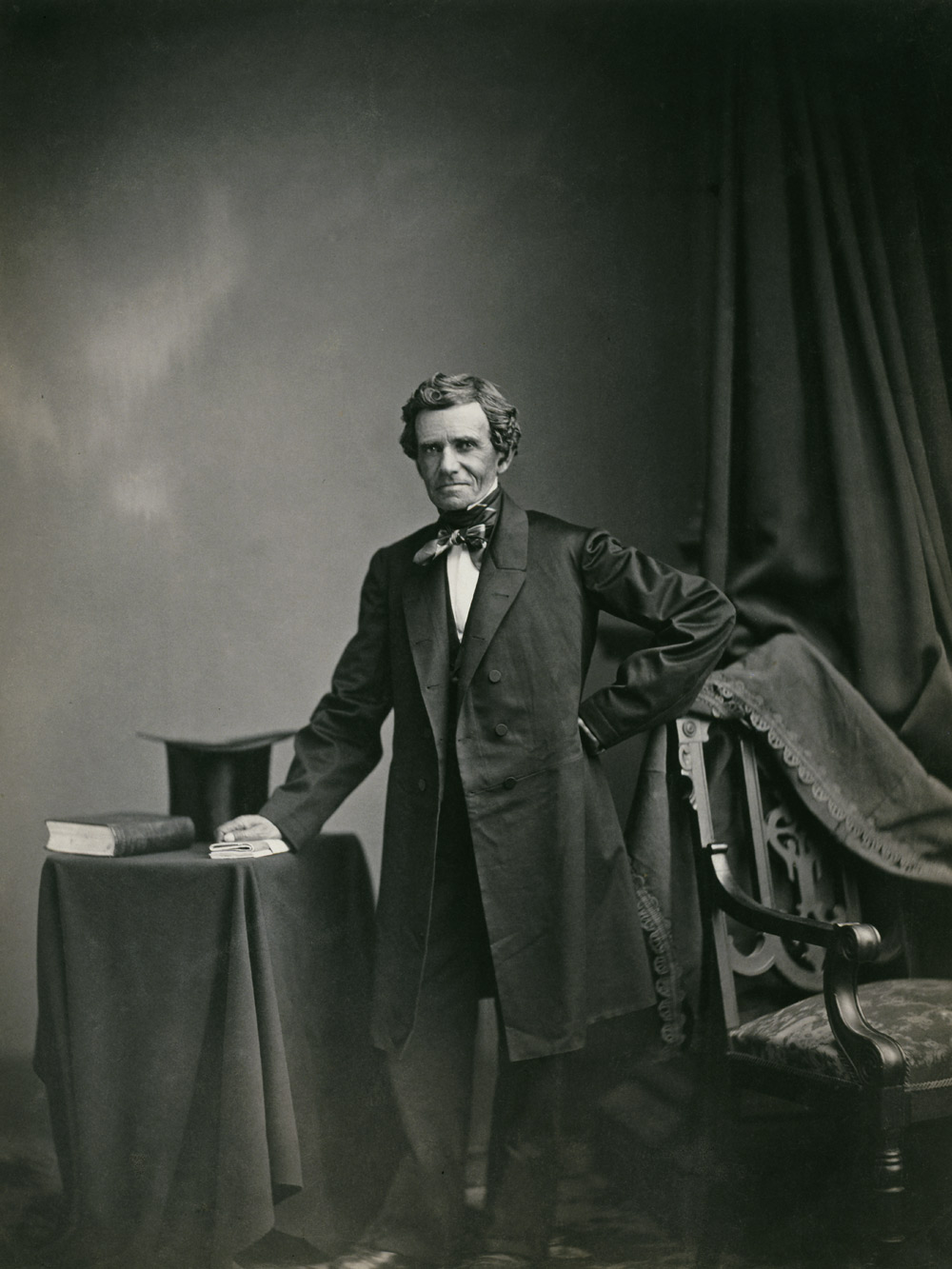
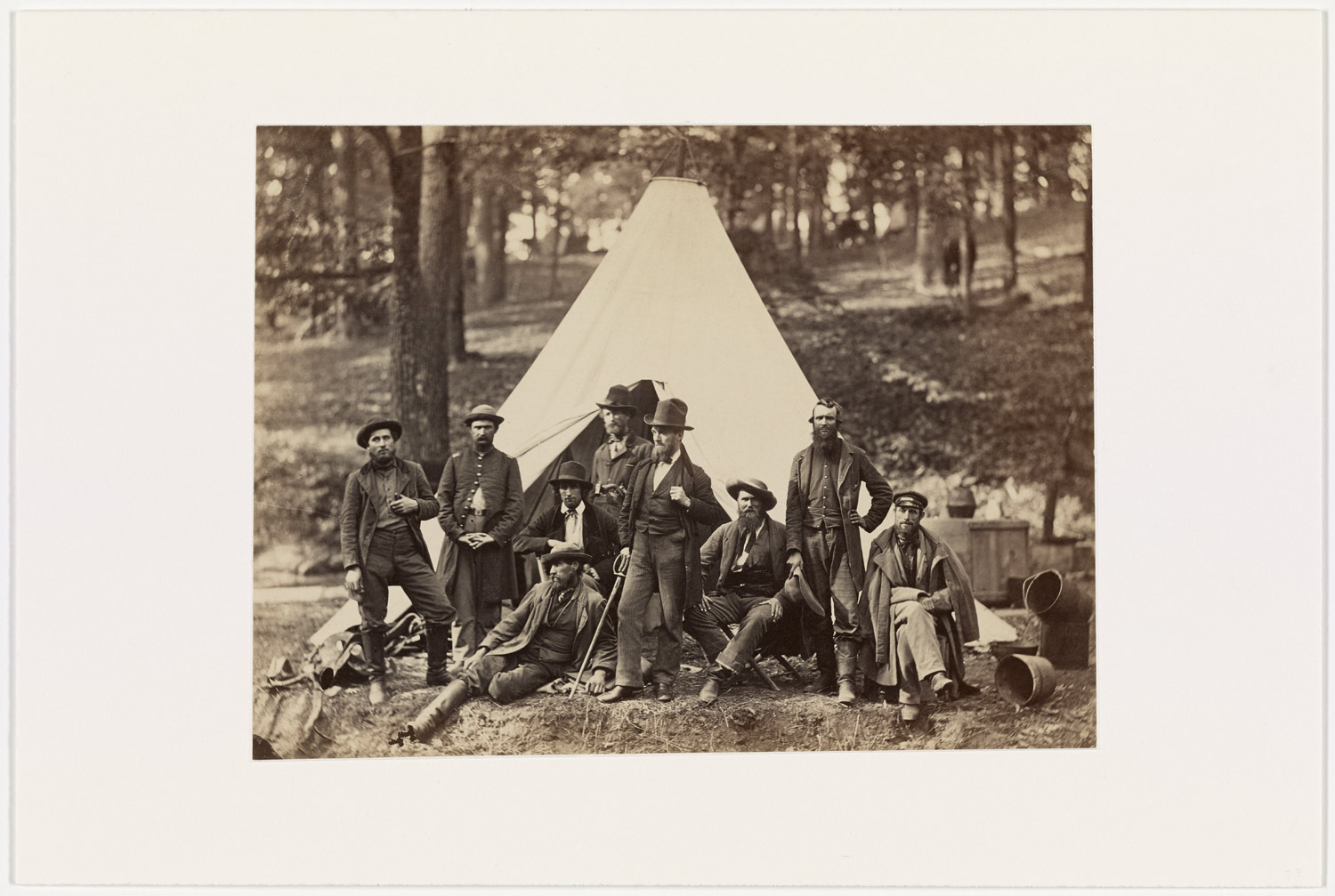
Review: ‘Photography: Real & Imagined’ at The Ian Potter Centre: NGV Australia, Melbourne Part 2

Exhibition dates: 13th October, 2023 – 4th February, 2024

Curator: Susan van Wyk, NGV Senior Curator of Photography


Paul Strand (American 1890-1976, France 1951-1976) 'Still life, pear and bowls, Twin Lakes, Connecticut' 1916, printed 1983


Paul Strand (American 1890-1976, France 1951-1976)
Still life, pear and bowls, Twin Lakes, Connecticut
1916, printed 1983
From the Paul Strand: The Formative Years 1914-1917 portfolio photogravure
National Gallery of Victoria, Melbourne
Purchased, 1984
Public domain


“I feel that photographs can either document or record reality or they can offer images as an alternative to everyday life: places for the viewer to dream in.”


Francesca Woodman, 1980


Smoke and mirrors, smoke and mirrors…

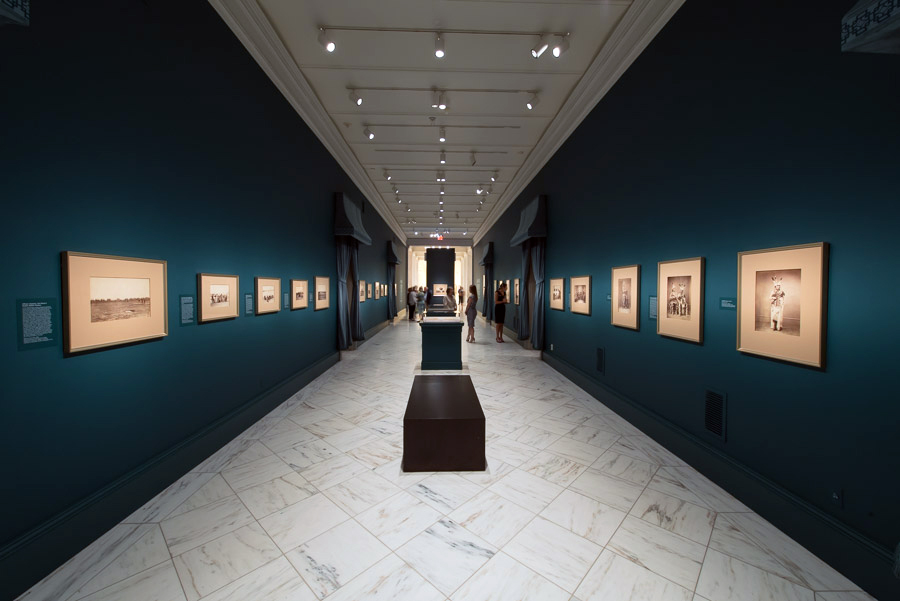
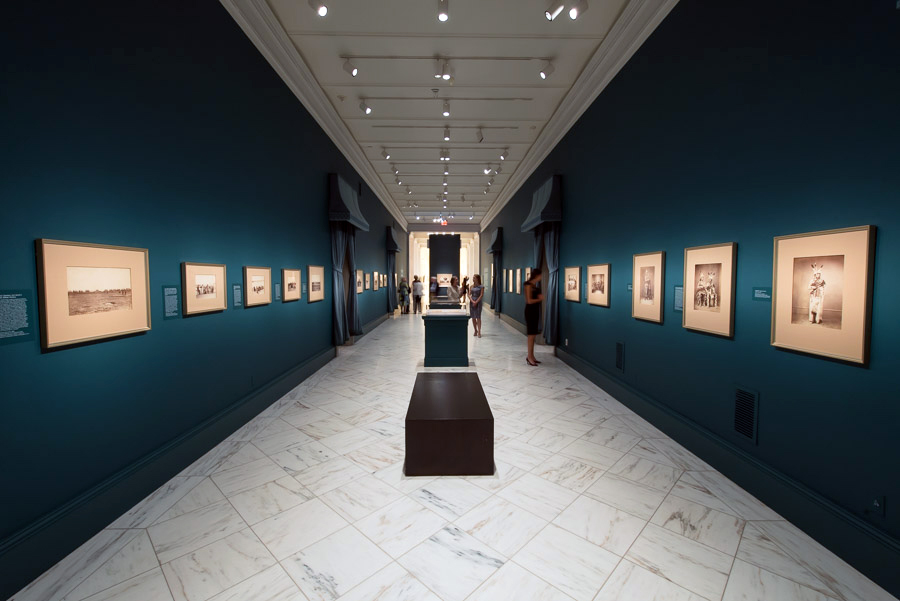
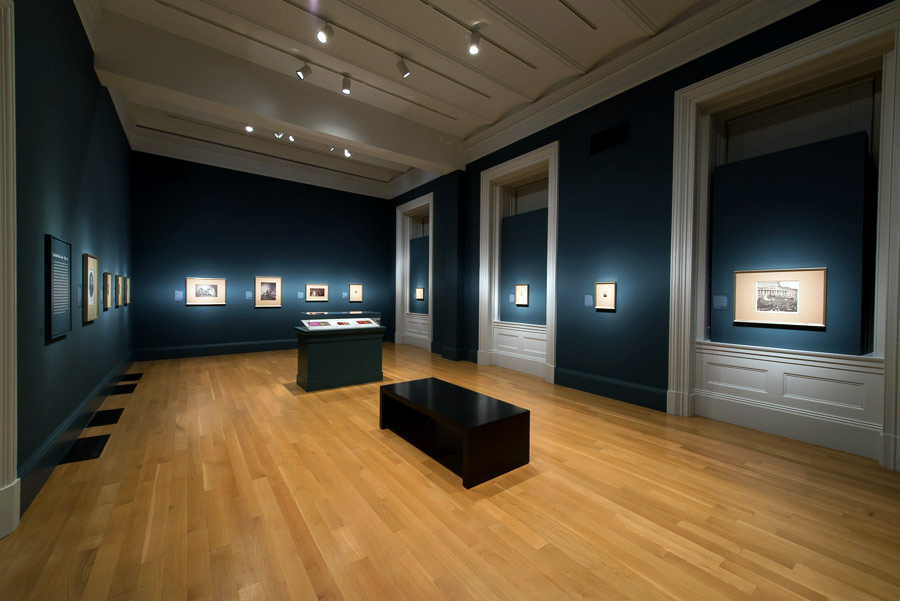
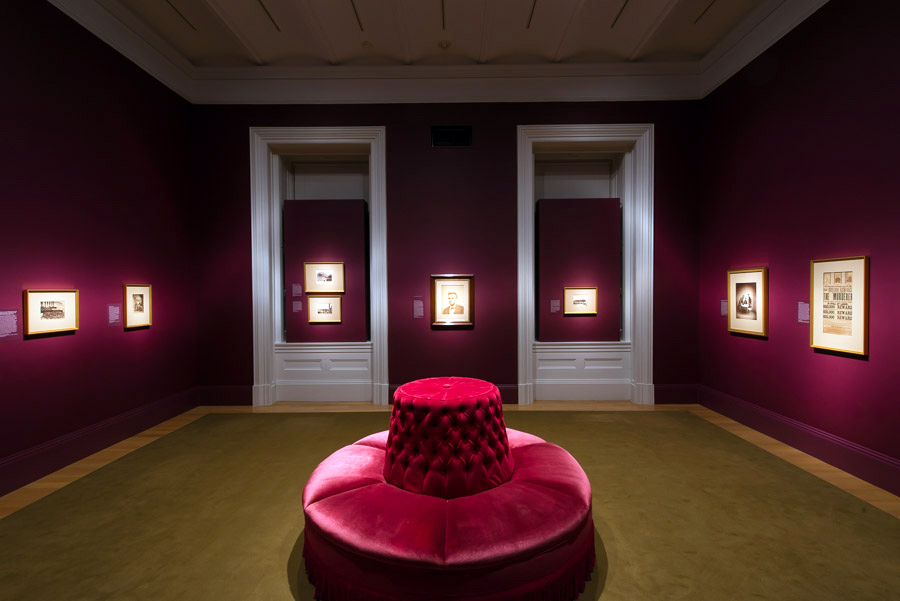
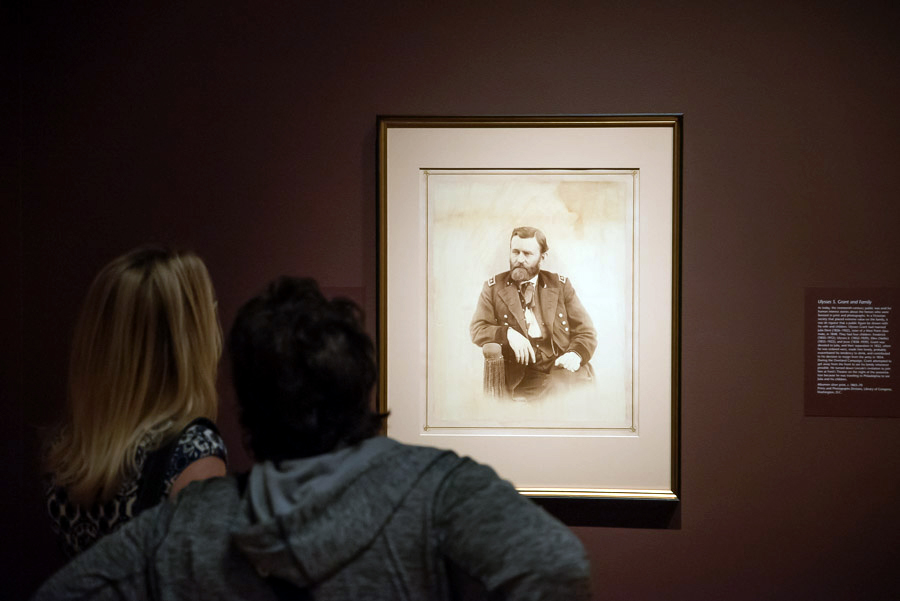
In many ways the exhibition Photography: Real & Imagined at The Ian Potter Centre: NGV Australia can be seen as a summation of all that is good and bad with the photography collection and the photography exhibition program at the National Gallery of Victoria.

Since the sad and unfortunate demise of the small but important dedicated photography gallery, photography exhibitions at the NGV (other than the large Patrick Pound exhibition all those years ago in 2017) have been in a state of deep freeze. I MISS that little third floor gallery… it’s all we had for photography at the NGV on a regular basis and there were some interesting shows there. It’s been gone for years and photography has been lumped in with contemporary art. And then, and now, nothing for years.

Therefore, as a fellow photographic artist observed to me, “It was great to see the NGV finally give photography a large exhibition after so many years of neglect.” Never a truer word said.

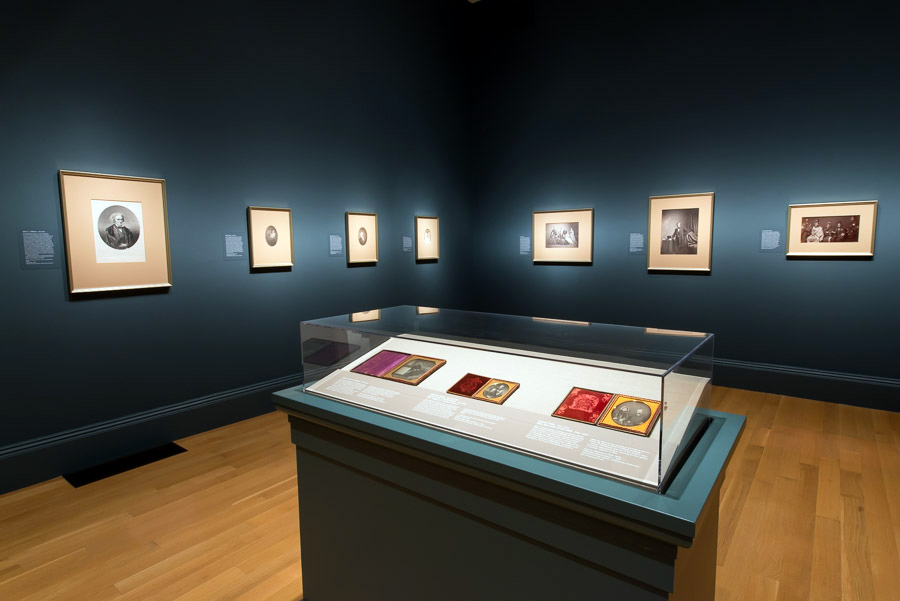
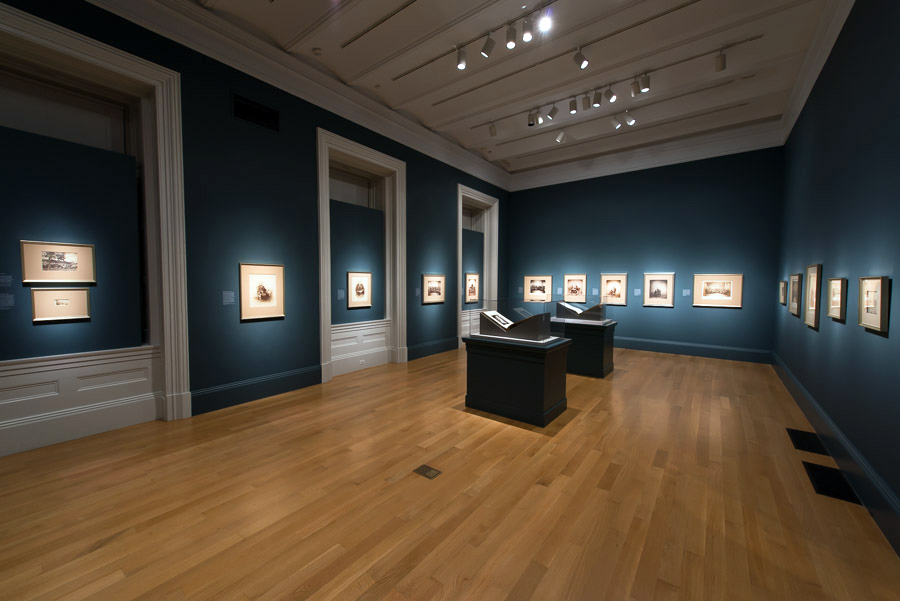
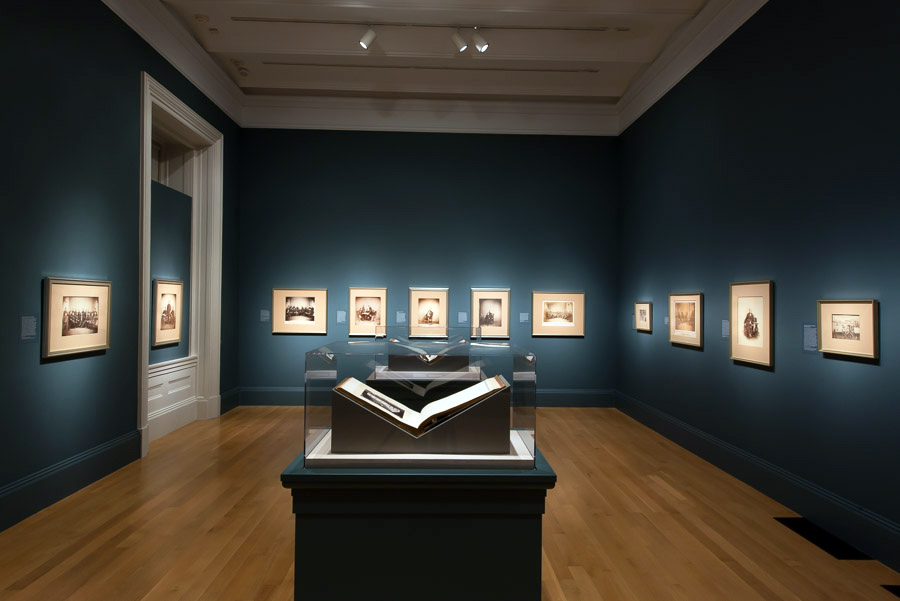
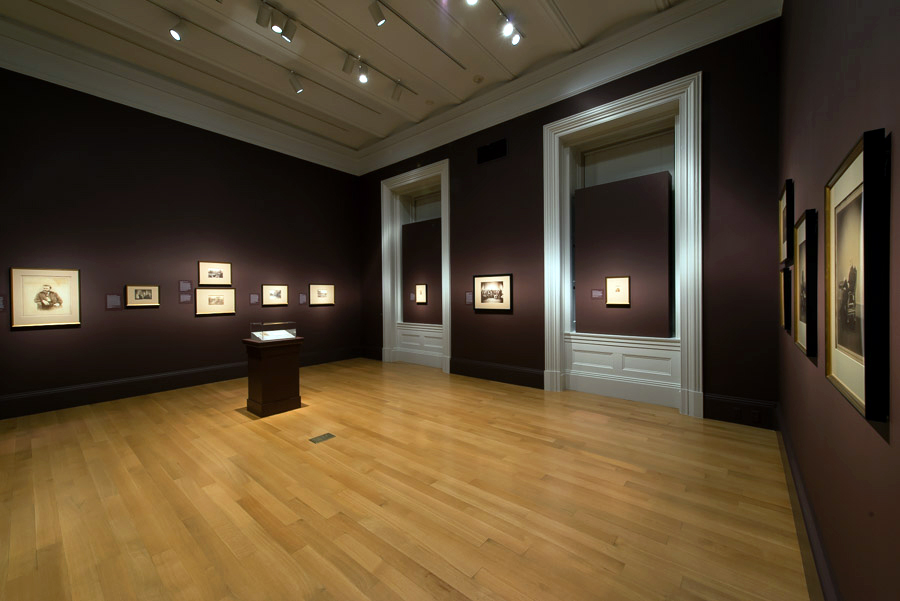
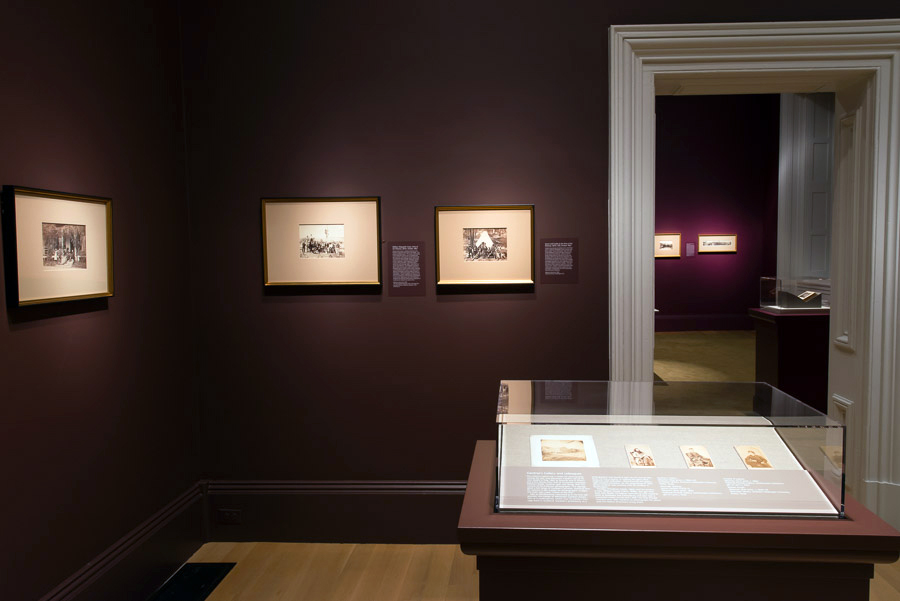
Let’s get the good stuff about the exhibition out of the way first. Whoever curated the exhibition (unknown, unnamed) really knew how to pull an installation of photographs together. There was some sophisticated sequencing of the images on the various themes from Australian and International artists, very intelligently and beautifully rendered which I enjoyed tremendously. I also enjoyed seeing the glorious display of photobooks: I was in heaven seeing in one display cabinet Man Ray’s book Photographs by Man Ray Paris 1920-1934 (published 1934), Claude Cahun and Marcel Moore’s book Aveux non Avenus (Disavowals or Cancelled Confessions) (published 1930), Bill Brandt’s book Perspective of Nudes (published 1961), and Germaine Krull’s book Nude studies (Études de nu) (published 1930). What a selection!

And it was finally great to see Australian and international work displayed together on such a large scale, something I can’t remember happening in the 35 years I have being viewing photography exhibitions in Australia. This is something that the NGV should have been promoting for many years, the placement of Australian photography in an international context… even taking this concept overseas, to promote Australian photography internationally. But no, nothing of this kind of forward thinking has ever happened in insular Australia.

Now to the not so good stuff. The most glaring anomaly about the exhibition was its over ambitious structure. While the concept ‘Real & Imagined’ was very strong – an exhibition of photographs picturing a version of reality captured by the camera (for it can never capture reality itself) / photographs created by the imagination of human beings – this robust concept was overwhelmed by too many thematic sections in the exhibition.

These sections included ‘Light’ and ‘Systems and Surface’ and ‘Surreal’ and ‘Narrative’ and ‘Work and Play’ and ‘Movement’ and ‘Studio and Things’ and ‘Display’ and ‘Consumption’ and ‘Self’ and ‘Skin’ and ‘Community and Touch’ and ‘Environment’ and ‘Place and Built’ and ‘Nineteenth-century photography’ and ‘Conflict’ and ‘Death’. I’m exhausted already…

And then, walking around the exhibition, the wall texts used to identify and illuminate these sections became totally irrelevant as through their placement on the wall I had no idea to which area they were referring. It was totally confusing and in the end I just ignored them.

As I observed people wandering around the exhibition, most had no idea of the importance of some of the images on display… why would they? They are not photography aficionados but the viewing public. If I found the exhibition confusing imagine how they viewed it. What the NGV should have done was have a guided tour on the hour, every hour, to talk about the seminal works in the exhibition and about how the exhibition had been structured. Imagine someone explaining the importance of the four photobooks in a display cabinet mentioned earlier in the history of photography and how by putting them together you were creating a sophisticated dialogue over time about identity and gender issues.

As the aforementioned colleague observed to me, “the exhibition felt like a data dump with a tacked on theme that strained (and failed) to resonate.” I wouldn’t go that far for the overall concept was strong and vibrant but like much of what has happened with the photography collection at the NGV, the overall outcome was confused and piecemeal.

This can no better be illustrated than through the comments of the Director of the NGV, Tony Ellwood, when he said in the press release, “This exhibition celebrates the collections and achievements of the NGV’s photography department, which has presented more than 180 exhibitions in its 55-year history. The exhibition is a testament to the strength of the NGV Collection, with so many key examples of the history of photography represented, from the earliest examples from the 19th century, through to contemporary images being produced right now in the twenty-first century.”

I note that when the head of the NGV boasts about the number of photography exhibitions over the last 55 years (180, about 3 a year mainly small exhibitions) and the “strength” of the NGV Photography Collection… you know that he is proselytising.

Most of the large photography exhibitions have been brought in from outside sources in the last 30 years and little research has been done into Australian photography and its relationship to world photography in house. And while the NGV collection has “strength” in certain areas it is woefully lacking in others. Again, the word “piecemeal” springs to mind, like Swiss cheese full of the biggest holes … and this exhibition only serves to reinforce that idea, often displaying the only photograph by an important artist that the collection holds.

Smoke and mirrors, smoke and mirrors!

For example I picked a few photographic artists off the top of my head as I thought of them – and the NGV collection possesses some in reasonable depth:

Edward Steichen 23
Paul Strand 51
Brassai 17
André Kertesz 45
Eugène Atget 143
Frank Hurley 20
Max Dupain 94
Bill Brandt 44
Bill Henson 108
Lee Friedlander 31
David Goldblatt 15
Dorothea Lange 28
August Sander 16

Other important photographers the NGV have nothing or next to nothing at all:

Joseph Sudek 1
Stephen Shore 0
William Eggleston 0
Julia Margaret Cameron 3
Robert Mapplethorpe 1
Ansel Adams 4
Hiroshi Sugimoto 1
Daido Moriyama 0
Raja Deen Dayal 0
Aleksandr Rodchenko 1
Olive Cotton 9
Berenice Abbott 7
Diane Arbus 2
Roger Ballen 1
Bernd and Hiller Becher 1
Thomas Ruff 2
Manuel Álvarez Bravo 0
Edward Weston 6
Henri Cartier-Bresson 2
Robert Frank 11
Garry Winogrand 0
Nan Goldin 3
Gordon Parks 3
Lewis Hine 9
Peter Hujar 0
Imogen Cunningham 6

Not exactly an institution that has “strength” in their photography collection. And over the last 30 years seemingly nothing much has been done to plug these enormous holes in the collection…. instead, for example, buying one work by Jeff Wall for a million dollars.

The NGV needs to improve the photography collection and its photography exhibition program. After too many years of stagnation an injection of new ideas and a new direction for exhibition programming is needed. A couple of focused photography exhibitions per year would be a good start, as would the purchasing of historic photographs to fill huge gaps in the collection rather than the purchasing of contemporary work. Non-vintage prints of the masters can still be bought at affordable prices. And therein lies just one of the problems: money.

Investment in photography at the NGV in terms of people and money is much needed, otherwise the deep freeze and dance of smoke and mirrors will continue well into the future.

Dr Marcus Bunyan

For more information on the early collecting practices for the NGV photography collection please see my research paper Beginnings: The International Photographic Collection at the National Gallery of Victoria (2105)


Many thankx to the NGV for allowing me to publish the media images in the posting. All other installation images are by Marcus Bunyan. See more images and text in Part 1 of the posting.


Photography: Real and Imagined examines two perspectives on photography; photography grounded in the real world, as a record, a document, a reflection of the world around us; and photography as the product of imagination, storytelling and illusion. On occasion, photography operates in both realms of the real and the imagined.

Highlighting major photographic works from the NGV Collection, including recent acquisitions on display for the very first time, Photography: Real and Imagined examines the complex, engaging and sometimes contradictory nature, of all things photographic. The NGV’s largest survey of the photography collection, the exhibition includes more than 300 works by Australian and international photographers and artists working with photo-media from the nineteenth, twentieth and twenty-first centuries.


Installation view of the exhibition 'Photography: Real & Imagined' at The Ian Potter Centre: NGV Australia, Melbourne showing at rear left, Penelope Davis' 'Shelf' (2008) and 'Non-fiction (red)' (2008, below); at third right, Anne Ferran's 'Scenes on the death of nature, III' (1986); at second right, Candida Höfer's 'Teylers Museum Haarlem II' (2003, below); and at right, Thomas Struth's 'Pergamon Museum IV, Berlin' (2001)


Installation view of the exhibition Photography: Real & Imagined at The Ian Potter Centre: NGV Australia, Melbourne showing at rear left, Penelope Davis’ Shelf (2008) and Non-fiction (red) (2008, below); at third right, Anne Ferran’s Scenes on the death of nature, III (1986); at second right, Candida Höfer’s Teylers Museum Haarlem II (2003, below); and at right, Thomas Struth’s Pergamon Museum IV, Berlin (2001)
Photo: Marcus Bunyan
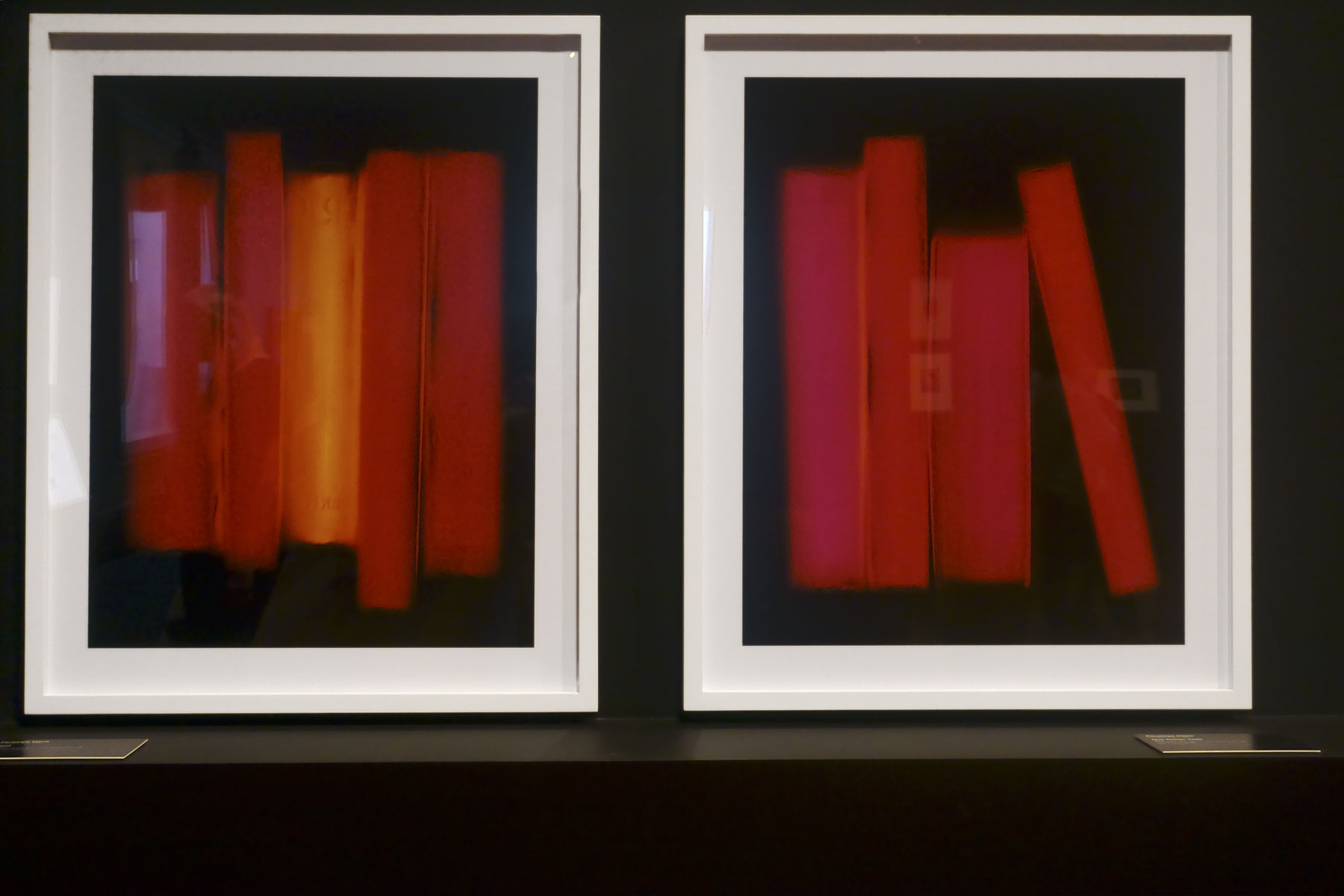
 

Installation view of the exhibition 'Photography: Real & Imagined' at The Ian Potter Centre: NGV Australia, Melbourne showing Penelope Davis' 'Shelf' (2008) and 'Non-fiction (red)' (2008) from the 'Fiction-Non-Fiction' series 2007-2008


Installation view of the exhibition Photography: Real & Imagined at The Ian Potter Centre: NGV Australia, Melbourne showing Penelope Davis’ Shelf (2008) and Non-fiction (red) (2008) from the Fiction-Non-Fiction series 2007-2008
Photo: Marcus Bunyan


Installation view of the exhibition 'Photography: Real & Imagined' at The Ian Potter Centre: NGV Australia, Melbourne showing at middle left, Anne Ferran's 'Scenes on the death of nature, III' (1986); at centre, Candida Höfer's 'Teylers Museum Haarlem II' (2003, below); and at middle right, Thomas Struth's 'Pergamon Museum IV, Berlin' (2001)


Installation view of the exhibition Photography: Real & Imagined at The Ian Potter Centre: NGV Australia, Melbourne showing at middle left, Anne Ferran’s Scenes on the death of nature, III (1986); at centre, Candida Höfer’s Teylers Museum Haarlem II (2003, below); and at middle right, Thomas Struth’s Pergamon Museum IV, Berlin (2001)
Photo: Marcus Bunyan


The luminous photograph by Thomas Struth shows museum visitors immersed in observing the Telephos frieze within a room of the Pergamon Museum in Berlin. Struth draws our attention to the fact that viewing a work of art in a public gallery is rarely a private experience. The visit is usually shared by other visitors, museum staff, security guards and tour guides. There is also the omnipresent gaze of security cameras. Struth seems to be emulating the technical innovations of the Telephos frieze in his arrangement of the viewers. Similarities between the poses of the audience members and the poses of the carved relief figures gradually emerge, suggesting an unconscious dialogue between the viewers and the objects they regard.

Wall text from the exhibition


Candida Höfer (German, b. 1944) 'Teylers Museum Haarlem II' 2003


Candida Höfer (German, b. 1944)
Teylers Museum Haarlem II
2003
Type C photograph
National Gallery of Victoria, Melbourne
Purchased, 2004


This photograph shows the famous Oval Room within Teylers Museum, the oldest public museum in the Netherlands. Candida Höfer photographed the space bathed in a brilliant, even light that illuminates its architecture, objects and famed mineralogical cabinet. The highly structured museological ordering of the objects and the Neoclassical architecture that contains them are exaggerated by the formal, symmetrical composition of the photograph. This image invites reflection of the ways in which cultural institutions direct our engagement with materials. As the artist has said, ‘There are no people there, but you understand that the places were made specially for them. This is very meaningful for me, and it’s exactly what I want to express’.

Wall text from the exhibition


Installation view of the exhibition 'Photography: Real & Imagined' at The Ian Potter Centre: NGV Australia, Melbourne showing at left, Anne Ferran's 'Scenes on the death of nature, III' (1986); at centre, Candida Höfer's 'Teylers Museum Haarlem II' (2003); and at right, Thomas Struth's 'Pergamon Museum IV, Berlin' (2001)


Installation view of the exhibition Photography: Real & Imagined at The Ian Potter Centre: NGV Australia, Melbourne showing at left, Anne Ferran’s Scenes on the death of nature, III (1986); at centre, Candida Höfer’s Teylers Museum Haarlem II (2003, above); and at right, Thomas Struth’s Pergamon Museum IV, Berlin (2001). In the distance can be seen Lotte Jacobi’s Head of a dancer (1929, below); Man Ray’s Head of a dancer (1929, below); and Lee Miller’s Nimet Eloui Bey (c. 1930, below)
Photo: Marcus Bunyan


Lotte Jacobi (American, 1896-1990) 'Head of the Dancer' 1929


Lotte Jacobi (German 1896-1990, United States 1935-1990)
Head of a dancer
1929, printed c. 1970
Gelatin silver photograph
26.4 x 33.2cm
National Gallery of Victoria, Melbourne
Bowness Family Fund for Photography, 2021
Public domain


Man Ray (1890-1976) 'Kiki with African mask' 1926


Man Ray (Emmanuel Radnitzky) (American, 1890-1976)
Kiki with African mask
1926
Gelatin silver photograph
21.1 x 27.6cm
National Gallery of Victoria, Melbourne
Purchased through The Art Foundation of Victoria with the assistance of Miss Flora MacDonald Anderson and Mrs Ethel Elizabeth Ogilvy Lumsden, Founder Benefactors, 1983
Public domain


Kiki with African mask is one of Man Ray’s most celebrated photographs and an iconic image of the Art Deco period. First published in Vogue in 1926, it is an elegant image, but it also speaks to the impact of European colonialism in Africa. In this pared-back studio photograph all extraneous detail is excluded from the image, focusing our attention on the exquisitely made-up face of Kiki in juxtaposition with the perfectly polished ebony of the mask. This photograph invites us to delight in the physical beauty of Man Ray’s celebrated model but offers nothing about the mask or its maker.

Wall text from the exhibition
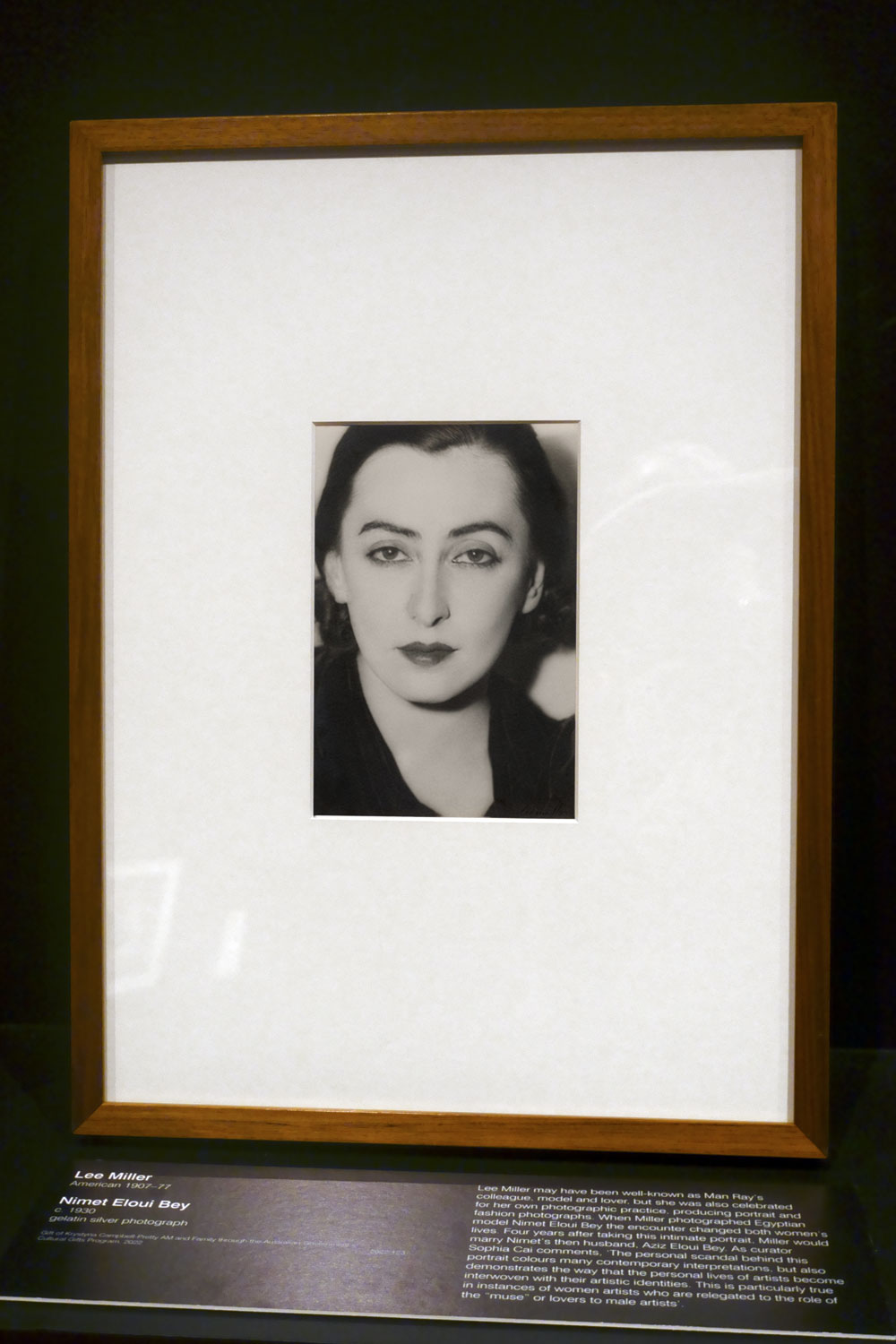
 

Installation view of the exhibition 'Photography: Real & Imagined' at The Ian Potter Centre: NGV Australia, Melbourne showing Lee Miller's 'Nimet Eloui Bey' (c. 1930)


Installation view of the exhibition Photography: Real & Imagined at The Ian Potter Centre: NGV Australia, Melbourne showing Lee Miller’s Nimet Eloui Bey (c. 1930, below)
Photo: Marcus Bunyan


Lee Miller (American 1907-1977) 'Nimet Eloui Bey' c. 1930 (installation view)


Lee Miller (American 1907-1977)
Nimet Eloui Bey (installation view)
c. 1930
Gelatin silver photograph
23.0 x 15.8cm
National Gallery of Victoria, Melbourne
Gift of Krystyna Campbell-Pretty AM and Family through the Australian Government’s Cultural Gifts Program, 2022
Photo: Marcus Bunyan


Lee Miller may have been well-known as Man Ray’s colleague, model and lover, but she was also celebrated for her own photographic practice, producing portrait and fashion photographs. When Miller photographed Egyptian model Nimet Eloui Bey the encounter changed both women’s lives. Four years after taking this intimate portrait, Miller would marry Nimet’s then husband, Aziz Eloui Bey. As curator Sophia Cai comments, ‘The personal scandal behind this portrait colours many contemporary interpretations, but also demonstrates the way that the personal lives of artists become interwoven with their artistic identities. This is particularly true in instances of women artists who are relegated to the role of the “muse” or lovers to male artists’.

Wall text from the exhibition


Installation view of the exhibition 'Photography: Real & Imagined' at The Ian Potter Centre: NGV Australia, Melbourne showing at centre, Fiona Pardington's 'Portrait of a life-cast of Koe, Timor' (2010) and 'Portrait of a life cast of Matoua Tawai, Aotearoa New Zealand' (2010); and at right, Linda Judge's 'Victoria and Albert Museum 20/4/94' (1994)


Installation view of the exhibition Photography: Real & Imagined at The Ian Potter Centre: NGV Australia, Melbourne showing at centre, Fiona Pardington’s Portrait of a life-cast of Koe, Timor (2010) and Portrait of a life cast of Matoua Tawai, Aotearoa New Zealand (2010); and at right, Linda Judge’s Victoria and Albert Museum 20/4/94 (1994, below)
Photo: Marcus Bunyan


Fiona Pardington’s photograph shows a life cast of the tattooed head of a Māori man, Matoua Tawai. The cast, held in a museum collection, is one of many made by Pierre- Marie Alexandre Dumoutier of Māori peoples in the 1830s. Pardington, who is of Māori and Scottish descent, has spoken of her desire to reconsider the complex history of these life casts and find a state of continuum between the past and present, to, as she says, ‘find the faces of the living people presenting and manifesting in the object’. Printing the photograph at larger-than-life scale provokes a physical encounter, an opportunity to look again and reconsider the histories of the person, the object and the image.

Wall text from the exhibition


Installation view of the exhibition 'Photography: Real & Imagined' at The Ian Potter Centre: NGV Australia, Melbourne showing Linda Judge's Victoria and Albert Museum 20/4/94 (1994, installation view detail)


Linda Judge (Australian, b. 1964)
Victoria and Albert Museum 20/4/94 (installation view detail)
1994
Type C photographs
National Gallery of Victoria, Melbourne
Margaret Stewart Endowment, 1994
Photo: Marcus Bunyan


In this image, Linda Judge wittily creates new narratives and resurrects otherwise ‘mummified’ museum objects. Concerned with the open-ended nature of archives and their ability to slip between fiction and reality, Judge presents photographs of historical lace from the collection of the Victoria and Albert Museum, London. Beneath each photograph, Judge has provided a range of both ‘plausible’ captions (’12. collar, cuff, border: Italian, late 17th century, Tape lace with needlepoint fillings and brides’) and fanciful ones (’51. veil: Brussels, end 18th century, needlepoint on bobbin ground. Worn by Madonna, for Like a Virgin in her Brussels tour ’91’). Judge humorously invites the viewer to interrogate the expectations of truth in the presentation of archival content.

Wall text from the exhibition


Installation view of the exhibition 'Photography: Real & Imagined' at The Ian Potter Centre: NGV Australia, Melbourne showing at left, Martin Parr's 'Pink pig cakes' from 'Common Sense' (1995-1999) showing at left, Martin Parr's 'Pink pig cakes' from 'Common Sense' (1995-1999); at fourth left, ringl+pit's 'Komol' (1931); at fifth left, Ilse Bing's 'Salut de Schiaparelli' (1934); and at sixth left, Dora Maar's 'Untitled (Study of Beauty)' (1936)


Installation view of the exhibition Photography: Real & Imagined at The Ian Potter Centre: NGV Australia, Melbourne showing at left, Martin Parr’s Pink pig cakes from Common Sense (1995-1999); at fourth left, ringl+pit’s Komol (1931, below); at fifth left, Ilse Bing’s Salut de Schiaparelli (1934, below); and at sixth left, Dora Maar’s Untitled (Study of Beauty) (1936, below)
Photo: Marcus Bunyan


Installation view of the exhibition 'Photography: Real & Imagined' at The Ian Potter Centre: NGV Australia, Melbourne showing ringl+pit's 'Komol' (1931)


Installation view of the exhibition Photography: Real & Imagined at The Ian Potter Centre: NGV Australia, Melbourne showing ringl+pit’s Komol (1931, below)
Photo: Marcus Bunyan
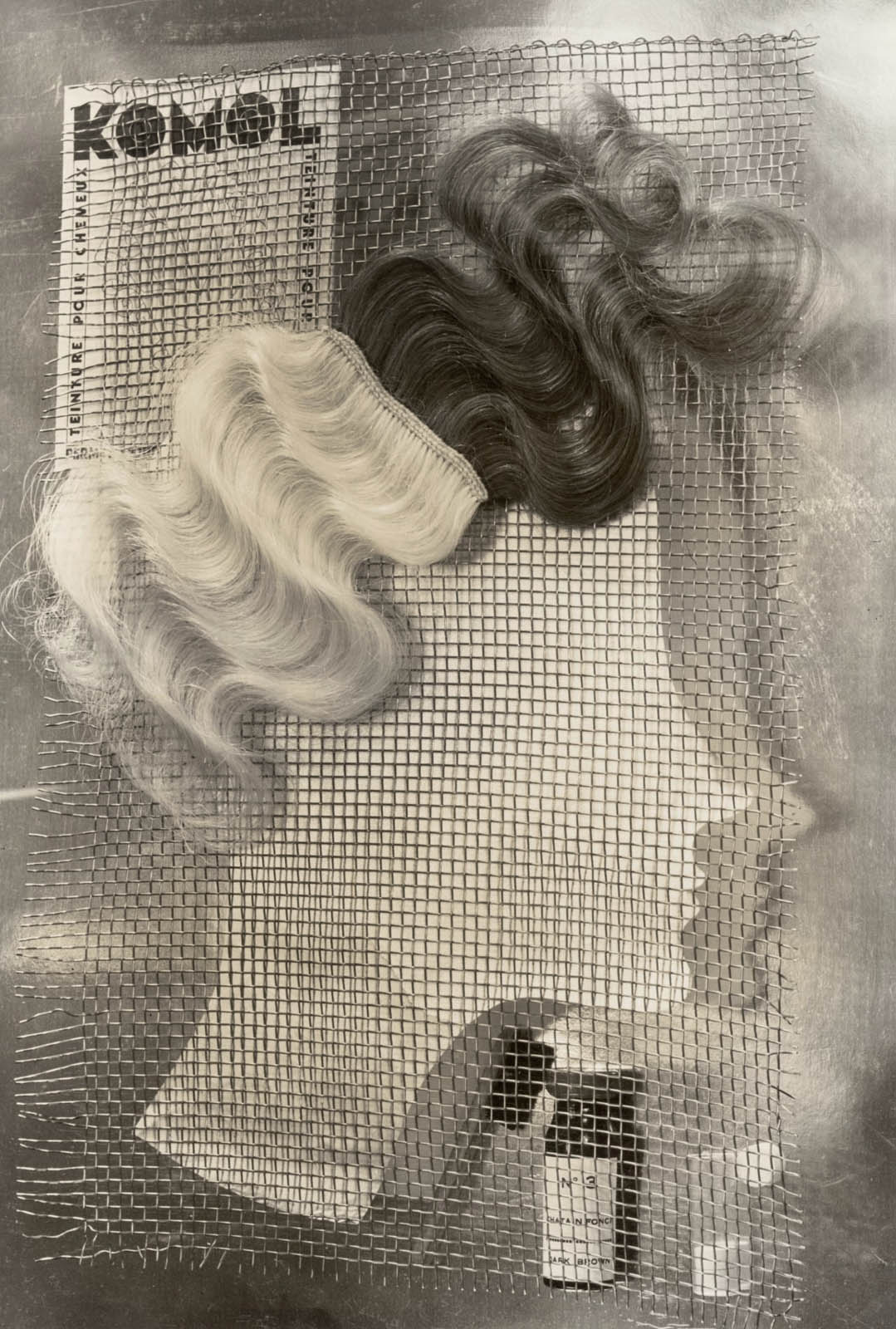
 

ringl+pit (German active 1930-1933) Grete Stern (German, 1904-1999) Ellen Auerbach (German 1906-2004) 'Komol' 1931, printed 1984


ringl+pit (German active 1930-1933)
Grete Stern (German, 1904-1999)
Ellen Auerbach (German 1906-2004)
Komol
1931, printed 1984
Gelatin silver photograph
34.4 x 23.3cm
National Gallery of Victoria, Melbourne
Bowness Family Fund for Photography, 2022
© ringl+pit


Dora Maar (French 1907-1997) 'Untitled (Study of Beauty)' 1936


Dora Maar (French 1907-1997)
Untitled (Study of Beauty)
1936
Gelatin silver photograph
33.0 x 24.1cm
National Gallery of Victoria, Melbourne
Bowness Family Fund for Photography, 2021
© Dora Maar. Licensed by Copyright Agency, Australia


Installation view of the exhibition 'Photography: Real & Imagined' at The Ian Potter Centre: NGV Australia, Melbourne showing at left, Martin Parr's 'Pink Pig Cakes, Bristol, UK' (1995); and at right, Darren Sylvester's 'On Holiday' (2010)


Installation view of the exhibition Photography: Real & Imagined at The Ian Potter Centre: NGV Australia, Melbourne showing at left, Martin Parr’s Pink Pig Cakes, Bristol, UK (1995); at third right, Lillian Bassman’s More fashion mileage per dress, Barbara Vaughn, Harper’s Bazaar, New York (1956); at second right,  and at right, Darren Sylvester’s On Holiday (2010)
Photo: Marcus Bunyan


Darren Sylvester builds and photographs hyperreal tableaux using the visual language of advertising – beautiful models, perfect lighting and considered ‘product’ placement – to construct a familiar yet illusionary reality. Here Sylvester’s model plays the role of a handsome businessman. ‘Against a sunrise, a business traveller gazes at an unknown destination’, Sylvester once wrote of this image. ‘The composition plays on stereotypes of luxury aspirations and aeroplane advertisements. For example, no-one ever flies into darkness or storms in an ad.’ In this lush, seductive photograph, Sylvester explores the slippery space between reality and illusion, aspiration and irrelevance, as we move on to the next shiny thing.

Wall text from the exhibition
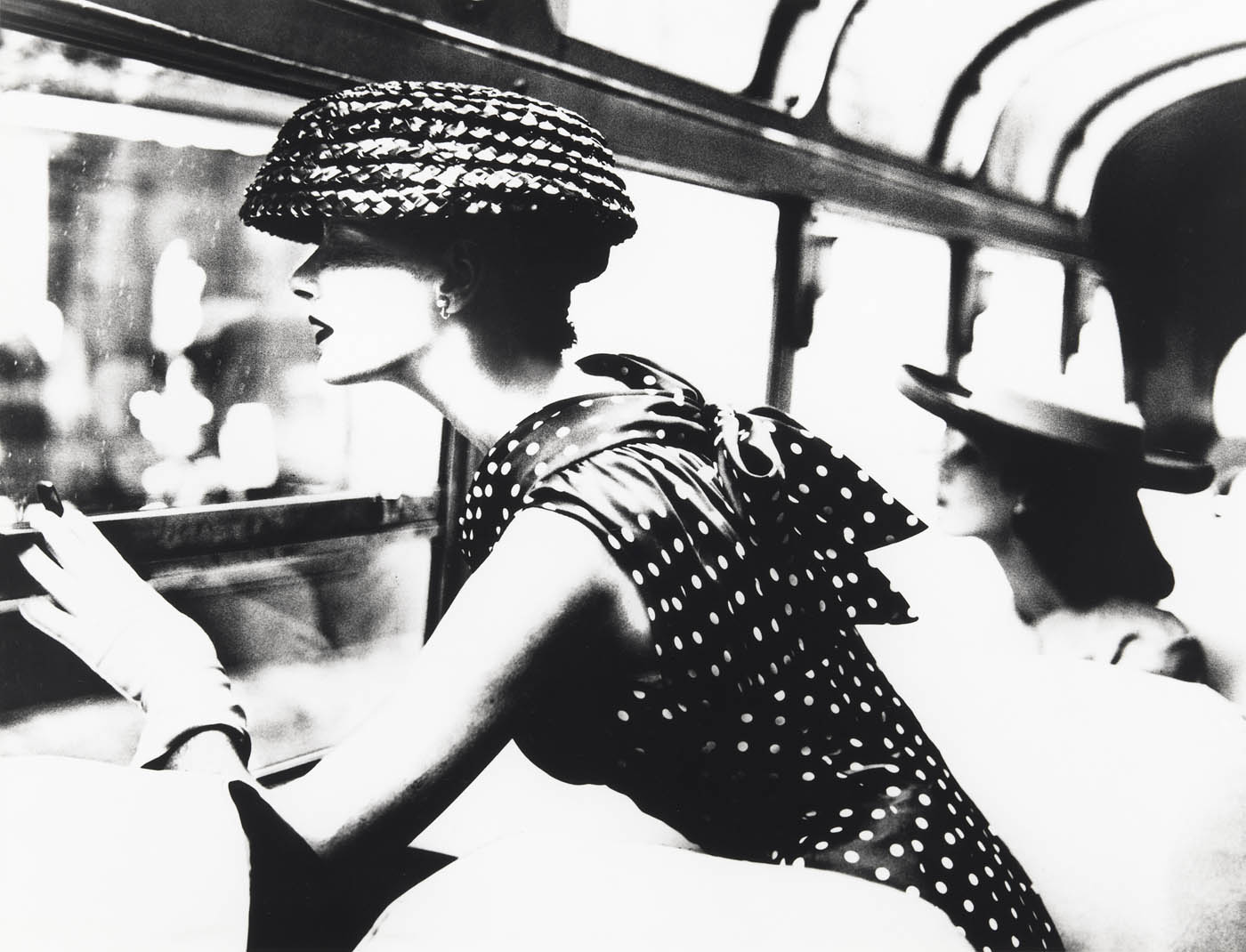
 

Lillian Bassman (American, 1917-2012) 'More fashion mileage per dress, Barbara Vaughn, Harper's Bazaar, New York' 1956


Lillian Bassman (American, 1917-2012)
More fashion mileage per dress, Barbara Vaughn, Harper’s Bazaar, New York
1956, printed later
Gelatin silver photograph
National Gallery of Victoria, Melbourne
Gift of Krystyna Campbell-Pretty AM and Family through the Australian Government’s Cultural Gifts Program, 2023


In the late 1930s, Lillian Bassman studied fashion illustration and textile design at the Pratt Institute, New York. In 1940 she began working with Alexey Brodovitch, art director of Harper’s Bazaar magazine, which soon led to her appointment as art director of the subsidiary publication Junior Bazaar. In this capacity she worked with photographers, including Richard Avedon and Robert Frank, and in 1947 began working as a freelance fashion and advertising photographer. In an interview later in her life Bassman played down her directorial role as photographer, stating, ‘It is part of the nature of a woman to be unconsciously graceful … I try to record that natural grace with a camera’.

Wall text from the exhibition


Installation view of the exhibition 'Photography: Real & Imagined' at The Ian Potter Centre: NGV Australia, Melbourne showing Athol Shmith's 'Fashion illustration, model Ann Chapman' (c. 1961)


Installation view of the exhibition Photography: Real & Imagined at The Ian Potter Centre: NGV Australia, Melbourne showing Athol Shmith’s Fashion illustration, model Ann Chapman (c. 1961)
Photo: Marcus Bunyan


Installation view of the exhibition 'Photography: Real & Imagined' at The Ian Potter Centre: NGV Australia, Melbourne showing at left, Alice Mills' 'Joan Margaret Syme' (c. 1918); at second left, works by Edson Chagas from his 'Tipo Passe' series (2014); and at third left, Hassan Hajjaj's 'Master Cobra Mansa' (2013)


Installation view of the exhibition Photography: Real & Imagined at The Ian Potter Centre: NGV Australia, Melbourne showing at left, Alice Mills’ Joan Margaret Syme (c. 1918, below); at second left, works by Edson Chagas from his Tipo Passe series (2014); and at third left, Hassan Hajjaj’s Master Cobra Mansa (2013, below) with at right, Martin Parr’s Pink Pig Cakes, Bristol, UK (1995)
Photo: Marcus Bunyan
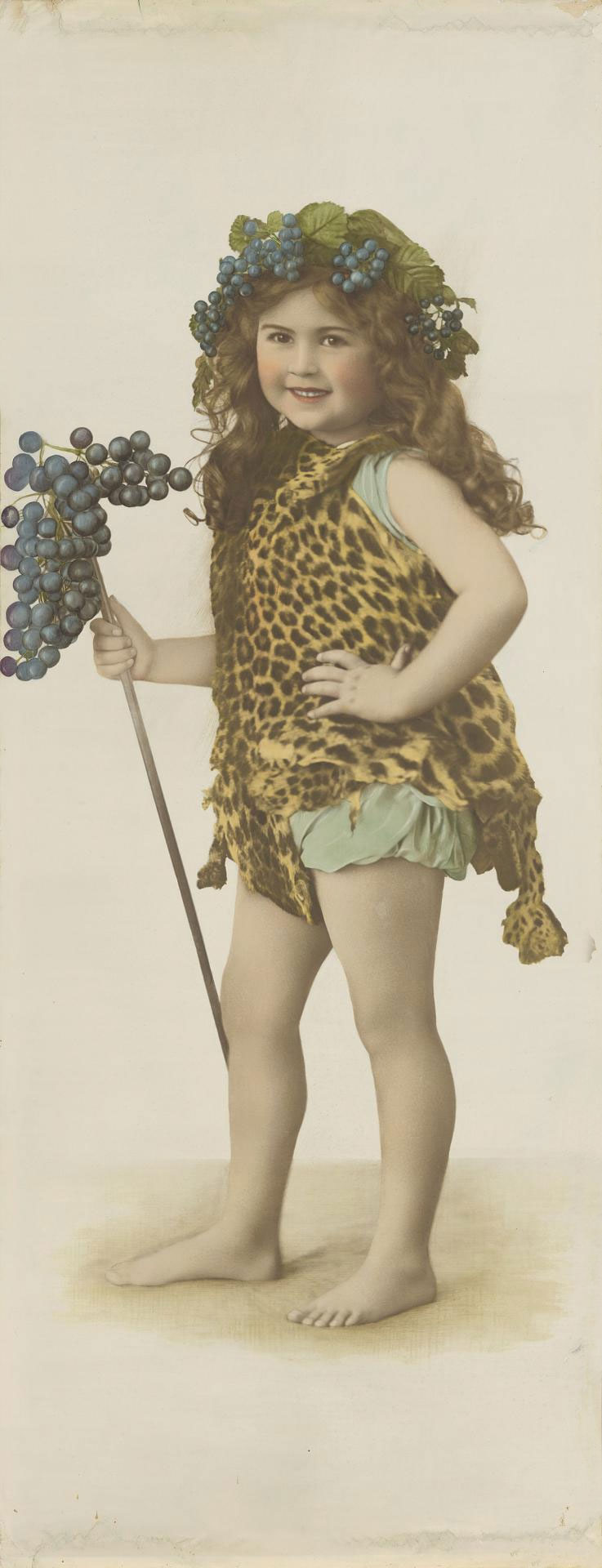
 

Alice Mills (attributed to) (Australian, 1870-1929) 'Joan Margaret Syme' c. 1918


Alice Mills (attributed to) (Australian, 1870-1929)
Joan Margaret Syme
c. 1918
Gelatin silver photograph, coloured dyes
National Gallery of Victoria, Melbourne
Presented through the NGV Foundation by Michael Hayne, 2005
Public domain


Alice Mills set up her first studio in Melbourne in 1900. She was highly regarded as a portrait photographer and in 1907 was invited to exhibit in the Australian Exhibition of Women’s Work. Her portrait of five-year-old Joan Margaret Syme dressed in a leopard-skin robe is an outstanding example of studio portraiture. It shows the skilled application of hand colouring, which was used to transform black-and-white photographs in the era before colour photography, bringing a life-like quality to the portrait. At almost two metres high, this is no only a charming study of a young child, but one of the largest photographs from the early twentieth century in the NGV Collection.

Wall text from the exhibition


Installation view of the exhibition 'Photography: Real & Imagined' at The Ian Potter Centre: NGV Australia, Melbourne showing at left Alice Mills' 'Joan Margaret Syme' (c. 1918); at centre, works by Edson Chagas from his 'Tipo Passe' series (2014); and at right, Hassan Hajjaj's 'Master Cobra Mansa' (2013)


Installation view of the exhibition Photography: Real & Imagined at The Ian Potter Centre: NGV Australia, Melbourne showing at left Alice Mills’ Joan Margaret Syme (c. 1918, above); at centre, works by Edson Chagas from his Tipo Passe series (2014); and at right, Hassan Hajjaj’s Master Cobra Mansa (2013, below)
Photo: Marcus Bunyan


Hassan Hajjaj (Moroccan, b. 1961) 'Master Cobra Mansa' 2013


Hassan Hajjaj (Moroccan, b. 1961)
Master Cobra Mansa
2013
Metallic inkjet print, timber frame, cans
76.2 x 111.8cm
National Gallery of Victoria, Melbourne
Orloff Family Charitable Trust, 2019
© Hassan Hajjaj


Multidisciplinary artist Hassan Hajjaj’s portraits show London’s Moroccan diaspora; as a designer he also creates stylish street fashion and playful interiors that are a contemporary take on Moroccan tea houses and riads. Hajjaj came to professional photography by happenstance, taking pictures both for fun and as a tool while working as a stylist on music videos. It soon became a cornerstone of his creative practice. From the outset Hajjaj wanted his photography to show ‘another side of Moroccan culture’, something that, as he says, was not ‘camels, dates and drinking mint tea!’

Wall text from the exhibition


Adolphe Braun (French 1811-1877) 'No title (Flower study)' c. 1854


Adolphe Braun (French 1811-1877)
No title (Flower study)
c. 1854
Albumen silver photograph
31.0 x 37.3cm
National Gallery of Victoria, Melbourne
Purchased NGV Foundation, 2017
Public domain


Adolphe Braun arrived in Paris in 1828 to study drafting and decorative design and within six years had established a textile design studio. Around 1853 he began to make photographs using the recently invented collodion process. The following year Braun commenced a project to photograph an extensive series of flower studies with the intent of providing documentary source material for artists and designers. He produced 300 of these photographs and in 1854 published his images in a six-volume series titled Fleurs photographiés. When they were exhibited in the 1855 Universal Exhibition in Paris, Braun was awarded a gold medal for his work’s usefulness to the fabric and decorating industries.

Wall text from the exhibition


Installation view of the exhibition 'Photography: Real & Imagined' at The Ian Potter Centre: NGV Australia, Melbourne showing at left Julie Rrap's 'Persona and shadow: Madonna' (1984)


Installation view of the exhibition Photography: Real & Imagined at The Ian Potter Centre: NGV Australia, Melbourne showing at left Julie Rrap’s Persona and shadow: Madonna (1984, below)


Julie Rrap. 'Persona and shadow: Madonna' 1984


Julie Rrap (Australian, b. 1950)
Persona and shadow: Madonna
1984
Cibachrome photograph
194.7 × 104.6cm (image and sheet)
National Gallery of Victoria, Melbourne
Michell Endowment, 1984


Installation view of the exhibition 'Photography: Real & Imagined' at The Ian Potter Centre: NGV Australia, Melbourne showing from left to right, Yasumasa Morimura's 'An inner dialogue with Frida Kahlo (Flower wreath and tears)' (2001); Phumzile Khanyile's 'Untitled' (2016); Zanele Muholi's 'Ntozkhe II (Parktown)' (2016, below); Ayana V. Jackson's 'How sweet the song' (2017); Julie Rrap's 'Madonna' (1984); and Siri Hayes 'Spilling pearls' (2012)


Installation view of the exhibition Photography: Real & Imagined at The Ian Potter Centre: NGV Australia, Melbourne showing from left to right, Yasumasa Morimura’s An inner dialogue with Frida Kahlo (Flower wreath and tears) (2001, below); Phumzile Khanyile’s Untitled (2016); Zanele Muholi’s Ntozkhe II (Parktown) (2016, below); Ayana V. Jackson’s How sweet the song (2017); Julie Rrap’s Madonna (1984, above); and Siri Hayes Spilling pearls (2012)
Photo: Marcus Bunyan

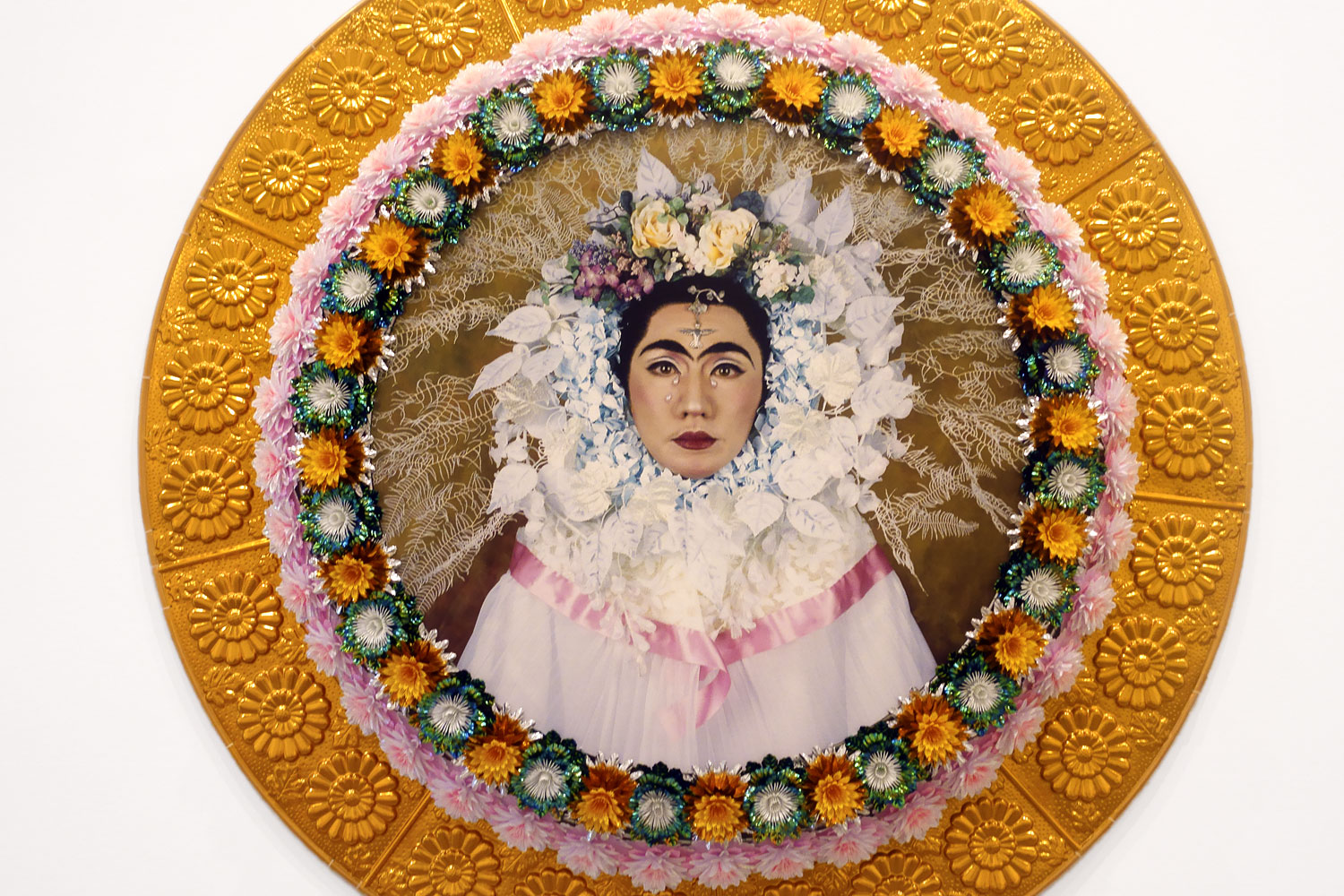
 

Yasumasa Morimura (Japanese, b. 1951) 'An inner dialogue with Frida Kahlo (Flower wreath and tears)' 2001 (installation view)

Yasumasa Morimura (Japanese, b. 1951) 'An inner dialogue with Frida Kahlo (Flower wreath and tears)' 2001 (installation view)


Yasumasa Morimura (Japanese, b. 1951)
An inner dialogue with Frida Kahlo (Flower wreath and tears) (installation views)
2001
From the An Inner Dialogue with Frida Kahlo series 1991-2001
Photograph, plastic
213.4cm diameter
National Gallery of Victoria, Melbourne
Purchased NGV Foundation, 2022
Photos: Marcus Bunyan
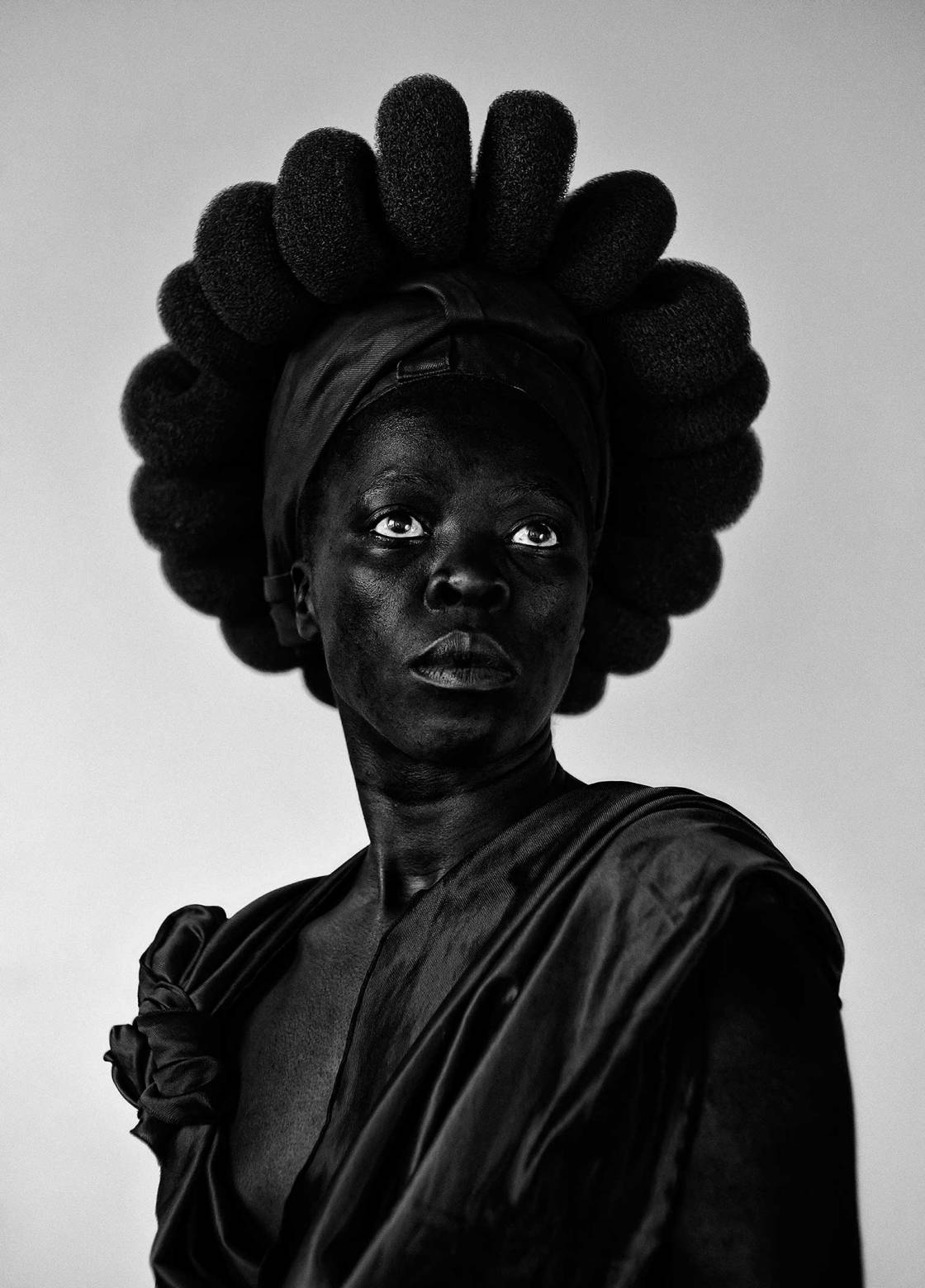
 

Zanele Muholi (South African, b. 1972) 'Ntozkhe II (Parktown)' 2016


Zanele Muholi (South African, b. 1972)
Ntozkhe II (Parktown)
2016
From the Somnyama Ngonyama series 2015-2016
Gelatin silver photograph
99 x 74cm
National Gallery of Victoria, Melbourne
Bowness Family Fund for Photography, 2017
© Zanele Muholi. Courtesy of the artist and Yancey Richardson, New York


Using found props – in this instance a ‘crown’ of scouring pads – Zanele Muholi has photographed themself to confront racial stereotypes and examine concepts of self-representation while honouring generations of women who have worked domestically. Discussing this work the artist wrote, ‘In some ways, yes: Ntozakhe is based on the Statue of Liberty, representing the idea of freedom – the freedom all women should have – as well as pride: pride in who we are as black, female-bodied beings. But what kind of freedom are we talking about? What is the colour of the Statue of Liberty? What race is the figure monumentalised as Lady Liberty?’

Wall text from the exhibition
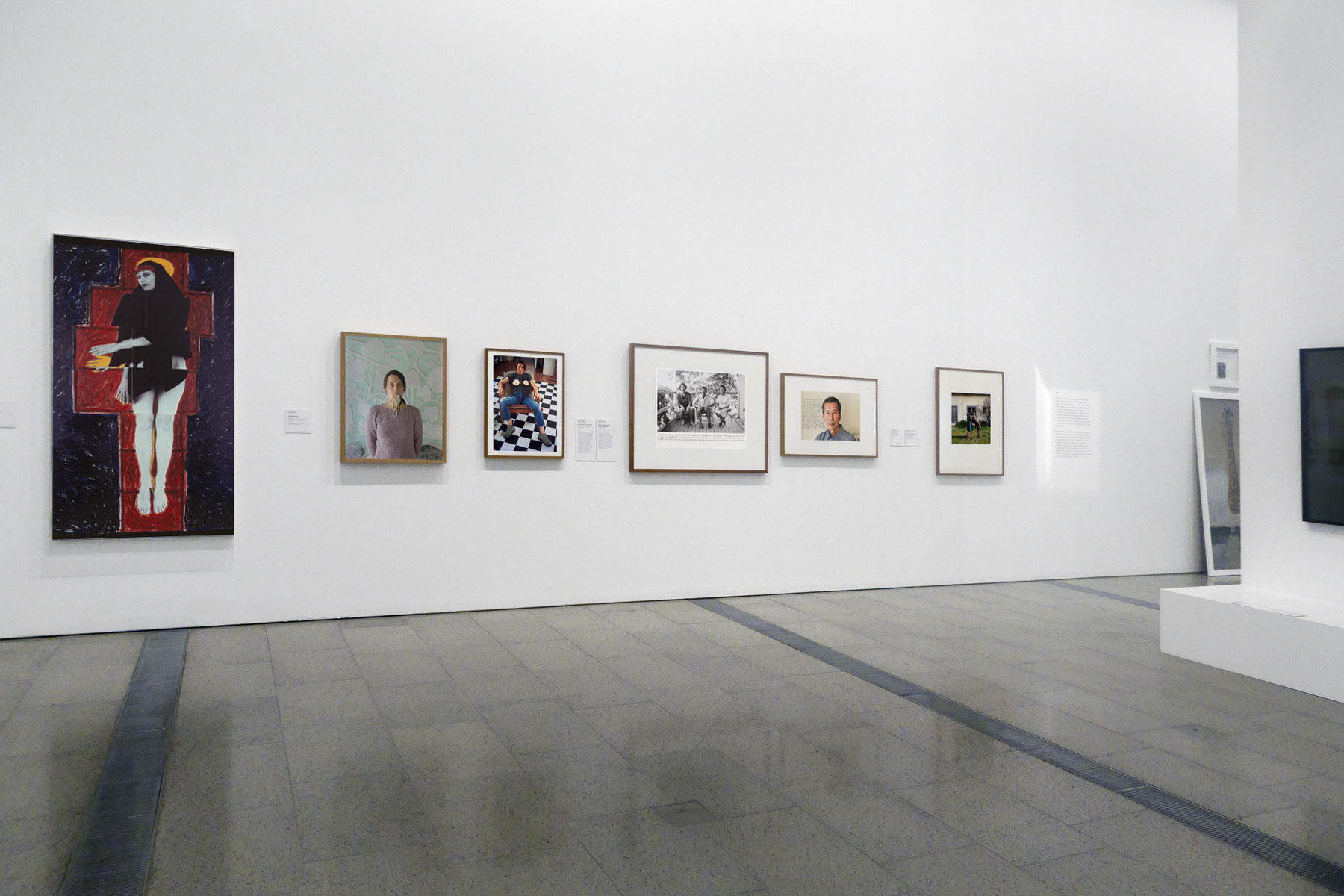
 

Installation view of the exhibition 'Photography: Real & Imagined' at The Ian Potter Centre: NGV Australia, Melbourne showing at left, Julie Rrap's 'Madonna' (1984, above); at second left, Siri Hayes' 'Spilling pearls' (2012); at third left, Sarah Lucas' 'Self-portrait with fried eggs' (1999); at fourth left, William Yang's 'William, Father, Mother, Graceville, Brisbane' (1974) and then his 'Self Portrait #5' (2008)


Installation view of the exhibition Photography: Real & Imagined at The Ian Potter Centre: NGV Australia, Melbourne showing at left, Julie Rrap’s Madonna (1984, above); at second left, Siri Hayes’ Spilling pearls (2012); at third left, Sarah Lucas’ Self-portrait with fried eggs (1999); at fourth left, William Yang’s William, Father, Mother, Graceville, Brisbane (1974, below) and then his Self Portrait #5 (2008, below)
Photo: Marcus Bunyan


William Yang (Australian, b. 1943) 'William, Father, Mother, Graceville, Brisbane' 1974 (installation view)


William Yang (Australian, b. 1943)
William, Father, Mother, Graceville, Brisbane (installation view)
1974, printed 2014
Inkjet print
National Gallery of Victoria, Melbourne
Purchased, Victorian Foundation for Living Australian Artists, 2014
Photo: Marcus Bunyan


William Yang’s autobiographical photographs combine photographs and handwritten text to tell the stories of Yang’s family, his childhood, and his experiences of being Chinese in an Australia that was not always welcoming to him. In one of these photographs Yang points to the difficulties he faced as a young man torn between his parents’ aspirations for him and his own wish for a different life. In the other, he describes himself as more content, at ease with himself and the choices he has made in his life. Together they form part of a powerful account of his life and sense of self.

Wall text from the exhibition
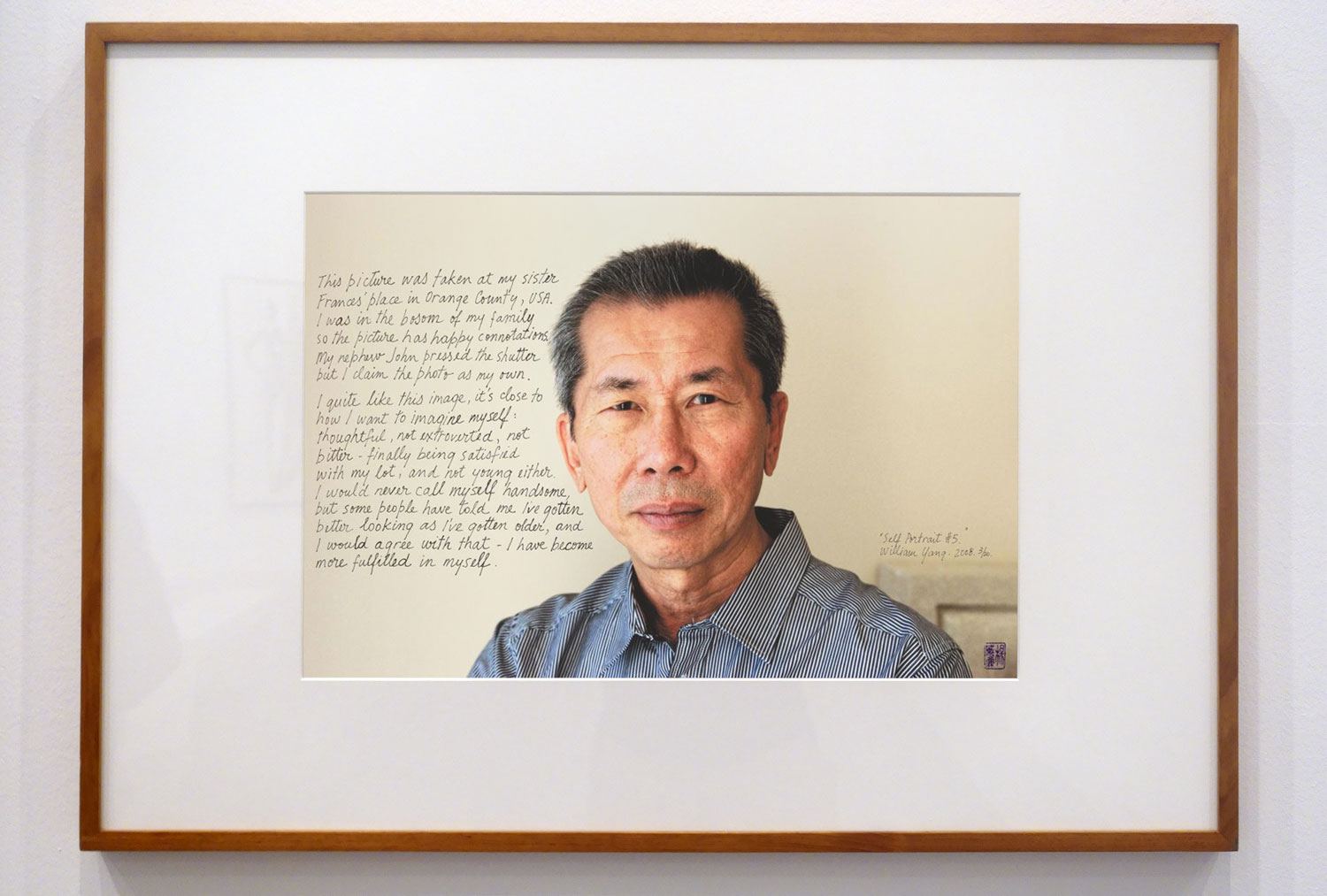
 

William Yang (Australian, b. 1943) 'Self Portrait #5' 2008 (installation view)


William Yang (Australian, b. 1943)
Self Portrait #5 (installation view)
2008; printed 2014
From the Self Portrait series
Inkjet print
43 x 65cm
National Gallery of Victoria, Melbourne
Purchased, Victorian Foundation for Living Australian Artists, 2014
Photo: Marcus Bunyan


Installation view of the exhibition 'Photography: Real & Imagined' at The Ian Potter Centre: NGV Australia, Melbourne showing from left to right, Virginie Grange's 'Untitled' (1990); George Hoyningen-Huene's 'Horst torso' (1931); František Drtikol's 'Nude' (1927-1929); Olive Cotton's 'Max after surfing' (1937); Edward Weston's 'Nude' (1936); Eadweard Muybridge's Plate 227 from 'Animal Locomotion' series 1887; and Helmut Newton's 'Big nude I' (1980)


Installation view of the exhibition Photography: Real & Imagined at The Ian Potter Centre: NGV Australia, Melbourne showing from left to right, Virginie Grange’s Untitled (1990); George Hoyningen-Huene’s Horst torso (1931, below); František Drtikol’s Nude (1927-1929); Olive Cotton’s Max after surfing (1937, below); Edward Weston’s Nude (1936, below); Eadweard Muybridge’s Plate 227 from Animal Locomotion series 1887; and Helmut Newton’s Big nude I (1980)
Photo: Marcus Bunyan


Installation view of the exhibition 'Photography: Real & Imagined' at The Ian Potter Centre: NGV Australia, Melbourne showing from left to right, George Hoyningen-Huene's 'Horst torso' (1931); František Drtikol's 'Nude' (1927-1929); Olive Cotton's 'Max after surfing' (1937); Edward Weston's 'Nude' (1936); Eadweard Muybridge's Plate 227 from 'Animal Locomotion' series 1887


Installation view of the exhibition Photography: Real & Imagined at The Ian Potter Centre: NGV Australia, Melbourne showing from left to right, George Hoyningen-Huene’s Horst torso (1931, below); František Drtikol’s Nude (1927-1929); Olive Cotton’s Max after surfing (1937, below); Edward Weston’s Nude (1936, below); Eadweard Muybridge’s Plate 227 from Animal Locomotion series 1887
Photo: Marcus Bunyan


The František Drtikol was the first fine art photograph to enter the National Gallery of Victoria collection.


George Hoyningen-Huene (Russian 1900-1968, England 1917-1921, France 1921-1935, United States 1935-1968) 'Horst torso' 1931, printed 1980s


George Hoyningen-Huene (Russian 1900-1968, England 1917-1921, France 1921-1935, United States 1935-1968)
Horst torso
1931, printed 1980s
Gelatin silver photograph
23.1 x 27.9cm
National Gallery of Victoria, Melbourne
Bowness Family Fund for Photography, 2017


Edward Weston (American 1886-1958) 'Nude' 1936, printed 1976


Edward Weston (American 1886-1958)
Nude
1936, printed 1976
Gelatin silver photograph
17.8 x 23.8cm (image and sheet)
National Gallery of Victoria, Melbourne
Purchased from Agfa and B. H. P. donation, 1977
Public domain


Olive Cotton (Australian, 1911-2003) 'Max after surfing' 1939


Olive Cotton (Australian, 1911-2003)
Max after surfing
1937, printed 1998
Gelatin silver photograph
26.0 x 19.7cm
National Gallery of Victoria, Melbourne
Purchased through The Art Foundation of Victoria with the assistance of Optus Communications Pty Limited, Member, 1998


Photographs of lovers, family and friends are perhaps the most emotionally charged of all images, not because the subject is monumental or dramatic, but because they allow us to see into intimate relationships. When photographs show subjects nude, or even partially naked, the sense of familiarity is heightened. Olive Cotton’s photograph of Max Dupain is an image that reveals intimacy and tenderness. His body is sculpted by raking side lighting and the allusion to Classical sculpture is apparent, but this photograph also carries an erotic charge – Dupain is shown as being tanned and muscular, movie-star handsome and the object of Cotton’s desire.

Wall text from the exhibition


Installation view of the exhibition 'Photography: Real & Imagined' at The Ian Potter Centre: NGV Australia, Melbourne showing from left to right, Francesca Woodman's 'Space², Providence, Rhode Island, 1976' (1976); E. J. Bellocq's 'Woman reclining with mask' (c. 1912); Florence Henri's 'Nude composition' (c. 1930); an anonymous American photographer's image 'Kaloma' (1914); and Germaine Krull's 'Daretha (Dorothea) Albu' (c. 1925)


Installation view of the exhibition Photography: Real & Imagined at The Ian Potter Centre: NGV Australia, Melbourne showing from left to right, Francesca Woodman’s Space², Providence, Rhode Island, 1976 (1976, below); E. J. Bellocq’s Woman reclining with mask (c. 1912, below); Florence Henri’s Nude composition (c. 1930, below); an anonymous American photographer’s image Kaloma (1914); and Germaine Krull’s Daretha (Dorothea) Albu (c. 1925)
Photo: Marcus Bunyan


Francesca Woodman. From 'Space2', Providence, Rhode Island, 1976


Francesca Woodman (American, 1958-1981)
Space², Providence, Rhode Island, 1976
1976, printed c. 2000
Gelatin silver photograph
16.3 x 16.3cm
National Gallery of Victoria, Melbourne
Ruth Margaret Frances Houghton Bequest, 2021


Francesca Woodman once stated, ‘I want my pictures to have a certain timeless, personal but allegorical quality like they do in many Ingres history paintings, but I like the rough edge that photography gives a nude’. Woodman was only twenty-three when she died, her work has had a profound impact on other artists, including Cindy Sherman, who wrote, ‘[Woodman] had few boundaries and made art out of nothing: empty rooms with peeling wallpaper and just her figure … Her process struck me more the way a painter works, making do with what’s right in front of her, rather than photographers like myself who need time to plan out what they’re going to do’.

Wall text from the exhibition


E. J. Bellocq (American, 1873-1949) 'No title (Woman reclining with mask)' c. 1912, printed c. 1981


E. J. Bellocq (American, 1873-1949)
No title (Woman reclining with mask)
c. 1912, printed c. 1981
From the Storyville Portraits series c. 1911-1913
Gelatin silver photograph
National Gallery of Victoria, Melbourne
Purchased, 1981
Public domain


Florence Henri (American, 1893-1982) 'Nude composition (Nu composition)' c. 1930


Florence Henri (American, 1893-1982)
Nude composition (Nu composition)
c. 1930
Gelatin silver photograph
National Gallery of Victoria, Melbourne
Gift of Krystyna Campbell-Pretty AM and Family through the Australian Government’s Cultural Gifts Program, 2021
Public domain


This photograph is a beautiful example of the way in which Florence Henri combined the elements of New Objectivity in photography, including sharp focus and unexpected vantage points, with her exploration of identity and sexuality. The presentation of the woman is unashamedly erotic: her naked form is presented for the pleasure of the viewer, but she does not conform to conventional modes of softcore pornography. The woman’s gaze excludes the viewer; she reclines on a coarse cloth backdrop, crumpled to suggest a beach as she looks at a perfect conch shell symbolising female fertility and an eloquently beautiful indicator of the artist’s object of desire.

Wall text from the exhibition
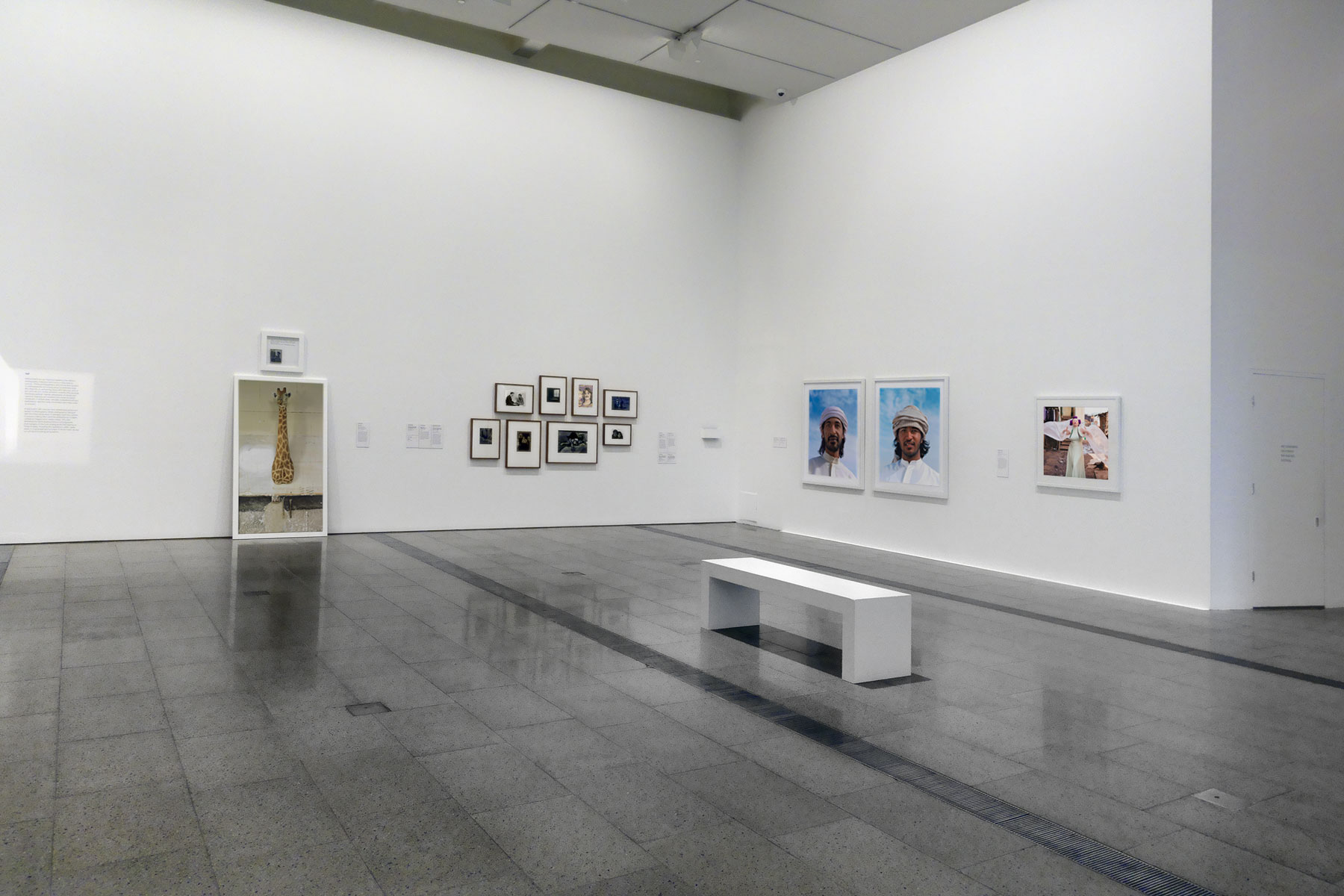
 

Installation view of the exhibition 'Photography: Real & Imagined' at The Ian Potter Centre: NGV Australia, Melbourne showing at left, Sophie Calle's 'The giraffe' (2012); and centre right, Lynne Roberts-Goodwin's 'Al Hammadi Desert Saqar #1 and #3'; and at right, Sarah Waiswa's 'Finding solace' (2016)


Installation view of the exhibition Photography: Real & Imagined at The Ian Potter Centre: NGV Australia, Melbourne showing at left, Sophie Calle’s The giraffe (2012); and centre right, Lynne Roberts-Goodwin’s Al Hammadi Desert Saqar #1 and #3; and at right, Sarah Waiswa’s Finding solace (2016)
Photo: Marcus Bunyan


Sarah Waiswa (Ugandan, b. 1980) 'Finding solace' 2016 (installation view)


Sarah Waiswa (Ugandan, b. 1980)
Finding solace (installation view)
2016
From the Stranger in a Familiar Land series 2016
Inkjet print
79.5 × 79.5cm
Purchased NGV Foundation, 2017
Photo: Marcus Bunyan


Sarah Waiswa has described her series Stranger in a Familiar Land as an exploration of life outside the security and boundaries of community. Discussing her work, she wrote, ‘People fear what they do not understand … The concept of Stranger in a Familiar Land groups together various portraits of an albino woman set against the backdrop of the Kibera slums, which are a metaphor for my turbulent vision of the outside world. The series also explores how the sense of non-belonging has led her to wander and exist in a dreamlike state. People notice Kisombe, but at the same time, they don’t’.

Wall text from the exhibition


Installation view of the exhibition 'Photography: Real & Imagined' at The Ian Potter Centre: NGV Australia, Melbourne showing at right, Lynne Roberts-Goodwin's Al 'Hammadi Desert Saqar #1 and #3'


Installation view of the exhibition Photography: Real & Imagined at The Ian Potter Centre: NGV Australia, Melbourne showing at right, Lynne Roberts-Goodwin’s Al Hammadi Desert Saqar #1 and #3
Photo: Marcus Bunyan


Installation view of the exhibition 'Photography: Real & Imagined' at The Ian Potter Centre: NGV Australia, Melbourne showing from left to right, Jan Groover's 'Untitled' (1981); August Sander's 'Bohemians (Willi Bongard and Gottfried Brockman)' (1922-1925); Julia Margaret Cameron's 'Mrs Herbert Duckworth, her son George, Florence Fisher and H. A. L. Fisher' (c. 1871); Harry Callahan's 'Eleanor and Barbara, Chicago' (1954); Gordon Parks' 'Big Mama and boy, 1961' (1961); Micky Allan's 'Man holding his daughter' (1982); Brenda L. Croft's In 'my mother's garden' (1998); and Angela Lynkushka's 'Zühre Yildirim from Turkey with grand-daughter Nurahan Gundogdu, born in Australia. De Carle Street, Brunswick' (1982)


Installation view of the exhibition Photography: Real & Imagined at The Ian Potter Centre: NGV Australia, Melbourne showing from left to right, Jan Groover’s Untitled (1981); August Sander’s Bohemians (Willi Bongard and Gottfried Brockman) (1922-1925, below); Julia Margaret Cameron’s Mrs Herbert Duckworth, her son George, Florence Fisher and H. A. L. Fisher (c. 1871, below); Harry Callahan’s Eleanor and Barbara, Chicago (1954); Gordon Parks’ Big Mama and boy, 1961 (1961); Micky Allan’s Man holding his daughter (1982, below); Brenda L. Croft’s In my mother’s garden (1998); and Angela Lynkushka’s Zühre Yildirim from Turkey with grand-daughter Nurahan Gundogdu, born in Australia. De Carle Street, Brunswick (1982)
Photo: Marcus Bunyan


August Sander (German, 1876-1964) 'Bohemians (Willi Bongard and Gottfried Brockman)' 1922-1925, printed 1973


August Sander (German, 1876-1964)
Bohemians (Willi Bongard and Gottfried Brockman)
1922-1925, printed 1973
From the People of the Twentieth Century project 1920s-1964
Gelatin silver photograph
23.3 x 30.5cm (image and sheet)
National Gallery of Victoria, Melbourne
Purchased, 1974


Gottfried Waldemar Brockmann (1903-1983) was a German artist, educator, publisher, and served as a cultural advisor for the city of Kiel, Germany. He taught at Muthesius Academy of Art in Kiel.


Julia Margaret Cameron (English, 1815-1879, Ceylon (Sri Lanka) 1875-1879) 'Mrs Herbert Duckworth, her son George, Florence Fisher and H. A. L. Fisher' c. 1871


Julia Margaret Cameron (English, 1815-1879, Ceylon (Sri Lanka) 1875-1879)
Mrs Herbert Duckworth, her son George, Florence Fisher and H. A. L. Fisher
c. 1871
Albumen silver photograph
31.0 x 22.7cm (image and sheet)
National Gallery of Victoria, Melbourne
Purchased through The Art Foundation of Victoria with the assistance of the Herald & Weekly Times Limited, Fellow, 1979
Public domain


In this portrait, Julia Duckworth sits for her aunt, Julia Margaret Cameron, one of the nineteenth century’s most esteemed photographers. As curator Elisa deCourcy notes, ‘Julia Duckworth’s lackadaisical pose and her flailing hand cast her as somewhat of a Pre-Raphaelite heroine, very much in the style of Cameron’s broader oeuvre’. DeCourcy adds it is perhaps also a depiction of the experience of maternal exhaustion: ‘Julia’s distant gaze and slouched form makes it hard for us not to read this photograph as depicting fatigued motherhood. Through touch, the children seem to demonstrate a sentimental connection to Julia while also laying claim to her attention and energy’.

Wall text from the exhibition


Harry Callahan (American, 1912-1999) 'Eleanor and Barbara' 1954, printed 1970s


Harry Callahan (American, 1912-1999)
Eleanor and Barbara
1954, printed 1970s
Gelatin silver photograph
National Gallery of Victoria, Melbourne
Purchased, 1979


Harry Callahan began photographing his wife Eleanor shortly after they married in 1936 and continued to do so for almost fifty years. Discussing their relationship as artist and muse in a 1983 film, Callahan said, ‘I felt very natural photographing Eleanor. I didn’t feel like there were any obstacles of any kind’. Following the birth of their daughter Barbara in 1950 he began to photograph mother and child and, as can be seen in this image, often captured moments of family life in pictures of great intimacy.

Wall text from the exhibition


Installation view of the exhibition 'Photography: Real & Imagined' at The Ian Potter Centre: NGV Australia, Melbourne showing Micky Allan's 'Man holding his daughter' (1982) from the 'People of Elizabeth' series 1982-1983


Installation view of the exhibition Photography: Real & Imagined at The Ian Potter Centre: NGV Australia, Melbourne showing Micky Allan’s Man holding his daughter (1982) from the People of Elizabeth series 1982-1983
Photo: Marcus Bunyan


The application of hand-colouring to photographs was generally the work of women in photography studios until the 1950s. In the 1970s and 80s these superseded processes experienced a revival as some feminist photographers applied the historic treatment to their images of contemporary life. As art historian Elisa deCourcy observes, ‘Micky Allan’s vibrant hand-colouring radically alters the topography of this otherwise monochrome photographic portrait of a young father and daughter from the 1980s … The application of colour to the father’s and daughter’s faces and the “retouching” of their hair, eyes and lips with colour offers an illuminated realism to each subject’.

Wall text from the exhibition


Installation view of the exhibition 'Photography: Real & Imagined' at The Ian Potter Centre: NGV Australia, Melbourne showing at right Gilbert & George's 'FORWARD' (2008)


Installation view of the exhibition Photography: Real & Imagined at The Ian Potter Centre: NGV Australia, Melbourne showing at right Gilbert & George’s FORWARD (2008, below)
Photo: Marcus Bunyan


Gilbert & George. 'FORWARD' 2008


Gilbert & George (active 1967- )
Gilbert Proesch (Italian, b. 1943
George Passmore (English, b. 1942)
FORWARD
2008
From the Jack Freak series
Inkjet print
National Gallery of Victoria, Melbourne
Professor AGL Shaw AO Bequest, 2021


Writer Michael Bracewell described the Jack Freak series as being ‘among the most iconic, philosophically astute and visually violent works that Gilbert & George have ever created’. In this picture the Union Jack, an internationally familiar flag and politically charged symbol whose significance spans the cultural spectrum from contemporary fashion to aggressive national pride, forms the backdrop to monumental portraits of the artists. In contrast to this visual cacophony the artists appear as rather low-key, neatly dressed, senior statesmen maintaining their central relevance in a community that too often disregards the elderly.

Wall text from the exhibition


Installation view of the exhibition 'Photography: Real & Imagined' at The Ian Potter Centre: NGV Australia, Melbourne showing from left to right, Ellen José's 'Basket Weaver, Lake Tyers' (1988); Roman Vishniac's 'Grandfather and granddaughter, Warsaw' (c. 1935-1938); Wolfgang Tillmans' 'Lars in tube' (1993); Ruth Maddison's 'Molly O'Sullivan, 82' (1990); Naomi Hobson's 'The God Father' (2021); Donna Bailey's 'Lush' (2002); Carol Jerrems 'Sharpies' (1976); and Nan Goldin's 'Misty in Sheridan Square, NYC' (1991)


Installation view of the exhibition Photography: Real & Imagined at The Ian Potter Centre: NGV Australia, Melbourne showing from left to right, Ellen José’s Basket Weaver, Lake Tyers (1988); Roman Vishniac’s Grandfather and granddaughter, Warsaw (c. 1935-1938, below); Wolfgang Tillmans’ Lars in tube (1993); Ruth Maddison’s Molly O’Sullivan, 82 (1990); Naomi Hobson’s The God Father (2021); Donna Bailey’s Lush (2002); Carol Jerrems Sharpies (1976, below); and Nan Goldin’s Misty in Sheridan Square, NYC (1991, below)
Photo: Marcus Bunyan
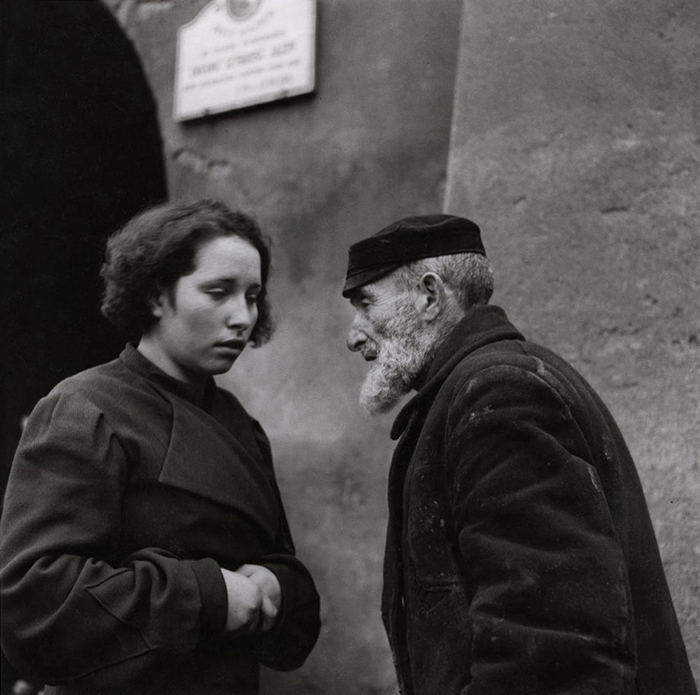
 

Roman Vishniac. 'Grandfather and granddaugther' Lublin, 1937


Roman Vishniac (Russian, 1897-1990, United States 1940-1990)
Grandfather and granddaughter, Warsaw
c. 1935-1938, printed 1977
Gelatin silver photograph
National Gallery of Victoria, Melbourne
Purchased, 1978


Installation view of the exhibition 'Photography: Real & Imagined' at The Ian Potter Centre: NGV Australia, Melbourne showing Carol Jerrems' 'Sharpies' (1976)


Installation view of the exhibition Photography: Real & Imagined at The Ian Potter Centre: NGV Australia, Melbourne showing Carol Jerrems’ Sharpies (1976)
Photo: Marcus Bunyan


Nan Goldin (American, b. 1953) 'Misty in Sheridan Square, NYC' 1991


Nan Goldin (American, b. 1953)
Misty in Sheridan Square, NYC
1991; 2015 {printed}
Cibachrome photograph
76 x 102cm (sheet)
ed. 20/25
National Gallery of Victoria, Melbourne
Purchased NGV Foundation, 2015
© Nan Goldin, courtesy Matthew Marks Gallery


Installation view of the exhibition 'Photography: Real & Imagined' at The Ian Potter Centre: NGV Australia, Melbourne showing from left to right, Huang Yan's 'Chinese landscape – Tattoo (Number 1)' (1999); four photographs by Hedda Morrison (1935); and Mervyn Bishop's 'Prime Minister Gough Whitlam pours soil into the hands of traditional land owner Vincent Lingiari, Northern Territory' (1975)


Installation view of the exhibition Photography: Real & Imagined at The Ian Potter Centre: NGV Australia, Melbourne showing from left to right, Huang Yan’s Chinese landscape – Tattoo (Number 1) (1999); four photographs by Hedda Morrison (1935, below); and Mervyn Bishop’s Prime Minister Gough Whitlam pours soil into the hands of traditional land owner Vincent Lingiari, Northern Territory (1975, below)
Photo: Marcus Bunyan
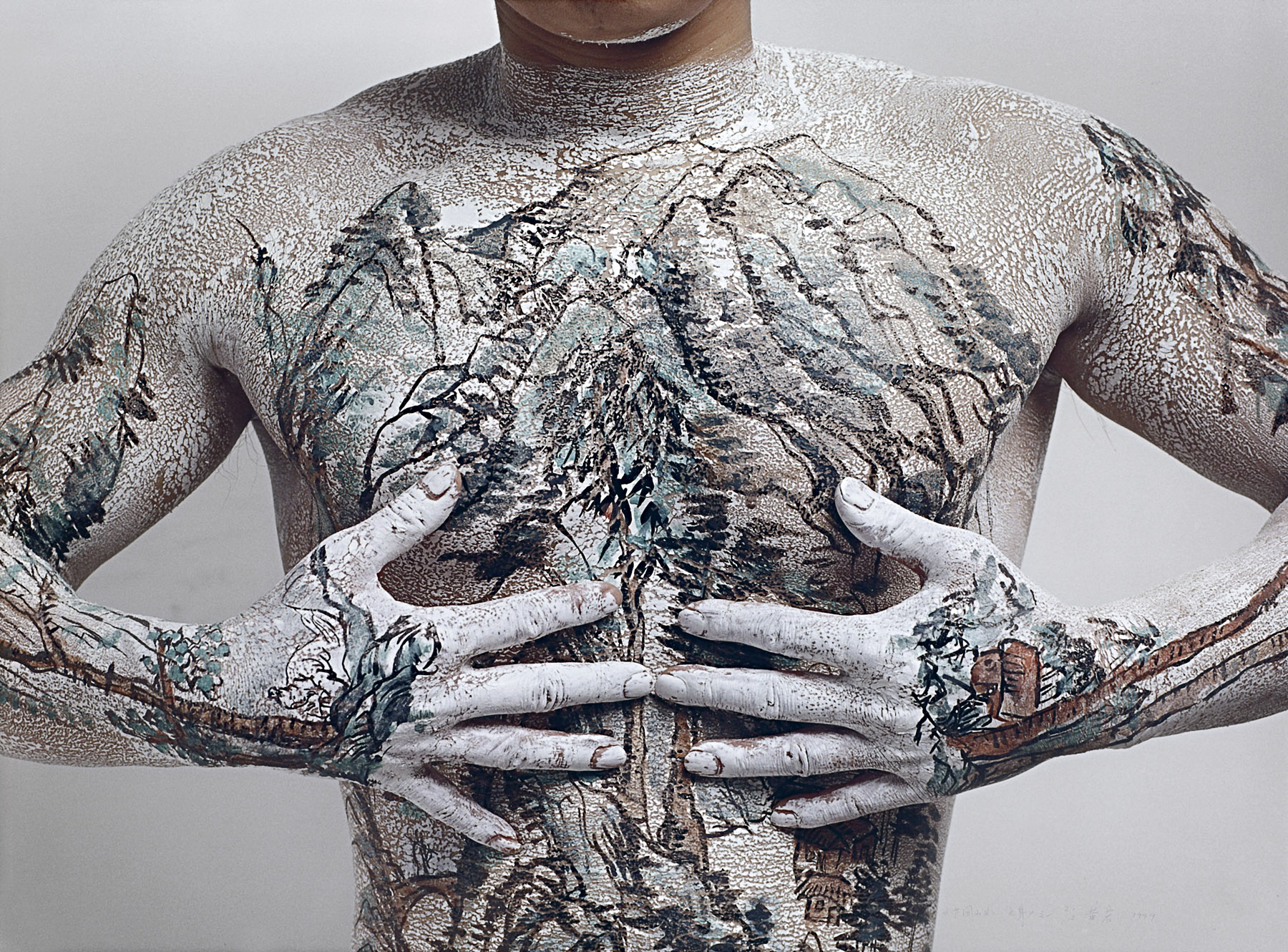
 

Huang Yan (Chinese, b. 1966) 'Chinese landscape – Tattoo (Number 1)' 1999, printed 2004


Huang Yan (Chinese, b. 1966)
Chinese landscape – Tattoo (Number 1)
1999, printed 2004
Type C photograph
National Gallery of Victoria, Melbourne
Purchased, 2004


In this photograph Huang Yan uses the human body as a canvas for the traditional shānshuǐ style of Chinese landscape painting. Discussing this image, curator and writer Isobel Crombie observed, ‘The title of the work, Tattoo, implies that landscape traditions are written permanently into the Chinese body, making them alive and active. However, ironically, the scenes painted onto the artist’s torso are clearly fugitive, alerting us to both the fragility of the natural environment and the transience of the body’.

Wall text from the exhibition


Hedda Morrison (German 1908-1991, China 1933-1946, Australia 1967-1991) 'No title (Fairy Palm Cliff)' 1935


Hedda Morrison (German 1908-1991, China 1933-1946, Australia 1967-1991)
No title (Fairy Palm Cliff)
1935
Gelatin silver photograph
25.3 x 22.8cm
Purchased, 1976
National Gallery of Victoria, Melbourne
Purchased, 1976
Public domain


Hedda Morrison (German 1908-1991, China 1933-1946, Australia 1967-1991) 'No title (Three gnarled pines)' 1935


Hedda Morrison (German 1908-1991, China 1933-1946, Australia 1967-1991)
No title (Three gnarled pines)
1935
Gelatin silver photograph
30.6 × 19cm
Purchased, 1976
National Gallery of Victoria, Melbourne
Purchased, 1976
Public domain


Hedda Morrison (German 1908-1991, China 1933-1946, Australia 1967-1991) 'No title (Lone pine against clouds)' 1935; printed 1976


Hedda Morrison (German 1908-1991, China 1933-1946, Australia 1967-1991)
No title (Lone pine against clouds)
1935; printed 1976
Gelatin silver photograph
25.3 x 22.8cm
Purchased, 1976
National Gallery of Victoria, Melbourne
Purchased, 1976
Public domain


Hedda Morrison (German 1908-1991, China 1933-1946, Australia 1967-1991) 'No title (Morning clouds)' 1935; printed 1970s


Hedda Morrison (German 1908-1991, China 1933-1946, Australia 1967-1991)
No title (Morning clouds)
1935; printed 1970s
Gelatin silver photograph
25.3 x 22.8cm
Purchased, 1976
National Gallery of Victoria, Melbourne
Purchased, 1976
Public domain


Mervyn Bishop (Australian, b. 1945) 'Prime Minister Gough Whitlam pours soil into the hands of traditional land owner Vincent Lingiari, Northern Territory' 1975, printed 1990


Mervyn Bishop (Australian, b. 1945)
Prime Minister Gough Whitlam pours soil into the hands of traditional land owner Vincent Lingiari, Northern Territory
1975, printed 1990
Cibachrome photograph
35.5 x 35.5cm
National Gallery of Victoria, Melbourne
Purchased, NGV Foundation and NGV Supporters of Photography, 2021
© Mervyn Bishop / Department of the Prime Minister and Cabinet


In August 1975 Mervyn Bishop travelled to Daguragu, formerly known as Wattie Creek, in the Northern Territory. As a press photographer he captured the moment when then prime minister Gough Whitlam placed a handful of soil into the palm of Gurindji elder and activist Vincent Lingiari. This photograph is an iconic image of the ongoing battle for self-determination for Australia’s traditional owners; however, the photograph is not as straightforward as it appears: the moment was re-staged outside so Bishop could take advantage of better lighting.

Wall text from the exhibition


Installation view of the exhibition 'Photography: Real & Imagined' at The Ian Potter Centre: NGV Australia, Melbourne showing from left to right, Robert Macpherson's 'Rome' (c. 1860); Louis-Emile Durandelle and Clèmence Delmaet's 'The new Paris Opera, ornamental sculpture' (c. 1870); Edouard Baldus' 'Notre Dame, Paris' (c. 1852-1853); and Véronique Ellena's 'Santi Luca e Martina, Rome' (2011)


Installation view of the exhibition Photography: Real & Imagined at The Ian Potter Centre: NGV Australia, Melbourne showing from left to right, Robert Macpherson’s Rome (c. 1860); Louis-Emile Durandelle and Clémence Delmaet’s The new Paris Opera, ornamental sculpture (c. 1870, below); Edouard Baldus’ Notre Dame, Paris (c. 1852-1853, below); and Véronique Ellena’s Santi Luca e Martina, Rome (2011)
Photo: Marcus Bunyan


In Véronique Ellena’s photograph we see a shrouded figure, draped in a blanket or canvas cloth, lying on the steps of a Baroque church in central Rome. Initially seducing us with the formal beauty of the city and its architecture, the photograph then jolts us as we recognise the harsh reality of the scene. This was a calculated strategy on Ellena’s part, as she acknowledges: ‘At first, we could only perceive the sublime beauty of architecture. But this work tells us something else: the place of some people in this world, who are there but whom we do not see – or not anymore’.

Wall text from the exhibition


Louis-Emile Durandelle (French, 1839-1917) Clémence Delmaet (French, 1838-1917) 'The new Paris Opera, ornamental sculpture' c. 1870


Louis-Emile Durandelle (French, 1839-1917)
Clémence Delmaet (French, 1838-1917)
The new Paris Opera, ornamental sculpture
c. 1870
Albumen silver photograph
38.1 x 28.3cm (image and sheet)
National Gallery of Victoria, Melbourne
Presented by the Lunn Gallery, Washington D.C, USA, 1982
Public domain
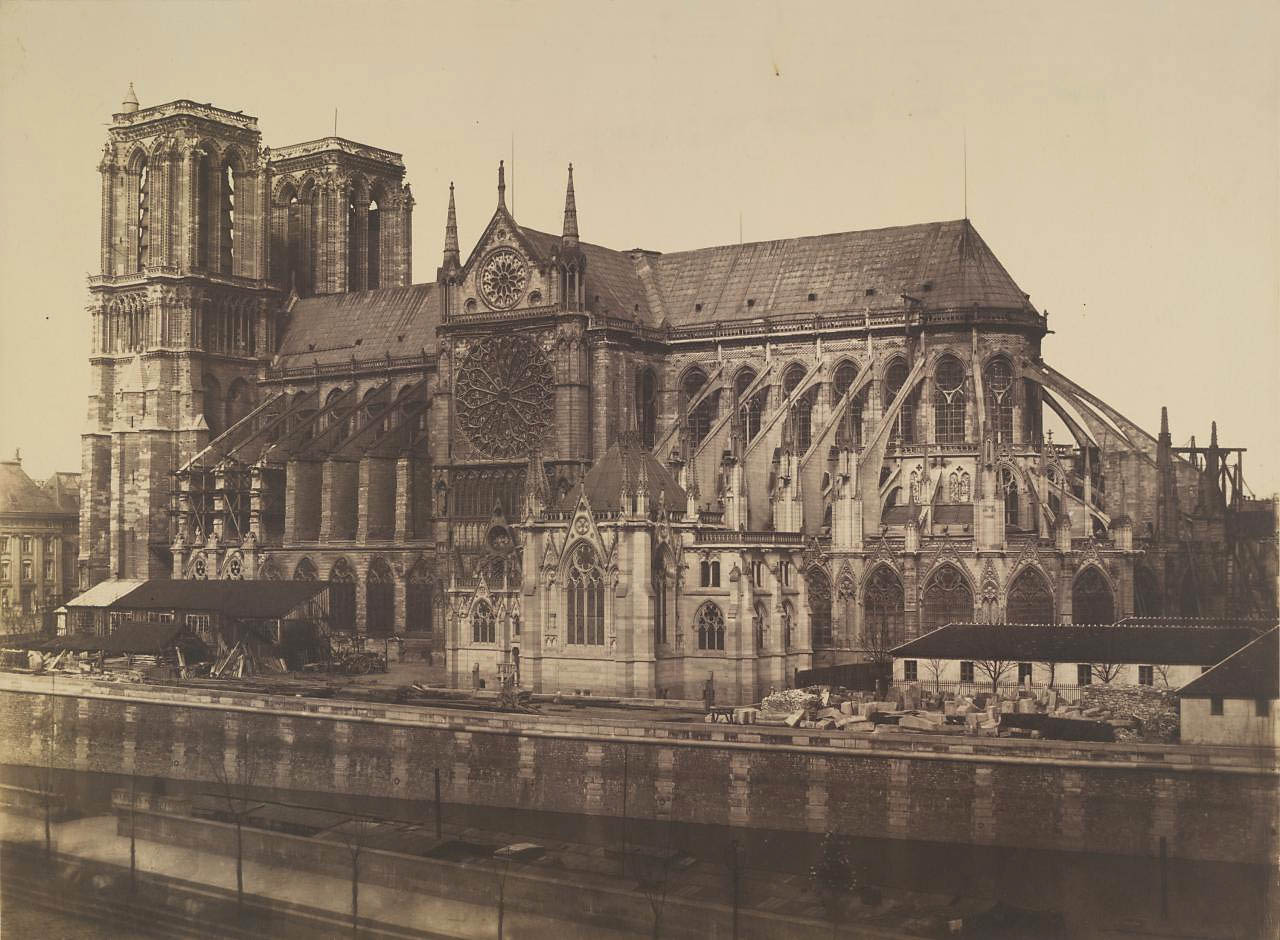
 

Edouard Baldus (Prussian 1813-1989, France c. 1848 - c. 1869) 'Notre Dame, Paris' c. 1852-1853, printed 1880s


Edouard Baldus (Prussian 1813-1989, France c. 1848 – c. 1869)
Notre Dame, Paris
c. 1852-1853, printed 1880s
Platinum photograph
National Gallery of Victoria, Melbourne
Presented by the National Gallery Women’s Association, 1995
Public domain


By the middle of the nineteenth century many of the great historic buildings of Paris, including Notre Dame Cathedral, were in a state of disrepair due to decades of neglect. Under the auspices of the Commission des Monuments Historiques, significant historic buildings underwent extensive restoration. This committee recognised the invaluable role photography could play in documenting the changes occurring to the architectural heritage of Paris. Official Second Empire photographer, Édouard Baldus, captured the splendour of newly commissioned and lavishly restored architectural icons as cultural highlights of the Second Empire.

Wall text from the exhibition


Installation view of the exhibition 'Photography: Real & Imagined' at The Ian Potter Centre: NGV Australia, Melbourne showing at left, Véronique Ellena's 'Santi Luca e Martina, Rome' (2011); at second right, work from Girma Berta's 'Moving shadows' series (2017); and at right, Pieter Hugo's 'Green Point Common, Cape Town' (2013)


Installation view of the exhibition Photography: Real & Imagined at The Ian Potter Centre: NGV Australia, Melbourne showing at left, Véronique Ellena’s Santi Luca e Martina, Rome (2011); at second right, work from Girma Berta’s Moving shadows series (2017); and at right, Pieter Hugo’s Green Point Common, Cape Town (2013)
Photo: Marcus Bunyan


Installation view of the exhibition 'Photography: Real & Imagined' at The Ian Potter Centre: NGV Australia, Melbourne showing at centre, Girma Berta's 'Untitled IV, VI and XII' (2017) at right, Pieter Hugo's 'Green Point Common, Cape Town' (2013)


Installation view of the exhibition Photography: Real & Imagined at The Ian Potter Centre: NGV Australia, Melbourne showing at centre, Girma Berta’s Untitled IV, VI and XII (2017) at right, Pieter Hugo’s Green Point Common, Cape Town (2013)
Photo: Marcus Bunyan
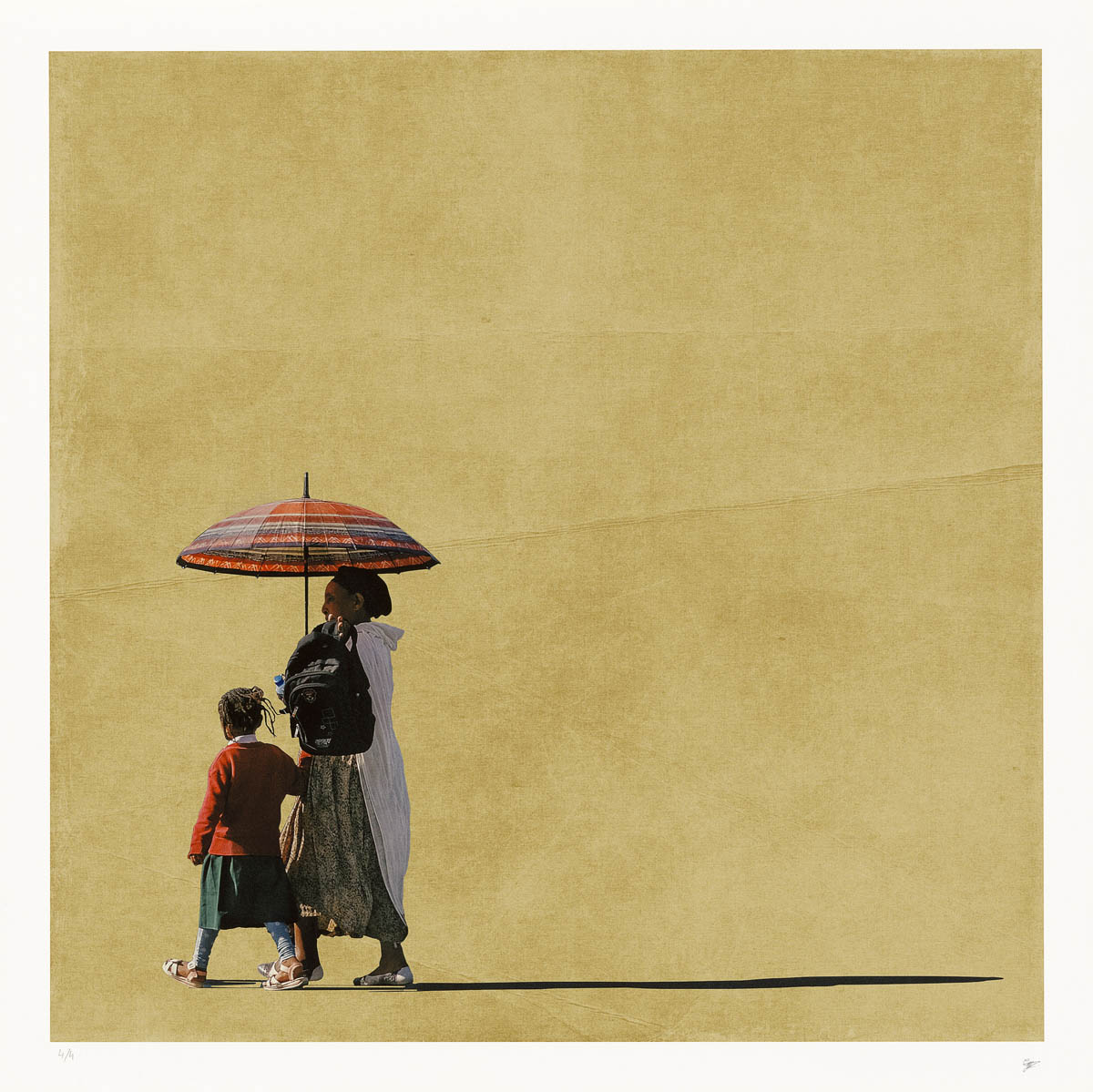
 

Girma Berta (Ethiopian, b. 1990) 'Untitled IV' 2017


Girma Berta (Ethiopian, b. 1990)
Untitled IV
2017
From the Moving shadows series 2017
Inkjet print, ed. 4/4
89.8 x 90.0cm (image)
National Gallery of Victoria, Melbourne
Bowness Family Fund for Photography, 2018
© Girma Berta


Girma Berta has been photographing people on the streets of Addis Ababa, Ethiopia, since around 2014. His earlier photographs were documentary in style, but over time his work has become more refined and stylised.

The five photographs from his Moving Shadows series 2017 … are from an ongoing body of work in which all background detail has been removed. These photographs show isolated figures, and their shadows, on immersive, coloured backgrounds. The works feature individuals photographed on the streets of Addis Ababa going about the daily lives. Using the camera in his phone, Berta is able to work discretely and capture his subjects without them being aware of his presence.

In all his street-based work, Berta is interested in presenting a ‘portrait’ of the people of Addis Ababa. Working in his studio, he has developed a method to extract aspects of the scenes he photographs from the city’s busy streetscapes. Berta explains further: ‘Through my work on Instagram, I wish the world (would) stare into the eyes of a face of Addis Ababa; the city where I was born and where I grew up. The beautiful, the ugly and all that is in between.’

Text from the National Gallery of Victoria website


Installation view of the exhibition 'Photography: Real & Imagined' at The Ian Potter Centre: NGV Australia, Melbourne showing at second left, Girma Berta's 'Untitled IV, VI and XII' (2017); and at right, Dacre Stubbs' 'St. George's Road flats' (1953)


Installation view of the exhibition Photography: Real & Imagined at The Ian Potter Centre: NGV Australia, Melbourne showing at second left, Girma Berta’s Untitled IV, VI and XII (2017, above); and at right, Dacre Stubbs’ St. George’s Road flats (1953, below)
Photo: Marcus Bunyan


Installation view of the exhibition 'Photography: Real & Imagined' at The Ian Potter Centre: NGV Australia, Melbourne showing from left to right, Gertrude Kasebier's 'Gargoyle' (1901, top); Albert Renger-Patzsch's 'Art d'eglise in Achen' (1930s, bottom); Werner Mantz's 'Industrial Landscape' (1937, top); Max Dupain's 'Silos through windscreen' (1935, bottom); Edward Steichen's 'The maypole' (1932); Barbara Morgan's 'City shell' (1938, top); Berenice Abbott's 'Park Avenue and Thirty-ninth Street, Manhattan, October 8' (1936, bottom) and Dacre Stubbs' 'St. George's Road flats' (1953)


Installation view of the exhibition Photography: Real & Imagined at The Ian Potter Centre: NGV Australia, Melbourne showing from left to right, Gertrude Kasebier’s Gargoyle (1901, top); Albert Renger-Patzsch’s Art d’eglise in Achen (1930s, bottom); Werner Mantz’s Industrial Landscape (1937, top); Max Dupain’s Silos through windscreen (1935, bottom); Edward Steichen’s The maypole (1932); Barbara Morgan’s City shell (1938, top); Berenice Abbott’s Park Avenue and Thirty-ninth Street, Manhattan, October 8 (1936, bottom) and Dacre Stubbs’ St. George’s Road flats (1953)
Photo: Marcus Bunyan


For modernist architects in the 1930s there was a natural synergy between their own vision of the constructed environment in the machine age and the work of photographers. In architecture this was manifested in structural clarity and precision, and the use of modern building materials such as steel, glass and unadorned concrete. In photography the use of sharp focus, unexpected vantage points, radical cropping of images and unusual perspectives formed part of the lexicon of the so-called New Objectivity. Photographers like Werner Mantz show a world in which compressed space and unexpected vantages confound our expectations of how buildings should be photographed.

Wall text from the exhibition


Gertrude Kasebier (American, 1852-1934) 'Gargoyle' 1901


Gertrude Kasebier (American, 1852-1934)
Gargoyle
1901
Platinum photograph
20.6 x 13.5cm (image and sheet)
National Gallery of Victoria, Melbourne
Purchased through The Art Foundation of Victoria with the assistance of the Herald & Weekly Times Limited, Fellow, 1979
Public domain


Werner Mantz (German 1901-1983) 'Industrial landscape' 1937


Werner Mantz (German 1901-1983)
Industrial landscape
1937
Gelatin silver photograph
38.6 x 29.2cm (image and sheet)
National Gallery of Victoria, Melbourne
Purchased, 1983
Public domain


Max Dupain. 'Max Dupain. 'Silos through windscreen' 1935' 1935


Max Dupain (Australian 1911-1992)
Silos through windscreen
1935, printed c. 1985
Gelatin silver photograph
National Gallery of Victoria, Melbourne
Purchased, 1986
Public domain


Installation view of the exhibition 'Photography: Real & Imagined' at The Ian Potter Centre: NGV Australia, Melbourne showing Edward Steichen's 'The maypole' (1932)


Installation view of the exhibition Photography: Real & Imagined at The Ian Potter Centre: NGV Australia, Melbourne showing Edward Steichen’s The maypole (1932)
Photo: Marcus Bunyan


Barbara Morgan (American, 1900-1992) 'City shell' 1938, printed 1972


Barbara Morgan (American, 1900-1992)
City shell
1938, printed 1972
Gelatin silver photograph
34.4 x 25.1cm (image and sheet)
National Gallery of Victoria, Melbourne
Gift of Krystyna Campbell-Pretty AM and Family through the Australian Government’s Cultural Gifts Program, 2022
Public domain


Barbara Morgan moved to New York in 1930 and began experimenting with the avant-garde photographic techniques of photograms and photomontage. City shell is an outstanding example of Morgan’s innovative photography from the 1930s. In this image she combined a view from her studio window of the Empire State Building with a shell gifted to her by a friend. The monumental skyscraper is shown tilted on an extreme angle while the shell appears upright in the centre of the photograph – a visual metaphor, according to the artist, for the transient nature of built structures in comparison to those of the natural world.

Wall text from the exhibition


Berenice Abbott (American 1898-1991, France 1921-1929) 'Park Avenue and Thirty-ninth Street, Manhattan' October 8 1936


Berenice Abbott (American 1898-1991, France 1921-1929)
Park Avenue and Thirty-ninth Street, Manhattan, October 8
1936
Gelatin silver photograph
19.3 x 24.3cm
National Gallery of Victoria, Melbourne
Bowness Family Fund for Photography, 2021
Public domain


In 1929, after living in Paris for eight years, Berenice Abbott returned to New York and, having noted the rapid change taking place across the city, commenced a project to document New York in photographs. Abbott’s project was funded by the WPA Federal Art Project from 1935 to 1939, which culminated in the 1939 book and exhibition, Changing New York. Discussing her project, Abbott wrote of desiring to capture the ‘spirit’ of the city, driven by the urgent realisation that ‘the tempo of the metropolis is not of eternity, or even time, but of the vanishing instant’.

Wall text from the exhibition


Installation view of the exhibition 'Photography: Real & Imagined' at The Ian Potter Centre: NGV Australia, Melbourne showing Dacre Stubbs' 'St George's Road flats' (1953)


Installation view of the exhibition Photography: Real & Imagined at The Ian Potter Centre: NGV Australia, Melbourne showing Dacre Stubbs’ St George’s Road flats (1953, below)
Photo: Marcus Bunyan


Dacre Stubbs (English 1910-2001, Australia 1948-2001) 'St George's Road flats' 1953


Dacre Stubbs (English 1910-2001, Australia 1948-2001)
St George’s Road flats
1953
Gelatin silver photograph
47.6 x 38.0cm
National Gallery of Victoria, Melbourne
Purchased, 1993
Public domain


More photographs from the exhibition


Installation view of the exhibition 'Photography: Real & Imagined' at The Ian Potter Centre: NGV Australia, Melbourne showing William Henry Fox Talbot's 'Portrait of a man' (c. 1844)


Installation view of the exhibition Photography: Real & Imagined at The Ian Potter Centre: NGV Australia, Melbourne showing William Henry Fox Talbot’s Portrait of a man (c. 1844, below)
Photo: Marcus Bunyan
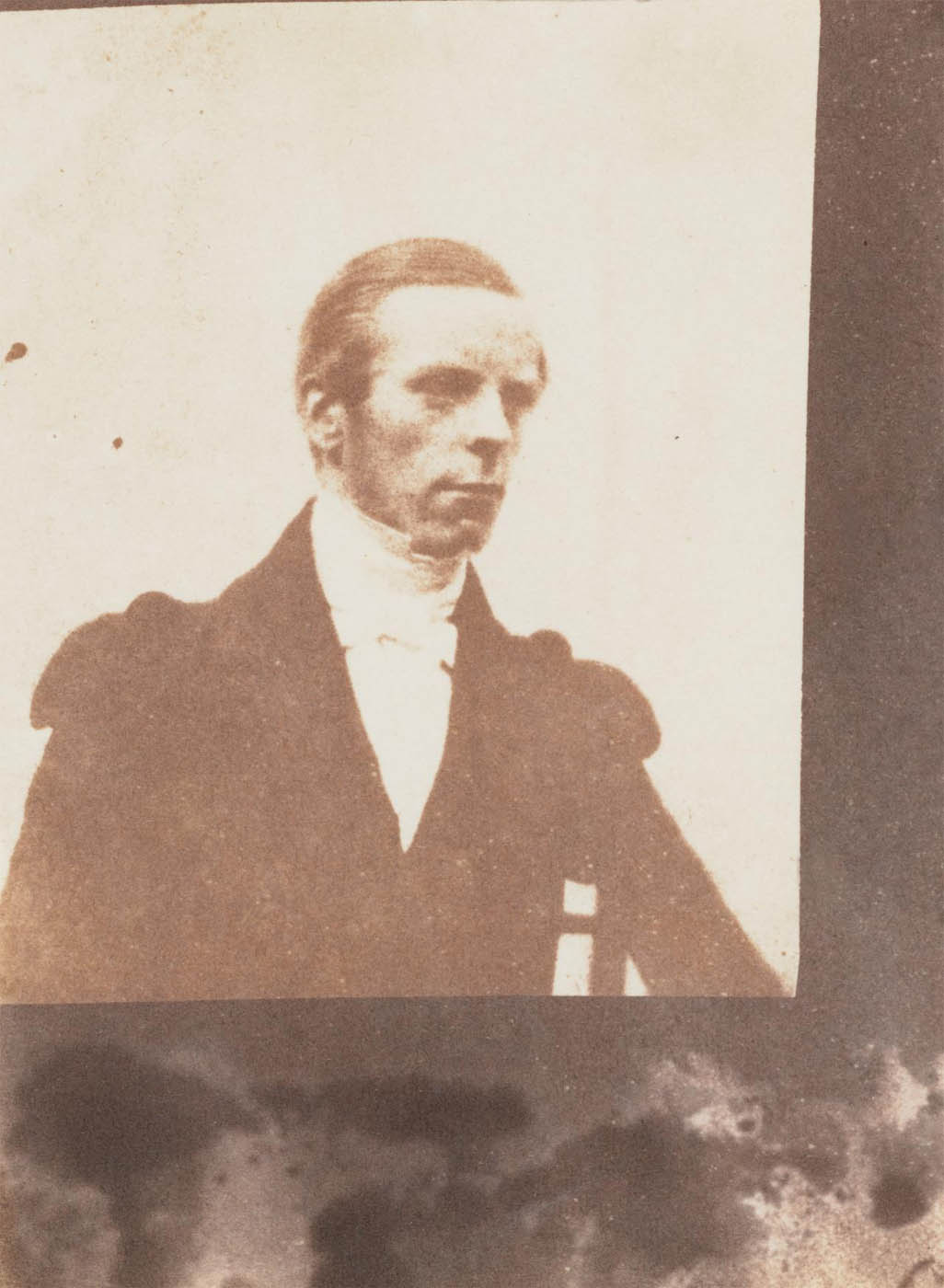
 

William Henry Fox Talbot (English, 1800-1877) 'No title (Portrait of a man)' c. 1844


William Henry Fox Talbot (English, 1800-1877)
No title (Portrait of a man)
c. 1844
Salted paper photograph
7.6 x 6.6cm irreg.
National Gallery of Victoria, Melbourne
Purchased through The Art Foundation of Victoria with the assistance of David Syme & Co. Limited, Fellow, 1982
Public domain


Maxime Du Camp (French 1822-1894) 'Peristyle of the Palace of Rameses III, Medinet Habu, Thebes' 1849-1851, printed 1852


Maxime Du Camp (French 1822-1894)
Peristyle of the Palace of Rameses III, Medinet Habu, Thebes
1849-1851, printed 1852
Salted paper photograph
National Gallery of Victoria, Melbourne
Purchased, 1983
Public domain


Gaspard-Felix Tournachon Nadar (French, 1820-1910) 'Alexander Dumas (père)' 1855


Gaspard-Felix Tournachon Nadar (French, 1820-1910)
Alexander Dumas (père)
1855
Salted paper photograph
24.4 x 18.6cm irreg. (image and sheet)
National Gallery of Victoria, Melbourne
Presented by the National Gallery Women’s Association, 1995
Public domain


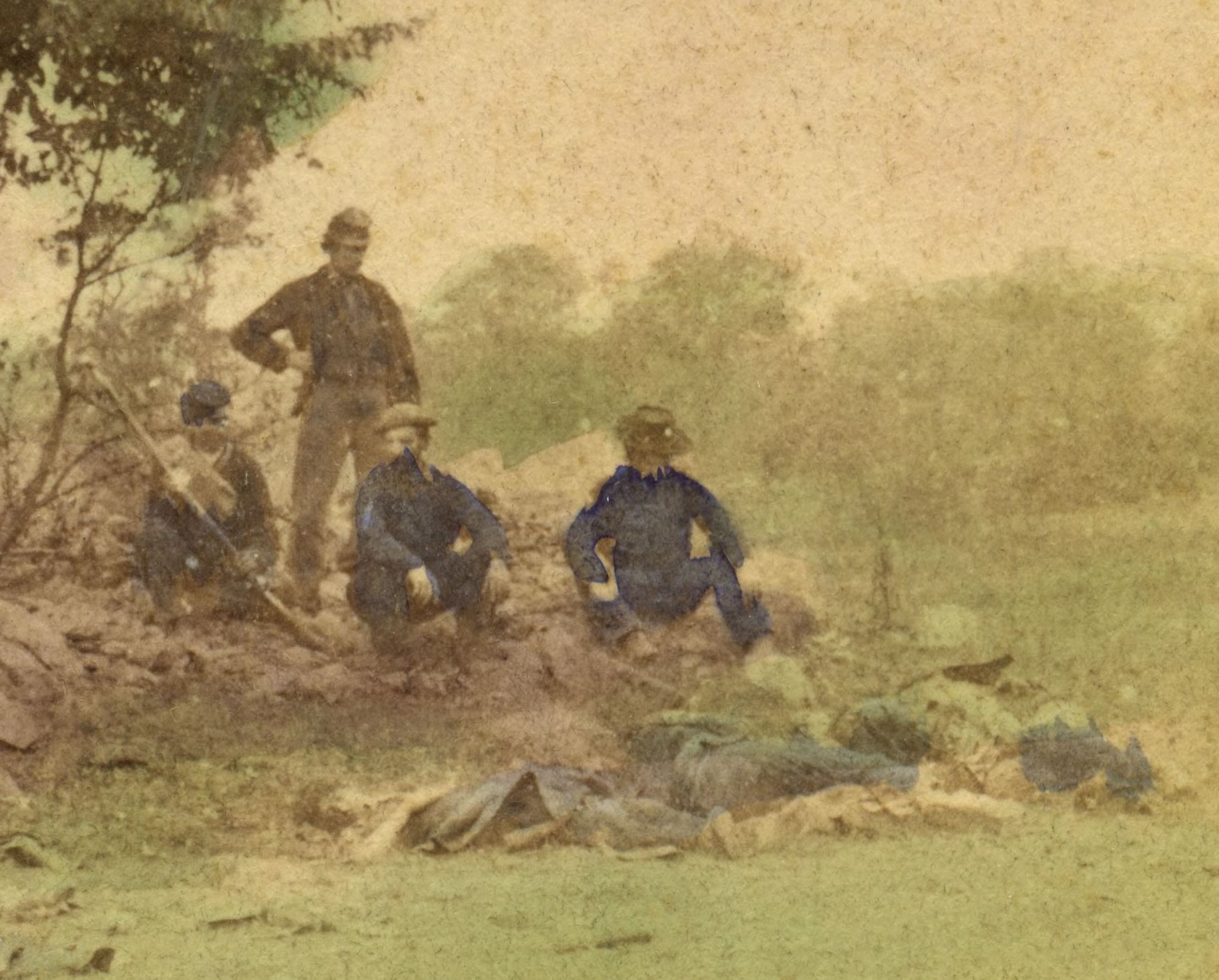
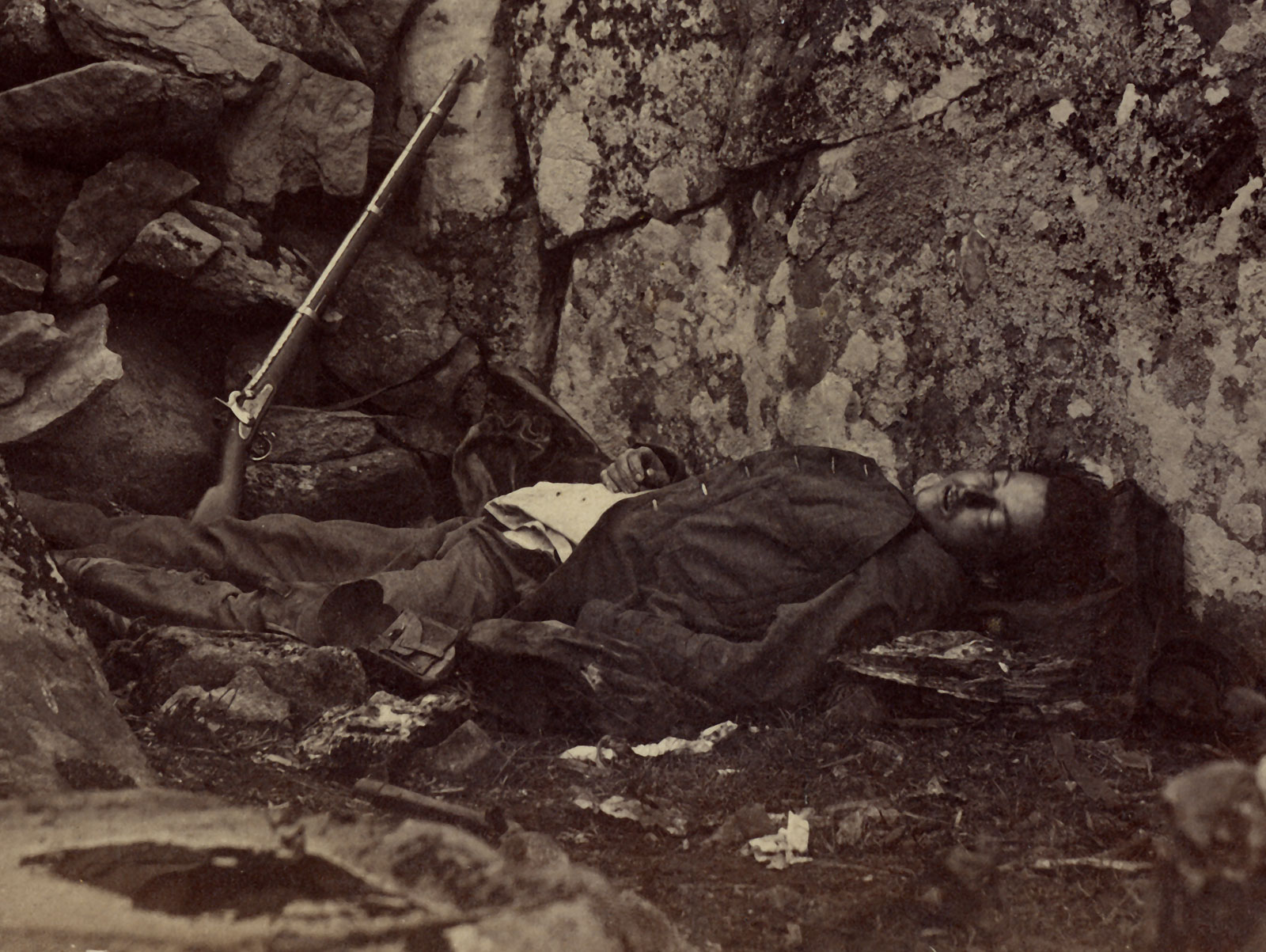
Alexander Gardner (American 1821-1882) 'Home of a Rebel sharpshooter, Gettysburg' 1863; printed 1865-1866


Alexander Gardner (American 1821-1882)
Home of a Rebel sharpshooter, Gettysburg
1863; printed 1865-1866
Plate no. 41 from Gardner’s Photographic Sketch Book of the War, vol. I and II, 1865-1866
Albumen silver photograph
National Gallery of Victoria, Melbourne
Purchased through The Art Foundation of Victoria with the assistance of the Herald & Weekly Times Limited, Fellow, 1979
Public domain


Around 620,000 soldiers are believed to have died during the American Civil War, which was fought from 1861 to 1865. Discussing the war, this photograph, and the work of Alexander Gardner, author and art historian Helen Ennis wrote, ‘The extensive coverage of the war that Gardner and his colleagues achieved – including its often graphic, confronting imagery – is lauded in the history of photography for its pioneering documentary photography and photojournalism. However, war photography has its own disturbing history, one in which photographing the dead has become routine. In Gardner’s photograph the corpse (and his rifle) may have been specially positioned for the photograph, a further reminder that in war death has no dignity’.

Wall text from the exhibition


Installation view of the exhibition 'Photography: Real & Imagined at The Ian Potter Centre: NGV Australia, Melbourne showing Julia Margaret Cameron's 'Julia Jackson' (1864)


Installation view of the exhibition Photography: Real & Imagined at The Ian Potter Centre: NGV Australia, Melbourne showing Julia Margaret Cameron’s Julia Jackson (1864, below)
Photo: Marcus Bunyan


Julia Margaret Cameron (English, 1815-1879) 'Julia Jackson' 1864


Julia Margaret Cameron (English, 1815-1879)
Julia Jackson
1864
Albumen silver photograph
24.0 x 19.1cm (image and sheet)
National Gallery of Victoria, Melbourne
Purchased through The Art Foundation of Victoria with the assistance of the Herald and Weekly Times Limited, Fellow, 1979
Public domain
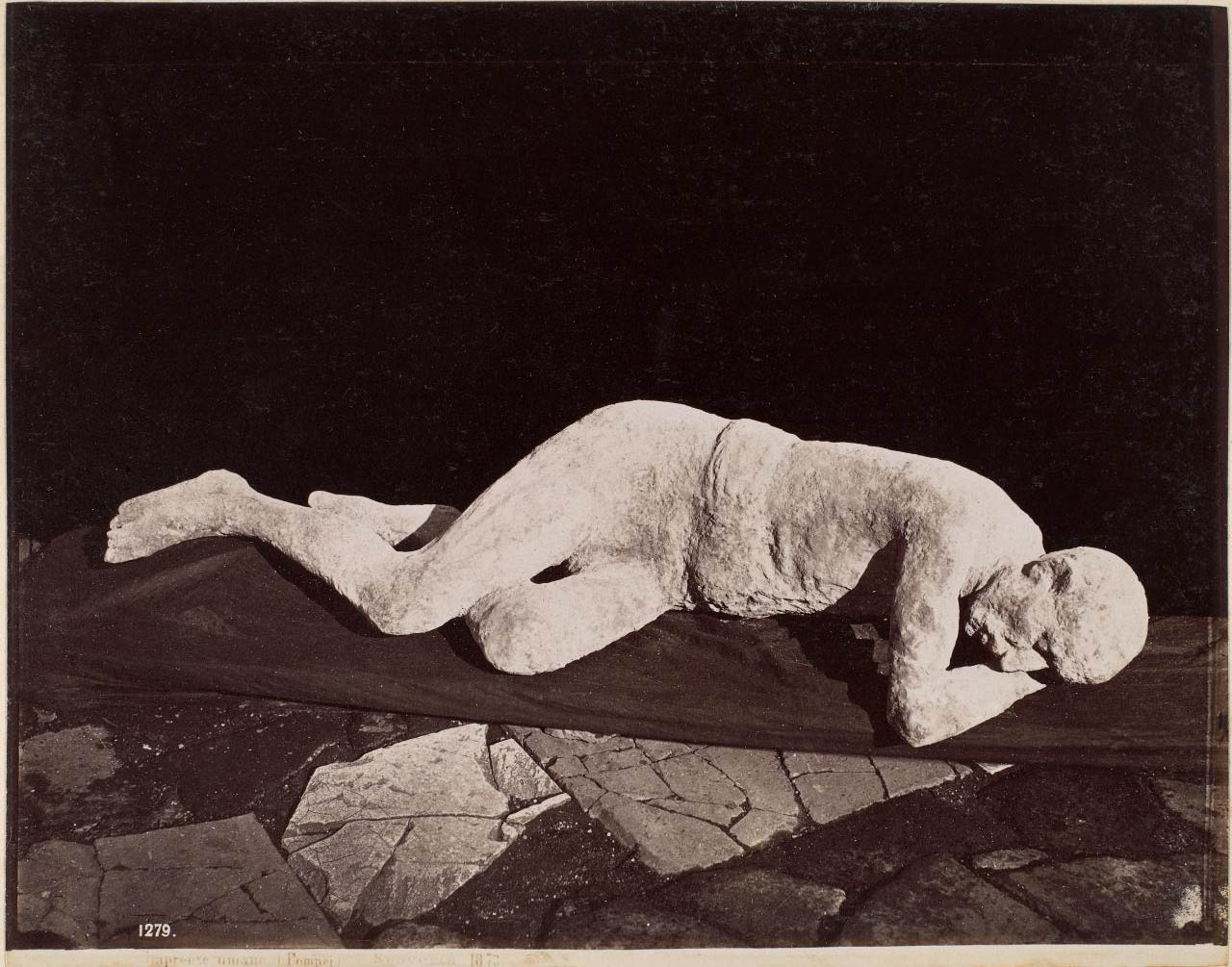
 

Giorgio Sommer (German 1834-1914) 'Human imprint, Pompeii (Impronte umare. Pompei)' 1873


Giorgio Sommer (German 1834-1914)
Human imprint, Pompeii (Impronte umare. Pompei)
1873
Albumen silver photograph
19.8 x 25.5cm
National Gallery of Victoria, Melbourne
Presented through the NGV Foundation by Janice Hinderaker, Member, 2003
Public domain


Charles Rudd (Australian 1872-1900) 'Statuary Gallery, Melbourne Public Library' 1886-1887


Charles Rudd (Australian 1872-1900)
Statuary Gallery, Melbourne Public Library
1886-1887
From the C. Rudd’s New Views of Melbourne series 1886-1887
Albumen silver photograph
13.6 x 19.8cm
National Gallery of Victoria, Melbourne
Gift of Terence Lane, 1990
Public domain


F. B. Mendelssohn & Co., Melbourne (Australian, active 1889-1900) 'No title (Young woman, full length, seated at plush covered table)' 1889


F. B. Mendelssohn & Co., Melbourne (Australian, active 1889-1900)
No title (Young woman, full length, seated at plush covered table)
1889
Cabinet print
Albumen silver photograph
14 x 10cm
National Gallery of Victoria, Melbourne
Gift of C. Stuart Tompkins, 1972
Public domain


Installation view of the exhibition 'Photography: Real & Imagined' at The Ian Potter Centre: NGV Australia, Melbourne showing Diane Jones' 'Woman in black Dress' (2009)


Installation view of the exhibition Photography: Real & Imagined at The Ian Potter Centre: NGV Australia, Melbourne showing Diane Jones’ Woman in black Dress (2009)
Photo: Marcus Bunyan


Writing about historical and contemporary studio photography, curator Sophia Cai explored connections between the work of contemporary artist Dianne Jones and historical vernacular portraits, noting that ‘Jones is a contemporary Balardung artist who works in photo media to critically re-examine historical and contemporary depictions of Indigenous peoples in popular imagery. Jones’s work sees the artist insert herself into familiar, iconic scenes from Australian art and photography to challenge myths of cultural nationhood and identity. This act of insertion is both a comedic and political action, as it not only highlights the homogeneity common to these scenes, but also addresses the lack of Indigenous representation in our histories and stories’.

Wall text from the exhibition


Unknown photographer. 'No title (Woman with umbrella)' 1880s


Unknown photographer (Japanese active 1880s)
No title (Woman with umbrella)
1880s
Albumen silver photograph, colour dyes
24.2 x 19.4cm (image and sheet)
National Gallery of Victoria, Melbourne
Public domain


In the nineteenth century a distinctive style of photography developed in Japan in which the aesthetics of traditional woodblock prints (ukiyo-e) were translated into photographic practice. The resulting photographs included carefully composed genre images featuring traditional aspects of the life and work of the Japanese middle classes. Typical life scenes, such as this one showing a woman walking through a rainstorm, were recreated in the studio with remarkable attention to detail, as seen in the subject’s ‘windblown’ kimono. As these images were staged for the European market, however, they often diverted from reality in favour of focusing on customs that would have appeared ‘exotic’ to their Western viewers.

Wall text from the exhibition


Installation view of the exhibition 'Photography: Real & Imagined' at The Ian Potter Centre: NGV Australia, Melbourne showing Frank Hurley's 'A turreted berg' (1913)


Installation view of the exhibition Photography: Real & Imagined at The Ian Potter Centre: NGV Australia, Melbourne showing Frank Hurley’s A turreted berg (1913, below)
Photo: Marcus Bunyan


Frank Hurley (Australian, 1890-1962) 'No title (A turreted berg)' 1913


Frank Hurley (Australian, 1890-1962)
No title (A turreted berg)
1913
Carbon print
National Gallery of Victoria, Melbourne
Purchased, 1999
Public domain


The photographs produced by Frank Hurley during his time as the official photographer for the Australasian Antarctic Expedition (1911-1914), and his subsequent texts, dramatically convey the awe-inspiring gargantuan icebergs encountered in the region. ‘No grander sight have I ever witnessed among the wonders of Antarctica’, Hurley wrote of the icebergs in the area where this photograph was taken. ‘We threaded a way down lanes of vivid blue with shimmering walls of mammoth bergs rising like castles of jade on either side.’ This photograph is, at first appearance, a sublimely ‘true’ representation of an iceberg. On closer inspection, however, subtle alterations become apparent. More real than real, Hurley’s constructed image was celebrated at the time and continues to be.

Wall text from the exhibition


André Kertész (Hungarian, 1894-1985) 'Chez Mondrian, Paris' 1926


André Kertész (Hungarian, 1894-1985)
Chez Mondrian, Paris
1926; c. 1972 {printed}
Gelatin silver photograph
24.7 x 18.5 cm (image) 25.3 x 20.4 cm (sheet)
National Gallery of Victoria, Melbourne
Purchased, 1973
Public domain
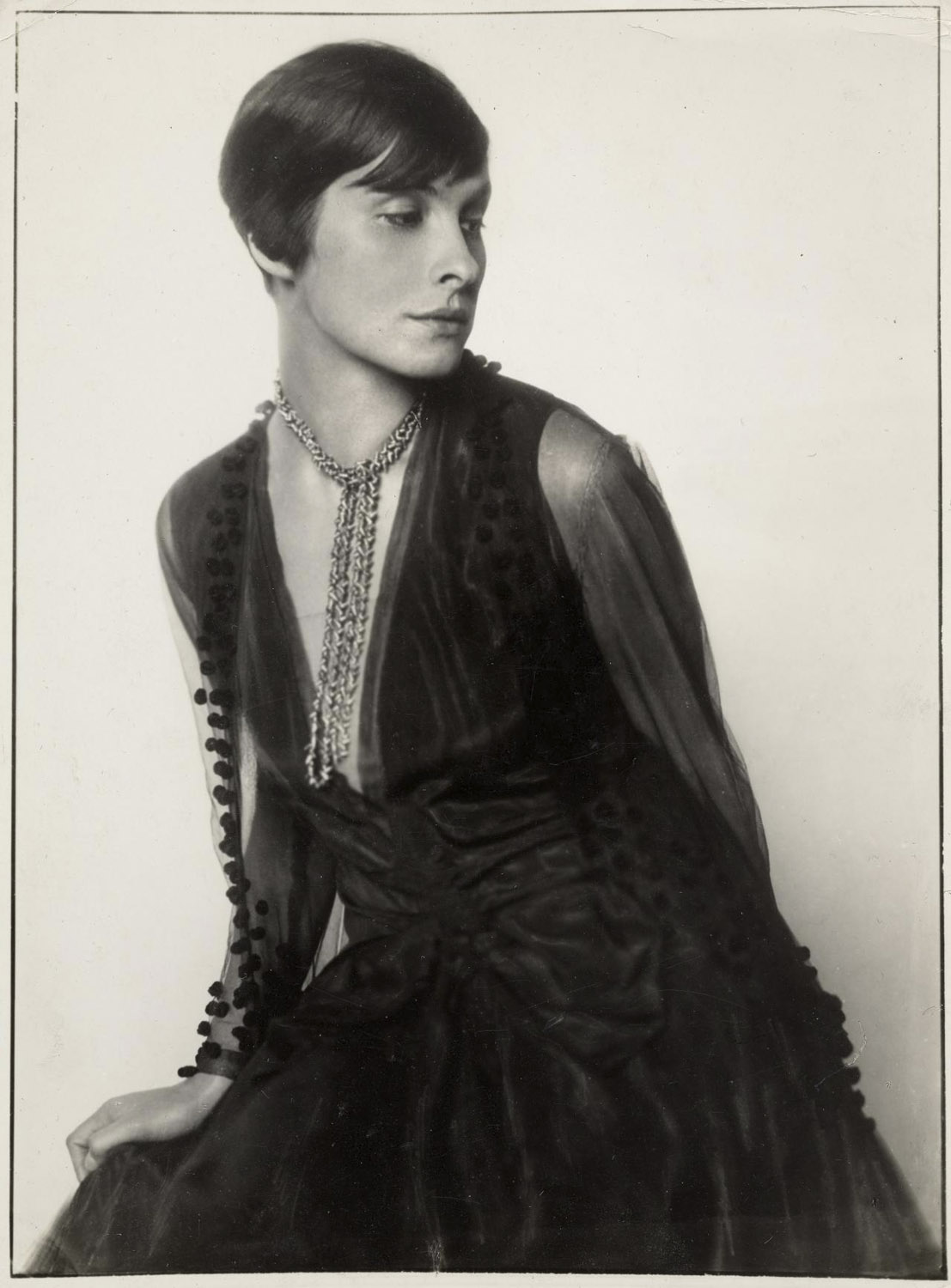
 

Trude Fleischmann (American born Austria, 1895-1990) 'The actress Sibylle Binder, Vienna' c. 1926


Trude Fleischmann (Austrian 1895-1990, United States 1938-1990)
The actress Sibylle Binder, Vienna
c. 1926
Gelatin silver photograph
21.9 x 16.2cm
National Gallery of Victoria, Melbourne
Bowness Family Fund for Photography, 2022
Public domain


Trude Fleischmann (American born Austria, 1895-1990)

Trude Fleischmann (22 December 1895 – 21 January 1990) was an Austrian-born American photographer. After becoming a notable society photographer in Vienna in the 1920s, she re-established her business in New York in 1940. …

In 1920, at the age of 25, Fleischmann opened her own studio close to Vienna’s city hall. Her glass plates benefitted from her careful use of diffuse artificial light. Photographing music and theatre celebrities, her work was published in journals such as Die Bühne, Moderne Welt, ‘Welt und Mode and Uhu. She was represented by Schostal Photo Agency (Agentur Schostal). In addition to portraits of Karl Kraus and Adolf Loos, in 1925 she took a nude series of the dancer Claire Bauroff which the police confiscated when the images were displayed at a Berlin theatre, bringing her international fame. Fleischmann also did much to encourage other women to become professional photographers.

With the Anschluss in 1938, Fleischmann was forced to leave the country. She moved first to Paris, then to London and finally, together with her former student and companion Helen Post, in April 1939 to New York. In 1940, she opened a studio on West 56th Street next to Carnegie Hall which she ran with Frank Elmer who had also emigrated from Vienna. In addition to scenes of New York City, she photographed celebrities and notable immigrants including Albert Einstein, Eleanor Roosevelt, Oskar Kokoschka, Lotte Lehmann, Otto von Habsburg, Count Richard von Coudenhove-Kalergi and Arturo Toscanini. She also worked as a fashion photographer, contributing to magazines such as Vogue. She established a close friendship with the photographer Lisette Model.

Text from the Wikipedia website


Sybille Binder (Austrian, 1895-1962)

Sybille Binder (5 January 1895 – 30 June 1962) was an Austrian actress of Jewish descent whose career of over 40 years was based variously in her home country, Germany and Britain, where she found success in films during the 1940s.

Binder began her stage career in Berlin in 1915, then in 1918 moved to Munich, where she enjoyed success in classical drama. Between 1916 and 1918 she also appeared in a handful of silent films. In 1922, she returned to Berlin and received acclaim for her performance in Frank Wedekind’s Earth Spirit. Over the next few years she performed regularly in Germany and Austria then, in the mid-1930s as war approached and conditions in Germany became difficult, she made the decision to move to England.

Between 1942 and 1950 Binder featured in 13 British films, including several of superior quality. Her first screen appearance in Britain came auspiciously in the highly acclaimed supernatural drama Thunder Rock, playing opposite dramatic heavyweights including Michael Redgrave, James Mason and Frederick Valk. Other notable films in which Binder appeared were war drama Candlelight in Algeria (1944), hugely popular period melodrama Blanche Fury, espionage thriller Against the Wind and amnesia-themed romance Portrait from Life (all 1948).

Binder returned to Germany in 1950, settling in Düsseldorf, where she successfully picked up her stage career but did not attempt to break into the German film industry. She died on 30 June 1962, aged 67.

Text from the Wikipedia website


Walker Evans (United States of America 1903 - 1975) 'Graveyard and steel mill, Bethlehem, Pennsylvania' 1935


Walker Evans (American 1903-1975)
Graveyard, houses and steel mill, Bethlehem, Pennsylvania
1935, printed c. 1975
Gelatin silver photograph
39.5 x 49.5cm
National Gallery of Victoria, Melbourne
Purchased, 1975
Public domain


Marion Post Wolcott (American, 1910-1990) 'Near Wadesboro, North Carolina' 1938


Marion Post Wolcott (American, 1910-1990)
Near Wadesboro, North Carolina
1938; c. 1975 {printed}
Gelatin silver photograph
26.4 x 26.5cm
National Gallery of Victoria, Melbourne
Purchased, 1975


Joe Rosenthal (1911-2006) 'Raising the Flag on Iwo Jima' 1945; printed (c. 1948)


Joe Rosenthal (1911-2006)
Raising the Flag on Iwo Jima
1945; printed (c. 1948)
Gelatin silver photograph
11.5 x 8.8cm
National Gallery of Victoria, Melbourne
Gift of Francis Reiss, 2014
Public domain


Imogen Cunningham (American, 1883-1976) 'The unmade bed' 1957


Imogen Cunningham (American, 1883-1976)
The unmade bed
1957
Gelatin silver photograph
24.4 x 32.7cm
National Gallery of Victoria, Melbourne
Gift of Krystyna Campbell-Pretty AM and Family through the Australian Government’s Cultural Gifts Program, 2023


In 1957, while teaching at the California School of Fine Arts in San Francisco, Imogen Cunningham overheard her colleague Dorothea Lange set a task for her students to photograph an ordinary object that they used every day. Cunningham is said to have set the same task for herself. The resulting photograph, The unmade bed, is an image constructed with familiar objects, including discarded hairpins and a crumpled bedsheet. In this quiet and unassuming photograph, Cunningham has created both an elegant still life and an unexpectedly tender portrait of a woman recently risen from her sleep.

Wall text from the exhibition


George Bell (Australian 1878-1966, England 1907-1920) 'Pain' 1966, printed 1991


George Bell (Australian 1878-1966, England 1907-1920)
Pain
1966, printed 1991
Gelatin silver photograph
28.2 × 35.6cm
National Gallery of Victoria, Melbourne
Purchased, 1991
Public domain


Ulrich Wüst (German, b. 1949) 'Berlin' 1982 (installation view)


Ulrich Wüst (German, b. 1949)
Berlin (installation view)
1982
From the Cityscapes (Stadtbilder) series 1979-1984
Inkjet print
National Gallery of Victoria, Melbourne
Purchased NGV Foundation, 2018
Photo: Marcus Bunyan


Hank Willis Thomas (American, b. 1976) 'Amelia falling' 2014


Hank Willis Thomas (American, b. 1976)
Amelia falling
2014
Photographic print, mirror and glass
166 x 135cm
National Gallery of Victoria, Melbourne
Bowness Family Fund for Photography, 2017
© Hank Willis Thomas. Courtesy of the artist and Jack Shainman Gallery, New York


Hank Willis Thomas’s photographs printed on mirrors are sometimes difficult to look at, but with the viewer’s reflection integrated into the work they are also impossible to ignore. In this work we bear witness to the shockingly violent incursions into what was intended to have been a peaceful civil rights protest in Selma, Alabama. Willis Thomas’s work and its source image, a photograph taken in 1965 by Spider Martin, show civil rights activist Amelia Boynton Robinson being carried by fellow marchers after being gassed and beaten. Through his use of archival images Willis Thomas draws connections between historical moments and contemporary life, leaving little comfortable space to be a dispassionate observer.

Wall text from the exhibition


Malala Andrialavidrazana (Madagascar, b. 1971) 'Figures 1850, various empires, kingdoms, states and republics' 2015


Malala Andrialavidrazana (Madagascar, b. 1971)
Figures 1850, various empires, kingdoms, states and republics
2015
Inkjet print
110.0 x 138.5cm
ed. 1/5
National Gallery of Victoria, Melbourne
Ruth Margaret Frances Houghton Bequest, 2021
© Malala Andrialavidrazana. Courtesy of the artist and AFRONOVA Gallery


Malala Andrialavidrazana’s series Figures are digital photomontages created using images sourced from archival collections of nineteenth-century maps of the African continent, as well as bank notes and stamps. The historical maps are overlaid with portraits of various heads of state and depictions of colonial developments and decorative details showing people, places, plants and animals from across Africa. These photomontages reveal the complex political and cultural histories of maps, cartography and archives, and the changing understanding of the greater African continent by European colonial powers in the nineteenth and twentieth centuries.

Wall text from the exhibition


Section wall texts from the exhibition


Light wall text from the exhibition


Light wall text from the exhibition


Systems and Surface wall text from the exhibition


Systems and Surface wall text from the exhibition


Surreal wall text from the exhibition


Surreal wall text from the exhibition


Narrative wall text from the exhibition


Narrative wall text from the exhibition


Work and Play wall text from the exhibition


Work and Play wall text from the exhibition


Movement wall text from the exhibition


Movement wall text from the exhibition


Studio and Things wall text from the exhibition


Studio and Things wall text from the exhibition


Display wall text from the exhibition


Display wall text from the exhibition


Consumption wall text from the exhibition


Consumption wall text from the exhibition

SELF wall text from the exhibition (missing)
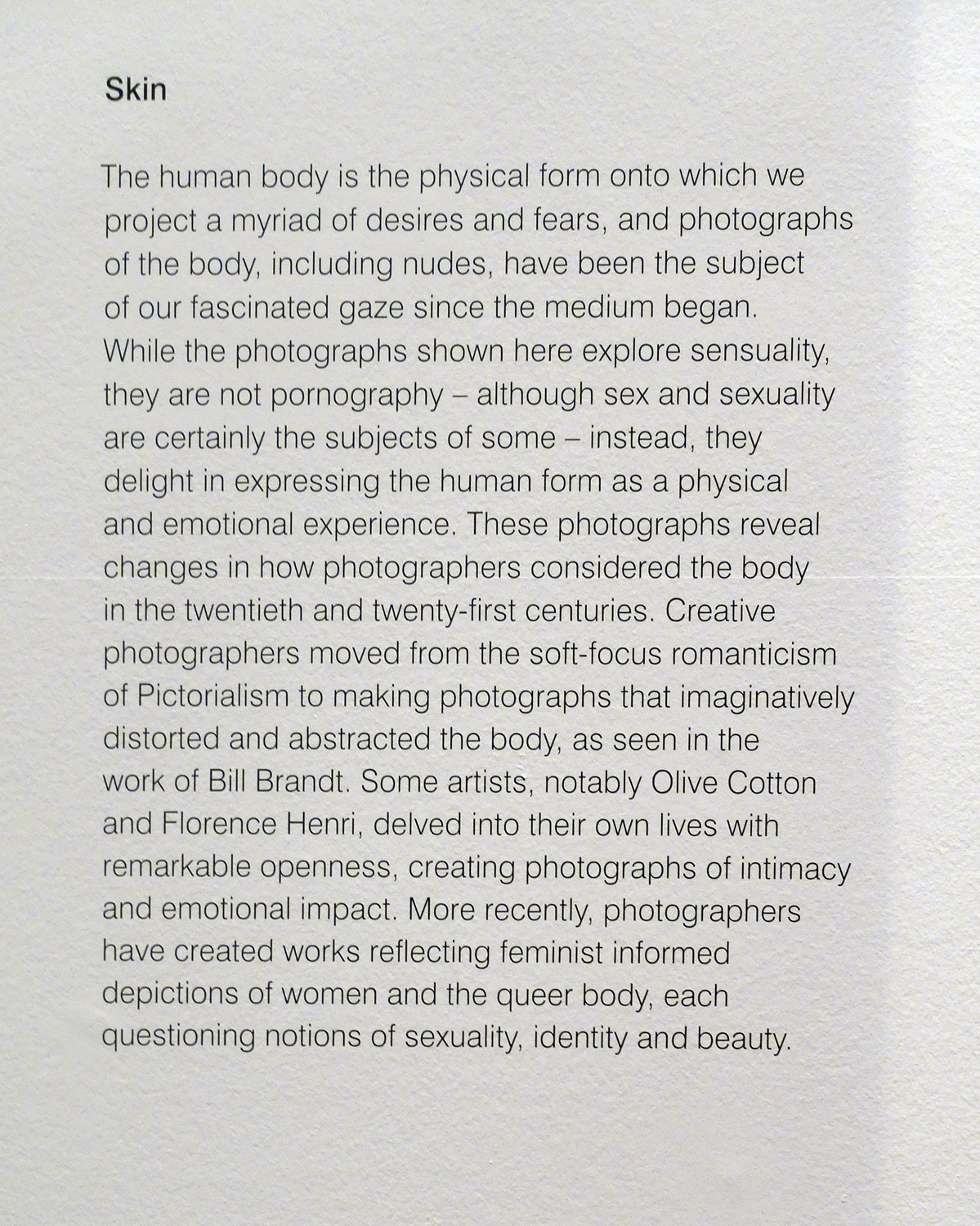
 

Skin wall text from the exhibition


Skin wall text from the exhibition


Community and Touch wall text from the exhibition


Community and Touch wall text from the exhibition

ENVIRONMENT wall text from the exhibition (missing)


Place and Built wall text from the exhibition


Place and Built wall text from the exhibition

NINETEETH-CENTURY PHOTOGRAPHY wall text from the exhibition (missing)


Conflict wall text from the exhibition


Conflict wall text from the exhibition

DEATH wall text from the exhibition (missing)


The Ian Potter Centre: NGV Australia
Federation Square
Corner of Russell and 
Flinders Streets, Melbourne

Opening hours:
Daily 10am – 5pm

National Gallery of Victoria website

LIKE ART BLART ON FACEBOOK

Back to top

Exhibition: ‘Dark Fields of the Republic: Alexander Gardner Photographs, 1859-1872’ at the National Portrait Gallery, Washington

Exhibition dates: 18th September, 2015 – 13th March, 2016

Curators: David C. Ward, Portrait Gallery senior historian, and guest curator Heather Shannon, former photo archivist at the Smithsonian’s National Museum of the American Indian, with research assistance from Sarah Campbell


Alexander Gardner (American born Scotland, 1821-1882) 'Ulysses S. Grant' (1822-1885) c. 1864 from the exhibition 'Dark Fields of the Republic: Alexander Gardner Photographs, 1859-1872' at the National Portrait Gallery, Washington, Sept 2015 - March 2016


Alexander Gardner (American born Scotland, 1821-1882)
Ulysses S. Grant (1822-1885)
c. 1864
Albumen silver print
National Portrait Gallery, Smithsonian Institution


THIS IS THE FIRST OF THREE POSTINGS ABOUT (MAINLY AMERICAN) 19th CENTURY PHOTOGRAPHY.

This monster posting is both fascinating and gruesome by turns. They were certainly dark fields, stained crimson with the blood of men of opposing armies, left bloated and rotting in the hot sun. Can you imagine the smell one or two days later when Alexander Gardner arrived to photograph those very fields.

Particularly in the early war years (1861-62).”Gardner has often had his work misattributed to Brady.” Gardner worked for Mathew Brady, running his Washington office and working in the field (as many other operatives did) during the early part of the Civil War. Gardner’s negatives were published under the banner of the studio of Brady. He finished working for Brady in 1862 before setting up his own studio in May 1863 a few blocks from Brady’s Washington studio. This fluidity of authorship continues later in the war when Timothy H. O’Sullivan’s photographs, an assistant to Gardner, appeared under the masthead of Gardner’s studio. Evidence of this can be observed in the image Home of a Rebel Sharpshooter (July 1863, below) where, at least, Sullivan is credited with the negative at bottom left under the image.

Gardner changed the face of photography. He endowed it with an immediacy and energy that it had previously been lacking. His photographs of the battlefield brought the action “presently” into the lounge rooms of the well-heeled and, by engravings taken from the photographs, into newspapers of the time. His series of photographs of the hanging of the conspirators convicted of Abraham Lincoln’s assassination are “considered one of the first examples of photojournalism ever recorded.” But he wasn’t above rearranging the scene to his liking, as in the moving of the body in Home of a Rebel Sharpshooter (July 1863, below) to make a more advantageous “view” … much like Roger Fenton’s moving of the cannonballs in his epic photograph The Valley of the Shadow of Death (1855). Today this would be frowned upon, but in the era these photographs were taken it seemed the most “natural” thing to do, to make a better photograph, and nothing was thought of it.

The exhibition text states, “But his arrangement of the corpse reflects how difficult it was for Gardner and his contemporaries to process the reality of mass casualties in which the dead became anonymous. Caught at a transitional moment, Gardner did not trust the images his camera captured. That this photographic construction would be more marketable to a public still steeped in Victorian sentimentality only adds to Gardner’s malfeasance.” Malfeasance is a strong word. Malfeasance is defined as an affirmative act, “the performance by a public official of an act that is legally unjustified, harmful, or contrary to law; wrongdoing (used especially of an act in violation of a public trust).” (Dictionary.com) The exhibition text also states that “His actions are unforgivable from both a moral and artistic point of view,” and are a blot on Gardner’s career.

I don’t agree. Of course Gardner trusted the images that his camera captured, he was a photographer! This is a ludicrous statement… it is just that, arriving days after the battle, he wanted compositions that created news and views that were memorable. His affirmative action was not illegal or contrary to the law. Although morally it could be seen as a violation of public trust he was reporting the depravities of war within the first 25 years of the beginning of photography, and he was trying to get across to the general public the lonely desperation of death. In that era, at the very beginning of photographic reportage, who was to tell him it was wrong or illegal? We view these actions through retrospective eyes knowing that this kind of re-arrangement would not be tolerated today (but it is, in the digital manipulation of images!) and the condemnation of today is just a hollow statement. Photography has ALWAYS re-presented reality – through the hand of the author, through the eyes of the viewer.

Other interesting things to note in the posting are:

~ the mechanical overlaying of colour in the stereograph View on Battle Field of Antietam, Burial party at work (1862, below) where the colour is applied subtly in the left hand photograph while in the right hand image, the colour almost obliterates the figures

~ the attitude of the participants in Indian Peace Commissioners in council with the Northern Cheyenne and Northern Arapaho, Fort Laramie, Dakota Territory (1868, below). The military and civilian representatives of the government sit at right on boxes, four of them staring directly into the camera aware they are being photographed for prosperity (General William T. Sherman does not, looking pensive with his hands clasped) while on the left, the Native American Indian representatives sit on the ground wrapped in blankets with the backs of two interpreters towards the camera. They do not make eye contact with the camera except for one man, who has turned his head towards the camera and gives it a defiant stare (perhaps I am imagining, but I think not)


The strongest photographs in this posting, other than the masterpiece Home of a Rebel Sharpshooter are not the empirical scenes of the battlefield but two portraits: Ulysses S. Grant (1864, below) and the war weary “cracked plate” image of Abraham Lincoln (1865, below). Both are memorable not just for the low depth of field or the “capture” of remarkable leaders of men during war but for something essentially interior to themselves – their contemplation of self. With Grant you can feel the steely determination (this in the second last year of the war) and, yet, comprehend his statement,

“Though I have been trained as a soldier, and participated in many battles, there never was a time when, in my opinion, some way could not be found to prevent the drawing of the sword”

in this image. What must be done has to be done, but by God I wish it wasn’t so. The eyes have it.

With the Lincoln portrait – of which Gardner only pulled one print from the plate before he destroyed it, making this the rarest of images – the charismatic leader is shown with craggy, war weariness. The contextless space around the body is larger than is normal at this time, allowing us to focus on the “thing itself” … and then we have that prophetic crack. “During this sitting, Gardner created this portrait by accident,” says the text from the exhibition. How do you create a portrait like this by accident? With the length of the exposure, Lincoln would have had to remain immobile for seconds… not something that you do by accident. No, both Gardner and Lincoln knew that a portrait was being taken. This is previsualisation (depth of field, space around and above the body) at its finest. That the plate was accidentally cracked and then discarded in no way makes this portrait an accident. If this is a portrait of, “Lincoln between life and death, between his role as a historical actor and the mystical figure that he would become with his assassination,” it is also the face of a man that you could almost reach out and touch!

Dr Marcus Bunyan


Many thankx to the National Portrait Gallery, Washington for allowing me to publish the photographs in the posting. Please click on the photographs for a larger version of the image.


Alexander Gardner (American born Scotland, 1821-1882)

Gardner has often had his work misattributed to Brady, and despite his considerable output, historians have tended to give Gardner less than full recognition for his documentation of the Civil War. Lincoln dismissed McClellan from command of the Army of the Potomac in November 1862, and Gardner’s role as chief army photographer diminished. About this time, Gardner ended his working relationship with Brady, probably in part because of Brady’s practice of attributing his employees’ work as “Photographed by Brady”. That winter, Gardner followed General Ambrose Burnside, photographing the Battle of Fredericksburg. Next, he followed General Joseph Hooker. In May 1863, Gardner and his brother James opened their own studio in Washington, D.C, hiring many of Brady’s former staff. Gardner photographed the Battle of Gettysburg (July 1863) and the Siege of Petersburg (June 1864-April 1865) during this time.

In 1866, Gardner published a two-volume work, Gardner’s Photographic Sketch Book of the Civil War. Each volume contained 50 hand-mounted original prints. The book did not sell well. Not all photographs were Gardner’s; he credited the negative producer and the positive print printer. As the employer, Gardner owned the work produced, as with any modern-day studio. The sketchbook contained work by Timothy H. O’Sullivan, James F. Gibson, John Reekie, William Pywell, James Gardner (his brother), John Wood, George N. Barnard, David Knox and David Woodbury, among others. Among his photographs of Abraham Lincoln were some considered to be the last to be taken of the President, four days before his assassination, although later this claim was found to be incorrect, while the pictures were actually taken in February 1865, the last one being on the 5th of February. Gardner would photograph Lincoln on a total of seven occasions while Lincoln was alive. He also documented Lincoln’s funeral, and photographed the conspirators involved (with John Wilkes Booth) in Lincoln’s assassination. Gardner was the only photographer allowed at their execution by hanging, photographs of which would later be translated into woodcuts for publication in Harper’s Weekly.

Text from the Wikipedia website


Installation view of the exhibition ‘Dark Fields of the Republic: Alexander Gardner Photographs, 1859-1872’ at the National Portrait Gallery, Washington

Installation view of the exhibition ‘Dark Fields of the Republic: Alexander Gardner Photographs, 1859-1872’ at the National Portrait Gallery, Washington

Installation view of the exhibition ‘Dark Fields of the Republic: Alexander Gardner Photographs, 1859-1872’ at the National Portrait Gallery, Washington

Installation view of the exhibition ‘Dark Fields of the Republic: Alexander Gardner Photographs, 1859-1872’ at the National Portrait Gallery, Washington

Installation view of the exhibition ‘Dark Fields of the Republic: Alexander Gardner Photographs, 1859-1872’ at the National Portrait Gallery, Washington

Installation view of the exhibition ‘Dark Fields of the Republic: Alexander Gardner Photographs, 1859-1872’ at the National Portrait Gallery, Washington

Installation view of the exhibition ‘Dark Fields of the Republic: Alexander Gardner Photographs, 1859-1872’ at the National Portrait Gallery, Washington

Installation view of the exhibition ‘Dark Fields of the Republic: Alexander Gardner Photographs, 1859-1872’ at the National Portrait Gallery, Washington

Installation view of the exhibition ‘Dark Fields of the Republic: Alexander Gardner Photographs, 1859-1872’ at the National Portrait Gallery, Washington

Installation view of the exhibition ‘Dark Fields of the Republic: Alexander Gardner Photographs, 1859-1872’ at the National Portrait Gallery, Washington


Installation views of the exhibition Dark Fields of the Republic: Alexander Gardner Photographs, 1859-1872 at the National Portrait Gallery, Washington


Dark Fields of the Republic: Alexander Gardner Photographs, 1859-1872

His photographs have “a terrible distinctness.” So wrote the New York Times about the work of trailblazing photographer Alexander Gardner (1821-1882). In a career spanning the critical years of the nineteenth century, Gardner created images that documented the crisis of the Union, the Civil War, the United States’ expansion into the western territories, and the beginnings of the Indian Wars.

As one of a pioneering generation of American photographers, Gardner helped revolutionise photography, both in his mastery of techniques and by recognising that the camera’s eye could be fluid and mobile. In addition to creating portraits of leaders and generals – he was Abraham Lincoln’s favourite photographer – Gardner followed the Union army, taking indelible images of battlefields and military campaigning. His battlefield photographs – including those of the newly dead – created a public sensation, contributing to the change under way in American culture from romanticism to realism, a realism that was the hallmark of his work.

At war’s end, Gardner went west. Fascinated, like many artists, by American Indians, he took a series of stunning images of the western tribes, setting set these figures in their native grounds: these photographs are the pictorial evocation of the seemingly limitless western land and sky. He also took images of the Indians in Washington, D.C., where they traveled to negotiate preservation of their way of life. Gardner’s portraits of Native Americans are dignified likenesses of a resistant people fighting for their way of life.

In their documentary clarity and startling precision, Alexander Gardner’s photographs – taken in the studio, on battlefields, and in the western territories – are a summons back into a darkly turbulent and heroic period in American history.”

Text from the exhibition website


Installation view of the exhibition ‘Dark Fields of the Republic: Alexander Gardner Photographs, 1859-1872’ at the National Portrait Gallery, Washington

Installation view of the exhibition ‘Dark Fields of the Republic: Alexander Gardner Photographs, 1859-1872’ at the National Portrait Gallery, Washington

Installation view of the exhibition ‘Dark Fields of the Republic: Alexander Gardner Photographs, 1859-1872’ at the National Portrait Gallery, Washington

Installation view of the exhibition ‘Dark Fields of the Republic: Alexander Gardner Photographs, 1859-1872’ at the National Portrait Gallery, Washington

Installation view of the exhibition ‘Dark Fields of the Republic: Alexander Gardner Photographs, 1859-1872’ at the National Portrait Gallery, Washington

Installation view of the exhibition ‘Dark Fields of the Republic: Alexander Gardner Photographs, 1859-1872’ at the National Portrait Gallery, Washington

Installation view of the exhibition ‘Dark Fields of the Republic: Alexander Gardner Photographs, 1859-1872’ at the National Portrait Gallery, Washington


Installation views of the exhibition Dark Fields of the Republic: Alexander Gardner Photographs, 1859-1872 at the National Portrait Gallery, Washington with, in the bottom photograph, two people looking at a photograph of Lieutenant General Grant.


Alexander Gardner (American born Scotland, 1821-1882) 'Ulysses S. Grant' (1822-1885) c. 1864 (detail)


Alexander Gardner (American born Scotland, 1821-1882)
Ulysses S. Grant (detail)
c. 1864
Albumen silver print
National Portrait Gallery, Smithsonian Institution


There is a story that when Ulysses S. Grant traveled east in 1864 to take command of all the Union armies, the desk clerk at Washington’s Willard Hotel did not recognise him and assigned him to a mean, nondescript room. (When Grant identified himself, he was upgraded to a suite.) The anecdote points out that likenesses were not yet widely distributed, even after the advent of photography. It was possible for famous people to remain unidentified. But fame meant that one had one’s photograph taken, as Grant did in this image Gardner took after the western general arrived in Washington. Grant was coming off a string of successes in the West, including the successful siege of Vicksburg, which made him the inevitable choice for overall command. In Grant, Lincoln finally found a general who would consistently engage the enemy’s forces. Indicative of Grant’s stature, Lincoln bestowed on him the rare title of lieutenant general, a rank previously held only by George Washington.

Text from the exhibition website


Alexander Gardner (American born Scotland, 1821-1882) 'Abraham Lincoln' 1863 from the exhibition 'Dark Fields of the Republic: Alexander Gardner Photographs, 1859-1872' at the National Portrait Gallery, Washington, Sept 2015 - March 2016


Alexander Gardner (American born Scotland, 1821-1882)
Abraham Lincoln
1861
Albumen silver print
National Portrait Gallery, Smithsonian Institution


Alexander Gardner (American born Scotland, 1821-1882) 'Abraham Lincoln' 1863 (detail)


Alexander Gardner (American born Scotland, 1821-1882)
Abraham Lincoln (detail)
1863
Albumen silver print
National Portrait Gallery, Smithsonian Institution


This portrait of Abraham Lincoln was taken on February 24, 1861, just before his inauguration on March 4. It has been conjectured that Lincoln is hiding his right hand in his lap because it was swollen from shaking so many hands during his travel from Illinois to Washington. This is also the first studio image depicting Lincoln with a full beard, which he had famously grown between the election and inauguration, purportedly at the behest of a little girl who wrote him from New York that it would improve his appearance. Lincoln was early to recognise the power of the relatively new medium of photography to mould and shape a public persona. He credited a photograph by Mathew Brady, taken when he came to New York City to present himself to Republican Party power brokers, as helping to confirm his suitability for the presidency by showing him well-dressed and dignified. Interestingly, the Brady photograph shows Lincoln standing; in this portrait he is seated, as if ready to begin work as president.

Text from the exhibition website


Installation view of the exhibition ‘Dark Fields of the Republic: Alexander Gardner Photographs, 1859-1872’ at the National Portrait Gallery, Washington showing the "Imperial" glass-plate negative of President Abraham Lincoln from his August 9, 1863, sitting at Gardner's Washington studio, with a print from the negative on the wall behind


Installation view of the exhibition Dark Fields of the Republic: Alexander Gardner Photographs, 1859-1872 at the National Portrait Gallery, Washington showing the “Imperial” glass-plate negative of President Abraham Lincoln from his August 9, 1863, sitting at Gardner’s Washington studio, with a print from the negative on the wall behind


This exhibition provides the rare opportunity to display the means by which a photographic image was produced on paper: the glass-plate negative that was the “film” of early photography. Because of their fragility, surviving glass-plate negatives of this size (the so-called “imperial”) are rare: this is one of two of Lincoln that have survived and dates from his August 9, 1863, sitting at Gardner’s Washington studio. The process Gardner used was relatively new to America and consisted of hand-coating a glass plate with collodion – a syrupy mixture of guncotton dissolved in alcohol and ether to which bromide and iodine salts had been added. The difficulty for the photographer was that the glass plate had to be coated with collodion, sensitised in a bath of silver nitrate, and exposed in the camera immediately, while the emulsion was still damp. Gardner was acknowledged as a master in evenly coating the plate, which resulted in prints of exceptional clarity.

Text from the exhibition website


Alexander Gardner (American born Scotland, 1821-1882) 'Abraham Lincoln' 1865


Alexander Gardner (American born Scotland, 1821-1882)
Abraham Lincoln
1865
Albumen silver print
National Portrait Gallery, Smithsonian Institution


The “cracked-plate” image of Abraham Lincoln, taken by Alexander Gardner on February 5, 1865, is one of the most important and evocative photographs in American history. In preparing for his second inaugural, Lincoln had a series of photographs taken at Gardner’s studio. During this sitting, Gardner created this portrait by accident: at some point, possibly when the glass-plate negative was heated to receive a coat of varnish, a crack appeared in the upper half of the plate. Gardner pulled a single print and then discarded the plate, so only one such portrait exists.

The portrait represents a radical departure from Gardner’s usual crisp empiricism. The shallow depth of field created when Gardner moved his camera in for a close-up yielded a photograph whose focus is confined to the plane of Lincoln’s cheeks, while the remainder of the image appears diffused and even out of focus. Lincoln is careworn and tired, his face grooved by the emotional shocks of war. Yet his face also bears a small smile, perhaps as he contemplates the successful conclusion of hostilities and the restoration of the Union. This is Lincoln between life and death, between his role as a historical actor and the mystical figure that he would become with his assassination. Although Lincoln looked forward to his second term, we know, as he could not, that he will soon be assassinated. This image inextricably links history and myth, creating one of the most powerful American portraits.

Text from the exhibition website


Alexander Gardner (American born Scotland, 1821-1882) 'Abraham Lincoln' 1865 (detail)


Alexander Gardner (American born Scotland, 1821-1882)
Abraham Lincoln (detail)
1865
Albumen silver print
National Portrait Gallery, Smithsonian Institution


Smithsonian’s First Major Retrospective of Alexander Gardner’s Photographs at the National Portrait Gallery

Exhibition Will Highlight Gardner’s Civil War Photographs, Including His One-of-a-Kind Image of President Lincoln

Considered America’s first modern photographer, just as the Civil War is considered the first modern war, Alexander Gardner created dramatic and vivid photographs of battlefields and played a crucial role in the transformation of American culture by injecting a sobering note of realism to American photography.

“Gardner’s photographs showed how the new medium and art form could develop to meet the challenges of modern society,” said Kim Sajet, director of the Portrait Gallery. “These are a record of the sacrifice and loss that occurred in the great national struggle over the Union. Our photograph of Lincoln by him, known as the ‘cracked-plate,’ is the museum’s ‘Mona Lisa.'” [see above]

The first section of the exhibition will highlight Gardner’s Civil War photographs, and his role as President Abraham Lincoln’s preferred photographer. Gardner photographed the president many times, recording the impact of the war on his face. Among these images is the “cracked-plate” portrait, a photograph that is arguably the most iconic image of Lincoln. In addition, the exhibition will encompass Gardner’s portraits of other prominent statesmen and generals, as well as private citizens.

Also in the exhibition are Gardner’s landscapes of the American West and portraits of American Indians. These document the course of American expansion as postwar settlers moved westward, challenged by geography and Indian tribes resistant to losing their ancestral homelands. Gardner’s landscapes are evocative studies of almost limitless horizons, giving a sense of the emptiness of western space. These are contrasted with his detailed portraits of Indian chiefs and tribal delegations.

Curated by David C. Ward, Portrait Gallery senior historian, and guest curator Heather Shannon, former photo archivist at the Smithsonian’s National Museum of the American Indian, with research assistance from Sarah Campbell, this exhibition will feature more than 140 objects, including photographs, prints and books. The exhibition will be the finale of the Portrait Gallery’s seven-part series commemorating the 150th anniversary of the Civil War.

Press release from the National Portrait Gallery


Alexander Gardner (American born Scotland, 1821-1882) 'Samuel Wilkeson' (1817-1889) c. 1859


Alexander Gardner (American born Scotland, 1821-1882)
Samuel Wilkeson (1817-1889)
c. 1859
Salted paper print
Smithsonian American Art Museum
Museum purchase from the Charles Isaacs Collection made possible in part by the Luisita L. and Franz H. Denghausen Endowment


On July 1, 1863, at the Battle of Gettysburg, nineteen-year-old Lieutenant Bayard Wilkeson and his men attempted to slow the Confederate forces. A shell mangled the lieutenant’s right knee as his unit, Battery G of the Fourth U.S. Artillery, drew the attention of Confederate cannons. After amputating his leg with a pocket knife and being carried to an almshouse, Wilkeson ordered his men to return to battle. A few days later, his father, Samuel Wilkeson, a journalist, wrote home to say he had found Bayard dead “from neglect and bleeding.” On the front page of the July 6 New York Times, Samuel wrote a moving, influential, and widely circulated account of the battle. Bayard’s story and his father’s grief became symbolic of the North’s suffering, sacrifice, and righteousness. The article concludes, “oh, you dead, who at Gettysburg have baptised with your blood the second birth of Freedom in America, how you are to be envied!”

Text from the exhibition website


Alexander Gardner (American born Scotland, 1821-1882) 'Samuel Wilkeson' (1817-1889) c. 1859


Alexander Gardner (American born Scotland, 1821-1882)
Samuel Wilkeson (1817-1889)
c. 1859
Salted paper print
Smithsonian American Art Museum
Museum purchase from the Charles Isaacs Collection made possible in part by the Luisita L. and Franz H. Denghausen Endowment


Alexander Gardner (American born Scotland, 1821-1882) 'Samuel Wilkeson' (1817-1889) c. 1859 (detail)


Alexander Gardner (American born Scotland, 1821-1882)
Samuel Wilkeson (1817-1889) (detail)
c. 1859
Salted paper print
Smithsonian American Art Museum
Museum purchase from the Charles Isaacs Collection made possible in part by the Luisita L. and Franz H. Denghausen Endowment


Alexander Gardner (American born Scotland, 1821-1882) 'Self-Portrait' c. 1861


Alexander Gardner (American born Scotland, 1821-1882)
Self-Portrait
c. 1861
Albumen silver print
National Portrait Gallery, Smithsonian Institution


In this self-portrait taken at Mathew Brady’s Washington studio, Alexander Gardner presents himself wearing the garb of a mountain man or trapper, sporting buckskins and a fur hat; Gardner’s trademark full, ungroomed beard only adds to the frontiersman image. Gardner holds a bow and arrow while standing on Indian rugs. The image captures America’s enduring fascination with the West and adopting the garb of Native peoples. It also shows Gardner, a man about whom we know little, in disguise, hiding himself in a fictional frontier persona. Although he is acting a role, Gardner, whose family had bought land in Iowa in the antebellum period, was genuinely interested in the western lands and the fate of the Indians. In the 1860s he began his project of photographing the western tribal delegations when they came to Washington. After the Civil War he went west to photograph Indians on their native grounds.

Text from the exhibition website


James Gardner (American born Scotland, c. 1832 - ?) 'Alexander Gardner' 1863


James Gardner (American born Scotland, c. 1832 – ?)
Alexander Gardner
1863
Albumen silver print
National Portrait Gallery, Smithsonian Institution; gift of Larry J. West


James Gardner (American born Scotland, c. 1832 - ?) 'Alexander Gardner' 1863 (detail)


James Gardner (American born Scotland, c. 1832 – ?)
Alexander Gardner (detail)
1863
Albumen silver print
National Portrait Gallery, Smithsonian Institution; gift of Larry J. West


Not as flamboyantly costumed as in his first self-portrait, this image of Alexander Gardner shows him as a workingman, which was his family’s heritage back in Scotland. Gardner’s proficiency as a photographer was based in part on his manual dexterity; he was a master at coating the glass-plate negatives with collodion, which formed the plate’s light-sensitive emulsion. By the beginnings of 1863 James Gardner was working with his brother in Washington.

Text from the exhibition website


Alexander Gardner (American born Scotland, 1821-1882) 'Rose Greenhow' (c. 1854-?) and 'Rose O'Neal Greenhow' (c. 1815-1864) 1862


Alexander Gardner (American born Scotland, 1821-1882)
Rose Greenhow  (c. 1854-?)
Rose O’Neal Greenhow  (c. 1815-1864)
1862
Albumen silver print
National Portrait Gallery, Smithsonian Institution


One of the Confederacy’s most successful female spies, Rose O’Neal Greenhow was a prominent Washington widow and a staunch southern sympathiser. The Confederacy recruited her as a spy after war erupted in 1861. Most notably, Greenhow is credited with passing along intelligence prior to the First Battle of Manassas, insuring a southern victory. Soon after, her covert activities were uncovered and she was placed under house arrest. Gardner took this photograph after “Rebel Rose” and her daughter, Little Rose, were transferred to the Old Capitol Prison in 1862. Greenhow served five months before being exiled to the South. She then traveled to Europe to promote the Confederate cause. Returning in September 1864, Greenhow drowned attempting to run the federal blockade of Wilmington, N.C. The Confederacy buried her with military honours.

Text from the exhibition website


Alexander Gardner (American born Scotland, 1821-1882) 'View on Battle Field of Antietam, Burial party at work' 1862


Alexander Gardner (American born Scotland, 1821-1882)
View on Battle Field of Antietam, Burial party at work
1862
Coloured Stereograph (Albumen silver print on stereo card)


Alexander Gardner (American born Scotland, 1821-1882) 'View on Battle Field of Antietam, Burial party at work' 1862 (detail)


Alexander Gardner (American born Scotland, 1821-1882)
View on Battle Field of Antietam, Burial party at work (detail)
1862
Coloured Stereograph (Albumen silver print on stereo card)


Alexander Gardner (American born Scotland, 1821-1882) 'View on Battle Field of Antietam, Burial party at work' 1862 (detail)

Alexander Gardner (American born Scotland, 1821-1882) 'View on Battle Field of Antietam, Burial party at work' 1862 (detail)


Alexander Gardner (American, 1821-1882)
View on Battle Field of Antietam, Burial party at work (details of left and right photographs)
1862
Coloured Stereograph (Albumen silver print on stereo card)


Alexander Gardner (American born Scotland, 1821-1882) 'Antietam Bridge, Maryland' 1862


Alexander Gardner (American born Scotland, 1821-1882)
Antietam Bridge, Maryland
1862
Albumen silver print
Photograph by Alexander Gardner, from Gardner’s Photographic Sketch Book of the War
Records of the War Department General and Special Staffs, Record Group 165, National Archives Still Picture Branch, College Park, Maryland


Antietam Bridge (not to be confused with the more famous Burnside Bridge located to the south, which was the site of a confused Union attack during the Battle of Antietam’s third phase) spanned Antietam Creek, roughly in the middle of the battlefield. Before the battle, some Union troops used it to move toward the Confederate lines arrayed just outside the village of Sharpsburg. The bridge was not brought into play during the battle since George McClellan, fearful of overcommitting his troops, kept a large reserve near his headquarters at the Pry House, a reserve that would have used the bridge in its attack if it had been sent against Robert E. Lee’s lines. Unlike Burnside Bridge, the original stone Antietam Bridge, with its three arches, has not survived and has been replaced by a modern span.

Text from the exhibition website


Alexander Gardner (American born Scotland, 1821-1882) 'Scouts and Guides to the Army of the Potomac, Berlin, MD, October, 1862' October 1862


Alexander Gardner (American born Scotland, 1821-1882)
Scouts and Guides to the Army of the Potomac, Berlin, MD, October, 1862
October 1862
Albumen silver print
Photograph by Alexander Gardner, from Gardner’s Photographic Sketch Book of the War
Records of the War Department General and Special Staffs, Record Group 165, National Archives Still Picture Branch, College Park, Maryland


Alexander Gardner (American born Scotland, 1821-1882) 'Scouts and Guides to the Army of the Potomac, Berlin, MD, October, 1862' October 1862


Alexander Gardner (American born Scotland, 1821-1882)
Scouts and Guides to the Army of the Potomac, Berlin, MD, October, 1862
October 1862
Albumen silver print
Photograph by Alexander Gardner, from Gardner’s Photographic Sketch Book of the War
Records of the War Department General and Special Staffs, Record Group 165, National Archives Still Picture Branch, College Park, Maryland


Alexander Gardner (American born Scotland, 1821-1882) 'Scouts and Guides to the Army of the Potomac, Berlin, MD, October, 1862' October 1862 (detail)


Alexander Gardner (American born Scotland, 1821-1882)
Scouts and Guides to the Army of the Potomac, Berlin, MD, October, 1862 (detail)
October 1862
Albumen silver print
Photograph by Alexander Gardner, from Gardner’s Photographic Sketch Book of the War
Records of the War Department General and Special Staffs, Record Group 165, National Archives Still Picture Branch, College Park, Maryland


Gardner documented specialised units in the Union army, as with the Telegraphic Corps, and here with the so-called “Scouts and Guides,” who were part of the intelligence service that Allan Pinkerton ran for the Army of the Potomac. Gardner took this group portrait when he returned to the area around Antietam; Berlin (now Brunswick), Maryland, is on the Potomac, just downstream from Harpers Ferry. In his Sketchbook Gardner wrote about the hardship and dangers faced by men who frequently acted as spies and could be executed if caught: “Their faces are indexes of the character required for such hazardous work.” Gardner’s statement exemplifies how connections are drawn between appearance and personality; a photograph was seen as particularly informative psychologically.

Text from the exhibition website


Alexander Gardner (American born Scotland, 1821-1882) 'Completely Silenced: Dead Confederate Artillerymen, as they lay around their battery after the Battle of Antietam' 1862


Alexander Gardner (American born Scotland, 1821-1882)
Completely Silenced: Dead Confederate Artillerymen, as they lay around their battery after the Battle of Antietam
1862
Stereograph (Albumen silver print on stereo card)
Collection of Bob Zeller


Alexander Gardner (American born Scotland, 1821-1882) 'Completely Silenced: Dead Confederate Artillerymen, as they lay around their battery after the Battle of Antietam' 1862 (detail)


Alexander Gardner (American born Scotland, 1821-1882)
Completely Silenced: Dead Confederate Artillerymen, as they lay around their battery after the Battle of Antietam (detail)
1862
Stereograph (Albumen silver print on stereo card)
Collection of Bob Zeller


The Battle of Antietam (Maryland) occurred on September 17, 1862, and it is still America’s bloodiest day, with more than 25,000 combined casualties (killed and wounded) on both sides. Despite a nearly three-to-one numerical advantage, the Union forces were unable to score a decisive victory. The heavy casualties did force Robert E. Lee to withdraw, however, ending his first invasion of the North. Gardner probably arrived at the battlefield on September 18. He took this image of dead Confederates near the Dunker Church, a focal point of the Union attack, which began shortly after 7.00 am the day before.

Text from the exhibition website


Alexander Gardner (American born Scotland, 1821-1882) 'Gathered Together for Burial after the Battle of Antietam' 1862


Alexander Gardner (American born Scotland, 1821-1882)
Gathered Together for Burial after the Battle of Antietam (View in Ditch on the Right Wing after the Battle of Antietam)
1862
Stereograph (Albumen silver print on stereo card)
Collection of Bob Zeller


This photograph, probably taken on September 19, graphically exposes the savagery of the fighting that occurred at the “Sunken Road” during the second, midday phase of the Union assault on Lee’s defensive line. A worn-down cart path provided perfect cover for Confederate troops, who initially blunted the Union attack, inflicting tremendous casualties. However, once the northerners had flanked the road, southern troops were trapped and exposed to a withering fire that choked the road with their corpses; hereinafter, the “Sunken Road” was known as “Bloody Lane.”

Text from the exhibition website


Alexander Gardner (American born Scotland, 1821-1882) and Timothy O'Sullivan (American, 1840-1882) 'Field Where General Reynolds Fell, Gettysburg, July, 1863' July 1863


Alexander Gardner (American born Scotland, 1821-1882) and Timothy O’Sullivan (American, 1840-1882)
Field Where General Reynolds Fell, Gettysburg, July, 1863
July 1863
Albumen silver print
Photograph by Timothy O’Sullivan, from Alexander Gardner’s Photographic Sketch Book of the War. Records of the War Department General and Special Staffs, Record Group 165, National Archives Still Picture Branch, College Park, Maryland


General John Reynolds (1820-1863) of Pennsylvania was the highest-ranking casualty at Gettysburg. One of the Union’s best generals, Reynolds had been considered a potential replacement for George McClellan. On July 1, commanding the left wing of the Union forces, Reynolds moved his infantry forward to blunt the Confederate advance, bringing on a wholesale engagement of the two armies; his decisiveness bought time for the Union to consolidate its forces at Gettysburg. He was killed leading a charge by the Second Wisconsin just west of the town. Despite its title, it is unlikely that Gardner’s photograph depicted this spot since he did not photograph any of the sites from Gettysburg’s first day. Instead, documentary evidence indicates that it was probably taken near Rose Farm, south of the battlefield. Initially Gardner published the photograph without reference to Reynolds. That was added later when Gardner realised he had missed an opportunity and sought to capitalise on Reynolds’s heroism.

Text from the exhibition website


Alexander Gardner (American born Scotland, 1821-1882) 'Incidents of the War: Unfit for Service at the Battle of Gettysburg' July 1863


Alexander Gardner (American born Scotland, 1821-1882)
Incidents of the War: Unfit for Service at the Battle of Gettysburg
July 1863
Albumen silver print
Chrysler Museum of Art, Norfolk, VA
Gift of David L. Hack and Museum purchase, with funds from Walter P. Chrysler, Jr., by exchange


After the success of his series “The Dead of Antietam,” which he had made while working for Mathew Brady, Gardner paid special attention in his Gettysburg photography to concentrate on the casualties, both human and animal. He got to the battlefield quickly, probably by July 7, as the process of burying the dead was just under way. In addition to the more than 7,000 soldiers killed, it has been estimated that more than 1,500 artillery horses died during the battle. Disposal of the horses complicated the task of clearing the land; while attempts were made to deal respectfully with human remains, the horses were collected into piles and burned. Gardner’s title for this picture may be taken as ironically low-key: the graphic image needed no rhetorical embellishments.

Text from the exhibition website


Alexander Gardner (American born Scotland, 1821-1882) 'Panorama of Camp Winfield Scott, Yorktown, Virginia' 1863


Alexander Gardner (American born Scotland, 1821-1882)
Panorama of Camp Winfield Scott, Yorktown, Virginia
1863
Albumen silver prints from glass negatives
The Metropolitan Museum of Art, New York. Gilman Collection, Museum Purchase, 2005
Image copyright: © The Metropolitan Museum of Art. Image source: Art Resource, NY


Gardner and his family immigrated to the United States in 1856. Finding that many friends and family members at the cooperative he had helped to form were dead or dying of tuberculosis, he stayed in New York. He initiated contact with Brady and came to work for him that year, continuing until 1862. At first, Gardner specialised in making large photographic prints, called Imperial photographs, but as Brady’s eyesight began to fail, Gardner took on increasing responsibilities. In 1858, Brady put him in charge of his Washington, D.C. gallery. (Wikipedia)


“Before leaving home, he had seen and admired photographs by Mathew Brady, who was already famous and prosperous as a portraitist of American presidents and statesmen. It was Brady that likely paid Gardner’s passage to New York and soon after arriving, he went to visit the famous photographer’s studio and decided to stay.

Gardner was so successful there that Brady sent him to manage his Washington, D.C., studio, and soon after that, he was photographing Abraham Lincoln as the owner of his own studio [May 1863], and about to produce his historic images of the nation’s struggle. But there was more – after Appomattox, unknown to most of those who have praised his groundbreaking photographs of the war, he went on to record the westward march of the railroads and the Native American tribes scattering around them.

When the Civil War began, Mathew Brady sent more than 20 assistants into the field to follow the Union army. All of their work, including that of Gardner and the talented Timothy O’Sullivan, was issued with the credit line of the Brady studio. Thus the public assumed that Brady himself had lugged the fragile wagonload of equipment into the field, focused the big boxy camera and captured the images. Indeed, sometimes he had. But beginning with the battle of Antietam in September 1862, Gardner determined to take a step beyond his boss and his colleagues.

It pictured a dead Confederate soldier in a rocky den [see above], with his weapon propped nearby. Photographic historian William Frassanito has compared it to other images and believes that Gardner moved that body to a more dramatic hiding place to make the famous photo. Taking such license would blend with the dramatic way his album mused over the fallen soldier: “Was he delirious with agony, or did death come slowly to his relief, while memories of home grew dearer as the field of carnage faded before him? What visions, of loved ones far away, may have hovered above his stony pillow?”

Significantly, as illustrated by that image and description, Gardner’s book spoke of himself as “the artist.” Not the photographer, journalist or artisan, but the artist, who is by definition the creator, the designer, the composer of a work. But of course rearranging reality is not necessary to tell a gripping story, as he showed conspicuously after the Lincoln assassination. First he made finely focused portraits that caught the character of many of the surviving conspirators (much earlier in 1863, he had done the slain assassin, the actor John Wilkes Booth). Then, on the day of execution, he pictured the four – Mary Surrat, David Herold, Lewis Powell and George Atzerodt – standing as if posing on the scaffold, while their hoods and ropes were adjusted. Then their four bodies are seen dangling below while spectators look on from the high wall of the Washington Arsenal – as fitting a last scene as any artist might imagine.

After all Gardner had seen and accomplished, the rest of his career was bound to be anticlimax, but he was only 43 years old, and soon took on new challenges. In Washington, he photographed Native American chieftains and their families when they came to sign treaties that would give the government control over most of their ancient lands. Then he headed west.

In 1867, Gardner was appointed chief photographer for the eastern division of the Union Pacific Railway, a road later called the Kansas Pacific. Starting from St. Louis, he traveled with surveyors across Kansas, Colorado, New Mexico and Arizona and on to California. In their long, laborious trek, he and his crew documented far landscapes, trails, rivers, tribes, villages and forts that had never been photographed before. At Fort Laramie in Wyoming, he pictured the far-reaching treaty negotiations between the government and the Oglala, Miniconjou, Brulé, Yanktonai, and Arapaho Indians. This entire historic series was published in 1869 in a portfolio called Across the Continent on the Kansas Pacific Railroad (Route of the 35th Parallel).

Those rare pictures and the whole expanse of Gardner’s career are now on display at the National Portrait Gallery in a show entitled Dark Fields of the Republic: Alexander Gardner Photographs, 1859-1872. Among the dozens of images included are not only his war pictures and those of the nation’s westward expansion, but the famous “cracked-plate” image that was among the last photographs of a war-weary Abraham Lincoln. With this show, which will run into next March, the gallery is recognising a body of photography – of this unique art – unmatched in the nation’s history.”

Ernest B. Furgurson. “Alexander Gardner Saw Himself as an Artist, Crafting the Image of War in All Its Brutality,” on the Smithsonian.com website October 8, 2015 [Online] Cited 27/02/2016.


Alexander Gardner (American born Scotland, 1821-1882) 'Gardner's Gallery' c. 1863-1865


Alexander Gardner (American born Scotland, 1821-1882)
Gardner’s Gallery
c. 1863-1865
Albumen silver print
DeGolyer Library, Southern Methodist University, Dallas, Texas


The nation’s capital was a centre for photography during the war, and Alexander Gardner set up his new studio in May 1863 at Seventh and D Streets, just a few blocks from that of his former employer, Mathew Brady. Gardner split with Brady after the success of his Antietam photographs. The signage gives a full range of Gardner’s services, showing how he catered to the market for photographic images; the main sign reads “News of the War.”

Text from the exhibition website


Alexander Gardner (American born Scotland, 1821-1882) 'Walt Whitman and Party' c. 1863


Alexander Gardner (American born Scotland, 1821-1882)
Walt Whitman and Party
c. 1863
Albumen silver print
The Western Reserve Historical Society, Cleveland, Ohio


“This picture comes from a time when materials worked for each other. If pictures from these times were enlarged we would find their sharpness to be disappointing … but as this concept was not imagined, it shouldn’t be considered. The lens, the paper, the chemistry, the contact process all worked together. It is a superb image. If it were possible to make images like this, it is no wonder that highly talented people wanted to be photographers. And with talent, there were some with this level of sensitivity.

Note how the enlargement shows us some details that were not easily visible, but the tonality of the original has not carried over. Look at how the tonality of the curved branch combines with the figure of Whitman in the original, but it has crumbled in the enlargement … it is probably not possible to scan the original and keep the tonality without spending a squillion. Anyhow, it is a moment that has not been lost. It is almost too big a step of faith to believe that this much of the “air” of the original scene could be preserved.”


Dr Marcus Bunyan, March 2016


Alexander Gardner (American born Scotland, 1821-1882) 'Walt Whitman and Party' c. 1863 (detail)


Alexander Gardner (American, 1821-1882)
Walt Whitman and Party (detail)
c. 1863
Albumen silver print
The Western Reserve Historical Society, Cleveland, Ohio


Walt Whitman (1819-1892) came to Washington from New York City in search of his brother George, who had been wounded on December 13, 1862, at the Battle of Fredericksburg. Whitman found his brother, whose wound was not serious, and decided to stay in Washington. Whitman had been in a funk in New York: Leaves of Grass was not selling, and he was finding it difficult to write or revise his poetry. In Washington, Whitman assumed the role of a hospital visitor, comforting wounded soldiers, bringing them small treats, and, most important, writing their letters. He observed Abraham Lincoln, whom he idolised, from afar. And he began a relationship with Peter Doyle, a former Confederate soldier, whom he met on a streetcar and lived with for eight years. The other people in this photograph cannot be identified. The leaves on the trees would indicate that it was taken in late spring or summer of 1863.

Text from the exhibition website


Alexander Gardner (American born Scotland, 1821-1882) 'Home of a Rebel Sharpshooter' July 1863


Alexander Gardner (American born Scotland, 1821-1882)
Home of a Rebel Sharpshooter
July 1863
Albumen silver print
Collection of Ron Perisho


Alexander Gardner (American born Scotland, 1821-1882) 'Home of a Rebel Sharpshooter' July 1863


Alexander Gardner (American born Scotland, 1821-1882)
Home of a Rebel Sharpshooter
July 1863
Albumen silver print
Collection of Ron Perisho


Alexander Gardner (American born Scotland, 1821-1882) 'Home of a Rebel Sharpshooter' July 1863 (detail)


Alexander Gardner (American born Scotland, 1821-1882)
Home of a Rebel Sharpshooter (detail)
July 1863
Albumen silver print
Collection of Ron Perisho


Gardner’s manipulation of this Confederate casualty to create a narrative vignette about the soldier’s fate indicates how unstable the line was between fiction and truth in the creation of photographs. Gardner’s intrusion shows that he thought he had to improve his images so that they would function as a sentimental narrative that could be more easily read by his audience. His actions are unforgivable from both a moral and artistic point of view. But his arrangement of the corpse reflects how difficult it was for Gardner and his contemporaries to process the reality of mass casualties in which the dead became anonymous. Caught at a transitional moment, Gardner did not trust the images his camera captured. That this photographic construction would be more marketable to a public still steeped in Victorian sentimentality only adds to Gardner’s malfeasance.

In his Sketchbook Gardner created an elaborate story around his photographs of a dead Confederate “sharpshooter” who apparently had fallen during fighting at the Devil’s Den. Gardner claimed that he took photographs when he returned to the battlefield in the fall of 1863 and “discovered” the corpse, along with the rifle propped against the stone wall, still undisturbed where the soldier had fallen. The story isn’t credible: four months after the battle, the body would have long since decayed, and souvenir hunters would have picked up the rifle. The truth, untangled by photographic historian William Frassanito, is a blot on Gardner’s career: Gardner and his assistants moved a dead soldier [below] from a nearby line of bodies being readied for burial. Shortly after the battle they posed it amid the boulders, including the carefully positioned rifle. The soldier was a regular infantryman, not a sharpshooter or sniper.

Text from the exhibition website


Alexander Gardner (American, 1821-1882) 'A Sharpshooter's Last Sleep, Gettysburg, July 1863' 1863


Alexander Gardner (American born Scotland, 1821-1882)
A Sharpshooter’s Last Sleep, Gettysburg, July 1863
1863
Albumen silver print
National Archives, Washington, D.C.


Alexander Gardner (American born Scotland, 1821-1882) 'Ruins of the Arsenal, Richmond, Virginia, April 1863 '1865


Alexander Gardner (American born Scotland, 1821-1882)
Ruins of the Arsenal, Richmond, Virginia, April 1863
1865
Albumen silver print
Bowdoin College Museum of Art, Brunswick, Maine, Museum Purchase, Lloyd O. and Marjorie Strong Coulter Fund


Ironically, destruction of the major Confederate armoury occurred not from a Union assault but by an accidental fire that started in Richmond after the government began to evacuate the city on April 1, 1865, leaving it vulnerable. Chaos and confusion reigned as panicked residents faced the prospect of being occupied by the invading northerners; looting and destruction of property occurred as well. In the breakdown of order, fires broke out and quickly spread, destroying as many as fifty city blocks, until Union soldiers acting as firefighters extinguished them in part. Among the major buildings destroyed were the Tredegar Iron Works and the Arsenal. The Arsenal had been built earlier in the century but had fallen into disuse. It was made operative again when the war broke out; among the weapons it housed were those taken from the federal arsenal at Harpers Ferry in 1861.

Text from the exhibition website


Alexander Gardner (American born Scotland, 1821-1882) 'Abraham Lincoln delivering his second inaugural address as President of the United States, Washington, D.C.' March 4, 1865


Alexander Gardner (American born Scotland, 1821-1882)
Abraham Lincoln delivering his second inaugural address as President of the United States, Washington, D.C.
March 4, 1865
Albumen silver print
Prints & Photographs Division, Library of Congress


Alexander Gardner (American born Scotland, 1821-1882) 'Abraham Lincoln delivering his second inaugural address as President of the United States, Washington, D.C.' March 4, 1865 (detail)


Alexander Gardner (American born Scotland, 1821-1882)
Abraham Lincoln delivering his second inaugural address as President of the United States, Washington, D.C. (detail)
March 4, 1865
Albumen silver print
Prints & Photographs Division, Library of Congress


Abraham Lincoln’s major speeches as president – at both inaugurals and at Gettysburg – focused on large themes, in particular human nature and God’s will, as well as the character of the nation. The hard politics of formulating and implementing the details of, for instance, emancipation, civil rights, and reconstruction, were kept offstage in the day-to-day process of governing. So at his second inaugural on March 4, 1865, Lincoln delivered a moral homily on how neither side, North or South, could know God’s will for mankind, and that the war had unintended consequences. Both parties now had to accept living with those consequences, namely the end of slavery and the beginning of civil equality for African Americans, Lincoln hinted. He ended with his majestic call to move on from war to civic peace: “With malice toward none, with charity for all,” let us “bind up the nation’s wounds” to “achieve and cherish a just and lasting peace.” Flush with victory, many in the North were puzzled or displeased by the president’s conciliatory words.

Text from the exhibition website


Alexander Gardner (American born Scotland, 1821-1882) 'Adjusting the Ropes' July 7, 1865


Alexander Gardner (American born Scotland, 1821-1882)
Adjusting the Ropes
July 7, 1865
Albumen silver print
Indiana Historical Society (P0409)
Daniel R. Weinberg Lincoln Conspirators Collection


Alexander Gardner (American born Scotland, 1821-1882) 'Adjusting the Ropes' July 7, 1865 (detail)


Alexander Gardner (American born Scotland, 1821-1882)
Adjusting the Ropes (detail)
July 7, 1865
Albumen silver print
Indiana Historical Society (P0409)
Daniel R. Weinberg Lincoln Conspirators Collection


Of the eight Booth conspirators tried for their role in the assassination plot, four were sentenced to death: Mary Surratt, David Herold, Lewis Powell, and George Atzerodt. While the men had been major participants in the plot (even if Herold and Atzerodt had failed at their assignments), Mary Surratt’s sentence was more controversial, as it was argued that her boardinghouse was simply where the conspirators had met; that her son John was part of the conspiracy did not help her cause. The jury was also uneasy about the federal government executing a woman for the first time. Convicted and sentenced on June 30, the conspirators were executed on July 7 at Washington’s Old Arsenal Prison, out of public view. In a macabre display of chivalry, a man holding an umbrella shielded Mary Surratt from the sun before the traps were sprung.

Gardner was the only photographer allowed to document the executions, a recognition of his prominence as a documentarian. His camera position on the wall of the prison allowed him a panoramic view.

Text from the exhibition website


The date was July 7, 1865. Alexander Gardner and his assistant Timothy O’Sullivan took a series of ten photographs using both a large format camera with collodion glass-plate negatives and a stereo camera (used to make 3D stereoscope pictures). This series of photographs are considered one of the first examples of photojournalism ever recorded.

Mary Surratt, Lewis Powell, David Herold and Georg Atzerodt. The four conspirators are now standing (Mrs. Surratt is supported by two soldiers) and is being bound. A hood has already been placed over Lewis Powell’s head by Lafayette Baker’s detective John H. Roberts. The nooses are being fitted around the necks of David Herold and George Atzerodt.


Alexander Gardner (American born Scotland, 1821-1882) 'The Drop' July 7, 1865


Alexander Gardner (American born Scotland, 1821-1882)
The Drop
July 7, 1865
Albumen silver print
Stereograph (Albumen silver print on stereo card)
Library of Congress


On July 7, 1865, at 1.15 pm., a procession led by General Hartranft escorted the four condemned prisoners through the courtyard and up the steps to the gallows. Each had their ankles and wrists bound by manacles. Mary Surratt led the way, wearing a black bombazine dress, black bonnet, and black veil. More than 1,000 people – including government officials, members of the U.S. armed forces, friends and family of the accused, official witnesses, and reporters – watched. General Hancock limited attendance to those who had a ticket, and only those who had a good reason to be present were given a ticket. (Most of those present were military officers and soldiers, as fewer than 200 tickets had been printed.) Alexander Gardner, who had photographed the body of Booth and taken portraits of several of the male conspirators while they were imprisoned aboard naval ships, photographed the execution for the government. Hartranft read the order for their execution. Surratt, either weak from her illness or swooning in fear (perhaps both), had to be supported by two soldiers and her priests. The condemned were seated in chairs, Surratt almost collapsing into hers. She was seated to the right of the others, the traditional “seat of honor” in an execution. White cloth was used to bind their arms were bound to their sides, and their ankles and thighs together. The cloths around Surratt’s legs were tied around her dress below the knees. Each person was ministered to by a member of the clergy. From the scaffold, Powell said, “Mrs. Surratt is innocent. She doesn’t deserve to die with the rest of us”. Fathers Jacob and Wiget prayed over Mary Surratt, and held a crucifix to her lips. About 16 minutes elapsed from the time the prisoners entered the courtyard until they were ready for execution.

A white bag was placed over the head of each prisoner after the noose was put in place. Surratt’s bonnet was removed, and the noose put around her neck by a Secret Service officer. She complained that the bindings about her arms hurt, and the officer preparing said, “Well, it won’t hurt long.” Finally, the prisoners were asked to stand and move forward a few feet to the nooses. The chairs were removed. Mary Surratt’s last words, spoken to a guard as he moved her forward to the drop, were “Please don’t let me fall.” Surratt and the others stood on the drop for about 10 seconds, and then Captain Rath clapped his hands. Four soldiers of Company F of the 14th Veteran Reserves knocked out the supports holding the drops in place, and the condemned fell. Surratt, who had moved forward enough to barely step onto the drop, lurched forward and slid partway down the drop – her body snapping tight at the end of the rope, swinging back and forth. Surratt’s death appeared to be the easiest. Atzerodt’s stomach heaved once and his legs quivered, and then he was still. Herold and Powell struggled for nearly five minutes, strangling to death.

Each body was inspected by a physician to ensure that death had occurred. The bodies of the executed were allowed to hang for about 30 minutes. The bodies began to be cut down at 1.53 pm. A corporal raced to the top of the gallows and cut down Atzerodt’s body, which fell to the ground with a thud. He was reprimanded, and the other bodies cut down more gently. Herold’s body was next, followed by Powell’s. Surratt’s body was cut down at 1.58 pm. As Surratt’s body was cut loose, her head fell forward. A soldier joked, “She makes a good bow” and was rebuked by an officer for his poor use of humour.

Upon examination, the military surgeons determined that no one’s neck had been broken by the fall, as intended. The manacles and cloth bindings were removed (but not the white execution masks), and the bodies were placed into the pine coffins. The name of each person was written on a piece of paper by acting Assistant Adjutant R. A. Watts, and inserted in a glass vial (which was placed into the coffin). The coffins were buried against the prison wall in shallow graves, just a few feet from the gallows.

“Mary Surratt” text from the Wikipedia website


Alexander Gardner (American born Scotland, 1821-1882) 'General Sheridan and His Staff' c. 1865


Alexander Gardner (American born Scotland, 1821-1882)
General Sheridan and His Staff
c. 1865
Albumen silver print
National Portrait Gallery, Smithsonian Institution


Another in Alexander Gardner’s valedictory series of the major Union commanders in each theatre of the war, this photograph groups four of the figures from the 1864 campaign in the Shenandoah Valley under the command of Philip Sheridan (1831-1888). Sheridan is standing to the left; at the table are cavalry officer Wesley Merritt (1834-1910); George Crook (1830-1890), who had an independent force in western Virginia before joining Sheridan’s army; Sheridan’s chief of staff, James W. Forsyth (1835-1906); and perhaps America’s most famous cavalryman, George A. Custer (1839-1876).

This photograph brings together the men who would be major figures in the settlement of the Great Plains and the Indian Wars – none more emblematic than Custer. As such, it provides the bridge between the first half of Gardner’s career during the Civil War and the images of western land and people on which he focused during the rest of his photographic career. One war had ended; another was beginning.

Text from the exhibition website


Alexander Gardner (American born Scotland, 1821-1882) 'General Sheridan and His Staff' c. 1865


Alexander Gardner (American born Scotland, 1821-1882)
General Sheridan and His Staff
c. 1865
Albumen silver print
National Portrait Gallery, Smithsonian Institution


Alexander Gardner (American born Scotland, 1821-1882) 'General Sheridan and His Staff' c. 1865 (detail)


Alexander Gardner (American born Scotland, 1821-1882)
General Sheridan and His Staff (detail)
c. 1865
Albumen silver print
National Portrait Gallery, Smithsonian Institution


” … Gardner was born in Paisley in 1821 and trained as a jeweller before moving into the world of newspapers. An idealist and socialist, he formed the left-leaning newspaper the Glasgow Sentinel in 1851. His keen interest in photography led to him emigrating across the pond in the hope of furthering his career. He was headhunted by [Matthew] Brady and at the outbreak of the war was well-positioned in Washington.

He was recruited as a staff photographer by General George B. McClellan, commander of the Army of the Potomac, and made history on 19 September 1862 when he took the first photographs of casualties on the battlefield at Antietam. In 1863, Gardner split from Brady and formed his own gallery in Washington with his brother James [May 1863]. In July of that year, he photographed the aftermath of the Battle of Gettysburg, developing images in his travelling darkroom.

Author Keith Steiner said: ‘Gardner was essentially a photojournalist. He had to process and develop the photographs on the move and in the middle of a battlefield which was not easy. He was highly regarded and Walt Whitman once said that he ‘saw beyond his camera’… ‘He was an artist, in some ways a scientist and a publisher. He was the complete package.’

Gardner was also the official photographer to President Abraham Lincoln. He captured him seven times, including before his inauguration in March 1861 and in February 1865, just weeks before he was assassinated. The war-time leader personally visited Gardner to have his photograph taken every year instead of the Scotsman visiting the White House.

Keith said: ‘Most of the photographs you see of Lincoln were taken by Gardner and chart how he aged physically. He was pictured in 1861 then a few years later and it is like a different man. In February 1865, he is a broken man and has aged about 20 years through the stress of the civil war. It is an incredibly revealing photograph’.”

Anonymous. “How Abraham Lincoln’s Scottish photographer became the first man to capture the horrors of the Civil War but was robbed of the credit… until now,” on the Daily Mail Australia website 25 January 2014 [Online] Cited 27/02/2016.


The West, 1867-1872

After the war, Alexander Gardner photographed events and people associated with one of the most abiding preoccupations of the nineteenth century: westward expansion. From 1867 to 1872 he made portraits of American Indian leaders who traveled to Washington to negotiate preservation of their traditional lands and lifeways, even as white Americans flooded the frontier. In 1867, Gardner became the first photographer to document a transcontinental project, making views of the Kansas Pacific Railroad’s construction activities, bustling frontier towns and settlements, Army forts, Indian villages, and magnificent empty landscapes.

The federal government then hired Gardner to photograph the spring 1868 treaty negotiations between the Indian Peace Commission and leaders of the Crow, Northern Cheyenne, Northern Arapaho, and Lakota in the Dakota Territory. The Fort Laramie Treaty established reservations on the northern Plains, marking a watershed moment in the relationship between Native peoples and the government. Gardner’s images are the only photographs of treaty negotiations ever commissioned by the U.S. government.

Text from the exhibition website


Alexander Gardner (American born Scotland, 1821-1882) '"Westward the Course of Empire Takes its Way." Laying track, 300 miles west of Missouri River, 19th October, 1867' 1867


Alexander Gardner (American born Scotland, 1821-1882)
“Westward the Course of Empire Takes its Way.” Laying track, 300 miles west of Missouri River, 19th October, 1867
1867
Albumen silver print
William T. Sherman Collection of Alexander Gardner Photographs, National Museum of the American Indian, Smithsonian Institution (P10134)


Alexander Gardner (American born Scotland, 1821-1882) '"Westward the Course of Empire Takes its Way." Laying track, 300 miles west of Missouri River, 19th October, 1867' 1867 (detail)


Alexander Gardner (American born Scotland, 1821-1882)
“Westward the Course of Empire Takes its Way.” Laying track, 300 miles west of Missouri River, 19th October, 1867 (detail)
1867
Albumen silver print
William T. Sherman Collection of Alexander Gardner Photographs, National Museum of the American Indian, Smithsonian Institution (P10134)


Alexander Gardner quoted from the final stanza of a 1726 poem by Bishop George Berkeley for the title of this photograph. The Anglo-Irish philosopher had originally offered his verse as a lamentation on the decline of British influence in North America, but after the Civil War, as the United States turned with determination to its expansionist agenda, Americans found particular resonance in Berkeley’s line, “Westward the course of empire takes its way.” Constructing a transcontinental railroad was central to the achievement of these ambitions. Although the company survived into the 1870s, the Kansas Pacific Railroad was unable to rally federal support for a transcontinental route along the southerly thirty-fifth and thirty-second parallels. On May 10, 1869, at Promontory Point in the Utah Territory, the “Golden Spike” ceremony joined the more northern tracks of the Union Pacific Railroad with those of the Central Pacific Railroad, marking the completion of the first railroads to link the East and West coasts of the United States.

Text from the exhibition website


Alexander Gardner (American born Scotland, 1821-1882) 'Bridge over the Laramie River near its Junction with the North Platte River, Fort Laramie, Dakota Territory' 1868


Alexander Gardner (American born Scotland, 1821-1882)
Bridge over the Laramie River near its Junction with the North Platte River, Fort Laramie, Dakota Territory
1868
Albumen silver print
William T. Sherman Collection of Alexander Gardner Photographs, National Museum of the American Indian, Smithsonian Institution (P10128)


Alexander Gardner (American born Scotland, 1821-1882) 'Indian Peace Commissioners in council with the Northern Cheyenne and Northern Arapaho, Fort Laramie, Dakota Territory' 1868


Alexander Gardner (American born Scotland, 1821-1882)
Indian Peace Commissioners in council with the Northern Cheyenne and Northern Arapaho, Fort Laramie, Dakota Territory
1868
Albumen silver print
National Museum of the American Indian, Smithsonian Institution; William T. Sherman Collection of Alexander Gardner Photographs (P15390)


Alexander Gardner (American born Scotland, 1821-1882) 'Indian Peace Commissioners in council with the Northern Cheyenne and Northern Arapaho, Fort Laramie, Dakota Territory' 1868 (detail)

Alexander Gardner (American born Scotland, 1821-1882) 'Indian Peace Commissioners in council with the Northern Cheyenne and Northern Arapaho, Fort Laramie, Dakota Territory' 1868 (detail)


Alexander Gardner (American born Scotland, 1821-1882)
Indian Peace Commissioners in council with the Northern Cheyenne and Northern Arapaho, Fort Laramie, Dakota Territory (details)
1868
Albumen silver print
National Museum of the American Indian, Smithsonian Institution; William T. Sherman Collection of Alexander Gardner Photographs (P15390)


Left to right: Colonel Samuel F. Tappan (1831-1913), General William S. Harney (1800-1889), General William T. Sherman (1820-1891), General John B. Sanborn (1826-1904), General Christopher C. Augur (1821-1898), General Alfred H. Terry (1827-1890), and Commission Secretary Ashton S. H. White (life dates unknown)

In the summer of 1867, when Congress convened the Indian Peace Commission, popular opinion in the eastern United States supported a diplomatic resolution to the so-called “Indian problem” on both the northern and southern Plains. (The negotiations on the southern Plains were not photographed.) Consisting of civilians and army generals, the commission managed to secure treaties with the region’s “hostile” tribes and convened its final meeting on October 7, 1868. By then, public sentiment had taken an aggressive turn and demanded increased military intervention in Indian matters. Overruling their more diplomatically minded colleagues, the commission’s military members – led by General William T. Sherman – used the shift in the political landscape to advantage. As a body, the commission resolved that the government “should cease to recognise the Indian tribes as ‘domestic dependent nations.'” Treaty-making, or diplomacy, was at an end, and in the coming years, military conflict characterised U.S.-Indian relations on the Plains.

Text from the exhibition website


Alexander Gardner (American born Scotland, 1821-1882) 'Lakota delegates Medicine Bull, Iron Nation, and Yellow Hawk with their Agent-Interpreter, Washington, D.C.' 1867


Alexander Gardner (American born Scotland, 1821-1882)
Lakota delegates Medicine Bull, Iron Nation, and Yellow Hawk with their Agent-Interpreter, Washington, D.C.
1867
Albumen silver print
William T. Sherman Collection of Alexander Gardner Photographs, National Museum of the American Indian, Smithsonian Institution (P10139)


Alexander Gardner (American born Scotland, 1821-1882) 'Lakota delegates Medicine Bull, Iron Nation, and Yellow Hawk with their Agent-Interpreter, Washington, D.C.' 1867 (detail)


Alexander Gardner (American born Scotland, 1821-1882)
Lakota delegates Medicine Bull, Iron Nation, and Yellow Hawk with their Agent-Interpreter, Washington, D.C. (detail)
1867
Albumen silver print
William T. Sherman Collection of Alexander Gardner Photographs, National Museum of the American Indian, Smithsonian Institution (P10139)


Left to right: Medicine Bull (life dates unknown), unidentified interpreter, Iron Nation (1815-1894), and Yellow Hawk (life dates unknown)

Alexander Gardner made three portraits of each American Indian pictured here: a group portrait and two separate portraits of each delegate, one in his Native and one in his Western attire. (A suit was often among the gifts given to Native delegates to the capital.) It is unknown how Medicine Bull (Sicangu Lakota), Iron Nation (Sicangu Lakota), and Yellow Hawk (Itazipacola Lakota) were dressed when they arrived to sit for their portraits, but Gardner’s apparent desire to make two individual portraits of each in many ways anticipates the popular “before and after” photographs of Native people that circulated in the following decades. The photographs were made to document the supposed salutary benefits of the sitter’s exposure to American civilisation.

Text from the exhibition website


The Lakȟóta people (pronounced [laˈkˣota]; also known as Teton, Thítȟuŋwaŋ (“prairie dwellers”), and Teton Sioux (from Nadouessioux – ‘snake’ or ‘enemy’) are an indigenous people of the Great Plains of North America. They are part of a confederation of seven related Sioux tribes, the Očhéthi Šakówiŋ or seven council fires, and speak Lakota, one of the three major dialects of the Sioux language. The Lakota are the westernmost of the three Siouan language groups, occupying lands in both North and South Dakota. The seven bands or “sub-tribes” of the Lakota are:

Sičháŋǧu (Brulé, Burned Thighs)
Oglála (“They Scatter Their Own”)
Itázipčho (Sans Arc, Without Bows)
Húŋkpapȟa (“End Village”, Camps at the End of the Camp Circle)
Mnikȟówožu (“Plant beside the Stream”, Planters by the Water)
Sihásapa (“Black Feet”)
Oóhenuŋpa (Two Kettles)

Notable Lakota persons include Tȟatȟáŋka Íyotake (Sitting Bull) from the Húnkpapȟa band; Touch the Clouds from the Miniconjou band; and, Tȟašúŋke Witkó (Crazy Horse), Maȟpíya Lúta (Red Cloud), Heȟáka Sápa (Black Elk), Siŋté Glešká (Spotted Tail), and Billy Mills from the Oglala band.

Text from the Wikipedia website


Alexander Gardner (American born Scotland, 1821-1882) 'Ihanktonwan Nakota delegates Long Foot and Little Bird, Washington, D.C.' 1867


Alexander Gardner (American born Scotland, 1821-1882)
Ihanktonwan Nakota delegates Long Foot and Little Bird, Washington, D.C.
1867
Albumen silver print National Museum of the American Indian, Smithsonian Institution; William T. Sherman Collection of Alexander Gardner Photographs (P10149)


Alexander Gardner (American born Scotland, 1821-1882) 'Ihanktonwan Nakota delegates Long Foot and Little Bird, Washington, D.C.' 1867 (detail)


Alexander Gardner (American born Scotland, 1821-1882)
Ihanktonwan Nakota delegates Long Foot and Little Bird, Washington, D.C. (detail)
1867
Albumen silver print National Museum of the American Indian, Smithsonian Institution; William T. Sherman Collection of Alexander Gardner Photographs (P10149)


In a letter dated February 20, 1867, Smithsonian Institution Secretary Joseph Henry pressed Commissioner of Indian Affairs Lewis V. Bogy to fund a comprehensive effort to photograph Native delegates to Washington. Henry envisioned a kind of archive, a “trustworthy collection of likenesses of the principal tribes of the United States,” urgently adding that with the passing of “the Indian” only a few years remained to undertake such a project. Bogy apparently passed on the project, but the Smithsonian found an alternative collaborator in Englishman William Blackmore. (Blackmore posed before Alexander Gardner’s camera with Oglala Lakota leader Red Cloud. The portrait of the two men is on display nearby.) Blackmore commissioned local Washington photographers like Gardner to make portraits of visiting delegates such as the Ihanktonwan Nakota delegates Long Foot (life dates unknown) and Little Bird (life dates unknown), pictured here. Blackmore made his photographs available to the Smithsonian; they represent the institution’s very first photograph collection and are now housed in the National Anthropological Archives.

Text from the exhibition website


Smithsonian National Portrait Gallery
8th and F Sts NW
Washington, DC 20001

Opening hours:
11.30am – 7.00pm daily

Smithsonian National Portrait Gallery website

LIKE ART BLART ON FACEBOOK

Back to top

Exhibition: ‘Photography and the American Civil War’ at The Metropolitan Museum of Art, New York

Exhibition dates: 2nd April – 2nd September, 2013

Curator: Jeff L. Rosenheim, Curator, Department of Photographs, The Metropolitan Museum of Art

PLEASE BE WARNED: LIKE “INCIDENTS OF WAR”, THIS POSTING IS DISTURBING AND NOT FOR THE FAINT HEARTED!


Andrew Joseph Russell (American, 1830-1902) 'Slave Pen, Alexandria, Virginia' 1863 (detail) from the exhibition 'Photography and the American Civil War' at The Metropolitan Museum of Art, New York, April - September, 2013


Andrew Joseph Russell (American, 1830-1902)
Slave Pen, Alexandria, Virginia (detail)
1863
Albumen silver print from glass negative
The Metropolitan Museum of Art, Gilman Collection, Purchase, The Horace W. Goldsmith Foundation Gift, through Joyce and Robert Menschel, 2005
© The Metropolitan Museum of Art, New York


There are some very poignant and disturbing photographs in this posting.

The youth of some of the combatants (Private Wood sits against a blank wall in a photographer’s studio. He is sixteen years old and will not see seventeen. An orphan, he joined Company H in Social Circle, Georgia, on July 3, 1861, and before the end of the year died of pneumonia in a Richmond hospital). The sheer brutality and pointlessness of war. Bloated and twisted bodies, inflated like balloons. Starved and beaten human beings.

And yet, you look at the photograph “Slave Pen” – the office of those ‘Dealers in Slaves’ now guarded by Union soldiers (above) – or the photograph of Wilson, Branded Slave from New Orleans and the photograph of the anonymous African American soldier fighting for the Union cause directly below and you understand just one of the reasons that this was such a bloody conflict: it was about the right of all men to be free, to throw off the bonds of servitude.

To be replaced all these years later by another institutional power – the power of government, the power of government to surveil its people at any and all times.

Praise be the land of the free.

Dr Marcus Bunyan


Many thankx to the Metropolitan Museum of Art for allowing me to publish the photographs in the posting. Please click on the photographs for a larger version of the image.


“It was, indeed, a ‘harvest of death.’ … Such a picture conveys a useful moral: It shows the blank horror and reality of war, in opposition to its pageantry. Here are the dreadful details! Let them aid in preventing such another calamity falling upon the nation.”

“Before the war, a child three years old, would sell in Alexandria, for about fifty dollars, and an able-bodied man at from one thousand to eighteen hundred dollars. A woman would bring from five hundred to fifteen hundred dollars, according to her age and personal attractions.”


Alexander Gardner


“In your hands, my dissatisfied fellow-countrymen, and not in mine, is the momentous issue of civil war. The Government will not assail you. You can have no conflict without being yourselves the aggressors. You have no oath registered in heaven to destroy the Government, while I shall have the most solemn one to ‘preserve, protect, and defend it’.”

“We are not enemies, but friends. We must not be enemies. Though passion may have strained it must not break our bonds of affection. The mystic chords of memory, stretching from every battlefield and patriot grave to every living heart and hearthstone all over this broad land, will yet swell the chorus of the Union, when again touched, as surely they will be, by the better angels of our nature.”

“The dogmas of the quiet past, are inadequate to the stormy present. The occasion is piled high with difficulty, and we must rise – with the occasion. As our case is new, so we must think anew, and act anew.”


American President Abraham Lincoln (1809-1865)


Alexander Gardner (American born Scotland, 1821-1882) 'Ruins of Gallego Flour Mills, Richmond' 1865 from the exhibition 'Photography and the American Civil War' at The Metropolitan Museum of Art, New York, April - September, 2013


Alexander Gardner (American born Scotland, 1821-1882)
Ruins of Gallego Flour Mills, Richmond
1865
Albumen silver prints from glass negatives
The Metropolitan Museum of Art, Harris Brisbane Dick Fund, 1933
© The Metropolitan Museum of Art, New York


In 1861, at the outset of the Civil War, the Confederate government moved its capital from Montgomery, Alabama, to Richmond, Virginia, to be closer to the front and to protect Richmond’s ironworks and flour mills. On April 2, 1865, as the Union army advanced on Richmond, General Robert E. Lee gave the orders to evacuate the city. A massive fire broke out the following day, the result of a Confederate attempt to destroy anything that could be of use to the invading Union army. In addition to consuming twenty square blocks, including nearly every building in Richmond’s commercial district, it destroyed the massive Gallego Flour Mills, situated on the James River and seen here. Alexander Gardner, Mathew B. Brady’s former gallery manager, then his rival, made numerous photographs of the “Burnt District” as well as this dramatic panorama from two glass negatives. The charred remains have become over time an iconic image of the fall of the Confederacy and the utter devastation of war.


A display of three photographs of American Civil War soldiers in the exhibition, "Photography and the American Civil War" April 1, 2013 at The Metropolitan Museum of Art in New York


A display of three photographs of American Civil War soldiers in the exhibition, “Photography and the American Civil War” April 1, 2013 at The Metropolitan Museum of Art in New York. The three albumen silver prints are all by Gayford & Speidel, “Private Christopher Anderson, Company F, 108th Regiment, U.S. Colored Infantry, January-May 1865” (L), “Private Louis Troutman, Company F, 108th Regiment, U.S. Colored Infantry, January-May 1865”, (C) and “Private Gid White, Company F, 108th Regiment, U.S. Colored Infantry, January-May 1865”, (R).
AFP PHOTO/Stan HONDA


Unknown Artist. 'Union Private, 11th New York Infantry (Also Known as the 1st Fire Zouaves)' May-June 1861 from the exhibition 'Photography and the American Civil War' at The Metropolitan Museum of Art, New York, April - September, 2013


Unknown artist
Union Private, 11th New York Infantry (Also Known as the 1st Fire Zouaves)
May-June 1861
One-sixth plate ambrotype
Michael J. McAfee Collection
© The Metropolitan Museum of Art, New York


This melancholy young volunteer was a member of the Eleventh New York Infantry, an early war regiment organised in New York City in May 1861. Primarily composed of volunteers from the city’s many fire companies, the men were also known as the First Fire Zouaves. Along with other volunteer units, the Eleventh helped capture Alexandria, Virginia on May 24, 1861, just a day after the state formally seceded from the Union.


Unknown Artist. 'Union Private, 11th New York Infantry (Also Known as the 1st Fire Zouaves)' May-June 1861 (detail)


Unknown artist
Union Private, 11th New York Infantry (Also Known as the 1st Fire Zouaves) (detail)
May-June 1861
One-sixth plate ambrotype
Michael J. McAfee Collection
© The Metropolitan Museum of Art, New York


Timothy H. O'Sullivan (American, born Ireland, 1840-1882) 'A Harvest of Death, Gettysburg, Pennsylvania' July 1863


Timothy H. O’Sullivan (American, born Ireland, 1840-1882)
A Harvest of Death, Gettysburg, Pennsylvania
July 1863
Printer: Alexander Gardner (American, Glasgow, Scotland 1821-1882 Washington, D.C.)
Publisher: Alexander Gardner (American, Glasgow, Scotland 1821-1882 Washington, D.C.)
Albumen silver print from glass negative
17.8 × 22.5cm (7 × 8 7/8 in.)
Gilman Collection, Museum Purchase, 2005


This photograph of the rotting dead awaiting burial after the Battle of Gettysburg is perhaps the best-known Civil War landscape. It was published in Gardner’s Photographic Sketch Book of the War (1866), the nation’s first anthology of photographs. The Sketch Book features ten photographic plates of Gettysburg – eight by Timothy H. O’Sullivan, who served as a field operator for Alexander Gardner, and two by Gardner himself. The extended caption that accompanies this photograph is among Gardner’s most poetic: “It was, indeed, a ‘harvest of death.’ … Such a picture conveys a useful moral: It shows the blank horror and reality of war, in opposition to its pageantry. Here are the dreadful details! Let them aid in preventing such another calamity falling upon the nation.”


Timothy H. O'Sullivan (American, born Ireland, 1840-1882) Alexander Gardner, printer. 'Field Where General Reynolds Fell, Gettysburg, July 1863' 1863


Timothy H. O’Sullivan (American, born Ireland, 1840-1882)
Printer: Alexander Gardner (American, Glasgow, Scotland 1821-1882 Washington, D.C.)
Field Where General Reynolds Fell, Gettysburg, July 1863
1863
Plate 37 in Volume 1 of Gardner’s Photographic Sketch Book of the War
Albumen silver print from glass negative
The Metropolitan Museum of Art, Gilman Collection, Purchase, Ann Tenenbaum and Thomas H. Lee Gift, 2005
© The Metropolitan Museum of Art, New York


This photograph of the aftermath of the Battle of Gettysburg appears in the two-volume opus Gardner’s Photographic Sketch Book of the War (1865-1866). Gardner’s publication is egalitarian. Offended by Brady’s habit of obscuring the names of his field operators behind the deceptive credit “Brady,” Gardner specifically identified each of the eleven photographers in the publication; forty-four of the one hundred photographs are credited to Timothy O’Sullivan. Gardner titled the plate Field Where General Reynolds Fell, Battlefield of Gettysburg. But the photograph, its commemorative title notwithstanding, relates a far more common story: six Union soldiers lie dead, face up, stomachs bloated, their pockets picked and boots stolen. As Gardner described the previous plate, aptly titled The Harvest of Death, this photograph conveys “the blank horror and reality of war, in opposition to its pageantry.”


Unknown Artist. 'Captain Charles A. and Sergeant John M. Hawkins, Company E, “Tom Cobb Infantry,” Thirty-eighth Regiment, Georgia Volunteer Infantry' 1861-62


Unknown artist
Captain Charles A. and Sergeant John M. Hawkins, Company E, “Tom Cobb Infantry,” Thirty-eighth Regiment, Georgia Volunteer Infantry
1861-1862
Quarter-plate ambrotype with applied colour
David Wynn Vaughan Collection
Photo: Jack Melton


The vast majority of war portraits, either cased images or cartes de visite, are of individual soldiers. Group portraits in smaller formats are more rare and challenged the field photographer (as well as the studio gallerist) to conceive and execute an image that would honour the occasion and be desirable – saleable – to multiple sitters. For the patient photographer, this created interesting compositional problems and an excellent opportunity to make memorable group portraits of brothers, friends, and even members of different regiments.

In this quarter-plate ambrotype, Confederate Captain Charles Hawkins of the Thirty-eighth Regiment, Georgia Volunteer Infantry, on the left, sits for his portrait with his brother John, a sergeant in the same regiment. They address the camera and draw their fighting knives from scabbards. Charles would die on June 13, 1863, in the Shenandoah Valley during General Robert E. Lee’s second invasion of the North. John, wounded at the Battle of Gaines’s Mill in June 1862, would survive the war, fighting with his company until its surrender at Appomattox.


Reed Brockway Bontecou (American, 1824-1907) 'Union Private John Parmenter, Company G, Sixty-seventh Pennsylvania Volunteers' June 21, 1865


Reed Brockway Bontecou (American, 1824-1907)
Union Private John Parmenter, Company G, Sixty-seventh Pennsylvania Volunteers (Union Private John Parmenter Under Anesthesia on an Operating Table with His Amputated Foot)
June 21, 1865
Carte de visite format albumen silver print from glass negative
5.7 x 9.1 cm (2 1/4 x 3 9/16 in.)
Collection Stanley B. Burns, M.D.


In this remarkable carte de visite, Private Parmenter lies unconscious from anaesthesia on an operating table at Harewood Hospital in Washington, D.C. To save his patient’s life, Doctor Bontecou amputated the soldier’s wounded, ulcerous foot. Before the discovery of antibiotics, gangrene was a dreaded and deadly infection that greatly contributed to the high mortality rate of soldiers during the Civil War.


Andrew Joseph Russell (American, 1830-1902) 'Slave Pen, Alexandria, Virginia' 1863


Andrew Joseph Russell (American, 1830-1902)
Slave Pen, Alexandria, Virginia
1863
Albumen silver print from glass negative
The Metropolitan Museum of Art, Gilman Collection, Purchase, The Horace W. Goldsmith Foundation Gift, through Joyce and Robert Menschel, 2005
© The Metropolitan Museum of Art, New York


Better known for his later views commissioned by the Union Pacific Railroad, A. J. Russell, a captain in the 141st New York Infantry Volunteers, was one of the few Civil War photographers who was also a soldier. As a photographer-engineer for the U.S. Military Railroad Con struction Corps, Russell’s duty was to make a historical record of both the technical accomplishments of General Herman Haupt’s engineers and the battlefields and camp sites in Virginia. This view of a slave pen in Alexandria guarded, ironically, by Union officers shows Russell at his most insightful; the pen had been converted by the Union Army into a prison for captured Confederate soldiers.

Between 1830 and 1836, at the height of the American cotton market, the District of Columbia, which at that time included Alexandria, Virginia, was considered the seat of the slave trade. The most infamous and successful firm in the capital was Franklin & Armfield, whose slave pen is shown here under a later owner’s name. Three to four hundred slaves were regularly kept on the premises in large, heavily locked cells for sale to Southern plantation owners. According to a note by Alexander Gardner, who published a similar view, “Before the war, a child three years old, would sell in Alexandria, for about fifty dollars, and an able-bodied man at from one thousand to eighteen hundred dollars. A woman would bring from five hundred to fifteen hundred dollars, according to her age and personal attractions.”

Late in the 1830s Franklin and Armfield, already millionaires from the profits they had made, sold out to George Kephart, one of their former agents. Although slavery was outlawed in the District in 1850, it flourished across the Potomac in Alexandria. In 1859, Kephart joined William Birch, J. C. Cook, and C. M. Price and conducted business under the name of Price, Birch & Co. The partnership was dissolved in 1859, but Kephart continued operating his slave pen until Union troops seized the city in the spring of 1861.


Unknown Artist, after an 1860 carte de visite by Mathew B. Brady. 'Presidential Campaign Medal with Portraits of Abraham Lincoln and Hannibal Hamlin' 1860


Unknown Artist, after an 1860 carte de visite by Mathew B. Brady
Presidential Campaign Medal with Portraits of Abraham Lincoln and Hannibal Hamlin
1860
Tintypes in stamped brass medallion
The Metropolitan Museum of Art, Purchase, The Overbrook Foundation Gift, 2012
© The Metropolitan Museum of Art, New York


More than 200 of the finest and most poignant photographs of the American Civil War have been brought together for the landmark exhibition Photography and the American Civil War, opening April 2 at The Metropolitan Museum of Art. Through examples drawn from the Metropolitan’s celebrated holdings of this material, complemented by exceptional loans from public and private collections, the exhibition will examine the evolving role of the camera during the nation’s bloodiest war. The “War between the States” was the great test of the young Republic’s commitment to its founding precepts; it was also a watershed in photographic history. The camera recorded from beginning to end the heartbreaking narrative of the epic four-year war (1861-1865) in which 750,000 lives were lost. This traveling exhibition will explore, through photography, the full pathos of the brutal conflict that, after 150 years, still looms large in the American public’s imagination.

At the start of the Civil War, the nation’s photography galleries and image purveyors were overflowing with a variety of photographs of all kinds and sizes, many examples of which will be featured in the exhibition: portraits made on thin sheets of copper (daguerreotypes), glass (ambrotypes), or iron (tintypes), each housed in a small decorative case; and larger, “painting-sized” likenesses on paper, often embellished with India ink, watercolour, and oils. On sale in bookshops and stationers were thousands of photographic portraits on paper of America’s leading statesmen, artists, and actors, as well as stereographs of notable scenery from New York’s Broadway to Niagara Falls to the canals of Venice. Viewed in a stereopticon, the paired images provided the public with seeming three-dimensionality and the charming pleasure of traveling the world in one’s armchair.

Photography and the Civil War will include: intimate studio portraits of armed Union and Confederate soldiers preparing to meet their destiny; battlefield landscapes strewn with human remains; rare multi-panel panoramas of the killing fields of Gettysburg and destruction of Richmond; diagnostic medical studies of wounded soldiers who survived the war’s last bloody battles; and portraits of Abraham Lincoln as well as his assassin John Wilkes Booth. The exhibition features groundbreaking works by Mathew B. Brady, George N. Barnard, Alexander Gardner, and Timothy O’Sullivan, among many others. It also examines in-depth the important, if generally misunderstood, role played by Brady, perhaps the most famous of all wartime photographers, in conceiving the first extended photographic coverage of any war. The exhibition addresses the widely held, but inaccurate, belief that Brady produced most of the surviving Civil War images, although he actually made very few field photographs during the conflict. Instead, he commissioned and published, over his own name and imprint, negatives made by an ever-expanding team of field operators, including Gardner, O’Sullivan, and Barnard.

The exhibition will feature Gardner’s haunting views of the dead at Antietam in September 1862, which are believed to be the first photographs of the Civil War seen in a public exhibition. A reporter for the New York Times wrote on October 20, 1862, about the images shown at Brady’s New York City gallery: “Mr. Brady has done something to bring home to us the terrible reality and earnestness of war. If he has not brought bodies and laid them in our dooryards and along the streets, he has done something very like it… Here lie men who have not hesitated to seal and stamp their convictions with their blood – men who have flung themselves into the great gulf of the unknown to teach the world that there are truths dearer than life, wrongs and shames more to be dreaded than death.”

Approximately 1,000 photographers worked separately and in teams to produce hundreds of thousands of photographs – portraits and views – that were actively collected during the period (and over the past century and a half) by Americans of all ages and social classes. In a direct expression of the nation’s changing vision of itself, the camera documented the war and also mediated it by memorialising the events of the battlefield as well as the consequent toll on the home front.

Among the many highlights of the exhibition will be a superb selection of early wartime portraits of soldiers and officers who sat for their likenesses before leaving their homes for the war front. In these one-of-a-kind images, a picture of American society emerges. The rarest are ambrotypes and tintypes of Confederates, drawn from the renowned collection of David Wynn Vaughan, who has assembled the country’s premier archive of Southern portraits. These seldom-seen photographs, and those by their Northern counterparts, will balance the well-known and often-reproduced views of bloody battlefields, defensive works, and the specialised equipment of 19th-century war.

The show will focus special attention on the remarkable images included in the two great wartime albums of original photographs: Gardner’s Photographic Sketch Book of War and George N. Barnard’s Photographic Views of Sherman’s Campaign, both released in 1866. The former publication includes 100 views commissioned, sequenced, and annotated by Alexander Gardner. This two-volume opus provides an epic documentation of the war seen through the photographs of 11 artists, including Gardner himself. It features 10 plates of Gettysburg, including Timothy O’Sullivan’s A Harvest of Death, Gettysburg, and Gardner’s Home of a Rebel Sharpshooter, Gettysburg, both of which are among the most well-known and important images from the early history of photography. The second publication includes 61 large-format views by a single artist, George N. Barnard, who followed the army campaign of one general, William Tecumseh Sherman, in the final months of the war – the “March to the Sea” from Tennessee to Georgia in 1864 and 1865. The exhibition explores how different Barnard’s photographs are from those in Gardner’s Sketch Book, and how distinctly Barnard used the camera to serve a nation trying to heal itself after four long years of war and brother-versus-brother bitterness.

Among the most extraordinary, if shocking, photographs in the exhibition are the portraits by Dr. Reed Brockway Bontecou of wounded and sick soldiers from the war’s last battles. Drawn from a private medical teaching album put together by this Civil War surgeon and head of Harewood Hospital in Washington, D.C., and on loan from the celebrated Burns Archive, the photographs are notable for their humanity and their aesthetics. They recall Walt Whitman’s words from 1865, that war “was not a quadrille in a ball-room. Its interior history will not only never be written, its practicality, minutia of deeds and passions, will never be suggested.” Bontecou’s medical portraits offer a glimpse of what the poet thought was not possible.

In addition to providing a thorough analysis of the camera’s incisive documentation of military activity and its innovative use as a teaching tool for medical doctors, the exhibition explores other roles that photography played during the war. It investigates the relationship between politics and photography during the tumultuous period and presents exceptional political ephemera from the private collection of Brian Caplan, including: a rare set of campaign buttons from 1860 featuring original tintype portraits of the competing candidates; a carved tagua nut necklace featuring photographic portraits of Confederate President Jefferson Davis and two members of his cabinet; and an extraordinary folding game board composed of photographic likenesses of President Lincoln and his generals. The show also includes an inspiring carte de visite portrait of the abolitionist and human rights activist Sojourner Truth. A former slave from New York State, she sold photographs of herself to raise money to educate emancipated slaves, and to support widows, orphans, and the wounded. And finally the exhibition includes the first photographically illustrated “wanted” poster, a printed broadside with affixed photographic portraits that led to the capture John Wilkes Booth and his fellow conspirators after the assassination of President Lincoln in April 1865.

Press release from the Metropolitan Museum of Art website


Unknown (American) '[Broadside for the Capture of John Wilkes Booth, John Surratt, and David Herold]' April 20, 1865


Unknown (American)
[Broadside for the Capture of John Wilkes Booth, John Surratt, and David Herold]
Artist: Alexander Gardner (American, Glasgow, Scotland 1821-1882 Washington, D.C.)
Photography Studio: Silsbee, Case & Company (American, active Boston)
Photography Studio: Unknown
April 20, 1865
Ink on paper with three albumen silver prints from glass negatives
Sheet: 60.5 x 31.3cm (23 13/16 x 12 5/16 in.)
Each photograph: 8.6 x 5.4cm (3 3/8 x 2 1/8 in.)
Collages
Gilman Collection, Purchase, The Horace W. Goldsmith Foundation Gift, through Joyce and Robert Menschel, 2005


On the night of April 14, 1865, just five days after Lee’s surrender to Grant at Appomattox, John Wilkes Booth shot Lincoln at the Ford Theatre in Washington, D.C. Within twenty-four hours, Secret Service director Colonel Lafayette Baker had already acquired photographs of Booth and two of his accomplices. Booth’s photograph was secured by a standard police search of the actor’s room at the National Hotel; a photograph of John Surratt, a suspect in the plot to kill Secretary of State William Seward, was obtained from his mother, Mary (soon to be indicted as a fellow conspirator), and David Herold’s photograph was found in a search of his mother’s carte-de-visite album. The three photographs were taken to Alexander Gardner’s studio for immediate reproduction. This bill was issued on April 20, the first such broadside in America illustrated with photographs tipped onto the sheet.
The descriptions of the alleged conspirators combined with their photographic portraits proved invaluable to the militia. Six days after the poster was released Booth and Herold were recognised by a division of the 16th New York Cavalry. The commanding officer, Lieutenant Edward Doherty, demanded their unconditional surrender when he cornered the two men in a barn near Port Royal, Virginia. Herold complied; Booth refused. Two Secret Service detectives accompanying the cavalry, then set fire to the barn. Booth was shot as he attempted to escape; he died three hours later. After a military trial Herold was hanged on July 7 at the Old Arsenal Prison in Washington, D.C.
 Surratt escaped to England via Canada, eventually settling in Rome. Two years later a former schoolmate from Maryland recognised Surratt, then a member of the Papal Guard, and he was returned to Washington to stand trial. In September 1868 the charges against him were nol-prossed after the trial ended in a hung jury. Surratt retired to Maryland, worked as a clerk, and lived until 1916.


Attributed to McPherson & Oliver (American, active New Orleans and Baton Rouge, Louisiana, 1860s) 'The Scourged Back' April 1863


Attributed to McPherson & Oliver (American, active New Orleans and Baton Rouge, Louisiana, 1860s)
The Scourged Back
April 1863
Albumen silver print from glass negative
8.7 x 5.5cm (3 7/16 x 2 3/16 in.)
International Center of Photography, Purchase, with funds provided by the ICP Acquisitions Committee, 2003


Gordon, a runaway slave seen with severe whipping scars in this haunting carte-de-visite portrait, is one of the many African Americans whose lives Sojourner Truth endeavoured to better. Perhaps the most famous of all known Civil War-era portraits of slaves, the photograph dates from March or April 1863 and was made in a camp of Union soldiers along the Mississippi River, where the subject took refuge after escaping his bondage on a nearby Mississippi plantation.

On Saturday, July 4, 1863, this portrait and two others of Gordon appeared as wood engravings in a special Independence Day feature in Harper’s Weekly. McPherson & Oliver’s portrait and Gordon’s narrative in the newspaper were extremely popular, and photography studios throughout the North (including Mathew B. Brady’s) duplicated and sold prints of The Scourged Back. Within months, the carte de visite had secured its place as an early example of the wide dissemination of ideologically abolitionist photographs.


J. W. Jones (American, active Orange, Massachusetts, 1860s) 'Emaciated Union Soldier Liberated from Andersonville Prison' 1865


J. W. Jones (American, active Orange, Massachusetts, 1860s)
Emaciated Union Soldier Liberated from Andersonville Prison
1865
Albumen silver print from glass negative
Image: 9 x 5.5cm (3 9/16 x 2 3/16 in.)
Brian D. Caplan Collection


Most soldiers who survived Andersonville Prison were marked for life. This portrait of an unidentified former prisoner is one of many that document the intense cruelty of prison life during the Civil War. It would be another eighty years, at the end of World War II, before anyone would see comparable pictures of man’s inhumanity to man.


George Wertz (American, active Kansas City, Missouri, 1860s) 'Private William Henry Lord, Company I, Eleventh Kansas Volunteer Cavalry' 1863-65


George Wertz (American, active Kansas City, Missouri, 1860s)
Private William Henry Lord, Company I, Eleventh Kansas Volunteer Cavalry
1863-1865
Albumen silver print from glass negative
8.4 x 5.6cm (3 5/16 x 2 3/16 in.)
W. Bruce and Delaney H. Lundberg Collection


Private William Henry Lord, a cavalryman, sits alert and ready for the next ride. A yet unmuddied enlistee from “Bleeding Kansas,” the last state to enter the Union before Fort Sumter, Lord was in the Eleventh Kansas Volunteer Cavalry; he was wounded in the shoulder in October 1864 but rejoined his company and was mustered out in September 1865.


Unknown. 'March from Annapolis to Washington, Robert C. Rathbone, Sergeant Major, Seventh Regiment, New York Militia' April 24, 1861


Unknown photographer
March from Annapolis to Washington, Robert C. Rathbone, Sergeant Major, Seventh Regiment, New York Militia
April 24, 1861
Albumen silver print from glass negative
8.9 x 5.4cm (3 1/2 x 2 1/8 in.)
Michael J. McAfee Collection


The Seventh Regiment, New York Militia was among the first military groups to leave for Washington, D.C., after Lincoln’s call to arms in April 1861. In or near Annapolis, en route to the nation’s capital, Sergeant Major Rathbone posed for his portrait. He annotated his likeness with enough information to suggest that this image might be the first (identifiable) photograph of a soldier made after the fall of Fort Sumter. Representative of thousands of similar portraits, this study of an officer seen against a blank wall with just a hint of a studio column is typical of the simplicity of the earliest war pictures.

Note the stand just visible behind Sergeant Major Rathbone’s feet to brace the sitter for the long exposures necessary.


Mathew B. Brady (American, near Lake George, New York 1823?–1896 New York) 'General Robert E. Lee' 1865


Mathew B. Brady (American, near Lake George, New York 1823? – 1896 New York)
General Robert E. Lee
1865
Albumen silver print from glass negative
14 x 9.3cm (5 1/2 × 3 11/16 in.)
Gilman Collection, Museum Purchase, 2005


Confederate General Robert E. Lee surrendered his army to Union General Ulysses S. Grant at Appomattox Court House, Virginia, on April 9, 1865. The Civil War was over. If not whole, the nation was at least reunited, and the slow recovery of Reconstruction could begin. As soon as he heard that Lee had left Appomattox and returned to Richmond, Mathew B. Brady headed there with his camera equipment. The Lees’ Franklin Street residence had survived the fires that had devastated many of the commercial sections of the city. Through the kindness of Mrs. Lee and a Confederate colonel, Brady received permission to photograph the general on April 16, 1865, just two days after President Lincoln’s assassination. Brady’s portrait of General Lee holding his hat, on his own back porch, is one of the most reflective and thoughtful wartime likenesses. The fifty-eight-year-old Confederate hero poses in the uniform he had worn at the surrender. It would be Brady’s last wartime photograph.


Charles Paxson (American, active New York, 1860s) 'Wilson, Branded Slave from New Orleans' 1863


Charles Paxson (American, active New York, 1860s)
Wilson, Branded Slave from New Orleans
1863
Albumen silver print from glass negative
8.4 x 5.3cm (3 5/16 x 2 1/16 in.)
Private Collection, Courtesy of William L. Schaeffer


On January 30, 1864, to fan the anti-slavery cause and promote the sale of abolitionist photographs, Harper’s Weekly published this carte de visite and three others as wood engravings. The newspaper also included stirring bibliographies of the emancipated slaves. The editors noted that Wilson Chinn was about sixty years old. His former master, Volsey B. Marmillion, a sugar planter near New Orleans, “was accustomed to brand his negroes, and Wilson has on his forehead the letters ‘V.B.M.'”


Gayford & Speidel (Active Rock Island, Illinois, 1860s) 'Private Louis Troutman, Company F, 108th Regiment, U.S. Colored Infantry' January-May 1865


Gayford & Speidel (Active Rock Island, Illinois, 1860s)
Private Louis Troutman, Company F, 108th Regiment, U.S. Colored Infantry
January – May 1865
Albumen silver print from glass negative
8.8 x 5.4cm (3 7/16 x 2 1/8 in.)
Thomas Harris Collection


Samuel Masury (American, 1818-1874) 'Frances Clalin Clayton' 1864-66


Samuel Masury (American, 1818-1874)
Frances Clalin Clayton
1864-1866
Albumen silver print from glass negative
9.4 x 5.6cm (3 11/16 x 2 3/16 in.)
Buck Zaidel Collection


Frances Clayton is an exception – a woman who served in the Union army by disguising herself as a man. In a popular carte de visite collected by soldiers at the end of the war, she poses here as Jack Williams and suggestively holds the handle of a cavalry sword between her crossed legs. The facts of her life story and military service are difficult to confirm, but it is believed that she served in the Missouri cavalry (or infantry) beside her husband, who died at the Battle of Stones River in late December 1862.


Reed Brockway Bontecou (American, 1824-1907) 'Private Samuel Shoop, Company F, 200th Pennsylvania Infantry' April-May 1865


Reed Brockway Bontecou (American, 1824-1907)
Private Samuel Shoop, Company F, 200th Pennsylvania Infantry
April-May 1865
Albumen silver print from glass negative
18.9 x 13.1cm (7 7/16 × 5 3/16 in.)
Gift of Stanley B. Burns, M.D. and The Burns Archive, 1992


The last great battle of the Civil War was the siege of Petersburg, Virginia – a brutal campaign that led to Confederate General Robert E. Lee’s surrender on April 9, 1865. Samuel Shoop, a twenty-five-year-old private in Company F of the 200th Pennsylvania Volunteers, received a gunshot wound in the thigh at Fort Steadman on the first day of the campaign (March 25) and was evacuated to Harewood Hospital in Washington, D.C. His leg was amputated by Dr. Reed Brockway Bontecou, surgeon in charge, who also made this clinical photograph. It was intended, in part, to serve as a tool for teaching fellow army surgeons and is an extremely rare example of the early professional use of photography in America.


George N. Barnard (American, 1819-1902) 'Bonaventure Cemetery, Four Miles from Savannah' 1866


George N. Barnard (American, 1819-1902)
Bonaventure Cemetery, Four Miles from Savannah
1866
Albumen silver print from glass negative
34 x 26.4cm (13 3/8 x 10 3/8 in.)
Gilman Collection, Purchase, Ann Tenenbaum and Thomas H. Lee Gift, 2005


Unknown photographer. 'Sojourner Truth, "I Sell the Shadow to Support the Substance"' 1864


Unknown photographer
Sojourner Truth, “I Sell the Shadow to Support the Substance”
1864
Albumen silver print from glass negative
Carte-de-visite
The Metropolitan Museum of Art, Purchase, Alfred Stieglitz Society Gifts, 2013
© The Metropolitan Museum of Art, New York


Sojourner Truth (c. 1797 – November 26, 1883) was the self-given name, from 1843 onward, of Isabella Baumfree, an African-American abolitionist and women’s rights activist. Truth was born into slavery in Swartekill, Ulster County, New York, but escaped with her infant daughter to freedom in 1826. After going to court to recover her son, she became the first black woman to win such a case against a white man. Her best-known extemporaneous speech on gender inequalities, “Ain’t I a Woman?”, was delivered in 1851 at the Ohio Women’s Rights Convention in Akron, Ohio. During the Civil War, Truth helped recruit black troops for the Union Army; after the war, she tried unsuccessfully to secure land grants from the federal government for former slaves.

Text from the Wikipedia website


Mathew B. Brady (American born Ireland, 1823/24-1896 New York) Edward Anthony (American, 1818-1888) 'Abraham Lincoln' February 27, 1860


Mathew B. Brady (American born Ireland, 1823/1824-1896 New York)
Edward Anthony (American, 1818-1888)
Abraham Lincoln
February 27, 1860
Albumen silver print from glass negative
Carte-de-visite
The Meserve-Kunhardt Foundation


Three months before his nomination as the Republican Party candidate for president, Abraham Lincoln went East, stopping in New York City on February 27, 1860, to give a speech at the Cooper Institute (now the Cooper Union for the Advancement of Science and Art). Many considered Lincoln’s powerful antislavery lecture as his most important to date. The closing words spurred his audience and the country at large: “Let us have faith that right makes might, and in that faith, let us, to the end, dare to do our duty as we understand it.”

Earlier in the day he sat for this portrait at Mathew B. Brady’s gallery on Broadway and Tenth Street, just a few blocks from the lecture hall. Although his visit to the studio could not have lasted long, the result of this first of many portrait sessions with Brady was a simple but powerful image that would alter the visual landscape during the upcoming election. In a single exposure on a silver-coated sheet of glass, Brady captured the odd physiognomy of the man who would change the course of American history.


Unknown photographer (American) '[Private James House with Fighting Knife, Sixteenth Georgia Cavalry Battalion, Army of Tennessee]' 1861-1862?


Unknown photographer (American)
[Private James House with Fighting Knife, Sixteenth Georgia Cavalry Battalion, Army of Tennessee]
1861-1862?
Ambrotype
Sixth-plate; ruby glass
David Wynn Vaughan Collection
Image: Jack Melton


This portrait of a cavalryman is an excellent example of a well-armed Confederate soldier. Private House wears a slouch hat and a checked battle shirt seen through the gaps in a modified woollen shell jacket with tabbed button closures. He brandishes his fighting knife and for quick use has half removed a pocket revolver from its belted holster. Perhaps the most frightening weapons in House’s personal arsenal may be his focused stare and his set jaw.

16th Cavalry Battalion was assembled in May, 1862, at Big Shanty, Georgia, and was composed of six companies. It served in East Tennessee and Southwest Virginia and took part in the engagements at Blue Springs, Bean’s Station, Cloyd’s Mountain, and Marion. In January, 1865, the battalion merged into the 13th Georgia Cavalry Regiment. Lieutenant Colonels F.M. Nix and Samuel J. Winn, and Major Edward Y. Clarke were its commanding officers.


Unknown photographer (American) '[Private James House with Fighting Knife, Sixteenth Georgia Cavalry Battalion, Army of Tennessee]' 1861-1862? (detail)


Unknown photographer (American)
[Private James House with Fighting Knife, Sixteenth Georgia Cavalry Battalion, Army of Tennessee] (detail)
1861-1862?
Ambrotype
Sixth-plate; ruby glass
David Wynn Vaughan Collection
Image: Jack Melton


Unknown photographer (American) 'Union Sergent John Emery' 1861-1865


Unknown photographer (American)
Union Sergent John Emery
1861-1865
Tintype
Plate: 8.9 x 6.4cm (3 1/2 x 2 1/2 in.)
Case: 10 × 8.9cm (3 15/16 × 3 1/2 in.)
The Horace W. Goldsmith Foundation Fund, through Joyce and Robert Menschel, 2012


The only details presently known about this handsome, young Union sergeant wearing a striped bowtie and an imported English snake belt buckle derive from a small paper note found behind the portrait inside the thermoplastic case: “Uncle John Emery / brother of / Lucy King / buried at E. Concord / died in 1876 / buried at back in right corner.”


Unknown photographer (American) '[Private Thomas Gaston Wood, Drummer, Company H, "Walton Infantry," Eleventh Regiment Georgia Volunteer Infantry]' 1861


Unknown photographer (American)
[Private Thomas Gaston Wood, Drummer, Company H, “Walton Infantry,” Eleventh Regiment Georgia Volunteer Infantry]
1861
Tintype
Plate: 6.4 x 5.1cm (2 1/2 x 2 in.)
David Wynn Vaughan Collection


Private Wood sits against a blank wall in a photographer’s studio. He is sixteen years old and will not see seventeen. An orphan, he joined Company H in Social Circle, Georgia, on July 3, 1861, and before the end of the year died of pneumonia in a Richmond hospital. Wood seems proud of his shell jacket and especially his kepi, which he marked under the brim with his initials. The photographer tipped up the cap to reveal the sitter’s handiwork, but the letters are laterally reversed in the tintype. As a musician, he poses without any prop other than his uniform, the buttons touched with gold.


The Metropolitan Museum of Art
1000 Fifth Avenue at 82nd Street
New York, New York 10028-0198
Phone: 212-535-7710

Opening hours:
Sunday – Tuesday and Thursday: 10am – 5pm
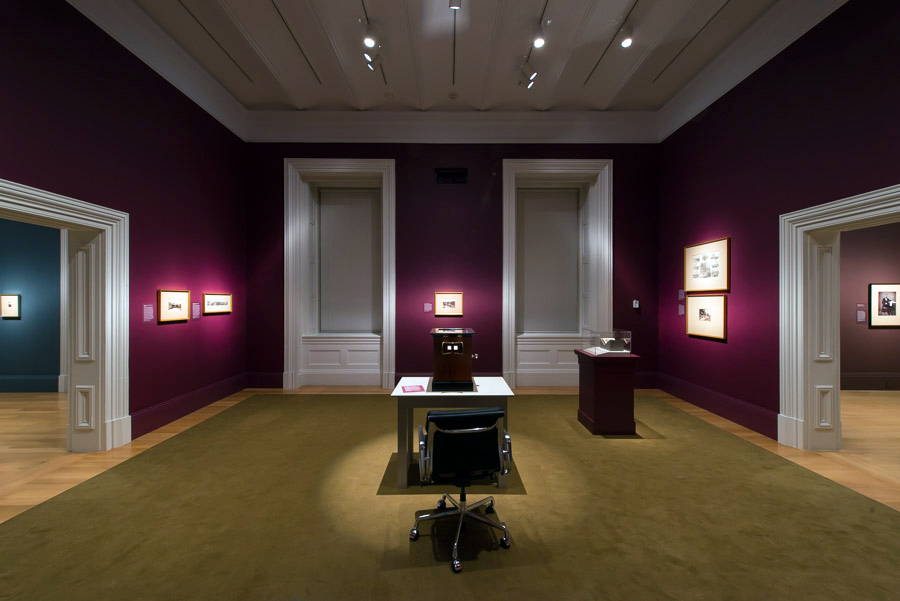
Friday and Saturday: 10am – 9pm
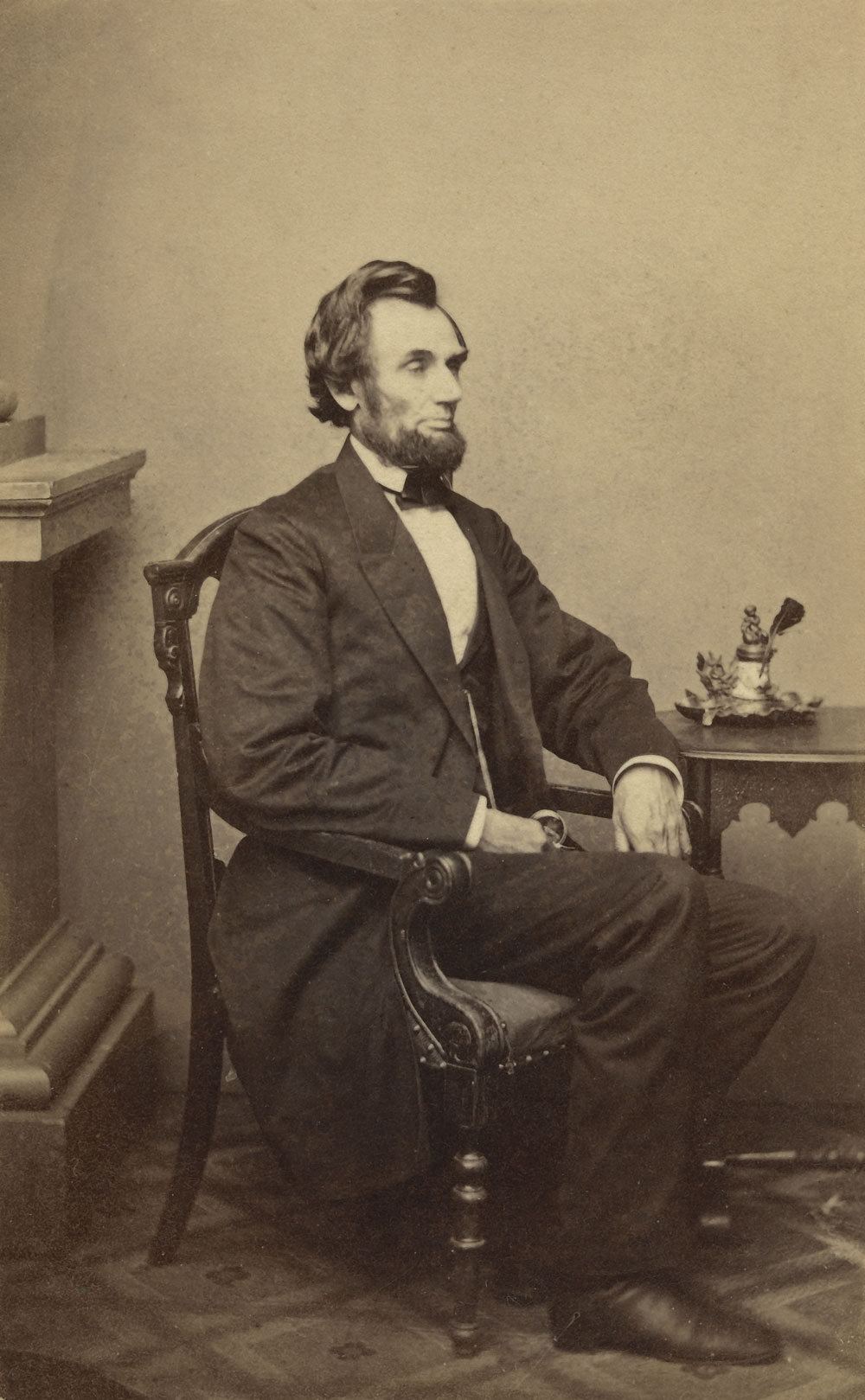
Closed Wednesday

The Metropolitan Museum of Art website
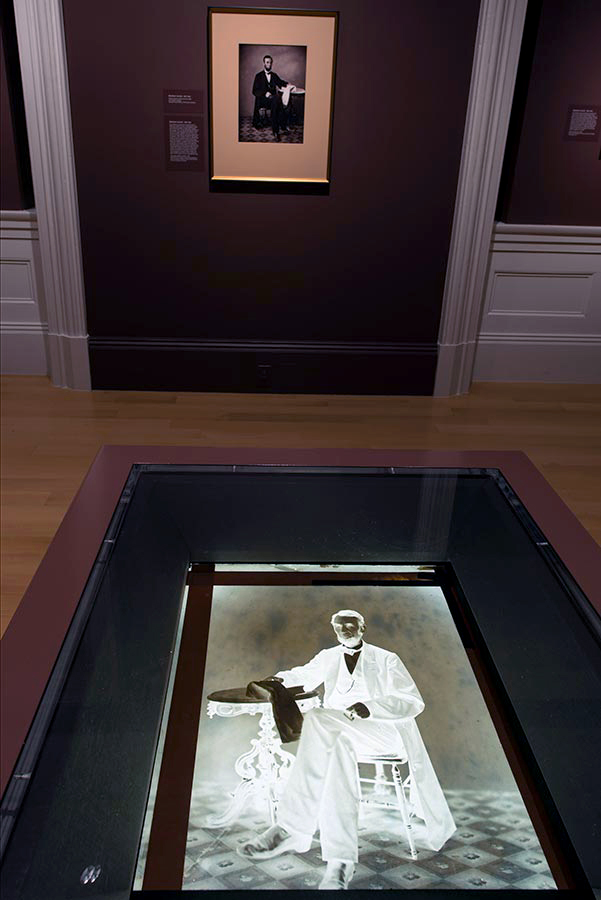
LIKE ART BLART ON FACEBOOK

Back to top