Review: ‘Photography: Real & Imagined’ at The Ian Potter Centre: NGV Australia, Melbourne Part 2

Exhibition dates: 13th October, 2023 – 4th February, 2024

Curator: Susan van Wyk, NGV Senior Curator of Photography


Paul Strand (American 1890-1976, France 1951-1976) 'Still life, pear and bowls, Twin Lakes, Connecticut' 1916, printed 1983


Paul Strand (American 1890-1976, France 1951-1976)
Still life, pear and bowls, Twin Lakes, Connecticut
1916, printed 1983
From the Paul Strand: The Formative Years 1914-1917 portfolio photogravure
National Gallery of Victoria, Melbourne
Purchased, 1984
Public domain


“I feel that photographs can either document or record reality or they can offer images as an alternative to everyday life: places for the viewer to dream in.”


Francesca Woodman, 1980


Smoke and mirrors, smoke and mirrors…

In many ways the exhibition Photography: Real & Imagined at The Ian Potter Centre: NGV Australia can be seen as a summation of all that is good and bad with the photography collection and the photography exhibition program at the National Gallery of Victoria.

Since the sad and unfortunate demise of the small but important dedicated photography gallery, photography exhibitions at the NGV (other than the large Patrick Pound exhibition all those years ago in 2017) have been in a state of deep freeze. I MISS that little third floor gallery… it’s all we had for photography at the NGV on a regular basis and there were some interesting shows there. It’s been gone for years and photography has been lumped in with contemporary art. And then, and now, nothing for years.

Therefore, as a fellow photographic artist observed to me, “It was great to see the NGV finally give photography a large exhibition after so many years of neglect.” Never a truer word said.

Let’s get the good stuff about the exhibition out of the way first. Whoever curated the exhibition (unknown, unnamed) really knew how to pull an installation of photographs together. There was some sophisticated sequencing of the images on the various themes from Australian and International artists, very intelligently and beautifully rendered which I enjoyed tremendously. I also enjoyed seeing the glorious display of photobooks: I was in heaven seeing in one display cabinet Man Ray’s book Photographs by Man Ray Paris 1920-1934 (published 1934), Claude Cahun and Marcel Moore’s book Aveux non Avenus (Disavowals or Cancelled Confessions) (published 1930), Bill Brandt’s book Perspective of Nudes (published 1961), and Germaine Krull’s book Nude studies (Études de nu) (published 1930). What a selection!

And it was finally great to see Australian and international work displayed together on such a large scale, something I can’t remember happening in the 35 years I have being viewing photography exhibitions in Australia. This is something that the NGV should have been promoting for many years, the placement of Australian photography in an international context… even taking this concept overseas, to promote Australian photography internationally. But no, nothing of this kind of forward thinking has ever happened in insular Australia.

Now to the not so good stuff. The most glaring anomaly about the exhibition was its over ambitious structure. While the concept ‘Real & Imagined’ was very strong – an exhibition of photographs picturing a version of reality captured by the camera (for it can never capture reality itself) / photographs created by the imagination of human beings – this robust concept was overwhelmed by too many thematic sections in the exhibition.

These sections included ‘Light’ and ‘Systems and Surface’ and ‘Surreal’ and ‘Narrative’ and ‘Work and Play’ and ‘Movement’ and ‘Studio and Things’ and ‘Display’ and ‘Consumption’ and ‘Self’ and ‘Skin’ and ‘Community and Touch’ and ‘Environment’ and ‘Place and Built’ and ‘Nineteenth-century photography’ and ‘Conflict’ and ‘Death’. I’m exhausted already…

And then, walking around the exhibition, the wall texts used to identify and illuminate these sections became totally irrelevant as through their placement on the wall I had no idea to which area they were referring. It was totally confusing and in the end I just ignored them.

As I observed people wandering around the exhibition, most had no idea of the importance of some of the images on display… why would they? They are not photography aficionados but the viewing public. If I found the exhibition confusing imagine how they viewed it. What the NGV should have done was have a guided tour on the hour, every hour, to talk about the seminal works in the exhibition and about how the exhibition had been structured. Imagine someone explaining the importance of the four photobooks in a display cabinet mentioned earlier in the history of photography and how by putting them together you were creating a sophisticated dialogue over time about identity and gender issues.

As the aforementioned colleague observed to me, “the exhibition felt like a data dump with a tacked on theme that strained (and failed) to resonate.” I wouldn’t go that far for the overall concept was strong and vibrant but like much of what has happened with the photography collection at the NGV, the overall outcome was confused and piecemeal.

This can no better be illustrated than through the comments of the Director of the NGV, Tony Ellwood, when he said in the press release, “This exhibition celebrates the collections and achievements of the NGV’s photography department, which has presented more than 180 exhibitions in its 55-year history. The exhibition is a testament to the strength of the NGV Collection, with so many key examples of the history of photography represented, from the earliest examples from the 19th century, through to contemporary images being produced right now in the twenty-first century.”

I note that when the head of the NGV boasts about the number of photography exhibitions over the last 55 years (180, about 3 a year mainly small exhibitions) and the “strength” of the NGV Photography Collection… you know that he is proselytising.

Most of the large photography exhibitions have been brought in from outside sources in the last 30 years and little research has been done into Australian photography and its relationship to world photography in house. And while the NGV collection has “strength” in certain areas it is woefully lacking in others. Again, the word “piecemeal” springs to mind, like Swiss cheese full of the biggest holes … and this exhibition only serves to reinforce that idea, often displaying the only photograph by an important artist that the collection holds.

Smoke and mirrors, smoke and mirrors!

For example I picked a few photographic artists off the top of my head as I thought of them – and the NGV collection possesses some in reasonable depth:

Edward Steichen 23
Paul Strand 51
Brassai 17
André Kertesz 45
Eugène Atget 143
Frank Hurley 20
Max Dupain 94
Bill Brandt 44
Bill Henson 108
Lee Friedlander 31
David Goldblatt 15
Dorothea Lange 28
August Sander 16

Other important photographers the NGV have nothing or next to nothing at all:

Joseph Sudek 1
Stephen Shore 0
William Eggleston 0
Julia Margaret Cameron 3
Robert Mapplethorpe 1
Ansel Adams 4
Hiroshi Sugimoto 1
Daido Moriyama 0
Raja Deen Dayal 0
Aleksandr Rodchenko 1
Olive Cotton 9
Berenice Abbott 7
Diane Arbus 2
Roger Ballen 1
Bernd and Hiller Becher 1
Thomas Ruff 2
Manuel Álvarez Bravo 0
Edward Weston 6
Henri Cartier-Bresson 2
Robert Frank 11
Garry Winogrand 0
Nan Goldin 3
Gordon Parks 3
Lewis Hine 9
Peter Hujar 0
Imogen Cunningham 6

Not exactly an institution that has “strength” in their photography collection. And over the last 30 years seemingly nothing much has been done to plug these enormous holes in the collection…. instead, for example, buying one work by Jeff Wall for a million dollars.

The NGV needs to improve the photography collection and its photography exhibition program. After too many years of stagnation an injection of new ideas and a new direction for exhibition programming is needed. A couple of focused photography exhibitions per year would be a good start, as would the purchasing of historic photographs to fill huge gaps in the collection rather than the purchasing of contemporary work. Non-vintage prints of the masters can still be bought at affordable prices. And therein lies just one of the problems: money.

Investment in photography at the NGV in terms of people and money is much needed, otherwise the deep freeze and dance of smoke and mirrors will continue well into the future.

Dr Marcus Bunyan

For more information on the early collecting practices for the NGV photography collection please see my research paper Beginnings: The International Photographic Collection at the National Gallery of Victoria (2105)


Many thankx to the NGV for allowing me to publish the media images in the posting. All other installation images are by Marcus Bunyan. See more images and text in Part 1 of the posting.


Photography: Real and Imagined examines two perspectives on photography; photography grounded in the real world, as a record, a document, a reflection of the world around us; and photography as the product of imagination, storytelling and illusion. On occasion, photography operates in both realms of the real and the imagined.

Highlighting major photographic works from the NGV Collection, including recent acquisitions on display for the very first time, Photography: Real and Imagined examines the complex, engaging and sometimes contradictory nature, of all things photographic. The NGV’s largest survey of the photography collection, the exhibition includes more than 300 works by Australian and international photographers and artists working with photo-media from the nineteenth, twentieth and twenty-first centuries.


Installation view of the exhibition 'Photography: Real & Imagined' at The Ian Potter Centre: NGV Australia, Melbourne showing at rear left, Penelope Davis' 'Shelf' (2008) and 'Non-fiction (red)' (2008, below); at third right, Anne Ferran's 'Scenes on the death of nature, III' (1986); at second right, Candida Höfer's 'Teylers Museum Haarlem II' (2003, below); and at right, Thomas Struth's 'Pergamon Museum IV, Berlin' (2001)


Installation view of the exhibition Photography: Real & Imagined at The Ian Potter Centre: NGV Australia, Melbourne showing at rear left, Penelope Davis’ Shelf (2008) and Non-fiction (red) (2008, below); at third right, Anne Ferran’s Scenes on the death of nature, III (1986); at second right, Candida Höfer’s Teylers Museum Haarlem II (2003, below); and at right, Thomas Struth’s Pergamon Museum IV, Berlin (2001)
Photo: Marcus Bunyan
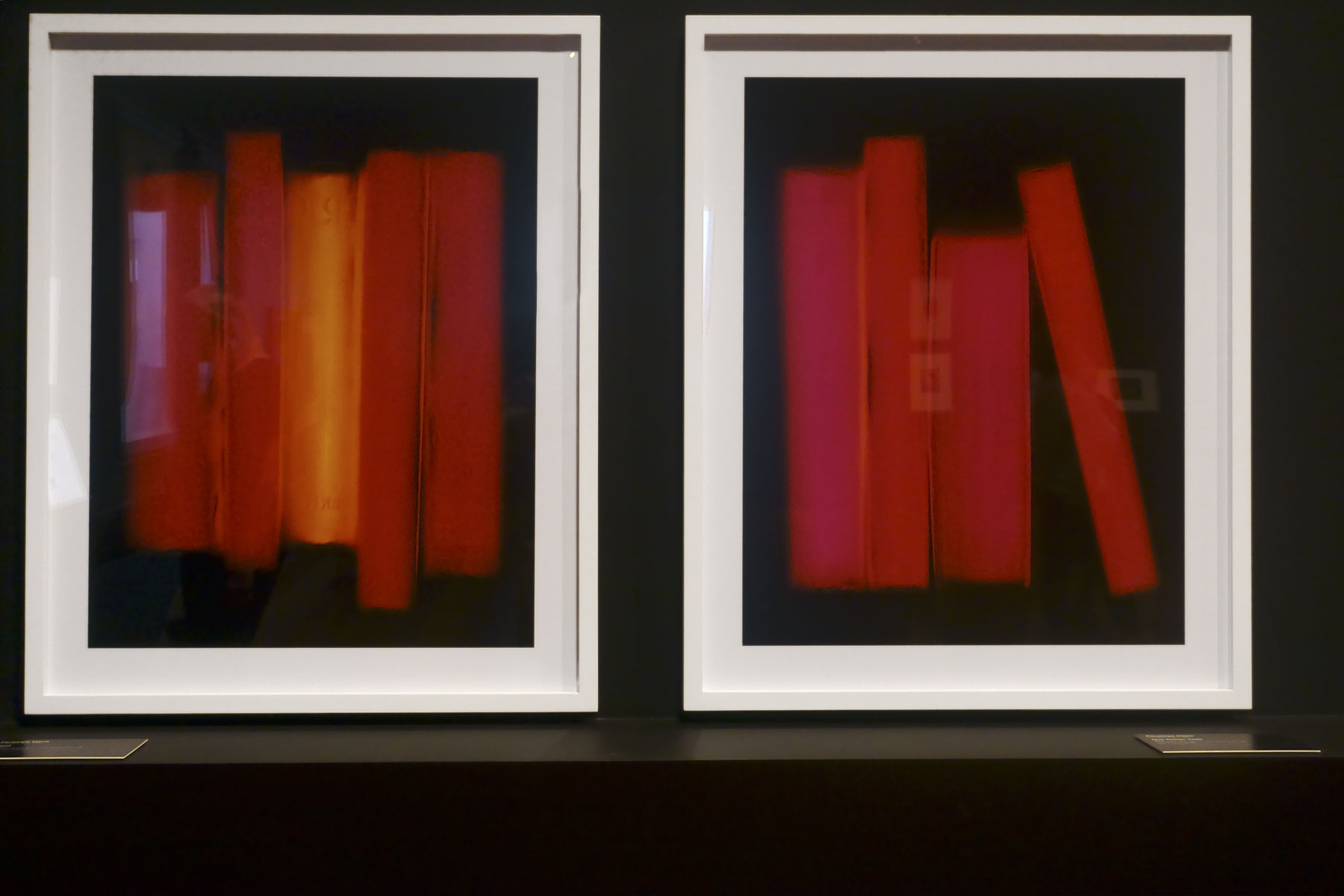
 

Installation view of the exhibition 'Photography: Real & Imagined' at The Ian Potter Centre: NGV Australia, Melbourne showing Penelope Davis' 'Shelf' (2008) and 'Non-fiction (red)' (2008) from the 'Fiction-Non-Fiction' series 2007-2008


Installation view of the exhibition Photography: Real & Imagined at The Ian Potter Centre: NGV Australia, Melbourne showing Penelope Davis’ Shelf (2008) and Non-fiction (red) (2008) from the Fiction-Non-Fiction series 2007-2008
Photo: Marcus Bunyan


Installation view of the exhibition 'Photography: Real & Imagined' at The Ian Potter Centre: NGV Australia, Melbourne showing at middle left, Anne Ferran's 'Scenes on the death of nature, III' (1986); at centre, Candida Höfer's 'Teylers Museum Haarlem II' (2003, below); and at middle right, Thomas Struth's 'Pergamon Museum IV, Berlin' (2001)


Installation view of the exhibition Photography: Real & Imagined at The Ian Potter Centre: NGV Australia, Melbourne showing at middle left, Anne Ferran’s Scenes on the death of nature, III (1986); at centre, Candida Höfer’s Teylers Museum Haarlem II (2003, below); and at middle right, Thomas Struth’s Pergamon Museum IV, Berlin (2001)
Photo: Marcus Bunyan


The luminous photograph by Thomas Struth shows museum visitors immersed in observing the Telephos frieze within a room of the Pergamon Museum in Berlin. Struth draws our attention to the fact that viewing a work of art in a public gallery is rarely a private experience. The visit is usually shared by other visitors, museum staff, security guards and tour guides. There is also the omnipresent gaze of security cameras. Struth seems to be emulating the technical innovations of the Telephos frieze in his arrangement of the viewers. Similarities between the poses of the audience members and the poses of the carved relief figures gradually emerge, suggesting an unconscious dialogue between the viewers and the objects they regard.

Wall text from the exhibition


Candida Höfer (German, b. 1944) 'Teylers Museum Haarlem II' 2003


Candida Höfer (German, b. 1944)
Teylers Museum Haarlem II
2003
Type C photograph
National Gallery of Victoria, Melbourne
Purchased, 2004


This photograph shows the famous Oval Room within Teylers Museum, the oldest public museum in the Netherlands. Candida Höfer photographed the space bathed in a brilliant, even light that illuminates its architecture, objects and famed mineralogical cabinet. The highly structured museological ordering of the objects and the Neoclassical architecture that contains them are exaggerated by the formal, symmetrical composition of the photograph. This image invites reflection of the ways in which cultural institutions direct our engagement with materials. As the artist has said, ‘There are no people there, but you understand that the places were made specially for them. This is very meaningful for me, and it’s exactly what I want to express’.

Wall text from the exhibition


Installation view of the exhibition 'Photography: Real & Imagined' at The Ian Potter Centre: NGV Australia, Melbourne showing at left, Anne Ferran's 'Scenes on the death of nature, III' (1986); at centre, Candida Höfer's 'Teylers Museum Haarlem II' (2003); and at right, Thomas Struth's 'Pergamon Museum IV, Berlin' (2001)


Installation view of the exhibition Photography: Real & Imagined at The Ian Potter Centre: NGV Australia, Melbourne showing at left, Anne Ferran’s Scenes on the death of nature, III (1986); at centre, Candida Höfer’s Teylers Museum Haarlem II (2003, above); and at right, Thomas Struth’s Pergamon Museum IV, Berlin (2001). In the distance can be seen Lotte Jacobi’s Head of a dancer (1929, below); Man Ray’s Head of a dancer (1929, below); and Lee Miller’s Nimet Eloui Bey (c. 1930, below)
Photo: Marcus Bunyan


Lotte Jacobi (American, 1896-1990) 'Head of the Dancer' 1929


Lotte Jacobi (German 1896-1990, United States 1935-1990)
Head of a dancer
1929, printed c. 1970
Gelatin silver photograph
26.4 x 33.2cm
National Gallery of Victoria, Melbourne
Bowness Family Fund for Photography, 2021
Public domain


Man Ray (1890-1976) 'Kiki with African mask' 1926


Man Ray (Emmanuel Radnitzky) (American, 1890-1976)
Kiki with African mask
1926
Gelatin silver photograph
21.1 x 27.6cm
National Gallery of Victoria, Melbourne
Purchased through The Art Foundation of Victoria with the assistance of Miss Flora MacDonald Anderson and Mrs Ethel Elizabeth Ogilvy Lumsden, Founder Benefactors, 1983
Public domain


Kiki with African mask is one of Man Ray’s most celebrated photographs and an iconic image of the Art Deco period. First published in Vogue in 1926, it is an elegant image, but it also speaks to the impact of European colonialism in Africa. In this pared-back studio photograph all extraneous detail is excluded from the image, focusing our attention on the exquisitely made-up face of Kiki in juxtaposition with the perfectly polished ebony of the mask. This photograph invites us to delight in the physical beauty of Man Ray’s celebrated model but offers nothing about the mask or its maker.

Wall text from the exhibition
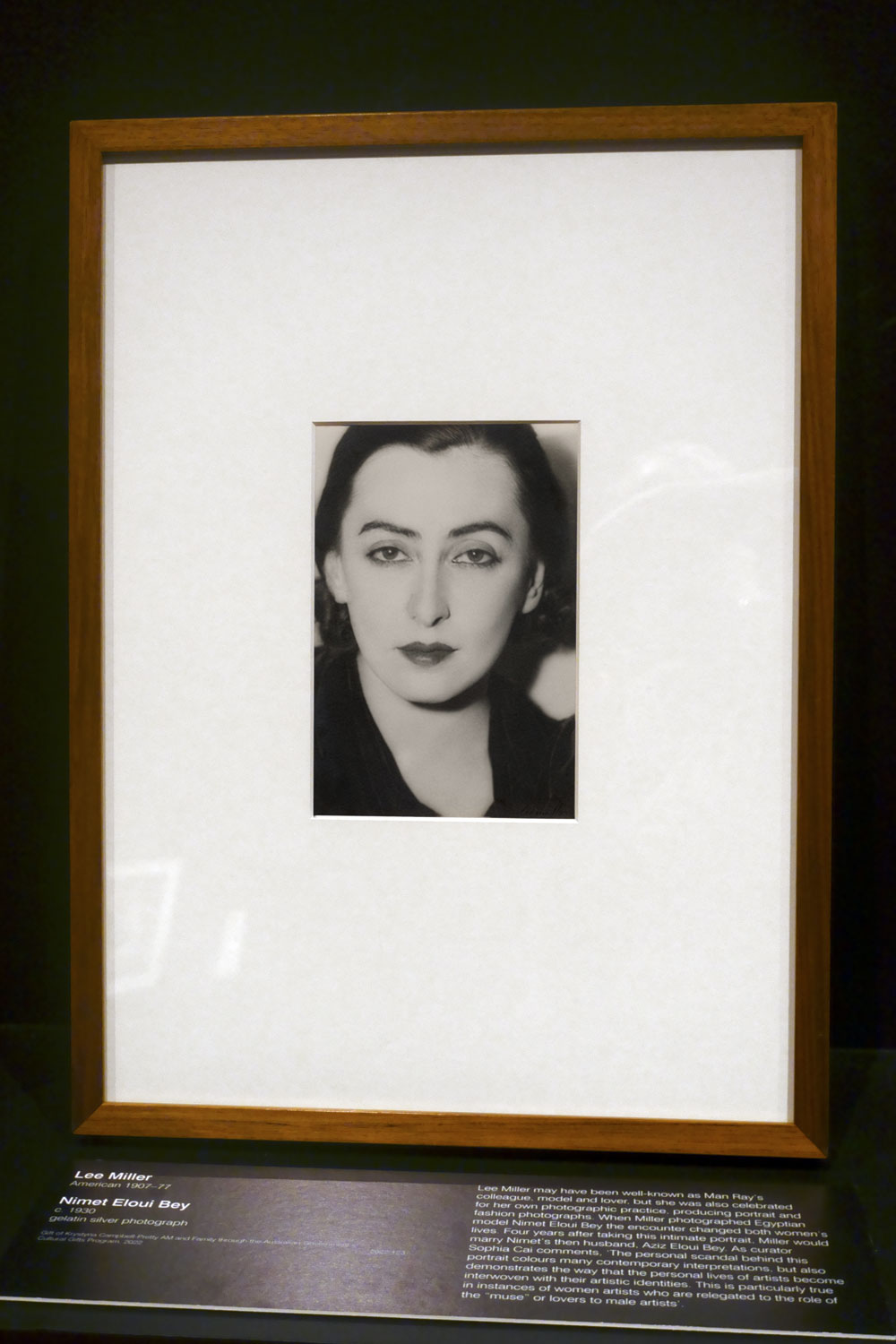
 

Installation view of the exhibition 'Photography: Real & Imagined' at The Ian Potter Centre: NGV Australia, Melbourne showing Lee Miller's 'Nimet Eloui Bey' (c. 1930)


Installation view of the exhibition Photography: Real & Imagined at The Ian Potter Centre: NGV Australia, Melbourne showing Lee Miller’s Nimet Eloui Bey (c. 1930, below)
Photo: Marcus Bunyan


Lee Miller (American 1907-1977) 'Nimet Eloui Bey' c. 1930 (installation view)


Lee Miller (American 1907-1977)
Nimet Eloui Bey (installation view)
c. 1930
Gelatin silver photograph
23.0 x 15.8cm
National Gallery of Victoria, Melbourne
Gift of Krystyna Campbell-Pretty AM and Family through the Australian Government’s Cultural Gifts Program, 2022
Photo: Marcus Bunyan


Lee Miller may have been well-known as Man Ray’s colleague, model and lover, but she was also celebrated for her own photographic practice, producing portrait and fashion photographs. When Miller photographed Egyptian model Nimet Eloui Bey the encounter changed both women’s lives. Four years after taking this intimate portrait, Miller would marry Nimet’s then husband, Aziz Eloui Bey. As curator Sophia Cai comments, ‘The personal scandal behind this portrait colours many contemporary interpretations, but also demonstrates the way that the personal lives of artists become interwoven with their artistic identities. This is particularly true in instances of women artists who are relegated to the role of the “muse” or lovers to male artists’.

Wall text from the exhibition


Installation view of the exhibition 'Photography: Real & Imagined' at The Ian Potter Centre: NGV Australia, Melbourne showing at centre, Fiona Pardington's 'Portrait of a life-cast of Koe, Timor' (2010) and 'Portrait of a life cast of Matoua Tawai, Aotearoa New Zealand' (2010); and at right, Linda Judge's 'Victoria and Albert Museum 20/4/94' (1994)


Installation view of the exhibition Photography: Real & Imagined at The Ian Potter Centre: NGV Australia, Melbourne showing at centre, Fiona Pardington’s Portrait of a life-cast of Koe, Timor (2010) and Portrait of a life cast of Matoua Tawai, Aotearoa New Zealand (2010); and at right, Linda Judge’s Victoria and Albert Museum 20/4/94 (1994, below)
Photo: Marcus Bunyan


Fiona Pardington’s photograph shows a life cast of the tattooed head of a Māori man, Matoua Tawai. The cast, held in a museum collection, is one of many made by Pierre- Marie Alexandre Dumoutier of Māori peoples in the 1830s. Pardington, who is of Māori and Scottish descent, has spoken of her desire to reconsider the complex history of these life casts and find a state of continuum between the past and present, to, as she says, ‘find the faces of the living people presenting and manifesting in the object’. Printing the photograph at larger-than-life scale provokes a physical encounter, an opportunity to look again and reconsider the histories of the person, the object and the image.

Wall text from the exhibition


Installation view of the exhibition 'Photography: Real & Imagined' at The Ian Potter Centre: NGV Australia, Melbourne showing Linda Judge's Victoria and Albert Museum 20/4/94 (1994, installation view detail)


Linda Judge (Australian, b. 1964)
Victoria and Albert Museum 20/4/94 (installation view detail)
1994
Type C photographs
National Gallery of Victoria, Melbourne
Margaret Stewart Endowment, 1994
Photo: Marcus Bunyan


In this image, Linda Judge wittily creates new narratives and resurrects otherwise ‘mummified’ museum objects. Concerned with the open-ended nature of archives and their ability to slip between fiction and reality, Judge presents photographs of historical lace from the collection of the Victoria and Albert Museum, London. Beneath each photograph, Judge has provided a range of both ‘plausible’ captions (’12. collar, cuff, border: Italian, late 17th century, Tape lace with needlepoint fillings and brides’) and fanciful ones (’51. veil: Brussels, end 18th century, needlepoint on bobbin ground. Worn by Madonna, for Like a Virgin in her Brussels tour ’91’). Judge humorously invites the viewer to interrogate the expectations of truth in the presentation of archival content.

Wall text from the exhibition


Installation view of the exhibition 'Photography: Real & Imagined' at The Ian Potter Centre: NGV Australia, Melbourne showing at left, Martin Parr's 'Pink pig cakes' from 'Common Sense' (1995-1999) showing at left, Martin Parr's 'Pink pig cakes' from 'Common Sense' (1995-1999); at fourth left, ringl+pit's 'Komol' (1931); at fifth left, Ilse Bing's 'Salut de Schiaparelli' (1934); and at sixth left, Dora Maar's 'Untitled (Study of Beauty)' (1936)


Installation view of the exhibition Photography: Real & Imagined at The Ian Potter Centre: NGV Australia, Melbourne showing at left, Martin Parr’s Pink pig cakes from Common Sense (1995-1999); at fourth left, ringl+pit’s Komol (1931, below); at fifth left, Ilse Bing’s Salut de Schiaparelli (1934, below); and at sixth left, Dora Maar’s Untitled (Study of Beauty) (1936, below)
Photo: Marcus Bunyan


Installation view of the exhibition 'Photography: Real & Imagined' at The Ian Potter Centre: NGV Australia, Melbourne showing ringl+pit's 'Komol' (1931)


Installation view of the exhibition Photography: Real & Imagined at The Ian Potter Centre: NGV Australia, Melbourne showing ringl+pit’s Komol (1931, below)
Photo: Marcus Bunyan
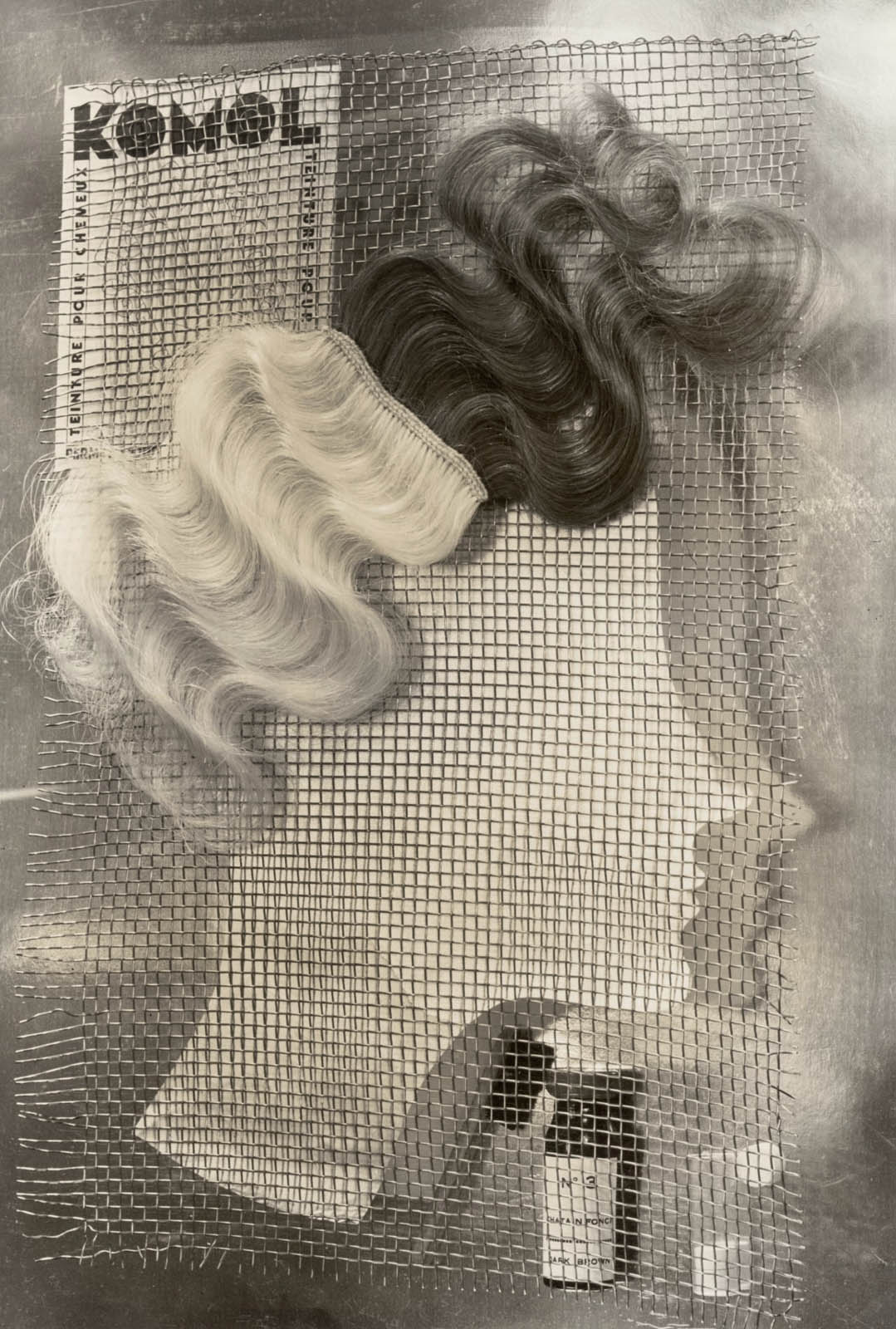
 

ringl+pit (German active 1930-1933) Grete Stern (German, 1904-1999) Ellen Auerbach (German 1906-2004) 'Komol' 1931, printed 1984


ringl+pit (German active 1930-1933)
Grete Stern (German, 1904-1999)
Ellen Auerbach (German 1906-2004)
Komol
1931, printed 1984
Gelatin silver photograph
34.4 x 23.3cm
National Gallery of Victoria, Melbourne
Bowness Family Fund for Photography, 2022
© ringl+pit


Dora Maar (French 1907-1997) 'Untitled (Study of Beauty)' 1936


Dora Maar (French 1907-1997)
Untitled (Study of Beauty)
1936
Gelatin silver photograph
33.0 x 24.1cm
National Gallery of Victoria, Melbourne
Bowness Family Fund for Photography, 2021
© Dora Maar. Licensed by Copyright Agency, Australia


Installation view of the exhibition 'Photography: Real & Imagined' at The Ian Potter Centre: NGV Australia, Melbourne showing at left, Martin Parr's 'Pink Pig Cakes, Bristol, UK' (1995); and at right, Darren Sylvester's 'On Holiday' (2010)


Installation view of the exhibition Photography: Real & Imagined at The Ian Potter Centre: NGV Australia, Melbourne showing at left, Martin Parr’s Pink Pig Cakes, Bristol, UK (1995); at third right, Lillian Bassman’s More fashion mileage per dress, Barbara Vaughn, Harper’s Bazaar, New York (1956); at second right,  and at right, Darren Sylvester’s On Holiday (2010)
Photo: Marcus Bunyan


Darren Sylvester builds and photographs hyperreal tableaux using the visual language of advertising – beautiful models, perfect lighting and considered ‘product’ placement – to construct a familiar yet illusionary reality. Here Sylvester’s model plays the role of a handsome businessman. ‘Against a sunrise, a business traveller gazes at an unknown destination’, Sylvester once wrote of this image. ‘The composition plays on stereotypes of luxury aspirations and aeroplane advertisements. For example, no-one ever flies into darkness or storms in an ad.’ In this lush, seductive photograph, Sylvester explores the slippery space between reality and illusion, aspiration and irrelevance, as we move on to the next shiny thing.

Wall text from the exhibition
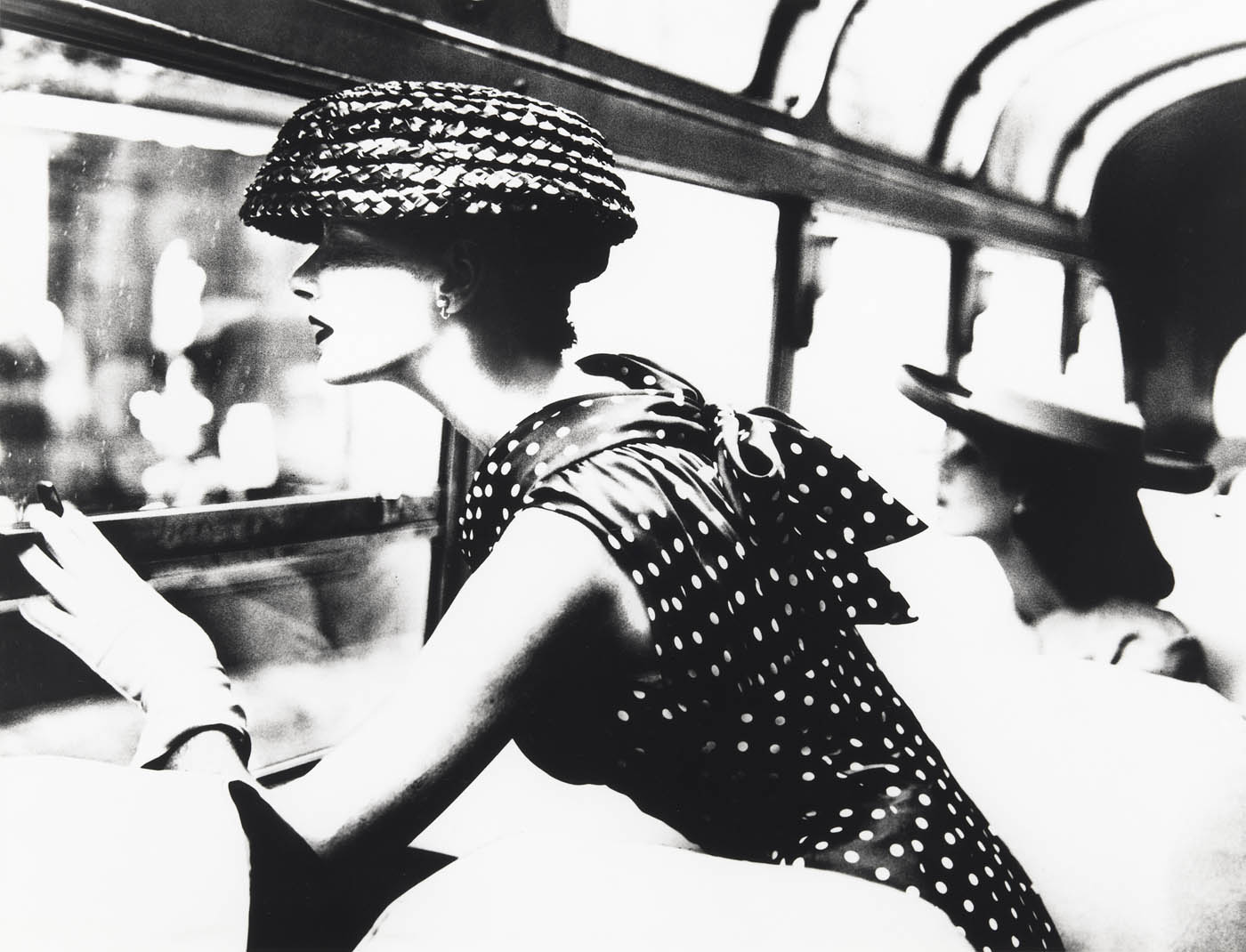
 

Lillian Bassman (American, 1917-2012) 'More fashion mileage per dress, Barbara Vaughn, Harper's Bazaar, New York' 1956


Lillian Bassman (American, 1917-2012)
More fashion mileage per dress, Barbara Vaughn, Harper’s Bazaar, New York
1956, printed later
Gelatin silver photograph
National Gallery of Victoria, Melbourne
Gift of Krystyna Campbell-Pretty AM and Family through the Australian Government’s Cultural Gifts Program, 2023


In the late 1930s, Lillian Bassman studied fashion illustration and textile design at the Pratt Institute, New York. In 1940 she began working with Alexey Brodovitch, art director of Harper’s Bazaar magazine, which soon led to her appointment as art director of the subsidiary publication Junior Bazaar. In this capacity she worked with photographers, including Richard Avedon and Robert Frank, and in 1947 began working as a freelance fashion and advertising photographer. In an interview later in her life Bassman played down her directorial role as photographer, stating, ‘It is part of the nature of a woman to be unconsciously graceful … I try to record that natural grace with a camera’.

Wall text from the exhibition


Installation view of the exhibition 'Photography: Real & Imagined' at The Ian Potter Centre: NGV Australia, Melbourne showing Athol Shmith's 'Fashion illustration, model Ann Chapman' (c. 1961)


Installation view of the exhibition Photography: Real & Imagined at The Ian Potter Centre: NGV Australia, Melbourne showing Athol Shmith’s Fashion illustration, model Ann Chapman (c. 1961)
Photo: Marcus Bunyan


Installation view of the exhibition 'Photography: Real & Imagined' at The Ian Potter Centre: NGV Australia, Melbourne showing at left, Alice Mills' 'Joan Margaret Syme' (c. 1918); at second left, works by Edson Chagas from his 'Tipo Passe' series (2014); and at third left, Hassan Hajjaj's 'Master Cobra Mansa' (2013)


Installation view of the exhibition Photography: Real & Imagined at The Ian Potter Centre: NGV Australia, Melbourne showing at left, Alice Mills’ Joan Margaret Syme (c. 1918, below); at second left, works by Edson Chagas from his Tipo Passe series (2014); and at third left, Hassan Hajjaj’s Master Cobra Mansa (2013, below) with at right, Martin Parr’s Pink Pig Cakes, Bristol, UK (1995)
Photo: Marcus Bunyan
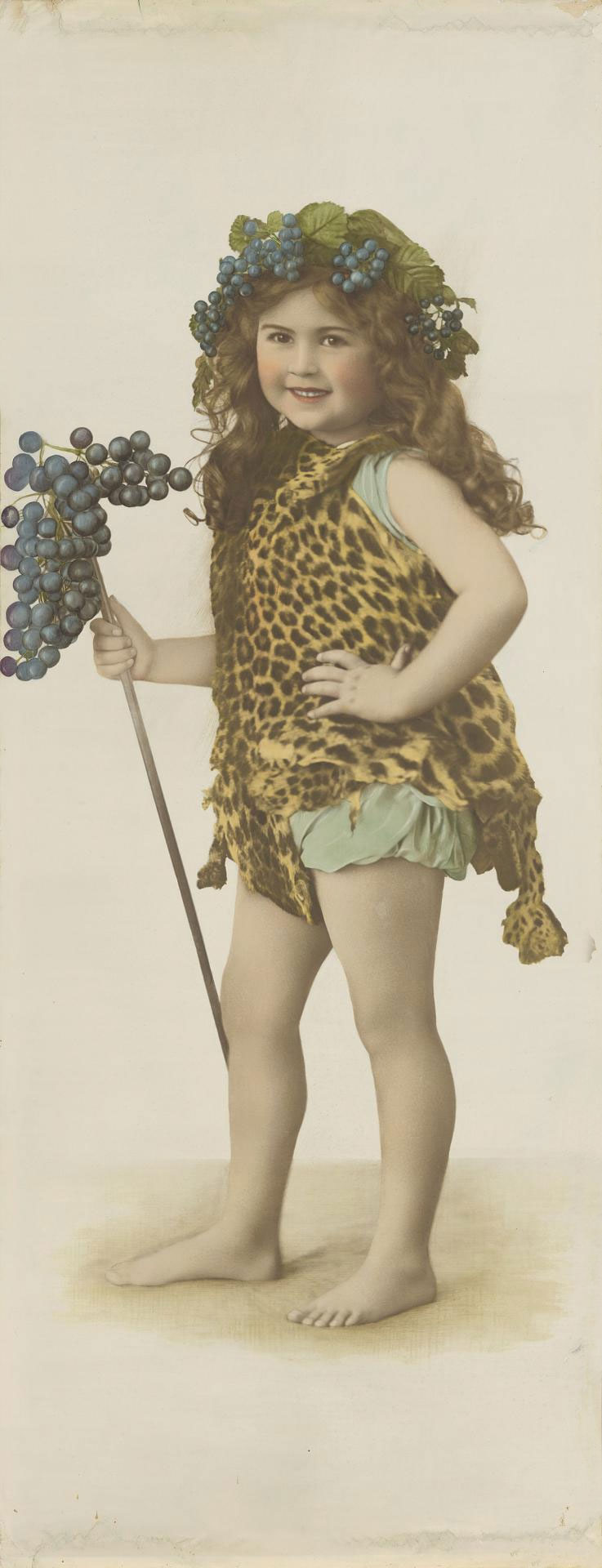
 

Alice Mills (attributed to) (Australian, 1870-1929) 'Joan Margaret Syme' c. 1918


Alice Mills (attributed to) (Australian, 1870-1929)
Joan Margaret Syme
c. 1918
Gelatin silver photograph, coloured dyes
National Gallery of Victoria, Melbourne
Presented through the NGV Foundation by Michael Hayne, 2005
Public domain


Alice Mills set up her first studio in Melbourne in 1900. She was highly regarded as a portrait photographer and in 1907 was invited to exhibit in the Australian Exhibition of Women’s Work. Her portrait of five-year-old Joan Margaret Syme dressed in a leopard-skin robe is an outstanding example of studio portraiture. It shows the skilled application of hand colouring, which was used to transform black-and-white photographs in the era before colour photography, bringing a life-like quality to the portrait. At almost two metres high, this is no only a charming study of a young child, but one of the largest photographs from the early twentieth century in the NGV Collection.

Wall text from the exhibition


Installation view of the exhibition 'Photography: Real & Imagined' at The Ian Potter Centre: NGV Australia, Melbourne showing at left Alice Mills' 'Joan Margaret Syme' (c. 1918); at centre, works by Edson Chagas from his 'Tipo Passe' series (2014); and at right, Hassan Hajjaj's 'Master Cobra Mansa' (2013)


Installation view of the exhibition Photography: Real & Imagined at The Ian Potter Centre: NGV Australia, Melbourne showing at left Alice Mills’ Joan Margaret Syme (c. 1918, above); at centre, works by Edson Chagas from his Tipo Passe series (2014); and at right, Hassan Hajjaj’s Master Cobra Mansa (2013, below)
Photo: Marcus Bunyan


Hassan Hajjaj (Moroccan, b. 1961) 'Master Cobra Mansa' 2013


Hassan Hajjaj (Moroccan, b. 1961)
Master Cobra Mansa
2013
Metallic inkjet print, timber frame, cans
76.2 x 111.8cm
National Gallery of Victoria, Melbourne
Orloff Family Charitable Trust, 2019
© Hassan Hajjaj


Multidisciplinary artist Hassan Hajjaj’s portraits show London’s Moroccan diaspora; as a designer he also creates stylish street fashion and playful interiors that are a contemporary take on Moroccan tea houses and riads. Hajjaj came to professional photography by happenstance, taking pictures both for fun and as a tool while working as a stylist on music videos. It soon became a cornerstone of his creative practice. From the outset Hajjaj wanted his photography to show ‘another side of Moroccan culture’, something that, as he says, was not ‘camels, dates and drinking mint tea!’

Wall text from the exhibition


Adolphe Braun (French 1811-1877) 'No title (Flower study)' c. 1854


Adolphe Braun (French 1811-1877)
No title (Flower study)
c. 1854
Albumen silver photograph
31.0 x 37.3cm
National Gallery of Victoria, Melbourne
Purchased NGV Foundation, 2017
Public domain


Adolphe Braun arrived in Paris in 1828 to study drafting and decorative design and within six years had established a textile design studio. Around 1853 he began to make photographs using the recently invented collodion process. The following year Braun commenced a project to photograph an extensive series of flower studies with the intent of providing documentary source material for artists and designers. He produced 300 of these photographs and in 1854 published his images in a six-volume series titled Fleurs photographiés. When they were exhibited in the 1855 Universal Exhibition in Paris, Braun was awarded a gold medal for his work’s usefulness to the fabric and decorating industries.

Wall text from the exhibition


Installation view of the exhibition 'Photography: Real & Imagined' at The Ian Potter Centre: NGV Australia, Melbourne showing at left Julie Rrap's 'Persona and shadow: Madonna' (1984)


Installation view of the exhibition Photography: Real & Imagined at The Ian Potter Centre: NGV Australia, Melbourne showing at left Julie Rrap’s Persona and shadow: Madonna (1984, below)


Julie Rrap. 'Persona and shadow: Madonna' 1984


Julie Rrap (Australian, b. 1950)
Persona and shadow: Madonna
1984
Cibachrome photograph
194.7 × 104.6cm (image and sheet)
National Gallery of Victoria, Melbourne
Michell Endowment, 1984


Installation view of the exhibition 'Photography: Real & Imagined' at The Ian Potter Centre: NGV Australia, Melbourne showing from left to right, Yasumasa Morimura's 'An inner dialogue with Frida Kahlo (Flower wreath and tears)' (2001); Phumzile Khanyile's 'Untitled' (2016); Zanele Muholi's 'Ntozkhe II (Parktown)' (2016, below); Ayana V. Jackson's 'How sweet the song' (2017); Julie Rrap's 'Madonna' (1984); and Siri Hayes 'Spilling pearls' (2012)


Installation view of the exhibition Photography: Real & Imagined at The Ian Potter Centre: NGV Australia, Melbourne showing from left to right, Yasumasa Morimura’s An inner dialogue with Frida Kahlo (Flower wreath and tears) (2001, below); Phumzile Khanyile’s Untitled (2016); Zanele Muholi’s Ntozkhe II (Parktown) (2016, below); Ayana V. Jackson’s How sweet the song (2017); Julie Rrap’s Madonna (1984, above); and Siri Hayes Spilling pearls (2012)
Photo: Marcus Bunyan

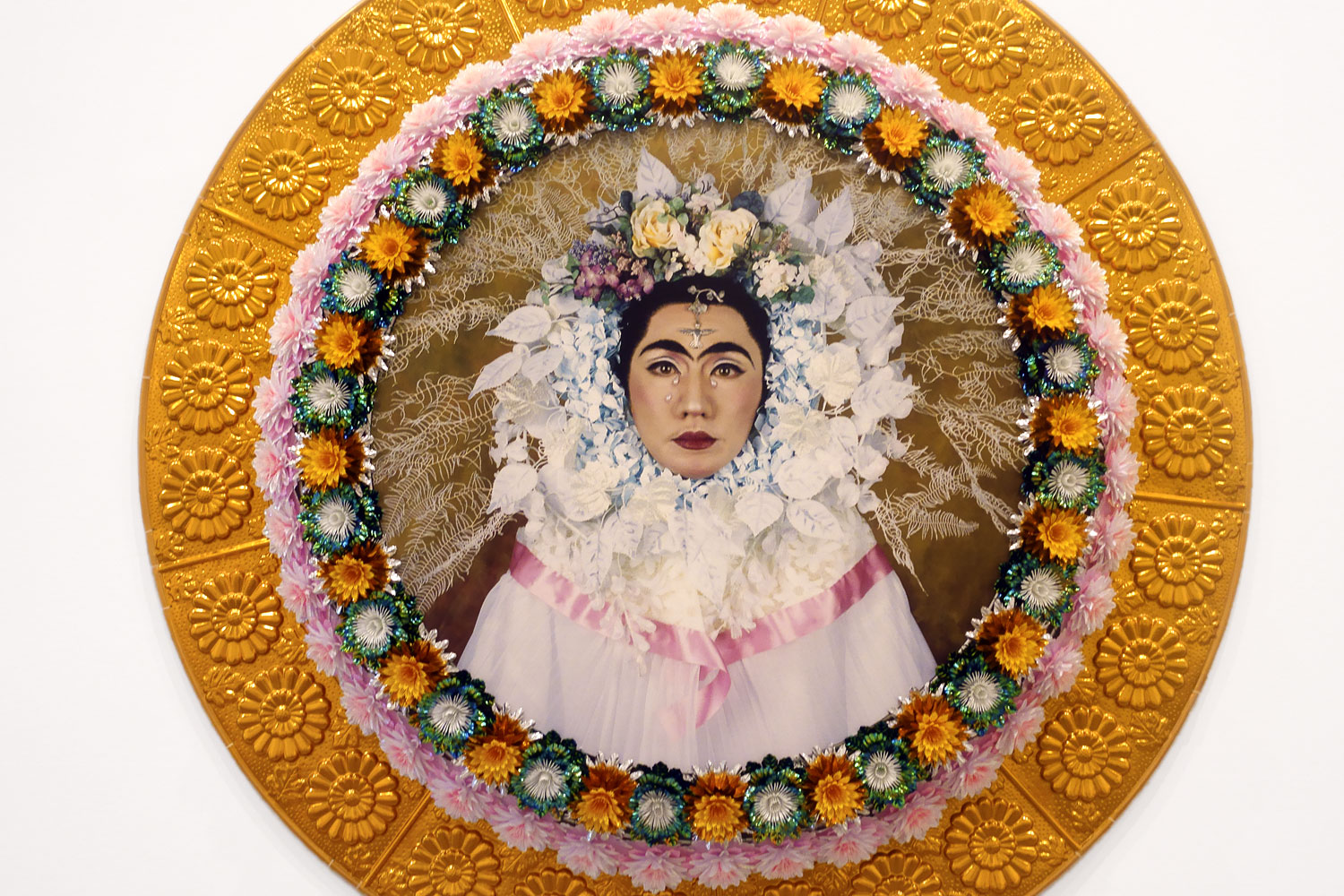
 

Yasumasa Morimura (Japanese, b. 1951) 'An inner dialogue with Frida Kahlo (Flower wreath and tears)' 2001 (installation view)

Yasumasa Morimura (Japanese, b. 1951) 'An inner dialogue with Frida Kahlo (Flower wreath and tears)' 2001 (installation view)


Yasumasa Morimura (Japanese, b. 1951)
An inner dialogue with Frida Kahlo (Flower wreath and tears) (installation views)
2001
From the An Inner Dialogue with Frida Kahlo series 1991-2001
Photograph, plastic
213.4cm diameter
National Gallery of Victoria, Melbourne
Purchased NGV Foundation, 2022
Photos: Marcus Bunyan
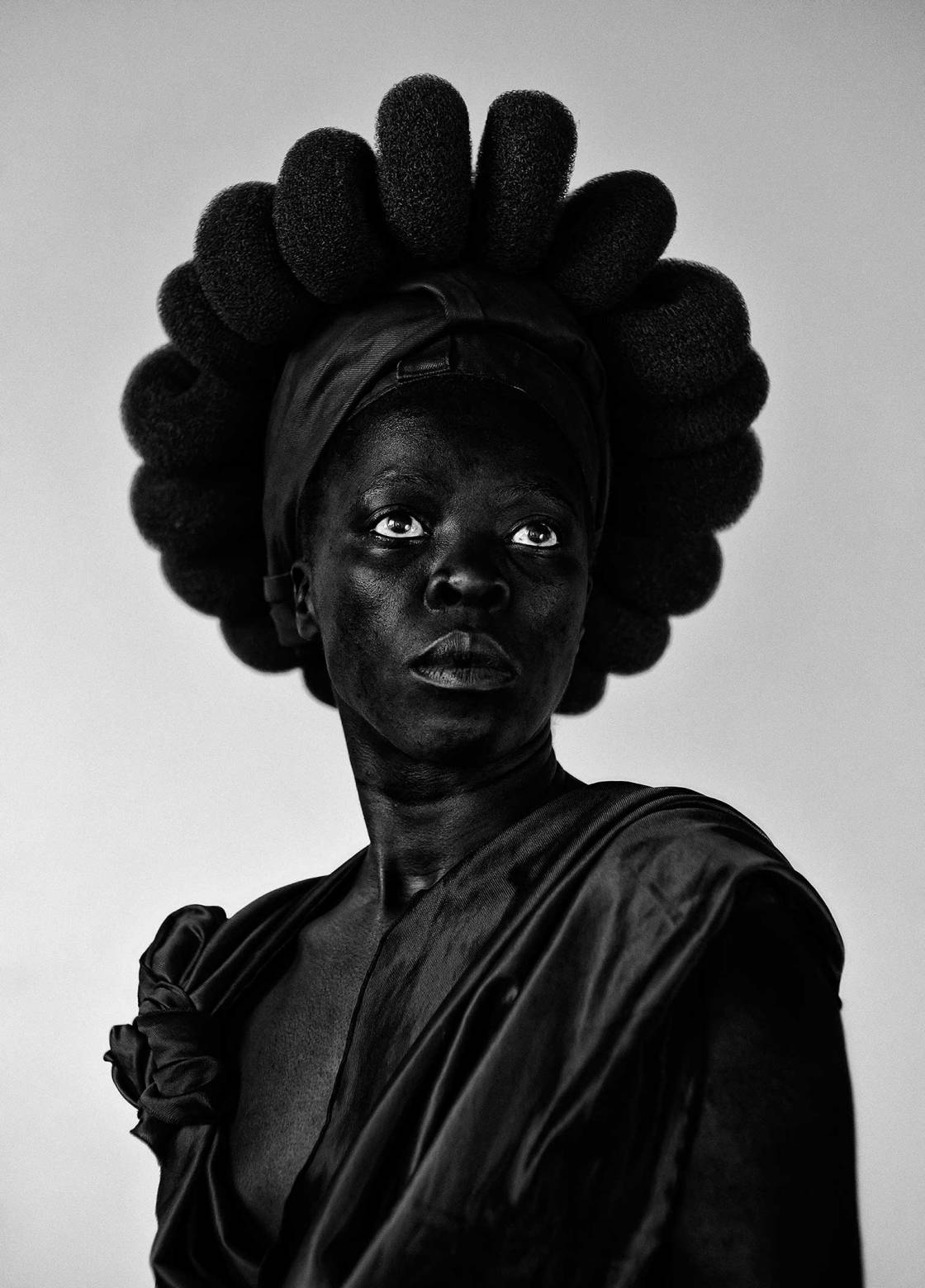
 

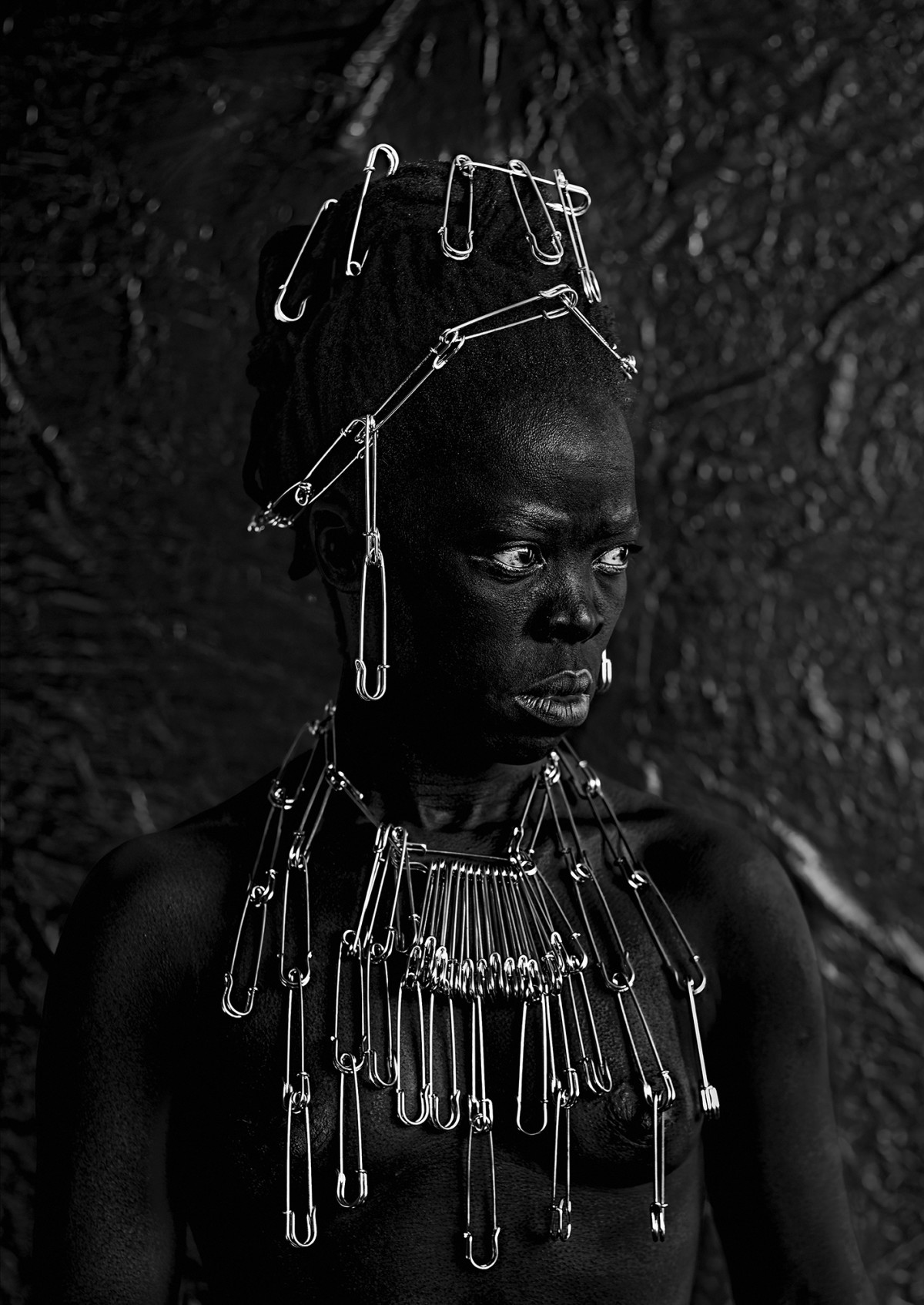
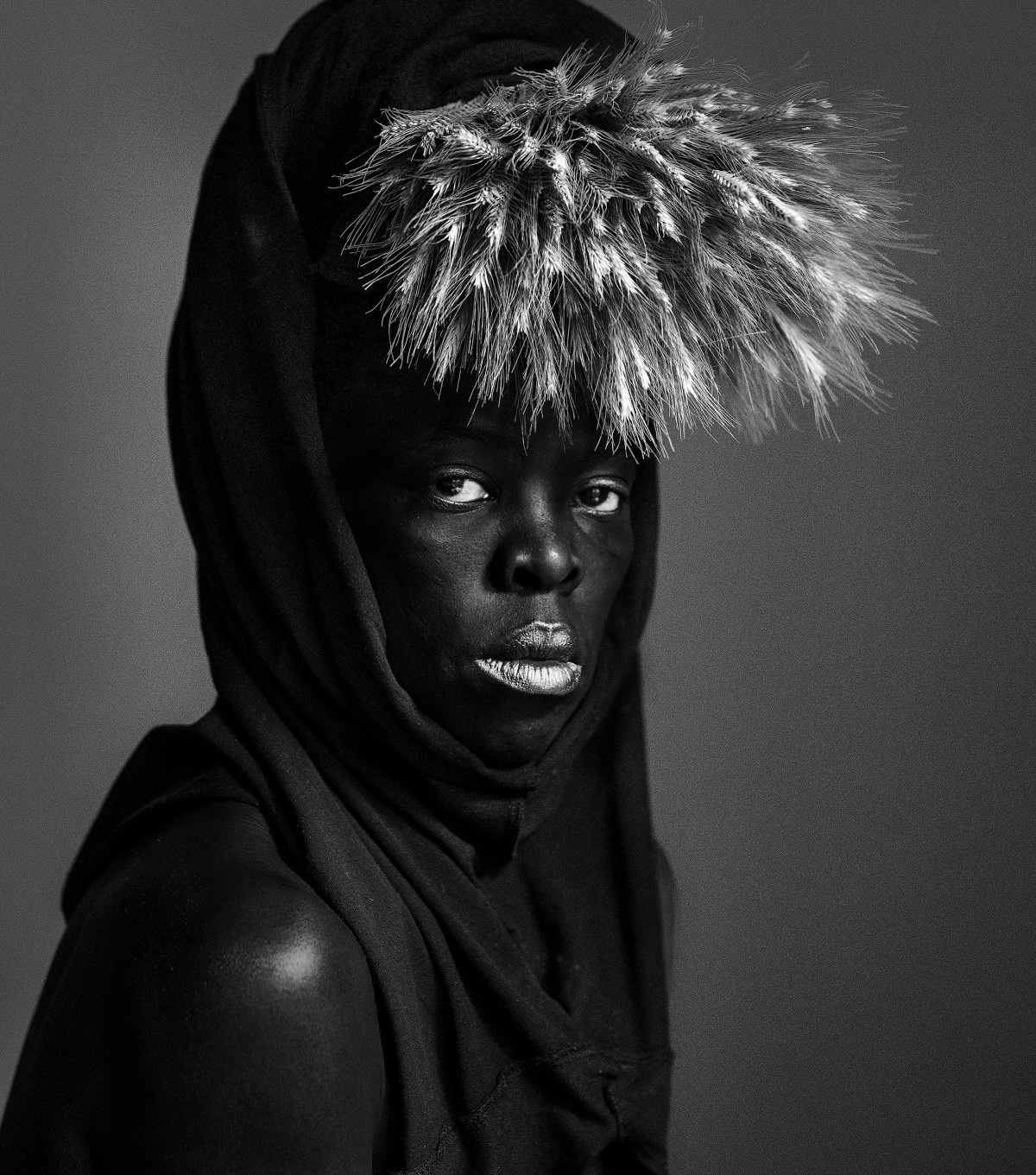
Zanele Muholi (South African, b. 1972) 'Ntozkhe II (Parktown)' 2016


Zanele Muholi (South African, b. 1972)
Ntozkhe II (Parktown)
2016
From the Somnyama Ngonyama series 2015-2016
Gelatin silver photograph
99 x 74cm
National Gallery of Victoria, Melbourne
Bowness Family Fund for Photography, 2017
© Zanele Muholi. Courtesy of the artist and Yancey Richardson, New York


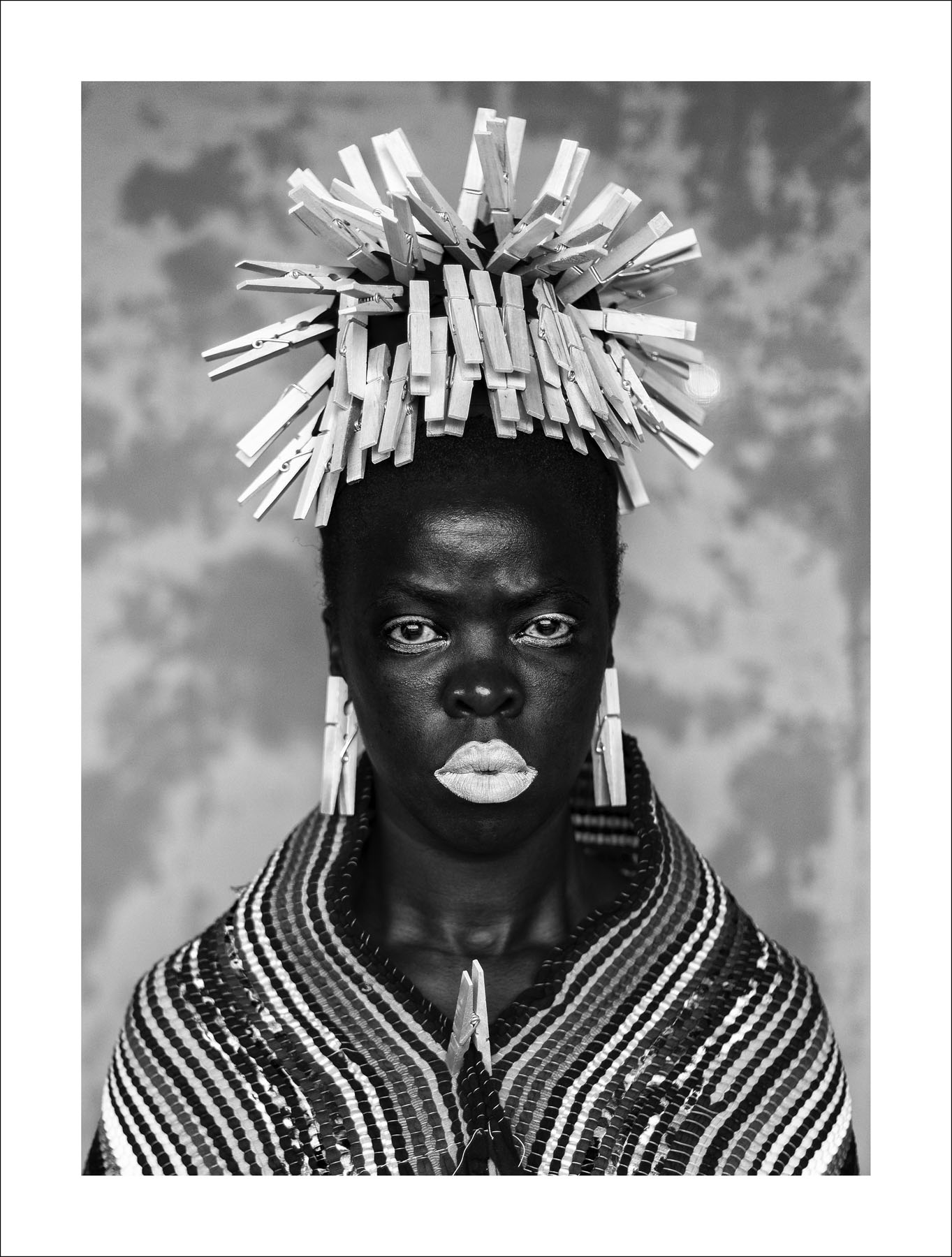
Using found props – in this instance a ‘crown’ of scouring pads – Zanele Muholi has photographed themself to confront racial stereotypes and examine concepts of self-representation while honouring generations of women who have worked domestically. Discussing this work the artist wrote, ‘In some ways, yes: Ntozakhe is based on the Statue of Liberty, representing the idea of freedom – the freedom all women should have – as well as pride: pride in who we are as black, female-bodied beings. But what kind of freedom are we talking about? What is the colour of the Statue of Liberty? What race is the figure monumentalised as Lady Liberty?’

Wall text from the exhibition
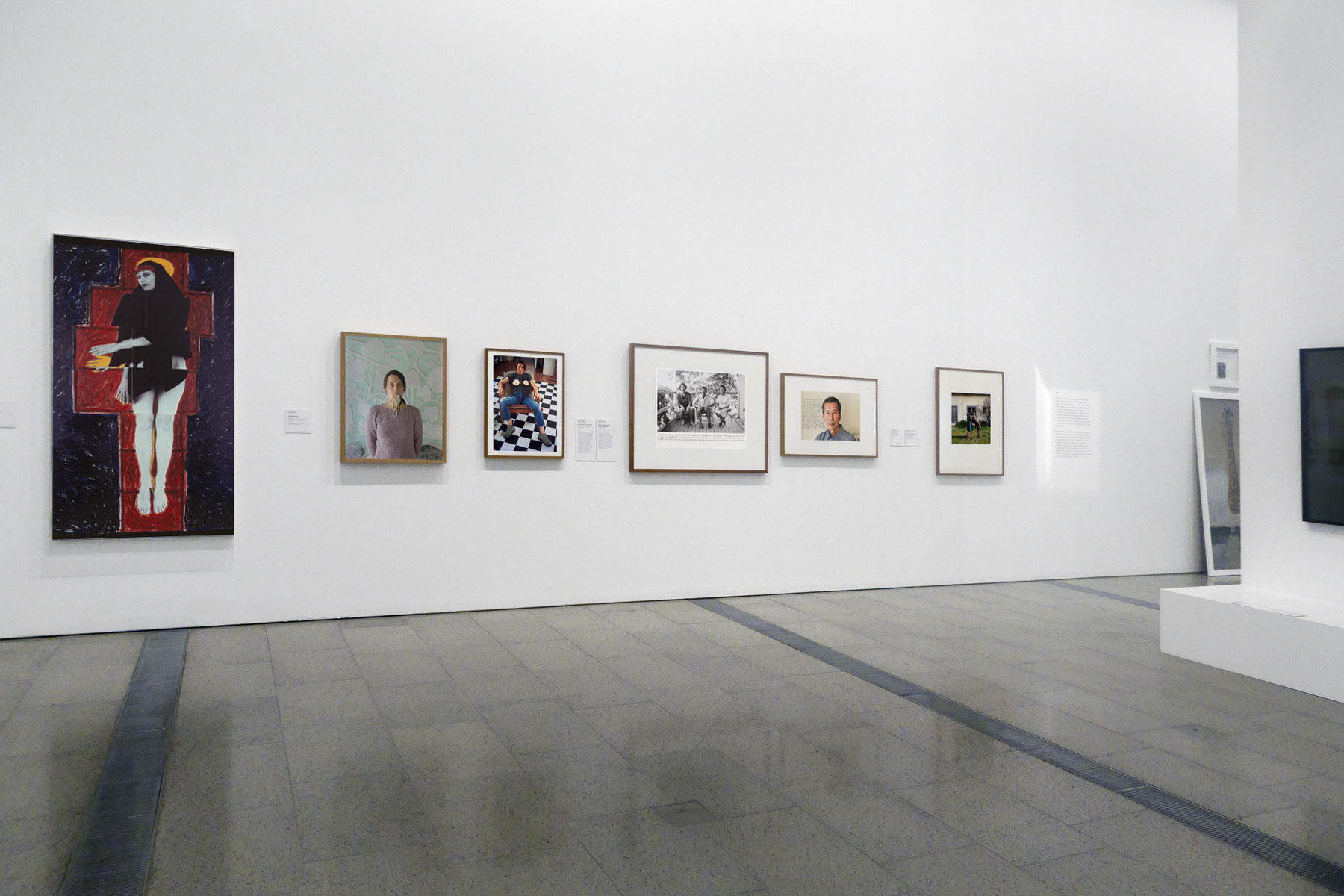
 

Installation view of the exhibition 'Photography: Real & Imagined' at The Ian Potter Centre: NGV Australia, Melbourne showing at left, Julie Rrap's 'Madonna' (1984, above); at second left, Siri Hayes' 'Spilling pearls' (2012); at third left, Sarah Lucas' 'Self-portrait with fried eggs' (1999); at fourth left, William Yang's 'William, Father, Mother, Graceville, Brisbane' (1974) and then his 'Self Portrait #5' (2008)


Installation view of the exhibition Photography: Real & Imagined at The Ian Potter Centre: NGV Australia, Melbourne showing at left, Julie Rrap’s Madonna (1984, above); at second left, Siri Hayes’ Spilling pearls (2012); at third left, Sarah Lucas’ Self-portrait with fried eggs (1999); at fourth left, William Yang’s William, Father, Mother, Graceville, Brisbane (1974, below) and then his Self Portrait #5 (2008, below)
Photo: Marcus Bunyan


William Yang (Australian, b. 1943) 'William, Father, Mother, Graceville, Brisbane' 1974 (installation view)


William Yang (Australian, b. 1943)
William, Father, Mother, Graceville, Brisbane (installation view)
1974, printed 2014
Inkjet print
National Gallery of Victoria, Melbourne
Purchased, Victorian Foundation for Living Australian Artists, 2014
Photo: Marcus Bunyan


William Yang’s autobiographical photographs combine photographs and handwritten text to tell the stories of Yang’s family, his childhood, and his experiences of being Chinese in an Australia that was not always welcoming to him. In one of these photographs Yang points to the difficulties he faced as a young man torn between his parents’ aspirations for him and his own wish for a different life. In the other, he describes himself as more content, at ease with himself and the choices he has made in his life. Together they form part of a powerful account of his life and sense of self.

Wall text from the exhibition
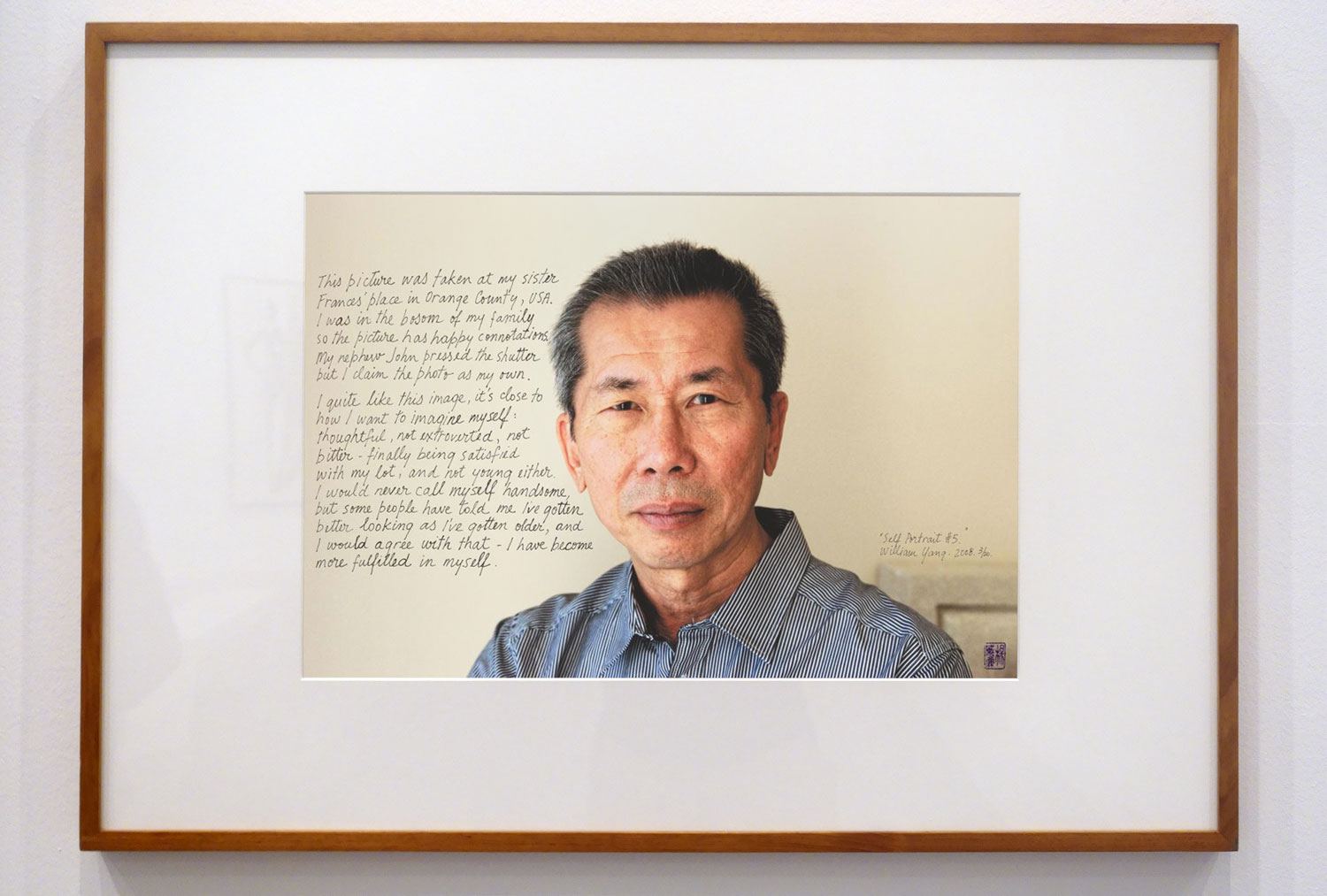
 

William Yang (Australian, b. 1943) 'Self Portrait #5' 2008 (installation view)


William Yang (Australian, b. 1943)
Self Portrait #5 (installation view)
2008; printed 2014
From the Self Portrait series
Inkjet print
43 x 65cm
National Gallery of Victoria, Melbourne
Purchased, Victorian Foundation for Living Australian Artists, 2014
Photo: Marcus Bunyan


Installation view of the exhibition 'Photography: Real & Imagined' at The Ian Potter Centre: NGV Australia, Melbourne showing from left to right, Virginie Grange's 'Untitled' (1990); George Hoyningen-Huene's 'Horst torso' (1931); František Drtikol's 'Nude' (1927-1929); Olive Cotton's 'Max after surfing' (1937); Edward Weston's 'Nude' (1936); Eadweard Muybridge's Plate 227 from 'Animal Locomotion' series 1887; and Helmut Newton's 'Big nude I' (1980)


Installation view of the exhibition Photography: Real & Imagined at The Ian Potter Centre: NGV Australia, Melbourne showing from left to right, Virginie Grange’s Untitled (1990); George Hoyningen-Huene’s Horst torso (1931, below); František Drtikol’s Nude (1927-1929); Olive Cotton’s Max after surfing (1937, below); Edward Weston’s Nude (1936, below); Eadweard Muybridge’s Plate 227 from Animal Locomotion series 1887; and Helmut Newton’s Big nude I (1980)
Photo: Marcus Bunyan


Installation view of the exhibition 'Photography: Real & Imagined' at The Ian Potter Centre: NGV Australia, Melbourne showing from left to right, George Hoyningen-Huene's 'Horst torso' (1931); František Drtikol's 'Nude' (1927-1929); Olive Cotton's 'Max after surfing' (1937); Edward Weston's 'Nude' (1936); Eadweard Muybridge's Plate 227 from 'Animal Locomotion' series 1887


Installation view of the exhibition Photography: Real & Imagined at The Ian Potter Centre: NGV Australia, Melbourne showing from left to right, George Hoyningen-Huene’s Horst torso (1931, below); František Drtikol’s Nude (1927-1929); Olive Cotton’s Max after surfing (1937, below); Edward Weston’s Nude (1936, below); Eadweard Muybridge’s Plate 227 from Animal Locomotion series 1887
Photo: Marcus Bunyan


The František Drtikol was the first fine art photograph to enter the National Gallery of Victoria collection.


George Hoyningen-Huene (Russian 1900-1968, England 1917-1921, France 1921-1935, United States 1935-1968) 'Horst torso' 1931, printed 1980s


George Hoyningen-Huene (Russian 1900-1968, England 1917-1921, France 1921-1935, United States 1935-1968)
Horst torso
1931, printed 1980s
Gelatin silver photograph
23.1 x 27.9cm
National Gallery of Victoria, Melbourne
Bowness Family Fund for Photography, 2017


Edward Weston (American 1886-1958) 'Nude' 1936, printed 1976


Edward Weston (American 1886-1958)
Nude
1936, printed 1976
Gelatin silver photograph
17.8 x 23.8cm (image and sheet)
National Gallery of Victoria, Melbourne
Purchased from Agfa and B. H. P. donation, 1977
Public domain


Olive Cotton (Australian, 1911-2003) 'Max after surfing' 1939


Olive Cotton (Australian, 1911-2003)
Max after surfing
1937, printed 1998
Gelatin silver photograph
26.0 x 19.7cm
National Gallery of Victoria, Melbourne
Purchased through The Art Foundation of Victoria with the assistance of Optus Communications Pty Limited, Member, 1998


Photographs of lovers, family and friends are perhaps the most emotionally charged of all images, not because the subject is monumental or dramatic, but because they allow us to see into intimate relationships. When photographs show subjects nude, or even partially naked, the sense of familiarity is heightened. Olive Cotton’s photograph of Max Dupain is an image that reveals intimacy and tenderness. His body is sculpted by raking side lighting and the allusion to Classical sculpture is apparent, but this photograph also carries an erotic charge – Dupain is shown as being tanned and muscular, movie-star handsome and the object of Cotton’s desire.

Wall text from the exhibition


Installation view of the exhibition 'Photography: Real & Imagined' at The Ian Potter Centre: NGV Australia, Melbourne showing from left to right, Francesca Woodman's 'Space², Providence, Rhode Island, 1976' (1976); E. J. Bellocq's 'Woman reclining with mask' (c. 1912); Florence Henri's 'Nude composition' (c. 1930); an anonymous American photographer's image 'Kaloma' (1914); and Germaine Krull's 'Daretha (Dorothea) Albu' (c. 1925)


Installation view of the exhibition Photography: Real & Imagined at The Ian Potter Centre: NGV Australia, Melbourne showing from left to right, Francesca Woodman’s Space², Providence, Rhode Island, 1976 (1976, below); E. J. Bellocq’s Woman reclining with mask (c. 1912, below); Florence Henri’s Nude composition (c. 1930, below); an anonymous American photographer’s image Kaloma (1914); and Germaine Krull’s Daretha (Dorothea) Albu (c. 1925)
Photo: Marcus Bunyan


Francesca Woodman. From 'Space2', Providence, Rhode Island, 1976


Francesca Woodman (American, 1958-1981)
Space², Providence, Rhode Island, 1976
1976, printed c. 2000
Gelatin silver photograph
16.3 x 16.3cm
National Gallery of Victoria, Melbourne
Ruth Margaret Frances Houghton Bequest, 2021


Francesca Woodman once stated, ‘I want my pictures to have a certain timeless, personal but allegorical quality like they do in many Ingres history paintings, but I like the rough edge that photography gives a nude’. Woodman was only twenty-three when she died, her work has had a profound impact on other artists, including Cindy Sherman, who wrote, ‘[Woodman] had few boundaries and made art out of nothing: empty rooms with peeling wallpaper and just her figure … Her process struck me more the way a painter works, making do with what’s right in front of her, rather than photographers like myself who need time to plan out what they’re going to do’.

Wall text from the exhibition


E. J. Bellocq (American, 1873-1949) 'No title (Woman reclining with mask)' c. 1912, printed c. 1981


E. J. Bellocq (American, 1873-1949)
No title (Woman reclining with mask)
c. 1912, printed c. 1981
From the Storyville Portraits series c. 1911-1913
Gelatin silver photograph
National Gallery of Victoria, Melbourne
Purchased, 1981
Public domain


Florence Henri (American, 1893-1982) 'Nude composition (Nu composition)' c. 1930


Florence Henri (American, 1893-1982)
Nude composition (Nu composition)
c. 1930
Gelatin silver photograph
National Gallery of Victoria, Melbourne
Gift of Krystyna Campbell-Pretty AM and Family through the Australian Government’s Cultural Gifts Program, 2021
Public domain


This photograph is a beautiful example of the way in which Florence Henri combined the elements of New Objectivity in photography, including sharp focus and unexpected vantage points, with her exploration of identity and sexuality. The presentation of the woman is unashamedly erotic: her naked form is presented for the pleasure of the viewer, but she does not conform to conventional modes of softcore pornography. The woman’s gaze excludes the viewer; she reclines on a coarse cloth backdrop, crumpled to suggest a beach as she looks at a perfect conch shell symbolising female fertility and an eloquently beautiful indicator of the artist’s object of desire.

Wall text from the exhibition
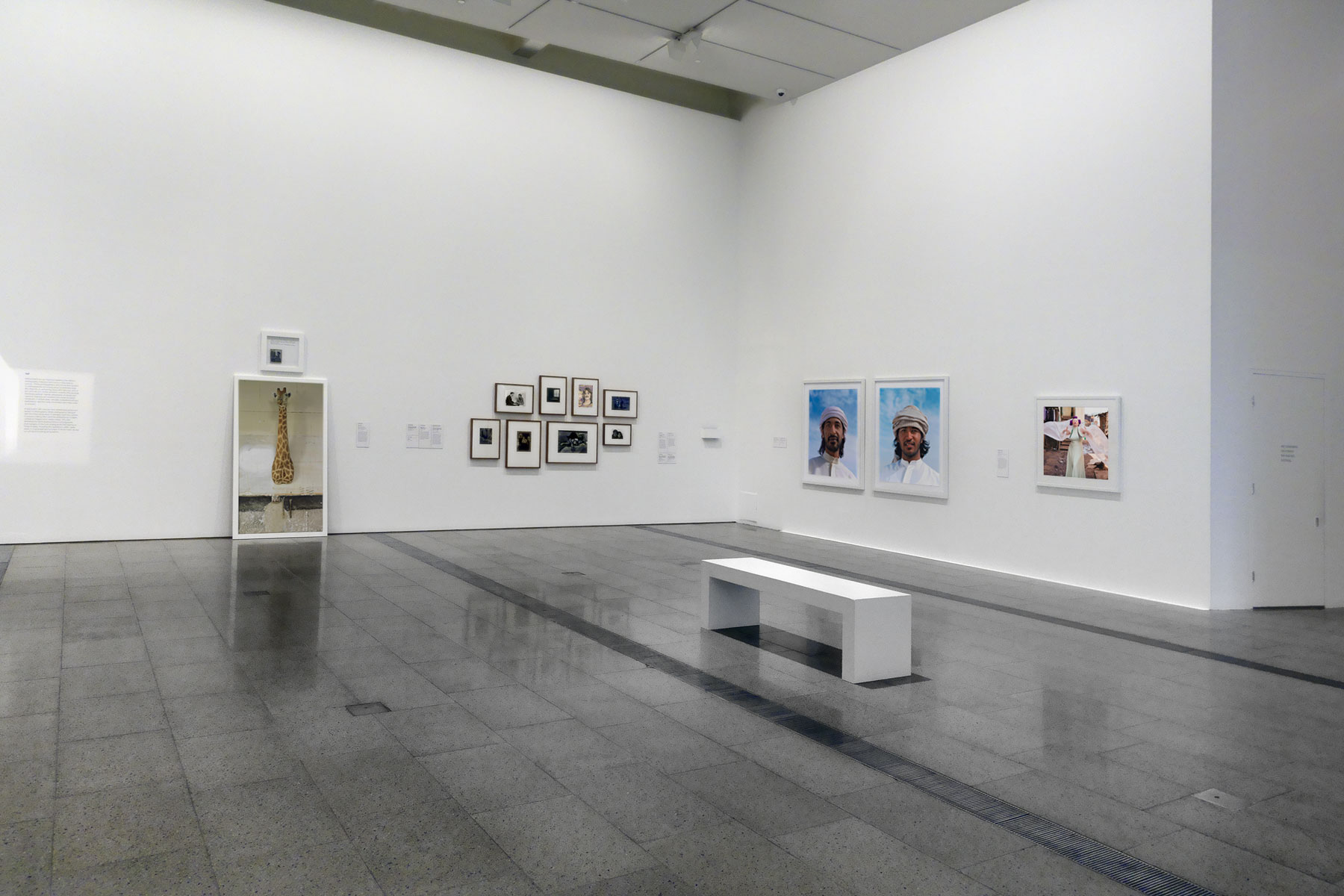
 

Installation view of the exhibition 'Photography: Real & Imagined' at The Ian Potter Centre: NGV Australia, Melbourne showing at left, Sophie Calle's 'The giraffe' (2012); and centre right, Lynne Roberts-Goodwin's 'Al Hammadi Desert Saqar #1 and #3'; and at right, Sarah Waiswa's 'Finding solace' (2016)


Installation view of the exhibition Photography: Real & Imagined at The Ian Potter Centre: NGV Australia, Melbourne showing at left, Sophie Calle’s The giraffe (2012); and centre right, Lynne Roberts-Goodwin’s Al Hammadi Desert Saqar #1 and #3; and at right, Sarah Waiswa’s Finding solace (2016)
Photo: Marcus Bunyan


Sarah Waiswa (Ugandan, b. 1980) 'Finding solace' 2016 (installation view)


Sarah Waiswa (Ugandan, b. 1980)
Finding solace (installation view)
2016
From the Stranger in a Familiar Land series 2016
Inkjet print
79.5 × 79.5cm
Purchased NGV Foundation, 2017
Photo: Marcus Bunyan


Sarah Waiswa has described her series Stranger in a Familiar Land as an exploration of life outside the security and boundaries of community. Discussing her work, she wrote, ‘People fear what they do not understand … The concept of Stranger in a Familiar Land groups together various portraits of an albino woman set against the backdrop of the Kibera slums, which are a metaphor for my turbulent vision of the outside world. The series also explores how the sense of non-belonging has led her to wander and exist in a dreamlike state. People notice Kisombe, but at the same time, they don’t’.

Wall text from the exhibition


Installation view of the exhibition 'Photography: Real & Imagined' at The Ian Potter Centre: NGV Australia, Melbourne showing at right, Lynne Roberts-Goodwin's Al 'Hammadi Desert Saqar #1 and #3'


Installation view of the exhibition Photography: Real & Imagined at The Ian Potter Centre: NGV Australia, Melbourne showing at right, Lynne Roberts-Goodwin’s Al Hammadi Desert Saqar #1 and #3
Photo: Marcus Bunyan


Installation view of the exhibition 'Photography: Real & Imagined' at The Ian Potter Centre: NGV Australia, Melbourne showing from left to right, Jan Groover's 'Untitled' (1981); August Sander's 'Bohemians (Willi Bongard and Gottfried Brockman)' (1922-1925); Julia Margaret Cameron's 'Mrs Herbert Duckworth, her son George, Florence Fisher and H. A. L. Fisher' (c. 1871); Harry Callahan's 'Eleanor and Barbara, Chicago' (1954); Gordon Parks' 'Big Mama and boy, 1961' (1961); Micky Allan's 'Man holding his daughter' (1982); Brenda L. Croft's In 'my mother's garden' (1998); and Angela Lynkushka's 'Zühre Yildirim from Turkey with grand-daughter Nurahan Gundogdu, born in Australia. De Carle Street, Brunswick' (1982)


Installation view of the exhibition Photography: Real & Imagined at The Ian Potter Centre: NGV Australia, Melbourne showing from left to right, Jan Groover’s Untitled (1981); August Sander’s Bohemians (Willi Bongard and Gottfried Brockman) (1922-1925, below); Julia Margaret Cameron’s Mrs Herbert Duckworth, her son George, Florence Fisher and H. A. L. Fisher (c. 1871, below); Harry Callahan’s Eleanor and Barbara, Chicago (1954); Gordon Parks’ Big Mama and boy, 1961 (1961); Micky Allan’s Man holding his daughter (1982, below); Brenda L. Croft’s In my mother’s garden (1998); and Angela Lynkushka’s Zühre Yildirim from Turkey with grand-daughter Nurahan Gundogdu, born in Australia. De Carle Street, Brunswick (1982)
Photo: Marcus Bunyan


August Sander (German, 1876-1964) 'Bohemians (Willi Bongard and Gottfried Brockman)' 1922-1925, printed 1973


August Sander (German, 1876-1964)
Bohemians (Willi Bongard and Gottfried Brockman)
1922-1925, printed 1973
From the People of the Twentieth Century project 1920s-1964
Gelatin silver photograph
23.3 x 30.5cm (image and sheet)
National Gallery of Victoria, Melbourne
Purchased, 1974


Gottfried Waldemar Brockmann (1903-1983) was a German artist, educator, publisher, and served as a cultural advisor for the city of Kiel, Germany. He taught at Muthesius Academy of Art in Kiel.


Julia Margaret Cameron (English, 1815-1879, Ceylon (Sri Lanka) 1875-1879) 'Mrs Herbert Duckworth, her son George, Florence Fisher and H. A. L. Fisher' c. 1871


Julia Margaret Cameron (English, 1815-1879, Ceylon (Sri Lanka) 1875-1879)
Mrs Herbert Duckworth, her son George, Florence Fisher and H. A. L. Fisher
c. 1871
Albumen silver photograph
31.0 x 22.7cm (image and sheet)
National Gallery of Victoria, Melbourne
Purchased through The Art Foundation of Victoria with the assistance of the Herald & Weekly Times Limited, Fellow, 1979
Public domain


In this portrait, Julia Duckworth sits for her aunt, Julia Margaret Cameron, one of the nineteenth century’s most esteemed photographers. As curator Elisa deCourcy notes, ‘Julia Duckworth’s lackadaisical pose and her flailing hand cast her as somewhat of a Pre-Raphaelite heroine, very much in the style of Cameron’s broader oeuvre’. DeCourcy adds it is perhaps also a depiction of the experience of maternal exhaustion: ‘Julia’s distant gaze and slouched form makes it hard for us not to read this photograph as depicting fatigued motherhood. Through touch, the children seem to demonstrate a sentimental connection to Julia while also laying claim to her attention and energy’.

Wall text from the exhibition


Harry Callahan (American, 1912-1999) 'Eleanor and Barbara' 1954, printed 1970s


Harry Callahan (American, 1912-1999)
Eleanor and Barbara
1954, printed 1970s
Gelatin silver photograph
National Gallery of Victoria, Melbourne
Purchased, 1979


Harry Callahan began photographing his wife Eleanor shortly after they married in 1936 and continued to do so for almost fifty years. Discussing their relationship as artist and muse in a 1983 film, Callahan said, ‘I felt very natural photographing Eleanor. I didn’t feel like there were any obstacles of any kind’. Following the birth of their daughter Barbara in 1950 he began to photograph mother and child and, as can be seen in this image, often captured moments of family life in pictures of great intimacy.

Wall text from the exhibition


Installation view of the exhibition 'Photography: Real & Imagined' at The Ian Potter Centre: NGV Australia, Melbourne showing Micky Allan's 'Man holding his daughter' (1982) from the 'People of Elizabeth' series 1982-1983


Installation view of the exhibition Photography: Real & Imagined at The Ian Potter Centre: NGV Australia, Melbourne showing Micky Allan’s Man holding his daughter (1982) from the People of Elizabeth series 1982-1983
Photo: Marcus Bunyan


The application of hand-colouring to photographs was generally the work of women in photography studios until the 1950s. In the 1970s and 80s these superseded processes experienced a revival as some feminist photographers applied the historic treatment to their images of contemporary life. As art historian Elisa deCourcy observes, ‘Micky Allan’s vibrant hand-colouring radically alters the topography of this otherwise monochrome photographic portrait of a young father and daughter from the 1980s … The application of colour to the father’s and daughter’s faces and the “retouching” of their hair, eyes and lips with colour offers an illuminated realism to each subject’.

Wall text from the exhibition


Installation view of the exhibition 'Photography: Real & Imagined' at The Ian Potter Centre: NGV Australia, Melbourne showing at right Gilbert & George's 'FORWARD' (2008)


Installation view of the exhibition Photography: Real & Imagined at The Ian Potter Centre: NGV Australia, Melbourne showing at right Gilbert & George’s FORWARD (2008, below)
Photo: Marcus Bunyan


Gilbert & George. 'FORWARD' 2008


Gilbert & George (active 1967- )
Gilbert Proesch (Italian, b. 1943
George Passmore (English, b. 1942)
FORWARD
2008
From the Jack Freak series
Inkjet print
National Gallery of Victoria, Melbourne
Professor AGL Shaw AO Bequest, 2021


Writer Michael Bracewell described the Jack Freak series as being ‘among the most iconic, philosophically astute and visually violent works that Gilbert & George have ever created’. In this picture the Union Jack, an internationally familiar flag and politically charged symbol whose significance spans the cultural spectrum from contemporary fashion to aggressive national pride, forms the backdrop to monumental portraits of the artists. In contrast to this visual cacophony the artists appear as rather low-key, neatly dressed, senior statesmen maintaining their central relevance in a community that too often disregards the elderly.

Wall text from the exhibition


Installation view of the exhibition 'Photography: Real & Imagined' at The Ian Potter Centre: NGV Australia, Melbourne showing from left to right, Ellen José's 'Basket Weaver, Lake Tyers' (1988); Roman Vishniac's 'Grandfather and granddaughter, Warsaw' (c. 1935-1938); Wolfgang Tillmans' 'Lars in tube' (1993); Ruth Maddison's 'Molly O'Sullivan, 82' (1990); Naomi Hobson's 'The God Father' (2021); Donna Bailey's 'Lush' (2002); Carol Jerrems 'Sharpies' (1976); and Nan Goldin's 'Misty in Sheridan Square, NYC' (1991)


Installation view of the exhibition Photography: Real & Imagined at The Ian Potter Centre: NGV Australia, Melbourne showing from left to right, Ellen José’s Basket Weaver, Lake Tyers (1988); Roman Vishniac’s Grandfather and granddaughter, Warsaw (c. 1935-1938, below); Wolfgang Tillmans’ Lars in tube (1993); Ruth Maddison’s Molly O’Sullivan, 82 (1990); Naomi Hobson’s The God Father (2021); Donna Bailey’s Lush (2002); Carol Jerrems Sharpies (1976, below); and Nan Goldin’s Misty in Sheridan Square, NYC (1991, below)
Photo: Marcus Bunyan
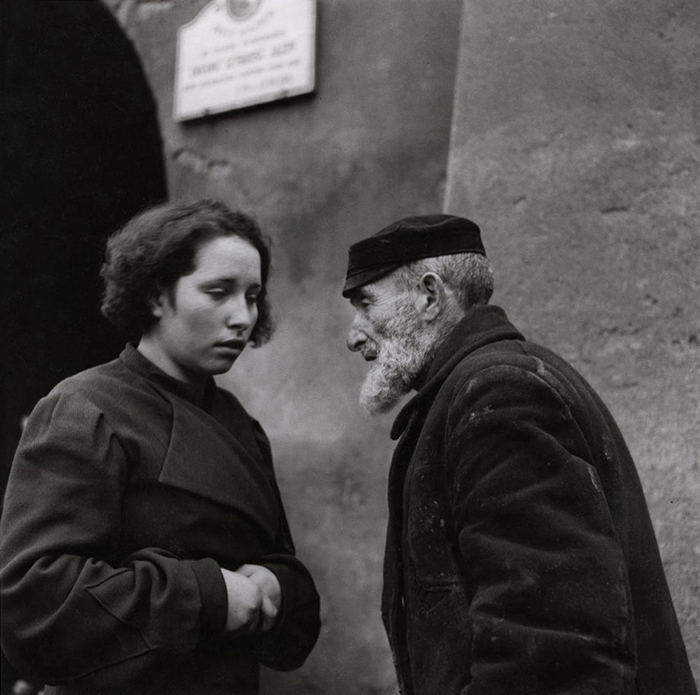
 

Roman Vishniac. 'Grandfather and granddaugther' Lublin, 1937


Roman Vishniac (Russian, 1897-1990, United States 1940-1990)
Grandfather and granddaughter, Warsaw
c. 1935-1938, printed 1977
Gelatin silver photograph
National Gallery of Victoria, Melbourne
Purchased, 1978


Installation view of the exhibition 'Photography: Real & Imagined' at The Ian Potter Centre: NGV Australia, Melbourne showing Carol Jerrems' 'Sharpies' (1976)


Installation view of the exhibition Photography: Real & Imagined at The Ian Potter Centre: NGV Australia, Melbourne showing Carol Jerrems’ Sharpies (1976)
Photo: Marcus Bunyan


Nan Goldin (American, b. 1953) 'Misty in Sheridan Square, NYC' 1991


Nan Goldin (American, b. 1953)
Misty in Sheridan Square, NYC
1991; 2015 {printed}
Cibachrome photograph
76 x 102cm (sheet)
ed. 20/25
National Gallery of Victoria, Melbourne
Purchased NGV Foundation, 2015
© Nan Goldin, courtesy Matthew Marks Gallery


Installation view of the exhibition 'Photography: Real & Imagined' at The Ian Potter Centre: NGV Australia, Melbourne showing from left to right, Huang Yan's 'Chinese landscape – Tattoo (Number 1)' (1999); four photographs by Hedda Morrison (1935); and Mervyn Bishop's 'Prime Minister Gough Whitlam pours soil into the hands of traditional land owner Vincent Lingiari, Northern Territory' (1975)


Installation view of the exhibition Photography: Real & Imagined at The Ian Potter Centre: NGV Australia, Melbourne showing from left to right, Huang Yan’s Chinese landscape – Tattoo (Number 1) (1999); four photographs by Hedda Morrison (1935, below); and Mervyn Bishop’s Prime Minister Gough Whitlam pours soil into the hands of traditional land owner Vincent Lingiari, Northern Territory (1975, below)
Photo: Marcus Bunyan
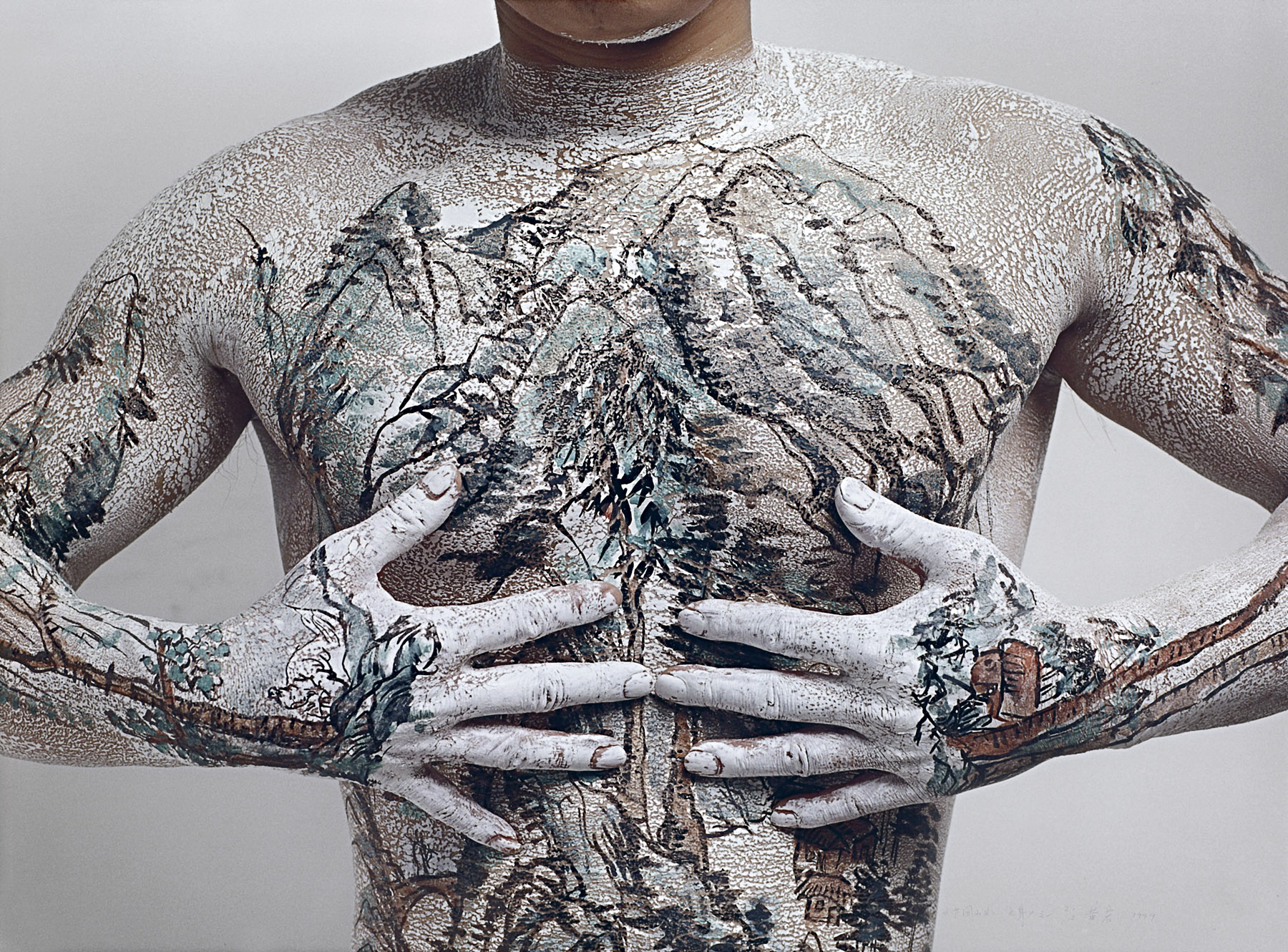
 

Huang Yan (Chinese, b. 1966) 'Chinese landscape – Tattoo (Number 1)' 1999, printed 2004


Huang Yan (Chinese, b. 1966)
Chinese landscape – Tattoo (Number 1)
1999, printed 2004
Type C photograph
National Gallery of Victoria, Melbourne
Purchased, 2004


In this photograph Huang Yan uses the human body as a canvas for the traditional shānshuǐ style of Chinese landscape painting. Discussing this image, curator and writer Isobel Crombie observed, ‘The title of the work, Tattoo, implies that landscape traditions are written permanently into the Chinese body, making them alive and active. However, ironically, the scenes painted onto the artist’s torso are clearly fugitive, alerting us to both the fragility of the natural environment and the transience of the body’.

Wall text from the exhibition


Hedda Morrison (German 1908-1991, China 1933-1946, Australia 1967-1991) 'No title (Fairy Palm Cliff)' 1935


Hedda Morrison (German 1908-1991, China 1933-1946, Australia 1967-1991)
No title (Fairy Palm Cliff)
1935
Gelatin silver photograph
25.3 x 22.8cm
Purchased, 1976
National Gallery of Victoria, Melbourne
Purchased, 1976
Public domain


Hedda Morrison (German 1908-1991, China 1933-1946, Australia 1967-1991) 'No title (Three gnarled pines)' 1935


Hedda Morrison (German 1908-1991, China 1933-1946, Australia 1967-1991)
No title (Three gnarled pines)
1935
Gelatin silver photograph
30.6 × 19cm
Purchased, 1976
National Gallery of Victoria, Melbourne
Purchased, 1976
Public domain


Hedda Morrison (German 1908-1991, China 1933-1946, Australia 1967-1991) 'No title (Lone pine against clouds)' 1935; printed 1976


Hedda Morrison (German 1908-1991, China 1933-1946, Australia 1967-1991)
No title (Lone pine against clouds)
1935; printed 1976
Gelatin silver photograph
25.3 x 22.8cm
Purchased, 1976
National Gallery of Victoria, Melbourne
Purchased, 1976
Public domain


Hedda Morrison (German 1908-1991, China 1933-1946, Australia 1967-1991) 'No title (Morning clouds)' 1935; printed 1970s


Hedda Morrison (German 1908-1991, China 1933-1946, Australia 1967-1991)
No title (Morning clouds)
1935; printed 1970s
Gelatin silver photograph
25.3 x 22.8cm
Purchased, 1976
National Gallery of Victoria, Melbourne
Purchased, 1976
Public domain


Mervyn Bishop (Australian, b. 1945) 'Prime Minister Gough Whitlam pours soil into the hands of traditional land owner Vincent Lingiari, Northern Territory' 1975, printed 1990


Mervyn Bishop (Australian, b. 1945)
Prime Minister Gough Whitlam pours soil into the hands of traditional land owner Vincent Lingiari, Northern Territory
1975, printed 1990
Cibachrome photograph
35.5 x 35.5cm
National Gallery of Victoria, Melbourne
Purchased, NGV Foundation and NGV Supporters of Photography, 2021
© Mervyn Bishop / Department of the Prime Minister and Cabinet


In August 1975 Mervyn Bishop travelled to Daguragu, formerly known as Wattie Creek, in the Northern Territory. As a press photographer he captured the moment when then prime minister Gough Whitlam placed a handful of soil into the palm of Gurindji elder and activist Vincent Lingiari. This photograph is an iconic image of the ongoing battle for self-determination for Australia’s traditional owners; however, the photograph is not as straightforward as it appears: the moment was re-staged outside so Bishop could take advantage of better lighting.

Wall text from the exhibition


Installation view of the exhibition 'Photography: Real & Imagined' at The Ian Potter Centre: NGV Australia, Melbourne showing from left to right, Robert Macpherson's 'Rome' (c. 1860); Louis-Emile Durandelle and Clèmence Delmaet's 'The new Paris Opera, ornamental sculpture' (c. 1870); Edouard Baldus' 'Notre Dame, Paris' (c. 1852-1853); and Véronique Ellena's 'Santi Luca e Martina, Rome' (2011)


Installation view of the exhibition Photography: Real & Imagined at The Ian Potter Centre: NGV Australia, Melbourne showing from left to right, Robert Macpherson’s Rome (c. 1860); Louis-Emile Durandelle and Clémence Delmaet’s The new Paris Opera, ornamental sculpture (c. 1870, below); Edouard Baldus’ Notre Dame, Paris (c. 1852-1853, below); and Véronique Ellena’s Santi Luca e Martina, Rome (2011)
Photo: Marcus Bunyan


In Véronique Ellena’s photograph we see a shrouded figure, draped in a blanket or canvas cloth, lying on the steps of a Baroque church in central Rome. Initially seducing us with the formal beauty of the city and its architecture, the photograph then jolts us as we recognise the harsh reality of the scene. This was a calculated strategy on Ellena’s part, as she acknowledges: ‘At first, we could only perceive the sublime beauty of architecture. But this work tells us something else: the place of some people in this world, who are there but whom we do not see – or not anymore’.

Wall text from the exhibition


Louis-Emile Durandelle (French, 1839-1917) Clémence Delmaet (French, 1838-1917) 'The new Paris Opera, ornamental sculpture' c. 1870


Louis-Emile Durandelle (French, 1839-1917)
Clémence Delmaet (French, 1838-1917)
The new Paris Opera, ornamental sculpture
c. 1870
Albumen silver photograph
38.1 x 28.3cm (image and sheet)
National Gallery of Victoria, Melbourne
Presented by the Lunn Gallery, Washington D.C, USA, 1982
Public domain
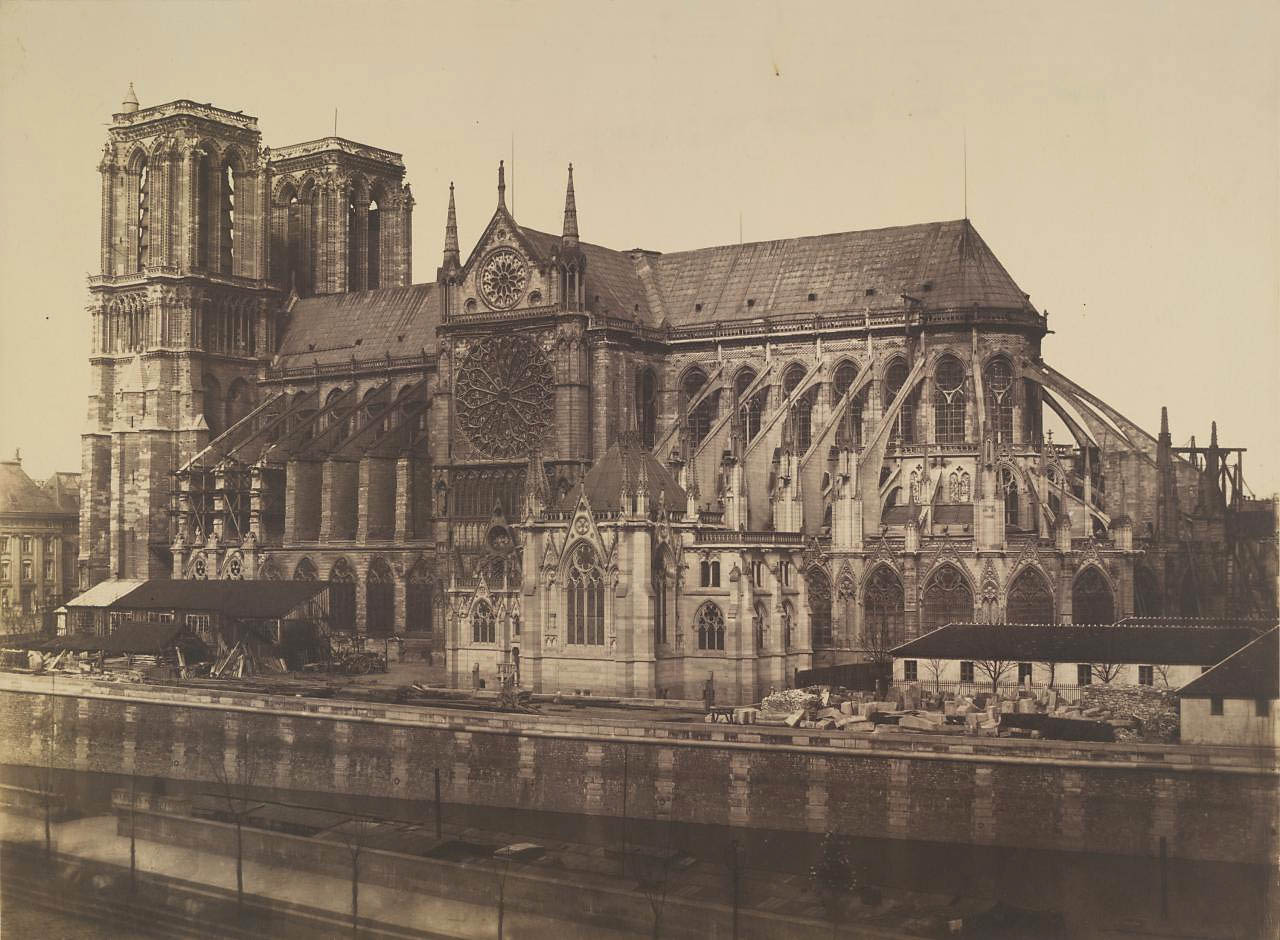
 

Edouard Baldus (Prussian 1813-1989, France c. 1848 - c. 1869) 'Notre Dame, Paris' c. 1852-1853, printed 1880s


Edouard Baldus (Prussian 1813-1989, France c. 1848 – c. 1869)
Notre Dame, Paris
c. 1852-1853, printed 1880s
Platinum photograph
National Gallery of Victoria, Melbourne
Presented by the National Gallery Women’s Association, 1995
Public domain


By the middle of the nineteenth century many of the great historic buildings of Paris, including Notre Dame Cathedral, were in a state of disrepair due to decades of neglect. Under the auspices of the Commission des Monuments Historiques, significant historic buildings underwent extensive restoration. This committee recognised the invaluable role photography could play in documenting the changes occurring to the architectural heritage of Paris. Official Second Empire photographer, Édouard Baldus, captured the splendour of newly commissioned and lavishly restored architectural icons as cultural highlights of the Second Empire.

Wall text from the exhibition


Installation view of the exhibition 'Photography: Real & Imagined' at The Ian Potter Centre: NGV Australia, Melbourne showing at left, Véronique Ellena's 'Santi Luca e Martina, Rome' (2011); at second right, work from Girma Berta's 'Moving shadows' series (2017); and at right, Pieter Hugo's 'Green Point Common, Cape Town' (2013)


Installation view of the exhibition Photography: Real & Imagined at The Ian Potter Centre: NGV Australia, Melbourne showing at left, Véronique Ellena’s Santi Luca e Martina, Rome (2011); at second right, work from Girma Berta’s Moving shadows series (2017); and at right, Pieter Hugo’s Green Point Common, Cape Town (2013)
Photo: Marcus Bunyan


Installation view of the exhibition 'Photography: Real & Imagined' at The Ian Potter Centre: NGV Australia, Melbourne showing at centre, Girma Berta's 'Untitled IV, VI and XII' (2017) at right, Pieter Hugo's 'Green Point Common, Cape Town' (2013)


Installation view of the exhibition Photography: Real & Imagined at The Ian Potter Centre: NGV Australia, Melbourne showing at centre, Girma Berta’s Untitled IV, VI and XII (2017) at right, Pieter Hugo’s Green Point Common, Cape Town (2013)
Photo: Marcus Bunyan
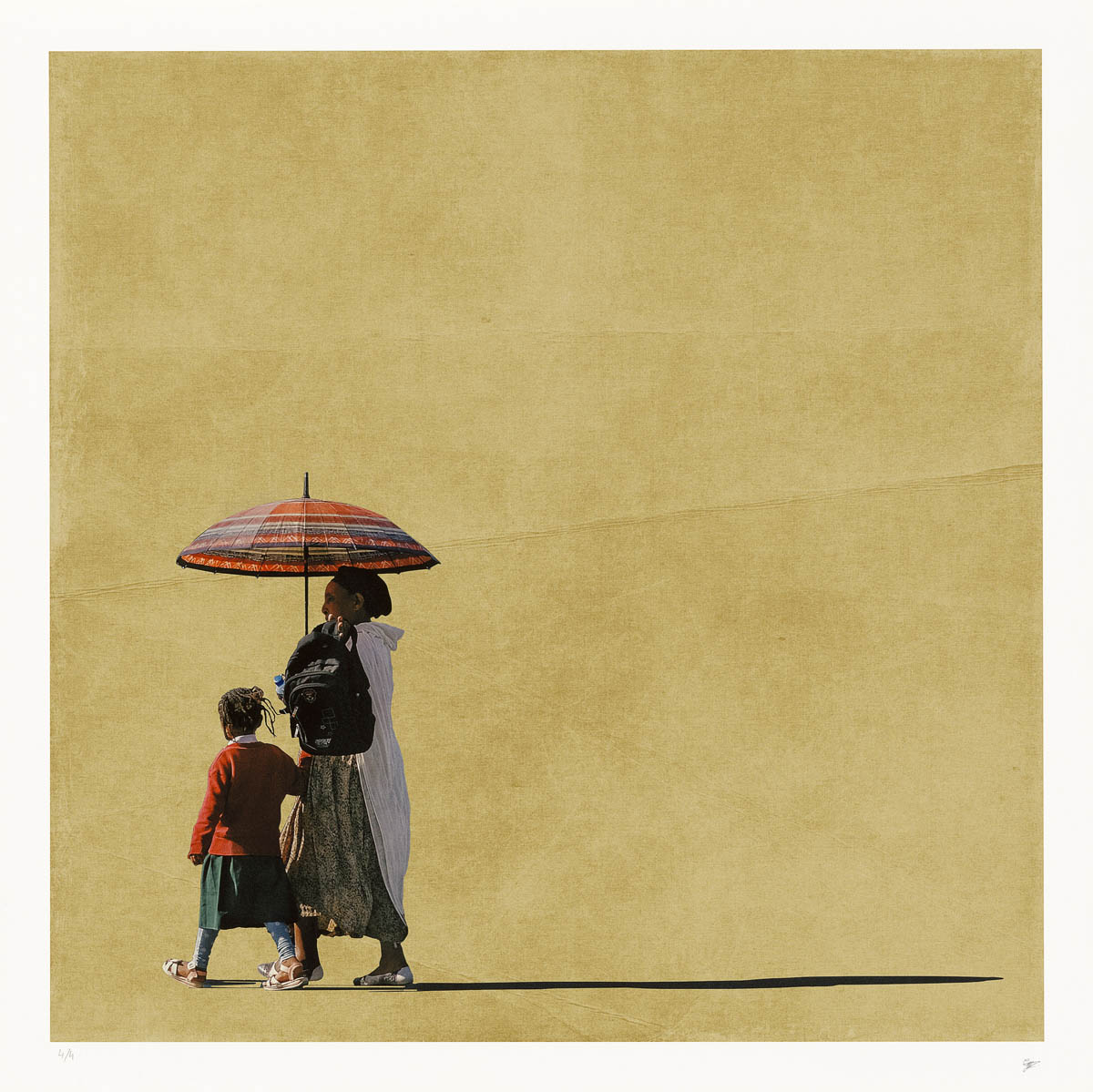
 

Girma Berta (Ethiopian, b. 1990) 'Untitled IV' 2017


Girma Berta (Ethiopian, b. 1990)
Untitled IV
2017
From the Moving shadows series 2017
Inkjet print, ed. 4/4
89.8 x 90.0cm (image)
National Gallery of Victoria, Melbourne
Bowness Family Fund for Photography, 2018
© Girma Berta


Girma Berta has been photographing people on the streets of Addis Ababa, Ethiopia, since around 2014. His earlier photographs were documentary in style, but over time his work has become more refined and stylised.

The five photographs from his Moving Shadows series 2017 … are from an ongoing body of work in which all background detail has been removed. These photographs show isolated figures, and their shadows, on immersive, coloured backgrounds. The works feature individuals photographed on the streets of Addis Ababa going about the daily lives. Using the camera in his phone, Berta is able to work discretely and capture his subjects without them being aware of his presence.

In all his street-based work, Berta is interested in presenting a ‘portrait’ of the people of Addis Ababa. Working in his studio, he has developed a method to extract aspects of the scenes he photographs from the city’s busy streetscapes. Berta explains further: ‘Through my work on Instagram, I wish the world (would) stare into the eyes of a face of Addis Ababa; the city where I was born and where I grew up. The beautiful, the ugly and all that is in between.’

Text from the National Gallery of Victoria website


Installation view of the exhibition 'Photography: Real & Imagined' at The Ian Potter Centre: NGV Australia, Melbourne showing at second left, Girma Berta's 'Untitled IV, VI and XII' (2017); and at right, Dacre Stubbs' 'St. George's Road flats' (1953)


Installation view of the exhibition Photography: Real & Imagined at The Ian Potter Centre: NGV Australia, Melbourne showing at second left, Girma Berta’s Untitled IV, VI and XII (2017, above); and at right, Dacre Stubbs’ St. George’s Road flats (1953, below)
Photo: Marcus Bunyan


Installation view of the exhibition 'Photography: Real & Imagined' at The Ian Potter Centre: NGV Australia, Melbourne showing from left to right, Gertrude Kasebier's 'Gargoyle' (1901, top); Albert Renger-Patzsch's 'Art d'eglise in Achen' (1930s, bottom); Werner Mantz's 'Industrial Landscape' (1937, top); Max Dupain's 'Silos through windscreen' (1935, bottom); Edward Steichen's 'The maypole' (1932); Barbara Morgan's 'City shell' (1938, top); Berenice Abbott's 'Park Avenue and Thirty-ninth Street, Manhattan, October 8' (1936, bottom) and Dacre Stubbs' 'St. George's Road flats' (1953)


Installation view of the exhibition Photography: Real & Imagined at The Ian Potter Centre: NGV Australia, Melbourne showing from left to right, Gertrude Kasebier’s Gargoyle (1901, top); Albert Renger-Patzsch’s Art d’eglise in Achen (1930s, bottom); Werner Mantz’s Industrial Landscape (1937, top); Max Dupain’s Silos through windscreen (1935, bottom); Edward Steichen’s The maypole (1932); Barbara Morgan’s City shell (1938, top); Berenice Abbott’s Park Avenue and Thirty-ninth Street, Manhattan, October 8 (1936, bottom) and Dacre Stubbs’ St. George’s Road flats (1953)
Photo: Marcus Bunyan


For modernist architects in the 1930s there was a natural synergy between their own vision of the constructed environment in the machine age and the work of photographers. In architecture this was manifested in structural clarity and precision, and the use of modern building materials such as steel, glass and unadorned concrete. In photography the use of sharp focus, unexpected vantage points, radical cropping of images and unusual perspectives formed part of the lexicon of the so-called New Objectivity. Photographers like Werner Mantz show a world in which compressed space and unexpected vantages confound our expectations of how buildings should be photographed.

Wall text from the exhibition


Gertrude Kasebier (American, 1852-1934) 'Gargoyle' 1901


Gertrude Kasebier (American, 1852-1934)
Gargoyle
1901
Platinum photograph
20.6 x 13.5cm (image and sheet)
National Gallery of Victoria, Melbourne
Purchased through The Art Foundation of Victoria with the assistance of the Herald & Weekly Times Limited, Fellow, 1979
Public domain


Werner Mantz (German 1901-1983) 'Industrial landscape' 1937


Werner Mantz (German 1901-1983)
Industrial landscape
1937
Gelatin silver photograph
38.6 x 29.2cm (image and sheet)
National Gallery of Victoria, Melbourne
Purchased, 1983
Public domain


Max Dupain. 'Max Dupain. 'Silos through windscreen' 1935' 1935


Max Dupain (Australian 1911-1992)
Silos through windscreen
1935, printed c. 1985
Gelatin silver photograph
National Gallery of Victoria, Melbourne
Purchased, 1986
Public domain


Installation view of the exhibition 'Photography: Real & Imagined' at The Ian Potter Centre: NGV Australia, Melbourne showing Edward Steichen's 'The maypole' (1932)


Installation view of the exhibition Photography: Real & Imagined at The Ian Potter Centre: NGV Australia, Melbourne showing Edward Steichen’s The maypole (1932)
Photo: Marcus Bunyan


Barbara Morgan (American, 1900-1992) 'City shell' 1938, printed 1972


Barbara Morgan (American, 1900-1992)
City shell
1938, printed 1972
Gelatin silver photograph
34.4 x 25.1cm (image and sheet)
National Gallery of Victoria, Melbourne
Gift of Krystyna Campbell-Pretty AM and Family through the Australian Government’s Cultural Gifts Program, 2022
Public domain


Barbara Morgan moved to New York in 1930 and began experimenting with the avant-garde photographic techniques of photograms and photomontage. City shell is an outstanding example of Morgan’s innovative photography from the 1930s. In this image she combined a view from her studio window of the Empire State Building with a shell gifted to her by a friend. The monumental skyscraper is shown tilted on an extreme angle while the shell appears upright in the centre of the photograph – a visual metaphor, according to the artist, for the transient nature of built structures in comparison to those of the natural world.

Wall text from the exhibition


Berenice Abbott (American 1898-1991, France 1921-1929) 'Park Avenue and Thirty-ninth Street, Manhattan' October 8 1936


Berenice Abbott (American 1898-1991, France 1921-1929)
Park Avenue and Thirty-ninth Street, Manhattan, October 8
1936
Gelatin silver photograph
19.3 x 24.3cm
National Gallery of Victoria, Melbourne
Bowness Family Fund for Photography, 2021
Public domain


In 1929, after living in Paris for eight years, Berenice Abbott returned to New York and, having noted the rapid change taking place across the city, commenced a project to document New York in photographs. Abbott’s project was funded by the WPA Federal Art Project from 1935 to 1939, which culminated in the 1939 book and exhibition, Changing New York. Discussing her project, Abbott wrote of desiring to capture the ‘spirit’ of the city, driven by the urgent realisation that ‘the tempo of the metropolis is not of eternity, or even time, but of the vanishing instant’.

Wall text from the exhibition


Installation view of the exhibition 'Photography: Real & Imagined' at The Ian Potter Centre: NGV Australia, Melbourne showing Dacre Stubbs' 'St George's Road flats' (1953)


Installation view of the exhibition Photography: Real & Imagined at The Ian Potter Centre: NGV Australia, Melbourne showing Dacre Stubbs’ St George’s Road flats (1953, below)
Photo: Marcus Bunyan


Dacre Stubbs (English 1910-2001, Australia 1948-2001) 'St George's Road flats' 1953


Dacre Stubbs (English 1910-2001, Australia 1948-2001)
St George’s Road flats
1953
Gelatin silver photograph
47.6 x 38.0cm
National Gallery of Victoria, Melbourne
Purchased, 1993
Public domain


More photographs from the exhibition


Installation view of the exhibition 'Photography: Real & Imagined' at The Ian Potter Centre: NGV Australia, Melbourne showing William Henry Fox Talbot's 'Portrait of a man' (c. 1844)


Installation view of the exhibition Photography: Real & Imagined at The Ian Potter Centre: NGV Australia, Melbourne showing William Henry Fox Talbot’s Portrait of a man (c. 1844, below)
Photo: Marcus Bunyan
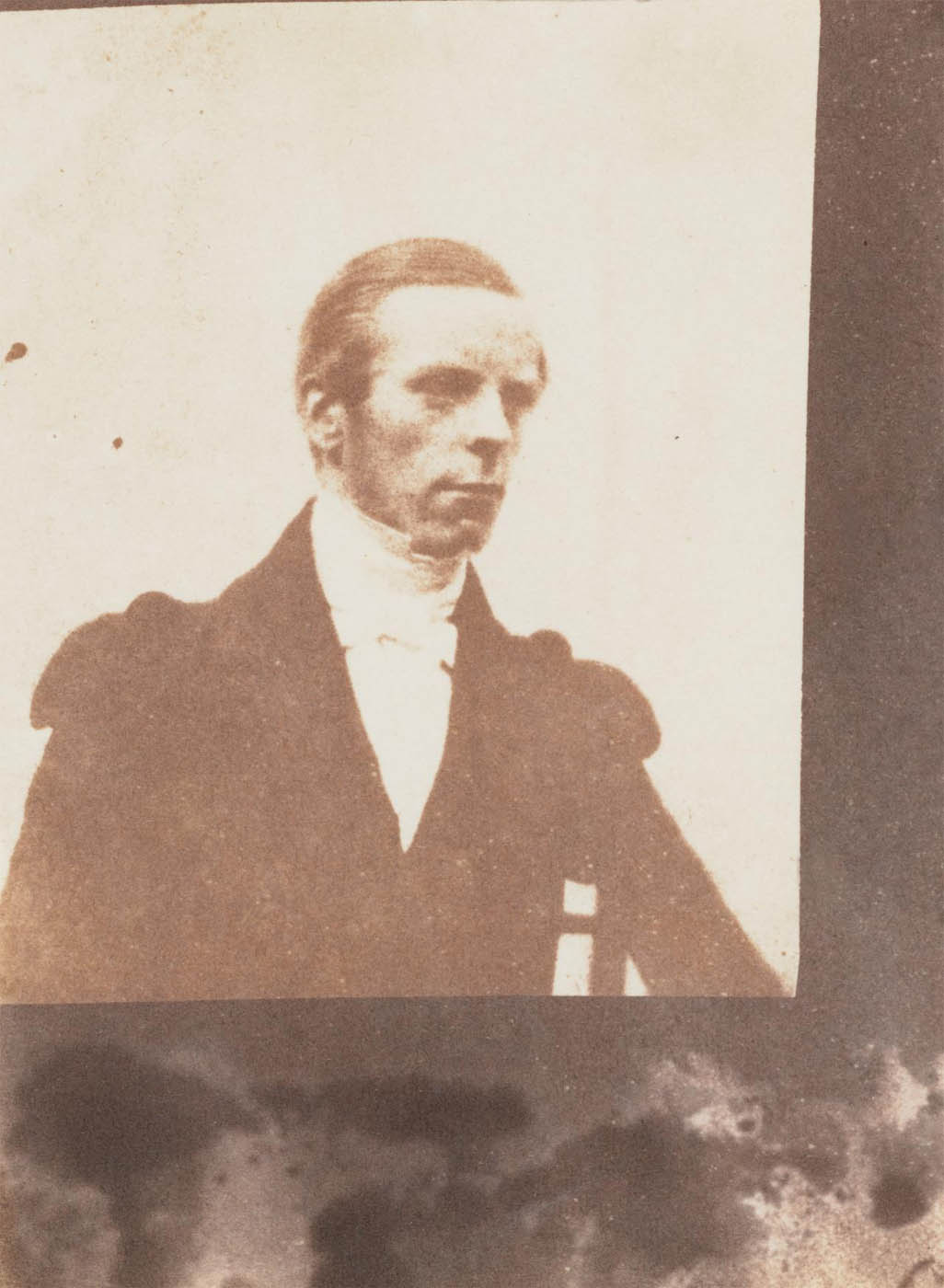
 

William Henry Fox Talbot (English, 1800-1877) 'No title (Portrait of a man)' c. 1844


William Henry Fox Talbot (English, 1800-1877)
No title (Portrait of a man)
c. 1844
Salted paper photograph
7.6 x 6.6cm irreg.
National Gallery of Victoria, Melbourne
Purchased through The Art Foundation of Victoria with the assistance of David Syme & Co. Limited, Fellow, 1982
Public domain


Maxime Du Camp (French 1822-1894) 'Peristyle of the Palace of Rameses III, Medinet Habu, Thebes' 1849-1851, printed 1852


Maxime Du Camp (French 1822-1894)
Peristyle of the Palace of Rameses III, Medinet Habu, Thebes
1849-1851, printed 1852
Salted paper photograph
National Gallery of Victoria, Melbourne
Purchased, 1983
Public domain


Gaspard-Felix Tournachon Nadar (French, 1820-1910) 'Alexander Dumas (père)' 1855


Gaspard-Felix Tournachon Nadar (French, 1820-1910)
Alexander Dumas (père)
1855
Salted paper photograph
24.4 x 18.6cm irreg. (image and sheet)
National Gallery of Victoria, Melbourne
Presented by the National Gallery Women’s Association, 1995
Public domain


Alexander Gardner (American 1821-1882) 'Home of a Rebel sharpshooter, Gettysburg' 1863; printed 1865-1866


Alexander Gardner (American 1821-1882)
Home of a Rebel sharpshooter, Gettysburg
1863; printed 1865-1866
Plate no. 41 from Gardner’s Photographic Sketch Book of the War, vol. I and II, 1865-1866
Albumen silver photograph
National Gallery of Victoria, Melbourne
Purchased through The Art Foundation of Victoria with the assistance of the Herald & Weekly Times Limited, Fellow, 1979
Public domain


Around 620,000 soldiers are believed to have died during the American Civil War, which was fought from 1861 to 1865. Discussing the war, this photograph, and the work of Alexander Gardner, author and art historian Helen Ennis wrote, ‘The extensive coverage of the war that Gardner and his colleagues achieved – including its often graphic, confronting imagery – is lauded in the history of photography for its pioneering documentary photography and photojournalism. However, war photography has its own disturbing history, one in which photographing the dead has become routine. In Gardner’s photograph the corpse (and his rifle) may have been specially positioned for the photograph, a further reminder that in war death has no dignity’.

Wall text from the exhibition


Installation view of the exhibition 'Photography: Real & Imagined at The Ian Potter Centre: NGV Australia, Melbourne showing Julia Margaret Cameron's 'Julia Jackson' (1864)


Installation view of the exhibition Photography: Real & Imagined at The Ian Potter Centre: NGV Australia, Melbourne showing Julia Margaret Cameron’s Julia Jackson (1864, below)
Photo: Marcus Bunyan


Julia Margaret Cameron (English, 1815-1879) 'Julia Jackson' 1864


Julia Margaret Cameron (English, 1815-1879)
Julia Jackson
1864
Albumen silver photograph
24.0 x 19.1cm (image and sheet)
National Gallery of Victoria, Melbourne
Purchased through The Art Foundation of Victoria with the assistance of the Herald and Weekly Times Limited, Fellow, 1979
Public domain
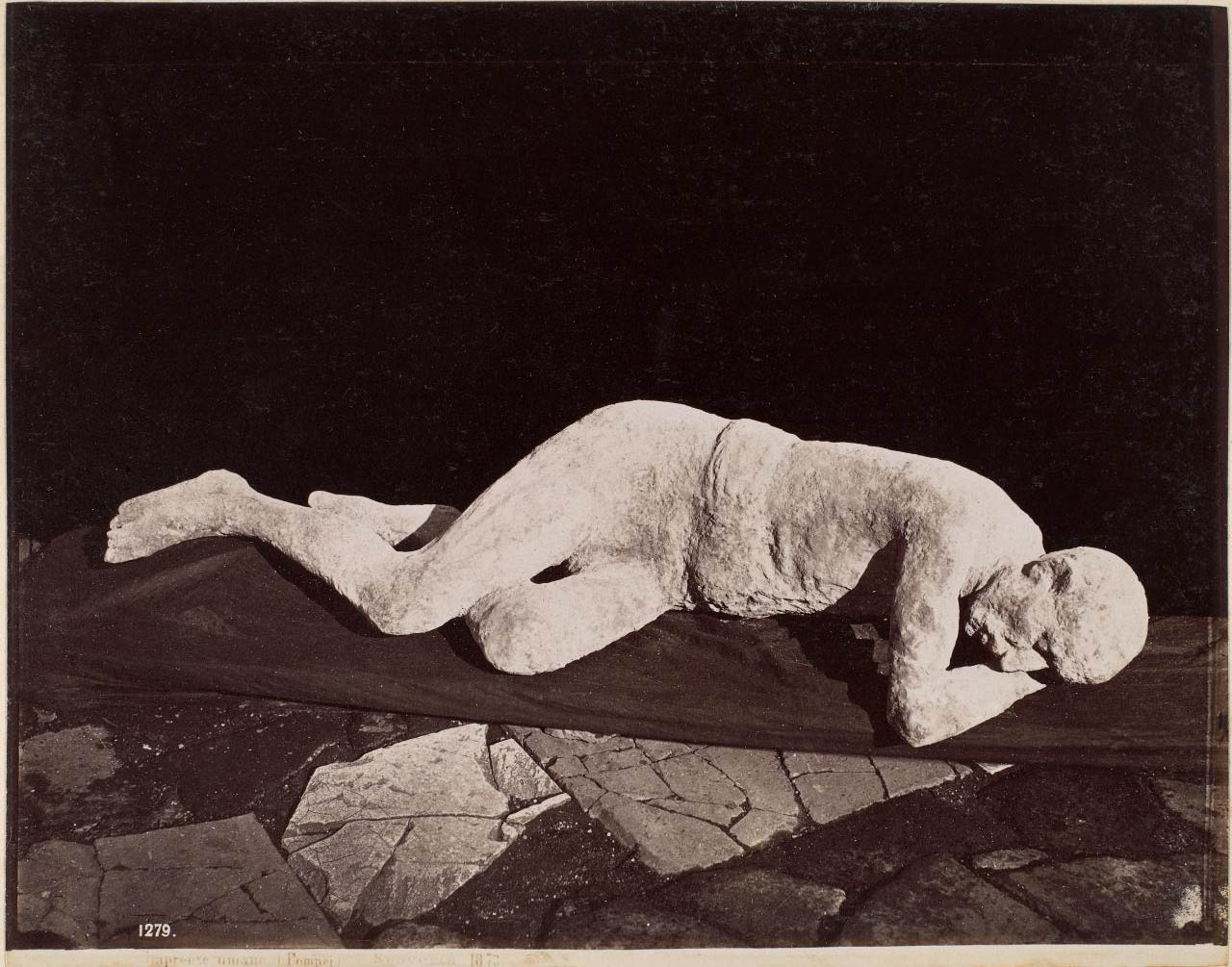
 

Giorgio Sommer (German 1834-1914) 'Human imprint, Pompeii (Impronte umare. Pompei)' 1873


Giorgio Sommer (German 1834-1914)
Human imprint, Pompeii (Impronte umare. Pompei)
1873
Albumen silver photograph
19.8 x 25.5cm
National Gallery of Victoria, Melbourne
Presented through the NGV Foundation by Janice Hinderaker, Member, 2003
Public domain


Charles Rudd (Australian 1872-1900) 'Statuary Gallery, Melbourne Public Library' 1886-1887


Charles Rudd (Australian 1872-1900)
Statuary Gallery, Melbourne Public Library
1886-1887
From the C. Rudd’s New Views of Melbourne series 1886-1887
Albumen silver photograph
13.6 x 19.8cm
National Gallery of Victoria, Melbourne
Gift of Terence Lane, 1990
Public domain


F. B. Mendelssohn & Co., Melbourne (Australian, active 1889-1900) 'No title (Young woman, full length, seated at plush covered table)' 1889


F. B. Mendelssohn & Co., Melbourne (Australian, active 1889-1900)
No title (Young woman, full length, seated at plush covered table)
1889
Cabinet print
Albumen silver photograph
14 x 10cm
National Gallery of Victoria, Melbourne
Gift of C. Stuart Tompkins, 1972
Public domain


Installation view of the exhibition 'Photography: Real & Imagined' at The Ian Potter Centre: NGV Australia, Melbourne showing Diane Jones' 'Woman in black Dress' (2009)


Installation view of the exhibition Photography: Real & Imagined at The Ian Potter Centre: NGV Australia, Melbourne showing Diane Jones’ Woman in black Dress (2009)
Photo: Marcus Bunyan


Writing about historical and contemporary studio photography, curator Sophia Cai explored connections between the work of contemporary artist Dianne Jones and historical vernacular portraits, noting that ‘Jones is a contemporary Balardung artist who works in photo media to critically re-examine historical and contemporary depictions of Indigenous peoples in popular imagery. Jones’s work sees the artist insert herself into familiar, iconic scenes from Australian art and photography to challenge myths of cultural nationhood and identity. This act of insertion is both a comedic and political action, as it not only highlights the homogeneity common to these scenes, but also addresses the lack of Indigenous representation in our histories and stories’.

Wall text from the exhibition


Unknown photographer. 'No title (Woman with umbrella)' 1880s


Unknown photographer (Japanese active 1880s)
No title (Woman with umbrella)
1880s
Albumen silver photograph, colour dyes
24.2 x 19.4cm (image and sheet)
National Gallery of Victoria, Melbourne
Public domain


In the nineteenth century a distinctive style of photography developed in Japan in which the aesthetics of traditional woodblock prints (ukiyo-e) were translated into photographic practice. The resulting photographs included carefully composed genre images featuring traditional aspects of the life and work of the Japanese middle classes. Typical life scenes, such as this one showing a woman walking through a rainstorm, were recreated in the studio with remarkable attention to detail, as seen in the subject’s ‘windblown’ kimono. As these images were staged for the European market, however, they often diverted from reality in favour of focusing on customs that would have appeared ‘exotic’ to their Western viewers.

Wall text from the exhibition


Installation view of the exhibition 'Photography: Real & Imagined' at The Ian Potter Centre: NGV Australia, Melbourne showing Frank Hurley's 'A turreted berg' (1913)


Installation view of the exhibition Photography: Real & Imagined at The Ian Potter Centre: NGV Australia, Melbourne showing Frank Hurley’s A turreted berg (1913, below)
Photo: Marcus Bunyan


Frank Hurley (Australian, 1890-1962) 'No title (A turreted berg)' 1913


Frank Hurley (Australian, 1890-1962)
No title (A turreted berg)
1913
Carbon print
National Gallery of Victoria, Melbourne
Purchased, 1999
Public domain


The photographs produced by Frank Hurley during his time as the official photographer for the Australasian Antarctic Expedition (1911-1914), and his subsequent texts, dramatically convey the awe-inspiring gargantuan icebergs encountered in the region. ‘No grander sight have I ever witnessed among the wonders of Antarctica’, Hurley wrote of the icebergs in the area where this photograph was taken. ‘We threaded a way down lanes of vivid blue with shimmering walls of mammoth bergs rising like castles of jade on either side.’ This photograph is, at first appearance, a sublimely ‘true’ representation of an iceberg. On closer inspection, however, subtle alterations become apparent. More real than real, Hurley’s constructed image was celebrated at the time and continues to be.

Wall text from the exhibition


André Kertész (Hungarian, 1894-1985) 'Chez Mondrian, Paris' 1926


André Kertész (Hungarian, 1894-1985)
Chez Mondrian, Paris
1926; c. 1972 {printed}
Gelatin silver photograph
24.7 x 18.5 cm (image) 25.3 x 20.4 cm (sheet)
National Gallery of Victoria, Melbourne
Purchased, 1973
Public domain
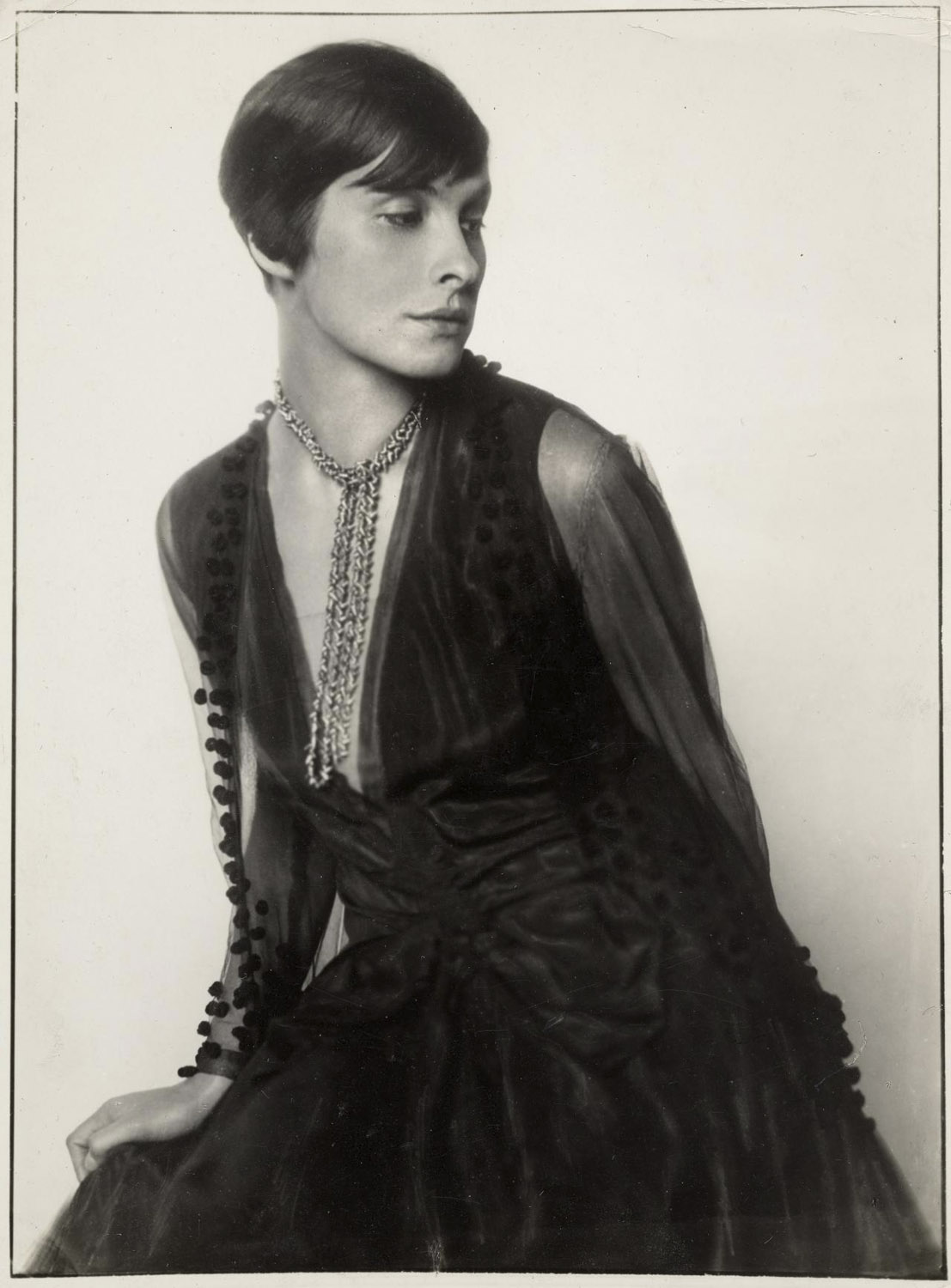
 

Trude Fleischmann (American born Austria, 1895-1990) 'The actress Sibylle Binder, Vienna' c. 1926


Trude Fleischmann (Austrian 1895-1990, United States 1938-1990)
The actress Sibylle Binder, Vienna
c. 1926
Gelatin silver photograph
21.9 x 16.2cm
National Gallery of Victoria, Melbourne
Bowness Family Fund for Photography, 2022
Public domain


Trude Fleischmann (American born Austria, 1895-1990)

Trude Fleischmann (22 December 1895 – 21 January 1990) was an Austrian-born American photographer. After becoming a notable society photographer in Vienna in the 1920s, she re-established her business in New York in 1940. …

In 1920, at the age of 25, Fleischmann opened her own studio close to Vienna’s city hall. Her glass plates benefitted from her careful use of diffuse artificial light. Photographing music and theatre celebrities, her work was published in journals such as Die Bühne, Moderne Welt, ‘Welt und Mode and Uhu. She was represented by Schostal Photo Agency (Agentur Schostal). In addition to portraits of Karl Kraus and Adolf Loos, in 1925 she took a nude series of the dancer Claire Bauroff which the police confiscated when the images were displayed at a Berlin theatre, bringing her international fame. Fleischmann also did much to encourage other women to become professional photographers.

With the Anschluss in 1938, Fleischmann was forced to leave the country. She moved first to Paris, then to London and finally, together with her former student and companion Helen Post, in April 1939 to New York. In 1940, she opened a studio on West 56th Street next to Carnegie Hall which she ran with Frank Elmer who had also emigrated from Vienna. In addition to scenes of New York City, she photographed celebrities and notable immigrants including Albert Einstein, Eleanor Roosevelt, Oskar Kokoschka, Lotte Lehmann, Otto von Habsburg, Count Richard von Coudenhove-Kalergi and Arturo Toscanini. She also worked as a fashion photographer, contributing to magazines such as Vogue. She established a close friendship with the photographer Lisette Model.

Text from the Wikipedia website


Sybille Binder (Austrian, 1895-1962)

Sybille Binder (5 January 1895 – 30 June 1962) was an Austrian actress of Jewish descent whose career of over 40 years was based variously in her home country, Germany and Britain, where she found success in films during the 1940s.

Binder began her stage career in Berlin in 1915, then in 1918 moved to Munich, where she enjoyed success in classical drama. Between 1916 and 1918 she also appeared in a handful of silent films. In 1922, she returned to Berlin and received acclaim for her performance in Frank Wedekind’s Earth Spirit. Over the next few years she performed regularly in Germany and Austria then, in the mid-1930s as war approached and conditions in Germany became difficult, she made the decision to move to England.

Between 1942 and 1950 Binder featured in 13 British films, including several of superior quality. Her first screen appearance in Britain came auspiciously in the highly acclaimed supernatural drama Thunder Rock, playing opposite dramatic heavyweights including Michael Redgrave, James Mason and Frederick Valk. Other notable films in which Binder appeared were war drama Candlelight in Algeria (1944), hugely popular period melodrama Blanche Fury, espionage thriller Against the Wind and amnesia-themed romance Portrait from Life (all 1948).

Binder returned to Germany in 1950, settling in Düsseldorf, where she successfully picked up her stage career but did not attempt to break into the German film industry. She died on 30 June 1962, aged 67.

Text from the Wikipedia website


Walker Evans (United States of America 1903 - 1975) 'Graveyard and steel mill, Bethlehem, Pennsylvania' 1935


Walker Evans (American 1903-1975)
Graveyard, houses and steel mill, Bethlehem, Pennsylvania
1935, printed c. 1975
Gelatin silver photograph
39.5 x 49.5cm
National Gallery of Victoria, Melbourne
Purchased, 1975
Public domain


Marion Post Wolcott (American, 1910-1990) 'Near Wadesboro, North Carolina' 1938


Marion Post Wolcott (American, 1910-1990)
Near Wadesboro, North Carolina
1938; c. 1975 {printed}
Gelatin silver photograph
26.4 x 26.5cm
National Gallery of Victoria, Melbourne
Purchased, 1975


Joe Rosenthal (1911-2006) 'Raising the Flag on Iwo Jima' 1945; printed (c. 1948)


Joe Rosenthal (1911-2006)
Raising the Flag on Iwo Jima
1945; printed (c. 1948)
Gelatin silver photograph
11.5 x 8.8cm
National Gallery of Victoria, Melbourne
Gift of Francis Reiss, 2014
Public domain


Imogen Cunningham (American, 1883-1976) 'The unmade bed' 1957


Imogen Cunningham (American, 1883-1976)
The unmade bed
1957
Gelatin silver photograph
24.4 x 32.7cm
National Gallery of Victoria, Melbourne
Gift of Krystyna Campbell-Pretty AM and Family through the Australian Government’s Cultural Gifts Program, 2023


In 1957, while teaching at the California School of Fine Arts in San Francisco, Imogen Cunningham overheard her colleague Dorothea Lange set a task for her students to photograph an ordinary object that they used every day. Cunningham is said to have set the same task for herself. The resulting photograph, The unmade bed, is an image constructed with familiar objects, including discarded hairpins and a crumpled bedsheet. In this quiet and unassuming photograph, Cunningham has created both an elegant still life and an unexpectedly tender portrait of a woman recently risen from her sleep.

Wall text from the exhibition


George Bell (Australian 1878-1966, England 1907-1920) 'Pain' 1966, printed 1991


George Bell (Australian 1878-1966, England 1907-1920)
Pain
1966, printed 1991
Gelatin silver photograph
28.2 × 35.6cm
National Gallery of Victoria, Melbourne
Purchased, 1991
Public domain


Ulrich Wüst (German, b. 1949) 'Berlin' 1982 (installation view)


Ulrich Wüst (German, b. 1949)
Berlin (installation view)
1982
From the Cityscapes (Stadtbilder) series 1979-1984
Inkjet print
National Gallery of Victoria, Melbourne
Purchased NGV Foundation, 2018
Photo: Marcus Bunyan


Hank Willis Thomas (American, b. 1976) 'Amelia falling' 2014


Hank Willis Thomas (American, b. 1976)
Amelia falling
2014
Photographic print, mirror and glass
166 x 135cm
National Gallery of Victoria, Melbourne
Bowness Family Fund for Photography, 2017
© Hank Willis Thomas. Courtesy of the artist and Jack Shainman Gallery, New York


Hank Willis Thomas’s photographs printed on mirrors are sometimes difficult to look at, but with the viewer’s reflection integrated into the work they are also impossible to ignore. In this work we bear witness to the shockingly violent incursions into what was intended to have been a peaceful civil rights protest in Selma, Alabama. Willis Thomas’s work and its source image, a photograph taken in 1965 by Spider Martin, show civil rights activist Amelia Boynton Robinson being carried by fellow marchers after being gassed and beaten. Through his use of archival images Willis Thomas draws connections between historical moments and contemporary life, leaving little comfortable space to be a dispassionate observer.

Wall text from the exhibition


Malala Andrialavidrazana (Madagascar, b. 1971) 'Figures 1850, various empires, kingdoms, states and republics' 2015


Malala Andrialavidrazana (Madagascar, b. 1971)
Figures 1850, various empires, kingdoms, states and republics
2015
Inkjet print
110.0 x 138.5cm
ed. 1/5
National Gallery of Victoria, Melbourne
Ruth Margaret Frances Houghton Bequest, 2021
© Malala Andrialavidrazana. Courtesy of the artist and AFRONOVA Gallery


Malala Andrialavidrazana’s series Figures are digital photomontages created using images sourced from archival collections of nineteenth-century maps of the African continent, as well as bank notes and stamps. The historical maps are overlaid with portraits of various heads of state and depictions of colonial developments and decorative details showing people, places, plants and animals from across Africa. These photomontages reveal the complex political and cultural histories of maps, cartography and archives, and the changing understanding of the greater African continent by European colonial powers in the nineteenth and twentieth centuries.

Wall text from the exhibition


Section wall texts from the exhibition


Light wall text from the exhibition


Light wall text from the exhibition


Systems and Surface wall text from the exhibition


Systems and Surface wall text from the exhibition


Surreal wall text from the exhibition


Surreal wall text from the exhibition


Narrative wall text from the exhibition


Narrative wall text from the exhibition


Work and Play wall text from the exhibition


Work and Play wall text from the exhibition


Movement wall text from the exhibition


Movement wall text from the exhibition


Studio and Things wall text from the exhibition


Studio and Things wall text from the exhibition


Display wall text from the exhibition


Display wall text from the exhibition


Consumption wall text from the exhibition


Consumption wall text from the exhibition

SELF wall text from the exhibition (missing)
 

Skin wall text from the exhibition


Skin wall text from the exhibition


Community and Touch wall text from the exhibition


Community and Touch wall text from the exhibition

ENVIRONMENT wall text from the exhibition (missing)


Place and Built wall text from the exhibition


Place and Built wall text from the exhibition

NINETEETH-CENTURY PHOTOGRAPHY wall text from the exhibition (missing)


Conflict wall text from the exhibition


Conflict wall text from the exhibition

DEATH wall text from the exhibition (missing)


The Ian Potter Centre: NGV Australia
Federation Square
Corner of Russell and 
Flinders Streets, Melbourne

Opening hours:
Daily 10am – 5pm

National Gallery of Victoria website

LIKE ART BLART ON FACEBOOK

Back to top

Exhibition: ‘Zanele Muholi’ at Tate Modern, London

Exhibition dates: 11th November 2020 – 31st May 2021

Curators: Yasufumi Nakamori, Senior Curator and Sarah Allen, Assistant Curator with Kerryn Greenberg, Head of International Collection Exhibitions, Tate and formerly Curator, Tate Modern.


Installation Photograph of 'Zanele Muholi' Exhibition, Tate Modern, November 2020


Installation photograph of Zanele Muholi Exhibition, Tate Modern, November 2020
Photo © Andrew Dunkley


Unclassified fabulousness

There are so many words that you can say about an artist and their work. So many unnecessary words. All you have to do is look at the work. Does it speak to you? does it make you feel, does it empower you?

For me, artists either have it or they don’t… and in this case, visual activist Zanele Muholi possesses it by the bucketful. Panache, flair, downright unclassified fabulousness, call it what you want. They just have it.

They are powerful, they are strong, they are courageous, they tell great stories, they make you question history, they make you analyse what you think you know, they challenge your memories, they make you feel something about their participants, they make you want to fight for LGBTQIA+ social rights. They make you want to stand up and fight for equality and freedom for everyone. No person is an island, alone by themselves; we should all be equal under this cosmic sky.

The older I get the less tolerant I get of the stupidity of the human race and its non-evolution, in terms of spirit of self. When is the human race going to just grow up! Ditch the patriarchy, misogyny, colonialism, racial and socio-economic oppression. Appreciate difference, value the quality of every human being, debunk the dogma of religion, curtail the power of corporations and live in harmony with the earth. Not f…ing much to ask is it, after all these thousands of years.

I won’t live to see it, but with artists like Muholi, there is hope for humanity yet. Unclassifiable. Beautiful. Hail the Dark Lioness – all power to them.

Dr Marcus Bunyan


Many thankx to the Tate Britain for allowing me to publish the photographs in the posting. Please click on the photographs for a larger version of the image.


Tate Modern presents the first major mid-career survey of visual activist Zanele Muholi in the UK. Born in South Africa, Muholi came to prominence in the early 2000s with photographs that sought to envision black lesbian, gay, bisexual, trans, queer and intersex lives beyond deviance or victimhood.


“My mission is to re-write a Black queer and trans visual history of South Africa for the world to know of our resistance and existence at the height of hate crimes in South Africa and beyond.”

“In my world, every human is beautiful.”


Zanele Muholi


“Muholi prefers to be called an activist rather than an artist. Art, for them, is a means to an end, a tool to convey messages about social empowerment and visibility. “Zanele Muholi’s visual activism is not an occupation. It’s a lifestyle,” Kerryn Greenberg explains. “It’s something that occupies them day and night – whether they receive a call from someone in the community needing money to pay for a hospital appointment, or consoling those who’ve lost someone close to them in an act of violence, or giving some kind of public address at a wedding or a funeral. It’s about being a very active member of the community, and a public voice within that community.”


Maisie Skidmore. “Yes, but why? Zane Muholi,” on the We Present website [Online] Cited 11 April 2021


“The connection that Muholi has with their participants (which they are eager to distinguish from the word “subject,” which implies a distanced gaze) translates to the viewer, who, in looking at these images, is immediately welcomed into a space of understanding and empathy. Muholi also often highlights the voices of the participants in their shows, books and events. …

The political agenda of the 260 photographs on display – which critique centuries of anti-Black sentiment, oppression and erasure – echoes the rallying cry of the Black Lives Matter movement and the racial justice reckoning it has inspired worldwide. “Muholi’s work takes on an enormous importance within the context of Black Lives Matter because of its potential to educate audiences and promote mutual understanding,” said Sarah Allen. Each piece makes a clear visual statement: not only that Black queer lives matter but also that Black queer lives are nuanced, cherished and deserve to be celebrated.”


Cassidy George. “Zanele Muholi’s Photographs Celebrate Radical, Queer, Black Beauty,” on the W Magazine website 11/03/2020 [Online] Cited 11/05/2021


Zanele Muholi – ‘In My World, Every Human is Beautiful’ / Tate

Visual activist, Zanele Muholi, uses photography and film to document and explore issues of race and representation and to celebrate the LGBTQIA+ community in South Africa and beyond. Here they talk about how the power of images can show LGBTQIA+ people of South Africa, and QTIPOC people worldwide, that they are not alone. Watch as they introduce us to four key bodies of work and the ideas behind them.


Zanele Muholi: In Conversation with Lady Phyll / Artist’s Talk / Tate Exchange

Watch an in conversation between Muholi and Lady Phyll of UK Black Pride. Together, they discuss what difficult love looks like for QTIPOC communities in South Africa and Britain and the importance of chosen families.

This talk forms a part of From a Place of Love, a collaboration between Tate Exchange’s Love programme and UK Black Pride, whose theme for 2020 is home.


Born in 1972 and raised in Umlazi, a township on South Africa’s eastern coast, Muholi had a childhood shaped by the racial brutality of Apartheid – a white supremacist regime that systematically oppressed and displaced South Africa’s non white population for half a century. Muholi was an adolescent when Apartheid absolved and South Africa’s constitution was rewritten in 1996, with the intention of ushering a new era of equality. Even though South Africa’s constitution was the first in the world to outlaw discrimination based on sexual orientation, as a young queer person, Muholi was constantly reminded that the violent realities of gay life in South Africa did not align with this utopic vision of the future. Homophobia, queerphobia and transphobia remained rampant, and in South Africa, Black lesbians and transgender men are among the most at risk, and are often victims of heinous hate crimes, like “corrective” rape, abduction and murder. Drawing inspiration from the work of the American photographer Nan Goldin, whose early photographs documented queer culture and the HIV epidemic through intimate portraits of her family and friends, Muholi embarked on a mission to commemorate the battles and triumphs of her community with pictures.

Cassidy George. “Zanele Muholi’s Photographs Celebrate Radical, Queer, Black Beauty,” on the W Magazine website 11/03/2020 [Online] Cited 11/05/2021


Zanele Muholi is a South African visual activist whose pronouns are they/them/theirs. Their work tells the stories of Black LGBTQIA+ (Lesbian, Gay, Bisexual, Transgender, Queer, Intersex, Agender, Asexual) lives in South Africa and beyond. Their photography raises awareness of injustices and aims to educate, while creating positive visual histories for under and mis-represented communities. Muholi also turns the camera on themself, making self-portraits that address race, history and representation. This exhibition charts Muholi’s emergence as an activist in the early 2000s to the present day.

During the 1990s, South Africa underwent major social and political change. Apartheid was officially abolished in 1994. This was a political and social system of racial segregation underpinned by white minority rule. Anyone who was not classified as white was actively oppressed by the regime. Apartheid continued the segregation that had begun under the Dutch and British colonial regimes in the late 19th century. The apartheid regime also upheld injustice and discrimination based on gender and sexuality. While the 1996 Constitution of the Republic of South Africa was the first in the world to outlaw discrimination based on sexual orientation, the LGBTQIA+ community remains a target for prejudice, hate crimes and violence.


Installation photograph of Room 1 of the 'Zanele Muholi' exhibition, Tate Modern, November 2020 showing photographs from the series 'Only Half the Picture' (2002-2006)

Installation photograph of Room 1 of the 'Zanele Muholi' exhibition, Tate Modern, November 2020 showing photographs from the series 'Only Half the Picture' (2002-2006)


Installation photographs of Room 1 of the Zanele Muholi exhibition, Tate Modern, November 2020 showing photographs from the series Only Half the Picture (2002-2006)
Photos © Andrew Dunkley


Room 1: Only Half The Picture

This room incudes work from Muholi’s first series Only Half the Picture (2002-2006). It documents survivors of hate crimes living across South Africa and its townships. Under apartheid, townships were established as residential areas for those who had been evicted from places designated as ‘white only’. The people Muholi photographs – their participants – are presented with compassion, dignity and courage in the face of ongoing discrimination. The series also includes images of intimacy, expanding the narrative beyond victimhood. Muholi reveals the pain, love and defiance that exist within the Black LGBTQIA+ community in South Africa.

Exhibition room guide text


Zanele Muholi. 'Aftermath' 2004


Zanele Muholi (South African, b. 1972)
Aftermath
2004
From the series Only Half the Picture
Photograph, gelatin silver print on paper
600 x 395mm
Courtesy of the Artist and Stevenson, Cape Town/Johannesburg and Yancey Richardson, New York
© Zanele Muholi


Zanele Muholi. 'ID Crisis' 2003


Zanele Muholi (South African, b. 1972)
ID Crisis
2003
From the series Only Half the Picture
Photograph, gelatin silver print on paper
325 x 485mm
Courtesy of the Artist and Stevenson, Cape Town/Johannesburg and Yancey Richardson, New York
© Zanele Muholi


The exhibition opens with a group of deceptively gentle images. In the first, Aftermath (2004), a torso is cropped from waist to knees, hands modestly clasped in front of Jockey shorts, a huge scar running down the person’s right leg almost like a piece of body art. In another, Ordeal (2003), hands wring out a cloth in an enamel basin of water placed on a floor. A third image shows a cropped, seated figure, again waist to thighs, hands folded in their lap, plastic hospital ties around their wrists. These pictures have a softness and beauty which completely belies the fact that their subjects are all survivors of sexual violence and “corrective rape”.

As the caption to the last picture, Hate crime survivor I, Case number (2004) explains, “Corrective rape is a term used to describe a hate crime in which a person is raped because of their perceived sexual orientation or gender identity. The intended consequence of such acts is to enforce heterosexuality and gender conformity.” This horrific practice is by no means unique to South Africa, but the term seems to have originated there – feminist activist Bernedette Muthien used it during an interview with Human Rights Watch in 2001 – and its effects on the community resonate throughout this exhibition.

Anonymous. “Zanele Muholi, Tate Modern,” on the Something I’m Working On website Wednesday 30th December 2020 [Online] Cited 11/05/2021


Installation photograph of Room 2 of the 'Zanele Muholi' exhibition, Tate Modern, November 2020


Installation photograph of Room 2 of the Zanele Muholi exhibition, Tate Modern, November 2020
Photo © Andrew Dunkley


Room 2: Being

This room features work from Muholi’s series Being (2006 – ongoing). The portraits capture moments of intimacy between couples, as well as their daily life and routines. Muholi addresses the misconception that queer life is ‘unAfrican’, a falsehood emerging in part out of the belief that same-sex orientation was a colonial import to Africa. Each couple is shown in the private spaces they share. Muholi explains how ‘lovers and friends consented to participate in the project, willing to bare and express their love for each other.’

Commenting on this series they say, ‘my photography is never about lesbian nudity. It is about portraits of lesbians who happen to be in the nude.’ This series dismantles the white patriarchal gaze and rejects negative or heteronormative images, common in political and social systems that uphold heterosexuality as the norm or default sexual orientation.

Since slavery and colonialism, images of us African women have been used to reproduce heterosexuality and white patriarchy, and these systems of power have so organised our everyday lives that it is difficult to visualise ourselves as we actually are in our respective communities. Moreover, the images we see rely on binaries that were long prescribed for us (heterosexual / homosexual, male/female, African / unAfrican). From birth on, we are taught to internalise their existences, sometimes forgetting that if bodies are connected, connecting, the sensuousness goes beyond simplistic understandings of gender and sexuality.


Exhibition room guide text


Zanele Muholi. 'Katlego Mashiloane and Nosipho Lavuta, Ext. 2, Lakeside, Johannesburg' 2007


Zanele Muholi (South African, b. 1972)
Katlego Mashiloane and Nosipho Lavuta, Ext. 2, Lakeside, Johannesburg
2007
From the series Being (2006 – ongoing)
Courtesy of the Artist and Stevenson, Cape Town/Johannesburg and Yancey Richardson, New York
© Zanele Muholi


Zanele Muholi (South African, b. 1972) 'Katlego Mashiloane and Nosipho Lavuta, Ext. 2, Lakeside, Johannesburg' 2007


Zanele Muholi (South African, b. 1972)
Katlego Mashiloane and Nosipho Lavuta, Ext. 2, Lakeside, Johannesburg
2007
From the series Being (2006 – ongoing)
Courtesy of the Artist and Stevenson, Cape Town/Johannesburg and Yancey Richardson, New York
© Zanele Muholi


Zanele Muholi (South African, b. 1972) 'Beloved V' 2005


Zanele Muholi (South African, b. 1972)
Beloved V
2005
From the series Being (2006 – ongoing)
Courtesy of the Artist and Stevenson, Cape Town/Johannesburg and Yancey Richardson, New York
© Zanele Muholi


Zanele Muholi. 'Busi Mdaki and Malesedi Nthute, Johannesburg' 2007


Zanele Muholi (South African, b. 1972)
Busi Mdaki and Malesedi Nthute, Johannesburg
2007
From the series Being (2006 – ongoing)
Courtesy of the Artist and Stevenson, Cape Town/Johannesburg and Yancey Richardson, New York
© Zanele Muholi


Zanele Muholi (South African, b. 1972) 'TommyBoys' 2004


Zanele Muholi (South African, b. 1972)
TommyBoys
2004
From the series Being (2006 – ongoing)
Courtesy of the Artist and Stevenson, Cape Town/Johannesburg and Yancey Richardson, New York
© Zanele Muholi


In “TommyBoys,” a colour photograph, two muscular figures in tracksuit pants sit on a tarmac. One, in a red T-shirt, sits with her hands folded against her chest, while next to her, the second uses her white vest to wipe something from her eyes. (“Tommy Boy” is a word used in South Africa, like “butch,” to refer to a masculine-presenting lesbian.)

Text from the New York Times website


Zanele Muholi. 'Busi Sigasa, Braamfontein, Johannesburg' 2006


Zanele Muholi (South African, b. 1972)
Busi Sigasa, Braamfontein, Johannesburg
2006
Courtesy of the Artist and Stevenson, Cape Town/Johannesburg and Yancey Richardson, New York
© Zanele Muholi


Installation photograph of Room 3 of the 'Zanele Muholi' exhibition, Tate Modern, November 2020 showing the section 'Queering Public Space'

Installation photograph of Room 3 of the 'Zanele Muholi' exhibition, Tate Modern, November 2020 showing the section 'Queering Public Space'

Installation photograph of Room 3 of the 'Zanele Muholi' exhibition, Tate Modern, November 2020 showing the series 'Miss Lesbian I-VII, Amsterdam' (2009)


Installation photographs of Room 3 of the Zanele Muholi exhibition, Tate Modern, November 2020 showing in the bottom photograph the series Miss Lesbian I-VII, Amsterdam (2009)
Photos © Andrew Dunkley


Room 3: Queering Public Space

Photographing Black LGBTQIA+ participants in public spaces is an important part of Muholi’s visual activism. This room contains portraits of transgender women, gay men and gender non-conforming people photographed in public places.

Several of the locations are important in the history of South Africa. Some images are taken at Constitutional Hill, the seat of the Constitutional Court of South Africa. It is a key place in relation to the country’s progression towards democracy. Other participants are photographed on beaches. These were segregated during apartheid. They are therefore potent symbols of how racial segregation affected every aspect of life. Participants are often shown on Durban Beach, close to Muholi’s birthplace of Umlazi.

Muholi states that ‘we’re ‘queering’ the space in order for us to access the space. We transition within the space in order to make sure that the Black trans bodies are part of this as well. We owe it to ourselves.’ Muholi often chooses to photograph participants in colour, bringing the work closer to reality and rooting them in the present day.

Exhibition room guide text


Zanele Muholi. 'Miss D'vine II' 2007


Zanele Muholi (South African, b. 1972)
Miss D’vine II
2007
Lambda print
765 x 765 mm
Courtesy of the Artist and Stevenson, Cape Town/Johannesburg and Yancey Richardson, New York
© Zanele Muholi


Zanele Muholi (South African, b. 1972) 'Miss Lesbian VII, Amsterdam' 2009


Zanele Muholi (South African, b. 1972)
Miss Lesbian VII, Amsterdam
2009
C-print
86.5 x 60.5cm
Courtesy of the Artist and Stevenson, Cape Town/Johannesburg and Yancey Richardson, New York
© Zanele Muholi


Tate Modern presents the first major UK survey of visual activist Zanele Muholi.

Zanele Muholi is one of the most acclaimed photographers working today, and their work has been exhibited all over the world. With over 260 photographs, this exhibition presents the full breadth of their career to date.

Muholi describes themself as a visual activist. From the early 2000s, they have documented and celebrated the lives of South Africa’s Black lesbian, gay, trans, queer and intersex communities.

In the early series Only Half the Picture, Muholi captures moments of love and intimacy as well as intense images alluding to traumatic events – despite the equality promised by South Africa’s 1996 constitution, its LGBTQIA+ community remains a target for violence and prejudice.

In Faces and Phases each participant looks directly at the camera, challenging the viewer to hold their gaze. These images and the accompanying testimonies form a growing archive of a community of people who are risking their lives by living authentically in the face of oppression and discrimination.

Other key series of works, include Brave Beauties, which celebrates empowered non-binary people and trans women, many of whom have won Miss Gay Beauty pageants, and Being, a series of tender images of couples which challenge stereotypes and taboos.

Muholi turns the camera on themself in the ongoing series Somnyama Ngonyama – translated as ‘Hail the Dark Lioness’. These powerful and reflective images explore themes including labour, racism, Eurocentrism and sexual politics.​

Exhibition organised by Tate Modern in collaboration with the Maison Européenne de la Photographie, Paris, Gropius Bau, Berlin and Bildmuseet at Umeå University.

Text from the Tate Modern website


Tate Modern presents the first major UK survey of South African visual activist Zanele Muholi. Muholi (b. 1972) came to prominence in the early 2000s with photographs that told the stories of black lesbian, gay, bisexual, trans, queer and intersex lives in South Africa. Over 300 photographs are brought together to present the full breadth of Muholi’s career to date, from their very first body of work Only Half the Picture, to their on-going series Somnyama Ngonyama. These works challenge dominant ideologies and representations, presenting the participants in their photographs as fellow human beings bravely existing in the face of prejudice, intolerance and often violence.

During the 1990s, South Africa underwent major social and political changes. While the country’s 1996 post-apartheid constitution was the first in the world to outlaw discrimination based on sexual orientation, the LGBTQIA+ community remains a target for violence and prejudice to this day. In the early series Only Half the Picture Muholi aimed to depict the complexities of gender and sexuality for the individuals of the queer community. The collection includes moments of love and intimacy as well intense images alluding to traumatic events in the lives of the participants. Muholi also began an ongoing visual archive of portraits, Faces and Phases, which commemorates and celebrates black lesbians, transgender people and gender non-conforming individuals. Each participant looks directly at the camera, challenging the viewer to hold their gaze, while individual testimonies capture their stories. The images and testimonies form a living and growing archive of this community in South Africa and beyond.

The exhibition includes several other key series of works, including Brave Beauties, which celebrates empowered non-binary people and trans women, many of whom have won Miss Gay Beauty pageants, and Being, a series of tender images of couples which challenge stereotypes and taboos. Images like Melissa Mbambo, Durban also attempt to reclaim public spaces for black and queer communities, such as a beach in Durban which was racially segregated during apartheid. Within these series, Muholi tells collective as well as individual stories. They challenge preconceived notions of deviance and victimhood, encourage viewers to address their own misconceptions, and create a shared sense of understanding and solidarity.

More recently, Muholi has begun an acclaimed series of dramatic self-portraits entitled Somnyama Ngonyama (‘Hail the Dark Lioness’ in Zulu). Turning the camera on themself, the artist adopts different poses, characters and archetypes to address issues of race and representation. From scouring pads and latex gloves to rubber tires and cable ties, everyday materials are transformed into politically loaded props and costumes. The resulting images explore themes of labour, racism, Eurocentrism and sexual politics, often commenting on events in South Africa’s history and Muholi’s experiences as a South African black queer person traveling abroad. By enhancing the contrast in the photographs, Muholi also emphasises the darkness of their skin tone, reclaiming their blackness with pride and re-asserting its beauty. Muholi has created some new self-portraits for this series which are being shown at Tate Modern for the first time.

Zanele Muholi is co-curated by Yasufumi Nakamori, Senior Curator and Sarah Allen, Assistant Curator with Kerryn Greenberg, Head of International Collection Exhibitions, Tate and formerly Curator, Tate Modern. The exhibition is organised by Tate Modern in collaboration with the Maison Européenne de la Photographie in Paris, Gropius Bau in Berlin and Bildmuseet at Umeå University. Supported by the Zanele Muholi Exhibition Supporters Circle, Tate Americas Foundation, Tate International Council, Tate Patrons and Tate Members . Research supported by Hyundai Tate Research Centre: Transnational in partnership with Hyundai Motor.

About Zanele Muholi

Zanele Muholi was born in Umlazi, Durban and lives in Johannesburg. They studied at the Market Photo Workshop in Johannesburg, and Ryerson University, Toronto. Co-founder of the Forum for the Empowerment of Women, and founder of Inkanyiso, a forum for queer and visual media, Muholi is also an honorary professor at the University of the Arts Bremen, Germany. Solo exhibitions of Muholi’s work have been hosted around the world, including at the Goethe-Institut, Johannesburg (2012); Brooklyn Museum, New York (2015); Stedelijk Museum Amsterdam (2017); Autograph ABP, London (2017-) and Museo de Arte moderno de Buenos Aires (2018). Muholi has won numerous awards, including the Lucie Humanitarian Award (2019), the 2019 ‘Best Photography Book Award’ by the Kraszna-Krausz Foundation for their book Somnyama Ngonyama: Hail, The Dark Lioness (Aperture), the Rees Visionary Award by Amref Health Africa (2019); a fellowship from the Royal Photographic Society, UK (2018); France’s Chevalier de l’Ordre des Arts et des Lettres (2017); the Mbokodo Award in the category of Visual Arts (2017);the ICP Infinity Award for Documentary and Photojournalism (2016); the Fine Prize for an emerging artist at the Carnegie International (2013); a Prince Claus Award (2013); and both the Casa África award for best female photographer and a Fondation Blachère award at Les Rencontres de Bamako biennial of African photography (2009). Somnyama Ngonyama was shown at the 58th Venice Biennale (2019); Faces and Phases was shown at dOCUMENTA 13 (2012) and the 55th Venice Biennale (2013).

Muholi’s pronouns are they, them, their.

Press release from the Tate website


Installation photograph of Room 4 of the 'Zanele Muholi' exhibition, Tate Modern, November 2020 showing photographs from the series 'Brave Beauties' (2014 - ongoing)

Installation photograph of Room 4 of the 'Zanele Muholi' exhibition, Tate Modern, November 2020 showing photographs from the series 'Brave Beauties' (2014 - ongoing)


Installation photographs of Room 4 of the Zanele Muholi exhibition, Tate Modern, November 2020 showing photographs from the series Brave Beauties (2014 – ongoing)
Photos © Andrew Dunkley


Room 4: Brave Beauties

Brave Beauties (2014 – ongoing) is a series of portraits of trans women, gender non-conforming and non-binary people. Many of them are also beauty pageant contestants. Queer beauty pageants offer a space of resistance within the Black LGBTQIA+ community in South Africa. They are a place where individuals can realise and express their beauty outside heteronormative and white supremacist cultures. Muholi has commented that these participants ‘enter beauty pageants to change mind-sets in the communities they live in, the same communities where they are most likely to be harassed, or worse.’

This series is also inspired by fashion magazine covers. Muholi has questioned whether ‘South Africa as a democratic country would have an image of a trans woman on the cover of a magazine.’ These images aim to challenge queerphobic and transphobic stereotypes and stigmas.

As with all of Muholi’s images, the portraits are created through a collaborative process. Muholi and the participant determine the location, clothing and pose together, focusing on producing images that are empowering for both the participant and the audience.

Exhibition room guide text


Zanele Muholi (South African, b. 1972) 'Sazi Jali, Durban' 2020


Zanele Muholi (South African, b. 1972)
Sazi Jali, Durban
2020
Courtesy of the Artist and Stevenson, Cape Town/Johannesburg and Yancey Richardson, New York
© Zanele Muholi


Zanele Muholi (South African, b. 1972) 'Somizy Sincwala, Parktown' 2014


Zanele Muholi (South African, b. 1972)
Somizy Sincwala, Parktown
2014
Courtesy of the Artist and Stevenson, Cape Town/Johannesburg and Yancey Richardson, New York
© Zanele Muholi


The series Brave Beauties, started in 2014, is “a series of portraits of trans women, gender non-conforming and non-binary people. Many of them are also beauty pageant contestants.” The queer beauty pageant is many things: a celebration – and redefinition – of beauty, a declaration of independence by contestants, a challenge to “heteronormative and white supremacist cultures,” and an attempt, as Muholi puts it, “to change mind-sets in the communities [the contestants] live in, the same communities where they are most likely to be harassed or worse.”

Anonymous. “Zanele Muholi, Tate Modern,” on the Something I’m Working On website Wednesday 30th December 2020 [Online] Cited 11/05/2021


Zanele Muholi (South African, b. 1972) 'Dimpho Tsotetsi, Parktown' 2014


Zanele Muholi (South African, b. 1972)
Dimpho Tsotetsi, Parktown
2014
Courtesy of the Artist and Stevenson, Cape Town/Johannesburg and Yancey Richardson, New York
© Zanele Muholi


What I really want to talk about is beauty. Because I think for Muholi, that’s kind of where it all stems from, is recognising beauty in things that you might not expect. Muholi has said “All I want to see is beauty. And that doesn’t mean you have to smile, or try harder. Just be.”

I think that’s very much linked to the history of Apartheid, of course […] As a Black person being told constantly ‘your hair isn’t straight enough’, ‘you should look like this’, ‘you should look like that’ and that being legislated under Apartheid. But it’s also what is in the magazines, this idea of the perfect beauty. Muholi’s counteracting them, saying actually, none of that is relevant. It’s about being the beauty that you want to be.

There’s a really great series called Brave Beauties, which […] pictures trans women and gender non-binary individuals, many of whom have been in beauty pageants, occupying space. Demanding attention. And being absolutely stunningly beautiful. And you kind think, ‘yeah, what are our notions of beauty, what are these kind of constructions that are absolutely false?’

Kerryn Greenberg


Zanele Muholi. 'Eva Mofokeng II, Parktown, Johannesburg' 2014


Zanele Muholi (South African, b. 1972)
Eva Mofokeng II, Parktown, Johannesburg
2014
Courtesy of the Artist and Stevenson, Cape Town/Johannesburg and Yancey Richardson, New York
© Zanele Muholi


Installation photograph of Room 5 of the 'Zanele Muholi' exhibition, Tate Modern, November 2020


Installation photograph of Room 5 of the Zanele Muholi exhibition, Tate Modern, November 2020
Photo © Andrew Dunkley


Room 5: Collectivity

Collectivity lies at the heart of Muholi’s work. Many of Muholi’s large network of collaborators are members of their collective, Inkanyiso. This means ‘light’ in isiZulu, Muholi’s first language and one of 11 official languages in South Africa. Inkanyiso’s mission is to ‘Produce, educate and disseminate information to many audiences, especially those who are often marginalised or sensationalised by the mainstream media.’ Queer Activism = Queer Media, is the collective’s motto.

Self-organisation, mentorship and skill sharing are central to Muholi’s collaborative activity. This room features images that are collaboratively made. Whether documenting public events such as Pride marches and protests, or private events such as marriages and funerals, these images form an ever-expanding visual archive. By recording the existence of the Black LGBTQIA+ community, they resist erasure.

Exhibition room guide text


Zanele Muholi (South African, b. 1972) 'Lerato Dumse, Muntu Masombuka’s Funeral, Johannesburg' 2014


Zanele Muholi (South African, b. 1972)
Lerato Dumse, Muntu Masombuka’s Funeral, Johannesburg
2014
Courtesy of the Artist and Stevenson, Cape Town/Johannesburg and Yancey Richardson, New York
© Zanele Muholi


Room 6: Faces and Phases

Muholi began their ongoing series Faces and Phases in 2006. The project currently totals 500+ works. As a collective portrait, it celebrates, commemorates and archives the lives of Black lesbians, transgender and gender non-conforming individuals.

It is important to mark, map and preserve our mo(ve)ments through visual histories for reference and posterity so that future generations will note that we were here.


Many of these portraits are the result of a long and sustained relationship and collaboration. Muholi often returns to photograph the same person over time. Faces refers to the person being photographed. Phases signifies a transition from one stage of sexuality or gender expression and identity to another. It also marks the changes in the participants’ daily lives, including ageing, education, work experience and marriage. The gaps in the grid indicate individuals that are no longer present in the project, or a portrait yet to be taken. One wall in the exhibition is dedicated to the participants who have passed away.

Faces and Phases forms a living archive that visualises Muholi’s belief that ‘we express our gendered, radicalised, and classed selves in rich and diverse ways.’

Exhibition room guide text


Installation photograph of Room 6 of the 'Zanele Muholi' exhibition, Tate Modern, November 2020 showing Muholi's series 'Faces and Phases' (2006 - ongoing)

Installation photograph of Room 6 of the 'Zanele Muholi' exhibition, Tate Modern, November 2020 showing Muholi's series 'Faces and Phases' (2006 - ongoing)

Installation photograph of Room 6 of the 'Zanele Muholi' exhibition, Tate Modern, November 2020 showing Muholi's series 'Faces and Phases' (2006 - ongoing)


Installation photographs of Room 6 of the Zanele Muholi exhibition, Tate Modern, November 2020 showing Muholi’s series Faces and Phases (2006 – ongoing)
Photos © Andrew Dunkley


Faces and Phases is an ongoing series whereby the artist was seeking to document and photograph Black lesbians, trans men and gender non-conforming individuals. There’s now a mass of these incredibly beautiful portraits, which generally are presented in a grid, to show that, actually […] giving visibility to these people is a life’s work. There are many portraits of the same individuals over the course of a number of years. So you can see how people age, how they transition, sometimes, and how the way they present themselves, alters.

It is about acknowledging pain and trauma, and trying to heal people, and heal oneself through those images. Images that Muholi wants their community, to be proud of, and feel well represented by.

Kerryn Greenberg


Death is a constant presence in Muholi’s community and work. The largest space in this exhibition is given to Faces and Phases (2006 – ongoing), a collection of portraits – 500, and counting. The images “celebrate, commemorate and archive the lives of Black lesbians, transgender and gender non-conforming individuals.” People appear more than once. Some spots on the walls are empty, marking a portrait yet to be taken or a participant no longer there. One wall is dedicated to those who have passed away.

Anonymous. “Zanele Muholi, Tate Modern,” on the Something I’m Working On website Wednesday 30th December 2020 [Online] Cited 11/05/2021


Zanele Muholi. 'Tumi Mokgosi, Yeoville, Johannesburg' 2007


Zanele Muholi (South African, b. 1972)
Tumi Mokgosi, Yeoville, Johannesburg
2007
Courtesy of the Artist and Stevenson, Cape Town/Johannesburg and Yancey Richardson, New York
© Zanele Muholi


Zanele Muholi. 'Nosipho Solundwana, Parktown, Johannesburg' 2007


Zanele Muholi (South African, b. 1972)
Nosipho Solundwana, Parktown, Johannesburg
2007
Courtesy of the Artist and Stevenson, Cape Town/Johannesburg and Yancey Richardson, New York
© Zanele Muholi


Zanele Muholi. 'Manucha, Muizenberg, Cape Town' 2010


Zanele Muholi (South African, b. 1972)
Manucha, Muizenberg, Cape-Town
2010
Courtesy of the Artist and Stevenson, Cape Town/Johannesburg and Yancey Richardson, New York
© Zanele Muholi


Zanele Muholi. 'Nokuthula Dhladhla, Berea, Johannesburg' 2007


Zanele Muholi (South African, b. 1972)
Nokuthula Dhladhla, Berea, Johannesburg
2007
Courtesy of the Artist and Stevenson, Cape Town/Johannesburg and Yancey Richardson, New York
© Zanele Muholi


Zanele Muholi. '"TK" Tekanyo, Gaborone, Botswana' 2010


Zanele Muholi (South African, b. 1972)
TK Tekanyo, Gaborone, Botswana
2010
Courtesy of the Artist and Stevenson, Cape Town/Johannesburg and Yancey Richardson, New York
© Zanele Muholi


Zanele Muholi. 'Zukiswa Gaca Makhaza, Khayelitsha, Cape Town' 2010


Zanele Muholi (South African, b. 1972)
Zukiswa Gaca Makhaza, Khayelitsha, Cape-Town
2010
Courtesy of the Artist and Stevenson, Cape Town/Johannesburg and Yancey Richardson, New York
© Zanele Muholi


Zanele Muholi (South African, b. 1972) 'Marcel Kutumela, Alexandra, Johannesburg' 2008


Zanele Muholi (South African, b. 1972)
Marcel Kutumela, Alexandra, Johannesburg
2008
Courtesy of the Artist and Stevenson, Cape Town/Johannesburg and Yancey Richardson, New York
© Zanele Muholi


Zanele Muholi. 'Lungile Cleo Dladla, KwaThema, Community Hall, Springs, Johannesburg' 2011


Zanele Muholi (South African, b. 1972)
Lungile Cleo Dladla, KwaThema, Community Hall, Springs, Johannesburg
2011
Courtesy of the Artist and Stevenson, Cape Town/Johannesburg and Yancey Richardson, New York
© Zanele Muholi


Installation photograph of Room 7 of the 'Zanele Muholi' exhibition, Tate Modern, November 2020


Installation photograph of Room 7 of the Zanele Muholi exhibition, Tate Modern, November 2020
Photo © Andrew Dunkley


Room 7: Sharing Stories

From their earliest days as an activist, Muholi sought to record first-hand testimonies and experiences of Black LGBTQIA+ people. Giving participants a platform to tell their own story, in their own words, has been an enduring goal. They have said:

Each and every person in the photos has a story to tell but many of us come from spaces in which most Black people never had that opportunity. If they had it at all, their voices were told by other people. Nobody can tell our story better than ourselves.


In this room, eight participants share stories of their lives and experiences as members of the LGBTQIA+ community in South Africa. Some of them feature in the Faces and Phases project in the previous room. The interviews have been conducted and produced by Muholi’s collaborators, some of whom are members of Inkanyiso. Some testimonies do not use Muholi’s preferred gender pronouns they, them, theirs.

Exhibition room guide text


Installation photograph of Room 8 of the 'Zanele Muholi' exhibition, Tate Modern, November 2020 showing Muholi's series 'Somnyama Ngonyama: Hail the Dark Lioness'

Installation photograph of Room 8 of the 'Zanele Muholi' exhibition, Tate Modern, November 2020 showing Muholi's series 'Somnyama Ngonyama: Hail the Dark Lioness'

Installation photograph of Room 8 of the 'Zanele Muholi' exhibition, Tate Modern, November 2020 showing Muholi's series 'Somnyama Ngonyama: Hail the Dark Lioness'


Installation photographs of Room 8 of the Zanele Muholi exhibition, Tate Modern, November 2020 showing Muholi’s series Somnyama NgonyamaHail the Dark Lioness
Photos © Andrew Dunkley


Room 8: Somnyama NgonyamaHail the Dark Lioness

Somnyama Ngonyama (2012 – ongoing) is a series in which Muholi turns the camera on themself to explore the politics of race and representation. The portraits are photographed in different locations around the world. They are made using materials and objects that Muholi sources from their surroundings.The images refer to personal reflections, colonial and apartheid histories of exclusion and displacement, as well as ongoing racism. They question acts of violence and harmful representations of Black people. Muholi’s aim is to draw out these histories in order to educate people about them and to facilitate the processing of these traumas both personally and collectively.

Muholi considers how the gaze is constructed in their photographs. In some images they look away. In others they stare the camera down, asking what it means for ‘a Black person to look back’. When exhibited together the viewer is surrounded by a network of gazes. Muholi increases the contrast of the images in this series, which has the effect of darkening their skin tone.

I’m reclaiming my Blackness, which I feel is continuously performed by the privileged other.


The titles of the works in the series remain in isiZulu, Muholi’s first language. This is part of their activism, taking ownership of and pride in their language and identity. It encourages a Western audience to understand and pronounce the names. This critiques what happened during colonialism and apartheid. Then, Black people were often given English names by their employers or teachers who refused to remember or pronounce their real names.

Exhibition room guide text


Zanele Muholi. 'Julile I, Parktown, Johannesburg' 2016


Zanele Muholi (South African, b. 1972)
Julile I, Parktown, Johannesburg
2016
Courtesy of the Artist and Stevenson, Cape Town/Johannesburg and Yancey Richardson, New York
© Zanele Muholi


Zanele Muholi. 'Fisani, Parktown' 2016


Zanele Muholi (South African, b. 1972)
Fisani, Parktown
2016
Courtesy of the Artist and Stevenson, Cape Town/Johannesburg and Yancey Richardson, New York
© Zanele Muholi


Zanele Muholi. 'Thulani II, Parktown' 2015


Zanele Muholi (South African, b. 1972)
Thulani II, Parktown
2015
Courtesy of the Artist and Stevenson, Cape Town/Johannesburg and Yancey Richardson, New York
© Zanele Muholi


Zanele Muholi. 'Ziphelele, Parktown' 2016


Zanele Muholi (South African, b. 1972)
Ziphelele, Parktown
2016
Courtesy of the Artist and Stevenson, Cape Town/Johannesburg and Yancey Richardson, New York
© Zanele Muholi


Zanele Muholi. 'MaID IV, New York' 2018


Zanele Muholi (South African, b. 1972)
MaID-IV, New York
2018
Courtesy of the Artist and Stevenson, Cape Town/Johannesburg and Yancey Richardson, New York
© Zanele Muholi


Zanele Muholi. 'Yaya Mavundla, Parktown, Johannesburg' 2014


Zanele Muholi (South African, b. 1972)
Yaya Mavundla, Parktown, Johannesburg
2014
Courtesy of the Artist and Stevenson, Cape Town/Johannesburg and Yancey Richardson, New York
© Zanele Muholi


Zanele Muholi. 'Roxy Msizi Dlamini, Parktown, Johannesburg' 2017


Zanele Muholi (South African, b. 1972)
Roxy Msizi Dlamini, Parktown, Johannesburg
2017
Courtesy of the Artist and Stevenson, Cape Town/Johannesburg and Yancey Richardson, New York
© Zanele Muholi


Zanele Muholi. 'Ntozakhe II, Parktown' 2016


Zanele Muholi (South African, b. 1972)
Ntozakhe II, Parktown
2016
Courtesy of the Artist and Stevenson, Cape Town/Johannesburg and Yancey Richardson, New York
© Zanele Muholi


Zanele Muholi (South African, b. 1972) 'Sebenzile, Parktown' 2016


Zanele Muholi (South African, b. 1972)
Sebenzile, Parktown
2016
Courtesy of the Artist and Stevenson, Cape Town/Johannesburg and Yancey Richardson, New York
© Zanele Muholi


As Muholi’s career started to take off internationally, they were traveling a huge amount in hotel rooms. They were exposed to the usual hassles of border immigration and airports, where racial profiling is still a reality, and entering spaces that are historically white. [They were] very conscious of the feeling that perhaps they were not quite wanted there, despite having been invited.

In 2012, they began to make a series of self-portraits, which actually I think are more accurately presented as self-projections, rather than self-portraits. In them, there is this sense of unapologetic selfhood. The sense that actually, you can be Black, you can encompass many histories, and projecting that in a really powerful way.

These photographs are often taken in situations, as I said, away from home, where Muholi might not have access to the same camera each time. And the light conditions are very variable. So, you’ll see that when they’re printed, they’re at very different scales, and that is representative of the fact that they’ve been made on the hop.

The itineracy of the lifestyle is very much evident in the pictures themselves, but also in the titles. They’re often titled in isiZulu, the artist’s home language. But then there will be the place in which they’ve been made, and that could be New York, that could be Norway, you know, a whole range of different locations.

Kerryn Greenberg


Zanele Muholi. 'Zazi II, Boston' 2019


Zanele Muholi (South African, b. 1972)
Zazi II, Boston
2019
Courtesy of the Artist and Stevenson, Cape Town/Johannesburg and Yancey Richardson, New York
© Zanele Muholi


Zanele Muholi. 'Xiniwe at Cassilhaus' 2016


Zanele Muholi (South African, b. 1972)
Xiniwe at Cassilhaus
2016
Courtesy of the Artist and Stevenson, Cape Town/Johannesburg and Yancey Richardson, New York
© Zanele Muholi


The unforgettable works in Somnyama NgonyamaHail the Dark Lioness are a divine ode to Black women past and present, in Africa and beyond. In this series of black and white self portraits, Muholi becomes the participant, encouraging viewers to question what they were taught to find beautiful, and why. Often adorning themselves with different domestic materials as a tribute to their mother, who was a domestic worker for a white family (and resultantly absent from Muholi’s childhood), Muholi alludes to the broader history of colonisation and enslavement. Muholi also uses symbolically loaded poses and props which both summon and challenge visual stereotypes of African women and oppressive white beauty standards. By drawing on familiar aesthetic tropes, like fashion magazine covers and advertisements, Muholi dismantles the Western narrative by replacing the typically white bodies and faces that fill these frames with depictions of radical, queer, Black beauty.

Cassidy George. “Zanele Muholi’s Photographs Celebrate Radical, Queer, Black Beauty,” on the W Magazine website 11/03/2020 [Online] Cited 11/05/2021


Zanele Muholi. 'Vile, Gothenburg, Sweden' 2015


Zanele Muholi (South African, b. 1972)
Vile, Gothenburg, Sweden
2015
Courtesy of the Artist and Stevenson, Cape Town/Johannesburg and Yancey Richardson, New York
© Zanele Muholi


Zanele Muholi. 'Somnyama Ngonyama II, Oslo' 2015


Zanele Muholi (South African, b. 1972)
Somnyama Ngonyama II, Oslo
2015
Courtesy of the Artist and Stevenson, Cape Town/Johannesburg and Yancey Richardson, New York
© Zanele Muholi


Zanele Muholi. 'Bona, Charlottesville' 2015


Zanele Muholi (South African, b. 1972)
Bona, Charlottesville
2015
Courtesy of the Artist and Stevenson, Cape Town/Johannesburg and Yancey Richardson, New York
© Zanele Muholi


Zanele Muholi. 'Bester VIII, Philadelphia' 2018


Zanele Muholi (South African, b. 1972)
Bester VIII, Philadelphia
2018
Courtesy of the Artist and Stevenson, Cape Town/Johannesburg and Yancey Richardson, New York
© Zanele Muholi


Bester I

“This self-portrait is a special tribute to my late mother who passed on in 2009. She worked as a domestic worker for 42 years and was forced to retire due to ill health. After retirement she never lived long enough to enjoy her life at home with her family and grandchildren.

This photo is also a dedication to all the domestic workers around the globe who are able to fend for their families despite meagre salaries and make ends meet.

With this image I looked at how different people can use the materials of daily life for multiple purposes. The pegs lend an unexpected aesthetic to this photo and allow it to be read differently in the fashion world; the same goes for the striped mat. The pegs themselves can be seen as functional art in this regard. The striped doormat can also be used as shawl, but in this case it was meant for something else.

What people call a prop, I call material. The viewer is forced to rethink how they think about the materials – and their history.

I looked directly at the camera in order to create a sense of questioning or confrontation which could be read by viewers in different ways.”

~ Zanele Muholi, March 2017


Zanele Muholi. 'Bester I, Mayotte' 2015


Zanele Muholi (South African, b. 1972)
Bester I, Mayotte
2015
Courtesy of the Artist and Stevenson, Cape Town/Johannesburg and Yancey Richardson, New York
© Zanele Muholi


Zanele Muholi. 'Muholi Buhlalu I, The Decks, Cape Town' 2019


Zanele Muholi (South African, b. 1972)
Buhlalu I, The Decks, Cape Town
2019
Courtesy of the Artist and Stevenson, Cape Town/Johannesburg and Yancey Richardson, New York
© Zanele Muholi


Zanele Muholi. 'Qiniso, The Sails, Durban' 2019


Zanele Muholi (South African, b. 1972)
Qiniso, The Sails, Durban
2019
Courtesy of the Artist and Stevenson, Cape Town/Johannesburg and Yancey Richardson, New York
© Zanele Muholi


Somnyama Ngonyama, Hail the Dark Lioness

In this work, Muholi has darkened their skin and whitened their eyes, and composed the picture in the manner of a classical, perfectly-lit studio portrait, posing with found objects as “costume” – a footstool as a helmet, say. There is so much to unpick in these images – references to colonialism, Apartheid, to the politics of race and representation, to femininity and “women’s work”. Muholi presents us with a kaleidoscope of views of injustice, equal parts beautiful and brutal.

The intellectual focus of every picture is slightly different. Zamile, KwaThema (2016) shows Muholi draped in a striped blanket, as used in South African prisons during Apartheid. In Quinso, The Sails, Durban (2019) Muholi’s hair is adorned with silvery Afro combs, a symbol of African and African diaspora cultural pride. In Nolwazi II, Nuoro, Italy (2015) their hair is stuffed with pens – a reference to the “pencil test” whereby, under Apartheid, if a pencil pushed into a person’s hair fell out they were “classified as white”.

Anonymous. “Zanele Muholi, Tate Modern,” on the Something I’m Working On website Wednesday 30th December 2020 [Online] Cited 11/05/2021


Zanele Muholi (South African, b. 1972) 'Nolwazi II, Nuoro, Italy' 2015


Zanele Muholi (South African, b. 1972)
Nolwazi II, Nuoro, Italy
2015
Courtesy of the Artist and Stevenson, Cape Town/Johannesburg and Yancey Richardson, New York
© Zanele Muholi


Zanele Muholi. 'Lulamile, Room 107 Day Inn Hotel, Burlington' 2017


Zanele Muholi (South African, b. 1972)
Lulamile, Room 107 Day Inn Hotel, Burlington
2017
Courtesy of the Artist and Stevenson, Cape Town/Johannesburg and Yancey Richardson, New York
© Zanele Muholi


Zanele Muholi. 'Untitled' Nd


Zanele Muholi (South African, b. 1972)
Untitled
Nd
Courtesy of the Artist and Stevenson, Cape Town/Johannesburg and Yancey Richardson, New York
© Zanele Muholi


FEW Stop the War on Women's Bodies poster c. 2005


FEW Stop the War on Women’s Bodies poster
c. 2005


Room 9: Tracing Contexts

Muholi defines themself as a visual activist. They were born in 1972 during the height of apartheid in South Africa. Today their work celebrates LGBTQIA+ identity in the new era of democracy after apartheid was brought to an end in 1994, while also addressing the ongoing risks that the community face. Muholi has spoken about this being the very means through which they ‘claim their full citizenship’. The artist’s place within South African histories of activism, both as they relate to apartheid and the emergence of queer activism, are explored in this timeline. The timeline helps to highlight particular contexts from which Muholi’s work emerges and remains deeply rooted.

Zanele Muholi: Glossary

The terms included in this glossary are culturally complex and nuanced. Whilst the co-authors and editors of this text have attempted to reflect this, it is worth noting that the interpretations offered here are not definitive, as the meanings of many of the terms herein are deeply subjective and are consistently contested, debated and re-evaluated.

Ally

An individual who actively supports the social movements and rights of LGBTQIA+ and other marginalised identities, but who does not identify as LGBTQIA+ or as a member of said marginalised groups.

Apartheid

A former policy / oppressive system that was officially implemented in South Africa from 1948 until 1994, to enforce racial segregation and political, economic and social discrimination against people of colour or anyone who was not classified as white. The word ‘apartheid’ is an Afrikaans word meaning ‘apartness’. The term has also been used to refer to global forms of institutionalised / systemic racial and socio-economic oppression that is still prevalent in societies across the world.

Asexual

An umbrella term used to describe those with a variation of romantic and/or sexual attraction, including a lack of attraction. The term can also describe people who are emotionally, psychologically and intellectually attracted to people, or where their attraction is not limited to physical sexual expression.

Assignment

Within the dominant culture informed by Western scientific models that classify gender and sex as binary, gender and sex are commonly assigned at birth based on external biological sex characteristics (genitalia) and reproductive functions. A vulva-bearing child is typically assigned female at birth (commonly shortened to ‘AFAB’), while a penis bearing child is typically assigned male at birth (commonly shortened to ‘AMAB’). AFAB and AMAB are terms commonly used by transgender, gender-non-conforming and non-binary people to demonstrate that the sex and / or gender one was assigned at birth may not necessarily match one’s true gender identity.

Bisexual

An umbrella term used to describe a romantic and / or sexual orientation towards more than one gender. Bisexual people may describe themselves using one or more of a variety of terms, including (but not limited to) pansexual and queer.

Black

Capitalise when used to describe someone’s race, ethnicity or culture, unless the individual or group self-identifies otherwise.

Black Lesbian Feminism

A political identity, movement and school of thought that incorporates perspectives, experiences and politics around race, gender, class and sexual orientation, and surfaces the inextricable links between them.

Butch

A term used in queer culture to describe someone who often (but not always) expresses themselves in a typically masculine way. This term should not be used to describe someone unless they expressly identify as such.

Cis / Cisgender

A term used to describe someone whose gender identity matches the sex and gender they were assigned at birth.

Civil Union

Also known as a civil partnership, a civil union is a legally recognised arrangement which grants most or all of the rights, responsibilities and legal consequences of a marriage except the title itself. Civil unions were created primarily to provide recognition in law for same-sex couples and partnerships.

‘Corrective Rape’

A term used to describe a hate crime in which a person is raped because of their perceived sexual orientation or gender identity. The intended consequence of such acts is to enforce heterosexuality and gender conformity.

Family

A term widely used by queer and trans people to identify other queer and trans people. Also known as ‘chosen family’.

Femme

A term used in LGBTQIA+ culture to describe someone who often (but not always) expresses themselves in a typically feminine way. This term should not be used to describe someone unless they expressly identify as such.

Gay

A term used to refer to a man, trans person or non-binary person who tends to have a romantic and / or sexual orientation towards men. The term can also be used more broadly and colloquially to describe a same-sex or queer orientation.

Gender

Often expressed in terms of masculinity and femininity, gender is culturally determined and is assumed from the sex assigned at birth. One’s gender is made up of one’s gender identity (a person’s innate sense of their own gender) and gender expression (how a person outwardly expresses their gender).

Gender Binary

The system of dividing gender into two distinct categories – man and woman – thus excluding non-binary and gender-nonconforming individuals.

Gender Dysphoria

Used to describe a person’s discomfort or distress because there is a mismatch between their sex assigned at birth and their gender identity.

Gender Non-conforming / Non-conformity

A person who does not conform to the binary gender categories that society prescribes (man and woman) through their gender identity/expression.

Hate Crime

Any incident that may or may not constitute a criminal offence, perceived as being motivated by prejudice or hate. The perpetrators seek to demean and dehumanise their victims, whom they consider different from them based on actual or perceived race, ethnicity, gender, age, sexual orientation, disability, health status, nationality, social origin, religious convictions, culture, language or other characteristics.

Heteronormativity

A socio-political system that, predicated on the gender binary, upholds heterosexuality as the norm or default sexual orientation.

Heteronormativity encompasses a belief that people fall into distinct and ‘complementary’ genders (men and women) with natural roles in life. It assumes that sexual, romantic and marital relations are most fitting between a cisgender man and a cisgender woman, positioning all other sexual orientations as ‘deviations’.

Homonationalism

A form of LGBTQIA+ advocacy that frames LGBTQIA+ rights in nationalistic terms that privilege North American and European expressions over those of the Middle East and the Global South, particularly Africa.

Homonationalism sees the conceptual realignment of LGBTQIA+ activism to fit the goals and ideologies of both neoliberalism and the far right in order to justify racist, classist, Islamophobic and xenophobic perspectives. This framing is based on prejudices that migrant people are supposedly homophobic, and that western society is egalitarian.

Homophobia

The fear or dislike of someone based on prejudice or negative attitudes, beliefs or views about LGBTQIA+ people.

Homosexual

A person who has a romantic and / or sexual orientation towards someone of the same gender. ‘Homosexual’ is often considered a more medical term. The terms ‘lesbian’ and ‘gay’ are now more generally used.

Intersectionality

Emerging from the traditions of critical race theory, womanism and Black feminist thought, intersectionality encompasses the study of overlapping or intersecting social identities and related systems of oppression, domination or discrimination. The term was formalised by legal scholar Kimberlé Crenshaw in 1989 in a discussion around Black women’s employment in the US. Intersectionality rejects the notion of universal experiences of womanhood in favour of a more holistic assessment of how one’s race, class, ethnicity, age, ability, sexuality, nationality and religion can impact one’s experience of womanhood or gender, but also how these social inequalities intertwine with and shape one another.

Intersex

A term used to describe a person who may have biological attributes that do not fit with societal assumptions about what constitutes ‘male’ or ‘female’. These biological variations may manifest in different ways and at different stages throughout an individual’s life. Being intersex relates to biological sex characteristics and is distinct from a person’s sexual orientation or gender identity.

isiNgqumo

A type of language used amongst the LGBTQIA+ community in South Africa, mostly among the Nguni people.

isiStabane / Stabane

A slur or derogatory isiZulu term used in vernacular language to refer to a person who is from the LGBTQIA+ community in the Southern African context. Translated into English, the term means a person who is born with both male and female ‘parts’.

Lesbian

A term used to refer to a woman, trans person or non-binary person who tends to have a romantic and / or sexual orientation towards women or non-binary femmes.

LGBTQIA+

An acronym standing for lesbian, gay, bisexual, transgender, queer, intersex and asexual. This is not an exhaustive list, as denoted by the inclusion of the plus symbol, which nods to the varying sexual orientations and gender identities that exist around the world.

Lobola

Also known as lobolo, lobola is a customary practice of marriage whereby the bridegroom’s family and kin transfer certain goods to the bride’s family in order to validate a customary marriage. Historically this was in the form of cattle, but today monetary payment is preferred, depending on the bride’s family.

MSM

An acronym standing for men who have sex with men. MSM may or may not identify as gay, queer or bisexual.

Necklacing

A practice of extrajudicial torture and execution whereby a burning rubber tyre is forced around a person’s neck. Under apartheid, necklacing was sometimes used within the Black community to punish those who were perceived to have collaborated with the apartheid government.

Non-binary

An umbrella term for people whose gender identity does not sit comfortably with ‘man’ or ‘woman’ (also often referred to as genderqueer). Non-binary identities are varied and can include people who identify with some aspects of binary identities, while others reject them entirely.

Outed

When an LGBTQIA+ person’s sexual orientation or gender identity is disclosed without their consent.

Pansexual

A term that refers to a person whose romantic and/or sexual attraction towards others is not limited by sex or gender.

Passbook (dompas) / Reference book

An identification book or document that every person of colour or anyone who was not classified as white had to carry under the pass laws of apartheid. The book was made up of two parts. One part had a laminated identity card that featured the name of the bearer, their ethnic affiliation, the date the card was issued, the signature of an official and a black and white portrait photograph. The other part included five sections which listed information on permissions to enter urban areas, record of required medical examinations, names and addresses of employers, work status and receipts for tax payments. Colloquially, among the Black South African population, these passes were often referred to derogatorily as the dompas, an Afrikaans term literally meaning ‘dumb’ / ‘stupid pass’.

Patriarchy

A social hierarchy that privileges and prioritises men over women and other gender identities.

Pencil Test

A racist, dehumanising test that was devised to assist authorities in racial classification under apartheid. When officials were unsure if a person should be classified as white or of colour, a pencil would be pushed into their hair. If the pencil fell out, signalling that their hair was straight rather than curly, kinky or coily, the person ‘passed’ and was ‘classified’ as white.

People / Person of Colour (POC)

A term used to denote someone who is not considered white. The term is used to emphasise the common experiences of systemic racism amongst people of colour.

Pinkwashing

A term with multiple meanings, but that commonly refers to the appropriation of the LGBTQIA+ movement in order to promote some corporate or political agenda. The term is used to describe the practices of entities who market themselves as ‘gay-friendly’ to gain favour with progressives, while simultaneously masking aspects of their practices that are violent and undemocratic.

Pronouns

Words we use to refer to people’s gender in conversation – for example, ‘he’ or ‘she’, or gender-neutral pronouns such as ‘they’.

QTIPOC

An acronym standing for queer, trans and intersex people of colour.

Queer

An umbrella term used by those who reject heteronormativity. Although some people view the word as a slur, it was reclaimed by the queer community, who have embraced it as an empowering and subversive identity.

Safe space

An environment that enables all persons, including sexual and gender minorities, to be free to express themselves without fear of discrimination or violation of their rights and dignity. Individual actions and reactions are key in upholding or violating a safe space.

Sangoma

A traditional African healer who specialises in treating people’s spiritual and physical diseases by looking into their past and future and connecting them with the ancestors. Healers believe that they are called by their ancestors to take on this important and respected position in society.

Sex

Sex is distinct from gender. Sex is assigned to a person at birth on the basis of biological sex characteristics (genitalia) and reproductive
functions.

Transgender

An umbrella term used to describe people whose gender is not the same as, or does not sit comfortably with, the sex they were assigned at birth. Some transgender people are binary-identified and others are not.

Transition

The steps a trans person may take to live in the gender with which they identify. Each person’s transition involves different processes. For some this involves medical intervention or gender affirming healthcare such as hormone therapy and surgeries (medical transition), but not all trans people want or are able to have this. Transitioning might also involve things such as telling friends and family, dressing differently, changing one’s pronouns (social transition) and changing official documents (legal transition).

Transmisogynoir

A term that characterises the marginalisation of Black trans women and transfeminine people and captures the intersection of transphobia, racism and misogyny. It is used to denote the fact that Black trans women experience a different, racialised form of misogyny that is compounded with transphobia.

Transmisogyny

A term capturing the interlocking discrimination of transphobia and misogyny. Transmisogyny includes negative attitudes, hate and discrimination toward transgender individuals who fall on the feminine side of the gender spectrum, particularly trans women and transfeminine people.

Transphobia

The fear or dislike of someone based on the fact that they are transgender, including the denial / refusal to accept their gender identity.

White Supremacy

A racist ideology in which people defined and perceived as white are positioned as superior to and should dominate people of other races, and the practices based on this ideology.

WSW

An acronym standing for women who have sex with women. WSW may or may not identify as lesbian, queer or bisexual.

Zulu

A Bantu ethnic group and language of Southern Africa situated within the Nguni people. They are a branch of the southern Bantu and have close ethnic, linguistic and cultural ties with the Swazi and Xhosa. The Zulu are South Africa’s largest ethnic group, with an estimated population of 10 million, residing mainly in the province of KwaZulu-Natal.


Tate Modern
Bankside
London SE1 9TG
United Kingdom

Opening hours:
Sunday – Thursday 10.00 – 18.00
Friday – Saturday 10.00 – 22.00

Tate Modern website

LIKE ART BLART ON FACEBOOK

Back to top