Review: ‘Wildcards: Bill Henson shuffles the deck’ at Monash Gallery of Art, Wheelers Hill, Melbourne

Exhibition dates: 1st February – 30th March, 2014

Curator: Bill Henson

Warning: Aboriginal and Torres Strait Islander viewers should be aware that the following posting may contain images of deceased persons.

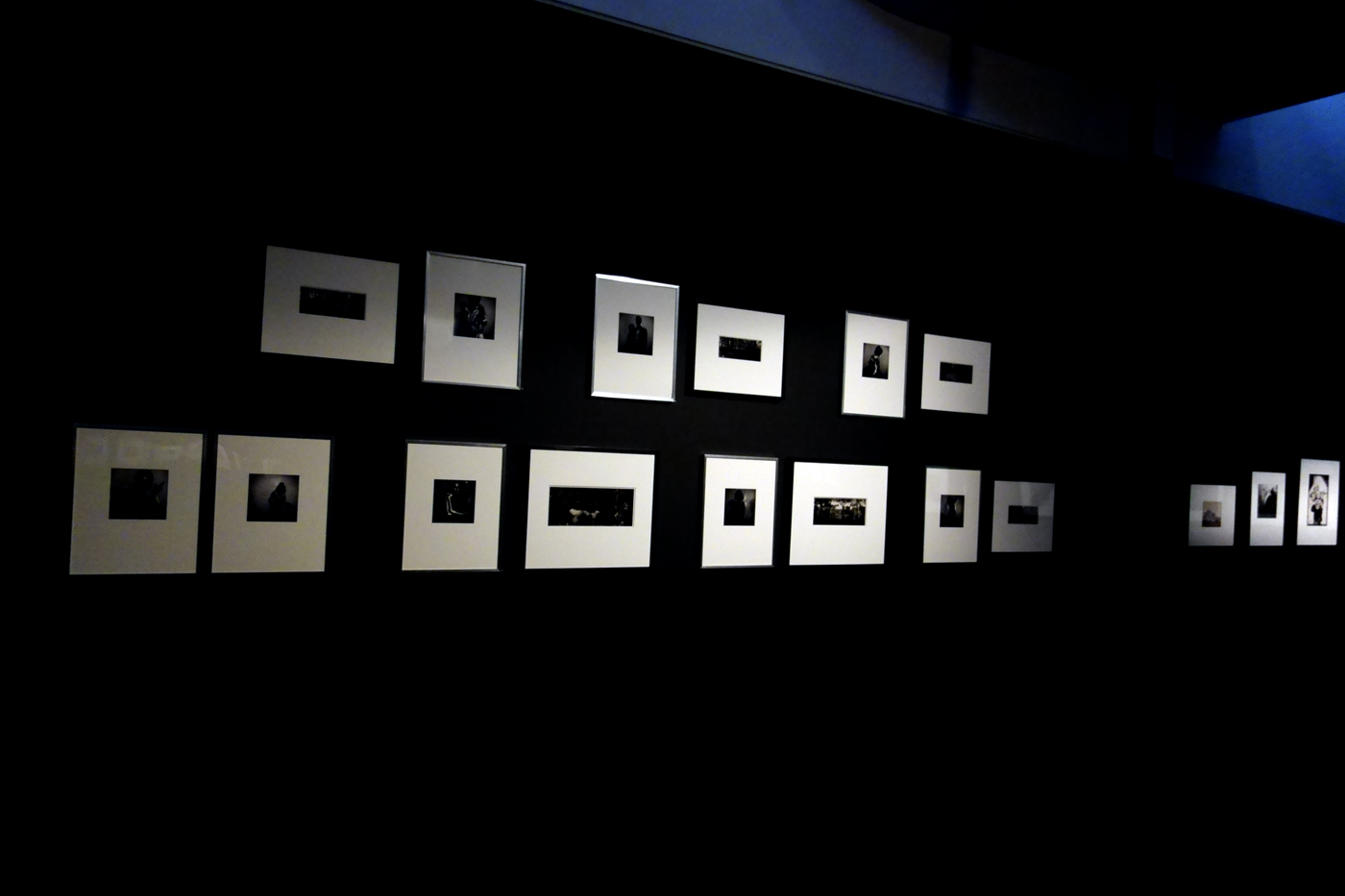
 

Installation photograph of 'Wildcards: Bill Henson shuffles the deck' at the Monash Gallery of Art

Installation photograph of 'Wildcards: Bill Henson shuffles the deck' at the Monash Gallery of Art


Installation photographs of Wildcards: Bill Henson shuffles the deck at the Monash Gallery of Art
Photos: Marcus Bunyan

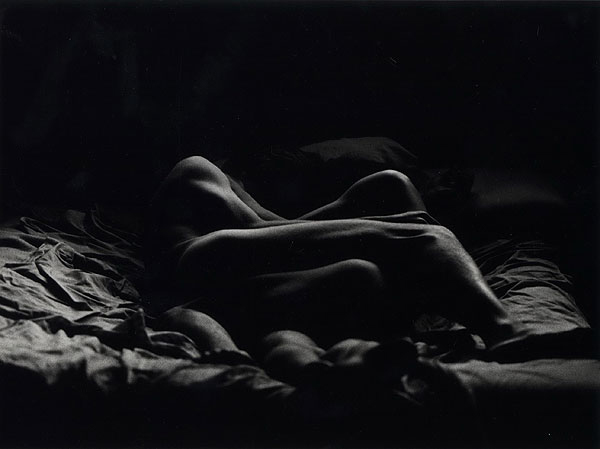
1/ stygian gloom
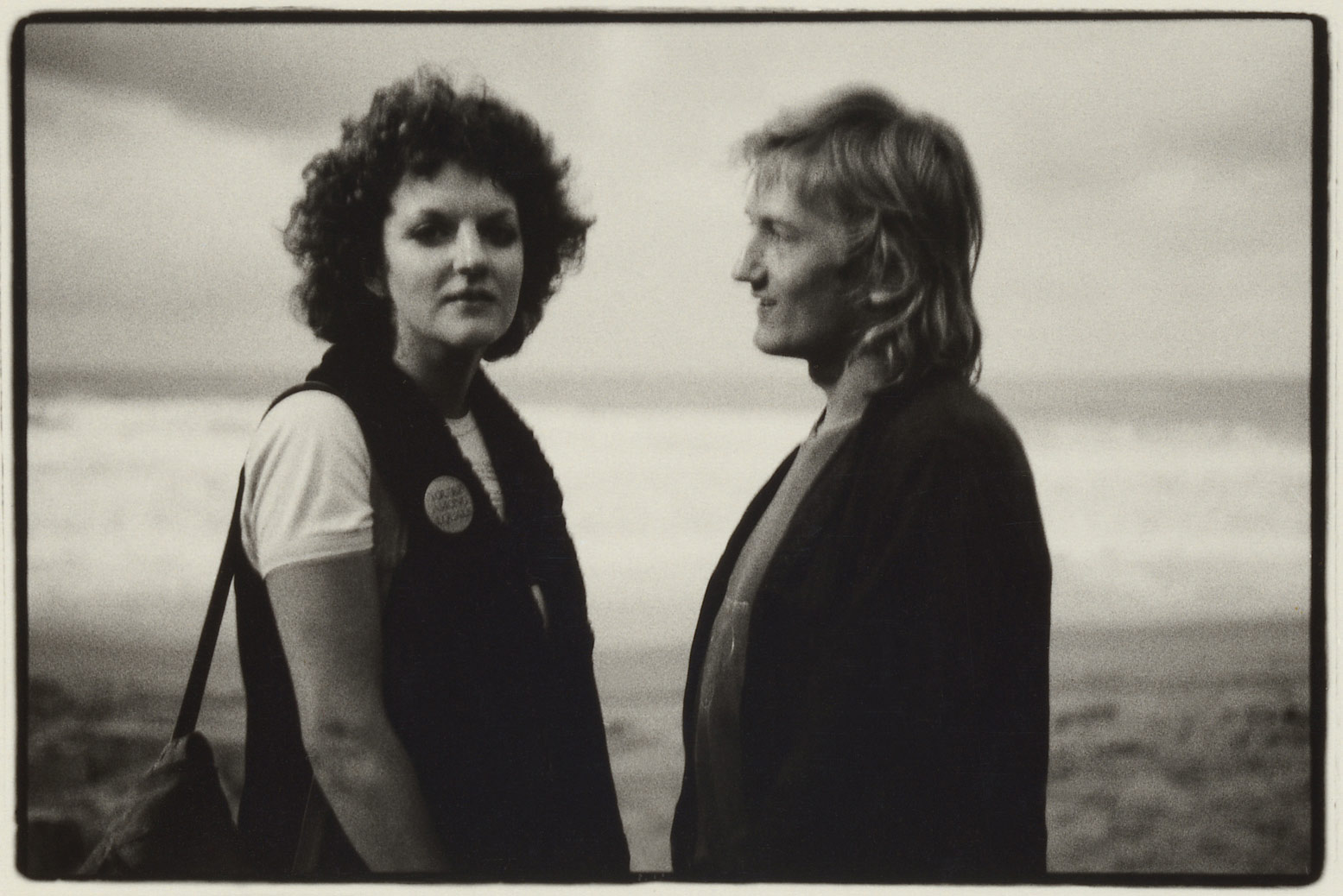
2/large grouping of 14 works by Wesley Stacey


Unknown photographer. 'Untitled' c. 1900


Unknown photographer
Untitled
c. 1900
Cyanotype print
Monash Gallery of Art, City of Monash Collection
Acquired 2012


vapid [vap-id]
adjective
lacking or having lost life, sharpness, or flavour

Origin:
1650-60;  Latin vapidus;  akin to va·por [vey-per]
noun
a visible exhalation, as fog, mist, steam, smoke diffused through or suspended in the air; particles of drugs that can be inhaled as a therapeutic agent


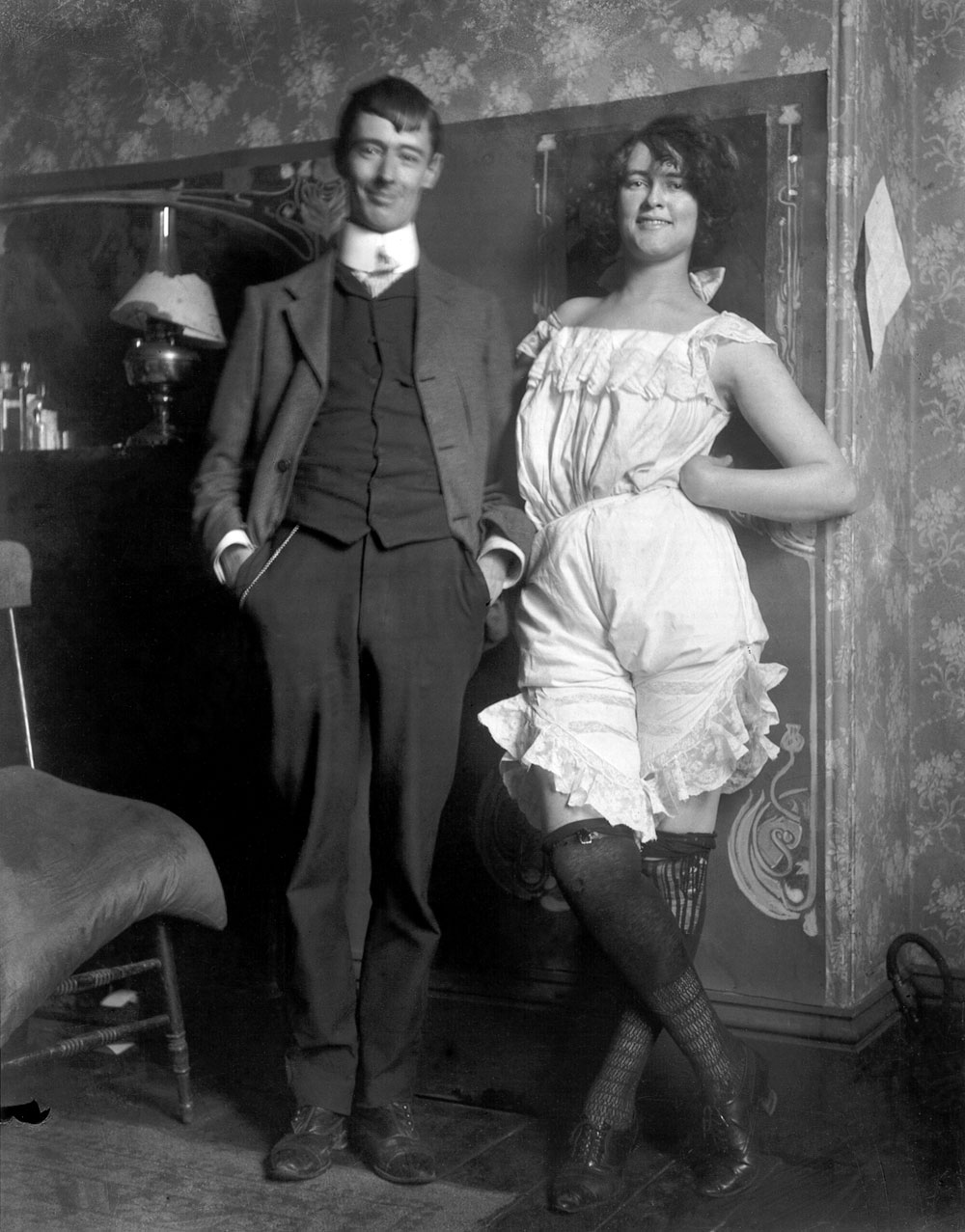
This is an unexceptional exhibition, one that lacks jouissance in the sense of a transgressive kind of enjoyment, an investigation of the subject that gives pleasure in taking you to unexpected places. At times I felt like a somnambulist walking around this exhibition of photographs from the Monash Gallery of Art collection curated by Bill Henson, pitched into stygian darkness and listening to somewhat monotonous music. It was a not too invidious an exercise but it left me with a VAPID feeling, as though I had inhaled some soporific drug: the motion of the journey apparently not confined by a story, but in reality that story is Henson’s mainly black and white self-portrait. The photographs on the wall, while solid enough, seemed to lack sparkle. There were a couple of knockout prints (such as David Moore’s Himalaya at dusk, Sydney, 1950 below; the Untitled cyanotype c. 1900, above; and Mark Hinderaker’s delicate portrait of Fiona Hall, 1984 below) and some real bombs (the large Norman Lindsay photographs, modern reproductions printed many times their original size were particularly nauseous). And one has to ask: were the images chosen for how they were balanced on the wall or were they chosen for content?

Henson states that there was no concept or agenda when picking the 88 photographs for this exhibition, simply his INTENSITY of feeling and intuition, his intuitive response to the images when he first saw them – to allow “their aesthetics to determine their presence… our whole bodies to experience these photographs – objects as pictures as photographs.”1 Henson responded as much as possible to the thing which then becomes an iconography (which appeals to his eye) as he asks himself, why is one brush stroke compelling, and not another? The viewer can then go on a journey in which MEANING comes from FEELING, and SENSATIONS are the primary stuff of life.

One of Henson’s preoccupations, “is an interest in the photograph as an object, in the physical presence of the print or whatever kind of technology is being used to make it.”2 He would like us to acknowledge the presence and aura (Walter Benjamin) of the photograph as we stand in front of it, responding with our whole bodies to the experience, not just our eyes. He wants us to have an intensity of feeling towards these works, responding to their presence and how he has hung the works in the exhibition. “There are no themes but rather images that appeal to the eye and, indeed, the whole body. Because photographs are first and foremost objects, their size, shape grouping and texture are as important as the images they’re recording.”3

Henson insists that there was no preconceived conceptual framework for picking these particular photographs but this is being disingenuous. Henson was invited to select images from the MGA collection with the specific idea of holding an exhibition, so this is the conceptual jumping off point; he then selected the images intuitively only to then group and arrange then intuitively/conceptually – by thinking long and hard about how these images would be grouped and hung on the wall of the gallery. I would like to believe that Henson was thinking about MUSIC when he hung this exhibition, not photography. Listen to Henson talk about the pairing of Leonie Reisberg’s Portrait of Peggy Silinski, Tasmania (c. 1976, below) and Beverley Veasey’s Study of a Calf, Bos taurus (2006, below) in this video, and you will get the idea about how he perceives these photographs relate to each other, how they transcend time and space.

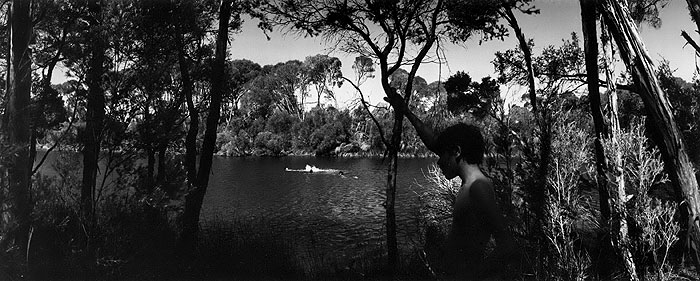
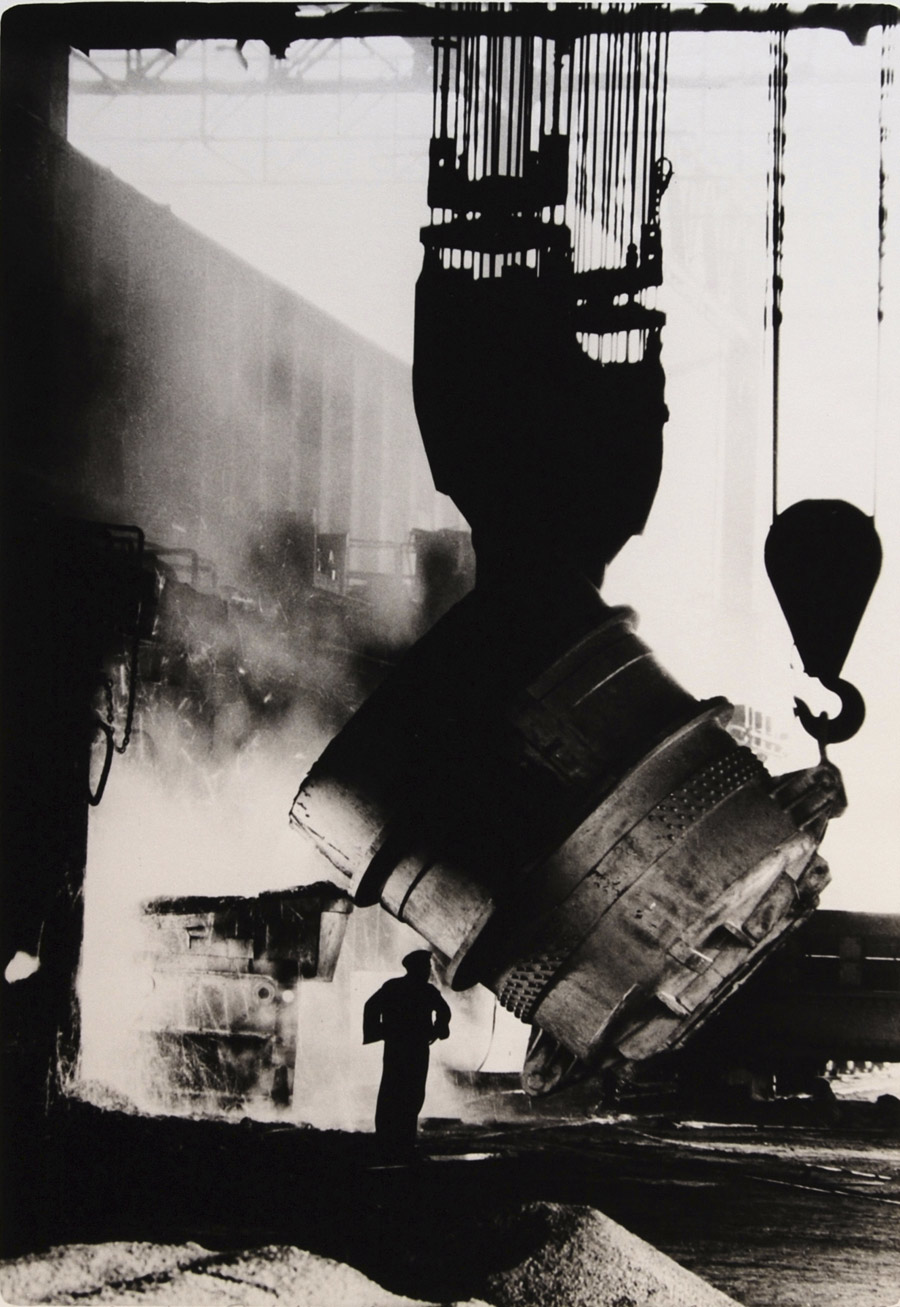
This is one of the key elements of the exhibition: how Henson pushes and pulls at time and space itself through the placing of images of different eras together. The other two key elements are how the music rises and falls through the shape of the photographs themselves; and how the figures within the images are pulled towards or pushed away from you. With regard to the rise and fall, Henson manipulates the viewer through the embodiedness of both horizontal and vertical photographs, reminding me of a Japanese artist using a calligraphy brush (see the second installation image above, where the photographs move from the vertical to the square and then onto panoramic landscape). In relation to the content of the images, there seems to be a preoccupation (a story, a theme?) running through the exhibition with the body being consumed by the landscape or the body being isolated from the landscape but with the threat of being consumed by it. Evidence of this can be seen in Wesley Stacey’s Willie near Mallacoota (1979, below) where the body almost melts into the landscape and David Moore’s Newcastle steelworks (1963, below) where the kids on the bicycles are trying to escape the encroaching doom that hovers behind them.

One of the key images in the exhibition for me also reinforces this theme – a tiny Untitled cyanotype (c. 1900, above) in which two Victorian children are perched on a bank near a stream with the bush beyond – but there are too many of this ilk to mention here: either the figures are pulled towards the front of the frame or pushed back into the encroaching danger, as though Henson is interrogating, evidencing un / occupied space. Overall, there is an element of control and lyrical balance in how he has grouped and hung these works together, the dark hue of the gallery walls allowing the photographs to exist as objects for themselves. Henson puts things next to each other in sequences and series to, allegedly, promote UNEXPECTED conversations and connections through a series of GESTURES.

As Henson notes,

“Maybe it’s the fact that the photographs have the ability to suggest some other thing and that’s what draws you in – that’s that feeling, the thing that slips away from thought. These are really the same things that apply to our meetings with any work of art, whether it’s a piece of music or a sculpture or anything else. There’s something compelling, there’s something there that sort of animates your speculative capacity, causes you to wonder. Other times, or most of the time, that’s not the case. Certainly most of the time that’s not the case with photography.”4

.
For me, there was little WONDER in this exhibition, something that you would go ‘oh, wow’ at, some way of looking at the world that is interesting and insightful and fractures the plaisir of cultural enjoyment and identity. While the photographs may have been chosen intuitively and then hung intuitively/conceptually, I simply got very little FEELING, no ICE/FIRE  (as Minor White would say) – no frisson between his pairings, groupings and arrangements. It was all so predictable, so ho-hum. Everything I expected Henson to do… he did!

There were few unexpected gestures, no startling insight into the human and photographic condition. If as he says, “Everything comes to you through your whole body, not just through your eyes and ears,”5 and that photographs are first and foremost objects, their size, shape, grouping and texture as important as the images they’re recording THEN I wanted to be moved, I wanted to feel, to be immersed in a sensate world not a visible exhalation (of thought?), a vapor that this exhibition is. Henson might have painted an open-ended self-portrait but this does not make for a very engaging experience for the viewer. In this case, the sharing of a story has not meant the sharing of an emotion.

Dr Marcus Bunyan


1/ Interview with Bill Henson by Toby Fehily posted 01 Feb 2014 on the Art Guide Australia website [Online] Cited 18/02/2014. No longer available online

2/ Ibid.,

3/ Fiona Gruber. “Review of Wildcards, Bill Henson Shuffles the Deck” on the Guardian website, Wednesday 12 February 2014 [Online] Cited 16/03/2014

4/ Fehily op. cit.,

5/ Fehily op. cit.,


Many thankx to the Monash Gallery of Art for allowing me to publish the photographs in the posting. Please click on the photographs for a larger version of the image.


MGA Collection: Bill Henson on Leonie Reisberg and Beverley Veasey

Bill Henson talks about the photographs of Leonie Reisberg and Beverley Veasey from the MGA Collection in WILDCARDS: BILL HENSON SHUFFLES THE DECK, Monash Gallery of Art, 1 February to 30 March 2014.
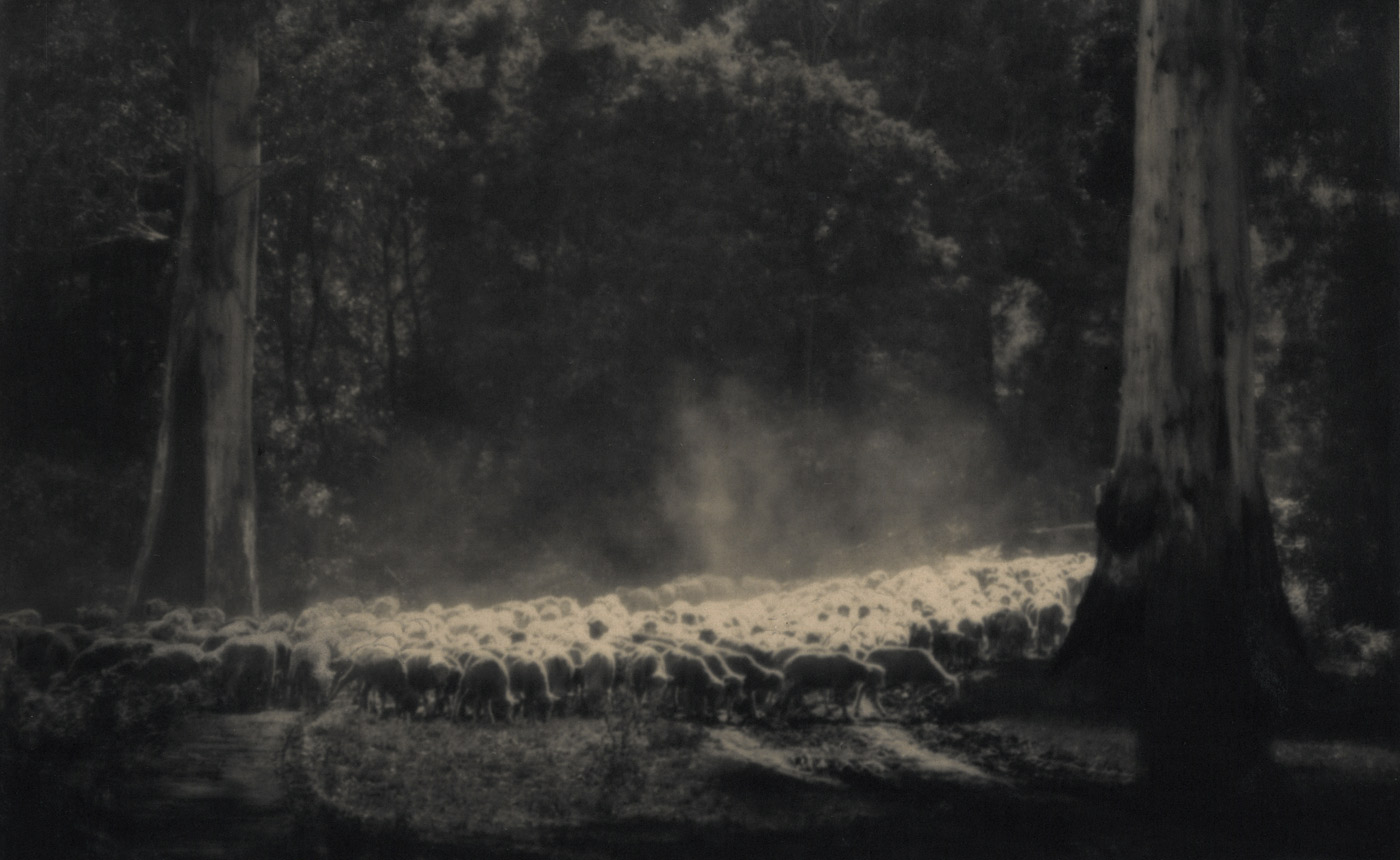
 

John Eaton (born United Kingdom 1881; arrived Australia 1889; died 1967) 'Sheep in clearing' c. 1920s


John Eaton (born United Kingdom 1881; arrived Australia 1889; died 1967)
Sheep in clearing
c. 1920s
Gelatin silver print
15.6 x 23.8cm
Monash Gallery of Art, City of Monash Collection
Donated by Janice Hinderaker through the Australian Government’s Cultural Gifts Program 2003


Fred Kruger (born Germany 1831; arrived Australia 1860; died 1888) 'Queen Mary and King Billy outside their mia mia' c. 1880


Fred Kruger (born Germany 1831; arrived Australia 1860; died 1888)
Queen Mary and King Billy outside their mia mia
c. 1880
Albumen print
13.4 x 20.8cm
Monash Gallery of Art, City of Monash Collection acquired 2012


David Moore (Australia 1927-2003) 'Himalaya at dusk, Sydney' 1950


David Moore (Australia 1927-2003)
Himalaya at dusk, Sydney
1950
Gelatin silver print, printed 2005
24.5 x 34.25cm
Monash Gallery of Art, City of Monash Collection donated by the Estate of David Moore 2006
Courtesy of the Estate of David Moore (Sydney)


Wesley Stacey (Australia, b. 1941) 'Willie near Mallacoota' 1979


Wesley Stacey (Australia, b. 1941)
Willie near Mallacoota
1979
From the series Koorie set
Gelatin silver print
Monash Gallery of Art, City of Monash Collection
Donated through the Australian Government’s Cultural Gifts Program by Christine Godden 2011

Published under fair use for the purpose of art criticism


David Moore (Australia, 1927-2003) 'Newcastle steelworks' 1963


David Moore (Australia, 1927-2003)
Newcastle steelworks
1963
Gelatin silver print
Monash Gallery of Art, City of Monash Collection
Acquired 1981

Published under fair use for the purpose of art criticism


One of those preoccupations is an interest in the photograph as an object, in the physical presence of the print or whatever kind of technology is being used to make it. Part of the reason for that is that photography, more than any other medium, suffers from a mistake or misunderstanding people have when they’ve seen a reproduction in a magazine or online: they think they’re seeing the original. A certain amount of photography is made with its ultimate intention being to be seen in a magazine or online, but most photography, historically, ended up in its final form as a print – a cyanotype, or a tin type or a daguerreotype or whatever it might be.”

Interview with Bill Henson by Toby Fehily posted 01 Feb 2014 on the Art Guide Australia website [Online] Cited 18/02/2014. No longer available online. Used under fair use for the purposes of education and research.


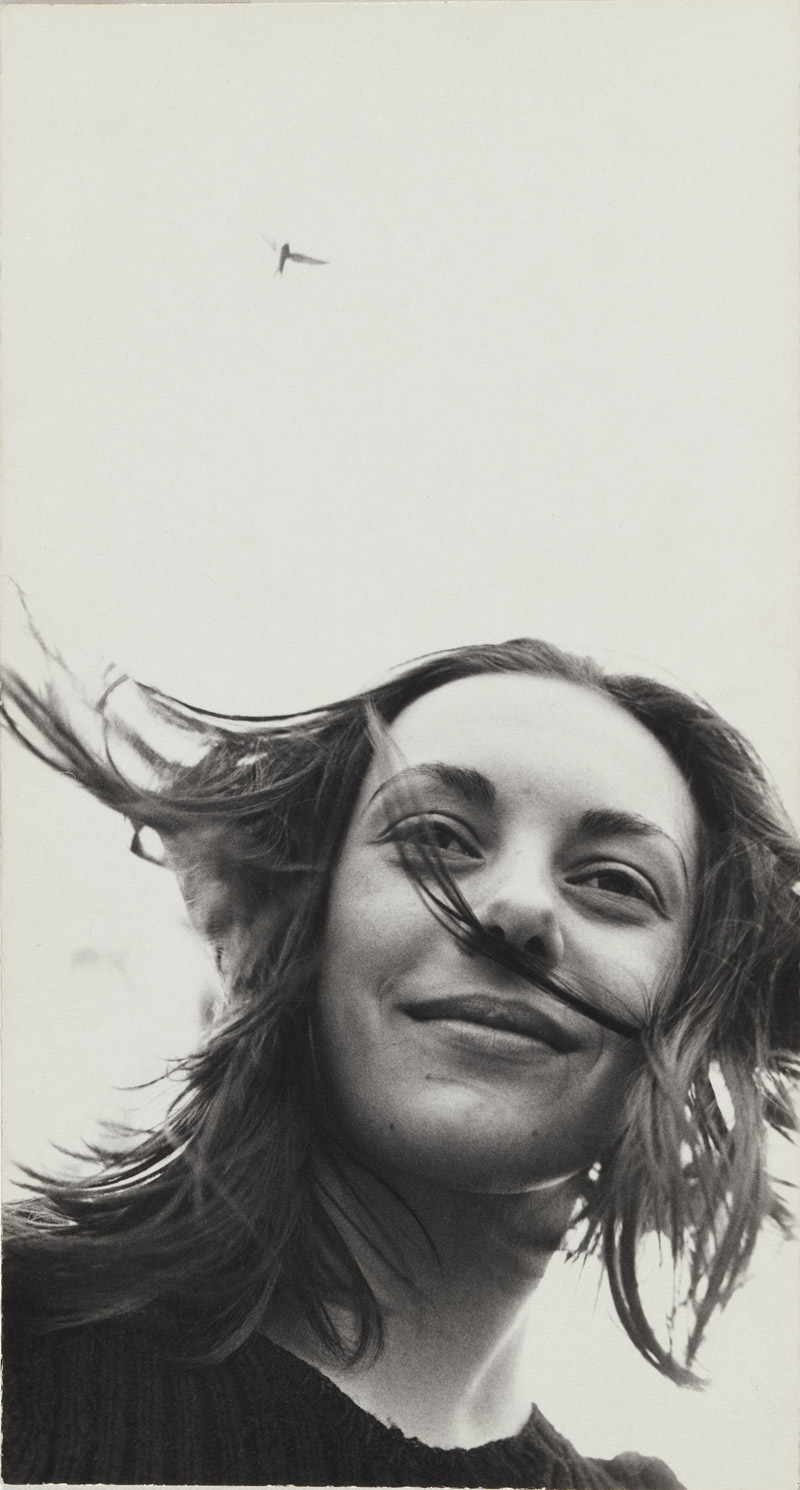
Leonie Reisberg (Australia, b. 1955) 'Portrait of Peggy Silinski, Tasmania' c. 1976


Leonie Reisberg (Australia, b. 1955)
Portrait of Peggy Silinski, Tasmania
c. 1976
Gelatin silver print
Monash Gallery of Art, City of Monash Collection
Donated by Janice Hinderaker through the Australian Government’s Cultural Gifts Program 2003


Beverley Veasey (Australia, b. 1968) 'Study of a Calf, Bos taurus' 2006


Beverley Veasey (Australia, b. 1968)
Study of a Calf, Bos taurus
2006
Chromogenic print
Monash Gallery of Art, City of Monash Collection
Acquired 2006


I think when you look through any collection, you’re often struck by the kind of pointlessness and banality of photography. It doesn’t matter which museum in the world you look at. It’s like, “is there any need for this thing to exist at all?”. It probably comes back to the capacity of the object, the image to suggest things, the suggestive potential rather than the prescriptive, which is a given in photography of course, the evidential authority of the medium preceding any individual reading we have of particular pictures. Maybe it’s the fact that the photographs have the ability to suggest some other thing and that’s what draws you in – that’s that feeling, the thing that slips away from thought. These are really the same things that apply to our meetings with any work of art, whether it’s a piece of music or a sculpture or anything else. There’s something compelling, there’s something there that sort of animates your speculative capacity, causes you to wonder. Other times, or most of the time, that’s not the case. Certainly most of the time that’s not the case with photography.

Interview with Bill Henson by Toby Fehily posted 01 Feb 2014 on the Art Guide Australia website [Online] Cited 18/02/2014. No longer available online. Used under fair use for the purpose of education and research.


Axel Poigant (born United Kingdom 1906; arrived Australia 1926; died 1986) 'Jack and his family on the Canning Stock Route' 1942


Axel Poigant (born United Kingdom 1906; arrived Australia 1926; died 1986)
Jack and his family on the Canning Stock Route
1942
Gelatin silver print, printed 1986
Monash Gallery of Art, City of Monash Collection
Acquired 1991


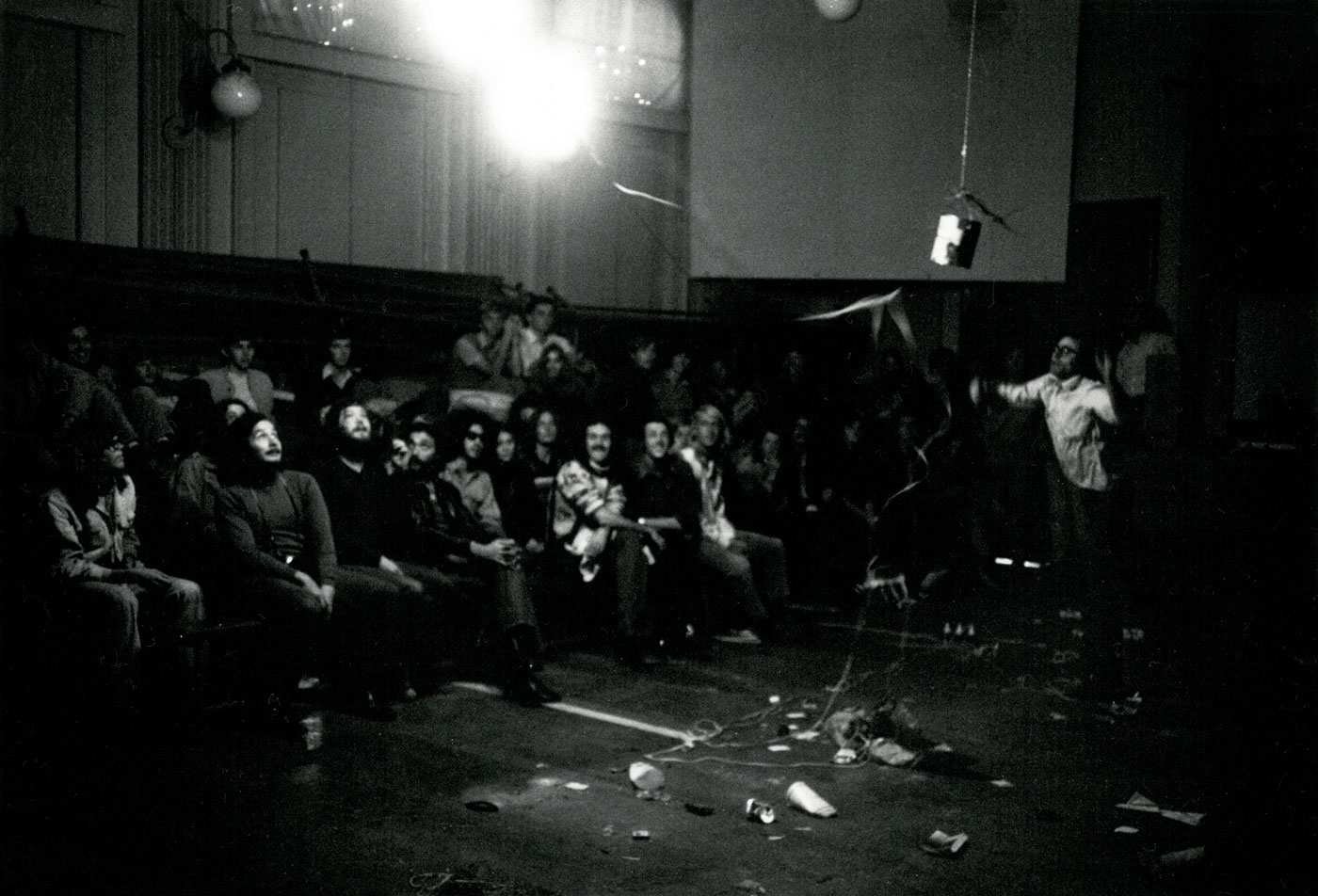
Tim Johson (Australia, b. 1947) 'Light performances' 1971-72


Tim Johson (Australia, b. 1947)
Light performances
1971-1972
Gelatin silver print
Monash Gallery of Art, City of Monash Collection
Acquired 2011


Cherine Fahd (Australia, b. 1974) 'Alicia' 2003


Cherine Fahd (Australia, b. 1974)
Alicia
2003
From the series A woman runs
Gelatin silver print
Monash Gallery of Art, City of Monash Collection
Donated through the Australian Government’s Cultural Gifts Program 2011


Wesley Stacey (Australia, b. 1941) 'Untitled' 1973


Wesley Stacey (Australia, b. 1941)
Untitled
1973
From the series Friends
Gelatin silver print
Monash Gallery of Art, City of Monash Collection
Donated by Bill Bowness 2013


That was one of the things that interested me and continues to interest me about photography: how these things inhabit the world as objects. And indeed we read them not just with our eyes but with how our whole bodies read and encounter and negotiate these objects, which happen to be photographs. And that’s very much a thing that interests me in the way that I work. I feel sometimes that I only happen to make photographs myself and that it’s a means to an end… So there’s a sense in which I’m interested in these objects that happen to be photographs and the way that they inhabit the same space that our bodies inhabit. Everything comes to you through your whole body, not just through your eyes and ears – it’s a vast amount of information. Watching something get bigger as you draw closer to it, not just matters of proximity, but texture or the way objects sit in a space when they’re lit a certain way – all of this is very interesting to me, always has been.”

Interview with Bill Henson by Toby Fehily posted 01 Feb 2014 on the Art Guide Australia website [Online] Cited 18/02/2014. Used under fair use for the purpose of art criticism. No longer available online.


Mark Hinderaker (born United States of America 1946; arrived Australia 1970; died 2004) 'Fiona Hall' 1984


Mark Hinderaker (born United States of America 1946; arrived Australia 1970; died 2004)
Fiona Hall
1984
Gelatin silver print
Monash Gallery of Art, City of Monash Collection
Donated by Janice Hinderaker through the Australian Government’s Cultural Gifts Program 2003


Lionel Lindsay (Australia 1874-1961) 'Norman Lindsay and Rose Soady, Bond Street studio' c. 1909


Lionel Lindsay (Australia 1874-1961)
Norman Lindsay and Rose Soady, Bond Street studio
c. 1909
Gelatin silver print, printed 2000
Monash Gallery of Art, City of Monash Collection
Donated by Katherine Littlewood 2000


Mark Strizic (born Germany 1928; arrived Australia 1950; died 2012) 'BHP steel mill, Port Kembla, 1959'


Mark Strizic (born Germany 1928; arrived Australia 1950; died 2012)
BHP steel mill, Port Kembla, 1959
1959
Gelatin silver print, printed 1999
Monash Gallery of Art, City of Monash Collection
Donated by the Bowness Family through the Australian Government’s Cultural Gifts Program 2008


Monash Gallery of Art
860 Ferntree Gully Road, Wheelers Hill
Victoria 3150 Australia
Phone: + 61 3 8544 0500

Opening hours:
Tue – Fri: 10am – 5pm
Sat – Sun: 10pm – 4pm
Mon/public holidays: closed

Monash Gallery of Art website

LIKE ART BLART ON FACEBOOK

Back to top

Review: ‘Simon Harsent / Melt: Portrait of an Iceberg’ at Edmund Pearce Gallery, Melbourne

Exhibition dates: 5th February – 1st March, 2014


Simon Harsent (British, b. 1965) 'Melt #028a' 2008


Simon Harsent (British, b. 1965)
Melt #028a
2008
Archival Pigment Print
58.5 x 86cm
Edition of 25


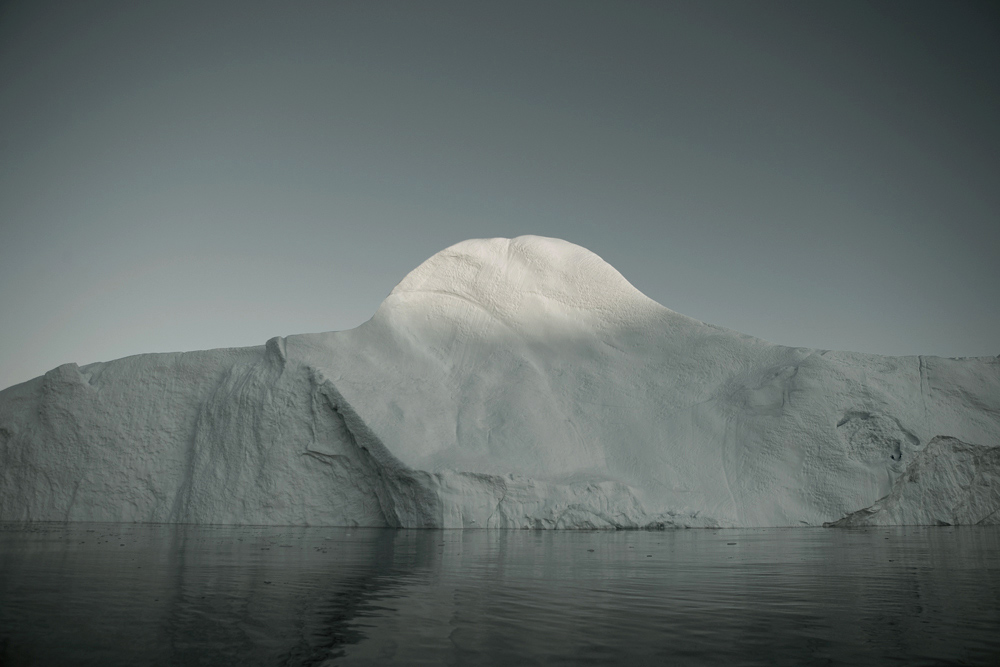
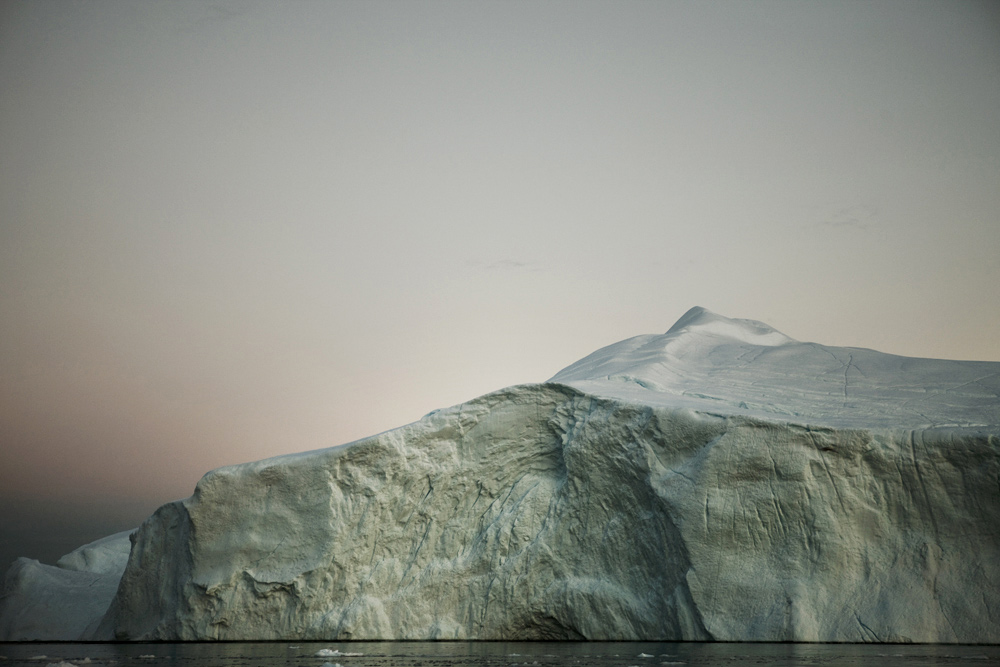
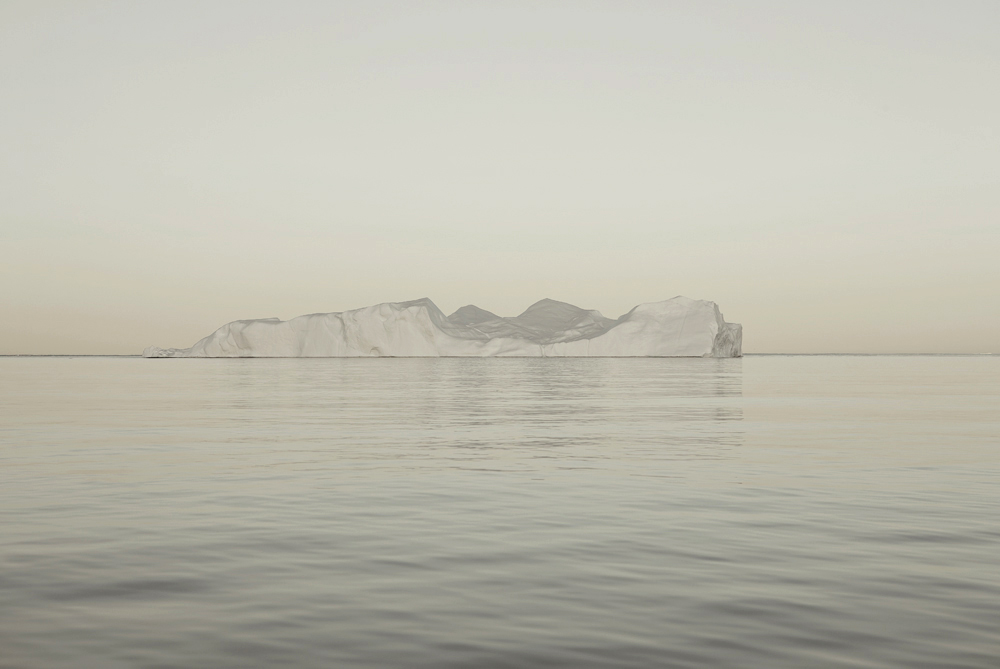
A solid exhibition by Simon Harsent to open the year at Edmund Pearce Gallery, Melbourne.

Things I felt and observed

~ Harsent shows me sculptural photographs of icebergs as I have never seen them before

~ The photographs are well printed and framed, have great colour variation and work at both sizes the images are presented at

~ The horizon line of the sea rises and falls throughout the series, allowing the viewer to levitate and drop as you walk around the gallery

~ The ecological component of the exhibition, while inherent, is not overpowering. Which is a good thing

~ The non-chronological hang benefits the exhibition immensely. If the exhibition had been hung from large to small iceberg, the effect would have been too didactic

~ The Brancusi-esque forms held more interest for me, such as Melt #029, Melt #036 and Melt #039 (seen with a photograph of Brancusi’s The Newborn 1920, below), together with the intense, close-up abstract forms such as Melt #014 and Melt #023. These are superb!

Things I wanted to feel and observe

~ When viewing the series I didn’t feel Harsent’s metaphorical reflection upon his own mortality. Only in two images, Melt #042 and Melt #09 (where the sunlight hits the top of the iceberg deliciously) did I feel an anthropomorphic link to humanity

~ I didn’t feel the grandeur of these icebergs. Perhaps just one image at the largest size possible would have shook me from my reverie

~ I didn’t feel the personality of each iceberg in its own journey. In the exhibition I never knew which large iceberg had metamorphosed into which smaller iceberg. Therefore I was unsure of each iceberg’s life-span and story. For that reason these are not ontological portraits concerned with the nature and relations (the relation of one photograph and the next) of being

~ Finally, I wanted the images to push forward, to take me further on the journey. Taking the adage that two-thirds of the iceberg is always below water, I never really felt the psychological power of these objects, something dark that is hidden beneath the sea. All the icebergs are photographed in clear, calm weather. Some photographed in storms, in mist or fog, or at night would have added ineffably to the atmosphere


These are not sublime photographs. I never got that feeling from viewing the work. They come nowhere close to Alain de Botton’s wonderful prose on the significance of sublime places:

“If the world is unfair or beyond our understanding, sublime places suggest it is not surprising things should be thus. We are the playthings of the forces that laid out the oceans and chiselled the mountains. Sublime places acknowledge limitations that we might otherwise encounter with anxiety or anger in the ordinary flow of events. It is not just nature that defies us. Human life is as overwhelming, but it is the vast spaces of nature that perhaps provide us with the finest, the most respectful reminder of all that exceeds us. If we spend time with them, they may help us to accept more graciously the great unfathomable events that molest our lives and will inevitably return us to dust.”(de Botton, Alain. The Art of Travel. London: Penguin, 2002, p. 178-179.)

I never felt that the photographs transported the viewer on an emotional journey that furthers our understanding of the fragility of life both of the planet and of ourselves. And that is the one thing I wished they had of done.

Dr Marcus Bunyan


Many thankx to Edmund Pearce Gallery for allowing me to publish the photographs in the posting. Please click on the photographs for a larger version of the image.


Simon Harsent (British, b. 1965) 'Melt #026' 2008


Simon Harsent (British, b. 1965)
Melt #026
2008
Archival Pigment Print
58.5 x 86cm
Edition of 25


Simon Harsent (British, b. 1965) 'Melt #029' 2008


Simon Harsent (British, b. 1965)
Melt #029
2008
Archival Pigment Print
110 x 160cm
Edition of 10


Simon Harsent (British, b. 1965) 'Melt #039' 2008


Simon Harsent (British, b. 1965)
Melt #039
2008
Archival Pigment Print
58.5 x 86cm
Edition of 10


Simon Harsent (British, b. 1965) 'Melt #036' 2008


Simon Harsent (British, b. 1965)
Melt #036
2008
Archival Pigment Print
58.5 x 86cm
Edition of 25


Constantin Brancusi (Romanian, 1876-1957) 'The Newborn'. Version I 1920 (close to the marble of 1915)


Constantin Brancusi (Romanian, 1876-1957)
The Newborn. Version I
1920 (close to the marble of 1915)
Bronze
14.6cm x 21cm x 14.6cm
Acquired through the Lillie P. Bliss request
© 2010 Artists Rights Society (ARS), New York / ADAGP, Paris

Used under conditions of fair use for the purpose of art criticism


Simon Harsent (British, b. 1965) 'Melt #037' 2008


Simon Harsent (British, b. 1965)
Melt #037
2008
Archival Pigment Print
58.5 x 86cm
Edition of 25


Simon Harsent (British, b. 1965) 'Melt #042' 2008


Simon Harsent (British, b. 1965)
Melt #042
2008
Archival Pigment Print
58.5 x 86cm
Edition of 25


After successful exhibitions in Australia and abroad, Simon Harsent’s sublime photographic series Melt: Portrait of an Iceberg makes its Melbourne premiere at Edmund Pearce this February. The exhibition and accompanying monograph present portraits of icebergs as they travel Greenland’s Ilulissat Icefjord. The ecological story is self-evident; more sections are breaking away from the arctic ice cap and melting faster due to global warming. But the chronicle of the iceberg is, for the artist, a metaphorical reflection upon his own mortality.

Harsent states; “Seeing them first overpowering in grandeur and then, later, about to be absorbed back into the flux from which they came, is both beautiful and humbling: a metamorphosis that endows them with a life-span, each with its own personality, each with its own story.”

Born in England Simon Harsent studied photography at Watford College before moving to Australia in 1988 to establish himself as one of the country’s leading photographers. Currently based in New York, Harsent’s career has seen him win numerous national and international awards including, Cannes Lions, One Show, Clio, D&AD, and Australia’s first Cannes Grand Prix – making him one of the most awarded photographers in the world. His work is included in the permanent collection of the Queensland Art Gallery and The Powerhouse Museum. Melt: Portrait of an Iceberg was published in late 2009 to critical acclaim, reinforced by its inclusion in the prestigious D&AD and PDN Photo Annuals.

Text from the Edmund Pearce Gallery website


Simon Harsent (British, b. 1965) 'Melt #023' 2008


Simon Harsent (British, b. 1965)
Melt #023
2008
Archival Pigment Print
58.5 x 86cm
Edition of 25


Simon Harsent (British, b. 1965) 'Melt #014' 2008


Simon Harsent (British, b. 1965)
Melt #014
2008
Archival Pigment Print
58.5 x 86cm
Edition of 25


Simon Harsent (British, b. 1965) 'Melt #021' 2008


Simon Harsent (British, b. 1965)
Melt #021
2008
Archival Pigment Print
58.5 x 86cm
Edition of 25


Simon Harsent (British, b. 1965) 'Melt #010' 2008


Simon Harsent (British, b. 1965)
Melt #010
2008
Archival Pigment Print
58.5 x 86cm
Edition of 25


Simon Harsent (British, b. 1965) 'Melt #09' 2008


Simon Harsent (British, b. 1965)
Melt #09
2008
Archival Pigment Print
58.5 x 86cm
Edition of 25


Simon Harsent (British, b. 1965) 'Melt #020' 2008


Simon Harsent (British, b. 1965)
Melt #020
2008
Archival Pigment Print
58.5 x 86cm
Edition of 25


Simon Harsent (British, b. 1965) 'Melt #05' 2008


Simon Harsent (British, b. 1965)
Melt #05
2008
Archival Pigment Print
58.5 x 86cm
Edition of 25


Simon Harsent (British, b. 1965) 'Melt #03' 2008


Simon Harsent (British, b. 1965)
Melt #03
2008
Archival Pigment Print
58.5 x 86cm
Edition of 25


Simon Harsent (British, b. 1965) 'Melt #07' 2008


Simon Harsent (British, b. 1965)
Melt #07
2008
Archival Pigment Print
110 x 160cm
Edition of 10


Edmund Pearce Gallery

This gallery has now closed.

LIKE ART BLART ON FACEBOOK

Back to top

Three exhibitions: ‘Henri van Noordenburg / Efface’; ‘Amber McCaig / Imagined Histories’ and ‘Greg Elms / What Remains’ at Edmund Pearce Gallery, Melbourne

Exhibition dates: 6th – 23rd November, 2013


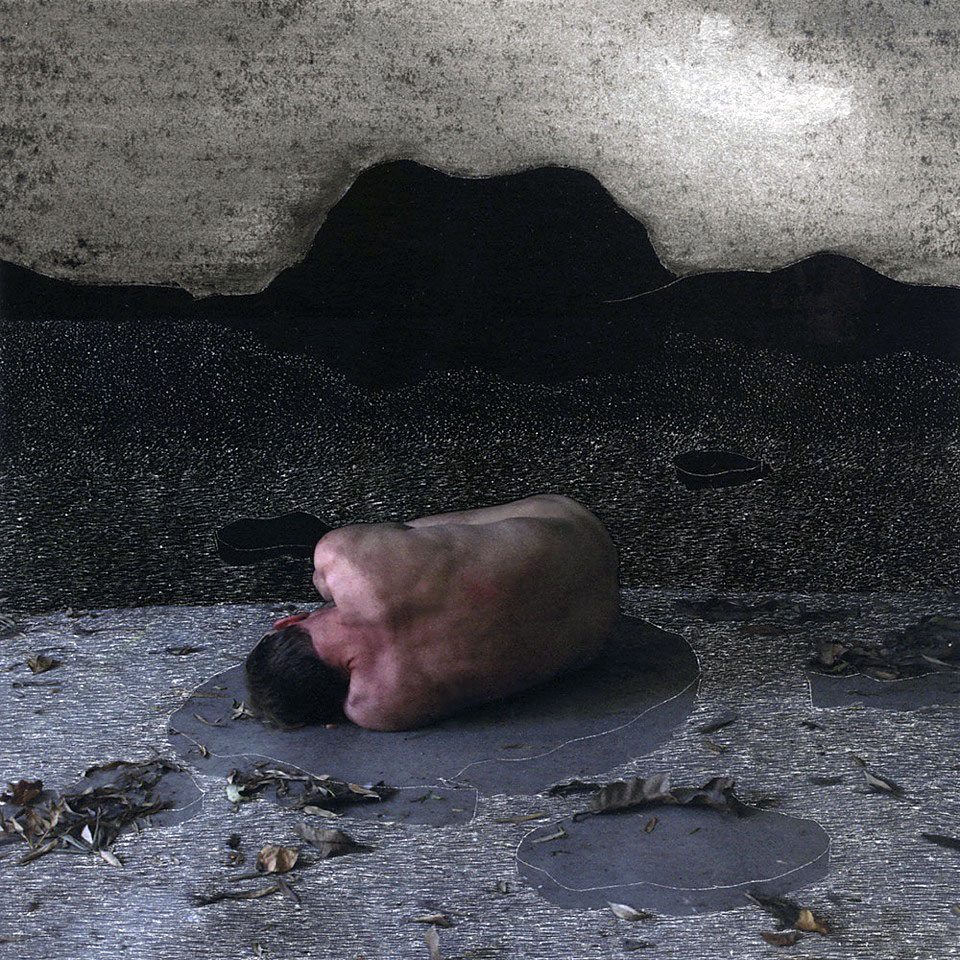
Henri van Noordenburg (Australian born Netherlands, b. 1967) 'Composition XXI' 2013


Henri van Noordenburg (Australian born Netherlands, b. 1967)
Composition XXI
2013
Hand carved archival pigment print
30 x 30cm


Three solid exhibitions at Edmund Pearce Gallery. All three have interesting elements and strong images. All three have their positives and negatives.

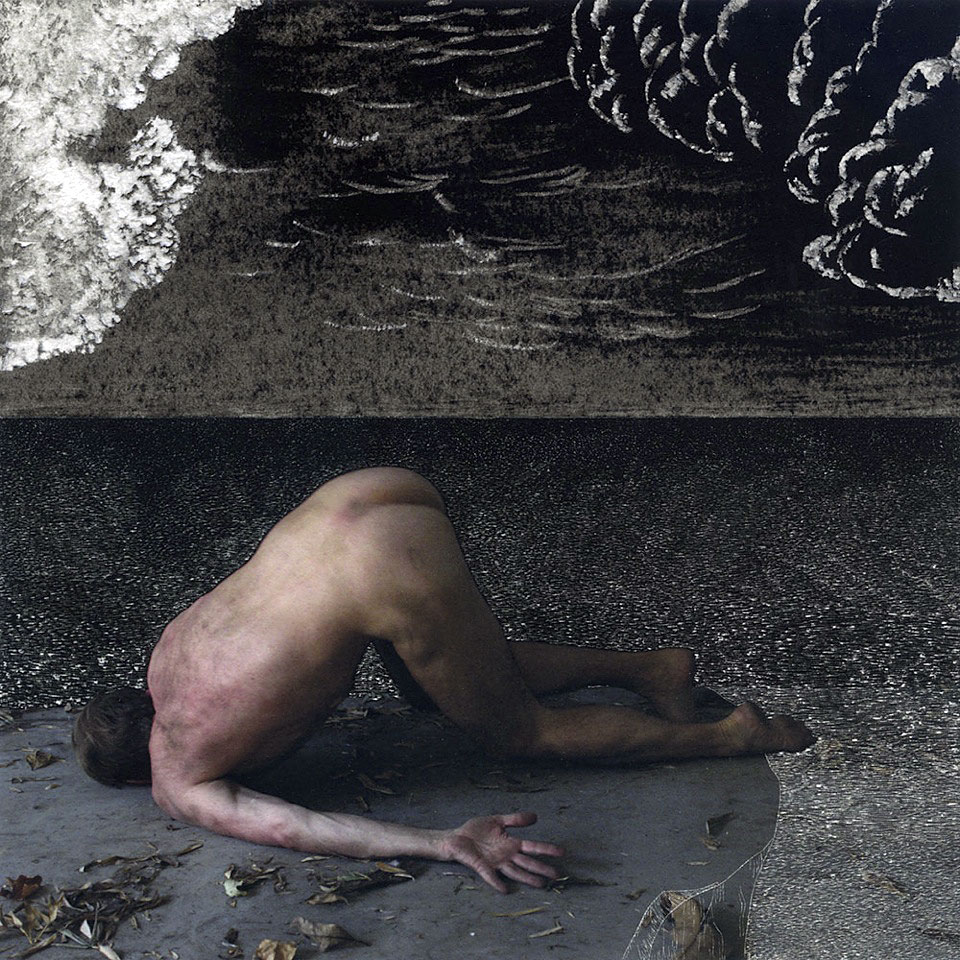
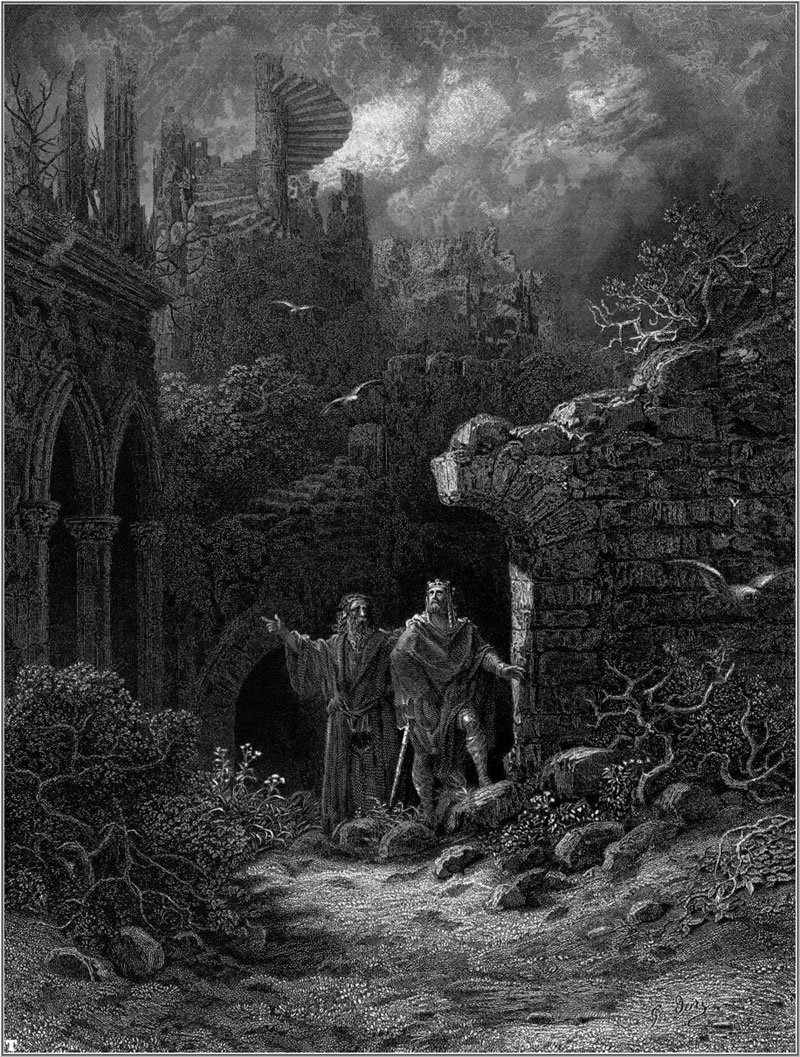
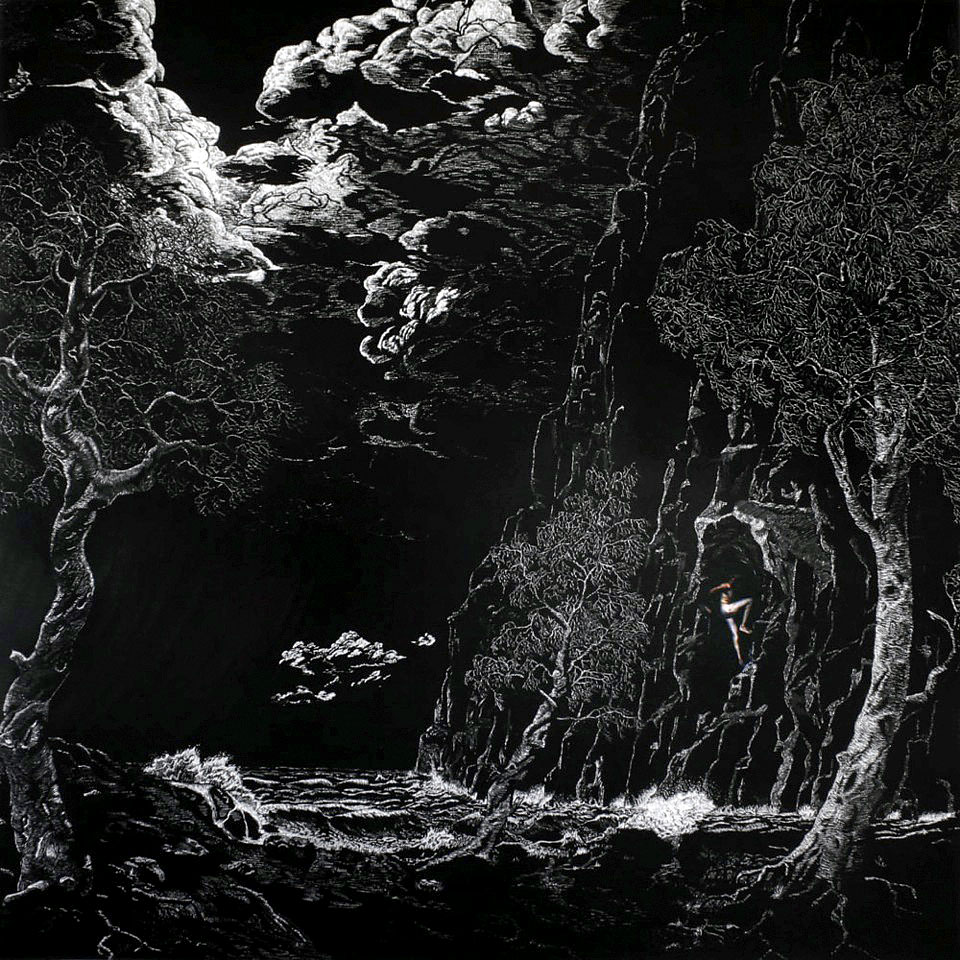
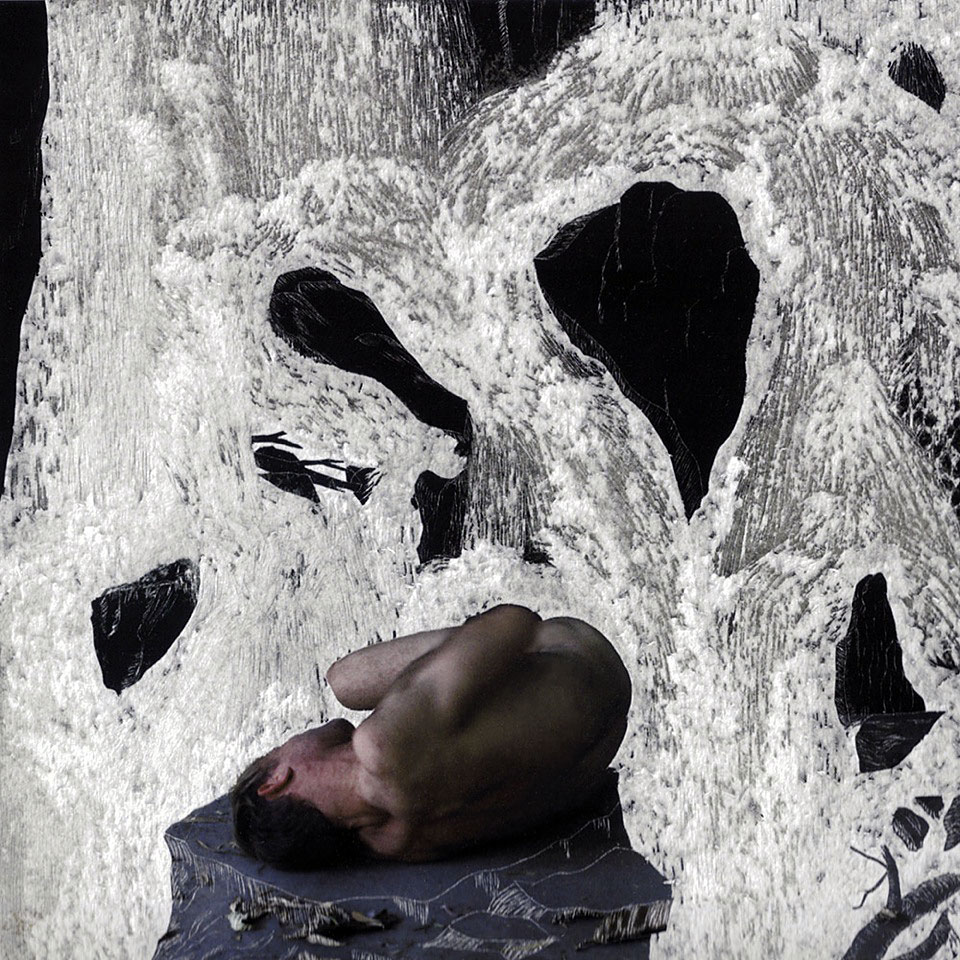
Henri van Noordenburg presents us with a European, colonialist take on the Australian landscape in his new series Efface, similar in their vernacular to early Australian painters visions of their new homeland, with their longing for an “original” home many leagues away over the sea. Except Noordenburg’s interventions look nothing like any Australian landscape I know, heavily influenced as they are by the work of French artist and engraver Gustav Doré (1832-1883) and Japanese wood block prints. His dark, brooding, subterranean art works – in which the artist photographs himself naked and bruised, prints this image on a large sheet of black photographic paper, then hand carves the landscape with a scalpel back into the paper base, isolating but at the same time surrounding the vulnerable, exposed body – image a gothic, melancholy vision of man lost in the wilderness. Here the body (self) is helpless before various forces, but these forces must still be engaged before some progress (pilgrims progress?) can be made.

The technique is truly extraordinary and the artist sets up a “perceptible tension” between technique and form, etching and photograph, body and bulimic (as in excessive), landscape. These ‘synthetic landscapes’ whose form is produced by spatial reorganisation and topographical interventions, man-made spaces, serve as background for what the artist wants us to see as our collective existence.1 Unfortunately, the conceptualisation of the work seems, well, a little confused. And perhaps that is the point. Noordenburg, with his Dutch heritage, is apparently still unsure of his place in a multicultural Australia, even after a few decades living here. But, I feel his point of departure for this work still remains uncertain. And this leads to uncertain outcomes for the viewer.

This uncertainty in the point of departure makes it difficult for the viewer to empathise with the stylistic inclinations of the landscape or the work as a whole. Somehow, it all seems so remote from too much. We can all sympathise with the “humanity” of the work, its anguish and sense of dislocation and wish it well, but I was left a little non-plussed by the visual evidence presented to me. If the exhibition was about wildness (not wilderness) and craziness (not a form of identity dislocation), then it would have been spot on:

“God against man. Man against God. Man against nature. Nature against man. Nature against God. God against nature. Very funny religion!”

D.T. Suzuki (1870-1966)

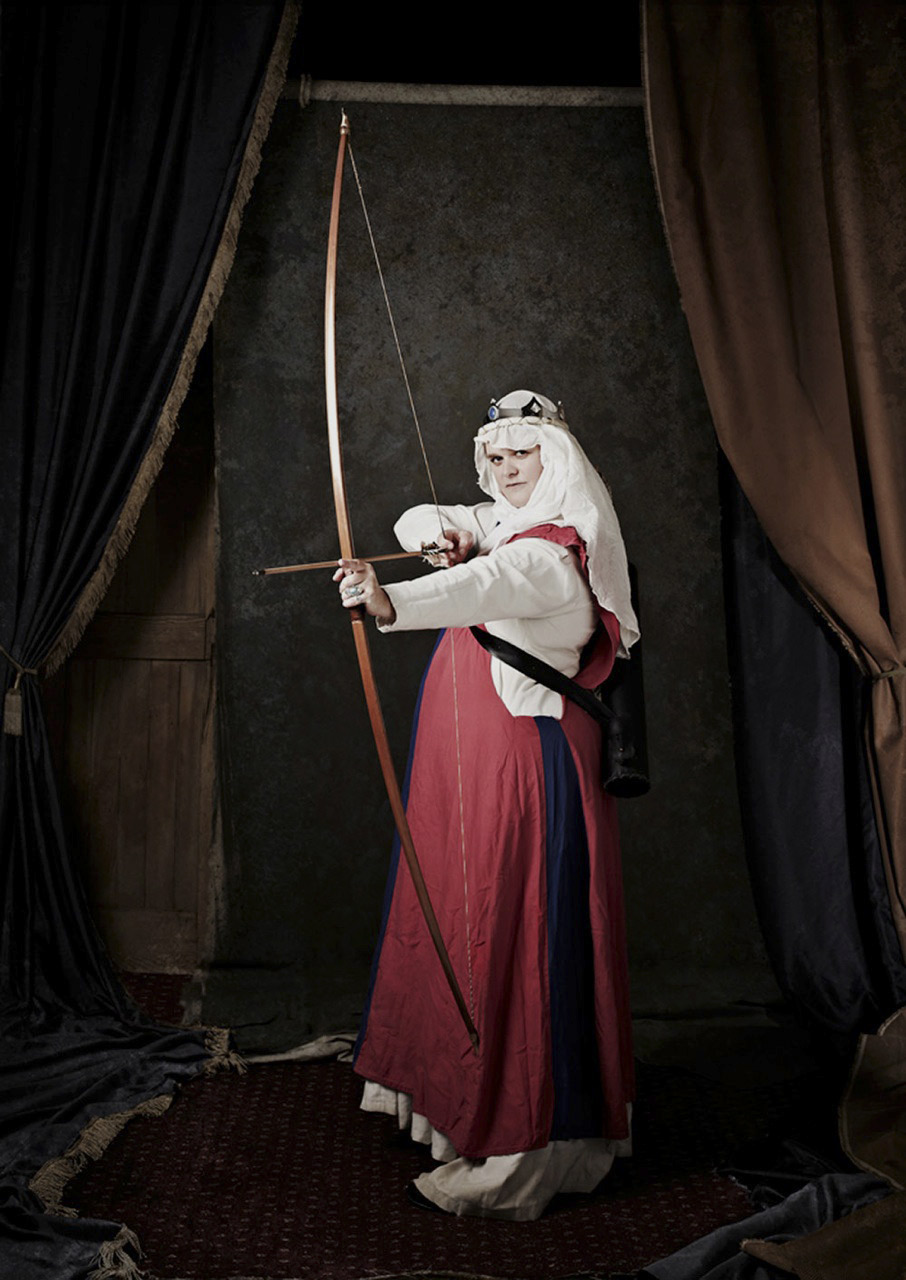
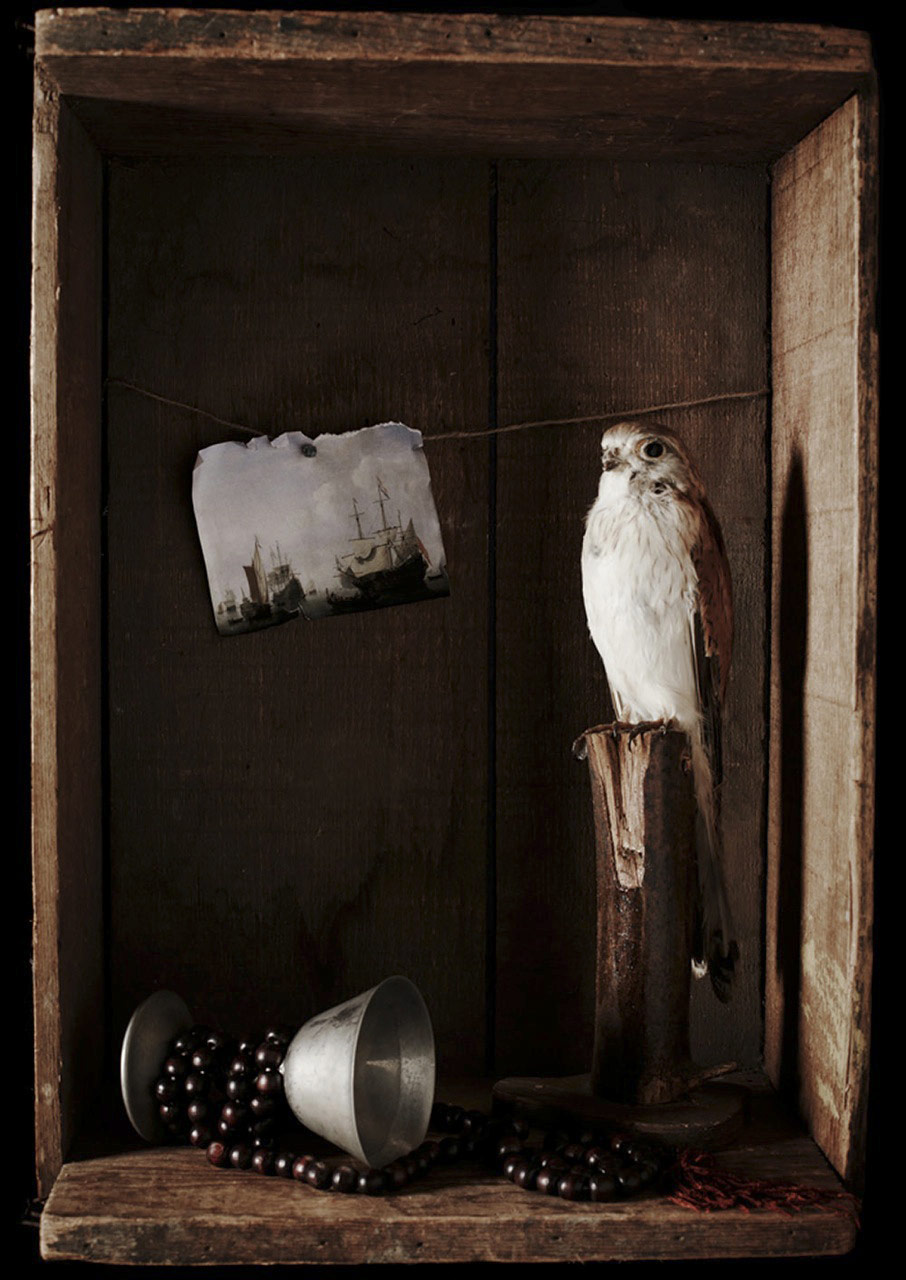
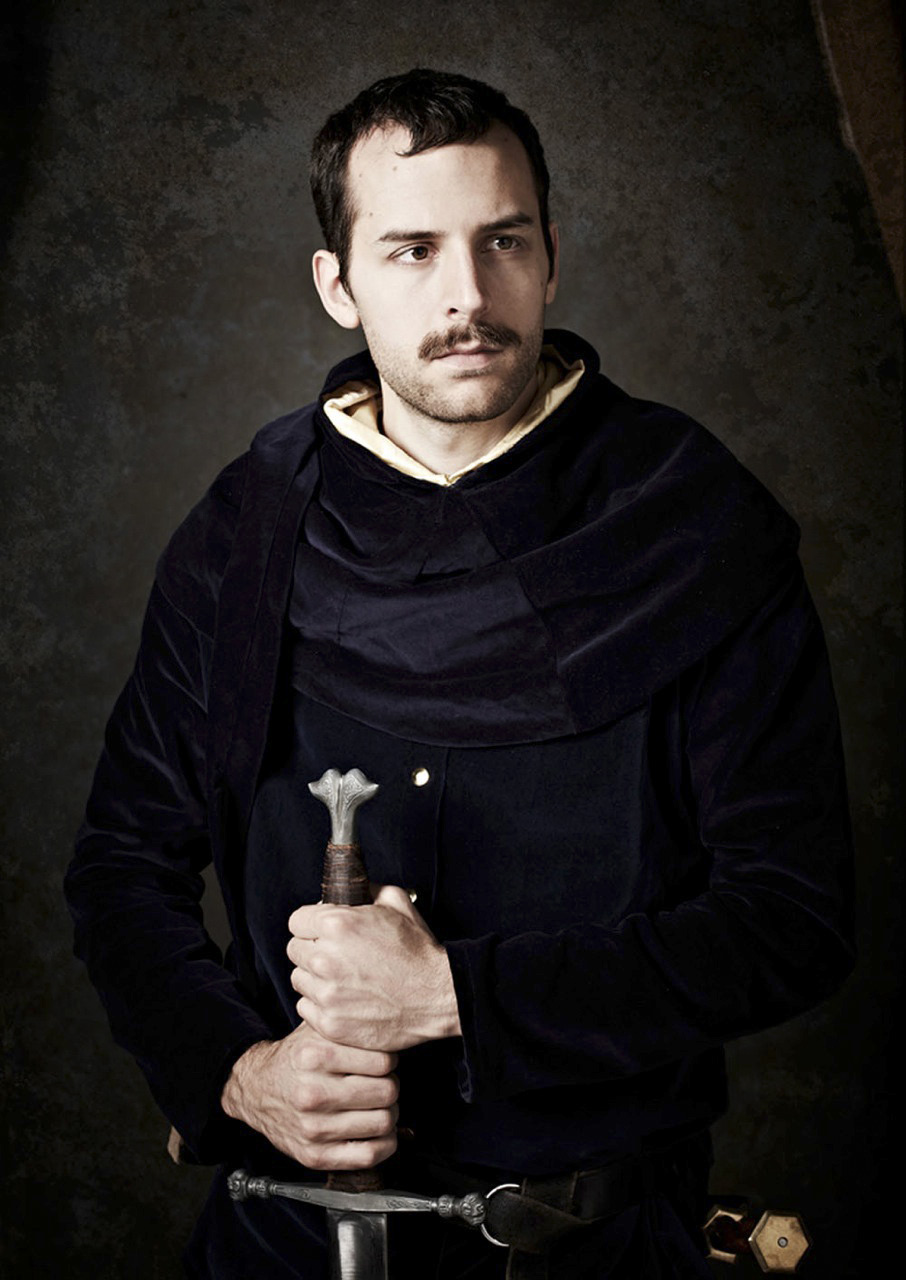
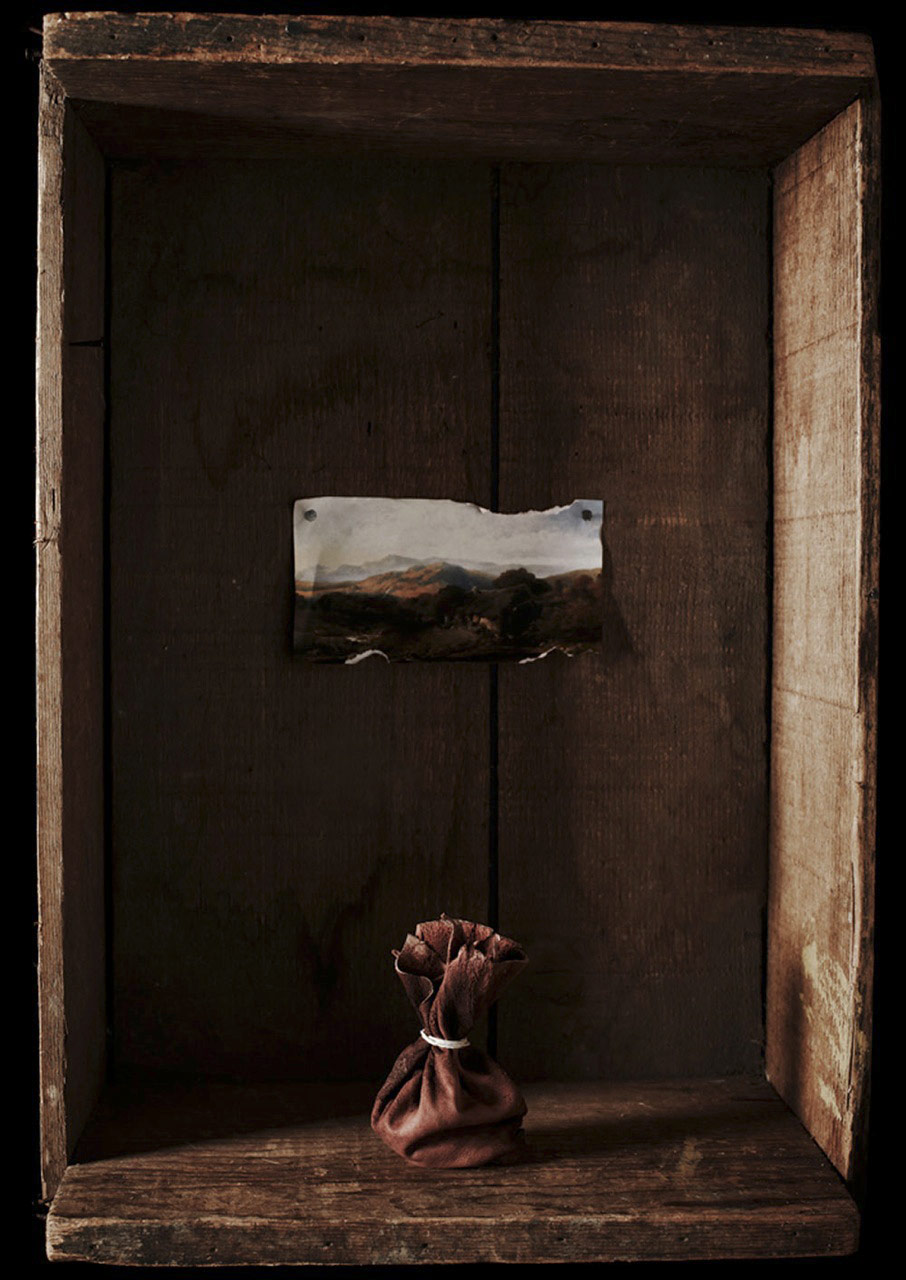
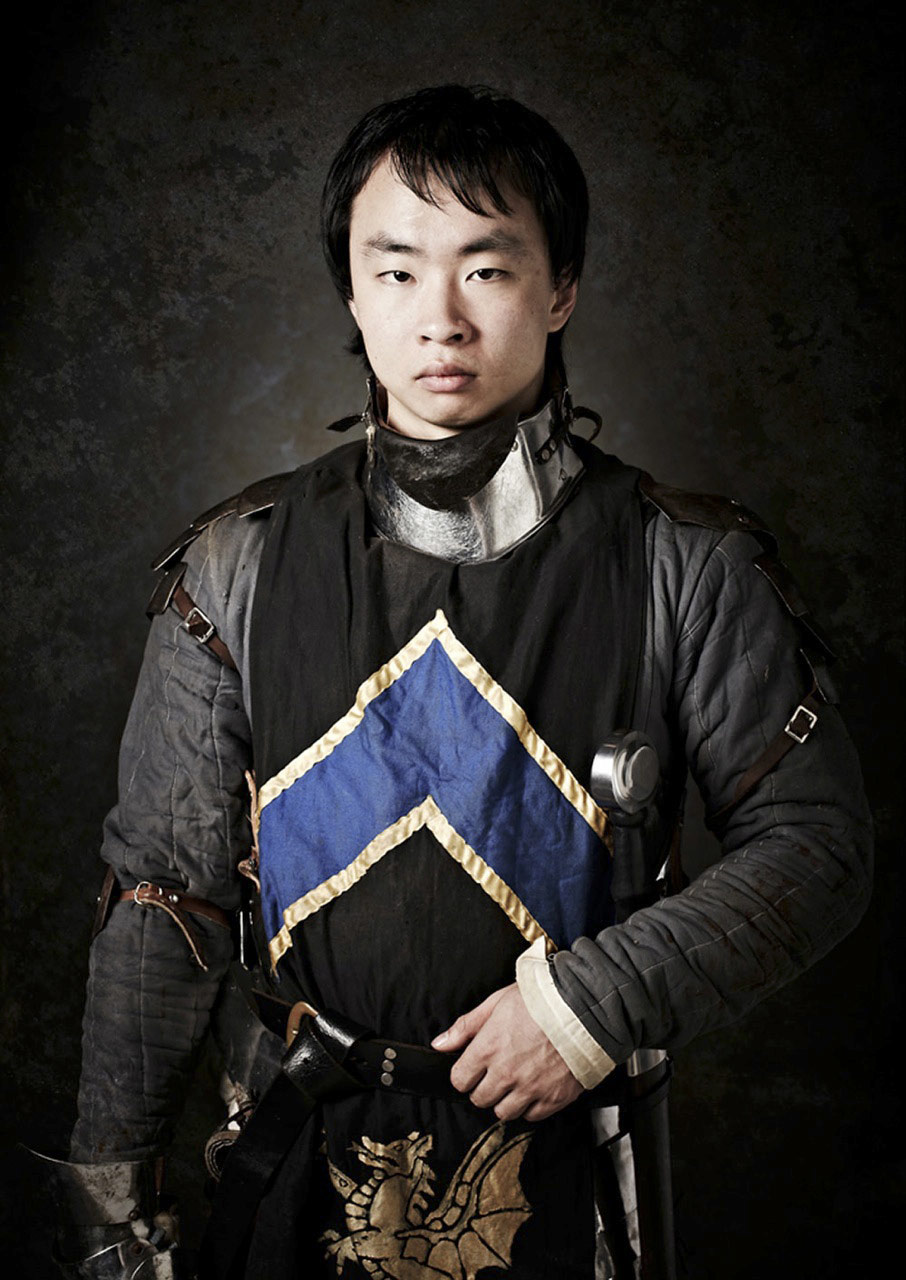
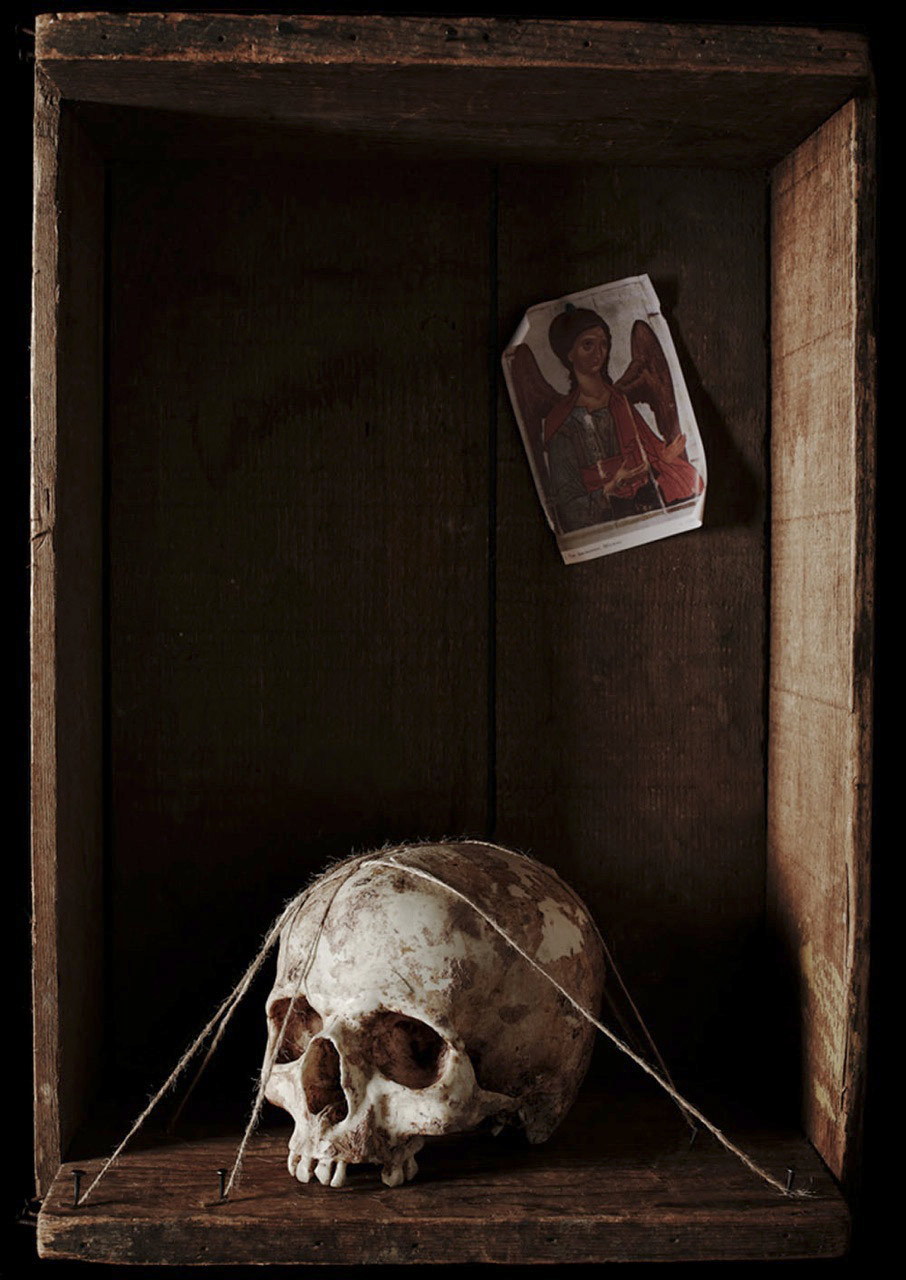
Amber McCaig‘s series Imagined Histories image “contemporary people captured by a sharp technology… [as they] aspire to join the consciousness of another epoch” (Robert Nelson). Small, intense prints, hung in pairs, re-present figures dressed in renaissance costume acting out the fantasy of living in a romantic, historical era. The portraits are paired with still life of wooden boxes filled with allegorical objects full of symbolic representation. The portraits are strong (the incongruity of an Asian knight is particularly effective), and the relationship between portrait and still life is ambiguous and nuanced. However, the still life become repetitive with the constant placement of images at the back of the box coupled with objects situated towards the front of the box. A study of the magical boxes of the artist Joseph Cornell would have been beneficial in this regard.

I feel that there needs to be more layering in the construction of the individual photographs and between the works in the series as a whole, not just the pairs of images. While the work is a little one dimensional in this imagined time, this is a good beginning to an ongoing investigation.

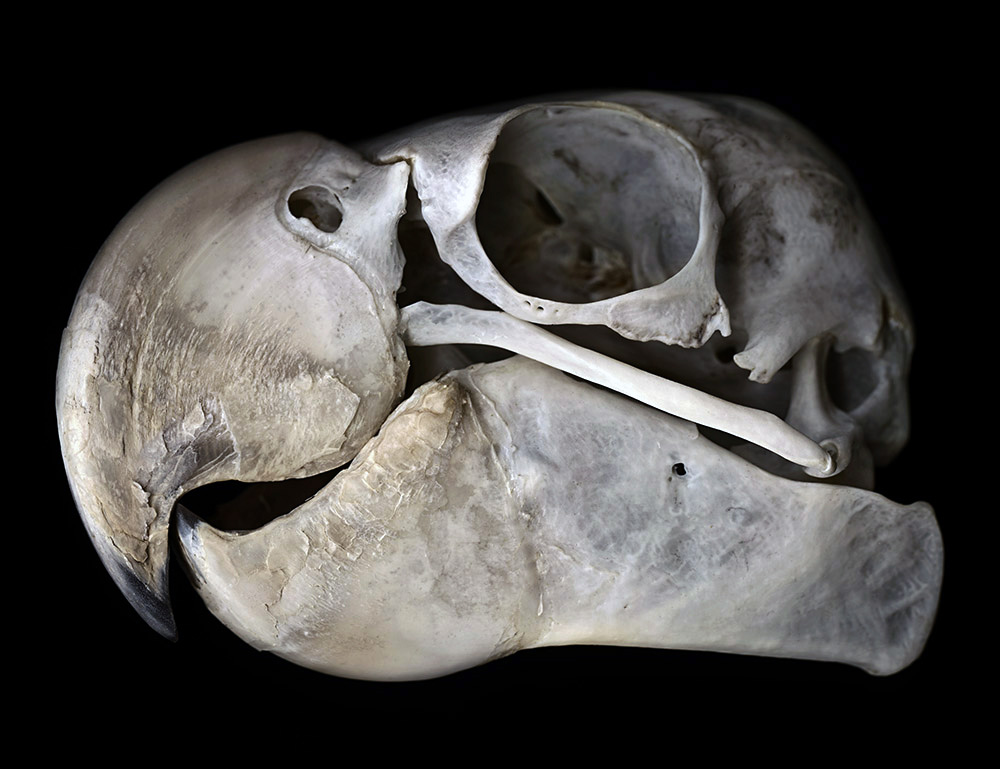
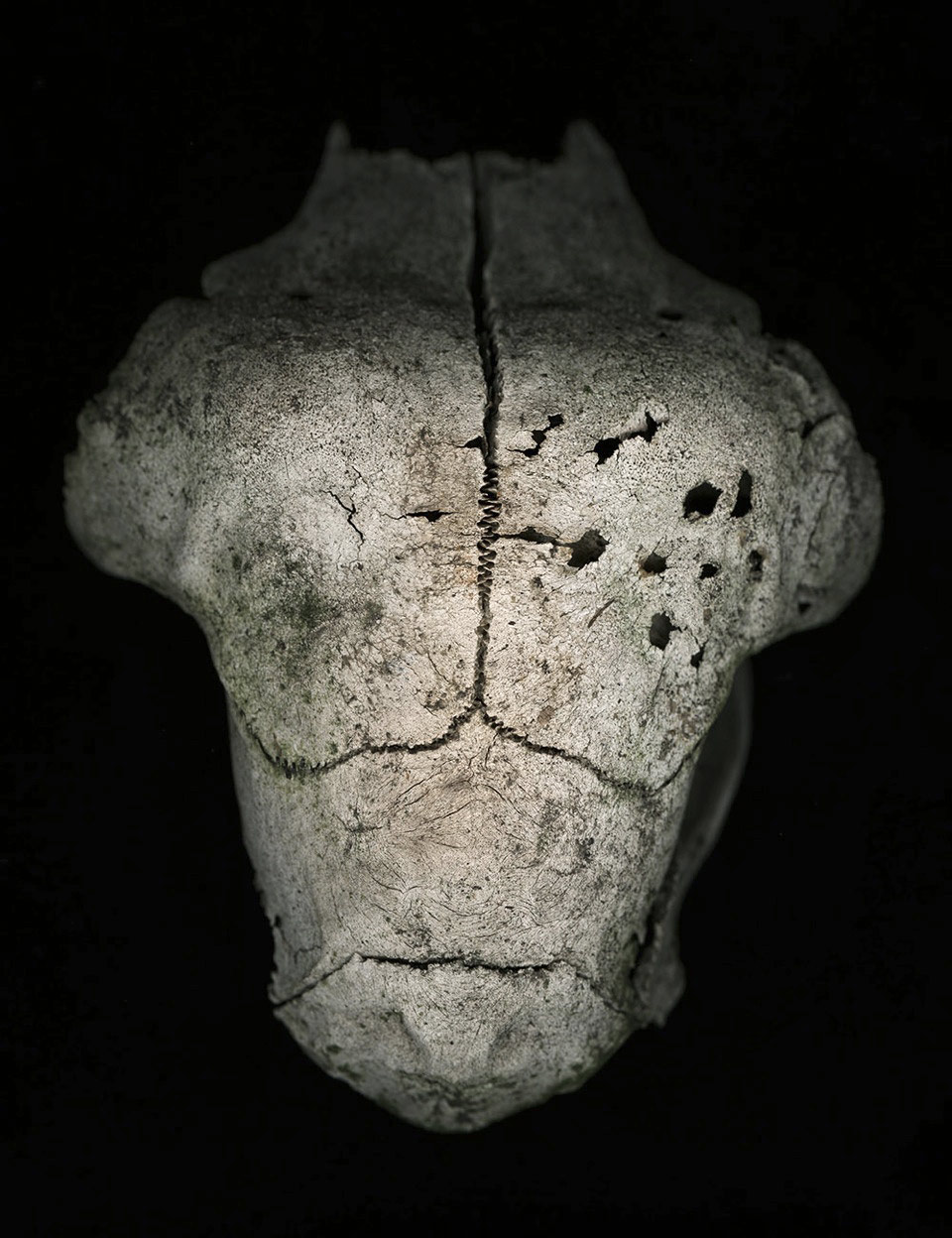
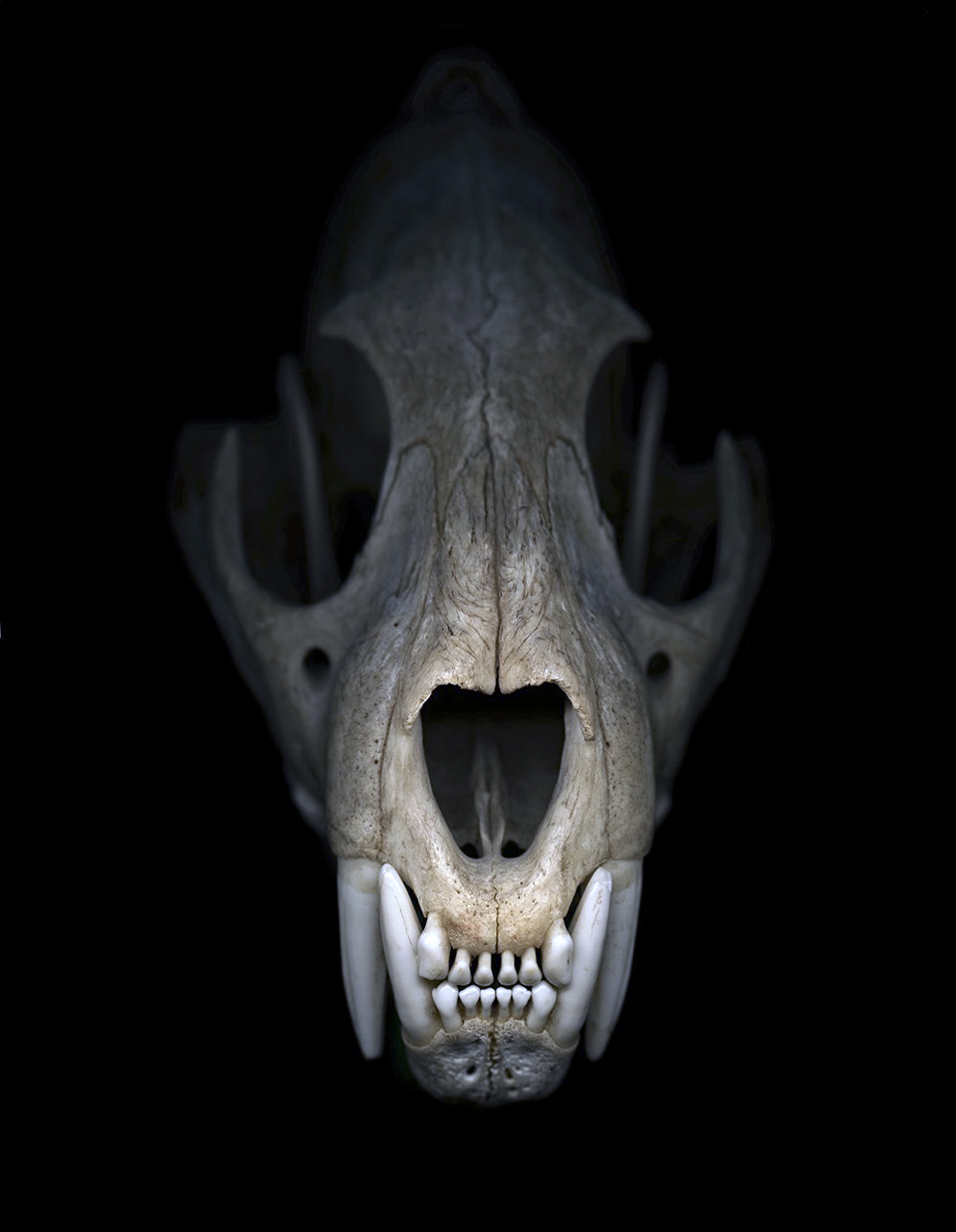
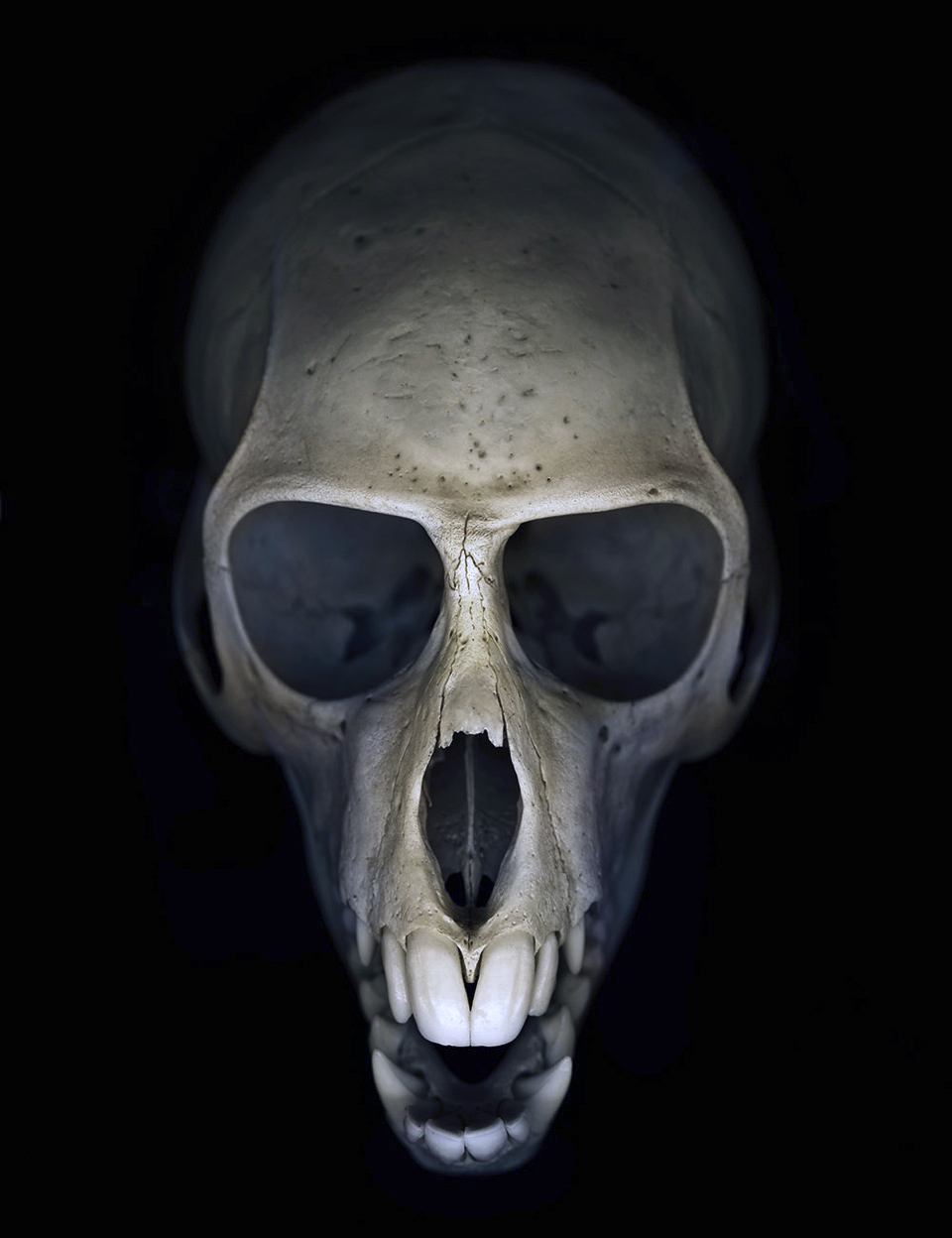
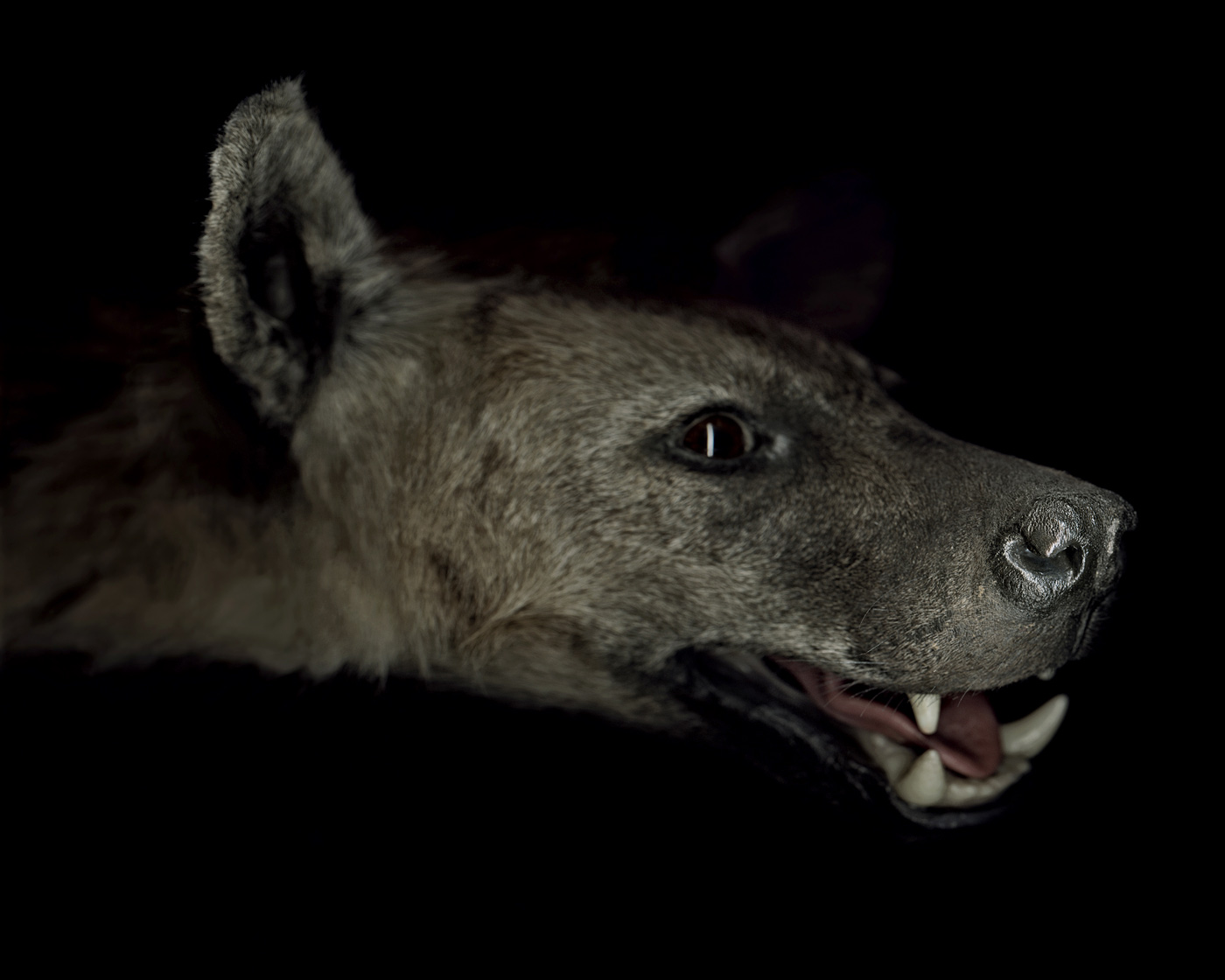
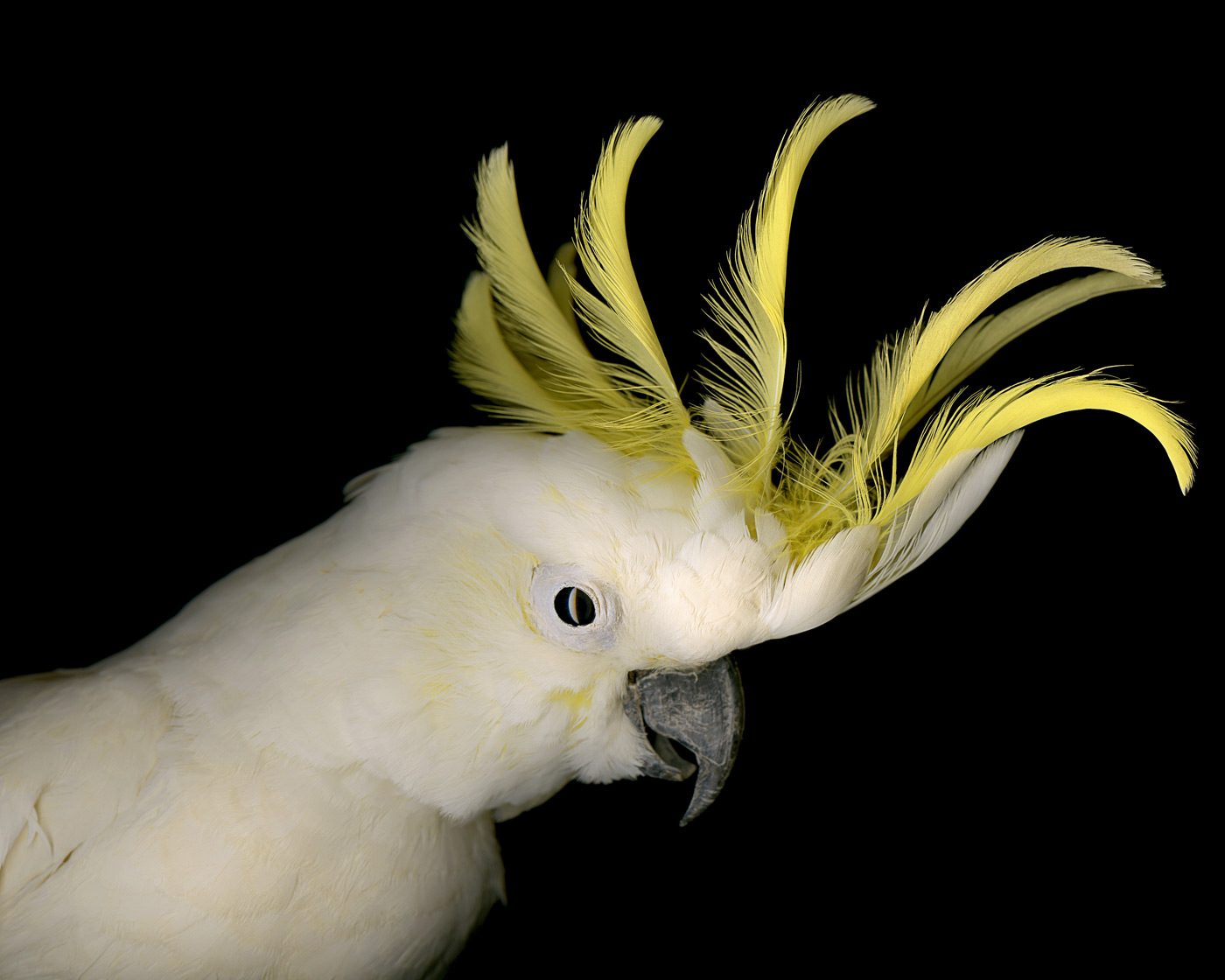
While Sally Mann’s body of work What Remains is the rolled-gold standard for this kind of work, Greg Elms series What Remains offers an interesting forensic amplification of skeletal “nature”. These animalistic portraits of nature mort are eloquent, strong and forthright. Some work better than others. The Cheetah skull, the Vervet monkey skull (with Rayban Aviator sunglass eyes) and best of them all, the magnificent, constructivist Black cockatoo skull – are all haunting in their deathly presence. Some of the smaller skulls lack these works muscularity, especially when they are printed horizontally on a vertical piece of photographic paper, which simply does not work.

Whether the series needed the ironic commentary of the titles, or the trope of hanging the conceptualisation of the series on the back of global warming, is also debatable. I think the best images are strong enough, and the conviction of the artist obvious enough over numerous bodies of work, that the viewer does not need to be spoon fed this rationalisation.

Dr Marcus Bunyan


1/ Jackson, J. B. Discovering the Vernacular Landscape. New Haven: Yale University Press, 1984, p. 8 quoted in Goldswain, Phillip. “Surveying the Field, Picturing the Grid: John Joseph Dwyer’s Urban Industrial Landscapes,” in Goldswain, Phillip and Taylor, William (eds.,). An Everyday Transience: The Urban Imaginary of Goldfields Photographer John Joseph Dwyer. Crawley, WA: University of Western Australia Publishing, 2010, p. 75.


Many thankx to Edmund Pearce Gallery for allowing me to publish the photographs in the posting. Please click on the photographs for a larger version of the image.


Gustave Doré (French, 1832-1883) llustration of Lord Alfred Tennyson's 'Idylls of the King' 1868


Gustave Doré (French, 1832-1883)
llustration of Lord Alfred Tennyson’s Idylls of the King
1868


Henri van Noordenburg (Australian born Netherlands, b. 1967) 'Composition X' 2012


Henri van Noordenburg (Australian born Netherlands, b. 1967)
Composition X
2012
Hand carved archival pigment print
106 x 106cm


Abstracted within the landscape, the artist features as the protagonist facing the threats of a seemingly hostile bush. Efface references The Expulsion from the Garden of Eden with a focus on the overlaying of a European aesthetic on the physical and intellectual landscape. Starting with self portraits set amid a featureless black background, the photographic surface is hand etched to reveal the landscape.

Van Noordenburg describes the process of self-nude photography as an “incredible mix between strength and weakness, frustration and containment a feeling of euphoria and adrenaline”. Feelings, which mirror van Noordenburg’s attempts to assimilate within a dominant culture.

Text from the Edmund Pearce Gallery website


Henri van Noordenburg (Australian born Netherlands, b. 1967) 'Composition XXII' 2013


Henri van Noordenburg (Australian born Netherlands, b. 1967)
Composition XXII
2013
Hand carved archival pigment print
30 x 30cm


Henri van Noordenburg (Australian born Netherlands, b. 1967) 'Composition XXIII' 2013


Henri van Noordenburg (Australian born Netherlands, b. 1967)
Composition XXIII
2013
Hand carved archival pigment print
30 x 30cm


Between Here and There

The figure that haunts these images is far from a signifier of passivity and calm. Dwarfed and subjugated by that which surrounds, his naked form seems deep in the throes the landscape’s implicit bewilderment and assault. His pallid, naked flesh is scarred and reddened and soiled, the reproach of this eerie land leaving an acrid evidence.

The work of Henri van Noordenburg veers towards the anxieties of juncture, displacement and exodus – art history, religious mythology, the socio-cultural tropes of migration and dislocation and the tensions of the photographic medium underlie his visual and allegorical language.

Indeed, the sensibilities and narratives that punctuate the Dutch-born artist’s new series, Efface, are significant on several levels. The immediately perceptible tension is that of technique and form. Beginning their lives as nude photographic self-portraits (the body set against a vast, featureless, black backdrop), van Noordenburg’s renderings of the Australian landscape and wilderness are in fact painstakingly realised hand-etchings. The photographic surface is an amalgam, the physicality of the photographic object unmistakable. In an era of fluctuation and change for the now ubiquitous digital form, van Noordenburg attempts to reengage, reinterpret and gain further understanding of the photograph’s physical roots.

The formal and stylistic inclinations that the artist achieves via such a process offers another intriguing layer. Resting upon the myth of the Expulsion from the Garden of Eden, this loaded series operates in the shadows of art history, forging a Romantic European imagining of the landscape and broaching its loaded colonialist underpinnings. Just as van Noordenburg’s photographic visage wanders a landscape created via the hand and the imagination, the European man stalks the myth of the non-European landscape as a base, inhospitable threat. Allegories and references double back on one another; themes of movement, displacement, exile and expulsion break bread with the iconography of the colonialist gaze.

That it is van Noordenburg’s own image that haunts these works – his body writhing, crouched or prone amid the bush – proves telling. Though living in Australia for the best part of two decades, the artist is an outsider in a nation that remains in acute denial of the extent of its immigrant foundations. Whether white, black, yellow or brown, the great myth of a quintessential Australianness – one that exists on a plane distinct from the cultural melange that marks the Australian reality – threatens to dislocate all who fail to blindly buy in.

In the suite of works that populate Efface, van Noordenburg sets himself adrift, haunted by his own place in history, mythology and the wider Australian scheme. Though we live in an increasingly borderless and post-national world, some things tend not to change.

Dan Rule


Amber McCaig (Australian) 'Ute von Tangermunde' 2013


Amber McCaig (Australian)
Ute von Tangermunde
2013
Archival pigment print
48 x 33cm


Amber McCaig (Australian) 'Untitled VII' 2013


Amber McCaig (Australian)
Untitled VII
2013
Archival pigment print
48 x 33cm


“Using a combination of portraits and still life elements, Amber recreates an exploration into the idea of identity and imagination, providing an insight into what it is like to live out fantasies in everyday life. Laden with armour, treasure chests, maps and lore, these fantasies show the power of our imagination and what is possible if we dare to dream.”

Text from the Edmund Pearce Gallery website


Amber McCaig (Australian) 'The Knight Errant' 2013


Amber McCaig (Australian)
The Knight Errant
2013
Archival pigment print
60 x 42cm


Amber McCaig (Australian) 'Untitled IV' 2013


Amber McCaig (Australian)
Untitled IV
2013
Archival pigment print
60 x 42cm


Amber McCaig (Australian) 'The Knight' 2013


Amber McCaig (Australian)
The Knight
2013
Archival pigment print
60 x 42cm


Amber McCaig (Australian) 'Untitled III' 2013


Amber McCaig (Australian)
Untitled III
2013
Archival pigment print
60 x 42cm


Greg Elms (Australian, b. 1960) 'We knew it was serious, but we were kind of busy (Black cockatoo skull)' 2013


Greg Elms (Australian, b. 1960)
We knew it was serious, but we were kind of busy (Black cockatoo skull)
2013
Archival pigment print
85 x 110cm


“This taxonomy series of large-scale prints, which acts as an amplification of its forensic nature, is an examination of where our relationships with animals are headed. Whilst those with vested interests may deride climate change, it is beyond dispute that there is a decline in many species of fauna (and flora). In 21st century life, where the distractions are numerous and social media pervasive, 24-hour news counteracts important issues amidst a blur of information overload… Elms work investigates the natural world exploring themes of reality, mortality and the sublime.”

Text from the Edmund Pearce Gallery website


Greg Elms (Australian, b. 1960) 'It got overrun by other news (Wombat skull, aerial view)' 2013


Greg Elms (Australian, b. 1960)
It got overrun by other news (Wombat skull, aerial view)
2013
Archival pigment print
70 X 55cm


Respice post te!

There is something incredibly human about Greg Elms’ latest suite of works. Something uncannily and immediately recognisable in these gaping eyes and grimacing teeth. What links each of the ‘individuals’ here is very simple. It is not just death, it is the cause of death. These are forensic portraits of homicide victims, genocidal talismans for the perpetrator. Enjoy them, for it is we who must plead futile innocence.

Stripped of fur and flesh, they were beforehand stripped of the flora and fauna that sustained them, they were humiliated, out-numbered and out equipped and we? Well it’s simple. We needed more coffee plantations, more timber, more cultivation, more food for our yapping pets.

I’m not suggesting here that Elms is some kind of tree-hugging animal lover. But I am saying that, like the best forensic analysts, he has identified his victims well.

Elms himself gives away much of the story behind this cruelly grinning menagerie. Think of how many times in recent decades you have read the kinds of commentary that Elms utilises here as titles; “We knew it was serious, but we were kind of busy,” “Lobbyists were employed to dispute the facts,” “It got overrun by other news,” “We felt like we were helpless,” “It would’ve been fine if Newscorp was onside.”

These are everyday, generic comments. All too much so. think: Global Warming, human genocide, animal extinctions. Just everyday comments accompanied by a shrug of the shoulders. One could add “too late now.” Elms himself adds: “Everything comes and goes…”

But if there is beauty in Apocalypse then Elms has found it. There is an elegance alongside a silence in these animalistic portraits of nature mort. These un-furred memento mori.

The Latin phrase, memento mori, translates essentially as “Remember that you must die.” Another translation of the term reads Respice post te! Hominem te esse memento – Look behind you! Remember that you are but a man! But here in Elms’ portraits it is the Vervet Monkey, the Black Cockatoo, the Cheetah. Indeed, the only thing missing is the skull of the human.

But there is time enough for that…

Ashley Crawford


Greg Elms (Australian, b. 1960) 'We felt sort of helpless to stop the extinction (Cheetah skull)' 2012


Greg Elms (Australian, b. 1960)
We felt sort of helpless to stop the extinction (Cheetah skull)
2012
Archival pigment print
110 x 85cm


Greg Elms (Australian, b. 1960) 'You won’t get away with this for much longer (Vervet monkey skull)' 2011


Greg Elms (Australian, b. 1960)
You won’t get away with this for much longer (Vervet monkey skull)
2011
Archival pigment print
110 x 85cm


Edmund Pearce Gallery

This gallery has now closed.

LIKE ART BLART ON FACEBOOK

Back to top

Review: ‘Tangent’ by Michael Corridore at Edmund Pearce Gallery, Melbourne

Exhibition dates: 11th September – 5th October, 2013


Michael Corridore (Australian) 'Form Collage 0004' 2001 from the exhibition Tangent' by Michael Corridore at Edmund Pearce Gallery, Melbourne, September - October, 2013


Michael Corridore (Australian)
Form Collage 0004
2001
Archival pigment print
20 x 26.5cm
© Michael Corridore


This is a patchy exhibition by Michael Corridore at Edmund Pearce Gallery.

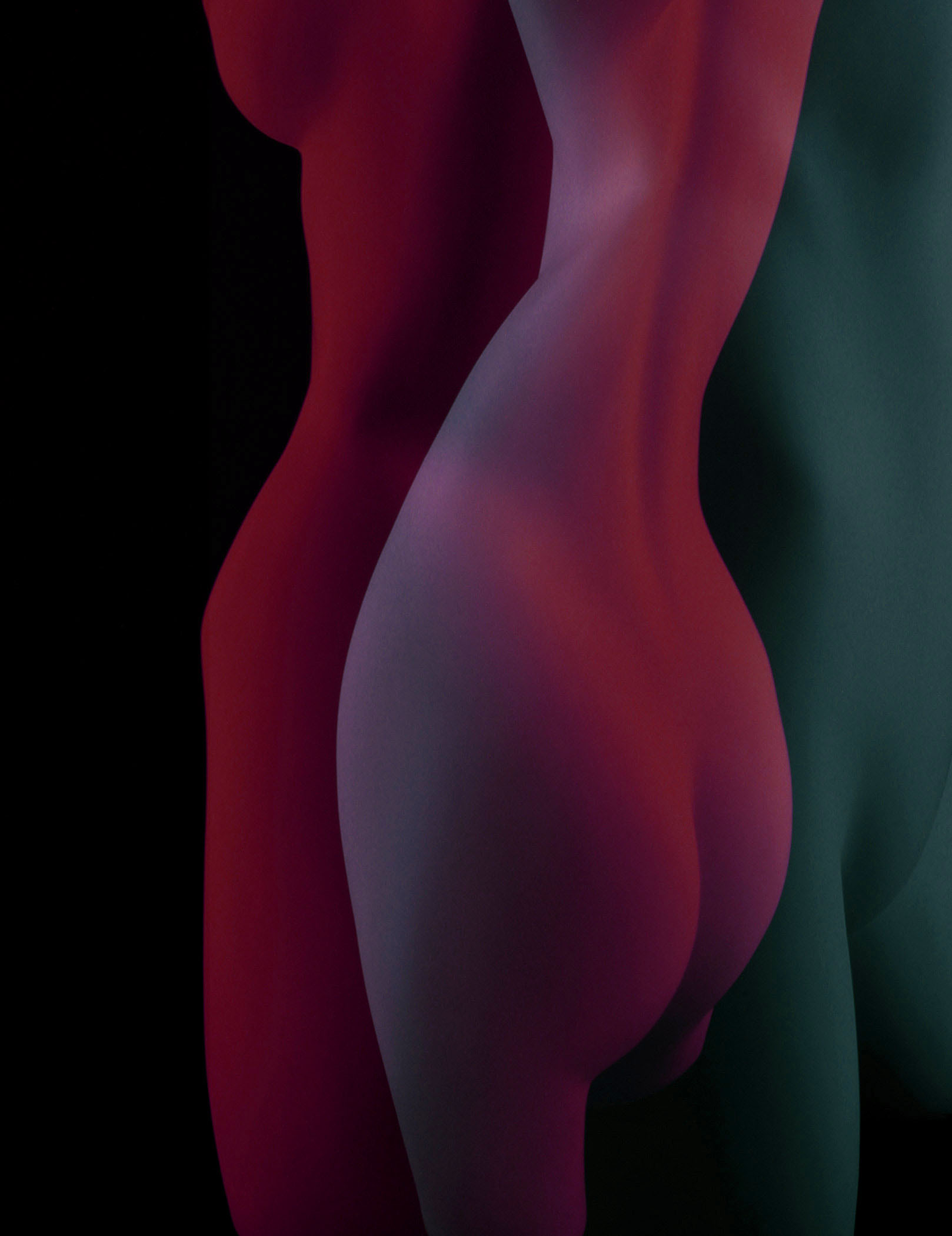
The four small images from the initial foray into digital collage (the photograph above and the top three photographs below, all 2001) are the most striking and effective works in the exhibition. Lucid in their Duchampian layering and movement, these beautiful photographs most clearly express the conceptual ideas behind the collages. The four pieces literally stopped me in my tracks when I saw them in the gallery space. The colours are bold, the overlapping and movement refined and the effect on this viewer was profound, so intense was the visualisation of the work.

The new photographs possess a different order of being. Subtle and requiring greater contemplation there were only five images that impinged on my consciousness in the rest of the exhibition (the first five photographs after the press release below, all 2013). Even the best of them seem more an exercise in the formal qualities of digital collage rather than the élan vital of the earlier work. While Corridore re-interprets “what we see from differing perspectives and synthesise[s] those components of our observations and memory information into a two-dimensional image,” what he produces are images that are not that memorable. Interesting exercises, perhaps, in the topography of being, but not that memorable or emotive as images.

The rest of the new photographs simply did not work for me. Either there was not enough for this viewer to hang his hat on (visually speaking) or the image was so subtle and occluded behind the glass of the frame that the viewer gets no feeling, no presence from the image at all. (Of course, this is the perennial difficulty of framing dark or subtle work in a gallery environment, the ability of the viewer to actually see the work if glass or perspex is placed in front of it. Either you pin the work to the wall, or frame it without glass, or mount on aluminium – unfortunately all but the latter precludes the easy sale to customers who want an artwork ready to purchase off the gallery wall). Tangentially speaking, it is as if the train of thought of the artist has wandered as he seeks other pathways to creation, pathways that fail to interestingly develop the initial topic of conversation.

It is all very well to go off at a tangent (defined as a line, curve, or surface meeting another line, curve, or surface at a common point and sharing a common tangent line or tangent plane at that point; a sudden digression or change of course), but the meeting point between artist’s intentions and the viewer’s reception have to at some point possess some common ground of interest and understanding. As it stands, I will always, always remember Corridore’s initial ‘fictional realities’ for their intensity and beauty but the later work will seep from my mind as easily as thought placed it there.

Dr Marcus Bunyan


Many thankx to Edmund Pearce Gallery for allowing me to publish the photographs in the posting. Please click on the photographs for a larger version of the image.


Michael Corridore (Australian) 'Form Collage 0015' 2001 from the exhibition Tangent' by Michael Corridore at Edmund Pearce Gallery, Melbourne, September - October, 2013


Michael Corridore (Australian)
Form Collage 0015
2001
Archival pigment print
26.5 x 20cm
© Michael Corridore


Michael Corridore (Australian) 'Form Collage 0001' 2001


Michael Corridore (Australian)
Form Collage 0001
2001
Archival pigment print
26.5 x 20cm
© Michael Corridore


Michael Corridore (Australian) 'Form Collage 0003' 2001


Michael Corridore (Australian)
Form Collage 0003
2001
Archival pigment print
26.5 x 20 cm
© Michael Corridore


Although a departure from the Angry Black Snake series and ongoing landscape work, Tangents reflects Michael’s deep artistic practise and an ability to experiment confidently with different techniques and styles. Such strong technique reflects this photographer’s mastery of his craft.

Michael Corridore’s primary interest in his fine-art and commercial photography has been in inventing new narratives. Whether it is spectators shrouded in the smoke of burning rubber, his unique portraits of the famous and not so famous, capturing empty urban everyday spaces, or external landscapes that are at times exceptionally beautiful or beautifully strange and mysterious, you cannot help but be drawn in by Corridore’s ‘fictional realities’.

In this new series, Tangents, Corridore uses references to Cubism and art history, redefining such ideas in a modern photographic context. This project was commenced in 2000 and now in 2013 it has been fully realised by the artist due to advances in digital capture technology. Vibrant and subtle colour can now be fully preserved in the collage process.

“In this series of collages, I have returned to a series that I had started in 2000. The original series resulted in about a dozen or so photographs. My first attempts at collage were through printing negatives onto black and white Lithographic film and layering multiple sheets of those films onto a light box and photographing the assembled sheets as collages.

From there I decided to experiment with digital capture of the original components and assemble the layers in photoshop so that I could preserve colour, which was lost in the lithographic printing process. This was my first foray into working with digital capture technology.

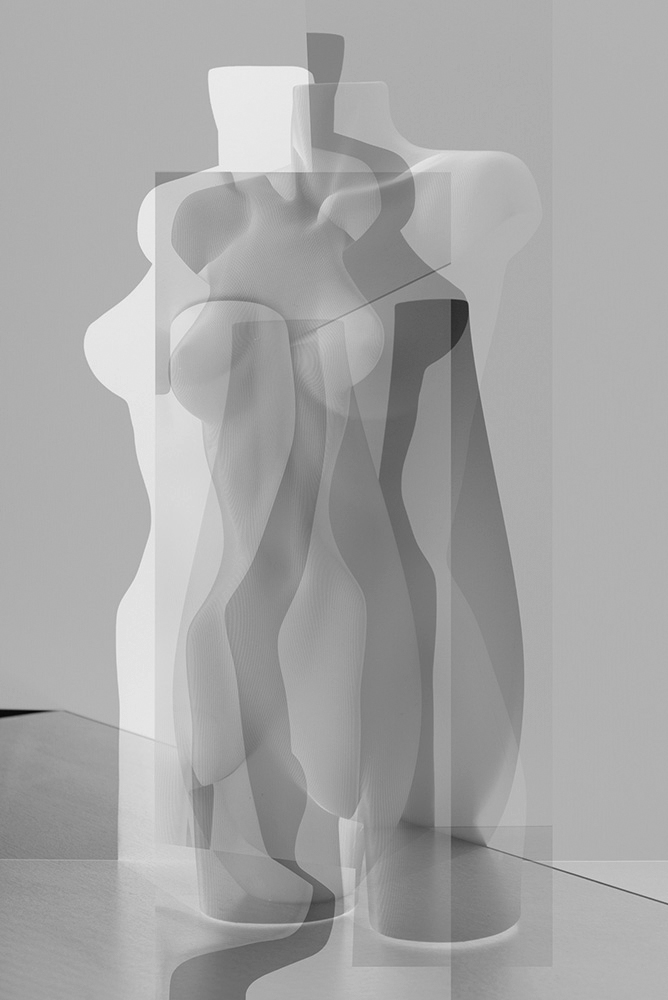
In the past year I began to explore this collage process again photographing various forms working with life models, mannequins and various household objects which offered me the opportunity to explore both malleable and solid forms and shapes that could be layered together in the assembled collages.

This exploration in collage stems from my interest in the Cubists approach to re-interpreting what we see from differing perspectives and synthesise those components of our observations and memory information into a two-dimensional image.”

Michael Corridore artist statement 2013


Michael Corridore (Australian) 'Form 3784' 2013


Michael Corridore (Australian)
Form 3784
2013
Archival pigment print
100 x 67cm
© Michael Corridore


Michael Corridore (Australian) 'Form 3781' 2013


Michael Corridore (Australian)
Form 3781
2013
Archival pigment print
100 x 67cm
© Michael Corridore


Michael Corridore (Australian) 'Form 4107' 2013


Michael Corridore (Australian)
Form 4107
2013
Archival pigment print
100 x 67cm
© Michael Corridore


Michael Corridore (Australian) 'Form 4102' 2013


Michael Corridore (Australian)
Form 4102
2013
Archival pigment print
100 x 67cm
© Michael Corridore


Michael Corridore (Australian) 'Form 0137' 2013


Michael Corridore (Australian)
Form 0137
2013
Archival pigment print
100 x 67cm
© Michael Corridore


Michael Corridore (Australian) 'Form 3783' 2013


Michael Corridore (Australian)
Form 3783
2013
Archival pigment print
100 x 67cm
© Michael Corridore


Edmund Pearce Gallery

This gallery has now closed.

LIKE ART BLART ON FACEBOOK

Back to top

Review: ‘Carol Jerrems: photographic artist’ at the Monash Gallery of Art, Wheelers Hill, Melbourne

“The pity is that Jerrems died so young for what this exhibition brought home to me was that here was an artist still defining, refining her subject matter.” Dr Marcus Bunyan

Exhibition dates: 6th July – 30th September, 2013

A National Gallery of Australia exhibition

Curator: Gael Newton and Anne O’Hehir

PLEASE NOTE: THIS POSTING CONTAINS ART PHOTOGRAPHS OF FEMALE NUDITY – IF YOU DO NOT LIKE PLEASE DO NOT LOOK, FAIR WARNING HAS BEEN GIVEN


Carol Jerrems (Australian, 1949-1980) 'A poem' 1970 (installation view)


Carol Jerrems (Australian, 1949-1980)
A poem (installation view)
1970
Gelatin silver photographs, letterpress, installed at Monash Gallery of Art
Photograph: Katie Tremschnig


The one and only…

This is a fascinating National Gallery of Australia exhibition about the work of Australian photographer Carol Jerrems at Monash Gallery of Art, Wheelers Hill – in part both memorable, intimate, informative, beautiful, uplifting and disappointing. Let me explain what I mean.

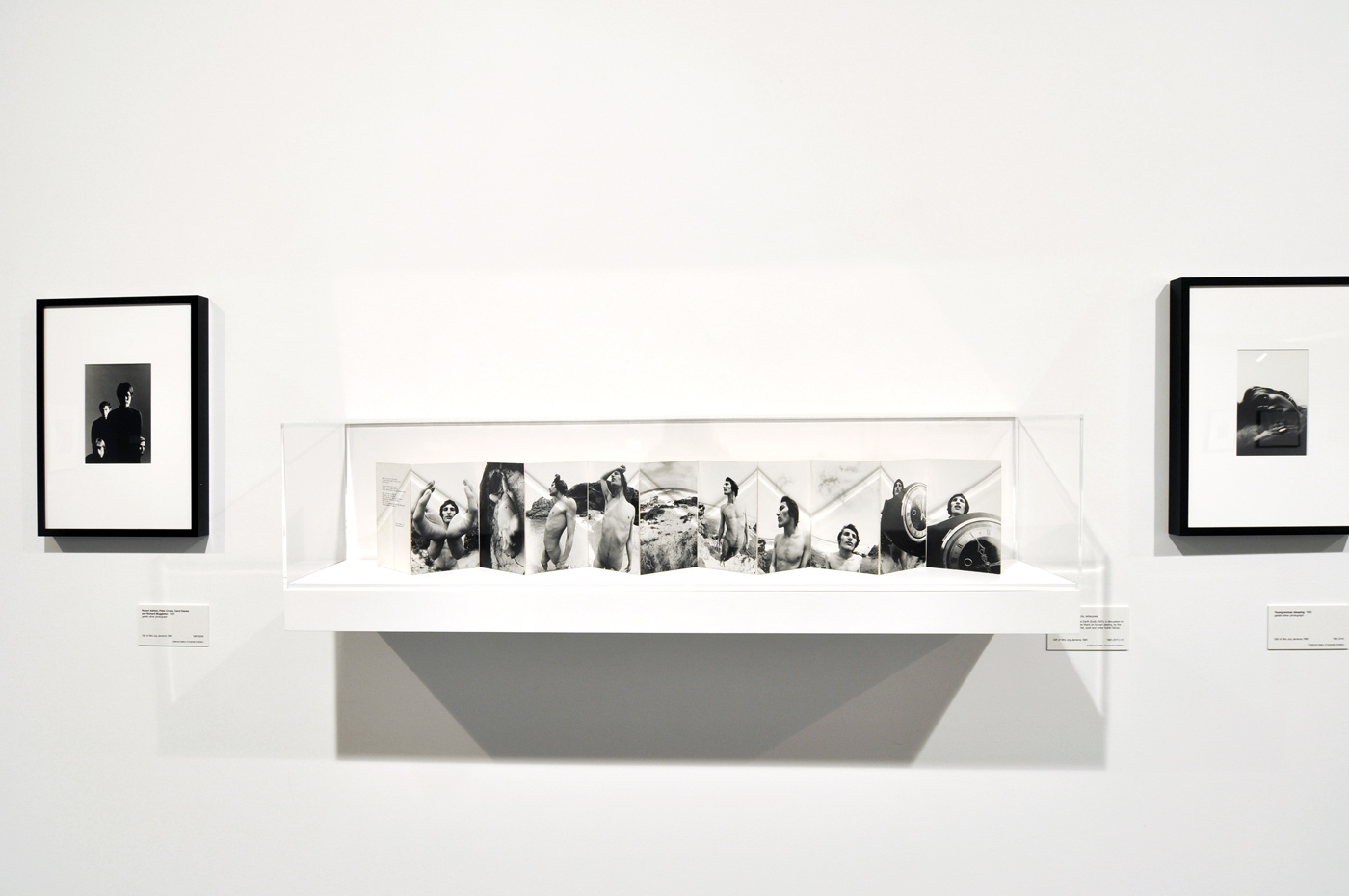
The first section of the exhibition is devoted to Jerrems student work, notably her experiments with overlapping bodies, depth of field, movement and the layering of space and time that can be seen in her vibrant photo boooks and concertina books (see installation photographs below), accompanied by her own poems. This early work, which I had never seen, provides a wonderful insight into how the later images came to be: the shooting down hallways into the light, the pairing and tripling of bodies one behind the other, and how she constructed narrative in her later set piece photographs. This is the informative part of the exhibition.

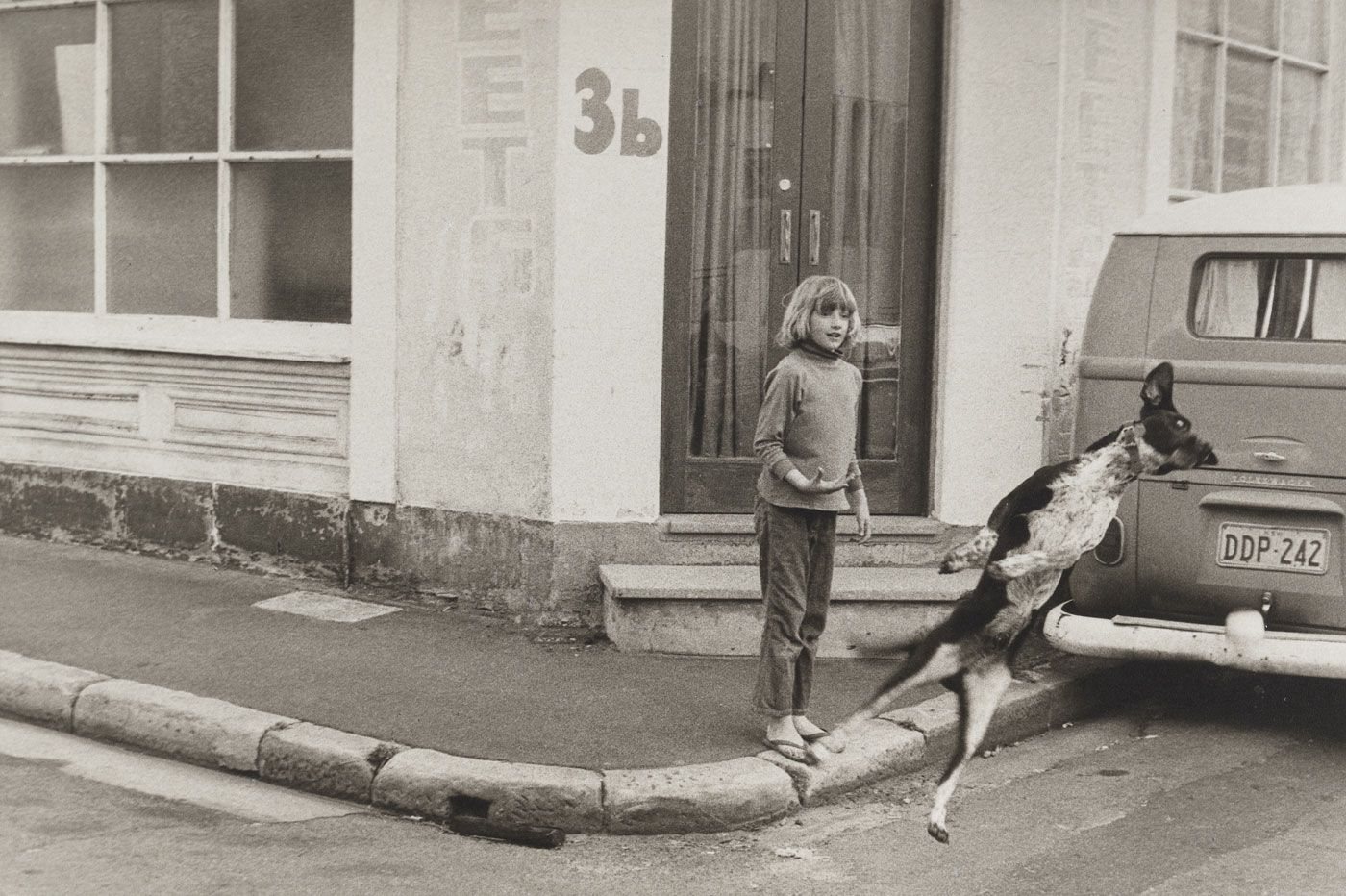
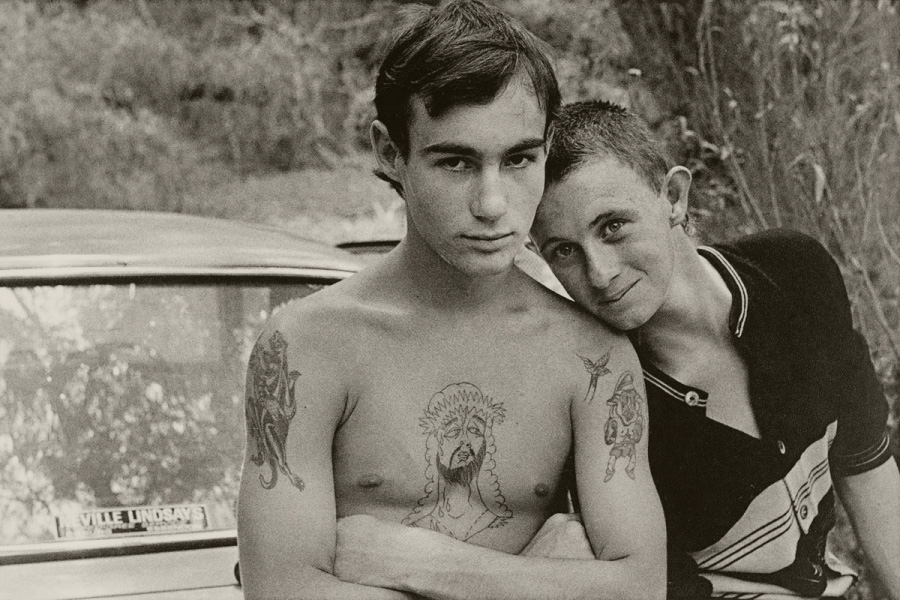
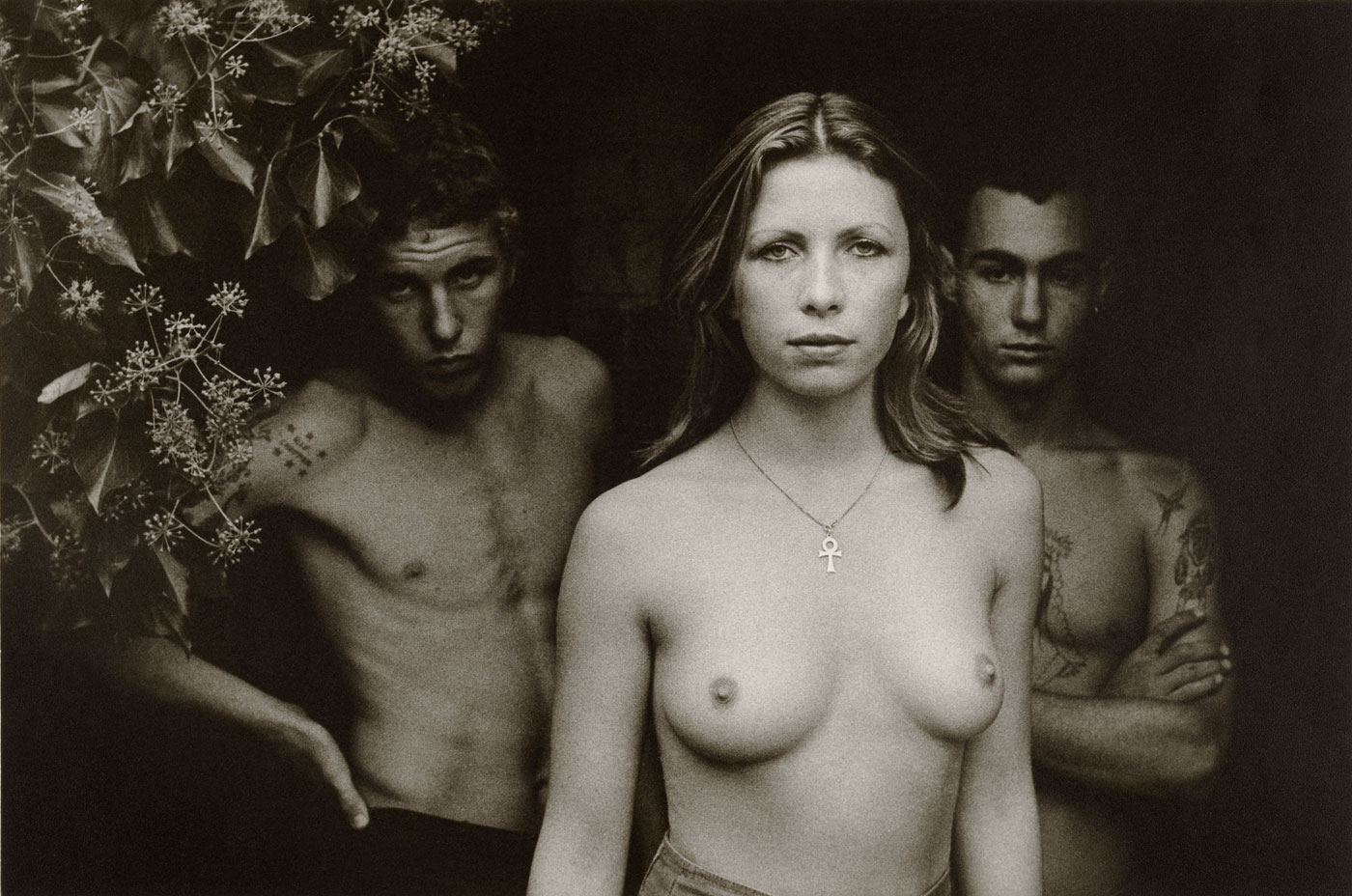
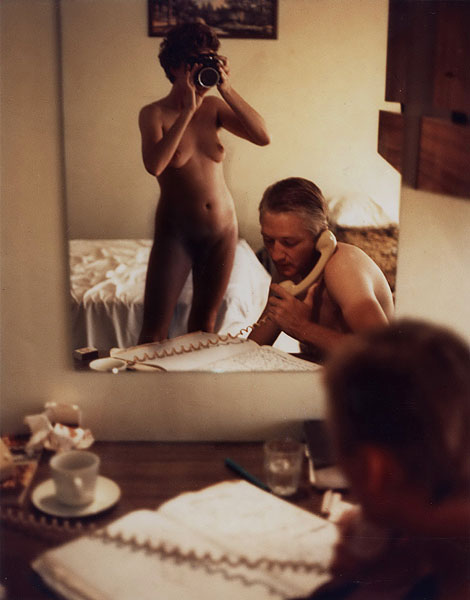
As the exhibition moves on to the main body of Jerrems work there, in all their glory, are the famous images: Evonne Goolagong, Melbourne (1973), Flying dog (1973), Vale Street (1975), Mark and Flappers (1975), Mark Lean: rape game (1975), Mozart Street (1975), Butterfly behind glass [Red Symons from Skyhooks] (1975), Lyn (1976), Lyn and the Buick (1976), Dusan and Esben, Cronulla (1977), the self portraits and the lads with their car down by the river bank. These are memorable, intimate images, at the top of tree in terms of their importance as some of the greatest images taken by any Australian photographer of all time. They are right up there with the very best and there is no denying this. But what else is there? Take away the top dozen images of any photographer and look at the next twenty images. Now, what do you see? In Jerrems case, the results (as evidenced by this exhibition) are a little disappointing. Of course, this is not unusual with any artist.

In her low key, diaristic documentary style, Jerrems focuses on life before her lens. She finds joy, intimacy, love, danger, transgression and rape; she portrays women and gay liberation, youth on the streets, sharpies and the Indigenous population. As Christopher Allen notes, sexuality and its darker side was never far from the surface in Jerrems work and there was a “mix of defiance, erotic assertiveness and vulnerability of that time… [an] intimate closeness to the subject and the direct and unmodified transcription of the world before her.”1 Her intelligent imaging of everyday subject matter “produced a body of photographs that symbolised the hopes and aspirations of the counter-culture in Australia in the 1970s,” but this investigation did not produce particularly memorable photographs. Outside the top group of images I am struggling to remember her other images.

But what we must remember is that this Australia was another time and place. Art photography books had only just arrived in Melbourne in 1970 and Jerrems was one of the first women to point her camera at other women (producing with Virginia Fraser the book A Book About Australian Women in 1974) and people of the revolution. These are socially important documents in terms of Australian (photographic) history. I believe that she said to herself – I know who I am, but I want to know what other people are like – and she transcribed how she was thinking about the world to the people around her through her photographs. Building on the legacy of artists like Henri Cartier-Bresson, André Kertész and Robert Frank, her photographs are like an after-image of some other place, some other Australia that is only forty five years ago but now seems eons away in time and space.

What we take for granted, in terms of sexual liberation, freedom of action and speech, she had to fight for. She had to fight for photographic, conceptual and technical knowledge to arm herself as an intelligent women (for that is what she was), so that she could image / imagine the world. She had to fight damn hard for these things – and then she upped the ante and pushed even harder, even further. These are dangerous photos, for women and gay men were vulnerable and threatened, marginalised and they were a target. Even in the act of photographing, her going into these places (brothels for example), she would have been a target. Does this make for memorable photographs? Not necessarily, and you can see this in the unevenness of the results of her investigation. But socially, these are very important images.

The pity is that she died so young for what this exhibition brought home to me was that here was an artist still defining, refining her subject matter. She never had to time to develop a mature style, a mature narrative as an artist (1975-1976 seems to be the high point as far as this exhibition goes). This is the great regret about the work of Carol Jerrems.

Yes, there is some mediocre work in this exhibition, stuff that really doesn’t work at all (such as the brothel photographs), experimental work, individual and collective images that really don’t impinge on your consciousness. But there are also the miraculous photographs (and for a young photographer she had a lot of those), the ones that stay with you forever. The right up there, knock you out of the ball park photographs and those you cannot simply take away from the world. They live on in the world forever.

Does Jerrems deserve to be promoted as a legend of Australian photography as some people are doing? Not on the evidence of this exhibition, but my god, those top dozen or so images are something truly special to behold. Their ‘presence’ alone – their physicality in the world, their impact on you as you stand before them – guarantees that Jerrems will forever remain in the very top echelons of Australian photographers of all time not as a legend, but as a women of incredible strength, intelligence, passion, determination and vision.

Dr Marcus Bunyan


1/ Allen, Christopher. “Between suburbia and radicalism,” in The Australian newspaper, October 20th, 2012 [Online] Cited 20/09/2013 no longer available online.


Many thankx to Mark Hislop for his help and Monash Gallery of Art for allowing me to publish the photographs in the posting. Please click on the photographs for a larger version of the image.


Carol Jerrems (Australian, 1949-1980) 'A poem' 1970 (installation view)


Carol Jerrems (Australian, 1949-1980)
A poem
1970
Gelatin silver photographs, letterpress, installed at Monash Gallery of Art
Photo: Katie Tremschnig


Carol Jerrems (Australian, 1949-1980) 'Jim Fields, a portrait' 1970 (installation view)


Carol Jerrems (Australian, 1949-1980)
Jim Fields, a portrait (installation view)
1970
Gelatin silver photographs, letterpress, installed at Monash Gallery of Art
Photo: Katie Tremschnig


Carol Jerrems (Australian, 1949-1980) 'The Royal Melbourne Show.....1968, an essay' (L) and 'Movement with Zara' (R) 1968


Carol Jerrems (Australian, 1949-1980)
The Royal Melbourne Show…1968, an essay (L) and Movement with Zara (R)
1968
Gelatin silver photographs, letterpress, installed at Monash Gallery of Art
Photo: Katie Tremschnig


Living in the seventies

Carol Jerrems’s gritty, poetic and elusive images show people trying to find a new way of life and action in the 1970s. Her images have come to define a decade in Australia’s history. In contrast to an earlier generation of internationally renowned magazine photojournalists such as David Moore, the new generation did not seek commissioned commercial or magazine work and took instead a low key intimate approach with a diaristic personal-documentary style of imagery focussed on themselves and their own, mostly urban, environments. Jerrems put her camera where the counter culture suggested; women’s liberation, social inclusiveness for street youths and Indigenous people in the cities who were campaigning for justice and land rights.

Carol Jerrems was the first contemporary Australian woman photographer to have work acquired by a number of museums including the National Gallery of Australia. The National Gallery holds an extensive archive of Jerrems photographs and film work gifted by the artist’s mother Joy Jerrems in 1983. The current exhibition concentrates on prints signed or formally exhibited, by Carol Jerrems in her lifetime dating from 1968-1978. MGA is the only Victorian venue to host the National Gallery of Australia’s major new exhibition Carol Jerrems: photographic artist. This extraordinary exhibition tells the story of Jerrems’ complex and highly influential practice. Drawn from the National Gallery of Australia’s massive holdings of the artist’s work, Carol Jerrems: photographic artist features more than 100 works, most of which have not been seen in Melbourne since Jerrems lived here during the late ’60s and ’70s.

Jerrems was born in Melbourne in 1949 and studied photography at Prahran Technical College under Paul Cox and Athol Shmith. Although she practised as an artist for only a decade, Jerrems has acquired a celebrated place in the annals of Australian photography. Her reputation is based on her intensely compassionate, formally striking pictures, her intimate connection with the people involved in social movements of the day, and her role in the promotion of ‘art photography’ in this country.

Jerrems was one of several Australian women whose work during the 1970s challenged the dominant ideas of what a photographer was and how they worked. She adopted a collaborative approach to making photographs, often featuring friends and associates, and sought a photographic practice that would bring about social change. Her gritty, poetic and elusive images show people trying to find a new way of life in the 1970s. Her images have come to define Melbourne in a decade of great social and political upheaval.

Carol Jerrems: photographic artist pays tribute to this important period in recent Australian history, showing how Jerrems participated in and helped to define Melbourne’s subculture and style in the 1970s. MGA Director Shaune Lakin said Jerrems’ vision would particularly resonate with Melbourne audiences, especially as her vision was revealed across the full breadth of her work. “Carol Jerrems: photographic artist is a perfect story for MGA to tell, as it is also the story of Melbourne in the 1970s. Jerrems captured Melbourne’s sub-cultures – sharpies, mods, hippies, feminists and gay liberationists – with powerful images that engage the viewer intimately with her subjects.”

As Dr Lakin notes, this is a rare chance to see the works Jerrems intended for exhibition: “Carol Jerrems: photographic artist concentrates on prints signed or formally exhibited by Jerrems in her lifetime, most returning to Melbourne for the first time. In addition to many of the images for which Jerrems is rightly famous, visitors to MGA can see Jerrems’ early work, including her extraordinary concertina books and other photo books,” Lakin said.”

Press release from the Monash Gallery of Art website


Carol Jerrems (Australian, 1949-1980) 'Flying dog' 1973


Carol Jerrems (Australian, 1949-1980)
Flying dog
1973
Gelatin silver photograph
National Gallery of Australia, Canberra
Purchased 1976
© Ken Jerrems and the Estate of Lance Jerrems


Carol Jerrems (Australian, 1949-1980) 'Mark and Flappers' 1975


Carol Jerrems (Australian, 1949-1980)
Mark and Flappers
1975
Gelatin silver photograph
National Gallery of Australia, Canberra
© Ken Jerrems and the Estate of Lance Jerrems


Carol Jerrems (Australian, 1949-1980) 'Vale Street' 1975


Carol Jerrems (Australian, 1949-1980)
Vale Street
1975
Gelatin silver photograph
National Gallery of Australia, Canberra
Purchased 1976
© Ken Jerrems and the Estate of Lance Jerrems


From the outset, Jerrems was interested in the expressive possibilities of the photographic medium, declaring that she was ‘an artist whose tool of expression is the camera’. She concentrated on photographing people; her subjects included her students, and her friends and acquaintances. Her first photographs were documentary in style, but by the mid-1970s the scenes she photographed were often contrived. She used a non-exploitative approach, based on the consent of her subjects. For Jerrems, photography had a crucial social role: ‘the society is sick and I must help change it’. Her photographs were a means of ‘bringing people together’ and offered affirmative views of certain aspects of contemporary life. With Virginia Fraser, she published A Book About Australian Women (Melbourne, 1974), to which she contributed the photographs…

Although one critic regarded her work as uneven – ‘she took a casual approach’ – Jerrems’s talents as a photographer were widely recognised. With her camera ‘firmly pointed at the heart of things’, she produced a body of photographs that symbolised the hopes and aspirations of the counter-culture in Australia in the 1970s.

Helen Ennis, Australian Dictionary of Biography Volume 14, (MUP), 1996


Carol Jerrems (Australian, 1949-1980) 'Mirror with a memory: motel room' 1977


Carol Jerrems (Australian, 1949-1980)
Mirror with a memory: motel room
1977
Type C colour photograph
National Gallery of Australia, Canberra
Gift of Mrs Joy Jerrems 1981
© Ken Jerrems and the Estate of Lance Jerrems


Carol Jerrems (Australian, 1949-1980) 'Boys' 1973


Carol Jerrems (Australian, 1949-1980)
Boys
1973
Gelatin silver photograph
National Gallery of Australia, Canberra
© Ken Jerrems and the Estate of Lance Jerrems


Carol Jerrems (Australian, 1949-1980) 'Boys' 1973  'Outback Press Melbourne' 1974


Carol Jerrems (Australian, 1949-1980)
Outback Press Melbourne
1974
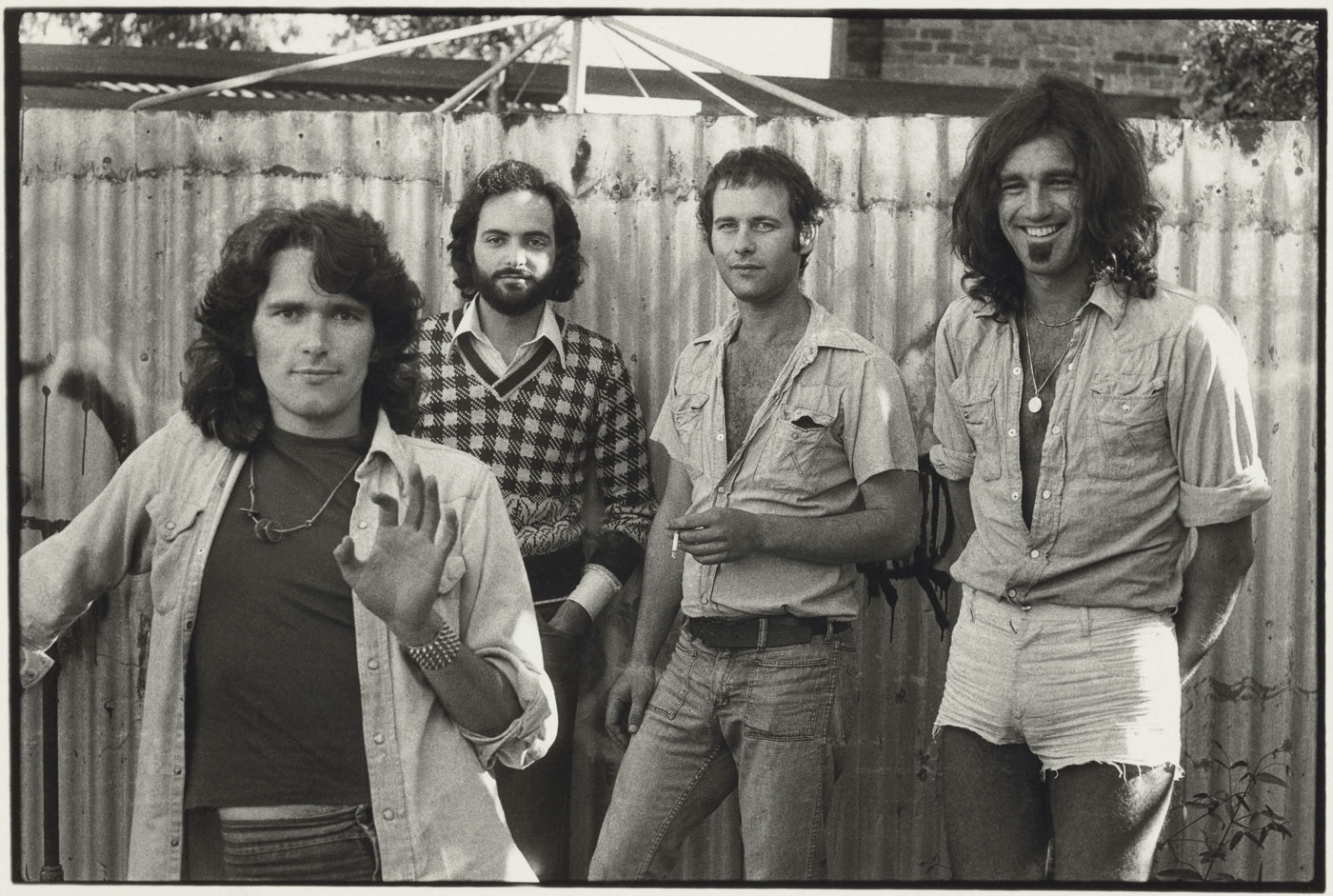
Left to right: Colin Talbot (writer), Alfred Milgrom (publisher), Morry Schwartz (entrepreneur, publisher, now publisher of The Monthly), Mark Gillespie (singer/songwriter)
Gelatin silver photograph
National Gallery of Australia, Canberra
Gift of Mrs Joy Jerrems 1981
© Ken Jerrems and the Estate of Lance Jerrems


Carol Jerrems (Australian, 1949-1980) 'Carol Jerrems, self-portrait with Esben Storm' c.1975


Carol Jerrems (Australian, 1949-1980)
Carol Jerrems, self-portrait with Esben Storm
c. 1975
Gelatin silver photograph
National Gallery of Australia, Canberra
Gift of Mrs Joy Jerrems 1981
© Ken Jerrems and the Estate of Lance Jerrems


Carol Jerrems (Australian, 1949-1980) 'Dusan and Esben, Cronulla' 1977


Carol Jerrems (Australian, 1949-1980)
Dusan and Esben, Cronulla
1977
Gelatin silver photograph
20.1 x 30.3cm
© Ken Jerrems and the Estate of Lance Jerrems


Carol Jerrems (Australian, 1949-1980) 'Butterfly behind glass [Red Symons from Skyhooks]' 1975


Carol Jerrems (Australian, 1949-1980)
Butterfly behind glass [Red Symons from Skyhooks]
1975
Gelatin silver photograph
National Gallery of Australia, Canberra
Gift of Mrs Joy Jerrems 1981
© Ken Jerrems and the Estate of Lance Jerrems


Carol Jerrems (Australian, 1949-1980) 'Jane Oehr, “Womenvision”, Filmaker's Co-Op' 1973


Carol Jerrems (Australian, 1949-1980)
Jane Oehr, “Womenvision”, Filmaker’s Co-Op
1973
From A Book about Australian Women (Outback Press, 1974)
Gelatin silver photograph
National Gallery of Australia, Canberra
Gift of Mrs Joy Jerrems 1981
© Ken Jerrems and the Estate of Lance Jerrems


Carol Jerrems (Australian, 1949-1980) 'Performers on stage,' Hair', Metro Theatre Kings Cross, Sydney, January 1970 [Jim Sharman Director cast included Reg Livermore]' 1970


Carol Jerrems (Australian, 1949-1980)
Performers on stage, ‘Hair’, Metro Theatre Kings Cross, Sydney, January 1970
[Jim Sharman Director cast included Reg Livermore]
1970
Gelatin silver photograph
National Gallery of Australia, Canberra
Gift of Mrs Joy Jerrems 1981
© Ken Jerrems and the Estate of Lance Jerrems


Carol Jerrems (Australian, 1949-1980) 'Peggy Selinski' 1968


Carol Jerrems (Australian, 1949-1980)
Peggy Selinski
1968
Gelatin silver photograph
National Gallery of Australia, Canberra
Gift of Mrs Joy Jerrems 1981
© Ken Jerrems and the Estate of Lance Jerrems


Carol Jerrems (Australian, 1949-1980) 'Lynn' 1976


Carol Jerrems (Australian, 1949-1980)
Lynn
1976
Gelatin silver photograph
National Gallery of Australia, Canberra
© Ken Jerrems and the Estate of Lance Jerrems


Monash Gallery of Art
860 Ferntree Gully Road, Wheelers Hill
Victoria 3150 Australia
Phone: + 61 3 8544 0500

Opening hours:
Tue – Fri: 10am – 5pm
Sat – Sun: 10pm – 4pm
Mon/public holidays: closed

Monash Gallery of Art website

LIKE ART BLART ON FACEBOOK

Back to top

Review: ‘Ian Strange: SUBURBAN’ at NGV Studio, Melbourne

“In a word this exhibition is ‘THIN’ to say the least.” Dr Marcus Bunyan

Exhibition dates: 27th July – 15th September, 2013

Curator: David Hurlston, Curator of Australian Art at the National Gallery of Victoria 


Ian Strange (Australian, b. 1982) 'Corrine Terrace' 2011


Ian Strange (Australian, b. 1982)
Corrine Terrace
2011
Archival digital print
Collection of the artist, New York
© Ian Strange


It is disappointing when you invite friends from Melbourne and interstate to an opening and one of them turns to you and says, “Well, what was all the fuss about?” The trick is to go with no expectation and you will never be disappointed and may even be pleasantly surprised. Unfortunately, not in this case.

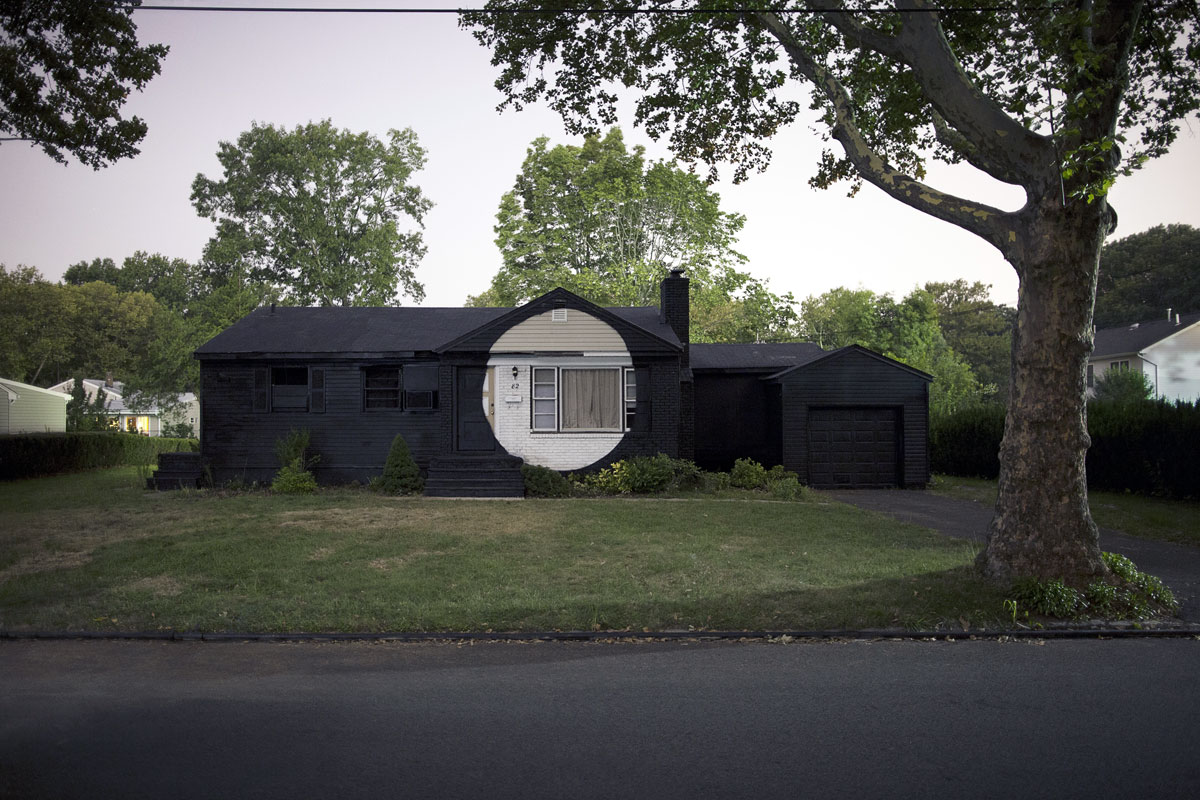
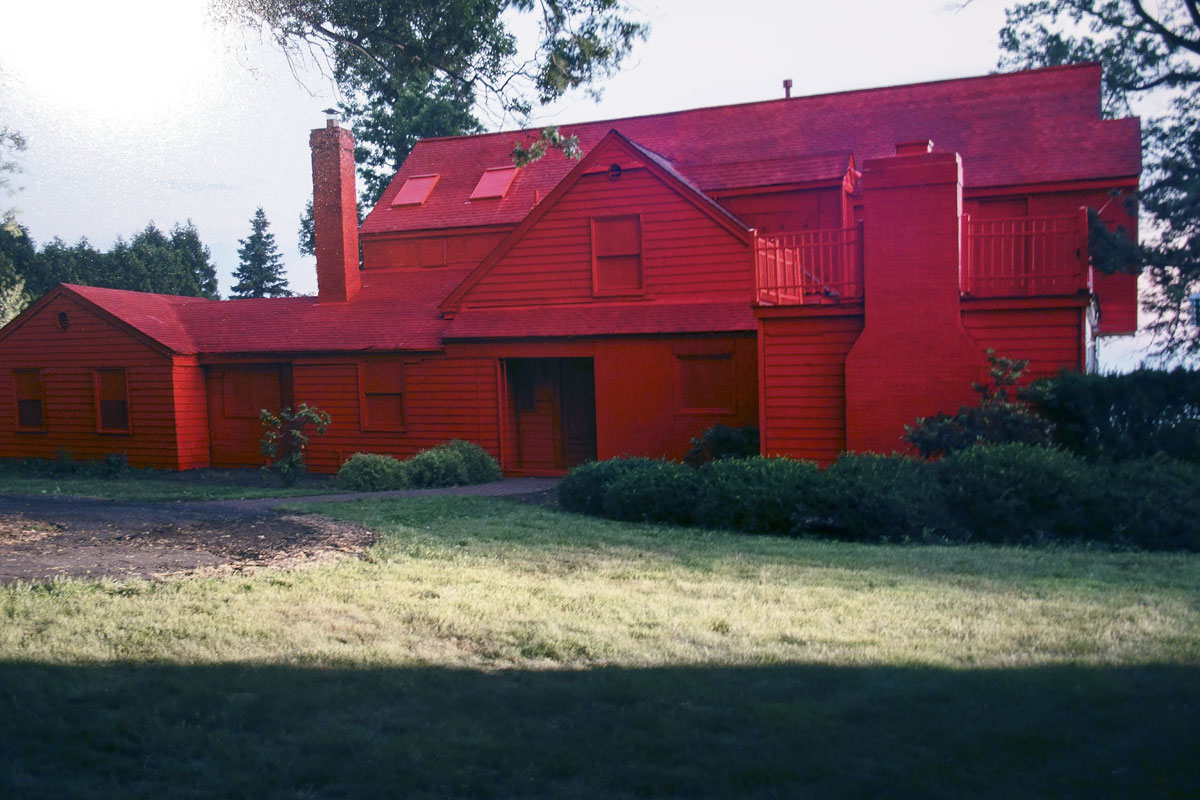
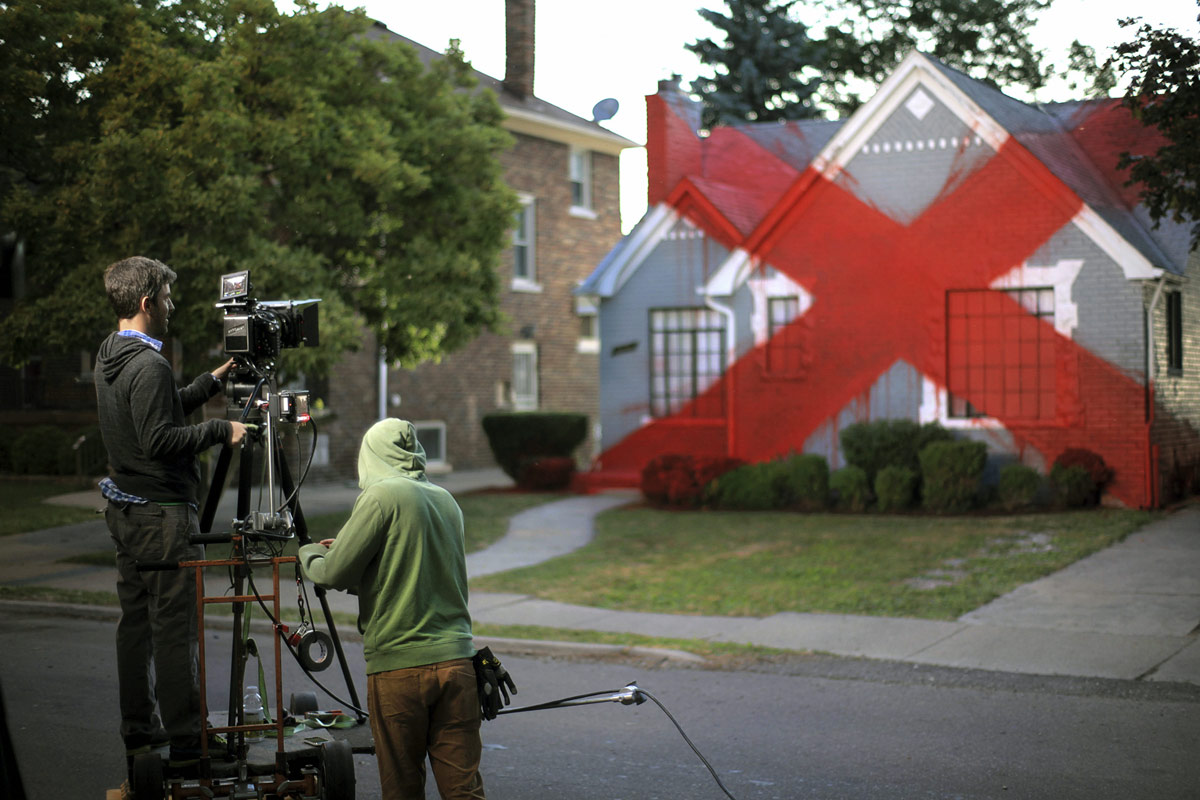
Despite all the years, not to mention money, that have gone into the Crewdson-esque production of this small body of work, what emerges in my mind at least are three interesting and beautiful images (a ying / yang black circle / white circle and a red painted house) and not much else. The three images are outstanding in their psychological excoriation of suburban belonging. Through use of colour and form the images interrogate a sense of home, place, identity and ‘fitting in’ that suburbia promotes, though under the surface there bubbles away the heart of the malcontent (the film American Beauty is a perfect example of this paradigm). In their Zen-like intensity these are incisive, insightful images.

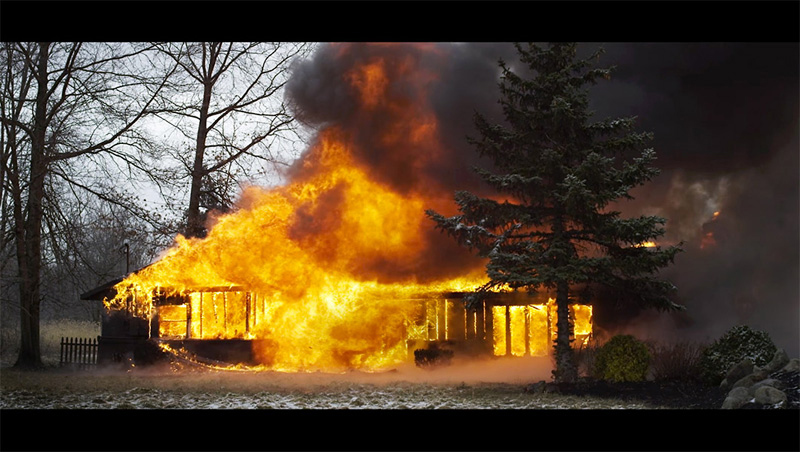
And that’s it. The rest of the exhibition is stocking-filled with a couple more images that don’t really work, a series of stills of a house being set on fire from a film of the same thing. The photos and film of the house being set on fire mean nothing, take me nowhere.* In a word this exhibition is ‘THIN’ to say the least.

While the NGV is to be congratulated for promoting contemporary art, including street art, there has to be at least some basis of depth to an artist’s work, not just the fact that they are”now a noted contemporary artist with a developing international standing.” This is not enough. When you really look at this work it is obvious it needs more matter, more substance.

Like a house of cards its foundation is built on shifting sands, foundations that need time to develop and solidify, thoughts that needed greater time to be delineated and teased out. There is no rush with this kind of investigation and that’s what it feels like here – an interesting idea, painted over, over produced and not fully developed to the point where it becomes unmissable, unmistakable.

Dr Marcus Bunyan

* Look no further than Gregory Crewdson’s Untitled (House Fire) from the series Beneath the Roses (2004), for the use of a burning building to create an interesting narrative about hope and despair in suburbia.


Many thankx to the National Gallery of Victoria for allowing me to publish some of the photographs in the posting. All the installation photographs © Marcus Bunyan. Please click on the photographs for a larger version of the image.


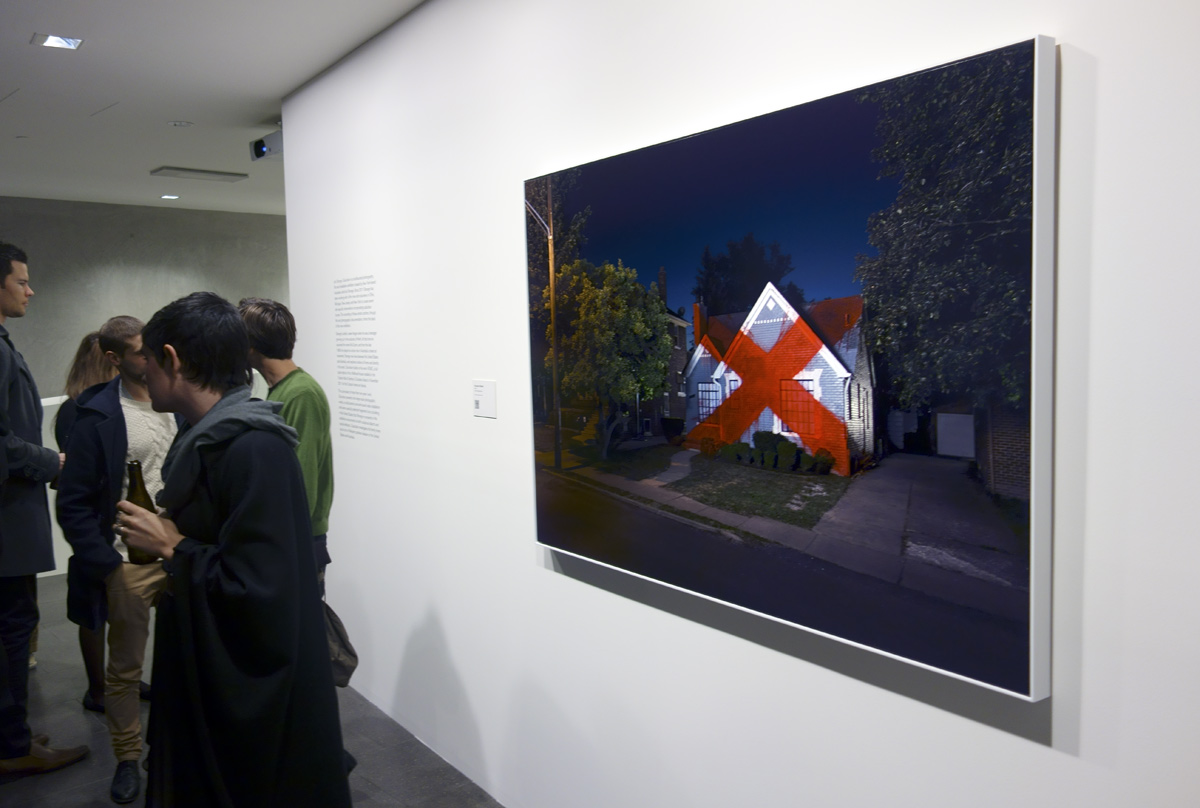
Installation photograph of Ian Strange's 'Corrine Terrace' 2011 taken at the opening of the exhibition © Marcus Bunyan


Installation photograph of Ian Strange’s Corrine Terrace 2011 taken at the opening of the exhibition
Photo: © Marcus Bunyan


Ian Strange (Australian, b. 1982) 'Lake Road' 2012


Ian Strange (Australian, b. 1982)
Lake Road
2012
Archival digital print
© Ian Strange 2013


Ian Strange (Australian, b. 1982) 'Lake Road' 2012 (detail)


Ian Strange (Australian, b. 1982)
Lake Road (detail)
2012
Archival digital print
© Ian Strange 2013


The remarkable work of New York-based Australian artist Ian Strange will take centre stage at NGV Studio from 27 July. Suburban is the culmination of Strange travelling for two and a half years through neighbourhoods in the US. Working on a massive scale across key cities, Strange painted directly on to the surfaces and facades of suburban homes, and in some cases burnt them to the ground, to create a moving statement around Western ideas of home.

These unique interventions staged across the cities of Ohio, Detroit, Alabama, New Jersey, New York and New Hampshire were documented with a film crew and volunteers and will be shared at NGV Studio as part of Strange’s multifaceted photographic, film and installation work.

Cinematic in both tone and scale, Suburban investigates the iconography surrounding the family home and its place in the current economic climate. Through the work, Strange articulates his own conflicted relationship with suburbia he experienced growing up in the Australian suburbs, juxtaposed with living in New York City and the United States. Strange’s exploration of suburban experience articulates a distinctively Australian sensibility to a global audience.

David Hurlston, Curator of Australian Art, NGV, said that Strange was fast becoming recognised, both locally and internationally, for his distinctive practice and, in particular, for this new and unique body of work.

“We are excited to be able to present this ground-breaking exhibition of work by Ian Strange. From his early work as a street artist in Australia he is now a noted contemporary artist with a developing international standing. Strange is one of the most exciting young artists to have emerged from the street art genre in recent times,” Mr Hurlston said.

Suburban considers the status of the family home in the United States and Australia through nine large-scale photographic works and a dramatic multi-channel, surround sound video installation. Carefully selected fragments of the original houses will also be on display in the exhibition as both sculptural objects and social artefacts. Exhibiting artist Ian Strange said that Suburban was a culmination of more than two years’ work.

“This project has been all consuming for the past two and a half years of my life. I wanted to create a body of work that reacted to the icon of the suburban home and to the suburbs as a whole. The suburbs have played an important role in shaping who I am as a person and an artist. The suburbs have always been home, but I have always found suburbia isolating. Suburban is my reaction to that,” Mr Strange said.

Strange’s early artistic career evolved as a teenager growing up in the suburbs of Perth. Here he took on the name Kid-Zoom and from the late 1990s played an active role in Australia’s street art movement. After relocating to New York in 2010 under the mentorship of Ron English, he participated in the now legendary underground exhibition The Underbelly Project, before his first solo exhibition and pop-up show in the Meatpacking district, This City Will Eat Me Alive, which generated critical acclaim and attention from the art world.  Now an internationally recognised artist living between the United States and Australia, Strange has more recently been exploring the notion of home and identity and exhibited in the inaugural Outpost Street Art Festival on Sydney Harbour’s Cockatoo Island with his work Home, a full-scale replication of his childhood house installed in the Turbine Hall.
Press release from the National Gallery of Victoria


Ian Strange (Australian, b. 1982) 'Harvard St' 2012


Ian Strange (Australian, b. 1982)
Harvard St
2012
Archival digital print
Collection of the artist, New York
© Ian Strange


Ian Strange (Australian, b. 1982) 'Harvard St' 2012 (detail)


Ian Strange (Australian, b. 1982)
Harvard St (detail)
2012 
Archival digital print
Collection of the artist, New York
© Ian Strange


Installation photograph of Ian Strange's 'Harvard St' 2012 taken at the opening of the exhibition © Marcus Bunyan


Installation photograph of Ian Strange’s Harvard St 2012 taken at the opening of the exhibition
Photo: © Marcus Bunyan


On location in Detroit, July 2012


On location in Detroit, July 2012
Photo: Jedda Andrews


Graffiti crosses the picket line

Dan Rule

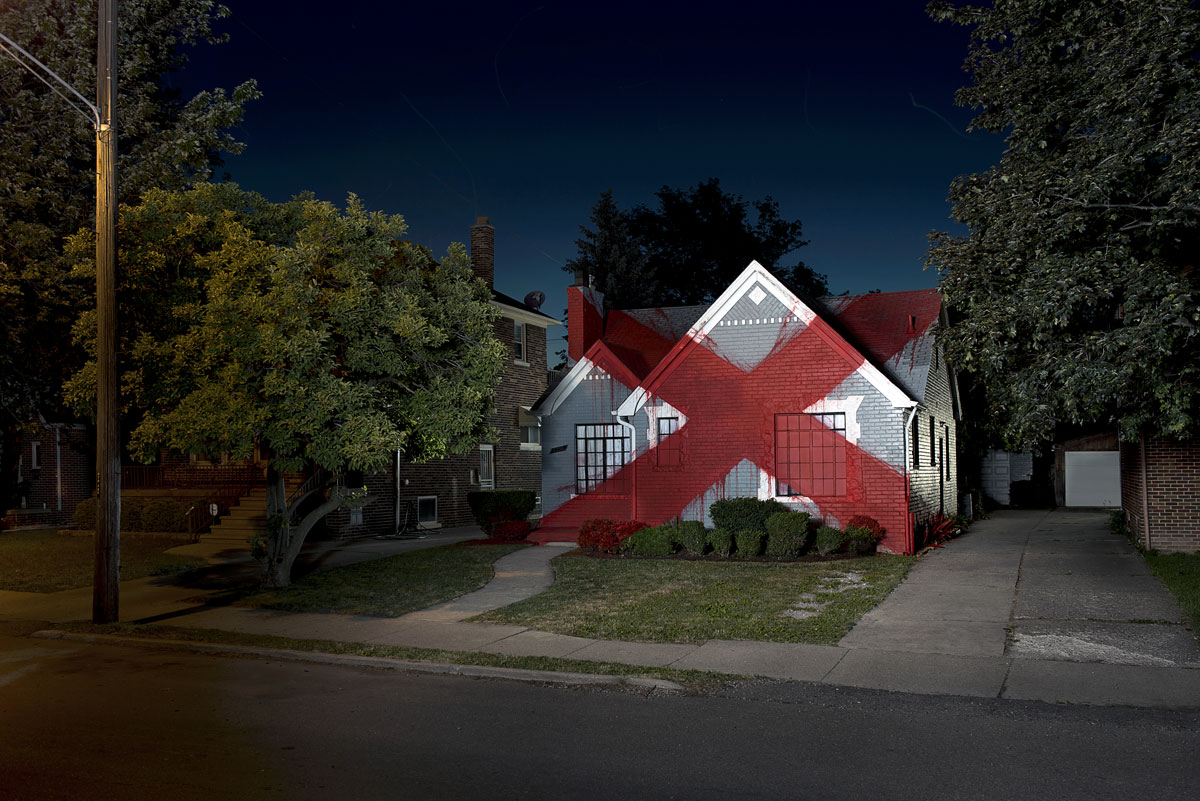
Indeed, the works that populate the exhibition hardly fit the stylised representational or textual archetypes that have come to typify graffiti and street art. In this series, average suburban homes are immersed in monochrome-painted gestures and motifs or, in one case, flames. But while they bear a resemblance to impulse vandalism, their effect is allegorical rather than literal. In one work, a home in a Detroit street bears a bold, blood-red “X”, which could be read as a metaphor for the wave of loan foreclosures and socio-economic turmoil that has supplanted the city’s suburban dream. Another residence is coated in black paint but for an unpainted circular vacuum, a window into the psychological and emotional underpinnings behind the ideal of the weatherboard home on the spacious block.

And that’s precisely the level on which Strange sees the work operating. “There are some very strong political implications for this work … and I definitely acknowledge that,” he says. “But I was really careful not to make works that were just about these broken-down suburbs and this ‘ruin porn’ thing. I know that in Detroit they’re really sensitive about that kind of thing, and we were really aware of keeping this project focused on the idea of being a reaction to the icon of the house in the suburbs, rather than a reaction to some of those socio-economic factors.”

Dan Rule. “Graffiti crosses the picket line,” on The Age website July 20, 2013 [Online] Cited 05/09/2013. Used under fair use conditions for the purposes of education and research


Ian Strange (Australian, b. 1982) Film still from 'SUBURBAN'


Ian Strange (Australian, b. 1982)
Film still from SUBURBAN
© Ian Strange 2013


Installation photograph of Ian Strange film still from 'SUBURBAN' © Marcus Bunyan


Installation photograph of Ian Strange film still from SUBURBAN
Photo: © Marcus Bunyan


Installation photograph of Ian Strange film stills from 'SUBURBAN' © Marcus Bunyan


Installation photograph of Ian Strange film stills from SUBURBAN
Photo: © Marcus Bunyan


NGV Studio
The Ian Potter Centre: NGV Australia, Federation Square

Opening hours:
Daily 10am – 5pm

National Gallery of Victoria website

LIKE ART BLART ON FACEBOOK

Back to top