Exhibition: ‘Garry Winogrand. Women are beautiful’ at Fundació Foto Colectania, Barcelona

Exhibition dates: 23rd February – 4th June 2011


Many thankx to Fundació Foto Colectania for allowing me to publish the photographs in the posting. Please click on the photograph for a larger version of the image.


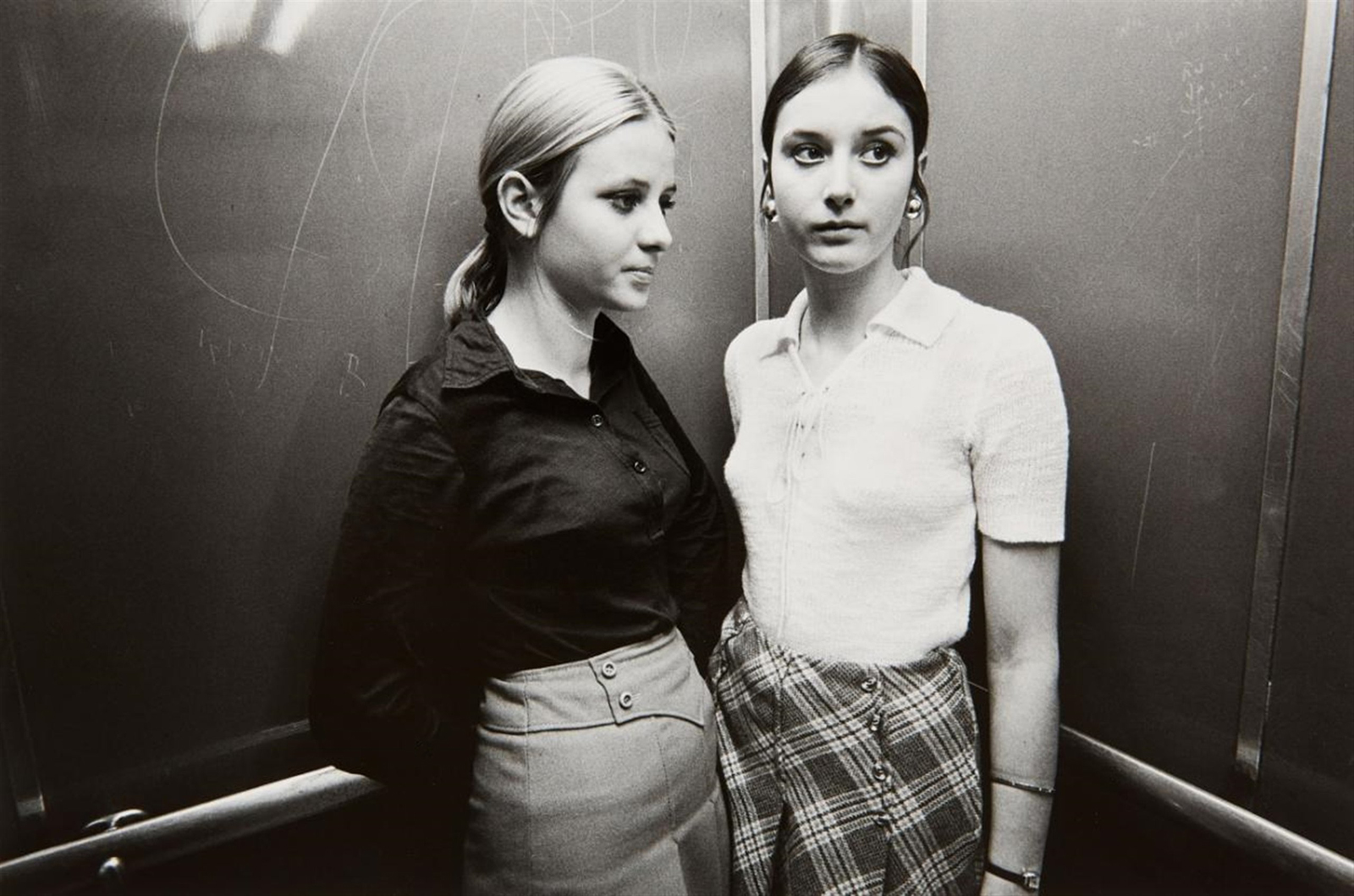
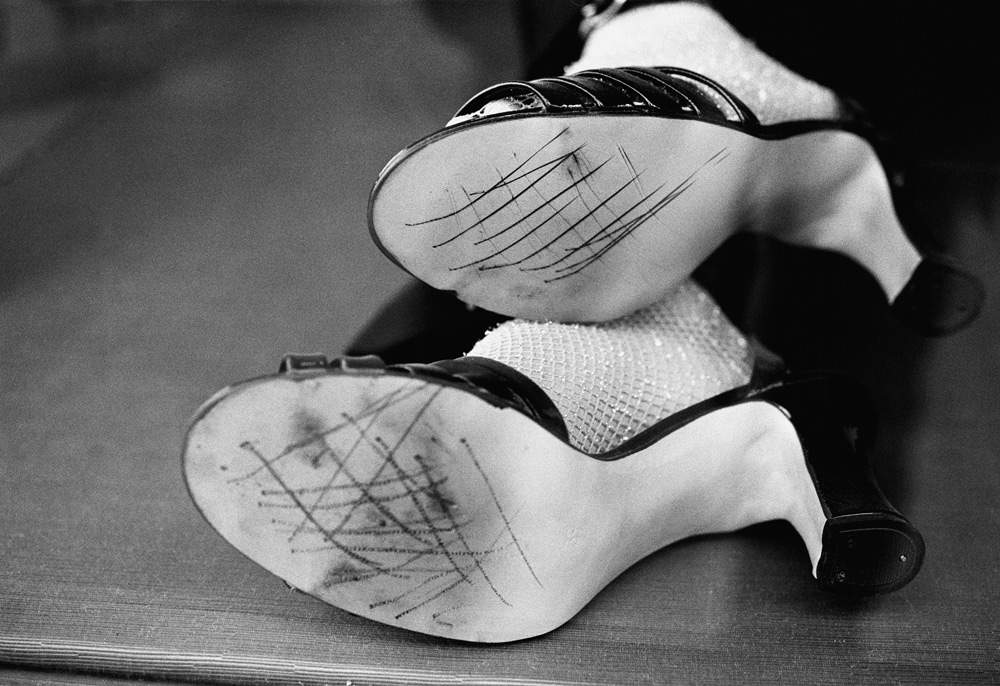
Garry Winogrand (American, 1928-1984) 'Centennial Ball, Metropolitan Museum' New York, 1969


Garry Winogrand (American, 1928-1984)
Centennial Ball, Metropolitan Museum
New York, 1969, printed 1981
Silver gelatin print
22 x 33cm
© The Estate of Garry Winogrand, courtesy Fraenkel Gallery, San Francisco


Garry Winogrand (American, 1928-1984) 'Untitled', New York, 1965


Garry Winogrand (American, 1928-1984)
Untitled
New York, 1965, printed 1981
Silver gelatin print
22 x 33cm
© The Estate of Garry Winogrand, courtesy Fraenkel Gallery, San Francisco


Garry Winogrand (American, 1928-1984) 'Untitled', New York, 1968


Garry Winogrand (American, 1928-1984)
Untitled
New York, 1968, printed 1981
Silver gelatin print
22 x 33cm
© The Estate of Garry Winogrand, courtesy Fraenkel Gallery, San Francisco


Foundation Foto Colectania presents for the first time in Barcelona the famous series Women Are Beautiful by Garry Winogrand.

Garry Winogrand is considered one of the greatest innovators of photography of the twentieth-century in America. He knew like no other how to capture the social transformation of females in the 60’s and 70’s through his portraits of women who stand as an allegory of women’s emancipation and their new role in society. The Foundation Foto Colectania presents his series Women Are Beautiful, including 85 photographs taken between 1960 and 1975 and collected in the book with the same title by the legendary director of photography at the MoMA, John Szarkowski. The exhibition from the collection of Lola Garrido, is part of the programming line of the foundation which is dedicated to authors who changed the course of the history of photography. The exhibition can be seen in Barcelona until June 4, 2011. In the 60’s ended the era of big images as symbols of timeless truths, by the devastating influence first from Walker Evans, and later from Robert Frank and William Klein. The pictures are focused on the reflection of reality, no retouching or other ideas added. Garry Winogrand and Lee Friedlander represent “the new American style” which broke new ground in the so-called Street Photography.

Winogrand combines spontaneity with an apparent confusion, which is more than aware of the complexity of the photography world: “I photograph to see what the world looks like in photographs.” The presence of human beings, contrasting with the crowds and the streets in his photographs reveals a new way of looking, in which the anarchy results in a wealth of shapes and structures. The biased and cold style of Winogrand is associated with Abstract Expressionism and its sharp diagonals are similar to paint brush strokes of those years. If the photographer Robert Frank was critical of the 50’s, Garry Winogrand is one of the largest photographers of the 60’s.

Press release from the Fundació Foto Colectania website


Garry Winogrand (American, 1928-1984) 'World's Fair', New York, 1964


Garry Winogrand (American, 1928-1984)
World’s Fair
New York, 1964, printed 1981
Silver gelatin print
22 x 33cm
© The Estate of Garry Winogrand, courtesy Fraenkel Gallery, San Francisco


Garry Winogrand (American, 1928-1984) 'New York City' 1967, printed 1981


Garry Winogrand (American, 1928-1984)
New York City
1967, printed 1981
Silver gelatin print
22 x 33cm
© The Estate of Garry Winogrand, courtesy Fraenkel Gallery, San Francisco


Garry Winogrand (American, 1928-1984) 'Central Park, New York' 1968, printed 1981


Garry Winogrand (American, 1928-1984)
Central Park, New York
1968, printed 1981
Silver gelatin print
22 x 33cm
© The Estate of Garry Winogrand, courtesy Fraenkel Gallery, San Francisco


Garry Winogrand (American, 1928-1984) 'Untitled' New York, c. 1970, printed 1981


Garry Winogrand (American, 1928-1984)
Untitled
New York, c. 1970, printed 1981
Silver gelatin print
22 x 33cm
© The Estate of Garry Winogrand, courtesy Fraenkel Gallery, San Francisco


Garry Winogrand (American, 1928-1984) 'New York' 1961, printed 1981


Garry Winogrand (American, 1928-1984)
New York
1961, printed 1981
Silver gelatin print
33 x 22cm
© The Estate of Garry Winogrand, courtesy Fraenkel Gallery, San Francisco


Garry Winogrand (American, 1928-1984) 'Untitled', New York, 1969


Garry Winogrand (American, 1928-1984)
Untitled
New York, 1969, printed 1981
Silver gelatin print
33 x 22cm
© The Estate of Garry Winogrand, courtesy Fraenkel Gallery, San Francisco


Garry Winogrand (American, 1928-1984) 'Untitled', New York, 1968


Garry Winogrand (American, 1928-1984)
Untitled
New York, 1968, printed 1981
Silver gelatin print
33 x 22 cm
© The Estate of Garry Winogrand, courtesy Fraenkel Gallery, San Francisco


Fundació Foto Colectania
Julián Romea 6, D2
08006
Barcelona

Opening hours:
Wednesday to Saturday: 11am – 2.30pm and 4pm – 8 pm
Sunday: 11am – 3pm

Fundació Foto Colectania website

LIKE ART BLART ON FACEBOOK

Back to top

Exhibition: ‘When the Curtain Falls: Margarita Broich – Photographs’ at Martin-Gropius-Bau, Berlin

Exhibition dates: 18th March – 30th May 2011


Many thankx to the Martin-Gropius-Bau, Berlin for allowing me to publish the photographs in the posting. Please click on the photographs for a larger version of the image.
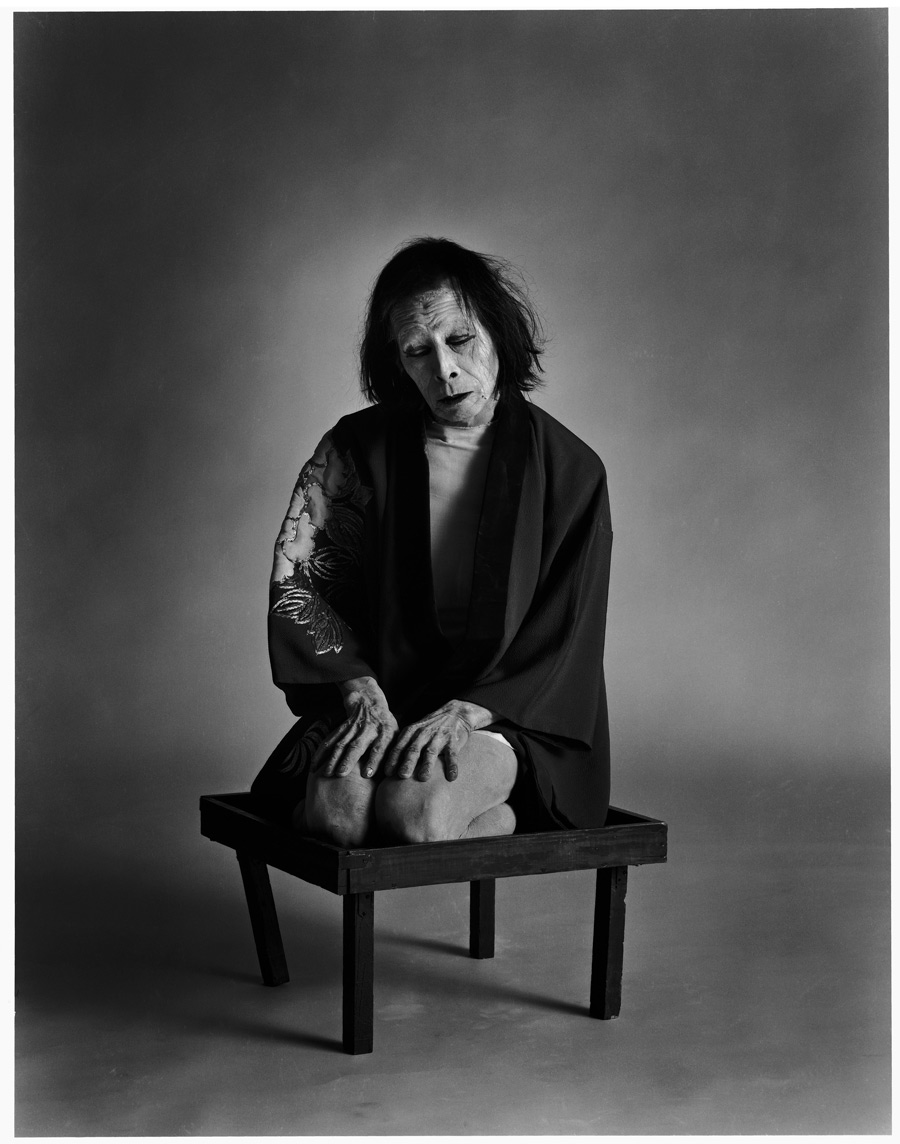
 

Margarita Broich (German, b. 1960) 'Vaginal Davis, Performance, Rising Stars, Falling Stars, Arsenal, Berlin, 13.11.2010' 2010


Margarita Broich (German, b. 1960)
Vaginal Davis
Performance, Rising Stars, Falling Stars, Arsenal, Berlin, 13.11.2010

2010
© Margarita Broich


Margarita Broich (German, b. 1960) 'Martin Wuttke with poodle Taxi, Gretchens Faust, Berliner Ensemble, 11-05-2009' 2009


Margarita Broich (German, b. 1960)
Martin Wuttke with poodle Taxi
Gretchens Faust, Berliner Ensemble, 11.05.2009

2009
© Margarita Broich


Margarita Broich (German, b. 1960) 'Veronica Ferres, Unter Bauern, 1.9.2008' 2008


Margarita Broich (German, b. 1960)
Veronica Ferres
Unter Bauern, 01.09.2008

2008
© Margarita Broich


Margarita Broich (German, b. 1960) 'Melanie and Daniela Reichert, Unter Bauern, 27-08-2008' 2008


Margarita Broich (German, b. 1960)
Melanie and Daniela Reichert
Unter Bauern, 27.08.2008

2008
© Margarita Broich


Margarita Broich (German, b. 1960) 'Rosebud, Volksbühne am Rosa-Luxemburg-Platz, Berlin, 21-12-2001' 2001


Margarita Broich (German, b. 1960)
Margarita Broich
Rosebud, Volksbühne am Rosa-Luxemburg-Platz, Berlin, 21-12-2001

2001
© Margarita Broich


As an actress Margarita Broich is one of the big names, but it may come as a surprise to many that she is also a photographer. For the first time the Martin-Gropius-Bau is showing an exhibition of her work consisting of over 60 portraits of her fellow artists, including Ben Becker, Kate Winslet, Veronika Ferres, Klaus Maria Brandauer, Christoph Schlingensief, Thomas Quasthoff and many more. Margarita Broich has captured those fleeting moments when the actor sheds the role in the intervals or a few minutes after the end of a performance. The role can still be discerned on the features of the players when they are still surrounded by the world of scenery and mirrors but not acting any more. They have been sought out in changing rooms, theatre foyers, or with the make-up artist, taking off their make-up while still surrounded by the tools of their transformation.

Broich portrays the artists with the instinct of a colleague. Her photographs capture famous artists from her circle of acquaintances at those moments when they are returning from the stage after playing their role. However matter-of-fact the situation of the subject may occasionally appear, each photograph has its own charm. The beholder is granted glimpses of scenes that must be among the most intimate in show business: whether they show Martin Wuttke with a blonde, Andy Warhol mane and his poodle, Taxi, smoking a cigarette after a performance of “Gretchens Faust”, or Klaus Maria Brandauer at the end of a 10-hour Wallenstein epic, sitting on a stool with a bottle of beer, the snapshots are full of tension.

Born in Neuwied in 1960, Margarita Broich initially studied photo design in Dortmund and worked as a theatrical photographer at the Bochum Schauspielhaus (Theatre) under Claus Peymann, before studying dramatic art herself at Berlin’s College of Arts. Since then she has appeared in numerous German-language stage performances and television dramas, working with such directors as Claus Peymann, Robert Wilson and, earlier, with Christoph Schlingensief.

Text from the Martin-Gropius-Bau website [Online] Cited 26/05/2011 no longer available online


Margarita Broich (German, b. 1960) 'Kate Winslet, The Reader, 20-04-2008' 2008


Margarita Broich (German, b. 1960)
Kate Winslet
The Reader, 20-04-2008

2008
© Margarita Broich


Margarita Broich (German, b. 1960) 'Klaus Maria Brandauer Wallenstein, Berliner Ensemble in the Preuss-Halle, Berlin, 09-06-2007' 2007


Margarita Broich (German, b. 1960)
Klaus Maria Brandauer
Wallenstein, Berliner Ensemble in the Preuss-Halle, Berlin, 09-06-2007

2007
© Margarita Broich


Margarita Broich (German, b. 1960) 'Ben Becker Jedermann, Salzburger Festspiele, 17-08-2010' 2010


Margarita Broich (German, b. 1960)
Ben Becker
Jedermann, Salzburger Festspiele, 17-08-2010
2010
© Margarita Broich


Martin-Gropius-Bau Berlin
Niederkirchnerstraße 7
Corner Stresemannstr. 110
10963 Berlin
Phone: +49 (0)30 254 86-0

Opening hours:
Wednesday to Monday 10 – 19 hrs
Tuesday closed

Martin-Gropius-Bau website

LIKE ART BLART ON FACEBOOK

Back to top

Exhibition: ‘You Are Here: Architecture and Experience’ at Carnegie Museum of Art, Pittsburgh

Exhibition dates: 5th March – 29th May 2011


Candida Höfer (German, b. 1944) 'Ballettzentrum Hamburg III' 2000


Candida Höfer (German, b. 1944)
Ballettzentrum Hamburg III
2000
Chromogenic print
Courtesy of Sonnabend Gallery


Inspired curating conjoins the monumental, classicist purity of Höfer with the picturesque, dystopian (dis)quietude of Gaillard in an exhibition that investigates our relationship to buildings and their environments and their relationship to us – the ‘i’ in our histor-i-city.

Dr Marcus Bunyan


Many thankx to the Carnegie Museum of Art for allowing me to publish the photographs in the posting. Please click on the photographs for a larger version of the image.


Cyprien Gaillard (French, b. 1980) 'Belief in the Age of Disbelief (L'arbre incliné/étape VI)' 2005


Cyprien Gaillard (French, b. 1980)
Belief in the Age of Disbelief (L’arbre incliné/étape VI)
2005
Etching
36 x 47cm
© Cyprien Gaillard
Courtesy Sprüth Magers Berlin, London


Candida Höfer (German, b. 1944) 'Fundação Bienal de São Paulo XI' 2005


Candida Höfer (German, b. 1944)
Fundação Bienal de São Paulo XI
2005
Chromogenic print
81 3/8 x 71 7/8 in.
Courtesy of Sonnabend Gallery


Carnegie Museum of Art presents the powerful work of two contemporary artists – Candida Höfer and Cyprien Gaillard – who explore architectural environments and how they influence experiences and perceptions of the world.

“We shape our buildings, and afterwards our buildings shape us.” With that simple but profound insight, Winston Churchill conveyed people’s complex relationship to architecture: The physical form of a building is controlled by its designer, but the impact a constructed environment has can be unpredictable, emotional, and even visceral. That dynamic is evident in the upcoming exhibition You Are Here: Architecture and Experience, which brings together the photographs of German artist Candida Höfer and a video and etchings by French artist Cyprien Gaillard. Both artists express the formative power of architecture in different but complementary ways, according to Tracy Myers, curator of architecture at the Heinz Architectural Center and organiser of the exhibition.

Candida Höfer’s lush colour photographs of ornate historical and contemporary interior spaces are usually devoid of humans, yet they reveal details that draw the viewer into a consideration of what each place means. Höfer’s photographs usually focus on spaces of cultural and social activity. Printed very large (from about 4 x 4 feet to a massive 6 x 8 feet), the 17 photographs in You Are Here represent the range of Höfer’s work in terms of scale, point of view, building type, and geographical location.

By contrast, Cyprien Gaillard’s video Desniansky Raion and his meticulously detailed etchings probe the human legacy of Modernist high-rise housing blocks. Constructed after World War II throughout the United States, Europe, and the Eastern Bloc to provide decent housing, these buildings often became warehouses for the poor and incubators of crime and antisocial behaviours.

Named for an administrative district in Kiev, Desniansky Raion poignantly reflects on the gap between the utopian Modernist aspiration for universal housing and the banal reality that instead prevailed. It comprises three parts. In the first section, weekend fight clubs of 50 or 100 people face off against each other in a pugilistic ritual set against the backdrop of housing towers in St. Petersburg, Russia. The second part shows the implosion of a similar tower in Meaux, a small city near Paris; the demolition of the building was treated by the city government as a literal spectacle, with a light show and fireworks preceding the destruction. The final third is a very long panning aerial shot of seemingly endless ranks of virtually identical housing blocks in Kiev, Ukraine. The video is accompanied by a soundtrack composed by Koudlam, a young musician born in the Ivory Coast. Also featured are six etchings by Gaillard, collectively titled Belief in the Age of Disbelief, in which the Modernist housing tower is placed in classic picturesque landscapes.

“Gaillard’s video packs a powerful and direct emotional punch: each time I view it, I experience physically the anticipation that ebbs and flows through the course of the work,” said Myers. “By contrast, Höfer’s photographs embody a kind of quietude that encourages slow, sustained exploration of the meaning that builds through accumulation of detail. But both works are equally affecting and bring the viewer with compelling intensity into the realm of architectural experience. Höfer and Gaillard capture the constant oscillation between what we make of our buildings, and what they make of us.”

Artists’ Biographies

Candida Höfer has been creating photographs for more than 30 years. Born in Eberswalde, Germany, in 1944, she studied with Berndt Becher and is identified with a group of German artists – Thomas Ruff, Andreas Gursky, Axel Hütte, and Thomas Struth – best known for their unsentimental photographs of architecture, landscapes, and urban developments. Höfer has made interiors her focus.

Cyprien Gaillard, born in Paris in 1980 and currently based in Berlin, explores contemporary landscapes and buildings in a variety of media, including video, painting, and etchings. Much of his work is concerned with the legacy and inheritance of buildings and landscapes that are left to us, and the ways in which we interact with them.

Press release from the Carnegie Museum of Art website


Cyprien Gaillard (French, b. 1980) 'Desniansky Raion' video still, 2007


Cyprien Gaillard (French, b. 1980)
Desniansky Raion
2007
Video still
DVD, 30 min.
Edition of 5
© Cyprien Gaillard. Courtesy Sprüth Magers Berlin, London


Cyprien Gaillard – Desniansky Raion, Part 1, 2008

The video takes place in a parking lot of a drab housing complex in St. Petersburg, Russia, where he witness two large groups of men – one mostly wearing red shirts and the other blue – slowly walking towards each other. Set by Gaillard to the hypnotic electronic beats of French composer Koudlam’s I See you All, the video shows the colour-coordinated groups marching in loose formation, reminiscent of ancient armies confronting each other on some distant battlefield. Suddenly, signal flares billowing smoke arc through the air and the two groups come together, clashing in flurry of fists – a breathtaking display of raw physical violence set against the stark backdrop of the housing block. As the sounds of Koudlam’s pulsing music draw louder and more urgent, the furious hand-to-hand combat intensifies while bodies of the fallen lay strewn on the pavement. Before long, the blue faction beats a hasty retreat, only to regroup moments later on one side of a nearby pedestrian bridge. The two sides come together again, this time clashing on the impossibly narrow span of the footbridge. The blue group is once more chased off, and the victors in red erupt in victorious celebration.

Text from the YouTube website


Cyprien Gaillard (French, b. 1980) 'Belief in the Age of Disbelief (Banja Luca)' 2005


Cyprien Gaillard (French, b. 1980)
Belief in the Age of Disbelief (Banja Luca)
2005
Etching
36 x 47cm
© Cyprien Gaillard
Courtesy Sprüth Magers Berlin, London


Candida Höfer (German, b. 1944) 'Pinacoteca Querini Stampalia Venezia I' 2003


Candida Höfer (German, b. 1944)
Pinacoteca Querini Stampalia Venezia I
2003
Chromogenic print
60 15/16 x 73 in
Courtesy of Sonnabend Gallery


Candida Höfer (German, b. 1944) 'Palacio Nacional de Mafra VII' 2006


Candida Höfer (German, b. 1944)
Palacio Nacional de Mafra VII
2006
Chromogenic print
61 x 69 1/8 in
Collection Zibby and Andrew Right, New York


Candida Höfer (German, b. 1944) 'Musee du Louvre Paris XX' 2005


Candida Höfer (German, b. 1944)
Musee du Louvre Paris XX
2005
Chromogenic print
78 3/4 x 95 5/8 in
Courtesy of Sonnabend Gallery


Installation view of the exhibition 'You Are Here: Architecture and Experience' at the Heinz Architectural Center, Carnegie Museum of Art, Pittsburgh

Installation view of the exhibition 'You Are Here: Architecture and Experience' at the Heinz Architectural Center, Carnegie Museum of Art, Pittsburgh

Installation view of the exhibition 'You Are Here: Architecture and Experience' at the Heinz Architectural Center, Carnegie Museum of Art, Pittsburgh


Installation views of the exhibition You Are Here: Architecture and Experience at the Heinz Architectural Center, Carnegie Museum of Art, Pittsburgh


Candida Höfer (German, b. 1944)
'Palacio Real Madrid V' 2000


Candida Höfer (German, b. 1944)
Palacio Real Madrid V
2000
Chromogenic print
47 x 47 in. (119.3 x 119.3cm)


Carnegie Museum of Art
4400 Forbes Avenue
Pittsburgh, PA 15213-4080
Phone: 412.622.3131

Opening hours:
Daily 10am – 5pm

Carnegie Museum of Art website

LIKE ART BLART ON FACEBOOK

Back to top

Exhibition: ‘A Ballad of Love and Death: Pre-Raphaelite Photography in Great Britain, 1848-1875’ at the Musée d’Orsay, Paris

Exhibition dates: 8th March – 29th May 2011


Julia Margaret Cameron – you are one of my heroes!


Many thankx to the Musée d’Orsay for allowing me to publish the photographs in the posting. Please click on the photographs for a larger version of the image.


Henry White (British, 1819-1903) 'Ferns and brambles' 1856


Henry White (British, 1819-1903)
Fougères et ronces (Ferns and brambles)
1856
Albumen print
19.1 x 24.1cm
Collection particulière
© Droits réservés


John Ruskin (English, 1819-1900) 'Fribourg' 1859


John Ruskin (English, 1819-1900)
Fribourg
1859
Pencil, ink, watercolour and gouache on paper
22.5 x 28.7cm
London, The British Museum
© The Trustees of The British Museum. All rights reserved


Frederick Crawley, under the direction of John Ruskin (English, 1819-1900) 'Fribourg, Switzerland, Palm Street and Berne Bridge' about 1854 or 1856


Frederick Crawley, under the direction of John Ruskin (English, 1819-1900)
Fribourg, Suisse, Rue de la Palme et Pont de Berne (Fribourg, Switzerland, Palm Street and Berne Bridge)
about 1854 or 1856
Daguerréotype
11.5 x 15.1cm
Angleterre, Courtesy K. and J. Jacobson
© Droits réservés


Roger Fenton (British, 1819-1869) 'Bolton Abbey' 1854


Roger Fenton (British, 1819-1869)
Bolton Abbey, West window
1854
Albumen print
25.1 x 34.5cm
Bradford, National Media Museum
© National Media Museum, Bradford/Science & Society Picture Library


John William Inchbold (English, 1830-1888) 'La Chapelle de Bolton Abbey' 1853


John William Inchbold (English, 1830-1888)
La Chapelle de Bolton Abbey (The Vault of Bolton Abbey)
1853
Oil on canvas
50 x 68.4cm
Northampton, Museum and Art Gallery
© Northampton, Museum and Art Gallery


Henry Peach Robinson (English, 1830-1901) 'Fading Away' 1858


Henry Peach Robinson (English, 1830-1901)
Fading Away
1858
Albumen print
28.8 x 52.1cm
Bradford, The Royal Photographic Society Collection au National Media Museum.
© National Media Museum, Bradford/Science & Society Picture Library


Henry Peach Robinson (English, 1830-1901) 'She Never Told her Love' 1857


Henry Peach Robinson (English, 1830-1901)
She Never Told her Love
1857
Albumen print
18.6 x 23.3cm
Paris, musée d’Orsay
© Musée d’Orsay (dist. RMN)/Patrice Schmidt


Consumed by the passion of unrequited love, a young woman lies suspended in the dark space of her unrealised dreams in Henry Peach Robinson’s illustration of the Shakespearean verse “She never told her love,/ But let concealment, like a worm i’ the bud,/ Feed on her damask cheek” (Twelfth Night II,iv,111-13). Although this picture was exhibited by Robinson as a discrete work, it also served as a study for the central figure in his most famous photograph, Fading Away, of 1858.

Purportedly showing a young consumptive surrounded by family in her final moments, Fading Away was hotly debated for years. On the one hand, Robinson was criticised for the presumed indelicacy of having invaded the death chamber at the most private of moments. On the other, those who recognised the scene as having been staged and who understood that Robinson had created the picture through combination printing (a technique that utilised several negatives to create a single printed image) accused him of dishonestly using a medium whose chief virtue was its truthfulness.

While addressing the moral and literary themes that Robinson believed crucial if photography were to aspire to high art, this picture makes only restrained use of the cloying sentimentality and showy technical artifice that often characterise this artist’s major exhibition pictures. Perhaps intended to facilitate the process of combination printing, the unnaturally black background serves also to envelop the figure in palpable melancholia.

Text from the Metropolitan Museum of Art website [Online] Cited 27/01/2020


Frederick Pickersgill (English, 1820-1900) 'Sunshine and Shade' 1859


Frederick Pickersgill (English, 1820-1900)
Sunshine and Shade
1859
Albumen print
16.4 x 19.4cm
The Royal Photographic Society Collection at the National Media Museum.
© National Media Museum, Bradford/Science & Society Picture Library


The historian and art critic, John Ruskin, had a great influence in Great Britain not only on the Pre-Raphaelite movement created in 1848, but on the development of early photography in the 1850s. The leading Pre-Raphaelite painters, John Everett Millais, Dante Gabriel Rossetti, Holman Hunt and Ford Madox Brown and their followers, wished to change the pictorial conventions laid down by the Royal Academy, and in order to demonstrate the transformations in modern life, invented a radically new idiom marked by bright colours and clarity of detail.

Pre-Raphaelite painters and photographers frequently made similar choices of subjects, and the photographers, particularly Julia Margaret Cameron, David Wilkie Wynfield and Lewis Carroll, were often had close links with the painters.

When painting landscapes, the Pre-Raphaelite artists answered Ruskin’s call, meticulously observing nature in order to capture every nuance of detail. For their part, photographers, such as Roger Fenton, Henry White, William J. Stillman and Colonel Henry Stuart Wortley, experimented with the new process of wet plate collodion negatives that allowed much greater image detail, and achieved similar effects. Although highly impressed at first by the daguerreotype, which enabled the eye to see tiny, overlooked details, Ruskin was nonetheless still very critical of landscape photography, which could not reproduce the colours of nature and in particular of the sky. This failing also gave rise to a major debate amongst photography critics.

In portraiture, there were clear links between the painted portraits of Watts and Cameron’s photographic portraits. By using special lenses and photographing her models in close-up, Cameron, achieved, with a glass negative, exactly the opposite effect to the clear image advocated by Ruskin, and her work was distinctive for the breadth of relief and contour, as well as the compositions evoking Raphael’s paintings, also a source of inspiration for Watts.

The painter Dante Gabriel Rossetti repeatedly drew and painted Jane Morris, a model with whom he was infatuated, and he asked Robert Parsons to produce a series of photographs, under his personal direction, which captured the fascinating presence of the young woman as effectively as his own paintings.

Just like the Pre-Raphaelite painters, Victorian photographers would turn to religious or historical subjects, finding a shared inspiration in the poems of Dante, Shakespeare and possibly Byron, and above all in the Arthurian legend made popular once more by Lord Tennyson, the poet laureate. From a formal point of view, Millais’ Ophelia, one of his most successful paintings, was a source for Henry Peach Robinson’s photograph, The Lady of Shalott, even though it had a different theme.

Finally, Pre-Raphaelite painters and Victorian photographers both liked to present scenes from modern life with a moralising undertone: hence She Never Told Her Love, a photograph by Robinson that was very successful when exhibited at the Crystal Palace in 1858, William Holman Hunt’s painting, Awakening of Conscience, and Rossetti’s Found, a painting depicting a countryman who comes across his former sweetheart, now a prostitute in the city.

In the 1880s, Pre-Raphaelite painting would be transformed, with artists and writers like William Morris, Burne-Jones, Whistler and Oscar Wilde, into a very different movement concerned only with the cult of beauty and rejecting Ruskin’s concept of art as something moral or useful. British photographers, however, inspired by the Pre-Raphaelites would inspire the Pictorialist movement that flourished in the 1890s, encouraged by the writings of Henry Peach Robinson and Peter Henry Emerson, extolling artistic photography.

Press release from the Musée d’Orsay website


James Sinclair 14th Earl of Caithness (Scottish, 1821-1881) 'Weston Avenue, Warwickshire' c. 1860


James Sinclair 14th Earl of Caithness (Scottish, 1821-1881)
Avenue à Weston, Warwickshire (Weston Avenue, Warwickshire)
c. 1860
Albumen print
23 x 18.3cm
New York, Courtesy George Eastman House Rochester
© Courtesy of George Eastman House, International Museum of Photography and Film


Julia Margaret Cameron (British, 1815-1879) 'The sunflower' 1866-1870


Julia Margaret Cameron (British, 1815-1879)
Le tournesol (The sunflower)
1866-1870
Albumen print
35.2 x 24.3cm
Washington, National Gallery of Art, Fond Paul Mellon
© National Gallery of Art, Washington


John Robert Parsons (Irish, 1826-1909), under the direction of Dante Gabriel Rossetti (English, 1828-1882) 'Jane Morris posing in the house of Rossetti' summer 1865


John Robert Parsons (Irish, 1826-1909), under the direction of Dante Gabriel Rossetti (English, 1828-1882)
Jane Morris posant dans la maison de Rossetti (Jane Morris posing in the house of Rossetti)
Summer 1865
Modern print
22.6 x 17.5cm
London, Victoria and Albert Museum
© V&A Images / Victoria and Albert Museum, London


John Robert Parsons (Irish, 1826-1909) 'Jane Morris posing in the garden of the house of Rossetti' summer 1865


John Robert Parsons (Irish, 1826-1909)
Jane Morris posant dans le jardin de la maison de Rossetti (Jane Morris posing in the garden of the house of Rossetti)
Summer 1865
Albumen print
Private collection
© Tim Hurst Photography


Dante Gabriel Rossetti (English, 1828-1882) 'Jane Morris, the blue silk dress' 1868


Dante Gabriel Rossetti (English, 1828-1882)
Jane Morris, the blue silk dress
1868
Oil on canvas
110.5 x 90.2cm
Londres, The Society of Antiquaries
© Kelmscott Manor Collection, by Permission of the Society of Antiquaries of London


Charles Lutwidge Dodgson (Lewis Caroll) (English, 1832-1898) 'Amy Hughes' 1863


Charles Lutwidge Dodgson (Lewis Caroll) (English, 1832-1898)
Amy Hughes
1863
Austin, The University of Texas, Harry Ransom Center, Gernsheim Collection
© Droits réservés


Julia Margaret Cameron (British, 1815-1879) 'Maud' 1875


Julia Margaret Cameron (British, 1815-1879)
Maud
1875
Charcoal print
30 x 25cm
Paris, musée d’Orsay
© Musée d’Orsay (dist. RMN)/Patrice Schmidt


Sir John Everett Millais (British, 1829-1896) 'A Huguenot, on St. Bartholomew's Day Refusing to Shield Himself from Danger by Wearing the Roman Catholic Badge' 1851-1852


Sir John Everett Millais (British, 1829-1896)
A Huguenot, on St. Bartholomew’s Day Refusing to Shield Himself from Danger by Wearing the Roman Catholic Badge
1851-1852
Oil on canvas
91.4 x 62.2cm
Collection Makins
© The Makins Collection/The Bridgeman Art Library


Sir Edward Burne-Jones (British, 1833-1898) 'Princess Sabra (The King's Daughter)' 1865-1866


Sir Edward Burne-Jones (British, 1833-1898)
Princess Sabra (The King’s Daughter)
1865-1866
Oil on canvas
105 x 61cm
Paris, Musée d’Orsay
© Musée d’Orsay (dist. RMN)/Patrice Schmidt


Julia Margaret Cameron  (British, 1815-1879) 'And Enid Sang' 1874


Julia Margaret Cameron  (British, 1815-1879)
And Enid Sang
1874
Print on albumen paper, collodion glass negative, laminated on cardboard
35 x 28cm
Paris, Musée d’Orsay
© Musée d’Orsay (dist. RMN)


Musée d’Orsay
62, rue de Lille
75343 Paris Cedex 07
France

Opening hours:
Tuesday – Sunday 9.30am – 6pm
Thursdays 9.30am – 9.45pm
Closed on Mondays

Musée d’Orsay website

LIKE ART BLART ON FACEBOOK

Back to top

Exhibition: ‘Kurt Kranz: Programming of Beauty’ at the Bauhaus Dessau, Berlin

Exhibition marking the 100th birthday of Kurt Kranz
19th November 2010 – 29th May 2011


Kurt Kranz (German, 1910-1997) 'Perspective' 1931


Kurt Kranz (German, 1910-1997)
Perspective
1931
Ingrid Kranz / Stiftung Bauhaus Dessau
Foto: Lars Lohrisch / Abdruck mit Genehmigung der Kunsthalle


One of the great pleasures of publishing this archive is that I get to research the life of an artist whose work I never knew before. Kurt Kranz is one such artist.

Dr Marcus Bunyan


Many thankx to the the Bauhaus Dessau for allowing me to publish the photographs in the posting. Please click on the photograph for a larger version of the image.


Kurt Kranz (German, 1910-1997) 'Vereinsamung' Dessau 1930


Kurt Kranz (German, 1910-1997)
Vereinsamung (Isolation)
Dessau
1930
Ingrid Kranz / Stiftung Bauhaus Dessau
Leihgeber: Kunsthalle Bremen


Installation photograph of 'Programming of Beauty' by Kurt Kranz at the Bauhaus Dessau


Installation photograph of Programming of Beauty by Kurt Kranz at the Bauhaus Dessau


Kurt Kranz (German, 1910-1997) 'Versinkende' (Sinking one) 1931


Kurt Kranz (German, 1910-1997)
Versinkende (Sinking one)
1931
Ingrid Kranz / Stiftung Bauhaus Dessau


Kurt Kranz (German, 1910-1997) 'Persischer Garten' (Persian garden) 1970


Kurt Kranz (German, 1910-1997)
Persischer Garten (Persian garden)
1970
Ingrid Kranz / Stiftung Bauhaus Dessau
Foto: Uwe Jacobshagen


The Bauhaus Dessau dedicates a comprehensive exhibition to the painter, graphic designer and photographer Kurt Kranz to mark his 100th birthday. In 1930, the then twenty-year-old lithographer came from Bielefeld to study at the Bauhaus Dessau, where he soon established himself as a pioneer of serial and generative methods. With his avant-garde work, Kranz’s methods anticipated those of later generations.

Inspired by a lecture by László Moholy-Nagy, Kurt Kranz came to the Bauhaus Dessau in April 1930. In Walter Peterhans’s photography class, Kranz began to experiment with photographic techniques and created some of the most striking abstract picture series to emerge from the Bauhaus. Alienated and abstracted faces and hands appear repeatedly in his dynamic picture series. These show Kranz’s early affinity for film as, page for page, the abstract forms interact with one another. Kranz drafted his first concepts for abstract films at the Bauhaus, although he was first able to realise these decades later in 1972.

The exhibition to mark the artist’s 100th birthday shows works from Kranz’s Bauhaus years and his later work as an advertising graphic designer, and focuses on a selection of his large picture cycles. Strikingly diverse leporellos dating from the 1960s onwards take centre stage, as do the so-called “Matrix-und Schiebebilder”

Text from the Bauhaus Dessau website


Kurt Kranz (German, 1910-1997) 'Selbstporträt en face (objektives Foto)' (Self-portrait with face (objective photo)) 1931


Kurt Kranz (German, 1910-1997)
Selbstporträt en face (objektives Foto) (Self-portrait with face (objective photo))
1931
Ingrid Kranz / Stiftung Bauhaus Dessau


Kurt Kranz (German, 1910-1997) 'Rasterfoto' (Raster photograph) 1932


Kurt Kranz (German, 1910-1997)
Rasterfoto (Raster photograph)
1932
Ingrid Kranz / Stiftung Bauhaus Dessau


Kurt Kranz (German, 1910-1997) 'Schwarz : Weiß' (Black: White) 1928-29


Kurt Kranz (German, 1910-1997)
Schwarz: Weiß (Black: White)
1928-1929
Ingrid Kranz / Stiftung Bauhaus Dessau
Privatbesitz


Kurt Kranz (German, 1910-1997) 'Schwarz : Weiß' (Black: White) 1928-29


Kurt Kranz (German, 1910-1997)
Schwarz: Weiß (Black: White)
1928-1929
Ingrid Kranz / Stiftung Bauhaus Dessau
Privatbesitz


Kurt Kranz (German, 1910-1997) 'Schwarz : Weiß' (Black: White) 1928-29


Kurt Kranz (German, 1910-1997)
Schwarz: Weiß (Black: White)
1928-1929
Ingrid Kranz / Stiftung Bauhaus Dessau
Privatbesitz


Kurt Kranz (German, 1910-1997) 'Schrift Entwurf aus Satzmaterial' (Writing draft from sentence material) Dessau 1931


Kurt Kranz (German, 1910-1997)
Schrift Entwurf aus Satzmaterial (Writing draft from sentence material)
Dessau
1931
Ingrid Kranz / Stiftung Bauhaus Dessau


Kurt Kranz (German, 1910-1997) Aus der Serie "Sieben Schritte zum symmetrischen Oval"' (From the series "Seven steps to the symmetrical Oval") 1982
 

Kurt Kranz (German, 1910-1997)
Aus der Serie “Sieben Schritte zum symmetrischen Oval” (From the series “Seven steps to the symmetrical Oval”)
1982
Ingrid Kranz / Stiftung Bauhaus Dessau
Foto: Uwe Jacobshagen


Kurt Kranz (German, 1910-1997) 'Augenreihe' (Eye rows) 1931


Kurt Kranz (German, 1910-1997)
Augenreihe (Eye rows)
1931 (montiert 1981) (1931 (1981 install))
Ingrid Kranz / Stiftung Bauhaus Dessau
Leihgeber: Kunsthalle Bremen


Kurt Kranz (German, 1910-1997) 'Mund-Reihen' (Mouth rows) 1931


Kurt Kranz (German, 1910-1997)
Mund-Reihen (Mouth rows)
1931
Ingrid Kranz / Stiftung Bauhaus Dessau
Leihgeber: Kunsthalle Bremen
Foto: Ingrid Kranz, Wedel


Bauhaus Dessau
Gropiusalle 38, Dessau, Germany

Opening hours:
Tue – Sun 10am – 6pm

Bauhaus Dessau website

LIKE ART BLART ON FACEBOOK

Back to top

Exhibition: ‘Jeanloup Sieff’ at Moderna Museet, Stockholm

Exhibition dates: 19th February – 22nd May 2011

Curator: Anna Tellgren


Many thankx to the Moderna Museet for allowing me to publish the photographs in the posting. Please click on the photographs for a larger version of the image.


Jeanloup Sieff (French, 1933-2000)
'Ballet, Paris Opera, 1960' 1960


Jeanloup Sieff (French, 1933-2000)
Ballet, Paris Opera, 1960
1960
Gelatin silver print
© The Estate of Jeanloup Sieff, Paris


Jeanloup Sieff (French, 1933-2000)
'Carolyn Carlson, Paris, 1974' 1974


Jeanloup Sieff (French, 1933-2000)
Carolyn Carlson, Paris, 1974
1974
Gelatin silver print
© The Estate of Jeanloup Sieff, Paris


Jeanloup Sieff (French, 1933-2000)
'Yves Saint Laurent, Paris, 1971' 1971


Jeanloup Sieff (French, 1933-2000)
Yves Saint Laurent, Paris, 1971
1971
Gelatin silver print
© The Estate of Jeanloup Sieff, Paris


Jeanloup Sieff (French, 1933-2000)
'Catherine Deneuve, dress Yves Saint Laurent, Paris, 'Vogue Italia''
1969


Jeanloup Sieff (French, 1933-2000)
Catherine Deneuve, dress Yves Saint Laurent, Paris, ‘Vogue Italia’
1969
Gelatin silver print
© The Estate of Jeanloup Sieff, Paris


Jeanloup Sieff (French, 1933-2000)
'Ma Fille Sonia, Paris' 1985


Jeanloup Sieff (French, 1933-2000)
Ma Fille Sonia, Paris
1985
Gelatin silver print
© The Estate of Jeanloup Sieff, Paris


The French photographer Jeanloup Sieff (1933-2000) is a legend in fashion photography and one of the most prominent photographers of his generation. Opening on 19 February, Moderna Museet in Stockholm presents the first Nordic solo exhibition of Jeanloup Sieff.

Jeanloup Sieff began photographing in the early 1950s, as a contemporary of Helmut Newton and David Bailey, belonging to the generation succeeding Irving Penn. In the course of a long career, his photography spanned from fashion, advertising and portraits to reportage and landscapes. His images are often sensual and elegant, and in the 1960s he was much in demand as a fashion photographer, especially in the USA, where he lived for some years in New York. As a respected fashion photographer, Sieff had assignments for magazines such as Elle, Harper’s Bazaar, Vogue, Esquire, Glamour and Jardin des Modes. Sieff also engaged in commercial photography, including promotion campaigns for Chanel and Revlon and the first Yves Saint Laurent fragrance.

“In his fashion and advertising photographs the models are characteristically close to the pictorial surface, an effect achieved by using a wide-angle lens. His working method was based on physical and emotional closeness. This lack of distance makes his images exciting and visually interesting,” says Anna Tellgren, curator.

In the course of his career, Jeanloup Sieff took several now classic portraits of prominent fashion icons, including Yves Saint Laurent, Karl Lagerfeld and Jane Birkin. French cultural celebrities such as François Truffaut, Catherine Deneuve and Serge Gainsbourg have also been portrayed by Sieff. Several of these portraits will be featured in the exhibition at Moderna Museet. Jeanloup Sieff was deeply fascinated by dance, another of his frequent subjects. He got to know Rudolf Nureyev just after he had defected to the West, and collaborated with the American dancer and choreographer Carolyn Carlson. The exhibition at Moderna Museet presents a selection of 53 pictures from Sieff’s photographic oeuvre, with an emphasis on his dance photography.

“He was interested in the dancers as artists, and the actual struggle during rehearsal to get their bodies to perform more or less impossible movements. His dance photographs are fascinating because they really convey the smell of sweat and the shuffling sound of dance shoes, which is exactly what he was after,” Anna Tellgren, the curator of the exhibition, commented.

Text from the Moderna Museet website


Jeanloup Sieff (French, 1933-2000) 'Claire Motte, Paris' 1960


Jeanloup Sieff (French, 1933-2000)
Claire Motte, Paris
1960
Gelatin silver print
© The Estate of Jeanloup Sieff, Paris


Jeanloup Sieff (French, 1933-2000) 'Larrio Exon, Paris' 1976


Jeanloup Sieff (French, 1933-2000)
Larrio Exon, Paris
1976
Gelatin silver print
© The Estate of Jeanloup Sieff, Paris


Jeanloup Sieff (French, 1933-2000) 'Harper’s Bazaar, Palm Beach' 1964


Jeanloup Sieff (French, 1933-2000)
Harper’s Bazaar, Palm Beach
1964
Gelatin silver print
© The Estate of Jeanloup Sieff, Paris


Jeanloup Sieff (French, 1933-2000) 'East Hampton in Winter' 1965


Jeanloup Sieff (French, 1933-2000)
East Hampton in Winter
1965
Gelatin silver print
© The Estate of Jeanloup Sieff, Paris


Jeanloup Sieff (French, 1933-2000) 'Autoportrait, Paris' 1978


Jeanloup Sieff (French, 1933-2000)
Autoportrait, Paris
1978
Gelatin silver print
© The Estate of Jeanloup Sieff, Paris


Jeanloup Sieff (French, 1933-2000)
'Opéra de Paris, 1988' 1988


Jeanloup Sieff (French, 1933-2000)
Opéra de Paris, 1988
1988
Gelatin silver print
© The Estate of Jeanloup Sieff, Paris


Jeanloup Sieff (French, 1933-2000)
'La Maison Noire' 1965


Jeanloup Sieff (French, 1933-2000)
La Maison Noire
1965
Gelatin silver print
© The Estate of Jeanloup Sieff, Paris


Jeanloup Sieff (French, 1933-2000)
'Judy, New York, 1965' 1965


Jeanloup Sieff (French, 1933-2000)
Judy, New York, 1965
1965
Gelatin silver print
© The Estate of Jeanloup Sieff, Paris


Jeanloup Sieff (French, 1933-2000)
'Yves Saint-Laurent, Vogue Italie' 1969


Jeanloup Sieff (French, 1933-2000)
Yves Saint-Laurent, Vogue Italie
1969
Gelatin silver print
15 7/10 × 11 4/5 in (40 × 30cm)
© The Estate of Jeanloup Sieff, Paris


Jeanloup Sieff (French, 1933-2000)
'Harper's Bazaar, Hollywood, 1962' 1962


Jeanloup Sieff (French, 1933-2000)
Harper’s Bazaar, Hollywood, 1962
1962
Gelatin silver print
© The Estate of Jeanloup Sieff, Paris


Moderna Museet, Stockholm

Moderna Museet is ten minutes away from Kungsträdgården, and twenty minutes from T-Centralen or Gamla Stan. Walk past Grand Hotel and Nationalmuseum on Blasieholmen, opposite the Royal Palace. After crossing the bridge to Skeppsholmen, continue up the hill. The entrance to Moderna Museet and Arkitekturmuseet is on the left-hand side.

Opening hours:
Tuesday and Friday 10 – 20
Wednesday, Thursday, Saturday and Sunday 10 – 18
Monday closed

Moderna Museet website

LIKE ART BLART ON FACEBOOK

Back to top

Exhibition: ‘Gilbert & George: Jack Freak Pictures’ at Deichtorhallen Hamburg

Exhibition dates: 25th February – 22nd May 2011


Gilbert & George standing in front of ‘Metal Jack’ (2008) from the series ‘Jack Freak Pictures’ on show at Deichtorhallen Hamburg


Gilbert & George standing in front of Metal Jack (2008) from the series Jack Freak Pictures on show at Deichtorhallen Hamburg
Photo: Fred Dott © Deichtorhallen Hamburg/Fred Dott


“We are unhealthy, middle-aged, dirty-minded, depressed, cynical, empty, tired-brained, seedy, rotten, dreaming, badly-behaved, ill-mannered, arrogant, intellectual, self-pitying, honest, successful, hard-working, thoughtful, artistic, religious, fascistic, blood-thirsty, teasing, destructive, ambitious, colourful, damned, stubborn, perverted and good. We are artists.”


Gilbert & George, 1980


More from the Jack Freak picture show!

Marcus


Many thankx to Deichtorhallen Hamburg for allowing me to publish the photographs in the posting. Please click on the photographs for a larger version of the image.


Installation view of ‘Jack Freak Pictures’ by Gilbert & George at Deichtorhallen Hamburg

Installation view of ‘Jack Freak Pictures’ by Gilbert & George at Deichtorhallen Hamburg


Installation views of Jack Freak Pictures by Gilbert & George at Deichtorhallen Hamburg
Photos: Fred Dott © Deichtorhallen Hamburg/Fred Dott


According to the writer Michael Bracewell, “the Jack Freak Pictures are among the most iconic, philosophically astute and visually violent works that Gilbert & George have ever created.” The dominant pictorial element is the Union Jack, itself an internationally familiar, abstract, geometric pattern and a socially and politically charged symbol whose significance spans the cultural spectrum from contemporary fashion to aggressive national pride. Equally prominent, and linking the Jack Freak Pictures to almost every work previously created by the artists, are Gilbert & George themselves in a variety of guises: dancing, gurning, howling, watching, waiting. Sometimes their bodies seem complete; other times they have been fragmented or contorted. Invariably they feature as both subject and object, artwork and artist; they are players in the epic and complex pictorial drama they have created.

Set in the East End of London where Gilbert & George have lived and worked for over forty years, the Jack Freak Pictures bring numerous aspects of the modern world to life. Medals, flags, maps, street-signs, graffiti and other less immediately obvious motifs jostle for attention with the brickwork, buildings and even foliage of the contemporary urban environment in works that are densely layered and complexly nuanced to evoke (and sometimes conflate) a sense of past, present and future. They raise fundamental and rudimentary questions about religion, identity, politics, economics, sexuality and death. The Jack Freak Pictures reaffirm Gilbert & George’s status as pre-eminent Modernists and underline Robert Rosenblum’s observation that “of the singularity of their duality in life as art, there is little doubt.” Michael Bracewell’s view that they are “visionary artists in the lineage of William Blake” rings truer now than ever before.

Text from the White Cube website [Online] Cited 12/05/2011 no longer available online


Gilbert & George. ‘Christian England’ from the series ‘Jack Freak Pictures’ 2008


Gilbert & George
Christian England from the series Jack Freak Pictures
2008
254 x 528 cm
© Gilbert & George


Gilbert & George. ‘Frigidarium’ from the series ‘Jack Freak Pictures’ 2008


Gilbert & George (British)
Frigidarium from the series Jack Freak Pictures
2008
381 x 604cm
© Gilbert & George


Gilbert & George. ‘Street Party’ from the series ‘Jack Freak Pictures’ 2008


Gilbert & George (British)
Street Party from the series Jack Freak Pictures
2008
381 x 604cm
© Gilbert & George


With its major spring show, Deichtorhallen Hamburg is once again bringing stars of the international art world to Hamburg. Gilbert & George (born 1943 and 1942) have long since been acknowledged icons of contemporary art.

The exhibition will present the latest, wide-ranging group of pictures they have ever created. Called the “Jack Freak Pictures”. They will be on display in the cathedral-like setting of the large Deichtorhalle from February 25 to May 22, 2011 for the first time more or less in its entirety – some 120 pictures will be on view.

Gilbert & George’s large-format pictures present decidedly sacred and secular themes. In this case, Gilbert & George have created a group around the British national symbol, the Union Jack, with all its different connotations, from symbol of national pride through to the cult symbol of the British Pop Music world and countercultures. Surrounded by medals and amulets, the streets of London and the red, blue and white design of the British flag, as in their previous art here Gilbert & George are not only the creators of their own world of images, but also act as protagonists in it.

The “Jack Freak Pictures” are among the most symbolic, philosophically most elaborate and visually striking art Gilbert & George have ever created. Within Gilbert & George’s oeuvre as a whole they constitute the powerful concentration of the themes and emotions that the artists have now been exploring in their art for more than 40 years. In these pictures, the artists play the roles of both victim and monster, puppets of a cosmic revue, sleepless guardians of empty big-city streets and crazy-looking talking heads, as Michael Bracewell outlines in his essay in the exhibition catalog. The large pictures, do not address the individual constitution of the two artists but instead point up states of human existence and can be read as a description of the modern world from the artists’ point of view.

The exhibition is being organised by Deichtorhallen Hamburg and the British Council and will move on from Hamburg, albeit it on a smaller scale, to Lentos Kunstmuseum, Linz, Austria. Hatje Cantz Verlag has brought out a catalog with an essay by Michael Bracewell and colour illustrations of all 153 works in the series.

Text from the Deichtorhallen Hamburg website


Gilbert & George. ‘War Dance’ from the series ‘Jack Freak Pictures’ 2008


Gilbert & George (British)
War Dance from the series Jack Freak Pictures
2008
151 x 190cm
© Gilbert & George


Gilbert & George. ‘Britainers’ from the series ‘Jack Freak Pictures’ 2008


Gilbert & George (British)
Britainers from the series Jack Freak Pictures
2008
254 x 302cm
© Gilbert & George


Gilbert & George. ‘Stuff Religion’ from the series ‘Jack Freak Pictures’ 2008


Gilbert & George (British)
Stuff Religion from the series Jack Freak Pictures
2008
317 x 302cm
© Gilbert & George


Gilbert & George. ‘Union Dance’ from the series ‘Jack Freak Pictures’ 2008


Gilbert & George (British)
Union Dance from the series Jack Freak Pictures
2008
© Gilbert & George


Gilbert & George. ‘Brits’ from the series ‘Jack Freak Pictures’ 2008


Gilbert & George (British)
Brits from the series Jack Freak Pictures
2008
226 x 190cm
© Gilbert & George


Deichtorhallen Hamburg
Deichtorstrasse 1-2
20095 HAMBURG
Phone: +49 (0)40 32103-0

Opening hours:
Tuesday – Sunday 11am – 6pm
Closed on Mondays

Deichtorhallen Hamburg website

LIKE ART BLART ON FACEBOOK

Back to top

Marcus Bunyan black and white archive: ‘The Regent Theatre’ series 1991

May 2011


After undertaking an Issues in Art Conservation subject for my Master of Art Curatorship at the University of Melbourne I have become more aware of the fragility of my black and white fibre-based prints and negatives. I have therefore decided to scan my medium format negatives (taken on my trusty Mamiya RZ67) and made during the years 1991-1997, to preserve them in the form of an online archive as a process of active memory, so that the images are not lost forever.

These photographs were images of my life and imagination at the time of their making, the ideas I was thinking about and the people that surrounded me. As such they form part of life – of Melbourne, of Australia and of humanity in general. The preservation of such moments in time are vital to the continuing enrichment of culture. See more of my early black and white photographs on the Marcus Bunyan black and white archive 1991-1997 page.

All images © Marcus Bunyan. Please click on the photographs for a larger version of the image.

Photographs are available from this series for purchase. As a guide, a vintage 8″ x 10″ silver gelatin print costs $700 plus tracked and insured shipping. For more information please see my store web page.


1991

The Regent Theatre series

The photographs of the dilapidated Regent Theatre in Collins Street, Melbourne were taken with the permission of the National Trust after the theatre had been closed for 21 years on an open day when the theatre was open to the public. The series formed part of my first solo exhibition Of Magic, Music and Myth held in 1991 at a hairdressing salon in High Street, Prahran, Melbourne. All photographs © Marcus Bunyan.


Marcus Bunyan (Australian, b. 1958) 'Untitled' from 'The Regent Theatre' series 1991


Marcus Bunyan (Australian, b. 1958)
Untitled from The Regent Theatre series
1991
Vintage gelatin silver print
© Marcus Bunyan


Marcus Bunyan (Australian, b. 1958)
'Arts' from 'The Regent Theatre' series 1991


Marcus Bunyan (Australian, b. 1958)
Arts from The Regent Theatre series
1991
Vintage gelatin silver print
© Marcus Bunyan


Marcus Bunyan (Australian, b. 1958) 'Untitled' from 'The Regent Theatre' series 1991


Marcus Bunyan (Australian, b. 1958)
Untitled from The Regent Theatre series
1991
Vintage gelatin silver print
© Marcus Bunyan


Marcus Bunyan (Australian, b. 1958) 'Untitled' from 'The Regent Theatre' series 1991


Marcus Bunyan (Australian, b. 1958)
Untitled from The Regent Theatre series
1991
Vintage gelatin silver print
© Marcus Bunyan


Marcus Bunyan (Australian, b. 1958) 'Untitled' from 'The Regent Theatre' series 1991


Marcus Bunyan (Australian, b. 1958)
Untitled from The Regent Theatre series
1991
Vintage gelatin silver print
© Marcus Bunyan


Marcus Bunyan (Australian, b. 1958) 'Coronation' from 'The Regent Theatre' series 1991


Marcus Bunyan (Australian, b. 1958)
Coronation from The Regent Theatre series
1991
Vintage gelatin silver print
© Marcus Bunyan


Marcus Bunyan (Australian, b. 1958) 'Exit' from 'The Regent Theatre' series 1991


Marcus Bunyan (Australian, b. 1958)
Exit from The Regent Theatre series
1991
Vintage gelatin silver print
© Marcus Bunyan


Marcus Bunyan (Australian, b. 1958) 'Music and Light' from 'The Regent Theatre' series 1991


Marcus Bunyan (Australian, b. 1958)
Music and Light from The Regent Theatre series
1991
Vintage gelatin silver print
© Marcus Bunyan


Marcus Bunyan (Australian, b. 1958) 'Music' from 'The Regent Theatre' series 1991


Marcus Bunyan (Australian, b. 1958)
Music from The Regent Theatre series
1991
Vintage gelatin silver print
© Marcus Bunyan


Marcus Bunyan (Australian, b. 1958) 'Nocturne' from 'The Regent Theatre' series 1991


Marcus Bunyan (Australian, b. 1958)
Nocturne from The Regent Theatre series
1991
Vintage gelatin silver print
© Marcus Bunyan


Marcus Bunyan (Australian, b. 1958) 'Untitled' from 'The Regent Theatre' series 1991


Marcus Bunyan (Australian, b. 1958)
Untitled from The Regent Theatre series
1991
Vintage gelatin silver print
© Marcus Bunyan


Marcus Bunyan (Australian, b. 1958) 'Untitled' from 'The Regent Theatre' series 1991


Marcus Bunyan (Australian, b. 1958)
Untitled from The Regent Theatre series
1991
Vintage gelatin silver print
© Marcus Bunyan


Marcus Bunyan (Australian, b. 1958) 'Six-coned speaker with pillars' from 'The Regent Theatre' series 1991


Marcus Bunyan (Australian, b. 1958)
Six-coned speaker with pillars from The Regent Theatre series
1991
Vintage gelatin silver print
© Marcus Bunyan


Marcus Bunyan (Australian, b. 1958) 'Stairs, bannister, bowl and pillars' from 'The Regent Theatre' series 1991


Marcus Bunyan (Australian, b. 1958)
Stairs, bannister, bowl and pillars from The Regent Theatre series
1991
Vintage gelatin silver print
© Marcus Bunyan


Marcus Bunyan (Australian, b. 1958) 'Twin pillars' from 'The Regent Theatre' series 1991


Marcus Bunyan (Australian, b. 1958)
Twin pillars from The Regent Theatre series
1991
Vintage gelatin silver print
© Marcus Bunyan


Marcus Bunyan black and white archive 1991-1997

LIKE ART BLART ON FACEBOOK

Back to top

Exhibition: ‘André Kertész – Retrospective’ at Fotomuseum Winterthur, Zurich

Exhibition dates: 26th February – 15th May 2011


Many thankx to the Fotomuseum Winterthur, Zurich for allowing me to publish the photographs in the posting. Please click on the photographs for a larger version of the image.


André Kertész (Hungarian, 1894-1985) 'Underwater Swimmer, Esztergom' 1917


André Kertész (Hungarian, 1894-1985)
Underwater Swimmer, Esztergom
1917
Gelatin silver print


André Kertész (American born Hungary, 1894-1985) 'Fork' 1928


André Kertész (Hungarian, 1894-1985)
Fork
1928
Gelatin silver print


André Kertész. 
'Elizabeth and I' 1933


André Kertész (Hungarian, 1894-1985)

Elizabeth and I
1933, printed in the 1960s
Gelatin silver print
25.3 x 17.5cm
Collection of Sarah Morthland, New York


André Kertész.
 'Distortion No. 200' 1933


André Kertész (Hungarian, 1894-1985)
Distortion No. 200
1933, printed c. 1938/1939
Gelatin silver print
34.4 x 25.7cm
Courtesy of Klever Holdings


André Kertész is possibly the most photographic of all photographers: he sought out the play of light and shadow; he liked the concentration and overlapping of forms, of moments; and in the everyday, in banality, he recognised poetry, beauty, and even, for all his innate modesty, the “sublime.” Kertész is a photographic poet and seer, for whom it was long difficult to break into the market precisely because of his rich, chiseled iconography.

André Kertész (Budapest 1894 – 1985 New York) supported Brassaï, inspired Henri Cartier-Bresson, is considered one of the founders of photojournalism, and introduced stylistic elements into photography that can still be found in works by contemporary photographers. At heart, he was a photographer and artist in equal measure, poetic, probing, vital, independent in thought and actions. In a word, he was a master of photography, whose long period of production was very influential. Nevertheless, it took a remarkably long time for his special abilities, his poetic experimental version of photography, to find recognition in the history of photography. The three locations where he lived (Budapest, Paris, New York), his freedom, his form of “contemplative photography,” as Roland Barthes characterised it, made quick reception and categorisation of his work impossible. Today, more than twenty-five years after his death, he is recognised and considered to be a central photographer of the twentieth century who crucially enriched the language of photography.

With around 250 photographs and countless magazine contributions, the retrospective at Fotomuseum Winterthur on view until May 15, 2011, allows a comprehensive view of his work. The chronological order and the major themes show what it is that makes up his photographic practice: his unique methods (in photographic postcards, in distortions), his editorial engagement (for example, in the volume Paris vu par Kertész, 1934), his passion for experimentation (with light and shadow), and the evocation of emotions, above all of melancholy and loneliness. Periods that have remained neglected or unexplored until today (his life as a soldier from 1914-1918, for example) are reassessed, and juxtaposed with the development of photojournalism in Paris and the distribution of his pictures in the media, with which he earned his living.

André Kertész liked to characterise himself as an “eternal amateur.” But what a virtuosic “amateur” he was; what virtuosic visual language he employed his entire life to capture the poetry of the everyday! His photographic production was closely connected to his life and psyche. Even when he seemed to be documenting something, he let himself be guided almost exclusively by feeling, by instinct, from his soul. This resulted in a body of work that he liked to compare to a “visual journal”, and about which he said, “I have never just ‘made photos’. I express myself photographically.”

Text from the Fotomuseum Winterthur website


André Kertész. 'Satiric Dancer' 1926


André Kertész (Hungarian, 1894-1985)
Satiric Dancer
1926
Gelatin silver print


André Kertész (Hungarian, 1894-1985) 'Peintre d'ombre, Paris' (Shadow painter, Paris) 1926


André Kertész (Hungarian, 1894-1985)
Peintre d’ombre, Paris (Shadow painter, Paris)
1926
Gelatin silver print
© ministère de la Culture / Médiathèque de l’architecture et du patrimoine / Donation André Kertész


André Kertész (Hungarian, 1894-1985) 'Bastille, Rue de Lappe, Paris' 1926


André Kertész (Hungarian, 1894-1985)
Bastille, Rue de Lappe, Paris
1926
Gelatin silver print
© ministère de la Culture / Médiathèque de l’architecture et du patrimoine / Donation André Kertész


André Kertész. '
Self-Portrait' Paris, 1927


André Kertész (Hungarian, 1894-1985)

Self-Portrait
Paris, 1927, printed in the 1970s
Gelatin silver print
25.4 x 20.3cm
Courtesy of Estate of André Kertész, New York


André Kertész. 
'Arm and Ventilator' 1937


André Kertész (Hungarian, 1894-1985)

Arm and Ventilator
1937, printed in the 1940s-1950s
Gelatin silver print
30.5 x 26.7cm
Collection of Eric Cepotis and David Williams


André Kertész.
 'Washington Square' New York, January 9, 1954


André Kertész (Hungarian, 1894-1985)
Washington Square
New York, January 9, 1954
Vintage gelatin silver print
12.7 x 9.2cm
Collection of Leslie, Judith and Gabrielle Schreyer


André Kertész.
 'July 3, 1979'
 1979


André Kertész (Hungarian, 1894-1985)
July 3, 1979

1979
Polaroid SX-70 original
7.9 x 7.9cm
Courtesy of Stephen Bulger Gallery


Fotomuseum Winterthur
Grüzenstrasse 44 + 45
CH-8400
Winterthur (Zürich)

Opening hours:
Tues – Sun 11am – 6pm
Wed 11am – 8pm
Monday closed

Fotomuseum Winterthur website

LIKE ART BLART ON FACEBOOK

Back to top

Exhibition: ‘Staging Action: Performance in Photography Since 1960’ at The Museum of Modern Art (MoMA), New York

Exhibition dates: 26th January – 9th May 2011

Curators: Roxana Marcoci, Curator, and Eva Respini, Associate Curator, Department of Photography, The Museum of Modern Art


Many thank to The Museum of Modern Art, New York for allowing me to publish the photographs in the posting. Please click on the photographs for a larger version of the image.


William Wegman (American, b. 1943) 'Foamy Aftershave (L-Foamy; R-Aftershave)' 1982


William Wegman (American, b. 1943)
Foamy Aftershave (L-Foamy; R-Aftershave)
1982
28 1/2 x 22″ (72.4 x 55.9cm) each
The Museum of Modern Art, New York
Gift of Robert and Gayle Greenhill
© 2010 William Wegman


Laurel Nakadate (American, b. 1975) 'Lucky Tiger #151' 2009


Laurel Nakadate (American, b. 1975)
Lucky Tiger #151
2009
Chromogenic colour print with ink fingerprints
4 x 6″ (10.2 x 15.2cm)
The Museum of Modern Art, New York
Acquired through the generosity of the Peter Norton Family Foundation
© 2010 Laurel Nakadate


Laurel Nakadate (American, b. 1975) 'Lucky Tiger #181' 2009


Laurel Nakadate (American, b. 1975)
Lucky Tiger #181
2009
Chromogenic colour print with ink fingerprints
4 x 6″ (10.2 x 15.2cm)
The Museum of Modern Art, New York
Acquired through the generosity of the Peter Norton Family Foundation
© 2010 Laurel Nakadate


Gilbert & George (British) 'The Red Sculpture' 1975


Gilbert & George (British)
The Red Sculpture
1975
Chromogenic colour print with text
9 1/8 x 13 7/8″ (23.2 x 35.2cm)
The Museum of Modern Art, New York
Art & Project/Depot VBVR Gift
© 2010 Gilbert & George


Matthew Barney (American, b. 1967) 'Drawing Restraint 9: Shimenawa' 2005


Matthew Barney (American, b. 1967)
Drawing Restraint 9: Shimenawa
2005
Chromogenic colour print in self-lubricating plastic frame
The Museum of Modern Art, New York
Gift of Barbara Gladstone
© 2010 Matthew Barney


Installation view of the exhibition 'Staging Action: Performance in Photography Since 1960' at The Museum of Modern Art (MoMA)


Installation view of the exhibition Staging Action: Performance in Photography Since 1960 at The Museum of Modern Art (MoMA), New York showing at right, George Maciunas Performing for Self-Exposing Camera, New York 1966


George Maciunas (American, born Lithuania, 1931-1978) 'George Maciunas Performing for Self-Exposing Camera, New York' 1966


George Maciunas (American born Lithuania, 1931-1978)
George Maciunas Performing for Self-Exposing Camera, New York
1966
Gelatin silver print


Focusing on a wide range of images of performances that were expressly made for the artist’s camera, Staging Action: Performance in Photography Since 1960 draws together approximately 50 works from the Museum’s collection, and is on view from January 28 to May 9, 2011. Though performances are often intended to be experienced live, in real time, with photography playing an ancillary function in recording them, these works function as independent, expressive pictures, often staged in the absence of a public audience. At the center of these pictures is a performer (often the artist), posing or enacting an action conceived for the photographic lens. Among the works on view, approximately half are recent acquisitions by MoMA, including pieces by Laurel Nakadate, Rong Rong, Ai Weiwei, Huang Yan, and La Monte Young. Staging Action is organised by Roxana Marcoci, Curator, and Eva Respini, Associate Curator, Department of Photography, The Museum of Modern Art.

Beginning with Fluxus artists in the 1960s, Staging Action includes the work of George Maciunas, an artist who engaged the production of the self as positional rather than fixed and often played with transvestism. According to personal reminiscences of the American poet Emmett Williams, a friend, Maciunas’s closets were full of prom dresses that he scavenged from the Salvation Army. In his 1966 cross-dressing striptease, George Maciunas Performing for Self-Exposing Camera, New York, he reinforced the active construction of identity through gender indeterminacy. The participation of the camera as accomplice to the artist’s actions was also a constant theme in Vito Acconci’s work of the early 1970s. In Conversions I: Light, Reflections, Self-Control (1970-1971), Acconci tried to feminize his male body by plucking hair from his chest and navel area, pushing his pectorals together to mimic breasts, and hiding his genitals between his legs. Performances that explored gender play were soon embraced by other artists. A few years later, Richard Prince and Cindy Sherman collaborated on a photo shoot in which they sported identical suits and red-haired wigs, each playing androgynous double to the other.

Staging Action continues with artists who experimented with the camera to test the physical and psychological limits of the body. Reacting against the post-World War II repressive sexual and political atmosphere of Austrian society, the group known as the Vienna Actionists – including Günter Brus, Otto Muehl, Herman Nitsch, and Rudolf Schwarzkogler – staged highly provocative actions that were mostly ritualistic, incorporating elements such as wine and animal blood from Dionysian rites and Christian ceremonies in an attempt to free human instincts that had been repressed by society. In the early 1990s, numerous artists living in Beijing’s East Village artist community actively engaged in endurance-based performances. On view is East Village, Beijing No. 22 (1994) by Rong Rong, an iconic picture of the now seminal performance known as 12 Square Meters, which takes its title from the size of the public urinal where the action took place. The artist Zhang Huan covered himself in fish guts and honey and sat motionless for an hour in the heat of a summer day as flies gathered on his body, while the photographer Rong Rong captured the gritty performance.

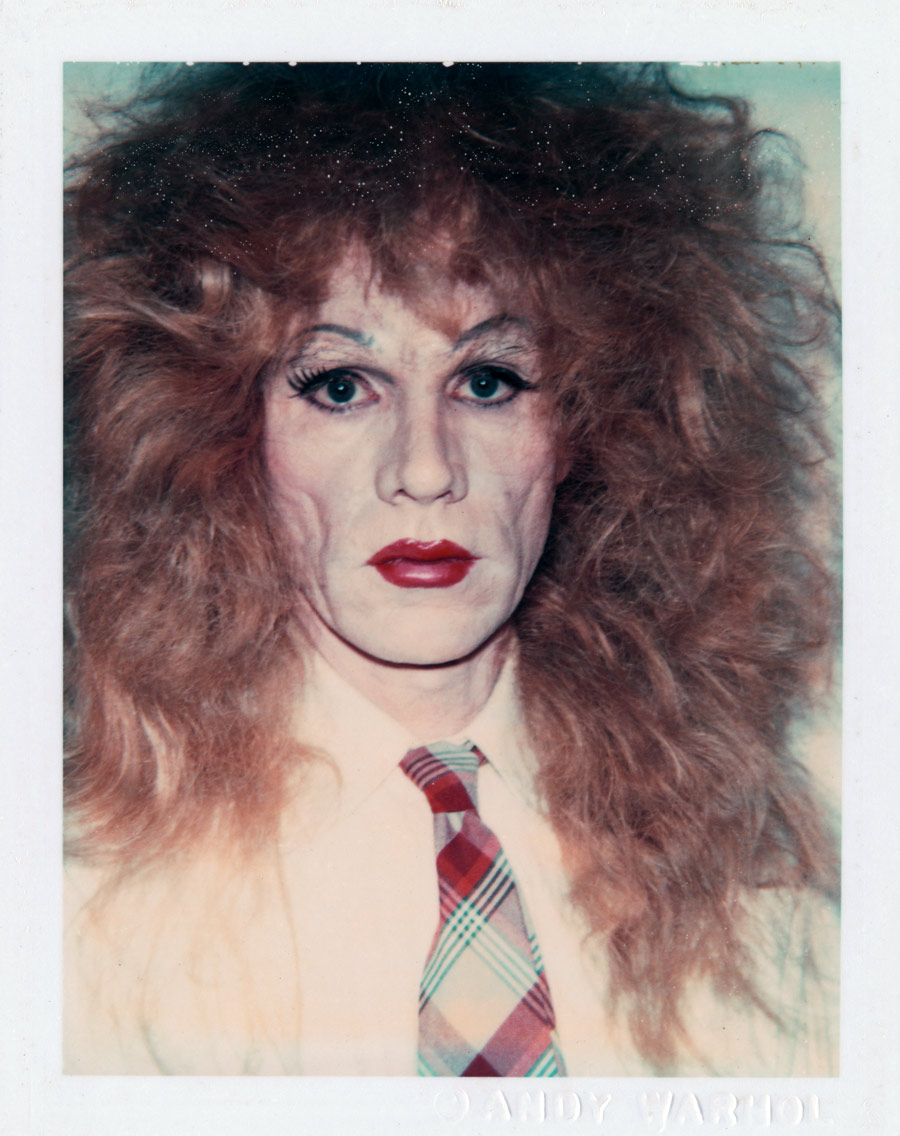
The face as a site for alteration and extreme expression is of particular interest to several artists in the exhibition. In his five-part work, Studies for Holograms (1970), Bruce Nauman poked, pulled, pinched, and kneaded his mouth, neck, and cheeks in extreme and cartoonish ways. For her 1972 work (Untitled) Facial Cosmetic Variations, Ana Mendieta used tape and make-up to mould and manipulate her face to create, at turns, disturbing and humorous results that reference the cosmetic changes women inflict upon themselves in the name of beauty. Lucas Samaras’s transformations in a series of self-portrait Polaroids from 1969-1971 suggest the plasticity or mutability of identity itself. For these works, the artist utilised an array of wigs, pancake make-up, and props to transform himself into grotesque characters for the camera.

Other performances required a sustained, emotional engagement on the part of the artist. Bas Jan Ader’s particular brand of existential-based Conceptualism is crystallised in I’m too sad to tell you (1970), in which the artist cried in front of the camera. In 1971, Adrian Piper performed a time-lapse piece titled Food for Spirit. Inspired by an assignment to write a text on Immanuel Kant’s Critique of Pure Reason, Piper began fasting in order to isolate herself into a state of self-transcendence, and took pictures of herself in front of a mirror to insure reconnaissance of her own body. The ability of the camera to both freeze and extend a moment in time was also instrumental to the Japanese artist Mieko Shiomi. In Disappearing Music for Face (1966), Shiomi sequenced a series of film stills focusing on the mouth of Yoko Ono as her smile intermittently faded into a neutral facial expression. In Laurel Nakadate’s pictures from the Lucky Tiger series that she conceived of in 2009 during a road trip through the American West, the artist is seen riding a horse in a cropped T-shirt, doing a backbend in cowboy boots by the Grand Canyon, and striking a Playboy pose in her “lucky tiger” bikinis, rehashing photographic conventions inspired by 1950s-style “cheesecake” and camera-club pictures. Lorna Simpson’s multi-part work, May, June, July, August ’57 / ’09 (2009) also responds to the photographic conventions of posing for the camera. Simpson turned to the photographic archive as source material, combining found photographs of a young African-American woman who posed for hundreds of pin-up pictures in 1957 in Los Angeles with her own performative self-portraits, in which she replicates every outfit, pose, and setting of the original photographs. Through juxtaposition, repetition, and de-contextualization, a historical fiction arises, whereby the two women, despite the many differences that separate them, seem to be joined through a shared identity.

The exhibition includes both off-the-cuff and staged performative gestures of political dissent. Ai Weiwei’s photographic series Study of Perspective (1995-2003) reveals a spirited irreverence toward national monuments. Traveling to various landmarks – from the Eiffel Tower to Tiananmen Square to the White House – the artist photographed his own arm extended in front of the camera’s lens as he gave each marker the middle finger. Robin Rhode’s pictures, presented sequentially in storyboard format, record situations in which the artist interacts with a set of objects that he has drawn, erased and redrawn in black charcoal on dilapidated walls. Untitled, (Dream House) (2005) comprises a sequence of 28 colour photographs in which Rhode mimics the act of struggling to catch a television set, a chair, and a car that appear to have been thrown at him from above. In reality, these items are drawn in cartoonish lines on an exterior wall. Referencing the South African New Year custom of tossing out old objects, the artist identifies society’s two opposing poles: consumerism and dispossession. Rhode’s pictures, like those of the other artists in Staging Action, attest to the myriad ways in which photography constitutes – not just documents – performance as a conceptual exercise.

Press release from the MoMA website


Installation view of the exhibition 'Staging Action: Performance in Photography Since 1960' at The Museum of Modern Art (MoMA)


Installation view of the exhibition Staging Action: Performance in Photography Since 1960 at The Museum of Modern Art (MoMA), New York showing at right, Rong Rong’s East Village, Beijing, No. 81 1994


Rong Rong (Chinese, b. 1968) 'East Village, Beijing, No. 81' 1994


Rong Rong (Chinese, b. 1968)
East Village, Beijing, No. 81
1994
Gelatin silver print
The Museum of Modern Art, New York
Acquired through the generosity of Peter and Susan MacGill
© 2010 Rong Rong


Rong Rong (Chinese, b. 1968) 'East Village, Beijing, No. 22' 1994


Rong Rong (Chinese, b. 1968)
East Village, Beijing, No. 22
1994
Gelatin silver print
21 7/16 x 14 5/8″ (54.5 x 37.2cm)
The Museum of Modern Art, New York
The Family of Man Fund
© 2010 Rong Rong


Robert Gober (American, b. 1954) 'Untitled' 1992-1993


Robert Gober (American, b. 1954)
Untitled
1992-1993
Gelatin silver print
16 3/4 x 12 5/8″ (42.5 x 32.1cm)
The Museum of Modern Art, New York
Gift of Werner and Elaine Dannheisser
© 2010 Robert Gober


Günter Brus (Austrian, 1938-2024) 'Self-Painting 1' 1964


Günter Brus (Austrian, 1938-2024)
Self-Painting 1
1964
Gelatin silver print
15 7/8 x 11 15/16″ (40.4 x 30.4cm)
The Museum of Modern Art
Gift of Steven Johnson and Walter Sudol
© 2010 Günter Brus


Arnulf Rainer (Austrian, b. 1929) 'Braids' 1966


Arnulf Rainer (Austrian, b. 1929)
Braids
1966
Photograph, oil stick, crayon, and pencil on paper
11 1/2 x 10″ (29.2 x 25.1cm)
Gift of The Cosmopolitan Arts Foundation
© 2010 Arnulf Rainer


Installation view of the exhibition 'Staging Action: Performance in Photography Since 1960' at The Museum of Modern Art (MoMA)


Installation view of the exhibition Staging Action: Performance in Photography Since 1960 at The Museum of Modern Art (MoMA), New York showing at left, Ana Mendieta’s Facial Cosmetic Variations 1972; at centre, the work of Rudolf Schwarzkogler; and at right, VALIE EXPORT with Peter Hassmann’s Action Pants: Genital Panic (1969, below)


VALIE EXPORT (Austrian, b. 1941) with Peter Hassmann (photographer) 'Action Pants: Genital Panic' 1969 (detail)


VALIE EXPORT (Austrian, 1940-2026) with Peter Hassmann (photographer)
Action Pants: Genital Panic (detail)
1969
Screenprints
Each 26 3/8 × 19 5/8″ (67 × 49.8cm)
Museum of Modern Art, New York
The Modern Women’s Fund
© 2025 VALIE EXPORT / Artists Rights Society (ARS), New York / VBK, Austria


This series of screenprints relates to a performance in which EXPORT reportedly walked into an experimental art-film house in Munich wearing crotchless trousers and a tight leather jacket, with her hair teased wildly, and roamed through the rows of seated spectators, her exposed genitalia level with their faces. Challenging the public to engage with a “real woman” instead of with images on a screen, she illustrated her notion of “expanded cinema,” in which the artist’s body activates the live context of watching. EXPORT’s defiant feminist action was memorialised in a picture taken the following year by the photographer Peter Hassmann in Vienna. EXPORT had the image, in which she holds a machine gun, screenprinted in a large edition and fly-posted it in public squares and on the street.

Gallery label from From the Collection: 1960-69, March 26, 2016 – March 12, 2017

Text from the MoMA website


Ana Mendieta (American born Cuba, 1948-1985) 'Untitled (Facial Cosmetic Variations)' January-February, 1972


Ana Mendieta (American born Cuba, 1948-1985)
Untitled (Facial Cosmetic Variations) (detail)
January – February, 1972
Four chromogenic color prints, printed 1997
Each 19 1/4 x 12 3/4″ (48.9 x 32.4cm)
Acquired through the generosity of The Contemporary Arts
Council of The Museum of Modern Art, in honour of Barbara Foshay
© The Estate of Ana Mendieta Collection Courtesy Galerie Lelong, New York


Bas Jan Ader (Dutch, 1942-1975) 'I'm Too Sad to Tell You' 1970


Bas Jan Ader (Dutch, 1942-1975)
I’m Too Sad to Tell You
1970
Gelatin silver print
Art & Project/Depot VBVR Gift
© 2019 The Estate of Bas Jan Ader


Lee Friedlander (American, b. 1934) 'California' 1997


Lee Friedlander (American, b. 1934)
California
1997
Gelatin silver print
14 15/16 x 14 13/16″ (37.7 x 37.2cm)
The Museum of Modern Art, New York
Robert and Joyce Menschel Fund
© 2010 Lee Friedlander


Installation view of the exhibition 'Staging Action: Performance in Photography Since 1960' at The Museum of Modern Art (MoMA), New York showing at left, Bruce Nauman's 'Studies for Holograms' (1970); and at right, Lorna Simpson's 'May, June, July, August '57/'09 #8' (2009)


Installation view of the exhibition Staging Action: Performance in Photography Since 1960 at The Museum of Modern Art (MoMA), New York showing at left, Bruce Nauman’s Studies for Holograms (1970); and at right, Lorna Simpson’s May, June, July, August ’57/’09 #8 (2009, below)


Lorna Simpson (American, b. 1960)
'May, June, July, August '57/'09 #8'
2009


Lorna Simpson (American, b. 1960)
May, June, July, August ’57/’09 #8
2009
Twelve gelatin silver prints
Each 5 × 5″ (12.7 × 12.7cm)
Museum of Modern Art, New York
Acquired through the generosity of The Contemporary Arts Council of The Museum of Modern Art
© 2025 Lorna Simpson


Lorna Simpson describes 1957-2009 as “a project that happened kind of by accident.” Since she often works with vintage photographs, advertisements, and magazines, she was on eBay in search of material, when she came across a couple of black-and-white photographs of a young black woman posing alluringly. As it turned out, these were part of a much larger album of photographs, featuring this woman, and, occasionally, a young black man, in attractively staged poses. The sellers offered the entire album to Simpson. Struck by the images, though not yet sure what to do with them, she bought it.

When the album arrived, she hung the photographs in her studio, where they remained for months. Taken in 1957, in modest domestic and outdoor settings, most of them appeared to be inspired by the pin-up, mass-produced images of seductively posed actresses and models, widely circulated in the 1940s and 50s. But the identities of the photographer, the woman, and the man were unknown. Ultimately, Simpson decided to restage these images. Using herself as her model, she mimicked the settings, clothing, hairstyles, and poses of both the woman and the man and photographed herself using black-and-white film. She then paired her own photographs with the originals (for a total of 307 individually framed images) and has displayed them together in various arrangements.

As with much of her work, it is up to viewers to draw their own conclusions about the identities of the subjects of 1957-2009. A feminist and an African American woman, Simpson has been concerned with black female identity since the beginning of her career. By providing little or no information about the people who appear in her images, she poses challenging questions about how we perceive and make assumptions about others based upon their appearance – and upon stereotypes associated with aspects of identity like skin colour, hair, gender, and clothing.

Text from the MoMA website


The Museum of Modern Art
11 West 53rd Street
New York, NY 10019
(212) 708-9400

Opening hours:
Sun – Fri 10.30am – 5.30pm
Sat 10.30am – 7.00pm

The Museum of Modern Art website

LIKE ART BLART ON FACEBOOK

Back to top