Exhibition: ‘An unorthodox flow of images’ at the Centre for Contemporary Photography (CCP), Melbourne Part 1

Exhibition dates: 30th September – 12th November, 2017

Curators: Naomi Cass and Pippa Milne

Living artists include: Laurence Aberhart, Brook Andrew, Rushdi Anwar, Warwick Baker, Paul Batt, Robert Billington, Christian Boltanski, Pat Brassington, Jane Brown, Daniel Bushaway, Sophie Calle, Murray Cammick, Christian Capurro, Steve Carr, Mohini Chandra, Miriam Charlie, Maree Clarke, Michael Cook, Bill Culbert, Christopher Day, Luc Delahaye, Ian Dodd, William Eggleston, Cherine Fahd, Fiona Foley, Juno Gemes, Simryn Gill, John Gollings, Helen Grace, Janina Green, Andy Guérif, Siri Hayes, Andrew Hazewinkel, Lisa Hilli, Eliza Hutchison, Therese Keogh, Leah King-Smith, Katrin Koenning, O Philip Korczynski, Mac Lawrence, Kirsten Lyttle, Jack Mannix, Jesse Marlow, Georgie Mattingley, Tracey Moffatt, Daido Moriyama, Harry Nankin, Jan Nelson, Phuong Ngo.

Historic photographers: Hippolyte Bayard (French, 1801-1887), Charles Bayliss (Australian born England, 1850-1897), Bernd and Hilla Becher (German; Bernd Becher 1931-2007, Hilla Becher 1934-2015), Lisa Bellear (Australian / Goernpil, 1962-2006), James E. Bray (Australian, 1832-1891), Jeff Carter (Australian, 1928-2010), Harold Cazneaux (Australian, 1878-1953), Olive Cotton (Australian, 1911-2003), Peter Dombrovskis (Australian, 1995-1996), Max Dupain (Australian, 1911-1992), Joyce Evans (Australian, 1929-2019), Walker Evans (American, 1903-1975), Sue Ford (Australian, 1943-2009), Marti Friedlander (New Zealand born Britain, 1928-2016), Kate Gollings (Australian, 1943-2017), André Kertész (Hungarian, 1894-1985), J. W. Lindt (Australian born Germany, 1845-1926), W. H. Moffitt (Australian, 1888-1948), David Moore (Australian, 1927-2003), Michael Riley (Australian / Wiradjuri/Kamilaroi, 1960-2004), Robert Rooney (Australian, 1937-2017), Joe Rosenthal (American, 1911-2006), Mark Strizic (Australian, 1928 -2012), Ingeborg Tyssen (Australian, 1945-2002), Aby Warburg (German, 1866-1929), Charles Woolley (Australian, 1834-1922).


Installation photographs of the exhibition

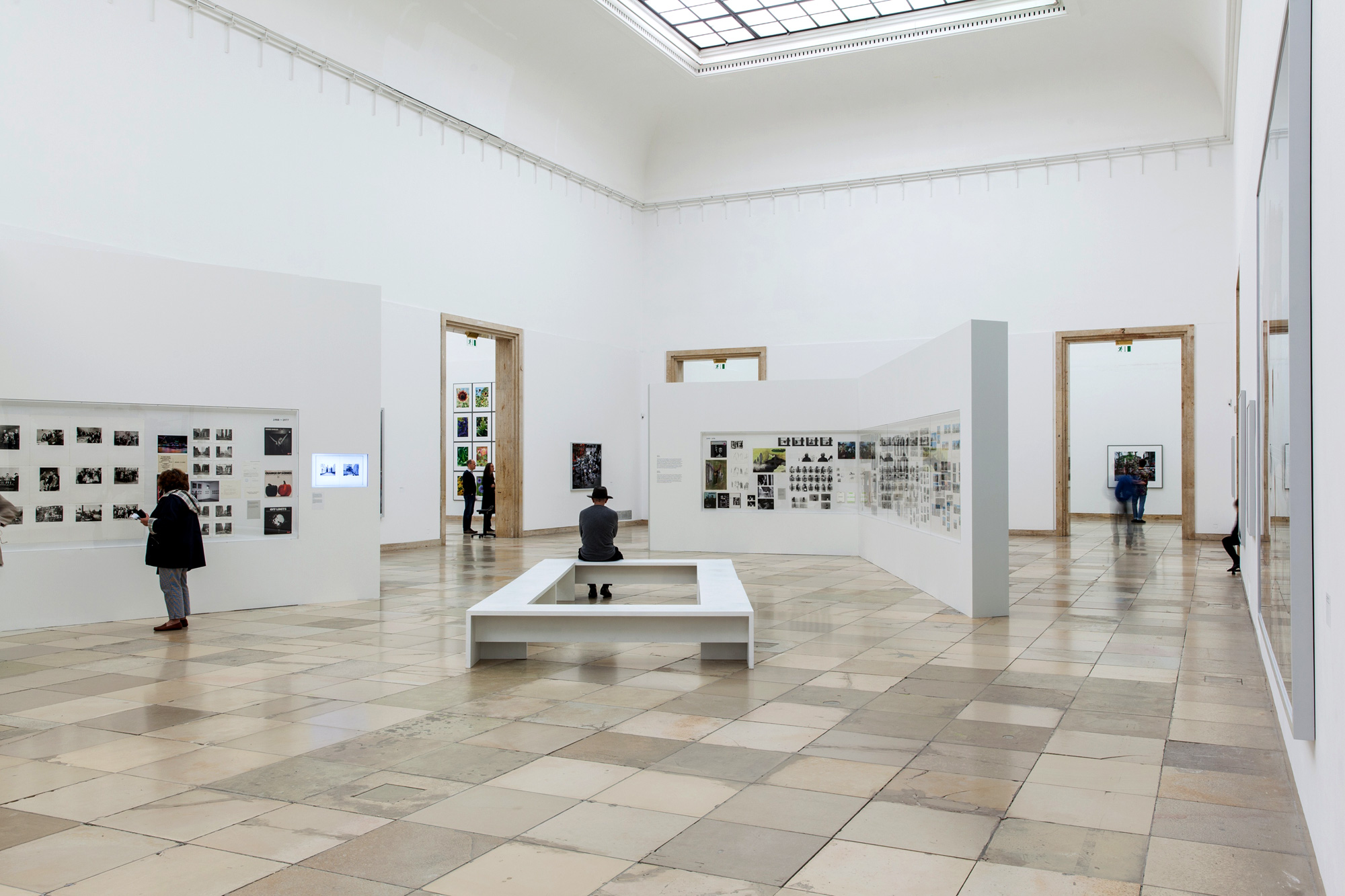
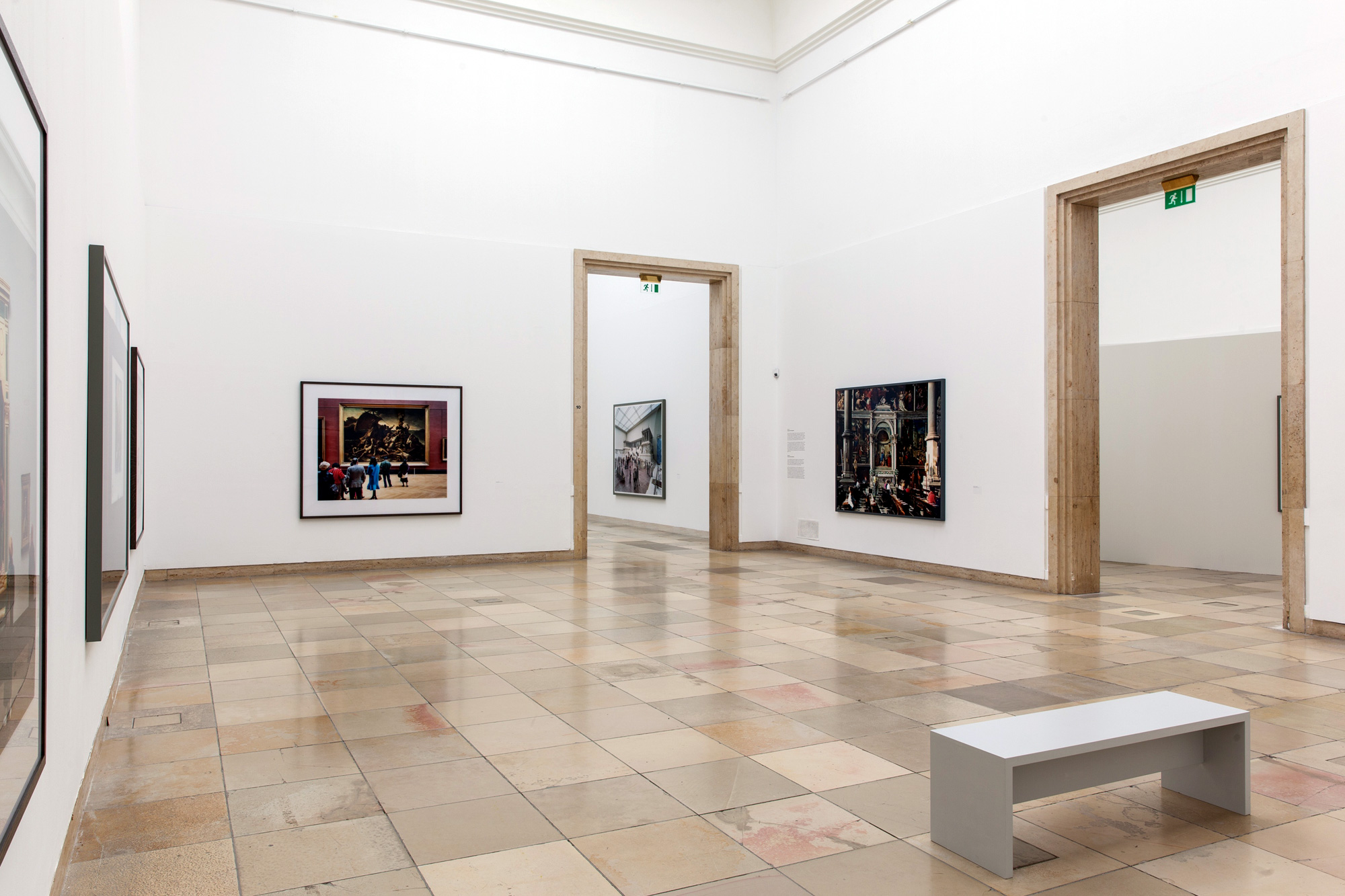
The installation photographs (some of the 148 images in the exhibition) proceed in spatial order, in the flow that they appear in the gallery spaces. The numbers in brackets refer to the number of the image in the field guide. The text is taken from the field guide to the exhibition (Online cited 01/11/2017. No longer available online).

Dr Marcus Bunyan


Many thankx to the CCP for allowing me to publish the photographs in the posting. Please click on the photographs for a larger version of the image. All installation photographs © Dr Marcus Bunyan, the artists and the CCP.


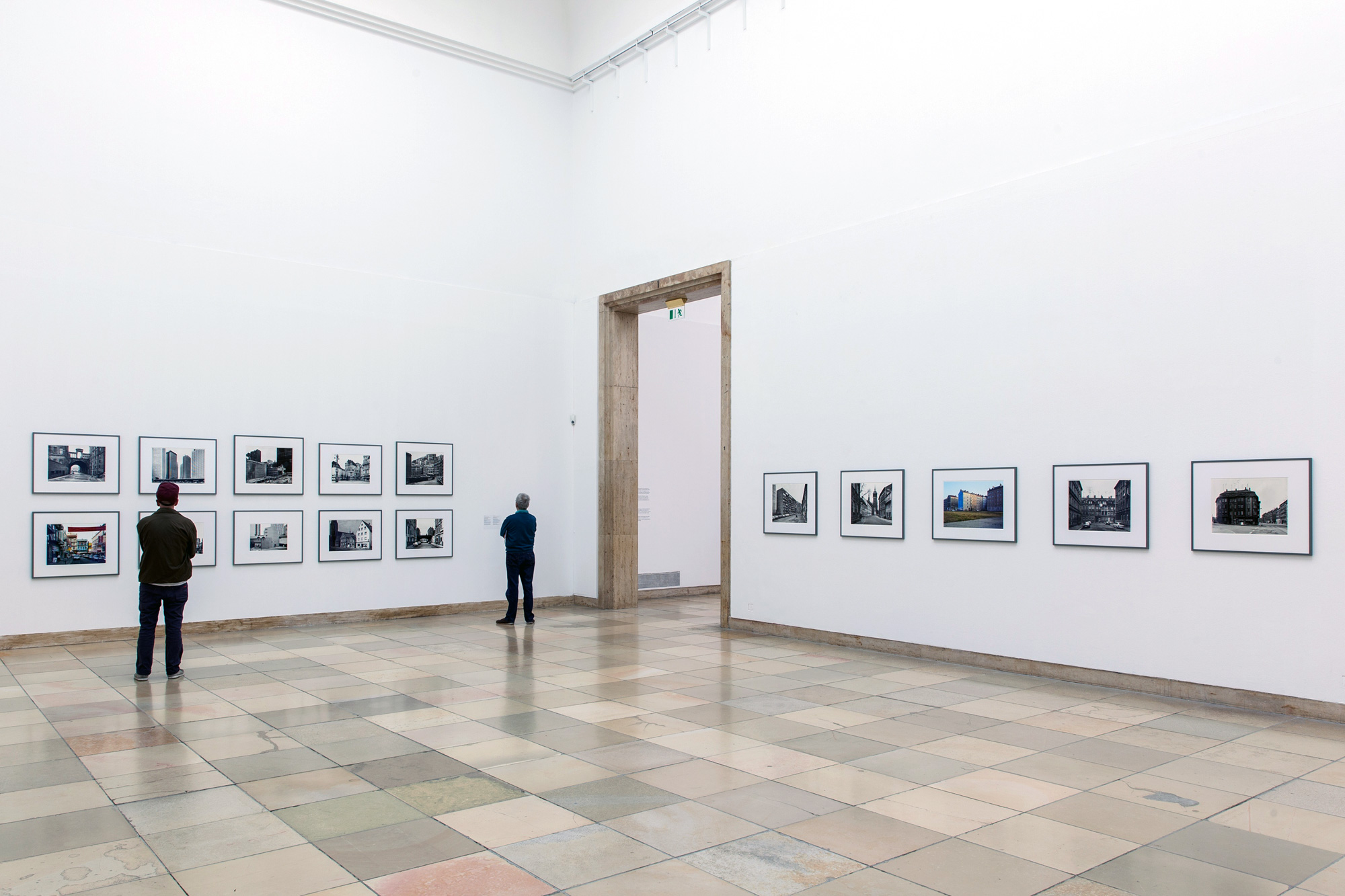
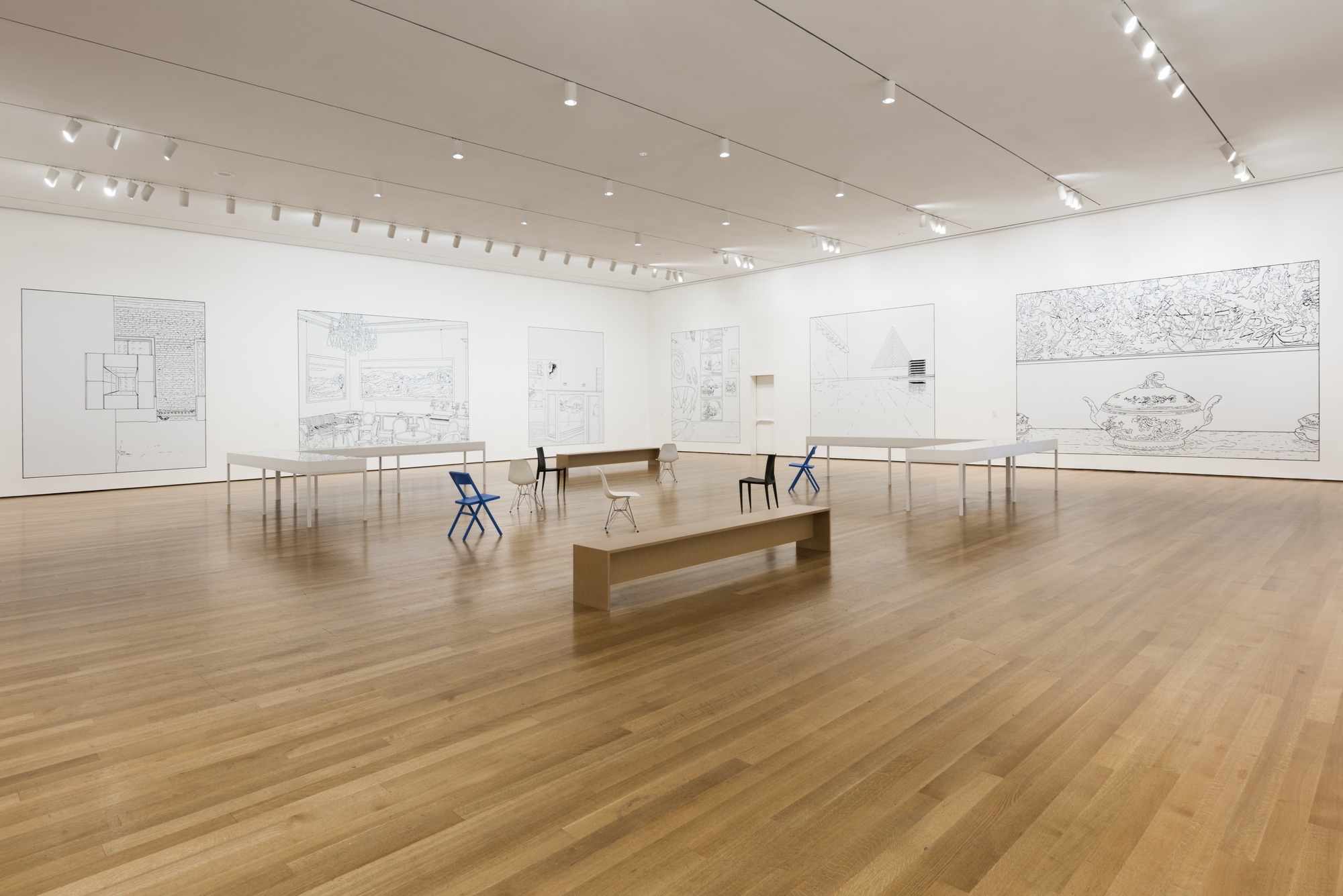
An unorthodox flow of images commences with what is known as the first press photograph in Australia and unfurls through historic, press, portraiture, popular and art photography, some in their intended material form and others as reproductions. An unbroken thread connects this line of still and moving images, each tied to those on either side through visual, conceptual, temporal, material or circumstantial links.

This is a proposition about photography now. Relationships between images are sometimes real, and sometimes promiscuous. Unorthodox brings new contexts to existing artworks whilst celebrating the materiality of real photographs, in real time and critically, honouring the shared democratic experience of the public gallery space.

Text from the CCP website


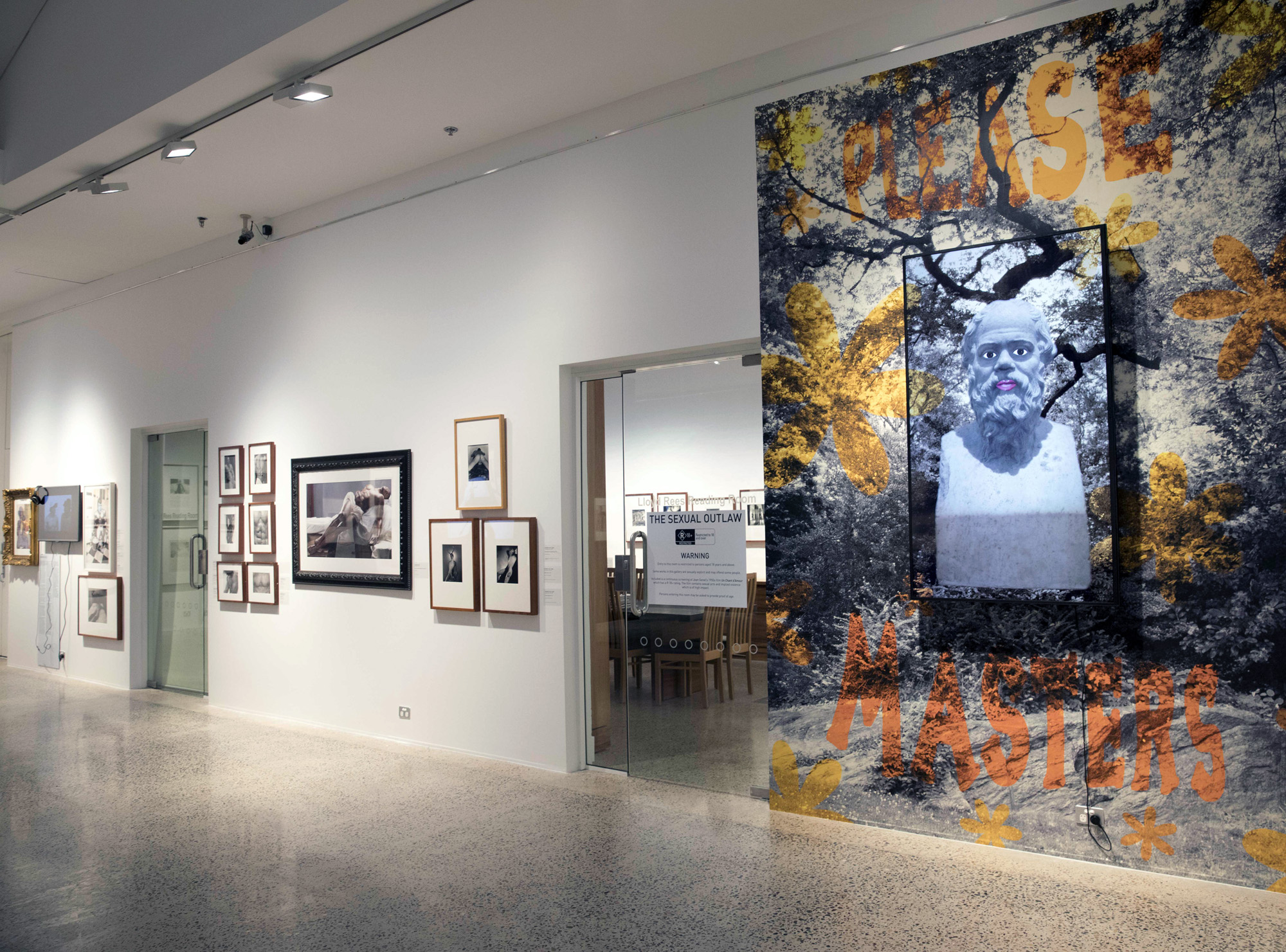
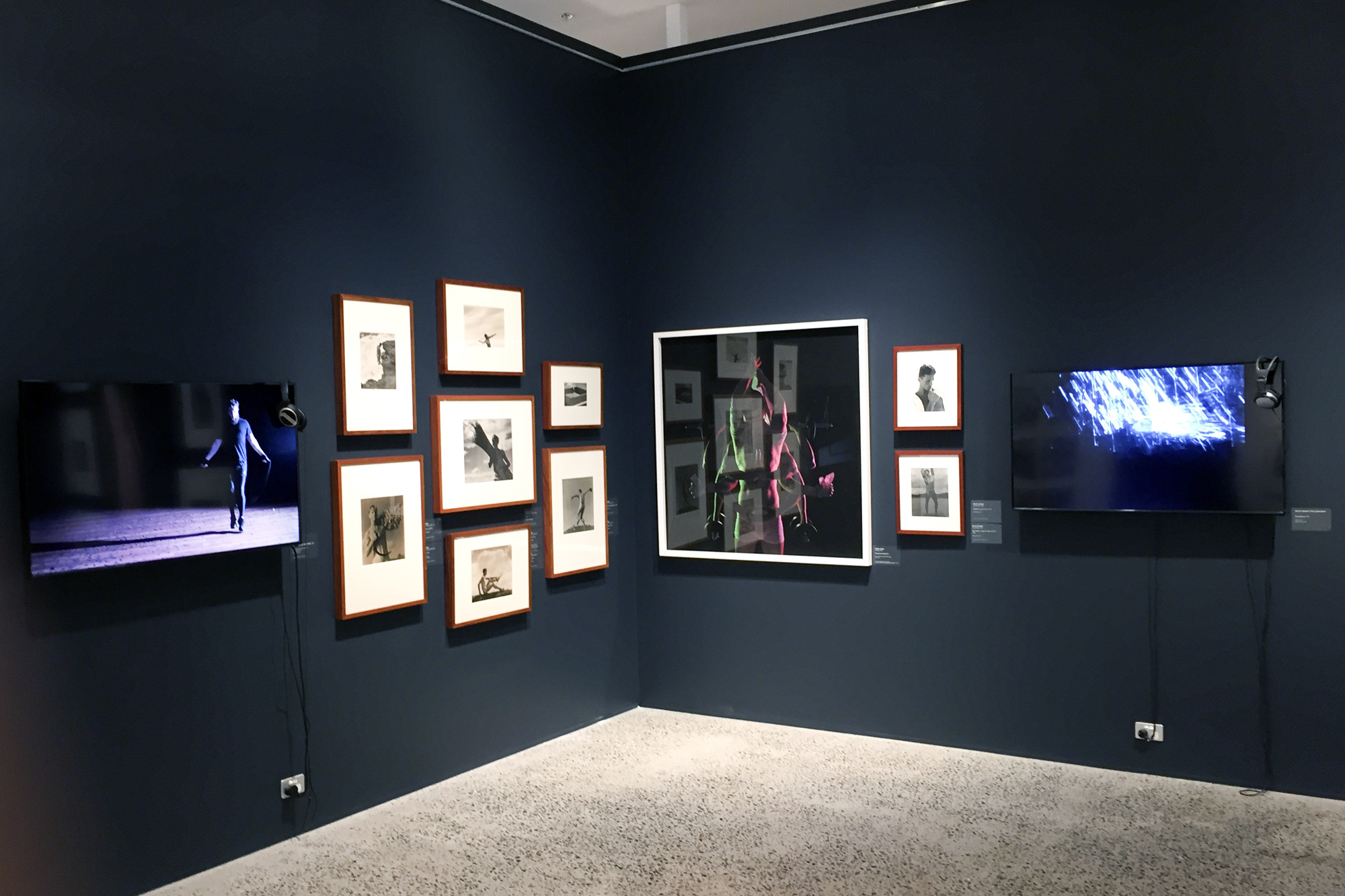
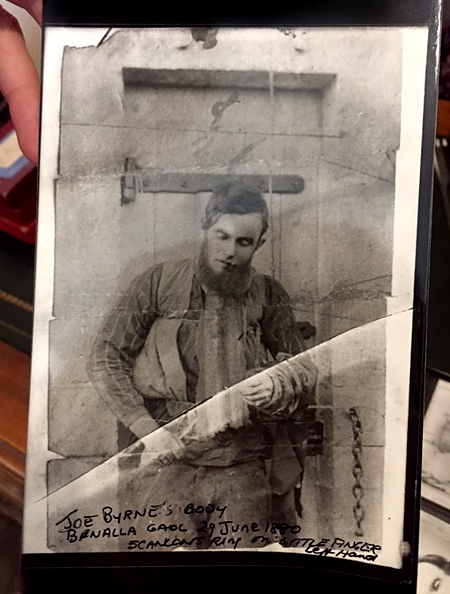
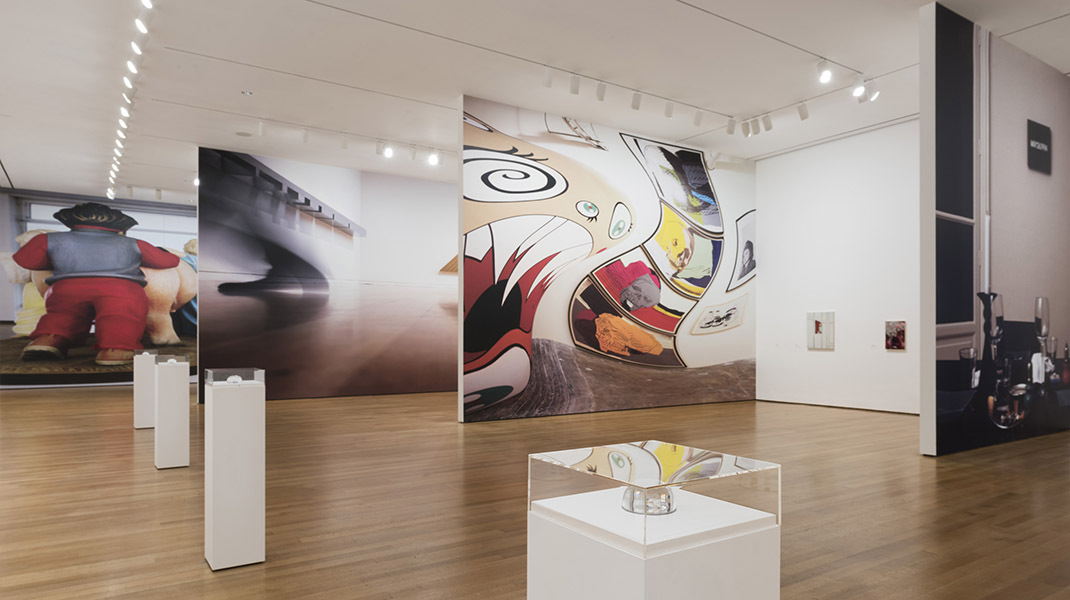
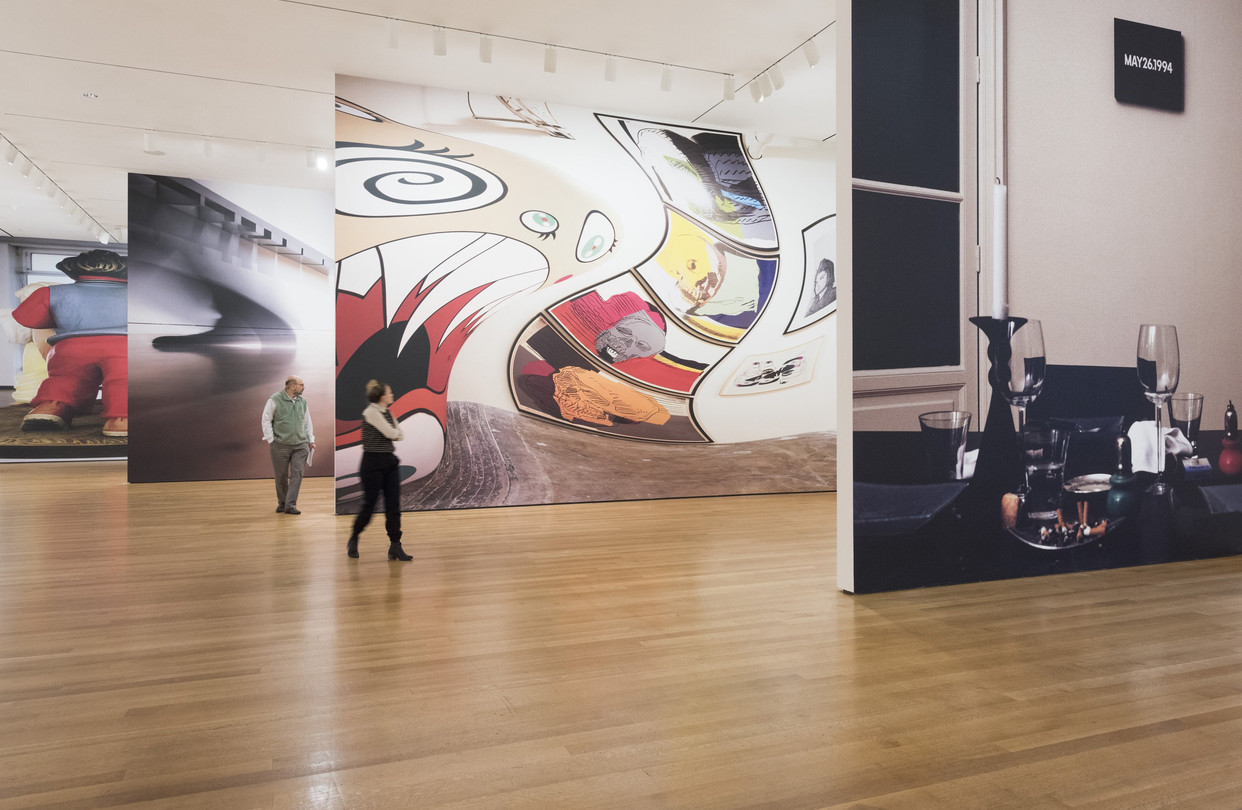
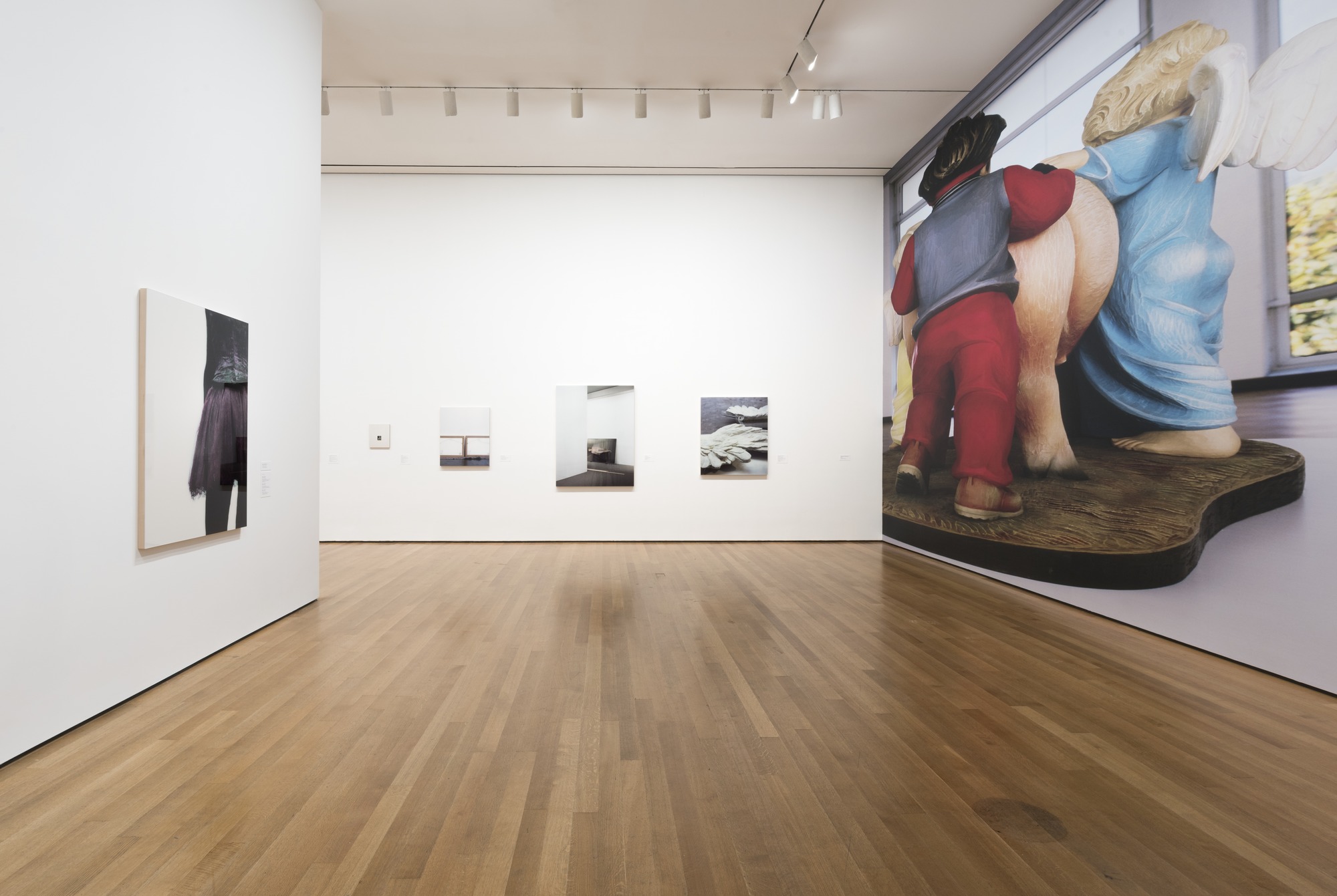
Installation view of the exhibition 'An Unorthodox Flow of Images' at the Centre for Contemporary Photography (CCP), Melbourne, September - November 2017 with at right, wallpaper of J. W. Lindt's 'Body of Joe Byrne, member of the Kelly Gang, hung up for photography, Benalla' 1880, to open the exhibition


Installation view of the exhibition An Unorthodox Flow of Images at the CCP, Melbourne with at right, wallpaper of J. W. Lindt’s Body of Joe Byrne, member of the Kelly Gang, hung up for photography, Benalla 1880, to open the exhibition
Photo: Marcus Bunyan


J W Lindt (Australian, 1845-1926) 'Body of Joe Byrne, member of the Kelly Gang, hung up for photography Benalla' 1880 from the exhibition 'An unorthodox flow of images' at the Centre for Contemporary Photography (CCP), Melbourne, Sept - Dec, 2017


(1) J W Lindt (Australian, 1845-1926)
Body of Joe Byrne, member of the Kelly Gang, hung up for photography, Benalla
1880
Courtesy State Library Victoria, Pictures Collection


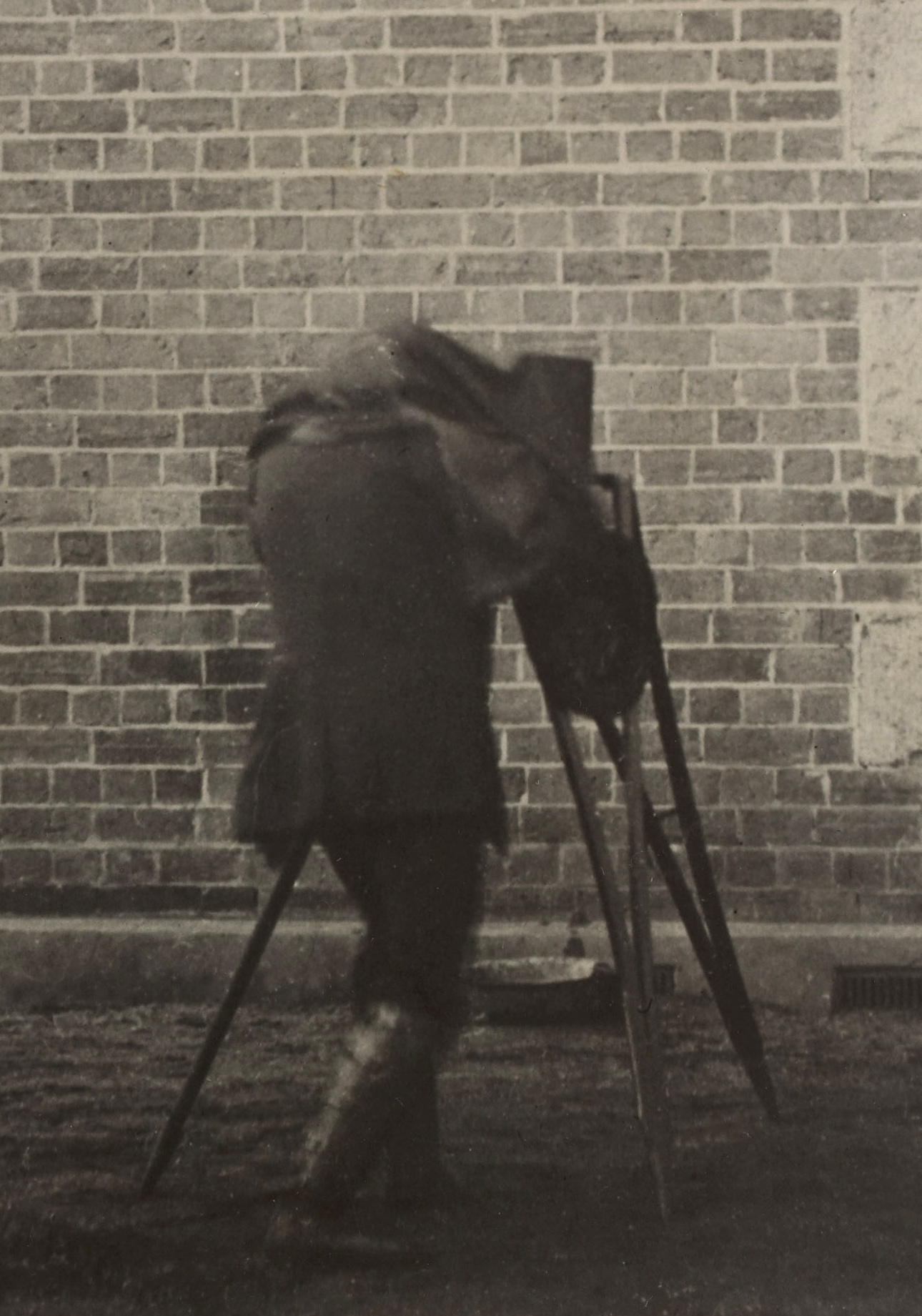
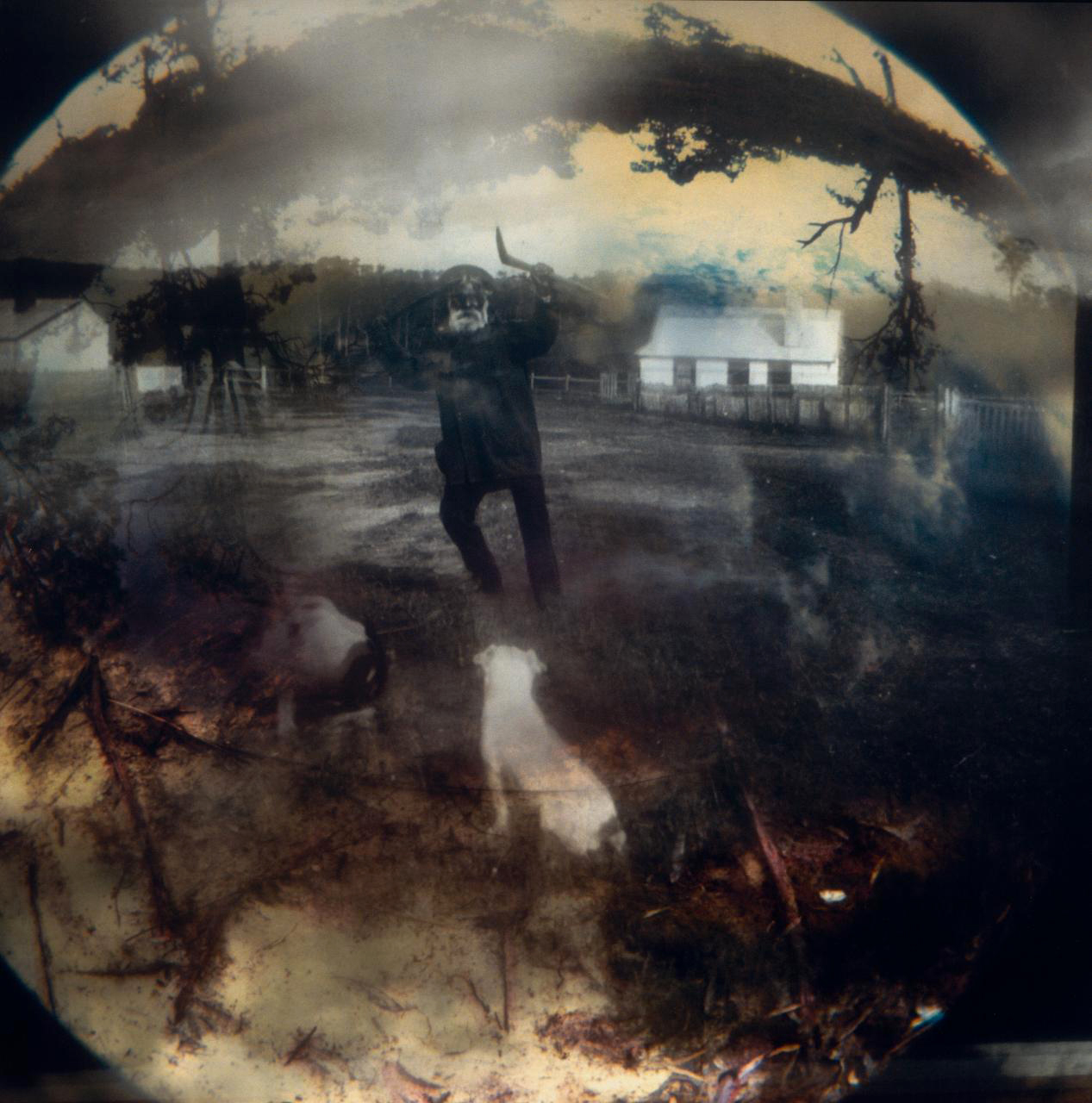
J W Lindt: Thought to be the first press photograph in Australia, this shows Joe Byrne, a member of the Kelly Gang, strung up for documentation days after his death, which followed the siege at Glenrowan. Byrne is displayed for an unknown photographer and the painter Julian Ashton who is standing to the left with possibly a sketchbook under his arm. Lindt’s photograph captures not only the spectacle of Byrne’s body but the contingent of documentarians who arrived from Melbourne to record and widely disseminate the event for public edification.


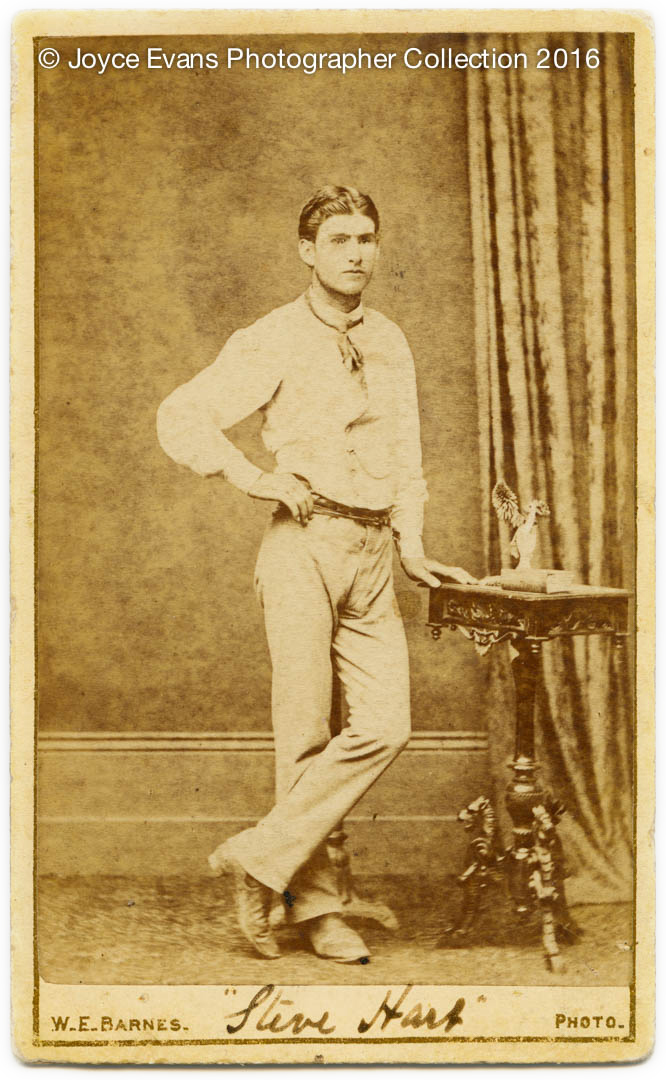
Installation view of the exhibition 'An Unorthodox Flow of Images' at the Centre for Contemporary Photography (CCP), Melbourne, September - November 2017 showing (3) J. E. Bray's 'Kelly Gang Armour' 1880 cabinet card


Installation view of the exhibition An Unorthodox Flow of Images at the CCP, Melbourne showing (3) J. E. Bray’s Kelly Gang Armour 1880 cabinet card © Collection of Joyce Evans
Photo: Marcus Bunyan


J. E. Bray: “As objects of contemplation, images of the atrocious can answer to several different needs. To steel oneself against weakness. To make oneself more numb. To acknowledge the existence of the incorrigible.”

~ Susan Sontag, Regarding the Pain of Others (2003)


Installation view of the exhibition 'An Unorthodox Flow of Images' at the Centre for Contemporary Photography (CCP), Melbourne, September - November 2017 showing (7) J. E. Bray's 'Untitled ["McDonnell's Tavern opposite Railway Station, remains of Dan Kelly and Hart in coffins"]' 1880 cabinet card (right) and (8) a photograph by an unknown photographer Hunters of Ned Kelly 1880 (left)


Installation view of the exhibition An Unorthodox Flow of Images at the CCP, Melbourne showing (7) J. E. Bray’s Untitled [“McDonnell’s Tavern opposite Railway Station, remains of Dan Kelly and Hart in coffins”] 1880 cabinet card (right) and (8) a photograph by an unknown photographer Hunters of Ned Kelly 1880 (left)
Photo: Marcus Bunyan


Installation view of the exhibition 'An Unorthodox Flow of Images' at the Centre for Contemporary Photography (CCP), Melbourne, September - November 2017 showing at right (13) Tracey Moffatt's 'I Made a Camera' 2003

Installation view of the exhibition 'An Unorthodox Flow of Images' at the Centre for Contemporary Photography (CCP), Melbourne, September - November 2017 showing (13) Tracey Moffatt's 'I Made a Camera' 2003


Installation views of the exhibition An Unorthodox Flow of Images at the CCP, Melbourne showing (13) Tracey Moffatt’s I Made a Camera 2003
Photos: Marcus Bunyan


Moffatt: Returning to J.W. Lindt’s photograph – in particular the hooded central figure photographing Joe Byrne – Tracey Moffatt’s picturing of children role-playing calls to mind the colonial photographer’s anthropological gesture.


Installation view of the exhibition 'An Unorthodox Flow of Images' at the Centre for Contemporary Photography (CCP), Melbourne, September - November 2017 showing (14) Siri Hayes' 'In the far reaches of the familiar' 2011 (right) and (15) Janina Green's 'Self Portrait' 1996 (left)


Installation view of the exhibition An Unorthodox Flow of Images at the CCP, Melbourne showing (14) Siri Hayes’ In the far reaches of the familiar 2011 (right) and (15) Janina Green’s Self Portrait 1996 (left)
Photo: Marcus Bunyan


Installation view of the exhibition 'An Unorthodox Flow of Images' at the Centre for Contemporary Photography (CCP), Melbourne, September - November 2017 showing (15) Janina Green's 'Self Portrait' 1996


Installation view of the exhibition An Unorthodox Flow of Images at the CCP, Melbourne showing (15) Janina Green’s Self Portrait 1996
Photo: Marcus Bunyan


Green: Although celebrated for her hand coloured prints, this is in fact made with the second version of Photoshop.


Installation view of the exhibition 'An Unorthodox Flow of Images' at the Centre for Contemporary Photography (CCP), Melbourne, September - November 2017 showing (16) Georgie Mattingley's 'Portrait IV (After Arthroplasty)' 2016 (right) and (17) Lisa Hilli's 'In a Bind' 2015 (middle)


Installation view of the exhibition An Unorthodox Flow of Images at the CCP, Melbourne showing (16) Georgie Mattingley’s Portrait IV (After Arthroplasty) 2016 (right) and (17) Lisa Hilli’s In a Bind 2015 (middle)
Photo: Marcus Bunyan


Mattingley: The photographer’s hood has become a meat-worker’s protective gear, tenderly hand-coloured.

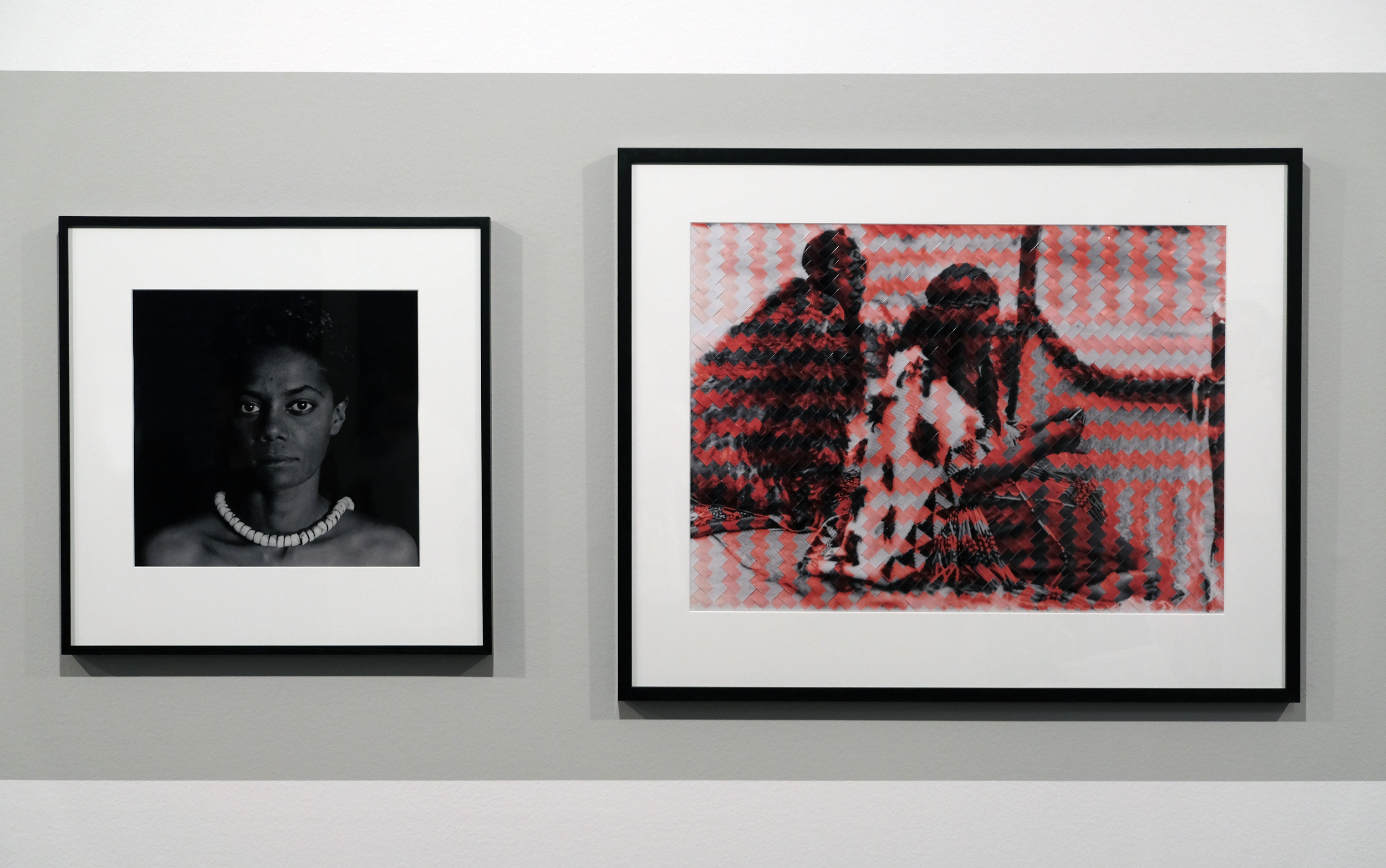
Hilli: ‘The woven material that hoods the artist’s identity is a reference to collected Pacific artefacts, which are usually of a practical nature. Magimagi is a plaited coconut fibre used for reinforcing architectural structures and body adornment within the Pacific. Here it emphasises the artist’s feeling of being bound by derogatory Western and anthropological labels used by museums and the erasure of Pacific bodies and narratives within public displays of Pacific materiality.’  ~ Lisa Hilli 2017, in an email to the curator


Installation view of the exhibition 'An Unorthodox Flow of Images' at the Centre for Contemporary Photography (CCP), Melbourne, September - November 2017 showing (18) Fiona Pardington's 'Saul' 1986 (right), (19) Fiona MacDonald's '12 Artists' 1987 (postcard, middle), and (20) Jack Mannix's 'Still Life, Footscray' 2013 (left)


Installation view of the exhibition An Unorthodox Flow of Images at the CCP, Melbourne showing (18) Fiona Pardington’s Saul 1986 (right), (19) Fiona MacDonald’s 12 Artists 1987 (postcard, middle), and (20) Jack Mannix’s Still Life, Footscray 2013 (left)
Photo: Marcus Bunyan


Pardington: A portrait of Joe Makea in his beekeeper’s helmet.

MacDonald: A vintage Victorian Centre for Photography (VCP) postcard, prior to its change of name to CCP.

Mannix: A vanitas is a still life artwork which includes various symbolic objects designed to remind the viewer of their mortality and of the worthlessness of worldly goods and pleasures.


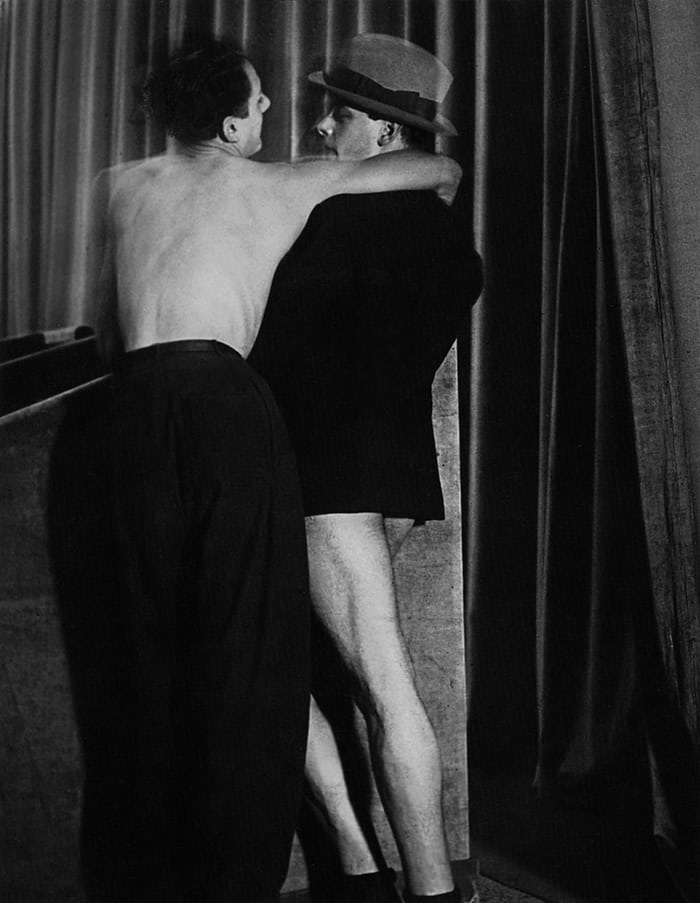
Installation view of the exhibition 'An Unorthodox Flow of Images' at the Centre for Contemporary Photography (CCP), Melbourne, September - November 2017 showing (27) Wolfgang Sievers' 'The writer Jean Campbell, in her flat in East Melbourne' 1950 (right); (26) André Kertész's 'Chez Mondrian, Paris' 1926 (middle top); (28) Gisèle Freund's 'Vita Sackville-West' 1938 (middle bottom); and (29) Anne Zahalka's 'Home #3 (mirror)' 1998 (left)


Installation view of the exhibition An Unorthodox Flow of Images at the CCP, Melbourne showing (27) Wolfgang Sievers’ The writer Jean Campbell, in her flat in East Melbourne 1950 (right); (26) André Kertész’s Chez Mondrian, Paris 1926 (middle top); (28) Gisèle Freund’s Vita Sackville-West 1938 (middle bottom); and (29) Anne Zahalka’s Home #3 (mirror) 1998 (left)
Photo: Marcus Bunyan


Sievers: Wolfgang’s inscription on the back of this particular print reads: The writer Jean Campbell in her near-eastern flat with her portrait by Lina Bryans.

Kertész: A studio is site for the artist’s gathering of images.

Freund: Vita Sackville-West’s writing studio was in an Elizabethan tower at Sissinghurst in Kent, overlooking her famous white garden. It remains, exactly as she left it.

Zahalka: The boundary between home and studio is often blurred when an artist has a small child.


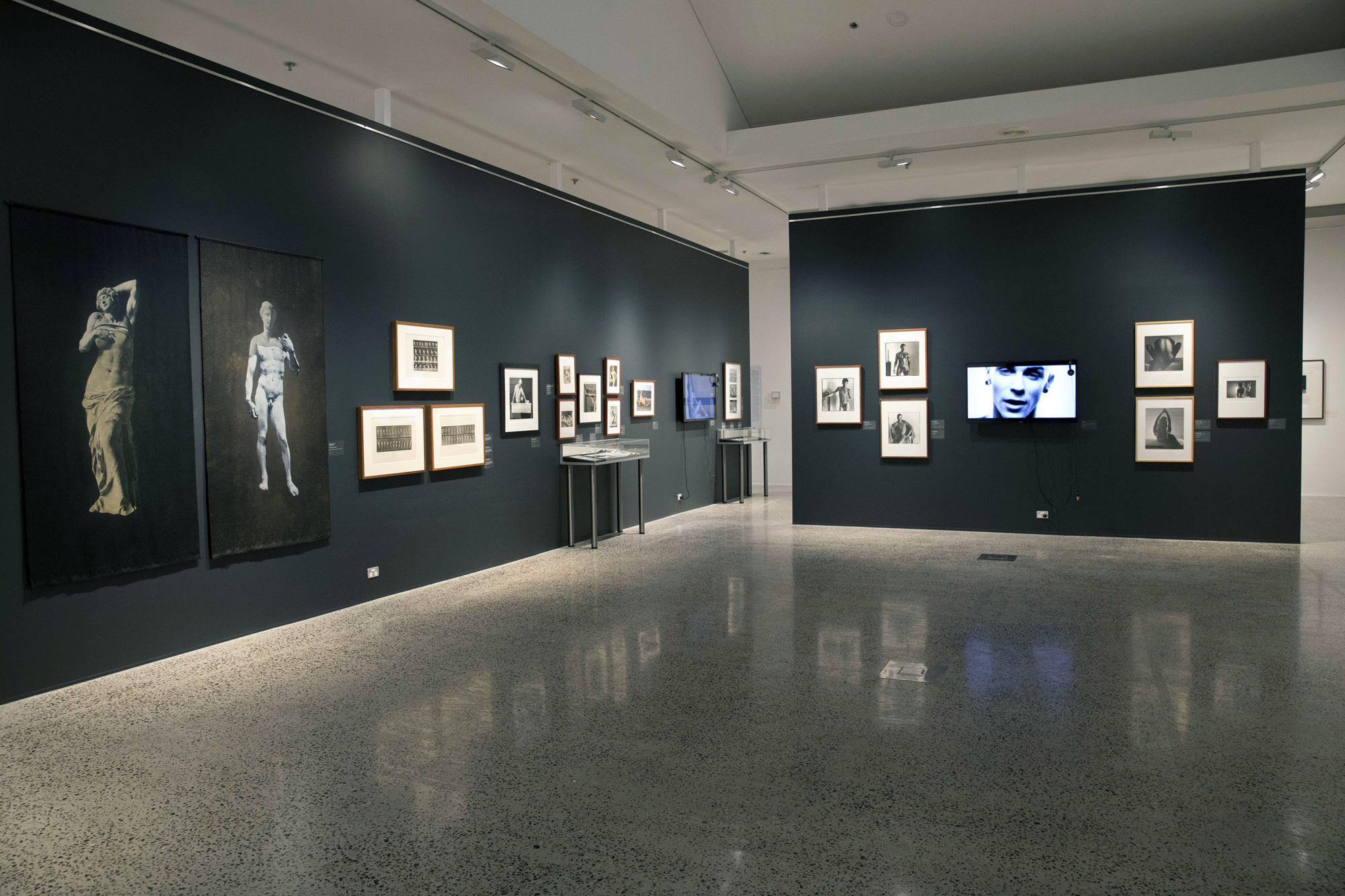
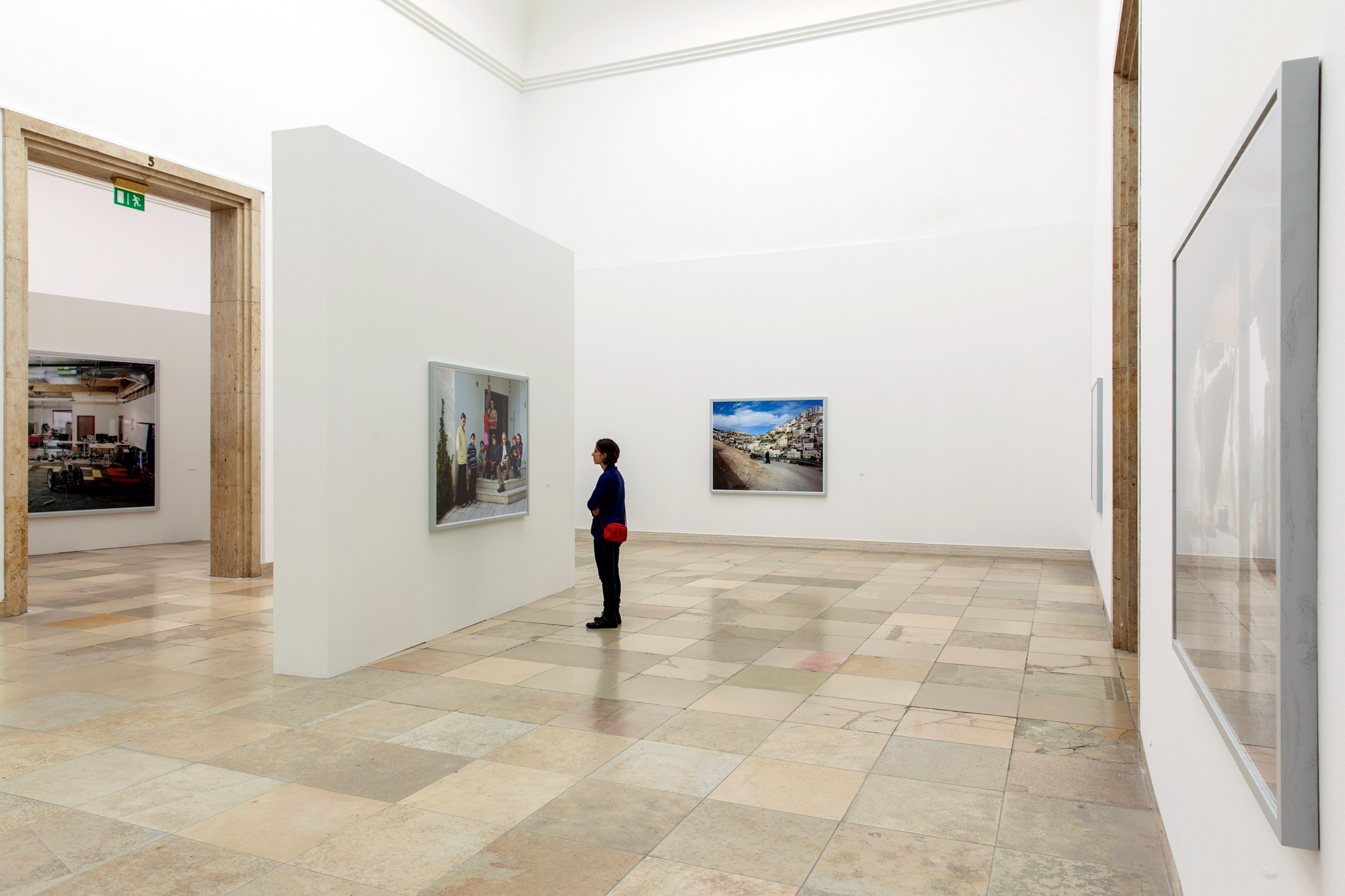
Installation view of the exhibition 'An Unorthodox Flow of Images' at the Centre for Contemporary Photography (CCP), Melbourne, September - November 2017

Installation view of the exhibition 'An Unorthodox Flow of Images' at the Centre for Contemporary Photography (CCP), Melbourne, September - November 2017

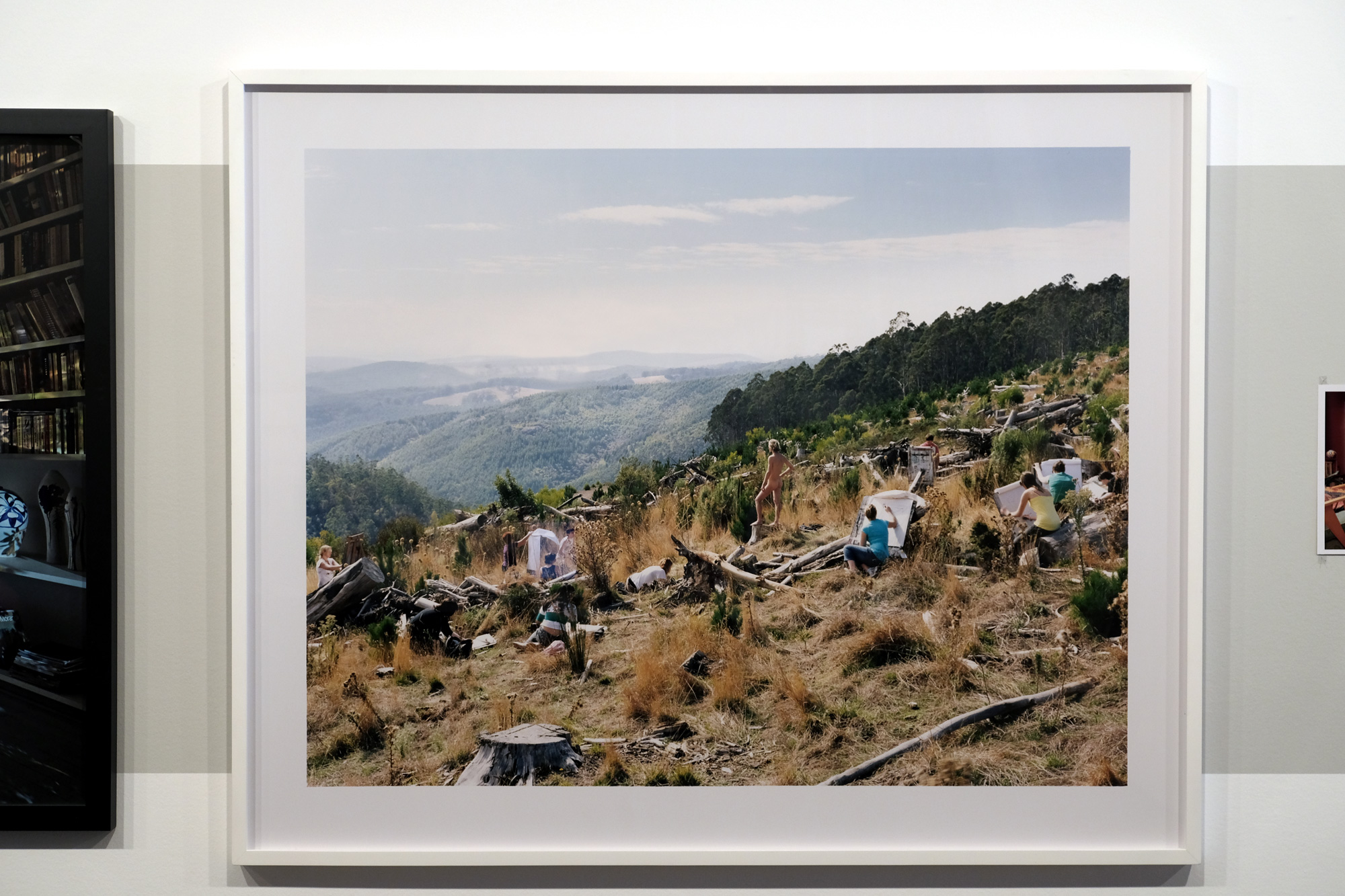
Installation view of the exhibition 'An Unorthodox Flow of Images' at the Centre for Contemporary Photography (CCP), Melbourne, September - November 2017 showing (30) Siri Hayes' 'Plein air explorers' 2008


Installation views of the exhibition An Unorthodox Flow of Images at the CCP, Melbourne showing in the bottom image (30) Siri Hayes’ Plein air explorers 2008
Photos: Marcus Bunyan


Hayes: An artist’s studio in the landscape.


Installation view of the exhibition 'An Unorthodox Flow of Images' at the Centre for Contemporary Photography (CCP), Melbourne, September - November 2017 showing (31) Robyn Stacey's 'Wendy and Brett Whiteley's Library from the series Dark Wonder' 2016


Installation view of the exhibition An Unorthodox Flow of Images at the CCP, Melbourne showing (31) Robyn Stacey’s Wendy and Brett Whiteley’s Library from the series Dark Wonder 2016
Photo: Marcus Bunyan


Stacey: The landscape brought into the studio by a camera obscura. Robyn Stacey captures the perfect moment of light and clarity, in this instance, also turning the egg-object into an orb of light.


Installation view of the exhibition 'An Unorthodox Flow of Images' at the Centre for Contemporary Photography (CCP), Melbourne, September - November 2017 showing (33) NASA Images' 'A lunar disc as seen from the Apollo 15 spacecraft' 1971 (top); (34) Steve Carr's 'Smoke Bubble No. 30' 2010 (right); and (35) National Geographic Vol. 174, No. 6, December 1988 (left)


Installation view of the exhibition An Unorthodox Flow of Images at the CCP, Melbourne showing (33) NASA Images’ A lunar disc as seen from the Apollo 15 spacecraft 1971 (top); (34) Steve Carr’s Smoke Bubble No. 30 2010 (right); and (35) National Geographic Vol. 174, No. 6, December 1988 (left)
Photo: Marcus Bunyan


Carr: Smoke filled soap orb, reminiscent of a planet.

National Geographic: The subtitle to this special 1988 issue of National Geographic, which has a holographic front and back cover is: “As We Begin Our Second Century, the Geographic Asks: Can Man Save this Fragile Earth?”


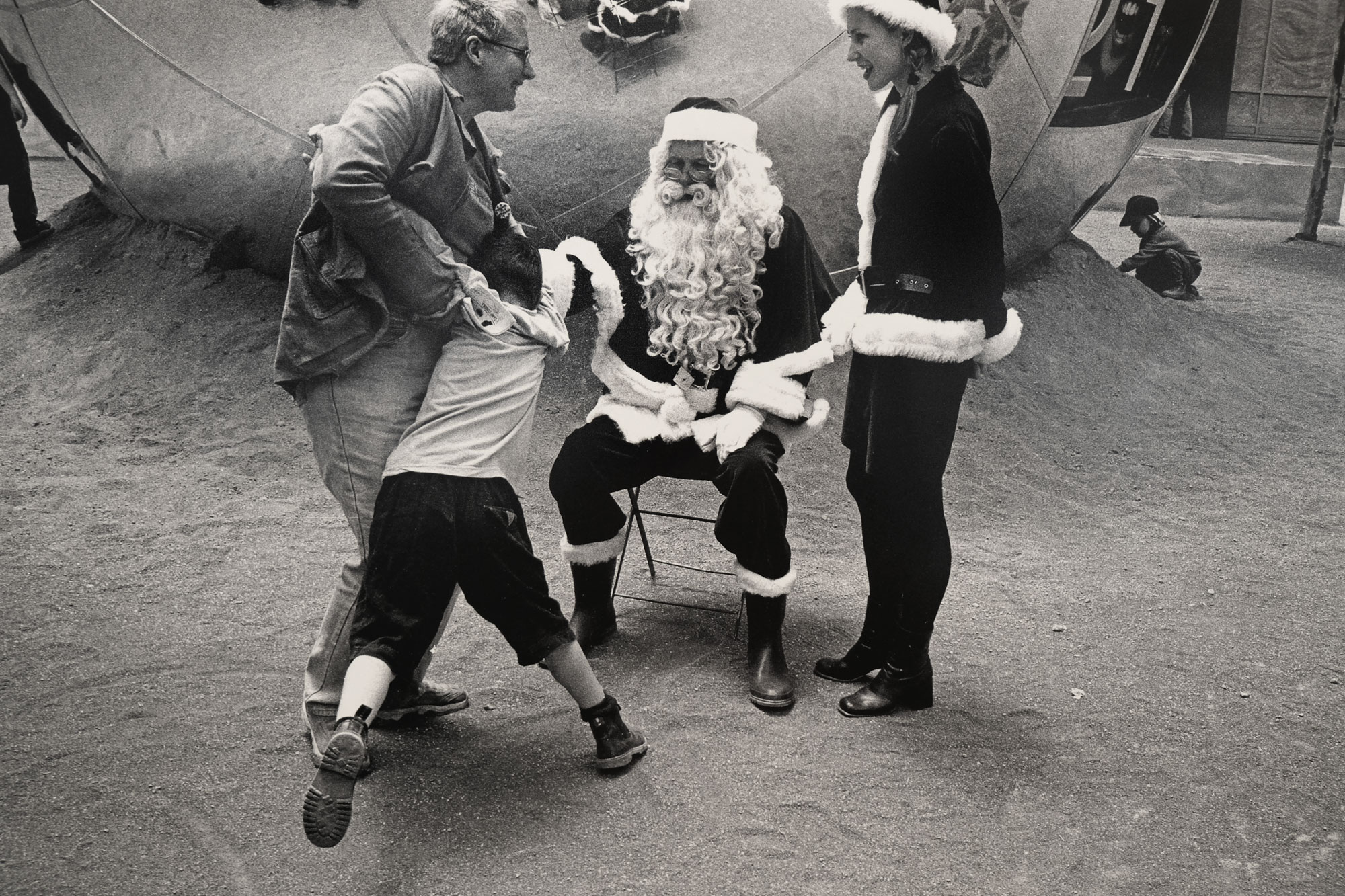
Installation view of the exhibition 'An Unorthodox Flow of Images' at the Centre for Contemporary Photography (CCP), Melbourne, September - November 2017 showing (39) Jesse Marlow's 'Santa' 2002


Installation view of the exhibition An Unorthodox Flow of Images at the CCP, Melbourne showing (39) Jesse Marlow’s Santa 2002
Photo: Marcus Bunyan


Installation view of the exhibition 'An Unorthodox Flow of Images' at the Centre for Contemporary Photography (CCP), Melbourne, September - November 2017 showing (44) Susan Fereday's 'Köln' 2016


Installation view of the exhibition An Unorthodox Flow of Images at the CCP, Melbourne showing (44) Susan Fereday’s Köln 2016
Photo: Marcus Bunyan


Installation view of the exhibition 'An Unorthodox Flow of Images' at the Centre for Contemporary Photography (CCP), Melbourne, September - November 2017 showing (49) W. H. Moffitt's 'Beach Scene, Collard #3' c. 1944


Installation view of the exhibition An Unorthodox Flow of Images at the CCP, Melbourne showing (49) W. H. Moffitt’s Beach Scene, Collard #3 c. 1944
Photo: Marcus Bunyan


W. H. Moffitt: The bromoil process was invented in 1907 by Englishman C. Wellbourne Piper. A bromoil print is simply a black and white photograph printed on a suitable photographic paper from which the silver image is removed and lithography inks applied.


Installation view of the exhibition 'An Unorthodox Flow of Images' at the Centre for Contemporary Photography (CCP), Melbourne, September - November 2017 showing (51) Sarah Brown's 'Quietly' 2017 (right); (52) Robert Billington's 'Narrabeen Baths' 1994 (middle bottom); and (53) Trent Parke's 'Untitled #92' 1999-2000 (middle top)


Installation view of the exhibition An Unorthodox Flow of Images at the CCP, Melbourne showing (51) Sarah Brown’s Quietly 2017 (right); (52) Robert Billington’s Narrabeen Baths 1994 (middle bottom); and (53) Trent Parke’s Untitled #92 1999-2000 (middle top)
Photo: Marcus Bunyan


Brown: The salted paper technique was created in the mid-1830s by Henry Fox Talbot. He made what he called “sensitive paper for “photogenic drawing” by wetting a sheet of writing paper with a weak solution of ordinary table salt, blotting and drying it, then brushing one side with a strong solution of silver nitrate.


Installation view of the exhibition 'An Unorthodox Flow of Images' at the Centre for Contemporary Photography (CCP), Melbourne, September - November 2017 showing (55) Charles Bayliss' 'Ngarrindjeri people, Chowilla Station, Lower Murray River, South Australia' 1886 (right) and (56) Anne Noble's 'Antarctic diorama, Polaria Centre, Tromso, Norway' 2005 (left)

Installation view of the exhibition 'An Unorthodox Flow of Images' at the Centre for Contemporary Photography (CCP), Melbourne, September - November 2017 showing (55) Charles Bayliss' 'Ngarrindjeri people, Chowilla Station, Lower Murray River, South Australia' 1886 (right) and (56) Anne Noble's 'Antarctic diorama, Polaria Centre, Tromso, Norway' 2005 (left)


Installation view of the exhibition An Unorthodox Flow of Images at the CCP, Melbourne showing (55) Charles Bayliss’ Ngarrindjeri people, Chowilla Station, Lower Murray River, South Australia 1886 (right) and (56) Anne Noble’s Antarctic diorama, Polaria Centre, Tromso, Norway 2005 (left)
Photos: Marcus Bunyan


Bayliss: Water looks like glass in this colonial photograph where the subjects perform for Bayliss. “Bayliss here re-creates a ‘native fishing scene’ tableau, reminiscent of a museum diorama.”

Noble: Water is glass in this diorama; photographed as if it were from nature.


Installation view of the exhibition 'An Unorthodox Flow of Images' at the Centre for Contemporary Photography (CCP), Melbourne, September - November 2017 showing (55) Charles Bayliss' 'Ngarrindjeri people, Chowilla Station, Lower Murray River, South Australia' 1886


Installation view of the exhibition An Unorthodox Flow of Images at the CCP, Melbourne showing (55) Charles Bayliss’ Ngarrindjeri people, Chowilla Station, Lower Murray River, South Australia 1886
Photo: Marcus Bunyan


Installation view of the exhibition 'An Unorthodox Flow of Images' at the Centre for Contemporary Photography (CCP), Melbourne, September - November 2017 showing (58) Andrew Hazewinkel's 'Staring together at the stars, #1' 2013 (right); (59) Ian Dodd's 'Wet Hair' 1974 (second right); (60) Juno Gemes' 'One with the Land' 1978 (middle); (61) David Rosetzky's 'Milo' 2017 (upper left); and (62) Brook Andrew's 'I Split Your Gaze' 1997 (left)


Installation view of the exhibition An Unorthodox Flow of Images at the CCP, Melbourne showing (58) Andrew Hazewinkel’s Staring together at the stars, #1 2013 (right); (59) Ian Dodd’s Wet Hair 1974 (second right); (60) Juno Gemes’ One with the Land 1978 (middle); (61) David Rosetzky’s Milo 2017 (upper left); and (62) Brook Andrew’s I Split Your Gaze 1997 (left)
Photo: Marcus Bunyan


Gemes: The subtitle to this photograph in some collections reads: ‘waiting for the sacred fish the Dunya and Wanra to come in, Mornington Island, Queensland’.


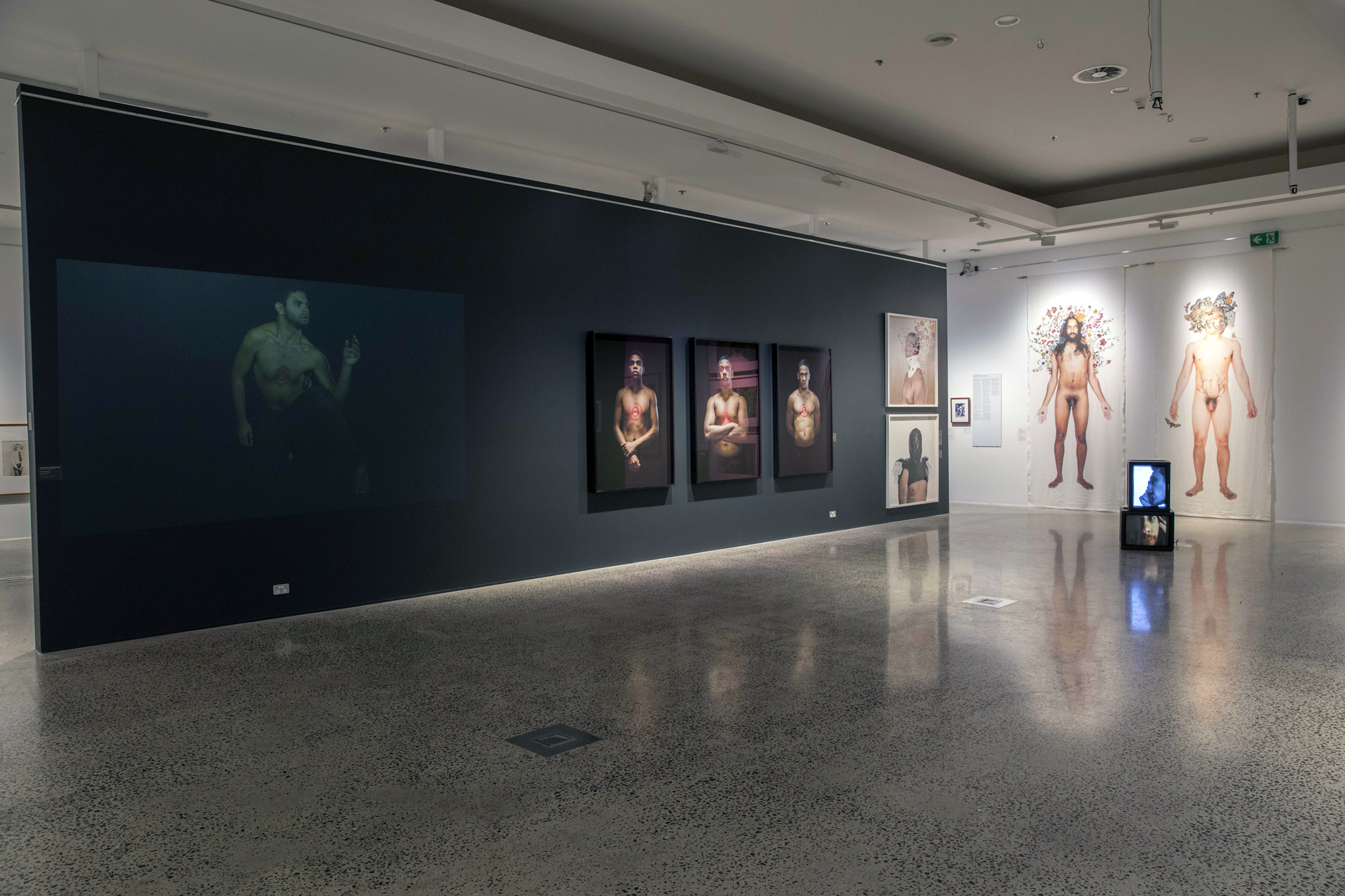
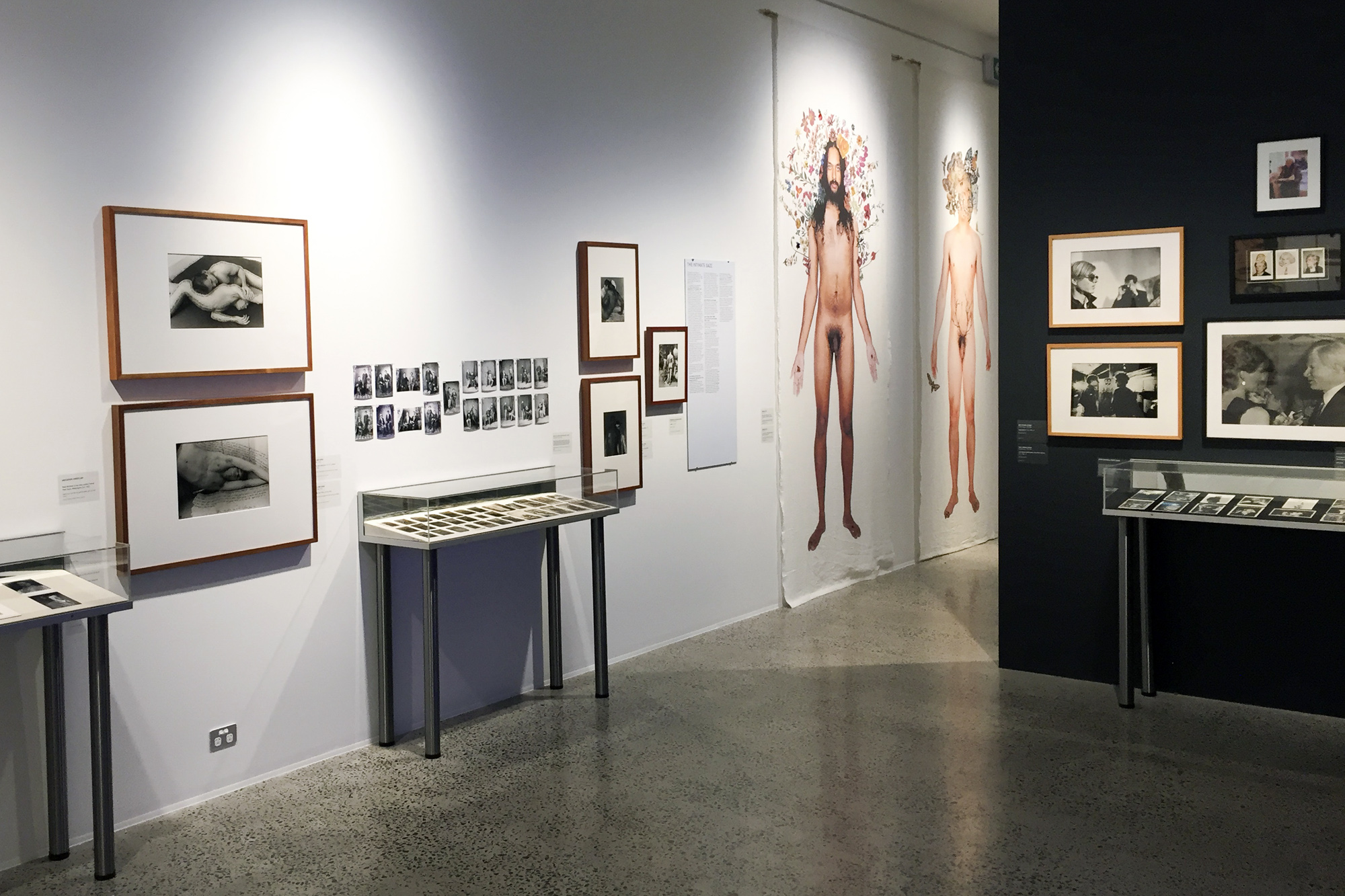
Installation view of the exhibition 'An Unorthodox Flow of Images' at the Centre for Contemporary Photography (CCP), Melbourne, September - November 2017

Installation view of the exhibition 'An Unorthodox Flow of Images' at the Centre for Contemporary Photography (CCP), Melbourne, September - November 2017

Installation view of the exhibition 'An Unorthodox Flow of Images' at the Centre for Contemporary Photography (CCP), Melbourne, September - November 2017

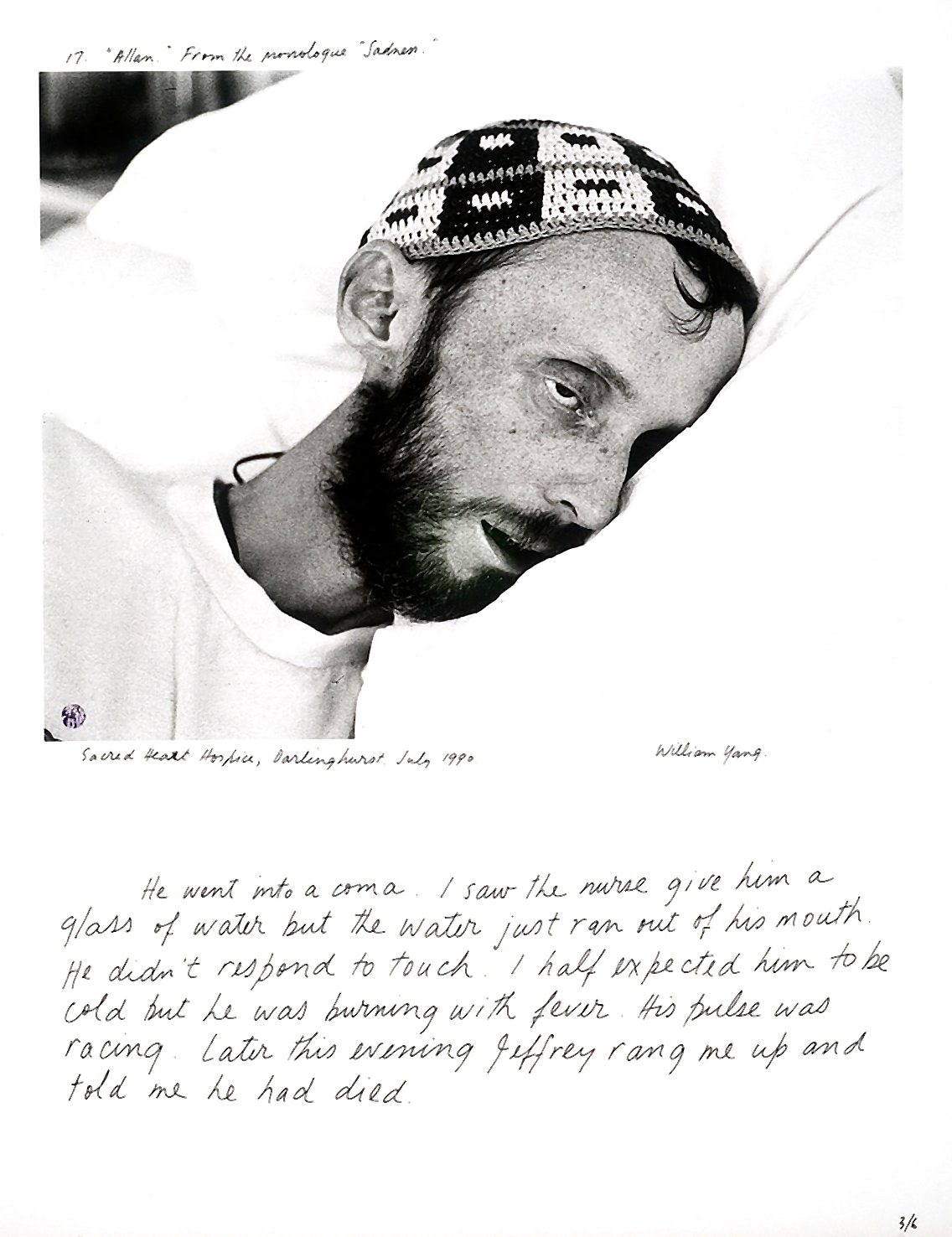
Installation view of the exhibition 'An Unorthodox Flow of Images' at the Centre for Contemporary Photography (CCP), Melbourne, September - November 2017 showing at centre right in the bottom image (64) William Yang's 'Alter Ego' 2000


Installation views of the exhibition An Unorthodox Flow of Images at the CCP, Melbourne showing at centre right in the bottom image (64) William Yang’s Alter Ego 2000 and at right, Brook Andrew’s I Split Your Gaze 1997
Photos: Marcus Bunyan


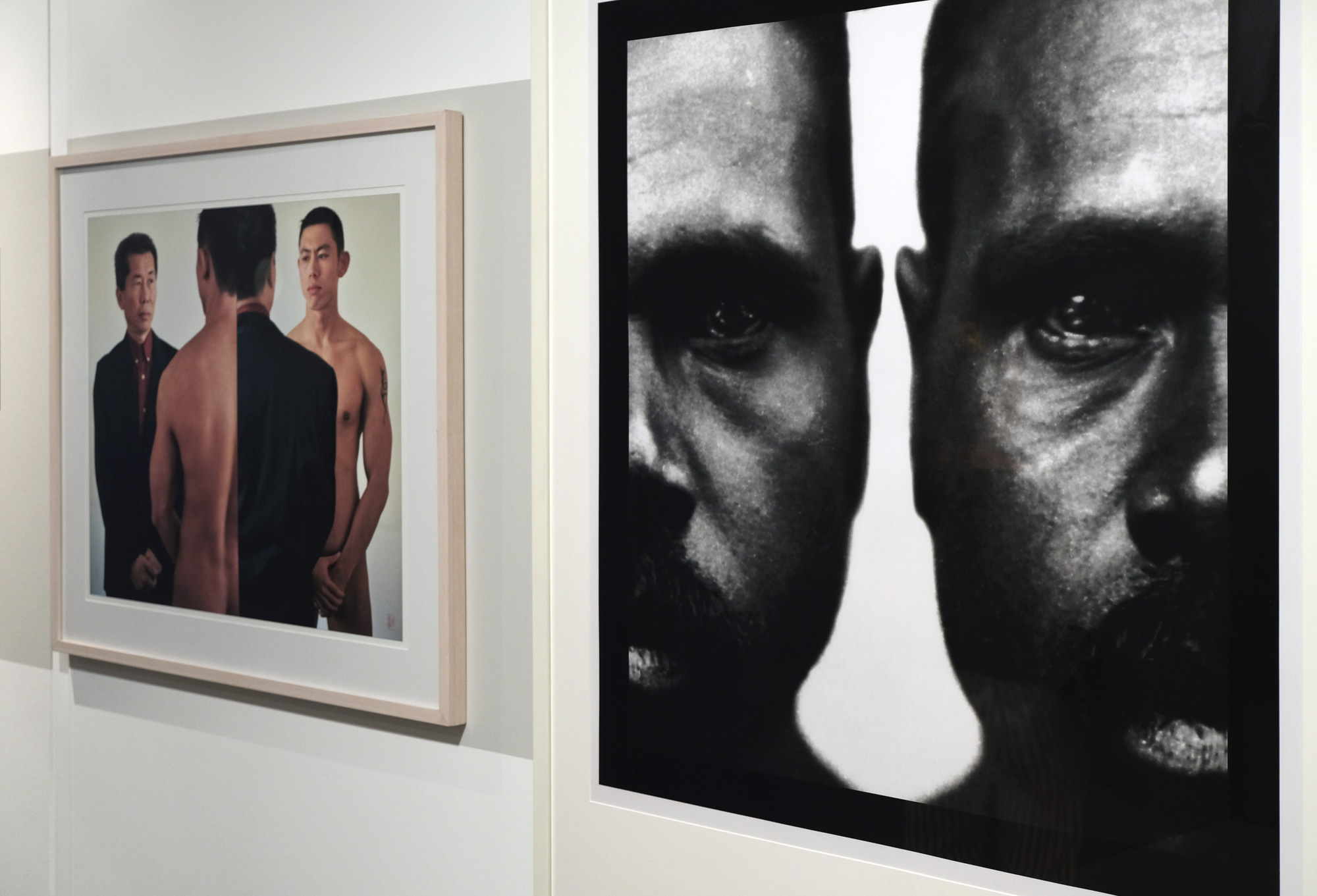
Brook Andrew (Australian, b. 1970) 'I Split Your Gaze' 1997


Brook Andrew (Australian, b. 1970)
I Split Your Gaze
1997
Gelatin silver print


Installation view of the exhibition 'An Unorthodox Flow of Images' at the Centre for Contemporary Photography (CCP), Melbourne, September - November 2017 showing (65) Sue Ford's 'Lyn and Carol' 1961 (right)


Installation view of the exhibition An Unorthodox Flow of Images at the CCP, Melbourne showing (65) Sue Ford’s Lyn and Carol 1961 (right)
Photo: Marcus Bunyan


Sue Ford (Australian, 1943-2009) 'Lyn and Carol' 1961


Sue Ford (Australian, 1943-2009)
Lyn and Carol
1961
Gelatin silver print


Installation view of the exhibition 'An Unorthodox Flow of Images' at the Centre for Contemporary Photography (CCP), Melbourne, September - November 2017 showing (67) a stereoscope by an unknown photographer titled 'Affection' c. 1882


Installation view of the exhibition An Unorthodox Flow of Images at the CCP, Melbourne showing (67) a stereoscope by an unknown photographer titled Affection c. 1882
Photo: Marcus Bunyan


Kilburn Brothers, Littleton, N. H. (publisher): In the stereoscope, the double image combines to create the illusion of three-dimensional space. Compelled to make meaning from disrupted information, the brain merges two slightly different images into a seemingly single three-dimensional image.


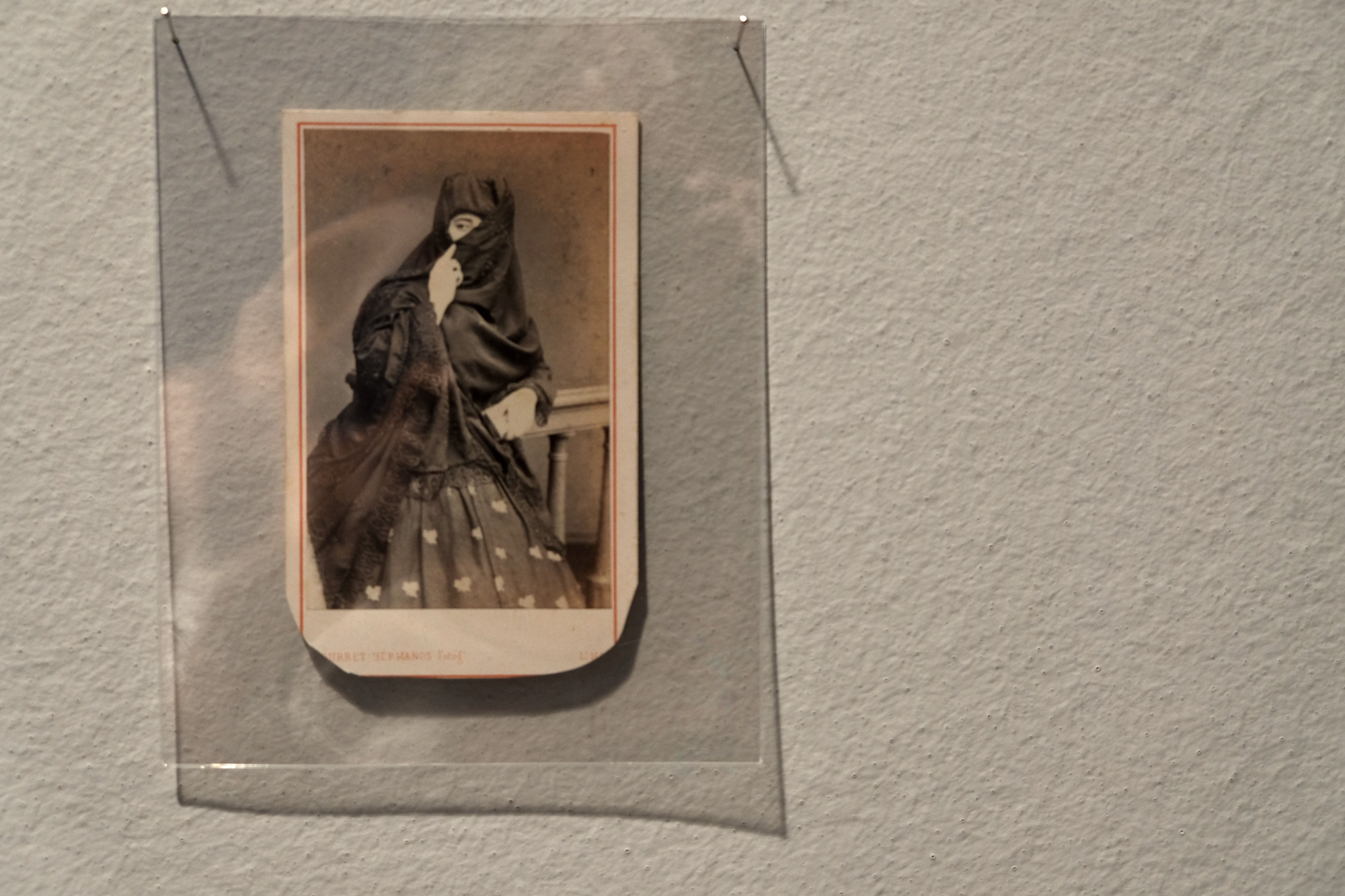
Installation view of the exhibition 'An Unorthodox Flow of Images' at the Centre for Contemporary Photography (CCP), Melbourne, September - November 2017 showing (68) a photograph by an unknown photographer (Courret Hermanos Fotografía - Eugenio Courret 1841 - c. 1900) titled 'Lima Tapadas' c. 1887


Installation view of the exhibition An Unorthodox Flow of Images at the CCP, Melbourne showing (68) a photograph by an unknown photographer (Courret Hermanos Fotografía – Eugenio Courret 1841 – c. 1900) titled Lima Tapadas c. 1887
Photo: Marcus Bunyan


Installation view of the exhibition 'An Unorthodox Flow of Images' at the Centre for Contemporary Photography (CCP), Melbourne, September - November 2017 showing (76) Harold Cazneaux's 'Spirit of Endurance' 1937


Installation view of the exhibition An Unorthodox Flow of Images at the CCP, Melbourne showing (76) Harold Cazneaux’s Spirit of Endurance 1937
Photo: Marcus Bunyan


Cazneaux: In the following two works, a critical change of title by the artist reveals what, alone, the eye cannot see. This photograph had already achieved iconic status as a symbol of the noble Australian landscape when, following the loss of his son who died aged 21 at Tobruk in 1941, Cazneaux flipped the negative and presented the image under the new title Spirit of Endurance. The tree is now classified on the National Trust of South Australia’s Register of Significant Trees.


Harold Cazneaux (Australian born New Zealand, 1878-1953)
'Spirit of endurance' 1937


Harold Cazneaux (Australian born New Zealand, 1878-1953)
Spirit of endurance
1937
Gelatin silver print


Installation view of the exhibition 'An Unorthodox Flow of Images' at the Centre for Contemporary Photography (CCP), Melbourne, September - November 2017 showing (77) Jeff Carter's 'The Eunuch, Marree, South Australia' 1964 (NB. note reflections in the image from the gallery)


Installation view of the exhibition An Unorthodox Flow of Images at the CCP, Melbourne showing (77) Jeff Carter’s The Eunuch, Marree, South Australia 1964 (NB. note reflections in the image from the gallery)
Photo: Marcus Bunyan


Carter: Changing a title can dramatically alter the meaning of an image. This work has had several titles:

Morning Break 1964;
Dreaming in the sun at Marree, outside the towns single store 1966;
At times there is not too much to do except just sit in the sun… 1968;
‘Pompey’ a well known resident of Marree;
and finally The Eunuch, Marree, South Australia 2000

Under early titles, the photograph appeared to be a simple portrait of “Pompey”, a local Aboriginal man in Marree who worked at the town’s bakery. The final title draws viewers’ attention away from what might have seemed to be the man’s relaxed approach to life, and towards the violence enacted on Aboriginal communities in castrating young boys.


Jeff Carter (Australian 1928-2010) 'Morning Break, Marnee SA' 1964


Jeff Carter (Australian 1928-2010)
Morning Break, Marnee SA
1964
Silver gelatin print


Installation view of the exhibition 'An Unorthodox Flow of Images' at the Centre for Contemporary Photography (CCP), Melbourne, September - November 2017 showing (78) Lisa Bellear's 'The Black GST Protest at Camp Sovereignty' 2006


Installation view of the exhibition An Unorthodox Flow of Images at the CCP, Melbourne showing (78) Lisa Bellear’s The Black GST Protest at Camp Sovereignty 2006
Photo: Marcus Bunyan


Bellear (Minjungbul/Goernpil/Noonuccal/Kanak): Is the demonstrator leading the policeman? Is the policeman arresting this demonstrator? Or is this tenderness between two men? This is a photograph of a photograph. As was her practice, Lisa Bellear always gave the original to her subject.


Installation view of the exhibition 'An Unorthodox Flow of Images' at the Centre for Contemporary Photography (CCP), Melbourne, September - November 2017 showing (82) photographer undisclosed ASIO surveillance images 1949-1980

Installation view of the exhibition 'An Unorthodox Flow of Images' at the Centre for Contemporary Photography (CCP), Melbourne, September - November 2017 showing (82) photographer undisclosed ASIO surveillance images 1949-1980


Installation views of the exhibition An Unorthodox Flow of Images at the CCP, Melbourne showing (82) photographer undisclosed ASIO surveillance images 1949-1980
Photos: Marcus Bunyan


ASIO: The Australian Security and Intelligence Organisation (ASIO) employed photographers to spy on Australian citizens. The photographs which were annotated to indicate persons of interest, were retained by ASIO along with other forms of material gathered through espionage.


Installation view of the exhibition 'An Unorthodox Flow of Images' at the Centre for Contemporary Photography (CCP), Melbourne, September - November 2017 showing (83) O. Philip Korczynski's 'Unwanted Witness and Run' 1980s


Installation view of the exhibition An Unorthodox Flow of Images at the CCP, Melbourne showing (83) O. Philip Korczynski’s Unwanted Witness and Run 1980s
Photo: Marcus Bunyan


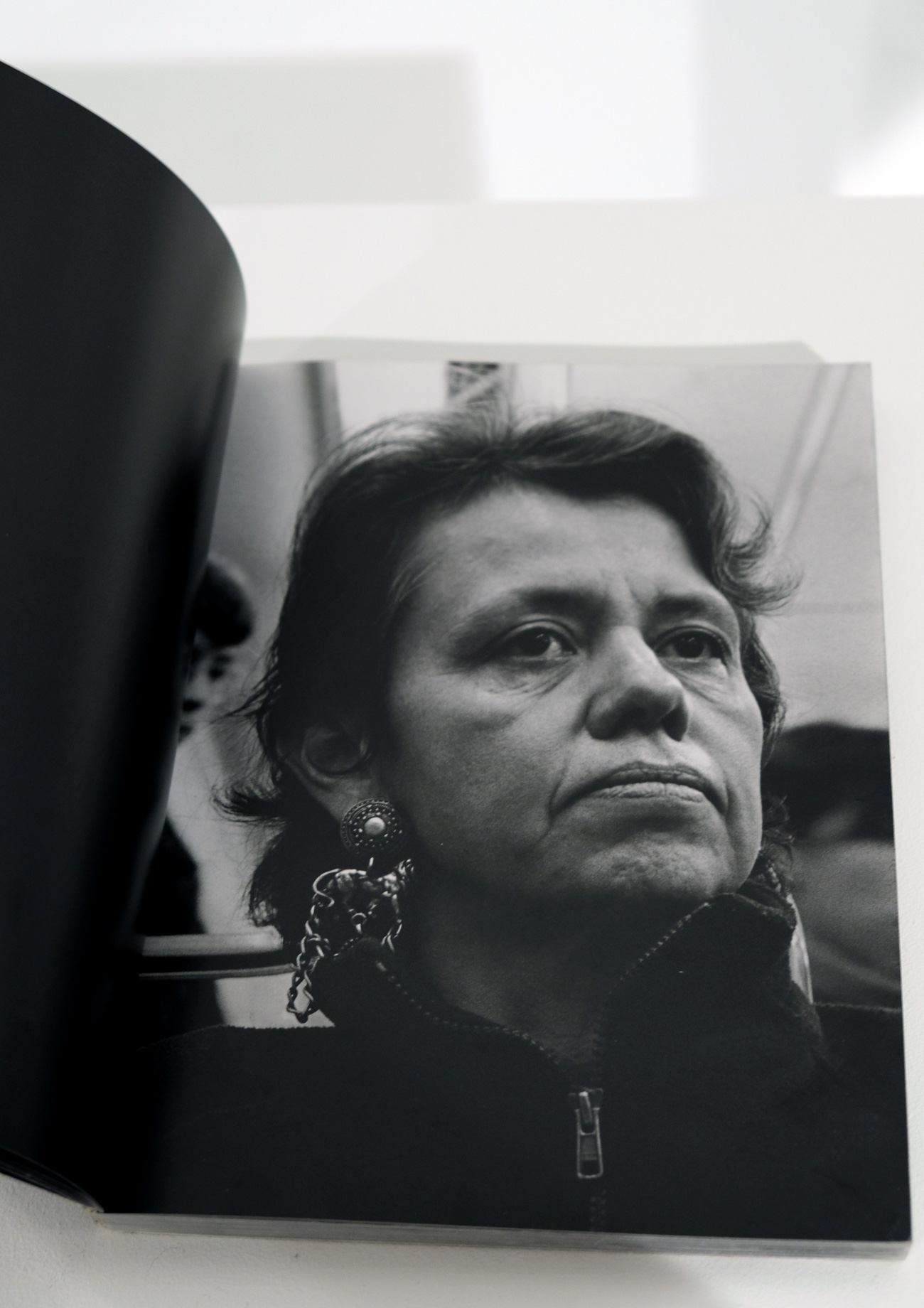
Installation view of the exhibition 'An Unorthodox Flow of Images' at the Centre for Contemporary Photography (CCP), Melbourne, September - November 2017 showing (85) pages from Luc Delahaye's book 'L'Autre' 1999

Installation view of the exhibition 'An Unorthodox Flow of Images' at the Centre for Contemporary Photography (CCP), Melbourne, September - November 2017 showing (85) pages from Luc Delahaye's book 'L'Autre' 1999

Installation view of the exhibition 'An Unorthodox Flow of Images' at the Centre for Contemporary Photography (CCP), Melbourne, September - November 2017 showing (85) pages from Luc Delahaye's book 'L'Autre' 1999

Installation view of the exhibition 'An Unorthodox Flow of Images' at the Centre for Contemporary Photography (CCP), Melbourne, September - November 2017 showing (85) pages from Luc Delahaye's book 'L'Autre' 1999


Installation views of the exhibition An Unorthodox Flow of Images at the CCP, Melbourne showing (85) pages from Luc Delahaye’s book L’Autre 1999
Photos: Marcus Bunyan


Delahaye: In the footsteps of Walker Evans’ classic candid series, Rapid Transit 1956.


Installation view of the exhibition 'An Unorthodox Flow of Images' at the Centre for Contemporary Photography (CCP), Melbourne, September - November 2017 showing (88) Tracey Lamb's 'Surveillance Image #3' 2015


Installation view of the exhibition An Unorthodox Flow of Images at the CCP, Melbourne showing (88) Tracey Lamb’s Surveillance Image #3 2015
Photo: Marcus Bunyan


Installation view of the exhibition 'An Unorthodox Flow of Images' at the Centre for Contemporary Photography (CCP), Melbourne, September - November 2017 showing (89) Walker Evans' 'Family Snapshots on Farmhouse Wall' 1936 (right) with (91) Photographer unknown 'Lee family portrait before the funeral' c. 1920 (top left); and (92) Photographer unknown 'Lee family portrait with portrait of dead father added' c. 1920 (bottom left)


Installation view of the exhibition An Unorthodox Flow of Images at the CCP, Melbourne showing (89) Walker Evans’ Family Snapshots on Farmhouse Wall 1936 (right) with (91) Photographer unknown Lee family portrait before the funeral c. 1920 (top left); and (92) Photographer unknown Lee family portrait with portrait of dead father added c. 1920 (bottom left)
Photo: Marcus Bunyan


Evans: During his celebrated work for the Farm Security Administration documenting the effects of the Great Depression, Walker Evans secretly removed these photographs from the home of his subject, and seemingly hurriedly pinned them to the exterior wall of the house, and photographed them without permission.


Installation view of the exhibition 'An Unorthodox Flow of Images' at the Centre for Contemporary Photography (CCP), Melbourne, September - November 2017 showing (90) photographer unknown 'In memoriam' album 1991


Installation view of the exhibition An Unorthodox Flow of Images at the CCP, Melbourne showing (90) photographer unknown In memoriam album 1991
Photo: Marcus Bunyan


Memoriam: Double exposure enables the impossible in this personal memorial album.


Installation view of the exhibition 'An Unorthodox Flow of Images' at the Centre for Contemporary Photography (CCP), Melbourne, September - November 2017 showing (91) Photographer unknown. 'Lee family portrait before the funeral' c. 1920 (top) and (92) photographer unknown. 'Lee family portrait with portrait of dead father added' c. 1920 (bottom)


Installation view of the exhibition An Unorthodox Flow of Images at the CCP, Melbourne showing (91) Photographer unknown Lee family portrait before the funeral c. 1920 (top) and (92) photographer unknown Lee family portrait with portrait of dead father added c. 1920 (bottom)
Photo: Marcus Bunyan


Funeral: When the family photographer arrived at the Lee home – the day of grandfather’s funeral – he asked them to pose with smiles so that, in the absence of a family portrait, he could create a composite portrait, which was given to the family some days later.


Installation view of the exhibition 'An Unorthodox Flow of Images' at the Centre for Contemporary Photography (CCP), Melbourne, September - November 2017 showing (93) Kate Gollings' 'Lee family portrait' 1986 (right) and (94) David Moore's 'Migrants arriving in Sydney' 1966 (left)


Installation view of the exhibition An Unorthodox Flow of Images at the CCP, Melbourne showing (93) Kate Gollings’ Lee family portrait 1986 (right) and (94) David Moore’s Migrants arriving in Sydney 1966 (left)
Photo: Marcus Bunyan


Gollings: A studio portrait of the Lee family, some 60 years following the previous two photographs. The young man is now grandfather. Still the photographer continues to craft the family, in this case through positioning the subjects, in ways which may or may not reflect actual family relationships.

Moore: In 2015, Judy Annear said of this famous photograph: “It’s great to consider that it’s not actually what it seems.” Years after the photo was published, it emerged that four of the passengers in it were not migrants but Sydneysiders returning home from holiday.


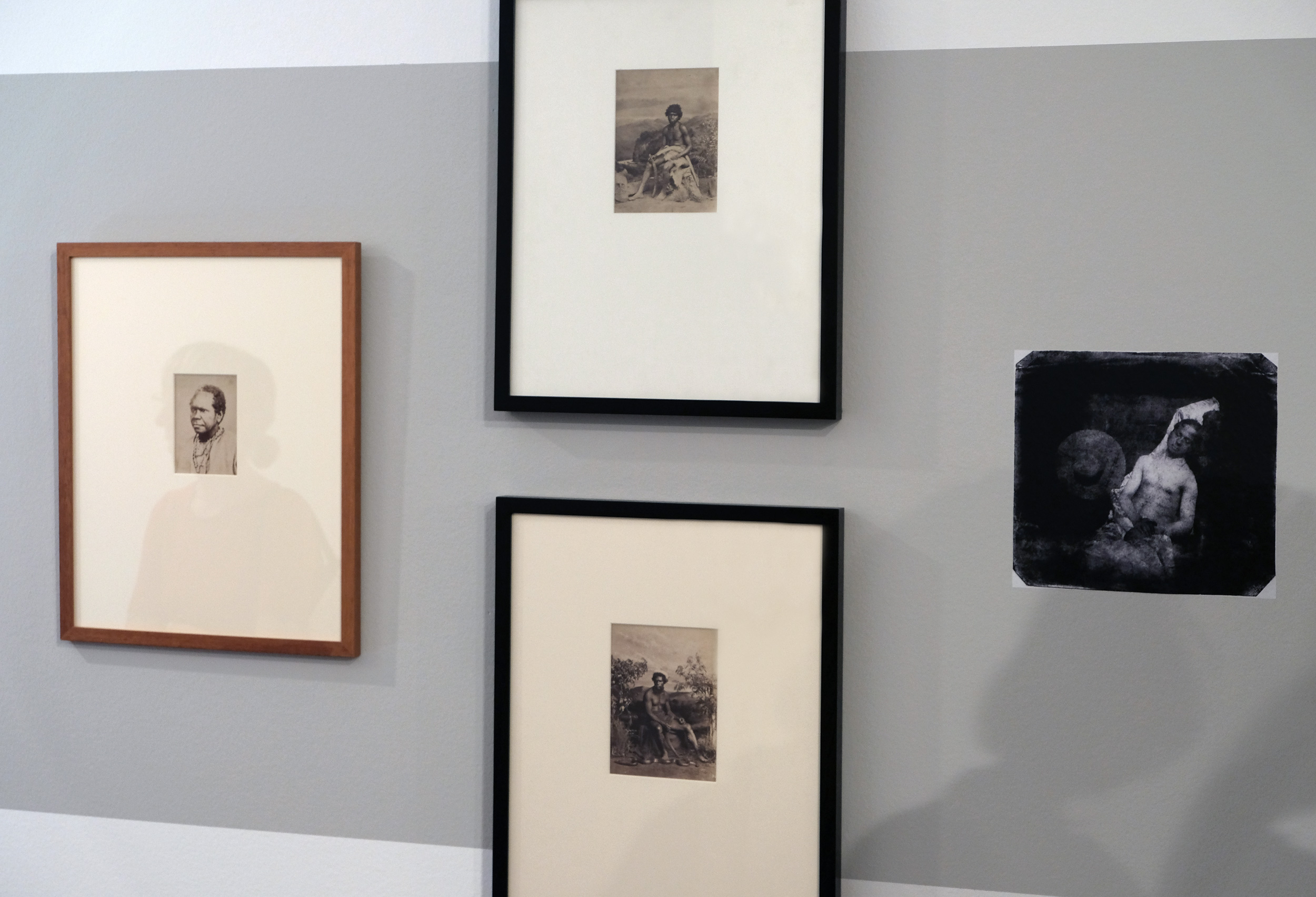
Installation view of the exhibition 'An Unorthodox Flow of Images' at the Centre for Contemporary Photography (CCP), Melbourne, September - November 2017 showing (98) Hippolyte Bayard's 'Self-portrait as a Drowned Man' 1840 (right); (99) J. W. Lindt's 'Untitled (Seated Aboriginal man holding Boomerangs)' c. 1874 (top middle); (100) J. W. Lindt's 'Untitled (Aboriginal man with Snake)' c. 1875 (bottom middle); and (101) Charles Woolley's 'Truccanini, last female Aborigine of Tasmania with shell necklace' 1886 (left)


Installation view of the exhibition An Unorthodox Flow of Images at the CCP, Melbourne showing (98) Hippolyte Bayard’s Self-portrait as a Drowned Man 1840 (right); (99) J. W. Lindt’s Untitled (Seated Aboriginal man holding Boomerangs) c. 1874 (top middle); (100) J. W. Lindt’s Untitled (Aboriginal man with Snake) c. 1875 (bottom middle); and (101) Charles Woolley’s Truccanini, last female Aborigine of Tasmania with shell necklace 1886 (left)
Photo: Marcus Bunyan


Bayard: With its telling title, this staged image is the first instance of intentional photographic fakery, made in protest by Bayard because he felt aggrieved that his role in the invention of photography was unrecognised.

Lindt: For white colonialists, photography became “a vehicle for recording new and exotic lands and informing the ‘unexotic’ Europe of the strange landscape, flora, fauna, and people. In the case of the postcard print fashion from around 1900; to entice tourists to cruise to [exotic] places … Ultimately and blatantly however, photography became another tool of colonialism, to label, control, dehumanise and disempower their subjects who could only reply in defiant gaze at the lens controlled by someone else.” ~ Djon Mundine from Fiona Foley: River of Corn, exh. cat. University of South Florida Contemporary Art Museum, Tampa, USA, 2001


Installation view of the exhibition 'An Unorthodox Flow of Images' at the Centre for Contemporary Photography (CCP), Melbourne, September - November 2017 showing (101) Charles Woolley's 'Truccanini, last female Aborigine of Tasmania with shell necklace' 1886 (right); (102) Christian Thompson's '(Bidjara) Untitled (self portrait) Image No 1' from 'Emotional Striptease' 2003 (middle); (103) Charles Kerry's 'Aboriginal Chief' c. 1901-1907 (top left); and (104) Brook Andrew's 'Sexy and Dangerous' 1996 (bottom left)


Installation view of the exhibition An Unorthodox Flow of Images at the CCP, Melbourne showing (101) Charles Woolley’s Truccanini, last female Aborigine of Tasmania with shell necklace 1886 (right); (102) Christian Thompson’s (Bidjara) Untitled (self portrait) Image No 1 from Emotional Striptease 2003 (middle); (103) Charles Kerry’s Aboriginal Chief c. 1901-1907 (top left); and (104) Brook Andrew’s Sexy and Dangerous 1996 (bottom left)
Photo: Marcus Bunyan


Thompson: Contemporary Indigenous artists return the colonial photographer’s gaze. “For Indigenous people the camera’s central role has been in transforming but really stereotyping our cultures.” In more recent times, “Indigenous people have moved behind the camera, firstly replacing the documenter, then creatively reinterpreting their photographic history.” ~ Djon Mundine from Fiona Foley: River of Corn, exh. cat. University of South Florida Contemporary Art Museum, Tampa, USA, 2001

Kerry: No name or details are recorded of this sitter from Barron River, QLD. He was a member of the touring Wild West Aboriginal troupe, which staged corroborees, weapon skills and tableaux of notorious encounters between armed Native Police and unarmed local communities.


Installation view of the exhibition 'An Unorthodox Flow of Images' at the Centre for Contemporary Photography (CCP), Melbourne, September - November 2017 showing (105) Fiona Foley's '(Badtjala) Wild Times Call 2' 2001 (right); (106) Murray Cammick's 'Bob Marley p owhiri, White Heron Hotel, April 1979' 1979 (second right); and (107) Kirsten Lyttle's '(Waikato, Tainui A Whiro, Ngāti Tahinga) Twilled Work' 2013 (middle left)


Installation view of the exhibition An Unorthodox Flow of Images at the CCP, Melbourne showing (105) Fiona Foley’s (Badtjala) Wild Times Call 2 2001 (right); (106) Murray Cammick’s Bob Marley p owhiri, White Heron Hotel, April 1979 1979 (second right); and (107) Kirsten Lyttle’s (Waikato, Tainui A Whiro, Ngāti Tahinga) Twilled Work 2013 (middle left)
Photo: Marcus Bunyan


Foley: Referencing Hollywood’s representation of the Wild West, Fiona Foley stands with Seminole Indians.

Lyttle: This is woven using the Maori raranga (plaiting) technique for making kete whakario (decorated baskets). According to Mick Pendergrast, the pattern is not named, but attributed to Te Hikapuhi, (Ngati Pikiao), late 19th Century. ~ Pendergrast, M (1984), Raranga Whakairo, Coromandel Press, NZ, pattern 19.


Installation view of the exhibition 'An Unorthodox Flow of Images' at the Centre for Contemporary Photography (CCP), Melbourne, September - November 2017 showing (107) Kirsten Lyttle's '(Waikato, Tainui A Whiro, Ngāti Tahinga) Twilled Work' 2013 (right) and (108) Michael Riley's '(Wiradjuri/Kamilaroi) Maria' 1985 (left)


Installation view of the exhibition An Unorthodox Flow of Images at the CCP, Melbourne showing (107) Kirsten Lyttle’s (Waikato, Tainui A Whiro, Ngāti Tahinga) Twilled Work 2013 (right) and (108) Michael Riley’s (Wiradjuri/Kamilaroi) Maria 1985 (left)
Photo: Marcus Bunyan


Installation view of the exhibition 'An Unorthodox Flow of Images' at the Centre for Contemporary Photography (CCP), Melbourne, September - November 2017 showing (109) Maree Clarke's '(Mutti Mutti, Yorta Yorta, BoonWurrung) Nan's House' (detail of installation) 2017 (right); (110) photographer unknown. 'Writer, Andre Malraux poses in his house of the Boulogne near Paris working at his book Le Musee Imaginaire or Imaginary Museum 2nd volume' 1953 (middle top); and (111) Clare Rae's 'Law Library' 2016 (bottom left)


Installation view of the exhibition An Unorthodox Flow of Images at the CCP, Melbourne showing (109) Maree Clarke’s (Mutti Mutti, Yorta Yorta, BoonWurrung) Nan’s House (detail of installation) 2017 (right); (110) photographer unknown Writer, Andre Malraux poses in his house of the Boulogne near Paris working at his book Le Musee Imaginaire or Imaginary Museum 2nd volume 1953 (middle top); and (111) Clare Rae’s Law Library 2016 (bottom left)
Photo: Marcus Bunyan


Clarke: This work is currently on display at the National Gallery of Australia, Canberra, as a hologram of the artist’s grandmother’s house, as remembered by the artist.

Unknown: ‘The imaginary museum’ or ‘the museum without walls’ (as it is often translated) is a collection reflecting Andre Malraux’s eurocentric conception of art history.


Installation view of the exhibition 'An Unorthodox Flow of Images' at the Centre for Contemporary Photography (CCP), Melbourne, September - November 2017 showing (117) Bill Culbert's 'Small glass pouring Light, France' 1997 (right) and (119) David Moore's 'Sisters of Charity' 1956 (left)


Installation view of the exhibition An Unorthodox Flow of Images at the CCP, Melbourne showing (117) Bill Culbert’s Small glass pouring Light, France 1997 (right) and (119) David Moore’s Sisters of Charity 1956 (left)
Photo: Marcus Bunyan


David Moore (Australian, 1927-2003) 'Sisters of Charity' 1956


David Moore (Australian, 1927-2003)
Sisters of Charity
1956
Gelatin silver print


Installation view of the exhibition 'An Unorthodox Flow of Images' at the Centre for Contemporary Photography (CCP), Melbourne, September - November 2017 showing (119) David Moore's 'Sisters of Charity' 1956 (bottom right); (118) Olive Cotton's 'Teacup Ballet' c. 1935 (top right); and (120) Bernd and Hilla Becher's 'Kies-und Schotterwerke' (Gravel Plants) 2006 (left)

Installation view of the exhibition 'An Unorthodox Flow of Images' at the Centre for Contemporary Photography (CCP), Melbourne, September - November 2017 showing (119) David Moore's 'Sisters of Charity' 1956 (bottom right); (118) Olive Cotton's 'Teacup Ballet' c. 1935 (top right); and (120) Bernd and Hilla Becher's 'Kies-und Schotterwerke' (Gravel Plants) 2006 (left)


Installation view of the exhibition An Unorthodox Flow of Images at the CCP, Melbourne showing (119) David Moore’s Sisters of Charity 1956 (bottom right); (118) Olive Cotton’s Teacup Ballet c. 1935 (top right); and (120) Bernd and Hilla Becher’s Kies-und Schotterwerke (Gravel Plants) 2006 (left)
Photo: Marcus Bunyan


Olive Cotton (Australian, 1911-2003) 'Teacup Ballet' 1935


Olive Cotton (Australian, 1911-2003)
Teacup Ballet
c. 1935
Gelatin silver print


Installation view of the exhibition 'An Unorthodox Flow of Images' at the Centre for Contemporary Photography (CCP), Melbourne, September - November 2017 showing (120) Bernd and Hilla Becher's 'Kies-und Schotterwerke' (Gravel Plants) 2006


Installation view of the exhibition An Unorthodox Flow of Images at the CCP, Melbourne showing (120) Bernd and Hilla Becher’s Kies-und Schotterwerke (Gravel Plants) 2006
Photo: Marcus Bunyan


Installation view of the exhibition 'An Unorthodox Flow of Images' at the Centre for Contemporary Photography (CCP), Melbourne, September - November 2017 showing (120) Bernd and Hilla Becher's 'Kies-und Schotterwerke' (Gravel Plants) 2006 (right) and (121) Robert Rooney's 'Garments: 3 December - 19 March 1973' 1973 (left)


Installation view of the exhibition An Unorthodox Flow of Images at the CCP, Melbourne showing (120) Bernd and Hilla Becher’s Kies-und Schotterwerke (Gravel Plants) 2006 (right) and (121) Robert Rooney’s Garments: 3 December – 19 March 1973 1973 (left)
Photo: Marcus Bunyan


Installation view of the exhibition 'An Unorthodox Flow of Images' at the Centre for Contemporary Photography (CCP), Melbourne, September - November 2017 showing (122) Helen Grace's 'Time and motion study #1 'Women seem to adapt to repetitive-type tasks...'' 1980, printed 2011 (detail)


Installation view of the exhibition An Unorthodox Flow of Images at the CCP, Melbourne showing (122) Helen Grace’s Time and motion study #1 ‘Women seem to adapt to repetitive-type tasks…’ 1980, printed 2011 (detail)
Photo: Marcus Bunyan


Installation view of the exhibition 'An Unorthodox Flow of Images' at the Centre for Contemporary Photography (CCP), Melbourne, September - November 2017 showing (122) Helen Grace's 'Time and motion study #1 'Women seem to adapt to repetitive-type tasks...'' 1980, printed 2011 (detail, right) and (123) Max Dupain's 'Backyard Forster' 1940 (left)


Installation view of the exhibition An Unorthodox Flow of Images at the CCP, Melbourne showing (122) Helen Grace’s Time and motion study #1 ‘Women seem to adapt to repetitive-type tasks…’ 1980, printed 2011 (detail, right) and (123) Max Dupain’s Backyard, Forster 1940 (left)
Photo: Marcus Bunyan


Max Dupain (Australian, 1911 - 1992) 'Backyard, Forster, New South Wales' 1940


Max Dupain (Australian, 1911-1992)
Backyard, Forster, New South Wales
1940
Gelatin silver print


Installation view of the exhibition 'An Unorthodox Flow of Images' at the Centre for Contemporary Photography (CCP), Melbourne, September - November 2017 showing (123) Max Dupain's 'Backyard Forster' 1940 (right) and (124) Marie Shannon's 'Pussy' 2016 (left)


Installation view of the exhibition An Unorthodox Flow of Images at the CCP, Melbourne showing (123) Max Dupain’s Backyard Forster 1940 (right) and (124) Marie Shannon’s Pussy 2016 (left)
Photo: Marcus Bunyan


Shannon: Also a trace of the cat.


Installation view of the exhibition 'An Unorthodox Flow of Images' at the Centre for Contemporary Photography (CCP), Melbourne, September - November 2017 showing (127) Mac Lawrence's 'Five raised fingers' 2016


Installation view of the exhibition An Unorthodox Flow of Images at the CCP, Melbourne showing (127) Mac Lawrence’s Five raised fingers 2016
Photo: Marcus Bunyan


Lawrence: Watery trace.


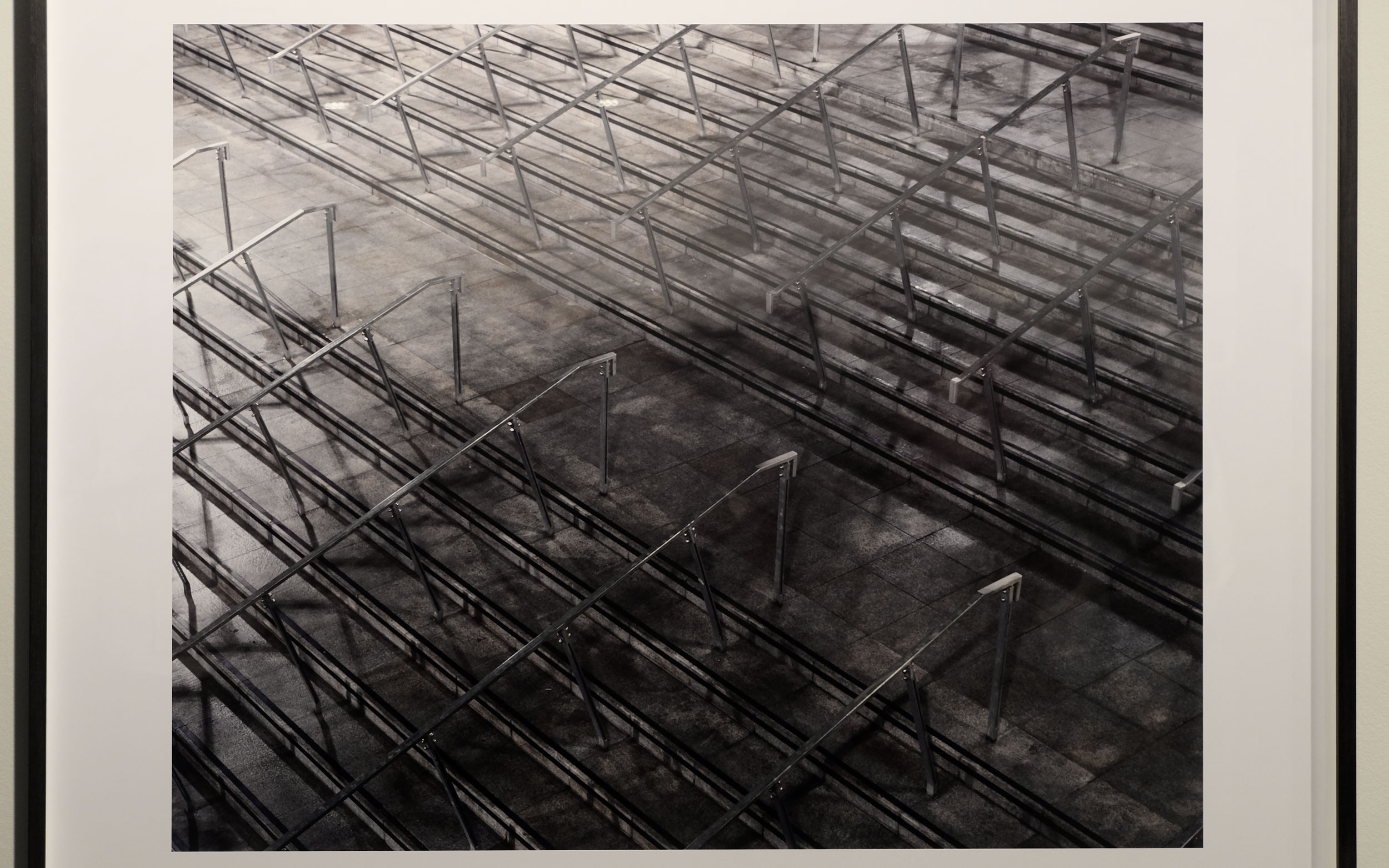
Installation view of the exhibition 'An Unorthodox Flow of Images' at the Centre for Contemporary Photography (CCP), Melbourne, September - November 2017 showing (136) Simon Terrill's 'Arsenal vs Fenerbahce' 2009


Installation view of the exhibition An Unorthodox Flow of Images at the CCP, Melbourne showing (136) Simon Terrill’s Arsenal vs Fenerbahce 2009


Terrill: The long exposure leaves only a trace of the football crowd, that has disappeared for the day.


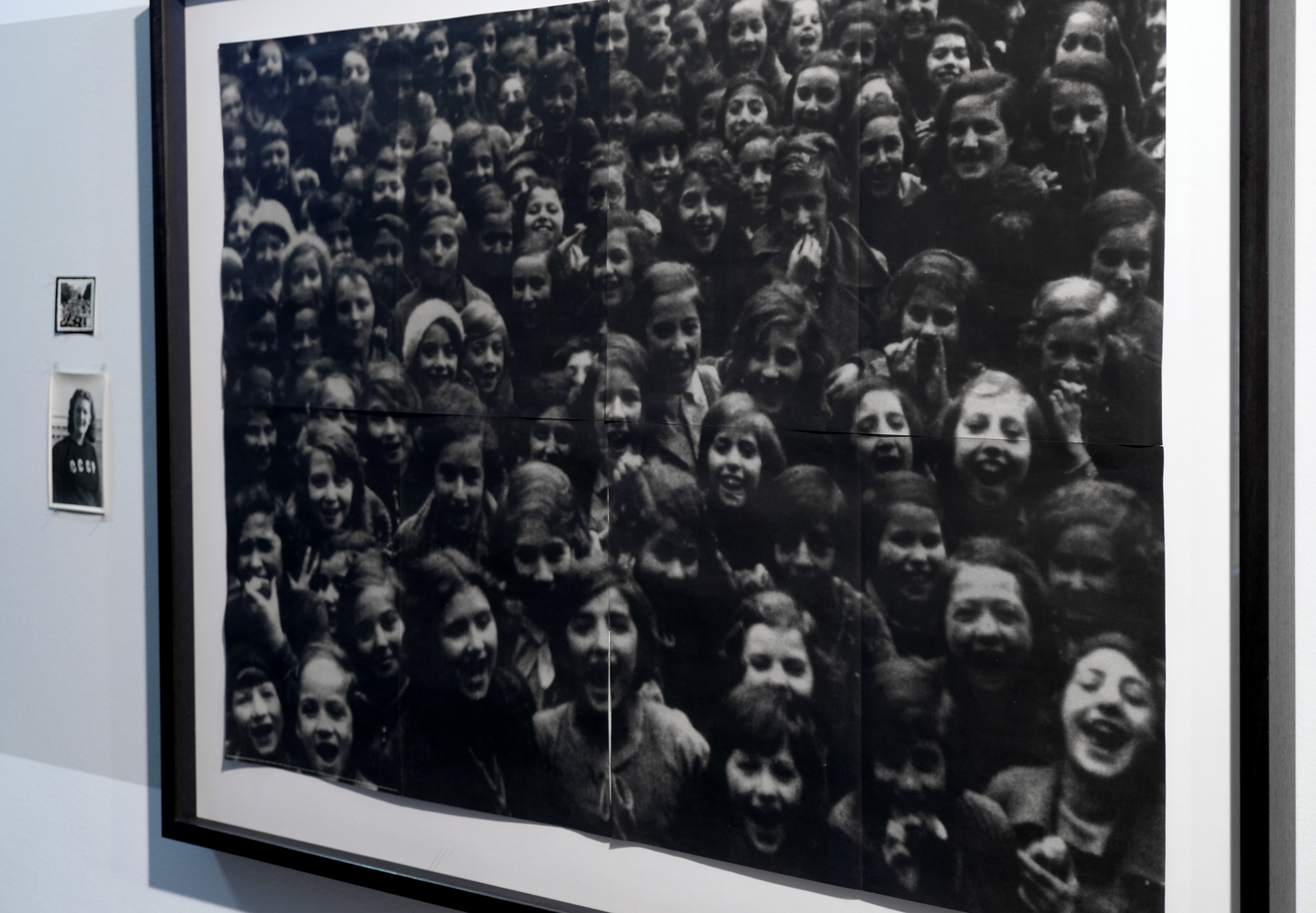
Installation view of the exhibition 'An Unorthodox Flow of Images' at the Centre for Contemporary Photography (CCP), Melbourne, September - November 2017 showing (137) Christian Boltanski's 'L'ecole de la Große Hamburger Straße, Berlin 1938' 1993


Installation view of the exhibition An Unorthodox Flow of Images at the CCP, Melbourne showing (137) Christian Boltanski’s L’ecole de la Große Hamburger Straße, Berlin 1938 1993
Photo: Marcus Bunyan


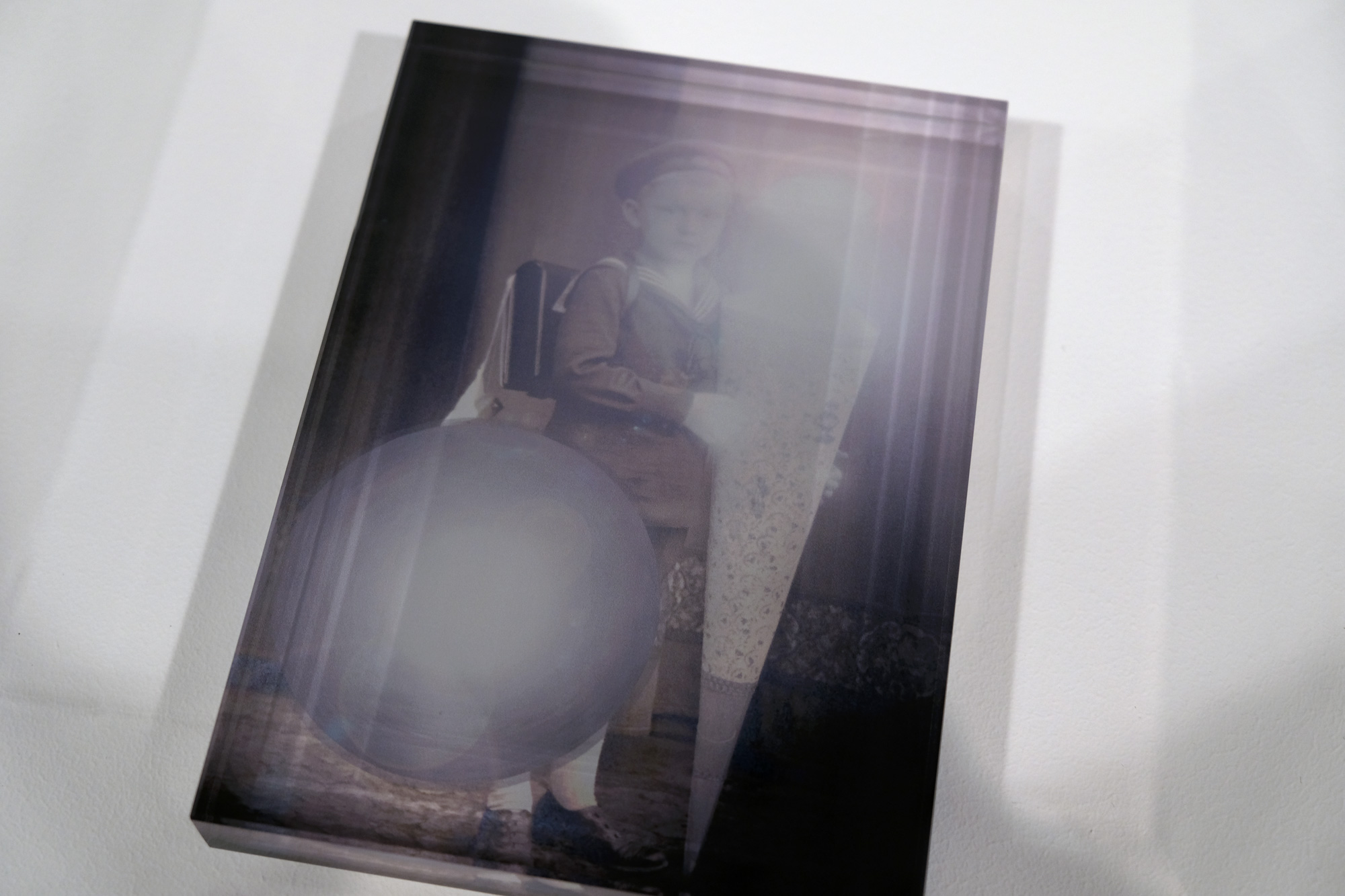
Boltanski: Photography records the passing or death of a particular moment. This is a photograph of a Jewish School in Berlin in 1938.


Installation view of the exhibition 'An Unorthodox Flow of Images' at the Centre for Contemporary Photography (CCP), Melbourne, September - November 2017 showing (138) Joyce Evans' 'Budapest Festival' 1949 (top) and (139) photographer unknown. 'Nina Dumbadze, Honoured Master of Sports of the USSR, world champion in discus throwing from the series Women of the Soviet Georgia' c. 1953 (bottom)


Installation view of the exhibition An Unorthodox Flow of Images at the CCP, Melbourne showing (138) Joyce Evans’ Budapest Festival 1949 (top) and (139) photographer unknown Nina Dumbadze, Honoured Master of Sports of the USSR, world champion in discus throwing from the series Women of the Soviet Georgia c. 1953 (bottom)
Photo: Marcus Bunyan


Installation view of the exhibition 'An Unorthodox Flow of Images' at the Centre for Contemporary Photography (CCP), Melbourne, September - November 2017 showing (139) photographer unknown. 'Nina Dumbadze, Honoured Master of Sports of the USSR, world champion in discus throwing from the series Women of the Soviet Georgia' c. 1953


Installation view of the exhibition An Unorthodox Flow of Images at the CCP, Melbourne showing (139) photographer unknown Nina Dumbadze, Honoured Master of Sports of the USSR, world champion in discus throwing from the series Women of the Soviet Georgia c. 1953
Photo: Marcus Bunyan


Installation view of the exhibition 'An Unorthodox Flow of Images' at the Centre for Contemporary Photography (CCP), Melbourne, September - November 2017 showing (141) Harry Burrell's 'Thylacine or Tasmanian Tiger', cover image for 'The Australian Magazine' 1958, September, Vol 12, No 11 1958


Installation view of the exhibition An Unorthodox Flow of Images at the CCP, Melbourne showing (141) Harry Burrell’s Thylacine or Tasmanian Tiger, cover image for The Australian Magazine 1958, September, Vol 12, No 11 1958
Photo: Marcus Bunyan


Burrell: Published in this museum journal, there is now some contention as to whether Burrell’s series of photographs of the extinct thylacine were made from life, or staged using a taxidermied animal.


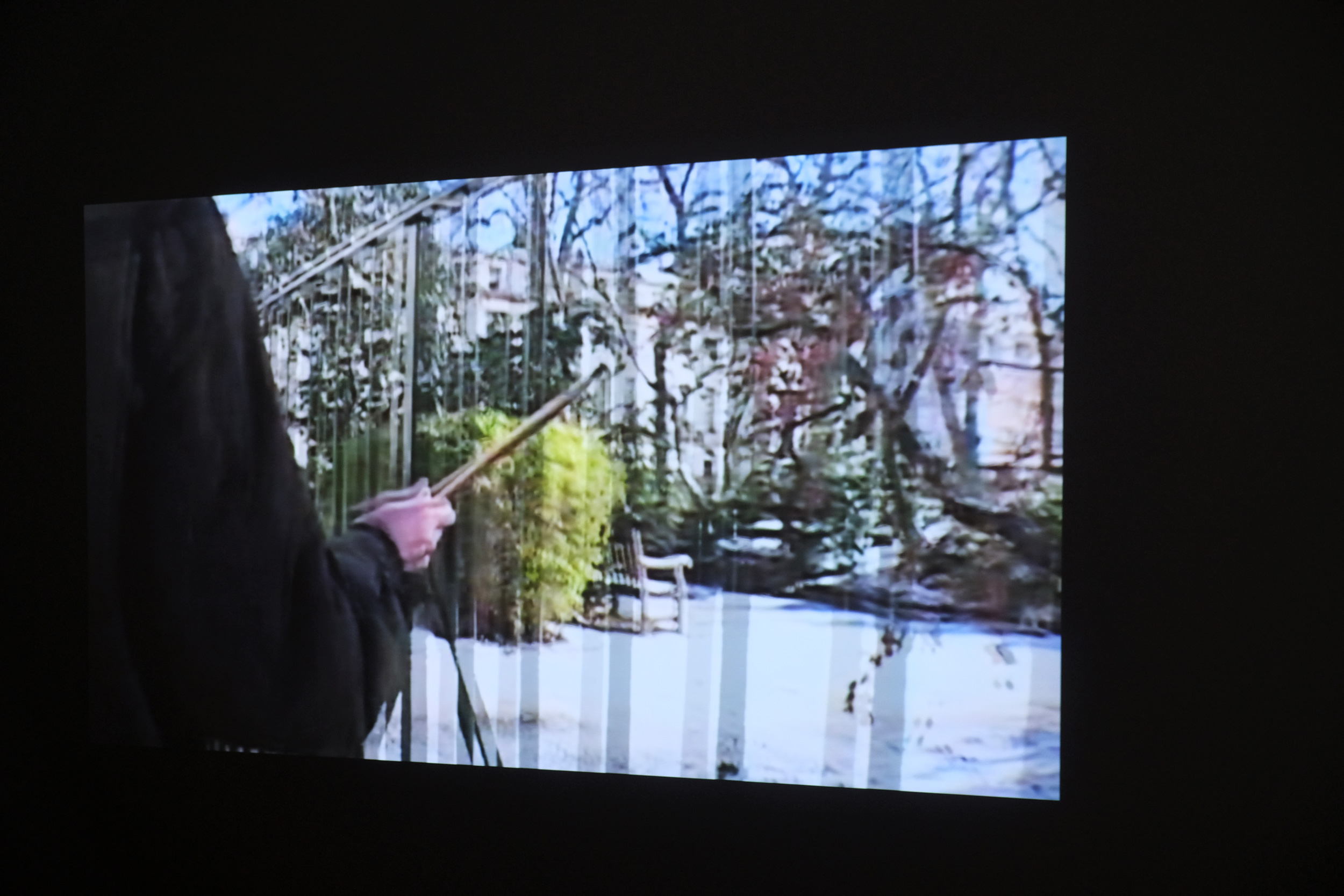
Installation view of the exhibition 'An Unorthodox Flow of Images' at the Centre for Contemporary Photography (CCP), Melbourne, September - November 2017 showing (148) Francis Alÿs' 'Fitzroy Square' 2004 (video still)

Installation view of the exhibition 'An Unorthodox Flow of Images' at the Centre for Contemporary Photography (CCP), Melbourne, September - November 2017 showing (148) Francis Alÿs' 'Fitzroy Square' 2004 (video still)


Installation view of the exhibition An Unorthodox Flow of Images at the CCP, Melbourne showing (148) Francis Alÿs’ Fitzroy Square 2004 (video stills)
Photos: Marcus Bunyan


(148) Francis Alÿs
Railings (Fitzroy square)
London, 2004
4.03 min.
Francis Alÿs website


We posit Fitzroy Square at this point; in honour of your journey through this unorthodox flow of images.


Centre for Contemporary Photography

No permanent exhibition space at the moment

Centre for Contemporary Photography website

LIKE ART BLART ON FACEBOOK

Back to top

Review: ‘Gregory Crewdson: Cathedral of the Pines’ at The Photographers’ Gallery, London

Exhibition dates: 23rd June – 8th October, 2017


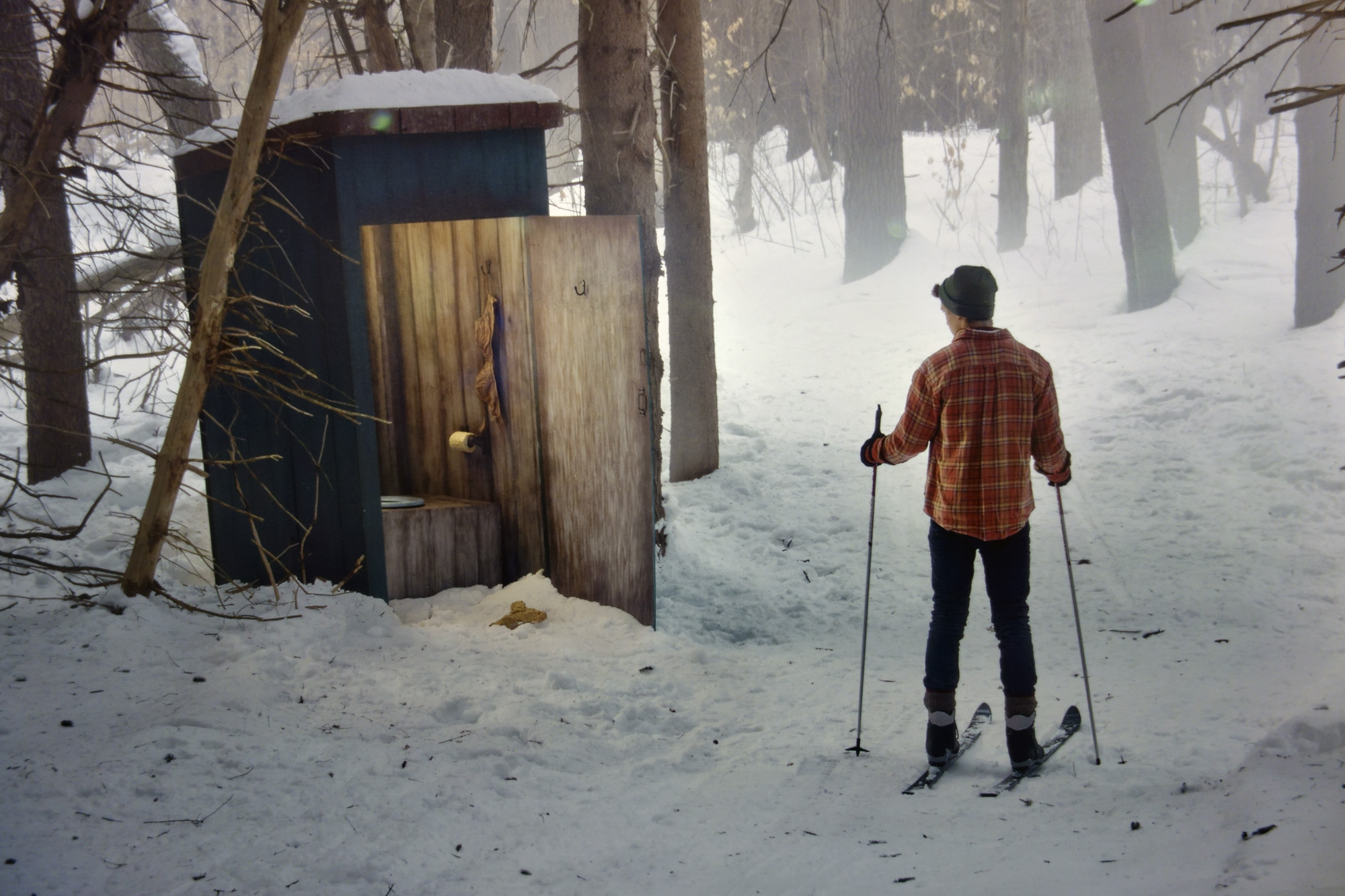
Gregory Crewdson (American, b. 1962) 'The Haircut' 2014 from the exhibition 'Gregory Crewdson: Cathedral of the Pines' at The Photographers' Gallery, London, June - October, 2017


Gregory Crewdson (American, b. 1962)
The Haircut
2014
© Gregory Crewdson. Courtesy Gagosian


End of days

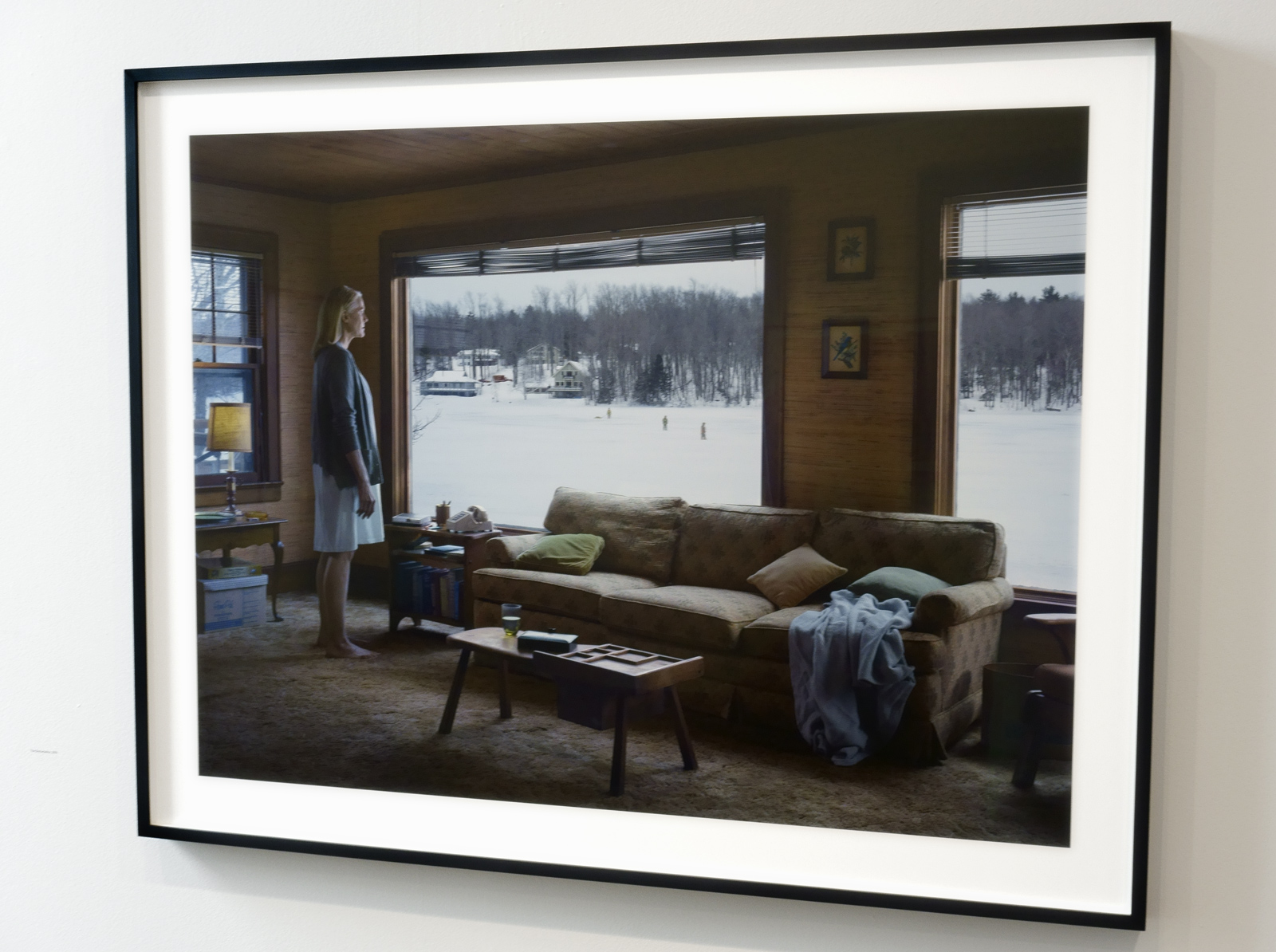
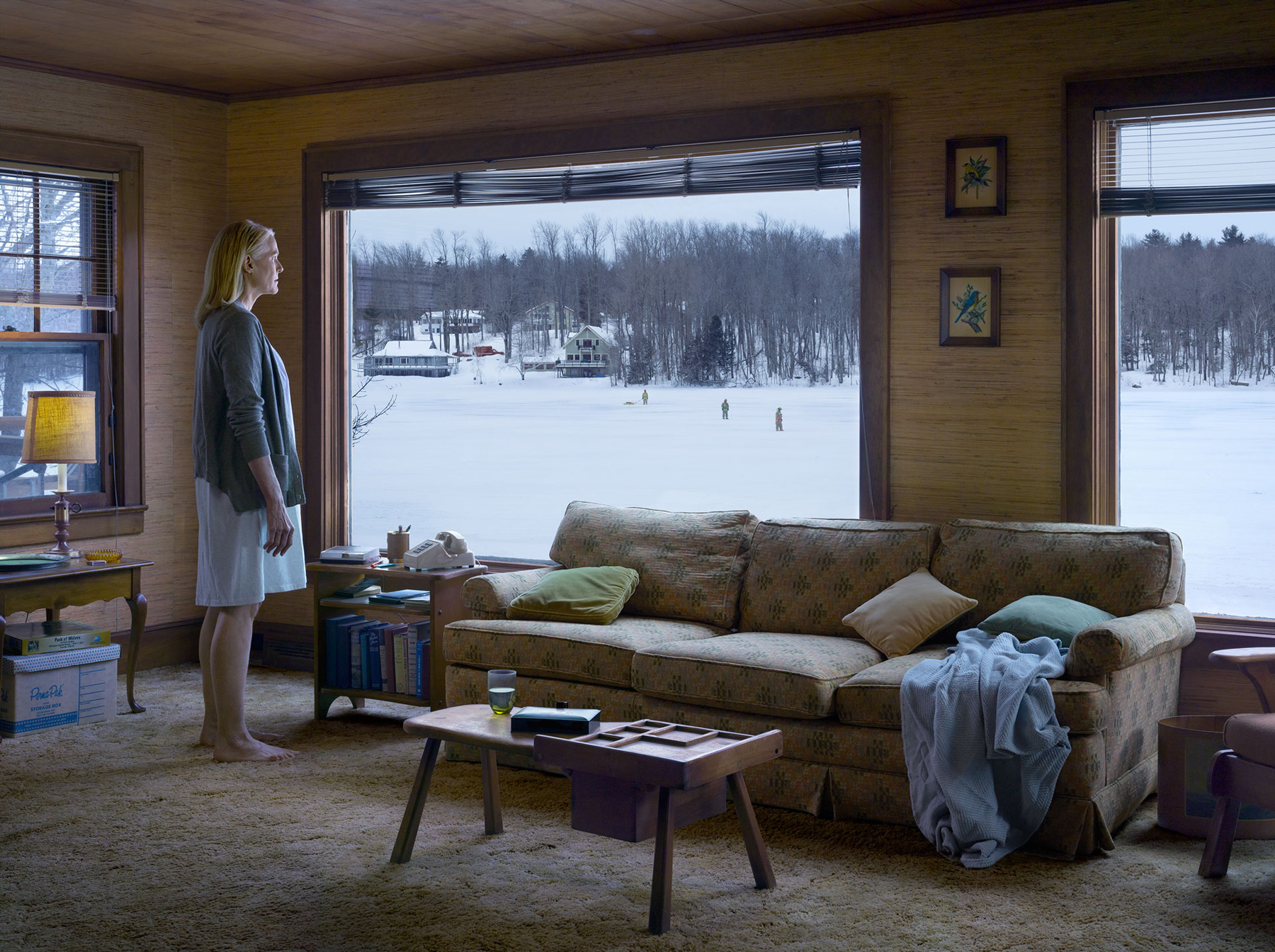
I have written critically and glowingly of Crewdson’s work in the past (see my review of his exhibition at the Centre for Contemporary Photography, Melbourne 2012). With the exhibition Gregory Crewdson: Cathedral of the Pines the same elements are extant: life in the back woods of America, the tableaux beautifully staged and presented in large photographic prints throughout the three floors of the expansive spaces of the Photographers’ Gallery, London. And yet there is something particularly “icky”, if I can use that word, about this new body of work. What made me feel this way?

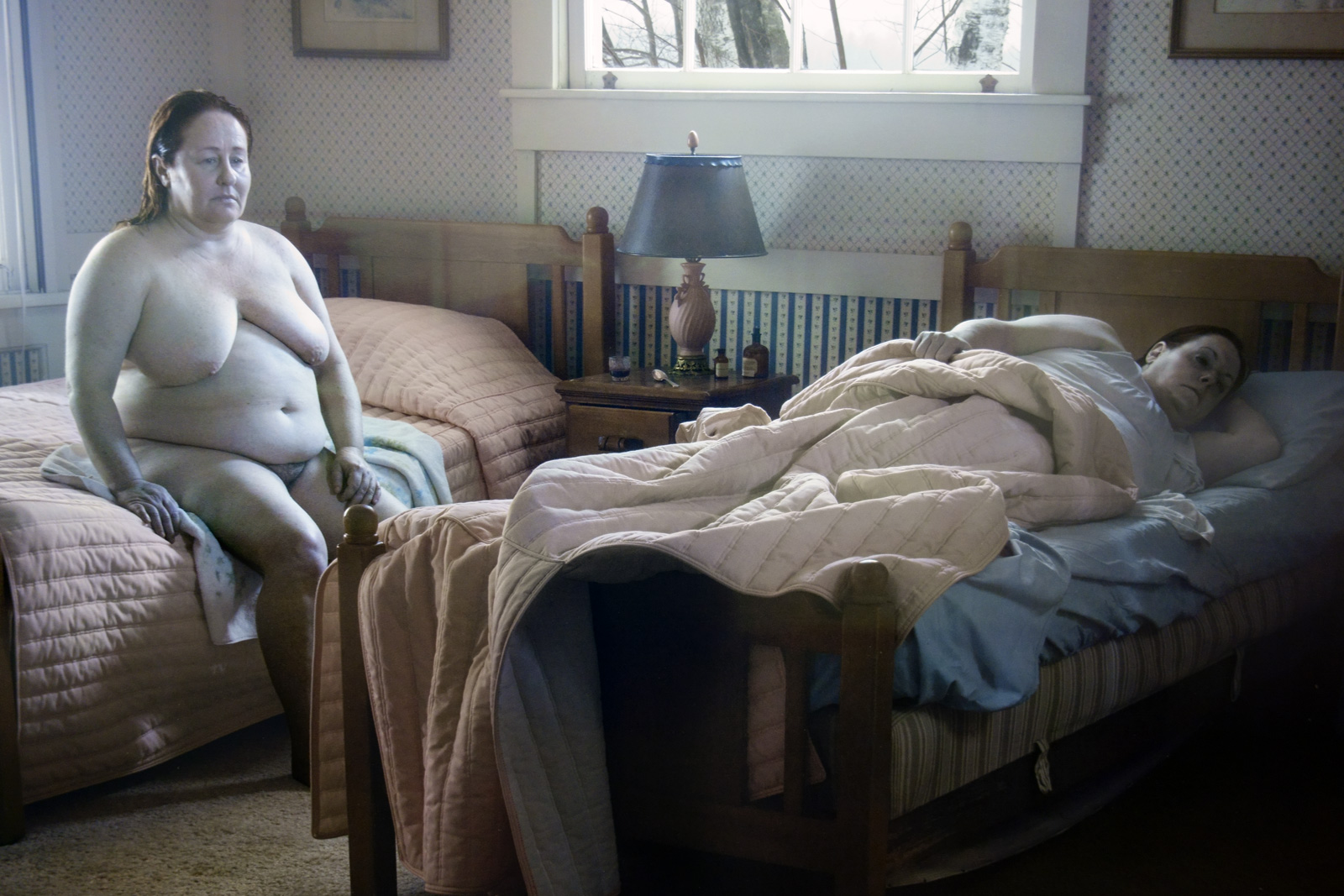
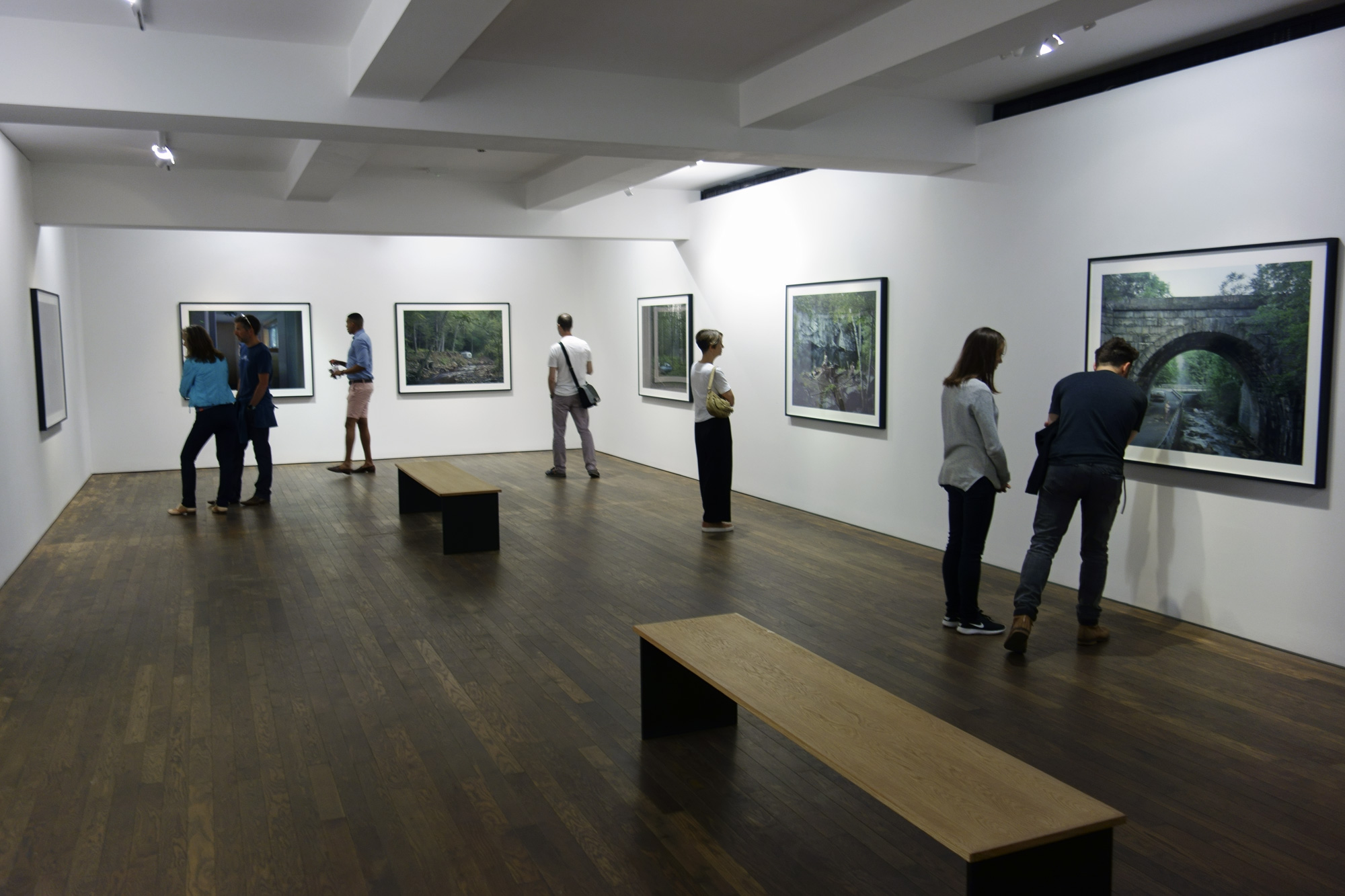
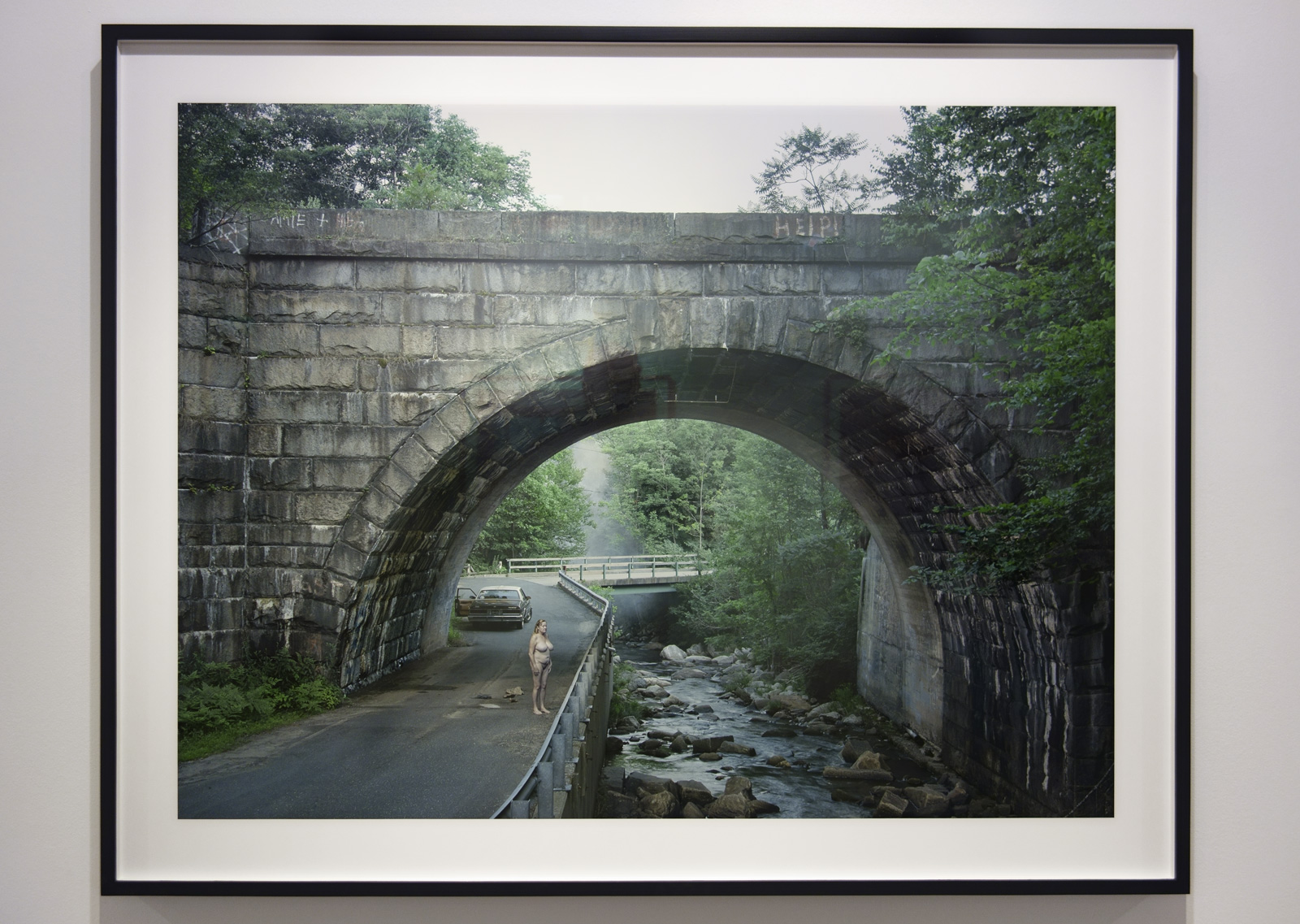
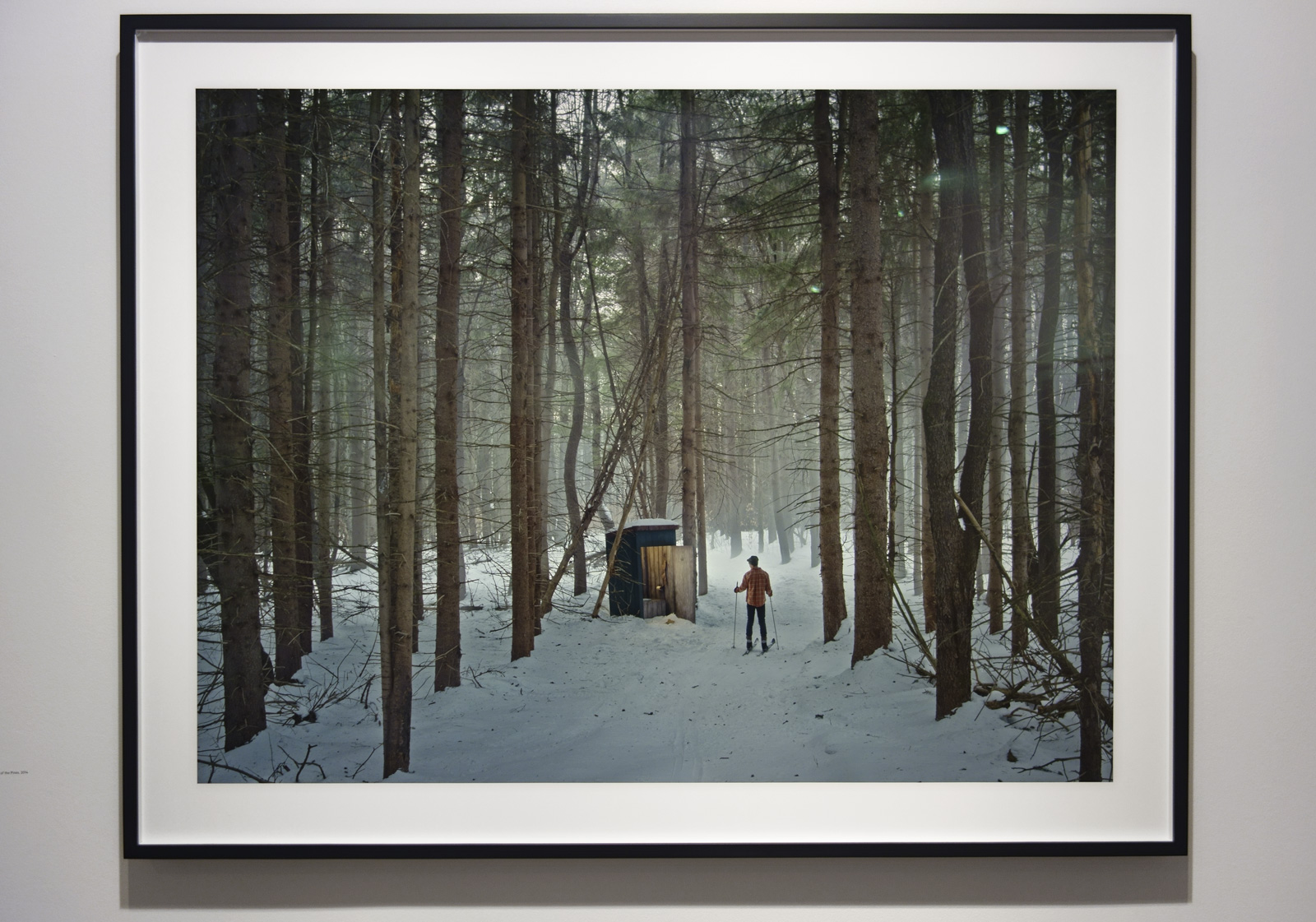
Firstly, I was uncomfortable with the number of naked or half-naked females (compared to men) in the photographs, all looking vulnerable, melancholic and isolated in small, rural town America. If this is how Crewdson sees women in the microcosms he creates – vulnerable women “pictured” in forest and cabin settings – this incessant observation is objectionable to me. These are not powerful, strong, independent women, far from it. These are stateless women who peer endlessly out of windows, or sit on the end of beds looking downcast. It is almost degrading to females that these woman are so passive and objectified. Reinforcing the theme of isolation and desperation is the word “HELP!” painted on the bridge above a naked woman standing on a roadway; reinforcing the feeling of voyeurism is a woman’s bra hanging in a toilet being observed by a man on a pair of skis.

Secondly, compared to the earlier series, the spaces in these new photographs seem to be completely dead. The photographs look handsome enough but they have a very different feel from the previous work. While externally referencing a sense of space and uncertainty present in B grade movies, European and American 19th century landscape paintings (where the human figure is dwarfed by the supposed sublime), and the paintings of Edward Hopper – the spaces in these new works feel closed, locked down and a bit scary. Nothing is real (and never has been) in Crewdson’s work but this time everything seems to be over directed. As my friend Elizabeth Gertsakis observed, “The environmental context is chilling. The palette is extremely cold, there is no warmth at all. The viewer is not welcome, because there is nothing to be welcome to… even for curiosity’s sake. No one is real here – everything is silent.” Or dead. Or lifeless.

The whole series seems apathetic. That is, apathy with extreme effort. While Crewdson observes that the darkness lifted, leading to a reconnection with his artistic process and a period of renewal and intense creativity, this work is clearly at the end of something. As Elizabeth comments, “An invisible wall has come down here… and there is absolutely no entry. This body of work is so much more pervy because it is so obvious and wooden. The camera here is well and truly in the mortuary and the photographer is the undertaker as well as the man who makes dead faces look ‘human’.” But he doesn’t make them human, and there’s the rub. Which all begs the question: where is this work going?

While Crewdson continues to move down a referential and associative path, the work fails to progress conceptually even as the work ultimately stagnates, both visually and emotionally. These wooden mise en scène are based on a very tired conceptual methodology, that of the narrative of the B grade movie which, if you have the money, time and willingness to invest in, can seem sufficiently sophisticated. Of course, buyers want to keep buying a signatory technique or idea that is easily recognisable and this adds to the cachet of the art… but as a critic you have to ask where the work is going, if an artist keeps repeating the same thing over and over and over again in slightly different contexts.

Imagine if Degas had kept painting ballet dancers using the same lighting, the same perspective, the same colour palette, the same psychological investigation painting after painting… what we would be saying about the resulting work? Sure, there is great technical proficiency contained in Crewdson’s work, but is he pushing the work anywhere more interesting?

And the simple answer to that question is, no he isn’t.

No wonder he has been having a tough time reconnecting with his artistic process.

Dr Marcus Bunyan


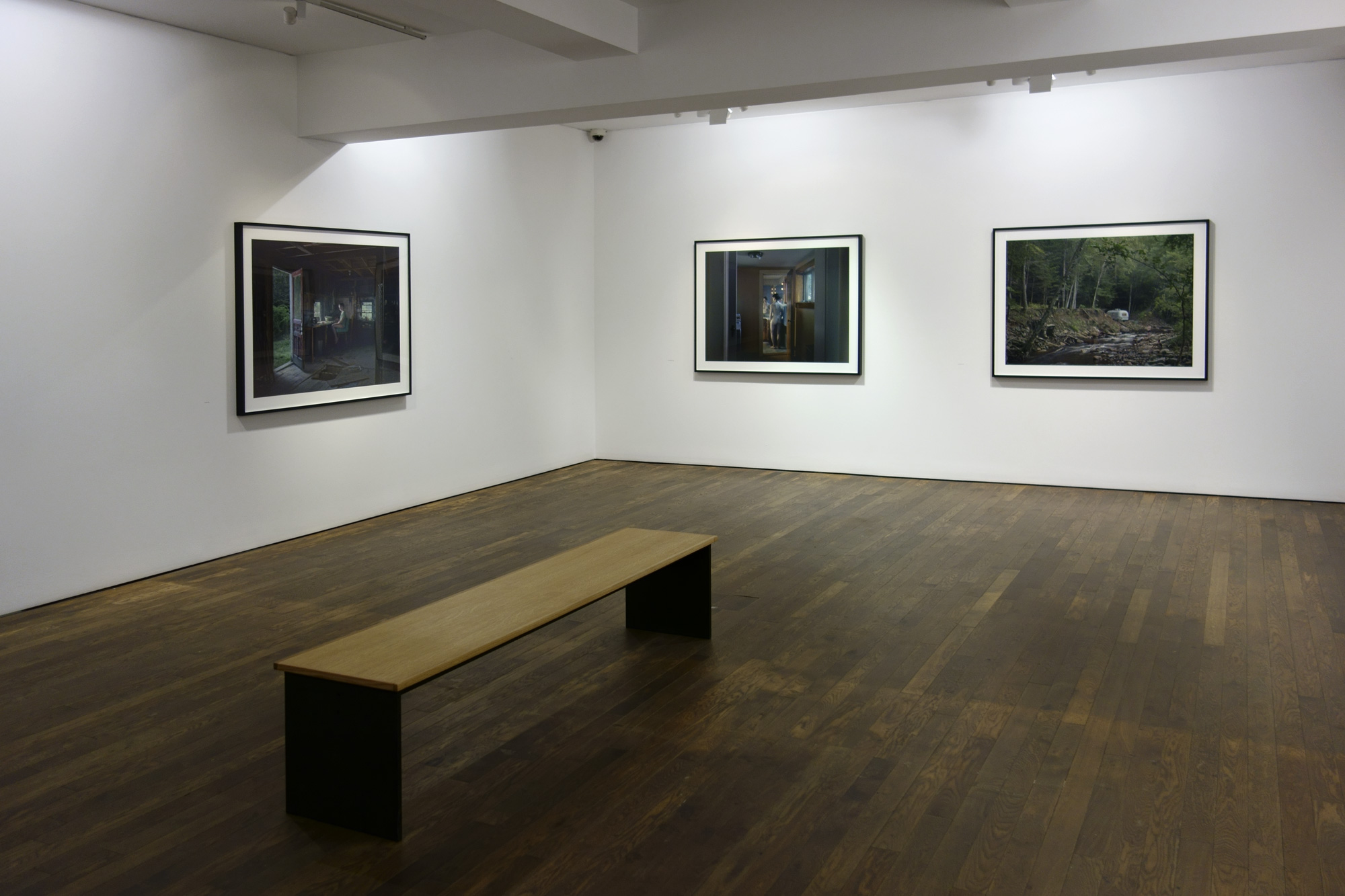
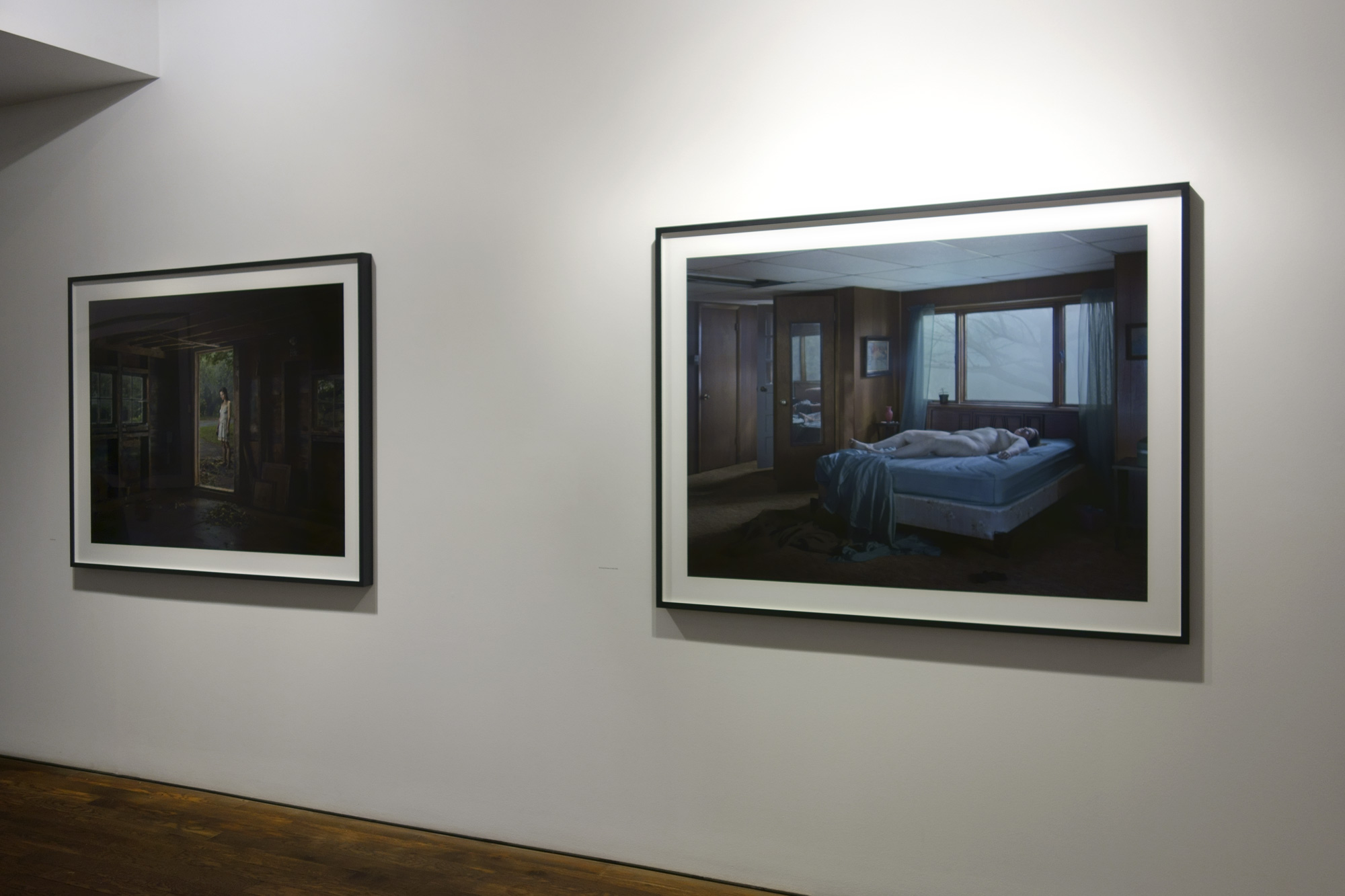
All installation photographs © Dr Marcus Bunyan, The Photographers’ Gallery and the artist. Please observe that there are reflections in the installation photographs of the surrounding gallery.


“It was deep in the forests of Becket, Massachusetts that I finally felt darkness lift, experienced a reconnection with my artistic process, and moved into a period of renewal and intense creativity.”


Gregory Crewdson


Room 1


Installation view of Room 1 of 'Gregory Crewdson: Cathedral of the Pines' at The Photographers' Gallery

Installation view of Room 1 of 'Gregory Crewdson: Cathedral of the Pines' at The Photographers' Gallery showing 'Woman at Sink' 2014

Gregory Crewdson. Woman at Sink 2014
Installation view of Room 1 of 'Gregory Crewdson: Cathedral of the Pines' at The Photographers' Gallery

Installation view of Room 1 of 'Gregory Crewdson: Cathedral of the Pines' at The Photographers' Gallery showing 'Woman in Parked Car' 2014

Gregory Crewdson. Woman in Parked Car 2014
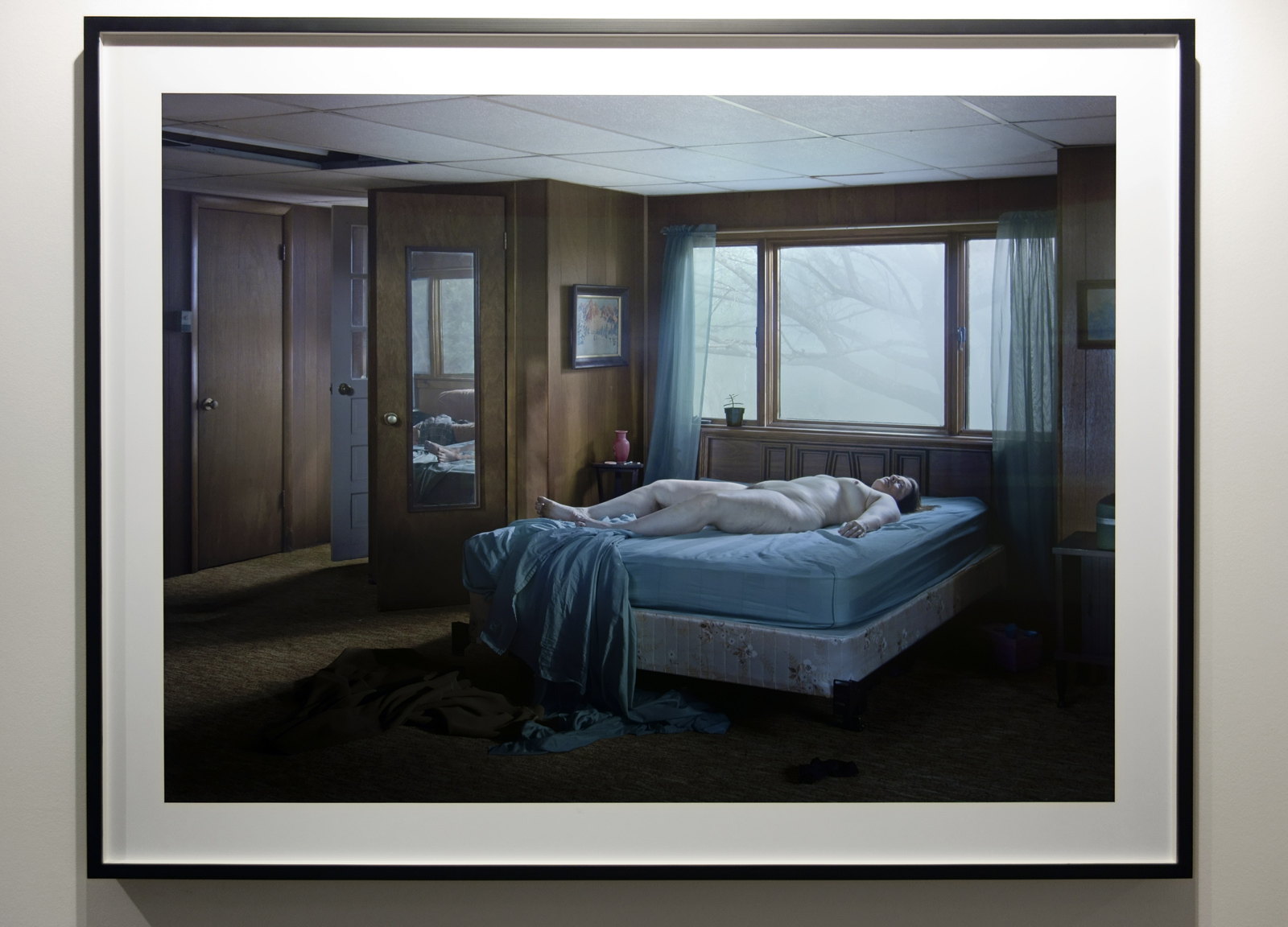
Installation view of Room 1 of 'Gregory Crewdson: Cathedral of the Pines' at The Photographers' Gallery showing 'The Basement' (2014)

Installation view of Room 1 of 'Gregory Crewdson: Cathedral of the Pines' at The Photographers' Gallery


Installation views of Room 1 of Gregory Crewdson: Cathedral of the Pines at The Photographers’ Gallery, London showing in the bottom two images, The Basement (2014)
Photos: © Dr Marcus Bunyan


Gregory Crewdson (American, b. 1962) 'The Basement' 2014 from the exhibition 'Gregory Crewdson: Cathedral of the Pines' at The Photographers' Gallery, London, June - October, 2017


Gregory Crewdson (American, b. 1962)
The Basement
2014
© Gregory Crewdson. Courtesy Gagosian


This is the first UK exhibition of Cathedral of the Pines, a new body of work by acclaimed American artist Gregory Crewdson, and it is also the first time The Photographers’ Gallery has devoted all three of its gallery spaces to one artist.

With this series, produced between 2013 and 2014, Crewdson departs from his interest in uncanny suburban subjects and explores human relations within more natural environments. In images that recall nineteenth-century American and European paintings, Crewdson photographs figures posing within the small rural town of Becket, Massachusetts, and its vast surrounding forests, including the actual trail from which the series takes its title. Interior scenes charged with ambiguous narratives probe tensions between human connection and separation, intimacy and isolation.

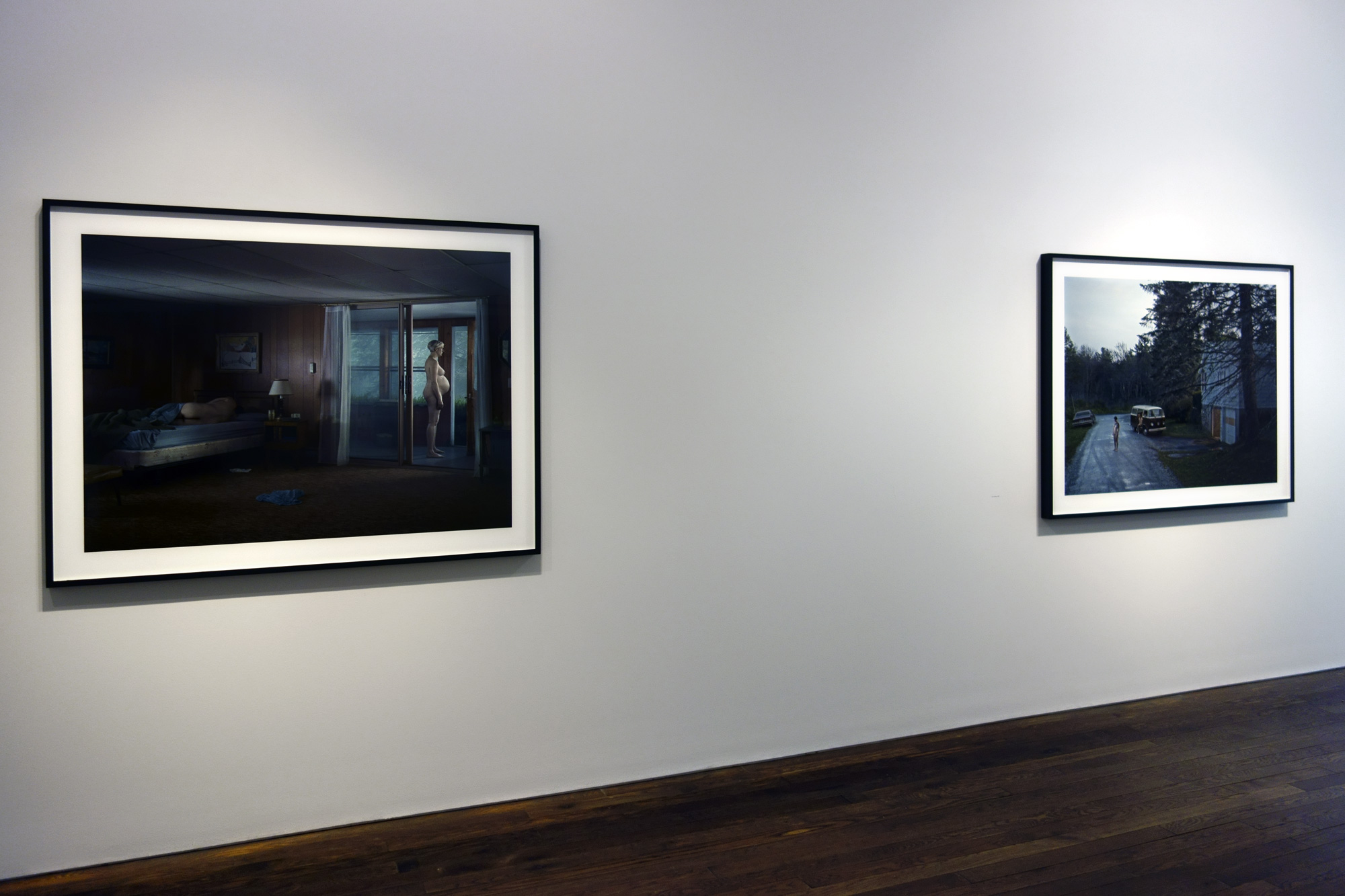
Crewdson describes this project as ‘his most personal’, venturing to retrieve in the remote setting of the forest, a reminiscence of his childhood. The images in Cathedral of the Pines, located in the dystopian landscape of the anxious American imagination, create atmospheric scenes, many featuring local residents, and for the first time in Crewdson’s work, friends and family. In Woman at Sink, a woman pauses from her domestic chores, lost in thought. In Pickup Truck, Crewdson shows a nude couple in the flatbed of a truck in a dense forest – the woman seated, the man turned away in repose. Crewdson situates his disconsolate subjects in familiar settings, yet their cryptic actions – standing still in the snow, or nude on a riverbank – hint at invisible challenges. Precisely what these challenges are, and what fate awaits these anonymous figures, are left to the viewer’s imagination.

Crewdson’s careful crafting of visual suspense conjures forebears such as Diane Arbus, Alfred Hitchcock, and Edward Hopper, as well as the influence of Hollywood cinema and directors such as David Lynch. In Cathedral of the Pines, Crewdson’s persistent psychological leitmotifs evolve into intimate figurative dramas. Visually alluring and often deeply disquieting, these tableaux are the result of an intricate production process: For more than twenty years, Crewdson has used the streets and interiors of small-town America as settings for photographic incarnations of the uncanny.

Maintaining his trademark elaborate production processes, Crewdson works with a large crew to produce meticulously staged images with an obsessive attention to detail. Situated between Hollywood cinema and nineteenth-century American and European Romantic landscape painting, these scenes are charged with ambiguous narratives, which prove tensions between human connection and separation, intimacy and isolation.

Text from The Photographers’ Gallery website and wall text


Room 2


Installation view of Room 2 of 'Gregory Crewdson: Cathedral of the Pines' at The Photographers' Gallery

Installation view of Room 2 of 'Gregory Crewdson: Cathedral of the Pines' at The Photographers' Gallery

Installation view of Room 2 of 'Gregory Crewdson: Cathedral of the Pines' at The Photographers' Gallery showing 'The VW Bus' 2013

Gregory Crewdson. The VW Bus 2013
Installation view of Room 2 of 'Gregory Crewdson: Cathedral of the Pines' at The Photographers' Gallery showing 'Pregnant Woman on Porch' 2013

Gregory Crewdson. Pregnant Woman on Porch 2013
Installation view of Room 2 of 'Gregory Crewdson: Cathedral of the Pines' at The Photographers' Gallery

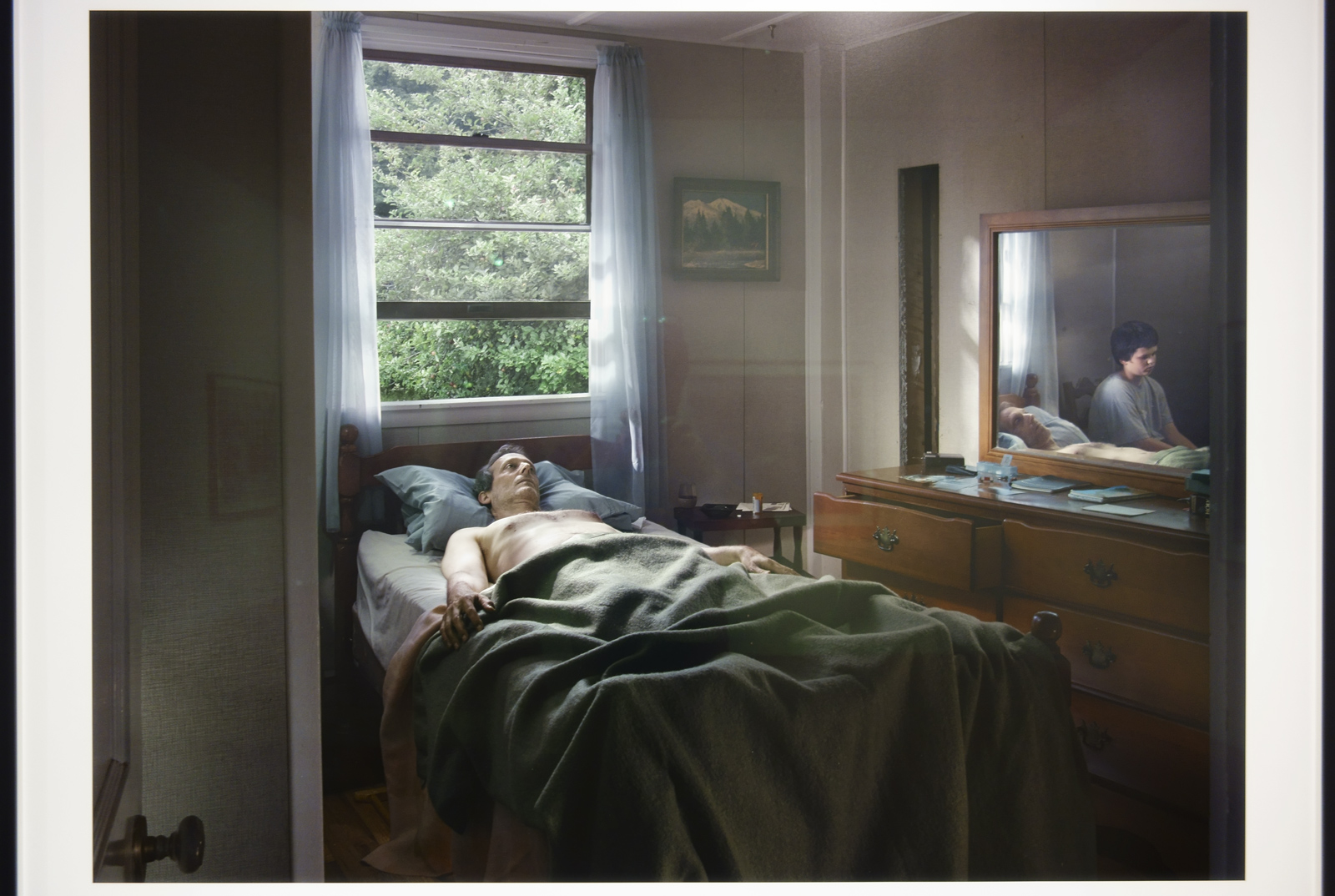
Installation view of Room 2 of 'Gregory Crewdson: Cathedral of the Pines' at The Photographers' Gallery showing 'Father and Son' 2013

Gregory Crewdson. Father and Son 2013
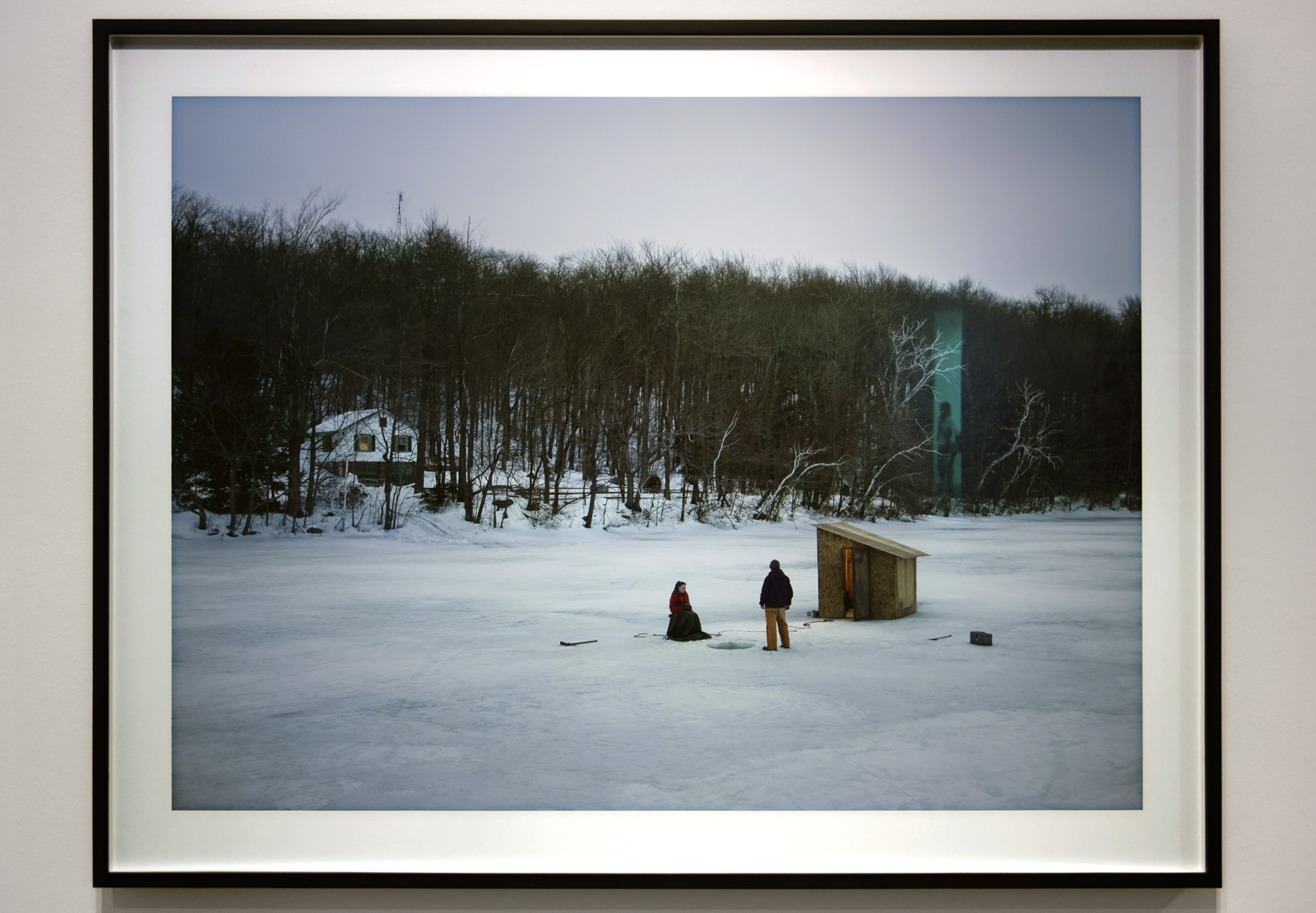
Installation view of Room 2 of 'Gregory Crewdson: Cathedral of the Pines' at The Photographers' Gallery showing 'The Ice Hut' 2014

Gregory Crewdson. The Ice Hut 2014
Installation view of Room 2 of 'Gregory Crewdson: Cathedral of the Pines' at The Photographers' Gallery

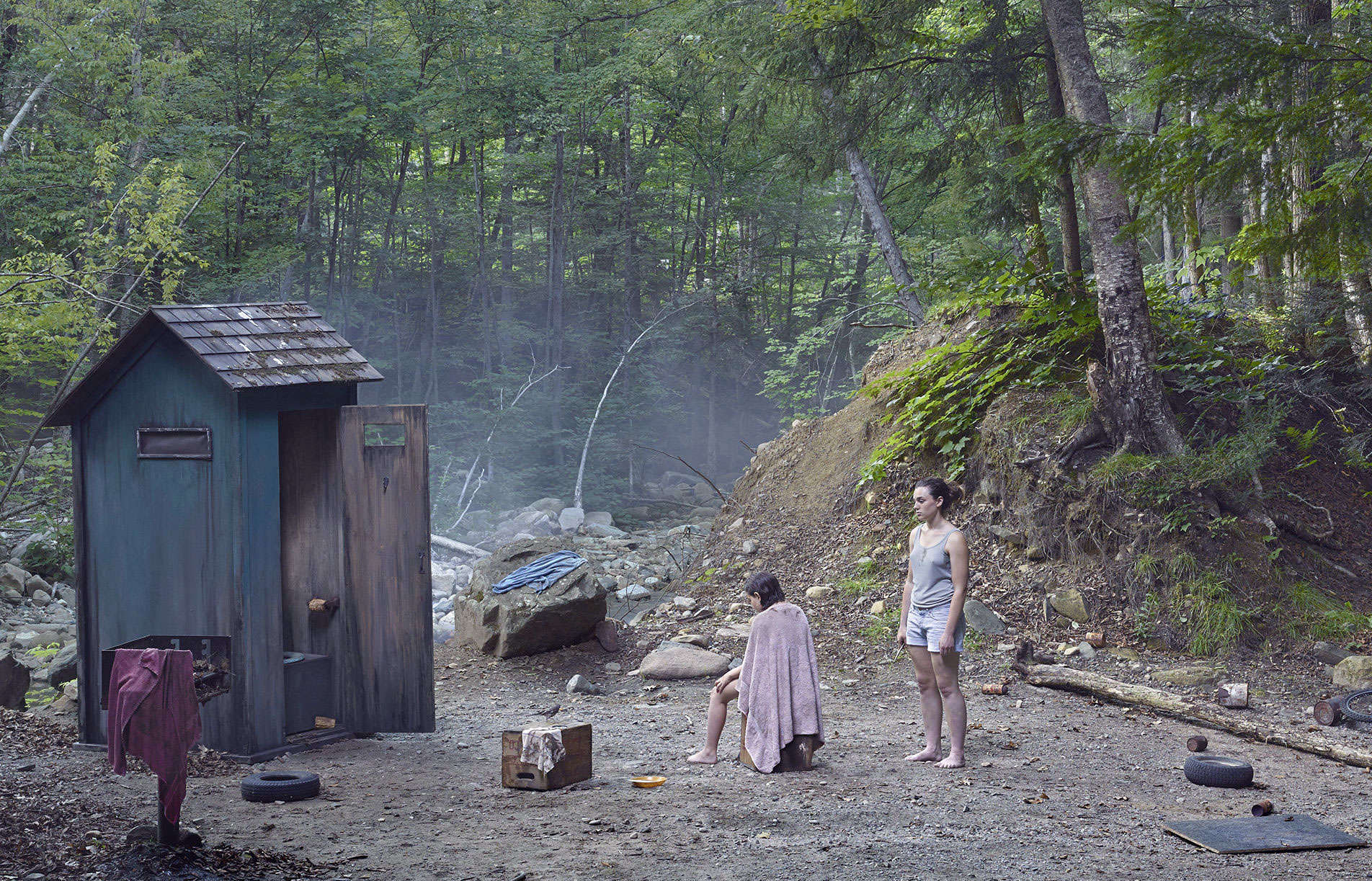
Installation view of Room 2 of 'Gregory Crewdson: Cathedral of the Pines' at The Photographers' Gallery showing 'Sisters' 2014

Gregory Crewdson. Sisters 2014
Installation view of Room 2 of 'Gregory Crewdson: Cathedral of the Pines' at The Photographers' Gallery showing 'Sisters' 2014 (detail)

Gregory Crewdson. Sisters 2014 (detail)
Installation view of Room 2 of 'Gregory Crewdson: Cathedral of the Pines' at The Photographers' Gallery

Installation view of Room 2 of 'Gregory Crewdson: Cathedral of the Pines' at The Photographers' Gallery showing 'The Disturbance' 2014

Gregory Crewdson. The Disturbance 2014 (detail below)
Installation view of Room 2 of 'Gregory Crewdson: Cathedral of the Pines' at The Photographers' Gallery showing 'The Disturbance' 2014 (detail)


Installation views of Room 2 of Gregory Crewdson: Cathedral of the Pines at The Photographers’ Gallery, London showing in the bottom two images, The Disturbance 2014
Photos: © Dr Marcus Bunyan


Gregory Crewdson (American, b. 1962) 'The Disturbance' 2014 from the exhibition 'Gregory Crewdson: Cathedral of the Pines' at The Photographers' Gallery, London, June - October, 2017


Gregory Crewdson (American, b. 1962)
The Disturbance
2014
© Gregory Crewdson. Courtesy Gagosian


Room 3


Installation view of Room 3 of 'Gregory Crewdson: Cathedral of the Pines' at The Photographers' Gallery

Installation view of Room 3 of 'Gregory Crewdson: Cathedral of the Pines' at The Photographers' Gallery showing 'Woman on Road' 2014

Gregory Crewdson. Woman on Road 2014
Installation view of Room 3 of 'Gregory Crewdson: Cathedral of the Pines' at The Photographers' Gallery

Installation view of Room 3 of 'Gregory Crewdson: Cathedral of the Pines' at The Photographers' Gallery

Installation view of Room 3 of 'Gregory Crewdson: Cathedral of the Pines' at The Photographers' Gallery

Installation view of Room 3 of 'Gregory Crewdson: Cathedral of the Pines' at The Photographers' Gallery

Installation view of Room 3 of 'Gregory Crewdson: Cathedral of the Pines' at The Photographers' Gallery

Installation view of Room 3 of 'Gregory Crewdson: Cathedral of the Pines' at The Photographers' Gallery


Installation views of Room 3 of Gregory Crewdson: Cathedral of the Pines at The Photographers’ Gallery, London
Photos: © Dr Marcus Bunyan


The Photographers Gallery
16-18 Ramillies Street
London
W1F 7LW

Opening hours:
Monday – Wednesday: 10.00 – 18.00
Thursday and Friday: 10.00 – 20.00
Saturday: 10.00 – 18.00
Sunday: 11.00 – 18.00

The Photographers’ Gallery website

LIKE ART BLART ON FACEBOOK

Back to top

Exhibition: ‘Autophoto’ at Fondation Cartier pour l’art contemporain, Paris

Exhibition dates: 20th April – 24th September, 2017

Artists: Robert Adams • Eve Arnold • Bernard Asset • Éric Aupol • Theo Baart Et Cary Markerink • Sue Barr • Valérie Belin • Martin Bogren • Nicolas Bouvier • David Bradford • Brassaï • Alain Bublex • Edward Burtynsky • Andrew Bush • Ronni Campana • Gilles Caron • Alejandro Cartagena • Kurt Caviezel • Philippe Chancel • Larry Clark • Langdon Clay • Stéphane Couturier • Bruce Davidson • Jean Depara • Raymond Depardon • John Divola • Robert Doisneau • William Eggleston • Elliott Erwitt • Walker Evans • Barry Feinstein • Pierre De Fenoÿl • Alain Fleischer • Robert Frank • Lee Friedlander • Bernhard Fuchs • Paolo Gasparini • Óscar Fernando Gómez • Jeff Guess • Andreas Gursky • Fernando Gutiérrez • Jacqueline Hassink • Anthony Hernandez • Yasuhiro Ishimoto • Peter Keetman • Seydou Keïta • Germaine Krull • Seiji Kurata • Justine Kurland • Jacques Henri Lartigue • O. Winston Link • Peter Lippmann • Marcos López • Alex Maclean • Ella Maillart • Man Ray • Mary Ellen Mark • Arwed Messmer • Ray K. Metzker • Sylvie Meunier Et Patrick Tourneboeuf • Joel Meyerowitz • Kay Michalak et Sven Völker • Óscar Monzón • Basile Mookherjee • Daido Moriyama • Patrick Nagatani • Arnold Odermatt • Catherine Opie • Trent Parke • Martin Parr • Mateo Pérez • Jean Pigozzi • Bernard Plossu • Matthew Porter • Edward Quinn • Bill Rauhauser • Rosângela Rennó • Luciano Rigolini • Miguel Rio Branco • Ed Ruscha • Sory Sanlé • Hans-christian Schink • Antoine Schnek • Stephen Shore • Malick Sidibé • Guido Sigriste • Raghubir Singh • Melle Smets Et Joost Van Onna • Jules Spinatsch • Dennis Stock • Hiroshi Sugimoto • Juergen Teller • Tendance Floue • Thierry Vernet • Weegee • Henry Wessel • Alain Willaume


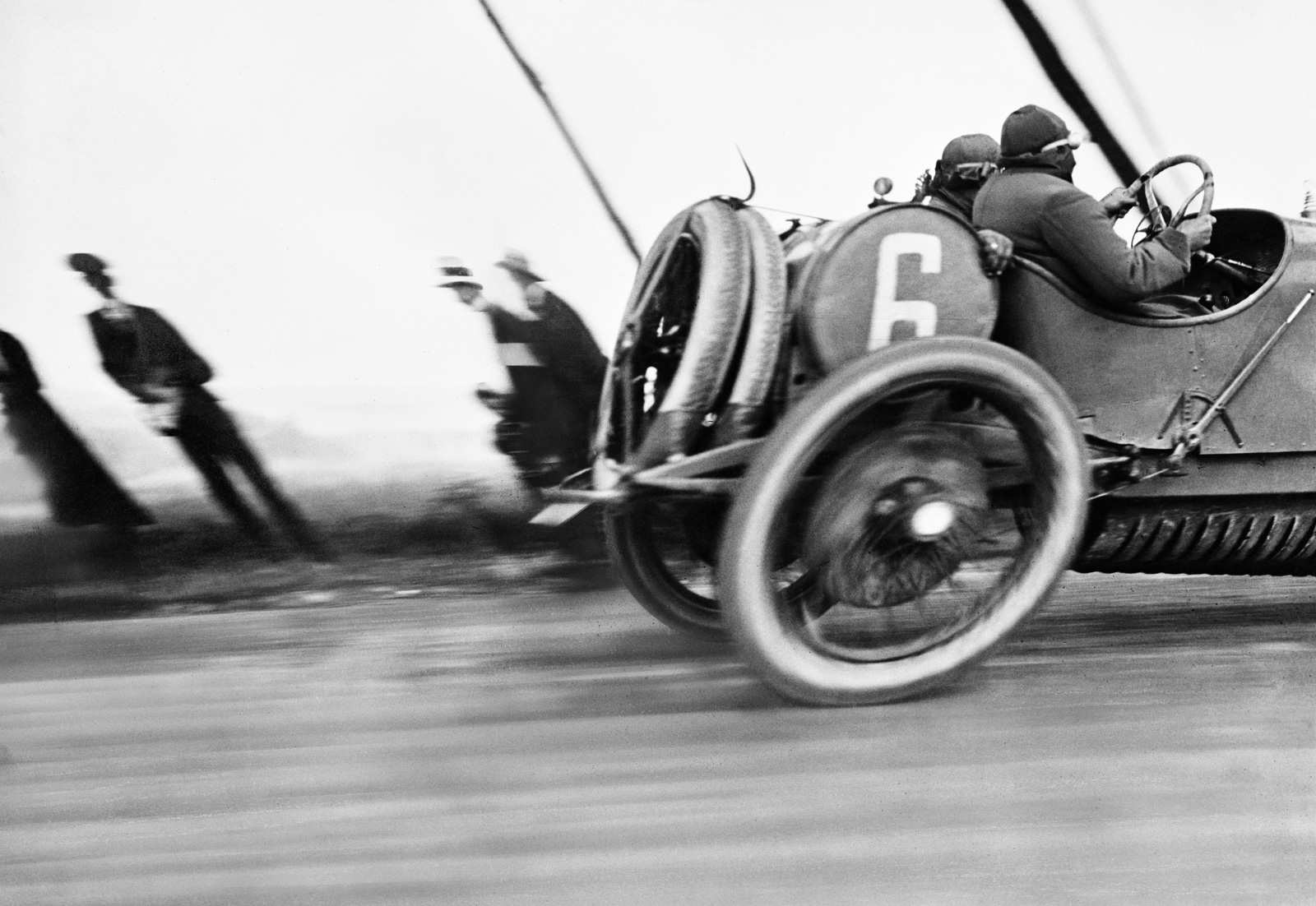
Jacques Henri Lartigue (French, 1894-1986) 'Une Delage au Grand Prix de l’Automobile Club de France, circuit de Dieppe' June 26, 1912 from the exhibition 'Autophoto' at Fondation Cartier pour l'art contemporain, Paris, April - Sept, 2017


Jacques Henri Lartigue (French, 1894-1986)
Une Delage au Grand Prix de l’Automobile Club de France, circuit de Dieppe
June 26, 1912
Gelatin silver print
30 x 40cm
Donation Jacques Henri Lartigue, Charenton-le-Pont Photographie Jacques Henri Lartigue
© Ministère de la Culture – France/AAJHL
Exhibition Autophoto from April 20 to September 24, 2017
Fondation Cartier pour l’art contemporain, Paris


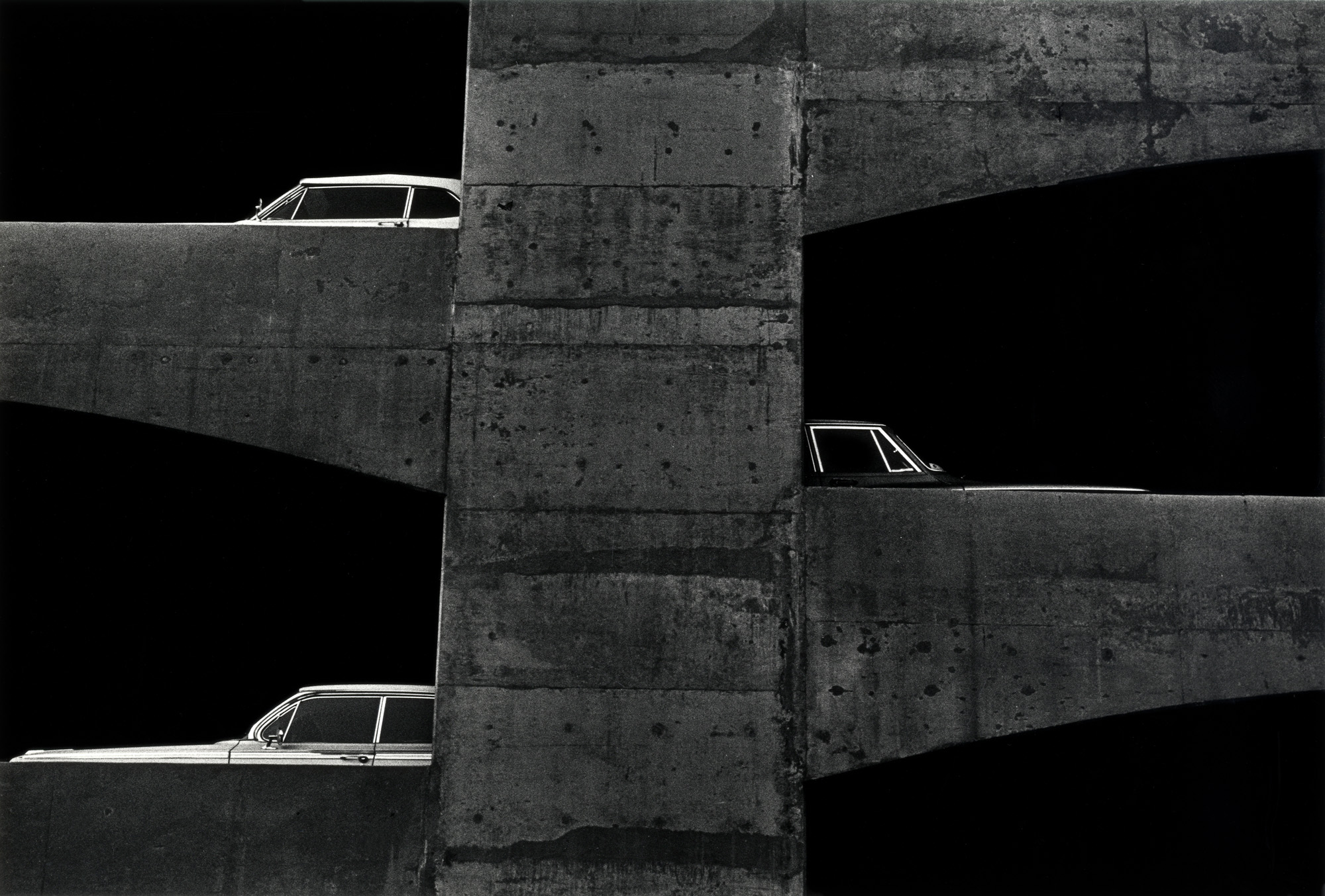
I missed this exhibition when I was in Paris recently. A great pity, I would have liked to have seen it. Some rare photographs that I have never laid eyes on before. I especially love Ray K. Metzker’s Washington, DC. The photography in both Paris and London was disappointing during my month overseas. Other than a large exhibition of Gregory Crewdson’s photographs at the Photographers’ Gallery London, there was not much of interest on offer.

Dr Marcus Bunyan

PS. So many more horizontal photographs than vertical, the automobile obviously lending itself to this orientation. I love this observation: “Photography, a tool of immobility, benefited from the automobile, a mobility tool.” And this from Jean Baudrillard: “Riding is a form spectacular amnesia. Everything to discover, everything to be erased.”


Many thankx to Fondation Cartier pour l’art contemporain for allowing me to publish the photographs in the posting. Please click on the photographs for a larger version of the image.


“Photographing is a profession. Craftsmanship. A job that one learns, that one makes more or less well, like all trades. The photographer is a witness. The witness of his time. The true photographer is the witness of every day, they are the reporter. “


Germaine Krull


“I think that cars today are almost the exact equivalent of the great Gothic cathedrals; I mean the supreme creation of an era, conceived with passion by unknown artists, and consumed in image if not in usage by a whole population which appropriates them as a purely magical object.”


Roland Barthes, Mythologies, Le Seuil, Paris, 1970, p. 150


Thirty years after the exhibition Hommage à Ferrari, the Fondation Cartier pour l’art contemporain will once again focus its attention on the world of cars with the exhibition Autophoto, dedicated to photography’s relationship to the automobile. Since its invention, the automobile has reshaped our landscape, extended our geographic horizons, and radically altered our conception of space and time. The car has also influenced the approach and practice of photographers, providing them not only with a new subject but also a new way of exploring the world and a new means of expression. Based on an idea by Xavier Barral and Philippe Séclier, Autophoto will present over 500 works from the beginning of the 20th century to the present. It will invite us to discover the many facets of automotive culture – aesthetic, social, environmental, and industrial – through the eyes of photographers from around the world. The exhibition will bring together over 90 photographers including both famous and lesser-known figures such as Jacques Henri Lartigue, William Eggleston, Justine Kurland and Jacqueline Hassink, who have shown a fascination for the automobile as a subject or have used it as a tool to take their pictures.


Visite de l’exposition – Autophoto – 2017

Thirty years after the Hommage à Ferrari exhibition which put the spotlight on these legendary cars, the Fondation Cartier pour l’art contemporain presents, on a proposal by Xavier Barral and Philippe Séclier, the Autophoto exhibition devoted to the relationship between photography and the automobile. Since its creation, the automobile has shaped the landscape, allowed the discovery of new horizons and upset our conception of time and space.


Juergen Teller (German, b. 1964) 'OJ Simpson no. 5' Miami 2000 from the exhibition 'Autophoto' at Fondation Cartier pour l'art contemporain, Paris, April - Sept, 2017


Juergen Teller (German, b. 1964)
OJ Simpson no. 5
Miami 2000
Giclee print
51 x 61cm
Collection of the artist
© Juergen Teller, 2017


'Relevé photographique des voies de circulation mondiales réalisé par Michelin' c. 1930


Relevé photographique des voies de circulation mondiales réalisé par Michelin
c. 1930
Collection Michelin, Clermont-Ferrand
© Michelin


Studio portraits, 'China' c. 1950, collected by Thomas Sauvin


Studio portraits
China
c. 1950
Collected by Thomas Sauvin
Colourised gelatin silver print
7.5 x 11.5cm
Collection Beijing Silvermine/Thomas Sauvin, Paris Photo all rights reserved


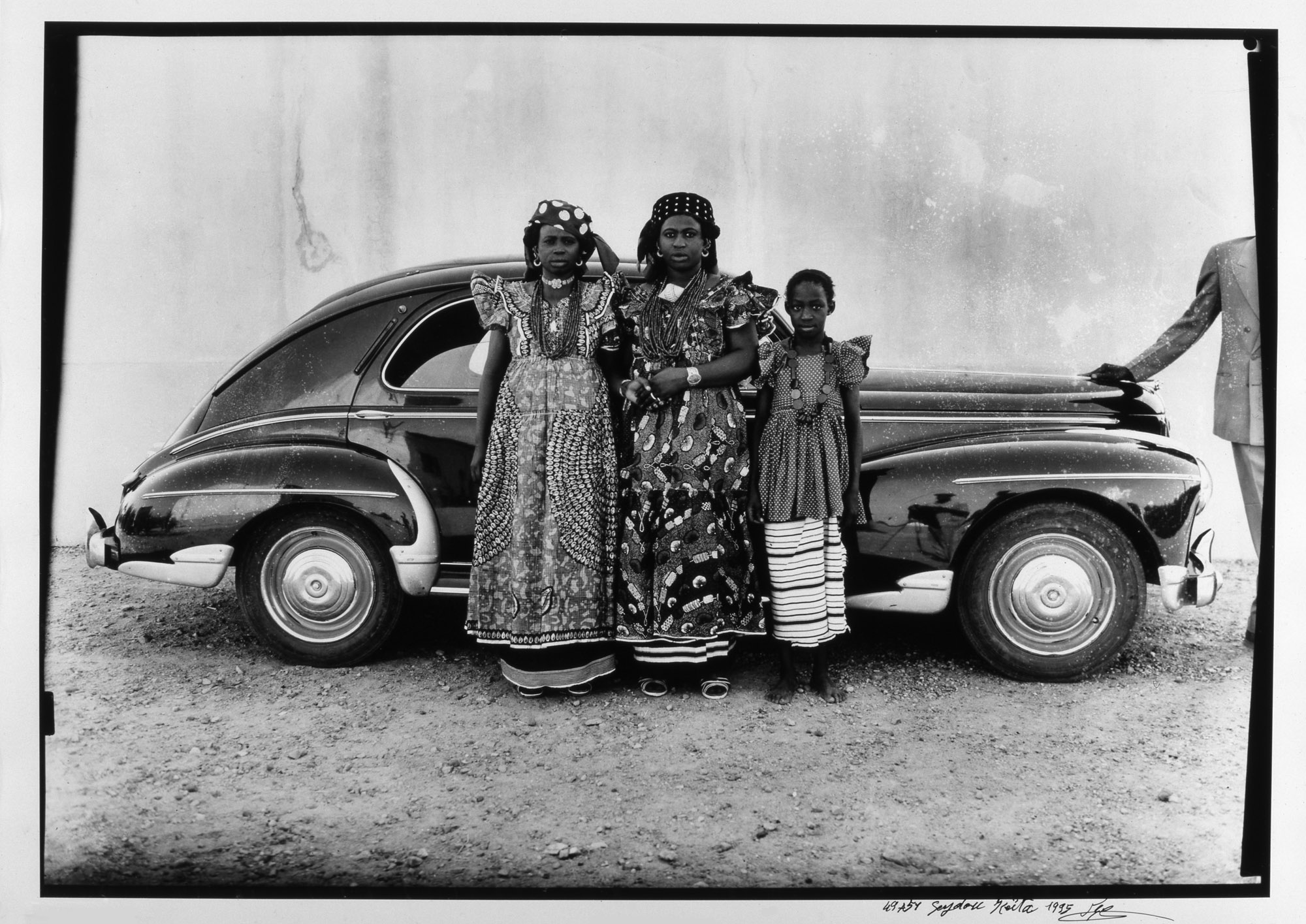
Seydou Keïta (Malian, 1921-2001) 'Untitled' 1952–1955 from the exhibition 'Autophoto' at Fondation Cartier pour l'art contemporain, Paris, April - Sept, 2017


Seydou Keïta (Malian, 1921-2001)
Untitled
1952-1955
Gelatin silver print
50 × 60cm
CAAC – The Pigozzi Collection, Geneva
© SKPEAC (The Seydou Keïta Photography Estate Advisor Corporation)


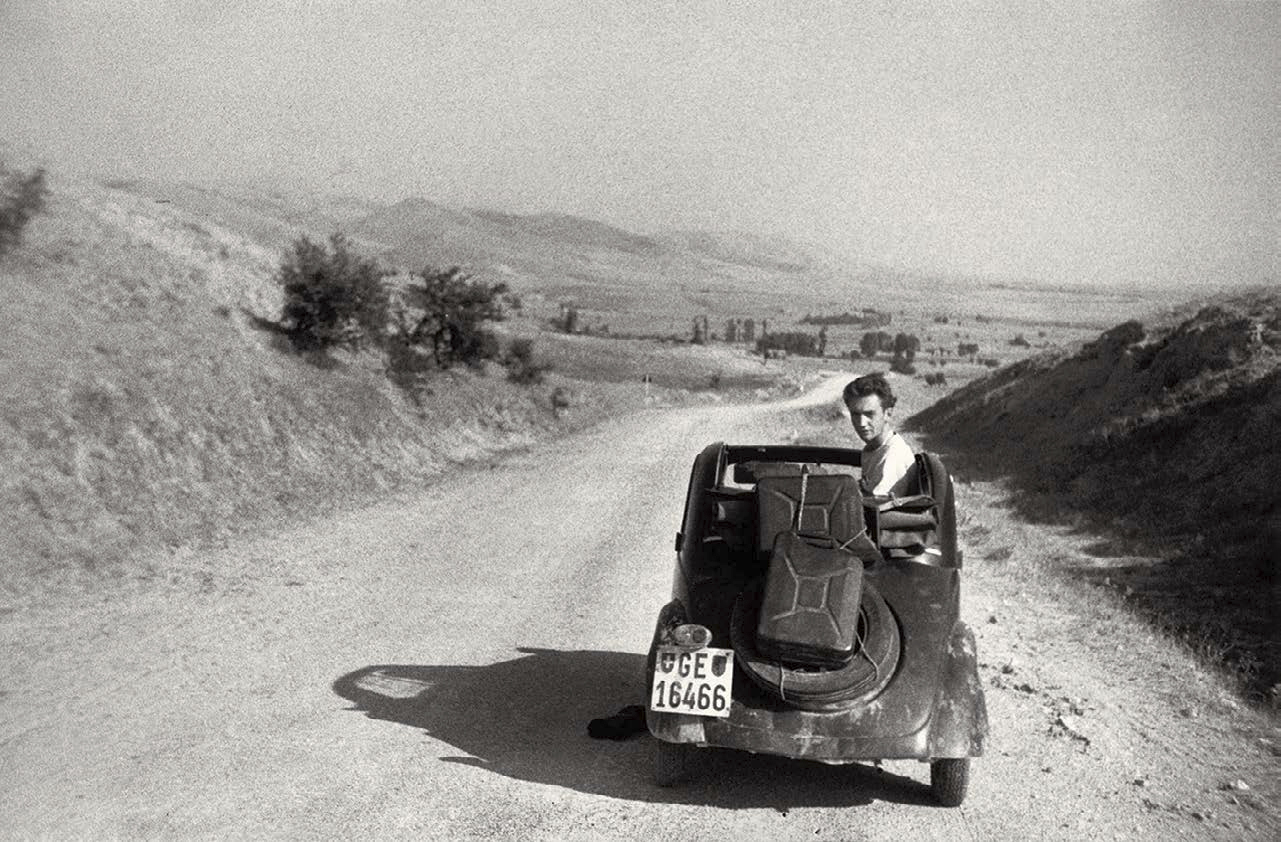
Nicolas Bouvier (Swiss, 1929-1998) 'Entre Prilep et Istanbul, Turquie' 1953


Nicolas Bouvier (Swiss, 1929-1998)
Entre Prilep et Istanbul, Turquie
1953
Musée de l’Élysée, Lausanne
© Fonds Nicolas Bouvier / Musée de l’Élysée, Lausanne


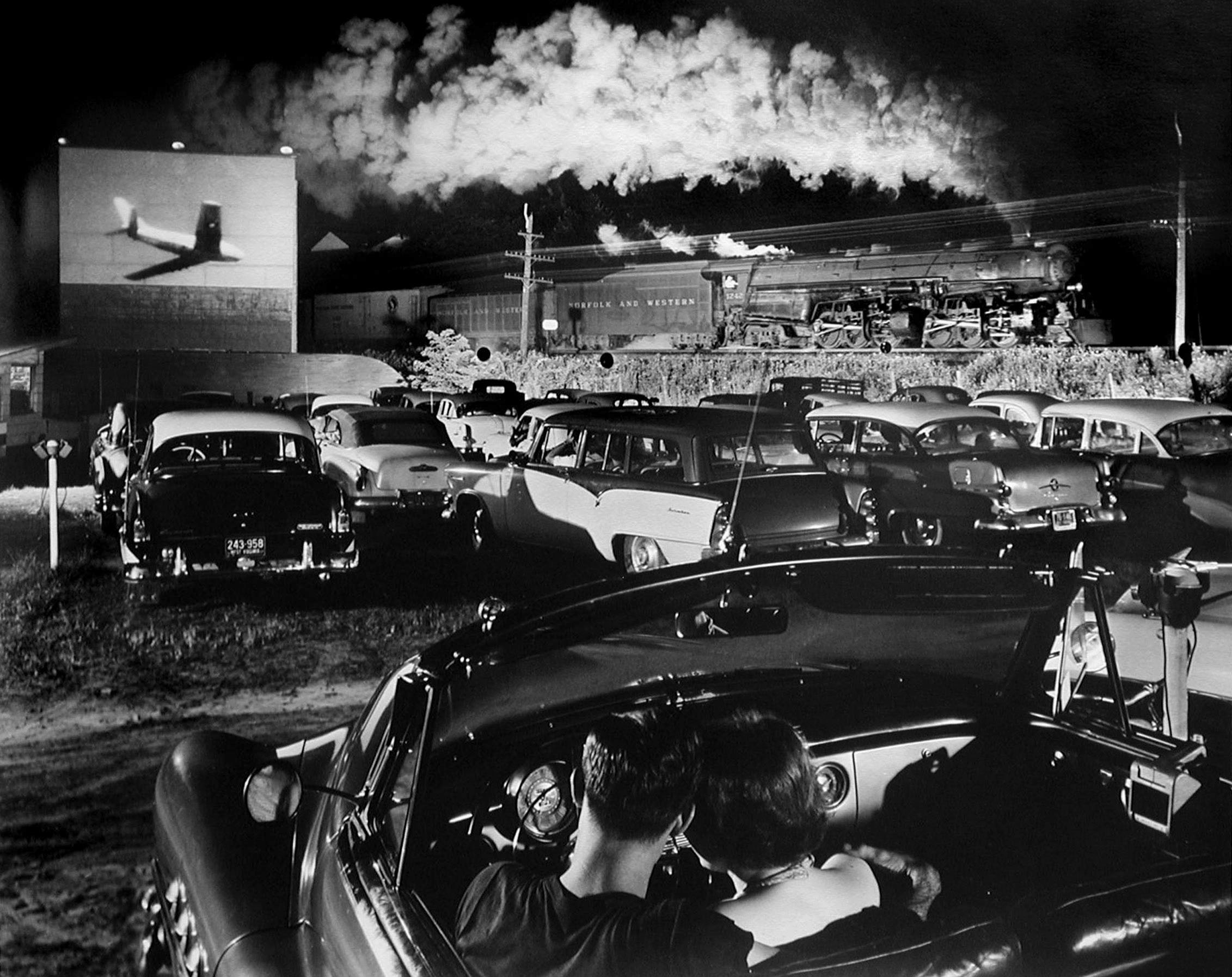
O. Winston Link (American, 1914-2001) 'Hot Shot Eastbound' 1956


O. Winston Link (American, 1914-2001)
Hot Shot Eastbound
1956
Collection Mathé Perrin, Bruxelles
© O. Winston Link


Ray K. Metzker (American, 1931-2014) 'Washington, DC' 1964


Ray K. Metzker (American, 1931-2014)
Washington, DC
1964
Gelatin silver print
20 × 25.5cm
Courtesy Les Douches la Galerie, Paris/Laurence Miller Gallery, New York
© Estate Ray K. Metzker, courtesy Les Douches la Galerie, Paris/Laurence Miller Gallery, New York


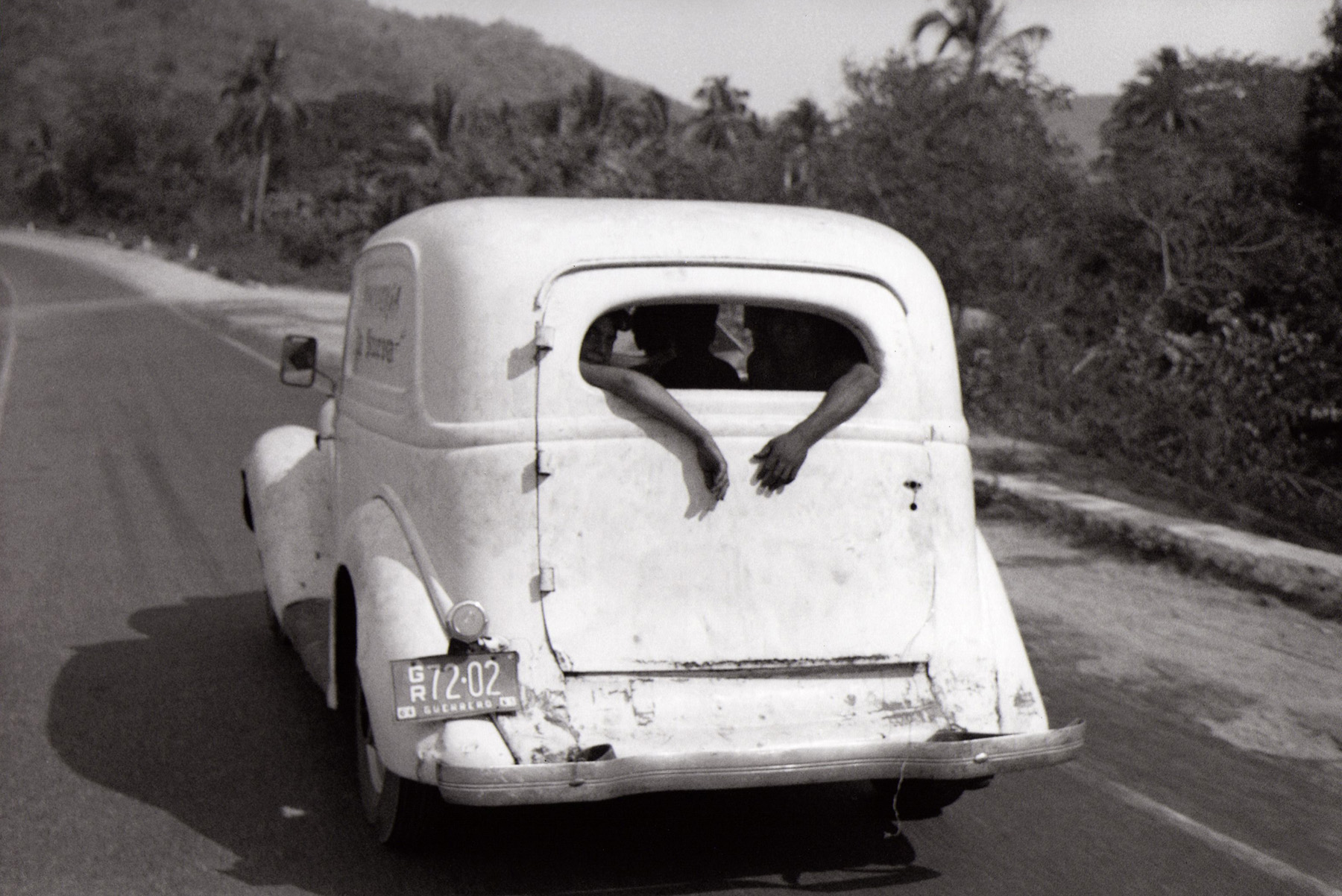
Bernard Plossu (French, b. 1945) 'Sur la route d'Acapulco, Mexique' 1966


Bernard Plossu (French, b. 1945)
Sur la route d’Acapulco, Mexique
1966
From Le Voyage mexicain series
Gelatin silver print
18 × 27cm
Courtesy of the artist/Galerie Camera Obscura, Paris
© Bernard Plossu


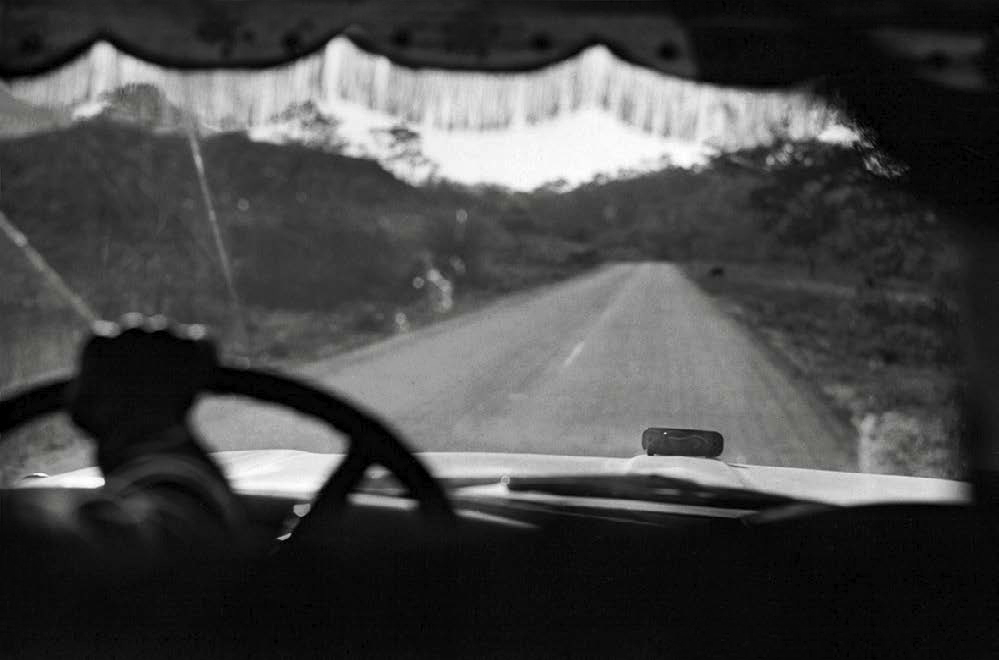
Bernard Plossu (French, b. 1945) 'Chiapas, Mexique' 1966


Bernard Plossu (French, b. 1945)
Chiapas, Mexique
1966
From Le Voyage mexicain series
Gelatin silver print
18 × 27cm
Courtesy of the artist/Galerie Camera Obscura, Paris
© Bernard Plossu


“A panorama framed by the rectangle of the windshield. A long ribbon of asphalt, a line of flight that stretches towards the horizon. For more than a century, we can capture this image and travel the world by car, this photographic “box”. Automotive and photography, two tools to model the landscape, two mechanics of the traction and attraction, have emerged at the end of the nineteenth century, through new rhythms and new rites, the society of modern times. If the photograph allows multiple views and list them, to memorise the movement and leave a trace, the automobile makes it possible to move in space. Photography, a tool of immobility, benefited from the automobile, a mobility tool. And if the automobile like photography is constantly evolving, these two inventions have parallel paths in order to better, to master space-time. “Riding is a form spectacular amnesia. Everything to discover, everything to be erased,”1 writes Jean Baudrillard.”

From the foreword by commissioners of the exhibition Xavier Barral and Philippe Séclier

1/ Jean Baudrillard, Amérique, Grasset, Paris, 1986, p. 15


Henry Wessel (American, 1942-2018) 'Pennsylvania' 1968


Henry Wessel (American, 1942-2018)
Pennsylvania
1968
Courtesy Galerie Thomas Zander, Cologne
© Henry Wessel, courtesy Galerie Thomas Zander, Cologne.


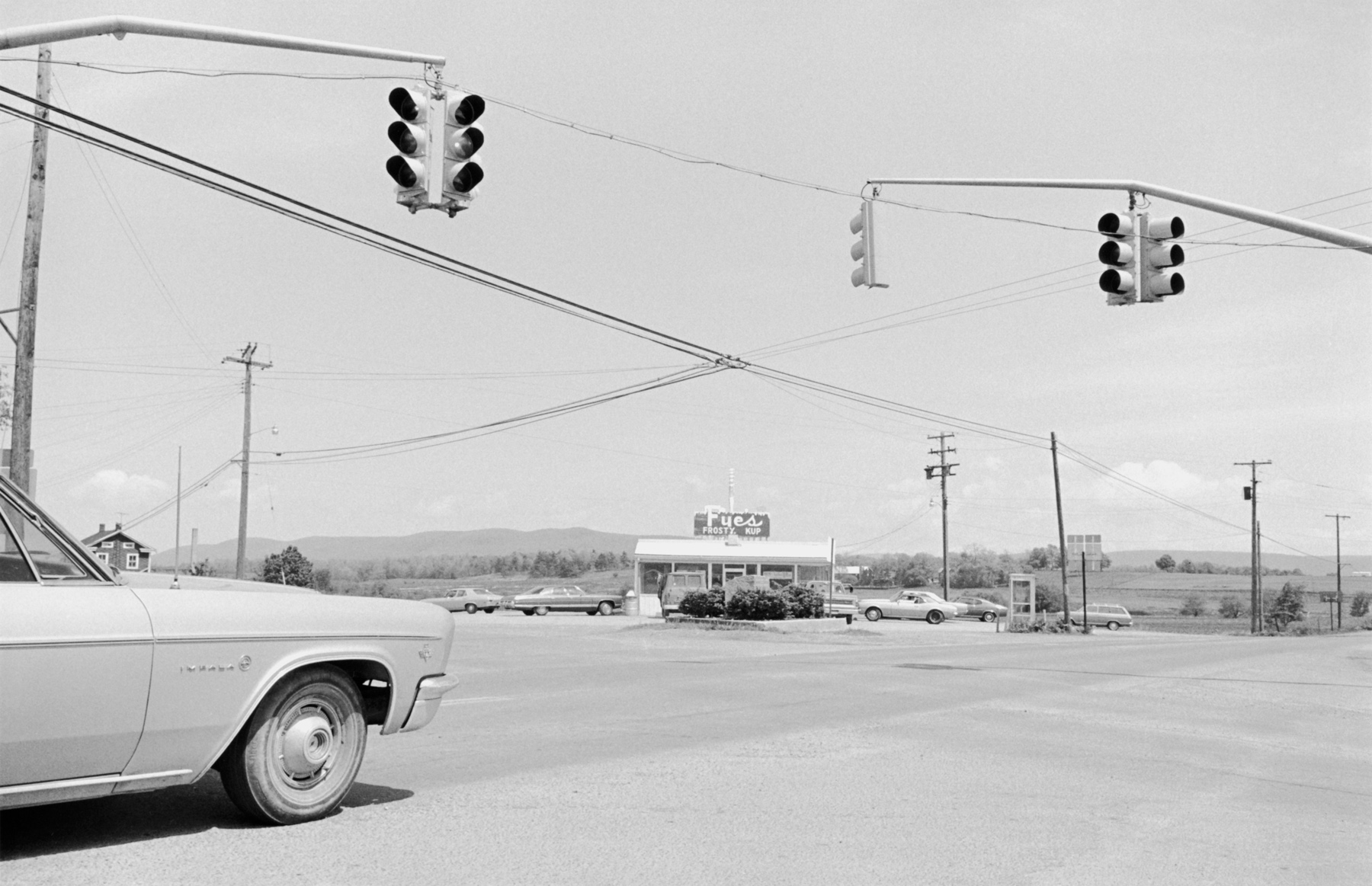
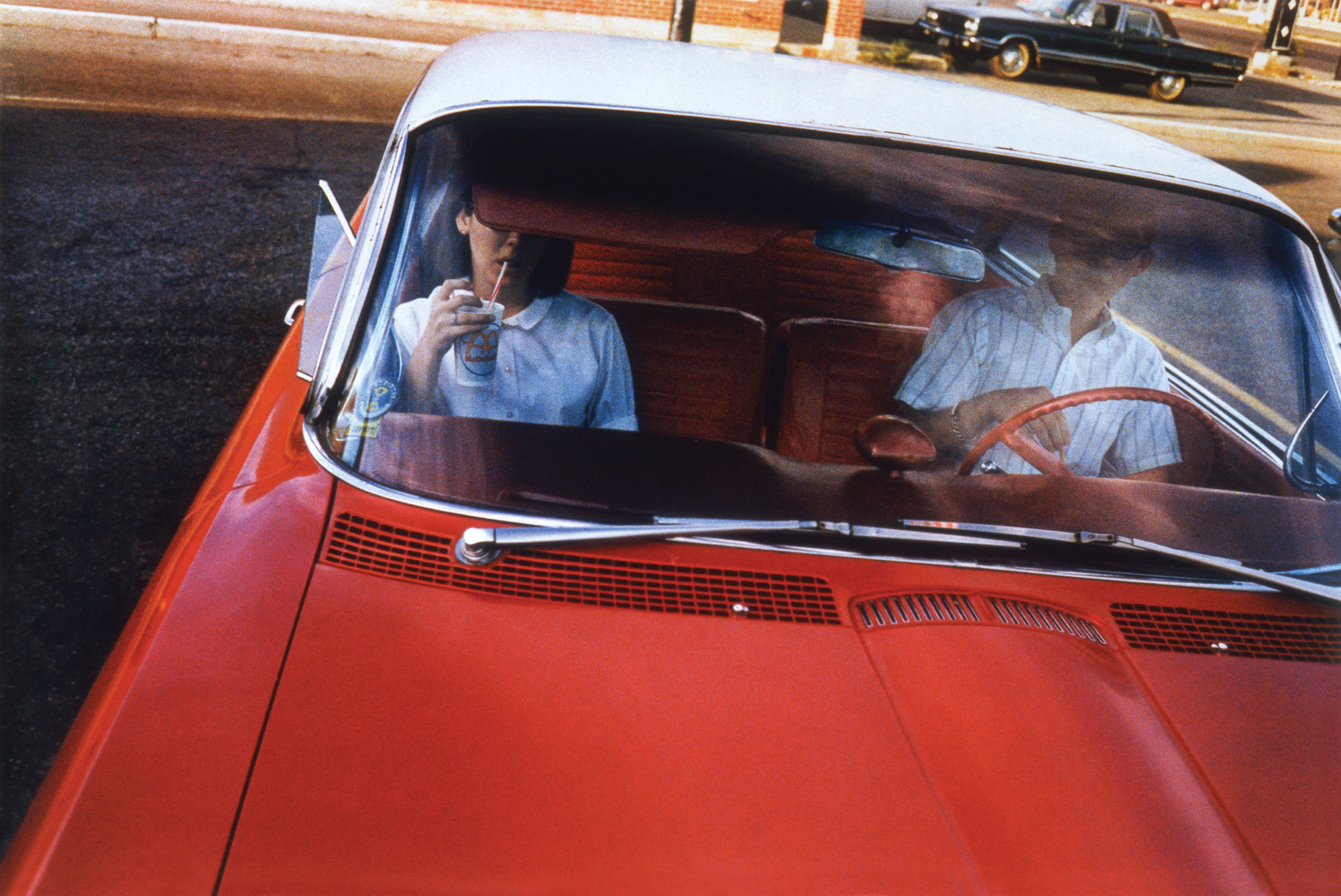
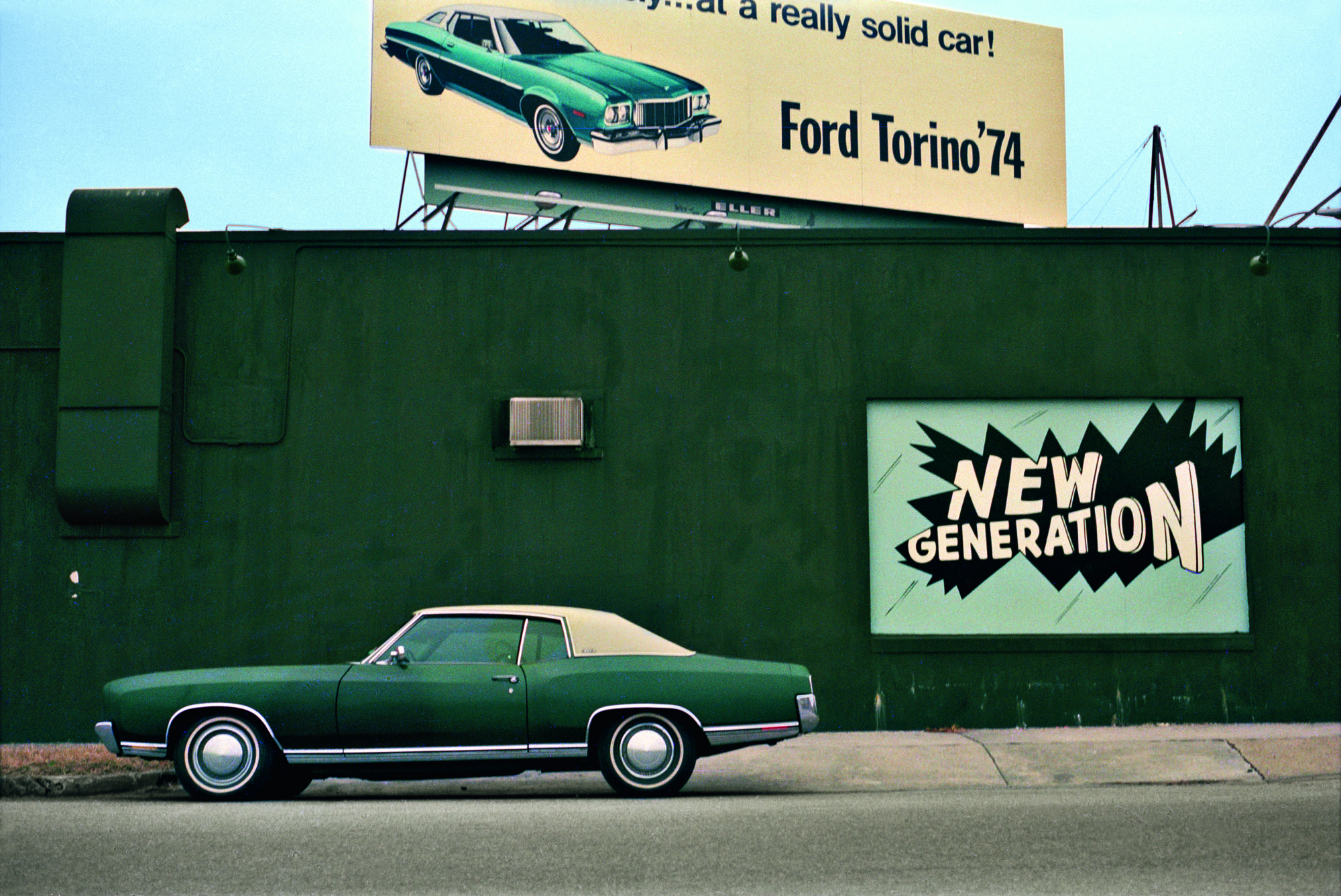
William Eggleston (American, b. 1939) 'Los Alamos' series 1965-1968


William Eggleston (American, b. 1939)
Los Alamos series
1965-1968
Dye-transfer print
40.5 × 50.5cm
Eggleston Artistic Trust, courtesy David Zwirner, New York/London
© Eggleston Artistic Trust. Courtesy David Zwirner, New York/London


Henry Wessel (American, 1942-2018) 'Los Alamos' series c. 1974


Henry Wessel (American, 1942-2018)
Los Alamos series
c. 1974
Inkjet print
56 × 73.5cm
Eggleston Artistic Trust, Memphis
© Eggleston Artistic Trust, Memphis


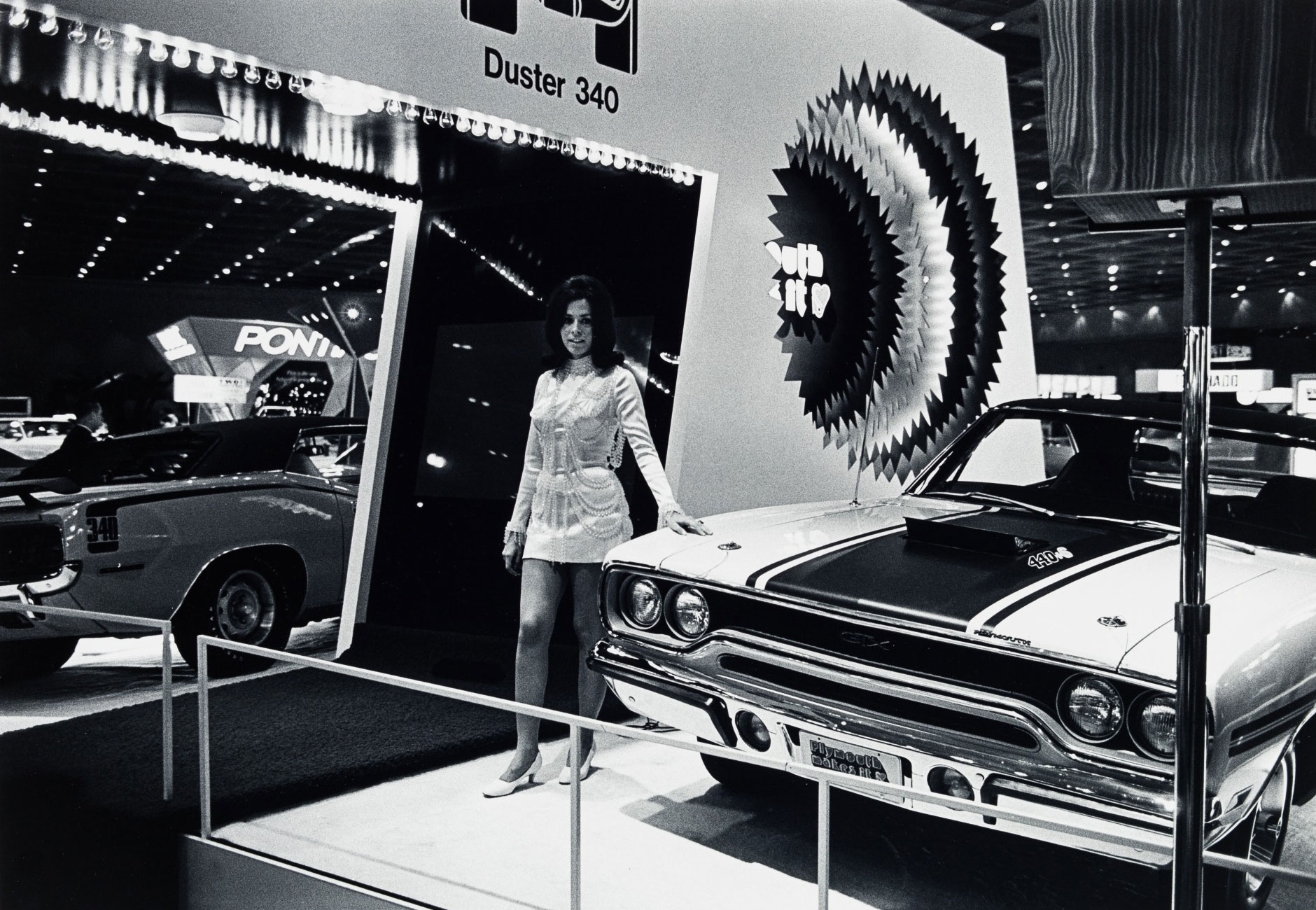
Bill Rauhauser (American, 1918-2017) 'Detroit Auto Show' series c. 1975


Bill Rauhauser (American, 1918-2017)
Detroit Auto Show series
c. 1975
Detroit Institute of Arts, don de l’artiste en mémoire de Doris Rauhauser
© 2007 Rauhauser Photographic Trust. All Rights Reserved


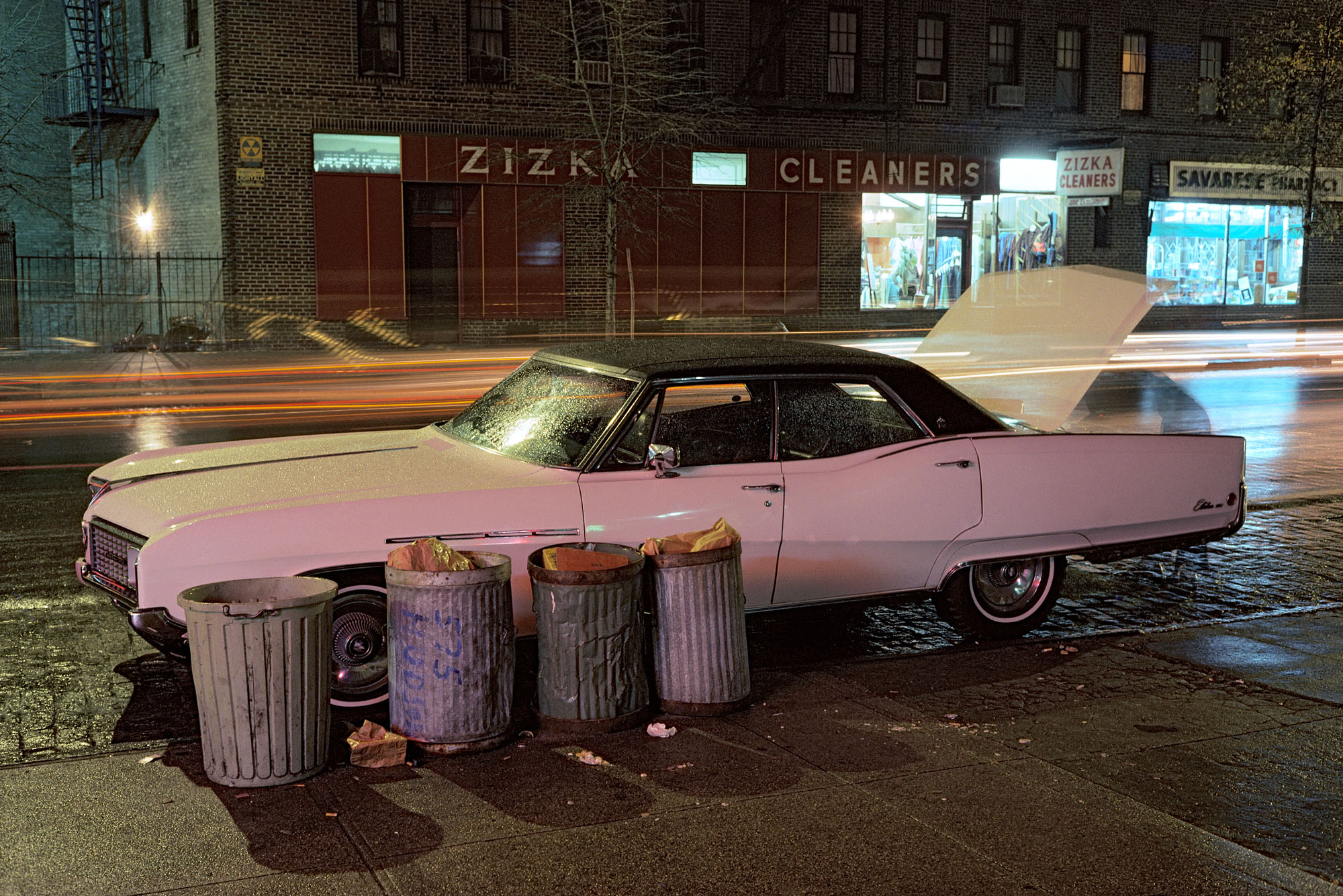
Langdon Clay (American, b. 1949) 'Zizka Cleaners car, Buick Electra' 1976


Langdon Clay (American, b. 1949)
Zizka Cleaners car, Buick Electra
Series Cars, New York City, 1976
Slide-show
Courtesy of the artist
© Langdon Clay


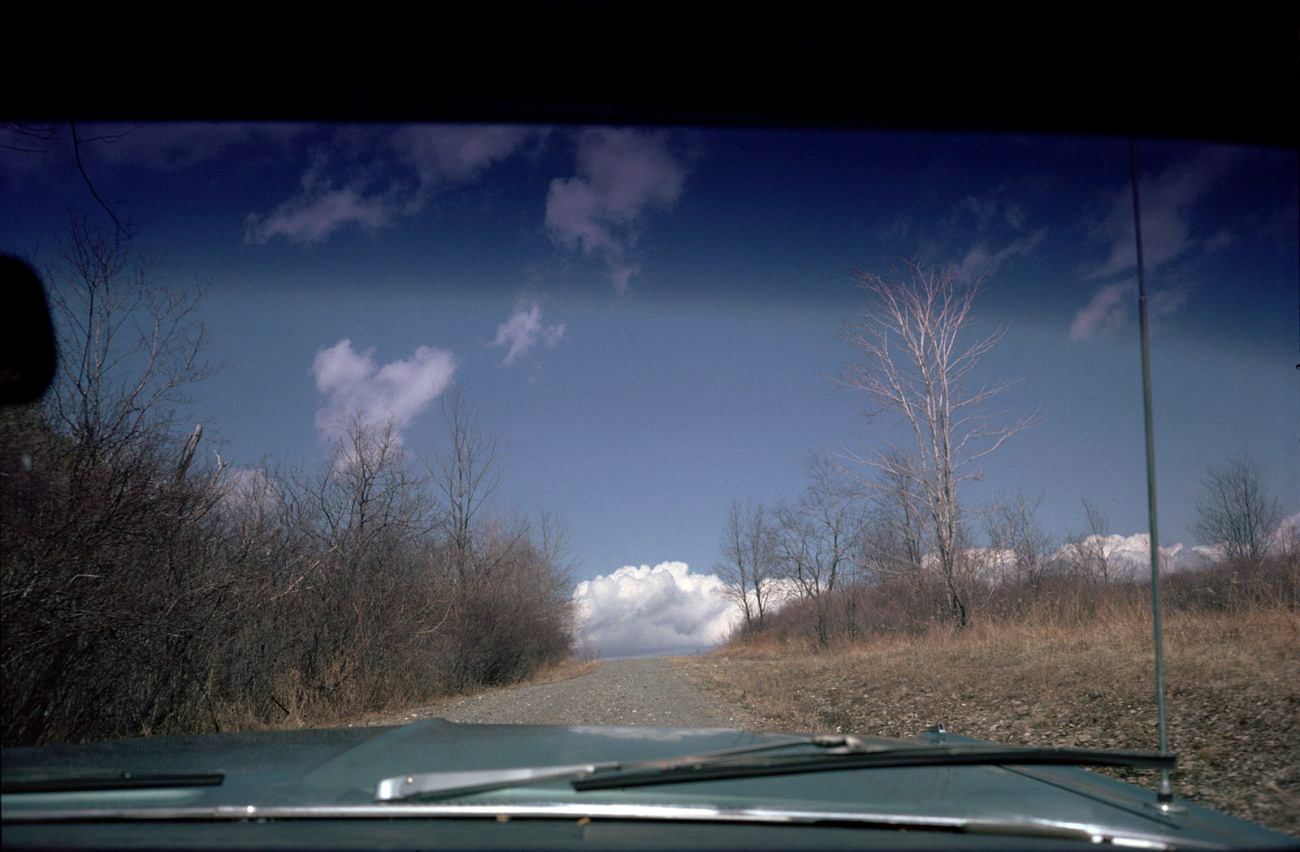
Joel Meyerowitz (American, b. 1938) 'Upstate New York' 1977


Joel Meyerowitz (American, b. 1938)
Upstate New York
1977
Collection Joel Meyerowitz Photography, New York
© Joel Meyerowitz, courtesy Polka Galerie, Paris


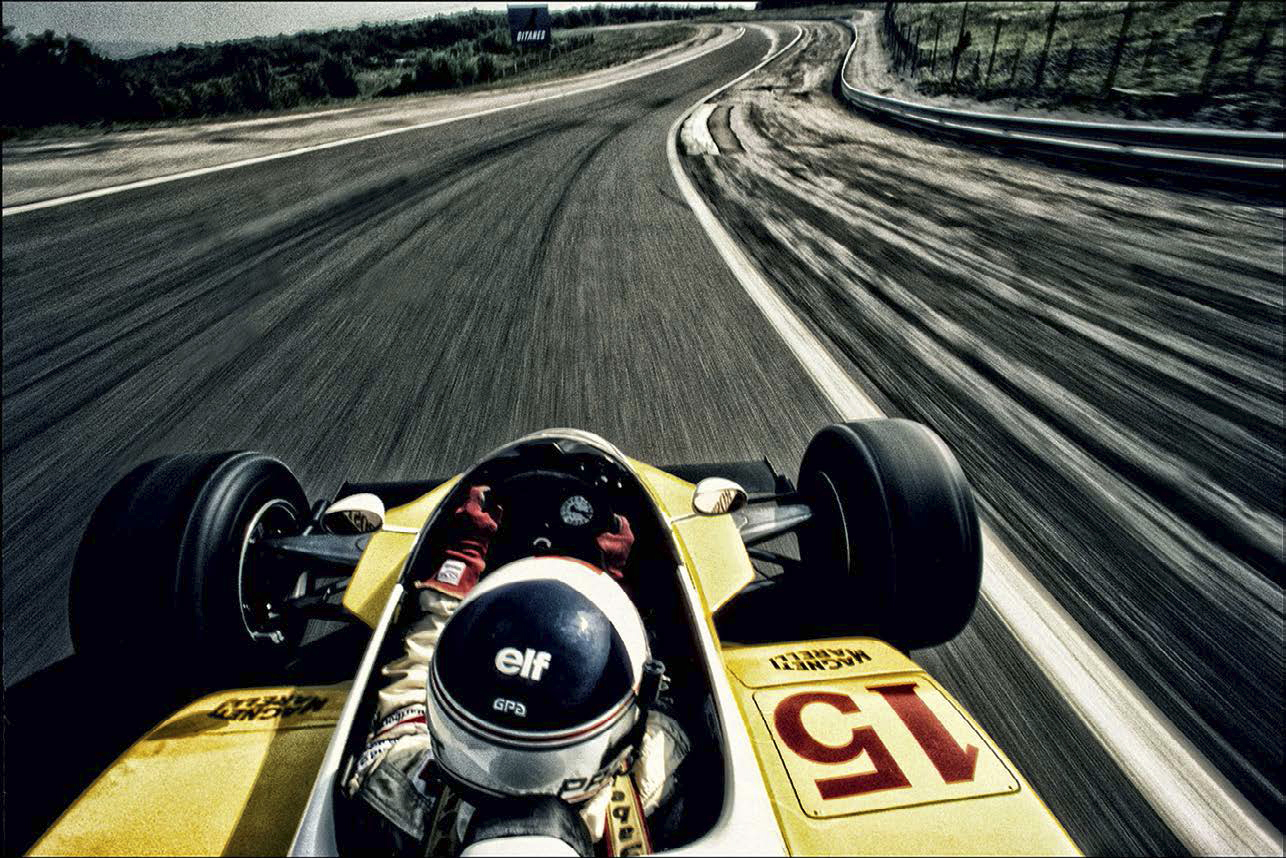
Bernard Asset (French, b. 1955) 'Passager d'Alain Prost (Alain Prost au volant d’une Renault RE30B, tests F1 sur le circuit Dijon-Prenois)' 1982


Bernard Asset (French, b. 1955)
Passager d’Alain Prost (Alain Prost au volant d’une Renault RE30B, tests F1 sur le circuit Dijon-Prenois)
1982
Collection de l’artiste
© Bernard Asset


David Bradford (American, b. 1951) 'Coaster Ride Stealth' 1994


David Bradford (American, b. 1951)
Coaster Ride Stealth
1994
From Drive-By Shootings series
C-print
28 × 35.5cm
Courtesy of the artist
© David Bradford


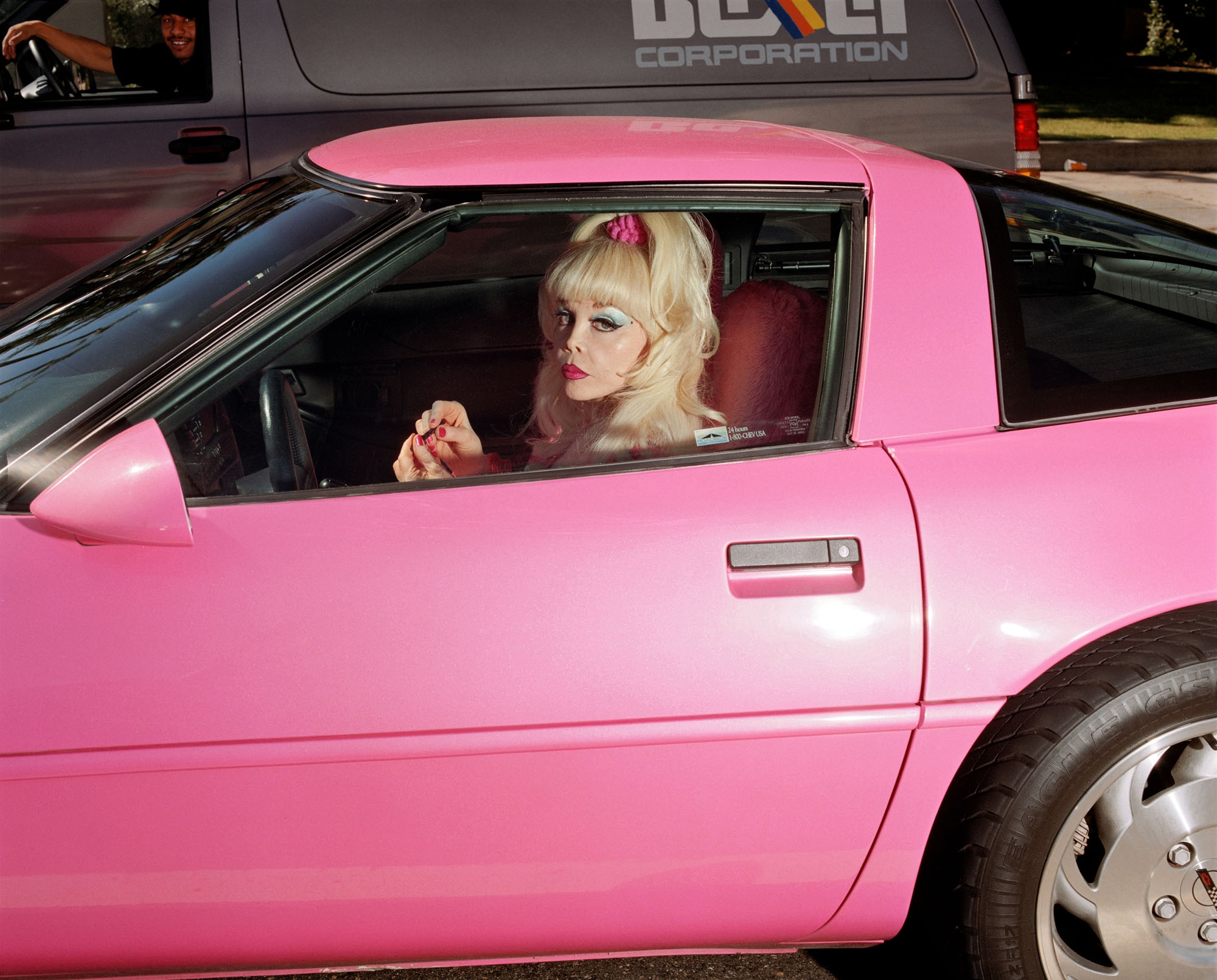
Andrew Bush (American, b. 1956) 'Woman Waiting to Proceed South at Sunset and Highland Boulevards, Los Angeles, at Approximately 11:59 a.m. One Day in February 1997' 1997


Andrew Bush (American, b. 1956)
Woman Waiting to Proceed South at Sunset and Highland Boulevards, Los Angeles, at Approximately 11:59 a.m. One Day in February 1997
1997
From Vector Portraits series
C-print
122 × 151cm
Courtesy M+B Gallery, Los Angeles
© Andrew Bush


Rosângela Rennó (Brazilian, b. 1962) 'Cerimônia do Adeus' series,1997-2003


Rosângela Rennó (Brazilian, b. 1962)
Cerimônia do Adeus series
1997-2003
C-print face-mounted on Plexiglas
50 × 68 cm
Courtesy of the artist/Cristina Guerra Contemporary Art, Lisbon
© Rosângela Rennó


Valérie Belin (French, b. 1964) 'Untitled' 2002


Valérie Belin (French, b. 1964)
Untitled
2002
Gelatin silver print
61 x 71.5cm (framed)
Courtesy of the artist/Galerie Nathalie Obadia, Paris/Brussels
© Valérie Belin/ADAGP, Paris 2017


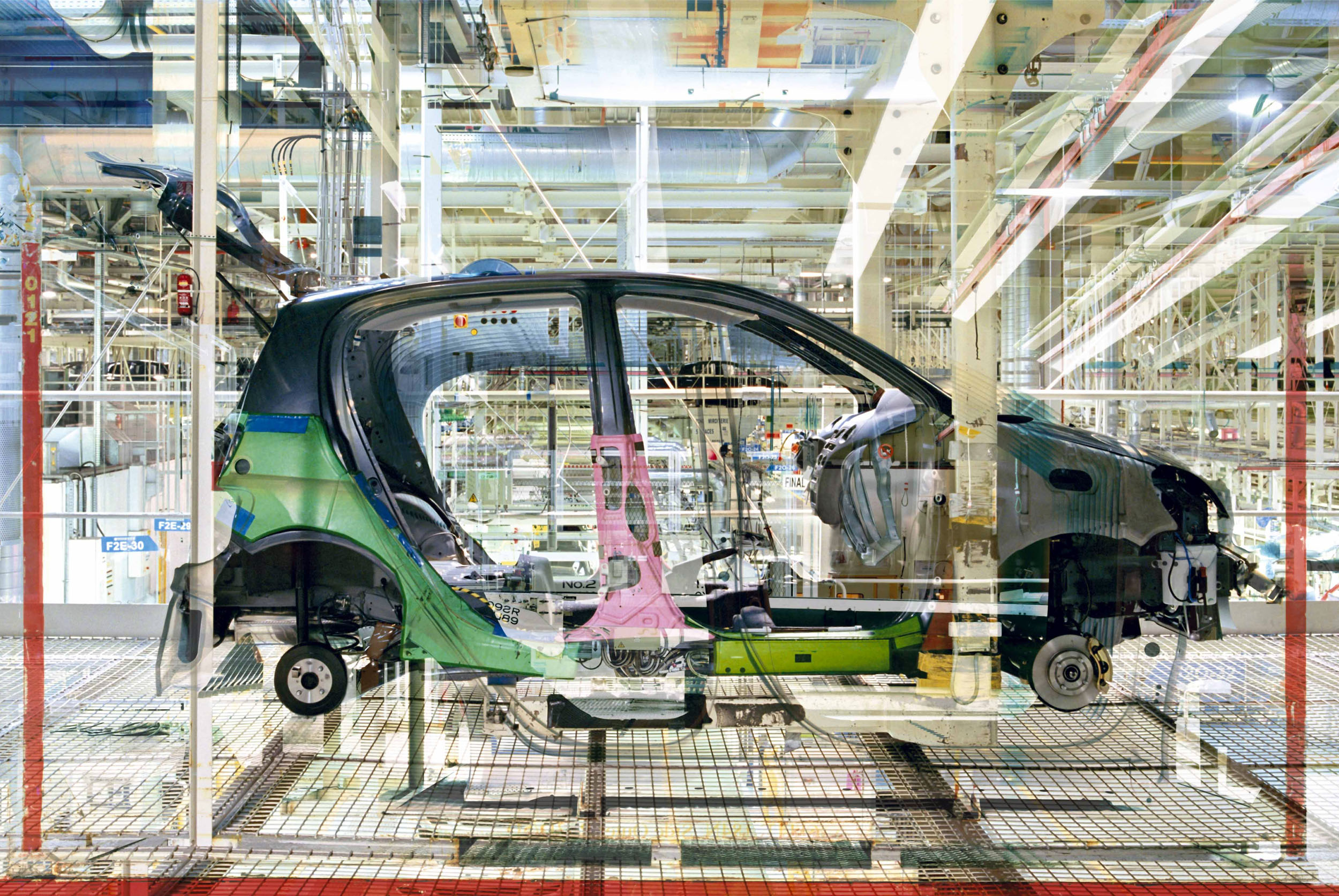
Stéphane Couturier (French, b. 1957) 'MELT, Toyota No 8' 2005


Stéphane Couturier (French, b. 1957)
MELT, Toyota No. 8
2005
From Melting Point, Usine Toyota, Valenciennes series
C-print
92 × 137cm
Collection of the artist
Courtesy La Galerie Particulière, Paris/Brussels
© Stéphane Couturier


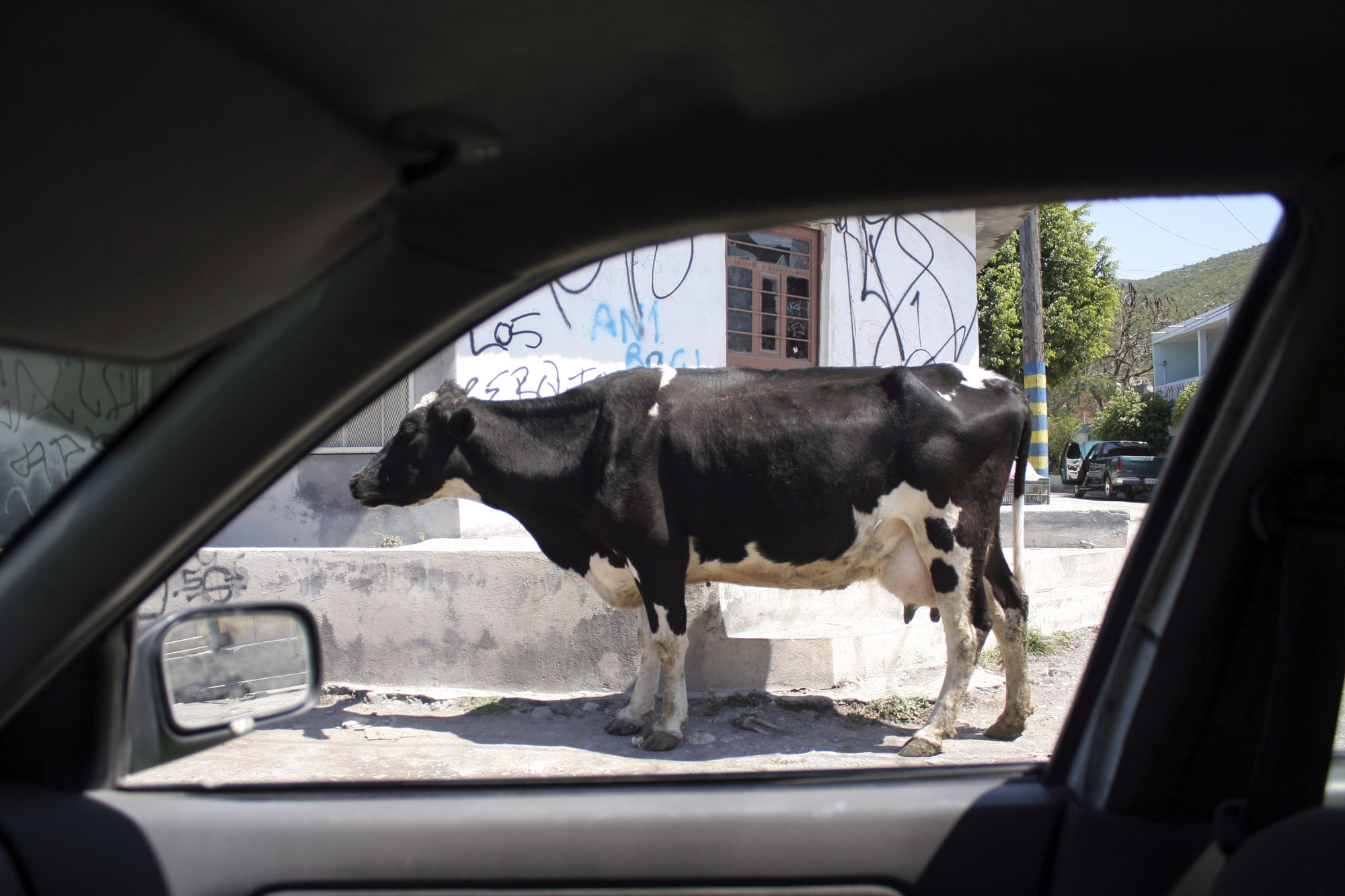
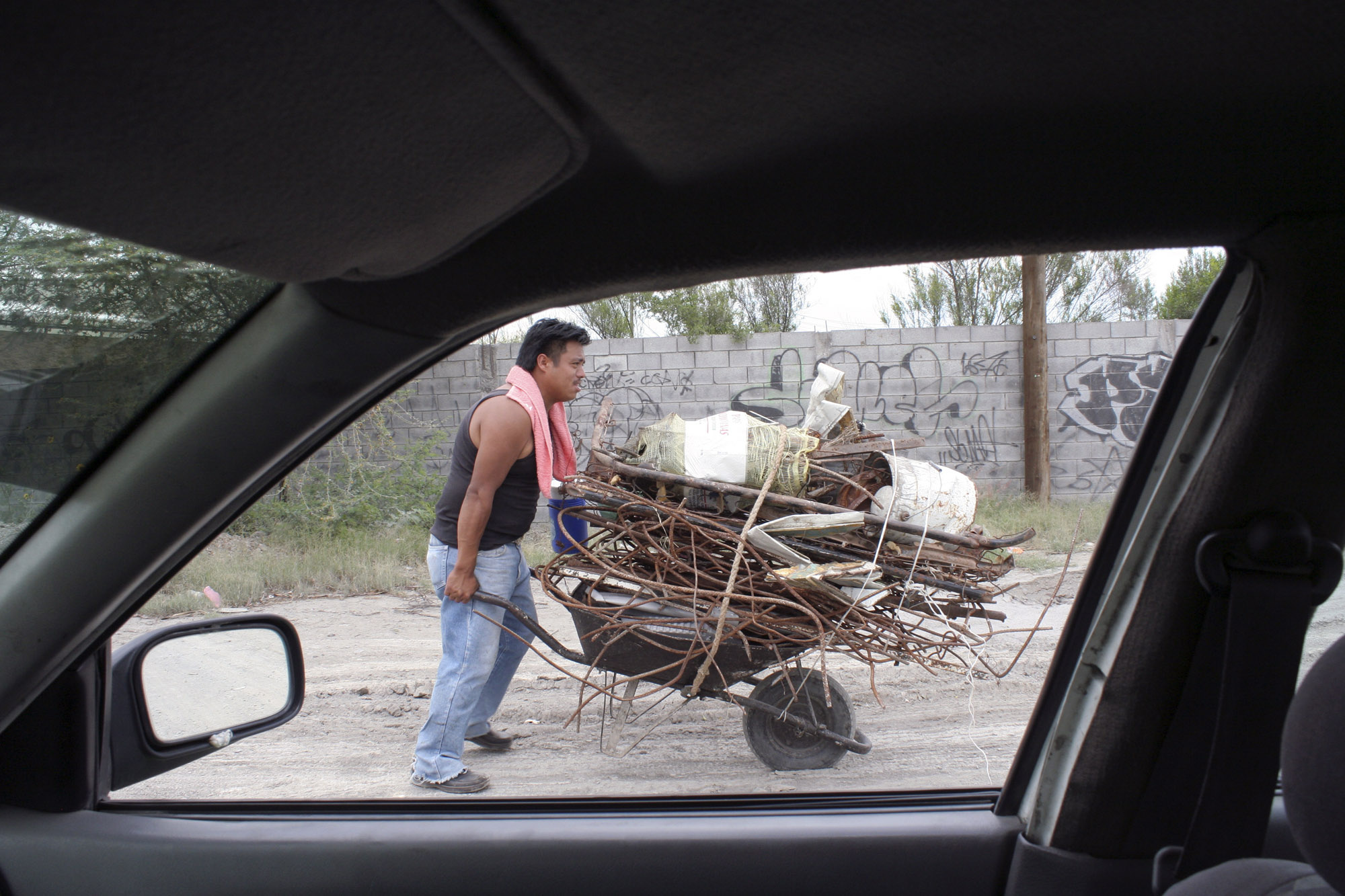
Óscar Fernando Gómez (Mexican, b. 1970) 'Windows' series, 2009

Óscar Fernando Gómez (Mexican, b. 1970) 'Windows' series, 2009

Óscar Fernando Gómez (Mexican, b. 1970) 'Windows' series, 2009

Óscar Fernando Gómez (Mexican, b. 1970) 'Windows' series, 2009

Óscar Fernando Gómez (Mexican, b. 1970) 'Windows' series, 2009


Óscar Fernando Gómez (Mexican, b. 1970)
Windows series
2009
Slide show
Courtesy Martin Parr Studio, Bristol
© Óscar Fernando Gómez


Alain Willaume (French, b. 1956) '#5069' 2012


Alain Willaume (French, b. 1956)
#5069
2012
From the Échos de la poussière et de la fracturation series
Collection de l’artiste
© Alain Willaume (Tendance Floue)


Peter Lippmann (American works Paris, b. 1956) 'Citroën Traction 7' 2012


Peter Lippmann (American works Paris, b. 1956)
Citroën Traction 7
2012
From the Paradise Parking series
C-print
75 × 100cm
Collection of the artist
© Peter Lippmann


Justine Kurland (American, b. 1969) '280 Coup' 2012


Justine Kurland (American, b. 1969)
280 Coup
2012
Inkjet Print
47 x 61cm
Courtesy of the artist/Mitchell-Innes & Nash, New York
© Justine Kurland


Melle Smets and Joost Van Onna. 'Turtle 1. Building a Car in Africa' 2016


Melle Smets and Joost Van Onna
Turtle 1. Building a Car in Africa
2016
Courtesy des artistes / Paradox, Edam
© Melle Smets et Joost Van Onna


Luciano Rigolini (Swiss, b. 1950) 'Tribute to Giorgio de Chirico' 2017


Luciano Rigolini (Swiss, b. 1950)
Tribute to Giorgio de Chirico
2017
Duratrans in lightbox
124 x 154cm
Collection of the artist
© Luciano Rigolini (appropriation – unknown photographer, 1958)


First Visions: A New Subject for Photography

In the early 20th century, the automobile and its impact on the landscape had already become a subject of predilection for many photographers, influencing both the form and content of their work. The exhibition will begin by focusing on early photographers like Jacques Henri Lartigue, Germaine Krull, and Brassaï, who used the automobile to varying degrees in their work. They registered the thrill of speed, the chaos of Parisian traffic or the city’s dramatic car-illuminated nocturnal landscape to represent a society in transition at the birth of the modern age. Other photographers of the time were attracted by the promise of freedom and mobility offered by the automobile. Anticipating the modern road trip, Swiss writers and photographers Ella Maillart and Nicolas Bouvier, travelled throughout Asia in the 1930s and 1950s respectively, using their cars and cameras to record their adventures along the way.

Auto Portraits

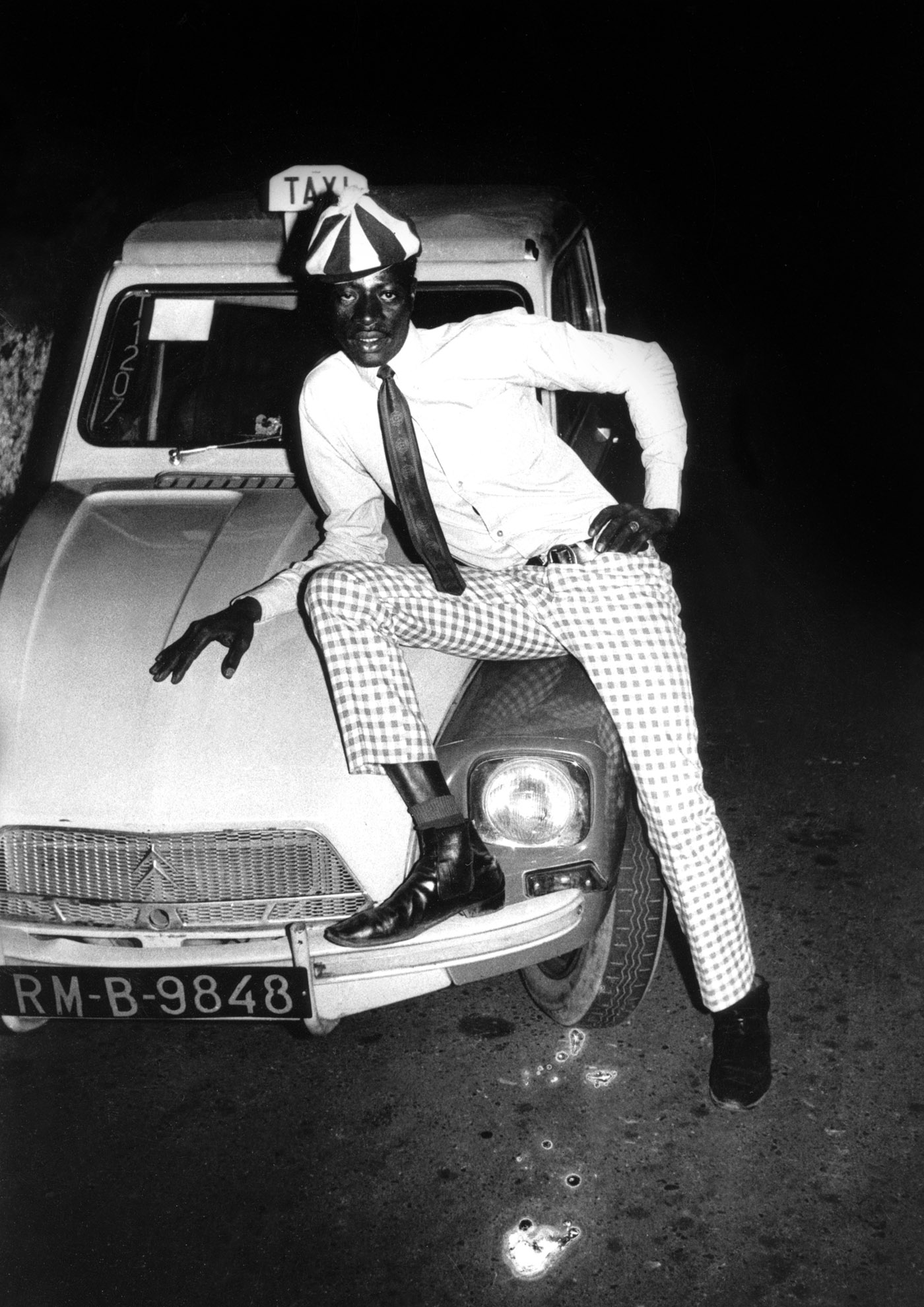
The exhibition will also present a series of “auto portraits”* made by a variety of photographers from the mi-twentieth century to the present. Yashuhiro Ishimoto and Langdon Clay’s photographs, for example, are portraits in profile of cars parked on sparsely inhabited city streets, that immerse the viewer in a different eras and atmospheres. Ishimoto’s black and white photographs, taken in Chicago in the 1950s, emphasise their polished, curved silhouettes in a distanced and serial manner, while Langdon Clay’s colour pictures taken in New York in the 1970s, show their decaying and dented chassis in an eerie nocturnal light. Other works in this section, such as the found photographs of Sylvie Meunier and Patrick Tourneboeuf’s American Dream series, or the flamboyant portraits of African photographers Seydou Keïta and Sory Sanlé, focus on the role of the automobile as a emblem of social mobility showing proud owners posing with their cars.

*A play on words in French: auto portrait meaning self-portrait.

The Car as a Medium: New Perspectives on the Landscape

Many photographers have exploited the technical and aesthetic possibilities offered by the automobile, using it like a camera to capture the surrounding landscape through car windows or the reflections in rear-view mirrors.

Cars have determined the framing and composition as well as the serial nature of the photographs of Joel Meyerowitz, Daido Moriyama, John Divola and David Bradford who have all worked from moving cars. From behind their windshields, these photographers capture an amusing store sign, a white car behind a wire fence, a dog running along a dusty road, a highway stretching out into the horizon. Other photographers, including Sue Barr, Robert Adams, Ed Ruscha, and Alex MacLean scrutinise our car-altered environment. Their landscape is no longer one of magnificent mountains, wondrous waterfalls or awe-inspiring canyons, but of a world transformed by the automobile with its suburban housing complexes, parking lots, and highway infrastructure.

Our Car Culture: Industry, History and New Ways of Life

Many photographers have explored other aspects of our car culture, from the car industry and its impact on the environment to its role in history and society. Both Robert Doisneau and Robert Frank registered life in the factory, from the machines and productions lines to the activities of the workers lives, the first at the Renault plant in the 1930s and the second at Ford River Rouge in the 1950s. Their photographs, unique in their attention to individual assembly line workers, contrast with the work of contemporary photographer Stéphane Couturier whose deliberately distanced, impersonal pictures taken at a Toyota factory reflect the increasingly dehumanised nature of contemporary industry. Working in Ghana, far from the automated factory photographed by Stéphane Couturier, Dutch artist Melle Smets, and sociologist Joost Van Onna, put industrial waste from the car industry to good use. Collaborating with local craftsman in a region called Suame Magazine, where cars are disassembled and their parts traded, they created a car specifically for the African market called Turtle 1, using parts from different brands that happened to be available. Their installation, which includes photographs, drawings, and videos, documents the entire fabrication process of this car.

Photographers such as Philippe Chancel, Éric Aupol and Edward Burtynsky are concerned with the car industry’s damage to the environment. Philippe Chancel’s work focuses on the city of Flint and its dismantled General Motors factory, while Éric Aupol’s and Ed Burtynsky’s photographs reveal the sculptural yet apocalyptic beauty of industrial waste sites.

Other photographers reveal how the car plays an important role in historical events, in society and in daily life. Arwed Messmer’s Reenactement series brings together photographs from the archives of the Stasi showing how people used cars in unusual ways to escape from East Germany, and Fernando Gutiérrez work, Secuelas, explores the role of the Ford Falcon, a symbol of Argentina’s military dictatorship, in the collective imaginary of the Argentinean people. Jacqueline Hassink’s immersive projection Car Girls investigates the role and status of women who work in car shows around the world. Martin Parr’s series From A to B chronicles the thoughts dreams and anxieties of British motorists. Still other series by photographers such as Rosângela Rennó, Óscar Monzón, Kurt Caviezel and Bruce Davidson show how the car has become an extension of the home, used for weddings and picnics, living and sleeping, arguments and making love.

The Fondation Cartier has also invited artist Alain Bublex to create for the exhibition a series of 10 model cars that cast a fresh eye on the history of automobile design. His installation combines photographs, drawings and models to explore how the car design has evolved over time incorporating new techniques, forms, and practices.

Despite energy crises, ecology movements, and industrial mismanagement, the car remains essential to our daily lives. At a time when we are questioning the role and the future of the automobile in our society, the Autophoto exhibition reexamines, with nostalgia, humour, and a critical eye, this 20th century symbol of freedom and independence.

The Catalogue

Bringing together over 600 images, the catalogue of the Autophoto exhibition reveals how photography, a tool privileging immobility, benefited from the automobile, a tool privileging mobility. The catalogue features iconic images by both historic and contemporary photographers who have captured the automobile, and transformed this popular accessible object through their passionate and creative vision. Quotes by the artists, and a chronology of automobile design, as well as interviews and texts by specialists provide a deeper understanding of this vast topic through a variety of aesthetic, sociological, and historical perspectives.

Press release from The Fondation Cartier


Peter Keetman (German, 1916-2005) 'Hintere Kotflügel' 1953


Peter Keetman (German, 1916-2005)
Hintere Kotflügel (Rear fenders)
1953
From Eine Woche im Volkswagenwerk (A week at the Volkswagenwerk) series
Gelatin silver print
27 × 24.5cm
Nachlass Peter Keetman/Stiftung F.C. Gundlach, Hamburg
© Nachlass Peter Keetman/Stiftung F.C. Gundlach, Hamburg


Ed Ruscha (American, b. 1937) '7133 Kester, Van Nuys' 1967


Ed Ruscha (American, b. 1937)
7133 Kester, Van Nuys
1967
Thirtyfour Parking Lots series
Chipmunk Collection
© Ed Ruscha, courtesy Gagosian Gallery


Malick Sidibé (Malian, 1935-2016) 'Taximan avec voiture' 1970


Malick Sidibé (Malian, 1935-2016)
Taximan avec voiture
1970
Gelatin silver print
40 x 30cm
Courtesy Galerie Magnin-A, Paris
© Malick Sidibé


Lee Friedlander (American, b. 1934) 'Montana' 2008


Lee Friedlander (American, b. 1934)
Montana
2008
From the America by Car series
Gelatin silver print
37.5 × 37.5cm
Courtesy Fraenkel Gallery, San Francisco
© Lee Friedlander, courtesy Fraenkel Gallery, San Francisco


Lee Friedlander (American, b. 1934) 'California' 2008


Lee Friedlander (American, b. 1934)
California
2008
From the America by Car series
Gelatin silver print
37.5 × 37.5cm
Courtesy Fraenkel Gallery, San Francisco
© Lee Friedlander, courtesy Fraenkel Gallery, San Francisco


Alejandro Cartagena (Mexican, b. 1977) 'The Carpoolers' series 2011–2012


Alejandro Cartagena (Mexican, b. 1977)
The Carpoolers series
2011-12
Installation of 15 inkjet prints
55.5 × 35.5cm (each)
Courtesy Patricia Conde Galería, Mexico City
© Alejandro Cartagena


Ronni Campana (Italian, b. 1987) 'Badly Repaired Cars' series 2016


Ronni Campana (Italian, b. 1987)
Badly Repaired Cars series
2016
Inkjet print
60 × 40cm
Collection of the artist
© Ronni Campana


Fondation Cartier pour l’art contemporain
261 Boulevard Raspail, Paris

Opening hours: Every day except Mondays, 11am – 8pm
Opening Tuesday evenings until 10pm

Fondation Cartier website

LIKE ART BLART ON FACEBOOK

Back to top

Exhibition: ‘Thomas Struth: Figure Ground’ at Haus der Kunst, Munich

Exhibition dates: 5th May – 17th September, 2017

Curator: Thomas Weski


Installation view of the exhibition 'Thomas Struth: Figure Ground' at Haus der Kunst, Munich from the exhibition 'Thomas Struth: Figure Ground' at Haus der Kunst, Munich, May - Sept, 2017


Installation view of the exhibition Thomas Struth: Figure Ground at Haus der Kunst, Munich
Courtesy of the artist and Haus der Kunst, Munich


I have always liked this man’s work. His understanding of space, colour, form and photograph as aesthetic experience is sublime. His muscular compositions show evidence of clear thinking and seeing… an investigation into sachlichkeit, that is objectivity: the boundaries between human, animal and machine (the aesthetics of innovation).

And yet Struth’s “unheroic” images also show evidence of subjective forces at work: impulsion, chaos, and serendipity to name a few, capturing a ‘razzmatazz of sensations’ that challenge the existential nature of the human, ‘being’.

Dr Marcus Bunyan


Many thankx to Haus der Kunst for allowing me to publish the art work in the posting. Please click on the photographs for a larger version of the image.


“Most of the images are very unheroic. I have a strong relationship to clarity. That’s why my compositions and choices are very meticulous.”


Thomas Struth


Thomas Struth (German, b. 1954) 'Crosby Street, Soho, New York' 1978 from the exhibition 'Thomas Struth: Figure Ground' at Haus der Kunst, Munich, May - Sept, 2017


Thomas Struth (German, b. 1954)
Crosby Street, Soho, New York
1978
Silver gelatin print
66 x 84cm
© Thomas Struth


Thomas Struth (German, b. 1954) 'Rue de Beaugrenelle, Beaugrenelle, Paris' 1979


Thomas Struth (German, b. 1954)
Rue de Beaugrenelle, Beaugrenelle, Paris
1979
Silver gelatin print
66 x 84cm
© Thomas Struth


Installation view of the exhibition 'Thomas Struth: Figure Ground' at Haus der Kunst, Munich


Installation view of the exhibition Thomas Struth: Figure Ground at Haus der Kunst, Munich
Courtesy of the artist and Haus der Kunst, Munich


Thomas Struth (German, b. 1954) 'National Gallery 1, London' 1989


Thomas Struth (German, b. 1954)
National Gallery 1, London
1989
Chromogenic print
180 x 196cm
© Thomas Struth


Installation view of the exhibition 'Thomas Struth: Figure Ground' at Haus der Kunst, Munich with 'Louvre 4, Paris' (1989) centre left


Installation view of the exhibition Thomas Struth: Figure Ground at Haus der Kunst, Munich with Louvre 4, Paris (1989) centre left
Courtesy of the artist and Haus der Kunst, Munich


Thomas Struth (German, b. 1954) 'Louvre 4 Paris' 1989


Thomas Struth (German, b. 1954)
Louvre 4, Paris
1989
© Thomas Struth


Thomas Struth (German, b. 1954) 'Kyoko and Tomoharu Murakami, Tokyo' 1991


Thomas Struth (German, b. 1954)
Kyoko and Tomoharu Murakami, Tokyo
1991
Chromogenic print
105.5 x 126.0cm
© Thomas Struth


Installation view of the exhibition 'Thomas Struth: Figure Ground' at Haus der Kunst, Munich with 'Paradise 26 (Bougainville), Palpa, Peru (2003)' to the right


Installation view of the exhibition Thomas Struth: Figure Ground at Haus der Kunst, Munich with Paradise 26 (Bougainville), Palpa, Peru (2003) to the right
Courtesy of the artist and Haus der Kunst, Munich


Thomas Struth (German, b. 1954) 'Bright sunflower - No. 1, Winterthur' 1991


Thomas Struth (German, b. 1954)
Bright sunflower – No. 1, Winterthur
1991
Chromogenic print
84 x 66cm
© Thomas Struth


This major exhibition by the pioneering German photographer Thomas Struth (born 1954) presents the most comprehensive survey of his genre-defining oeuvre. Covering four decades of work and every phase of his illustrious artistic career, the exhibition focuses especially on the aspect of Struth’s social interests which represent the important forces of his internationally influential artistic development. Starting with his first series Unbewusste Orte (Unconscious Places) published in 1987 through his current works that deal with the field of research and technology in the globalised world, Struth’s work develops its own specific analytical nature through his choice of subject matter, the manner of its photographic realisation and its modes of presentation. These aspirations are manifested in questioning the relevance of public space and transformation of cities, the cohesive factor of family solidarity, the importance of the relationship between nature and culture, and exploring the limits and possibilities of new technologies. The momentum of participation further characterises these aspirations, as Struth’s extensive pictorial inventions and strategies allow individual interpretation based on collective knowledge.

In this exhibition, early works and research materials related to the artist’s subject matter, and collected over several decades, are shown for the first time in the context of an exhibition, offering access and insight into Struth’s working methods. Together with the photographs, these materials elucidate his longstanding interests behind the different series, demonstrating the process of artistic translation before the perfection of the image.

Featuring around 130 works, two multichannel video installations, and a selection of archival material, the exhibition in Haus der Kunst is the largest survey of Struth’s artistic career to date. The survey links his early ideas to well-known series such as Straßen (Streets), Unbewusste Orte (Unconscious Places), Portraits, Museumsbilder (Museum Pictures), Paradise, and Audiences which are placed in dialogue with site-specific works like Löwenzahnzimmer (Dandelion Room), the landscape- and flower photographs that were made for the patients’ rooms at the Hospital on the Lindberg in Winterthur, Switzerland. It also includes photographs recently shown in the exhibition Nature & Politics. Within this interplay, the exciting ability of the artist to combine analysis and individual pictorial invention in multifaceted works and techniques builds an overarching idea on how to deal with the elementary matters of our times.

The exhibition is accompanied by a publication from Schirmer / Mosel Publishers, Munich, designed by Fernando Gutierrez, with texts by Thomas Weski, Ulrich Wilmes, Jana-Maria Hartmann, and an interview with the artist by Okwui Enwezor. The exhibition is organised by Haus der Kunst and curated by Thomas Weski.

Press release from Haus der Kunst


Thomas Struth (German, b. 1954) 'Wangfujing Dong Lu, Shanghai' 1997


Thomas Struth (German, b. 1954)
Wangfujing Dong Lu, Shanghai
1997
Chromogenic print
117.5 x 143.6cm
© Thomas Struth


Thomas Struth (German, b. 1954) 'Paradise 10 (Xi Shuang Banna), Yunnan Province, China' 1999


Thomas Struth (German, b. 1954)
Paradise 10 (Xi Shuang Banna), Yunnan Province, China
1999
Chromogenic print
182 x 227cm
© Thomas Struth


Thomas Struth (German, b. 1954) 'Self-Portrait, Munich' 2000


Thomas Struth (German, b. 1954)
Self-Portrait, Munich
2000
© Thomas Struth


“Albrecht Durer painted his self-portrait in 1500, so Struth’s Self-Portrait, Munich 2000 feels like a conversation between artists across 500 years.”


Thomas Struth (German, b. 1954) 'National Gallery 2, London' 2001


Thomas Struth (German, b. 1954)
National Gallery 2, London
2001
Chromogenic print
148.0 x 170.4cm
© Thomas Struth


Thomas Struth (German, b. 1954) 'Audience 7, Florence' 2004


Thomas Struth (German, b. 1954)
Audience 7, Florence
2004
Chromogenic print
179.5 x 291.5cm
© Thomas Struth


Thomas Struth (German, b. 1954) 'Audience 11, Florence' 2004


Thomas Struth (German, b. 1954)
Audience 11, Florence
2004
Chromogenic print
179.5 x 291.5cm
© Thomas Struth


Installation view of the exhibition 'Thomas Struth: Figure Ground' at Haus der Kunst, Munich with 'Semi Submersible Rig, DSME Shipyard, Geoje Island' (2007) at centre


Installation view of the exhibition Thomas Struth: Figure Ground at Haus der Kunst, Munich with Semi Submersible Rig, DSME Shipyard, Geoje Island (2007) at centre
Courtesy of the artist and Haus der Kunst, Munich


Thomas Struth (German, b. 1954) 'Semi Submersible Rig, DSME Shipyard, Geoje Island' 2007


Thomas Struth (German, b. 1954)
Semi Submersible Rig, DSME Shipyard, Geoje Island
2007
© Thomas Struth


Installation view of the exhibition 'Thomas Struth: Figure Ground' at Haus der Kunst, Munich with 'Tokamak Asdex Upgrade Periphery, Max Planck IPP, Garching' (2009) at left


Installation view of the exhibition Thomas Struth: Figure Ground at Haus der Kunst, Munich with Tokamak Asdex Upgrade Periphery, Max Planck IPP, Garching (2009) at left
Courtesy of the artist and Haus der Kunst, Munich


Thomas Struth (German, b. 1954) 'Tokamak Asdex Upgrade Periphery, Max Planck IPP, Garching' 2009


Thomas Struth (German, b. 1954)
Tokamak Asdex Upgrade Periphery, Max Planck IPP, Garching
2009
Chromogenic print
109.3 x 85.8cm
© Thomas Struth


Thomas Struth (German, b. 1954) 'Har Homa, East Jerusalem' 2009


Thomas Struth (German, b. 1954)
Har Homa, East Jerusalem
2009
Inkjet print
148.6 x 184.8cm
© Thomas Struth


Installation view of the exhibition 'Thomas Struth: Figure Ground' at Haus der Kunst, Munich with 'The Faez Family, Rehovot' (2009) second left


Installation view of the exhibition Thomas Struth: Figure Ground at Haus der Kunst, Munich with The Faez Family, Rehovot (2009) second left
Courtesy of the artist and Haus der Kunst, Munich


Thomas Struth (German, b. 1954) 'The Faez Family, Rehovot' 2009


Thomas Struth (German, b. 1954)
The Faez Family, Rehovot
2009
© Thomas Struth


Thomas Struth (German, b. 1954) 'Grazing Incidence Spectrometer, Max Planck IPP, Garching' 2010


Thomas Struth (German, b. 1954)
Grazing Incidence Spectrometer, Max Planck IPP, Garching
2010
© Thomas Struth


Thomas Struth (German, b. 1954) 'Chemistry Fume Cabinet, The University of Edinburgh' 2010


Thomas Struth (German, b. 1954)
Chemistry Fume Cabinet, The University of Edinburgh
2010
© Thomas Struth


Take, for instance, Struth’s photograph “Chemistry Fume Cabinet, The University of Edinburgh” (2010). Ostensibly a photograph of a chemistry fume cabinet at the University of Edinburgh, photographed through a clear, glass window, the work is also a study in colour and form. Within a white background space, the back wall has black horizontal lines running along it, while the side walls have one vertical line each. These opposing lines create what appear to be a haphazard grid. A wide red horizontal structure runs across the front of the room, creating one more line that both breaks up and contributes to the grid. Various machines within the room, two square red panels on the left and right sides of the window, and six coloured balloons provide a series of objects that fit within the finely structured container of the photograph’s frame.

What struck me immediately upon seeing this image was how the various lines and objects interact with one another. Struth presents the viewer with a kind of interactive field in which she can either read the image “as is” – photograph documenting a chemistry fume cabinet – or as a purely aesthetic experience. Or, of course, she can do both, which is what makes Struth’s work so rich and gratifying. It is in the way his mastery of colour and other formal elements coincides with his documentation of the world.

Cynthia Cruz. “Seeing the Deterioration of Technology in Thomas Struth’s Photographs,” on the Hyperallergic website September 9, 2016 [Online] Cited 05/08/2017


Installation view of the exhibition 'Thomas Struth: Figure Ground' at Haus der Kunst, Munich with 'Queen Elizabeth II & The Duke of Edinburgh, Windsor Castle' (2010) at left


Installation view of the exhibition Thomas Struth: Figure Ground at Haus der Kunst, Munich with Queen Elizabeth II & The Duke of Edinburgh, Windsor Castle (2010) at left
Courtesy of the artist and Haus der Kunst, Munich


Thomas Struth (German, b. 1954) 'Queen Elizabeth II & The Duke of Edinburgh, Windsor Castle' 2010


Thomas Struth (German, b. 1954)
Queen Elizabeth II & The Duke of Edinburgh, Windsor Castle
2010
© Thomas Struth


Installation view of the exhibition 'Thomas Struth: Figure Ground' at Haus der Kunst, Munich with 'Aquarium, Atlanta, Georgia' (2013) at right


Installation view of the exhibition Thomas Struth: Figure Ground at Haus der Kunst, Munich with Aquarium, Atlanta, Georgia (2013) at right
Courtesy of the artist and Haus der Kunst, Munich


Thomas Struth (German, b. 1954) 'Aquarium, Atlanta, Georgia' 2013


Thomas Struth (German, b. 1954)
Aquarium, Atlanta, Georgia
2013
© Thomas Struth


Thomas Struth (German, b. 1954) 'Schaltwerk 1 Berlin' 2016


Thomas Struth (German, b. 1954)
Schaltwerk 1, Berlin
2016
© Thomas Struth


Haus der Kunst
Prinzregentenstraße 1
80538 Munich
Germany
Phone: +49 89 21127 113

Opening hours:
Mon | Wed | Fri | Sat | Sun 10am – 8pm
Thur 10am – 10pm
Tue closed

Haus der Kunst website

LIKE ART BLART ON FACEBOOK

Back to top

Exhibition: ‘Louise Lawler: WHY PICTURES NOW’ at the Museum of Modern Art (MoMA), New York

Exhibition dates: 30th April – 30th July, 2017

Curators: Roxana Marcoci, Senior Curator, with Kelly Sidley, Curatorial Assistant, Department of Photography.


Louise Lawler (American, b. 1947) 'Pollyanna (adjusted to fit) distorted for the times' 2007/2008/2012 from the exhibition 'Louise Lawler: WHY PICTURES NOW' at the Museum of Modern Art (MoMA), New York, April - July, 2017


Louise Lawler (American, b. 1947)
Pollyanna (adjusted to fit) distorted for the times
2007/2008/2012
As adjusted for the MoMA exhibition WHY PICTURES NOW, 2017
Dimensions variable
Courtesy the artist and Metro Pictures
© 2017 Louise Lawler


I missed the closing date for this exhibition due to the ongoing problems with my hand. However, I believe it is valuable to post these images because Louise Lawler is an always provocative, thoughtful and interesting artist. She shines a light or, more possibly, pokes a big stick at patriarchal systems of value in art – turning perceived points of view, ways of seeing, and “the cultural circumstances that support art’s production, circulation, and presentation” on their head.

“… behind Ms. Lawler’s shape-shifting works lies a poetic intelligence, a political sharpness and an understanding of the artwork as a form of value, but also as a source and an object of love.”

Well said.

Lawler possesses a unique understanding of the forms of culture embodied within images and also an intimate knowledge of the archetypal forms buried deep within their bones. Is the pattern immanent in the paper (the cosmos), or is the paper a blank slate to be written on by the creator?

Distorted, restaged, reframed and re-presented for the times…

Dr Marcus Bunyan


Many thankx to MoMA for allowing me to publish the photographs in posting. Please click on the photographs for a larger version of the image.

#art #moma #museumofmodernart #museum #modernart #nyc #education #artist #photography #womenartists #femaleartists #louiselawler #whypicturesnow


Louise Lawler (American, b. 1947) 'Pollyanna (adjusted to fit)' 2007/2008/2012 from the exhibition 'Louise Lawler: WHY PICTURES NOW' at the Museum of Modern Art (MoMA), New York, April - July, 2017


Louise Lawler (American, b. 1947)
Pollyanna (adjusted to fit)
2007/2008/2012
As adjusted for the MoMA exhibition WHY PICTURES NOW, 2017
Dimensions variable
Courtesy the artist and Metro Pictures
© 2017 Louise Lawler


Louise Lawler (American, b. 1947) 'Produced in 1988, Purchased in 1989; Produced in 1989, Purchased in 1993 (adjusted to fit), distorted for the times' 1995/2010


Louise Lawler (American, b. 1947)
Produced in 1988, Purchased in 1989; Produced in 1989, Purchased in 1993 (adjusted to fit), distorted for the times
1995/2010
Dimensions variable
Courtesy the artist and Metro Pictures
© 2017 Louise Lawler


(Note on reproducing Lawler’s Adjusted to Fit works: Each time these images are reproduced, they should be stretched to the space given to the reproduction. The original file (un-stretched) is the origin point for anything that is then adjusted by the photo editor.)


Louise Lawler (American, b. 1947) 'Produced in 1988, Purchased in 1989; Produced in 1989, Purchased in 1993 (adjusted to fit)' 1995/2010


Louise Lawler (American, b. 1947)
Produced in 1988, Purchased in 1989; Produced in 1989, Purchased in 1993 (adjusted to fit), distorted for the times
1995/2010
Dimensions variable
Courtesy the artist and Metro Pictures
© 2017 Louise Lawler


Louise Lawler: WHY PICTURES NOW is the first major survey in New York of the artist Louise Lawler (American, b. 1947), spanning the 40-year creative output of one of the most influential artists working in the fields of image production and institutional critique. The exhibition takes its title from one of Lawler’s most iconic works, Why Pictures Now (1982), a black-and-white photograph showing a matchbook propped up in an ashtray. Reminiscent of an advertising photograph or a film noir still, it asks the viewer to consider why the work takes the form of a picture, and why the artist is making pictures now. Lawler came of age as part of the Pictures Generation, a loosely knit, highly independent group of artists named for an influential exhibition, Pictures, organised in 1977 by art historian Douglas Crimp at Artists Space in New York. These artists used photography and appropriation-driven strategies to examine the functions and codes of representation. Lawler’s signature style was established in the late 1970s and early 1980s, when she began taking pictures of other artists’ works displayed in collectors’ homes, museums, storage spaces, and auction houses to question the value, meaning, and use of art.

WHY PICTURES NOW is organised by Roxana Marcoci, Senior Curator, with Kelly Sidley, Curatorial Assistant, Department of Photography.


“Ms. Lawler and Roxana Marcoci, the exhibition’s curator, have devised something quite different: an open, airy survey with lots of room for roaming, some chairs for sitting and two conjoined, markedly different halves focusing on Ms. Lawler’s activities with pictures and then words. The first half is dominated by photographs in various shapes and guises, including mural-size images. The second, which seems almost empty at first, contains two large vitrines of ephemera that show off Ms. Lawler’s gifts for graphic design and for language, with displays of everything from matchbook covers and napkins to exhibition announcements and art books that she photo-edited. …

Ms. Lawler’s images have multiple lives, exposing the ceaseless flexibility of photographs. Constantly recycled, they go from framed and portable to paperweights to the wall-covering murals of her “adjusted to fit” series. In the show’s first half, four “adjusted” photos cover immense, staggered walls, looming like ocean liners sliding out of their docks. Their monumentality thrills but also chides the art world for its embrace of spectacle and the overblown. …

It is hard to know if these words [“Why Pictures Now”] proclaim the power, or the worthlessness, of pictures. Probably both. Either way, behind Ms. Lawler’s shape-shifting works lies a poetic intelligence, a political sharpness and an understanding of the artwork as a form of value, but also as a source and an object of love.”


Roberta Smith. “Louise Lawler’s Stealth Aesthetic (and Muted Aura),” on the New York Times website May 11, 2017 [Online] Cited 29/12/2021


Louise Lawler: WHY PICTURES NOW | MoMA LIVE

Join us for a conversation with MoMA director Glenn Lowry and curator Roxana Marcoci on the opening of the exhibition, Louise Lawler: WHY PICTURES NOW. The first New York museum survey of the work of American artist Louise Lawler, this exhibition is an exploration of her creative output, which has inspired fellow artists and cultural thinkers alike for the past four decades.

Among the most intriguing aspects of Lawler’s working process is her continuous re-presentation, reframing, or restaging in the present, a strategy through which she revisits her own images by transferring them to different formats – from photographs to paperweights, tracings, and works she calls “adjusted to fit” (images stretched or expanded to fit the location of their display). Lawler’s critical strategies of reformatting existing content not only suggest the idea that pictures can have more than one life, but underpin the intentional, relational character of her farsighted art.


Louise Lawler | HOW TO SEE the artist with MoMA curator Roxana Marcoci

Can the exact same image have a completely different meaning if its title or medium is changed? Explore the work of one of today’s most influential female artists, Louise Lawler, in the new exhibition Louise Lawler: WHY PICTURES NOW.

MoMA curator Roxana Marcoci gives us a tour of the exhibition that charts Lawler’s continuous re-presentation, reframing, or restaging of the present, a strategy through which Lawler revisits her own images by transferring them to different formats – from photographs to paperweights, tracings, and works she calls “adjusted to fit” (images stretched or expanded to fit the location of their display).


Louise Lawler’s Birdcalls at MoMA

You’re not hearing things. For the duration of the Louise Lawler exhibition, a stroll through our Abby Aldrich Rockefeller Sculpture Garden places you squarely in the middle of Birdcalls, the artist’s defiant, humorous critique of the art world’s captivation with male artists. Find out what exhibition inspired Lawler’s sole sound piece with MoMA curator Roxana Marcoci.


Installation view of 'Louise Lawler: WHY PICTURES NOW' at The Museum of Modern Art

Installation view of 'Louise Lawler: WHY PICTURES NOW' at The Museum of Modern Art

Installation view of 'Louise Lawler: WHY PICTURES NOW' at The Museum of Modern Art

Installation view of 'Louise Lawler: WHY PICTURES NOW' at The Museum of Modern Art

Installation view of 'Louise Lawler: WHY PICTURES NOW' at The Museum of Modern Art

Installation view of 'Louise Lawler: WHY PICTURES NOW' at The Museum of Modern Art

Installation view of 'Louise Lawler: WHY PICTURES NOW' at The Museum of Modern Art

Installation view of 'Louise Lawler: WHY PICTURES NOW' at The Museum of Modern Art

Installation view of 'Louise Lawler: WHY PICTURES NOW' at The Museum of Modern Art


Installation views of Louise Lawler: WHY PICTURES NOW
© 2017 The Museum of Modern Art
Photos: Martin Seck


Lawler’s study of art in its commercial context will be complemented by the display of a work by a younger artist that highlights a different kind of economy. The sculpture New York State Unified Court System (top photo), by artist Cameron Rowland, included in the artist’s knockout exhibition at Artists Space this winter, takes the form of four oak benches used in courtrooms and built using prison labour.

Brian Boucher. “MoMA Plans a Giant Louise Lawler Retrospective for 2017,” on the Artnet website June 23, 2016 [Online] Cited 29/12/2021


Louise Lawler (American, b. 1947) 'Why Pictures Now' 1981


Louise Lawler (American, b. 1947)
Why Pictures Now
1981
Gelatin silver print
3 x 6” (7.6 x 15.2cm)
The Museum of Modern Art, New York
Acquired with support from Nathalie and Jean-Daniel Cohen in honour of Roxana Marcoci
© 2016 Louise Lawler


Louise Lawler (American, b. 1947) 'Why Pictures Now (traced)' 1981/2013


Louise Lawler (American, b. 1947)
Why Pictures Now (traced)
1981/2013
Dimensions variable
Courtesy the artist and Metro Pictures
© 2016 Louise Lawler


Louise Lawler (American, b. 1947) '(Roy Lichtenstein and Other Artists) Black' 1982


Louise Lawler (American, b. 1947)
(Roy Lichtenstein and Other Artists) Black
1982
Silver dye bleach print
28 1/2 x 37 1/4″ (72.4 x 94.6cm)
Courtesy the artist and Metro Pictures
© 2016 Louise Lawler


Louise Lawler (American, b. 1947) '(Andy Warhol and Other Artists) Tulip' 1982


Louise Lawler (American, b. 1947)
(Andy Warhol and Other Artists) Tulip
1982
Silver dye bleach print
38 1/2 x 60 1/2″ (97.8 x 153.7cm)
Courtesy the artist and Metro Pictures
© 2016 Louise Lawler


Louise Lawler (American, b. 1947) 'Monogram' 1984


Louise Lawler (American, b. 1947)
Monogram
1984
Silver dye bleach print
39 1/2 × 28″ (100.3 × 71.1cm)
Courtesy the artist and Metro Pictures, New York
© 2017 Louise Lawler


“Swimming among the show’s images are words and wordplay that can have a few layers. One of Ms. Lawler’s better-known photographs shows Jasper Johns’s creamy “White Flag” (1955) hanging above a bed with an equally creamy monogrammed satin spread. The image is sensibly titled “Monogram,” all the more fittingly since “Monogram” is also the title of one of Robert Rauschenberg’s combines from the 1950s, when he and Mr. Johns were lovers.

Roberta Smith. “Louise Lawler’s Stealth Aesthetic (and Muted Aura),” on the New York Times website May 11, 2017 [Online] Cited 29/12/2021


Louise Lawler (American, b. 1947) 'Untitled, 1950-51' 1987


Louise Lawler (American, b. 1947)
Untitled, 1950-51
1987
Silver dye bleach print
29 3/8 × 39 1/4″ (74.6 × 99.7cm)
Courtesy the artist and Metro Pictures, New York
© 2017 Louise Lawler


Louise Lawler (American, b. 1947) 'Does Andy Warhol Make You Cry?' 1988


Louise Lawler (American, b. 1947)
Does Andy Warhol Make You Cry?
1988
Silver dye bleach print with text on Plexiglass wall label
Image (shown): 27 1/4 x 39″ (69.2 x 99.1cm)
Label: 4 3/8 x 6 3/8 in. (11.1 x 16.2cm)
The Museum of Modern Art, New York
Gift of Gabriella de Ferrari in honour of Karen Davidson
© 2016 Louise Lawler


“Lawler’s suspicion of the image is nothing new. In WHY PICTURES NOW, her career survey currently on view at the Museum of Modern Art, the Pictures Generation artist is again and again engaged in taking the familiar – a famous work of art, different forms of banal ephemera – and making it abnormal through clever subversion. There is a timid jostling of her male peers, a slight nudge off the pedestal of reverence, which is evident in much of her work and makes it eminently appealing – even if some of its institutional critique is diminished under the museum’s glow of prestige. But what is often obscured in Lawler’s work is the way that it’s not only questioning the apparatus of making and displaying art, but also its reception – the formalised way that we, the spectators, are looking.”


Craig Hubert. “Louise Lawler Screens a Movie with No Images,” on the Hyperallergic website May 5, 2017 [Online] Cited 29/12/2021


The Museum of Modern Art announces Louise Lawler: WHY PICTURES NOW, the first major survey in New York of the artist Louise Lawler (American, b. 1947). Spanning the 40-year creative output of one of the most influential artists working in the fields of image production and institutional critique, the exhibition will be on view from April 30 to July 30, 2017, in The Joan and Preston Robert Tisch Exhibition Gallery, sixth floor, along with one sound work, Birdcalls (1972-1981), which will be installed in The Abby Aldrich Rockefeller Sculpture Garden. The exhibition takes its title from one of Lawler’s most iconic works, Why Pictures Now (1982), a black-and-white photograph showing a matchbook propped up in an ashtray. Reminiscent of an advertising photograph or a film noir still, it asks the viewer to consider why the work takes the form of a picture, and why the artist is making pictures at this moment. Lawler came of age as part of the Pictures Generation, a loosely knit, highly independent group of artists named for an influential exhibition, Pictures, organised in 1977 by art historian Douglas Crimp at Artists Space in New York. These artists used photography and appropriation-driven strategies to examine the functions and codes of representation. Lawler’s signature style was established in the late 1970s and early 1980s, when she began taking pictures of other artists’ works displayed in collectors’ homes, museums, storage spaces, and auction houses to question the value, meaning, and use of art. WHY PICTURES NOW is organised by Roxana Marcoci, Senior Curator, with Kelly Sidley, Curatorial Assistant, Department of Photography.

Lawler’s work offers a defiant, witty, and sustained feminist analysis of the strategies that inform art’s production and reception. In 1971, she was invited to assist several artists for independent curator Willoughby Sharp’s Pier 18, an exhibition that featured 27 male artists on an abandoned pier on the Hudson River. While walking home after leaving the pier one evening, Lawler began to mimic birdlike sounds in order to ward off any unwanted interactions, chanting “Willoughby! Willoughby!” This parody evolved into Birdcalls, a seven-minute audio piece in which Lawler squawks, chirps, and twitters the names of famous male artists, from Vito Acconci to Lawrence Weiner – an astute critique of the name recognition enjoyed by her male contemporaries. Birdcalls thematises Lawler’s strategy of resistance to the authoritative and the patronymic proper name. This work will be played throughout the course of the exhibition, in MoMA’s Abby Aldrich Rockefeller Sculpture Garden.

An intriguing aspect of Lawler’s practice is her process of continuous re-presentation, reframing, or restaging in the present: she revisits her own work by transferring her images to different formats, from a photograph to a tracing, and to works that she calls “adjusted to fit.” The “tracings” are large-format black-and-white line versions of her photographs that eliminate colour and detail, functioning instead as “ghosts” of the originals. “Adjusted to fit” images are stretched or expanded to fit the location of their display, not only suggesting the idea that pictures can have more than one life, but also underpinning the intentional, relational character of Lawler’s farsighted art.

The exhibition consists of a sequence of mural-scale, “adjusted to fit” images set in dynamic relation to non-linear groupings of photographs – of collectors’ homes, auction houses, and museum installations – distinctive of Lawler’s conceptual exercises. Additionally, a deceptively empty gallery presents black-and-white tracings of Lawler’s photographs that have been printed on vinyl and mounted directly on the wall. A display of the artist’s ephemera from the 1970s to today highlights the feminist and performative undercurrents of her art. Lawler’s long history of artistic collaborations, with Sherrie Levine, Allan McCollum, Andrea Fraser, Felix Gonzalez-Torres, Christopher d’Arcangelo, Peter Nadin, and Lawrence Weiner, among others, come full circle in the ephemera on display. Furthermore, on the platform outside the gallery space, two “adjusted to fit” images are shown together with Cameron Rowland’s work New York State Unified Court System. Comprised of four oak courtroom benches, it was included in Rowland’s exhibition 91020000, presented at Artists Space in 2016. Lawler and Rowland share an interest in examining the imbalances of exploitative economies, the use value and exchange value of art, the politics of space, and the interplay of power between human relations and larger institutional structures, including markets, museums, prisons, and governments. Additionally, Andrea Fraser will perform her work May I Help You? in the exhibition space. In foregrounding her work’s relationship to the economies of collaboration and exchange, Lawler shifts focus from the individual picture to the broader history of art. Her careful attention to artistic contexts, modes of presentation, and viewers’ receptions generates witty, affective situations that contribute to institutional transformation.

Press release from MoMA


Louise Lawler (American, b. 1947) 'Untitled (Salon Hodler)' 1992


Louise Lawler (American, b. 1947)
Untitled (Salon Hodler)
1992
Paperweight (silver dye bleach print, crystal, felt) with text on wall
Paperweight: 2″ (5.1cm) high, 3 1/2″ (8.9cm) diam.
Courtesy the artist and Metro Pictures, New York
© 2017 Louise Lawler


Louise Lawler (American, b. 1947) 'Salon Hodler (traced)' 1992/1993/2013


Louise Lawler (American, b. 1947)
Salon Hodler (traced)
1992/1993/2013
Dimensions variable
Courtesy the artist and Metro Pictures
© 2016 Louise Lawler


Louise Lawler (American, b. 1947) 'Sentimental' 1999/2000


Louise Lawler (American, b. 1947)
Sentimental
1999/2000
Silver dye bleach print
40 3/4 x 46 3/4 inches (103.5 x 118.7cm)
The Museum of Modern Art, New York
Promised gift of Glenn and Amanda Fuhrman
© 2016 Louise Lawler


Louise Lawler (American, b. 1947) 'WAR IS TERROR' 2001/2003


Louise Lawler (American, b. 1947)
WAR IS TERROR
2001/2003
Silver dye bleach print
30 × 25 3/4″ (76.2 × 65.4cm)
Courtesy the artist and Metro Pictures, New York
© 2017 Louise Lawler


Louise Lawler (American, b. 1947) 'Nude' 2002/2003


Louise Lawler (American, b. 1947)
Nude
2002/2003
Silver dye bleach print
59 1/2 × 47 1/2 inches (151.1 × 120.7cm)
Courtesy the artist and Metro Pictures, New York
© 2017 Louise Lawler


Louise Lawler (American, b. 1947) 'White Gloves' 2002/2004


Louise Lawler (American, b. 1947)
White Gloves
2002/2004
Silver dye bleach print
29 × 27 1/2 inches (73.7 × 69.9cm)
Courtesy the artist and Metro Pictures, New York
© 2017 Louise Lawler


Louise Lawler (American, b. 1947) 'Life After 1945 (Faces)' 2006/2007


Louise Lawler (American, b. 1947)
Life After 1945 (Faces)
2006/2007
Silver dye bleach print
40 x 33 1/4 inches (101.6 x 84.5cm)
The Museum of Modern Art, New York
Promised gift of Glenn and Amanda Fuhrman
© 2016 Louise Lawler


Louise Lawler (American, b. 1947) 'Triangle (adjusted to fit)' 2008/2009/2011


Louise Lawler (American, b. 1947)
Triangle (adjusted to fit)
2008/2009/2011
Dimensions variable
Courtesy the artist and Metro Pictures
© 2016 Louise Lawler


Louise Lawler (American, b. 1947) 'No Drones' 2010/2011


Louise Lawler (American, b. 1947)
No Drones
2010/2011
Chromogenic colour print
29 1/4 x 19 3/4 inches (74.3 x 50.2cm)
Courtesy the artist and Metro Pictures
© 2016 Louise Lawler


Louise Lawler (American, b. 1947) 'Marie +270' 2010/2012


Louise Lawler (American, b. 1947)
Marie +270
2010/2012
Chromogenic colour print
59 x 45 1/2 inches (149.9 x 115.6cm)
The Museum of Modern Art, New York
Promised gift of Ricki Gail Conway
© 2016 Louise Lawler


Louise Lawler (American, b. 1947) 'Pollock and Tureen (traced)' 1984/2013


Louise Lawler (American, b. 1947)
Pollock and Tureen (traced)
1984/2013
Dimensions variable
The Museum of Modern Art, New York
The Abby Aldrich Rockefeller Endowment
© 2016 Louise Lawler


One of her most famous images, “Pollock and Tureen” (1984), shows a fragment of a painting by Jackson Pollock above an antique soup tureen. In the photograph, the colour relationships are clear, offering insight into the choices of the collectors who “arranged” (a favourite word of Lawler’s) the scene. The work is about class, capitalism, and domesticity, not to mention reality and fiction. But when all the site-specific context is removed [in the tracing] … all we’re left with is contemplating the original Lawler artwork’s role in art history and the market.

In Benjamin Buchloh’s essay for Lawler’s retrospective last year at the Museum Ludwig, one of his most cogent points is about the nature of melancholy in her original photographs. “[H]er images,” he writes, “leave equally little doubt that there is hardly a more melancholic space than that of a fulfilled and seemingly satisfied utopian aspiration, one that has, however, not quite lived up to the originary promises … “

Hrag Vartanian. “The Values of Louise Lawler,” on the Hypoallergic website July 21, 2014 [Online] Cited 29/12/2021


Louise Lawler (American, b. 1947) 'Hand on Her Back (traced)' 1997/1998/2013


Louise Lawler (American, b. 1947)
Hand on Her Back (traced)
1997/1998/2013
Dimensions variable
Courtesy the artist and Metro Pictures
© 2016 Louise Lawler


Louise Lawler (American, b. 1947) 'Evening Sale' 2010/2015


Louise Lawler (American, b. 1947)
Evening Sale
2010/2015
Silver dye bleach print
50 x 36 5/8 inches (127 x 93cm)
Courtesy the artist and Metro Pictures
© 2016 Louise Lawler


Louise Lawler (American, b. 1947) 'Big (adjusted to fit)' 2002/2003/2016


Louise Lawler (American, b. 1947)
Big (adjusted to fit)
2002/2003/2016
Dimensions variable
The Museum of Modern Art, New York
Acquired through the generosity of The Modern Women’s Fund and The Contemporary Arts Council
© 2016 Louise Lawler


Louise Lawler (American, b. 1947) 'Still Life (Candle) (adjusted to fit)' 2003/2016


Louise Lawler (American, b. 1947)
Still Life (Candle) (adjusted to fit)
2003/2016
Dimensions variable
Courtesy the artist and Metro Pictures
© 2016 Louise Lawler


Louise Lawler (American, b. 1947) 'Arranged by Donald Marron, Susan Brundage, Cheryl Bishop at Paine Webber Inc. (adjusted to fit)' 1982/2016


Louise Lawler (American, b. 1947)
Arranged by Donald Marron, Susan Brundage, Cheryl Bishop at Paine Webber Inc. (adjusted to fit)
1982/2016
Dimensions variable
Courtesy the artist and Metro Pictures
© 2016 Louise Lawler


The Museum of Modern Art
11 West 53 Street
New York, NY 10019
Phone: (212) 708-9400

Opening hours:
10.30am – 5.30pm
Open seven days a week

MoMA website

LIKE ART BLART ON FACEBOOK

Back to top

Exhibition: ‘Bill Henson’ as part of the NGV Festival of Photography, NGV International, Melbourne

Exhibition dates: 10th March – 27th August, 2017


Bill Henson (Australian, b. 1955) 'Untitled #5' 2011/2012 from the exhibition 'Bill Henson' as part of the NGV Festival of Photography, NGV International, Melbourne, March - August, 2017


Bill Henson (Australian, b. 1955)
Installation view of Untitled #5
2011/2012
Archival inkjet pigment print
180 × 127cm
Gift of William Donald Bowness through the Australian Government’s Cultural Gifts Program 2016
Photo: © Dr Marcus Bunyan, Bill Henson and the National Gallery of Victoria


Bill Henson (Australian, b. 1955) 'Untitled #5' 2011/2012 (detail) from the exhibition 'Bill Henson' as part of the NGV Festival of Photography, NGV International, Melbourne, March - August, 2017


Bill Henson (Australian, b. 1955)
Installation view of Untitled #5 (detail)
2011/2012
Archival inkjet pigment print
180 × 127cm
Gift of William Donald Bowness through the Australian Government’s Cultural Gifts Program 2016
Photo: © Dr Marcus Bunyan, Bill Henson and the National Gallery of Victoria


Masterclass

There is nothing that I need to add about the themes, re-sources and beauty of the photographs in this exhibition, than has not been commented on in Christopher Allen’s erudite piece of writing “Bill Henson images reflect the dark past at NGV” posted on The Australian website. It is all there for the reader:

“Figurative works like these, which invite an intense engagement because of our imaginative and affective response to beauty, are punctuated with landscapes that offer intervals of another kind of contemplation, a distant rather than close focus, an impersonal rather than a personal response, a meditation on time and space. …

Henson’s pictorial world is an intensely, almost hypnotically imaginative one, whose secret lies in a unique combination of closeness and distance. He draws on the deep affective power of physical beauty, and particularly the sexually ambiguous, often almost androgynous beauty of the young body, filled with a kind of potential energy, but not yet fully actualised. Yet these bodies are distanced and abstracted by their sculptural, nearly monochrome treatment, and transformed by a kind of alchemical synthesis with the ideal, poetic bodies of art. …

The figures are bewitching but withdraw like mirages, disembodied at the sensual level, only to be merged with the images of memory, the echoes of great works of the past, and to be reborn from the imagination as if some ancient sculpture were arising from darkness into the light of a new life.”


What I can add are some further observations. Henson is not so serious as to miss sharing a joke with his audience, as when the elbow of the classical statue in Untitled 2008/09 is mimicked in the background by the elbow of a figure. Henson is also a masterful storyteller, something that is rarely mentioned in comment upon his work. When you physically see this exhibition – the flow of the images, the juxtaposition of landscape and figurative works, the lighting of the work as the photographs emerge out of the darkness – all this produces such a sensation in the viewer that you are taken upon a journey into your soul. I was intensely moved by this work, by the bruised and battered bodies so much in love, that they almost took my breath away.

Another point of interest is the relationship between the philanthropist, the artist and the gallery. Due to the extraordinary generosity of Bill Bowness, whose gift of twenty-one photographs by Henson makes the NGV’s collection of his work the most significant of any public institution, the gallery was able to stage this exhibition. This is how art philanthropy should work: a private collector passionate about an artist’s work donating to an important institution to benefit both the artist, the institution and the art viewing public.

But then all this good work is undone in the promotion of the exhibition. I was supplied with the media images: five landscape images supplemented by five installation images of the same photographs. Despite requests for images of the figurative works they were not forthcoming. So I took my own.

We all know of the sensitivity around the work of Henson after his brush with the law in 2008, but if you are going to welcome 21 photographs into your collection, and stage a major exhibition of the donated work… then please have the courage of your convictions and provide media images of the ALL the work for people to see. For fear of offending the prurient right, the obsequiousness of the gallery belittles the whole enterprise.

If this artist was living in New York, London or Paris he would be having major retrospectives of his work, for I believe that Bill Henson is one of the greatest living photographers of his generation.

Dr Marcus Bunyan


Many thankx to the National Gallery of Victoria for allowing me to publish the images in the posting and supplying the media images (the images after the press release). All other images are © Dr Marcus Bunyan, Bill Henson and the National Gallery of Victoria.


Installation view of the exhibition 'Bill Henson' at the National Gallery of Victoria Photo: © Dr Marcus Bunyan and the National Gallery of Victoria with at left, 'Untitled #35' 2009/2010 and at right, 'Untitled #8' 2008/2009


Installation view of the exhibition Bill Henson at the National Gallery of Victoria with at left, Untitled #35 2009/2010 and at right, Untitled #8 2008/2009
Photo: © Dr Marcus Bunyan, Bill Henson and the National Gallery of Victoria


Bill Henson (Australian, b. 1955) 'Untitled #35' 2009/2010 (installation view)


Bill Henson (Australian, b. 1955)
Untitled #35 (installation view)
2009/2010
Archival inkjet pigment print
127 × 180cm
Gift of William Donald Bowness through the Australian Government’s Cultural Gifts Program 2016
Photo: © Dr Marcus Bunyan, Bill Henson and the National Gallery of Victoria


Bill Henson (Australian, b. 1955) 'Untitled #8' 2008/2009 (installation view)


Bill Henson (Australian, b. 1955)
Untitled #8 (installation view)
2008/2009
Archival inkjet pigment print
180 × 127cm
Gift of William Donald Bowness through the Australian Government’s Cultural Gifts Program 2016
Photo: © Dr Marcus Bunyan, Bill Henson and the National Gallery of Victoria


Installation view of the exhibition 'Bill Henson' at the National Gallery of Victoria Photo: © Dr Marcus Bunyan and the National Gallery of Victoria


Installation view of the exhibition Bill Henson at the National Gallery of Victoria
Photo: © Dr Marcus Bunyan, Bill Henson and the National Gallery of Victoria


Bill Henson (Australian, b. 1955) 'Untitled #1' 2010/2011 (installation view)


Bill Henson (Australian, b. 1955)
Untitled #1 (installation view)
2010/2011
Archival inkjet pigment print
127 × 180cm
Gift of William Donald Bowness through the Australian Government’s Cultural Gifts Program 2016
Photo: © Dr Marcus Bunyan, Bill Henson and the National Gallery of Victoria


Installation view of the exhibition 'Bill Henson' at the National Gallery of Victoria Photo: © Dr Marcus Bunyan and the National Gallery of Victoria

Installation view of the exhibition 'Bill Henson' at the National Gallery of Victoria Photo: © Dr Marcus Bunyan and the National Gallery of Victoria


Installation views of the exhibition Bill Henson at the National Gallery of Victoria
Photos: © Dr Marcus Bunyan, Bill Henson and the National Gallery of Victoria


Installation view of the exhibition 'Bill Henson' at the National Gallery of Victoria © Dr Marcus Bunyan and the National Gallery of Victoria with at left, 'Untitled' 2010/2011 and at right, 'Untitled #9' 2008/2009


Installation view of the exhibition Bill Henson at the National Gallery of Victoria with at left, Untitled 2010/2011 and at right, Untitled #9 2008/2009
Photo: © Dr Marcus Bunyan, Bill Henson and the National Gallery of Victoria


Bill Henson (Australian, b. 1955) 'Untitled' 2010/2011 (installation view)


Bill Henson (Australian, b. 1955)
Untitled (installation view)
2010/2011
Archival inkjet pigment print
127 × 180cm
Gift of William Donald Bowness through the Australian Government’s Cultural Gifts Program 2016
Photo: © Dr Marcus Bunyan, Bill Henson and the National Gallery of Victoria


Bill Henson (Australian, b. 1955) 'Untitled #9' 2008/2009 (installation view)


Bill Henson (Australian, b. 1955)
Untitled #9 (installation view)
2008/2009
Archival inkjet pigment print
127 × 180cm
Gift of William Donald Bowness through the Australian Government’s Cultural Gifts Program 2016
Photo: © Dr Marcus Bunyan, Bill Henson and the National Gallery of Victoria


Bill Henson (Australian, b. 1955) 'Untitled' 2010/2011 (installation view)


Bill Henson (Australian, b. 1955)
Untitled (installation view)
2010/2011
Archival inkjet pigment print
127 × 180cm
Gift of William Donald Bowness through the Australian Government’s Cultural Gifts Program 2016
Photo: © Dr Marcus Bunyan, Bill Henson and the National Gallery of Victoria


Installation view of the exhibition 'Bill Henson' at the National Gallery of Victoria Photo: © Dr Marcus Bunyan and the National Gallery of Victoria


Installation view of the exhibition Bill Henson at the National Gallery of Victoria
Photo: © Dr Marcus Bunyan, Bill Henson and the National Gallery of Victoria


Installation view of the exhibition 'Bill Henson' at the National Gallery of Victoria © Dr Marcus Bunyan and the National Gallery of Victoria with at left, 'Untitled #2' 2010/2011 and at right, 'Untitled #10' 2011/2012


Installation view of the exhibition Bill Henson at the National Gallery of Victoria with at left, Untitled #2 2010/2011 and at right, Untitled #10 2011/2012
Photo: © Dr Marcus Bunyan, Bill Henson and the National Gallery of Victoria


Bill Henson (Australian, b. 1955) 'Untitled #2' 2010/2011 (installation view)


Bill Henson (Australian, b. 1955)
Untitled #2 (installation view)
2010/2011
Archival inkjet pigment print
127 × 180cm
Gift of William Donald Bowness through the Australian Government’s Cultural Gifts Program 2016
Photo: © Dr Marcus Bunyan, Bill Henson and the National Gallery of Victoria


Bill Henson (Australian, b. 1955) 'Untitled #10' 2011/2012 (installation view detail)


Bill Henson (Australian, b. 1955)
Untitled #10 (installation view detail)
2011/2012
Archival inkjet pigment print
127 × 180cm
Gift of William Donald Bowness through the Australian Government’s Cultural Gifts Program 2016
Photo: © Dr Marcus Bunyan, Bill Henson and the National Gallery of Victoria


Bill Henson (Australia, b. 1955) 'Untitled #3' 2008/2009 (installation view)


Bill Henson (Australian, b. 1955)
Untitled #3 (installation view)
2008/2009
Archival inkjet pigment print
127 × 180cm
Gift of William Donald Bowness through the Australian Government’s Cultural Gifts Program 2016
Photo: © Dr Marcus Bunyan, Bill Henson and the National Gallery of Victoria


Installation view of the exhibition 'Bill Henson' at the National Gallery of Victoria


Installation view of the exhibition Bill Henson at the National Gallery of Victoria
Photo: © Dr Marcus Bunyan, Bill Henson and the National Gallery of Victoria


Installation view of the exhibition 'Bill Henson' at the National Gallery of Victoria


Installation view of the exhibition Bill Henson at the National Gallery of Victoria with at left, Untitled #16 2009/10 and at right, Untitled #10 2008/2009
Photo: © Dr Marcus Bunyan, Bill Henson and the National Gallery of Victoria


Bill Henson (Australian, b. 1955) 'Untitled #10' 2008/2009 (installation view)


Bill Henson (Australian, b. 1955)
Untitled #10 (installation view)
2008/2009
Archival inkjet pigment print
127 × 180cm
Gift of William Donald Bowness through the Australian Government’s Cultural Gifts Program 2016
Photo: © Dr Marcus Bunyan, Bill Henson and the National Gallery of Victoria


Bill Henson (Australian, b. 1955) 'Untitled #5' 2011/2012 (installation view)


Bill Henson (Australian, b. 1955)
Untitled #5 (installation view)
2011/2012
Archival inkjet pigment print
180 × 127cm
Gift of William Donald Bowness through the Australian Government’s Cultural Gifts Program 2016
Photo: © Dr Marcus Bunyan, Bill Henson and the National Gallery of Victoria


Bill Henson (Australian, b.1955) 'Untitled #15' 2008/2009 (installation view)


Bill Henson (Australian, b. 1955)
Untitled #15 (installation view)
2008/2009
Archival inkjet pigment print
127 × 180cm
Gift of William Donald Bowness through the Australian Government’s Cultural Gifts Program 2016
Photo: © Dr Marcus Bunyan, Bill Henson and the National Gallery of Victoria


Bill Henson (Australian, b. 1955) 'Untitled' 2012/13 (installation view)


Bill Henson (Australian, b. 1955)
Untitled (installation view)
2012/13
Archival inkjet pigment print
Gift of William Donald Bowness through the Australian Government’s Cultural Gifts Program 2016
Photo: © Dr Marcus Bunyan, Bill Henson and the National Gallery of Victoria


Bill Henson (Australian, b. 1955) 'Untitled' 2012/13 (installation view detail)


Bill Henson (Australian, b. 1955)
Installation view of Untitled (installation view detail)
2012/13
Archival inkjet pigment print
Gift of William Donald Bowness through the Australian Government’s Cultural Gifts Program 2016
Photo: © Dr Marcus Bunyan, Bill Henson and the National Gallery of Victoria


Bill Henson (Australian, b. 1955) 'Untitled' 2012/13 (installation view detail)


Bill Henson (Australian, b. 1955)
Installation view of Untitled (installation view detail)
2012/13
Archival inkjet pigment print
Gift of William Donald Bowness through the Australian Government’s Cultural Gifts Program 2016
Photo: © Dr Marcus Bunyan, Bill Henson and the National Gallery of Victoria


Bill Henson (Australian, b. 1955) 'Untitled #2' 2009/2010 (installation view detail)


Bill Henson (Australian, b. 1955)
Untitled #2 (installation view detail)
2009/2010
Archival inkjet pigment print
127 × 180cm
Gift of William Donald Bowness through the Australian Government’s Cultural Gifts Program 2016
Photo: © Dr Marcus Bunyan, Bill Henson and the National Gallery of Victoria


Dr Marcus Bunyan in front of Bill Henson's 'Untitled' 2009/10 which features Rembrandt's 'The return of the prodigal son' c. 1662 which is in the Hermitage, St. Petersburg


Dr Marcus Bunyan in front of Bill Henson’s Untitled 2009/10 which features Rembrandt’s The return of the prodigal son c. 1662 which is in the Hermitage, St. Petersburg
Photo: Jeff Whitehead


The solo exhibition, Bill Henson, will showcase recent works by the Australian photographer, who is celebrated for his powerful images that sensitively explore the complexities of the human condition.

The exhibition brings together twenty-three photographs selected by the artist, traversing the key themes in the artist’s oeuvre, including sublime landscapes, portraiture, as well as classical sculpture captured in museum settings.

Inviting contemplation, Henson’s works present open-ended narratives and capture an intriguing sense of the transitory. Henson’s portraits show his subjects as introspective, focused on internal thoughts and dreams; his landscapes are photographed during the transitional moment of twilight; and the images shot on location inside museums juxtapose graceful marble statues against the transfixed visitors observing them.

Henson’s work is renowned for creating a powerful sense of mystery and ambiguity through the use of velvet-like blackness in the shadows. This is achieved through the striking use of chiaroscuro, an effect of contrasting light and shadow, which is used to selectively obscure and reveal the form of the human body, sculptures and the landscape itself.

“Henson’s photographs have a palpable sense of the cinematic and together they form a powerful and enigmatic visual statement,” said Tony Ellwood, Director, NGV. “The NGV mounted Bill Henson’s first solo exhibition in 1975 when Henson was only 19. Over forty years later, audiences to the NGV will be captivated by the beauty of Henson’s images once more,” said Ellwood.

On display at the National Gallery of Victoria as part of the inaugural NGV Festival of Photography, the exhibition has been made possible by the extraordinary generosity of Bill Bowness, whose gift of twenty-one photographs by Henson makes the NGV’s collection of his work the most significant of any public institution.

Press release from the National Gallery of Victoria


Bill Henson (Australian, b. 1955) 'Untitled 2008/09'


Bill Henson (Australian, b. 1955)
Untitled 2008/09
2008-2009
Inkjet print
127 x 180cm
© Bill Henson


Installation view of the exhibition 'Bill Henson' at the National Gallery of Victoria. Presented as part of the NGV Festival of Photography Photo by Sean Fennessy


Installation view of the exhibition Bill Henson at the National Gallery of Victoria. Presented as part of the NGV Festival of Photography
Photo: Sean Fennessy

 

Bill Henson (Australian, b. 1955) 'Untitled 2008/09'


Bill Henson (Australian, b. 1955)
Untitled 2008/09
2008-2009
Inkjet print
127 x 180cm
© Bill Henson


Bill Henson (Australian, b. 1955) 'Untiled 2009/10'


Bill Henson (Australian, b. 1955)
Untiled 2009/10
2009-2010
Inkjet print
102.1 x 152.0cm
National Gallery of Victoria, Melbourne
Purchased, Victorian Foundation for Living Australia Artist, 2012
© Bill Henson


Bill Henson (Australian, b. 1955) 'Untiled 2009/10'


Bill Henson (Australian, b. 1955)
Untiled 2009/10
2009-2010
Inkjet print
102.1 x 152.0cm
National Gallery of Victoria, Melbourne
Purchased, Victorian Foundation for Living Australia Artist, 2011
© Bill Henson


Bill Henson (Australian, b. 1955) 'Untiled 2009/10' 2009-2010 (installation view)


Bill Henson (Australian, b. 1955)
Untiled 2009/10 (installation view)
2009-2010
Inkjet print
102.1 x 152.0cm
National Gallery of Victoria, Melbourne
Purchased, Victorian Foundation for Living Australia Artist, 2011
© Bill Henson


Installation view of the exhibition 'Bill Henson' at the National Gallery of Victoria. Presented as part of the NGV Festival of Photography


Installation view of the exhibition Bill Henson at the National Gallery of Victoria. Presented as part of the NGV Festival of Photography
Photo: Wayne Taylor


Bill Henson (Australian, b. 1955) 'Untitled 2008/09'


Bill Henson (Australian, b. 1955)
Untitled 2008/09
2008-2009
Inkjet print
127 x 180cm
© Bill Henson


Installation view of the exhibition 'Bill Henson' at the National Gallery of Victoria. Presented as part of the NGV Festival of Photography


Installation view of the exhibition Bill Henson at the National Gallery of Victoria. Presented as part of the NGV Festival of Photography
Photo: Sean Fennessy


NGV International
180 St Kilda Road

Opening hours:
Daily 10am – 5pm

National Gallery of Victoria website

LIKE ART BLART ON FACEBOOK

Back to top

Exhibition: ‘Photographs Become Pictures. The Becher Class’ at the Städel Museum, Frankfurt

Exhibition dates: 27th April – 13th August, 2017

Curator: Dr Martin Engler, Head of the Collection of Contemporary Art, Städel Museum
Co-curator: Dr Jana Baumann, Städel Museum

Artists: Volker Döhne, Andreas Gursky, Candida Höfer, Axel Hütte, Tata Ronkholz, Thomas Ruff, Jörg Sasse, Thomas Struth and Petra Wunderlich


Bernd Becher (German, 1931-2007) and Hilla Becher (German, 1934-2015) 'Gutehoffnungshütte, Oberhausen, Ruhrgebiet' 1963 from the exhibition 'Photographs Become Pictures. The Becher Class' at the Städel Museum, Frankfurt, April - August, 2017


Bernd Becher (German, 1931-2007) and Hilla Becher (German, 1934-2015)
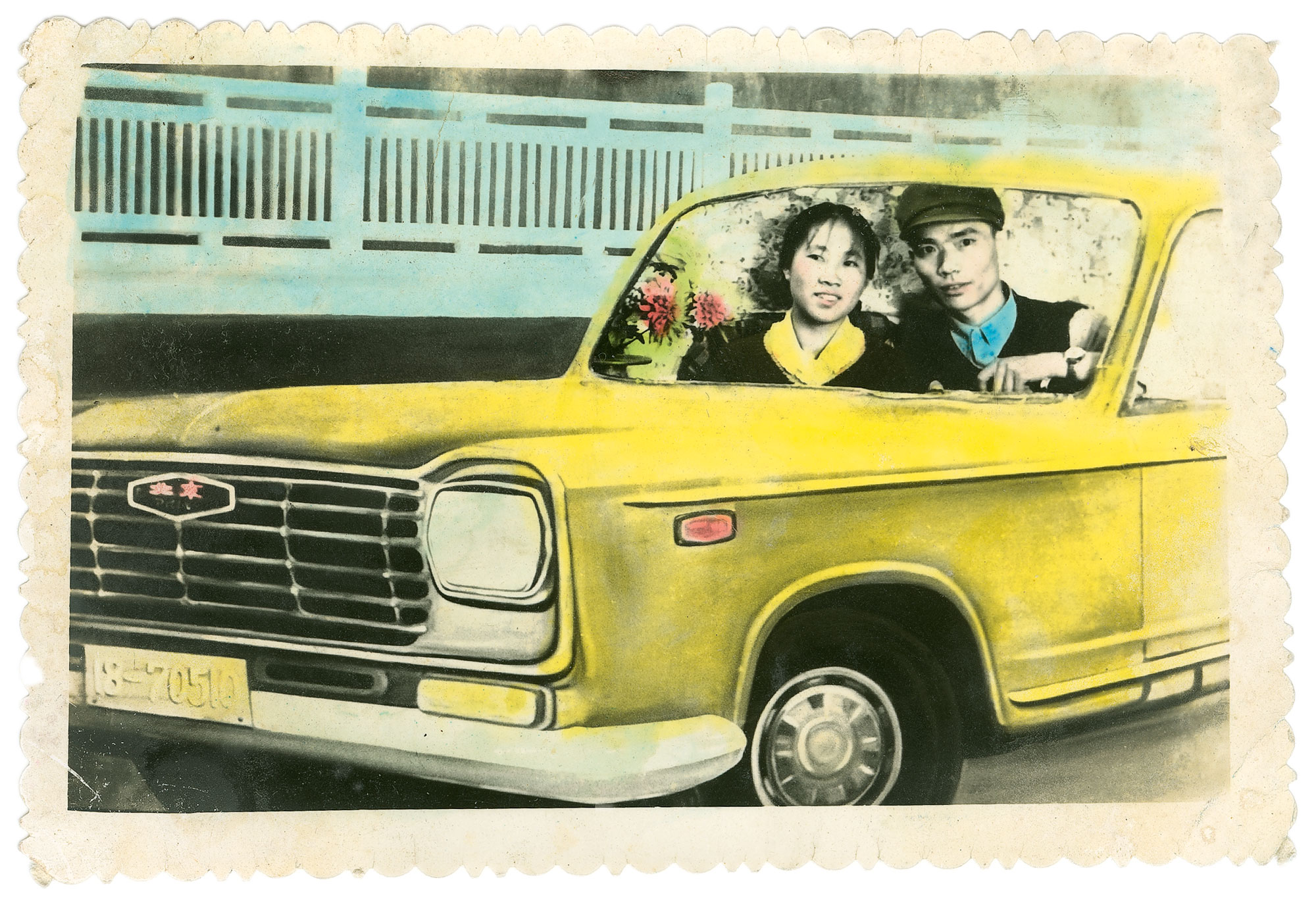
Gutehoffnungshütte, Oberhausen, Ruhrgebiet
1963
Gelatine silver print on baryta paper
75.3 x 91.4cm
Art Collection Deutsche Börse Deutsche Börse Photography Foundation
© Estate Bernd & Hilla Becher


“What the teachings of Bernd and Hilla Becher sparked off – and their students developed further – is a new conception of the artwork according to which the boundaries between sculpture, painting and photography dissolve in terms of media and aesthetics alike. In other words, in the very moment in history when photography emancipated itself to become an independent medium, it sounded its own death knell.” (Press release)

WHAT ABSOLUTE RUBBISH – the second sentence, that is!

Just look at the photographs as pictures.

The Bechers and their students’ photographs might invoke a new concept of the pictorial but that does not mean the death of photography far from it. In fact, this conceptualisation opens up an expanded terrain of becoming for photography (continuing the theme of the last post on the work of Walker Evans). In this sense, the work of these artists is vital to an understanding of the place of photography within the observation, construction and taxonomy of contemporary culture and its pictorial representation. Everything in contemporary art relates not to beauty or aesthetics but to the social.

Dr Marcus Bunyan


Many thankx to the Städel Museum for allowing me to publish the photographs in the posting. Please click on the photographs for a larger version of the image. For more information please see the interactive website.


One of the most radical changes in art’s relation to its aesthetic, media, and economic contexts is closely associated with the students of the first Becher Class at the Düsseldorf art academy – but even more so with the names of their teachers, Bernd and Hilla Becher. The exhibition brings together 200 major works, some in large format, by these important artists, as well as a selection of their early works.


Bernd Becher (German, 1931-2007) and Hilla Becher (German, 1934-2015) 'Half-Timber Houses' 1959-1961/1974 from the exhibition 'Photographs Become Pictures. The Becher Class' at the Städel Museum, Frankfurt, April - August, 2017


Bernd Becher (German, 1931-2007) and Hilla Becher (German, 1934-2015)
Half-Timber Houses
1959-1961/1974
Silver gelatine print on baryta paper
152.4 x 112.5cm
Sammlung Deutsche Bank
© Estate Bernd & Hilla Becher


“This is a purely economic architecture […]. It is erected, used and discarded.”

Becher, Bernd and Hilla cit. in: “Beauty in the Awful”, in: Time. The Weekly Newsmagazine, 94, 10, 5 September 1969, p. 69.


The same subject in nine different types: as in a scientific documentary the photos show nine coal silos before a neutral light-grey background. The Bechers’ photos all follow the same approach: from an elevated vantage point the artists photograph details and total views of objects or entire industrial facilities and position them centrally in the picture. Every detail is razor sharp. The sky is predominantly overcast. The photographs are black and white. Nothing is to distract from the subject, to guarantee a presentation that is as objective as possible.

Bernd Becher and Hilla Wobeser begin to collaborate in 1959. At the time both study at the art academy Düsseldorf. Two years later they marry. During the following five decades the artist couple produces mostly tableaus of several parts – consisting of three, nine, twelve or more photos; they call them typologies. Their subjects are disused headstocks, furnaces, oil refineries, water reservoir towers, grain silos, gasometres or even half-timbered houses in former workers’ settlements – all of them testimonies of a declining industrial culture.

The Bechers depict the half-timbered houses from the Siegerland in a sober and restrained fashion. The picture removes the buildings from their original context. One view follows the next. Thus the form of the single building becomes more important than its function. In the photographs the half-timbered houses become aesthetic objects with a sculptural character. Bernd and Hilla Becher do not present their images individually, but in a grid. Not the single photo is the work, but the total of the typology is.

When Hilla and Bernd Becher presented their works at the Städtische Kunsthalle Düsseldorf in 1969, this coincided with an exhibition on US-American minimal art – a juxtaposition that was to prove programmatic. In 1972 the American sculptor Carl Andre mentioned the insightful connection of the Bechers’ works and the movements of minimal and conceptual art. This prominent, art-theoretical connection significantly contributed to the great international success of the Bechers. This is also why – especially in the USA – the two are considered concept artists more than photographers. …

The Bechers’ method of working – ostensibly – is concerned with sobriety and anonymity, rigidity and objectivity. They work in series, where the whole and a part of this whole, total view and detail are balanced. Setting their photographs into the context of sculpture, they test the boundaries of the genres of photography and sculpture. Working and presenting their works in series, they move the photograph beyond the individual work: the viewer can never see everything at once; instead the eye oscillates between detail and general context.

Anonymous text from the Becher Class at the Städel Museum website Nd [Online] Cited 27/12/2021


Bernd Becher (German, 1931-2007) and Hilla Becher (German, 1934-2015) 'Half-Timber Houses' (detail) 1959-1961/1974


Bernd Becher (German, 1931-2007) and Hilla Becher (German, 1934-2015)
Half-Timber Houses (detail)
1959-1961/1974
Silver gelatine print on baryta paper
152.4 x 112.5cm
Sammlung Deutsche Bank
© Estate Bernd & Hilla Becher


Bernd Becher (German, 1931-2007) and Hilla Becher (German, 1934-2015) 'Half-Timber Houses' (detail) 1959-1961/1974


Bernd Becher (German, 1931-2007) and Hilla Becher (German, 1934-2015)
Half-Timber Houses (detail)
1959-1961/1974
Silver gelatine print on baryta paper
152.4 x 112.5cm
Sammlung Deutsche Bank
© Estate Bernd & Hilla Becher


The Becher School of Photography. An American Perspective – Vortrag von Alexander Alberro


Candida Höfer (German, b. 1944) 'Weidengasse Cologne VIII 1977' 1977 (2013)


Candida Höfer (German, b. 1944)
Weidengasse Cologne VIII 1977
1977 (2013)
Gelatine silver print on baryta paper
42.6 x 36.7cm
Loan from the artist
© Candida Höfer, Köln; VG Bild-Kunst, Bonn 2017


Volker Döhne (German, b. 1953) 'Untitled (Colourful)' 1979 (2014)


Volker Döhne (German, b. 1953)
Untitled (Colourful)
1979 (2014)
Colour print from colour transparency
37 x 47cm
Private collection
© Volker Döhne, Krefeld 2017


Thomas Ruff (German, b. 1958) 'Interior 1 D' 1982


Thomas Ruff (German, b. 1958)
Interior 1 D
1982
Chromogenic colour print
47 x 57cm
Loan from the artist
© Thomas Ruff; VG Bild-Kunst, Bonn 2017


Andreas Gursky (German, b. 1955) 'Doorman, Passport Control' 1982 (2007)


Andreas Gursky (German, b. 1955)
Doorman, Passport Control
1982 (2007)
Inkjet print
43.2 x 52.5cm
Loan from the artist / Courtesy Sprüth Magers
© Andreas Gursky / VG Bild-Kunst, Bonn 2017 / Courtesy Sprüth Magers Berlin London


Axel Hütte (German, b. 1951) 'Moedling House' 1982-1984


Axel Hütte (German, b. 1951)
Moedling House
1982-1984
Gelatine silver print on baryta paper
66 x 80cm
Loan from the artist
© Axel Hütte


Petra Wunderlich (German, b. 1954) 'Fossa Degli Angeli, Italy' 1989


Petra Wunderlich (German, b. 1954)
Fossa Degli Angeli, Italy
1989
Gelatine silver print on baryta paper
61 x 75.2cm
Private collection
© Petra Wunderlich; VG Bild-Kunst 2017


From 27 April to 13 August 2017, the Städel Museum is staging a comprehensive survey on the Becher Class at the Düsseldorf art academy and the major paradigm shift in the medium of artistic photography with which the Bechers and their students are associated. With the aid of some 200 photographs by Volker Döhne, Andreas Gursky, Candida Höfer, Axel Hütte, Tata Ronkholz, Thomas Ruff, Jörg Sasse, Thomas Struth and Petra Wunderlich – a group of whom some enjoy international renown and others are due for rediscovery – the exhibition will examine the influence exerted by Bernd and Hilla Becher on their students at the Düsseldorf school. What unites the students’ works with those of their teachers? How do they differ? Is there really such a thing as the “Becher School” or is it ‘merely’ a matter of several highly successful photographers who happened to be studying at the ‘right place’ at an especially propitious moment in history? And how have those artists influenced our present conception of what a picture is? Taking the artist duo’s work as a point of departure, the exhibition “Photographs Become Pictures. The Becher Class” will acquaint viewers with the radical changes in the medium of artistic photography that became manifest in the works of the Becher pupils in the eighties and above all the nineties, and investigate the art-historical impact of this development up to the very present. It will feature major large-scale works as well as key early endeavours by the members of what is presumably the most influential generation of German photographers in the field of fine art.

The students of the first in a long line of Becher Classes at the Düsseldorfer art academy introduced elementary changes to contemporary art’s aesthetic, media and economic contexts. They not only contributed decisively to shaping international photography in the 1990s, but also fundamentally redefined the status and perception of artistic photography in general. Their works can be considered as one of the most self-confident emancipations of photography as art in the mediums history, while at the same time reflecting the (not merely digital) moment when the boundaries between the media dissolve.

“Bernd and Hilla Becher’s first – meanwhile world-famous – students played a tremendously important role in establishing photography as an expressive medium on a par with other art forms. The nine artists featured in our show occupy a realm where the distinction between painting and photography is no longer clear. The permeability of the boundary between the media is deliberate in their work, and in that respect they mirror one of the key focuses of the Städel Museum’s collection of contemporary art,” observes Städel director Dr Philipp Demandt. And exhibition curator Dr Martin Engler adds: “What the teachings of Bernd and Hilla Becher sparked off – and their students developed further – is a new conception of the artwork according to which the boundaries between sculpture, painting and photography dissolve in terms of media and aesthetics alike. In other words, in the very moment in history when photography emancipated itself to become an independent medium, it sounded its own death knell.”

The founding of a chair for artistic photography at the Düsseldorf art academy in 1976 provided perhaps the single most important impulse for a change in how the medium of photography was perceived. In close cooperation with his wife Hilla Becher, Bernd Becher held that chair until 1996. Even before their appointment to the Düsseldorf school, the Bechers had been taking pictures of historical industrial architecture, subscribing to a work concept that exceeded the scope of a common documentary approach in photography. They portrayed mining headframes, blast furnaces, gas tanks, water towers and other testimonies to a vanishing industrial culture – frontally, in central perspective, with fascinating depth of field, and where possible before the backdrop of a uniformly grey sky. They arranged the individual shots in grids to form large-scale tableaus they called typologies. The concern here was no longer merely the illustration of reality, but its perception. Reality could no longer be depicted singly, but only in a multiplicity of simultaneous images. From the formal aesthetic point of view, the staging of the pictorial subjects was now far more than documentary in nature. The affinity to minimal and concept art – evident in the rigour of the pictorial vocabulary, the industrial aesthetic and the new perception of a work in stages – is unmistakable.

Especially in their early work, the students of the first Becher Class explored their teachers’ artistic strategy with great intensity. Yet as they continued to pursue it in the nineties, they did so ever more independently, and in their own highly individual styles. With the aid of various strategies in terms of scale, presentation and motif, and not least of all with abstract pictorial inventions provoked by digital image techniques, they took the interpenetration of the mediums of painting and photography to an extreme. The result was a new concept of the picture that blurs aesthetic and media distinctions. “The dissolution of media boundaries, but also the use of technical innovations, are characteristic of the works of the first Becher Class. It is here that the impact of a changing media culture is felt,” explains Dr Jana Baumann, the co-curator of the exhibition.

A show devoted to such a complex phenomenon on the one hand, and such productive teaching activities on the other, must inevitably be limited in scope. “Photographs Become Pictures” concentrates deliberately on the students of the early years of the Becher Class, beginning with Höfer, Döhne, Hütte and Struth in 1976 and ending with the completion of Gursky’s and Sasse’s studies in 1987/1988. In retrospect, it is precisely in the heterogeneity of the first Becher Class – with its wide range of approaches that have influenced our present-day understanding of the pictorial image – that the success of Bernd and Hilla Becher’s teachings is evident.

Candida Höfer (b. 1944) is known above all for her pictures of public interiors such as libraries, universities, museums and waiting rooms. Nevertheless, the purely documentary aspect is ultimately of secondary importance to her, as is also true of her teachers. Particularly when she turned to colour photography, she began producing iconically clear shots of meaning-charged interiors extremely striking in their rigorous aesthetic. In composition, repetition and rhythm as well as the sculptural emphasis, Höfer’s formal staging of her interiors is reminiscent of the Becher typologies.

A distinct affinity to the typologies is also evident in early street shots by Thomas Struth (b. 1954), such as West Broadway, Tribeca, New York (1978) or Sommerstrasse, Düsseldorf (1980). He proceeded in a manner similar to his teachers, but broadened his spectrum of motifs. He is concerned in his work with cultural structures; in addition to streets he also depicts museums or religious cult sites and portrays families. With the aid of social and ethnological allusions he reveals orders and interrelationships, thus achieving a universal survey of human and their lifeworld in imagery.

Petra Wunderlich‘s (b. 1954) black-and-white series depict details of churches or quarries that the artist has introduced to a new, abstract compositional framework. By this method she reduces architecture visually to its stereometric tectonics in such a way that elementary architectonic forms unexpectedly emerge from the “broken” surfaces of nature. Wunderlich’s photographs, like those by the Bechers, can be read as sociological and historical testimonies.

The workgroups of Volker Döhne (b. 1953) closely resemble Bernd and Hilla Bechers’ typologies with regard to concept and motif alike. He developed series such as Small-Scale Iron Industry (1977/78) or Small Railway Bridges and Underpasses in the Bergisches and Märkisches Land (1979). With his experimental Colour (1979) series, he then emancipated himself from his teachers.

Tata Ronkholz (1940-1997) was interested primarily in factory gates, shop windows, beverage kiosks and snack bars, which she photographed in the even light of grey days. Many aspects of these works are strongly reminiscent of the Becher photographs: the consistent placement of the subject at the pictorial centre, the unchanging size of the prints, but also the serial, typologically comparative approach.

Thomas Ruff (b. 1958) is likewise deeply indebted to his teachers’ serial method, which we encounter in his work in ever-different formulations. His portraits as well as the strongly enlarged nocturnal shots of, in part, found material, convey his fundamentally sceptical attitude towards photography’s claim to truth and documentation. His persistent investigations of new pictorial sources and technologies are perhaps the most impressive demonstrations of the manner in which Ruff continues the approach of Bernd and Hilla Becher.

Axel Hütte‘s (b. 1951) early architectural details investigate social situations using a mode of photographic expression distinguished by distance and anonymity. Within this context, he devotes himself as much to spoiled landscapes as to supposedly untouched nature which nevertheless has always been formed by human intervention. A conspicuous aspect of his work is the strong reference to historical landscape painting, whose formal compositional principles he both copies and deconstructs. Whereas the Bechers directed their attention to the sculptural or conceptual potential of their pictures, Hütte focusses on painting as the leading medium of modern art.

Jörg Sasse (b. 1962) initially devoted himself to highly artificial and at the same time prosaic arrangements of petit-bourgeois domestic culture. His later “tableaus” represent a virtual antithesis to the reductive rigour of these early works. Using digital and analogue techniques alike, he began processing found pictures as well as images of his own making, in which context he blurred the distinction between painting and photograph beyond recognition.

Andreas Gursky‘s (b. 1955) early photographs are likewise characterised by a keen interest in everyday surroundings – the private as well as the public sphere, the context of work as well as leisure time. Like Sasse, he investigates the aesthetic boundary between photographic and painterly image production. By means of digital manipulations he uses to duplicate and mount the pictorial motif to the point of abstraction, he creates perplexing pictorial architectures that merge construction and reality in large-scale colour prints.

The development of the Becher Class shows how concept art’s expanding notion of the artwork led to a new concept of the pictorial including photography. What the teachers introduced in rudiments was taken by their students and the following generation of artists to a momentous change in the picturing of reality. The realisation that photography cannot reproduce reality impartially does not detract from the medium. On the contrary, it means an enhancement in terms of artistic potential. What is more, the lack of focus in the portrayal of reality – in the literal and figurative sense alike – enriches photography’s complexity. It is not least of digital changes that enables innovative pictorial invention. Yet the boundaries of the photographic image also became fluid in the development from individual work to typology and series, and from detail to overall image. The answer to all questions about the significance, classification, doctrine and conception of what we refer to as the “Becher School” can thus be found in an insight as simple as it is surprising: in the very moment in history when photography emancipated itself to become an independent medium, it sounded its own death knell.

Press release from the Städel Museum


Exhibition view "Photographs Become Pictures. The Becher Class"

Exhibition view "Photographs Become Pictures. The Becher Class"

Exhibition view "Photographs Become Pictures. The Becher Class"

At left in the bottom image, Axel Hütte (b. 1951) 15 artists USA (David McDermott, Stephen Prina, Mike Kelley, Peter McGough, David McDermott, Doug Starn, Mike Starn, Jeff Koons, Haim Steinbach, Ross Bleckner) 1988 (2003)(detail)
Exhibition view "Photographs Become Pictures. The Becher Class" with Candida Höfer (left) and Thomas Struth (b. 1954) 'Louvre 3, Paris 1989' 1989 (2012) (right)

Candida Höfer (left) and Thomas Struth (b. 1954) Louvre 3, Paris 1989 1989 (2012) (right)
Exhibition view "Photographs Become Pictures. The Becher Class" showing Thomas Struth (b. 1954) 'Paradiese 09' Xi Shuang Banna, Provinz Yunnan, China 1999

Thomas Struth (b. 1954) Paradiese 09 Xi Shuang Banna, Provinz Yunnan, China, 1999
Thomas Struth (German, b. 1954) 'Paradiese 09' 1999


Thomas Struth (German, b. 1954)
Paradiese 09
Xi Shuang Banna, Provinz Yunnan, China, 1999


Exhibition view "Photographs Become Pictures. The Becher Class"

Exhibition view "Photographs Become Pictures. The Becher Class"

Exhibition view "Photographs Become Pictures. The Becher Class" showing Thomas Ruff (b. 1958) 'House No. 1' 1987 (right)

Thomas Ruff (b. 1958) House No. 1 1987 (right)
Exhibition view "Photographs Become Pictures. The Becher Class" showing works by Axel Hütte (b. 1951)

Axel Hütte (b. 1951)


Axel Hütte (German, b. 1951) 'Castellina' 1992 (2015)


Axel Hütte (German, b. 1951)
Castellina
1992 (2015)
Chromogenic colour print
98.4 x 120.3cm
DZ BANK Kunstsammlung © Axel Hütte


Exhibition view "Photographs Become Pictures. The Becher Class"

Exhibition view "Photographs Become Pictures. The Becher Class" showing at left, Thomas Struth (b. 1954) 'The Consolandi Family, Mailand, 1996' (2014)

In the bottom image, Thomas Struth (b. 1954) The Consolandi Family, Mailand, 1996 (2014) (left)


Exhibition views “Photographs Become Pictures. The Becher Class”
Photo: Städel Museum


The Bechers

For their photographs Bernd and Hilla Becher are awarded the “Golden Lion” in the category of “sculpture” at the Venice Biennale in 1990. How is that possible? Surprisingly at the time there was no separate category for photography at the Biennale. But this is not the real reason. Already in 1969 the first larger exhibition of the Bechers is called “Anonymous Sculptures”, just like their first volume of photographs. The artists very consciously link the genres of photography and sculpture. This idea informs their entire oeuvre.

Bernd Becher and Hilla Wobeser begin to collaborate in 1959. At the time both study at the art academy Düsseldorf. Two years later they marry. During the following five decades the artist couple produces mostly tableaus of several parts – consisting of three, nine, twelve or more photos; they call them typologies. Their subjects are disused headstocks, furnaces, oil refineries, water reservoir towers, grain silos, gasometres or even half-timbered houses in former workers’ settlements – all of them testimonies of a declining industrial culture.

An Overall Concept

When Hilla and Bernd Becher presented their works at the Städtische Kunsthalle Düsseldorf in 1969, this coincided with an exhibition on US-American minimal art – a juxtaposition that was to prove programmatic. In 1972 the American sculptor Carl Andre mentioned the insightful connection of the Bechers’ works and the movements of minimal and conceptual art. This prominent, art-theoretical connection significantly contributed to the great international success of the Bechers. This is also why – especially in the USA – the two are considered concept artists more than photographers.

The Bechers’ method of working – ostensibly – is concerned with sobriety and anonymity, rigidity and objectivity. They work in series, where the whole and a part of this whole, total view and detail are balanced. Setting their photographs into the context of sculpture, they test the boundaries of the genres of photography and sculpture. Working and presenting their works in series, they move the photograph beyond the individual work: the viewer can never see everything at once; instead the eye oscillates between detail and general context.

The artist couple directs the attention to formal, creative aspects of the photographed edifices at the same time allowing them to disappear in the typology’s grid. The rigidity of their pictorial vocabulary and the interest in an industrial aesthetic evidences the close proximity of the Bechers’ creative work to minimal and concept art.

Photography in Germany

“In principle it [photography] was a fallow field, where nothing ‘noteworthy’ had taken place in the past fifty years. We saw us in the tradition of objective photography of the 1920s; Bernd and Hilla Becher were the first to reconnect to this. There was absolutely nothing that we could fight or needed to disengage with. We could start from scratch.” ~ Thomas Ruff


“New Objectivity” this was the motto of the 1920s – also in photography. It was no longer the pictorial language of painting, but precision, focus and truth to detail, characteristics of photography that had garnered the artists’ interest.

The photographer August Sander focused on the society of the Weimar Republic and created a typology: in 1925 his pictorial atlas People of the 20th Century, where he systematically assembled hundreds of portraits of stereotypes of people of the most diverse social backgrounds and occupations. All of his sitters are portrayed frontally, which makes the photographs comparable. Sander also engaged in the photography of landscapes, industrial sites and cities.

Two more representatives of the photography of New Objectivity are also worth mentioning here: Albert Renger-Patzsch recorded industrial buildings and machinery in a sober directness. Karl Blossfeldt adopted scientific standards and photographed plants – always before a neutral background, removed from their natural setting.

Bernd and Hilla Becher draw on these approaches and develop them in their works. With a few exemptions, photography was not considered an autonomous artistic medium in Germany. Still in the 1960s, photography in art predominantly served as a means of documentation of actions, happenings and performances. Yet painting and photography interact. The painter Gerhard Richter for example, used photos as templates for his paintings since the early 1960s. The Bechers in turn greatly contributed to the recognition of photography as autonomous artistic medium with their photographs.

The Becher Class: Adoption, Distinction

DÖHNE GURSKY HÖFER HÜTTE RONKHOLZ RUFF SASSE STRUTH WUNDERLICH

These are the students of the first Becher class. In 1976 Bernd Becher is appointed first professor for photography at the Düsseldorf Art Academy. In close cooperation with his wife Hilla he teaches there for twenty years. Their first students become artists, who will have a formative influence on photography in the 1980s and the 1990s internationally. The Becher students intensely study their teachers’ work. Especially in their early works comparable approaches develop: a distanced perspective, an interest in architecture and striving for technical precision.

The Bechers are preoccupied with an industrial architecture in decline, representative also of the social changes affecting the respective region. Taking this as a starting point, their students consider their direct surroundings and social contexts. They seek to identify systems of classification and in their photographs investigate the relationship of individual work and series. In the process the Becher students adopt their own positions. They discover new themes, techniques and creative strategies. Regardless of the distinctions they are indebted to the conceptual approach of their teachers, which they then developed in their individual ways.

In their teaching and their work Bernd and Hilla Becher explore a concept of the image, where medial and aesthetic distinctions of sculpture, painting and photography dissolve. Their students continue this work in very different ways. In the 1980s and 1990s their enquiries lead to a critical reflexion of the possibilities of representing reality. The lack of focus in the depiction of reality – literally and figuratively – represent an increase in artistic complexity. Innovative pictorial creations were now possible by way of digital intervention.

The borders of the photographic image blur at the stage between single work and typology and series. The alternation of perception, oscillating between detail and total image extend the possibilities of photography. The meaning of what is called “Becher school” can be summarised in a simple and surprising statement: at the historic moment, when photography becomes an independent medium, it also realises its potential and explores its limits. Photography reaches its limits, transgresses it and thus ultimately questions its existence.

Kiosks and Streets

The developments in American photography are also important to the Becher-students: Ed Ruscha, whose photos show everyday subjects, is one of their role models. In 1966 he creates Every Building on the Sunset Strip. With a simple handheld camera Ruscha photographs every building on the Los Angeles boulevard of that name; he presents his pictures in a fanfold or an artist’s book. This quickly reveals the serial principle behind the work. Volker Döhne’s approach in Reconstruction II is similar. He, too, documents the commercial architecture, largely determining the surrounding.

Ice cream parlour, garage, drug store, stationers, dwelling house, shoe shop – nicely aligned. Volker Döhne focuses on the urban space dominated by nondescript post war architecture and empty sites. Other than his American colleague Ed Ruscha, Döhne always positions his camera head-on in the same angle. Surprisingly this emphasises the buildings’ volume. Like his teachers Bernd and Hilla Becher he emphasises the three-dimensional, sculptural aspect of buildings and pursues a concept that he determined before he began to photograph.

The Bechers assemble identical, yet different photographs to a static tableau. Döhne on the other hand, required the viewer to move along the strip and proceed down the row of photographs. Above all the viewer must add together the photos of the Krefelder Straße by himself: the work forms as a result of the viewer’s active viewing and perception.

Anonymous text from the Becher Class at the Städel Museum website [Online] Cited 27/12/2021


Volker Döhne (German, b. 1953) 'Krefeld, Ostwall corner Rheinstraße, (Reconstruction II)' 1990 (1992)


Volker Döhne (German, b. 1953)
Krefeld, Ostwall corner Rheinstraße, (Reconstruction II)
1990 (1992)
Silver gelatin print on baryte paper
47 × 37cm
Private collection


Volker Döhne (German, b. 1953) 'Krefeld, Rheinstraße 82 (Reconstruction II)' 1990 (1992)


Volker Döhne (German, b. 1953)
Krefeld, Rheinstraße 82 (Reconstruction II)
1990 (1992)
Silver gelatin print on baryte paper
47 × 37cm
Private collection


Volker Döhne (German, b. 1953) 'Krefeld, Rheinstraße 84 (Reconstruction II)' 1990 (1992)


Volker Döhne (German, b. 1953)
Krefeld, Rheinstraße 84 (Reconstruction II)
1990 (1992)
Silver gelatin print on baryte paper
47 × 37cm
Private collection


Volker Döhne (German, b. 1953) 'Krefeld, Rheinstraße 86 (Reconstruction II)' 1990 (1992)


Volker Döhne (German, b. 1953)
Krefeld, Rheinstraße 86 (Reconstruction II)
1990 (1992)
Silver gelatin print on baryte paper
47 × 37cm
Private collection


Volker Döhne (German, b. 1953) 'Krefeld, Rheinstraße 88 (Reconstruction II)' 1990 (1992)


Volker Döhne (German, b. 1953)
Krefeld, Rheinstraße 88 (Reconstruction II)
1990 (1992)
Silver gelatin print on baryte paper
47 × 37cm
Private collection


Tata Ronkholz (German, 1940-1997) 'Beverage kiosk, Düsseldorf, Hermannstraße 31' 1978


Tata Ronkholz (German, 1940-1997)
Beverage kiosk, Düsseldorf, Hermannstraße 31
1978
Gelatine silver print on baryta paper
41.2 x 51.2cm
Die Photographische Sammlung/SK Stiftung Kultur, Köln/Dauerleihgabe der Sparkasse KölnBonn
© Tata Ronkholz, Nachlassverwaltung Van Ham Art Estate 2017


Cigarette and gumball machines are fixed to exterior walls. Advertising posters overlap. Beverages, magazines and sweets are visibly lined up behind glass. It is Tata Ronkholz’ serial presentation that enables the comparison of the kiosks and their study as a social phenomenon in urban contexts.

Kiosks are everyday meeting points and the setting for social life. At the same time their role fundamentally changed in the past decades. Ronkholz photographs kiosks as socially grown places. She positions them centrally in their architectural environment – people are absent. This is what the photos have in common with Becher-photographs. Like her teachers, Ronkholz is committed to the conservation and archiving of a changing urban culture.


Tata Ronkholz (German, 1940-1997) 'Dusseldorf, Sankt-Franziskusstraße 107' 1977


Tata Ronkholz (German, 1940-1997)
Dusseldorf, Sankt-Franziskusstraße 107
1977
Silver gelatin print on baryta paper
41.2 × 51.2cm
Courtesy The Photographische Sammlung / SK Stiftung Kultur, Cologne / Permanent Loan of the Sparkasse KölnBonn


Tata Ronkholz (German, 1940-1997) 'Without title' 1978


Tata Ronkholz (German, 1940-1997)
Without title
1978
Silver gelatin print on baryta paper
41.2 × 51.2cm
Courtesy The Photographische Sammlung / SK Foundation Culture, Cologne / Dauerleihgabe der Sparkasse KölnBonn


Tata Ronkholz (German, 1940-1997) 'Düsseldorf, Germany, Konkordiastraße 85' 1978


Tata Ronkholz (German, 1940-1997)
Düsseldorf, Germany, Konkordiastraße 85
1978
Silver gelatin print on baryta paper
41.2 × 51.2cm
Courtesy The Photographische Sammlung / SK Stiftung Kultur, Cologne / Permanent Loan of the Sparkasse KölnBonn


Picture Parallels

Bernd and Hilla Bechers students are linked to the work of their teachers in many ways. And yet they devote themselves, in part, to new motifs, subjects, and picture formats during their studies. In addition to architecture, they also photograph interiors, simple everyday objects or people.

In the early 1980s the Becher-students Axel Hütte and Thomas Ruff turn to portrait photography practically at the same time. They capture their models with neutral facial expressions, generally head-on before a monochrome background. The extreme setting makes the individual recede while the surface of the background dominates. In the series the single faces turn into an interchangeable motif somewhere between person and typology.

From Near and Far

The directions of the persons’ gazes differs. Nothing distracts from their faces. The neutral background and the close details are reminiscent of giant passport photographs. One almost overlooks that some of the sitters are famous artists today.

Axel Hütte’s portraits with their conscious play with blurring and sharpness are irritating: some areas in the photo show up the slightest detail, while others are slightly blurred – a conscious reference to the Bechers’ works, characterised by their extreme depth of focus. When observing Hütte’s works from close-up the face becomes a surface of structures. If one wants to see it in focus, one needs to distance oneself. Thus the viewer is kept at bay and always in motion.

Anonymous text from the Becher Class at the Städel Museum website [Online] Cited 27/12/2021


Axel Hütte (German, b. 1951) '15 artists USA (David McDermott, Stephen Prina, Mike Kelley, Peter McGough, David McDermott, Doug Starn, Mike Starn, Jeff Koons, Haim Steinbach, Ross Bleckner)' 1988 (2003)


Axel Hütte (German, b. 1951)
15 artists USA (David McDermott, Stephen Prina, Mike Kelley, Peter McGough, David McDermott, Doug Starn, Mike Starn, Jeff Koons, Haim Steinbach, Ross Bleckner)
1988 (2003)
Silver gelatin print on baryta paper
113 x 91cm each
Loan from the artist


Axel Hütte (German, b. 1951) '15 artists USA (David McDermott, Stephen Prina, Mike Kelley, Peter McGough, David McDermott, Doug Starn, Mike Starn, Jeff Koons, Haim Steinbach, Ross Bleckner)' 1988 (2003) (detail)


Axel Hütte (German, b. 1951)
15 artists USA (David McDermott, Stephen Prina, Mike Kelley, Peter McGough, David McDermott, Doug Starn, Mike Starn, Jeff Koons, Haim Steinbach, Ross Bleckner) (detail)
1988 (2003)
Silver gelatin print on baryta paper
113 x 91cm each
Loan from the artist


Pictures Generation

Thomas Ruff explores the gap between reality and image. This is something he shares with the American artists of the so-called “Pictures Generation” from the 1970s and 1980s. This informal group of artists, among them Cindy Sherman, Sherrie Levine, Robert Longo and Richard Prince, grew up with a flood of pictures in cinema, television and the print media. Their works show distrust for the media, as well as a fascination with it. The artists make use of existing images from film, advertising and art. They copy, quote and redesign this material – more subtly than the artists from American Pop Art in the 1960s. Instead of working with found images in print, collage or painting, the artists of the “Pictures Generation” make small interventions. By introducing minor changes or by producing a practically identical copy of an image they very consciously play with conventional ways of perception. In their works they draw attention to mechanisms of picture production and the methods of artificial construction of reality through pictures.

Photos of Faces

Like Axel Hütte, Thomas Ruff does not believe in an image of human character. He is convinced that only the exterior reality – the appearance – can be represented. In this sense Ruff’s portraits are photos of faces that resemble expressionless surfaces. The monochrome background hides any hint at a recognisable location.

The face becomes a surface and thus resembles a projection screen for an advertising message. The serial juxtaposition turns the individual in Ruff’s photographs into a type that also represents a particular generation. The stereotypes communicated by mass media and the influence of images on individual and collective opinion-forming are being questioned.

Anonymous text from the Becher Class at the Städel Museum website [Online] Cited 27/12/2021


Thomas Ruff (German, b. 1958) 'Portrait (G. Benzenberg)' 1985


Thomas Ruff (German, b. 1958)
Portrait (G. Benzenberg)
1985
Chromogenic colour print
41 × 33cm
Loan from the artist


“Looks good. Continue in colour.”

The bed, bath and living rooms, the kitchen unit and the furniture of the 1950s and 1970s, Thomas Ruff finds at the homes of relatives and friends in the Black Forest, where he comes from. Bernd and Hilla Becher preferably work in black and white. Ruff on the other hand starts experimenting with colour photography early on during his studies:

“At some point I started, making use of the colour practice, which I […] had developed, in my interiors, and I thought this looked better than in black and white photos. The colleagues said, you cannot do this. Then I also asked Bernd Becher and he said: “Looks good. Continue in colour.”


Thomas Ruff (German, b. 1958) 'Interior 3 A' 1979


Thomas Ruff (German, b. 1958)
Interior 3 A
1979
Chromogenic paint removal
45.7 x 39.4cm
Loan from the artist


A Question of Mise-en-Scène

The two clips on yellow ground look like two flies. The bright background emphasises the form of the represented objects. Their original function becomes secondary. The simple stationary objects become worthy of the photographer’s meticulous attention. Jörg Sasse uses and parodies the strategies of advertising photography, ever concerned with presenting an object as something special.

From the start, Sasse’s work shows a painterly tendency as well as a penchant for abstraction. This is also apparent in a sequence of still lives with reduced colour and shapes. In his early work Sasse is interested in his immediate environment. He seeks to capture the unusual in the everyday. This links his work with the typologies of his teachers. Other than they do, Sasse does not give titles to his works; instead he gives them random numbers. This allows him to remove the represented object even further from its original context without offering a new interpretation.

Anonymous text from the Becher Class at the Städel Museum website [Online] Cited 27/12/2021


Jörg Sasse (German, b. 1962) 'ST-84-12-06' 1984


Jörg Sasse (German, b. 1962)
ST-84-12-06
1984
Chromogenic paint removal
18 × 24cm
Art Collection Deutsche Börse, Deutsche Börse Photography Foundation


Kitchen, Bath Room and Living Room

Almost in symmetry Jörg Sasse’s photo shows a light blue jug and a glass jug on two hobs. It belongs to a series, which Sasse dedicated to modest interiors between the post war years and the economic miracle. Sometimes the photos show individual objects, sometimes a combination of two or three objects. They capture details of tiles, furniture or floors.

They give the impression as if the objects were arranged by coincident or as if the inhabitants had left them behind like this. At the same time the scenes appear to be very artificial. Sasse transforms colour, shape and structure of the interior settings into individual, abstract compositions. He focuses on formal contrasts, sequences and similarities. According to the artist it is “not the preoccupation with interiors but with the picture.” The photographer is more interested in the painterly composition than in the representation of reality.

Anonymous text from the Becher Class at the Städel Museum website [Online] Cited 27/12/2021


Jörg Sasse (German, b. 1962) 'W-84-02-13, Dusseldorf' 1984


Jörg Sasse (German, b. 1962)
W-84-02-13, Dusseldorf
1984
Chromogenic paint removal
57.2 × 67.6cm
Courtesy Gallery Wilma Tolksdorf


Courtyards and Street Canyons

The artists Axel Hütte and Thomas Struth share an interest in urban non-spaces, indistinct streets or architectures.

In the 1980s modernist residential dwellings like the brutalist, square James Hammett House in London, become increasingly less popular and are turned into social housing. The raw concrete façade of the London block of flats spreads across almost the entire picture. The empty square in front of it is abandoned. There is no sign of inhabitants: a forbidding place.

Like Bernd and Hilla Becher in their pictures of industrial buildings, Axel Hütte emphasises the angular and unwieldy shapes of the architecture in his London series. From a distance the sad, functional façade appears to be an abstract pattern of rhythmically changing shades of grey, behind which the architecture recedes.

Anonymous text from the Becher Class at the Städel Museum website [Online] Cited 27/12/2021


Axel Hütte (German, b. 1951) 'James Hammett House' 1982-1984


Axel Hütte (German, b. 1951)
James Hammett House
1982-1984
Silver gelatin print on baryte paper
66 x 80cm
Loan of the artist


In the Street

The row of houses on New York’s 21st Street seems never ending. Old houses and modern high rises alternate and form a sequence of textures and geometric forms rich in contrast. Thomas Struth was struck by the deep street canyons of the metropolis. He took his photos from the middle of the street, positioning the camera at eye-level – a method that resembles that of his teachers. It is an unusual perspective unfamiliar to both pedestrians and drivers.

Struth begins capturing urban spaces already when in Cologne and Düsseldorf. A stipend takes him to New York in 1978. His photographic approach offers a completely new view of the city’s urbanity and structure.

“I may very well stem from the legacy of documentary photography and do use its means and perspective, but my true concern exceeds this. […] To me the street is a space, where manifold influences and historical events convene and become apparent. The public space has a subconscious language, addressing us continuously.”

Anonymous text from the Becher Class at the Städel Museum website [Online] Cited 27/12/2021


Thomas Struth (German, b. 1954) 'West 21st Street, Chelsea, New York' 1978 (1987)


Thomas Struth (German, b. 1954)
West 21st Street, Chelsea, New York
1978 (1987)
Gelatine silver print on baryta paper
66 x 84cm
DZ BANK art collection at the Städel Museum
© Thomas Struth


Variety

Landscapes, families, places of leisure, libraries, museums – the subjects of the Becher-students are equally as varied as their approach to photography. Their own positions develop more and more, while shared characteristics with their teachers’ oeuvre become apparent.

“Not the subject, but the representation of a landscape is what matters to me.” ~ Axel Hütte

Almost two thirds of the picture are concealed by thick fog. The rocks in the foreground, however, are razor sharp. In Furka Axel Hütte plays with the contrast of diffusion and focussed parts of the picture. He explores landscape photography and thus consciously enters into competition with the genre of painting.

Foggy landscape is of great importance in the paintings of German Romanticism. This art movement, which began in the late 19th century, is characterised by mystic nature, where religious ideas are intertwined with subjective sentiment. Caspar David Friedrich is recognised as one of the most important representatives of Romanticist landscape painting. To him nature mirrored the human soul. In his painting Mountains in the Rising Fog, which he painted around 1835, the hills are veiled and only the outlines can be made out. In his photographs, Hütte refers to this tradition and employs similar techniques to guide the viewer’s gaze and to compose the picture. The landscape can be sensually grasped. The atmosphere and the subjective experience come to the fore. While his teachers sought the proximity to sculpture, Hütte’s work reflects the strategies of painting.

Anonymous text from the Becher Class at the Städel Museum website [Online] Cited 27/12/2021


Axel Hütte (German, b. 1951) 'Furka' 1994 (2012)


Axel Hütte (German, b. 1951)
Furka
1994 (2012)
Chromogenic colour print
56.7 × 65.7cm
DZ BANK Kunstsammlung


The Silence Beside the Storm

Andreas Gursky’s works are dedicated to traffic hubs, mass events, economic centres, transit zones or places of leisure. Gursky’s focus is always on the common denominator and questions the relationship of man with nature and society. The photograph Teneriffa, Swimming Pool shows a holiday resort from a bird’s eye perspective that makes the tiny holidaymakers almost disappear. The force of nature represented by the foaming sea is in stark contrast with the artificial silence of the adjacent pool.

Like his teachers, Gursky keeps a distance to his subject. But unlike them he does not work in series and concentrates on single works. Bernd and Hilla Becher’s compositions are always about one centrally positioned object. Gursky’s images on the other hand are rich in detail and the motives are spread across the picture plane in captivating sharpness – he plays with visual challenge.

Anonymous text from the Becher Class at the Städel Museum website [Online] Cited 27/12/2021


Andreas Gursky (German, b. 1955) 'Teneriffa, Swimming Pool' 1987


Andreas Gursky (German, b. 1955)
Teneriffa, Swimming Pool
1987
Chromogenic colour print
104.5 × 127cm
On loan from the artist / Courtesy Sprüth Magers


Own Vantage Points

Candida Höfer too, photographs public spaces. Her photographs follow the architecture of the buildings she finds. At the same time she chooses unusual positions for her camera and thus resists the symmetries or views prescribed by the spaces. Her photos defy architectural hierarchies and structures and thus communicate the spatial experience in a particular way.

Waiting Room Cologne III 1981 is an early example of Höfer’s artistic method. The furniture reaches diagonally into the space, a dynamic underscored by the pattern of the parquet flooring. The row of tables and chairs in the bottom corner is cut off by the edge. Instead of creating a balanced symmetrical composition, she works with alternative vantage points.

This allows Höfer to emphasise her personal view of the interior architecture. Concurrently she is enquiring how the architectural space is influenced by the way people use it in the course of time. The Waiting Room with Neo-Baroque décor dating from the second half of the 19th century forms a stark contrast to the simple furniture that is easily 100 years less old.

“By means of the print I then create my own space once again. It is not my intention to show the space in a manner as realistic as possible.”

Anonymous text from the Becher Class at the Städel Museum website [Online] Cited 27/12/2021


Candida Höfer (German, b. 1944) 'Waiting Room Cologne III 1981' 1981


Candida Höfer (German, b. 1944)
Waiting Room Cologne III 1981
1981
Chromogenic colour print
155 × 155cm
Art Collection Deutsche Börse, Deutsche Börse Photography Foundation


Libraries as Brand

Above all Candida Höfer is famous for her large-scale interior views of libraries devoid of people. The workspaces in the Bibliothèque nationale de France in Paris are lined up like books in libraries. The artist frequently focuses on places that preserve and order knowledge and culture. Apart from libraries she also worked on museums or operas. She is interested in how humans influence architecture through their culture. Her photos are always determined by a cool sobriety. This is what they have in common with the photographs of the Bechers. However, Höfer always works with the light and the space present in each situation. She strives to capture the atmosphere and aura of a space.

Anonymous text from the Becher Class at the Städel Museum website [Online] Cited 27/12/2021


Candida Höfer (German, b. 1944) 'Bibliothèque Nationale de France Paris XIII 1998' 1998


Candida Höfer (German, b. 1944)
Bibliothèque Nationale de France Paris XIII 1998
1998
Chromogenic colour print
155 × 215cm
Art Collection Deutsche Börse, Deutsche Börse Photography Foundation


The Picture in the Picture

In his series Museum Photographs Thomas Struth focuses on imposing interior spaces such as the gallery at the Louvre in Paris – unlike Höfer, he always shows the visitors, too. They become a multifaceted continuation of the figures in the paintings on the wall. Through the photograph Struth establishes a connection of pictorial space and real space, the painterly and photographic space. Here, the formerly competing media painting and photography enter into a dialogue as equals.

Simultaneously the viewer is confronted with different levels of viewing: those who contemplate Struth’s photos inevitably also observe the visitors at the Louvre contemplating the art works there. Thus the artist prompts a reflection on how we deal with art and its history, with seeing and being seen. Struth does not influence the positions of the visitors in his Museum Photographs. He waits for situations that can serve as the basis of his compositions. Struth merely decides on the space and the visual angle he takes.

Anonymous text from the Becher Class at the Städel Museum website [Online] Cited 27/12/2021


Thomas Struth (German, b. 1954) 'Louvre 3, Paris 1989' 1989 (2012)


Thomas Struth (German, b. 1954)
Louvre 3, Paris 1989
1989 (2012)
Chromogenic colour print
152.2 × 168.3cm
DZ BANK Kunstsammlung im Städel Museum, Städel Museum, Frankfurt am Main


Family Relations

The photo The Consolandi Family, Milano by Thomas Struth belongs to the series Family Portraits, which shows relationships that are complex and full of tension. The viewer is challenged to explore the connections of the family, reflected in subtle looks, mimics or posture.

The Family Portraits evolved from an unpublished project, which Struth and a friend of his, a psychoanalyst, pursued in the early 1980s. Patients were asked to submit a couple of photographs that were typical of their families, which Struth then combined in a portfolio. Drawing on this project, the photographer began to work with family portraits he took. He photographed people he knew in their homes. The individuals were asked to choose their position in a space that the artist had selected. Struth’s psychological interest in the family as a social fabric is evident. The order resembles a sociagram after all.

Like the Bechers’ works, Struth’s photographs are determined by an intrinsic dynamic full of tension. While his teachers work with industrial fields of force, he balances psychological energies. This results in an alternation of perception – the eye sways between single pictorial elements and the total composition.

Anonymous text from the Becher Class at the Städel Museum website [Online] Cited 27/12/2021


Thomas Struth (German, b. 1954) 'The Consolandi Family, Milan 1996' 1996 (2014)


Thomas Struth (German, b. 1954)
The Consolandi Family, Milan 1996
1996 (2014)
Chromogenic colour print
178 × 214.2cm
Art Collection Deutsche Börse, Deutsche Börse Photography Foundation


Picture Editing

In February 1982 the first great scandal about a digitally edited press picture occurs: for the title of the periodical National Geographic – actually indebted to scientific exactitude – the pyramids at Gizeh have been pushed closer together so they would fit the portrait format. This represents a fundamental shift in photo and media culture that also affects the work of the Becher students.

Ruff, Sasse and Gursky especially, develop their works digitally. This inevitably distances them from their teachers’ documentary approach more and more. The artists do not depict reality they create their own reality. This results in photographs that cannot be explained through analogue camera technology. The truth in the pictures is questioned, just like the viewer’s perception. In nascent form this approach is already present in the typologies created by the Bechers.

Digital interventions

This photo of an average residential block from 1987 marks a turning point in Thomas Ruff’s oeuvre. Things – namely a tree and a street sign – are missing. Ruff decided to have these details erased. He also retouched an opened skylight. This is one of the first digitally edited pictures in the circle of the Becher students. Ruff’s idea is to emphasise the symmetrical appearance and the hermetic quality of the building. Still, he is not really meddling with the picture’s structure of reality.

Ruff’s photos of the House Series confront the viewer with urban banality. The enormous scale of the works, measuring nearly 2 x 3 metres exaggerates the uneventfulness as a crucial characteristic of this architecture. From the 1980s the Becher students increasingly use large formats. They become a trademark of the group. Mostly presented with a wooden frame the artists elevate the photos to the level of paintings. Like the Bechers, Ruff worked in series, but no longer arranged his works in typologies. His series preserve the suspicion of a single image that might represent the world.

Anonymous text from the Becher Class at the Städel Museum website [Online] Cited 27/12/2021


Thomas Ruff (German, b. 1958) 'House No. 1 I' 1987


Thomas Ruff (German, b. 1958)
House No. 1
1987
Chromogenic colour print
179 × 278cm
Loan from the artist


Giant Grid

In photos like Paris, Montparnasse Andreas Gursky enlarges the image to a monumental scale of over four metres in width. He, too, relies on digital editing. The frontal view of the residential block is presented in strictly right-angular lines. The building is so wide that it would be impossible to capture it in a single photo. Hence, Gursky used two photos and joined them on the computer.

From a distance, the geometrical grid of the building looks abstract. The skeleton structure of the block also means that the windows offer hundreds of single images. However, it is impossible to simultaneously perceive the detail as well as the overall structure. Gursky requires the viewer to constantly alternate his focus between close-up and distance.

“My pictures are always composed for two aspects […]. The smallest detail can be read from close up. From afar they are mega-signs.”

Anonymous text from the Becher Class at the Städel Museum website [Online] Cited 27/12/2021


Exhibition view "Photographs Become Pictures. The Becher Class" showing Andreas Gursky's 'Paris, Montparnasse' 1993 (before 2003)


Exhibition view “Photographs Become Pictures. The Becher Class” showing Andreas Gursky’s Paris, Montparnasse 1993 (before 2003)
Photo: Städel Museum


Andreas Gursky (German, b. 1955) 'Paris, Montparnasse' 1993 (before 2003)


Andreas Gursky (German, b. 1955)
Paris, Montparnasse
1993 (before 2003)
Chromogenic colour print
207 × 422cm
On loan from the artist / Courtesy Sprüth Magers


Pixel and Pixel and Pixel

Sasse’s work 1546 (1993) also plays with perception at the border of abstraction. The single pixels as a trace of the digital reworking are immediately visible. The realistic representation of a curtain is ruptured. Instead pixel and square colour fields become the focus, while the original sense of space is lost. The photo appears two-dimensional.

Sasse takes up a basic issue with the illusion of space that has a long art historic tradition. Already in early Renaissance the artist and scholar Leon Battista Alberti considers painting as a window to the world. He considered it important for an illusionist way of painting to conceal the two-dimensionality of the canvas. In his oeuvre Sasses draws on this issue. He questions photography and painting’s claim to realism and questions the possibility of pictorially representing reality at all.

Anonymous text from the Becher Class at the Städel Museum website [Online] Cited 27/12/2021


Exhibition view "Photographs Become Pictures. The Becher Class" showing Jörg Sasse (b. 1962) '1546' 1993 (centre) and Jörg Sasse (b. 1962) '7341' 1996 (right)

Jörg Sasse (b. 1962) 1546, 1993 (centre) and Jörg Sasse (b. 1962) 7341, 1996 (right)
Jörg Sasse (German, b. 1962) '1546' 1993


Jörg Sasse (German, b. 1962)
1546
1993
Chromogenic colour print
137 × 200cm
Private collection


Jörg Sasse (German, b. 1962) '7341' 1996


Jörg Sasse (German, b. 1962)
7341
1996
Chromogenic colour print
93 x 150cm
DZ BANK art collection at the Städel Museum
© Jörg Sasse; VG Bild-Kunst, Bonn 2017


Städel Museum
Schaumainkai 63
60596 Frankfurt

Opening hours:
Tuesday, Wednesday, Friday – Sunday 10.00am – 6.00pm
Thursday 10.00am – 9.00pm
Monday closed

Becher Class at the Städel Museum website

Städel Museum website

LIKE ART BLART ON FACEBOOK

Back to top

Review: ‘Under the sun: Reimagining Max Dupain’s Sunbaker’ at the Monash Gallery of Art, Melbourne

Exhibition dates: 6th May – 6th August, 2017

“A GREAT review Marcus. As always. A master piece.” ~ Peter Barker, artist


Installation view of the exhibition 'Under the sun Reimagining Max Dupain's 'Sunbaker'' at Monash Gallery of Art, Melbourne


Installation view of the entrance to the exhibition Under the sun: Reimagining Max Dupain’s Sunbaker at Monash Gallery of Art, Melbourne
Photo: Marcus Bunyan


The misery of too much sun

Simply put (where the work in this exhibition is anything but), this is one of the most depressing Australian group photography exhibitions that I have seen in a very long time. I left the exhibition feeling like I wanted to slit my wrists.

“Reimagining” an image is always going to be problematic, especially such an iconic photograph as Max Dupain’s no-face, monolithic, Uluru-shaped, low depth of field, wet, British male tourist lying on Culburra Beach, New South Wales in the 1930s – an image that “supposedly conveys a quintessential Australian identity,” a “casual holiday snap that came to symbolise leisure and freedom in the 1970s [which] was taken in the uncertain economic times before the Second World War.”

The scope for such a contemporary conceptual exercise is vast and the artists in this exhibition don’t waste the opportunity. Variously but not exclusively we have:

~ Snow White and the Seven Dwarfs, the Breakfast Club (1985), a movie in which five teenagers navigate identity issues
~ Indigenous massacres in Australia … positions of the planets between 1789 and 1928, when 63 massacres of Indigenous peoples took place
~ Samoan culture – malu – the female-Samoan tattoo (tatau)
~ The lifeless body of three-year-old refugee Aylan Kurdi, lying face down on a beach in Turkey which now haunts the figure of the Sunbaker
~ Sufi-inspired choreography, the dancers wearing a hammam cloth
~ 1920s swimwear based on wartime camouflage schemes
~ Reclaiming of the feminist body both as a medium of deliberate submission and active resistance through women’s strength, endurance and resilience by undertaking physical and psychological experiments that test the limits of her body, playfully and painfully
~ Denunciating the violence of the sand mining industry on the ecosystem, the land and its peoples
~ Grandfather opal-mine worker in South Australia excluded from Aboriginal rights until 1967
~ Paradox of a nation seen as a sun-blessed paradise while its shores have been a place of contestation and misery
~ Memories of childhood landscapes and research into the Massacre Map published by the Koorie Heritage Trust, which identified sites where Indigenous massacres occurred between 1836 and 1853
~ Digitally animated Sunbaker to make it resonate as a symbol of the 229 years since colonisation


How you get from a holiday snap of a tourist visiting Australia, having a swim, flopping down on the beach and all the joy that this entails to Snow White and the Seven Dwarfs, the Breakfast Club, female-Samoan tattoos, camouflage schemes, reclaiming the feminist body and more contestation and misery than you can poke a stick at – massacres, more massacres, symbol of 229 years of colonisation and a body of a three-year-old refugee which now supposedly haunts the figure of Sunbaker – is mind boggling. And no, the powerful image of that small body does not haunt Sunbaker. It never will. Only in the titular imagination of the artist!

Some of these reconceptualisations draw such a long bow that the arrow fell out of the sky long before the art work was finished. The trajectory of most of this work is so cerebral that you wonder whether the artists actually thought about visual and associative outcomes, something that the viewer would make connection to and with, before they started making the work. Is this really a good idea? Does the image, Sunbaker, actually evoke any of these relationships? For example, what have positions of the planets between 1789 and 1928 and identified sites where Indigenous massacres occurred between 1836 and 1853 have to do with a sun baker… other than to assuage white guilt over the invasion of Aboriginal land? That is the crux of the matter: it’s all about white guilt.

There is such a thing as acknowledging the past and letting it go, while taking responsibility for the present and the future. As a Black American friend of mine said to me recently, he doesn’t blame white people for slavery, and neither do most Black Americans… it’s history, acknowledge it and move on; take responsibility for present injustices. Of course, past, present and future time are linked; memory and history influence culture, narrative and identity. But to constantly conceptualise, as much contemporary Australian photography does, the past AS the present through existential angst ridden explorations that produce forgettable images simply beggars belief. Let’s have more contestation and misery; let’s perpetuate the cycle of guilt, shame, misery and despair that we acknowledge was totally wrong. Let’s invert Sunbaker into a demon – a fractured, negative identity – both literally and metaphysically. Two artists literally do this, as though by inverting an image using this trope, you give the negative image profound power.

Other than Anne Zahalka’s wonderful feminist re-imag(in)ing of Sunbaker, the most evocative excavation of relationship to the original image comes from that gorgeous photographer William Yang. Just a celebration of sun, sand, sea, and male identity through beautiful, intimate images of the male body – “At Bondi Beach, people were sunbathing. There was an attractive openness in the atmosphere…” An atmosphere and a generosity of spirit sorely lacking in the rest of the work.

Dr Marcus Bunyan

PS. And it’s Sunbaker not The Sunbaker!


Many thankx to Monash Gallery of Art for allowing me to publish the photographs in the posting. All installation images © Marcus Bunyan and the Monash Gallery of Art. Please click on the photographs for a larger version of the image.


Max Dupain (Australian, 1911-1992) 'Sunbaker' c. 1937 from the exhibition 'Under the sun: Reimagining Max Dupain's Sunbaker' at the Monash Gallery of Art, Melbourne, May - August, 2017


Max Dupain (Australian, 1911-1992)
Sunbaker
c. 1937
Gelatin silver print
Monash Gallery of Art, City of Monash Collection acquired 1980


Anne Zahalka (Australian, b. 1957) 'The sunbather #2' 1989


Anne Zahalka (Australian, b. 1957)
The sunbather #2
1989
From the series Bondi: playground of the Pacific
Monash Gallery of Art, City of Monash Collection acquired 1997


Installation view of the exhibition 'Under the sun Reimagining Max Dupain's 'Sunbaker'' at Monash Gallery of Art, Melbourne

Installation view of the exhibition 'Under the sun Reimagining Max Dupain's 'Sunbaker'' at Monash Gallery of Art, Melbourne showing Sara Oscar's 'Pleasant Island (The Pacific Solution)' (2017)

Installation view of the exhibition 'Under the sun Reimagining Max Dupain's 'Sunbaker'' at Monash Gallery of Art, Melbourne showing Sara Oscar's 'Pleasant Island (The Pacific Solution)' (2017)

Installation view of the exhibition 'Under the sun Reimagining Max Dupain's 'Sunbaker'' at Monash Gallery of Art, Melbourne showing Sara Oscar's 'Pleasant Island (The Pacific Solution)' (2017)

Installation view of the exhibition 'Under the sun Reimagining Max Dupain's 'Sunbaker'' at Monash Gallery of Art, Melbourne showing Sara Oscar's 'Pleasant Island (The Pacific Solution)' (2017)

Installation view of the exhibition 'Under the sun Reimagining Max Dupain's 'Sunbaker'' at Monash Gallery of Art, Melbourne showing Sara Oscar's 'Pleasant Island (The Pacific Solution)' (2017)


Installation views of Sara Oscar’s Pleasant Island (The Pacific Solution) (2017) from the exhibition Under the sun: Reimagining Max Dupain’s Sunbaker at Monash Gallery of Art, Melbourne
Photos: Marcus Bunyan


Sara Oscar (Australian born 1975, Sydney, NSW) 'Pleasant Island (The Pacific Solution)' 2017 from the exhibition 'Under the sun: Reimagining Max Dupain's Sunbaker' at the Monash Gallery of Art, Melbourne, May - August, 2017

Sara Oscar (Australian born 1975, Sydney, NSW) 'Pleasant Island (The Pacific Solution)' 2017

Sara Oscar (Australian born 1975, Sydney, NSW) 'Pleasant Island (The Pacific Solution)' 2017

Sara Oscar (Australian born 1975, Sydney, NSW) 'Pleasant Island (The Pacific Solution)' 2017

Sara Oscar (Australian born 1975, Sydney, NSW) 'Pleasant Island (The Pacific Solution)' 2017


Sara Oscar (Australian born 1975, Sydney, NSW)
Pleasant Island (The Pacific Solution)
2017
Inkjet print on Hahnemuehle paper
Courtesy the artist


Sara Oscar draws connections between the present and the past. Interested in how time changes the meaning of images, her practice is drawn to allegory and metaphor.

In late 2015, photographs circulated widely of the lifeless body of three-year-old refugee Aylan Kurdi, lying face down on a beach in Turkey. The pose has come to symbolise the plight of all refugees and now haunts the figure of the Sunbaker. Nauru – a picturesque island in Micronesia that imprisons refugees to Australia under the Pacific Solution – is the subject of this series that draws connections between the themes of colonialism, beach culture and immigration.


Nasim Nasr (born 1964, Tehran, Iran; lives and works Sydney, NSW)
Still for Eighty Years
2017
Courtesy the artist and Greenaway Art Gallery, Adelaide
Video: © Dr Marcus Bunyan, Monash Gallery of Art and Nasim Nasr


Nasim Nasr’s multimedia practice explores the cultural differences between East and West, looking at the complex identities that exist at their nexus.

Shot on Culburra Beach, NSW – where Dupain photographed the SunbakerStill for Eighty Years juxtaposes traditional motifs from the Middle East with the Australian beach landscape. Here, the beach becomes a place for cross-cultural dialogue. Inviting us to contemplate their mesmerising Sufi-inspired choreography, the dancers wear a hammam cloth specifically woven for the performance. Nasr’s work is a meditation on the transient nature of identity.


Installation view of the exhibition 'Under the sun Reimagining Max Dupain's 'Sunbaker'' at Monash Gallery of Art, Melbourne showing Nasim Nasr's 'Still for Eighty Years' (2017)

Installation view of the exhibition 'Under the sun Reimagining Max Dupain's 'Sunbaker'' at Monash Gallery of Art, Melbourne showing Nasim Nasr's 'Still for Eighty Years' (2017)

Installation view of the exhibition 'Under the sun Reimagining Max Dupain's 'Sunbaker'' at Monash Gallery of Art, Melbourne showing Nasim Nasr's 'Still for Eighty Years' (2017)


Installation views of Nasim Nasr’s Still for Eighty Years (2017) from the exhibition Under the sun: Reimagining Max Dupain’s Sunbaker at Monash Gallery of Art, Melbourne
Photos: Marcus Bunyan


Nasim Nasr (born 1964, Tehran, Iran; lives and works Sydney, NSW) 'Still for Eighty Years' 2017 from the exhibition 'Under the sun: Reimagining Max Dupain's Sunbaker' at the Monash Gallery of Art, Melbourne, May - August, 2017

Nasim Nasr (born 1964, Tehran, Iran; lives and works Sydney, NSW) 'Still for Eighty Years' 2017

Nasim Nasr (born 1964, Tehran, Iran; lives and works Sydney, NSW) 'Still for Eighty Years' 2017

Nasim Nasr (born 1964, Tehran, Iran; lives and works Sydney, NSW) 'Still for Eighty Years' 2017

Nasim Nasr (born 1964, Tehran, Iran; lives and works Sydney, NSW) 'Still for Eighty Years' 2017


Nasim Nasr (born 1964, Tehran, Iran; lives and works Sydney, NSW)
Still for Eighty Years
2017
Production stills from video
Courtesy the artist and Greenaway Art Gallery, Adelaide


Installation view of the exhibition 'Under the sun Reimagining Max Dupain's 'Sunbaker'' at Monash Gallery of Art, Melbourne showing Justene Williams' 'Home security: out of the sun' (2017)


Installation view of Justene Williams’ Home security: out of the sun (2017) from the exhibition Under the sun: Reimagining Max Dupain’s Sunbaker at Monash Gallery of Art, Melbourne
Photo: Marcus Bunyan


Justene Williams (Australian, b. 1970, Sydney, NSW) 'Home security: out of the sun' 2017


Justene Williams (Australian, b. 1970, Sydney, NSW)
Home security: out of the sun
2017
Dye sublimation print on chromaluxe metal
Courtesy of the artist and Sarah Cottier Gallery, Sydney


Home security is inspired by Dupain’s involvement in the Department of Home Security during the Second World War as part of the Sydney Camouflage Group. Working for the Australian Government, the group deployed visual illusions inspired by surrealism, cubism and abstraction to conceal military equipment. With his astute photographic eye for shadows, exposure and patterns, Dupain contributed to The Art of Camouflage, a manual that described techniques he later taught to soldiers in Darwin and Papua-new Guinea.

Inspired by the sheltering trees of the Sydney College of the Arts Callan Park Campus and 1920s swimwear based on wartime camouflage schemes, this work continues Williams exploration of the poetics and politics of camouflage.


Installation view of the exhibition 'Under the sun Reimagining Max Dupain's 'Sunbaker'' at Monash Gallery of Art, Melbourne showing Daniel von Sturmer's 'Sunbaker (MGA replica)' (2017)


Installation view of Daniel von Sturmer’s Sunbaker (MGA replica) (2017) from the exhibition Under the sun: Reimagining Max Dupain’s Sunbaker at Monash Gallery of Art, Melbourne
Photo: Marcus Bunyan


Continuing his After Images series (begun in 2013), Daniel von Sturmer has photographed the shadow cast by the replica of Dupain’s Sunbaker held in the Monash Gallery of Art collection. Using a specially constructed ‘set’, the resulting work – a 1:1 image of the Sunbaker shadow – questions the aura held by the original, iconic image. How relevant is the original when multiple reproductions exist?

Examining the ability of photography to accurately capture the real world, this abstract black square draws connections between an image’s meaning and how significance is transferred from the original to the shadow.


Daniel von Sturmer (Born 1972, Auckland, Aotearoa, New Zealand Lives and works in Melbourne, Vic) 'Sunbaker (MGA replica)' 2017


Daniel von Sturmer (Born 1972, Auckland, Aotearoa, New Zealand Lives and works in Melbourne, Vic)
Sunbaker (MGA replica)
2017
Unique archival pigment print
Courtesy the artist and Anna Schwartz Gallery, Melbourne / Sydney


Under the sun: Reimagining Max Dupain’s Sunbaker is a large-scale exhibition of new works commissioned from 15 artists responding to Australian photographer Max Dupain’s iconic ‘Sunbaker’ image. Artists include Peta Clancy, Christopher Day, Destiny Deacon, Michaela Gleave, Nasim Nasr, Sara Oscar, Julie Rrap, Khaled Sabsabi, Yhonnie Scarce, Christian Thompson, Angela Tiatia. Kawita Vatanajyankur, Daniel Von Sturmer, Justene Williams and William Yang. Under the sun is a travelling exhibition produced by the Australian Centre for Photography (ACP).

MGA Curator Stella Loftus-Hills said, “MGA is delighted to be hosting Under the sun and to be revisiting Max Dupain’s Sunbaker (1937) 80 years after its creation. Dupain’s iconic photograph entered MGA’s collection in 1980 and this exhibition is a wonderful opportunity for our audiences to view the work in the context of contemporary art and to reflect upon its relationship to current ideas around national identity.”

Under the sun explores views of our culture, our identity and our nationhood through works that surprise, challenge and enthuse audiences. Commissioned by ACP, the mix of artists reflects Australia’s multi-cultural, multi-ethnic and multi-faith nature, enabling a creative and often very personal exploration of the question ‘is there something new under the sun?’ These artists contemplate, challenge and interpret the representation of Max Dupain’s photograph – which became an icon of a particular time and a particular vision of Australian culture – while offering unique perspectives on what it could possibly signify in our current society.

ACP Curator, Claire Monneraye said: “Max Dupain’s ‘Sunbaker’, remains an iconic representation of the Australian way of life and a milestone in the history of Australian photography. In this exhibition, the 15 artists have interrogated the social and political implications embedded within this image but also challenged the status of this photograph in our visual culture. Pushing the boundaries of the photographic medium, their works expose the aesthetical complexities at play in discussions around collective identity.

Examining the legacy of the past and questioning the relevance that this image might retain in the future, the exhibition draws on a range of diverse practitioners and creative forms to consider questions of representation and cultural pluralism while also reflecting on the depiction of the idealised body, discussing gender issues, cultural and political ideas relating to immigration and colonisation, and our relationship with the land.”

Press release from the Monash Gallery of Art


Kawita Vatanajyankur (Born 1987, Bangkok, Thailand Lives and works Bangkok and Sydney, NSW)
Carrier (extract)
2017
Video, duration: approx. 5 mins
Courtesy the artist and Stills Gallery, Sydney
Video: © Dr Marcus Bunyan, Monash Gallery of Art and Kawita Vatanajyankur


In this video work, Kawita Vatanajyankur reflects on her experience of migrating to Australia, exploring the resulting shift of identity. Celebrating women’s strength, endurance and resilience, Vatanajyankur’s captivating, seductive – and yet disquieting – video work critiques the challenges faced by migrant Asian women in relation to everyday labour.

Referring to her performances as ‘meditation postures’, the artist undertakes physical and psychological experiments that test the limits of her body, playfully and painfully. The artist’s self-objectification is part of a feminist art tradition that reclaims the female body, both as a medium of deliberate submission and active resistance.


Installation view of the exhibition 'Under the sun Reimagining Max Dupain's 'Sunbaker'' at Monash Gallery of Art, Melbourne showing Kawita Vatanajyankur's 'Carrier' (2017)

Installation view of the exhibition 'Under the sun Reimagining Max Dupain's 'Sunbaker'' at Monash Gallery of Art, Melbourne showing Kawita Vatanajyankur's 'Carrier' (2017)


Installation views of Kawita Vatanajyankur’s Carrier (2017) from the exhibition Under the sun: Reimagining Max Dupain’s Sunbaker at Monash Gallery of Art, Melbourne
Photos: Marcus Bunyan


Kawita Vatanajyankur (Born 1987, Bangkok, Thailand Lives and works Bangkok and Sydney, NSW) 'Carrier' 2017 (video still)

Kawita Vatanajyankur (Born 1987, Bangkok, Thailand Lives and works Bangkok and Sydney, NSW) 'Carrier' 2017 (video still)


Kawita Vatanajyankur (Born 1987, Bangkok, Thailand Lives and works Bangkok and Sydney, NSW)
Carrier
2017
Video stills
Courtesy the artist and Stills Gallery, Sydney


Installation view of the exhibition 'Under the sun Reimagining Max Dupain's 'Sunbaker'' at Monash Gallery of Art, Melbourne showing Destiny Deacon's 'Sand minding and Sand grabs' (2017)

Installation view of the exhibition 'Under the sun Reimagining Max Dupain's 'Sunbaker'' at Monash Gallery of Art, Melbourne showing Destiny Deacon's 'Sand minding and Sand grabs' (2017)

Installation view of the exhibition 'Under the sun Reimagining Max Dupain's 'Sunbaker'' at Monash Gallery of Art, Melbourne showing Destiny Deacon's 'Sand minding and Sand grabs' (2017)


Installation views of Destiny Deacon’s Sand minding and Sand grabs (2017) from the exhibition Under the sun: Reimagining Max Dupain’s Sunbaker at Monash Gallery of Art, Melbourne
Photos: Marcus Bunyan


Destiny Deacon (Born 1957, Maryborough, Qld Lives and works Melbourne, Vic KuKu (Cape York) and Erub/Mer (Torres Strait) peoples) 'Sand minding' 2017

Destiny Deacon (Born 1957, Maryborough, Qld Lives and works Melbourne, Vic KuKu (Cape York) and Erub/Mer (Torres Strait) peoples) 'Sand minding' 2017

Destiny Deacon (Born 1957, Maryborough, Qld Lives and works Melbourne, Vic KuKu (Cape York) and Erub/Mer (Torres Strait) peoples) 'Sand minding' 2017

Destiny Deacon (Born 1957, Maryborough, Qld Lives and works Melbourne, Vic KuKu (Cape York) and Erub/Mer (Torres Strait) peoples) 'Sand minding' 2017


Destiny Deacon (Born 1957, Maryborough, Qld Lives and works Melbourne, Vic KuKu (Cape York) and Erub/Mer (Torres Strait) peoples)
Sand minding
2017
Archival inkjet pigment print
Sand grabs
2017
Archival inkjet pigment prints
Courtesy the artist and Roslyn Oxley9 Gallery, Sydney


Throughout her career Destiny Deacon has orchestrated a personal and political theatre of kitsch and poignant ‘Aboriginalia’ to expose and deconstruct Indigenous issues. Deacon’s anti-art aesthetic confronts us with the cruelty of racism and the sombre reality of Australia’s colonial history.

Acknowledging the sand as central to Dupain’s photograph, Destiny Deacon denunciates the violence of the sand mining industry on the ecosystem, the land and its peoples. While hands are performing a destructive soil surgery, two uncanny dolls emerge from the sand. Both whistleblowers and guardians of the land, they invite us to consider a topical issue and its consequences.


Installation view of the exhibition 'Under the sun Reimagining Max Dupain's 'Sunbaker'' at Monash Gallery of Art, Melbourne showing Christopher Day's 'Untitled' (2017)


Installation view of Christopher Day’s Untitled (2017) from the exhibition Under the sun: Reimagining Max Dupain’s Sunbaker at Monash Gallery of Art, Melbourne
Photo: Marcus Bunyan


Christopher Day (Born 1978, Melbourne, Vic, 1978 Lives and works Melbourne, Vic) 'Untitled' 2017


Christopher Day (Born 1978, Melbourne, Vic, 1978 Lives and works Melbourne, Vic)
Untitled
2017
Pigment print


After processing, developing and scanning the photographs shot on his 35 mm camera, Christopher Day assembles, crops, combines and rearranges his images, again and again. Blending personal and historical narratives, Day’s complex imagery is ambiguous, humorous and allegorical, challenging simplistic definitions of identity and gender.

In this work a shiny round apple bearing visible teeth marks alludes to the story of Snow White and the Seven Dwarfs – each character embodying a set of clichés including Snow White herself, whose beauty and feminine charm become her undoing. The artist also refers to The Breakfast Club (1985), a movie in which five teenagers navigate identity issues.


Installation view of the exhibition 'Under the sun Reimagining Max Dupain's 'Sunbaker'' at Monash Gallery of Art, Melbourne showing Michaela Gleave's 'Under One Sun' (2017)


Installation view of Michaela Gleave’s Under One Sun (2017) from the exhibition Under the sun: Reimagining Max Dupain’s Sunbaker at Monash Gallery of Art, Melbourne
Photo: Marcus Bunyan


Michaela Gleave (Born 1980, Alice Springs, NT Lives and works Sydney, NSW) 'Under One Sun' (detail) 2017


Michaela Gleave (Born 1980, Alice Springs, NT Lives and works Sydney, NSW)
Under One Sun (detail)
2017
Silver gelatin prints
Courtesy the artist and Anna Pappas Gallery, Melbourne


Under One Sun highlights the complexity of colonial history and the ambivalence of representing identity. Using Wikipedia‘s listing of Indigenous massacres in Australia, Michaela Gleave highlights the lack of the associated verified historical data. Her zoomed out installation documents the positions of the planets between 1789 and 1928, when 63 massacres of Indigenous peoples took place.

James Cook’s first Pacific voyage, to document the 1769 Transit of Venus and investigate the existence of Terra Australis Incognita, opened the way for the European settlement of Australia. Drawing parallels between the development of photography, science and colonisation, the artist reminds us that technological advances in astronomy and navigation helped expand the British Empire, with science often justifying the atrocities committed.


Installation view of the exhibition 'Under the sun Reimagining Max Dupain's 'Sunbaker'' at Monash Gallery of Art, Melbourne showing Yhonnie Scarce's 'Working Class Man (Andamooka Opal Fields)' (2017)

Installation view of the exhibition 'Under the sun Reimagining Max Dupain's 'Sunbaker'' at Monash Gallery of Art, Melbourne

Installation view of the exhibition 'Under the sun Reimagining Max Dupain's 'Sunbaker'' at Monash Gallery of Art, Melbourne showing Yhonnie Scarce's 'Working Class Man (Andamooka Opal Fields)' (2017) (detail)

Installation view of the exhibition 'Under the sun Reimagining Max Dupain's 'Sunbaker'' at Monash Gallery of Art, Melbourne showing Yhonnie Scarce's 'Working Class Man (Andamooka Opal Fields)' (2017) (detail)

Installation view of the exhibition 'Under the sun Reimagining Max Dupain's 'Sunbaker'' at Monash Gallery of Art, Melbourne showing Yhonnie Scarce's 'Working Class Man (Andamooka Opal Fields)' (2017) (detail)


Installation views of Yhonnie Scarce’s Working Class Man (Andamooka Opal Fields) (2017) from the exhibition Under the sun: Reimagining Max Dupain’s Sunbaker at Monash Gallery of Art, Melbourne
Photos: Marcus Bunyan

Yhonnie Scarce (Born 1973, Woomera, SA Lives and works Melbourne, Vic and Adelaide, SA Kokatha and Nukunu peoples)
Working Class Man (Andamooka Opal Fields)
2017
Inkjet print on cotton rag paper, vintage metal bucket, blown glass
Courtesy the artist and This Is No Fantasy + Dianne Tanzer Gallery, Melbourne


In this deeply personal work, Yhonnie Scarce pays tribute to her grandfather, who endured many hardships during his life as an opal-mine worker in South Australia. Looking at this family photograph, Scarce felt compelled to tell the story of a man who provided for his family and contributed to society, yet remained excluded from the rights of Australian citizenship until 1967.

Beyond the nostalgic, Scarce includes vernacular photographs in her installations not only to control her personal narrative but also to reaffirm the presence of unsung heroes. ‘Politically motivated and emotionally driven’, Working Class Man (Andamooka Opal Fields) epitomises the experience of many Indigenous Australians while interrogating the effects of colonisation on future generations.


Installation view of the exhibition 'Under the sun Reimagining Max Dupain's 'Sunbaker'' at Monash Gallery of Art, Melbourne showing at right, Angela Tiatia's 'Dark Light' (2017)

Installation view of the exhibition 'Under the sun Reimagining Max Dupain's 'Sunbaker'' at Monash Gallery of Art, Melbourne showing at left, Angela Tiatia's 'Dark Light' (2017)

Installation view of the exhibition 'Under the sun Reimagining Max Dupain's 'Sunbaker'' at Monash Gallery of Art, Melbourne showing at left, Angela Tiatia's 'Dark Light' (2017)

Installation view of the exhibition 'Under the sun Reimagining Max Dupain's 'Sunbaker'' at Monash Gallery of Art, Melbourne showing Angela Tiatia's 'Dark Light' (2017)


Installation views of Angela Tiatia’s Dark Light (2017) from the exhibition Under the sun: Reimagining Max Dupain’s Sunbaker at Monash Gallery of Art, Melbourne
Photos: Marcus Bunyan

Angela Tiatia (Born 1973, Auckland, Aotearoa, New Zealand Lives and works in Sydney, NSW)
Dark Light
2017
Video, duration: 4 min, self-adhesive inkjet pigment print
Courtesy the artist and Alcaston Gallery, Melbourne


With Dark Light, Angela Tiatia deconstructs every element of the Sunbaker to reconfigure its exact opposite. The sensual tension created by this process forces us to re-examine the familiar.

Tiatia also reveals deeper contradictions. A chandelier symbolising opulence and power is hung over the artist’s body which is baring the malu – the female-Samoan tattoo (tatau). In pre-Christian times, the malu signified protection and shelter as young women entered womanhood. However, it was condemned by missionaries alongside their male equivalent (pe’a) and some Samoan communities still forbid women to publicly expose the malu. Dark Light sees Tiatia resisting the forces of colonialism embedded within Samoan culture.


Christian Thompson (Born 1978, Gawler, SA Lives and works in London, England Bidjara people) 'This Brutal World' 2017


Christian Thompson (Born 1978, Gawler, SA Lives and works in London, England Bidjara people)
This Brutal World
2017
Inkjet pigment print
Courtesy the artist and Michael Reid, Sydney / Berlin


With This Brutal World, Christian Thompson focuses on portraiture and its ability to trouble the relationship between past and present.

Where Dupain’s Sunbaker supposedly conveys a quintessential Australian identity, Thompson reminds us of assimilation policies first outlined at the Aboriginal Welfare Initial Conference of Commonwealth and State Aboriginal Authorities in 1937. Here the artist wears a costume borrowed from London’s National Theatre. His eyes are covered with dried roses and his body is superimposed on the glittering shallow creek beds – images captured during trips to his traditional homelands in outback Queensland. Thompson employs references to the natural world to evoke spirituality.


Installation view of the exhibition 'Under the sun Reimagining Max Dupain's 'Sunbaker'' at Monash Gallery of Art, Melbourne showing Julie Rrap's 'Speechless' (2017)

Installation view of the exhibition 'Under the sun Reimagining Max Dupain's 'Sunbaker'' at Monash Gallery of Art, Melbourne showing Julie Rrap's 'Speechless' (2017)

Installation view of the exhibition 'Under the sun Reimagining Max Dupain's 'Sunbaker'' at Monash Gallery of Art, Melbourne showing Julie Rrap's 'Speechless' (2017)

Installation view of the exhibition 'Under the sun Reimagining Max Dupain's 'Sunbaker'' at Monash Gallery of Art, Melbourne showing Julie Rrap's 'Speechless' (2017)


Installation views of Julie Rrap’s Speechless (2017) from the exhibition Under the sun: Reimagining Max Dupain’s Sunbaker at Monash Gallery of Art, Melbourne
Photos: Marcus Bunyan


Julie Rrap (Born 1950, Lismore, NSW Lives and works Sydney, NSW) 'Speechless' 2017

Julie Rrap (Born 1950, Lismore, NSW Lives and works Sydney, NSW) 'Speechless' 2017


Julie Rrap (Born 1950, Lismore, NSW Lives and works Sydney, NSW)
Speechless
2017
Bronze and steel
Courtesy the artist and Roslyn Oxley9 Gallery, Sydney


Julie Rrap’s long interest in the politics of the human body informed her investigation of the Sunbaker pose. A casual holiday snap that came to symbolise leisure and freedom in the 1970s, Dupain’s photograph was taken in the uncertain economic times before the Second World War.

Exploring the ambivalence of the pose and transposing this contradiction to now, Rrap draws attention to the paradox of a nation seen as a sun-blessed paradise while its shores have been a place of contestation and misery. Speechless places the viewer in two positions, showing the viewpoint of both the person who speaks out and the one who keeps their head down.


Installation view of the exhibition 'Under the sun Reimagining Max Dupain's 'Sunbaker'' at Monash Gallery of Art, Melbourne showing at left, Peta Clancy's 'Fissures in time' (2017)

Installation view of the exhibition 'Under the sun Reimagining Max Dupain's 'Sunbaker'' at Monash Gallery of Art, Melbourne showing Peta Clancy's 'Fissures in time' (2017)

Installation view of the exhibition 'Under the sun Reimagining Max Dupain's 'Sunbaker'' at Monash Gallery of Art, Melbourne showing Peta Clancy's 'Fissures in time' (2017)


Installation views of Peta Clancy’s Fissures in time (2017) from the exhibition Under the sun: Reimagining Max Dupain’s Sunbaker at Monash Gallery of Art, Melbourne
Photos: Marcus Bunyan


Peta Clancy (Born 1970, Melbourne, Vic, Lives and works Melbourne, Vic) 'Fissures in time #3' 2017

Peta Clancy (Born 1970, Melbourne, Vic, Lives and works Melbourne, Vic) 'Fissures in time #3' 2017 'Fissures in time #1' 2017

Peta Clancy (Born 1970, Melbourne, Vic, Lives and works Melbourne, Vic) 'Fissures in time #2' 2017

Peta Clancy (Born 1970, Melbourne, Vic, Lives and works Melbourne, Vic) 'Fissures in time #4' 2017


Peta Clancy (Born 1970, Melbourne, Vic, Lives and works Melbourne, Vic)
Fissures in time (L to R) #3 #1 #2 #4
2017
Archival pigment prints
Courtesy the artist


Drawing on memories of childhood landscapes, Peta Clancy repeatedly visited several locations in Victoria, taking photographs with her large-format camera. Informed by her research into the Massacre Map published by the Koorie Heritage Trust, which identified sites where Indigenous massacres occurred between 1836 and 1853, the artist has produced placeless images that question our relationship to landscapes of trauma and how we perceive reality.

After photographing a site, Clancy returned to install a large print on a custom-designed frame in front of the same landscape; slicing through the paper, then revealing sections of the scene behind before re-photographing it. The resulting images challenge you to see with fresh eyes.


Installation view of the exhibition 'Under the sun Reimagining Max Dupain's 'Sunbaker'' at Monash Gallery of Art, Melbourne showing William Yang's 'SUMMER, A suite of images and My Time at South Bondi' (2017)

Installation view of the exhibition 'Under the sun Reimagining Max Dupain's 'Sunbaker'' at Monash Gallery of Art, Melbourne showing William Yang's 'SUMMER, A suite of images and My Time at South Bondi' (2017)

Installation view of the exhibition 'Under the sun Reimagining Max Dupain's 'Sunbaker'' at Monash Gallery of Art, Melbourne showing William Yang's 'SUMMER, A suite of images and My Time at South Bondi' (2017)

Installation view of the exhibition 'Under the sun Reimagining Max Dupain's 'Sunbaker'' at Monash Gallery of Art, Melbourne showing William Yang's 'SUMMER, A suite of images and My Time at South Bondi' (2017)

Installation view of the exhibition 'Under the sun Reimagining Max Dupain's 'Sunbaker'' at Monash Gallery of Art, Melbourne showing William Yang's 'SUMMER, A suite of images and My Time at South Bondi' (2017)

Installation view of the exhibition 'Under the sun Reimagining Max Dupain's 'Sunbaker'' at Monash Gallery of Art, Melbourne showing William Yang's 'SUMMER, A suite of images and My Time at South Bondi' (2017)

Installation view of the exhibition 'Under the sun Reimagining Max Dupain's 'Sunbaker'' at Monash Gallery of Art, Melbourne showing William Yang's 'SUMMER, A suite of images and My Time at South Bondi' (2017)

Installation view of the exhibition 'Under the sun Reimagining Max Dupain's 'Sunbaker'' at Monash Gallery of Art, Melbourne showing William Yang's 'SUMMER, A suite of images and My Time at South Bondi' (2017)


Installation views of William Yang’s SUMMER, A suite of images and My Time at South Bondi (2017) from the exhibition Under the sun: Reimagining Max Dupain’s Sunbaker at Monash Gallery of Art, Melbourne
Photos: Marcus Bunyan

William Yang (Born 1943, Mareeba, Qld Lives and works Sydney, NSW)
SUMMER, A suite of images
2017
Digital pigment prints
Courtesy the artist and Stills Gallery, Sydney

My Time at South Bondi
2017
Video with music by Daniel Holdsworth
Duration: 4 min
Courtesy the artist and Stills Gallery, Sydney


A prolific documentary photographer, storyteller and performer, William Yang creates works that tell an intimate, autobiographical story.

For this installation, William Yang draws on his extensive archive of images, memories and sensual experiences, showing the unique atmosphere of freedom that prevailed on Sydney beaches in the 70s, 80s and 90s. Taken around Bondi and Tamarama, Yang has captured the joy of an era and the beauty of the elements with humour and generosity. More than reminiscence or exposé, Yang’s images reveal sensitive connections and insightful reflections about cultural identity.


William Yang (Born 1943, Mareeba, Qld Lives and works Sydney, NSW) 'Golden Summer' 1987/2016


William Yang (Born 1943, Mareeba, Qld Lives and works Sydney, NSW)
Golden Summer
1987/2016
Digital print with gold foil
Courtesy the artist and Stills Gallery, Sydney


William Yang (Born 1943, Mareeba, Qld Lives and works Sydney, NSW) 'Lifesaver Double' 1987/2017


William Yang (Born 1943, Mareeba, Qld Lives and works Sydney, NSW)
Lifesaver Double
1987/2017
Digital print
Courtesy the artist and Stills Gallery, Sydney


William Yang (Born 1943, Mareeba, Qld Lives and works Sydney, NSW) 'Lifesavers #3' 1987/2017


William Yang (Born 1943, Mareeba, Qld Lives and works Sydney, NSW)
Lifesavers #3
1987/2017
Digital print
Courtesy the artist and Stills Gallery, Sydney


William Yang (Born 1943, Mareeba, Qld Lives and works Sydney, NSW) 'Splashproof #1' 1994/2017


William Yang (Born 1943, Mareeba, Qld Lives and works Sydney, NSW)
Splashproof #1
1994/2017
Digital print with digital text
Courtesy the artist and Stills Gallery, Sydney


William Yang (Born 1943, Mareeba, Qld Lives and works Sydney, NSW) 'Splashproof #2' 1994/2017


William Yang (Born 1943, Mareeba, Qld Lives and works Sydney, NSW)
Splashproof #2
1994/2017
Digital print
Courtesy the artist and Stills Gallery, Sydney


William Yang (Born 1943, Mareeba, Qld Lives and works Sydney, NSW) 'Splashproof #3' 1994/2017


William Yang (Born 1943, Mareeba, Qld Lives and works Sydney, NSW)
Splashproof #3
1994/2017
Digital print
Courtesy the artist and Stills Gallery, Sydney


William Yang (Born 1943, Mareeba, Qld Lives and works Sydney, NSW) 'Bondi Beach (1970s)' 1970s/2017


William Yang (Born 1943, Mareeba, Qld Lives and works Sydney, NSW)
Bondi Beach (1970s)
1970s/2017
Digital print with text
Courtesy the artist and Stills Gallery, Sydney


William Yang (Born 1943, Mareeba, Qld Lives and works Sydney, NSW) 'Tamarama Lifesavers' 1981/2017


William Yang (Born 1943, Mareeba, Qld Lives and works Sydney, NSW)
Tamarama Lifesavers
1981/2017
Digital print
Courtesy the artist and Stills Gallery, Sydney


William Yang (Born 1943, Mareeba, Qld Lives and works Sydney, NSW) 'Checking Out Bondi' 1981/2017


William Yang (Born 1943, Mareeba, Qld Lives and works Sydney, NSW)
Checking Out Bondi
1981/2017
Digital print
Courtesy the artist and Stills Gallery, Sydney


William Yang (Born 1943, Mareeba, Qld Lives and works Sydney, NSW) 'Childhood of Icarus' 1975/2017


William Yang (Born 1943, Mareeba, Qld Lives and works Sydney, NSW)
Childhood of Icarus
1975/2017
Digital print
Courtesy the artist and Stills Gallery, Sydney


Khaled Sabsabi (Born 1965, Tripoli, Lebanon Lives and works Sydney, NSW)
229 (extract)
2017
Three-channel video with sound
Duration: 3 min 49 sec
Hand-painted laser prints on transparencies
C-type prints
Courtesy the artist and Milani Gallery, Brisbane
Video: © Dr Marcus Bunyan, Monash Gallery of Art and Khaled Sabsabi


Khaled Sabsabi has recreated the negative of the Sunbaker by reframing the image and playing with the essential codes of the photographic medium. Sabsabi has multiplied, handpainted and digitally animated the photograph to make it resonate as a symbol of the 229 years since colonisation.

229 challenges the representation of race by inverting black and white, forcing us to question the almost imperceptible alterations, and examine notions of copyright and origin. Ultimately, 229 asks the viewer to be actively engaged and socially responsible.


Installation view of the exhibition 'Under the sun Reimagining Max Dupain's 'Sunbaker'' at Monash Gallery of Art, Melbourne showing Khaled Sabsabi's '229' (2017)

Installation view of the exhibition 'Under the sun Reimagining Max Dupain's 'Sunbaker'' at Monash Gallery of Art, Melbourne showing Khaled Sabsabi's '229' (2017)

Installation view of the exhibition 'Under the sun Reimagining Max Dupain's 'Sunbaker'' at Monash Gallery of Art, Melbourne showing Khaled Sabsabi's '229' (2017)

Installation view of the exhibition 'Under the sun Reimagining Max Dupain's 'Sunbaker'' at Monash Gallery of Art, Melbourne showing Khaled Sabsabi's '229' (2017)

Installation view of the exhibition 'Under the sun Reimagining Max Dupain's 'Sunbaker'' at Monash Gallery of Art, Melbourne showing Khaled Sabsabi's '229' (2017)

Installation view of the exhibition 'Under the sun Reimagining Max Dupain's 'Sunbaker'' at Monash Gallery of Art, Melbourne showing Khaled Sabsabi's '229' (2017)

Installation view of the exhibition 'Under the sun Reimagining Max Dupain's 'Sunbaker'' at Monash Gallery of Art, Melbourne showing Khaled Sabsabi's '229' (2017)


Installation views of Khaled Sabsabi’s 229 (2017) from the exhibition Under the sun: Reimagining Max Dupain’s Sunbaker at Monash Gallery of Art, Melbourne
Photos: Marcus Bunyan


Khaled Sabsabi (Born 1965, Tripoli, Lebanon Lives and works Sydney, NSW) '229' 2017 (video still)

Khaled Sabsabi (Born 1965, Tripoli, Lebanon Lives and works Sydney, NSW) '229' 2017 (video still)

Khaled Sabsabi (Born 1965, Tripoli, Lebanon Lives and works Sydney, NSW) '229' 2017 (video still)

Khaled Sabsabi (Born 1965, Tripoli, Lebanon Lives and works Sydney, NSW) '229' 2017 (video still)

Khaled Sabsabi (Born 1965, Tripoli, Lebanon Lives and works Sydney, NSW) '229' 2017 (video still)


Khaled Sabsabi (Born 1965, Tripoli, Lebanon Lives and works Sydney, NSW)
229
2017
Production stills from video
Courtesy the artist and Milani Gallery, Brisbane


Monash Gallery of Art
860 Ferntree Gully Road, Wheelers Hill
Victoria 3150 Australia
Phone: + 61 3 8544 0500

Opening hours:
Tue – Fri: 10am – 5pm
Sat – Sun: 10pm – 4pm
Mon/public holidays: closed

Monash Gallery of Art website

LIKE ART BLART ON FACEBOOK

Back to top

Exhibition: ‘Patrick Pound: The Great Exhibition’ as part of the NGV Festival of Photography at NGV Australia, Melbourne Part 1

Exhibition dates: 31st March – 30th July, 2017

Individual art works from the NGV collection (in artist alphabetical order) appearing in Patrick Pound: The Great Exhibition at NGV Australia


” … from an air guitar to Being and nothingness … “


Antoine-Louis Barye (France, 1796-1875) 'Walking lion' c. 1840 from the exhibition 'Patrick Pound: The Great Exhibition' as part of the NGV Festival of Photography at NGV Australia, Melbourne, March - July, 2017


Antoine-Louis Barye (French, 1796-1875)
Walking lion
Lion qui marche
c. 1840, cast 1900
Bronze
National Gallery of Victoria
Felton Bequest, 1927


Part 1 of this bumper posting. See Part 2 of the posting with my review of the exhibition.

My hand is progressing slowly. A return to part-time work in the next couple of weeks, for which I will be grateful. It has been tough road dealing with this injury.

Dr Marcus Bunyan


Many thankx to the National Gallery of Victoria for allowing me to publish the photographs in the posting. Please click on the photographs for a larger version of the image.


Antoine-Louis Barye (French, 1796-1875) 'Walking tiger' c. 1841 from the exhibition 'Patrick Pound: The Great Exhibition' as part of the NGV Festival of Photography at NGV Australia, Melbourne, March - July, 2017


Antoine-Louis Barye (French, 1796-1875)
Walking tiger
Tigre qui marche
c. 1841, cast 1900
Bronze
National Gallery of Victoria
Felton Bequest, 1927


John Armstrong (English, 1893-1973) 'Invocation' 1938 from the exhibition 'Patrick Pound: The Great Exhibition' as part of the NGV Festival of Photography at NGV Australia, Melbourne, March - July, 2017


John Armstrong (English, 1893-1973)
Invocation
1938
Tempera on plywood
National Gallery of Victoria
Purchased with funds donated by Ian Hicks AM and Dorothy Hicks, 2006


Invocation is one of a series of paintings, which John Armstrong begun in the 1930’s as a direct statement against the rise of Fascism in Europe. John Armstrong observed Fascism in Italy at first hand and became an active left wing campaigner against the proliferation of nuclear weapons. He was commissioned as an official war artist, designing a cover for a leaflet in the 1945 election campaign and contributed occasional articles and poetry to left wing journals. In his painting Victory, he imagined the result of a nuclear holocaust, which attracted the attention at the Royal Academy Summer Exhibition in 1958.

Text from the Leicester Galleries website [Online] Cited 17/07/2017. No longer available online


Eugène Atget (French, 1857-1927) 'Eclipse' 1911, printed 1956- early 1970s


Eugène Atget (French, 1857-1927)
Eclipse
1911, printed 1956- early 1970s
Gelatin silver photograph
National Gallery of Victoria
Purchased, 1978


Surrogates and the Surreal

Atget’s photograph Pendant l’éclipse (During the eclipse) was featured on the cover of the seventh issue of the Parisian Surrealists’ publication La Révolution surréaliste, with the caption Les Dernières Conversions (The last converts), in June 1926. The picture was uncredited, as were the two additional photographs reproduced inside. Although Atget firmly resisted the association, his work – in particular his photographs of shop windows, mannequins, and the street fairs around Paris – had captured the attention of artists with decidedly avant-garde inclinations, such as Man Ray and Tristan Tzara. Man Ray lived on the same street as Atget, and the young American photographer Berenice Abbott (working as Man Ray’s studio assistant) learned of the French photographer and made his acquaintance in the mid-1920s – a relationship that ultimately brought the contents of Atget’s studio at the time of his death (in 1927) to The Museum of Modern Art almost forty years later.

Text from Art Blart posting Eugène Atget: “Documents pour artistes” at the Museum of Modern Art (MoMA), New York


Pierre Bonnard (France, 1867-1947) 'Siesta' 1900


Pierre Bonnard (France, 1867-1947)
Siesta
La Sieste
1900
Oil on canvas
National Gallery of Victoria
Felton Bequest, 1949


Eugène Boudin (French, 1824-1998) 'Low tide at Trouville' 1894


Eugène Boudin (French, 1824-1998)
Low tide at Trouville
Trouville, Mareé basse
1894
Oil on canvas
National Gallery of Victoria
Felton Bequest, 1939


John Brack (Australian, 1920-1999) 'Self-portrait' 1955


John Brack (Australian, 1920-1999)
Self-portrait
1955
Melbourne, Victoria
Oil on canvas
National Gallery of Victoria
Purchased with the assistance of the National Gallery Women’s Association, 2000


Striking in its candour, with its subject stripped of vanity and dressed in early-morning attire, Self portrait is a piercing study of a man engaged in the intimacy of shaving. Although images of women at their toilette have been frequently depicted by both male and female Australian artists, it is unusual for men to be shown or to show themselves in this context. Modest in scale, Brack’s image is conceived in a complex yet subtle colour scheme, applied with clarity and precision.

Geoffrey Smith. “John Brack’s Self Portrait,” on the National Gallery of Victoria website 4th June 2014 [Online] Cited 21/12/2021


Britains Ltd, London manufacturer (English, 1860-1997) 'Milk float and horse' c. 1950


Britains Ltd, London manufacturer (English, 1860-1997)
Milk float and horse
no. 45F from the Model home farm series 1921-1961
c. 1950
Painted lead alloy
National Gallery of Victoria
Presented by Miss Lucy Kerley and her nephew John Kerley, 1982


Jacques Callot (French, 1592-1635) 'The firing squad' 1633


Jacques Callot (French, 1592-1635)
The firing squad
L’Arquebusade
Plate 12 from Les Misères et les malheurs de la guerre
The miseries and misfortunes of war series
1633
Etching, 2nd of 3 states
National Gallery of Victoria
Purchased, 1950


Paul Caponigro (American, 1932-2024) 'Nahant, Massachusetts' 1965


Paul Caponigro (American, 1932-2024)
Nahant, Massachusetts
1965
Gelatin silver photograph
National Gallery of Victoria
Purchased with the assistance of the National Gallery Society of Victoria, 1977


Jean Charles Cazin (French, 1841-1901, lived in England 1871-1875) 'The rainbow' late 1880s


Jean Charles Cazin (French, 1841-1901, lived in England 1871-1875)
The rainbow
L’Arc-en-ciel
late 1880s
Oil on canvas
National Gallery of Victoria
Felton Bequest, 1913


Marshall Claxton (English, 1813-1881, lived in Australia 1850-1854) 'An emigrant's thoughts of home' 1859


Marshall Claxton (English, 1813-1881, lived in Australia 1850-1854)
An emigrant’s thoughts of home
1859
Oil on cardboard
National Gallery of Victoria
Presented by the National Gallery Women’s Association, 1974


Marshall Claxton’s painting An emigrant’s thoughts of home (1859) belongs to a clutch of works, both fine and popular, both pictorial and literary, that for an Australasian audience are perhaps the most resonant of the many products of Victorian culture. Emigration, a social and political phenomenon for mid-nineteenth-century Britain, and the essential lubricant of British imperialism, inspired a profusion of paintings, prints, novels, plays, poems, essays and letters that speak eloquently about the realities and myths of Victorian Britain and its role in the world, engaging concepts of the family, womanhood, the artist’s role and function and, indeed, the meaning of life.

Pamela Gerrish Nunn. “Look homeward Angel: Marshall Claxton’s emigrant,” on the National Gallery of Victoria website 18th June 2014 [Online] Cited 21/12/2021


Olive Cotton (Australian, 1911-2003) 'Teacup ballet' 1935, printed 1992


Olive Cotton (Australian, 1911-2003)
Teacup ballet
1935, printed 1992
Gelatin silver photograph
National Gallery of Victoria
Purchased from Admission Funds, 1992


Among Cotton’s most famous photographs, Teacup ballet has very humble origins. It was taken after hours in the Dupain studio and used a set of cheap cups and saucers Cotton had earlier bought from a Woolworths store for use around the studio. As she later recounted: ‘Their angular handles suggested to me the position of “arms akimbo” and that led to the idea of a dance pattern’. The picture uses a range of formal devices that became common to Cotton’s work, especially the strong backlighting used to create dramatic tonal contrasts and shadows. The picture achieved instant success, and was selected for exhibition in the London Salon of Photography for 1935.

Text © National Gallery of Australia, Canberra


Olive Cotton (Australian, 1911-2003) 'The sleeper' 1939, printed 1992


Olive Cotton (Australian, 1911-2003)
The sleeper
1939, printed 1992
Gelatin silver photograph, ed. 4/25
National Gallery of Victoria
Purchased from Admission Funds, 1992


The sleeper 1939, Olive Cotton’s graceful study of her friend Olga Sharp resting while on a bush picnic, made around the same time as Max Dupain’s Sunbaker, presents a different take upon the enjoyment of life in Australia. The woman is relaxed, nestled within the environment. The mood is one of secluded reverie.

Text © National Gallery of Australia, Canberra


Edward Curtis (American, 1868-1952) 'Kalóqutsuis - Qágyuhl' 1914, printed 1915


Edward Curtis (American, 1868-1952)
Kalóqutsuis – Qágyuhl
1914, printed 1915
Photogravure
National Gallery of Victoria
Gift of Ms Christine Godden, 1991


Not only was he one of the greatest ethnographic photographers of all time (as well as being an ethnographer recording more than 10,000 songs on a primitive wax cylinder, and writing down vocabularies and pronunciation guides for 75 languages) … he was also an aesthetic photographer. Looking at his photographs you can feel that he adhered to the principles of the nature and appreciation of beauty situated within the environment of the Native American cultures and peoples. He had a connection to the people and to the places he was photographing…

Curtis created a body of work unparrallleled in the annals of photography – an ethnographic study of an extant civilisation before it vanished (or so they thought at the time). Such a project stretched over thirty years, producing 45-50 thousand negatives “many of them on glass and some as large as fourteen by seventeen inches” of which 2,200 original photographs appeared in his magnum opus, The North American Indian…

While all great photographers have both technical skill and creative ability it is the dedication of this artist to his task over so many years that sets him apart. That dedication is critically coupled with his innate ability to capture the “spirit” of the Native American cultures and peoples, their humanity.

Dr Marcus Bunyan from a posting on the Palm Springs Art Museum exhibition Edward S. Curtis: One Hundred Masterworks 2016


Frances Derham (Australian, 1894-1987) 'Building the bridge' 1929


Frances Derham (Australian, 1894-1987)
Building the bridge
1929
Colour linocut on Japanese paper
National Gallery of Victoria
Gift of Mr Richard Hodgson Derham, 1988


Kerry Dundas (Australian, b. 1931, lived in Europe 1958-1967) 'A girl is carried away under arrest' 1961-1963


Kerry Dundas (Australian, b. 1931, lived in Europe 1958-1967)
A girl is carried away under arrest
From the Youth against the Bomb series
1961-1963
Gelatin silver photograph
National Gallery of Victoria
Purchased 1971


Max Dupain (Australian, 1911-1992) 'Bondi' 1939


Max Dupain (Australian, 1911-1992)
Bondi
1939
Gelatin silver photograph
30.3 × 29.5cm
National Gallery of Victoria
Purchased with the assistance of the Visual Arts Board, 1976


Walker Evans (American, 1903-1975) 'Hitchhikers, near Vicksburg, Mississippi' 1936, printed c. 1975


Walker Evans (American, 1903-1975)
Hitchhikers, near Vicksburg, Mississippi
1936, printed c. 1975
Gelatin silver photograph
National Gallery of Victoria
Purchased 1975


Walker Evans (American, 1903-1975) 'Auto dump, near Easton, Pennsylvania' 1935, printed c. 1975


Walker Evans (American, 1903-1975)
Auto dump, near Easton, Pennsylvania
1935, printed c. 1975
Gelatin silver photograph
National Gallery of Victoria
Purchased 1975


William Frater (born Scotland 1890, arrived Australia 1913, died 1974) 'The blue nude' c. 1934


William Frater (born Scotland 1890, arrived Australia 1913, died 1974)
The blue nude
c. 1934
Oil on canvas on cardboard
National Gallery of Victoria
Gift of Mrs Lina Bryans 1969


His contribution to art in Australia was, however, as a painter who introduced Post-Impressionist principles and challenged the notion that art was an imitation of nature.

Frater’s oeuvre developed between 1915 and 1920 towards a simplification of design, an interplay of massed lights and shadows, and sonorous low-keyed colour that reflected his interest in the classical seventeenth century painters in interaction with the analytical tonal theory of Max Meldrum. Notable examples of his predominantly figure and portrait paintings are ‘The artist’s wife reading’ (1915) and ‘Portrait of artist’s wife’ (1919). An experimental Colourist phase followed in the next decade. His first solo exhibition was held in May 1923 at the Athenaeum, Melbourne, and he exhibited with the Twenty Melbourne Painters from the late 1920s, and the Contemporary Group of Melbourne in the 1930s.

His approach in the 1930s was markedly indebted to Cézanne, especially in the portraits which predominated until his retirement… Frater gave aggressive leadership to the small group of modernists in the 1920s. His example, teaching, lecturing and crusty style of polemic did much to disrupt the academic style as the arbiter of pictorial values and to pioneer a change of taste in the community.

L. J. Course. “Frater, William (1890-1974),” on the Australian Dictionary of Biography website, published first in hardcopy 1981 [Online] Cited 23 December 2021


Emmanuel Frémiet (French, 1824-1910) 'Gorilla carrying off a woman' 1887


Emmanuel Frémiet (French, 1824-1910)
Gorilla carrying off a woman
Gorille enlevant une femme
1887
Bronze
National Gallery of Victoria
Gift of the artist 1907


Lee Friedlander (American, b. 1934) 'Hillcrest, New York' 1970, printed c. 1977


Lee Friedlander (American, b. 1934)
Hillcrest, New York
1970, printed c. 1977
Gelatin silver photograph
National Gallery of Victoria
Purchased 1977


Lee Friedlander (American, b. 1934) 'Mount Rushmore' 1969, printed c. 1977


Lee Friedlander (American, b. 1934)
Mount Rushmore
1969, printed c. 1977
Gelatin silver photograph
National Gallery of Victoria
Purchased 1977


The ‘tourist gaze’

As Grundberg notes, Friedlander’s terse depiction shows both the sight and the tourists themselves, being brought into existence through the effects of looking, reflecting, framing and imaging. These, he adds, are all linked to the general project of culturally appropriating the natural world. ‘Natural site has become acculturated sight’ (Grundberg 1990: 15).

As the image makes clear, the ‘sight’ or the ‘site’ is a ‘seeing’ without a subject, for it pre-exists the arrival and activity of any individual tourist-photographer, who, once located there, is framed as much as framing. The sight is not so much an object to be viewers an already structured condition of seeing, a situation which places the sightseer even as he or she freely choose to look or shoot.

The effects of photography’s presence in the tourist system merely completed a process under way before photography’s birth. As tourists, even at the moment of photographing, even if touring cameraless, we are not so much looking as looking at images, or looking for images. Tourism provides us less with experience than with events to be seen, Or rather, events to look at. The privileging of the visual grants us separation from our own experience… We look on or look in through the distancing arrangements of the camera or through eyes educated to see with the same ontological remoteness. The world of the tourist is ‘over there’, in the past-present, in the exotic-ordinary. It is framed off, the object of imaging or description, in some spectacular distance, or set back as performance (Greenwood in Smith 1989).

Peter Osborne. Traveling Light: Photography, Travel and Visual Culture. Manchester University Press, 2000, pp. 81-82.


Barbara Hepworth (English, 1903-1975) 'Eidos' 1947


Barbara Hepworth (English, 1903-1975)
Eidos
1947
Stone, synthetic polymer paint
National Gallery of Victoria
Purchased with the assistance of the Samuel E. Wills Bequest to commemorate the retirement of Dr E. Westbrook, Director of Arts for Victoria, 1981


Eidos a Greek term meaning “form” “essence”, “type” or “species”. The early Greek concept of form precedes attested philosophical usage and is represented by a number of words mainly having to do with vision, sight, and appearance. The words, εἶδος (eidos) and ἰδέα (idea) come from the Indo-European root *weid-, “see”. Eidos (though not idea) is already attested in texts of the Homeric era, the earliest Greek literature. This transliteration and the translation tradition of German and Latin lead to the expression “theory of Ideas.” The word is however not the English “idea,” which is a mental concept only.

The meaning of the term εἶδος (eidos), “visible form”, and related terms μορφή (morphē), “shape”, and φαινόμενα (phainomena), “appearances”, from φαίνω (phainō), “shine”, Indo-European *bhā-, remained stable over the centuries until the beginning of philosophy, when they became equivocal, acquiring additional specialised philosophic meanings.

“Theory of forms” on the Wikipedia website


Lewis Hine (American, 1874-1940) 'Sam Pine, 8 year old truant newsboy who lives at 717 West California Street' 1917


Lewis Hine (American, 1874-1940)
Sam Pine, 8 year old truant newsboy who lives at 717 West California Street
1917
Gelatin silver photograph
National Gallery of Victoria
Purchased 1980


David Hockney (born England 1937, worked in United States 1964-1968, 1975- ) 'Reclining figure' 1975


David Hockney (born England 1937, worked in United States 1964-1968, 1975- )
Reclining figure
1975
Etching and liftground etching, ed. 38/75
National Gallery of Victoria
Gift of Margaret Toll 2006


Edmond-François Aman-Jean (French, 1860-1936) 'Woman resting' c. 1904


Edmond-François Aman-Jean (French, 1860-1936)
Woman resting
La Femme couchée
c. 1904
Oil on canvas
National Gallery of Victoria
Felton Bequest 1905


Max Klinger (German, 1857-1920) 'Cast of artist's hands' 1920


Max Klinger (German, 1857-1920)
Cast of artist’s hands
1920
plaster
National Gallery of Victoria
Gift of Mrs Marcelle Osins, 1994


Fred Kruger (Australian born Germany, 1831-1888) 'Coast scene, Mordialloc Creek, near Cheltenham' c. 1871


Fred Kruger (Australian born Germany, 1831-1888)
Coast scene, Mordialloc Creek, near Cheltenham
c. 1871
Albumen silver photograph
National Gallery of Victoria
Gift of Mrs Beryl M. Curl, 1979


The best of the landscape photographs have nothing to do with Arcadian, pastoral life at all. For me, Kruger’s photographs only start to come alive when he is photographing gum trees against the sky. Anyone who has tried to photograph the Australian bush knows how difficult it is to evince a “feeling” for the bush and Kruger achieves this magnificently in a series of photographs of gum trees in semi-cleared land, such as Bush scene near Highton (c. 1879). These open ‘park-like’ landscapes are not sublime nor do they picture the spread of colonisation but isolate the gum trees against the sky. They rely on the thing itself to speak to the viewer, not a constructed posturing or placement of figures to achieve a sterile mise-en-scène.

Dr Marcus Bunyan from a posting on the NGV exhibition Fred Kruger: Intimate Landscapes 2012


Kusakabe Kimbei (Japanese, 1841-1934) 'No title (Couple with a cabinet photograph and ghost in background)' 1880s


Kusakabe Kimbei (Japanese, 1841-1934)
No title (Couple with a cabinet photograph and ghost in background)
1880s
Albumen silver photograph, colour dyes
National Gallery of Victoria
Purchased 2004


Kimbei Kusakabe arrived in Yokohama in 1856 and became Felice Beato’s pupil, hand-colouring his photographs until 1863. In 1881, he opened his own studio and promptly became one of the most prosperous and influential photographers of his generation, rivalling the Western artists that had until then dominated the market. With his coloured portraits, everyday scenes and landscapes, he is the purveyor of souvenir images for Westerners visiting Japan. Kimbei Kusakabe depicted men in serene social and economic contexts while women – his favourite subjects – were represented in romantic portraits as well as domestic and cultural scenes. The young mysterious and submissive geisha was particularly appealing to Western audiences and the Japanese photographer helped establish their visual identity as icons of feminine beauty and social etiquette. Kimbei Kusakabe’s rare images are a rich resource for the comprehension of a Japan that has now disappeared.

Text from The Red List website [Online] Cited 17/07/2017. No longer available online


Kusakabe Kimbei worked with Felice Beato and Baron Raimund von Stillfried as a photographic colourist and assistant before opening his own workshop in Yokohama in 1881, in the Benten-dōri quarter, and from 1889 operating in the Honmachi quarter. He also opened a branch in the Ginza quarter of Tokyo. Around 1885, he acquired the negatives of Felice Beato and of Stillfried, as well as those of Uchida Kuichi. Kusakabe also acquired some of Ueno Hikoma’s negatives of Nagasaki. He stopped working as a photographer in 1912-1913.

Text from the Wikipedia website


Dorothea Lange (American, 1895-1965) 'Towards Los Angeles, California' 1936, printed c. 1975


Dorothea Lange (American, 1895-1965)
Towards Los Angeles, California
1936, printed c. 1975
Gelatin silver photograph
National Gallery of Victoria
Purchased 1975


Dorothea Lange (American, 1895-1965) 'Ditched, stalled and stranded, San Joaquin Valley, California' 1935, printed c. 1975


Dorothea Lange (American, 1895-1965)
Ditched, stalled and stranded, San Joaquin Valley, California
1935, printed c. 1975
Gelatin silver photograph
National Gallery of Victoria
Purchased 1975


Russell Lee (American, 1903-1986) 'Interlude, after watching the Fourth of July Parade, Vale, Oregon' 1941, printed c. 1975


Russell Lee (American, 1903-1986)
Interlude, after watching the Fourth of July Parade, Vale, Oregon
1941, printed c. 1975
Gelatin silver photograph
National Gallery of Victoria
Purchased 1975


José López (born Cuba 1941, lived in United States c. 1961-1992, died United States 1992) Luis Medina (born Cuba 1942, lived in United States 1961-1985, died United States 1985) 'Boy asleep by the beach' 1976


José López (born Cuba 1941, lived in United States c. 1961-1992, died United States 1992)
Luis Medina (born Cuba 1942, lived in United States 1961-1985, died United States 1985)
Boy asleep by the beach
1976
Gelatin silver photograph
National Gallery of Victoria
Purchased 1978


Ruth Maddison (Australian, b. 1945) 'No title (Woman collecting a Christmas present from the car)' 1977-1978


Ruth Maddison (Australian, b. 1945)
No title (Woman collecting a Christmas present from the car)
from the Christmas Holidays with Bob’s Family, Mermaid Beach, Queensland series
1977-1978, printed 1979
Gelatin silver photograph, coloured pencils and fibre tipped pen, ed. 1/5
National Gallery of Victoria
Purchased 1980


This was a very hands on process, an observation confirmed by artist Ruth Maddison. “The process was like hand watering your garden, an intense exchange and engagement with the object. When I started I was completely untrained, but I loved the process. I just experimented in order to understand what medium does what on what paper surface. There was the beauty of its object and its physicality. I just loved the object.” Her series Christmas holiday with Bob’s family, Mermaid Beach, Queensland (1977-1978), photographed over Christmas Day and several days afterwards, evidences this magical transformation. Vernacular photographs of a typical Australia Christmas holiday become something else, transformed into beautiful, atypical representations of family, friendship, celebration and life.

Dr Marcus Bunyan commenting on the National Gallery of Australia exhibition Colour My World: Handcoloured Australia Photography 2015


Henri Matisse (France, 1869-1954) 'Reclining nude on a pink couch' 1919


Henri Matisse (France, 1869-1954)
Reclining nude on a pink couch
Nu couché sur canapé rose
1919
Oil on canvas
National Gallery of Victoria
Felton Bequest 1952


Amedeo Modigliani (born Italy 1884, lived in France 1906-1920, died France 1920) 'Nude resting' c. 1916-1919


Amedeo Modigliani (born Italy 1884, lived in France 1906-1920, died France 1920)
Nude resting
c. 1916-1919
Pencil on buff paper; laid down
National Gallery of Victoria
Felton Bequest 1948


László Moholy-Nagy (born Hungary 1895, lived in Germany 1920-1934, lived in United States 1935-1937, United States 1937-1946, died United States 1946) 'Helsinki' 1927, printed 1973


László Moholy-Nagy (born Hungary 1895, lived in Germany 1920-1934, lived in United States 1935-1937, United States 1937-1946, died United States 1946)
Helsinki
1927, printed 1973
Gelatin silver photograph
National Gallery of Victoria
Purchased 1975


David Moore (Australian, 1927-2003) 'Migrants arriving in Sydney' 1966


David Moore (Australian, 1927-2003)
Migrants arriving in Sydney
1966
Gelatin silver photograph
National Gallery of Victoria
Purchased 1991


In this evocative image Moore condenses the anticipation and apprehension of immigrants into a tight frame as they arrive in Australia to begin a new life. The generational mix suggests family reconnections or individual courage as each face displays a different emotion.

Moore’s first colour image Faces mirroring their expectations of life in the land down under, passengers crowd the rail of the liner Galileo Galilei in Sydney Harbour was published in National Geographic in 1967.1 In that photograph the figures are positioned less formally and look cheerful. But it is this second image, probably taken seconds later, which Moore printed in black-and-white, that has become symbolic of national identity as it represents a time when Australia’s rapidly developing industrialised economy addressed its labour shortage through immigration. The strength of the horizontal composition of cropped figures underpinned by the ship’s rail is dramatised by the central figure raising her hand – an ambiguous gesture either reaching for a future or reconnecting with family. The complexity of the subject and the narrative the image implies ensured its public success, which resulted in a deconstruction of the original title, ‘European migrants’, by the passengers, four of whom it later emerged were Sydneysiders returning from holiday, alongside two migrants from Egypt and Lebanon.2 Unintentionally Moore’s iconic image has become an ‘historical fiction’, yet the passengers continue to represent an evolving Australian identity in relation to immigration.

1/ Max Dupain and associates: Accessed 17/06/2006. No longer available online
2/ Thomas D & Sayers A 2000, From face to face: portraits by David Moore, Chapter & Verse, Sydney

© Art Gallery of New South Wales Photography Collection Handbook, 2007

From a posting on the exhibition The Photograph and Australia at the Art Gallery of New South Wales.


Henry Moore (English, 1898-1986) 'Reclining figure distorted - Sectional line' 1979


Henry Moore (English, 1898-1986)
Reclining figure distorted – Sectional line
1979
Chalk, charcoal, wax crayon, ballpoint pen and watercolour over pencil
National Gallery of Victoria
Gift of Ginny Green, Sandra Bardas OAM family, Vicki Vidor OAM and Bindy Koadlow in memory of their parents Loti Smorgon AO and Victor Smorgon AC through the Australian Government’s Cultural Gifts Program, 2014


William De Morgan (designer, England 1839-1917) 'Startled tigers, dish' c. 1880


William De Morgan & Co., London (manufacturer, England 1872-1911)
William De Morgan (designer, England 1839-1917)
Startled tigers, dish
c. 1880
Earthenware
National Gallery of Victoria
Felton Bequest 1980


Helen Ogilvie (Australian, 1902-1993) '(Four figures seated at a table listening to a phonograph through earpieces)' c. 1947


Helen Ogilvie (Australian, 1902-1993)
(Four figures seated at a table listening to a phonograph through earpieces)
Illustration to Flinders Lane: recollections of Alfred Felton by Russell Grimwade. Melbourne University Press, Carlton, 1947
c. 1947
Wood-engraving on Japanese paper, proof
National Gallery of Victoria


“What interested me I think were the English wood engravers. I would have seen them in reproductions in books … I think it appealed to me as an artistic expression because it was done so directly with the hand. I know that when a painter is painting the hand is connected with the brain. But with wood engraving it seemed to me it was almost more so. And I got very worked up about it, but I had no way of learning … I know how I got started. Eric Thake was the man who said to me, “I’ll show you how to use your tool.”‘

from Anne Ryan, ‘Australian etchings and engravings 1880s-1930s from the Gallery’s collection’, AGNSW, Sydney 2007


John Perceval (Australian, 1923-2000) 'Lover's walk in the corn, summer, England' 1964


John Perceval (Australian, 1923-2000)
Lover’s walk in the corn, summer, England
1964
Oil and toy mouse on canvas
National Gallery of Victoria
Presented through The Art Foundation of Victoria by Fingal Pastoral Property Limited, Fellow, 1997


Peter Peryer (New Zealand, 1941-2018) 'Seeing' 1989


Peter Peryer (New Zealand, 1941-2018)
Seeing
1989
Gelatin silver photograph
National Gallery of Victoria
Purchased 1996


G. B. Poletto (Italian, 1915-1988) 'No title (Ava Gardner in wardrobe still for On the beach: Street)' 1957


G. B. Poletto (Italian, 1915-1988)
No title (Ava Gardner in wardrobe still for On the beach: Street)
1957
Gelatin silver photograph
National Gallery of Victoria
Purchased 2003


David Potts (Australian, 1926-2012, lived in England 1950-1955) 'Cat show, London' 1953


David Potts (Australian, 1926-2012, lived in England 1950-1955)
Cat show, London
1953
Gelatin silver photograph
National Gallery of Victoria
Purchased through the KODAK (Australasia) Pty Ltd Fund 1975


August Sander (German, 1876-1964) 'Itinerant basket makers' 1929


August Sander (German, 1876-1964)
Itinerant basket makers
from the People of the Twentieth Century project
1929, printed 1973
Gelatin silver photograph
National Gallery of Victoria
Purchased 1974


Nomadism

In the literature on nomadism, there is considerable disagreement over the range of societies that should be designated as “nomadic,” but there is some consensus that at least three categories of mobile peoples should be recognised. The first category, to which many wish to restrict the term “nomadic,” is that of pastoral nomads… The second broad category of nomads is that of hunter-gatherers, whose mode of subsistence sets them apart from both pastoralists and sedentary farmers…

The third basic category is that of Gypsies, itinerant basket-makers, tinkers, weavers, mimes, magicians, musicians, horse dealers, nostrum traders, carnival people, circus performers, and so on. Characterised the variously as “service nomads,” “economic nomads,” “commercial nomads,” “craftsman nomads,” “non-food producing nomads,” “floating industrial populations,” “peripatetic tribes,” “peripatetic peoples” or plain “peripatetics,” these are spatially mobile peoples who primarily exploit resources in the social environment. They exploit what Berland and Salo call a distinct peripatetic niche: “the regular demand for specialised goods and/or services that more sedentary or pastoral communities cannot, or will not, support on a permanent basis.”

Ronald Bogue. Deleuze’s Way: Essays in Transverse Ethics and Aesthetics. London and New York: Routledge, 2007, pp. 114-115.


Ben Shahn (born Lithuania 1898, lived in United States c. 1925-1969, died United States 1969) 'A deputy with a gun on his hip during the September 1935 strike in Morgantown, West Virginia' 1935, printed c. 1975


Ben Shahn (born Lithuania 1898, lived in United States c. 1925-1969, died United States 1969)
A deputy with a gun on his hip during the September 1935 strike in Morgantown, West Virginia
1935, printed c. 1975
Gelatin silver photograph
National Gallery of Victoria
Purchased, 1975


Athol Shmith (Australian, 1914-1990) 'Misses Mary and Rae Plotkin, bridesmaids at the wedding of Mrs Edith Sheezel' 1940


Athol Shmith (Australian, 1914-1990)
Misses Mary and Rae Plotkin, bridesmaids at the wedding of Mrs Edith Sheezel
1940
Hand-coloured gelatin silver photograph
National Gallery of Victoria
Gift of Mary Lipshut through the Australian Government’s Cultural Gift’s Program, 2012


Baron Raimund von Stillfried (Austrian, 1839-1911, lived throughout Europe and Asia 1871-1910) 'No title (Tattooed bettōs, porters)' c. 1875, printed c. 1877-1880


Baron Raimund von Stillfried (Austrian, 1839-1911, lived throughout Europe and Asia 1871-1910)
No title (Tattooed bettōs, porters)
c. 1875, printed c. 1877-1880
Albumen silver photograph, colour dyes
National Gallery of Victoria
Purchased through the NGV Foundation with the assistance of The Herald & Weekly Times Limited, Fellow, 2001


“There are two employments which I have mentioned among those of domestic servants because they would be so classed by us, but which in Japan rank among the trades. The jinrikisha man and the groom belong, as a rule, to a certain class at the bottom of the social ladder, and no samurai would think of entering either of these occupations, except under stress of severest poverty. The bettōs, or grooms, are a hereditary class and a regular guild, and have a reputation, among both Japanese and foreigners, as a betting, gambling, cheating, good-for-nothing lot. An honest bettō is a rare phenomenon.”

Alice Mabel Bacon. Japanese Girls and Women. Boston and New York: Houghton Mifflin Company The Riverside Press, 1891, p. 319.


Hiroshi Sugimoto (born Japan 1948, lived in United States and Japan 1976- ) 'Winnetka Drive-In, Paramount' 1993


Hiroshi Sugimoto (born Japan 1948, lived in United States and Japan 1976- )
Winnetka Drive-In, Pb  aramount
1993
Gelatin silver photograph, ed. 8/25
National Gallery of Victoria
Bowness Family Fund for Contemporary Photography, 2009


Hiroshi Sugimoto’s famous series Theaters is represented in the exhibition by the work Winnetka Drive-In, Paramount (1993) where  Sugimoto “photographs auditoriums of American movie theaters, and drive-in movies, during showings. The exposure time used for the photograph corresponds with the projection time of the film. This allows him to save the duration of the entire film in a single shot. What remains visible of the film’s time-compressed, individual images is the bright screen of the movie theater, which illuminates the architecture of the space. That its content retreats into the background makes the actual film a piece of information, manifesting itself in the (movie theater) space. As a result, instead of a content-related event, film presents itself here as the relationship between time and spatial perception.”3

If we think of the camera lens as being fully open, like an eye without blinking, for the duration of the length of the film then the shutter of the lens has to be set on “B” for Bulb which allows for long exposure times under the direct control of the photographer. “The term bulb is a reference to old-style pneumatically actuated shutters; squeezing an air bulb would open the shutter and releasing the bulb would close it… It appears that when instantaneous shutters were introduced, they included a B setting so that the familiar bulb behaviour could be duplicated with a cable release.”4 In other words light waves, reflecting from the surface of objects, are controlled by the photographer over an indefinite period (not the short “snap” of the freeze frame / the decisive moment), accumulating light from thousands of years in the past through the lens of the camera onto the focal plane, coalescing into a single image, controlled and constructed by the photographer.

Dr Marcus Bunyan from a review of the NGV exhibition Light Works 2012

3/ Kellein, Thomas and Sugimoto, Hiroshi. Time Exposed. Thames & Hudson, First edition, 1995, p. 91, quoted in Heike Helfert. “Hiroshi Sugimoto “Theaters”,” on the Media Art Net website Nd [Online] Cited 08/09/2012.
4/ Anonymous. “Bulb (photography),” on the Wikipedia website Nd [Online] Cited 08/09/2012.


James Thomas (English, 1854-1921, lived in Italy 1889-1906) 'Thyrsis' 1914


James Thomas (English, 1854-1921, lived in Italy 1889-1906)
Thyrsis
1914
Bronze, patina
National Gallery of Victoria
Felton Bequest, 1915


Joseph Turner (active in Australia 1856-1880s) 'No title (Laying the foundation stone of the Geelong clock tower)' 1856


Joseph Turner (active in Australia 1856-1880s)
No title (Laying the foundation stone of the Geelong clock tower)
1856
Daguerreotype leather, wood, silk, gilt metal and glass (case)
National Gallery of Victoria
Purchased, 1974


Market Square was a town square located in the centre of Geelong, Victoria, Australia. Consisting of eight acres (2.9 hectares) of land, the area was reserved by Governor Sir George Gipps as a town square during the initial surveying of Geelong. The area later became a produce market, before being progressively built upon. Today the Market Square Shopping Centre occupies the site, having been opened in 1985 by the City of Geelong…

A clock tower was built in the centre of the square in 1856. It was the idea of the second mayor of Geelong James Austin, who offered to pay for a clock tower in Geelong to mark his term as mayor. The clock was featured in The Illustrated London News in March 1855. Components for the clock arrived in Geelong on November 13, 1855 from England, but the location for the clock had yet to be decided. Suggestions of high ground at top of Moorabool, Yarra or Gheringhap Streets were put forward at the time, the indecision lasting into early 1856. In July 1857 a decision was made, and the foundation stone was finally laid in the Market Square…

The clock tower remained until October 1923 when it was demolished to make way for the CML Building. There was a public outcry, and no one was willing to demolish it. However, it was deemed too impractical to move intact, and was brought down by steel cables attached to traction engine. The site of the clock tower is marked by a plaque in the Market Square Shopping Centre.

Text from the Wikipedia website


William Wegman (American, b. 1943) 'Horned hound' 1991


William Wegman (American, b. 1943)
Horned hound
1991
Polaroid photograph
National Gallery of Victoria
Purchased, 1992


The Ian Potter Centre: NGV Australia
Federation Square
Corner of Russell and 
Flinders Streets, Melbourne

Opening hours:
Daily 10am – 5pm

National Gallery of Victoria website

LIKE ART BLART ON FACEBOOK

Back to top

Exhibition: ‘Irving Penn: Centennial’ at the Metropolitan Museum of Art, New York Part 2

Exhibition dates: 24th April – 30th July, 2017

Curators: Jeff Rosenheim, Curator in Charge, Photographs, The Metropolitan Museum of Art and Maria Morris Hambourg, Independent Curator and Former Curator in Charge, Photographs, The Metropolitan Museum of Art


'Irving Penn: Centennial' at the Metropolitan Museum of Art


Irving Penn. The high priest of high modernist photography.

I know a lot of people adore his photography but I am not an acolyte quietly accepting his elevation to sainthood in the high temple of art museums.

I find Penn’s aesthetic aesthetic, his performing photography if you like, unappealing. To me his work is more about the photographer than it is about the subject. His photographs, in whatever style – portraiture, nude, still life – seem cold and lifeless. Like a dead fish. There is little pleasure to be gained from looking at his photographs or the people in them. I find little celebration of photography in his work, as in, this is what the camera does at its best, a dialogue between photographer and subject.

Penn was a commercial photographer who had aspirations of being an artist. As Mark L. Power observes, “One of the characteristics of the Penn style was the expressive silhouette or outline around the figure, a sculptural delineation of form, at once beautiful and austere, whether his subject was a still life, a fashion model or a portrait.” My god did he love silhouette and shadow, usually played off against a plain backdrop.

There is that key word, play. There is no sense of spontaneity in his photographs, no sense of fun, no sense of an understanding of the aura of the subject.

I think of the portraits of August Sander or Richard Avedon’s series In the American West (the latter using a plain backdrop), both with their depth of vision and feeling for the people they were photographing … and then I look at the Cuzco portraits of Penn. I get nothing back about the lives of these people in Penn’s photographs. I think of the distorted nudes of Bill Brandt with their sensuality and sublime angles … and then I look at the nudes of Penn. They just don’t stack up, they feel clumsy, trite. I look at his colour still life, and I imagine the colour work of Paul Outerbridge, the absolute intensity of feeling that I can recall from Outerbridge’s still life in my mind’s eye. No such feeling exists in Penn’s still life.

If you watch the video of Penn at work in Morocco in 1971 (below), everything is controlled to within an inch of its life. A tilt of the head here, a raise of the chin there. This is a commercial studio photographer at work. As I said earlier, the work is not a celebration of photography but about the control of the photographer through the pose of the subject. Jammed into a wedge of scenery the sitters perform for his camera – Schiaparelli, Capote, Charles James et al – flaccid characters, almost caricatures in their positioning. Other than variants such as the intense eye of Pablo Picasso, or the blindness of Ingmar Bergman, I don’t believe that Penn was ever, will ever be, a great portraitist. He has no feeling for his sitters.

Of course, there is “the relationship of content to form – a relationship that underpins all art” at which Penn excels, but he is no Atget, Evans or Eggleston, where we are constantly surprised at where the photographer places the camera, how they place the frame, how they “form the starting point of the image’s visual structure,” how we wonder at the results, how we day dream the narrative. As Victor Burgin observes, “… what the world ‘is’ depends extensively upon how it is described: in a culture where the expression ‘old bag’ is in circulation to describe an ageing woman that is precisely what she is in perpetual danger of ‘being’.”

In Penn’s work the photograph and its representation is never in any danger of “becoming”, it already is. Penn’s “old bag” never changes. By repeating the same trope over and over – the formalist aesthetic, the silhouette, the plain back drop, the controlled pose – his work never evolves, never moves with an illusive quality to a place that the viewer does not feel they already know. The world of murky imperfection, uncertainty and ephemeral juxtapositions to which our mortal senses have access is replaced by a world of perfection and light in which everything has its predestined place.

Perhaps I just long for the fundamental contradictions of life in art, antinomies, options for now and the future.

Dr Marcus Bunyan

See Part 1 of the posting


Many thankx to the Metropolitan Museum of Art for allowing me to publish the photographs in the posting. Please click on the photographs for a larger version of the image.


Irving Penn on Location in Morocco, 1971

This 8mm film footage, shot by Lisa Fonssagrives-Penn in 1971, shows Irving Penn at work in his portable studio on location in Morocco. Presented in conjunction with the exhibition “Irving Penn: Centennial,” on view at The Met Fifth Avenue from April 24 through July 30, 2017.


Irving Penn Centennial

A preview of the exhibition Irving Penn Centennial April 24 – July 30, 2017 at The Met, featuring Jeff Rosenheim, Curator in Charge, Photographs, The Metropolitan Museum of Art and Maria Morris Hambourg, Independent Curator and Former Curator in Charge, Photographs, The Metropolitan Museum of Art.


“As a way of beginning, one might compare the art of photography to the act of pointing. All of us, even the best-mannered of us, occasionally point, and it must be true that some of us point to more interesting facts, events, circumstances, and configurations than others. It is not difficult to imagine a person – a mute Virgil of the corporeal world – who might elevate the act of pointing to a creative plane, a person who would lead us through the fields and streets and indicate a sequence of phenomena and aspects that would be beautiful, humorous, morally instructive, cleverly ordered, mysterious, or astonishing, once brought to our attention, but that had been unseen before, or seen dumbly, without comprehension. This talented practitioner of the new discipline (the discipline a cross between theater and criticism) would perform with a special grace, sense of timing, narrative sweep, and wit, thus endowing the act not merely with intelligence, but with that quality of formal rigor that identifies a work of art, so that we would be uncertain, when remembering the adventure of the tour, how much of our pleasure and sense of enlargement had come from the things pointed to and how much from a pattern created by the pointer.”


John Szarkowski. “Atget, Pointing”


“The word classic is often used about Penn’s work; it entails a certain gravitas characterised by rigour almost to the point of aloofness, an awareness of beauty throughout many genres, a graphic elegance of line and contour that is uniquely his, and a relationship of his work to artists of the past, usually painters rather than photographers. Although it could be said his photography was an advertisement for a haut monde world, his work was sometimes a subtle and somewhat sly subversion of the values of that lifestyle.”


Mark L. Power. “Irving Penn: Beyond Beauty,” at the Smithsonian Museum of American Art, Washington, DC.


The most comprehensive retrospective to date of the work of the great American photographer Irving Penn (1917-2009), this exhibition will mark the centennial of the artist’s birth. Over the course of his nearly 70-year career, Penn mastered a pared-down aesthetic of studio photography that is distinguished for its meticulous attention to composition, nuance, and detail.

The exhibition follows the 2015 announcement of the landmark promised gift from The Irving Penn Foundation to The Met of more than 150 photographs by Penn, representing every period of the artist’s dynamic career with the camera. The gift will form the core of the exhibition, which will feature more than 200 photographs by Penn, including iconic fashion studies of Lisa Fonssagrives-Penn, the artist’s wife; exquisite still lifes; Quechua children in Cuzco, Peru; portraits of urban labourers; female nudes; tribesmen in New Guinea; and colour flower studies. The artist’s beloved portraits of cultural figures from Truman Capote, Picasso, and Colette to Ingmar Bergman and Issey Miyake will also be featured. Rounding out the exhibition will be photographs by Penn that entered The Met collection prior to the promised gift.


Irving Penn (American, Plainfield, New Jersey 1917-2009 New York) 'Young Quechuan Man, Cuzco' December 1948, printed 1949 from the exhibition 'Irving Penn: Centennial' at the Metropolitan Museum of Art, New York Part 2, April - July, 2017


Irving Penn (American, Plainfield, New Jersey 1917-2009 New York)
Young Quechuan Man, Cuzco
December 1948, printed 1949
Gelatin silver print
7 15/16 x 7 3/16 in. (20.1 x 18.2cm)
Promised Gift of The Irving Penn Foundation
© The Irving Penn Foundation


In Cuzco, Penn photographed both residents and visitors who came to the city from nearby villages with goods to sell or barter at the Christmastime fiestas. Many arrived at the studio to sit for their annual family portraits. Penn later recalled that they “found me instead of him [the local photographer] waiting for them, and instead of paying me for the pictures it was I who paid them for posing.”


Irving Penn (American, Plainfield, New Jersey 1917-2009 New York) 'Cuzco Children' December 1948, printed 1968 from the exhibition 'Irving Penn: Centennial' at the Metropolitan Museum of Art, New York Part 2, April - July, 2017


Irving Penn (American, Plainfield, New Jersey 1917-2009 New York)
Cuzco Children
December 1948, printed 1968
Platinum-palladium print
19 1/2 x 19 7/8 in. (49.5 x 50.5cm)
Promised Gift of The Irving Penn Foundation
© Condé Nast


Irving Penn (American, Plainfield, New Jersey 1917-2009 New York) 'Two Men in White Masks, Cuzco' December 1948, printed 1984


Irving Penn (American, Plainfield, New Jersey 1917-2009 New York)
Two Men in White Masks, Cuzco
December 1948, printed 1984
Gelatin silver print
10 9/16 x 10 7/16 in. (26.8 x 26.5cm)
Promised Gift of The Irving Penn Foundation
© The Irving Penn Foundation


Irving Penn (American, Plainfield, New Jersey 1917-2009 New York) 'Cuzco Father and Son with Eggs' December 1948, printed January 1982


Irving Penn (American, Plainfield, New Jersey 1917-2009 New York)
Cuzco Father and Son with Eggs
December 1948, printed January 1982
Platinum-palladium print
11 3/4 x 11 5/16 in. (29.8 x 28.7cm)
Promised Gift of The Irving Penn Foundation
© Condé Nast


Irving Penn (American, Plainfield, New Jersey 1917-2009 New York) 'Nude No. 18' 1949-1950, printed 1949-1950


Irving Penn (American, Plainfield, New Jersey 1917-2009 New York)
Nude No. 18
1949-1950, printed 1949-1950
Gelatin silver print
41 x 38.4cm (16 1/8 x 15 1/8 in.)
Gift of the artist, 2002
© The Irving Penn Foundation


Irving Penn (American, Plainfield, New Jersey 1917-2009 New York) 'Nude No. 42' 1949-1950, printed 1949-1950


Irving Penn (American, Plainfield, New Jersey 1917-2009 New York)
Nude No. 42
1949-1950, printed 1949-1950
Gelatin silver print
39.1 x 37.5cm (15 3/8 x 14 3/4 in.)
Gift of the artist, 2002
© The Irving Penn Foundation


Irving Penn (American, Plainfield, New Jersey 1917-2009 New York) 'Nude No. 57' 1949-1950, printed 1949-1950


Irving Penn (American, Plainfield, New Jersey 1917-2009 New York)
Nude No. 57
1949-1950, printed 1949-1950
Gelatin silver print
39.4 x 37.5cm (15 1/2 x 14 3/4 in.)
Gift of the artist, 2002
© The Irving Penn Foundation


Irving Penn (American, Plainfield, New Jersey 1917-2009 New York) 'Nude No. 72' 1949-1950, printed 1949-1950


Irving Penn (American, Plainfield, New Jersey 1917-2009 New York)
Nude No. 72, New York
1949-1950, printed 1949-1950
Gelatin silver print
39.7 x 37.5cm (15 5/8 x 14 3/4 in.)
Gift of the artist, 2002
© The Irving Penn Foundation


Irving Penn (American, Plainfield, New Jersey 1917-2009 New York) 'Nude No. 130' 1949-1950, printed 1949-1950


Irving Penn (American, Plainfield, New Jersey 1917-2009 New York)
Nude No. 130
1949-1950, printed 1949-1950
Gelatin silver print
40 x 38.1cm (15 3/4 x 15 in.)
Gift of the artist, 2002
© The Irving Penn Foundation


Irving Penn (American, Plainfield, New Jersey 1917-2009 New York) 'Kerchief Glove (Dior), Paris' 1950, printed 1984


Irving Penn (American, Plainfield, New Jersey 1917-2009 New York)
Kerchief Glove (Dior), Paris
1950, printed 1984
Gelatin silver print
15 3/8 x 15 5/16 in. (39.1 x 38.9cm)
Promised Gift of The Irving Penn Foundation
© Condé Nast


Irving Penn (American, Plainfield, New Jersey 1917-2009 New York) 'Balenciaga Sleeve (Régine Debrise), Paris' 1950


Irving Penn (American, Plainfield, New Jersey 1917-2009 New York)
Balenciaga Sleeve (Régine Debrise), Paris
1950
Gelatin silver print
10 3/16 x 10 7/16 in. (25.9 x 26.5cm)
Promised Gift of The Irving Penn Foundation
© Condé Nast


In general, daughters from nice families were not encouraged to be in-house models. “Being a studio model was viewed as preferable,” said Régine Debrise, who posed for the photographers Irving Penn and Henry Clarke before becoming an editor at French Vogue, “because the hours were contained and the conditions were better. Being in-house meant sharing the cabine, often a cramped room, with 10 other girls, and it lacked any kind of privacy.”

Anonymous. “Cabine fever: inside Dior’s fitting room,” on The Telegraph website [Online] Cited 14/07/2017. No longer available online


Irving Penn (American, Plainfield, New Jersey 1917-2009 New York) 'Balenciaga Mantle Coat (Lisa Fonssagrives-Penn), Paris' 1950, printed 1988


Irving Penn (American, Plainfield, New Jersey 1917-2009 New York)
Balenciaga Mantle Coat (Lisa Fonssagrives-Penn), Paris
1950, printed 1988
Platinum-palladium print
21 15/16 x 17 5/8 in. (55.7 x 44.7cm)
Promised Gift of The Irving Penn Foundation
© Condé Nast


Lisa Fonssagrives (May 17, 1911 – February 4, 1992), born Lisa Birgitta Bernstone was a Swedish fashion model widely credited as the first supermodel.

Before Fonssagrives came to the United States in 1939, she was already a top model. Her image appeared on the cover of many magazines during the 1930s, 1940s and 1950s, including Town & Country, Life, Time, Vogue, and the original Vanity Fair. She was reported as “the highest paid, highest praised, high fashion model in the business”. Fonssagrives once described herself as a “good clothes hanger”.

She worked with fashion photographers including George Hoyningen-Huene, Man Ray, Horst, Erwin Blumenfeld, George Platt Lynes, Richard Avedon, and Edgar de Evia. She married Parisian photographer Fernand Fonssagrives in 1935; they divorced and she later married another photographer, Irving Penn, in 1950. She went on to become a sculptor in the 1960s and was represented by the Marlborough Gallery in Manhattan.

Text from the Wikipedia website


Irving Penn (American, Plainfield, New Jersey 1917-2009 New York) 'Woman with Roses (Lisa Fonssagrives-Penn in Lafaurie Dress), Paris' 1950, printed 1968


Irving Penn (American, Plainfield, New Jersey 1917-2009 New York)
Woman with Roses (Lisa Fonssagrives-Penn in Lafaurie Dress), Paris
1950, printed 1968
Platinum-palladium print
22 x 15 11/16 in. (55.9 x 39.9cm)
Promised Gift of The Irving Penn Foundation
© Condé Nast (Fr.)


Jeanne LaFaurie was a Paris couturiere working from 1925 until 1958. The house was known for dependable, if not spectacular, clothing and fine draping. Courreges worked there as a draftsman in 1947. Michel Goma became the house designer 1950-1958, when he bought the house and renamed it. It closed in 1963.

pastperfectvintage.com. “La Faurie, Jeanne,” on the Vintage Fashion Guild website Jul 17, 2010 [Online] Cited 21/12/2021


Irving Penn (American, Plainfield, New Jersey 1917-2009 New York) 'Rochas Mermaid Dress (Lisa Fonssagrives-Penn), Paris' 1950


Irving Penn (American, Plainfield, New Jersey 1917-2009 New York)
Rochas Mermaid Dress (Lisa Fonssagrives-Penn), Paris
1950
Platinum-palladium print
Image
19 7/8 x 19 11/16 in. (50.5 x 50cm)
Promised Gift of The Irving Penn Foundation
© Condé Nast


Rochas is a fashion, beauty, and perfume house founded in 1925 by French designer Marcel Rochas (born 1902, died 1955) the first designer of 2/3-length coats and skirts with pockets. “His designs could be seen as the polar opposite of Chanel’s simplicity. Dresses were proper gowns and came with the optimum amount of frills, with lace, wide shoulders and nipped-in waists.”


Irving Penn (American, Plainfield, New Jersey 1917-2009 New York) 'Large Sleeve (Sunny Harnett), New York' 1951, printed 1984


Irving Penn (American, Plainfield, New Jersey 1917-2009 New York)
Large Sleeve (Sunny Harnett), New York
1951, printed 1984
Gelatin silver print
14 3/4 x 14 3/4 in. (37.5 x 37.5cm)
Promised Gift of The Irving Penn Foundation
© Condé Nast


Annemarie Margot “Sunny” Harnett (1924 – May 1987) was an American model in the 1950s and actress. She can be found in fashion magazines throughout that era – including frequently on the cover of Vogue – and was often a model of choice by photographer Edgar de Evia. Harper’s Bazaar ranks her as one of the 26 greatest models of all time.


Irving Penn (American, Plainfield, New Jersey 1917-2009 New York) 'Marchand de Concombres [Cucumber Seller]' 1950, printed 1976


Irving Penn (American, Plainfield, New Jersey 1917-2009 New York)
Marchand de Concombres [Cucumber Seller]
1950, printed 1976
Platinum-palladium print
Purchase, The Lauder Foundation and The Irving Penn Foundation Gifts, 2014
© The Irving Penn Foundation


Irving Penn (American, Plainfield, New Jersey 1917-2009 New York) 'Marchande de Ballons, Paris' 1950, printed 1976


Irving Penn (American, Plainfield, New Jersey 1917-2009 New York)
Marchande de Ballons, Paris
1950, printed 1976
Platinum-palladium print
15 3/4 × 12 9/16 in. (40 × 31.9cm)
Purchase, The Lauder Foundation and The Irving Penn Foundation Gifts, 2014
© Les Editions Condé Nast S. A.


Irving Penn (American, Plainfield, New Jersey 1917-2009 New York) 'Window Washer' 1950, printed 1967


Irving Penn (American, Plainfield, New Jersey 1917-2009 New York)
Window Washer
1950, printed 1967
Platinum-palladium print
19 7/8 × 14 13/16 in. (50.5 × 37.6cm)
Purchase, The Lauder Foundation and The Irving Penn Foundation Gifts, 2014
© The Irving Penn Foundation


Irving Penn (American, Plainfield, New Jersey 1917-2009 New York) 'Fishmonger, London' 1950, printed 1976


Irving Penn (American, Plainfield, New Jersey 1917-2009 New York)
Fishmonger, London
1950, printed 1976
Platinum-palladium print
19 11/16 × 14 13/16 in. (50 × 37.6cm)
Purchase, The Lauder Foundation and The Irving Penn Foundation Gifts, 2014
© Condé Nast Publications Ltd.


Irving Penn (American, Plainfield, New Jersey 1917-2009 New York) 'Pablo Picasso at La Californie, Cannes' 1957, printed February 1985


Irving Penn (American, Plainfield, New Jersey 1917-2009 New York)
Pablo Picasso at La Californie, Cannes
1957, printed February 1985
Platinum-palladium print
18 5/8 x 18 5/8 in. (47.3 x 47.3cm)
Promised Gift of The Irving Penn Foundation
© The Irving Penn Foundation


When Penn arrived at Picasso’s house in the south of France, the artist pretended not to be home. But after Penn’s assistant climbed over the locked gate, Picasso granted the photographer ten minutes. Covering his sweat-shirt with a Spanish cape, Picasso tried to playfully deflect him. Variants of this image show how Penn patiently worked the pose, allowing the artist his costume play while progressively boring in to isolate the riveting gaze of his left eye.


Irving Penn (American, Plainfield, New Jersey 1917-2009 New York) 'Ingmar Bergman, Stockholm, 1964' 1964, printed 1992


Irving Penn (American, Plainfield, New Jersey 1917-2009 New York)
Ingmar Bergman, Stockholm, 1964
1964, printed 1992
Gelatin silver print
15 1/16 x 14 15/16 in. (38.3 x 37.9cm)
Promised Gift of The Irving Penn Foundation
© The Irving Penn Foundation


Irving Penn (American, Plainfield, New Jersey 1917-2009 New York) 'Single Oriental Poppy, New York' 1968, printed 1989


Irving Penn (American, Plainfield, New Jersey 1917-2009 New York)
Single Oriental Poppy, New York
1968, printed 1989
Dye transfer print
21 7/8 x 17 1/8 in. (55.5 x 43.5cm)
Promised Gift of The Irving Penn Foundation
© The Irving Penn Foundation


Irving Penn (American, Plainfield, New Jersey 1917-2009 New York) 'Naomi Sims in Scarf, New York, c. 1969' c. 1969, printed 1985


Irving Penn (American, Plainfield, New Jersey 1917-2009 New York)
Naomi Sims in Scarf, New York, c. 1969
c. 1969, printed 1985
Gelatin silver print
10 1/2 x 10 3/8 in. (26.6 x 26.3cm)
Promised Gift of The Irving Penn Foundation
© The Irving Penn Foundation


Naomi Ruth Sims (American, 1948-2009)

Naomi Ruth Sims (March 30, 1948 – August 1, 2009) was an American model, businesswoman and author. She was the first African-American model to appear on the cover of Ladies’ Home Journal, and is widely credited as being the first African-American supermodel. …

She became one of the first successful black models while still in her teens, and achieved worldwide recognition from the late 1960s into the early 1970s, appearing on the covers of prestigious fashion and popular magazines. The New York Times wrote that (her) “appearance as the first black model on the cover of Ladies’ Home Journal in November 1968 was a consummate moment of the Black is Beautiful movement”. She also appeared on the cover of the October 17, 1969 issue of Life magazine. This made her the first African-American model on the cover of the magazine. The images from the 1967 New York Times fashion magazine cover and the 1969 Life magazine cover were exhibited at the Metropolitan Museum of Art in an exhibition entitled The Model as Muse.

Irving Penn (American, Plainfield, New Jersey 1917-2009 New York) 'Ungaro Bride Body Sculpture (Marisa Berenson), Paris, 1969' 1969, printed 1985


Irving Penn (American, Plainfield, New Jersey 1917-2009 New York)
Ungaro Bride Body Sculpture (Marisa Berenson), Paris, 1969
1969, printed 1985
Gelatin silver print
11 15/16 x 9 5/16 in. (30.3 x 23.7cm)
Promised Gift of The Irving Penn Foundation
© Condé Nast


Emanuel (Maffeolit) Ungaro (1933-2019) was a French fashion designer, who founded the fashion house called the House of Emanuel Ungaro in 1965. At the age of 22, he moved to Paris. Three years later he began designing for the House of Cristobal Balenciaga for three years before quitting to work for Courrèges. Four years later, in 1965 with the assistance of Swiss artist Sonja Knapp and Elena Bruna Fassio, Emanuel Ungaro opened his own fashion house in Paris.

Vittoria Marisa Schiaparelli Berenson (born February 15, 1947) is an American actress and model. A fashion model who came to prominence in the 1960s – “I once was one of the highest paid models in the world”, she told The New York Times – Berenson appeared on the cover of the July 1970 issue of Vogue as well as the cover of Time on December 15, 1975. She appeared in numerous fashion layouts in Vogue in the early 1970s and her sister Berry was a photographer for the magazine as well. She was known as “The Queen of the Scene” for her frequent appearances at nightclubs and other social venues in her youth, and Yves Saint Laurent dubbed her “the girl of the Seventies”.

Eventually, she was cast in several prominent film roles, including Gustav von Aschenbach’s wife in Luchino Visconti’s 1971 film Death in Venice, the Jewish department store heiress Natalia Landauer in the 1972 film Cabaret, for which she received acclaim (including two Golden Globe nominations, a BAFTA nomination and an award from the National Board of Review), and the tragic beauty Lady Lyndon in the Stanley Kubrick film Barry Lyndon (1975).

Texts from the Wikipedia website


Irving Penn (American, Plainfield, New Jersey 1917-2009 New York) 'Three Asaro Mud Men, New Guinea, 1970' 1970, printed 1976


Irving Penn (American, Plainfield, New Jersey 1917-2009 New York)
Three Asaro Mud Men, New Guinea, 1970
1970, printed 1976
Platinum-palladium print
20 1/8 x 19 1/2 in. (51.1 x 49.6cm)
Promised Gift of The Irving Penn Foundation
© The Irving Penn Foundation


Irving Penn (American, Plainfield, New Jersey 1917-2009 New York) 'Three Dahomey Girls, One Reclining, 1967' 1967, printed 1980


Irving Penn (American, Plainfield, New Jersey 1917-2009 New York)
Three Dahomey Girls, One Reclining, 1967
1967, printed 1980
Platinum-palladium print
19 11/16 x 19 11/16 in. (50 x 50cm)
Promised Gift of The Irving Penn Foundation
© The Irving Penn Foundation


Irving Penn (American, Plainfield, New Jersey 1917-2009 New York) 'Tribesman with Nose Disc, New Guinea, 1970' 1970, printed 2002


Irving Penn (American, Plainfield, New Jersey 1917-2009 New York)
Tribesman with Nose Disc, New Guinea, 1970
1970, printed 2002
Gelatin silver print
Image: 15 1/2 x 15 3/8 in. (39.4 x 39.1 cm.)
Promised Gift of The Irving Penn Foundation
© The Irving Penn Foundation


Irving Penn (American, Plainfield, New Jersey 1917-2009 New York) 'Cigarette No. 52, New York' 1972, printed April 1974


Irving Penn (American, Plainfield, New Jersey 1917-2009 New York)
Cigarette No. 52, New York
1972, printed April 1974
Platinum-palladium print
23 1/2 x 18 1/2 in. (59.7 x 47cm)
Promised Gift of The Irving Penn Foundation
© The Irving Penn Foundation


Irving Penn (American, Plainfield, New Jersey 1917-2009 New York) 'Cigarette No. 85, New York' 1972, printed Fall 1975


Irving Penn (American, Plainfield, New Jersey 1917-2009 New York)
Cigarette No. 85, New York
1972, printed Fall 1975
Platinum-palladium print
18 1/8 x 23 1/16 in. (46.0 x 58.5cm)
Promised Gift of The Irving Penn Foundation
© The Irving Penn Foundation


Irving Penn (American, Plainfield, New Jersey 1917-2009 New York) 'Cigarette No. 98, New York' 1972, printed June 1974


Irving Penn (American, Plainfield, New Jersey 1917-2009 New York)
Cigarette No. 98, New York
1972, printed June 1974
Platinum-palladium print
23 3/16 x 17 1/16 in. (58.9 x 43.3cm)
Promised Gift of The Irving Penn Foundation
© The Irving Penn Foundation


Irving Penn (American, Plainfield, New Jersey 1917-2009 New York) 'Deli Package, New York' 1975, printed March 1976


Irving Penn (American, Plainfield, New Jersey 1917-2009 New York)
Deli Package, New York
1975, printed March 1976
Platinum-palladium print
15 7/8 x 20 11/16 in. (40.3 x 52.5cm)
Promised Gift of The Irving Penn Foundation
© The Irving Penn Foundation


Irving Penn (American, Plainfield, New Jersey 1917-2009 New York) 'Two Miyake Warriors, New York, 1998' June 3, 1998, printed January-February, 1999


Irving Penn (American, Plainfield, New Jersey 1917-2009 New York)
Two Miyake Warriors, New York, 1998
June 3, 1998, printed January-February, 1999
Platinum-palladium print
21 x 19 5/8 in. (53.4 x 49.8cm)
Promised Gift of The Irving Penn Foundation
© The Irving Penn Foundation


Issey Miyake (born 22 April 1938) is a Japanese fashion designer. He is known for his technology-driven clothing designs, exhibitions and fragrances…

In the late 1980s, he began to experiment with new methods of pleating that would allow both flexibility of movement for the wearer as well as ease of care and production. In which the garments are cut and sewn first, then sandwiched between layers of paper and fed into a heat press, where they are pleated. The fabric’s ‘memory’ holds the pleats and when the garments are liberated from their paper cocoon, they are ready-to wear. He did the costume for Ballett Frankfurt with pleats in a piece named “the Loss of Small Detail” choreographed by William Forsythe and also work on ballet “Garden in the setting”.

Text from the Wikipedia website


The Metropolitan Museum of Art
1000 Fifth Avenue at 82nd Street
New York, New York 10028-0198
Phone: 212-535-7710

Opening hours:
Thursday – Tuesday 10am – 5pm
Closed Wednesday

The Metropolitan Museum of Art website

LIKE ART BLART ON FACEBOOK

Back to top