“Elle est tourmentée, pure, violente, orgueilleuse…”
“She is tormented, pure, violent, proud…”
Claude Sautet
Continuing my love affair with the woman that is, eternally, Romy Schneider. J’adore!
Dr Marcus Bunyan
Many thankx to the Palais des Festivals et des Congrès de Cannes for allowing me to publish the photographs in the posting. Please click on the photographs for a a larger version of the image.
Rarely has an actress been both as beautiful and moving. Rarely has an actress made history so young with an aura so accomplished, just looking, driven by a great desire for the absolute, to escape her own legend. Rarely has a star been both blessed by the gods and as much struck by fate. Rarely has a woman been as bright and as turbulent. Rarely has a foreign aura at this point incarnated France …
It is these paradoxes that this exhibition will highlight. Rare documents, personal items, professional memories and unseen photos tell stories because the route of an actress and a woman of passion, well beyond the screen, has touched the heart of audiences while accompanying the story of the century. We want this exhibition to show the height of what was Romy Schneider was, of what she represents. We want visitors to leave uplifted by her grace and beauty, by which life emerges from it despite the tragedies that have struck – by the obviousness of her talent, the wealth of her career and her encounters.
“She reminds me of those thoroughbreds who prance, hypersensitive, at the slightest glance. They need to be flattered and excited at the same time but as soon as they loose the rein, they are capable of achieving the most breathtaking performance! “
“She is beautiful with a beauty that she has forged itself. A poisonous mixture of charm and virtuous purity. She is as proud as a Mozart concerto and recognises the power of her body and her sensuality.”
“An amazing actress, she does not manufacture the emotion, does not fake it. She recreates the very far, very deep as the huge waves that shake the sea. No trick. (…) It goes straight to the point. All the superficial, bookish, theoretical disappears. This game seems lyrical and requires musical comparisons. Sautet talking about Mozart with regard to Romy. Me, I want to talk of Verdi, Mahler …”
Curator: Susan Warner, Curator of Education at the Museum of Glass, Tacoma
Lino Tagliapietra (Italian, b. 1934) Fuji 2011 Blown glass 16 3/4 x 19 1/4 x 6 1/2 inches Photo by Russell Johnson
Oh my, oh my, oh my these are just divine, especially the last three.
Dr Marcus Bunyan
Many thankx to the Museum of Glass for allowing me to publish the photographs in the posting. All works by Lino Tagliapietra (Italian, born 1934). Courtesy of Lino Tagliapietra, Inc. Please click on the photographs for a larger version of the image.
Lino Tagliapietra (Italian, b. 1934) Masai (Masai d’Oro) 2011 Blown glass 59 x 98 x 10 inches Photo by Russell Johnson
Lino Tagliapietra (Italian, b. 1934) Petra 2012 Blown glass 10 x 15 x 5 1/4 inches Photo by Russell Johnson
Lino Tagliapietra (Italian, b. 1934) Borboleta (il giardino di farfalle) 2011 Blown glass 26 x 157 x 118 inches Photo by Francesco Allegretto
Museum of Glass marks its 10th Anniversary with a new exhibition featuring the work of esteemed artist Lino Tagliapietra. Maestro: Recent Works by Lino Tagliapietra showcases 65 glass masterpieces created during the past decade (2002-2012). The exhibition opens Saturday, July 14, amidst the anniversary celebration weekend.
Tagliapietra is known internationally as the maestro of contemporary glass. Beginning at the age of eleven, he was trained by Muranese glass masters, perfecting his glassblowing skills through years of observation, repetition, and production. In subsequent years, his precision and mastery of molten glass became secondary to his creative expression. Tagliapietra has invented numerous new techniques and designs, creating works that are technically flawless and visually breathtaking – belying the complexity and difficulty of their creation.These works have positioned him as a cultural icon not only in the glass world but also as a seminal figure in contemporary art and have earned him the reputation as “the greatest living glassblower” by many of his peers.
At age 77, when most glassblowers have long since retired from a lifetime of strenuous physical work, Tagliapietra continues to expand his artistic achievement, earning numerous artistic and scholastic awards and being featured in solo and group exhibitions. “I hope that people see the love, the love for the material, the love for the fire. For the art I try to be honest with myself. That’s all.”
Maestro presents an overview of Tagliapieta’s most recent series. The works displayed demonstrate his evolution to larger works and use of bolder colours and patterns over his nearly fifty years as an artist. Six large-scale installations, featuring colourful butterflies (Borboleta), boats (Endeavor), seagulls (Gabbiani) and two separate collections of shields (Masai), are central to the exhibition. The final installation, a 79 x 40-inch curio case containing nearly one hundred opaque glass vessels, is titled Avventura which is Italian for ‘adventure’ and references Tagliapietra’s view of the unpredictable nature of molten glass. Some of the objects in the exhibition were created at Museum of Glass during one of Tagliapietra’s several Visiting Artist residencies in the Hot Shop.
“It is a privilege to host this exhibition – yet another salute to Lino’s lifetime of artistic achievement – at Museum of Glass,” comments executive director Susan Warner. “This body of work was created during the same timeframe that the Museum has been in existence. To celebrate this magnificent artist – who has influenced and inspired so many of the artists and visitors who have come through our doors – while we celebrate our first decade of service is very fitting.”
Press release from Museum of Glass website
Lino Tagliapietra (Italian, b. 1934) Saturno 2011 Blown glass 27 x 34 x 7 inches Photo by Francesco Allegretto
Lino Tagliapietra (Italian, b. 1934) Tatoosh 2009 Blown glass 26 1/2 x 12 3/4 x 8 inches Photo by Russell Johnson
Lino Tagliapietra (Italian, b. 1934) Maui 2010 Blown glass 28 3/4 x 15 1/4 x 7 inches Photo by Russell Johnson
Lino Tagliapietra (Italian, b. 1934) Dinosaur 2011 Blown glass 55 3/4 x 26 x 10 1/4 inches Photo by Russell Johnson
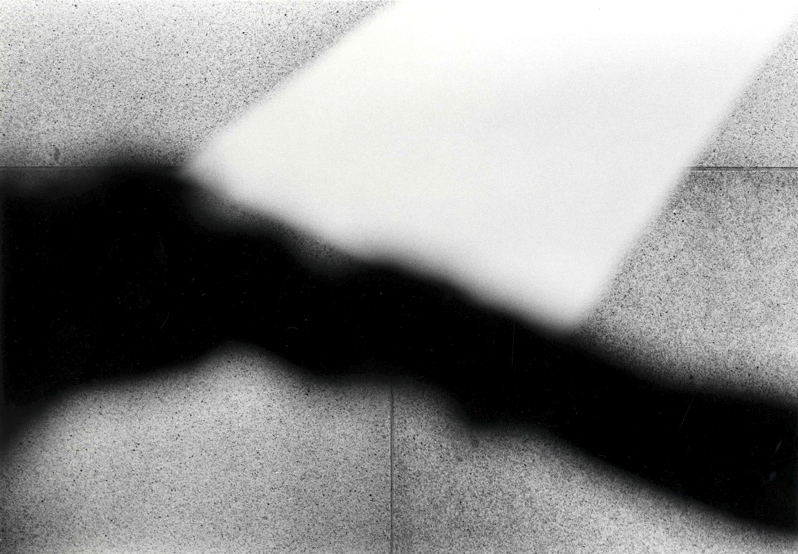
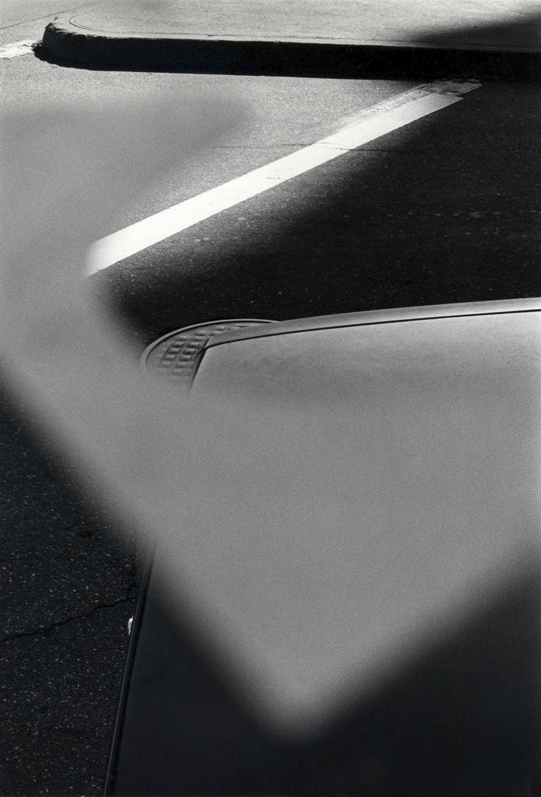
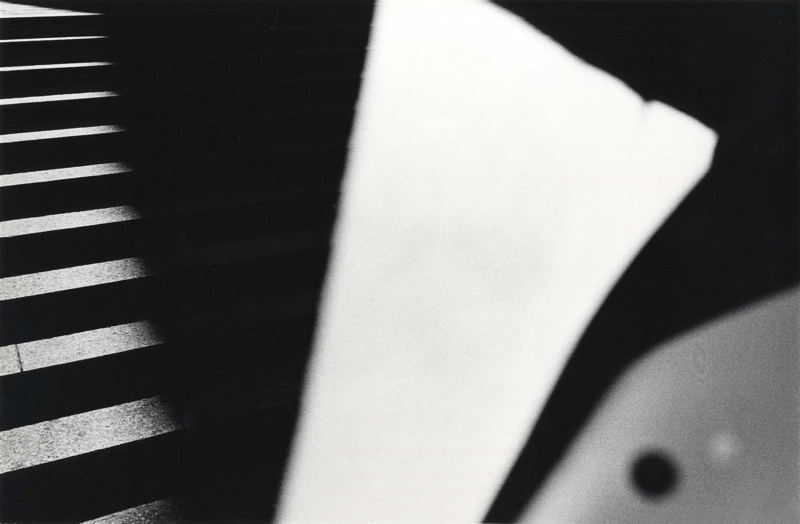
“Strange, haunting and evocative, Moriyama’s black & white photographs project the derangement of the world onto the psyche of the viewer” Dr Marcus Bunyan
Exhibition dates: 7th April – 31st July, 2012
Curator: Edward Robinson, Associate Curator of the Wallis Annenberg Photography Department at LACMA
How can we put this. The early black and white photographs are magnificent; the later colour photographs pedestrian and mundane. It is quite amazing how an artist with such skill and panache in the 1960s-1980s can run out of ideas and make such stock standard work 30 years later.
Does the artist loose the talent, the energy or just the persistence of vision that made their earlier work so vibrant and alive, or did the work just emerge from the time / space / energy of the artist in that particular period, never to appear again?
Moriyama’s black and white photographs provide “a raw, restless vision of city life and the chaos of everyday existence, strange worlds, and unusual characters.”
More than that, they plunge us into a mesmerising, hypnotic world where the viewer is immersed in a fractured dream / scape / space. Kagerou (Mayfly) (1972, below) is just such an example of this holographic, bugs caught in amber view of our world; the dirty footed, fleeing creature in Untitled (woman in white dress running) (1971, below) confirms this ambiguity, the trapped animal caught by the flash of the camera.
Strange, haunting and evocative, Moriyama’s black and white photographs project the derangement of the world onto the psyche of the viewer, producing an abnormal condition of the mind that promotes a loss of contact with reality. The colour photographs never stand a chance against such life changing affirmations.
Dr Marcus Bunyan
Many thankx to the Los Angeles County Museum of Art for allowing me to publish the photographs in the posting. Please click on the photographs for a larger version of the image.
Installation views of the exhibition Fracture: Daido Moriyama at the Los Angeles County Museum of Art (LACMA) Courtesy of Daido Moriyama and Los Angeles County Museum of Art, Los Angeles
The Los Angeles County Museum of Art (LACMA) presents Fracture: Daido Moriyama, the first solo museum exhibition of photographer Daido Moriyama (b. 1938) to be shown in Los Angeles. Moriyama first came to prominence in the mid-1960s with his gritty depictions of Japanese urban life. His highly innovative and intensely personal photographic approach often incorporates high contrast, graininess, and tilted vantages to convey the fragmentary nature of modern realities.
Spanning his early years to present day, the show features nearly fifty works, including a range of Moriyama’s renowned black-and-white photographs, his many important photo books, and the debut of recent colour work taken in Tokyo.
“Daido Moriyama’s immensely inventive and prolific achievements make him one of the leading photographers of our era. Inspiring viewers and artists world-wide, Moriyama continues to demonstrate a raw and restless exploration of the fractured realities of modern times, including his most recent colour work, appearing for the first time,” observes Edward Robinson, associate curator of LACMA’s Wallis Annenberg Photography Department and curator of the exhibition.
Exhibition overview
Responding to the rapid changes that transformed post-World War II Japan, Daido Moriyama’s black-and-white works express a fascination with the cultural contradictions of age-old traditions persisting within modern society, along with the effects of westernisation and consumerism.
Providing a raw, restless vision of city life and the chaos of everyday existence, strange worlds, and unusual characters, Moriyama frequently photographs while on walks through Tokyo – particularly the dark, labyrinthine streets of the Shinjuku district – as well as when traveling on Japan’s postwar highways and during strolls through other urban centers in Japan and abroad. His work suggests the bold intuition informing the artist’s ongoing exploration of urban mystery, memory, and photographic invention.
Fracture: Daido Moriyama will display the artist’s iconic black-and-white photographs, exemplifying the are, bure, boke (grainy, blurry, out-offocus) style, in addition to a new installation of recent colour work. An accompanying video will feature documentary footage of the photographer at work, exploring by foot and responding to the vibrant cityscape of Tokyo. Also on view will be a selection of books – Moriyama has published more than forty to date – which highlights the artist’s highly influential experimentation with reproduction media and the transformative possibilities of the printed page.
About Daido Moriyama
Born in Ikeda, Osaka, Moriyama trained in graphic design, then took up photography with Takeji Iwaniya, a professional photographer of architecture and crafts. Moving to Tokyo in 1961, he assisted photographer Eikoh Hosoe for three years and became familiar with the trenchant societal critiques produced by photographer Shomei Tomatsu. Moriyama also drew inspiration from William Klein’s confrontational photographs of New York, Andy Warhol’s silkscreened multiples of newspaper images, and the writings of Jack Kerouac and Yukio Mishima.
His work has been collected by numerous public and private collections internationally, including LACMA, the Museum of Modern Art, New York, the San Francisco Museum of Modern Art, the Metropolitan Museum of Art, New York, the Getty Museum, Los Angeles, the Museum of Fine Arts, Boston, and the Centre Pompidou, Paris. Moriyama has had recent major solo shows at The Fondation Cartier pour l’Art Contemporain, Paris, The Fotomuseum, Winterthur, Switzerland, the Metropolitan Museum of Photography in Tokyo, and will be exhibited with William Klein at the Tate Modern this fall.
Curator: Julianna Engberg, Artistic Director at ACCA
Apologies, just a short review as I have been sick all weekend. It’s hard to think straight with a thumping headache…
~ An interesting exhibition with several strong elements
~ Wonderful use of the ACCA space. Nice to see the building allowed to speak along with the work; in other words a minimal install that shows off the work and the building to advantage. ACCA could do more of this.
~ The main work We Are All Flesh (2012, below) reminded me of a version of the game The Hanged Man (you know, the one where you have to guess the letters of a word and if you don’t get the letter, the scaffold and the hanged man are drawn). The larger of the two hanging pieces featured two horse skins of different colours intertwined like a ying yang paux de deux. Psychologically the energy was very heavy. The use of straps to suspend the horses was inspired. Memories of Rembrandt’s The Anatomy Lesson of Dr. Nicolaes Tulp and The Godfather rose to the surface…
~ I found it difficult to get past the fact that the sculptures were built on an armature with epoxy = the construction of these objects, this simulacra, had to be put to the back of my mind but was still there
~ Inside me III (2012, below) was a strong work reminding me of an exposed spinal column being supported by thin rope and fragile trestles. Excellent
~ The series of work Romeu “my deer” (2012, below) was the least strong in the exhibition. Resembling antler horns or the blood vessels of the aorta bound together with futon like wadding, the repetition of form simply emphasised the weakness of the conceptual idea
~ My favourite piece was 019 (2007, below). Elegant in its simplicity this beautiful display case from a museum was dismantled and shipped over to Australia in parts and then reassembled here. The figurative pieces of wood, made of wax, seemed like bodies drained of blood displayed as specimens. The blankets underneath added an element of comfort. The whole piece was restrained and beautifully balanced. Joseph Beuys would have been very proud!
~ The “visceral gothic” contained in the exhibition was very evident. I liked the artist’s trembling and shuddering. Her narratives aroused a frisson, a moment of intense danger and excitement, the sudden terror of the risen animal
Dr Marcus Bunyan
Many thankx to the Australian Centre for Contemporary Art for allowing me to publish the photographs in the posting. Please click on the photographs for a larger version of the image.
“On one hand, I shoot disconcerting questions at the spectator, to which I do not give any re-assuring answers; on the other hand, the presence of human characteristics in my figures is familiar, and therefore comforting.”
“Life is beautiful even if we have to deal with fear and pain… It makes it easier if we take care of each other and if we have a language with each other to communicate about pain, suffering and fear.”
“That’s what makes a good sculpture, I think: the fact it doesn’t rely on a meaning or subject matter, but that it is so broad that you can take it in any number of different directions, and lose your way in it.”
Berlinde De Bruyckere
Berlinde De Bruyckere (Belgian, b. 1964) We Are All Flesh (installation view) 2012 Treated horse skin, epoxy, iron armature 280 x 160 x 100cm Courtesy the artist, Hauser & Wirth and Galleria Continua Photo: Andrew Curtis
“I only use animals in a human way. I started to work on horses in 1999, when the Flanders Fields Museum in Ypres asked me to reflect on war today. I was working more than one year in their archives and did a lot of research on this matter. The most important images for me were the abandoned city and the dead bodies of the horses. These images were staying with me. I took the motif of the dead horse as a symbol for loss in war, wherever it happens. Because if we address war, it’s about losing people. I wanted to translate that feeling so I started to work on six portraits of dead horses. Some years afterwards when people were asking about other animals in my work, I said ‘no’. I need the horse because of its beauty and its importance to us. It has a mind, a character and a soul. It is closest to us human beings. I couldn’t imagine another animal being so important.”
Berlinde De Bruyckere, 2011
Berlinde De Bruyckere (Belgian, b. 1964) We Are All Flesh (installation view detail) 2012 Treated horse skin, epoxy, iron armature 280 x 160 x 100cm Courtesy the artist, Hauser & Wirth and Galleria Continua
Berlinde De Bruyckere uses wax, wood, wool, horse skin and hair to make haunting sculptures of humans, animals and trees in metamorphosis.
Based in her home town of Ghent, Berlinde De Bruyckere’s studio is an old neo-Gothic Catholic school house. From here she creates her incredible sculptures – torsos morph into branches, trees are captured and displayed inside old museum cabinets and cast horses are crucified upside down in works that have been described as brutal, challenging, inspiring and both frightening and comforting.
Heavily influenced by the old masters, De Bruyckere’s early years at boarding school were spent hiding in the library, pouring over books on the history of catholic art. She went on to study at the Saint-Lucas Visual Arts School in Ghent, and was known in the early stages of her career for using old woollen blankets in her works, sometimes simply stacked on tables of beds, a response to news footage she had seen of blanket-swathed refugees in Rwanda.
Her breakthrough work In Flanders Fields, five life-size splay-legged horses captured in the throes of death, was commissioned by the In Flanders Fields Museum, in the town of Ypres, the site of the legendary World War 1 battle. She was then invited to participate in the 2003 Venice Biennale, and the subsequent work, an equine form curled up on a table titled Black Horse, firmly established her on the international scene. She has since had solo exhibitions at Hauser & Wirth in Zurich and New York and in prestigious museums across Europe.
“Berlinde De Bruyckere creates works that recall the visceral gothic of Flemish trecento art, updated to a new consideration of the human condition,” says Juliana Engberg, ACCA Artistic Director.
“Her work taps into our human need to experience transformation and transcendence, to experience great depths of feeling transferred from the animal to human. Through experiencing Berlinde’s amazing sculptural works we come closer to the human condition and the tragedy and drama of mortality, out of which something miraculous occurs in metamorphosis.”
We are all Flesh will include the rarely seen and iconic work 019 and two new commissions created specially for this exhibition.
Text from the ACCA website
Berlinde De Bruyckere (Belgian, b. 1964) 019 (installation view) 2007 Wax, epoxy, metal, glass, wood, blankets 293.5 x 517 x 77.5cm Private Collection, Paris Photo: Andrew Curtis
“Behind the distorted, antique glass, you see sculptures in the shape of trees or branches. The trees are nearly the colour of human skin, so you end up with something fragile. Because the antique glass distorts your view, a couple of doors are left open, inviting you to look inside. I don’t want people to see the sculptures as trees, but as strange, vulnerable beings. The vitrines have a shelf at the bottom on which I placed three piles of blankets. It looks as if they are shielding and nurturing the roots of the trees… I also refer to those blankets as a “soothing circumstance” because they can sometimes lead us to a less harsh reality.”
Berlinde De Bruyckere
Berlinde De Bruyckere (Belgian, b. 1964) 019 (installation view) 2007 Wax, epoxy, metal, glass, wood, blankets 293.5 x 517 x 77.5cm Private Collection, Paris
Berlinde De Bruyckere (Belgian, b. 1964) 019 (installation view detail) 2007 Wax, epoxy, metal, glass, wood, blankets 293.5 x 517 x 77.5cm Private Collection, Paris
What is the Meaning of Trecento (1300-1400)
The term “trecento” (Italian for ‘three hundred’) is short for “milletrecento” (‘thirteen hundred’), meaning the fourteenth century. A highly creative period, it witnessed the emergence of Pre-Renaissance Painting, as well as sculpture and architecture during the period 1300-1400. In fact, since the trecento coincides with the Pre-Renaissance movement, the term is often used as a synonym for Proto-Renaissance art – that is, the bridge between Medieval Gothic art and the Early Renaissance. The following century (1400-1500) is known as the quattrocento, and the one after that (1500-1600) is known as the cinquecento.
The main types of art practised during the trecento period showed relatively little change from Romanesque times. They included: fresco painting, tempera panel painting, book-painting or illuminated manuscripts, metalwork, relief sculpture, goldsmithery and mosaics.
Berlinde De Bruyckere (Belgian, b. 1964) Inside me III (installation view) 2012 Wax, wool, cotton, wood, epoxy, iron armature 135 x 235 x 115cm Courtesy the artist, Hauser & Wirth and Galleria Continua
Created especially for ACCA, Inside Me III is a tangle of flesh-coloured wax branches reminiscent of intestines, tree roots and human limbs, splayed across worn white pillows and slung between a frame based on a drying rack for herbs. This is a body turned inside out shown as a bag of bones and flesh. It’s a body reduced to its most basic form. In this state the viewer is encouraged to think about what makes us human. Yes we are all flesh – but we are more than the physical, aren’t we? Inside Me alludes to an interior state of being, a tangle of intangible emotions and feelings that are very real. Similar to the work in Gallery 4, here human limbs become branches, as tree trunks stand in for people in 019, reminding us of a universal life cycle, and for De Bruyckere ‘life and hope’.
Text from the Berlinde De Bruyckere We Are All Flesh ACCA Education Kit
Berlinde De Bruyckere (Belgian, b. 1964) Inside me III (installation view) 2012 Wax, wool, cotton, wood, epoxy, iron armature 135 x 235 x 115cm Courtesy the artist, Hauser & Wirth and Galleria Continua
Berlinde De Bruyckere (Belgian, b. 1964) The Pillow (installation view) 2010 Wax, epoxy, iron, wool, cotton, wood 90 x 70 x 60cm Private Collection, Brussels
To one side of the room a wax figure is crouched over a soft pillow, the body hairless, faceless and surface almost transparent. ‘The Pillow’ is another important loan in the exhibition and the only obviously human figurative element. The figure appears to be protecting itself, curled inwards into a pillow atop a small wooden box. The fragility and rawness of the body is softened by the use of pillows. Here the pillow supports the figure as a sort of plinth, comforting the body. Four antler-based works are suspended by strings from the gallery wall. Unlike the clichéd hunting trophies mounted in baronial halls, these antlers are pallid, delicate and raw. Antlers are a more recent motif for De Bruyckere. In Metamorphoses, Ovid retells the Greek myth of Actaeon, who accidentally stumbled across the Goddess Diana bathing. In an embarrassed fury she transforms Actaeon into a stag. He is unable to speak and flees in fear. His fellow hunters and their dogs do not recognise him and he is torn to death by his own hounds. The male deer’s antlers serve to seduce the female but also to test their strength with other males and defend themselves against predators. In this sense they are also capable of destruction. The antler grows out of the body without control, and in some of De Bruyckere’s drawings they grow back inside it, suggesting that sometimes our strongest weapons can, despite their benefits, also be a threat to our own lives. Not only referencing mythology, the stag is also a traditional symbol of Christ. De Bruyckere has frequently used the Man of Sorrows motif, which throughout history has shown Christ, usually on the cross with the wounds of the passion, Here its interpretation enhances our sympathy for the hunted animal as well.
Text from the Berlinde De Bruyckere We Are All Flesh ACCA Education Kit
Berlinde De Bruyckere (Belgian, b. 1964) Romeu “my deer” (installation view) 2012 Pencil, watercolour, collage 37.5 x 28cm Courtesy the artist, Hauser & Wirth and Galleria Continua
Berlinde De Bruyckere (Belgian, b. 1964) Romeu “my deer” (installation view detail) 2012 Pencil, watercolour, collage 37.5 x 28cm Courtesy the artist, Hauser & Wirth and Galleria Continua
Australian Centre for Contemporary Art (ACCA) 111 Sturt Street Southbank Victoria 3006 Australia
Opening hours: Tuesday – Friday 10am – 5pm Saturday – Sunday 11am – 5pm Monday closed Open all public holidays except Christmas Day and Good Friday
I am presenting an academic paper Traversing the unknown at the international conference Travel Ideals: Engaging with spaces of mobility this Wednesday afternoon at the University of Melbourne. Come along if you can!
Dr Marcus Bunyan, Faculty of Arts, The University of Melbourne.
Curator: Françoise Reynaud, Chief Curator in charge of photographic collections at the Carnavalet Museum, alongside consulting commissioner David Harris
More photographs from the master, including some of the less well known figurative work.
The exhibition has been rating its socks off, with long queues and people being stopped from entering until the crowds inside have dissipated, so that people can actually see the small prints.
Being a Leo the image of the lion’s head (Heurtoir à tête de lion, 1900, above) is my favourite in the posting, which is why it’s at the top.
Owning an Atget. It has a nice ring to it. Just imagine owning this Atget. I would be in a spin for days!
Dr Marcus Bunyan
Many thankx to the Carnavalet Museum for allowing me to publish the photographs in the posting. Please click on the photographs for a larger version of the image.
Eugène Atget (French, 1857-1927) Chevet de l’église Saint-Séverin, rue Saint-Jacques, 5ème arrondissement, Paris 1908 Albumen paper print Musée Carnavalet, Histoire de Paris CC0 Paris Musées / Musée Carnavalet – Histoire de Paris
In spring 2012, the Carnavalet Museum presents the Parisian work of one of the most famous photographers of the 20th century, Eugène Atget (Libourne, 1857 – Paris, 1927). The exhibition proposes a selection of 230 prints created in Paris between 1898 and 1927 from the collections of the Carnavalet Museum, in addition to those of the George Eastman House in Rochester and the collections of the Fundación Mapfre in Madrid.
This retrospective, which brings together some well-known images and others previously unseen, paints an unusual portrait of the capital, far from the clichés of the Belle Époque. Visitors will discover the streets of the Paris of old, the gardens, the quays of the Seine, the former boutiques and the travelling salesmen. Atget’s photographs also reveal the changes in his processes: when he started out, this self-taught photographer tried to bring together landscapes and motifs and then images of Paris streets, in order to sell them to artists as models. It was when he dedicated himself to the streets of Paris that he attracted the attention of prestigious institutions such as the Carnavalet Museum and the National Library, which were to become his main clients until the end of his life.
In addition, one room in the exhibition is dedicated to the presentation of a series of 43 photograph prints, collected in the 1920s by the American artist Man Ray. This album, which is currently kept in Rochester (United States), allows visitors to gain a better understanding of Atget’s influence on the Surrealists. Reflecting on Atget’s prints, the public will also discover the work of Emmanuel Pottier (Meslaydu-Maine, 1864 – Paris, 1921), his practically unknown contemporary who, like other photographers, explored the subject of picturesque Paris.
Press release from the Carnavalet Museum website
Eugène Atget (French, 1857-1927) Hôtel des abbés de Fecamp, 3 rue Hautefeuille, 6ème arrondissement, Paris 1902 Albumen paper print Musée Carnavalet, Histoire de Paris CC0 Paris Musées / Musée Carnavalet – Histoire de Paris
Eugène Atget is known for his views of Paris streets and parks from the early 20th century. Equipped with a tripod, an 18 x 24 cm camera, glass plates with the same dimensions and a black cover, he captured street scenes, beautiful façades or out-of-the-way courtyards. The Carnavalet Museum was one of his first clients and conserves over 9,100 prints by this photographer.
In 1913, Atget became interested in a section of Paris that was scheduled to disappear. This was the “Zone”, unbuildable land that extended beyond the old fortifications built under Louis Philippe between 1841 and 1844. From the beginning, this area was the totally illegal refuge for the poorest of the poor, in particular day labourers and ragmen. They lived there and developed their activities of collection and sorting. Atget’s photos reveal the precarious circumstances of the families that lived and worked in these insalubrious lodgings, without dwelling on their misery. A place with a sulfurous and disquieting reputation, the Zone is represented without pathos or romanticism.
Eugène Atget (French, 1857-1927) “Hotel des Deux Lions”, rue des Ursins, 4ème arrondissement, Paris 1923 Musée Carnavalet, Histoire de Paris CC0 Paris Musées / Musée Carnavalet – Histoire de Paris
These are stunning photographs; they glow with an inner light and energy. With perfect composition and use of chiaroscuro the artist let’s the women speak for themselves – confident, self assured and happy in the life they are leading. Having come out as a gay man myself in 1975, six short years after the Stonewall Riots in New York, I can attest to how difficult and how much prejudice there was against gay men in the early 1970s. Imagine then, being a transexual living in Paris in the early to mid 1960s and the issues that these woman had to deal with.
And yet there is a joyous quality to these photographs, an intimate relationship between people (not just artist and subject), a sense of fondness, friendship and fraternity. There is an intimacy here that transcends documentation. The last photograph in the posting (Gina, 1963, below) is just this wonderful, happy photograph where you just can’t help smiling yourself. There is a lightness here that is at variance with Brassai’s heavy set Parisian nights, that is more sensitive to the subject than Diane Arbus’ thrusting camera and her depiction of transexuals.
As good as the quote by Strömholm is (below), it is not just the freedom to choose one’s own life and identity, it is the ability to make that choice an informed choice, where you can select from a variety of things, where your preference indicates that your choice is based on one’s values or predilections. Without being informed the decision you may make is not free; if you are uninformed you may be unaware. An informed choice is based upon a clear appreciation and understanding of the facts, implications, and future consequences of any action.
Despite the prejudice and pain these woman would have suffered living an everyday life in the 1960s they have made an informed choice. These are strong, courageous woman and their friend has captured their resolve beautifully.
Dr Marcus Bunyan
Many thankx to the International Centre of Photography for allowing me to publish the photographs in the posting. Please click on the photographs for a larger version of the image.
“It was then – and still is – about obtaining the freedom to choose one’s own life and identity.”
“It was because I didn’t understand it myself… as soon as you ask yourself why their lives are the way they are, it becomes difficult not to take pictures.”
“This is a book [Les Amies de Place Blanche] about insecurity. A portrayal of those living a different life in the big city of Paris, of people who endured the roughness of the streets. … This is a book about the quest for self-identity, about the right to live, about the right to own and control one’s own body.”
Christer Strömholm
Christer Strömholm: Les Amies de Place Blanche @ ICP
Christer Strömholm (1918-2002) was one of the great photographers of the 20th century, but he is little known outside of his native Sweden. This exhibition presents his most powerful and acclaimed body of work: Les Amies de Place Blanche, a documentation of transsexual “ladies of the night” in Paris in the 1960s. Arriving in Paris in the late 1950s, Strömholm settled in Place Blanche in the heart of the city’s red-light district. There, he befriended and photographed young transsexuals struggling to live as women and to raise money for sex-change operations. Strömholm’s surprisingly intimate portraits and lush Brassaï-like night scenes form a magnificent, dark, and at times quite moving photo album, a vibrant tribute to these girls, the “girlfriends of Place Blanche.” The photographs were first published in Sweden in 1983, and the book quickly sold out, becoming a cult classic; it is being reissued in French and English this year. Strömholm’s photo-essay raises profound issues about sexuality and gender; as he wrote in 1983, “It was then – and still is – about obtaining the freedom to choose one’s own life and identity.”
This exhibition, the first presentation of Strömholm’s work in an American museum, is organised by ICP Curatorial Assistant Pauline Vermare
Agnès Caprice, showgirl of trans cabaret Le Carrousel and frequent subject of photo series Les Amies de La Place Blanche. She later partnered and had a child with an actress and performer of a butch lesbian cabaret. Caprice would pass at a young age due to addiction, after the devastating loss of 7 of her fellow Le Carrousel performers in a 1966 plane crash.
Raising profound issues about identity, sexuality, and gender, Christer Strömholm: Les Amies de Place Blanche, on view at the International Center of Photography (1133 Avenue of the Americas at 43rd Street) May 18 – September 2, 2012, presents 40 photographs, historical publications, and ephemera documenting young transgender males in the heart of Paris’ red-light district in the 1960s.
Arriving in Paris in the late 1950s, Christer Strömholm (Stockholm, 1918-2002) settled in Place Blanche, home of the famous Moulin Rouge. There, he befriended and photographed young transsexuals – “ladies of the night” – struggling to live as women and to raise money for sex-change operations. In General Charles de Gaulle’s ultra-conservative France, transvestites were outlaws, regularly abused and arrested by the police for being “men dressed as women outside the period of carnival.” Some of these women had tragic fates. Others, like “Nana” and “Jacky,” eventually fulfilled their destiny and led happy lives as women. Living alongside them for 10 years, Strömholm photographed his subjects in their hotel rooms, in bars, and in the streets of Paris.
“These intimate portraits and Brassaï-like lush night scenes form a magnificent, dark, and moving photo album, a vibrant tribute to these girls,” said ICP Curatorial Assistant Pauline Vermare, who organised the exhibition. These photographs were first published in Sweden in 1983, and the book Vännerna från Place Blanche (“The Girlfriends of Place Blanche”) – which will be reissued this year in French and English – quickly sold out, becoming a cult classic and solidifying Strömholm as one of the great photographers of the 20th century. The work for this exhibition is provided by the Strömholm Estate in Stockholm, the Marvelli Gallery in New York, and from the collection of Alice Zimet.
As Strömholm wrote in 1983: “These are images of people whose lives I shared and whom I think I understood. These are images of women – biologically born as men – that we call ‘transsexuals.’ As for me, I call them ‘my friends of Place Blanche.’ It was then – and still is – about obtaining the freedom to choose one’s own life and identity.”
Christer Strömholm is a lesser known artist, but may well be the father figure of Scandinavian photography. A prominent artist and winner of the prestigious Hasselblad Award in 1997, he was also an influential teacher and the mentor to some of today’s leading Swedish photographers including J.H. Engström, Anders Petersen, and Lars Tunbjörk. Highly revered in his native Sweden since the 1980s, he is still little known outside of Europe. This exhibition is the first presentation of Strömholm’s work in an American museum, and features his most powerful and acclaimed body of work.
Press release from the International Centre of Photography website
Under the strict Catholic social regime of Charles de Gaulle, transsexuals in Paris at this time were forced to confine their identities to within their hotel rooms, fearing the brutality of the police and imprisonment. Against this political backdrop Strömholm delved into the harsh world of sex work; Strömholm pervades this intimate and world of prostitution and deconstructs the division between private and public. The image of Susannah and Mimosa pictured below provides an insight into their private lives; the playful depiction of the women contrasts heavily with our contextual understanding of the photograph, of the hard life transsexuals endured in Paris. Strömholm reveals a dynamic sense of sorority between Suzanne and Mimosa in this portrait, personal interactions emerge which portrays the women as vibrant characters, a contrast against the grim reality of prostitution in Paris. Strömholm reveals a close bond between the women which goes beyond simplistic definitions of the women solely as exploited sex workers. Whilst Strömholm’s work can be viewed as a social commentary of the transgender women of Paris and the struggles they faced in daily life, there is a rather more emotive and delicate edge to Strömholm’s work which is a stark departure from the work of social documentary photographers.
“This is a book about the quest for self-identity, about the right to live, about the right to own and control one’s body. These are images of people whose lives I shared and whom I think I understood. This is where I arrived in 1959. This is where I settled and started to tell of the life I shared with the transsexuals. They soon became ‘the friends of Place Blanche’. …
After the sun had set, the air cooled down. At the time when shadows stretched, we could catch glimpses of prostitutes walking out of alleys. Big and beautiful women. Some of them exceeded in height their hope-swollen clients. Surrounded by circuses, freaks and snakes, the prostitutes stood there in the buildings’ shadows, keeping a constant eye on the boulevard, the shows and the clients.
Midway through January, when the fairground people set off again, the boulevard went back to normal – the party was over. On the boulevard and in the alleys surrounding place Pigalle and place Blanche, the prostitutes – both male and female, lesbians, transsexuals, transvestites or in other words: the usual group – took back their old spots.
Prostitution was as active as it used to be at the end of the 19th century. Organised prostitution happened all year long. A desperate fight, both to earn the daily bread and, for transsexuals, to see their identitarian dreams come true.
These beautiful ladies dreamt of travelling to Casablanca to undergo surgery. The outcome of a transformation started a long time ago. These women were biologically born as men. They lived here, in the place Blanche neighbourhood. They worked in cabarets, sang, did stripteases. They were outspoken and they answered back immediately to the public, it was a typical Parisian tradition. A cocky and saucy sense of humour.
They earned 60 French francs a day, enough to pay for the food and the hotel room but not enough to afford the 40,000 francs surgery. The streets were their only solution. Some of them had loyal customers, others stood in the same place on the street. Here, prostitution was part of the neighbourhood life. A way to survive.
At the time of the Commune, there already were transvestites on the place Blanche. But it was in the late 50s that the word ‘transsexual’ began to be used. It was also at that time that it became possible for a man to physically become a woman thanks to hormones and surgery. But hormone therapy has also been the cause of tragedies. Often they were denied the help of a doctor. So they had to fend for themselves.
My friends lived together in a world apart, a world of shadows and loneliness, anxiety, hopelessness and alienation. The only thing they demanded was to have the right to be themselves, not to be forced to deny or repress their feelings, to have the right to live their own lives, to be responsible, to be at ease with themselves.
Nothing more. It was then – and still is – about attaining the right to own one’s own life and identity.
Christer Strömholm from his 1983 book Les Amies de Place Blanche
The “Beast III” has a Chrysler Hemi engine and was the fastest single-engine car in America in 1952. It was the first car to have its body designed in a wind tunnel.
Continuing my fascination with the design of the automobile, here are another selection of classics!
Dr Marcus Bunyan
Many thankx to the Utah Museum of Fine Arts for allowing me to publish the photographs in the posting. Please click on the photograph for a larger version of the image.
The “Mormon Meteor III,” the last Duesenberg built, set more long-distance land-speed records than any other car in history. It has a handcrafted Curtis Conqueror aircraft V12 engine.
Racing into town this summer, Speed: The Art of the Performance Automobile will be on display at the University of Utah on the first-floor galleries of the Utah Museum of Fine Arts in the Marcia and John Price Museum Building from June 2 – September 16. The exhibition comprises 19 of the world’s finest automobiles and was organised by automotive historian, museum consultant and guest curator Ken Gross.
Speed will showcase a century of automobiles that exemplify premier aerodynamics, engineering, art and design of their eras. The cars range from the menacing 1952 “Beast III” Bonneville racer to the ultra-cool 1957 Jaguar XK-SS Roadster, once owned by Steve McQueen. The cars are on loan from some of the country’s top automobile collections, including the Price Museum of Speed; National Automobile Museum; Petersen Automotive Museum; Bruce Meyer; Peter and Merle Mullin; Jon and Mary Shirley; and the Larry H. Miller Family.
“We are delighted to be presenting ‘Speed: The Art of the Performance Automobile’ and are confident that our visitors will be amazed at the beauty, engineering, and amazing stories of these incredible cars” says Gretchen Dietrich, executive director of the UMFA. “We hope many first time visitors will come to see the exhibition and be introduced to our wonderful museum and collection.”
A number of art museums in America and Europe recently presented popular exhibitions of cars, including Curves of Steel at the Phoenix Art Museum (2007), Allure of the Automobile at the High Museum of Art in Atlanta (2010) and the Portland Art Museum (2011), as well as L’Art de L’Automobile: Chef d’Oeuvres de la Collection Ralph Lauren at the Les Arts Décoratifs in Paris (2011). The first art exhibition of cars was Eight Automobiles, mounted sixty years ago at the Museum of Modern Art in New York City (1951).
The UMFA’s automobile exhibition, however, is the first of its kind. Speed will examine automobiles not only as works of art and design, but as objects of rich racing history. The featured cars were created by legendary engineers, distinguished designers, and storied automobile companies; many are speed record-setters that were owned and raced by famous drivers and other notable people of their time. This is the first and only time these 19 cars have been seen together in one venue.
Many of the cars in Speed: The Art of the Performance Automobile have a special connection to Utah’s famed Bonneville Salt Flats, where racers from all over the world traveled, and continue to travel, in attempts to break land speed records. The “Mormon Meteor III” is perhaps the most famous Bonneville race car. Designed and driven by legendary racer and former Salt Lake City Mayor David Abbott “Ab” Jenkins (1883-1956), the “Mormon Meteor III” set more long distance land speed records than any other automobile in history, and it still holds 12 of them today.
“These 19 special automobiles comprise a remarkable selection of historic racers and high performance cars, spanning more than a century,” notes guest curator Ken Gross. “Unlikely to be repeated, this exhibition represents a once-in-a-lifetime opportunity to see and study these legends on wheels.”
Curators: MaryAnne Stevens (from the Royal Academy of Arts, London) and Maria Tsantsanoglou (from the State Museum of Contemporary Art, Thessaloniki), with the collaboration of photographer Richard Pare
Ooh, ooh, ooh, I’m in love with the design and the photograph of the Gosplan Garage! The garage survived the Second World War but, like the Cathedral Sagrada Familia in Barcelona, it is now hemmed in and surrounded by cars and apartments (see the YouTube video GosPlan Garage (1934-1936) by Konstantin Melnikov). Looking at early photographs of both buildings – in the basement of the Sagrada Familia if you go, the Cathedral surrounded by green fields and cows – you realise what wonderful space they had to breathe, to exist in the world. Unfortunately, no more!
Dr Marcus Bunyan
Many thankx to Martin-Gropius-Bau for allowing me to publish the photographs in the posting. Please click on the photographs for a larger version of the image.
Born on the outskirts of Moscow into a poor family of peasant origin, Melnikov served a short apprenticeship as an icon painter and was then apprenticed to an engineering firm, one of whose owners noticed his talent for drawing and sent him to the Moscow Institute for Painting, Sculpture and Architecture. He graduated initially in painting and then in 1917 in architecture. From 1918 he worked in a Mossovet architectural studio under Aleksei Schusev and Ivan Zholtovskii but his early projects for housing schemes show him abandoning the Classicism of his teachers. In his pavilion for the Makhorka tobacco firm at the 1923 All-Union Agricultural Exhibition Melnikov developed this exuberant angularity by giving different parts of the pavilion different heights and setting the sloping roofs at right angles to each other. Irregular fenestration and an external staircase – crowded with visitors in some photographs – add to the sense of animation. The construction is entirely of timber, the first evidence of Melnikov’s abiding interest in combining traditional materials with avant-garde design. His Soviet Pavilion for the 1925 Exposition Internationale des Arts Décoratifs et Industriels Modernes in Paris would also feature timber construction, an animated roofscape and an external staircase. However, it achieved a more logical design by simplifying the plan into a rectangle bisected by stairs rising and descending across its centre. During the second half of the 1920s Melnikov completed five workers’ clubs in the Moscow region for the Rusakov (1927), Frunze, Kauchuk, Pravda and Burevestnik trades unions. He favoured interiors with large flexible spaces, sometimes using movable panels, and opposed the Functionalist tendency to create a large number of highly specialised areas. This gave him the freedom to mould bold internal volumes and create dramatic exteriors. His own house, consisting of two interlocking cylinders, was designed on the same principles (1927-1931). His garages – Bahkmetevskaia, Novo Ryanskaia and Gosplan (1936) – on the other hand, though still characterised by dramatic exteriors, are based on a careful analysis of vehicular movement. Despite being briefly associated with ASNOVA, Melnikov appears a rather solitary figure, his beliefs about the design process differing from the main groupings of 1920s architects. Heavily criticised in the 1930s for his ‘Formalism’, he was largely excluded from employment and teaching and no significant buildings were constructed to his design during the last 40 years of his life.
Liubov Popova (Russian-Soviet, 1889-1924) Painterly Architectonics 1918-1919 Oil on canvas 73.1 x 48.1cm State Museum of Contemporary Art – G. Costakis Collection, Thessaloniki, Greece
The DneproGES Dam and Hydroelectric Power Station (designed with Nikolai Kolli, Georgii Orlov and Sergei Andrievskii, 1927-32) represents not only Vesnin’s first important industrial project but also a major achievement of Stalin’s First Five Year Plan.
In 1931 the engineer Georgii Marsakov designed a mass-production bakery in Moscow and the Narvskii Factory Kitchen opened in St Petersburg to provide communal eating facilities for local residents. Rapid expansion of motorised transport called for a significant reappraisal of the garage, for which Konstantin Melnikov produced four highly innovative designs in Moscow.
The exhibition Building the Revolution sheds light on an area of the Soviet avant-garde that has remained relatively unknown in Europe and beyond: architecture. Even in Russia and the other successor states of the former Soviet Union the names of most of the architects have been largely forgotten. Their structures have not become part of the collective cultural memory to the extent that the “New Building” movement in the West has.
The exhibition presents this impressive chapter in the history of the avant-garde in an unusual way in that it binds together three thematic strands. Selected works of the early avant-garde, such as those of El Lissitzky, Gustav Klutsis, Liubov Popova, Alexander Rodchenko or Vladimir Tatlin, show the artists’ intense preoccupation from 1915 onwards with questions of form, space and texture. After the Revolution they were active in the various bodies concerned with the implementation of these ideals, such as the Commission for the Synthesis of Painting, Sculpture and Architecture (1919-1920). It was there that the architects Nikolai Ladovskii, Vladimir Krinsky and the painter Rodchenko created the first designs for town planning and communal housing. In 1919 Tatlin produced his famous design for a “Monument to the Third International” – a complex engineering structure with moving spaces. Although never built, its visionary potential, and dynamic formal language influenced the later architecture of Constructivism. Whereas the impressive pictures and drawings of the Costakis Collection in Thessaloniki make clear what a role was played by architectural themes in the early artistic designs, vintage prints from the Shchusev State Museum of Architecture in Moscow give an idea of the unleashing of architectural energies which took place a few years later. The historical photographs show that the new structures embodied a new age, not only in a typological sense, but in terms of scale. They towered above the old urban buildings and acted as a torch signalling the coming industrialisation and transformation of the country. The photographs of the renowned British architectural photographer, Richard Pare, on the other hand, lead the viewer back to the present. Pare had begun to rediscover this lost avant-garde in 1993. In the course of several trips to Moscow and St. Petersburg, as well as to the former Soviet republics, he documented what remained of the buildings. His shots bring out their beauty and the inventiveness of their creators while at the same time tracing the course of their decay. In that sense they draw a picture of a post-Soviet society that is unaware of its extraordinary heritage.
What was new about this architecture was not only the formal idiom, but also the tasks it was supposed to perform. With the building of the new society workers’ clubs, trade union houses, communal apartments, sanatoria for the workers, state-owned department stores, party and administrative buildings, as well as power stations and industrial plants to modernise the country.
The first important structure to be erected after the Revolution was Vladimir Shukhov’s Shabolovka Radio Tower, built in the years 1919-1922 and consisting of six hyperboloids mounted on top of one another. At 150 metres it was the tallest tower in the world of its kind at the time. Its elegant filigree structure became a symbol of how all that was old and ponderous could be surmounted. Rodchenko’s well-known photos of the radio tower – today seen as icons of avant-garde photography – stress the dynamics from above and below. Pare’s shots of the tower focus more on details, thus emphasising the construction techniques of the time.
The achievements of Russian engineers like Shukhov, with their novel technical designs, influenced the development of an architecture that used clear, geometrical forms that were in keeping with its functions. In the course of the 1920s there arose two clearly defined tendencies in architecture: Rationalism and Constructivism. In 1923 representatives of the first founded the Association of New Architects (ASNOVA), whose leading light was Ladovskii. Among the Constructivists Alexander Vesnin and Moisei Ginzburg played major roles. In 1925 the Constructivist architects of Moscow joined together to form the Society of Contemporary Architects (OSA). There were also other tendencies as well as outstanding individualists, such as Konstantin Melnikov. Despite polemical squabbles among the tendencies a modern style of building had consolidated itself by the end of the 1920s.
In the course of the industrialisation of the country under the first Five-Year Plan (1928-1932) the building of new towns proceeded apace. This gave rise to questions concerning the concept of the city, for which various solutions were proposed, such as the “horizontal skyscrapers” for Moscow or Ladovskii’s “parabola” as the basic pattern of urban development. Quite a few of the buildings photographed by Pare were developed for communal living. The Narkomfin (People’s Commissariat for Finance) residential block built in Moscow in 1930 by Ginzburg and Ignati Milinis was one of the most experimental projects of that era. In addition to two floors of apartments it contained a communal canteen, a crèche, a gymnasium and a scullery. Other types of construction designed to promote the collectivist way of life were canteen kitchens, three of which were built in what was then Leningrad by a group associated with Iosif Meerzon and representing Rationalism. Workers’ clubs and palaces of culture offered numerous educational opportunities, symbolising with their dynamic forms the role of the new class in the urban environment.
When in the mid-1930s the political climate in the Soviet Union underwent a fundamental change, and a monumental style of architecture based on Classical models found favour with the powers that be, this exciting chapter of avant-gardism came to an end and sank into oblivion.
There was also the exchange with the Europeans. Le Corbusier came to Moscow and met and shared ideas with a number of architects including Moisei Ginzburg, the founder of the Constructivist movement and its chief theoretician. His 1924 treatise Style and Epoch was the most influential document of the Constructivist movement. Because he was Jewish, he was prevented from undertaking his architectural training in Russia and went to the École des Beaux-Arts in Paris and the Accademia di Belle Arti in Milan. Aleksandr Rodchenko travelled to Paris with Melnikov, who built the Soviet Pavilion at the 1925 Exposition Internationale des Arts Décoratifs et Industriels Modernes in Paris. They were all very well versed in European culture of the time. Ginzburg’s Style and Epoch responds to Le Corbusier’s Vers une architecture of the previous year, but Ginzburg takes the warship and the communal house rather than the luxury liner and the private villa as his examples.
The Rusakov Workers’ Club (Russian: Дом культуры имени И.В.Русакова (рабочий клуб)) in Moscow is a notable example of constructivist architecture. Designed by Konstantin Melnikov, it was constructed in 1927–28. The club is built on a fan-shaped plan, with three cantilevered concrete seating areas rising above the base. Each of these volumes can be used as a separate auditorium, and combined they result in a capacity of over 1,000 people. At the rear of the building are more conventional offices. The only visible materials used in its construction are concrete, brick and glass. The function of the building is to some extent expressed in the exterior, which Melnikov described as a “tensed muscle”.
The Shukhov Radio Tower (Russian: Шуховская башня), also known as the Shabolovka Tower (Шаболовская башня), is a broadcasting tower deriving from the Russian avant-garde in Moscow designed by Vladimir Shukhov. The 160-metre-high (520 ft) free-standing steel diagrid structure was built between 1920 and 1922, during the Russian Civil War.
“Mexican documentary photography is imbued with a revolutionary spirit and validated by the investment of the photographer in the subject itself, as though the image ‘is’ the country ‘is’ the photographer.” Dr Marcus Bunyan
Exhibition dates: 10th March – 8th July, 2012
Curator: Jessica S. McDonald, Assistant Curator of Photography at SFMOMA
List of Photographers Included: Katya Brailovsky, Lola Alvarez Bravo, Manuel Alvarez Bravo, Manuel Carrillo, Alejandro Cartagena, Eduardo del Valle and Mirta Gomez, Pia Elizondo, Dave Gatley, Oscar Fernando Gomez, Héctor Garcia, Lourdes Grobet, Graciela Iturbide, Geoffrey James, Mark Klett, Pablo Lopez Luz, Elsa Medina, Susan Meiselas, Enrique Metinides, Pedro Meyer, Tina Modotti, Rodrigo Moya, Pablo Ortiz Monasterio, Paolo Pellegrin, Antonio Reynoso, Daniela Rossell, Mark Ruwedel, Victoria Sambunaris, Alec Soth, Paul Strand, Yvonne Venegas, Brett Weston, Edward Weston, and Mariana Yampolsky.
Manuel Alvarez Bravo (Mexican, 1902-2002) Obrero en huelga, asesinado (Striking Worker, Assassinated) 1934 Gelatin silver print 19.2 x 23.8cm
Manuel Alvarez Bravo (Mexican, 1902-2002) La buena fama durmiendo (The Good Reputation Sleeping) 1939 Gelatin silver print 20.3 x 25.4cm
Compilation by Dr Marcus Bunyan
“There is no one ‘Mexican photography,’ but one strand that runs throughout is a synthesis of aesthetics and politics. We see that with Manuel Alvarez Bravo, and we still see it in work made decades later.”
Jessica S. McDonald
One of my early heroes in photography was Manuel Alvarez Bravo whom I rate as one of the best photographers that has ever lived, up there with Atget and Sudek. His photograph Parabola optica (Optical Parable, 1931, below) lays the foundation for an inherent language of Mexican photography: that of a parable, a short allegorical story designed to illustrate or teach some truth, religious principle, or moral lesson. Many Mexican photographs tell such stories based on the mythology of the country: there are elements of the absurd, surrealism, macabre, revolution, political and socio-economic issues, also of death, violence, beauty, youth, sexuality and religion to name but a few – a search for national identity that is balanced in the photographs of Bravo by a sense of inner peace and redemption. This potent mix of issues and emotions is what makes Mexican photography so powerful and substantive. In the “presence” (or present, the awareness of the here and now) of Mexican photography there is a definite calligraphy of the body in space located in most of the work. This handwriting is idiosyncratic and emotive; it draws the viewer into an intimate narrative embrace.
Two famous photographs by Bravo illustrate some of these themes (Apollonian / Dionysian; utopian / dystopian). When placed together they seem to have a strange attraction one to the other (see photographs above).
Unlike most Australian documentary photography where there is an observational distance present in the photographs – a physical space between the camera/photographer and the subject – Mexican documentary photography is imbued with a revolutionary spirit and validated by the investment of the photographer in the subject itself, as though the image is the country is the photographer. There is an essence and energy to the Mexican photographs that seems to turn narrative on its head, unlike the closed loop present in the tradition of Australian story telling. The intimate, swirling narratives of Mexican photography could almost be termed lyrical socio-realist. The halo of the golden child of Yvonne Venegas’ Nirvana (2006, below) menaced by the upturned forks is a perfect example.
Some of the themes mentioned above are evidenced in the photographs in this posting. Not the placid nude or heroic pyramid of Weston but the howl of the masked animal and surrealism of Our Lady of the Iguanas demands our close engagement.I only wish Australian photographers could be as forthright in their investigation of the morals and ethics of this country and our seemingly never ending search for a national identity (other than war, mateship, the beach, sport and the appropriation of Aboriginal painting exported as the Australian art “identity”).
Dr Marcus Bunyan
Many thankx to SFMoMA for allowing me to publish the photographs in the posting. Please click on the photographs for a larger version of the image.
From March 10 through July 8, 2012, the San Francisco Museum of Modern Art (SFMOMA) will present the exhibition Photography in Mexico: Selected Works from the Collections of SFMOMA and Daniel Greenberg and Susan Steinhauser. Exploring the distinctively rich and diverse tradition of photography in Mexico from the 1920s to the present, the exhibition showcases works by important Mexican photographers as well as major American and European artists who found Mexico to be a place of great artistic inspiration.
Organised by SFMOMA Assistant Curator of Photography Jessica S. McDonald, the selection of more than 150 works draws from SFMOMA’s world-class photography holdings and highlights recent major gifts and loans from collectors Daniel Greenberg and Susan Steinhauser. The presentation reflects the collections’ particular strengths, featuring photographs made in Mexico by Tina Modotti, Paul Strand, and Edward Weston, along with works by key Mexican photographers including Lola Alvarez Bravo, Manuel Alvarez Bravo, Manuel Carrillo, Héctor Garcia, Lourdes Grobet, Graciela Iturbide, Enrique Metinides, Pedro Meyer, Pablo Ortiz Monasterio, and Mariana Yampolsky.
The exhibition begins with the first artistic flowering of photography in Mexico after the Mexican Revolution (1910-1920) and goes on to look at the explosion of the illustrated press at midcentury; the documentary investigations of cultural traditions and urban politics that emerged in the 1970s and 1980s; and more recent considerations of urban life, globalisation, and issues particular to the U.S.-Mexico border region. Rather than attempting to define a national style, the exhibition considers the range of approaches and concerns that photographers in Mexico have pursued over time. As McDonald notes, “There is no one ‘Mexican photography,’ but one strand that runs throughout is a synthesis of aesthetics and politics. We see that with Manuel Alvarez Bravo, and we still see it in work made decades later.”
As arts and culture flourished in Mexico after the Revolution, many European and American artists were drawn to the country. Among them were Edward Weston and Tina Modotti, who arrived in Mexico in 1923. Inspired by what they saw there, Weston and Modotti in turn motivated Mexican photographers to pursue the medium’s artistic possibilities; their influence helped “give Mexican photographers confidence that art photography was a viable path,” says McDonald. Hence, the exhibition opens with a selection of works made in Mexico by Modotti, Weston, his son Brett Weston, and Paul Strand during the 1920s and 1930s.
One of the Mexican photographers encouraged by Modotti and Weston was Manuel Alvarez Bravo, who went on to become one of the most influential photographers and teachers in the country’s history as well as a key figure in the broader international history of the medium. The exhibition features a substantial number of major works by the photographer, many of them donated or loaned to SFMOMA by Daniel Greenberg and Susan Steinhauser. In considering Alvarez Bravo’s career, the exhibition illuminates the birth and development of a tradition of art photography in Mexico. The presentation also includes a selection of works by Alvarez Bravo’s first wife, Lola Alvarez Bravo, an important photographer in her own right who established a successful commercial and artistic practice.
In mid-20th-century Mexico, as in the United States and Europe, earning an adequate income as an art photographer was an unlikely proposition. Instead, many photographers made a living through photojournalism, contributing to the numerous illustrated publications in circulation during this period. In the decades following the Revolution, there was great interest in traditional ways of life and in defining what it meant to be Mexican. Some photographers, such as Manuel Carrillo, created images documenting the nation’s traditions and celebrating its common people. Others, like Hector Garcia and Rodrigo Moya, rejected this sentimental approach, focusing instead on contemporary concerns and the political and social turbulence that continued to influence post-revolutionary Mexican life.
The late 1960s and 1970s saw the rise of critical theory and a new interest in investigating the nature of photography as a medium; in Mexico as elsewhere, there were more opportunities to study photography and to pursue noncommercial projects. A number of Mexican photographers, such as Lourdes Grobet, Graciela Iturbide, Pedro Meyer, and Pablo Ortiz Monasterio, created extended documentary series. Iturbide lived among indigenous people and recorded the details of their daily lives; Grobet focused on wrestling and the cultural concept of the mask; Ortiz Monasterio captured gritty, dystopian views of Mexico City. The exhibition draws extensively on gifts from Daniel Greenberg and Susan Steinhauser to represent directions in Mexican photography of the 1970s and 1980s.
Since the 1990s, the attention of many Mexican photographers has turned away from cultural traditions and rural landscapes and toward the cities and suburbs where many Mexicans now live. Works by Katya Brailovsky, Alejandro Cartagena, Pablo Lopez Luz, Daniela Rossell, and Yvonne Venegas reflect this interest in the changing social landscape, looking at issues of wealth and class, urbanization and land use, and the effects of the globalised economy. The exhibition closes with contemporary international photographers’ perspectives on U.S.-Mexico border issues. Images by Mark Klett, Victoria Sambunaris, and Alec Soth consider the border as landscape, while works by Elsa Medina, Susan Meiselas, and Paolo Pellegrin document the experiences of migrant workers and people trying, successfully or unsuccessfully, to cross into the United States.
About Daniel Greenberg and Susan Steinhauser
Based in Los Angeles, Daniel Greenberg and Susan Steinhauser have a deep and longstanding interest in Mexican photography, which they have been collecting since 1995. The photography department at SFMOMA has benefited greatly from their generosity: they have donated more than 175 works to the museum over the last six years. Their recent major gift of Mexican work, including over 50 photographs by Manuel Alvarez Bravo, Graciela Iturbide, and others, has created an ideal opportunity for SFMOMA to present this exhibition exploring photography in Mexico.
Hector Garcia Cobo (August 23, 1923 – June 2, 2012) was a Mexican photographer and photojournalist who had a sixty-year career chronicling Mexico’s social classes, Mexico City and various events of the 20th century, such as the 1968 student uprising. He was born poor but discovered photography in his teens and early 20s, deciding to study it seriously after his attempt to photograph the death of a co-worker failed. He was sent to the Academia Mexicana de Artes y Ciencias Cinematográficas by magazine director Edmundo Valdés who recognised García’s talent. Most of García’s career was related to photojournalism, working with publications both inside and outside of Mexico. However, a substantial amount of his work had more artistic and critical qualities. Many of these were exhibited in galleries and museums, with sixty five individual exhibitions during his lifetime. This not only included portraits of artists and intellectuals (including a famous portrait of David Alfaro Siqueiros at Lecumberri Prison) but also portraits of common and poor people. He was also the first photojournalist to explicitly criticise Mexico’s elite, either making fun of them or contrasting them to the very poor.
Lourdes Grobet Argüelles (25 July 1940 – 15 July 2022) was a Mexican contemporary photographer, known for her photographs of Mexican lucha libre wrestlers.
Grobet spent some time as a painter before focussing on photography. Her photography led her to explore lucha libre, and she spent a lot of time getting to know the luchadores (wrestlers). Grobet did some theatre and video, and published several books. Grobet’s work has been the subject of numerous exhibitions, and she received many grants and awards for her work.
Career
Kati Horna introduced Grobet to the world of photography, though the main influences in her early career were Mathias Goeritz, Gilberto Aceves Navarro, El Santo and others. Grobet studied as a painter in Mexico for some time and then took a trip to Paris in 1968; it changed her life and the way that she viewed the art world.
While she was in Paris, Grobet visited many art galleries and discovered kinetic art; because of this, she liked working with multimedia. She spent some time working at a jazz concert, controlling lighting and kinetic projections. When Grobet returned to Mexico, she decided that she wanted to focus on photography; after she got back home, she decided to burn all of her old work and start over.
In 1981 Grobet released her first set of photographs. At the beginning of her career in photography, she was part of a group called Consejo Mexicano de Fotografía (Mexican Council of Photography), formed by Pedro Meyer in 1977. With her participation in this group, she was able to revitalise photography in Mexico,[citation needed] which led to a movement called the Grupos. Grobet was focused on establishing a community-based perspective.
Grobet spent some time with indigenous people during a time of great struggle for them. She took the time to learn more about them and photograph them in a theatrical way. She wanted to relate to indigenous people using her artistic initiative, so they made costumes and scenery of their own and she then took their photos. Later on, Grobet took interest in the Mayan culture. Wanting to learn more about the Mayans she went to the suburbs; while this was not a common thing to do, she wanted to steer clear of any tourists. She wanted to get accurate information about the people she documented and explore an area less traveled. She discovered temples that were made by an unknown civilisation and she decided they were to be called the Olmayazetec.
After her education and her travels, Grobet came back to México City. She once again started to explore her childhood interest of luchadores. She found that there was very little information pertaining to the luchadores, and so she decided that she wanted to make them more known to the world.
Grobet spent thirty years devoted to taking pictures of the luchadores and studying their way of life. She spent time photographing lucha libre wrestlers inside and outside of the ring, both in their masks, but also in their own homes. Grobet wanted to show that they lived normal lives, just like everyone else. She got very close with well known Lucha Libre wrestlers such as: El Santo, Blue Demon, Mil Mascaras, Sagrada, Octagon, Misioneros de la Muerte, Los Perros del Mal, and Los Brazos. Influenced greatly by Mathias Goeritz, the Polish sculptor from Gdańsk, and by Gilberto Aceves Navarro, a Mexican master of art murals, who were her teachers, Grobet worked on pictures of El Santo, one of the most important Mexican wrestlers, and a hero of lucha libre who starred in more than 50 films. Since 1975, she has published more than 11,000 photographs of the sport, including those on the sport in the United States since the 1930s, and as an important part of Mexican popular culture, adopting a sociological attitude. The sport involves many costumes and masks, leading it to a sport-carnival air which is much appreciated by Mexicans.
She also ventured into cinema. In her 2013 movie Bering. Balance and Resistance, Grobet questions the political separation between the Big Diomede Island (Russia) and the Little Diomede Island (USA) in the Bering Strait, a border between the United States and Russia. Showing the consequences of the separation between both Islands. After the American-Soviet conflict of the 21st century, the Beringia region was divided in two, which caused the separation of complete Nanook families and also, paradoxically, separated the place where the first human beings that populated the American continent crossed.
Grobet has had over one hundred exhibitions of her photographs, both group and solo exhibitions. She had her work exhibited at the London Mexfest festival in 2012. She won an award at the Second Biennal in Fine Art Photography. In 1975, for the exhibition Hora y media, she transformed a gallery into a photographic laboratory. She developed the photographs, but without fixing them, and displayed them on three walls. While the public looked at the photographs, the lights from the gallery made it look like they disappeared.
In 1977, Grobet presented Travelling, an exhibition of photography on an escalator. Among her other works were Paisajes pintados, Teatro campesino, Strip Tease.
Mariana Yampolsky (Mexican, 1925–2002) Caricia (Caress) 1989 Gelatin silver print 13 3/8 x 17 1/2 in (34 x 44.5cm) San Francisco Museum of Modern Art
Susan Meiselas (American, b. 1948) Shortie on the Bally, Barton, VT 1974 Gelatin silver print
The exhibition closes with contemporary international photographers’ perspectives on U.S.-Mexico border issues. Images by Mark Klett, Victoria Sambunaris, and Alec Soth consider the border as landscape, while works by Elsa Medina, Susan Meiselas, and Paolo Pellegrin document the experiences of migrant workers and people trying, successfully or unsuccessfully, to cross into the United States.
You must be logged in to post a comment.