Curator: Jane Adlin, Associate Curator in the Department of Modern and Contemporary Art
JAR(Joel Arthur Rosenthal, American, b. 1943) Poppy Brooch 1982 Diamond, tourmalines, and gold Private collection Photograph by Katharina Faerber. Courtesy of JAR, Paris
Can you imagine 400 of these fabulous works together in one exhibition… so much restrained, cultured bling all in one place!
Dr Marcus Bunyan
Many thankx to The Metropolitan Museum of Art for allowing me to publish the photographs in the posting. Please click on the photographs for a larger version of the image.
JAR(Joel Arthur Rosenthal, American, b. 1943) Zebra Brooch 1987 Agate, diamonds, a sapphire, silver, and gold Private collection Photograph by Katharina Faerber. Courtesy of JAR, Paris
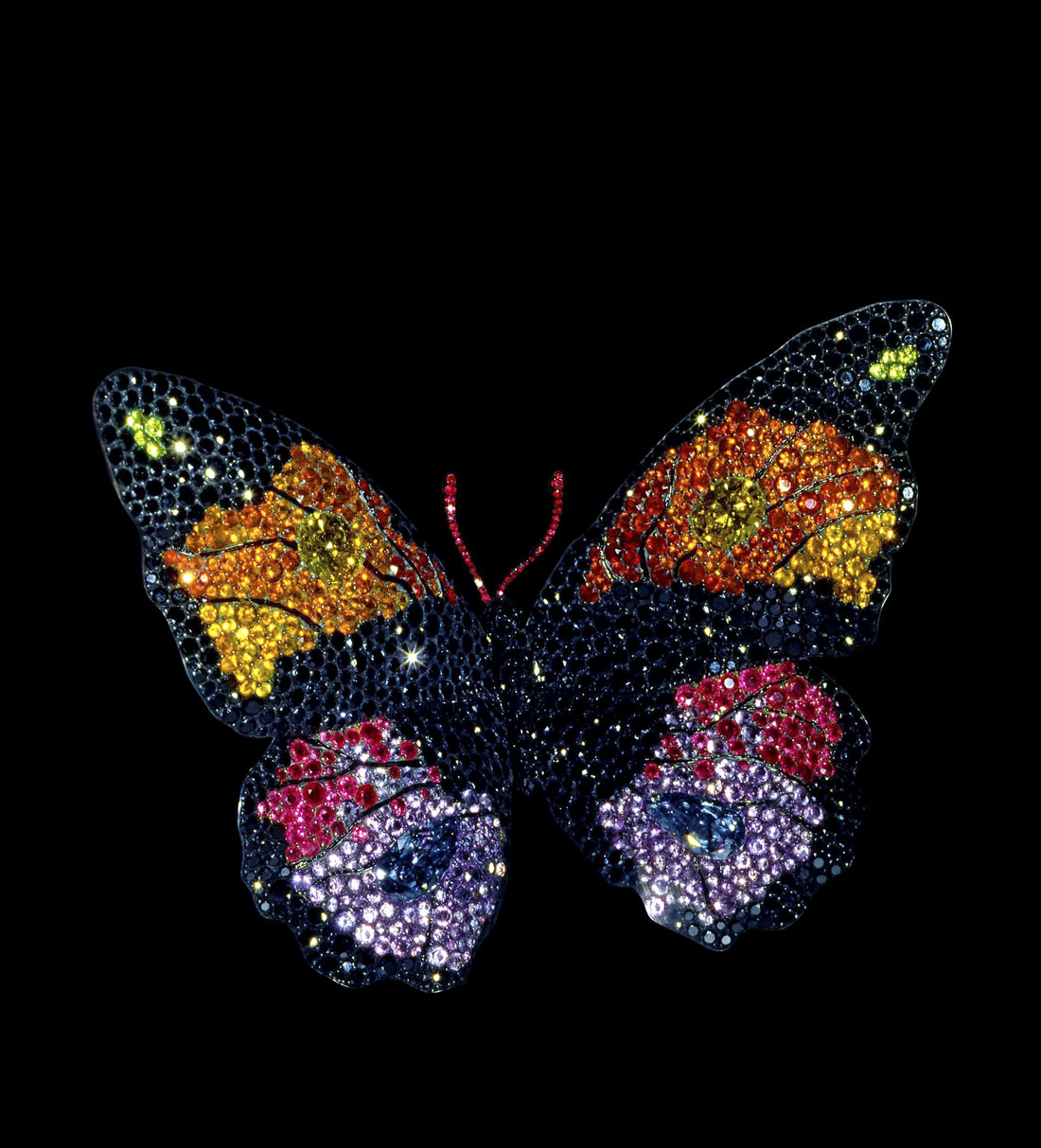
JAR(Joel Arthur Rosenthal, American, b. 1943) Butterfly Brooch 1994 Sapphires, fire opals, rubies, amethyst, garnets, diamonds, silver and gold Private collection Photograph by Katharina Faerber. Courtesy of JAR, Paris
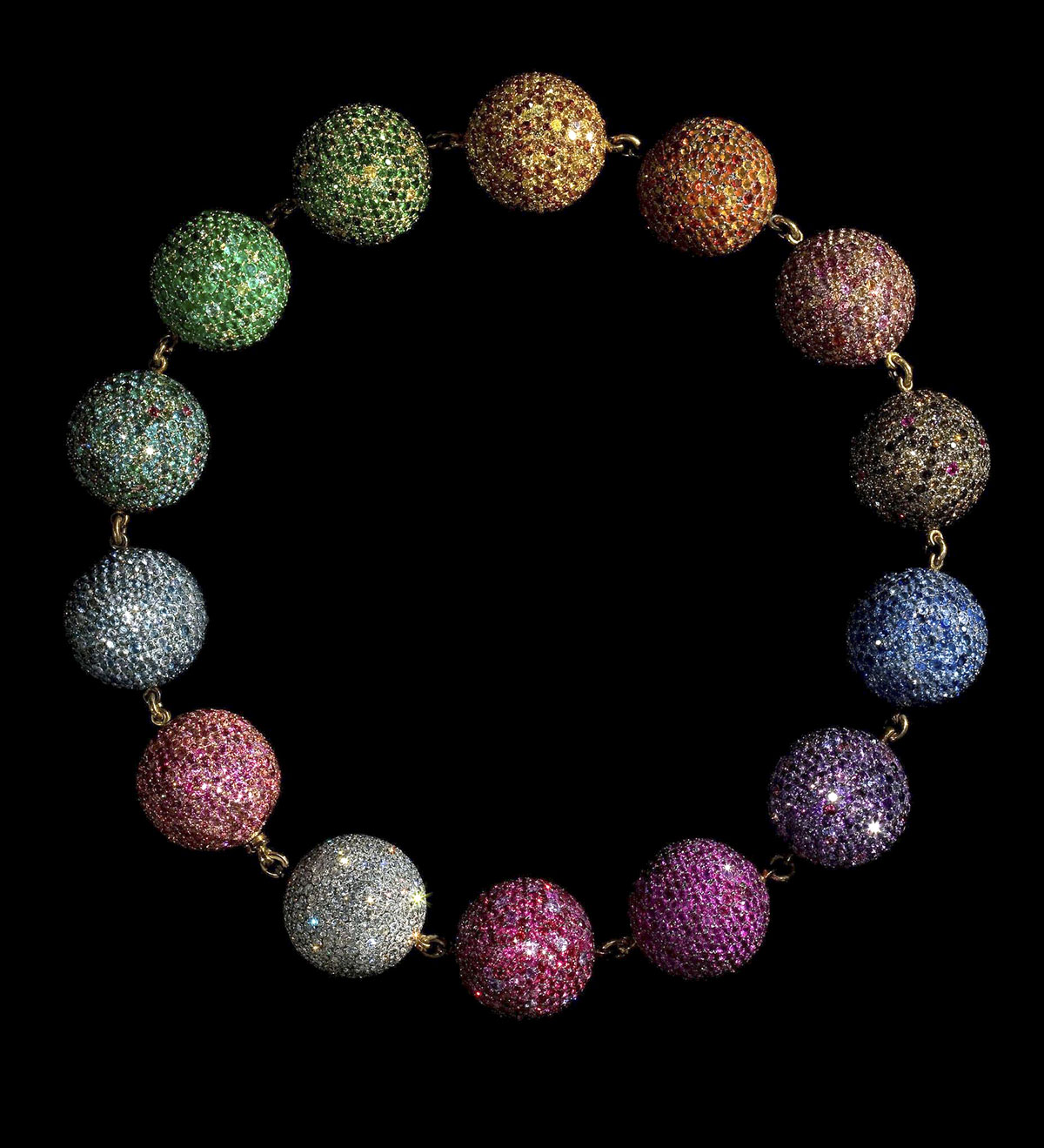
JAR(Joel Arthur Rosenthal, American, b. 1943) Colored Balls Necklace 1999 Rubies, sapphires, emeralds, amethysts, spinels, garnets, opals, tourmalines, aquamarines, citrines, diamonds, silver, and gold Private collection Photograph by Jozsef Tari. Courtesy of JAR, Paris
JAR(Joel Arthur Rosenthal, American, b. 1943) Lilac Brooches 2001 Diamonds, lilac sapphires, garnets, aluminum, silver, and gold Private collection Photograph by Jozsef Tari. Courtesy of JAR, Paris
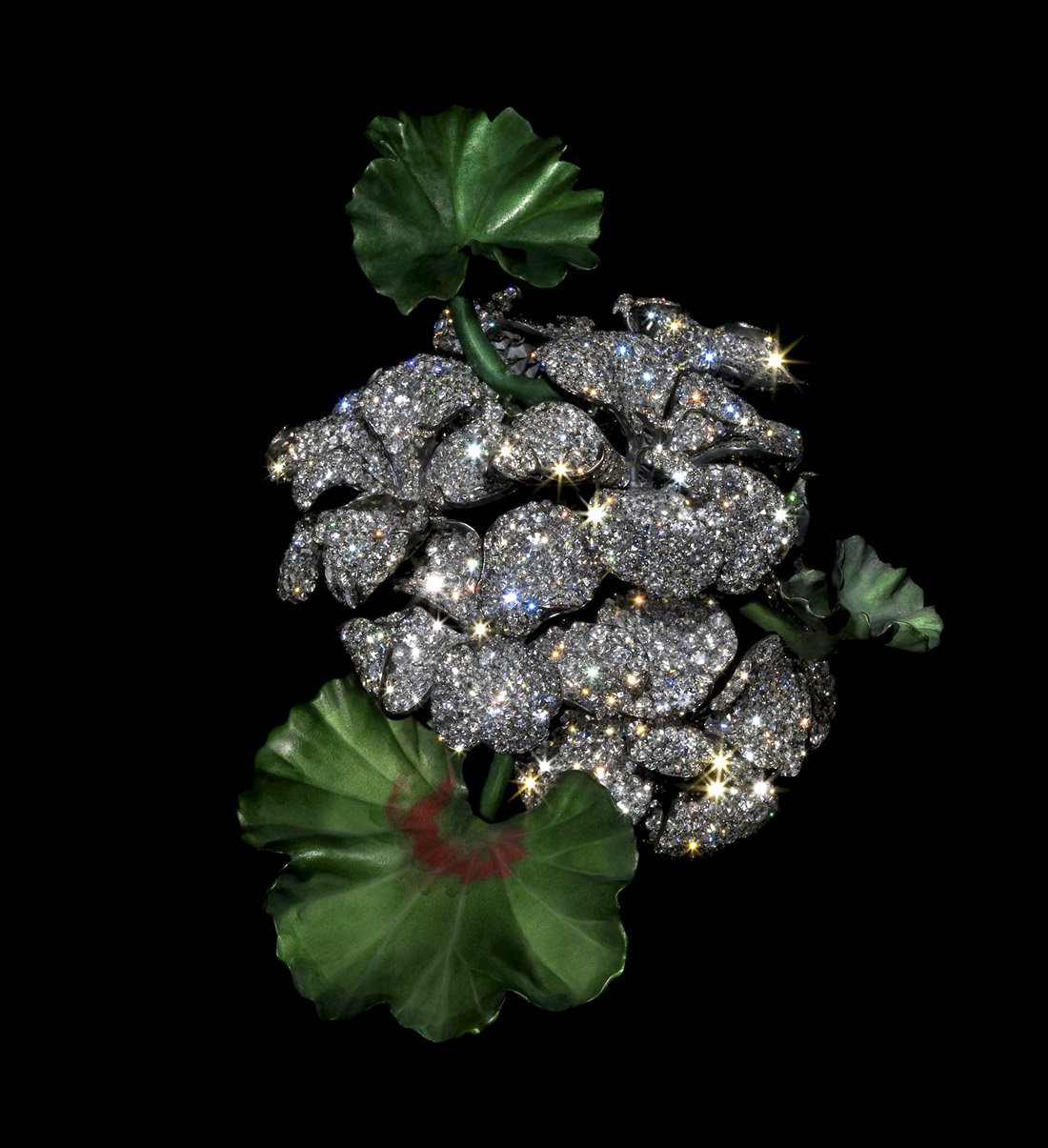
JAR(Joel Arthur Rosenthal, American, b. 1943) Geranium brooch 2007 Diamonds, aluminum, silver, and gold Private collection Photograph by Jozsef Tari. Courtesy of JAR, Paris
JAR (Joel Arthur Rosenthal, American, b. 1943) Tulip Brooch 2008 Rubies, diamonds, pink sapphires, garnets, silver, gold, and enamel Private collection Photograph by Jozsef Tari. Courtesy of JAR, Paris
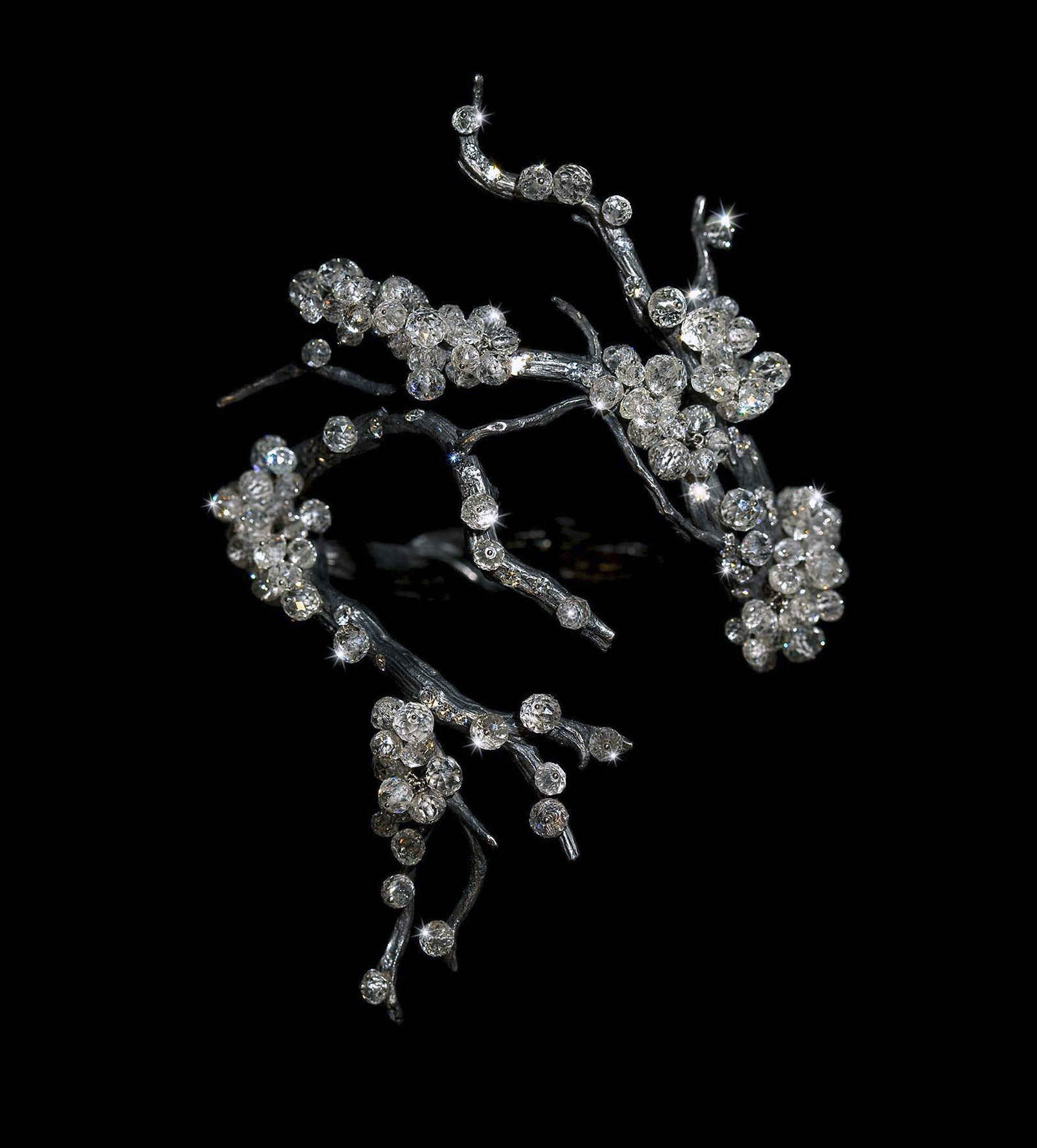
Jewels by JAR at The Metropolitan Museum of Art will feature more than 400 works by renowned jewellery designer Joel Arthur Rosenthal, who works in Paris under the name JAR. The exhibition will be the first retrospective in the United States of his work and the first retrospective at the Metropolitan Museum devoted to a contemporary artist of gems.
Growing up in the Bronx, New York, Rosenthal spent much of his early life visiting the museums in the city, stirring in him a passion for art, history, and all things beautiful that has stayed with him throughout his life. Rosenthal left New York to attend Harvard University and moved to Paris shortly after his graduation in 1966. It was in Paris that Rosenthal met Pierre Jeannet – the other half of the JAR story.
Rosenthal and Jeannet spent much time at antique shops, museums, galleries, and auction houses learning about antique jewellery, diamonds, pearls, and coloured stones. In 1973, they opened a needlepoint shop on the rue de l’Université. For Rosenthal needlepoint meant painting, mainly flowers, on a white canvas and playing with the palette of the colours of the wools. But the passion for jewellery was there and he wanted to “play with stones,” as he later explained. The needlepoint shop lasted only 11 months, but during this period Rosenthal was encouraged by others to re-design clients’ jewels and turned his attention once again, and more fully, to jewellery. In 1976, Rosenthal moved back to New York to work at Bulgari but returned to Paris and decided to open his own jewellery business under his initials, JAR.
JAR opened in 1978 on the Place Vendôme. At the start, it was run by a team of only two – Rosenthal and Jeannet. The clientele broadened from local Parisians to a range of international clients, and in 1987, Rosenthal and Jeannet relocated JAR to a larger space next door to their original shop – the same space from which they operate today. As they worked more and more with exceptional stones, they expanded the team to include the few exceptional craftsmen still specialising in this field.
JAR makes jewels that fulfil an aesthetic rather than commercial ambition. A particular skill of the JAR team is selecting stones for their colour compatibility, complementary range, or contrast. Rosenthal, who once said, “we are not afraid of any materials,” uses metals as strong as platinum and as lightweight as aluminium as bases for his designs. He reintroduced the use of silver in fine jewellery making and blackened the metal to enhance the colour of the stones and the shine of the diamonds. The colour and the shading of his pavé technique became a signature, as did the diamond thread work.
Rosenthal experiments with a variety of forms, designs, and themes. Two significant and recurring themes in his work are flowers and butterflies, which often appear in the form of brooches. Rosenthal’s flowers are not shaped regularly, but rather capture the role of chance in nature – be it in the form of a bud, a flower in full bloom, or a falling petal. Each JAR piece is unique and three-dimensional.
Jeannet summarises Rosenthal’s process this way: “At every step of the making of a piece, he checks and corrects. And if at the end his eye is not happy, we destroy the piece. But the piece, finished, is not yet at home; his last look is to see that the jewel has gone to the right lady. Then he sighs, his work is done.”
Press release from The Metropolitan Museum of Art website
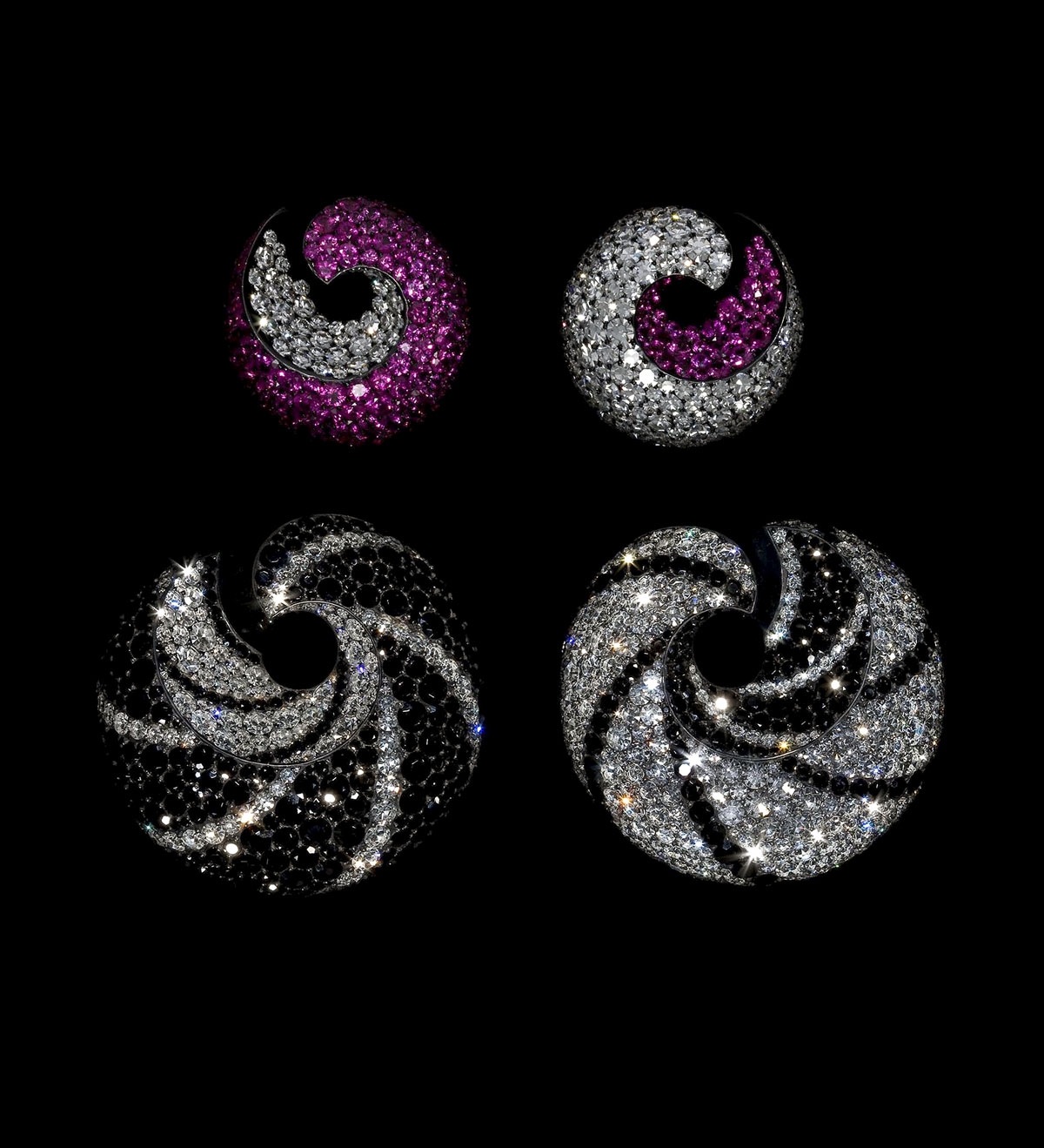
JAR(Joel Arthur Rosenthal, American, b. 1943) Top: Hoop Earrings 2008 Rubies, sapphires, diamonds, silver, and gold
Bottom: Hoop Earrings 2010 Spinels, diamonds, silver, and gold
Both: Private collection Photograph by Jozsef Tari. Courtesy of JAR, Paris
JAR(Joel Arthur Rosenthal, American, b. 1943) Bracelet 2010 Diamonds, silver, and platinum Private collection Photograph by Jozsef Tari. Courtesy of JAR, Paris
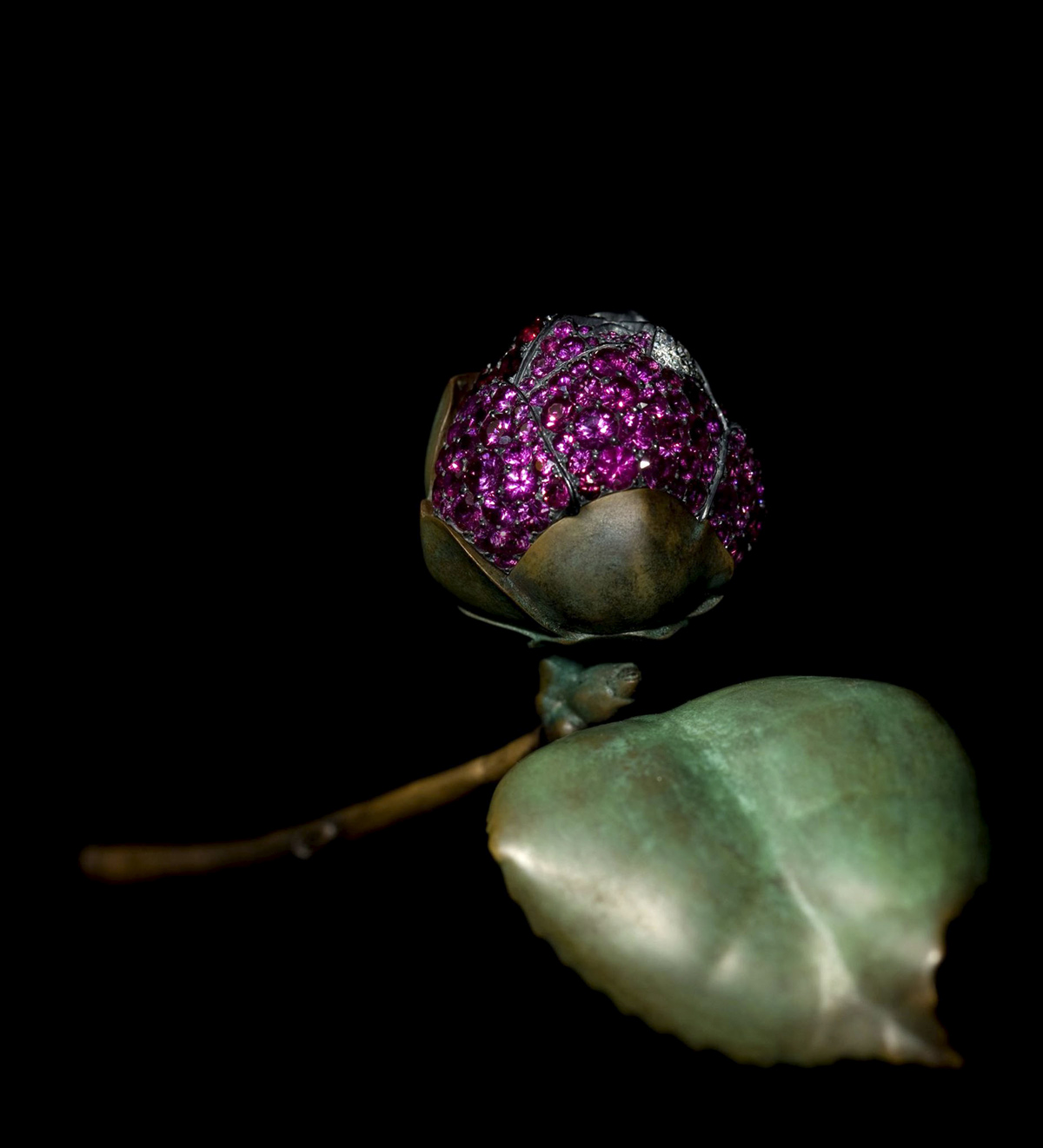
JAR(Joel Arthur Rosenthal, American, b. 1943) Camellia Brooch 2010 Rubies, pink sapphires, diamonds, silver, and gold Private collection Photograph by Jozsef Tari. Courtesy of JAR, Paris
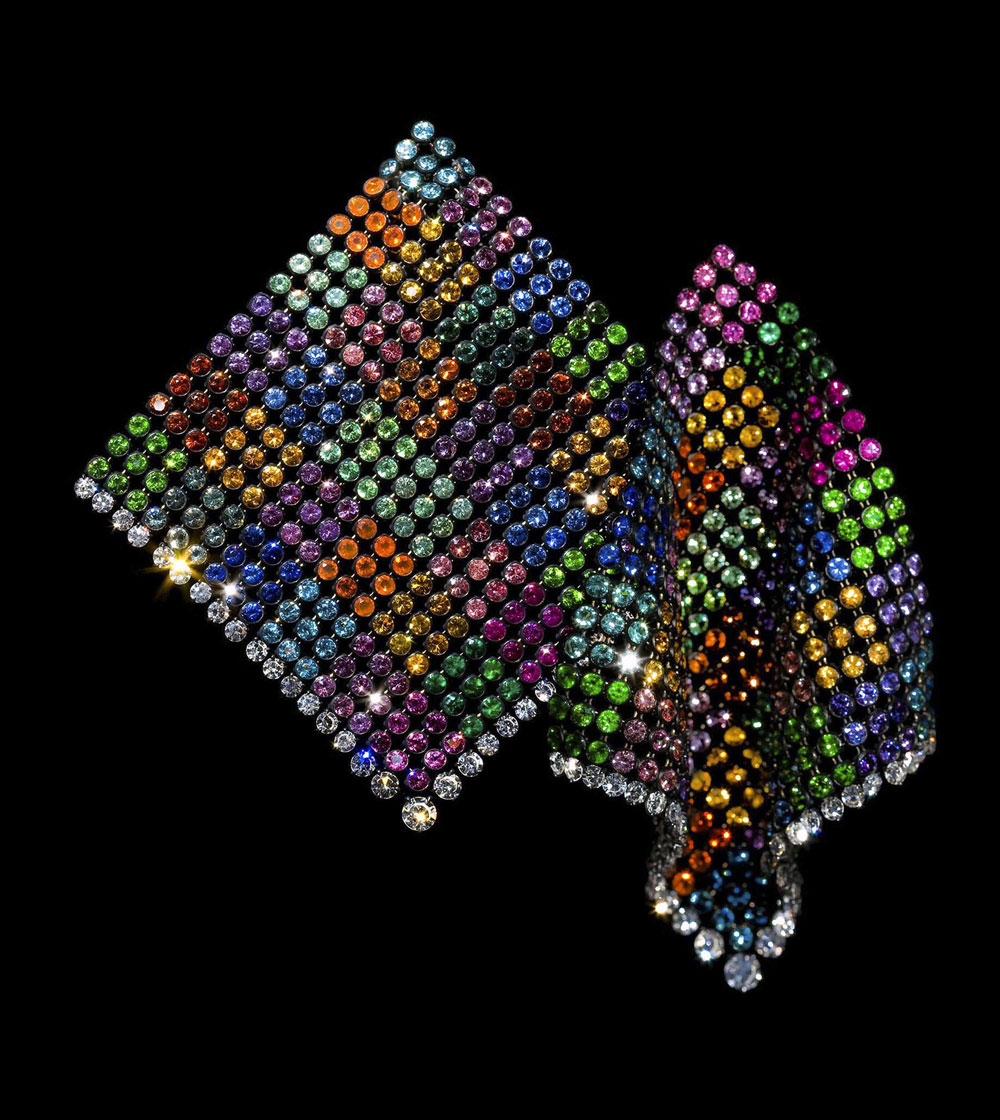
JAR(Joel Arthur Rosenthal, American, b. 1943) Multicolored Handkerchief Earrings 2011 Sapphires, demantoid and other garnets, zircons, tourmalines, emeralds, rubies, fire opals, spinels, beryls, diamonds, platinum, silver, and gold Private collection Photograph by Jozsef Tari. Courtesy of JAR, Paris
JAR(Joel Arthur Rosenthal, American, b. 1943) Earrings 2011 Emeralds, oriental pearls, diamonds, and platinum Private collection Photograph by Jozsef Tari. Courtesy of JAR, Paris
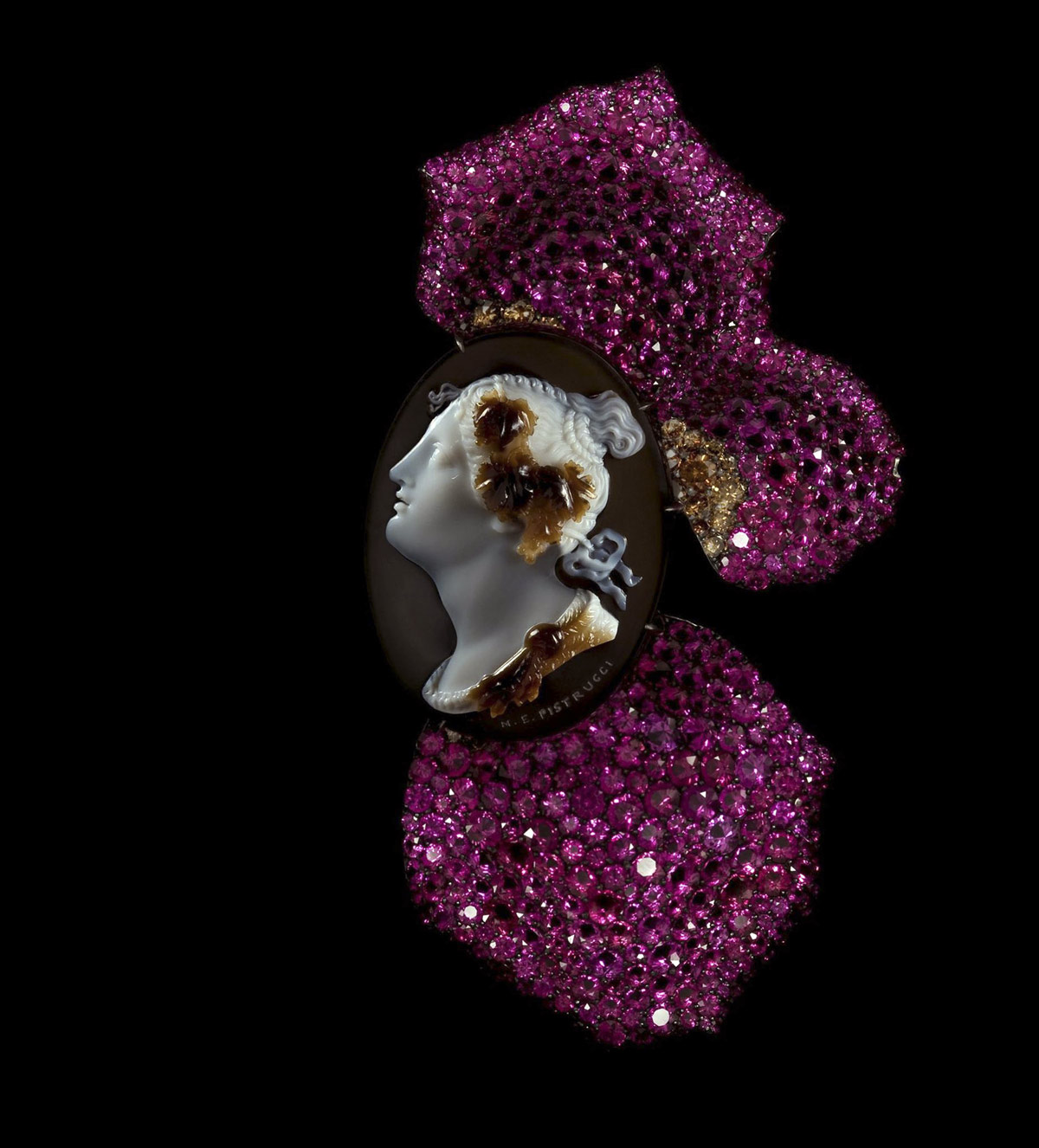
JAR(Joel Arthur Rosenthal, American, b. 1943) Cameo and Rose Petal Brooch 2011 Rubies, diamonds, silver, gold Private collection Photograph by Jozsef Tari. Courtesy of JAR, Paris
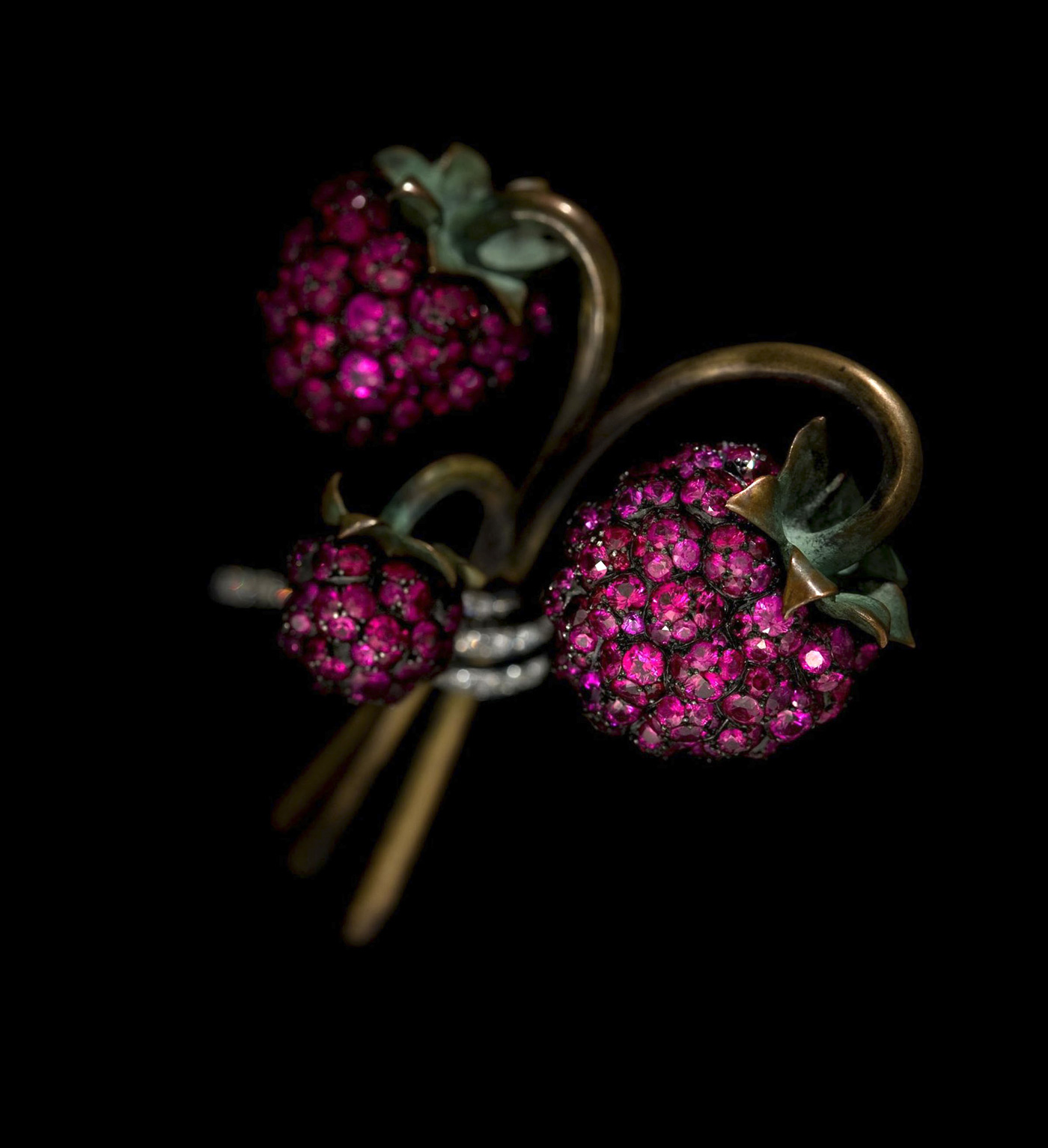
JAR(Joel Arthur Rosenthal, American, b. 1943) Raspberry Brooch 2011 Rubies, diamonds, bronze, silver, gold, and platinum Collection of Sien M. Chew Photograph by Jozsef Tari. Courtesy of JAR, Paris
The Metropolitan Museum of Art 1000 Fifth Avenue at 82nd Street New York, New York 10028-0198 Phone: 212-535-7710
Opening hours: Sunday – Tuesday and Thursday: 10am – 5pm Friday and Saturday: 10am – 9pm Closed Wednesday
“Today, in the West, we have come to regard diamond, pearl, emerald, sapphire, and ruby as the most precious of materials. That has not always been the case. Other substances have commanded equal attention, from feathers, claws, and mica appliqués to coral and rock crystal, serving a protective role, guarding their wearer from dangerous circumstances or malevolent forces. Other substances, especially those that are rare and available to a select few, are signifiers of wealth and power.”
Museum of Fine Arts, Boston
Continuing my love affair with exquisite jewellery. What splendour! I love them all…
Dr Marcus Bunyan
Many, many thankx to the Museum of Fine Arts, Boston for allowing me to publish the reproduction of the jewellery in the posting. Please click on the photographs for a larger version of the art works.
As the saying goes, “diamonds are a girl’s best friend” – at least in modern times – but as the exhibition Jewels, Gem, and Treasures: Ancient to Modern illustrates, ornaments made of ivory, shell, and rock crystal were prized in antiquity, while jewellery made of diamonds, emeralds, sapphires, rubies, and pearls became fashionable in later years. On view July 19, 2011, through November 25, 2012, this exhibition at the Museum of Fine Arts, Boston (MFA), highlights some 75 objects representing the rich variety of jewels, gems, and treasures that have been valued over the course of four millennia.
Drawn from the MFA’s collection and select loans, these range from a 24th-century BC Nubian conch shell amulet, to Mary Todd Lincoln’s 19th-century diamond and gold suite, to a 20th-century platinum, diamond, ruby, and sapphire Flag brooch honouring the sacrifices of the Doughboys in World War I. Jewels, Gems, and Treasures is the inaugural exhibition in the MFA’s new Rita J. and Stanley H. Kaplan Family Foundation Gallery, which debuts on July 19. The gallery – one of only a few at US museums solely dedicated to jewellery – will feature works from the Museum’s outstanding collection of approximately 11,000 ornaments. It is named in recognition of the generosity of the Rita J. and Stanley H. Kaplan Family Foundation.
“The opening of the Museum’s first jewellery gallery provides an ongoing opportunity for the MFA’s collection to shine,” said Malcolm Rogers, Ann and Graham Gund Director of the MFA. “In this inaugural exhibition, visitors will see a wide range of gems that will both inform and dazzle in a beautiful new space that will allow the MFA to showcase its stellar assemblage of jewellery, which ranges from ancient to modern.”
Jewels, Gems, and Treasures sheds light on how various cultures throughout history have defined the concept of “treasure,” showcasing an exquisite array of necklaces, rings, bracelets, pendants, and brooches, as well as mineral specimens. In addition, the exhibition explains the significance of jewellery, which can be functional (pins, clasps, buckles, combs, and barrettes); protective (talismans endowed with healing or magical properties); and ornamental, making the wearer feel beautiful, loved, and remembered. Beyond functionality and adornment, jewellery can also establish one’s status and role in society. Rare gems and precious metals, made into fabulous designs by renowned craftsmen, have often served as symbols of wealth and power. This is especially evident in a section of the show where jewellery worn by celebrities is on view, including fashion designer Coco Chanel’s enamelled cuff bracelets accented with jewelled Maltese crosses (Verdura, New York, first half of 20th century) and socialite Betsey Cushing Whitney’s gold and diamond “American Indian” Tiara (Verdura, New York, about 1955), which she wore to her presentation to Queen Elizabeth II in 1956 as the wife of the US Ambassador to the Court of St. James.
The significance of precious materials in jewellery in the 20th century is explored in the exhibition, where several modern adornments from the MFA’s Daphne Farago Collection examine jewellery’s traditional roles in society. Among them are a 1985 brooch of iron, pyrite, and diamond rough by Falko Marx and a 1993 ring by Dutch jeweller Liesbeth Fit entitled Diamonds Are a Girl’s Best Friend. (The Daphne Farago Collection comprises 650 pieces of contemporary craft jewellery made by leading American and European artists from about 1940 to the present.)
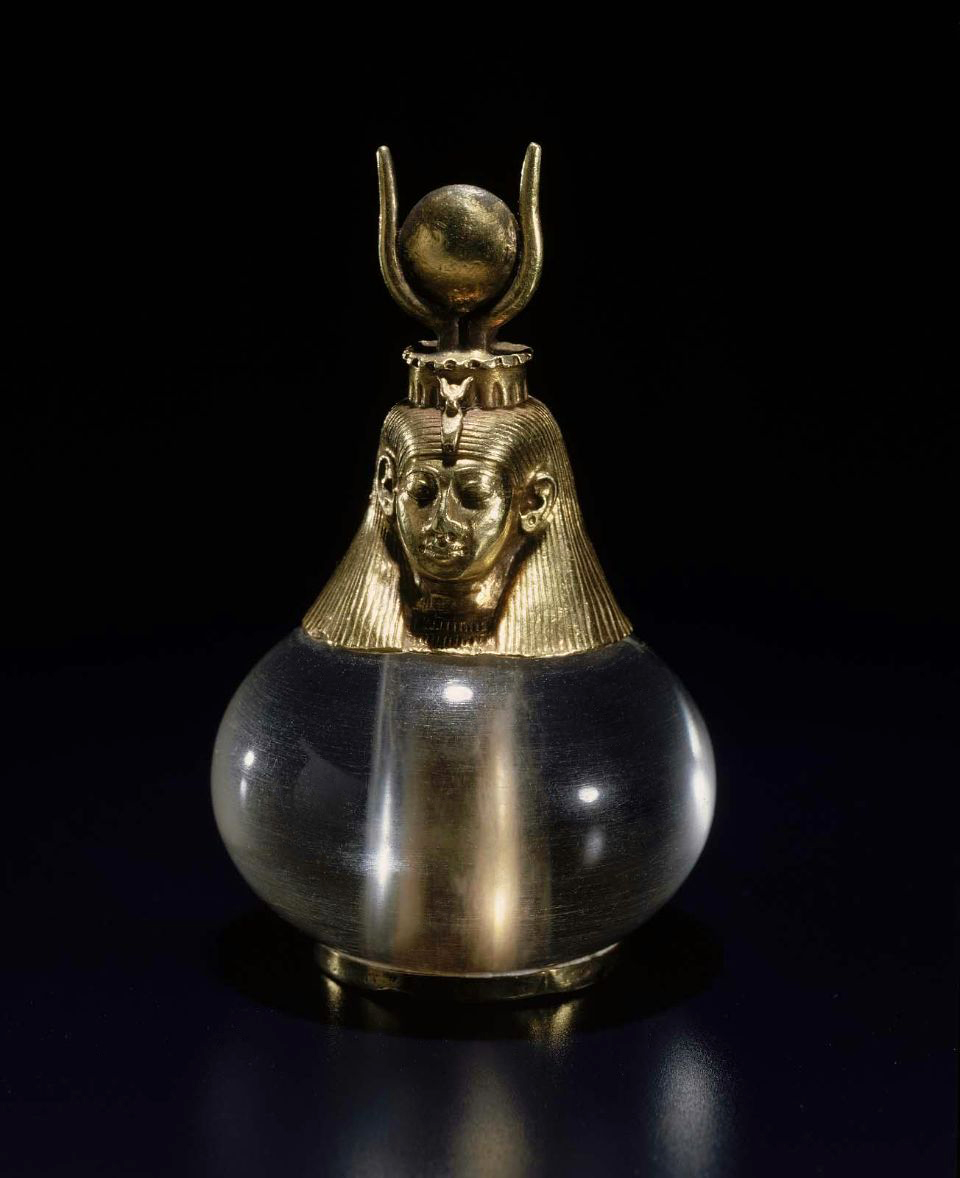
Jewels, Gems, and Treasures begins with a look at jewellery made of organic materials – substances readily available and easy to work with, such as ivory, shell, wood, and coral. These range from a pair of ivory cuff bracelets from Early Kerma culture in modern Sudan (2400-2050 BC) to more sophisticated creations made possible through the advancement of tools. Examples include a gold, silver, carnelian and glass Egyptian Pectoral (1783-1550 BC) and a Nubian gold and rock crystal Hathor-headed crystal pendant (743-712 BC) recovered from the burial of a queen of King Piye, the great Kushite ruler who conquered Egypt in the eighth century BC. In addition to having magical properties that protected the wearer against malevolent forces, adornments such as these were often buried with their owners as their amuletic capabilities were needed during the arduous journey to the afterlife. On the other side of the globe, Mayans wore ear flares – conduits of spiritual energy – made of sacred green jadeite that represented key elements of human life. Various cultures throughout the ages at one point believed that amber could cure maladies, coral could safeguard children, an animal’s tooth or claw could invest the wearer with strength and ferocity, and gold and silver invoked the cosmic power of the sun and moon. In Medieval and Renaissance Europe, many hard stones were believed to have magical properties (some were even ground and consumed), and pendant reliquaries containing a holy person’s cremated ashes or bone fragments were often donned, along with rosaries (Rosary, South German, mid-17th century), as sacred adornments. Even today, zodiac ornaments and good luck charms are sometimes worn as tokens, recalling their earlier mystical importance.
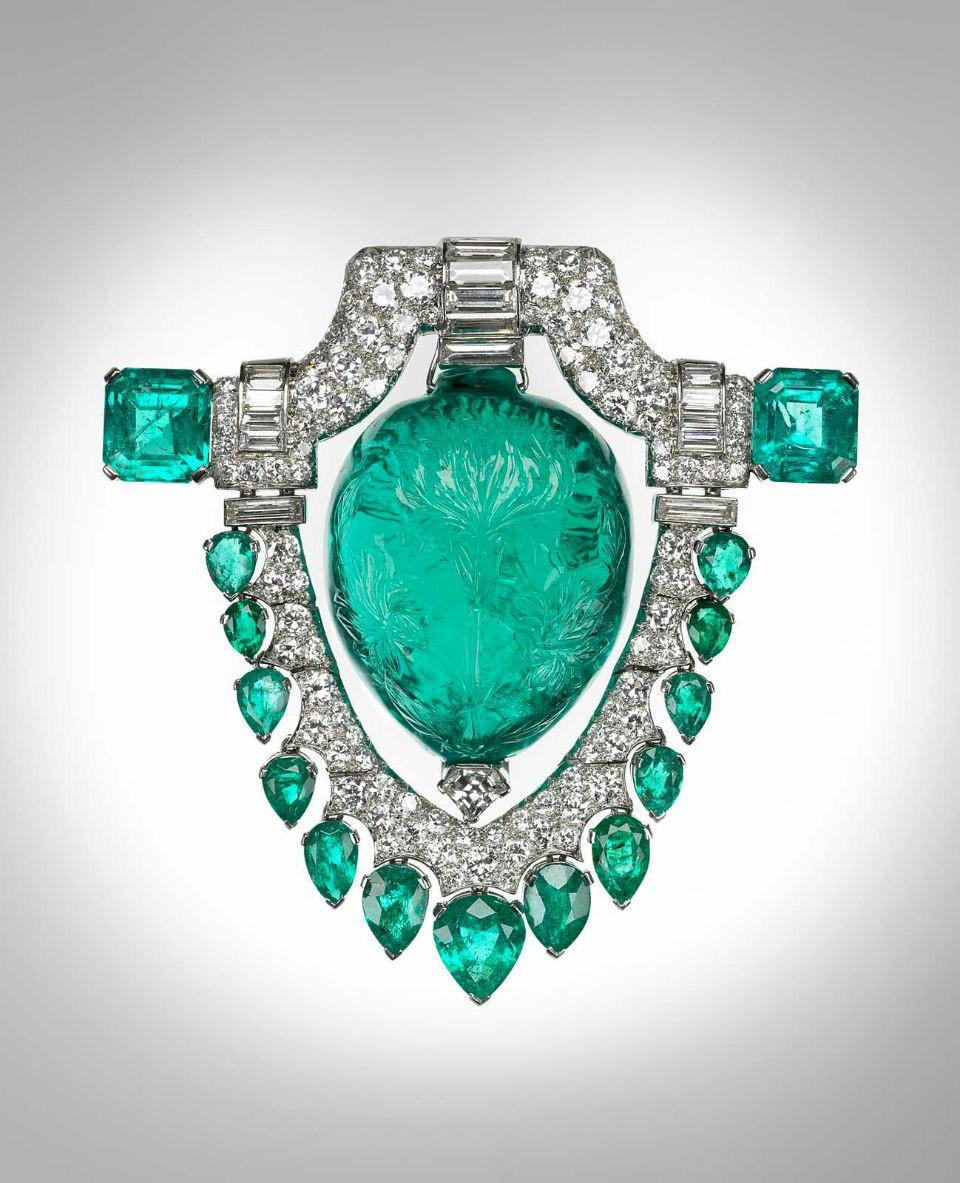
Throughout much of history, jewellery’s role as a symbol of one’s elevated status has inspired the wealthy to seek out stones that sparkle, gold that gleams, and designs that reflect the greatest artistry money can buy. To illustrate this, Jewels, Gems, and Treasures features some of the most opulent works from the Museum’s jewellery collection, including an 1856 diamond wedding necklace and earrings suite given by arms merchant Samuel Colt to his wife (the 41.73-carat suite, purchased for $8,000, is now valued at $190,000) and Mary Todd Lincoln’s gold, enamel, and diamond brooch with matching earrings, which she acquired around 1864, shortly after the death of the Lincolns’ beloved son, Willy, and then sold in 1867 to pay mounting debts. Also on view is a Kashmir sapphire and diamond brooch (around 1900); a gold and diamond necklace made by August Holmström for Peter Carl Fabergé, the famous Russian jeweller to the czars; and cereal heiress Marjorie Merriweather Post’s lavish platinum brooch from the 1920s, featuring a spectacular 60-carat carved Mughal emerald surrounded by diamonds, which she purchased in anticipation of her presentation at the British court in 1929.
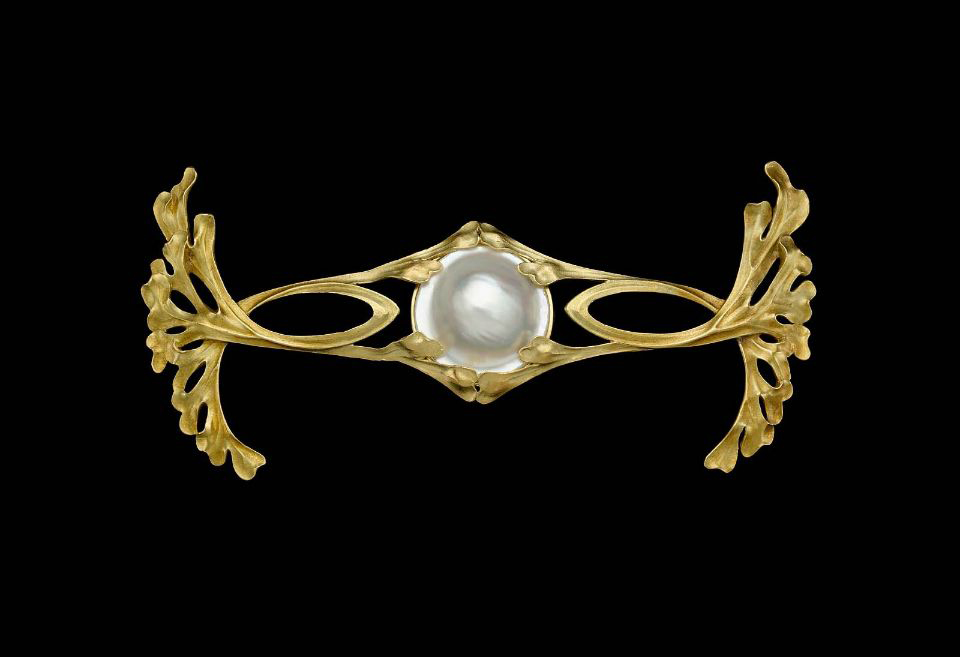
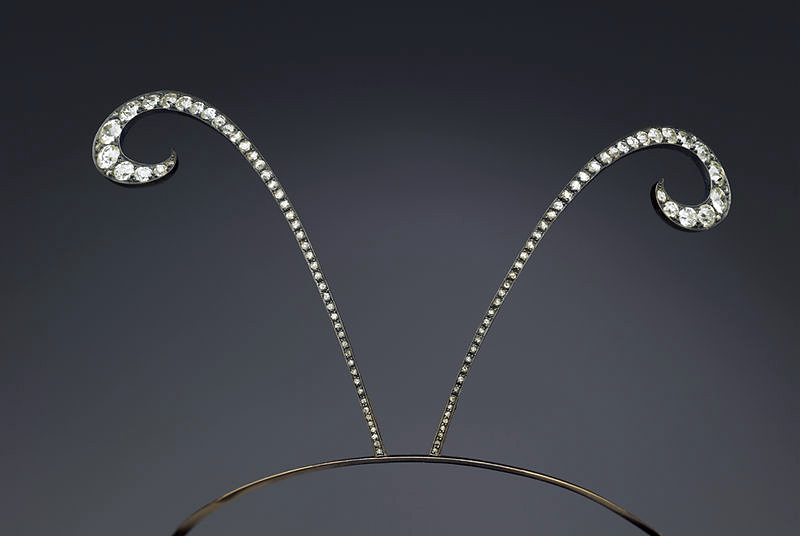
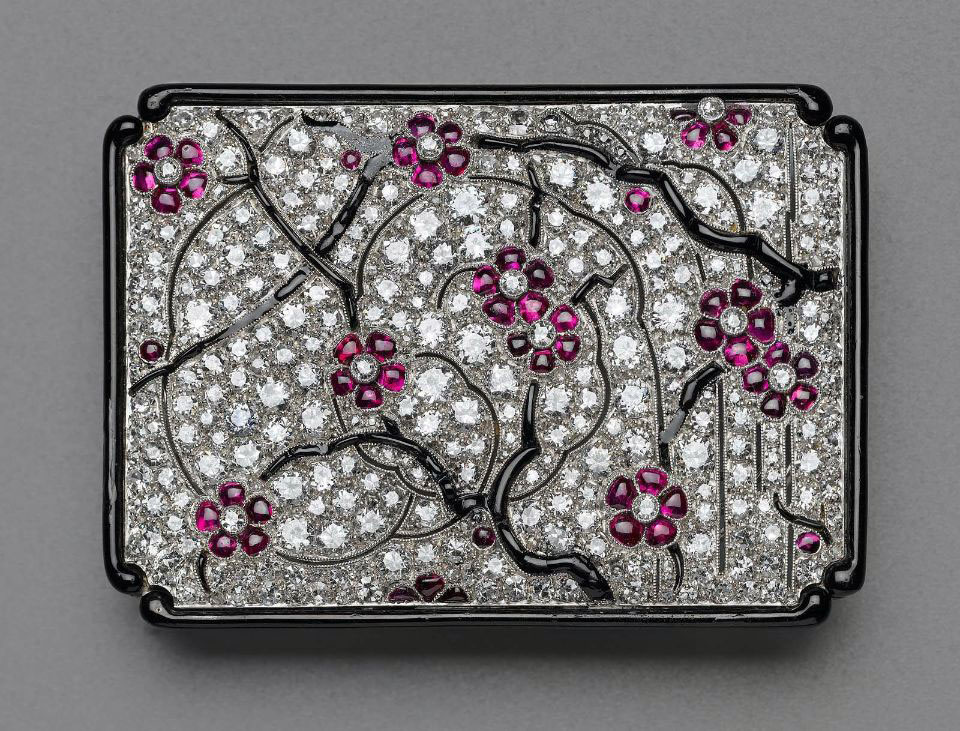
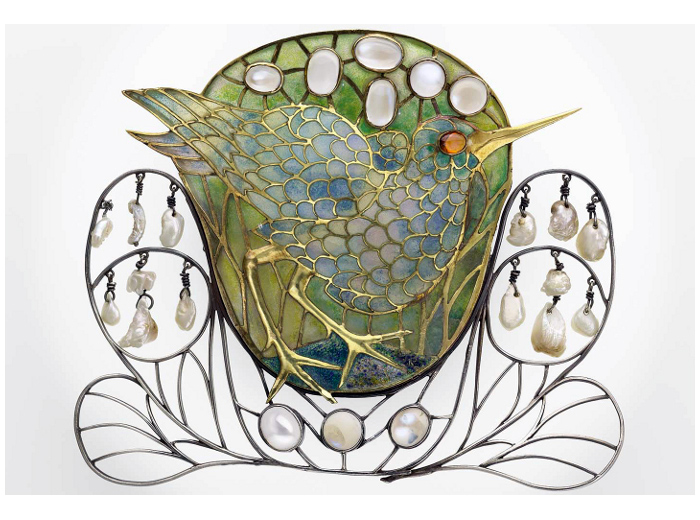
Also on view in the exhibition are superb adornments made by leading French Art Nouveau jewellers, which were fashioned for a wealthy and artistic clientele in the late 19th to early 20th centuries. The Art Nouveau movement, which originated in Europe, embraced an aesthetic that was avant-garde, sensuous, and symbolic – one that looked to the natural world, the Impressionists, and the arts of Japan for inspiration. In response to the “tyranny of the diamond” – the all white platinum and diamond jewellery previously in vogue – these elaborate, one-of-a kind pieces often featured coloured gems and unusual materials, such as horn, enamel, irregularly shaped pearls, steel, and glass. Examples in the show include René Lalique’s fanciful gold, silver, steel, and diamond Hair ornament with antennae (about 1900), and Paul Lienard’s gold and mabe pearl Seaweed brooch (about 1908). The Arts and Crafts movement, which emerged in Britain during the 1870s as a reaction to the mechanisation and poor working conditions of the Industrial Revolution, is represented by Marsh-bird brooch (1901-1902) by Charles Robert Ashbee, who sought to create a delicate stained-glass effect with this piece. The refined techniques of the Art Deco movement are evident in Japanesque brooch (about 1925), incorporating platinum, gold, enamel, diamonds, rubies, and onyx. The movement arose after World War I and continued through the 1930s. It was influenced by avant-garde ideology, as was the Art Nouveau and Arts and Crafts movements, but instead chose to express its aesthetic through geometric shapes, linear stylisation, and a return to platinum and diamonds.
Jewels, Gems, and Treasures also highlights a variety of interesting and unique pieces, such as a Suite of hummingbird jewelry (brooch and earrings, about 1870), made out of gold, ruby, and taxidermied hummingbirds; an ebony, ivory, silver lapis lazuli, and amber casket designed to showcase the amber cameos and intaglios collected by Arnold Buffum (about 1880-1885); an Indian silver and tiger claw necklace (19th century); and a gold, silver, agate, diamond, and ruby animal sculpture, The Balletta Bulldog (about 1910) made by the workshop of Peter Carl Fabergé Fabergé. In addition, the exhibition features jewellery as seen in William McGregor Paxton’s painting, The New Necklace (1910).
Press release from the Museum of Fine Arts, Boston website
This hair ornament with its whimsical character is a unique piece by Lalique. It features the unusual exclusive use of diamonds which were sparingly used by the Art Nouveau jewellers who preferred less precious stones and enamel to provide colour and opalescence. From the gold wire headband emerge two antenna composed of hollow silver cubes in which are set graduated brilliants each secured by four prongs. A steel wire runs through the cubes to form the curved shape of each antenna. Except for the scroll terminals of the antennae, each cube is individually mounted and stacked without being attached to each other so that they tremble when the wearer moves, accentuating the sparkle of the diamonds.
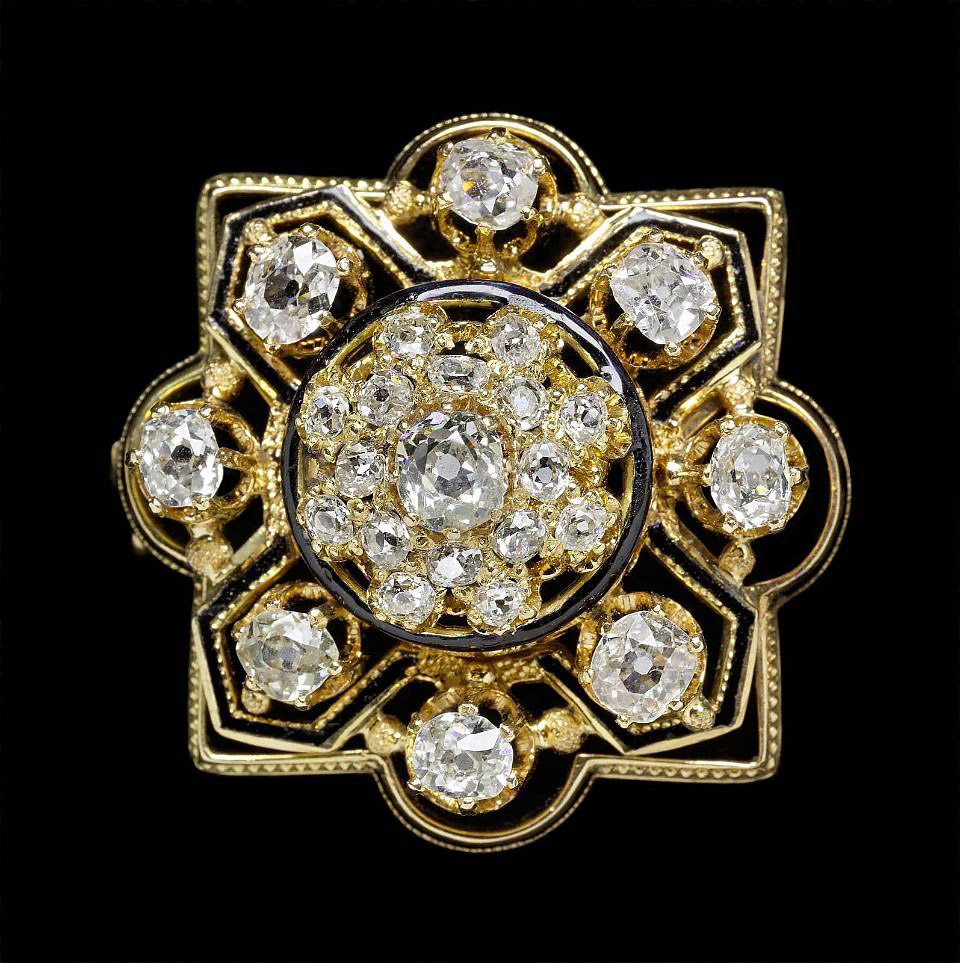
The brooch is part of a suite with matching earrings. Each element is quatrefoil in shape and has a central diamond with a diamond surround. Eight smaller diamonds form a second tier of stones. The stones are all mine-cut and are probably original to the suite. The colour range is J-K with VS-VS1 clarity. there are some losses to the tracery enamel. The suite was featured in Frank Lesley’s Illustrated Newspaper (Oct. 26, 1867). It was part of a large group of Mrs. Lincoln’s clothes, jewellery, and furnishings that were offered for sale through Brady & Company of New York City. Apparently, Mrs. Lincoln fell into dire financial circumstances after the assassination of her husband, Abraham Lincoln. The sale price was listed as $350.00.
The brooch was originally a hair ornament that was converted to a brooch (silver pin stem and “C” hook added). Conversion probably occurred shortly after the ornament was made. The hair comb was fabricated by A. Gebhardt and enamelist William Mark, both members of the Guild of Handicraft.
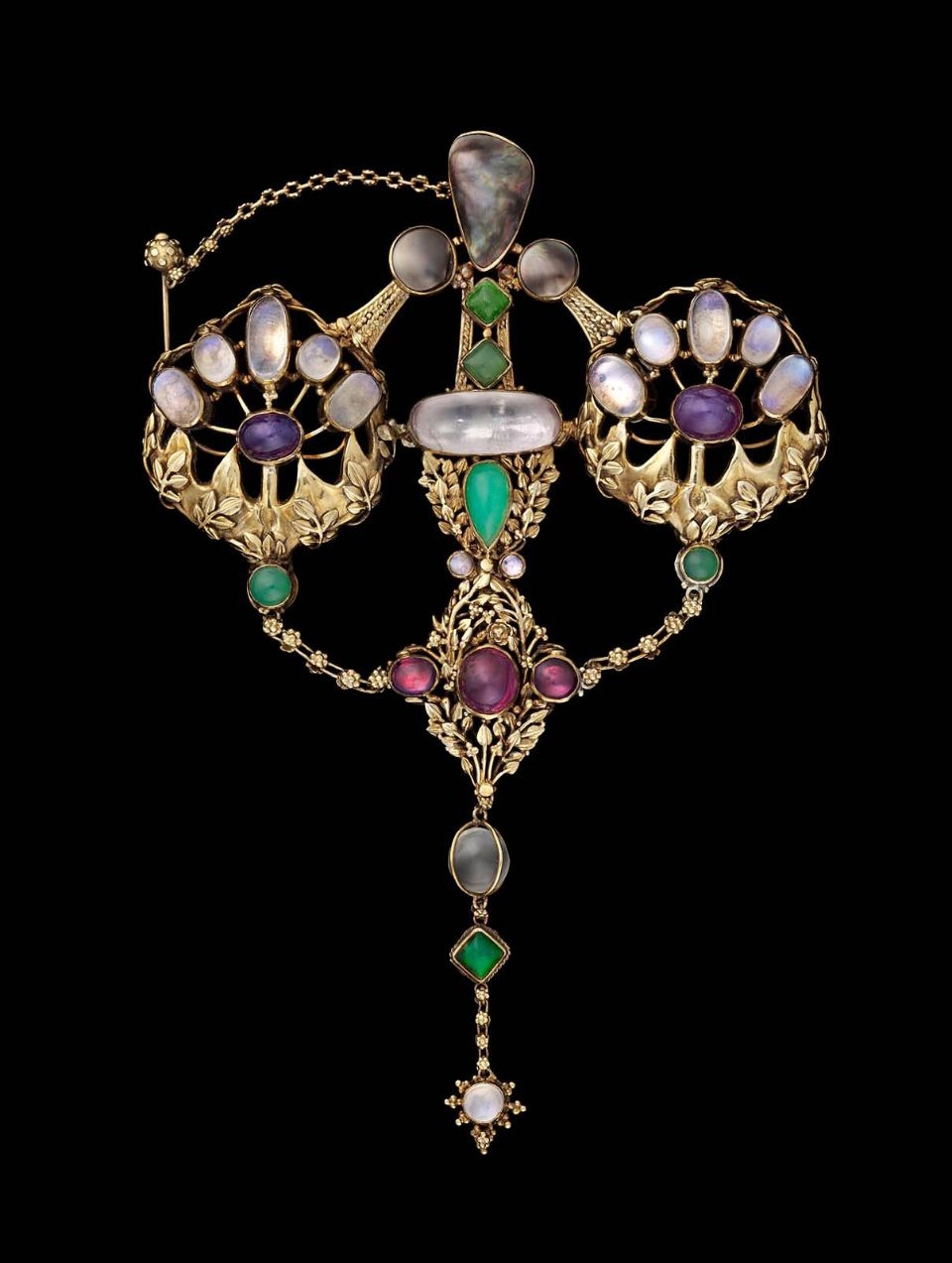
John Paul Cooper, a leading figure in the British Arts and Crafts movement, was an architect, designer, and metalsmith. Born into an affluent Leicester family, Cooper prepared for a career as a writer but was discouraged from pursuing this endeavour by his industrialist father. Instead, he apprenticed to London architect John D. Sedding, a strong proponent of the ideas of John Ruskin and Henry Wilson, an architect with interests in craft, especially metalwork and jewellery. Afterwards, Cooper joined the “Birmingham Group” and served as head of the Metalwork Department of the Birmingham Municipal Art School (1901-1906). He exhibited regularly at the Arts and Crafts Society exhibitions and completed several important public commissions, including two crosses and a pair of altar vases for Birmingham Cathedral. Additionally, his work often appeared in article published in Studio and Art Journal.
Cooper’s interest in jewellery design and fabrication began shortly after his association with Wilson. Like Wilson, he eventually employed others to fabricate his jewellery designs although he sometimes did the chasing and repoussé work himself. The jewellery was crafted primarily in 15 kt gold, utilising semi-precious cabochons (domed, unfaceted stones) and mother-of-pearl. Unlike many Arts and Crafts jewellery designers, Cooper often worked his designs from a selection of stones, rather than creating a design and then finding suitable gems. He once commented that stones should “… play on one another as two notes of music…”
In addition to jewellery, Cooper’s workshop designed and fabricated ecclesiastical objects and various decorative arts, including hollowware and frames. Many of the objects incorporate unusual materials, such as coconut shell, ostrich-egg shell, and narwhal tusk. At the beginning of his career, he often used gesso and plaster modelling to decorate surfaces and, at the end of the 1890s, he began making wooden boxes which he covered with shagreen, a decorative veneer made from the skin of certain sharks and rays.
This brooch is a major work by Cooper. Created during a period when the artist relied less on chased representational imagery and more on stones, the ornament conveys a sense of refined opulence. Inspired by medieval and Celtic design, the brooch is both airy and graceful. The goldwork is decorated with finely chased leaves and tendrils and the bezel-set stones include ruby, pearl, moonstone, amethyst, and chrysoprase. It took 273 hours to produce the brooch and Lorenzo Colarosi, Cooper’s chief craftsman, was the primary fabricator. It’s possible that Cooper did the chasework. The drawing for the brooch, which is dated 3 December 1908, can be found in Stockbook I, p. 81 in the Cooper Family Archives. Cooper entitled the piece Big double gold brooch.
The brooch was purchased by Marjorie Merriweather Post (1887-1973) and is documented by two portraits; one by Frank O. Salisbury (Palm Beach Bath and Tennis Club) and the other by Douglas Chador (Hillwood Museum). Both date to 1952. The central stone in the brooch is a mid-17th century carved emerald that was purchased by Marcus and Co.’s agent in Bombay in the 1920s. Oscar Heyman & Bros. made many of the jewels marketed by Marcus & Co. during the 1920s.






 Art Blart _ art and cultural memory archive
You must be logged in to post a comment.