Exhibition dates: 24th April – 22nd September, 2024
Kaulak (Antonio Cánovas del Castillo y Vallejo) (Spanish, 1862-1933) Studio portrait
1921-1922
Photographic positive
Museo Nacional de Artes Decorativas, Madrid
Kaulak (22 December 1862 – 13 September 1933), was a Spanish photographer, art critic, editor and amateur painter. His uncle was prime minister Antonio Cánovas del Castillo, assassinated in 1897 by an anarchist, hence his use of a pseudonym; the meaning of which is unexplained, although the word appears to be of Basque origin.
What fabulousesness!
An archive of ‘galant photography’ and other art works illustrating the intimate public and private scenes of a couple in Spain in the 1920s-1930s which builds a memory, a narrative. The exhibition combines photographs and documentation of the most varied kinds, with elements of the daily life of its time.
“… above all [the exhibition] makes us reflect on our own archives: what we keep and what we discard, what we hide and what we reveal, how we build and invent our own history, how we want to be remembered and what we leave to those who come after us.”
The appreciation and enjoyment of difference pictured through photography and art, telling a story otherwise long forgotten.
I have added appropriate bibliographic text where possible.
Dr Marcus Bunyan
Many thankx to the Museo Nacional de Artes Decorativas for allowing me to publish the photographs in the posting. Please click on the photographs for a larger version of the image.
Anonymous photographer Portrait
c. 1935
Photographic positive
Museo Nacional de Artes Decorativas, Madrid
The Museo Nacional de Artes Decorativas (MNAD) in Madrid, a state museum of the Ministry of Culture of Spain, joins the PHotoESPAÑA 2024 festival with the opening of Álbum de salón y alcoba. Una instalación de David Trullo, which can be visited free of charge until September 22.
From a forgotten collection that contained public -or living room- photographs and private -or bedroom- scenes of a couple in the 20s and 30s of the last century, the visual artist David Trullo has made this exhibition. The installation is “the result of opening an unnoticed time capsule and putting it in context with pieces from the museum and other collections to explore the limits of intimacy, leading the viewer to surpass them.”
In addition to putting a “rediscovered treasure” into context, the installation offers a review of how photographic documentation is exhibited and interpreted. It also proposes to reflect “on our own archives: what we keep and what we discard, what we hide and what we reveal, how we construct and invent our own history, how we want to be remembered and what we leave to those who come after us.”
The installation is, in itself, an album that captures the intimacy and public life of the 1920s and 1930s, combining the most varied photographs and documentation with elements of the everyday life of her time. It includes pieces and archives from several private collections, the Museo Sorolla, the Muséu del Pueblo d’Asturies, the Museo Nacional del Teatro de Almagro, the Asociación para la Enseñanza de la Mujer-Fundación Fernando de Castro and the Museo de Historia de Madrid, among others.
Between “the living room” and “the bedroom” a route is traced that goes from the preservation of intimate albums – among which a positive by Kaulak stands out, – through the first advances in amateur photography, to the ‘galant photography’, more or less erotic, and other genres of popular culture that include among its protagonists Tórtola Valencia, Sara Montiel, Conchita Piquer or the queer copla singer Miguel de Molina.
Text from the Museo Nacional de Artes Decorativas website
Advertising design for ‘Florido y Cía’ (Florido and Co.)
c. 1930
Watercolour on paper
Museo Nacional de Artes Decorativas, Madrid
Anonymous photographer Miguel de Molina
1937
Photographic positive
Colección Pedro Víllora
Miguel Frías de Molina (Málaga, April 10, 1908 – Buenos Aires, March 4, 1993), known artistically as Miguel de Molina, was a Spanish singer of copla. Tortured, expelled from Spain and later persecuted by the Franco dictatorship for being a “faggot and a red”, he settled in Argentina in 1946, invited by Eva Perón.
He had an unmistakable personal style combining cabaret, flamenco dancing, deep vocal emotionalism, spectacular costumes and a narcissistic stage persona that made him extremely popular with audiences. His gay identity was openly acknowledged with a sense of humour that was very close to what today would be recognised as ‘low camp.’ Between 1936 and 1942 Molina spent most of the Spanish Civil War on Republican ground. This together with his homosexuality and sympathies for the Left had disastrous consequences for his career. He left Spain for Argentina, where he was hugely successful. But life in exile was not easy and the Argentinean government soon threatened him with expulsion. Molina credited the direct intervention of Eva Perón with helping him stay in the country and continue his career. Unfortunately his overt support for the Perón government made him a despised figure once the Peróns were driven from power. The rampant homophobia of the changed political climate and the cultural shift that accompanied it proved detrimental to his mental and emotional health, prompting him to withdraw from artistic life in 1960. While many personalities who were faced with persecution under Francoism were being rediscovered in the 1980s, Molina, by then bitter and withdrawn, languished in obscurity. It was not until two films that celebrated his life were released a decade later that his uniquely stylised performances and colourful life would finally be celebrated.
Anonymous maker
Fan
c. 1925
Lacquered wood and painted and corrugated paper
Museo Nacional de Artes Decorativas, Madrid Photo: Masú del Amo
Bruno Zach (Austrian born Ukraine, 1891-1935) (designer) Figure of a woman with a fur coat
c. 1920
Cast bronze
Museo Nacional de Artes Decorativas, Madrid Photo: Fabián Álvarez
Bruno Zach (6 May 1891 – 20 February 1935) was an Austrian art deco sculptor of Ukrainian birth who worked in the early-to-mid 20th century. His output included a wide repertoire of genre subjects, however he is best known for his erotic sculptures of young women.
Muchas Gracias (Thank You) Magazine, Year VII – No. 344
September 13, 1930
Museo Nacional de Artes Decorativas, Madrid
Translated text at the bottom of the magazine:
Thank you very much
For this rascal
We want to tell this little bitch that it fits her well. But we stumbled upon the fit.
Oswald Haerdtl (Austrian, 1899-1959) Cocktail set
1924
mouth-blown glass
Museo Nacional de Artes Decorativas, Madrid Photo: Lucía Morate
Oswald Haerdtl was an important Austrian architect, designer, and architecture teacher.
He studied under Kolo Moser and Oskar Strnad at the Wiener Kunstgewerbeschule, and entered Josef Hoffmann’s master class in 1922, soon becoming his assistant. From 1935 to 1959, he was head of the architecture department. His teaching, architectural projects, and international connections, to Italy and France in particular, made him a lasting influence on post-war Modernism in Vienna, bringing a sense of lightness and elegance into the design vocabulary.
Ramón Peinador Checa (Spanish, 1897-1964) Advertising design for ‘Perfumes Oriente’
1925
Wash on paper
Museo Nacional de Artes Decorativas, Madrid Photo: Javier Rodríguez Barrera
Ramón Peinador Checa (Madrid, December 25, 1897 – Mexico City, May 26, 1964) was a Spanish painter, draftsman, engraver, illustrator, designer and decorator who, exiled in Mexico, became a naturalised citizen of that country.
Photography lies and deceives us. What the camera shows us is staged, either by us or by the eye of the person who creates the images. What we commonly call a “photographic archive” is nothing more than a fragmented collection transformed over the years, with which a memory, a narrative, is built.
From a forgotten collection containing public photographs -or from the living room- and private scenes -or from the bedroom- of a couple in the twenties and thirties of the last century, the visual artist David Trullo proposes this installation.
It is the result of opening an unnoticed time capsule and putting it in context with the pieces of the twentieth century that put an end to the monopoly of the professional photographer. Cameras and processes are simplified and photography is becoming an essential accessory for any occasion, and not only for amateurs, including the female sector: the Kodak Petite from 1926 is promoted as a camera ‘for smart and modern girls’.
In addition to putting a rediscovered treasure into context, the installation proposes a review of the way photographic documentation is displayed and interpreted, but above all it makes us reflect on our own archives: what we keep and what we discard, what we hide and what we reveal, how we build and invent our own history, how we want to be remembered and what we leave to those who come after us.
During this period, Madrid reinvented itself and became as cosmopolitan as other European cities, although it was the bourgeois and aristocratic elites who truly enjoyed it. A surprising and varied sexual atmosphere also emerged, along with new ways of understanding bodies, identities and relationships that were reflected in publications, advertising and photography, with the so-called ‘galant photography’ flourishing within it.
The National Museum of Decorative Arts joins PHotoESPAÑA 2024 with David Trullo’s installation ‘Album of living room and bedroom’
~ With a selection of images from the public and the private, the visual artist discovers a photographic capsule that time has preserved to be reread from the present day
~ The tour includes everything from photographic positives by Kaulak to portraits of Sara Montiel, Conchita Piquer or the queer copla singer Miguel de Molina
The National Museum of Decorative Arts (MNAD), a state museum of the Ministry of Culture, is joining the PHotoESPAÑA 2024 festival with the inauguration of ‘Album of living room and bedroom. Installation by David Trullo’, which can be visited free of charge until September 22.
From a forgotten collection containing public photographs – or from the living room – and private scenes – or from the bedroom – of a couple in the 1920s and 1930s, the visual artist David Trullo has created this proposal. The installation is “the result of opening an unnoticed time capsule and putting it in context with the pieces from the museum and from other collections to explore the limits of intimacy, leading the viewer to surpass them.”
In addition to putting a “rediscovered treasure” into context, the installation offers a review of the way of exhibiting and interpreting photographic documentation. It also suggests reflecting “on our own archives: what we keep and what we discard, what we hide and what we reveal, how we build and invent our own history, how we want to be remembered and what we leave to those who come after us.”
From living room to bedroom
The installation is, in itself, an album that captures the intimacy and public life of the 1920s and 1930s, combining photographs and documentation of the most varied kinds, with elements of the daily life of its time. It features pieces and archives from various private collections, from the Sorolla Museum, the Muséu del Pueblo d’Asturies, the Museo Nacional del Teatro de Almagro, the Asociación para la Enseñanza de la Mujer-Fundación Fernando de Castro or the Museo de Historia de Madrid, among others. Between “the living room” and “the bedroom” there is a journey that goes from the conservation of intimate albums – among which a positive by Kaulak stands out – through the first advances in photography for amateurs, to reaching ‘galant photography’, more or less erotic, and other genres of popular culture that include among their protagonists Tórtola Valencia, Sara Montiel, Conchita Piquer or the queer copla singer Miguel de Molina.
Text from the National Museum of Decorative Arts exhibition press dossier
Antonio Peyró (Spanish, 1882-1954) The Baticola (Elena Plá Toda)
1934
Glazed ceramic
Museo Nacional de Artes Decorativas, Madrid Photo: Masú del Amo
Antonio Peyró Mezquita was a Spanish ceramist.
‘Reciprocal pleasure’, cover by Josep Renau Berenguer
1933
Museo Nacional de Artes Decorativas, Madrid Photo: Masú del Amo
Josep Renau Berenguer (Spanish, 1907-1982) was an artist and communist revolutionary, notable for his propaganda work during the Spanish Civil War. Among his production, he is remarkable for his art deco period, his political propaganda during the Spanish Civil War, the photo murals of the Spanish Pavilion in the International Exhibition of 1937 in Paris, a series of photomontages titled Fata Morgana or The American Way of Life, and murals and paintings made in Mexico, such as Tropic, dated in 1945.
Louis Majorelle (French, 1859-1926) (designer) Sofa
1901-1926
Silk velvet
Museo Nacional de Artes Decorativas, Madrid Photo: Lucía Morate
Louis-Jean-Sylvestre Majorelle, usually known simply as Louis Majorelle, (26 September 1859 – 15 January 1926) was a French decorator and furniture designer who manufactured his own designs, in the French tradition of the ébéniste. He was one of the outstanding designers of furniture in the Art Nouveau style, and after 1901 formally served as one of the vice-presidents of the École de Nancy.
Louis Majorelle is one of those who contributed the most to the transformation of furniture. Thanks to posterity, we recognise today a piece of furniture from him as we recognise a piece of furniture from André Charles Boulle and Charles Cressent, the french Prince regent’s favourite artists. During the early 18th century, Cressent replaced the magnificence of ebony and tortoiseshell associated with tin and copper by the softer harmonies of foreign woods. Like him, Louis Majorelle dressed the elegant structure of Art Nouveau furniture with exotic wood inlays.
Álvaro Retana (Spanish born Philippines, 1890-1970) Figure for Celia Gámez
c. 1920
Ink and graphite on paper
Colección Pedro Víllora
Álvaro Retana Ramírez de Arellano (Batangas, Philippines, August 26, 1890 – Torrejón de Ardoz, Madrid, February 10, 1970) was a writer, journalist, cartoonist, fashion designer, musician, libertine and Spanish couplet lyricist.
Celia Gámez Carrasco (August 25, 1905 – December 10, 1992) was an Argentinian film actress, and one of the icons of the Golden Age of Spanish theatre. She was more commonly known in Franco’s Spain, particularly in her later years, as La Protegida.
Vitín Cortezo (Spanish, 1908-1978) Figure for Celia Gámez
1939
Mixed technique on paper
Colección Pedro Víllora
Víctor María Cortezo Martínez-Junquera, also known as Vitín Cortezo (Madrid, June 10, 1908 – March 2, 1978) was a Spanish painter, illustrator, costume designer and set designer.
Anonymous maker Bloomers and cotton slip with silk knit stockings
c. 1930
Museo Nacional de Artes Decorativas, Madrid Photo: Fabián Álvarez
Karl Klaus and Franz Staudigl Figure (Serapis Wahliss series)
1913-1914
Painted and glazed ceramic
Museo Nacional de Artes Decorativas, Madrid Photo: Fabián Álvarez
Karl Klaus (Austrian, 1889-1925) was a student of Josef Hoffmann. The figure was designed for Serapis-Wahliss, a noted Viennese retailer and manufacturer of porcelain. Franz Staudigl was an Austrian painter born 1885 – died 1944.
Anonymous photographer Concha Piquer
1927
Photographic positive
Museo Nacional del Teatro, Almagro
María de la Concepción Piquer López (13 December 1906 – 12 December 1990), better known as Concha Piquer (and sometimes billed as Conchita Piquer), was a Spanish singer and actress. She was known for her work in the copla form, and she performed her own interpretations of some of the key pieces in the Spanish song tradition, mostly works of the mid-20th century trio of composers Antonio Quintero, Rafael de León y Manuel Quiroga.
Anonymous maker Perfume bottles
1850-1900
Engraved and gilded silver and blown glass
Museo Nacional de Artes Decorativas. Madrid Photo: Fabián Álvarez
Anonymous maker
Paul Koruna, Paris (no dates) (photographer) Promotional poster for ‘Rosalío’
Nd
Montage of photographic positives
Colección Ramón Gato
Anonymous maker
Paul Koruna, Paris (no dates) (photographer) Promotional poster for ‘Rosalío’ (details)
Nd
Montage of photographic positives
Colección Ramón Gato
Anonymous maker Manila shawl
1876-1925
Embroidered silk
Museo Nacional de Artes Decorativas, Madrid Photos: Javier Rodríguez Barrera
National Museum of Decorative Arts
c/ Montalbán, 12. Madrid
“As a holistic specimen without fixed parameters, “An informed object,” Zaatari elaborates, “is an object that is conscious of the material and processes that produced it, conscious of its provenance, its morphology and displacement over time, conscious of its history in the sense that it is able to communicate it. An informed object is already materialised, activated.” His self-declared “displacement” of these objects is thusly not about post-colonial uprooting, but rather a deeper, wider recognition of the apparatus that informs the production, circulation and reception of such images in, and beyond their respective context/s. In this expanded field, negatives, contact sheets, glass plates, double exposures, mistakes, erosion and all that is habitually left on the cutting room floor are re-valued as revelatory anomalies with “something to say”.”
Akram Zaatari quoted in Steven Matijcio / 2018
Alternate readings / elisions / a damaged life
This is the first posting of 2019, a new year, a new year of history, memory and life. And what a cracker of an exhibition to post first up!
I have always admired the Lebanese artist Akram Zaatari for the ability of his work to critique the inevitable, referential history of photographs. Anyone who can shine a light on forgotten narratives, histories, contexts and memories, who enlightens the fixed gaze of the camera and the viewer to show the Other, and who empowers the disenfranchised and tells their stories… is excellent in my eyes. For this is what Art Blart has sought to do in the last ten years: build an archive that exposes underrepresented artists and forgotten histories to the world.
Photography, and life, is not all that it seems… and Zaatari implicitly understands the conundrums of the taking, viewing and collecting of photographs in archives. He understands the physical quality of the medium (the presence of the negative, the glass slide, the print and their manipulation by the photographer) as well as the truth of the medium, a kind of truth telling – through history, time, the personal and the collective – that obscures as much as it reveals. As his short biography notes, “Akram Zaatari is an artist whose work is tied to collecting and exploring photographic practices in the making of social codes and aesthetic forms. Regarding the present through a wealth of photographic records from the past… Zaatari investigates notions of desire, pursuit, resistance, memory, surveillance, the shifting nature of political borders and the production and circulation of images in times of war.” Indeed, a rich investigative field which Zaatari makes full use of in his work.
Simply put, the project that Zaatari is undertaking is one of archaeological excavation / re-animation of the many aspects of the cultural geography of Lebanon, his role as auteur in this process combining “image-maker, archivist, curator, filmmaker and critical theorist to examine the photographic record, its making, genealogy and the role photography plays in the production and performance of identity.” (Wall text) “I’m really interested in how the personal and the intimate meet history,” Zaatari says. “What I’m doing is to write history, or [fill in] gaps of history, by using photographic documents.”1
Zaatari “deconstructs the archival impunity of photography to cultivate an expanded architecture of interpretation,” (Wall text) exploring the fold as a catalyst, a narrative, a re-organisation, an enduring obfuscation, and the memory of a material. What a photograph missed and what is present; what an archive catalogues and how, and what it misses, elides or denigrates (the classification system of an archive). As Rebecca Close observes, “The question of what an archive of the image fails to commemorate is particularly relevant in a country marred by decades of civil war and invasion.”2
It is also particularly relevant in a country (and a world) where men are in control. Zaatari interrogates (if I may use that pertinent word) the partitioning of history (between Palestine and Israel), the poses of decorum between male and female, the power of men in marriage, the stigma of homosexuality, male normativity, and “Zaatari’s framing of these photos (particularly as diminutive contact sheets) suggests modern cracks in the visual codification of patriarchal rule…” (Steven Matijcio) The centre cannot hold the weight of these hidden his/stories, as invisible “non-collections” (E. Edwards) in institutions are opened up for critical examination. The damage that accrues through such obfuscation, through such wilful blindness to the stories embedded in photographs is boundless.
What we must remember is that, “photography always lies for the photograph only depicts one version of reality, one version of a truth depending on what the camera is pointed at, what it excludes, who is pointing the camera and for what reasons, the context of the event or person being photographed (which is fluid from moment to moment) and the place and reason for displaying the photograph. In other words all photographs are, by the very nature, transgressive because they have only one visual perspective, only one line of sight – they exclude as much as they document and this exclusion can be seen as a volition (a choice of the photographer) and a violation of a visual ordering of the world (in the sense of the taxonomy of the subject, an upsetting of the normal order or hierarchy of the subject). Of course this line of sight may be interpreted in many ways and photography problematises the notion of a definitive reading of the image due to different contexts and the “possibilities of dislocation in time and space.” As Brian Wallis has observed, “The notion of an autonomous image is a fiction” as the photograph can be displaced from its original context and assimilated into other contexts where they can be exploited to various ends. In a sense this is also a form of autonomy because a photograph can be assimilated into an infinite number of contexts. “This de and re-contextualisation is itself transgressive of any “integrity” the photograph itself may have as a contextualised artefact.” As John Schwartz has insightfully noted, “[Photographs] carry important social consequences and that the facts they transmit in visual form must be understood in social space and real time,” “facts” that are constructions of reality that are interpreted differently by each viewer in each context of viewing.”3
I have no problem with the ethics and politics of the use of photo archives by contemporary artists and the appropriation of archival images as a form of “ironic archivization” to open up new critical insights into culture, and the culture of making, reading and archiving photographs. Zaatari appropriates these images for his own concerns to shine a light on what I call “the space between.” His interdisciplinary practice mines the history of the image while simultaneously expanding its legacy and life. As he observes of his profound and sensitive work, “Every photograph hides parts to reveal others… What a photograph missed and what was present at the time of exposure will remain inaccessible. In those folds lies a history, many histories.” With this powerhouse of an artist, these histories will not remain hidden for long.
Many thankx to Akram Zaatari and the Contemporary Arts Center, Cincinnati for allowing me to publish the photographs in the posting. Please click on the photographs for a larger version of the image.
Acclaimed Lebanese artist Akram Zaatari combines the roles of image-maker, archivist, curator, filmmaker and critical theorist to explore the role photography plays in both instituting and fabricating identity. He is also co-founder of the Arab Image Foundation (AIF), an organisation established in Beirut to preserve, study and exhibit photographs from the Middle East, North Africa and the Arab diaspora from the 19th century to today. Within this endeavour Zaatari discovered the photographs of Hashem El Madani (1928-2017), who recorded the lives of everyday individuals inside and outside his humble studio in the late 1940s and 50s. Zaatari recontextualises this work, along with other archival photos and documents, in an interdisciplinary practice that mines the history of the image while simultaneously expanding its legacy and life. His work is both for and against photography, and the complex histories it cobbles.
For this exhibition he positions the seemingly simple fold as a narrative form, a reorganisation, an enduring obfuscation and the memory of material. In his words, “a photograph captures space and folds it into a flat image, turning parts of a scene against others, covering them entirely. Every photograph hides parts to reveal others… What a photograph missed and what was present at the time of exposure will remain inaccessible. In those folds lies a history, many histories.” The work on display will attempt to uncover and imagine these stories, undertaking a provocative archaeology that peers into the fissures, scratches, erosion and that which archives previously shed.
Presented in partnership with FotoFocus Biennial 2018. Text from the Contemporary Arts Center website
This film is a meditative study of a selection of studio photographs culled from Lebanese photographer Hashem el Madani’s archives. In response to Madani’s maxim that “posing one’s hands on a flat surface such as a table, or a shoulder helps to straighten one’s shoulders,” Zaatari looks closely from one hand to the next, creating a portrait of Lebanese society that implicitly questions the politics embedded in poses of propriety and decorum. Fingers fitted with rings and bodies displaying the comfort and composure of a certain class are juxtaposed with others indicative of manual labor and untrained modelling. The slow, but precise inventory of the video, devoted to the most tactile limb in one’s body, also elicits the ever-present sensuality which circulates throughout Madani’s photographs.
Zaatari says that was normal in the 1950s. “If you had your picture taken you would seize the opportunity to create something different of yourself,” he says. “They wanted to look at themselves as if they were looking at an actor in a film.” It was fun.
Movies were a great source of inspiration for Madani’s sitters. This included acting out a kiss – but only men kissing men and women kissing women. “In a conservative society such as Saida, people were willing to play the kiss between two people of the same sex, but very rarely between a man and a woman,” Madani told Zaatari. He remembers that happening only once.
“If you look at it today you think – is it gay culture? But in fact it is not,” says Zaatari. Social restrictions were different then. “If you wanted to kiss it had to be a same-sex kiss to be accepted.”
Men showed off their photos, but for women a picture was considered intimate and would only be shared with a trusted few. Madani had purposely found a studio space on the first floor, so that women could visit discreetly – seen entering at street level, their destination would not be obvious. Once inside, they could relax – but it did not always end well.
American Psychological Association links ‘masculinity ideology’ to homophobia, misogyny
For the first time in its 127-year history, the American Psychological Association has issued guidelines to help psychologists specifically address the issues of men and boys – and the 36-page document features a warning.
“Traditional masculinity ideology has been shown to limit males’ psychological development, constrain their behaviour, result in gender role strain and gender role conflict and negatively influence mental health and physical health,” the report warns.
The new “Guidelines for the Psychological Practice with Boys and Men” (August 2018) defines “masculinity ideology” as “a particular constellation of standards that have held sway over large segments of the population, including: anti-femininity, achievement, eschewal of the appearance of weakness, and adventure, risk, and violence.” The report also links this ideology to homophobia, bullying and sexual harassment.
The new guidelines, highlighted in this month’s issue of Monitor on Psychology, which is published by the APA, linked this ideology to a series of stark statistics: Men commit approximately 90 percent of all homicides in the U.S., they are far more likely than women to be arrested and charged with intimate partner violence in the U.S., and they are four times more likely than women to die of suicide worldwide. …
The report addresses the “power” and “privilege” that males have when compared to their female counterparts, but it notes that this privilege can be a psychological double-edged sword.
“Men who benefit from their social power are also confined by system-level policies and practices as well as individual-level psychological resources necessary to maintain male privilege,” the guidelines state. “Thus, male privilege often comes with a cost in the form of adherence to sexist ideologies designed to maintain male power that also restrict men’s ability to function adaptively.”
The fold is the pleat that results from turning or bending part of material against another such as in textile, paper or even earth strata. The fold is the trace that such an action leaves on material, the crease that marks the location of turning and pressing.
Inherent in the action of folding, is that material is turned or moved in three dimensions hence engages with space. Folding is the basic and simplest step in creating form or enclosure. It confines space within folds. It covers parts with other parts. Folding is editing. It is a construction that does not look like its original form.
Unfolding is undoing, deconstructing, turning material back to its initial form. The creases in an unfolded material inscribe its history and in a way save it from amnesia. History inscribes itself on material in creases and in other forms. When unfolded, material testifies that history has already found its way to it, through the fold.
The fold is the memory of material.
When the fold is intentional, it aims to reorganise material to reduce its volume, to create form, or confine space. When accidental or natural such as in geology, or due to ageing organic matter, the fold is a permanent deformation of matter the form of which remains little predictable.
When intentional, the fold is a creative action, like folding a paper sheet into a paper airplane or an origami, like folding several sheets into a book, or a sheet of cardboard into a box or even folding clothes to reduce their volume and store them on a shelf or in a box of specific dimensions.
The fold is a narrative form.
In a way every photograph is an exposure of a field of vision, of something somewhere. Like folding confines space, a photograph captures space and folds into a flat image, turning parts of a scene against others covering them entirely. Every photograph hides parts to reveal others. Every photograph reproduces in small what’s much larger in life, or brings close an image of somewhere far and out of sight. The impact of a fold in a photographed space is permanent, in the sense that hidden parts in a picture are irretrievable. What a photograph missed and that was present at the time of exposure will remain inaccessible. In those folds lies a history, many histories.
The fold in a photograph is a detail through which a narrative different from that narrated by the photograph unfolds. It is an element through which the initial construction of a photograph, its making, is undone. It is an element that bears the history of a photograph, its memory.
The fold in time is the representation of time shortened, like in literature, in illustration or typically in film. The fold in time is the ellipsis. The fold within a narrative is the jump-cut or the jump in time. The fold acknowledges the existence of hidden narratives covered by others. In a film, the cut is the fold.
Left Akram Zaatari (Lebanese, b. 1966) [Unlabelled] Cairo, Egypt 1940s Inkjet print of gelatin silver negative on cellulose acetate film Photographer: Alban Courtesy of the Arab Image Foundation
A negative for photography is equivalent to an engraved zinc plate for traditional print-making. Not only does it allow for the reproduction of the image or print but it itself carrier traces of the tricks the photographer has used while making a picture. As such, photographers did not want their negatives to be displayed because they often carried details the studio might not want to share with the public. The portrait of a baby was made by the Cairo based photographer Alban in the 1940s. Access to the negative tells us that the baby was held by his mother and that she was later withdrawn from the picture
Wall text from the exhibition
Right Akram Zaatari (Lebanese, b. 1966) [Unlabelled] Tripoli, Lebanon 1980s Inkjet print of gelatin silver negative on cellulose acetate film Photographer: Joseph Avedissian Collection: Joseph Avedissian Courtesy of the Arab Image Foundation
At at time when going to a photography studio was the only way for people to be photographed for ID or other official purposes, these spaces were shared by a wide spectrum of society. During the Lebanese civil war, they were sometimes employed by opposing militias and certainly by civilians as well. Joseph Avedissian set up his first studio in the late 1950s in al Tell in Tripoli, North Lebanon. Like most inner cities during the civil war in Lebanon, al Tell was the playground of numerous militias ranging from the different Palestinian factions and the Syrian army extending to the Al Tawheed Islamic group in the 1980s. Zaatari visited Avedissian’s with the photographer Randa Saath in 2002. Thousands of negative sheets covered the floor, from where he picked up this sheet that represents one member of the local militia posing with his machine gun. Because of poor preservation, however, a patch of emulsion coming from another exposed negative was accidentally bound to it depicting a woman. The result is an uneasy co-habitation in the shared frame.
Desire for the archive as an unassailable repository of documents, testimony and truth seems to escalate despite, or perhaps because of, the more imminent reality that there is no singular history on which all peoples can agree. And while the “post-truth” era feels pandemic in North America, in other parts of the world this is an all too familiar paradigm where the manipulation of the past is a customary practice to administer the present, and influence the future. This is especially true of Lebanon, where fifteen years of malignant civil war from 1975-1990 has produced a knotty, contested history riddled with sectarian animosities, institutionalised amnesia, and ubiquitous uncertainty. And yet when nothing is solid, codified or certain, everything becomes possible. Across the Middle East where formal archives remain partial and at risk, an increasing number of artists employ the fragments as fodder for new forms of historical preservation and production. Akram Zaatari (b. 1966 Sidon, Lebanon) is a pioneer within this amorphous terrain, marrying personal experiences of the war, an abiding interest in the vernacular performance of identity via photo and film and a quasi-archaeological treatment of lens-based documents as artefacts. Beyond his individual practice, one of Zaatari’s greatest, most enduring contributions in this field may be the Arab Image Foundation (AIF) – an archival institution he co-founded with photographers Fouad Elkoury and Samer Mahdad in 1997 to self-declaredly “preserve, study and exhibit photographs from the Middle East, North Africa and the Arab diaspora from the 19th century to today.” And while the AIF has successfully amassed over 600,000 images from multiple countries and eras, Zaatari adamantly refutes the onset of institutionalisation – shunning the paralysing conservation practices of museums and libraries to double down on a more radical, generative employment of these materials. In his hands, this archive moves beyond a delicate commodity to circulate as a mutable constellation that partakes in an expanded field of histories with cumulative socio-cultural cargo. As such, the archive can be seen as both Zaatari’s medium and subject, and the AIF as both his fuel and foil – collecting and re-presenting photos as “a form,” in his words, “of creative un-making and re-writing that is no less important than the act of taking images.” Ensuing questions of authorship and appropriation yield to more multi-faceted strategies of displacement, where the re-framing of photos and films as living, changing vessels unfurls invigorating new layers and folds to mine and forage.
He does so, not as an iconoclast seeking to condemn archives as cogs in the machine of hegemony, but rather as a revitalising gesture that replaces rhetorical manipulations with emancipated re-assignment. For Zaatari, this frisson happens most intriguingly in the seemingly ordinary and banal, in the snapshots and mistakes archives historically diminish, where he argues, “It is a misconception that photographs testify to the course of history. It is history that inhabits photographs.” As such, Zaatari regularly subverts the canonical treatment of photos as evidentiary relics hidden away in cold storage to slow their inherent / inevitable chemical entropy. He instead treats images as susceptible material objects, and one could argue, as surrogates for the subjects and structures they depict. Much like the wrinkles, scars and repressions that the human body + mind collects, Zaatari reads the folds endemic to photography as a palimpsest of information and suggestion. Whether it be a purposeful edit or crop, an aesthetic gesture to redirect our viewing, or the natural degradation of materials over time, he argues that “The fold in a photograph is a detail through which a narrative different from that narrated by the photograph unfolds.” As fertile superstructures that expand the interpretive constitution of said photos, such folds are less obfuscations than nascent fonts for alternative narratives to percolate. “In these folds lies a history…” according to Zaatari, “many histories.” In this inclusive arena, the micro and macro flow into one another as citizen and state intermingle, and one discovers pockets of collective history in the pictures we have of ourselves and one another. These photos and their attendant folds do not float unattached in clouds, but instead coalesce as archives of their making, and lenses to look backward and forward.
In his position that “the traces that transactions leave on a photographic object become part of it,” Zaatari argues that the physical manufacture and decay of a photograph (or film) is as much a contribution to history as that which it depicts. He calls the ensuing composites “informed objects,” which, while partial or possibly broken, highlight the greater whole “like an exploded view of a machine,” or “a model of the human body used in anatomy class.” As a holistic specimen without fixed parameters, “An informed object,” Zaatari elaborates, “is an object that is conscious of the material and processes that produced it, conscious of its provenance, its morphology and displacement over time, conscious of its history in the sense that it is able to communicate it. An informed object is already materialised, activated.” His self-declared “displacement” of these objects is thusly not about post-colonial uprooting, but rather a deeper, wider recognition of the apparatus that informs the production, circulation and reception of such images in, and beyond their respective context/s. In this expanded field, negatives, contact sheets, glass plates, double exposures, mistakes, erosion and all that is habitually left on the cutting room floor are re-valued as revelatory anomalies with “something to say.” Zaatari’s poignant 2017 series A Photographer’s Shadow is a case in point, presenting a number of historical photos where the cameraman’s shadow has infiltrated the composition, which was historically reason to throw the picture away. In Zaatari’s revised appraisal, however, such discards are instead accentuated as elucidating nexus points where author and subject meet within the frame. A diptych of found photos Zaatari premieres in the CAC exhibition thickens this premise even further, displaying a malfunction in the camera of Hashem el Madani (1928-2017) that led to an in-frame doubling of men (presumably father and son) standing upon the rocks of a swelling shoreline. Evoking past hallmarks of romantic painting, a multiplicity gathers with equal muster across this pairing as the images coagulate with the residue and implication of generational, production and art historical lineage. The cresting physicality of this informed object is pushed even further in the 2017 work Against Photography, which removes the image from the equation to instead detail the natural patterns of environmental decay upon a series of 12 photo plates. By extracting the traditional focal point of the photographic process, Zaatari instead surveys iterations of deterioration that take on an uncanny beauty in multiple media – turning the archival chimera of folds and fracture into a verdant topography of patterns, avenues, and stories untold.
The continued consideration of the photograph as a physical entity with corresponding history, memory and lifespan connects to Zaatari’s ongoing exploration of the human body as it is performed for, and by the camera. As an index of experience and identity, the body and its photographic proxy find a surrogate-like relationship in the images he provocatively re-frames – where intimate narratives are gleaned from voluminous collections and otherwise numbing aggregates. And while we are only sometimes privy to the background and/or the names of those photographed, Zaatari is a long-standing student of the ways in which gender, sexuality and taboo are concurrently codified and obscured by indigenous photographic practices. By re-contextualising private photos in a public arena, Zaatari “frequently composes works,” according to Professor Mark Westmoreland, “that force the photographic medium to comment upon social aesthetics that it has been deployed to produce at different historical moments.” A compelling example is found in Zaatari’s 2011 re-presentation of Madani’s timeworn photographs of male bodybuilders performing feats of both physical strength and acrobatic agility in a showcase of masculine prowess. Inferences to homo-eroticism within this display were comparatively forbidden; and, while we must resist the temptation to define historical images through the lens of today, the entropic folds highlighted in Zaatari’s framing of these photos (particularly as diminutive contact sheets) suggests modern cracks in the visual codification of patriarchal rule, male normativity, and the stigma of homosexuality. Like the photographer’s shadow that interrupts the self-contained world of his subjects in Zaatari’s aforementioned work, the humbling eclipse that befalls many an ideology and monument creep over a pantheon of bravado here. The violent exercise of patriarchal custody is on frightening display in Zaatari’s 2012 diptych Damaged Negatives: Scratched Portraits of Mrs. Baqari and her friend, where otherwise benign photographs of two young women are marred by a flurry of black scratches. These disturbing scars are the product of a controlling husband who demanded Madani lacerate the negatives of a portrait session initiated by his wife before they were married. Years later, after Mrs. Baqari burned herself to death to escape his control, the widowed husband came back to Madani’s studio asking for enlargements of these photos. Their display decades later under the auspices of this exhibition demonstrates the extraordinary valence of the fold, which in this case manifests a tragic relationship, evokes the history of effigies and iconoclasm, embodies the systematic societal violence against women, and opens up a plethora of readings that could not exist without slashes that span both object and subject.
The social life of the informed objects that Zaatari presents thereby opens a larger sociological discourse which, in the case of Lebanon, speaks to the ways love and sexuality have been regulated – and liberated – via photography and film. He traces the visual trajectory of this contested history largely by way of Madani’s studio photography, which pictured thousands of people over the course of almost half a century in Zaatari’s hometown of Saida. The ensuing photos demonstrate a complex spectrum of desire as people moved across both sides of the state-sanctioned line, performing the love they coveted and that which they concealed. As a site of concurrent fantasy and societal uniformity, what genders, professions, events and relationships were prescribed to “look like” created an orthodoxy of both restrictions and their corresponding transgressions. In The End of Love (2013), Zaatari presents over 100 photos of wedding portraits taken in Madani’s studio that collectively illustrate the codes surrounding this classic trope. Kissing was forbidden for such a photo which, in Lebanon, was taken a week after the ceremony with the bride wearing her wedding dress, supplemented by a bouquet of plastic flowers and white gloves provided by the photographer. And while the ensuing images are stiff, sober and highly formulaic, this End of Love is not a cynical farewell to the romantic aura of marriage, but rather a site where ideals collect in the margins, in aspirations that exceed both the subject and frame. Much like Arthur Danto’s post-historical 1984 essay “The End of Art,” Zaatari’s collection implies the exhaustion of a particular lineage of love and the opening of a chaotic, open-ended eddy where de-regulated desire could be performed. Madani’s studio was the site and catalyst for many of these performances; but, in this exhibition Zaatari pairs The End of Love with the aspiration of his 2010 video Tomorrow Everything will be Alright, in which a proposed reunion of estranged lovers is told in the form of typewritten dialogue. The voices here remain anonymous throughout, much like the many couples in The End of Love, and we gradually learn that these contemporary, same-sex lovers speak in prose drawn from popular cinematic clichés. Their conflicted flirtation culminates in the familiar romantic trope of a sunset at seashore, and more specifically that portrayed in the 1986 film Le Rayon Vert in which a disillusioned woman’s faith in love is restored after she sees a green flash at twilight. And yet, despite the overt homage, the time stamp in the bottom corner of Zaatari’s version implies this is his personal footage. And, that amidst many formulae, clichés and the already said, in the seams between The End of Love and Tomorrow Everything will be Alright, something unique and human can be spoken.
In contrast to the charge that photos are moments plucked out of time – slowly staving off death in the airless preservation of archives – Zaatari re-situates photos entrusted to the AIF in a multiplied field that spans origins and invention. Rather than entrenching images with fixed historical assignments, he performs subtle interventions to uncover and suggest alternate readings that inject life into said objects. As a stirring case in point, Un-Dividing History (2017) merges historical images by Khalil Raad (1854-1957), a Palestinian from Jerusalem, and Yacov Ben Dov (1882-1968), a Zionist-Ukrainian filmmaker and photographer, who dually inhabited Jerusalem from 1907-1948 but “belonged,” in Zaatari’s words, “to completely different universes.” Glass photo plates from each of these men had been acquired into a private collection years later and stored against each other for over a half-century in the same position, slowly and mutually “contaminating” one another with the opposing image. Zaatari’s cyanotypes reveal these beautifully compromised hybrids, depicting “traces of one world inscribed into another,” and symbolically de-partitioning the tragic schisms / folds that have long scarred this population and place. This grid of 8 images is not one of easy, idealistic harmony, but rather a complex, messy, fundamentally human portrait of the way lives intersect and overlap, if only they are allowed. A related moment of extraordinary, stirring empathy is found in the 2013 project Letter to a Refusing Pilot, in which Zaatari realises the rumour of Hagai Tamir, an Israeli fighter pilot, who in 1982, during his country’s invasion of Lebanon, disobeyed the order to drop a bomb on what he knew to be a schoolhouse. The legend, and Zaatari’s ensuing interview with Tamir have taken multiple forms in the translation to art, most notably paper planes that have appeared in both video and physical form, floating across terrain that spans real and virtual, truth and myth. What in theory started as a description, or a document, or a letter, has thereby taken flight via multiple folds – transforming this story into a mutable vessel that lands often, but temporarily – its ultimate destination indeterminate. In this lightness of being and itinerant course, the paper plane embodies Zaatari’s affinity for ephemeral records rather than the weighted gravity of archives. These are images, objects, videos, memories and outtakes that bear creases, evince life, and find renewal in each and every reappraisal.
Akram Zaatari (Lebanese, b. 1966) Tomorrow everything will be alright 2010
Akram Zaatari was born in 1966, in Sidon, Lebanon and currently lives in Beirut. Zaatari works in photography, video, and performance to explore issues pertinent to the Lebanese postwar condition, specifically the mediation of territorial conflicts and wars though television and media. Zaatari collects and examines a wide range of documents that testify to the cultural and political conditions of Lebanon’s postwar society. His artistic practice involves the study and investigation of the way these documents straddle, conflate, or confuse notions of history and memory. By analysing and recontextualising found audiotapes, video footage, photographs, journals, personal collections, interviews, and recollections, Zaatari explores the dynamics that govern the state of image-making in situations of war. The strength of Zaatari’s work lies in its ability to capture fractured moments in time, even if these sometimes confuse because of their disconnect from the audience and lack of context. Regardless, the stories hold their own as fascinating narratives, managing to reflect on such universal themes as love and lust, and sweet reminiscence, even amidst turbulent political realities. The indie film was nominated for the teddy award for best short film in 2011.
Akram Zaatari (Lebanese, b. 1966) Letter to a Refusing Pilot 1 2013
Akram Zaatari (Lebanese, b. 1966) Letter to a Refusing Pilot 2 2013
Akram Zaatari (Lebanese, b. 1966) Letter to a Refusing Pilot 3 2013
Akram Zaatari (Lebanese, b. 1966) Letter to a Refusing Pilot4 2013
Akram Zaatari (Lebanese, b. 1966) Letter to a Refusing Pilot 5 2013
In the summer of 1982, a rumour made the rounds of a small city in South Lebanon, which was under Israeli occupation at the time. It was said that a fighter pilot in the Israeli air force had been ordered to bomb a target on the outskirts of Saida, but knowing the building was a school, he refused to destroy it. Instead of carrying out his commanders’ orders, the pilot veered off course and dropped his bombs in the sea. It was said that he knew the school because he had been a student there, because his family had lived in the city for generations, because he was born into Saida’s Jewish community before it disappeared. As a boy, Akram Zaatari grew up hearing ever more elaborate versions of this story, as his father had been the director of the school for twenty years. Decades later, Zaatari discovered it wasn’t a rumour. The pilot was real. Pulling together all of the different strands of Zaatari’s practice for the first time in a single work, Letter to a Refusing Pilot reflects on the complexities, ambiguities, and consequences of refusal as a decisive and generative act. Taking as its title a nod to Albert Camus’ four-part epistolary essay “Letters to a German Friend,” the work not only extends Zaatari’s interest in excavated narratives and the circulation of images in times of war, it also raises crucial questions about national representation and perpetual crisis by reviving Camus’s plea: “I should like to be able to love my country and still love justice.”
In an October 2012 interview with anthropologist Mark Westmoreland, Zaatari further probed whether emotions can be preserved with pictures. The difficulty in resolving the matter perhaps motivated the artist’s move into increasingly abstract terrain. The exhibition’s titular work confirms Zaatari’s current reticent position. Against Photography (2017) – 12 aluminium engravings produced from weathered negatives scanned and then put through a 3D scanner that records only surface texture – withdraws from the image entirely, leaving behind only the shine of relief.
Close, Rebecca. “Akram Zaatari” in ArtAsiaPacific, No. 104, Jul/Aug 2017, p. 108. ISSN: 1039-3625. Cited 07 Dec 18. No longer available online
These cyanotypes merge two bodies of work from a collection which is no longer in the Arab Image Foundation’s custody, and which consisted of glass plates of Khalil Raad, a photographer from Jerusalem, and those of Yacov Ben Dov, a Zionist filmmaker and photographer of Ukrainian descent. Raad and Ben Dov shared the same city, Jerusalem, but belonged to completely different universes. Zaatari conceived this series as a statement against partitioning history. As the glass plates were stored against each other for over 50 years in the same position, each plate was contaminated by the plate it was leaning against. The cyanotypes depict traces of a world impressed onto another and speak of the ineluctable shared history of Palestine and Israel, safeguarded by a passionate collector.
Anonymous text from the Sfeir-Semler Gallery website 2018 [Online] Cited 01/01/2019
Akram Zaatari (Lebanese, b. 1966) Un-Dividing History (details) 2017
History retraces Zaatari’s pursuit of damaged, erased, withdrawn or scrapped off photographic descriptions from the nineties until the present day. The earliest is a self-portrait he made in 1993, and the most recent are part of Photographic Phenomena, 2018 series.
Contemporary Arts Center Lois & Richard Rosenthal Center for Contemporary Art 44 E. 6th Street, Cincinnati, OH 45202 Phone: 513 345 8400
Opening hours: 10am – 4pm Monday and Tuesday: Closed (shop open 10am – 2.30pm) Wednesday – Friday: 10am – 7pm Saturday and Sunday: 10am – 4pm
Art Blart has a readership of 1,500 a day. It has become a research tool for artists and photographers around the world. It is also an important form of cultural memory, with over 1,300 posts in its archive. The site is itself being archived by Pandora from the National Library of Australia.
What I find most important about the archive is that it gives me the opportunity to promote artists, to promote ideas and thoughts about art and life and, most importantly, to shine a light on different aspects of art, from the under recognised concepts to the disenfranchised and forgotten artists.
Reproduced below is the first ever post on Art Blart with the key tags, life and death. Not a lot has changed in 10 years. My concerns in that first post are still present – what we are doing to the planet and to our culture, how we construct our histories and memories, and how we can embrace diversity and equality the world over. Text and images and powerful tools for promoting such egalitarian ideals.
I must thank all the amazing galleries around the world for suppling text and media images. Your efforts are truly appreciated, for without you the archive would be nothing. Your enthusiasm and willingness to help has been incredible.
And to you, the readers, I must thank you for your for your attention and continued patronage. While the website is a personal form of expression there is also a good dose of altruism amongst its postings. I hope my musings have enlightened your ideas on art and life for the better. I hope you have all enjoyed the ride as much as I have enjoyed making and writing the website.
I will continue to write into history and memory as much as I can in the following years.
Dr Marcus Bunyan
First ever post
13th November 2008
“We are such spendthrifts with our lives,” Newman once told a reporter. “The trick of living is to slip on and off the planet with the least fuss you can muster.”
Exhibition dates: 10th November, 2016 – 7th May, 2017
Curators: Shoair Mavlian with Simon Baker and Newell Harbin, Director of The Sir Elton John Photography Collection
Paul Strand (American, 1890-1976) Wall Street, New York 1915 Silver gelatin print The Sir Elton John Photographic Collection
Many thankx to Tate Modern for allowing me to publish the photographs in the posting. Please click on the photographs for a larger version of the image.
“This is a once-in-a-lifetime chance to see one of the world’s greatest private collections of photography, drawn from the classic modernist period of the 1920s-50s. An incredible group of Man Ray portraits are exhibited together for the first time, having been brought together by Sir Elton John over the past twenty-five years, including portraits of Matisse, Picasso, and Breton. With over 70 artists and nearly 150 rare vintage prints on show from seminal figures including Brassai, Imogen Cunningham, André Kertész, Dorothea Lange, Tina Modotti, and Aleksandr Rodchenko, this is a chance to take a peek inside Elton John’s home and delight in seeing such masterpieces of photography.”
Text from the Tate Modern website
Edward Weston (American, 1886-1958) White Door, Hornitos, California 1940 Silver gelatin print The Sir Elton John Photographic Collection
Tate Modern presents a major new exhibition, The Radical Eye: Modernist Photography from the Sir Elton John Collection, drawn from one of the world’s greatest private collections of photography. This unrivalled selection of classic modernist images from the 1920s to the 1950s features almost 200 works from more than 60 artists, including seminal figures such as Berenice Abbott, André Kertész, Man Ray, Alexandr Rodchenko and Edward Steichen among many others. The exhibition consists entirely of rare vintage prints, all created by the artists themselves, offering a unique opportunity to see remarkable works up close. The quality and depth of the collection allows the exhibition to tell the story of modernist photography in this way for the first time in the UK. It also marks the beginning of a long term relationship between Tate and The Sir Elton John Collection, as part of which Sir Elton and David Furnish have agreed to give important works to the nation.
The Radical Eye introduces a crucial moment in the history of photography – an exciting rupture often referred to as the ‘coming of age’ of the medium, when artists used photography as a tool through which they could redefine and transform visions of the modern world. Technological advancements gave artists the freedom to experiment and test the limits of the medium and present the world through a new, distinctly modern visual language. This exhibition reveals how the timeless genres of the portrait, nude and still life were reimagined through the camera during this period, also exploring photography’s unique ability to capture street life and architecture from a new perspective.
Featuring portraits of great cultural figures of the 20th century, including Georgia O’Keeffe by Alfred Stieglitz, Edward Weston by Tina Modotti, Jean Cocteau by Berenice Abbott and Igor Stravinsky by Edward Weston, the exhibition gives insight into the relationships and inner circles of the avant-garde. An incredible group of Man Ray portraits are exhibited together for the first time, having been brought together by Sir Elton John over the past twenty-five years, depicting key surrealist figures such as Andre Breton and Max Ernst alongside artists including Henri Matisse, Pablo Picasso and Dora Maar. Ground-breaking experimentation both in the darkroom and on the surface of the print, such as Herbert Bayer’s photomontage and Maurice Tabard’s solarisation, examine how artists pushed the accepted conventions of portraiture.
As life underwent rapid changes in the 20th century, photography offered a new means to communicate and represent the world. Alexandr Rodchenko, László Moholy-Nagy and Margaret Bourke-White employed the ‘worm’s eye’ and ‘bird’s eye’ views to create new perspectives of the modern metropolis – techniques associated with constructivism and the Bauhaus. The move towards abstraction is also explored, from isolated architectural elements to camera-less photography such as Man Ray’s rayographs and Harry Callahan’s light abstractions.
A dedicated section of the exhibition looks at the new approaches that emerged in capturing the human form, highlighted in rare masterpieces such as André Kertész’s Underwater Swimmer, Hungary 1917, while Imogen Cunningham’s Magnolia Blossom, Tower of Jewels 1925 and Tina Modotti’s Bandelier, Corn and Sickle 1927 feature in a large presentation dedicated to the Still Life. The important role of documentary photography as a tool of mass communication is demonstrated in Dorothea Lange’s Migrant Mother 1936 and Walker Evans’ Floyde Burroughs, Hale County, Alabama 1936, from the Farm Security Administration project.
The Radical Eye: Modernist Photography from the Sir Elton John Collection is at Tate Modern from 10 November 2016 until 7 May 2017. It is curated by Shoair Mavlian with Simon Baker and Newell Harbin, Director of The Sir Elton John Photography Collection. The exhibition is accompanied by an exclusive audio tour of the exhibition featuring commentary from Sir Elton John, and a major new catalogue from Tate Publishing including an interview with Sir Elton John by Jane Jackson.
Press release from Tate Modern
Max Dupain (Australian, 1911-1992) Sunbaker 1937 Silver gelatin print The Sir Elton John Photographic Collection
“We possess an extraordinary instrument for reproduction. But photography is much more than that. Today it is … bringing something entirely new into the world.”
László Moholy-Nagy, 1932
Artists in the modernist period explored what the camera could do that the human eye alone could not, and how this could be harnessed to present a new modern perspective on the world. Artist and theorist László Moholy-Nagy proclaimed that photography could radically change not just what, but how we see. He called this the ‘new vision’. Rather than emulating other art forms, photography began to embrace qualities unique to itself, from its ability to reproduce the world in sharp detail to its capacity to create new realities through the manipulation of light, chemicals and paper.
This re-evaluation of photography coincided with a period of upheaval. War, revolution and economic depression led to mass movements of people and great social change. The idea of the avant-garde took hold and dada and surrealism emerged, challenging both the art and social norms that had come before. At the same time, new art schools such as the Bauhaus in Germany and Vkhutemas in Russia fostered the role of the professional artist and challenged divisions between art and design.
The Radical Eye is arranged thematically and charts a changing emphasis from the subject of an image to the visual qualities of the photograph itself, irrespective of what it represents. The many vintage prints in this exhibition – made soon after the photographs were taken – give a rare insight into the artists’ processes and creative decisions, and foreground the photograph as a physical object. All works are shown in the frames in which they are displayed in the home of Sir Elton John and David Furnish.
Together, the works in this exhibition show how photography pushed the boundaries of the possible, changing the world through the ways in which it was seen and understood. ‘Knowledge of photography is just as important as that of the alphabet. The illiterates of the future will be ignorant of the use of camera and pen alike,’ wrote Moholy-Nagy in 1927, foreseeing the cultural dominance of the photographic image. This extraordinary period still impacts how we, the photo-literate future, read and create images today.
Alfred Stieglitz (American, 1864-1946) Georgia O’Keeffe 1922 Silver gelatin print The Sir Elton John Photographic Collection
“They collect themselves. Carefully, as if tying a cravat, they compose their features. Insolent, serious and conscious of their looks they turn around to face the world.”
From ‘Men before the Mirror’, published alongside portraits by Man Ray, 1934
Portraits
Modernist portraiture harnessed photography’s capacity to render an accurate likeness in clear, sharp focus and detail. But at the same time, artists and sitters pushed the conventions of portraiture with innovations in pose, composition and cropping.
Many of the portraits in this room are of artists, writers and musicians, giving a cross section of key cultural players of the time. Issues of control and collaboration arise particularly when the subject is an artist, raising the question of who is responsible for conveying the sitter’s persona. The modernist period also saw a boom of the illustrated press. Magazines reproduced photographic portraits of well-known figures which were instrumental in shaping their public images.
Man Ray (American, 1890-1976) Nusch Éluard 1928 Silver gelatin print The Sir Elton John Photography Collection Photograph: Man Ray Trust/ADAGP, Paris and DACS, London 2016
Nusch Éluard (born Maria Benz; June 21, 1906 – November 28, 1946) was a French performer, model and surrealist artist…
Nusch arrived in France as a stage performer, variously described as a small-time actress, a traveling acrobat, and a “hypnotist’s stooge”. She met Paul Éluard in 1930 working as a model, married him in 1934, produced surrealist photomontage and other work, and is the subject of “Facile,” a collection of Éluard’s poetry published as a photogravure book, illustrated with Man Ray’s nude photographs of her.
She was also the subject of several cubist portraits and sketches by Pablo Picasso in the late 1930s, and is said to have had an affair with him. Nusch worked for the French Resistance during the Nazi occupation of France during World War II. She died in 1946 in Paris, collapsing in the street due to a massive stroke.
Adolph de Meyer (European / American, 1868-1946) For Elizabeth Arden (The Wax Head) 1931 Silver gelatin print The Sir Elton John Photography Collection
Irving Penn (American, 1917-2009) Salvador Dali in New York 1947 Silver gelatin print The Sir Elton John Photography Collection Photograph: The Irving Penn Foundation
“The enemy of photography is convention, the fixed rules ‘how to do’. The salvation of photography comes from the experiment.”
László Moholy-Nagy, c. 1940
Experiments
This was not a period of discovery but of rediscovery. Artists were rewriting the preceding century’s rules of photographic technique, harnessing ‘mistakes’ such as distortions and double exposures, or physically manipulating the printed image, cutting, marking and recombining photographs. These interventions could occur at any point in the process, from taking the image to the final print.
Used in portraiture, such experiments allowed for more psychologically charged representations. However, the transformative power of a particular technique often becomes much more important than the particular subject of the image. Above all, the rich creative possibilities of the photographic process come to the fore. While artists were seriously investigating the medium, the results are often surprising and playful.
Josef Breitenbach (German, 1896-1984) Patricia, New York c. 1942 Silver gelatin print The Sir Elton John Photography Collection Photograph: Josef and Yaye Breitenbach Charitable Foundation, Courtesy Gitterman Gallery
“The camera should be used for a recording of life, for rendering the very substance and quintessence of the thing itself, whether it be polished steel or palpitating flesh.”
Edward Weston, 1924
Bodies
Experimental approaches to shooting, cropping and framing could transform the human body into something unfamiliar. Photographers started to focus on individual parts of the body, their unconventional crops drawing attention to shape and form, accentuating curves and angles. Fragmented limbs and flesh were depersonalised and could be treated like a landscape or still life, dissolving distinctions between different genres. Thanks to faster shutter speeds and new celluloid roll film, photographers could also freeze the body in motion outside of the studio for the first time, capturing dancers and swimmers with a clarity impossible for the naked eye.
Rudolph Koppitz (Austrian, 1884-1936) Movement Study 1925 Gelatin silver print The Sir Elton John Photography Collection Photograph: ADAGP, Paris and DACS London 2016
Man Ray (American, 1890-1976) Noire et Blanche 1926 Silver gelatin print The Sir Elton John Photography Collection Photograph: Man Ray Trust/ADAGP, Paris and DACS, London 2016
Edward Weston (American, 1886-1958) Nude 1936 Silver gelatin print The Sir Elton John Photography Collection Photograph: 1981 Center for Creative Photography, Arizona Board of Regents
Man Ray (American, 1890-1976) Dora Maar 1936 Silver gelatin print The Sir Elton John Photography Collection Photograph: Man Ray Trust/ADAGP, Paris and DACS, London 2016
Nino Migliori (Italian, b. 1926) Il Tuffatore (The Diver) 1951 Silver gelatin print The Sir Elton John Photography Collection
“The documentary photographer is trying to speak to you in terms of everyone’s experience.”
Dorothea Lange, 1934
Documents
During the 1930s, photographers refined the formula for what we now know as social documentary. To compel the public to look at less palatable aspects of contemporary society they married creative manipulation with an appeal to viewers’ trust in the photograph as an objective visual record. This combination proved itself uniquely capable of eliciting empathy but is fraught with artistic and ethical complexity. These works highlight the vexed position of documentary photographs: historical evidence, instruments of propaganda and, latterly, works of art.
The development of new technology – particularly the portable camera and roll film – allowed photographers to capture spontaneous moments unfolding in the everyday world. Taking viewers into neighbourhoods where they might never set foot, street photography and documentary opened up new perspectives socially as much as visually.
Dorothea Lange (American, 1895-1965) Migrant Mother 1936 Silver gelatin print The Sir Elton John Photographic Collection
Walker Evans (American, 1903-1975) Floyde Burroughs, a cotton sharecropper, Hale County, Alabama 1936 Silver gelatin print The Sir Elton John Photography Collection
Dorothea Lange (American, 1895-1965) A young girl living in a shack town near Oklahoma City, Oklahoma 1936 Silver gelatin print The Sir Elton John Photography Collection
Walker Evans (American, 1903-1975) Christ or Chaos? 1946 Gelatin silver print The Sir Elton John Photography Collection Photograph: Walker Evans Archives, The Metropolitan Museum of Art
“Contradictions of perspective. Contrasts of light. Contrasts of form. Points of view impossible to achieve in drawing and painting.”
Aleksandr Rodchenko, 1920s
Objects, Perspectives, Abstractions
The subjects and approaches of modernist photography vary widely, but are united by a fascination with the medium itself. Every image asks what photography is capable of and how it can be pushed further. This final room brings together three interlinked approaches. It shows the still life genre reimagined by photographers who used the technical capabilities of the camera to reveal the beauty of everyday things. Objects captured at unconventional angles or extreme close-up become strange, even unrecognisable.
A similar effect of defamiliarisation was accomplished by taking photographs from radically new perspectives, positioning a camera at the point of view of the ‘worm’s eye’ or ‘bird’s eye’. This created extreme foreshortening that transformed photographs from descriptive images of things into energetic compositions hovering between abstraction and representation.
Abstraction pushes against photography’s innate ability to record objectively. Radical techniques such as cameraless image-making simplified the medium to the point of capturing the play of light on photosensitive paper. By stripping it back to its most basic components, artists celebrated photography, not as a tool for reproduction, but as a creative medium capable of producing new imagery.
Edward Steichen (American, 1879-1973) A Bee on a Sunflower c. 1920 Gelatin silver print The Sir Elton John Photography Collection
Man Ray (American, 1890-1976) “Rayograph” 1923 Silver gelatin print The Sir Elton John Photography Collection Photograph: Man Ray Trust/ADAGP, Paris and DACS, London 2016
Artists: Marcus Bunyan, Penny Byrne, Ray Cook, Deborah Kelly, Peter Lambropoulos, Salote Tawale Curated by: Angela Bailey and Nick Henderson
Nite Art Melbourne: Wednesday 23rd July 6 – 11pm
Short and sharp – on the hour, every hour – featuring artists and curator talks, music and performance. As part of the Nite Art CBD program Blindside is one of many galleries staying open late.
Queering the Archive panel discussion: Saturday 12th July 2.30 – 4pm
A panel discussion on GLBTQI representation in collections and its interpretations with: Susan Long (Artist and SLV Librarian); Nick Henderson (Archivist, AQuA Committee Member); Peter Lambropoulos (Vital Signs Artist). All welcome.
Penny Byrne (Australian) Badge of Honour (installation view detail) 2014
Vital Signs presents a unique opportunity for contemporary artists to engage with and creatively interpret the collection of the Australian Queer Archives (AQuA). Each of the artists have a rich art practise that considers social justice, activism and GLBTQI cultures and will engage with different aspects of the collection to inform their work.
The Archives (until 2020 the Australian Gay and Lesbian Archives) were established in 1978 and for the last 35 years has actively collected and preserved GLBTQI material from across Australia and actively sought to educate a wider audience about Australian GLBTQI history. The Archives is a community-orientated organisation committed to preserving and sharing the rich and diverse histories of the GLBTQI communities for future generations. The exhibition is presented as part of the Cultural Program of the 2014 20th International AIDS Conference in Melbourne and considers the shared histories of the GLBTQI and HIV communities in a contemporary representation.
Press release from the Blindside website. Please click on the photographs for a larger version of the image.
Peter Lambropoulos (Australian) Side A (video still) 2014 Duration 31 minutes Digital video on iPad (continuous loop)
Peter Lambropoulos (Australian) Side A, Side B and Master (still) 2014 Digital video on iPad (continuous loop)
Salote Tawale (Australian born Fiji) Pocari Sweat (video still) 2014 Video
Ray Cook (Australian, b. 1962) Arm 2009 Photograph 80 x 80cm Image courtesy the artist
Ray Cook (Australian, b. 1962) Untitled from the series Conversations with Ancestors 2014 (Lottie, Melbourne 1960’s from the ALGA collection) Digital photograph
Deborah Kelly (Australian, b. 1962) Acting up (in memory of the Floral Clock action, 1991) 2014 Paper collage on Stonehenge cotton paper with pigment ink 56 x 76.5cm
Marcus Bunyan(Australian, b. 1958) Untitled from the series Deep Water 2014 Digital photograph on archival rag paper 70 x 97cm
Marcus Bunyan (Australian, b. 1958) Untitled from the series Deep Water 2014 Digital photograph on archival rag paper 70 x 97cm
Blindside Level 7, Room 14, Nicholas Building 37 Swanston Street, Melbourne VIC 3000 Australia Phone: (+61 3) 9650 0093
Opening hours: Wednesday to Saturday, 12 – 6pm (during exhibition program) Closed on public holidays
2 November 1875 – steamer Aksai (Russia) sailed into White Island, St Martin’s in thick fog while bound for Odessa from Cardiff with coal. The captain and crew of thirty-nine were saved by the Lady of the Isles.Citation: Larn, Richard (1992). Shipwrecks of the Isles of Scilly. Nairn: Thomas & Lochar.
“Other men have taken fine shipwreck photographs, but nowhere else in the world can one family have produced such a consistently high and poetic standard of work.”
John Fowles
“This is the greatest archive of the drama and mechanics of shipwreck we will ever see – a thousand images stretching over 130 years, of such power, insight and nostalgia that even the most passive observer cannot fail to feel the excitement or pathos of the events they depict.”
Rex Cowan
Dear readers, this gem of a posting will have to last you all of this week as it took such a long time to research, clean the images and assemble the post. I hope you enjoy the fruits of my labour.
These are superb photographs obtained in the most trying of conditions, forming an artistic practice that spans generations and epochs.
As the text below notes, “At the very forefront of early photojournalism, John Gibson and his descendants were determined to be first on the scene when these shipwrecks struck. Each and every wreck had its own story to tell with unfolding drama, heroics, tragedies and triumphs to be photographed and recorded – the news of which the Gibsons would disseminate to the British mainland and beyond.”
This is the most glorious archive of shipwreck photographs that the world has even known and this posting brings together the largest selection of these photographs available on the Internet at the moment, in one place. I have to send a big thank you to the Press Office of the Royal Museums Greenwich (RMG) for sending me all these photographs and allowing me to post them on Art Blart.
Unfortunately, because they had just been purchased from the auction house Sotheby’s, there was no information about each image, just the title of the ship. So I have spent hours researching the ships in this posting and cleaning up the scans that were sent to me, some of which were in a poor state. All the text comes from the Internet and if I have forgotten to credit someone I apologise in advance. I have included detailed close-ups of certain images to emphasise the drama, the calamity and the presence and inherent curiosity of onlookers.
The hours spent researching has all be worthwhile because the photographs are magnificent. Atmospheric, ghostly, tinged with loss, tragedy, heroism and the “presence” of these (mostly) sailing ships, these photographs are both memorials and romantic photographic ruins to the age of steam and sail. My favourite has to be the ghostly Flying Dutchman-esque The Glenbervie (1902, below), but for tragedy and poignancy you can’t go past the recumbent body of The Jeanne Gougy (1962, below), framed so beautifully by the artist in the horizontal, by just seen rocks.
But how can you pick just one or two? Each photograph has its own mystery, its own fiction, for as Susan Sontag observes, “Photographs, which cannot themselves explain anything, are inexhaustible invitations to deduction, speculation and fantasy.” In the case of these photographs we can only speculate as to the specific circumstances that led to the occurrence of each wreck (decisions made, or not), the set of circumstances and actions which are evidenced by the time freeze of these photographs, one end product of the performative act. Although they deny interconnectedness and continuity in the actual (conferring on each moment the character of a mystery), they enable interconnectedness and continuity in the imagination of the viewer for we can vividly imagine being on these ships as they are wrecked at sea.
What was interesting with this posting is that the images did not come with captions, just the name of the ship. My imagination was left free to roam, to scour the image for clues, to make up stories about what had happened until I did the research and the text based, “real” story emerged – the words becoming a means by which the viewer can decode the photographic evidence before them. Even though they were rushed to newspapers and magazines to impart news of the accident, I still prefer the fantasy of the image over the informational addendum, for this is what gives these images their power. Here, technology and the mistakes of man yield to the power of nature and you can only imagine how it would have been.
While the back story may add context of time, place, loss and heroism it is the beautiful isolation of these wrecked ships of the sea and their paradoxical nestling close in to the bosom of the earth, holding them fast, that will forever provide intimate fascination.
Dr Marcus Bunyan
Many thankx to the Royal Museums Greenwich (RMG) for allowing me to publish the photographs in the posting. Please click on the photographs for a larger version of the image.
The Gibsons of Scilly The Bay of Panama
1891
SV Bay of Panama (British): The sailing ship was wrecked under Nare Head, near St Keverne, Cornwall, United Kingdom, during a great blizzard. The ship carried jute from Calcutta; 18 of those on board died but 19 were saved. Noall, C. (1969?) Cornish Shipwrecks Illustrated. Truro: Tor Mark Press; p. 15
Barque, built in 1883, 4 masts (equipped with floors and lower deck beams of iron. The forecastle was 37 ft long and the poop 54 ft. Rigged with double top- and top gallant sails and royal sails)
Built by the Belfast shipping firm of Hartland and Wolff in 1883, the Bay of Panama was described by everyone who saw her as probably the finest sailing ship afloat. With her steel hull, and four square-rigged masts, she was a very fast and beautiful ship of 2282 tons. But strength and good looks are no guarantee, and during March 1891 the Bay of Panama met up with the worst blizzard Cornwall had suffered for over two hundred years. It was to prove no contest. Because of her speed, the Bay of Panama was used on the Calcutta run, and on November 18th 1890 she left that port bound for Dundee loaded with a cargo of 13000 bales of jute.
For four months she sailed swiftly towards England until one morning during the early part of March 1891, she approached the Cornish coast in rapidly deteriorating weather. The Captain knew all about the dangers of a lee shore, but because of the bad visibility he was uncertain as to his exact position. He could see that the weather was unlikely to get any better, and he even thought that there might be some snow. After weighing up all the risks he decided to heave to, take some depth soundings, and generally take stock of his position. It was a decision that was to cost him his ship, and his life. Only a few hours later, in the early afternoon, a blizzard, the worst for over two centuries, swept into the West Country and engulfed the Bay of Panama.
Bay of Panama Posted on July 4, 2007 Peter Mitchell Used under fair use conditions for the purposes of education and research
The Gibsons of Scilly SS Blue Jacket 1898
SS Blue Jacket (United Kingdom) November 1898: She was unaccountably wrecked on a clear night a few yards from the Longships lighthouse, Lands End, Cornwall. The crew were saved by the Sennen lifeboat. Noall, C. (1969?) Cornish Shipwrecks Illustrated. Truro: Tor Mark Press; p. 21.
Stuck fast – and surely a classic example of the expression – on the Longships lighthouse rocks off Land’s End, December 9th, 1898. This tramp was in ballast from Plymouth to Cardiff. The captain went below to his cabin – and his wife – at 9.30 p.m., leaving the mate on watch. He was woken near midnight by a tremendous crash, and came on deck to find his listing ship brilliantly illuminated by the lighthouse only a few yards away. Captain, wife and crew took to their boats and were picked up by the Sennen lifeboat. How the mate managed to play moth to this gigantic candle – the weather was poor, but provided at least two miles’ visibility – has remained a mystery. The Blue Jacket sat perched in this ludicrous position for over a year.
John Fowles. Shipwreck. 1975
The Gibsons of Scilly The Minnehaha 1874
The Gibsons of Scilly The Minnehaha 1874
The Minnehaha was shipwrecked in 1874 as it travelled from Peru to Dublin. It was carrying guano to be used as fertiliser and struck Peninnis Head rocks when the captain lost his way. The ship sank so quickly that some men were drowned in their berths, ten died in total including the captain.
On 18 January 1874, while travelling from Callao, Peru to Dublin, the 845-ton four-masted barque Minnehaha carrying guano was wrecked off Peninnis Head, St Mary’s, Isles of Scilly. Her pilot mistook the St Agnes light for the Wolf Rock and thought they were passing between the Isles of Scilly and the Wolf. Shortly after she struck a rock off Peninnis Head and the vessel sunk at once with some of the crew being drowned in their berths. Those on deck climbed into the rigging, and as the tide rose the ship was driven closer to land, and some managed to climb onto the shore over the jib boom. The master, pilot and eight crew drowned.
The Gibsons of Scilly The Mohegan 1898
The Mohegan struck the Manacles, October 14th, 1898. One of the most dreaded of all reefs, the Manacles (from the Cornish ‘maen eglos’, rocks of the church, a reference to the landmark of St Keverne’s tower) stand east of the Lizard promontory, in a perfect position to catch shipping on the way into Falmouth – and before Marconi ‘Falmouth for orders’ (as to final North European destination) was the commonest of all instructions to masters abroad. But the Mohegan was outward bound, and hers is one of the most mysterious of all Victorian sea-disasters. She was a luxury liner on only her second voyage, from Tilbury to New York. Somewhere off Plymouth a wrong course was given. A number of people on shore realised the ship was sailing full speed (13 knots) for catastrophe; a coastguard even fired a warning rocket, but it came too late. The great ship struck just as the passengers were sitting down to dinner. She sank in less than ten minutes, and 106 people were drowned, including the captain and every single deck officer, so we shall never know how the extraordinary mistake, in good visibility, was made. The captain’s body was washed up headless in Caernarvon Bay three months later. Most of the dead were buried in a mass grave at St. Keverne.
John Fowles. Shipwreck. 1975
The Gibsons of Scilly MV Poleire 1970
The MV Poleire was a Cypriot motor vessel of some 2300 tons. In April 1970 she was on a voyage from Ireland to Gdynia in Poland carrying a cargo of zinc ore when she struck the Little Kettle Rock, which lies just north west of Tresco. There was a thick fog when she struck, and although less than a mile from the Round Island light house, her master failed to hear the fog signal. The sea was flat calm so all the crew managed to get off safely. Within a week the Poleire broke in two and sank.
MV Poleire Posted on July 4, 2007 Peter Mitchell Used under fair use conditions for the purposes of education and research
The Gibsons of Scilly The Jeanne Gougy 1962
The Jeanne Gougy, a French fishing trawler (built 1948) ran aground on the 3rd November 1962. Several crew were rescued by Sergeant Eric Smith from a Whirlwind Mk 10 helicopter when he was winched down to the wheelhouse despite it being submerged by breaking waves. He was awarded a George Medal for his rescues.
“The dramatic but tragic shipwreck in which eleven men died and the rescue of the rest of the crew of the Jean Gougy, occurred on November 3rd 1962. The French trawler out of Dieppe, was bound for the fishing grounds of the southern Irish coast when it went aground on the north side of Lands End. At 05.20h, the Sennen Coxswain was contacted by the coastguard who informed him of the trawler’s situation. The firing of the maroons at Sennen Cove awoke two young Royal Marines from their deep sleep, bivouacking as they were, on the flat concrete platform that then existed not far from the lifeboat station at Sennen Cove. The reserve lifeboat on temporary duty at the station was launched as the two marines slowly dozed off back to sleep.
The lifeboat took approximately one hour to reach the scene at Lands End. A parachute flare was fired and the trawler could be seen lying on her side on rocks at the foot of the cliff. A very heavy swell prevailed after the storm. It was impossible for the lifeboat to get any closer than a hundred yards. An L.S.A team at the top of the cliff had fired several lines over the trawler, but the crew could not secure them as the trawler was completely submerged by the heavy swell. Several men were washed out of the wheelhouse. At 8.15h a helicopter from Chivener arrived and, together with the lifeboat, carried out a search of the area. The lifeboat found two seamen and the helicopter one. They were all dead. At 9.00h the helicopter left for Penzance to land a body and to then refuel at Culdrose Naval Air Base near Helston.
“I had awoken with a start at the explosions around me, mistakenly in my stupor believing it was already bonfire night, which of course was two days away. I went back to sleep. Waking sometime later my climbing partner and I packed our equipment and proceeded to walk from Sennen Cove where we had been climbing the previous day, over to Lands End for another days climbing. As we approached Lands End, we noticed people standing on the northern headland. On arriving at approximately midday, we walked over to the zawn beneath us, into which a policeman was peering. There on it’s side was a trawler and looking up at us and waving were many trapped people in the wheelhouse.
Turning to the policeman I said “If my mate and I rope down this side of the zawn (there is a tidal platform, a ledge there), we can set up a belay station, throw our other rope in through the broken wheelhouse window and one by one pull those guys to the cliff below us” (the tide was going out). “Go away” was his curt reply. And so we walked away. In the next four hours, eight more fisherman lost their lives. The outcome could have been so very different.”
As there appeared to be no one left alive on the Jean Gougy the lifeboat had made for Newlyn to land two bodies, it being impossible to return to Sennen Cove due to the tide. At noon however a woman watching from the top of the cliff top saw a man’s hand waving inside the wheelhouse and heard him calling. The coastguards fired a line over the trawler and a man, clinging to the edge of the wheelhouse as the vessel was now completely on her side, struggled to grasp it. He was prevented by heavy waves. Eventually he secured the line and was hauled to safety in the breeches buoy. Three others being rescued afterwards by the same means. The helicopter, on being recalled, hovered over the ship and lowered a crewman who saved two more seamen. These six had survived by breathing trapped air in pockets at the wheelhouse and forecastle. On learning of these developments, the Penlee lifeboat Soloman Browne launched at 12.45h and arrived three-quarters of an hour later. The Sennen lifeboat also returned to the scene at 15.45h. With the helicopter they again searched the area but with no success. It was later learned that the trawler carried a crew of 18, 11 of whom lost their lives, including the skipper.
Sergeant E.C. Smith of the R.A.F who was lowered to the trawler to save the two injured men received the George Medal and also the Silver Medal of the Societe Nationale des Hospitaliers Sauveteurs Bretons. The stirring events connected with this shipwreck, which received extensive press and television coverage, provided an excellent illustration for the public of the manner of work the three principle sea rescue services provided in this country, and of the cooperation existing between them.”
Millenium Moments – The Jean Gougy – A personalrecollection by Dennis Morrod on the guidinglight.org.uk website [Online] Cited 25/02/2014. No longer available online. Used under fair use conditions for the purposes of education and research
The Gibsons of Scilly Jeune Hortense 1888
The French brigantine Jeune Hortense was swept on to the beach when she came into Mount’s Bay to land the body of a Fowey man who had died in France. The schooner wrecked at Long Rock, Cornwall. The Penzance lifeboat, having been brought by carriage to the beach near Marazion, rescued four crew.
Stranded near St Michael’s Mount, May lyth, 1888. The foreground carriage is for the Penzance lifeboat
The Gibsons of Scilly The Mildred 1912
The Mildred was traveling from Newport to London when it got stuck in dense fog and hit rocks at Gurnards Head at midnight on the 6th April 1912. Captain Larcombe and his crew of two Irishmen, one Welshman and a Mexican rowed into St. Ives as their ship was destroyed by the waves.
“The British barquentine Mildred, Newport for London with basic slag, struck under Gurnards Head at midnight on the 6th April 1912, whilst in dense fog. She swung broadside and was pounding heavily when Captain Larcombe, the mate, two Irishmen, one Welshman and a Mexican from Vera Cruz rowed into St. Ives at 6am. They later returned in a pilot gig but the Mildred was already going to pieces. The Mildred, Cornish built and owned, was launched in 1889.”
The Gibsons of Scilly SS Tripolitania 1912
SS TripolitaniaItalian cargo ship (built 1897) ran aground on the 26th December 1912. Driven ashore in a Westerly gale, she beached and attempts were made to refloat her over the coming months on a spring tide. This was unsuccessful and she was eventually scrapped.
“Boxing Day 1912 was remembered by the advent of a south westerly gale, the full force of which was experienced at the Loe Bar, the stretch of shingle and sand separating the Loe Pool from the sea near Porthleven. This Italian Steamer Tripolitania was 2,297 tons. She became firmly embedded and despite strenuous efforts to release her from this perilous position, she was broken up and shipped as scrap from local Porthleven. It has been stated that about £8,000 had been expended on trying to save her. Many tons of sand and shingle were removed in an attempt to free the Tripolitania in the Loe Bar Sands and a great expense was incurred to try and salvage the ship. Tugs stood by for the attempt on the full tide on the morrow, but a storm arose during the night and embedded the vessel even firmer than before. After this incident hopes for refloating her were abandoned and she was broken up for scrap iron. One man was drowned and his body was never recovered.”
Anon. “Tripolitania,” on the Helston History website Nd [Online] Cited 29/03/2014. Used under fair use conditions for the purposes of education and research
Royal Museums Greenwich (RMG) today acquired a world renowned and nationally significant collection of photographic and archive material. The Gibson archive presents one of the most graphic and emotive depictions of shipwrecks, lifesaving and its aftermath produced in the nineteenth and twentieth centuries. The material was acquired at the Sotheby’s Travel, Atlases, Maps and Natural History Sale.
The archive of dramatic and often haunting images, assembled over 125 years (1872 to 1997) by four generations of the Gibson family, records over 200 wrecks – the ships, heroic rescues, survivors, burials and salvage scenes – off the treacherous coastline of Cornwall and the Isles of Scilly. The acquisition of this collection comprising of over 1360 glass and film negatives, complements the Museum’s existing, extensive historic photography collection, and creates an unprecedented opportunity for the Museum to further examine and explore the story of life at sea and the dangers experienced by seafarers through research, education and display projects.
John Gibson (1827-1920) founded the family photographic business in the 1860s and took his first photograph of a wreck in 1869. He apprenticed his two sons Alexander (1857-1944) and Herbert (1861-1937), who perfected the art of photographing wrecks, creating perhaps some of the most remarkable and evocative images of misadventure at sea. Among the items included in the collection is the ledger the Gibson brothers kept when taking the photographs, which contains records of the telegraph messages sent from Scilly and is full of human stories of disaster, courage and survival. Having secured the archive RMG will initially conserve, research and digitize the collection, leading to a number of exhibitions to tour regional museums and galleries, especially those in the South West of England.
Lord Sterling of Plaistow, Chairman of the Royal Museums Greenwich, said: “The acquisition of this remarkable archive will enable us to create a series of exhibitions that will travel across the country, starting with the South West. I am very pleased that the National Maritime Museum has been able to secure this wonderful collection for the nation, and I know that the Gibson family are delighted that their family archive will remain and be displayed in this country.”
Items acquired today at auction:
~ 585 Glass plate negatives (214: 12 x 10 in: 8 x 6 in) housed in 16 original wooden boxes and one cardboard box ~ 407 Glass plate copy negatives (6½ x 4¾ in) in 4 cardboard boxes ~ 179 Glass plate negatives (4¼ x 3¼ in) ~ 198 film negatives (5 x 4 in) in three boxes ~ 335 cut film negatives (various sizes) and 39 (35mm) film negatives ~ 97 original photographs of shipwrecks (silver prints, 12 x 10 in) ~ Manuscript ledger by Alexander and Herbert Gibson on the shipwrecks of Cornwall and the Isles of Scilly ~ A collection of books by John Fowles, John Arlott, John Le Carré, and Rex Cowan on the Gibsons of Scilly, together with newspaper and magazine articles
Text from the Royal Museums Greenwich (RMG) website
Founder John Gibson bought his first camera 150 years ago
Alexander Gibson was invited by his father John into the business in 1865
Apprentice: Herbert Gibson was taken on by his father as an apprentice and went on to run the business
James Gibson took over the business after the death of his father Herbert
Frank Gibson spent time learning about new technology and techniques to help advance the family business
“The Gibson family originated from the Isle of Scilly and have 300 years of family history. John Gibson acquired his first camera whilst abroad around 150 years ago when photography was still mainly reserved for the wealthiest members of society. He had to go to sea from a young age to supplement the income from a small shop on St Mary’s run by his widowed mother. Making ends meet on St Mary’s was a constant struggle and he learned to use the camera and set up a photography studio in Penzance.
Around 1866 he returned to St Mary’s with his family and he was assisted in his photography by his sons Alexander and Herbert in the studio shed in the back garden of their home. Both Herbert and Alexander learned the art of photography at their father’s knee and Alexander was to become one of the most remarkable characters in Scilly. He had a passion for archaeology, architecture and folk history. He took endless pictures of ruins, prehistoric remains, and artefacts not just in Scilly but all over Cornwall.
Herbert by contrast was a quiet man, a competent photographer and a sound businessman. There can be no doubt that without his steadying influence, the business aspect of their photography might not have survived Alexander’s more flamboyant approach. Frank spent some time working for photographers in Cornwall learning about new technology. But Frank returned to Scilly in 1957 and worked in partnership with his father for two years.
After this time it was apparent that they could not work together and James retired to Cornwall and sold the business to Frank. Under Frank’s stewardship the business expanded. He produced postcards and sold souvenirs to supplement the photography, and opened another shop. Scilly is always in the news and there is always demand for pictures by the press.
James Gibson was, in fact, the most qualified of all the photographers. He was an Associate of the Royal Photographic Society and won various medals and awards through his lifetime. He was an adventurous photojournalist as well as a jobbing photographer. Today, the family runs a souvenir shop which sells books and postcards and they are currently digitising 150 years of photographs.”
“The family’s famous shipwreck photography began in 1869, on the historic occasion of the arrival of the first Telegraph on the Isles of Scilly. At a time when it could take a week for word to reach the mainland from the islands, the Telegraph transformed the pace at which news could travel. At the forefront of early photojournalism, John became the islands’ local news correspondent, and Alexander the telegraphist – and it is little surprise that the shipwrecks were often major news.
On the occasion of the wreck of the 3500-ton German steamer, Schiller in 1876 when over 300 people died, the two worked together for days – John preparing newspaper reports, and Alexander transmitting them across the world, until he collapsed with exhaustion. Although they often worked in the harshest conditions, travelling with hand carts to reach the shipwrecks – scrambling over treacherous coastline with a portable dark room, carrying glass plates and heavy equipment – they produced some of the most arresting and emotive photographic works of the nineteenth and twentieth centuries.”
21 March – City of Cardiff (United Kingdom) wrecked at Nanjizal, two miles south of Land’s End. The Sennen Life-Saving Apparatus Team took the crew off by breeches buoy. Citation: Corin, J.; Farr, G. (1983). Penlee Lifeboat. Penzance: Penlee & Penzance Branch of the Royal National Lifeboat Institution. p. 120.
The steamer City of Cardiff pictured trapped on rocks with steam still coming out of the chimney, it was washed ashore by a strong gale in March 1912 at Nanjizel. The Captain, his wife and son, and the crew were all rescued but the vessel was left a total wreck. British ship built 1906, the City of Cardiff was en route from Le Havre, France, to Wales in 1912 when it was wrecked in Mill Bay near Land’s End. All of the crew were rescued.
The Gibsons of Scilly SS City of Cardiff 1912
The Gibsons of Scilly SS City of Cardiff 1912
The Gibsons of Scilly SS City of Cardiff 1912
The Gibsons of Scilly SS City of Cardiff (detail) 1912
The Gibsons of Scilly Brinkburn 1898
“The steamer Brinkburn, belonging to Messrs. Harris and Dixon, of London, from Galverton for Havre, with cotton, ran ashore on the Maiden Bower, Isles of Scilly, on Thursday at midnight during dense fog. The crew of 30 took to their lifeboats and landed in safety. The Brinkburn is a total wreck.” 15/12/1898
Bales of cotton were hauled onto the quayside at Hugh Town, St Mary’s from the wrecked cargo steamer Brinkburn in December 1898. It was travelling from Galveston, USA, to Le Havre when it grounded on the Maiden Bower rocks. The salvage ship Hyaena is alongside the pier on the left. The crew abandoned the ship and were guided to Bryher by islanders. The ship was submerged at high water and cotton was salvaged and landed at St Mary’s over several months.
The Gibsons of Scilly SS Schiller 1875
SS Schiller was a 3,421 ton German ocean liner, one of the largest vessels of her time. Launched in 1873 she plied her trade across the Atlantic Ocean, carrying passengers between New York and Hamburg for the German Transatlantic Steam Navigation Line. She became notorious on 7 May 1875, when while operating on her normal route she hit the Retarrier Ledges in the Isles of Scilly, causing her to sink with the loss of most of her crew and passengers, totalling 335 fatalities.
Captain Thomas needed to slow due to poor visibility in thick sea fog as she entered the English Channel, and was able to calculate that his ship was in the region of the Isles of Scilly, and thus within range of the Bishop Rock lighthouse which would provide him with information about his position. To facilitate finding the islands and the reefs which surround them, volunteers from the passengers were brought on deck to try to find the light. These lookouts unfortunately failed to see the light, which they were expecting on the starboard quarter, when in fact it was well to port (nautical). This meant that the Schiller was sailing straight between the islands on the inside of the lighthouse, leaving the ship heading towards the Retarrier Ledges.
The Schiller grounded on the reef at 10pm, sustained significant damage, but not enough in itself to sink the large ship. The captain attempted to reverse off the rocks, pulling the ship free but exposing it to the heavy seas which were brewing, which flung the liner onto the rocks by its broadside three times, stoving in the hull and making the ship list dangerously as the lights died and pandemonium broke out on deck as passengers fought to get into the lifeboats.
It was at these boats that the real disaster began, as several were not seaworthy due to poor maintenance and others were destroyed, crushed by the ship’s funnels which fell amongst the panicked passengers. The captain attempted to restore order with his pistol and sword, but as he did so, the only two serviceable lifeboats were launched, carrying 27 people, far less than their full capacity. These boats eventually made it to shore, carrying 26 men and one woman.
On board the ship the situation only became worse, as breakers washed completely over the wreck. All the women and children on board, over 50 people, were hurried into the deck house to escape the worst of the storm. It was there that the greatest tragedy happened, when before the eyes of the horrified crew and male passengers, a huge wave ripped off the deck house roof and swept the occupants into the sea, killing all inside. The wreck continued to be pounded all night, and gradually those remaining on board were swept away or died from exposure to cold seas, wind and resulting hypothermia, until the morning light brought rescue for a handful of survivors.
The recognised manner of signalling disaster at sea was by the firing of minute guns, carried on all ships for signalling purposes. Unfortunately, it had become the custom in the islands to fire a minute gun as your ship passed safely through the area, and so the firing of the Schiller’s guns failed to produce hoped for rescue. Such an operation at night and in the dark would have been near impossible anyway with such high seas, and thus it was not until the first light that rescue craft began arriving.
St Agnes pilot gig, the O and M, was summoned to investigate multiple cannon shots. Her crew discovered the mast of the sinking Schiller. The O and M rowed to pick up five survivors before returning to St Agnes for assistance. Steamers and ferries from as far away as Newlyn, Cornwall, assisted the rescue operation.
Of her original 254 passengers and 118 crew, there were 37 survivors. The death toll, 335, made the disaster one of the worst in British history.
“An exceptional collection of shipwreck photographs taken by four generations of the Gibson family was bought at a Sotheby’s auction yesterday by the Royal Museums Greenwich (RMG) for £122,500 ($195,645) including buyer’s premium. The archive contains more than 1,100 glass plate negatives, more than 500 film negatives and 97 original print photographs of shipwrecks off the coasts of Cornwall and the Isles of Scilly. They make the perfect complement to the RMG’s pre-existing collection of historic maritime photography.
For 125 years, starting with patriarch John Gibson, a seaman who became a professional photographer in 1860, the Gibson family braved shoals, waves and sand to capture haunting scenes of shredded ships, dramatic rescues, cargo salvage and burials of people who fell victim to the treacherous coastal waters of southwest England. John’s sons Herbert and Alexander joined the business in 1865 and their talents would come to define the Gibson archive and its exceptional high quality. The first wreck they photographed was in 1869 when the telegraph had just arrived on the Isles of Scilly.
These were not simple point and shoot operations. It was dangerous, highly physical labour. On the occasion of the wreck of the 3500-ton German steamer, Schiller, in 1876 when over 300 people died, the two brothers worked together for days – [Herbert] preparing newspaper reports, and Alexander transmitting them across the world, until he collapsed with exhaustion. Although they were working in difficult conditions, travelling with a cart or boat to reach the shipwrecks – and scrambling over rocky crags and sand dunes with a portable dark room, carrying fragile glass plates and heavy equipment – they produced some of the most arresting and emotive photographic images of shipwrecks produced in the nineteenth and twentieth centuries.
They were pioneers. This was at a time when most photography was still firmly wedded to the studio portrait. The equipment was so bulky and fragile that climbing over crags hauling not just the camera and plates but a freaking dark room would be inconceivable to most people. That the Gibsons pulled it off is amazing in and of itself; that they also created images of such beauty and emotional resonance makes the archive little short of miraculous.
The Gibson family business is still going strong on the Isles of Scilly, although they’ve added souvenir and wholesale postcard sales to the professional photography. Sandra Gibson, John’s great-great granddaughter, runs it now with her husband Pete. The family decided it was time to sell the archive rather than let it continue to languish in boxes.”
Author John Le Carré, who used some Gibson photographs in his books, visited the business, then run by Frank, Sandra’s father, in 1997. I love his description of the archive:
“We are standing in an Aladdin’s cave where the Gibson treasure is stored, and Frank is its keeper. It is half shed, half amateur laboratory, a litter of cluttered shelves, ancient equipment, boxes, printer’s blocks and books. Many hundreds of plates and thousands of photographs are still waiting an inventory. Most have never seen the light of day. Any agent, publisher or accountant would go into free fall at the very sight of them.”
Now that National Maritime Museum has the pictures, we can all go into free fall at the very sight of them, and the family can be sure it will be archived properly and shared with the world. The museum plans to use the archive to study the dangers of the seafaring life and to display this invaluable record as widely as possible.”
Press release from the Royal Museums Greenwich (RMG)
The Gibsons of Scilly River Lune 1879
River Lune struck in fog and at night just south of Annet (Scillies), July 27th, 1879 – the same day as the Maipu. The master later blamed a faulty chronometer, since he had believed himself fifteen miles to the west. The ship heeled and sunk aft in the first ten minutes. The crew took to their boats, but returned in daylight to collect their belongings. This barque was only eleven years old. She broke up soon afterwards.
John Fowles. Shipwreck. 1975
The Gibsons of Scilly The Punta 1955
The Gibsons of Scilly SV Seine 1900
The Gibsons of Scilly SV Seine (detail) 1900
The French ship, the barque SV Seine (built in 1899) was on her way to Falmouth with a cargo of nitrate when she ran into a gale off Scilly on Decermber 28, 1900. She ran ashore in Perran Bay, Perranporth, Cornwall, but thankfully all crew members were rescued with Captain Guimper reported as the last man to leave the ship before she was broken up in the next flood tide.
Ran ashore in Perran Bay (Perranporth), December 28th, 1900. This beautiful ship was a French ‘bounty clipper’ – so called because a government subsidy to French ship-owners allowed them to build for elegance rather than more mundane qualities. The crew got off in heavy seas. By dawn the next day she was dismasted and on her beam-ends, and broke up on the next flood-tide. Two weeks later the hulk of this celebrated barque was bought for only £42.
The Gibsons of Scilly SV Albert Wilhelm 1886
SV Albert Wilhelm 1886, a German brig was lost 16 October 1886 Lelant. The Albert Wilhelm, Lelant, 1886, a 202 ton German Brig travelling from the Isle of Man to Fowey.
The Gibsons of Scilly MV Cita 1997
The German owned 300ft merchant vessel the Cita, sunk after it pierced its hull and ran aground in gale-force winds en route from Southampton to Belfast in March 1997. The mainly Polish crew of the stricken vessel were rescued a few hours after the incident by the RNLI and the wreck remained on the rock ledge for several days before slipping off into deeper water.
On 26 March 1997, the 300-ft merchant vessel MV Cita pierced its hull when running aground on rocks off the south coast of the Isles of Scilly in gale-force winds en route from Southampton to Belfast. The incident happened just after 3 am when the German-owned, Antiguan-registered 3,000 tonne vessel hit Newfoundland Point, St Mary’s. The mainly Polish crew of the stricken vessel were rescued a few hours after the incident by St Mary’s Lifeboat, RNLB Robert Edgar with the support of a H-3 Sea King rescue helicopter from RNAS Culdrose. They sailed to the UK mainland on board the Scillonian III later that afternoon. Many containers were washed up on the rocks and beaches of the Isles of Scilly, and many were found in the Celtic Sea, travelling as far as Cornwall.
The Glenbervie, which was carrying a consignment of pianos and high quality spirits crashed into rocks Lowland Point near Coverack, Cornwall, in January 1902 after losing her way in bad weather. The British owned barque was laden with 600 barrels of whisky, 400 barrels of brandy and barrels of rum. All 16 crewmen were saved by lifeboat.
The Glenbervie, The Lizard, 1902, travelling from the Thames to West Africa spirits and pianos. Struck on the Manacles and went aground near Lowland Point, December 1901. The crew were saved in heavy seas by the Coverack lifeboat. The old wreckers must have groaned in their uneasy graves when they heard that this cargo was officially salvaged, since it contained over a thousand cases and barrels of spirits. There was also a valuable consignment of grand pianos on board, which were all ruined. The Glenbervie was launched in 1866; she was first a tea-clipper, then had many years in the Canada trade. She normally made three trips a year, between the thawing and the freezing of the St Lawrence, on this latter run.
The Gibsons of Scilly SV Granite State / Slate 1895
American three-masted sailing ship built in 1877 ran aground near Porthcurno 4th November 1895.
On 3rd November 1895 this American sailing ship arrived in Falmouth with a cargo of wheat from the River Plate. Given orders to discharge in Swansea she sailed on the 4th November and whilst attempting to round Lands End, struck the Lee Ore rock of the Runnel Stone. Taken in tow by the Cardiff tug Elliot and Jeffrey she was beached in the shallows of Porthcurno. She rapidly settled, and when the wheat began to swell and the hatches burst under the pressure, she was abandoned. She broke up soon afterwards in a winter gale.
Struck on the Runnel Stone, three miles south-east of Land’s End, November 4, 1895. This fine Yankee windjammer was making for Swansea from Falmouth. A navigation error by the mate seems to have been the cause of disaster. She was hauled off by a tug, but had to be towed to the nearest sandy bay, Porthcurno. She settled rapidly, and when the cargo of wheat began to swell the crew took to boats. The Granite Slate was soon afterwards destroyed completely by a gale.
The Gibsons of Scilly SV Granite State / Slate (detail) 1895
The Gibsons of Scilly Hansy 1911 Glass negative Gibson’s of Scilly Shipwreck Collection
Wreck of the Norwegian full-rigger Hansy, Housel Bay, The Lizard, Cornwall, November 1911.
3 November – 1497 ton sailing ship Hansy (Norway) of Fredrikstad was wrecked at Housel Bay on the eastern side of the Lizard. Three men were saved by the Lizard lifeboat (Royal National Lifeboat Institution) and the rest along with the Captain’s family were taken off by rocket apparatus. She was bound for Sydney with building material and her cargo of steel and timber was washed up for weeks afterwards and used in many of the local cottages. One in Church Cove now bears her name. (Wikipedia)
“Wrecked in Housel Bay near the Lizard Point, November 13th, 1911. Sailing from Sweden to Melbourne with timber and pig-iron, she missed stays while trying to come about in a gale. The crew were brought ashore by breeches-buoy. Two days later a salvage party boarded – to find a pair of goats lying happily in a seaman’s bunk. Local fishermen did a thriving trade in timber for weeks afterwards; and the iron pigs are fished up for ballast to this day. The Scottish-built Hansy (formerly Aberfoyle) had had an unhappy history. In 1890 the bulk of the crew jumped ship in Australia, after a bad voyage out – only to be returned on board following a fortnight in jail. Jail must have been more agreeable, for eight men jumped ship again at the next port of call. In 1896 a steamer found the Aberfoyle drifting helplessly off Tasmania. The captain had been swept overboard, the first mate had committed suicide by leaping into the sea and the rest had given up hope. Similar stories of low morale – and often of insane bitterness between officers and crew – are manifold.”
John Fowles. Shipwreck. 1975
The Gibsons of Scilly Voorspoed 1901 Glass negative Gibson’s of Scilly Shipwreck Collection
Horses and carts and a big crowd surround the Dutch three-masted schooner Voorspoed which ran aground in heavy weather on Perranporth Beach in March 1901. It was on passage from Cardiff to Bahia, Brazil, heavily laden with coal and machinery. The rocket brigade rescued the seven crew and one cabin boy. The captain was reluctant to leave but did so eventually. The cargo was salvaged during the afternoon although the captain thought it was more like looting. He is reputed to have said: ‘I have been wrecked in different parts of the globe, even in the Fiji Islands, but never among such savages as those of Perranporth.’ The ship was refloated on the next tide.
The Gibsons of Scilly Hampton 1909 Glass negative Gibson’s of Scilly Shipwreck Collection
Steam cargo ship Plympton ran aground at Lethegus Rocks, off St Agnes, Isles of Scilly, in foggy weather in August 1909. Islanders in seven gigs are salvaging cargo. The ship, on passage from Rosario to Falmouth with a cargo of maize, slipped off the rocks and rolled over onto its port side and two islanders were drowned.
The 2869-ton steamer Plympton was built by Furness Withy in West Hartlepool. The single-screw ship was powered by three-cylinder triple-expansion engines with two boilers giving her 256hp. She was 314ft long with a beam of 40ft.
She was captained by Alexander Stewart with a crew of 24 and one passenger when she called at Falmouth from Rosario, Argentina. There she received orders to take her cargo of 4100 tons of maize in bags on to Dublin and discharge it there.
At midnight on 13 August, 1909, she ran into dense fog that lasted throughout the following day. Stewart knew he was in trouble. The lead was used at short intervals and the siren sounded almost continuously. From 4am on 14 August, Captain Stewart set up a listening watch, with all hands on deck striving to hear the Bishop Rock foghorn. They still hadn’t heard it when the Plympton ran on to Lethegus Reef, filled with water and was abandoned. The crew and passengers landed safely on St Agnes.
Once the islanders were satisfied that all were safe, they set about the ancient Scilly practice of stripping the wreck, which they found hard aground by the bow. However, while they worked the Plympton rose with the flood tide and, without warning, capsized and sank. Two men who were below were drowned.
Anonymous. “The Hathor & The Plympton (Wrecks),” on the Wikimapia website [Online] Cited 21/10/2022. Used under fair use conditions for the purposes of education and research
The Gibsons of Scilly King Cadwallon July 22, 1906 Glass negative Gibson’s of Scilly Shipwreck Collection
On the foggy morning of July 22, 1906, King Cadwallon struck rocks off the coast of St Martin’s Island. A photographer from the Gibson family boarded a rowboat to get this image before the ship sank completely beneath the waves.
The Gibsons of Scilly SS Archangelos 1929 Glass negative Gibson’s of Scilly Shipwreck Collection
A port bow view of the stranded cargo ship Archangelos (built 1918) with tugs in attendance and people watching from the shore.
The Greek cargo, Archangelos, owned by Livanos, ran aground in heavy fog at Coverack on April 22nd, 1929. Many attempts were made in vain to tow her off the rocks. Eventually they succeeded and the vessel was repaired and became the SS K. Sadikoglu.
The Gibsons of Scilly Maurice Bernard 1921 Glass negative Gibson’s of Scilly Shipwreck Collection
A starboard bow view from the beach of the French general cargo vessel Maurice Bernard (1921) aground, with crowds watching the rescue of a man suspended from the wire leading from the ship to the shore. On passage Le Havre to Barry in ballast, went aground during a south-west gale. Later refloated with the aid of tugs.
The Gibsons of Scilly Jebba 1907 Glass negative Gibson’s of Scilly Shipwreck Collection
The Jebba, seen from the cliffs of Bolt Tail, near Hope Cove, Devon, was on its way from Nigeria and the Gold Coast when it ran aground in thick fog in March, 1907. Lines stretch from the ship to the cliffs where the Breeches Buoy system was used to rescue 155 passengers and crew, at least one chimpanzee and three monkeys.
Built originally as the Albertville in 1896 by Sir Robert Dixon and Company, she was later taken over by the Elder Dempster line and renamed the Jebba. 302 feet long and 3813 tons gross, the Jebba was homeward bound from Sierra Leone carrying a cargo of rubber, ivory and fresh fruit worth over ?00,000. Besides this cargo she was also carrying 155 passengers and crew, and the Royal Mail.
In the early hours of 18 March 1907 the Jebba overshot the Eddystone in dense fog and ran aground under the steep cliffs at Whitchurch, just a few yards away from Bolt Tail. The ship immediately started to take in water, and after sending up distress rockets, the Captain ordered all the boiler fires to be doused to prevent the risk of an explosion. Being broadside onto the rocks, waves soon started breaking over the liner’s decks, but instead of the usual panic, the passengers and crew remained exceptionally calm, and all went dutifully to their lifeboat stations to await the Captains orders. Very quickly the Hope Cove lifeboat, which was literally around the corner, came upon the scene and because it could not get into the comparatively sheltered water between the Jebba and the shore, it was considered too dangerous to attempt to take people off from the weather side as it would mean cragging all 155 people through the rough seas. However, with the aid of a rocket apparatus and the extraordinary bravery of two local men all the passengers and crew were eventually saved.
In order to get the rescue started, Issac Jarvis and John Argeat climbed down the treacherous 200 foot cliffs in complete darkness to set up a bosun’s chair, with which they rescued over a hundred persons. So impressed was everybody by their selfless bravery that King Edward VII personally approved that the men be awarded the Board of Trade Bronze Medal. They were also awarded the Liverpool Shipwreck and Humane Society Silver Medal…
Soon after the rescue the Jebba filled with water, and although most of the cargo was eventually salvaged, it was obvious that the liner was a complete write off. Once again Bolt Tail had claimed another victim.
Peter Mitchell. “The Wreck of the Jebba,” on the Submerged website Nd [Online] Cited 22/10/2022. Used under fair use conditions for the purposes of education and research
The Gibsons of Scilly Horsa 1893 Glass negative Gibson’s of Scilly Shipwreck Collection
Three-masted cargo ship Horsa ran aground in Bread and Cheese Cove (Loop Hole), St Martin’s in April 1893. Two RNLI lifeboats are alongside the ship with rowing gigs, transferring people to or from the ship which was on passage from New Zealand with a cargo of tinned meat, wool and grain and picked up a pilot off Round Island, Scilly. The ship was towed out of the cove by the packet steamer Lyonesse but it rolled over and the crew were rescued before Horsa sank.
An elevated starboard bow view of the three-masted cargo ship Horsa (1860) aground in Bread and Cheese Cove (Loop Hole), St. Martin’s, Isle of Scilly. The tide has dropped enough for the waterline of the ship to be exposed and water can be seen being pumped out. The RNLI lifeboat (possibly the Henry Dundas or James & Caroline) is off the starboard side under oar. Four rowing gigs are alongside the hull. People are standing on the upper deck leaning over the bulwarks. The photographer was standing on the cliffs above the cove looking northeast towards St. Martin’s Head and the red and white striped 17th Century day marker on the headland.
The Horsa (built 1860) was on passage from New Zealand with a cargo of tinned meat, wool and grain and picked up a pilot off Round Island, Scilly. According to the report in the newspaper after the Board of Inquiry, the pilot allowed the ship to stand on port tack too long before deciding that they would not pass Hard Lewis Rocks. The attempt to tack northward failed as the light winds and the tide caused the ship to miss her stays (i.e. could not get the bow through the wind quick enough). The ship was run aground in Bread and Cheese Cove to save it and the crew [Liverpool Mercury, 27 April 1893]. The ship was towed out of the cove by the packet steamer Lyonesse and eventually the captain sailed Horsa after three tow lines snapped. The ship rolled over and sank in the early hours of 5 April 1893. The Lyonesse rescued the remaining crew before Horsa sank.
Text from the Royal Museums Greenwich website
The Gibsons of Scilly Renwick 1903 Glass negative Gibson’s of Scilly Shipwreck Collection
NB. The shutter speed must have been between a quarter and a half a second to get the movement of the people on the beach.
In February 1903, the Renwick was in ballast when it was dragged onto Castle Beach in Falmouth Bay during a south-westerly gale. A month later the ship was floated off and towed into Falmouth Harbour and later was sold after temporary repairs.
An elevated starboard bow view of the cargo steamer Renwick (1890) stranded on Castle Beach in Falmouth Bay. A large number of people are on the beach and rocks off the ship’s starboard side as the tide is out. The rudder has broken away from the stern post at the bottom. The photographer was standing near Cliff Road looking across the wreck to the southeast towards Pendennis Castle and Pendennis Point in the background.
On 26 February 1903, the Renwick was in ballast when it dragged ashore on Castle Beach in Falmouth Bay during a south-westerly gale. On 11 March 1903 the ship was floated off and towed into Falmouth Harbour [Dundee Courier, 12 March 1903]. The ship later was sold and after temporary repairs was taken to Cardiff to be repaired in Mount Stuart Dry Dock, arriving on Monday 6 April 1903 [Western Mail, 7 April 1903].
Text from the Royal Museums Greenwich website
The Gibsons of Scilly Busby 1894 Glass negative Gibson’s of Scilly Shipwreck Collection
Busby left Newport on its maiden voyage for Civita Vecchia on June 22, 1894 with a cargo of 4,600 tons of coal and 26 crew. It ran aground two days later in thick fog at Pendeen Cove.
A port quarter view of the general cargo steamer Busby (1894) aground with a slight list to starboard in Pendeen Cove (near Portheras Cove). The photographer was standing on the cliffs above Pendeen Cove looking north-west towards The Wra or Three Stone Oar rocks in the background. A man dressed in white with his back to the camera is standing on the rocky shoreline holding a line that is attached to a pulley block on the guardrail of the Busby. A small rowing boat is tied alongside the ship near a rope ladder.
Busby left Newport on its maiden voyage for Civita Vecchia on 22 June with a cargo of 4,600 tons of coal and 26 crew. It ran aground on 24 June 1894 in thick fog. However, after the cargo was removed, and pumps installed the ship was refloated, only to founder under tow on 16 July 1894.
Text from the Royal Museums Greenwich website
The Gibsons of Scilly Ravonia 1911 Glass negative Gibson’s of Scilly Shipwreck Collection
Sightseers turn out to see the three-masted schooner Ravonia aground off St Ives Head in 1908. She was later re-floated and towed to Liverpool for repairs
A port side view, fine of the port bow, of the steel screw three-masted collier Ravonia (1908) stranded on shore near St Ives Head. A number of men and children are around the bows of the ship. The tide is out, so water is washing around the stern to the funnel area of the hull only. The Ravonia was stranded near St Ives Head on 1 July 1911. The master was found to be responsible for steaming too close to land in foggy weather and not using the lead [The Times report, 17 July 1911].
Text from the Royal Museums Greenwich website
The Gibsons of Scilly Cviet 1884 Glass negative Gibson’s of Scilly Shipwreck Collection
A large group gathers to see Austrian wooden sailing barque Cviet, aground on Porthleven beach in January 1884. The vessel was bound from St Domingo to Falmouth with a cargo of about 600 tons of logwood when it was caught in hurricane force winds. Rocket lines were fired to reach the crew, but eventually a fisherman swam through the surf and threw a line. The captain and one of the crew were washed overboard and drowned. The rest of the crew were saved.
An elevated starboard quarter view of the Austrian wooden sailing barque Cviet (1870) aground on Porthleven beach listing to port. The tide is out and the waves are breaking lower down on the beach. The top masts are missing and the rigging is a mess. A large group of people are off the starboard side on the beach close to the stern and quarter, many looking at the camera. Part of the Porthleven pier is in the background.
The Cviet was bound from St. Domingo to Falmouth for orders with a cargo of about 600 tons of logwood. On 26 January 1884 the ship was caught in hurricane force winds that blew most of her sails. Cviet was driven ashore on Porthleven beach broadside to the waves. Rocket lines were fired to reach the crew, but eventually a fisherman swam through the surf and threw a line. The captain and one of the crew were washed overboard and drowned. The rest of the crew were saved. The rigging was taken down on 27 January at low water and the salvage operations continued under the direction of the Receiver of Wreck. [Royal Cornwall Gazette, 1 February 1884]
Curators: Professor Eduardo Cadava (Department of English) and Professor Gabriela Nouzeilles (Department of Spanish and Portuguese Languages and Cultures) at Princeton University
H. Delie and E. Bechard (French, active 1870s) Brazilian Emperor D. Pedro II, Empress D. Thereza Christina, and the Emperor’s Retinue next to the Pyramids, Cairo, Egypt 1871 Albumen print 19.8 x 26.3cm D. Thereza Christina Maria Collection, Archive of the National Library Foundation, Brazil
“The work of memory collapses time.”
Walter Benjamin
Another eclectic posting this time featuring Brazilian, Mexican, Spanish and Argentine work. There are some cracking images from the likes of Marc Ferrez, Graciela Iturbide and Joan Colom. “The Itinerant Languages of Photography begins with a simple axiom: that photography can never remain in a single place or time.” A good starting point because photographs always transcend time and space, conflating past, present and future into a movable, memorable point of departure: “the movement of photographs, as disembodied images and as physical artefacts, across time and space as well as across the boundaries of media and genres, including visual art, literature, and cinema.”
Many thankx to The Princeton University Art Museum for allowing me to publish the photographs in the posting. Please click on the photographs for a larger version of the image.
Revert Henrique Klumb (c. 1830s – c. 1886, born in Germany, active in Brazil) Petrópolis’s Mountain Range (Night View), Petrópolis, Rio de Janeiro c. 1870 Albumen print 24 x 30cm Gilberto Ferrez Collection, Instituto Moreira Salles Archive, Brazil
Marc Ferrez (Brazilian, 1843-1923) Soil Preparation for the Construction of the Railroad Tracks, Paranaguá-Curitiba Railroad, Paraná c. 1882, printed later Gelatin silver print 23 x 29cm Gilberto Ferrez Collection, Instituto Moreira Salles Archive, Brazil
This exhibition will examine the movement of photographs, as disembodied images and as physical artefacts, across time and space as well as across the boundaries of media and genres, including visual art, literature, and cinema. The culmination of a three-year interdisciplinary project sponsored by the Princeton Council for International Teaching and Research, the exhibition traces historical continuities from the 19th century to the present by juxtaposing materials from archival collections in Spain, Argentina, Brazil, and Mexico and works by modern and contemporary photographers from museum and private collections including Joan Fontcuberta, Marc Ferrez, Rosâgela Renno and Joan Colom. A fully illustrated catalogue accompanies the exhibition.
The Itinerant Languages of Photography begins with a simple axiom: that photography can never remain in a single place or time. Like postcards, photographs are moving signs that carry any number of open secrets. They travel from one forum to another – from the family album to the museum, from books into digitised forms – and with each recontextualisation they redefine themselves and take on different and expanding meanings.
The project began in the fall of 2010 as an experimental three-year interdisciplinary program, sponsored by the Princeton Council for International Teaching and Research. Its aim was to initiate and develop new forms of international collaboration, across widely varied fields of expertise, that could bring together scholars, curators, photographers, and artists from Latin America, Europe, the United States, and potentially other areas of the world, all of whom are involved in international circuits of image production. Following on symposia held in Barcelona, Rio de Janeiro, Buenos Aires, and Mexico City, the project culminates in the exhibition now on view and the catalogue that accompanies it. Through more than ninety works from public and private collections in Argentina, Brazil, Mexico, Spain, and the United States, The Itinerant Languages of Photography explores the movement of photographs across different borders, offering a diverse and dynamic history of photography that draws new attention to the work of both well-known masters and emerging artists.
Taking our point of departure from Latin American and Catalonian archives, we sought to study the various means whereby photographs not only “speak” but also move across historical periods, national borders, and different media. In the context of an explosion of “world photography,” Latin America has been at the forefront of the development of new aesthetic paradigms in modern and contemporary photography. Across the Atlantic, Barcelona gave us access to Catalonian photographers with a long history of exchanges with Latin America and Europe. These different “sites” have helped us call attention to significant but often neglected histories of photography beyond the dominant European and American canon and, in particular, to the transnational dimension of image production at a time when photography is at the centre of debates on the role of representation, authorship, and communication in global contemporary art and culture.
The digital revolution has created an explosion in the production, circulation, and reception of photographic images. Despite the many ominous predictions of photography’s imminent and irreversible disappearance, we all have become homines photographici – obsessive archivists taking and storing hundreds and thousands of images, exchanging photographs with other equally frenzied, spontaneous archivists around the globe. From this perspective, the ubiquity and mass circulation of images that describe the present are the latest manifestation of an itinerant condition that has characterised photography from its beginnings. The first image the viewer sees on entering the galleries is Joan Fontcuberta’s Googlegram: Niépce, based on the earliest-known photograph, Joseph Nicéphore Niépce’s View from the Window at Le Gras (c. 1826). By processing the results of a Google image search for the words photo and foto through photomosaic software, Fontcuberta recreated Niépce’s photograph as a composite of ten thousand images from all over the world, what he calls “archive noise.” A meditation on the circulation and itinerancy of images, Fontcuberta’s Googlegram points to the potential for transformation inscribed within every photograph – from the very “first” photograph to all those produced today, made possible by innumerable and ever-changing technologies. Bringing together the past, present, and future of photography, the image sets the stage for the questions raised by the rest of the exhibition.
The first section, “Itinerant Photographs,” offers a glimpse into the global history of early photography by examining the circulation of images in Brazil in the second half of the nineteenth century. The works in this section, many of which have never been exhibited in the United States, are drawn from two important Brazilian collections: the Thereza Christina Maria Collection at the National Library of Brazil, which consists of more than twenty-one thousand images assembled by the Brazilian emperor Pedro II (1925-1891), and the Instituto Moreira Salles’s holdings of early Brazilian photographs. Included are works by the itinerant inventor and photographer Marc Ferrez, whose Brazilian landscapes circulated as postcards and helped define modern Brazil both inside and outside of the country.
The second section, “Itinerant Revolutions,” presents archival materials from Mexico’s Sistema Nacional de Fototecas and representative works by renowned international and Mexican modernist photographers. The notion of itinerancy appears here in two interrelated forms: first, in relation to the explosion of photographic desire ignited by the Mexican Revolution (1910-1920), which produced a massive movement of images across the country and abroad; and, second, in relation to the development of a photographic revolution based on dialogues and exchanges between local photographers, such as Manuel and Lola Alvarez Bravo and their heirs, and an international artistic and political avant-garde of peripatetic photographers represented by Tina Modotti, Henri Cartier-Bresson, and Paul Strand.
The third section, “Itinerant Subjects,” reflects on the different ways in which photography approaches moving subjects. It draws materials from the Fundación Foto Colectania in Barcelona and for the first time introduces to the American public the work of the street photographer Joan Colom and features surrealistic cinematic photo-essays by the Mexican photojournalist Nacho López. Photographs by Eduardo Gil, Graciela Iturbide, Elsa Medina, Susan Meiselas, and Pedro Meyer depict various forms of political itinerancy and migration, and others stage the relation between walking and photographic modes of seeing, suggesting that ambulatory subjects represent the movement of photography itself.
“Itinerant Archives,” the last section of the exhibition, explores the ways in which photographs and photographic archives are duplicated and revitalised through quotation and recontextualisation within a selection of works drawn mostly from Argentine and Brazilian experimental photographers. While artists such as Toni Catany and RES use quotation as a means of paying tribute to classic photography and literature, Rosângela Rennó, Esteban Pastorino Díaz, and Bruno Dubner offer conceptual meditations on the photographic condition by resurrecting older photographic technologies and processes, such as the analog camera, gum printing, and the photogram. Citation can also mobilise a recycled photograph’s dormant political meanings, as when, in 2004, Susan Meiselas returned to the sites where she had photographed events of the Nicaraguan revolution twenty-five years earlier and installed mural-size reproductions of her pictures.
Whether as project, symposia, exhibition, or catalogue, The Itinerant Languages of Photography seeks to explore, embody, and enact photography’s essential itinerancy, which defines a medium that, as the German media theorist Walter Benjamin so often told us, has no other fixity than its own incessant transformation, its endless movement across space and time.
Text from the Princeton University Art Museum website
Joan Fontcuberta (Spanish, b. 1955) Googlegram: Niépce 2005 Inkjet print from a digital file, exhibition copy 120 x 160cm Courtesy of the artist
Introduction
Photography – as a set of technologies, a series of languages, and an ever-expanding archive – resists being fixed in a single place or time. Like postcards, photographs are moving signs that travel from one context to another. They move from the intimacy of the family album into museums and galleries; they travel in print and in digital form. And as they circulate, they redefine themselves in each new context. This exhibition examines photography’s capacity to be exchanged, appropriated, and moved across different kinds of borders in a transnational, intermedial flow that has characterised the medium since its beginnings in the nineteenth century and that occurs now with unprecedented speed. The works on view come from Latin American and Spanish Catalonian photographic archives, which, touched as they are by regional histories and cultural and ethnic heterogeneity, tell the history of photography from a richly different perspective, offering a counterpoint to canonical accounts. They also suggest the future of the medium, with Latin American photography at the forefront of new aesthetic possibilities.
The exhibition is divided into four permeable sections, each invoking different aspects of photography’s capacity to converse across political, cultural, and temporal boundaries: Itinerant Photographs, Itinerant Revolutions, Itinerant Subjects, and Itinerant Archives. Each section takes as its point of departure, respectively, Brazilian, Mexican, Spanish, and Argentine work but also opens up to other archives in order to evoke photography’s itinerancy as one moves from one gallery to another. The varied ways in which the camera travels and speaks suggest that the only thing fixed about photography is its incessant transformation, its endless movement across space and time.
Itinerant Photographs
“To collect photographs is to collect the world.”
Susan Sontag
Taking and acquiring photographs have long been ways of archiving the world. The works in this section are drawn from two superb Brazilian collections: the Thereza Christina Maria Collection at the National Library of Brazil, assembled by the Brazilian emperor Dom Pedro II (1825-1891), and the Instituto Moreira Salles’s holdings of early Brazilian photographs. These collections offer a glimpse into the transnational history of early photography, as some of the photographs arrived in Rio de Janeiro from Europe, Africa, and North America. Many of them documented scientific advances and the process of modernisation. At the same time the circulation of images of Brazil – its landscape and developing cities – solidified modern perceptions of the country. Even as the photographs on view here capture a nation in images, they also confirm that these Brazilian collections were never just Brazilian but were instead created by the movement of photographs across national and cultural borders.
Itinerant Revolutions
The Mexican Revolution sparked a transformation of artistic forms and cultural practices. Renowned Mexican photographers and foreign art photographers who travelled to Mexico – including Lola and Manuel Alvarez Bravo, Henri Cartier-Bresson, Tina Modotti, and Paul Strand – came together to challenge and transform the medium’s realist conventions. Rejecting the picturesque approach to portraying Mexico and its peoples adopted by traditional photography, they turned the medium into a site of experimentation. Their politically engaged modernist aesthetic – characterised by a strong interest in the popular classes, a taste for the surreal, and an effort to transform the photographic medium itself – persists today in the work of contemporary photographers such as Graciela Iturbide and Pablo Ortiz Monasterio.
Itinerant Subjects
“The image passes us by. We have to follow its movement as far as possible, but we must also accept that we can never entirely possess it.”
Georges Didi-Huberman
No art has captured such a large number of people as photography. But as the camera wanders, so do its subjects, whether streetwalkers, pedestrians, migrants, or illegal border crossers. This section includes works by some of the most powerful street photographers in Spain and Latin America – including the Catalonian expressionist Joan Colom and the Mexican photographers Elsa Medina and Pablo Ortiz Monasterio, who use the lens as a political instrument to register everyday life and the impact of urban modernisation. They employ a variety of strategies to capture moving subjects, from abstract composition and repetition to the creation of narrative series. Suggesting a relation between walking (or dancing) and photographic modes of seeing, between human movement and the camera’s agility, ambulatory subjects represent the movement of photography itself.
Itinerant Archives
“Eppur si muove (And yet it moves).”
Galileo Galilei
Photographs move not only when they are physically relocated but also when they reference another work or are themselves cited. Some of the works on view quote photography or literature to pay tribute to classic works; others reframe older photographs whose original meanings are vanishing; and still others exploit earlier photographic technologies such as the analog camera or the photogram. Citation can also mobilise a recycled photograph’s dormant political meanings, as when, in 2004, Susan Meiselas returned to the sites where she had photographed events of the Nicaraguan revolution twenty-five years earlier and installed mural-size reproductions of her pictures. The works in this section meditate on the nature of the photographic archive in general and on the relation between different stages in photography’s history. In doing so, they suggest that through different kinds of citation the photographic archive is constantly revived, unsettled, and undermined.
Press release from the Princeton University Art Museum
Marc Ferrez (Brazilian, 1843-1923) Araucárias, Paraná c. 1884 (printed later) Gelatin silver print 29 x 39cm Gilberto Ferrez Collection, Instituto Moreira Salles Archive, Brazil
Marc Ferrez (Brazilian, 1843-1923) Entrance to Guanabara Bay c. 1885 Albumen print, 18 x 35 cm Gilberto Ferrez Collection, Instituto Moreira Salles Archive, Brazil
Unknown photographer Rurales under Carlos Rincón Gallardo’s Command Boarding Their Horses on Their Way to Aguascalientes May 18, 1914 Inkjet print from a digital file, exhibition copy 14.6 x 20.3cm Fondo Casasola, SINAFO-Fototeca Nacional del INAH
Mexican politician General Carlos Rincón Gallardo served as Minister of Agriculture in the Huerta regime and chief of the Rurales Corps in the Mexican Revolution.
Large sombreros and extravagant clothing evoke images of charros or mariachis, but these men are rurales , the Mexican police force established by President Benito Juárez in 1861. … After having been tasked with stopping banditry in the countryside during the Juárez administration, and after helping to oust the Mexican Emperor Maximillian during the French Intervention, Díaz’s modernisation program transformed the rurales into a professional auxiliary military force. The rurales soon earned international fame, being likened to the Texas Rangers, for their success in imposing order over some of Mexico’s most unruly localities. Defeated after having served alongside those troops loyal to Diaz during the Mexican Revolution in 1910, the rurales were officially disbanded by the revolutionaries in 1914.
Anonymous. “From Porfiriato to Mexican Revolution,” on the Reflections on Modernity, Memory, and Identity in 19th-Century Latin America, University of Texas at Austin website Nd [Online] Cited 28/06/2024. Used under fair use conditions for the purposes of education and research
The Mexican Revolution (Spanish: Revolución Mexicana) was an extended sequence of armed regional conflicts in Mexico from 20 November 1910 to 1 December 1920. It has been called “the defining event of modern Mexican history” and resulted in the destruction of the Federal Army, its replacement by a revolutionary army, and the transformation of Mexican culture and government. The northern Constitutionalist faction prevailed on the battlefield and drafted the present-day Constitution of Mexico, which aimed to create a strong central government. Revolutionary generals held power from 1920 to 1940. The revolutionary conflict was primarily a civil war, but foreign powers, having important economic and strategic interests in Mexico, figured in the outcome of Mexico’s power struggles; the U.S. involvement was particularly high. The conflict led to the deaths of around one million people, mostly noncombatants.
Hugo Brehme (?) (German, 1882-1954, active in Mexico) Emiliano Zapata with Rifle, Sash, and Saber, Cuernavaca June 1911 Inkjet print from a digital file, exhibition copy 25.4 x 17.8cm Fondo Casasola, SINAFO-Fototeca Nacional del INAH
Emiliano Zapata, posing in Cuernavaca in 1911, with a rifle and sword, and a ceremonial sash across his chest.
Emiliano Zapata Salazar (August 8, 1879 – April 10, 1919) was a Mexican revolutionary. He was a leading figure in the Mexican Revolution of 1910–1920, the main leader of the people’s revolution in the Mexican state of Morelos, and the inspiration of the agrarian movement called Zapatismo. …
In the aftermath of the revolutionaries’ victory over Huerta, they attempted to sort out power relations in the Convention of Aguascalientes (October to November 1914). Zapata and Villa broke with Carranza, and Mexico descended into a civil war among the winners. Dismayed with the alliance with Villa, Zapata focused his energies on rebuilding society in Morelos (which he now controlled), instituting the land reforms of the Plan de Ayala. As Carranza consolidated his power and defeated Villa in 1915, Zapata initiated guerrilla warfare against the Carrancistas, who in turn invaded Morelos, employing once again scorched-earth tactics to oust the Zapatista rebels. Zapata re-took Morelos in 1917 and held most of the state against Carranza’s troops until he was killed in an ambush in April 1919. After his death, Zapatista generals aligned with Obregón against Carranza and helped drive Carranza from power. In 1920, Zapatistas obtained important positions in the government of Morelos after Carranza’s fall, instituting many of the land reforms envisioned by Zapata.
Manuel Alvarez Bravo (Mexican, 1902-2002) Obrero en huelga, asesinado (Striking worker, assassinated) (portfolio #13) 1934 Gelatin silver print 18.8 x 24.5cm Princeton University Art Museum, Gift of Mr. and Mrs. Gerald Levine
Pablo Ortiz Monasterio (Mexican, b. 1952) D.F. 1987 Gelatin silver print 30.5 x 45.7cm Princeton University Art Museum, Museum purchase, David L. Meginnity, Class of 1958, Fund
Graciela Iturbide (Mexican, b. 1942) Cementerio (Cemetery), Juchitán, Oaxaca 1988 Gelatin silver print 32.2 x 22cm Princeton University Art Museum, Gift of Douglas C. James, Class of 1962
Eduardo Gil (Argentinian, b. 1948) Siluetas y canas (Silhouettes and cops) September 21-22, 1983 From the series El siluetazo (The silhouette action), Buenos Aires, 1982-83 Gelatin silver print 31 x 50cm Princeton University Art Museum, Museum purchase, Philip F. Maritz, Class of 1983, Photography Acquisitions Fund
Graciela Iturbide (Mexican, b. 1942) Mujer ángel, Desierto de Sonora, México (Angel woman, Sonora Desert, Mexico) 1979 (printed later) Gelatin silver print 24.8 x 33cm Private Collection
Elsa Medina (Mexican, b. 1952) El migrante (The migrant), Cañon Zapata, Tijuana, Baja California, México 1987 (printed 2011) Gelatin silver print 21.2 x 32cm Princeton University Art Museum, Museum purchase, David L. Meginnity, Class of 1958, Fund
Susan Meiselas (American, b. 1948) Soldiers Searching Bus Passengers along the Northern Highway, El Salvador 1980 (printed 2013) Gelatin silver print 20 x 30cm Courtesy of the artist
Joan Colom (Spanish, 1921-2017) Fiesta Mayor 1960 Gelatin silver print 40 x 30cm Collection Foto Colectania Foundation, Barcelona
Joan Colom (Spanish, 1921-2017) Gente de la calle (People on the street) 1958-1964 Gelatin silver print 24 x 18.5cm Collection Foto Colectania Foundation, Barcelona
Marcelo Brodsky (Argentinian, b. 1954) La camiseta (The undershirt) 1979 (printed 2012) LAMBDA digital photographic print 62 x 53.5cm Princeton University Art Museum, Museum purchase, Fowler McCormick, Class of 1921, Fund
Detention photograph from ESMA.
As part of a national strategy to destroy armed and nonviolent opposition to the military regime, the Officers’ Quarters building at ESMA (Escuela Superior de Mecánica de la Armada) was used for holding captive opponents who had been abducted in Buenos Aires and interrogating, torturing and eventually killing them.
The last photo taken of a teenage desaparecido.
Desaparecido is a Spanish word that means disappeared. It may refer to: A person who is abducted by a state or political organisation, followed by a refusal to acknowledge the person’s fate and whereabouts.
The shoulders look young, crisscrossed by the straps of the shirt. (The different times in the photograph overlap, continue). The defenselessness and beauty of youth appear, at the same time, through the bits of cloth following the beating. The face is a slightly dislocated, but still complete. The photograph expands on and adds information. It contains small details that are as irrelevant as they are real. It allows you to glimpse the dark passageways that lead to the wall against which it was taken, the sounds of chains being dragged as you walk, the shackles… (another photograph shows the marks left on a young woman’s wrists, someone else’s sister, by the ropes with which she was bound).
The slight comfort provided by the undershirt dresses the body in its pain, marking it. It is not a naked body. It recalls the loincloth of another who was tortured, on the cross. And the scarves – pieces of white cloth; scraps, worn on different parts of the body.
They tell me that he worked out in his cell, in a space similar in size to a pen for raising pigs – as Víctor Basterra and I both described it – with walls barely a meter high. A rectangular place, small, about the size of a compact mattress, with barely any headroom. They did everything possible to talk there. A foam mattress and some blankets, with no cover or sheets. The bare minimum, what you provide a slave, the very basics to survive and not freeze to death, because the sessions must continue.
I always liked undershirts. I sleep in one, which is more of a t-shirt. This one is different, it is the classic style: the kind you would see in the neighborhood, worn by the butcher drinking mate. The upper half – one assumes – is quite dirty, with a clinging odor, and its folds, its shadows and highlights in the photograph, clinging to the body of my brother, still alive.
Marcelo Brodsky. “The Undershirt (1979),” on the Hemisphere Institute website. Translated by David William Foster and Marcial Godoy-Anativia. Nd [Online] Cited 27/06/2024. Used under fair use conditions for the purposes of education and research
Susan Meiselas (American, b. 1948) Still from Reframing History 2004 (printed 2013) Chromogenic print 60.5 x 76.2cm Courtesy of the artist
In July 2004, for the 25th anniversary of the overthrow of Somoza, Susan returned to Nicaragua with nineteen mural-sized images of her photographs from 1978-1979, collaborating with the Institute of History of the UCA (University of Central America) and local communities to create sites for collective memory. The project, “Reframing History,” placed murals on public walls and in open spaces in the towns, at the sites where the photographs were originally made.
Text from the Susan Meiselas website
Rosângela Rennó (Born 1962, Belo Horizonte, Brazil; lives and works in Rio de Janeiro) A Última Foto / The Last Photo: Eduardo Brandão Holga 120 2006 Framed colour photograph and Holga 120S camera (diptych) Print: 78 x 78 x 9.5cm Camera: 14.8 x 21.9 x 10cm Collection of Jorge G. Mora
Princeton University Art Museum 11 Hulfish Street Princeton, NJ 08544
Anne Ferran (Australian, b. 1949) Agitated thrush 2013
From Box of Birds series
Pigment print
72 x 48cm
Editions of 5 + 2AP
tar·ant·ism [tar-uhn-tiz-uhm] noun
a mania characterised by an uncontrollable impulse to dance, especially as prevalent in southern Italy from the 15th to the 17th century, popularly attributed to the bite of the tarantula.
I have never been a great fan of Anne Ferran’s exhumations. Her digging into the ground of history and restoring, reviving (after neglect or a period of forgetting) traces of life and bringing them into light (through photography) – bringing them back to light – has resulted in images that are paradoxically pretty, lifeless. For example, photographs of patches of grass in Lost to Worlds (2008) are given great import as contemporary evidence of the site of a female convict prison, near the small village of Ross, Tasmania as Ferran, “continues to play with the invisibility of this specific history, using large-scale photographs to show what little remains today, and to collectively reflect on the difficulty of grasping a ruined and fragmented past.”
And… so… what else?
These photographs really mean very little, another example of an artist picking at the scab of history to what end, what purpose, other than to dig up deleted histories that are past their use by date. Move on, move on, nothing to see here!
And there is literally nothing to see, except patches of grass that are given import by the contextualisation of the artist, the “look at this, I think it is important because I have seen it, because I have researched it, because I am an artist, because I am aware” – when the interrogation actually means very little. It is like the prevalence of contemporary photographs of empty, abandoned spaces – abandoned petrol stations, hospitals, insane asylums – that are supposed to impart great poetry and narrative to the spaces. Ruin porn as Dan Rule termed it recently.
Thankfully, these latest photographs are of a different taxonomic order. They are vital, alive, full of swirling tarantism that beautifully expresses the trapped energy that Ferran saw in a 1940s photographic archive of 38 unidentified women who were patients of a Sydney psychiatric hospital. In their formalist abstraction the artist has perfectly captured the unquiet spirit of the women and – here is the crux of the matter for me – these photographs allow me to go further into the subject, they take me to a different place and don’t just leave me on the surface of the image / history. They speak to me, they n/trance in multiple ways like little of Ferran’s work has done before for I feel this work, this hidden narrative, in the artist’s performative shaping of reality. Suddenly these women, trapped in a space (of the photograph, of the archive) and place (of the hospital), can spread their wings and anonymously shake their feathers (their spirit) with declamatory enthusiasm. As an artist friend of mine Julie Clarke observed, “I was captured by the amount of folds in the fabric Ferran has used. Her emphasis on ‘felt’ as felt emotion and the feeling associated with those almost absent bodies is intriguing.” And how that felt emotion relates to the work of Joseph Beuys and his use of felt as insulation, warmth and a kind of comfort, here represented in institutional form (I am reminded by the markings on the felt of the arrows of prison garments).
As the text for the exhibition states, “This new series marks a significant shift in approach, as Ferran harnesses photography and performance in an endeavour to manifest the archive’s continuing power in the present. Ferran’s performers conceal their identities behind lengths and swathes of painted felt, in some cases creating strange and outlandish figures in a disorder of material, bodies and space.”
It is a welcome shift in approach. Ferran’s mental, material dis/order produces significantly more memorable images than what has “passed” before, imaging as they do a conflation of past, present and future rather than relying on the death of the historical archive evidenced in the deathly photograph.
Dr Marcus Bunyan
Many thankx to Stills Gallery for allowing me to publish the photographs in the posting. Please click on the photographs for a larger version of the image.
Anne Ferran (Australian, b. 1949) Clamorous shrike 2013
From Box of Birds series
Pigment print
72 x 48cm
Editions of 5 + 2AP
Anne Ferran (Australian, b. 1949) Conspicuous kite 2013
From Box of Birds series
Pigment print
72 x 48cm
Editions of 5 + 2AP
Anne Ferran (Australian, b. 1949) Night whistler 2013
From Box of Birds series
Pigment print
72 x 48cm
Editions of 5 + 2AP
Anne Ferran (Australian, b. 1949) Pale-headed flycatcher 2013
From Box of Birds series
Pigment print
72 x 48cm
Editions of 5 + 2AP
Anne Ferran (Australian, b. 1949) Slender-throated warbler 2013
From Box of Birds series
Pigment print
72 x 48cm
Editions of 5 + 2AP
Anne Ferran (Australian, b. 1949) Stonebird 2013
From Box of Birds series
Pigment print
72 x 48cm
Editions of 5 + 2AP
Anne Ferran (Australian, b. 1949) Tricoloured sylph 2013
From Box of Birds series
Pigment print
72 x 48cm
Editions of 5 + 2AP
Anne Ferran (Australian, b. 1949) Feathered Emissary
2013
From Box of Birds series
Pigment print
60 x 80cm
Editions of 5 + 2AP
Over the past 20 years Anne Ferran has worked with the residues of Australia and New Zealand’s colonial histories, probing them for gaps and silences. She has been especially drawn to the lives of anonymous women and children, seeking to shed light on their presence, and absence, in museum collections, photographic archives and historic sites. It is characteristic of Ferran’s images that the subject is not what is seen but rather what haunts it, something only partially visible. Intellectually and emotionally engaging, her photographs have explored episodes of incarceration in prisons, asylums, hospitals and nurseries, giving voice to the spectres of the lost and unseen.
Box of Birds returns to the subject matter of her previous works INSULA and 1-38: 1940s photographs of 38 unidentified women who were patients of a Sydney psychiatric hospital. In a significant shift of approach, rather than exhuming traces of the past, Ferran harnesses photography and performance in an endeavour to manifest its continuing power in the present.
Ferran’s process alternated between the considered and the uncontrollable. Female performers were instructed to hold pieces of felt up to her camera, the 38 lengths of dyed and painted fabric recalling the crumpled clothes worn by the women in the original photographic archive. Other images were wholly improvised, the performers creating strange and outlandish figures out of a disorder of material, bodies and space.
In a deliberate departure from the 1940s archive, Ferran’s performers conceal their identities behind lengths and swathes of fabric, raising ethical questions about photography’s role in recognition, representation and expression.
All the work in Box of Birds aims to elicit the energy Ferran saw trapped in those 1940s photographs, their unquiet spirit.
Press release from the Stills Gallery website
Anne Ferran (Australian, b. 1949) Chorus No.1
2013
From Box of Birds series
38 Pigment prints
60 x 42cm each
Editions of 5 + 2AP
Anne Ferran (Australian, b. 1949) Chorus No.2
2013
From Box of Birds series
38 Pigment prints
60 x 42cm each
Editions of 5 + 2AP
Anne Ferran (Australian, b. 1949) Chorus No.3
2013
From Box of Birds series
38 Pigment prints
60 x 42cm each
Editions of 5 + 2AP
Anne Ferran (Australian, b. 1949) Chorus No.4
2013
From Box of Birds series
38 Pigment prints
60 x 42cm each
Editions of 5 + 2AP
Anne Ferran (Australian, b. 1949) Chorus No.5
2013
From Box of Birds series
38 Pigment prints
60 x 42cm each
Editions of 5 + 2AP
Many thankx to the Harry Ransom Center for allowing me to publish the photographs in the posting. Please click on the photographs for a larger version of the image.
The archive of photographer Elliott Erwitt (b. 1928), which includes more than 50,000 signed photographic prints, will be housed at the Harry Ransom Center, a humanities research library and museum at The University of Texas at Austin. Spanning more than six decades of Erwitt’s career, the archive covers not only his work for magazine, industrial and advertising clients but also photographs that have emerged from personal interests. Collectors and philanthropists Caryl and Israel Englander have placed the archive at the Ransom Center for five years, making it accessible to researchers, scholars and students.
Born in Paris to Russian émigré parents, Erwitt spent his formative years in Milan and then immigrated to the United States, living in Los Angeles and ultimately New York. In 1948, Erwitt actively began his career and met photographers Robert Capa, Edward Steichen and Roy Stryker, all who would become mentors. In 1953, Erwitt was invited to join Magnum Photos by Capa, one of the founders of the photographic co-operative. Ten years later, Erwitt became president of the agency for three terms. A member of the Magnum organisation for more than 50 years, Erwitt’s archive will be held alongside the Magnum Photos collection at the Ransom Center. While many of Erwitt’s photographs capture the famous, from Richard Nixon arguing with Nikita Khrushchev in Moscow in 1959 to Jacqueline Kennedy at her husband’s funeral, other subjects include everyday people, places and even dogs, a longtime love of Erwitt’s.
“The work I care about is terribly simple,” said Erwitt in “Personal Exposures” (1988). “I observe, I try to entertain, but above all I want pictures that are emotion. Little else interests me in photography. Today, so much is being done by unemotional people, or at least it looks that way…I mean, work that’s fascinating and fun and clever and technically brilliant. But if it’s not personal, then it misses what interesting photography is about.”
Exhibitions of Erwitt’s work have been featured at institutions ranging from The Museum of Modern Art in New York to The Museum of Modern Art in Paris, and his work is represented in numerous major institutions.
“Whether capturing the everyday or the extraordinary, Erwitt’s work always has a wonderful element of accessibility,” said Ransom Center Director Thomas F. Staley. “Housing the collection here adds a new dimension to that access.”
In addition to providing access to the archive, the Ransom Center will promote interest in the collection through lectures, fellowships and exhibitions.”
Curators: Roxana Marcoci, Curator, and Eva Respini, Associate Curator, Department of Photography, The Museum of Modern Art
Many thank to The Museum of Modern Art, New York for allowing me to publish the photographs in the posting. Please click on the photographs for a larger version of the image.
Installation view of the exhibition Staging Action: Performance in Photography Since 1960 at The Museum of Modern Art (MoMA), New York showing at right, George Maciunas Performing for Self-Exposing Camera, New York 1966
George Maciunas (American born Lithuania, 1931-1978) George Maciunas Performing for Self-Exposing Camera, New York 1966 Gelatin silver print
Focusing on a wide range of images of performances that were expressly made for the artist’s camera, Staging Action: Performance in Photography Since 1960 draws together approximately 50 works from the Museum’s collection, and is on view from January 28 to May 9, 2011. Though performances are often intended to be experienced live, in real time, with photography playing an ancillary function in recording them, these works function as independent, expressive pictures, often staged in the absence of a public audience. At the center of these pictures is a performer (often the artist), posing or enacting an action conceived for the photographic lens. Among the works on view, approximately half are recent acquisitions by MoMA, including pieces by Laurel Nakadate, Rong Rong, Ai Weiwei, Huang Yan, and La Monte Young. Staging Action is organised by Roxana Marcoci, Curator, and Eva Respini, Associate Curator, Department of Photography, The Museum of Modern Art.
Beginning with Fluxus artists in the 1960s, Staging Action includes the work of George Maciunas, an artist who engaged the production of the self as positional rather than fixed and often played with transvestism. According to personal reminiscences of the American poet Emmett Williams, a friend, Maciunas’s closets were full of prom dresses that he scavenged from the Salvation Army. In his 1966 cross-dressing striptease, George Maciunas Performing for Self-Exposing Camera, New York, he reinforced the active construction of identity through gender indeterminacy. The participation of the camera as accomplice to the artist’s actions was also a constant theme in Vito Acconci’s work of the early 1970s. In Conversions I: Light, Reflections, Self-Control (1970-1971), Acconci tried to feminize his male body by plucking hair from his chest and navel area, pushing his pectorals together to mimic breasts, and hiding his genitals between his legs. Performances that explored gender play were soon embraced by other artists. A few years later, Richard Prince and Cindy Sherman collaborated on a photo shoot in which they sported identical suits and red-haired wigs, each playing androgynous double to the other.
Staging Action continues with artists who experimented with the camera to test the physical and psychological limits of the body. Reacting against the post-World War II repressive sexual and political atmosphere of Austrian society, the group known as the Vienna Actionists – including Günter Brus, Otto Muehl, Herman Nitsch, and Rudolf Schwarzkogler – staged highly provocative actions that were mostly ritualistic, incorporating elements such as wine and animal blood from Dionysian rites and Christian ceremonies in an attempt to free human instincts that had been repressed by society. In the early 1990s, numerous artists living in Beijing’s East Village artist community actively engaged in endurance-based performances. On view is East Village, Beijing No. 22 (1994) by Rong Rong, an iconic picture of the now seminal performance known as 12 Square Meters, which takes its title from the size of the public urinal where the action took place. The artist Zhang Huan covered himself in fish guts and honey and sat motionless for an hour in the heat of a summer day as flies gathered on his body, while the photographer Rong Rong captured the gritty performance.
The face as a site for alteration and extreme expression is of particular interest to several artists in the exhibition. In his five-part work, Studies for Holograms (1970), Bruce Nauman poked, pulled, pinched, and kneaded his mouth, neck, and cheeks in extreme and cartoonish ways. For her 1972 work (Untitled) Facial Cosmetic Variations, Ana Mendieta used tape and make-up to mould and manipulate her face to create, at turns, disturbing and humorous results that reference the cosmetic changes women inflict upon themselves in the name of beauty. Lucas Samaras’s transformations in a series of self-portrait Polaroids from 1969-1971 suggest the plasticity or mutability of identity itself. For these works, the artist utilised an array of wigs, pancake make-up, and props to transform himself into grotesque characters for the camera.
Other performances required a sustained, emotional engagement on the part of the artist. Bas Jan Ader’s particular brand of existential-based Conceptualism is crystallised in I’m too sad to tell you (1970), in which the artist cried in front of the camera. In 1971, Adrian Piper performed a time-lapse piece titled Food for Spirit. Inspired by an assignment to write a text on Immanuel Kant’s Critique of Pure Reason, Piper began fasting in order to isolate herself into a state of self-transcendence, and took pictures of herself in front of a mirror to insure reconnaissance of her own body. The ability of the camera to both freeze and extend a moment in time was also instrumental to the Japanese artist Mieko Shiomi. In Disappearing Music for Face (1966), Shiomi sequenced a series of film stills focusing on the mouth of Yoko Ono as her smile intermittently faded into a neutral facial expression. In Laurel Nakadate’s pictures from the Lucky Tiger series that she conceived of in 2009 during a road trip through the American West, the artist is seen riding a horse in a cropped T-shirt, doing a backbend in cowboy boots by the Grand Canyon, and striking a Playboy pose in her “lucky tiger” bikinis, rehashing photographic conventions inspired by 1950s-style “cheesecake” and camera-club pictures. Lorna Simpson’s multi-part work, May, June, July, August ’57 / ’09 (2009) also responds to the photographic conventions of posing for the camera. Simpson turned to the photographic archive as source material, combining found photographs of a young African-American woman who posed for hundreds of pin-up pictures in 1957 in Los Angeles with her own performative self-portraits, in which she replicates every outfit, pose, and setting of the original photographs. Through juxtaposition, repetition, and de-contextualization, a historical fiction arises, whereby the two women, despite the many differences that separate them, seem to be joined through a shared identity.
The exhibition includes both off-the-cuff and staged performative gestures of political dissent. Ai Weiwei’s photographic series Study of Perspective (1995-2003) reveals a spirited irreverence toward national monuments. Traveling to various landmarks – from the Eiffel Tower to Tiananmen Square to the White House – the artist photographed his own arm extended in front of the camera’s lens as he gave each marker the middle finger. Robin Rhode’s pictures, presented sequentially in storyboard format, record situations in which the artist interacts with a set of objects that he has drawn, erased and redrawn in black charcoal on dilapidated walls. Untitled, (Dream House) (2005) comprises a sequence of 28 colour photographs in which Rhode mimics the act of struggling to catch a television set, a chair, and a car that appear to have been thrown at him from above. In reality, these items are drawn in cartoonish lines on an exterior wall. Referencing the South African New Year custom of tossing out old objects, the artist identifies society’s two opposing poles: consumerism and dispossession. Rhode’s pictures, like those of the other artists in Staging Action, attest to the myriad ways in which photography constitutes – not just documents – performance as a conceptual exercise.
Press release from the MoMA website
Installation view of the exhibition Staging Action: Performance in Photography Since 1960 at The Museum of Modern Art (MoMA), New York showing at right, Rong Rong’s East Village, Beijing, No. 81 1994
Installation view of the exhibition Staging Action: Performance in Photography Since 1960 at The Museum of Modern Art (MoMA), New York showing at left, Ana Mendieta’s Facial Cosmetic Variations 1972; at centre, the work of Rudolf Schwarzkogler; and at right, VALIE EXPORT with Peter Hassmann’s Action Pants: Genital Panic (1969, below)
This series of screenprints relates to a performance in which EXPORT reportedly walked into an experimental art-film house in Munich wearing crotchless trousers and a tight leather jacket, with her hair teased wildly, and roamed through the rows of seated spectators, her exposed genitalia level with their faces. Challenging the public to engage with a “real woman” instead of with images on a screen, she illustrated her notion of “expanded cinema,” in which the artist’s body activates the live context of watching. EXPORT’s defiant feminist action was memorialised in a picture taken the following year by the photographer Peter Hassmann in Vienna. EXPORT had the image, in which she holds a machine gun, screenprinted in a large edition and fly-posted it in public squares and on the street.
Gallery label from From the Collection: 1960-69, March 26, 2016 – March 12, 2017
Installation view of the exhibition Staging Action: Performance in Photography Since 1960 at The Museum of Modern Art (MoMA), New York showing at left, Bruce Nauman’s Studies for Holograms (1970); and at right, Lorna Simpson’s May, June, July, August ’57/’09 #8 (2009, below)
Lorna Simpson describes 1957-2009 as “a project that happened kind of by accident.” Since she often works with vintage photographs, advertisements, and magazines, she was on eBay in search of material, when she came across a couple of black-and-white photographs of a young black woman posing alluringly. As it turned out, these were part of a much larger album of photographs, featuring this woman, and, occasionally, a young black man, in attractively staged poses. The sellers offered the entire album to Simpson. Struck by the images, though not yet sure what to do with them, she bought it.
When the album arrived, she hung the photographs in her studio, where they remained for months. Taken in 1957, in modest domestic and outdoor settings, most of them appeared to be inspired by the pin-up, mass-produced images of seductively posed actresses and models, widely circulated in the 1940s and 50s. But the identities of the photographer, the woman, and the man were unknown. Ultimately, Simpson decided to restage these images. Using herself as her model, she mimicked the settings, clothing, hairstyles, and poses of both the woman and the man and photographed herself using black-and-white film. She then paired her own photographs with the originals (for a total of 307 individually framed images) and has displayed them together in various arrangements.
As with much of her work, it is up to viewers to draw their own conclusions about the identities of the subjects of 1957-2009. A feminist and an African American woman, Simpson has been concerned with black female identity since the beginning of her career. By providing little or no information about the people who appear in her images, she poses challenging questions about how we perceive and make assumptions about others based upon their appearance – and upon stereotypes associated with aspects of identity like skin colour, hair, gender, and clothing.



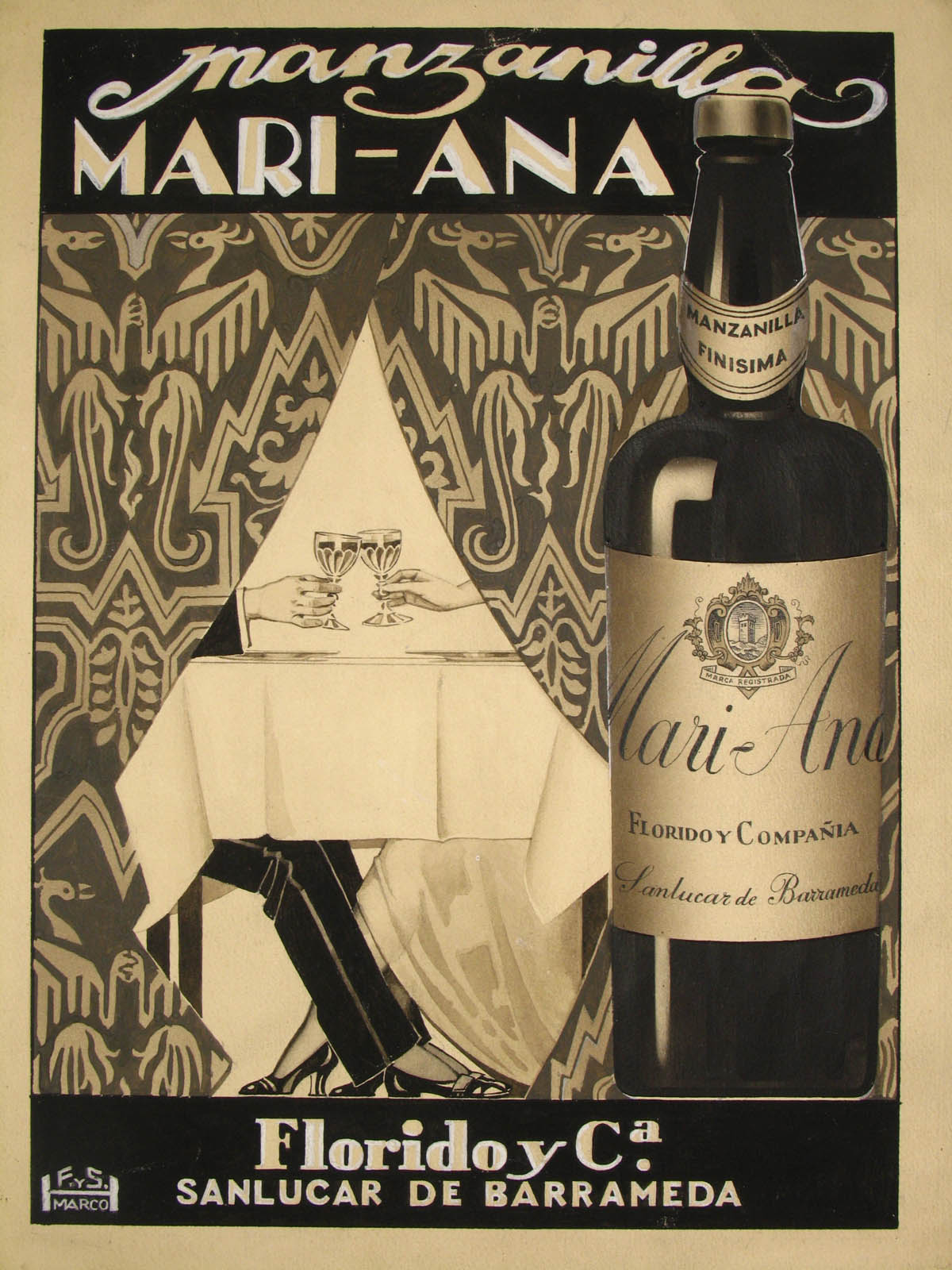

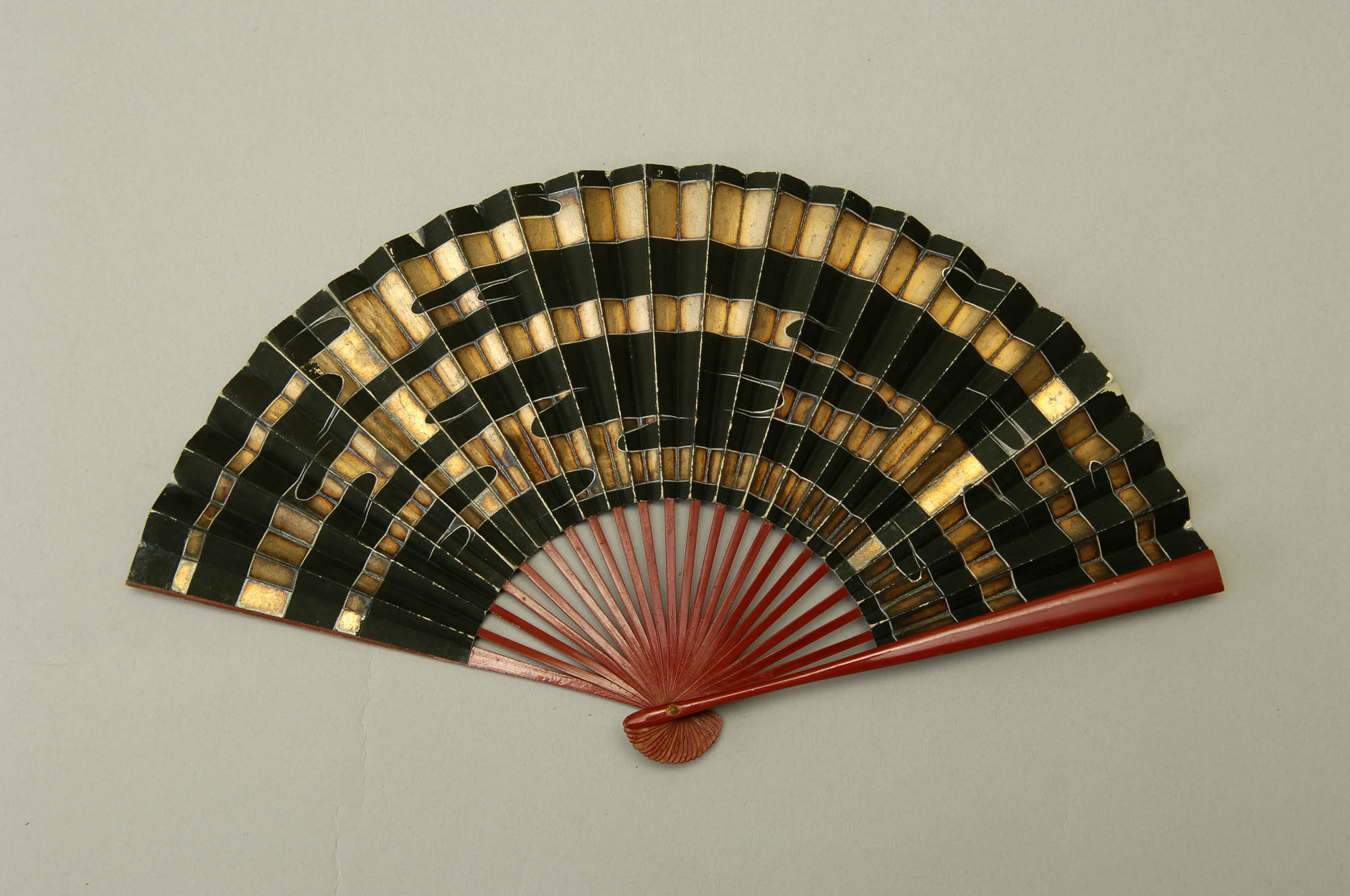
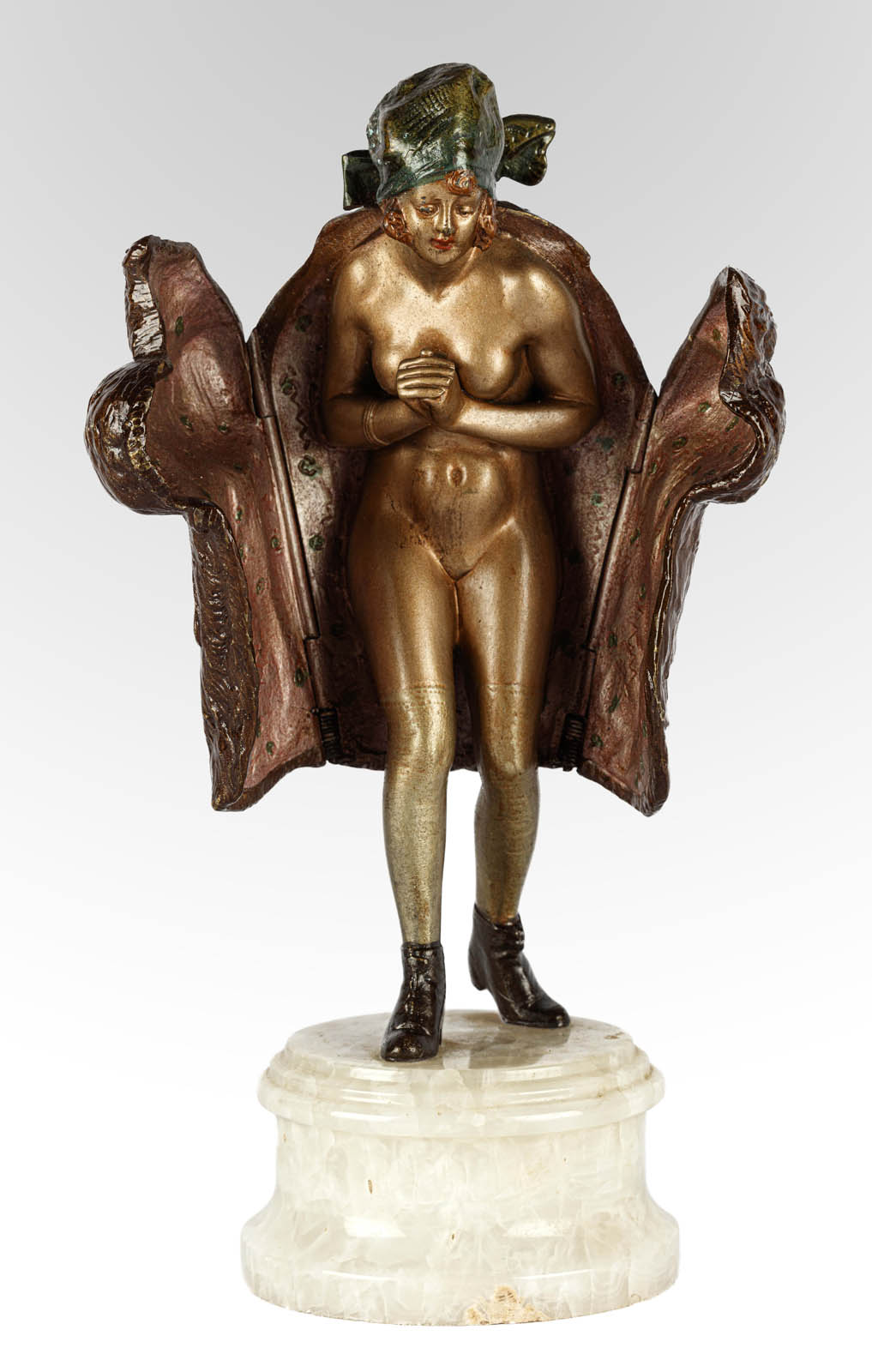

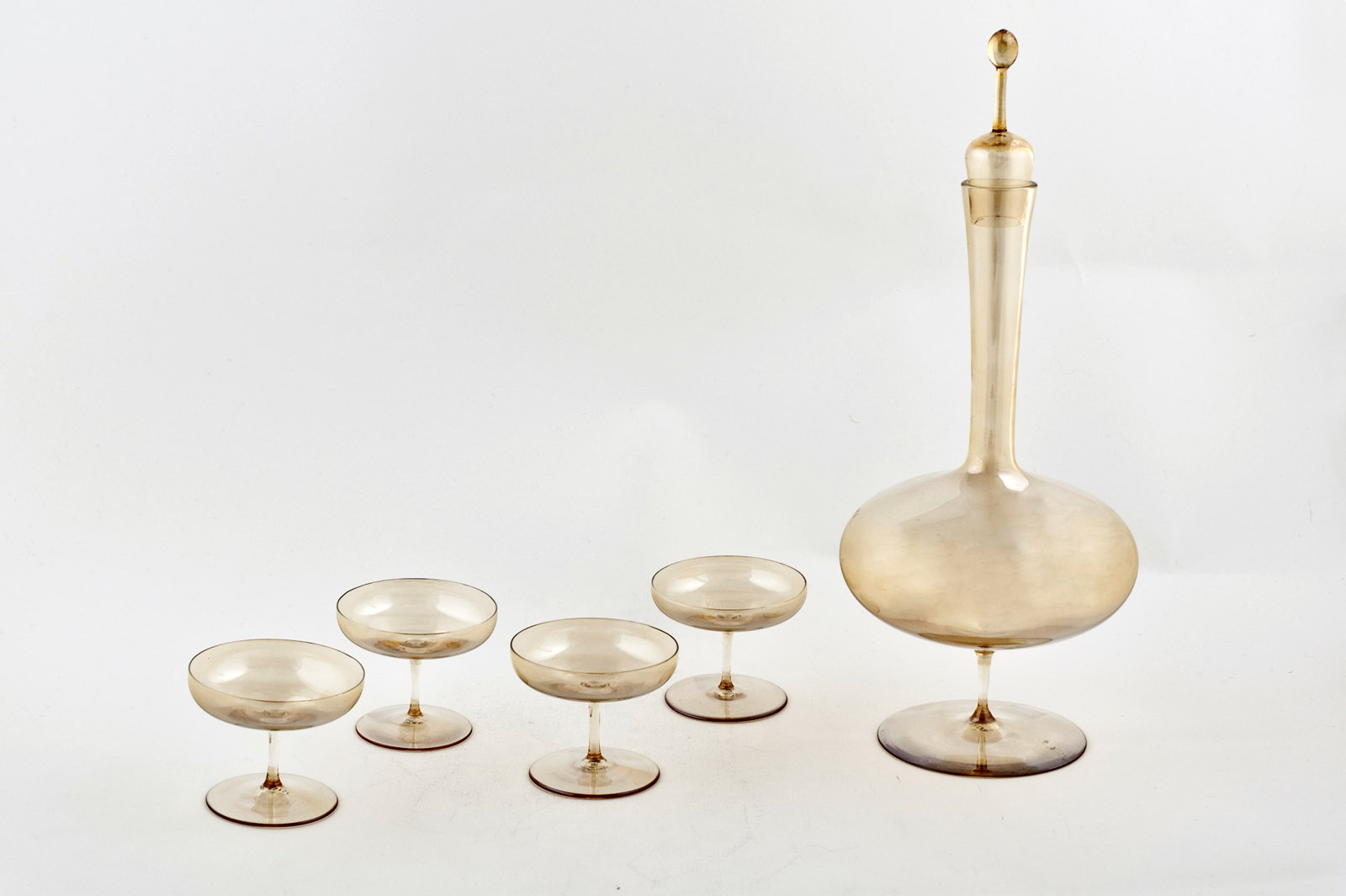
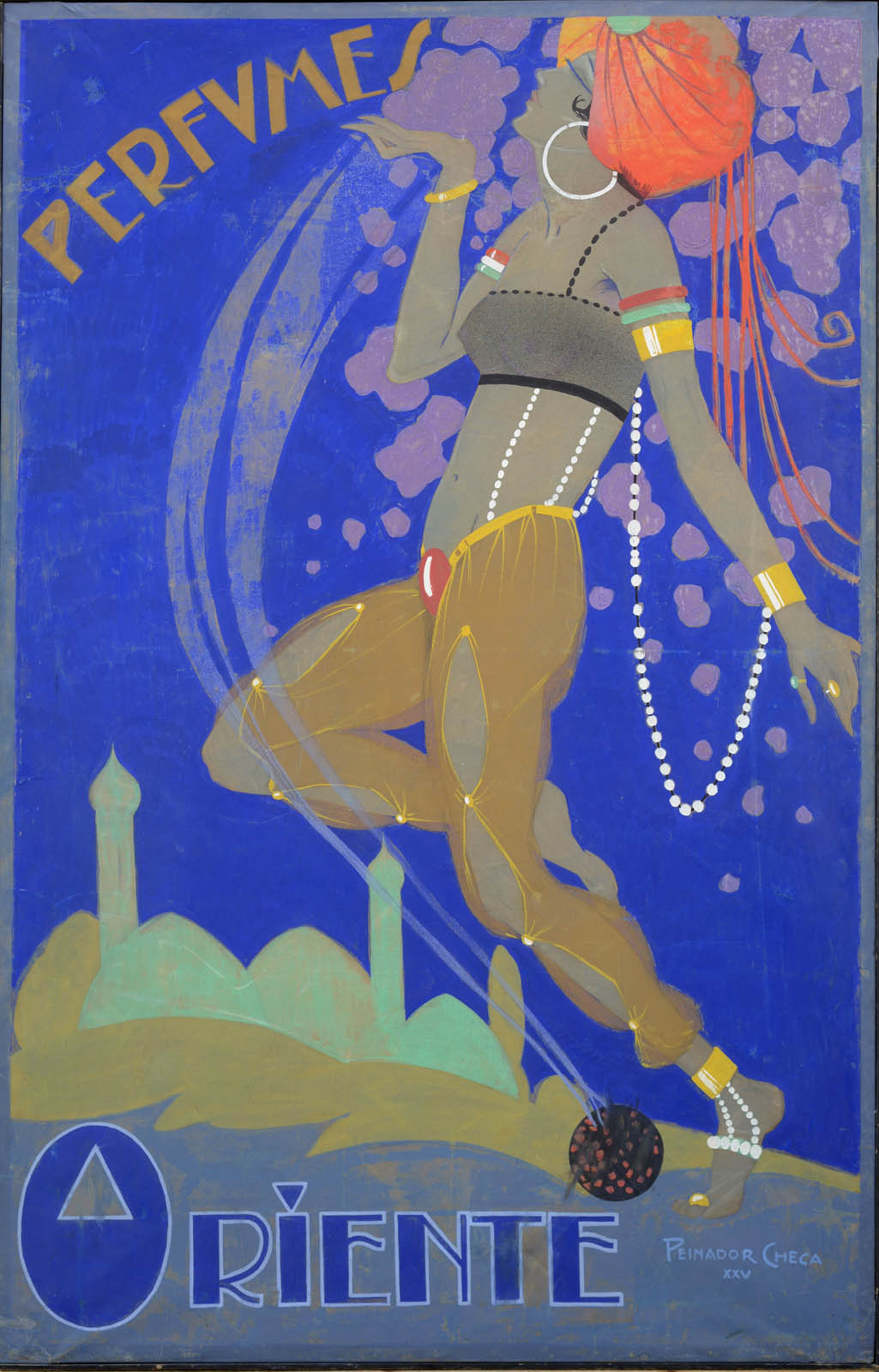


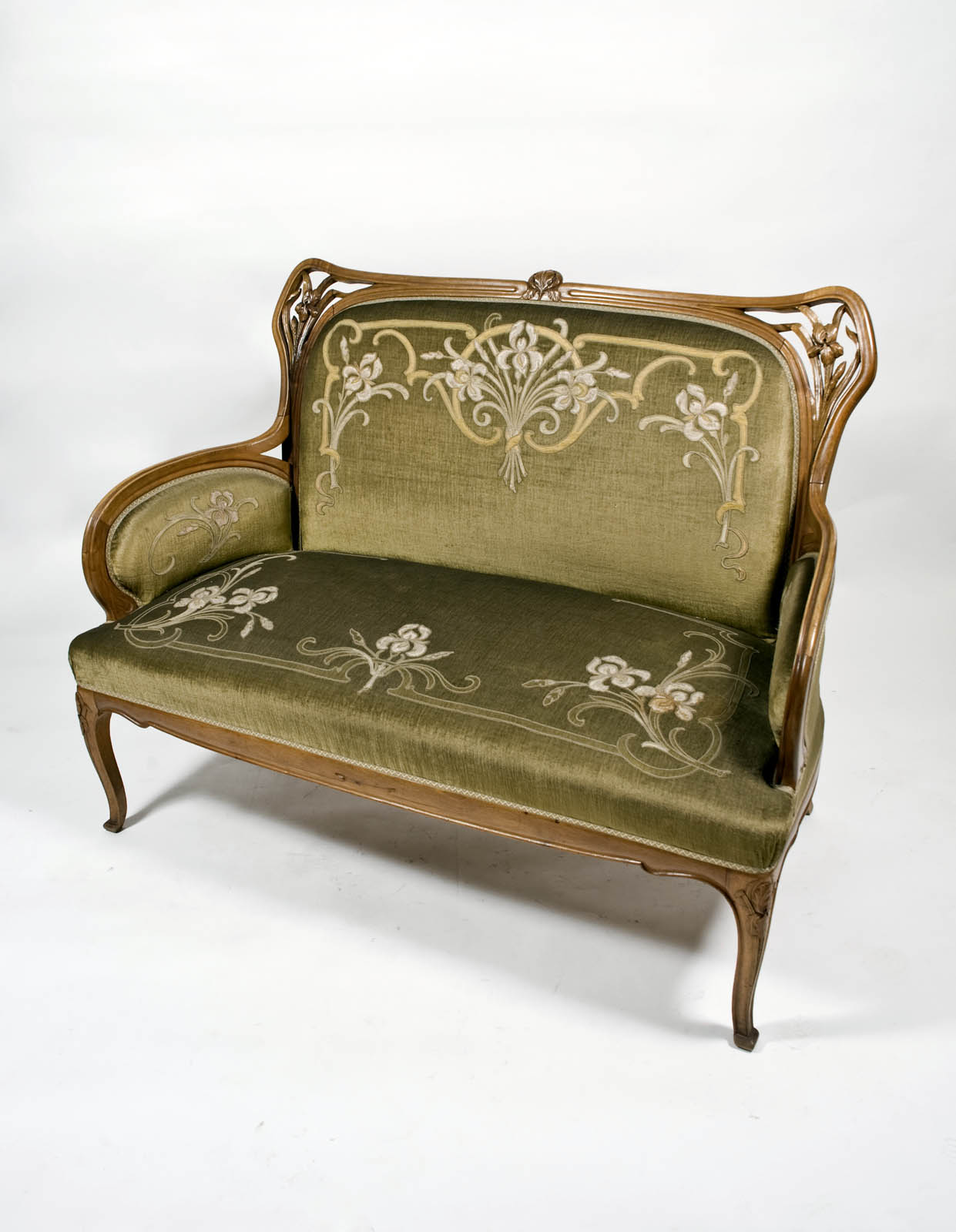


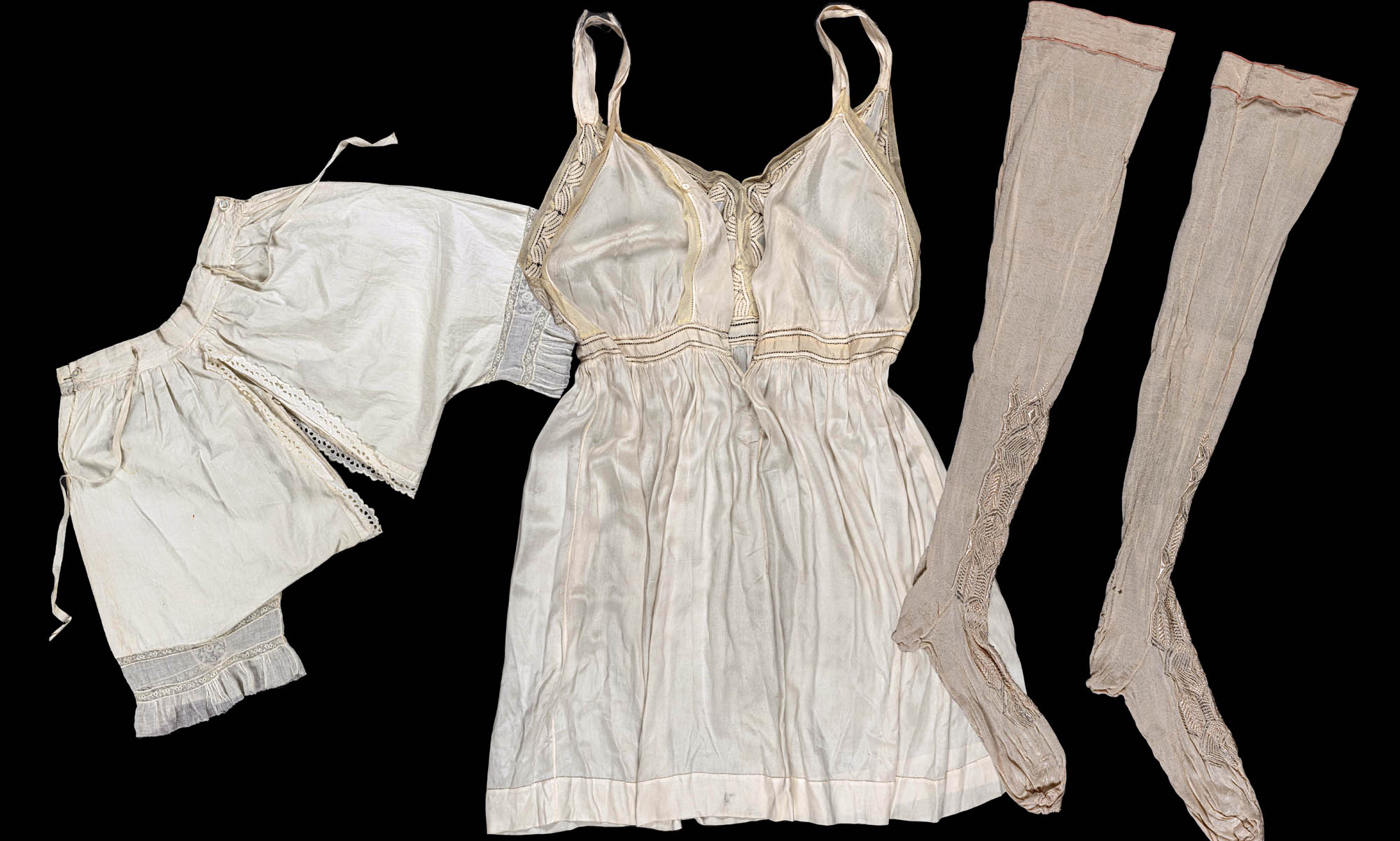
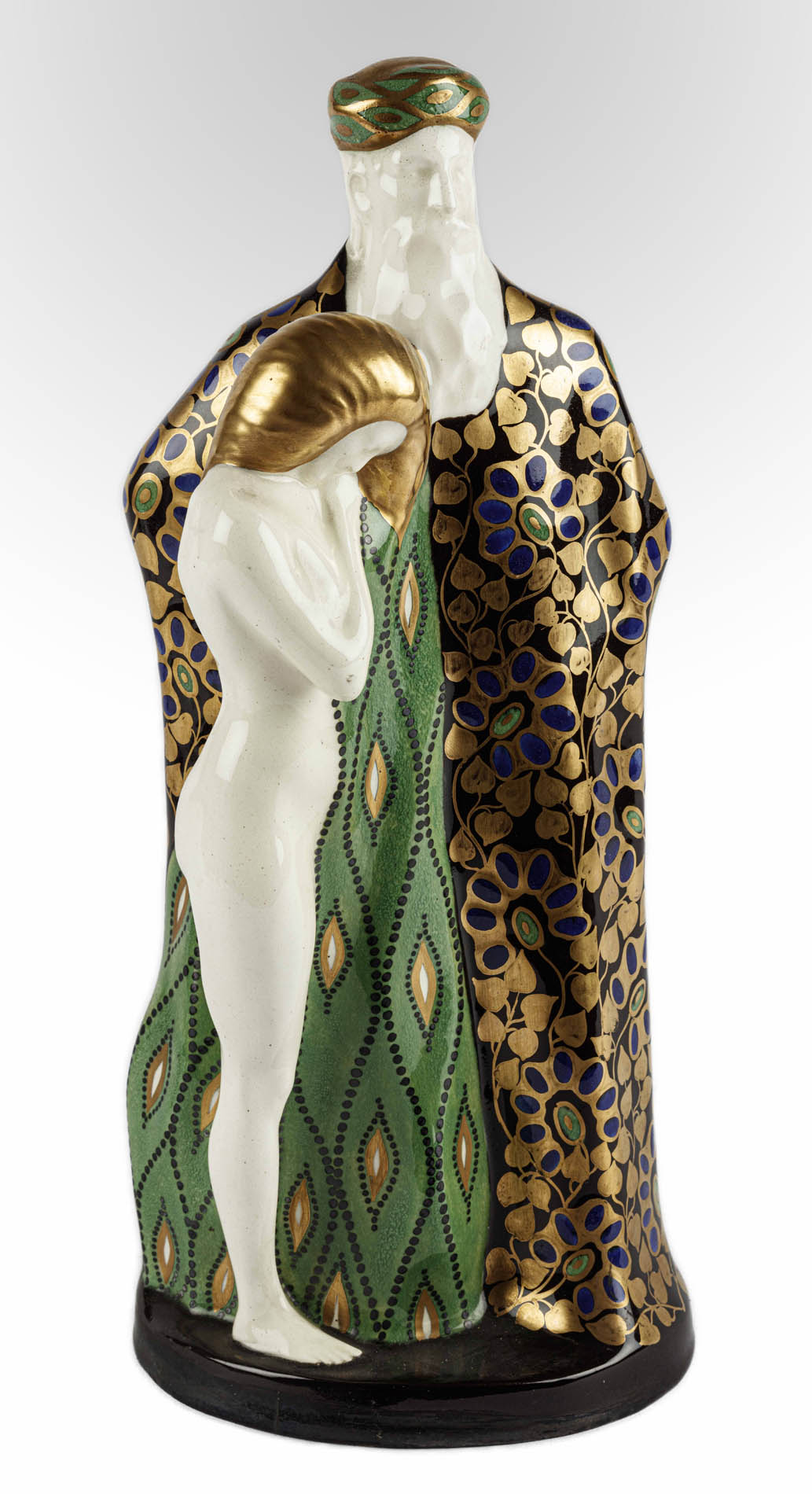


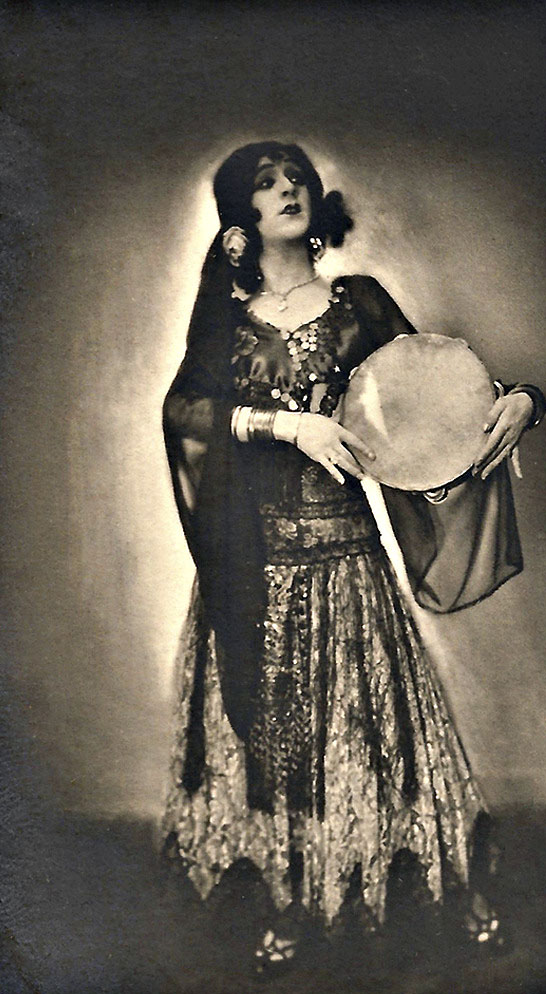
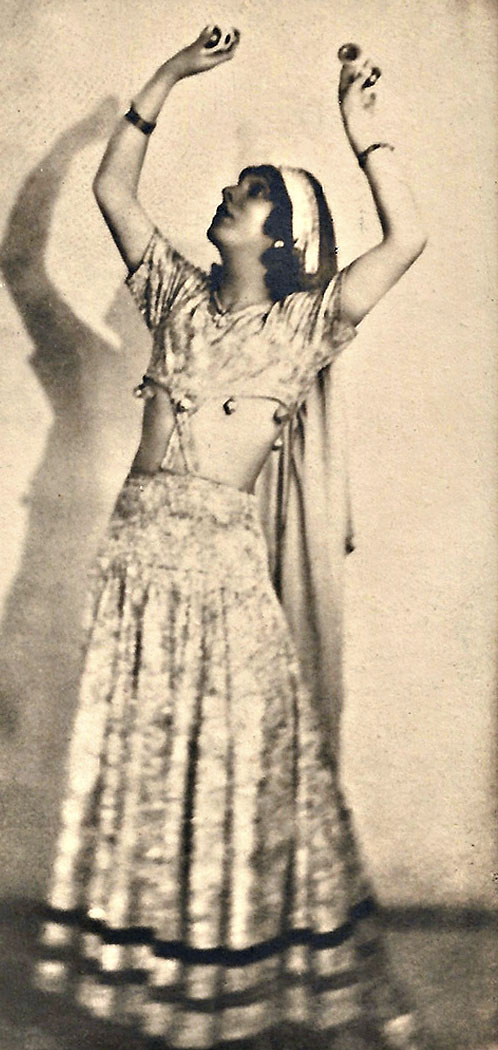
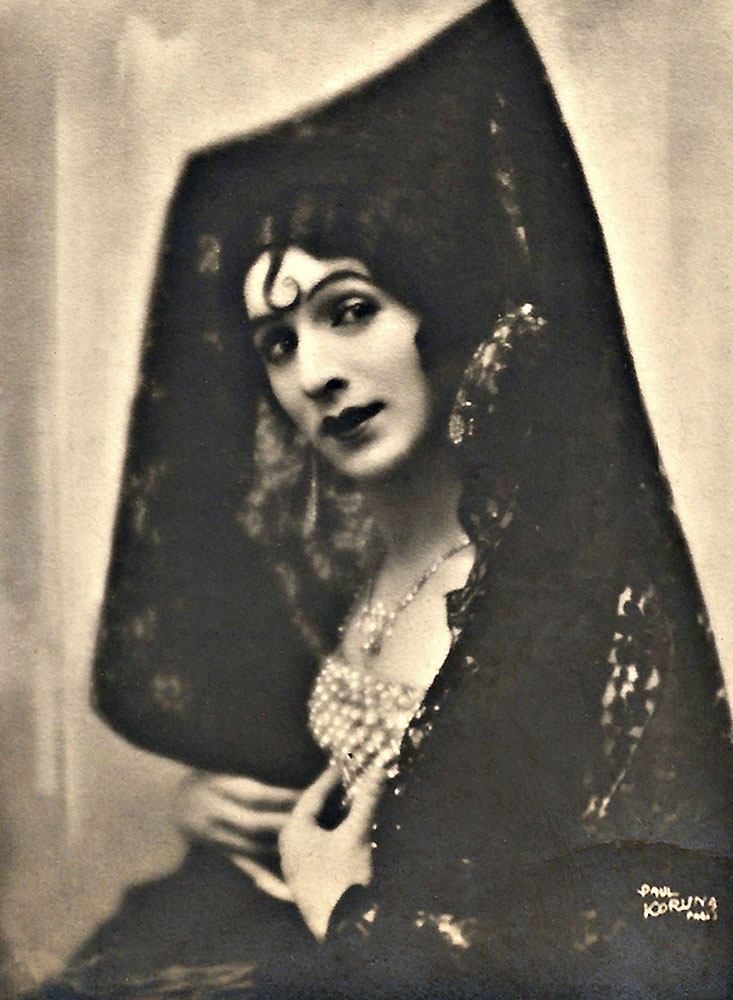
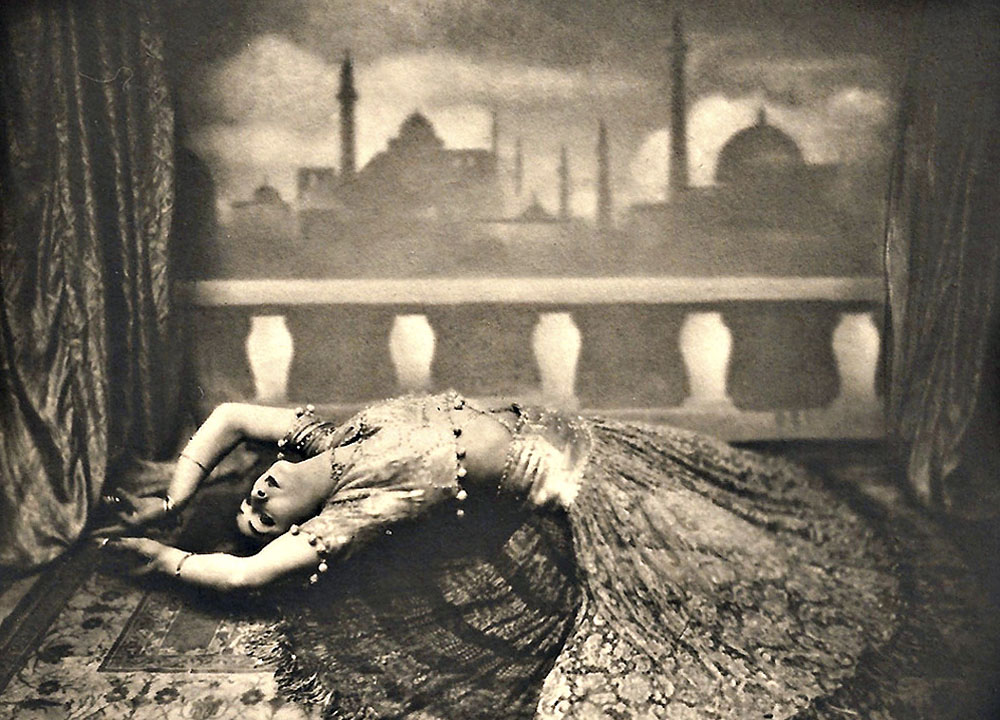
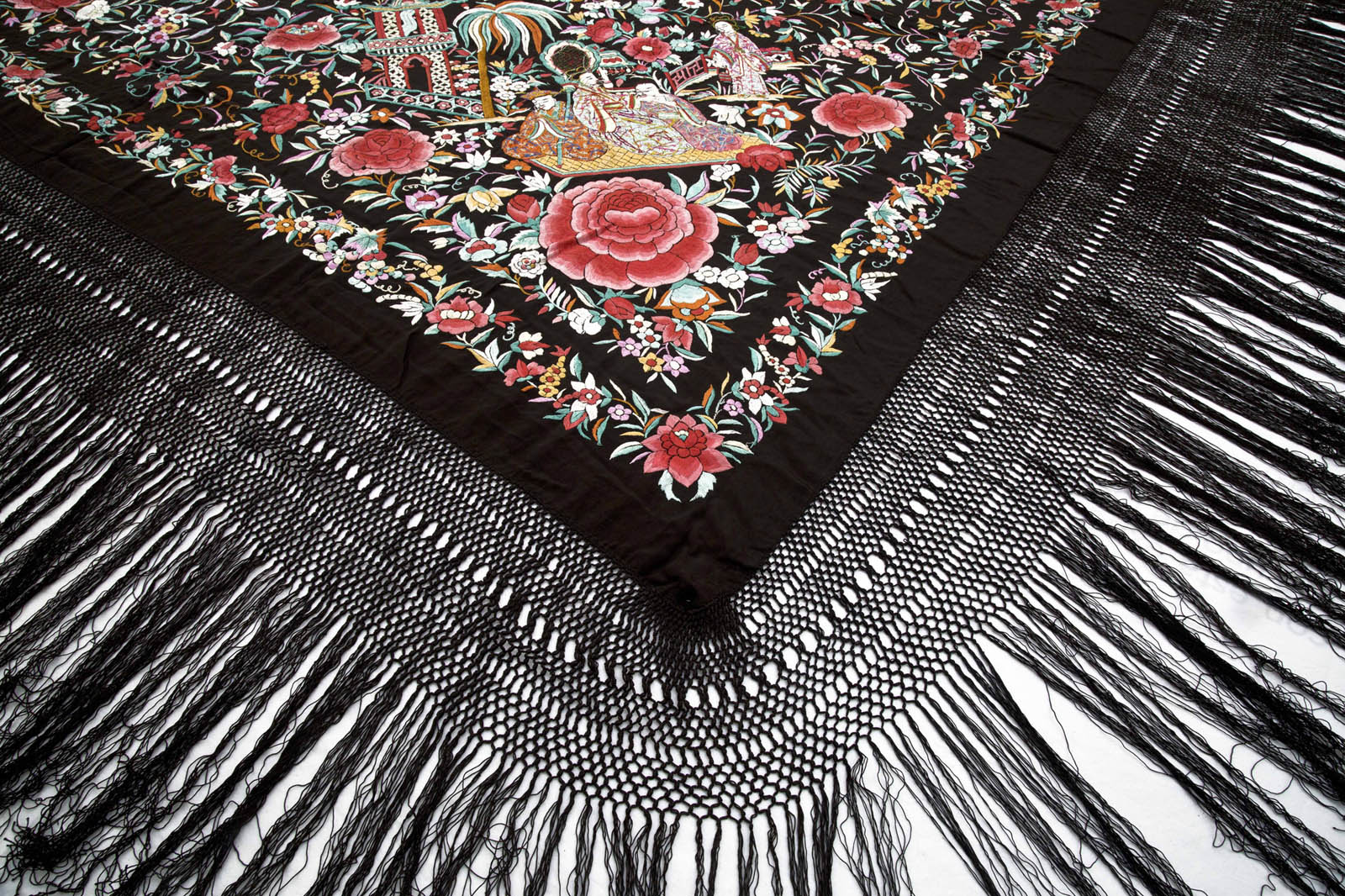

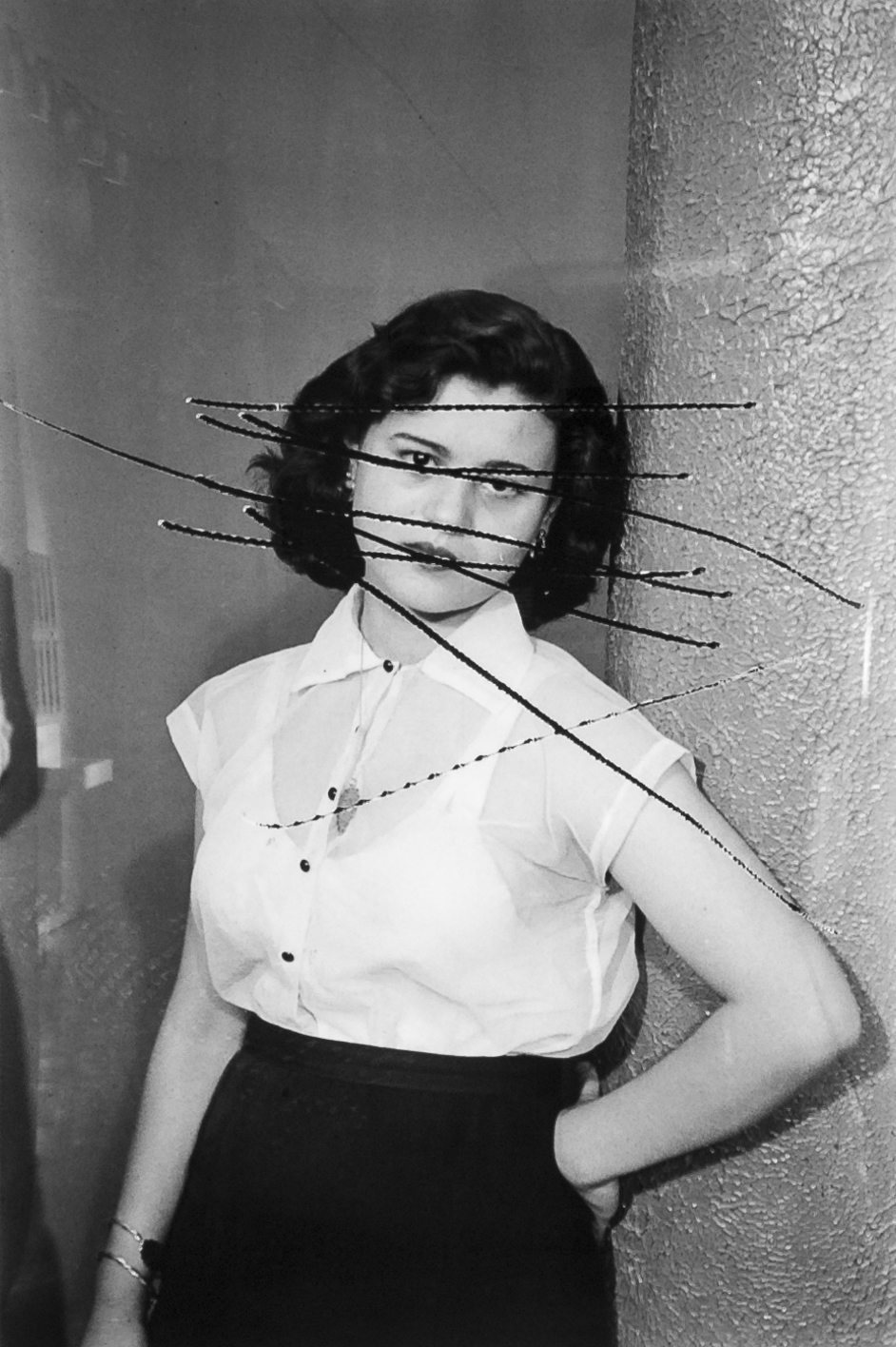

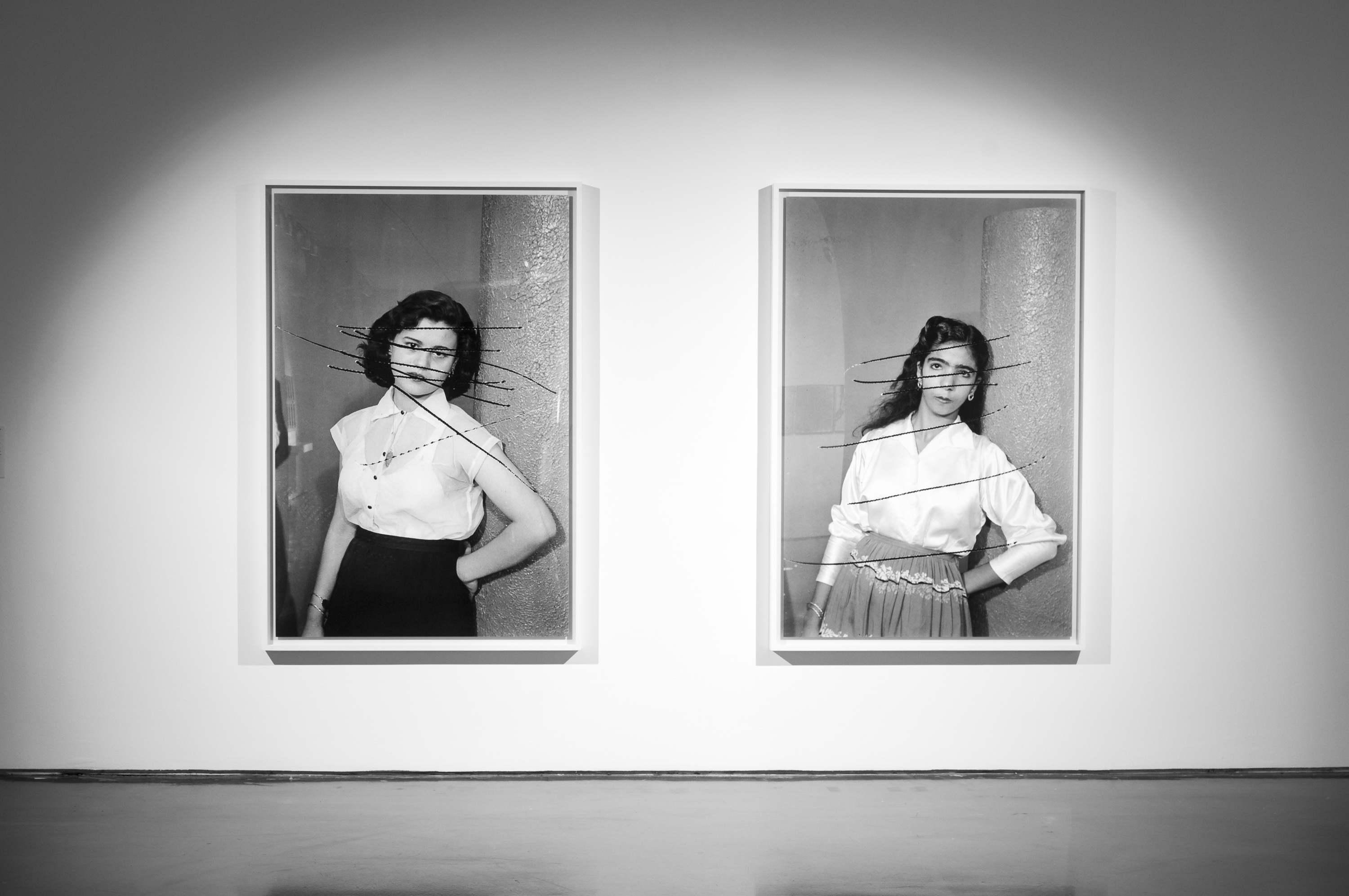
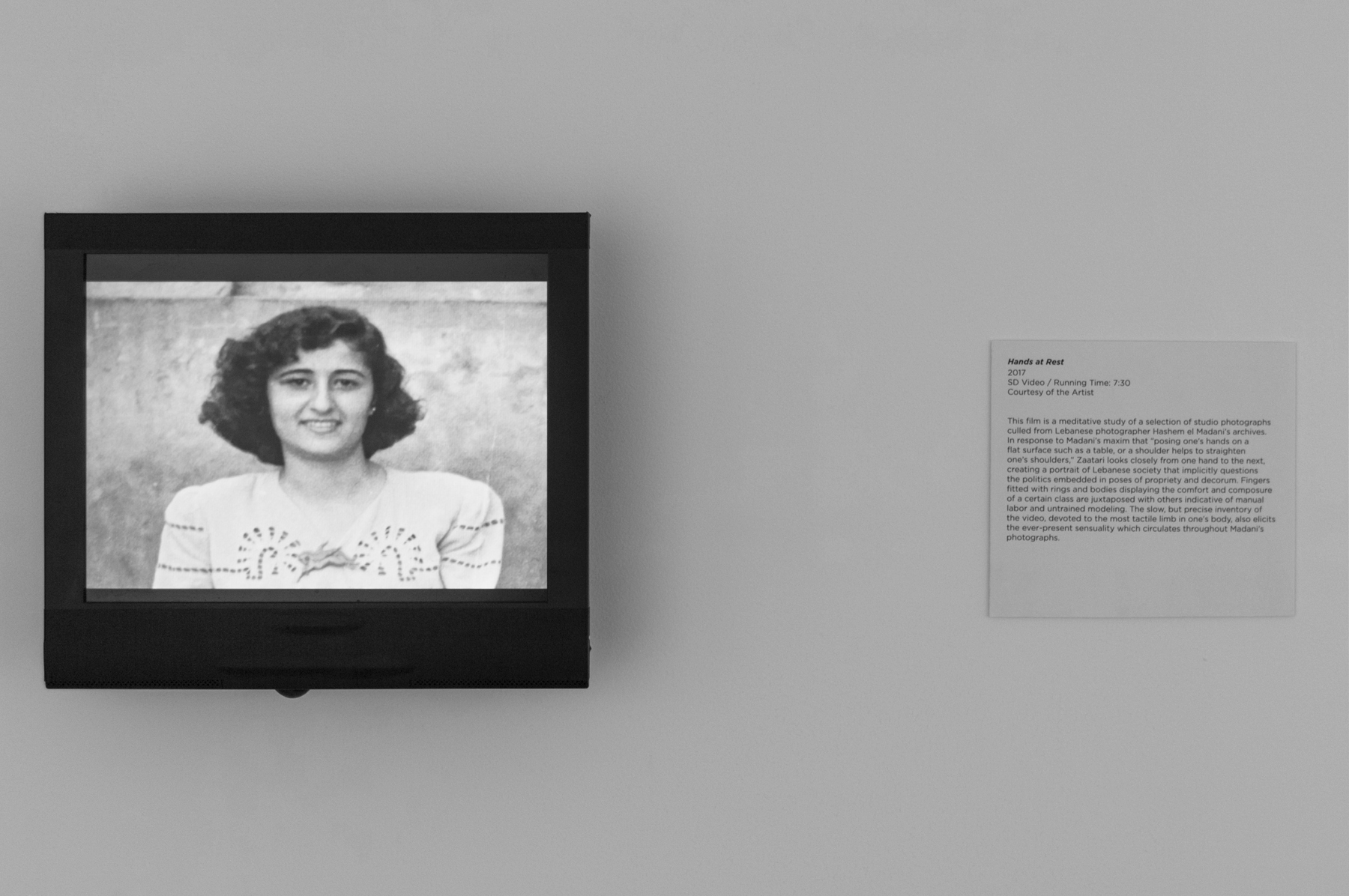


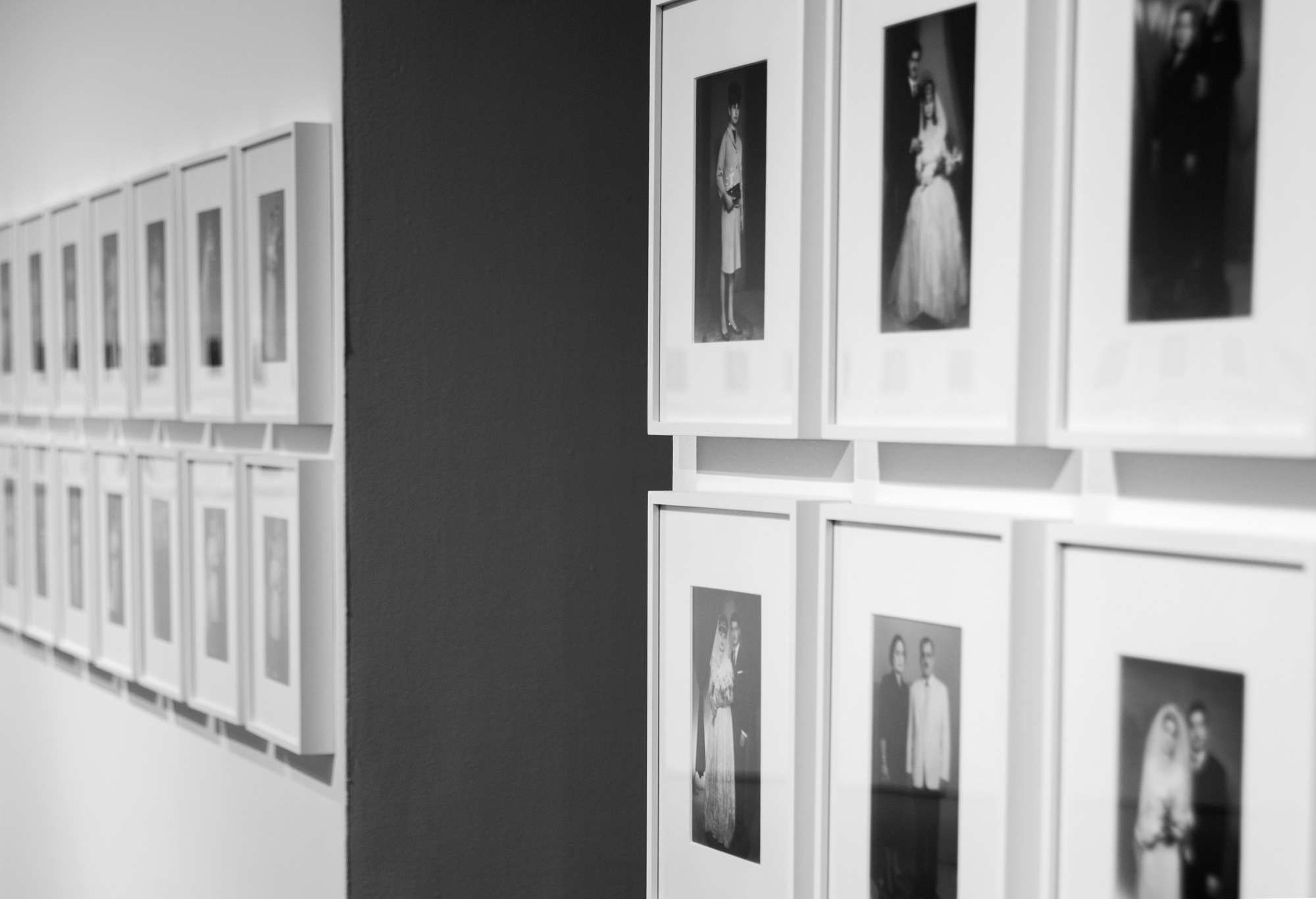

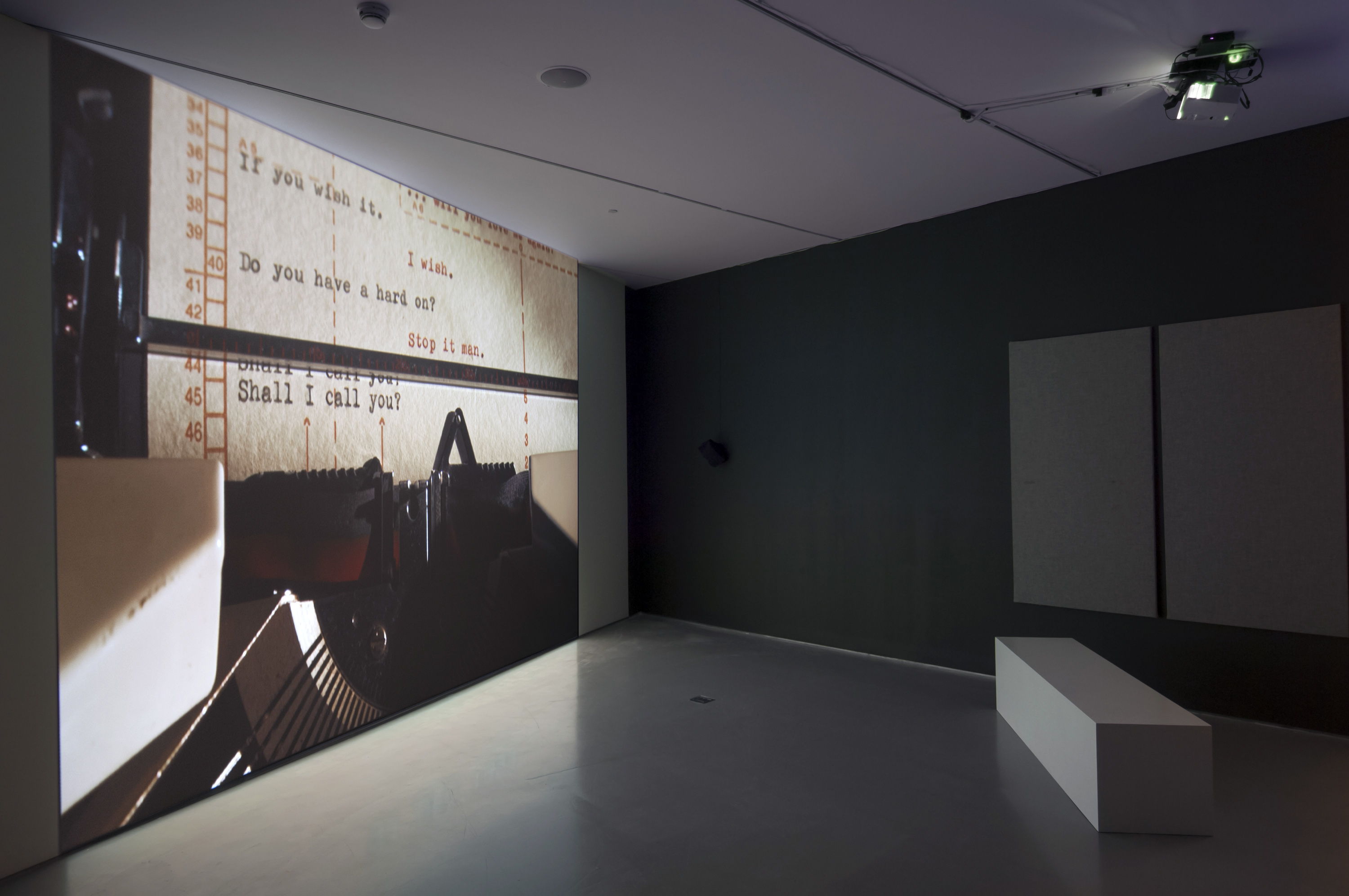

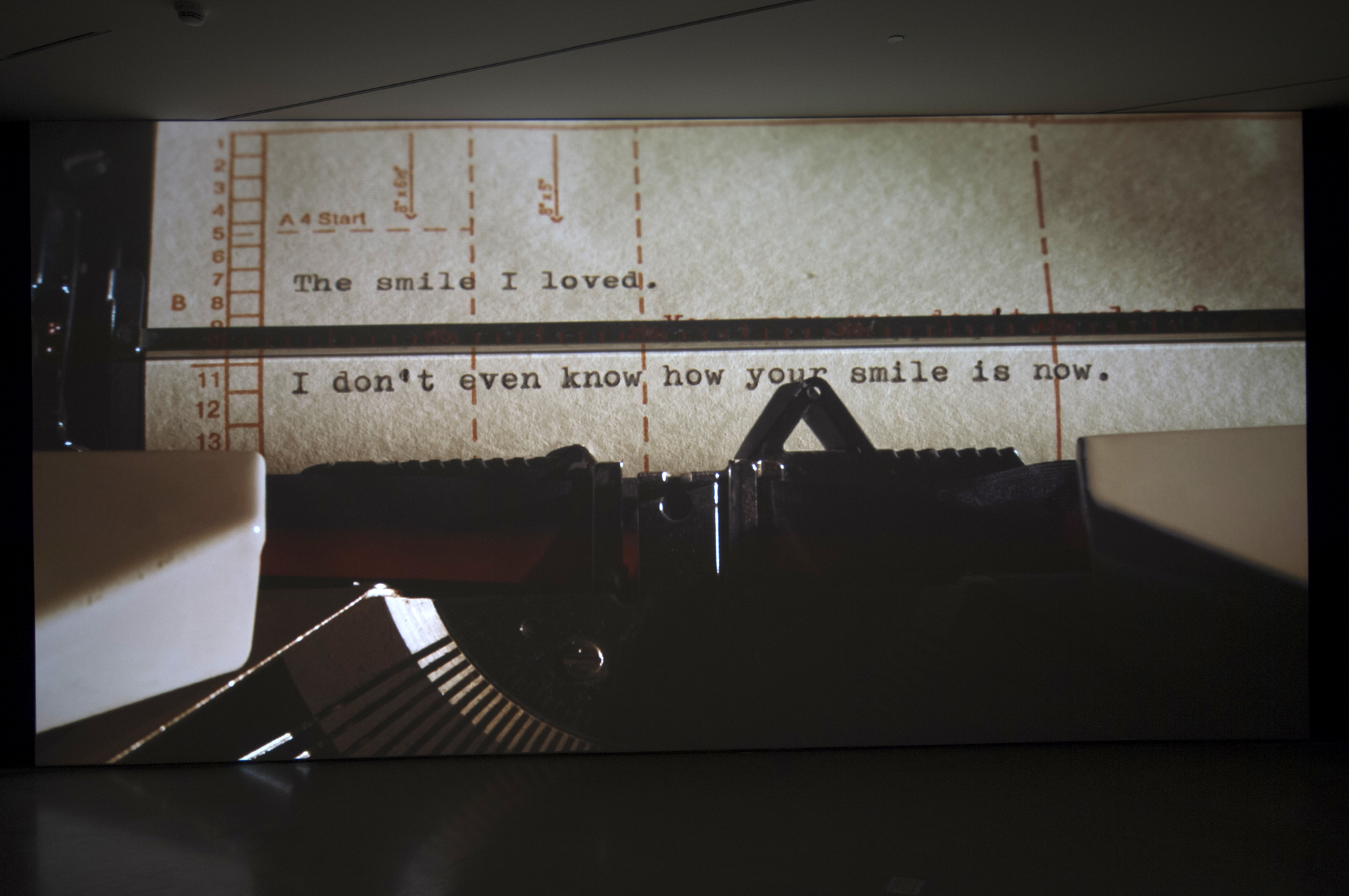


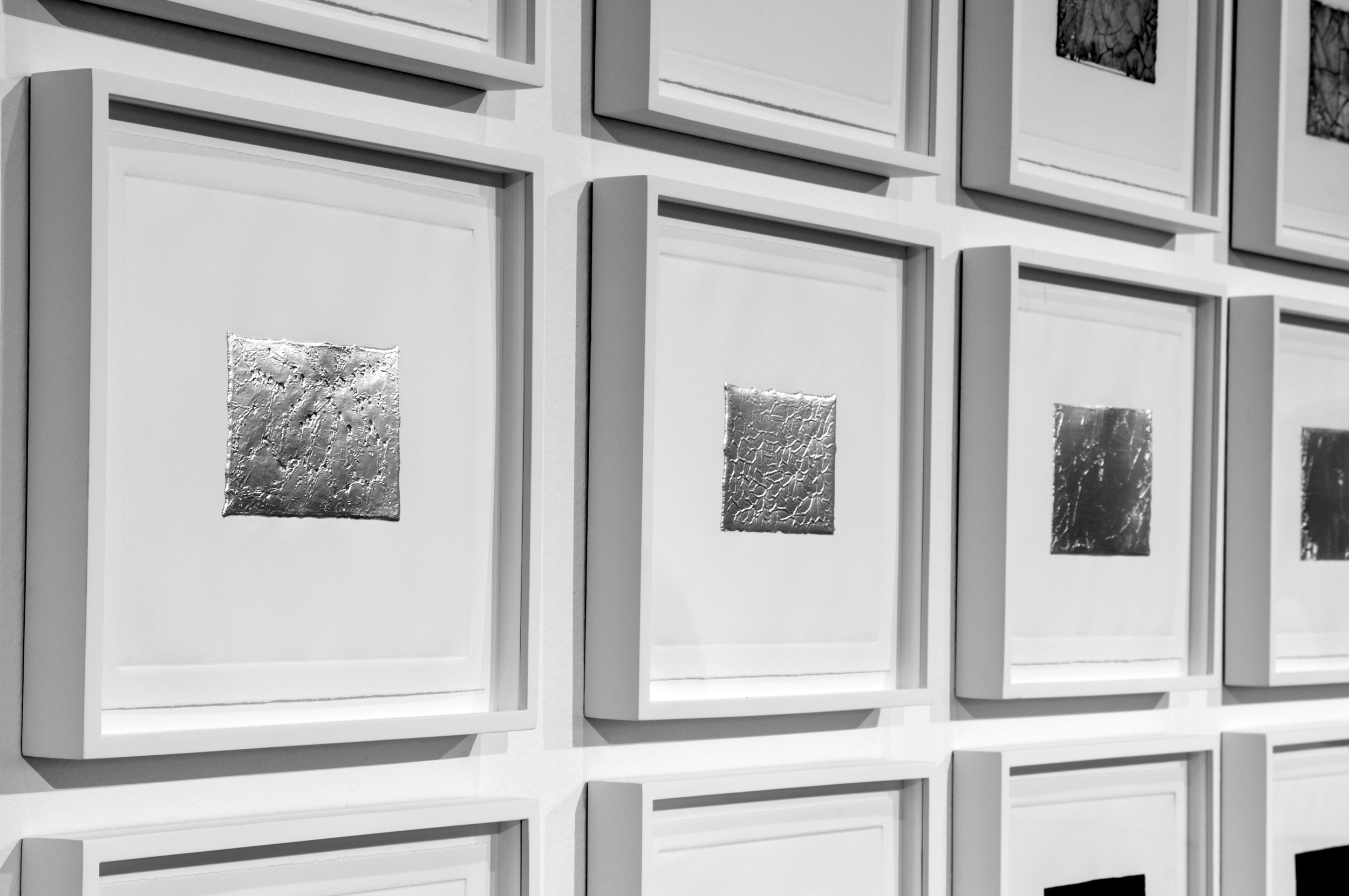


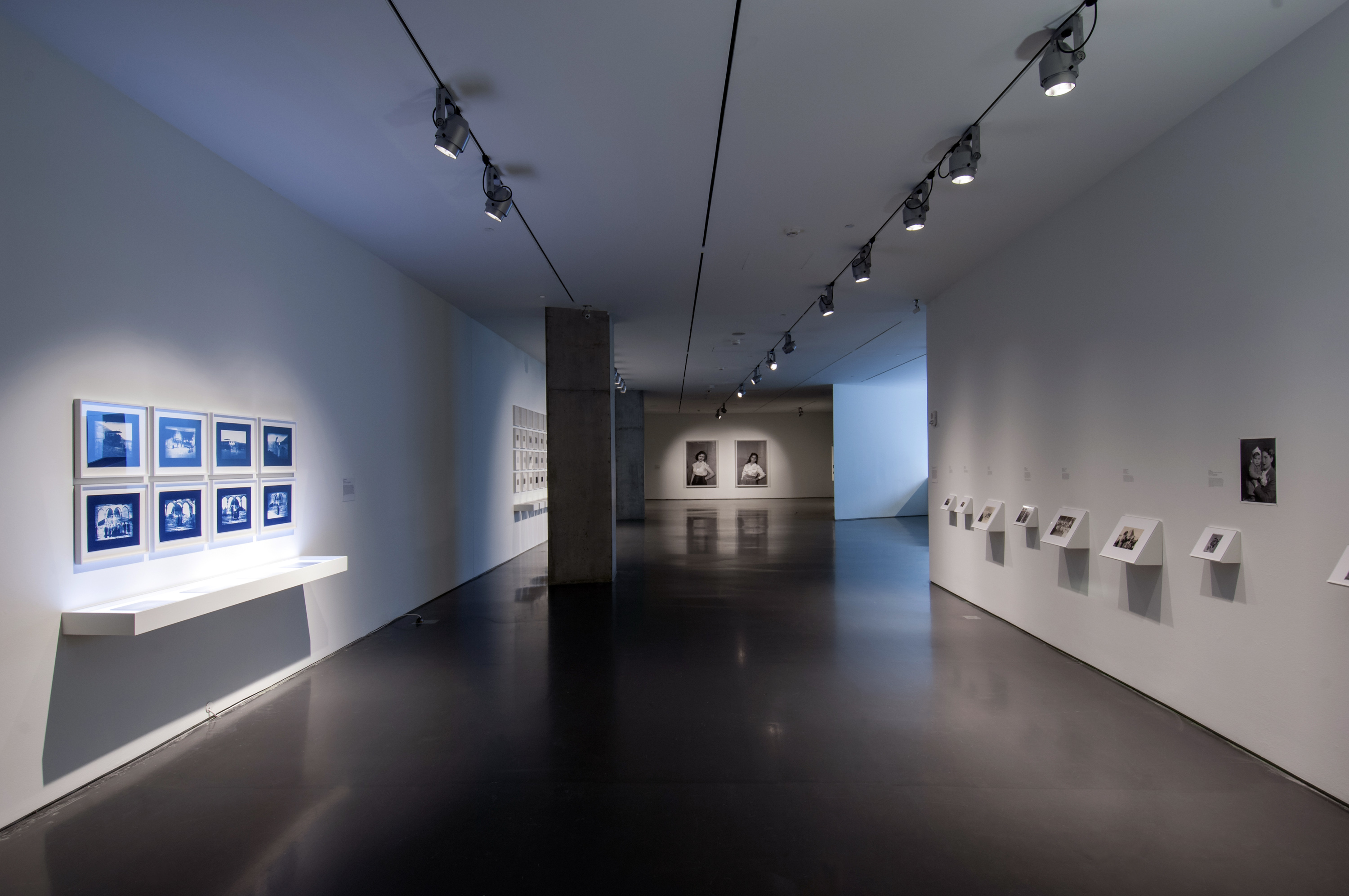
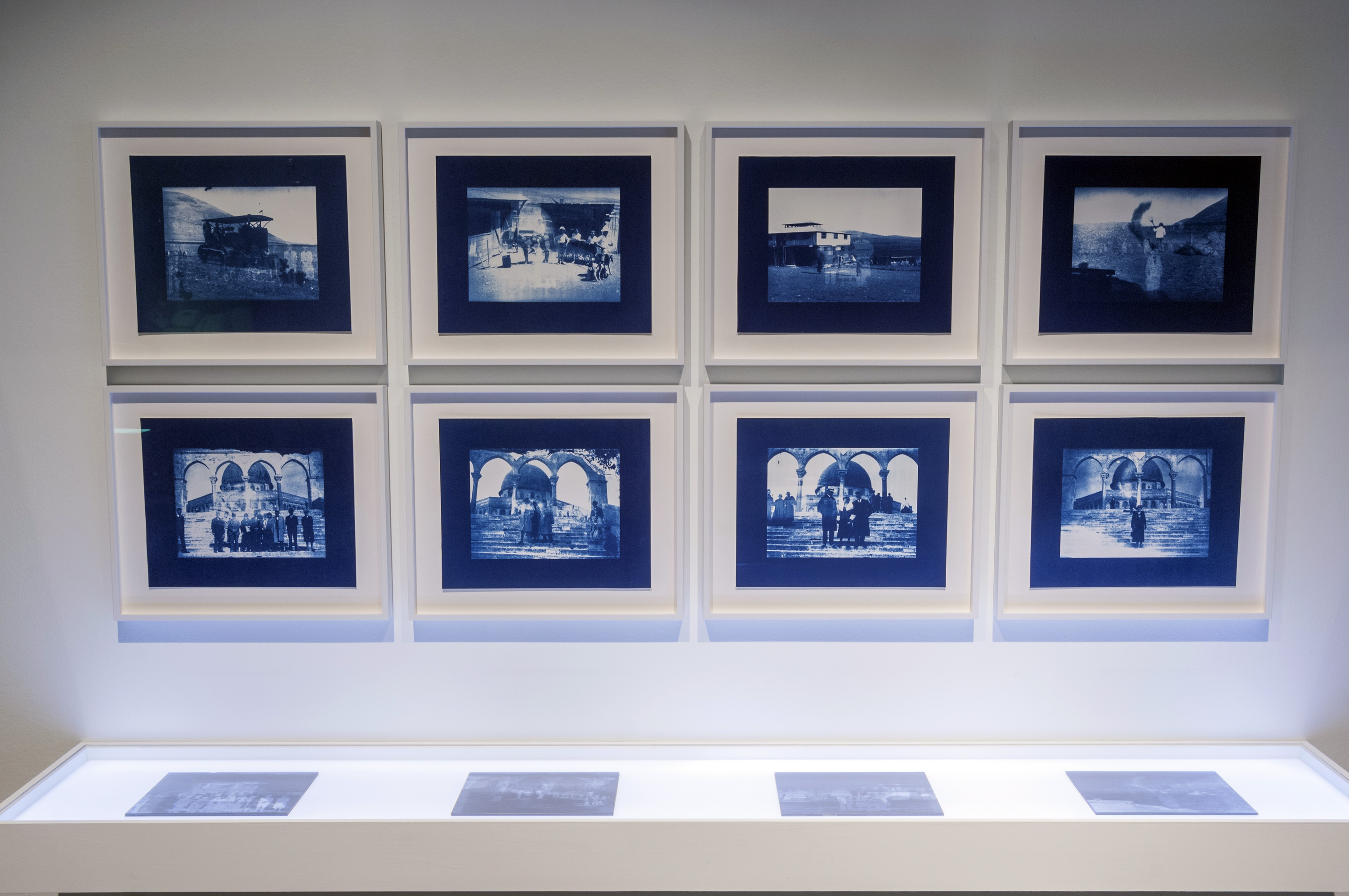

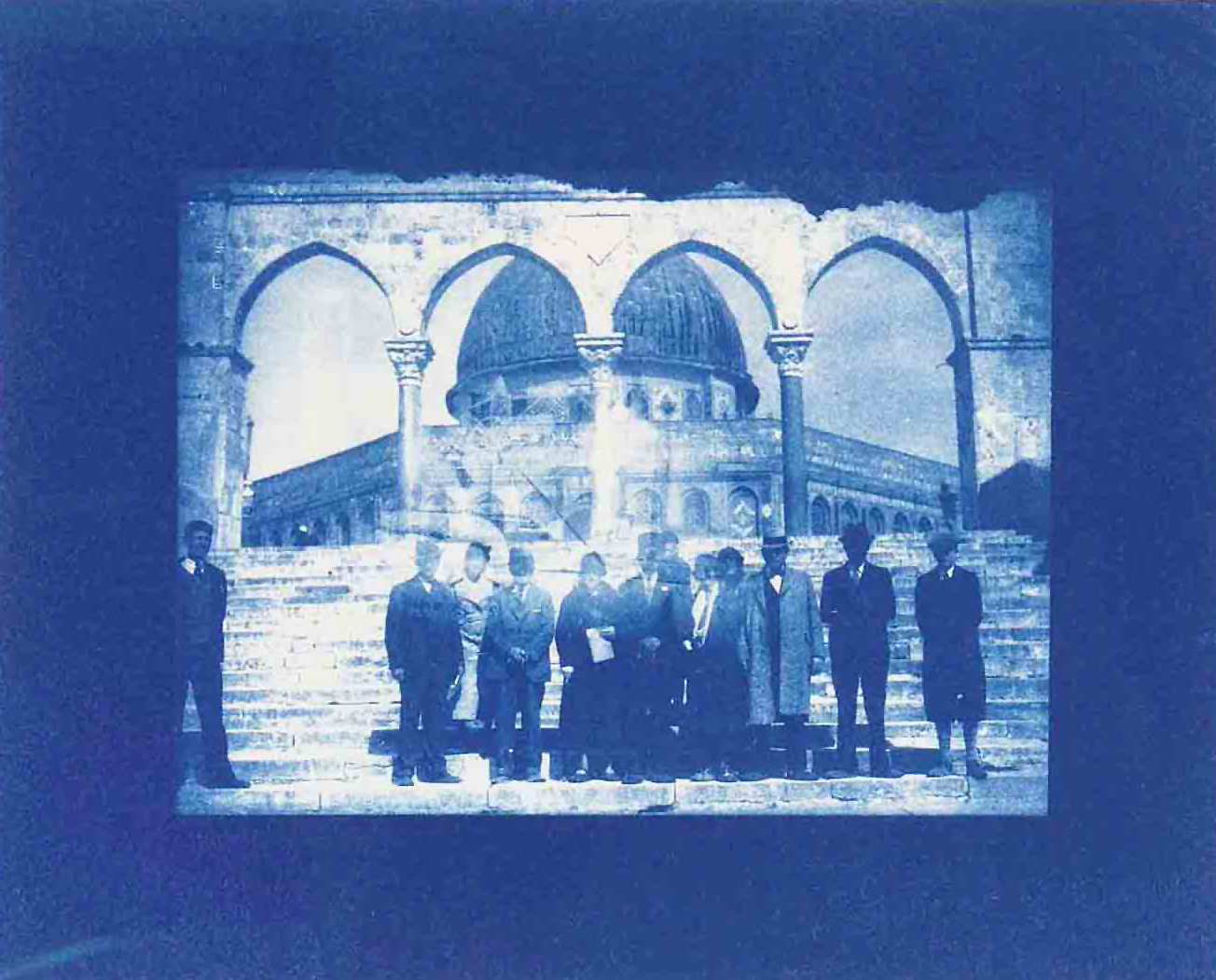




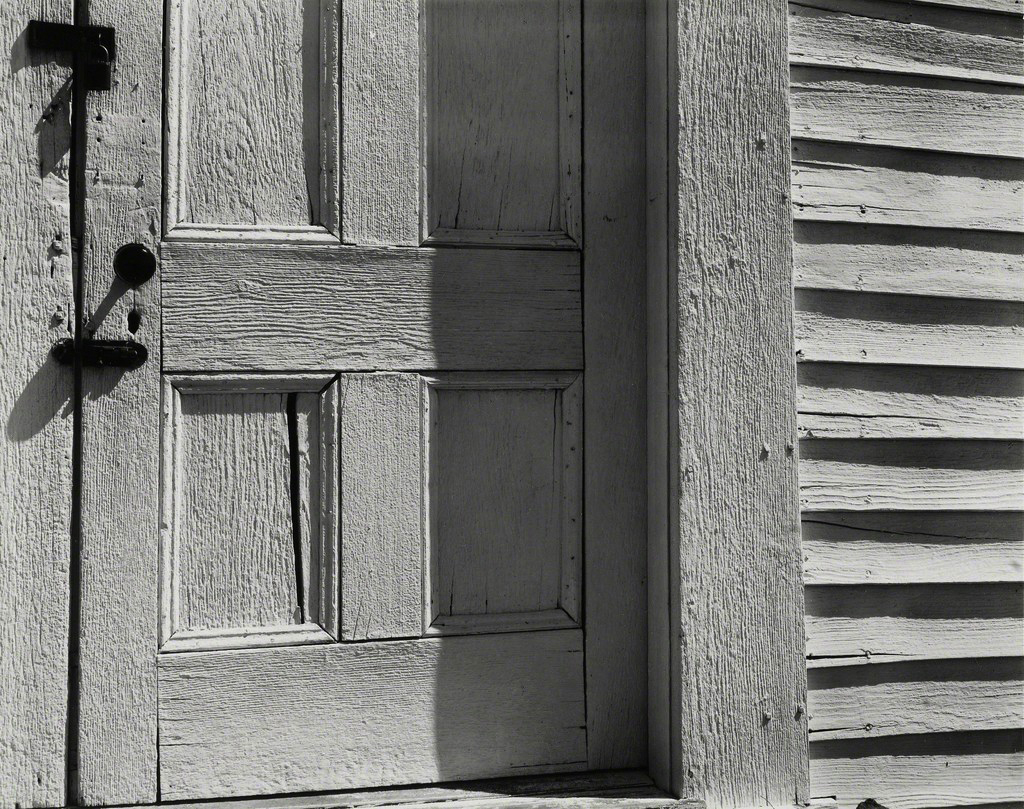
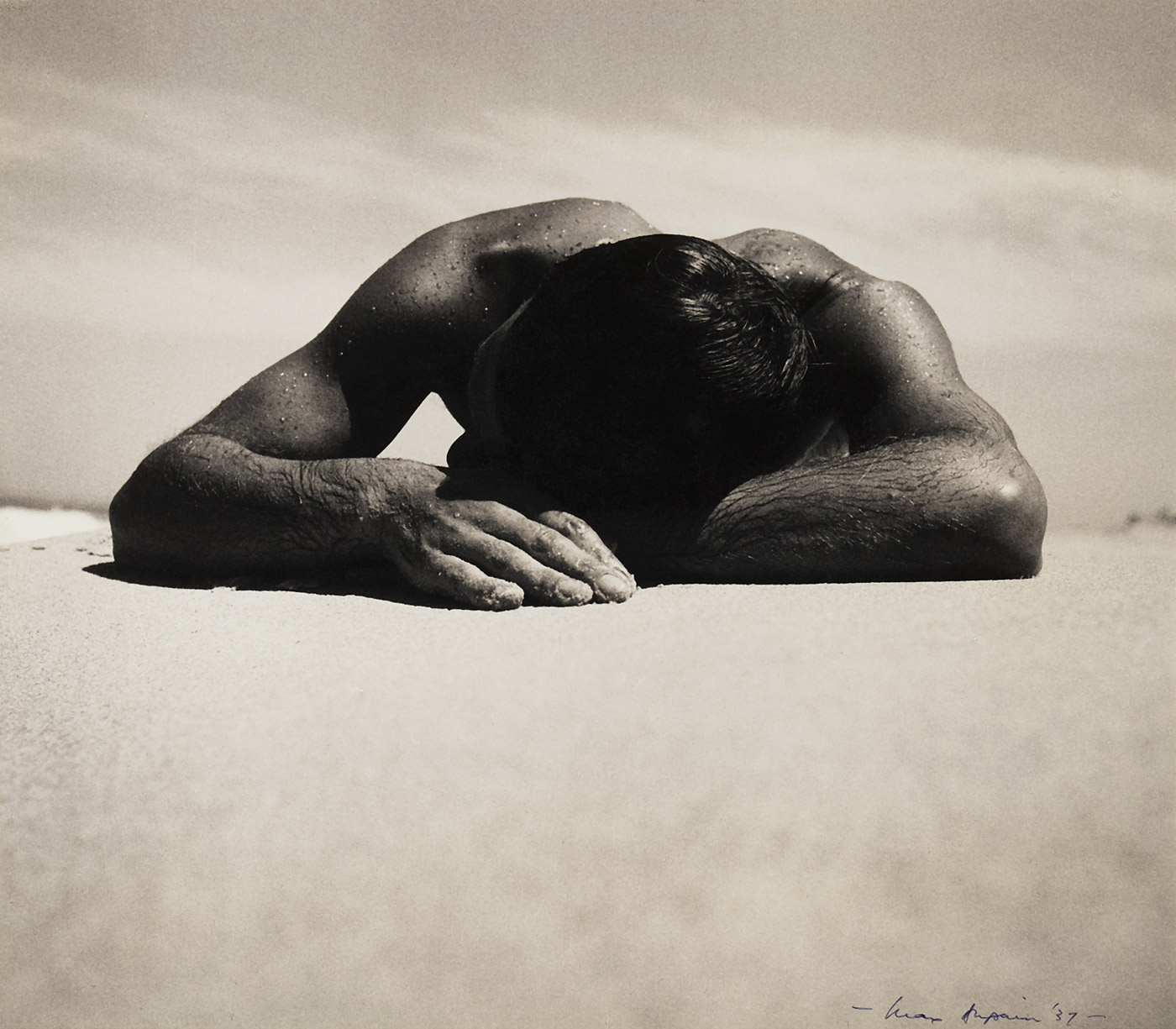


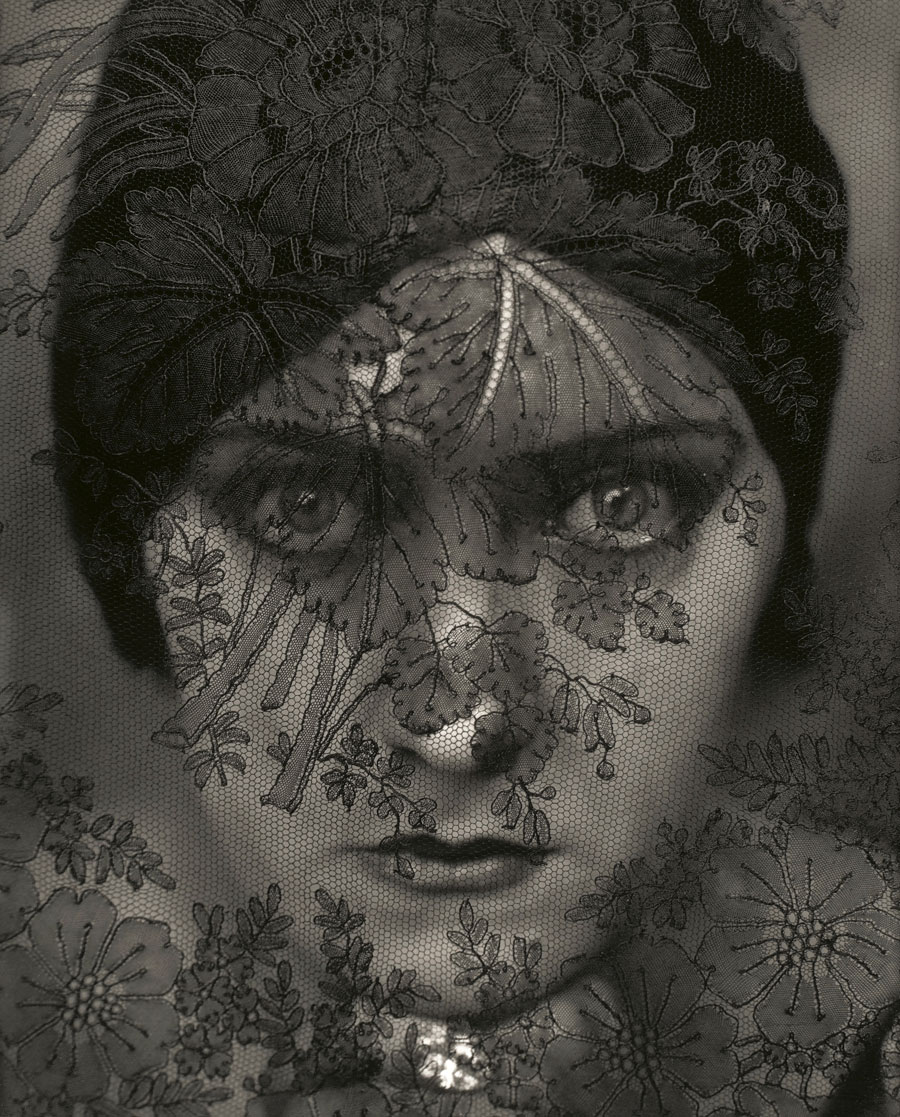
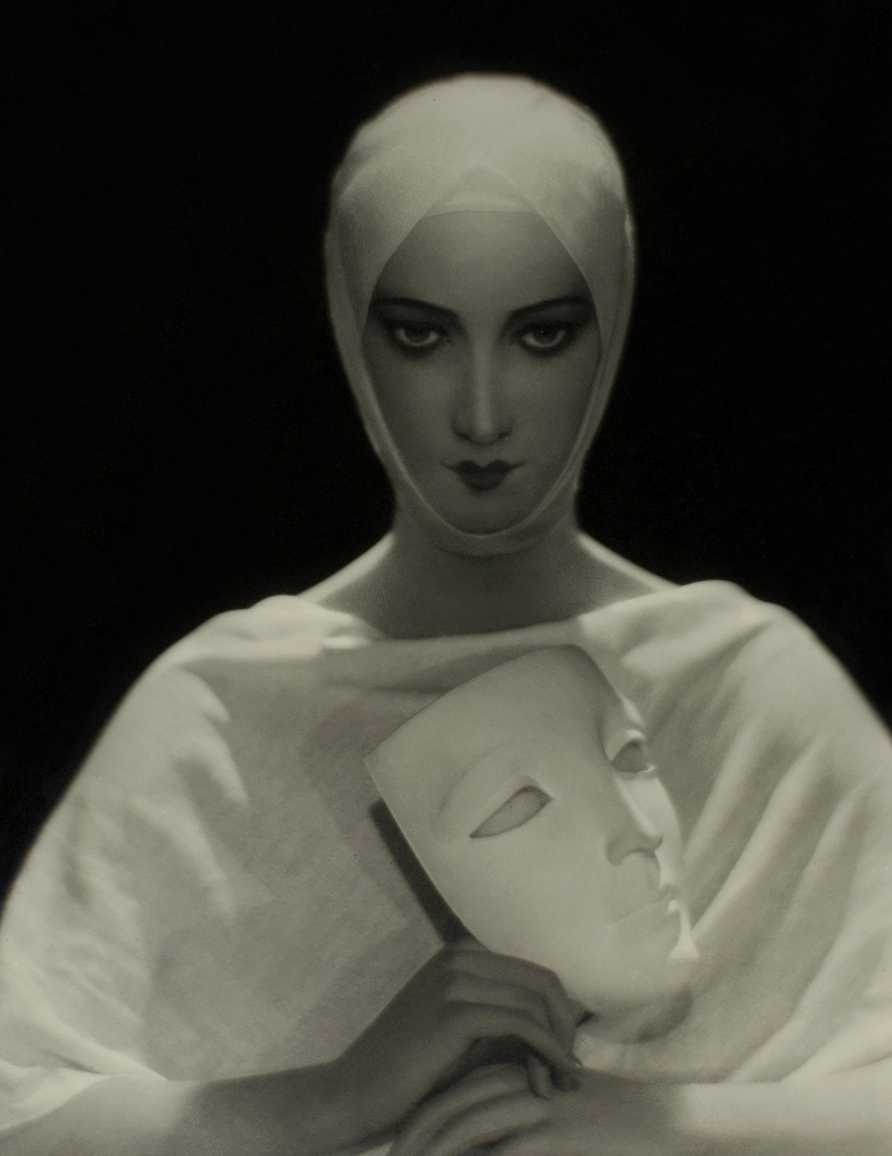
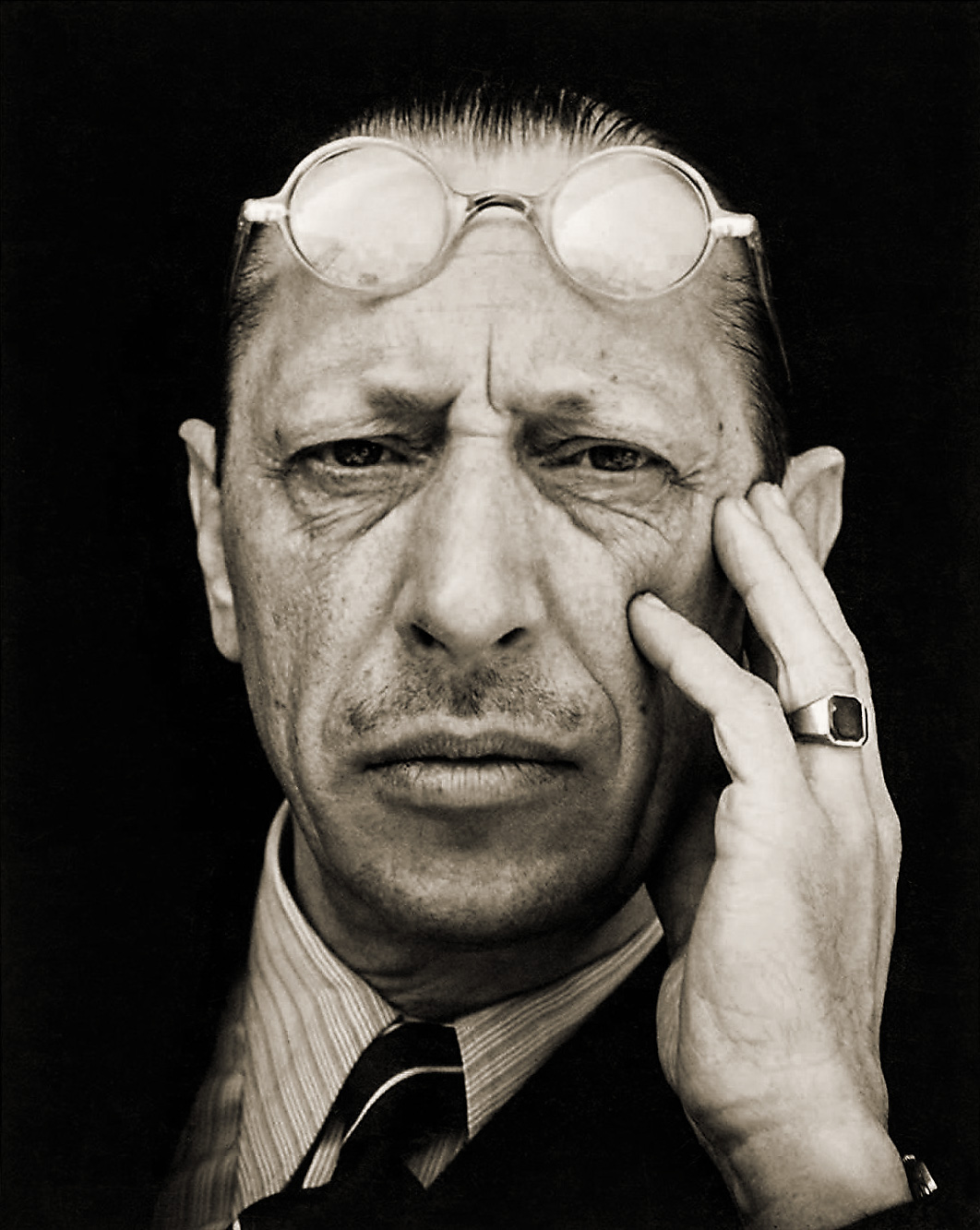


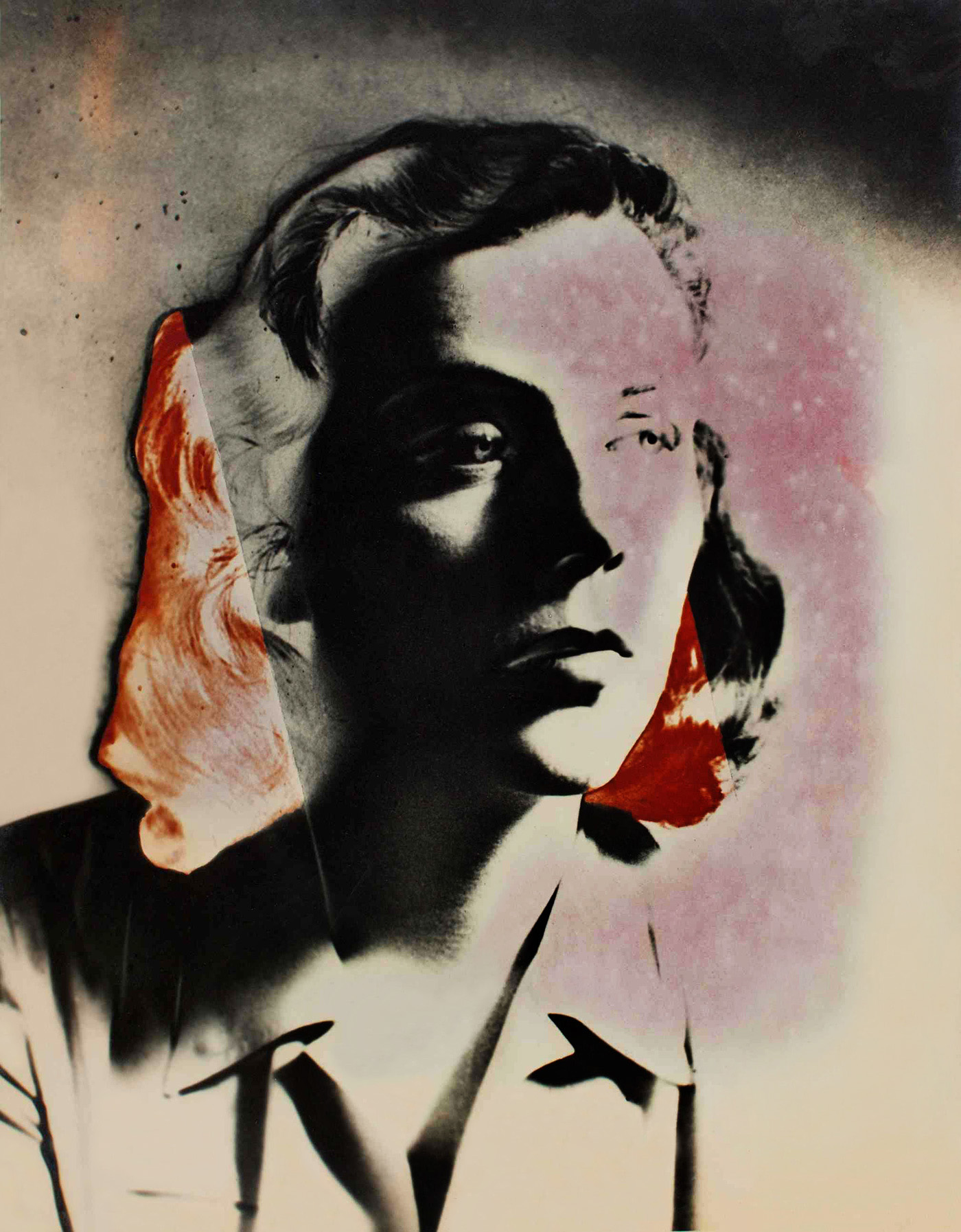


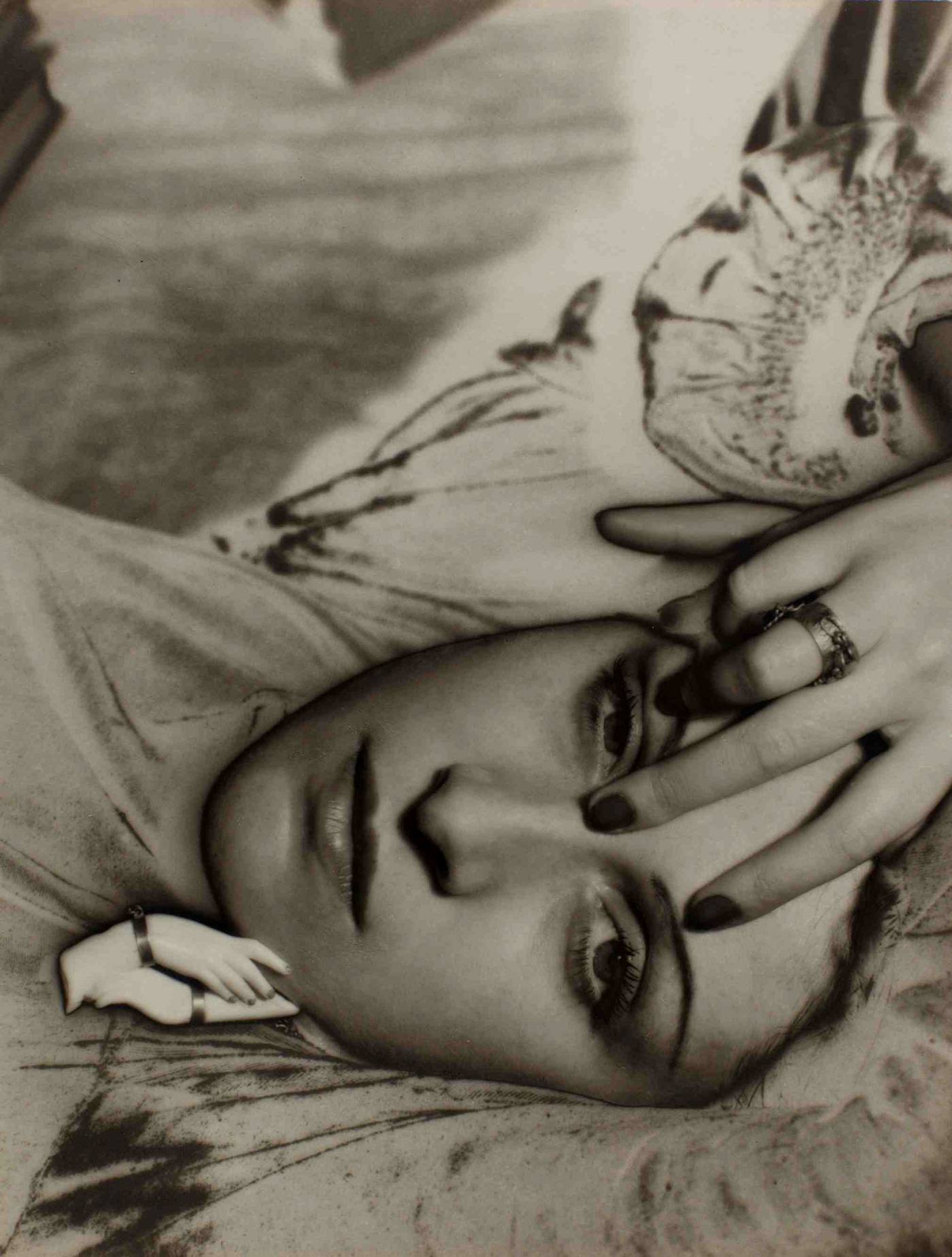

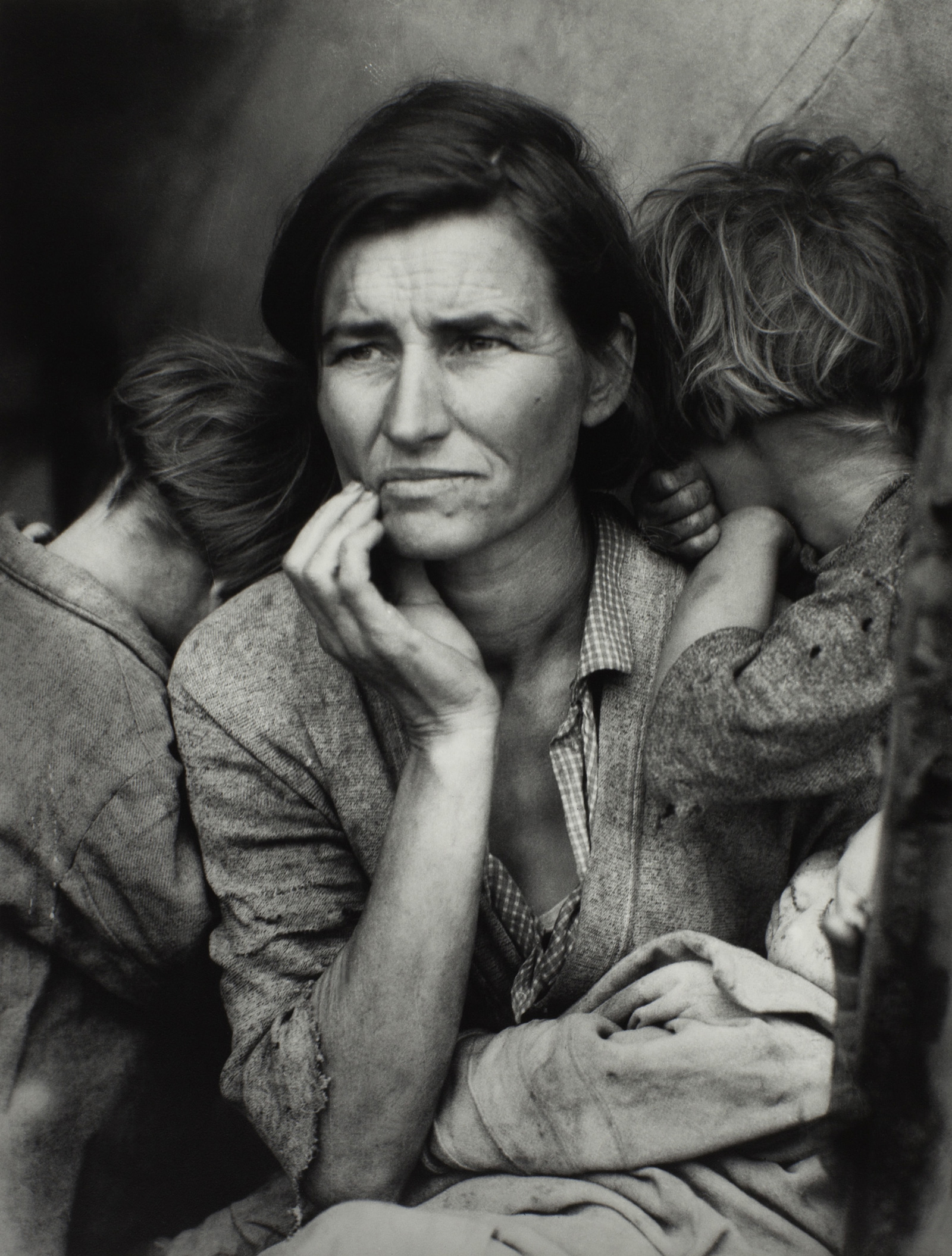
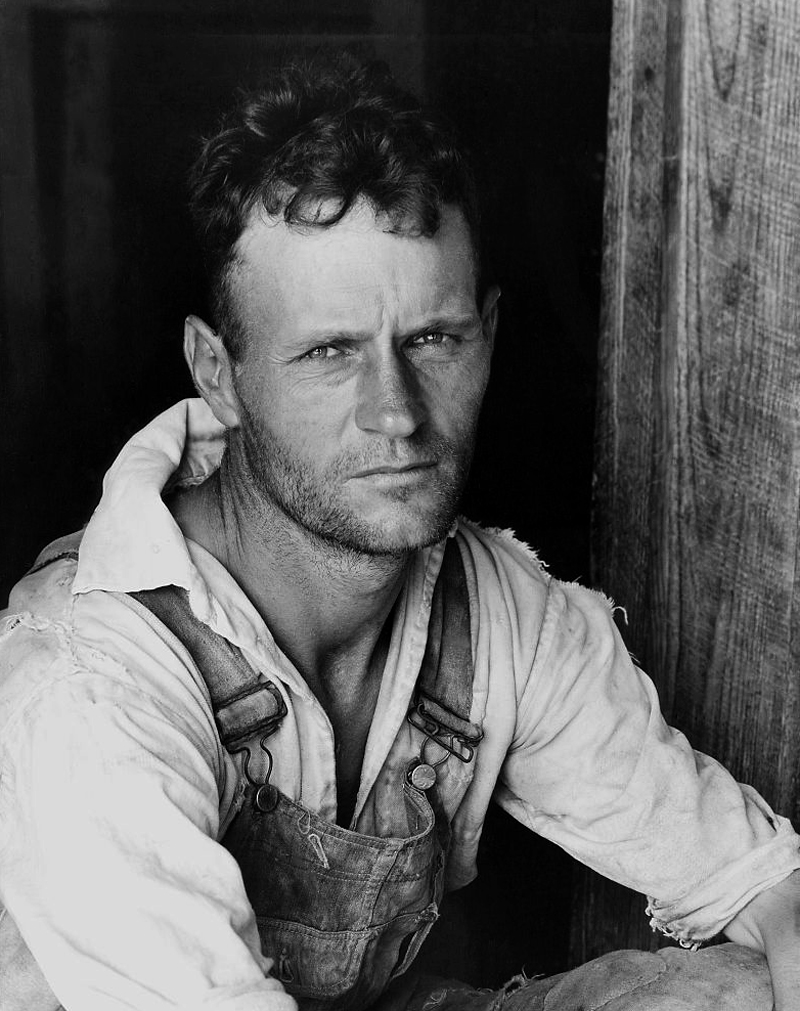


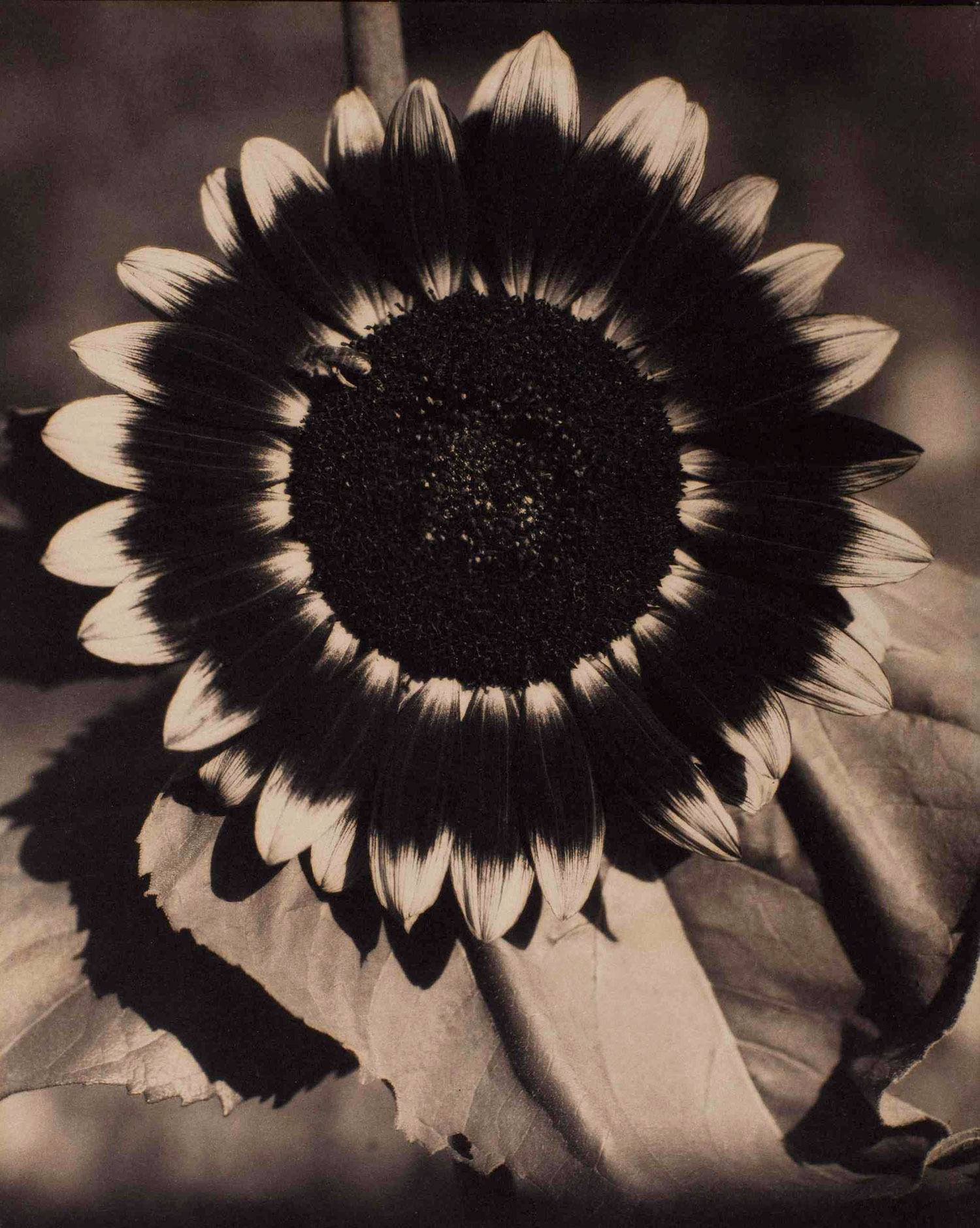


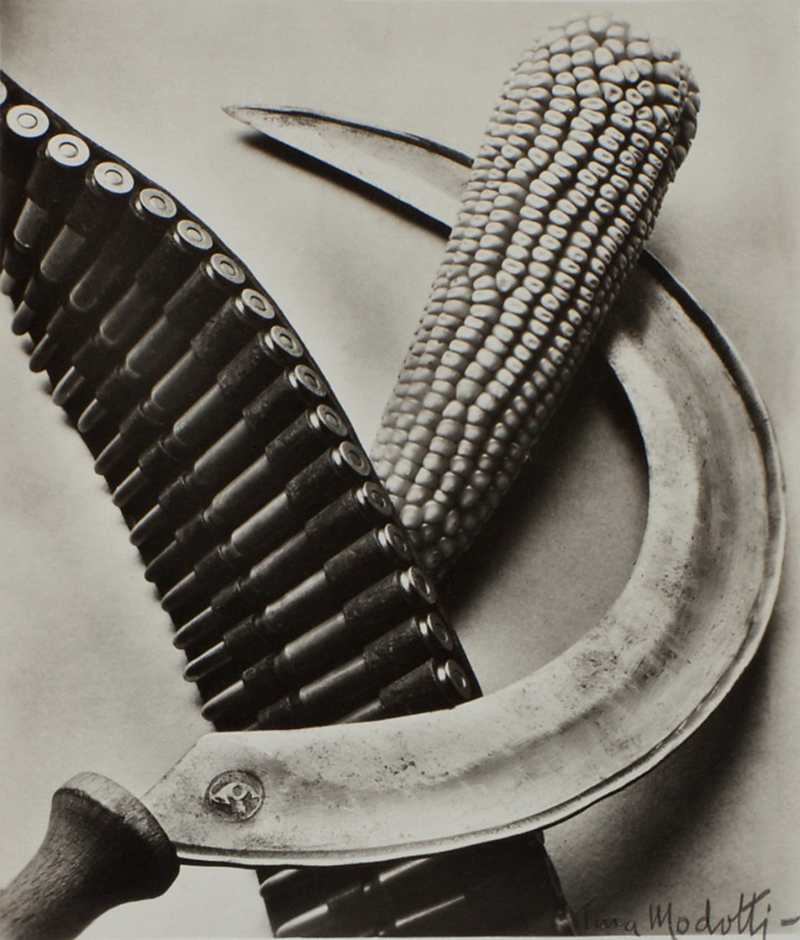


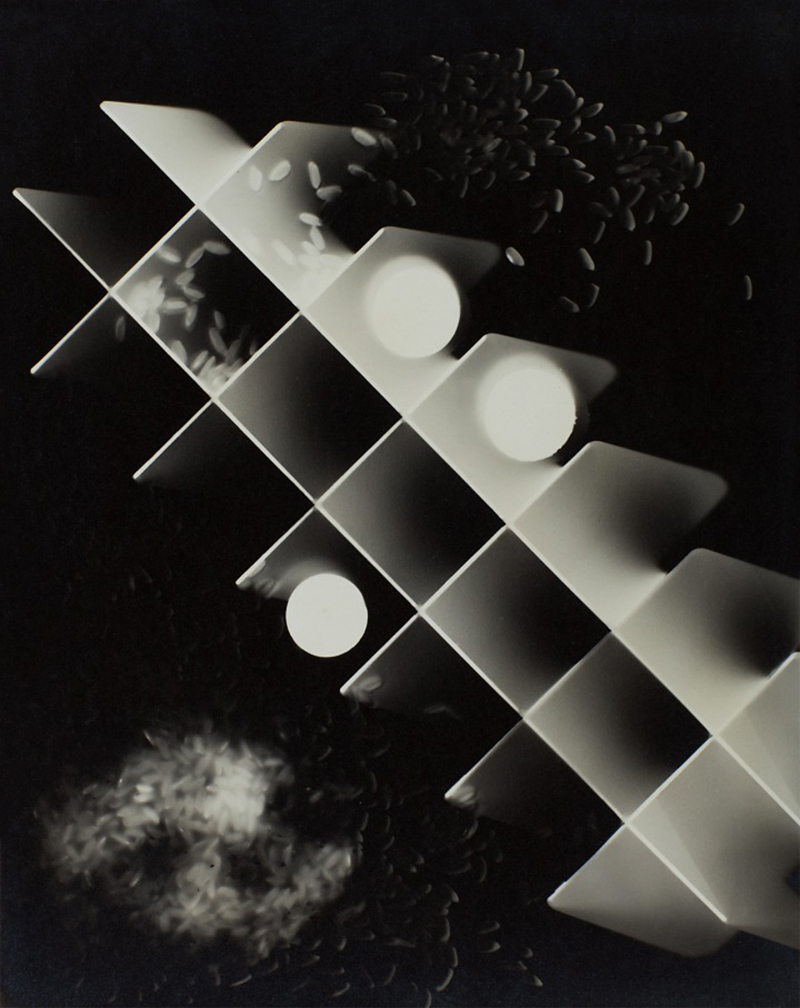
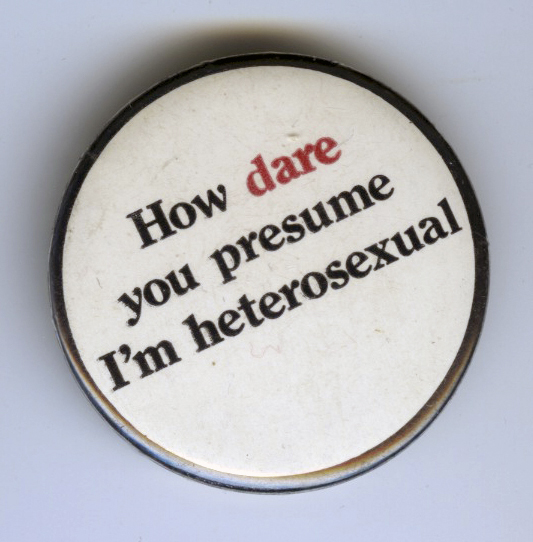

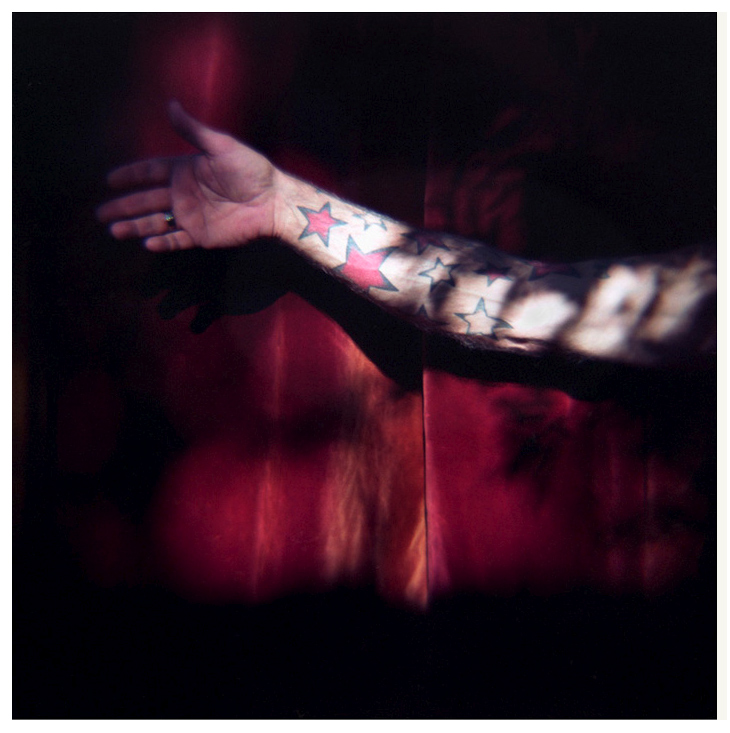
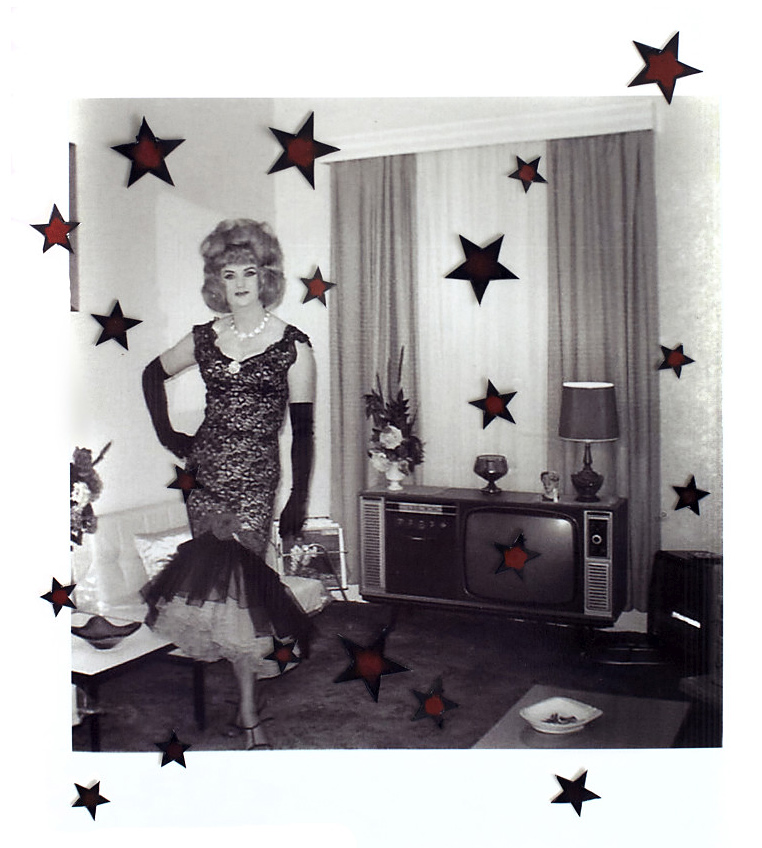
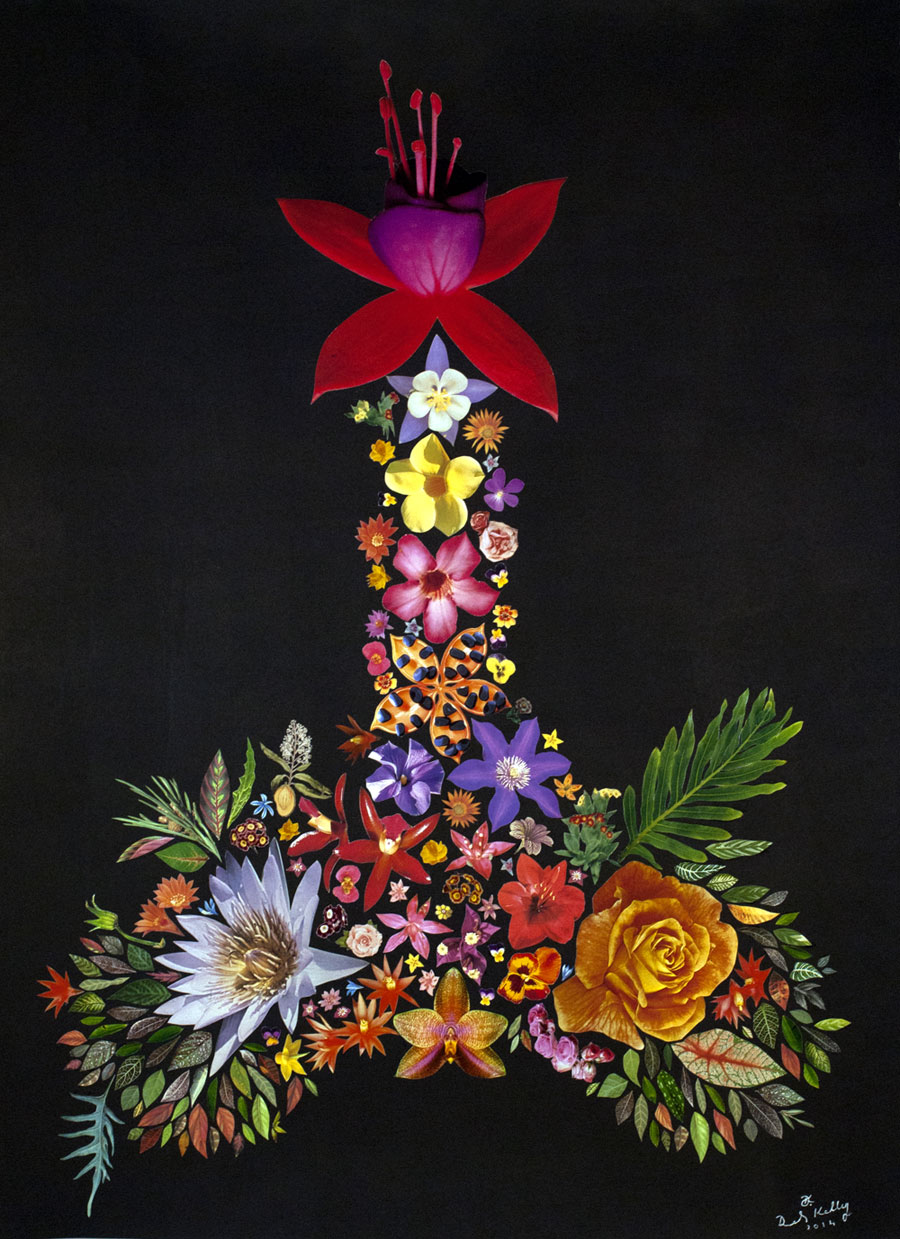
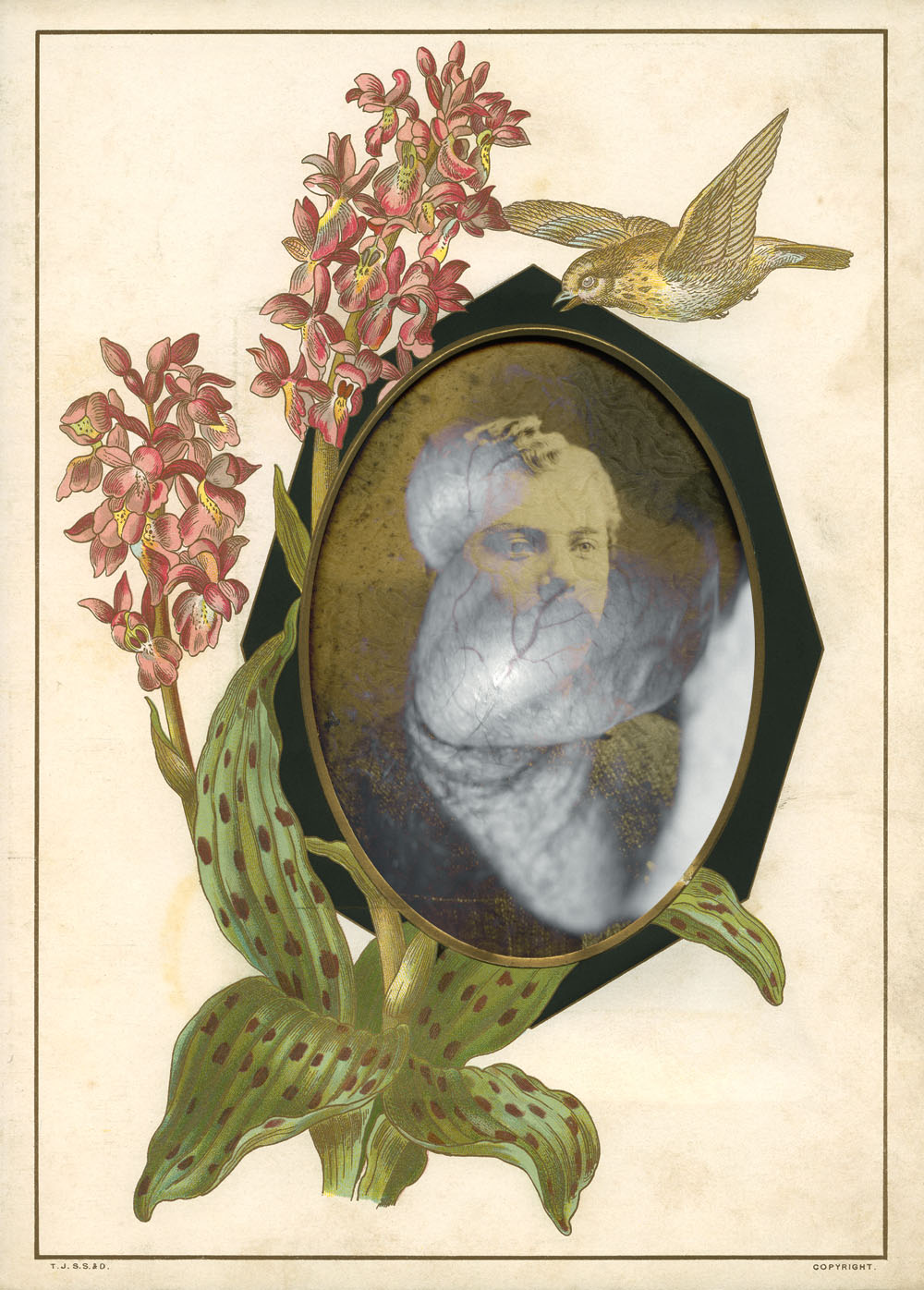
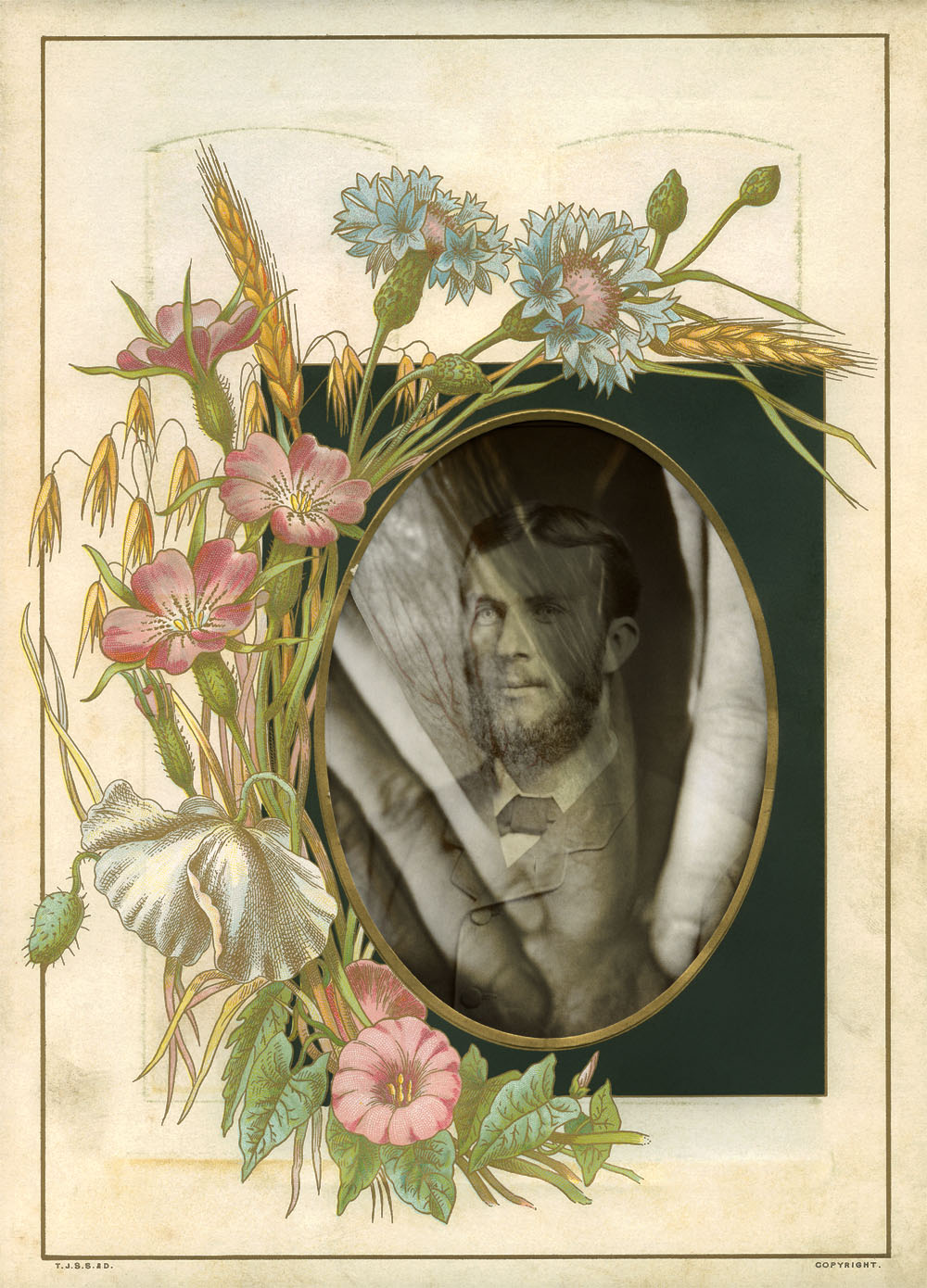






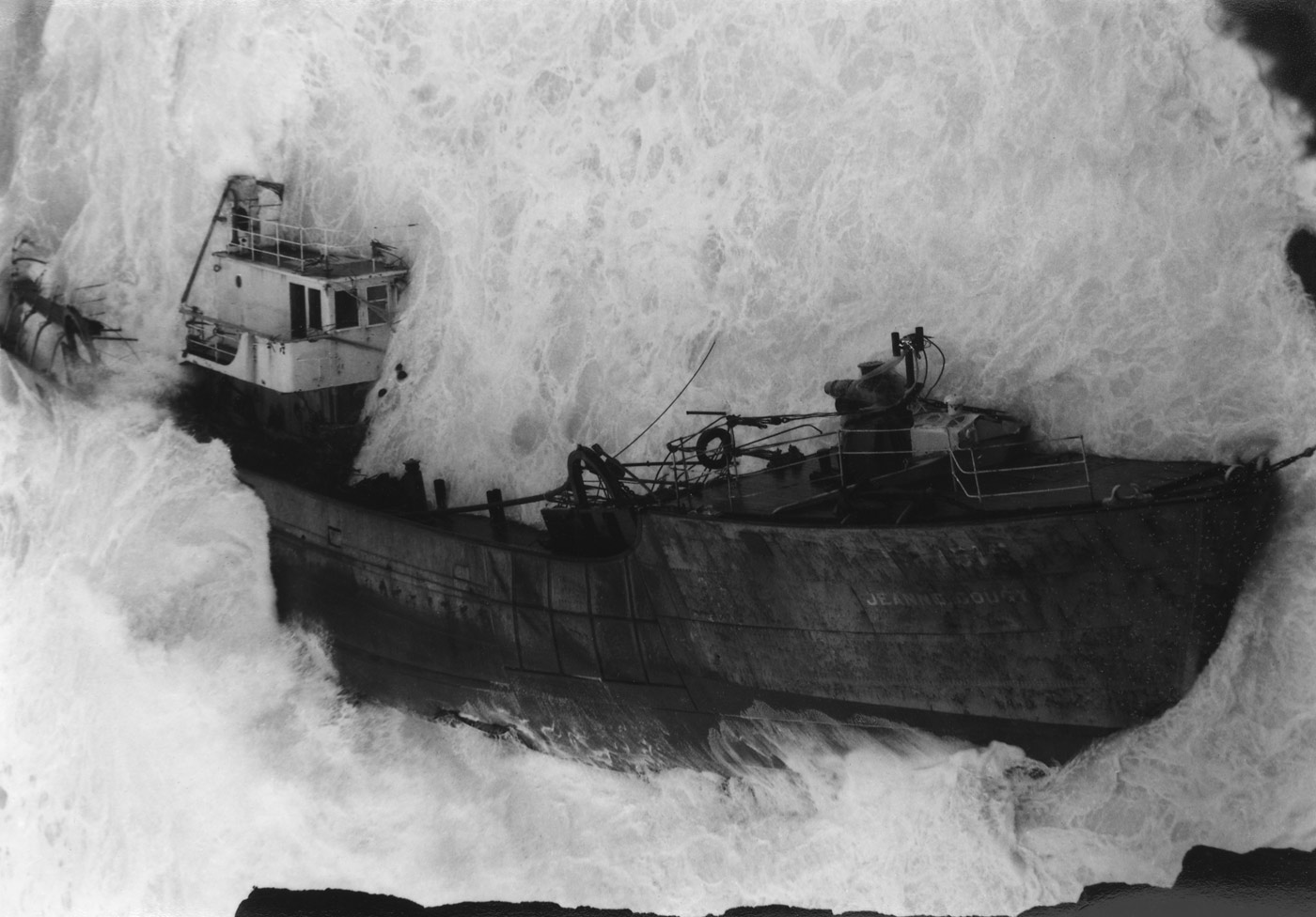


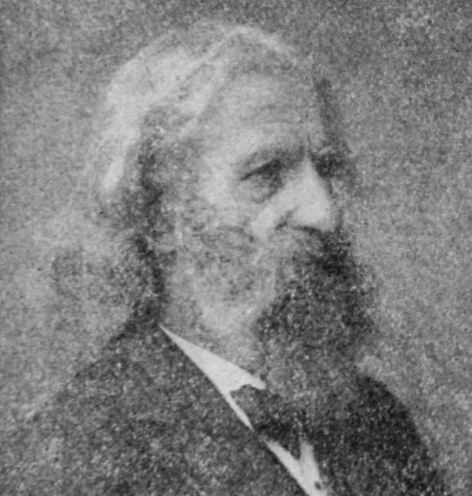


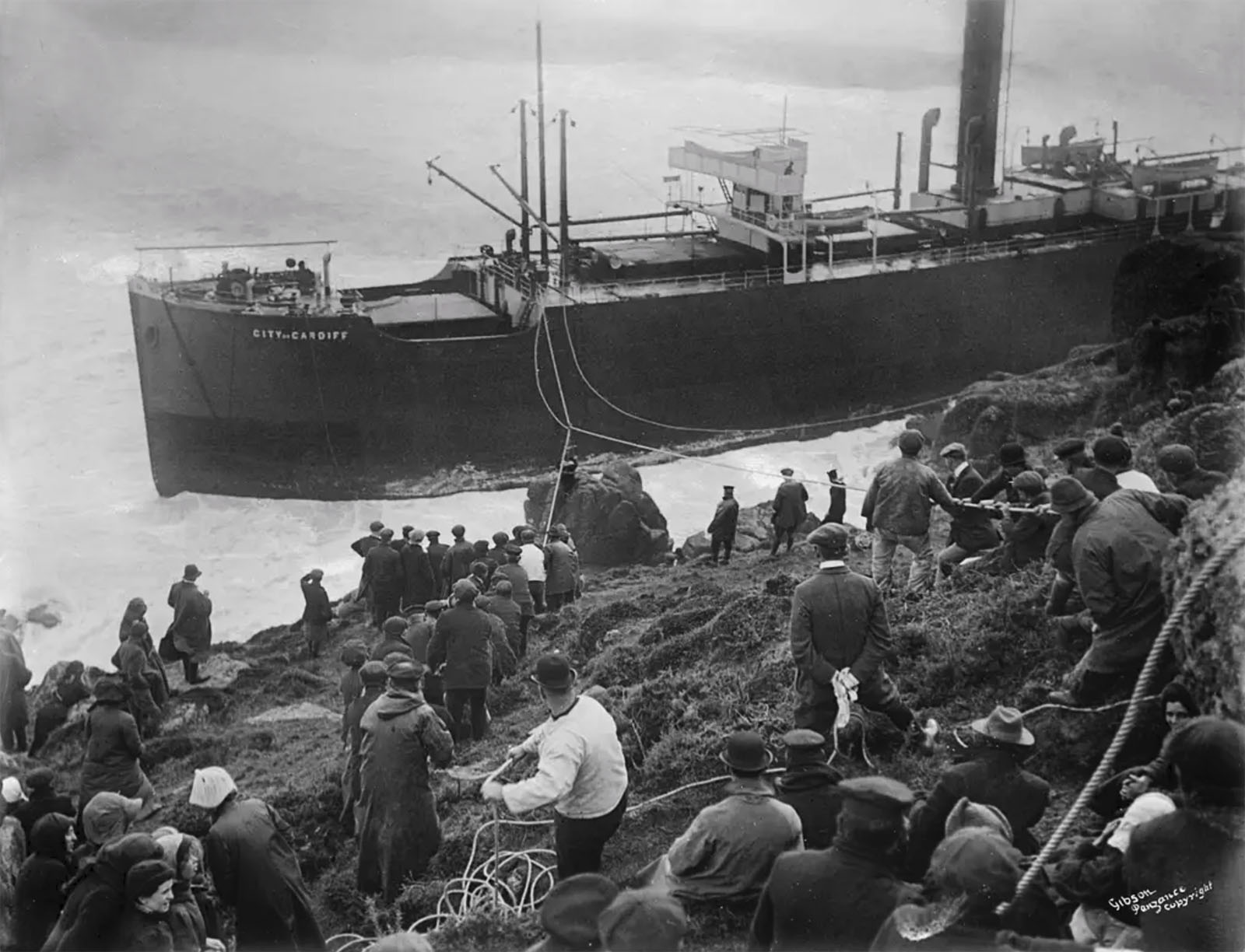


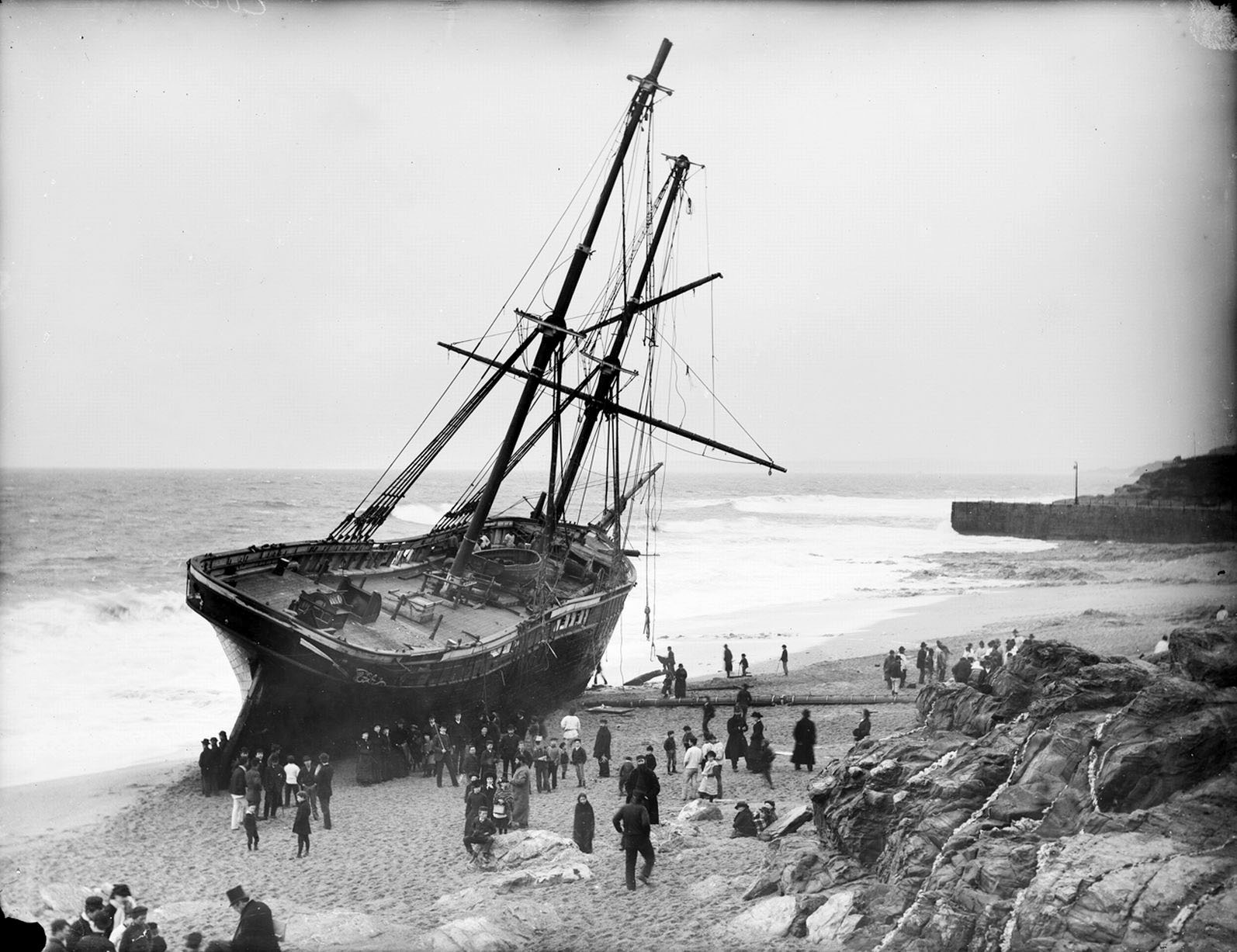
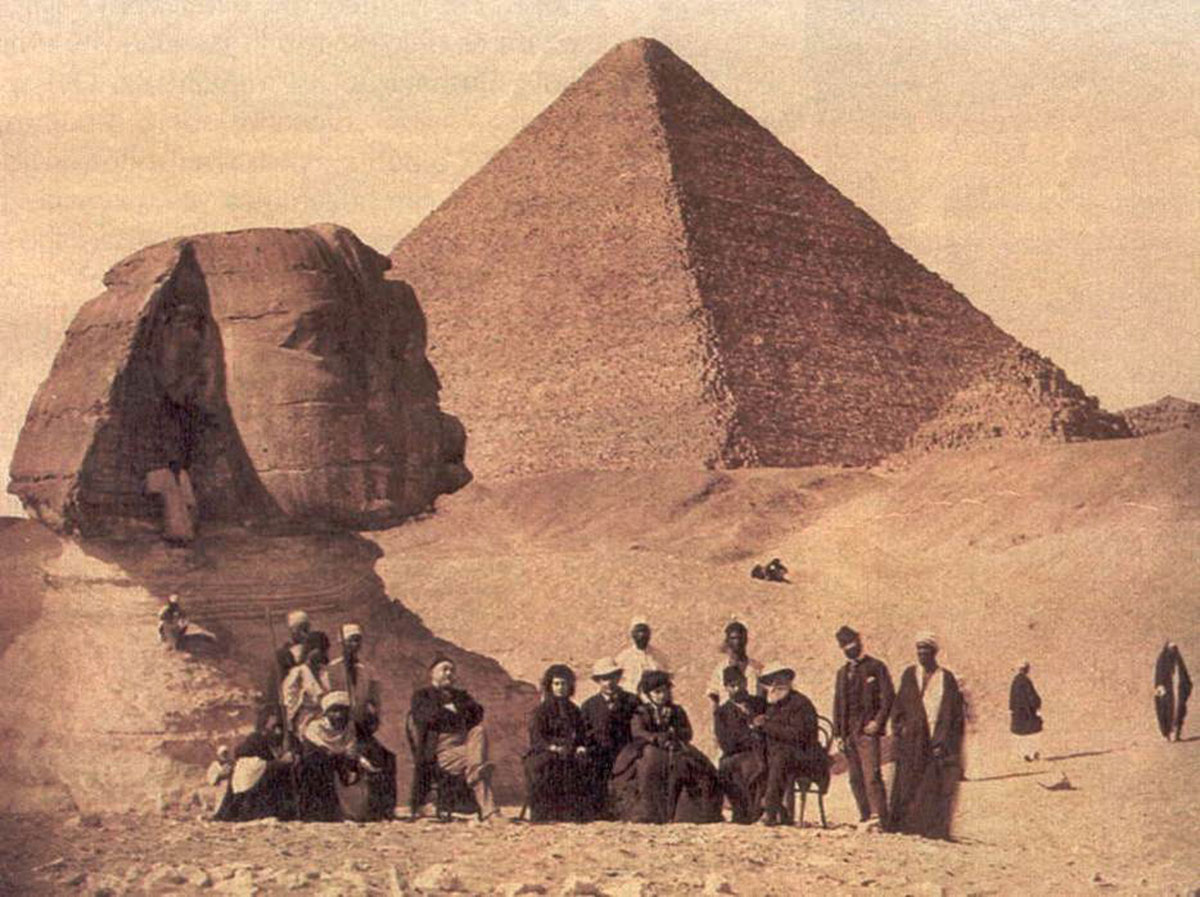









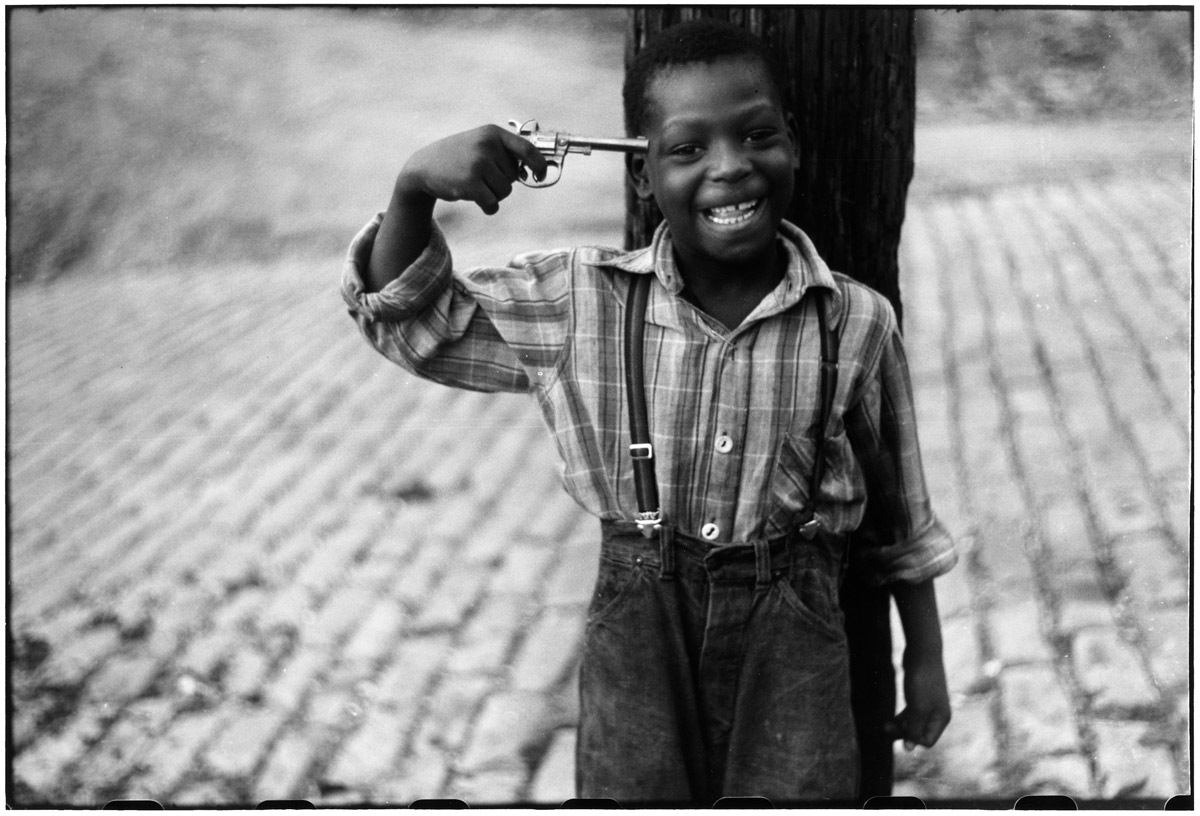

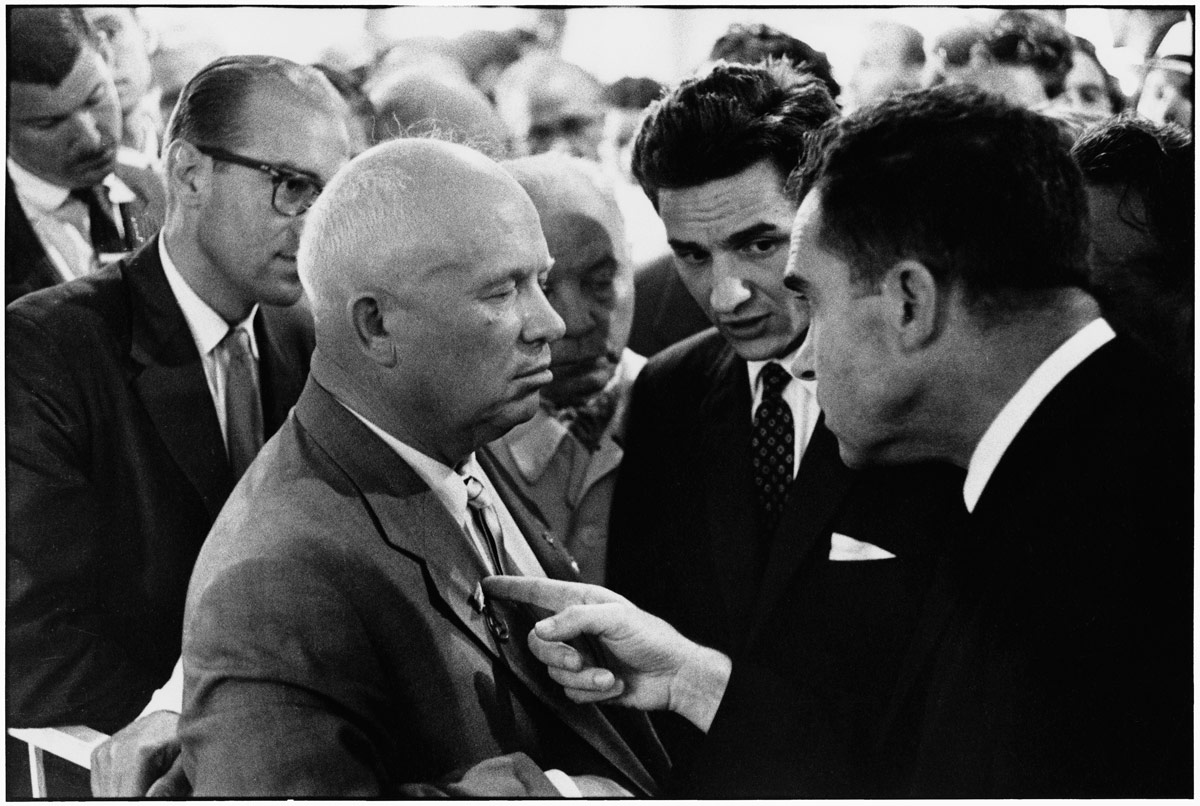

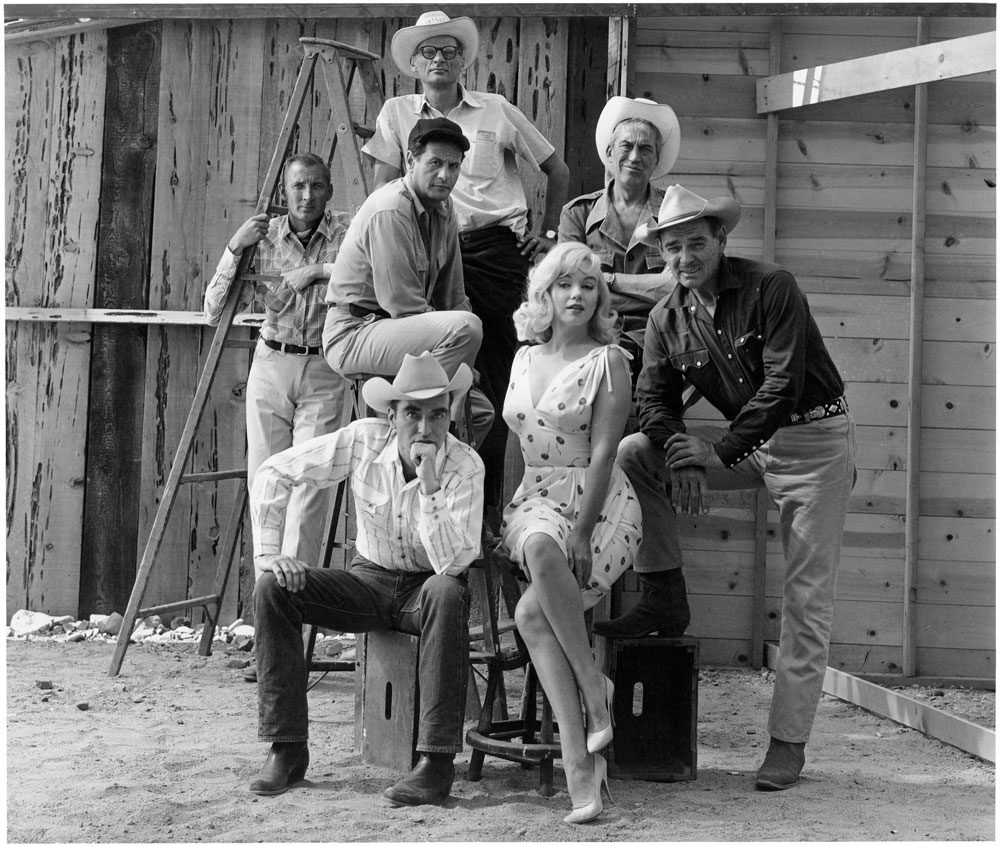
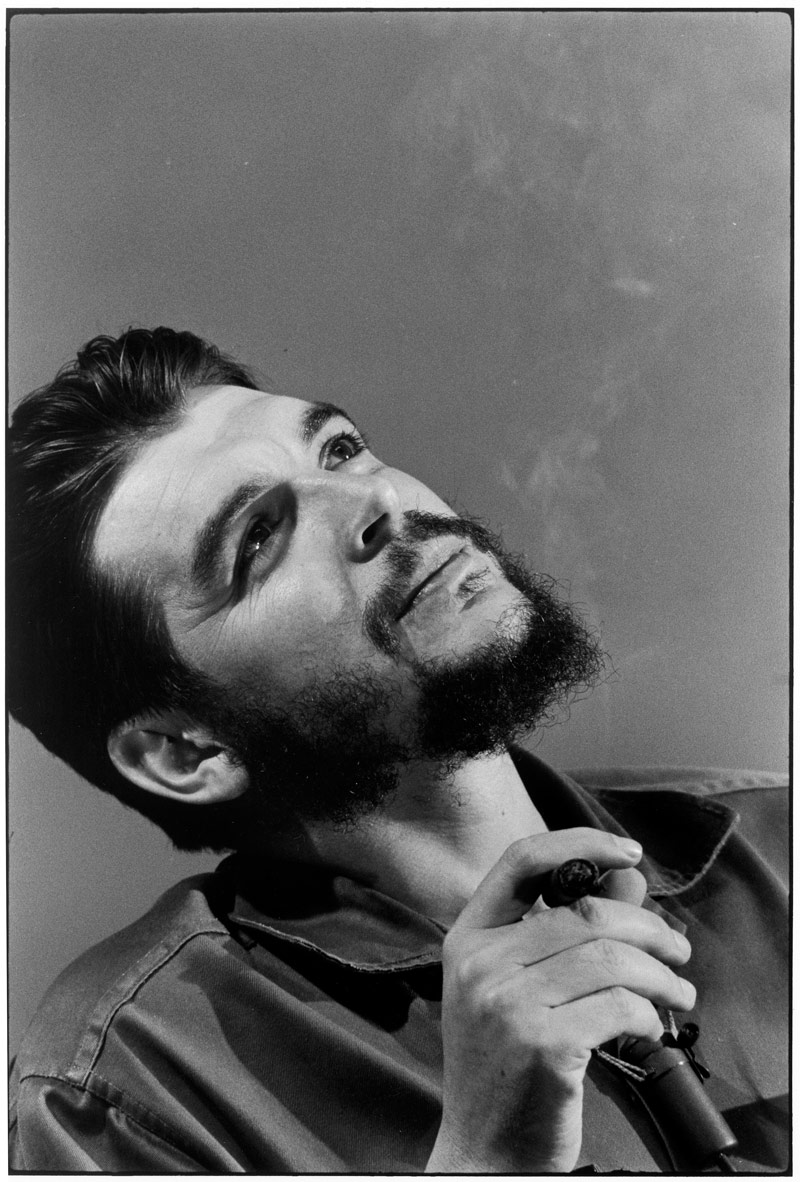








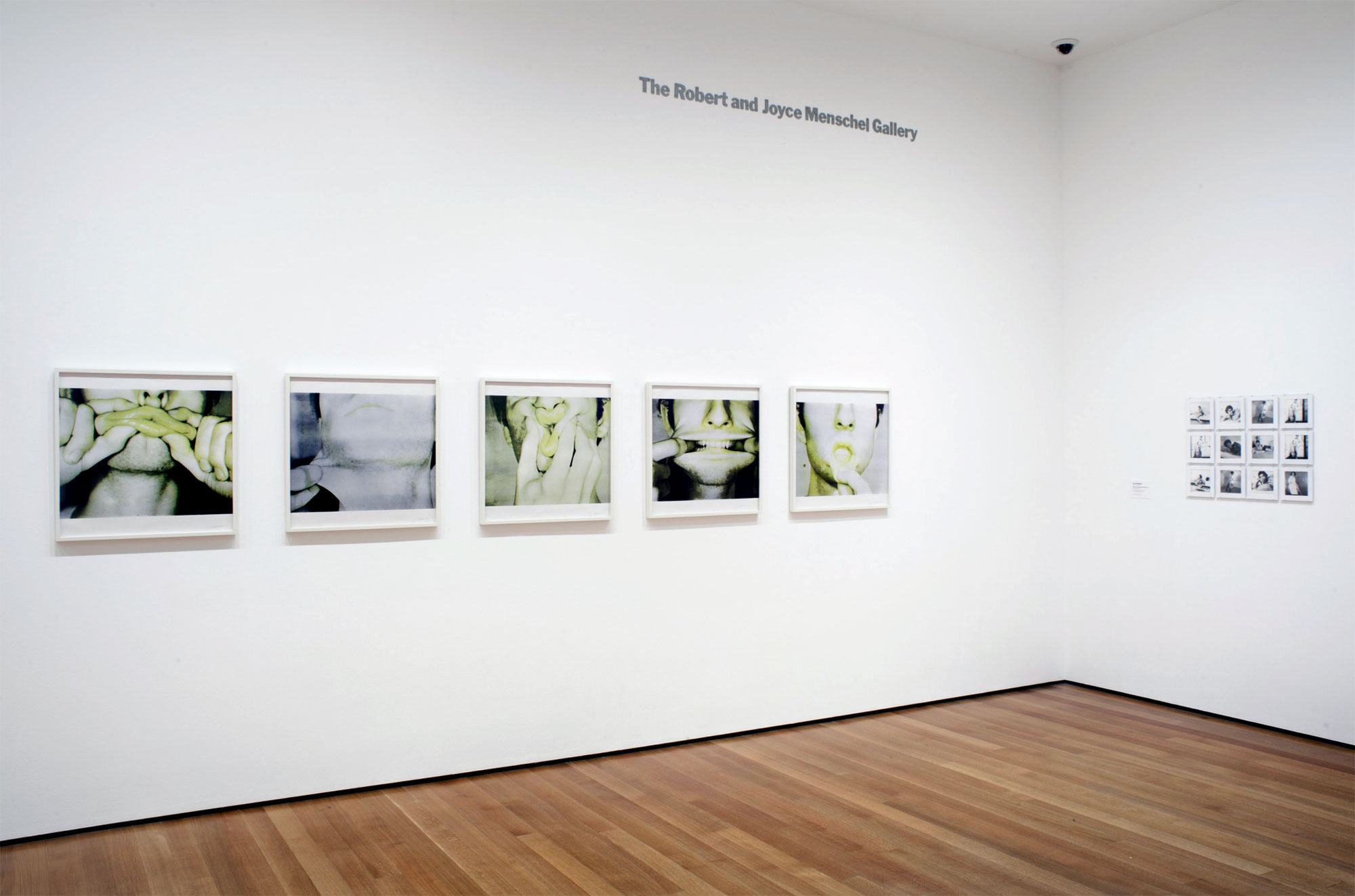
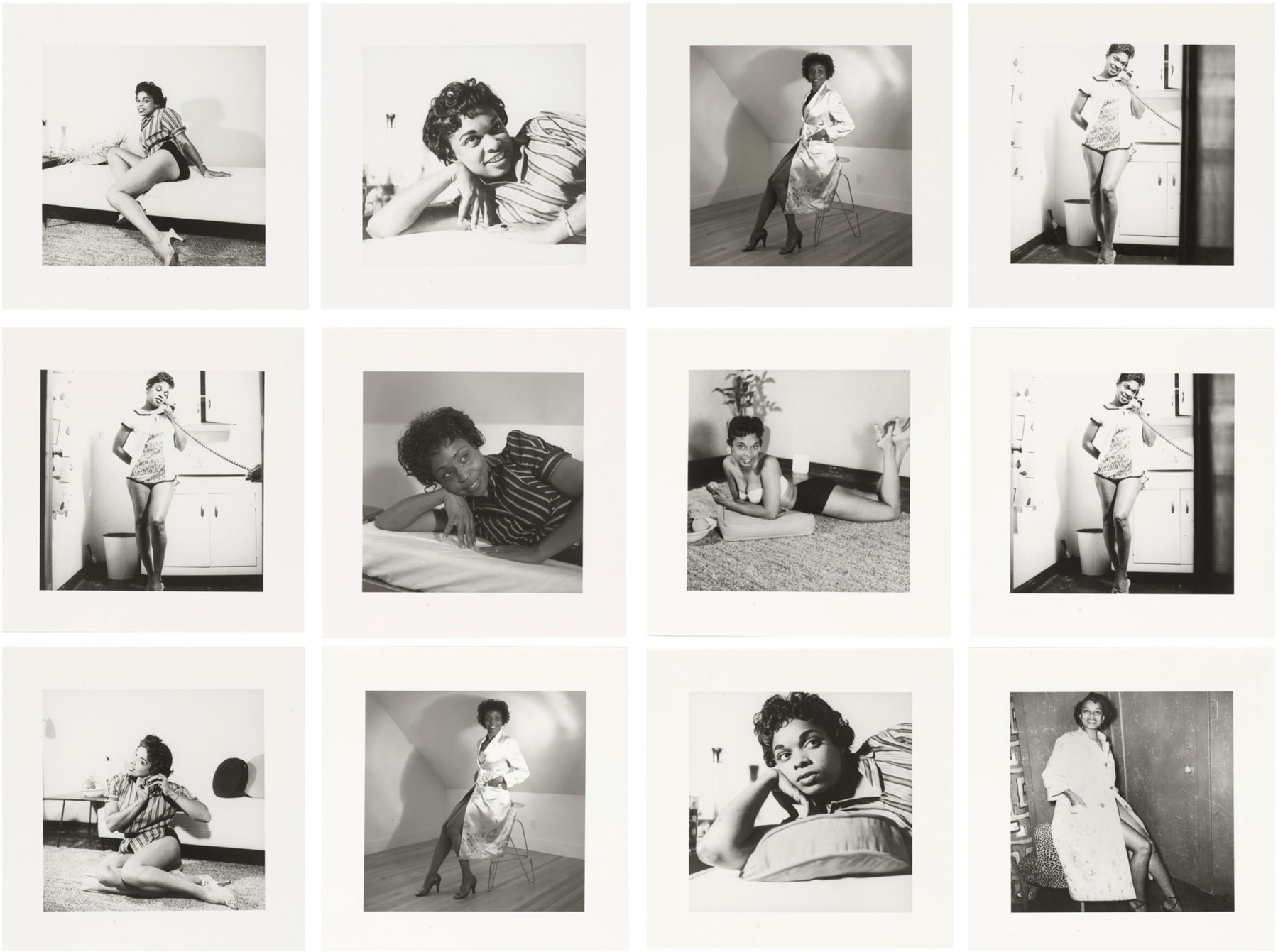
 Art Blart _ art and cultural memory archive
You must be logged in to post a comment.