There is a free exhibition space available for all 2D artists at my wonderful local café, Neighbours, 42 Chapel Street, St Kilda, Melbourne.
The wall space consists of approximately 4.5m in the main body of the cafe and 10m in the extension out back (see photos)
The extension out back is probably not so good in the summer for photographs because of the heat and corrugated roof.
Dominic is the contact. He wants to have an exhibition change over every 2 months, so 6 shows a year and for the café to become a hub for art, to draw people together in the local area. He is very passionate about art being in our lives on an everyday basis, for it to be part of our daily visual interaction. Good stuff.
The empty yet altered landscape takes on different moods with Rosemary Laing’s, One Dozen Considerations Totem 1 – Emu (2013) monument marking the site of an weapon’s test with a British flag flying behind it. Both look like conqueror’s claims to territory, powerful images of the attempts to colonise Indigenous space, to write a colonial history through markers of significance, to write out the Indigenous voice but at the same time to appropriate Indigenous ideas and language.
Larissa Behrendt. “Black Mist Burnt Country,” on the Artlink website 12 October 2016 [Online] Cited 07/11/2018
Field of thunder ~ big devil spirit ~ colonial fireworks
a/atom
late 15th century: from Old French atome, via Latin from Greek atomos ‘indivisible’, based on a- ‘not’ + temnein ‘to cut’.
a/secret
something that is not properly understood; a mystery
a/secretion
from French sécrétion or Latin secretio(n- ) ‘separation’, from secret- ‘moved apart’, from the verb secernere
a/desecration
late 17th century: from de- (expressing reversal) + a shortened form of consecrate
a/segregation
the enforced separation of different racial groups in a country, community, or establishment
Lest we forget what was bequeathed the land, Traditional Owners and servicemen by the British and Australian governments. Death, disease, displacement from Country and radioactivity so they can never return. Literally sickening.
Shame, shame and more shame.
Dr Marcus Bunyan
Many thankx to the National Museum of Australia for allowing me to publish the art work in the posting. Please click on the photographs for a larger version of the image.
There was also a lot of tearing down of Aboriginal sites according to what I’ve heard and just sort of this blinkered vision, and I think it’s a horrible education to learn that’s the way Aboriginal in those areas were perceived… and then you look at the ramifications of the health of both the people and the land and how that has been totally compromised…
Whether it came to treatment of Aboriginal people or whether it came to treatment of the environment. Hopefully [the exhibition will] engender something that people will fight, fight for their rights and fight for their land.
Yami Lester, Walatinna Station, South Australia, 2006 – In 1953, Yami, a Yankunytjatjara man, was ten years old, living at Wallatinna Station when Totem One went off, it was part of a series of atmospheric atomic bombs that the British and Australian governments were testing during the 50’s and 60’s at Emu Field and Maralinga in South Australia and the Monte Bello Islands off the West Australian coast. He was blinded not long after the fallout.
Jessie Boylan
Yami Lester (Boylan) Yunkunytjatjara man Yami Lester talks about the mysterious poisonous ‘black mist’ that badly affected Aboriginal area after the Totem 1 atomic test in 1952
At Maralinga, the tests caused adverse effects on both the local people and military personnel, but in many cases it was difficult to determine the extent to which people had been affected. But for Yankunytjatjara Elder Tjamu Yami Lester it was devastating. He was blinded at 10 years old as a result of the ‘black mist’ that descended onto his country.
He died last year at the age of 75.
Much of his life was spent fighting for people affected by nuclear testing, subsequently becoming the public face of a tireless campaign. He led the push for the 1984 Royal Commission into British Nuclear Tests in Australia, which resulted in a clean-up of the testing ground and compensation for the Anangu people. While reparations can never repair the damage inflicted upon Yami Lester, his people and country, his remarkable legacy lives on.
The burnt, barren trees in Blak Douglas’s Tjarutja Tragedy are bent, leaning to one side with their branches split in two representing the letter Y.
“That’s because I’m asking why did this happened to us people?”
The Dunghutti artist’s work captures a land destroyed by atomic testing in Australia and speaks to the deep displacement of its Traditional Owners.
“I wanted to create a piece that really encapsulated the return of blackfellas to their country when your country has been blasted. It’s metaphoric for a lot of blackfellas… [And] effectively it’s a metaphor for the continent en masse, and how much of us can’t return to our tribal homelands including myself.”
“Whole peoples were dispossessed from their country and this was done complicity on behalf of the British government and the Australian people really had no say in it.” …
Blak Douglas says his own work was inspired by Mr Lester’s spirited crusade [see above].
“I remember seeing images of him and I googled Maralinga on YouTube a long time ago and I saw Uncle Yami as he was blinded as result of the atomic tests,” he said.
“I’ve dedicated this painting to that mob and I’m proud of that and I’m sure that Uncle Yami, or that mob there when I meet them in due time, will be embracing of it.”
He says Maralinga was one of the “worst atrocities any blackfella has suffered.”
“To blow bombs like that on country and to name them gammin white names or code names that’s just the epitome of colonial fireworks,” he says.
An award-winning national touring exhibition of artworks by over 30 Indigenous and non-Indigenous artists, commemorating the British atomic tests in Australia in the 1950s, opens today at the National Museum of Australia in Canberra.
Black Mist Burnt Country features artworks from the past seven decades, selected from public and private collections, including works by Sidney Nolan, Arthur Boyd, Pam Debenham, Toni Robertson, Rosemary Laing, Jonathan Kumintjarra Brown, Judy Watson, Hilda Moodoo and Yvonne Edwards.
Developed by the Burrinja Dandenong Ranges Cultural Centre, Black Mist Burnt Country revisits the history of the British atomic test program at Maralinga, Emu Field and Montebello Islands and examines the impact on people and land, as well as its on-going legacies.
It presents works across the mediums of painting, printmaking, sculpture, photography, new media and music, while exploring the varied perspectives and creative approaches of artists from post-Second World War modernists to contemporary artists.
A variety of interactive elements enable visitors to gain insights into the social, political and environmental dimensions, while placing the Australian atomic tests in the context of the nuclear arms race and its present-day realities.
Margo Neale, Head of the National Museum’s Indigenous Knowledge Centre and Advisor to the Director, said, ‘This potent exhibition by a cast of great artists broaches a number of thresholds in the telling of Australian history through art, and the role of museums in bringing these relatively little-known stories to life. These visual stories penetrate the heart while revealing little-known truths of human consequence about a tragic event in our shared history.’
Burrinja exhibition curator JD Mittmann said, ‘It is surprising how few people are aware that atomic bombs were exploded in Australia, and how little they know about the dislocation of Aboriginal people, the exposure of Australian servicemen and the contamination of the land. This exhibition offers some remarkable insights into a chapter of our history that has long-lasting consequences, while it poses some important questions in relation to contemporary nuclear issues’.
The project has been produced by Burrinja Dandenong Ranges Cultural Centre, Upwey, Victoria and has been on tour nationally since September 2016, when it marked the 60th anniversary of the first British test at Maralinga. The project has been assisted by the Australian Government’s Visions of Australia program and developed through the Exhibition Development Fund of National Exhibition Touring Support (NETS) Victoria. The project has also received financial assistance from the Gordon Darling Foundation.
Black Mist Burnt Country received the 2017 Museums Australia Victoria Archival Survival Award (Small Museums) and a Highly Commended at the Museums Australia National Conference (Touring and Temporary Exhibitions).
Press release from the National Museum of Australia
Adam Norton Sydney-based artist Adam Norton talks about his work Prohibited Area, which is part of a series of reproduced signs he encountered in “nuclear badlands”.
Maralinga Prohibited Area sign on Emu/Nawa Road 1974 National Archives of Australia NAA: A6457, P042
British nuclear tests at Maralinga
Historical context
On 3 October 1952, the United Kingdom tested its first nuclear weapon, named “Hurricane”, at the Monte Bello Islands off the coast of Western Australia. A year later the first nuclear test on the Australian mainland was Totem 1 (9.1 kilotonnes of TNT (38 TJ)) at Emu Field in the Great Victoria Desert, South Australia, on 15 October 1953. Totem 2 (7.1 kilotonnes of TNT (30 TJ)) followed two weeks later on 27 October. The Supply Minister, Howard Beale, stated in 1955 that “England has the know how; we have the open spaces, much technical skill and a great willingness to help the Motherland. Between us we should help to build the defences of the free world, and make historic advances in harnessing the forces of nature.”
The British government formally requested a permanent test facility on 30 October 1953. Due to concerns about nuclear fallout from the previous tests at Emu Field and the site’s inadequate infrastructure and water supply, the recently surveyed Maralinga site was selected for this purpose. The new site was announced in May 1955. It was developed as a joint, co-funded facility between the British and Australian governments.
Prior to selection, the Maralinga site was inhabited by the Pitjantjatjara and Yankunytjatjara Aboriginal people, for whom it had a great spiritual significance. Many were relocated to a new settlement at Yalata, and attempts were made to curtail access to the Maralinga site. These were often unsuccessful. (My emphasis) …
A Department of Veterans’ Affairs study concluded that “Overall, the doses received by Australian participants were small. … Only 2% of participants received more than the current Australian annual dose limit for occupationally exposed persons (20 mSv).” However, such findings are contested. Australian servicemen were ordered to: repeatedly fly through the mushroom clouds from atomic explosions, without protection; and to march into ground zero immediately after bomb detonation. Airborne drifts of radioactive material resulted in “radioactive rain” being dropped on Brisbane and Queensland country areas. A 1999 study for the British Nuclear Test Veterans Association found that 30 per cent of involved veterans had died, mostly in their fifties, from cancers.
Successive Australian governments failed to compensate servicemen who contracted cancers following exposure to radiation at Maralinga. However, after a British decision in 1988 to compensate its own servicemen, the Australian Government negotiated compensation for several Australian servicemen suffering from two specific conditions, leukaemia (except lymphatic leukaemia) and the rare blood disorder multiple myeloma.
One author suggests that the resettlement and denial of aboriginal access to their homelands “contributed significantly to the social disintegration which characterises the community to this day. Petrol sniffing, juvenile crime, alcoholism and chronic friction between residents and the South Australian police have become facts of life.” In 1994, the Australian Government reached a compensation settlement with Maralinga Tjarutja, which resulted in the payment of $13.5 million in settlement of all claims in relation to the nuclear testing. (My emphasis)
Media coverage
According to Liz Tynan from James Cook University, the Maralinga tests were a striking example of what can happen when the popular media are unable to report on activities that the government may be trying to hide. Maralinga was an example of extreme secrecy, but by the late 1970s there was a marked change in how the Australian media covered the British nuclear tests. Some resourceful investigative journalists emerged, whistle-blowers such as Avon Hudson [see photograph below] spoke out and political scrutiny became more intense. The investigative journalist Brian Toohey ran a series of stories in the Australian Financial Review in October 1978, based in part on a leaked Cabinet submission.
In June 1993, New Scientist journalist Ian Anderson wrote an article entitled “Britain’s dirty deeds at Maralinga” and several related articles. They are a detailed analysis of the legacy of Vixen B and the Australian government’s prolonged negotiations with the United Kingdom on cleaning up Maralinga and sharing the cost of “safe-sealing” waste plutonium. Previously, much of this highly toxic nuclear waste had simply been lightly bulldozed into the soil rather than buried in deep, secure, purpose-built, concrete bunkers. In 1993, Anderson won two Michael Daley Awards for his Maralinga articles.
Maralinga: Australia’s Nuclear Waste Cover-up is a book by Alan Parkinson about the clean-up following the British nuclear tests at Maralinga, published in 2007. Parkinson, a nuclear engineer, explains that the clean-up of Maralinga in the late 1990s was compromised by cost-cutting and simply involved dumping hazardous radioactive debris in shallow holes in the ground. Parkinson states that “What was done at Maralinga was a cheap and nasty solution that wouldn’t be adopted on white-fellas land.”
Australian servicemen and nomadic Aboriginals reveal the devastating effects of atomic weapons testing carried out in Australia by the British during the 1950s. For the first time, members of the Royal Australian Army, Air Force and Navy describe former top secret aspects of those tests. With the use of rare archival film and photographs, as well as eye witness accounts, Australian Atomic Confessions chronicles the hidden history and exposes previously hidden Government cover-ups. The consequences of nuclear testing imposed on the Australian people and land are not just skeletons of the past. Sydney’s new nuclear reactor continues to pose a threat to the environment and civilians, and the problem of removing and disposing of the old nuclear reactor remains an unanswered question. Prominent Aboriginal Elders also warn that an imminent catastrophe may occur in Central Australia as a result of two uranium mines. Australian Atomic Confessions is a chilling expose of nuclear testing and its damaging legacy, one that continues to this day.
Jessie Boylan (Australian, b. 1986) Portrait of a whistleblower: Avon Hudson was a leading aircraftman for the RAAF during the nuclear tests in Maralinga 2011-2015 Image: Burrinja Cultural Centre
This series chronicles Avon Hudson’s life, from early years growing up in regional South Australia, to service in the Royal Australian Air Force as a Leading Aircraftman, through the experience of British atomic bomb tests, to his “whistle blower” act of revealing Maralinga’s deadly legacy.
What Avon knew, and was prepared to tell publically about Maralinga, contributed to the establishment of the Royal Commission into British Nuclear Tests in Australia (1984-1985). His motivation was to put a halt to government plans to return Maralinga to its traditional owners, pending a full clean-up of land still contaminated by radioactive debris.
The story of nuclear testing is unknown to most Australians. Between 1952 and 1963, after a decision made by Prime Minister Menzies alone, nine atomic bombs were exploded and hundreds of ‘minor’ experiments were conducted at the British-run testing ranges at Emu and Maralinga in South Australia. Three bombs were also exploded at Monte Bello Islands in Western Australia.
The impacts of these experiments continue to play out in the ill health and changed lives of both Aboriginal and non-Aboriginal communities, who were exposed to or involved in the tests, over multiple generations. The tests have also left a deep-future legacy of environmental contamination.
It is a portrait of someone with a photographic memory, capable of grasping and articulating every detail of the atomic age as he experienced it.
It depicts a committed citizen and serviceman, husband and father, always an advocate and an activist, who in civilian life became a Wakefield councillor for over 20 years. It shows a practical man – mechanic, wood-turner and furniture maker; and portrays a nature-enthusiast and an educator on environmental and social issues.
It is also a portrait of someone who has invariably lived by his convictions – as that’s what whistleblowers do. Since the 1970s, Avon has campaigned for recognition of nuclear veterans and civilian personnel. As his co-authored book “Beyond Belief” records, “His life has been deeply affected by a sense of injustice and by the callousness of successive Australian and British governments ignoring the plight of those caught up in ‘the grand game’.”
This series is a recognition and celebration of the significant role Avon has played South Australia’s unfolding atomic history. His life as an activist seems to belong to the present, as the future of nuclear science and technology is considered anew.
Boylan is a photomedia artist who explores issues relating to human impacts on the land and communities in relation to environmental and social devastation – nuclear testing, mining and war. Through her work Boylan’s has expressed ideas of history and place in relation to contemporary Australian identity, community and activism. She recently completed her MFA on the topic of photography, the campsite and the anti-nuclear movement in Australia.
Jessie Boylan is a key member of the Atomic Photographers Guild, an international group who aim to render visible all aspects of the nuclear age. She won first place in Images of Justice at Adelaide University 2015 and has been a finalist for the Josephine Ulrick and Win Schubert Photography Award in 2007, 2009 & 2012, the Spirit of Youth Award in 2009, the Head On Alternative Portrait Awards, ACP, Sydney in 2009 & 2010.
Taranaki test site-and cleanup-area (image source: Google Earth)
Jonathan Kumintjarra Brown
Pitjantjatjara artist Jonathan Kumintjarra Brown talks about his country and the effects the atomic tests had on it.
Jonathan Brown was removed from his parents at Ooldea and grew up with foster parents in Melbourne and Sydney. At a later stage of his life he located his parents at Yalata and learnt about the atomic tests, the removal of his people from their traditional lands and the destruction of country. Jonathan first came to recognition as artist when he worked with Lin Onus for the 1990 exhibition Balance at the Queensland Art Gallery. His later paintings were heavily influenced by the experiences of the Pitjantjatjara / Anangu which became the focus of his work.
Text from the Black Mist Burnt Country website
Jonathan Kumintjarra Brown (Australian, 1960-1997) Maralinga before the Atomic Test 1994 Ochres, sand and kapok on linen 227 x 205cm Yarra Ranges McLeod Gift Collection
Much of the exhibition centres on the story of artist Jonathan Kumintjara Brown who was removed from his family at Ooldea Mission, located on the transcontinental railway near Watson about 250 kilometres west of Ceduna.
Three of his works feature in the exhibition, and grainy textures bring his pieces to life. One in particular, Black Rain, powerfully illustrates the destruction of country through a black sky punctured by white thick stripes of rain and cloud.
“He did it with such a great sense of power and visual impact,” says Burrinja Executive Director Ross Farnell.
“He would depict the landscape and then basically throw a whole heap of ochre, sand and glue over the top of it and then just obliterate most of the painting and then go that’s Maralinga after the test, ‘that’s what happened to my country’,” Mr Farnell told NITV News.
One of the central stories of Black Mist Burnt Country is the story of artist Jonathan Kumintjarra Brown. Jonathan was removed from his parents at Ooldea mission station at very early age and grew up with in a foster family in Melbourne and Sydney. At a later stage of his life he located his parents at Yalata and went back to be reunited with them.
The return to his people was traumatic. Neither could he speak Pitjantjatjara, nor did he know he had a brother. He learned about the removal of his people from their country and the destruction of country through atomic testing.
Fabian Peel, who worked as a nurse in the community at the time and is now director of Tullawon Health Clinic in Yalata, took Jonathan around the country. He remembers: “It was very painful. Jonathan cried all the way.”
Jonathan went on to make several paintings depicting the impacts of the nuclear testing program on Anangu and the land, some of which will be included in the exhibition.
Kate studied graphic design at Newcastle-upon-Tyne College of Art and worked in London during the 1970s as an illustrator and layout artist in various publishing houses. In the 1980s she studied painting at Exeter College of Art, graduating with a BA in Fine Art and Literature and concentrated on her purely abstract paintings in the tradition of the St. Ives School of painters with whom she trained. In the mid 1990s her working style changed dramatically and abstraction became a background element in new works where a variety of figurative styles and painting techniques were used within the same image. Since then she has worked to combine both painterly and graphic imagery to narrative effect. A life-long interest in textiles, quilting and the language of stitching is also evident in her work.
Since emigrating to Australia Kate has been concentrating on a series of paintings whose theme is the fragmentary and personal nature of memory and the process of memorialisation, as with the paintings she presents in this exhibition. Here she is using the naive imagery of rural community quilting to bring together varied scraps of information and family anecdotes about the British Australian nuclear tests. Kate’s father was a seismologist for the Atomic Weapons Research Institute and he was closely involved in the development and testing of the H Bomb during the 1950s. Her work here is a deeply personal response to historical events.
Text from the Black Mist Burnt Country website
Kate Downhill Kate Downhill talks about her father’s involvement in the British atomic test program as a seismologist and explains her painting’s reference to quilting.
Tjariya Stanley was a Pitjantjatara woman, born in Wingellina (Irrunytju) in 1939. Until recently, she went by her birth name Nungalka, but changed to Tjariya following a death in the community. She lived and worked in Ernabella and had two daughters, one of whom (Renata) is also a senior artist at Ernabella. Tjariya has been involved in the art centre for a long time and mastered several different media.
Initially she assisted in making floor rugs, painting moccasins and knitting jumpers, the first enterprise undertaken by the Ernabella craft room. In the 1970’s she learnt batik from Daisy Baker following her visit to Indonesia, and developed into one of Ernabella’s most accomplished batik artists. She also taught herself weaving with grass and raffia (tjanpi) and crocheting mukata (beanies) with the sheep wool that she still hand spun. Stanley also developed as a painter and ceramic designer, and used these mediums to tell tjukurpa (creation stories) of her country and family, or used designs of the landscape such as tjukula (rockholes) and flowers.
Tjariya was a stalwart of the community and the heart of the art centre. Her traditional knowledge was strong and deep and she was also a ngankari (traditional healer). She was an excellent story teller, and delighted in telling stories of when she was a young girl growing up in Ernabella mission. Her grandson Ngunytjima is also an accomplished potter. Tjariya’s works are in a number of public collections including the Queen Victoria Museum & Art Gallery of Tasmania, the National Museum of Australia, the National Museum of Scotland, the National Gallery of Australia and Artbank.
Hilda Moodoo (Australian, b. 1952) and Jeffrey Quema (Pitjantjatjara/Australian, 1947-2009) Destruction II 2002 Synthetic polymer paint on canvas 101 x 122cm Santos Fund for Aboriginal Art 2002, Art Gallery of South Australia, Adelaide Courtesy of the artists
Hilda Moodoo painting began at Oak Valley in December 2001 when Victorian Yorta Yorta artist Lance Atkinson spent two months in the community teaching the technical skills for painting on canvas. Hilda Moodoo and Kunmanara Queama’s collaborative paintings Destruction I and II were included in the resulting Desert Oaks exhibition at the Adelaide Festival Centre in March 2002 and are now in the collection of the Art Gallery of South Australia. The Desert Oaks project was a deliberate expression of identity and an opportunity to pass on knowledge through painting.
Text from the Black Mist Burnt Country website
Queama, a Pitjantjatjara man, was born at Ooldea, on the eastern edge of the Nullabor Plain. With the dispersal of residents after the closure of the United Aborigines Mission (UAM) at Ooldea in 1952, he was sent to the Lutheran mission school at Koonibba, near Ceduna. He worked for many years on land conservation and management boards, and lobbied tirelessly for the return of the Maralinga-Tjarutja lands to the traditional owners. In 1984 the lands were been returned, and he and his wife Hilda Moodoo among others founded Oak Valley community, 150 kilometres northwest of Maralinga.
In Arthur Boyd’s Jonah on the Shoalhaven – Outside the City (1976), the iconic cloud sits on the horizon, almost like a puff of dust rising off the white sand. Boyd had been conscripted into the army and became a pacifist. For him, the threat of nuclear destruction sits in the backdrop, no less menacing than Nolan’s apocalyptic response two decades earlier.
Larissa Behrendt. “Black Mist Burnt Country,” on the Artlink website 12 October 2016 [Online] Cited 07/11/2018
Sidney Nolan (Australian, 1917-1992) Central Desert Atomic Test 1952-1957 Oil on canvas
Nolan’s landscape sits harsh and red under a blue sky and the mushroom cloud of the bomb. Nolan was living in London at the time but news of the tests started appearing in the media. The cloud and dust were added to one of Nolan’s desert paintings as an act of protest over the events taken place back in Australia and the addition turns a rugged landscape into an image that seethes with anger at the act of destruction. In Nolan’s landscape, the bomb looms large.
Larissa Behrendt. “Black Mist Burnt Country,” on the Artlink website 12 October 2016 [Online] Cited 07/11/2018
Toni Robertson (Australian, b. 1953) The Royal Nuclear Show – 6 1981 Screen print on paper (set of 6 screenprints) Prints, screenprints, printed in colour inks, each from four hand-cut and three photo-stencils Flinders University Art Museum Collection Image courtesy of National Gallery of Australia, Canberra
Toni Robertson studied fine arts at the University of Sydney in the 1970s and was a founding member of the influential Earthworks Poster Collective (1971-1980) at the University’s Tin Sheds. Robertson’s work has appeared in many group exhibitions in the 1970s and 1980s, and along with Chips Mackinolty and others she is recognised as a leading figure in Australian political printmaking. Her work is held in many public collections, including the National Gallery of Australia, the Art Gallery of New South Wales, the National Gallery of Victoria, the Australian War Memorial, Artbank and the Museum of Contemporary Art, Sydney as well as tertiary, state library and union collections.
The political poster movement in Australia was at its height in the 1970s, supporting anti-war, anti-uranium, pro-land rights and pro-feminist causes. Members of the Earthworks Poster Collective, opposed to the egotism of individual artistic fame, worked from the Tin Sheds (University of Sydney Art Workshop). In Daddy what did you do in the nuclear war? Toni Robertson and Chips Mackinolty appropriated a British recruiting poster from the First World War, adapting the children’s bodies to reflect the genetic consequences of radiation.
Christine Dixon
Victorian-born artist Chips Mackinolty was involved in the campaigns against the war in Vietnam by producing protest posters. He was a key figure in the radical poster movement and was introduced to screen printing in Goulburn Street, Sydney. During the 1970s posters became an art form artists using the cheap posters as a political tool. The Earthworks Poster Collective, established in 1971, was the most active and well-known of these groups. Earthworks operated from the Sydney University Art Workshop, commonly known as the Tin Sheds, finally demolished in 2007. Mackinolty used sharp, flat colours and increasingly professional techniques to produce posters such as “For the man who said life wasn’t meant to be easy – make life impossible.” The poster is a multi-imaged send-up of former Australian Prime Minister Malcolm Fraser. It was posted up at night around Sydney, helping to politicise a generation. His work is held in major national and international institutions.
Text from the Black Mist Burnt Country website
Pam Debenham (Launceston, Tasmania, Australia, b. 1955) Tin Sheds Posters (Sydney, New South Wales, Australia | commenced 1984 (organisation)) Tin Sheds Art Workshop (commenced 1969 | print workshop (organisation)) No nukes in the Pacific 1984 Prints, posters, screenprint, printed in colour inks, from multiple stencils Printed image: 88.0 h x 62.0 w cm Sheet: 91.0 h x 65.0 w cm National Gallery of Australia, purchased 1990
Exhibition dates: 13th July – 30th September, 2018
Curators: This exhibition is co-curated by David Kiehl, Curator Emeritus, and David Breslin, DeMartini Family Curator and Director of the Collection.
David Wojnarowicz (American, 1954-1992) with Tom Warren Self-Portrait of David Wojnarowicz 1983-1984 Acrylic and collaged paper on gelatin silver print 60 × 40 in. (152.4 × 101.6cm) Collection of Brooke Garber Neidich and Daniel Neidich Photo: Ron Amstutz
Man on fire
… and two important ones I forgot: earth and spirit!
What an unforgettable, socially aware artist.
His work, and the concepts it investigates, have lost none of their relevance. With the rise of the right, Trump, fake news, discrimination and the ongoing bigotry of religion his thoughts and ideas, his writing, and his imagination are as critical as ever to understanding the dynamics of power and oppression. As Olivia Laing observes, ” …the forces he spoke out against are as lively and malevolent as ever.”
Remember: silence is the voice of complicity.
Although in his lifetime he never achieved the grace he desired, through his art the grace of his spirit lives on. Love and respect.
Dr Marcus Bunyan
Many thankx to the Whitney Museum of American Art for allowing me to publish the photographs in the posting. Please click on the photographs for a larger version of the image.
“I want to throw up because we’re supposed to quietly and politely make house in this killing machine called America and pay taxes to support our own slow murder, and I’m amazed that we’re not running amok in the streets and that we can still be capable of gestures of loving after lifetimes of all this.”
“It is exhausting, living in a population where people don’t speak up if what they witness doesn’t directly threaten them…”
“When I was told that I’d contracted this virus it didn’t take me long to realise that I’d contracted a diseased society, as well.”
“I’ve always painted what I see, and what I experience, and what I perceive, so it naturally has a place in the work. I think not all the work I do is about AIDS or deals with AIDS, but I think the threads of it are in the other work as well.”
“I think what I really fear about death is the silencing of my voice… I feel this incredible pressure to leave something of myself behind.”
“To make the private into something public is an action that has terrific ramifications.”
“I’m beginning to believe that one of the last frontiers for radical gesture is the imagination…”
“Smell the flowers while you can.”
“All I want is some kind of grace.”
David Wojnarowicz
The image of Rimbaud as a loner bad boy – shooting up, masturbating, prowling Times Square – embodied Wojnarowicz’s early view of what an artist should be: a guerrilla infiltrator, disrupter of what he called the “pre-invented world” that we’re all told is normal, a world of fake borders, gated hierarchies and controlling insider laws. …
A salon-like central gallery is lined with large-scale pictures from the mid-1980s that are basically the equivalent of the history paintings produced by Nicolas Poussin and Thomas Cole, big-thinking panoramas that addressed contemporary politics in a classical language of mythology and landscape. …
Wojnarowicz unabashedly turned, as he said, “the private into something public.” He collapsed political, cultural and personal history in a way that he hadn’t before. He took his outsider citizenship as a subject and weaponized it. The move was strategically effective: It got a lot of attention, including a barrage of right-wing attacks that have persisted into the near-present.”
“Wojnarowicz, the writer, painter, photographer, poet, printmaker and activist, was gay himself, and in his work addressed same-sex desire, the Aids crisis, the persecution of sexual minorities and the Reagan administration’s refusal to acknowledge their existence. But his work is really about America, a place he had described in his 1991 essay collection ‘Close to the Knives’ as an “illusion”, a “killing machine”, a “tribal nation of zombies … slowly dying beyond our grasp”.
“Long before the word intersectionality was in common currency, Wojnarowicz was alert to people whose experience was erased by what he called “the pre‑invented world” or “the one-tribe nation”. Politicised by his own sexuality, by the violence and deprivation he had been subjected to, he developed a deep empathy with others, a passionate investment in diversity.”
“AIDS is not history. The AIDS crisis did not die with David Wojnarowicz,” reads a mission statement displayed by protesters at the museum. “We are here tonight to honor David’s art and activism by explicitly connecting them to the present day. When we talk about HIV/AIDS without acknowledging that there’s still an epidemic – including in the United States – the crisis goes quietly on and people continue to die… The danger is when you look right now at young people, they think AIDS is over with. They don’t think anyone is living with HIV. They go to the museum and they see it as art – they don’t see AIDS as an urgent problem…”
This exhibition will be the first major, monographic presentation of the work of David Wojnarowicz (1954-1992) in over a decade. Wojnarowicz came to prominence in the East Village art world of the 1980s, actively embracing all media and forging an expansive range of work both fiercely political and highly personal. Although largely self-taught, he worked as an artist and writer to meld a sophisticated combination of found and discarded materials with an uncanny understanding of literary influences. First displayed in raw storefront galleries, his work achieved national prominence at the same moment that the AIDS epidemic was cutting down a generation of artists, himself included. This presentation will draw upon recently-available scholarly resources and the Whitney’s extensive holdings of Wojnarowicz’s work.
David Wojnarowicz’s Untitled (Buffalo) is one of the artist’s best-known works and perhaps one of the most haunting artistic responses to the AIDS crisis of the 1980s. The work depicts a herd of buffalo falling off a cliff to their deaths. The artist provides very little context for why and how the creatures got there. The work is in reality, a photograph of a diorama from a museum in Washington, DC depicting an early Native American hunting technique. Through appropriation of this graphic image, the artist evokes feelings of doom and hopelessness, making the work extremely powerful and provocative. Made in the wake of the artist’s HIV-positive diagnosis, Wojnarowicz’s image draws a parallel between the AIDS crisis and the mass slaughter of buffalo in America in the nineteenth century, reminding viewers of the neglect and marginalisation that characterised the politics of HIV/AIDS at the time.
Anonymous text from the Paddle 8 website Nd [Online] Cited 26/09/2022. No longer available online
Beginning in the late 1970s, David Wojnarowicz (1954-1992) created a body of work that spanned photography, painting, music, film, sculpture, writing, and activism. Largely self-taught, he came to prominence in New York in the 1980s, a period marked by creative energy, financial precariousness, and profound cultural changes. Intersecting movements – graffiti, new and no wave music, conceptual photography, performance, and neo-expressionist painting – made New York a laboratory for innovation. Wojnarowicz refused a signature style, adopting a wide variety of techniques with an attitude of radical possibility. Distrustful of inherited structures – a feeling amplified by the resurgence of conservative politics – he varied his repertoire to better infiltrate the prevailing culture.
Wojnarowicz saw the outsider as his true subject. Queer and later diagnosed as HIV-positive, he became an impassioned advocate for people with AIDS when an inconceivable number of friends, lovers, and strangers were dying due to government inaction. Wojnarowicz’s work documents and illuminates a desperate period of American history: that of the AIDS crisis and culture wars of the late 1980s and early 1990s. But his rightful place is also among the raging and haunting iconoclastic voices, from Walt Whitman to William S. Burroughs, who explore American myths, their perpetuation, their repercussions, and their violence. Like theirs, his work deals directly with the timeless subjects of sex, spirituality, love, and loss. Wojnarowicz, who was thirty-seven when he died from AIDS-related complications, wrote: “To make the private into something public is an action that has terrific ramifications.”
Text from the Whitney Museum of American Art
David Wojnarowicz in 1988
David Wojnarowicz (History Keeps Me Awake at Night) Whitney Museum of American Art
Beginning in the late 1970s, David Wojnarowicz (1954-1992) created a body of work that spanned photography, painting, music, film, sculpture, writing, and activism. Largely self-taught, he came to prominence in New York in the 1980s, a period marked by creative energy, financial precariousness, and profound cultural changes. Intersecting movements – graffiti, new and no wave music, conceptual photography, performance, and neo-expressionist painting – made New York a laboratory for innovation. Wojnarowicz refused a signature style, adopting a wide variety of techniques with an attitude of radical possibility. He saw the outsider as his true subject. Queer and later diagnosed as HIV-positive, he became an impassioned advocate for people with AIDS when an inconceivable number of friends, lovers, and strangers were dying due to government inaction.
Whitney Museum of American Art
This summer, the most complete presentation to date of the work of artist, writer, and activist David Wojnarowicz will be on view in a full-scale retrospective organised by the Whitney Museum of American Art. David Wojnarowicz: History Keeps Me Awake at Night is the first major re-evaluation since 1999 of one of the most fervent and essential voices of his generation.
Beginning in the late 1970s, David Wojnarowicz (1954-1992) created a body of work that spanned photography, painting, music, film, sculpture, writing, performance, and activism. Joining a lineage of iconoclasts, Wojnarowicz (pronounced Voyna-ROW-vich) saw the outsider as his true subject. His mature period began with a series of photographs and collages that honoured – and placed himself among – consummate countercultural figures like Arthur Rimbaud, William Burroughs, and Jean Genet. Even as he became well-known in the East Village art scene for his mythological paintings, Wojnarowicz remained committed to writing personal essays. Queer and HIV-positive, Wojnarowicz became an impassioned advocate for people with AIDS at a time when an inconceivable number of friends, lovers, and strangers – disproportionately gay men – were dying from the disease and from government inaction.
Scott Rothkopf, Deputy Director for Programs and Nancy and Steve Crown Family Chief Curator, remarked, “Since his death more than twenty-five years ago, David Wojnarowicz has become an almost mythic figure, haunting, inspiring, and calling to arms subsequent generations through his inseparable artistic and political examples. This retrospective will enable so many to confront for the first time, or anew, the groundbreaking multidisciplinary body of work on which his legacy actually stands.”
David Breslin noted, “With rage and beauty, David Wojnarowicz made art that questioned power, particularly why some lives are visible and others are hidden. Wojnarowicz wrote, ‘To make the private into something public is an action that has terrific ramifications.’ Present throughout his work and this exhibition is the will to show the desires, dreams, and politics of outsiders – like him – queer, economically marginalised, sick, vulnerable, and vibrantly idiosyncratic.”
Largely self-taught, Wojnarowicz came to prominence in New York in the 1980s, a period marked by great creative energy and profound cultural changes. Intersecting movements – graffiti, new and no wave music, conceptual photography, performance, neo-expressionist painting – made New York a laboratory for innovation. Unlike many artists, Wojnarowicz refused a signature style, adopting a wide variety of techniques with an attitude of radical possibility. Distrustful of inherited structures, a feeling amplified by the resurgence of conservative politics, Wojnarowicz varied his repertoire to better infiltrate the culture.
Wojnarowicz was a poet before he was a visual artist. His mature period began with Rimbaud in New York (1978-1979), in which he photographed friends wearing a mask of the nineteenth-century French poet’s face and posing throughout New York City. He became, in the 1980s, a figure in the East Village art scene, showing his paintings, photographs, and installations at galleries like Civilian Warfare, Gracie Mansion, and P.P.O.W. During a time when AIDS was ravaging the artistic community of New York, Wojnarowicz emerged as a powerful activist and advocate for the rights of people with AIDS and the queer community, becoming deeply entangled in the culture wars.
His essay for the catalogue accompanying the exhibition Witnesses: Against Our Vanishing (curated by Nan Goldin at Artists Space in 1989-1990) came under fire for its vitriolic attack on politicians and leaders who were preventing AIDS treatment and awareness. The National Endowment for the Arts (NEA) threatened to defund the exhibition, and Wojnarowicz fought against this and for the first amendment rights of artists.
The Whitney retrospective will include an excerpt of footage shot by Phil Zwickler, a filmmaker, fellow activist, and friend of Wojnarowicz who also died of AIDS, in which Wojnarowicz is seen preparing to talk to the press in the wake of the NEA controversy. Important text-photo works from this period, which incorporated writings from Close to the Knives: A Memoir of Disintegration, a collection of essays published a year prior to Wojnarowicz’s death, will also be in the Whitney show, including When I Put My Hands on Your Body (1990), Untitled (One day this kid…) (1989), and the iconic photograph Untitled (Falling Buffalo) (1988-1989).
The Whitney exhibition begins with the artist’s early experiments in collage and photography that were contemporaneous with the Rimbaud in New York series and features three of Wojnarowicz’s original journals that he kept during the time he was living in Paris and conceiving the Rimbaud photographs. Also on view will be the original Rimbaud mask the artist had his friends wear to pose for the photographs.
Wojnarowicz’s early stencil works first appeared on the streets of downtown Manhattan. These show him developing an iconographic language that he also used on the walls of the abandoned piers on the Hudson River and would figure in the more complex studio paintings that characterise his art later in the decade. An important group of spray and collage paintings in 1982 focus on an image of the artist Peter Hujar, his great friend and mentor. A group of Hujar’s photographs of Wojnarowicz will be shown in conversation with these paintings. By the mid-1980s, Wojnarowicz’s paintings combined mythological subject matter with elements that explored urbanism, technology, religion, and industry.
His masterful suite of four paintings from 1987, each named for one of the four elements, will be shown in their own gallery both to emphasise the centrality of painting and image-making during this moment and to mark the beginning of a period of mourning, rage, and action (both aesthetic and activist) marked by the death of Hujar and others to AIDS-related complications. His never-completed film, Fire in My Belly, will be shown among other unfinished film work that later would become the source for much of his photographic work from 1988-89: the Ant Series, The Weight of the World, and Spirituality (for Paul Thek). A gallery will be devoted to a recording of Wojnarowicz reading from his own writings in 1992 at The Drawing Center in Soho.
Installation view of David Wojnarowicz: History Keeps Me Awake at Night (Whitney Museum of American Art, New York, July 13-September 30, 2018). Clockwise, from top left: Andreas Sterzing, Something Possible Everywhere: Pier 34, NYC, 1983-1984; David Wojnarowicz, Fuck You Faggot Fucker, 1984; Peter Hujar, Untitled (Pier), 1983; Peter Hujar, Canal Street Piers: Krazy Kat Comic on Wall (by David Wojnarowicz), 1983; David Wojnarowicz, Untitled, 1982; David Wojnarowicz, Untitled (Slam Click), 1983 Photograph by Ron Amstutz
Installation view of David Wojnarowicz: History Keeps Me Awake at Night (Whitney Museum of American Art, New York, July 13-September 30, 2018) Photograph by Ron Amstutz
Installation view of David Wojnarowicz: History Keeps Me Awake at Night (Whitney Museum of American Art, New York, July 13-September 30, 2018)
Installation view of David Wojnarowicz: History Keeps Me Awake at Night (Whitney Museum of American Art, New York, July 13-September 30, 2018). From left to right: He Kept Following Me, 1990; I Feel A Vague Nausea, 1990; Americans Can’t Deal with Death, 1990; We Are Born into a Preinvented Existence, 1990. Photograph by Ron Amstutz
About the Artist
After hitchhiking across the U.S. and living for several months in San Francisco, and then in Paris, David Wojnarowicz settled in New York in 1978 and soon after began to exhibit his work in East Village galleries. He was included in the 1985 and 1991 Whitney Biennials, and was shown in numerous museum and gallery exhibitions throughout the United States and Europe. Previous exhibitions to focus on Wojnarowicz include “Tongues of Flame” at the University Galleries of Illinois State University (1990) and “Fever: The Art of David Wojnarowicz” at the New Museum (1999). Wojnarowicz was the author of a number of books, including Close to the Knives: A Memoir of Disintegration (1991). His artwork is in numerous private and public collections including the Whitney Museum of American Art; the Metropolitan Museum of Art; The Museum of Modern Art, New York; The Art Institute of Chicago; the Broad Art Foundation, Los Angeles; and Museo Nacional Centro de Arte Reina Sofía, Madrid, Spain.
Press release from the Whitney Museum of American Art
Gallery 1
Wojnarowicz, who aspired to be a writer in the 1970s, immersed himself in the work of William S. Burroughs and Jean Genet – two collages here feature them – but he felt a particular kinship to the iconoclastic nineteenth-century French poet Arthur Rimbaud. In the summer of 1979, just back from a stay in Paris with his sister, the twenty-four-year-old Wojnarowicz photographed three of his friends roaming the streets of New York wearing life-size masks of Rimbaud. Using a borrowed camera, Wojnarowicz staged the images in places important to his own story: the subway, Times Square, Coney Island, all-night diners, the Hudson River piers, and the loading docks in the Meatpacking District, just steps away from the Whitney Museum. Born one hundred years, almost to the month, before Wojnarowicz, Rimbaud rejected established categories and wanted to create new and sensuous ways to participate in the world. He, like Wojnarowicz, was the forsaken son of a sailor father, made his queerness a subject of his work, and knowingly acknowledged his status as an outsider (“Je est un autre” – “I is an other” – is perhaps Rimbaud’s most famous formulation).
David Wojnarowicz (American, 1954-1992) Arthur Rimbaud in New York 1978-1979 (printed 1990) Gelatin silver print 8 × 10 in. (20.3 × 25.4cm) Collection of the Estate of David Wojnarowicz Courtesy P.P.O.W, New York
David Wojnarowicz (American, 1954-1992) Arthur Rimbaud in New York (On Subway) 1978-1979 (printed 1990) Gelatin silver print 8 × 10 in. (20.3 × 25.4cm) Collection of the Estate of David Wojnarowicz Courtesy P.P.O.W, New York
David Wojnarowicz (American, 1954-1992) Arthur Rimbaud in New York (Duchamp, Pier) 1978-1979 (printed 2004) Gelatin silver print 10 × 8 in. (25.4 × 20.3cm) Collection of Philip E. Aarons and Shelley Fox Aarons Image courtesy the Estate of David Wojnarowicz and P.P.O.W., New York
David Wojnarowicz (American, 1954-1992) Untitled (Genet after Brassaï) 1979 Collage of offset-lithographs and coloured pencil 12 × 15 in. (30.5 × 38.1cm) Private collection Photo: Carson Zullinger
At the same time as he conceived the Rimbaud series, Wojnarowicz created homages to other personal heroes, including Jean Genet (1910-1986), the French novelist, poet, and political activist. Genet resonated with Wojnarowicz for his erotic vision of the universe, his embrace of the outsider, and his frank writing on gay sex. For Untitled (Genet after Brassaï), Wojnarowicz transforms the iconoclast writer into a saint; in the background, a Christ figure appears to be shooting up with a syringe. When later criticised by religious conservatives, Wojnarowicz explained that he saw drug addiction as a contemporary struggle that an empathetic Christ would identify with and forgive.
Gallery 2
In the early 1980s Wojnarowicz had no real income. He scavenged materials like supermarket posters and trashcan lids as well as cheap printed materials available in his Lower East Side neighbourhood. Incorporating them in his art, Wojnarowicz found radical possibilities in these discarded, forgotten artefacts and in the city itself. He embraced the abandoned piers on the Hudson River, particularly Pier 34 just off Canal Street, for the freedom they offered. He cruised for sex there, and he also wrote and made art on site. He appreciated their proximity to nature and the solitude he could find there.
Wojnarowicz began using stencils out of necessity. He was a member of the band, 3 Teens Kill 4, whose album, No Motive, can be played on the website. He produced posters for their shows, and to prevent their removal started making templates to spray-paint his designs on buildings, walls, and sidewalks. These images – the burning house, a falling man, a map outline of the continental United States, a dive-bombing aircraft, a dancing figure – became signature elements in his visual vocabulary, creating an iconography of crisis and vulnerability. Wojnarowicz frequently railed against what he called the “pre-invented world”: a world colonised and corporatised to such an extent that it seems to foreclose any alternatives. For him, using found objects, working at the abandoned piers for an audience of friends and strangers, and creating a language of his own were ways to shatter the illusion of the pre-invented world and make his own reality.
David Wojnarowicz (American, 1954-1992) Diptych II 1982 Spray paint with acrylic on composition board 48 × 96 in. (121.9 × 243.8cm) Collection of Raymond J. Learsy Image courtesy Raymond J. Learsy Photo: Brian Wilcox
David Wojnarowicz (American, 1954-1992) Jean Genet Masturbating in Metteray Prison (London Broil) 1983 Screenprint on supermarket poster 34 × 25 in. (86.4 × 63.5cm) Whitney Museum of American Art, New York Purchase, with funds from the Print Committee Photo: Mark-Woods.com
David Wojnarowicz (American, 1954-1992) Fuck You Faggot Fucker 1984 Four black-and-white photographs, acrylic, and collaged paper on Masonite 48 × 48 in. (121.9 × 121.9cm) Collection of Barry Blinderman Image courtesy Barry Blinderman, Normal, Illinois Photo: Jason Judd
This work was one of Wojnarowicz’s first to directly tackle homophobia and gay bashing and to embrace same-sex love. Its title comes from a scrap of paper containing a homophobic slur that Wojnarowicz found and affixed below the central image of two men kissing. Made with one of his stencils, these anonymous men are archetypes, stand-ins for a multitude of personal stories. Using photographs taken at the piers and in an abandoned building on Avenue B, Wojnarowicz also includes himself and his friends John Hall and Brian Butterick in this constellation. Maps like those in the background here often appear in Wojnarowicz’s work; for him, they represented a version of reality that society deemed orderly and acceptable. He often cut and reconfigured the maps to gesture toward the groundlessness, chaos, and arbitrariness of both man-made borders and the divisions between “civilisation” and nature.
David Wojnarowicz (American, 1954-1992) Fuck You Faggot Fucker (details) 1984 Four black-and-white photographs, acrylic, and collaged paper on Masonite 48 × 48 in. (121.9 × 121.9cm) Collection of Barry Blinderman Image courtesy Barry Blinderman, Normal, Illinois
David Wojnarowicz (American, 1954-1992) Prison Rape 1984 Acrylic and spray paint on posters on composition board 48 × 48 in. (121.9 × 121.9cm) Private collection Image courtesy Ted Bonin Photo: Joerg Lohse
Andreas Sterzing Something Possible Everywhere: Pier 34, NYC [Wojnarowicz’s Gagging Cow at the Pier] 1983 Courtesy the artist and Hunter College Art Galleries, New York
“So simple, the appearance of night in a room full of strangers, the maze of hallways wandered as in films, the fracturing of bodies from darkness into light, sounds of plane engines easing into the distance.”
~ David Wojnarowicz
Peter Hujar (American, 1934-1992) Canal Street Piers: Krazy Kat Comic on Wall (by David Wojnarowicz) 1983 Gelatin silver print 8 x 8 inches (20.3 x 20.3cm) Peter Hujar Archive, courtesy Pace/MacGill Gallery, New York, and Fraenkel Gallery, San Francisco
David Wojnarowicz (American, 1954-1992) Untitled (Two Heads) 1984 Acrylic on commercial screenprint poster 41 × 47 1/2 in. (104.1 × 120.7cm) Collection of the Ford Foundation Image courtesy the Fales Library and Special Collections, New York University
David Wojnarowicz (American, 1954-1992) Incident #2 – Government Approved 1984 Acrylic and collaged paper on composition board 51 × 51 × 7/8 in. (129.5 × 129.5 × 2.2cm) framed Collection of Howard Bates Johnson
Gallery 3
For his exhibition at the East Village gallery Civilian Warfare in May 1984, Wojnarowicz created a group of cast-plaster heads that he individualised by applying torn maps and paint. He made twenty-three of them, a reference to the number of chromosome pairs in human DNA, and explained that the series was about “the evolution of consciousness.” At the gallery, he installed these “alien heads” on long shelves on a wall painted with a bull’s-eye. Suggesting a ring line, the installation evoked the conflicts then ravaging Central and South America, from the Contra War in Nicaragua to the Salvadoran Civil War to the Argentine Dirty War. The spectre of torture, disappearance, and human-rights abuses cast a shadow over all of the Americas.
David Wojnarowicz (American, 1954-1992) Untitled 1984 From the Metamorphosis series Collaged paper and acrylic on plaster 9 1/2 × 9 1/2 × 9 1/2 in. (24.1 × 24.1 × 24.1cm) Collection of Beth Rudin DeWoody Image courtesy Beth Rudin DeWoody Photo: Monica McGivern
Gallery 4
Wojnarowicz met Peter Hujar in 1980. They were briefly lovers, but the relationship soon transitioned and intensified into a friendship that defied categorisation. The two frequently made artworks using the other as subject. Twenty years Wojnarowicz’s senior, Hujar was a photographer and a known figure in the New York art world, esteemed for his achingly beautiful, technically flawless portraits. At the time of their meeting, Wojnarowicz was still finding his way. It was Hujar who convinced him that he was an artist and, specifically, encouraged him to paint – something Wojnarowicz had never done. After Hujar’s death in 1987 due to complications from AIDS, Wojnarowicz would claim him as “my brother, my father, my emotional link to the world.”
David Wojnarowicz (American, 1954-1992) Peter Hujar Dreaming/Yukio Mishima: Saint Sebastian 1982 Acrylic and spray paint on Masonite 48 × 48 in. (121.9 × 121.9cm) Collection of Matthijs Erdman Image courtesy the Estate of David Wojnarowicz and P.P.O.W, New York
In this painting from 1982, Wojnarowicz composes a meditation on male desire. His friend and mentor Peter Hujar stretches across the bottom, reclining with his eyes closed, apparently dreaming the scene above. An image of the Japanese author Yukio Mishima (1925-1970) masturbating dominates the centre of the composition; it is inspired by the writer’s description of his first masturbatory experience, initiated by a reproduction of a Renaissance painting of Saint Sebastian. The torso of the Christian martyr – young, statuesque, and pierced with arrows – rises above, a glowing aura linking him to the night sky and offering him up as an icon of queerness.
This photograph of Wojnarowicz with his head bowed appeared on the cover of the June 28, 1983, edition of The Village Voice. It accompanied the article “Heartsick: Fear and Loving in the Gay Community” by Richard Goldstein. At the time of publication, very little was known about HIV and AIDS, including how it spread. Goldstein wrote: “If one were to devise a course of action based on incontrovertible evidence alone, there would be no conclusion to draw. Should I screen out numbers who look like they’ve been around? Should I travel to have sex? Should I look for lesions before I leap? How do I know my partner doesn’t have the illness in its (apparently protracted) dormant stage?” By the end of 1983, there were 2,118 reported AIDS-related deaths in the United States.
Peter Hujar (American, 1934-1992) David Wojnarowicz with Hand Touching Eye 1981 Gelatin silver print 14 3/4 x 14 3/4″ (37.4 x 37.4cm) The Museum of Modern Art, New York The Fellows of Photography Fund
Peter Hujar (American, 1934-1992) David Wojnarowicz Reclining (II) 1981 Gelatin silver print 14 11/16 x 14 13/16 in. (37.3 x 37.6cm) Princeton University Art Museum, Princeton, NJ Gift of Stephen Koch
David Wojnarowicz (American, 1954-1992) Untitled (Green Head) 1982 Acrylic on composition board 48 × 96 in. (121.9 × 243.8cm) Collection of Hal Bromm and Doneley Meris
Gallery 5
In the mid-1980s Wojnarowicz began to incorporate his disparate signs and symbols into complex paintings. A fierce critic of a society he saw degrading the environment and ostracising the outsider, Wojnarowicz made compositions that were dense with markers of industrial and colonised life. These include railroad tracks and highways, sprawling cities and factory buildings, maps and currency, nuclear power diagrams and crumbling monuments. Interspersed among them are symbols that he connected to fragility, such as blood cells, animals and insects, and the natural world. Wojnarowicz used these depictions as metaphors for a culture that devalues the lives of those on the periphery of mainstream culture. He made these paintings at a time when AIDS was ravaging New York, particularly the gay community. Although AIDS was first identified in 1981, President Ronald Reagan did not mention it publicly until 1985. By the end of that year, in New York alone there already had been 3,766 AIDS-related deaths.
David Wojnarowicz (American, 1954-1992) History Keeps Me Awake at Night (For Rilo Chmielorz) 1986 Acrylic, spray paint, and collaged paper on composition board 72 x 84 in. (170.2 x 200cm) Collection of John P. Axelrod Photo: Ron Cowie
In History Keeps Me Awake at Night (for Rilo Chmielorz) Wojnarowicz presents a dystopic vision of American life. Presenting simulated American currency and bureaucratic emblems alongside symbols of crime, monstrosity, and chaos, the painting’s threatening imagery runs counter to the apparently placid sleep of the man below. If the painting is about fear, perhaps the fear of staring down AIDS, Wojnarowicz presents it as an endemic condition in which new fears are built upon historical ones.
A nightmarish allegory of violence and capitalism, Das Reingold: New York Schism makes reference to Richard Wagner’s opera Das Rheingold (1854), in which the holder of a magical ring will gain the power to rule the world should he renounce love. This narrative assumed particular power at a moment when artists were joining the group ACT UP (AIDS Coalition to Unleash Power) to protest the profiteering of pharmaceutical companies and government mismanagement of the AIDS crisis.
The Death of American Spirituality contains a number of Wojnarowicz’s recurring symbols and imagery densely layered in a single composition. With its radically juxtaposed motifs that suggest different temporalities – from geologic landforms to emblems of the American West and the Industrial Revolution – the mythical tableau depicts destruction proliferating alongside technological advancement and geographic conquest.
David Wojnarowicz (American, 1954-1992) I Use Maps Because I Don’t Know How to Paint 1984 Acrylic and collaged paper on composition board 48 x 48 in. (121.9 x 121.9cm) Rubell Family Collection, Miami
David Wojnarowicz (American, 1954-1992) The Birth of Language II 1986 Acrylic, spray paint, and collaged paper on wood 67 x 79 in. (170.2 x 200.7cm) Collection of Matthijs Erdman
David Wojnarowicz (American, 1954-1992) Earth, Wind, Fire, and Water 1986 Acrylic and spray paint on canvas 78 3/4 in. × 157 1/2 in. (200 × 400cm) Private collection Image courtesy Daniel Buchholz and Christopher Müller, Cologne Photo: Nick Ash
Gallery 6
Wojnarowicz filmed constantly during this period, bringing his Super 8 camera with him on his frequent travels. At the end of October 1986, he went to Mexico where he filmed the Day of the Dead festivities and other scenes at Teotihuacán. This footage includes fire ants climbing on objects such as clocks, currency, and a crucifix that Wojnarowicz brought with him. Wojnarowicz, who was raised Roman Catholic, would later speak of Jesus Christ as one who “took on the suffering of all people.” As the AIDS crisis intensified, he sought to find a symbolic language that encapsulated ideas of spirituality, mortality, vulnerability, and violence. He began to edit the Mexican footage into a film entitled A Fire in My Belly, but it was never finished. Ravenous for the world and its offerings, Wojnarowicz used film as form of second sight, a visual notebook, and a record for us to see the world – at least in ashes – as he did.
David Wojnarowicz (American, 1954-1992) Still from an unfinished film Super 8 film, black and white, silent, 3 minutes Courtesy the Fales Library and Special Collections, New York University
David Wojnarowicz (American, 1954-1992) Unfinished Film (A Fire in My Belly) 1986-1987 Super 8 film transferred to digital video, black-and-white and colour, silent; 20:56 min. Fales Library and Special Collections, New York University
Original Silent Version of “A Fire in My Belly” by the late David Wojnarowicz. This film was censored by The National Portrait Gallery in early December, 2010.
Gallery 7
On September 17, 1987, Gracie Mansion Gallery opened an exhibition of Wojnarowicz’s work called The Four Elements. These symbolically and technically dense paintings – allegorical representations of earth, water, fire, and wind – are Wojnarowicz’s take on a theme with a long history in European art. By linking his contemporary moment to a historical subject, he claims a lineage for his work as he suggests the particularity – and particular violence – of his time.
David Wojnarowicz (American, 1954-1992) Water 1987 Acrylic, ink, and collaged paper on composition board 72 × 96 in. (182.9 × 243.8cm) Second Ward Foundation Image courtesy the Estate of David Wojnarowicz and P.P.O.W, New York
David Wojnarowicz (American, 1954-1992) Water (details) 1987 Acrylic, ink, and collaged paper on composition board 72 × 96 in. (182.9 × 243.8cm) Second Ward Foundation Image courtesy the Estate of David Wojnarowicz and P.P.O.W, New York
David Wojnarowicz (American, 1954-1992) Earth 1987 Acrylic and collaged paper on wood, two panels 72 × 96 in. (182.9 × 243.8cm) The Museum of Modern Art, New York Gift of Agnes Gund
David Wojnarowicz (American, 1954-1992) Wind (For Peter Hujar) 1987 Acrylic and collaged paper on composition board, two panels 72 × 96 in. (182.9 × 243.8cm) Collection of the Second Ward Foundation
Wind (For Peter Hujar) is the most personal and self-referential of Wojnarowicz’s Four Elements paintings. A red line running through an open window connects a baby – based on a photograph of his brother Steven’s newborn – to a headless paratrooper. Wojnarowicz, in his only painted self-portrait, stands behind. The bird’s wing dominating the upper left quarter of the painting is a copy of one of Hujar’s favorite works – a 1512 drawing by the German artist Albrecht Dürer. Hujar would die less than two months after this painting was first exhibited and Wojnarowicz later had the wing carved into his friend’s tombstone. Three days after Hujar’s death, Wojnarowicz wrote in his journal after visiting his grave: “He sees me, I know he sees me. He’s in the wind in the air all around me.”
David Wojnarowicz (American, 1954-1992) Fire 1987 Acrylic and collaged paper on wood, two panels 72 x 96 in. (182.9 x 243.8cm) The Museum of Modern Art, New York Gift of Agnes Gund and Barbara Jakobson Fund
Gallery 8: Sound Gallery
Writing and engaging in readings was an important part of David Wojnarowicz’s practice. The transcript on the website is text from audio recordings of Wojnarowicz reading his own work in 1992 at the Drawing Center, New York, at a benefit for Needle Exchange. He read excerpts from his books Close to the Knives: A Memoir of Disintegration (1991) and Memories That Smell Like Gasoline (1992); a short work, “Spiral,” which appeared in Artforum in 1992; and another brief piece that begins with the phrase “When I put my hands on your body,” which also appears in one of his photo-based works.
Gallery 9
Wojnarowicz was in the hospital room when Peter Hujar died from complications related to AIDS. He asked the others who were there to leave so that he could film and photograph his friend for the last time. The three tender images of Hujar’s head, hands, and feet installed here come from this final encounter. While Wojnarowicz would continue to draw and paint after Hujar’s death, photography and writing would preoccupy him until the end of his life. He moved into Hujar’s loft, which had a darkroom, enabling him to reconsider – and experiment with – the vast number of negatives he had accumulated over the years.
Wojnarowicz found himself at the centre of political debates involving the National Endowment for the Arts (NEA). In a newsletter that the American Family Association distributed to criticise NEA funding of exhibitions with gay content, the religious lobby group excerpted Wojnarowicz’s work out of context. He sued for copyright infringement and won. Wojnarowicz’s hand-edited affdavit and related materials are included here. The searing essay he contributed to the catalogue for Witnesses: Against Our Vanishing, an exhibition curated by artist Nan Goldin in 1989, triggered the NEA to withdraw its funding. In it Wojnarowicz strenuously criticised – and personally demonised conservative policy-makers for failing to halt the spread of AIDS by discouraging education about safe sex practices. One of its most memorable passages is the pronouncement: “WHEN I WAS TOLD THAT I’D CONTRACTED THIS VIRUS IT DIDN’T TAKE ME LONG TO REALIZE THAT I’D CONTRACTED A DISEASED SOCIETY AS WELL.”
David Wojnarowicz (American, 1954-1992) Bad Moon Rising 1989 Four gelatin silver prints, acrylic, string, and collage on composition board 36 3/4 x 36 5/8 x 2 1/4 in. (93.3 x 93 x 5.7cm) Collection of Steven Johnson and Walter Sudol Courtesy Second Ward Foundation
Phil Zwickler (b. 1954; Alexandria, VA; d. 1991; New York, NY) Footage of Wojnarowicz speaking about the National Endowment for the Arts controversy (extract) 1989 Video transferred to digital video, color, sound; 7:23 min. Fales Library and Special Collections, New York University; courtesy the Estate of Phil Zwickler
Artist David Wojnarowicz discusses right-wing backlash against the NEA and arts funding (circa 1989).
This 1989 video by Phil Zwickler, a filmmaker, journalist, and AIDS activist, was shot in Wojnarowicz’s apartment days before the opening of Witnesses: Against Our Vanishing, an exhibition that presented artists’ responses to the AIDS crisis. John Frohnmayer, the chairman of the National Endowment for the Arts (NEA), withdrew the NEA’s $10,000 grant to the exhibition in response to the essay that Wojnarowicz wrote for the catalogue. The grant was later partially reinstated, but with the stipulation that no money was to be used to support the catalogue. Zwickler filmed Wojnarowicz while the controversy was unfolding.
David Wojnarowicz (American, 1954-1992) Untitled (Hujar Dead) 1988-1989 Black-and-white photograph, acrylic, screenprint, and collaged paper on Masonite 39 × 32 in. (99.1 × 81.3cm) Whitney Museum of American Art, New York Gift of Steven Johnson and Walter Sudol in memory of David Wojnarowicz Image courtesy the Estate of David Wojnarowicz and P.P.O.W, New York
This painting presents an urgent condemnation of systemic homophobia and government inattention to people with AIDS – including, by that point, Wojnarowicz himself – and expresses the artist’s extreme anger at being at the mercy of those in power. The nine photographs at the centre of the painting are of Peter Hujar, taken shortly after his death. The painting was included in Witnesses: Against Our Vanishing at New York’s Artists Space from November 16, 1989, to January 6, 1990. Curated by Nan Goldin, the exhibition also included work by other artists responding to the AIDS crisis: David Armstrong, Tom Chesley, Dorit Cypris, Jane Dickson, Philip-Lorca DiCorcia, Darrel Ellis, Allen Frame, Peter Hujar, Greer Lankton, Siobhan Liddel, James Nares, Perico Pastor, Margo Pelletier, Clarence Elie Rivera, Vittorio Scarpati, Jo Shane, Kiki Smith, Janet Stein, Stephen Tashjian, Shellburne Thurber, and Ken Tisa.
David Wojnarowicz (American, 1954-1992) Childhood 1988 Acrylic, watercolour, and collaged paper on canvas 42 × 47 1/2 in. (106.7 × 120.7cm) Collection of Eric Ceputis and David W. Williams Photo: Michael Tropea
David Wojnarowicz (American, 1954-1992) Something from Sleep III (For Tom Rauffenbart) 1989 Acrylic and spray paint on canvas 48 1/2 x 39 x 1 5/8 in. (123.2 x 99.1 x 4.1cm) Collection of Tom Rauffenbart
Installation view of David Wojnarowicz: History Keeps Me Awake at Night at the Whitney Museum of American Art, New York showing some of the Ant series
David Wojnarowicz (American, 1954-1992) Untitled (Time and Money) 1988-1989 From the Ant Series Gelatin silver print 16 × 20 in. (40.6 × 50.8cm) Collection of Steve Johnson and Walter Sudol Courtesy Second Ward Foundation Image courtesy the Estate of David Wojnarowicz and P.P.O.W, New York
David Wojnarowicz (American, 1954-1992) Untitled (Desire) 1988-1989 From the Ant Series Gelatin silver print 16 x 20 in. (40.6 x 50.8cm) Collection of Steven Johnson and Walter Sudol Courtesy Second Ward Foundation
David Wojnarowicz (American, 1954-1992) Untitled (Violence) 1988-1989 From the Ant Series Gelatin silver print 16 x 20 in. (40.6 x 50.8cm) Collection of Steven Johnson and Walter Sudol Courtesy Second Ward Foundation
David Wojnarowicz (American, 1954-1992) Spirituality (For Paul Thek) 1988-1989 Gelatin silver prints on museum board 41 × 32 1/2 in. (104.1 × 82.6cm) Collection of Steve Johnson and Walter Sudol Courtesy Second Ward Foundation Image courtesy the Estate of David Wojnarowicz and P.P.O.W, New York
Wojnarowicz often presented a series of photographs as a single composition, as he does with Spirituality (For Paul Thek). This method allows the images to retain their singularity as they merge into one entity, and to serve as potent metaphors for the role – and importance – of the individual in the larger society. The central image of the crucifix was taken while Wojnarwicz was in Teotihuacán, north of Mexico City. He wanted to stage an image that suggested the eternal conflict between nature and man-made culture. Wojnarowicz considered ants to be evolved beings, writing in a 1989 text that they “are the only insects to keep pets, use tools, make war, and capture slaves.” The photograph of the reclining man was taken in 1980 and depicts Wojnarowicz’s friend Iola Carew, then a coworker at the nightclub Danceteria. Carew was the first person Wojnarowicz knew to be diagnosed with AIDS. The work is dedicated to the artist Paul Thek, who died of AIDS-related complications in 1988.
David Wojnarowicz (American, 1954-1992) Spirituality (For Paul Thek) (details) 1988-1989 Gelatin silver prints on museum board 41 × 32 1/2 in. (104.1 × 82.6cm) Collection of Steve Johnson and Walter Sudol Courtesy Second Ward Foundation Image courtesy the Estate of David Wojnarowicz and P.P.O.W, New York
The works in Wojnarowicz’s Sex Series are punctuated with circular insets containing an array of cropped details, including pornographic imagery. For Wojnarowicz, these voyeuristic “peepholes” evoked surveillance photos or objects under a microscope. This was one of his first projects after Hujar’s death and Wojnarowicz’s own diagnosis with HIV. “It came out of loss,” he said. “I mean every time I opened a magazine there was the face of somebody else who died. It was so overwhelming and there was this huge backlash about sex, even within the activist community… And it essentially came out of wanting some sexy images on the wall – for me. To keep me company. To make me feel better.”
The sole survey of Wojnarowicz’s work during his lifetime, David Wojnarowicz: Tongues of Flame, was held in 1990 at Illinois State University in Normal. In the lead-up to the exhibition, he began work on the four large-scale paintings of exotic flowers. Equating the beauty of the body with its very fragility, Wojnarowicz uses the flower as an allusion to the AIDS crisis, his own illness, and a continuum of loss. Importantly, the flower also suggests the possibility and necessity of beauty. The artist Zoe Leonard recalls showing Wojnarowicz, at the height of the AIDS crisis, her small work prints of clouds. Leonard, also an activist, recalls: “I felt guilty and torn. I felt detached – my work was so subtle and abstract, so apolitical on the surface. I remember showing those pictures to David and talking things over with him and he said – I’m paraphrasing – Don’t ever give up beauty. We’re fighting so that we can have things like this, so that we can have beauty again.”
David Wojnarowicz (American, 1954-1992) Weight of the Earth I 1988 Fourteen gelatin silver prints and watercolour on paper on board 39 x 41 1/4 in. (99.1 x 104.8cm) The Museum of Modern Art, New York; The Family of Man Fund
David Wojnarowicz (American, 1954-1992) Weight of the Earth II 1988-1989 Fourteen gelatin silver prints and watercolor on paper on board 39 x 41 1/4 in. (99.1 x 104.8cm) Collection of Dunja Siegel
Through compositions like these Wojnarowicz sought to create a language out of images. To him, the combination of images described something painful but also mysterious about the experience of being alive – “about captivity in all that surrounds us,” in his words, and the “heaviness of the pre-invented experience we are thrust into.”
David Wojnarowicz (American, 1954-1992) Fever 1988-1989 Three gelatin silver prints on museum board 31 × 25 in. (78.7 × 63.5cm) Collection of Michael Hoeh Image courtesy the Estate of David Wojnarowicz and P.P.O.W, New York
David Wojnarowicz (American, 1954-1992) Something from Sleep IV (Dream) 1988-1989 Gelatin silver print, acrylic, and collaged paper on Masonite 16 × 20 1/2 in. (40.6 × 52.1cm) Collection of Luis Cruz Azaceta and Sharon Jacques Image courtesy Luis Cruz Azaceta and Sharon Jacques Photo: by Dylan Cruz Azaceta
David Wojnarowicz (American, 1954-1992) I Feel A Vague Nausea 1990 Five gelatin silver prints, acrylic, string, and screenprint on composition board 62 × 50 × 3 in. (157.5 × 127 × 7.6cm) Collection of Michael Hoeh Image courtesy the Estate of David Wojnarowicz and P.P.O.W, New York
David Wojnarowicz (American, 1954-1992) Americans Can’t Deal with Death 1990 Two black-and-white photographs, acrylic, string, and screenprint on Masonite 60 × 48 in. (152.4 × 121.9cm) Collection of Eric Ceputis and David W. Williams Image courtesy the Estate of David Wojnarowicz and P.P.O.W, New York
“Americans can’t deal with death unless they own it. If they own it they will celebrate it…”
Gallery 11
Wojnarowicz’s work concerns itself with the mechanisms, politics, and manipulations of power that make some lives visible and others not. The will to make bodies present – the compulsion to clear a space for queer representations not commonly seen through language and image – was threaded throughout his work, exacerbated by the AIDS crisis, and crystallised in his work. Untitled (One Day This Kid… ) (1990-1991) is perhaps Wojnarowicz’s best-known work. Black script shapes the boundary of a boy’s body – a boy whom we know, with his high forehead, prominent teeth, and electric eyes, is Wojnarowicz as a child. He sits for what we assume is a school picture, and he’s no older than eight. The text that surrounds him projects the child into a future scarred by abuse and homophobia. This artwork, like many by Wojnarowicz, has rightly come to embody the spirit of protest, struggle, and resistance. Wojnarowicz died on July 22, 1992. By the end of that year, 38,044 others in New York had died from AIDS-related complications. In his essay “Postcards from America: X Rays from Hell,” Wojnarowicz states what is equally true of art and protest: “With enough gestures we can deafen the satellites and lift the curtains surrounding the control room.”
David Wojnarowicz (American, 1954-1992) Sub-Species Helms Senatorius 1990 Silver dye bleach print (Cibachrome) 16 x 20 in. (40.6 x 50.8cm) Whitney Museum of American Art, New York Gift of Steven Johnson and Walter Sudol
In this work, Senator Jesse Helms of North Carolina appears as a spider with a swastika on his back. In 1989, in response to the controversy regarding his essay for the Witnesses: Against Our Vanishing catalogue, Wojnarowicz drafted a press release that included a description of Helms as one of seven particularly bad actors in the fight against AIDS. It read, in part:
‘One of the more dangerous homophobes in the continental United States… Has introduced legislation that denies federal funding for any program that mentions homosexuality… Cut out any and all AIDS education funding that relates to gays and lesbians. Introduced legislation that we must now live with that prevents any HIV-positive people or PWA’s [people with AIDS] from entering any border of the U.S.A. as well as deporting people with green cards forcibly tested and found to be HIV-positive.’
David Wojnarowicz (American, 1954-1992) Bread Sculpture 1988-1989 Bread, string, and needle with newspaper 11 1/2 × 14 1/8 in. × 6 in. (29.2 × 35.9 × 15.2cm) Collection of Gail and Tony Ganz Photo: Ed Glendinning
Wojnarowicz used red string as a material throughout his practice. From his early supermarket posters to the flower paintings, he stitched red string into the surface of his compositions to suggest the seams and irreconcilable breaks in culture. In his unfinished film A Fire in My Belly (1986-1987, see above), Wojnarowicz included footage of the stitching together of a broken loaf of bread. This sculpture is a physical manifestation of that earlier idea. The film also included footage of what appeared to be a man’s lips being sewn together. A version of that image by Andreas Sterzing – picturing Wojnarowicz himself – would become one of the most galvanising images to come out of the AIDS crisis.
David Wojnarowicz (American, 1954-1992) What Is This Little Guy’s Job in the World 1990 Gelatin silver print 13 3/4 × 19 1/8 in. (34.9 × 48.6cm) Collection of Penelope Pilkington Image courtesy the Estate of David Wojnarowicz and P.P.O.W, New York
David Wojnarowicz (American, 1954-1992) Untitled (When I Put My Hands on Your Body) 1990 Gelatin silver print and screenprint on board 26 x 38 in. (66 x 96.5cm) Collection of Eric Ceputis and David W. Williams Promised gift to the Art Institute of Chicago
Wojnarowicz visited Dickson Mounds, a museum on the site of an ancient Indigenous community in Lewistown, Illinois, around the time of his 1989 exhibition at Illinois State University. There, he photographed a burial site displaying skeletons and artefacts that had been excavated in 1927. Wojnarowicz, facing his own mortality and the deaths of many whom he loved, returned to the photograph a few years later and layered it with his own text about loss to create this work. The exhibit at Dickson Mounds closed in 1992 after years of protests by Native American activists and their supporters who objected to the public display of human remains. Activists also were fighting at the national level around this time for legislation affirming Indigenous peoples’ right to protect the graves and remains of their ancestors. Wojnarowicz, who frequently wrote and spoke out in support of those who had been forgotten and disenfranchised due to U.S. policies, including Native Americans, recorded the following in an audio journal from 1989: “If I’m making a painting about the American West and I want to talk about the railroad bringing culture – white culture – across the country and exploiting or destroying Indian culture… I see that there’s a certain amount of information that is totally ignored in this country. That all this is built on blood.”
David Wojnarowicz (American, 1954-1992) Untitled (Face in Dirt) 1991 (printed 1993) Gelatin silver print 19 × 23 in. (48.3 × 58.4cm) Collection of Ted and Maryanne Ellison Simmons Image courtesy the Estate of David Wojnarowicz and P.P.O.W, New York
This photograph was taken in late May 1991 at Chaco Canyon in New Mexico while Wojnarowicz and his friend Marion Scemama took a road trip around the American Southwest. Cynthia Carr, Wojnarowicz’s biographer, describes how the photograph came to be:
‘He had been there before and knew exactly where he wanted to stage this. “We’re going to dig a hole,” he told her, “and I’m going to lie down.” They began digging without saying a word, a hole for his upper body and a bit for the legs. They used their hands. The dirt was loose and dry. He lay down and closed his eyes. Marion put dirt around his face till it was halfway up his cheeks and then stood over him, photographing his half buried face first with his camera and then with hers.’
Whitney Museum of American Art 99 Gansevoort Street New York, NY 10014 Phone: (212) 570-3600
Artists: Pamela Bain and Carolyn Lewens Curator:Stephanie Sacco
Installation view of gallery one at the exhibition Deeper Darker Brighter at Town Hall Gallery, Hawthorn Arts Centre, Melbourne Photo:Christian Capurro
It is a great pleasure to be able to post on my friend Carolyn Lewens’ joint exhibition with Pamela Bains, DEEPER DARKER BRIGHTER at Town Hall Gallery, Hawthorn Arts Centre, both Visiting Fellows at Swinburne University’s Centre for Astrophysics and Supercomputing.
I have known Carolyn since we were both studying photography at Brighton Tech under the tutelage of Peter Barker in 1989. Nearly 30 years later, we are both still making art and writing about art, which says a lot for our perseverance and perspicacity as both artists and human beings. There are not a lot of us left from those days, photographers who are still being creative, still following the path of enquiry with dedication and insight into the condition of (our) becoming.
In this latest iteration, an exhibition which investigates our place in the universe, Carolyn and Pamela offer a “creative response to an astrophysics program that is searching for the fastest explosions in the universe… an immersive and stimulating space wherein fresh awareness of the cosmos and science is mediated via aesthetic and conceptual means.” As the catalogue essay by Associate Professor Christopher Fluke observes, “Science and Art are both highly creative endeavours, that cannot succeed without research, experimentation, and an acceptance that some ideas will not work.” And so with this exhibition also. Some ideas work, some ideas do not.
The highlight for me in the first two galleries were the model telescopes, observatories and types of star made by research staff and postgraduate students in weekly workshops with the two artists. It was fascinating to see how modern astronomers see their own building blocks, fantastical human creations, architectural marvels made specifically to capture faint electromagnetic signals from the sky; and stars that can only be “captured” on photographic plates which record features invisible to the human eye. Akin to naive or “outsider” art (I hate that term but there is no better one at present to describe the work), these sculptures possess an essential presence in the “hands on” nature of their construction. Only in the darkened third gallery does the work of the two main artists coalesce, cosmogrify (I know that’s not a real word, but we are “out of this world”, as in cosmography, the branch of science which deals with the general features of the universe) into a satisfying whole. And what an out of this world gallery it is!
Pamela’s wondrous paintings, full of colour and paint splatters, transmogrify their earthly origins into music from the stars, while the paintings themselves are physically transformed and printed as digital photographs: in other words, there is a double transmogrification of concept and aesthetics going on here, moving from hand to universe and from analog to digital. As Fluke states, “The death event and the life giving properties shared between supernovae and our own physical outcome often reside in the subtext of Pam’s work, offering scope for the contemplation of ourselves as celestial entities.” These “creations” are illuminated by spotlights on one side of gallery three, and their multi-hued presence play off Carolyn’s blue cyanotype photogram images digitally printed on cotton rag on the other side of the long gallery – the exchange of constructed cosmos’ making for a truly immersive, quite moving experience.
Carolyn’s camera-less photograms use cyanotype photography, a process invented by astronomer Sir John Herschel in the early 1840s, so this process is entirely appropriate for her investigation into the “metaphors of light and the mysteries of shadows.” As Fluke notes, “The creations that emerge are a direct response to the presence or absence of light, generating a shadowy imprint of more complexity than we can perceive. Links to photosynthesis via the cyanotype process mean her work is more about life than death.” Carolyn uses objects and materials which are often dense – folded and layered – which she then over exposes in order to get detail in some areas of the image. The resultant cyanotypes are then digital remastered (but not manipulated) in Photoshop, so that the resultant prints do not loose that beautiful blue that is the signature of the cyanotype process. Here again, transmogrification becomes a happening concept – an idea, a concept uses photosynthesis, the light of the sun, to create images in an early photographic process which are then scientifically remastered into digital photographs.
In both artists work, there is evidence of the ineffable, the unknowable, which is what makes this exhibition so special. These works have been created out of the explosions of human imagination and creativity (like little big bangs) after observing light from stars millions of miles away, light that may no longer exist since it takes millions of years to reach us here on Earth. The light that these artists and astronomers observe may no longer exist, it is just an after image of a physical presence that may be long gone. To then create these universal emanations as intimations of the retina of the eye, being underwater, in the womb, or being a plant (think the tactile qualities of Karl Blossfeldt’s photographs); or cells of the brain and spermatozoa, is a special thing. The nexus between the works and the universe make these associations quite breathtaking.
Dr Marcus Bunyan
Many thankx to Pamela Bain, Carolyn Lewens and Town Hall Gallery for allowing me to publish the photographs in the posting. Please click on the photographs for a larger version of the image.
Conveying the wonder of science through art, Pamela Bain and Carolyn Lewens explore the universe with Swinburne University’s Centre for Astrophysics and Supercomputing, resulting in an odyssey of aesthetic and sensory experiences.
DEEPER DARKER BRIGHTER is a creative response to an astrophysics program that is searching for the fastest explosions in the universe. The artists, present for real-time space observations, were stimulated by bombardments of astronomical imagery, data and technology that inspired these new bodies of work. The exhibition offers an immersive and stimulating space wherein fresh awareness of the cosmos and science is mediated via aesthetic and conceptual means.
Carolyn Lewens in front of her work In the Photic Zone 2017 at the opening of the exhibition Photo:ImagePlay
Pamela Bain in front of her work Electric Cosmic 2018 at the opening of the exhibition Photo:ImagePlay
THG Artist Interview: Carolyn Lewens & Pamela Bain – DEEPER DARKER BRIGHTER, 12 May – 1 July 2018
Installation views of gallery one at the exhibition Deeper Darker Brighter at Town Hall Gallery, Hawthorn Arts Centre, Melbourne Photos:Christian Capurro
Installation view of Pamela Bain’s work Candidate Light Collective 2018 (watercolour on cotton rag) Photo:ImagePlay
Installation views of gallery two at the exhibition Deeper Darker Brighter at Town Hall Gallery, Hawthorn Arts Centre, Melbourne Photos:Christian Capurro
Augmented visions: the art of the dynamic universe
Associate Professor Christopher Fluke
The consistency of the night sky was important for the development of astronomy: a science of observation, record-keeping and prediction. Across human lifetimes, the stars maintained their positions with respect to an imagined celestial sphere. The planets – literally wandering stars – moved with respect to the fixed stars in their own regular cycles.
Much rarer, and sometimes a cause for alarm, were the unexpected events – an eclipse of the Sun or the sudden appearance of a new star in the immutable heavens. On 4 July 1054, Chinese astronomers recorded a bright light appearing in the constellation Taurus. So luminous that it was visible in the daylight for 20 days, it faded from view over the next two years. The cause of this transient celestial event was the explosion of a star 6500 light years away: a supernova event in our own Galaxy. Today, astronomers search the sky for other exploding stars – but in galaxies far beyond our own. Sophisticated telescopes capture the brief yet spectacular death throes of some of the biggest stars, revealing valuable information about the origin and evolution of all stars. The spark of inspiration for artists Pamela Bain and Carolyn Lewens was the Deeper Wider Faster project: a systematic search for short-lived, transient explosions. Led by Swinburne University of Technology’s Associate Professor Jeff Cooke and PhD student Igor Andreoni, Deeper Wider Faster requires the coordination of multiple observatories distributed around the Earth, all watching the same regions of the sky, waiting to catch a cosmic cataclysm.
While signalling the death of a star, a supernova is also a source of new life. At the heart of the explosion, nuclear processes create gold, silver, and other elements. Billions of years ago, supernovae created the elemental mixture that would collapse and coalesce into our Solar System: the raw materials for life. As Carl Sagan noted “we are made of star-stuff”.
The mutual composition shared by humans and the Universe has influenced Pamela’s work for some time. Her paintings capture the essence of the explosion and the aftermath. The interplay between light and dark and the shadowy in between also reveals a human presence via daubs of colour, paint splatters and brushstrokes amalgamating the artist with the Universe. While technical processes are later integrated, evidence of an organic origin remain. The death event and the life giving properties shared between supernovae and our own physical outcome often reside in the subtext of Pam’s work, offering scope for the contemplation of ourselves as celestial entities.
Many of the great astronomers of the Renaissance were also great artists, perhaps none more so than Galileo Galilei. Although not the first to draw the Moon through a telescope, Galileo’s sketches of the craters and shadows of the Moon were an essential step in overturning the conception that the Moon was a perfect object. Through drawing and illustration, astronomers could share, discuss and debate what was seen via the augmentation of lenses and mirrors. As telescopes grew in size, the increased level of detail they revealed challenged the skills of many astronomers. The quality of the interpretation was only as good as the talents of the astronomer-artist. During the 19th century, a move from subjectivity to objectivity in astronomical imaging took place. While not without their own challenges, photographic plates could record features invisible to the human eye, and the era of the astronomer-artist came to an end. The longer the exposure, the DEEPER and DARKER elements of the Universe could be seen.
The cyanotype photography used by Carolyn was invented by astronomer Sir John Herschel in the early 1840s. While Herschel created the process to make blueprint copies of his notes, Carolyn’s camera-less photograms allow her to “investigate the metaphors of light and the mysteries of shadows.”
Physical engagement with processes of light and materiality is central to Carolyn’s work. The creations that emerge are a direct response to the presence or absence of light, generating a shadowy imprint of more complexity than we can perceive. Links to photosynthesis via the cyanotype process mean her work is more about life than death. There has always been a close connection between art and astronomy. Depictions of the night sky, accompanied by stories of the origin of the Universe, appear throughout human history. Complex motions of the celestial objects were often encoded in architecture. In Peru, the Thirteen Towers of Chankillo encode the Sun’s motion on the horizon throughout the year.
Modern astronomers build architectural marvels to capture faint electromagnetic signals from the sky. Large white domes huddle together on the tops of mountains far from the light pollution of cities, holding mirrors with diameters measured in metres. Elsewhere, an enormous parabolic dish sits incongruously in the Australian countryside, surrounded by sheep and the occasional poisonous snake.
The orchestration of observatories at the heart of Deeper Wider Faster is depicted in an animation in the Gallery, conceived by Pamela and Carolyn, and animated by James Josephides. Connections are made between geographical locations of observatories and their place in the electromagnetic spectrum. Radio waves, X-rays, infrared, ultraviolet and visible light are all the same phenomena. Yet each holds its own secret about the transient, dynamic Universe.
In a return to astronomy’s artistic roots, Pamela and Carolyn led weekly workshops with research staff and postgraduate students from Swinburne’s Centre for Astrophysics & Supercomputing. The opportunity to make model telescopes with Carolyn or learn to paint supernova with Pamela was taken up enthusiastically. Science and Art are both highly creative endeavours, that cannot succeed without research, experimentation, and an acceptance that some ideas will not work. The creative outputs of Swinburne’s astronomers are shown alongside the primary works of the exhibition.
Science and Art are both iterative experiences – it can be hard to say when either has come to an end. DEEPER DARKER BRIGHTER is an aesthetic and sensory response by Pamela Bain and Carolyn Lewens to Deeper Wider Faster. It implores us to reconsider the nature of the Universe, the light and the dark, and the augmented visions that astronomers use to capture the art of the dynamic Universe. This is the era of transient astronomy: the heavens are immutable no more.
Installation views of gallery three at the exhibition Deeper Darker Brighter at Town Hall Gallery, Hawthorn Arts Centre, Melbourne Photos:Christian Capurro
Meaningless talk or activity / a form of words used by a person performing conjuring tricks. Language or ritual causing or intended to cause confusion or bewilderment.
I have never been convinced by the work Del Kathryn Barton and this medium-sized exhibition at NGV Australia does absolutely nothing to change my mind.
Replete with the artist’s usual cacophony of tits, vulva and penises, the works mine various forms: sculpture, drawing, painting, film and collage; have multiple influences: Louise Bourgeois, Max Ernst, Barbara Kruger to name a few; and investigate numerous concepts such as the fluidity of gender, the link between human and animal forms, women’s genitalia and the blooming of flowers, the ornate decoration of species, “the strength of women, the visceral power of female sexuality and … Barton’s multiple interests in feminism, nature and the maternal figure.” Too much she cried!
Barton has a certain facility in the drawing of line, but this is too often overwhelmed by her inability to let negative space speak for itself. Every work is filled to the brim with vacuous detail, then overlaid with multicoloured polka dots in both collages and paintings (see the detail of her work in the face of cosmic odds, 2016 below), as though this device will tie all the works together. Her signature paintings of women have surface presence, are “just so meticulously attractive”, but absolutely lack what Barton is seeking – “so inexplicably intimate, so beyond, so seemingly effortless that there can be no defence. In these moments there is an opening-up within the body, the mind, within all the senses …”
I felt nothing of that when looking at these works – no connection to an inner self or ‘the vast ocean of the collective-consciousness’.
Barton’s inability to engage the viewer in an intimate dialogue of body and mind can be seen in both text and graphic.
“today my body is feeling love you fell into my flesh…… and we are fresh…… again the unflesh are so clean somehow….. and their stirrings inform our smallness….. so that we are still small”
You fell into my flesh and we are fresh again. Please.
Then you look at the line work in volcanic woman (2016, below) as “these women erupt upward, as molten liquid bodies of agency. They display their genitals as though it is from their vaginas that the Earth’s energy spills forth,” and note the caricaturesque drawings lack any sense of intimacy or sensuality despite the subject matter. I think about Barton’s hero Louise Bourgeois and her work “10 AM IS WHEN YOU COME TO ME” (2006, below). Both works are displayed in a grid and produced in the same colour but the difference could not be more stark: Bourgeois’ use of negative space, the quiet sensitivity, eroticism and the superb intimacy of the work is the antithesis of Barton’s sexual megalomania. So often in art, less is more but Barton never seems to understand the adage.
To use Christopher Allen’s turn of phrase about the NGV Triennial, Barton’s works are “frenetically busy, but inherently insipid,” despite the overabundance / reliance on the display of sexual organs and excretions. While the artist desperately wants the viewer to be drawn into an intimate embrace with the supposed psychological and spiritual meanings of the work, the lack of emotional, sensual or erotic sensation negates any feeling towards it. Barton’s meaninglessness talk using confusing iconographies lays a surface trap for the viewer, taken in by decoration and sexual abundance.
But if you look beyond the psychedelic aesthetic and decorative surfaces it’s just a conjuring trick, ritual representation as pseudo-spiritual experience.
Dr Marcus Bunyan
Many thankx to the National Gallery of Victoria for allowing me to publish the photographs in the posting. Please click on the photographs for a larger version of the image.
“The creatures are so gorgeous. They’re just so meticulously attractive, I’m never repulsed. Without the darkness Barton seems to think is there, what is left? Passive psychedelia? I believe Barton feels intensely, but a second-hand trip, like a dream told to a friend, is never as emotional as the teller thinks it is.”
“I had a weak-at-the-knees, tingle-all-over moment when I saw Louise Bourgeois’ work for the first time about fifteen years ago in Los Angeles. Yes I am a CRAZY fan. And, yes, it’s true I lay under her big spider in Tokyo and cried…
These are the releases I hope for in our vast world of art. Encounters when the artwork is somehow so inexplicably intimate, so beyond, so seemingly effortless that there can be no defence. In these moments there is an opening-up within the body, the mind, within all the senses … an experience of recognition, relief and awe that informs one’s deeper creative makeup.”
Del Kathryn Barton
The NGV presents a major solo exhibition of one of Australia’s most popular artists, Del Kathryn Barton. Del Kathryn Barton: The Highway is a Disco reveals the artist’s imaginative and deeply sensuous world, where ornately decorated species – both human and animal – are rendered in seductive line and colour. Del Kathryn Barton: The Highway is a Disco is a survey of new and recent work by the two times Archibald Portrait Prize winner that reveals the breadth of Barton’s practice. Featuring comprehensive displays of recent paintings and drawings for which she is arguably best known, the exhibition also includes collage, sculpture, textiles and film, all drawn together by the artist’s exuberant and psychedelic aesthetic.
In this series of seventy-five montages that combine digital collage with hand painted details, Barton creates post-human visions in which women’s bodies are both human and plant. The Dadaists used collage to access the Freudian domain of the unconscious mind, and the great Dada artist Hannah Höch was a key proponent of photomontage in her exploration of the role of women in a changing world. Like the Surrealists, Barton uses collage as a method to critique the illusion of a defined and orderly world, in favour of absurdity. The visual delirium of these works induces a kind of hallucinatory experience in which new creatures seem possible.
It is widely understood that flowers symbolise female sexuality: their physical resemblance to women’s genitalia is coupled with an associative significance in their blooming, which invokes the creation of new life in birth. The history of floral representation strongly binds femininity and flowers, from the Greek nymph Chloris and her Roman counterpart Flora, who oversaw spring and flowers, to Sigmund Freud who was very clear on the matter: ‘Blossoms and flowers represent the female genitals, or more particularly, virginity. Do not forget that the blossoms are really the genitals of the plants’.
The flexibility of language is revealed in come home to me. Barton loves language but at the same time questions its ability to communicate. The floating words are a strategy for awakening us to the various, infinite and slippery meaning of words. Like poetry, Barton’s fiercely non-didactic texts are open to diverse understandings. There is no wrong or right interpretation of these texts. Without dictating the associations these words create in each of our minds, Barton evokes sensual delights and pleasures of the flesh.
Two-time Archibald prize-winner Del Kathryn Barton is being celebrated in the largest ever exhibition of her work to date at NGV Australia. Del Kathryn Barton: The Highway is a Disco features 150 new and recent works by Barton, including her famed kaleidoscopic portraits, a never-before-seen large-scale sculpture in homage to her mother and Barton’s short film RED, starring Australian actress and Academy Award-winner Cate Blanchett.
‘With a practice spanning art, fashion and film, Barton’s psychedelic images reveal her personal responses to the human experience. She is one of Australia’s most popular artists, renowned for her highly intricate and distinctive hybrid forms, that break down boundaries between humans and nature’, said Tony Ellwood, Director, NGV.
This show is deeply personal for Barton with the debut of her new sculpture, at the foot of your love, which has been created in response to her mother’s terminal illness. Completed in 2017 and comprised of printed silk and Huon pine, the sculpture is reflective of Barton’s reoccurring themes of motherhood and nature. Featuring a wooden conch shell and an enormous silk ‘handkerchief’, the work is symbolic of Barton’s grief for her own mother.
Comprised of five panels and over 10 metres in length, sing blood-wings sing is Barton’s newest and largest painting to date. The painting features a female-focused reimagining of the 1963 Peter, Paul and Mary coming-of-age song, Puff the Magic Dragon. Barton often listens to the folk tune whilst working in her studio as a symbolic reminder to maintain her childlike curiosity through her artistic practice. Barton’s interpretation of the song and its meaning is depicted by four breasted, rainbow coloured dragons. In her signature style, she blurs human, mythological and animal representations in art, encouraging her audience to see how imagination and desire can test traditional forms.
The exhibition also features Barton’s acclaimed film RED, where Cate Blanchett plays a mother re-enacting the redback spider’s deadly mating ritual, alongside actor Alex Russell, Sydney Dance Company’s Charmene Yap and Barton’s own daughter Arella. In RED Barton conveys the strength of women, the visceral power of female sexuality and encapsulates Barton’s multiple interests in feminism, nature and the maternal figure.
Born in Sydney in 1972, Barton graduated with a Bachelor of Fine Arts from the College of Fine Arts, University of New South Wales, Sydney, in 1993. She won her first Archibald prize in 2008 for her self-portrait with her two children and then again in 2013 for her portrait of Australian actor Hugo Weaving.
Del Kathryn Barton: The Highway is a Disco is one of five solo exhibitions by leading Australian artists for NGV Australia’s 2017-18 summer program. The exhibition is on display at the Ian Potter Centre: NGV Australia at Federation Square, Melbourne from 17 November 2017 – 12 March 2018.
at the foot of your love(2017) was made by Barton as she prepared for her mother’s death. The fabric represents a handkerchief for the tears of all children who mourn their mother’s departure. The wooden conch shell is envisaged by the artist as a boat on which to sail into the darkness of eternity and ‘the vast ocean of the collective-consciousness’. It celebrates home and place, since the Huon Pine tree, from which the work is made, is a precious and endangered timber of Australia, subject to decay.
In this work a creature with the head of a wallaby and the tail of a snake looks as though it might suckle from one of the woman’s five breasts. The breast is a dual organ, both of pleasure and sustenance, and multiple breasts suggest abundant life energy. Symbolically, the multi-breasted woman recalls the mythological icon Artemis of Ephesus, goddess of the wilderness, the hunt, wild animals and fertility. In some interpretations of the iconography, the nodes on Artemis’s chest are said to be the testes of bulls sacrificed to her. This fluidity of gender, human and animal forms is a strong current in Barton’s art.
The tangled and lush floral decoration of Barton’s paintings recreates the millefleur (1000 flowers) technique of late Middle Ages to early Renaissance tapestries, distinguished by a lack of uniform pattern. The medieval period is sometimes perceived as a time of pagan superstition when the mysteries of nature and humanity were still full of wonder and darkness, and the unknown and unexplained were revered. Barton’s works evoke this period and direct viewers to a mysteriously interconnected world where spirit, psyche, natural cycles and the body are interconnected in intimate, unknowable relationships.
‘I, too, overflow; my desires have invented new desires, my body knows unheard-of songs. Time and again I, too, have felt so full of luminous torrents that I could burst.’
HÉLÈNE CIXOUS, THE LAUGH OF THE MEDUSA (1975)
In this new series of works, entitled volcanic women, Barton coaxes and melts women into and out of the Earth’s larval core. Bodies flow from the ground, emerging as hot red lines of ink. These women erupt upward, as molten liquid bodies of agency. They display their genitals as though it is from their vaginas that the Earth’s energy spills forth. Barton here celebrates the abundance and generative necessity of women’s desire and sexual vigour. The suppression of women’s sexuality by a culture of fear is melted away in these volcanic works.
“The film is split into sections titled MOTHER, FATHER, LIFE, DEATH and DAUGHTER. When it comes time for the father to feature, he is accompanied by a shot of a car revving. When the spider arrives (in a wonderful dance performed by Charmene Yap), she moves in an incredibly enthralling manner, but she’s writhing on a muscle car. The performance of gender isn’t twisted, it moves straight past the iconic and into the parodic. But it’s not supposed to be a parody of the deadly spider that eats its mate, it’s dead serious. Barton has no intimation of the taboo and genuinely titillating danger that Bourgeois could reproduce in spades. Then it hits me, everything in Barton’s world is conventionally beautiful, yet we’re supposed to find it shocking. I don’t see women reflected in her vision of “hyper-women”, I see great beauties, I see movie stars and high-fashion models.”
Sylvia Plath’s words open Barton’s first short film, RED. The human maternal figure at the heart of this work (played by Cate Blanchett) is interchangeable with a red-back spider. Alongside Blanchett, Barton’s daughter, Arella Plater, and actor Alex Russell portray the nuclear family, and Sydney Dance Company’s Charmene Yap is the arching, writhing spider. The film explores women’s desire and maternal experience. In the realm of recent art history, the mother-spider recalls American sculptor Louise Bourgeois’s massive, looming arachnids. Bourgeois is one of Barton’s greatest influences and represented spiders in a renowned series begun in 1994 and continued until the end of her life in 2010. Like Plath and Bourgeois before her, in this work Barton has rendered the overwhelming complexities and contradictions of motherhood.
Wall text from the exhibition
The Ian Potter Centre: NGV Australia Federation Square Corner of Russell and Flinders Streets, Melbourne
Installation view of the exhibition Brave New World: Australia 1930s at NGVA Photo: Eugene Hyland
Brave New World: Australia 1930s at NGV Australia, Melbourne is a small but stylishly designed exhibition that presents well in the gallery spaces. The look and feel of the exhibition is superb, and it was a joy to see so many works in so many disparate medium brought together to represent a decade in the history of Australia: photography, sculpture, painting, drawing, ceramic art, magazine art, travel posters, Art Deco radios, film, couture, culture, Aboriginal art, and furniture making, to name but a few.
The strong exhibition addresses most of the concerns of the 1930s – The Great Depression, beach and body culture, style, fashion, identity, culture, prelude to WW2, dystopian and utopian cities etc., – but it all felt a little cramped and truncated. Such a challenging time period needed a more expansive investigation. What there is was excellent but one display case on slums or magazine art was not substantive enough. The same can be said for most of the exhibition.
There needed to a lot more about the impact of the Great Depression and people living in poverty, for you get the feeling from this exhibition that everyone was living the Modernist high-life, wearing fashionable frocks and smoking cigarettes sitting around beautifully designed furniture surrounded by geometric textiles. The reality is that this paradigm was the exception rather than the rule. Many people struggled to even feed themselves due to The Great Depression, and it was a time of extreme hardship for people in Australia. Life for many, many people in Australia during the 1930s was a life of disenfranchisement, assimilation, oppression, social struggle, poverty, hunger and a hand to mouth existence.
“After the crash unemployment in Australia more than doubled to twenty-one per cent in mid-1930, and reached its peak in mid-1932 when almost thirty-two per cent of Australians were out of work… The Great Depression’s impact on Australian society was devastating. Without work and a steady income many people lost their homes and were forced to live in makeshift dwellings with poor heating and sanitation.” (Text from “The Great Depression,” on the Australian Government website [Online] Cited 06/10/2017. No longer available online)
New artists and designers may have been emerging, new skyscrapers being built and the new ‘Modern Woman’ may have made her appearance but the changes only affected white, middle and upper social classes. Migrants, particularly those from Italy and southern Europe, were resented because they worked for less wages than others; and only brief mention is made of the White Australia policy in the exhibition but not by name (see text under Indigenous art and culture below). This section was more interested in how white artists appropriated Aboriginal design during this period for their own ends.
With this in mind, it is instructive to read sections of the illustrated handbook (see cover below, handbook not in the exhibition) produced by the National Museum of Victoria (in part, the forerunner of the NGV) to accompany a special exhibition of objects illustrating Australian Aboriginal Art in 1929:
“The subject of aboriginal Art – in this case the Art of the Australian Aboriginal – has to be approached with the utmost caution, for, though it comes directly within the domain of anthropology, it is in an indirect way a very important question in psychology and pedagogies. We possess some knowledge of our own mentality through the kind of offices of psychology; but though we have some – many in certain classes – material relics of our primitive and prehistoric ancestor, the only evidence of evolution of thought and the development of his powers of abstract conception must be derived from his art…
Still it appears possible that the study of primitive man, as represented by our Australian black, will throw some new light on the subject, and even if not more important than the old world pictographs themselves, his art work will enable the efforts of the Aurignacian and Magdalenian artists [cultures of the Upper Paleolithic in western Europe] to be better comprehended, and their import understood. But, for that study to achieve even a modicum of success, it is essential that the inquiring psychologist divest his mind of all civilized conceptions and mentality and assume those of the prehistoric man – or of the infant of the present day.”1
This is the attitude towards Aboriginal art that pervaded major art institutions right across Australia well into the 1950s. That the white has to “divest his mind of all civilised conceptions and mentality and assume those of the prehistoric man” – in other words, he has to become a savage – in order to understand Aboriginal art. It says a lot that the Trustees of the National Museum of Victoria then decided to reprint the illustrated handbook in 1952 without amendment, reprinting the publication originally used for the Exhibition in 1929. Nothing had changed in 22 years!
Other small things in the exhibition rankle. The preponderance of the work of photographer Max Dupain is so overwhelming that from this exhibition, it would seem that he was the only photographer of note working in Australia throughout the decade. While Dupain was the first Modernist photographer in Australia, and a superb artist, Modernist photography was very much on the outer during most of the 1930s… the main art form of photography being that of Pictorialism. None of this under appreciated style of photography makes an appearance in this exhibition because it does not fit the theme of “Brave New World”. This dismisses the work of such people as Cecil Bostock, Harold Cazneaux, Henri Mallard, John Eaton et al as not producing “brave”, or valuable, portraits of a country during this time frame. This is a perspective that needs to be corrected.
Highlights in this exhibition included an earthenware vase by Ethel Blundell; a painting by that most incredible of atmospheric painters, Clarice Beckett (how I long to own one of her paintings!); a wonderful portrait by the underrated Cybil Craig; two stunning Keast Burke photographs; two beautiful stained glass windows of a male and female lifesaver; the slum photographs of F. Oswald Barnett (more please!); and the graphic covers of mostly short-lived radical magazines.
These highlights are worth the price of admission alone. A must see before the exhibition closes.
Dr Marcus Bunyan
Footnotes
1/ A. S. Kenyon. “The Art of the Australian Aboriginal.” in Australian Aboriginal Art. Melbourne: Trustees of the National Museum of Victoria, (1929) reprinted 1952, p. 15.
National Museum of Victoria Australian Aboriginal Art (cover) 1952 (reprint of 1929 illustrated handbook) Brown, Prior, Anderson Pty. Ltd., Melbourne (publishers) Trustees of the National Museum of Victoria 39 pages
The 1930s was a turbulent time in Australia’s history. During this decade major world events, including the Depression and the rise of totalitarian regimes in Europe, shaped our nation’s evolving sense of identity. In the arts, progressive ideas jostled with reactionary positions, and artists brought substantial creative efforts to bear in articulating the pressing concerns of the period. Brave New World: Australia 1930s encompasses the multitude of artistic styles, both advanced and conservative, which were practised during the 1930s. Included are commercial art, architecture, fashion, industrial design, film and dance to present a complete picture of this dynamic time.
The exhibition charts the themes of celebrating technological progress and its antithesis in the nostalgia for pastoralism; the emergence of the ‘New Woman’ and consumerism; nationalism and the body culture movement; the increasing interest in Indigenous art against a backdrop of the government policy of assimilation and mounting calls for Indigenous rights; the devastating effects of the Depression and the rise of radical politics; and the arrival of European refugees and the increasing anxiety at the impending threat of the Second World War. Brave New World: Australia 1930s presents a fresh perspective on the extraordinary 1930s, revealing some of the social and political concerns that were pertinent then and remain so today.
Text from the NGV website
Harold Cazneaux (New Zealand 1878 – Australia 1953, Australia from 1886) No title (Powerlines and chute) c. 1935 Gelatin silver photograph National Gallery of Victoria, Melbourne Purchased through The Art Foundation of Victoria with the assistance of the H. J. Heinz II Charitable and Family Trust, Governor, 1993
In 1934 BHP (Broken Hill Proprietary Company Limited) commissioned leading pictorialist photographer Harold Cazneaux to record their mining and steel operations for a special publication to mark their fiftieth anniversary in 1935. Cazneaux’s dramatic industrial images blended a soft, atmospheric focus with a modernist sense of space, form and geometry. In 1935-36 Australia exported close to 300,000 tonnes of iron ore to Japan; however, after Japan’s invasion of China in 1937 fear of its expansionist aims in the Pacific increased and soon afterwards the federal government announced a ban on the export of all iron ore to Japan.
Fred Ward (designer) (Australian, 1900-1990) E. M. Vary, Fitzroy, Melbourne (attributed to) (manufacturer) active 1920s-1940s
Sideboard c. 1932 Mountain ash (Eucalyptus sp.), painted wood, painted plywood, steel (a-e) 84.0 x 119.7 x 48.7cm (overall) Proposed acquisition
Side table c. 1932 Mountain ash (Eucalyptus sp.), jarrah (Eucalyptus marginata), steel 55.7 x 66.0 x 49.2cm Proposed acquisition
Tray table c. 1932 Mountain ash (Eucalyptus sp.), blackwood (Acacia melanoxylon), steel (a-b) 52.0 x 60.9 x 42.5cm (overall) Proposed acquisition
A new generation of artists and designers
While modern art was a source of debate and controversy throughout the 1930s, modernism in architecture, interior design, industrial design and advertising became highly fashionable. In Melbourne a small group of designers pioneered modern design in Australia. Furniture designer Fred Ward first designed and made furniture for his home in Eaglemont, where he had established a studio workshop. It was admired by friends and he was encouraged to produce furniture for sale. In 1932 Ward opened a shop in Collins Street, Melbourne. There he offered his furniture, as well as linens and Scandinavian glass. The fabrics for curtains and upholstery were printed by Australian designer Michael O’Connell with bold designs that shocked some but were favoured by a new generation looking to create modern interiors.
More than in most periods, in the 1930s art, design and architecture were closely integrated with the changing realities of contemporary life. It was a time when the last vestiges of the conservative art establishment were swept away by a new generation of artists and designers who were to drive Australian art in the second half of the twentieth century.
Installation views of the exhibition Brave New World: Australia 1930s at NGVA with Max Dupain’s Illustration for Kelvinator advertisement at left and Ethel Blundell’s Vase centre on sideboard Photos: Courtesy NGV Photographic Services
Fred Ward was one of the first and most important designers of modern furniture in Australia. He began making furniture around 1930, and in 1932 opened a shop in Collins Street selling his furniture, as well as textiles by Michael O’Connell and other modern design pieces. In 1934 Ward went into partnership with Myer Emporium and established the Myer Design Unit, for which he designed a line of modular ‘unit’ furniture for commercial production. Ward’s simple, functional aesthetic and use of local timbers with a natural waxed finish was in contrast to the luxurious materials and decorative motifs of the contemporary Art Deco style.
The armchair, sideboard and occasional tables were designed by Fred Ward and purchased by Maie Casey in the early 1930s. The wife of R. G. Casey, federal treasurer in the Lyons Government, Maie was a prominent supporter of modern art and design. Moving to Canberra in 1932, she furnished her house at Duntroon in a modern style with furniture by Ward and textiles by Michael O’Connell. The design of Ward’s armchair closely resembles a 1920s armchair by German Bauhaus furniture designer Erich Dieckmann, who was known for his standardised wooden furniture based on geometric designs.
Michael O’Connell designer (England 1898-1976, Australia 1920-1937) Textile c. 1933 Block printed linen National Gallery of Victoria, Melbourne Purchased, 1988
Michael O’Connell pioneered modernist textiles in Melbourne and was an influential advocate of modern design. Working with his wife Ella from his studio in Beaumaris, O’Connell used woodblocks and linocuts to hand print onto raw linens and silks, which were used for fashion garments and home furnishing. O’Connell’s boldly patterned and highly stylised designs were considered startlingly modern. Some of his early fabrics featured ‘jazz age’ scenes of nightclubs and dancing, while later motifs were based on Australian flora and fauna, or derived from Oceanic and Aboriginal art.
Sam Atyeo (Australian, 1910-1990) Album of designs: tables c. 1933 – c. 1936 Album: watercolour, brush and coloured inks, coloured pencils, 14 designs tipped into an album of 16 grey pages, card covers, tape and stapled binding 30.0 x 19.2 cm (page) 30.0 x 20.8 x 0.8cm (closed) National Gallery of Victoria, Melbourne Gift of the artist, 1988
Sam Atyeo was a leading figure in Melbourne’s emerging modernist circles in the early 1930s, the partner of artist Moya Dyring and lover of Sunday Reed. He had studied at the National Gallery School, where he was a brilliant and rebellious student. Around 1932 Atyeo became friendly with Cynthia Reed, who managed Fred Ward’s furniture shop and interior design consultancy on Collins Street. After she opened Cynthia Reed Modern Furnishings in Little Collins Street, Atyeo designed furniture for Reed, that was strongly influenced by Ward’s designs.
Max Dupain (Australia 1911-1992) Illustration for Kelvinator advertisement 1936 Gelatin silver photograph 32.8 x 25.3cm Art Gallery of New South Wales, Sydney Purchased with funds provided by the Photography Collection Benefactors’ Program 2000
Modernity reflected what was new and progressive in Australian urban life. The image of the city became an allegory for this in art, and efficiency and speed became watchwords for modernity. Many artists celebrated the city and technological advancements in works utilising a modern style of hard-edged forms, flat colours and dynamic compositions. The engineering marvel of the Sydney Harbour Bridge, which opened in 1932, was an ongoing source of fascination for artists, as were images of building the city, industry and modern modes of transport.
The skyscraper was also a powerful symbol of modern prosperity, especially when the Great Depression cast doubt on the inevitability of progress; hence the advent of tall buildings in Australian cities was hailed with relief and optimism. In 1932, at the peak of the Depression, the tallest building in Melbourne was opened: the Manchester Unity Building at the corner of Swanston and Collins streets. With its ornamental tower and spire taking its overall height to 64 metres, the building was welcomed by The Age newspaper as ‘a new symbol of enterprise and confidence, undaunted by the “temporary eclipse” of the country’s economic fortune’.
Installation view of the exhibition Brave New World: Australia 1930s at NGVA with Seventh city of the Empire – Melbourne, Victoria at left; and Evening dress at right Photo: Eugene Hyland
Percy Trompf (Australian, 1902-1964) Seventh city of the Empire – Melbourne, Victoria 1930s Colour lithograph printed by J. E. Hackett, Melbourne State Library Victoria, Melbourne Gift of Mr Grant Lee, 2007
Percy Trompf’s poster celebrates Melbourne’s first skyscraper, the iconic Manchester Unity Building on the corner of Swanston and Collins streets. Designed by architect Marcus Barlow in the Art Deco ‘Gothic’ style, it was built at high speed between 1930 and 1932, and provided much needed employment during the Depression. At twelve storeys high and topped with a decorative tower it was Melbourne’s tallest building and contained the city’s first escalators. A powerful symbol of the city’s modernity, it was often featured in images of Melbourne.
Unknown, Australia Evening dress c. 1935 Silk 144cm (centre back), 36cm (waist, flat) National Gallery of Victoria, Melbourne Gift of Miss Irene Mitchell, 1975
Ethel Spowers (Australia 1890-1947, England and France 1921-1924) The works, Yallourn 1933 Colour linocut, ed. 3/50 National Gallery of Victoria, Melbourne The Joseph Brown Collection Presented through the NGV Foundation by Dr Joseph Brown AO OBE, Honorary Life Benefactor, 2004
Ethel Spowers and Eveline Syme were leading figures in modern art in Melbourne. In the 1920s they studied with modernist Claude Flight at the Grosvenor School in London, where they learnt to make colour linocuts that followed Flight’s principles of rhythmic design combined with flat colour. In April 1933 Spowers and Syme visited the Yallourn Power Station in Gippsland, which had been opened in 1928 and was the largest supplier of electricity to the state.
Clarice Beckett (Australian, 1887-1935) Taxi rank c. 1931 Oil on canvas on board Kerry Stokes Collection, Perth
Installation view of Herbert Badham’s George Street, Sydney (1934) from the exhibition Brave New World: Australia 1930s at NGVA Photo: Dr Marcus Bunyan
After serving in the Royal Australian Navy during the First World War, Herbert Badham studied at the Sydney Art School and began exhibiting in 1927. In his paintings he was a keen observer of everyday urban life: streets with shoppers, city workers on their lunch break and drinkers in the pub were painted in a contemporary, hard-edged realist style.
Max Dupain (Australian, 1911-1992) Rush hour in King’s Cross 1938, printed c. 1986 Gelatin silver photograph 41.2 x 40.3cm National Gallery of Victoria, Melbourne Purchased through The Art Foundation of Victoria with the assistance of Mr A.C. Goode, Fellow, 1987
During the 1930s the city provided a rich source of imagery for artists working in modern styles, who celebrated the speed and efficiency of modern transport technology and expanding road and rail networks. Yet as car ownership increased during the 1930s, larger cities began to suffer congestion and the rush hour became part of urban life. Throughout the decade the pace and stress of modern life became a topic of public debate, with conservative commentators decrying this transformation of the Australian lifestyle.
Installation view of the exhibition Brave New World: Australia 1930s at NGVA with Max Dupain’s Rush hour in King’s Cross at right Photo: Courtesy NGV Photographic Services
Installation view of the exhibition Brave New World: Australia 1930s at NGVA with Grace Cossington Smith’s The Bridge in-curve at right Photo: Courtesy NGV Photographic Services
The slow rise of the Sydney Harbour Bridge above the city was recorded by numerous painters, printmakers and photographers, including Sydney modernist Grace Cossington Smith. Her iconic The Bridge-in-curve depicts the bridge just before its two arches were joined in August 1930, and conveys the sense of wonder, achievement and hope that was inspired by this engineering marvel. By painting the emerging, rather than the complete bridge, Cossington Smith also focuses our attention on the energy and ambition required to create it.
Installation view of Frank Hinder’s Trains passing (1940) from the exhibition Brave New World: Australia 1930s at NGVA Photo: Dr Marcus Bunyan
Frank Hinder (Australian, 1906-1992, United States 1927-1934) Trains passing 1940 Oil on composition board National Gallery of Australia, Canberra Purchased 1974
Frank Hinder was one of the first abstract artists in Australia. After living and studying in the United States, Hinder and his wife, the American sculptor Margel, returned to Sydney in 1934. There they became part of a small avant-garde group that included Grace Crowley, Rah Fizelle, Ralph Balson and the German sculptor and art historian Eleanore Lange, all of whom were interested in Cubist, Constructivist and Futurist art. Hinder later said that this work was inspired by seeing Lange, sitting next to him on a train, reflected in the windows of a passing train.
Frank Hinder (Australia 1906-1992, United States 1927-1934) Commuters 1938 Tempera on paper on board Private collection
Victorian Railways, Melbourne (publisher) (Australia, 1856-1976) The Victorian Railways present The Spirit of Progress 1937 Booklet: colour photolithographs and letterpress, 12 pages, cardboard cover printed by Queen City Printers, Melbourne 20.8 x 26.8cm (closed) State Library Victoria, Melbourne
Launched in November 1937, The Spirit of Progress express passenger train was a source of immense pride to Victorians. Built in Newport, Victoria, the train featured many innovations, including all-steel carriages and full air-conditioning. Designed in the Art Deco, streamlined style by architectural firm Stephenson & Turner, the passenger carriages were fitted out to a level of comfort not previously seen in Australia, and included a full dining carriage. The train ran between Melbourne and the New South Wales state border at Albury, the longest non-stop train journey in Australia at that time, at an average speed of 84 kilometres per hour.
Installation view of Ivor Francis’ Speed! from the exhibition Brave New World: Australia 1930s at NGVA Photo: Dr Marcus Bunyan
Ivor Francis (England 1906 – Australia 1993, Australia from 1924) Speed! 1931 Colour process block print Art Gallery of South Australia Adelaide South Australian Government Grant 1986
Randille, Melbourne (maker) active 1930s Night gown c. 1938 Silk (a) 166cm (centre back) 38.9cm (waist, flat) (dress) (b) 121cm (centre back) 38cm (waist, flat) (slip) National Gallery of Victoria, Melbourne Presented by Mrs A. G. Pringle, 1982
Installation view of the exhibition Brave New World: Australia 1930s at NGVA with Max Dupain’s Rush hour in King’s Cross left and Frank Hinder’s Jackhammer third from right and Margel Hinder’s Man with jackhammer second right Photo: Courtesy NGV Photographic Services
Margel Hinder (United States 1906 – Australia 1995, Australia from 1934) Man with jackhammer 1939 Cedar National Gallery of Victoria, Melbourne Purchased through the NGV Foundation with the assistance of J. B. Were & Son, Governor, 2001
American-born Margel Hinder was one of Australia’s leading modernist sculptors. She had studied art in Boston, where she met and married Sydney artist Frank Hinder. In 1934 they moved to Australia and became an important part of Sydney’s small modern art scene. In Man with jackhammer Hinder has simplified and contained the figure within a square frame, the strong diagonal form of the jackhammer creating a sense of compressed energy and force. Man and machine have fused in this celebration of industry and progress.
In the 1930s the new ‘Modern Woman’ made her appearance as a more serious and emancipated version of the giddy 1920s ‘flapper’. A woman who worked, she often lived alone in one of the new city apartment buildings, visited nightclubs and showed less interest in traditional marriage and child rearing. A lean body type became fashionable and was enhanced by the lengthened hemlines and defined waists introduced by French couturier Jean Patou in 1929. This slender silhouette was supported by form-fitting foundation garments by manufacturers such as Berlei.
The Modern Woman became one of the most potent images of contemporary life, being celebrated in women’s magazines such as the ultra-stylish Home and the Australian Women’s Weekly, launched in 1933. While such magazines were congratulating her and promoting new consumer goods to the Modern Woman, at the same time she was criticised by conservative commentators. In 1937 photographer Max Dupain wrote: ‘There must be a great shattering of modern values if woman is to continue to perpetuate the race… In her shred of a dress and little helmet of a hat, her cropped hair, and stark bearing, the modern woman is a sort of a soldier… It is not her fault it is her doom’.
Installation view of the exhibition Brave New World: Australia 1930s at NGVA with Peter Purves Smith’s Maisie left, Cybil Craig’s Peggy second left and Peter Purves Smith’s Lucile at top right Photo: Eugene Hyland
Installation view of the exhibition Brave New World: Australia 1930s at NGVA with Cybil Craig’s Peggy second left and Lina Bryans The babe is wise at right Photo: Courtesy NGV Photographic Services
Peter Purves Smith (Australia 1912-1949, England 1935-1936, England and France 1938-1940) Maisie 1938-1939 Gouache National Portrait Gallery, Canberra Bequest of Lady Maisie Drysdale 2001
In 1937 the striking, auburn-haired Maisie Newbold was a student at the George Bell School in Melbourne, where she met fellow student Peter Purves Smith and his best friend Russell Drysdale. Maisie and Purves Smith were married in 1946, only three years before latter’s premature death from tuberculosis. Purves Smith painted this portrait at the start of their relationship. It depicts Maisie as a stylish woman wearing the latest fashion, the angularity of her features contrasted by the soft fur of her collar and feathers of her hat. Many years later Maisie married Drysdale.
Installation view of Sybil Craig’s work Peggy c. 1932 Photo: Dr Marcus Bunyan
Lina Bryans (Germany (of Australian parents) 1909 – Australia 2000, Australia from 1910) The babe is wise 1940 Oil on cardboard National Gallery of Victoria, Melbourne Gift of Miss Jean Campbell, 1962
Lina Bryans’s portrait of author Jean Campbell is titled after Campbell’s 1939 novel The Babe is Wise, a contemporary story set in Melbourne and in which the main protagonists are European migrants. A well-known figure in Melbourne’s literary circles, Campbell was noted for her ‘quick and slightly audacious wit’. Bryans had begun painting in 1937 with the support of William Frater. In the late 1930s she lived at Darebin Bridge House, which became an informal artists’ colony and meeting place for writers associated with the journal Meanjin.
Peter Purves Smith (Australian, 1912-1949, England 1935-1936, England and France 1938-1940) Lucile 1937 Oil on board Queensland Art Gallery, Brisbane Purchased 2011 with funds raised through the Queensland Art Gallery Foundation Appeal
Nora Heysen (Australian, 1911-2003, England and Italy 1934-1937) Self-portrait 1932 Oil on canvas National Gallery of Australia, Canberra Acquired with the assistance of the Masterpieces for the Nation Fund 2011
During the first decade of her life as a professional artist, Nora Heysen completed numerous self-portraits. In many of these she depicts herself in the act of drawing or painting, holding a palette and brush or with other accoutrements of the artist, and thereby asserting her professional identity. Yet these are also highly charged works in which Heysen scrutinises herself (and the viewer) with an unflinching and unsmiling gaze.
Installation view of the exhibition Brave New World: Australia 1930s at NGVA with Arthur Challen’s Miss Moira Madden above chair Photo: Eugene Hyland
The terrible physical losses and psychological traumas of the First World War changed Australian society and prompted anxious concerns about the direction of the nation. For some this meant an inward-looking isolationism, a desire that Australian culture should develop independently and untouched by the ‘degenerate’ influences of Europe.
The search for rejuvenation frequently involved explorations of the capabilities and vulnerabilities of the human body. In the hands of artists, corporeal forms came to symbolise nationhood, most often expressed through references to the art of Classical Greece and mythological subjects. The evolution of a new Australian ‘type’ was also proposed in the 1930s – a white Australian drawn from British stock, but with an athletic and streamlined shape honed by time spent swimming and surfing on local beaches.
This art often has a distinctive quality to it, which in the light of history can sometimes make for disquieting viewing. With the terrible knowledge of how the Nazi Party in Germany subsequently used eugenics in its systematic slaughter of those with so-called ‘bad blood’, the Australian enthusiasm for ‘body culture’ can now seem problematic. Images of muscular nationalism soon lost their cache in Australia following the Second World War, tainted by undesirable fascistic overtones.
Keast Burke (New Zealand 1896 – Australia 1974, Australia from 1904) Harvest c. 1940 Gelatin silver photograph (25.6 x 30.5cm) National Gallery of Victoria, Melbourne Gerstl Bequest, 2000
Keast Burke (New Zealand 1896 – Australia 1974, Australia from 1904) Husbandry 1 c. 1940 Gelatin silver photograph Art Gallery of New South Wales, Sydney Gift of Iris Burke 1989
Max Dupain (Australian, 1911-1992) Discus thrower 1937, printed (c. 1939) Gelatin silver photograph 38.5 x 37.5cm National Gallery of Victoria, Melbourne Purchased, 2003
Max Dupain (Australian, 1911-1992) Souvenir of Cronulla 1937 Gelatin silver photograph National Gallery of Victoria, Melbourne Purchased through The Art Foundation of Victoria with the assistance of National Australia Bank Limited, Honorary Life Benefactor, 1992
In the 1930s Max Dupain responded to Henri Bergson’s book Creative Evolution (1907) in which he considered creativity and intuition as central to the renewed development of society, and the artist as prime possessor of these powers. Vitalism, as this philosophy was termed, was believed to be expressed through polarised sexual energies. In this work Dupain focuses on the sexually differentiated ‘energies’ of men and women, associating women with the forces of nature.
Installation view of the exhibition Brave New World: Australia 1930s at NGVA with Daphne Mayo’s A young Australian in foreground Photo: Eugene Hyland
Installation view of the exhibition Brave New World: Australia 1930s at NGVA with Dorothy Thornhill’s Neo-classical nudes and Resting Diana at left; Tom Purvis’ Australia’s 150th Anniversary Celebrations (wall print) at centre rear; and Jean Broome-Norton’s Abundance on plinth at right Photo: Courtesy NGV Photographic Services
Tom Purvis (England, 1888-1959) Australia’s 150th Anniversary Celebrations c. 1938 Colour lithograph Courtesy of Josef Lebovic Gallery, Sydney
Installation view of Dorothy Thornhill’s Neo-classical nudes from the exhibition Brave New World: Australia 1930s at NGVA Photo: Dr Marcus Bunyan
Dorothy Thornhill (England 1910 – Australia 1987, New Zealand 1920-1929, Australia from 1929) Resting Diana 1931 Oil on canvas National Gallery of Australia, Canberra Purchased 1977
The invocation of the Classical body as a modern prototype was a powerful idea in the 1930s. The Graeco- Roman goddess Diana, the virgin patron goddess of the hunt, was popularly invoked as an ideal of female perfection, and represented with a slender and athletic physique. Dorothy Thornhill’s Diana is a remarkable visualisation of such a ‘modern Diana’, her angular body and defined musculature reflecting the masculinisation of female bodies at this time. She is a formidable presence, the quiver of arrows slung nonchalantly across her shoulders a trophy of her victory over the male gender.
Jean Broome-Norton (Australian, 1911-2002) Abundance 1934 Plaster, bronze patination National Gallery of Victoria, Melbourne Purchased through The Art Foundation of Victoria with the assistance of ICI Australia Limited, Fellow, 1994
“High-rise buildings, fast trains and engineering feats such as the Sydney Harbour Bridge jostled against the Great Depression, conservatism and a looming Second World War during the 1930s, one of the most turbulent decades in Australian history. The major exhibition at the NGV, Brave New World: Australia 1930s, will explore the way artists and designers engaged with these major issues providing a fresh look at a period characterised by both optimism and despair. The exhibition will present a broad-ranging collection of more than 200 works spanning photography, painting, printmaking, sculpture and decorative arts as well as design, architecture, fashion, graphics, film and dance.
Tony Ellwood, Director, NGV, commented, “Brave New World explores an important period of Australian art history during which Abstraction, Surrealism and Expressionism first emerged, and women artists arose as trailblazers of the modern art movement. It will offer an immersive look at the full spectrum of visual and creative culture of the period, from Max Dupain’s iconic depictions of the Australian body and beach culture to a vast display of nearly 40 Art Deco radios, which were an indispensable item for the Australian home during the 1930s.”
Presented thematically, Brave New World will show how artists and designers responded to major social and political concerns of the 1930s. The Great Depression, which saw Australia’s unemployment rate rise to 32% by 1932, is seen through the eyes of photographer F. Oswald Barnett in his powerful images of poverty-stricken inner Melbourne suburbs such as Fitzroy, Collingwood and Carlton, and in the works of Danila Vassilieff, Yosl Bergner, Arthur Boyd and Albert Tucker who were among the first artists to depict Australia’s working class and destitute.
In contrast, many other artists at the time chose to focus upon the vibrant city streets, cafes and buildings of contemporary Australian cities, such as renowned modernist Grace Cossington Smith with her energetic canvasses of flat colours and abstracted forms. Other artists featured in Brave New World including Hilda Rix Nicholas and Elioth Gruner concentrated on more traditional scenes of the Australian bush, which was seen as a place of respite from the frenetic pace of modern city life.
The exhibition will explore artists’ responses to the growing calls for Indigenous rights during the 1930s, which was accompanied by a rising interest in Aboriginal art and particularly the work of Albert Namatjira, the first Indigenous artist of renown in Australia; and the rise of the ‘modern woman’, a female who favoured urban living, freedom and equality over marriage and child rearing.
The 1930s also saw the idea of the ‘Australian body’, a tanned, muscular archetype shaped by sand and surf, come to the fore of the Australian identity. Artists who engaged with this idea, including Max Dupain, Charles Meere and Olive Cotton, will be presented in Brave New World. The exhibition will be accompanied by a fully-illustrated, 212-page hardback publication, featuring essays by leading writers on each of the exhibition themes. A series of public programs will also be offered including a major symposium, an Art Deco walking tour of Melbourne and a dance performance, recreating Demon machine (1924) by the Bodenweiser company that toured Australia in the late 1930s as well as an original solo by the choreographer, Carol Brown (NZ).
Press release from the NGV
Nanette Kuehn (Germany 1911 – Australia 1980, Australia from 1937) Borislav Runanine and Tamara Grigorieva in Jeux D’Enfants, original Ballets Russes, Australian tour 1939-1940 Gelatin silver photograph Performing Arts Collection, Arts Centre, Melbourne The Australian Ballet Collection. Gift of The Australian Ballet, 1998
The expressive body: dance in Australia
If modern art encapsulated the ideals and conflicting forces of the early twentieth century, then modern dance embodied its restless vitality and the quest for a different kind of subjectivity and expression. To many, modern dance is the pivotal art form for a mid twentieth century concerned with plasticity, the expressive body and tensions between the individual and its collective formation.
The decade of the 1930s is framed by the 1928-1929 tour of Anna Pavlova’s dance company and the three tours of the remnant Ballets Russes companies (1936-1937, 1938-1939,1939-1940) that excited many aspiring modernist artists. These tours sowed the seeds for subsequent ballet narratives in Australia, because the eruption of war in 1939 meant that Ballets Russes dancers, including Helene Kirsova and Edouard Borovansky, stayed in the country and established ballet companies. While trained in Russian dance technique, these artists were also influenced by the aesthetics of change in European art and dance that included new bodily techniques, dynamic movement patterns and modern technologies. It was the individual dancers of modern dance, however, including Louise Lightfoot and Sonia Revid, who produced the expressive intensity of a more autonomous art of movement.
Installation views of the exhibition Brave New World: Australia 1930s at NGVA featuring a wall print of Sonia Revid dancing on Brighton beach c. 1935 by an unknown Australian photographer Photos: Courtesy NGV Photographic Services
Australia, Unknown photographer Sonia Revid dancing on Brighton beach c. 1935 Courtesy of State Library Victoria, Melbourne
Sonia Revid was one of the leading proponents of modern interpretative dance in Melbourne. Born in Latvia, she studied with the great dancer Mary Wigman in Germany before coming to Australia in 1932. Revid is credited with introducing the ‘German Dance’ to Australian audiences, and in the mid 1930s established the Sonia Revid School of Art and Body Culture in Collins Street. She composed her own dances, one of the best known being Bushfire drama (1940), based on the 1939 Victoria Bushfires.
Max Dupain (Australian, 1911-1992) Ballet (Emmy Towsey and Evelyn Ippen, Bodenwieser Dancers performing Waterlilies) 1937, printed (c. 1939) Gelatin silver photograph 44.5 x 33.5cm National Gallery of Victoria, Melbourne Purchased, 2003
Jack Cato (Australia 1889-1971, England 1909-1914, South Africa 1914-1920) Helene Kirsova and Igor Youskevitch in Les Presages, Monte Carlo Russian Ballet 1936-1937 Gelatin silver photograph 24.8 x 19.4cm Performing Arts Collection, Arts Centre, Melbourne The Australian Ballet Collection Gift of The Australian Ballet, 1998
Choreographed by Léonide Massine in 1933, Les Presages (Destiny) was a popular and avant-garde work during the Ballets Russes tours to Australia in 1936-1937. It was one of the first contemporary ballets to be choreographed to an existing musical score, Tchaikovsky’s Fifth Symphony. Portrayed in this picture are two principal dancers from the Monte Carlo Ballets Russes: Hélène Kirsova, who remained in Australia and formed her own ballet company in Sydney in the early 1940s, and Igor Youskevitch, who became a leading American ballet dancer, appearing here in the role of the Hero.
Evelyn Ippen designer and maker active in Australia 1930s Dress for Slavonic Dances 1939 Cotton, silk (velvet) (appliqué), elastic, metal (zip) for a production of the Bodenwieser Ballet, choreographed by Gertrud Bodenwieser Performing Arts Collection, Arts Centre, Melbourne Bodenwieser Collection. Gift of Barbara Cuckson, 2000
The Slavonic Dances were choreographed by Gertrud Bodenwieser to represent what she described as the ‘vigour and passionate feelings of the Slavonic people’, and toured with her first company in Australia in 1939. Loosely using folk-dance motifs, this ensemble work would have been a stylish crowd-pleaser in contrast to more serious dances. The appliqué and colourful flower motifs on this dress are similar to designs by Natalia Goncharova for the Ballets Russes, although the simplified appeal of its ‘red bodice, long, swirling skirt, and gathered white sleeves’ were probably designed by one of the company dancers, Evelyn Ippen.
Max Dupain (Australian, 1911-1992) Tamara Tchinarova in Presages Published in Art in Australia, February 15, 1937 National Gallery of Victoria Melbourne Shaw Research Library
Australia Tunes Into The World
These radios comprise a selection of Australian designed and manufactured tabletop models from the 1930s at a time when this new method of communication became an integral part of every home. They reflect the rapid spread of the streamlined style to Australia from the United States, England and Europe, where industrial designers applied machine-age styling to everyday household appliances. The use of new synthetic plastics (Bakelite) and mass production helped to make radios affordable for ordinary people, even in the depths of the Depression, and radio transmission brought the world into every Australian home. As cheap alternatives to the expensive wooden console in the lounge room, these small, portable radios allowed individual family members to listen to serials, quizzes and popular music in other rooms such as the kitchen, bedroom and verandah, as well as in the workplace.
Radios of the 1930s are now appreciated as quintessential examples of Art Deco styling, and one of the first expressions of art meeting industry. These colourful and elegant radio sets were one of the first pieces of modern styling in the Australian home. They were also a symbol of modern technology and a new future.
Installation view of Australian Art Deco radios from the exhibition Brave New World: Australia 1930s at NGVA Photo: Eugene Hyland
Airzone (1931) Ltd, Sydney (manufacturer) Mullard (white) 1938 Collection of Peter Sheridan and Jan Hatch
Airzone (1931) Ltd, Sydney (manufacturer) Mullard (speckled green) 1938 Collection of Peter Sheridan and Jan Hatch
Installation views of Australian Art Deco radios from the exhibition Brave New World: Australia 1930s at NGVA Photos: Courtesy NGV Photographic Services
Sun and surf
The beach was a complex location in the Australian creative imagination. It was a democratic site in which the trappings of wealth and position were abandoned as people stripped down to their bathers. It was a place of hedonistic pleasures that offered sensuous engagement with sun and surf, and a primitive landscape where natural forces restored the bodies of those depleted by modern life. It was a playground for the tourist that was considered distinctively Australian. As war loomed again in the late 1930s, it was also a pseudo-militaristic zone in which the lifesaver was honed for ‘battle’ in the surf.
The lifesavers that helped protect the beach-going public were regularly praised as physical exemplars who could build the eugenic stock of the nation. As the Second World War approached, the connection of these trained lifesavers to military servicemen also became painfully apparent.
Male lifesavers were used by artists in promoting Australia to tourists: a poster commemorating the opening of the Sydney Harbour Bridge in 1932 positioned the lifesaver as the quintessential representative of Australian manhood. Douglas Annand and Arthur Whitmore’s virile lifesaver proudly gestures towards the new bridge, his muscles as strong and protective as the steel girders that span the harbour.
Max Dupain (Australian, 1911-1992) On the beach. Man, woman, boy 1938 Gelatin silver photograph 39.2 x 47.2cm National Gallery of Australia, Canberra Purchased 1982
Showing a naked family on the beach, Max Dupain’s work is a perfect illustration of social concerns of the times. As Australia moved closer to engagement in another world war, fears about the poor physical fitness of the population were debated, with a ‘national fitness’ campaign instituted by the government in 1938. Dupain’s father, George, was one of the country’s first physical educationalists, opening the Dupain Institute of Physical Education and Medical Gymnastics in 1900 and writing extensively on the subject of health and fitness. Max Dupain attended the gym and was well versed in contemporary concerns about fitness.
Installation view of the exhibition Brave New World: Australia 1930s at NGVA Photo: Eugene Hyland
Installation view of Male lifesaver, window and Female lifesaver, window (both c. 1935) from the exhibition Brave New World: Australia 1930s at NGVA Photo: Dr Marcus Bunyan
Unknown, Melbourne Male lifesaver, window c. 1935 Stained glass, lead 47.5 x 40.8cm Williamstown Swimming and Life Saving Club, Williamstown Donated by C. J Dennis
‘On golden and milky sands, bodily excellence is displayed the year round, clearly defined by the sun in an atmosphere as viewless and benign as the air of Hellas as described by Euripides.’
J. S. Macdonald, 1931
Unknown, Melbourne Female lifesaver, window c. 1935 Stained glass, lead 47.0 x 40.9cm Williamstown Swimming and Life Saving Club, Williamstown Donated by Councillor R. T. Bell
Although much was made of the ‘gods of the golden sand’, as one poet glowingly described lifesavers, lifesaving clubs were not entirely male in membership. Women lifesavers also made their mark, albeit in more limited numbers and with much less recognition. At the Williamstown Lifesaving Club in Melbourne a woman lifesaver was included in this fine and very rare stained glass window that, along with its counterpart featuring a male lifesaver, graced the newly established clubhouse around 1935.
Installation view of the exhibition Brave New World: Australia 1930s at NGVA with the male and female lifesavers (centre); Max Dupain’s The carnival at Bondi (fourth from right); Sydney Bridge celebrations (second right); and Douglas Annand and Max Dupain’s Australia (right) Photo: Courtesy NGV Photographic Services
Max Dupain (Australian 1911-1992) Sunbaker (1938), dated 1937, printed c. 1975 Gelatin silver photograph 38.0 x 43.1cm National Gallery of Victoria, Melbourne Purchased with the assistance of the Visual Arts Board, 1976
Taken on a camping trip near Culburra, on the Shoalhaven River in New South Wales, in January 1938, Max Dupain’s original version of the Sunbaker was a much darker image that existed at the time only in an album gifted to his friend Chris Van Dyke. Dupain lost the original negative and printed this variant version in 1975 for an exhibition. It is an image that is now considered an icon in Australian photography, and has come to represent key values of the interest in ‘body culture’, celebrating health and fitness in the context of the beach.
Max Dupain (Australian, 1911-1992) The carnival at Bondi 1938 Gelatin silver photograph National Gallery of Australia, Canberra Purchased 1982
‘The lifesaving teams … are splendid examples of the physique, resourcefulness and vitality of our youth and manhood. They are typical of the outdoor life which Australians lead and they are living testimonies to the value of surfing and the vigour and stamina of our race.’
DAILY EXAMINER, July 1935
Max Dupain (Australian, 1911-1992) Manly 1938, printed c. 1986 Gelatin silver photograph National Gallery of Victoria, Melbourne Purchased from funds donated by Hallmark Cards Australia Pty Ltd, 1987
Gert Sellheim (Russia (of German parents) 1901 – Australia 1970, Australia from 1926) The seaside calls – go by train – take a Kodak 1930s Colour lithograph Printed by F. W. Niven, Melbourne State Library Victoria, Melbourne Gift of Mr Grant Lee
Gert Sellheim was born to German parents in Estonia, at that time part of the Russian Empire. After studying architecture in Europe he travelled to Western Australia in 1926, before settling in Melbourne in 1931, where he began working as an industrial and commercial designer. Working for the Australian National Travel Association, Sellheim created a series of posters promoting beach holidays, which incorporated Art Deco motifs and typography. His most famous design is the flying kangaroo logo for Qantas, which he created in 1947.
Douglas Annand (attributed to) (Australian, 1903-1976) Follow the sun – Australia’s 150th Anniversary celebrations 1938 Colour lithograph and photolithograph Courtesy of Josef Lebovic Gallery, Sydney
The 1930s were the heyday of the travel poster. Posters were commissioned by railway and tourism groups or shipping companies and airlines to promote Australian holiday destinations, both at home and overseas. The Australian National Travel Association was formed in 1929 to promote Australia to overseas markets. As part of its strategy it commissioned posters from leading graphic artists, such as Percy Trompf, James Northfield and Douglas Annand. From the late 1920s Australia began to actively promote itself to the world by using the beach, sun and surf as motifs.
Installation views of the exhibition Brave New World: Australia 1930s at NGVA with the work of John Rowell, Hilda Rix Nicholas, Gert Sellheim and Percy Trompf on the far wall, and Robert E. Coates Photographs of Australian Pavilion at New York World’s Fair (1939) on the projector screen at left Photos: Courtesy NGV Photographic Services
The Australian Pavilion at the New York World’s Fair projected an image of Australia as a young and healthy nation, a place of industry, sport and tourism. Designed by John Oldham of Sydney architectural firm Stephenson & Turner, the modern design of the building was complemented by Douglas Annand’s interior displays featuring the latest graphic design, and audio-visual and photomontage techniques. These photographs of the Australian Pavilion at the New York World’s Fair were taken by commercial photographer Robert E. Coates.
Installation views of Robert E. Coates’ Photographs of Australian Pavilion at New York World’s Fair (1939) (digital images, looped) Photos: Dr Marcus Bunyan
Pastoral landscapes
Along with the beach, another national myth evolved around the Australian bush. Although most Australians lived in cities, in the years following the First World War the nation became increasingly informed by a mythology centred on the bush and the landscape. For those who considered the modern city a profoundly depleting force, the bush was a touchstone of traditional ‘values’. It was nostalgically conceived of as an idyllic natural realm whose soil, literally and metaphorically, sustained its people. Both the classical Pastoral ideal of a land in which only sheep and cattle roam, and the Georgic tradition, which celebrated the achievements of agriculture, became dominant themes in landscape art.
Pastoral landscapes were admired above all as representing the antithesis of ‘decadent’ modern life. As art critic and gallery director J. S. Macdonald wrote, such art would ‘point the way in which life should be lived in Australia, with the maximum of flocks and the minimum of factories’. With their emphasis on farming and pastoral industries, such works affirmed white landownership, with Indigenous people largely absent.
John Rowell (Australian, 1894-1973) Blue hills c. 1936 Oil on canvas National Gallery of Victoria, Melbourne Felton Bequest, 1936
Gert Sellheim (Russia (of German parents) 1901 – Australia 1970, Australia from 1926) Spring in the Grampians 1930s Colour photolithograph State Library Victoria, Melbourne Purchased 2000
Hilda Rix Nicholas (Australian, 1884-1961, Europe 1911-1918) The fair musterer c. 1935 Oil on canvas Queensland Art Gallery, Brisbane Purchased 1971
As a young artist Hilda Rix Nicholas had a successful career in France before returning to Australia after the First World War. In 1934, several years after the birth of her son, Rix Nicholas returned to painting and depicted her new life living on the family property Knockalong, on the Monaro Plains in New South Wales. Depicting the governess of her young son holding the reins of her horse, dog at her feet, and sheep in the distance, in The fair musterer Rix Nicholas claims for women an active role in the masculine world of pastoral Australia.
Hilda Rix Nicholas (Australian, 1884-1961, Europe 1911-1918) The shepherd of Knockalong 1933 Oil on canvas Collection of Peter Rix, Sydney Courtesy of Deutscher & Hackett
Depicting the artist’s husband and young son, The shepherd of Knockalong is a reminder of the traditional importance of the wool industry to the nation’s economy. With his legs firmly connected to the ground and pictured as a large figure dominating the landscape setting, the farmer is the benign owner and ‘shepherd’ of the land spreading out behind him, the presence of his young son ensuring dynastic succession. At a time when Aboriginal people were confined to reservations and denied citizenship, Hilda Rix Nicholas’s painting can also be considered as an assertion of the British colonisers’ right to ownership of Australia.
Percy Trompf (Australian, 1902-1964) Western Australia c. 1936 Colour lithograph Courtesy of Josef Lebovic Gallery, Sydney
Indigenous art and culture
During the 1930s Aboriginal people were often pejoratively referred to as a ‘dying race’. The Australian Government continued to enforce a ‘divide and rule’ assimilationist policy. Determined by eugenics, this entailed removing Aboriginal people of mixed descent from their families and reserves, and absorbing them into the dominant society, with consequent loss of their own language and customary ritual practices. Increasingly during this period, Aboriginal people formed their own organisations and agitated for full citizenship rights.
This was also a decade that saw increasing awareness of, and interest in, Indigenous art. Albert Namatjira astonished Melbourne audiences at his first solo exhibition at the Athenaeum Gallery in 1938. Comprising forty-one watercolour paintings, all of his works sold within three days of the opening. The following year the Art Gallery of South Australia purchased one of Namatjira’s works. Indigenous art also inspired non-Indigenous artists, including Margaret Preston and Frances Derham who appropriated design elements in their works. The idea of ‘Aboriginalism’, in which settlers sought an Australian identity in the context of Britishness and the Empire, saw artists travelling to the outback to paint and sketch subjects they believed connected them to Indigenous history.
Best known as a progressive educator and advocate of children’s art, Frances Derham was also an active member of the Arts and Crafts Society of Victoria, and with potter Allan Lowe shared Margaret Preston’s interest in the appropriation of Indigenous art. From the mid 1920s Derham began to incorporate Aboriginal motifs into her linocuts and in 1929, synchronous with the exhibition Australian Aboriginal Art at the Museum of Victoria, Derham presented a lecture to the Arts and Crafts Society, entitled ‘The Interest of Aboriginal Art to the Modern Designer’.
Frances Derham (Australian, 1894-1987, New Zealand and Ireland 1902-1908) Kangaroo (at the zoo) c. 1931 Linocut printed in brown ink on Chinese paper National Gallery of Victoria, Melbourne Gift of Mr Richard Hodgson Derham, 1988
Frances Derham (Australia 1894-1987, New Zealand and Ireland 1902-1908) The Aboriginal artist 1931 Colour linocut on Japanese paper National Gallery of Victoria, Melbourne Gift of Mr Richard Hodgson Derham, 1988
During the 1920s Margaret Preston considered Aboriginal art a source of good design in the decoration of household items. In the 1930s her study of Aboriginal culture intensified, as she developed a greater interest in its anthropological and cosmological elements. In 1940 Preston travelled to the Northern Territory to study Aboriginal art. On her return she developed a more explicit Aboriginal style in paintings featuring earthy tones, strong black outlines and patterns of dots and lines.
Unknown Walamangu active (1930s) Dhukurra dhaawu (Sacred clan story) c. 1935 Earth pigments on Stringybark (Eucalyptus sp.), resin 128.3 x 63.9cm The Donald Thomson Collection Donated by Mrs Dorita Thomson to the University of Melbourne and on loan to Museums Victoria, Melbourne
During the late nineteenth and early twentieth centuries, segregation was the main government policy regarding Aboriginal people. It was re-enforced by the 1909 Aborigines Protection Act, which gave the Aborigines Protection Board the power to control where Aboriginal people lived in New South Wales. In 1937 the Commonwealth Government adopted a policy of assimilation, whereby Aboriginal people of mixed descent were henceforth to be assimilated into white society, while others were confined to reserves. In 1931 Arnhem Land was declared an Aboriginal Reserve by the government and non-Indigenous entry into the region was restricted.
Tjam Yilkari Katani Liyagalawumirr active 1930s Wagilag dhaawu (Wagilag Sisters story) (installation view) 1937 Earth pigments on Stringybark (Eucalyptus sp.) The Donald Thomson Collection Donated by Mrs Dorita Thomson to the University of Melbourne and on loan to Museums Victoria, Melbourne Photo: Dr Marcus Bunyan
For Yolgnu people, painting on bark or objects is intimately connected with painting on the body, and the Yolgnu term barrawan means both ‘skin’ and ‘bark’. These paintings are transcriptions of the sacred designs that were painted onto men’s bodies and convey the power of the Yolgnu ancestors whose actions created their world. The Wagilag Sisters Dreaming story chronicles the creative acts of the sisters as they travelled across Arnhem Land. Such stories pass on important knowledge, cultural values and belief systems to later generations.
Arthur Murch (Australian, 1902-1989, Europe 1936-1940) Walila, Pintupi tribe 1934 Pencil National Gallery of Victoria, Melbourne Purchased, 1934
In 1933, on the invitation of Professor H. Whitridge Davies, Sydney artist Arthur Murch accompanied a research team from Sydney University to Hermannsburg Lutheran Mission, south-west of Alice Springs. Murch remained there for six weeks painting the landscapes and making portraits of Indigenous people. These were exhibited in Sydney soon after his return.
Percy Leason (Australia 1888 – United States 1959, United States from 1938) Thomas Foster (installation view) 1934 Oil on canvas State Library Victoria, Melbourne Gift of Mrs Isabelle Leason, 1969 Photo: Dr Marcus Bunyan
Thomas Foster was born at Coranderrk Station in 1882, the son of Edward Foster and Betsy Benfield. Foster’s was one of the last portraits painted by Leason as part of the unfortunately titled exhibition The Last of the Victorian Aborigines. These portraits were debuted on 11 September at the Athenaeum Gallery in Collins Street, Melbourne, to great public acclaim. Foster, like most of Leason’s subjects, appears shirtless, his arms folded behind his back, pushing forward his chest and clearly showing his scarification marks.
Gert Sellheim (Russia (of German parents) 1901 – Australia 1970, Australia from 1926) Corroboree Australia 1934 Colour lithograph printed by F. W. Niven, Melbourne State Library Victoria, Melbourne Gift of the Australian National Travel Association, 1934
Dystopian cities
Australia was hit hard by the Great Depression. The worst year was 1932, when unemployment reached nearly thirty-two per cent, and by the following year almost a third of all unemployed men had been without work for three years. With wages cut and unemployment rising, many families were left struggling to survive and this poverty was most evident in run-down, inner-city areas. Two émigrés, Danila Vassilieff and Yosl Bergner, were the first Australian artists to turn their attention to the plight of the urban poor and the disposed. Their powerful, expressive style was influential upon young artists, including Arthur Boyd and Albert Tucker.
Economic hardship fostered bitterness and political unrest, and membership of radical groups on both the left and right increased. Boundaries between political agendas and art production became porous in this decade, and many artists believed, like Bergner, ‘that by painting we would change the world’. The complex enmeshment of the creative and political became a defining feature of the decade, and art in Australia became increasingly political, with the political realm involving itself with art.
By the end of the decade the worsening political situation overseas and a sense that another world war was inevitable contributed to a growing sense of unease. Many artists expressed this anxiety and foreboding in their works.
Laurence Le Guay (Australian, 1917-1990) No title (War montage with globe) c. 1939 Gelatin silver photograph 30.4 x 24.9cm National Gallery of Victoria, Melbourne Purchased through the NGV Foundation with the assistance of Mrs Mem Kirby, Fellow, 2001
Max Dupain (Australian, 1911-1992) Hot rhythm! 1936 Silver gelatin photograph 24.7 x 17.8cm National Gallery of Victoria, Melbourne William Kimpton Bequest, 2016
In this work, Max Dupain has the shadow of a slide trombone seemingly bisect the naked body of a woman in a photograph that, in the context of his known views, is less an erotic celebration of modern jazz culture and nightlife than a comment on the disruptive nature of modernity.
Max Dupain (Australian, 1911-1992) Doom of youth 1937 Gelatin silver photograph National Gallery of Australia, Canberra Purchased 1982
In Doom of youth – a title taken from Wyndham Lewis’s 1932 polemical book of the same name – Max Dupain creates an allegorical photograph in which a naked male body represents his vision of modern Australia. Using symbols that suggest disempowerment, Dupain implies that the flywheel of mechanisation has doomed youth (the representatives of a nation’s future) to a bleak fate.
Max Dupain (Australian, 1911-1992) Night with her train of stars and her gift of sleep 1936-1937 Gelatin silver photograph National Gallery of Victoria, Melbourne William Kimpton Bequest, 2016
Referring to Edward Hughes’s 1912 Symbolist work of the same name, Max Dupain has replaced the painter’s dark-winged goddess of the night, who tries to calm the putti (or ‘stars’) that cling to her, with an updated modern version in which city lights replace starlight. The symbolism of the giant breast that towers over the electric lights of the urban landscape suggests an inversion of the natural for the man-made. The personification of night refers to the Greek goddess Nyx, a powerful force born of Chaos, and the mother of children including Sleep, Death and Pain. Given his often gloomy assessment of modernity, Dupain’s invocation of Nyx seems appropriate in the context.
Installation views of the exhibition Brave New World: Australia 1930s at NGVA with Herbert Badham’s Paint and morning tea second left and Albert Tucker’s Self-portrait third from right Photos: Courtesy NGV Photographic Services
Installation view of the exhibition Brave New World: Australia 1930s at NGVA with Albert Tucker’s Self-portrait (1937) at left Photo: Eugene Hyland
Installation view of Albert Tucker’s Self-portrait (1937)from the exhibition Brave New World: Australia 1930s at NGVA Photo: Dr Marcus Bunyan
In the late 1930s Albert Tucker’s contact with émigré artists Yosl Bergner and Danila Vassilieff was to provide important encouragement for him to pursue his artistic vocation and to make art that was responsive to the issues of his time. In 1938 Tucker was a founding member of the Contemporary Art Society, and he became one of the most articulate voices in the often bitter debates between modernists and conservatives. In the 1940s, together with his partner Joy Hester, Tucker was a key member of the group of artists and writers that formed around John and Sunday Reed at Heide.
From 1936 until the early 1940s Albert Tucker chronicled himself with numerous painted and drawn self-portraits. In these works we witness a harrowing disintegration of his physical self, which mirrored the artist’s overwrought emotional state. He recalled: ‘It was a period when the whole world, and all the people I knew, seemed to be seething with ideas and energies and experiences; and my own mind was a seething mess … The highly emotional, overwrought expressionist paintings suited my state at the time’.
Installation view of the exhibition Brave New World: Australia 1930s at NGVA with work by Danila Vassilieff on the centre black wall including Street scene with graffiti (left), Truth, Woolloomooloo (second left) and Young girl (Shirley) the large painting at right; and F. Oswald Barnett’s photographs of Melbourne slums in the display cabinet Photos: Courtesy NGV Photographic Services
Installation view of Danila Vassilieff ‘s Street scene with graffiti (1938) from the exhibition Brave New World: Australia 1930s at NGVA Photo: Dr Marcus Bunyan
Danila Vassilieff (Russia 1897 – Australia 1958, Australia from 1923, Central and South America, Europe, England 1929-1934) Truth, Woolloomooloo 1936 Oil on canvas Private collection
It is notable that the first artists to depict the poverty of inner-city slums were two recently arrived émigrés, Danila Vassilieff and Yosl Bergner. Russian-born Vassilieff, who had fought with the white Russian army, first arrived in Australia in 1923 before leaving again in 1929. On his return in 1935 he painted a series of dark streetscapes, depicting the inner suburban areas of Woolloomooloo and Surry Hills in Sydney. Moving to Melbourne, Vassilieff’s expressionist style influenced many young artists, including Lina Bryans, Albert Tucker, Arthur Boyd and Sidney Nolan.
Danila Vassilieff (Russia 1897 – Australia 1958, Australia from 1923, Central and South America, Europe, England 1929-1934) Young girl (Shirley) 1937 Oil on canvas on composition board National Gallery of Victoria, Melbourne National Gallery Society of Victoria Century Fund, 1984
F. Oswald Barnett (Australian, 1883-1972)
Fitzroy. View from the Brotherhood of St Lawrence Fitzroy. Rear view of house North Melbourne. Group of children in Erskine Place West Melbourne. A Dudley Mansion Carlton. Wash-house and bath-room, 48 Palmerston Street North Melbourne. No. 19 Byron Street West Melbourne rubbish tip
c. 1930 – c. 1935 Gelatin silver photograph and typewriting on card State Library Victoria, Melbourne F. Oswald Barnett Collection Gift of Department of Human Services, Victoria 2001
One of the most visible and lasting effects of the Great Depression was the housing crisis in the poor working class areas of Melbourne and Sydney. Many of the nineteenth-century houses had fallen into disrepair, overcrowding was endemic and a great number of families lived in squalid and unhealthy conditions. Throughout the decade ‘slum’ abolition movements in Melbourne and Sydney ran public campaigns to place public housing on the political agenda, leading to the creation of the first state Housing Commissions.
In Melbourne, Methodist layman F. Oswald Barnett led a campaign calling for slum demolition and the rehousing of residents in government-financed housing. He took hundreds of photographs that were used in public lectures and to illustrate the 1937 report of the Housing Investigation and Slum Abolition Board. This led to the creation of the Housing Commission of Victoria in 1938, with its first major project being the Garden City estate at Fishermans Bend. In Sydney a similar campaign led to the Housing Improvement Act of 1936 and the construction of the first fifty-six home units at Erskineville. (NGV)
The photographs in the F. Oswald Barnett Collection were taken by Barnett and other unidentified photographers in the 1930s. Many of them were used to illustrate a government report on slum housing and/or made into lantern slides for lectures in a public campaign. F. Oswald Barnett was born in Brunswick, Victoria. A committed Methodist and housing reformer, he led a crusade against Melbourne’s inner city slums. In 1936 he was appointed to the Slum Abolition Board and from 1938-1948 he was the vice-chair of the Housing Commission. In this position he attempted to shape compassionate public housing policy. He later protested vigorously against proposed high-rise housing (Monash Biographical Dictionary of 20th century Australia).
Scenes from Melbourne during the depression (extract) c. 1935 Black and white film transferred to media player 1 min. 51 sec. silent (looped) Courtesy of National Film and Sound Archive of Australia, Canberra Video: Dr Marcus Bunyan
While there is an abundance of newspaper and documentary photographs which document the 1930s shanty towns, slums, relief and charity works, there is very little moving image recordings available. Instead, the moving image medium at the time was primarily focused on providing entertainment that would allow the audience temporary relief from the Depression. This rare footage depicts slum areas of inner Melbourne, and provides great insight into the horrible living conditions that many Australian families experienced.
Ola Cohn (Australian, 1892-1964, England 1926-1930) The sundowner 1932 Painted plaster National Gallery of Victoria, Melbourne Gift of Jack and Zena Cohn, 2016
Ola Cohn studied sculpture with Henry Moore at the Royal College of Art in London in the 1920s. She returned to Melbourne in 1930, where the following year her solo exhibition established her as a leading proponent of modern sculpture. During the Depression the sight of ‘swagmen’ or ‘sundowners’ became commonplace as unemployed men travelled across the country in order to find work. In 1932 Cohn submitted this maquette of a sundowner to a competition for a full-scale sculpture to be erected in Fitzroy Gardens in Melbourne: unsurprisingly it was not chosen as the winning entry.
Installation view of the exhibition Brave New World: Australia 1930s at NGVA with Bernard Smith’s The advance of Lot and his Brethren at centre and Albert Tucker’s The futile city at right Photo: Eugene Hyland
Installation view of Bernard Smith’s The advance of Lot and his Brethren from the exhibition Brave New World: Australia 1930s at NGVA Photo: Dr Marcus Bunyan
Bernard Smith (Australian, 1916-2011, England and Europe 1948-1951) The advance of Lot and his Brethren 1940 Oil on canvas National Gallery of Australia, Canberra Gift of the artist, 2008
In the early 1930s, artists depicted the city as a modern utopia, a place of triumphant progress and aspiration later in the decades, a new radical iconography of the city as a place of moral decay and corruption appeared. Painted at the start of the Second World War, Lot and his brethren expresses Bernard Smith’s despair at the conflagration that the world had been plunged into. Based on the biblical story of Lot, who fled from God’s destruction of Sodom, Smith depicts Karl Marx as the saviour who leads his people from the burning city.
Albert Tucker (Australian, 1914-1999, Europe and United States 1947-1960) The futile city 1940 Oil on cardboard Heide Museum of Modern Art, Bulleen, Melbourne Purchased from John and Sunday Reed, 1980
At the start of the Second World War Surrealism was an important influence upon Albert Tucker, as were the writings of T. S. Eliot. The futile city was inspired by Eliot’s epic poem The Waste Land (1922): ‘I came on T. S. Eliot, and instantly I recognised a twin soul because here was horror, outrage, despair, futility, and all the images that went with them. He confirmed my own feelings and also became a source … because of the images that would involuntarily form while I was reading the poetry’.
Installation view of the exhibition Brave New World: Australia 1930s at NGVA with Yosl Bergner’s Citizen (c. 1940) at left Photo: Eugene Hyland
Installation view of Yosl Bergner’s Citizen (c. 1940) from the exhibition Brave New World: Australia 1930s at NGVA Photo: Dr Marcus Bunyan
Yosl Bergner was one of approximately 7000-8000 Jewish people, mainly from Germany, Austria and Czechoslovakia, who arrived in Australia between 1933 and 1939 fleeing Nazi persecution. This number included many artists, musicians, architects, writers and intellectuals who were to contribute greatly to Australia’s cultural life. However, government policy remained opposed to large-scale intake of Jewish refugees, and some were met with anti-Semitic sentiments upon their arrival.
Installation view of Yvonne Atkinson The tram stop (1937) from the exhibition Brave New World: Australia 1930s at NGVA Photo: Dr Marcus Bunyan
Max Dupain (Australian, 1911-1992) Brave New World 1938 Gelatin silver photograph 29 x 20cm National Gallery of Victoria, Melbourne William Kimpton Bequest, 2017
In 1935 Max Dupain referred to Aldous Huxley’s book Brave New World (1932) in his photograph of a woman trapped by technology. Dupain was attracted to this biting satire on the ethical dilemmas of social engineering because it appeared to endorse his own fervently held ideas of how modernity was affecting the individual and national body. At the time his choice to directly reference this book was surprisingly provocative: Brave New World had been banned by the Australian customs department, with existing copies rounded up and burned. Dupain returned again to the theme in 1938, producing this variant version.
Installation view of the exhibition Brave New World: Australia 1930s at NGVA with Max Dupain’s Brave New World (wall print) at centre rear with Sideboard and Chest of drawers at right Photo: Eugene Hyland
Installation view of Sideboard and Chest of drawers from the exhibition Brave New World: Australia 1930s at NGVA Photo: Eugene Hyland
Unknown, Australia Sideboard 1920s-1940s Painted wood, wood, tin National Gallery of Victoria, Melbourne Purchased NGV Foundation, 2013
Unknown, Australia Chest of drawers 1920s-1940s Painted wood, wood, tin National Gallery of Victoria, Melbourne Purchased NGV Foundation, 2013
Unknown, Australia Sideboard 1920s-1940s Painted wood, wood, tin National Gallery of Victoria, Melbourne Purchased NGV Foundation, 2013
Unknown, Australia Chest of drawers 1920s-1940s Painted wood, wood, tin National Gallery of Victoria, Melbourne Purchased NGV Foundation, 2013
Working-class people were the most affected by the high levels of unemployment during the Depression. By 1932 more than 60,000 men, women and children were dependent on the susso, a state-based sustenance payment that enabled families to buy only the bare minimum of food. Many families unable to pay their rent were evicted from their homes. For those suffering economic hardship, ‘making do’ became a way of life, and furniture would be constructed from found items such as kerosene tins and packing crates.
J. M. Harcourt (writer) (Australian, 1902-1971) John Long (publisher) Upsurge 1934 London, March 1934 State Library Victoria, Melbourne
Censorship of books was vigorously pursued by federal and state governments during the 1930s. Australia was one of only two countries in the world to ban Aldous Huxley’s Brave New World when it was first published in 1932. Australian author J. M. Harcourt’s novel Upsurge (1934) was the first book to be banned following a recommendation by the newly established Book Censorship Board in 1934. Portraying the lives of Western Australia’s working class during the Depression, it was described by one customs official as ‘thinly disguised propaganda on behalf of Communism and social revolution’.
Activism
During the 1930s a small number of artists became active in the militant working-class struggle through their involvement in social and cultural organisations affiliated with the Communist Party, such as the Friends of the Soviet Union, the Workers’ Art Club and the Workers’ Theatre Group, which were formed in Sydney, Melbourne and other metropolitan centres. A number of these artists were also involved with a variety of mostly short-lived radical magazines, helping with their production, as well as providing covers and illustrations. Linocuts were a preferred medium for these artists, as the materials were inexpensive and the images reproduced well.
Jack Maughan (illustrator) (Australia 1897-1980) Masses Cover illustration for Masses, vol. 1, no. 1, printed by Bright Printing Services, published by the Workers’ Art Club, Melbourne, November 1932 1932 Linocut printed in red and black ink State Library Victoria, Melbourne
Installation view of Herbert McClintock’s cover illustration for Strife, vol. 1, no. 1 (1930) from the exhibition Brave New World: Australia 1930s at NGVA Photo: Dr Marcus Bunyan
Edited by eighteen-year-old communist Judah Waten, with Herbert McClintock as art editor, Strife declared itself ‘an organ of the new culture, destructive and constructive’. The first issue was due for release in October 1930; however, a blasphemous poem by Brian Fitzpatrick published in the magazine prompted a police raid on the Strife office and the editor’s hasty destruction of (most) copies of the issue.
Installation view of cover illustration for Proletariat, vol. 2, no. 1 (1933) by an unknown illustrator from the exhibition Brave New World: Australia 1930s at NGVA Photo: Dr Marcus Bunyan
The Ian Potter Centre: NGV Australia Federation Square Corner of Russell and Flinders Streets, Melbourne
Co-curators: Elizabeth Siegel, Associate Curator of Photography, and Sarah Kelly Oehler, Gilda and Henry Buchbinder Associate Curator of American Art at the Art institute of Chicago
Again, I am drawn to these impressive avant-garde works of art. I’d have any of them residing in my flat, thank you very much. The Dalí, Delaunay and Léger in painting and drawing for me, and in photography, the muscular Ilse Bing, the divine Umbo and the mesmeric, disturbing can’t take your eyes off it, Witkiewicz self-portrait.
Dr Marcus Bunyan
Many thankx to the Art Institute of Chicago for allowing me to publish the art works in the posting. Please click on the photographs for a larger version of the image.
“Everything had broken down in any case, and new things had to be made out of the fragments.”
Luis Buñuel (Spanish, 1900-1983) and Salvador Dalí (Spanish, 1904-1989) Un Chien Andalou 1929
Director – Luis Buñuel Writers – Salvador Dali, Luis Buñuel Cast – Simone Mareuil, Pierre Batcheff
Un Chien Andalou (An Andalusian Dog) is a 1929 Franco-Spanish silent surrealist short film by Spanish director Luis Buñuel and artist Salvador Dalí. Buñuel’s first film, it was initially released in a limited capacity at Studio des Ursulines in Paris, but became popular and ran for eight months.
Un Chien Andalou has no plot in the conventional sense of the word. With disjointed chronology, jumping from the initial “once upon a time” to “eight years later” without events or characters changing, it uses dream logic in narrative flow that can be described in terms of the then-popular Freudian free association, presenting a series of tenuously related scenes.
Ballet Mécanique (1923-1924) is a Dadaist post-Cubist art film conceived, written, and co-directed by the artist Fernand Léger in collaboration with the filmmaker Dudley Murphy (with cinematographic input from Man Ray). It has a musical score by the American composer George Antheil. However, the film premiered in silent version on 24 September 1924 at the Internationale Ausstellung neuer Theatertechnik (International Exposition for New Theater Technique) in Vienna presented by Frederick Kiesler. It is considered one of the masterpieces of early experimental filmmaking.
Ballet mécanique (1924) | MoMA
Ballet mécanique, conceived by painter Fernand Léger and photographed by filmmaker Dudley Murphy (possibly with some involvement from Man Ray), is a rhythmic interplay between human and object. Affected by his experience of fighting in World War I, and in particular by the mustard gas attack that left him hospitalised for a year, Léger became fascinated with mechanical technology, which would feature heavily in his post-1917 art. Ballet mécanique, his only film, is an example of this juxtaposition of man and machine: gears and pendulums vs. eyes and mouths, pistons pumping vs. a woman’s endless climb up the stairs, clocks vs. legs. A kaleidoscopic combination of faces and kitchen utensils, Ballet mécanique was completely unlike contemporary commercial movies, and would pave the way for other revolutionary films like Metropolis and Limite.
If you were to see Ballet mécanique installed in one of our galleries or projected in one of our theaters, it would look a little different than it does here – the frameline would be stabilised and the edges of the picture would either be cropped or camouflaged with masking around the screen. However, we are presenting this version the way a scholar visiting the Film Study Center would see it on a flatbed viewing machine, with a slight bounce to the image and the sprocket holes visible, and without live musical accompaniment. (The score, composed by George Antheil and usually performed as a separate concert piece, was finished several years after Ballet mécanique premiered and is significantly longer than the film.)
MoMA text from the YouTube website
Claude Cahun (French, 1894-1954) Object 1936 The Art Institute of Chciago Through prior gift of Mrs. Gilbert W. Chapman
A century ago, society and life were changing as rapidly and radically as they are in today’s digital age. Quicker communication, faster production, and wider circulation of people, goods, and ideas – in addition to the outbreak of World War I – produced a profoundly new understanding of the world, and artists in the early years of the 20th century responded to these issues with both exhilaration and anxiety. Freeing themselves from the restraints of tradition, modern artists developed groundbreaking pictorial strategies that reflect this new shift in perception.
Shatter Rupture Break, the first exhibition in The Modern Series, explores the manifold ways that ideas of fragmentation and rupture, which permeated both the United States and Europe, became central conceptual and visual themes in art of the modern age. Responding to the new forms and pace of the metropolis, artists such as Robert Delaunay and Gino Severini disrupted traditional conventions of depth and illusionism, presenting vision as something fractured. Kurt Schwitters and George Grosz explored collage, using trash and bits and pieces of printed material in compositions to reflect social and political upheaval and produce something whole out of fragments. In the wake of new theories of the mind as well as the literal tearing apart of bodies in war, artists such as Hans Bellmer, Salvador Dalí, and Stanisław Witkiewicz produced photographs and objects revealing the fractured self or erotic dismemberment. The theme of fragmentation was ubiquitous as inspiration for both the formal and conceptual revolutions in art making in the modern age.
Shatter Rupture Break unites diverse objects from across the entire holdings of the Art Institute – paintings, sculpture, works on paper, photographs, decorative arts and designed objects, textiles, books, and films – to present a rich cacophony that exemplifies the radical and generative ruptures of modern art.
The Modern Series
A quintessentially modern city, Chicago has been known as a place for modern art for over a century, and the Art Institute of Chicago has been central to this history. The Modern Series exhibitions are designed to bring together the museum’s acclaimed holdings of modern art across all media, display them in fresh and innovative ways within new intellectual contexts, and demonstrate the continued vitality and relevance of modern art for today.
Text from the Art Institute of Chicago website
Robert Delaunay (French, 1885-1941) Champs de Mars: The Red Tower 1911/1923 The Art Institute of Chicago Joseph Winterbotham Collection
Stuart Davis (American, 1892-1964) Ready-to-Wear 1955 The Art Institute of Chicago Restricted gift of Mr. and Mrs. Sigmund W. Kunstadter; Goodman Endowment
Designed by Ruben Haley Made by Consolidated Lamp and Glass Company “Ruba Rombic” Vase 1928/1932 Art Institute of Chicago Raymond W. Garbe Fund in honor of Carl A. Erikson; Shirley and Anthony Sallas Fund
The Art Institute of Chicago is introducing an innovative new series of exhibitions that presents works from the museum’s acclaimed collection of modern art in reimagined ways that demonstrate the continued vitality and significance these works have today.
The Modern Series debuts with Shatter Rupture Break, opening Sunday, February 15, in Galleries 182 and 184 of the museum’s Modern Wing. The exhibition unites such diverse objects as paintings, sculpture, works on paper, photographs, decorative arts and designed objects, textiles, books, and films.
“We wanted to explore how the idea of rupture permeated modern life in Europe and the Americas,” said Elizabeth Siegel, Associate Curator of Photography, who, with Sarah Kelly Oehler, the Gilda and Henry Buchbinder Associate Curator of American Art, took the lead in organising the first exhibition. “It served as an inspiration for revolutionary formal and conceptual developments in art making that remain relevant today.”
A century ago, society was changing as rapidly and radically as it is in today’s digital age. Quicker communication, faster production, and wider circulation of people, goods, and ideas – in addition to the outbreak of World War I – produced a profoundly new understanding of the world, and artists responded with both anxiety and exhilaration. Freeing themselves from the restraints of tradition, modern artists developed groundbreaking pictorial strategies that reflected this new shift in perception.
Responding to the new forms and pace of cities, artists such as Robert Delaunay (French, 1885-1941) and Gino Severini (Italian, 1883-1966) disrupted traditional conventions of depth and illusionism, presenting vision as something fractured. Delaunay’s Champs de Mars: The Red Tower fragments the iconic form of the Eiffel Tower, exemplifying how modern life – particularly in an accelerated urban environment – encouraged new and often fractured ways of seeing. Picturesque vistas no longer adequately conveyed the fast pace of the modern metropolis.
The human body as well could no longer be seen as intact and whole. A devastating and mechanised world war had returned men from the front with unimaginable wounds, and the fragmented body became emblematic of a new way of understanding a fractured world. Surrealists such as Hans Bellmer (German, 1902-1975), Claude Cahun (French, 1894-1954) and Salvador Dalí (Spanish, 1904-1989) fetishised body parts in images, separating out eyes, hands, and legs in suggestive renderings. A more literal representation of the shattered body comes from Chicago’s own Ivan Albright, who was a medical draftsman in World War I. In his rarely shown Medical Sketchbook, he created fascinatingly gruesome watercolours that documented injured soldiers and the x-rays of their wounds.
Just as with the body, the mind in the modern era also came to be seen as fragmented. Stanislaw Witkiewicz (Polish, 1885-1939) produced a series of self-portraits as an act of psychological exploration. His work culminated in one stunning photograph made by shattering a glass negative, which he then reassembled and printed, thus conveying an evocative sense of a shattered psyche. The artistic expression of dreams and mental imagery perhaps reached a pinnacle not in a painting or a sculpture, but in a film. Luis Buñuel and Salvador Dalí’s film Un chien andalou (An Andalusian Dog) mystified viewers with its dreamlike narrative, dissolves from human to animal forms, dismembered body parts, and shockingly violent acts in an attempt to translate the unconscious mind onto a celluloid strip.
Kurt Schwitters (German, 1887-1948) and George Grosz (German, 1893-1959) explored collage, which took on new importance for avant-garde artists thanks to the aesthetic appeal and widespread availability of mass-produced media. Schwitters used the ephemera of German society to create what he called Merz, an invented term signifying an artistic practice that included collage, assemblage, painting, poems, and performance. The Art Institute owns a significant group of these collages by Schwitters, and six will appear in the exhibition. The use of thrown-away, ripped up, and scissored-out pieces of paper, divorced from their original meaning and reassembled with nails and glue into new objects, was an act that exposed the social and political disruptions of a German society that seemed broken and on the edge of collapse in the aftermath of World War I.
Shatter Rupture Break is unusual in that it unites objects from across the entire museum – from seven curatorial departments as well as the library. This multiplicity is significant because modern artists did not confine themselves to one medium, but explored different visual effects across a variety of media. As well, the show prominently features the voices of artists, writers, scientists, and other intellectuals of the period. The goal is to create a dynamic space that evokes the electrifying, disruptive, and cacophonous nature of modern art at the time.
“We hope to excite interest in the modern period as a crucial precursor to the changes of our own time, to show how what might seem old now was shockingly fresh then,” said Oehler.
Considered one of the finest and most comprehensive in the world, the Art Institute’s collection of modern art includes nearly 1,000 works by artists from Europe and the Americas. The museum was an early champion of modern artists, from its presentation of the Armory Show in 1913 to its early history of acquiring major masterpieces. This show highlights some recent acquisitions of modern art, but also includes some long-held works that have formed the core of the modern collection for decades. Shatter Rupture Break celebrates this history by bringing together works that visitors may know well, but have never seen in this context or with this diverse array of objects.”
The von Gloeden is stunning and some of the paintings are glorious: the muscularity / blood red colour in Falguière by Lutteurs d’Alexandre (1875, below); the beauty of Ángel Zárraga’s Votive Offering (Saint Sebastian) (1912, below); the sheer nakedness and earthiness of the Freud; and the colour, form and (homo)eroticism of The Bath by Paul Cadmus (1951, below), with their pert buttocks and hands washing suggestively.
But there is nothing too outrageous here. Heaven forbid!
After all, this is the male nude as curatorial commodity.
Dr Marcus Bunyan
Many thankx to the Musée d’Orsay for allowing me to publish the art work in the posting. Please click on the photographs for a larger version of the image.
“The high brow peep show is divided thematically into depictions of religion, mythology, athleticism, homosexuality, and shifting notions of manliness. Wandering the Musee’s grand halls you will see rippling Greco-Roman Apollonian gods, Egon Schiele’s finely rendered, debauched self portraits and David LaChapelle’s 90s macho-kitsch celebs. Edward Munch’s hazy, pastel bathers mingle with Lucian Freud’s grossly erotic fleshy animals and reverent depictions of Christ and Saint Sebastian, showing the many ways to interpret a body sans outerwear.”
Priscilla Frank. “‘Masculine/Masculine’ Explores Male Nude Throughout Art History And We Couldn’t Be Happier (NSFW),” on the Huffpost Arts and Culture website, 26/09/2013 updated 07/12/2017 [Online] Cited 02/01/2021
In the late 19th century, Belgium was one of the great centres of European symbolism. Jean Delville’s paintings and writings expressed the most esoteric side of the movement. In the mid-1880s, Delville’s discovery of the symbolist milieu in Paris and the friendships he made there led him to break with the naturalism inherited from his academic training. Thus his friendship with the Sâr Péladan and his regular attendance at the Salon of the Rose+Croix, testified to his belief in an intellectual art which focused on evocation more than description.
School of Plato, a decoration intended for the Sorbonne but never installed there, is a striking work in many respects. Its monumental size and its ambitious message – an interpretation of classical philosophy seen through the prism of the symbolist ideal – set it apart. The manifesto makes no secret of its references, from Raphael to Puvis de Chavannes, but envelops them in the strange charm of a deliberately unreal colour range. The ambiguity emanating from this fin de siècle Mannerism knowingly blurs the borderline between purity and sensuality.
In this work the arrangement of the bathers is brilliantly orchestrated – a complex grouping of foregrounded figures is contrapuntally arranged against another group occupying the middle ground. There is a strong classical echo to the triangular, pedimental architecture of these four foregrounded figures, anchoring the work compositionally. The effect is to create an architecturally interlocking circle of figures surrounding a group of bathers in the water or sitting on the banks. The corporeal presence of the foregrounded figures and the luminosity of their skin tones are echoed in the volumetric forms of the cumulus clouds that loom in the background. We see Cézanne’s technical confidence in the way the terrain has been flattened and the treescape simplified. He uses trees here not for their anecdotal fidelity, but to anchor the composition at key points.
There is an undeniable sense of ritual in this work. Some commentators interpret the scene as baptismal – Cézanne became a devout catholic in 1890 – with the figure at left pouring water over the head of a partially submerged bather to his right. But it is also clear here that Cézanne mixes the sacred with the profane. There is a celebratory, Arcadian purity which finds its mirror in the compositional structure as a whole, whether it be the way in which light reflects off the facets of the bodies or in which it is refracted off the looming cloud masses. A paganistic, sensual exuberance informs the way in which the figures circle the bathers in the water, which Henri Matisse’s famous The dance 1910 will later recall. (Matisse was a great admirer of Cézanne’s work and owned a number of his paintings.) And it is probably no coincidence that the ‘attendant’ holds a luminous, vulva-shaped towel at the very centre of the composition. Grammatically, the title Baigneurs does not preclude the possibility that some of the participants may be female – the seated figure who is, significantly, adjacent to the towel, appears to be clearly female, for example. Bathers, then, is redolent with meaning. This is a powerfully multivalent work, and along with the later The large bathers paintings of 1894-1905 and 1900-1905, is considered to be one of Cézanne’s great masterpieces.
Mark Henshaw
Text from the National Gallery of Canberra website [Online] Cited 02/01/2021
This red/pink monochrome that characterises The Adolescents first appeared after Picasso’s visit to Gosol with his partner Fernande. The earth in this village in the Catalan Pyrenees was done in an unusual ochre colour that Picasso included in his “Rose Period” (1904-1906). Two nude figures, outlined and modelled on a monochrome background, give the image a sculptural and classical character. The poses are hieratic: the young man crosses his arms above his head, while the young woman, or androgynous adolescent, balances a pitcher on her head in a timeless pose. Jean Cassou highlighted the Mediterranean character of this brief phase in Picasso’s art, and its relationship with the art of Maillol (1861-1944). Undulating lines can be made out below the legs of the two figures. This in fact is the sketch from another composition intended to be in horizontal format, but which the artist chose to erase. Paul Guillaume bought this beautiful painting in 1930. It came from the art dealer Ambroise Vollard (1866-1939). The “pink classicism” of this painting seems to anticipate the period after 1906 of the “return to order”, which characterised Picasso’s work in the 1920s, and which corresponds with other paintings in the Orangerie like the large Bathers of the 1920s.
Provenance: Ambroise Vollard, Paris; Paul Guillaume (1930); Domenica Walter
Text from the Musée de l’Orangerie website [Online] Cited 08/01/2021
Auguste Rodin (French, 1840-1917) The Age of Bronze
1875-1876
Bronze
H. 180.5cm ; W. 68.5cm ; D. 54.5cm
Made in Brussels, this figure, one of Rodin’s most famous works, attests to the sculptor’s masterly skill and his attention to living nature that informs the pose and the modelling.A young Belgian soldier, Auguste Ney,was the model for this statue devoid of any element that would shed light on the subject’s identity. The untitled work was exhibited at the Cercle Artistique, Brussels, in 1877, then, entitled The Age of Bronze, at the Salon in Paris, where it caused a scandal.
Also known as The Awakening Man or The Vanquished One, the statue recalls one of the early ages of mankind. There was originally a spear in the left hand, as is shown in a photograph by Gaudenzio Marconi, but Rodin decided to suppress the weapon so as to free the arm of any attribute and infuse the gesture with a new liberality.
Accused of having used a life cast of his sitter, when the statue was shown in Paris, Rodin had to prove that the quality of his sculpture’s modelling came from a thorough study of profiles, not from a life cast. His critics eventually recognised that the sculptor was innocent of any trickery. The scandal, however, did draw attention to Rodin and earned him the commission for The Gates of Hellin 1880.
Text from the Musée Rodin website [Online] Cited 08/01/2020
While it has been quite natural for the female nude to be regularly exhibited, the male nude has not been accorded the same treatment. It is highly significant that until the show at the Leopold Museum in Vienna in the autumn of 2012, no exhibition had opted to take a fresh approach, over a long historical perspective, to the representation of the male nude. However, male nudity was for a long time, from the 17th to 19th centuries, the basis of traditional Academic art training and a key element in Western creative art. Therefore when presenting the exhibition Masculine / Masculine, the Musée d’Orsay, drawing on the wealth of its own collections (with several hitherto unknown sculptures) and on other French public collections, aims to take an interpretive, playful, sociological and philosophical approach to exploring all aspects and meanings of the male nude in art. Given that the 19th century took its inspiration from 18th century classical art, and that this influence still resonates today, the Musée d’Orsay is extending its traditional historical range in order to draw a continuous arc of creation through two centuries down to the present day. The exhibition will include the whole range of techniques: painting, sculpture, graphic arts and, of course, photography, which will have an equal place in the exhibition.
To convey the specifically masculine nature of the body, the exhibition, in preference to a dull chronological presentation, takes the visitor on a journey through a succession of thematic focuses, including the aesthetic canons inherited from Antiquity, their reinterpretation in the Neo-Classical, Symbolist and contemporary eras where the hero is increasingly glorified, the Realist fascination for truthful representation of the body, nudity as the body’s natural state, the suffering of the body and the expression of pain, and finally its eroticisation. The aim is to establish a genuine dialogue between different eras in order to reveal how certain artists have been prompted to reinterpret earlier works. In the mid 18th century, Winckelmann examined the legacy of the divine proporzioni of the body inherited from Antiquity, which, in spite of radical challenges, still apply today having mysteriously come down through the history of art as the accepted definition of beauty. From Jacques-Louis David to George Platt-Lynes, LaChapelle and Pierre et Gilles, and including Gustave Moreau, a whole series of connections is revealed, based around issues of power, censorship, modesty, the boundaries of public expectation and changes in social mores.
Winckelmann’s glorification of Greek beauty reveals an implicit carnal desire, relating to men as well as women, which certainly comes down through two centuries from the “Barbus” group and from David’s studio, to David Hockney and the film director James Bidgood. This sensibility also permeates the turn of the 19th and 20th centuries as it questions its own identity, as we see in the extraordinary painting École de Platon [School of Plato], inexplicably purchased by the French state in 1912 from the Belgian artist Delville. Similarly, the exhibition will reveal other visual and intellectual relationships through the works of artists as renowned as Georges de La Tour, Pierre Puget, Abilgaard, Paul Flandrin, Bouguereau, Hodler, Schiele, Munch, Picasso, Bacon, Mapplethorpe, Freud and Mueck, while lining up some surprises like the Mexican Angel Zarraga’s Saint Sébastien (Saint Sebastian), De Chirico’s Les Bains mystérieux (Mysterious Baths) and the erotica of Americans Charles Demuth and Paul Cadmus.
This autumn therefore, the Musée d’Orsay will invite the visitor to an exhibition that challenges the continuity of a theme that has always interested artists, through unexpected yet productive confrontations between the various revivals of the nude man in art.”
Why had there never been an exhibition dedicated to the male nude until Nackte Männer at the Leopold Museum in Vienna last year? In order to answer this question, the exhibition sets out to compare works of different eras and techniques, around great themes that have shaped the image of the male body for over two centuries.
We must distinguish above all between nudity and the nude: a body simply without clothes, that causes embarrassment with its lack of modesty, is different from the radiant vision of a body restructured and idealised by the artist. Although this distinction can be qualified, it highlights the positive, uninhibited approach to the nude in western art since the Classical Period.
Today, the nude essentially brings to mind a female body, the legacy of a 19th century that established it as an absolute and as the accepted object of male desire. Prior to this, however, the female body was regarded less favourably than its more structured, more muscular male counterpart. Since the Renaissance, the male nude had been accorded more importance: the man as a universal being became a synonym for Mankind, and his body was established as the ideal human form, as was already the case in Greco-Roman art. Examples of this interpretation abound in the Judeo-Christian cultural heritage: Adam existed before Eve, who was no more than his copy and the origin of sin. Most artists being male, they found an “ideal me” in the male nude, a magnified, narcissistic reflection of themselves. And yet, until the middle of the 20th century, the sexual organ was the source of a certain embarrassment, whether shrunken or well hidden beneath strategically placed drapery, thong or scabbard.
From the 17th century, training of the highest standard was organised for the most privileged artists. In sculpture and in history painting, the ultimate aim of this teaching was to master the representation of the male nude: this was central to the creative process, as the preparatory studies had to capture the articulation of the body as closely as possible, whether clothed or not, in the finished composition.
In France, pupils studied at the Académie Royale then at the Académie des Beaux-Arts, working from drawings, engravings, sculptures “in the round” and life models. Right up until the late 20th century, these models were exclusively male, for reasons of social morality, but also because the man was considered to have the archetypal human form. In order to be noble and worthy of artistic representation, and to appeal to all, this could not be the body of an ordinary man: the distinctive features of the model had to be tempered in order to elevate the subject.
Above all, the artists of Antiquity and of the Renaissance were considered to have established an ideal synthesis of the human body without being distracted by individual characteristics. For Winckelmann, the German 18th century aesthete, the ideal beauty of Greek statues could only be embodied by the male nude. But although it inspired numerous artists, the “noble simplicity and quiet grandeur” of Winckelmann’s gods was undermined by other interpretations of Classical art: the torment of Laocoon, a work from late Antiquity, can be seen in the work of the Danish painter Abildgaard, while David advocated a much more Roman masculinity. Even when challenged, reinterpreted and renewed by the 20th century avant-garde, the Classical male nude and its rich legacy remains an object of fascination right up to the inter-war years and up to the present day.
The concept and the word “hero” itself come from ancient Greece: whether a demigod or simply a mortal transcending his human condition to become an exemplum virtutis, he embodies an ideal. The admiration for Classical art and culture explains the ubiquity of the hero in Academic painting, particularly in subjects given to candidates of the Prix de Rome: great history painting thrived on the exploits of supermen in the most perfect bodies.
This connection between anatomy and heroic virtue, conveying noble and universal values, goes back to the Neo-Platonic concept linking beauty and goodness. The hero’s nudity has been so self-evident that the “heroic nude” has become the subject of a recurrent debate about the representation of great men, past or present, no matter how incongruous the result may appear.
Heroism is not a state, rather a means by which the strength of character of an exceptional being man is revealed: although Hercules’ strength is inseparable from his exploits, it was David’s cunning that overcame the powerful Goliath. In both cases they are endowed with a warrior’s strength, which was particularly valued by a 19th century thirsting for virility and patriotic assertion: more than ever, this was the ideal to be attained. We had to wait for the 20th century crisis of masculinity before we could see the renewal of the status of the increasingly contemporary hero, and the diversification of his physical characteristics. However, whether a star or a designer like Yves Saint-Laurent, or even the young men on the streets of Harlem painted by the American Kehinde Wiley, the evocative power of nudity remains.
The 20th century witnessed the start of a new way of looking at the human body where the focus was on medical aspects and hygiene, and this had a considerable impact on the concept of the artistic nude. Numerous physical education movements and gymnasia appeared. People were captivated by the figure of the “sportsman” and, as in the work of the painter Eugene Jansson, came to admire and covet the virile power of his body in action. This concept is realised in culturalism, the narcissistic admiration of a body that has become an object to be fashioned like an artwork in its own right. Modern man with his athletic morphology has become a new potential ideal: he embodies a beauty that invites comparison with Greco-Roman art.
Linked with the affirmation of national identity, the athlete has come to personify the brute force of the nation and an ability to defend the country in times of war. During the 1930s in the United States, the image of the athlete evolved in a distinctive way, highlighting the ordinary man as a mixture of physical strength and bravery. Totalitarian regimes, however, perverted the cult of the athlete in order to promote their own ideology: Germany linked it in a demiurgic way with the made-up concept of the “Aryan” race, while Mussolini’s government erected marble idols on the Stadio dei Marmi.
As he moves outside the established order, the mythological hero risks the anger of the gods and the jealousy of men. Although his passions, his moral shortcomings and occasionally his frailties stem from his human condition, he is happy to possess the perfect form of the gods: thus the artist and the spectator find expression of a perfect self. The great dramatic destinies thus give character to the compositions, and enable them to interpret a whole range of emotions from determination to despair, from hostility to eternal rest.
Although it is a platitude to say that feelings are expressed most accurately in the face – from the theorised and institutional drawings of Charles Le Brun to the “tête d’expression” competition at the Ecole des Beaux-Arts – one must not underestimate the key role of the body and the anatomy as vehicles for expressing emotion: certain formal choices even led to generally accepted conventions.
Mythology and the Homeric epic abound with stories of the ill-fated destinies and destructive passions of heroes, whose nudity is justified by its origins in ancient Greece: Joseph-Désiré Court displays the broken body of the ill-fated Hippolytus, a premonition of the transposition in the ancient world of Mort pour la patrie [Dying for The Fatherland] of Lecomte du Nouÿ.
Nude Veritas
The Realist aesthetic, which came to the fore in western art during the 19th century, had a dramatic effect on the representation of male nudity. The human body, represented as nature intended, was no longer seen from the decorous distance that characterised the idealised image of the nude, a goal to be achieved through Academic drawing exercises. In this context, where revealing the body was an affront to modesty – in the male-dominated society of the 19th century, the unclothed male appeared even more obscene and shocking than the unclothed female – the male nude gradually became less common as female figures proliferated.
This reversal did not mean, however, that naked men disappeared altogether: scientific study of the male nude, aided by new techniques such as the decomposition of movement through a series of photographs taken in rapid succession – chronophotography – brought advances in the study of anatomy and transformed the teaching of art students. From then on, it was less a case, for the most avant-garde artists, of striving to reproduce a canon of beauty inherited from the past, than of representing a body that retained the harmony of the model’s true characteristics.
The evocative power of the nude inspired artists like the Austrian Schiele to produce nude self portraits that revealed the existential torments of the artist. Invested at times with a Christ-like dimension, these depictions, moving beyond realism into introspection, continued to be produced right up to the 21st century, especially in photography.
The fascination for reality established in artistic circles in the mid 19th century prompted a thorough renewal of religious painting. Although resorting to the classical idealisation of the body seemed to be consistent with religious dogma, artists like Bonnat breathed fresh life into the genre by depicting the harsh truth of the physical condition of biblical figures.
This principle was already at work in Egalité devant la mort (Equality before Death), by Bouguereau, who, in his early work, in the final days of Romanticism, exploited the power of the image of an ordinary corpse. Rodin, far from enhancing the appearance of the novelist that he was invited to celebrate, sought to render Balzac’s corpulent physique with implacable accuracy, without diminishing his grandeur in any way.
The question is thus raised of art’s relationship to reality, a question Ron Mueck tackles in his work. And the strange effect brought about by a change of scale gives an intensity to the dead body of his father that echoes the dead figure in Bouguereau’s painting.
Including the naked body in a landscape was not a new challenge for 19th century artists. In many aspects, this was recurrent in large-scale history painting, and a demanding artistic exercise by which a painter’s technical mastery was judged. It was about making the relationship between the naked body and its setting as accurate as possible in terms of proportion, depth and light. Although Bazille’s Pêcheur à l’épervier [Fisherman with a Net] is one of the most successful attempts – in a contemporary context – at depicting a naked man in an atmospheric light that the Impressionists later took for their own, he nevertheless observed the principles of academic construction.
Masculine nudity in nature took another meaning as society was transformed through technical advances and urbanisation. Man was now seeking a communion with nature, that could reconcile him with the excesses and the sense of dislocation created by the modern world, while still conforming to the theories of good health advocating physical exercise and fresh air.
In pain
In allowing themselves to deviate from the classical norms, artists opened up new possibilities for a more expressive representation of a body in the throes of torment or pain. The decline of the Academic nude and of classical restraint explains this predilection for ordeals: Ixion’s for example, condemned by Zeus to be bound to an eternally spinning wheel of fire.
The writhing body can also express torment of a more psychological nature. The pain experienced by the male body naturally relates to the issues of power between men and women in contemporary society: the naked body can be demeaning and, in certain circumstances, likely to call into question virility and male domination. In this respect, Louise Bourgeois’ choice of a male figure for her Arch of Hysteria was not a random one.
The martyr can, nevertheless, inspire compositions other than the tortured body: the death of Abel, killed by his brother Cain in the Book of Genesis, seems, on the contrary, to have inspired the pose of a totally relaxed body at the point of death. This abandon, however, conveyed a certain ambivalence that artists were determined to exploit: the body, often magnified and in state of morbid ecstasy, was in fact there for the spectator to relish. In these cases, suffering was merely a device to justify fetishising the body once again. In contrast with this seductive treatment, photographers engaged in experiments to divide the body into individual parts, in an aesthetic or even playful approach.
Judeo-Christian culture has undeniably influenced the representation of the naked man since the beginning of modern art. However, the Catholic concept of the body has been at variance with nudity since Paleochristian times: the body is merely the corporeal envelope from which the soul is freed on death. Influenced by theologians advocating the union of the sensory and the spiritual, nudity gradually became accepted for important figures such as Christ and Saint Sebastian. Their martyred bodies, transcended by suffering endured through faith, paradoxically allowed the human soul to come close to God.
For the Catholic church, the vulnerability of Christ’s body, subjected to suffering and bearing the stigmata, is evidence of his humanity, while his divinity is revealed in his inspired expression and his idealised body, a legacy of the underlying classical models. The figure of Saint Sebastian is especially complex: this popular saint, the epitome of the martyr who survives his first ordeal, embodies the victory of life over death. This life force is no doubt related to his youthful beauty and his naked body, both of which made their appearance in the 17th century. This being the case, his representation gradually moves away from Catholic dogma, and acquires an unprecedented freedom and life of its own: his sensuality is more and more obvious, whereas his suffering is at times impossible to detect. In this quest for sensual pleasure, and until the 20th century, the only taboo was to reveal the penis.
Boris Ignatovitch (Russian, 1899-1976) Douche (Shower)
1932
Silver gelatin photograph
In Shower, a group of young athletes enjoys a therapeutic water massage; in the foreground is the back of a young man, whose stately figure takes up almost the entire frame. The masterful light and airiness of the image have a stunning aesthetic effect, illuminating the drops of water that are sprinkled across the spine and muscles of his tanned back. Aleksandr Deineka (1899-1969) was so captivated by the powerful composition of Shower that he recreated the scene in his painting After the Battle (1937-1942, below).
Text from the Nailya Alexander Gallery website [Online] Cited 10/01/2021
Aleksandr Deyneka (Russian, 1899-1969) After the Battle
1937-1942
Oil on canvas
Kursk State Art Gallery
This painting was inspired by a photograph by legendary Soviet photographer Boris Ignatovich that he had presented to Deyneka (above). The artist thought the composition with an athlete in the foreground was perfection itself. However, he had difficulty transferring it to the canvas, and the painting took five years to complete. Deyneka finished it at the height of World War II, which is why the athletes in the title had turned into soldiers.
Anonymous text from the Russia Beyond website December 2019 [Online] Cited 10/01/2021
“This male homoeroticism maintains close ties with the revolutionary project to destroy the family and traditional marriage and the construction of new types of social relations based on collective values above all, with the idea that the bonds of friendship and camaraderie between men (homosociality, “male bonding”) are equally or more important than heterosexual bonding. It is mainly in the period from the Revolution to the 1930s the values of friendship and camaraderie seem particularly highlighted the detriment of the bonds of love, very devalued as “petty-bourgeois”, but even more later, with the Stalinist project of “restoration” of the family, it can be assumed that the emotional and romantic in the heterosexual couple have never been a pervasive and rewarding cultural representation of magnitude of that which may be known in the West. [11] The researcher Lilya Kaganovsky, analysing the Soviet visual culture (especially cult films of the 1930s and 1940s), speaks of “heterosexual panic” in response to the concept of “homosexual panic” coined by Eve K. Segdwick: according Kaganovsky, Soviet cultural works largely reflects the idea that the relations of friendship, especially homosocial, particularly between men, is a moral value than heterosexual relationships. [12] In such a cosmology, heterosexual relationships could be perceived from within oneself and risk jeopardising the homosocial relationships of camaraderie and friendship, and the same social and national cohesion, thought to be based on collective values that conflicts with the value of exclusivity in the couple, “cozy comforts of home” [13].”
Mona. “Représenter le corps socialiste : l’exemple du peintre A. Deïneka (1899-1969),” on the Genre, politique et sexualités website, 16th April 2012 (translation by Google translate). No longer available online
The Temptation of the male
An acknowledged desire for the male body, and the liberalisation of social conventions gave rise to some daring works from the mid 20th century onwards. In the United States, in spite of its puritan outlook since the Second World War, Paul Cadmus did not balk at depicting a pick up scene between men in a most unlikely Finistère. While the physical attraction of the body remained confined for a long time to the secrecy of private interiors, it was increasingly evident in public, in exclusively masculine social situations like communal showers or in the guise of a reconstructed Platonic Antiquity.
Eroticism is even presented quite crudely by Cocteau, whose influence on the young Warhol is undeniable. Beauty and seduction part company when the ideal transmitted by references to the past takes root in idiosyncratic practices and contemporary culture, as Hockney has expressed so accurately in his painting.
For many years, the male body in art had been the subject of “objectification”. The unrestrained admiration for the perfection of the Greco-Roman nudes, a purely intellectual reconstruction of a body that had become the canon of beauty, meant that no interpretation of the nude was considered improper, even Winckelmann’s, with its powerful erotic charge.
Although Academic circles naturally encouraged the nude in great history paintings, certain subjects retained elements of sensuality and ambiguity. At the turn of the 19th century, discussion of the characteristics of the two sexes and their respective boundaries aroused interest in the bisexual amours of Jupiter and Apollo, while the formula of the young hero dying in the arms of his male lover was met with particular interest.
Girodet’s Endymion is depicted as an ephebe, his body caressed sensuously by the rays of the moon goddess, inspiring numerous homoerotic interpretations. With the Symbolists, as with Gustave Moreau, the difference between the sexes results in the downfall of a vulnerable man overcome by an inexorable and destructive force that is seen as feminine. However, at the other extreme, and in a less dramatic way, Hodler depicts the awakening of adolescent love between a self-obsessed young man and a girl who is captivated by his charm.
The sensuality and acknowledged eroticisation considered to be appropriate to the female body during the 19th century struck a serious blow against the traditional virility of the male nude: this blow was not fatal however, as the male nude was still very visible in the 20th century. Sexual liberation expressed, loud and clear, a feeling of voluptuousness and, often with few reservations, endowed the male body with a sexual charge. The model was usually identified, an assertive sign as a statement of the individuality: with Pierre and Gilles, where mythology and the contemporary portrait become one.
From the 1870s, Alexandre Falguière worked simultaneously as a painter and sculptor. Wrestlers, which was his first large painting, caught the critics’ eye and won him a second-class medal at the Salon in 1875. The theme of modern wrestling, fashionable in the Romantic period, had enjoyed a revival in the 1850s. After the Franco-Prussian War of 1870, the figure of the wrestler took on another meaning: his courage was held up as an example to develop the young citizens’ fighting spirit.
Critics were divided between those who scorned “the painting of a sculptor” and the larger group of those who recognised that Falguière had the talent of a true painter. The discussion also focused on the painting’s realism. Some commentators, who preferred the antique, slated the triviality of the theme, seeing nothing more than banal fairground wrestlers. Defenders of realism, on the other hand, enthused over the modernity of the subject and the lack of idealisation.
From 1876, Falguière nonetheless forsook modern subjects in his painting and turned to historical, mythological, literary or religious themes. If Castagnary is to be believed, the painting “was no more than a response to a dare by a painter faintly infatuated with himself and his talent.” Falguière perhaps produced The Wrestlers to prove that he was also a painter.
Text from the Musée d’Orsay website [Online] Cited 06/01/2021
Lucian Freud (British, 1922-2011) Naked Man on Bed
1989
Oil on canvas
Lucian Freud (British, 1922-2011) David and Eli
2004
Oil on canvas
Masculin / Masculin – La video on YouTube
Musée d’Orsay 62, rue de Lille
75343 Paris Cedex 07
France
Rembrandt van Rijn (Dutch, 1641-1668) Portrait of a Boy in Fancy Dress (Titus)
c. 1655
Oil on canvas
The Book of Memory. Book Four.
Several blank pages. To be followed by profuse illustrations. Old family photographs, for each person his own family, going back as many generations as possible. To look at these with utmost care.
Afterwards, several sequences of reproductions, beginning with the portraits Rembrandt painted of his son, Titus. To include all of them: from the view of the little boy in 1650 (golden hair, red feathered cap) to the 1655 portrait of Titus ‘puzzling over his lessons’ (pensive, at his desk, compass dangling from his left hand, right thumb pressed against his chin) to Titus in 1658 (seventeen years old, the extraordinary red hat, and, as one commentator has written, ‘The artist has painted his son with the same sense of penetration usually reserved for his own features’) to the last surviving canvas of Titus, from the early 1660s: ‘the face seems that of a weak old man ravaged with disease. Of course, we look at it with hindsight – we know that Titus will predecease his father…’
To be followed by the 1602 portrait of Sir Walter Raleigh and his eight-year-old-son Wat (artist unknown) that hangs in the National Portrait Gallery in London. To note: the uncanny similarity of their poses. Both father and son facing forward, left hands on hips, right feet pointing forward, and the somber determination on the boy’s face to imitate the self-confident, imperious stare of the father. To remember: that when Raleigh was released after a thirteen-year incarceration in the Tower of London (1618) and launched out on a doomed voyage to Guiana to clear his name, Wat was with him. To remember that Wat, leading a reckless military charge against the Spanish, lost his life in the jungle. Raleigh to his wife: ‘I have never known what sorrow meant until now.’ And so went he went back to England, and allowed the King to chop of his head.
To be followed by more photographs, perhaps several dozen: Mallarmé’s son, Anatole; Anne Frank (‘This is a photo that shows me as I should always like to look. Then I would surely have a chance to go to Hollywood. but now, unfortunately, I usually look different’); Mur; the children of Cambodia; the children of Atlanta. The dead children. The children who will vanish, the children who are dead. Himmler: ‘I have made the decision to annihilate every Jewish child from the face of the earth.’ Nothing but pictures. Because, at a certain point, the words lead one to conclude that it is no longer possible to speak. Because these pictures are the unspeakable.
Paul Auster. “The Book of Memory,” from The Invention of Solitude. Faber and Faber, 1982, pp. 102-103.
Please click on the images for a larger version.
Marcus Bunyan (Australian, b. 1958) Untitled (family)
2005
From the series Photos my mother sent me, 2005
Rembrandt van Rijn (Dutch, 1641-1668) Portrait of Titus
1655
Oil on canvas
Rembrandt van Rijn (Dutch, 1641-1668) The Artists Son Titus
1657
Oil on canvas
Rembrandt van Rijn (Dutch, 1641-1668) Portrait of Titus
1663
Oil on canvas
Unknown artist Sir Walter Ralegh and son
1602
Oil on canvas
78 1/2 in. x 50 1/8 in. (1994 mm x 1273mm)
Given by Lennard family, 1954
National Portrait Gallery, London
Anonymous photographer Portrait of Anatole Mallarmé
c. 1874
Photograph
Unknown photographer Anne Frank
10th October 1942
Hand written note from The Diary of a Young Girl
Photos of child victims on display at the Toul Sleng Genocide museum in Cambodia
Unknown photographer Executions of Kiev Jews by German army mobile killing units (Einsatzgruppen) near Ivangorod Ukraine. A woman protects a child with her body as Einsatzgruppen soldiers aim their rifles
1942
Executions of Kiev Jews by German army mobile killing units (Einsatzgruppen) near Ivangorod Ukraine. The photo was mailed from the Eastern Front to Germany and intercepted at a Warsaw post office by a member of the Polish resistance collecting documentation on Nazi war crimes. The original print was owned by Tadeusz Mazur and Jerzy Tomaszewski and now resides in Historical Archives in Warsaw. The original German inscription on the back of the photograph reads, “Ukraine 1942, Jewish Action [operation], Ivangorod.”
Edith Meisl Way to the Wailing Wall
c. 1965
Oil on canvas
I have been searching the world for another painting by Edith Meisl-Bernhard like the one I own here in Australia and now, from America, comes news of another work by this artist:
“I purchased this painting in 1996. It was in a small shop (Kirkland, Wa. USA) that sold donated household goods to support the charitable works of a local church. It is an oil, 12 x 16 inches and has a gallery tag on the back that gives very simple information. I can’t find a date on it anywhere. I love this little painting and I have often wondered about it and the artist that painted it. A friend of mine directed me to your amazing post – thank you for giving me such a gift! – I only wish I could have added something. I am very happy to be able to share this painting with you.
I love the subtle amethyst tones of the shadows and that exquisite patch of perfect blue sky. I knew I was looking at the creative power of a strong, mature talent – it is not easy to speak to colour, composition and emotional value within the confines of such a small canvas – but Edith managed it with a confidence and joy. Thank you again for your efforts on her behalf – there simply has to be more “out there” – we can hope.
Have a lovely evening! sincerely, M”
Thank you M for your wonderful email and for giving me permission to publish the images of your painting. As I said in my reply, the painting would seem to be from the same series as mine, probably from the same exhibition in 1965 in Jerusalem. Let’s hope we can find more. If anyone else out there in the wide world has a painting by the artist please get in touch. Please click on the paintings for a larger version of the image.
Dr Marcus Bunyan
Edith Meisl Way to the Wailing Wall (verso)
c. 1965
Oil on canvas
Edith Meisl Way to the Wailing Wall
c. 1965
Oil on canvas

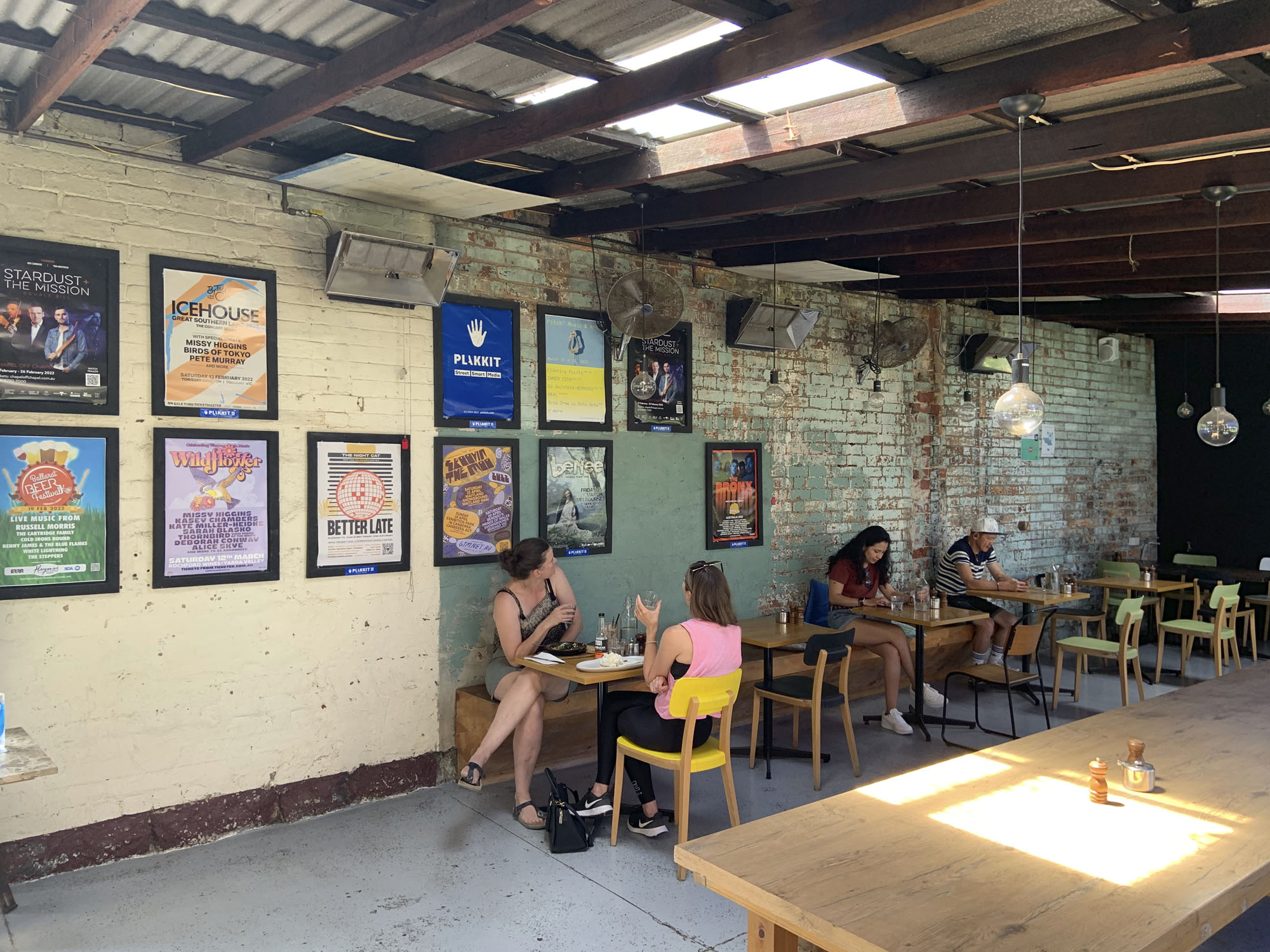
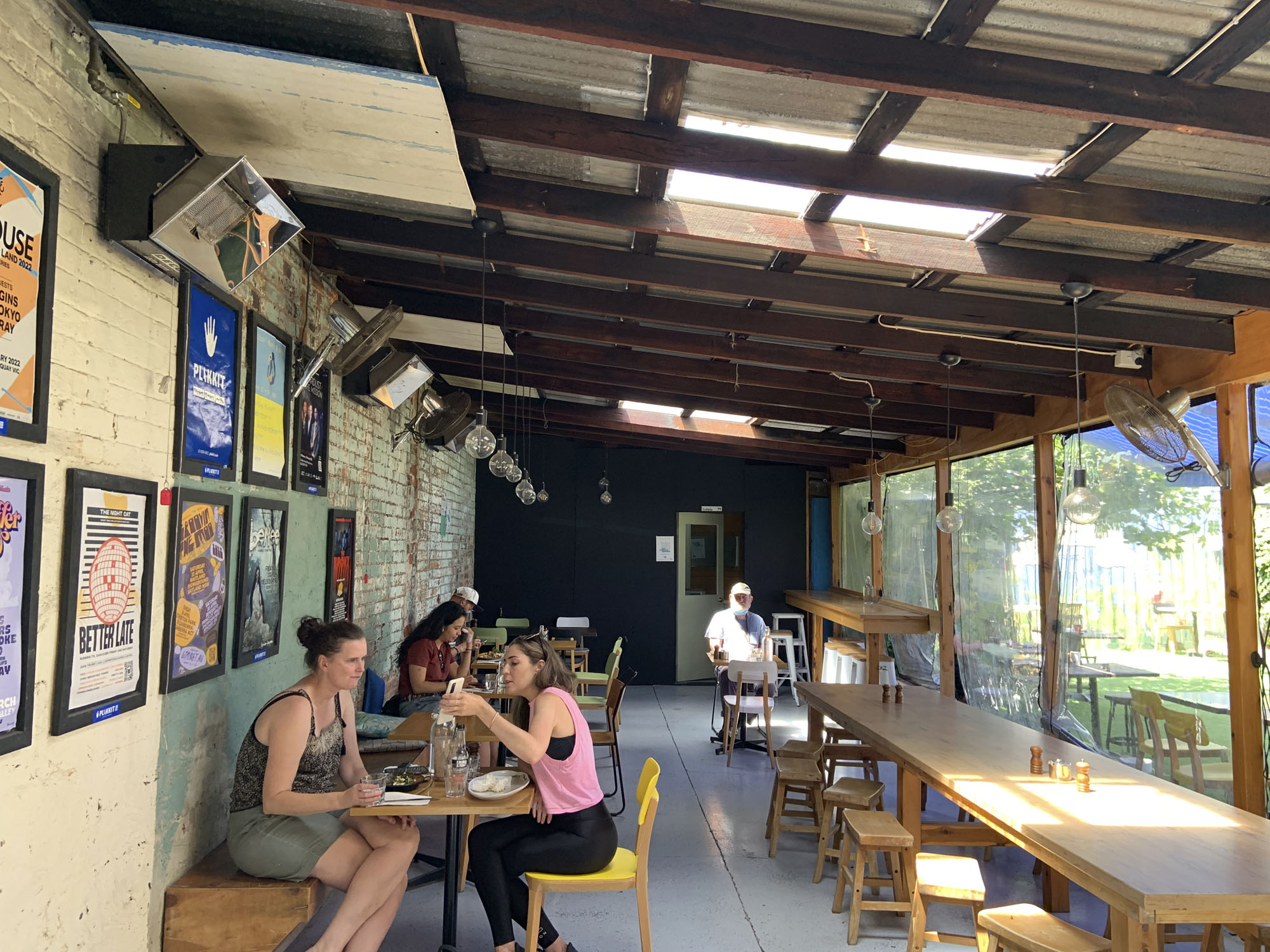
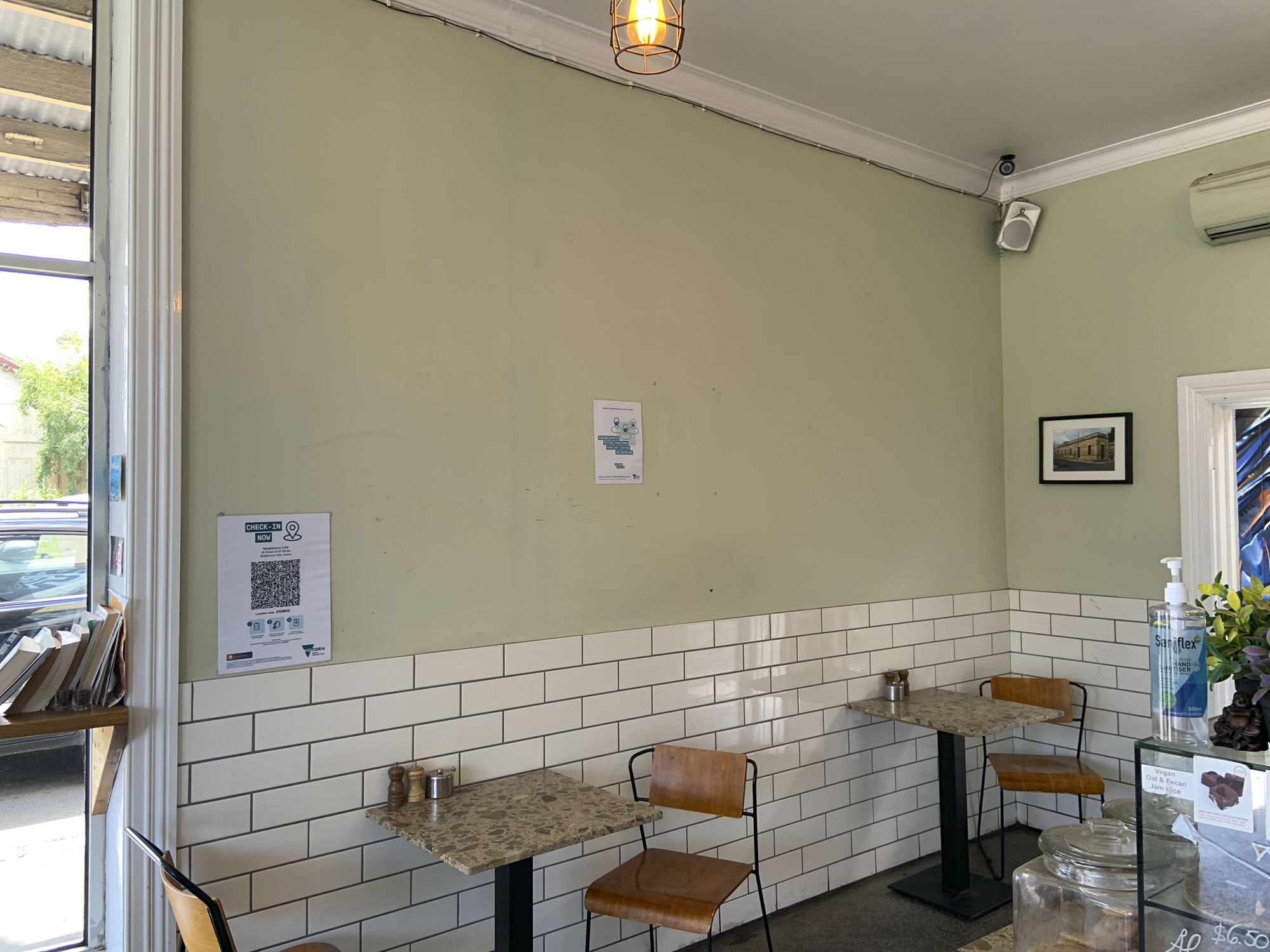
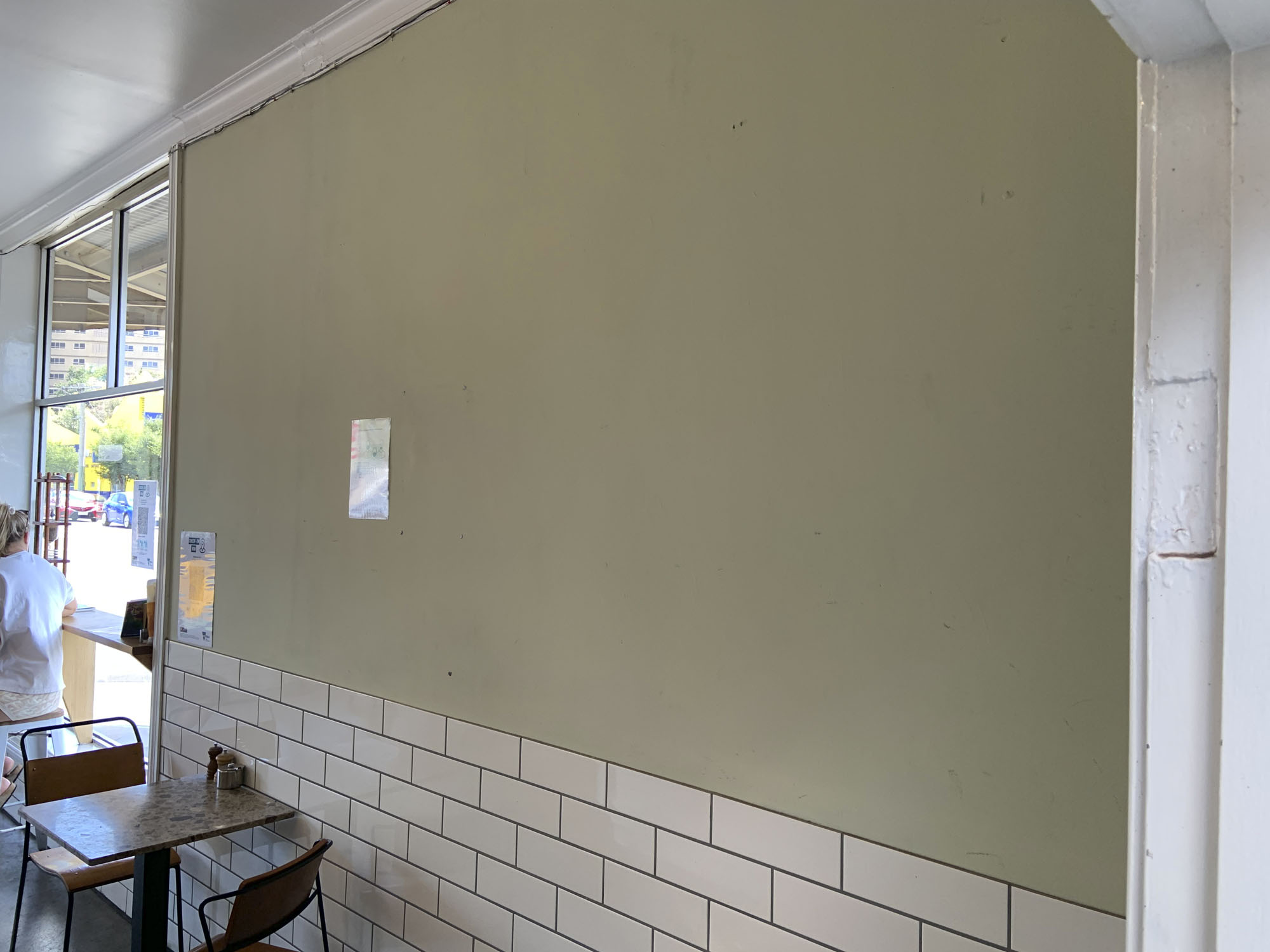


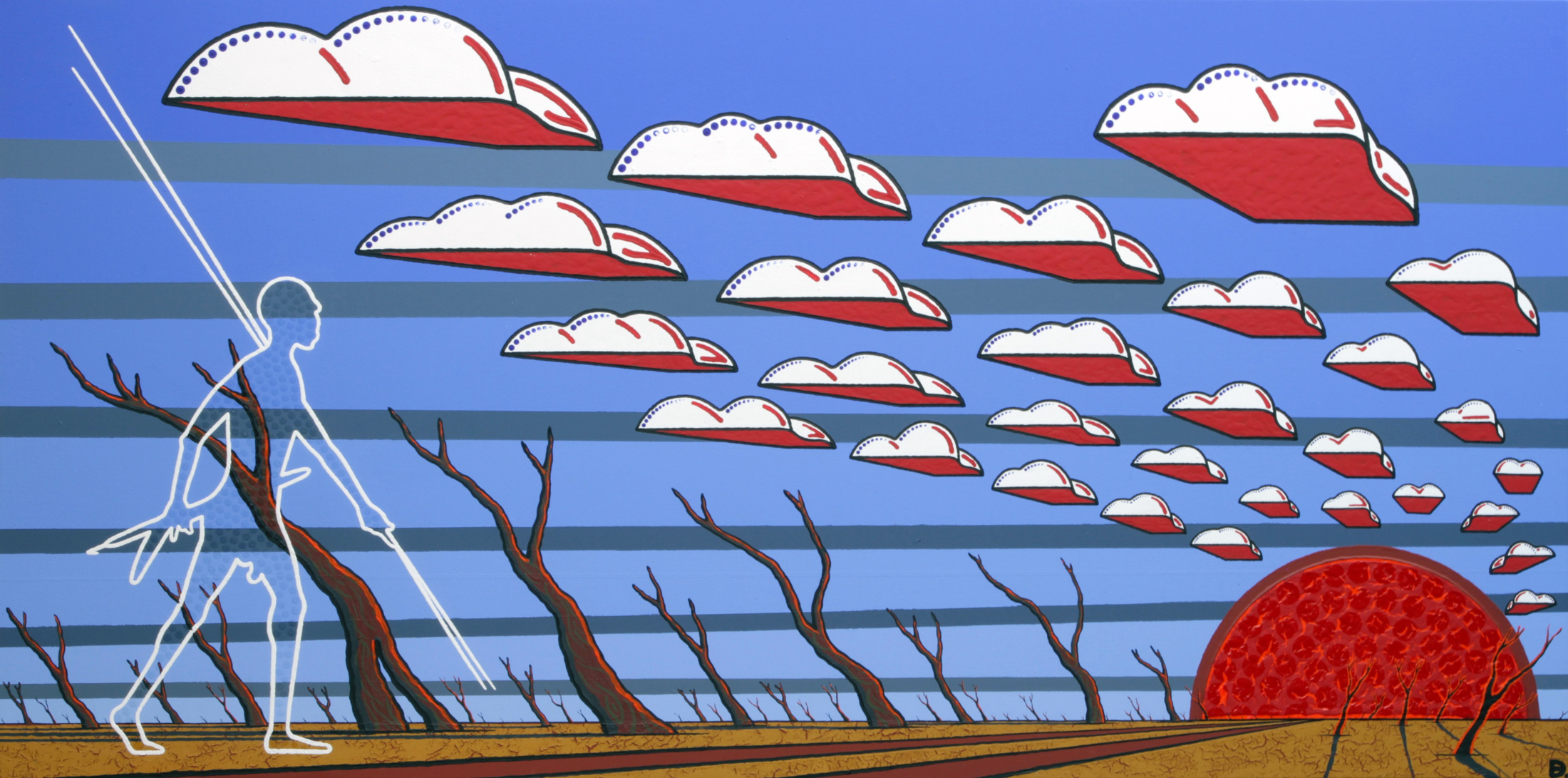


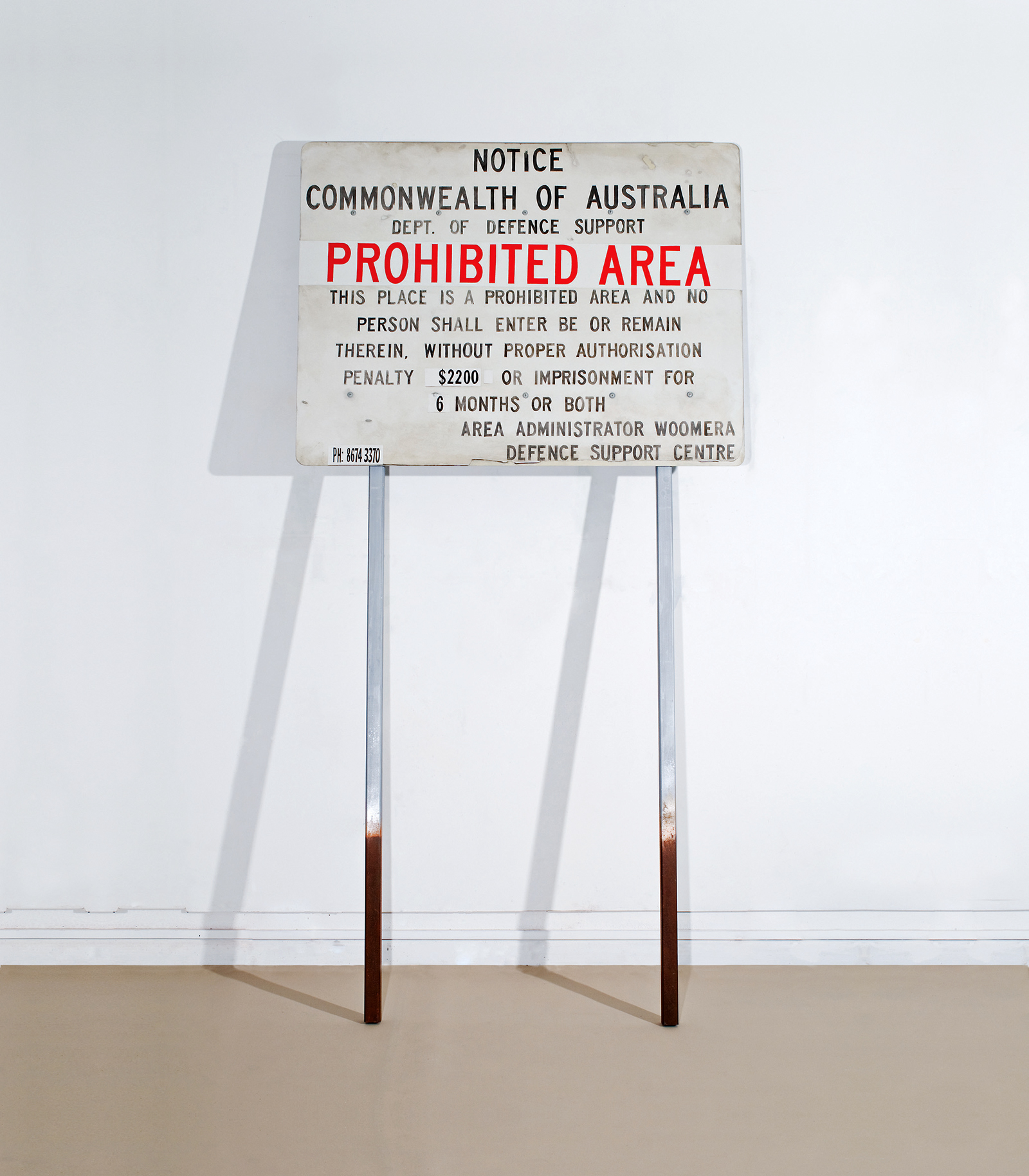


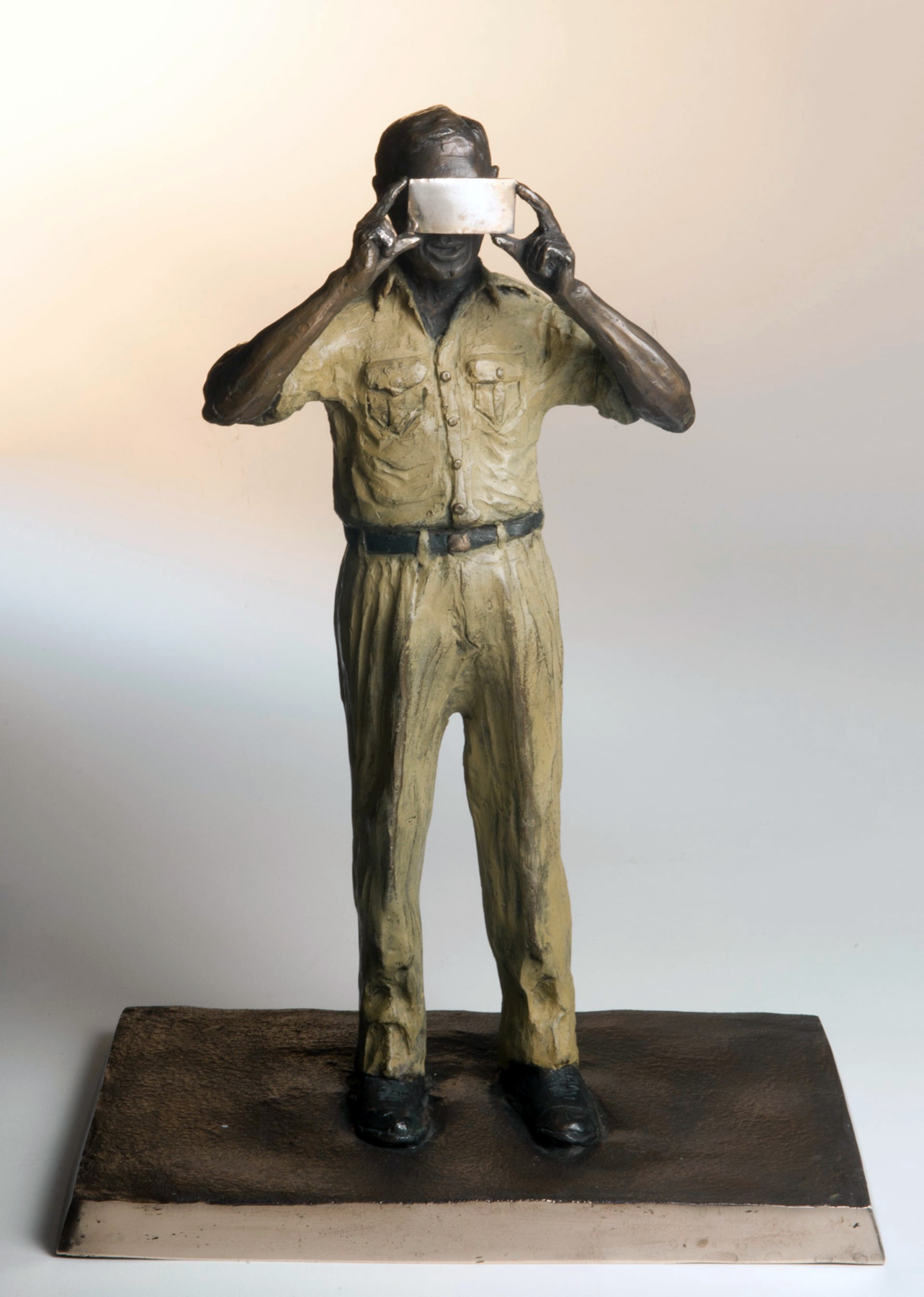


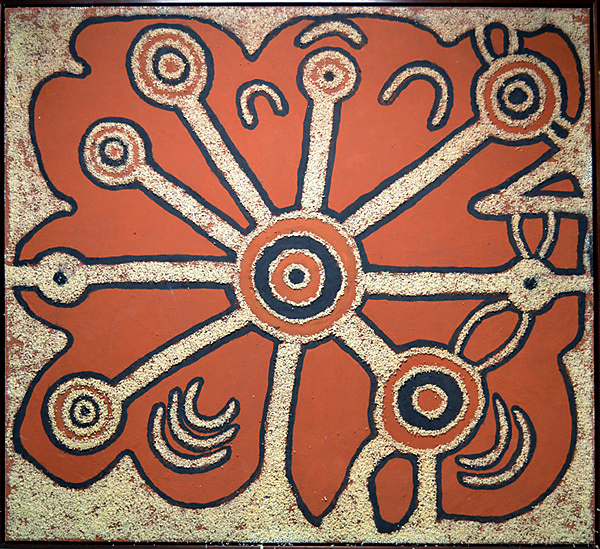

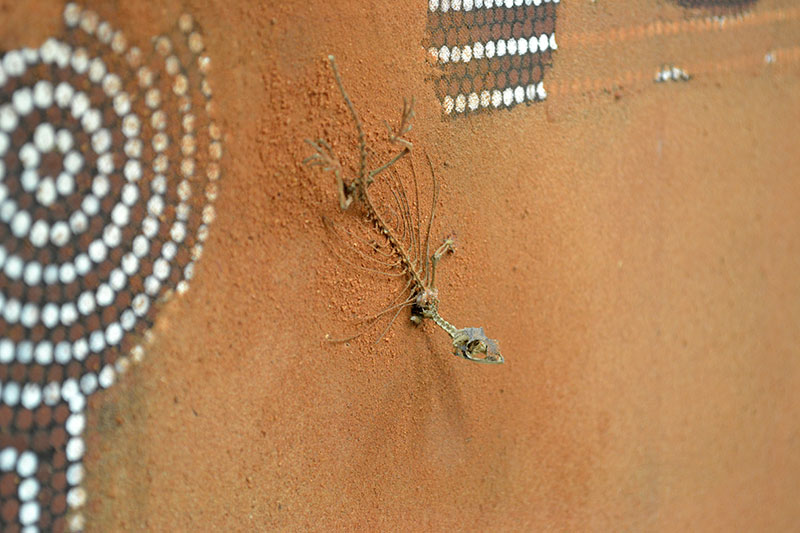


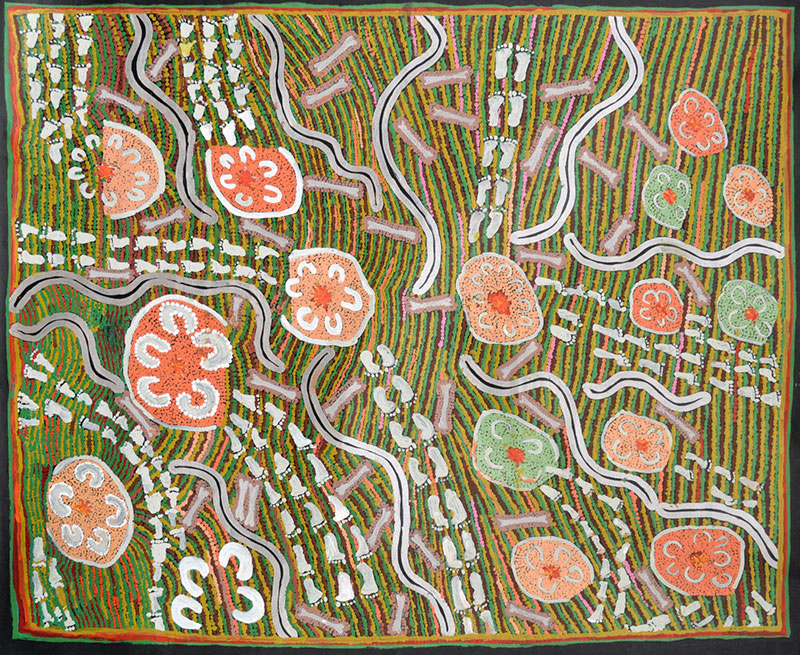


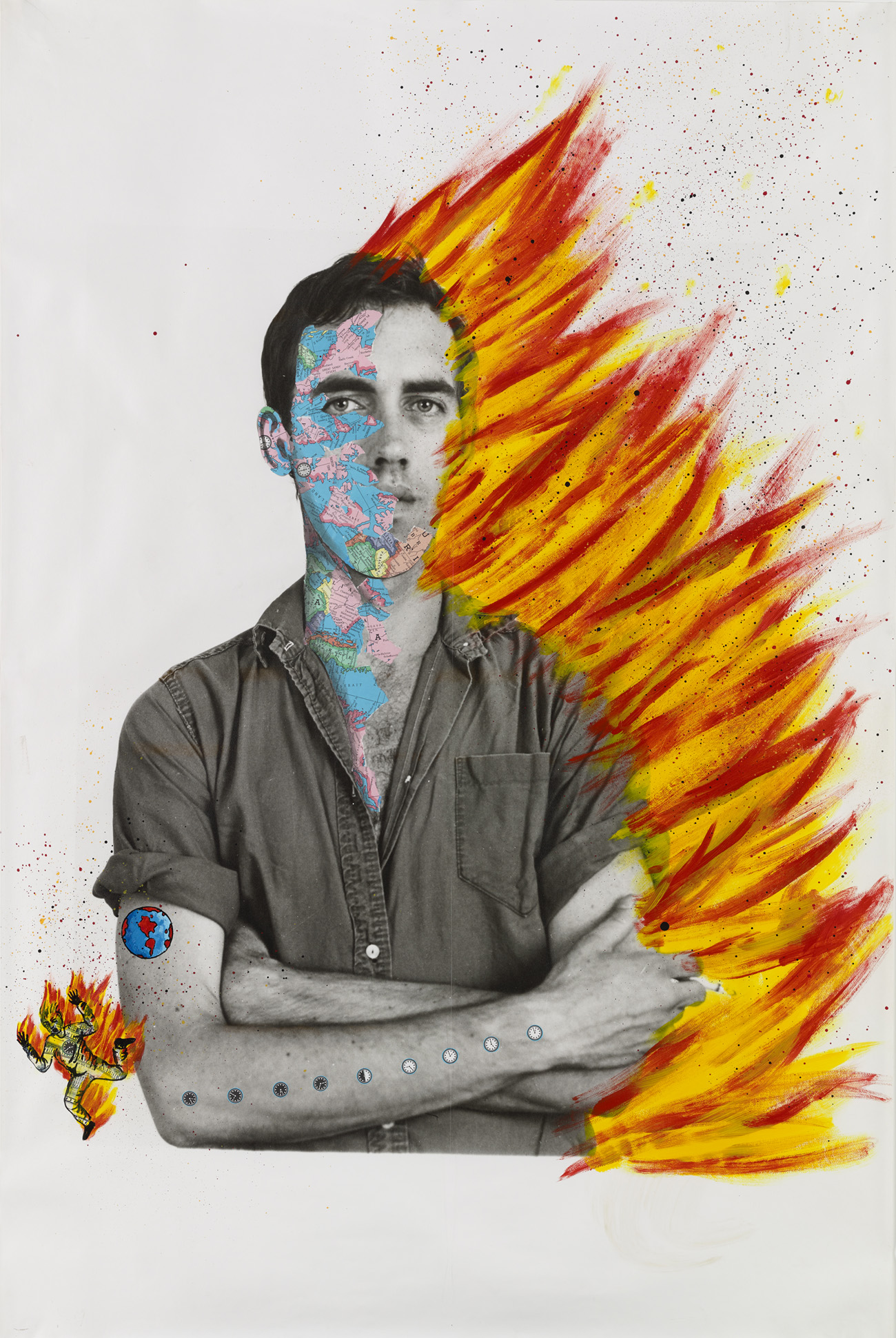
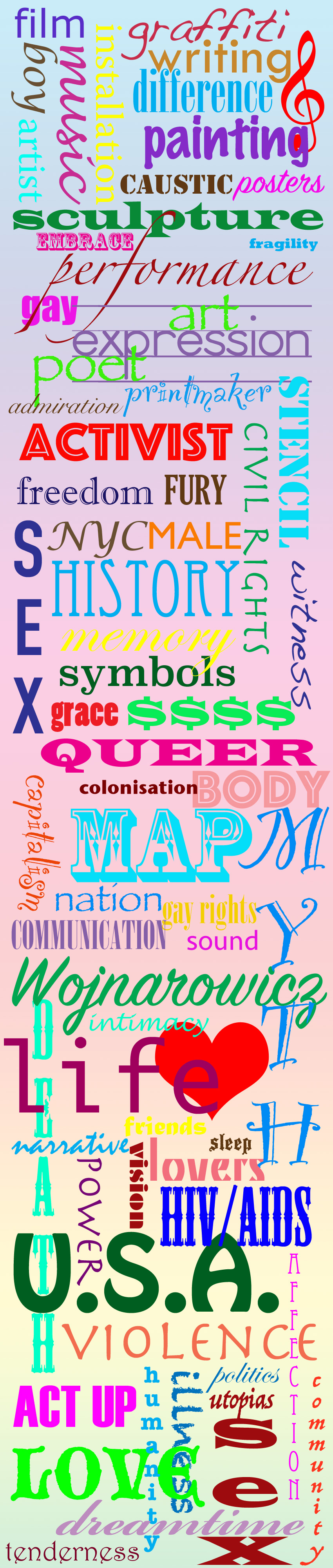


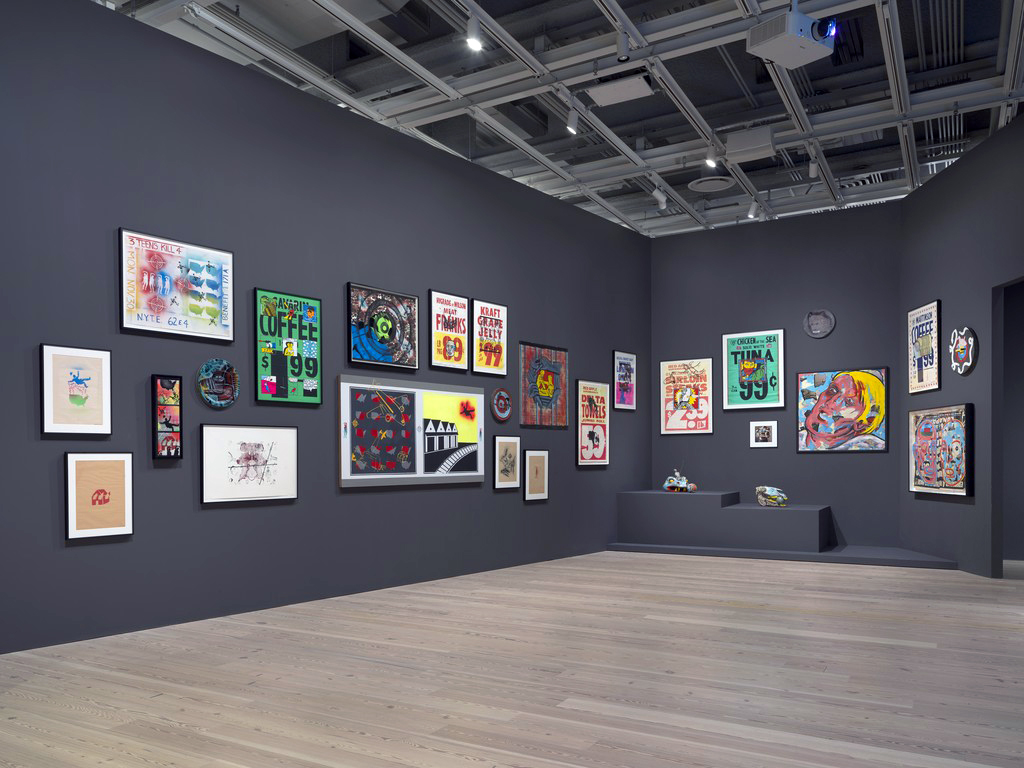


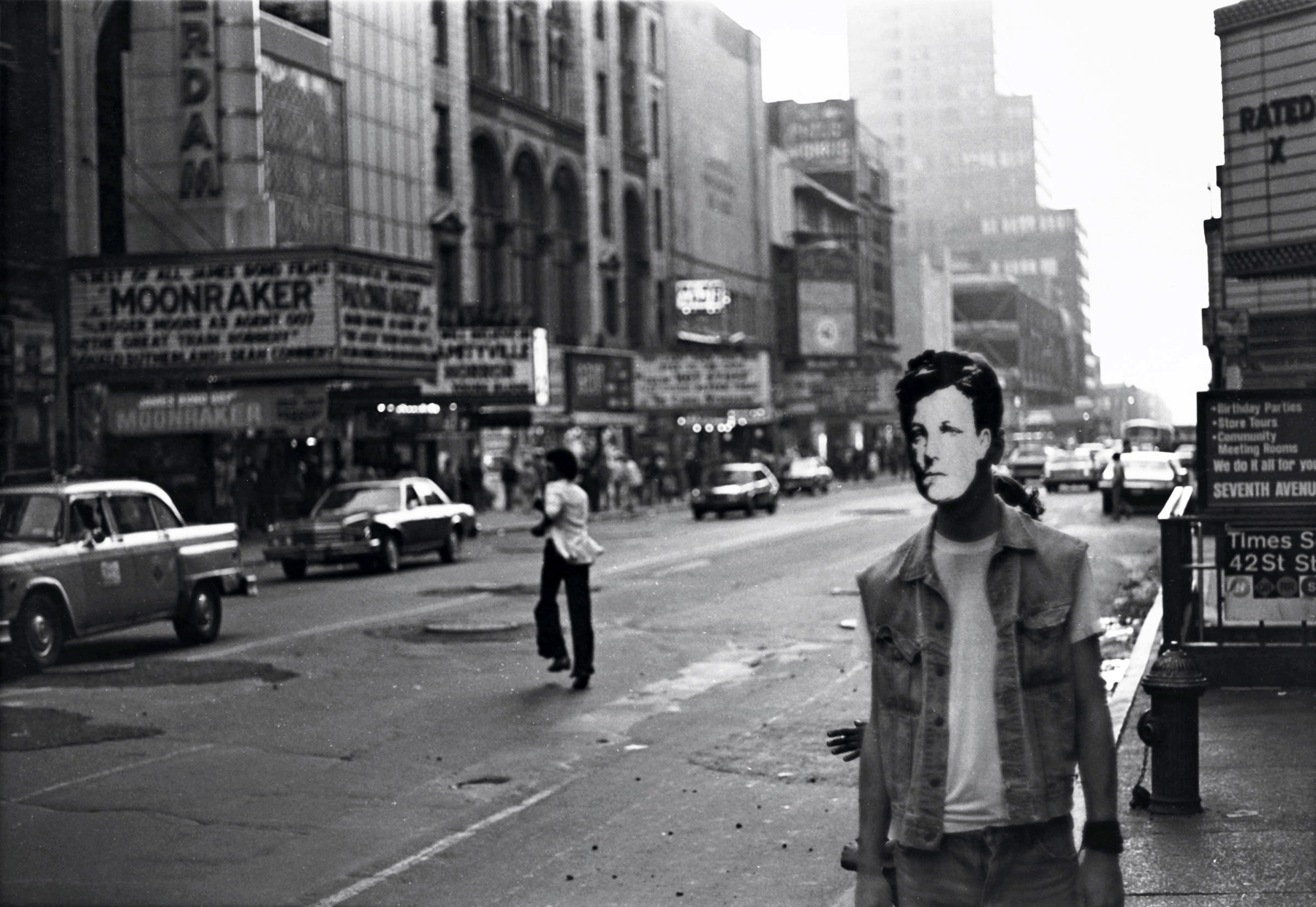

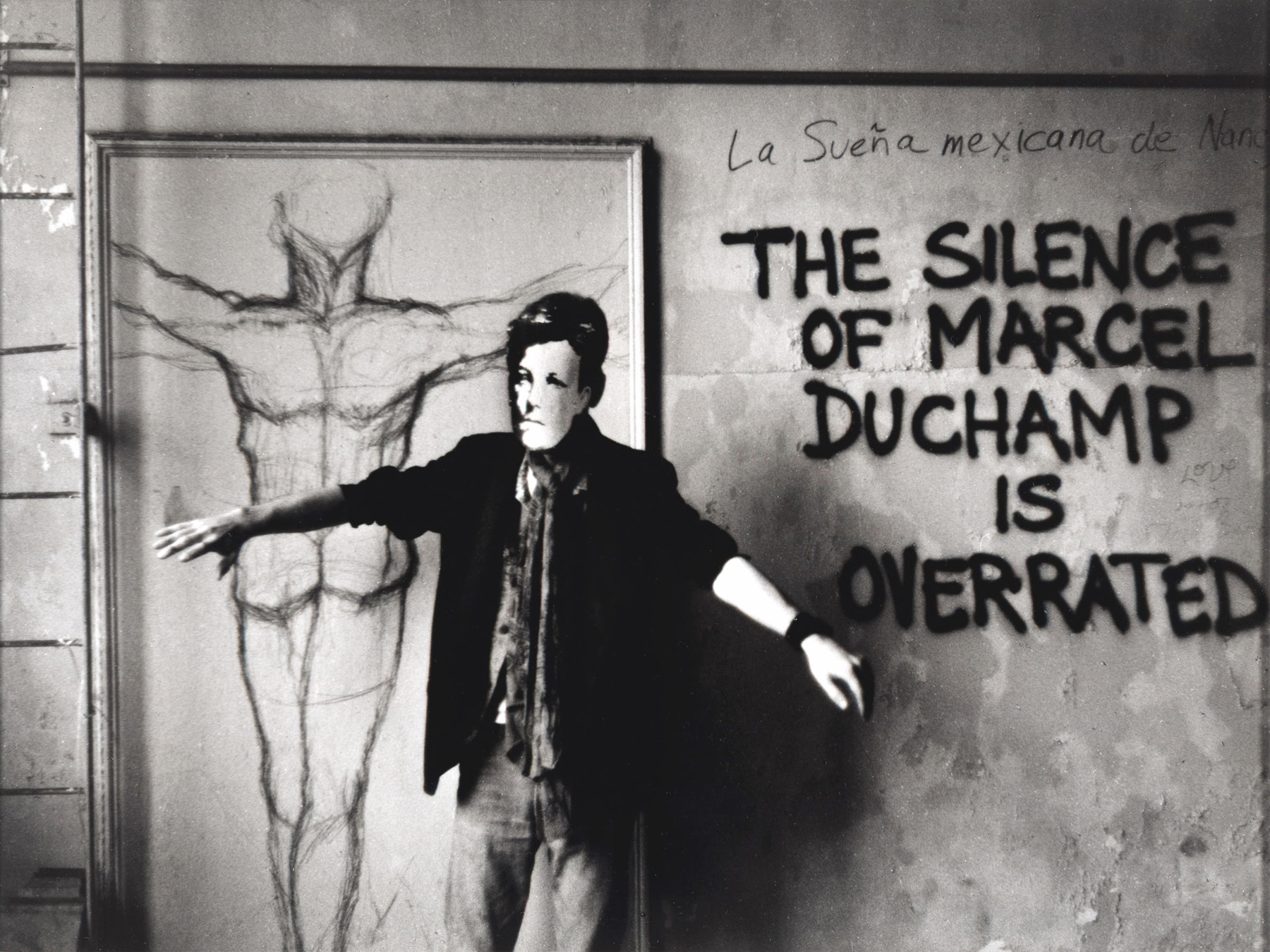
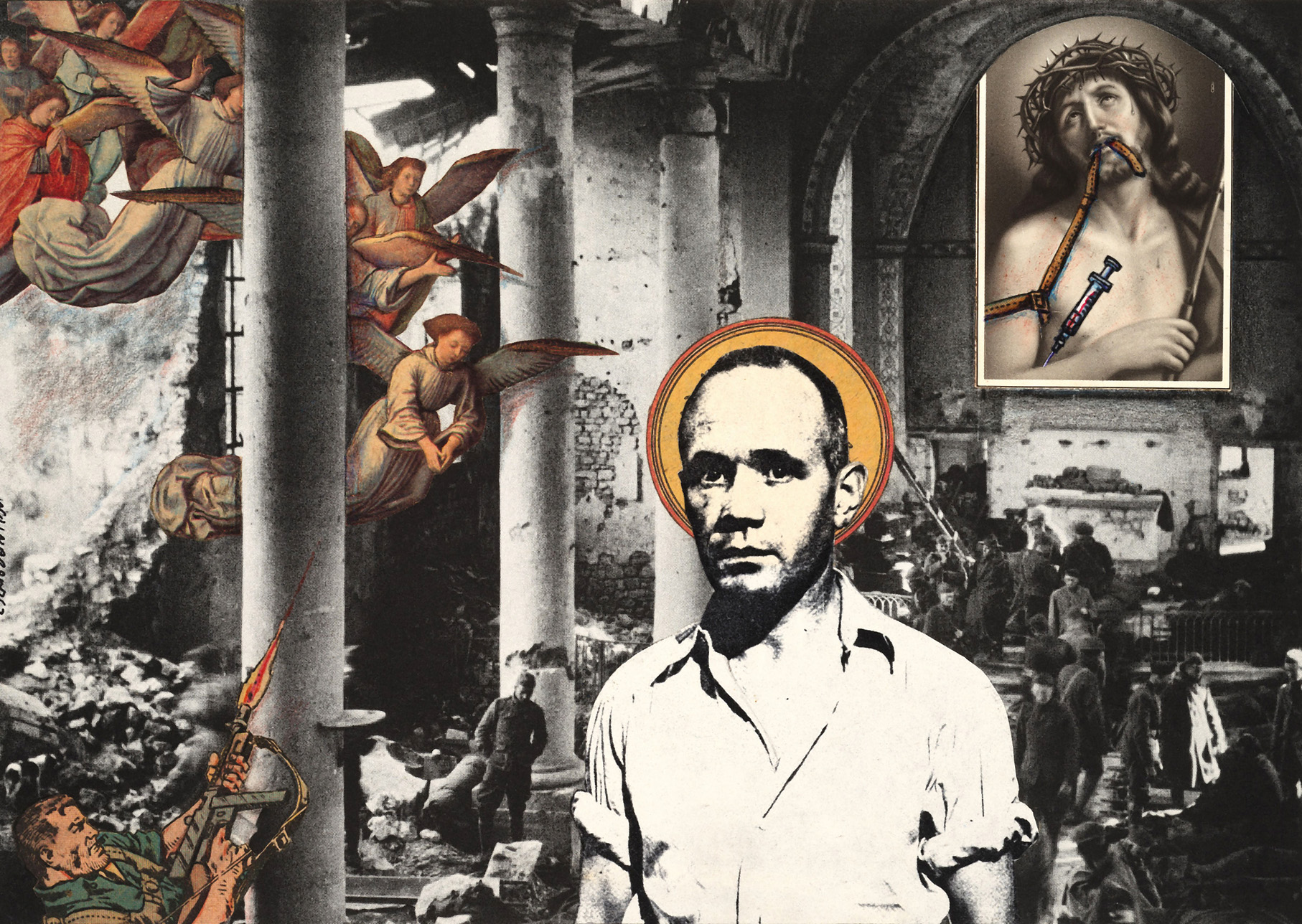
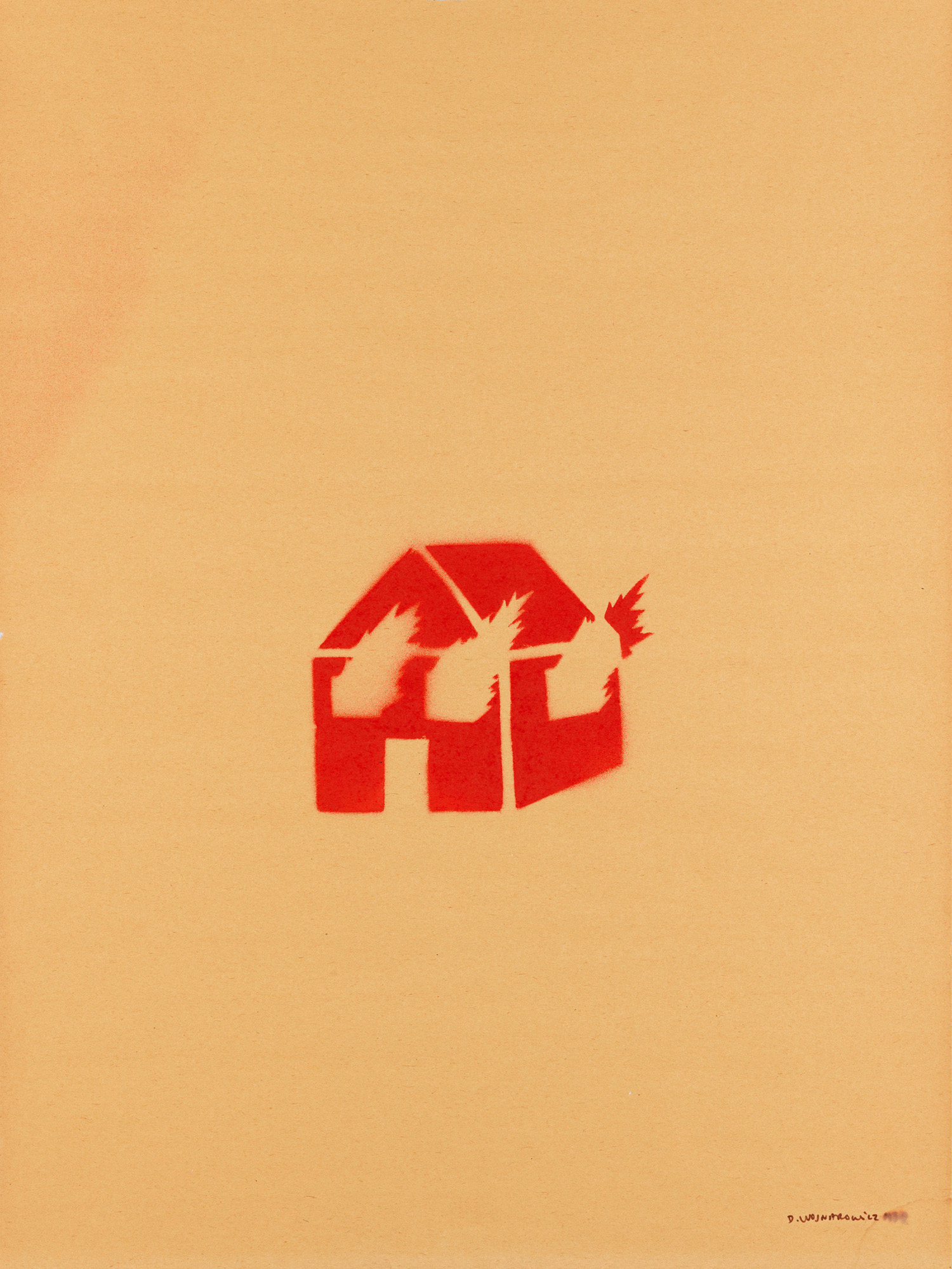
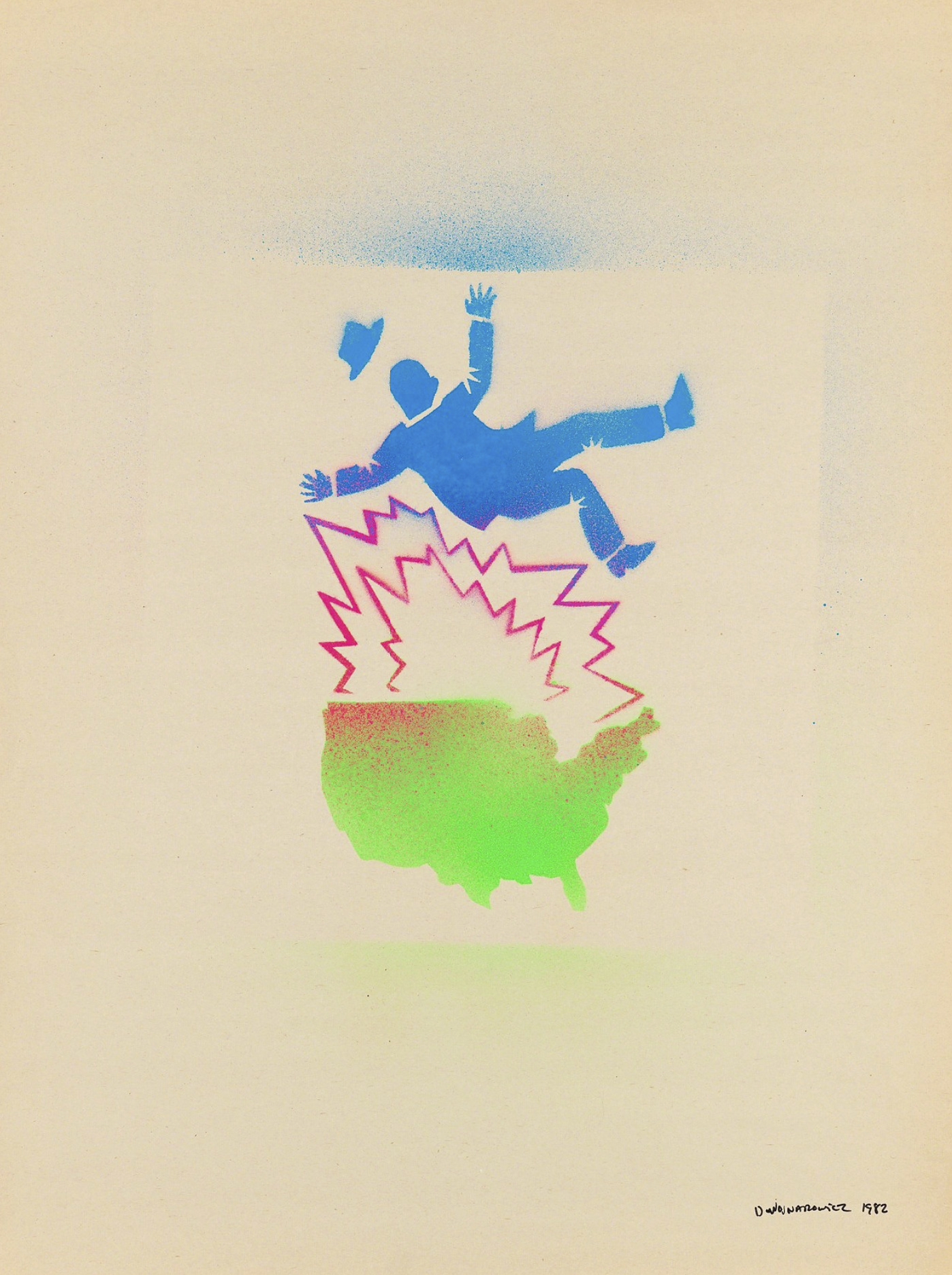
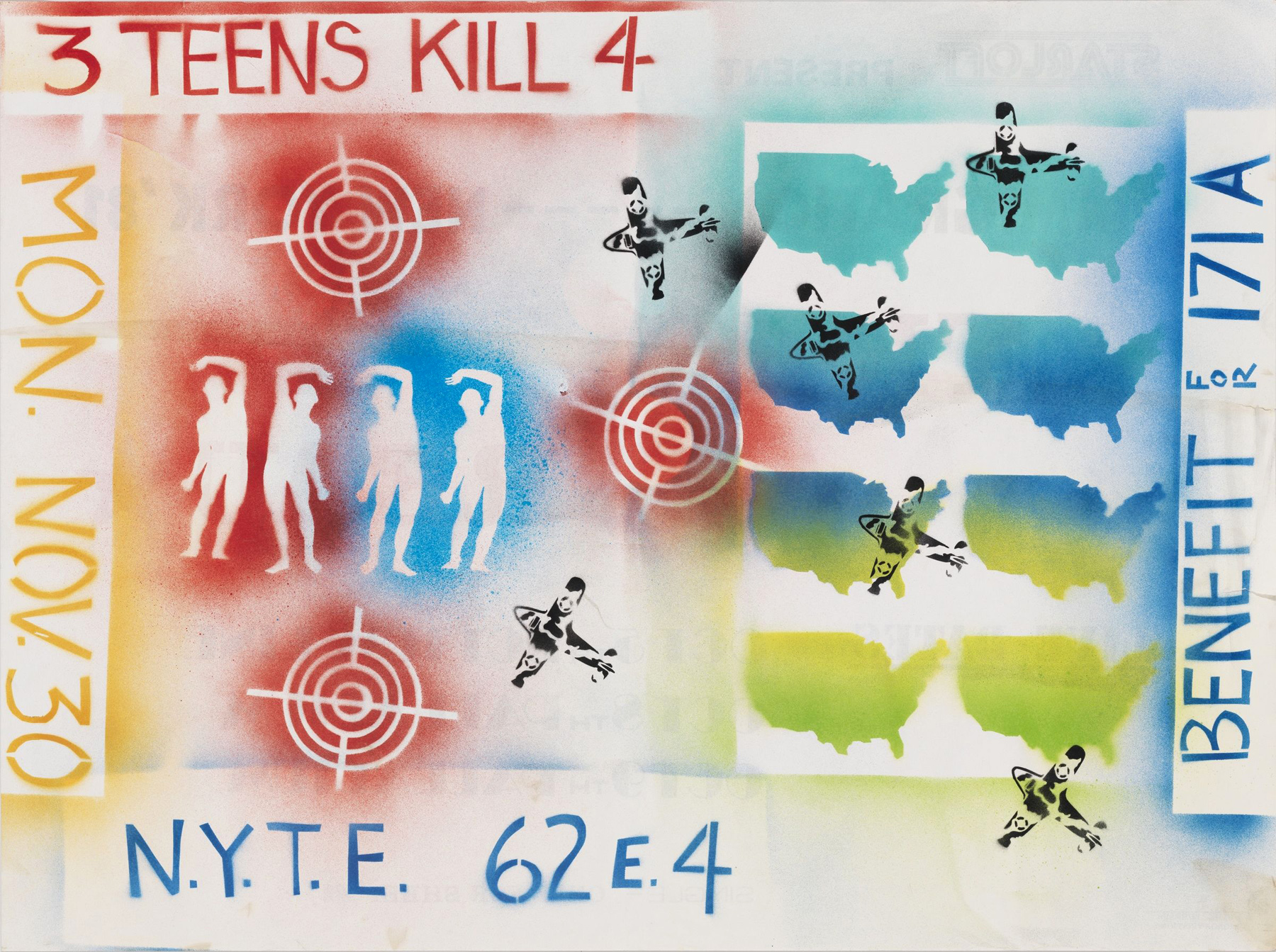


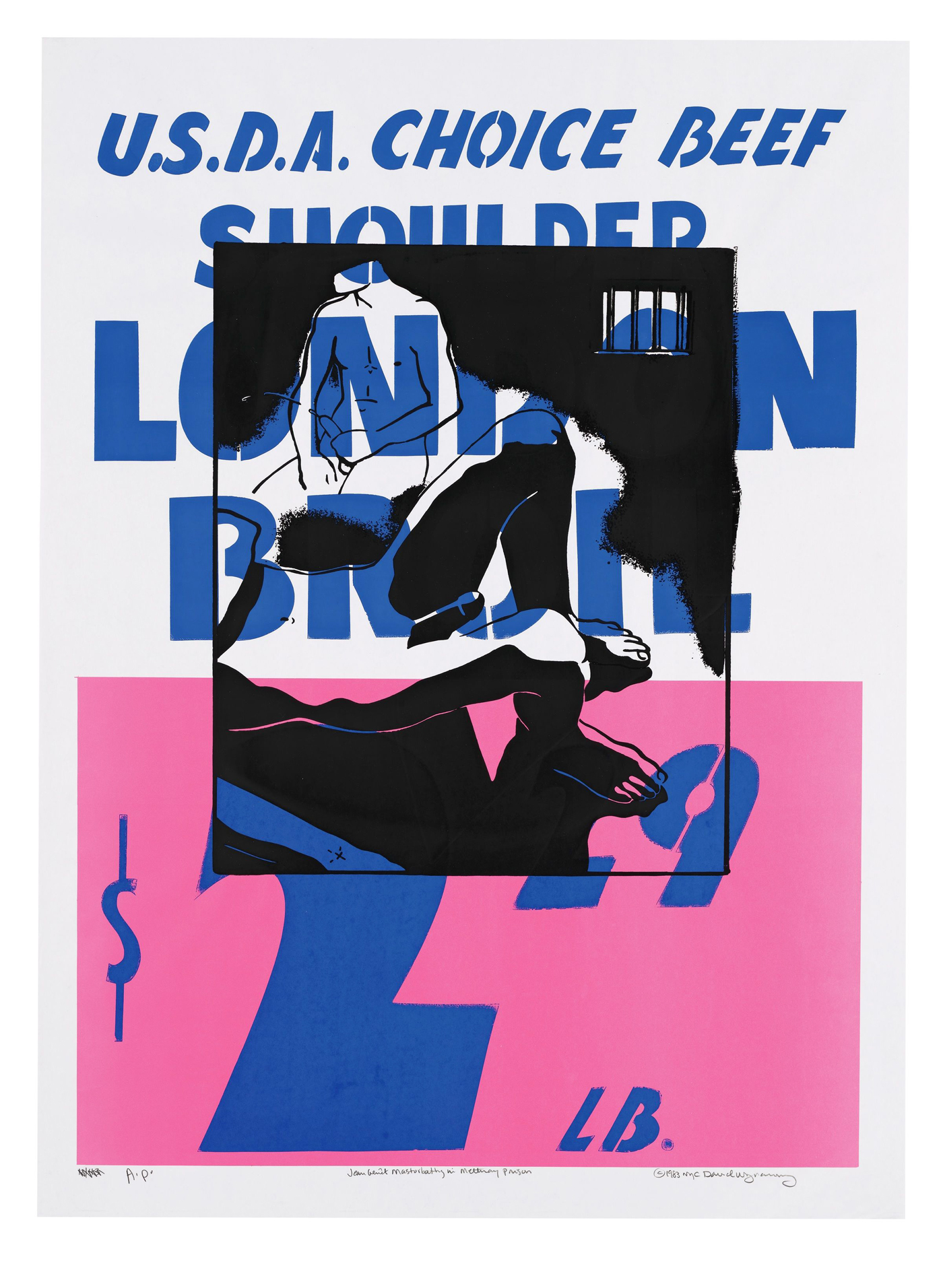
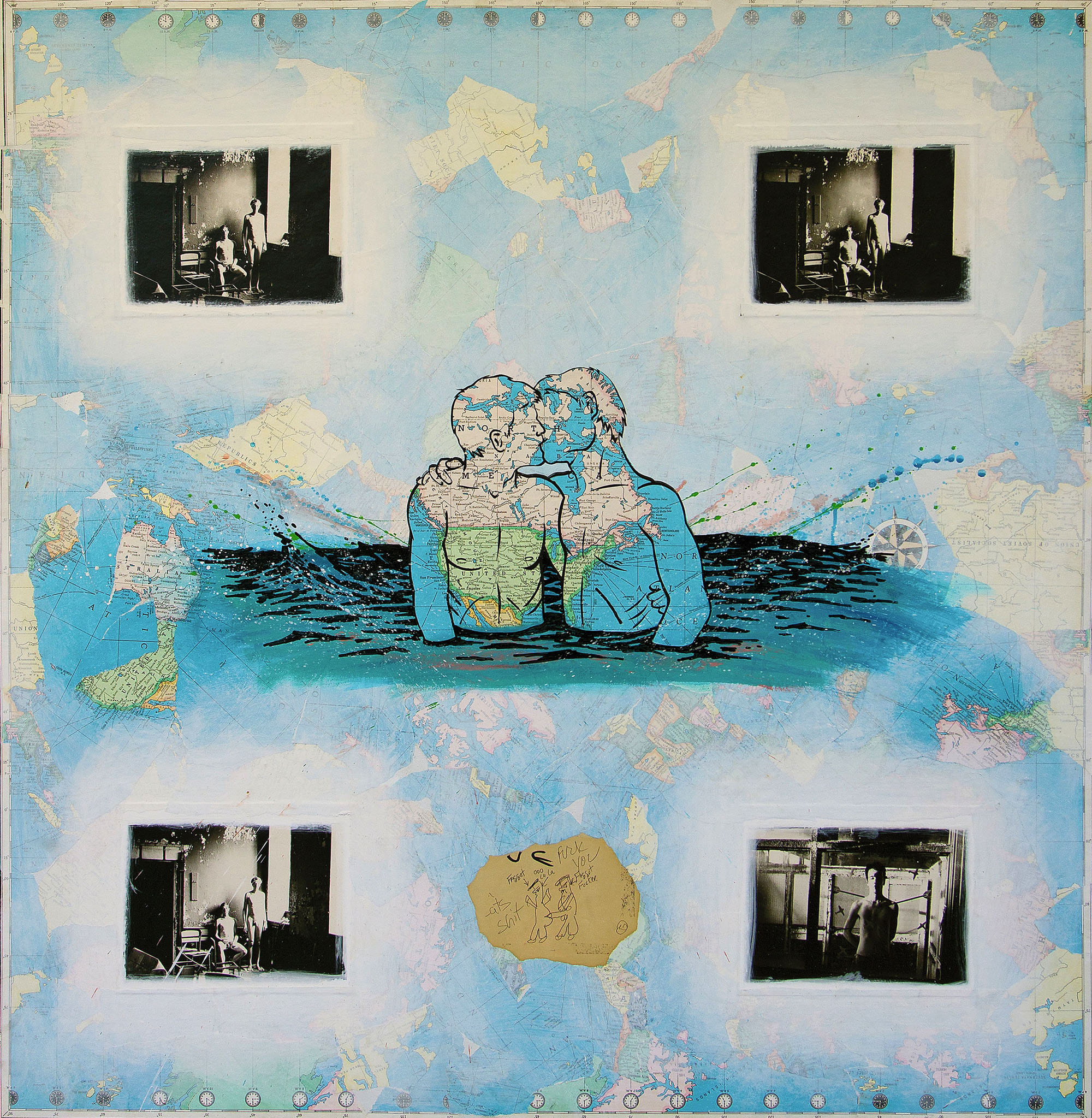
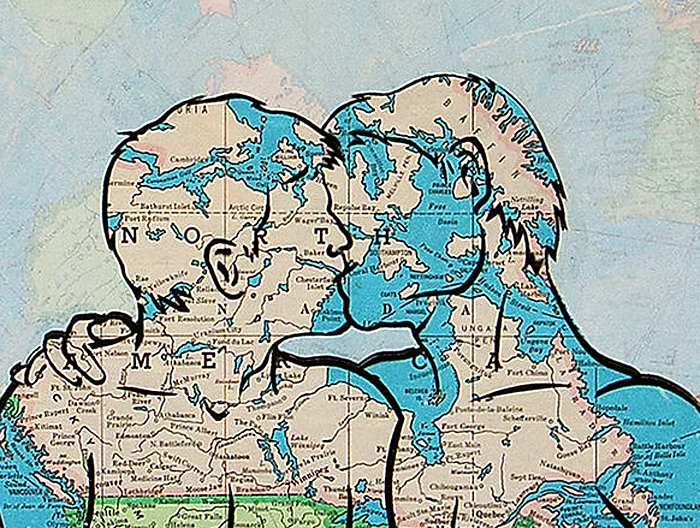
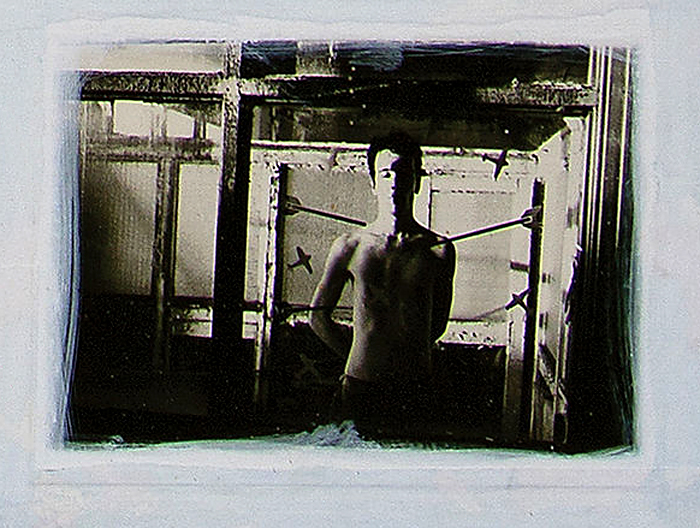
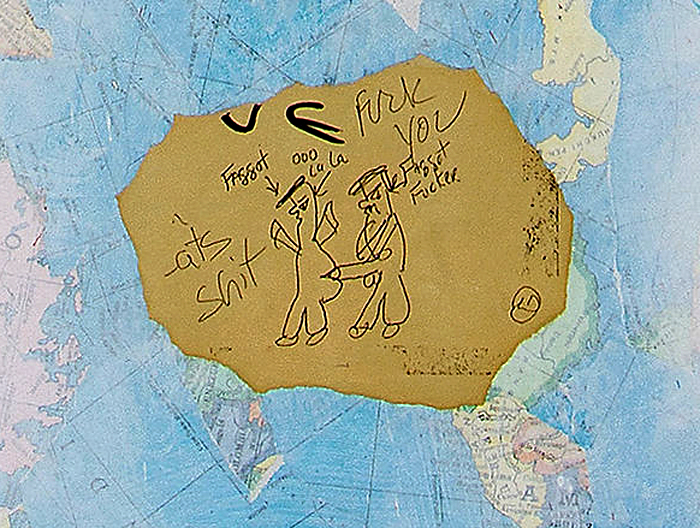
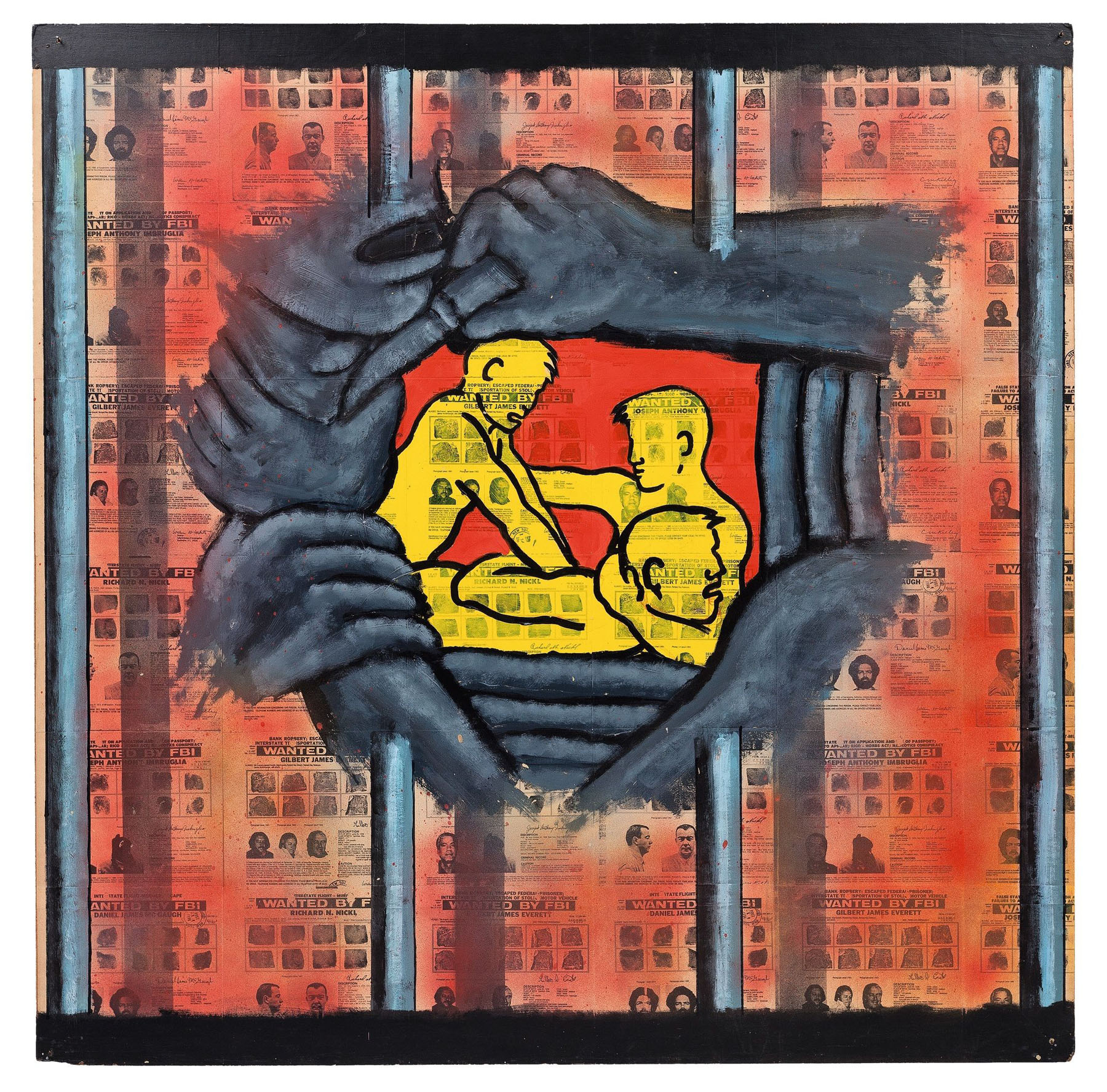

![Peter Hujar (American, 1934-1992) 'Canal Street Piers: Krazy Kat Comic on Wall [by David Wojnarowicz]' 1983](https://artblart.com/wp-content/uploads/2018/07/peter-hujar-canal-street-piers-krazy-kat-comic-on-wall-by-david-wojnarowicz-web.jpg "Peter Hujar (American, 1934-1992) 'Canal Street Piers: Krazy Kat Comic on Wall [by David Wojnarowicz]' 1983")


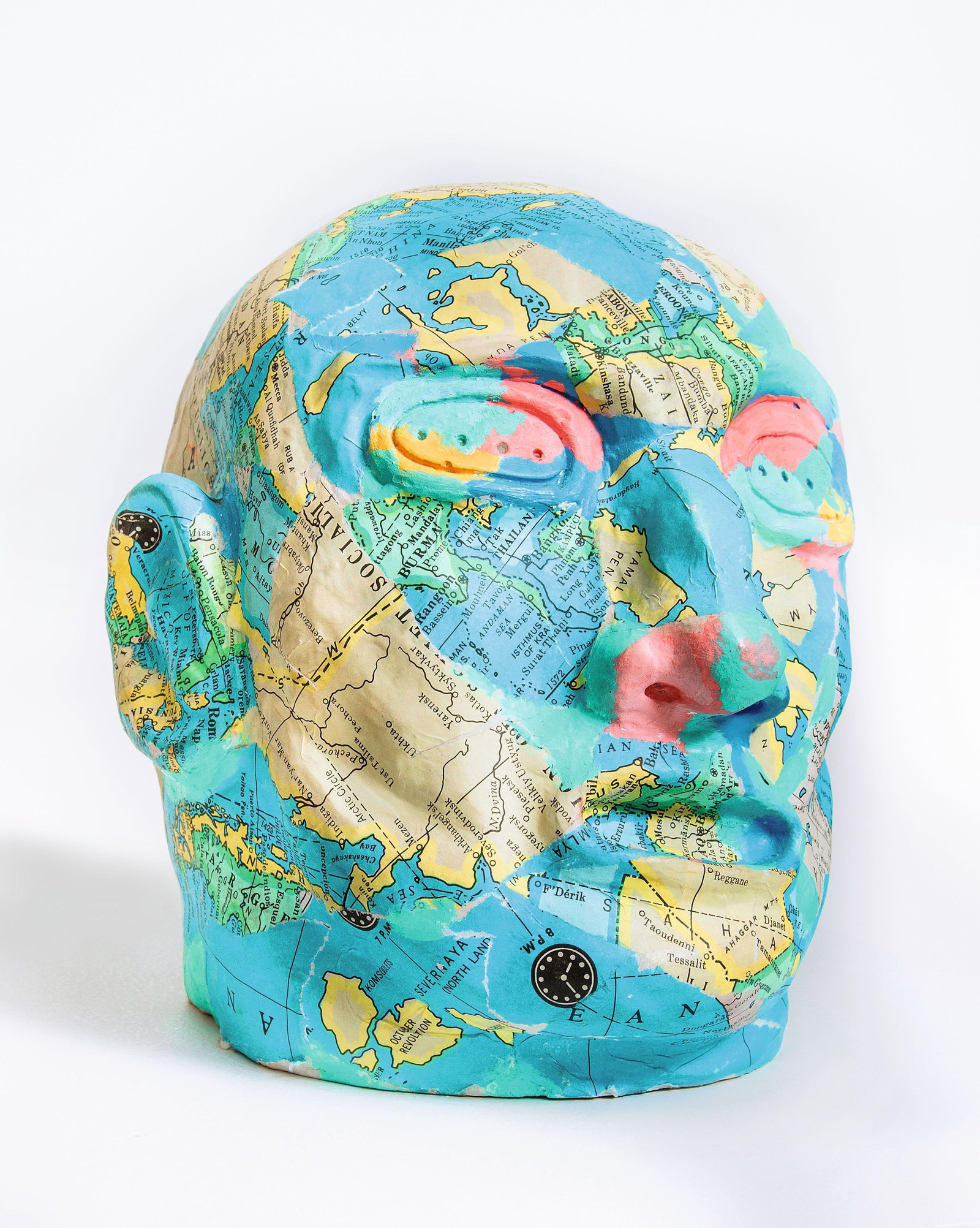
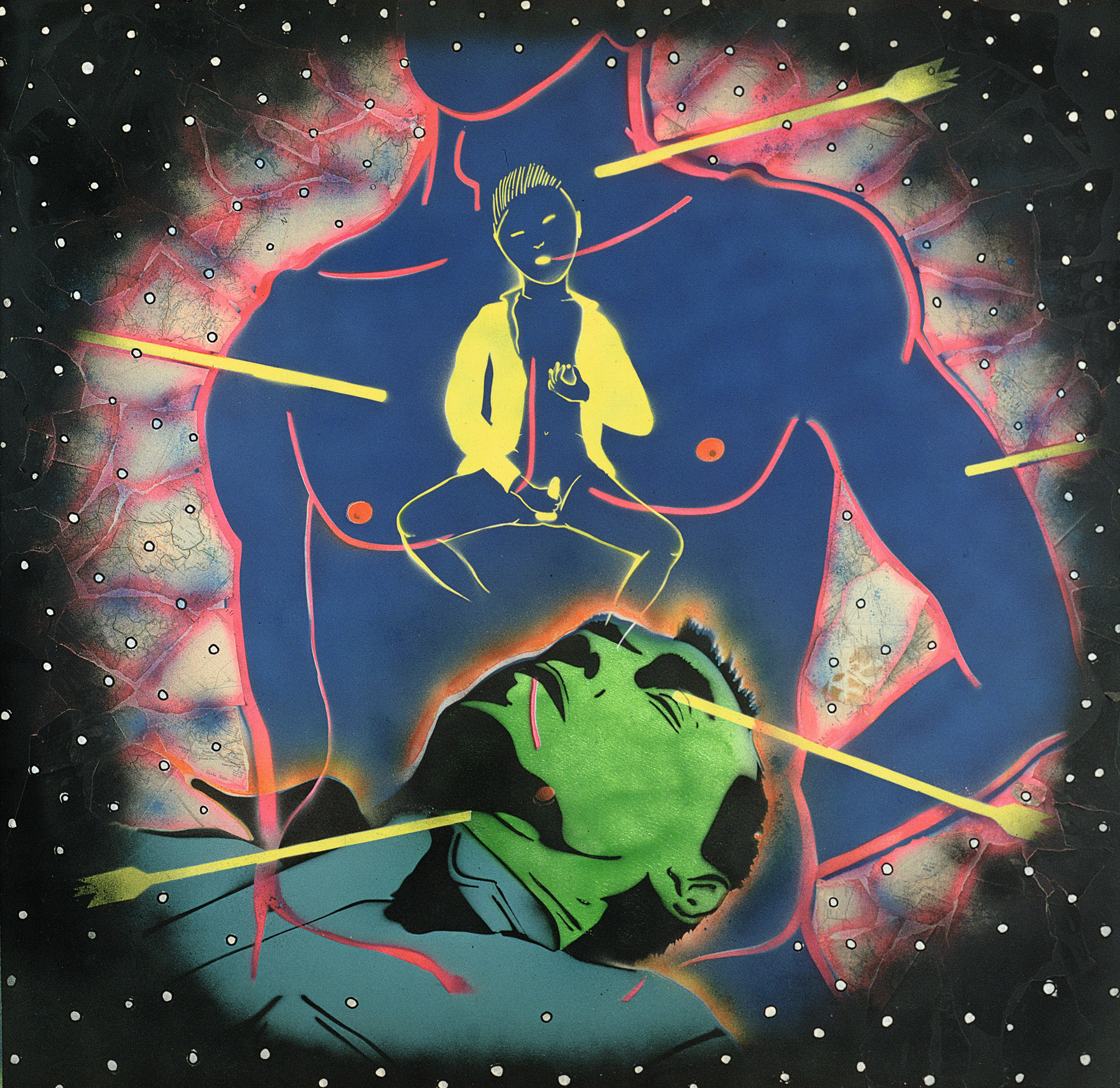
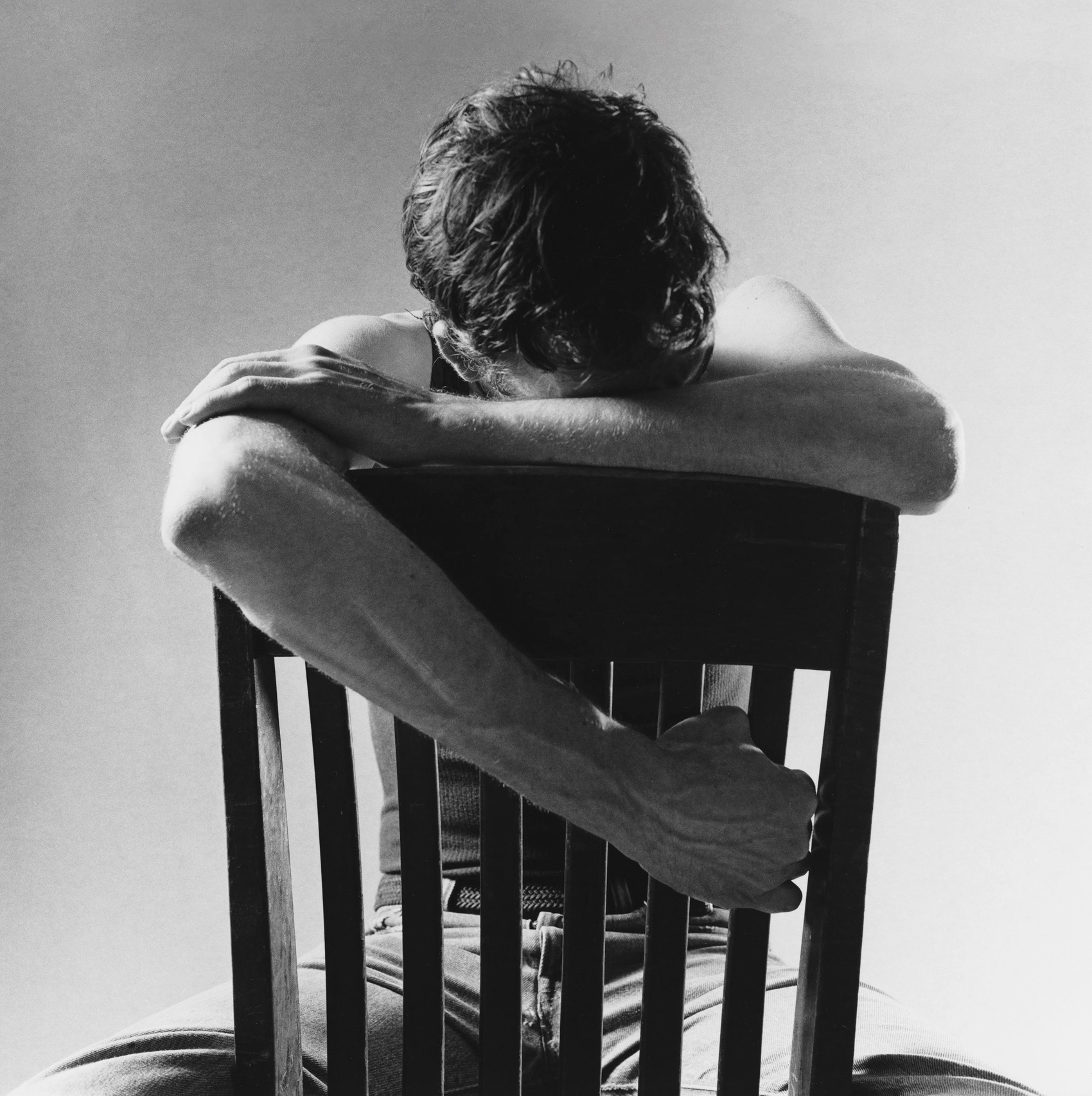

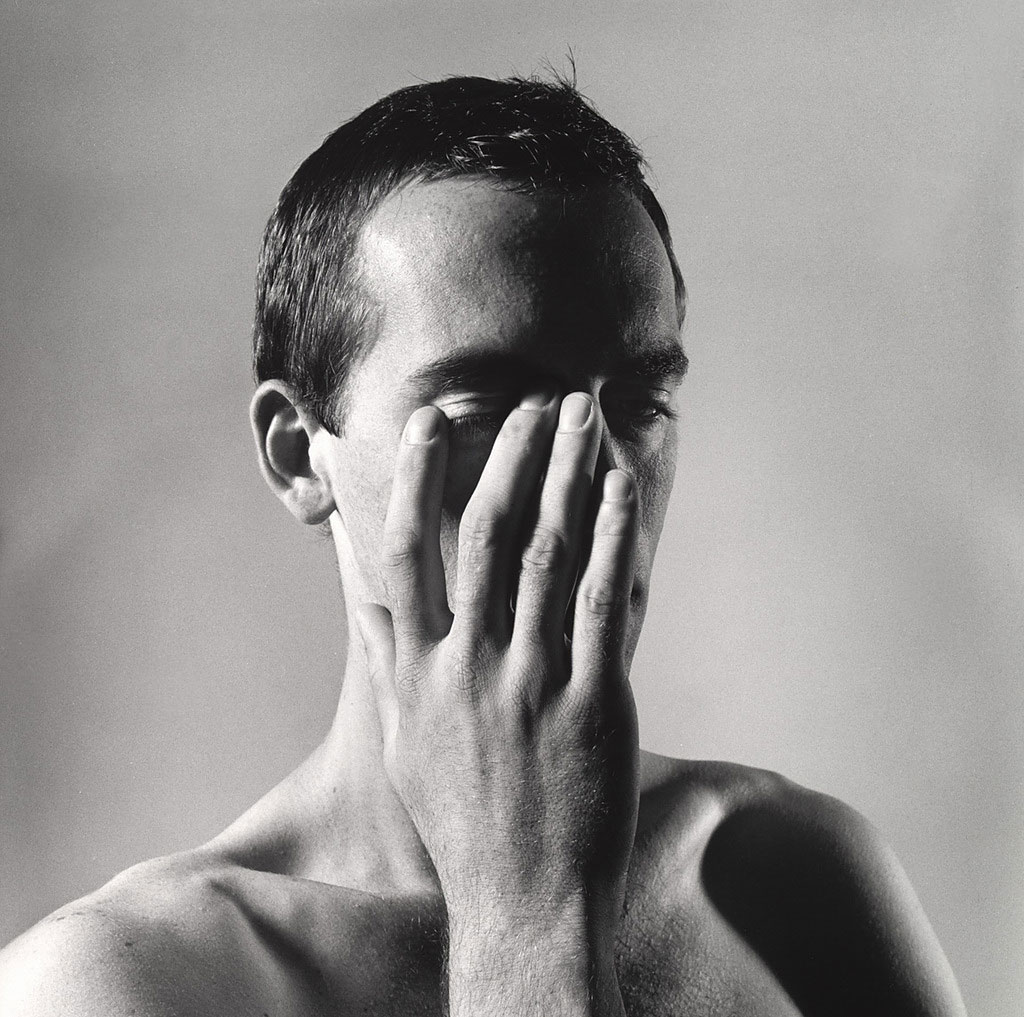

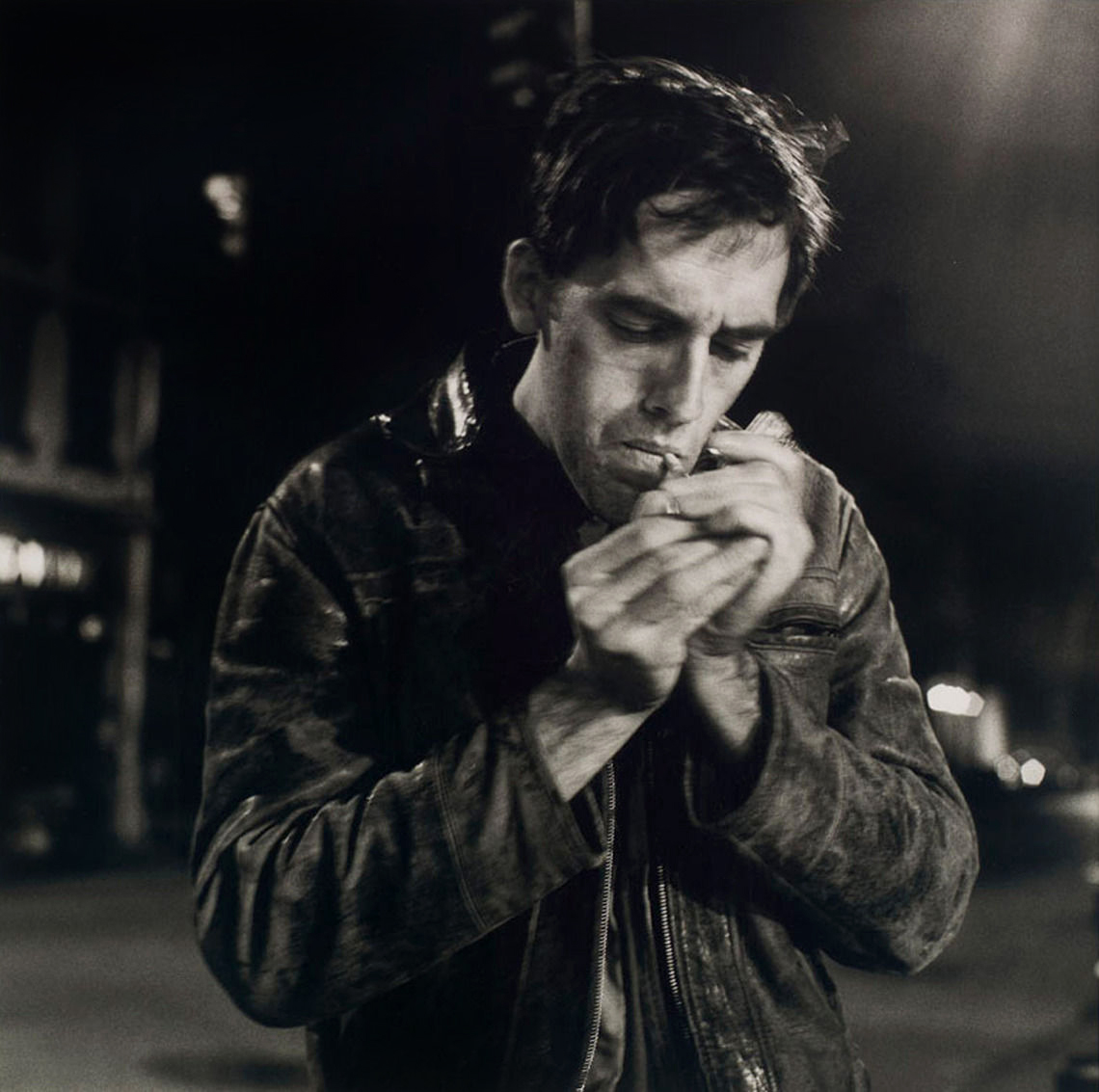

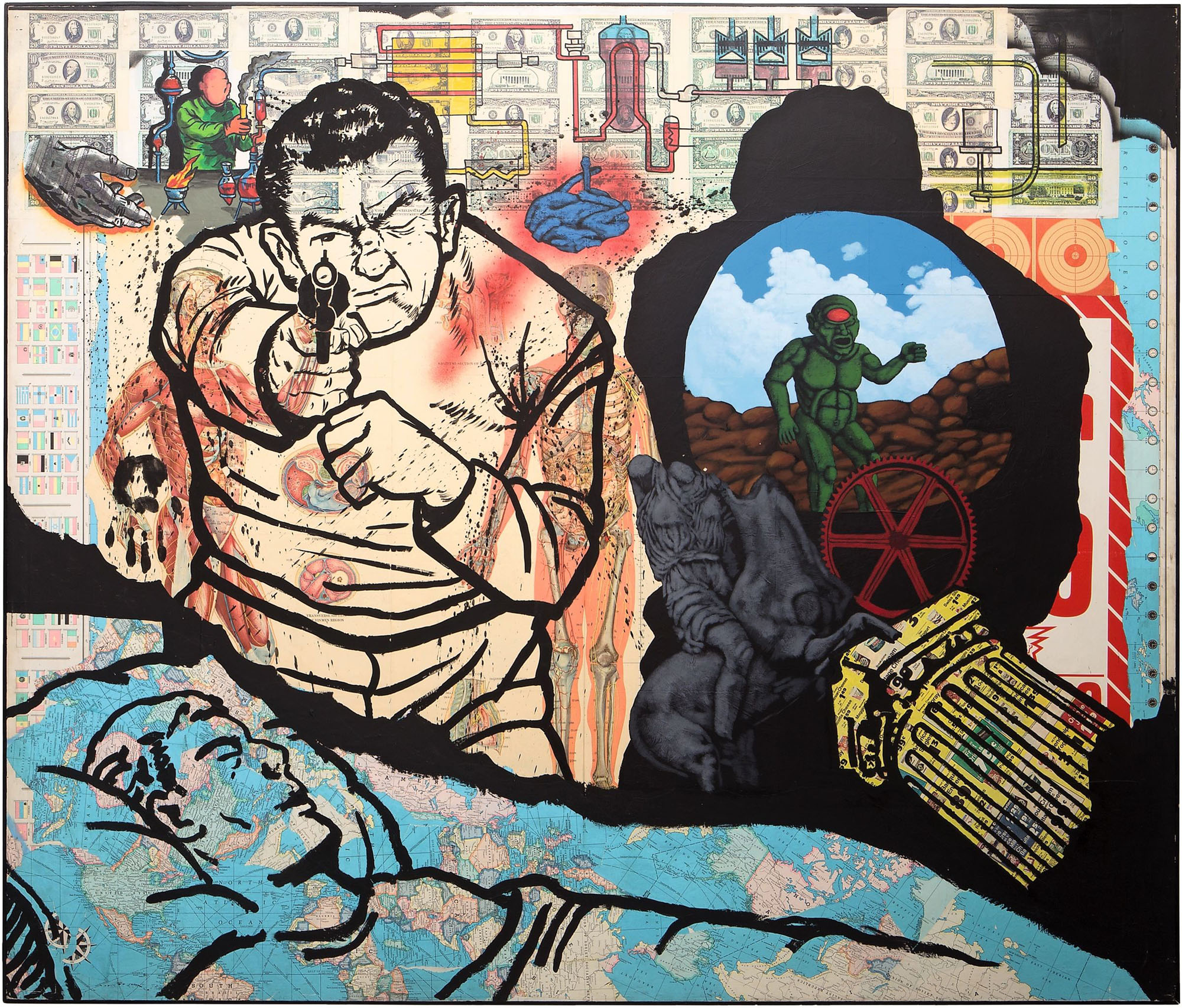
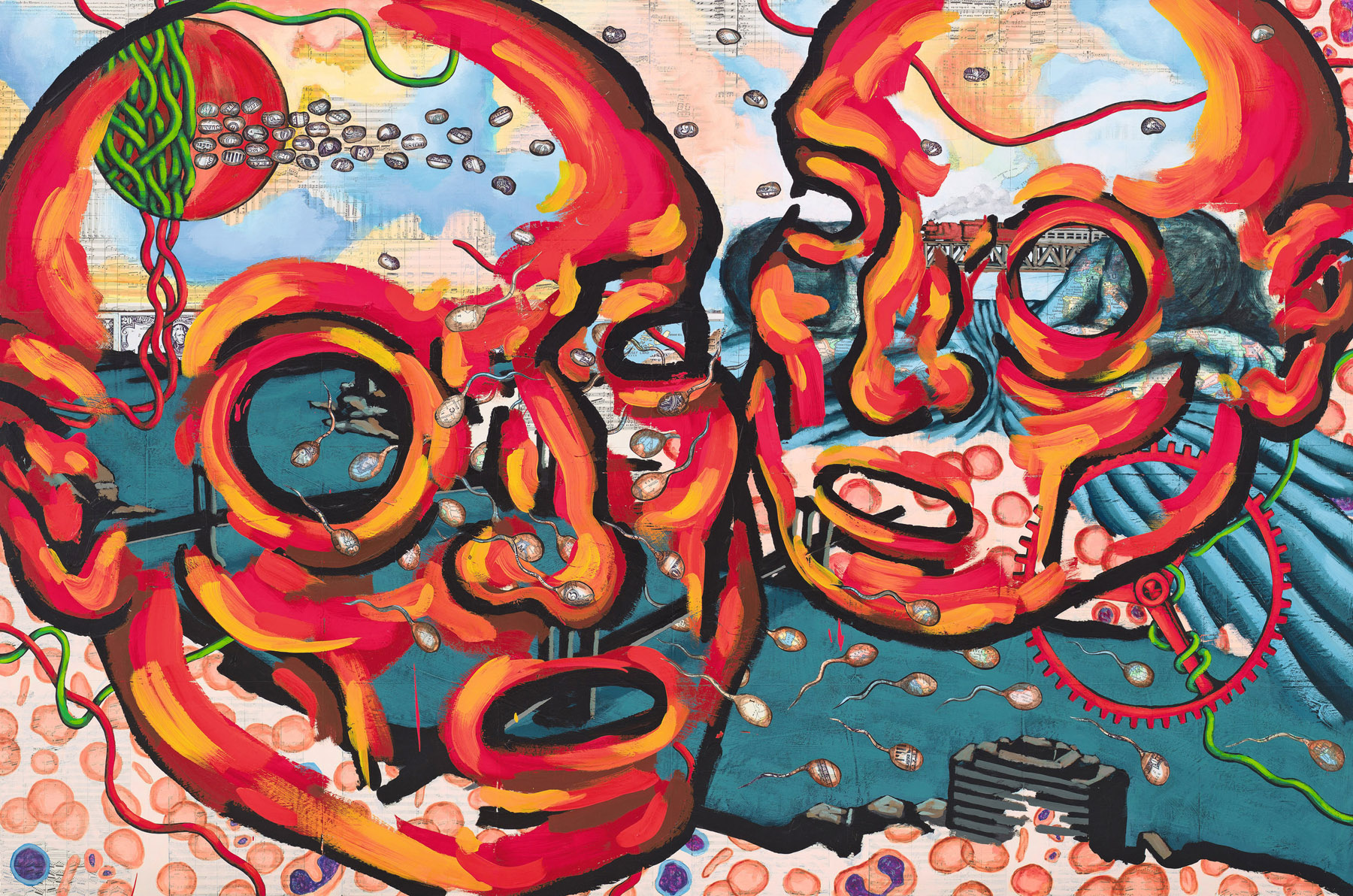
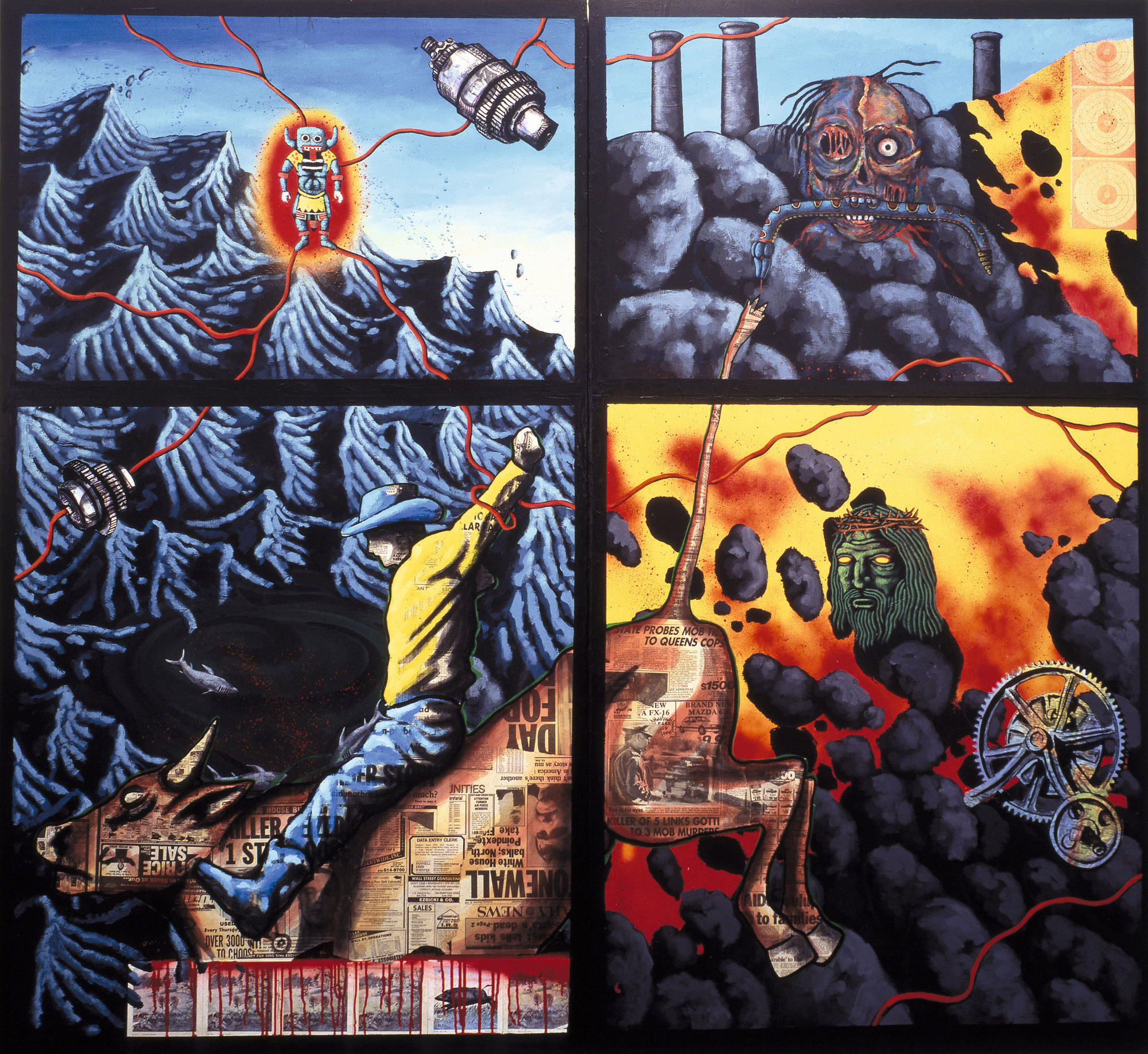


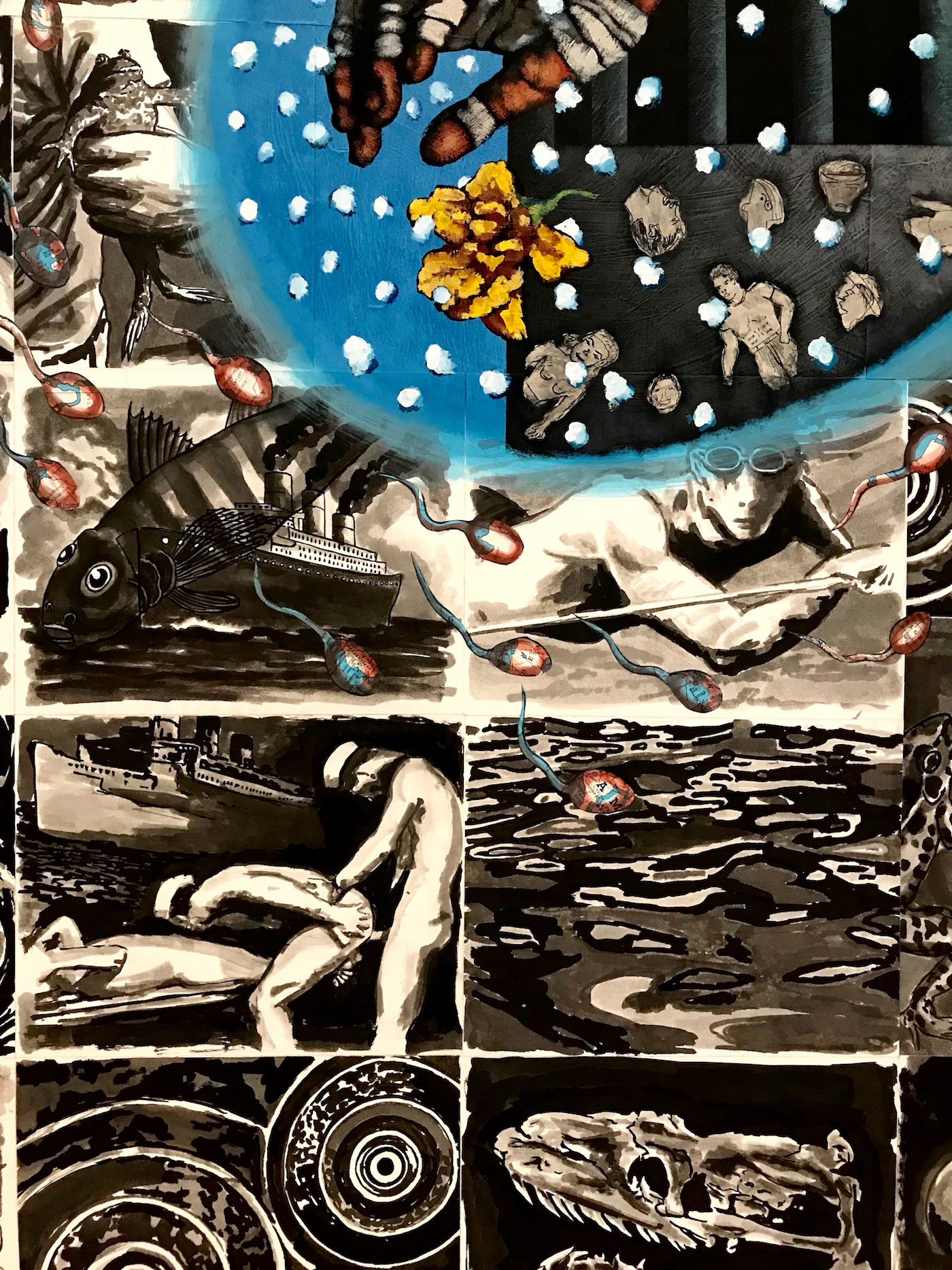
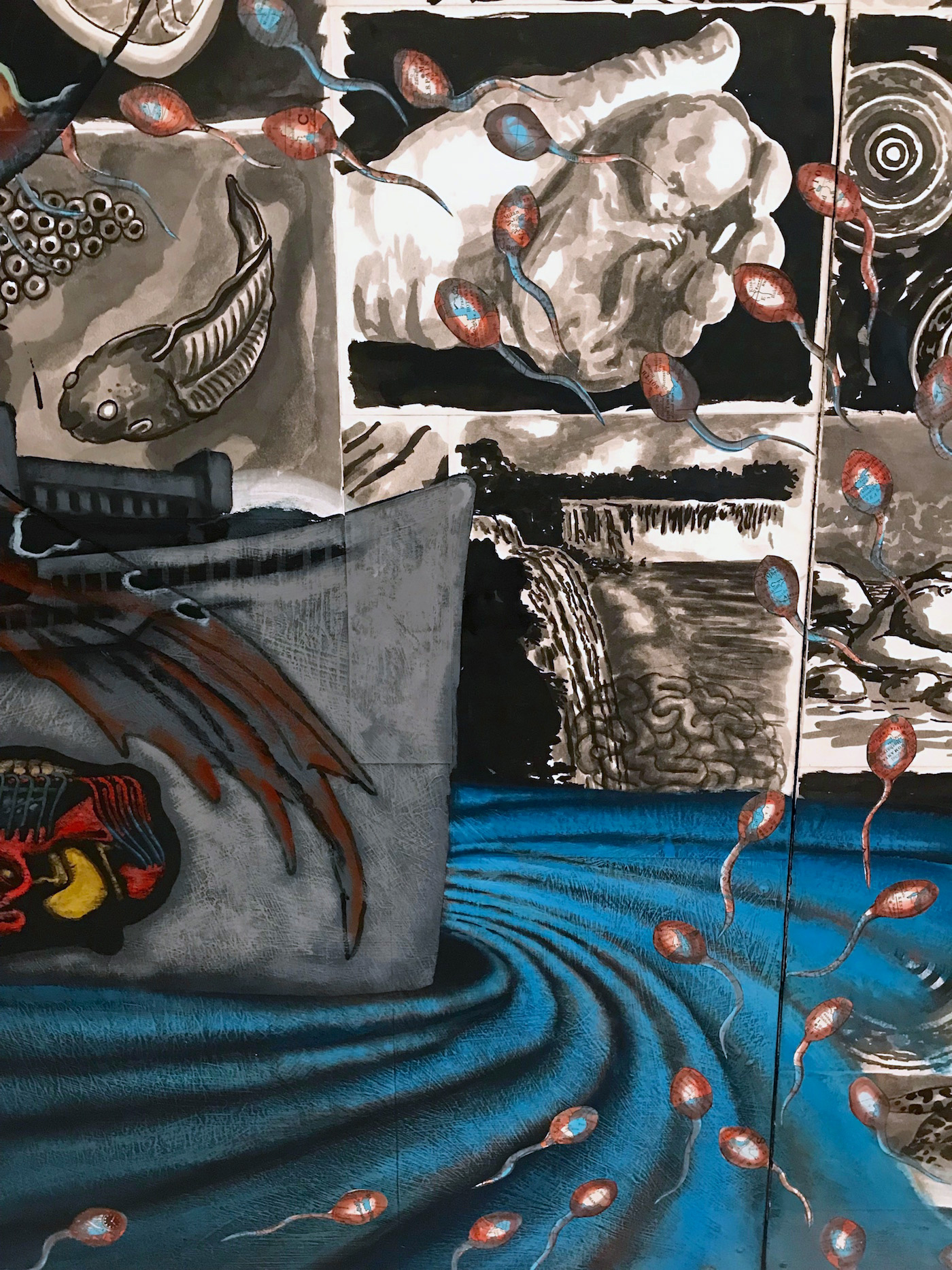

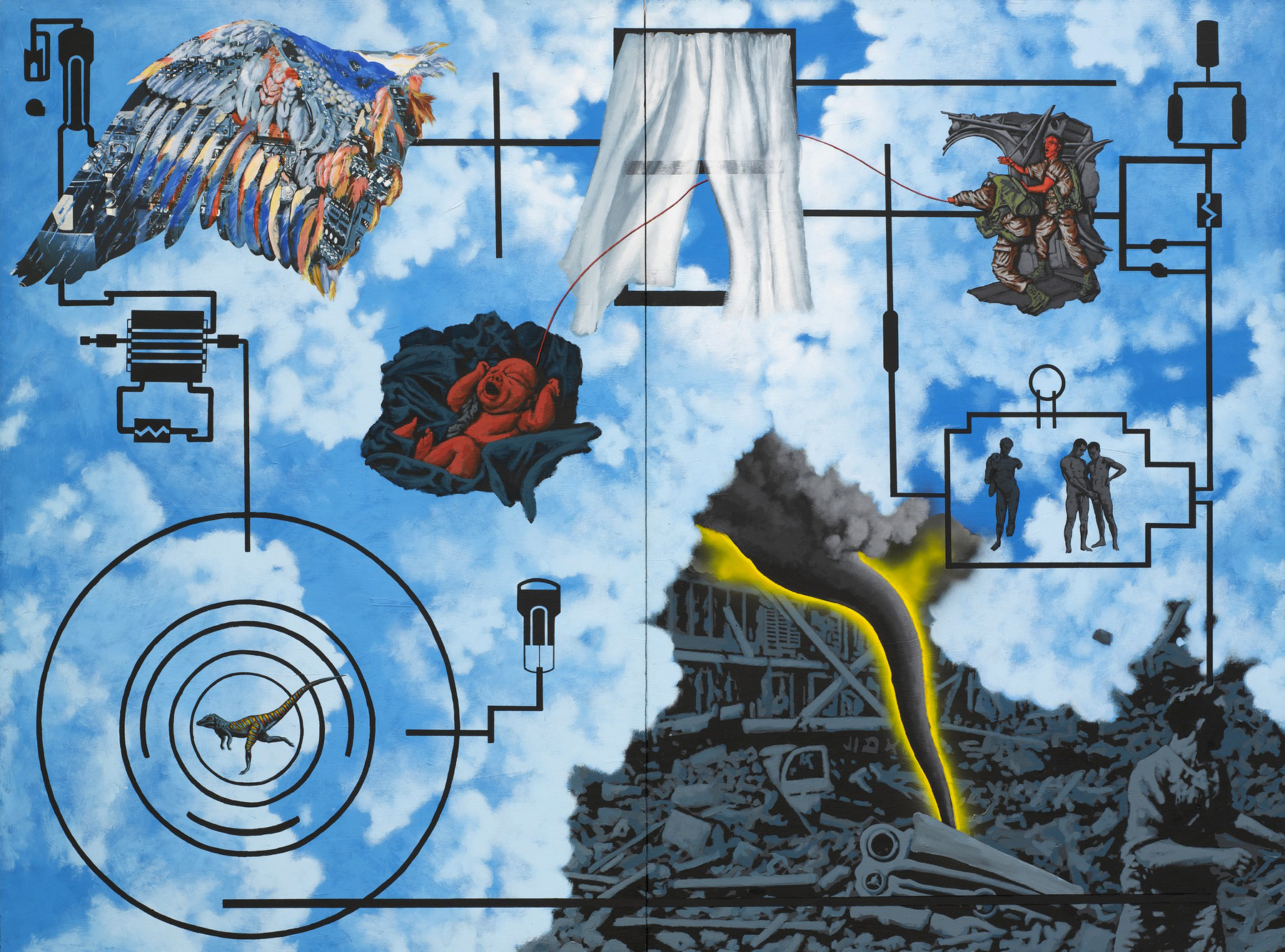

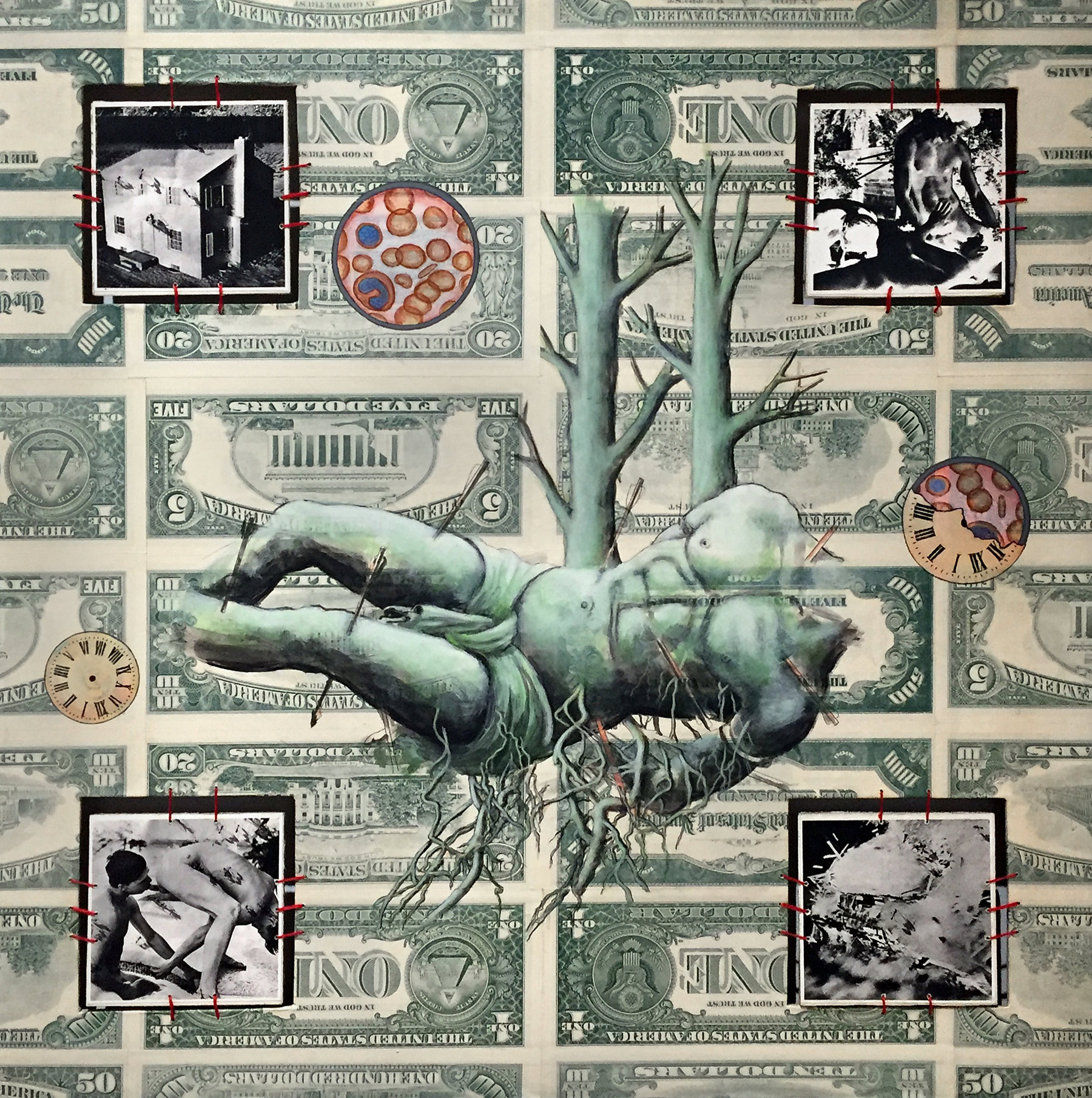
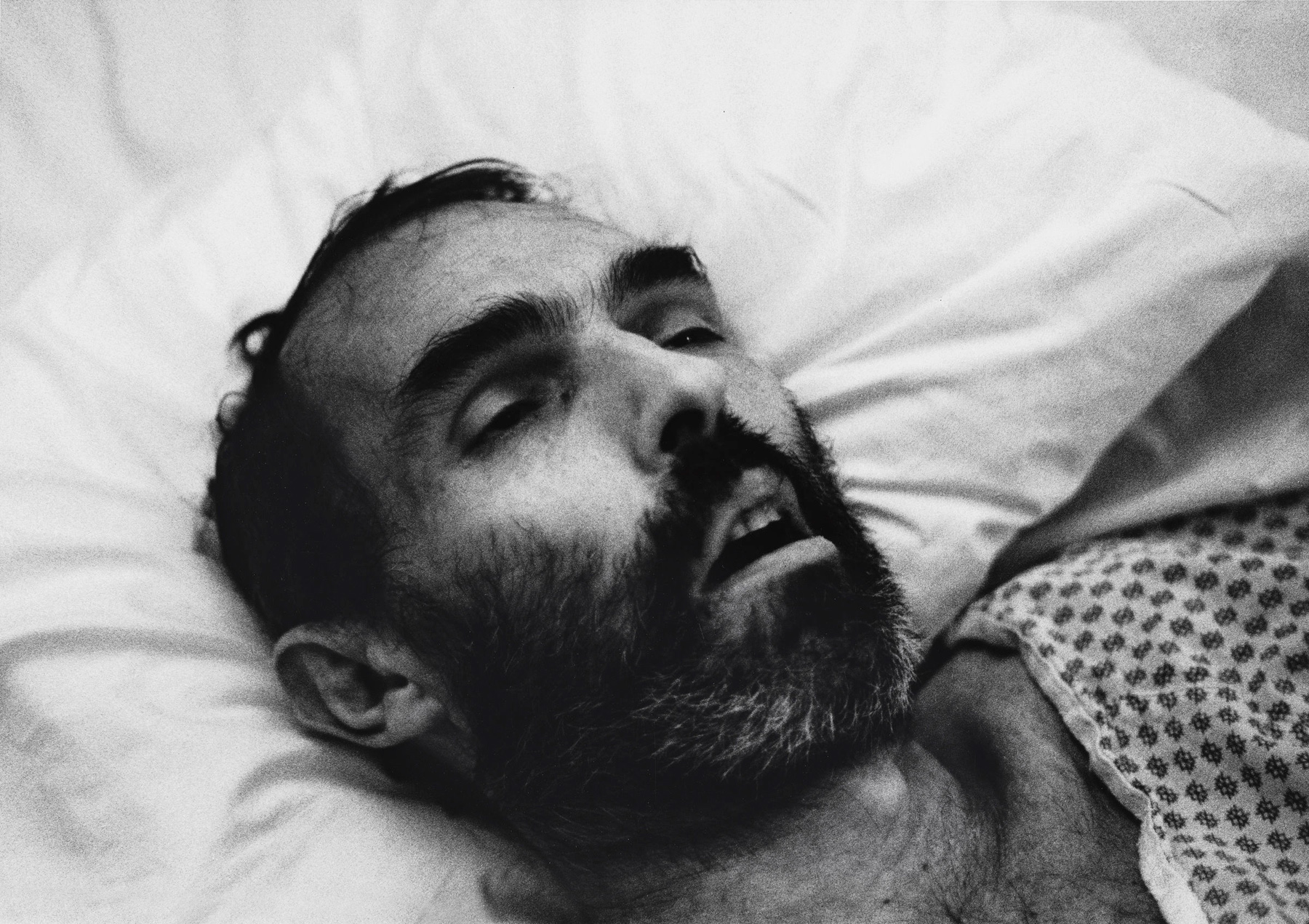
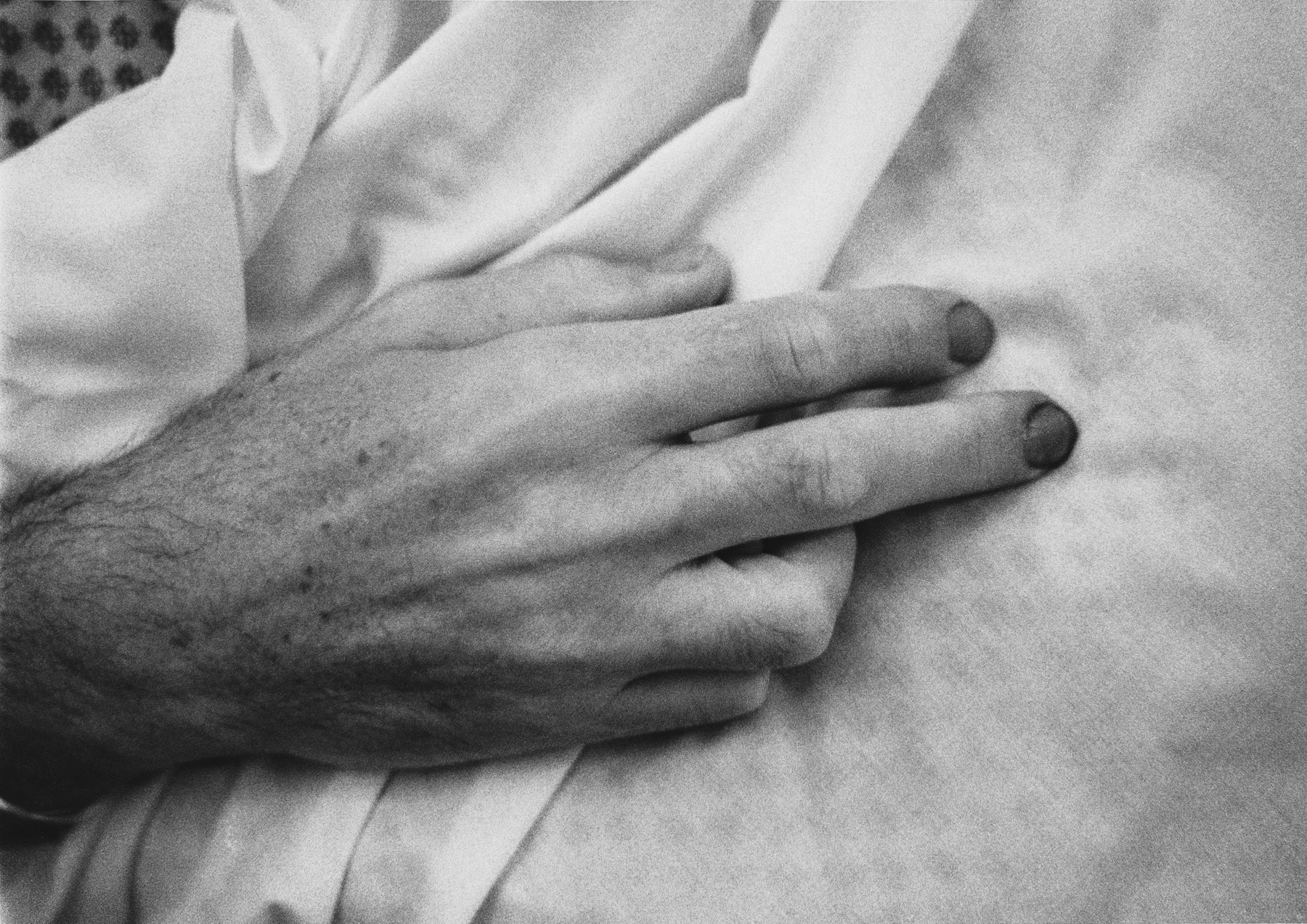
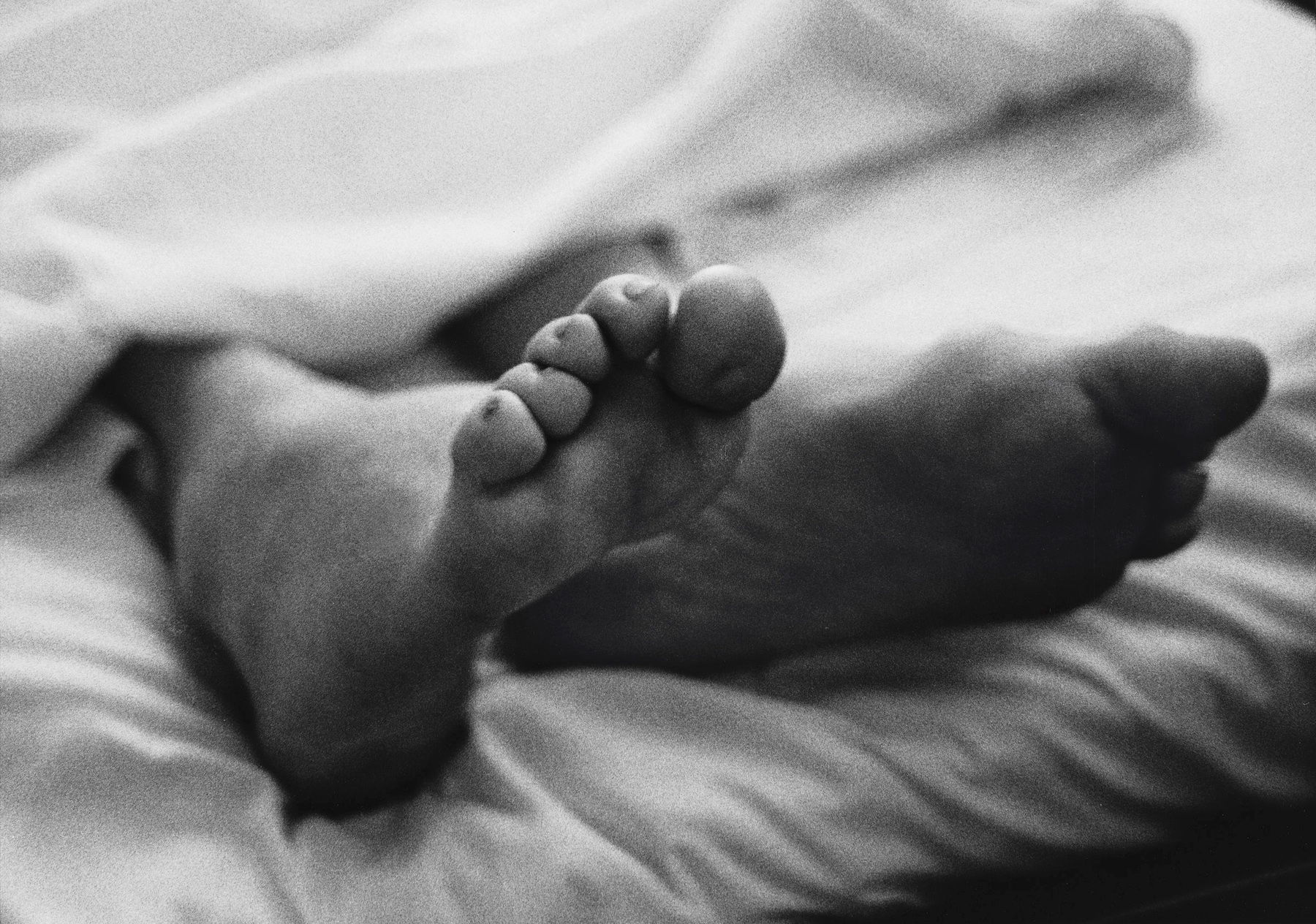
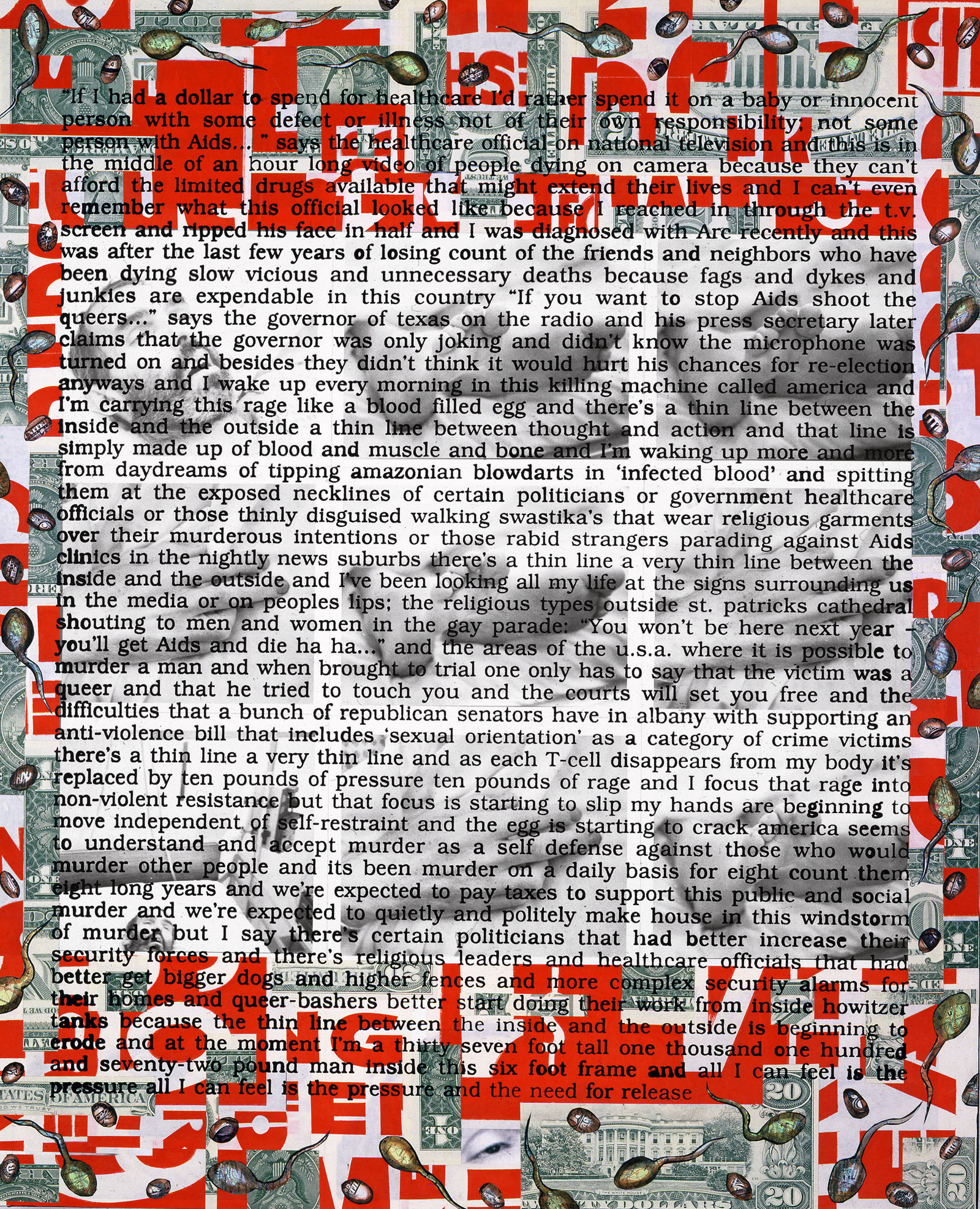
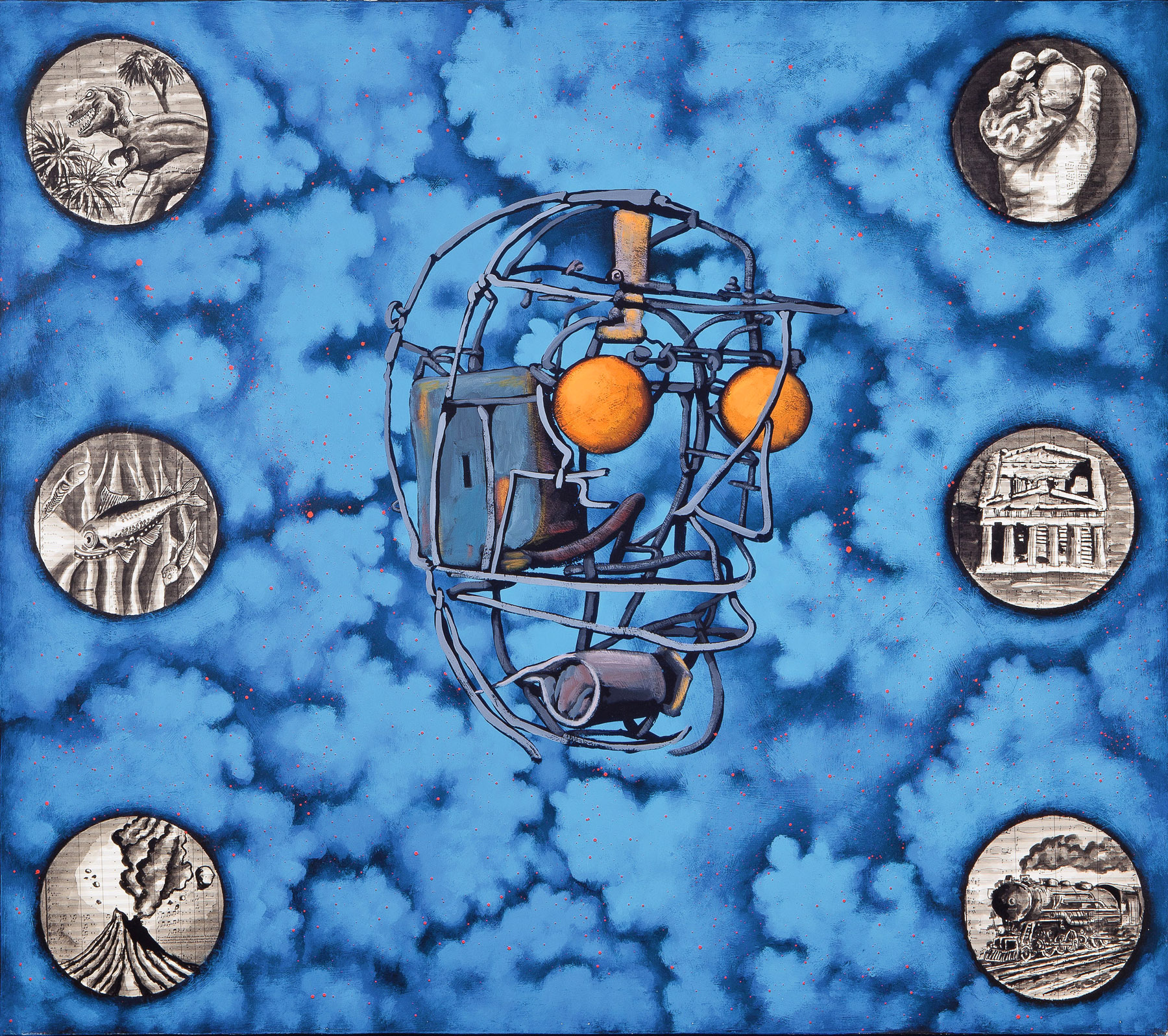

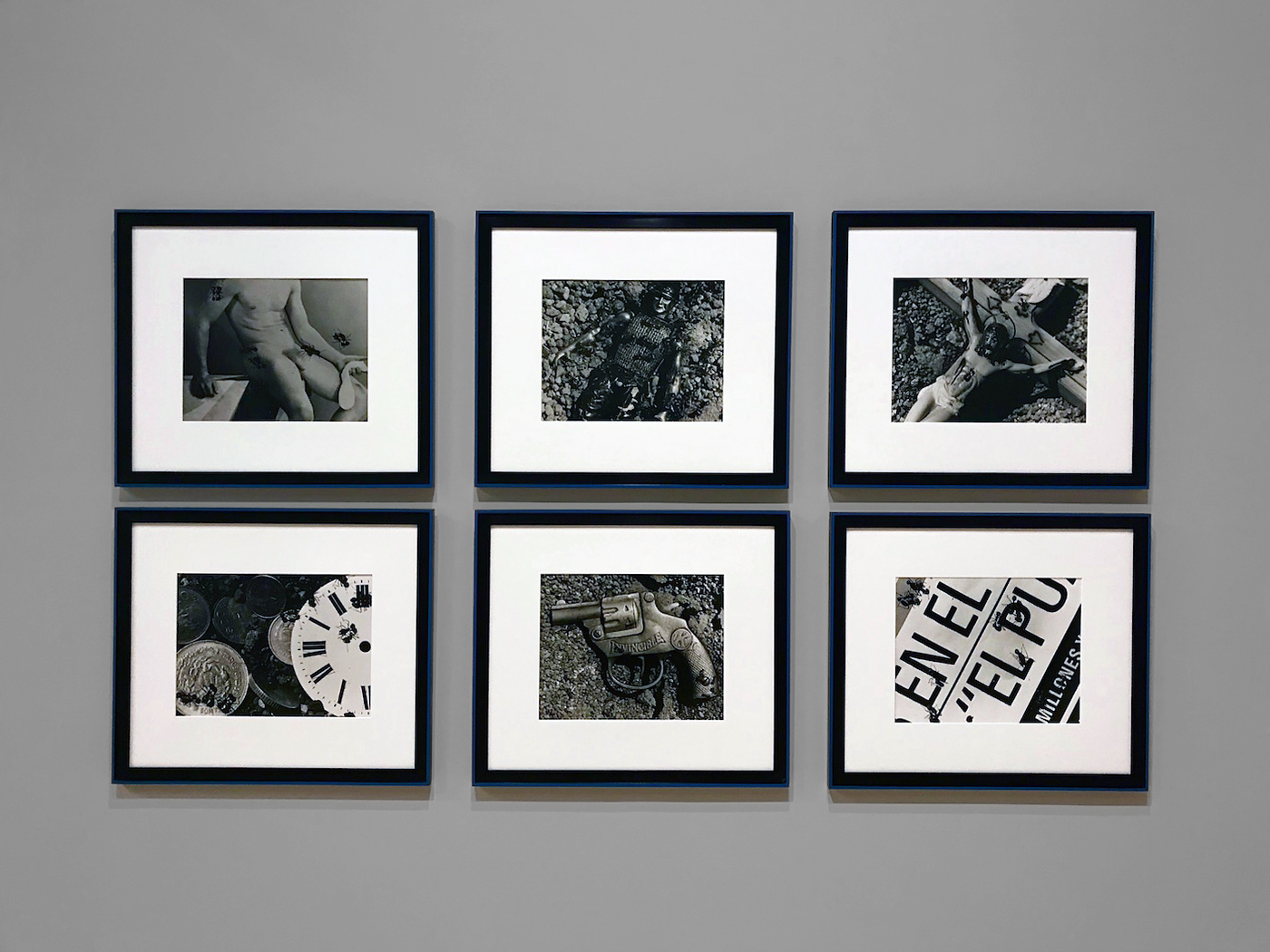
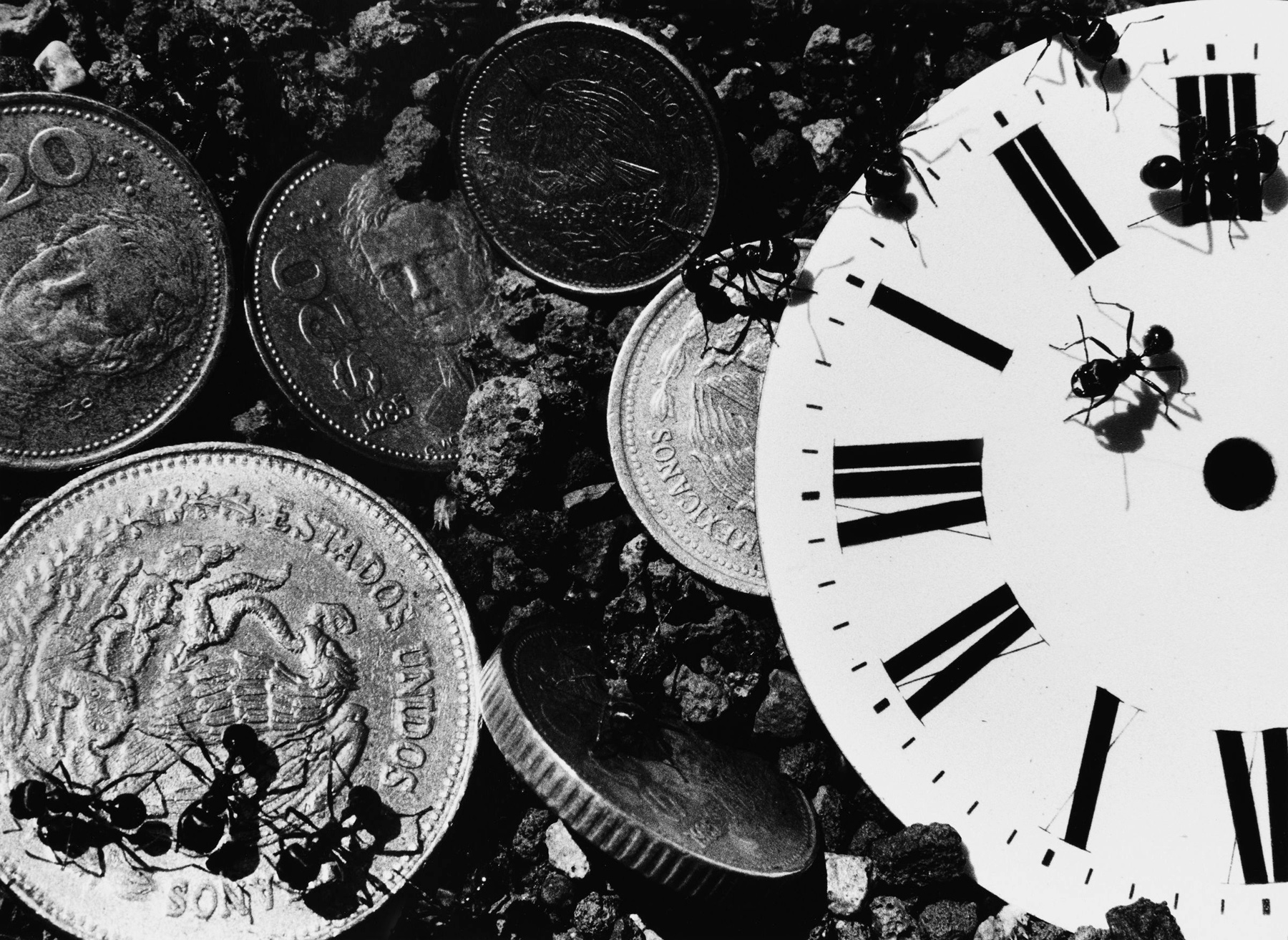

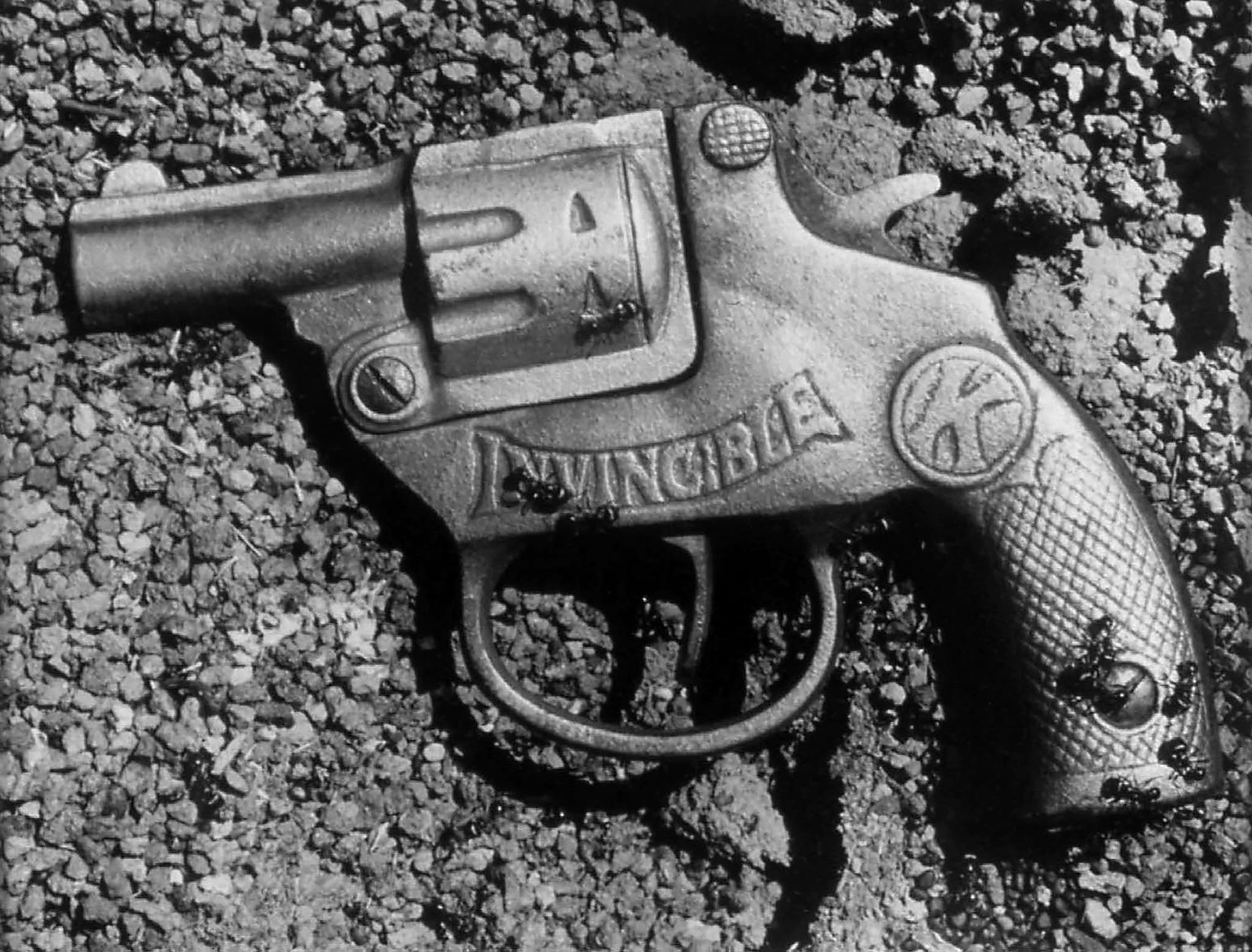
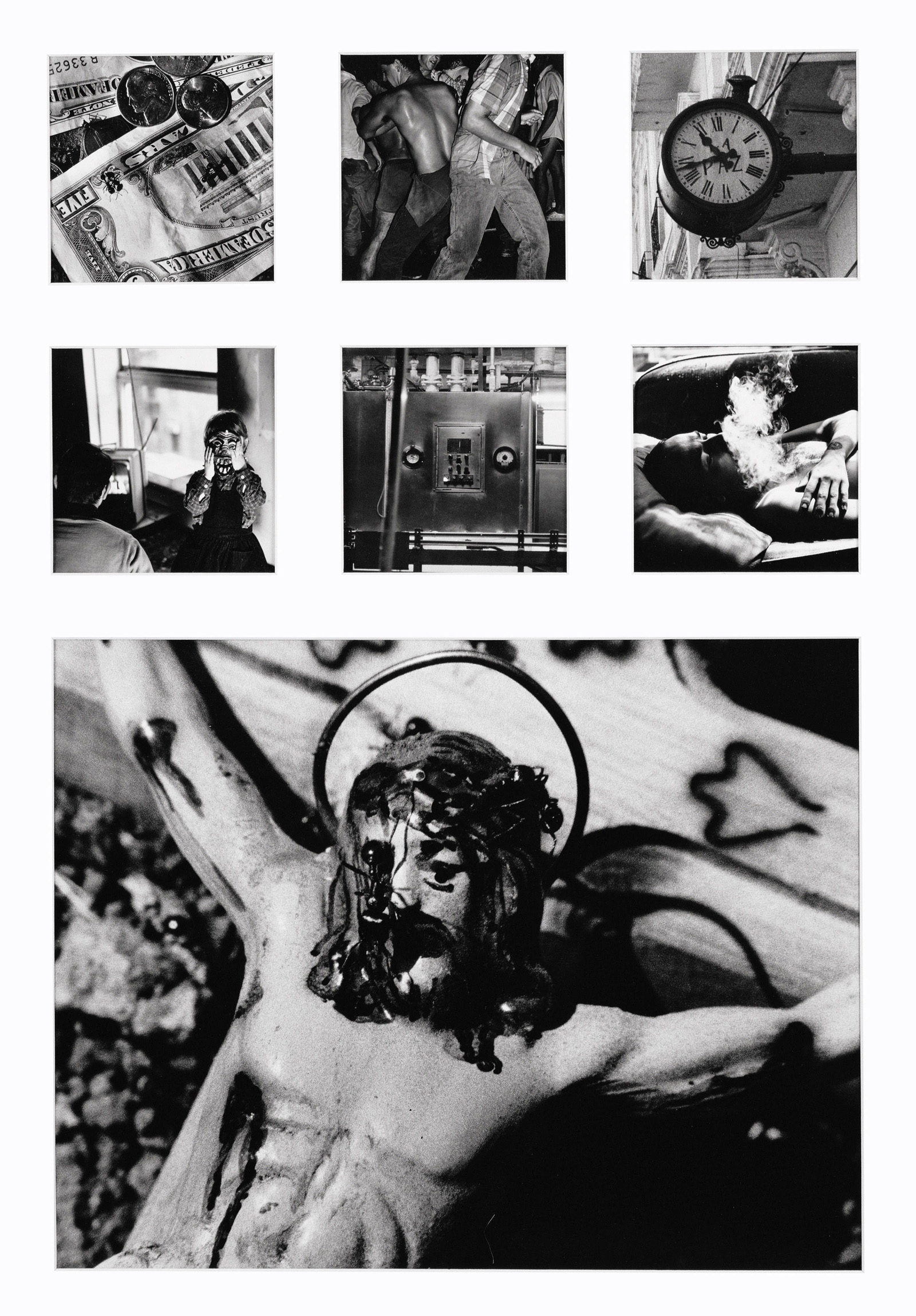


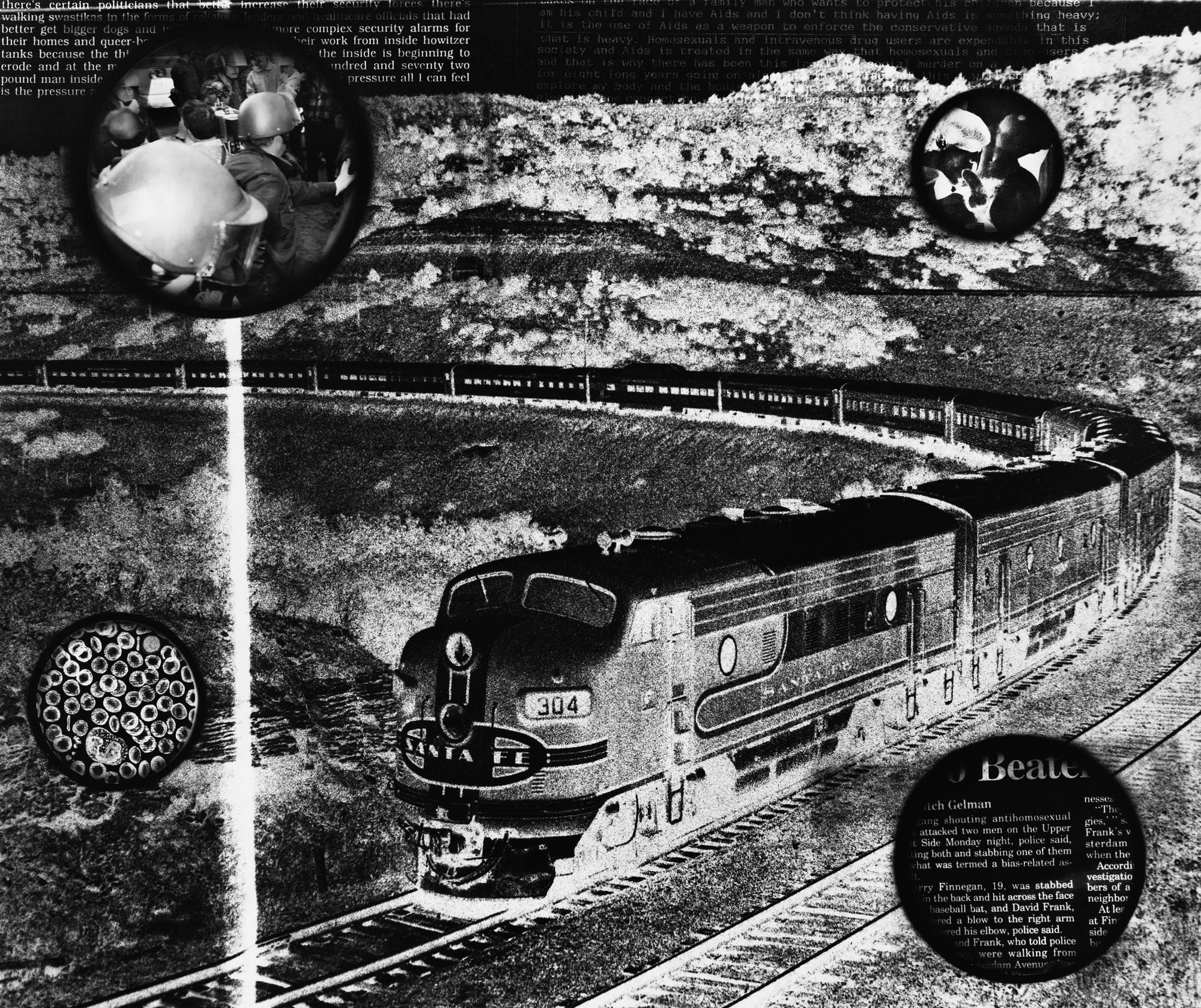


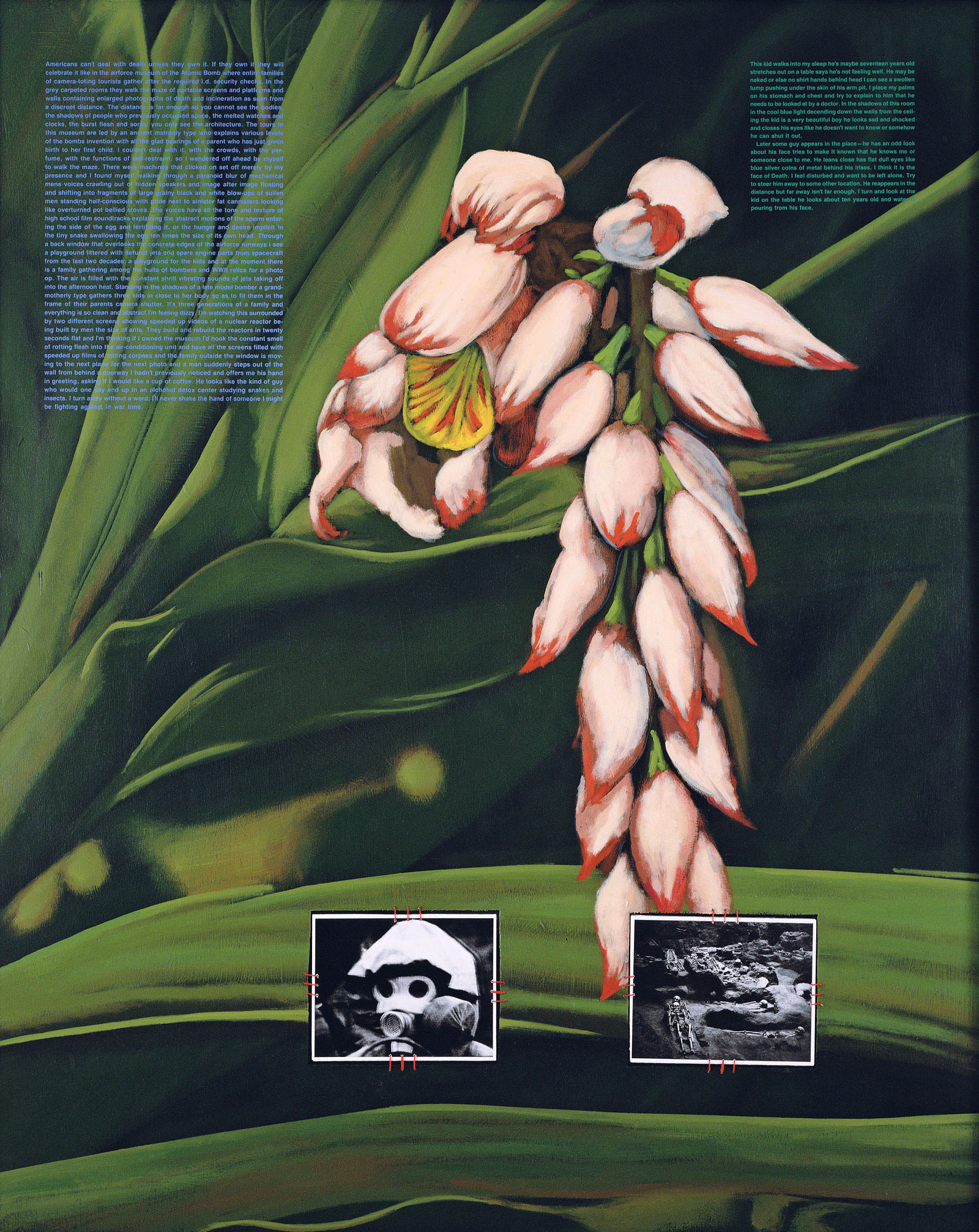
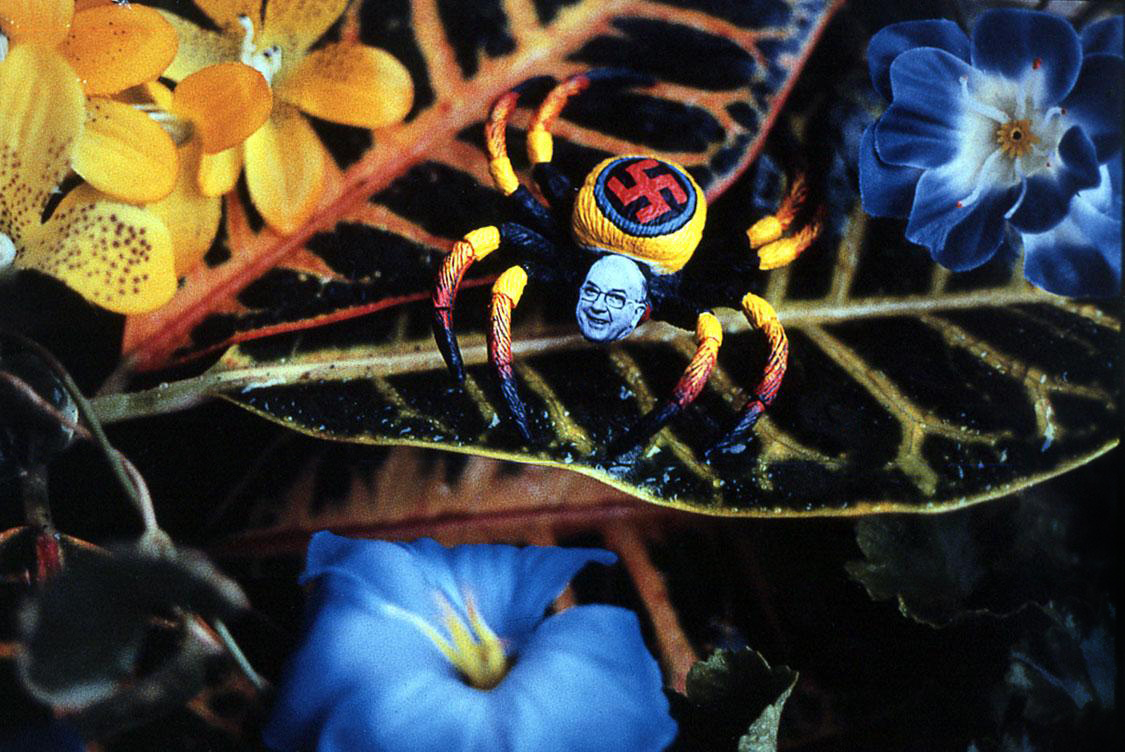

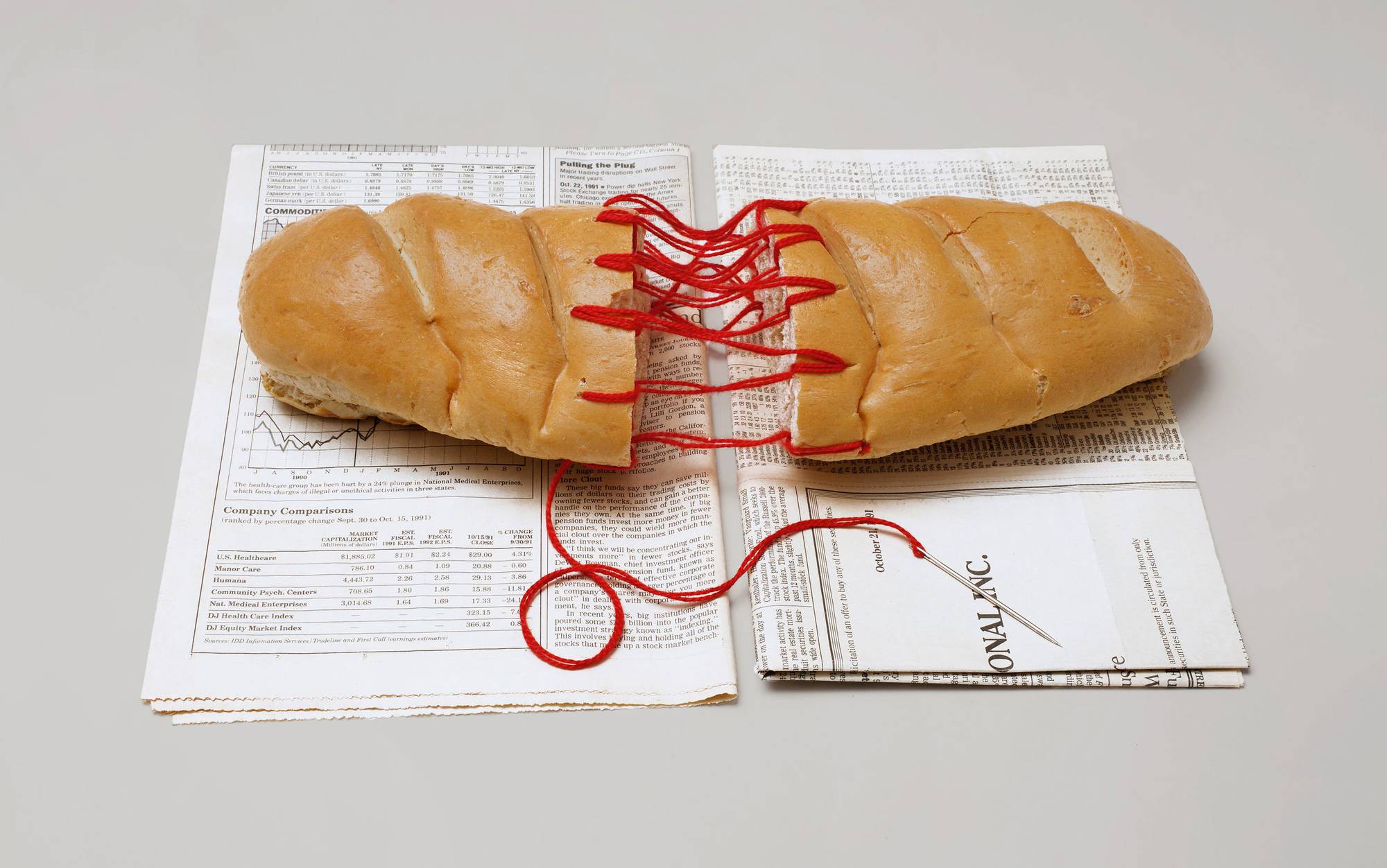


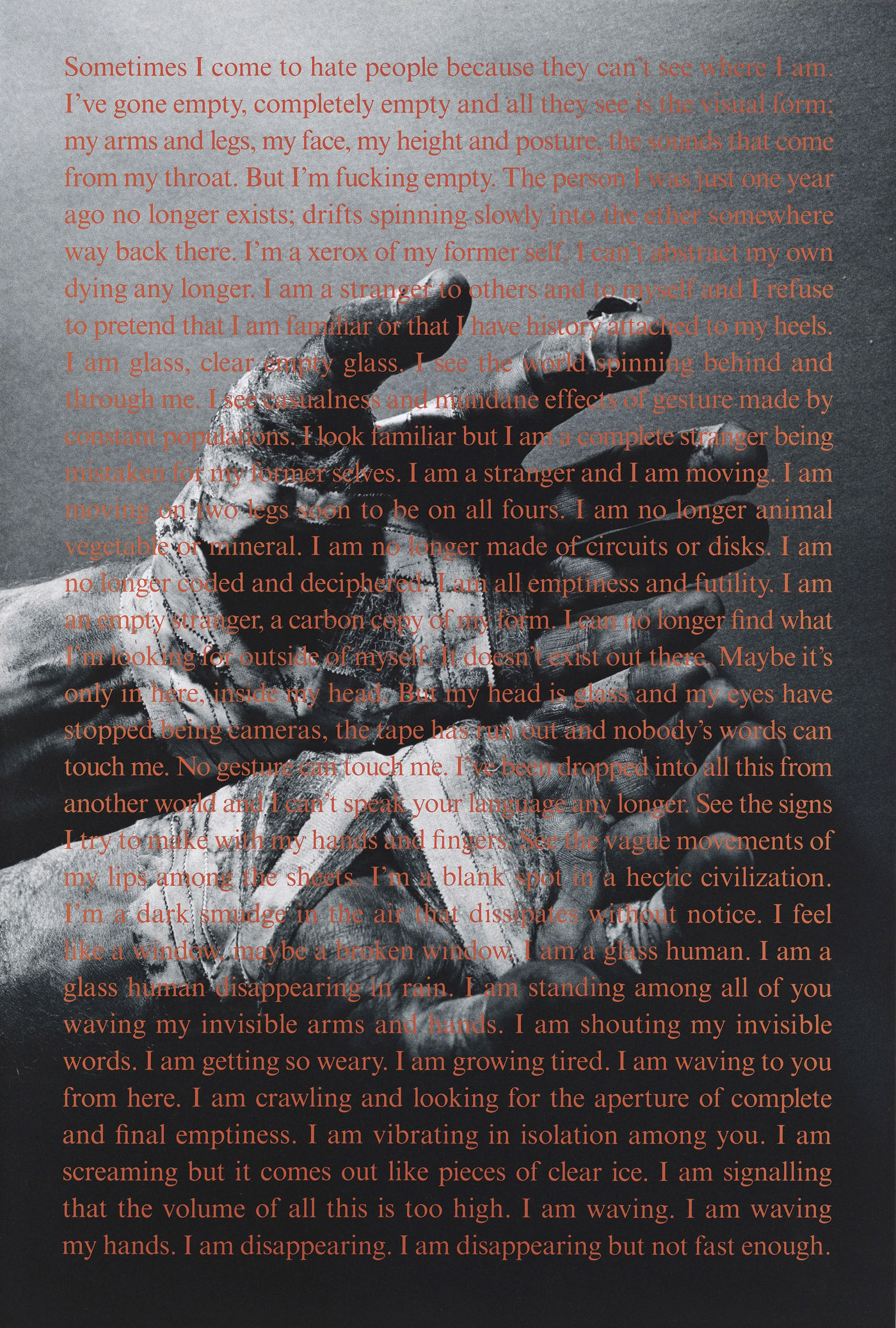
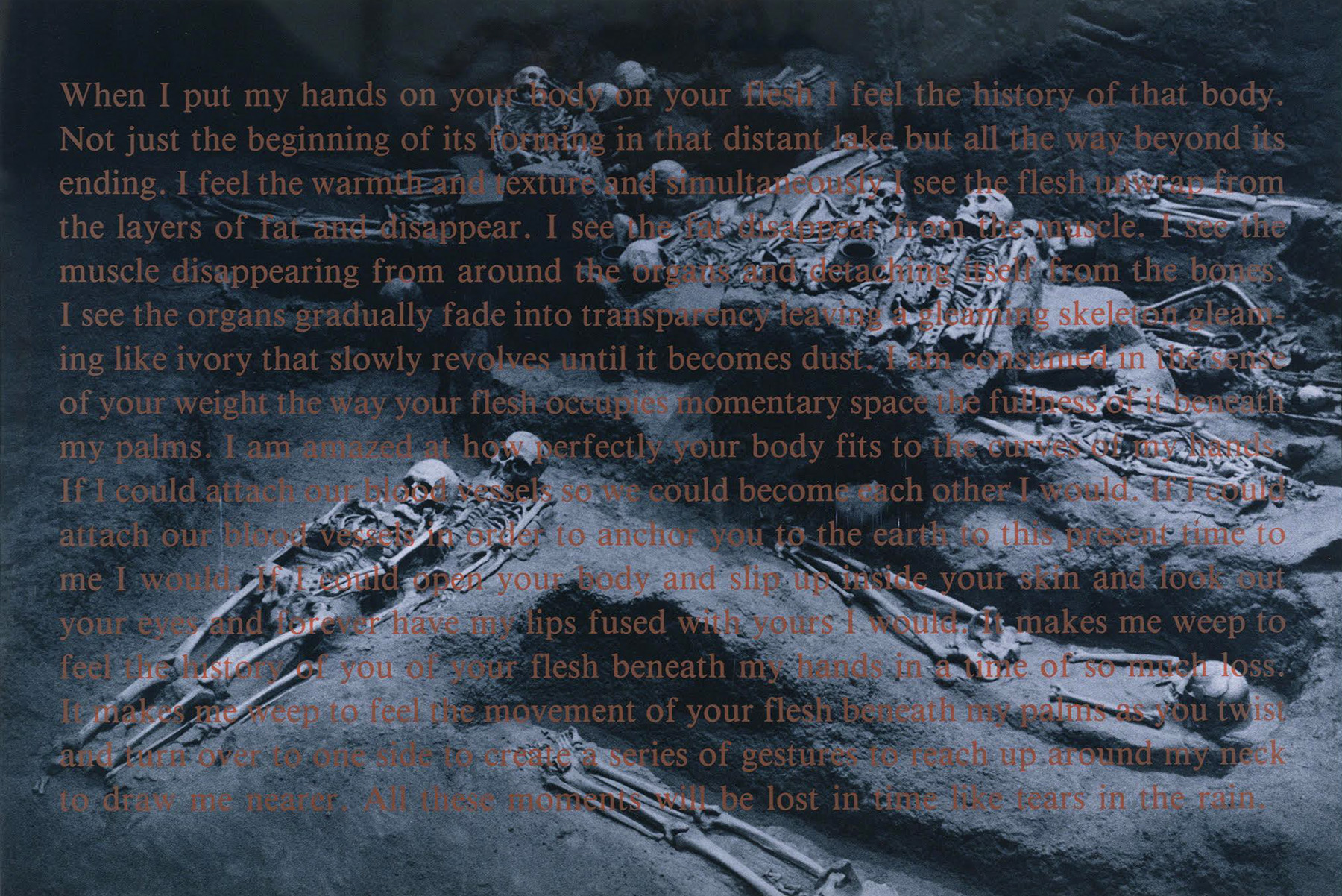
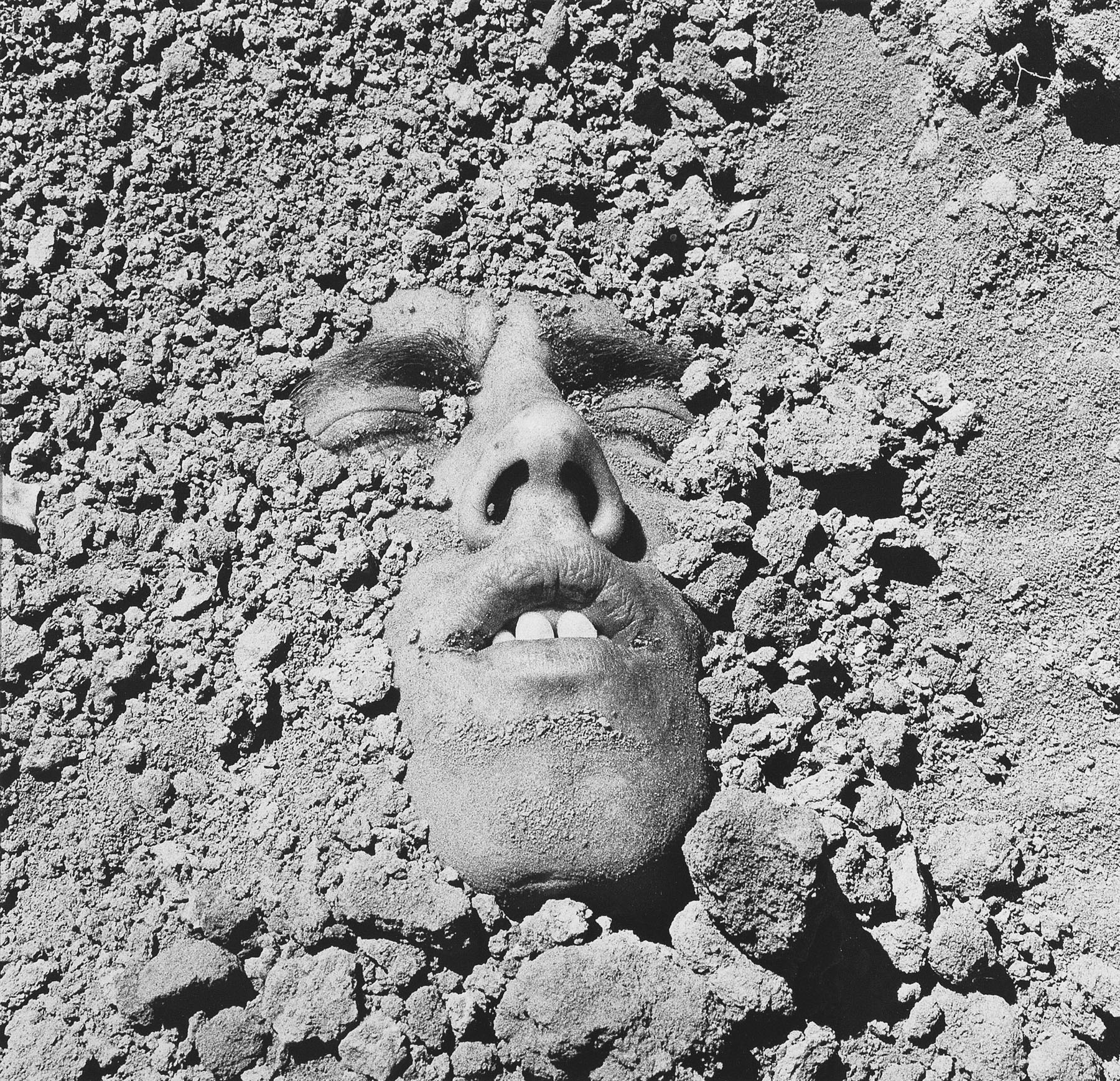


































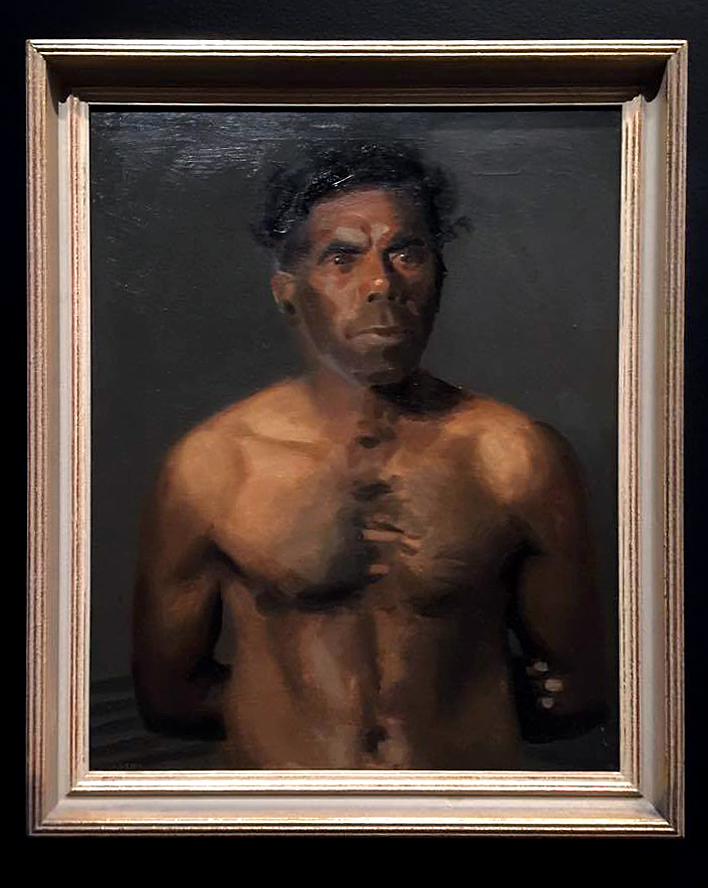

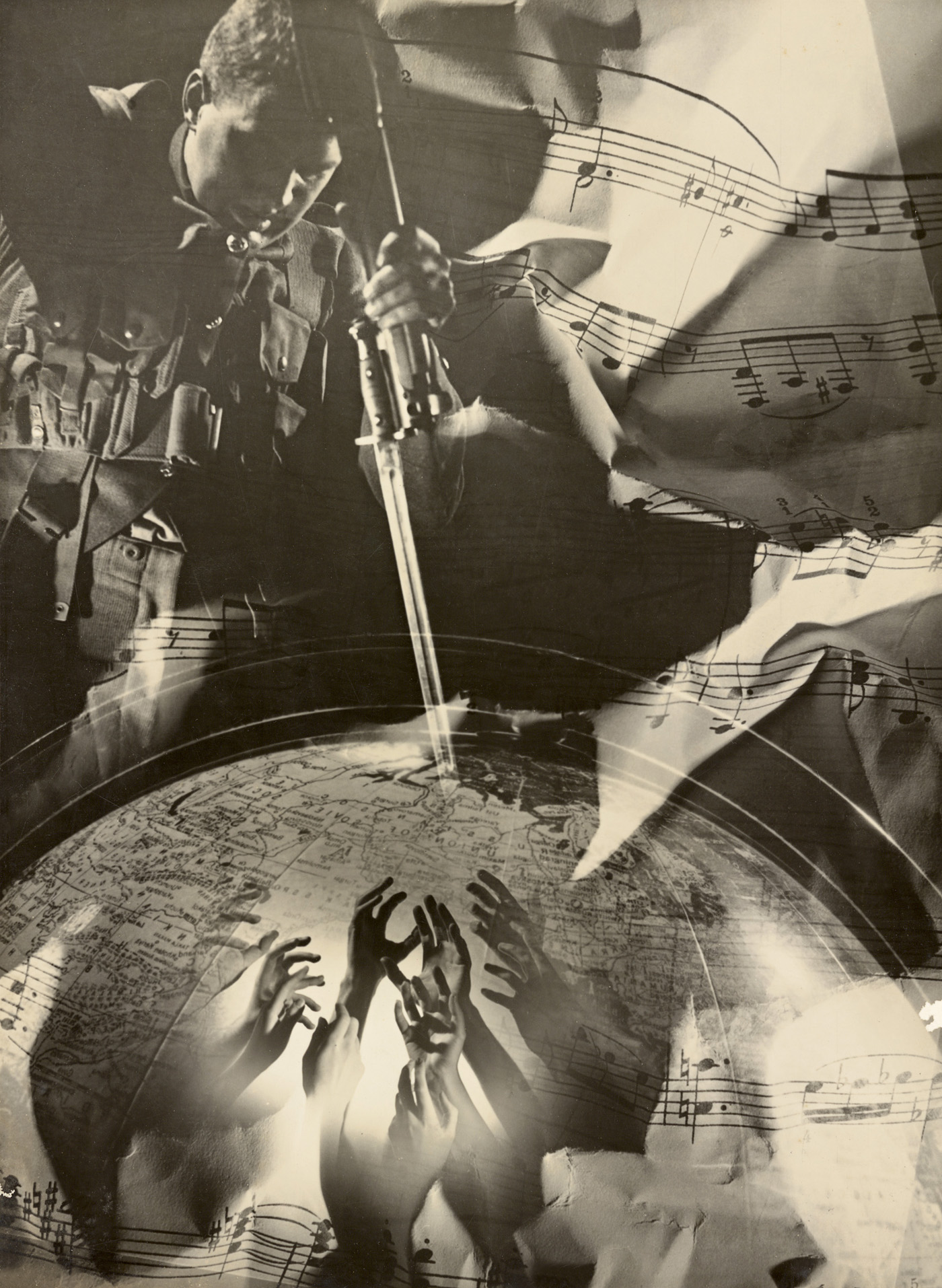


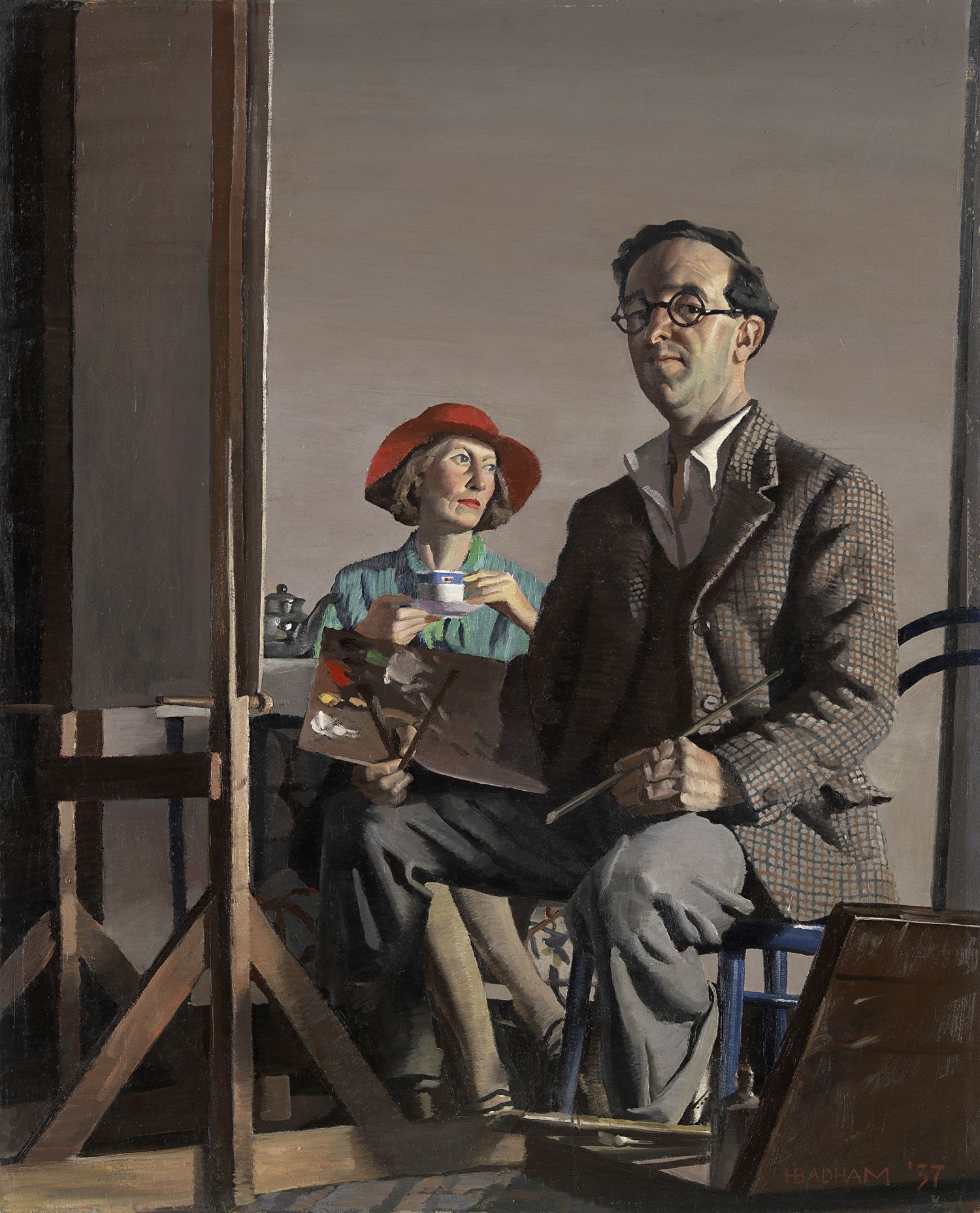


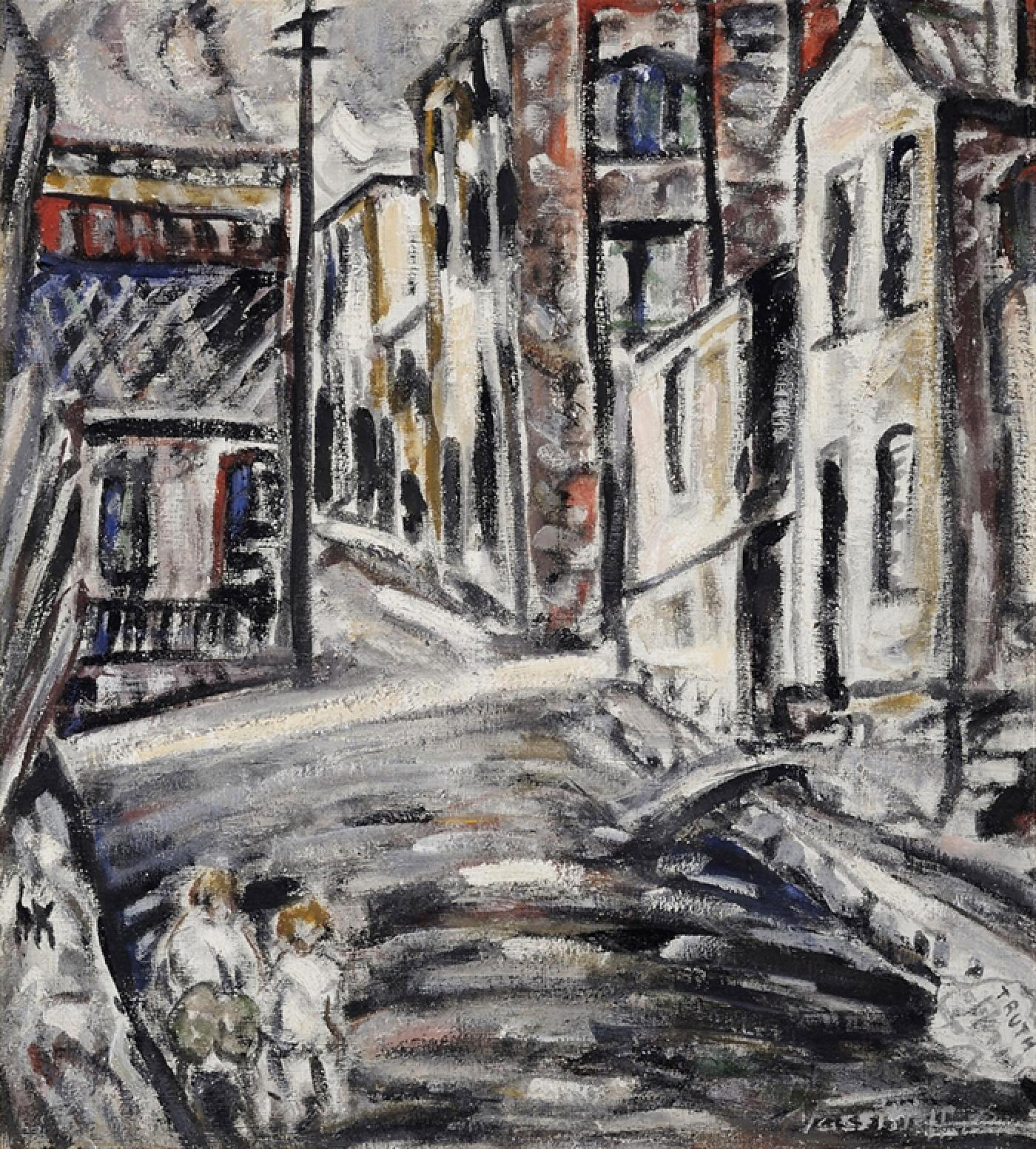







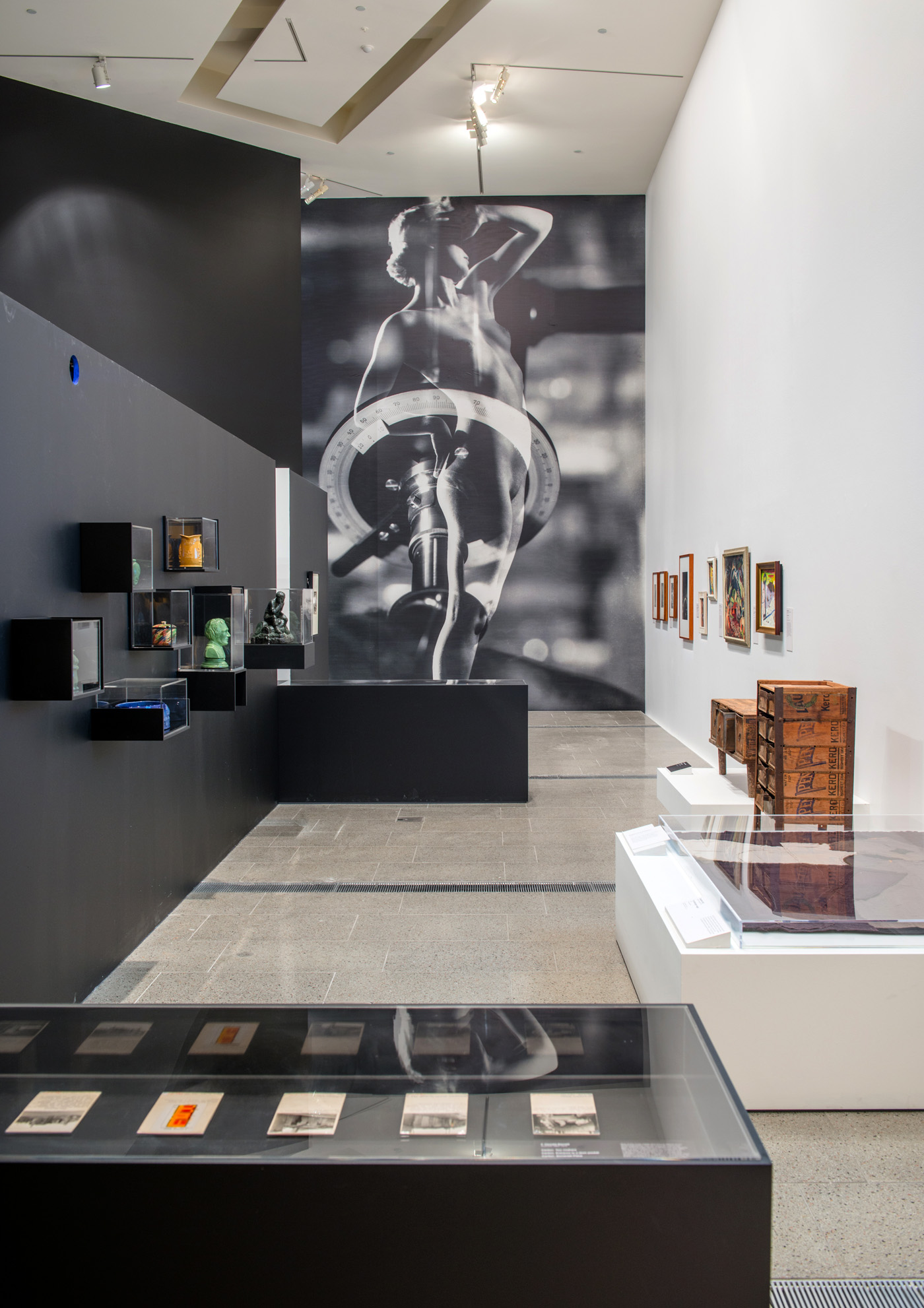


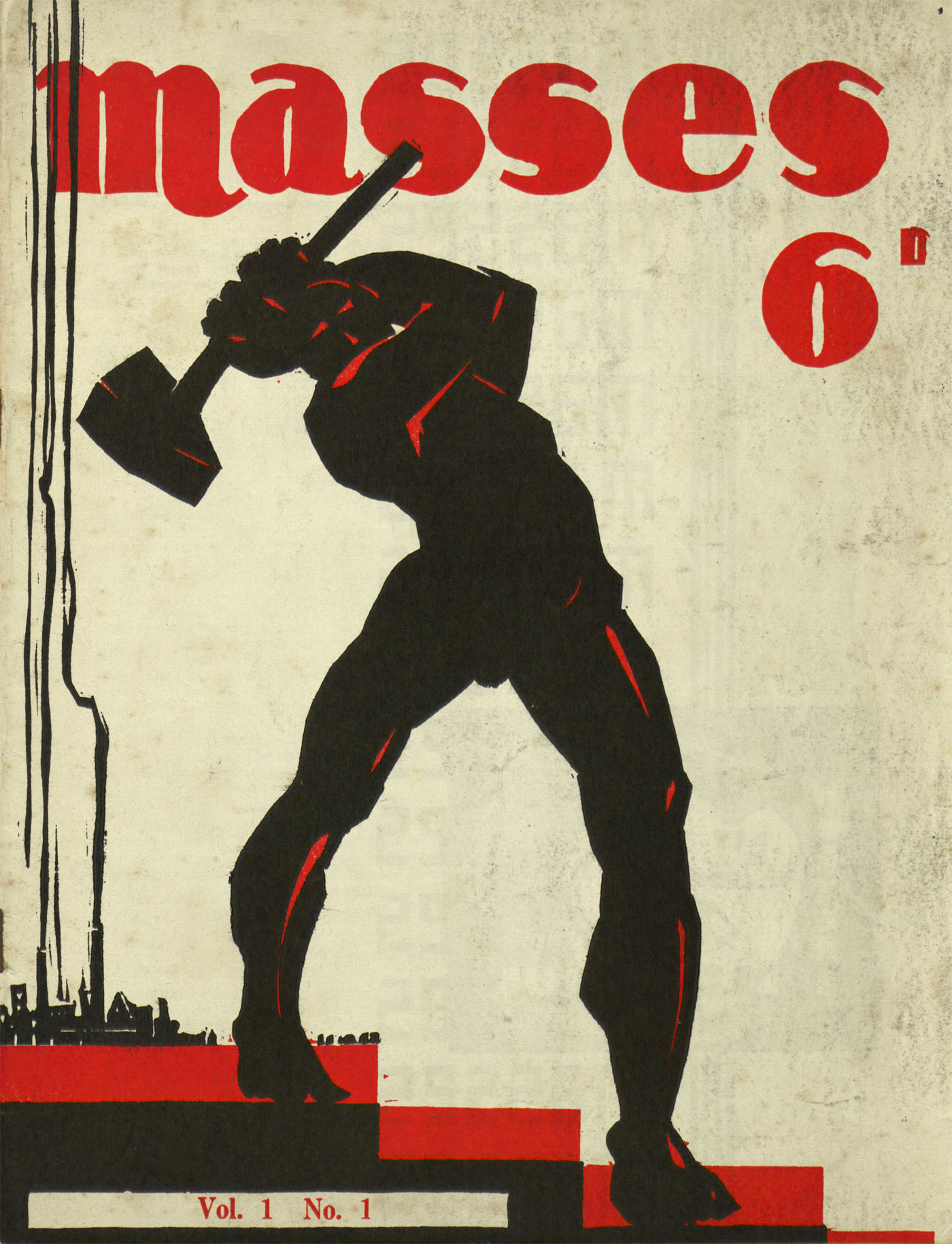


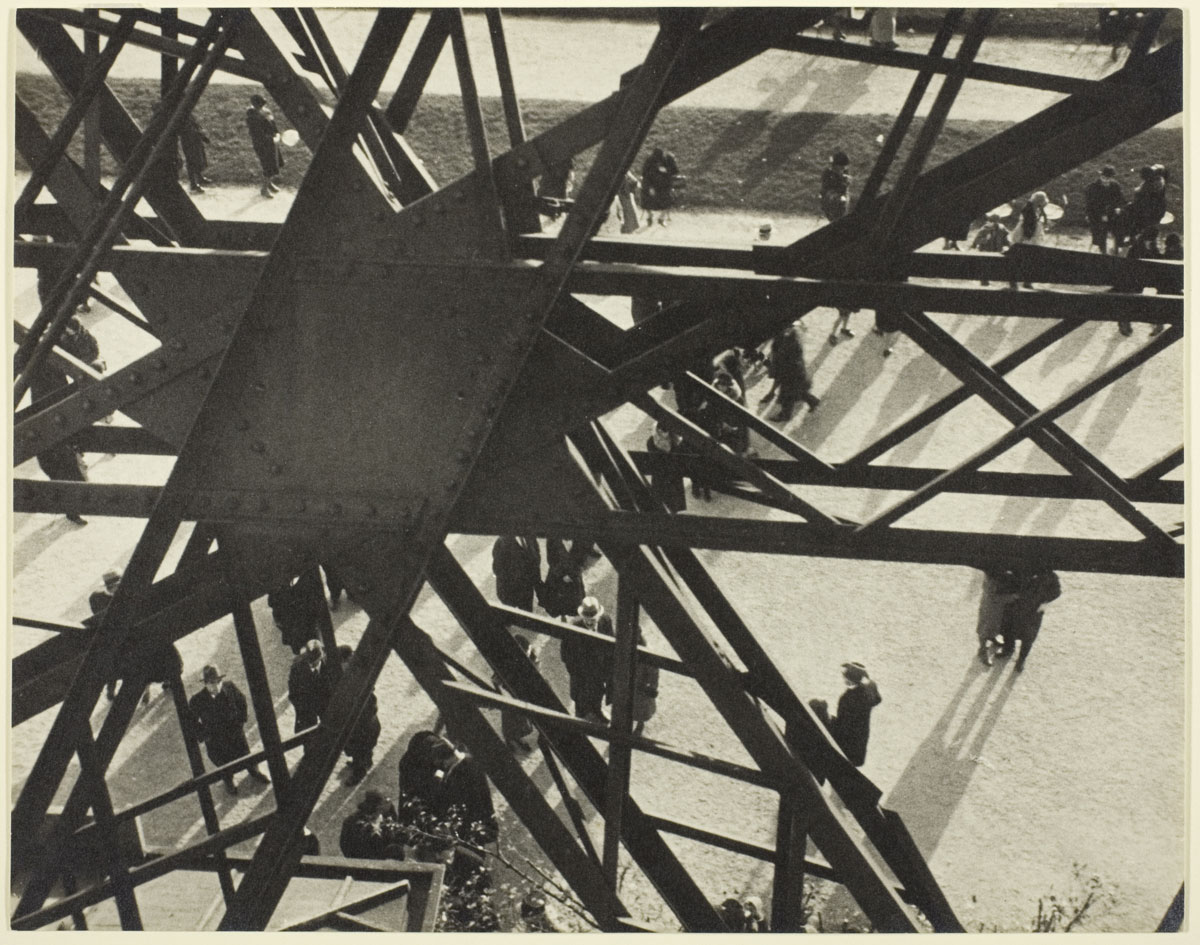
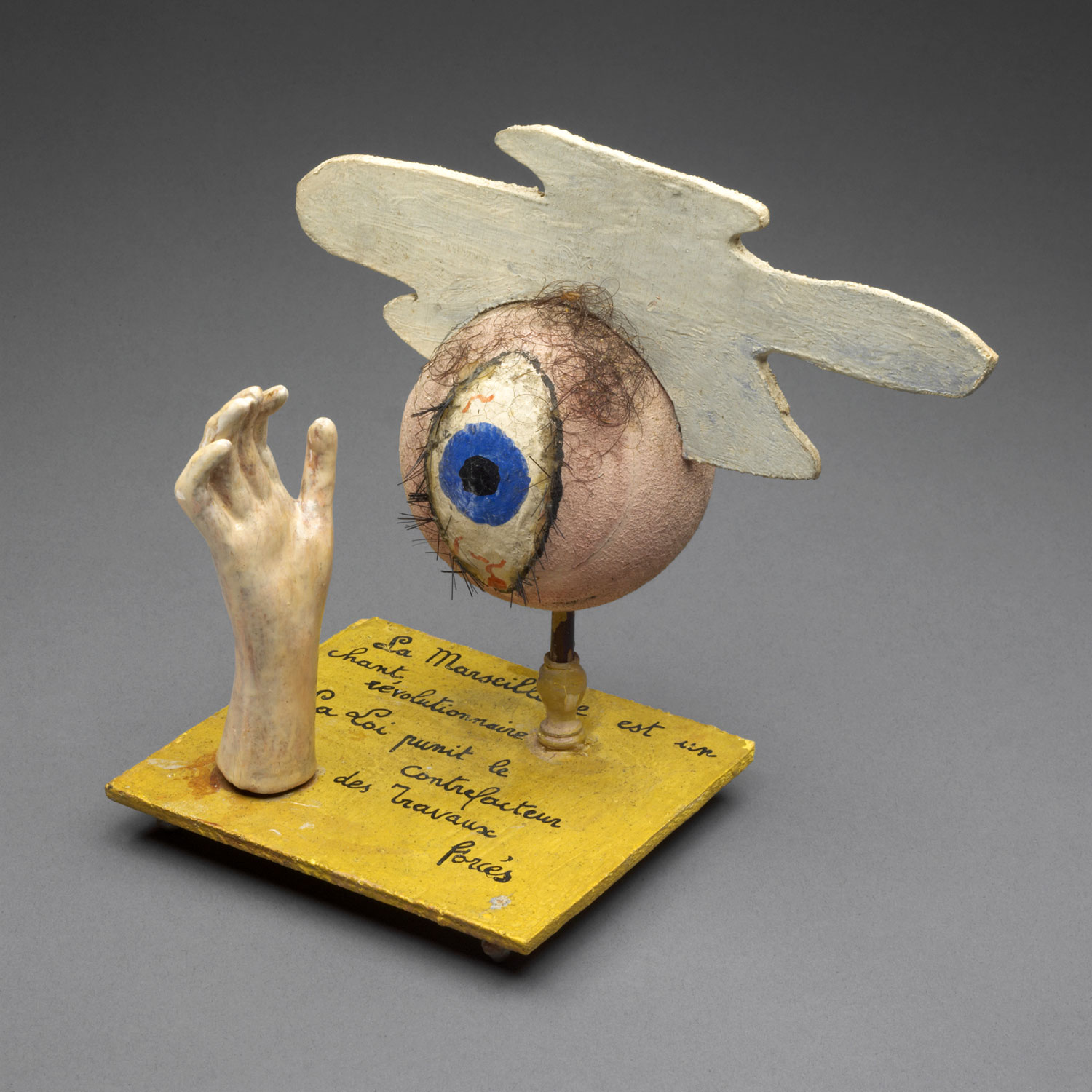





![Stanisław Ignacy Witkiewicz (Polish, 1885-1939) 'Self-Portrait, Zakopane [Broken Glass]' 1910](https://artblart.com/wp-content/uploads/2015/03/witkiewicz_self-portrait-zakopane-web.jpg "Stanisław Ignacy Witkiewicz (Polish, 1885-1939) 'Self-Portrait, Zakopane [Broken Glass]' 1910")

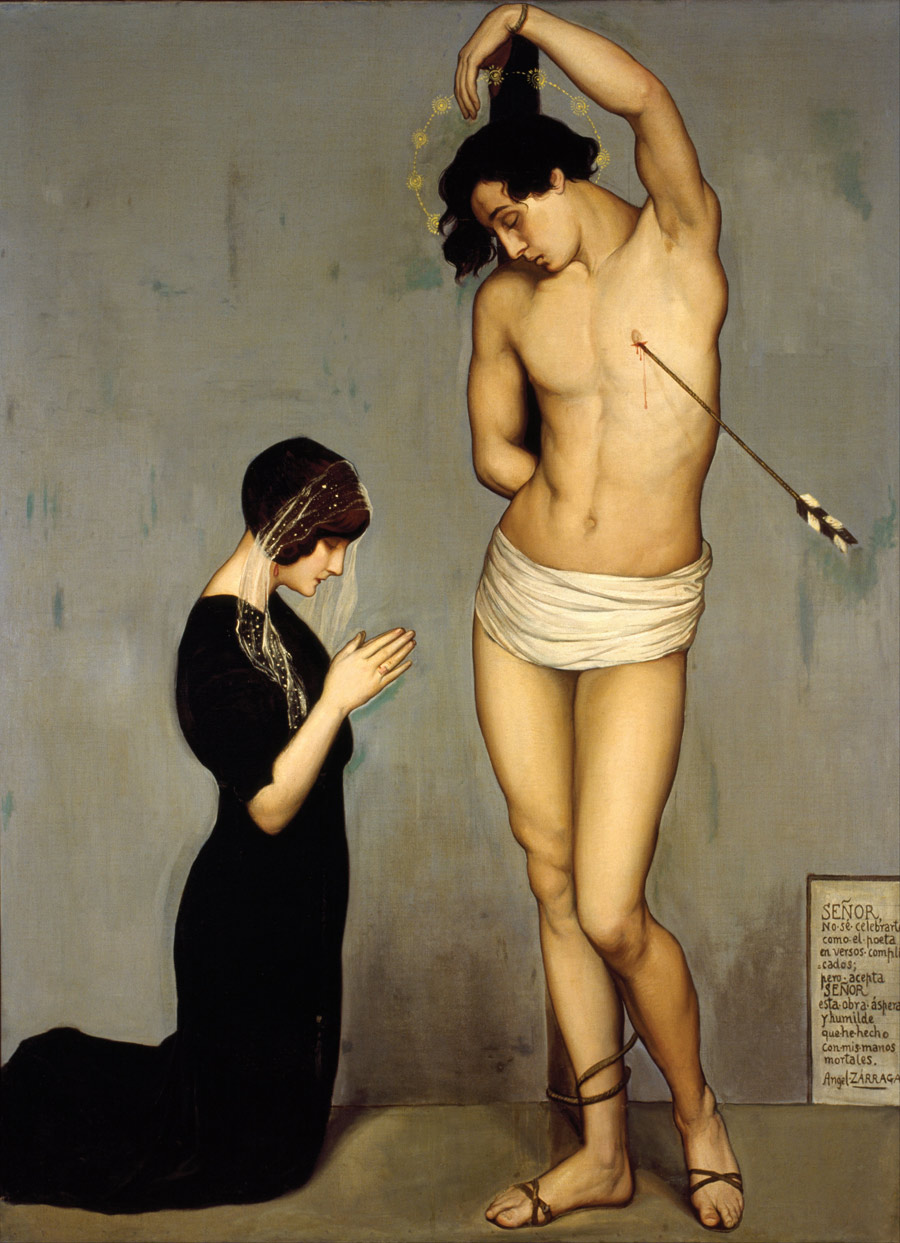



 Art Blart _ art and cultural memory archive
You must be logged in to post a comment.