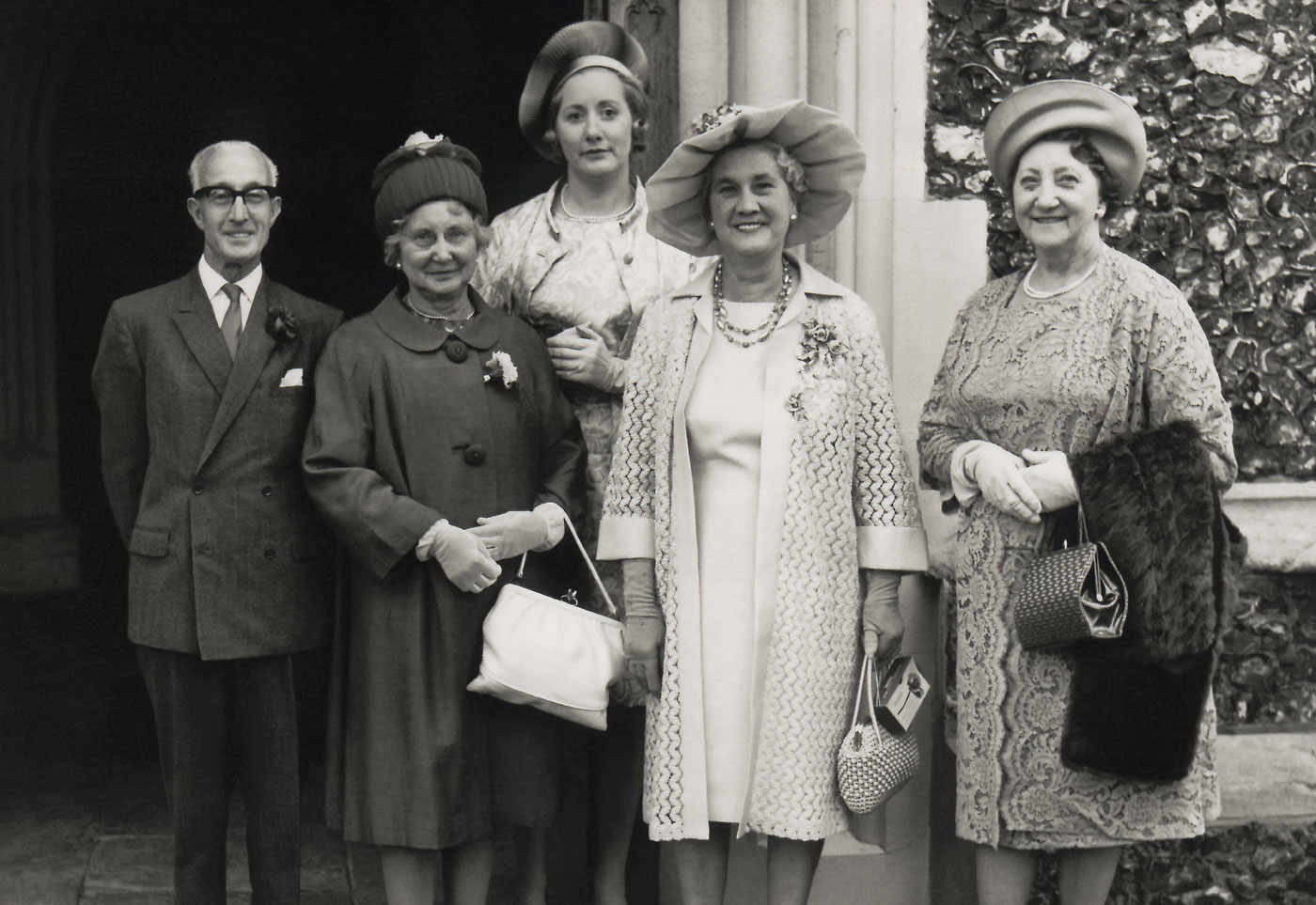
Marcus Bunyan (Australian, b. 1958) Untitled (family) 2005 From the series Photos my mother sent me, 2005
The Book of Memory. Book Four.
Several blank pages. To be followed by profuse illustrations. Old family photographs, for each person his own family, going back as many generations as possible. To look at these with utmost care.
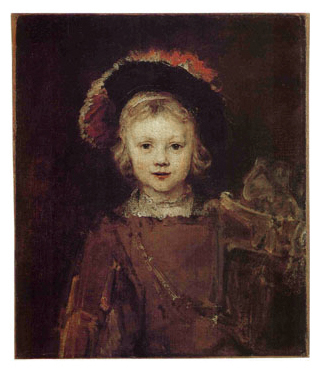
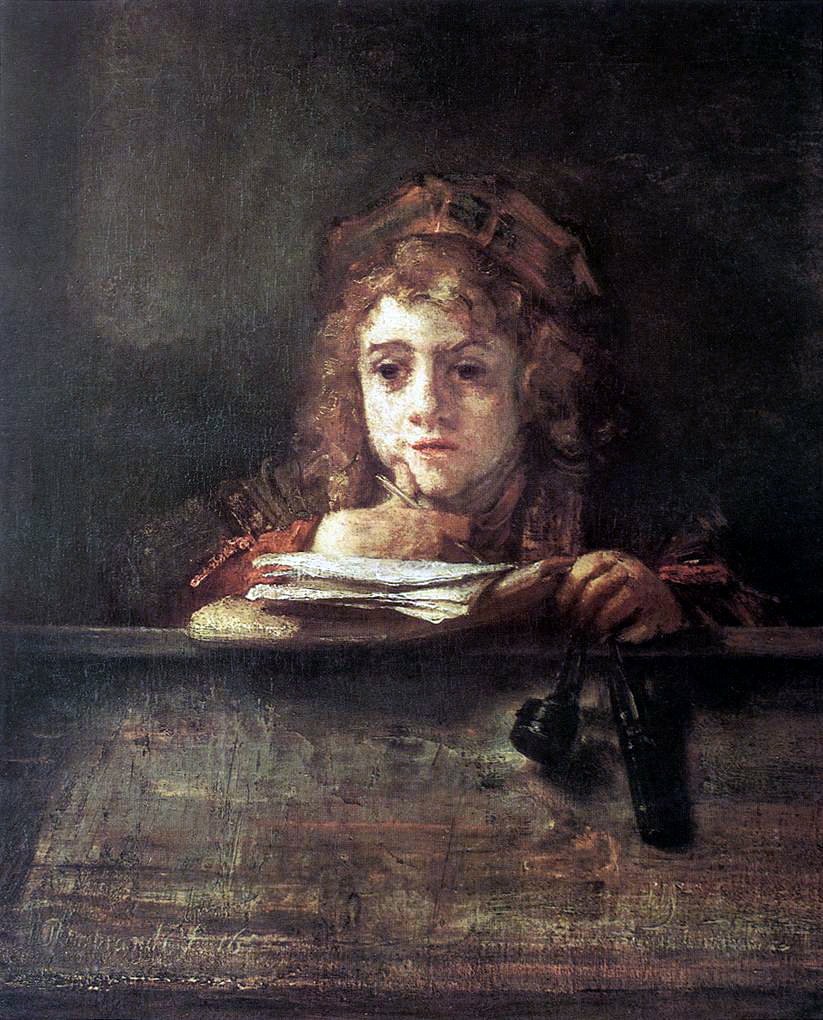
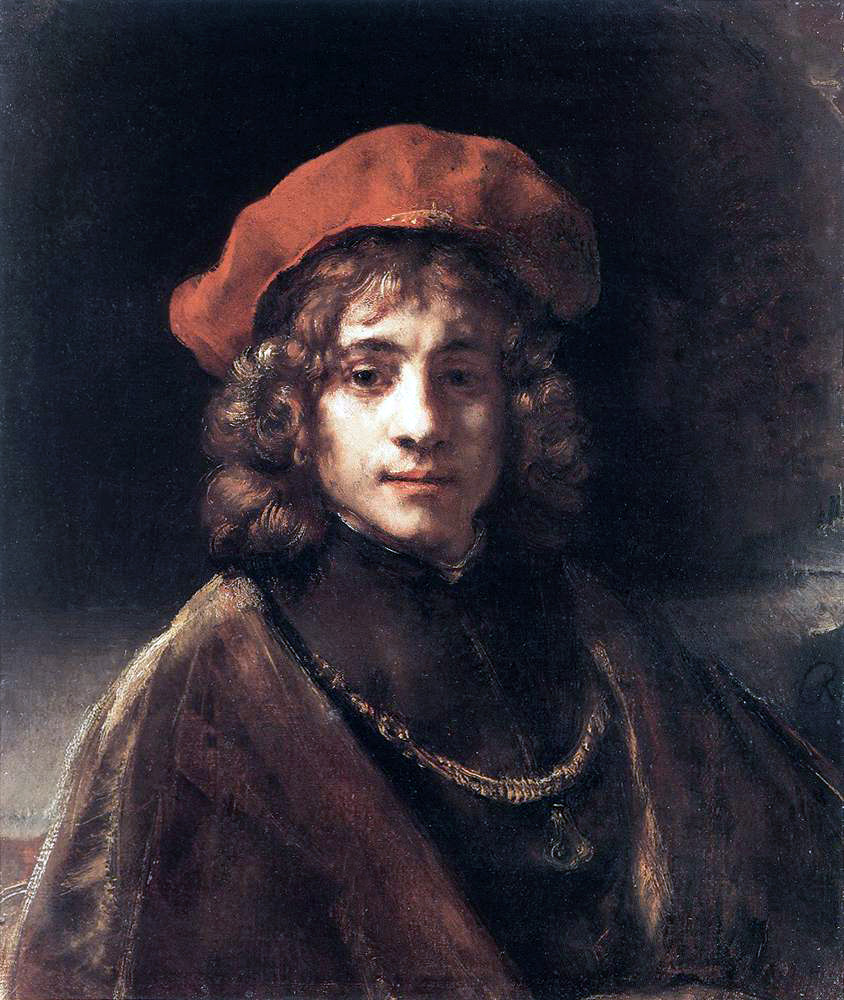
Afterwards, several sequences of reproductions, beginning with the portraits Rembrandt painted of his son, Titus. To include all of them: from the view of the little boy in 1650 (golden hair, red feathered cap) to the 1655 portrait of Titus ‘puzzling over his lessons’ (pensive, at his desk, compass dangling from his left hand, right thumb pressed against his chin) to Titus in 1658 (seventeen years old, the extraordinary red hat, and, as one commentator has written, ‘The artist has painted his son with the same sense of penetration usually reserved for his own features’) to the last surviving canvas of Titus, from the early 1660s: ‘the face seems that of a weak old man ravaged with disease. Of course, we look at it with hindsight – we know that Titus will predecease his father…’
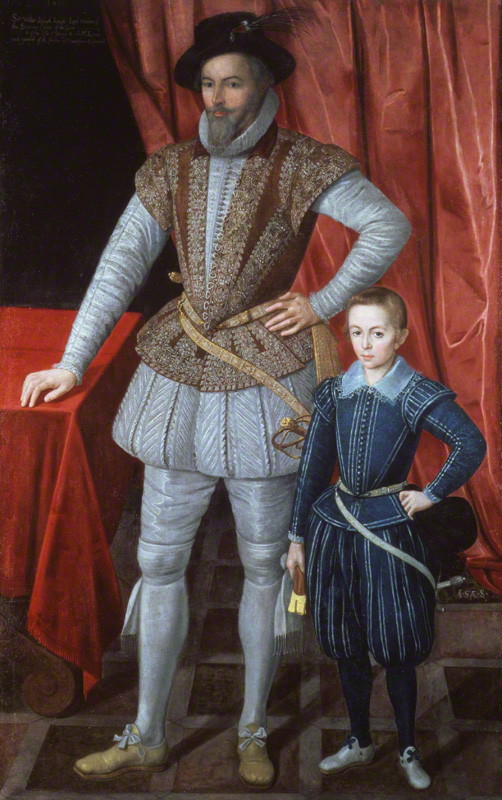
To be followed by the 1602 portrait of Sir Walter Raleigh and his eight-year-old-son Wat (artist unknown) that hangs in the National Portrait Gallery in London. To note: the uncanny similarity of their poses. Both father and son facing forward, left hands on hips, right feet pointing forward, and the somber determination on the boy’s face to imitate the self-confident, imperious stare of the father. To remember: that when Raleigh was released after a thirteen-year incarceration in the Tower of London (1618) and launched out on a doomed voyage to Guiana to clear his name, Wat was with him. To remember that Wat, leading a reckless military charge against the Spanish, lost his life in the jungle. Raleigh to his wife: ‘I have never known what sorrow meant until now.’ And so went he went back to England, and allowed the King to chop of his head.
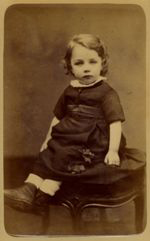
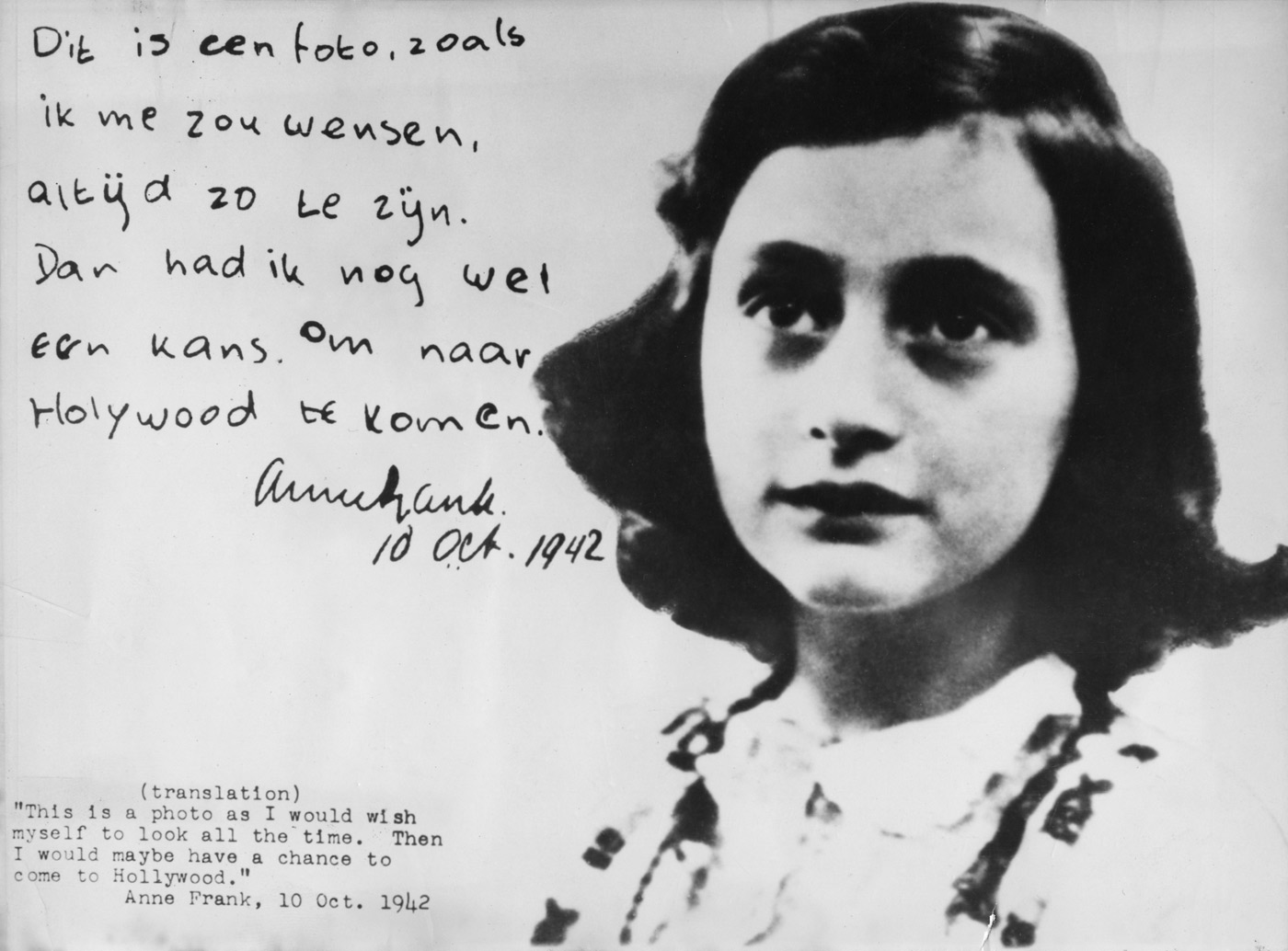
To be followed by more photographs, perhaps several dozen: Mallarmé’s son, Anatole; Anne Frank (‘This is a photo that shows me as I should always like to look. Then I would surely have a chance to go to Hollywood. but now, unfortunately, I usually look different’); Mur; the children of Cambodia; the children of Atlanta. The dead children. The children who will vanish, the children who are dead. Himmler: ‘I have made the decision to annihilate every Jewish child from the face of the earth.’ Nothing but pictures. Because, at a certain point, the words lead one to conclude that it is no longer possible to speak. Because these pictures are the unspeakable.
Paul Auster. “The Book of Memory,” from The Invention of Solitude. Faber and Faber, 1982, pp. 102-103.
Please click on the images for a larger version.
Rembrandt van Rijn (Dutch, 1641-1668) Portrait of a Boy in Fancy Dress (Titus) c. 1655 Oil on canvas
Rembrandt van Rijn (Dutch, 1641-1668) Portrait of Titus 1655 Oil on canvas
Rembrandt van Rijn (Dutch, 1641-1668) The Artists Son Titus 1657 Oil on canvas
Rembrandt van Rijn (Dutch, 1641-1668) Portrait of Titus 1663 Oil on canvas
Unknown artist Sir Walter Ralegh and son 1602 Oil on canvas 78 1/2 in. x 50 1/8 in. (1994 mm x 1273mm) Given by Lennard family, 1954 National Portrait Gallery, London
Anonymous photographer Portrait of Anatole Mallarmé c. 1874 Photograph
Unknown photographer Anne Frank 10th October 1942 Hand written note from The Diary of a Young Girl
Photos of child victims on display at the Toul Sleng Genocide museum in Cambodia
Unknown photographer Executions of Kiev Jews by German army mobile killing units (Einsatzgruppen) near Ivangorod Ukraine. A woman protects a child with her body as Einsatzgruppen soldiers aim their rifles 1942
Executions of Kiev Jews by German army mobile killing units (Einsatzgruppen) near Ivangorod Ukraine. The photo was mailed from the Eastern Front to Germany and intercepted at a Warsaw post office by a member of the Polish resistance collecting documentation on Nazi war crimes. The original print was owned by Tadeusz Mazur and Jerzy Tomaszewski and now resides in Historical Archives in Warsaw. The original German inscription on the back of the photograph reads, “Ukraine 1942, Jewish Action [operation], Ivangorod.”
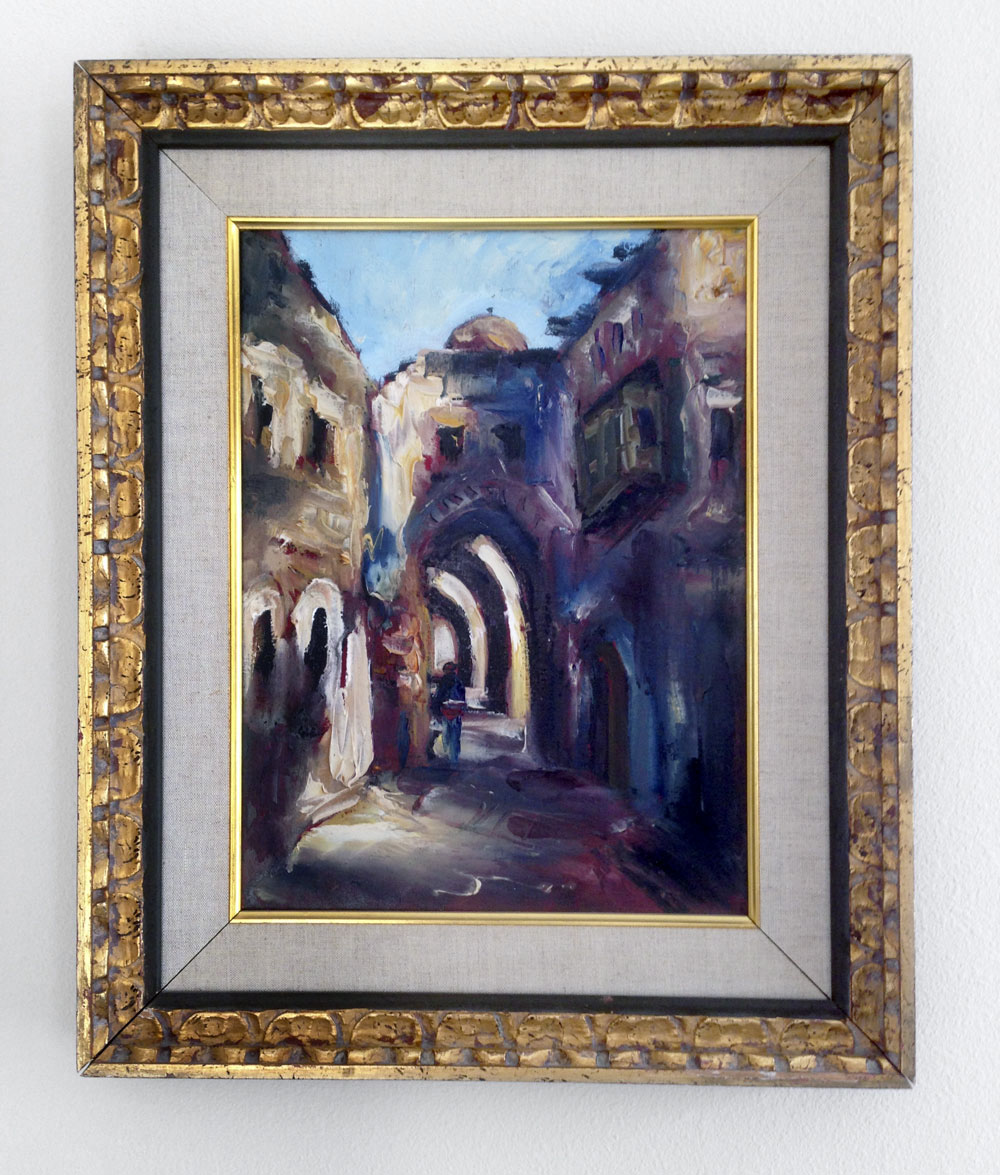
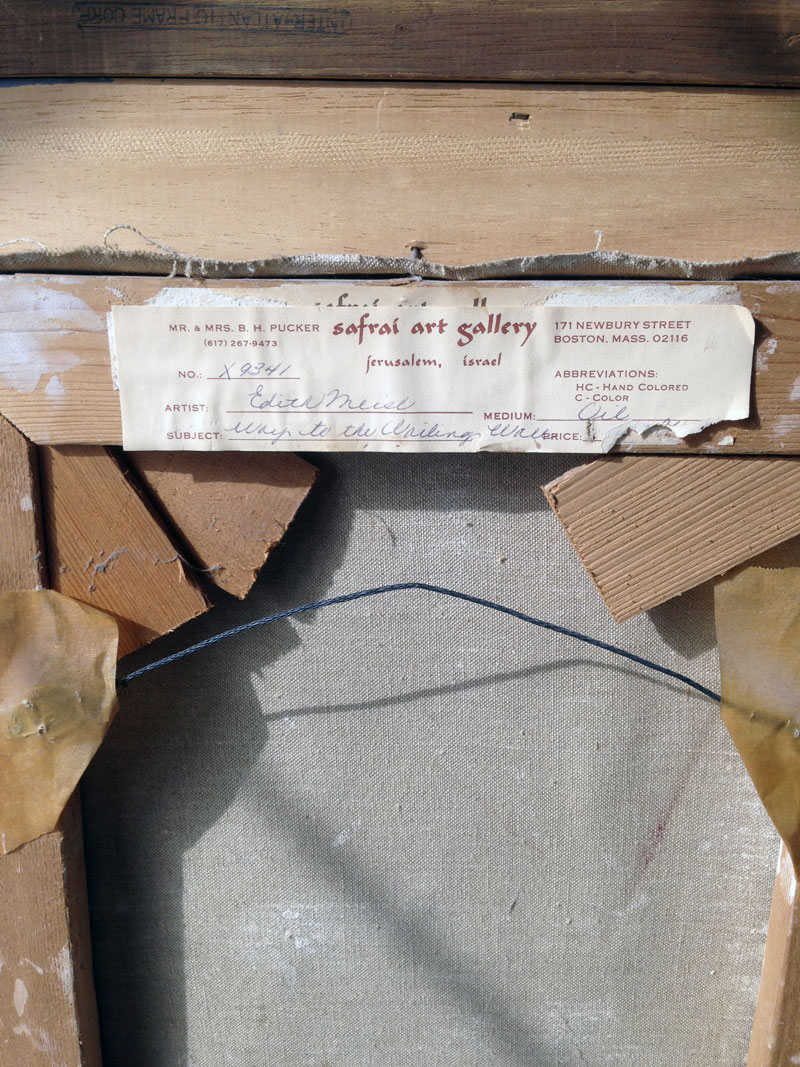
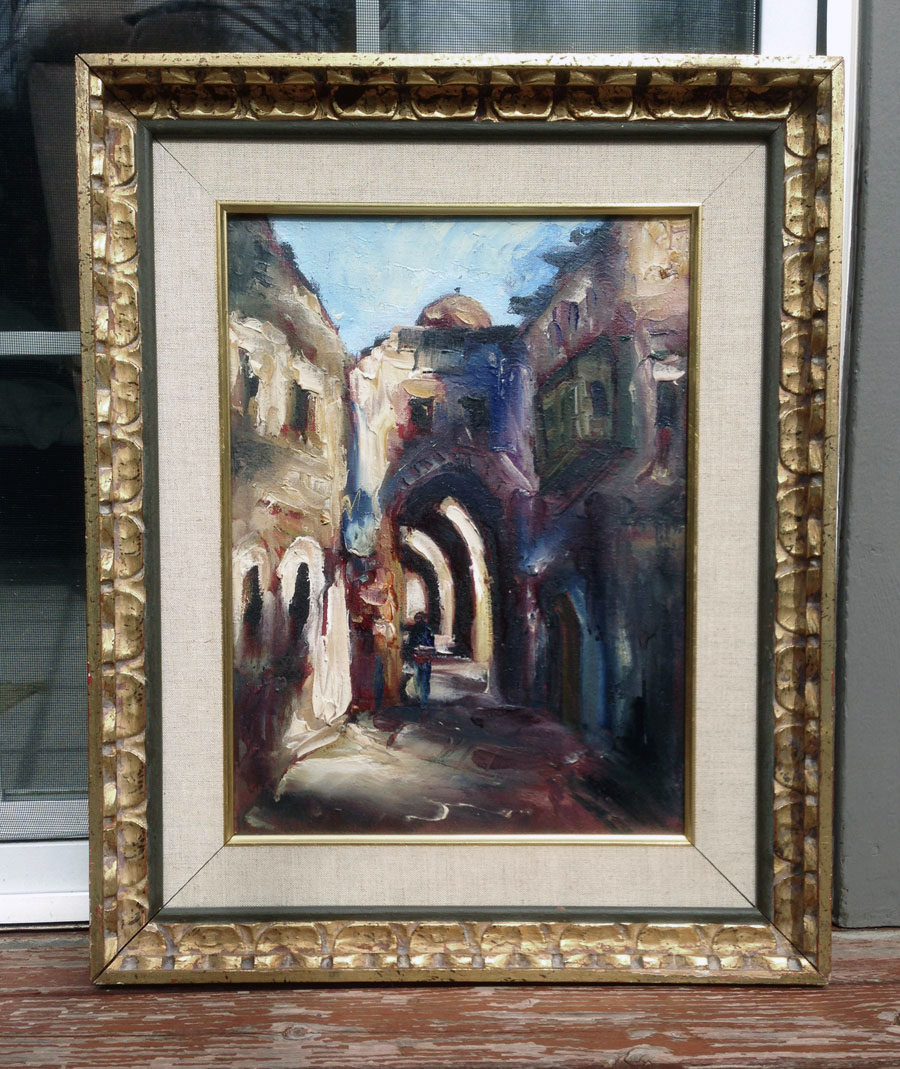
Edith Meisl Way to the Wailing Wall c. 1965 Oil on canvas
I have been searching the world for another painting by Edith Meisl-Bernhard like the one I own here in Australia and now, from America, comes news of another work by the artist:
“I purchased this painting in 1996. It was in a small shop (Kirkland, Wa. USA) that sold donated household goods to support the charitable works of a local church. It is an oil, 12 x 16 inches and has a gallery tag on the back that gives very simple information. I can’t find a date on it anywhere. I love this little painting and I have often wondered about it and the artist that painted it. A friend of mine directed me to your amazing post – thank you for giving me such a gift! – I only wish I could have added something. I am very happy to be able to share this painting with you.
I love the subtle amethyst tones of the shadows and that exquisite patch of perfect blue sky. I knew I was looking at the creative power of a strong, mature talent – it is not easy to speak to colour, composition and emotional value within the confines of such a small canvas – but Edith managed it with a confidence and joy. Thank you again for your efforts on her behalf – there simply has to be more “out there” – we can hope.
Have a lovely evening! sincerely, M”
Thank you M for your wonderful email and for giving me permission to publish the images of your painting. As I said in my reply, the painting would seem to be from the same series as mine, probably from the same exhibition in 1965 in Jerusalem. Let’s hope we can find more. If anyone else out there in the wide world has a painting by the artist please get in touch.
Please click on the paintings for a larger version of the image.
Dr Marcus Bunyan
Edith Meisl Way to the Wailing Wall (verso) c. 1965 Oil on canvas
Edith Meisl Way to the Wailing Wall c. 1965 Oil on canvas
American & Australasian Photographic Company [Merlin’s photographic cart?] and Mitchell’s London Hotel, Railway Place, Sandridge [Port Melbourne] 1870-1875
Another fascinating posting, this time featuring Australian colonial photography. In 1951, a hoard of 3,500 glass plate negatives from the nineteenth century was discovered in a garden shed in Chatswood. In time, the find proved to be the most important photographic documentation of goldfields life in Australia. All negatives have now been scanned at high resolution and for the first time in 140 years, it is possible to see what Merlin and Bayliss (from the American & Australasian Photographic Company) photographed, with astonishing clarity and fidelity. “Many of the images in the Holtermann collection were created for an ambitious 1870s publicity campaign to sell the wonders of the Australian colonies to the world.”
What I find particularly interesting is the familiarity of all photographs of goldfields from around the world, whether it be Californian or Victorian – the working class men, the pictures of diggings, etc… but also the particular Australian vernacular that these photographs possess. The photographs could be taken no where else but Australia.
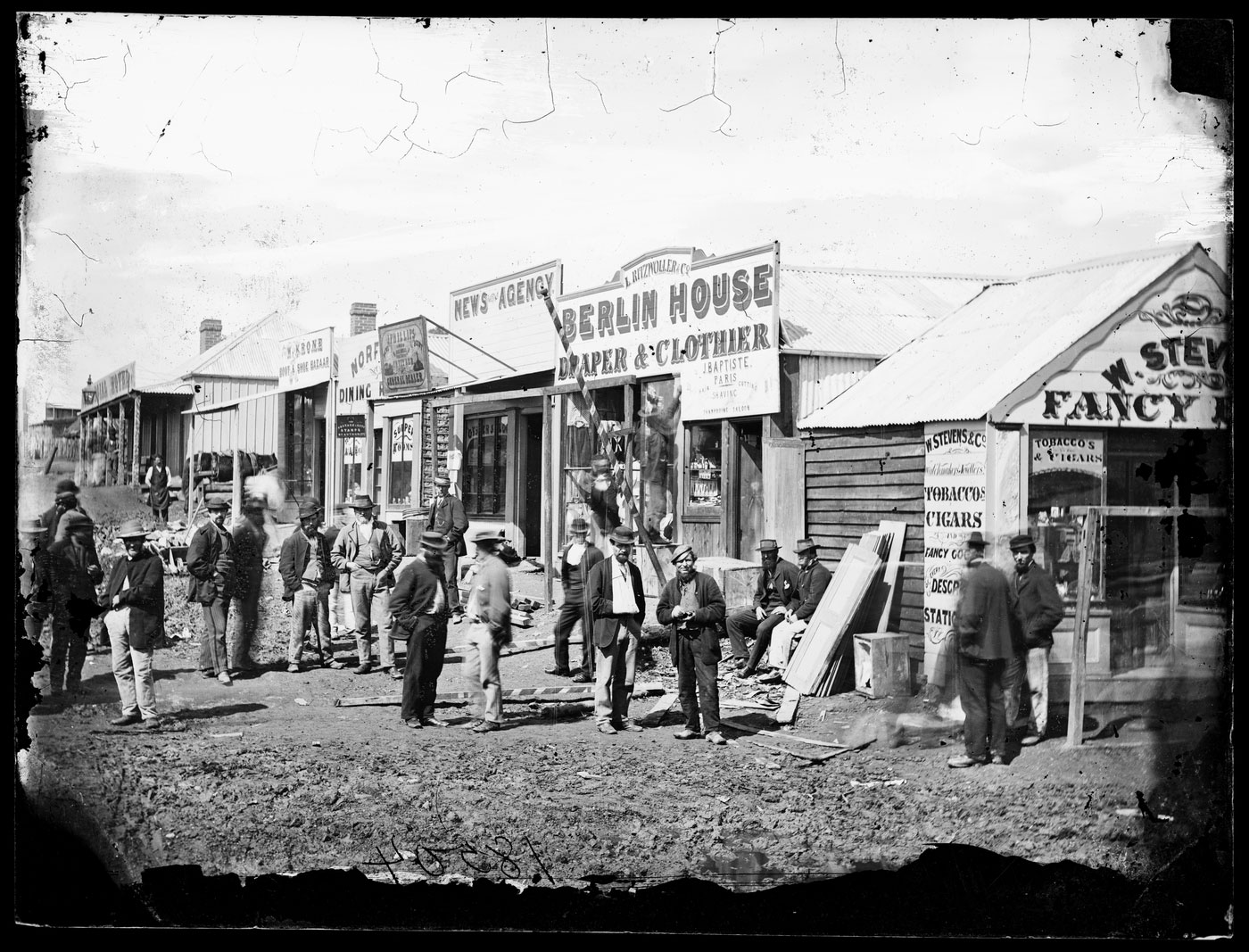
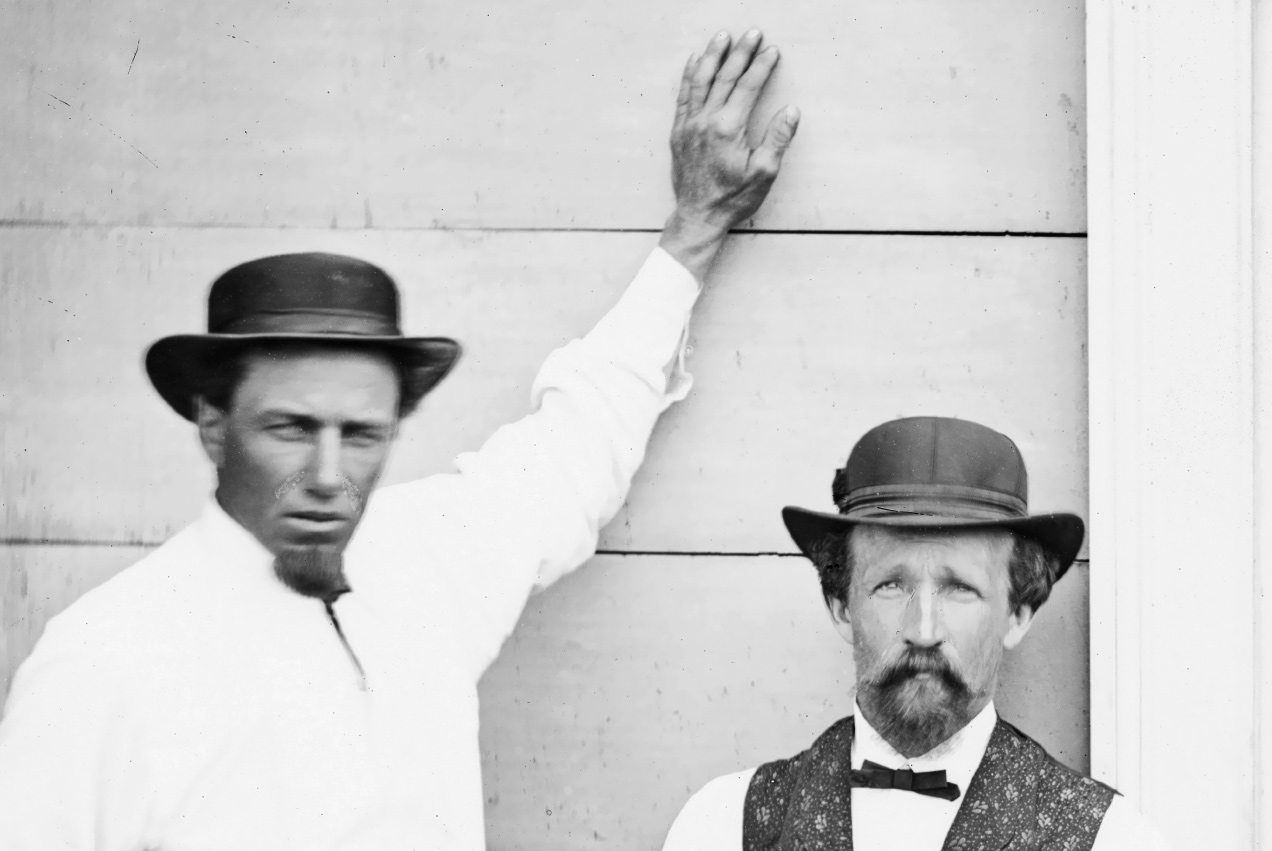
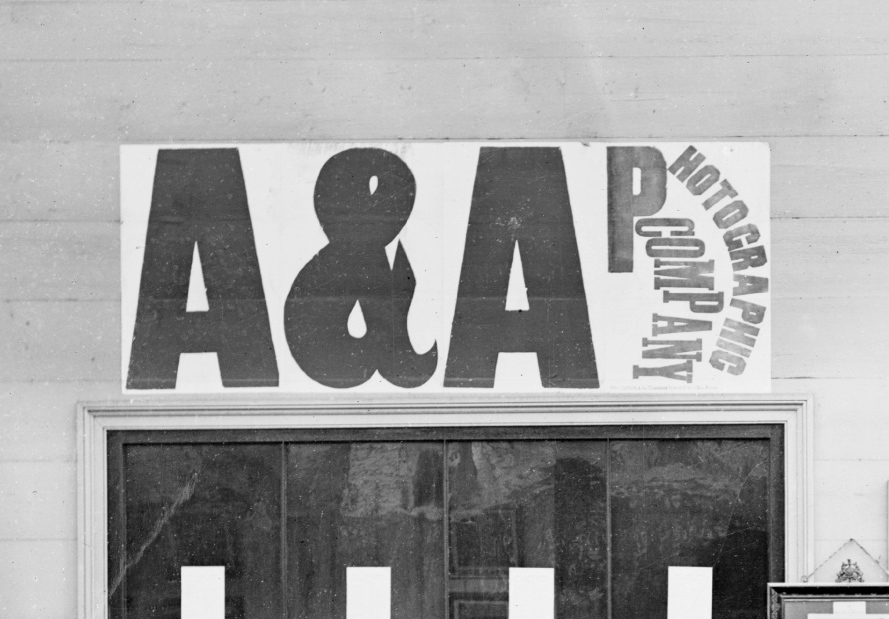
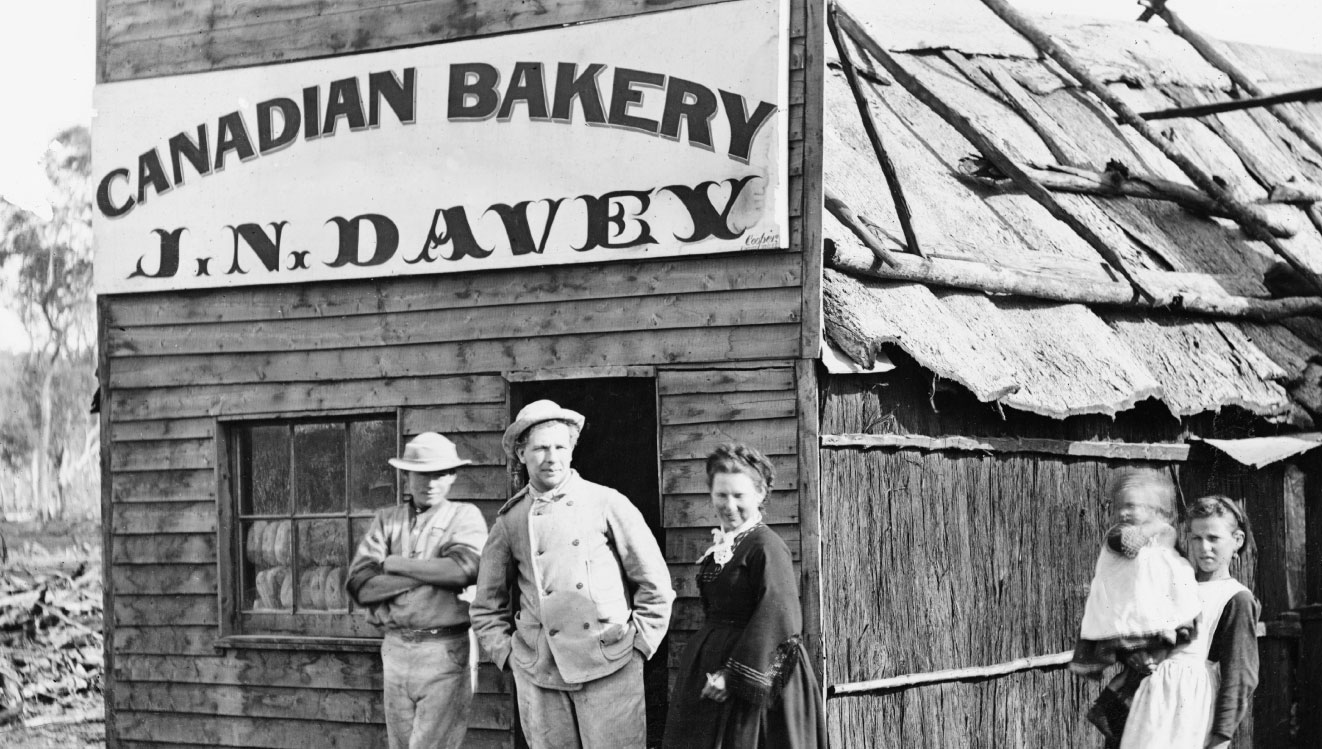
Observe the abject poverty of some of the shopkeepers – draper, blacksmith, bootmaker and undertaker (who also acted as carpenter, joiner, builder and cabinet maker) – the timber clad facade of their buildings failing to conceal the bark structure behind (see Holmes, bootmaker, and Spiro Bennett’s store, Gulgong, 1872 below). And yet in their poverty they still thought it important to spend money on advertising with wonderful examples of distinctive typography that I have highlighted in detail – on the photographers, bakers and tent makers shops, on the undertakers facade replete with horses and funeral carriage, and on the painters and sign writers bark clad establishment. Contemporary typographers could have a field day studying these photographs for new typefaces!
Notice in the detail wonderful things:
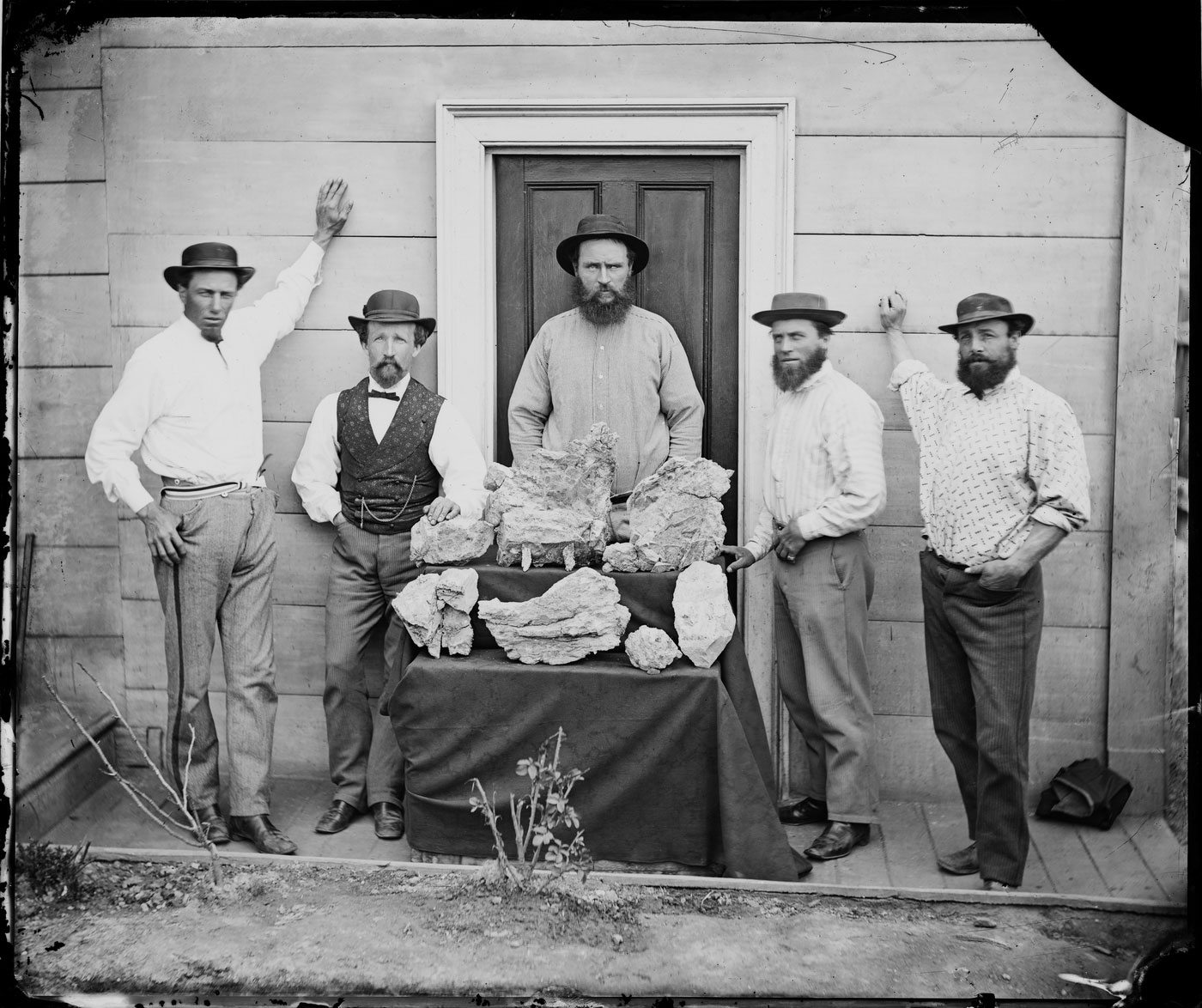
~ The roughness of a man’s hand as he and his associates stand in front of their loot, the gold specimens;
~ The incongruous sight of toy dogs among the rough-and-ready types that inhabited a frontier gold town;
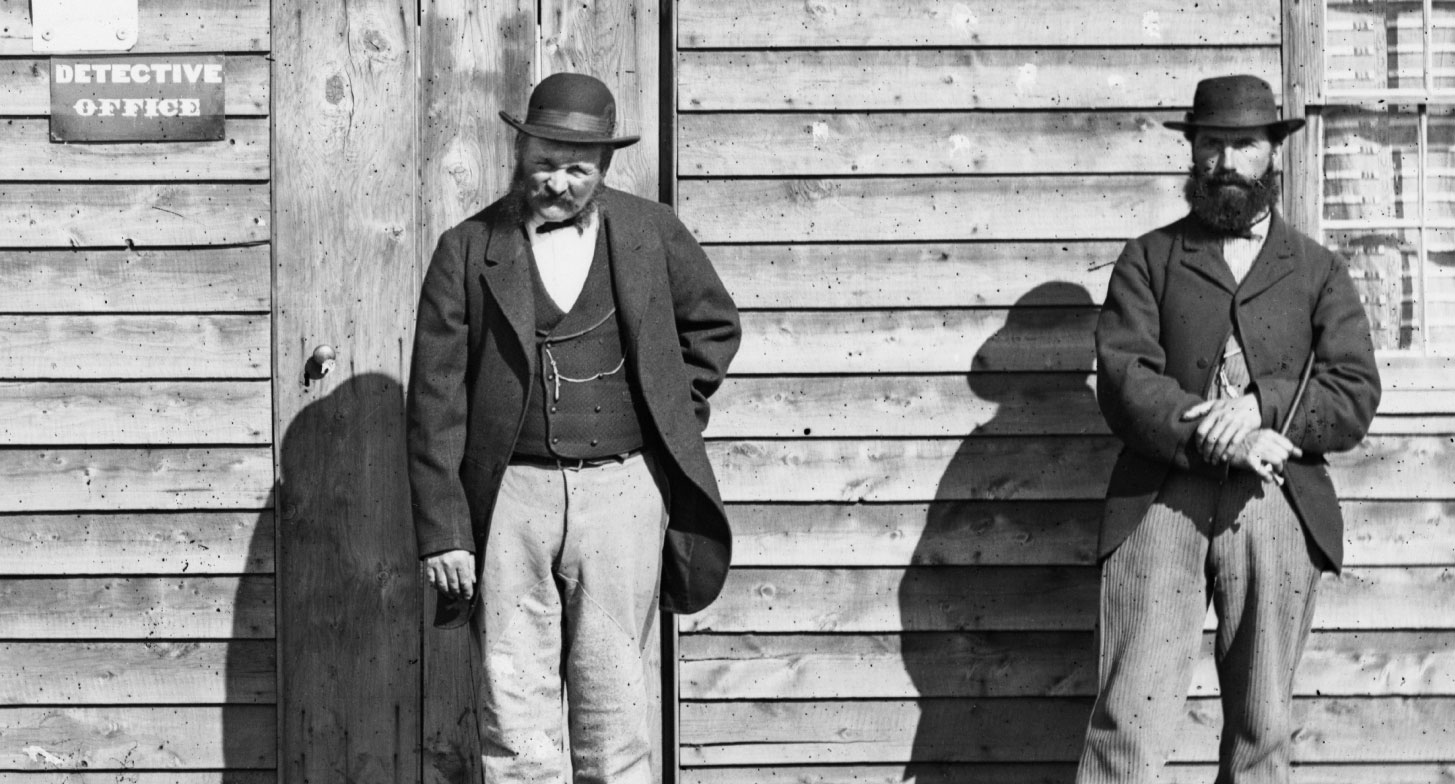
~ The riding crop tucked under the arm of one of the detectives;
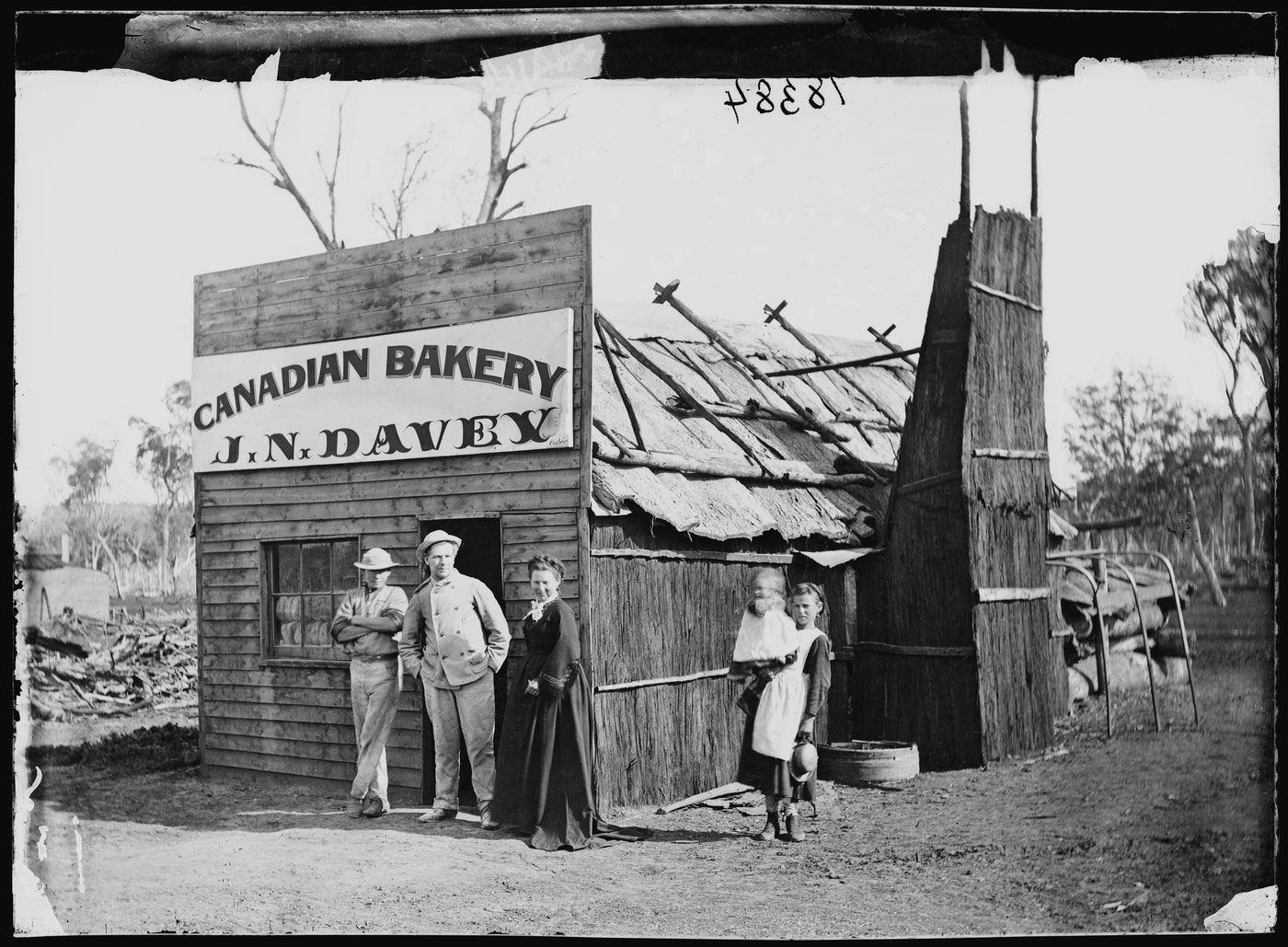
~ The flour that covers the bakers shoes;
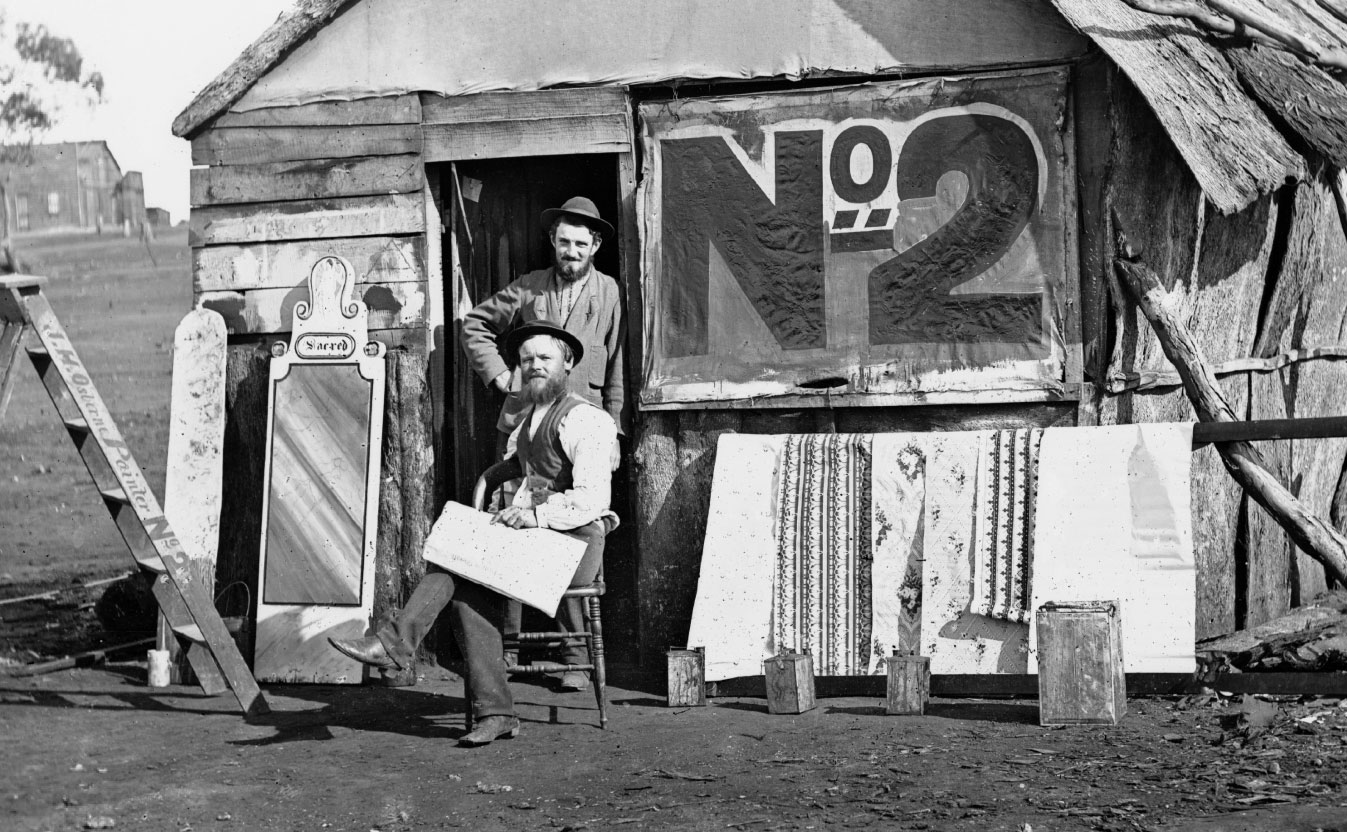
~ The decorative wallpaper hanging outside the painter and signwriters shack, the word ‘Sacred’ on top of the mirror, and his name ‘J.H. Osborne Painter No.2’ emblazoned on the side of his ladder.
Of particular poignancy is the way the undertaker William Lewis leans in the entrance of his establishment. Propped up against the door (to stop himself from moving during the exposure), his hands stiffly by his side, his eyes stare straight ahead as though he is in a trance. In the photograph he has almost become the corpse that it is his business to bury.
We must also acknowledge the temporary nature of these gold field towns, their insubstantial character and the transitory life of the people that lived and died in them. Bootmaker William Holmes’ wife passed away a few months after the photograph of her family was taken. It was a tough life living on a frontier town. We can also note how desolate the major cities seem, as can be seen in photographs of Sandridge [Port Melbourne] and Pall Mall, Bendigo, with the odd carriage on the street and a single man standing on a street corner.
This is such a rich photographic collection and to have all the negatives digitised and available online is such a pleasure, such a treasure for Australian photographers, historians, researchers and the general public who, with an inquiring mind, can begin to understand the colonisation and conquest of this never empty country.
Dr Marcus Bunyan
Many thankx to the State Library of New South Wales for allowing me to publish the photographs in the posting. Please click on the photographs for a larger version of the image.
The State Library of NSW’s world-renowned photographic archive, the Holtermann collection, will be officially included on the UNESCO Australian Memory of the World register at a ceremony in May 2013… The Australian UNESCO Memory of the World program is part of an international initiative, which aims to safeguard the documentary heritage of humanity and recognise the significance of all heritage materials… Many of the images in the Holtermann collection were created for an ambitious 1870s publicity campaign to sell the wonders of the Australian colonies to the world. The campaign was funded by German-born entrepreneur, Bernhardt Otto Holtermann, who made his fortune from mining in Hill End. For the first time 100 amazing large format prints from the Holtermann collection are on show [until 12 May] in the State Library’s free exhibition, The Greatest Wonder of the World.
Beaufoy Merlin (Australian, 1830-1873) Short Street, Hill End 1872 Wet plate glass negative, on 4/Box 5/No. 18504
Hill End in 1872 was a gold town at its peak. According to the Empire 7 June 1872, “The streets were thronged by a motley crowd; the stores and places of business crowded with customers; the little theatre so densely packed by an admiring audience, that there was not what is facetiously called ‘standing room,’ and even the public-houses, whose name is legion, were crammed. Yet I saw less, far less, drunkenness than can be met with in any street in the metropolis after 10 o’clock at night. There were very few inebriates, no filthy dishevelled women, no crouching loafers, no abject vice. The general aspect of the crowds of decently dressed folk who thronged ‘The Hill’ was that of respectability – rough indeed in many respects, and loud and noisy too, in some instances, but not disreputable, and altogether good-humoured.”
American & Australasian Photographic Company Hawkins Hill ‘Golden Quarter Mile’ 1872 Wet plate glass negative, on 4/Box 71/No. C
This panorama of Hawkins Hill was taken by Beaufoy Merlin, who erected his camera in a tree more than a kilometre away across a gully nearly 300 metres deep. In the centre of the image is Krohmann’s mine, with the twin buildings and two storied structure of Beyers and Holtermann’s immediately to the left of it. These two mines contributed to the 12.4 tonnes of gold extracted from Hawkins Hill, but such are the vagaries of goldmining, that Rapp’s, on the extreme right, returned little to its investors, despite digging to a depth of over 380 feet [115 metres]. An almost identical view of the Hawkins Hill ‘Golden Quarter Mile’ taken by Merlin appeared as an engraving in the Australian Town and Country Journal 18 May 1872.
American & Australasian Photographic Company Gold Specimens from the Star of Hope mine 1872 Wet plate glass negative, on 4/Box 71/No. T
A month before discovery of the 286 kg Holtermann “nugget” [estimated to hold around 93kg of gold], Bernhardt Holtermann (second from left) Richard Ormsby Kerr (centre) and Louis Beyers (fourth from left) posed with 3,663 ozs [114 kg] of gold specimens from their claim. The specimens were described in The Sydney Morning Herald 28 September 1872 ; “To say they were good would be to say but little – they were almost without rival – magnificent – the talk of this town, where specimens are not unknown.” Holtermann took the best to the Sydney Mint for smelting, “as being clotted with gold it would be almost impossible to crush it in the ordinary way.” The item of clothing on the floor to the right is Beyer’s waistcoat.
American & Australasian Photographic Company Gold Specimens from the Star of Hope mine (detail) 1872 Wet plate glass negative, on 4/Box 71/No. T
American & Australasian Photographic Company A domestic miner [Hill End] 1872 Wet plate glass negative, on 4/Box 10/No. 70154
Thomas Browne (better known as Rolf Boldrewood) was Gold Commissioner in Gulgong, during the period of Merlin and Bayliss’s photographs. Although this photograph was taken in Hill End, Boldrewood’s description of the domestic miner in his novel The Miners Right seems universal. “The thrifty miner who possesses the treasure, not less common on Australian goldfields than in other places, of a cleanly managing wife, is enabled to surround himself with rural privileges. A plot of garden ground, well fenced, grows not only vegetables but flowers, which a generation since were only to be found in conservatories… the domestic miner is often seen surrounded by his children, hoeing up his potatoes or cauliflowers, or training the climbing rose which beautifies his rude but by no means despicable dwelling.”
American & Australasian Photographic Company Studio and staff of American & Australasian Photographic Co., Hill End 1872 Wet plate glass negative, on 4/Box 9/No. 18850
The American and Australasian Photographic Company established a studio in Tambaroora Street, Hill End in 1872. Beaufoy Merlin’s assistant Charles Bayliss stands, hands in pockets, in the doorway, with studio operator James Clinton behind him. Beside the door is a frame containing large photographic views of Sydney, including the General Post Office and harbour.
American & Australasian Photographic Company Studio and staff of American & Australasian Photographic Co., Hill End (detail) 1872 Wet plate glass negative, on 4/Box 9/No. 18850
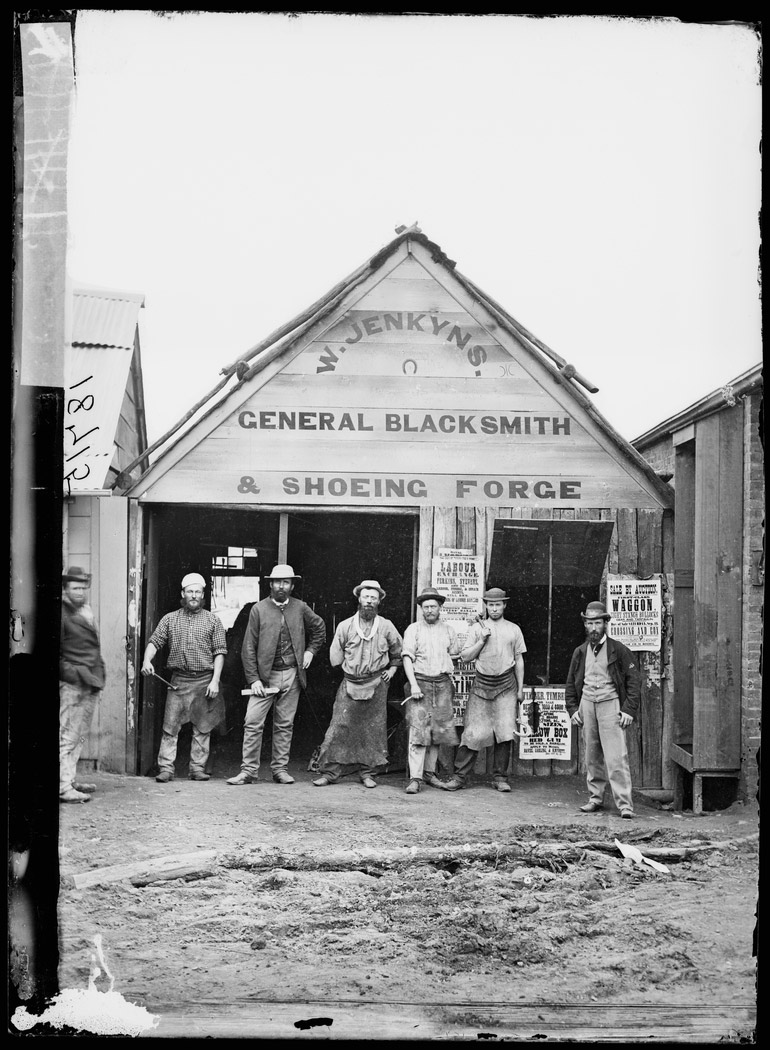
American & Australasian Photographic Company Blacksmith William Jenkyns 1872 Wet plate glass negative, on 4/Box 7/No. 18715
William Jenkyns’ blacksmith and shoeing forge was situated in Clarke Street, Hill End. The condition of roads around Hill End ensured Jenkyns was busy. A correspondent to The Sydney Morning Herald 23 May 1872 wrote of the road between Bathurst and Hill End, “For miles at a stretch there is nothing to indicate that any money has been spent upon the road for years, and it is doubtful whether any portion of it has ever been properly made.” On 3 December 1872 another wrote, “I think I have travelled the worst of roads; for the sake of humanity, I hope there are none worse than those I have travelled.” Despite a superficial resemblance, the man on the right is not B.O. Holtermann.
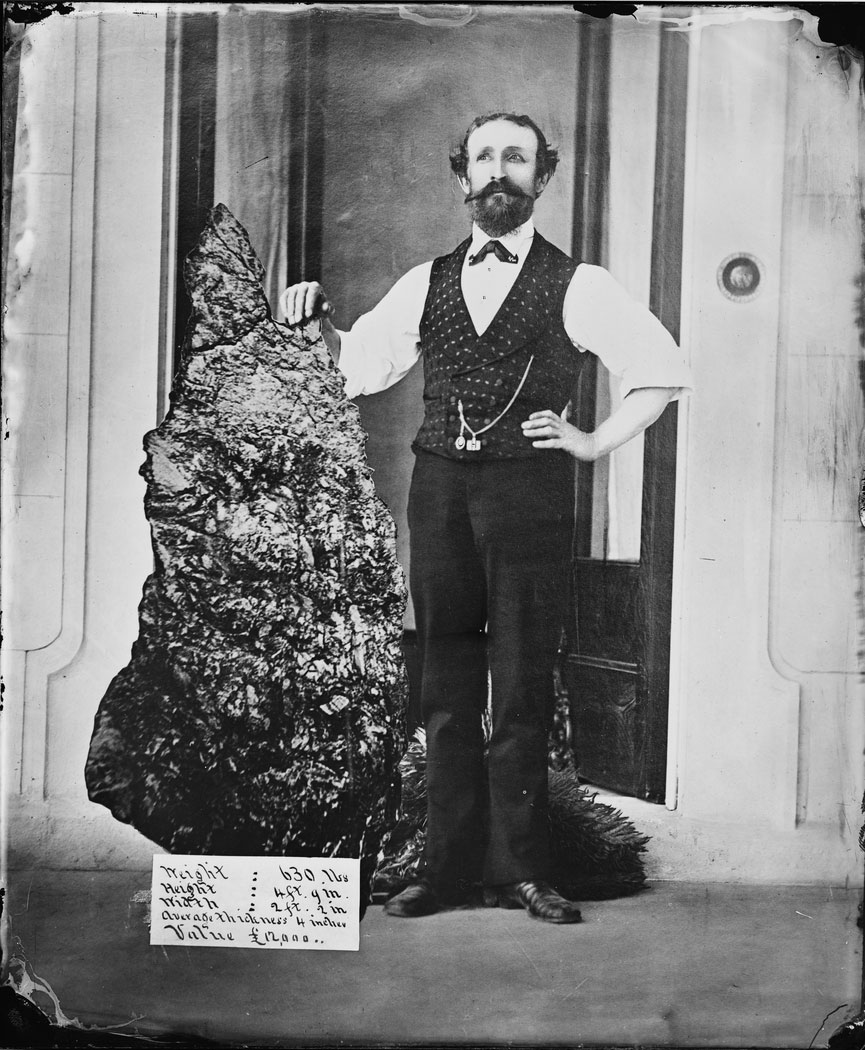
There is no doubt that Bernhardt Otto Holtermann understood the importance and value of maintaining his association with the world’s largest specimen of reef gold. Unable to purchase the monster quartz and gold specimen when it was extracted from the Star of Hope mine in Tambaroora in 1872, he commissioned the American and Australasian Photographic Company to produce a photographic montage of him standing beside it. Photographers Beaufoy Merlin and Charles Bayliss seem to have carried out this assignment on more than one occasion, as Holtermann wears different clothing in the several known examples of the image.
Obviously pleased with the result, Holtermann used the montage on his business card and on the label to a patent medicine bearing his name. As an advertising ploy, the image of Holtermann resting his hand on the world’s largest hunk of gold can only have been interpreted as a symbol of success and a guarantee of the worth of his product.
(Alan Davies author)
American & Australasian Photographic Company B.O. Holtermann with the Holtermann Nugget, North Sydney 1874-1876?
During the 1870’s goldrush in central New South Wales, Bernard Holtermann, his partners and miners brought the largest agglomeration of gold to the surface. It was not a nugget of pure gold but he was instantly rich! An even larger gold find was broken up when it came to the surface in late January-early February 1873 but it was not photographed. With his wealth Holtermann financed the photography of the goldfields, a collection of international significance showing the ordinary people from all over the world with their houses and businesses on the goldfields. This composite photograph was put together later to give the appearance of Holtermann with the gold on the veranda of his new mansion at North Sydney, now the site of Shore Grammar School.
Three photographs were used to create this image of Holtermann, (supposedly holding the worlds’ largest accumulation of rock and gold ever brought to the surface in one piece). He was posed in the studio with his hand on a headclamp, the nugget was inserted and both placed on a photograph of the verandah of his mansion, built from the proceeds of his goldmine. The “nugget” was found in Hill End, New South Wales on 19th October 1872. More than half of the 630 lbs weight was pure gold, value 12,000 pounds ($24,000). With gold worth say $1400 per ounce, the value today would be over $A7,000,000. Amazingly Holtermann’s mine had already made him rich before the discovery of this boulder and there was reputed to be an even larger aggregate in the mine!
In 1872, the newly rich Bernhardt Otto Holtermann used some of his wealth to employ Henry Beaufoy Merlin and Charles Bayliss, of the American and Australasian (A&A) Photographic Company, to photograph gold producing areas and cities in NSW and Victoria for exhibition overseas. These images provide the most comprehensive and detailed record of nineteenth century goldfields life and, with the commissioned photographs, now form the Library’s Holtermann archive of 3500 wet plate negatives. The Greatest Wonder of the World features this extraordinary collection of nineteenth century documentary images. Through enlargements, digital images and a selection of vintage prints and wet plate negatives, the exhibition tells the remarkable story of the A&A Photographic Company and the philanthropy and vision of Bernhardt Holtermann.
In 1951, a hoard of 3,500 glass plate negatives from the nineteenth century was discovered in a garden shed in Chatswood. In time, the find proved to be the most important photographic documentation of goldfields life in Australia. The photographers responsible for the images were Beaufoy Merlin and Charles Bayliss of the American and Australasian Photographic Company, who had travelled to the town of Hill End in 1872 to record the rush. From there, they also recorded the burgeoning Gulgong and Mudgee goldfields.
In October 1872, the world’s largest specimen of reef gold, known as the Holtermann nugget, was unearthed at nearby Hawkins Hill and Merlin and Bayliss were there to record it. In an extraordinary act of patronage, the newly rich Bernhardt Otto Holtermann used some of his wealth to employ Merlin and Bayliss to photograph other gold producing areas and cities in NSW and Victoria for exhibition overseas. Proud of his own success, he believed that his travelling exposition would encourage immigration to Australia. Merlin and Bayliss’s documentation was slow, with long exposures and the difficulty of processing one photograph at a time. Their wet plate negatives captured exceptional detail, but copies made in the twentieth century failed to reveal the wealth of information hidden within.
In 2008, plans were made to digitally scan the Holtermann Collection at very high resolution and this became reality through the generous assistance of the Graham and Charlene Bradley Foundation; Simon and Catriona Mordant; Geoffrey and Rachel O’Conor; Morningstar and numerous other benefactors. For the first time in 140 years, it is possible to see what Merlin and Bayliss photographed, with astonishing clarity and fidelity.
Press release from the State Library of New South Wales website
American & Australasian Photographic Company [French warship ‘Atalante’, Fitzroy Dock, Sydney, 1873] Aug 1873
This photograph of the French warship Atalante in Fitzroy Dock on Cockatoo Island, with Balmain in the background, was taken in August 1873. Built in 1865, the iron clad Atalante had a protruding brass bow for ramming lesser vessels. It had taken part in the Franco Prussian War in 1870 and at the time of this photograph was the flagship of the Pacific Squadron, under the command of Rear Admiral Baron Roussin. Beaufoy Merlin was particularly pleased with his photographs of the Atalante and wrote about them in the Town and Country Journal.
American & Australasian Photographic Company [French warship ‘Atalante’ at Fitzroy Dock, Sydney, 1873 / attributed to the American & Australasian Photographic Company] 1873
“… One of the solar pictures which I took on the occasion of my last visit to the Atalante, of which an engraving accompanies the present pen-and-ink sketch, is taken from the rocks to the north-west, and shows her “ram,” with its massive projecting extremity of solid brass, her swelling sides, portholes, section of the dock, and men at work. The steps to the bottom of the basin as well as [its depth], are fairly indicated. Probably there is no one more difficult to please in procuring a picture of this kind than the landscape photographer himself. I may therefore be permitted to say in behalf of the one referred to, that it gave me satisfaction.”
Sadly, these images of Atalante were among the last photographs taken by Merlin. He contracted pneumonia and died, age 43, in September 1873.
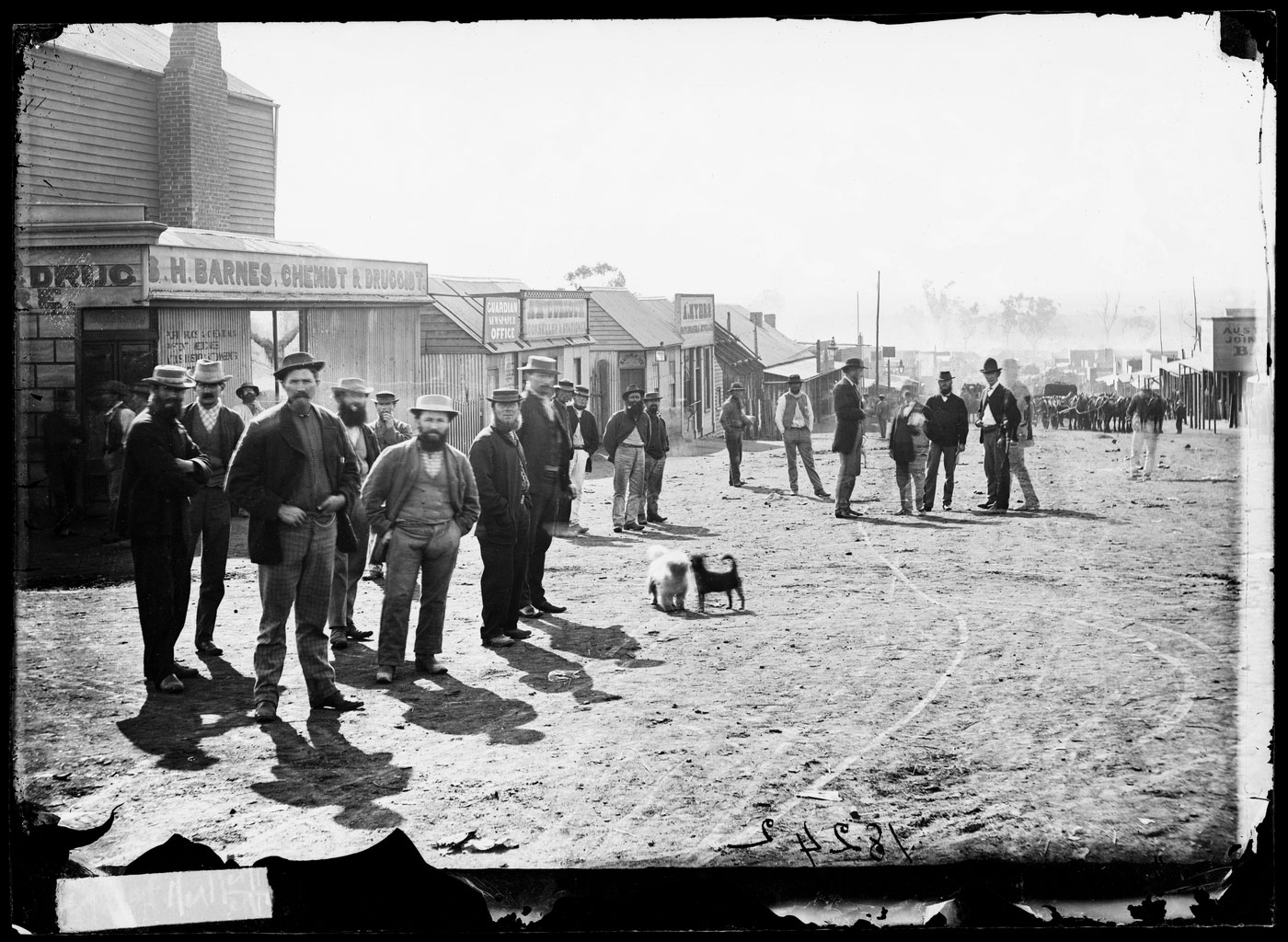
American & Australasian Photographic Company Herbert Street, west side looking north from Mayne Street and showing Barnes’ Chemist Shop, Gulgong 1872 Wet plate glass negative, on 4/Box 2/No. 18242
The incongruous sight of toy dogs among the rough-and-ready types that inhabited a frontier gold town has been captured in this view of Herbert Street, Gulgong. According to the Empire 28 May 1872, “The streets – so to call the dusty avenues between the rows of shops and Inns – are thronged in the daytime, by much about the same number, though not, apparently by the same sort of persons, as the streets in Sydney. There is not the same bustling activity about them… There are also fewer women amongst them, and fewer well dressed men. The yellow, clay-stained fustian trousers which have never made and never will make acquaintance with the wash-tub, invest the lower extremities of every two men out of three…”
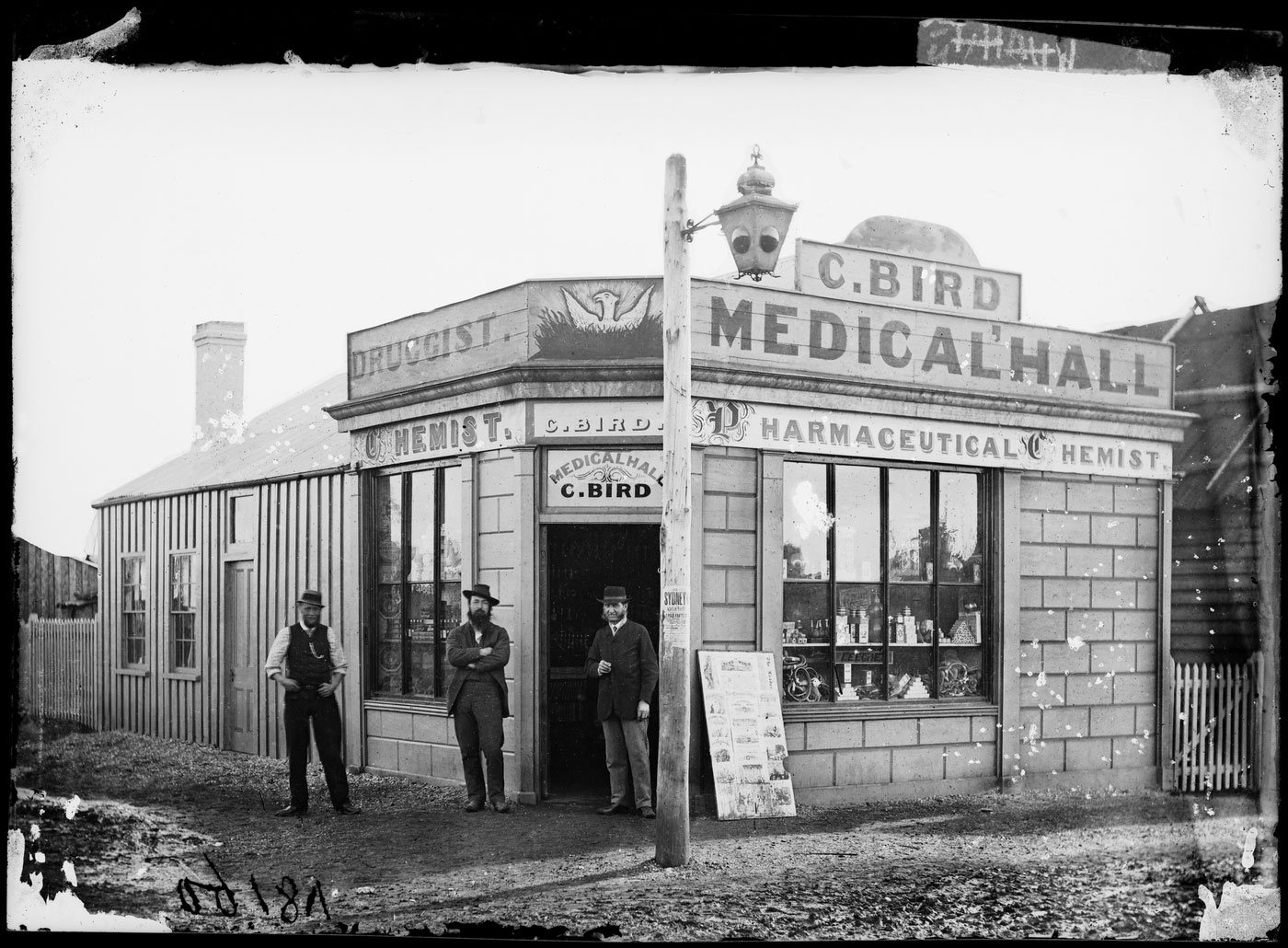
American & Australasian Photographic Company Charles Bird, Medical Hall, Gulgong 1872 Wet plate glass negative, on 4/Box 2/No. 18160
The Medical Hall of Charles Bird Jnr was situated at the corner of Belmore and Herbert Streets, Gulgong. Charles Bird Snr. conducted another shop at the corner of Mayne and Herbert Streets, until the Medical Hall was sold and converted into a hotel in 1879. The Gulgong Guardian 20 November 1872 noted that Charles Bird had received a new disinfectant “which will be invaluable during the summer months to all who are unfortunate enough to live in those parts of town where stenches are pungent and plentiful.”
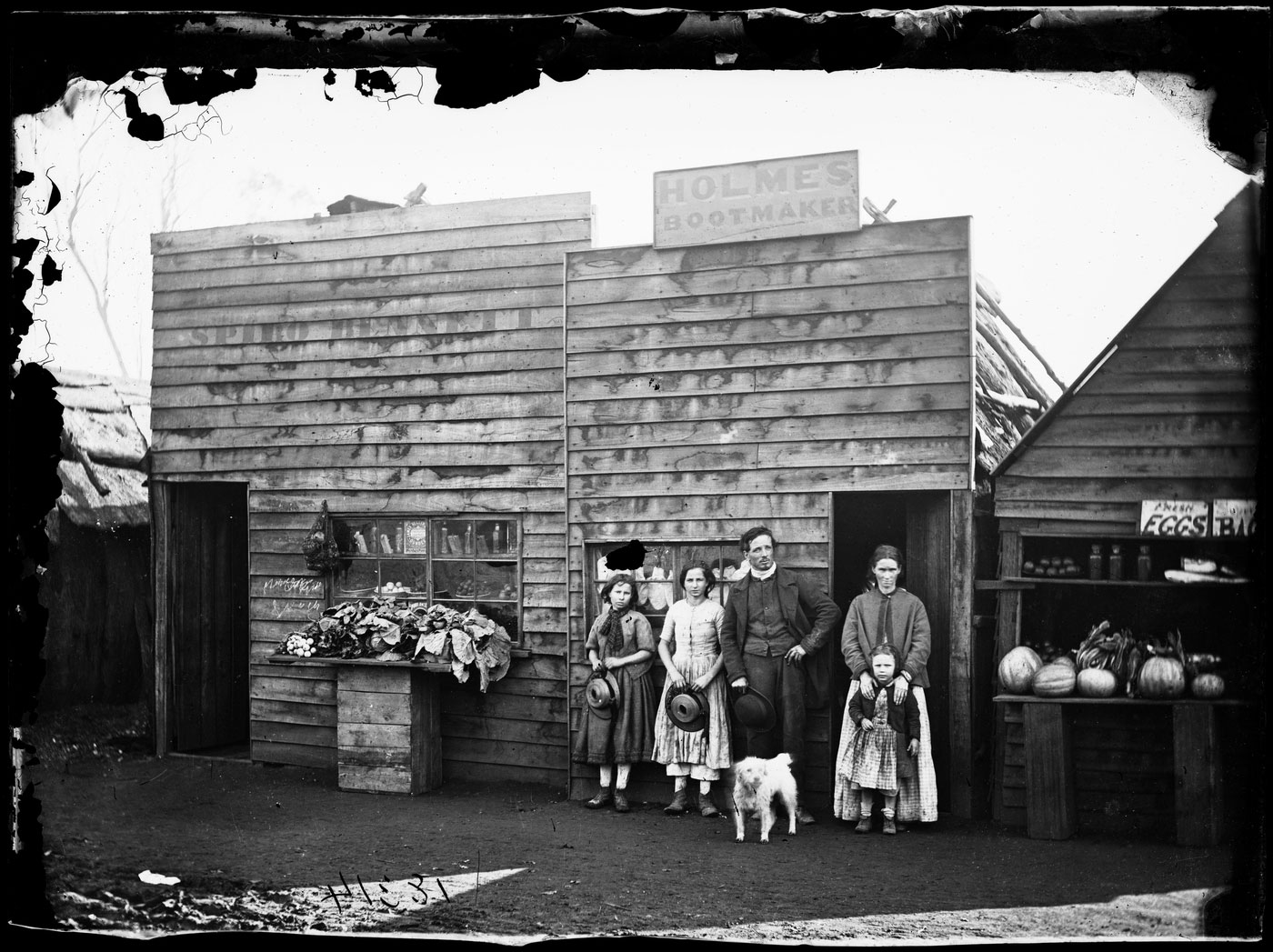
American & Australasian Photographic Company Holmes, bootmaker, and Spiro Bennett’s store, Gulgong 1872 Wet plate glass negative, on 4/Box 3/No. 18314
This timber clad facade fails to conceal the bark structure behind and the poverty of its inhabitants. This is Gulgong bootmaker William Holmes and his family outside their shop in Mayne Street west. His wife Emily, in the doorway, died a few months after the photograph was taken. The town’s short-term architecture was described in The Sydney Morning Herald 30 September 1872. “Gulgong is not singular in its buildings. The followers of alluvial rushes have ere this found that business is fleeting. As leads work out so does business tide away. Hence have we buildings of a temporary nature; and, although the town of Gulgong may be reckoned three years old, yet not a single brick building stands on its site…”
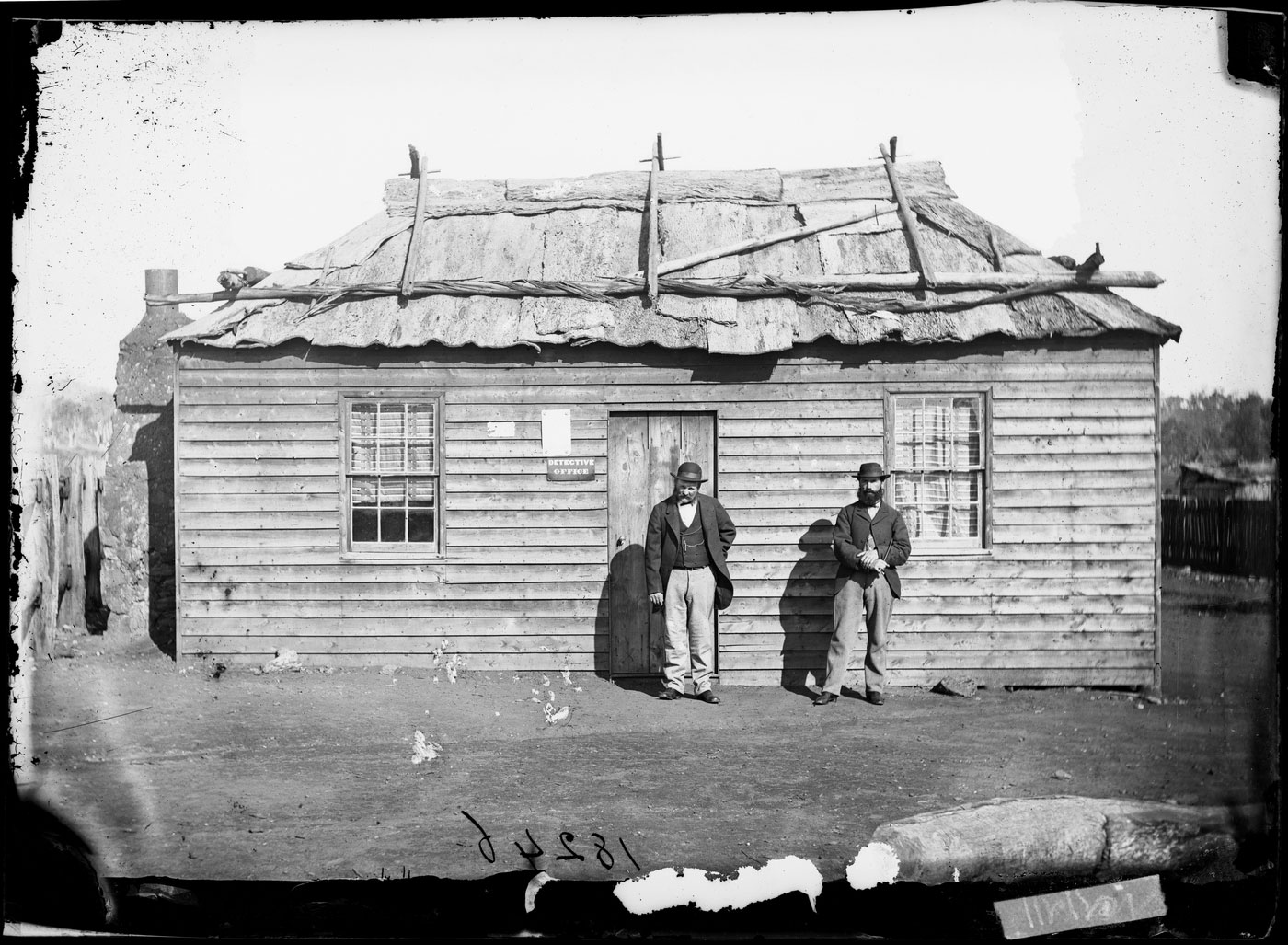
American & Australasian Photographic Company The detectives 1872 Wet plate glass negative, on 4/Box 2/No. 18246
These are detectives Charles Powell and Robert Hannan, outside their Gulgong office. They had plenty to do. In a letter to the editor of the Maitland Mercury 16 May 1872, William Collins stated “The people (except the bankers and storekeepers), are in general a rough and ready set, occasionally a fight is to be seen, but the very diligent police speedily settle such hostile engagements, by marching the pugilists to a place called the town cage, from which place they are brought in the morning before the magistrate, who has often heard of mercy, but does not know what it means…” Powell and Hannan arrested 14 Chinese for gambling in January 1872 and the Empire 20 January 1872 noted, “In all these cases the lawyers reap a rich harvest, and it was somewhat amusing to witness their actively and interest within ten minutes of the time of arrest.”
American & Australasian Photographic Company The detectives (detail) 1872 Wet plate glass negative, on 4/Box 2/No. 18246
American & Australasian Photographic Company William Lewis, undertaker 1872 Wet plate glass negative, on 4/Box 2/No. 18168
The establishment of William Thomas Lewis, Undertaker and Carpenter at the corner of Belmore and Herbert Streets was primitive, but his funerals were said to be carried out ‘with his usual taste and completeness’. In 1871, Gulgong lacked a suitable place for burials and the Gulgong Guardian commented several times on the growing outcry for a cemetery. The locals had a valid complaint, particularly because of the considerable mortality rate among the young. In April 1871 alone, nine children died in a fortnight. Even Thomas De Courcy Brown, editor of the Guardian, lost his daughter Rose, age 7 months, in December that year. In January 1872, there were 37 deaths in Gulgong, (including 21 children under 5 years) and 17 births. The newspaper complained that the new cemetery was still unfenced.
American & Australasian Photographic Company William Lewis, undertaker (detail) 1872 Wet plate glass negative, on 4/Box 2/No. 18168
American & Australasian Photographic Company John Osborne, painter and signwriter 1872 Wet plate glass negative, on 4/Box 4/No. 18372
J.H. Osborne, painter & signwriter of Gulgong also supplied decorative wallpaper. It seems he painted faux marble headstones as well. Osborne’s bark clad establishment was located at 2 Medley Street, at the sparsely populated northern end of town, which explains the prominent display of his sign writing skill. The Empire 28 May 1872 commented on the temporary nature of buildings in Gulgong. “The shops and public-houses are, for the most part, of a very temporary and unsubstantial character, considered as buildings. A large proportion of them are capable of being removed, piecemeal, and set up again on a new diggings in the event of Gulgong declining in prosperity, and a rush taking place to another field within a day or two’s journey.”
American & Australasian Photographic Company John Osborne, painter and signwriter (detail) 1872 Wet plate glass negative, on 4/Box 4/No. 18372
A meeting between gold miner Bernard Otto Holtermann and photographer Beaufoy Merlin in Hill End in 1872 resulted in one of the most astonishing photographic documentations ever undertaken. Holtermann had been associated with the recent discovery of the world’s largest specimen of reef gold, weighing 145 kilograms, extracted from the Star of Hope mine at nearby Tambaroora. Merlin, an itinerant photographer, had just opened a temporary studio in Hill End. In January 1873, the two announced their plans for Holtermann’s great International Travelling Exposition, which would publicise the potential of their adopted country to the world through photography. Merlin and his assistant Charles Bayliss had already photographed some of the gold producing towns of the colony and Holtermann’s patronage enabled them to continue the undertaking, using a larger camera.
Merlin had begun his photographic career in Victoria in 1866 and within a few years had developed a unique style of outdoor photography. Charles Bayliss joined American & Australasian Photographic Company in Melbourne and the pair headed north into New South Wales, photographing towns along the way. When Beaufoy Merlin and Charles Bayliss arrived in Sydney in September 1870, they had already completed an extraordinary documentation of “almost every house in Melbourne, and the other towns in Victoria.” They were aware that their venture was unusual and contemporary advertising by the American & Australasian Photographic Company reflects a considered understanding of the photographic medium and an intellectual approach to their work.
“The chief characteristic and distinguishing feature of the Company’s style of work, is the introduction of figures into the photograph – the most complete and life-like portraits of individuals who happen, or may choose to stand outside, being incorporated in the picture. The A&A Photographic Company desire further to remind the public that these negatives are not taken for the mere immediate object of sale, but that being registered, copies can at all times be had by or of those parties residing in any part of the colonies wherever the Company’s operations have extended, thus forming a novel means of social and commercial intercourse.”
Nevertheless, it is not surprising that Merlin and Bayliss headed west in 1872 with the new gold rushes. The cry “Rush-O!” meant money for businesses, including photographers. A studio for the A&A Photographic Company was built on land owned by Holtermann in Hill End and excursions were made to surrounding areas by horse drawn caravan. The photographic process of the day required the photographer coat each plate just before use and develop it immediately before it lost sensitivity. For the itinerant photographer, this meant taking a portable darkroom wherever he went. Despite the difficulty of the wet plate process, the comprehensive goldfields photography of Merlin and Bayliss has provided a unique documentation of frontier life.
Merlin fell ill and died from pneumonia in 1873, leaving his assistant the task of documenting towns for Holtermann’s Exposition. Consequently, Bayliss toured Victoria the following year, but returned to Sydney in 1875 and began making giant panoramas of the city from Holtermann’s house in North Sydney. The venture was to cost Holtermann over ₤4000, but resulted in the production of the world’s largest wet-plate negatives and several panoramas. One, measuring 10 metres long, astonished audiences overseas and received the Bronze award at the Philadelphia Centennial Exhibition of 1876 and a Silver Medal at the Paris Exposition Universelle Internationale in 1878. Only a small percentage of the A&A Photographic Company’s output has survived, but 3,500 small format wet plates negatives (including extensive coverage of the towns of Hill End and Gulgong) and the world’s largest wet plate negatives, measuring a massive 1 x 1.5 metres, are held by the Library.
Text from The Holtermann Collection website
Charles Bayliss (Australian, 1850-1897) The beginning of Home Rule 1872 Wet plate glass negative, on 4/Box 3/No. 18278
Home Rule, 11 km south-east of Gulgong, was only two months old when Charles Bayliss took this photograph. A reporter from the Gulgong Guardian was also in town and wrote on 13 July 1872, “During the past fortnight there has been a great improvement for the better in the appearance of the township at the Home Rule. Large and costly buildings are springing up in every direction and being fitted up for almost every trade. In hotels there is a great change for the better, as in several of them notably Messrs Wright, Moss, and Oliver, the accommodation is almost equal to any on Gulgong; so visitors need not fear that they will suffer hunger or thirst.”
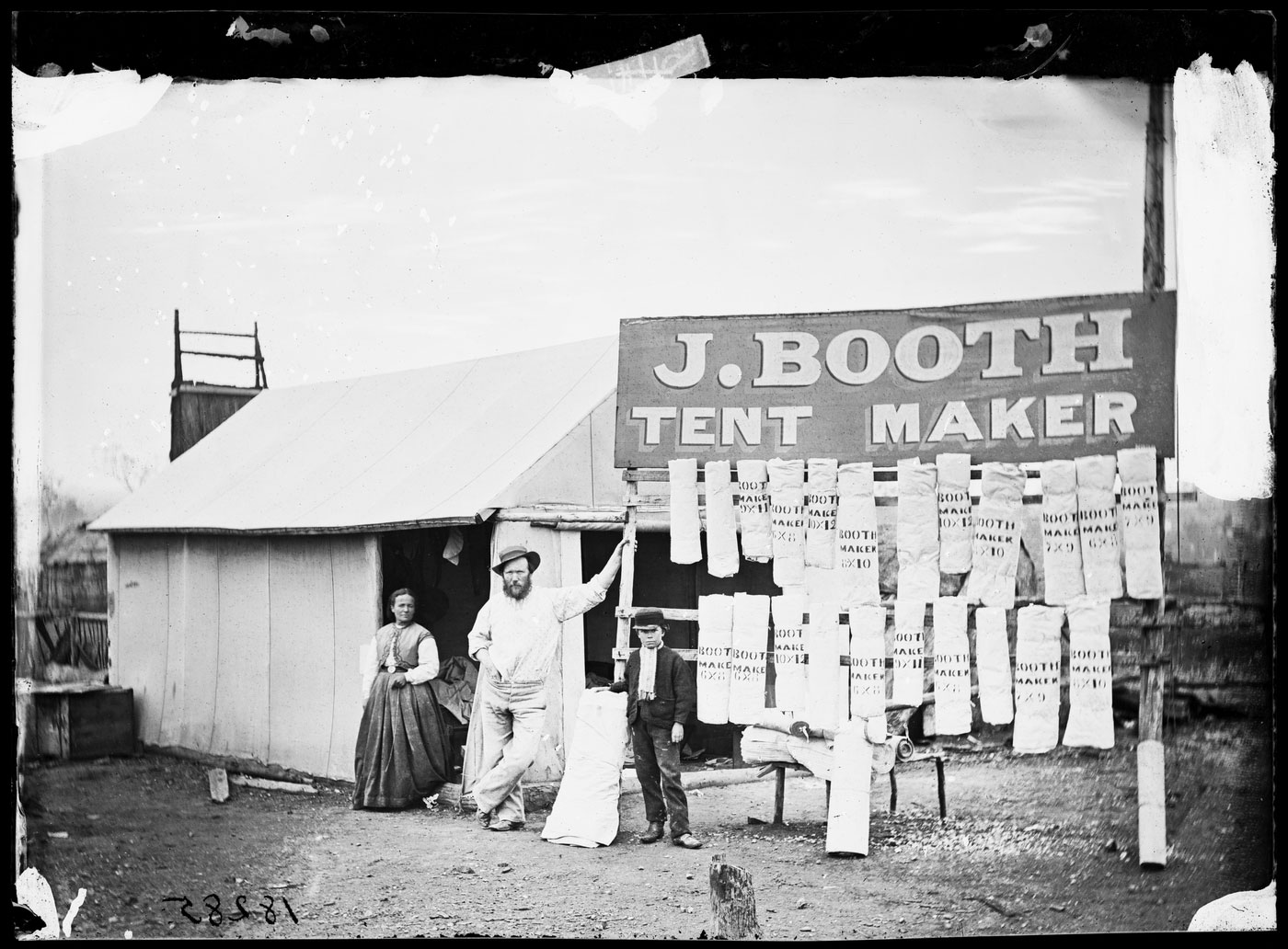
Charles Bayliss (Australian, 1850-1897) Tent city, Home Rule 1872 Wet plate glass negative, on 4/Box 3/No. 18285
In the early days of gold rushes, miners usually lived in tents. Here tentmaker J. Booth has confidently set up his canvas shop in Home Rule. The burgeoning new field was described in the Sydney Morning Herald 22 May 1872, “On Friday last there must have been fully fifteen hundred persons upon the ground, and tents and habitations of every description were springing, apparently Iike mushrooms, from the ground, and such is the rapidity with which a gold-fields town is formed, I shall not be surprised to see the place well supplied with stores, and, of course, hotels, when I again visit the place about a fortnight hence.”
Charles Bayliss (Australian, 1850-1897) John Davey, baker 1872 Wet plate glass negative, on 4/Box 3/No. 18384
With his shoes covered in flour, John Davey steps outside his bakery in the main street of Canadian Lead. Bread cost 6d a 2lb [5 cents per 900g] loaf. The woman and children to the right also appear outside Ruth Beck’s North Star Hotel, three doors away. The rush to Canadian Lead began in early 1872 and the Maitland Mercury 6 April 1872 was able to state “the Canadian Lead, where a month ago some four hundred people were, can now boast of a couple of thousands…” Not everyone was law-abiding. The Maitland Mercury 24 August 1872 related the story of Mrs Beck dropping a purse containing £21 [$42, worth about $2000 today], which was picked up by her little boy, but taken from him by two men claiming that it was theirs. The miscreants were arrested in Mudgee two days later, drinking the profits.
Charles Bayliss (Australian, 1850-1897) John Davey, baker (detail) 1872 Wet plate glass negative, on 4/Box 3/No. 18384
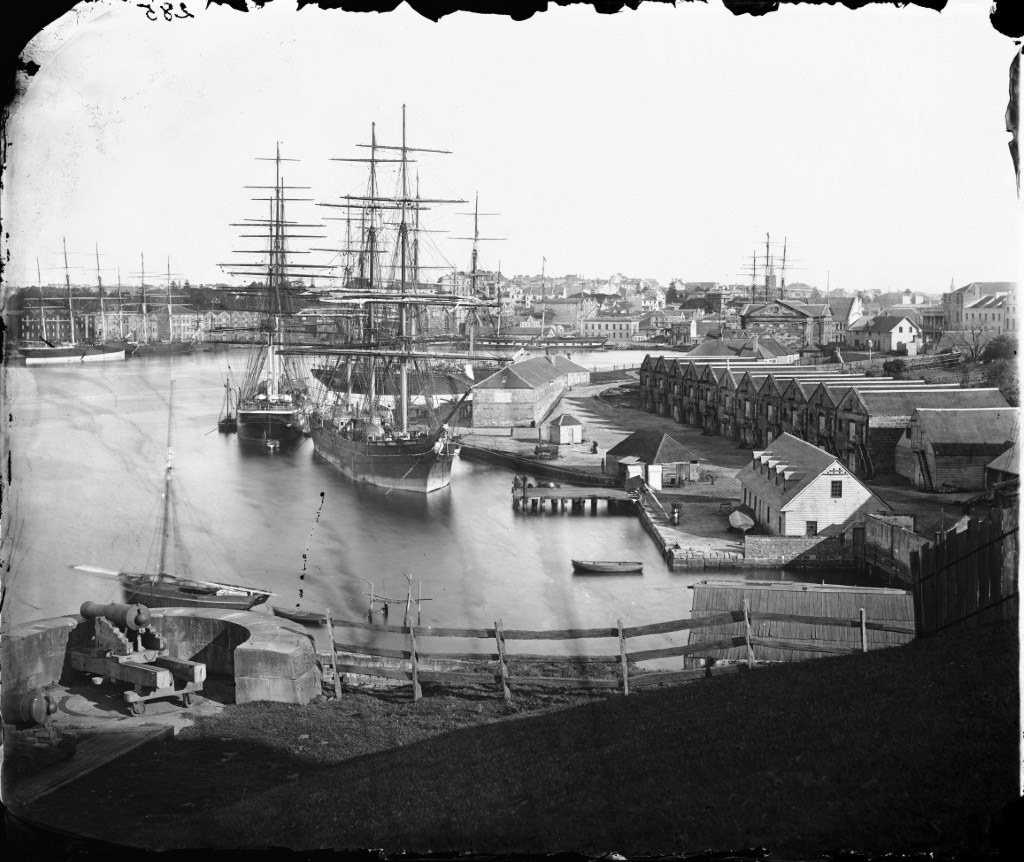
Beaufoy Merlin (Australian, 1830-1873) Circular Quay from Dawes Battery 1873 Wet plate glass negative, on 4/Box 58/No. 285
In mid 1873, Beaufoy Merlin returned to Sydney to continue photographing the city for Holtermann. The Sydney Morning Herald 2 August 1873 noted, “Mr. Beaufoy Merlin has taken a considerable number of photographic views of Sydney for the first section of ‘Holtermann’s Intercolonial Exposition’.” This image from Dawes Battery, past Campbell’s Wharf to Circular Quay can be dated to early September 1873, as the Haddon Hall (r) from London, is loading for San Francisco at Campbell’s wharf. Behind it is Aviemore and the ship in background in front of Customs House is La Hogue. Both Aviemore and La Hogue left for London on 13 September 1873.
After the death of Beaufoy Merlin in 1873, Bernhardt Holtermann engaged Merlin’s assistant, 24 year-old Charles Bayliss, to continue taking photographs for his planned Exposition. This view of Pall Mall from Hadley’s City Family Hotel, Sandhurst [Bendigo, Victoria] was taken in April 1874. Bayliss photographed the town using the Exposition’s standard 10 x 12 inch (25 x 30cm) glass negatives, but for this image used a mammoth camera specially imported by Holtermann which took glass plates measuring 18 x 22 inches (46 x 56cm). Bayliss also photographed Ballarat in June 1874, using the mammoth camera to produce a panorama from the town hall clock tower.
State Library of New South Wales Macquarie Street, Sydney NSW 2000 Australia Phone: +61 2 9273 1414
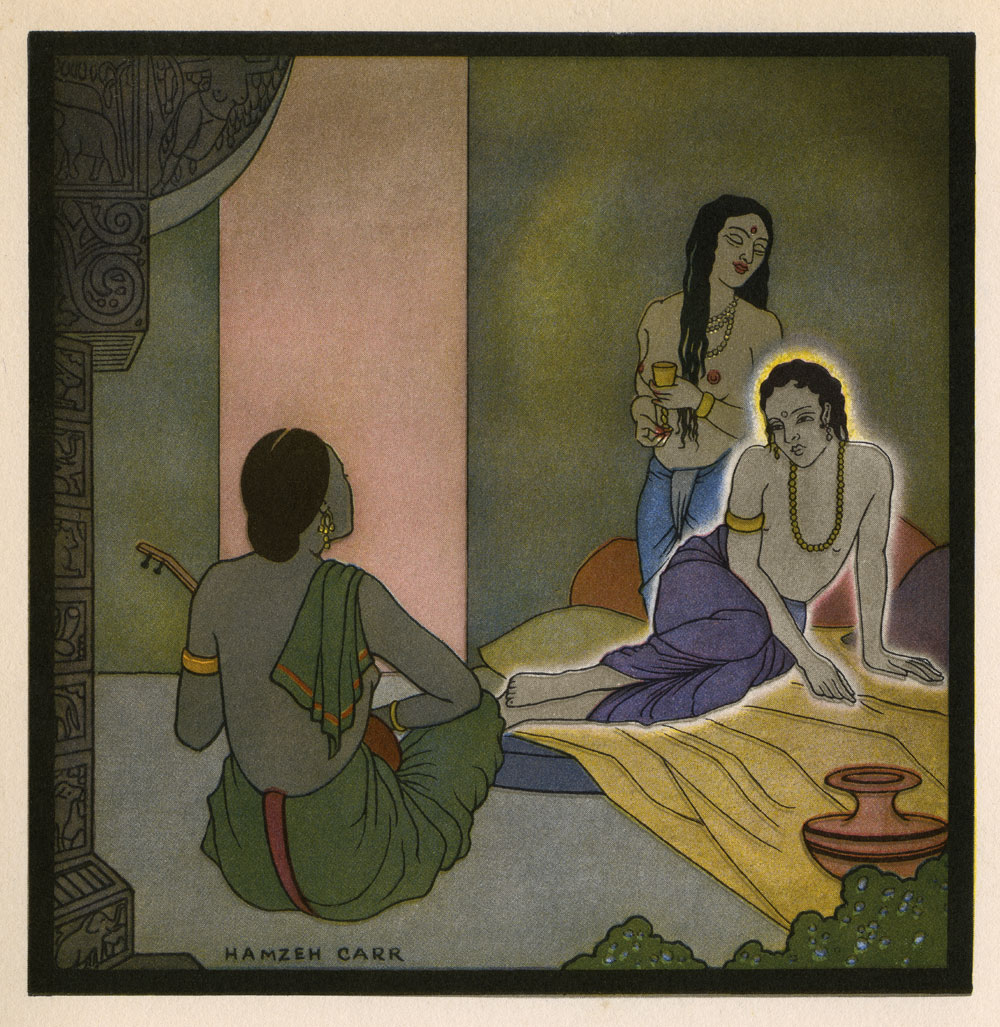
Hamzeh Carr And some maid told an ancient tale 1926 From Sir Edwin Arnold. The Light of Asia. London: John Lane The Bodley Head Ltd, 1926, p. 44 Limited edition of 3,000 copies
In the flesh, the colouring and radiance of these plates has to be seen to be believed.
I shall be posting more of these stunning works. Please click on the artwork for a larger version of the image.
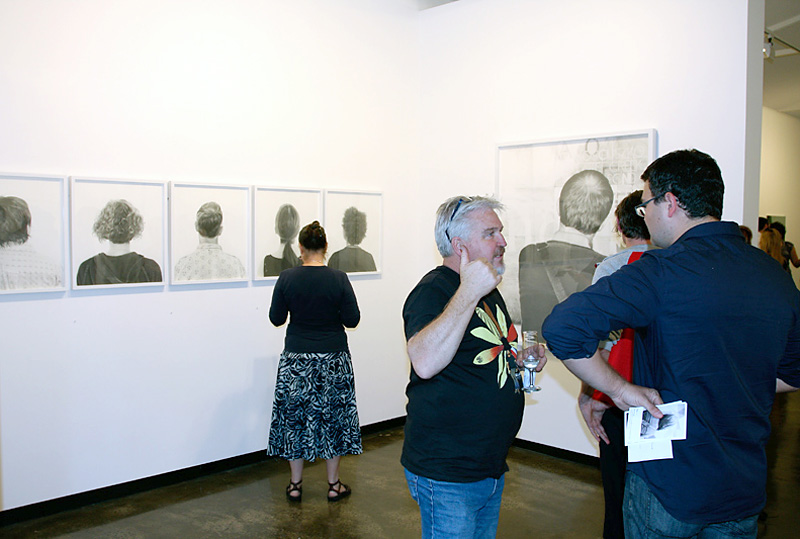
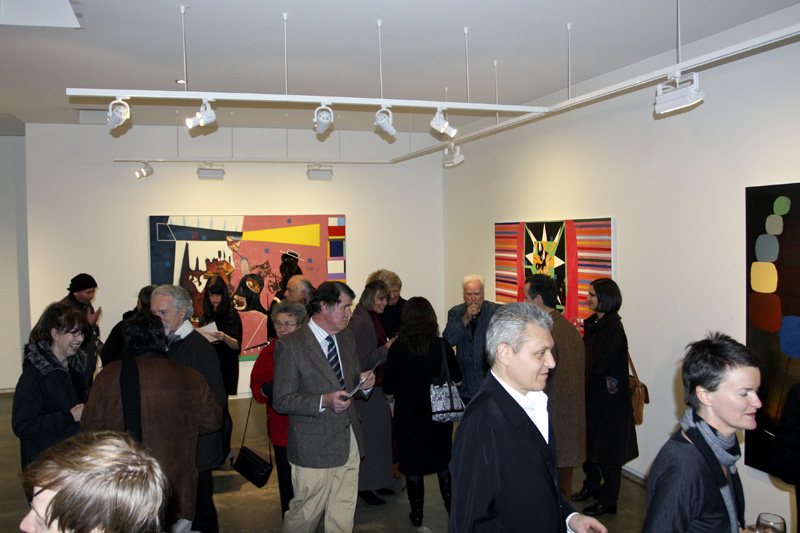
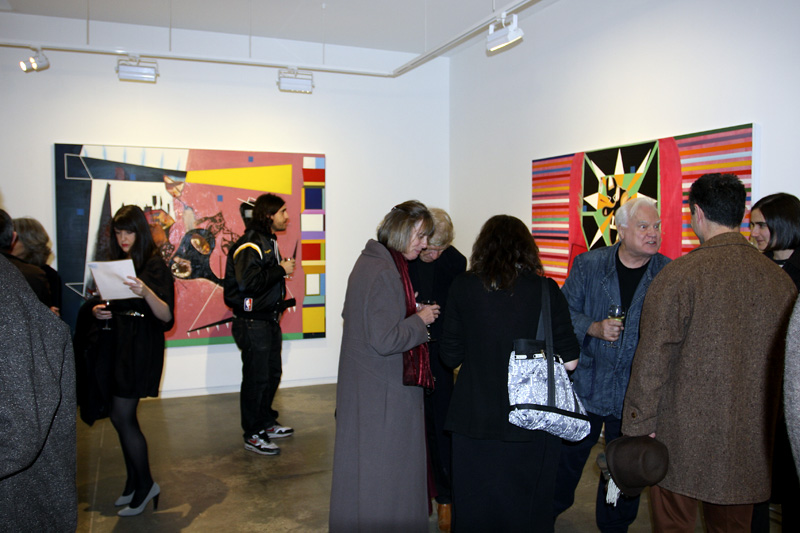
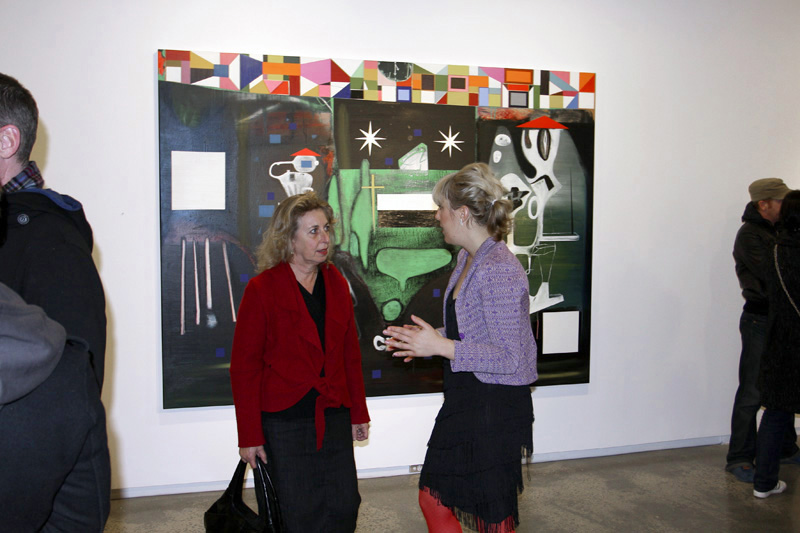
Camilla Tadich: Slabalong and Mark Hislop: Drawing at Sophie Gannon Gallery; Simon Obarzanek at Karen Woodbury Gallery; Kent Wilson Higher Breeds and Alice Wormald Wayside and Hedgerow at Shifted
Camilla Tadich: Slabalong and Mark Hislop: Drawing at Sophie Gannon Gallery, 2 Albert Street, Richmond March 2nd – March 27th 2010 Sophie Gannon Gallery website
Simon Obarzanek at Karen Woodbury Gallery, 4 Albert Street, Richmond March 3rd – March 27th 2010 This gallery is now closed
Kent Wilson Higher Breeds and Alice Wormald Wayside and Hedgerow at Shifted, Level 1, 15 Albert Street, Richmond This gallery is now closed
All photos by Marcus Bunyan
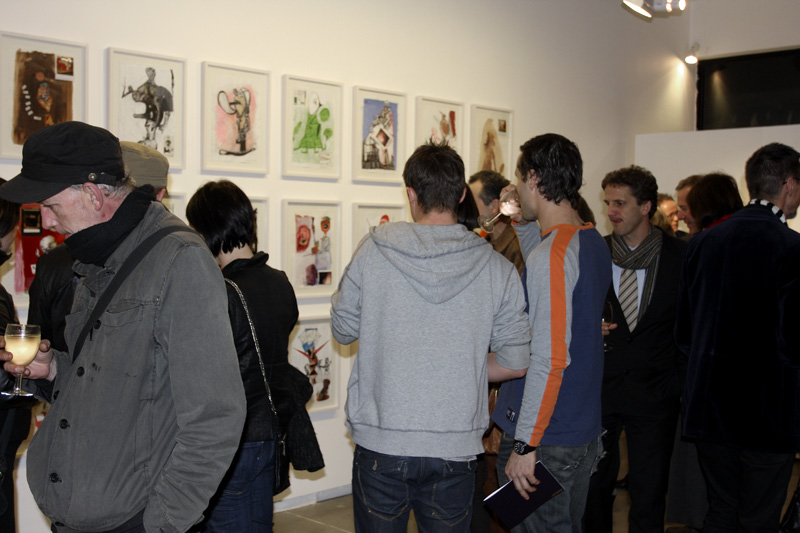
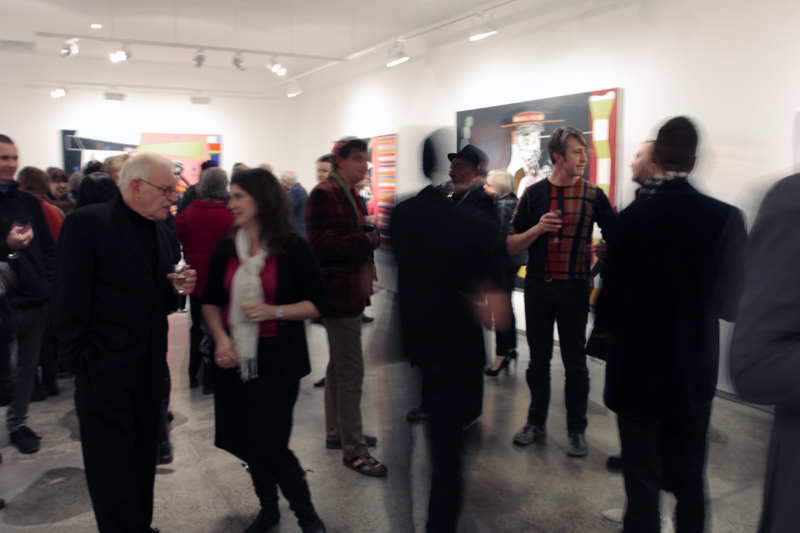
Sophie Gannon Gallery opening Photo: Marcus Bunyan
Sophie Gannon Gallery opening – Mark Hislop Drawing Photos: Marcus Bunyan
Camilla Tadich (Australian, b. 1982) Bordertown 2010 Photo: Marcus Bunyan
Sophie Gannon Gallery opening – Camila Tadich Slabalong Photo: Marcus Bunyan
Karen Woodbury Gallery opening – Simon Obarzanek Photo: Marcus Bunyan
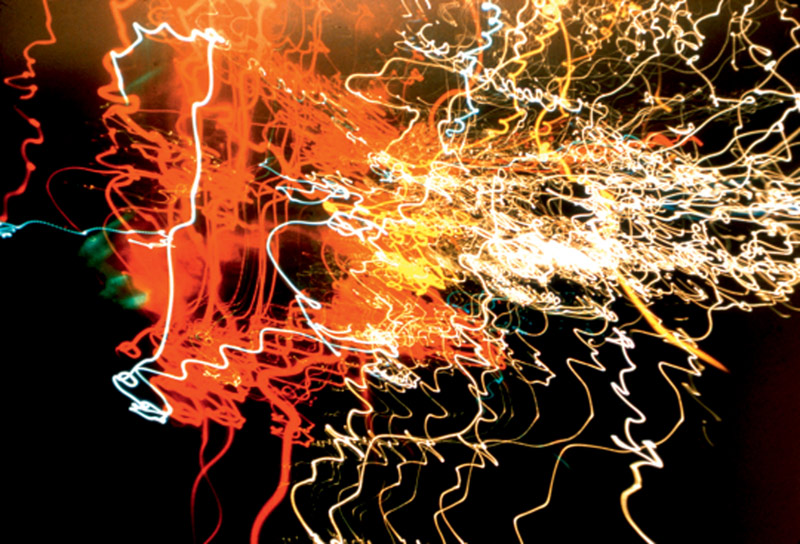
Simon’s photographs come from observing the physical movements of people pushing through the space around them in a city. He senses a universal language through movement and is drawn to this rather than their faces, as he normally is.
He noted that the “strained movements against gravity struck me with force… When I see a person creating a shape with their body in the street I do not sense the individual but a part, a piece of a larger performance. Each individual connects with others to create a visual language. I did not want faces to interrupt this larger work.”
Simon collects the movements on his camera, as photographic sketches, then he rephotographs the movement using friends and family as models. Removed from the busy streets, dislocated, his subject is isolated and framed against a dark background. Some twist away from the camera, or stagger against an unseen wind, sheltering their face from rain that is not falling. Simon does not show their faces, which emphasises the movement and makes the figures anonymous. These photographs are theatrical and mysterious, emphasising the loneliness and alienation that can be encountered living in a big city.
All images are featured in the exhibition. Many thankx to the Schirn Kunsthalle for allowing me to publish the photographs in the posting. Please click on the photographs for a larger version of the image.
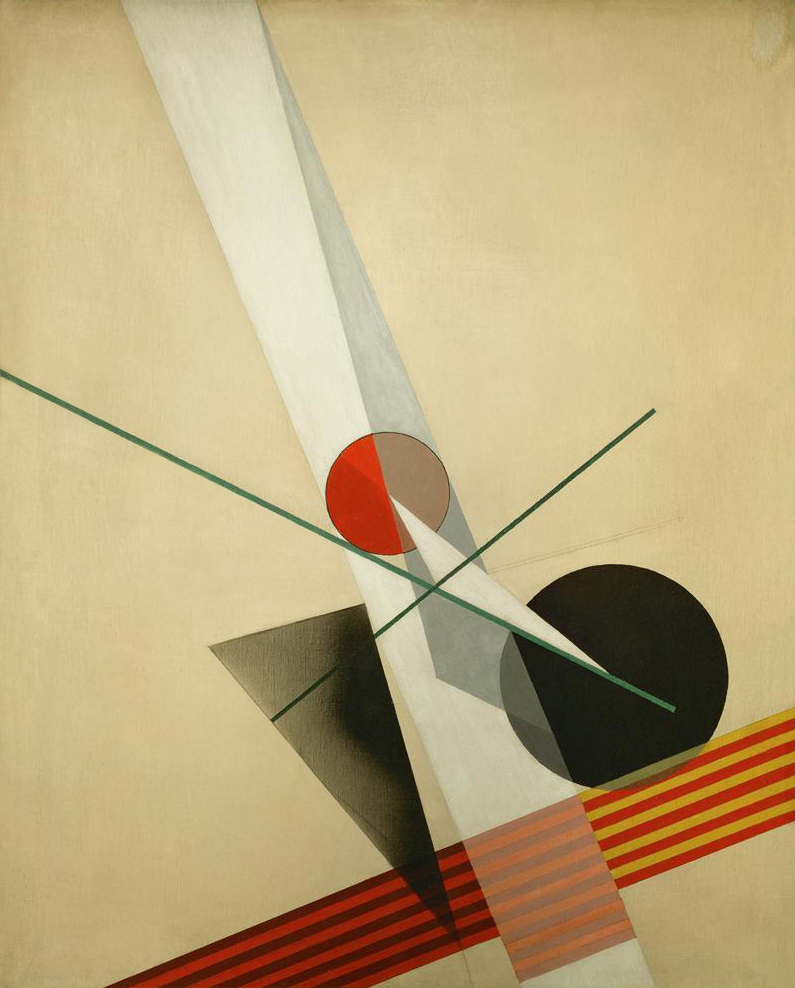
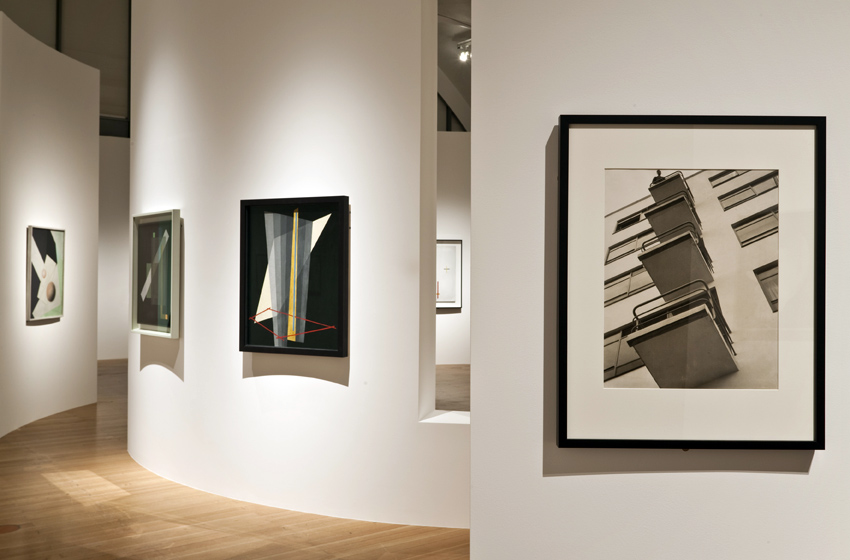
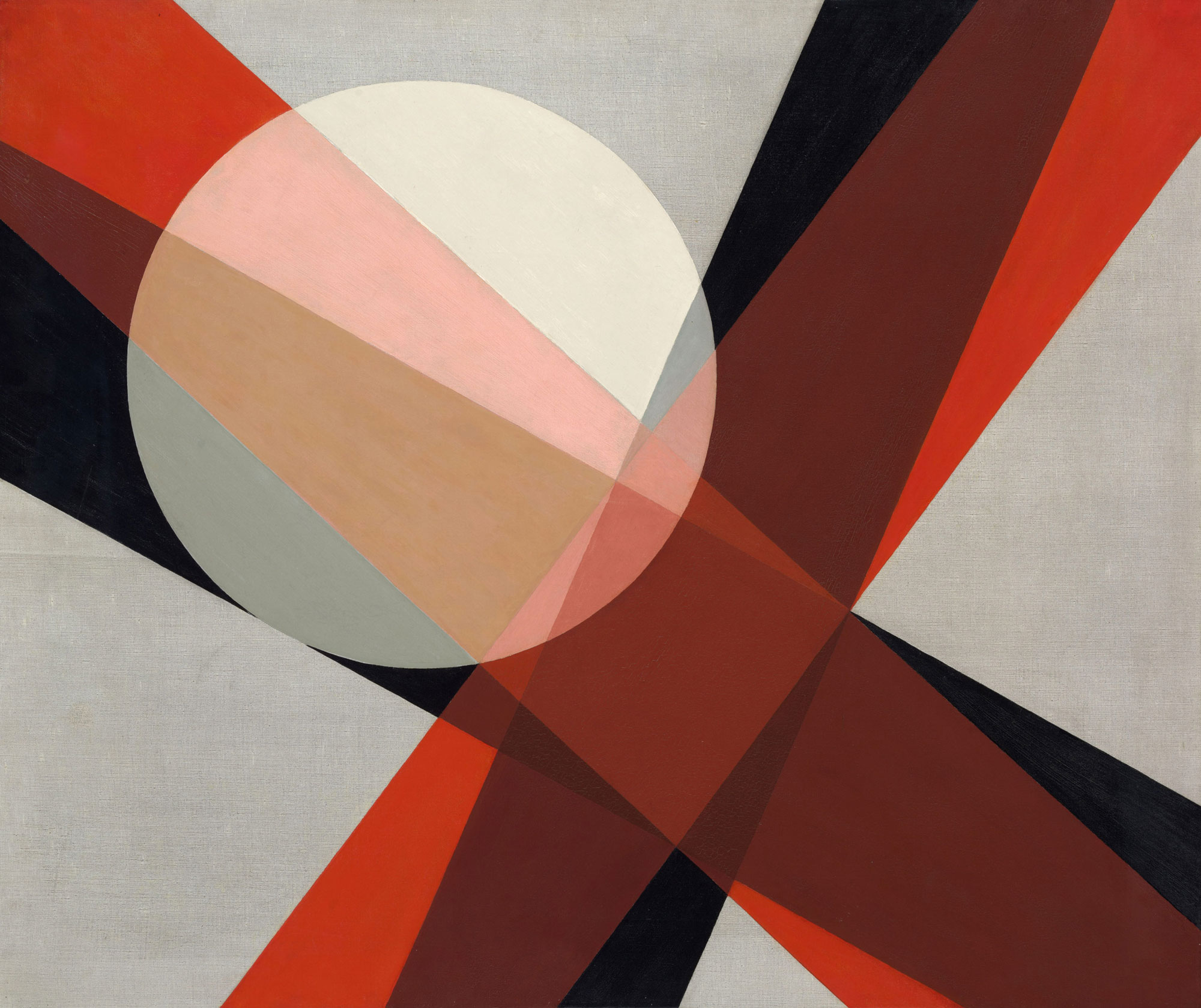
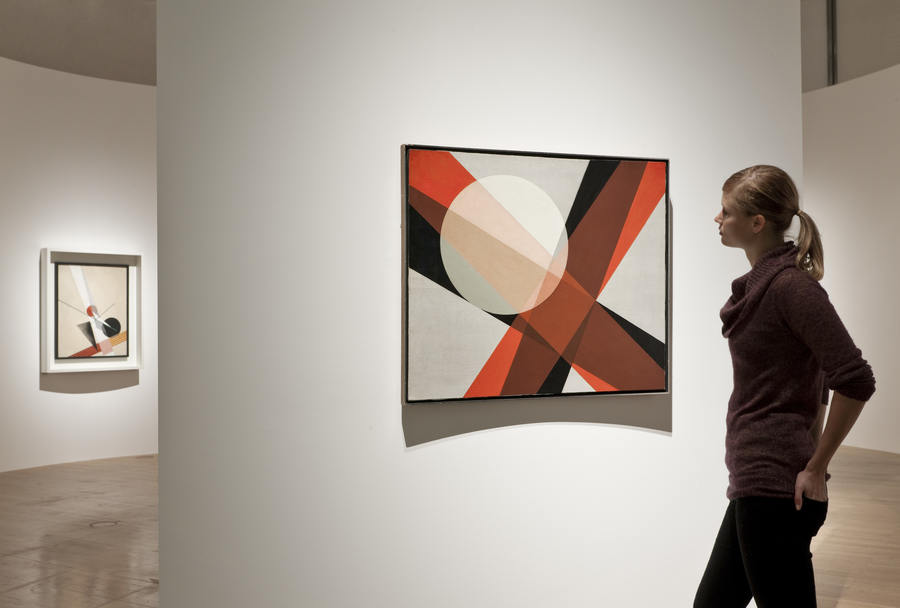
The Hungarian artist László Moholy-Nagy (1895-1946) became known in Germany through his seminal work as a teacher at the Staatliches Bauhaus in Weimar and Dessau (1923-1928). His pioneering theories on art as a testing ground for new forms of expression and their application to all spheres of modern life are still of influence today. Presenting about 170 works – paintings, photographs and photograms, sculptures and films, as well as stage set designs and typographical projects – the retrospective encompasses all phases of his oeuvre. On the occasion of the ninetieth anniversary of the foundation of the Bauhaus, it offers a survey of the enormous range of Moholy-Nagy’s creative output to the public for the first time since the last major exhibition of his work in Kassel in 1991. Never having been built before 2009, the artist’s spatial design Raum der Gegenwart (Room of Today), which brings together many of his theories, will be realised in the context of the exhibition.
No other teacher at the Bauhaus in Weimar and Dessau, nor nearly any other artist of the 1920s in Germany, an epoch rich in utopian designs, developed such a wide range of ideas and activities as László Moholy-Nagy, who was born in Bácsborsód in Southern Hungary in 1895. His oeuvre bears evidence to the fact that he considered painting and film, photography and sculpture, stage set design, drawing, and the photogram to be of equal importance. He continually fell back upon these means of expression, using them alternately, varying them, and taking them up again as parts of a universal concept whose pivot was the alert, curious, and unrestrained experimental mind of the “multimedia” artist himself. Long before people began to talk about “media design” and professional “marketing,” Moholy-Nagy worked in these fields, too – as a guiding intellectual force in terms of new technical, design and educational instruments. “All design areas of life are closely interlinked,” he wrote about 1925 and was, despite his motto insisting on “the unity of art and technology,” no uncritical admirer of the machine age, but rather a humanist who was open-minded about technology. His basic attitude as an artist, which exemplifies the idealistic and utopian thinking of an entire era, may be summed up as aimed at improving the quality of life, avoiding specialisation, and employing science and technology for the enrichment and heightening of human experience.
After having graduated from high school, Moholy-Nagy began to study law in Budapest in 1913, but was drafted in 1915. During the war, he made his first drawings on forces mail cards and began dedicating himself exclusively to art after having been discharged from the army in 1918. Moholy-Nagy moved to Vienna in 1919 and to Berlin the following year, kept in close contact with Kurt Schwitters, Raul Hausmann, Theo van Doesburg, and El Lissitzky, and immersed himself in Merzkunst, De Stijl, and Constructivism. He achieved successes as an artist with his solo presentation in the Berlin gallery “Der Sturm” (1922), for example. In spring 1923, he was offered the post of a Bauhaus master in Weimar by Walter Gropius. Taking responsibility for the preliminary course and the metal workshop, he decisively informed the Constructivist and social reorientation of the Bauhaus. Interlinking art, life, and technology and underscoring the visual and the material aspects in design were key issues of his work and resulted in a modern, technology-oriented language of forms. His didactic approaches as a Bauhaus teacher still present themselves as up-to-date as his work as an artist. For him, education had to be primarily aimed at bringing up people to become artistically political and creative beings: “Every healthy person has a deep capacity for bringing to development the creative energies found in his/her nature … and can give form to his/her emotions in any material (which is not synonymous with ‘art’),” he wrote in 1929.
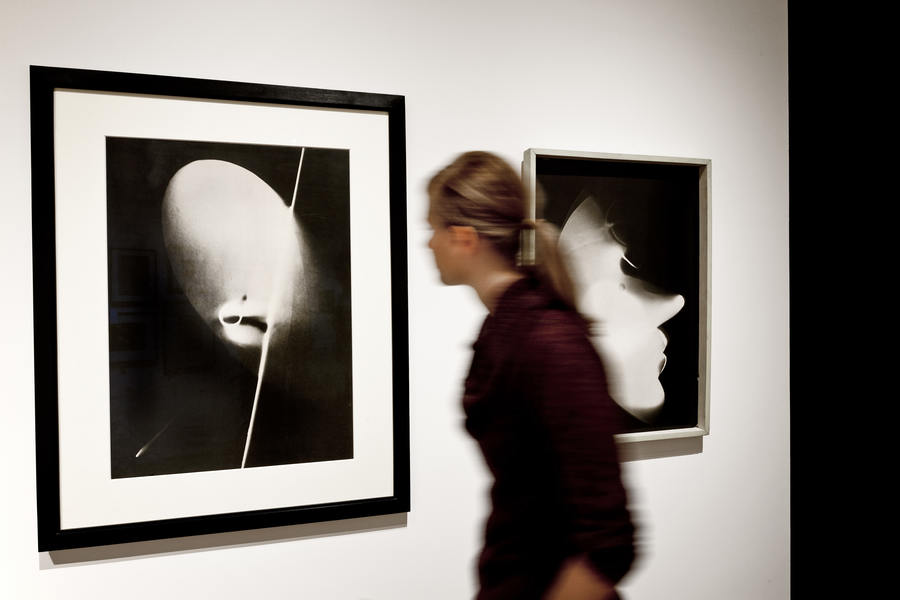
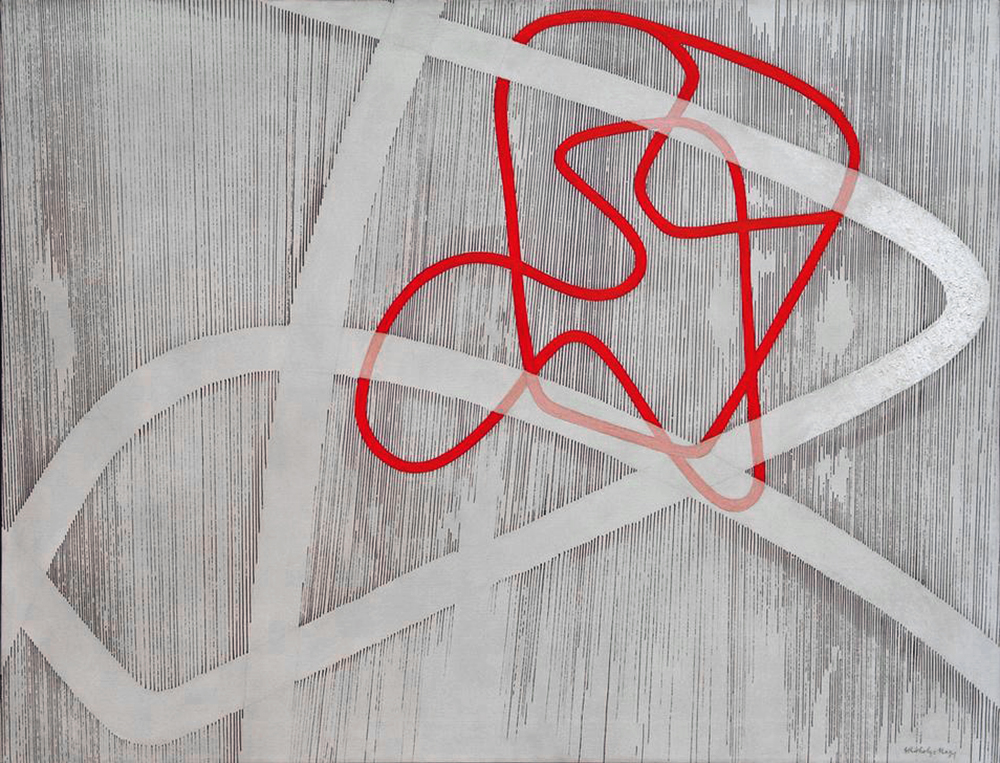
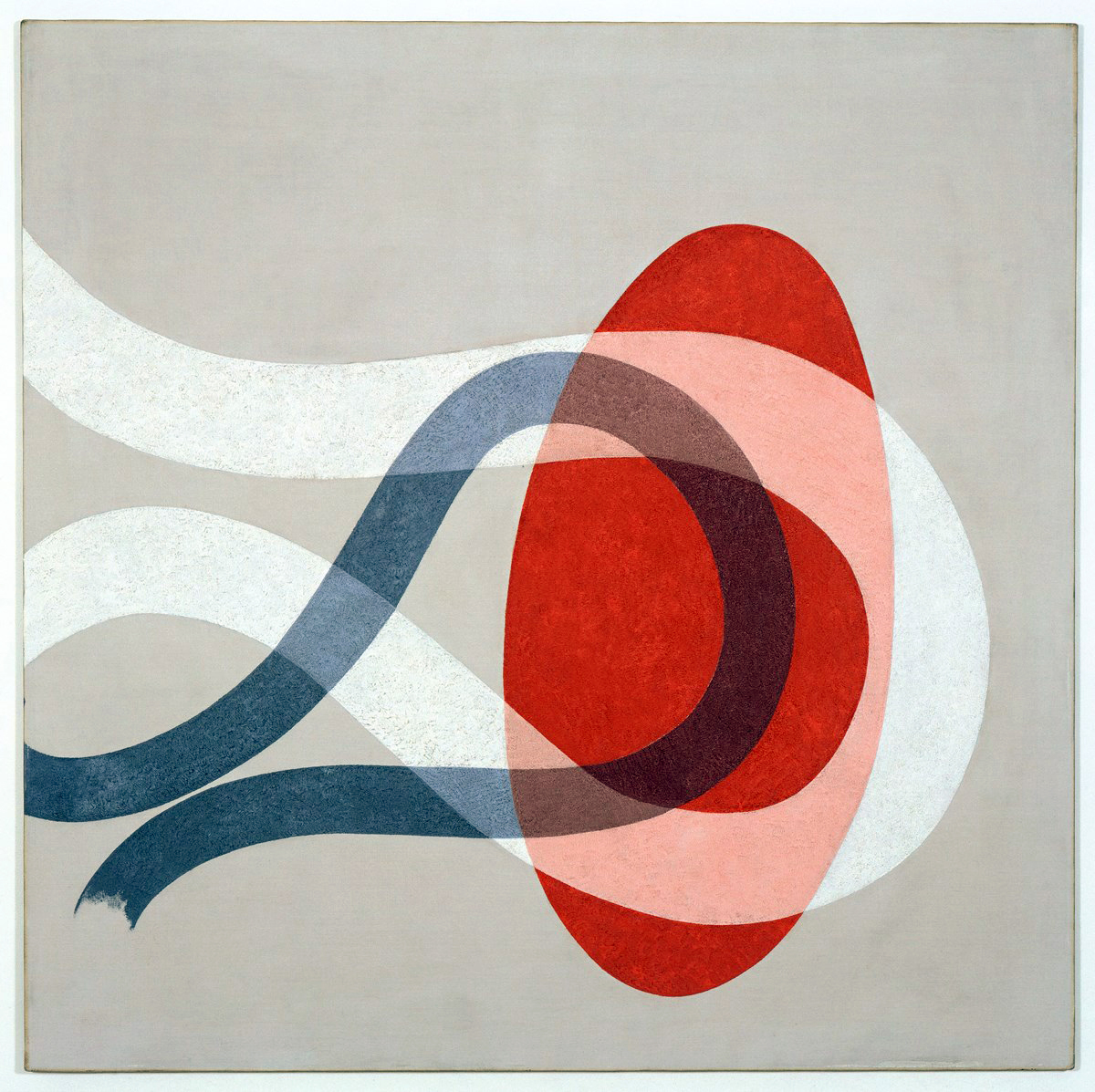
In spite of his manifold activities and inventions in the sphere of so-called applied art, Moholy-Nagy by no means advocated abolishing free art. Before, during, and long after his years at the Bauhaus, he produced numerous paintings, drawings, collages, woodcuts, and linocuts, as well as photographs and films as autonomous works of art. Like his design solutions, his works in the classical arts, in painting and sculpture, also reveal his aesthetically and conceptually radical approach. His Telephone Pictures, whose execution he controlled by telephone, exemplify this dimension: using a special graph paper and a colour chart, he worked out the composition and colours of the pictures and had them realised according to his telephonic instructions by technical assistants. He also pursued new paths with his famous Light-Space Modulator of 1930, conceiving his gesamtkunstwerk [“total work of art”] composed of colour, light, and movement as an “apparatus for the demonstration of the effects of light and movement.” It was equally new territory he conquered in the fields of photography and film: considering his cameraless photography, his photograms, and his abstract films such as Light Play Black, White, Gray (1930), Moholy-Nagy must still be regarded as one of the most important twentieth-century photographers and key figures for today’s media theories.
Thanks to his experiments with photography and the photogram, László Moholy Nagy was one of the first typographers of the 1920s to recognise the new possibilities offered by the combination of typeface, surface design, and pictorial signs with recent photographic techniques. As a Bauhaus teacher for typography, he designed almost all of the 14 Bauhaus books published between 1925 and 1929 and – besides co-editing them with Walter Gropius – took care of the entire presentation of the books’ contents and the organisation of their production. With its dynamic cycles and bars and concentration on a few, clear colours, their design resembled the Constructivist artists’ paintings and drawings. While Moholy-Nagy’s early typographic works are frequently still characterised by hand-drawn typefaces, he later strove for a “mechanized graphic design” also suited for commercial advertising through their systematisation and standardisation. After he had left the Bauhaus in 1928, he founded his own office in Berlin, where he, among other things, developed advertising solutions for Wilhelm Wagenfeld’s designs for the Jena Glassworks. Faced with the Nazis’ seizure of power, Moholy-Nagy emigrated to the United States via Amsterdam and Great Britain and founded the New Bauhaus in Chicago in 1937 and, after it had been closed, the Chicago School (and later Institute) of Design in 1939, where he continued to champion an integration of art, science, and technology. László Moholy-Nagy died of leukaemia in Chicago on 24 November 1946.
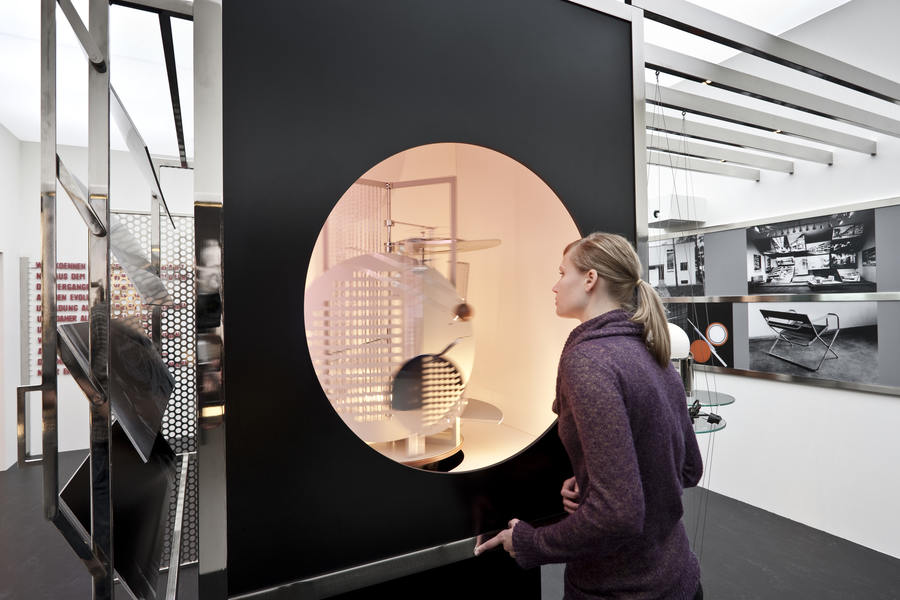
The exhibition at the Schirn also presents the Raum der Gegenwart (Room of Today), which offers a concise summary of Moholy-Nagy’s work. The sketches for this environment, which assembles many of his theories, date back as far as 1930. Not having been built before 2009, the Raum der Gegenwart (Room of Today) is now realised in the Schirn on the occasion of the Bauhaus anniversary 2009.
Press release from the Schirn Kunsthalle website [Online] Cited 20/01/2010. No longer available online
László Moholy-Nagy (Hungarian, 1895-1946) Light Play Black, White, Gray 1930
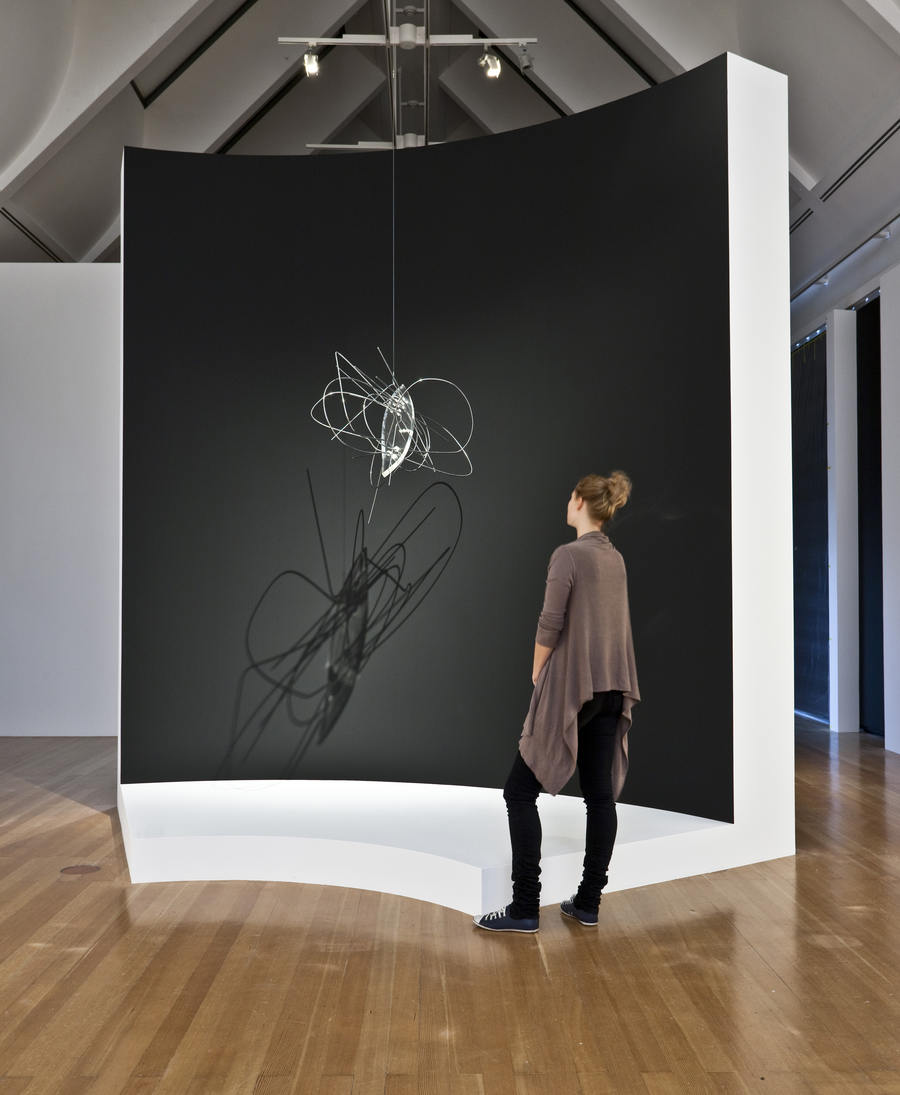
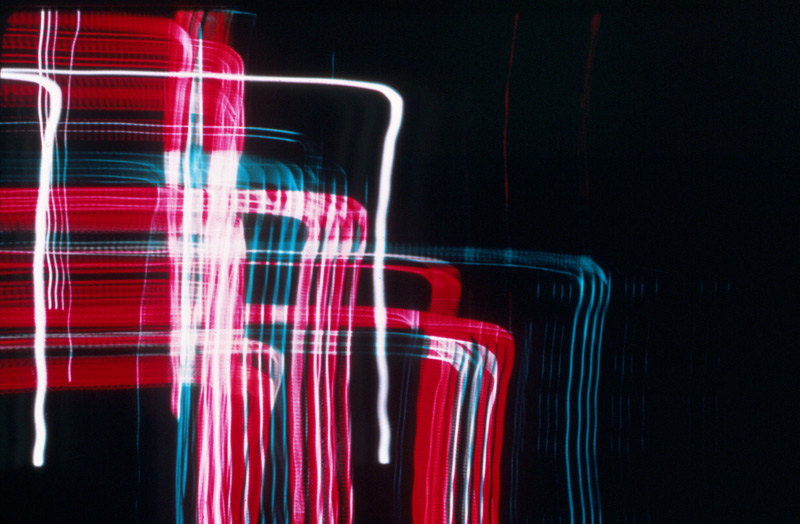
The sculpture Light-Space Modulator is a key work in the history of kinetic art and even the art of new media and, therefore, one of the most important works of art of its time. Conceived initially by Moholy-Nagy at the beginning of the twenties of the last century and built between 1928 and 1930…
Light-Space Modulator was exhibited in 1930 in a show organised in Paris on the work of the German Werkbund. From the point of view of the object, it forms a complex as well as beautiful set of elements of metal, plastic and glass, many of them mobile by the action of an electric motor, surrounded by a series of coloured lights.
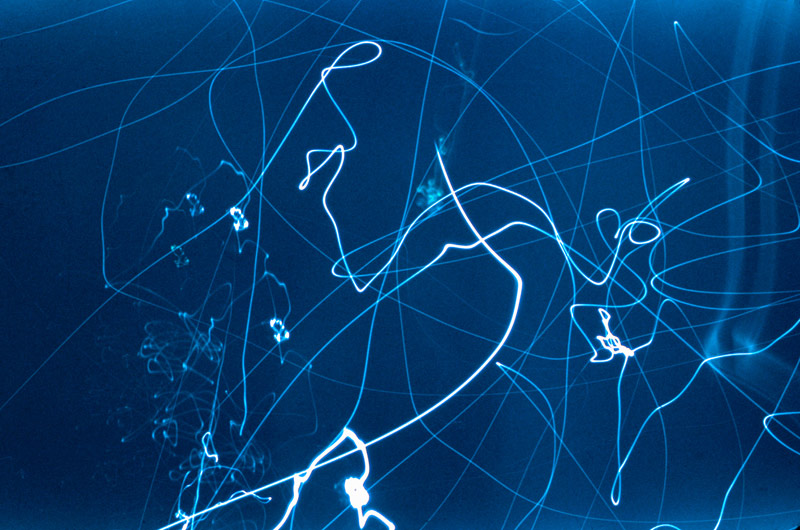
Moholy-Nagy used it to produce light shows that he photographed or filmed, as in the case of the film shown here. Although in black and white, the film manages to capture the kinetic brightness of the sculpture.
László Moholy-Nagy (Hungarian, 1895-1946) Photogramm No.II 1929 Silver gelatin photograph 95.5 x 68.5cm Courtesy Galerie Berinson, Berlin Photo: Friedhelm Hoffmann, Berlin
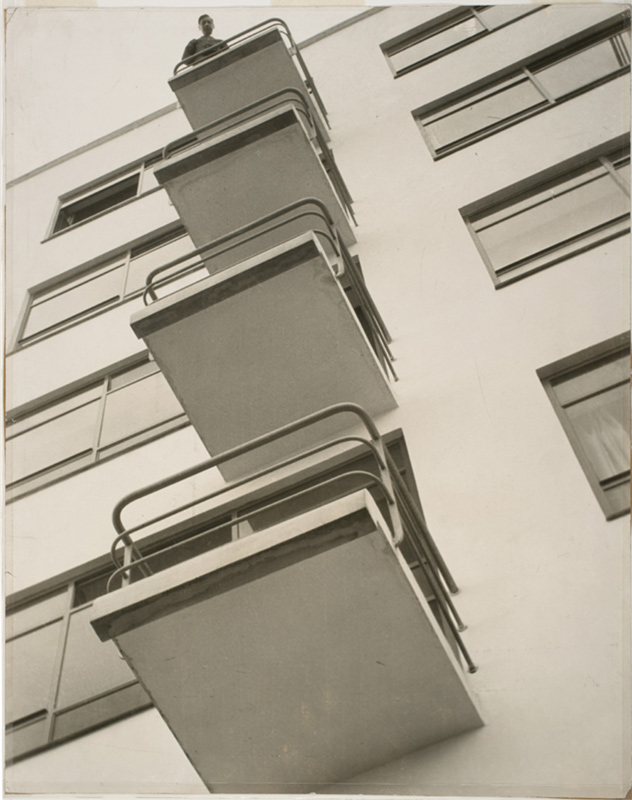
László Moholy-Nagy (Hungarian, 1895-1946) Marseille, Port View 1929 Silver gelatin photograph 48.7 x 37.9cm Courtesy Collection of George Eastman House
Exhibition dates: 12th November – 6th December 2009
Alex Lukas (American, b. 1981) Untitled 2009 Acrylic and silk screen on two book pages
These are terrific – I want one!
A big thank you to Alex for allowing me to reproduce the images.
Dr Marcus Bunyan
Please click on the photographs for a larger version of the image.
Alex Lukas (American, b. 1981) Untitled 2009 Acrylic and silk screen on two book pages
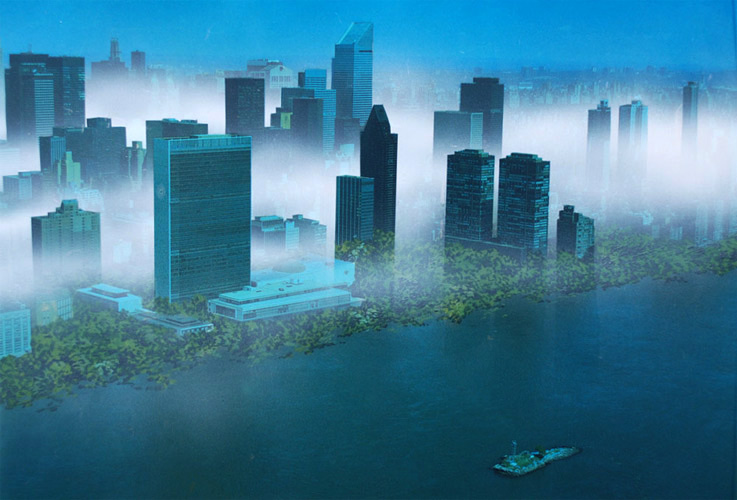
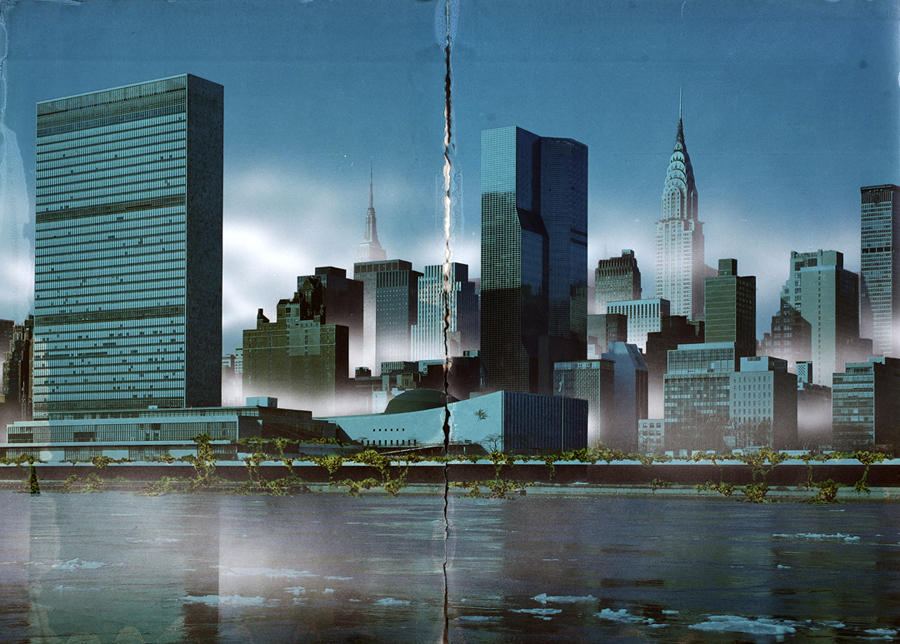
Glowlab is pleased to present The Eventuality of Daybreak, a solo exhibition by Alex Lukas featuring a new series of post-apocalyptic urban landscapes that blur the visual boundaries of fiction and reality.
Lukas’ work explores the existence of disaster, be it realised or fictitious, in contemporary society. Hyper-realistic motion pictures and unforgiving news footage depict seemingly identical – and equally riveting – facades of tragedy. The artist recognises that relentless visual bombardment has resulted in society’s desensitisation to the aesthetics of destruction.
For The Eventuality of Daybreak, Lukas has selected photographic spreads of well-known metropolises from vintage publications and uses them dually as canvas and unlikely subject. Through a deft handling of paint and carefully placed screen-printed passages, the artist pushes these ageing illustrations in futuristic contexts. Submerging these cities conceptually and physically, Lukas inundates images of American cities with layers of media representing cataclysmic floods and crippling overgrowth.
Also included in the exhibition are works on paper depicting near-future scenes of devastated landscapes – crumbling infrastructure, overturned trucks and telling signs of human despair. As a counterpoint to the underwater cities, these darkly atmospheric and barren vistas signal devastation through an unsettling sense of absence.
Lukas’ intentional use of dated imagery presented in tandem with contemporary situations forces the viewer to reconcile two differing ideologies of urban space. The artist’s work calls into question society’s collective acceptance of the urban environment as an arena of destruction, once thought unthinkable and now seemingly inevitable.
The Eventuality of Daybreak is Lukas’ first solo exhibition with Glowlab. Lukas’ work has also been exhibited in New York, Boston, Philadelphia, Los Angeles, San Francisco, London, Stockholm and Copenhagen as well as in the pages of Swindle Quarterly, Proximity Magazine, The San Francisco Chronicle, The Village Voice, The Drama and The New York Times Book Review. Lukas is a graduate of the Rhode Island School of Design and currently lives and works in Philadelphia, where he is a member of the artist collective Space 1026.
Press release on the Glowlab website [Online] Cited 20/11/2009 no longer available online
Alex Lukas (American, b. 1981) Untitled 2009 Acrylic and silk screen on two book pages
Alex Lukas (American, b. 1981) Untitled 2009 Acrylic and silk screen on two book pages
Alex Lukas (American, b. 1981) Untitled 2009 Acrylic and silk screen on two book pages
Alex Lukas (American, b. 1981) Untitled 2009 Acrylic and silk screen on two book pages
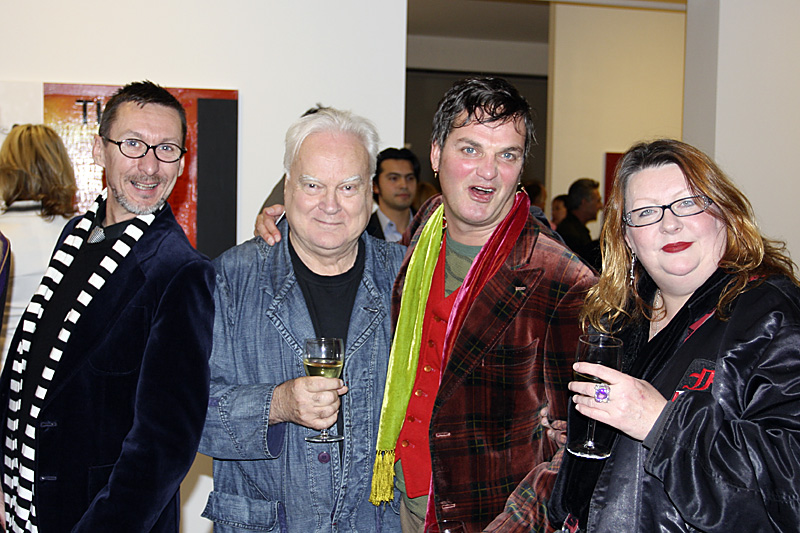
Opening night crowd with the artist Gareth Sansom third from right
A very busy opening at John Buckley Gallery in Richmond for the paintings of Gareth Sansom. Nice to meet the artist and catch up with artist Gavin Brown and manager of Abbotsford Convent Brenton Geyer. A big thank you to Daniel for allowing me to take the photographs!
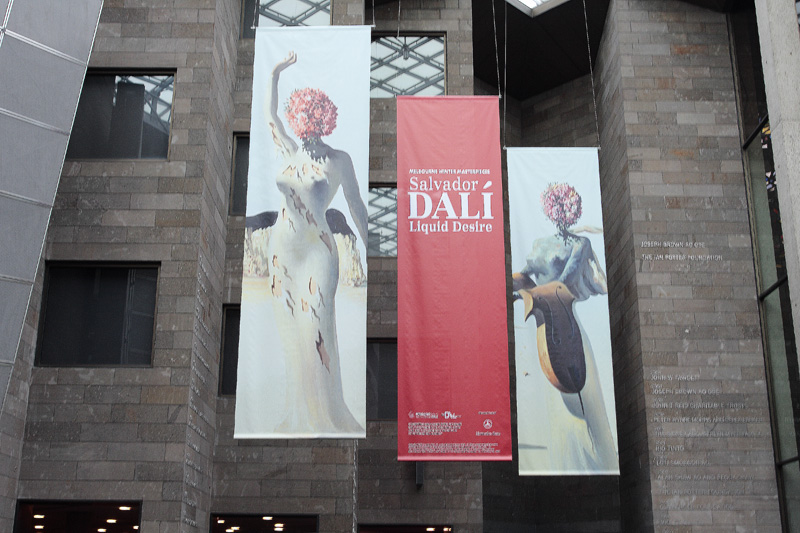
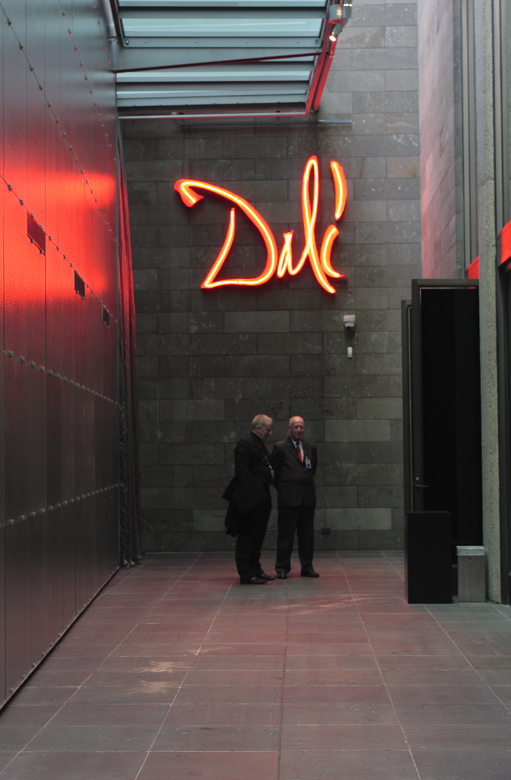
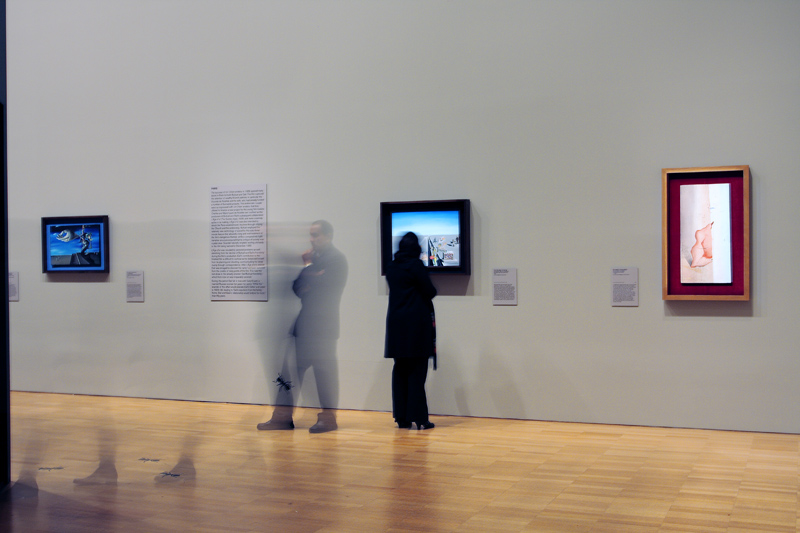
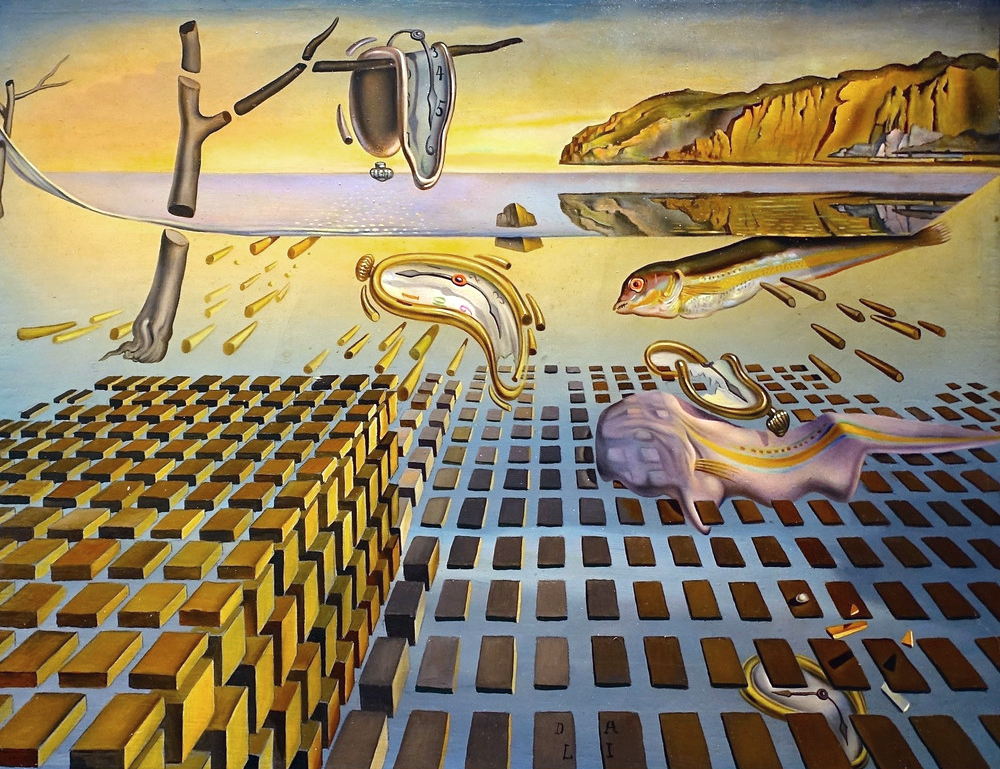
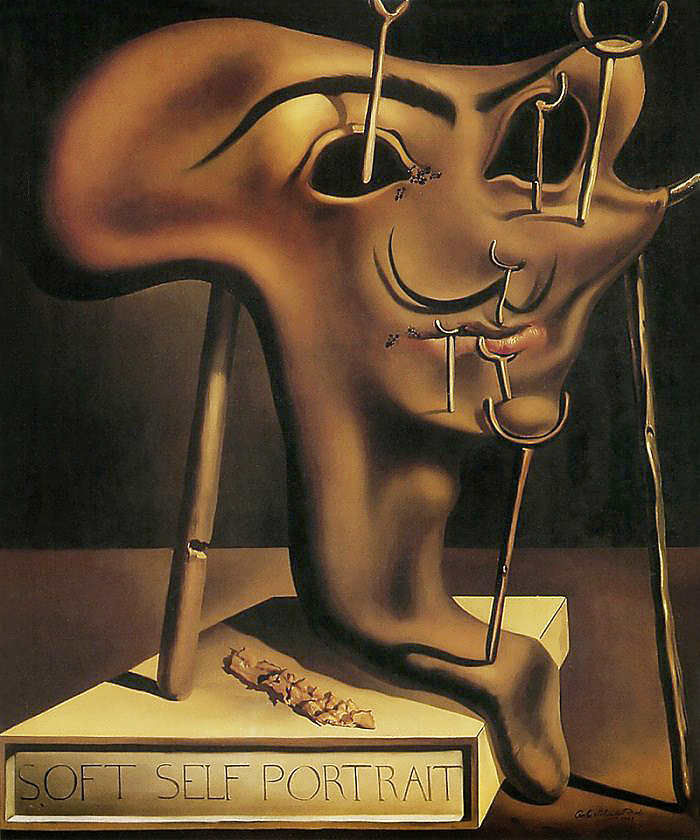
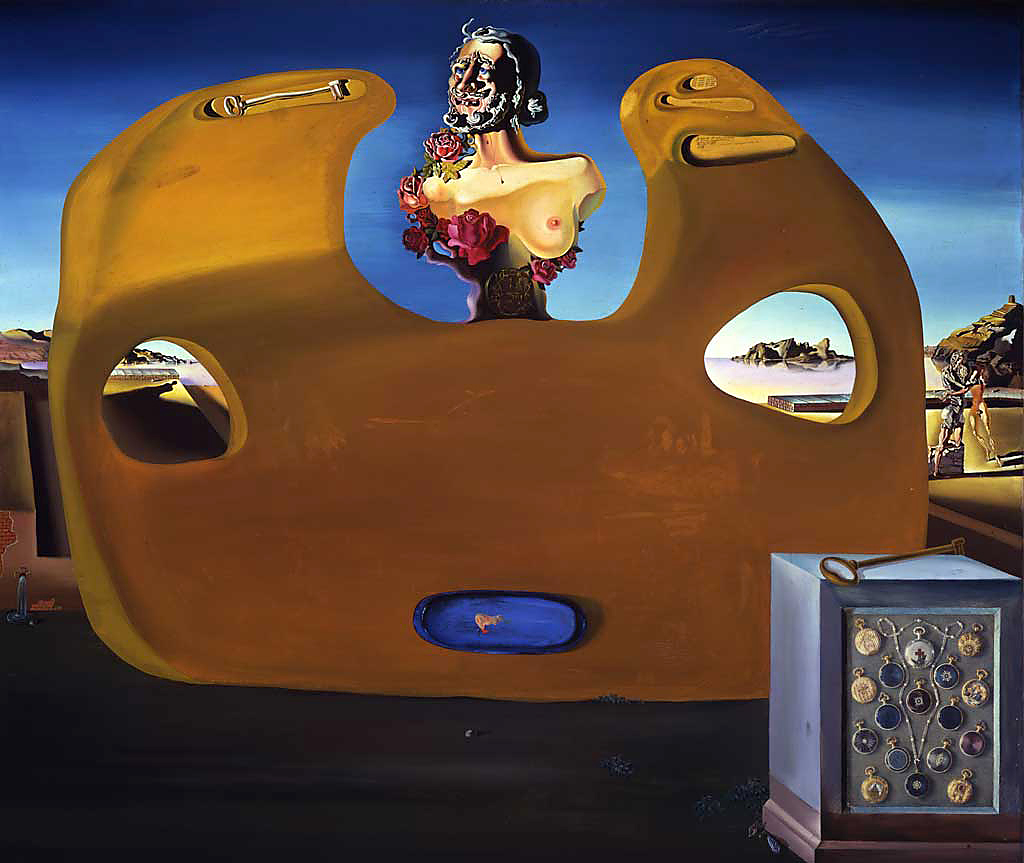
Installation view of the interior forecourt of the National Gallery of Victoria showing banners for the exhibition Salvador Dalí: Liquid Desire Photo: Marcus Bunyan
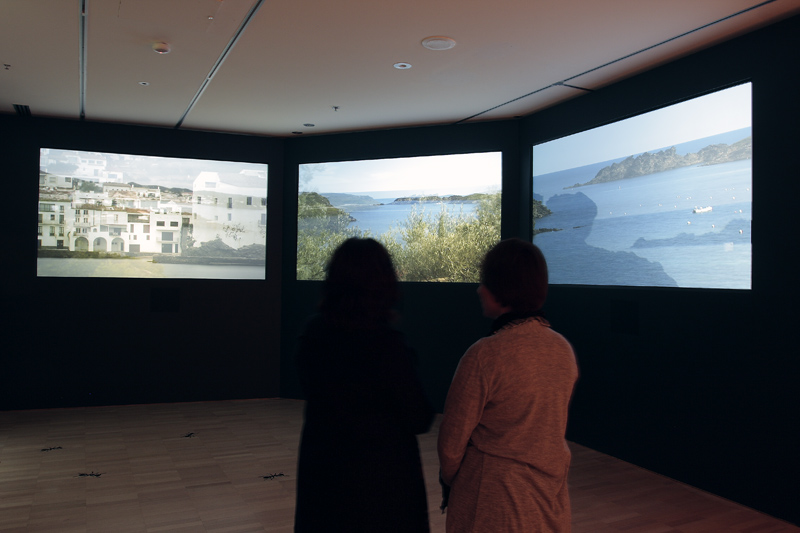
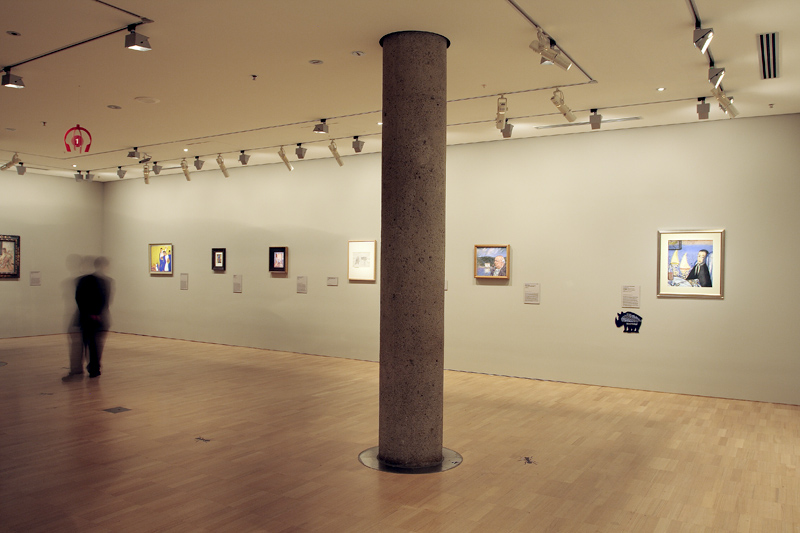
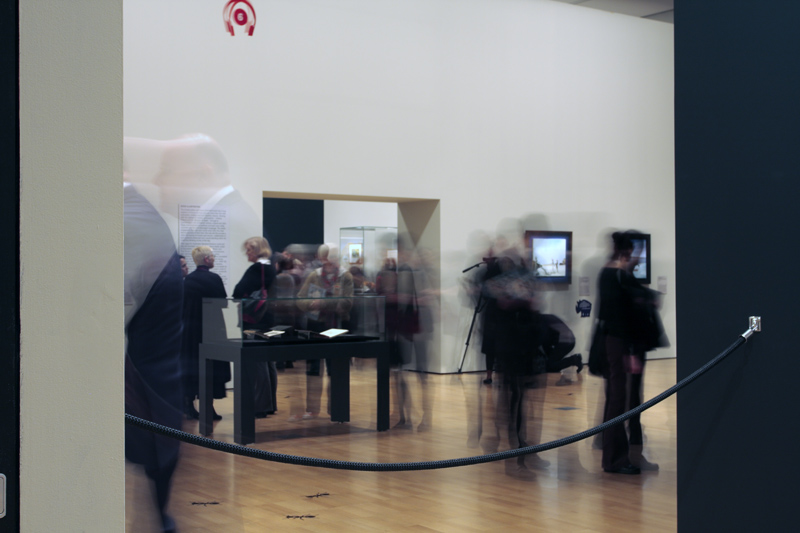
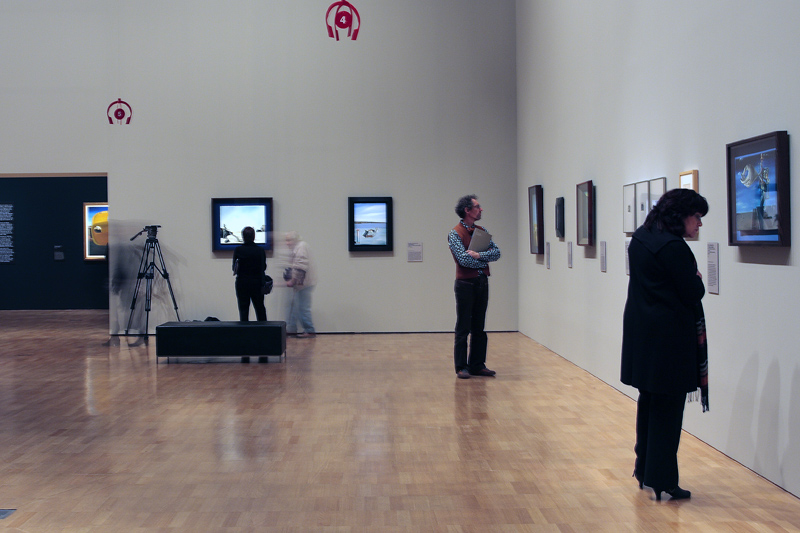
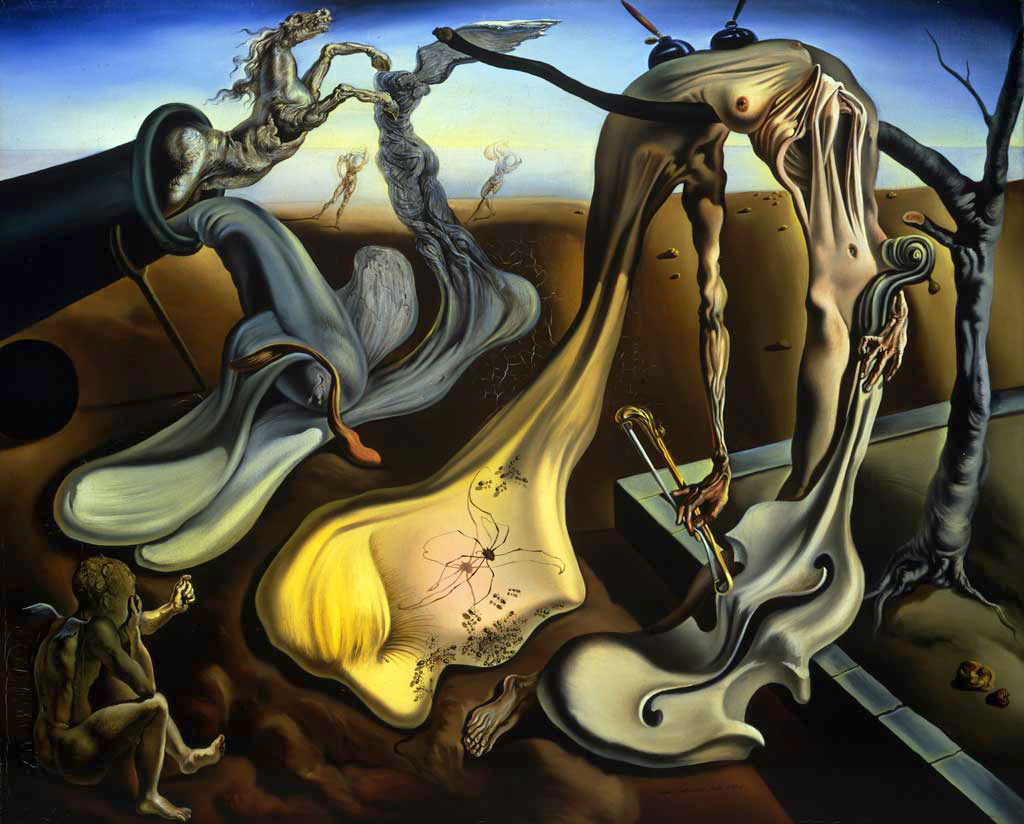
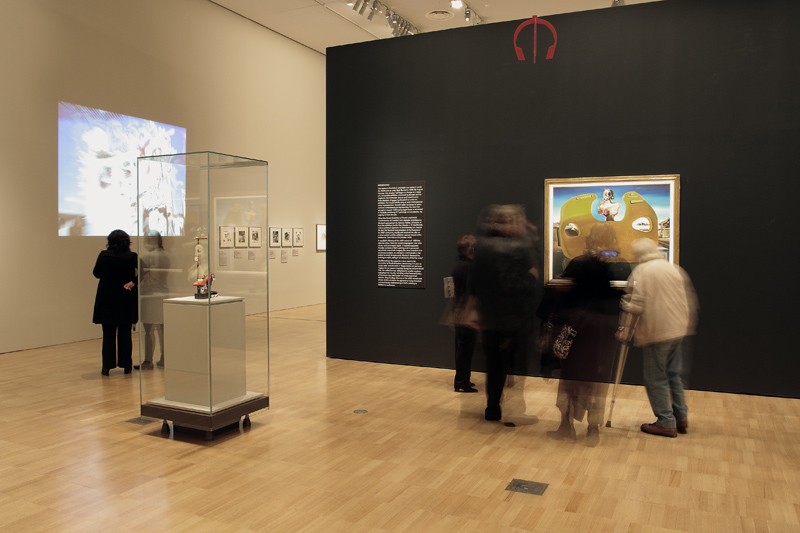
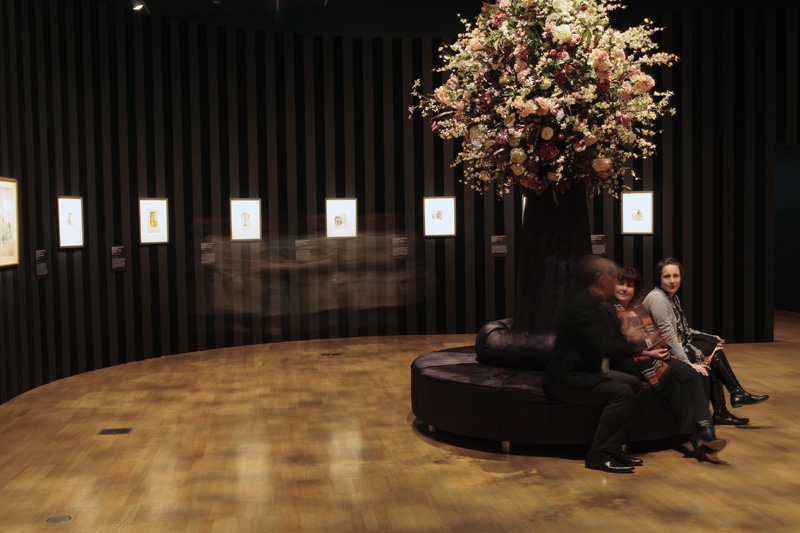
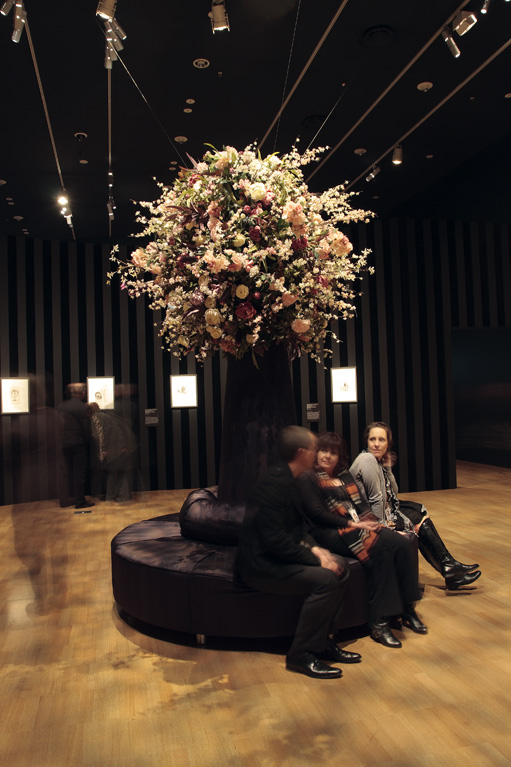
Installation photographs from the latest Winter Masterpieces blockbuster Salvador Dalí: Liquid Desire from the media preview on the day the exhibition opened at NGV International, Melbourne. Thank you to Jemma Altmeier, Media and Public Affairs Administrator at the NGV for the invitation. Photographs were taken using a digital camera, tripod and available light.
Fantastic to see my friend and curator of the exhibition, Dr Ted Gott, at the opening. Congratulations on a wonderful show!
Photographs proceed from the beginning to the end of the exhibition in chronological order.
Many thankx to the National Gallery of Victoria for allowing me to publish the photographs in the posting. Please click on the photographs for a larger version of the image.
Entrance to the Salvador Dalí: Liquid Desire Winter Masterpieces exhibition at the National Gallery of Victoria, Melbourne Photo: Marcus Bunyan
3 panel video installation of the Catalan countryside where Salvador Dali lived. 13 minutes duration from the exhibition Salvador Dalí: Liquid Desire Winter Masterpieces at the National Gallery of Victoria, Melbourne Photo: Marcus Bunyan
Early work from the Salvador Dalí: Liquid Desire Winter Masterpieces exhibition at the National Gallery of Victoria, Melbourne Photo: Marcus Bunyan
To the left View of the Cadaques from the Creus Tower 1923; to the right Table in front of the Sea. Homage to Eric Satie 1926 from the Salvador Dalí: Liquid Desire Winter Masterpieces exhibition at the National Gallery of Victoria, Melbourne Photos: Marcus Bunyan
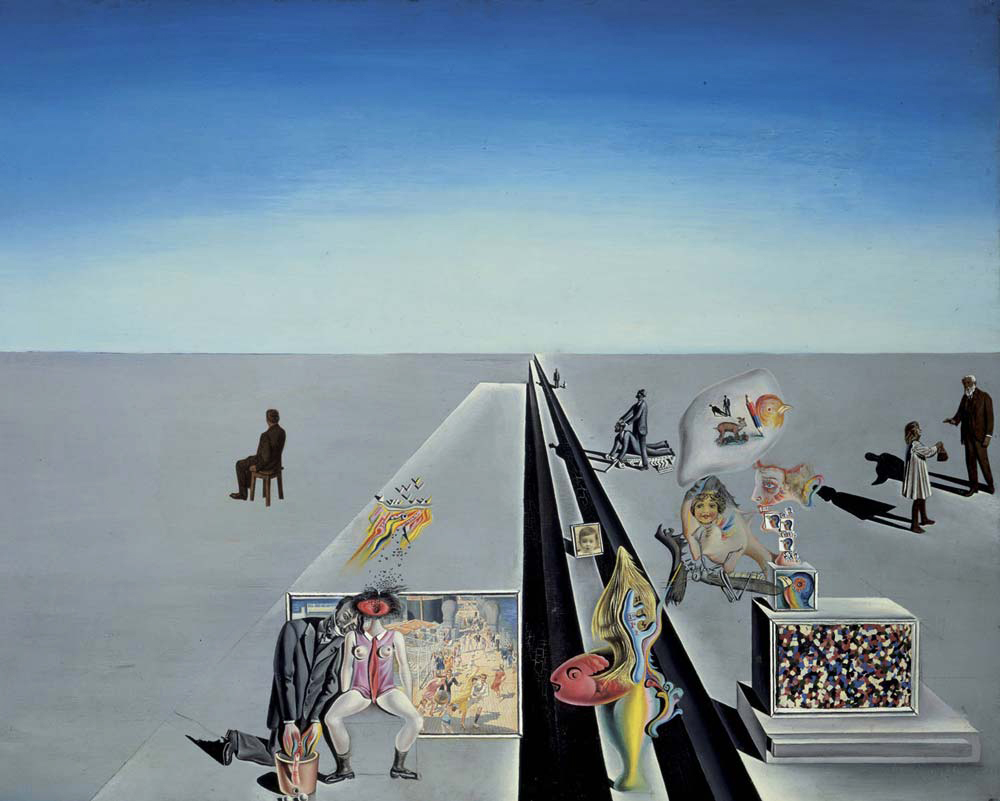
In the centre The First Days of Spring 1929; to the right Surrealist composition 1928 from the Salvador Dalí: Liquid Desire Winter Masterpieces exhibition at the National Gallery of Victoria, Melbourne Photo: Marcus Bunyan
Installation view with The Age art critic Associate Professor Robert Nelson at centre right and The hand. The remorse of conscience 1930 at far right, from the Salvador Dalí: Liquid Desire Winter Masterpieces exhibition at the National Gallery of Victoria, Melbourne Photo: Marcus Bunyan
Installation view with Memory of the child-woman 1932 at right from the Salvador Dalí: Liquid Desire Winter Masterpieces exhibition at the National Gallery of Victoria, Melbourne Photo: Marcus Bunyan
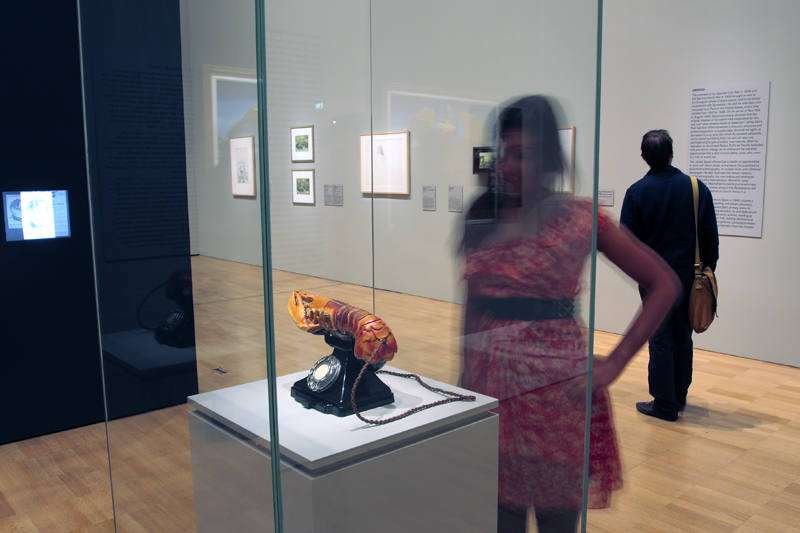
Salvador Dalí (Spanish 1904-1989, worked in United States 1940-1948) Lobster Telephone (installation view) 1936 Photo: Marcus Bunyan
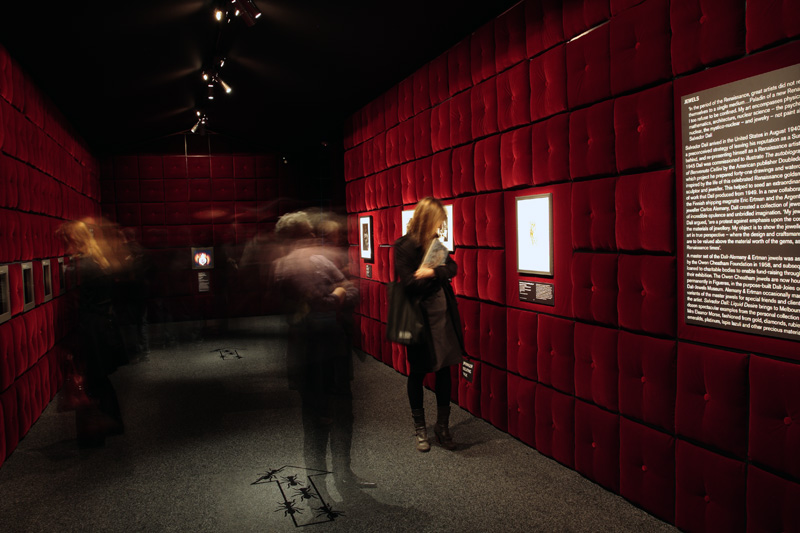
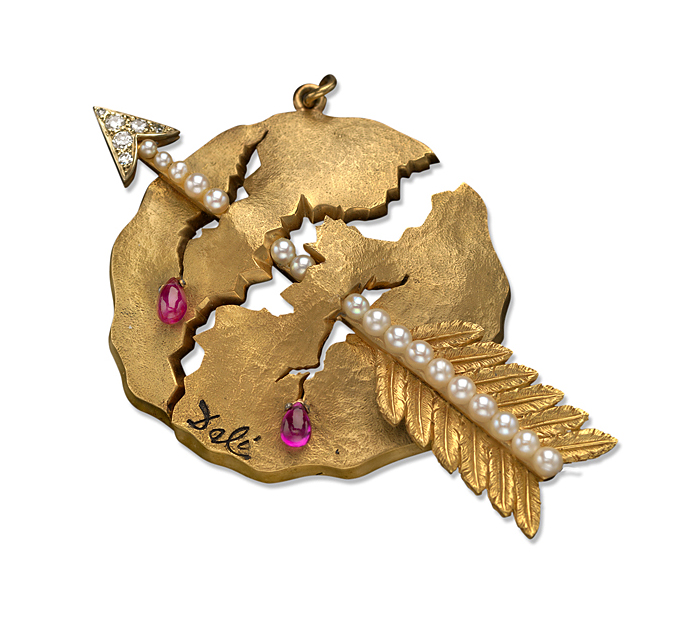
Jewellery gallery at the Salvador Dalí: Liquid Desire Winter Masterpieces exhibition at the National Gallery of Victoria, Melbourne Photos: Marcus Bunyan
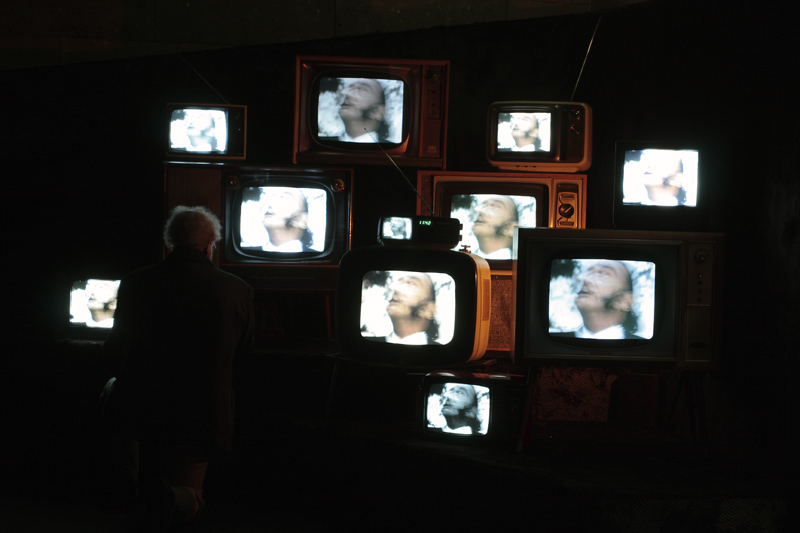
Televisions with film installation from the Salvador Dalí: Liquid Desire Winter Masterpieces exhibition at the National Gallery of Victoria, Melbourne Photo: Marcus Bunyan
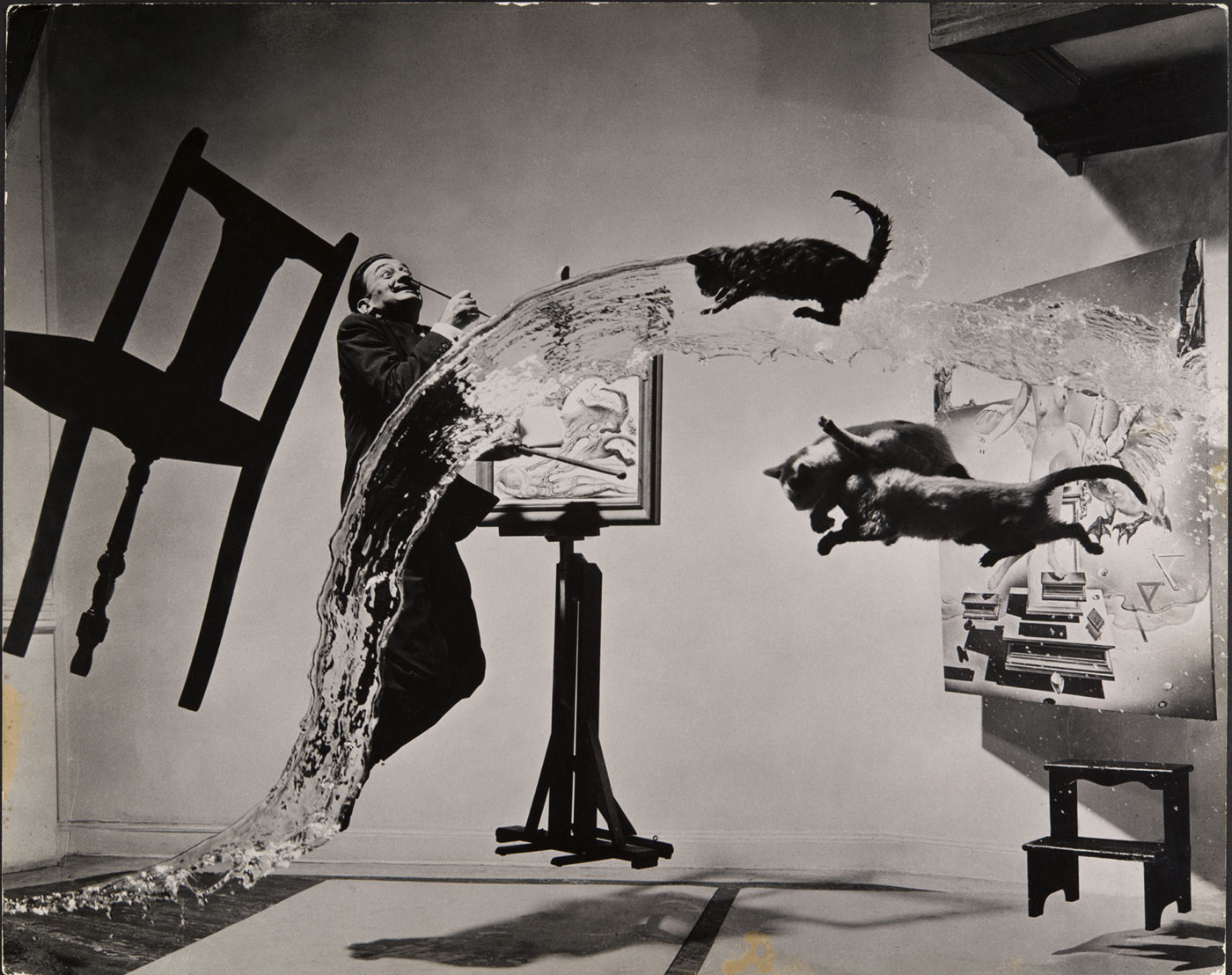
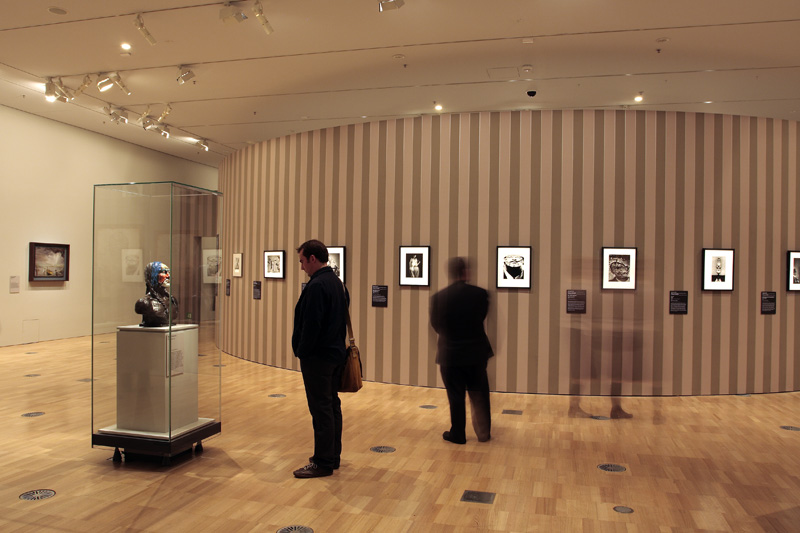
Installation of black and white photography from the exhibition Salvador Dalí: Liquid Desire Winter Masterpieces exhibition at the National Gallery of Victoria, Melbourne with Dr Ted Gott, curator of the exhibition, with back to camera at centre Photo: Marcus Bunyan
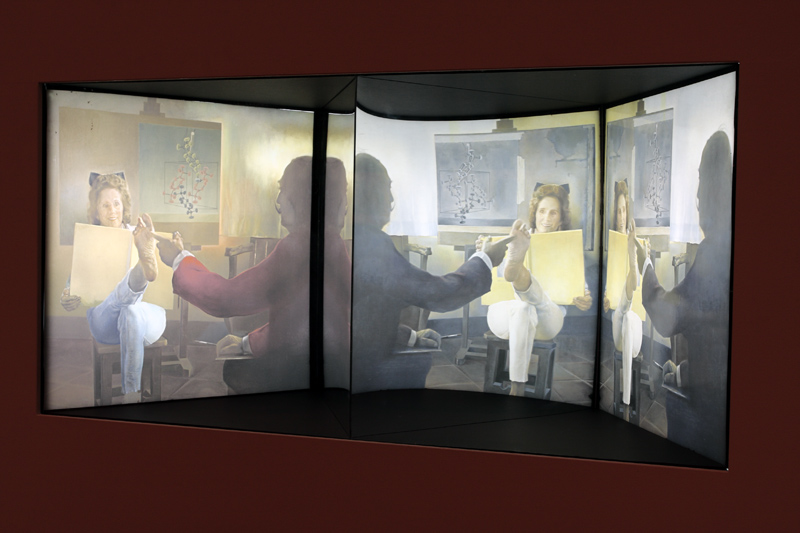
Reproduction of Gala foot. Stereoscopic paintings 1975-1976 in an installation using mirrors that would have been originally used to obtain the stereoscopic effect Photo: Marcus Bunyan
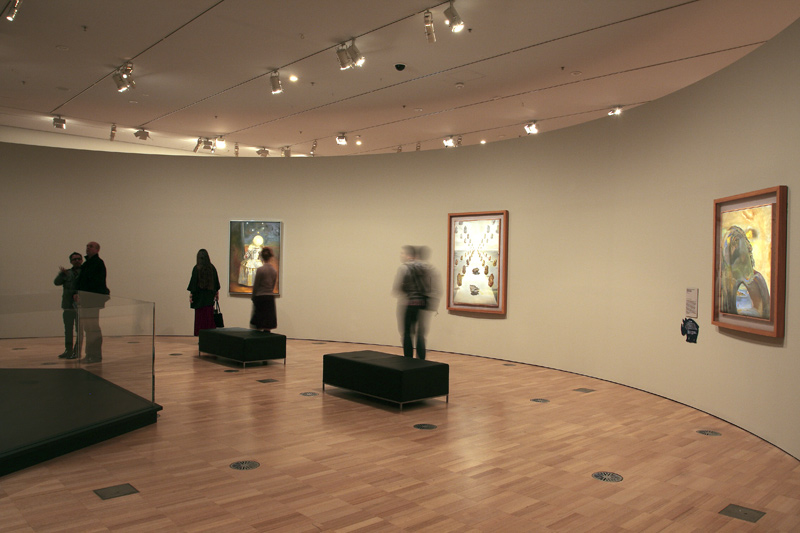
Final exhibition space from the Salvador Dalí: Liquid Desire Winter Masterpieces exhibition at the National Gallery of Victoria, Melbourne Photo: Marcus Bunyan
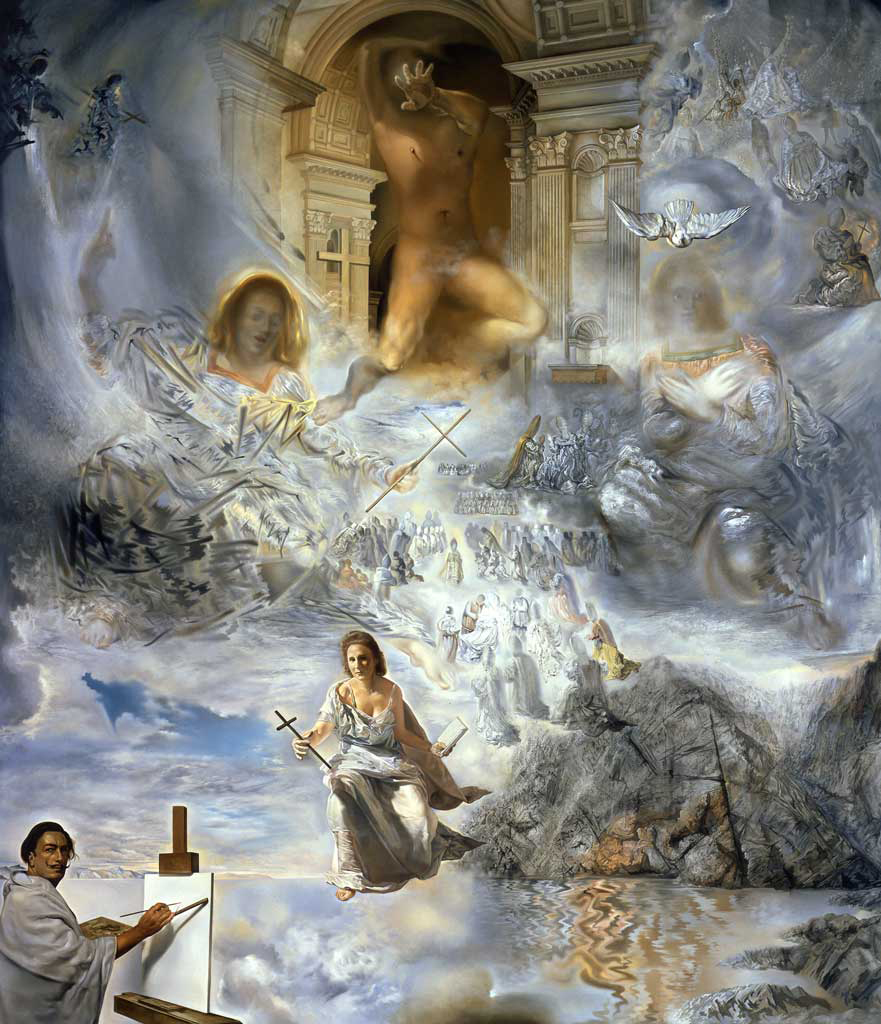
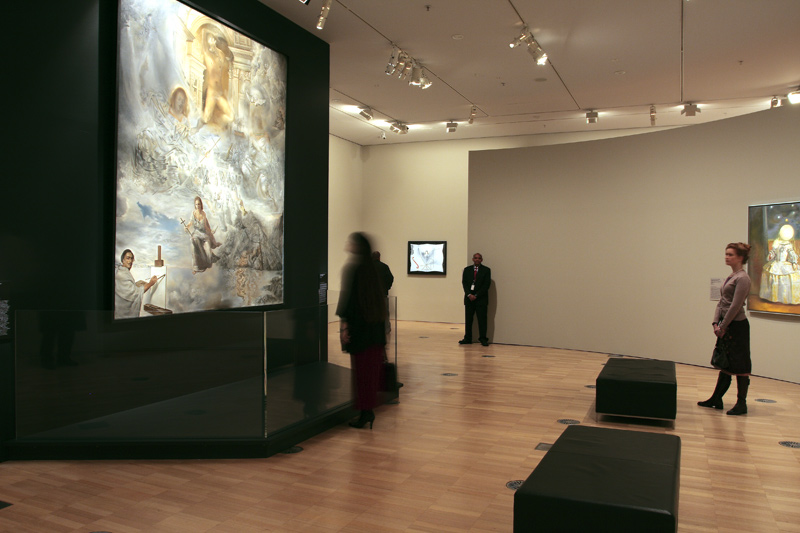
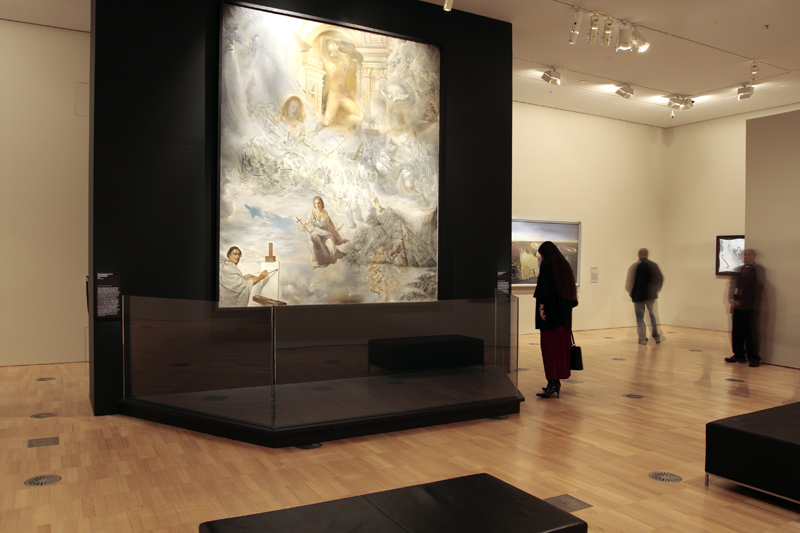
Final gallery space from the Salvador Dalí: Liquid Desire Winter Masterpieces exhibition at the National Gallery of Victoria, Melbourne featuring The Ecumenical Council 1960 Photos: Marcus Bunyan
National Gallery of Victoria (International) 180 St Kilda Road, Melbourne
Opening hours: Salvador Dalí: Liquid Desire is open 7 days a week and until 9pm every Wednesday from 17 June
Tickets Adult: $23 Concession: $18 Child: $11 (ages 5-15) Family (2 adults + 3 children): $60 NGV Member Adult: $16 NGV Member Family: $40
Roy de Maistre (Australian, 1894-1968) Colour Composition derived from three bars of music in the Key of Green 1935 Oil and pencil on composition board Private Collection
Despite some interesting highlight pieces this is a patchy, thin, incoherent exhibition assembled by the Powerhouse Museum, Sydney now showing at Heide Museum of Modern Art, Melbourne. Featuring a hotchpotch of work ranging across fields such as drawing, architecture, photography, painting, film, graphic design, craft, advertising, Australiana and aboriginal works the exhibition attempts to tell the untold story of Modernism in Australia to little effect. Within the exhibition there is no attempt to define exactly what ‘Modernism’ is and therefore an investigation into Modernism in Australia is all the more confusing for the visitor as there seems to be no stable basis on which to build that investigation. Perhaps reading the catalogue would give a greater overview of the development of Modernism in Australia but for the average visitor to the exhibition there seems to be no holistic rationale for the inclusion of elements within the exhibition which, much like Modernism itself, seems eclectically gathered from all walks of life with little regard for narrative structure.
With work spanning five decades from 1917-1967 we are presented with, variously, Robert Klippel’s kitsch Boomerang table from 1955, Robin Boyd’s ‘House of Tomorrow’ from 1949, Wolfgang Sievers ‘new objective’ photographs, Berlei’s scientific system for calculating beauty in woman in use till the 1960s, swimsuits from the 1920s-1940s, Featherston chairs from the Australian pavilion at the 1967 Expo, a recreation of Australian architect Harry Seidler’s office (the most interesting part of this being the books he had in his office library: Frank Lloyd Wright, Mies van de Rohe and Concerning Town Planning by Le Corbusier) and the wind tunnel test model of the Sydney Opera House in wood from 1960. Etcetera, etcetera, etcetera …
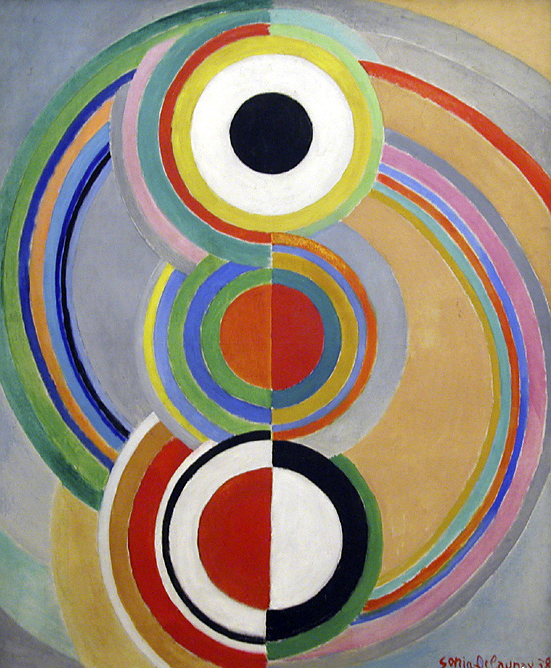
Highlight pieces include the above mentioned test model of the Sydney Opera House which is stunning in its scale and woodenness, in it’s simplicity of shape and form. Other highlight pieces are the colour music compositions of Roy de Maistre which were the tour de force of the show for me, true revelations in their rhythmic synchronic Moebius-like construction with layered planes of colour swirling in purples, greens and yellows. The large vintage photographic print of Sunbaker (1934) by Max Dupain was also a revelation with it’s earthy brown tones, the blending of the atmospheric out of focus foreground with the clouds behind, the architectural nature of the outline of the body almost like the outline of Uluru, the darkness of the head with the sensuality of the head and shoulders framed against the largeness of the hand resting on the sand. Lastly the two paintings and one rug by French artist Sonia Delaunay are a knockout. It says something about an exhibition when the best work in the show are two paintings by a French artist seemingly plucked at random to show external influences on Australian artists and designers.
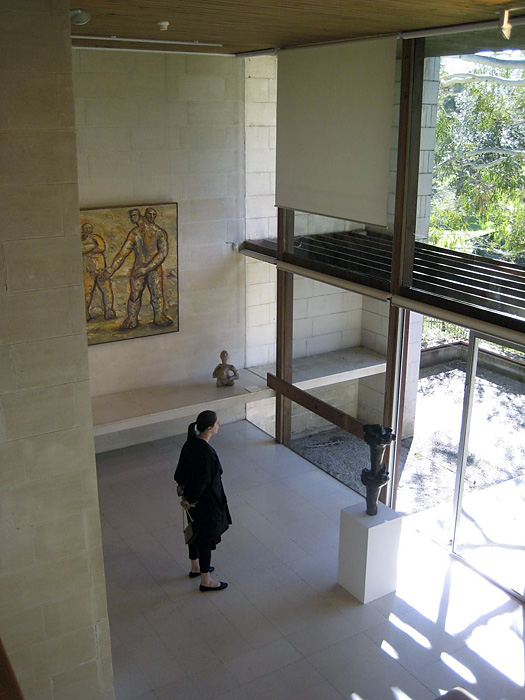
While the exhibition does attempt to portray the breadth of the development of Modernism in Australia ultimately it falls well short in this endeavour. The most striking example of this shortcoming is the true star of the exhibition – the building that is Heide II itself. Commissioned by John and Sunday Reed and designed by the Victorian architect David McGlashan of the architectural firm McGlashan and Eversit in 1963 the building epitomises everything that is good about architectural Modernism and it’s form overshadows the exhibition itself. In this building we have beautiful spaces and volumes, an amazing staircase down into the lower area, suspended decking overlooking gardens, the blending of inside and outside areas, large expanses of glass to view the landscape, nooks and studies for privacy and the simplicity and eloquence of form that is Modernist design. With money one can indulge in the best of elitist Modernism. With position, position, position one can side steep the alienation of the city and the spread of surburbia where the dream of Australians owning a home of their own still continues in the vast, tasteless expanses of McMansion estates.
Robert Nelson in his review of this exhibition sees the car as creating the suburbs and Modernism as the emptying of the city after 6pm, the lessening of community and the devaluing of space he insists that there is little difference between a Californian bungalow in the suburbs and a utopian geometric neo-Corbusian box by Harry Seidler because they were equally shackled to motor transport.1 This is to miss the point.
Although Modernism in its basic form influenced most walks of life in Australia from swimsuit design to milk bars, from cinema to naturism, from bodies to advertising the most effective expressions of Modernism are architectural (as evidenced by Heide II) and were only open to those with money, power and position. Although Le Corbusier’s concept of public housing was a space ‘for the people’ the most interesting of his houses were the private commissions for wealthy clients. And so it proves here. One can imagine the parties on the deck at Heide II in the 1960s with men in their tuxedo and bow ties and woman in their gowns, or the relaxation of the Reed’s sitting in front of their fire in the submerged lounge. For the ordinary working class person Modernism brought a sense of alienation from the aspirational things one cannot buy in the world, an alienation that continues to this day; for the privileged few Modernism offered the exclusivity of elitism (or is it the elitism of exclusivity!) and an aspirational alienation of a different kind – that of the separation from the masses.
Go to Heide for the glorious gardens, the wonders of Heide II but don’t go to this exhibition expecting grand insights into the basis of Australian Modernism for that story, as Robert Nelson rightly notes, remains as yet untold.
Dr Marcus Bunyan
Many thankx to Heide Museum of Modern Art for allowing me to publish the art work in the posting. Please click on the photographs for a larger version of the image.
An excellent review of the exhibition by Jill Julius Matthews, “Modern times: The untold story of modernism in Australia,” (reCollections Volume 4 number 1) can be found on the Journal of the National Museum of Australia website [Online] Cited 20/02/2019
1/ “Emanating from Sydney’s Powerhouse Museum, Modern Times“explores how modernism transformed Australian culture from 1917 to 1967.” But something is missing. The overwhelming modern development in these 50 years was the proliferation of automotive transport, which redefined the layout and function of Australian cities.The cars created the suburbs; and as the individual bungalow drew out the vast dormitories of Sydney and Melbourne, the city centre was spiritually drained, dedicated to bureaucratic and commercial premises.The story at Heide emphasises the gradual triumph of the tall buildings of the CBD. It doesn’t really reflect how these abstract monuments didn’t contain a soul after 6pm.Although the project makes such a big deal of being interdisciplinary, the social history doesn’t have a robust geographical basis. And because of this, the exhibition and book fail to handle the new alienation that modernism brings: the evacuation of the city and the insularity of suburban people in bungalows with little street life and roads increasingly deemed unsafe for children.
What does it really matter if a house looks like a Californian bungalow or a utopian geometric neo-Corbusian box by Harry Seidler? In social terms, they’re structurally the same, equally retracting from a sense of community and equally shackled to motor transport. In this sense, the styles are immaterial, except that one of them gives you a feeling of intimacy while the other has a bit more light and is easily wiped with a sponge.
At the end of the chosen period, the folly of the dominant suburban pattern came to be understood in its dire ecological consequences. Alas, it was too late. The modernist devaluation of space had already occurred, and our whole society had been reorganised around petrol.”
Robert Nelson. The Age. Wednesday 6th May, 2009
Roy de Maistre (Australian, 1894-1968) Arrested Movement from a Trio 1934 Oil and pencil on composition board 72.3 × 98.8cm National Gallery of Victoria, Melbourne
In late 1918, Roy de Maistre collaborated with fellow artist Roland Wakelin in exploring the relationship between art and music. Their experiments produced Australia’s first abstract paintings, characterised by high-key colour, large areas of flat paint and simplified forms. The works received critical acclaim, but modernist developments were largely derided by the conservative establishment.
This painting exemplifies de Maistre’s theory of colour harmonisation based on analogies between colours of the spectrum and notes of the musical scale. It is also aligned with de Maistre’s search for spiritual meaning through abstraction, akin to other artists such as Kandinsky who were interested in the ideas of the theosophy and anthroposophy movements, spiritualism and the occult.
Text from the Art Gallery of New South Wales website
Sonia Delaunay (Ukraine, b. 1885 moved Paris 1905-1979) Rhythm 1938 Oil on canvas
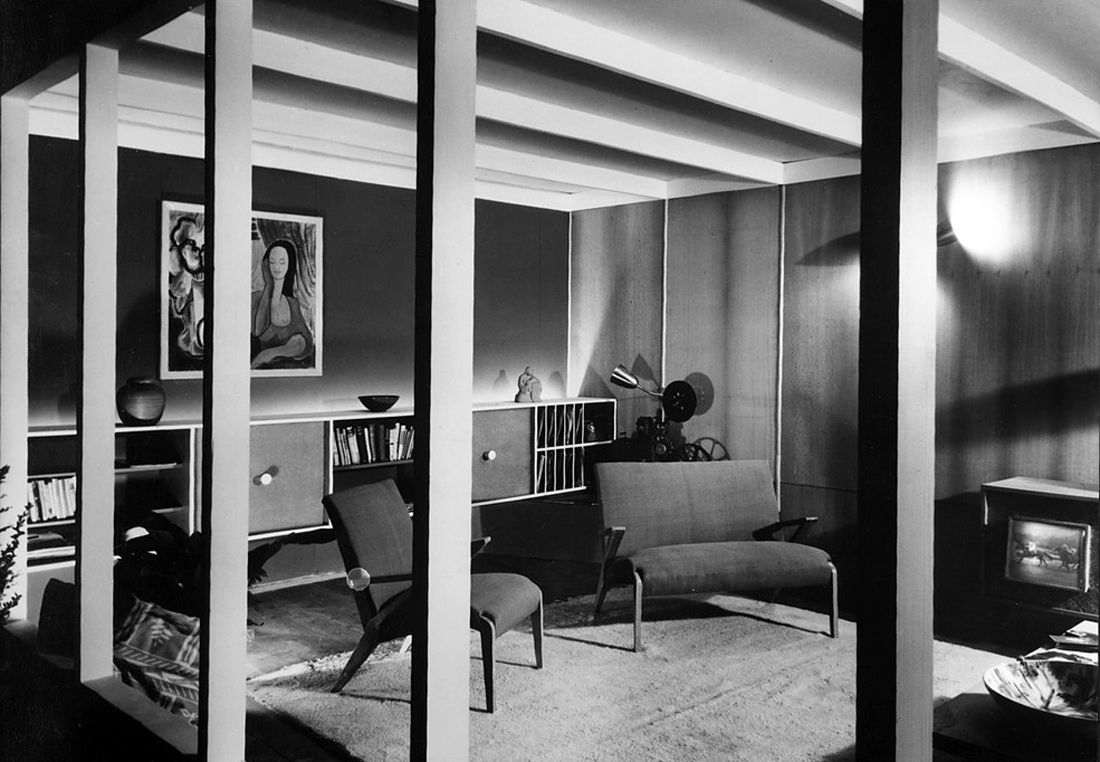
Wolfgang Sievers (Australian born Germany, 1913-2007) “House of Tomorrow” exhibition at Exhibition Building, Melbourne 1949 Gelatin silver print National Library of Australia
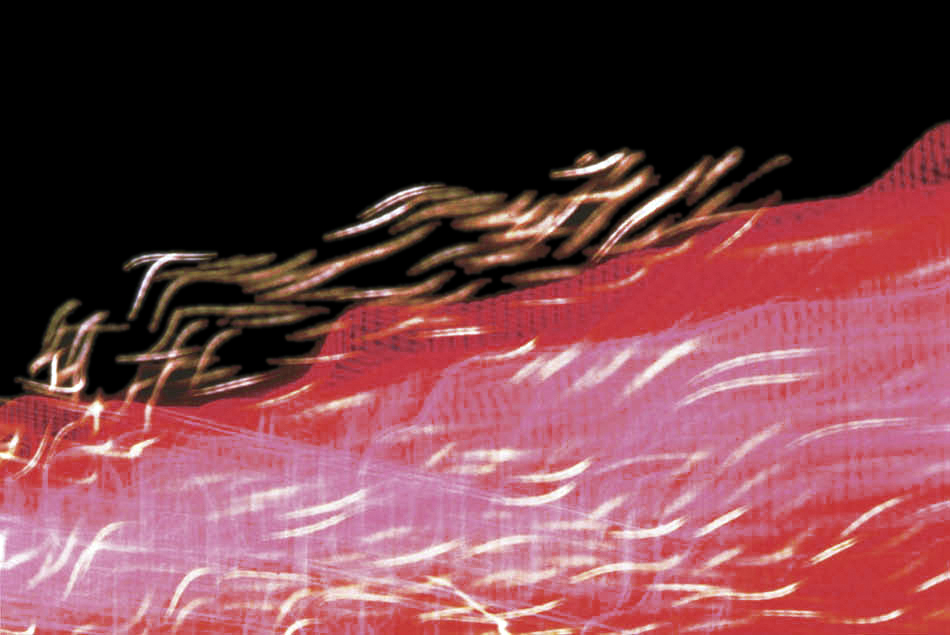
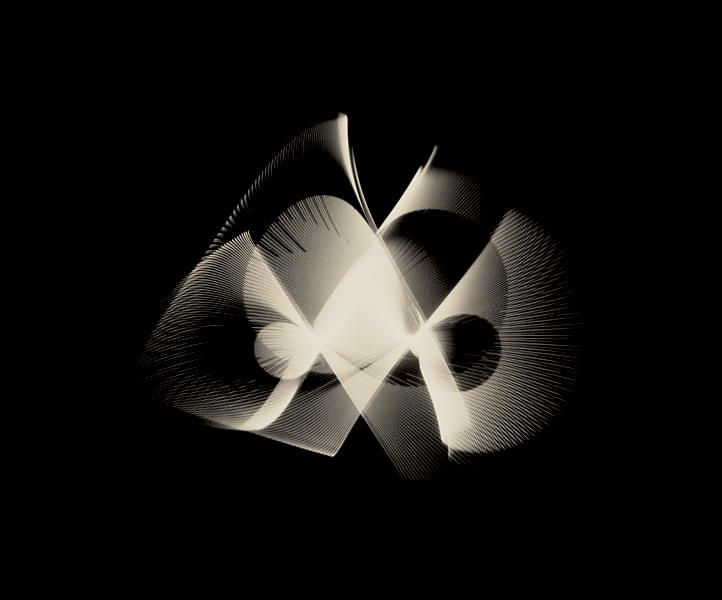
Stanislaus Ostoja-Kotkowski (Australian born Poland, 1922-1994) Nymphex 1966 Gelatin silver photograph from electronic image 50.6 x 60.8cm Gift of Dr George Berger 1978 Art Gallery of New South Wales @ Estate of Stanislaus Ostoja-Kotkowski
Rayner Hoff (Australian born United Kingdom, 1894-1937) Decorative portrait – Len Lye 1925 Marble 30.5 x 22.5 x 16.5cm Purchased 1938 Art Gallery of New South Wales
Cossington Smith captures the drama of a crowd in Rushing, which depicts commuters clamouring down to the ferries of Circular Quay to get home after work. The flying scarf and fallen hat emphasise the speed at which the travellers are moving and the peril and claustrophobia of a, mostly faceless, city crowd. The steep gangplank and diagonal composition accentuates the dynamism of the painting.
A brilliant colourist, Cossington Smith’s work of the early 1920s adopts a darker palette than the vivid colours she is usually associated with. Inspired by a visit to Sydney in 1920 by the tonalist painter and teacher Max Meldrum, her paintings became studies in tone, rather than colour, a practice she had abandoned by 1925.
Text from the Art Gallery of New South Wales website
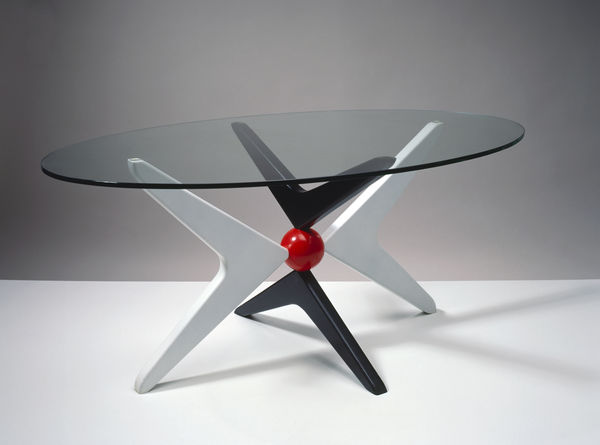
Robert Klippel (Australian, 1920-2001) Boomerang coffee table 1955
The Powerhouse Museum travelling exhibition Modern times: the untold story of modernism in Australia explores how modernism transformed Australian culture from 1917 to 1967, a period of great social, economic, political and technological change. From the ideals of abstraction and functionalism to the romance of high-rise cities, new leisure activities and the healthy body, modernism encapsulated the possibilities of the twentieth century. This exhibition is the first interdisciplinary survey of the impact of modernism in Australia, spanning art, design, architecture, advertising, photography, film and fashion.
Modern times is presented at Heide across all four of the Museum’s gallery spaces. It unfolds in thematic sections highlighting key stories about international exchange, the modern body, modernist ‘primitivism’, the city, modern pools, and the Space Age. Comprising over 300 objects and artworks, it showcases works by major artists including Sidney Nolan, Margaret Preston, Albert Tucker, Grace Cossington Smith, Max Dupain, Wolfgang Sievers, and Clement Meadmore, key architects Robin Boyd, Roy Grounds and Harry Seidler, and designers Fred Ward and Grant and Mary Featherston. An installation, Cannibal Tours, by Madrid-based Australian artist Narelle Jubelin is a contemporary adjunct to the exhibition.
Inspired by the futurist visions of various European avant-gardes, modernist ideas were often controversial and shaped by many competing positions. Modern times reveals how these ideas were circulated and took hold in Australia, via émigrés, expatriates, exhibitions, films and publications. Australian contact with significant international modernist sources, such as the Bauhaus school in Germany, occurred through figures such as influential artist and teacher Ludwig Hirschfeld-Mack, who taught Bauhaus principles at Geelong Grammar, and renowned architect Harry Seidler, who played a central role in shaping the modern city in Australia. Hirschfeld-Mack’s extraordinary film Colour Light Play of 1923 is shown for the first time in Australia, and Seidler’s 1948 studio, designed on his arrival from New York, has been re-created for the exhibition.
While modernism was international in character, an ‘Australian modernism’ was first championed in the 1920s by artist Margaret Preston, whose promotion of Aboriginal forms and motifs was important to the understanding of their artistic value. Preston’s designs, Len Lye’s stunning animation Tusalava (1929), Robert Klippel’s boomerang table (c. 1955) and other works show the development of a vernacular modernism.
Other highlights of Modern times include works from the visionary experiment in colour theory by Roy de Maistre and Roland Wakelin in 1919, a model of Robin Boyd’s innovative House of Tomorrow (1949), the iconic Featherston wing sound chairs from the Australian pavilion at the 1967 Montreal Expo, and a large wooden model for Jørn Utzon’s Sydney Opera House.
Text from the Heide Museum of Art website [Online] Cited 06/06/2009. No longer available online
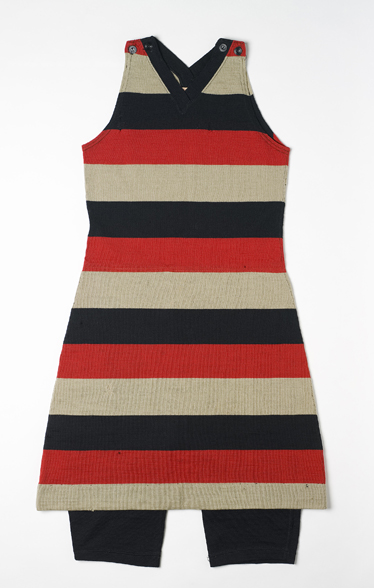
Athlete and movie-star Annette Kellerman’s Modern Kellerman Bathing Suit for Women which became commercially available by the mid-1920s. The one-piece bathing suit became Kellermans trademark Gift of Dennis Wolanski Library, Sydney Opera House, 2000 Photo: Powerhouse Museum
On hot summer days cool off with Tooth’s KB Lager About 1940 Advertising poster Colour and process lithograph, artist name “Parker” in image lower right 100.4 x 75.4cm Sydney Living Museums
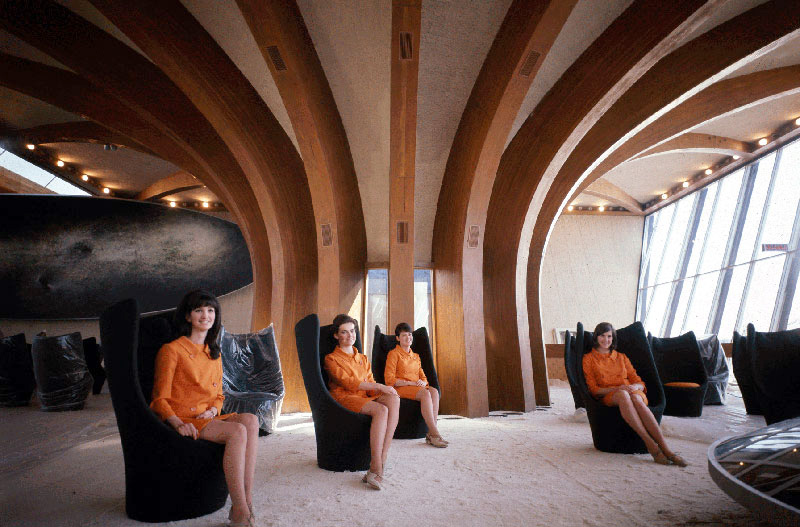
Grant Featherston (Australian, 1922-1995) and Mary Featherston (Australian, b. London 1943, migrated to Australia 1952) Expo mark II sound chair 1967 Aristoc Industries Polystyrene, polyurethane foam, Dunlopillo foam rubber, Pirelli webbing, fibreglass, hardwood, sound equipment, upholstery fabric Powerhouse Collection
The Expo Mark II sound chair, adapted for the Australian domestic market after Expo 67 in Montreal.
A cloth-covered high back winged chair with a circular base. The chair has a circular orange cloth covered cushion in the base and an integral full-width headrest. Two 125mm diameter inserts are pressed into the top of the back of the chair where speakers are fitted inside it. There is a cylindrical knob on the side of the chair.
National Archives of Australia A modernist vision of Australia: Grant and Mary Featherston’s wing sound chairs were a feature of the Australian Pavilion, designed by architect James Maccormick with exhibits selected by Robin Boyd, at Expo 67 in Montreal, 1967 1967
In 1967 Australia participated in the International and Universal Exposition held in Montreal, Canada. Australia’s Expo ’67 theme was the ‘Spirit of Adventure’. In the 30,000 square feet glass-walled Australian Pavilion, developed by the Australian Government and designed by Robin Boyd, exhibits explored Australian science, arts, people and development. The pavilion was designed as a ‘haven’ of ‘space and tranquillity’ floating above an Australian bushland setting. Inside, 240 innovative sound chairs offered ‘foot-weary Expo visitors’ the chance to hear the voices of famous Australians describing the exhibits, in French as well as English. The Great Barrier Reef was re-created in a lagoon beneath the pavilion while wallabies and kangaroos could be viewed in a sunken enclosure.
Text from the National Museum of Australia website [Online] Cited 20/02/2019
James Birrell (Australian, 1928-2019) View of the elevated restaurant, Centenary Pool, Brisbane Nd Powerhouse Museum
“A major exhibition opening for Sydney Design 08 in August, Modern times looks closely at the transformation of modern city life. The advent of cars, freeways, skyscrapers and new entertainment such as cinemas, milk bars, swimming pools, cafes and pubs are all legacies of modernism as revealed through the exhibition. The exhibition spans five decades from 1917 to 1967 – a tumultuous period marked by global wars, economic depression, a technological revolution and major social changes – out of which a modern cosmopolitan culture was shaped.
“The modernist movement was inspired by various European avant-gardes that projected visions of a better future, shaped by many competing positions. It was through émigrés, expatriates, exhibitions and publications that modernism become known in Australia,” Ann Stephen said. Encompassing art, design and architecture, Modern times focuses on seven themes: 1. the human body, image and health; 2. international influences and exchanges; 3. Indigenous art and modernism; 4. Interdisciplinary projects with retailers; 5. city landscapes and urban life; 6. public pools and milk bars; and 7. the space age.
Several great modern public pools were designed in Australia initially as part of an international swimming boom in the 1930s and boosted by the 1956 Melbourne Olympics. These will be shown on a large, immersive, panoramic audio visual screen celebrating the most Australian of past-times, being poolside. The earliest 1920s swimming costumes by silent film star Annette Kellerman, several decades of Australian icon ‘Speedo’ cossies and an early bikini will also be on display.
The much-loved corner milk bar from the 1930s will also be recreated in the exhibition for visitors to enter, complete with lolly jars, milkshakes and a juke box.
Other story highlights in the exhibition include Robin Boyd’s ‘House of Tomorrow’ that featured at the 1949 Modern Home Exhibition in Melbourne; and Boyd’s memorable Australian pavilion at the 1967 Montreal Expo that showcased Australian design including the iconic Featherston wing sound chairs and hostess uniforms designed by Zara Holt, wife of then prime minister Harold Holt.
Modernism also inspired new forms of public art and design like the abstract fountains by Tom Bass on Sydney’s former P&O building and Robert Woodward’s El Alamein Memorial Fountain, a popular tourist site in Sydney’s Kings Cross. Modernism shaped an exultant explosion of experiment as part of the Space Age informing such spectacular architectural feats as Roy Grounds’ dome for the Australian Academy of Science in Canberra and Jørn Utzon’s internationally-acclaimed Sydney Opera House, both featured in the exhibition.”
Ruzan Haruriunyan, “Modern Times: Untold Story Of Modernism In Australia,” on the Huliq News website [Online] Cited 20/02/2019
Hedie II photographs by Rory Hyde. More photos of Heide are on his Flickr photoset
Heide II – commissioned by John and Sunday Reed 1963, designed 1964, constructed 1964-1967
Designed by Melbourne architect David McGlashan of McGlashan Everist, it was intended as “a gallery to be lived in” and served as the Reeds’ residence between 1967 and 1980. The building is considered one of the best examples of modernist architecture in Victoria and awarded the Royal Institute of Architects (Victorian Chapter) Bronze Medal – the highest award for residential architecture in the State – in 1968. It is currently used to display works from the Heide Collection and on occasion projects by contemporary artists.
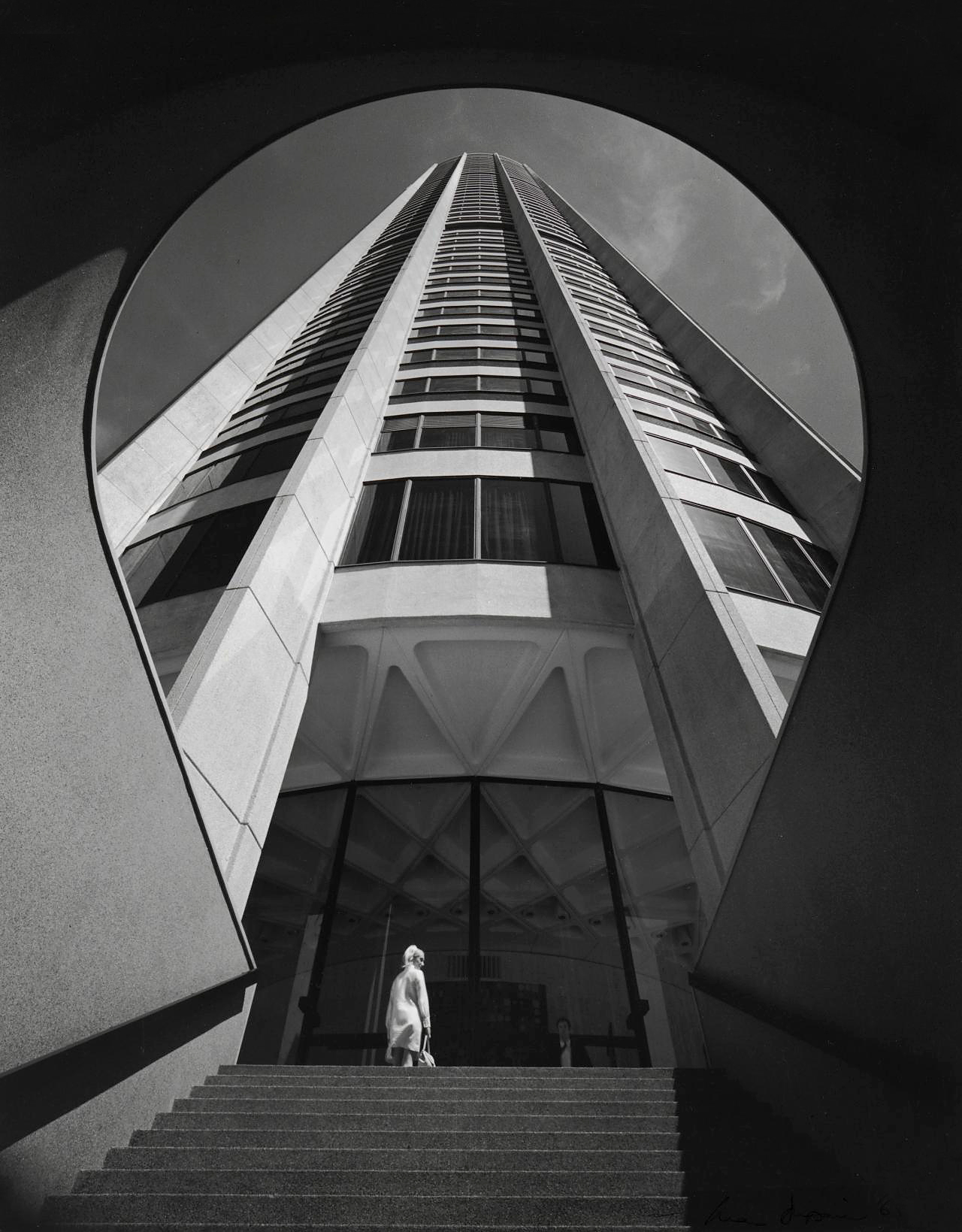
Max Dupain (Australian, 1911-1992) Australia Square: a keyhole to the future [Australia Square Tower] 1968 Gelatin silver print 49.9 × 39.2cm Courtesy of Max Dupain and Associates
Jeff Carter (Australian, 1928-2010) At the Pasha Nightclub, Cooma c. 1957-1959 Gelatin silver print
Modern Times: The Untold Story of Modernism in Australia, edited by Ann Stephen, Philip Goad and Andrew McNamara, Powerhouse Publishing, 2008 (paperback).
Heide Museum of Modern Art 7 Templestowe Road, Bulleen, Victoria 3105
Opening hours: Tuesday – Sunday Public holidays 10am – 5pm




![American & Australasian Photographic Company. '[Merlin's photographic cart ?] and Mitchell's London Hotel, Railway Place, Sandridge [Port Melbourne]' 1870-1875 from the exhibition 'The Greatest Wonder of the World' at the State Library of New South Wales, Sydney, February - May, 2013](https://artblart.com/wp-content/uploads/2013/04/american-australasian-photographic-company-merlins-photographic-cart-and-mitchells-london-hotel-railway-place-sandridge-port-melbourne-1870-1875-web.jpg "American & Australasian Photographic Company. '[Merlin's photographic cart ?] and Mitchell's London Hotel, Railway Place, Sandridge [Port Melbourne]' 1870-1875 from the exhibition 'The Greatest Wonder of the World' at the State Library of New South Wales, Sydney, February - May, 2013")

![American & Australasian Photographic Company. 'A domestic miner [Hill End]' 1872](https://artblart.com/wp-content/uploads/2013/04/american-australasian-photographic-company-couple-and-child-in-the-front-formal-garden-of-their-slab-hut-cottage-hill-end-1870-1875-web.jpg "American & Australasian Photographic Company. 'A domestic miner [Hill End]' 1872")

![Gibbs, Shallard & Co., Colour Printers [188-?] 'Holtermann's Life Preserving Drops' 1872](https://artblart.com/wp-content/uploads/2013/04/holtermans-life-preserving-drops-1872-web.jpg "Gibbs, Shallard & Co., Colour Printers [188-?] 'Holtermann's Life Preserving Drops' 1872")
![American & Australasian Photographic Company. '[French warship 'Atalante', Fitzroy Dock, Sydney, 1873]' Aug 1873](https://artblart.com/wp-content/uploads/2013/04/american-australasian-photographic-company-french-warship-atalante-fitzroy-dock-sydney-1873-1873-web.jpg "American & Australasian Photographic Company. '[French warship 'Atalante', Fitzroy Dock, Sydney, 1873]' Aug 1873")
![American & Australasian Photographic Company. '[French warship 'Atalante' at Fitzroy Dock, Sydney, 1873 / attributed to the American & Australasian Photographic Company]' 1873](https://artblart.com/wp-content/uploads/2013/04/french-warship-atalante-at-fitzroy-dock-web.jpg "American & Australasian Photographic Company. '[French warship 'Atalante' at Fitzroy Dock, Sydney, 1873 / attributed to the American & Australasian Photographic Company]' 1873")



























 Art Blart _ art and cultural memory archive
You must be logged in to post a comment.