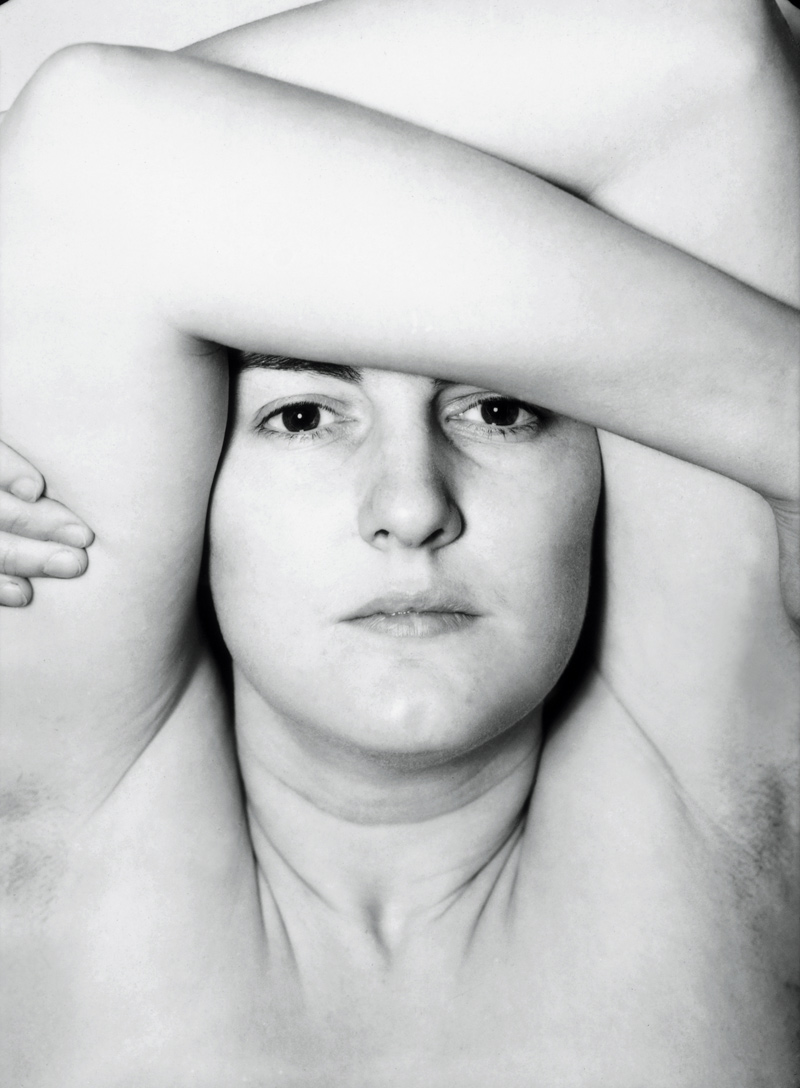
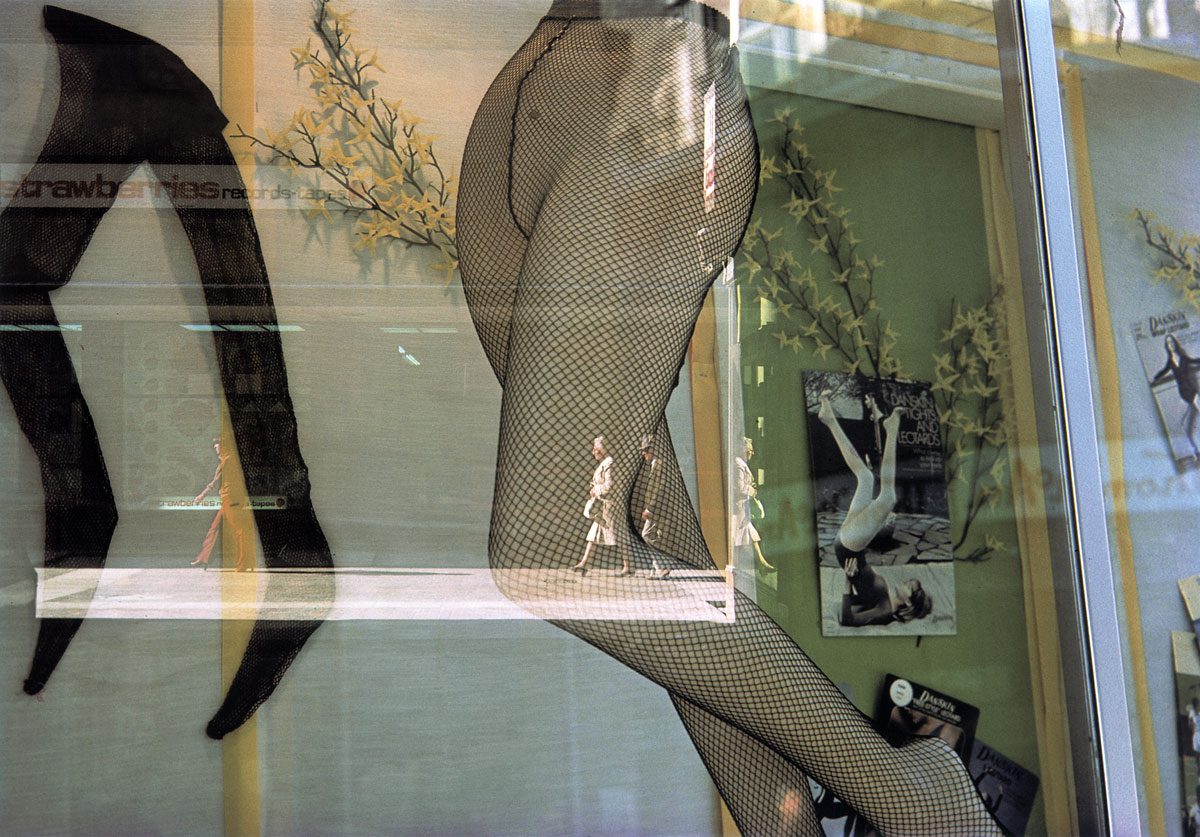
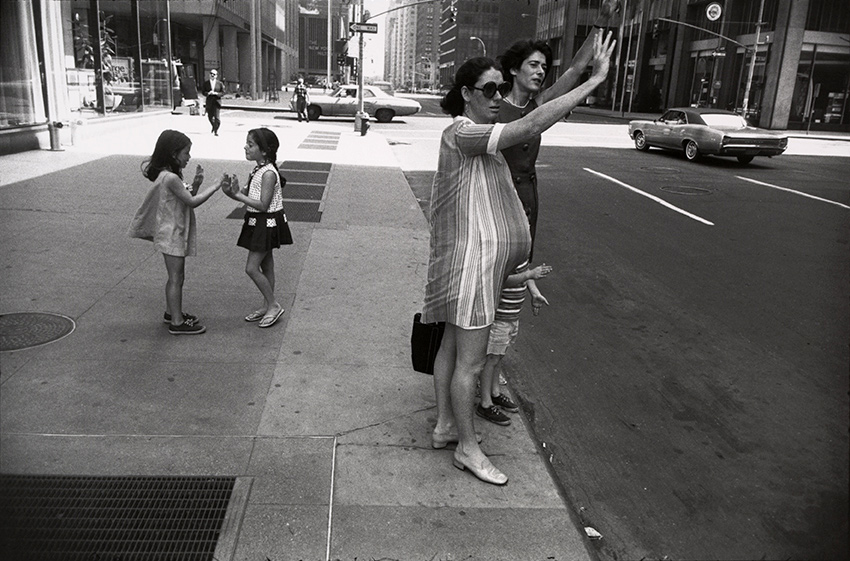
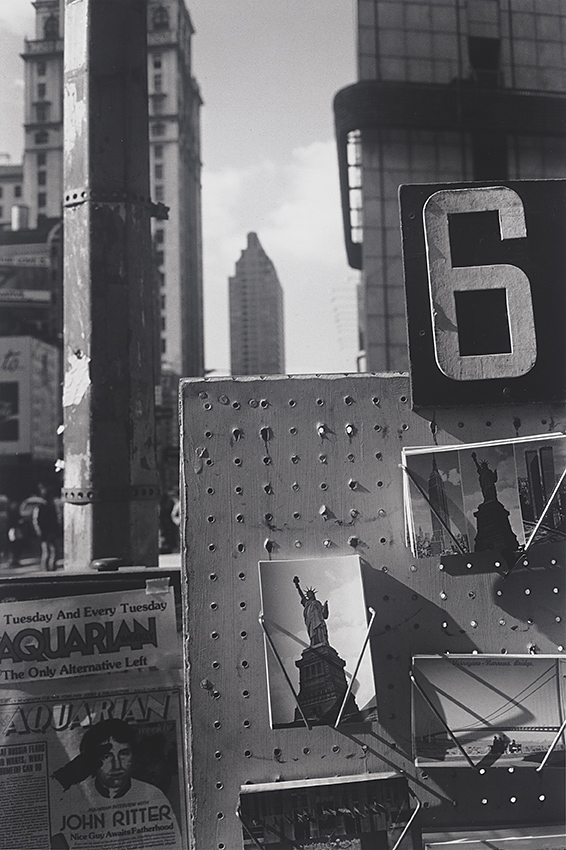
Vale Saul Leiter: the world will be less colour-full, less abstract, less sensual without him

November 2013


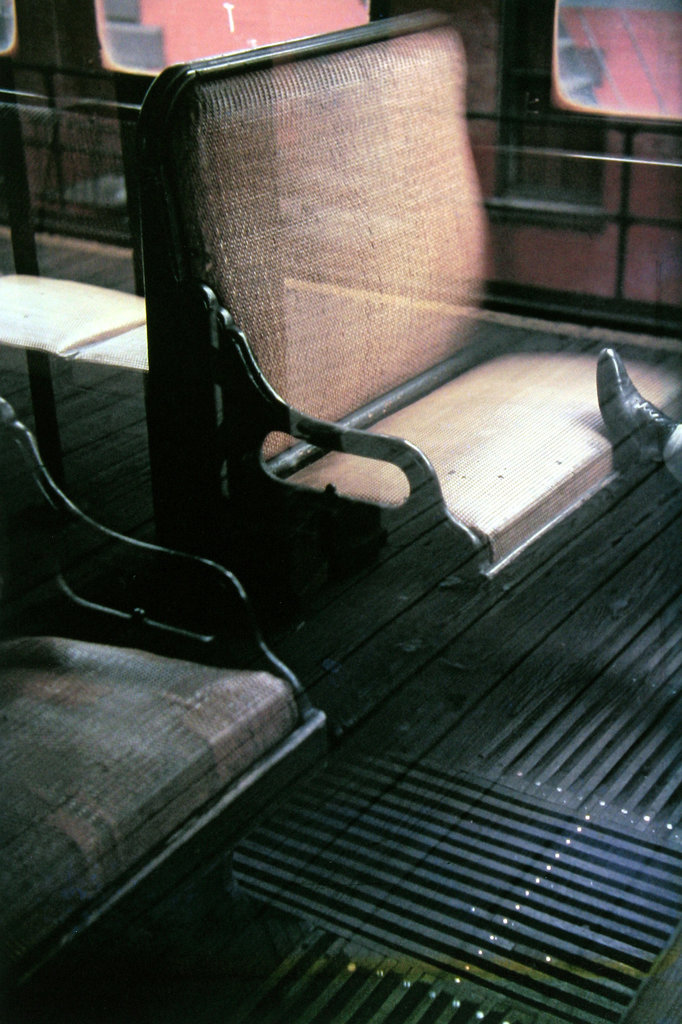
Saul Leiter (American, 1923-2013) 'Foot on El' 1954


Saul Leiter (American, 1923-2013)
Foot on El
1954


“Seeing is a neglected enterprise,” Mr. Leiter often said.

“I am not immersed in self-admiration,” he said. “When I am listening to Vivaldi or Japanese music or making spaghetti at 3 in the morning and realise that I don’t have the proper sauce for it, fame is of no use.”

“He broke all the rules when it came to composing a photograph,” said Mr. Leiter’s assistant, Margit Erb, who confirmed his death, at his home. “He put things into the abstract, he paid attention to colour, he threw foregrounds out of focus, which made the photographs feel very voyeuristic. He applied a painterly mentality that the photography world had not seen.”

His art was enough.

Dr Marcus Bunyan


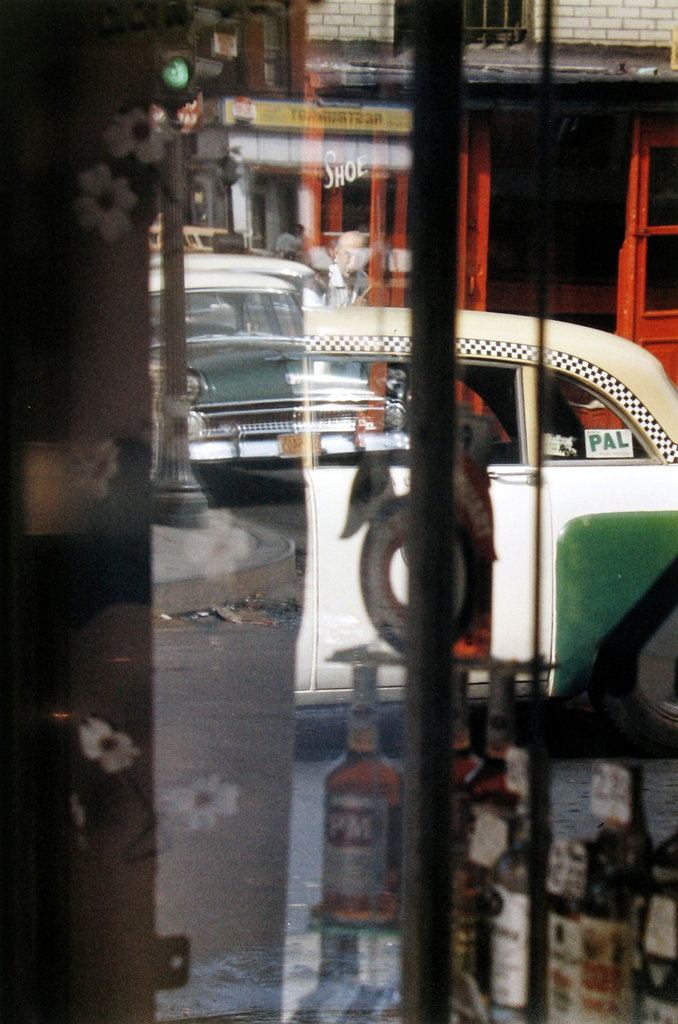
Saul Leiter (American, 1923-2013) 'Taxi' 1956


Saul Leiter (American, 1923-2013)
Taxi
1956


“”In order to build a career and to be successful, one has to be determined,” Mr. Leiter said in an interview for a monograph published in Germany in 2008. “One has to be ambitious. I much prefer to drink coffee, listen to music and to paint when I feel like it.” …

Unplanned and unstaged, Mr. Leiter’s photographs are slices fleetingly glimpsed by a walker in the city. People are often in soft focus, shown only in part or absent altogether, though their presence is keenly implied. Sensitive to the city’s found geometry, he shot by design around the edges of things: vistas are often seen through rain, snow or misted windows.

“A window covered with raindrops interests me more than a photograph of a famous person,” Mr. Leiter says in [the film] “In No Great Hurry.””

Read the obituary of this wonderful artist at “Saul Leiter, Photographer Who Captured New York’s Palette, Dies at 89” on the New York Times website, November 27, 2013

More images

Exhibition: ‘Saul Leiter’ at Kunst Haus Wien, Vienna, January – May 2013
Exhibition: ‘Saul Leiter Retrospective’ at The House of Photography at Deichtorhallen Hamburg, February – April 2012
Exhibition: ‘Saul Leiter: New York Reflections’ at the Jewish Historical Museum, Amsterdam, October 2011 – March 2012


LIKE ART BLART ON FACEBOOK

Back to top

Exhibition: ‘Lewis Hine – Photography for a Change’ at Fotomuseum Winterthur, Zurich

Exhibition dates: 8th June – 25th August 2013


Lewis Hine (American, 1874-1940) 'Midnight at the Brooklyn Bridge' 1906


Lewis Hine (American, 1874-1940)
Midnight at the Brooklyn Bridge
1906
Gelatin silver print
12 x 17cm
© Collection of George Eastman House, Rochester


“While human truth may be ephemeral qualities like justice are not; the struggle is to define justice and to live it. And for artists to display it.”


Dr Marcus Bunyan


Here is one artist who certainly used photography for social good. Hine “represents the beginning of a long tradition of politically engaged, social documentary photography, so called “concerned photography”… He firmly believed that every person, every individual, was worthy of respect, and he believed photography to be the best tool for clearly and visibly expressing this view.” Bravo to him.

Unfortunately, like so many of these visionary and revolutionary artists, Hine died in 1940, completely impoverished. As a society, why is it that we don’t value these brave human beings until years after they have passed? Is it because of petty jealousies, the rush of life, people in positions of power too long or a lack of understanding of the visionary nature of their work? Or is it just that time passes them by. I would like to pose this question.

Dr Marcus Bunyan


Many thankx to Fotomuseum Winterthur for allowing me to publish the photographs in the posting. Please click on the photographs for a larger version of the image.


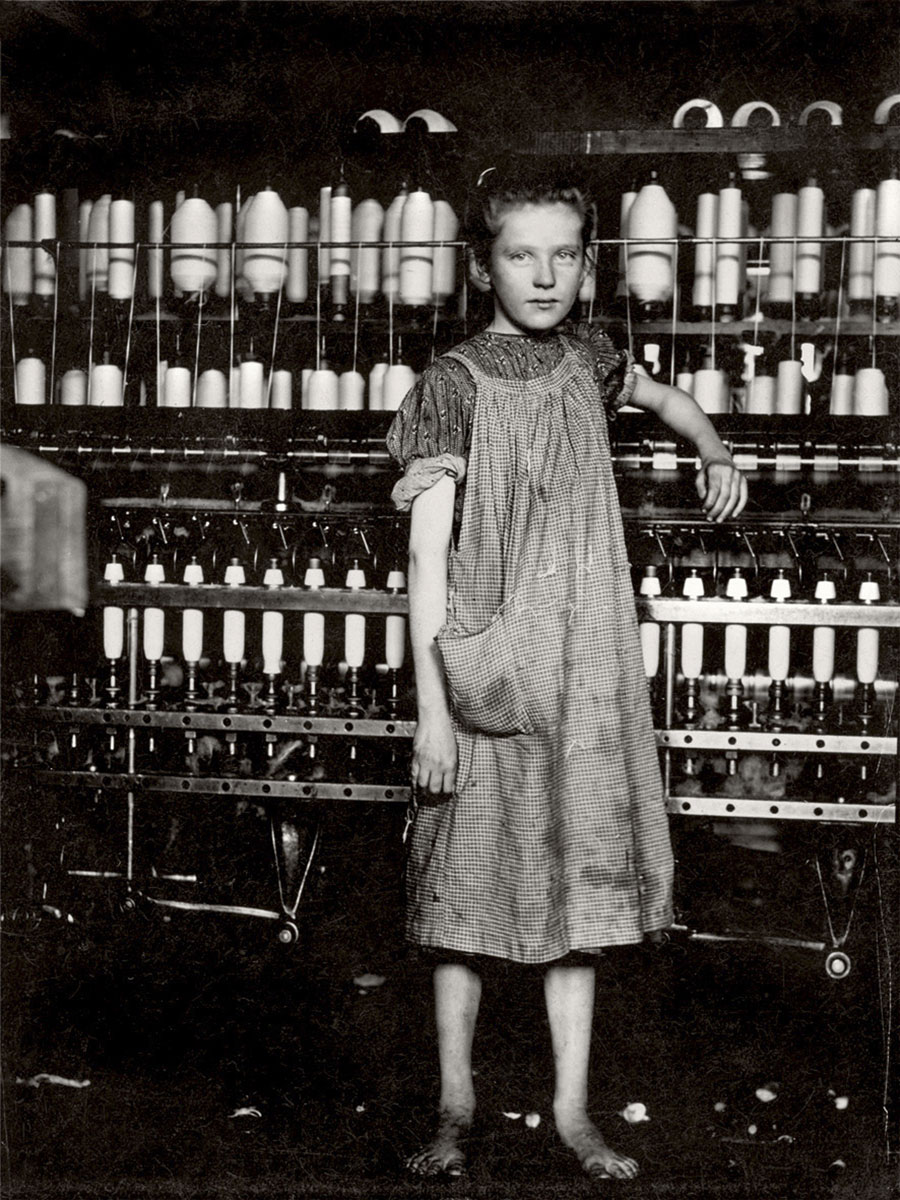
Lewis Hine (American, 1874-1940) 'Spinner in New England mill' 1913


Lewis Hine (American, 1874-1940)
Spinner in New England mill
1913
Gelatin silver print
12.6 x 10.1cm
© Collection of George Eastman House, Rochester


Lewis Hine (American, 1874-1940) 'Italian family looking for lost baggage, Ellis Island' 1905


Lewis Hine (American, 1874-1940)
Italian family looking for lost baggage, Ellis Island
1905
Gelatin silver print
33.4 x 27.2cm
© Collection of George Eastman House, Rochester


Lewis Hine (American, 1874-1940) 'Candy worker, New York' c. 1925


Lewis Hine (American, 1874-1940)
Candy worker, New York
c. 1925
Gelatin silver print
17.2 x 11.8cm
© Collection of George Eastman House, Rochester


To what extent can images effectively combat injustice and social inequity? The American photographer Lewis Hine (1874-1940) offered an early answer to this question through his work. Trained as a teacher and sociologist, he ardently wished that Americans would become conscious of the injustice of American labor laws. He also firmly believed that every person, every individual, was worthy of respect, and he believed photography to be the best tool for clearly and visibly expressing this view.

His work represents the beginning of a long tradition of politically engaged, social documentary photography, so called “concerned photography.” His photographs of immigrants from Ellis Island, child labor in American factories, and the construction of the Empire State Building high above Manhattan have become major icons of the 20th century. Simultaneously, the photographs also point to the fact, that the documented problems have not lost their currency, even one hundred years later. Today, even in Europe, we are experiencing intensive migrations, which will continue to increase in the future. Here we are not confronted with child labor, because we have transferred the kinds of industrial production that used child labor to distant countries. Accidents in non-European factories indicate the risky conditions under which our consumer goods are still produced today. Hine’s photographic eye and his black and white images form a trajectory that leads directly to the present.

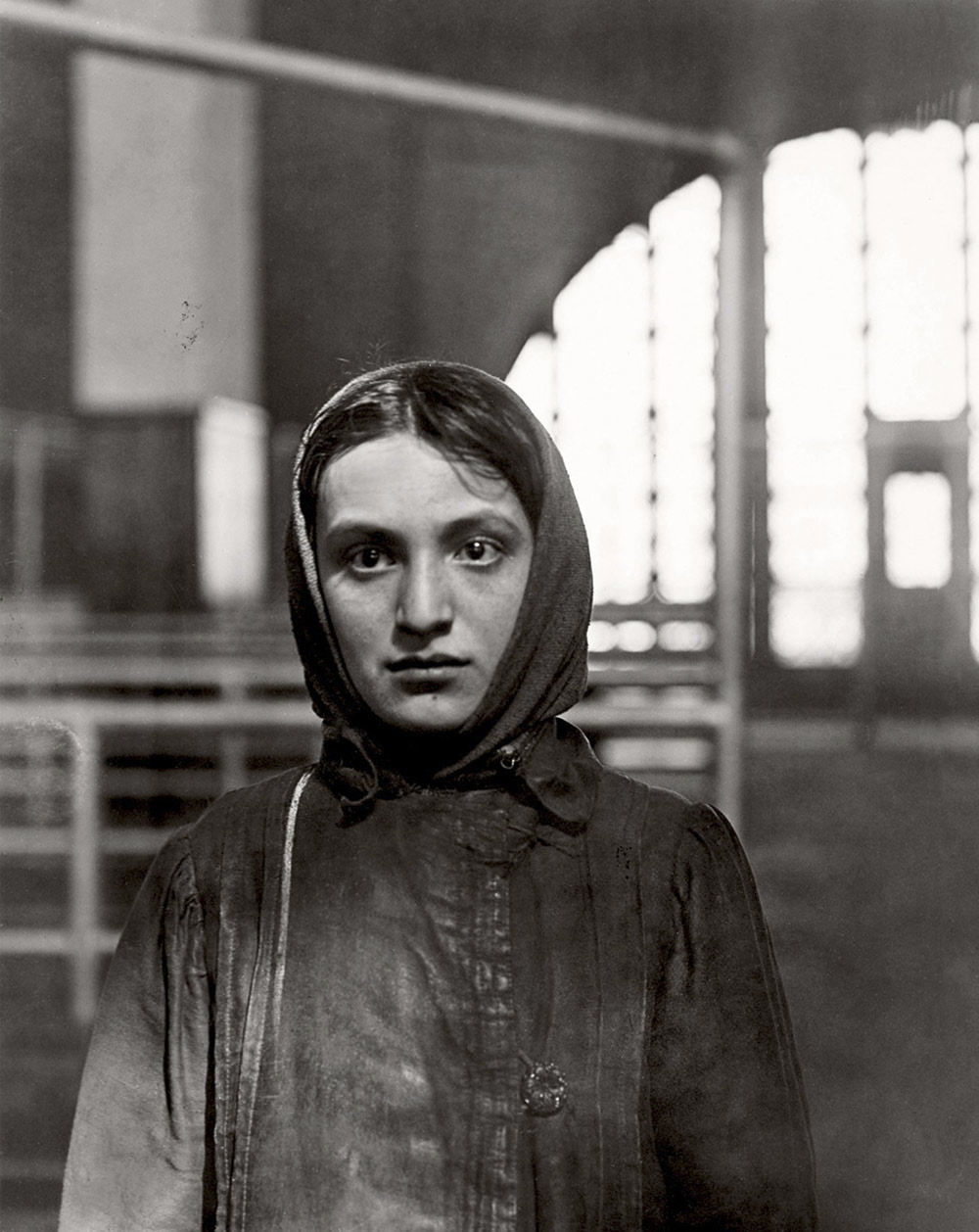
Lewis Hine grew up in a family that owned a simple restaurant in the small town of Oshkosh, Wisconsin. He lost his father at age 18 due to an accident. He provided for himself and his family first as a factory worker in a furniture production company and then as a doorman, salesman, and bookkeeper. After training as a teacher and studying sociology at the University of Chicago, Hine moved to New York, where he first came in contact with photography while teaching at the Ethical Culture School. Using the camera in his lessons, he made portraits of immigrants on Ellis Island in conjunction with a research project. From then on Hine viewed his camera as a weapon for revealing social injustice and effecting change through the power of images. With this motivation he traveled some 75,000 km through the United States for the National Child Labor Committee (NCLC) and photographed children at work in the fields, mines, factories, mills, and on the streets. His photographs played no small part in raising awareness for child labor and instigating initial reforms. They also represented some of the earliest and most significant contributions to the social documentary genre of photography. During the construction of the Empire State Building Hine was commissioned with documenting the phases of construction over the course of six months in 1930/1931. In over one thousand photographs he recorded the perspective of the construction workers and their hard work on the ultimately 381 m high building. Despite his early success and the use of his images by many governmental agencies, Hine died in 1940, completely impoverished, after an operation.

Fotomuseum Winterthur presents this comprehensive retrospective including 170 images and extensive documentation material in cooperation with the Fundación MAPFRE (Madrid), the Fondation Henri Cartier-Bresson (Paris) and the Nederlands Fotomuseum (Rotterdam). All works come from the George Eastman House, International Museum of Photography and Film in Rochester, USA.

Press release from the Fotomuseum Winterthur website


Lewis Hine (American, 1874-1940) 'Paris gamin' c. 1918


Lewis Hine (American, 1874-1940)
Paris gamin
c. 1918
Gelatin silver print
24.4 x 19.4cm
© Collection of George Eastman House, Rochester


Lewis Hine (American, 1874-1940) 'Jewess at Ellis Island' 1905


Lewis Hine (American, 1874-1940)
Jewess at Ellis Island
1905
Gelatin silver print
24.1 x 19.1cm
© Collection of George Eastman House, Rochester


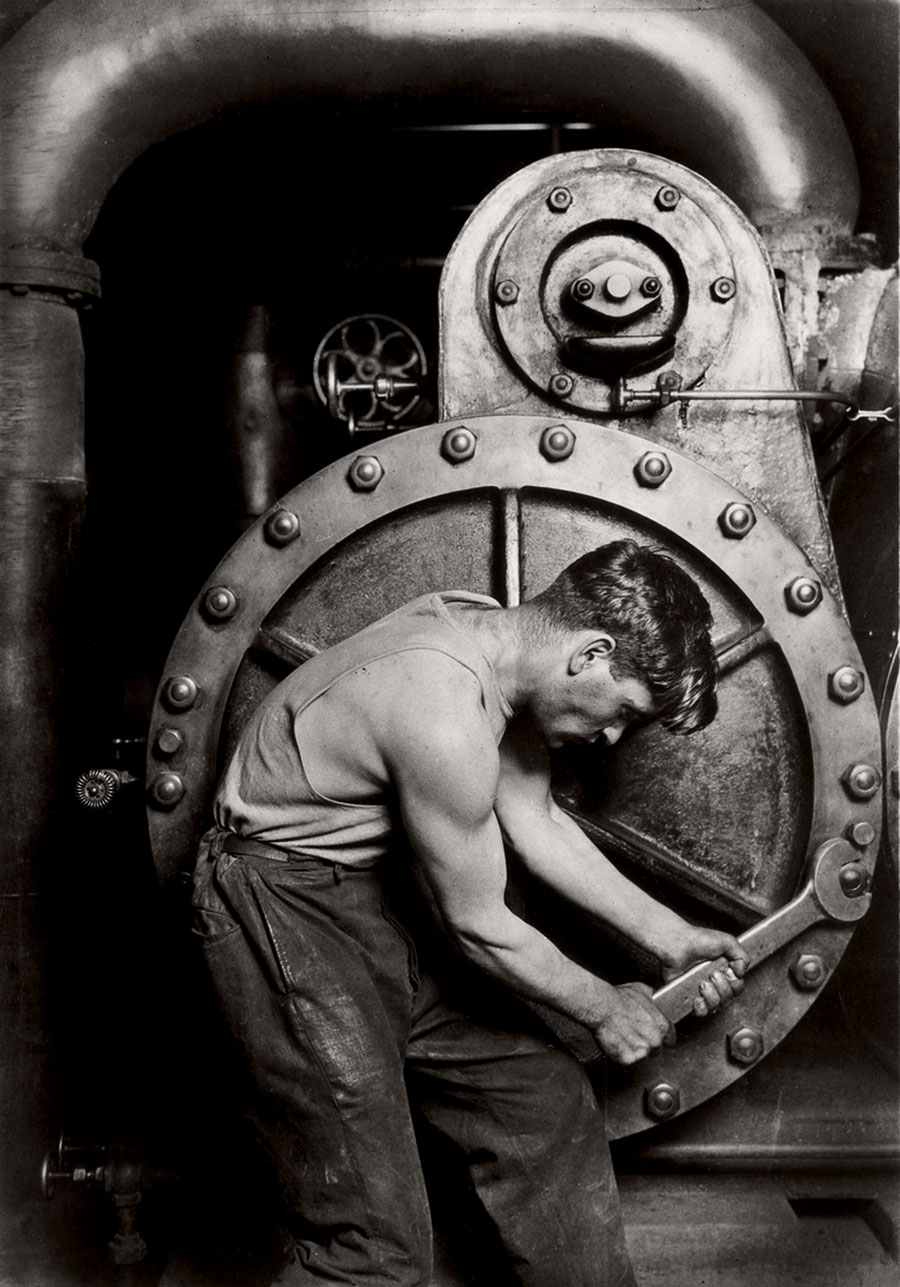
Lewis Hine (American, 1874-1940) 'Mechanic at steam pump in electric power house' 1920


Lewis Hine (American, 1874-1940)
Mechanic at steam pump in electric power house
1920
Gelatin silver print
16.9 x 11.7cm
© Collection of George Eastman House, Rochester


Lewis Hine (American, 1874-1940) '[Man on girders, Empire State Building]' c. 1931


Lewis Hine (American, 1874-1940)
[Man on girders, Empire State Building]
c. 1931
Gelatin silver print
12 x 9.2cm
© Collection of George Eastman House, Rochester


Lewis Hine (American, 1874-1940) '[Steelworker touching the tip of the Chrysler Building]' c. 1931


Lewis Hine (American, 1874-1940)
[Steelworker touching the tip of the Chrysler Building]
c. 1931
Gelatin silver print
16.9 x 11.9cm
© Collection of George Eastman House, Rochester


Lewis Hine (American, 1874-1940) 'Icarus atop Empire State Building' 1931


Lewis Hine (American, 1874-1940)
Icarus atop Empire State Building
1931
Gelatin silver print
9.3 x 10cm
© Collection of George Eastman House, Rochester


Fotomuseum Winterthur
Grüzenstrasse 44 + 45
CH-8400
Winterthur (Zürich)

Opening hours:
Tuesday to Sunday 11am – 6pm
Wednesday 11am – 8pm
Closed on Mondays

Fotomuseum Winterthur website

LIKE ART BLART ON FACEBOOK

Back to top

Opening speech: ‘John Cato Retrospective’ and book launch at the Ballarat International Foto Biennale by Dr Marcus Bunyan

Exhibition dates: 17th August – 15th September 2013

Opening: 17th August 2013


Installation photograph of the exhibition 'John Cato Retrospective' at the Mining Exchange, Ballarat


Installation photograph of the exhibition John Cato Retrospective at the Mining Exchange, Ballarat
Photograph by Marcus Bunyan
© Marcus Bunyan, John Cato family and Ballarat International Foto Biennale


It was an emotional time on Saturday afternoon as I opened the  John Cato Retrospective. I hope I did John and Dawn, their family and everyone proud. I burst into tears after the speech… I got a lovely email from Senga Peckham today which was very much appreciated:


“Dear Marcus

Thank you so much for your excellent speech on Saturday. It was strong, heartfelt and beautiful.

Up there with the microphone you were probably not aware of the sentiment in the space. Many tears were shed. The grand daughters were so happy to be there. They were near me during your talk and extremely emotional. Many others were too. It was more of a wake really than an exhibition opening and book launch. Some people had travelled a long way and everyone wanted to be there. The warmth and tenderness was palpable and will be remembered for a long time.

Thank you for being such a major part of it and for putting your heart into each word.

Senga Peckham”


Many thankx to BIFB for asking me to officially open the John Cato Retrospective and to launch the new book.

Photographers David Callow and Andrew Chapman’s video tribute to John Cato (18 mins 39 secs) can be viewed on Vimeo (Password is Cato).

Read my chapter in the John Cato Retrospective book.


John Cato Retrospective opening speech

It is a great pleasure to be here today to officially open the John Cato Retrospective and to launch a book that will have a major contribution to a continuing assessment of John’s work and is also an honouring, a mark of respect and admiration. These brief words are not about the many sides of John and all his aspects and careers – for that you will have to look elsewhere – but they are a short introduction to the personal and wider cultural need for John’s work.

My friendship with John and Dawn goes back to when I was studying photography at RMIT University in the early 1990s. John became a mentor when I held my first three solo photography exhibitions at the Photographers’ Gallery in Punt Road between 1991 and 1994. After I had finished my Phd in 2001, I co-curated a retrospective of his work at the very same gallery.

Many a weekend my partner and I travelled down to Carrum to see John and Dawn for lunch and afternoon tea, to talk about the things that matter in life – music, literature, art, love, loss – and to talk about my latest prints. They were the most glorious couple with such wonderful energy and they were so generous with their friendship and advice. John could smell bullshit a mile away and he would tell you, but he would also encourage you to look deeper into yourself and the world for the answers you were seeking. As James McArdle said to me recently, “He was a teacher determined to seek out the aptitudes and endowments of each student who came before him; his teaching and mentorship involved a deep empathy with each student’s approach. He was almost clairvoyant in being able to very quickly identify one’s strengths and it was on those he would concentrate, unafraid to express criticism; but only in terms of how a certain fault might detract from a certain strength.”1

And I will add, all of this with a warmth and affection that opened up a pathway to his insights.

John had strength of character in spades, always backed up by the vivacious Dawn. Imagine having a successful commercial career in Melbourne in the 1960s and giving it all away – to become an artist, a photographic artist at that! Imagine the courage it would have taken, in that time and place, to abandon all that had been successful in your life and follow another path, a path full of doubt and self-discovery, a journey that ultimately enabled him to help others through his teaching. As another friend of mine said to me recently, “In 1970 where did you go to see a fine art photograph on exhibition in a non-institutional gallery in Melbourne? The only place was the doorway to the John Cato / Athol Shmith / Paul Barr studio in Collins Street. You would never know which of the three photographers would have a print placed in that doorway.”


According to Helen Ennis there has always been a distaste for self-reflective and contemplative modes of thinking in Australia, and photography has overwhelmingly been about ‘things’, “including actions and events, which have a concrete reality and a verifiable, independent existence… For most of the twentieth century inward-looking approaches, whether symbolist, surrealist or abstract, never really took hold.”2

John’s work is different. He was a groundbreaking artist. He was one of the first Australian photographers to create musical tone-poems – not traditional photo-essays as for magazines, but spiritual expositions about Self. In his internal meditation upon subject matter his concern was for the ‘felt’ landscape. He sought to express his relationship with the earth, air and water, aware of the contradictions in contemporary settler relations with the land. His photographs are not about the ‘when’ or ‘where’ but about a feeling in relation to the land, the spirit and the universe.

In this sense (that the photograph is always written by the photographer), these are photographs of the mind as much as they are of the landscape. John exposes himself as much as the landscape he is photographing. This is his spirit in relation to the land, to the cosmos, even. Like Monet’s paintings of water lilies these photographs are a “small dreaming” of his spirit with a section of the land and not necessarily, as in Aboriginal art, a dreaming and connection to the whole land. His photographs are photographs of the imagination as much as they are of place, rid of ego and become just the world. He created visions that placed the individual in harmony with the earth and in the process became not just a citizen of Australia but also a citizen of the world.

In this transformative act the artist not only awakens the reasoning mind but more importantly the soul. This is what John’s work does; it awakens the soul. His Alcheringa, his dreaming (for that is what Alcheringa means), was to pursue poetic truth in the world and it is his “gift” to us, to those that remain looking at his work. John commented that he would rather have questions than answers – I’m sure he would want to say that, and he would want to believe it – but it is my feeling that very deep down he was searching for the more beautiful answer – rather than just the beautiful question.

A very good friend of mine asked me recently whether I thought that John Cato was a great photographer. I have been thinking about that question ever since and my answer is this: he was a great photographer, one of Australia’s greatest, a great teacher and together with the sparkly-eyed Dawn, a wonderful human being. One measure of a photographer’s greatness is the amount of time he is prepared to spend helping others, and John spent a lot of time imparting his hard-earned wisdom.

As an artist, John has for too long been ignored by notable institutions that cannot accept the wonder in his work. There is an inexplicable coolness toward John and guardedness when talking about his work, as though people are afraid of saying anything about it at all. Well, let me say it for them: John’s work is magnificent. It is to the great credit of the people who have organised this exhibition and the publication of this book that finally, John might start to get the recognition he so strongly deserves.

John Cato unquestionably deserves a place in the pantheon of significant and influential Australian photographers for he is right up there with the very best of them. May the cosmos bless him.

© Dr Marcus Bunyan
August 2013


Footnotes

1/ James McArdle email to the author 28th July 2013

2/ Ennis, Helen. “Introduction,” in Ennis, Helen. Photography and Australia. London: Reaktion Books, 2007, p. 9.


Installation photograph of the exhibition 'John Cato Retrospective' at the Mining Exchange, Ballarat

Installation photograph of the exhibition 'John Cato Retrospective' at the Mining Exchange, Ballarat

Installation photograph of the exhibition 'John Cato Retrospective' at the Mining Exchange, Ballarat

Installation photograph of the exhibition 'John Cato Retrospective' at the Mining Exchange, Ballarat

Installation photograph of the exhibition 'John Cato Retrospective' at the Mining Exchange, Ballarat


Installation photographs of John Cato Retrospective at the Mining Exchange, Ballarat
Photographs by Marcus Bunyan
© Marcus Bunyan, John Cato family and Ballarat International Foto Biennale


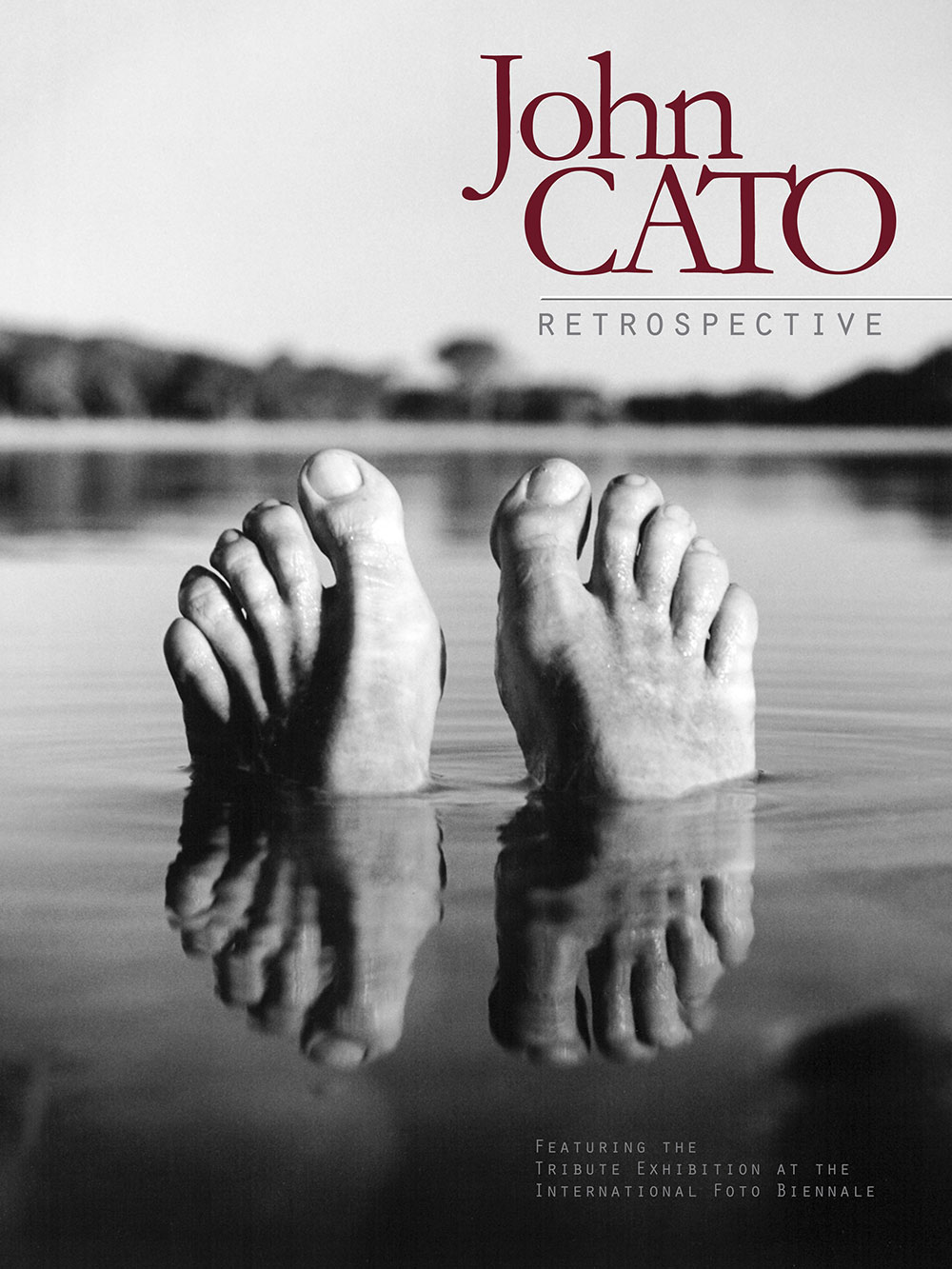
John Cato book cover


John Cato Retrospective book cover

Read my chapter in the book


Please click on the photographs for a larger version of the image.


Ballarat International Foto Biennale
12 Lydiard St North, Ballarat 3350

Ballarat International Foto Biennale website

LIKE ART BLART ON FACEBOOK

Back to top

Exhibition: ‘At War with the Obvious: Photographs by William Eggleston’ at The Metropolitan Museum of Art, New York

Exhibition dates: 26th February – 28th July 2013

PLEASE NOTE: THIS POSTING CONTAINS AN ART PHOTOGRAPH OF MALE NUDITY – IF YOU DO NOT LIKE PLEASE DO NOT LOOK, FAIR WARNING HAS BEEN GIVEN


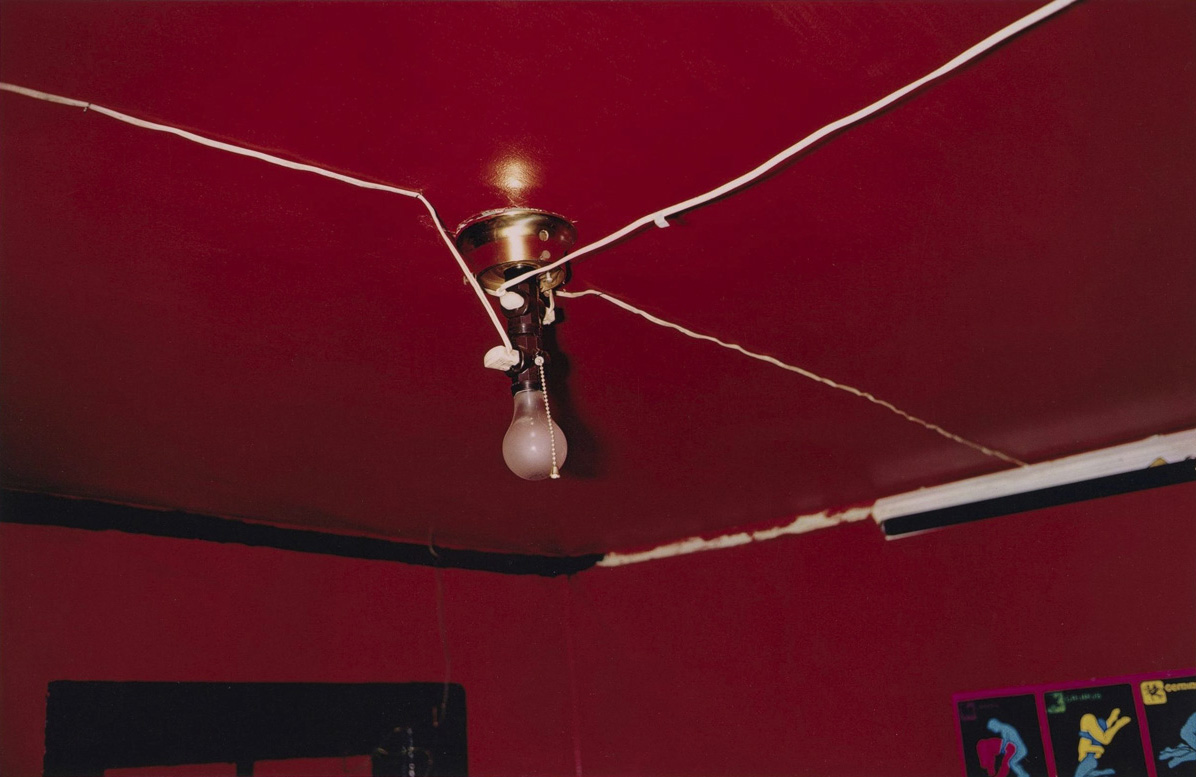
William Eggleston (American, b. 1939) 'Untitled' 1971


William Eggleston (American, b. 1939)
Untitled
1971
Dye-transfer print
31.1 x 47.7cm (12 1/4 x 18 3/4 in.)
The Metropolitan Museum of Art
Purchase, Louis V. Bell, Harris Brisbane Dick, Fletcher, and Rogers Funds and Joseph Pulitzer Bequest; Elizabeth S. and Robert J. Fisher, Jennifer and Philip Maritz, and Charlotte A. and William E. Ford Gifts; The Horace W. Goldsmith Foundation Fund, through Joyce and Robert Menschel, 2012
© Eggleston Artistic Trust


Eggleston photographs the obvious with such candour and vigour that simple things become something more: almost interior statements of his mind evidenced in the physicality of the photograph. He may be at war with the obvious, but these are complex thoughts told in simple, eloquent ways. They are only obvious if you know how to look for them.

The peaches thrown on the roof, the rusted speculum of ‘Wonder Bread’, the turned up shoes; the use of foreshortening, the low positioning of the camera (looking up or across at ground level), the formalism of colour, the light.

Eggleston understands the essence of each scene he photographs perfectly. The child’s eye-level view of the tricycle emphasising its gigantism will always be a favourite, as will the abstract expressionist colour field of Untitled (Greenwood, Mississippi) (1980, below). As with any virtuoso artist, Eggleston controls the tonality and mood of compositions beautifully: a case in point is Untitled (Memphis) (c. 1972, below) which will always remind me of a piece of Mozart piano music. It took me a while when I was growing up to like Mozart (as a concert pianist I loved the romantics such as Chopin and Debussy), but when you finally understand all the nuances contained in his music, when you finally grow to love him, you are just so full of admiration for his achievement.

Dr Marcus Bunyan


Many thankx to The Metropolitan Museum of Art for allowing me to publish the photographs in the posting. Please click on the photographs for a larger version of the image.


William Eggleston (American, b. 1939) 'Untitled (Mississippi)' c. 1970


William Eggleston (American, b. 1939)
Untitled (Mississippi)
c. 1970
Dye-transfer print
25.1 x 38.3cm (9 7/8 x 15 1/16 in)
The Metropolitan Museum of Art
Purchase, Louis V. Bell, Harris Brisbane Dick, Fletcher, and Rogers Funds and Joseph Pulitzer Bequest, and Jennifer and Philip Maritz Gift, 2012
© Eggleston Artistic Trust


William Eggleston (American, b. 1939) 'Untitled' (the artist's uncle, Adyn Schuyler Senior, with assistant Jasper Staples, in Cassidy Bayou, Sumner, Mississippi) 1969-70


William Eggleston (American, b. 1939)
Untitled (Sumner, Mississippi, Cassidy Bayou in Background)
1971 (printed 1999)
Dye-transfer print
36.8 x 55.5cm (14 1/2 x 21 7/8 in.)
The Metropolitan Museum of Art
Purchase, Louis V. Bell, Harris Brisbane Dick, Fletcher, and Rogers Funds and Joseph Pulitzer Bequest, and Elizabeth S. and Robert J. Fisher Gift, 2012
© Eggleston Artistic Trust


William Eggleston (American, b. 1939) 'Untitled, from the portfolio 14 Pictures' 1974


William Eggleston (American, b. 1939)
Untitled, from the portfolio 14 Pictures
1974
Dye-transfer print
33.1 x 48.5cm (13 1/16 x 19 1/8 in.)
The Metropolitan Museum of Art
Purchase, Louis V. Bell, Harris Brisbane Dick, Fletcher, and Rogers Funds and Joseph Pulitzer Bequest; Elizabeth S. and Robert J. Fisher, Jennifer and Philip Maritz, and Charlotte A. and William E. Ford Gifts; The Horace W. Goldsmith Foundation Fund, through Joyce and Robert Menschel, 2012
© Eggleston Artistic Trust


William Eggleston (American, b. 1939) 'Untitled (Louisiana)' 1980 (printed 1999)


William Eggleston (American, b. 1939)
Untitled (Louisiana)
1980 (printed 1999)
Dye-transfer print
30.2 x 45.3cm (11 7/8 x 17 13/16 in.)
The Metropolitan Museum of Art
Purchase, Louis V. Bell, Harris Brisbane Dick, Fletcher, and Rogers Funds and Joseph Pulitzer Bequest, Twentieth-Century Photography Fund, and Elizabeth S. and Robert J. Fisher Gift, 2012
© Eggleston Artistic Trust


William Eggleston (American, b. 1939) 'Untitled' 1974


William Eggleston (American, b. 1939)
Untitled
1974
Dye-transfer print
33.1 x 48.5cm (13 1/16 x 19 1/8 in.)
The Metropolitan Museum of Art
Purchase, Louis V. Bell, Harris Brisbane Dick, Fletcher, and Rogers Funds and Joseph Pulitzer Bequest, and Jennifer and Philip Maritz Gift, 2012
© Eggleston Artistic Trust


William Eggleston (American, b. 1939) 'Untitled (Greenwood, Mississippi)' 1980


William Eggleston (American, b. 1939)
Untitled (Greenwood, Mississippi)
1980
Dye-transfer print
29.6 x 45.5cm (11 5/8 x 17 15/16 in.)
The Metropolitan Museum of Art
Purchase, Louis V. Bell, Harris Brisbane Dick, Fletcher, and Rogers Funds and Joseph Pulitzer Bequest, and Jennifer and Philip Maritz Gift, 2012
© Eggleston Artistic Trust


The American photographer William Eggleston (born 1939) emerged in the early 1960s as a pioneer of modern colour photography. Now, 50 years later, he is arguably its greatest exemplar. At War with the Obvious: Photographs by William Eggleston at The Metropolitan Museum of Art presents the work of this idiosyncratic artist, whose influences are drawn from disparate if surprisingly complementary sources – from Walker Evans and Henri Cartier-Bresson in photography to Bach and late Baroque music. Many of Eggleston’s most recognised photographs are lush studies of the social and physical landscape found in the Mississippi delta region that is his home. From this base, the artist explores the awesome and, at times, the raw visual poetics of the American vernacular.

The exhibition celebrates the fall 2012 acquisition of 36 dye transfer prints by Eggleston that dramatically expanded the Metropolitan Museum’s collection of this major American artist’s work. It added the entire suite of Eggleston’s remarkable first portfolio of colour photographs, 14 Pictures (1974), 15 superb prints from his landmark book, William Eggleston’s Guide (1976), and seven other key photographs that span his career.

Eggleston wrote that he was “at war with the obvious,” a statement well-represented in works such as Untitled [Peaches!] (1970) – a roadside snapshot of rocks and half-eaten fruit thrown atop a sunlit corrugated tin roof capped with a sign announcing “PEACHES!” The exhibition features a number of the artist’s signature images, including Untitled [Greenwood, Mississippi] (1980), a study that takes full advantage of the chromatic intensity of the dye-transfer colour process that, until Eggleston appropriated it in the 1960s, had been used primarily by commercial photographers for advertising product photography; and Untitled [Memphis] (1970), an iconic study of a child’s tricycle seen from below. It was the cover image of the artist’s seminal book William Eggleston’s Guide, which accompanied his landmark show at the Museum of Modern Art in 1976.

As much as Eggleston was influenced by various sources, he, too, has proved influential. His inventive photographs of commonplace subjects now endure as touchstones for generations of artists, musicians, and filmmakers from Nan Goldin to David Byrne, the Coen brothers, and David Lynch.

Press release from The Metropolitan Museum of Art


William Eggleston (American, b. 1939) 'Untitled (Memphis)' 1970


William Eggleston (American, b. 1939)
Untitled (Memphis)
1970
Dye-transfer print
30.7 x 43.8cm (12 1/16 x 17 1/4 in.)
The Metropolitan Museum of Art
Purchase, Louis V. Bell, Harris Brisbane Dick, Fletcher, and Rogers Funds and Joseph Pulitzer Bequest; Louis V. Bell Fund; Elizabeth S. and Robert J. Fisher, Jennifer and Philip Maritz, and Charlotte A. and William E. Ford Gifts, 2012
© Eggleston Artistic Trust


William Eggleston (American, b. 1939) 'Untitled' 1974


William Eggleston (American, b. 1939)
Untitled
1974
Dye-transfer print
33.1 x 48.5cm (13 1/16 x 19 1/8 in.)
The Metropolitan Museum of Art
Purchase, Louis V. Bell, Harris Brisbane Dick, Fletcher, and Rogers Funds and Joseph Pulitzer Bequest, and Jennifer and Philip Maritz Gift, 2012
© Eggleston Artistic Trust


William Eggleston (American, b. 1939) 'Untitled' 1974


William Eggleston (American, b. 1939)
Untitled
1974
Dye-transfer print
33.1 x 48.5cm (13 1/16 x 19 1/8 in.)
The Metropolitan Museum of Art
Purchase, Louis V. Bell, Harris Brisbane Dick, Fletcher, and Rogers Funds and Joseph Pulitzer Bequest, and Jennifer and Philip Maritz Gift, 2012
© Eggleston Artistic Trust


William Eggleston (American, b. 1939) 'Untitled' 1974


William Eggleston (American, b. 1939)
Untitled
1974
Dye-transfer print
33.1 x 48.5cm (13 1/16 x 19 1/8 in.)
The Metropolitan Museum of Art
Purchase, Louis V. Bell, Harris Brisbane Dick, Fletcher, and Rogers Funds and Joseph Pulitzer Bequest, and Jennifer and Philip Maritz Gift, 2012
© Eggleston Artistic Trust


William Eggleston (American, b. 1939) 'Untitled' 1974


William Eggleston (American, b. 1939)
Untitled
1974
Dye-transfer print
33.1 x 48.5cm (13 1/16 x 19 1/8 in.)
The Metropolitan Museum of Art
Purchase, Louis V. Bell, Harris Brisbane Dick, Fletcher, and Rogers Funds and Joseph Pulitzer Bequest, and Jennifer and Philip Maritz Gift, 2012
© Eggleston Artistic Trust


William Eggleston (American, b. 1939) 'Untitled' 1983


William Eggleston (American, b. 1939)
Untitled
1983
Dye-transfer print
37 x 56cm (14 9/16 x 22 1/16 in.)
The Metropolitan Museum of Art
Purchase, Louis V. Bell, Harris Brisbane Dick, Fletcher, and Rogers Funds and Joseph Pulitzer Bequest, and Jennifer and Philip Maritz Gift, 2012
© Eggleston Artistic Trust


William Eggleston (American, b. 1939) 'Untitled' c. 1972 (printed 1986)


William Eggleston (American, b. 1939)
Untitled
c. 1972 (printed 1986)
Dye-transfer print
28.8 x 43.4cm (11 5/16 x 17 1/16 in.)
The Metropolitan Museum of Art
Purchase, Louis V. Bell, Harris Brisbane Dick, Fletcher, and Rogers Funds and Joseph Pulitzer Bequest, and Jennifer and Philip Maritz Gift, 2012
© Eggleston Artistic Trust


William Eggleston (American, b. 1939) 'Untitled' 1984


William Eggleston (American, b. 1939)
Untitled
1984
Dye-transfer print
55.9 x 37.1cm (22 x 14 5/8 in.)
The Metropolitan Museum of Art
Purchase, Louis V. Bell, Harris Brisbane Dick, Fletcher, and Rogers Funds and Joseph Pulitzer Bequest, and Jennifer and Philip Maritz Gift, 2012
© Eggleston Artistic Trust


William Eggleston (American, b. 1939) 'Untitled (Greenwood, Mississippi)' 1970 (printed 1999)


William Eggleston (American, b. 1939)
Untitled (Greenwood, Mississippi)
1970 (printed 1999)
Dye-transfer print
55 x 37.1cm (21 5/8 x 14 5/8 in.)
The Metropolitan Museum of Art
Purchase, Louis V. Bell, Harris Brisbane Dick, Fletcher, and Rogers Funds and Joseph Pulitzer Bequest, and Jennifer and Philip Maritz Gift, 2012
© Eggleston Artistic Trust


William Eggleston (American, b. 1939) 'Untitled (Memphis)' c. 1972


William Eggleston (American, b. 1939)
Untitled (Memphis)
c. 1972
Dye-transfer print
46 x 31cm (18 1/8 x 12 3/16 in.)
The Metropolitan Museum of Art
Purchase, Louis V. Bell, Harris Brisbane Dick, Fletcher, and Rogers Funds and Joseph Pulitzer Bequest; Louis V. Bell Fund; Elizabeth S. and Robert J. Fisher, Jennifer and Philip Maritz, and Charlotte A. and William E. Ford Gifts, 2012
© Eggleston Artistic Trust


William Eggleston (American, b. 1939) 'Untitled (Near Jackson, Mississippi)' c. 1970 (printed 2002)


William Eggleston (American, b. 1939)
Untitled (Near Jackson, Mississippi)
c. 1970 (printed 2002)
Dye-transfer print
60.3 x 48.9cm (23 3/4 x 19 1/4 in.)
The Metropolitan Museum of Art
Purchase, Louis V. Bell, Harris Brisbane Dick, Fletcher, and Rogers Funds and Joseph Pulitzer Bequest; Louis V. Bell Fund; Elizabeth S. and Robert J. Fisher, Jennifer and Philip Maritz, and Charlotte A. and William E. Ford Gifts, 2012
© Eggleston Artistic Trust


William Eggleston (American, b. 1939) 'Untitled (Memphis)' 1971 (printed 1999)


William Eggleston (American, b. 1939)
Untitled (Memphis)
1971 (printed 1999)
Dye-transfer print
55.4 x 36.8cm (21 13/16 x 14 1/2 in.)
The Metropolitan Museum of Art (2012.283)
Purchase, Louis V. Bell, Harris Brisbane Dick, Fletcher, and Rogers Funds and Joseph Pulitzer Bequest, Twentieth-Century Photography Fund, and Elizabeth S. and Robert J. Fisher Gift, 2012
© Eggleston Artistic Trust


The Metropolitan Museum of Art
1000 Fifth Avenue at 82nd Street
New York, New York 10028-0198
Phone: 212-535-7710

Opening hours:
Sunday – Tuesday and Thursday: 10am – 5pm
Friday and Saturday: 10am – 9pm
Closed Wednesday

The Metropolitan Museum of Art website

LIKE ART BLART ON FACEBOOK

Back to top

Text: ‘Un/settling Aboriginality’ Dr Marcus Bunyan / Exhibition: ‘Brook Andrew: 52 Portraits’ at Tolarno Gallery, Melbourne

Exhibition dates: 15th June – 20th July 2013


Many thankx to Tolarno Gallery for allowing me to publish the photographs in the posting. Please click on the photographs for a larger version of the image.

Download the text Un/settling Aboriginality (1.1Mb pdf)


Un/settling Aboriginality

Dr Marcus Bunyan

Abstract

This text investigates the concepts of postcolonialism / neo-colonialism and argues that Australia is a neo-colonial rather than a postcolonial country. It examines the work of two Australian artists in order to understand how their work is linked to the concept of neo-colonialism and ideas of contemporary Aboriginal identity, Otherness, localism and internationalism.

Keywords

postcolonialism, postcolonial, art, neo-colonialism, Australian art, Australian artists, Aboriginal photography, hybridism, localism, internationalism, Otherness, Australian identity, Brook Andrew, Ricky Maynard, Helen Ennis.


Australia and postcolonialism / neo-colonialism

Defining the concept of postcolonialism is difficult. “To begin with, “post-colonial” is used as a temporal marker referring to the period after official decolonisation,”1 but it also refers to a general theory that Ania Loomba et al. call “the shifting and often interrelated forms of dominance and resistance; about the constitution of the colonial archive; about the interdependent play of race and class; about the significance of gender and sexuality; about the complex forms in which subjectivities are experienced and collectivities mobilized; about representation itself; and about the ethnographic translation of cultures.”2

“Postcolonial theory formulates its critique around the social histories, cultural differences and political discrimination that are practised and normalised by colonial and imperial machineries… Postcolonial critique can be defined as a dialectical discourse which broadly marks the historical facts of decolonisation. It allows people emerging from socio-political and economic domination to reclaim their sovereignty; it gives them a negotiating space for equity.”3

While colonialism and imperialism is about territory, possession, domination and power,4 postcolonialism is concerned with the history of colonialism, the psychology of racial representation and the frame of representation of the ‘Other’. It addresses the ongoing effects of colonialism and imperialism even after the colonial period has ended.
“Past and present inform each other, each implies the other and… each co-exists with the other.”5 Even after colonialism has supposedly ended there will always be remains that flow into the next period. What is important is not so much the past itself but its bearing upon cultural attitudes of the present and how the uneven relationships of the past are remembered differently.6 While the aims of postcolonialism are transformative, its objectives involve a wide-ranging political project – to reorient ethical norms, turn power structures upside down and investigate “the interrelated histories of violence, domination, inequality and injustice”7 and develop a tradition of resistance to the praxis of hegemony.

McCarthy and Dimitriadis posit three important motifs in postcolonial art.8 Briefly, they can be summarised as follows:

1/ A vigorous challenge to hegemonic forms of representation in Western models of classical realism and technologies of truth in which the eye of the Third World is turned on the West and challenges the ruling narrating subject through multiple perspectives and points of view.

2/ A rewriting of the narrative of modernity through a joining together of the binaries ‘centre’ and ‘periphery’, ‘developed’ and ‘underdeveloped’, and ‘civilised’ and ‘primitive’. “Culture, for these [postcolonial] artists, is a crucible of encounter, a crucible of hybridity in which all of cultural form is marked by twinness of subject and other.”9

3/ A critical reflexivity and thoughtfulness as elements of an artistic practice of freedom. This practice looks upon traditions with dispassion, one in which all preconceived visions and discourses are disrupted, a practice in which transformative possibilities are not given but have to worked for in often unpredictable and counter-intuitive ways.


According to Robert Young the paradigm of postcolonialism is to “locate the hidden rhizomes of colonialism’s historical reach, of what remains invisible, unseen, silent or unspoken” to examine “the continuing projection of past conflicts into the experience of the present, the insistent persistence of the afterimages of historical memory that drive the desire to transform the present.”10 This involves an investigation into a dialectic of visibility and invisibility where subjugated peoples were present but absent under the eye of the coloniser through a refusal of those in power to see who or what was there. “Postcolonialsm, in its original impulse, was concerned to make visible areas, nations, cultures of the world which were notionally acknowledged, technically there, but which in significant other senses were not there…”11 In other words, to acknowledge the idea of the ‘Other’ as a self determined entity if such an other should ever exist because, as Young affirms, “Tolerance requires that there be no “other,” that others should not be othered. We could say that there can be others, but there should be no othering of “the other.”12

The “Other” itself is a product of racial theory but Young suggests that “the question is not how to come to know “the other,” but for majority groups to stop othering minorities altogether, at which point minorities will be able to represent themselves as they are, in their specific forms of difference, rather than as they are othered.”13 Unfortunately, with regard to breaking down the divisiveness of the same-other split, “As soon as you have employed the very category of “the other” with respect to other peoples or societies, you are imprisoned in the framework of your own predetermining conceptualisation, perpetuating its form of exclusion.”14 Hence, as soon as the dominant force names the “other” as a paradigm of society, you perpetuate its existence as an object of postcolonial desire. This politics of recognition can only be validated by the other if the other choses to name him or herself in order to “describe a situation of historical discrimination which requires challenge, change and transformation… Othering was a colonial strategy of exclusion: for the postcolonial, there are only other human beings.”15

Important questions need to be asked about the contextual framework of postcolonialism as it is linked to race, culture, gender, settler and native: “When does a settler become coloniser, colonised and postcolonial? When does a race cease to be an oppressive agent and become a wealth of cultural diversities of a postcolonial setting? Or in the human history of migrations, when does the settler become native, indigenous, a primary citizen? And lastly, when does the native become truly postcolonial?”16


This last question is pertinent with regard to Australian culture and identity. It can be argued that Australia is not a postcolonial but a neo-colonial country. Imperialism as a concept and colonialism as a practice are still active in a new form. This new form is neo-colonialism. Rukundwa and van Aarde observe that, “Neo-colonialism is another form of imperialism where industrialised powers interfere politically and economically in the affairs of post-independent nations. For Cabral (in McCulloch 1983: 120-121), neo-colonialism is “an outgrowth of classical colonialism.” Young (2001: 44-52) refers to neo-colonialism as “the last stage of imperialism” in which a postcolonial country is unable to deal with the economic domination that continues after the country gained independence. Altbach (1995: 452-56) regards neo-colonialism as “partly planned policy” and a “continuation of the old practices”.”17

Australia is not a post-independent nation but an analogy can be made. The Australian government still interferes with the running of Aboriginal communities through the NT Intervention or, as it is more correctly known, Northern Territory National Emergency Response Act 2007. Under the Stronger Futures legislation that recently passed through the senate, this intervention has been extended by another 10 years. “Its flagship policies are increased government engagement, income management, stabilisation, mainstreaming, and the catch cries “closing the gap” and “real jobs”.”18 As in colonial times the government has control of a subjugated people, their lives, income, health and general wellbeing, instead of partnering and supporting Aboriginal organisations and communities to take control of their futures.19

Further, Australia is still a colony, the Queen of England is still the Queen of Australia; Britannia remains in the guise of the “Commonwealth.” Racism, an insidious element of the colonial White Australia Policy (which only ended in 1973), is ever prevalent beneath the surface of Australian society. Witness the recent racial vilification of Sydney AFL (Aussie Rules!) player Adam Goodes by a teenager20 and the inexcusable racial vilification by Collingwood president Eddie McGuire when he said that Goodes could be used to promote the musical King Kong.21

“The dialectics of liberation from colonialism, whether political, economic, or cultural, demand that both the colonizer and the colonized liberate themselves at the same time.”22 This has not happened in Australia. The West’s continuing political, economic and cultural world domination has “lead to a neo-colonial situation, mistakenly called post-coloniality, which does not recognize the liberated other as a historical subject (in sociological theory, a historical subject is someone thought capable of taking an active role in shaping events) – as part of the historical transforming processes of modernity.”23 As has been shown above, Aboriginal communities are still thought incapable of taking an active role in shaping and administering their own communities. The result of this continuation of old practices is that Australia can be seen as a neo-colonial, not postcolonial, country.

Kathryn Trees asks, “Does post-colonial suggest colonialism has passed? For whom is it ‘post’? Surely not for Australian Aboriginal people at least, when land rights, social justice, respect and equal opportunity for most does not exist because of the internalised racism of many Australians. In countries such as Australia where Aboriginal sovereignty, in forms appropriate to Aboriginal people, is not legally recognised, post-colonialism is not merely a fiction, but a linguistic manoeuvre on the part of some ‘white’ theorists who find this a comfortable zone that precludes the necessity for political action.”24


Two Australian artists, two different approaches

There are no dots or cross-hatching in the work of Ricky Maynard or Brook Andrew; no reference to some arcane Dreaming, for their work is contemporary art that addresses issues of identity and empowerment in different ways. Unlike remote Indigenous art that artist Richard Bell has labelled ‘Ooga Booga Art’ (arguing that it is based upon a false notion of tradition that casts Indigenous people as the exotic other, produced under the white, primitivist gaze),25 the work of these two artists is temporally complex (conflating past, present and future) and proposes that identity is created at the intersection of historically shifting subject positions, which destabilises any claim to an ‘authentic’ identity position and brings into question the very label ‘Aboriginal’ art and ‘Aboriginality’. By labelling an artist ‘Aboriginal’ or ‘gay’ for example, do you limit the subject matter that those artists can legitimately talk about, or do you just call them artists?

As Stephanie Radok has speculated, “surely as long as we call it Aboriginal art we are defining it ethnically and foregrounding its connection to a particular culture, separating it from other art and seeing it as a gift, a ‘present’ from another ethnography.”26 Be that as it may, artists can work from within a culture, a system, in order to critique the past in new ways: “The collective efforts of contemporary artists… do not reflect an escapist return to the past but a desire to think about what the past might now mean in new, creative ways.”27

Ways that un/settle Aboriginality through un/settling photography, in this case.


Since the 1980s photographers addressing Indigenous issues have posed an alternative reality or viewpoint that, “articulates the concept of time as a continuum where the past, present and future co-exist in a dynamic form. This perspective has an overtly political dimension, making the past not only visible but also unforgettable.”28 The perspective proposes different strategies to deliberately unsettle white history so that “the future is as open as the past, and both are written in tandem.”29

Artists Ricky Maynard and Brook Andrew both critique neo-colonialism from inside the Western gallery system using a relationship of interdependence (Aboriginal/colonial) to find their place in the world, to help understand who they are and, ex post facto, to make a living from their art. They both offer an examination of place, space and identity construction through what I call ‘the industry of difference’.

Ricky Maynard works with a large format camera and analogue, black and white photography in the Western documentary tradition to record traditional narratives of Tasmanian Aboriginal people in order to undermine the myth that they were all wiped off the face of the planet by colonisation. Through his photography he re-identifies the narratives of a subjugated and supposedly exterminated people, narratives that are thousands of years old, narratives that challenge a process of Othering or exclusion and which give voice to the oppressed.

Portrait of a Distant Land is done through the genre of documentary in a way that offers authenticity and honest image making in the process. It has to deal with all those ethical questions of creating visual history, the tools to tell it with and how we reclaim our own identity and history from the way we tell our own stories. It comes from the extension of the way the colonial camera happened way back in the 19th century and how it misrepresented Aboriginal people. The Government anthropologists and photographers were setting up to photograph the dying race. Of course it simply wasn’t true. That was a way that colonial people wanted to record their history. You see those earlier colonial and stereotypical images of Aboriginal people in historic archives, their photographic recordings were acts of invasion and subjugation used for their own purpose.”30


Ricky Maynard (Australian, b. 1953) 'Coming Home' 2005


Ricky Maynard (Australian, b. 1953)
Coming Home
2005
from Portrait of a Distant Land
Gelatin silver print
34 x 52cm, edition of 10 + 3 AP


“I can remember coming here as a boy in old wooden boats to be taught by my grandparents and my parents.

I’ll be 57 this year and I have missed only one year when my daughter Leanne was born. Mutton birding is my life. To me it’s a gathering of our fella’s where we sit and yarn we remember and we honour all of those birders who have gone before us. Sometimes I just stand and look out across these beautiful islands remembering my people and I know I’m home. It makes me proud to be a strong Tasmanian black man.

This is something that they can never take away from me.”

Murray Mansell Big Dog Island, Bass Strait, 2005 31
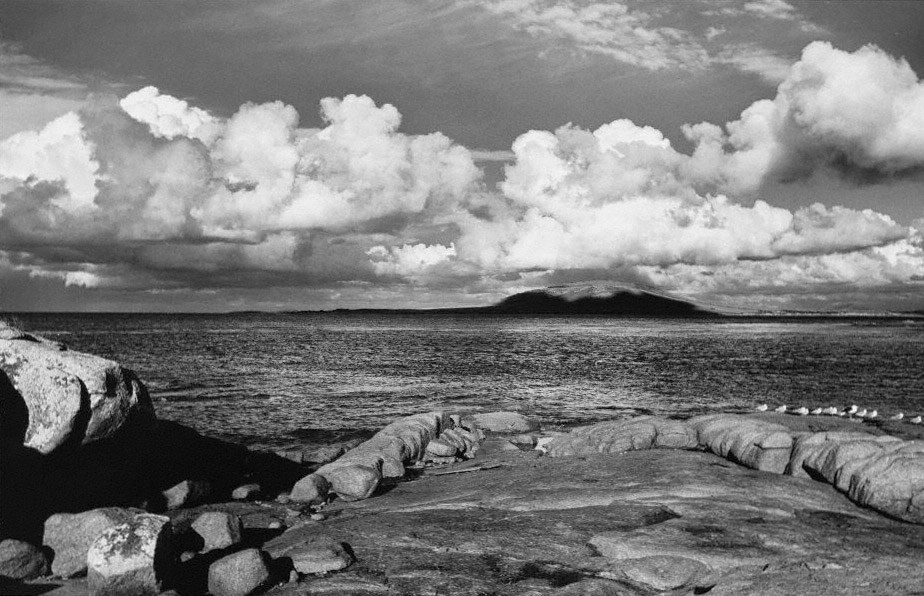
 

Ricky Maynard (Australian, b. 1953) 'Vansittart Island, Bass Strait, Tasmania' 2005


Ricky Maynard (Australian, b. 1953)
Vansittart Island, Bass Strait, Tasmania
2005
from Portrait of a Distant Land
Gelatin silver print
34 x 52cm, edition of 10 + 3 AP


“As late as 1910 men came digging on Vansittart and Tin Kettle Islands looking for skeletons here. We moved them where none will find them, at the dead of night my people removed the bodies of our grandmothers and took them to other islands, we planted shamrocks over the disturbed earth, so the last resting place of those girls who once had slithered over the rocks for seals will remain a secret forever.”

Old George Maynard 1975 32
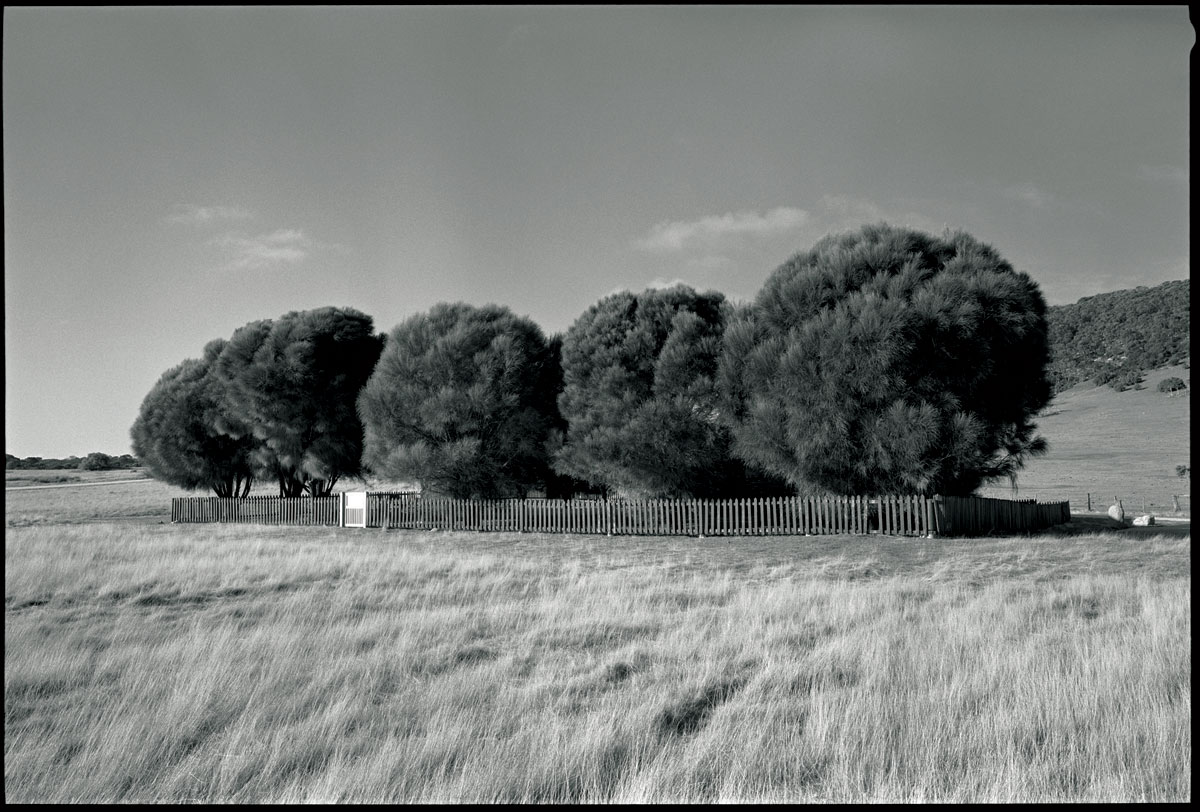
 

Ricky Maynard (Australian, b. 1953) 'The Healing Garden, Wybalenna, Flinders Island, Tasmania' 2005


Ricky Maynard (Australian, b. 1953)
The Healing Garden, Wybalenna, Flinders Island, Tasmania
2005
from Portrait of a Distant Land
Gelatin silver print
34 x 52cm, edition of 10 + 3 AP


“It’s pretty important you know, the land, it doesn’t matter how small, it’s something, just a little sacred site, that’s Wybalenna. There was a massacre there, sad things there, but we try not to go over that. Where the bad was we can always make it good.”

Aunty Ida West 1995 Flinders Island, Tasmania 33


Maynard’s photographs are sites of contestation, specific, recognisable sites redolent with contested history. They are at once both local (specific) and global (addressing issues that affect all subjugated people and their stories, histories). Through his art practice Maynard journeys from the periphery to the centre to become a fully recognised historical subject, one that can take an active role in shaping events on a global platform, a human being that aims to create what he describes as “a true visual account of life now.”34 But, as Ian McLean has noted of the work of Derrida on the idea of repression, what returns in such narratives is not an authentic, original Aboriginality but the trace of an economy of repression: “Hence the return of the silenced nothing called Aboriginal as the being and truth of the place, is not the turn-around it might seem, because it does not reinstate an original Aboriginality, but reiterates the discourses of colonialism.”35

Sad and poignant soliloquies they may be, but in these ‘true’ visual accounts it is the trace of repression represented through Western technology (the camera, the photograph) and language (English is used to describe the narratives, see above) that is evidenced in these critiques of neo-colonialism (a reiteration of the discourses of colonialism) – not just an authentic lost and reclaimed Aboriginality – for these photographs are hybrid discourses that are both local/global, European/Indigenous.

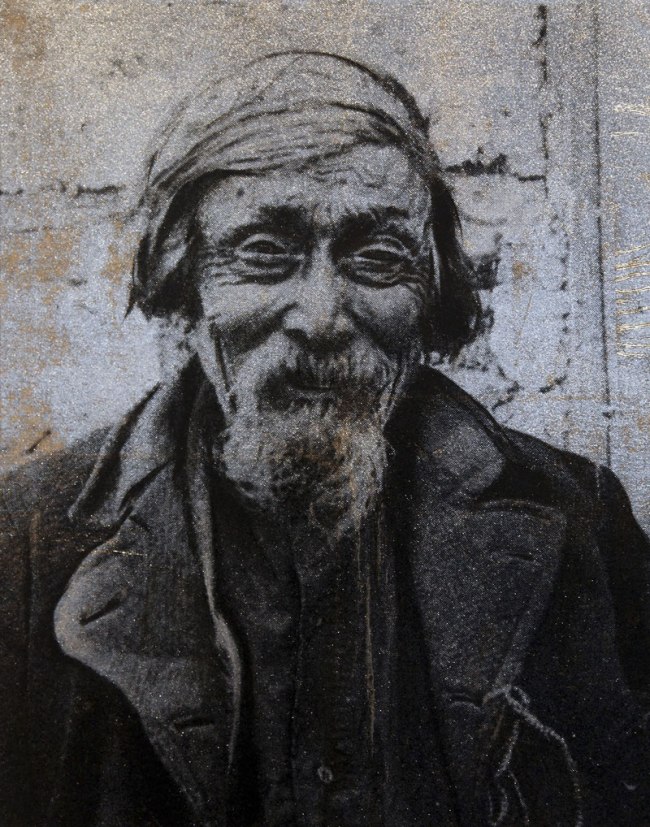
In his art practice Brook Andrew pursues a more conceptual mutli-disciplinary approach, one that successfully mines the colonial photographic archive to interrogate the colonial power narrative of subjugation, genocide, disenfranchisement through a deconstructive discourse, one that echoes with the repetitions of coloniality and evidences the fragments of racism through the status of appearances. “Through his persistent confrontation with the historical legacy of physiognomia in our public Imaginary”36 in video, neon, sculpture, craniology, old photography, old postcards, music, books, ethnography and anthropology, Andrew re-images and reconceptualises the colonial archive. His latest body of work 52 Portraits (Tolarno Galleries 15 June – 20 July 2013), is “a play on Gerhard Richter’s 48 Portraits projects, which lifted images of influential Western men from the pages of encyclopaedias, 52 Portraits shifts the gaze to the ubiquitous and exotic other.”37 The colonial portraits are screen-printed in black onto silver-coated canvases giving them an ‘other’ worldly, alien effect (as of precious metal), which disrupts the surface and identity of the original photographs. Variously, the unnamed portraits taken from his personal collection of old colonial postcards re-present unknown people from the Congo, Africa, Argentina, Ivory Coast, Brazil, Algeria, Australia, South America, etc… the images incredibly beautiful in their silvered, slivered reality (as of the time freeze of the camera), replete with fissures and fractures inherent in the printing process. Accompanying the series is an installation titled Vox: Beyond Tasmania (2013), a Wunderkammer containing a skeleton and colonial artefacts, the case with attached wooden trumpet (reminding me appropriately of His Master’s Voice) that focuses the gaze upon an anonymous skull, an unknowable life from the past. In the catalogue essay for the exhibition, Ian Anderson observes, “His view is global – and even though my response is highly local – I too see the resonances of a global cultural process that re-ordered much of humanity through the perspective of colonizing peoples.”38

While this may be true, it is only true for the limited number of people that will see the exhibition – usually white, well-educated people, “The realities of the commercial art world are such that it is chiefly the white upper crust that will see these works. Make of that what you will.”39 Through a lumping together of all minority people – as though multiple, local indigeneties can be spoken for through a single global indigeneity – Andrew seems to want to speak for all anonymous Indigenous people from around the world through his ‘industry of difference’. Like colonialism, this speaking is again for the privileged few, as only they get to see these transformed images, in which only those with money can afford to buy into his critique.

Personally, I believe that Andrew’s constant remapping and re-presentation of the colonial archive in body after body of work, this constant picking at the scab of history, offers no positive outcomes for the future. It is all too easy for an artist to be critical; it takes a lot more imagination for an artist to create positive images for a better future.


Conclusion

By the mid-eighties black and indigenous subjectivities were no longer transgressive and the ‘black man’s’ burden’ had shifted from being a figure of oblivion to that of a minority voice.40 Black subjectivities as minority identities use the language of difference to envisage zones of liberation in which marginality is a site of transformation. But, as Ian McLean asks, “Have these post or anti-colonial identities repulsed the return of coloniality?”41 In the fight against neo-colonialism he suggests not, when the role of minority discourses “are simultaneously marginalised and occupy an important place in majority texts.”42 Periphery becomes centre becomes periphery again. “Minority artists are not left alone on the periphery of dominant discourse. Indeed, they are required to be representatives of, or speak for, a particular marginalised community; and because of this, their speech is severely circumscribed. They bear a ‘burden of representation’.”43 McLean goes on to suggest the burden of representation placed on Aboriginal artists is one that cannot be escaped. The category ‘Aboriginal’ is too over determined. Aboriginal artists, like gay artists addressing homosexuality, can only address issues of race, identity and place.44

“Aboriginal artists must address issues of race, and all on the stage of an identity politics. Black artists, it seems, can perform only if they perform blackness. Reduced to gestures of revolt, they only reinforce the scene of repression played out in majority discourses of identity and otherness. Allowed to enter the field of majority language as divergent and hence transgressive discourses which police as much as they subvert the boundaries of this field, they work to extend certain boundaries necessary to Western identity formations, but which its traditions have repressed. In other words, minority discourses are complicit with majority texts.”45

As social constructs (the heart of the political terrain of imperial worlds) have been interrogated by artists, this has led to the supposed dissolution of conceptual binaries such as European Self / Indigenous Other, superior / inferior, centre / periphery.46 The critique of neo-colonialism mobilises a new, unstable conceptual framework, one that unsettles both imperialist structures of domination and a sense of an original Aboriginality. Counter-colonial perspectives might critique neo-colonial power through disruptive inhabitations of colonialist constructs (such as the photograph and the colonial photographic archive) but they do so through a nostalgic reworking and adaptation of the past in the present (through stories that are eons old in the case of Ricky Maynard or through appropriation of the colonial photographic archive in the case of Brook Andrew). Minority discourses un/settle Aboriginality in ways not intended by either Ricky Maynard or Brook Andrew, by reinforcing the boundaries of the repressed ‘Other’ through a Western photographic interrogation of age-old stories and the colonial photographic archive.

Both Maynard and Andrew picture identities that are reductively marshalled under the sign of minority discourse, a discourse that re-presents a field of representation in a particularly singular way (addressed to a privileged few). The viewer is not caught between positions, between voices, as both artists express an Aboriginal (not Australian) subjectivity, one that reinforces a black subjectivity and oppression by naming Aboriginal as ‘Other’ (here I am not proposing “assimilation” far from it, but inclusion through difference, much as gay people are now just members of society not deviants and outsiders).

Finally, what interests me further is how minority voices can picture the future not by looking at the past or by presenting some notion of a unitary representation (local / global) of identity, but by how they can interrogate and image the subject positions, political processes, cultural articulation and critical perspectives of neo-colonialism in order that these systems become the very preconditions to decolonisation.

Dr Marcus Bunyan
July 2013

Word count: 3,453 excluding image titles and captions.


Endnotes

1/ Abraham, Susan. “What Does Mumbai Have to Do with Rome? Postcolonial Perspectives on Globalization and Theology,” in Theological Studies 69, 2008, pp. 376-93 cited in Kenzo, Mabiala Justin-Robert. What Is Postcolonialism and Why Does It Matter: An African Perspective. Nd [Online] Cited 13/06/2013. No longer available online

2/ Loomba, Ania et al. “Beyond What? An Introduction,” in Loomba, Ania et al. (ed.,). Postcolonial Studies and Beyond. Durham, N.C.: Duke University, 2005, pp. 1-38

3/ Rukundwa, Lazare S and van Aarde, Andries G. “The formation of postcolonial theory,” in HTS Teologiese Studies / Theological Studies 63(3), 2007, p. 1174

4/ “Neither imperialism nor colonialism is a simple act of accumulation and acquisition. Both are supported and perhaps even impelled by impressive ideological formations that include notions that certain territories and people require and beseech domination, as well as forms of knowledge affiliated with domination: the vocabulary of classic nineteenth-century imperial cultural is plentiful with such words and concepts as ‘inferior’ or ‘subject races’, ‘subordinate people’, ‘dependency’, ‘expansion’, and ‘authority’.”
Said, Edward. “Overlapping Territories, Intertwined Histories,” in Said, Edward. Culture and Imperialism. London: Chatto and Windus, 1993, p. 8

5/ Ibid., p. 2

6/ Ibid., p. 19

7/ Young, Robert J.C. “Postcolonial Remains,” in New Literary History Vol. 43. No. 1. Winter 2012, p. 20
8/ See McCarthy, Cameron and Dimitriadis, Greg. “The Work of Art in the Postcolonial Imagination,” in Discourse: Studies in the Cultural Politics of Education 21(1), 2000, p. 61

9/ Ibid., p. 61

10/ Young, Op. cit., p. 21

11/ Young, Ibid., p. 23

12/ “Critical analysis of subjection to the demeaning experience of being othered by a dominant group has been a long-standing focus for postcolonial studies, initiated by Frantz Fanon in his Black Skin, White Masks (1952).”
Young, Robert J.C. “Postcolonial Remains,” in New Literary History Vol. 43. No. 1. Winter 2012, p. 36

13/ Ibid., p. 37

14/ Ibid., p. 38

15/ Ibid., p. 39

16/ Rukundwa, Op cit., p. 1173

17/ Ibid., p. 1173

18/ Anon. “The 30-year cycle: Indigenous policy and the tide of public opinion” on The Conversation website 06/06/2012 [Online] Cited 16/06/2013

19/ Karvelas, Patricia. “Senate approves Aboriginal intervention by 10 years,” on The Australian website June 29, 2012 [Online] Cited 16/06/2013. No longer available online

20/ ABC/AAP. “AFL: Adam Goodes racially abused while leading Sydney to Indigenous Round win over Collingwood Sat May 25, 2013” on the ABC News website [Online] Cited 15/06/2013

21/ Anon. “Eddie McGuire, Adam Goodes and ‘apes’: a landmark moment in Australian race relations,” on The Conversation website, 31 May 2013 [Online] Cited 15/06/2013

22/ Araeen, Rasheed. “The artist as a post-colonial subject and this individual’s journey towards ‘the centre’,” in King, Catherine. View of Difference. Different Views of Art. Yale University Press, 1999, p. 232

23/ Ibid.,

24/ Trees, Kathryn. “Postcolonialism: Yet Another Colonial Strategy?” in Span, Vol. 1, No. 36, 1993, pp. 264-265 quoted in Heiss, Anita. “Post-Colonial-NOT!” in Dhuuluu Yala (To Talk Straight): Publishing Aboriginal Writing in Australia. Canberra: Aboriginal Studies Press, 2003, pp. 43-46

25/ Skerritt, Henry F. “Drawing NOW: Jus’ Drawn'” in Art Guide Australia, September/ October 2010, pp. 34-35 [Online] Cited 17/06/2013.

26/ Ibid.,

27/ Ennis, Helen. “The Presence of the Past,” in Ennis, Helen. Photography and Australia. London: Reaktion Books, 2007, p. 141

28/ Ibid., p. 135

29/ Ibid., “Black to Blak,” p. 45

30/ Maynard, Ricky quoted in Perkins, Hetti. Art + Soul. Melbourne: The Miegunyah Press, Melbourne University Publishing, 2010, p. 85

31/ Mansell, Murray quoted on the Stills Gallery website [Online] Cited 22/06/2013

32/ Maynard, George quoted on the Stills Gallery website [Online] Cited 22/06/2013

33/ West, Ida quoted on the Stills Gallery website [Online] Cited 22/06/2013

34/ Maynard, Ricky. “The Craft of Documentary Photography,” in Phillips, Sandra. Racism, Representation and Photography. Sydney, 1994, p. 115 quoted in Ennis, Helen. Photography and Australia. London: Reaktion Books, 2007, p. 106

35/ McLean, Ian. “Post colonial: return to sender” 1998 paper delivered as the Hancock lecture at the University of Sydney on 11/11/1998 as part of the annual conference of the Australian Academy of Humanities which had as its theme: ‘First Peoples Second Chance Australia In Between Cultures’

36/ Papastergiadis, Nikos. “Brook Andrew: Counterpoints and Harmonics.” Catalogue essay for Brook Andrew’s exhibition 52 Portraits at Tolarno Galleries, Melbourne, June 2013

37/ Rule, Dan. “Brook Andrew: 52 Portraits,” in Arts & Entertainment, Lifestyle, in The Saturday Age newspaper, June 29th 2013, p. 5

38/ Anderson, Pangkarner Ian. “Re-Assembling the trophies and curios of Colonialism & the Silent Terror.” Catalogue essay for Brook Andrew’s exhibition 52 Portraits at Tolarno Galleries, Melbourne, June 2013

39/ Rule, Dan. Op. cit.,

40/ McLean, Ian. “Post colonial: return to sender” 1998

41/ Ibid.,

42/ Ibid.,

43/ Ibid.,

44/ “Whether they like it or not, they [Aboriginal artists] bear a burden of representation. This burden is triply inscribed. First, they can only enter the field of representation or art as a disruptive force. Second, their speaking position is rigidly circumscribed: they are made to speak as representatives of a particular, that is, Aboriginal community. Third, this speaking is today made an essential component of the main game, the formation of Australian identity – what Philip Batty called ‘Australia’s desire to know itself through Aboriginal culture’.”
McLean, Ian. “Post colonial: return to sender” 1998

45/ Ibid.,

46/ Jacobs observes, “As the work on the nexus of power and identity within the imperial process has been elaborated, so many of the conceptual binaries that were seen as fundamental to its architecture of power have been problematised. Binary couplets like core / periphery, inside / outside. Self / Other, First World / Third World, North / South have given way to tropes such as hybridity, diaspora, creolisation, transculturation, border.”
Jacobs, J. M. “(Post)colonial spaces,” Chapter 2 in Edge of Empire. London: Routledge, 1996, p. 13


Bibliography

Anderson, Pangkarner Ian. “Re-Assembling the trophies and curios of Colonialism & the Silent Terror.” Catalogue essay for Brook Andrew’s exhibition 52 Portraits at Tolarno Galleries, Melbourne, June 2013

Araeen, Rasheed. “The artist as a post-colonial subject and this individual’s journey towards ‘the centre’,” in King, Catherine. View of Difference. Different Views of Art. Yale University Press, 1999, p. 232

ABC/AAP. “AFL: Adam Goodes racially abused while leading Sydney to Indigenous Round win over Collingwood Sat May 25, 2013” on the ABC News website [Online] Cited 15/06/2013.

Abraham, Susan. “What Does Mumbai Have to Do with Rome? Postcolonial Perspectives on Globalization and Theology,” in Theological Studies 69, 2008, pp. 376-93 cited in Kenzo, Mabiala Justin-Robert. What Is Postcolonialism and Why Does It Matter: An African Perspective. Nd [Online] Cited 13/06/2013

Anon. “Eddie McGuire, Adam Goodes and ‘apes’: a landmark moment in Australian race relations,” on The Conversation website, 31 May 2013 [Online] Cited 15/06/2013

Anon. “The 30-year cycle: Indigenous policy and the tide of public opinion,” on The Conversation website 06/06/2012 [Online] Cited 16/06/2013

Ennis, Helen. “The Presence of the Past,” in Ennis, Helen. Photography and Australia. London: Reaktion Books, 2007, p. 141

Heiss, Anita. “Post-Colonial-NOT!” in Dhuuluu Yala (To Talk Straight): Publishing Aboriginal Writing in Australia. Canberra: Aboriginal Studies Press, 2003, pp. 43-46

Jacobs, J. M. “(Post)colonial spaces,” Chapter 2 in Edge of Empire. London: Routledge, 1996, p. 13

Karvelas, Patricia. “Senate approves Aboriginal intervention by 10 years,” on The Australian website June 29, 2012 [Online] Cited 16/06/2013

Kenzo, Mabiala Justin-Robert. What Is Postcolonialism and Why Does It Matter: An African Perspective. Nd [Online] Cited 13/06/2013.

King, Catherine. View of Difference. Different Views of Art. Yale University Press, 1999

Loomba, Ania et al. “Beyond What? An Introduction,” in Loomba, Ania et al. (ed.,). Postcolonial Studies and Beyond. Durham, N.C.: Duke University, 2005, pp. 1-38

Maynard, Ricky. “The Craft of Documentary Photography,” in Phillips, Sandra. Racism, Representation and Photography. Sydney, 1994, p.115 quoted in Ennis, Helen. Photography and Australia. London: Reaktion Books, 2007, p. 106

McCarthy, Cameron and Dimitriadis, Greg. “The Work of Art in the Postcolonial Imagination,” in Discourse: Studies in the Cultural Politics of Education 21(1), 2000, p. 61

McLean, Ian. “Post colonial: return to sender” 1998 paper delivered as the Hancock lecture at the University of Sydney on 11/11/1998 as part of the annual conference of the Australian Academy of Humanities which had as its theme: ‘First Peoples Second Chance Australia In Between Cultures’

Papastergiadis, Nikos. “Brook Andrew: Counterpoints and Harmonics.” Catalogue essay for Brook Andrew’s exhibition 52 Portraits at Tolarno Galleries, Melbourne, June 2013

Perkins, Hetti. Art + Soul. Melbourne: The Miegunyah Press, Melbourne University Publishing, 2010, p. 85

Phillips, Sandra. Racism, Representation and Photography. Sydney, 1994, p. 115

Rukundwa, Lazare S and van Aarde, Andries G. “The formation of postcolonial theory” in HTS Teologiese Studies/Theological Studies 63(3), 2007, p. 1174

Rule, Dan. “Brook Andrew: 52 Portraits,” in Arts & Entertainment, Lifestyle, in The Saturday Age newspaper, June 29th 2013, p. 5

Said, Edward. “Overlapping Territories, Intertwined Histories,” in Said, Edward. Culture and imperialism. London: Chatto and Windus, 1993, p. 8

Skerritt, Henry F. “Drawing NOW: Jus’ Drawn'” in Art Guide Australia, September/ October 2010, pp. 34-35 [Online] Cited 17/06/2013

Trees, Kathryn. “Postcolonialism: Yet Another Colonial Strategy?” in Span, Vol. 1, No. 36, 1993, pp. 264-265 quoted in Heiss, Anita. “Post-Colonial-NOT!” in Dhuuluu Yala (To Talk Straight): Publishing Aboriginal Writing in Australia. Canberra: Aboriginal Studies Press, 2003, pp. 43-46

Young, Robert J.C. “Postcolonial Remains,” in New Literary History Vol. 43. No. 1. Winter 2012, p. 20


Brook Andrew (Australian, b. 1970) 'Portrait 19 (Manitoba, Canada)' 2013


Brook Andrew (Australian, b. 1970)
Portrait 19 (Manitoba, Canada)
2013
Mixed media on Belgian linen
70 x 55 x 5cm
Edition of 3 + 2 AP
Real photo postcard
Title: An Old Savage of Manitoba
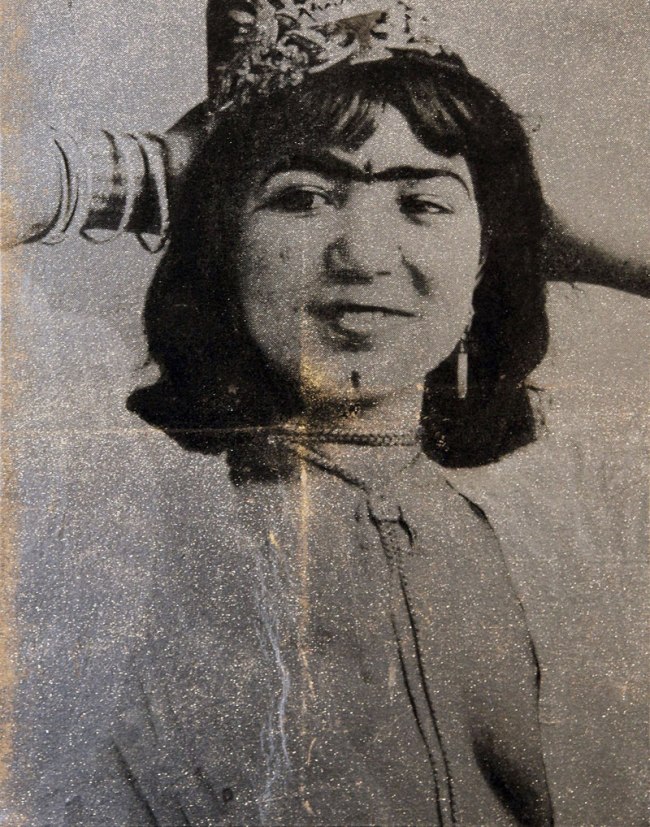
 

Brook Andrew (Australian, b. 1970) 'Portrait 9 (Arab)' 2013


Brook Andrew (Australian, b. 1970)
Portrait 9 (Arab)
2013
Mixed media on Belgian linen
70 x 55 x 5cm
Edition of 3 + 2 AP
Real photo postcard
Title: Danseuse arabe
Publisher: Photo Garrigues Tunis – 2008
Inscribed on front: Tunis 20/8/04
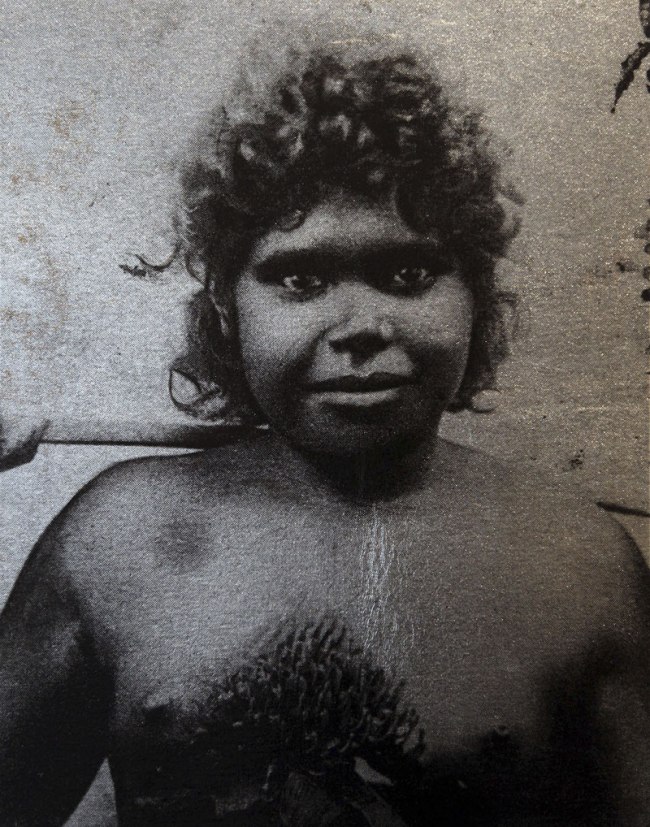
 

Brook Andrew (Australian, b. 1970) 'Portrait 7 (Australia)' 2013


Brook Andrew (Australian, b. 1970)
Portrait 7 (Australia)
2013
Mixed media on Belgian linen
70 x 55 x 5cm
Edition of 3 + 2 AP
Title: “An Australian Wild Flower”
Pub. Kerry & Co., Sydney One Penny Stamp with post mark on image side of card. No Address.
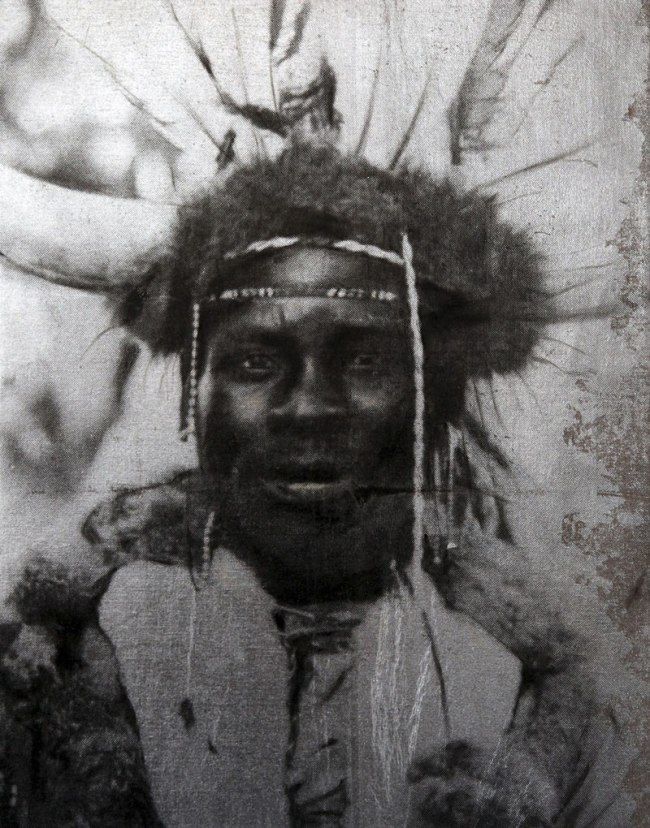
 

Brook Andrew (Australian, b. 1970) 'Portrait 40 (Unknown)' 2013


Brook Andrew (Australian, b. 1970)
Portrait 40 (Unknown)
2013
Mixed media on Belgian linen
70 x 55 x 5cm
Edition of 3 + 2 AP
Title: “Typical Ricksha Boys.”
R.111. Copyright Pub. Sapsco Real Photo, Pox 5792, Johannesburg
Pencil Mark €5
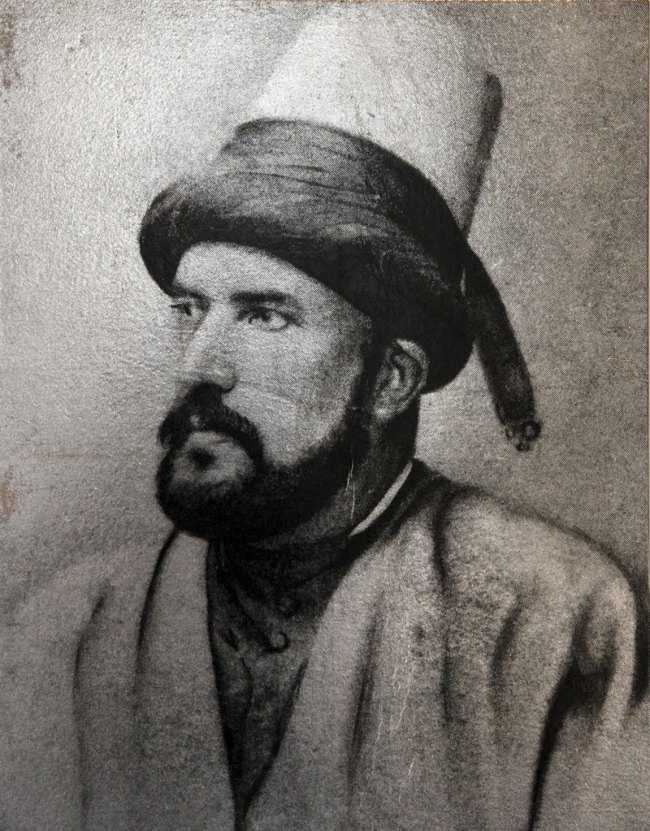
 

Brook Andrew (Australian, b. 1970) 'Portrait 44 (Syria)' 2013


Brook Andrew (Australian, b. 1970)
Portrait 44 (Syria)
2013
Mixed media on Belgian linen
70 x 55 x 5cm Edition of 3 + 2 AP
Real photo postcard
Title: Derviches tourneurs á Damas
Printed on verso: Turquie, Union Postal Universelle, Carte postale


Brook Andrew (Australian, b. 1970) 'Vox: Beyond Tasmania' 2013

Brook Andrew (Australian, b. 1970) 'Vox: Beyond Tasmania' 2013

Brook Andrew (Australian, b. 1970) 'Vox: Beyond Tasmania' 2013

Brook Andrew (Australian, b. 1970) 'Vox: Beyond Tasmania' 2013 (detail)

Brook Andrew (Australian, b. 1970) 'Vox: Beyond Tasmania' 2013 (detail)

Brook Andrew (Australian, b. 1970) 'Vox: Beyond Tasmania' 2013 (detail)


Brook Andrew (Australian, b. 1970)
Vox: Beyond Tasmania (full piece and detail shots)
2013
Timber, glass and mixed media
267 x 370 x 271cm


Brook Andrew’s newest exhibition is a blockbuster comprising 52 portraits, all mixed media and all measuring 70 x 55 x 5cm. The portraits are of unknown people from Africa, Argentina, Ivory Coast, Syria, Sudan, Japan, Australia … They are based on 19th century postcards which Brook Andrew has collected over many years. These postcards were originally made for an international market interested in travel.

‘Colonial photographers made a trade in photographic images, which were on sold as postcards and souvenirs,’ writes Professor Ian Anderson in Re-assembling the trophies and curios of Colonialism & the Silent Terror. According to Brook Andrew, ‘names were not recorded when Indigenous peoples were photographed for ethnographic and curio purposes. The history and identity of these people remain absent.  In rare instances, some families might know an ancestor from a postcard.’

The exhibition takes it title from a book of drawings by Anatomist Richard Berry: TRANSACTIONS of the ROYAL SOCIETY OF VICTORIA. Published in 1909, Volume V of this rare book contains FIFTY-TWO TASMANIA CRANIA – tracings of 52 Tasmanian Aboriginal skulls that were at the time mainly in private collections.

‘These skulls,’ says Brook Andrew, ‘represented a pan-international practice of collecting Aboriginal skulls as trophies, a practice dependent on theories of Aboriginal people being part of the most primitive race of the world, hence a dying species. This theory activated many collections and grave robbing simultaneously.’

In 52 Portraits Brook Andrew delves into hidden histories such as the ‘dark art of body-snatching’ and continues his fascination with the meaning of appearances. ‘He zooms in on the head and torso of young men and women,’ says Nikos Papastergiadis. ‘Brook Andrew’s exhibition, takes us to another intersection where politics and aesthetics run in and over each other.’

The original images embody the colonial fantasies of innocence and backwardness, as well as more aggressive, but tacit expression of the wish to express uninhibited sexual availability. Brook Andrew aims to confront both the lascivious fascination that dominated the earlier consumption of these images and prudish aversions and repressive gaze that informs our more recent and much more ‘politically correct’ vision. His images make the viewer consider the meaning of these bodies and his focus also directs a critical reflection on the assumptions that frame the status of these images.

The centre piece of the exhibition is a kind of Wunderkammer containing all manner of ‘curiosities’ including a skull, drawings of skulls, a partial skeleton, photographs, diaries, glass slides, a stone axe and Wiradjuri shield. Titled Vox: Beyond Tasmania, the Wunderkammer/Gramophone plays out stories of Indigenous peoples.

In the interplay between the 52 Portraits and Vox: Beyond Tasmania, Brook Andrew aims to stir and open our hearts with his powerful 21st century ‘memorial’.

Press release from the Tolarno Galleries website


Tolarno Galleries
Level 4
104 Exhibition Street
Melbourne VIC 3000
Australia
Phone: 61 3 9654 6000

Opening hours:
Tuesday – Friday 10am – 5pm
Saturday 1pm – 4pm

Tolarno Galleries website

LIKE ART BLART ON FACEBOOK

Back to top

Marcus Bunyan black and white archive: South Yarra and surrounds, 1994

June 2013

PLEASE NOTE: THIS POSTING CONTAINS ART PHOTOGRAPHS OF MALE NUDITY – IF YOU DO NOT LIKE PLEASE DO NOT LOOK, FAIR WARNING HAS BEEN GIVEN


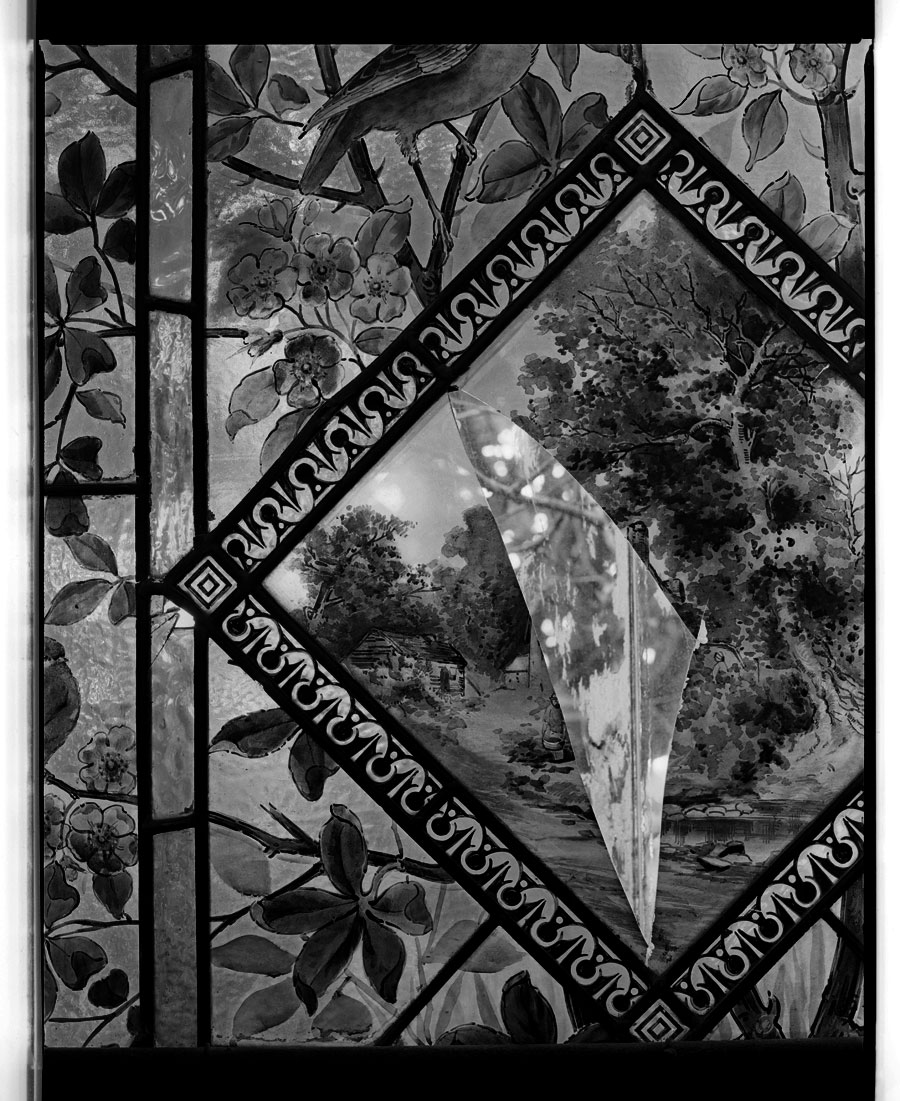
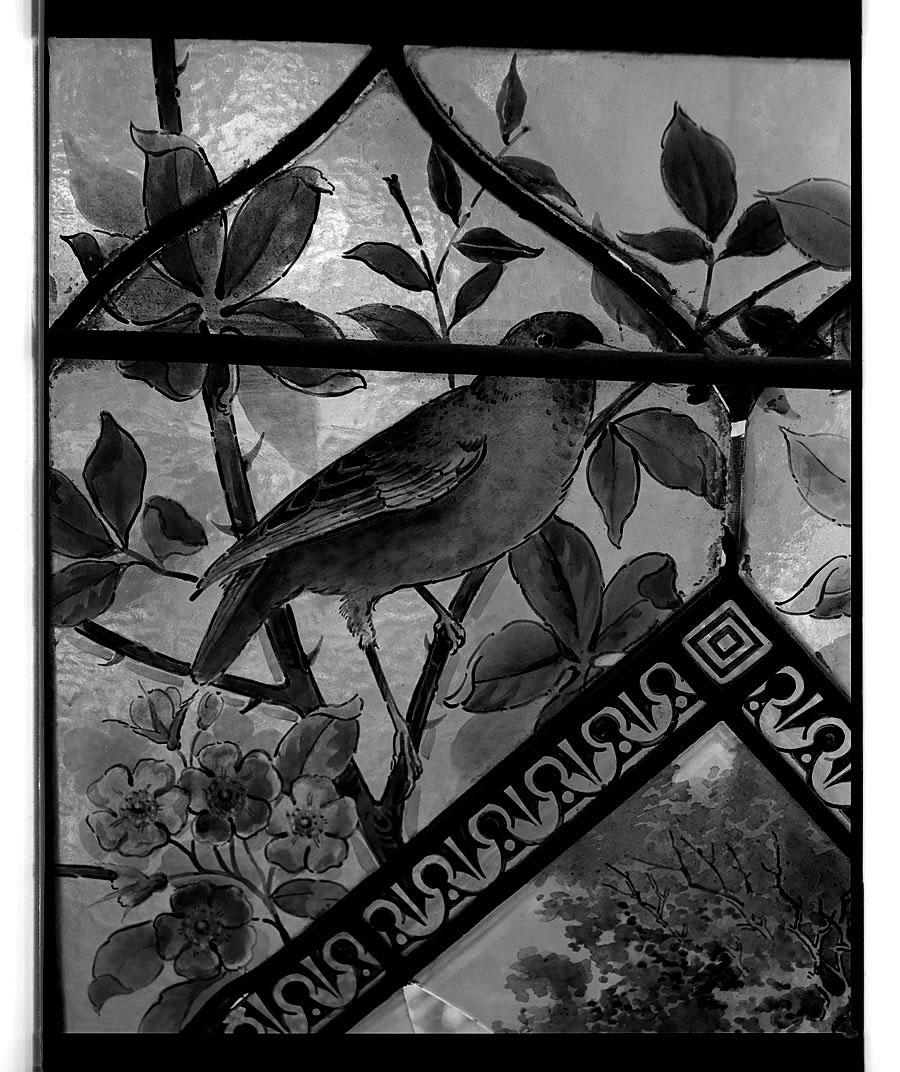
Marcus Bunyan (Australian, b. 1958) 'Stained glass, cracked' 1994


Marcus Bunyan (Australian, b. 1958)
Stained glass, cracked
1994
Silver gelatin photograph


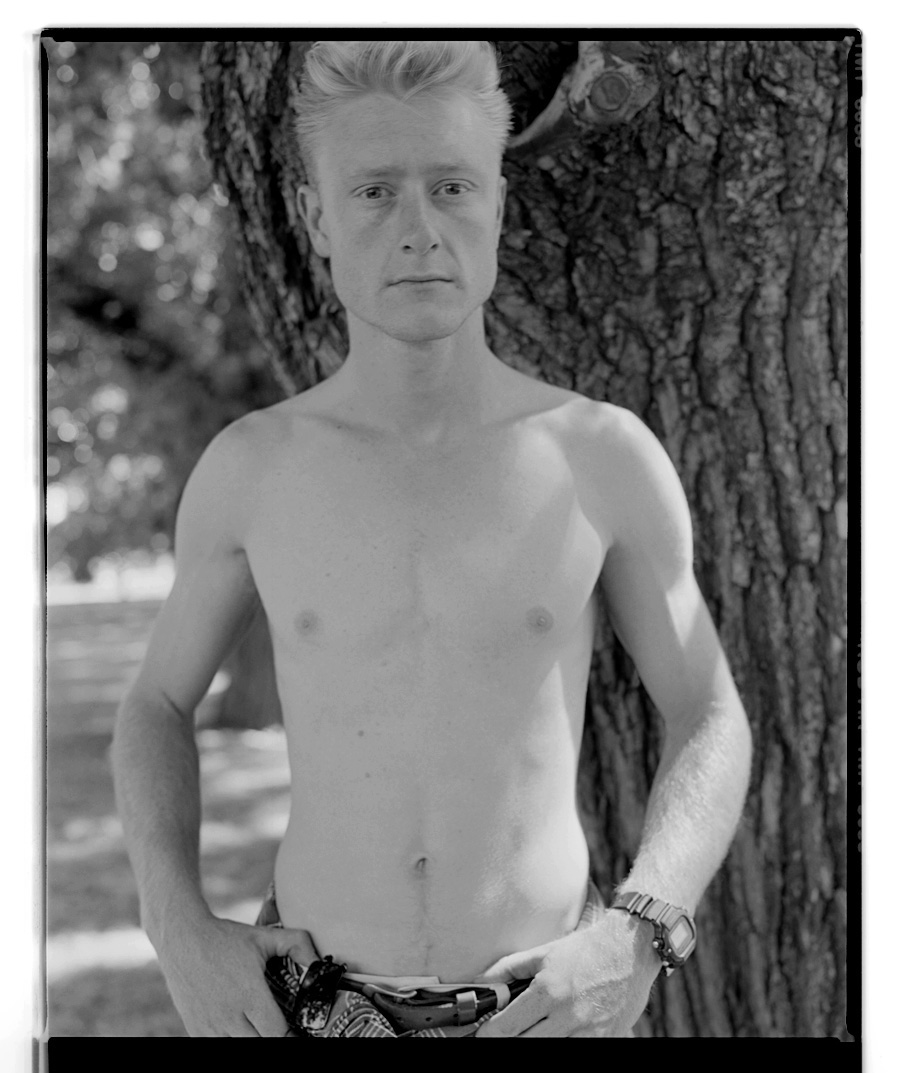
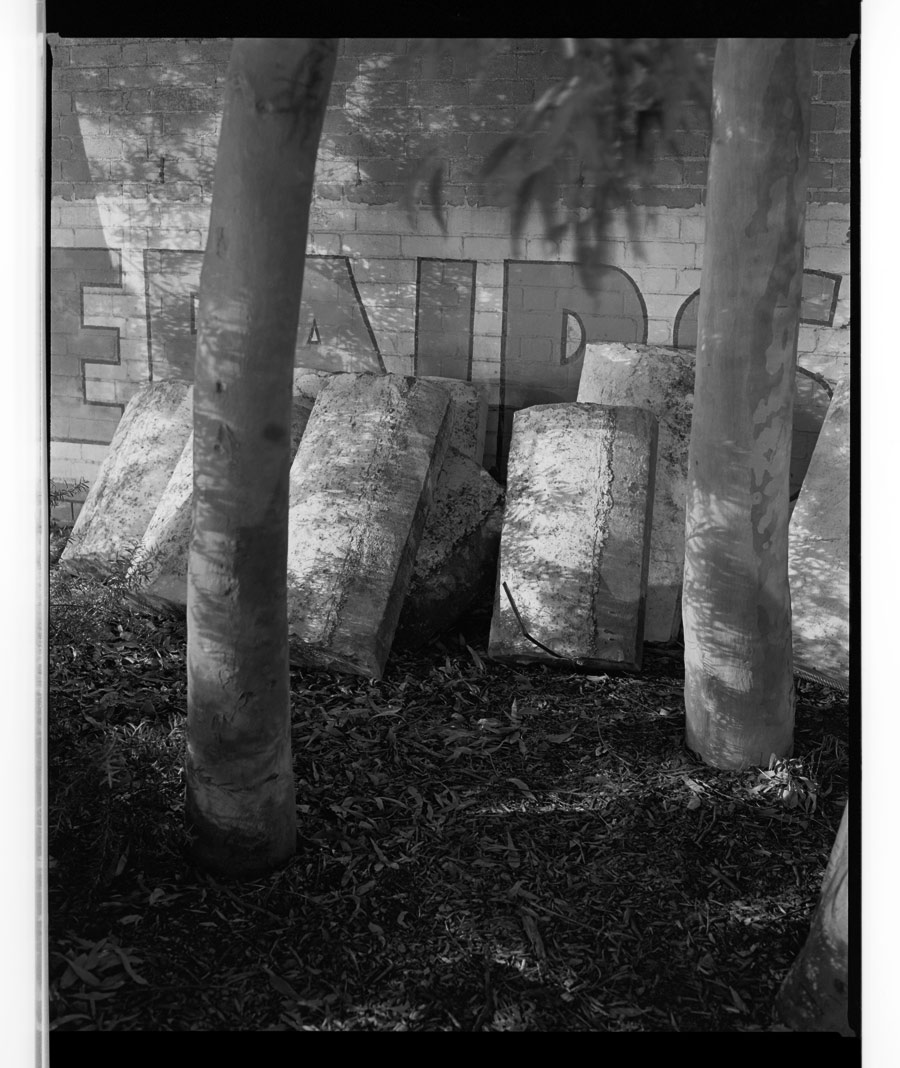
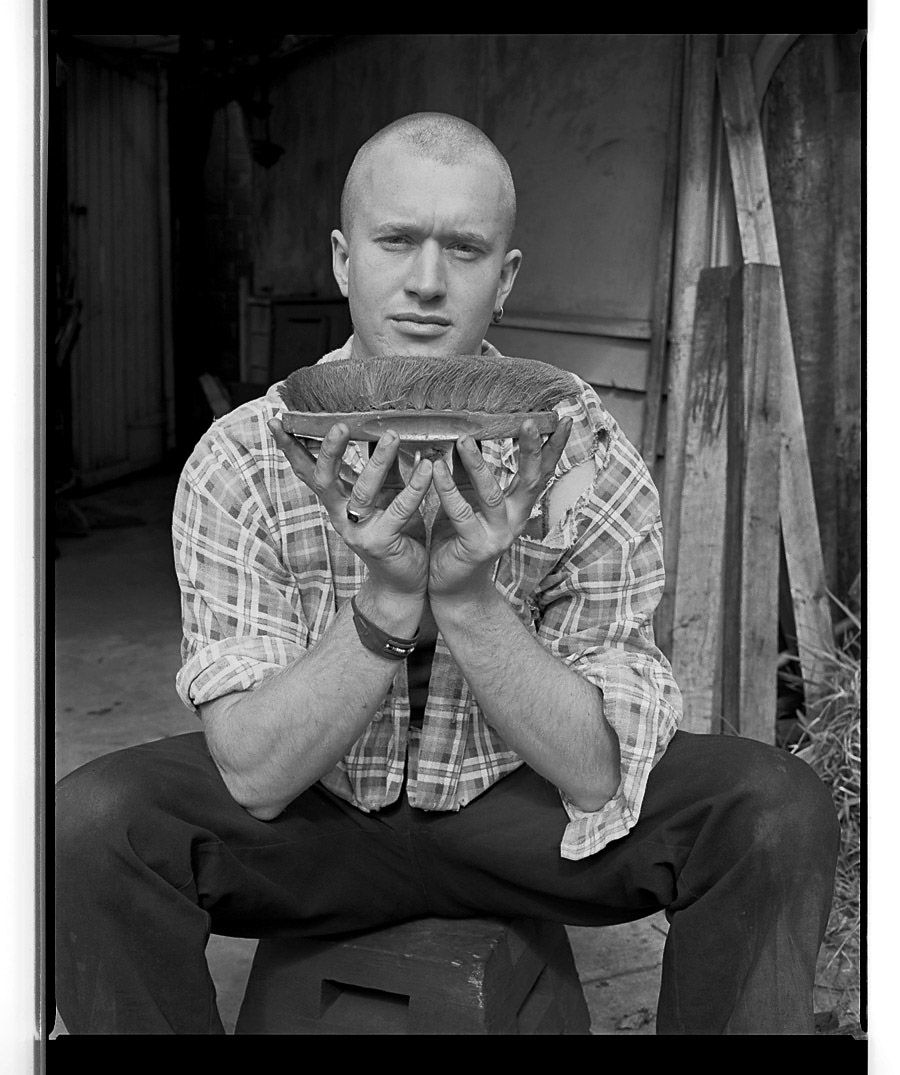
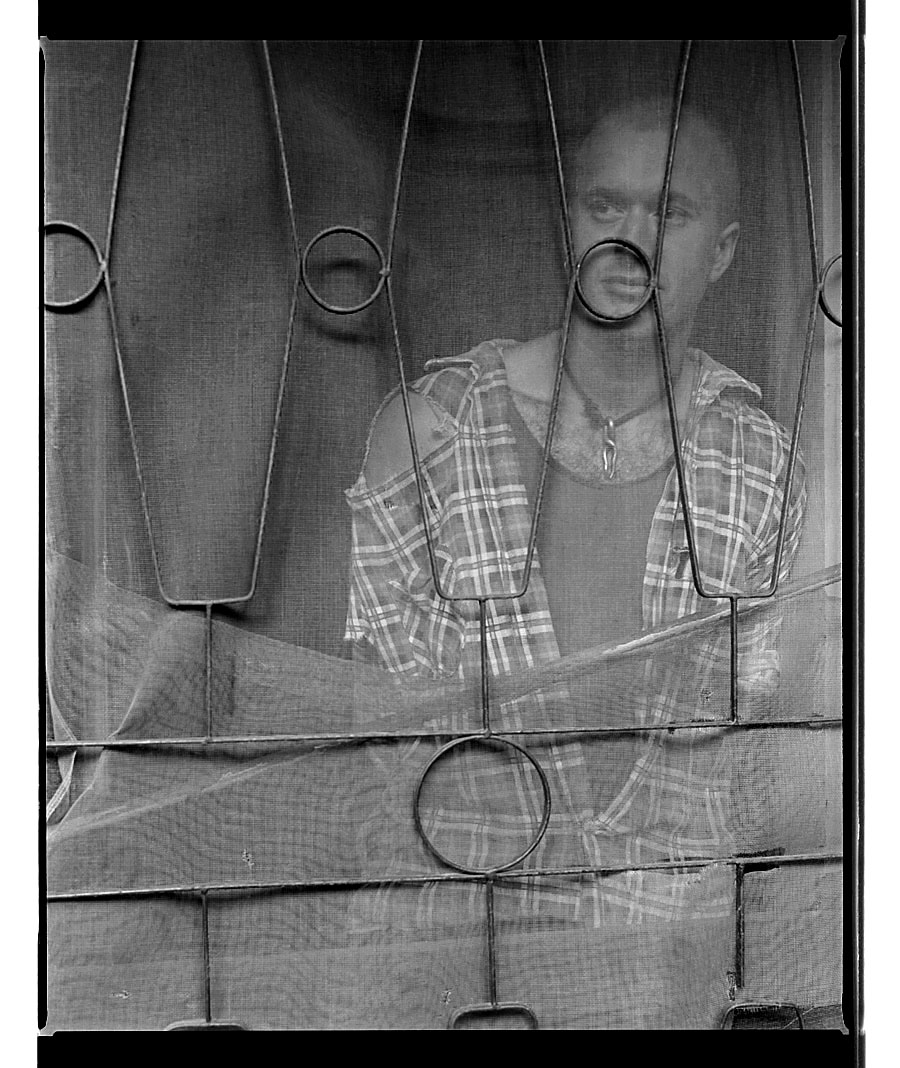
I am scanning my negatives made during the years 1991-1997 to preserve them in the form of an online archive as a process of active memory, so that the images are not lost forever. These photographs were images of my life and imagination at the time of their making, the ideas I was thinking about and the people and things that surrounded me.

All images © Marcus Bunyan. Please click the photographs for a larger version of the image; remember these are just straight scans of the negatives !

Photographs are available from this series for purchase. As a guide, a vintage 8″ x 10″ silver gelatin print costs $700 plus tracked and insured shipping. For more information please see my Store web page.


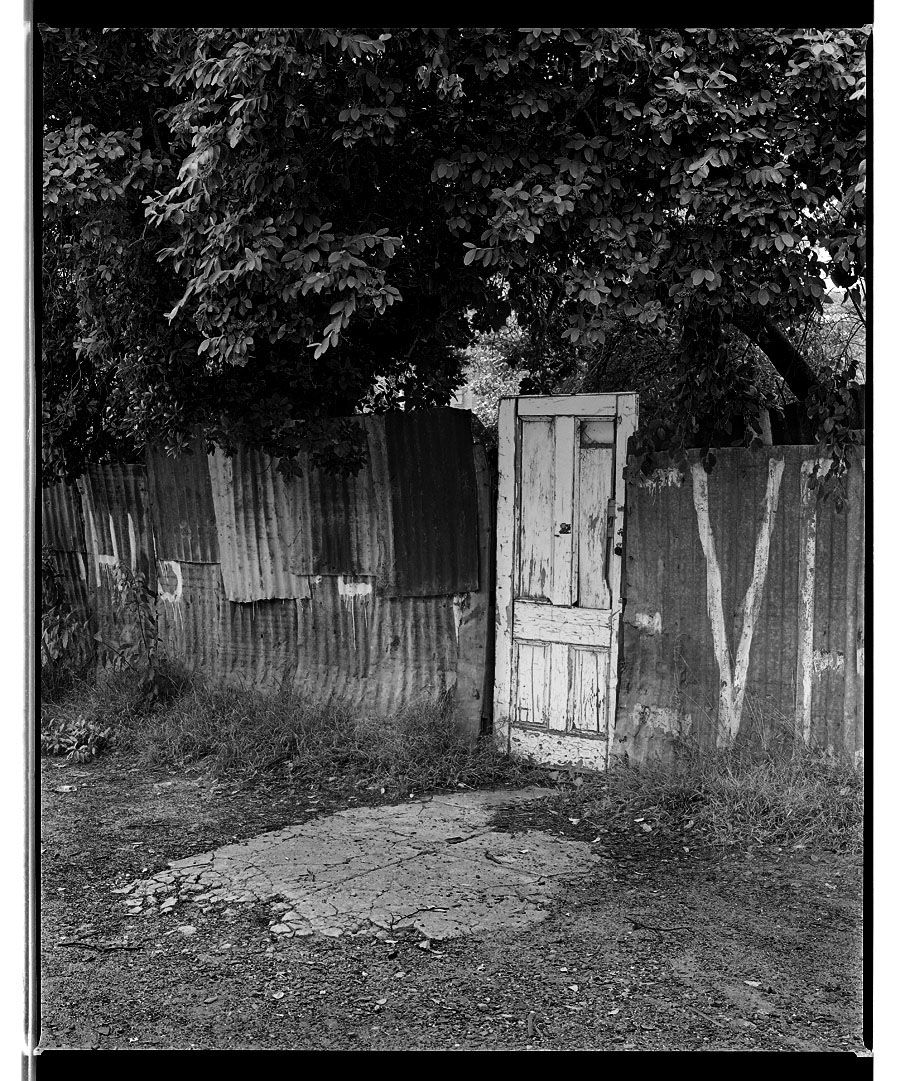
Marcus Bunyan (Australian, b. 1958) 'White door 1' 1994


Marcus Bunyan (Australian, b. 1958)
White door 1
1994
Silver gelatin photograph


Marcus Bunyan (Australian, b. 1958) 'Damien, 1994' 1994


Marcus Bunyan (Australian, b. 1958)
Damien, 1994
1994
Silver gelatin photograph


Marcus Bunyan (Australian, b. 1958) 'Night repair' 1994


Marcus Bunyan (Australian, b. 1958)
Night repair
1994
Silver gelatin photograph


Marcus Bunyan (Australian, b. 1958) 'Jerry holding a brush, South Yarra' 1994


Marcus Bunyan (Australian, b. 1958)
Jerry holding a brush, South Yarra
1994
Silver gelatin photograph


Marcus Bunyan (Australian, b. 1958) 'Jerry behind safety screen, Punt Road, South Yarra' 1994


Marcus Bunyan (Australian, b. 1958)
Jerry behind safety screen, Punt Road, South Yarra
1994
Silver gelatin photograph


Marcus Bunyan (Australian, b. 1958) 'Presence' 1994


Marcus Bunyan (Australian, b. 1958)
Presence
1994
Silver gelatin photograph


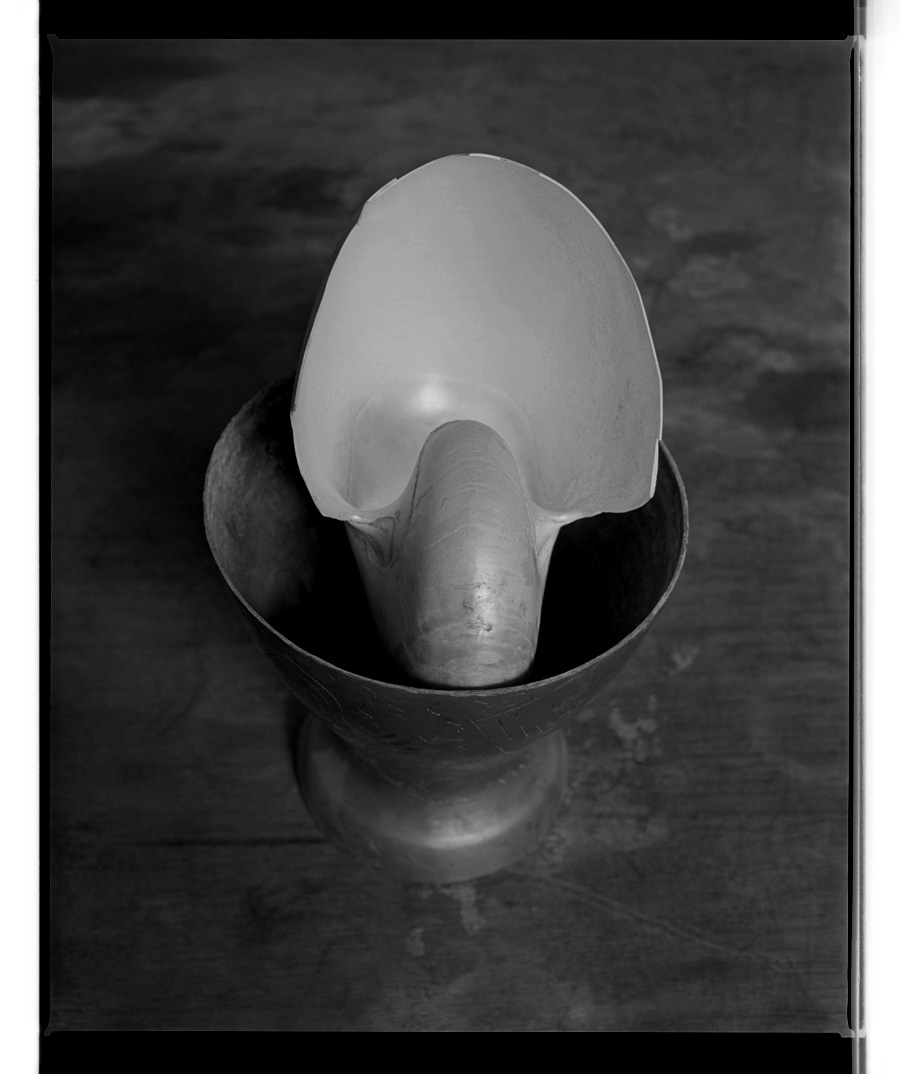
Marcus Bunyan (Australian, b. 1958) 'Nautilus shell in cup' 1994


Marcus Bunyan (Australian, b. 1958)
Nautilus shell in cup
1994
Silver gelatin photograph


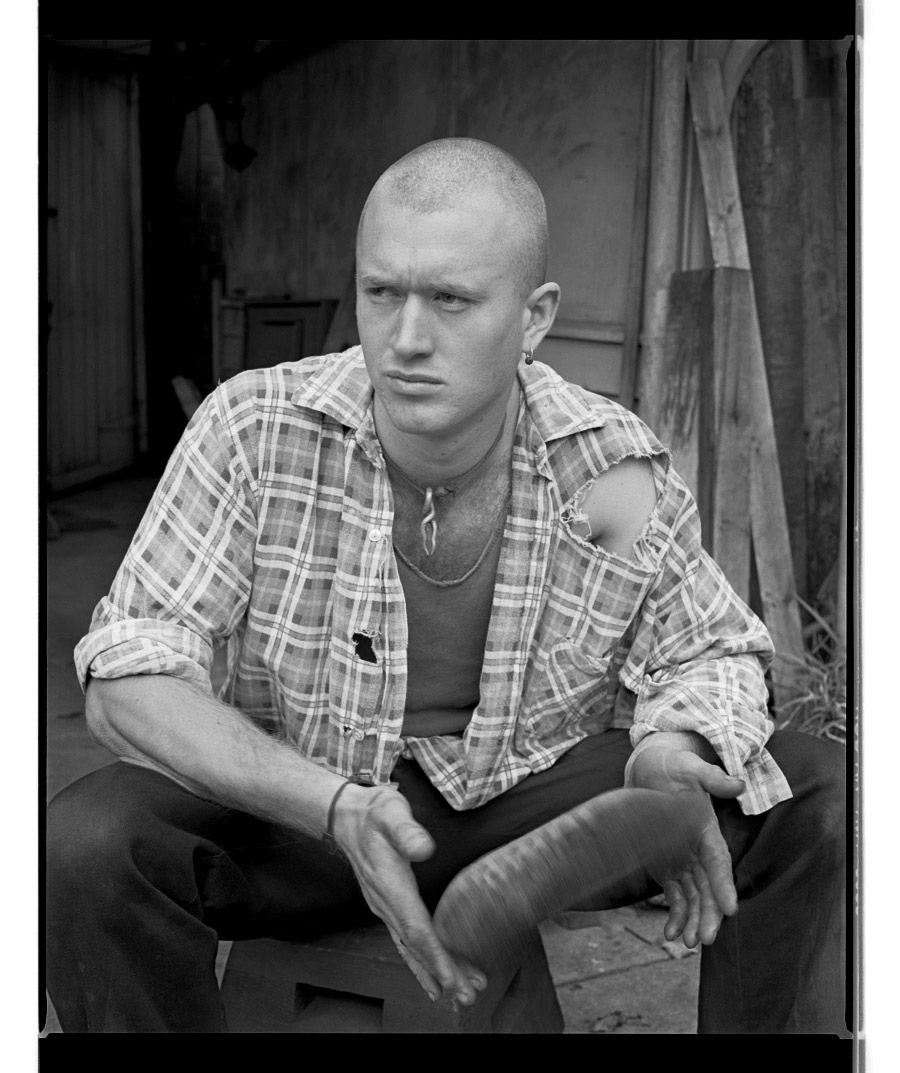
Marcus Bunyan (Australian, b. 1958) 'Jerry with shaved head' 1994


Marcus Bunyan (Australian, b. 1958)
Jerry with shaved head
1994
Silver gelatin photograph


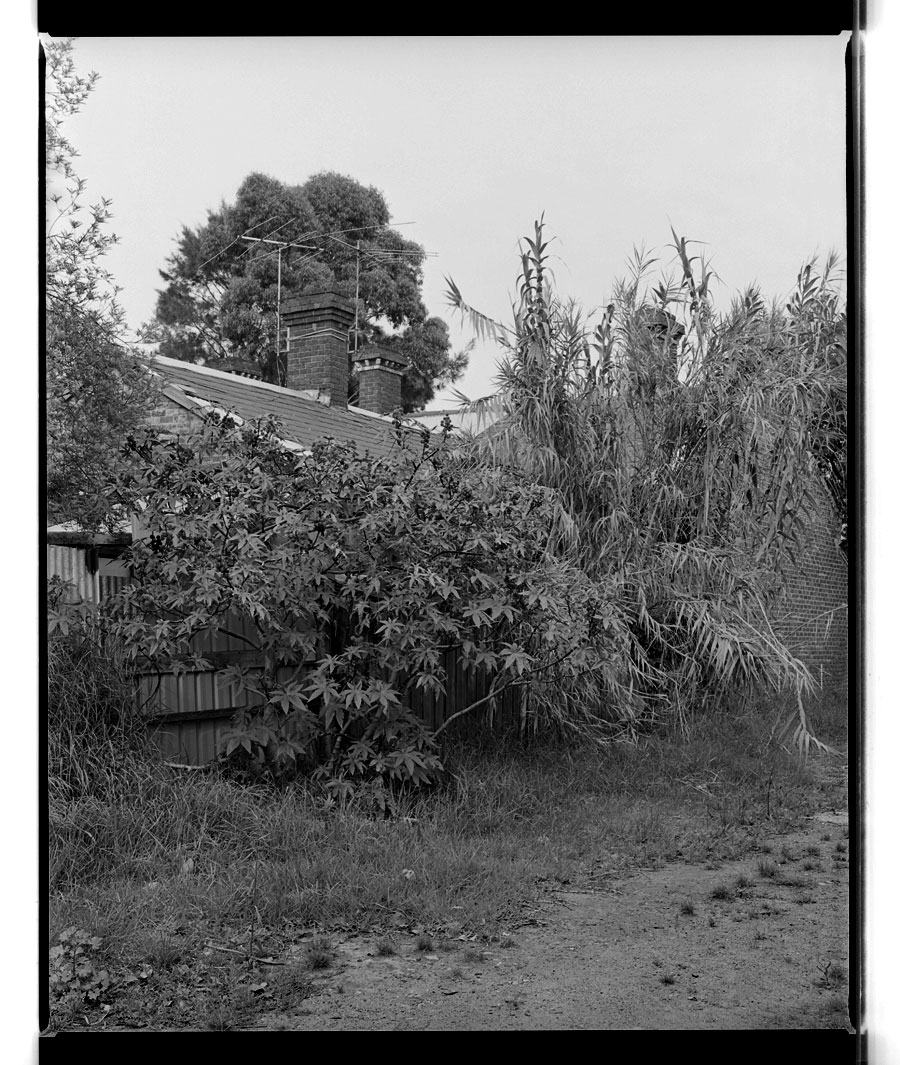
Marcus Bunyan (Australian, b. 1958) 'Undergrowth' 1994


Marcus Bunyan (Australian, b. 1958)
Undergrowth
1994
Silver gelatin photograph


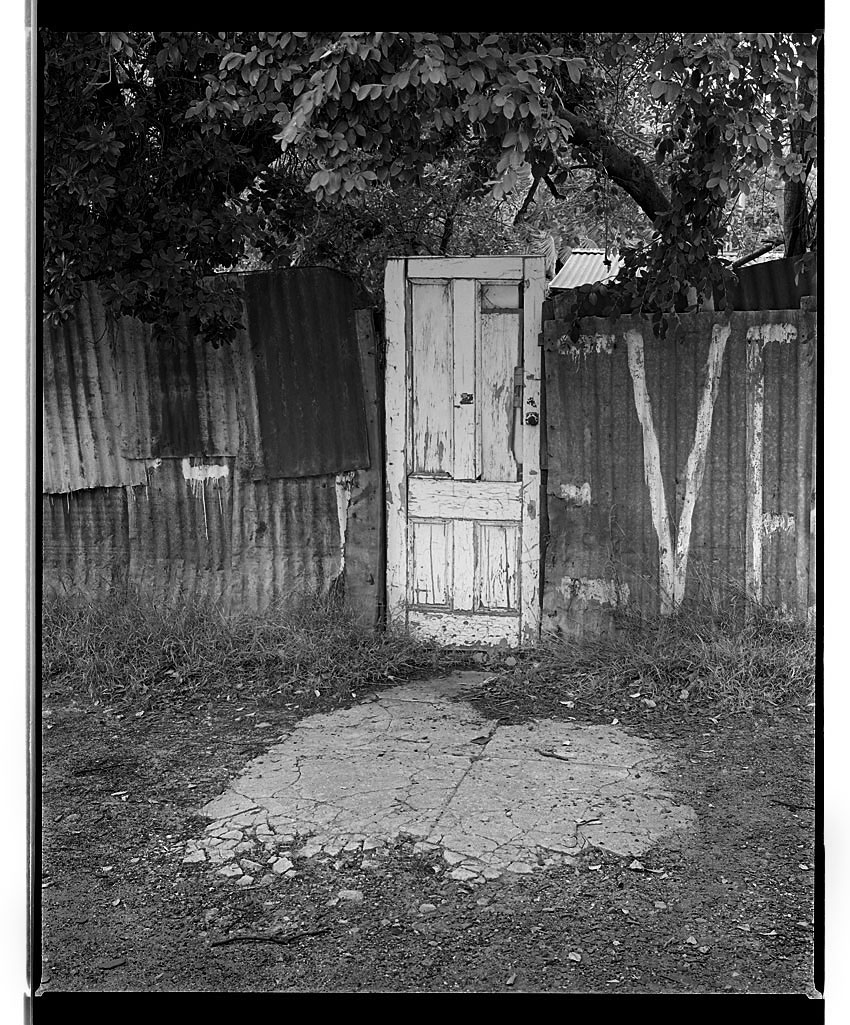
Marcus Bunyan (Australian, b. 1958) 'White door 2' 1994


Marcus Bunyan (Australian, b. 1958)
White door 2
1994
Silver gelatin photograph


Marcus Bunyan (Australian, b. 1958) 'Damien sitting outside his flat, South Yarra, 1994' 1994


Marcus Bunyan (Australian, b. 1958)
Damien sitting outside his flat, South Yarra, 1994
1994
Silver gelatin photograph


Marcus Bunyan (Australian, b. 1958) 'Trees, capstone, shadows' 1994


Marcus Bunyan (Australian, b. 1958)
Trees, capstone, shadows
1994
Silver gelatin photograph


Marcus Bunyan (Australian, b. 1958) 'Damien with snake' 1994


Marcus Bunyan (Australian, b. 1958)
Damien with snake
1994
Silver gelatin photograph


Marcus Bunyan (Australian, b. 1958) 'Glass bird, Punt Road, South Yarra' 1994


Marcus Bunyan (Australian, b. 1958)
Glass bird, Punt Road, South Yarra
1994
Silver gelatin photograph


Marcus Bunyan (Australian, b. 1958) 'Easter Sunday' 1994


Marcus Bunyan (Australian, b. 1958)
Easter Sunday
1994
Silver gelatin photograph


Marcus Bunyan (Australian, b. 1958) 'Capstone, night, Windsor train station' 1994


Marcus Bunyan (Australian, b. 1958)
Capstone, night, Windsor train station
1994
Silver gelatin photograph


Marcus Bunyan (Australian, b. 1958) 'Paul, cock on anvil' 1994


Marcus Bunyan (Australian, b. 1958)
Paul, cock on anvil
1994
Silver gelatin photograph


Marcus Bunyan black and white archive 1991-1997

LIKE ART BLART ON FACEBOOK

Back to top
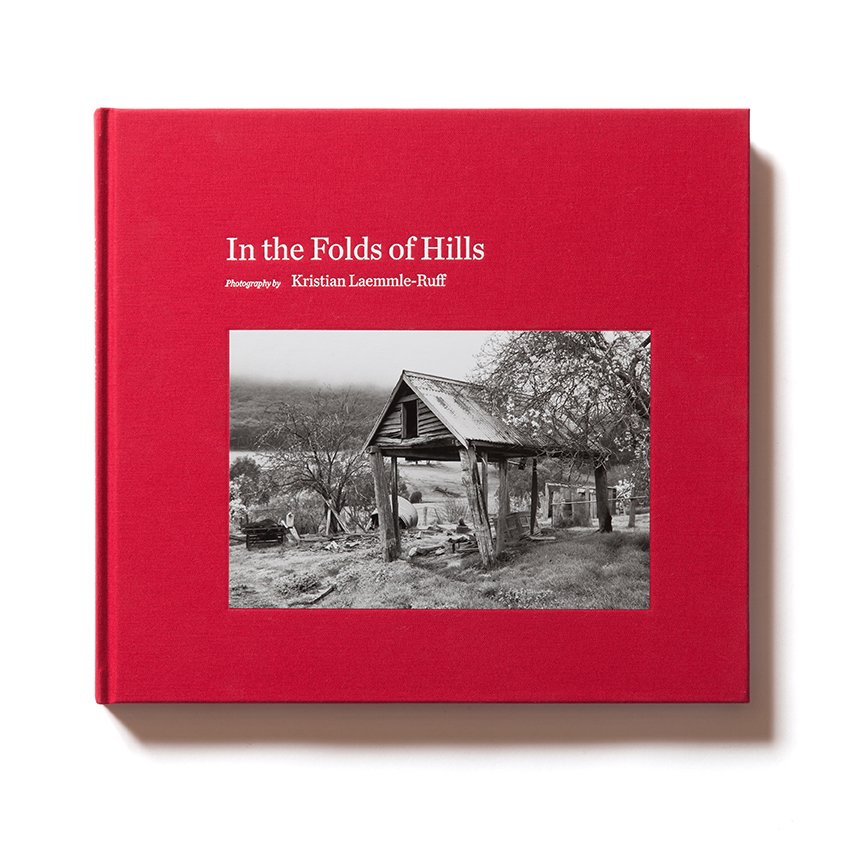
Exhibition: ‘Harry Callahan Retrospective’ at the House of Photography at Deichtorhallen Hamburg

Exhibition dates: 22nd March – 9th June 2013


Harry Callahan (American, 1912-1999) 'Eleanor, Chicago' 1948


Harry Callahan (American, 1912-1999)
Eleanor, Chicago
1948
Gelatin silver print
© The Estate of Harry Callahan. Courtesy Pace/MacGill Gallery, New York


Great to see some early colour photographs from this master.

Marcus


Many thankx to the House of Photography, Deichtorhallen Hamburg for allowing me to publish the photographs in the posting. Please click on the photographs for a larger version of the image.


“I wish that people felt that photography was an adventure the same as life itself and felt that their individual feelings were worth expressing.”


Harry Callahan


Harry Callahan (American, 1912-1999) 'Detroit' 1943


Harry Callahan (American, 1912-1999)
Detroit
1943
Gelatin silver print
© The Estate of Harry Callahan. Courtesy Pace/MacGill Gallery, New York


Harry Callahan (American, 1912-1999) 'Chicago' 1949


Harry Callahan (American, 1912-1999)
Chicago
1949
Gelatin silver print
© The Estate of Harry Callahan. Courtesy Pace/MacGill Gallery, New York


Harry Callahan (American, 1912-1999) 'Eleanor' 1947


Harry Callahan (American, 1912-1999)
Eleanor
1947
Gelatin silver print
© The Estate of Harry Callahan. Courtesy Pace/MacGill Gallery, New York


Harry Callahan (American, 1912-1999) 'Harry Callahan, Bristol' 1993


Stephan Brigidi (American, b. 1951)
Harry Callahan, Bristol
1993
© Stephan Brigidi


Harry Callahan (American, 1912-1999) 'Providence' 1979


Harry Callahan (American, 1912-1999)
Providence
1979
© The Estate of Harry Callahan. Courtesy Pace/MacGill Gallery, New York


Harry Callahan (1912-1999) is regarded as one of the most innovative and influential artists in the history of 20th-century US photography. Deichtorhallen Hamburg is taking the artist’s creative intensity, the aesthetic standing his oeuvre enjoys in the context of 20th-century US photography and the fact that 2012 marked the 100th anniversary of his birth as an opportunity to present his oeuvre in an extensive retrospective with over 280 works from March 22 through June 9, 2013. The exhibition is to date the most extensive show of his work, and includes both his black-and-white gelatin silver prints and his colour works produced using the dye-transfer process.

Harry Callahan was one of the first to overcome the prevailing aesthetics of Realism by advancing the New Vision, which László Moholy-Nagy had established in the New Bauhaus in Chicago, and Ansel Adams’ so-called “straight photography” in an innovative, highly sensitive way. Between 1946 and 1997 the Museum of Modern Art in New York alone honoured Callahan’s photographic oeuvre in a total of 38 exhibitions. Together with the painter Richard Diebenkorn, Callahan represented the USA at the 1978 Venice Biennale, the first photographer ever to do so. Nonetheless, in Europe Callahan’s multifaceted work is still considered a rarity in the history of photography.

In addition to photographs of nature and landscapes, Callahan’s oeuvre, spanning a period of nearly 60 years as of 1938, embraces pictures of his daily strolls through cities such as Detroit, Chicago, Providence, Atlanta, and New York. Portrayed frequently in very intense light, his leitmotifs were streets, shop windows, buildings and pedestrians hurrying past. Very early on he regarded photography as a purely artistic medium, and saw himself as an art photographer rather than a representative of applied photography. In later years other works, in which his wife Eleanor and daughter Barbara were the focal point, were superseded by another major experiment: the photographs he took on numerous trips to France, Italy, Morocco, Portugal, and Ireland. His works document the emergence of Modernism, which was taking an ever-greater hold on everyday life. Relating to his three main themes, nature, the familiar figure of his wife Eleanor, and cities, Callahan’s images reflect his life in ever-new references that become increasingly less interwoven with one another. At the same time they trace the social and cultural transformation in the USA discreetly, elegantly, and with a tendency to abstraction, recording the changes as a seismograph does earth tremors. In his images Callahan consistently reflects on both his own and the camera’s way of seeing.

Compiled by Sabine Schnakenberg, the exhibition at the House of Photography continues the series of major photographic retrospectives of internationally renowned representatives of photographic history previously staged at the Deichtorhallen in Hamburg, including Martin Munkacsi (2005), Lillian Bassman, Paul Himmel (2009), and Saul Leiter (2012). The exhibition is based on loans from two generous lenders, namely the Estate of Harry Callahan together with the Pace / MacGill Gallery in New York, and the extensive selection of Callahan’s images from F.C. Gundlach’s photographic collection, both those on permanent loan to Deichtorhallen as well as those in the collection of the F.C. Gundlach Foundation.

Press release from Deichtorhallen Hamburg website


Harry Callahan (American, 1912-1999) 'Atlanta' 1943


Harry Callahan (American, 1912-1999)
Atlanta
1943
© The Estate of Harry Callahan. Courtesy Pace/MacGill Gallery, New York


Harry Callahan (American, 1912-1999) 'Detroit' 1943


Harry Callahan (American, 1912-1999)
Detroit
c. 1943
© The Estate of Harry Callahan. Courtesy Pace/MacGill Gallery, New York


Harry Callahan (American, 1912-1999) 'Chicago' 1951


Harry Callahan (American, 1912-1999)
Chicago
1951
© The Estate of Harry Callahan. Courtesy Pace/MacGill Gallery, New York


Harry Callahan (American, 1912-1999) 'Eleanor, Chicago' 1951


Harry Callahan (American, 1912-1999)
Eleanor, Chicago
1951
© The Estate of Harry Callahan. Courtesy Pace/MacGill Gallery, New York


Harry Callahan (American, 1912-1999) 'Chicago' c. 1952


Harry Callahan (American, 1912-1999)
Chicago
c. 1952
© The Estate of Harry Callahan. Courtesy Pace/MacGill Gallery, New York


Harry Callahan (American, 1912-1999) 'Providence' 1978


Harry Callahan (American, 1912-1999)
Providence
1978
© The Estate of Harry Callahan. Courtesy Pace/MacGill Gallery, New York


Harry Callahan (American, 1912-1999) 'New York' c. 1975


Harry Callahan (American, 1912-1999)
New York
c. 1975
Dye-transfer print
© The Estate of Harry Callahan. Courtesy Pace/MacGill Gallery, New York


Harry Callahan (American, 1912-1999) 'Ireland' 1979


Harry Callahan (American, 1912-1999)
Ireland
1979
© The Estate of Harry Callahan. Courtesy Pace/MacGill Gallery, New York


Deichtorhallen Hamburg
Deichtorstrasse 1-2
20095
Hamburg
Phone: +49 (0)40 32103-0

Opening hours:
Tuesday – Sunday 11am – 6pm
Closed Mondays

Deichtorhallen Hamburg website

LIKE ART BLART ON FACEBOOK

Back to top
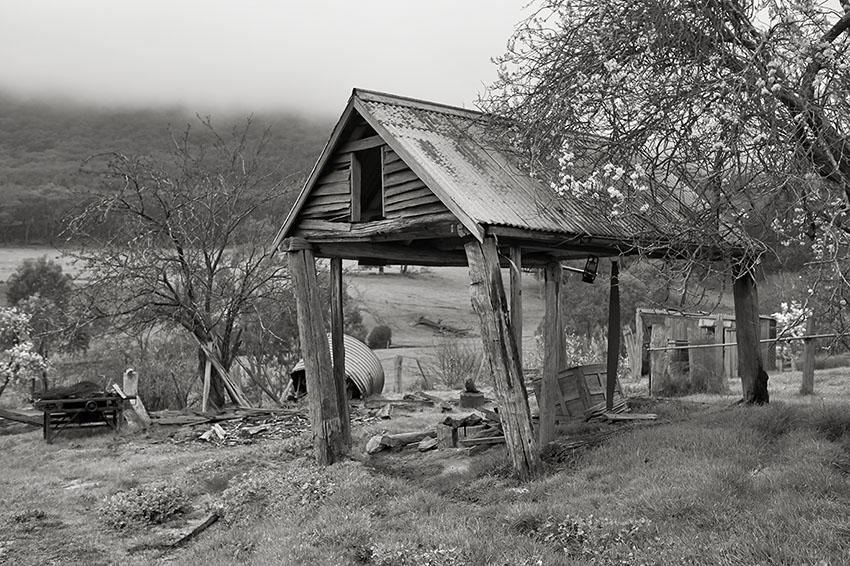
Exhibition: ‘Picturing New York: Photographs from the Museum of Modern Art’ at the Art Gallery of Western Australia (AGWA), Perth

Exhibition dates: 26th January – 12th May 2013


Berenice Abbott (American, 1898-1991) 'Fifth Avenue, nos. 4, 6, 8, Manhattan' March 20, 1936


Berenice Abbott (American, 1898-1991)
Fifth Avenue, nos. 4, 6, 8, Manhattan
March 20, 1936
Gelatin silver print
15 x 19 1/4″ (38.1 x 48.9cm)
The Museum of Modern Art, New York
Thomas Walther Collection
© 2012 Berenice Abbott/Commerce Graphics


A second tranche of images from this touring exhibition of photographs from the MoMA collection, presented at the Art Gallery of Western Australia in Perth. My personal favourites in this posting are the tonal Abbott, mean streets Gedney, luminous Groover and the intimate Burckhardt. There are two photographers I don’t know at all (Gedney and Burckhardt) and one who is very underrated: Peter Hujar.

Dr Marcus Bunyan


Many thankx to the AGWA for allowing me to publish the photographs in the posting. Please click on the photographs for a larger version of the image.


William Gedney (American, 1924-1989) 'Brooklyn' 1966


William Gedney (American, 1924-1989)
Brooklyn
1966
Gelatin silver print
7 9/16 x 11 5/16″ (19.3 x 28.8cm)
The Museum of Modern Art, New York
Gift of the Duke University Rare Book, Manuscript, and Special Collections Library
© 2012 Estate of William Gedney


William Gale Gedney (October 29, 1932 – June 23, 1989) was an American photographer. It wasn’t until after his death that his work gained momentum and his work is now widely recognised… William Gedney died of AIDS in 1989, aged 56, in New York City and is buried in Greenville, New York, a few short miles from his childhood home. He left his photographs and writings to his lifelong friend Lee Friedlander.

Text from the Wikpedia website

See more photographs by William Gedney on the Duke Libraries website and on The Selvedge Yard website


Jan Groover (American, 1943-2012) 'Untitled' 1981


Jan Groover (American, 1943-2012)
Untitled
1981
Platinum/palladium print
7 5/8 x 9 1/2″ (19.4 x 24.2cm)
The Museum of Modern Art, New York
Gift of Howard Stein
© 2012 Jan Groover


“Depicting the iconic New York that captivates the world’s imagination and the idiosyncratic details that define New Yorkers’ sense of home, this exhibition from MoMA’s extraordinary photography collection celebrates the city in all its vitality, ambition and beauty. Made by approximately 90 artists responding to the city as well as professionals on assignment, including Henri Cartier-Bresson, Walker Evans, Lewis Hine, Helen Levitt, Cindy Sherman, Alfred Stieglitz, and Weegee, over 150 works reveal the deeply symbiotic relationship between photography and the ‘city that never sleeps’ – New York. Both an exploration of the life of the city and a documentation of photography’s evolution throughout the twentieth century, Picturing New York celebrates the great and continuing tradition of capturing the grit and glamour of one of the world’s greatest urban centres.

Artists include Berenice Abbott, Diane Arbus, Henri Cartier-Bresson, Walker Evans, Lee Friedlander, Nan Goldin, Helen Levitt, Cindy Sherman, Alfred Stieglitz, Paul Strand, Weegee, and Garry Winogrand, among many others.”

Text from the AGWA website


Lisette Model (American born Austria, 1901-1983) 'Times Square' 1940


Lisette Model (American born Austria, 1901-1983)
Times Square
1940
Gelatin silver print
15 9/16 x 19 9/16″ (39.6 x 49.7cm)
The Museum of Modern Art, New York
Gift of the photographer
© 2012 Estate of Lisette Model, courtesy Baudoin Lebon Gallery, Paris and Keitelman Gallery, Brussels


Garry Winogrand (American, 1928-1984) 'New York City' 1968


Garry Winogrand (American, 1928-1984)
New York City
1968
Gelatin silver print
8 7/8 x 13 3/16″ (22.5 x 33.5cm)
The Museum of Modern Art, New York
Purchase and gift of Barbara Schwartz in memory of Eugene M. Schwartz
© The Estate of Garry Winogrand, courtesy Fraenkel Gallery


Henri Cartier-Bresson (French, 1908-2004) 'Near the Hall of Records, New York' 1947


Henri Cartier-Bresson (French, 1908-2004)
Near the Hall of Records, New York
1947
Gelatin silver print
15 5/16 x 22 13/16″ (38.9 x 57.9cm)
The Museum of Modern Art, New York
Gift of the photographer
© 2012 Henri Cartier-Bresson/Magnum, courtesy Foundation HCB, Paris


Rudy Burckhardt (American born Switzerland, 1914-1999) 'A View From Brooklyn I' 1954


Rudy Burckhardt (American born Switzerland, 1914-1999)
A View From Brooklyn I
1954
Gelatin silver print
10 5/16 x 9 3/16″ (26.2 x 23.4cm)
The Museum of Modern Art, New York
Gift of CameraWorks, Inc. and Purchase
© 2012 Rudy Burckhardt / Artists Rights Society (ARS), New York


Rudy Burckhardt (1914, Basel – 1999) was a Swiss-American filmmaker, and photographer, known for his photographs of hand-painted billboards which began to dominate the American landscape in the nineteen-forties and fifties.

Burckhardt discovered photography as a medical student in London. He left medicine to pursue photography in the 1930s. He immigrated to New York City in 1935. Between 1934 and 1939, he traveled to Paris, New York and Haiti making photographs mostly of city streets and experimenting with short 16mm films. While stationed in Trinidad in the Signal Corps from 1941-1944, he filmed the island’s residents. In 1947, he joined the Photo League in New York City. Burckhardt married painter Yvonne Jacquette whom he collaborated with throughout their 40 year marriage. He taught filmmaking and painting at the University of Pennsylvania from 1967 to 1975.

On his 85th birthday, Burckhardt committed suicide by drowning in the lake on his property.

Text from the Wikipedia website


Rudy Burckhardt and Edwin Denby
The Climate of New York
1980


Trailer for Rudy Burckhardt Films from Tibor de Nagy Gallery on Vimeo.


Lee Friedlander (American, b. 1934) 'New York City' 1980


Lee Friedlander (American, b. 1934)
New York City
1980
Gelatin silver print
18 5/8 x 12 3/8″ (47.3 x 31.5cm)
The Museum of Modern Art, New York
The Family of Man Fund
© 2012 Lee Friedlander


Underwood and Underwood (American, active 1880-1934) 'Above Fifth Avenue, Looking North' 1905


Underwood and Underwood (American, active 1880-1934)
Above Fifth Avenue, Looking North
1905
Gelatin silver print
9 1/2 x 7 5/16″ (24.2 x 18.6cm)
The Museum of Modern Art, New York
The New York Times Collection


Alfred Stieglitz (American, 1864-1946) 'City of Ambition' 1910


Alfred Stieglitz (American, 1864-1946)
City of Ambition
1910
Photogravure
13 3/8 x 10 1/4″ (34 x 26.1cm)
The Museum of Modern Art, New York
© 2012 Estate of Alfred Stieglitz / Artists Rights Society (ARS), New York


Peter Hujar (American, 1934-1987) 'New York Series #22' 1976


Peter Hujar (American, 1934-1987)
New York Series #22
1976
Gelatin silver print
14 5/8 x 14 3/4″ (37.1 x 37.4cm)
The Museum of Modern Art, New York
Gift of the Estate of Peter Hujar and James Danziger Gallery, New York
© 2012 Peter Hujar Archive


Peter Hujar (October 11, 1934 – November 26, 1987) was an American photographer known for his black and white portraits. Born in Trenton, New Jersey, United States. Hujar later moved to Manhattan to work in the magazine, advertising, and fashion industries. His subjects also consisted of farm animals and nudes. His most famous photograph is Candy Darling on Her Deathbed which was later used by the group Antony and the Johnsons as cover for their album I Am a Bird Now. The one-time lover, friend and mentor of artist David Wojnarowicz, Hujar died of AIDS complications on November 26, 1987, aged 53.

See the more photographs on the Peter Hujar Archive website


Fairchild Aerial Surveys, Inc. 'The Mount Everest of Manhattan: The Silvered Peak of the Chrysler Building' 1930


Fairchild Aerial Surveys, Inc.
The Mount Everest of Manhattan: The Silvered Peak of the Chrysler Building
1930
Gelatin silver print
8 3/4 x 6 13/16″ (22.3 x 17.3cm)
The Museum of Modern Art, New York
The New York Times Collection


Walker Evans (American, 1903-1975) 'Girl in Fulton Street, New York 1929' 1929


Walker Evans (American, 1903-1975)
Girl in Fulton Street, New York 1929
1929
Gelatin silver print
7 1/2 x 4 5/8″ (19.1 x 11.7cm)
The Museum of Modern Art, New York
Gift of the photographer


Lewis W. Hine (American, 1874–1940) 'Italian Family Looking for Lost Baggage, Ellis Island, New York' 1905


Lewis W. Hine (American, 1874-1940)
Italian Family Looking for Lost Baggage, Ellis Island, New York
1905
Gelatin silver print
5 9/16 x 4 5/16″ (14.1 x 10.9cm)
The Museum of Modern Art, New York


Art Gallery of Western Australia
Perth Cultural Centre, James Street Mall, Perth

Opening hours:
Wednesday – Monday 10am – 5pm
Closed Tuesdays

AGWA website

LIKE ART BLART ON FACEBOOK

Back to top
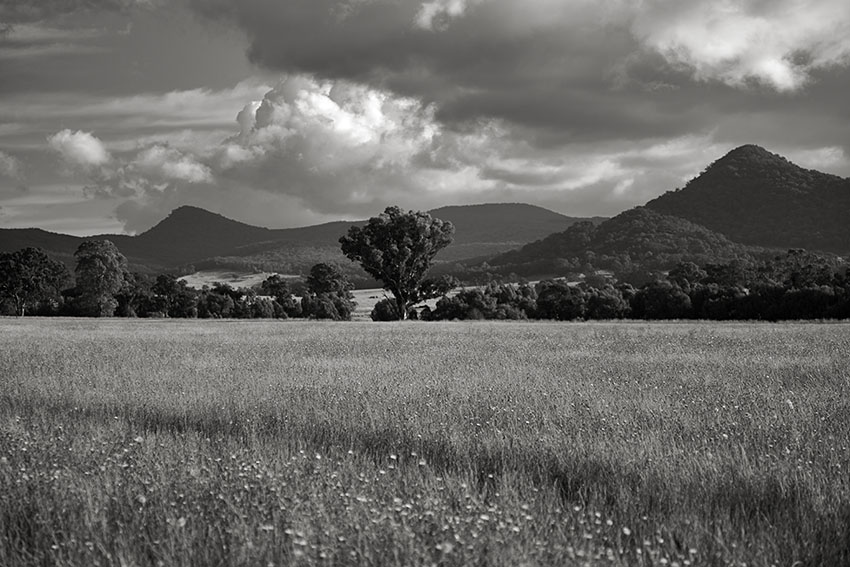
Exhibition: ‘In Focus: Robert Mapplethorpe’ at The J. Paul Getty Museum, Los Angeles

Exhibition dates: 23rd October 2012 – 24th March 2013


Robert Mapplethorpe
 (American, 1946-1989) 'Ken Moody and Robert Sherman' 1984 Platinum print


Robert Mapplethorpe
 (American, 1946-1989)
Ken Moody and Robert Sherman
1984
Platinum print
Jointly acquired by the Los Angeles County Museum of Art, with funds provided by The David Geffen Foundation, and The J. Paul Getty Trust
© Robert Mapplethorpe Foundation


One of the reasons for setting up Art Blart nearly five years ago was the idea of an exhibition archive – the cataloguing of the archive so that featured exhibitions did not ephemerally drift off into virtual space. One of the problems of a blog is its roll-through postings one after the other and I didn’t want this to happen. Thankfully, I recognised the need for a taxonomic ordering of the information early on in the life of the archive, so that Art Blart has now become a form of cultural memory.

The impulse for this idea was the memory of seeing the Robert Mapplethorpe retrospective at the Museum of Contemporary Art (MCA) in Sydney in 1995 (and what an outstanding experience it was) and being able to find nothing about this exhibition online (at the time of writing in 2013). Thankfully, there is now a Mapplethorpe Retrospective web page with 7 installation photographs on the MCA website, so at least there is some representation online.

Dr Marcus Bunyan


This exhibition runs concurrently with that of the last posting, Robert Mapplethorpe: XYZ at the Los Angeles County Museum of Art (LACMA). Many thankx to The J. Paul Getty Museum for allowing me to publish the photographs in the posting. Please click on the photographs for a larger version of the image.


Robert Mapplethorpe
 (American, 1946-1989) 'Leatherman #1' 1970


Robert Mapplethorpe
 (American, 1946-1989)
Leatherman #1
1970
Mixed media print
9 7/16 x 6 3/4 in
Jointly acquired by the Los Angeles County Museum of Art, with funds provided by The David Geffen Foundation, and The J. Paul Getty Trust
© Robert Mapplethorpe Foundation


Early Work

Born in Queens, New York, Mapplethorpe studied graphic arts at Pratt Institute in Brooklyn. His early work included collage, found objects, and jewellery. Before he took up the camera, Mapplethorpe often used pictures he cut out of magazines as collaged elements to explore sexuality and eroticism. By altering this fetishistic image and re-presenting it in a shadow box, Mapplethorpe removed the picture from its original context and elevated it to a homoerotic icon. The five-pointed star is a symbol of religious significance and the plastic mesh covering the figure evokes the metal screens commonly found in confessionals in Roman Catholic churches.

In 1972 Mapplethorpe met two influential curators: John McKendry, who gave him a Polaroid camera, and Samuel Wagstaff Jr., who became the artist’s lover and mentor. By the mid-1970s, Mapplethorpe had acquired a medium format camera and began documenting New York’s gay S&M community.


Robert Mapplethorpe
 (American, 1946-1989) 'Holly Solomon' Negative 1976; print 2005


Robert Mapplethorpe
 (American, 1946-1989)
Holly Solomon
Negative 1976; print 2005
Gelatin silver print
35.3 × 35.5 cm (13 7/8 × 14 in.)
Jointly acquired by the J. Paul Getty Trust and the Los Angeles County Museum of Art, with funds provided by the J. Paul Getty Trust and the David Geffen Foundation
© Robert Mapplethorpe Foundation


Robert Mapplethorpe
 (American, 1946-1989) 'Lisa Lyon' 1982


Robert Mapplethorpe
 (American, 1946-1989)
Lisa Lyon
1982
Jointly acquired by the Los Angeles County Museum of Art, with funds provided by The David Geffen Foundation, and The J. Paul Getty Trust
© Robert Mapplethorpe Foundation


Portraits

Mapplethorpe met writer-musician Patti Smith in 1967, and they lived together as intimate and artistic partners until 1974. This image of Smith was one of his earliest celebrity portraits. 

The two collaborated to create this image as the cover for her 1975 debut rock album, Horses. Working in a borrowed apartment, Mapplethorpe suggested using a wall adjacent to a window where a triangle of light fell at a certain time in the afternoon. Smith dressed in men’s clothes and channeled the American entertainer Frank Sinatra with her jacket slung over her shoulder. Her uncombed hair and androgynous air broke radically from the image that the music industry expected women in rock to assume.


Robert Mapplethorpe
 (American, 1946-1989) 'Patti Smith' Negative 1975; print 1995


Robert Mapplethorpe
 (American, 1946-1989)
Patti Smith
Negative 1975; print 1995
Jointly acquired by the Los Angeles County Museum of Art, with funds provided by The David Geffen Foundation, and The J. Paul Getty Trust
© Robert Mapplethorpe Foundation


A man’s jacket slung over one shoulder, the cuffs of her shirt cut off with scissors, the Bohemian poet and performer Patti Smith levels her gaze outward with authority and calm. The set of her jaw and lift of her chin suggest she wears confrontation lightly. Simultaneously, a waifish delicacy haunts her tiny body. She touches the ribbon around her neck with long fingers cupped near her heart – a shy gesture and nod to the garb of the 19th-century Romantic poets she admires. With quiet ferocity, the portrait hovers between masculine and feminine, strength and vulnerability.

Intimately bonded in life and work, Mapplethorpe and Smith made this image for the cover of her debut rock album, Horses. It is one of his earliest celebrity portraits, a genre in which he went on to distinguish himself. He often amplified the glamour of his subjects, but modernised conventional portrayals with provocative depictions of race, gender, and sexuality. For example, record executives, concerned that Smith with her lack of makeup and messy hair wasn’t conventionally pretty enough to sell records like other “girl singers,” wanted to airbrush this image. Knowing Mapplethorpe would back her up, Smith refused and the image and album shaped the start of both their iconoclastic careers.


Robert Mapplethorpe (American, 1946-1989) 'Jim, Sausalito' 1977


Robert Mapplethorpe
 (American, 1946-1989)
Jim, Sausalito
1977
Gelatin silver print
35.2 × 35.3cm (13 7/8 × 13 7/8 in.)
Jointly acquired by the J. Paul Getty Trust and the Los Angeles County Museum of Art, with funds provided by the J. Paul Getty Trust and the David Geffen Foundation
© Robert Mapplethorpe Foundation


Robert Mapplethorpe (American, 1946-1989) 'Ken Moody' 1983


Robert Mapplethorpe
 (American, 1946-1989)
Ken Moody
1983
Gelatin silver print
38.5 × 38.7cm (15 3/16 × 15 1/4 in.)
Jointly acquired by the J. Paul Getty Trust and the Los Angeles County Museum of Art, with funds provided by the J. Paul Getty Trust and the David Geffen Foundation
© Robert Mapplethorpe Foundation


The model Ken Moody poses face front, eyes closed, centred in a simple composition characteristic of the photographer Robert Mapplethorpe’s clean aesthetic. His perfectly hairless head, face, and body, the result of alopecia universalis, appear to take on a sculptural weight and dimension. The dark shadows of the background seem to lap at his neck, shoulders and under his arms, as if he emerges from a timeless, dark sea. The sophisticated lighting also sculpts the curves of his face, collarbone, and chest to further heighten their elegant forms.

This figure study is part of a large body of work featuring African-American men. Mapplethorpe was absorbed by the texture and colour of their skin, which he referred to as bronze. He used Agfa’s Portriga 118 paper for its ability to produce the velvety texture and glow discernible in this reproduction. His strong, uncluttered compositions of statuesque male models fused a classical sensibility with homoerotic content at a time when the male nude was not a popular subject among camera artists.

Text from the J. Paul Getty Museum website


Robert Mapplethorpe
 (American, 1946-1989) 'Ajitto' 1981


Robert Mapplethorpe
 (American, 1946-1989)
Ajitto
1981
Gelatin silver print
45.4 × 35.5cm (17 7/8 × 14 in.)
Jointly acquired by the J. Paul Getty Trust and the Los Angeles County Museum of Art, with funds provided by the J. Paul Getty Trust and the David Geffen Foundation
© Robert Mapplethorpe Foundation


Robert Mapplethorpe (American, 1946-1989) 'Grapes' Negative 1985; print 2004


Robert Mapplethorpe (American, 1946-1989)
Grapes
Negative 1985; print 2004
Gelatin silver print
38.5 × 38cm (15 3/16 × 14 15/16 in.)
Jointly acquired by the J. Paul Getty Trust and the Los Angeles County Museum of Art, with funds provided by the J. Paul Getty Trust and the David Geffen Foundation
© Robert Mapplethorpe Foundation


Robert Mapplethorpe. 'Calla Lily' Negative 1988; print 1990


Robert Mapplethorpe
 (American, 1946-1989)
Calla Lily
Negative 1988; print 1990
Gelatin silver print
The J. Paul Getty Museum, Los Angeles, Jointly acquired by The J. Paul Getty Trust and the Los Angeles County Museum of Art. Partial gift of The Robert Mapplethorpe Foundation; partial purchase with funds provided by The J. Paul Getty Trust and the David Geffen Foundation
© Robert Mapplethorpe Foundation


Flowers and Still Lifes

Mapplethorpe refined his style in the early 1980s, creating images of timeless elegance. After his erotic nudes, his delicate floral still lifes encouraged sexual interpretations. Although floral still lifes have traditionally held these connotations, Mapplethorpe transformed them from a subject that sophisticated collectors were reluctant to display in their homes into an important contemporary theme.

 Arranged with his characteristic sense of balance and meticulously lit, this image of a calla lily appears to glow from within. Although preternaturally still, the composition exudes a sense of latent excitement, with the milky white flower almost vibrating against the rich, black background.


“My whole point is to transcend the subject… go beyond the subject somehow, so that the composition, the lighting, all around, reaches a certain point of perfection.”

~ Robert Mapplethorpe


Mapplethorpe’s work, whether in his fashion or fine art photography, is distinguished by a tension between opposites. At the base of this image of a calla lily, he punctuates the wide planes of black and white with what seems a decadent surprise: the three-dimensional, curving lip of the flower’s edge. He explores the effects of light as a painter might experiment with a palette of colours. At the top, the flower glows milky white, reminiscent of light seen through delicate alabaster or porcelain. Mapplethorpe’s spare compositions often showcase familiar subjects in unusual ways. Floral still lifes, for example, have long encouraged sexual interpretations, and especially here, given the artist’s other work with erotic and sadomasochistic subjects. His imagination transformed and energised what some had considered a stale genre.


Robert Mapplethorpe
 (American, 1946-1989) 'Parrot Tulips' 1988


Robert Mapplethorpe
 (American, 1946-1989)
Parrot Tulips
Negative 1988; print 1990
49 × 49cm (19 5/16 × 19 5/16 in.)
Jointly acquired by the J. Paul Getty Trust and the Los Angeles County Museum of Art; partial gift of The Robert Mapplethorpe Foundation; partial purchase with funds provided by the J. Paul Getty Trust and the David Geffen Foundation
© Robert Mapplethorpe Foundation


Robert Mapplethorpe (American, 1946-1989) is one of the best-known and most controversial photographers of the second half of the 20th century. As a tastemaker and provocateur, his highly stylised explorations of gender, race, and sexuality became hallmarks of the period and exerted a powerful influence on his contemporaries. In recognition of the 2011 joint acquisition of Mapplethorpe’s art and archival materials with the Getty Research Institute and the Los Angeles County Museum of Art (LACMA), the Getty Museum presents In Focus: Robert Mapplethorpe, on view October 23, 2012 – March 24, 2013 at the J. Paul Getty Museum, Getty Center.

Containing 23 images that date from the early 1970s to the late 1980s, the Getty’s exhibition features key last of edition prints, rarely shown early unique mixed-media objects, and PolaroidsTM, as well as a wide range of subject matter including self-portraits, nudes and still lifes.

Before he took up the camera, Mapplethorpe often used pictures he cut out of magazines as collaged elements to explore sexuality and eroticism. In Leatherman #1 (1970), Mapplethorpe alters a fetishistic image and re- presents it in a shadow box, removing the picture from its original context and elevating it to a homoerotic icon. His early work also reflected the influence of his idol, Andy Warhol, and it is perhaps Warhol’s cover art for the band The Velvet Underground’s 1967 debut album featuring a banana that inspired Banana & Keys (1973), a photograph-in-a-box construction. This object marks a transition in Mapplethorpe’s work between his collages and sculpture and his work as a photographer. Much of the tension is contained in the object’s success as a clever trompe l’oeil.

“The mixed-media objects and PolaroidTM snapshots in the exhibition demonstrate the struggle of a budding artist to find his proper medium of expression and develop his aesthetic vision,” said Paul Martineau, associate curator of photographs at the J. Paul Getty Museum. “However, the carefully crafted gelatin silver and platinum prints make evident Mapplethorpe’s mature style as well as his eye for prints of the highest quality and beauty.”

As Mapplethorpe committed his focus to photography, he began to explore the subjects to which he would return throughout his career – portraits, self-portraits, and nudes. Photographs that feature these subjects are among his best-known, and continue to influence artists today. One of his earliest celebrity portraits, Patti Smith (1975), was carefully staged by Mapplethorpe and Smith, his lifelong friend. Dressed in men’s clothes and channeling the American entertainer Frank Sinatra, Smith broke radically from the image that women in rock were expected to assume, and embodies the androgyny often found in Mapplethorpe’s photographs.

Mapplethorpe also evoked classical themes in his work, particularly in his nude figure studies. Using the motif of the three graces as depicted by artists from ancient Greece to the 19th century, Ken and Lydia and Tyler (1985) features one female and two male models of different racial backgrounds. Mapplethorpe chose a range of skin tones from light to dark in order to invite new, non-binary interpretations of gender, race and sexual orientation.

Concurrent to the Getty’s exhibition, the Los Angeles County Museum of Art will present Robert Mapplethorpe: XYZ, from October 21, 2012 – March 24, 2013. The exhibition presents the 39 black and white photographs that make up the X, Y, and Z Portfolios created by Mapplethorpe and published in 1978, 1978, and 1981, respectively. Taken together, the portfolios summarise his ambitions as a fine-art photographer and contemporary artist.

About Robert Mapplethorpe (1946-1989)

Mapplethorpe was a major cultural figure during a period of tumultuous change who contributed to shaping not only the art of photography but the larger social landscape. His international fame derives from his prolific body of almost 2,000 editioned, large format black-and-white and colour photographs, which have been featured in over 200 solo exhibitions around the world since 1977. Extensively exhibited and widely published, Mapplethorpe’s elegant prints representing portraits, nudes, flowers, and erotic and sadomasochistic subjects dominated photography in the late 20th century. Less known are the over 1,500 PolaroidTM works that Mapplethorpe produced in the early 1970s before he took up the Hasselblad 500 camera given to him in 1975 by Sam Wagstaff, the visionary curator who became Mapplethorpe’s benefactor and mentor.

Widely recognised for the role he played in elevating photography to the level of art, Robert Mapplethorpe always considered himself not only a photographer, but an artist. From 1963 to 1969, Mapplethorpe studied for a B.F.A. at the Pratt Institute, Brooklyn, where he majored in graphic arts and took courses in painting and sculpture – but never attended photography courses. In the late 1960s, he started clipping images from magazines to incorporate into collages. While living at the Chelsea Hotel with his friend and muse, Patti Smith, he borrowed a PolaroidTM camera in 1971 from fellow hotel resident Sandy Daley to create his own images for use in collages. Overshadowed by the power of his later large format photographs, Mapplethorpe’s early drawings, collages and assemblages, created between 1968 and 1972, remain largely unfamiliar, despite the importance they hold in understanding the artist’s formative years.

In the mid-1970s, using the Hasselblad 500, he began photographing participants in New York’s S&M subculture and created many of the strikingly powerful studies for which he is most renowned. He refined his style in the early 1980s and began concentrating on elegant figure studies and delicate floral still lifes, as well as glamorous celebrity portraits. In the late 1980s and early 1990s, his work emerged at the centre of a culture war over the use of public money to support art that some deemed obscene or blasphemous. When some of Mapplethorpe’s more controversial works were exhibited at The Contemporary Arts Center in Cincinnati, director Dennis Barrie was arrested and charged with pandering (a charge of which he was ultimately acquitted after a landmark public trial).

Mapplethorpe died in 1989 at age 42 from complications of AIDS.

Press release from the J. Paul Getty Museum website


Nudes

Mapplethorpe often evoked classical themes in his work, particularly in his nude figure studies. In this image, he began with motif of the Three Graces as depicted by artists from the ancient Greeks to the nineteenth century, but took the reference in fresh directions. 

He selected one female and two male models of different racial backgrounds to achieve a range of skin tones from light to dark and to invite new, non-binary interpretations of gender, race, and sexual preference. Mapplethorpe trained his lens on the models’ conjoined bodies, purposely excluding their heads from the frame. Although he identified his models by name in the title, instead of a portrait, he created an elegant study of form and tone.


Robert Mapplethorpe
 (American, 1946-1989) 'Thomas' Negative 1987; print 1994


Robert Mapplethorpe
 (American, 1946-1989)
Thomas
Negative 1987; print 1994
Jointly acquired by the Los Angeles County Museum of Art, with funds provided by The David Geffen Foundation, and The J. Paul Getty Trust
© Robert Mapplethorpe Foundation


Mapplethorpe’s strong, uncluttered compositions of statuesque male models fused a classical sensibility with homoerotic content at a time when the male nude was not a popular subject among camera artists. In this image, the model’s body is taut with compressed energy, his muscled limbs bent in a way that is reminiscent of those seen on ancient Greek figure vases.


Robert Mapplethorpe
 (American, 1946-1989) 'Ken and Lydia and Tyler Negative' 1985, print 2004


Robert Mapplethorpe
 (American, 1946-1989)
Ken and Lydia and Tyler
Negative 1985, print 2004
Gelatin silver print
5 1/8 x 15 1/16 in.
Jointly acquired by the Los Angeles County Museum of Art, with funds provided by The David Geffen Foundation, and The J. Paul Getty Trust
© Robert Mapplethorpe Foundation


Robert Mapplethorpe
 (American, 1946-1989) 'Self-Portrait' 1980


Robert Mapplethorpe
 (American, 1946-1989)
Self-Portrait
1980
Gelatin silver print
14 x 14 in.
Jointly acquired by The J. Paul Getty Trust and the Los Angeles County Museum of Art. Partial gift of The Robert Mapplethorpe Foundation; partial purchase with funds provided by The J. Paul Getty Trust and the David Geffen Foundation
© Robert Mapplethorpe Foundation


Self Portraits

From 1970 until his untimely death in 1989, Mapplethorpe continually returned to the self-portrait as a means of expression. Despite his elaborate pompadour and face so attractive as to be almost pretty, the artist’s stare in this self-portrait is forceful and direct. Mapplethorpe’s sophisticated use of lighting gives the outlines of his mouth, nostrils, and earlobes a refined, even sculptural quality. The same elements of glamour and striking simplicity for which he is known in his celebrity and fashion portraiture are visible here, including a tightly cropped composition and uncluttered background that further dramatise the face. Mapplethorpe drew on his early commercial work for magazines, including Vogue. This aspect of his career followed the examples of other noted photographers such as Edward Steichen, Irving Penn, Richard Avedon, and Herb Ritts.


Robert Mapplethorpe
 (American, 1946-1989) 'Self-Portrait' 1985


Robert Mapplethorpe
 (American, 1946-1989)
Self-Portrait
1985
Gelatin silver print
15 1/4 x 15 3/16 in.
Jointly acquired by the Los Angeles County Museum of Art, with funds provided by The David Geffen Foundation, and The J. Paul Getty Trust
© Robert Mapplethorpe Foundation


The J. Paul Getty Museum
1200 Getty Center Drive
Los Angeles, California 90049

Opening hours:
Tuesday – Friday, Sunday 10am – 5.30pm
Saturday 10am – 8pm
Monday Closed

The J. Paul Getty Museum website

LIKE ART BLART ON FACEBOOK

Back to top

Exhibition: ‘Robert Mapplethorpe: XYZ’ at The Los Angeles County Museum of Art (LACMA)
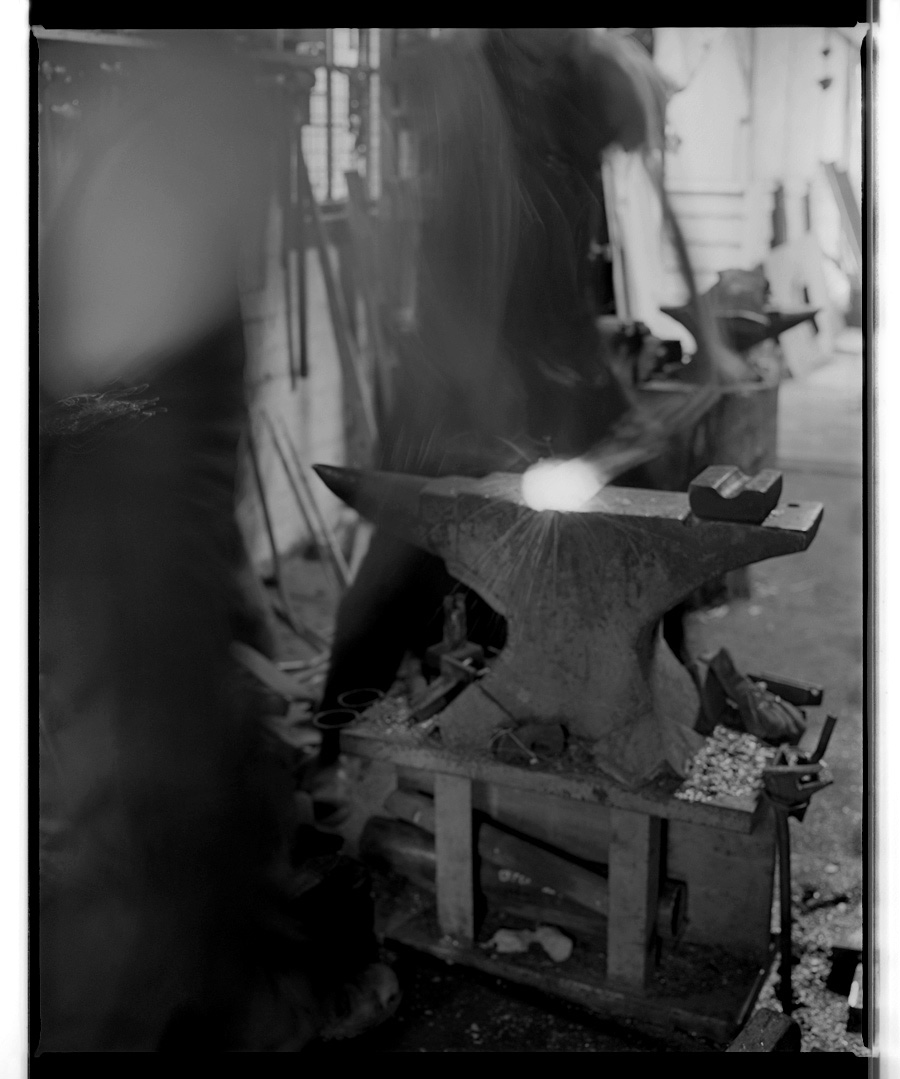
Exhibition dates: 21st October 2012 – 24th March 2013


Robert Mapplethorpe (American, 1946-1989) 'Y Portfolio' 1978


Robert Mapplethorpe (American, 1946-1989)
Y Portfolio
1978
37.7 x 35.5 x 4.9cm closed
The J. Paul Getty Museum, Los Angeles, jointly acquired by the J. Paul Getty Trust and the Los Angeles County Museum of Art. Partial Gift of the Robert Mapplethorpe Foundation; partial purchase with funds provided by the David Geffen Foundation and the J. Paul Getty Trust
© Robert Mapplethorpe Foundation


“The X Portfolio centers on men engaged in gay sex, including hard-core sadomasochism. The subject wasn’t entirely new. In Greek vase decorations, Indian miniatures and pagan temple sculptures, candid and highly refined sex pictures, heterosexual and homosexual, have been around since before Alexander the Great and the Mahabharata.”


Christopher Knight, Los Angeles Times Art Critic


Robert Mapplethorpe made photographs of hard-core sadomasochistic gay sex. Robert Mapplethorpe made photographs of hard-core sadomasochistic gay sex. Robert Mapplethorpe made photographs of hard-core sadomasochistic gay sex. Robert Mapplethorpe made photographs of hard-core sadomasochistic gay sex.

A fist up an arse, a finger down the penis, a dildo up the bum. These photographs are seminal images in the work of the artist and yet we never get to see them online. Would it be too shocking for the sensibilities of the gallery or the Robert Mapplethorpe Foundation that these cause célèbre images, five of which were used as evidence in the obscenity trial of Director Dennis Barrie and the Cincinnati Contemporary Arts Center in 1990, were actually seen?

Instead we have two tame representations from the X Portfolio in the posting.

If you go to the slick Robert Mapplethorpe Foundation website, what do you find in the portfolio section: tasteful self portraits, male nudes, female nudes, flowers, portraits, statuary. Nothing to suggest that Mapplethorpe was one of the most transgressive artists of the twentieth century, an artist who documented an essential element of gay culture AS ART, who famously said that there was nothing shown in his photographs that he hadn’t done himself. Not an inkling, not a whisper, not a bull whip up the arse to be found. This is the sanitised vision of the artist – the desire, the pleasure, the release of living, re-shackled under the commercialisation of brand Mapplethorpe.

It’s like the Foundation is afraid of the artist’s shadow. On their website they state that the Foundation was set up by Mapplethorpe in part to protect his work and advance his creative vision. The X Portfolio and his early work are part of that vision, deserving to be seen by everyone – online!

Dr Marcus Bunyan


Many thankx to The Los Angeles County Museum of Art (LACMA) for allowing me to publish some of the photographs in the posting. Please click on the photographs for a a larger version of the image.


Robert Mapplethorpe (American, 1946-1989) 'Cedric, N.Y.C. (X Portfolio)' 1978


Robert Mapplethorpe (American, 1946-1989)
Cedric, N.Y.C. (X Portfolio)
1978
19.5 x 19.5cm
The J. Paul Getty Museum, Los Angeles, jointly acquired by the J. Paul Getty Trust and the Los Angeles County Museum of Art. Partial Gift of the Robert Mapplethorpe Foundation; partial purchase with funds provided by the David Geffen Foundation and the J. Paul Getty Trust
© Robert Mapplethorpe Foundation


Robert Mapplethorpe (American, 1946-1989) 'Irises, N.Y.C. (Y Portfolio)' 1977


Robert Mapplethorpe (American, 1946-1989)
Irises, N.Y.C. (Y Portfolio)
1977
19.5 x 19.5cm
The J. Paul Getty Museum, Los Angeles, jointly acquired by the J. Paul Getty Trust and the Los Angeles County Museum of Art. Partial Gift of the Robert Mapplethorpe Foundation; partial purchase with funds provided by the David Geffen Foundation and the J. Paul Getty Trust
© Robert Mapplethorpe Foundation


Robert Mapplethorpe (American, 1946-1989) 'Jim, Sausalito (X Portfolio)' 1977


Robert Mapplethorpe (American, 1946-1989)
Jim, Sausalito (X Portfolio)
1977
19.5 x 19.5cm
The J. Paul Getty Museum, Los Angeles, jointly acquired by the J. Paul Getty Trust and the Los Angeles County Museum of Art. Partial Gift of the Robert Mapplethorpe Foundation; partial purchase with funds provided by the David Geffen Foundation and the J. Paul Getty Trust
© Robert Mapplethorpe Foundation


Robert Mapplethorpe (1946-1989) 'Joe' 1978


Robert Mapplethorpe (American, 1946-1989)
Joe, N.Y.C
1978
Gelatin silver print
7 11/16 × 7 11/16 in
Los Angeles County Museum of Art
Jointly acquired by the Los Angeles County Museum of Art and The J. Paul Getty Trust; Partial gift of The Robert Mapplethorpe Foundation; partial purchase with funds provided by The David Geffen Foundation and The J. Paul Getty Trust
© Robert Mapplethorpe Foundation


Robert Mapplethorpe (American, 1946-1989) 'Patrice, N.Y.C.' 1977


Robert Mapplethorpe (American, 1946-1989)
Patrice, N.Y.C.
1977
Gelatin silver print
7 11/16 × 7 11/16 in.
Jointly acquired by the Los Angeles County Museum of Art and The J. Paul Getty Trust; Partial gift of The Robert Mapplethorpe Foundation; partial purchase with funds provided by The David Geffen Foundation and The J. Paul Getty Trust
© Robert Mapplethorpe Foundation


Robert Mapplethorpe (American, 1946-1989) 'Helmut, N.Y.C.' 1978


Robert Mapplethorpe (American, 1946-1989)
Helmut, N.Y.C.
1978
Gelatin silver print
7 3/4 × 7 11/16 in.
Jointly acquired by the Los Angeles County Museum of Art and The J. Paul Getty Trust; Partial gift of The Robert Mapplethorpe Foundation; partial purchase with funds provided by The David Geffen Foundation and The J. Paul Getty Trust
© Robert Mapplethorpe Foundation


The Los Angeles County Museum of Art (LACMA) presents three portfolios created by American photographer Robert Mapplethorpe (1946-1989). The exhibition, Robert Mapplethorpe: XYZ, features a total of thirty-nine black-and-white photographs, exploring three subject matters: homosexual sadomasochistic imagery (X, published in 1978); flower still lifes (Y, 1978); and nude portraits of African American men (Z, 1981). LACMA’s presentation will showcase the works in three rows – X above, Y in the middle, and Z along the bottom – an idea which was suggested by Mapplethorpe in 1989.

“Robert Mapplethorpe is among the most important photographic artists of the twentieth century,” comments Britt Salvesen, Department Head and Curator of the Wallis Annenberg Photography Department at LACMA. “The X, Y, and Z portfolios not only defined the artist’s career, but also played a role in an important moment of American cultural politics that is still pertinent to us today.”

This is the first presentation of Mapplethorpe’s work since last year’s widely publicised joint acquisition by LACMA, The J. Paul Getty Museum, and The Getty Research Institute of Mapplethorpe’s art and archives – including over 1,900 editioned prints and over 1,000 non-editioned prints, 200 unique mixed-media objects, over 160 Polaroids, 120,000 negatives, and extensive working materials, ephemera, and documents. The majority of the acquisition originated as a generous gift from the Robert Mapplethorpe Foundation, and the remainder of the funds provided by the David Geffen Foundation and the J. Paul Getty Trust.

Concurrent with the LACMA exhibition, The J. Paul Getty Museum presents In Focus: Robert Mapplethorpe, on view October 23, 2012 – March 24, 2013. This single-gallery exhibition reviews the artist’s work from the early 1970s to the late 1980s, and features editioned prints, rarely seen mixed-media objects, and Polaroids that depict a wide range of subject matter including self-portraits, nudes, and still lifes. A larger Mapplethorpe retrospective, jointly organised by LACMA and the Getty, is planned for 2016.

About the artist

Born in 1946, Robert Mapplethorpe grew up in the suburban area of Floral Park, Queens. As a student at the Pratt Institute in New York, he studied drawing, painting, and sculpture and experimented with various materials in mixed-media collages. When Mapplethorpe acquired a Polaroid camera in 1970, he began incorporating his own photos into his constructions. His first solo gallery exhibition, Polaroids, took place at Light Gallery in New York City in 1973.

Two years later he transitioned from the Polaroid to a Hasselblad medium format camera and began shooting his circle of friends and acquaintances. His subjects – artists, musicians, socialites, pornographic film stars, and members of the S & M underground – came from a variety of backgrounds. Mapplethorpe’s interest in documenting the New York S&M scene was strongest in the late 1970s, when he produced photographs with shocking content but remarkable technique and formal mastery. In 1978, the Robert Miller Gallery in New York City became his exclusive dealer. Throughout the 1980s, Mapplethorpe produced images that challenged and adhered to classical aesthetic standards including stylised compositions of male and female nudes, delicate flower still lifes, and studio portraits of artists and celebrities. He explored and refined different techniques and formats – including colour 20″ x 24″ Polaroids, photogravures, platinum prints on paper and linen, Cibachrome and dye transfer colour processes – but gelatin silver printing remained his primary medium.

In 1986, Robert Mapplethorpe was diagnosed with AIDS. Despite his illness, he accelerated his creative efforts, broadened the scope of his photographic inquiry, and accepted numerous commissions. The Whitney Museum of American Art mounted his first major American museum retrospective in 1988, one year before his death in 1989. Beyond the art historical and social significance of his work, his legacy lives on through the work of Robert Mapplethorpe Foundation, which he established in 1988 to promote photography, support museums that exhibit photographic art, and to find medical research in the fight against AIDS and HIV related infection.

Exhibition history

Mapplethorpe’s work has historically provoked strong reactions, most notably during the so-called Culture Wars of the 1980s, a period of conflict between conservative and liberal factions. The traveling retrospective, The Perfect Moment, opened at the Institute of Contemporary Art in Philadelphia in 1988. Among the 150 photographs and objects in the show were the sadomasochistic imagery of Mapplethorpe’s X portfolio, as well as the Y and Z portfolios; the show appeared in two venues without any incident. When it was due to open at the Corcoran Gallery of Art in Washington, D.C., during the summer of 1989, politicians who opposed federal funding for the arts became alarmed. The Corcoran canceled the exhibition, resulting in a protest against the gallery’s withdrawal of the show. Controversy ensued further at a subsequent venue, the Contemporary Arts Center in Cincinnati, where charges of obscenity were brought against director David Barrie. In this high-profile trial, five images from the X portfolio were used as evidence. Barrie was acquitted, and Mapplethorpe has been linked to debates about censorship ever since.

Press release from The Los Angeles County Museum of Art (LACMA) website


Robert Mapplethorpe (American, 1946-1989) 'Carnation, N.Y.C. (Y Portfolio)' 1978


Robert Mapplethorpe (American, 1946-1989)
Carnation, N.Y.C. (Y Portfolio)
1978
19.5 x 19.5cm
The J. Paul Getty Museum, Los Angeles, jointly acquired by the J. Paul Getty Trust and the Los Angeles County Museum of Art. Partial Gift of the Robert Mapplethorpe Foundation; partial purchase with funds provided by the David Geffen Foundation and the J. Paul Getty Trust
© Robert Mapplethorpe Foundation


Robert Mapplethorpe (American, 1946-1989) 'Alistair Butler, N.Y.C. (Z Portfolio)' 1980


Robert Mapplethorpe (American, 1946-1989)
Alistair Butler, N.Y.C. (Z Portfolio)
1980
Gelatin Silver Print
19.5 x 19.5cm
The J. Paul Getty Museum, Los Angeles, jointly acquired by the J. Paul Getty Trust and the Los Angeles County Museum of Art. Partial Gift of the Robert Mapplethorpe Foundation; partial purchase with funds provided by the David Geffen Foundation and the J. Paul Getty Trust
© Robert Mapplethorpe Foundation


Robert Mapplethorpe (American, 1946-1989) 'Leigh Lee, N.Y.C. (Z Portfolio)' 1980


Robert Mapplethorpe (American, 1946-1989)
Leigh Lee, N.Y.C. (Z Portfolio)
1980
Gelatin Silver Print
19.5 x 19.5cm
The J. Paul Getty Museum, Los Angeles, jointly acquired by the J. Paul Getty Trust and the Los Angeles County Museum of Art. Partial Gift of the Robert Mapplethorpe Foundation; partial purchase with funds provided by the David Geffen Foundation and the J. Paul Getty Trust
© Robert Mapplethorpe Foundation


Robert Mapplethorpe (American, 1946-1989) 'Philip Prioleau, N.Y.C.' 1979


Robert Mapplethorpe (American, 1946-1989)
Philip Prioleau, N.Y.C.
1979
Gelatin silver print
7 1/2 × 7 7/16 in. (19.05 × 18.89cm)
Jointly acquired by the Los Angeles County Museum of Art and The J. Paul Getty Trust; Partial gift of The Robert Mapplethorpe Foundation; partial purchase with funds provided by The David Geffen Foundation and The J. Paul Getty Trust
© Robert Mapplethorpe Foundation


Robert Mapplethorpe (American, 1946-1989) 'Rose, N.Y.C. (Y Portfolio)' 1977


Robert Mapplethorpe (American, 1946-1989)
Rose, N.Y.C. (Y Portfolio)
1977
Gelatin silver print
Image 19.5 x 19.5cm
The J. Paul Getty Museum, Los Angeles, jointly acquired by the J. Paul Getty Trust and the Los Angeles County Museum of Art. Partial Gift of the Robert Mapplethorpe Foundation; partial purchase with funds provided by the David Geffen Foundation and the J. Paul Getty Trust
© Robert Mapplethorpe Foundation


Robert Mapplethorpe (American, 1946-1989) 'Tulips' 1978


Robert Mapplethorpe (American, 1946-1989)
Tulips
1978
Gelatin silver print
7 11/16 × 7 3/4 in. (19.53 × 19.69cm)
Jointly acquired by the Los Angeles County Museum of Art and The J. Paul Getty Trust; Partial gift of The Robert Mapplethorpe Foundation; partial purchase with funds provided by The David Geffen Foundation and The J. Paul Getty Trust
© Robert Mapplethorpe Foundation


Robert Mapplethorpe (American, 1946-1989) 'Z Portfolio' 1978


Robert Mapplethorpe (American, 1946-1989)
Z Portfolio
1978
37.7 x 35.5 x 4.9 cm closed
The J. Paul Getty Museum, Los Angeles, jointly acquired by the J. Paul Getty Trust and the Los Angeles County Museum of Art. Partial Gift of the Robert Mapplethorpe Foundation; partial purchase with funds provided by the David Geffen Foundation and the J. Paul Getty Trust
© Robert Mapplethorpe Foundation


Los Angeles County Museum of Art (LACMA)
5905 Wilshire Boulevard (at Fairfax Avenue)
Los Angeles, CA, 90036
Phone: 323 857-6000

Opening hours:
Monday, Tuesday, Thursday: 11am – 5pm
Friday: 11am – 8pm
Saturday, Sunday: 10am – 7pm
Closed Wednesday

LACMA website

LIKE ART BLART ON FACEBOOK

Back to top