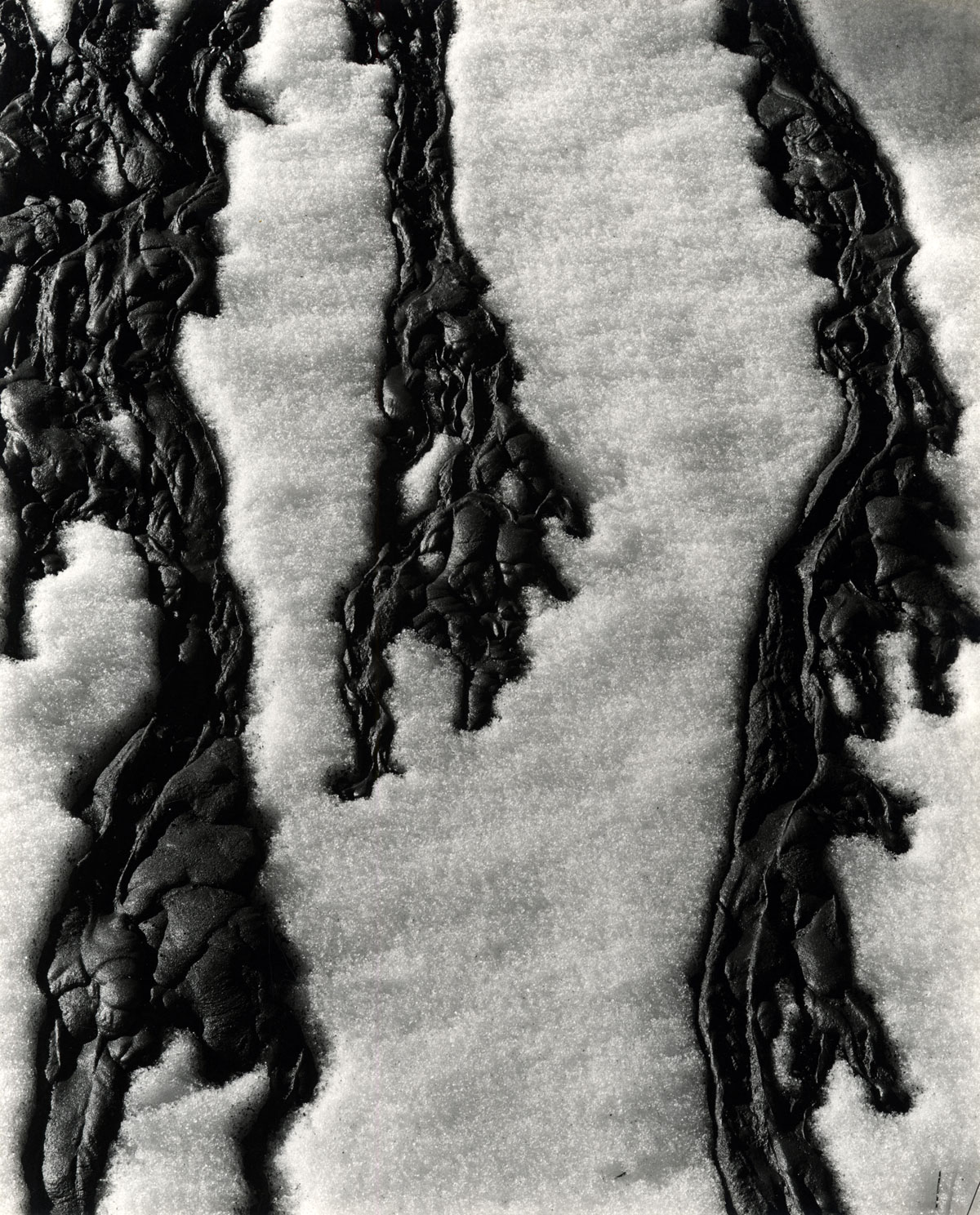
Exhibition: ‘Our Selves: Photographs by Women Artists from Helen Kornblum’ at the Museum of Modern Art (MoMA), New York

Exhibition dates: 16th April – 2nd October, 2022

Organised by Roxana Marcoci, The David Dechman Senior Curator of Photography, with Dana Ostrander, Curatorial Assistant, and Caitlin Ryan, Curatorial Assistant, Department of Photography, MoMA


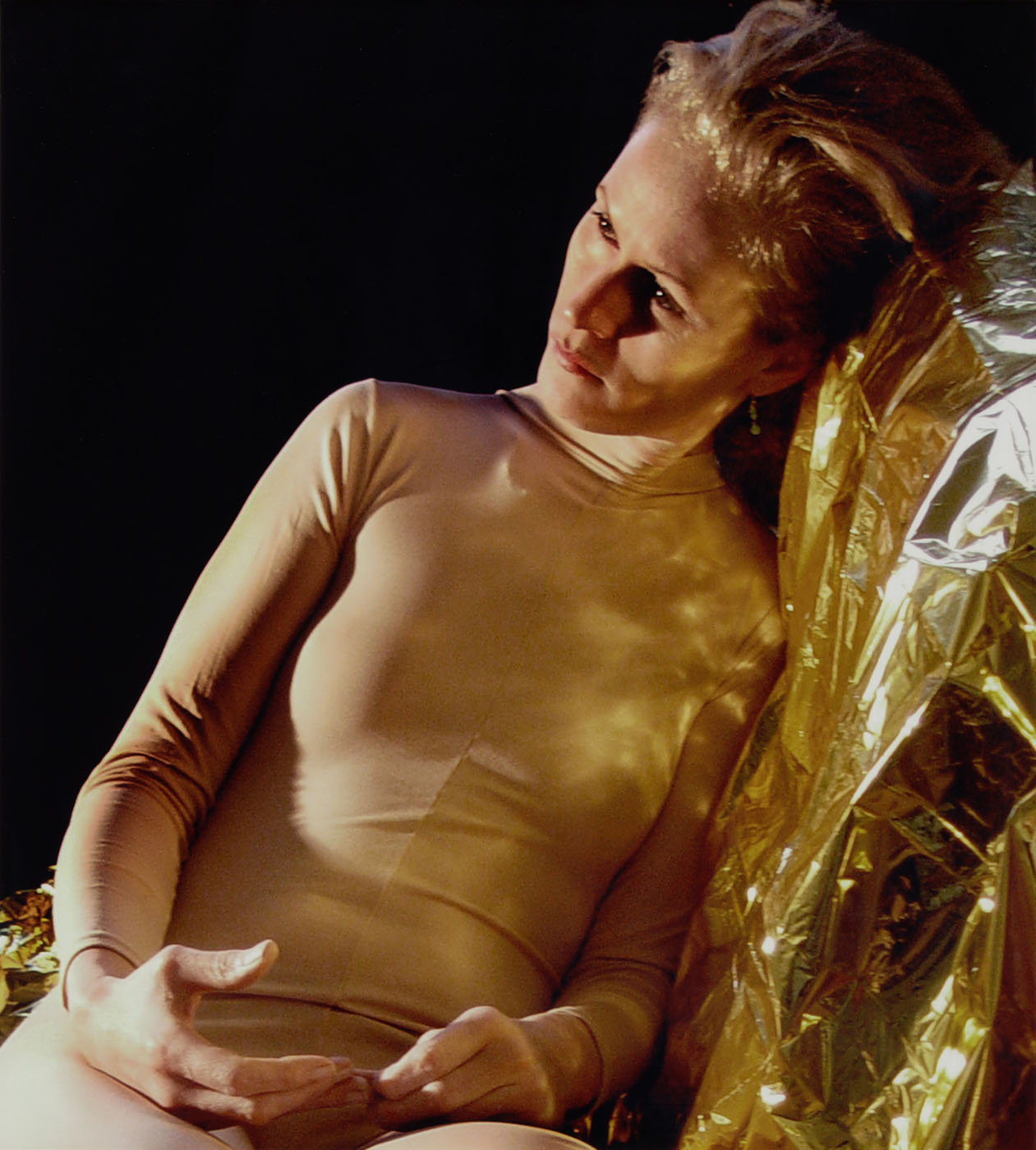
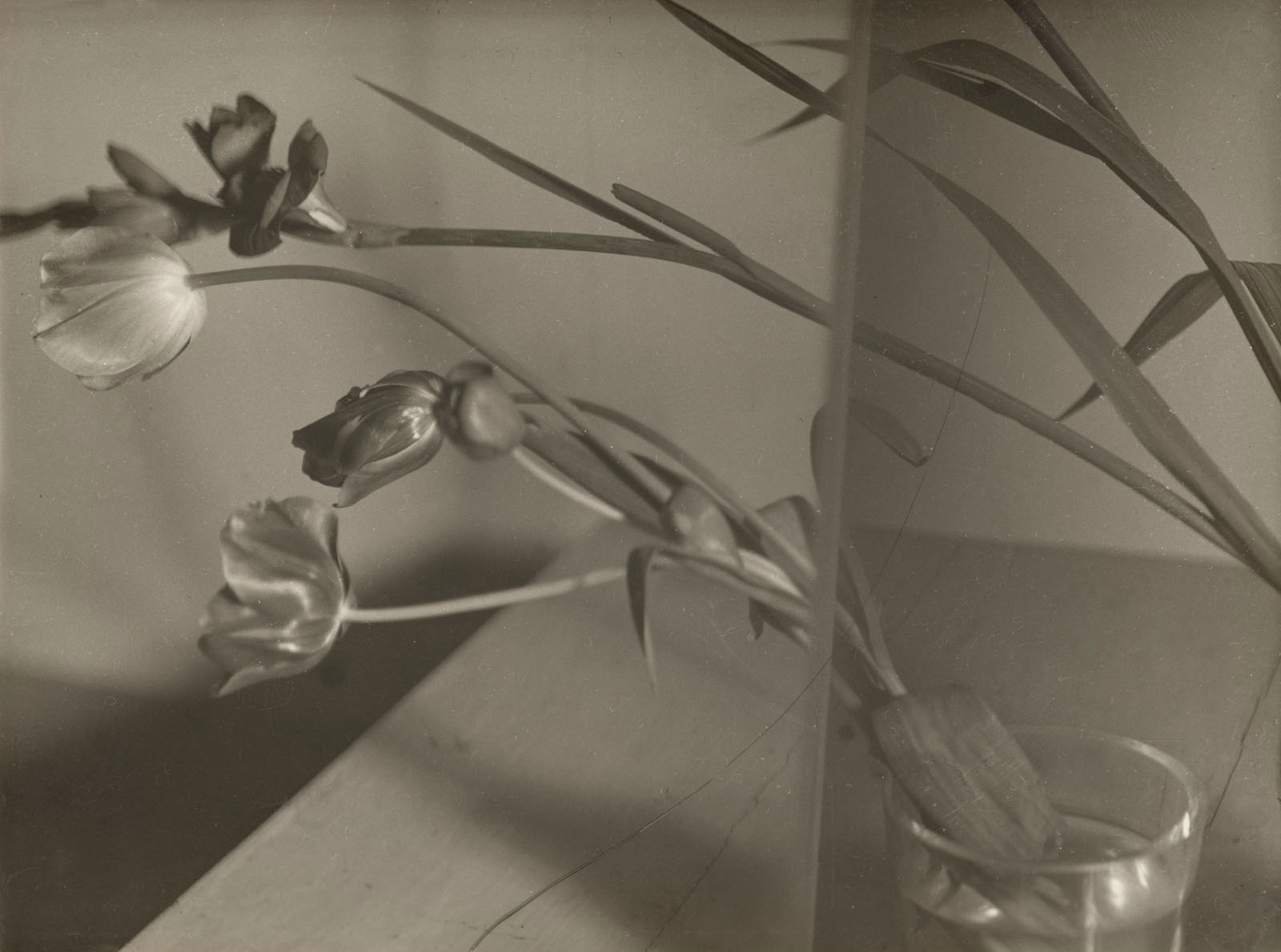
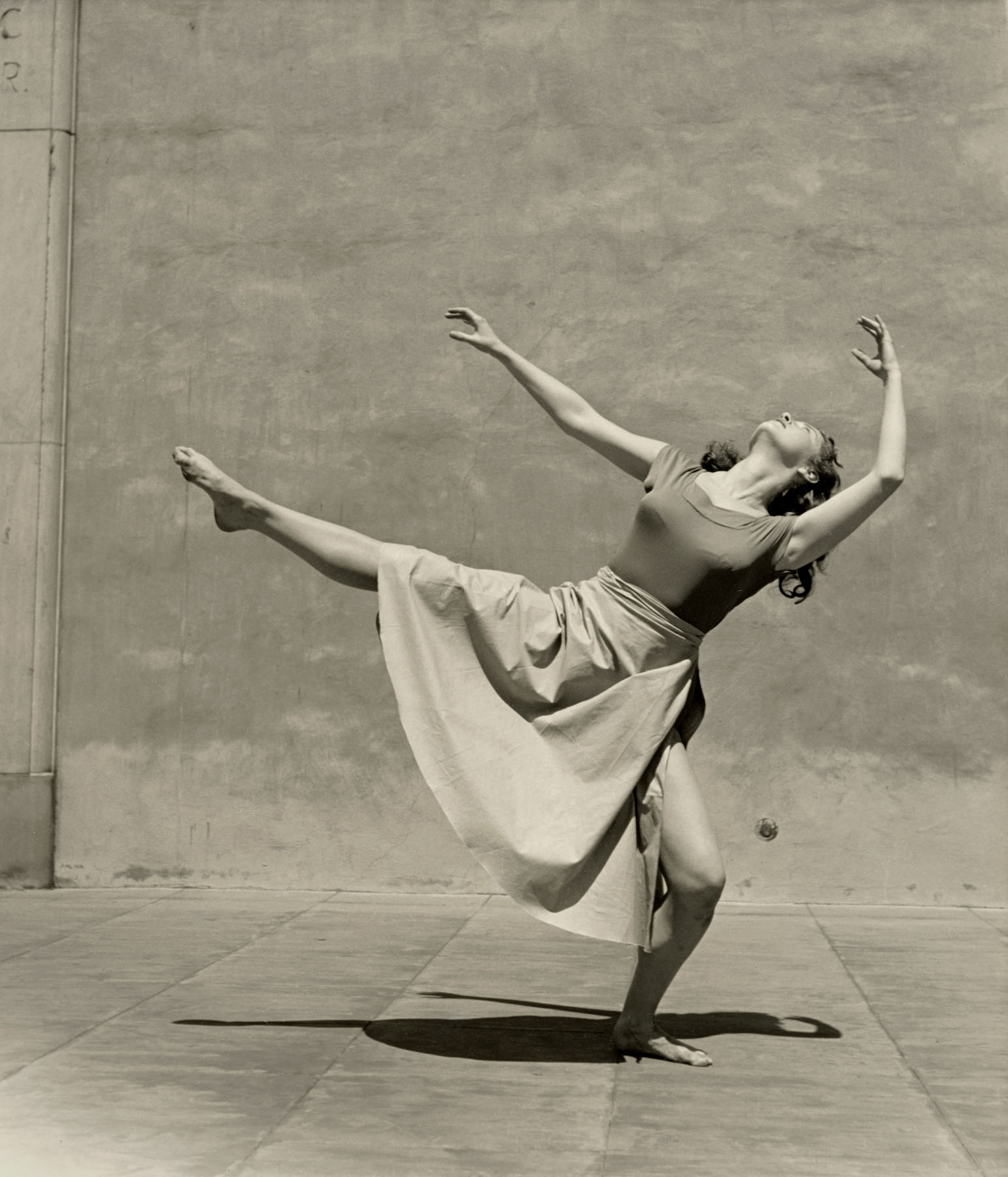
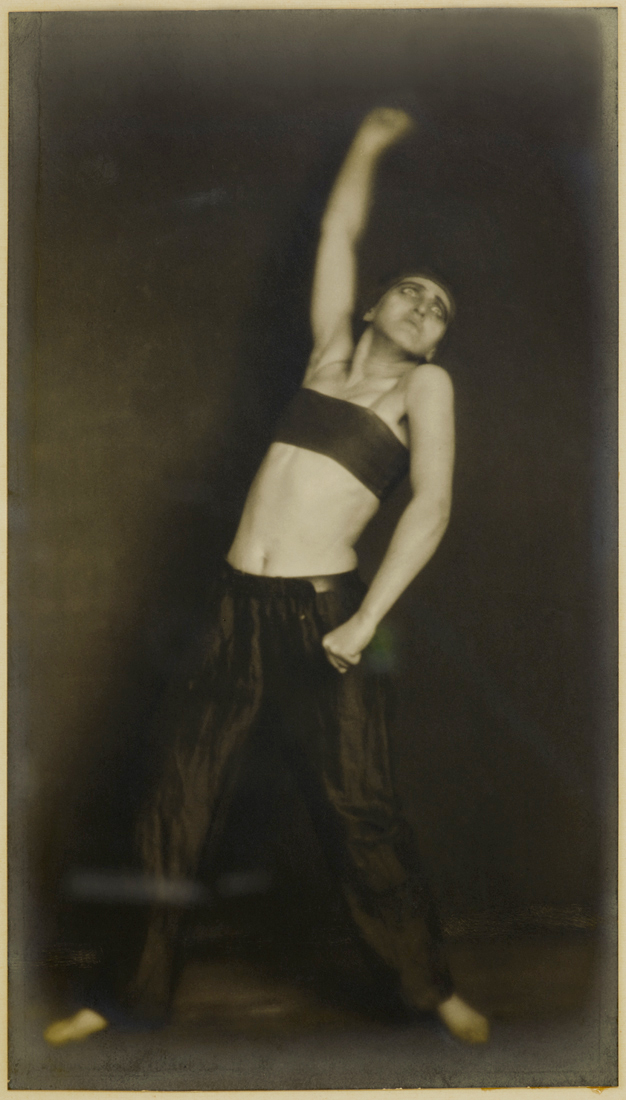
Lotte Jacobi (American, 1896-1990) 'Head of the Dancer' 1929 from the exhibition 'Our Selves: Photographs by Women Artists from Helen Kornblum' at the Museum of Modern Art (MoMA), New York, April - Oct, 2022


Lotte Jacobi (American, 1896-1990)
Head of the Dancer Niura Norskaya
1929
Gelatin silver print
7 1/2 × 9 3/8″ (19.1 × 23.8cm)
The Museum of Modern Art, New York
Gift of Helen Kornblum in honour of Roxana Marcoci


With a focus on people, this is a challenging exhibition that can only scratch the surface of the importance of the photographic work of women artists to the many investigations critical to the promotion of equality and diversity in a complex and male orientated world.

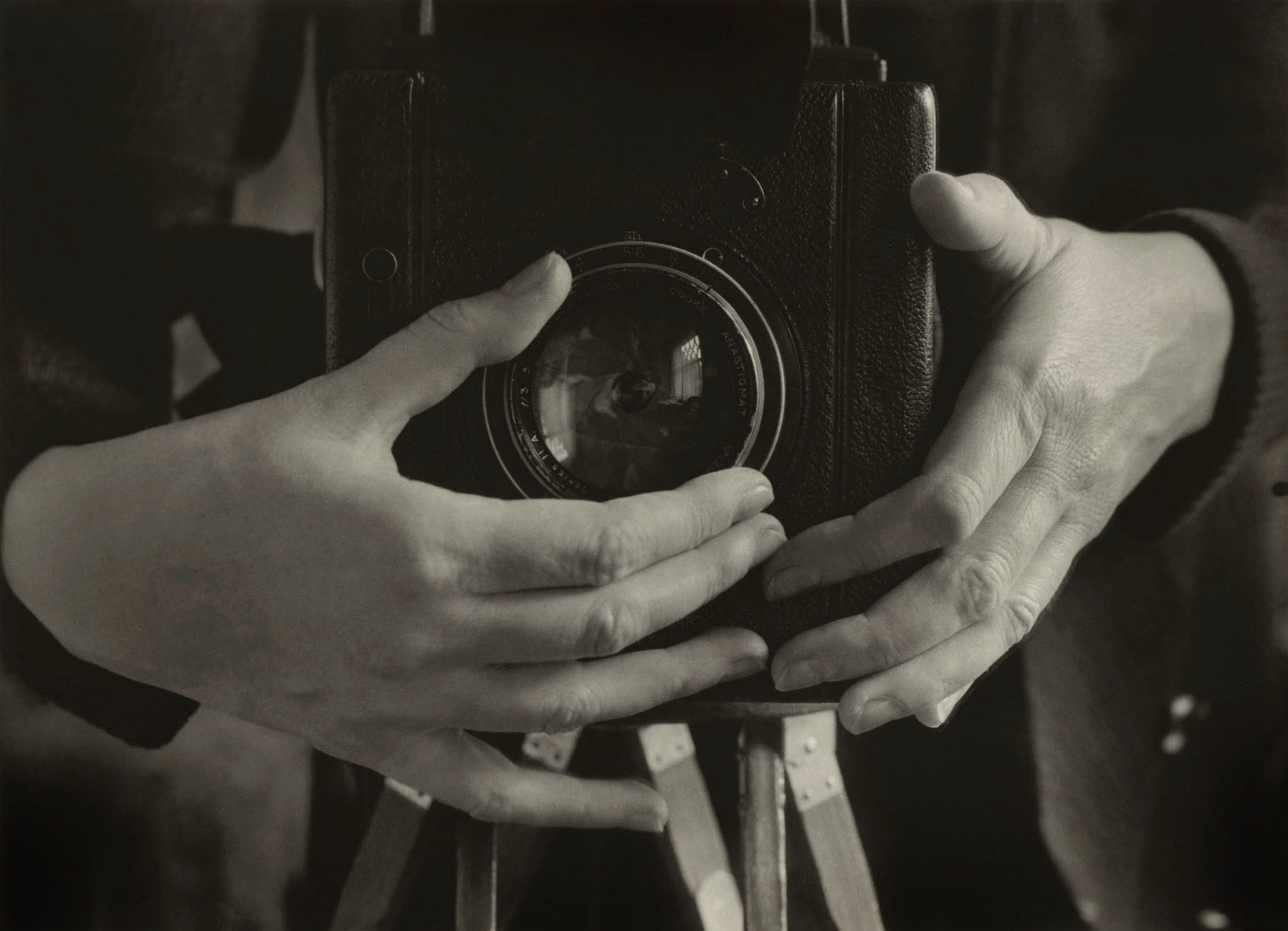
Germaine Krull is always a favourite, as is the work of neutered genius (and my hero), Claude Cahun. Susan Meiselas’s immersive work is also impressive in its “understanding of social, political and global issues and of the potentially complex ethical relationship between photographer and subject”, especially in her early work Carnival Strippers (1972-1975). I also particularly like the sensibility of the Mexican women photographers: sensitive portraits of strong women.

The most cringe worthy photograph that illustrates some of the ills associated with a male-orientated society is Ruth Orkin’s staged but spontaneous photograph, American Girl in Florence, Italy (1951, below) which was “an instant conversation starter about feminism and street harassment long… [and which is] more relevant now than ever for what it truly represents: independence, freedom and self-determination.”

“The photos ran in Cosmopolitan magazine in 1952 in a photo essay, “When You Travel Alone…”, offering tips on “money, men and morals to see you through a gay trip and a safe one.” The article encourages readers to buy ship and train tickets ahead of time. It reminds them to bring their birth certificate and check in with the State Department. The caption on the photo of Craig walking down the street reflects cultural mores of the era.

“Public admiration … shouldn’t fluster you. Ogling the ladies is a popular, harmless and flattering pastime you’ll run into in many foreign countries. The gentlemen are usually louder and more demonstrative than American men, but they mean no harm.”

It’s a far cry from what we tell women these days, but for its time the mere notion of encouraging women to travel alone was progressive. That’s what made the photos so special, Craig says. They offered a rare glimpse of two women – behind and in front of the camera – challenging the era’s gender roles and loving every minute of it.”1


Talking of challenging gender roles, I’m rather surprised there aren’t any photographs by Diane Arbus, Cindy Sherman or Francesca Woodman for example, critical women photographers who challenge our orientation towards our selves and the world. Many others could have been included as well. But that is the joy and paradox of collecting: what do you collect and what do you leave out. You have to focus on what you like and what is available.

“Rather than presenting a chronological history of women photographers or a linear account of feminist photography, the exhibition prompts new appraisals and compelling dialogues from a contemporary, intersectional feminist perspective. African-diasporic, queer, and postcolonial / Indigenous artists have brought new mindsets and questions to the canonical narratives of art history. Our Selves will reexamine a host of topics, countering racial and gender invisibility, systemic racial injustice, and colonialism, through a diversity of photographic practices, including portraiture, photojournalism, social documentary, advertising, avant-garde experimentation, and conceptual photography.” (Press release)

Dr Marcus Bunyan


1/ Emanuella Grinberg. “The real story behind ‘An American Girl in Italy’,” on the CNN website March 30, 2017 [Online] Cited 28/08/2022


Many thankx to the Museum of Modern Art for allowing me to publish the photographs in the posting. Please click on the photographs for a larger version of the image.


The Museum of Modern Art announces Our Selves: Photographs by Women Artists from Helen Kornblum, an exhibition that will present 90 photographic works by female artists from the last 100 years, on view from April 16 to October 2, 2022. Drawn exclusively from the Museum’s collection, thanks to a transformative gift of photographs from Helen Kornblum in 2021, the exhibition takes as a starting point the idea that the histories of feminism and photography have been intertwined.

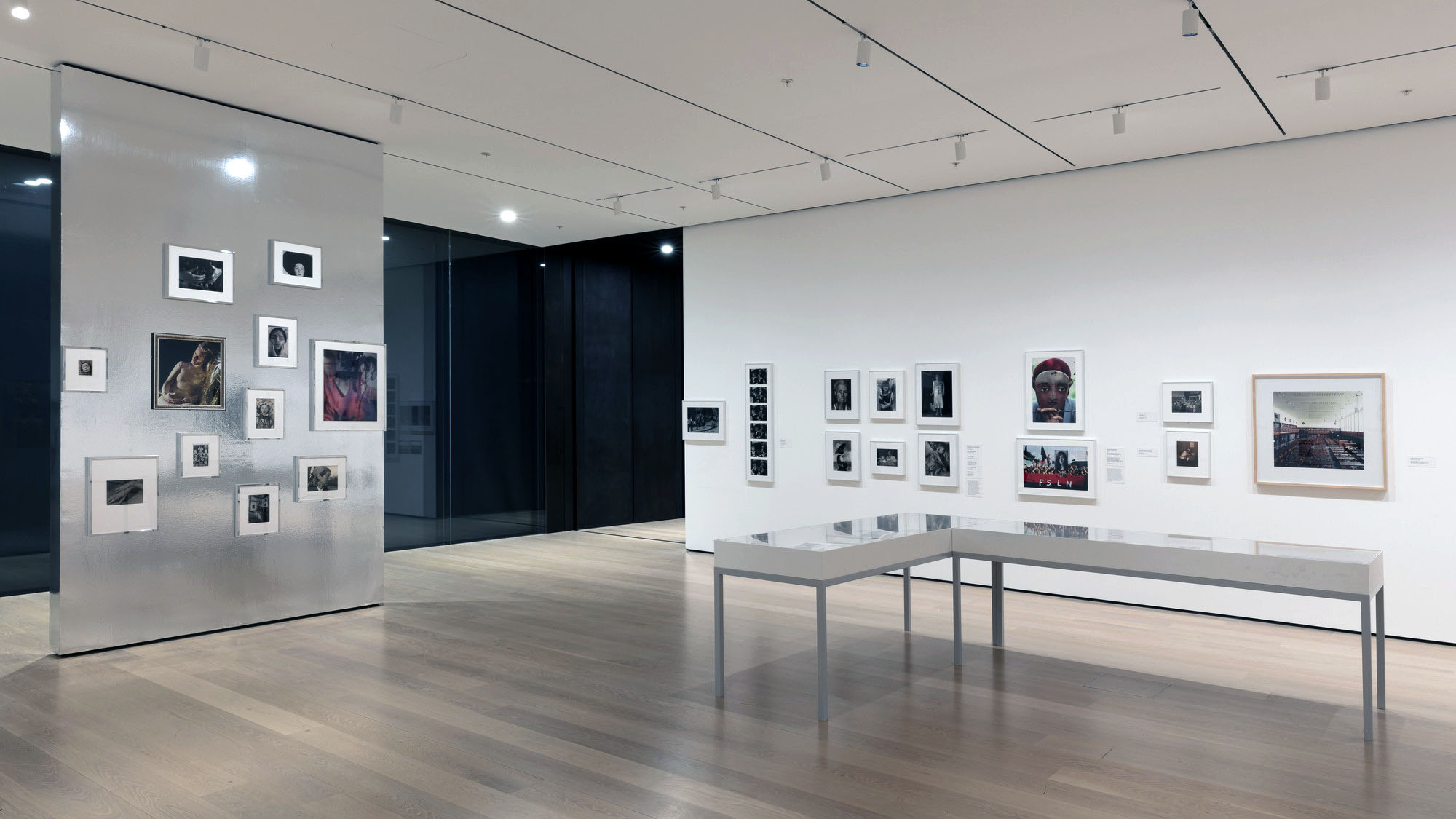
 

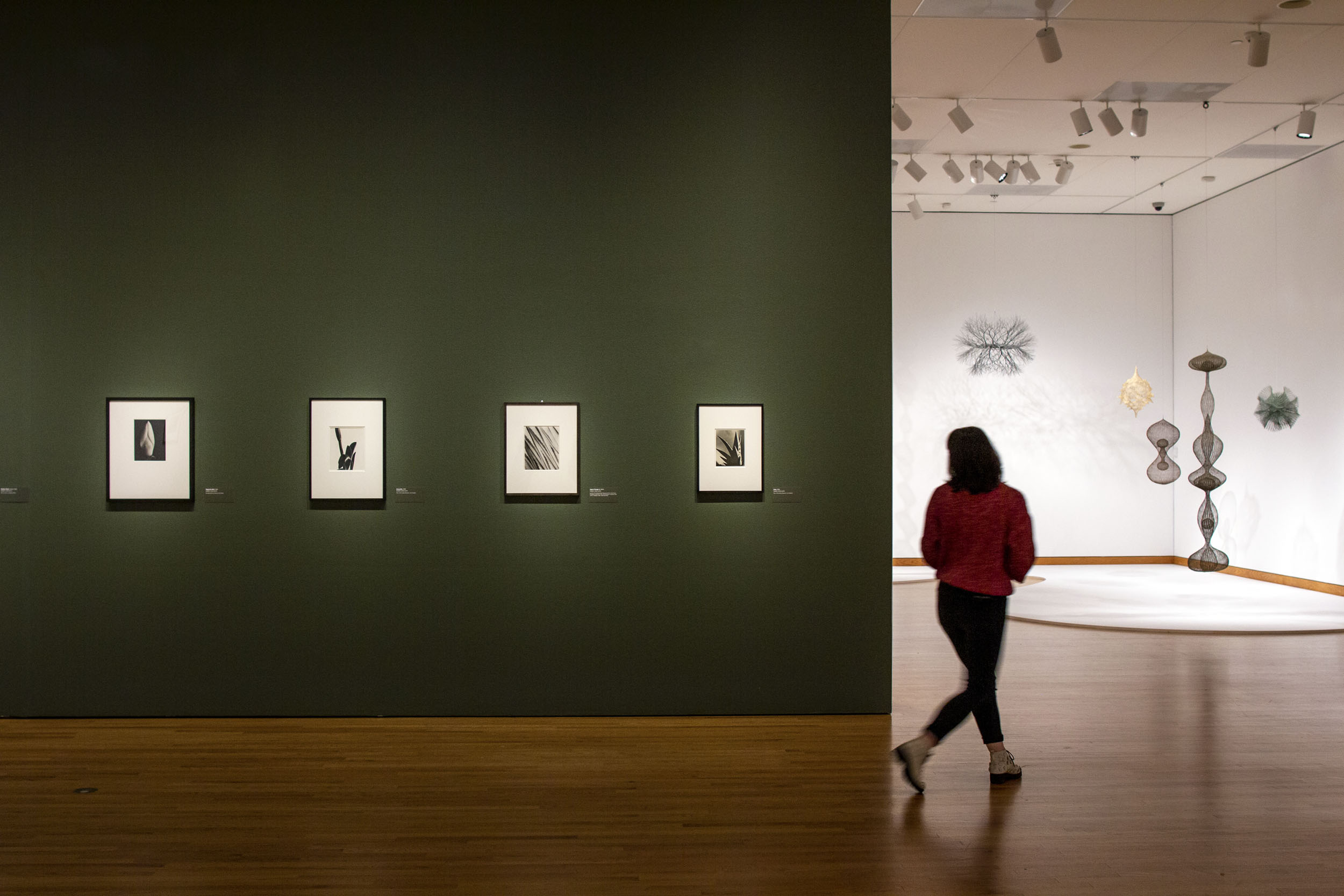
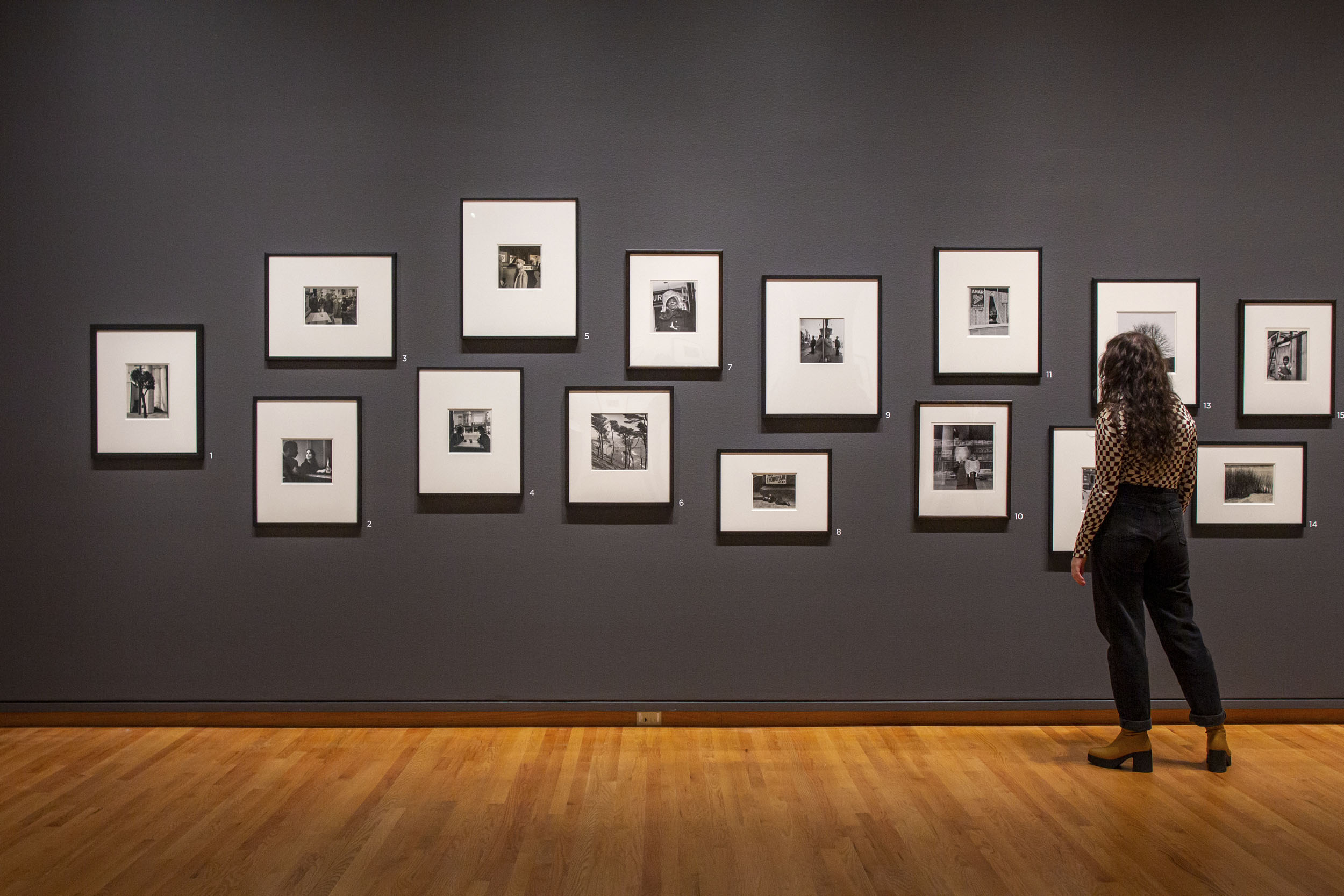
Installation view of the exhibition 'Our Selves: Photographs by Women Artists from Helen Kornblum' at the Museum of Modern Art (MoMA), New York

Installation view of the exhibition 'Our Selves: Photographs by Women Artists from Helen Kornblum' at the Museum of Modern Art (MoMA), New York

Installation view of the exhibition 'Our Selves: Photographs by Women Artists from Helen Kornblum' at the Museum of Modern Art (MoMA), New York

Installation view of the exhibition 'Our Selves: Photographs by Women Artists from Helen Kornblum' at the Museum of Modern Art (MoMA), New York

Installation view of the exhibition 'Our Selves: Photographs by Women Artists from Helen Kornblum' at the Museum of Modern Art (MoMA), New York


Installation views of the exhibition Our Selves: Photographs by Women Artists from Helen Kornblum at the Museum of Modern Art (MoMA), New York


How have women artists used photography as a tool of resistance? Our Selves: Photographs by Women Artists from Helen Kornblum reframes restrictive notions of womanhood, exploring the connections between photography, feminism, civil rights, Indigenous sovereignty, and queer liberation. “Society consumes both the good girl and the bad girl,” wrote artist Silvia Kolbowski in 1984. “But somewhere between those two polarities, space must be made for criticality.”

Spanning more than 100 years of photography, the works in this exhibition range from Frances Benjamin Johnston’s early documentary photographs of racially segregated education in turn-of-the-century United States, to a contemporary portrait by Chemehuevi artist Cara Romero that celebrates the specificity of Indigenous art forms. A tribute to the generosity of collector Helen Kornblum, Our Selves features women’s contributions to a diversity of practices, including portraiture, photojournalism, social documentary, avant-garde experimentation, advertising, and performance.

As we continue to reckon with equity and diversity, Our Selves invites viewers to meditate on the artist Carrie Mae Weems’s evocative question: “In one way or another, my work endlessly explodes the limits of tradition. I’m determined to find new models to live by. Aren’t you?”

Text from the MoMA website


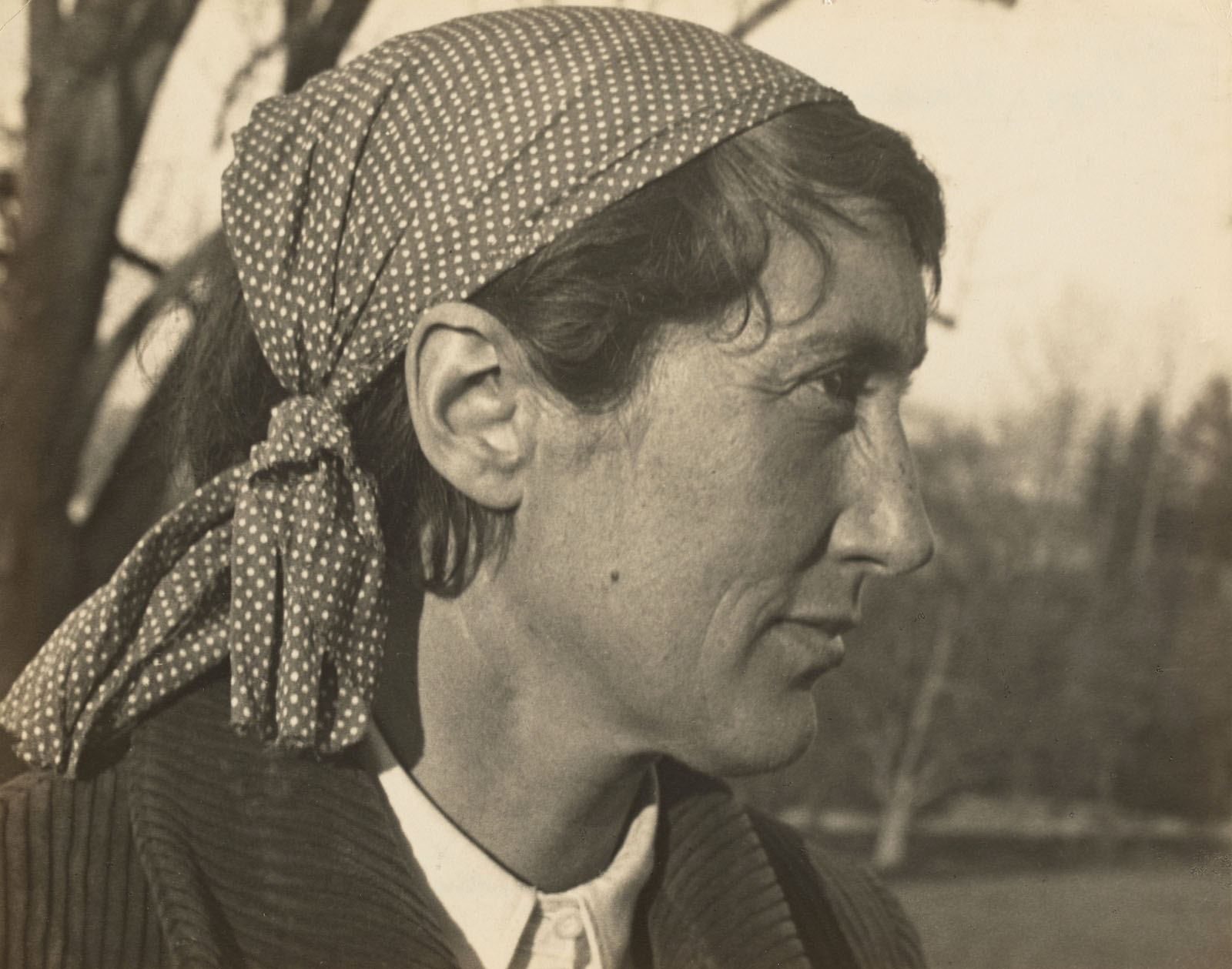
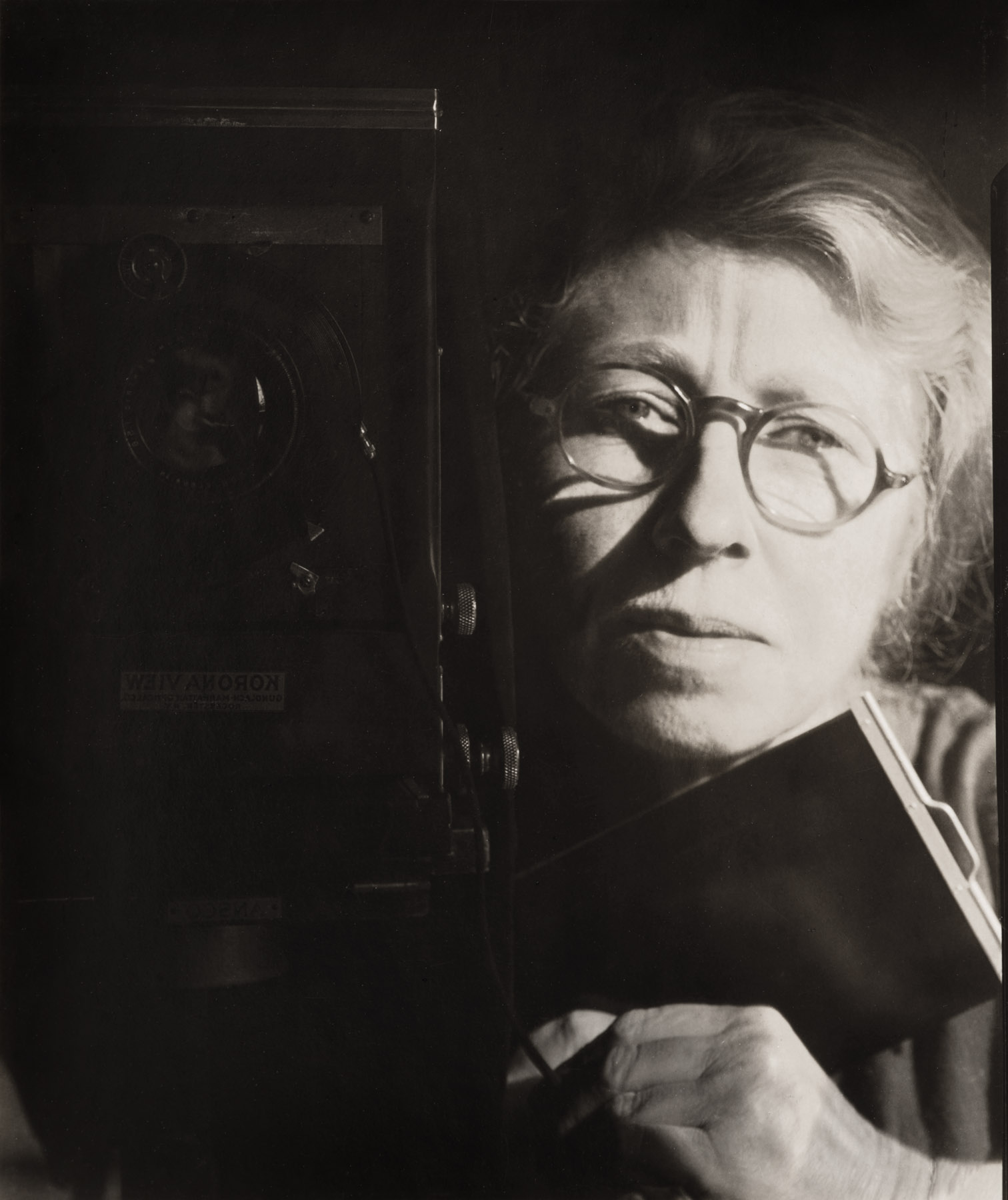
Alma Lavenson (American, 1897-1989) 'Self-Portrait' 1932 from the exhibition 'Our Selves: Photographs by Women Artists from Helen Kornblum' at the Museum of Modern Art (MoMA), New York, April - Oct, 2022


Alma Lavenson (American, 1897-1989)
Self-Portrait
1932
Gelatin silver print
9 × 11 7/8″ (22.9 × 30.2cm)
The Museum of Modern Art, New York
Gift of Helen Kornblum in honour of Roxana Marcoci


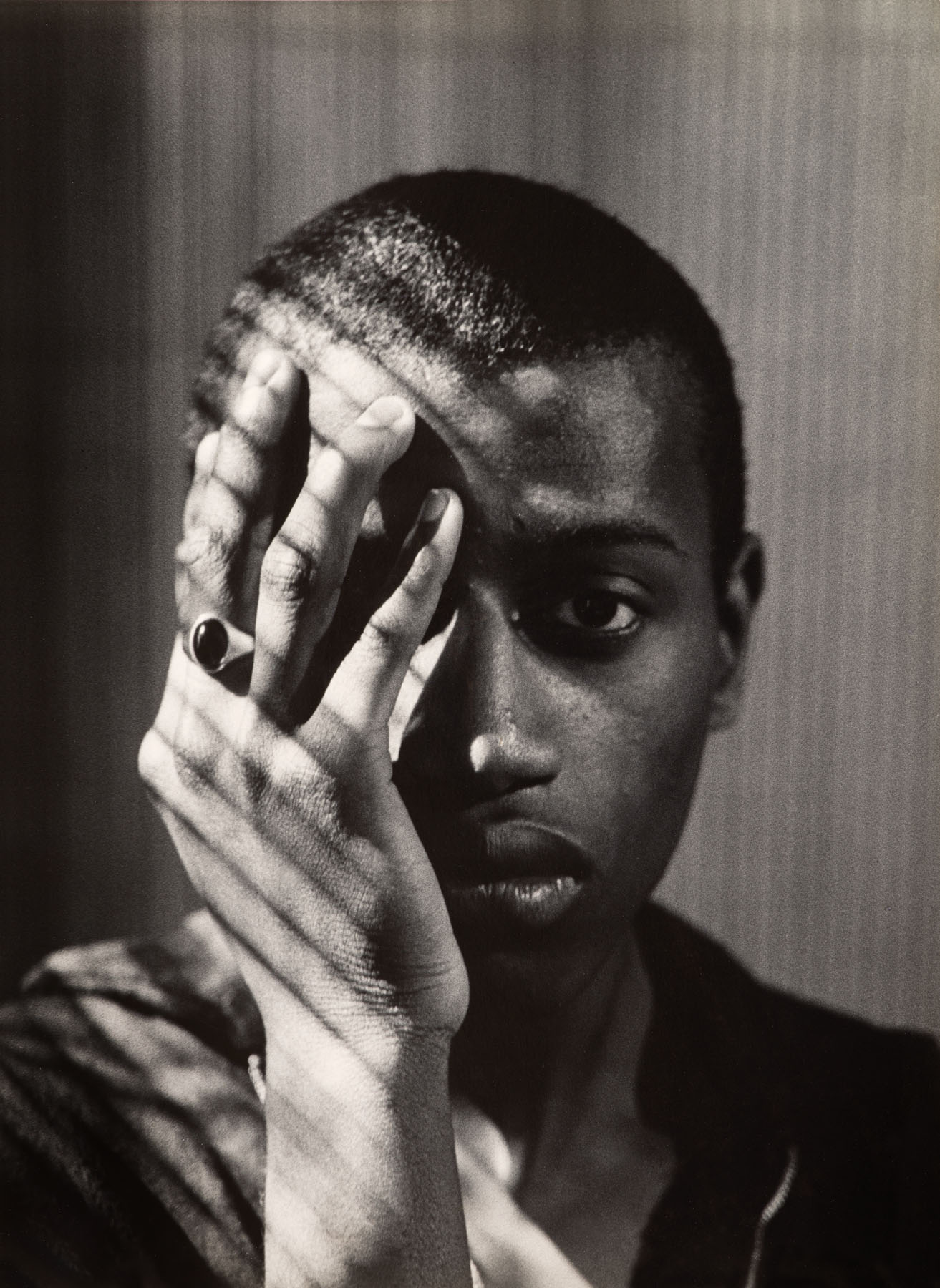
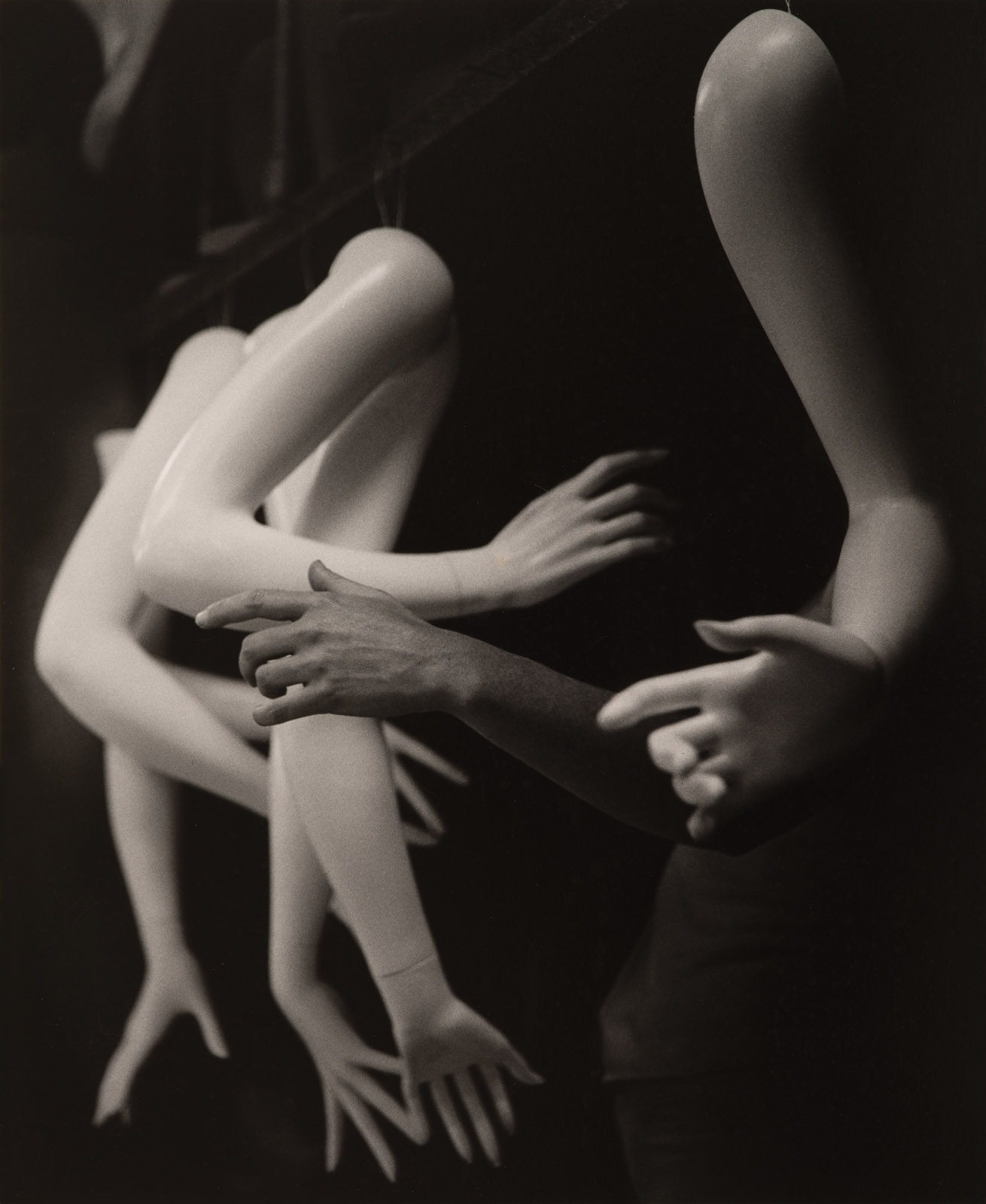
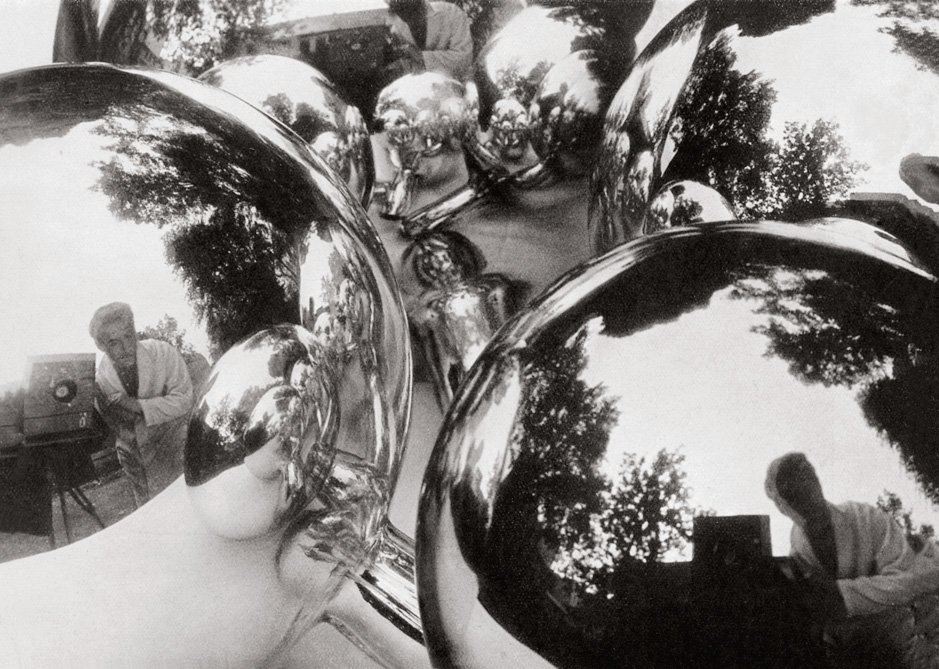
Germaine Krull (Dutch born Germany, 1897-1985) 'The Hands of the Actress Jenny Burnay' c. 1930 from the exhibition 'Our Selves: Photographs by Women Artists from Helen Kornblum' at the Museum of Modern Art (MoMA), New York, April - Oct, 2022


Germaine Krull (Dutch born Germany, 1897-1985)
The Hands of the Actress Jenny Burnay
c. 1930
Gelatin silver print
6 1/2 × 8 5/8″ (16.5 × 21.9cm)
The Museum of Modern Art, New York
Gift of Helen Kornblum in honour of Roxana Marcoci


Germaine Krull (Dutch born Germany, 1897-1985)

Germaine Krull was a pioneer in the fields of avant-garde photomontage, the photographic book, and photojournalism, and she embraced both commercial and artistic loyalties. Born in Wilda-Poznań, East Prussia, in 1897, Krull lived an extraordinary life lasting nine decades on four continents – she was the prototype of the edgy, sexually liberated Neue Frau (New Woman), considered an icon of modernity and a close cousin of the French garçonne and the American flapper. She had a peripatetic childhood before her family settled in Munich in 1912. She studied photography from 1916 to 1918 at Bayerische Staatslehranstalt für Lichtbildwesen (Instructional and Research Institute for Photography), and in 1919 opened her own portrait studio. Her early engagement with left-wing political activism led to her expulsion from Munich. Then, on a visit to Russia in 1921, she was incarcerated for her counterrevolutionary support of the Free French cause against Hitler. In 1926, she settled in Paris, where she became friends with artists Sonia and Robert Delaunay and intellectuals André Malraux, Jean Cocteau, Colette, and André Gide, who were also subjects of her photographic portraits.

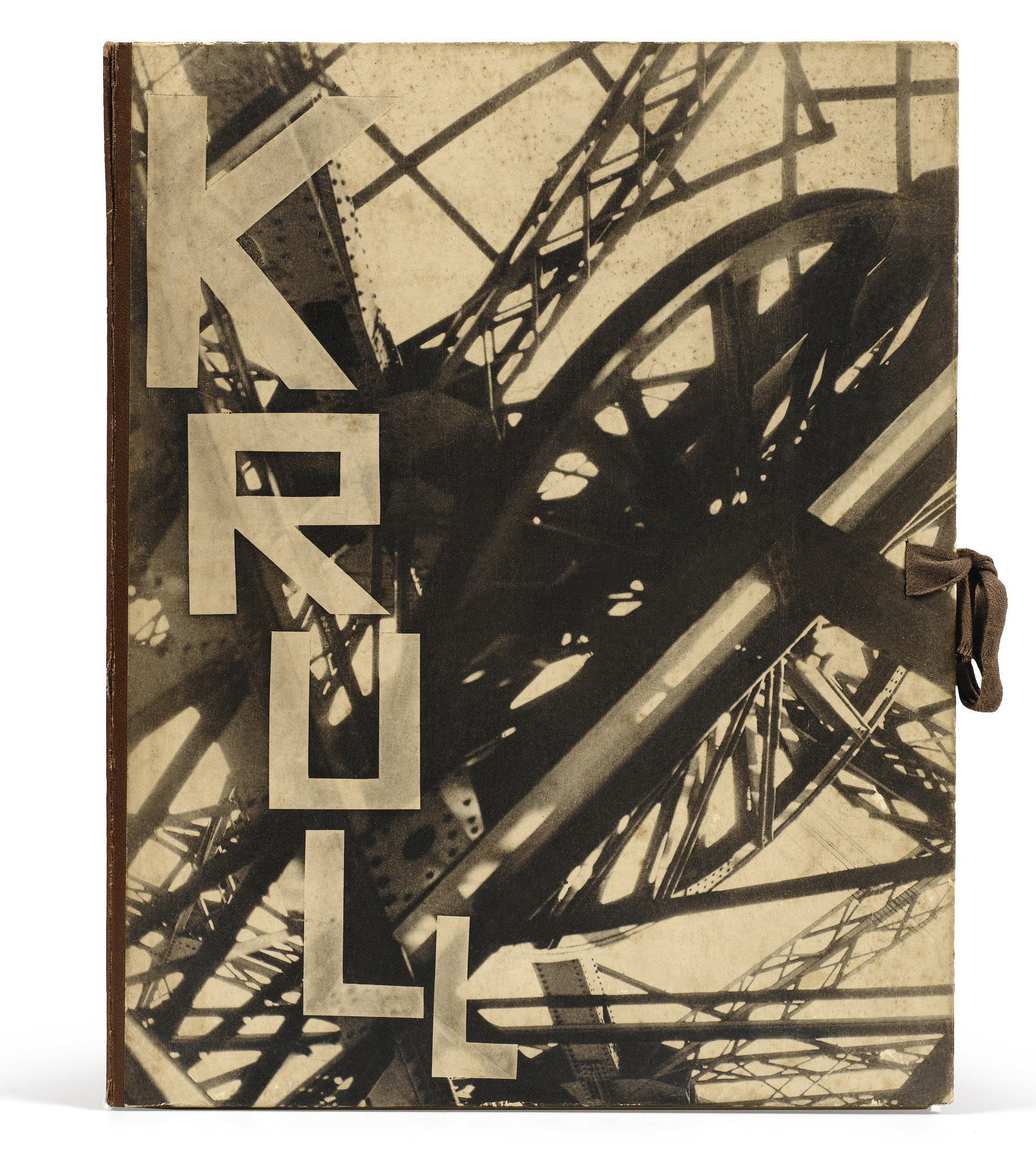
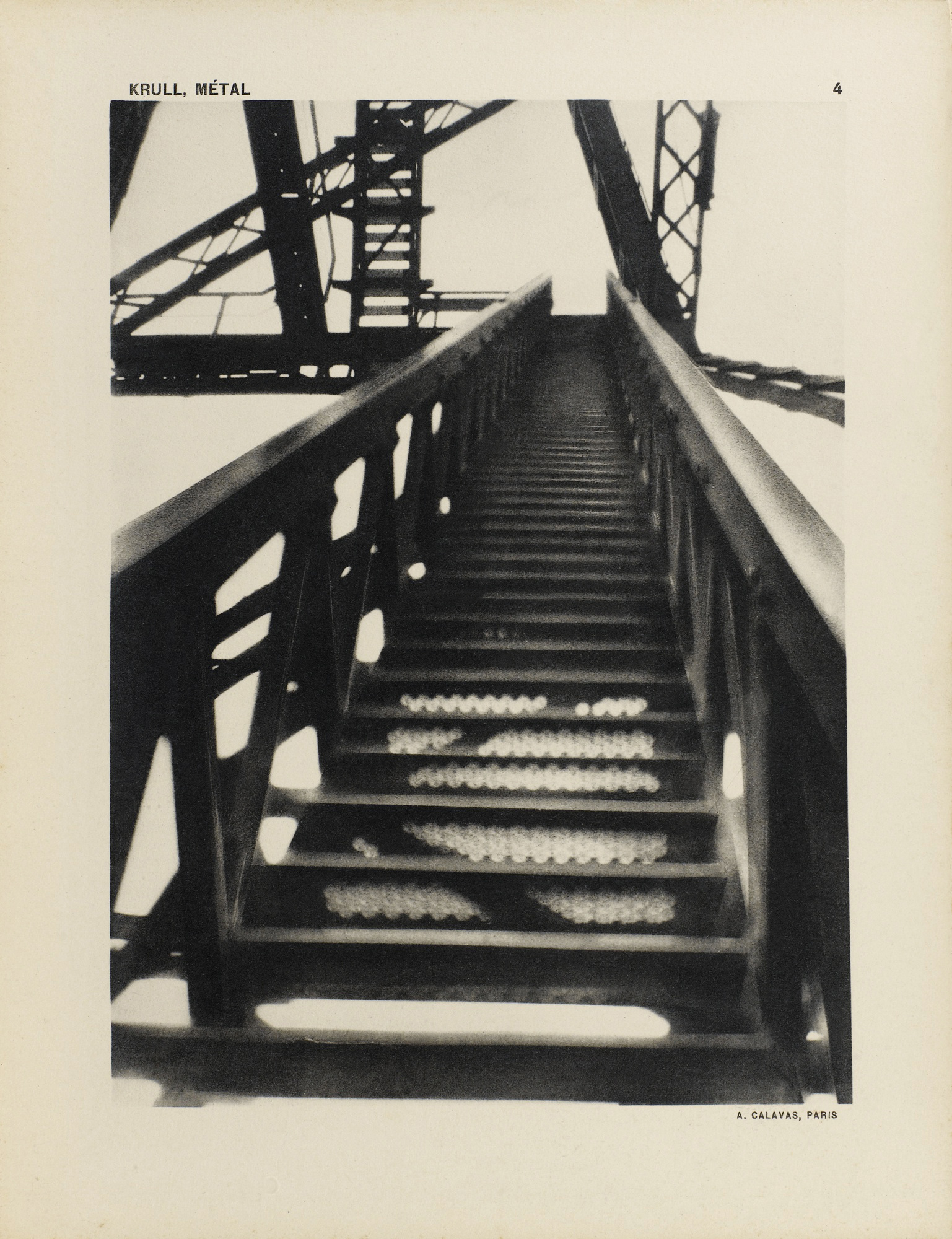
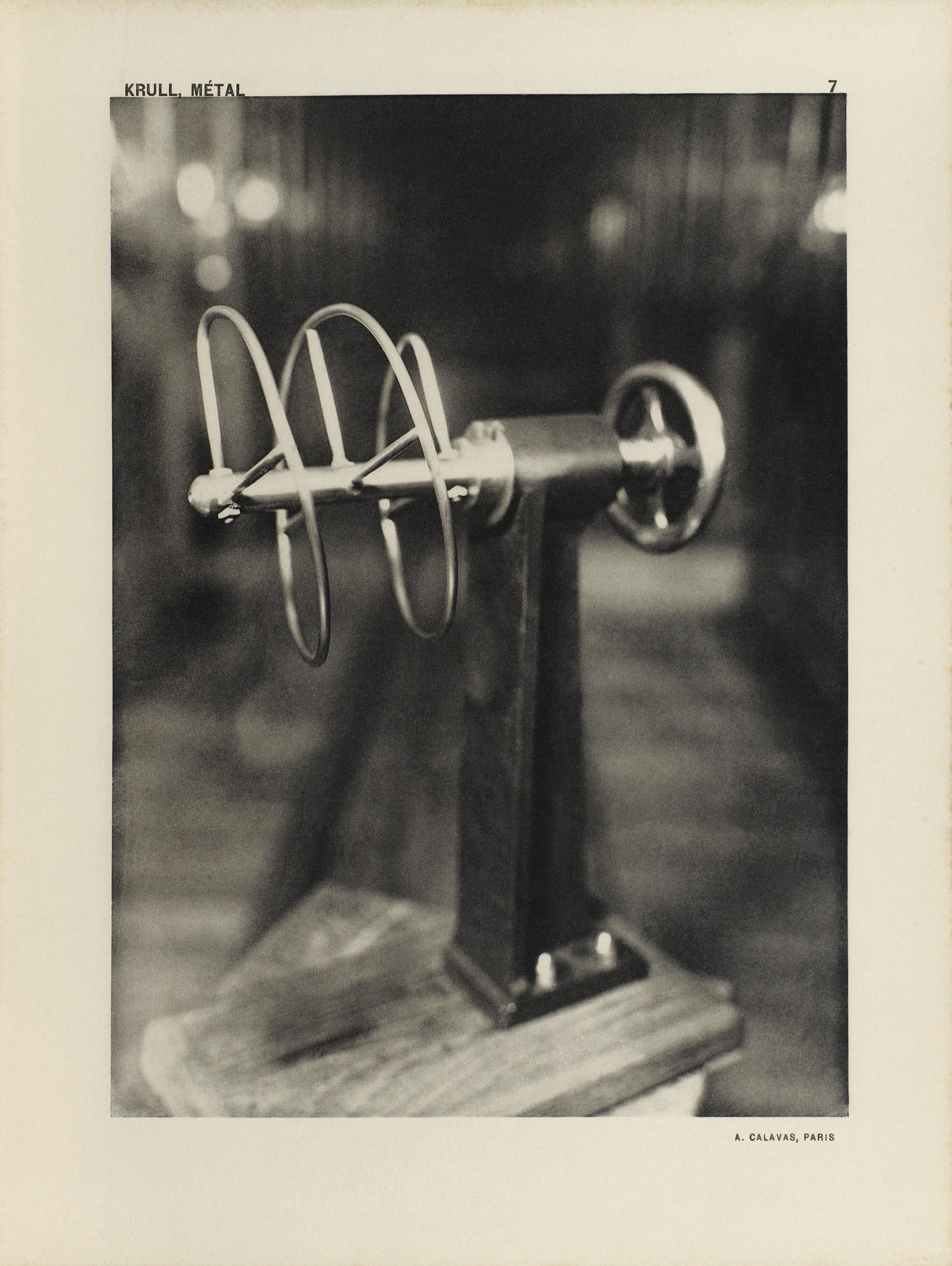
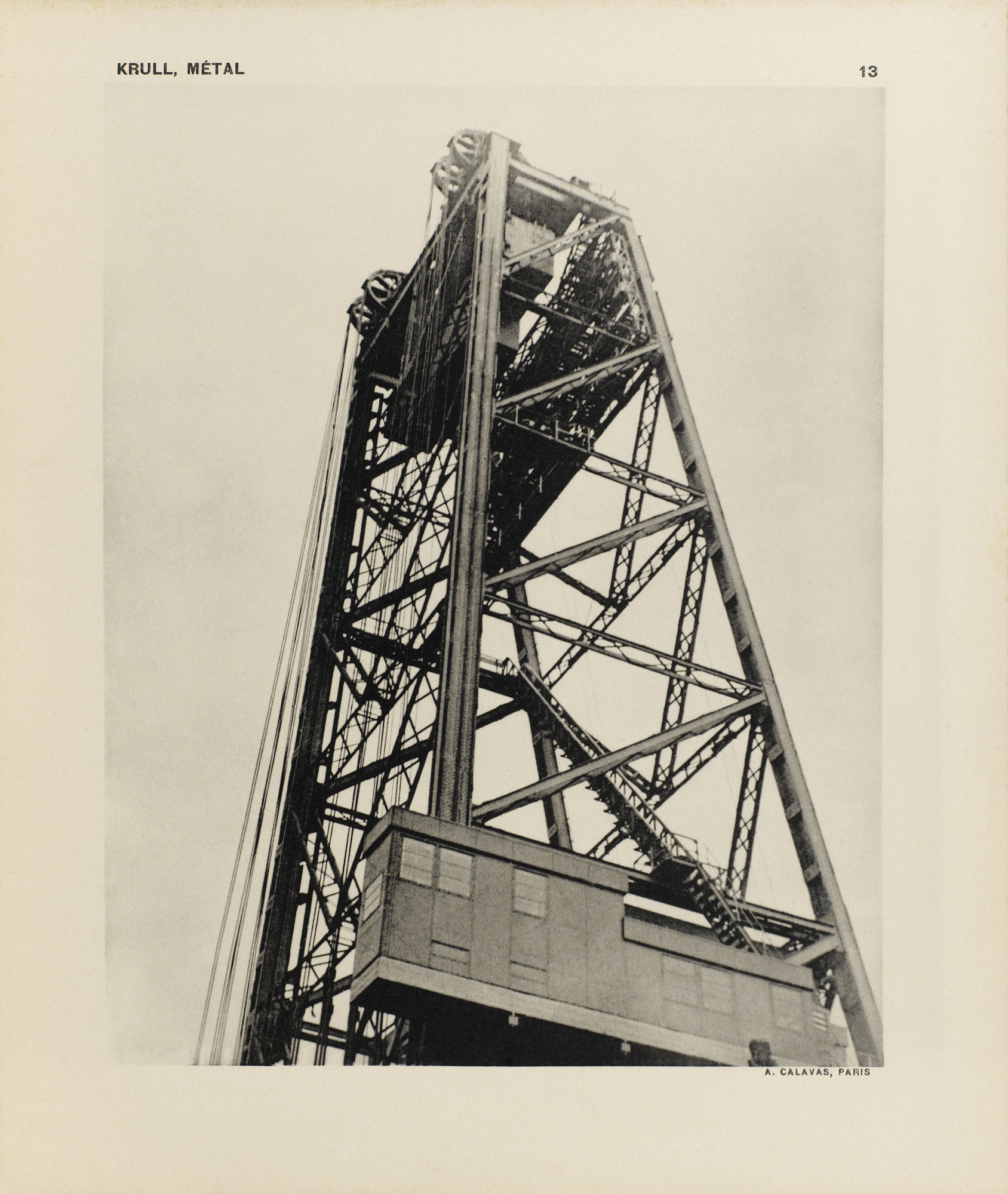
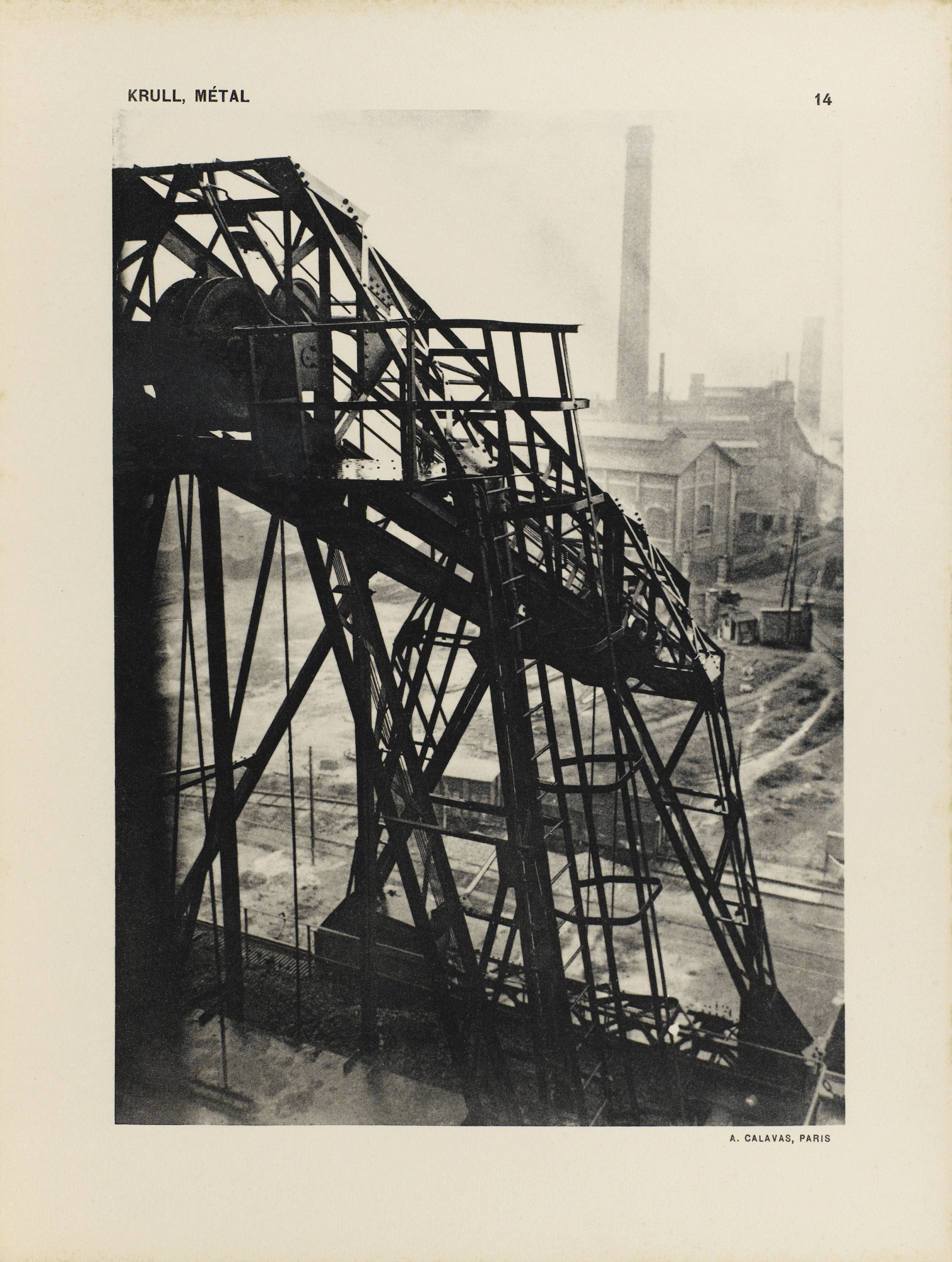
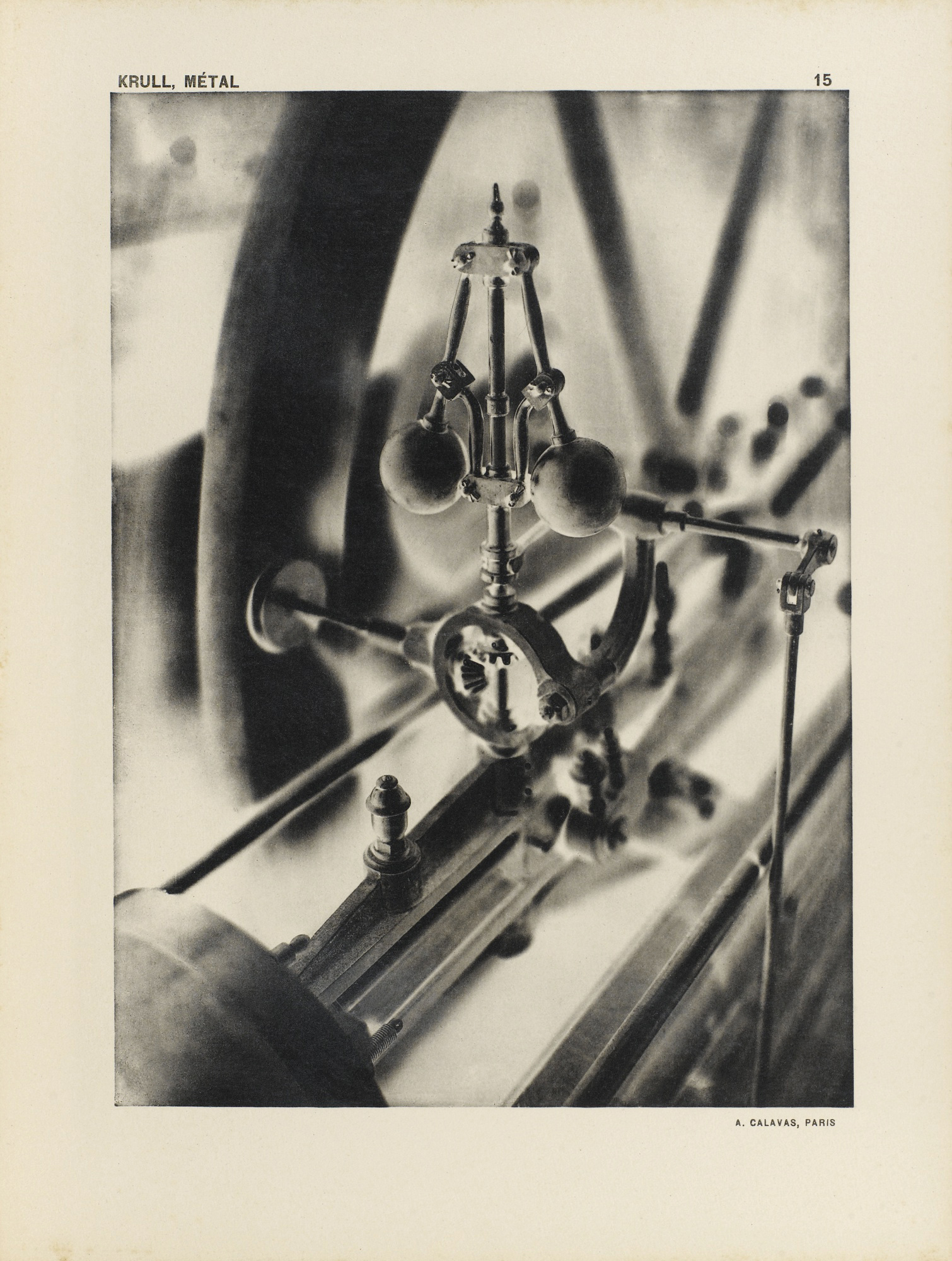
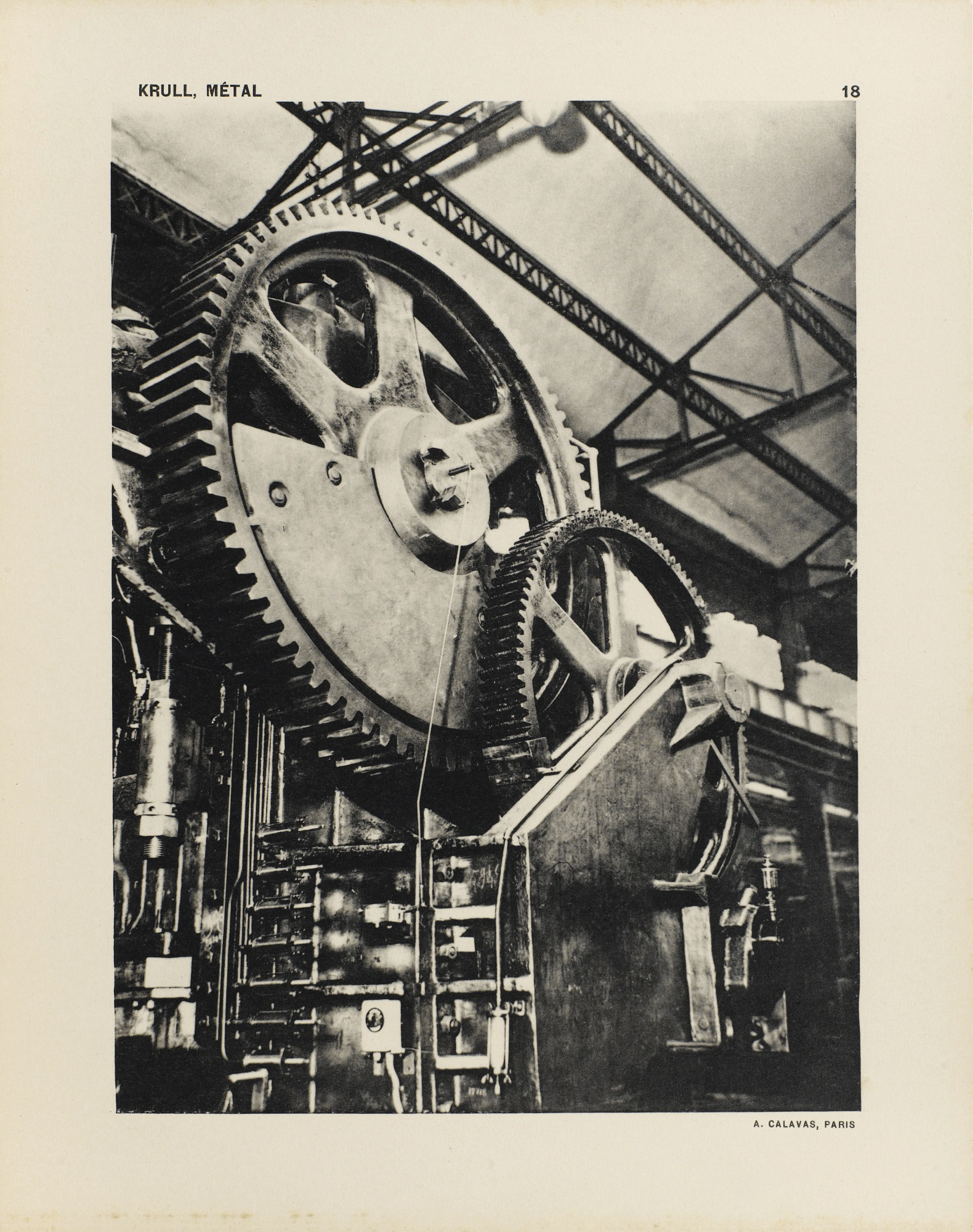
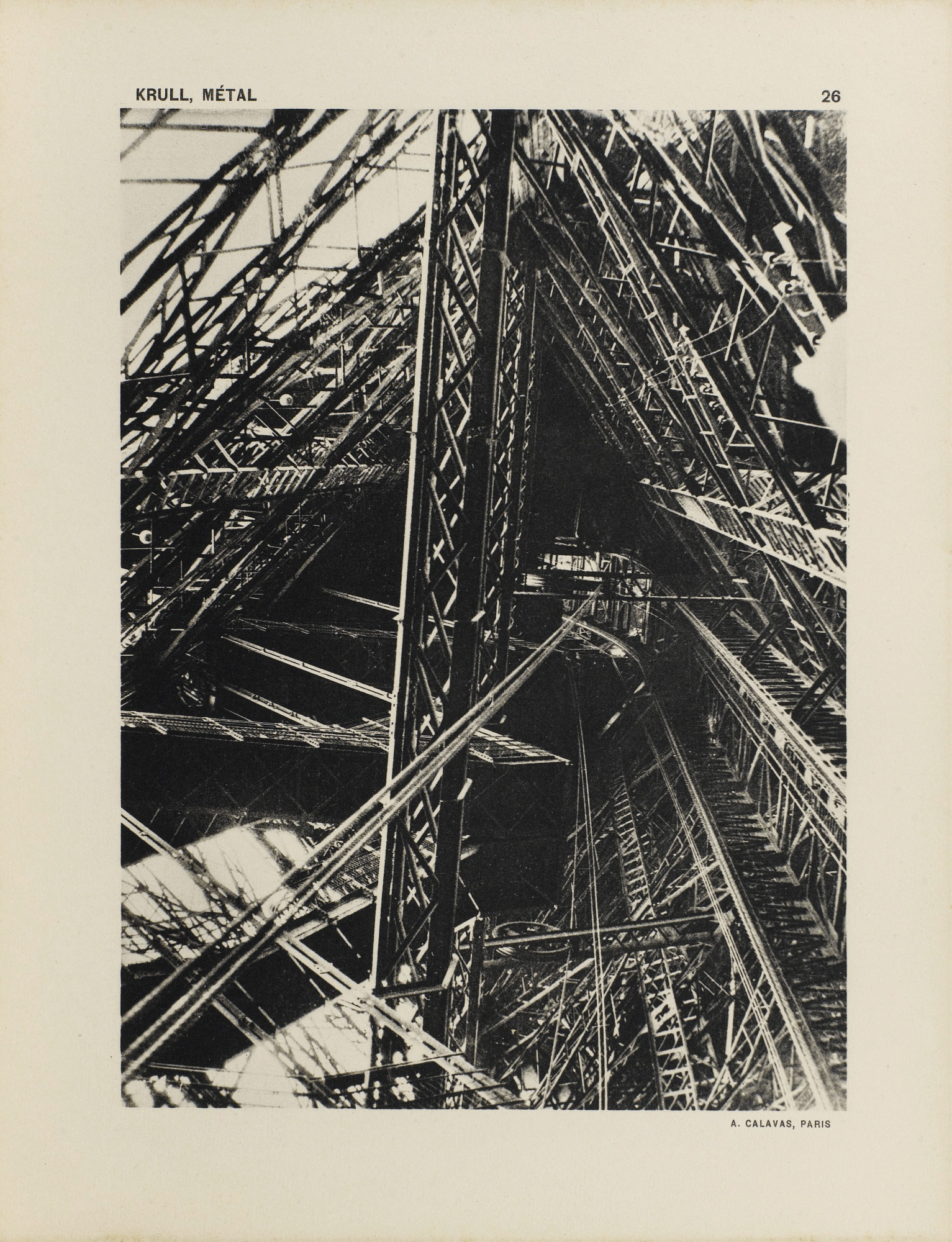
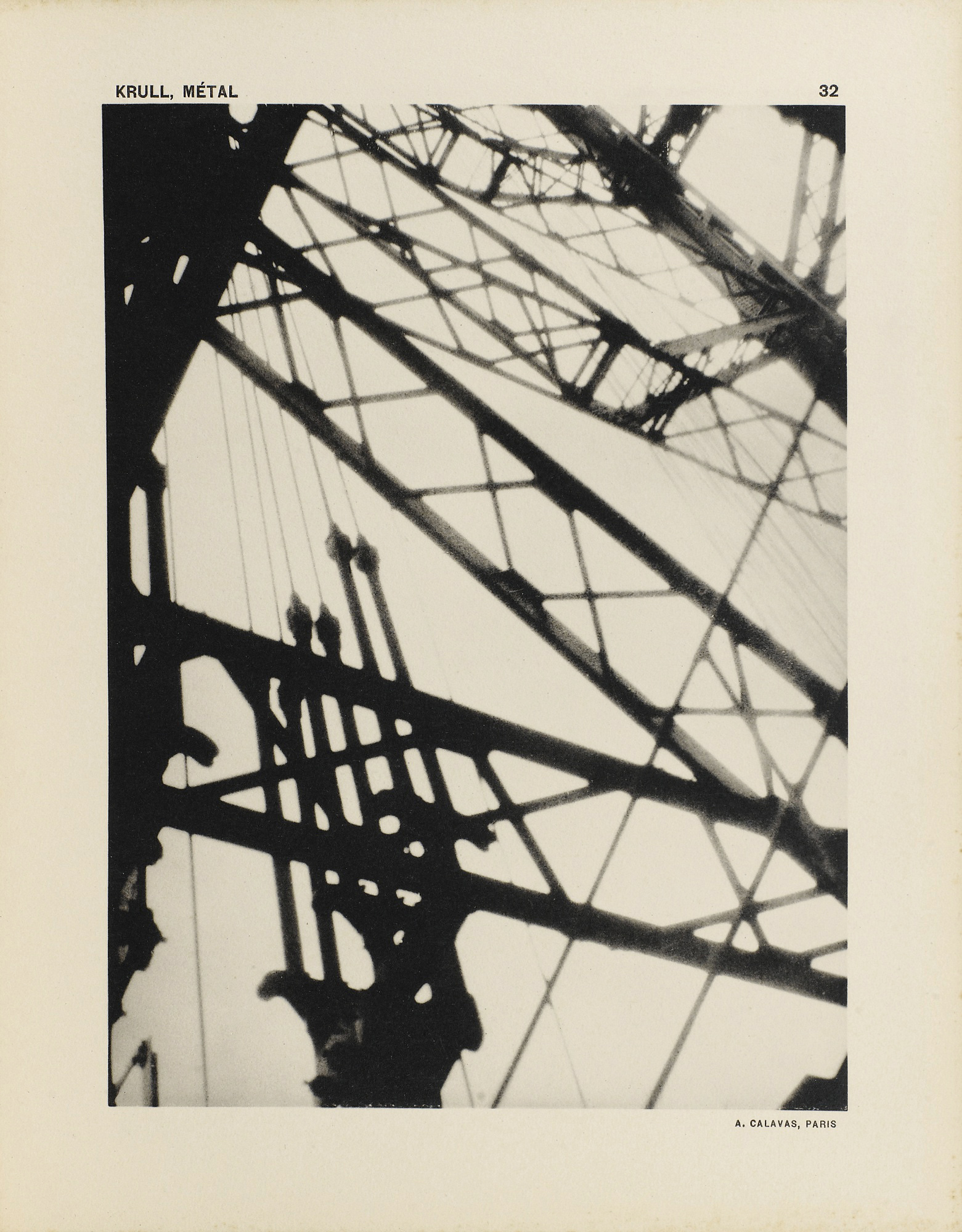
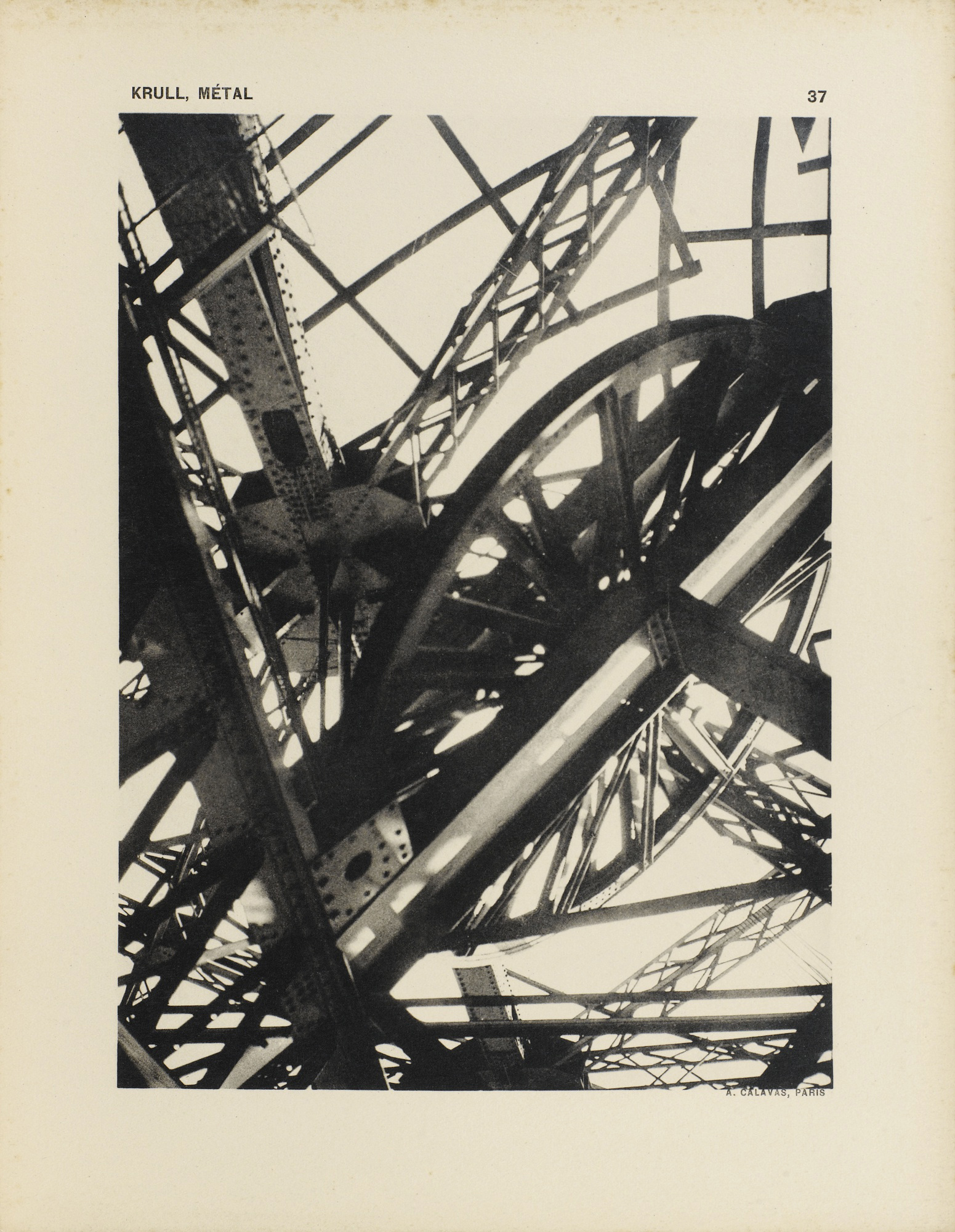
Krull’s artistic breakthrough began in 1928, when she was hired by the nascent VU magazine, the first major French illustrated weekly. Along with photographers André Kertész and Éli Lotar, she developed a new form of reportage rooted in a freedom of expression and closeness to her subjects that resulted in intimate close-ups, all facilitated by her small-format Icarette, a portable, folding bed camera. During this period, she published the portfolio, Metal (Métal) (1928), a collection of 64 pictures of modernist iron giants, including cranes, railways, power generators, the Rotterdam transporter bridge, and the Eiffel Tower, shot in muscular close-ups and from vertiginous angles. Krull participated in the influential Film und Foto, or Fifo, exhibition (1929-1930), which was accompanied by two books, Franz Roh’s and Jan Tschichold’s Foto-Auge (Photo-Eye) and Werner Gräff’s Es kommt der neue Fotograf! (Here Comes the New Photographer!). Fifo marked the emergence of a new critical theory of photography that placed Krull at the forefront of Neues Sehen or Neue Optik (New Vision) photography, a new direction rooted in exploring fully the technical possibilities of the photographic medium through a profusion of unconventional lens-based and darkroom techniques. After the end of World War II, she traveled to Southeast Asia, and then moved to India, where, after a lifetime dedicated to recording some of the major upheavals of the twentieth century, she decided to live as a recluse among Tibetan monks.

Introduction by Roxana Marcoci, Senior Curator, Department of Photography, 2016


Ruth Orkin (American, 1921-1985) 'American Girl in Italy' 1951


Ruth Orkin (American, 1921-1985)
American Girl in Florence, Italy
1951
Gelatin silver print
8 1/2 × 11 15/16″ (21.6 × 30.3cm)
The Museum of Modern Art, New York
Gift of Helen Kornblum in honour of Roxana Marcoci


Although this photograph appears to be a street scene caught on the fly-an instance of what Henri Cartier-Bresson called the “decisive moment”  – it was actually staged for the camera by Orkin and her model. “The idea for this picture had been in my mind for years, ever since I had been old enough to go through the experience myself,” Orkin later wrote. While travelling alone in Italy, she met the young woman in the photograph at a hotel in Florence and together they set out to reenact scenes from their experiences as lone travellers. “We were having a hilarious time when this corner of the Piazza della Repubblica suddenly loomed on our horizon,” the photographer recalled. “Here was the perfect setting I had been waiting for all these years… And here I was, camera in hand, with the ideal model! All those fellows were positioned perfectly, there was no distracting sun, the background was harmonious, and the intersection was not jammed with traffic, which allowed me to stand in the middle of it for a moment.” The picture, with its eloquent blend of realism and theatricality, was later published in Cosmopolitan magazine as part of the story “Don’t Be Afraid to Travel Alone.”

Text from the Metropolitan Museum of Art website


Imogen Cunningham (American, 1883-1976) 'Three Harps' 1935


Imogen Cunningham (American, 1883-1976)
Three Harps
1935
Gelatin silver print
9 5/8 × 7 1/2″ (24.4 × 19.1cm)
The Museum of Modern Art, New York
Gift of Helen Kornblum in honour of Roxana Marcoci


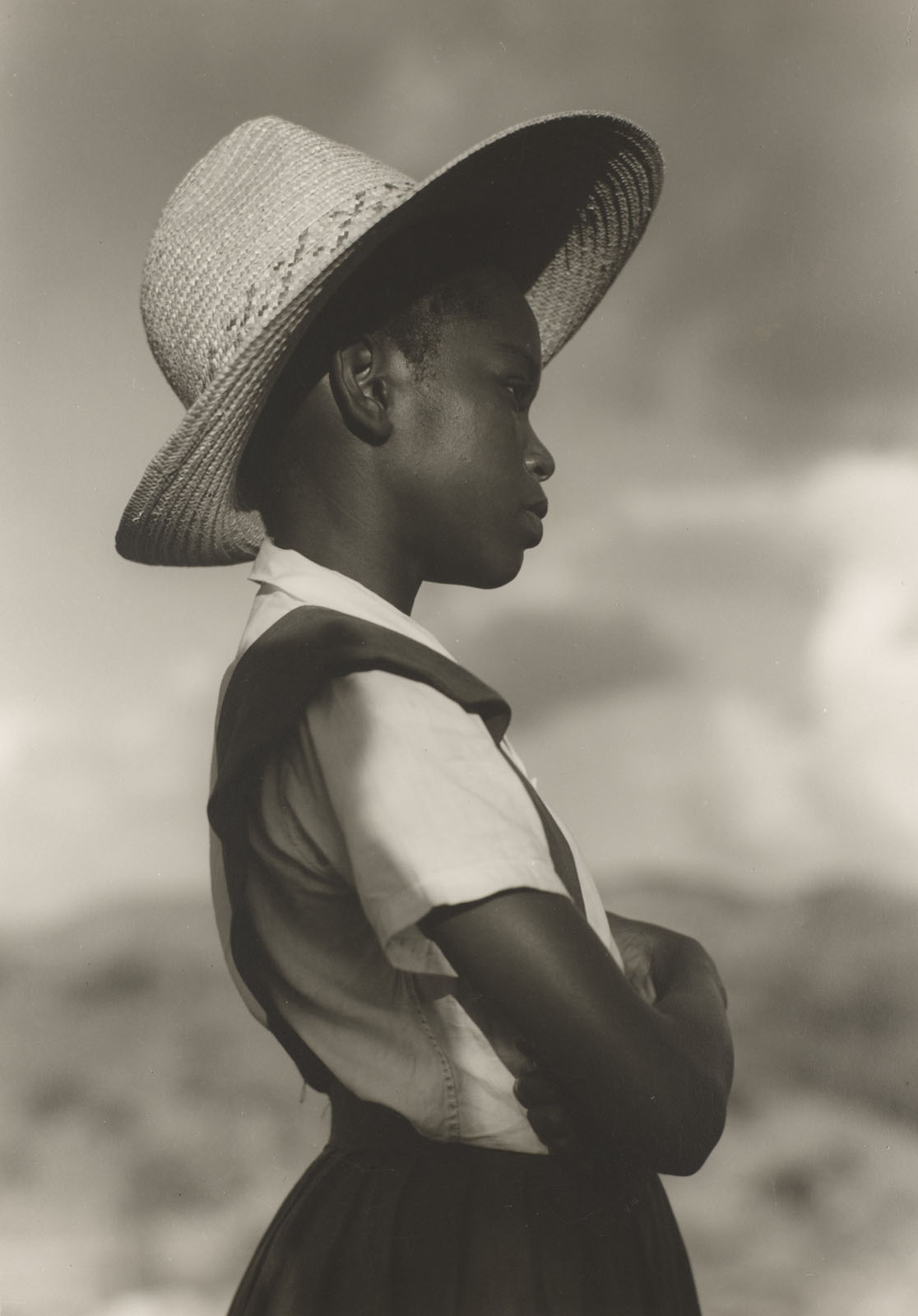
Consuelo Kanaga (American, 1894-1978) 'School Girl, St. Croix' 1963


Consuelo Kanaga (American, 1894-1978)
School Girl, St. Croix
1963
Gelatin silver print
12 13/16 × 8 15/16″ (32.5 × 22.7cm)
The Museum of Modern Art, New York
Gift of Helen Kornblum in honour of Roxana Marcoci


Gertrud Arndt (German, 1903–2000) 'Untitled (Masked Self-Portrait, Dessau)' 1930


Gertrud Arndt (German, 1903–2000)
Untitled (Masked Self-Portrait, Dessau)
1930
Gelatin silver print
9 × 5 5/8 in. (22.9 × 14.3cm)
The Museum of Modern Art, New York
Gift of Helen Kornblum in honour of Roxana Marcoci


Gertrud Arndt (German, 1903-2000)

Gertrud Arndt (born Gertrud Hantschk in Upper Silicia) set out to become an architect, beginning a three-year apprenticeship in 1919 at the architecture firm of Karl Meinhardt in Erfurt, where her family lived at the time. While there, she began teaching herself photography by taking pictures of buildings in town. She also attended courses in typography, drawing, and art history at the Kunstgewerbeschule (School of design). Encouraged by Meinhardt, a friend of Walter Gropius, Arndt was awarded a scholarship to continue her studies at the Bauhaus in Weimar. Enrolled from 1923 to 1927, Arndt took the Vorkurs (foundation course) from László Moholy-Nagy, who was a chief proponent of the value of experimentation with photography. After her Vorkurs, Georg Muche, leader of the weaving workshop, persuaded her to join his course, which then became the formal focus of her studies. Upon graduation, in March 1927, she married fellow Bauhaus graduate and architect Alfred Arndt. The couple moved to Probstzella in Eastern Germany, where Arndt photographed buildings for her husband’s architecture firm.

In 1929, Hannes Meyer invited Alfred Arndt to teach at the Bauhaus, where Arndt focused her energy on photography, entering her period of greatest activity, featuring portraits of friends, still-lifes, and a series of performative self-portraits, as well as At the Masters’ Houses, which shows the influence of her studies with Moholy-Nagy as well as her keen eye for architecture. After the Bauhaus closed, in 1932, the couple left Dessau and moved back to Probstzella. Three years after the end of World War II the family moved to Darmstadt; Arndt almost completely stopped making photographs.

Introduction by Mitra Abbaspour, Associate Curator, Department of Photography, 2014


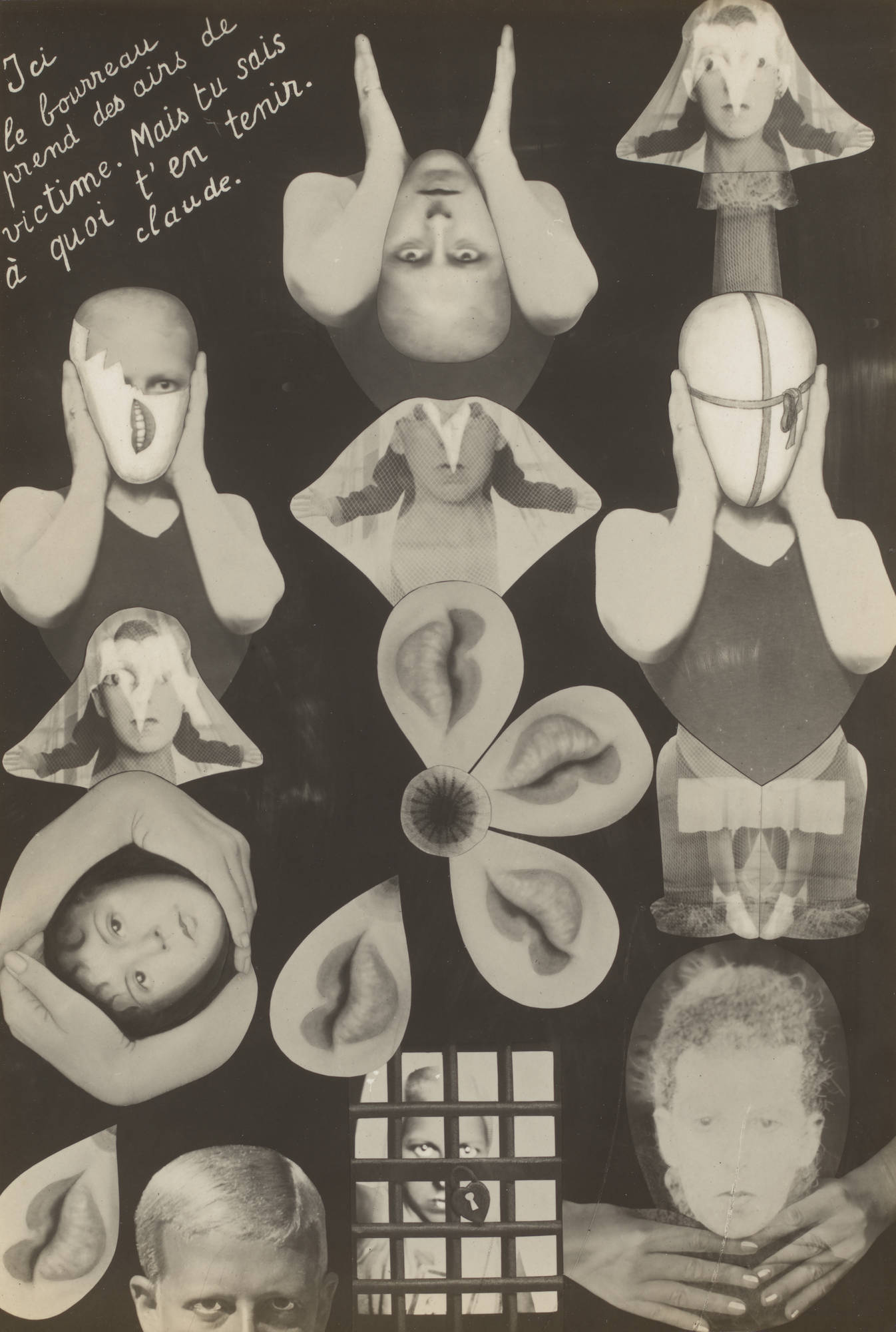
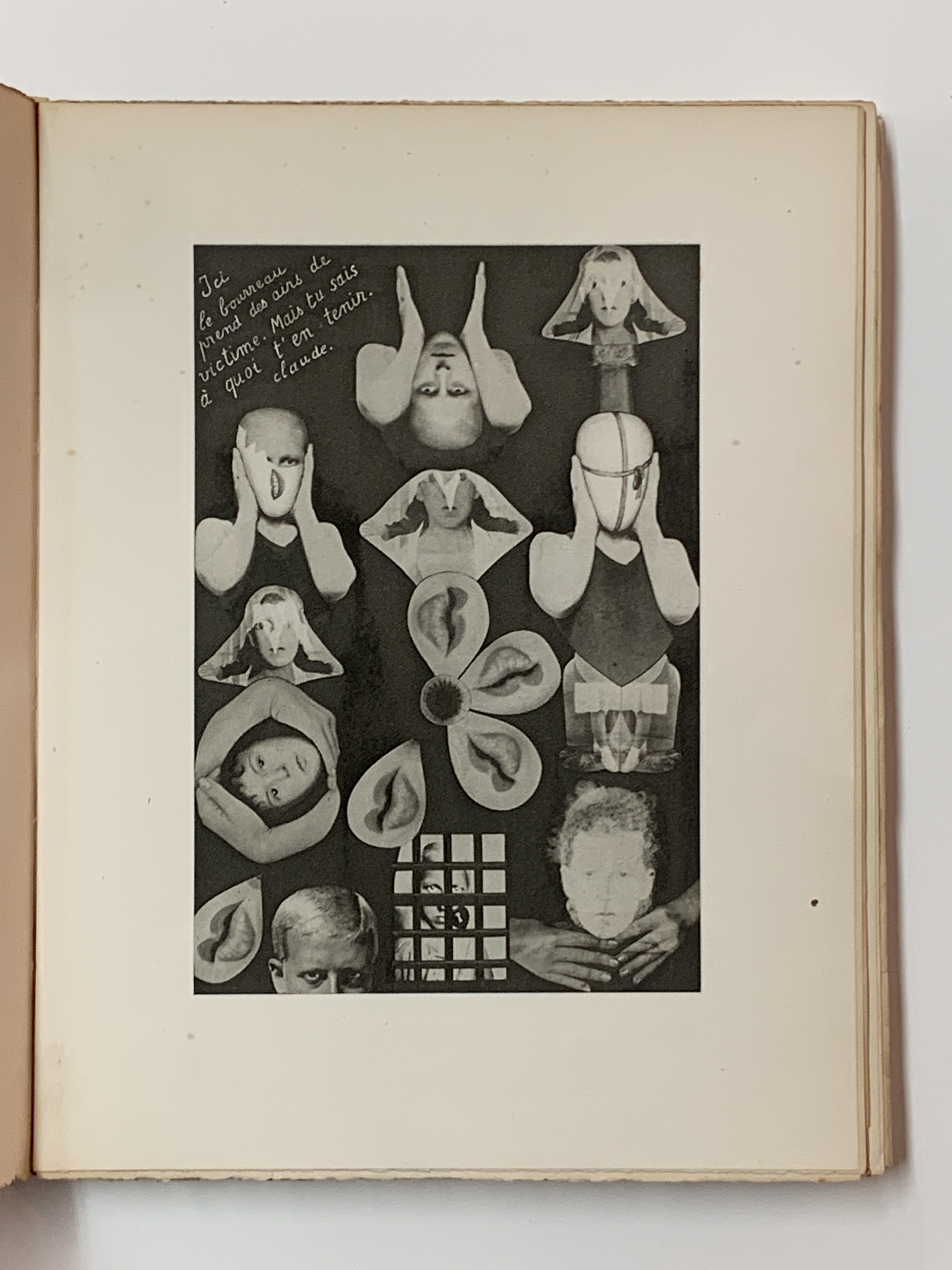
Claude Cahun (Lucy Schwob) (French, 1894-1954) 'M.R.M (Sex)' c. 1929-1930


Claude Cahun (Lucy Schwob) (French, 1894-1954)
M.R.M (Sex)
c. 1929-1930
Gelatin silver print
6 × 4 in. (15.2 × 10.2cm)
The Museum of Modern Art, New York
Gift of Helen Kornblum in honour of Roxana Marcoci


Juliet Jacques: I’m Juliet Jacques. I am a writer and filmmaker based in London. You’re looking at a photomontage by the French artist Claude Cahun, entitled M.R.M (Sex). It’s a photomontage of Cahun’s self-portraits.

Claude Cahun was born in 1894 in France into a family of prominent Jewish intellectuals and began making photomontages in 1912 when she was 18. The works were often exploring Cahun’s own identity in terms of gender and sexuality, but also this sense of a complex and fragmented personhood. Nonbinary pronouns, as we’d understand them now, weren’t officially in existence in the 1920s. Cahun actually wrote “Masculine? Feminine? It depends on the situation. Neuter is the only gender that always suits me.” So, I think either she or they is appropriate.

M.R.M was published as one of the illustrations in Cahun’s book Aveux non Avenus in 1930. Throughout the book you see this playing with the possibilities of gender expression that are kind of funny, sometimes melancholic, but are very emotionally complicated and do really speak to a sense of sometimes being trapped by the confines of gender and sometimes finding these very playful and beautiful ways to break out of it.

Artists and writers, we’re supposed to be dreamers, I think, and people who want to come up with a better world. And of course Cahun’s work is really suggesting different possibilities of free expression.

It’s hard to know how Cahun might have felt about being included in an exhibition of women artists. But, I think Cahun definitely deserves a place within this feminist canon, if not a strictly female one.

Transcript of audio from the MoMA website


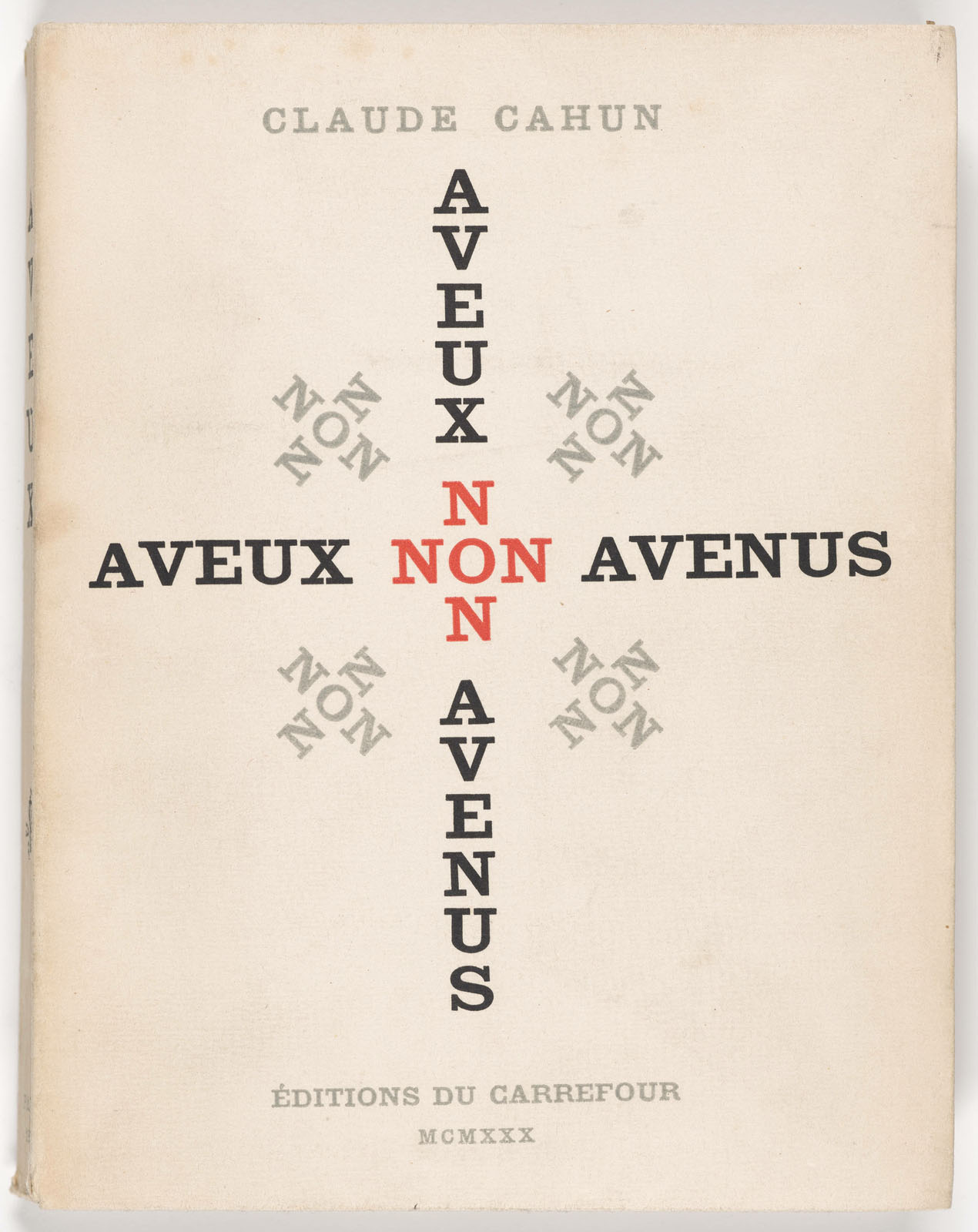
Claude Cahun (Lucy Schwob) (French, 1894-1954) 'Aveux non avenus' (Disavowals or Cancelled Confessions) 1930


Claude Cahun (Lucy Schwob) (French, 1894-1954)
Aveux non avenus (Disavowals or Cancelled Confessions)
1930
Illustrated book with photogravures
Cover (closed) approx. 8 11/16 × 6 11/16″ (22 × 17cm)
The Museum of Modern Art, New York
Gift of Helen Kornblum in honour of Roxana Marcoci


Juliet Jacques: My name is Juliet Jacques.

You’re looking at Claude Cahun’s book Aveux non Avenus, which has been translated variously as “denials” or “disavowals” or “cancelled confessions.”

It’s an autobiographical text that doesn’t just refuse the conventions of memoir, it also really refuses to open up to the reader in a clearly understandable way. It’s this mixture of photography and aphorisms and longer prose-poetic passages. It doesn’t have a formalised narrative. It’s rather just exploring the fragmented and somewhat chaotic nature of their own consciousness and what they are able to access.

I’ve just flipped to page 91. Cahun writes:

“Consciousness. The carver. My enthusiasms, my impulses, my little passions were irksome. … Come on, then. … By a process of elimination, what is necessary about me? … The material is badly cut. I want it to be straightened up. A clumsy snip with the scissors. Bach! Let’s even it up on the other side. … A stain? We’ll cover it up. Let’s trim it again. I no longer exist. Perfect. Now nothing can come between us.”


The affinity I felt with Cahun is because I ended up doing a lot of writing that got bracketed as confessional or sort of first-person autobiographical writing. You can get yourself into a situation where you’re constantly expected to give away details about your personal life. And what I have always found really interesting about Cahun is the refusal of that trap, even in the project of putting oneself on the page.

I was always looking for queer and trans writers, and Cahun’s work gave me this gender non-conforming take on art that I thought always should have been there.

Transcript of audio from the MoMA website


Hulleah J. Tsinhnahjinnie (Native American (Seminole-Muscogee-Navajo)) 'Vanna Brown, Azteca Style' 1990


Hulleah J. Tsinhnahjinnie (Native American (Seminole-Muscogee-Navajo))
Vanna Brown, Azteca Style
1990
Photocollage
15 11/16 × 22 13/16″ (39.9 × 58cm)
The Museum of Modern Art, New York
Gift of Helen Kornblum in honour of Roxana Marcoci


Veronica Passalacqua: My name is Veronica Passalacqua, and I’m a curator at the C.N. Gorman Museum at the University of California Davis. My research focus is upon contemporary Native American art with a specialty in photography. This is a work called Vanna Brown, Azteca Style by the Navajo-Tuskegee artist Hulleah Tsinhnahjinnie.

It’s a hand collage that depicts Tsinhnahjinnie’s friend, dressed in her Azteca dancing regalia within the frame of a Philco television set. It was the beginning of a series of works and videos related to a project called NTV, or Native Television. She wanted to create her own vision of what she’d like to see on television.

Curator, Roxana Marcoci: The photograph makes reference to Wheel of Fortune, a televised game show where contestants guess words and phrases one letter at a time. Vanna White has been the show’s co-host for 40 years.

Veronica Passalacqua: Vanna White was always dressed in these elaborate gowns to show the letters of the enduring game show. She was there really as a symbol of the idealised beauty that television was portraying. Tsinhnahjinnie changes the name from Vanna White to Vanna Brown, addressing the beauty that she sees in her friend. What Tsinhnahjinnie wanted to focus on was this notion that you can create these beautiful images when you have a relationship with the sitter.

I’d like to read you a quote by Tsinhnahjinnie: “No longer is the camera held by an outsider looking in, the camera is held with brown hands opening familiar worlds. We document ourselves with a humanising eye, we create new visions with ease, and we can turn the camera to show how we see you.”

Transcript of audio from the MoMA website


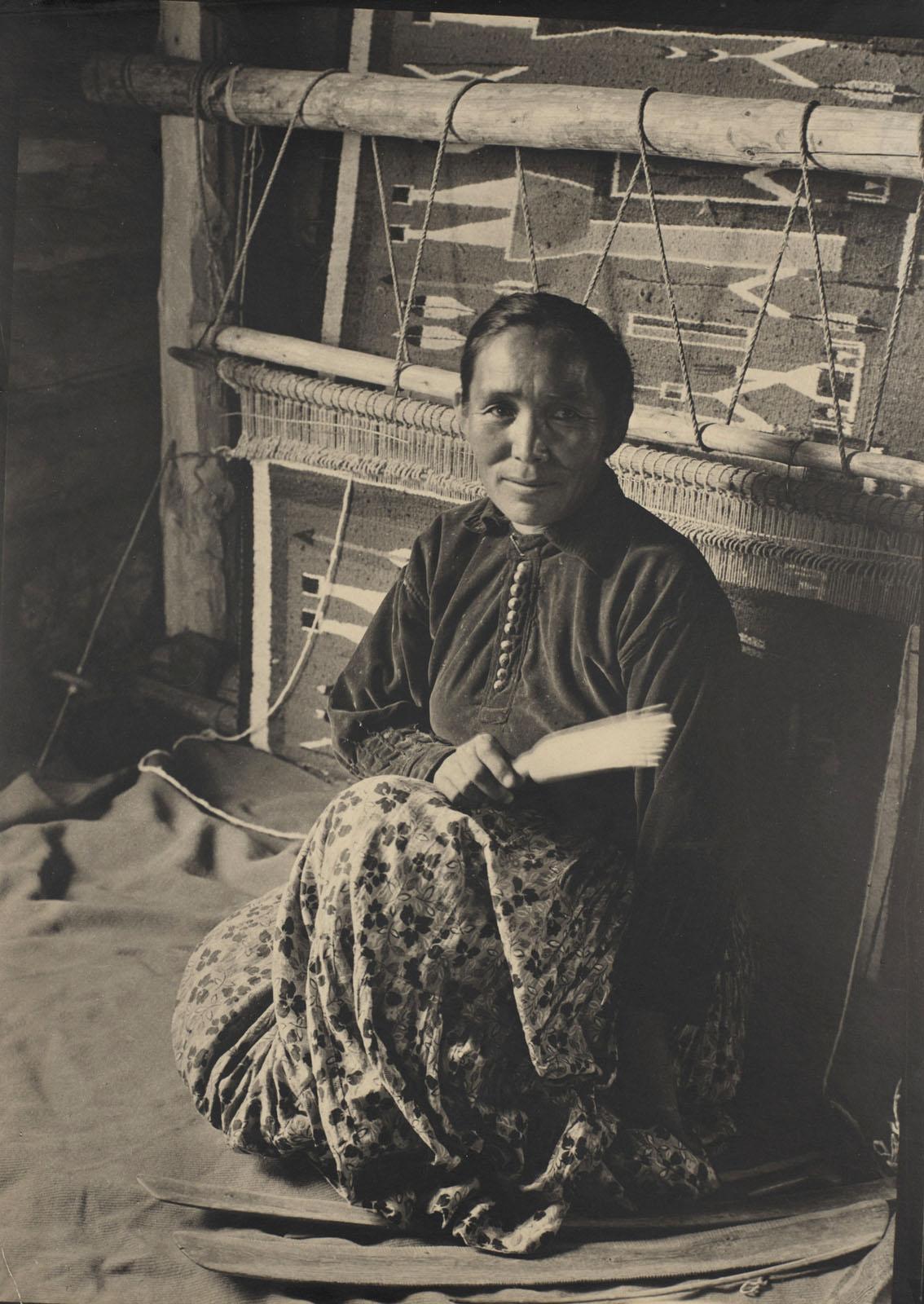
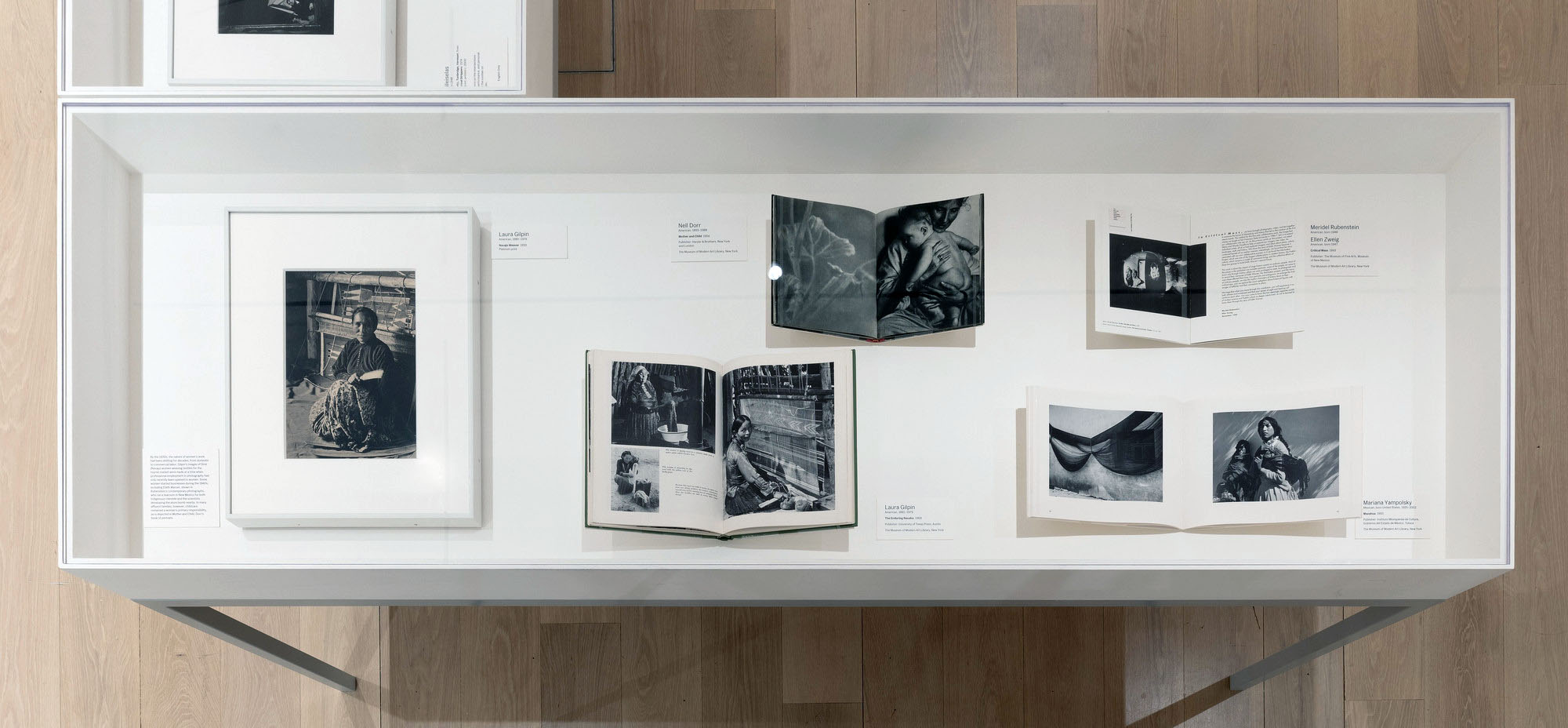
Laura Gilpin (American, 1881-1979) 'Navajo Weaver' 1933


Laura Gilpin (American, 1881-1979)
Navajo Weaver
1933
Platinum print
13 1/8 × 9 3/8 in. (33.3 × 23.8cm)
The Museum of Modern Art, New York
Gift of Helen Kornblum in honour of Roxana Marcoci


Lola Alvarez Bravo (Mexican, 1907-1993) 'Frida Kahlo' c. 1945


Lola Alvarez Bravo (Mexican, 1907-1993)
Frida Kahlo
c. 1945
Gelatin silver print
8 3/8 × 6 1/4″ (21.3 × 15.9cm)
The Museum of Modern Art, New York
Gift of Helen Kornblum in honour of Roxana Marcoci


Lucia Moholy (British born Prague, 1894-1989) 'Frau Finsler' 1926


Lucia Moholy (British born Prague, 1894-1989)
Frau Finsler
1926
Gelatin silver print
7 7/8 × 10″ (20 × 25.4cm)
The Museum of Modern Art, New York
Gift of Helen Kornblum in honour of Roxana Marcoci


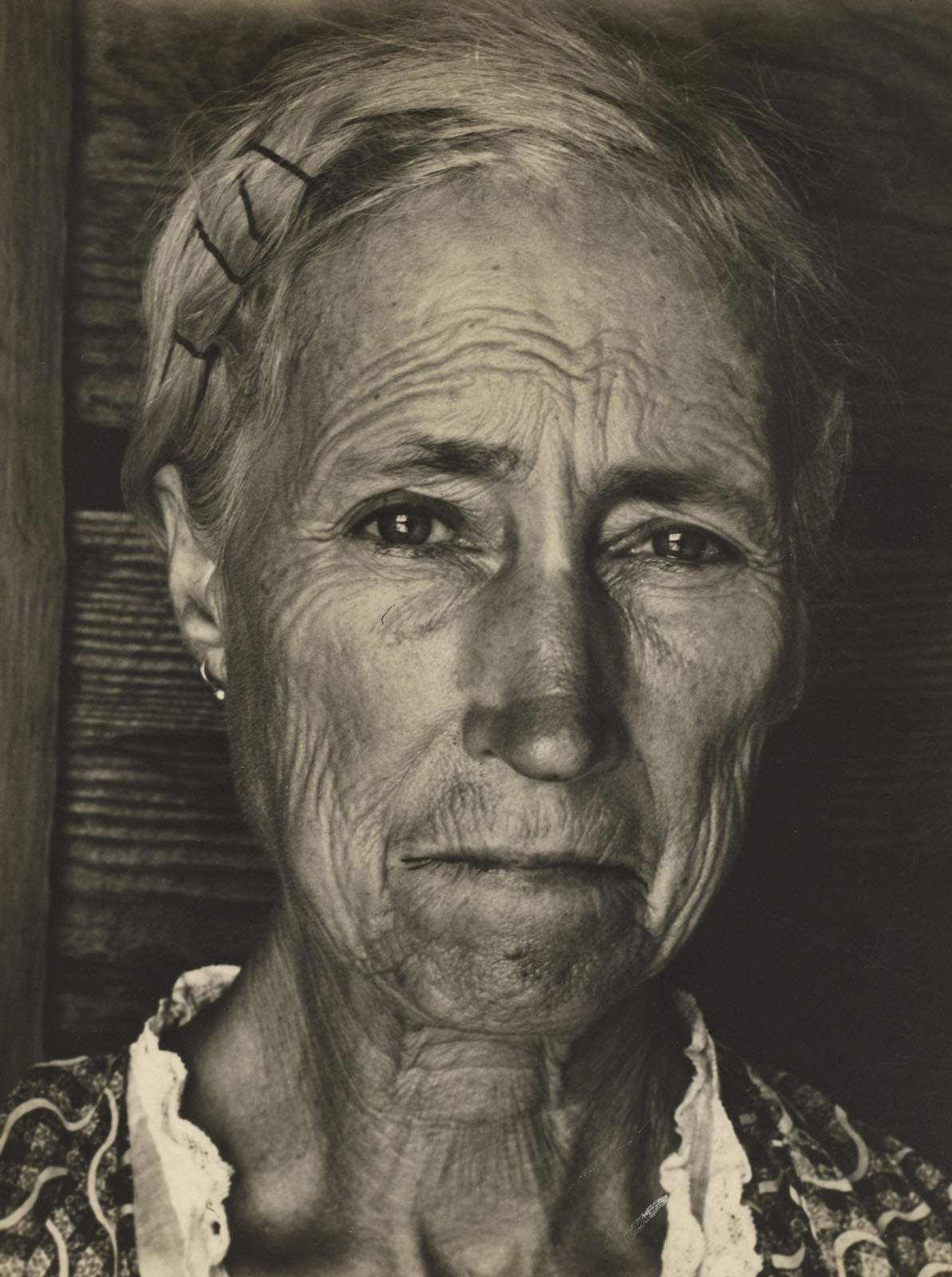
Margaret Bourke-White (American, 1904-1971) 'Woman, Locket, Georgia' 1936


Margaret Bourke-White (American, 1904-1971)
Woman, Locket, Georgia
1936
Gelatin silver print
13 × 9 3/4″ (33 × 24.8cm)
The Museum of Modern Art, New York
Gift of Helen Kornblum in honour of Roxana Marcoci


Margrethe Mather (American, 1885-1952) 'Buffie Johnson, Painter' 1933


Margrethe Mather (American, 1885-1952)
Buffie Johnson, Painter
1933
Gelatin silver print
3 3/4 × 2 7/8″ (9.5 × 7.3cm)
The Museum of Modern Art, New York
Gift of Helen Kornblum in honour of Roxana Marcoci


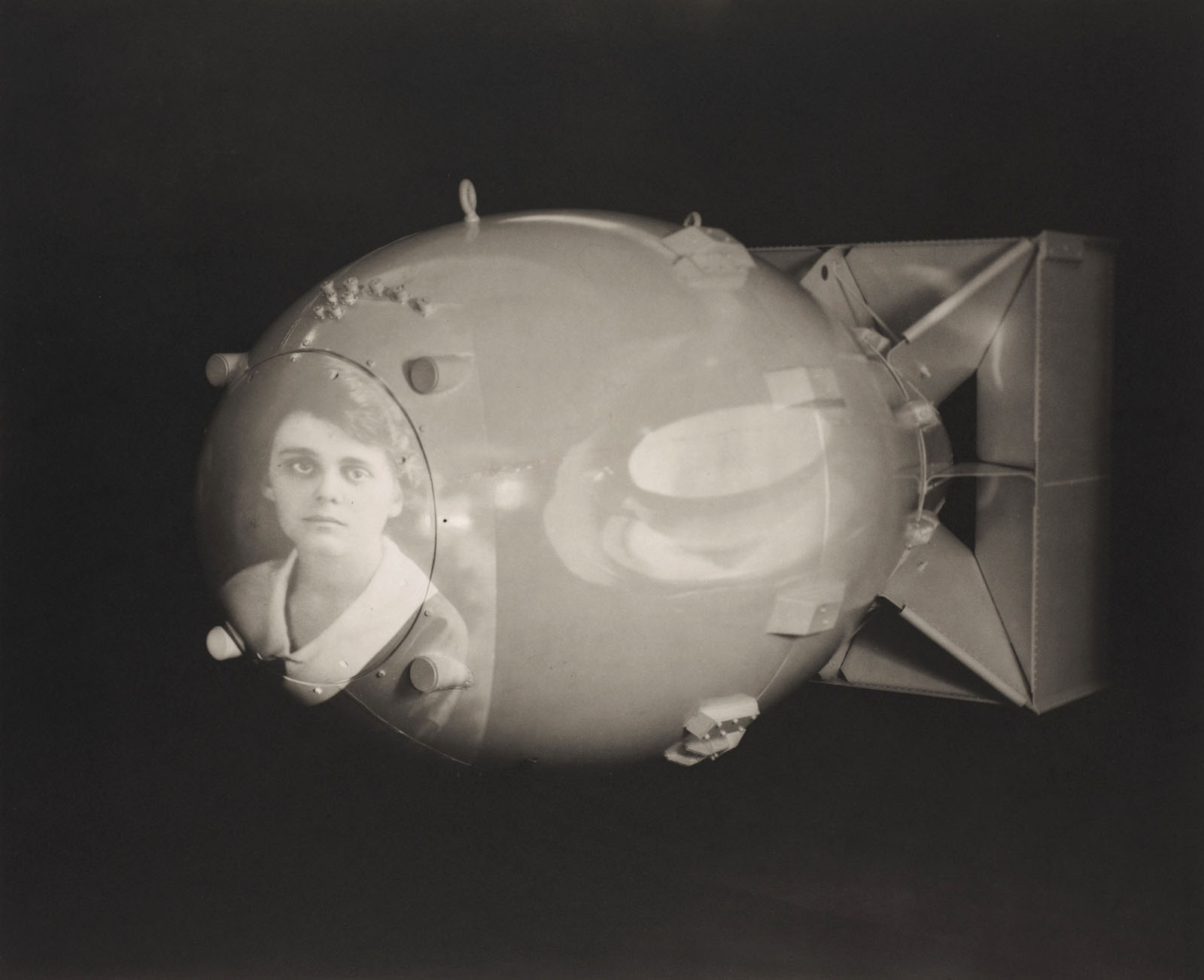
Meridel Rubenstein (American, b. 1948) 'Fatman with Edith' 1993


Meridel Rubenstein (American, b. 1948)
Fatman with Edith
1993
Palladium print
18 1/2 × 22 1/2″ (47 × 57.2cm)
The Museum of Modern Art, New York
Gift of Helen Kornblum in honour of Roxana Marcoci


Helen Kornblum: I’m Helen Kornblum. If there’s a theme in my collection, I’d say it’s people. My interest in people, meeting people, knowing people, learning about people.

I have felt about my photographs almost like a third child. Each one actually has its own story for me. Where I found them, who led me to them. I’ve just attached myself in different ways to each one.

One, for instance, is Fatman with Edith by Meridel Rubenstein. With this photograph she conflates war with the feminine. She has the inhumanly destructive warhead, the plutonium bomb, called Fatman, dropped on Nagasaki, juxtaposed with a portrait of a woman, Edith Warner, and a nurturing, warm cup of tea.

Curator, Roxana Marcoci: In the early 1940s Robert Oppenheimer, a physicist in charge of The Manhattan Project developed the first atomic bomb.This photograph belongs to a series that explores encounters in New Mexico between indigenous communities and the scientists who created the bomb. These two worlds collided in the home of Edith Warner, who ran a tearoom in Los Alamos.

Helen Kornblum: Oppenheimer knew Edith Warner, who lived near Santa Fe. And when he came to create the bomb at Los Alamos, he asked Edith if he could bring scientists to her home for a place away from the creation of this bomb, and he would come with them for dinner, all during the Manhattan Project.

Roxana Marcoci: By pairing two seemingly dissimilar images, Rubenstein said she hopes “to enlarge the lives of ordinary people, and strip the mythic characters of history down to their ordinariness.”

Transcript of audio from the MoMA website


Edith Warner (1893-1951), also known by the nickname “The Woman at Otowi Crossing”, was an American tea room owner in Los Alamos, New Mexico, who is best known for serving various scientists and military officers working at the Los Alamos National Laboratory during the original creation of the atomic bomb as a part of the Manhattan Project. Warner’s influence on the morale and overall attitude of the people there has been noted and written about by various journalists and historians, including several books about her life, a stage play, a photography exhibition, an opera, and a dance.

Text from the Wikipedia website


Rosemarie Trockel (German, b. 1952) 'Untitled' 2004


Rosemarie Trockel (German, b. 1952)
Untitled
2004
Chromogenic print
20 3/4 × 19″ (52.7 × 48.3 cm)
The Museum of Modern Art, New York
Gift of Helen Kornblum in honour of Roxana Marcoci


Tatiana Parcero (Mexican, b. 1967) 'Interior Cartography #35' 1996


Tatiana Parcero (Mexican, b. 1967)
Interior Cartography #35
1996
Chromogenic print and acetate
9 3/8 × 6 3/16 in. (23.8 × 15.7cm)
The Museum of Modern Art, New York
Gift of Helen Kornblum in honour of Roxana Marcoci


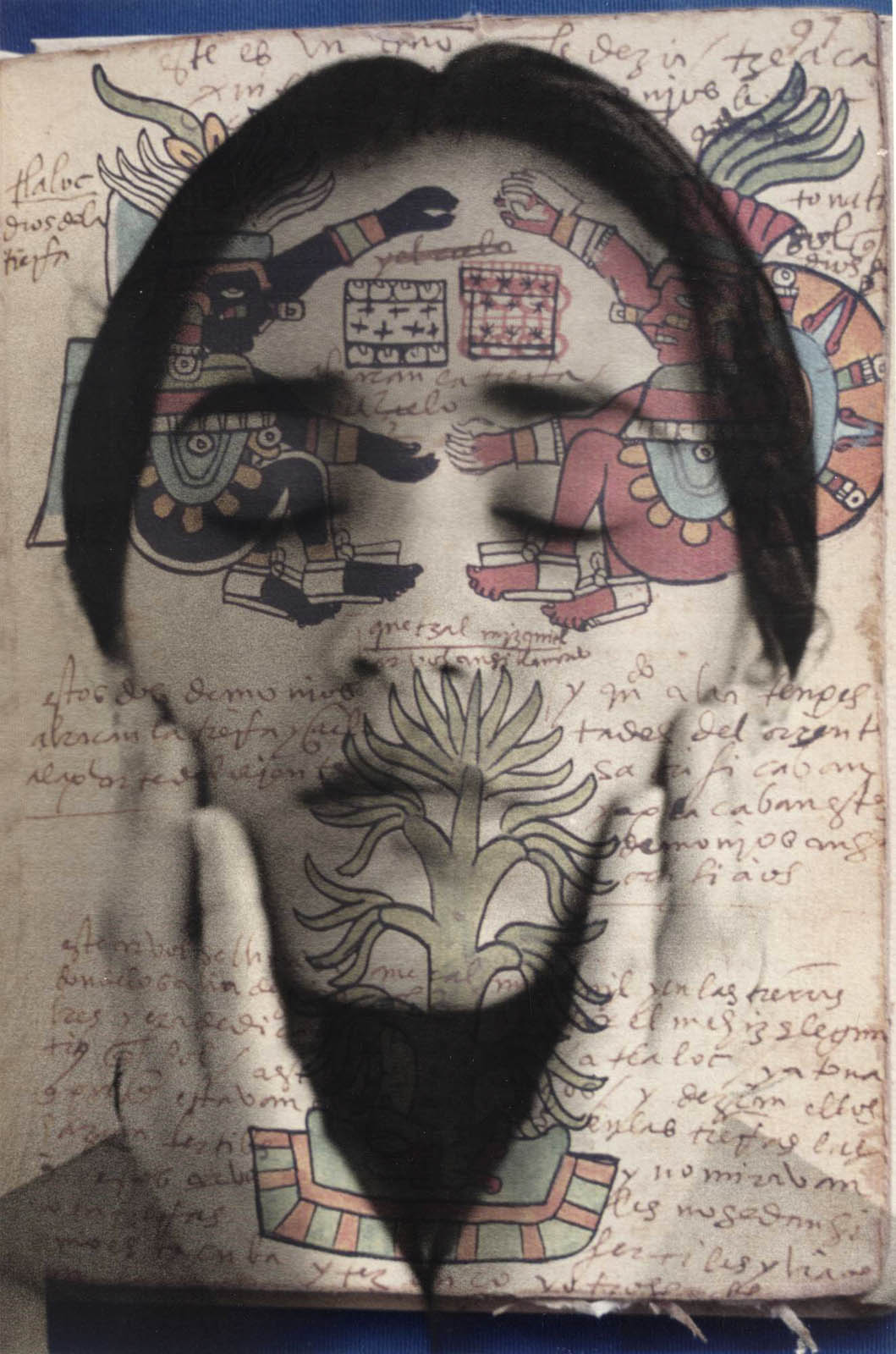
Artist, Tatiana Parcero

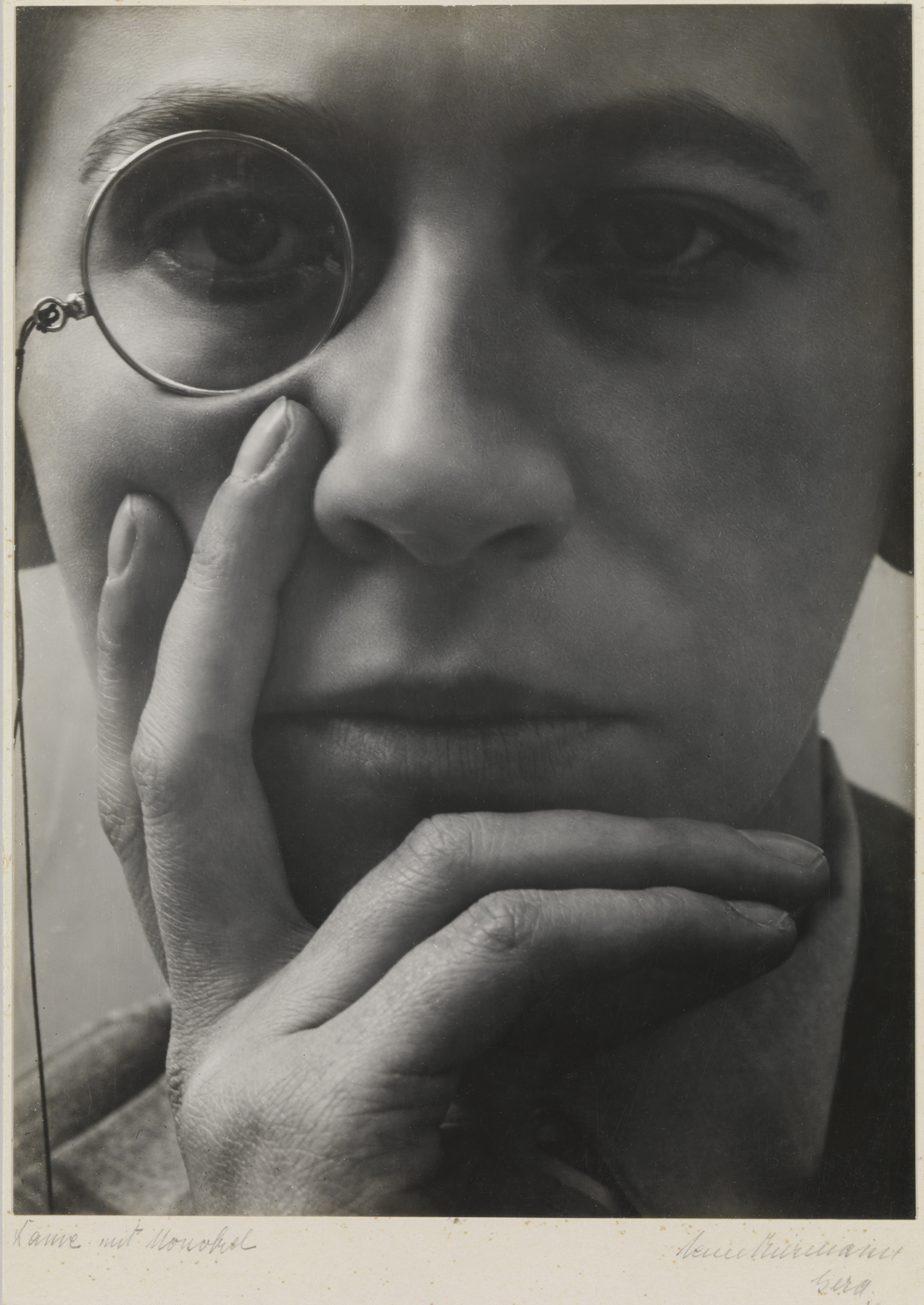
My name is Tatiana Parcero. I’m from Mexico and I’m a visual artist and a psychologist. The work is called Interior Cartography #35, and belongs to the series of the same name.

Cartography is a science that deals with maps. I am interested in working with the body as a territory, where I can explore different paths at a physical and also in a symbolic level.

I am the one that appears in all the photographs. When I did this specific shot, I wanted to show a moment of introspection and calm. And when you see my hands near my cheeks, I wanted to represent a way to be in touch with myself, not just in a physical way, but in a more spiritual way.

The image superimposed on the face is from the Codex Tudela of the 16th century. The codices are documents that were created by ancient civilisations, like Mayans, Aztecs, that represent the pre-Columbian cultures of Mexico, their amazing universe, and the way that they lived.

When I moved to New York from Mexico, I was feeling a little bit out of place and I wanted to recreate a sense of belonging. The work is a way to connect myself with my country and the ancient cultures that are before me.

I decided to study psychology because I wanted to help people. I wanted to be able to understand emotions and be able to translate personal experiences into images and make them more accessible. It’s important for me to give the viewer several layers so that you can really explore the image and make your own interpretations and reflections. I think art can transform you and take you to a parallel universe. That is where I feel that you can be able to heal and to cure.

Transcript of audio from the MoMA website


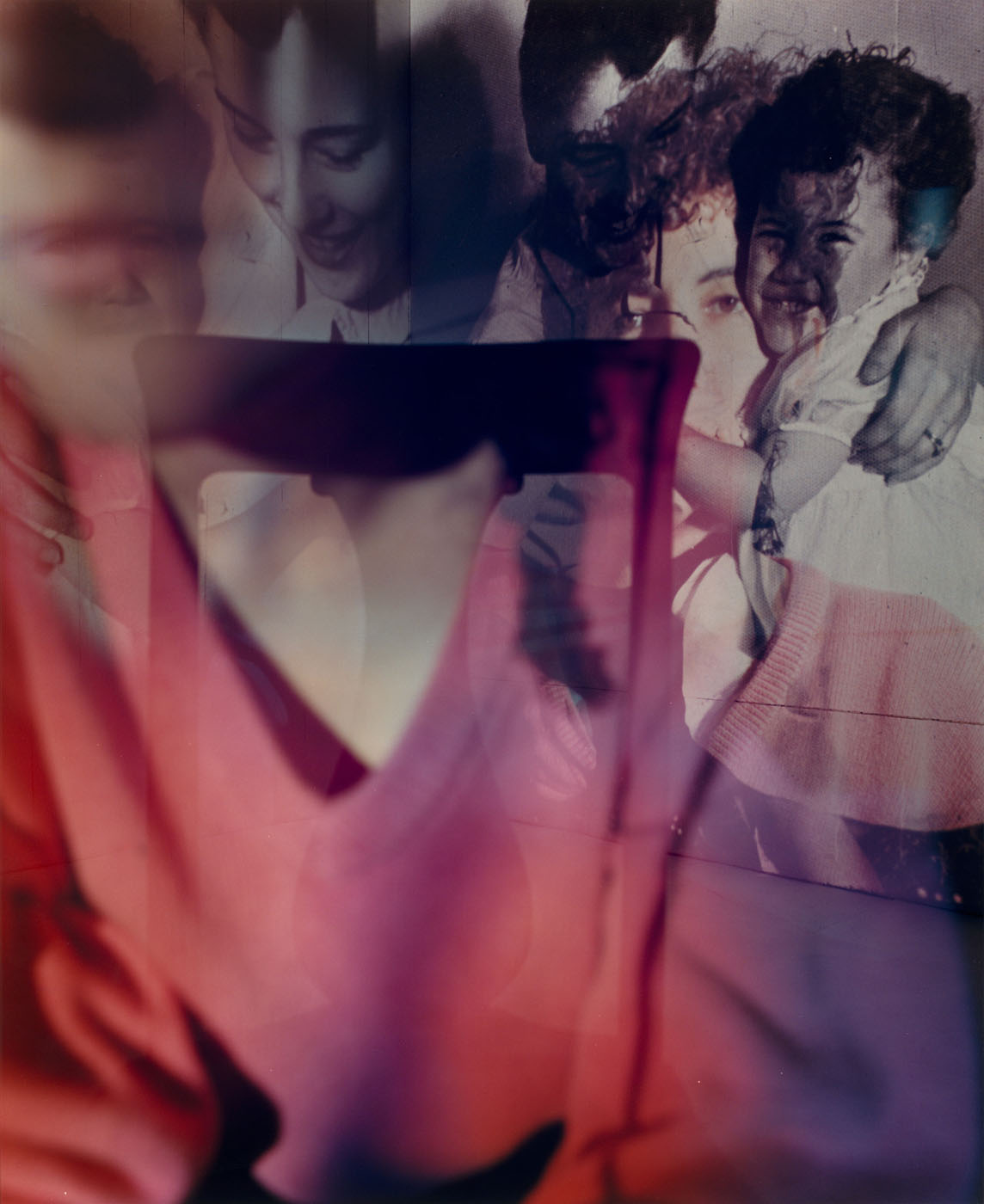
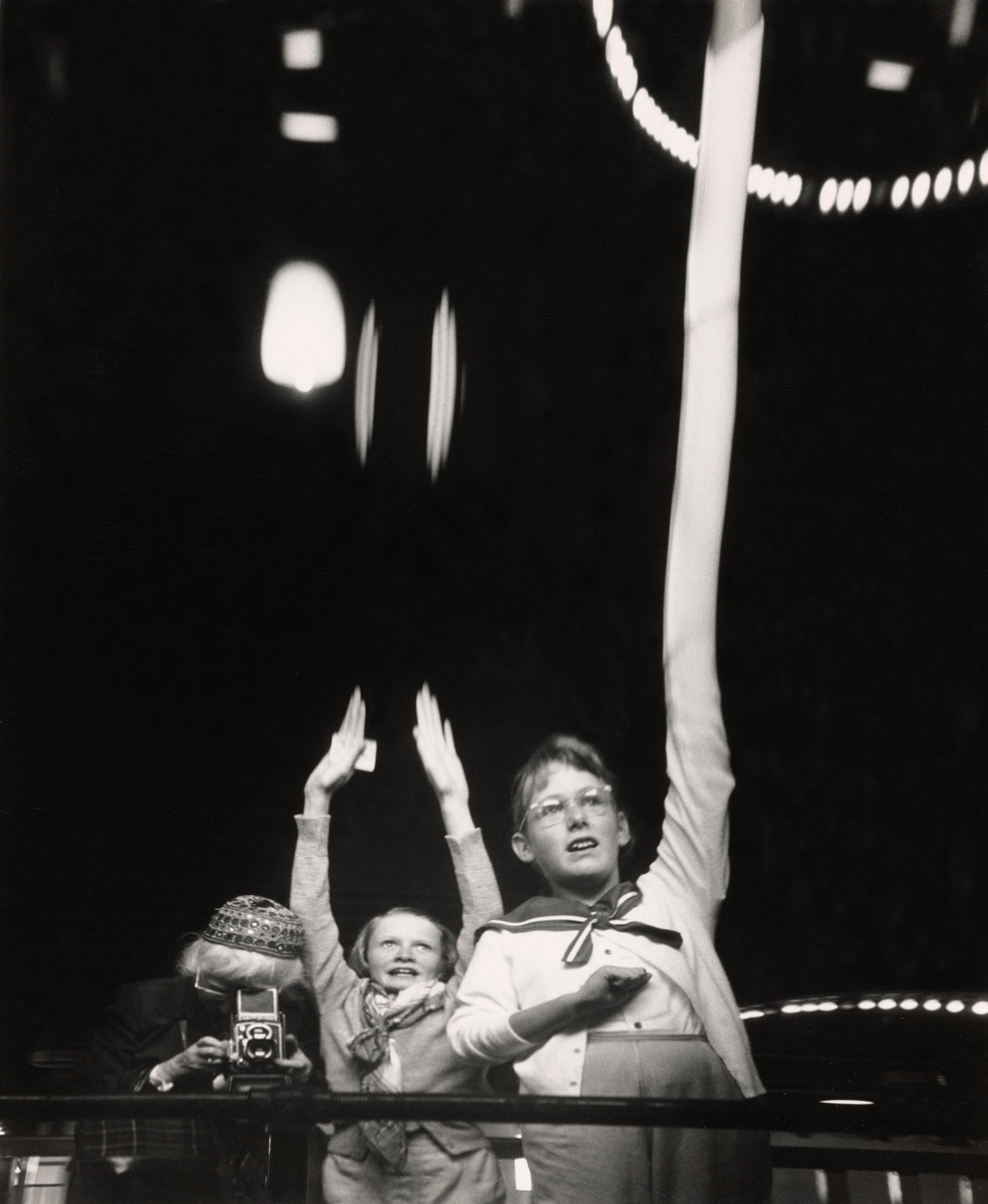
Lorie Novak (American, b. 1954) 'Self-Portraits' 1987


Lorie Novak (American, b. 1954)
Self-Portraits
1987
Chromogenic print
22 1/2 × 18 9/16″ (57.2 × 47.1cm)
The Museum of Modern Art, New York
Gift of Helen Kornblum in honour of Roxana Marcoci


The Museum of Modern Art announces Our Selves: Photographs by Women Artists from Helen Kornblum, an exhibition that will present 90 photographic works by female artists from the last 100 years, on view from April 16 to October 2, 2022. Drawn exclusively from the Museum’s collection, thanks to a transformative gift of photographs from Helen Kornblum in 2021, the exhibition takes as a starting point the idea that the histories of feminism and photography have been intertwined. Our Selves: Photographs by Women Artists from Helen Kornblum is organised by Roxana Marcoci, The David Dechman Senior Curator, with Dana Ostrander, Curatorial Assistant, and Caitlin Ryan, Curatorial Assistant, Department of Photography, MoMA.

Rather than presenting a chronological history of women photographers or a linear account of feminist photography, the exhibition prompts new appraisals and compelling dialogues from a contemporary, intersectional feminist perspective. African-diasporic, queer, and postcolonial / Indigenous artists have brought new mindsets and questions to the canonical narratives of art history. Our Selves will reexamine a host of topics, countering racial and gender invisibility, systemic racial injustice, and colonialism, through a diversity of photographic practices, including portraiture, photojournalism, social documentary, advertising, avant-garde experimentation, and conceptual photography. Highlighting both iconic and rare or lesser-known images, the exhibition’s groupings and juxtapositions of modern and contemporary works will encourage unexpected connections in the Museum’s fifth-floor collection galleries, which are typically devoted to art from the 1880s through the 1940s.

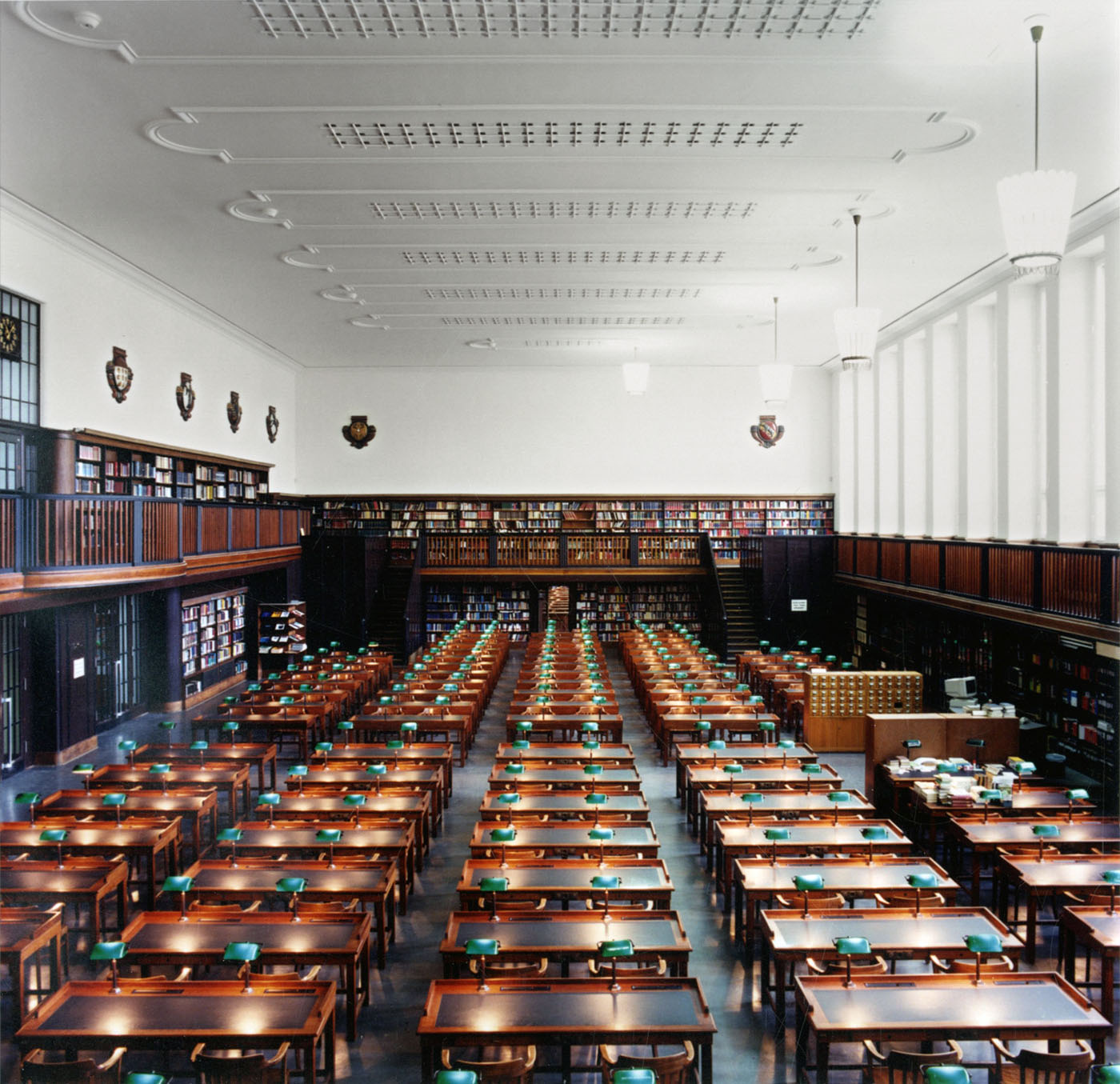
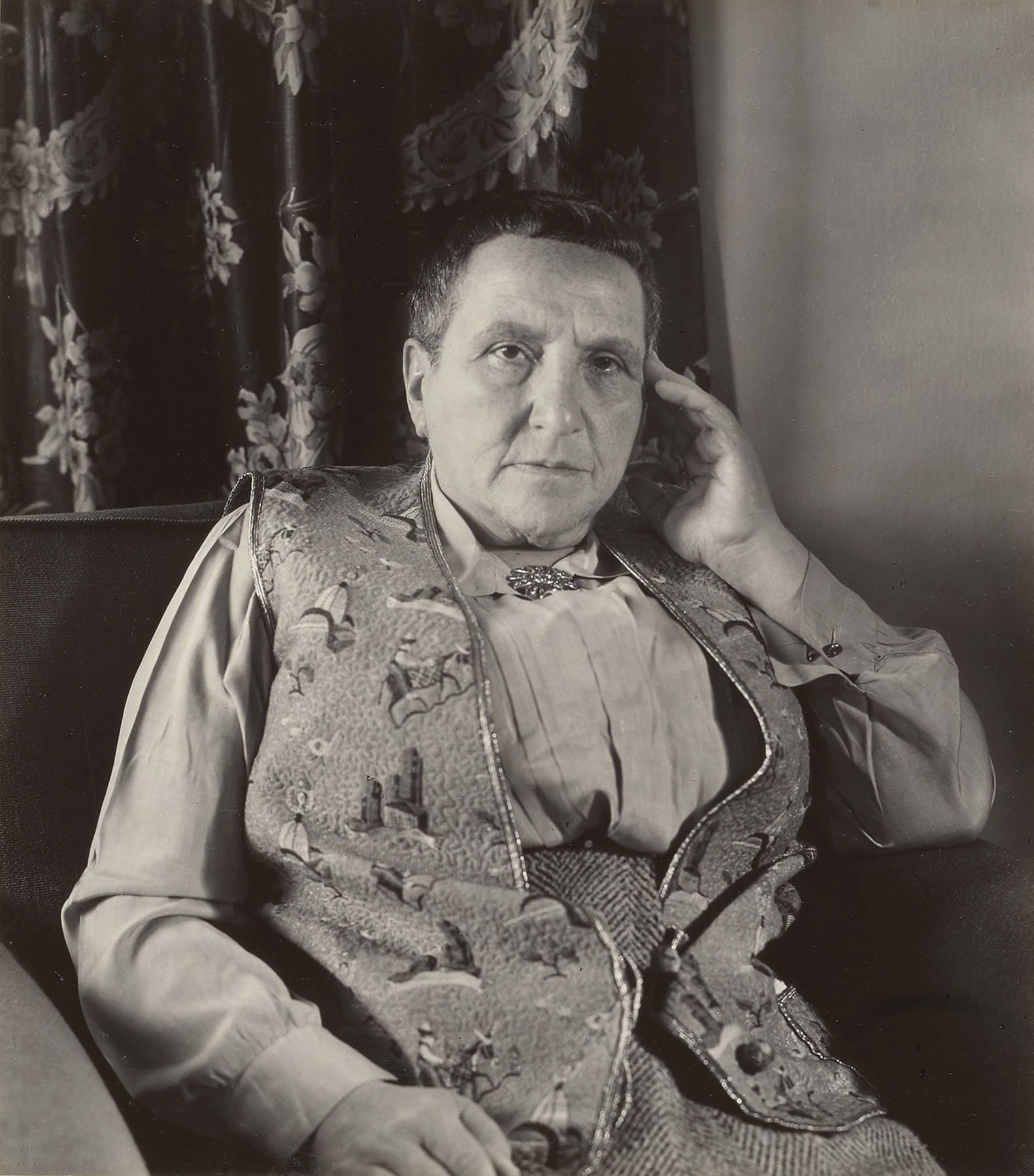
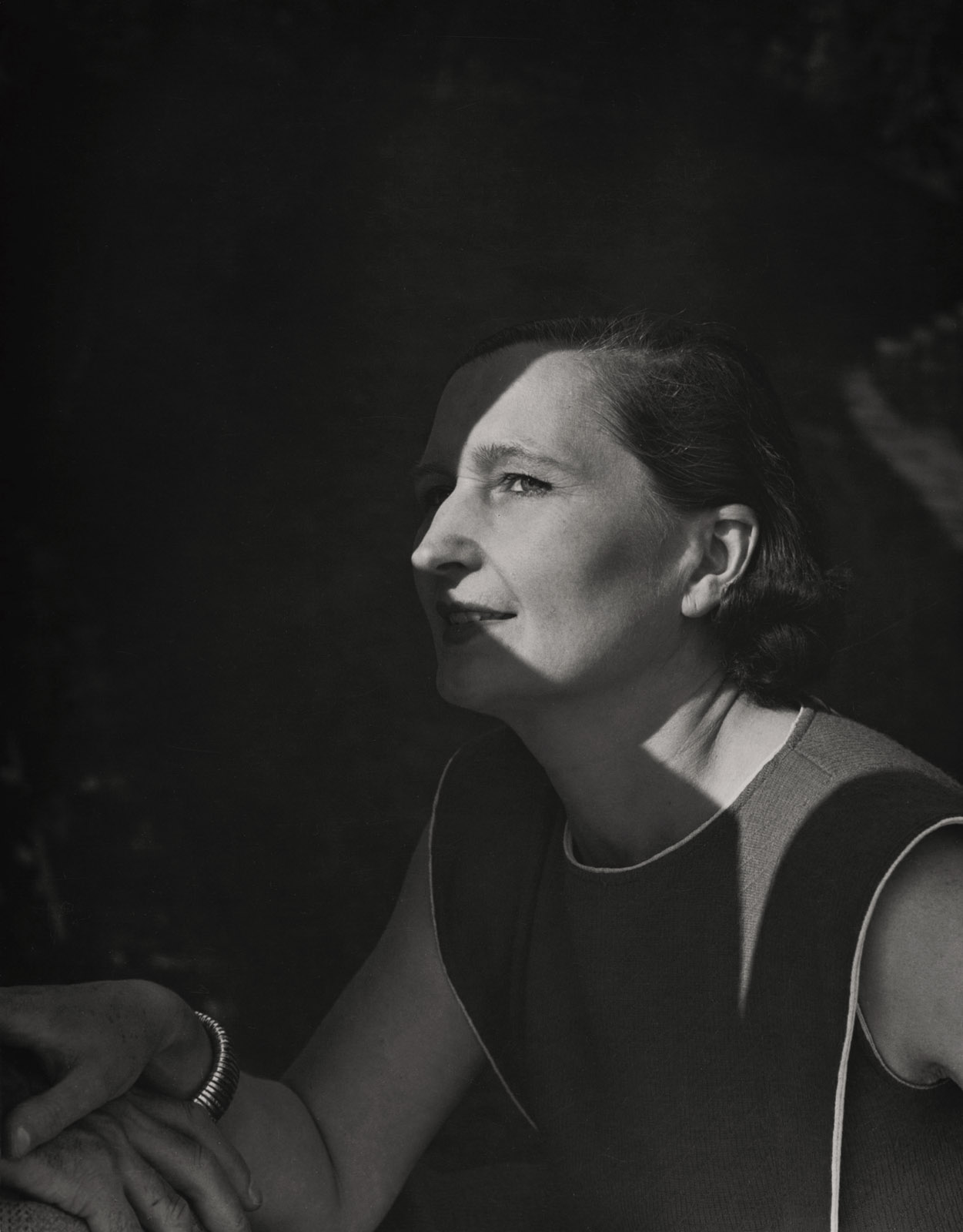
Our Selves will open with a wall of self-portraits and portraits of female artists by such modernist photographers as Lola Álvarez Bravo, Gertrud Arndt, Lotte Jacobi, and Lucia Moholy, alongside contemporary practitioners including Tatiana Parcero, Rosemarie Trockel, and Lorie Novak. Inviting viewers to consider the structural relationship between knowledge and power, Frances Benjamin Johnston’s Penmanship Class (1899) – a depiction of racially segregated education at the turn of the 20th century in the United States – will hang near Candida Höfer’s Deutsche Bucherei Leipzig IX (1997) – a part of Höfer’s series documenting library interiors weighted by forms of social inequality and colonial supremacy. Lorna Simpson’s Details (1996), a portfolio of 21 found photographs, signals how both the camera and language can culturally inscribe the body and reinforce racial and gender stereotypes.

Works by Native artists including Cara Romero and Hulleah J. Tsinhnahjinnie, and non-Native practitioners such as Sharon Lockhart and Graciela Iturbide, explore indigeneity and its relationship to colonial history. Photographs by Flor Garduño, Ana Mendieta, Marta María Pérez Bravo, and Mariana Yampolsky attest to the overlapping histories of colonialism, ethnographic practice, and patriarchy in Latin America.

Our Selves is accompanied by a richly illustrated catalogue that features more than 100 colour and black-and-white photographs. A critical essay by curator Roxana Marcoci asks the question, “What is a Feminist Picture?” and a series of 12 focused essays by Dana Ostrander, Caitlin Ryan, and Phil Taylor address a range of themes, from dance to ecology to perception. The catalogue offers both historical context and critical interpretation, exploring the myriad ways in which different photographic practices can be viewed when looking through a feminist lens.

Press release from the MoMA website


Installation view of the exhibition 'Our Selves: Photographs by Women Artists from Helen Kornblum' at the Museum of Modern Art (MoMA), New York


Installation view of the exhibition Our Selves: Photographs by Women Artists from Helen Kornblum at the Museum of Modern Art (MoMA), New York.

The images below before the next installation image are left to right in the above installation image.


Graciela Iturbide (Mexican, b. 1943) 'Mujercita' 1981


Graciela Iturbide (Mexican, b. 1943)
Mujercita
1981
Gelatin silver print
10 1/8 × 6 3/4″ (25.7 × 17.1cm)
The Museum of Modern Art, New York
Gift of Helen Kornblum in honour of Roxana Marcoci


Mariana Yampolsky (Mexican, 1925-2002) 'Mujeres Mazahua' 1989


Mariana Yampolsky (Mexican, 1925-2002)
Mujeres Mazahua
1989
Gelatin silver print
13 5/8 × 18 1/2″ (34.6 × 47cm)
The Museum of Modern Art, New York
Gift of Helen Kornblum in honour of Roxana Marcoci


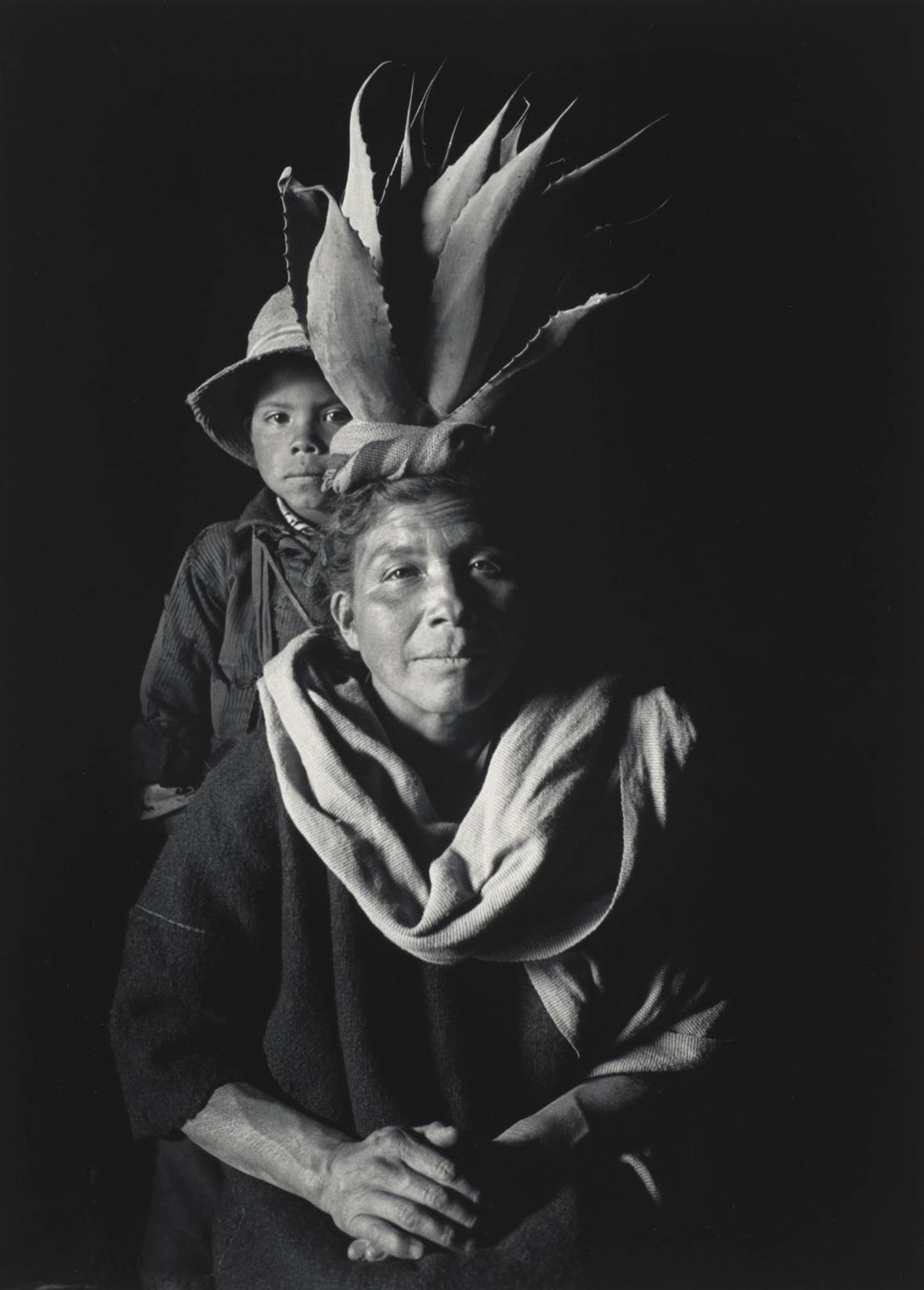
Flor Garduño (Mexican, b. 1957) 'Reina (Queen)' 1989


Flor Garduño (Mexican, b. 1957)
Reina (Queen)
1989
Gelatin silver print
12 1/4 × 8 3/4″ (31.1 × 22.2cm)
The Museum of Modern Art, New York
Gift of Helen Kornblum in honour of Roxana Marcoci


Barbara Morgan (American, 1900-1992) 'Corn Stalks Growing' 1945


Barbara Morgan (American, 1900-1992)
Corn Stalks Growing
1945
Gelatin silver print
12 3/16 × 9″ (31 × 22.9cm)
The Museum of Modern Art, New York
Gift of Helen Kornblum in honour of Roxana Marcoci


Sonya Noskowiak (American born Germany, 1900-1975) 'Plant Detail' 1931


Sonya Noskowiak (American born Germany, 1900-1975)
Plant Detail
1931
Gelatin silver print
9 11/16 × 7 1/2″ (24.6 × 19.1cm)
The Museum of Modern Art, New York
Gift of Helen Kornblum in honour of Roxana Marcoci


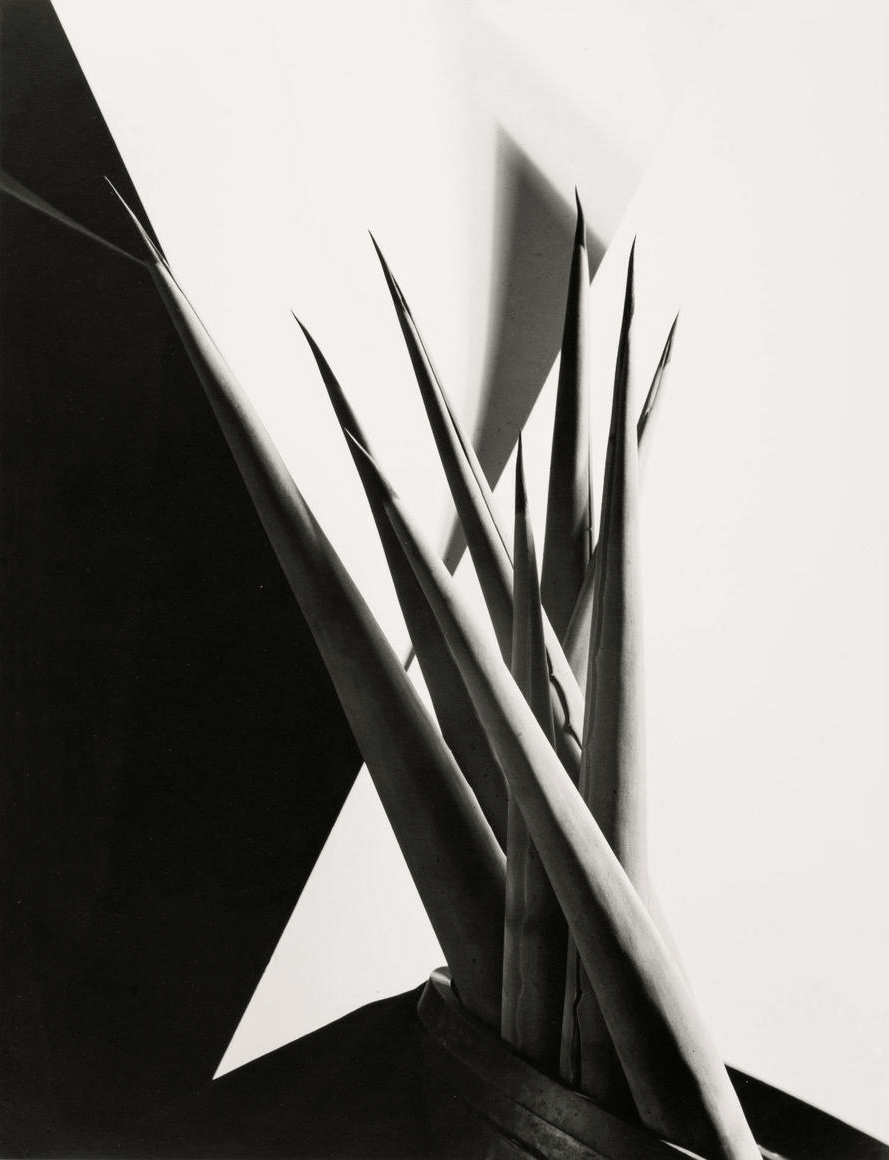
Imogen Cunningham (American, 1883-1976) 'Agave Design I' 1920s


Imogen Cunningham (American, 1883-1976)
Agave Design I
1920
Gelatin silver print
12 7/8 × 9 13/16″ (32.7 × 24.9cm)
The Museum of Modern Art, New York
Gift of Helen Kornblum in honour of Roxana Marcoci


Florence Henri (Swiss born United States, 1893-1982) 'Composition Nature Morte' 1931


Florence Henri (Swiss born United States, 1893-1982)
Composition Nature Morte
1931
Gelatin silver print
3 3/8 × 4 1/2″ (8.6 × 11.4cm)
The Museum of Modern Art, New York
Gift of Helen Kornblum in honour of Roxana Marcoci


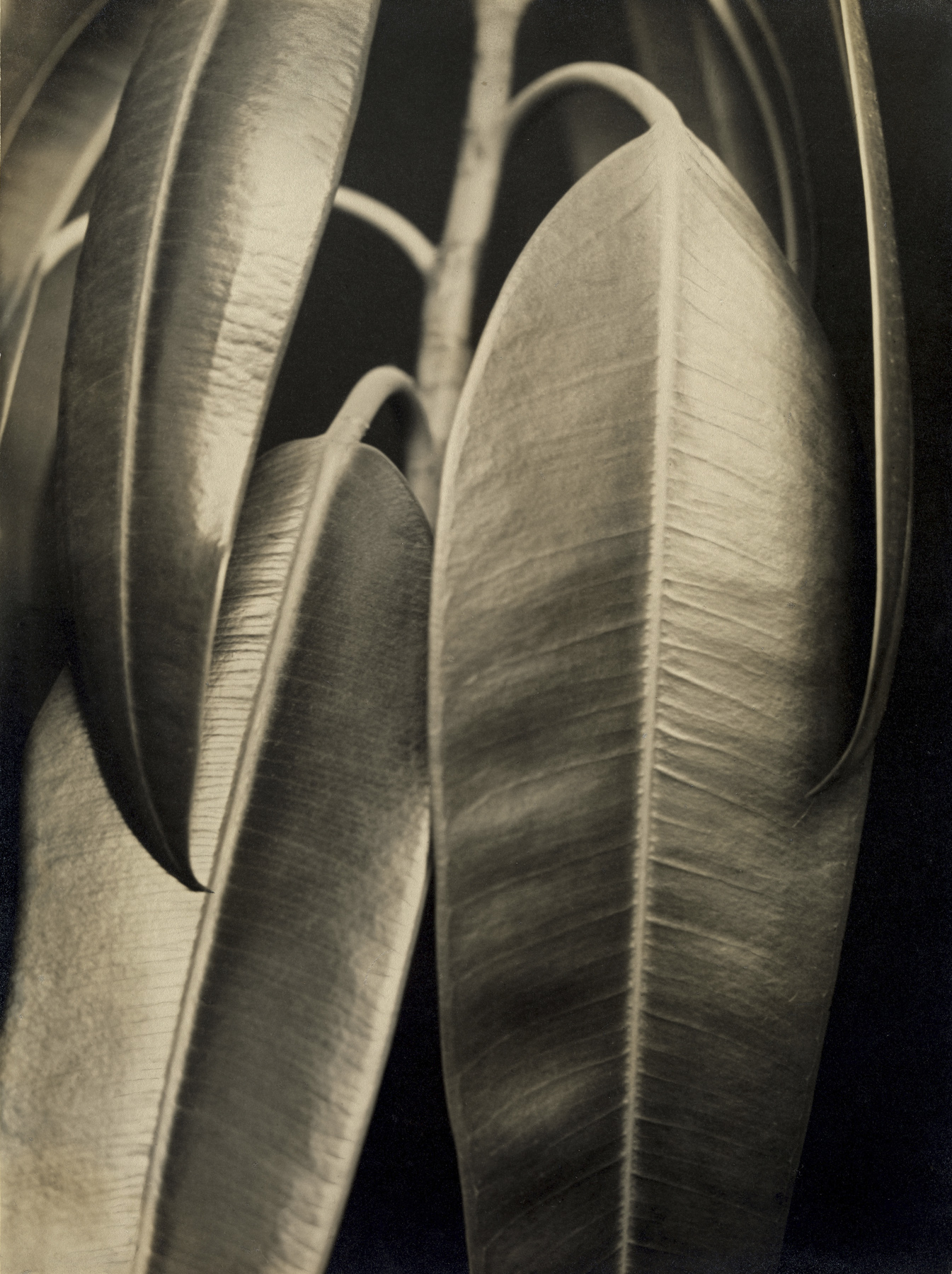
Alma Lavenson (American, 1897-1989) 'Eucalyptus Leaves' 1933


Alma Lavenson (American, 1897-1989)
Eucalyptus Leaves
1933
Gelatin silver print
12 × 9″ (30.5 × 22.9cm)
The Museum of Modern Art, New York
Gift of Helen Kornblum in honour of Roxana Marcoci


Ruth Bernhard (American born Germany, 1905-2006) 'Angel Wings' 1943


Ruth Bernhard (American born Germany, 1905-2006)
Angel Wings
1943
Gelatin silver print
9 5/8 × 6 1/4″ (24.4 × 15.9cm)
The Museum of Modern Art, New York
Gift of Helen Kornblum in honour of Roxana Marcoci


Nelly (Elli Sougioultzoglou-Seraidari) (Greek born Turkey, 1899-1998) 'Elizaveta "Lila" Nikolska in the Parthenon, Athens, Greece' November 1930


Nelly (Elli Sougioultzoglou-Seraidari) (Greek born Turkey, 1899-1998)
Elizaveta “Lila” Nikolska in the Parthenon, Athens, Greece
November 1930
Gelatin silver print
6 × 8 1/2″ (15.2 × 21.6cm)
The Museum of Modern Art, New York
Gift of Helen Kornblum in honour of Roxana Marcoci


Installation view of the exhibition 'Our Selves: Photographs by Women Artists from Helen Kornblum' at the Museum of Modern Art (MoMA), New York


Installation view of the exhibition Our Selves: Photographs by Women Artists from Helen Kornblum at the Museum of Modern Art (MoMA), New York

The images below before the next installation image are left to right in the above installation image.


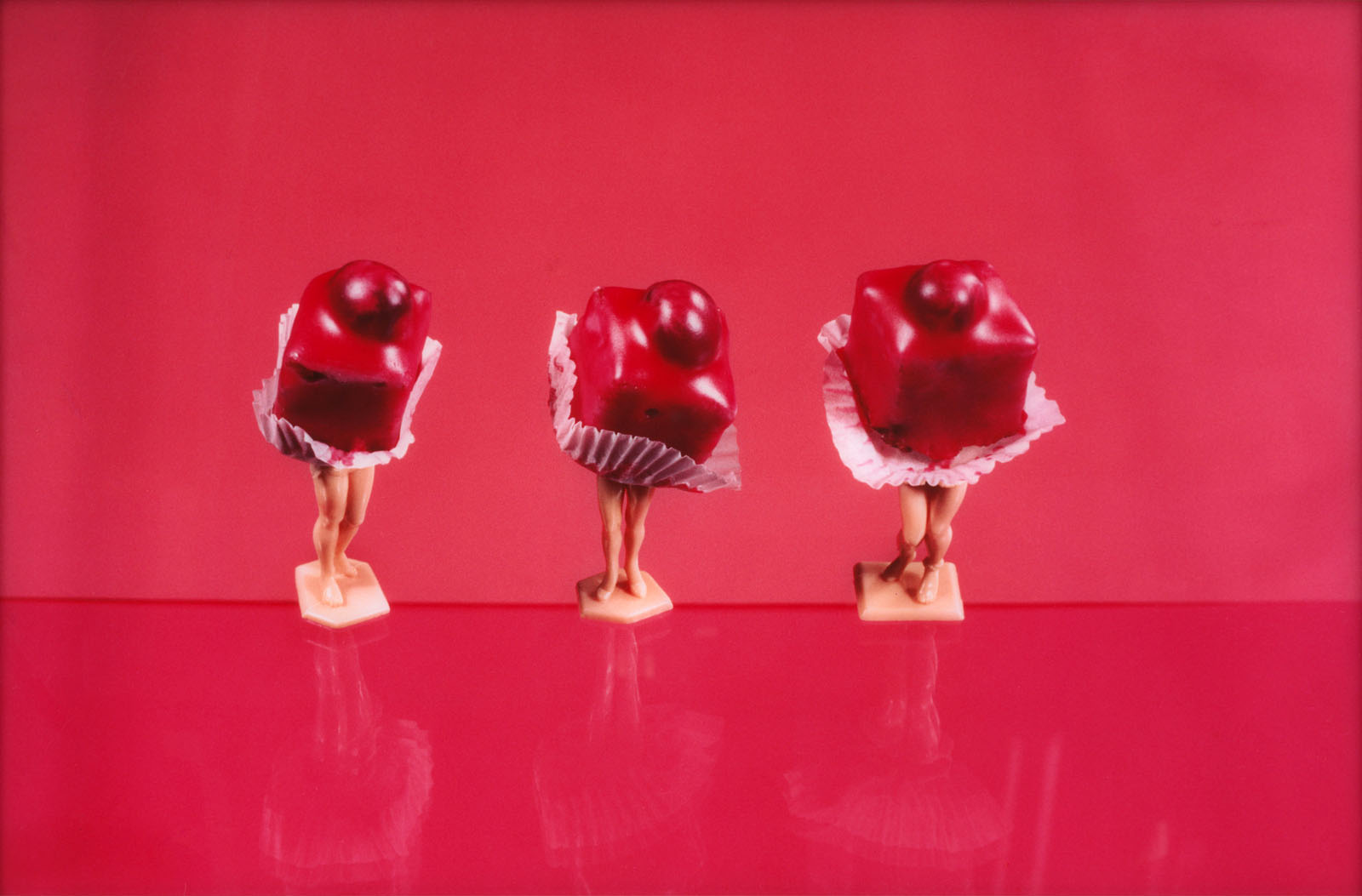
Laurie Simmons (American, b. 1949) 'Three Red Petit-Fours' 1990


Laurie Simmons (American, b. 1949)
Three Red Petit-Fours
1990
Chromogenic print
23 × 35″ (58.4 × 88.9cm)
The Museum of Modern Art, New York
Gift of Helen Kornblum in honour of Roxana Marcoci


Kati Horna (Mexican, 1912-2000) 'Figurines' c. 1933


Kati Horna (Mexican, 1912-2000)
Figurines
c. 1933
Gelatin silver print
8 1/2 × 8″ (21.6 × 20.3cm)
The Museum of Modern Art, New York
Gift of Helen Kornblum in honour of Roxana Marcoci


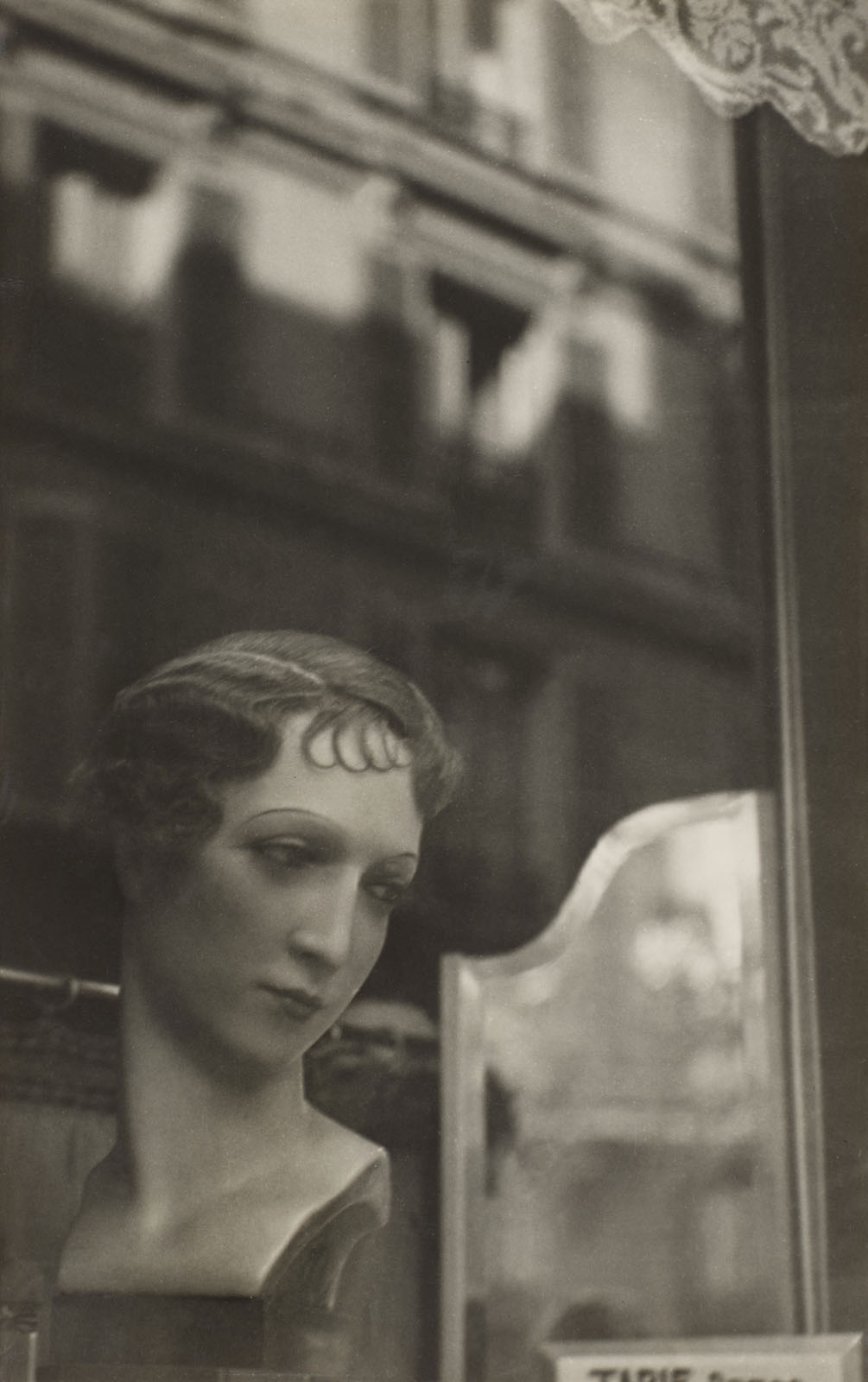
Dora Maar (French 1907-1997) 'Mannequin in Window' 1935


Dora Maar (French 1907-1997)
Mannequin in Window
1935
Gelatin silver print
9 1/2 × 6″ (24.1 × 15.2 cm)
The Museum of Modern Art, New York
Gift of Helen Kornblum in honour of Roxana Marcoci


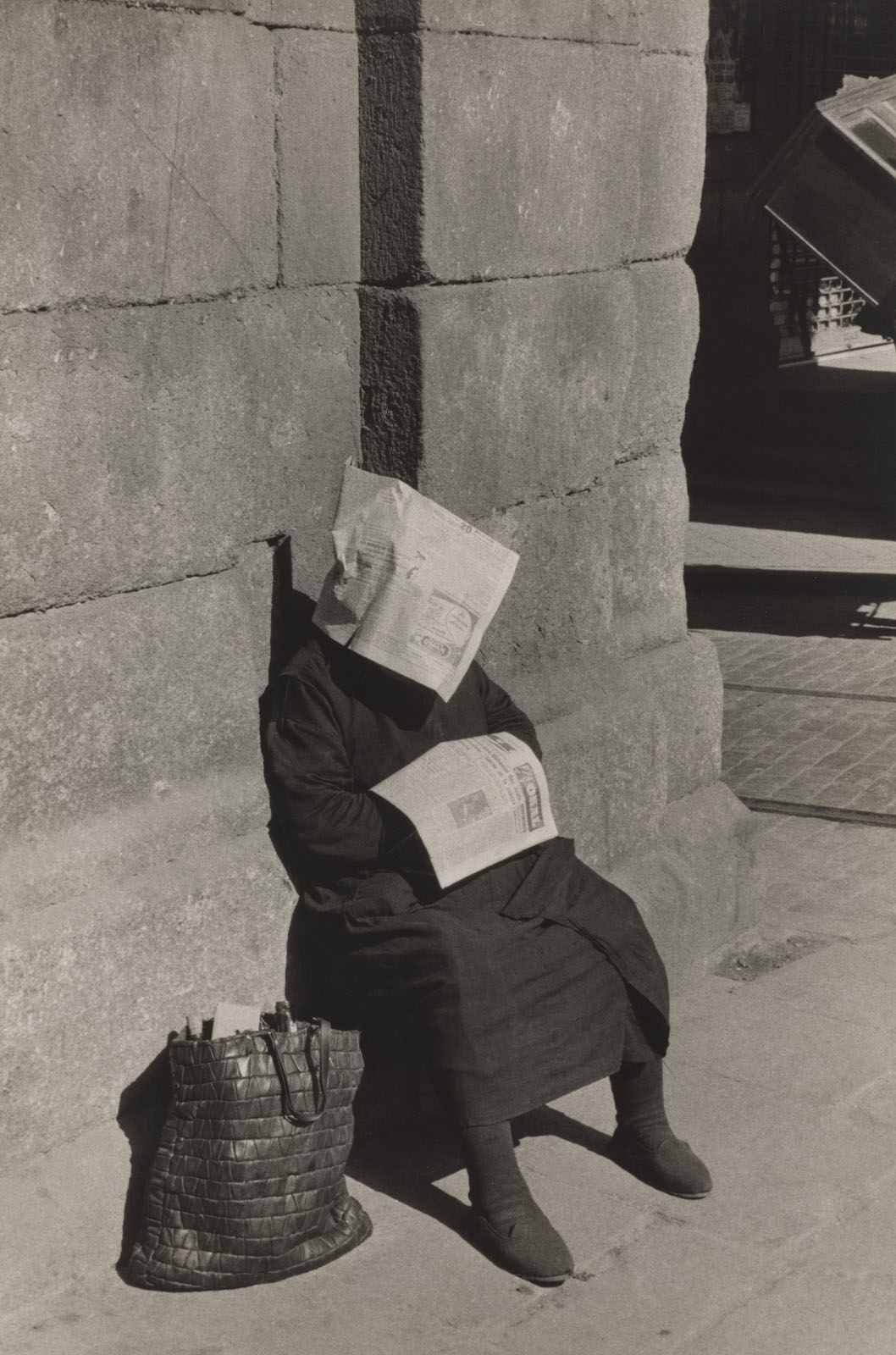
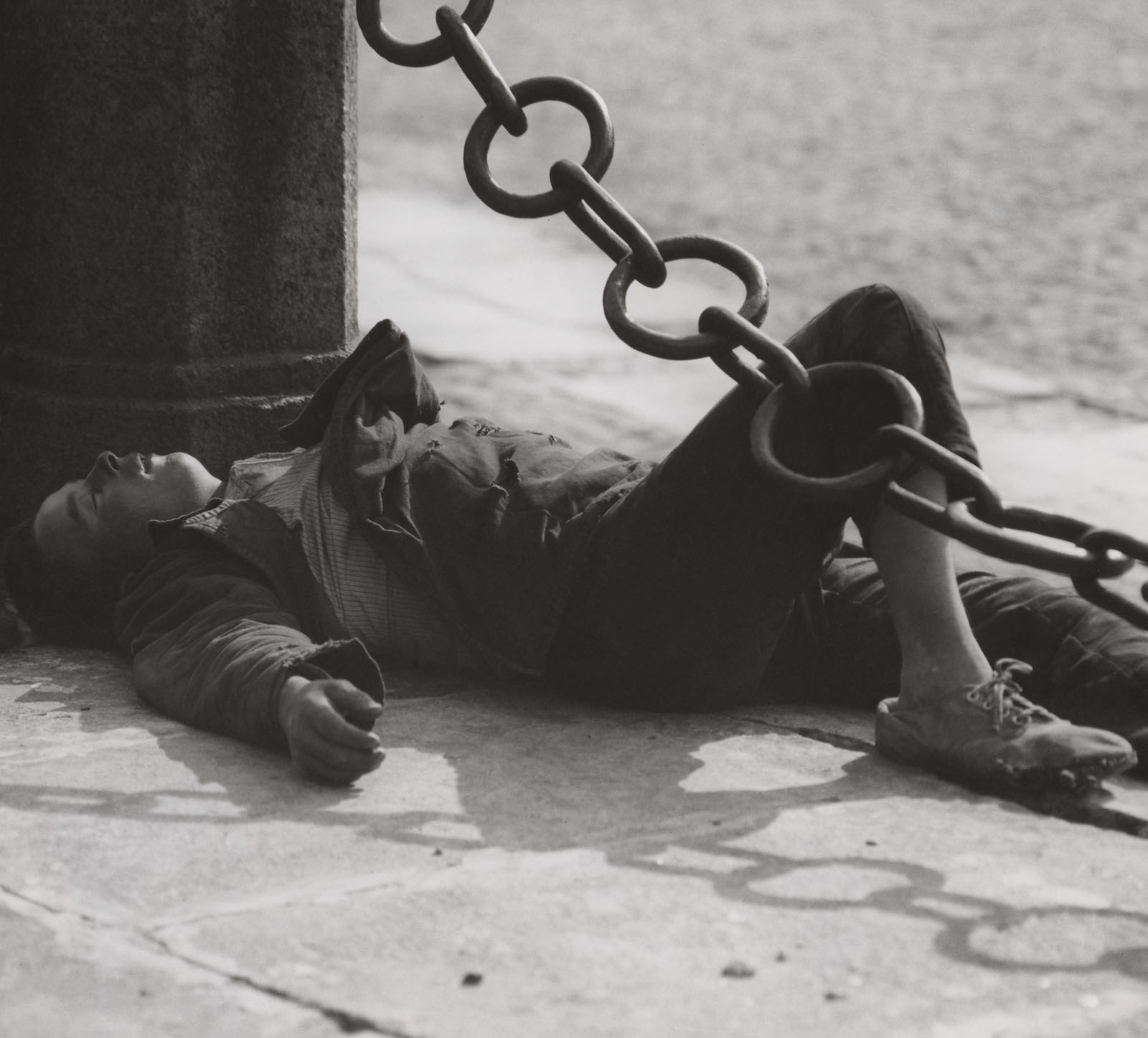
Inge Morath (Austrian, 1923-2002) 'Siesta of a Lottery Ticket Vendor, Plaza Mayor, Madrid' 1955


Inge Morath (Austrian, 1923-2002)
Siesta of a Lottery Ticket Vendor, Plaza Mayor, Madrid
1955
Gelatin silver print
7 3/16 × 4 3/4″ (18.3 × 12.1cm)
The Museum of Modern Art, New York
Gift of Helen Kornblum in honour of Roxana Marcoci


Ringl + Pit (German) Grete Stern (Argentine born Germany, 1904-1999) Ellen Auerbach (German, 1906-2004) 'Columbus' Egg' 1930


Ringl + Pit (German)
Grete Stern (Argentine born Germany, 1904-1999)
Ellen Auerbach (German, 1906-2004)
Columbus’ Egg
1930
Gelatin silver print
8 3/4 × 7 1/2″ (22.2 × 19.1cm)
The Museum of Modern Art, New York
Gift of Helen Kornblum in honour of Roxana Marcoci


Yva (Else Ernestine Neuländer) (German, 1900-1942) 'Untitled' 1935


Yva (Else Ernestine Neuländer) (German, 1900-1942)
Untitled
1935
Gelatin silver print
9 1/16 × 6 11/16″ (23 × 17cm)
The Museum of Modern Art, New York
Gift of Helen Kornblum in honour of Roxana Marcoci


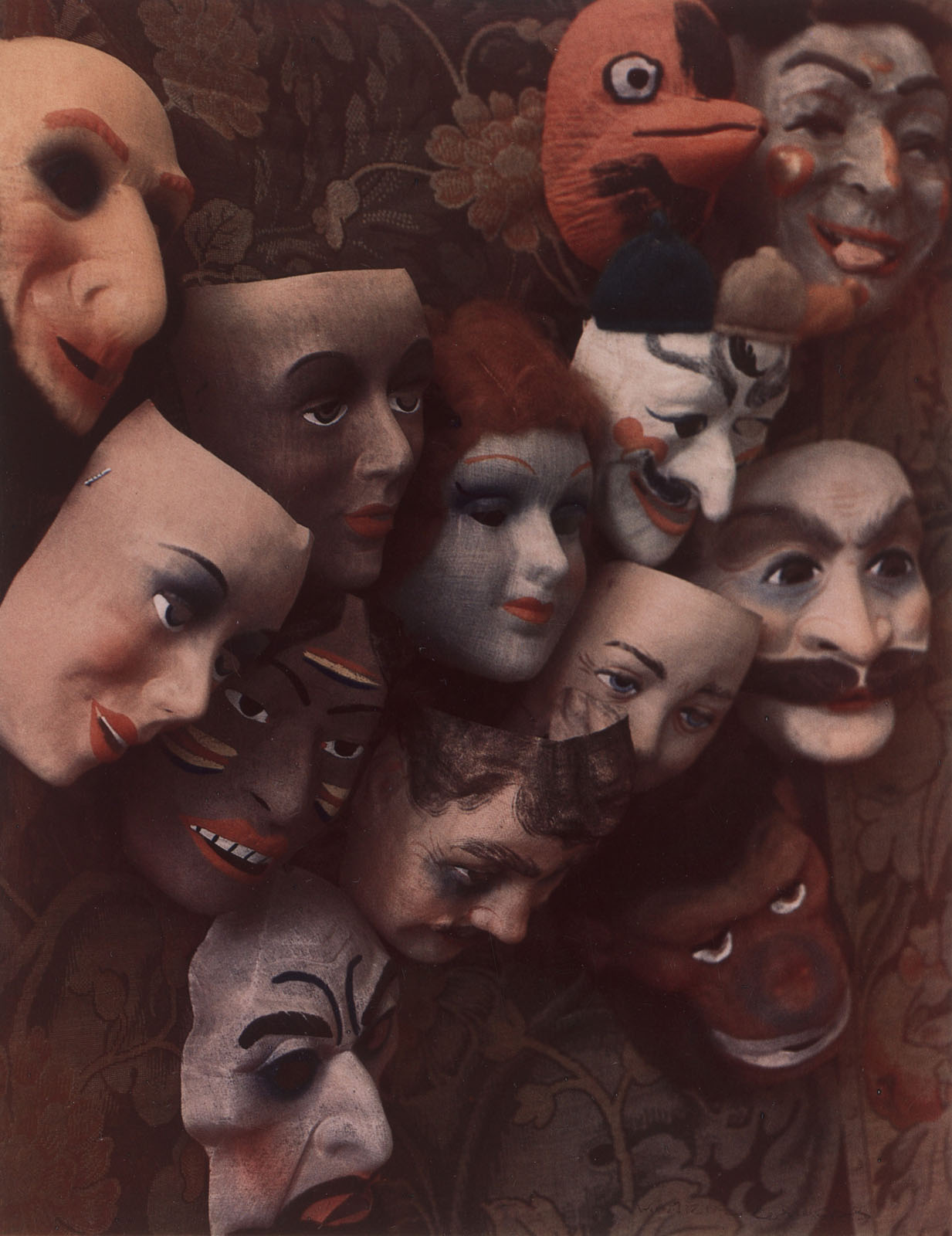
Marie Cosindas (American, 1923-2017) 'Masks, Boston' 1966


Marie Cosindas (American, 1923-2017)
Masks, Boston
1966
Dye transfer print
10 × 7″ (25.4 × 17.8cm)
The Museum of Modern Art, New York
Gift of Helen Kornblum in honour of Roxana Marcoci


Kati Horna (Mexican, 1912-2000) 'Man and Candlesticks' c. 1933


Kati Horna (Mexican, 1912-2000)
Man and Candlesticks
c. 1933
Gelatin silver print
8 × 7 3/4″ (20.3 × 19.7cm)
The Museum of Modern Art, New York
Gift of Helen Kornblum in honour of Roxana Marcoci


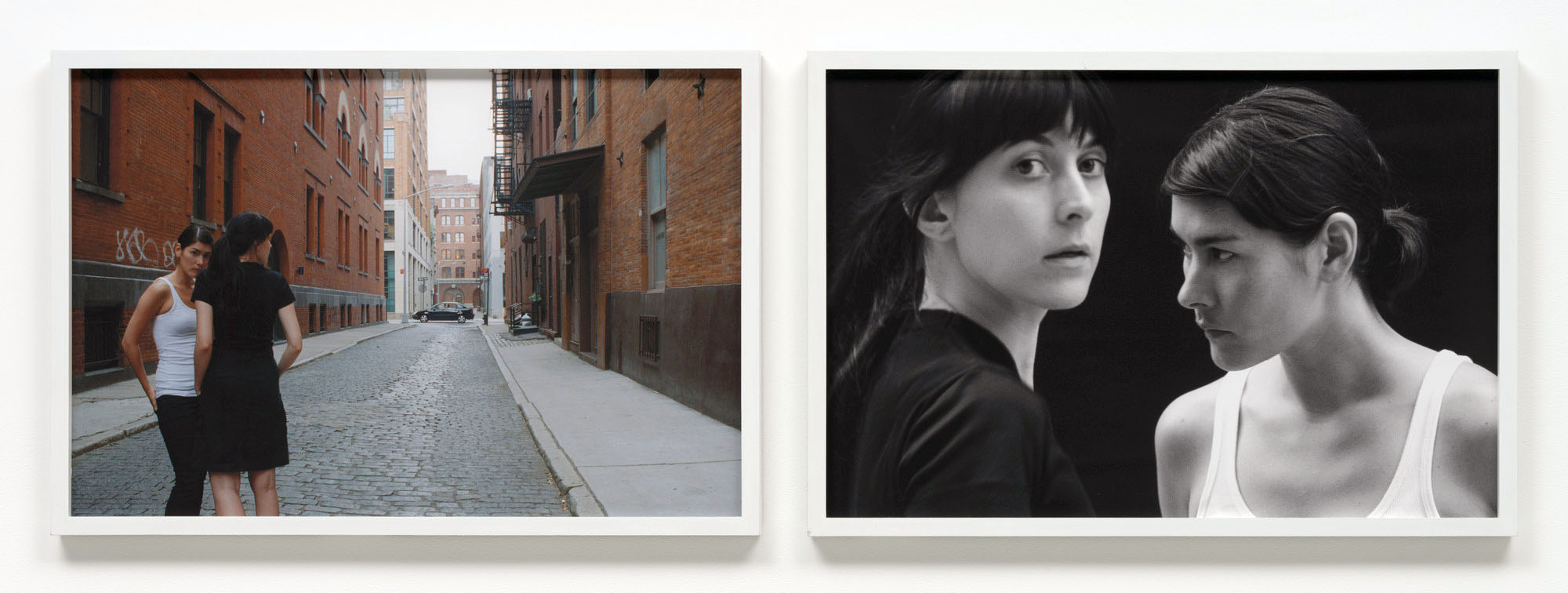
Barbara Probst (German, b. 1964) 'Exposure #78, NYC, Collister and Hubert St.' 2010


Barbara Probst (German, b. 1964)
Exposure #78, NYC, Collister and Hubert St.
2010
Two inkjet prints (diptych)
18 3/4 × 28″ (47.6 × 71.1cm)
The Museum of Modern Art, New York
Gift of Helen Kornblum in honour of Roxana Marcoci


Barbara Probst (German, b. 1964)

Artist, Barbara Probst: I am Barbara Probst. I’m an artist working with photography. I’m born in Munich, in Germany, and I live in New York.

I’m interested in photography as a phenomenon that seemingly and supposedly depicts reality. But maybe it is the subjectivity of the photographer, which determines the image. And not the objectivity of the world.

I get a set of pictures from the same moment. By comparing these pictures, it becomes quite clear that the link between reality and photography is very thin and fragile because every picture from this moment gives a different take of this moment.

None of these images is more true or more false than any others. They are equally truthful. The viewpoints and angles and settings of the cameras and the framing and all these things determine the picture.

It’s not what is in front of the camera that determines the picture. It’s the photographer behind the camera that decides how reality is translated into an image.

Audio of Barbara Probst from the video “Elles X Paris Photo: Barbara Probst.” © Fisheye l’Agence 2021

Transcript of audio from the MoMA website


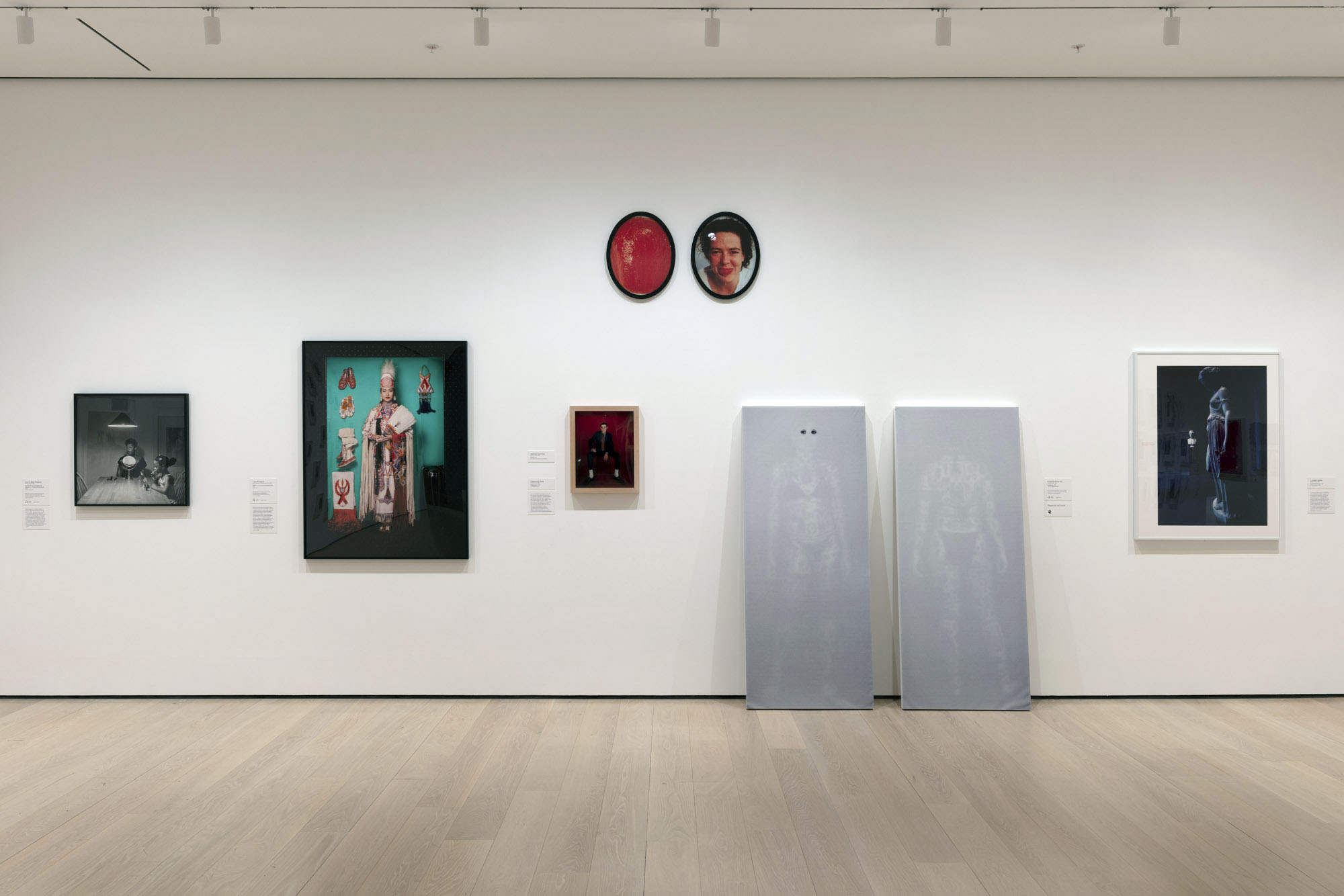
Installation view of the exhibition 'Our Selves: Photographs by Women Artists from Helen Kornblum' at the Museum of Modern Art (MoMA), New York


Installation view of the exhibition Our Selves: Photographs by Women Artists from Helen Kornblum at the Museum of Modern Art (MoMA), New York

The images below before the next installation image are left to right in the above installation image.


Carrie Mae Weems (American, b. 1953) 'Untitled (Woman and Daughter with Makeup)' 1990


Carrie Mae Weems (American, b. 1953)
Untitled (Woman and Daughter with Makeup)
1990
Gelatin silver print
27 3/16 × 27 3/16″ (69.1 × 69.1cm)
The Museum of Modern Art, New York
Gift of Helen Kornblum in honour of Roxana Marcoci


“My work endlessly explodes the limits of tradition.”

~ Carrie Mae Weems


What does it mean to bear witness to history? The artist Carrie Mae Weems has asked this question for decades through photography, video, performance, installation, and social practice. For Weems, to examine the past is to imagine a different future. “In one way or another, my work endlessly explodes the limits of tradition,” she declared in an interview with her friend, the photographer Dawoud Bey. “I’m determined to find new models to live by. Aren’t you?”1

Weems was trained as both a dancer and a photographer before enrolling in the folklore studies program at the University of California, Berkeley, in the mid-1980s, where she became interested in the observation methods used in the social sciences. In the early 1990s, she began placing herself in her photographic compositions in an “attempt to create in the work the simultaneous feeling of being in it and of it.”2 She has since called this recurring figure an “alter-ego,” “muse,” and “witness to history” who can stand in for both the artist and audience. “I think it’s very important that as a Black woman she’s engaged with the world around her,” Weems has said, “she’s engaged with history, she’s engaged with looking, with being. She’s a guide into circumstances seldom seen.”3

In her 1990 Kitchen Table series – 20 gelatin silver prints and 14 texts on silkscreen panels – Weems uses her own persona to “respond to a number of issues: woman’s subjectivity, woman’s capacity to revel in her body, and the woman’s construction of herself, and her own image.”4 Weems, or rather her protagonist, inhabits the same intimate domestic interior throughout the series. Anchored around a wooden table illuminated by an overhead light, scenes such as Untitled (Man smoking) and Untitled (Woman and Daughter with Makeup) portray the protagonist alongside a rotating cast of characters (friends, children, lovers) and props (posters, books, playing cards, a birdcage). In Untitled (Woman and Daughter with Makeup), for example, the woman sits at the table with a young girl; they gaze into mirrors at their own reflections, applying lipstick in parallel gestures. The photograph shows that gender is a learned performance, at the same time tenderly centering its Black women subjects.

With projects such as From Here I Saw What Happened and I Cried (1995), the act of witnessing is suggested in the first-person title. The J. Paul Getty Museum commissioned the work in 1994, inviting the artist to respond to 19th-century photographs of African American subjects collected by the lawyer Jackie Napoleon Wilson. In 28 chromogenic photographic prints overlaid with text on glass, Weems appropriated images from a variety of sources: Wilson’s collection, museum and university archives, The National Geographic, and the work of photographers like Walker Evans, Robert Frank, and Garry Winogrand. The artist cropped and reformatted these photographs, adding blue and red tints, text, and circular mats resembling a camera lens. Through this reframing, Weems poses a question about power: Who is doing the looking, and for what reasons?

Among the rephotographed images are four daguerreotypes by photographer J. T. Zealy of enslaved men and women – two father-and-daughter pairs, named Renty, Delia, Jack, and Drana – commissioned as racial types by Swiss naturalist Louis Agassiz in 1850. Weems exposes Agassiz’s racist pseudoscience and the violence of the white Anglo-American gaze through the addition of texts that address the subjects: “You became a scientific profile,” “a negroid type,” “an anthropological debate,” “& a photographic subject.” Discussing the daguerreotypes, the artist has described the sitters as agents of resistance and refusal: “In their anthropological way, most of these photographs were meant to strip the subjects of their humanity. But if you look closely, what you see is the evidence of a contest of wills over contested territory, contested terrain – contested by the by the owner of the Black body and the photographer’s attempt to conquer it vis-à-vis the camera.”5

Caitlin Ryan, Curatorial Assistant, Department of Photography, 2021


1/ “Carrie Mae Weems by Dawoud Bey,” BOMB, July 1, 2009, https://bombmagazine.org/articles/carrie-mae-weems/
2/ Ibid.
3/ Ibid.
4/ Weems, quoted in Carrie Mae Weems: The Kitchen Table Series (Houston: Contemporary Arts Museum Houston, 1996), 6.
5/ Weems to Deborah Willis, “In Conversation with Carrie Mae Weems,” in To Make Their Own Way in the World: The Enduring Legacy of the Zealy Daguerreotypes, eds. Ilisa Barbash, Molly Rogers, and Deborah Willis (Cambridge, MA: Peabody Museum Press; New York, NY: Aperture, 2020), 397.


Curator, Roxana Marcocci: We’re looking at a photograph from Carrie Mae Weems’s larger body of work, the Kitchen Table series.

Artist, Carrie Mae Weems: About 1990, I think, I had been really thinking a lot about what it meant to develop your own voice. And so I made this body of work.

It started as a kind of response to my sense of what needed to happen, what needed to be and these ideas about the sort of spaces of domesticity that have historically belonged to women.

Roxana Marcoci: In this image, Weems applies makeup in front of a mirror while a young girl seated in front of another mirror, puts on lipstick and looks at her own reflection. The two enact beauty in a synchronised performance, through posing, mirroring, and self-empowerment.

Carrie Mae Weems: I made them all in my own kitchen, using a single light source hanging over the kitchen table. It just swung open this door of what I could actually do in my own environment. What I’m suggesting really is that the battle around the family, the battle around monogamy, the battle around polygamy, the social dynamics that happens between men and women, that war gets carried on in that space.

The Kitchen Table series would not be simply a voice for African-American women, but more generally for women.

Audio of Carrie Mae Weems in the Art21 digital series Extended Play, “Carrie Mae Weems / ‘The Kitchen Table Series.'” © Art21, Inc. 2011

Transcript of audio from the MoMA website


Cara Romero (Native American (Chemehuevi), b. 1977) 'Wakeah' 2018


Cara Romero (Native American (Chemehuevi), b. 1977)
Wakeah
2018
Inkjet print
52 × 44″ (132.1 × 111.8cm)
The Museum of Modern Art, New York
Gift of Helen Kornblum in honour of Roxana Marcoci


Artist, Cara Romero: My name is Cara Romero, and this photograph is called Wakeah.

The inspiration for the First American Girl series was a lifetime of seeing Native American people represented in a dehumanised way. My daughter was born in 2006 and I really wanted her self image to be different. But all of the dolls that depict Native American girls were inaccurate. They lacked the detail. They lacked the love. They lacked the historical accuracy. So the series began with Wakeah.

Wakeah is Wakeah Jhane Myers and she is an incredible artist in her own right. She descends from both the Kiowa and Comanche tribes of Oklahoma. We posed Wakeah in the doll box much like you would find on the store shelves, placing all of her cultural accoutrement around her. She is wearing a traditional Southern Buckskin dress. She has a change of moccasins and her fan that she uses in dance. A lot of people ask me about the suitcase, and this is an inside joke between Native people, many of us carry our regalia in a suitcase as a way to keep it safe.

It took five family members over a year to make her regalia that she wears to compete at the pow wow dance. These contemporary pieces of regalia are really here against all odds. They exist through activism, through resistance.

A lot of what I’m doing is constructing these stories about resisting these ideas of being powerless, of being gone. Instead, I’m constructing a story of power and of knowledge and of presence. I want the viewer to fall in love. I want them to see how much I love the people that I’m working with.

Transcript of audio from the MoMA website


Catherine Opie (American, b. 1961) 'Angela Scheirl' 1993


Catherine Opie (American, b. 1961)
Angela Scheirl
1993
Silver dye bleach print
19 5/16 × 15″ (49.1 × 38.1cm)
The Museum of Modern Art, New York
Gift of Helen Kornblum in honour of Roxana Marcoci


Louise Lawler (American, b. 1947) 'Sappho and Patriarch' 1984


Louise Lawler (American, b. 1947)
Sappho and Patriarch
1984
Silver dye bleach print
39 3/4 × 27 1/2″ (101 × 69.9cm)
The Museum of Modern Art, New York
Gift of Helen Kornblum in honour of Roxana Marcoci


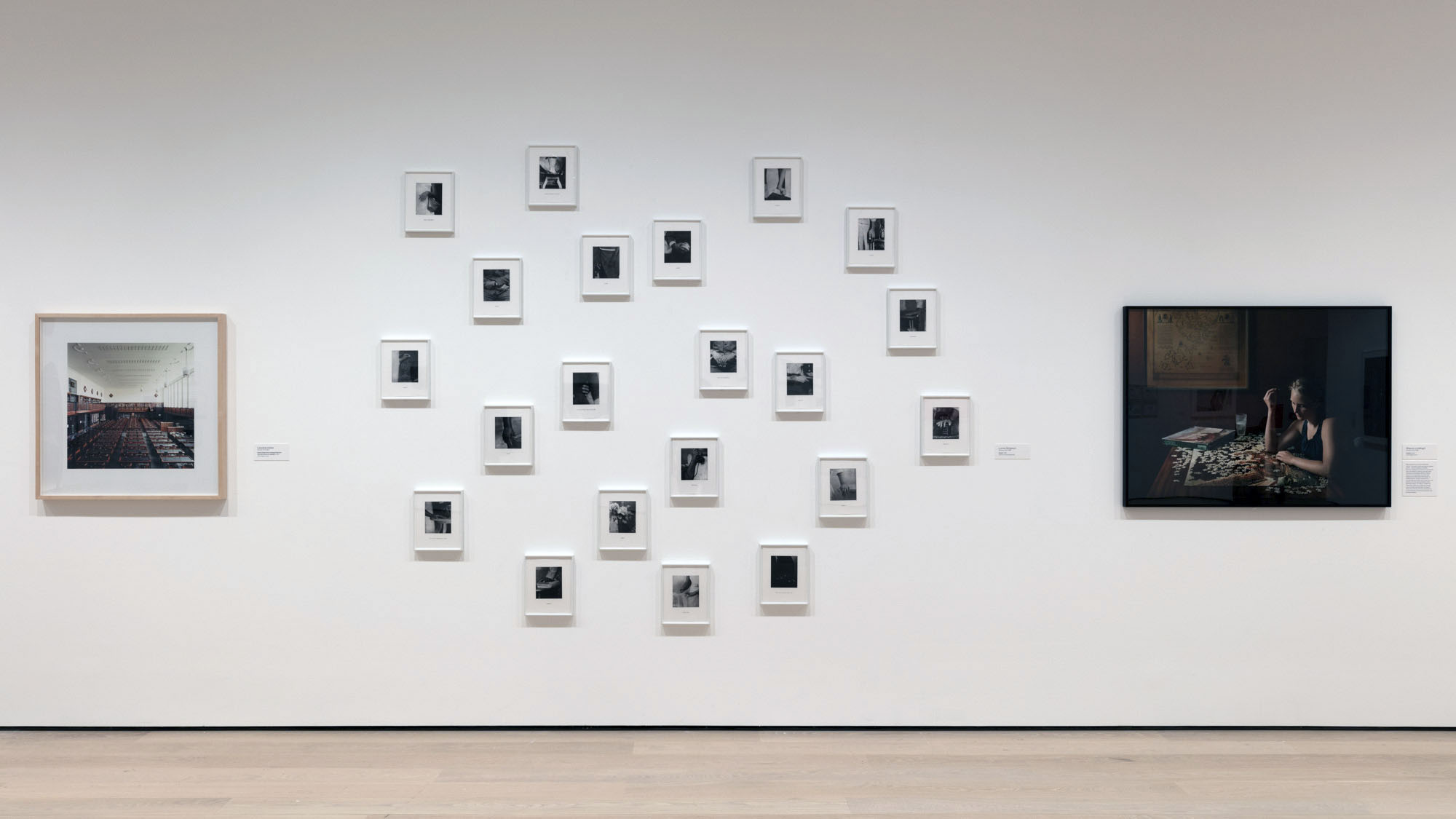
Installation view of the exhibition 'Our Selves: Photographs by Women Artists from Helen Kornblum' at the Museum of Modern Art (MoMA), New York


Installation view of the exhibition Our Selves: Photographs by Women Artists from Helen Kornblum at the Museum of Modern Art (MoMA), New York

The images below before the next installation image are left to right in the above installation image.


Candida Höfer (German, b. 1944) 'Deutsche Bücherei Leipzig IX' 1997


Candida Höfer (German, b. 1944)
Deutsche Bücherei Leipzig IX
1997
C-print
The Museum of Modern Art, New York
Gift of Helen Kornblum in honour of Roxana Marcoci


Sharon Lockhart (American, b. 1964) 'Untitled' 2010


Sharon Lockhart (American, b. 1964)
Untitled
2010
Chromogenic print
37 × 49″ (94 × 124.5cm)
The Museum of Modern Art, New York
Gift of Helen Kornblum in honour of Roxana Marcoci


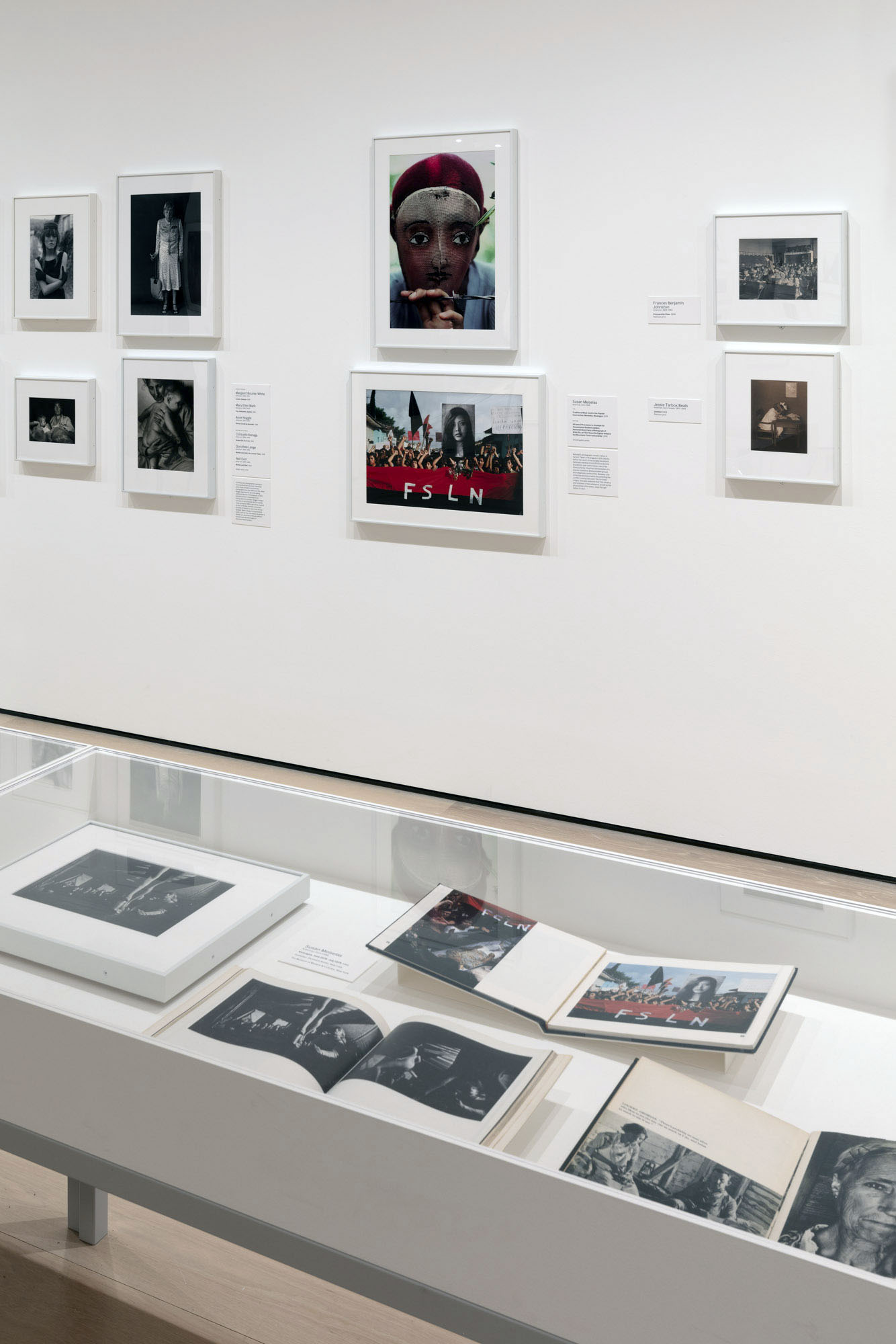
Installation view of the exhibition 'Our Selves: Photographs by Women Artists from Helen Kornblum' at the Museum of Modern Art (MoMA), New York


Installation view of the exhibition Our Selves: Photographs by Women Artists from Helen Kornblum at the Museum of Modern Art (MoMA), New York

The images below are left to right in the above installation image.


Mary Ellen Mark (American, 1940-2015) 'Tiny, Halloween, Seattle' 1983


Mary Ellen Mark (American, 1940-2015)
Tiny, Halloween, Seattle
1983
Gelatin silver print
Image: 13 5/16 × 9″ (33.8 × 22.9cm)
Sheet: 14 × 11″ (35.6 × 27.9cm)
The Museum of Modern Art, New York
Gift of Helen Kornblum in honour of Roxana Marcoci


Dorothea Lange (American, 1895-1965) 'Mother and Child, San Joaquin Valley' 1938


Dorothea Lange (American, 1895-1965)
Mother and Child, San Joaquin Valley
1938
Gelatin silver print
7 × 9 1/2″ (17.8 × 24.1cm)
The Museum of Modern Art, New York
Gift of Helen Kornblum in honour of Roxana Marcoci


Anne Noggle (American, 1922-2005) 'Shirley Condit de Gonzales' 1986


Anne Noggle (American, 1922-2005)
Shirley Condit de Gonzales
1986
Gelatin silver print
18 1/8 × 13″ (46 × 33cm)
The Museum of Modern Art, New York
Gift of Helen Kornblum in honour of Roxana Marcoci


Nell Dorr (American, 1893-1988) 'Mother and Child' 1940


Nell Dorr (American, 1893-1988)
Mother and Child
1940
Gelatin silver print
13 15/16 × 10 13/16″ (35.4 × 27.5cm)
The Museum of Modern Art, New York
Gift of Helen Kornblum in honour of Roxana Marcoci


Susan Meiselas (American, b. 1948) 'Carnival Strippers' book cover 1975


Susan Meiselas (American, b. 1948)
Carnival Strippers
1976
New York: Farrar, Straus and Giroux.
The Museum of Modern Art Library, New York


Susan Meiselas (American, b. 1948) 'Tentful of marks, Tunbridge, VT' 1974


Susan Meiselas (American, b. 1948)
Tentful of Marks, Tunbridge, Vermont
1974, printed c. 2000
Gelatin silver print
7 11/16 × 11 3/4″ (19.5 × 29.9cm)
The Museum of Modern Art, New York
Gift of Helen Kornblum in honour of Roxana Marcoci


Wary of photography’s power to shape our understanding of social, political and global issues and of the potentially complex ethical relationship between photographer and subject, Susan Meiselas has developed an immersive approach through which she gets to know her subjects intimately. Carnival Strippers is among her earliest projects and the first in which she became accepted by the community she was documenting. Over the summers of 1972 to 1975, she followed an itinerant, small-town carnival, photographing the women who performed in the striptease shows. She captured not only their public performances, but also their private lives. To more fully contextualise these images, Meiselas presents them with audio recordings of interviews with the dancers, giving them voice and a measure of control over the way they are presented.

Additional text from “Seeing Through Photographs online course”, Coursera, 2016


Susan Meiselas (American, b. 1948)

Artist, Susan Meiselas: My name is Susan Meiselas. I’m a photographer based in New York.

Carnival Strippers is my first real body of work. The idea of projecting a self to attract a male gaze was completely counter to my sense of culture, what I wanted for myself. So I was fascinated by women who were choosing to do that. I just felt, magnetically, I need to know more.

The feminists of that period were perceiving the girl shows as exploitative institutions that should be closed down. I actually was positioned in the place of feeling these voices should be heard. They should self-define as to who they are and what their economic realities are.

Getting to know the women was very much one by one, obviously I’m in the public fairgrounds making this photograph so there are many other people surrounding me. There weren’t many other cameras. I mean, if we were making this picture today, it’s interesting the differences of how many people would have been with cameras, iPhones, etc. So I don’t think she’s performing for me. She’s performing for the public.

The girl show moves around from town to town. My working process was to be somewhere on a weekend, go back to Boston, which at the time was my base, and process the work and bring back the contact sheets and show whoever was there the following weekend, what the pictures were. And they left little initials saying, I like this one, I don’t like that one.

This negotiated or collaborative space with photography really still fascinates me. It’s a kind of offering, it’s a moment in which someone says, I want you to be here with us. The challenge of making that moment, creating that moment, that’s what still intrigues me, I think, and keeps me engaged with photography.

Transcript of audio from the MoMA website


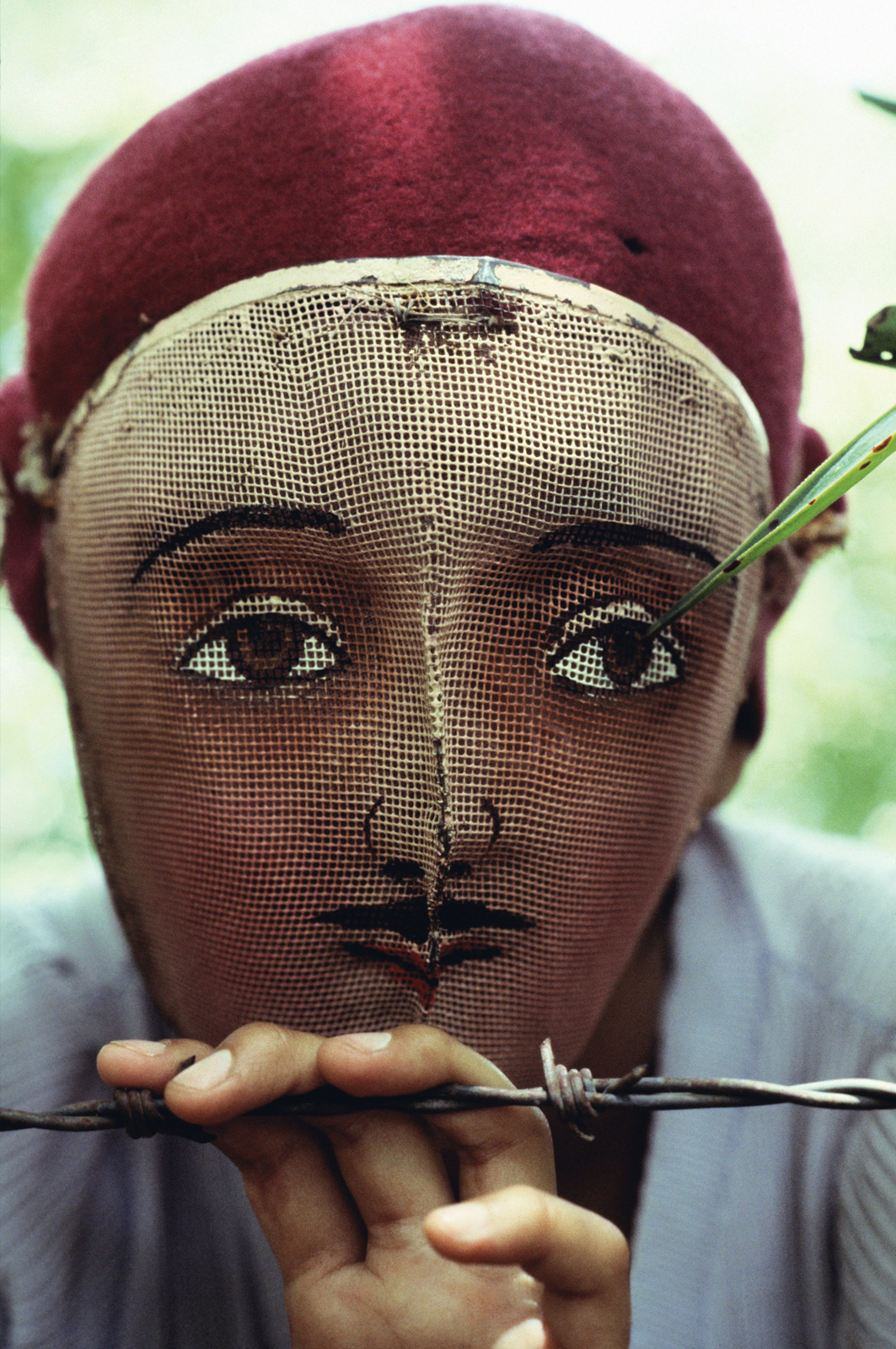
Susan Meiselas (American, b. 1948) 'Traditional Indian dance mask from the town of Monimbó, adopted by the rebels during the fight against Somoza to conceal identity, Nicaragua' 1978


Susan Meiselas (American, b. 1948)
Traditional mask used in the popular insurrection, Monimbo, Nicaragua
1978
Chromogenic print
23 1/2 × 15 3/4″ (59.7 × 40cm)
The Museum of Modern Art, New York
Gift of Helen Kornblum in honour of Roxana Marcoci


Traditional Indian dance mask from the town of Monimbó, adopted by the rebels during the fight against Somoza to conceal identity, Nicaragua


Susan Meiselas (American, b. 1948) 'A Funeral Procession in Jinotepe for Assassinated Student Leaders. Demonstrators Carry a Photograph of Arlen Siu, an FSLN Guerilla Fighter Killed in the Mountains Three Years Earlier' 1978


Susan Meiselas (American, b. 1948)
A Funeral Procession in Jinotepe for Assassinated Student Leaders. Demonstrators Carry a Photograph of Arlen Siu, an FSLN Guerilla Fighter Killed in the Mountains Three Years Earlier
1978
Chromogenic print
15 3/8 × 23 1/4″ (39.1 × 59.1cm)
The Museum of Modern Art, New York
Gift of Helen Kornblum in honour of Roxana Marcoci


“The camera…gives me both a point of connection and a point of separation.”

~ Susan Meiselas


“The camera is an excuse to be someplace you otherwise don’t belong,” said the photographer Susan Meiselas. “It gives me both a point of connection and a point of separation.” Meiselas studied anthropology before turning to teaching and photography, and her photographic work has remained firmly rooted in those early interests.

Beginning in 1972, Meiselas spent three consecutive summers documenting women who performed stripteases as part of itinerant, small-town carnivals throughout New England. She not only photographed them at work and during their down time, but she made audio recordings of interviews she conducted with the dancers (and the men who surrounded them), to add context and give her subjects a voice. Meiselas later reflected, “The feminists of that period were perceiving the girls’ shows as exploitative institutions that should be closed down, and so I actually was positioned in the place of feeling these voices should be heard, they should self-define as to who they are and what their economic realities are.”1 Meiselas travelled with the dancers from town to town, eventually becoming accepted by the community of women. This personal connection comes across in the intimacy of the scenes. Her photo book Carnival Strippers2 was published in 1976, the same year that Meiselas was invited to join the international photographic cooperative Magnum Photos.

Over the last 50 years, Meiselas has remained dedicated to getting to know her subjects, and she maintains relationships with them, sometimes returning to photograph them decades after the initial project. One place she has photographed again and again is Nicaragua, starting with the burgeoning Sandinista revolution. From June 1978 to July 1979, she documented the violent end of the regime of dictator Anastasio Somoza Debayle. In 1990 she returned to the country with her book of photographs made at that time, Nicaragua3, and used it as a tool to track down as many subjects of those photographs as she could: “Now I want to retrace my steps, to go back to the photos I took at the time of the insurrection, and search for the people in them. What brought them to cross my path at the moment they did? What’s happened to them since? What do they think now? What do they remember?”4 She gathered their testimonies and co-directed a film, Pictures from a Revolution 5, that explored the Nicaraguan people’s hardships after the revolution. She went back to Nicaragua yet again in 2004, on the 25th anniversary of Somoza’s overthrow, and worked with local communities to install murals of her photographs on the sites where they were taken.6 It is the job of a photojournalist to bear witness, but Meiselas also considers ways in which she can challenge and confront future communities with the scenes she has witnessed.

In 1997, Meiselas completed a six-year-long project about the photographic history of the Kurds, working to piece together a collective memory of people who faced extreme displacement and destruction. She gathered these memories in a book – Kurdistan: In the Shadow of History7 – an exhibition and an online archive that can still be added to today. Throughout this project Meiselas worked with both forensic and historical anthropologists who added their own specialised context; the innumerable oral accounts from the Kurdish people themselves provide a perspective often left out of history books.

Referring to her early studies in anthropology, Meiselas said, “Those very primary experiences of diversity led me to be more curious about the world, putting me into a certain mode of exploration and openness to difference at a young age.” She has long understood the importance of giving a voice to her often little-known and marginalised subjects, and through her work she draws attention to a wide variety of human rights and social justice issues. Meiselas constantly considers the challenging relationship between photographer and subject, and the relationship of images to memory and history, always looking for new cross-disciplinary and collaborative ways to evolve the medium of documentary storytelling.

Jane Pierce, Carl Jacobs Foundation Research Assistant, Department of Photography


1/ The Museum of Modern Art, New York, “Seeing Through Photographs,” YouTube video, 5:03. February 13, 2019 https://youtu.be/HHQwAkPj8Bc
2/ Susan Meiselas, Carnival Strippers (New York: Noonday Press, 1976) and a revised second edition with bonus CD (New York: Steidl, 2003).
3/ Susan Meiselas, Nicaragua (New York: Pantheon Books, 1981).
4/ Susan Meiselas, Alfred Guzzetti and Richard P. Rogers, Pictures from a Revolution, DVD (New York: Kino International Corp., 1991).
5/ Susan Meiselas, Alfred Guzzetti, and Richard P. Rogers, Pictures from a Revolution, DVD (New York: Kino International Corp., 1991).
6/ Susan Meiselas, Alfred Guzzetti, and Pedro Linger Gasiglia, Reframing History, DVD (2004).
7/ Susan Meiselas, Kurdistan: In the Shadow of History (New York: Random House, 1997).


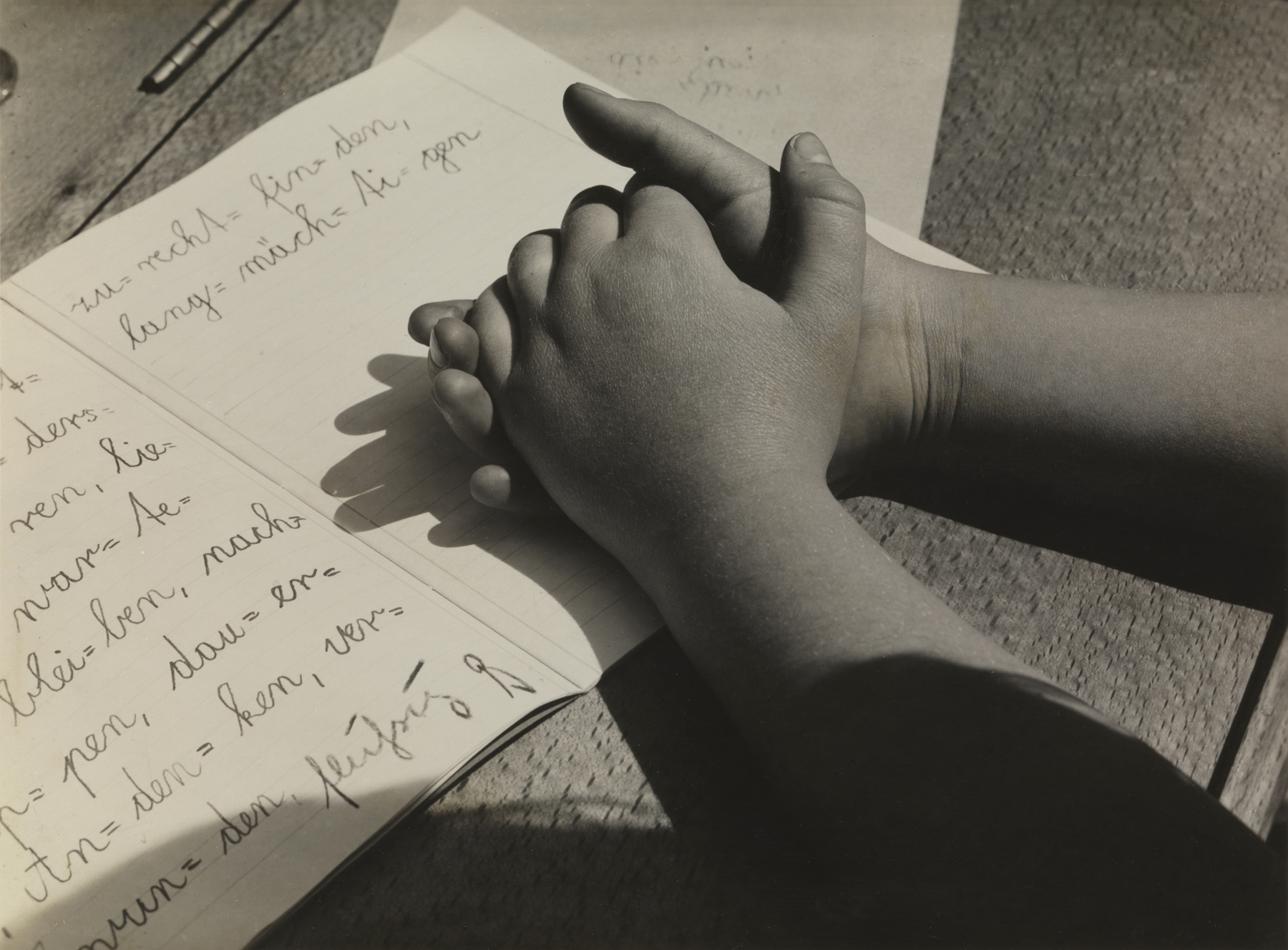
Frances Benjamin Johnston (American, 1864-1952) 'Penmanship Class' 1899


Frances Benjamin Johnston (American, 1864-1952)
Penmanship Class
1899
Platinum print
7 3/8 × 9 3/8 in. (18.7 × 23.8cm)
The Museum of Modern Art, New York
Gift of Helen Kornblum in honour of Roxana Marcoci


Frances Benjamin Johnston (American, 1864-1952)

After setting up her own photography studio in 1894, in Washington, D.C., Frances Benjamin Johnston was described by The Washington Times as “the only lady in the business of photography in the city.”1 Considered to be one of the first female press photographers in the United States, she took pictures of news events and architecture and made portraits of political and social leaders for over five decades. From early on, she was conscious of her role as a pioneer for women in photography, telling a reporter in 1893, “It is another pet theory with me that there are great possibilities in photography as a profitable and pleasant occupation for women, and I feel that my success helps to demonstrate this, and it is for this reason that I am glad to have other women know of my work.”2

In 1899, the principal of the Hampton Normal and Agricultural Institute in Virginia commissioned Johnston to take photographs at the school for the 1900 Exposition Universelle in Paris. The Hampton Institute was a preparatory and trade school dedicated to preparing African American and Native American students for professional careers. Johnston took more than 150 photographs and exhibited them in the Exposition Nègres d’Amerique (American Negro Exhibit) pavilion, which was meant to showcase improving race relations in America. The series won the grand prize and was lauded by both the public and the press.

Years later, writer and philanthropist Lincoln Kirstein discovered a leather-bound album of Johnston’s Hampton Institute photographs. He gave the album to The Museum of Modern Art, which reproduced 44 of its original 159 photographs in a book called The Hampton Album, published in 1966. In its preface, Kirstein acknowledged the conflict inherent in Johnston’s images, describing them as conveying the Institute’s goal of assimilating its students into Anglo-American mainstream society according to “the white Victorian ideal as criterion towards which all darker tribes and nations must perforce aspire.”3 The Hampton Institute’s most famous graduate, educator, leader, and presidential advisor Booker T. Washington, advocated for black education and accommodation of segregation policies instead of political pressure against institutionalised racism, a position criticised by anti-segregation activists such as author W. E. B. Du Bois.

Johnston’s pictures neither wholly celebrate nor condemn the Institute’s goals, but rather they reveal the complexities of the school’s value system. This is especially clear in her photographs contrasting pre- and post-Hampton ways of living, including The Old Well and The Improved Well (Three Hampton Grandchildren). In both images, black men pump water for their female family members. The old well system is represented by an aged man, a leaning fence, and a wooden pump that tilts against a desolate sky, while the new well is handled by an energetic young boy in a yard with a neat fence, a thriving tree, and two young girls dressed in starched pinafores. Johnston’s photographs have prompted the attention of artists like Carrie Mae Weems, who has incorporated the Hampton Institute photographs into her own work to explore what Weems described as “the problematic nature of assimilation, identity, and the role of education.”4

Johnston’s photographs of the Hampton Institute were only a part of her long and productive career. Having started out by taking society and political portraits, she later extensively photographed gardens and buildings, hoping to encourage the preservation of architectural structures that were quickly disappearing. Her pictures documenting the changing landscape of early-20th-century America became sources for historians and conservationists and led to her recognition by the American Institute for Architects (AIA). At a time when photography was often thought of as scientific in its straightforwardness, Johnston recognised its expressive power. As she wrote in 1897, “It is wrong to regard photography as purely mechanical. Mechanical it is, up to a certain point, but beyond that there is great scope for individual and artistic expression.”5

Introduction by Kristen Gaylord, Beaumont and Nancy Newhall Curatorial Fellow, Department of Photography, 2016


1/ “Washington Women with Brains and Business,” The Washington Times, April 21, 1895, 9.
2/ Clarence Bloomfield Moore, “Women Experts in Photography,” The Cosmopolitan XIV.5 (March 1893), 586.
3/ Lincoln Kirstein, “Introduction,” in The Hampton Album: 44 photographs by Frances B. Johnston from an album of Hampton Institute (New York: The Museum of Modern Art, 1966), 10.
4/ Quoted in Denise Ramzy and Katherine Fogg, “Interview: Carrie Mae Weems,” Carrie Mae Weems: The Hampton Project (New York: Aperture, 2000), 78.
5/ Frances Benjamin Johnston, “What a Woman Can Do with a Camera,” The Ladies’ Home Journal (September 1897): 6-7.


Installation view of the exhibition 'Our Selves: Photographs by Women Artists from Helen Kornblum' at the Museum of Modern Art (MoMA), New York

Installation view of the exhibition 'Our Selves: Photographs by Women Artists from Helen Kornblum' at the Museum of Modern Art (MoMA), New York


Installation views of the exhibition Our Selves: Photographs by Women Artists from Helen Kornblum at the Museum of Modern Art (MoMA), New York


The Museum of Modern Art
11 West 53 Street
New York, NY 10019
Phone: (212) 708-9400

Opening hours:
10.30am – 5.30pm
Open seven days a week

MoMA website

LIKE ART BLART ON FACEBOOK

Back to top

Exhibition: ‘Masterworks of Modern Photography 1900-1940: The Thomas Walther Collection at The Museum of Modern Art, New York’ at Jeu de Paume, Paris

Exhibition dates: 14th September, 2021 – 13th February, 2022

Curated by Sarah Meister, former Curator, Department of Photography, The Museum of Modern Art, New York and Quentin Bajac, Director, Jeu de Paume, with Jane Pierce, Carl Jacobs Foundation Research Assistant, The Museum of Modern Art, New York. Organised by the Museum of Modern Art, New York


Max Burchartz (German, 1887-1961) 'Lotte (Eye)' 1928 from the exhibition 'Masterworks of Modern Photography 1900-1940: The Thomas Walther Collection at The Museum of Modern Art, New York' at Jeu de Paume, Paris, Sept 2021 - Feb 2022


Max Burchartz (German, 1887-1961)
Lotte (Eye)
1928
Gelatin silver print
30.2 × 40cm
The Museum of Modern Art, New York. Thomas Walther Collection
Acquired through the generosity of Peter Norton © 2021 Max Burchartz/Artists Rights Society (ARS), New York/VG Bild-Kunst, Germany
Digital Image © 2021 The Museum of Modern Art, New York


A huge posting today that took hours to compile and all I can think of to say is – wow, I want them all in my collection!

If I had to specify one era of photography that is my favourite it would be the experimental, avant-garde photographs from the interwar period. There was such freedom, revolution and danger in the air which encouraged artists to produce radical art that defined a generation (and which ideological others found offensive and degenerate).

The tremendous diversity of “modern” photography is on show in the different sections of the exhibition – from portraiture to perspective, from science to magic realism, from interiority and surrealist dreams to new objective visions of self and the landscape – the works investigating how photographs transcend their conventional function of documentation through their social, psychological, and metaphysical implications.

I have added relevant biographical details and salient book covers and pages from the exhibition catalogue to enhance the viewing experience. My particular favourites in the posting are Willi Ruge’s vertiginous Seconds before Landing (1931, below); Stanisław Ignacy Witkiewicz’s unforgettable portrait of Anna Oderfeld, Zakopane (1911-1912, below); Lyonel Feininger’s almost-there, atmos/sphere Bauhaus (February 26, 1929 below); and Gertrud Arndt’s masterpiece, At the Masters’ Houses (1929-1930, below).

I hope you enjoy your Sunday looking at these stunning images.

Dr Marcus Bunyan


Many thankx to Jeu de Paume for allowing me to publish the photographs in the posting. Please click on the photographs for a larger version of the image.


Kate Steinitz (American born Poland, 1889-1975) 'Backstroke' 1930 from the exhibition 'Masterworks of Modern Photography 1900-1940: The Thomas Walther Collection at The Museum of Modern Art, New York' at Jeu de Paume, Paris, Sept 2021 - Feb 2022


Kate Steinitz (American born Poland, 1889-1975)
Backstroke
1930
Gelatin silver print
26.6 × 34.1cm
The Museum of Modern Art, New York. Thomas Walther Collection
Gift of Thomas Walther
Reprinted with permission of the Steinitz Family Art Collection
Digital Image © 2021 The Museum of Modern Art, New York


El Lissitzky (Russian, 1890-1941) 'Record' 1926


El Lissitzky (Russian, 1890-1941)
Runner in the City (Experiment for a Fresco for a Sports-Club)
1926
Gelatin silver print
26.7 × 22.4cm
The Museum of Modern Art, New York. Thomas Walther Collection
Gift of Thomas Walther
Digital Image © 2021 The Museum of Modern Art, New York


Lotte (Charlotte) Beese (German-Dutch, 1903-1988) 'Untitled (Bauhaus Weavers)' 1928


Lotte (Charlotte) Beese (German-Dutch, 1903-1988)
Untitled (Bauhaus Weavers)
1928
Gelatin silver print
8.4cm (diam.)
The Museum of Modern Art, New York. Thomas Walther Collection
Gift of Thomas Walther
Digital Image © 2021 The Museum of Modern Art, New York


Maurice Tabard (French, 1897-1984) 'Test for the Film "Culte Vaudou," Exposition 1937' 1936


Maurice Tabard (French, 1897-1984)
Test for the Film “Culte Vaudou,” Exposition 1937
1936
Gelatin silver print with cellophane sheet
29.3 × 23cm
The Museum of Modern Art, New York. Thomas Walther Collection
Gift of Shirley C. Burden, by exchange
Digital Image © 2021 The Museum of Modern Art, New York


Maurice Tabard (French, 1897–1984) 'Untitled (Self-Portrait with Roger Parry)' c. 1936


Maurice Tabard (French, 1897–1984)
Untitled (Self-Portrait with Roger Parry)
c. 1936
Gelatin silver print
9 1/4 × 6 5/8″ (23.5 × 16.8cm)
Thomas Walther Collection. Gift of Thomas Walther


Roger M. Parry (French, 1905-1977)

Born and educated in Paris, Roger Parry was originally interested in painting and worked as a draftsman after graduation. In 1928 he met Maurice Tabard, who taught him photography and for whom Parry worked as a darkroom assistant. Parry published his photographs in Art et Métiers Graphiques, a photographic annual, and Banalités, a book of poems. These publications gained the attention of André Malraux, with whom Parry became associated around 1930.

Parry worked for Malraux and the Gallimard publishers for more than forty years. In 1934 Gallimard published Parry’s photographs of Tahiti. During World War II Parry was a photography war correspondent for the news agency L’Express. He eventually became head of photography and art director for the Gallimard publication Nouvelle Revue Française.

Text from the J. Paul Getty website [Online] Cited 25/01/2022


Lotte Jacobi (American, 1896-1990) 'Franz Lederer' c. 1929


Lotte Jacobi (American, 1896-1990)
Franz Lederer
c. 1929
Gelatin silver print
21.3 × 15.5cm
The Museum of Modern Art, New York. Thomas Walther Collection
Grace M. Mayer Fund
© Lotte Jacobi Collection, University of New Hampshire
Digital Image © 2021 The Museum of Modern Art, New York


Francis Lederer (November 6, 1899 Prague – May 25, 2000) was a Czech-born American film and stage actor with a successful career, first in Europe, then in the United States. His original name was Franz (Czech František) Lederer.


Unknown photographer / Press-Photo G.M.B.H. 'Untitled (Cover illustration from 'Here Comes the New Photographer')' c. 1928-1929


Unknown photographer / Press-Photo G.M.B.H.
Untitled (Cover illustration from Here Comes the New Photographer)
c. 1928-1929
Gelatin silver print
21.9 × 16.2cm
The Museum of Modern Art, New York. Thomas Walther Collection
Gift of Edward Steichen, by exchange
Digital Image © 2021 The Museum of Modern Art, New York


Masterworks of MoMA

Introduction

In 2001 and 2017, The Museum of Modern Art in New York acquired more than 350 photographs from the collector Thomas Walther. This collection, which is now one of the pillars of MoMA’s modern collection, is presented for the first time in France in an exhibition of some 230 images.

Comprising iconic works from the first half of the twentieth century, the exhibition provides a history of the European and American photographic avant-gardes. Through the works of a hundred or so photographers, from Berenice Abbott to Karl Blossfeldt, from Claude Cahun to El Lissitzky, from Edward Weston to André Kertész, this fusion of masterpieces and lesser-known images traces the history of modernity in photography. Mixing genres and approaches – architecture and urban landscapes, portraits and nudes, reportage, photomontage, experimentation, etc. – the exhibition delves deep into the artistic networks of the inter-war period, from the Bauhaus to Surrealist Paris, via Moscow and New York.

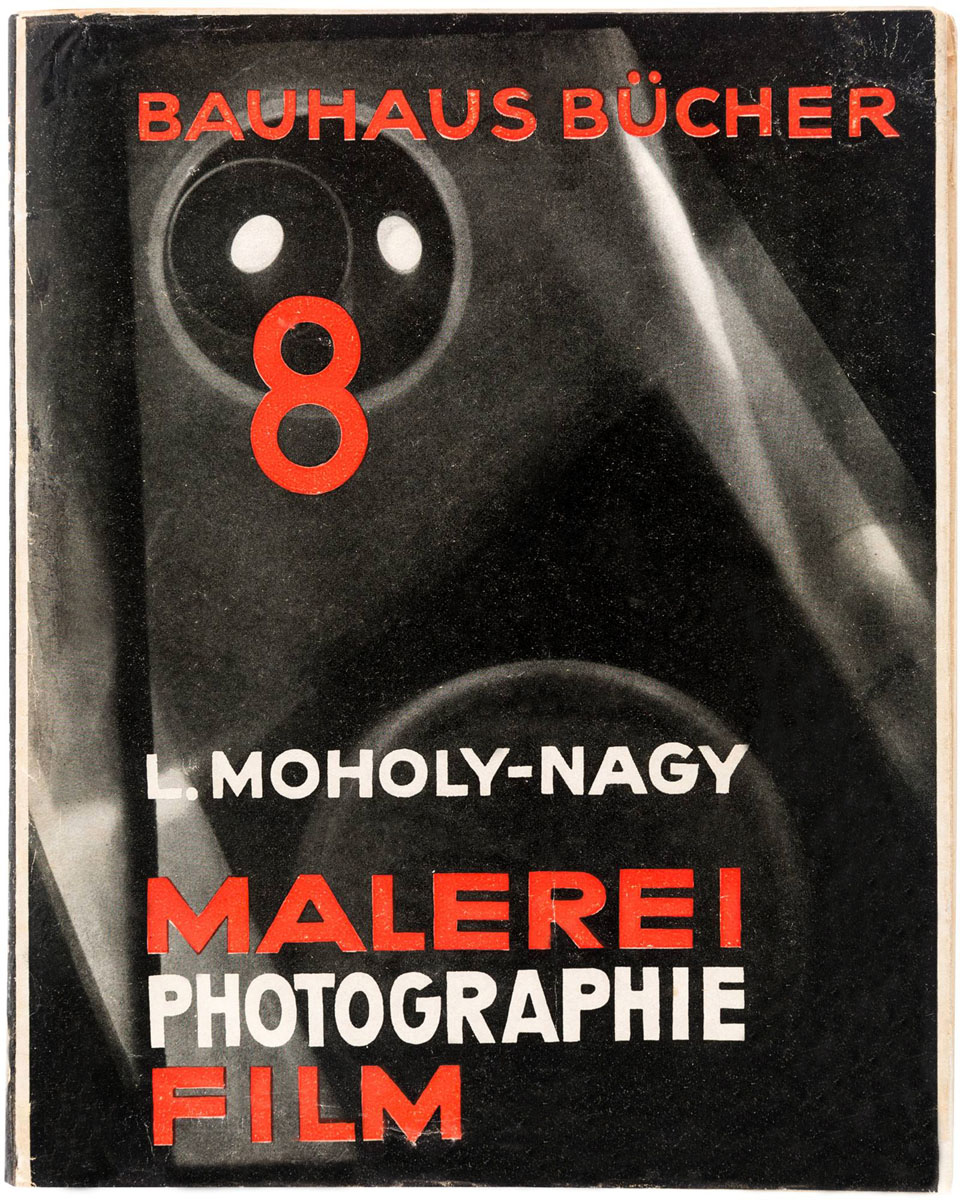
In their visually radical inventiveness, these images capture perfectly the utopian spirit of those who wanted to change images in order to change the world; now we fully understand the words of the photographer and theoretician Lázló Moholy-Nagy who, a century ago, stated that “the illiterate of the future will be ignorant of the camera and the pen alike.”

The Exhibition

Life as an artist

While it is true that throughout the 20th century photographers took great pleasure in portraiture, the Thomas Walther Collection also illustrates the spirit of freedom that characterised the lives of these artists and the circles they moved in.

Marcel Duchamp once described the Paris of the 1920s as home to the first truly international community of artists. The body of photographs by André Kertész assembled by Thomas Walther offers a fine summary of the photographer’s affinities, empathies and networking during his Parisian years, while also reflecting his interest in abstract and post-Cubist art and the play of light on highly geometric volumes.

The period between the two World Wars saw the affirmation of a collective artistic adventure most strikingly evidenced by the Bauhaus – one of the main axes of the Thomas Walther collection. From Florence Henri to Lotte Beese and Umbo, many of the artists represented in the collection spent time there; and all of them practiced photography without necessarily being photographers. Thus the works relating to the Bauhaus here are essentially snapshots of documentary interest. Lázsló Moholy-Nagy and Lucia Moholy were both very active photographers, but while Lázsló’s work attracted considerable critical attention, this is less true of his wife, who, although not an official member of the school, took numerous photographs of architecture and portraits.

Similarly, Lyonel Feininger, a trained painter and head of the engraving workshop, and Gertrud Arndt and Lotte Beese, students in the weaving workshop, acquired skills through an intense photographic activity that went far beyond the official teaching.

Experiments with night photography, high- and low-angle shots, multiple exposures, distorting reflections: a large part of the vocabulary of the avant-gardes can be found at the Bauhaus.

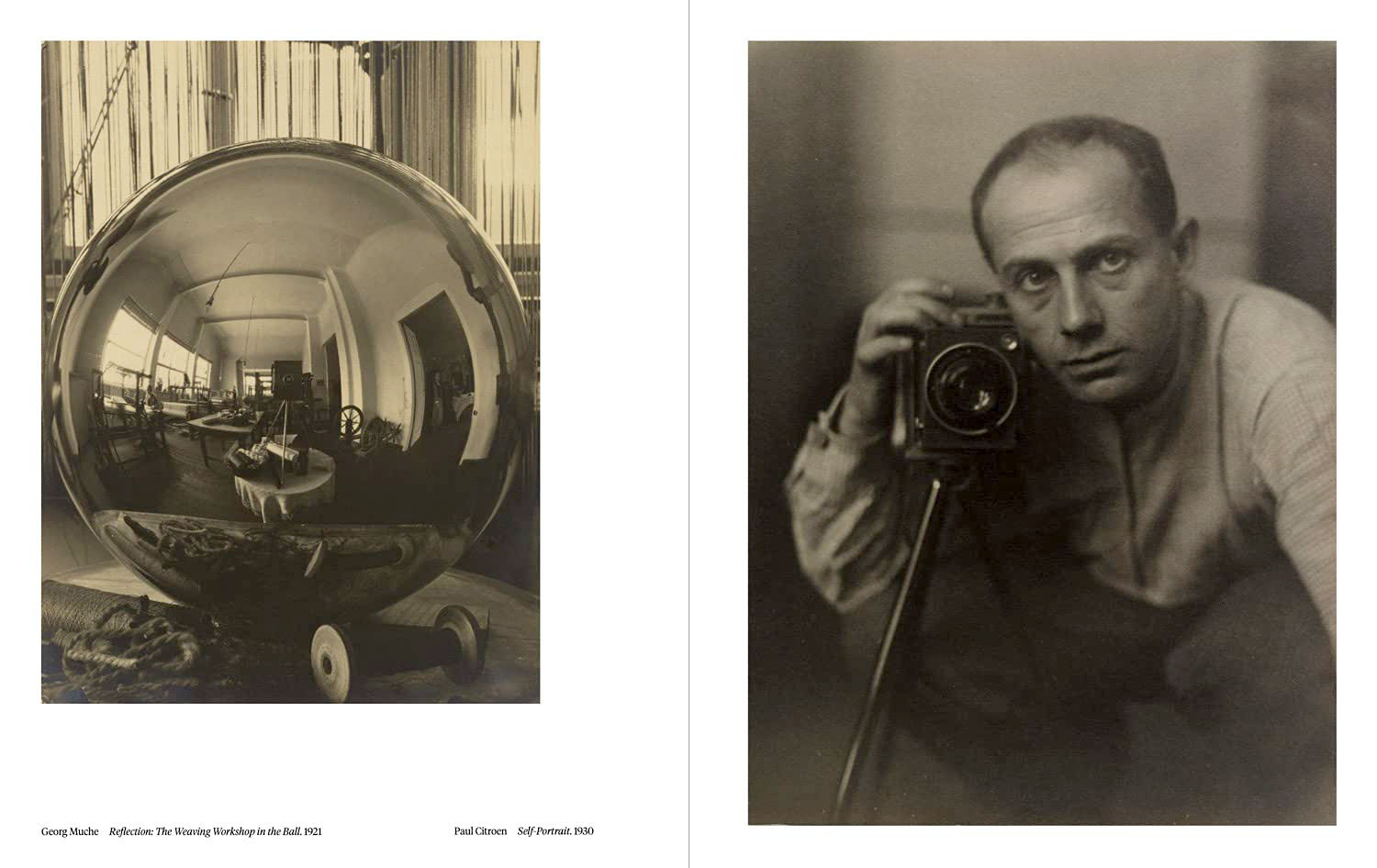
The third body of work in this section documents these artistic networks and communities in a different way. The self-portrait plays a predominant role here, revealing the shaping of a new identity for the photographer via an emphasis on the camera that underscored photography’s mechanical character – an aspect often skirted by the art photographers of the previous generation.

Now, whether on a tripod or in the hand, the camera was omnipresent, to the point where it merged completely with the user as an artificial extension of the eye.

El Lissitzky redefined photography as a mental activity and the photographer as a “constructor”, a producer of images who must unify the work of eye and hand, in a context of photography become inseparable from graphics.

Here comes the new photographer!

Photography was the ideal medium for catching the feel of modern life in the aftermath of the First World War: looking both up and down – from planes, bridges and skyscrapers – photographers discovered unparalleled views and a new, dynamic visual language, free of convention.

A new thirst for photographic images took hold of the illustrated press between the wars, a period that saw the advent of reports and magazines built entirely around the photographic image. Another feature of this period was its passion for sport and speed. Advances in the sensitivity of photographic film and paper and the development of more manageable cameras allowed artists to capture movement as never before.

Totally unexpected points of view were thus created. One of the most famous is doubtless the aerial view, where the aviator embodies this new sporting modernity, as does the racing driver.

A sense of weightlessness and lightness is found in the images of Kate Steinitz and John Gutmann, both influenced by Dada and European Surrealism. Alexander Rodchenko’s images of divers emphasise the space that the body travels through as well as the athlete himself.

Their out-of-kilter framing, pushing the bodies into the corners of the image, attempts to summarise a rapid, complex movement in a single still image. While using an overtly avant-garde photographic grammar – high-angle, low angle – the themes of these photographs seem to be fully in line with the political context of the Soviet Union in the 1930s. Lissitzky too was fascinated by the figure of the athlete: his photomontage Rekord (Record), a model of a project for the photographic decoration of a sports club in Moscow, offers a modernist yet dreamlike vision in which the entire illuminated metropolis mutates into a sports arena.

Finally, this exaltation of a new humanity underlies in a much more literal way Leni Riefenstahl’s images of the 1936 Berlin Olympic Games. Armed with impressive technical and financial resources, photographer / filmmaker Riefenstahl directed Olympia, commissioned by the Hitler regime to hymn the new Aryan type. In images markedly avant-garde in style, one finds many features of the aesthetics of the Third Reich, from the references to antiquity to the celebration of the athlete-hero and the geometrisation and perfect synchronisation of figures in movement.

Discovering photography

In 1925, László Moholy-Nagy asserted that although photography had been invented a hundred years earlier, its true aesthetic potential had only just been discovered when he and other members of avant-garde circles adopted the medium. With their brief history and no connection to traditional fine arts disciplines, photography and film became true modernist instruments.

Moving away from the efforts of the art photographers of the previous generation, out to obscure the mechanical nature of the photographic print through various subterfuges – timeless subjects, use of blur, etc. – the photographic avant-gardes of the early 20th century drew on images from non-art spheres: X-rays, astronomy, medicine and science provided them with representations of the invisible; photojournalism revealed forms in motion, improbably frozen by the snapshot; amateur photography offered a repertoire of strange viewpoints and aberrations of perspective. See differently, that was the maxim.

They experimented every which way, playfully and undeterred by reversion to archaic forms and processes. The photogram is probably the best illustration of this new language. This camera-less technique, which simply prints images of objects directly onto sensitised paper that has been exposed to light, is the origin of photography. It was practiced by all of photography’s pioneers before falling into disuse except as a mere laboratory exercise. It was only after the First World War that it was rediscovered by a few enthusiasts and became a major avant-garde gambit.

Appreciated for its simplicity, playfulness, and undeniable visual impact, it also became a much appreciated tool in the field of applied photography. Moreover, in addition to the photogram as such, advertising, Industry, and publishing were becoming broadly receptive to the new avant-garde photographic language, just as photography was gradually beginning to oust graphic techniques in their respective fields.

At the same time the laboratory began to function as a venue for exploration of both the negative and the print. The stretching of exposure times, with the resultant blurring of movement, allows the representation of time to be modified by embedding duration and movement in the still image. In some cases – think Albert Renger-Patzsch and Jean Painlevé – the precision of a simple close-up framing a particular being or thing as closely as possible, sufficed to imbue the subject with fresh presence and reality.

Last but not least, the avant-gardes revelled in the construction of composite images, notably through collage and photomontage, using all the resources made available to them by the illustrated press and publishing of the time. To these image games we should add the multiple exposure, long considered as no more than a photographer’s failure. In this sense, this generation was the first to practice borrowing and reusing images and forms on such a scale, attesting to the – already – rapid circulation of images within the European avant-garde.

Magic Realisms

In the mid-1920s, members of European art movements ranging from Surrealism to New Objectivity moved away from a realist approach, seeking instead to highlight the strangeness of everyday life or to bring together dreams and unusual states of consciousness. Echoes of these preoccupations, centred on the human figure, can be found throughout the Thomas Walther collection.

The images in this section hijack two traditional photographic genres, the portrait and the nude, with the aid of various processes: close-ups, inversion of negative-positive values through solarisation, photograms, overprints. Many of the techniques employed by photographers close to Surrealism aimed to transform reality by pushing technique to the point of destroying the human form. The diffuse influence of Surrealism is of course particularly evident among Parisian photographers, as can be seen in the numerous, often virtuoso laboratory games of commercial, advertising or fashion photographers like Maurice Tabard or Aurel Bauh, and even André Kertész in the early 1930s. The “distortions” Kertész produced, using the countless optical possibilities offered by deforming mirrors, are part of a photographic tradition that goes back to the 19th century, but also remind us of the representation and deformation of the human body undertaken by Picasso and Dalí in the same years.

The press of the 1920s was fond of optical visual games, transforming the human body in line with a certain objectification: loss of scale and reference points, oddness induced by a detail or the texture of skin. Of all the parts of the body, it was undoubtedly the eye, the organ of sight, that attracted the attention of distinction between the real and the fantastic – and created interplay between the animate and the inanimate by approaching the human body through substitutes such as dolls, mannequins, or masks.

Symphony of a Great City

Like the cinema, photography in the first half of the 20th century achieved a fragmentation and recomposition of an increasingly insistent urban reality. In an era of rapidly advancing urbanisation, the big city was the stamping ground par excellence for photographers and filmmakers.

The period saw the emergence of a large number of films that treated the city as a living organism: Paul Strand’s Manhattan, Charles Sheeler on New York and Berlin, Walther Ruttmann’s Symphony of a Great City. Often consisting of short, rapidly edited shots, these films have obvious links with the photography of the time: the German photographer Umbo was involved in the making of Ruttmann’s film. The four images on display here play on some of the optical games dear to the avant-garde: the derealisation effected by the bird’s-eye view and cast shadows, the simultaneous transparency and reflection of store windows, and the repetitive geometry of certain urban spaces.

The advent of an architecture of mobility was exactly contemporary with that of the first Kodak-type cameras, which allowed the operator a hitherto unknown freedom and mobility. Photographers would take full advantage of all the new possibilities open to them by favouring symbols and places emblematic of the contemporary: factory chimneys and industry at work; the iron architecture of buildings like the Eiffel Tower in Paris or the Brooklyn Bridge in New York; subjects and objects in movement, such as cyclists caught in urban traffic; newly pullulating public spaces; and, of course, the omnipresent street. The city was indeed this dynamic organism, the locus of human encounters, of incongruous objects and visual signs, captured at random in its streets. Constantly on the lookout, the pedestrian-photographer of the inter-war period appears as a modern version of the Baudelairean flâneur of the preceding century. With its unprecedented vertical extension, the modern city offers a multitude of new points of view, high-angle or low-angle, magnifying the impression of vertigo or crushing weight.

The city allowed for all kinds of new visual and optical experiments. Iron architecture, by erasing the boundaries between interior and exterior, offered countless possibilities for framing, as in the work of Germaine Krull, a photographer particularly attentive to these exercises in “framing within the frame”. Night shots, which gave pride of place to lighting effects, renewed the experience of nocturnal vision to a point of near-abstraction, simple luminous inscriptions of objects in movement.

But the fragmenting dear to Walter Benjamin is probably nowhere more perceptible than in photomontage, with its fantasised, idealised or monstrous version of the urban and industrial universe. The visual chaos of Paul Citroën’s Metropolis, composed of some two hundred images pasted together, is a perfect example. Citroën evokes a city not in ruins but in pieces, a cacophonous space, all the elements piled up in an incoherent spirit close to Dada.

High fidelity

At a time when, in Europe, experimentation was being put forward as a core concept by the photographic avant-gardes, the Americans seem to have put more emphasis on a search for a truth of the world through exact representation. “High fidelity”, a term borrowed from the world of acoustics, was used to designate this approach and its taste for a clear and faithful image.

Pure photography is a discipline in search of perfection and technical mastery at all stages of the production of the image. It is in this near-contradictory tension between the “highly detailed” and the “abstract”, between the use of a large format camera combining an almost hyper-realistic rendering with simplified shooting strategies, that lies one of the main characteristics of a certain American modernist approach. It seems logical, then, that this aesthetic of attention to object, texture and form, quickly pervaded various spheres of American commercial photography of the time.

At Film und Foto, the flagship exhibition of the international photographic avant-garde, some people remarked on the extent to which the American section, with its “refined technique that can rightly be described as cultivated”, contrasted with the more raw work of the Europeans.

However, while straight photography remained a very American movement, it also had ramifications in Europe. In Germany, in the late 1920s and early 1930s, voices began to be raised in photographic circles against the expressive experiments of the previous decade, urging respect for reality and greater objectivity. Karl Blossfeldt’s direct and unmanipulated approach to plants, produced for documentary purposes as part of his teaching at the Berlin School of Applied Arts, was praised. At the same time, it was the sweeping aerial views of Germany taken by balloonist Robert Petschow that aroused the enthusiasm of avant-garde circles, which exhibited them and celebrated both their quasi-abstract singularity and their informative content, blended in the manner of a topographical survey.


Umbo (Otto Umbehr) (German, 1902-1980) 'View of Berlin's Department Store Karstadt' 1929


Umbo (Otto Umbehr) (German, 1902-1980)
View of Berlin’s Department Store Karstadt
1929
Gelatin silver print
23.7 × 15.5cm
The Museum of Modern Art, New York. Thomas Walther Collection
Gift of Shirley C. Burden, by exchange
© ADAGP, Paris, 2021
© 2021 Umbo/ Gallery Kicken Berlin/ Phyllis Umbehr/VG Bild-Kunst, Bonn
Digital Image © 2021 The Museum of Modern Art, New York


El Lissitzky (Russian, 1890-1941) 'Cover study for America: The Development of Style in New Buildings in the United States (New Ways of Building in the World)' 1929-1930


El Lissitzky (Russian, 1890-1941)
Cover study for America: The Development of Style in New Buildings in the United States (New Ways of Building in the World)
1929-1930
Gelatin silver print
10 1/4 × 7 5/8″ (26 × 19.4cm)
Thomas Walther Collection. Gift of Henri Cartier-Bresson, by exchange
© 2022 Artists Rights Society (ARS), New York / VG Bild-Kunst, Bonn


Berenice Abbott (American, 1898-1991) 'Fifth Avenue, Nos. 4, 6, 8, Manhattan' March 20, 1936


Berenice Abbott (American, 1898-1991)
Fifth Avenue, Nos. 4, 6, 8, Manhattan
March 20, 1936
Gelatin silver print
38.6 × 49.5cm
The Museum of Modern Art, New York. Thomas Walther Collection
Gift of Mr. Robert C. Weinberg, by exchange
© 2021 Estate of Berenice Abbott
Digital Image © 2021 The Museum of Modern Art, New York


Albert Renger-Patzsch (German, 1897-1966) 'Pitmen's houses in Essen, Stoppenberg' 1929


Albert Renger-Patzsch (German, 1897-1966)
Pitmen’s houses in Essen, Stoppenberg
1929
Gelatin silver print
10 3/4 × 14 13/16″ (27.3 × 37.6cm)
Thomas Walther Collection. Gift of James Thrall Soby, by exchange
© 2022 / Artists Rights Society (ARS), New York / VG Bild-Kunst, Germany


Aenne Biermann (German, 1898-1933) 'Summer Swimming' 1925-1930


Aenne Biermann (German, 1898-1933)
Summer Swimming
1925-1930
Gelatin silver print
17.8 × 20cm
The Museum of Modern Art, New York. Thomas Walther Collection
Bequest of Ilse Bing, by exchange
Digital Image © 2021 The Museum of Modern Art, New York


Aurel Bauh (Romanian, 1900-1964) 'Untitled' 1929-1932


Aurel Bauh (Romanian, 1900-1964)
Untitled
1929-1932
Gelatin silver print
29.4 × 23.3cm
The Museum of Modern Art, New York. Thomas Walther Collection
Gift of Thomas Walther
Digital Image © 2021 The Museum of Modern Art, New York


Karl Blossfeldt (German, 1865-1932) 'Acanthus mollis (Soft Acanthus, Bear's Breeches. Bracteoles with the Flowers Removed, Enlarged 4 Times)' 1898-1928


Karl Blossfeldt (German, 1865-1932)
Acanthus mollis (Soft Acanthus, Bear’s Breeches. Bracteoles with the Flowers Removed, Enlarged 4 Times)
1898-1928
Gelatin silver print
29.8 × 23.8cm
The Museum of Modern Art, New York. Thomas Walther Collection
Gift of Thomas Walther
Digital Image © 2021 The Museum of Modern Art, New York


Aenne Biermann (German, 1898-1933) 'Ficus elastica' 1926


Aenne Biermann (German, 1898-1933)
Ficus elastica
1926
Gelatin silver print
14 3/4 × 11 1/8″ (37.5 × 28.2cm)
Thomas Walther Collection. Gift of Thomas Walther


John Gutmann (American born Germany, 1905-1998) 'Classe (Marjorie Gestring, championne olympique 1936 de plongeon de haut vol)' Class (Marjorie Gestring, 1936 Olympic champion in high diving) 1935


John Gutmann (American born Germany, 1905-1998)
Classe (Marjorie Gestring, championne olympique 1936 de plongeon de haut vol)
Class (Marjorie Gestring, 1936 Olympic champion in high diving)

1935
Gelatin silver print
22.3 x 19.2cm
The Museum of Modern Art, New York. Thomas Walther Collection
© 2020 The Museum of Modern Art, New York/Scala, Florence


Aleksandr Rodchenko. 'Girl with Leica' 1932-1933


Aleksandr Rodchenko (Russian, 1891-1956)
Girl with a Leica
1932-1933
Gelatin silver print
30 x 20.3cm
The Museum of Modern Art, New York. Collection Thomas Walther
Gift of Shirley C. Burden, by exchange
© ADAGP, Paris 2021
Digital Image © 2021 The Museum of Modern Art, New York


Wanda Wulz (Italian, 1903-1984) 'Exercise' 1932


Wanda Wulz (Italian, 1903-1984)
Exercise
1932
Gelatin silver print
11 1/2 × 8 5/8″ (29.2 × 21.9cm)
Thomas Walther Collection
Abbott-Levy Collection funds, by exchange
© Fratelli Alinari Museum Collections-Studio Wulz Archive, Florence


George Hoyningen-Huene (American born Russia, 1900-1968) 'Henri Cartier-Bresson' 1935


George Hoyningen-Huene (American born Russia, 1900-1968)
Henri Cartier-Bresson
1935
Gelatin silver print
9 11/16 × 7 11/16″ (24.6 × 19.5cm)
Thomas Walther Collection
Abbott-Levy Collection funds, by exchange
© George Hoyningen-Huene Estate Archives


El Lissitzky (Russian, 1890-1941) 'Self-Portrait' 1924


El Lissitzky (Russian, 1890-1941)
Self-Portrait
1924
Gelatin silver print
5 1/2 × 3 1/2″ (13.9 × 8.9cm)
Thomas Walther Collection
Gift of Shirley C. Burden, by exchange
© 2022 Artists Rights Society (ARS), New York / VG Bild-Kunst, Bonn


The essence of New Vision photography is pointedly expressed in this picture, commonly known as The Constructor, which puts the act of seeing at center stage. Lissitzky’s hand, holding a compass, is superimposed on a shot of his head that explicitly highlights his eye: insight, it expresses, is passed through the eye and transmitted to the hand, and through it to the tools of production. Devised from six different exposures, the picture merges Lissitzky’s personae as photographer (eye) and constructor of images (hand) into a single likeness. Contesting the idea that straight photography provides a single, unmediated truth, Lissitzky held instead that montage, with its layering of one meaning over another, impels the viewer to reconsider the world. It thus marks a conceptual shift in the understanding of what a picture can be.

Gallery label from The Shaping of New Visions: Photography, Film, Photobook, April 16, 2012 – April 29, 2013


Aleksandr Rodchenko (Russian, 1891-1956) 'Demonstration' 1932


Aleksandr Rodchenko (Russian, 1891-1956)
Demonstration
1932
Gelatin silver print
11 5/8 × 9″ (29.6 × 22.8cm)
Thomas Walther Collection
Gift of Shirley C. Burden, by exchange


Alvin Langdon Coburn (American, 1882-1966) 'The Octopus' 1909


Alvin Langdon Coburn (American, 1882-1966)
The Octopus
1909
Gelatin silver print
22 1/8 × 16 3/4″ (56.2 × 42.6cm)
Thomas Walther Collection. Gift of Thomas Walther
© George Eastman House


Franz Roh (German, 1890-1965) 'Lightbulb' 1928-1933


Franz Roh (German, 1890-1965)
Lightbulb
1928-1933
Gelatin silver print
7 3/16 × 9 7/16″ (18.2 × 23.9cm)
Thomas Walther Collection. Gift of Willys P. Wagner and Mrs. Gerald F. Warburg, by exchange
© Estate Franz Roh, Munich


Hans Finsler (Swiss, 1891-1972) 'Incandescent Lamp' 1928


Hans Finsler (Swiss, 1891-1972)
Incandescent Lamp
1928
Gelatin silver print
14 1/2 × 9 3/4″ (36.9 × 24.7cm)
Thomas Walther Collection. Gift of Thomas Walther
© Stiftung Moritzburg, Kunstmuseum des Landes. Sachsen-Anhalt


Jaroslav Rössler (Czech, 1902-1990) 'Untitled' 1923-1925


Jaroslav Rössler (Czech, 1902-1990)
Untitled
1923-1925
Gelatin silver print
8 11/16 × 8 9/16″ (22.1 × 21.8cm)
Thomas Walther Collection. Horace W. Goldsmith Fund through Robert B. Menschel
© 2022 Sylva Vitove-Rösslerova


André Kertész (Hungarian, 1894-1985) 'Les Lunettes et la Pipe de Mondrian, Paris' 'Glasses and Pipe of Mondrian, Paris' 1926


André Kertész (Hungarian, 1894-1985)
Les Lunettes et la Pipe de Mondrian, Paris (Glasses and Pipe of Mondrian, Paris)
1926
Gelatin silver print
3 1/8 × 3 11/16″ (7.9 × 9.3cm)
Thomas Walther Collection. Grace M. Mayer Fund
© 2022 Estate of André Kertész


André Kertész (Hungarian, 1894-1985) 'Chez Mondrian, Paris' 1926


André Kertész (American, born Hungary. 1894-1985)
Chez Mondrian
1926
Gelatin silver print
4 1/4 × 3 1/16″ (10.8 × 7.8cm)
Thomas Walther Collection. Grace M. Mayer Fund and gift of the artist, by exchange
© 2022 Estate of André Kertész


Gertrud Arndt. 'At the Masters' Houses' (An den Meisterhäusern) 1929-1930


Gertrud Arndt (German, 1903-2000)
At the Masters’ Houses
1929-1930
Gelatin silver print
8 7/8 × 6 1/4″ (22.6 × 15.8cm)
Thomas Walther Collection. Gift of Thomas Walther
© 2022 Artists Rights Society (ARS), New York / VG Bild-Kunst, Bonn


Germaine Krull (Dutch born Germany, 1897-1985) 'Untitled' 1927-1928


Germaine Krull (Dutch born Germany, 1897-1985)
Untitled
1927-1928
Gelatin silver print
9 × 6 1/4″ (22.9 × 15.9cm)
Thomas Walther Collection. Gift of Thomas Walther
© Estate Germaine Krull, Museum Folkwang, Essen


Germaine Krull (Dutch born Germany, 1897-1985)

Germaine Krull was a pioneer in the fields of avant-garde photomontage, the photographic book, and photojournalism, and she embraced both commercial and artistic loyalties. Born in Wilda-Poznań, East Prussia, in 1897, Krull lived an extraordinary life lasting nine decades on four continents – she was the prototype of the edgy, sexually liberated Neue Frau (New Woman), considered an icon of modernity and a close cousin of the French garçonne and the American flapper. She had a peripatetic childhood before her family settled in Munich in 1912. She studied photography from 1916 to 1918 at Bayerische Staatslehranstalt für Lichtbildwesen (Instructional and Research Institute for Photography), and in 1919 opened her own portrait studio. Her early engagement with left-wing political activism led to her expulsion from Munich. Then, on a visit to Russia in 1921, she was incarcerated for her counterrevolutionary support of the Free French cause against Hitler. In 1926, she settled in Paris, where she became friends with artists Sonia and Robert Delaunay and intellectuals André Malraux, Jean Cocteau, Colette, and André Gide, who were also subjects of her photographic portraits.

Krull’s artistic breakthrough began in 1928, when she was hired by the nascent VU magazine,the first major French illustrated weekly. Along with photographers André Kertész and Éli Lotar, she developed a new form of reportage rooted in a freedom of expression and closeness to her subjects that resulted in intimate close-ups, all facilitated by her small-format Icarette, a portable, folding bed camera. During this period, she published the portfolio, Metal (Métal) (1928), a collection of 64 pictures of modernist iron giants, including cranes, railways, power generators, the Rotterdam transporter bridge, and the Eiffel Tower, shot in muscular close-ups and from vertiginous angles. Krull participated in the influential Film und Foto, or Fifo, exhibition (1929-1930), which was accompanied by two books, Franz Roh’s and Jan Tschichold’s Foto-Auge (Photo-Eye) and Werner Gräff’s Es kommt der neue Fotograf! (Here Comes the New Photographer!). Fifo marked the emergence of a new critical theory of photography that placed Krull at the forefront of Neues Sehen or Neue Optik (New Vision) photography, a new direction rooted in exploring fully the technical possibilities of the photographic medium through a profusion of unconventional lens-based and darkroom techniques. After the end of World War II, she traveled to Southeast Asia, and then moved to India, where, after a lifetime dedicated to recording some of the major upheavals of the twentieth century, she decided to live as a recluse among Tibetan monks.

Introduction by Roxana Marcoci, Senior Curator, Department of Photography, 2016, text from the MoMA website [Online] Cited 01/02/2022


Paul Citroen (Dutch born Germany, 1896-1983) 'Metropolis' 1923


Paul Citroen (Dutch born Germany, 1896-1983)
Metropolis (City of My Birth) (Weltstadt (Meine Geburtsstadt))
1923
Gelatin silver print
8 × 6″ (20.3 × 15.3cm)
Thomas Walther Collection
Gift of Thomas Walther
© 2022 Paul Citroen/Artist Rights Society (ARS), New York/Pictoright, Amsterdam


César Domela-Nieuwenhuis (Dutch, 1900-1992) 'Hamburg, Germany's Gateway to the World' 1930


César Domela-Nieuwenhuis (Dutch, 1900-1992)
Hamburg, Germany’s Gateway to the World
1930
Gelatin silver print
Dimensions
15 7/8 × 16 1/2″ (40.3 × 41.9cm)
Thomas Walther Collection
Abbott-Levy Collection funds, by exchange
© 2022 César Domela/ Artists Rights Society (ARS), New York / ADAGP, Paris


Masterworks of Modern Photography 1900-1940 book


'Masterworks of Modern Photography 1900-1940' book cover


'Masterworks of Modern Photography 1900-1940' book pages

'Masterworks of Modern Photography 1900-1940' book pages

'Masterworks of Modern Photography 1900-1940' book pages

'Masterworks of Modern Photography 1900-1940' book pages

'Masterworks of Modern Photography 1900-1940' book pages

'Masterworks of Modern Photography 1900-1940' book pages

'Masterworks of Modern Photography 1900-1940' book pages

'Masterworks of Modern Photography 1900-1940' book pages

'Masterworks of Modern Photography 1900-1940' book pages

'Masterworks of Modern Photography 1900-1940' book pages


The creative possibilities explored through photography were never richer or more varied than in the years between the two world wars, when photographers tested the medium with unmatched imaginative fervor. This moment of inventive approaches to documentary, abstract, and architectural subjects is dramatically captured in the more than three hundred and fifty photographs that constitute the Thomas Walther Collection at The Museum of Modern Art. The Museum acquired these photographs from Thomas Walther’s private collection, which includes exceptionally striking prints by towering figures in the field alongside lesser known treasures by more than one hundred other practitioners. This exhibition also highlights the artists whose work Walther collected in depth, including André Kertész, Germaine Krull, Franz Roh, Willi Ruge, Maurice Tabard, Umbo, and Edward Weston. Made on the street and in the studio, intended for avant-garde exhibitions and the printed page, these photographs provide unique insight into the radical objectives of their creators. The transatlantic circulation of ideas, images, objects, and people stimulated vibrant dialogues concerning the transformation of vision, and the varied uses and capacities of photography. Organised to explore thematic connections between the works, the exhibition testifies to the dynamic experience of modernity through genres such as portraiture, expressions of the urban experience, and techniques of estrangement and experimentation, including unfamiliar points of view and distortions.

Purisms

Beginning in the 1890s, in an attempt to distinguish their efforts from those of the growing ranks of professionals and the new hordes of Kodak-wielding amateurs, “artistic” photographers referred to themselves as Pictorialists. They embraced soft focus and painstakingly wrought prints to encourage an awareness of the preciousness of their photographs as objects, often emulating strategies from contemporary fine-art prints and drawings and choosing subjects that underscored the ethereal effects of their methods. Before long, however, some avant-garde photographers came to celebrate precise and distinctly photographic qualities as virtues, and by the early twentieth century, photographers on both sides of the Atlantic were transitioning from Pictorialism to Modernism – and occasionally blurring the distinction. Modernist photographers made exhibition prints using precious platinum or palladium, or, particularly after World War I, matte surfaces that mimicked those materials. These techniques are in evidence in the work of Edward Weston, whose suite of prints in the Walther Collection suggests the range of appearances achievable with unadulterated contact prints from large-format negatives.

Edward Weston (United States, 1886-1958)

In 1922, en route from his home in Los Angeles to New York City, where he planned to meet Alfred Stieglitz, Weston stopped to visit his sister in Ohio. There he made a series of pictures of the Armco Steel factory that signalled a break from the ethereal portrait practice that characterised his early professional work and an embrace of pure, industrial form. The following year Weston relocated to Mexico City, where he expanded his modernist vocabulary in the company of his apprentice, lover, and muse, the photographer Tina Modotti. In 1926, Weston returned to the United States, where he received increasingly international recognition for the formal rigour of his distilled subjects and the expressive luminosity of his prints.


Edward Weston (American, 1886-1958) 'Shells' 1927


Edward Weston (American, 1886-1958)
Shells
1927
Gelatin silver print
9 1/2 × 7 1/2″ (24.1 × 19cm)
Thomas Walther Collection. Purchase
© 1981 Center for Creative Photography, Arizona Board of Regents


Books and Magazines

The extraordinary fecundity of the photographic medium between the First and Second World Wars can be persuasively attributed to the dynamic circulation of people, ideas and images that was a hallmark of that era in Europe and the United States. Migration, a profusion of publications distributed and read on both sides of the Atlantic, and landmark exhibitions that brought artistic achievements into dialogue with one another all contributed to a period of innovation that was a creative peak both in the history of photography and in the field of arts and letters. Overall, only a small number of European photobooks made their way to the United States, but their significance was evidently appreciated by those Americans who encountered them. These publications signalled a recognition of the artistic potential of photography while also cementing its centrality in the popular imagination, as well as providing the opportunity to discover photographic works no matter the artist’s place of origin. Photographs also circulated in Europe and America through various types of publications such as avant-garde magazines and more widely circulated periodicals. The vast majority of magazines and reviews founded in the 1910s and 1920s did not survive the economic crisis of the end of the decade. This is not to say that the era of photographs in magazines was over – far from it. Life was founded in 1936, and its extraordinary success was followed, if not matched, by dozens of other magazines in the United States and Europe. These, however, did not embrace the experimental artistic and literary practices that had flourished on the pages of magazines and journals in the first quarter of the twentieth century.


László Moholy-Nagy, 'Painting, Photography, Film' 1925


Cover of László Moholy-Nagy (Hungarian, 1895-1946)
Painting, Photography, Film (Malerei, Fotografie, Film)
Munich: Albert Langen Verlag, 1925


Malerei Photographie Film (Painting Photography Film) marked the beginning of an explosively creative and influential decade of photography books. The book features the work of Walther Collection artists Paul Citroen, Georg Muche, and István Kerny in addition to Moholy-Nagy, and was the eighth in the Bauhausbücher (Bauhaus Books) publications series, which was edited by Moholy-Nagy and Walter Gropius, the German art school’s founding director. Although photography was central to the thinking of Moholy-Nagy and his fellow Bauhaus teacher Josef Albers, and each incorporated it into the school’s preliminary course, the medium was not formally made a part of the curriculum until 1929, when the Bauhaus hired photographer Walter Peterhans. Peterhans balanced a rigorous attention to technical detail with the reputational benefits of having his work circulate in publications and exhibitions, and he was responsible for teaching a significant number of Walther Collection photographers – from the Argentine Horacio Coppola to the German Umbo.

In 1922, Laszlo Moholy-Nagy published the short article “Produktion-Reproduktion” in the Dutch journal De Stijl, identifying the potential for the relatively new mediums of photography and film to transcend their conventional function of documentation. He advocated for their creative application – through multiple exposures, typographic interventions, montage, and oblique perspectives – to produce “new, as yet unfamiliar relationships” in the visual field. In the first half of the twentieth century, publications featuring photography were one of the primary outlets for expressing these new ways of seeing. Viewing these books and journals today provides a richer understanding of modernist photography and its impact on other mediums.

Text from the MoMA website


Werner Gräff. 'Es kommt der neue Fotograf!' (Here comes the new photographer!) 1929


Cover of Werner Gräff (German, 1901-1978)
Es kommt der neue Fotograf! (Here comes the new photographer!)
Berlin: H. Reckendorf, 1929


Es kommt der neue Fotograf! (Here Comes the New Photographer!) features eleven artists (and four artworks) of the Walther Collection, and was likewise designed as a primer for those interested in but unfamiliar with the experimental front lines of its medium. “The purpose of this book is to break down barriers, not create them,” wrote the author of the book Werner Gräff. He declared his bias in favour of “unconventional photographs,” including photomontage, which is featured in a dedicated section.


Cover of Franz Roh and Jan Tschichold. 'Foto-Auge: 76 Fotos der Zeit' (Photo-eye: 76 photos of the time) Stuttgart: F. Wedekind, 1929


Cover of Franz Roh (German, 1890-1965) and Jan Tschichold (German, 1902-1974)
Foto-Auge: 76 Fotos der Zeit (Photo-eye: 76 photos of the time)
Stuttgart: F. Wedekind, 1929
The Museum of Modern Art Library, New York
© 2014 Artists Rights Society (ARS), New York/VG Bild-Kunst, Bonn


Foto-Auge (Photo-Eye) features on its cover El Lissitzky’s work Self-Portrait (The Constructor), a complex photomontage that collapses pictorial and graphic space, merging image with text, geometry with human form, and the act of seeing with, as the title suggests, constructing. In 1931, just two years after it appeared, Foto-Auge was recognised as a vital publication by the American photographer Walker Evans. Evans wrote, “Photo-Eye is a nervous and important book. Its editors call the world not only beautiful but exciting, cruel, and weird. In intention social and didactic, this is an anthology of the ‘new’ photography; yet its editors knew where to look for their material, and print examples of the news photo, aerial photography, microphotography, astronomical photography, photomontage and the photogram, multiple-exposure and the negative print.”


Cover from August Sander and Alfred Döblin. 'Antlitz der Zeit. Sechzig Aufnahmen Deutscher Menschen Des 20. Jahrhunderts' (Face of our time: Sixty portraits of twentieth-century Germans) Munich: Transmare Verlag, 1929


Cover from August Sander (German, 1876-1964) and Alfred Döblin (German, 1878-1957)
Antlitz der Zeit. Sechzig Aufnahmen Deutscher Menschen Des 20. Jahrhunderts (Face of our time: Sixty portraits of twentieth-century Germans)
Munich: Transmare Verlag, 1929


By the mid-1920s, August Sander had fixed on a wildly ambitious (if not intentionally impossible) goal of publishing a synthetic portrait – Menschen des 20. Jahrhunderts (People of the Twentieth Century) – comprising hundreds of individual portraits of his fellow Germans. Although this project of capturing “an absolutely faithful historical picture of our time” would remain unrealised in his lifetime, Antlitz der Zeit (Face of Our Time), published in Munich in 1929, distilled his vision into a suite of sixty photographs accompanied by an essay by novelist Alfred Doblin.


Cover of Albert Renger-Patzsch. 'Die Welt ist schön' 1928


Cover of Albert Renger-Patzsch (German, 1897-1966)
Die Welt ist schön
1928
Munich: Kurt Wolff Verlag, 1928


Albert Renger-Patzsch (German, 1897-1966) 'Die Welt ist schön' 1928


Pages from Albert Renger-Patzsch (German, 1897-1966)
Die Welt ist schön. Einhundert photographische Aufnahmen (The world is beautiful: One hundred photographic images)
Munich: Kurt Wolff Verlag, 1928
The Museum of Modern Art Library, New York
© 2014/Artists Rights Society (ARS), New York/VG Bild-Kunst, Germany

Left: Albert Renger-Patzsch. Kauper, von unten gesehen. Hochofenwerk. Herrenwyk (Cowper, Seen from below. Blast furnace plant. Herrenwyk).
Right: Albert Renger-Patzsch. Bügeleisen für Schuhfabrikation (Iron shoe for fabrication).


Karl Blossfeldt (German, 1865-1932) .Urformen der Kunst' (Art forms in nature). Berlin: Ernst Wasmuth, 1928


Cover from Karl Blossfeldt (German, 1865-1932)
Urformen der Kunst (Art forms in nature) with original dust jacket
Berlin: Ernst Wasmuth, 1928
The Metropolitan Museum of Art, New York. Ford Motor Company Collection. Gift of Ford Motor Company and John C. Waddell
© 2014 Karl Blossfeldt/Artists Rights Society (ARS), New York


Karl Blossfeldt (German, 1865-1932) .Urformen der Kunst' (Art forms in nature). Berlin: Ernst Wasmuth, 1928


Pages from Karl Blossfeldt (German, 1865-1932)
Urformen der Kunst (Art forms in nature)
Berlin: Ernst Wasmuth, 1928
The Metropolitan Museum of Art, New York. Ford Motor Company Collection. Gift of Ford Motor Company and John C. Waddell
© 2014 Karl Blossfeldt/Artists Rights Society (ARS), New York

Left: Adiantum pedatum. Haarfarn
Right: Acanthus mollis. Akanthus. Bärenklau


Albert Renger-Patzsch’s Die Welt ist schön (The World Is Beautiful) and Karl Blossfeldt’s Urformen der Kunst (Art Forms in Nature) both appeared in 1928, published in Munich and Berlin, respectively. Renger-Patzsch and Blossfeldt represented two threads of the New Vision: the former was committed to unadulterated photographic depiction as the essence of a modern way of seeing, while the latter explored the intersection of mechanical processes and natural form. Neither chose the path of experimentation that Moholy-Nagy had defined earlier in the decade with Malerei Photographie Film, but in their embrace of the camera’s mechanical capacity, their work resonated with avant-garde practices.


Albert Renger-Patzsch was one of the most important promoters of modern photography in Weimar Germany. Die Welt ist Schön (The World is Beautiful) is his most well-known book, and the one that has come to define his career. It contains 100 closeup photographs of natural and man-made objects which are sequenced in progression from plants, animals, people, and the natural landscape, to turbines, girders, and other elements of industry before ending with a pair of hands clasped in prayer. The book was hugely popular at the time but received some criticism, particularly over the title which has contributed to a possible misreading of the work. In A Short History of Photography, Walter Benjamin wrote: ‘Therein is unmasked a photography which is able to relate a tin of canned food to the universe, yet cannot grasp a single one of the human connections in which that tin exists.’ Renger-Patzsch himself maintains that he would have preferred to have used the title Die Dinge (Things), which is more in keeping with his straight documentary approach. He maintained that his aesthetic arose from an interest in the precise nature of scientific photography and an interest in the composition of visual structures of the outside world, rather than from a desire to create a harmonic universal design. In a 1930 letter to Franz Roh he expressed his concern that Die Welt ist Schön was being interpreted philosophically, holding it up instead as his declared belief in optimism. To the end of his life Renger-Patzsch rejected any attempts to push photography toward total abstraction. He maintained his belief that photography was not an art but a means of documenting and recording, and that any attempt to compete with the graphic arts would cause photography to lose it own inherent characteristics of nuance and detail.

Text from the Oliver Wood Books website [Online] Cited 26/01/2022


Artist’s Life

Photography is particularly well suited to capture the distinctive nuances of the human face, and photographers delighted in portraiture throughout the twentieth century. In the Thomas Walther Collection, portraits and self-portraits of artists – as varied as the individuals portrayed – are complemented by works that convey a free-spirited sense of artists’ lives and communities, generously represented here through photographs made by André Kertész in Paris, and by students and faculty at the Bauhaus. When the Hungarian-born Kertész moved to the French capital in 1925, large sheets of photographic paper were a luxury he couldn’t afford. Choosing less expensive postcard stock instead, he made intimate prints that function as miniature windows into the lives of his bohemian circle of friends. The group of photographs made at the Bauhaus in the mid-1920s, before the medium was formally integrated into the school’s curriculum, includes playful and spontaneous snapshot-like pictures, as well as more considered compositions in which students explore their relationship to the architecture of the school and other aspects of their coursework.


Lucia Moholy (European, 1894-1989) 'Florence Henri' 1927


Lucia Moholy (European, 1894-1989)
Florence Henri
1927
Gelatin silver print
37.2 × 27.9cm
The Museum of Modern Art, New York. Thomas Walther Collection
Gift of Thomas Walther
© 2021 Lucia Moholy Estate/Artists Rights Society (ARS), New York/VG Bild-Kunst, Bonn.
Digital Image © 2021 The Museum of Modern Art, New York


Between 1924 and 1930, Moholy photographed dozens of Bauhaus students, masters, and their families, creating often startlingly close views with her large-format camera. Within very narrow parameters, Moholy conveys her sensitivity to her sitters. Having printed many enlargements for her husband, László Moholy-Nagy, she was well aware of the visual impact afforded by large prints, and she had the experience and talent required to produce them.

The glass plate negative from which this image was made is the largest Moholy used, exposed in a large wooden camera on a tripod. The advantage to working with these fragile and cumbersome glass plates is their exceptionally high resolution, as well as the possibility that one could retouch directly on the negative. Indeed, this print reveals extensive retouching, both in the negative and on the print.


Lyonel Feininger (German-American, 1871-1956) 'Bauhaus' February 26, 1929


Lyonel Feininger (German-American, 1871-1956)
Bauhaus
February 26, 1929; print 1929-1932
Gelatin silver print
7 × 8 1/2″ (17.8 × 21.6cm)
Thomas Walther Collection. Gift of Thomas Walther
© 2022 Artists Rights Society (ARS), New York / VG Bild-Kunst, Bonn


At the Bauhaus in Dessau, all members of the Feininger family (Lyonel, his wife, Julia, and their sons, Andreas, Laurence, and Theodore Lux) were active photographers. In 1927, Andreas built a darkroom in the Feininger basement. The year after, his father also took up photography, initially as an activity to enliven his long, solitary evening walks. Bauhaus is a view of the workshop wing of the school, carefully trimmed, retouched, and inscribed on the verso with the time and place it was taken. Feininger chose a matte paper that invites the eye to sink into the velvety blacks and allows the gradual discrimination of degrees of darkness within this nocturne.

In 1926, Lyonel Feininger, accompanied by his wife, Julia, and their adolescent sons, Andreas, Laurence, and Theodore Lux, moved into one of the double Masters’ Houses at the Dessau Bauhaus. In the other half of the house – designed by Walter Gropius, the director of the school – lived the photographer Lázsló Moholy-Nagy with his wife, Lucia Moholy, a skilled professional photographer. Moholy-Nagy enthusiastically advocated photography as the essential modern language, a message he broadcast in his influential book Malerei, Fotographie, Film (Painting, Photography, Film), which was published by the school in 1925 and reprinted in 1927. Feininger initially considered Moholy’s vigorous embrace of camera optics, new perspectives, and recombinant techniques to be outside the realm of art, but after a few years of living in the same house he changed his views: Moholy’s ideas and vitality had proved irresistible not only to the painter but to his three sons as well.

From the Feininger basement, where Andreas built a darkroom in 1927, emerged lively photographs of Bauhaus theatre productions, of the Bauhaus jazz band in which T. Lux and other students played, and of their friends involved in all manner of events. To enlarge their images, the young Feiningers fabricated a projector from a wood box, four lightbulbs, and a camera lens. They secured a glass negative to the front of the device and projected the negative’s image onto sheets of unexposed photographic paper pinned to an easel. The only signs of this procedure in the prints are the tiny white lines of shadow cast by the pins, which blocked the paper’s exposure to the light.

Prior to his arrival at the Bauhaus, in 1919, Feininger had shown his paintings with the artist group Blaue Reiter (Blue Rider), at the Galerie der Sturm and at the Galerie Dada. Because of these and other accomplishments, Gropius deferred to the somewhat older master and let him give up teaching and devote himself entirely to painting. In 1928 Feininger also took up photography, initially as an activity to enliven his long, solitary evening walks. Bauhaus is a view of the workshop wing of the school printed from a 4.5 by 6 centimeter (1 3/4 by 2 3/8 inch) glass-plate negative using the projection technique worked out by his sons. Feininger carefully trimmed, retouched, and inscribed this large print on the verso with the time and place it was taken.

In making his prints Feininger drew from his experience as a printmaker who knew the critical role of craft and materials – of inks and papers – and Lucia Moholy’s fine printing may also have made him especially attentive to print quality. Feininger chose a thin matte paper with a high rag content, which instead of reflecting light, as glossy papers do, absorbs it. This invites the viewer’s eye to sink into the velvety blacks and allows the gradual discrimination of degrees of darkness within these meditative nocturnes.

Lee Ann Daffner, Maria Morris Hambourg on the Object: Photo MoMA website [Online] Cited 26/01/202


Hajo Rose (German, 1910–1989) 'Untitled (Self-Portrait)' 1931


Hajo Rose (German, 1910-1989)
Untitled (Self-Portrait)
1931
Gelatin silver print
9 7/16 × 7 1/16″ (23.9 × 17.9cm)
Thomas Walther Collection. Gift of Thomas Walther
© 2022 Hajo Rose/ Artists Rights Society (ARS), New York / VG Bild-Kunst, Germany


Trained first as a graphic artist and introduced to photography only upon enrolling at the Bauhaus in 1930, Rose applied his talents with both disciplines to generate this superimposition made from two different negatives: the distinctive facade of the Bauhaus in Dessau circumscribed by a self-portrait. Photography was formally integrated into the Bauhaus curriculum with the appointment of Walter Peterhans to the faculty in 1929, and this image may have been Rose’s response to a Peterhans assignment. Like the school’s curriculum, the picture weaves together photography, graphic design, and architecture into a unique, instructive whole, suggesting the collective nature of the school and the inculcation of Constructivist ideals in the individuals that made up the student body.


Claude Cahun (Lucy Schwob) (French, 1894-1954), Marcel Moore (Suzanne Malherbe) (French, 1892-1972) 'Untitled' 1921-1922


Claude Cahun (Lucy Schwob) (French, 1894-1954), Marcel Moore (Suzanne Malherbe) (French, 1892-1972)
Untitled
1921-1922
Gelatin silver print
9 5/16 × 5 7/8″ (23.7 × 15cm)
Thomas Walther Collection. Gift of Mrs. Leon Dabo, by exchange
© 2022 Estate of Claude Cahun


Lucy Schwob was a writer, actress, and outspoken member of the lesbian community of Paris between the two world wars. She and her half-sister, Suzanne Malherbe, became partners in life, love, and art, and took the ambiguously gendered pseudonyms Claude Cahun and Marcel Moore for their theatrical and photographic works. These mostly depict Cahun, and sometimes Moore, in a variety of masculine, androgynous, and feminine personas in minimally staged scenes in their home. This cropped image shows just Cahun’s head. In the full negative she appears full-length as a dandy in a man’s evening suit, her stance brazen, with hand on hip and improper cigarette in hand.

Lucy Schwob was a writer, actress, and outspoken member of the Parisian lesbian community between the two world wars. She and Suzanne Malherbe, her stepsister, became partners in life, love, and art, and took the ambiguously gendered pseudonyms Claude Cahun and Marcel Moore for their collaborative theatrical and photographic works. The images they made mostly depict Cahun, and sometimes Moore, in a variety of masculine, androgynous, and feminine personas set in minimally staged scenes in their home.

This print is an enlargement from a negative that was cropped to frame Cahun’s face and torso; the full-length image reveals a dandy in a men’s evening suit, her stance brazen, with hand on hip and cigarette in hand. Cahun erased the visible traces of her femininity by shaving her head, wearing masculine clothes, and avoiding jewellery and makeup. Through her wide variety of self-portrayals, she undercut the notion of a fixed identity and challenged the concept of a strict gender binary. Cahun and Moore’s writings – particularly their 1930 book Aveux non avenus (Disavowals), where this photograph was reproduced – also explored a shifting, malleable concept of personhood. Cahun considered their self-imaging project to be never-ending, explaining, “Under this mask another mask. I will never finish removing all these faces.”

Publication excerpt from MoMA Highlights: 375 Works from The Museum of Modern Art, New York. New York: The Museum of Modern Art, 2019


Claude Cahun (1894-1954) 'Aveux Non Avenus' Paris- Éditions du Carrefour, 1930


Cover of Claude Cahun (Lucy Schwob) (French, 1894-1954)
Aveux Non Avenus
Paris- Éditions du Carrefour, 1930


Claude Cahun (1894-1954) 'Aveux Non Avenus' Paris- Éditions du Carrefour, 1930

Claude Cahun (1894-1954) 'Aveux Non Avenus' Paris- Éditions du Carrefour, 1930

Claude Cahun (1894-1954) 'Aveux Non Avenus' Paris- Éditions du Carrefour, 1930

Claude Cahun (1894-1954) 'Aveux Non Avenus' Paris- Éditions du Carrefour, 1930

Claude Cahun (1894-1954) 'Aveux Non Avenus' Paris- Éditions du Carrefour, 1930


Pages of Claude Cahun (Lucy Schwob) (French, 1894-1954)
Aveux Non Avenus
Paris- Éditions du Carrefour, 1930


Man Ray (Emmanuel Radnitzky) (American, 1890-1976) 'Three Heads – Joseph Stella and Marcel Duchamp' 1920


Man Ray (Emmanuel Radnitzky) (American, 1890-1976)
Three Heads – Joseph Stella and Marcel Duchamp
1920
Gelatin silver print
8 1/8 × 6 3/16″ (20.7 × 15.7cm)
Thomas Walther Collection. Gift of Thomas Walther
© 2022 Man Ray Trust / Artists Rights Society (ARS), New York / ADAGP, Paris


In 1920, collector-philanthropist Katherine Dreier and Marcel Duchamp cofounded the Société Anonyme, an organisation intended to promote and exhibit modern European and American art in New York. Various other artists assisted in this enterprise, including Man Ray, who photographed the art and artists for publicity and postcards, and the Italian Futurist Joseph Stella, who helped to select and hang the early exhibitions.

The presence of Stella and Duchamp together on the couch in this image reflects their close association with Dreier at this moment. Stella contrasts in joviality and girth with the monkish intensity of Duchamp; combined with the photograph of the woman smoking on the wall (an image also taken by Man Ray) this incidental pairing was just the sort of delicious, lightly barbed nonsense that delighted Man Ray. He referred to portrait photography, with which he would earn his living in Paris, as “taking heads”; that he considered the picture of the woman an essential part of this image is indicated by his title, Three Heads.


August Sander (German, 1876-1964) 'High School Student' 1926


August Sander (German, 1876-1964)
High School Student
1926
Gelatin silver print
10 3/16 × 7 3/8″ (25.8 × 18.7cm)
Thomas Walther Collection. Gift of Edward Steichen, by exchange
© 2022 Die Photographische Sammlung / SK Stiftung Kultur – August Sander Archiv, Cologne / ARS, NY


Around 1910 Sander began producing his monumental project, Menschen des 20. Jahrhunderts (People of the Twentieth Century): a photographic catalogue of the German people that traces the country’s transformation from agrarian society into modern industrialised nation, organised in seven categories: farmers, workers, women, professionals, artists, urbanites, and the “last people,” or those individuals on the fringe of society. In 1929, he published Antlitz der Zeit (Face of Our Time), a group of sixty of these photographs that outlined his ideas about the existing social order, but the project’s incompatibility with Nazi ideology eventually caught the attention of Third Reich censors, who destroyed the printing plates in 1936. This portrait appeared in Antlitz der Zeit, and was classified in Menschen des 20. Jahrhunderts as a representative image of a modern high school student.


Atelier Stone. Sasha Stone (Russian, 1895-1940) and Cami Stone (born Wilhelmine Schammelhout, Belgian 1892-1975) 'Woman Smoking' 1928


Atelier Stone. Sasha Stone (Russian, 1895-1940) and Cami Stone (born Wilhelmine Schammelhout, Belgian 1892-1975)
Woman Smoking
1928
Gelatin silver print
23 1/16 × 16 5/16″ (58.6 × 41.4cm)
Thomas Walther Collection. Committee on Photography Fund


Atelier Stone was a photography studio founded in Berlin by Sasha and Cami Stone, a married couple who collaborated professionally. Their pictures were disseminated in German magazines throughout the 1920s, and in 1929 their photographs were included in the exhibition Film und Foto. This large-scale print was almost certainly made for display, rather than reproduction. Oozing cool confidence, the figure portrayed here is emblematic of the Weimar-era “neue Frau,” or “new woman,” a social type whose independence, feminist outlook, and daring style challenged traditional gender expectations.

Magic Realisms

In the mid-1920s, members of European artistic movements ranging from Surrealism to New Objectivity shifted away from a realist approach, instead seeking to highlight the strangeness of everyday life or to mingle dreams and conscious states. Echoes of these concerns, centred on the human figure, can be found throughout the Walther Collection. Some photographers used anti-naturalistic methods – capturing hyperreal, close-up details, playing with scale, or rendering the body as landscape – to challenge the viewer’s perception. Others, in line with Sigmund Freud’s definition of “the uncanny” in 1919 as an effect resulting from the blurring of distinctions between the real and the fantastic, offered plays on life and the lifeless, the animate and the inanimate, engaging the human body through surrogates in the form of dolls, mannequins, and masks. Photographers influenced by Surrealism, such as Maurice Tabard, subjected the human figure to distortions and transformations by experimenting with photographic techniques while capturing the image or developing prints in the darkroom.

Maurice Tabard (France, 1897-1984)

Although he started out as a more conventional portrait photographer in the United States, Tabard made his name internationally as a magician of solarisation – a method that creates a hybrid image (part negative, part positive) by interrupting the development process to expose the image to an additional flash of light – and other darkroom manipulations. From 1928 to 1931 he was director of the photography lab at the Parisian type foundry Deberny & Peignot, which was at the forefront of the printing, advertising, and magazine trades, bringing him into contact with leading writers and artists of the day.


Herbert Bayer (American born Austria, 1900-1985) 'Humanly Impossible (Self-Portrait)' 1932


Herbert Bayer (American born Austria, 1900-1985)
Humanly Impossible (Self-Portrait)
1932
Gelatin silver print
38.9 × 29.3cm
The Museum of Modern Art, New York. Thomas Walther Collection
Acquired through the generosity of Howard Stein
© ADAGP, Paris, 2021
© 2021 Artists Rights Society (ARS), New York/VG Bild-Kunst, Bonn
Digital Image © 2021 The Museum of Modern Art, New York


In the case of the Germans Herbert Bayer and John Guttman, it is the photographer’s own body that is the object of this doubling. In his Humanly Impossible – part of a series of photomontages titled Man and Dream – Bayer calls up the themes of the double and the ancient. Mingling disbelief and horror, the photographer watches himself performing his own amputation. The reflection in the mirror shows him his own body turned into a statue, his own flesh transformed into marble, and the present reverting to antiquity.

From 1925 to 1928 Bayer led the workshop in printing and advertising at the Bauhaus. In 1928, he relocated to Berlin, where he became the art director of the German edition of Vogue magazine and of Dorland Studio, an international advertising agency. It is at that time that he started creating dramatic montages, including this one, in which Bayer observes his reflected double in a mirror. A slice of his arm is severed from his torso. Although the picture is playful, reflecting both Dada humour and Surrealist dream states, the horror on Bayer’s face could reflect something darker, perhaps the physical and psychological traumas of World War I and the growing fears that such a cataclysmic nightmare might recur.


Raoul Hausmann (Austrian, 1886-1971) 'Untitled' February 1931


Raoul Hausmann (Austrian, 1886-1971)
Untitled
February 1931; print 1931-1933
Gelatin silver print
5 3/8 × 4 7/16″ (13.7 × 11.3cm)
Thomas Walther Collection. Gift of Thomas Walther
© 2015 Raoul Hausmann / Artists Rights Society (ARS), New York / ADAGP, Pari


A key Berlin-based Dadaist, Hausmann exhibited assemblage sculptures, collages, and photomontages made with magazines and newspaper clippings between 1918 and 1922. By the late 1920s he had taken up photography in earnest, making straight camera-based images of landscapes and plants before turning to more experimental works on light and optics. Hausmann made this untitled image during these years of intense focus on photography. The model is his second wife, Hedwig Mankiewitz-Hausmann. The reflection in the shaving mirror magnifies the organ of vision, the eye, a strategy popular in avant-garde photography of that period. The round mirror becomes a metaphor for the camera’s mechanical lens, which enables the operator to see the world literally larger than life.


Jindřich Štyrský (Czech, 1899-1942) 'Untitled' 1934-1935


Jindřich Štyrský (Czech, 1899-1942)
Untitled
1934-1935
From Na jehlách těchto dní. On the Needles of These Days
Gelatin silver print
3 9/16 × 3 3/8″ (9 × 8.5cm)
Thomas Walther Collection. Abbott-Levy Collection funds, by exchange


Štyrský – an avant-garde poet, photographer, editor, painter, and collagist – was among the many avant-garde artists between the two world wars who were interested in the mannequin motif. Like the Surrealists in France, he was drawn to the bizarre, erotic, and morbid, and to the symbolic forms in which they appeared in popular culture. Štyrský trawled the streets of Paris and Prague, looking for such subjects. In 1941, in occupied Czechoslovakia, he published a clandestine edition of On the Needles of These Days, a book of photographs accompanied by Jindřich Heisler’s poems. This print of a mannequin in the window of a Prague shop comes from a maquette for the book.

“Na Jehlach Techto Dni (On the Needles of These Days)” published by Fr. Borovy v Praze, Prague in 1945 was preceded by the extremely scarce clandestine self-published edition of 1941 with original tipped-in silver gelatin prints. In “The Photobook: A History”, Parr and Badger write, “This remains a haunting photobook, 50 years after the war. It is a prime example of one of the photobook’s great truths – it’s not necessarily the individual pictures that count, but what you do with them”. Commenting in the book, “The Book of 101 Books: Seminal Photographic Books of the Twentieth Century”, Vince Aletti states, “On the Needles of These Days” is a Surrealist meditation on war and resistance the book’s aura of alienation, repression, and anxiety not only captured the war’s home front theatre of the absurd, it anticipated the depth of postwar pessimism.” Cited in all three reference books on photobooks: “The Book of 101 Books: Seminal Photographic Books of the Twentieth Century” by Andrew Roth and “The Photobook: A History”, by Parr and Badger, and “The Open Book” by Andrew Roth.

Text from the Abebooks website


Raoul Ubac (Belgian born Germany, 1910-1985) 'The Secret Gathering' 1938


Raoul Ubac (Belgian born Germany, 1910-1985)
The Secret Gathering
1938
Gelatin silver print
15 5/8 × 11 11/16″ (39.7 × 29.7cm)
Thomas Walther Collection
Abbott-Levy Collection funds, by exchange
© 2022 / Artists Rights Society (ARS), New York / ADAGP, Paris


At the time of his association with Surrealism in the 1930s, Ubac distinguished himself with deft darkroom manipulations, creating complex photographs through multiple experimental techniques. This image is from a series that has come to be associated with the legend of Penthesilea, the mythical queen of the Amazons. To construct this picture, Ubac carefully lit and posed his wife, Agui, and a friend in the studio. The resulting images were collaged into a new composition, which he rephotographed and solarised (exposed to an additional flash of light) to partially annihilate their forms. Recalling the transformative rituals of secret societies, the tangled mass of naked flesh and hair evokes unconscious sexual and aggressive drives, while the title suggests secret societies and subterfuge.


Stanisław Ignacy Witkiewicz (Polish, 1885-1939) 'Anna Oderfeld, Zakopane' 1911-1912


Stanisław Ignacy Witkiewicz (Polish, 1885-1939)
Anna Oderfeld, Zakopane
1911-1912
Gelatin silver print
6 11/16 × 4 3/4″ (17 × 12.1 cm)
Thomas Walther Collection. Gift of Mrs. Willard Helburn, by exchange


Writer, painter, and philosopher, Witkiewicz made extraordinary close-up portraits of himself, his parents, and his friends, including this elusive portrait of his lover, Anna Oderfeld. This photograph is an intimate record of a young man’s romantic obsession, yet the blurred image and extremely tight cropping look nothing like a traditional portrait of a sweetheart. As evidenced by the dark oval left by a negative clip in the top right corner, this is a contact print, and the light source – a paned window – is reflected in the dark of the subject’s eyes. Witkiewicz’s embrace of these technical “flaws” was not merely a signal of creative license; he was keenly attuned to their social, psychological, and metaphysical implications.


Iwao Yamawaki (Japanese, 1898-1987) 'Articulated Mannequin' 1931


Iwao Yamawaki (Japanese, 1898-1987)
Articulated Mannequin
1931
Gelatin silver print
9 1/16 × 6 13/16″ (23 × 17.3cm)
Thomas Walther Collection. Gift of Thomas Walther
© 2022 Makoto Yamawaki


Trained in architecture at the Tokyo School of Arts but disenchanted with architectural practice in his native country, Yamawaki applied to study architecture and interior design at the Bauhaus in Dessau. Once in Germany, however, he turned to photography, creating images of architecture, people, furniture, and objects. This image is a prime example of the exquisite sculptural quality Yamawaki could achieve in his photographs. Involved in designing and producing theatre and dance at the school, Yamawaki employed theatrical lighting to emphasise the voluminous forms of a commonly available artist’s mannequin.

Experiments in Form

In 1925 László Moholy-Nagy asserted that although photography had been invented one hundred years earlier, its true aesthetic possibilities were only then being discovered, as he and others in his avant-garde circles adopted the medium. As products of technological culture, with short histories and no connection to the old fine-art disciplines, photography and cinema were truly modern instruments with the greatest potential for transforming visual habits – a key goal of the New Vision, the movement of young photographers synthesised through Moholy’s writing. These ideas were distilled in widely circulated publications by Moholy-Nagy, Franz Roh, and others who deployed innovative combinations of text and image. From the photogram to solarisation, from negative prints to double exposures, New Vision photographers explored the medium in countless ways, rediscovering older techniques and inventing new ones. Echoing the cinematic experiments of the same period, their emerging photographic vocabulary was adopted by the advertising industry, which was quick to exploit the visual efficiency of its bold graphic simplicity.

Franz Roh (Germany, 1890-1965)

Roh was an art historian and a pioneering critic of the twentieth-century avant-garde, with a special interest in photography. In 1927, encouraged by his friend László Moholy-Nagy, whom he had visited at the Bauhaus in Dessau the year before, he started making his own experimental photos. Some of Roh’s favourite techniques were photomontage, which he often used to combine shots of nudes and of architecture in nonsensical compositions; negative printing; and sequenced contact prints that suggest a film-like narrative. He coauthored the seminal photography book Foto-Auge with the Dutch graphic designer Jan Tschichold in 1929 and launched Fotothek (Photo Library), a short-lived series of small books about new photographers, in 1930.


Florence Henri (European born America, 1893-1982) 'Composition No.19' 1928-1930


Florence Henri (European born America, 1893-1982)
Composition No.19
1928-1930
10 5/16 × 14 3/8″ (26.2 × 36.5cm)
Thomas Walther Collection. Gift of Shirley C. Burden, by exchange
© 2022 Florence Henri, Galleria Martini e Ronchetti, Genova, Italy


Henri arrived at the Bauhaus in Dessau in 1927 as a painter and left a few short months later as a photographer. Back in Paris in 1928 and influenced by Lucia Moholy’s ideas about photography, Henri started a series of still lifes with mirrors, playing with photography’s usual perspective. Every adjustment of mirrors and objects yielded fascinating new perceptions in this elastic environment. These images circulated in avant-garde magazines and major photography exhibitions of the day, including the 1929 exhibition Film und Foto.

“With photography, what I really want to do is compose the image, as I do in painting,” the artist Florence Henri has said about her artistic approach. “The volumes, lines, shadows and light should submit to my will and say what I would like them to say. All of this under the strict control of the composition, because I do not claim to be able to explain the world or to explain my own thoughts.” …

Henri turned to photography after spending a semester at the Bauhaus in Dessau, Germany, in 1927. Even though photography wasn’t introduced into the curriculum until 1929, it had already been used on campus for documentary, publicity, and experimental purposes for years. Henri’s professor, László Maholy-Nagy said, “With Florence Henri’s photos, photographic practice enters a new phase, the scope of which would have been unimaginable before today… Reflections and spatial relationships, superposition and intersections are just some of the areas explored from a totally new perspective and viewpoint.”

Though photography is a medium that uses light to capture the surfaces of physical objects, she manipulated light and manipulated objects to create a dialogue between realism and abstraction. Henri frequently experimented with mirror, angling them to create surreal still lives and self-portraits marked by spatial ambiguity. She also manipulated her images via photomontage, multiple exposures, and negative printing. This experimental work exemplified the New Vision movement (a term coined by Moholy-Nagy), and it earned its place on the walls of the prominent international photography exhibitions of the time, including Fotografie der Gegenwart (1929), Film und Foto (1929), and Das Lichtbild (1930).

In 1929, Henri established her own successful studio in Paris, and she taught photography to artists such as Gisèle Freund and Lisette Model. During the Nazi occupation, photographic supplies became difficult to acquire, and Henri’s experimental style was in danger of being deemed “degenerate” by the regime. Henri returned to painting, but it was her photographs, taken mainly between 1927 and 1940, that left lasting impressions on her contemporaries and later generations alike.

Jane Pierce, Carl Jacobs Foundation Research Assistant, Department of Photography. “Florence Henri,” on the MoMA website Nd [Online’ Cited 292/01/2022


The Modern World

Even before the introduction of the handheld Leica camera in 1925, photographers were avidly exploring the unique experience of capturing the world through a camera’s lens. Photography was ideally suited to express the tenor of modern life in the wake of World War I: looking both up and down (from airplanes, bridges, and skyscrapers), photographers found unfamiliar points of view and a new dynamic visual language, freed from convention. Improvements in the light sensitivity of photographic films and papers meant that photographers could capture motion as never before. At the same time, technological advances in printing resulted in an explosion of opportunities for photographers to present their work to ever-widening audiences. From inexpensive weekly magazines to extravagantly produced journals, periodicals exploited the potential of photographs and imaginative layouts to tell a story. It wasn’t just photojournalists like Willi Ruge whose work appeared in magazines and newspapers; the illustrated press was a primary means of distribution and circulation for most photographers of this era.


Leni Riefenstahl (German, 1902-2003) 'Schönheit im Olympischen Kampf'. Berlin: Deutschen Verlag 1937


Leni Riefenstahl (German, 1902-2003)
Schönheit im Olympischen Kampf
Berlin: Deutschen Verlag 1937


Having enjoyed success as a dancer and actress, Riefenstahl pivoted to directing films in the 1930s. Although never a formal member of the Nazi Party, she infamously made propaganda films for the Nazi Party and cultivated a close personal and professional relationship with Hitler. With the assistance of various cameramen Riefenstahl extensively documented the 1936 Olympics in Berlin in both still photography and film, using her technical virtuosity to craft an image of German triumph for an international audience. The resultant 1938 film Olympia broke ground with its innovative cinematography, and many photographs of the games taken by her and her team, including this one, were compiled in the 1936 multilingual publication Schönheit im Olympischen Kampf (Beauty in the Olympic Games) [above]. During post-war denazification proceedings, Riefenstahl was classified as a Nazi sympathiser.


Willi Ruge. 'Seconds before Landing' (Sekunden vor der Landung) 1931


Willi Ruge (German, 1892-1961)
Seconds before Landing
1931
From the series I Photograph Myself during a Parachute Jump
Gelatin silver print
20.4 × 14.1cm
The Museum of Modern Art, New York. Thomas Walther Collection
Gift of Thomas Walther
Digital Image © 2021 The Museum of Modern Art, New York


In 1931, the photojournalist Willi Ruge took a series of photographs during a parachute jump over Berlin, using a camera attached to his waist. The reportage was backed up by a number of more conventional shots from another plane and from the ground. The story was published in the Berliner Illustrierte Zeitung, at the time Germany’s leading magazine using photography. Such was the success of the story that it was subsequently picked up by other magazines ranging from England to the United States.

Oscillating between documentation and entertainment stunt, this series depicts a parachute jump made by press photographer Ruge in 1931 from the Staaken airfield, near Berlin. In addition to the photographs Ruge made during his descent using a camera strapped to his belt, published accounts included pictures made from a second plane, and by at least one other photographer on the ground before and after the jump. The images Ruge produced while jumping echo many of the concerns and qualities put forward by New Vision photographers, including taking a more personal and almost amateur approach; unusual, dynamic vantage points; unexpected cropping; fractured, collage-like images; and the exaltation of modern sporting heroism. Distributed by the Berlin-based press agency Fotoaktuell, the pictures were published in a variety of magazines, first in Germany and then in Great Britain.


Jeu de Paume
1, Place de la Concorde
75008 Paris
métro Concorde
Phone: 01 47 03 12 50

Opening hours:
Tuesday – Sunday 11am – 7pm
Closed Mondays

Jeu de Paume website

LIKE ART BLART ON FACEBOOK

Back to top

Exhibition: ‘Imogen Cunningham: A Retrospective’ at the Seattle Art Museum (SAM)

Exhibition dates: 18th November, 2021 – 6th February, 2022


Imogen Cunningham: A Retrospective


I’m not going to say a lot about the work of the Imogen Cunningham because the quality and breadth of the work speaks for itself. If you are attuned you can feel the strength of her images and imbibe of her sensitivity to subject matter, a sense of actual presence in light and form. For example, the portrait of Gertrude Stein, Writer (1934, below) is a masterpiece of light and form and of … perspicacity and intensity.

“An early feminist and inspiration to future generations, Cunningham engaged intensely with pictorialism and modernism, along with portraiture, landscape photography, the nude, still life and street photography… Under appreciated during her life, Cunningham was an inventive, inspired and prolific photographer who tirelessly explored her chosen medium until her death at the age of 93.”1

“Observing that her “taste lay somewhere between reality and dreamland,” Cunningham knew herself and her style well. The reality is the clarity of the images, and the dreamland could be seen in her abstract perspective.”2


I will tell an story though.

“[Ansel] Adams collaborated with Hills Brothers Coffee to have one of his images on the front of the can, which came out in 1968 [see below]. The idea was that the can would be a ‘keepsake’, for it had an original image by Ansel Adams of Yosemite during the winter [Winter Morning, Yosemite Valley, California c. 1940]. Cunningham summed up her disapproval when she sent the can to Ansel potted with a marijuana plant! Although hurtfully honest, Imogen was a tender, emotional woman. When Dorothea Lange’s marriage to Maynard Dixon had come to its end, Imogen burst into tears upon hearing the news.”3


Strength and tenderness. An independent spirit.

Dr Marcus Bunyan


1/ Anonymous. “Sheets ahead: the pioneering photography of Imogen Cunningham – in pictures,” on The Guardian website Wednesday 11 November 2020 [Online] Cited 27/01/2022

2/ Anonymous. “Imogen Cunningham,” on the International Photography Hall of Fame and Museum website Nd [Online] Cited 27/01/2022

3/ Ibid.,


Many thankx to the Seattle Art Museum for allowing me to publish the art work in the posting. Please click on the photographs for a larger version of the image.


Ansel Adams / Hills Brothers coffee can 1969. Hills Brothers coffee can, with a wraparound image of Adams' Winter Morning, Yosemite Valley; this can with the rare original red and yellow "belly band" specifying the grind and date, and advertising a Kodak Instamatic II camera on special offer for only $4.75.


Hills Brothers coffee can, with a wraparound image of Adams’ Winter Morning, Yosemite Valley; this can with the rare original red and yellow “belly band” specifying the grind and date, and advertising a Kodak Instamatic II camera on special offer for only $4.75. Tin, 7 inches high and 6 1/4 in diameter (17.8 and 15.9 cm.), with the printed Hills Brothers and Adams credit and the date; with the original plastic top which reads “Head for the HILLS!” 1969

Anonymous text and image from the Swann Auction Galleries website February 26, 2016 [Online] Cited 27/01/2022


“These days, high modernism can sometimes look as distant as a faraway star, a place of heedless optimism and tranquil contemplation. For that very reason, though, the images can be tonic, lowering one’s blood pressure as they induce concentration of sight. Imogen Cunningham took up a camera at the dawn of the 20th century, when few women were working in the field, and made pictures for nearly seven decades. She took every sort of photo; portraits, street scenes and landscapes all figure brilliantly in her body of work. What she did best, though, was to convey the sensual impact of harmonious forms, finding these especially in nudes, both male and female, and in the vegetable kingdom. Imogen Cunningham: A Retrospective, by Paul Martineau, displays her ecstatic studies of flowers – lilies, tuberoses, magnolias – seen in extreme close-up as if they were worlds in themselves, and juxtaposes them with languorous sprawled bodies that become dunes and arroyos. She can turn her eye with similar entrancement to ceramics, textiles, the organically flowing wire sculptures of Ruth Asawa, and even industrial structures. She has never been granted anywhere near the attention accorded her counterpart and contemporary Edward Weston, but revision is clearly in order.”


Luc Sante, The New York Times Book Review 12/1/2020


“‘Cunningham’s decision to become a photographer in the first decade of the 20th century was a daring career choice for a woman,’ says Timothy Potts, director of the J Paul Getty Museum. ‘The field was dominated by men, many of whom saw the complexity and physical demands of the photographic process as beyond the abilities of most women. Armed with intelligence and determination, Cunningham completed her college degree in three years, won a scholarship to study photographic chemistry in Dresden and opened her own portrait studio in Seattle in 1910′”


Text from “Sheets ahead: the pioneering photography of Imogen Cunningham – in pictures,” on the Guardian website Wed 11 Nov 2020 [Online] Cited 08/01/2022


“Cunningham had a peripatetic eye, and this combined with her innate curiosity and forward-thinking attitudes about gender, race and sexuality resulted in an unusually diverse body of work.”


Curator Paul Martineau in the book’s foreword


Imogen Cunningham: A Retrospective | Nov 18 – Feb 6 | Seattle Art Museum

Imogen Cunningham: A Retrospective showcases the endless innovation and profound influence of this remarkable photographer who pushed the boundaries for both women and photography within fine art. Nearly 200 of Cunningham’s insightful portraits, elegant flower and plant studies, poignant street pictures, and groundbreaking nudes present a singular vision developed over seven decades of work. The first major retrospective in the United States of Imogen Cunningham’s work in 35 years, the exhibition examines the artist’s Seattle upbringing and includes works by female artists such as Ruth Asawa and Martha Graham who Cunningham championed, as well as works by Group f/64 which she helped found with Ansel Adams, Edward Weston, and others. Cunningham’s spark of creative possibility asserted photography as a distinct and valuable art form in the 20th century.

This exhibition is organised by the J. Paul Getty Museum, Los Angeles.


Installation view of the exhibition 'Imogen Cunningham: A Retrospective' at the Seattle Art Museum (SAM) showing at left, 'Magnolia Bud' (1929); at second left, 'Amaryllis' (1933); at third left, 'Agave Design 2' (1920s); and at right, 'Aloe' (1925)


Installation view of the exhibition Imogen Cunningham: A Retrospective at the Seattle Art Museum (SAM) showing at left, Magnolia Bud (1929); at second left, Amaryllis (1933); at third left, Agave Design 2 (1920s); and at right, Aloe (1925)
Photo: Natali Wiseman


Installation view of the exhibition 'Imogen Cunningham: A Retrospective' at the Seattle Art Museum (SAM) showing No. 7: Double Image, Sutter St. and Fillmore (c. 1940); 8: Under the Queensboro Bridge, 1934; 9: Sunbonnet Lady, Fillmore Street, San Francisco (c. 1950s); 10: Self-portrait in Copenhagen, 1961; 11: Leni in Chartres, 1960; 14: Reeds, 1952; 15: Me Too, 1955


Installation view of the exhibition Imogen Cunningham: A Retrospective at the Seattle Art Museum (SAM) showing No. 7: Double Image, Sutter St. and Fillmore (c. 1940); 8: Under the Queensboro Bridge, 1934; 9: Sunbonnet Lady, Fillmore Street, San Francisco (c. 1950s); 10: Self-portrait in Copenhagen, 1961; 11: Leni in Chartres, 1960; 14: Reeds, 1952; 15: Me Too, 1955
Photo: Natali Wiseman


Imogen Cunningham (American, 1883-1976) 'Self-Portrait with Elgin Marbles, London' 1910


Imogen Cunningham (American, 1883-1976)
Self-Portrait with Elgin Marbles, London
1910
Platinum print
6 9/16 × 4 7/8 in.
The J. Paul Getty Museum, Los Angeles
© 2021 The Imogen Cunningham Trust


An early feminist and inspiration to future generations, Cunningham engaged intensely with Pictorialism and Modernism, along with portraiture, landscape photography, the nude, still life and street photography.


Imogen Cunningham (American, 1883-1976) 'Self-Portrait' 1910


Imogen Cunningham (American, 1883-1976)
Self-Portrait
1910
Platinum print
Image: 4 13/16 × 3 1/8 in.
Frame: 20 1/2 x 15 1/2 x 7/8 in.
The J. Paul Getty Museum, Los Angeles


Imogen Cunningham (American, 1883-1976) 'The Dream (Nei-san-Koburi)' about 1910


Imogen Cunningham (American, 1883-1976)
The Dream (Nei-san-Koburi)
about 1910
Platinum print
8 15/16 × 6 3/8 in.
The J. Paul Getty Museum, Los Angeles
© 2021 The Imogen Cunningham Trust


“Her first paying photo gig was making lantern slides of microscopic plant details for the university’s botany department. Cunningham also made some of her first creative work while at UW, including a nude self-portrait in the grass on the UW campus that was way ahead of its time (an early hint of the boundary-pushing career that would follow). After interning with and later working for Northwest photographer Edward S. Curtis, in 1910 she established her own studio in a small bungalow on what is now First Hill.”

Margo Vansynghel. “How Seattle’s Imogen Cunningham changed photography forever,” on the Crosscut website November 16, 2021 [Online] Cited 08/01/2022


Imogen Cunningham (American, 1883-1976) 'Wood Beyond the World I' 1910


Imogen Cunningham (American, 1883-1976)
Wood Beyond the World I
1910
Platinum print
Image: 9 7/16 × 6 13/16 in.
Frame: 23 1/4 x 17 1/4 x 7/8 in.
The J. Paul Getty Museum, Los Angeles


Imogen Cunningham (American, 1883-1976) 'In the Wood (Voice of the Wood)' 1910


Imogen Cunningham (American, 1883-1976)
In the Wood (Voice of the Wood)
1910
Platinum print
Image: 7 13/16 × 7 1/2 in.
Frame: 21 1/4 x 17 1/4 x 7/8 in.


Imogen Cunningham (American, 1883-1976) 'Evening on the Duwamish River' About 1911


Imogen Cunningham (American, 1883-1976)
Evening on the Duwamish River
About 1911
Platinum print
Image: 5 13/16 × 9 1/2 in.
Mount: 9 5/16 × 12 5/8 in.
Frame: 15 1/2 x 20 1/2 x 7/8 in.
The J. Paul Getty Museum, Los Angeles


Cunningham took this photo of an “Evening on the Duwamish River,” around 1911, after she established her photo studio on Seattle’s First Hill. (The Imogen Cunningham Trust)


Imogen Cunningham: The Dream c. 1910

In this soft-focused black and white photograph, a woman is visible from the waist-up. She sits in three-quarter profile and wears a loose, white robe which emphasises her pale skin. This woman, who glows in contrast to the dark, hazy background which surrounds her, is miniaturist painter Clare Shepard.

Imogen Cunningham photographed her friend, Shepard, at the peak of the Pictorialist movement. This movement saw photographers approach cameras as a tool – similar to a paintbrush – that made an artistic statement. Rather than capturing the real, Pictorialism emphasised the beauty of a subject and an image’s composition.

In this audio recording produced by the J. Paul Getty Museum, Chris Johnson, chair of the photography department at the California College of the Arts, considers the Pictorialist approach Cunningham took in creating The Dream (Nei-san-Koburi) and the romantic feelings it relays.

Transcript

Chris Johnson: It’s a kind of a classic, romantic, Pictorialist image of a young beautiful woman.

Narrator: Chris Johnson, chair of the photography department at the California College of the Arts.

Chris Johnson: You can see that Imogen is very sensitive to the falling of light and shadow over this young woman.

Narrator: The atmosphere around her, seems to glow. Diffused light falls on her headscarf and the folds of her painter’s smock. Her eyes are half closed, as if in a trance. The close framing of the portrait keeps the background abstract. The subject is Clare Shepard, a friend and miniaturist painter.

Chris Johnson: Imogen, in her heart of hearts, was really a romantic and a romantic takes her feelings very seriously so her feelings as she was projecting them on to this young woman are pretty clear.

Narrator: The otherworldly portrait hints at Shepard’s rumoured abilities as a clairvoyant. The image exemplifies Pictorialism, an approach that prioritised beauty and expressiveness, composition and atmospheric effects. The movement rejected the realistic, documentary nature of photography and instead looked to painters as artistic influences.

Chris Johnson: One of the ideas behind the Pictorialists was that you would use the soft-focus technique as a trope to indicate dreamy, romantic, ethereal, spiritual qualities. She’s catching this moment when Claire is lost within thought and it intends to try to draw us into the mood space that she’s occupying using pictorialist soft-focus as a formal strategy.

Narrator: When Cunningham took this portrait around 1910, Pictorialism was at its peak. Cunningham had recently opened her own studio in Seattle after studying photographic chemistry in Germany. The photograph marked a specific, early period in her career.

Chris Johnson: All of her photography subsequent to this phase is in marked contrast to the visual effects of this image.

~ Lily Hansen, SAM Marketing Content Creator, “Imogen Cunningham: The Dream,” on the SAMBlog website December 21, 2021 [Online] Cited 06/01/2022


Imogen Cunningham (American, 1883-1976) 'On Mount Rainier' 1915


Imogen Cunningham (American, 1883-1976)
On Mount Rainier
1915
Platinum print
7 1/4 × 9 3/16 in.
The J. Paul Getty Museum, Los Angeles
© 2021 The Imogen Cunningham Trust


With a series of photos of her husband naked “On Mount Rainier,” Imogen Cunningham caused quite the stir in 1915. It was unusual for a woman to be photographing male nudes. (The Imogen Cunningham Trust)


Imogen Cunningham (American, 1883-1976) 'On the Mountain' 1915


Imogen Cunningham (American, 1883-1976)
On the Mountain
1915
Platinum print
Image: 9 × 7 1/4 in.
Sheldon Museum of Art, University of Nebraska-Lincoln, Anna R. and Frank M. Hall Charitable Trust


Imogen Cunningham (American, 1883-1976) 'Agave Design 1' 1920s


Imogen Cunningham (American, 1883-1976)
Agave Design 1
1920s
Gelatin silver print
Image: 13 1/2 × 10 1/2 in.
Mat: 20 × 18 in.
Collection of The Imogen Cunningham Trust


Imogen Cunningham (American, 1883-1976) 'Two Callas' 1925-1929


Imogen Cunningham (American, 1883-1976)
Two Callas
1925-1929
Gelatin silver print
11 13/16 × 8 7/8 in.
The Art Institute of Chicago, Julien Levy Collection, Gift of Jean Levy and the Estate of Julien Levy
© 2021 The Imogen Cunningham Trust


Imogen Cunningham (American, 1883-1976) 'Magnolia Blossom' Negative 1925; print 1930


Imogen Cunningham (American, 1883-1976)
Magnolia Blossom
Negative 1925; print 1930
Gelatin silver print
9 5/16 × 11 5/8 in.
Fine Arts Museums of San Francisco, Museum purchase, M.H. de Young Memorial Museum
© 2021 The Imogen Cunningham Trust


Imogen Cunningham: Magnolia Blossom 1925

For nearly a decade of her 70-year career, Imogen Cunningham focused on capturing the beauty of botanicals. Having studied chemistry and worked in the botany department at the University of Washington, she wrote her thesis in 1907 on the chemical process of photography while employing a variety of plants as her subjects.

Magnolia Blossom is perhaps Cunningham’s most well-known botanical image. The close-cropped photograph of the flower reveals the cone of stamens and pistils hiding between the petals. Taken as a whole, the image represents a transfixing study of light and shadows within the history of black and white photography.

In this audio recording produced by the J. Paul Getty Museum, Meg Partridge, the granddaughter of Imogen Cunningham, discusses the significance of this photograph within Cunningham’s larger body of work and provides insight on the photographer’s fascination with botanicals.

Transcript

Narrator: This close-cropped image of a magnolia flower fills the entire frame. The petals have completely opened revealing the cone of stamens and curlicue carpels.

Meg Partridge: It’s really a beautifully sharp, focused, large-format image that is a simple subject, but it’s very powerful.

Narrator: For roughly a decade, Cunningham focused her attention on botanical studies. This is perhaps her most well-known example. She had an extensive knowledge of plants – as a chemistry major in college, she worked in the botany department, making slides for lectures and research.

Meg Partridge: She knew the botanical names of all of the plants that she had photographed and all the plants that she gardened with. She spent a good bit of time in the garden. So I think it was more about the relationship she had with her subject – be it a person or a plant – that we really see and respond to.

Narrator: There was a practical aspect to these botanical works as well. Cunningham once explained: “The reason I really turned to plants was because I couldn’t get out of my own backyard when my children were small. I photographed the plants in my garden and steered my children around at the same time.”

Meg Partridge: And she would do it in moments where she had children underfoot, but also a moment to focus. She always used natural light and she often took photographs either inside with a simple backdrop or she even took simple backdrops, a white board or a black cloth, out into the garden to photograph.

Narrator: Cunningham’s full-frame botanicals such as this one were groundbreaking in early modernist photography.

~ Lily Hansen, SAM Marketing Content Creator, “Imogen Cunningham: Magnolia Blossom,” on the SAMBlog website December 7, 2021 [Online] Cited 06/01/2022


Imogen Cunningham (American, 1883-1976) 'Magnolia Bud' 1929


Imogen Cunningham (American, 1883-1976)
Magnolia Bud
1929
Gelatin silver print
Image: 9 1/4 × 7 1/16 in.
Mount: 19 7/8 × 14 15/16 in.
George Eastman Museum, purchase


“The photos from this period, often tightly framed to the point of almost cropped, cast off much of Cunningham’s earlier romantic tendencies in favor of a modernist sharpness and chiaroscuro that, while still moody, nears abstraction. The leaves of rubber plants and flax plants become spears, and in close-up, paper-skinned magnolia blossoms almost look like thighs.”

Margo Vansynghel. “How Seattle’s Imogen Cunningham changed photography forever,” on the Crosscut website November 16, 2021 [Online] Cited 08/01/2022


Imogen Cunningham (American, 1883-1976) 'Rubber Plant' before 1929


Imogen Cunningham (American, 1883-1976)
Rubber Plant
before 1929
Gelatin silver print
13 3/8 x 10 1/4 in. (34 x 26cm)
Seattle Art Museum, Gift of John H. Hauberg


Imogen Cunningham (American, 1883-1976) 'Aloe' 1925


Imogen Cunningham (American, 1883-1976)
Aloe
1925
Gelatin silver print
8 13/16 × 6 1/2 in.
The J. Paul Getty Museum, Los Angeles
© The 2021 Imogen Cunningham Trust


Cunningham started photographing plants upon moving to the Bay Area from Seattle. “The reason I really turned to plants was because I couldn’t get out of my own backyard when my children were small,” Cunningham later said. (The Imogen Cunningham Trust)


Imogen Cunningham (American, 1883-1976) 'Banana Plant' 1925-1929


Imogen Cunningham (American, 1883-1976)
Banana Plant
1925-1929
Gelatin silver print
Image: 11 5/8 × 8 3/4 in.
Sheet: 14 × 10 15/16 in.
The Art Institute of Chicago, Julien Levy Collection, Gift of Jean Levy and the Estate of Julien Levy


Imogen Cunningham (American, 1883-1976) 'Billbergia' 1929


Imogen Cunningham (American, 1883-1976)
Billbergia
1929
Gelatin silver print
Image: 12 1/8 × 8 1/16 in.
Sheet: 13 7/8 × 10 15/16 in.
The Art Institute of Chicago, Julien Levy Collection, Gift of Jean Levy and the Estate of Julien Levy


Imogen Cunningham (American, 1883-1976) 'Tuberose' 1920s


Imogen Cunningham (American, 1883-1976)
Tuberose
1920s
Gelatin silver print
Image: 8 3/8 × 9 3/8 in.
Lent by The Metropolitan Museum of Art, Purchase, Dorothy Levitt Beskind Gift, 1973


Imogen Cunningham (American, 1883-1976) 'Hen and Chickens' 1929


Imogen Cunningham (American, 1883-1976)
Hen and Chickens
1929
Gelatin silver print
9 15/16 × 9 11/16 in.
The J. Paul Getty Museum, Los Angeles
© 2021 The Imogen Cunningham Trust


The Seattle Art Museum (SAM) presents Imogen Cunningham: A Retrospective (November 18, 2021 – February 6, 2022), the photographer’s first major retrospective in the United States in more than 35 years. Organised by the J. Paul Getty Museum, Los Angeles, the exhibition is a visual celebration of Cunningham’s immense contribution to the history of 20th-century photography. It features nearly 200 works from her seventy-year career, including portraits of artists, musicians and Hollywood stars; elegant flower and plant studies; poignant street pictures; and groundbreaking nudes.

“We are thrilled to open this important retrospective here in Seattle, Cunningham’s first home as an artist,” says Amada Cruz, SAM’s Illsley Ball Nordstrom Director and CEO. “She once said that she ‘photographs anything the light touches’ – this is an extraordinary opportunity for our visitors to bask in the glow of her dynamic and expansive body of work and be inspired.”

“Imogen Cunningham was under appreciated for most of her career, only finding recognition in her last years – an unfortunately common tale for many women artists,” says Carrie Dedon, SAM’s Associate Curator of Modern and Contemporary Art. “Her photographs reveal an endlessly curious, innovative, and determined mind that places her as one of the most important photographers of the last century.”

Beginnings in Seattle

Imogen Cunningham (1883-1976) had deep connections to the Pacific Northwest; born in Portland, she grew up in Port Angeles and Seattle. The precocious child of a free-thinking father, Cunningham decided to become a photographer around 1901, while still in high school. Her father famously asked, “Why do you want to become a dirty photographer?” Yet he built her a darkroom in a woodshed, including the necessary and messy chemical supplies. Her first works were in the soft-focus, Pictorialist style.

Cunningham completed a chemistry degree at the University of Washington in 1907. During these years, she also participated in the artistic scene, becoming the youngest charter member – and only photographer – of the Seattle Fine Arts Society in 1908. She also apprenticed and then worked from 1907-1909 at the Seattle studio of well-known photographer Edward S. Curtis. After a year-long fellowship in Dresden, Germany, Cunningham returned to Seattle in 1910 and opened what is considered the first studio for artistic photography in Seattle. She lived and worked in this ivy-covered building located at 1117 Terry Avenue, making portraits of local figures as well as her own works in the then-popular Pictorialist mode, including some early daring nudes.

Cunningham married a Seattle artist, Roi Partridge, in 1915, and eventually had three sons with him, including twin boys. With her husband on the road, Cunningham struggled to run her studio and household, and eventually set out to join Partridge in San Francisco in 1917.

A Modernist Pioneer

The next decade of Cunningham’s life saw her balancing her roles as an artist, mother, and mentor to the students of Mills College in Oakland, where her husband taught. Amid the very real constraints of her life in California, Cunningham created photographs that are regarded today as historically radical and groundbreaking, including modernist botanicals and portraits.

Bound to the home while caring for her infant boys, Cunningham planted a garden in 1921 to create subjects for her camera. In these works, including perhaps her more celebrated botanical, Magnolia Blossom (1925), she isolates the plant forms, precisely revealing their essential elements in close-up compositions. Their sensuality is heightened by Cunningham’s choice of warm-toned matte-surface papers for printing. These works were included in a momentous avant-garde exhibition in 1925 in Stuttgart, Germany, which brought her international attention.

Her portrait subjects in these years featured people from her artistic community such as dancers Jose Limon and Hanya Holm, musicians from the Cornish College of the Arts, fencer Helene Mayer, and artists Frida Kahlo and Morris Graves. She also made portraits of Hollywood luminaries for Vanity Fair, including Cary Grant, Joan Blondell, and Spencer Tracy.

Artist and collaborator

SAM’s iteration of the exhibition highlights Cunningham’s collaborations with artists of many mediums, particularly dancer Martha Graham and sculptor Ruth Asawa. In a section of artist portraits is one of Graham, taken during a 1931 session that resulted in dramatic close-ups of the dancer’s face and body; also in this section is a video of the dancer in her iconic solo Lamentation (1930). Cunningham was introduced to Asawa in 1950, and the two, though 43 years apart in age, established a lasting friendship. Cunningham regularly photographed Asawa and her looped wire sculptures and wrote on her behalf for a Guggenheim Foundation grant. The exhibition features seven Asawa sculptures alongside Cunningham’s five portraits of the artist and her work.

Another section of the exhibition features examples from Group f/64, a Bay Area association of photographers begun in 1932 that championed a direct and objective approach. In addition to Cunningham, the group included Edward Weston, Ansel Adams, Sonya Noskowiak, and more. Also on view are photographs by Gertrude Kasebier, Dorothea Lange, Listette Model, and more; they were all sources of inspiration for or collaborators with Cunningham.

The Light Within

The exhibition also explores the last 42 years of Cunningham’s life, as the artist continued to face challenges and late-in-life triumphs in her career. It was only in the final twelve years of her life that she finally began to receive attention, with major solo shows in New York, Chicago, and San Francisco; a 1964 Aperture monograph spearheaded by her champion and fellow photographer, Minor White; and a 1970 Guggenheim Foundation grant that enabled her to print a cache of her early glass plate negatives.

During these years, she continued to innovate, gravitating toward street photography and creating cleverly composed examples of the genre. She also taught and mentored young artists, and she became involved in civic issues in San Francisco, as well as the civil rights and the anti-war movements. At the age of 92, she embarked on a final series focusing on ageing, traveling with an assistant to document subjects. In 1976, just months before her death, she appeared on the Tonight Show with Johnny Carson, charming the host and the audience. On view in this final gallery is Portrait of Imogen (1988), a short documentary film directed by Meg Partridge.

Press release from SAM


Portrait of Imogen – Part 1


Portrait of Imogen – Part 2


Imogen Cunningham (American, 1883-1976) 'Shredded Wheat Tower' 1928


Imogen Cunningham (American, 1883-1976)
Shredded Wheat Tower
1928
Gelatin silver print
Image: 8 7/8 × 6 9/16 in.
Lent by The Metropolitan Museum of Art, Ford Motor Company Collection, Gift of Ford Motor Company and John C. Waddell, 1987


Radiating outward, the beams of this water tower unfold as if in bloom. Imogen Cunningham is best known for her floral studies, which monumentalise the intricate architecture of petals and leaves. Here, she turns her signature subject on its head, finding organic elegance in an industrial view. Cunningham exhibited this photograph at the landmark 1929 Film und Foto exhibition in Stuttgart, and its inverted viewpoint reflects the influence of the show’s avant-garde organisers. Pioneering a new West Coast modernism, Cunningham adapted European approaches to the California skyline, here depicting a Shredded Wheat factory near her home in Oakland.

Text from the Metropolitan Museum of Art website


Imogen Cunningham (American, 1883-1976) 'Dancer, Mills College' 1929


Imogen Cunningham (American, 1883-1976)
Dancer, Mills College
1929
Gelatin silver print
8 9/16 × 7 3/8 in.
The J. Paul Getty Museum, Los Angeles
© 2021 The Imogen Cunningham Trust


Imogen Cunningham (American, 1883-1976) 'Martha Graham, Dancer' 1931


Imogen Cunningham (American, 1883-1976)
Martha Graham, Dancer
1931
Gelatin silver print
7 5/16 × 9 15/16 in.
The J. Paul Getty Museum, Los Angeles, Gift of Daniel Greenberg and Susan Steinhauser
© 2021 The Imogen Cunningham Trust


Martha Graham (May 11, 1894 – April 1, 1991) was an American modern dancer and choreographer. Her style, the Graham technique, reshaped American dance and is still taught worldwide.

Graham danced and taught for over seventy years. She was the first dancer to perform at the White House, travel abroad as a cultural ambassador, and receive the highest civilian award of the US: the Presidential Medal of Freedom with Distinction. In her lifetime she received honours ranging from the Key to the City of Paris to Japan’s Imperial Order of the Precious Crown. She said, in the 1994 documentary The Dancer Revealed: “I have spent all my life with dance and being a dancer. It’s permitting life to use you in a very intense way. Sometimes it is not pleasant. Sometimes it is fearful. But nevertheless it is inevitable.” Founded in 1926 (the same year as Graham’s professional dance company), the Martha Graham School is the oldest school of dance in the United States. First located in a small studio within Carnegie Hall the school currently has two different studios in New York City.

Text and more information on the Wikipedia website


Imogen Cunningham (American, 1883-1976) 'Self-Portrait with Korona View' 1933


Imogen Cunningham (American, 1883-1976)
Self-Portrait with Korona View
1933
Gelatin silver print
4 × 3 5/16 in.
Collection of The Imogen Cunningham Trust
© 2021 The Imogen Cunningham Trust


Imogen Cunningham (American, 1883-1976) 'Under the Queensboro Bridge' 1934


Imogen Cunningham (American, 1883-1976)
Under the Queensboro Bridge
1934
Gelatin silver print
Image: 6 1/8 × 7 5/8 in.
Frame: 15 1/4 x 20 1/4 x 3/4 in.
The J. Paul Getty Museum, Los Angeles, Gift of Leslie and Judith Schreyer and Gabri Schreyer-Hoffman in honour of Virginia Heckert


Imogen Cunningham (American, 1883-1976) 'Gertrude Stein, Writer' 1934


Imogen Cunningham (American, 1883-1976)
Gertrude Stein, Writer
1934
Gelatin silver print
Image: 7 9/16 × 6 11/16 in.
Frame: 22 5/8 x 16 5/8 x 1 3/8 in.
The J. Paul Getty Museum, Los Angeles


Imogen Cunningham (American, 1883-1976) 'Cornish School Trio 2' 1935


Imogen Cunningham (American, 1883-1976)
Cornish School Trio 2
1935
Gelatin silver print
9 × 7 1/2 in.
Collection of The Imogen Cunningham Trust
© 2021 The Imogen Cunningham Trust


About the exhibition

Imogen Cunningham (1883-1976) had deep connections to the Pacific Northwest; born in Portland, she grew up in Port Angeles and Seattle. She completed a chemistry degree at the University of Washington in 1907 and in 1910 opened what is considered the first studio for artistic photography in Seattle, making portraits of local figures as well as her own works in the then-popular Pictorialist mode, including some early daring nudes.

Cunningham then moved to California, where she created photographs that are regarded today as historically radical and groundbreaking, including modernist botanicals and portraits. She began to earn international attention, and created portraits of people from her artistic community as well as celebrities including artist Frida Kahlo and actor Cary Grant.

SAM’s iteration of the exhibition highlights Cunningham’s collaborations with artists of many mediums, particularly dancer Martha Graham and sculptor Ruth Asawa. Another section of the exhibition features examples from the famous Group f/64, including Edward Weston and Ansel Adams.

The exhibition also explores the last 42 years of Cunningham’s life, as the artist continued to face challenges and late-in-life triumphs in her career. She created clever examples of street photography, taught and mentored young artists, and embarked on a final important series on ageing. Visitors can also watch Portrait of Imogen (1988), a short documentary film directed by Meg Partridge.

Text from SAM


Imogen Cunningham (American, 1883-1976) 'Mr. and Mrs. Ozenfant' 1935


Imogen Cunningham (American, 1883-1976)
Mr. and Mrs. Ozenfant
1935
Gelatin silver print
Image: 9 3/8 × 7 1/4 in.
Frame: 23 1/4 x 17 1/4 in.
The J. Paul Getty Museum, Los Angeles


Imogen Cunningham (American, 1883-1976) 'My Father at Ninety' 1936


Imogen Cunningham (American, 1883-1976)
My Father at Ninety
1936
Gelatin silver print
9 3/4 × 7 11/16 in.
The J. Paul Getty Museum, Los Angeles
© 2021 The Imogen Cunningham Trust


Imogen Cunningham: My Father at Ninety, 1936

Around 1901, Imogen Cunningham purchased her first camera. Aware of his daughter’s interest in photography, Cunningham’s father, Isaac Burns Cunningham, built her a darkroom in a woodshed on their property in Seattle. With her photography career in full bloom, Cunningham returned to the site of the original darkroom more than 30 years later to photograph her first and biggest supporter, her father.

Seated on a log in front of split wood, Cunningham intimately captures her ageing father. In this recording produced by the J. Paul Getty Museum, Meg Partridge, the granddaughter of Imogen Cunningham, reflects on Cunningham’s loving relationship with her father and reveals the supportive role he played throughout her career.

Transcript

Meg Partridge: In all the photographs Imogen took of her father, you can just see that relationship between the two. You experienced that relationship a bit when you look into the eyes of Isaac Burns in this photograph.

Narrator: Cunningham had a host of ways for getting her subjects to relax and reveal a bit of themselves. She’d chat them up, catch them off guard, or mesmerise them with her own fluid, busy movement, all in order to, as she once said, “gain an understanding at short notice and at close range.” But with this sitter, those techniques weren’t necessary. Her father’s guard was never up.

Meg Partridge: Imogen was very close to her father. I think there was a real similar interest in their curiosity and their intellect and their pursuit of information.

Narrator: Isaac Burns Cunningham was a freethinker. His formal education was interrupted by the Civil War, yet he was a voracious reader and a student of all religions. He supported his large family with a wood and coal supply business. In his daughter, named for the Shakespearian character he found most noble, he nurtured a love of nature and art, buying her first set of watercolours and arranging painting lessons on weekends and summers.

Meg Partridge: This is from a very low-income, frugal family that didn’t have a lot of extra money to spare. Isaac Burns also made her a darkroom in his woodshed. So that’s how Imogen got started actually processing her own work as a teenager in Seattle.

Narrator: Like her father, Imogen Cunningham lived into her nineties. When asked in an interview two months before her death at age ninety-three which one of her photographs was her favourite, she replied, “The one I’m going to take tomorrow.”

~ Lily Hansen, SAM Marketing Content Creator, “Imogen Cunningham: My Father at Ninety,” on the SAMBlog website December 28, 2021 [Online] Cited 06/01/2022


Imogen Cunningham (American, 1883-1976) 'Double Image, Sutter St. and Fillmore' c. 1940


Imogen Cunningham (American, 1883-1976)
Double Image, Sutter St. and Fillmore
c. 1940
Gelatin silver print
7 3/4 × 7 1/2 in.
Collection of the Oakland Museum of California, Gift of the Junior League of Oakland
© 2021 The Imogen Cunningham Trust


Imogen Cunningham (American, 1883-1976) 'Hand Weaving with Hand, Henning Watterson, Weaver' 1946


Imogen Cunningham (American, 1883-1976)
Hand Weaving with Hand, Henning Watterson, Weaver
1946
Gelatin silver print
Image: 13 3/16 × 9 3/8 in.
Mount: 13 7/8 × 10 15/16 in.
Frame: 22 /8 x 18 5/8 x 1 3/8 in.
The J. Paul Getty Museum, Los Angeles, Gift of Daniel Greenberg and Susan Steinhauser


“Whenever I photographed anybody who does anything with his hands,” Cunningham once said, “I usually come down and focus on them, and do the hand.”


Imogen Cunningham (American, 1883-1976) 'Morris Graves, Painter' 1950


Imogen Cunningham (American, 1883-1976)
Morris Graves, Painter
1950
Gelatin silver print
15 × 16 in.
Sheldon Museum of Art, University of Nebraska-Lincoln, Anna R. and Frank M. Hall Charitable Trust
© 2021 The Imogen Cunningham Trust


Morris Graves (August 28, 1910 – May 5, 2001) was an American painter. He was one of the earliest Modern artists from the Pacific Northwest to achieve national and international acclaim. His style, referred to by some reviewers as Mysticism, used the muted tones of the Northwest environment, Asian aesthetics and philosophy, and a personal iconography of birds, flowers, chalices, and other images to explore the nature of consciousness.

An article in a 1953 issue of Life magazine cemented Graves’ reputation as a major figure of the ‘Northwest School’ of artists. He lived and worked mostly in Western Washington, but spent considerable time traveling and living in Europe and Asia, and spent the last several years of his life in Loleta, California.

Text and more information on the Wikipedia website


Imogen Cunningham: Morris Graves In His Leek Garden 1973

From close friends to strangers, and even the artist herself, photographer Imogen Cunningham found inspiration in capturing the human form in various settings. Taking portraits of those around her, Cunningham aimed to find the “beauty of the inner self.”

Listen to this audio interview to hear Japanese and Chinese Canadian photographer Kayla Isomura discuss the lessons she has learned from Cunningham’s extensive body of work. Paying particular attention to the artist’s 1973 portrait, Morris Graves In His Leek Garden, Isomura highlights the intentional melancholy of the image and shares admiration for Cunningham’s keen ability to capture her subjects in their natural state.

Transcript

Narrator: Like Imogen Cunningham, photographer Kayla Isomura is known for her portraits.

Kayla Isomura: I am a fourth-generation Japanese and Chinese Canadian, with a background as well in journalism, all of which have influenced my interest in multimedia storytelling.

Narrator: Kayla identifies with Cunningham’s goal of finding the “beauty of the inner self” in her portraits. Here, Kayla notes Cunningham’s deft touch with her subject, the painter Morris Graves.

Kayla Isomura: For me, I really like capturing people kind of as they are. Even taking a photo on the spot. Sometimes people will feel self-conscious about that. But more often than not I’m taking a photo of them because there is something about them that is photogenic even if it might not be in the sort of what society might expect. It’s very important that anybody can feel comfortable in front of the camera, or anybody can feel like they’re able to see themself in a photograph.

Narrator: Twenty-three years after Cunningham first photographed her friend Graves, she received a somewhat concerning letter from him. In addition to asking if she would once again take his portrait, Graves wrote, “Like us all, I am undergoing changes that are beyond my comprehension. I am tired of life, and I understand less and less.” Soon after, Cunningham visited Graves at his retreat, a 380-acre property in Loleta, California, where she took this photo.

Kayla Isomura: Something that really stood out to me is how authentic I guess in a way that I feel like this image was captured. Looking at how the photo was taken through the leeks and the contemplative expression on his face, it made me feel like there was more to this too. Like I didn’t know if there’s a sense of even mourning or even loss or maybe he’s just kind of lost in thought in his garden.

Narrator: After developing her photographs, Cunningham sent them to Graves along with her own letter, complimenting his “aura of beauty” and hoping that her portrait would inspire him to paint again.

~ Lily Hansen, SAM Marketing Content Creator, “Imogen Cunningham: Morris Graves In His Leek Garden,” on the SAMBlog website November 30, 2021 [Online] Cited 06/01/2022


Imogen Cunningham (American, 1883-1976) 'Sunbonnet Lady, Fillmore Street, San Francisco' c. 1950s


Imogen Cunningham (American, 1883-1976)
Sunbonnet Lady, Fillmore Street, San Francisco
c. 1950s
Gelatin silver print
8 3/4 x 7 1/2 in. (22.2 x 19.1cm)
Seattle Art Museum, Gift of John H. Hauberg


“I don’t hunt for anything. I don’t hunt for things – I just wait until something strikes me,” Cunningham said. “Of course, I hunt for an expression when I’m trying to photograph people.”


Imogen Cunningham (American, 1883-1976) 'Reeds' 1952


Imogen Cunningham (American, 1883-1976)
Reeds
1952
Gelatin silver print
Image: 6 13/16 × 8 3/4 in.
Mount: 12 3/16 × 13 in.
Frame: 20 5/8 x 16 5/8 x 1 3/8 in.
The J. Paul Getty Museum, Los Angeles


Imogen Cunningham (American, 1883-1976) 'The Beach, San Francisco' About 1955


Imogen Cunningham (American, 1883-1976)
The Beach, San Francisco
About 1955
Gelatin silver print
Image: 9 15/16 × 10 1/16 in.
Sheet: 11 7/16 × 10 7/8 in.
George Eastman Museum, museum accession


Imogen Cunningham (American, 1883-1976) 'In Trinity Churchyard, No. 2, New York' 1956


Imogen Cunningham (American, 1883-1976)
In Trinity Churchyard, No. 2, New York
1956
Gelatin silver print
7 1/2 x 7 3/8 in. (19.1 x 18.7cm)
Seattle Art Museum, Gift of John H. Hauberg


Imogen Cunningham (American, 1883-1976) 'Morris Graves in His Leek Garden' 1973


Imogen Cunningham (American, 1883-1976)
Morris Graves in His Leek Garden
1973
Gelatin silver print
8 1/4 x 11 3/16 in.
Seattle Art Museum, Gift of John H. Hauberg


In 1973, at ninety years old, Cunningham traveled to Loleta, California, to photograph Morris Graves in his leek garden. (The Imogen Cunningham Trust)


Imogen Cunningham (American, 1883-1976) 'Ruth Asawa, Sculptor' 1952


Imogen Cunningham (American, 1883-1976)
Ruth Asawa, Sculptor
1952
Sepia toned gelatin silver print
9 1/2 × 7 1/2 in.
Fine Arts Museums of San Francisco, Gift of Ruth Asawa and Albert Lanier
© 2021 The Imogen Cunningham Trust
Photo: Randy Dodson


Ruth Aiko Asawa (January 24, 1926 – August 5, 2013) was an American modernist sculptor. Her work is featured in collections at the Solomon R. Guggenheim Museum and the Whitney Museum of American Art in New York City. Fifteen of Asawa’s wire sculptures are on permanent display in the tower of San Francisco’s de Young Museum in Golden Gate Park, and several of her fountains are located in public places in San Francisco. She was an arts education advocate and the driving force behind the creation of the San Francisco School of the Arts, which was renamed the Ruth Asawa San Francisco School of the Arts in 2010. In 2020, the U.S. Postal Service honoured her work by producing a series of ten stamps that commemorate her well-known wire sculptures.

Text and more information on the Wikipedia website


Imogen Cunningham (American, 1883-1976) 'Ruth Asawa Family and Sculpture' 1957


Imogen Cunningham (American, 1883-1976)
Ruth Asawa Family and Sculpture
1957
Gelatin silver print
10 3/8 x 10 3/8 in. (26.4 x 26.4cm)
Seattle Art Museum, Gift of John H. Hauberg


Cunningham struck up a friendship with Japanese American visual artist Ruth Asawa and took a keen interest in Asawa’s strong but delicate wire sculptures, some of which are included in the Seattle Art Museum exhibit. (The Cunningham Trust)


Imogen Cunningham (American, 1883-1976) 'Self-Portrait with Grandchildren in Funhouse' 1955


Imogen Cunningham (American, 1883-1976)
Self-Portrait with Grandchildren in Funhouse
1955
Gelatin silver print
8 3/4 × 7 5/16 in.
The J. Paul Getty Museum, Los Angeles
© 2021 The Imogen Cunningham Trust


Imogen Cunningham: Self-Portrait with Grandchildren in Funhouse 1955

In Self-Portrait with Grandchildren in Funhouse, Imogen Cunningham captures a moment of joy with two of her young grandchildren, Joan and Loren, as they experiment with the effects of a warped mirror. Despite the playful nature of the image, Cunningham remains stoic in photographing herself. Her face points down as she looks into the viewfinder of her black and silver-lined rectangular camera which she steadies with both hands. She is small in comparison to her grandchildren, whose elongated arms stretch the entirety of the image, but identifiable by her white hair, gemmed cap, and metallic glasses.

Tune in to this audio recording to hear Imogen Cunningham’s granddaughter, Meg Partridge, discuss Cunningham’s relationship with her grandchildren. Produced by the J. Paul Getty Museum, Partridge describes how this image came together and emphasises Cunningham’s signature artistic style.

Transcript

Narrator: An outing with two of her granddaughters and a fun house mirror provided Imogen Cunningham with an irresistible subject. Meg Partridge, granddaughter of Imogen Cunningham.

Meg Partridge: Imogen was really being very playful as she always was with photography.

Narrator: Partridge was only two when this photograph was taken, and too young to tag along. Instead, we see her older sister Joan, in the middle with both hands raised, and her cousin Loren, on the right with a hyper-elongated arm.

Meg Partridge: Imogen did not spend a lot of time taking grandchildren places and doing grandmotherly-like things. She enjoyed children once they became, as I would say, of interest to her. They could be articulate. They could have opinions. They could share thoughts.

Narrator: Cunningham worked while raising her three sons, and continued to do so once their children came along.

Meg Partridge: Looking at her work, you can see some of the same subjects coming in again and again. So we see many photographs of Imogen looking into her camera and photographing herself in a reflection or often in a shadow as well. But another is a very sort of surrealistic view that she took with her camera.

Narrator: Unlike the distorted versions of her granddaughters, her reflection in the self-portrait remains relatively true. We get just a glimpse of her grey hair beneath an embroidered cap and one-half of her eyeglasses, as her hands adjust the dials on her ever-present Rolleiflex camera.

Meg Partridge: She was able to capture great shots that were unexpected because she had a camera around her neck and she just always wore it.

~ Lily Hansen, SAM Marketing Content Creator, “Imogen Cunningham: Self-Portrait with Grandchildren in Funhouse,” on the SAMBlog website January 4, 2022 [Online] Cited 06/01/2022


Imogen Cunningham (American, 1883-1976) 'Jump Rope, New York' 1956


Imogen Cunningham (American, 1883-1976)
Jump Rope, New York
1956
Gelatin silver print
7 1/2 x 7 3/8 in.
Seattle Art Museum, Gift of John H. Hauberg
© 2021 The Imogen Cunningham Trust


Imogen Cunningham (American, 1883-1976) 'The Unmade Bed' 1957


Imogen Cunningham (American, 1883-1976)
The Unmade Bed
1957
Gelatin silver print
10 11/16 × 13 1/2 in.
The J. Paul Getty Museum, Los Angeles, Gift of Daniel Greenberg and Susan Steinhauser
© 2021 The Imogen Cunningham Trust


Imogen Cunningham: The Unmade Bed 1957

While teaching at the California School of Fine Arts in 1957, Imogen Cunningham overheard her friend and co-worker Dorothea Lange give her students an assignment: photograph something you use every 24 hours. Inspired by the simple prompt, Cunningham returned to class the next week with a new photograph she had taken titled The Unmade Bed.

Listen to an interpretive analysis of the work from Cunningham’s close friend and collaborator Judy Dater. From the perfectly rumpled sheets to the spread out piles of bobby pins, Dater discusses how this image acts as a self-portrait of the artist and explains the reason why Cunningham often gifted a print of this image to newlyweds.

Transcript

Narrator: A rumpled sheet and blanket are thrown back to reveal a pile of hairpins and another of bobby pins. Subtle gradations vary from the crisp white sheets exposed by sunlight, to the grey wool blanket with a shimmery trim, to the completely dark background.

Judy Dater: I can’t look at that photograph and not think of it as a self-portrait, a very personal self-portrait.

Narrator: In 1957, Dorothea Lange, best known for documenting the Great Depression, was teaching at the California School of Fine Arts, now the San Francisco Art Institute. Cunningham was also teaching there when she heard her friend and fellow photographer give her students an intriguing assignment.

Judy Dater: And the assignment that, apparently, that Dorothea Lange, gave the class that day was to go home and photograph something you use every twenty-four hours. And so Imogen went home and made that particular photograph. And then when she came back the following week, she brought that in as her example.

Narrator: Did she intend it as a self-portrait? After all, those are her hair pins. Do they signify the letting down of one’s hair or one’s guard? Cunningham never said as much, but she did ascribe one message to the image.

Judy Dater: She sometimes would give that photograph to people as a wedding present so that the husband would know that the wife was going to be busy, that she had things to do, and not to expect the bed to always be made.

Narrator: Cunningham may have deliberately arranged the sheets and hairpins, or perhaps she happened upon the unmade bed exactly as she left it. For photographer Judy Dater, that’s irrelevant.

Judy Dater: She saw it and she was at the right angle at the right moment, and she knew what to do with it.

~ Lily Hansen, SAM Marketing Content Creator, “Imogen Cunningham: The Unmade Bed,” on the SAMBlog website December 14, 2021 [Online] Cited 06/01/2022


Imogen Cunningham (American, 1883-1976) 'Self-Portrait on Geary Street' 1958


Imogen Cunningham (American, 1883-1976)
Self-Portrait on Geary Street
1958
Gelatin silver print
9 3/16 × 6 7/8 in.
The J. Paul Getty Museum, Los Angeles, Gift of Daniel Greenberg and Susan Steinhauser
© 2021 The Imogen Cunningham Trust


Imogen Cunningham (American, 1883-1976) 'Stan, San Francisco' 1959


Imogen Cunningham (American, 1883-1976)
Stan, San Francisco
1959
Gelatin silver print
9 1/2 × 7 1/16 in.
Collection of The Imogen Cunningham Trust
© 2021 The Imogen Cunningham Trust


Imogen Cunningham (American, 1883-1976) 'Cemetery In France' 1960


Imogen Cunningham (American, 1883-1976)
Cemetery In France
1960
Gelatin silver print
8 1/2 x 7 1/4 in. (21.6 x 18.4cm)
Gift of John H. Hauberg


Imogen Cunningham (American, 1883-1976) 'Minor White, Photographer' 1963


Imogen Cunningham (American, 1883-1976)
Minor White, Photographer
1963
Gelatin silver print
Image: 7 5/16 × 7 5/16 in.
Mat: 17 11/16 × 14 in.
Frame: 20 1/2 x 15 1/2 x 7/8 in.
The J. Paul Getty Museum, Los Angeles


Imogen Cunningham (American, 1883-1976) 'Humboldt' 1968


Imogen Cunningham (American, 1883-1976)
Humboldt
1968
Gelatin silver print
Image: 7 3/4 × 7 11/16 in.
Mat: 18 × 14 in.
Collection of The Imogen Cunningham Trust


Imogen Cunningham (American, 1883-1976) 'Chris Through the Curtain' 1972


Imogen Cunningham (American, 1883-1976)
Chris Through the Curtain
1972
Gelatin silver print
Image: 9 13/16 × 6 11/16 in.
Mat: 18 × 14 in.
Collection of The Imogen Cunningham Trust


Imogen Cunningham (American, 1883-1976) 'Pentimento' 1973


Imogen Cunningham (American, 1883-1976)
Pentimento
1973
Gelatin silver print
Image: 7 3/16 × 8 13/16 in.
Mount: 14 1/2 × 14 7/16 in.
Frame: 16 5/8 x 22 5/8 x 1 3/8 in.
The J. Paul Getty Museum, Los Angeles, Gift of Daniel Greenberg and Susan Steinhauser


Imogen Cunningham (American, 1883-1976) 'Another Arm' 1973


Imogen Cunningham (American, 1883-1976)
Another Arm
1973
Gelatin silver print
9 1/8 × 7 1/2 in.
Collection of The Imogen Cunningham Trust
© 2021 The Imogen Cunningham Trust


Through the final years of her life, Cunningham would continue to do street photography. She took this photo of “Another Arm” in 1973, three years before she passed away. (The Imogen Cunningham Trust)


Judy Dater. 'Imogen Cunningham and Twinka Thiebaud' 1974


Judy Dater (American, b. 1941)
Imogen and Twinka at Yosemite
1974
Gelatin silver print
Image: 9 1/2 × 7 1/2 in.
Mount: 17 15/16 × 14 in.
Frame: 22 5/8 x 16 5/8 x 1 3/8 in.
The J. Paul Getty Museum, Los Angeles, Gift of Jack von Euw


Seattle Art Museum Downtown
1300 First Avenue
, Seattle, WA 98101-2003
206.654.3100
TTY 206.654.3137

Opening hours:
Wednesday – Sunday 10am – 5pm
Closed Monday and Tuesday

Seattle Art Museum website

LIKE ART BLART ON FACEBOOK

Back to top

Exhibition: ‘Ernst A. Heiniger – Good Morning, World!’ at Fotostiftung Schweiz, Winterthur, Zürich

Exhibition dates: 5th June – 10th October, 2021

Curators: Teresa Gruber and Katharina Rippstein


Ernst A. Heiniger (Swiss, 1909-1993) '"Bjesprisorni", Sleeping boy in Leningrad' 1932 from the exhibition 'Ernst A. Heiniger – Good Morning, World!' at Fotostiftung Schweiz, Winterthur, Zürich, June - Oct, 2021


Ernst A. Heiniger (Swiss, 1909-1993)
“Bjesprisorni”, Sleeping boy in Leningrad
1932
© Fotostiftung Schweiz


An end of week posting before the exhibition closes.

Ernst A. Heiniger seems to have been a man of much learning and creativity … a polymath.

He belonged to the avant-garde of the Swiss “New Photography” movement in the 1930s; he was a retoucher by trade who taught himself the art of photography. He created one of the first photobooks in Switzerland; he created innovative designs combining photography and graphic design, photo | graphic design, “an entirely novel concept at the time.” He made posters. He started shooting short black and white promotional and documentary films. He taught himself the wide format of Cinemascope and Technicolor film – “previously untested creative tools for Heiniger” – and was hired by Walt Disney to shoot his “edutainment” films all over the world. He was commissioned to produce a 360 degree film for Expo 64 in Lausanne and produced the oldest panorama shots in Switzerland (see video below), and then went on to develop his own 360 degree recording and projection technology in 1965, which was ready for use under the name “Swissorama” at the beginning of the 1980s (see images and film below).

What an artist, what creativity, intelligence and drive. Was there nothing this man couldn’t do!

Dr Marcus Bunyan


Many thankx to Fotostiftung Schweiz for allowing me to publish the photographs in the posting. Please click on the photographs for a larger version of the image.


Ernst A. Heiniger (Swiss, 1909-1993) 'Bahnhofplatz, Zurich' 1933 from the exhibition 'Ernst A. Heiniger – Good Morning, World!' at Fotostiftung Schweiz, Winterthur, Zürich, June - Oct, 2021


Ernst A. Heiniger (Swiss, 1909-1993)
Bahnhofplatz, Zurich
1933
© Fotostiftung Schweiz


Ernst A. Heiniger (Swiss, 1909-1993) 'Jumping over a crevasse, Bernese Oberland' 1933


Ernst A. Heiniger (Swiss, 1909-1993)
Jumping over a crevasse, Bernese Oberland
1933
© Fotostiftung Schweiz


Ernst A. Heiniger (Swiss, 1909-1993) 'Grey and Brown, Puszta (Hungary)' 1936


Ernst A. Heiniger (Swiss, 1909-1993)
Grey and Brown, Puszta (Hungary)
1936
© Fotostiftung Schweiz


Ernst A. Heiniger (Swiss, 1909-1993) 'White wine star' 1939


Ernst A. Heiniger (Swiss, 1909-1993)
White wine star
1939
© Fotostiftung Schweiz


Ernst A. Heiniger (Swiss, 1909-1993) 'Rope team on the Bianco ridge, Grisons' 1941


Ernst A. Heiniger (Swiss, 1909-1993)
Rope team on the Bianco ridge, Grisons
1941
© Fotostiftung Schweiz


Ernst A. Heiniger (Swiss, 1909-1993) 'Fitting' 1942


Ernst A. Heiniger (Swiss, 1909-1993)
Fitting
1942
© Fotostiftung Schweiz


Ernst A. Heiniger (Swiss, 1909-1993) 'Water drop' 1943


Ernst A. Heiniger (Swiss, 1909-1993)
Water drop
1943
© Fotostiftung Schweiz


Ernst A. Heiniger (1909-1993) belonged to the avant-garde of the Swiss “New Photography” movement in the 1930s. A photo retoucher by trade, he taught himself the art of photography autodidactically. He quickly developed a keen sense for contemporary and modern aesthetics and soon became one of the first photographers to be admitted to the Swiss Werkbund (SWB). After this initial spark to his career, Heiniger constantly took on new challenges and continued to do pioneering work. In 1936 he created Puszta-Pferde (“Horses in Hungary”), one of the first modern photobooks in Switzerland. He worked with well-known graphic artists such as Heiri Steiner, Herbert Matter and Josef Müller-Brockmann and created innovative designs by combining photography and graphic design, an entirely novel concept at the time. In the 1950s, Heiniger travelled the world as a documentary filmmaker for Walt Disney – two of his short films were awarded an Oscar. He later created Switzerland’s first 360 degree film for Expo 64 in Lausanne.

Even though Ernst A. Heiniger’s visual worlds were admired by a broad public in his day, his name is still largely absent from the canon of Swiss photographic history. In 1986, he left Switzerland determined never to return and lived in Los Angeles until his death in 1993. Since then, the Fotostiftung Schweiz has sought to return his photographic estate to Switzerland – which it finally accomplished in 2014. The exploration and processing of his archive provide the basis for the first comprehensive retrospective of this creative visual designer. The exhibition Ernst A. Heiniger – Good Morning, World! shows object and nature photographs, photobooks, posters, films, making-of pictures and documentaries that situate his work within the history of photography. His 360 degree film Rund um Rad und Schiene (“Magic of the Rails”) – the SBB’s attraction at Expo 64 in Lausanne – has been recreated as an all-around projection. Ernst A. Heiniger’s diverse photographic and cinematic oeuvre was always at the cutting edge of technology and oscillates between cool perfection and sensual closeness to nature.

New Photography and the Swiss Werkbund

In 1929, at the age of twenty, Ernst A. Heiniger set up his own business as a positive retoucher. In the same year, the exhibition Film und Foto (FiFo) by the German Werkbund took place at the School of Applied Arts in Zurich. The title of the exhibition was to be emblematic of Heiniger’s further career, as the two camera-based media, film and photography, defined his entire artistic output. At the time, the international touring exhibition was considered a manifesto for a modern visual aesthetic. The terms “Neues Sehen” (New Vision) and “Neue Sachlichkeit” (New Objectivity) were used to describe those avant-garde tendencies that emphasised genuinely photographic means of design. The characteristics of the new aesthetic included sharpness of image, attention to detail, unusual perspectives such as high and low angle shots, (abstracting) close-ups or multiple exposures. The precise capture of structures and forms was also one of the typical qualities of this “New Photography”, as it became known in Switzerland. After only a short period as a self-employed retoucher, Ernst A. Heiniger decided to learn how to take photographs himself. He made his customers an offer: for the same price, they would receive a new, better photograph instead of a retouched one. Inspired by visits to exhibitions and publications such as Werner Gräff’s Es kommt der neue Fotograf! (“Here Comes the New Photographer”, 1929), he adapted the aesthetics of the international avant-garde and became one of the pioneers of New Photography in Switzerland. His achievements as a photographer did not go unnoticed by the Swiss Werkbund (SWB), which campaigned for the advancement of “New Photography in Switzerland” and organised an exhibition with this title in 1932. Heiniger was represented with several pictures at the exhibition and was one of the first photographers to be admitted to the SWB Zurich in 1933.


Ernst A. Heiniger book covers


Ernst A. Heiniger book covers


Photobooks

In 1936, Ernst A. Heiniger ventured into a new medium – the photobook. For his first essayistic photobook Puszta-Pferde (“Horses in Hungary”), he travelled to Hungary to take pictures of the wild horses of the Pannonian Steppe over the course of several weeks. While designing the book, he experimented freely with his photographic material and composed lively and varied photo pages. In 1937, the book was published in high-quality rotogravure by the Zurich publishing house Fretz & Wasmuth. With a total (German) print run of 23,000 copies, it was a great success and showed for the first time that Ernst A. Heiniger was not merely an aloof representative of avant-garde photography, but also had a talent for inspiring a wider audience with his pictures.

Heiniger was able to build on this success with his next two books Tessin (“Ticino”, 1941) and Viertausender (“Four-Thousanders”, 1942). Both were produced during the Second World War against the backdrop of closed borders and a revival of sentimental homeland imagery. In the context of “spiritual national defence”, the “Heimatbuch”, a genre of books painting an idealised image of Alpine nature and culture, was encouraged by the authorities as a means to inspire the moral uplift of a beleaguered nation. For Heiniger, however, high alpine landscape photography was also a fresh opportunity to translate a subject he was passionate about into book form. The overly romantic transfiguration of the local landscape was kept in check by the fact that he remained true to his detached, objective style. With a firm belief in the documentary power of photography, he wanted to convey the experience that was revealed to the alpinist upon reaching a mountain peak. The many enthusiastic book reviews give an indication of the entertaining, escapist potential of his books in an age when a destructive war was raging outside Switzerland’s borders.


Heiri Steiner (Swiss, 1906-1983) (designer) Ernst A. Heiniger (Swiss, 1909-1993) (photographer) 'Grindewald poster' 1935


Heiri Steiner (Swiss, 1906-1983) (designer)
Ernst A. Heiniger (Swiss, 1909-1993) (photographer)
Grindewald poster
1935


Heiri Steiner (Swiss, 1906-1983) (designer) Ernst A. Heiniger (Swiss, 1909-1993) (photographer) 'Bally Shoes poster' 1936


Heiri Steiner (Swiss, 1906-1983) (designer)
Ernst A. Heiniger (Swiss, 1909-1993) (photographer)
Bally Shoes poster
1936


'Telefon poster' (1942) (installation view)


Installation view of the exhibition Ernst A. Heiniger – Good Morning, World!’ at Fotostiftung Schweiz, Winterthur, Zürich showing at right, Telefon poster (1942)


Ernst A. Heiniger (Swiss, 1909-1993) 'Telefon poster' 1942


Ernst A. Heiniger (Swiss, 1909-1993)
Telefon poster
1942
Poster
128 x 90.5cm (50.4 x 35.6 in.)


Ernst A. Heiniger (Swiss, 1909-1993) 'World Exhibition of Photography Lucerne poster' 1952


Ernst A. Heiniger (Swiss, 1909-1993)
World Exhibition of Photography Lucerne poster
1952


Photo|graphic design

The medium of photography experienced a boom in the 1930s in the form of printed images. The quality standards of the printing trade were high in Switzerland, and photography was increasingly used for magazine illustrations, poster designs and commercial art. Important innovators in typography and graphic design such as Max Bill, Anton Stankowski or Jan Tschichold resided in Zurich; Ernst A. Heiniger worked in a creative and innovative environment. Under the terms “Fotografik” or “Typofoto”, photography entered into a new kind of combination with graphic and typographic elements. The progressive, neo-objective aesthetics of New Photography was ideally suited to applications in the field of advertising. Heiniger supplied images for well-known graphic artists such as Herbert Matter, Richard Paul Lohse and Josef Müller-Brockmann and also practised graphic design himself. From 1934 to 1939, he managed a studio for photography and graphic art on St. Annagasse in Zurich together with Heiri Steiner. As a duo with Steiner, and later as a solo artist, he designed visionary posters that still have a timeless and modern effect today.


Ernst A. Heiniger. 'Das Buch vom Telephon'


Ernst A. Heiniger Das Buch vom Telephon book cover


“Pro Telephon” and first films

After parting company with Heiri Steiner, Ernst A. Heiniger was fortunate to have the opportunity to work for a loyal client that was open to modern advertising. The Swiss telecommunications company PTT had launched a campaign in 1927 to popularise the telephone in Switzerland. Heiniger worked for them as a photographer and graphic designer throughout the war and beyond. From 1942, he also started making his first short promotional films for “Pro Telephon”, and in 1946 he was behind the camera for the 20-minute documentary Sül Bernina (CH, 1948). The film uses impressive scenes and modernist imagery to show how the heavy telephone cable was joined together from the north and south at the Bernina Pass to replace the telephone poles that were susceptible to interference.


Ernst A. Heiniger. 'World Exhibition of Photography 1952 Lucern, Switzerland' catalogue


Ernst A. Heiniger World Exhibition of Photography 1952 Lucern, Switzerland catalogue


The World Exhibition of Photography in Lucerne

The year 1952 marked a turning point in Heiniger’s life and career. The World Exhibition of Photography was held in Lucerne – a universally oriented exhibition that aimed to show the medium’s areas of application as comprehensively as possible. Heiniger was involved in the major event in various capacities: as a graphic designer, he won the competition for the poster design, and as an expert in the field of object photography, he was entrusted with the curatorial task of organising the “Sachwiedergabe” (“object reproduction”) section. His own pictures were omnipresent at the exhibition. A prominent visitor recognised Heiniger’s talent, and in the summer of 1952 he and Walt Disney met for the first time at the Hotel Palace in Lucerne. Disney cut right to the chase and offered Heiniger a job as a cameraman for his planned documentary film about Switzerland. While working with the American media company, Ernst A. Heiniger met his future wife Jean Feaster. After their marriage in 1953, the two became an inseparable team, not only in private but also professionally.


Ernst A. Heiniger. 'Masterpieces of Photography' 1952


Ernst A. Heiniger Masterpieces of Photography 1952


Masterpieces

In addition to the platform offered to Ernst A. Heiniger at the Lucerne exhibition, he produced an illustrated book in the same year to draw attention to his photographic work. He edited a portfolio of sorts comprising 52 of his best independent and applied works that he had produced since the 1930s. The publication appeared in two languages; he called the German edition Das Jahr des Fotografen (“The Year of the Photographer”). On each double-page spread he arranged two pictures that are characterised by contrasts in form or content, but have something in common in their juxtaposition, which the lyricist Albert Ehrismann pondered in the captions. The English edition contains picture commentary by the British writer R.A. Langford and bears the self-confident title Masterpieces of Photography. The estate includes almost all the original prints of these Masterpieces, which were used as print templates at the time. The objects laminated on photo mounting board form the core of the exhibition and provide an insight into Heiniger’s appraisal of his own work as the focus of his activity began to shift from the static to the moving image.

Films for Walt Disney

In the early 1950s, Walt Disney launched the documentary film series People & Places for the supporting programme of his animated films – an anthology of half-hour short films designed to introduce foreign countries and peoples to American audiences. One of these countries was Switzerland. While searching for a suitable cameraman, Disney became aware of Ernst A. Heiniger. Switzerland (CH, 1955) was to be the third film in the series and also the first to be shot in Cinemascope. The pronounced wide format of Cinemascope and Technicolor film were new, previously untested creative tools for Heiniger. But he never shied away from a challenge and quickly learned to work with the format and colour, and so he was immediately rehired for further films by Walt Disney Productions. From 1955 to 1957, Jean and Ernst A. Heiniger travelled extensively in Asia. They shot two new People & Places films in Japan: Ama Girls (USA, 1958) follows the lives of a fishing family from Inatori with a special focus on the unusual profession of the 18-year-old daughter, who earns her living as a seaweed diver. For the second film Japan (USA, 1960), the Heinigers documented Japanese festivals, traditional crafts and a Shinto wedding. Disney’s so-called “edutainment” films were designed to inform and entertain a broad cinema audience. Although Walt Disney gave the camera teams travelling all over the world for him a great deal of creative freedom, the films were eventually edited according to commercial criteria under the supervision of his producer Ben Sharpsteen. In 1958, the Heinigers spent another whole year in the Colorado River area for the film project Grand Canyon (USA, 1958), a film adaptation of the extremely popular suite of the same name by the composer Ferde Grofé. The short film was shown in 1959 as a supporting film for Sleeping Beauty. In the same year, the two films Ama Girls and Grand Canyon both won an Academy Award (“Oscar”) – one for Best Documentary (Short Subject), the other for Best Live Action Short Film.

The Ernst A. Heiniger Archive contains numerous slides that document the filming of Disney productions or can also be described as stills. The films Ama Girls, Japan, Grand Canyon and the German version of Switzerland were made available for viewing thanks to digital copies from film archives and are also part of the exhibition.

360 degree cinema

After film was plunged into crisis by the spread of television, the industry steadily introduced new film formats to enhance the viewing experience at the cinema. Following the various widescreen formats, Disney’s patented “Circarama” technology set new standards in the 1950s. The system, consisting of a camera and projection display, enabled the capture and reproduction of a full 360 degree angle. In the early 1960s, Ernst A. Heiniger was commissioned by the SBB to produce a 360 degree film for Expo 64 in Lausanne. He was not only responsible for the production, cinematography and direction of the project, but also developed the script for Rund um Rad und Schiene (“Magic of the Rails”, CH, 1964) in cooperation with the client. The 20-minute film was shown every half hour at the Expo in a round auditorium with a diameter of 26.5 metres and a capacity of 1500 people. Around 4 million people had seen the film by the end of the Expo. The Fotostiftung Schweiz is showing this first Swiss 360-degree film, which was restored and digitised in 2014 as part of a Memoriav project, on a smaller scale as a walk-in circular projection.

Despite the success of Magic of the Rails, Heiniger was only partially satisfied with the result; he was bothered by the technical shortcomings of the Circarama system, which did not allow seamless projection. He therefore began developing his own 360 degree recording and projection technology in 1965, which was ready for use under the name “Swissorama” at the beginning of the 1980s. From 1982 to 1984, he used his system to produce the film Impressions of Switzerland (CH, 1984), a total image of Switzerland, which was shown continuously from 1984 to 2002 at the Museum of Transport in Lucerne in a custom-built auditorium.

The exhibition was curated by Teresa Gruber and Katharina Rippstein. The publication Ernst A. Heiniger – Good Morning, World! accompanying the exhibition is available from Scheidegger & Spiess. The Ernst A. Heiniger Archive, which is maintained by the Fotostiftung Schweiz, has been comprehensively indexed and digitised and is accessible to the public via an online database: fss.e-pics.ethz.ch.

Press release from the Fotostiftung Schweiz website


The forgotten Swiss Oscars


Ernst A. Heiniger (Swiss, 1909-1993) 'Poster "so telephonieren"' 1950


Ernst A. Heiniger (Swiss, 1909-1993)
Poster “so telephonieren”
1950
© Fotostiftung Schweiz


Ernst A. Heiniger (Swiss, 1909-1993) 'Self-portrait' around 1950


Ernst A. Heiniger (Swiss, 1909-1993)
Self-portrait
around 1950
© Fotostiftung Schweiz


Ernst A. Heiniger (Swiss, 1909-1993) 'Ernst A. Heiniger and his wife Jean were inseparable: here they traveled to Japan for a Cinemascope film' around 1956


Ernst A. Heiniger (Swiss, 1909-1993)
Ernst A. Heiniger and his wife Jean were inseparable: here they traveled to Japan for a Cinemascope film
around 1956
© Fotostiftung Schweiz


Ernst A. Heiniger (Swiss, 1909-1993) 'Seaweed diver, film scene from 'Ama Girls' (USA, 1958)' around 1956

Ernst A. Heiniger (Swiss, 1909-1993)
Seaweed diver, film scene from ‘Ama Girls’ (USA, 1958)
around 1956
© Fotostiftung Schweiz


A day’s trip west of Tokyo, Ernst A. Heiniger found a place that he imagined: the archaic-looking fishing village of Inatori. He selected a few villagers, arranged them into a family and let them play their “authentic” everyday life. Yukiko – an 18-year-old hairdresser in real life – is one of those divers with special skills in the film. They stay under water for minutes to harvest the coveted seaweed.

The 30-minute film “Ama Girls” won an Oscar in 1959 and spurred Heiniger’s further career. Numerous photographs were taken on the set between filming, such as this shot of the alleged diver who had just emerged from the sea. As a kind of mermaid, she embodies a phantasm: beautiful, mysterious, exotic and aloof.

Fotostiftung Schweiz. “Die Bildkritik – Perlen der Fotostiftung Schweiz,” on the NZZ website 8/9/2021 [Online] Cited 13/09/2021. Translated from the German.


Ernst A. Heiniger (Swiss, 1909-1993) 'Women at a festival, Japan' around 1956


Ernst A. Heiniger (Swiss, 1909-1993)
Women at a festival, Japan
around 1956
© Fotostiftung Schweiz


Ernst A. Heiniger (Swiss, 1909-1993) 'Jean and Ernst A. Heiniger during the shooting of the Cinemasope film "Grand Canyon" (USA, 1958)' 1958


Ernst A. Heiniger (Swiss, 1909-1993)
Jean and Ernst A. Heiniger during the shooting of the Cinemasope film “Grand Canyon” (USA, 1958)
1958
© Fotostiftung Schweiz


Ernst A. Heiniger (Swiss, 1909-1993) 'Ernst A. Heiniger with his wife Jean while shooting a Cinemascope film' Nd


Ernst A. Heiniger (Swiss, 1909-1993)
Ernst A. Heiniger with his wife Jean while shooting a Cinemascope film
Nd
© Fotostiftung Schweiz


Karl Wolf. 'Shooting of the Circarama film "Rund um Rad und Schiene"' 1963


Karl Wolf
Shooting of the Circarama film “Rund um Rad und Schiene”
1963
© Fotostiftung Schweiz


Echorama in 360°: Eine Schweizer Zeitreise in die 60er-Jahre und zurück
Echorama in 360°: A Swiss journey through time to the 1960s and back


The oldest panorama shots in Switzerland come from the film “All about wheel and rail” by Ernst A. Heiniger. The recordings amazed the visitors of Expo 64. Discover scenes from the crowd puller here: take a look around Bern’s old town, a dining car with neatly dressed people or a construction site from the 1960s. Recordings from the present also show how cityscapes, technologies and worldviews have changed. With headphones you can dive deeper into the pictures, which are underlaid with news articles from the respective time.


Karl Wolf. 'The 9-camera system on Heiniger's Chevrolet: the filmmaker worked hard for the Expo film' around 1963


Karl Wolf
The 9-camera system on Heiniger’s Chevrolet: the filmmaker worked hard for the Expo film
around 1963
© Fotostiftung Schweiz


The 9-camera system outdoors


The 9-camera system outdoors


Vicky Schoch. 'Ernst A. Heiniger showed Walt Disney the site of Expo 64. The two were close friends' 1964


Vicky Schoch
Ernst A. Heiniger showed Walt Disney the site of Expo 64. The two were close friends
1964
SRF Schweizer Radio und Fernsehen


Anonymous. 'The Circarama Circular Theatre of the SBB at Expo 64 in Lausanne' 1964


Anonymous
The Circarama Circular Theatre of the SBB at Expo 64 in Lausanne
1964
© Fotostiftung Schweiz


Anonymous. 'The Circarama Circular Theatre of the SBB at Expo 64 in Lausanne' 1964


Anonymous
The Circarama Circular Theatre of the SBB at Expo 64 in Lausanne
1964
© Fotostiftung Schweiz


The 360 pioneer

Heiniger, who had a passion for technology, was very much involved in the development of Disney’s “Circarama” system. Creating a circular movie theatre that screened 360° films became one of his dreams. He was able to realise this dream when the Swiss Federal Railways commissioned him to shoot a movie in this format for the Expo 64 in Lausanne. The film All About Wheels and Rails was a huge success. It is allegedly one of Switzerland’s most watched films with almost four million viewers.

Heiniger continued to develop the 360° technology until the end of the 1980s when he launched “Swissorama”, a new-and-improved cylindrical 360° film system. Europeans were sceptical of the system, and when Heiniger moved to Los Angeles with his wife in 1986, he sold it to a US company which marketed it under the new name “Imagine 360”.

His last wide-screen film, Destination Berlin, was due to be screened in a dome cinema near West Berlin’s tourist district, the Ku’damm, but historic events shuttered his project. With German reunification, half of the city, namely East Berlin, was missing from the movie. Audiences stayed away and the film never reached the expected success.

Heiniger’s death

The money he made with the sale of “Swissorama” enabled him to buy a house in the Hollywood Hills, where he lived for the remainder of his life. His death in 1993 went unnoticed in Switzerland where he is still relatively unknown, even though several exhibitions and events have been dedicated to him.

In 1997 the newly established Swiss Photo Foundation organised an exhibition of his work at the Zurich Art Museum, and one of his wide-screen films was shown at the Transportation Museum in Lucerne until 2002. When the Swissorama closed that year, this kind of film disappeared, dashing his dream of creating a worldwide network of 360° cinemas.

Anonymous. “On the trail of photographer and Oscar winner Ernst A. Heiniger,” on the Swissinfo website August 2, 2021 [Online] Cited 13/09/2021.


Books

Puszta horses (Zurich 1936)
The Photo Book of the National Exhibition (Zurich 1939)
Ticino (Zurich 1941)
Four-thousanders. A picture book of the beauty of our Alps (Zurich 1942)
The Year of the Photographer (Zurich 1952)
Grand Canyon, nature and wildlife in 157 colour photos. Kümmerly & Frey Geographischer Verlag, Bern 1971
The Great Book of Jewels (Lausanne 1974)

Filmography

1942: The telephone cable
1943: The telephone set
1944: From wire to cable
1945: The telephone exchange
1948: On the Bernina
1954: Switzerland
1957: Japan
1956-1957: Ama Girls (TV series in 13 parts)
1958: Grand Canyon
1965-1967: Switzerland
1964: All about wheels and rails
1984: Impressions of Switzerland
1988: Shikoku Alive
1989: Destination Berlin


Ernst A. Heiniger (Swiss, 1909-1993) 'Self-portrait' 1960s


Ernst A. Heiniger (Swiss, 1909-1993)
Self-portrait
1960s
© Fotostiftung Schweiz


'Ernst A. Heiniger – Good Morning, World!' book cover


Ernst A. Heiniger – Good Morning, World! book cover


'Ernst A. Heiniger – Good Morning, World!' book pages

'Ernst A. Heiniger – Good Morning, World!' book pages

'Ernst A. Heiniger – Good Morning, World!' book pages

'Ernst A. Heiniger – Good Morning, World!' book pages


Ernst A. Heiniger – Good Morning, World! book pages


Fotostiftung Schweiz
Grüzenstrasse 45
CH-8400 Winterthur (Zürich)
Phone: +41 52 234 10 30

Opening hours:
Tuesday – Sunday 11am – 6pm
Wednesday 11am – 8pm
Closed on Mondays

Fotostiftung Schweiz website

LIKE ART BLART ON FACEBOOK

Back to top

European art research tour exhibition: ‘László Moholy-Nagy and New Typography: A Reconstruction of a Berlin Exhibition from 1929’ at the Staatliche Museen zu Berlin

Exhibition dates: 29th August, 2019 – 15th September, 2019 posted November, 2020

Kunstbibliothek


Installation view of the exhibition 'László Moholy-Nagy and New Typography: A Reconstruction of a Berlin Exhibition from 1929' at the Staatliche Museen zu Berlin


Installation view of the exhibition László Moholy-Nagy and New Typography: A Reconstruction of a Berlin Exhibition from 1929 at the Staatliche Museen zu Berlin
Photo: Marcus Bunyan


A small, tight, focused exhibition which was stimulating for anyone interested in graphic design, photography, and typography – Neue Typografie.

Highlights included Covers for the Bauhaus books, 1925-1930, travel posters by A. M. Cassandre, plates from Moholy-Nagy’s 1929 Wohin geht die typographische Entwicklung? (Where is typography headed?) and a poster for the 1929 exhibition film und foto.

The inventiveness and creativity with colour, collage and the use of negative and positive space was peerless, elemental.

Dr Marcus Bunyan


All iPhone photographs © Marcus Bunyan. Many thankx for all other photographs to the Staatliche Museen zu Berlin. Please click on the photographs for a larger version of the image.


Installation view of the exhibition 'László Moholy-Nagy and New Typography: A Reconstruction of a Berlin Exhibition from 1929' at the Staatliche Museen zu Berlin

Installation view of the exhibition 'László Moholy-Nagy and New Typography: A Reconstruction of a Berlin Exhibition from 1929' at the Staatliche Museen zu Berlin

Installation view of the exhibition 'László Moholy-Nagy and New Typography: A Reconstruction of a Berlin Exhibition from 1929' at the Staatliche Museen zu Berlin

Installation view of the exhibition 'László Moholy-Nagy and New Typography: A Reconstruction of a Berlin Exhibition from 1929' at the Staatliche Museen zu Berlin

Installation view of the exhibition 'László Moholy-Nagy and New Typography: A Reconstruction of a Berlin Exhibition from 1929' at the Staatliche Museen zu Berlin

Installation view of the exhibition 'László Moholy-Nagy and New Typography: A Reconstruction of a Berlin Exhibition from 1929' at the Staatliche Museen zu Berlin

Installation view of the exhibition 'László Moholy-Nagy and New Typography: A Reconstruction of a Berlin Exhibition from 1929' at the Staatliche Museen zu Berlin


Wohin geht die typographische Entwicklung?
Where is typography headed?

Installation views of the exhibition László Moholy-Nagy and New Typography: A Reconstruction of a Berlin Exhibition from 1929 at the Staatliche Museen zu Berlin
Photos: Marcus Bunyan


The best chair models of today's production exhibition 'the Chair' 1929 (installation view)


die besten stuhl modelle der heutigen produktion
The best models of today’s production

ausstellung
exhibition

der Stuhl (installation view)
1929
Poster
kunstgewerbemuseum
Arts and Crafts Museum
Kunstbibliothek der Staatlichen Museen zu Berlin
Photo: Marcus Bunyan


Installation view of the exhibition 'László Moholy-Nagy and New Typography: A Reconstruction of a Berlin Exhibition from 1929' at the Staatliche Museen zu Berlin


Installation view of the exhibition László Moholy-Nagy and New Typography: A Reconstruction of a Berlin Exhibition from 1929 at the Staatliche Museen zu Berlin
Photo: Staatliche Museen zu Berlin


Installation view of the exhibition 'László Moholy-Nagy and New Typography: A Reconstruction of a Berlin Exhibition from 1929' at the Staatliche Museen zu Berlin showing at left, 'Ausstellung Europäisches Kunstgewerbe' (Exhibition of European applied arts) 1927; in the centre, 'Der Stuhl. Neue Typografie' (New typography) 1929; and at right, 'Umschläge zu den Bauhausbüchern, 1925-1930' (Covers for the Bauhaus books, 1925-1930) 1925-1930


Installation view of the exhibition László Moholy-Nagy and New Typography: A Reconstruction of a Berlin Exhibition from 1929 at the Staatliche Museen zu Berlin showing at left, Ausstellung Europäisches Kunstgewerbe (Exhibition of European applied arts) 1927; in the centre, Der Stuhl. Neue Typografie (New typography) 1929; and at right, Umschläge zu den Bauhausbüchern, 1925-1930 (Covers for the Bauhaus books, 1925-1930) 1925-1930
Photo: Marcus Bunyan


Herbert Bayer (1900-1985) 'Ausstellung Europäisches Kunstgewerbe' (Exhibition of European applied arts) 1927 (installation view)


Herbert Bayer (1900-1985)
Ausstellung Europäisches Kunstgewerbe (Exhibition of European applied arts) (installation view)
1927
Poster
Druckerei Ernst Hedrich Nachfolger, Leipzig Buchdruck
Ernst Hedrich printer, Leipzig Letterpress
Lithograph
Kunstbibliothek der Staatlichen Museen zu Berlin
Photo: Marcus Bunyan


Herbert Bayer (1900-1985) 'Ausstellung Europäisches Kunstgewerbe' (Exhibition of European applied arts) 1927 from the exhibition 'László Moholy-Nagy and New Typography: A Reconstruction of a Berlin Exhibition from 1929' at the Staatliche Museen zu Berlin, Aug - Sept, 2019


Herbert Bayer (1900-1985)
Ausstellung Europäisches Kunstgewerbe (Exhibition of European applied arts)
1927
Poster
Druckerei Ernst Hedrich Nachfolger, Leipzig Buchdruck
Ernst Hedrich printer, Leipzig Letterpress
Lithograph
35 1/4 x 23 3/4″ (89.5 x 60.3cm)
Kunstbibliothek der Staatlichen Museen zu Berlin


László Moholy-Nagy (Hungarian, 1895-1946) 'Der Stuhl. Neue Typografie' (New typography) 1929 (installation view)


László Moholy-Nagy (Hungarian, 1895-1946)
Der Stuhl. Neue Typografie (New typography) (installation view)
1929
Poster
Entwerfer Berek-Druck (Nachweiszeit: 1928-1940), Drucker
Designer Berek-Druck (record time: 1928-1940), printer
Printed in Berlin
Printing ink (black) & paper
Linocut
61.0 x 43.5cm
Kunstbibliothek der Staatlichen Museen zu Berlin
Photo: Marcus Bunyan


László Moholy-Nagy (Hungarian, 1895-1946) 'Umschläge zu den Bauhausbüchern, 1925-1930' (Covers for the Bauhaus books, 1925-1930) 1925-30 (installation view)


László Moholy-Nagy (Hungarian, 1895-1946)
Umschläge zu den Bauhausbüchern, 1925-1930 (Covers for the Bauhaus books, 1925-1930) (installation view)
1925-1930
Book covers
Druckerei Hesse & Becker, Leipzig
Hesse & Becker printing company, Leipzig
Druckerei Ohlenroth, Erfurt Klischees von Dr. von Löbbeke u. Co., Erfurt Buchdruck
Ohlenroth printing company, Erfurt Letterpress
Kunstbibliothek der Staatlichen Museen zu Berlin
Photo: Marcus Bunyan


László Moholy-Nagy (Hungarian, 1895-1946) 'Bauhausbücher 8, L. Moholy-Nagy: Malerei, Fotografie, Film' 1925


László Moholy-Nagy (Hungarian, 1895-1946)
Bauhausbücher 8, L. Moholy-Nagy: Malerei, Fotografie, Film
1925
Albert Langen Verlag Herstellung, Entwerfer, Mitarbeit, Verleger
Albert Langen Verlag, Manufacture, designer, collaboration, publisher
Offset printing on paper and letterpress
Art Library / Collection of graphic design
Kunstbibliothek der Staatlichen Museen zu Berlin
Photo: Marcus Bunyan


Installation view of the exhibition 'László Moholy-Nagy and New Typography: A Reconstruction of a Berlin Exhibition from 1929' at the Staatliche Museen zu Berlin


Installation view of the exhibition László Moholy-Nagy and New Typography: A Reconstruction of a Berlin Exhibition from 1929 at the Staatliche Museen zu Berlin showing at left, Etoile du Nord 1927 (below); and at second left, Chemin de Fer du Nord. Vitesse-Luxe-Confort 1929 (below)
Photo: Marcus Bunyan


A. M. Cassandre (French, 1901-1968) 'Etoile du Nord' (North Star) 1927 from the exhibition 'László Moholy-Nagy and New Typography: A Reconstruction of a Berlin Exhibition from 1929' at the Staatliche Museen zu Berlin, Aug - Sept, 2019


A. M. Cassandre (French, 1901-1968)
Etoile du Nord (North Star)
1927
Poster
Druckerei Hachard et Cie., Paris
Hachard et Cie. Printing house, Paris
Lithograph


A. M. Cassandre (French, 1901-1968)

Cassandre, pseudonym of Adolphe Jean-Marie Mouron (24 January 1901 – 17 June 1968) was a French painter, commercial poster artist, and typeface designer.

He was born Adolphe Jean-Marie Mouron in Kharkiv, Ukraine, to French parents. As a young man, Cassandre moved to Paris, where he studied at the École des Beaux-Arts and at the Académie Julian. The popularity of posters as advertising afforded him an opportunity to work for a Parisian printing house. Inspired by cubism as well as surrealism, he earned a reputation with works such as Bûcheron (Woodcutter), a poster created for a cabinetmaker that won first prize at the 1925 Exposition Internationale des Arts Décoratifs et Industriels Modernes.

Cassandre became successful enough that with the help of partners he was able to set up his own advertising agency called Alliance Graphique, serving a wide variety of clients during the 1930s. He is perhaps best known for his posters advertising travel, for clients such as the Compagnie Internationale des Wagons-Lits. He was a pioneer on airbrush arts.

His creations for the Dubonnet wine company were among the first posters designed in a manner that allowed them to be seen by occupants in moving vehicles. His posters are memorable for their innovative graphic solutions and their frequent denotations to such painters as Max Ernst and Pablo Picasso. In addition, he taught graphic design at the École des Arts Décoratifs and then at the École d’Art Graphique.

With typography an important part of poster design, the company created several new typeface styles. Cassandre developed Bifur in 1929, the sans serif Acier Noir in 1935, and in 1937 an all-purpose font called Peignot. In 1936, his works were exhibited at the Museum of Modern Art in New York City which led to commissions from Harper’s Bazaar to do cover designs.

Text from the Wikipedia website


A. M. Cassandre (French, 1901-1968) 'Chemin de Fer du Nord. Vitesse-Luxe-Comfort' (Northern Railway. Speed-Luxury-Comfort) 1929


A. M. Cassandre (French, 1901-1968)
Chemin de Fer du Nord. Vitesse-Luxe-Comfort (Northern Railway. Speed-Luxury-Comfort)
1929
Poster
Druckerei L. Danel, Lille
L. Danel printing house, Lille
Lithograph


Max Burchartz (1887-1961) 'Posters' 1927


Max Burchartz (1887-1961)
Schubertfeier der Städtischen Bühnen Essen (Schubert celebration of the municipal theatres of Essen) (installation view)
1927
Poster
Druckerei F.W. Rohden Essen Buchdruck
F.W. Rohden Essen printing house
Letterpress

Max Burchartz (1887-1961)
Kölner Kammerorchester. Konzert aum Besten des Essener Blindenfürsorge-Vereins (Cologne Chamber Orchestra. Concert for the benefit of the Essen Blind Welfare Association) (installation view)
1927
Poster
Druckerei C.W. Haafeld, Essen Buchdruck
C.W. Haafeld, Essen printing house
Letterpress
Photo: Marcus Bunyan


Max Burchartz (1887-1961) 'Schubertfeier der Städtischen Bühnen Essen' (Schubert celebration of the municipal theatres of Essen) 1927


Max Burchartz (1887-1961)
Schubertfeier der Städtischen Bühnen Essen (Schubert celebration of the municipal theatres of Essen)
1927
Poster
Druckerei F.W. Rohden Essen Buchdruck
F.W. Rohden Essen printing house
Letterpress


Installation view of the exhibition 'László Moholy-Nagy and New Typography: A Reconstruction of a Berlin Exhibition from 1929' at the Staatliche Museen zu Berlin

Installation view of the exhibition 'László Moholy-Nagy and New Typography: A Reconstruction of a Berlin Exhibition from 1929' at the Staatliche Museen zu Berlin showing American advertisement 1925 from 'The Saturday Evening Post'


Installation view of the exhibition László Moholy-Nagy and New Typography: A Reconstruction of a Berlin Exhibition from 1929 at the Staatliche Museen zu Berlin showing American advertisement 1925 from The Saturday Evening Post
Photos: Marcus Bunyan


Installation view of the exhibition 'László Moholy-Nagy and New Typography: A Reconstruction of a Berlin Exhibition from 1929' at the Staatliche Museen zu Berlin showing at left, Otto Baumberger's 'Marque PKZ' 1923


Installation view of the exhibition László Moholy-Nagy and New Typography: A Reconstruction of a Berlin Exhibition from 1929 at the Staatliche Museen zu Berlin showing at left, Otto Baumberger’s Marque PKZ (1923, below)
Photo: Marcus Bunyan


Otto Baumberger (1889-1961) 'Marque PKZ' 1923 (installation view)


Otto Baumberger (1889-1961)
Marque PKZ (installation view)
1923
Steindruckerei Wolfensberg, Zürich
Wolfensberg lithography, Zurich
Lithograph
Photo: Marcus Bunyan


Otto Baumberger (1889-1961) 'Marque PKZ' 1923


Otto Baumberger (1889-1961)
Marque PKZ
1923
Steindruckerei Wolfensberg, Zürich
Wolfensberg lithography, Zurich
Lithograph


Otto Baumberger (21 May 1889 Altstetten, Zurich – 26 December 1961 Weiningen), was a noted Swiss painter and poster artist. Baumberger produced some 200 posters of great quality and style. His realistic rendering of a herringbone tweed coat became a classic of Swiss poster, an example of a Sachplakat (object poster).


Installation view of the exhibition 'László Moholy-Nagy and New Typography: A Reconstruction of a Berlin Exhibition from 1929' at the Staatliche Museen zu Berlin


Installation view of the exhibition László Moholy-Nagy and New Typography: A Reconstruction of a Berlin Exhibition from 1929 at the Staatliche Museen zu Berlin
Photo: Marcus Bunyan


American advertisement. 'Mallory Straws' 1926


American advertisement
Mallory Straws (installation view)
1926
Chicago Sunday Tribune
Photo: Marcus Bunyan


"Boxweltmeister Tunneys Memoiren (Boxing World Champion Tunney's Memoir)" 1927 (installation view)


Das Illustrierte Blatt (The Illustrated Sheet) Nr. 35, Page 895
“Boxweltmeister Tunneys Memoiren” (Boxing World Champion Tunney’s Memoir)
1927
First German publication

in

László Moholy-Nagy (Hungarian, 1895-1946)
Wohin geht die typographische Entwicklung? Tafel 55 (installation view)
Where is typography headed? Chart 55
1929
Collage
© Kunstbibliothek, Staatliche Museen zu Berlin, Herbert Bayer, VG Bild-Kunst, Bonn 2019
Photo: Marcus Bunyan


László Moholy-Nagy (Hungarian, 1895-1946) 'Where is typography headed? Chart 58' 1929 (installation view)


Herbert Bayer 1928

in

László Moholy-Nagy (Hungarian, 1895-1946)
Wohin geht die typographische Entwicklung?, Tafel 58 (installation view)
Where is typography headed? Chart 58
1929
Collage
© Kunstbibliothek, Staatliche Museen zu Berlin, Herbert Bayer, VG Bild-Kunst, Bonn 2019
Photo: Marcus Bunyan


Jan Tschichold (1902-1974) 'Die Hose' (The pants) 1927 (installation view)


Jan Tschichold (1902-1974)
Die Hose (The pants) (installation view)
1927
F. Bruckmann printing house, Munich
Letterpress
Photo: Marcus Bunyan


Jan Tschichold (1902-1974) 'Die Hose' (The pants) 1927


Jan Tschichold (1902-1974)
Die Hose (The pants)
1927
F. Bruckmann printing house, Munich
Letterpress


Jan Tschichold (1902-1974) 'Die Frau ohne Namen' (The woman without a name) 1927 (installation view)


Jan Tschichold (German, 1902-1974)
Die Frau ohne Namen (The woman without a name) (installation view)
1927
Lithographische Anstalt Gebr. Obpacher AG, Munich
Lithographic Institute Gebr. Obpacher AG, Munich
Letterpress
Photo: Marcus Bunyan


Jan Tschichold (German, 1902-1974)

Jan Tschichold (born Johannes Tzschichhold, also known as Iwan Tschichold, or Ivan Tschichold; 2 April 1902 – 11 August 1974) was a calligrapher, typographer and book designer. He played a significant role in the development of graphic design in the 20th century – first, by developing and promoting principles of typographic modernism, and subsequently (and ironically) idealising conservative typographic structures. His direction of the visual identity of Penguin Books in the decade following World War II served as a model for the burgeoning design practice of planning corporate identity programs. He also designed the much-admired typeface Sabon. …

This artisan background and calligraphic training set him apart from almost all other noted typographers of the time, since they had inevitably trained in architecture or the fine arts. It also may help explain why he never worked with handmade papers and custom fonts as many typographers did, preferring instead to use stock fonts on a careful choice from commercial paper stocks.

Although, up to this moment, he had only worked with historical and traditional typography, he radically changed his approach after his first visit to the Bauhaus exhibition at Weimar. After being introduced to important artists such as László Moholy-Nagy, El Lissitzky, Kurt Schwitters and others who were carrying out radical experiments to break the rigid schemes of conventional typography. He became sympathetic to this attempt to find new ways of expression and to reach a much more experimental way of working, but at the same time, felt it was important to find a simple and practical approach.

He became one of the most important representatives of the “new typography” and in a famous special issue of ‘typographic communications’ in 1925 with the title of “Elemental Typography”, he put together the new approaches in the form of a thesis.

After the election of Hitler in Germany, all designers had to register with the Ministry of Culture, and all teaching posts were threatened for anyone who was sympathetic to communism. Soon after Tschichold had taken up a teaching post in Munich at the behest of Paul Renner, they both were denounced as “cultural Bolshevists”. Ten days after the Nazis surged to power in March 1933, Tschichold and his wife were arrested. During the arrest, Soviet posters were found in his flat, casting him under suspicion of collaboration with communists. All copies of Tschichold’s books were seized by the Gestapo “for the protection of the German people”. After six weeks a policeman somehow found him tickets for Switzerland, and he and his family managed to escape Nazi Germany in August 1933.

Text from the Wikipedia website


Jan Tschichold (German, 1902-1974) 'Die Frau ohne Namen' (The woman without a name) 1927


Jan Tschichold (1902-1974)
Die Frau ohne Namen (The woman without a name)
1927
Lithographische Anstalt Gebr. Obpacher AG, Munich
Lithographic Institute Gebr. Obpacher AG, Munich
Letterpress


As part of the bauhauswoche berlin 2019 (Bauhaus week Berlin 2019) the Kunstbibliothek is showing an historical exhibition room by the Bauhaus artist László Moholy-Nagy.

This pioneering exhibition room, entitled Wohin geht die typographische Entwicklung? (Where is typography headed?), was first shown in May 1929 in the Martin-Gropius-Bau as part of the exhibition Neue Typographie (“New Typography”), organised by the Staatliche Kunstbibliothek. Moholy-Nagy had been invited to design a room presenting the future of typography. He came up with 78 wall charts with photos, texts and pictures, all of which have been preserved. The exhibition room can therefore be shown again, complemented by additional posters, letterheads, and other specimens of New Typography from the Kunstbibliothek collection.

Moreover, well-known posters and advertisements from the Kunstbibliothek collection in the style known as New Typography augment the Moholy-Nagy exhibition. The selection includes works by Willi Baumeister, A. M. Cassandre, Walter Dexel, Johannes Molzahn, Kurt Schwitters and Jan Tschichold. The functional graphic design of New Typography, a style of advertising designed by artists that gained wide acceptance in the 1920s, broke with a long design tradition in the printing trade. Its aim was to create a contemporary design: first by propagating a standardisation of fonts and the industrial DIN norms, and second, by promoting ideals of readability, clarity and directness in keeping with the principles of Constructivist Art.

The exhibition focuses on this large-scale presentation with which artist Moholy-Nagy summed up years of his own teaching work at the Bauhaus and the ideas and visions of New Typography, ranging from Jan Tschichold and Willi Baumeister to Herbert Bayer. The exhibition programme includes evening discussions evaluating Moholy-Nagy’s ideas from a contemporary standpoint. An important part of the programme will be the launch of a new publication on Moholy-Nagy’s historical exhibition, edited in collaboration with Gutenberg Design Lab at Mainz University of Applied Sciences.

Text from the Staatliche Museen zu Berlin website


Installation view of the exhibition 'László Moholy-Nagy and New Typography: A Reconstruction of a Berlin Exhibition from 1929' at the Staatliche Museen zu Berlin showing at right, Paul Schuitema's '13 Tentoonstelling van Schilderijen en Beeldhouw' 1927


Installation view of the exhibition László Moholy-Nagy and New Typography: A Reconstruction of a Berlin Exhibition from 1929 at the Staatliche Museen zu Berlin showing at right, Paul Schuitema’s 13 Tentoonstelling van Schilderijen en Beeldhouw 1927
Photo: Marcus Bunyan


Paul Schuitema (1897-1973) '13 Tentoonstelling van Schilderijen en Beeldhouw' (13 Exhibition of Paintings and Sculptures) 1927 (installation view)


Paul Schuitema (1897-1973)
13 Tentoonstelling van Schilderijen en Beeldhouw (13 Exhibition of Paintings and Sculptures) (installation view)
1927
Kühn & Zoon printing house, Rotterdam
Lithograph
Photo: Marcus Bunyan


Paul Schuitema (1897-1973) '13 Tentoonstelling van Schilderijen en Beeldhouw' (13 Exhibition of Paintings and Sculptures) 1927


Paul Schuitema (Dutch, 1897-1973)
13 Tentoonstelling van Schilderijen en Beeldhouw (13 Exhibition of Paintings and Sculptures)
1927
Kühn & Zoon printing house, Rotterdam
Lithograph


Paul Schuitema (Dutch, 1897-1973)

Geert Paul Hendrikus Schuitema (February 27, 1897 in Groningen – October 25, 1973 in Wassenaar) was a Dutch graphic artist. He also designed furniture and expositions and worked as photographer, film director, painter and teacher for publicity design at the Royal Academy of Art in The Hague.

Industrial design

Schuitema studied at the Academie voor Beeldende Kunsten in Rotterdam. In the 1920s, he began to work on graphic design, applying the principles of De Stijl and constructivism to commercial advertising. Along with Gerard Kiljan and his famous colleague Piet Zwart, he followed ideas pioneered in the Soviet Union by El Lissitzky and Rodchenko, in Poland by Henryk Berlewi and in Germany by Kurt Schwitters.

During his employment at the NV Maatschappij Van Berkel Patent scale company in Rotterdam, Schuitema gained recognition for his original designs of stationery and publicity material, often using only the colours black, red and white and bold sans serif fonts. From 1926 on, he started working with photomontages, becoming one of the pioneers of this technique in the field of industrial design.

Even though he was a convinced socialist and often designed leftist publications directed at industrial workers, Schuitema also worked for major companies, such as Philips.

Text from the Wikipedia website


László Moholy-Nagy (Hungarian, 1895-1946) 'Where is typography headed? Chart 1' 1929


László Moholy-Nagy (Hungarian, 1895-1946)
Wohin geht die typographische Entwicklung?, Tafel 1
Where is typography headed? Chart 1

1929
Photograph on card
© Staatliche Museen zu Berlin, Kunstbibliothek


László Moholy-Nagy (Hungarian, 1895-1946) 'Where is typography headed? Chart 12' 1929


László Moholy-Nagy (Hungarian, 1895-1946)
Wohin geht die typographische Entwicklung?, Tafel 12
Where is typography headed? Chart 12

1929
Photograph on card
© Staatliche Museen zu Berlin, Kunstbibliothek


László Moholy-Nagy (Hungarian, 1895-1946) 'Where is typography headed? Chart 22' 1929


László Moholy-Nagy (Hungarian, 1895-1946)
Wohin geht die typographische Entwicklung?, Tafel 22
Where is typography headed? Chart 22

1929
Photograph on card
© Staatliche Museen zu Berlin, Kunstbibliothek


László Moholy-Nagy (Hungarian, 1895-1946) 'Where is typography headed? Chart 34' 1929


László Moholy-Nagy (Hungarian, 1895-1946)
Wohin geht die typographische Entwicklung?, Tafel 34
Where is typography headed? Chart 34

1929
Photograph on card
© Staatliche Museen zu Berlin, Kunstbibliothek


László Moholy-Nagy (Hungarian, 1895-1946) 'Where is typography headed? Chart 44' 1929


László Moholy-Nagy (Hungarian, 1895-1946)
Wohin geht die typographische Entwicklung?, Tafel 44
Where is typography headed? Chart 44

1929
Photograph on card
© Staatliche Museen zu Berlin, Kunstbibliothek


Kurt Schwitters (German, 1887-1948) 'Merz 11 Pelikan Nummer, Zeitschrift' 1924


Kurt Schwitters (German, 1887-1948)
Merz 11 Pelikan Nummer, Zeitschrift (Merz 11 Pelikan number, magazine)
1924
© Kunstbibliothek, Staatliche Museen zu Berlin


Kurt Schwitters (German, 1887-1948)

Kurt Hermann Eduard Karl Julius Schwitters (20 June 1887 – 8 January 1948) was a German artist who was born in Hanover, Germany. Schwitters worked in several genres and media, including dadaism, constructivism, surrealism, poetry, sound, painting, sculpture, graphic design, typography, and what came to be known as installation art. He is most famous for his collages, called Merz Pictures.

Internationalism, 1922-1937

Merz (periodical)

As the political climate in Germany became more liberal and stable, Schwitters’ work became less influenced by Cubism and Expressionism. He started to organise and participate in lecture tours with other members of the international avant-garde, such as Hans Arp, Raoul Hausmann and Tristan Tzara, touring Czechoslovakia, the Netherlands, and Germany with provocative evening recitals and lectures.

Schwitters published a periodical, also called Merz, between 1923 and 1932, in which each issue was devoted to a central theme. Merz 5 1923, for instance, was a portfolio of prints by Hans Arp, Merz 8/9, 1924, was edited and typeset by El Lissitsky, Merz 14/15, 1925, was a typographical children’s story entitled The Scarecrow by Schwitters, Kätte Steinitz and Theo van Doesburg. The last edition, Merz 24, 1932, was a complete transcription of the final draft of the Ursonate, with typography by Jan Tschichold.

His work in this period became increasingly Modernist in spirit, with far less overtly political context and a cleaner style, in keeping with contemporary work by Hans Arp and Piet Mondrian. His friendship around this time with El Lissitzky proved particularly influential, and Merz pictures in this period show the direct influence of Constructivism.

Thanks to Schwitters’ lifelong patron and friend Katherine Dreier, his work was exhibited regularly in the US from 1920 onwards. In the late 1920s he became a well-known typographer; his best-known work was the catalogue for the Dammerstocksiedlung in Karlsruhe. After the demise of Der Sturm Gallery in 1924 he ran an advertising agency called Merzwerbe, which held the accounts for Pelikan inks and Bahlsen biscuits, amongst others, and became the official typographer for Hanover town council between 1929 and 1934. Many of these designs, as well as test prints and proof sheets, were to crop up in contemporary Merz pictures. In a manner similar to the typographic experimentation by Herbert Bayer at the Bauhaus, and Jan Tschichold’s Die neue Typographie, Schwitters experimented with the creation of a new more phonetic alphabet in 1927. Some of his types were cast and used in his work. In the late 1920s Schwitters joined the Deutscher Werkbund (German Work Federation).

Exile, 1937-1948

Norway

As the political situation in Germany under the Nazis continued to deteriorate throughout the 1930s, Schwitters’ work began to be included in the Entartete Kunst (Degenerate Art) touring exhibition organised by the Nazi party from 1933. He lost his contract with Hanover City Council in 1934 and examples of his work in German museums were confiscated and publicly ridiculed in 1935. By the time his close friends Christof and Luise Spengemann and their son Walter were arrested by the Gestapo in August 1936 the situation had clearly become perilous.

On 2 January 1937 Schwitters, wanted for an “interview” with the Gestapo, fled to Norway to join his son Ernst, who had already left Germany on 26 December 1936. His wife Helma decided to remain in Hanover, to manage their four properties. In the same year, his Merz pictures were included in the Entartete Kunst exhibition titled in Munich, making his return impossible.

Text from the Wikipedia website


Egon Juda (German, b. 1895) 'Einladung zur Ausstellung "Neue Typographie"' (Invitation to the exhibition "New Typography") Berlin 1929


Egon Juda (German, b. 1895)
Einladung zur Ausstellung “Neue Typographie” (Invitation to the exhibition “New Typography”)
Berlin 1929
© Kunstbibliothek, Staatliche Museen zu Berlin


Installation view of the exhibition 'László Moholy-Nagy and New Typography: A Reconstruction of a Berlin Exhibition from 1929' at the Staatliche Museen zu Berlin

Installation view of the exhibition 'László Moholy-Nagy and New Typography: A Reconstruction of a Berlin Exhibition from 1929' at the Staatliche Museen zu Berlin

Installation view of the exhibition 'László Moholy-Nagy and New Typography: A Reconstruction of a Berlin Exhibition from 1929' at the Staatliche Museen zu Berlin

Installation view of the exhibition 'László Moholy-Nagy and New Typography: A Reconstruction of a Berlin Exhibition from 1929' at the Staatliche Museen zu Berlin

Installation view of the exhibition 'László Moholy-Nagy and New Typography: A Reconstruction of a Berlin Exhibition from 1929' at the Staatliche Museen zu Berlin


Installation views of the exhibition László Moholy-Nagy and New Typography: A Reconstruction of a Berlin Exhibition from 1929 at the Staatliche Museen zu Berlin showing at right,
Photos: Staatliche Museen zu Berlin


László Moholy-Nagy (Hungarian, 1895-1946) 'Prospekttitelblatt' (Prospectus title page) 1928 and 'film und foto' 1929 (installation view)


László Moholy-Nagy (Hungarian, 1895-1946)
Prospekttitelblatt (Prospectus title page) (installation view)
1928
film und foto
1929

in

László Moholy-Nagy (Hungarian, 1895-1946)
Wohin geht die typographische Entwicklung?
Where is typography headed?

1929
Photograph on card
© Staatliche Museen zu Berlin, Kunstbibliothek
Photo: Marcus Bunyan


László Moholy-Nagy (Hungarian, 1895-1946) '14 Bauhausbücher' 1928


László Moholy-Nagy (Hungarian, 1895-1946)
14 Bauhausbücher
1928
Letterpress
5 7/8 x 8 1/4″ (14.9 x 21cm)


Johannes Molzahn (German, 1892-1965) 'Wohung und Werkraum, Werkbundausstellung in Breslau' (Apartment and workshop, Werkbund exhibition in Breslau) 1929 (installation view)


Johannes Molzahn (German, 1892-1965)
Wohung und Werkraum, Werkbundausstellung in Breslau (Apartment and workshop, Werkbund exhibition in Breslau) (installation view)
1929
Schenkalowsky, Breslau (Wroclaw) printing house
Lithograph
Photo: Marcus Bunyan


Johannes Molzahn (German, 1892-1965)

Johannes Ernst Ludwig Molzahn was born 21 May 1892 in Duisburg. He learned drawing and photography, but later concentrated on painting. 1908-1914 he stayed in Switzerland. Molzahn became acquainted with Herwarth Walden, Walter Gropius, Theo van Doesburg and El Lissitzky. He was a member of the Arbeitsrat für Kunst. After World War I he worked as a graphic designer and through intervention of Bruno Taut became a graphics teacher in Magdeburg. He was forbidden to work by the Nazis in 1933 and fired.Eight of his works were shown in the exhibition of entartete Kunst in 1937.

He emigrated to the United States in 1938 and returned to Germany 1959, settling in Munich. He died there 31 December 1965.

Text from the Wikipedia website


Johannes Molzahn (German, 1892-1965) 'Wohung und Werkraum, Werkbundausstellung in Breslau' (Apartment and workshop, Werkbund exhibition in Breslau) 1929


Johannes Molzahn (German, 1892-1965)
Wohung und Werkraum, Werkbundausstellung in Breslau (Apartment and workshop, Werkbund exhibition in Breslau)
1929
Schenkalowsky, Breslau (Wroclaw) printing house
Lithograph


Installation view of the exhibition 'László Moholy-Nagy and New Typography: A Reconstruction of a Berlin Exhibition from 1929' at the Staatliche Museen zu Berlin


1929 (installation view)
Photo: Marcus Bunyan


Kunstbibliothek
Matthäikirchplatz
10785 Berlin

Opening hours:
Sunday 10.00 – 18.00
Monday closed
Tuesday 10.00 – 18.00
Wednesday 10.00 – 18.00
Thursday 10.00 – 18.00
Friday 10.00 – 18.00
Saturday 10.00 – 18.00

Staatliche Museen zu Berlin website

LIKE ART BLART ON FACEBOOK

Back to top

Exhibition: ‘Aenne Biermann. Intimacy with Things’ at the Pinakothek der Moderne, Munich

Exhibition dates:

Exhibition curators: Dr Simone Förster together with Anna Volz


Aenne Biermann (German, 1898-1933) 'Self-Portrait with Silver Ball' 1931 from the exhibition 'Aenne Biermann. Intimacy with Things' at the Pinakothek der Moderne, Munich, July 2019 - October 2019


Aenne Biermann (German, 1898-1933)
Self-Portrait with Silver Ball
1931
Gelatin silver print
Museum für Kunst und Gewerbe, Hamburg


Another strong woman, another inspirational female avant-garde 1930s photographer. Just look at the darkness of the pear in her photograph Fruit Basket (1931, below). The photographer proclaims the beauty and decay of nature. Magnificent.

Marcus


Many thankx to the Pinakothek der Moderne for allowing me to publish the photographs in the posting. Please click on thep hotographs for a larger version of the image.


For the autodidact Aenne Biermann (1898-1933) the camera was a means of closing in on things and situations in her immediate environment. From the mid 1920s onwards she found great pleasure in capturing unfamiliar and unexpected views of everyday experiences and events in her photographs. Although Aenne Biermann worked in relative isolation with regard to the avant-garde developments in larger cities, comprehensive displays of her work were shown at all major modern photographic exhibitions from 1929 onwards. Her oeuvre, created within just a few years – Aenne Biermann died in 1933 following an illness – is now regarded as one of the most important within the Neues Sehen (New Vision) movement in photography and New Objectivity.

The exhibition comprises some 100 original photographs from the holdings of the Ann and Jürgen Wilde Foundation that boasts one of the most extensive collections of Aenne Biermann’s work. Selected works from public and private collections, together with records and archival documents, illuminate the artist’s work and career.

#PinaBiermann


Aenne Biermann (German, 1898-1933) 'Gartenkugeln' Nd from the exhibition 'Aenne Biermann. Intimacy with Things' at the Pinakothek der Moderne, Munich, July 2019 - October 2019


Aenne Biermann (German, 1898-1933)
Gartenkugeln [Garden Balls]
Nd
Silver gelatine print


Aenne Biermann (German, 1898-1933) 'Ficus elastica' 1926-1928


Aenne Biermann (German, 1898-1933)
Ficus elastica
1926-1928
Silver gelatine print
46.7 x 35cm
Ann and Jürgen Wilde Foundation, Pinakothek der Moderne, Munich
Photo: Sibylle Forster


An avid amateur mineralogist, it was through her collection of rocks that in 1926 she met the geologist Rudolf Hundt, who commissioned her to photograph his specimens the following year for his scientific work. Her photographs of minerals transformed her practice from the early personal views of her children to the close-up, direct studies of form that would define her photographs of plants and people that followed and make her a central figure in New Objectivity photography. Thus 1926 began a period of intense productivity for Biermann that lasted until her untimely death, from liver disease, at the age of thirty-five, in 1933.

Mitra Abbaspour on the Museum of Modern Art website Nd [Online] Cited 03/08/2019


Aenne Biermann (German, 1898-1933) 'Finale' before October 1928


Aenne Biermann (German, 1898-1933)
Finale
before October 1928
Silver gelatine print
47.4 x 34.8cm
Ann and Jürgen Wilde Foundation, Pinakothek der Moderne, Munich
Photo: Sibylle Forster


Aenne Biermann (German, 1898-1933) 'A Child's Hands' 1928


Aenne Biermann (German, 1898-1933)
A Child’s Hands
1928
Silver gelatine print
12.3 x 16.6cm
Ann and Jürgen Wilde Foundation, Pinakothek der Moderne, Munich
Photo: Sibylle Forster


Aenne Biermann (German, 1898-1933) 'Lady with Monocle' 1928/29


Aenne Biermann (German, 1898-1933)
Lady with Monocle
1928/1929
Silver gelatine print
17 x 12.6 cm
Ann and Jürgen Wilde Foundation, Pinakothek der Moderne, Munich
Photo: Sibylle Forster


Aenne Biermann (German, 1898-1933) 'View from my Studio Window' 1929


Aenne Biermann (German, 1898-1933)
View from my Studio Window
1929
Silver gelatine print
23.6 x 17.3cm
Ann and Jürgen Wilde Foundation, Pinakothek der Moderne, Munich
Photo: Sibylle Forster


Today, Aenne Biermann (1898-1933) is considered one of the major proponents of ‘New Photography’. Although she was only active as a photographer for a few years and, unlike her female colleagues Florence Henri, Germaine Krull and Lucia Moholy, for example, had neither an artistic training nor moved within the avant-garde circles of major urban centres, Aenne Biermann developed her own markedly modern pictorial style that established her position as a representative of contemporary avant-garde photography within a very short time. Clear structures, precise compositions with light and shadow, as well as cropped images focussing on specific details are characteristic of Aenne Biermann’s photography. They elicit a unique poetry from the people and objects in her everyday surroundings and establish an ‘intimacy with things’, as Aenne Biermann wrote in 1930.

Growing up in a Jewish factory owner’s family on the Lower Rhine, Aenne Biermann did not move on to higher education; instead, her musical skills were furthered and she was given piano lessons. Following her marriage to the merchant Herbert Biermann in 1920, she moved to Gera / Thuringia and became part of an upper-middle class, intellectual society that was extremely open to modern movements in art and culture and cultivated these within its own local radius. For Aenne Biermann, the starting point for her close involvement with photography was the birth of her children Helga (1920) and Gerd (1923). Initially used merely as a medium to document her children’s progress, from the mid 1920s Aenne Biermann developed her own, creative sphere in her photographic work. She focussed her camera on plants, objects, people and everyday situations and used the medium as an artistic means to access her own personal surroundings.

In 1928 the art critic Franz Roh arranged for the photographer’s first solo exhibition to be held at the Graphisches Kabinett Günther Franke in Munich and presented her work in Das Kunstblatt, a trend-setting monthly magazine for contemporary art in Germany. This led to her participation in numerous major exhibitions of modern photography, such as Film und Foto (1929), and solo exhibitions in Oldenburg, Jena and Gera. Aenne Biermann’s pictures received awards in photographic competitions and were published in books, art magazines and illustrated journals. In 1930 her photographs appeared in Franz Roh’s Fototek series of books: Aenne Biermann. 60 Fotos is one of the rare monographs of a photographer’s work of the time.

As a result of the artist’s early death and the family’s forced emigration in the 1930s, a large part of the photographer’s archive was lost. Its whereabouts remains unknown to this day. In more than forty years of extensive and intense research Ann and Jürgen succeeded in assembling a large number of images that give a representative picture of Aenne Biermann’s œuvre and now form one of the largest collections of the photographer’s work.

The presentation comprises more than 100 original photographs, 73 of which are, in part, large-format exhibition prints from the holdings of the Ann and Jürgen Wilde Foundation. Loans from the Museum Folkwang, Essen, the Museum für Angewandte Kunst Gera, the Museum Ludwig, Cologne, the Staatliche Museen zu Berlin / Kunstbibliothek, the Münchner Stadtmuseum, the Galerie Berinson, Berlin, the Franz Roh Estate and the Dietmar Siegert Collection, Munich, as well as the Ann and Jürgen Wilde Archive, Zülpich, complement the exhibition.

Press release from the Pinakothek der Moderne [Online] Cited 28/07/2019


Aenne Biermann (German, 1898-1933) 'Contemplation' 1930


Aenne Biermann (German, 1898-1933)
Contemplation
1930
Silver gelatine print
58 × 42cm
Ann and Jürgen Wilde Foundation, Pinakothek der Moderne, Munich
Photo: Sibylle Forster


Aenne Biermann (German, 1898-1933) 'Repair' 1930/31


Aenne Biermann (German, 1898-1933)
Repair
1930/31
Silver gelatine print
24.8 x 18cm
Ann and Jürgen Wilde Foundation, Pinakothek der Moderne, Munich
Photo: Sibylle Forster


Aenne Biermann (German, 1898-1933) 'Rail Tracks' 1932


Aenne Biermann (German, 1898-1933)
Rail Tracks
1932
Silver gelatine print
24.1 x 17.5cm
Ann and Jürgen Wilde Foundation, Pinakothek der Moderne, Munich
Photo: Sibylle Forster


Aenne Biermann (German, 1898-1933) 'Fruit Basket' 1931


Aenne Biermann (German, 1898-1933)
Fruit Basket
1931
Silver gelatin print
16.6 x 23.6 cm
Ann and Jürgen Wilde Foundation, Pinakothek der Moderne, Munich
Photo: Sibylle Forster


Aenne Biermann (German, 1898-1933) 'Eggs' 1931


Aenne Biermann (German, 1898-1933)
Eggs
1931
Silver gelatin print
17 x 23.9cm
Ann and Jürgen Wilde Foundation, Pinakothek der Moderne, Munich
Photo: Sibylle Forster


Pinakothek der Moderne
Barer Strasse 40
Munich

Opening hours:
Daily except Monday 10am – 6pm
Thursday 10am – 8pm

Pinakothek der Moderne website

LIKE ART BLART ON FACEBOOK

Back to top

Exhibition: ‘Bauhaus and Photography: On Neues Sehen in Contemporary Art’ at the Museum für Fotografie, Berlin

Exhibition dates: 11th April – 25th August, 2019

PLEASE NOTE: Postings will be limited over the next 2 months as I travel to see photographic prints and exhibitions in Europe: August Sander, Brassai, Kertesz, Josef Sudek, Fortepan and more.


T. Lux Feininger (German-American, 1910-2011) 'Bauhaus Stage Dessau: 'Light Play' by Oskar Schlemmer with the dancer and pantomime Werner Siedhoff' 1927 from the exhibition 'Bauhaus and Photography: On Neues Sehen in Contemporary Art' at the Museum für Fotografie, Berlin, April - August, 2019


T. Lux Feininger (German-American, 1910-2011)
Bauhausbühne Dessau: ‘Lichtspiel’ von Oskar Schlemmer mit dem Tänzer und Pantomimen Werner Siedhoff / Bauhaus Stage Dessau: ‘Light Play’ by Oskar Schlemmer with the dancer and pantomime Werner Siedhoff
1928
Gelatin silver print
© Staatliche Museen zu Berlin, Kunstbibliothek
© Estate of T. Lux Feininger


“Im Grunde ist es nichts anderes als die Welt seiner Bilder, die in den Bühnenschöpfungen Schlemmers Gestalt gewinnt. […] Es ist eine künstliche, aber auch eine in hohem Maße künstlerische Welt, die ihren Eindruck auf ein formenempfindliches Auge nicht verfehlen wird.” (Curt Glaser: Schlemmers Bühnenentwürfe, 1932). / “Essentially, it is nothing but the world of his pictures that takes form in Schlemmer’s stage creations. […] It is an artificial, but also to a high degree artistic world which cannot fail to make an impression on an eye that is sensitive to form.” (Curt Glaser: Schlemmer’s Stage Designs, 1932).


A COSMIC posting of all that is good about the Neues Sehen (New Vision) photographic movement (Neues Sehen considered photography to be an autonomous artistic practice with its own laws of composition and lighting, through which the lens of the camera becomes a second eye for looking at the world. This new way of seeing was based on the use of unexpected framings, the search for contrast in form and light, the use of high and low camera angles, etc… Moholy-Nagy, László, (1932) The new vision, from material to architecture. New York: Brewer, Warren & Putnam).

Alien orchids, dizzying perspectives and superlative light shows. Design, film, photo, collage, photogram, reflection, dance, portrait, fragmentation, architecture, beauty.

I’m in love with Florence Henri 🙂

Dr Marcus Bunyan


Many thankx to the Museum of Photography, Berlin for allowing me to publish the photographs in the posting, and to Nick Henderson for the installation photographs. Please click on the photographs for a larger version of the image.


Installation view of the exhibition 'Bauhaus and Photography' at the Museum für Fotografie, Berlin

Installation view of the exhibition 'Bauhaus and Photography' at the Museum für Fotografie, Berlin

László Moholy-Nagy (Hungarian, 1895-1946) 'No title (on the shore)' c. 1929 (installation view)


László Moholy-Nagy (Hungarian, 1895-1946)
O.T. (Am Strand) / No title (on the shore) (installation view)
c. 1929
Gelatin silver print


Die Aufnahme war 1929 auf der FiFo in Stuttgart zu sehen. “Ich habe fast nie einen vorbedachten plan bei meinen fotos. Sie sind aber auch nicht zufallsergebnisse. Ich habe – seitdem ich fotografiere – gelernt, eine gegebene situation rasch zu erfassen. Wenn mich dabei die verhältnisse von licht und schatten stark beeindrucken, fixiere ich den am günstigsten erscheinenden ausschnitt. Das strandbild ist auch auf diese weise entstanden.” (László Moholy-Nagy in: Uhu, 1929) / This photo was on view in 1929 at FiFo in Stuttgart. “With my photos, I almost never have a predetermined plan. Nor however are they the result of happenstance. I have learned – ever since I began making photographs – to grasp a given situation quickly. When I am also strongly impressed by relationships of light and shadow, I record the framed view that seems most favorable. The beach picture was also produced in this way.” László Moholy-Nagy in: Uhu, 1929)


Max de Esteban (Spanish, born 1959) 'TOUCH ME NOT: Fleeing the Presence of Death' 2013


Max de Esteban (Spanish, b. 1959)
TOUCH ME NOT: Fleeing the Presence of Death
2013
Inkjet print
Courtesy of Max de Esteban


In Touch Me Not (2013), Max de Esteban focuses on microelectronic de-vices: CDs, plastic boxes, and electronic circuit boards derived from computers. As data carriers that are X-rayed, the metal surfaces and structures do not reveal any information and refuse to be read.


Catalogue cover from the exhibition 'Bauhaus and Photography' at the Museum für Fotografie, Berlin


Bauhaus and Photography catalogue cover


Installation view of the exhibition 'Bauhaus and Photography' at the Museum für Fotografie, Berlin


Installation views of the exhibition Bauhaus and Photography at the Museum für Fotografie, Berlin


Poster for 'Film und Foto' 1929


International Exhibition of the Deutscher Werkbund Film und Foto (FiFo) at Städtische Ausstellungshallen

Poster for Film und Foto
1929
Offset lithograph
33 x 23 1/8″ (84 x 58.5cm)


Willi Ruge (German, 1892-1961) 'Self-portrait from earthworm perspective' c. 1927 from the exhibition 'Bauhaus and Photography: On Neues Sehen in Contemporary Art' at the Museum für Fotografie, Berlin, April - August, 2019


Willi Ruge (German, 1892-1961)
Selbstbildnis aus der Regenwurm-Perspektive / Self-portrait from earthworm perspective
c. 1927
Gelatin silver print
© Staatliche Museen zu Berlin, Kunstbibliothek
© Erbengemeinschaft Ruge


To mark the centenary of the founding of the Bauhaus, this exhibition opens up a dialogue between contemporary art and the photographic avant-garde of the 1930s.

The Bauhaus is not just a key figure in the history of twentieth-century design and art, but also of photography. How are the innovations that were made then still influencing the evolution of the visual language of today’s photography and contemporary aesthetic concepts? What role does the photographic avant-garde of circa 1930 play for contemporary artists? This exhibition juxtaposes works by artists such as László Moholy-Nagy, Lucia Moholy, Man Ray, Jan Tschichold, Hedda Walther, Florence Henri, Hans Robertson and Erich Consemüller with groups of works by Thomas Ruff, Dominique Teufen, Daniel T. Braun, Wolfgang Tillmans, Doug Fogelson, Max de Esteban, Viviane Sassen, Stephanie Seufert, Kris Scholz, Taiyo Onorato & Nico Krebs, Antje Hanebeck and Douglas Gordon.

The historical reference point of the exhibition is the Werkbund exhibition Film and Photo, which was shown in Stuttgart, Berlin and Zurich, among other locations in 1929/1930. The Berlin leg was put together by the Kunstbibliothek. The Hungarian artist László Moholy-Nagy (1895-1946), who had already made a name for himself with his experimental photographic works, curated one room on the history of photography, and one on the future. The Bauhaus artist was interested in conducting a systematic investigation of Neues Sehen (New Vision) in photography. The historical exhibition, which functioned as a kind of manifesto, intervening in the debates of the time around the position of photography in the hierarchy of art, is reconstructed virtually with over 300 exhibits. Additionally, there will be a recreation of part of the Berlin exhibition. The reconstruction of the original exhibition design will be complemented by numerous vintage prints from the holdings of the Kunstbibliothek and a presentation of films from the 1920s. In combination with photographic works by contemporary artists, the exhibition opens up a dialogue between this historical event and the present moment.

Students from the design department at the Darmstadt University of Applied Sciences and the faculty of design at Nuremberg Tech offer a glimpse into the future, presenting their own forward-looking designs, which also incorporate digital media.

Text from the Museum für Fotografie website [Online] Cited 03/08/2019


David Octavius Hill / Robert Adamson (1802-1870 / 1821-1848) 'Lady Mary Hamilton (Campbell) Ruthven' 1843 from the exhibition 'Bauhaus and Photography: On Neues Sehen in Contemporary Art' at the Museum für Fotografie, Berlin, April - August, 2019


David Octavius Hill / Robert Adamson (Scottish, 1802-1870 / 1821-1848)
Lady Mary Hamilton (Campbell) Ruthven
1843 / Reprint 1890-1900 by James Craig Annan
Pigment print


David Octavius Hill / Robert Adamson (1802-1870 / 1821-1848) 'Newhaven Fisherman'. John Henning and Alex H. Ritchie 1843


David Octavius Hill / Robert Adamson (Scottish, 1802-1870 / 1821-1848)
Newhaven Fisherman. John Henning and Alex H. Ritchie
1843 / Reprint 1890-1900 by James Craig Annan
Oil/bromide transfer print or pigment print


Eugène Atget (French, 1857-1927) 'Shopfront, Quai Bourbon, Paris, France' c. 1900


Eugène Atget (French, 1857-1927)
Au Franc Pinot, quai Bourbon, 1
1902
Aus der Folge / From the series L’Art dans le Vieux Paris
Albumen print


Atget, der sich selbst als Dokumentarfotograf verstand, wurde auf der FiFo als Erneuerer der Fotografie vorgestellt. / Atget, who saw himself as a documentary photographer, was presented at FiFo as a renewer of photography.


László Moholy-Nagy (Hungarian, 1895-1946) 'Photogram (photogram with Eiffel Tower)' 1925 / 1989


László Moholy-Nagy (Hungarian, 1895-1946)
Fotogramm (Fotogramm mit Eiffelturm) / Photogram (photogram with Eiffel Tower)
1925 / 1989
Reproduction by the artist from the unique specimen, Silver gelatin print
© Staatliche Museen zu Berlin, Kunstbibliothek


Das Fotogramm war 1929 auf der FiFo in Stuttgart und Berlin zu sehen. Die Motivvorlage ist 1929 in Moholy-Nagys Buch von material zu architektur abgebildet: “spielzeug / durch die bewegung erzeugtes, virtuelles volumen – optische auflösung des festen materials […] spielzeuge sind in vielen fällen die zeitgemäßen plastiken. Sie enthalten oft geistreiche übersetzungen technischer ideen, die meist mehr von dem wesen technischer vorgänge vermitteln als gelehrte vorträge.” / The photogram was on view in 1929 at FiFo in Stuttgart and Berlin. The template for this motif is reproduced in Moholy-Nagy’s book from material towards architecture (1929): “toy / through the virtual volumes generated by movement – optical dissolution of the solid material […] toys are in many cases contemporary sculptures. They often contain ingenious translations of technical ideas, most convey more concerning the nature of technical procedures than learned lectures.”


Erich Consemüller (German, 1902-1957) 'Bauhaus Stage Dessau: 'Curtain Play' by Oskar Schlemmer with the dancer and pantomime Werner Siedhoff' 1927


Erich Consemüller (German, 1902-1957)
Bauhausbühne Dessau: ‘Vorhangspiel’ von Oskar Schlemmer mit dem Tänzer und Pantomimen Werner Siedhoff / Bauhaus Stage Dessau: ‘Curtain Play’ by Oskar Schlemmer with the dancer and pantomime Werner Siedhoff
1927
Gelatin silver print
© Staatliche Museen zu Berlin, Kunstbibliothek
© Stephan Consemüller


In 1927, Consemüller was commissioned by Gropius to photographically document Bauhaus’s activities and people. This resulted in the creation of around 300 photographs documenting the school’s work and environment. “Bauhaus Scene,” a frequently reproduced photograph of his, combines three works by Bauhaus artists in one photo. It depicts a woman sitting in Breuer’s Wassily Chair, wearing a theatrical mask made by Oskar Schlemmer and a dress designed by Lis Volger-Beyer [de]. Other notable photographs of his feature Bauhaus architecture, often with figures interposed.

Text from the Wikipedia website


László Moholy-Nagy (Hungarian, 1895-1946) 'Radio Tower Berlin' 1925


László Moholy-Nagy (Hungarian, 1895-1946)
Funkturm Berlin / Radio Tower Berlin
1925
Gelatin silver print


Albert Renger-Patzsch (German, 1897-1966) 'Catasetum tridentatum. Orchidaceae' 1922-1923


Albert Renger-Patzsch (German, 1897-1966)
Catasetum tridentatum. Orchidaceae
1922-1923
Gelatin silver print


“Eines der wundervollsten Fotos, das überhaupt in unserer Zeit entstanden ist, ist die Rengersche Orchideenblüte […]. Hier ist ein fotografischer Bildraum entstanden, der mehr räumlich als plastisch lebendig ist.” (Die Form, 1929) / “One of the most marvellous photographs produced during our time is the orchid blossom by Renger […]. Emerging here is a photographic picture space that is more lively in spatial than in sculptural terms.” (Die Form, 1929)


Albert Renger-Patzsch (German, 1897-1966) 'Bügeleisen für Schuhfabrikation, Faguswerk Alfeld [Shoemakers' irons, Fagus factory, Alfeld]' 1928


Albert Renger-Patzsch (German, 1897-1966)
Bügeleisen für Schuhfabrikation. Fagus-Werk Benscheidt in Alfeld / Flat iron for shoe fabrication. Fagus-Werk Benscheidt in Alfeld
1926
Gelatin silver print


Albert Renger-Patzsch (German, 1897-1966) 'Gebirgsforst im Winter (Fichtenwald im Winter)' [Mountain forest in winter (spruce forest in winter)] 1926


Albert Renger-Patzsch (German, 1897-1966)
Gebirgsforst im Winter / Montane woods in winter
1926
Gelatin silver print


Albert Renger-Patzsch (German, 1897-1966) 'Potter's hands' 1925-1927


Albert Renger-Patzsch (German, 1897-1966)
Töpferhände / Potter’s hands
1925-1927
Gelatin silver print


Aenne Biermann (German, 1898-1933) 'View into a piano' c. 1928


Aenne Biermann (German, 1898-1933)
Einblick in ein Klavier. Scherzo / View into a piano
1928 or earlier
Gelatin silver print


Die Aufnahme war 1929 auf der FiFo in Stuttgart zu sehen. / This photo was on view in 1929 at FiFo in Stuttgart.


Aenne Biermann (1898-1933) 'Finale' before October 1928


Aenne Biermann (German, 1898-1933)
Finale
before October 1928
Gelatin silver print


Die Aufnahme war 1929 auf der FiFo in Stuttgart zu sehen. / This photo was on view in 1929 at FiFo in Stuttgart.


Jan Tschichold (German, 1902-1974) 'Vice of Humanity' 1927


Jan Tschichold (German, 1902-1974)
Laster der Menschheit / Vice of Humanity
1927
Plakat (Raster- und Tiefdruck) / Poster (halftone and intaglio)
© Staatliche Museen zu Berlin, Kunstbibliothek
© Familie Tschichold


Das Plakat war 1929 im Raum 1 der FiFo in Berlin zu sehen. “Zu den elementaren Mitteln neuer Typographie gehört in der heutigen, auf Optik eingestellten Welt auch das exakte Bild: die Photographie.” (Jan Tschichold: Elementare Typographie, 1925). / The poster was shown in 1929 in Room 1 at FiFo in Berlin. “In the contemporary world, with its orientation toward optics, among the elementary resources of the new typography is the exact image: photography.” (Jan Tschichold: Elementary Typography, 1925).


Jan Tschichold (2 April 1902 Leipzig, Germany – 11 August 1974 Locarno, Switzerland) (born as Johannes Tzschichhold, also Iwan Tschichold, Ivan Tschichold) was a calligrapher, typographer and book designer. He played a significant role in the development of graphic design in the 20th century – first, by developing and promoting principles of typographic modernism, and subsequently (and ironically) idealising conservative typographic structures. His direction of the visual identity of Penguin Books in the decade following World War II served as a model for the burgeoning design practice of planning corporate identity programs. He also designed the much-admired typeface Sabon.

Text from the Wikipedia website


Florence Henri (French, 1893-1982) 'Composition with spools of thread' 1928


Florence Henri (French, 1893-1982)
Komposition mit Garnrollen / Composition with spools of thread
1928
Gelatin silver print
© Florence Henri


Die Aufnahme war 1929 auf der FiFo in Stuttgart zu sehen. / This photo was on view in 1929 at FiFo in Stuttgart.


Max Burchartz (German, 1887-1961) 'Lotte (Eye)' (Lotte [Auge]) 1928


Max Burchartz (German, 1887-1961)
Lotte (Eye) (Lotte [Auge])
1928
Gelatin silver print
11 7/8 x 15 3/4″ (30.2 x 40cm)


Max Burchartz (German, 1887-1961) 'Grete W. (eyes)' c. 1928


Max Burchartz (German, 1887-1961)
Grete W. (Augen) / Grete W. (eyes)
c. 1928
Gelatin silver print


Die Aufnahme war 1929 auf der FiFo in Stuttgart zu sehen. / This photo was on view in 1929 at FiFo in Stuttgart.


Charlotte Rudolph (German, 1896-1983) 'Leap (Gret Palucca)' 1928


Charlotte Rudolph (German, 1896-1983)
Sprung / Leap (Gret Palucca)
1928
Gelatin silver print
On permanent loan from Österreichischen Ludwig-Stiftung für Kunst und Wissenschaft
© Albertina, Vienna


Eine ähnliche Aufnahme der Fotografin Charlotte Rudolph von Palucca bildete László Moholy-Nagy 1925 in dem Buch Malerei Photographie Film ab. / This shot of Palucca by the photographer Charlotte Rudolph was reproduced by László Moholy-Nagy in the book Painting Photography Film in 1925.


Florence Henri (French, 1893-1982) 'No title (composition with plate and mirror)' 1929 or earlier


Florence Henri (French, 1893-1982)
O.T. (Komposition mit Teller und Spiegel) / No title (composition with plate and mirror)
1929 or earlier
Gelatin silver print
© Staatliche Museen zu Berlin, Kunstbibliothek
© Florence Henri
© Galleria Martini & Ronchetti
Courtesy Archives Florence Henri


Die Aufnahme war 1929 auf der FiFo in Stuttgart zu sehen. / This photo was on view in 1929 at FiFo in Stuttgart.


Florence Henri. 'Fenêtre [Window]' 1929


Florence Henri (French, 1893-1982)
Pariser Fenster / Parisian window
1929 or earlier
Gelatin silver print
© Florence Henri


Die Aufnahme war 1929 auf der FiFo in Stuttgart zu sehen. / This photo was on view in 1929 at FiFo in Stuttgart.


Walter Funkat (German, 1906-2006) 'Glass spheres' 1929


Walter Funkat (German, 1906-2006)
Glaskugeln / Glass spheres
1929
Gelatin silver print
© NRW-Forum


Man Ray (American, 1902-1958) 'Rayograph' 1921-1928


Man Ray (American, 1902-1958)
Rayograph
1921-1928, print 1963
Fotogramm
Gelatin silver print
© Staatliche Museen zu Berlin, Kunstbibliothek
© Man Ray Trust, Paris / VG Bild-Kunst, Bonn 2019


László Moholy-Nagy and the FiFo

László Moholy-Nagy – Bauhaus artist and pioneer of media art – co-curated the legendary exhibition Film und Foto (FiFo) in 1929, which was set up by the Deutscher Werkbund in the exhibition halls on Interimtheaterplatz in Stuttgart. The FiFo, which subsequently travelled to Zurich, Berlin, Gdansk, Vienna, Agram, Munich, Tokyo and Osaka, presented a total of around 200 artists with 1200 works and showed the creations of the international film and photography scene of those years. Moholy-Nagy curated the hall, which reflected the history and present of photography. His artistic perspective on the history of photography and his efforts to provide a comprehensive overview of the contemporary fields of photo-graphic application were fundamental. At the exit of the large hall, Moholy-Nagy suggestively posed the question of the future of photographic development. On the basis of extensive scientific research, the Moholy-Nagy room was virtually reconstructed with approximately 300 exhibits.

The exhibition Film und Foto took its starting point in 1929 in Stuttgart, but was opened only a short time later in the Kunstgewerbemuseum (today: Gropius Bau) in Berlin. In the inner courtyard of the museum, large partition walls were erected to present the numerous photo exhibits. The hanging concept, handed down through three documentary photos, apparently deviated from the Stuttgart hanging. A corner situation, mainly showing photographs by Lucia Moholy and László Moholy-Nagy, was restored in a 1:1 reconstruction. In this way, the curatorial concept of comparative contemplation, as envisioned by Moholy-Nagy, can be re-experienced.

Play with Images

The rooms organised by László Moholy-Nagy at FiFo illustrated the continuity between the formal and optical qualities of photography, as well as the forward-looking influence of technical image media on contemporary culture. Moholy-Nagy’s works were interpretable as exemplifying visual modernism. They comprised close-up portrait fragments, architectural photographs using unconventional perspectives, and playful photo collages. Appearing entirely new at the time were the technical and material qualities of these photographs, as well as the aesthetic principles upon which they functioned. This was true in particular for the boldly configured light spaces of his photograms. These cameraless photographs embodied Moholy-Nagy’s artistic intentions in a very special way, and the medium offered him maximal autonomy in the use of light as a creative resource.

As examples of the photography of the Neue Sehen (New Vision), his works also entered the Kunstbibliothek, which – as the organiser of the Berlin FiFo – also acquired works by other artists from the show. The selection on view here evokes the comparative play with images and with modes of perception and use that was instigated by Moholy-Nagy, while confronting photographs from the 1920s with those from the 19th century. The form of presentation using passe-partouts and frames, prescribed by museum custom, renders the material and formal properties of each individual original print sensuously graspable.

A New Way of Seeing: An Homage to Film und Foto

In the exhibition Film und Foto, the camera emerged as the key to an expanded perception of the world, and as a mediator of new modes of seeing. In conjunction with photographic and cinematic experimentation, the New Objectivity and the New Vision came to epitomise avant-garde production. The central role of film for 20th-century culture was now recognised and manifested for the first time. Today, devices that can produce photographs or filmic scenes depending upon the chosen setting are at our disposal. This medial juxtaposition was conceptualised for the first time at FiFo – not coincidentally in 1929, the year sound film was inaugurated. Questions such as: “What is a photograph?” “What is a cinematic image?” “What is a technically produced image?” were investigated. In the Russian room, El Lissitzky hung photographs in open frames that were reminiscent of filmstrips, and ran excerpts from Soviet films on continuous loops from daylight projectors directly adjacent to them. The presentation of both media in both tandem and on equal terms was realised for the first time here in a modern dispositive. The program The Good Film, assembled by Victor Schamoni, ran at the former Kunstgewerbemuseum, today the GropiusBau, and at other Berlin cinemas, establishing cinema as an art form.

Daniel T. Braun

Daniel T. Braun describes his pictorial work as performative form research. Behind this lies an actionist stubbornness that wrestles unknown facets from the analogue forms of photography. The work group of Rocketograms may serve as an apt example. Following the action forms of action painting, Braun brings light-sensitive colour photographic paper into physical contact with burning pyrotechnics. With the uncommon use of magnesium torches, he refers to undertakings largely forgotten today, which were used for lighting in the early days of photography. In addition, the artefacts created in this way have an emphatically expressive effect. The moment of explosion is inscribed in the unique pieces in a virtually picture-creative way. Referring to Susan Sontag, Braun explicitly directs his goal “not to the creation of harmony, but to the overexpansion of the medium through destructive processes.”

A material-based exploration of light is also reflected in several sculptures, which Daniel T. Braun has transferred into another aspect of being through nuanced lighting and rotations in the studio. In the photographic image, the recorded light traces of the objects develop a strange independence. They seem to elude the observer’s gaze and yet are present in a peculiar way.

Max de Esteban

In the photographic works of Max de Esteban we encounter references critical of civilisation. His digital photo collages are designed as visual textures. They are inscribed with a skepticism based on media theory. He already indicates the vertigo that the works can trigger in their titles: Heads Will Roll is the name of a series of works from 2014. Fragments of perception from the media world are transformed into a visual totality. A spectrum of constructive forms and colour surfaces, as handed down from Modernism, is combined with individual motif elements from the image pool of mass media. In the sense of Zygmunt Bauman, the motifs of Heads Will Roll represent the unredeemed world of a “retrotopia”.

In Touch Me Not (2013), Max de Esteban focuses on microelectronic devices: CDs, plastic boxes, and electronic circuit boards derived from computers. As data carriers that are X-rayed, the metal surfaces and structures do not reveal any information and refuse to be read.

Doug Fogelson

For his series Forms & Records, the American artist Doug Fogelson visited a historically significant site of the New Bauhaus. His analogue black-and-white and colour photographs were taken in the darkroom of the IIT Institute of Design (ID) photography school in Chicago, which was founded by László Moholy-Nagy.

Fogelson’s graphically adept pictorial inventions can be understood as an expression of visual archaeology. He uses architectural models, vinyl singles, film and tape strips from the immediate post-war era as found motifs. In doing so, he refers to concepts of recording, designing, documenting and ephemerality in order to find his way back from a historical distance to the basics of form-finding with light. In addition, Moholy-Nagy’s series also refers to suggestions published in 1922 in his essay “New Plasticism in Music. Possibilities of the Gramophone”. The Bauhaus teacher there implements his ideas on the manipulative use of wax records with the intention of creating new sounds.

Douglas Gordon

In an obsessive way, the video and photographic works of Douglas Gordon wrestle with the receptive parameters of New Vision. His passionate engagement reveals itself in the leitmotif of the eye. For the artist’s book Punishment Exercise in Gothic (2001), the Scottish Turner Prize winner portrays himself in a black-and-white photograph, which shows his bleached portrait in cut. The fragmented cyclopean gaze is directed straight at the viewer and can be interpreted ambiguously. The motif is based on Max Burchartz’s photograph Lotte (eye), a key image of photo-graphic modernism presented in 1929 at the Stuttgart exhibition Film und Foto. In the book, the artist repeats his self-portrait no less than 118 times.

Antje Hanebeck

Antje Hanebeck dedicates her artistic photography to the architecture of post-war Modernism and the present. A moment of the documentary does not apply to her. Instead, she operates with a coarse-grained, tonal black-and-white aesthetic that seems pre-modern in an confounding way. Graphic and photographic elements are subtly intertwined and contrasted with the captured buildings, which retain their strictly constructive character. “Her pictures are picture puzzles, riddles, question marks, which – also – resist any temporal classification” (Hans-Michael Koetzle). This also applies to the large-format work Borough (2008). Hanebeck’s motif refers to photographs taken by László Moholy-Nagy in 1928 on the viewing platform of the Berlin Radio Tower. However, her spectacular downward gaze leads to a new irritation of perception. The irritation can only be resolved by a change of view – a 90 degree turn of the head to the left. Of course, the artist’s intervention is not limited to the formal. “The Borough motif undergoes transformation into a newly created, utopian, urban land-scape through a rotation.” (Ellen Maurer Zilioli).

Behind the poetic name of the work Desert Rose lies the National Museum of Qatar, designed by Jean Nouvel, which is due to open in March 2019. The French star architect develops his representative buildings from various stylistic concepts, including Bauhaus modernist architecture. It is not uncommon for the buildings to be symbolically formulated. In her horizontal-format photographs, Hanebeck exposes a section of the constructive sub-layers of the “desert rose”. She interprets the functional longwall system of the steel pillars as a deeply vital, vibrating fabric.

Taiyo Onorato & Nico Krebs

“The enemy of photography is the convention, the fixed rules, the ‘how to do it’. The rescue of photography takes place through experimentation.” Programmatically, this quotation by László Moholy-Nagy is prefixed in a catalogue on the works of Taiyo Onorato and Nico Krebs. The Swiss artist duo, who have been working together since 2003, is interested in the shifting of photo-technical boundaries, in a productive confusion of the perception of things and their representation. Onorato & Krebs act inventively, ironically and always with analogue means in their image findings. For their work group Color Spins, created in 2012, they have developed their own rotational apparatuses. The dynamic light sculptures, which are captured by colour photography, create a surprising illusionism. With a wink, the figurations recall the famous ensembles that Oskar Schlemmer developed more than a hundred years ago and later performed on the Bauhaus stage in Dessau.

The ephemeral light sculptures of the black-and-white series Ghost from 2012, on the other hand, step in front of the dreary backdrop of a piece of woodland. A disturbing surreality emanates from the appearances. The medium of photography still retains its magical character in the works of Onorato & Krebs.

Thomas Ruff

The phg series by Thomas Ruff is characterised by digital processes. They can be interpreted as an homage. The work phg.05_II, in its spiral form, recites one of László Moholy-Nagy’s most famous photograms from 1922. The three-letter abbreviation, which recalls the name of a file format, refers to a contemporary approach to image generation. The process is completely virtualised. Both the generation of the objects and the simulation of the shadows on the paper take place in an immaterial space.

“With phg, Ruff transfers an analogue technique into virtual space – and at the same time questions all attributes assigned to the photogram, such as immediacy and objectivity, as they were relevant to Moholy-Nagy’s ‘Photography of New Vision'” (Martin Germann). But the phg series can also be thought of in the opposite way. By radically erasing the analogue essence of the photogram, but retaining the terminology of the photograms, Ruff redeems a central doctrine of photography for the digital present. As early as 1928, László Moholy-Nagy brought the doctrine to a formula: “Photography is the shaping of light.”

Viviane Sassen

What is photography? Viviane Sassen understands the imaging process as a peculiar “art of darkening”. Umbra (Latin: “shadow”) is the title of her group of works created in 2014. In it, the Dutch fashion and art photographer explores in a number of variations the effect aspects of semi-transparent colour surfaces placed in desert sceneries. For the three-part work Vlei, Viviane Sassen locates square plates of coloured glass in a hollow. In their form and colour, these plates are reminiscent of the abstract paintings by Bauhaus master Josef Albers. The surfaces of the Umbra series are also partly captured in perspective foreshortening. They, too, assert themselves as an autonomous, colour-shaded picture within the picture. Sassen’s arrangements always retain a slight contradictoriness. Moments of realism and abstraction are equally effective in them.

The artist’s book Umbra from 2015 brings together eleven coloured shadow motifs in the form of a loose-leaf collection. The motifs once again operate with variations of gaze and reflections. Sassen’s artistic oeuvre often contains feminist references to modernist photography. The work Marte #03, for example, is based on Germaine Krull’s experimental self-portraits.

Kris Scholz

In the age of the digital, there can be no question of a demand for ahistoricity, as evoked by the New Vision. This is documented by the series Marks and Traces by Kris Scholz. His large-format colour photographs show worn floors, floor boards, and tabletops from German, Spanish, Moroccan and Chinese studios and art academies. One may initially classify the motifs as pictorial documents. “But just as important is the question of who left these markings and traces. As documents, his pictures ‘fail’ because they hardly provide any information” (Gérard A. Goodrow). The perceptual perspective of the pictures is based on a radically lowered gaze that was already applied by Umbo and László Moholy-Nagy in the 1920s. Scholz also uses stretched linen as a medium for his highly abstract large formats, which, despite their sharpness of detail, are, from a greater distance, perceived as painterly artefacts.

Stefanie Seufert

The works of Stefanie Seufert show an architectural reference. Her sculptures from 2016 are titled Towers. Photographic papers serve as the start-ing point for her experimental exploration. In the darkroom, these papers are edited by elaborate folding and exposure processes. From the respective layers and trace-like superimpositions, a materiality of its own is formulated, which the artist consciously expands into space. “Fragile, strangely monumental and oddly alien to themselves, they arise from a folding of the picture, which now occupies a space, encloses a space and suggests the idea of an (interior) space of the pictures themselves” (Ma-en Lübbke-Tidow). As tower-like artefacts, Seufert’s Towers, which are reminiscent of contemporary high-rise buildings, literally stand in the way of the viewer. Like an ensemble of materialised metaphors, they insist on autonomy that includes both alienation and abstraction.

Dominique Teufen

The artistic works of Dominique Teufen are characterised by an expansive drive of photography towards the genres of sculpture and architecture. Her group of Blitzlicht-Skulpturen (flashlight sculptures) was created in 2013. The setting follows a strict arrangement. Like architectural models, glass structures composed of shapes of cubes, slabs, and pyramids are positioned on the stage of a black plinth or white table. Something theatrical happens on it. The camera flashes. Reflective surfaces reflect the light onto the walls, catch these light forms again and connect the perspectival surfaces and lines to an illusion: the concrete moves into the background, the light as a sculpture enters the room; as soon as the eye suspects it, only the photograph remains as a witness to its existence. Teufen’s tableaus explore border areas. What already is architecture? What is sculpture? What, in turn, is photography?

In an ironic way, a catalogue of questions opens up in Teufen’s installation Selfiepoint from 2016. The expansive work formulates the invitation to shoot a selfie with the smartphone and thus to practice a central iconic gesture of our time. The backdrop of a mountain landscape quickly turns out to be a whimsically composed mountain of paper. It originated solely from the copier. What remains is a creative desire for self-reflection. Selfiepoint reminds us that the snapshot aesthetics of amateur photography have already been tried out by the students at the Bauhaus. At that time, the students were already playfully exploring new ways of presenting individual and group portraits with the 35 mm camera.

Wolfgang Tillmans

To what extent was the Bauhaus politically oriented? With a view to photography, the question still arises today as to the degree to which New Vision can be assigned to an artistic avant-garde of Modernism. Because the latter “aims, beyond the aesthetic, at radical social change […] which hardly applies to the protagonists of the New Vision. They were interested in little more than new perspectives from which they put people and things into the picture” (Timm Starl). The accusation of aestheticism arises. It contradicts the thesis that a reflexive visual process already provides political impulses itself. For the self-conception of contemporary art, however, the integration of political fields of thought and action has gained central importance. Both aspects of the political can be found exemplarily in the work of Wolfgang Tillmans. In June 2016, the artist launched an Anti-Brexit campaign for which he designed a 25-part poster series and called for Great Britain to remain in the EU. Tillmans does not want his project to be understood as an art action. He uses images from his Vertical Landscapes, which is a group of motifs of heavens and horizons. His photo-graphs are used as a form of agitation and placed in a tradition of image propaganda. Think, for example, of the collages by John Heartfield.

An edition realised by Wolfgang Tillmans in 2016 at the invitation of Tate Modern in London acts with a different field of photography. The occasion is the reopening of the Switch House, a brick building apse by Swiss architects Herzog & de Meuron. The sequence of images shows the still empty room areas of the museum on colour photocopies. Even this materiality undermines the auratic charge of the building. In their limited colour spectrum, Tillmans’ pictures produce “patterns and reductions that are literally subtracted from the naturalistic image” (Heinz Schütz). Paradoxically enough, the reproductions are transformed back into unique pieces through alienating colour shifts.


Daniel T. Braun (German, b. 1975) 'Overseer' 2003


Daniel T. Braun (German, b. 1975)
Overseer
2003
Raketogramm / colour photogram
c.170 x 106cm
© VG Bild-Kunst, Bonn 2018


Daniel T. Braun (German, b. 1975) 'Rafael Shafir' 2006


Daniel T. Braun (German, b. 1975)
Rafael Shafir
2006
Raketogramm / colour photogram
c. 260 x 130cm
© VG Bild-Kunst, Bonn 2018


Antje Hanebeck. 'Borough' 2008


Antje Hanebeck (German, b. 1968)
Borough
2008
Textildruck im Spannrahmen
230 x 230cm
© VG Bild-Kunst, Bonn 2018


Taiyo Onorato & Nico Krebs. 'Spin 07 (green brown)' 2012


Taiyo Onorato & Nico Krebs (Swiss, both b. 1979)
Spin 07 (green brown)
2012
Colour print
Courtesy the artists & Sies + Höke, Düsseldorf
© Taiyo Onorato & Nico Krebs


Daniel T. Braun (German, b. 1975) 'SBSVI Nr. 6' 2013


Daniel T. Braun (German, b. 1975)
SBSVI Nr. 6
2013
C-Print analog
110 x 90cm
© VG Bild-Kunst, Bonn 2018


Kris Scholz (German, b. 1952) 'Marks and Traces, Caochangdi 1' 2013


Kris Scholz (German, b. 1952)
Marks and Traces, Caochangdi 1
2013
Fine art print on canvas
200 x 150cm
© VG Bild-Kunst, Bonn 2018


Kris Scholz (German, b. 1952) 'Marks and Traces, Chongqing 5' 2018


Kris Scholz (German, b. 1952)
Marks and Traces, Chongqing 5
2018
Fine art print on canvas
200 x 150cm
© VG Bild-Kunst, Bonn 2018


Dominique Teufen (Swiss, b. 1975) 'Flashlight Sculpture #3' 2013


Dominique Teufen (Swiss, b. 1975)
Flashlight Sculpture #3
2013
Colour print
60 x 90cm
Courtesy Christophe Guye Galerie, Zürich
© Dominique Teufen


Dominique Teufen (Swiss, b. 1975) 'Flash Sculpture # 5' 2013


Dominique Teufen (Swiss, b. 1975)
Flash Sculpture # 5
2013
Colour print
60 x 90cm
Courtesy Christophe Guye Galerie, Zürich
© Dominique Teufen


Doug Fogelson (American, b. 1970) 'Forms and Records No. 11' 2014


Doug Fogelson (American, b. 1970)
Forms and Records No. 11
2014
Fotogramm
Silver gelatin paper
Courtesy Doug Fogelson
© Doug Fogelson


Doug Fogelson (American, b. 1970) 'Forms And Records No 06' 2014


Doug Fogelson (American, b. 1970)
Forms And Records No 6
2014
Photogram, light box
© Doug Fogelson


Doug Fogelson (American, b. 1970) 'Forms And Records No 8' 2014


Doug Fogelson (American, b. 1970)
Forms And Records No 8
2014
Photogram, light box
© Doug Fogelson


Doug Fogelson (American, b. 1970) 'Forms And Records No 13' 2014


Doug Fogelson (American, b. 1970)
Forms And Records No 13
2014
Photogram, light box
© Doug Fogelson


Max de Esteban (Spanish, b. 1959) 'HEADS WILL ROLL: Geographies of Permanent Emergency' 2014


Max de Esteban (Spanish, b. 1959)
HEADS WILL ROLL: Geographies of Permanent Emergency
2014
Inkjet print
Courtesy Max de Esteban
© Max de Esteban


Vivianne Sassen (Dutch, b. 1972) 'Red Vlei' 2014


Vivianne Sassen (Dutch, b. 1972)
Red Vlei
2014
Colour print
Courtesy Vivianne Sassen
© Vivianne Sassen


Viviane Sassen (Dutch, b. 1972) 'Yellow Vlei' 2014


Viviane Sassen (Dutch, b. 1972)
Yellow Vlei
2014
Colour print
Courtesy Vivianne Sassen
© Vivianne Sassen


Daniel T. Braun (German, b. 1975) 'Atmozons & Horizspheres no. 11' c. 2015


Daniel T. Braun (German, b. 1975)
Atmozons & Horizspheres no. 11
c. 2015
Photogram / luminogram on colour film
114 × 80cm
C-Print analog, 2+1 AP
© Daniel T. Braun und VG Bild-Kunst


Daniel T. Braun (German, b. 1975) 'AZ Nr. 6' 2016


Daniel T. Braun (German, b. 1975)
AZ Nr. 6
2016
Photogram on coloUr film / C- Print analog
c. 84 x 120cm
© VG Bild-Kunst, Bonn 2018


Stefanie Seufert (German, b. 1969) 'Towers Option #2, Just Yellow, Atlas Grey, Dark Aubergine' 2016


Stefanie Seufert (German, b. 1969)
Towers Option #2, Just Yellow, Atlas Grey, Dark Aubergine
2016
Fotogramm / Colour paper
Courtesy Stefanie Seufert
© Stefanie Seufert


Antje Hanebeck. 'CaSO4•2 H2O 46' 2018


Antje Hanebeck (German, b. 1968)
CaSO4•2 H2O 46
2018
Pigment print
Courtesy Antje Hanebeck
© VG Bild-Kunst, Bonn 2019


Museum für Fotografie
Jebensstraße 2, 10623 Berlin, Germany
Phone: +49 30 266424242

Opening hours:
Tues – Sunday 11am – 7pm

Museum für Fotografie website

LIKE ART BLART ON FACEBOOK

Back to top

Photographs: Germaine Krull ‘MÉTAL’ 1928

December 2018


Germaine Krull (European, 1897-1985) (photographer) Cover design by M. Tchimoukow. 'MÉTAL' cover 1928


Germaine Krull (European, 1897-1985) (photographer)
Cover design by M. Tchimoukow (Louis Bonin) (French, 1906-1979)
MÉTAL cover
1928
Librairie des Arts décoratifs
A. Calavas, Editeur

Portfolio comprising a title page, a preface by Florent Fels and sixty four (64) loose photogravures, each mentioning the photographer’s name, titled ‘MÉTAL’, plate number and publisher’s name. Original dust jacket.

Folio: 30 x 23.5cm; 11 3/4 x 9 1/4 in.
Plate: 29.2 x 22.5cm; 11 1/2 x 8 3/4 in.
Image: 23.6 x 17.1cm; 9 1/4 x 6 1/2 in.


“Dans toute sa force” (In full force)

For my new body of work I have been researching the concept of The Oblique Function which was first developed in the 1960’s by Architecture Principe (Claude Parent and Paul Virilio). “The idea was to tilt the ground in order to revolutionise the old paradigm of the vertical wall. In fact, being inclined, the wall becomes experienceable and so are the cities imagined by the two French architects. The oblique is fundamentally interested in how a body physically experiences a space. The slope implies an effort to climb up and a speed to climb down; this way the body cannot abstract itself from the space and feel the degrees of inclination.”1

The key to the concept is: The oblique is fundamentally interested in how a body physically experiences a space.

Perhaps we can transfer this concept to the portfolio MÉTAL by Germaine Krull, one of the most important photobooks every produced … and ask how does Krull, her camera, and by extension the viewer, inhabit the spaces she creates.

In this portfolio Krull, through “extreme angles, producing dizzying compositions of overlapping and intersecting details”, one upside down image and two multiple exposures, “one showing two overlapped power generators and the other several layered bicycle parts printed at right angles to one another to create an effect of circular motion”2 – produces and directs (Krull was also an avant-garde filmmaker) the creation of a molecular structure – both grand and intimate, macro and micro at one and the same time. Probing further, we can link her filmic structure, this oblique mass of machines and images, to Eisenstein’s dynamic comprehension of a work of art, that is, “The logic of organic form vs. the logic of rational form [which] yields, in collision, the dialectic of the art-form.”3

This dialectic (the tension that exists between two conflicting or interacting forces, elements, or ideas; and, the process, in Hegelian and Marxist thought, in which two apparently opposed ideas, the thesis and antithesis, become combined in a unified whole, the synthesis) rests on Eisenstein’s definition of the organic form as “the passive principle of being”, defining its limit to be nature, and his definition of the rational form as “the active principle of production”, defining its limit to be industry, with art falling where nature and industry intersects.4 How these two forces interact “produces and determines Dynamism”, in which:

The spatial form of this dynamism is expression.
The phases of its tension: rhythm.5


These new concepts and viewpoints are the result of a constantly dynamic evolution from old perceptions to new perceptions which produce contradictions within the spectator’s mind. Eisenstein observes, “That which is not slightly distorted lacks sensible appeal; from which it follows that irregularity – that is to say, the unexpected, surprise and astonishment, are an essential part and characteristic of beauty.”6 “And Baudelaire wrote in his journal: That which is not slightly distorted lacks sensible appeal; from which it follows that irregularity-that is to say, the unexpected, surprise and astonishment, are an essential part and characteristic of beauty. Upon closer examination of the particular beauty of irregularity as employed in painting, whether by Grünewald or by Renoir, it will be seen that it is a disproportion in the relation of a detail in one dimension to another detail in a different dimension. The spatial development of the relative size of one detail in correspondence with another, and the consequent collision between the proportions designed by the artist for that purpose, result in a characterisation – a definition of the represented matter.”7

What could be more appropriate for Krull’s multi-layered, distorted, scaled, twisted representations of the new temples of industry than this definition of represented matter – a symbiosis between nature and industry, acknowledging, through emotion, beauty in the nature of industry, and landscapes of plenty in a people-less world?

An anonymous author on the Cinema Confessions blog comments, “Any art form ought to be understood as a communicative medium in which the thing being communicated is not an idea, but an emotion. Language communicates intellect, whereas art communicates sensation. The two are certainly compatible, as in poetry, but also just as certainly inimitably unique. And as communication requires the process of a message being sent and received, we must acknowledge that distinct communication is impossible without the process of time. Thus, as words in a sentence are given meaning through context of contiguous words in the same sentence, and sentences are given sub-textual meaning through context of other sentences within a conversation, given shots within a scene will conform to an over-tonal meaning intrinsically contextualised by other shots within the same scene, and in a broader sense, other scenes throughout the film.”

They continue: “In the essay The Filmic Fourth Dimension, Eisenstein compares film to music thusly, “There, along with the vibration of a basic dominant tone, comes a whole series of similar vibrations … Their impacts against each other … envelop the basic tone in a whole host of secondary vibrations … We find the same thing in optics, as well. All sorts of aberrations, distortions, and other defects, which can be remedied by systems of lenses, can also be taken into account compositionally, providing a whole series of definite compositional effects.” To simplify, he is describing the methods by which musicians and filmmakers are capable of manipulating audience emotion.”8

Thus, through Krull’s definitive compositional effects, her tonal montages capture more than just linear time, construct more than the spectator’s eye directed along the lines of some immobile object … for her holistic movement of the piece is perceived in a wider sense: where the “montage is based on the characteristic emotional sound of the piece – of its dominant. The general tone of the piece… I do not mean to say that the emotional sound of the piece is to be measured “impressionistically.” The piece’s characteristics in this respect can be measured with as much exactitude as in the most elementary case of “by the ruler” measurement in metrical montage. But the units of measurement differ. And the amounts to be measured are different.”9

This is the key to the effective nature of Krull’s portfolio, the power of the emotional sound of the piece: her understanding of the compositional effects of tonal montage as a piece of theatre measured in a different unit – through rhythm, through the interruption of sequences, through the distortion of spaces – to create a single unit of sensory and emotional experience. As Eisenstein notes, “In the Kabuki … a single monistic sensation of theatrical “provocation” takes place. The Japanese regards each theatrical element, not as an incommensurable unit among the various categories of affect (on the various sense-organs), but as a single unit of theatre. … Directing himself to the various organs of sensation, he builds his summation [of individual “pieces”] to a grand total provocation of the human brain, without taking any notice which of these several paths he is following.”10

Pace Krull. Her holistic compositions are intertextual and multi-faceted at a time when “straight” photography and even avant-garde photography could not string an adequate sentence together, let alone a multi-dimensional visual, sensual and emotional narrative. This is why Krull’s portfolio is so revolutionary for its time. And just to reinforce this shock of the new, of surprise and astonishment, Krull gets the writer Florent Fels – a traditionalist who by this time (1928) did not like contemporary art – to write a romantic eulogy of an introduction to the new gods of the sky, an introduction which gives the reader a sense of the soaring romanticism which is ascribed to these machinic megaliths. Citing Dostoyevsky, Rousseau and Cocteau, Fels’ florid fornications are, just like Krull’s stunning images, a joy for the senses:

“The trains break the horizon with a deafening roar. They leave the ground and glide there on the ether into the inevitable advance of progress, dragging the living with wonder towards the astral stations.

The strong and soft movement of the hammer softens the ingots like lead elephants. And see the Eiffel Tower, now a bell tower of acoustic waves, its improper monstrosity has provided for surprise and confusion. Now lovers are treated there, three hundred metres above the ground, to a rendezvous with the birds. And the poets, from the old Douanier Rousseau to Jean Cocteau, claim that on beautiful spring evenings fairies ride tobogan on its wing.

This giant was missing a heavenly glow: One has been given to it. The luminous progress of industry is evident in every majestic metre of its height.

Aeroplane, elevator and wheel, with which some humans soar up to the kingdom of the birds, are suddenly transformed into elements of our nature.”11

Dr Marcus Bunyan

Word count: 1,438


All of the photographs in this posting are published under “fair use” conditions for the purpose of educational research and academic comment. Please click on the photographs for a larger version of the image.


1/ “# Great Speculations /// The Oblique Functon by Claude Parent and Pau Virilio” on The Funambulist website [Online] Cited 09/12/2018. No longer available online
2/ Kim Sichel. “Contortions of Technique: Germaine Krull’s Experimental Photography,” on the MoMA website [Online] Cited 09/12/2018
3/ Sergei Eisenstein. Film Form: Essay in Film Theory. Edited and translated by Jay Leyda. New York and London: A Harvest / HBJ Book, 1949, p. 46
4/ Ibid.,
5/ Ibid., p. 47
6/ Charles Baudelaire, Intimate Journals (13 May 1 856), translated by Christopher Isherwood. New York, Random House, 1930, quoted in Sergei Eisenstein. Film Form: Essay in Film Theory. Edited and translated by Jay Leyda. New York and London: A Harvest/HBJ Book, 1949, p. 51
7/ Anonymous. “Film as Language: The Method and Form of Sergei Eisenstein,” on the Cinema Confessions blog 05/05/2011 [Online] Cited 09/12/2018. No longer available online
8/ Eisenstein op. cit., p. 51
9/ Ibid., p. 75
10/ Ibid., p. 64
11/ Extract of the Preface from Florent Fels to the first edition of MÉTAL. Librairie des Arts décoratifs, A. Calavas, Editeur, 68, Rue la Fayette, Paris, 1928


I did not have a special intention or design when I took the Iron photographs. I wanted to show what I see, exactly as the eye sees it. ‘MÉTAL’ is a collection of photographs from the time. ‘MÉTAL’ initiated a new visual era and open the way or a new concept of photography. ‘MÉTAL’ was the starting point which allowed photography to become an artisanal trade and which made an artist of the photographer, because it was part of this new movement, of this new era which touched all art.


Germaine Krull. Extract from the Preface to the 1976 edition of ‘MÉTAL’


Roland Barthes was skeptical of Krull’s experimental photographs. In his famous 1980 meditation on photography, ‘Camera Lucida’, he wrote: “There are moments when I detest Photographs: what have I to do with Atget’s old tree trunks, with Pierre Boucher’s nudes, with Germaine Krull’s double exposures (to cite only the old names).”3 Barthes discounts what he calls photographic “contortions of technique: superimpressions, anamorphoses, deliberate exploitation of certain defects (blurring, deceptive perspectives, trick framing),” and comments that “great photographers (Germaine Krull, Kertész, William Klein) have played on these surprises, without convincing me, if I understand their subversive bearing.”4 But while such photographs are sometimes subversive, to be sure, they are often celebratory in tone. Krull and her colleagues carried out their “contortions of technique” to produce metaphors for the swirling, confusing, exhilarating urban life in their post-World War I decade.


Roland Barthes. Camera Lucida, p. 33 quoted in Kim Sichel. “Contortions of Technique: Germaine Krull’s Experimental Photography,” on the MoMA website [Online] Cited 25/11/2018


Krull’s most renowned photographs are not street scenes but abstracted views of the Eiffel Tower, and three of these images, accompanied by a short text by Florent Fels and laid out in overlapping fashion, appeared in a ‘Vu’ article titled “Dans toute sa force” (In full force) published in May 1928, just before the tower’s fortieth birthday (fig. 8).19 According to Krull’s memoirs, Vogel told her, “Go and photograph the Eiffel Tower, Germaine. Photograph it as you really see it, and make sure that you don’t bring me a postcard view.”20 As Krull wrote, she did not see much in the “dead old form” until she began climbing the staircases and experiencing the tower from various vantage points. Some of the resultant images  – vertiginous views of the wrought iron structure  – appeared in the German magazine ‘UHU’ and Philippe Lamour’s journal ‘Grand’route’ as well as in ‘Vu’, and others (eleven in all) grace the pages of ‘Métal’.21


“Protest gegen ein unmögliches Bauwerk,” ‘UHU’ 4 (December 1927): 106-11; Eric Hurel, “La Confusion des arts,” ‘Grand’route’ 1, no. 3 (May 1930): pp. 71-74; and Krull, ‘Métal’, cover and pls. 2, 11, 19, 26, 28, 33, 37, 50, 54, 57. Footnote 21 in Kim Sichel. “Contortions of Technique: Germaine Krull’s Experimental Photography,” on the MoMA website [Online] Cited 25/11/2018


Germaine Krull (European, 1897-1985) Image from the portfolio 'MÉTAL' 1928


Germaine Krull (European, 1897-1985)
In the port of Amsterdam
1924
Image from the portfolio MÉTAL
1928
Collotype


Germaine Krull (European, 1897-1985) Image from the portfolio 'MÉTAL' 1928


Germaine Krull (European, 1897-1985)
Museum of Technology, Paris
1925
Image from the portfolio MÉTAL
1928
Collotype


Although a portfolio, rather than a book, MÉTAL is widely considered to be among the most important photographic publications of the 1920s. Not only was Krull able to create work that stood the test of time, but she managed it in a profession dominated by men. It is interesting that with MÉTAL, she embraces a clearly masculine theme.

Krull’s photographs, whether of bridges, cranes, or the Eiffel Tower, tend towards the unconventional. It seems as if her initial approach is quite conservative, but then she questions common rules of composition, avoiding the more obvious ways her subjects would have been photographed at the time. Krull consequently avoids implementing a strict visual language. Instead of striving for a “realistic” documentation of her subject in her photographs she chooses her angles instinctively, cropping the images tightly, or even reversing them. It is exactly this unexpected approach that makes MÉTAL stand out. …

The photographs were taken in Paris, Amsterdam, Rotterdam, Marseille and Saint-Malo.

Curiously the cover image of the portfolio (also plate 37) is actually presented upside down. This decision was presumably taken by M. Tchimoukow (real name Louis Bonin), the designer of the portfolio’s cover. There appear to have been at least two versions of the portfolio. One with a black spine and band, and one with a brown spine and band. The brown cloth version (shown below) seems to be the rarer of the two. The portfolio consists of 64 plates with images printed on one side, and two folded sheets unbound resulting in 8 pages which include a two and a half page text by Florent Fels in French and a short explanatory text by Germaine Krull.

Anonymous text. “MÉTAL,” on the achtung.photography website Nd [Online] Cited 07/12/2018


Germaine Krull (European, 1897-1985) Image from the portfolio 'MÉTAL' 1928


Germaine Krull (European, 1897-1985)
Antwerp
1924
Image from the portfolio MÉTAL
1928
Collotype


Preface from Florent Fels to the first edition of MÉTAL

The industrial activity of our times spreads a spectacle before our eyes, to which they have not yet become accustomed. Its newness captures and frightens us like that of a large natural phenomenon. In turn it expresses an attitude of mind, to which painters and poets are among those who devote themselves.

Europe’s cities appear to us as outdated and anachronistic. The provincial towns with their promenades, pleasant fountains and music pavilion suddenly become somewhat old fashioned, whilst the lyricism of our time succeeds in writing itself in concrete and steel cathedrals. Yet we are witness to the paradoxical fact, that the largest enterprises serve as forms of progress with exception of those who can contribute to an improvement in human dwellings. Except for a privileged few the accommodation of our contemporaries shows a similarity with that of our forebears at the time of Richelieu and Cromwell. The people of the cities succumb to the push of commercial practises. We demand houses with windows, which give a free view of the garden. Modern housing for modern people in which the sun and the fresh air find an unhindered inlet. Concrete and steel are their most important constituents: Ten years after the end of the war steel will at last serve a noble purpose, it will perhaps be rehabilitated.

Steel changes our landscape. Forests of masts replacing trees centuries old. Blast furnaces replacing hills.

From this new expression of the world some aspects have no been captured by beautiful photographs representative of a new romanticism.

Germaine Krull is the Marceline Desbores-Valmore of this lyricism and her photographs are sonnets of shining, piercing verse. Like an orchid is the driving force of Farcot and like frightening insects are the cogs.

Double exposure lends to the finest mechanisms a fantastic appearance and in considering a milling machine covered in muddy oil and detritus and from water dripping, one thinks of Dostoyevsky. In the halo that surrounds them the powerful, noiseless and quietly working dynamos seem to radiate luminous vibrations, and whose chimneys ring out whose fanfare tones to the heavens, these new godly concepts laid out before us. The bridges penetrate into the space. The trains break the horizon with a deafening roar. They leave the ground and glide there on the ether into the inevitable advance of progress, dragging the living with wonder towards the astral stations.

The strong and soft movement of the hammer softens the ingots like lead elephants. And see the Eiffel Tower, now a bell tower of acoustic waves, its improper monstrosity has provided for surprise and confusion. Now lovers are treated there, three hundred metres above the ground, to a rendezvous with the birds. And the poets, from the old Douanier Rousseau to Jean Cocteau, claim that on beautiful spring evenings fairies ride tobogan on its wing.

This giant was missing a heavenly glow: One has been given to it. The luminous progress of industry is evident in every majestic metre of its height.

Aeroplane, elevator and wheel, with which some humans soar up to the kingdom of the birds, are suddenly transformed into elements of our nature.

The Tower is and remains the highest symbol of the modern age. As he left New York and its vapour crowned palaces it was the Eiffel Tower, this beacon of the air, which Lindbergh envisaged, in order to reach Paris in the sentimental heart of the modern world.

Florent Fels.


The Eiffel Tower, the cranes and bridges of Amsterdam, Rotterdam, Marseille and Saint-Malo provided me with the material for a number of plates which form this album. I am indebted to others for the extreme kindness with which I was welcomed, by the Director of the Conservatoire des Arts-et-Métiers to his museum, by the Director of the CPDE at the Saint-Quen Power Station, and by M. André Citroën in his factories.

The cover of the book is a composition by M. Tchimoukow.

Germaine Krull
Cover design by M. Tchimoukow

Librairie des Arts décoratifs,
A. Calavas, Editeur, 68, Rue la Fayette, Paris, 1928
Portfolio

23.5 x 29.9cm (Portfolio)
22.5 x 29cm (Plates)

64 plates and 2 leaves


Marceline Desbores-Valmore

Marceline Desbordes-Valmore (20 June 1786 – 23 July 1859) was a French poet and novelist…

She published Élégies et Romances, her first poetic work, in 1819. Her melancholy, elegiacal poems are admired for their grace and profound emotion. In 1821 she published the narrative work Veillées des Antilles. It includes the novella Sarah, an important contribution to the genre of slave stories in France…

The publication of her innovative volume of elegies in 1819 marks her as one of the founders of French romantic poetry. Her poetry is also known for taking on dark and depressing themes, which reflects her troubled life. She is the only female writer included in the famous Les Poètes maudits anthology published by Paul Verlaine in 1884. A volume of her poetry was among the books in Friedrich Nietzsche’s library.

Text from Wikipedia website


Germaine Krull (European, 1897-1985) Image from the portfolio 'MÉTAL' 1928


Germaine Krull (European, 1897-1985)
Eiffel Tower
1927
Image from the portfolio MÉTAL
1928
Collotype


Germaine Krull (European, 1897-1985) Image from the portfolio 'MÉTAL' 1928


Germaine Krull (European, 1897-1985)
Railway lifting bridge, Rotterdam
1923-1924
Image from the portfolio MÉTAL
1928
Collotype


Germaine Krull (European, 1897-1985) Image from the portfolio 'MÉTAL' 1928


Germaine Krull (European, 1897-1985)
Factory in Rotterdam
1923
Image from the portfolio MÉTAL
1928
Collotype


Florent Fels

Ferdinand Florent Fels (1891-1977) was a French journalist, publisher and author prominent in discussing art in France. He often used the pseudonym Felsenberg. Fels launched the art magazine Action: Cahiers individualistes de philosophie et d’art in 1919. Here he expressed his individualist anarchist philosophy. (Text from Wikipedia)

Fels as an art critic before 1925

I now feel the need to make a step back on Fels. Born in 1891, he was recruited as a soldier-interpreter in the First World War thanks to his knowledge of English, and here became an anti-militaristic minded person. His experience at the front was quite parallel to that of Georg Grosz, the only German artist in his anthology, whose sad pages on the role of artists and critics during World War I corresponded largely to the thoughts of the French author. The experience of war convinced the young Fels of the need to overcome the traditional aesthetic models, linked to symbolism, but also of the emptiness of contemporary art, which had propagated or somehow supported the war effort. It is no coincidence that his friend de Vlaminck – in the Propos dedicated to him – used disdainful words on the role of Cubism in the years leading up to the war. According to Fels, the only art that, after the slaughter at the front, could still be trusted was the Dada movement, born in Zurich in 1916 and spread rapidly in Europe (it is also what can be read in the pages of Grosz, an artist about whom Fels published – in addition to the pages in the anthology – several other articles in the French world [14]).

Returning from the war front, in 1919, the twenty-eighty year old Fels launched with Robert Mortier (painter and poet) and Marcel Sauvage (poet) the journal Action. Cahiers individualistes de philosophie et d’art (Action. Individualist Notebooks on Philosophy and Art), which would have a short life (the last issue was 1922). The editors were young ex-soldiers who invested the money they had got from the state at the time they left the army, to launch the new journal. The founders of Action attempted to both awake and open the French culture. In the field of literature, Action hosted a series of poets, writers and literary critics such as Andre Malraux, Max Jacob, Jean Cocteau and Antonin Artaud; in the area of art, the journal liaised with all contemporary avant-garde movements (dada, fauves, cubists), discussed and exalted the production of the greatest artists (Claude Monet, Picasso, Matisse, Henri Rousseau Le Douanier) and gave great emphasis to African art. Looking at the journal’s issues, all available on the Internet [15], it is also easy to find that Action also housed reproductions of paintings and prints by many of the painters who later on were included in Propos d’Artistes: Derain, Kisling, Léger, Lhote, Pascin, Utrillo, Vlaminck. There were also art criticism articles of Duret and poems by Vlaminck.

Within Dadaism, Action preached a ‘subjectivist’, or individualist, version of vanguard aesthetics. It did not propagate revolutions, but proclaimed the need for the absolute freedom of the artists. Fels’ points of reference were in fact the individualistic anarchist movements inspired by Rousseau and Proudhon; in March 1920, he held a conference on “Les Classiques de l’Esprit nouveau” and published the text in the journal L’un [16]: he rejected the traditional Dadaist attitude of total destruction of the past and identified the new classics (Monet, Cézanne, Renoir, Van Gogh) that were due to be the basis of the new art. Fels took distance from the anti-social attitudes typical of Dadaism, and animated a controversy over the direction of new art movements: for him, everyone should make his personal revolution, without destroying any social foundations. At the root of Fels’s aesthetic theory there was “the enhancement of individual psychologies, the free but orderly expression of the heart, the sense of art, inspiration, and individuality”[17].

In 1922, Action‘s experience ended: money was over and the attempt to counter the revolutionary drift within Dadaism had failed. Starting with 1924, André Breton imposed surrealism, inspired by a much more corrosive aesthetic and social criticism. Fels condemned it.

Florent Fels between 1923 and 1925

Once the experience of Action was concluded in 1922, Fels joined in 1923 the editorial staff of Les Nouvelles Littéraires. There he dealt not only with contemporary art, but with reviews of exhibitions of all kinds (from Renaissance to Art of Polynesia). Often, his articles updated the public on the developments of decorative arts (in those years, he published his already mentioned essay on French tapestries and carpets).

I already mentioned that Fels stated in the postscript of the anthology: “I wanted to produce a document dated 1925″[18]. The idea was therefore to offer the reader almost an instant book. In fact, as we have already said, the book gave readers a real-time image of the art discussion in 1923-1924. 1925 was however a very important year for Fels. In addition to the anthology, he published a monograph on Claude Monet with Gallimard and became chief editor of the new art journal “L’Art Vivant“, founded by Jacques Guenne (1896-1945) and Maurice Martin du Gard (1896-1970), i.e. the two directors of “Les Nouvelles Littéraires“. The new publication was in fact presented as the artistic attachment (complément artistique) to the literary weekly. Art Vivant. It was published by the house Larousse since January 1925.

As previously mentioned, Fels’s aesthetic taste (think again that only a few years before he had been forced to finance his own publication with the liquidation of the time spent in war as a simple soldier) was becoming closer to those of the great French progressive publishing companies (Gallimard, Larousse). In other words, he was taking on more and more classic aesthetic orientations. The Art Vivant magazine (which will have long life: Fels was his chief editor until 1939, when the magazine closed its doors in the wake of the war) became therefore one of the favourite targets of the communist intellectual and surrealist leader Louis Aragon (1897-1982), who called Fels “Paysan de Paris“, the peasant of Paris. From Aragon’s perspective, the only veritable surrealist anthology of art literature with a Marxist orientation will be published twenty years later by Paul Éluard.

Extract from Review by Francesco Mazzaferro of Florent Fels, Propos d’Artistes (The Propositions of the Artists), 1925. Part One 22 May 2017 [Online] Cited 30/11/2018


Germaine Krull (European, 1897-1985) Image from the portfolio 'MÉTAL' 1928


Germaine Krull (European, 1897-1985)
Electricity France, Paris
1925
Image from the portfolio MÉTAL
1928
Negative collotype print


Detail of a centrifugal speed governor?


Germaine Krull (European, 1897-1985) Image from the portfolio 'MÉTAL' 1928


Germaine Krull (European, 1897-1985)
Technical Museum, Paris
1926
Image from the portfolio MÉTAL
1928
Collotype


Germaine Krull (1897-1985) Image from the portfolio 'MÉTAL' 1928


Germaine Krull (European, 1897-1985)
Motor industry Citreon, Paris
1926-1927
Image from the portfolio MÉTAL
1928
Collotype


Germaine Krull (European, 1897-1985) Image from the portfolio 'MÉTAL' 1928


Germaine Krull (European, 1897-1985)
Technical Museum, Paris
1926
Image from the portfolio MÉTAL
1928
Collotype


Her book MÉTAL contains only two multiple exposures, one showing two overlapped power generators and the other several layered bicycle parts printed at right angles to one another to create an effect of circular motion.


Germaine Krull (European, 1897-1985)

Germaine Luise Krull (20 November 1897 – 31 July 1985) was a photographer, political activist, and hotel owner. Her nationality has been categorised as German, French, and Dutch, but she spent years in Brazil, Republic of the Congo, Thailand, and India. Described as “an especially outspoken example” of a group of early 20th-century female photographers who “could lead lives free from convention”, she is best known for photographically-illustrated books such as her 1928 portfolio MÉTAL.

Krull was born in Posen-Wilda, a district of Posen (then in Germany; now Poznań, Poland), of an affluent German family. In her early years, the family moved around Europe frequently; she did not receive a formal education, but instead received homeschooling from her father, an accomplished engineer and a free thinker (whom some characterised as a “ne’er-do-well”). Her father let her dress as a boy when she was young, which may have contributed to her ideas about women’s roles later in her life.[6] In addition, her father’s views on social justice “seem to have predisposed her to involvement with radical politics.”

Between 1915 and 1917 or 1918 she attended the Lehr- und Versuchsanstalt für Photographie, a photography school in Munich, Germany, at which Frank Eugene’s teaching of pictorialism in 1907-1913 had been influential. She opened a studio in Munich in approximately 1918, took portraits of Kurt Eisner and others, and befriended prominent people such as Rainer Maria Rilke, Friedrich Pollock, and Max Horkheimer.

Krull was politically active between 1918 and 1921. In 1919 she switched from the Independent Socialist Party of Bavaria to the Communist Party of Germany, and was arrested and imprisoned for assisting a Bolshevik emissary’s attempted escape to Austria. She was expelled from Bavaria in 1920 for her Communist activities, and traveled to Russia with lover Samuel Levit. After Levit abandoned her in 1921, Krull was imprisoned as an “anti-Bolshevik” and expelled from Russia.

She lived in Berlin between 1922 and 1925 where she resumed her photographic career. She and Kurt Hübschmann (later to be known as Kurt Hutton) worked together in a Berlin studio between 1922 and 1924. Among other photographs Krull produced in Berlin were a series of nudes (recently disparaged by an unimpressed 21st-century critic as “almost like satires of lesbian pornography”).

Having met Dutch filmmaker and communist Joris Ivens in 1923, she moved to Amsterdam in 1925. After Krull returned to Paris in 1926, Ivens and Krull entered into a marriage of convenience between 1927 and 1943 so that Krull could hold a Dutch passport and could have a “veneer of married respectability without sacrificing her autonomy.”

In Paris between 1926 and 1928, Krull became friends with Sonia Delaunay, Robert Delaunay, Eli Lotar, André Malraux, Colette, Jean Cocteau, André Gide and others; her commercial work consisted of fashion photography, nudes, and portraits. During this period she published the portfolio MÉTAL (1928) which concerned “the essentially masculine subject of the industrial landscape.” Krull shot the portfolio’s 64 black-and-white photographs in Paris, Marseille, and Holland during approximately the same period as Ivens was creating his film De Brug (“The Bridge”) in Rotterdam, and the two artists may have influenced each other. The portfolio’s subjects range from bridges, buildings (e.g., the Eiffel Tower), and ships to bicycle wheels; it can be read as either a celebration of machines or a criticism of them. Many of the photographs were taken from dramatic angles, and overall the work has been compared to that of László Moholy-Nagy and Alexander Rodchenko. In 1999-2004 the portfolio was selected as one of the most important photobooks in history.

By 1928 Krull was considered one of the best photographers in Paris, along with André Kertész and Man Ray. Between 1928 and 1933, her photographic work consisted primarily of photojournalism, such as her photographs for Vu, a French magazine. Also in the early 1930s, she also made a pioneering study of employment black spots in Britain for Weekly Illustrated (most of her ground-breaking reportage work from this period remains immured in press archives and she has never received the credit which is her due for this work). Her book Études de Nu (“Studies of Nudes”) published in 1930 is still well-known today. Between 1930 and 1935 she contributed photographs for a number of travel and detective fiction books.

In 1935-1940, Krull lived in Monte Carlo where she had a photographic studio. Among her subjects during this period were buildings (such as casinos and palaces), automobiles, celebrities, and common people. She may have been a member of the Black Star photojournalism agency which had been founded in 1935, but “no trace of her work appears in the press with that label.”

In World War II, she became disenchanted with the Vichy France government, and sought to join the Free French Forces in Africa. Due to her Dutch passport and her need to obtain proper visas, her journey to Africa included over a year (1941-1942) in Brazil where she photographed the city of Ouro Preto. Between 1942 and 1944 she was in Brazzaville in French Equatorial Africa, after which she spent several months in Algiers and then returned to France.

After World War II, she traveled to Southeast Asia as a war correspondent, but by 1946 had become a co-owner of the Oriental Hotel in Bangkok, Thailand, a role that she undertook until 1966. She published three books with photographs during this period, and also collaborated with Malraux on a project concerning the sculpture and architecture of Southeast Asia.

After retiring from the hotel business in 1966, she briefly lived near Paris, then moved to Northern India and converted to the Sakya school of Tibetan Buddhism. Her final major photographic project was the publication of a 1968 book Tibetans in India that included a portrait of the Dalai Lama. After a stroke, she moved to a nursing home in Wetzlar, Germany, where she died in 1985.

Text from the Wikipedia website


Germaine Krull (European, 1897-1985) Image from the portfolio 'MÉTAL' 1928


Germaine Krull (European, 1897-1985)
Eiffel Tower, Paris
1927
Image from the portfolio MÉTAL
1928
Collotype


Germaine Krull (European, 1897-1985) Image from the portfolio 'MÉTAL' 1928


Germaine Krull (European, 1897-1985)
Railway lifting bridge, Rotterdam
1923-1924
Image from the portfolio MÉTAL
1928
Collotype


Germaine Krull (European, 1897-1985) Image from the portfolio 'MÉTAL' 1928


Germaine Krull (European, 1897-1985)
Eiffel Tower, Paris
1927
Image from the portfolio MÉTAL
1928
Collotype


Germaine Krull (European, 1897-1985) Image from the portfolio 'MÉTAL' 1928


Germaine Krull (European, 1897-1985)
Eiffel Tower, Paris
1927
Image from the portfolio MÉTAL
1928
Collotype


Curiously the cover image of the portfolio (also plate 37) is actually presented upside down. This decision was presumably taken by M. Tchimoukow (real name Louis Bonin), the designer of the portfolio’s cover.


Germaine Krull

Germaine Krull was a pioneer in the fields of avant-garde photomontage, the photographic book, and photojournalism, and she embraced both commercial and artistic loyalties. Born in Wilda-Poznań, East Prussia, in 1897, Krull lived an extraordinary life lasting nine decades on four continents – she was the prototype of the edgy, sexually liberated Neue Frau (New Woman), considered an icon of modernity and a close cousin of the French garçonne and the American flapper. She had a peripatetic childhood before her family settled in Munich in 1912. She studied photography from 1916 to 1918 at Bayerische Staatslehranstalt für Lichtbildwesen (Instructional and Research Institute for Photography), and in 1919 opened her own portrait studio. Her early engagement with left-wing political activism led to her expulsion from Munich. Then, on a visit to Russia in 1921, she was incarcerated for her counterrevolutionary support of the Free French cause against Hitler. In 1926, she settled in Paris, where she became friends with artists Sonia and Robert Delaunay and intellectuals André Malraux, Jean Cocteau, Colette, and André Gide, who were also subjects of her photographic portraits.

Krull’s artistic breakthrough began in 1928, when she was hired by the nascent VU magazine,the first major French illustrated weekly. Along with photographers André Kertész and Éli Lotar, she developed a new form of reportage rooted in a freedom of expression and closeness to her subjects that resulted in intimate close-ups, all facilitated by her small-format Icarette, a portable, folding bed camera. During this period, she published the portfolio, Metal (MÉTAL)(1928), a collection of 64 pictures of modernist iron giants, including cranes, railways, power generators, the Rotterdam transporter bridge, and the Eiffel Tower, shot in muscular close-ups and from vertiginous angles. Krull participated in the influential Film und Foto, or Fifo, exhibition (1929-1930), which was accompanied by two books, Franz Roh’s and Jan Tschichold’s Foto-Auge (Photo-Eye) and Werner Gräff’s Es kommt der neue Fotograf! (Here Comes the New Photographer!). Fifo marked the emergence of a new critical theory of photography that placed Krull at the forefront of Neues Sehen or Neue Optik (New Vision) photography, a new direction rooted in exploring fully the technical possibilities of the photographic medium through a profusion of unconventional lens-based and darkroom techniques. After the end of World War II, she traveled to Southeast Asia, and then moved to India, where, after a lifetime dedicated to recording some of the major upheavals of the twentieth century, she decided to live as a recluse among Tibetan monks.

Introduction by Roxana Marcoci, Senior Curator, Department of Photography, 2016 on the MoMA website [Online] Cited 25/11/2018
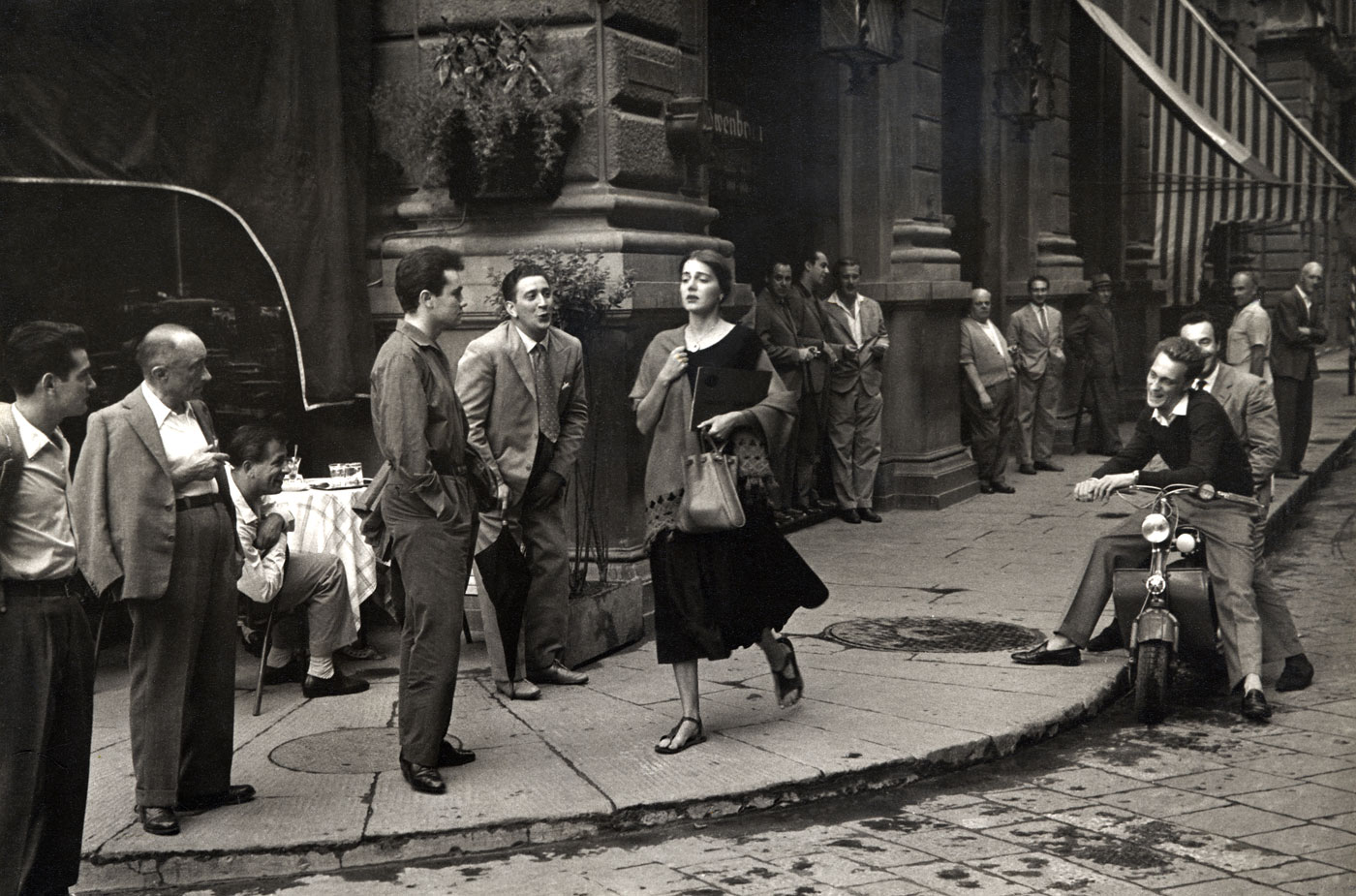
 

Métal and Filmic Montage

For Krull, metal was the most powerful metaphor for the modern world, and her book Métal includes many of the industrial forms she saw in Europe. It features both multiple exposures and straight images, and the entire volume is structured according to the principles of film montage. As noted earlier, Krull was a member of the Dutch avant-garde film collective Filmliga, which was cofounded by Joris Ivens, who in 1927 became her husband. Both of them published work in Arthur Lehning’s related avant-garde journal i10.

They saw screenings of Soviet avant-garde films by Vsevolod Pudovkin and Sergei Eisenstein, and Krull made a portrait of Eisenstein when he visited Paris in 1930. Eisenstein’s theories of montage were particularly important to the couple, and Krull’s Métal serves to demonstrate them. She actively adopted the Soviet filmmaker’s ideas of rupture and “visual counterpoint,” involving graphic, planar, volumetric, and spatial conflicts.26

The book is technically an album, with sixty-four numbered but unbound collotype reproductions that can ostensibly be rearranged at will. There are no captions and no identifying markers, and the images include both vertical and horizontal compositions. In a brief note beneath an introductory text by Florent Fels, Krull tells us that these photographs include a lifting bridge over the Meuse River in Rotterdam (also the subject of Ivens’s renowned avant-garde montage film, The Bridge [De Brug], from that same year); the cranes in the Amsterdam port; the Eiffel Tower; Marseille’s transporter bridge; and other industrial forms she found.27 But it would be difficult to decipher these subjects from the photographs themselves. Although there are eleven Eiffel Tower images in the book, for example, they are often so abstracted that the subject is unidentifiable, and none are on contiguous pages. …

Scholars have often read Métal as a purely formal experiment, but Krull used it as a commentary on contemporary life, producing the kind of montage that her friend Walter Benjamin championed, in which “the superimposed element disrupts the context in which it is inserted. … The discovery is accomplished by means of the interruption of sequences. Only interruption here has not the character of a stimulant but an energizing function.”29 The quality of interruption, according to Benjamin, differentiates truly revolutionary work from the mere aping of the modern world, an approach that he scornfully attributes to the work of Albert Renger-Patzsch.30 For Krull, interruption could occur in a multiple exposure, as in the aforementioned Métal image depicting overlapping views of bicycle parts. Or interruption can be found while turning a book’s pages, moving from a drive-belt detail to ominously large-scale cargo cranes, or from the Rotterdam Bridge over the Meuse to a detail of a centrifugal speed governor. Whether portraying a roller coaster, documenting the Eiffel Tower, or creating her book of industrial fragments, Krull engaged the decade’s cacophony and used provocative experimental techniques to capture its allure.

Kim Sichel. “Contortions of Technique: Germaine Krull’s Experimental Photography,” p. 7 on the MoMA website [Online] Cited 25/11/2018.

Kim Sichel. “Contortions of Technique: Germaine Krull’s Experimental Photography,” in Mitra Abbaspour, Lee Ann Daffner and Maria Morris Hambourg (eds). Object: Photo. Modern Photographs: The Thomas Walther Collection 1909-1949. An Online Project of The Museum of Modern Art. New York: The Museum of Modern Art, 2014.

27. Sergei Eisenstein, “A Dialectic Approach to Film Form” (1929), in Jay Leyda, ed., Film Form: Essays in Film Theory (New York: Harcourt, Brace, 1949), pp. 52-54
29. Walter Benjamin, “The Author as Producer” (1934), in Reflections: Essays, Aphorisms, Autobiographical Writings (New York: Schocken Books, 1986), pp. 234-235
30. Benjamin, “The Author as Producer,” p. 230


LIKE ART BLART ON FACEBOOK

Back to top

Exhibition: ‘Soulèvements / Uprisings’ at Jeu de Paume, Paris

Exhibition dates: 18th October, 2016 – 15th January, 2017

Curator: Georges Didi-Huberman, philosopher and art historian


Hiroji Kubota (Japanese, b. 1939) 'Black Panthers in Chicago, Illinois' 1969 from the exhibition 'Soulèvements / Uprisings' at Jeu de Paume, Paris, Oct 2016 - Jan 2017


Hiroji Kubota (Japanese, b. 1939)
Black Panthers in Chicago, Illinois
1969
Gelatin silver print
© Hiroji Kubota/Magnum Photos


soulèvement m ‎(plural soulèvements)

1/ the act of raising, the act of lifting up
2/ revolt, uprising


I believe this to be one of the most complex, original and important exhibitions of 2016. Conceptually, intellectually, ethically and artistically, the exhibition “Soulèvements / Uprisings” seems to stand head and shoulders above most others I posted on during 2016.

Through the profound curatorship of philosopher and art historian Georges Didi-Huberman (a man whose writing I admire), Soulèvements e/merges as a “trans-disciplinary exhibition on the theme of human gestures that raise up the world or rise up against it: collective or individual gestures, actions or passions, works or thoughts” actioned through five themes: Elements (Unleashed); Gestures (Intense); Words (Exclaimed); Conflicts (Flared up); and Desires (Indestructibles), evidenced across mediums: paintings, drawings, prints, video installations, photographs, fiction films, documentary images, writers’ manuscripts, tracts, posters, etc., without hierarchies. Unlike the earlier posting, Intersections: Photographs and Videos from the National Gallery of Art and the Corcoran Gallery of Art at the National Gallery of Art, Washington, where I noted that the self-contained themes of that exhibition seemed purely illusory, here the themes are active and engaging, fluid in meaning and representation (the choice of laterally aligned art works to the themes – dust breeding, waves, sea concertos, banners and capes, red tape, montages, posters etc…), which emphasis resistance, the raising up, the uprising as a desirous and joyful act, one that is performative (hence the wonderful video elements in the exhibition) and transgressive.

As one of the most important mediums of the twentieth century in terms of documenting, promoting, obscuring and forgetting “uprisings” – gestures of resistance and joy of any kind – photography is capable of concealing, denying and sustaining the social context in which we are living … obscuring the ethics and morals of dubious political positions; reinforcing or obscuring the issues behind revolution, rebellion, and revolt; or, through collective amnesia and inertia, through the millions of forgettable images produced each day, overwhelming the authenticity of living that leads to “uprisings” in the first place. Photographs, as people do, cross borders: they are transnational and multidisciplinary. They are global thought patterns that can, in skilled hands, document and sustain alternative ways of seeing the world through a “rising up” of feeling – the “soul” of soulèvement – the act of raising up, the act of lifting ones eyes and one’s spirit from the dire circumstances of oblivion to the hope of a future redemption.

Through photographs, we witness Insurgents killed during bloody week of the Commune (1871, below), where “the exposure of these bodies is transformed by the photographic act. The latter confers on the rebels a particular aura, passing thus from figures of guilty to those of martyrs.” The political act, although a failure in reality in this case, is sustained through time and space by the performance of the documentary image. Their monstration [the act of demonstrating; proof] – the insurgents act of demonstrating; the photograph as an act of demonstrating their death for judicial purposes; and also a certain monstration (proof) that these mostly young, skinny men died for a belief in a better world – is an evidentiary act of transubstantiation. Is the camera looking down on these bodies in cheap coffins from above, or are the coffins propped up against a wall? How do we feel about these people we do not know, who existed in past time now made present, without being that person who tucked a wreath into the hands of the man at bottom right, someone’s brother, father or son.

In “uprisings” (as the hands raise the camera to the face), there is also an acknowledgment of a certain despair at the death of an innocent. In Manuel Álvarez Bravo’s Striking worker, assassinated (1934, below) the young, handsome youth has been killed with a blow to the head. He lies prostrate on the ground, arm outstretched, hand curled, his body and clothes spattered with his own blood his eyes, open, staring at the now invisible sky. A flow of dried blood has discharged from his mouth and nose, coating and matting his thick long hair and running away in rivulets, soaking into the parched d/earth. Bits of dust and earth are still stuck to his arm through the viscosity of his blood. Earlier, he had dressed for the day in a white singlet, put on his trousers and fastened them with an embossed belt, then put on a crisp, stripped shirt and neatly rolled up the sleeves to his elbows. He might have had breakfast before heading of to a meeting outside where he worked. This day he died, protesting his rights – striking worker, assassinated! Assassinated – executed, eliminated, liquidated (to which the congealing blood attests) … slaughtered. For his right to strike, to protest, the conditions of his being. Any human “being”.

And, mortally, I comment on that one photograph, that one evidence of human beings transcending their own lives (knowing they were going to die) for the greater good – the anonymous photograph taken by members of the Sonderkommando of Auschwitz-Birkenau death camp that documents AS PROOF of the reality of the Final Solution: Women pushed towards the gas chamber of crematorium V of Birkenau (1944, below). The risks that these people took to capture this photograph speaks to the power of photography to transcend even the most barbaric of circumstances, to prove to the world what was happening in this place. As Georges Didi-Huberman affirms, “in the depths of this fundamental despair, the “solicitation to resist” has probably detached itself from the beings themselves, who have been promised to disappear, to fix themselves on signals to be emitted beyond the boundaries of the camp.” Among others, the image, this “eye of history”, is then invested with the only hope still possible: to make the hell of Auschwitz visible and therefore imaginable.”

In other words, the solicitation to resist is not singular or human, but collective and eternal, embodied and embedded in cultural thoughts and actions. Even though they knew they were going to die (almost none of the 2,000 prisoners placed in these Sonderkommando units survived to the camp’s liberation), because they have been “promised to disappear”, their spirit flowed beyond the boundaries of the camp into the ether of history, into the elemental upper air, the raising up of spirits: as an observation and representation of the difference between right and wrong. As the world enters a renewed period of right wing promulgation we must resist the rump of bigotry and oppression. Not just for ourselves but for all those that have passed before.

This is why this exhibition is so important. It speaks to the need for vigilance and protest against discrimination and dictatorship, against the persecution of the less fortunate in society. It also speaks to our desire as human beings that our actions and the actions of others be held to account. Intrinsically uprisings are all about desire, the desire to be stand up and be counted, to put your reputation (as Oscar Wilde did) or your life on the line for what you believe in. The courage of your convictions. As Edmund Burke said, “The only thing necessary for the triumph of evil is for good men to do nothing.”

Dr Marcus Bunyan

Addendum

Thank goodness for Google translate because otherwise I would have had no text to put under most of these images. This becomes problematic for weak images such as Dennis Adams’ Patriot (2002, below). Without text to support the image you would have absolutely no idea what this image is about… it’s just a plastic bag floating in the air against the azure sky.

The text states: “… considering the serenity that emanates from the photographs of this series, to imagine that they refer to a dramatic event: the attack of the World Trade Center. Located in Lower Manhattan, Dennis Adams’ studio is very close to the twin towers that were destroyed on September 11, 2001. However, rather than rushing to witness the catastrophe, Dennis Adams photographed for three months the roof of his building, the newspapers and the rubbish that fly away from the ruins.”

Who would have thunk it! From a plastic bag floating in the sky!

Such insight proffered months after the event by any plastic bag floating in the air. The image does not invite reverie and meditation because there is nothing to meditate on. It is an example of contemporary photography as graphic art THAT MEANS ABSOLUTELY NOTHING! If an image cannot stand on its own two feet, without the help of reams of text to support its substance, its contention, then no wonder there are millions of vacillating images in this world. Including contemporary art.

Outdamned spot! the stain of thy blood cannot be exacted from your feeble representation.


Word count: 1,451

Translations of soulèvement

noun

uprising – soulèvement, révolte
rising – soulèvement, hausse (rise), insurrection, montant, lever, élévation
insurrection – insurrection, soulèvement, émeute (riot), rébellion

uplift – soulèvement
upheaval – bouleversement, soulèvement, agitation, perturbation, séisme, renversement


Many thankx to Jeu de Paume for allowing me to publish the photographs in the posting. Please click on the photographs for a larger version of the image.


Uprisings at Jeu de Paume – Concorde, Paris / Teaser

Uprisings is a trans-disciplinary exhibition on the theme of human gestures that raise up the world or rise up against it: collective or individual gestures, actions or passions, works or thoughts. They are gestures which say no to a state of history that is considered too “heavy” and that therefore needs to be “lifted” or even sent packing. They are also gestures that say yes to something else: to a desired better world, an imagined or adumbrated world, a world that could be inhabited and conceived differently.


Foreword

“For almost a decade, the Jeu de Paume’s exhibition program has been conceived with the conviction that twenty-first century museums and cultural institutions cannot be detached from the social and political challenges of the society of which they are part. To us, this approach is a matter of simple common sense.

The program it has shaped does not monitor market trends or seek complacent legitimacy within the field of contemporary art. Rather, we have chosen to work with artists whose poetic and political concerns are attuned to the need to critically explore the models of governance and practices of power that mold much of our perceptual and emotional experience, and thus, the social and political world we live in.

Because the Jeu de Paume is a centre for images, we are aware of the urgent necessity – in line with our societal responsibilities – to revise the analysis of the historical conditions in which photography and the moving image developed in modernity and, subsequently, in postmodernity, with all its alternatives, provocations, and challenges.

Thankfully, the history of images and our ways of seeing and understanding the world through them is neither linear nor unidirectional. These are the sources of our fascination with images that don’t tell everything they show and with images affected by the vicissitudes of the human condition.

Photography, and images in general, represent not only reality, but things that the human eye cannot see; like us, photography is capable of concealing, denying and sustaining. It is only waiting for someone to listen to its joys and its sorrows.

The Jeu de Paume’s programming sites its oblique look at history and contemporaneity in this oscillation between the visible and the invisible in the life of images, creating a space for encounter and the clashing of ideas, emotions, and knowledge, accepting that the coexistence of conflict and antagonism are an essential part of community building.

For these reasons, and from this position, in the superb proposal by the philosopher and art historian Georges Didi-Huberman to form an exhibition from his research on the theme of “uprisings,” we found the ideal intellectual, artistic, and museological challenge.

While the notion of revolution, rebellion, and revolt isn’t alien in contemporary society’s vocabulary, the object of its action is replete with collective amnesia and inertia. That is why analysing the representations of “uprisings” – from the etchings Goya, to contemporary installations, paintings photographs, documents, videos, and films – demonstrates an unequivocal relevance to the social context in which we are living in 2016. […]

Marta Gili, “Foreword,” in Uprisings, catalogue of the exhibition, p. 7-10.


Enrique Ramirez (Chile, b. 1979)
Cruzar un muro [Franchir un mur] (Crossing a wall)
2013
Vidéo HD couleur, son, 5’15”
Courtesy de l’artiste et galerie Michel Rein, Paris/Brussels


A series of images of people in a waiting room is in an unusual place, perhaps in our imagination, or perhaps anywhere. The short by Enrique Ramirez addresses article number 13 of the Universal Declaration of Human Rights: “Everyone has the right to leave any country, including his own, and to return to his country”.


Gilles Caron (French, 1939-1970) 'Anticatholic protests, Londonderry, Northern Ireland' August 1969 from the exhibition 'Soulèvements / Uprisings' at Jeu de Paume, Paris, Oct 2016 - Jan 2017


Gilles Caron (French, 1939-1970)
Manifestations anticatholiques à Londonderry
Anticatholic protests, Londonderry, Northern Ireland
August 1969
© Gilles Caron / Fondation Gilles Caron / Gamma Rapho


Known for his wartime photo-reports, fascinated by liberating acts and the figure of the insurgent, photographer Gilles Caron carried throughout the 1960s an interest in the social conflicts that marked his time. At first he is led to cover is a peasant revolt which takes place in Redon in 1967. Anxious to produce an image which appears to him as a formal translation of the anger of these peasants, he seizes the gesture of a demonstrator sending a projectile in the direction of the forces of order. Photogenic, this suspended gesture gives the insurrections a choreographic dimension and testifies to the violence of the social demands that animate the demonstrators. The “figure of the pitcher” then reappears on the occasion of the events of May 1968 and then of the conflicts that took place in Northern Ireland in 1969. This archetype is part of the tradition of the representation of David against Goliath: the symbol of the power carried by the faith of one who is thought weak in the face of brute force. If there is no question of faith in the images of Caron, it is nonetheless an irrepressible form of desire that animates those bodies which revolt: no matter the imbalance of forces, the insurgents are carried by a feeling of invulnerability and of power in the face of the forces of order objectively much more armed.

Text from the Jeu de Paume website translated by Google translate


Man Ray (American, Philadelphia, Pennsylvania 1890-1976 Paris) 'Dust Breeding' 1920


Man Ray (American, Philadelphia, Pennsylvania 1890-1976 Paris)
Dust Breeding (Duchamp’s Large Glass with Dust Motes)
1920
Gelatin silver print
23.9 x 30.4cm (9 7/16 x 12 in.)
© 2016 Artists Rights Society (ARS), New York


One of Duchamp’s close friends and a member of the New York Dada scene, the American photographer and painter Man Ray (1890-1976) was also one of Duchamp’s collaborators. His photograph Dust Breeding (Duchamp’s Large Glass with Dust Motes) from 1920 is a document of The Large Glass after it had collected a year’s worth of dust while Duchamp was in New York. The photograph was taken with a two-hour-long exposure that beautifully captures the complex texture and diversity of materials that lay atop the glass surface. Dust Breeding marks a pivotal phase in the development of Duchamp’s masterpiece. After the photograph was taken, Duchamp wiped The Large Glass almost entirely clean, leaving a section of the cones covered with dust, which he permanently affixed to the glass plate with a diluted cement.

Text from The Met website


Introduction

by Georges Didi-Huberman, curator of the exhibition

What makes us rise up? It is forces: mental, physical, and social forces. Through these forces we transform immobility into movement, burden into energy, submission into revolt, renunciation into expansive joy. Uprisings occur as gestures: arms rise up, hearts beat more strongly, bodies unfold, mouths are unbound. Uprisings are never without thoughts, which often become sentences: we think, express ourselves, discuss, sing, scribble a message, create a poster, distribute a tract, or write a work of resistance.

It is also forms: forms through which all of this will be able to appear and become visible in the public space. Images, therefore; images to which this exhibition is devoted. Images of all times, from Goya to today, and of all kinds: paintings, drawings, sculptures, films, photographs, videos, installations, documents, etc. They interact in dialogue beyond the differences of their times. They are presented according to a narrative in which there will appear, in succession, unleashed elements, when the energy of the refusal makes an entire space rise up; intense gestures, when bodies can say “No!”; exclaimed words, when barricades are erected and when violence becomes inevitable; and indestructible desires, when the power of uprisings manages to survive beyond their repression or their disappearance.

In any case, whenever a wall is erected, there will always be “people arisen” to “jump the wall”, that is, to cross over borders. If only by imagining. As though inventing images contributed – a little here, powerfully there – to reinventing our political hopes.

The exhibition

“Soulèvements / Uprisings” is a trans-disciplinary exhibition on the theme of human gestures that raise up the world or rise up against it: collective or individual gestures, actions or passions, works or thoughts.

They are gestures which say no to a state of history that is considered too “heavy” and that therefore needs to be “lifted” or even sent packing. They are also gestures that say yes to something else: to a desired better world, an imagined or adumbrated world, a world that could be inhabited and conceived differently.

These figures of uprising and up-raising will range freely across mediums: paintings, drawings, prints, video installations, photographs, fiction films, documentary images, writers’ manuscripts, tracts, posters, etc., without hierarchies.

The exhibition sequence will follow a sensitive, intuitive path along which the gaze can focus on exemplary “cases” treated with a precision that prevents any kind of generalisation. We will be mindful not to conclude, not to dogmatically foreclose anything. The sequence will comprise five main parts:

ELEMENTS (UNLEASHED)
GESTURES (INTENSE)
WORDS (EXCLAIMED)
CONFLICTS (FLARED UP)
DESIRES (INDESTRUCTIBLES)


“All the uprisings failed, but taken together, they succeeded.”

“They rise, but they do not simply stand up – they rise up.”

Judith Butler, “Uprisings” catalogue of the exhibition Uprisings


ELEMENTS (UNLEASHED)

The elements become unleashed, time falls out of joint. – And if the imagination made mountains rise up?

To rise up, as when we say “a storm is rising.” To reverse the weight that nailed us to the ground. So it is the laws of the atmosphere itself that will be contradicted. Surfaces – sheets, draperies, flags – fly in the wind. Lights that explode into fireworks. Dust that rises up from nooks and crannies. Time that falls out of joint. The world upside down. From Victor Hugo to Eisenstein and beyond, uprisings are often compared to hurricanes or to great, surging waves. Because then the elements (of history) become unleashed.

We rise up first of all by exercising our imagination, albeit through our “caprichos” (whims or fantasies) or “disparates” (follies) as Goya said. The imagination makes mountains rise up. And when we rise up from a real “disaster,” it means that we meet what oppresses us, and those who seek to make it impossible for us to move, with the resistance of forces that are desires and imaginations first of all, that is to say psychical forces of unleashing and of reopening possibilities.

Dennis Adams, Francis Alÿs, Léon Cogniet, Marcel Duchamp, Francisco de Goya, William Hogarth, Victor Hugo, Leandro Katz, Eustachy Kossakowski, Man Ray, Jasmina Metwaly, Henri Michaux, Tina Modotti, Robert Morris, Saburô Murakami, Hélio Oiticica, Roman Signer, Tsubasa Kato, Jean Veber, French anonymous.


Francisco de Goya (Spanish, 1746-1828) 'Los Caprichos' 1799


Francisco de Goya (Spanish, 1746-1828)
Los Caprichos
1799
Eau-forte, aquatinte et burin, 2e édition de 1855.
Collection Sylvie et Georges Helft
Photo: Jean de Calan


Between 1797 and 1799, Francisco de Goya composed a collection of engravings, Los Caprichos [Les Caprices], in which he portrayed in a satirical way the behaviour of his Spanish fellow citizens. “Y aun no se van!” (“And yet they do not go away!”) is the 59th engraving of a set of 80. Each time the title constitutes an ironic commentary on the image. This one refers to the group of people represented on the engraving, with the bodies emaciated, folded on themselves, praying, looking scared. One of them tries to prevent the tombstone from falling on them, but all seem helpless, destitute of strength, unable to resist this final ordeal. The use of chiaroscuro, which produces a dramatic effect, as well as the thick slice of the slab that forms the diagonal of the composition, accentuates the desperate character of the scene. Finally, the massive aspect and the weight of the stone, opposed to fragile and denuded bodies, complete their inexorable destiny. This engraving thus seems to illustrate the absolute dejection felt by individuals under certain circumstances. For Georges Didi-Huberman, degradation is one of the conditions conducive to the uprising. The imagination and the critical eye of the artist – a fervent supporter of the Enlightenment – can constitute a force of resistance and struggle for the oppressed.

Text from the Jeu de Paume website translated by Google translate


Léon Cogniet (French, 1794-1880) 'Les Drapeaux' 1830


Léon Cogniet (French, 1794-1880)
Les Drapeaux (The flags)
1830
Huile sur toile
Musée des Beaux-Arts, Orléans
Photo: François Lauginie


The Revolution of 1830 led to the overthrow of the government of King Charles X. After the publication of several ordinances, including a restriction on freedom of the press, this episode, which failed to restore the Republic, The tricolour flag, abandoned by the Restoration for the benefit of the white flag, symbol of royalty. This is evidenced by Leon Cogniet’s study of a painting that will never see the light of day.

These revolutionary days, also called the Three Glorious Days, are symbolically represented by three flags caught in the turmoil. The first, white, overhung by a menacing sky, is hoisted on a mast adorned with a fleur-de-lis. The second tears apart and reveals the blue sky as a promise of freedom. Finally, the third, torn and covered with blood, allows the reconstruction of the tricolour emblem created during the Revolution of 1789. Thus the blood poured during these days allows the people to reconnect with the revolutionary ideals. The unleashing of elements, a metaphor for the tempestuous popular revolt, accompanies the transformation of the banished flag of royalty to the national flag. This sketch is repeated and widely circulated at the time, accompanied by an anonymous poem: “To the darkness finally succeeds the clarity / And pale shreds of the flag of the slaves / And of the azure sky and the blood of our brave / The brilliant standard of our freedom is born.”

Text from the Jeu de Paume website translated by Google translate


Victor Hugo (French, 1802-1885) 'La vague ou Ma destinée (The wave or My destiny)' 1857


Victor Hugo (French, 1802-1885)
La vague ou Ma destinée (The wave or My destiny)
1857
Plume et lavis d’encre brune, gouache, papier vélin
Maison de Victor Hugo
© Maisons de Victor Hugo / Roger-Viollet


This drawing is the witness of Victor Hugo’s fascination with the sea. His pen marries the movements of the ocean, which then becomes the symbol of his exile: “It is the image of my current destiny stranded in abandonment and solitude,” he says. On the drawing he calls ‘My destiny’, it is not known whether the ship, alone in front of the monster of the sea, enveloped by its foam, is carried or precipitated by the immense wave. It is a figure of his destiny, but also of the human condition.


Man Ray (American, 1890-1976) "Sculpture mouvante" ou "La France" ("Moving Sculpture" or "France") 1920


Man Ray (American, 1890-1976)
“Sculpture mouvante” ou “La France” (“Moving Sculpture” or “La France”)
1920
Musée national d’Art moderne, Centre Pompidou, Paris, dation en 1994
Negative gelatin-silver on glass plate
9 x 12cm
Photo: © Centre Pompidou, MNAM-CCI, Dist. RMN-Grand Palais / image Centre Pompidou, MNAM-CCI
Image obtenue par inversion des valeurs du scan du négatif
© Man Ray Trust / ADAGP, Paris, 2016


An active member of the Dada group in New York with Marcel Duchamp, Man Ray joined the surrealists in Paris in 1921. He was interested in questioning the conventions of the world of art and considered photography as a means of expression. It explores all potentialities: experiments, diversions, portraits, advertising applications … The fixation of an element in movement constitutes one of the specificities of photography that fascinates the surrealists because the object thus grasped by the apparatus appears in an unexpected light: the linen which dries, inflated under the effect of the wind, becomes a moving sculpture as the title of the work suggests. This way the title can guide the reception of the passionate photography of Man Ray. This image is also published on the cover of the sixth issue of La Révolution Surréaliste in 1926, accompanied by the legend “La France”. This enigmatic title, rather than helping to understand photography, multiplies the possible interpretations and attests to Man Ray’s desire to subvert the use and meaning of the images. Thus this wind which “transforms” linen into sculpture, appears as a metaphor for the surrealist project, which makes the photographic medium the operator of a true conversion of the gaze. By this image of the “uprising”, Man Ray thus gives a visual form to the aesthetic and political revolution that the members of the Surrealist group called for.

Text from the Jeu de Paume website translated by Google translate


Eustachy Kossakowski (Polish, 1925-2001) 'Le "Panoramic Sea Happening - Sea Concerto, Osieki" de Tadeusz Kantor (extrait d'une série)' 1967


Eustachy Kossakowski (Polish, 1925-2001)
Le “Panoramic Sea Happening – Sea Concerto, Osieki” de Tadeusz Kantor (extrait d’une série)
The “Panoramic Sea Happening – Sea Concerto, Osieki” by Tadeusz Kantor (from a series)
1967
Inkjet pigment print
Owner of negatives and slides: Musée d’Art Moderne de Varsovie
© Collection Anka Ptaszkowska


In 1967 Tadeusz Kantor with a group of other Polish avant-garde artists delivered Panoramic Sea Happening. They were working in frames of artistic plain-air in Osieki (near Koszalin) organised there every year since 1963. This complex action was in a way a preface to Kantor’s theatre. But it was also parallel to actions of Western artists, which led to the birth of performance art. In this important moment Kantor formulated a category of impossible. It derived from the night dream but as this one was compromised Kantor wanted to use a new word: ‘impossible’. At the same time the very essence of the happening, as he was saying, was to make impossible real. How did he do it? By reenactment, repetition and documentation.

Dorota Sosnowska. From the abstract for “Impossible is Real: Tadeusz Kantor at the seashore” 2016


Hélio Oiticica (Brazilian, 1937-1980) and Leandro Katz (Argentinian, b. 1938) 'Parangolé - Encuentros de Pamplona' 1972


Hélio Oiticica (Brazilian, 1937-1980) and Leandro Katz (Argentinian, b. 1938)
Parangolé – Encuentros de Pamplona (Parangolé – Encounters of Pamplona)
1972
Impression chromogène (sur papier et carton)
Museo Nacional Centro de Arte Reina Sofía, Madrid
Photo: Archives Museo Nacional Centro de Arte Reina Sofía
© Projeto Hélio Oiticica / © Leandro Katz


“At the time when he was producing his first Penetrables, Oticica started to design Parangolés, banners and capes printed in a great variety of colors and designs, and occasionally inscribed with mottoes, advertisement lines, or found phrases. Oiticica premiered his (anti)fashion statements in 1965 in what he called a Parangolé Coletivo, in which he distributed his creations among friends and members of the Mangueira samba school – he had joined in 1964 – who paraded wearing them while dancing to samba… He would continue making Parangolés and staging Parangolé events throughout the rest of his life, at times through friends who acted as intermediaries, as in the Pamplona encounters of 1972 in Spain when Argentinean artist Leandro Katz ran a Parangolé event on Oiticica’s behalf.”

Juan A. Suárez. “Jack Smith, Hélio Oiticica, Tropicalism,” in Criticism Vol. 56, No. 2, Jack Smith: Beyond the Rented World (Spring 2014) pp. 310-311.


Henri Michaux (French born Belgium, 1899-1984) 'Untitled' 1975


Henri Michaux (French born Belgium, 1899-1984)
Untitled
1975
Acrylic on paper
Private collection
© ADAGP, Paris, 2016
Photo: Jean-Louis Losi


Dennis Adams (American, b. 1948) 'Patriot' 2002


Dennis Adams (American, b. 1948)
Patriot
2002
From the series Airborne
C-Print contrecollé sur aluminium.
Prêt du Centre national des Arts Plastiques, Paris, inv. FNAC 03.241.
© Dennis Adams / CNAP / Courtesy Galerie Gabrielle Maubrie


A plastic bag stands out on the azure sky and floats in the air. Difficult, considering the serenity that emanates from the photographs of this series, to imagine that they refer to a dramatic event: the attack of the World Trade Center. Located in Lower Manhattan, Dennis Adams’ studio is very close to the twin towers that were destroyed on September 11, 2001. However, rather than rushing to witness the catastrophe, Dennis Adams photographed for three months the roof of his building, the newspapers and the rubbish that fly away from the ruins. These images, although directly related to this highly publicised event have nothing of the “shock” images that then invade the press.

They carry neither sensationalism nor exaggerated patriotism, but rather invite reverie and meditation. By adopting this attitude to the antipodes of the media and political enthusiasm that follows September 11, Dennis Adams questions the relationship to temporality in the face of this type of event. He denounces the “greed of politicians and military men who have a definite opinion on moments of history”* and questions the imperative of hyper-reactivity not conducive to the analysis and the constitution of a historical consciousness.

Text from the Jeu de Paume website translated by Google translate

*Dennis Adams quoted by Michel Guerrin, “In Madrid, photographers face history”, in Le Monde, June 15, 2004, p. 30.


Roman Signer (Swiss, b. 1938) 'Rotes Band / Red Tape' 2005


Roman Signer (Swiss, b. 1938)
Rotes Band / Red Tape
2005
Vidéo couleur, son, 2’07′”
Caméra: Aleksandra Signer
Courtesy de l’artiste et d’Art: Concept, Paris


Tsubasa Kato (Japanese, b. 1984) 'Break it before it’s broken' 2015

Tsubasa Kato (Japanese, b. 1984) 'Break it before it’s broken' 2015


Tsubasa Kato (Japanese, b. 1984)
Break it before it’s broken
2015
Video: colour, sound, 4:49 min
© Tsubasa Kato / caméraman: Taro Aoishi


On March 11, 2011, a tsunami struck the Japanese coast and caused a nuclear accident at the Fukushima Daiichi plant. The disastrous environmental and social consequences are still impossible to evaluate and the inhabitants, partly neglected by the public authorities, have to face an unprecedented crisis. Many of them have been displaced and most of their income from fishing is reduced to nothing because of the contamination of the ocean. Tsubasa Kato then decides to get involved with them by accompanying them daily in this difficult period. In addition to this support, he decided on November 3rd (03/11) – the day of the celebration of culture in Japan (Bunka no Hi) and date whose numerical writing is the inverse of that of the tsunami (11/03) – to achieve a strongly symbolic performance.

Entitled Break it before it’s broken, the video of this action shows residents of the region invited to overthrow the structure of a house washed away by the tsunami and destroy it definitively. Becoming actors of destruction and no longer passive observers, participants can then transform the event undergone into action. This festival of culture, for Tsubasa Kato, is an opportunity to initiate a unifying artistic moment that testifies to the strength of collective movements and the mobilisation necessary to reverse the course of events. He will then reiterate this performance in other parts of the world, which are often subject to delicate social situations.

Text from the Jeu de Paume website translated by Google translate


Mari Kourkouta (Greek, b. 1982) 'Remontages' 2016

Mari Kourkouta (Greek, b. 1982) 'Remontages' 2016


Mari Kourkouta (Greek, b. 1982)
Remontages
2016
16 mm sur vidéo (en boucle), noir et blanc, silencieux, 4’ 10.
© Maria Kourkouta. Production : Jeu de Paume, Paris


“Body, mind and soul are uplifted by the divine energy of desire”


Marie-José Mondzain, “To those who sail the sea…” catalogue of the exhibition Uprisings


“To make the world rise up we need gestures, desires, and depths.”


Georges Didi-Huberman, “By the desires (Fragments on What Makes Us Rise Up)” catalogue of the exhibition Uprisings


GESTURES (INTENSE)

From burden to uprising. – With hammer blows. – Arms rise up. – The pasión. – When bodies say no. – Mouths for exclaiming.

Rising up is a gesture. Before even attempting to carry out a voluntary and shared “action,” we rise up with a simple gesture that suddenly overturns the burden that submission had, until then, placed on us (be it through cowardice, cynicism, or despair). To rise up means to throw off the burden weighing down on our shoulders, keeping us from moving. It is to break a certain present – be it with hammer blows as Friedrich Nietzsche and Antonin Artaud sought to do – and to raise your arms towards the future that is opening up. It is a sign of hope and of resistance.

It is a gesture and it is an emotion. The Spanish Republicans – whose visual culture was shaped by Goya and Picasso, but also by all the photographers on the field who collected, the gestures of freed prisoners, of voluntary combatants, of children and of the famous La Pasionaria, Dolores Ibárruri – fully assumed this. In the gesture of rising up, each body protests with all of its limbs, each mouth opens and exclaims its no-refusal and its yes-desire.

Paulo Abreu, Art & Language, Antonin Artaud, Taysir Batniji, Joseph Beuys, Désiré-Magloire Bourneville, Gilles Caron, Claude Cattelain, Agustí Centelles, Chim, Pascal Convert, Gustave Courbet, Élie Faure, Michel Foucault, Leonard Freed, Gisèle Freund, Marcel Gautherot, Agnès Geoffray, Jochen Gerz, Jack Goldstein, Käthe Kollwitz, Alberto Korda, Germaine Krull, Hiroji Kubota, Annette Messager, Lisette Model, Tina Modotti, Friedric Nietzsche, Willy Römer, Willy Ronis, Graciela Sacco, Lorna Simpson, Wolf Vostell, anonymes catalans, français, italiens.


Gustave Courbet (French, 1819-1877) 'Home en blouse debout sur une barricade (projet de frontispice pour Le Salut public)' 1848


Gustave Courbet (French, 1819-1877)
Home en blouse debout sur une barricade (projet de frontispice pour Le Salut public)
Man in a smock standing on a barricade (frontispiece for Le Salut public project)

1848
Fusain sur papier
Musée Carnavalet – Histoire de Paris
© Musée Carnavalet / Roger-Viollet


Germaine Krull (European, 1897-1985) 'The Dancer Jo Mihaly, danse "Révolution"' 1925


Germaine Krull (European, 1897-1985)
The Dancer Jo Mihaly, danse “Révolution”
1925
Gelatin silver print
Museum Folkwang, Essen
© Estate Germaine Krull, Folkwang Museum, Essen


Pioneer and adventurous, Germaine Krull is one of those women photographers of the inter-war period who contributed largely to the emergence of a nervous and dynamic photographic approach, in step with a modern world in constant acceleration. In photographing Jo Mihaly, she portrays a dancer who shares this avant-garde sensibility. Indeed, a pupil of Mary Wigman, this singular figure of dance participates in the German expressionist movement and contributes to the development of a modern choreographic art: the unconstrained body emancipates itself from the conventions of classical dance, the gesture of the dancer is released and regains its vitality. The movement then becomes the result of the personal expression of the dancer whose photographer has the burden of seizing the fulgurance [dazzling speed]. Stretched arm, smoky eyes and feverish eyes, Jo Mihaly – who has always claimed her commitment to the Communist Party – realises a gesture that resonates with her time but also with the youth of Germaine Krull, marked by its proximity to the Republic of the Soviets of Berlin in 1919. Thus, it is as much for these artists to participate in an aesthetic revolution in their respective artistic fields as to echo the social and political uprisings that have taken place throughout Europe since the the advent of the industrial era.

Text from the Jeu de Paume website translated by Google translate


Alberto Korda (Cuban, 1928-2001) 'Don Quixote of the streetlamp, Plaza de la Revolución, Havana, Cuba' 1959


Alberto Korda (Cuban, 1928-2001)
El Quijote de la Farola, Plaza de la Revolución, La Habana, Cuba
Don Quixote of the streetlamp, Plaza de la Revolución, Havana, Cuba

1959
Vintage gelatin silver print on baryta paper
Leticia et Stanislas Poniatowski collection
© ADAGP, Paris, 2016


Kitai Kazuo (Japanese, b. 1944) 'Resistance' (book) 1965


Kitai Kazuo (Japanese, b. 1944)
Resistance (book)
1965
BAL
© Kitai Kazuo/ Collection privée


With a manifesto both aesthetic and philosophical, the Japanese publication Provoke proposed a radical break in only three issues, published in 1968 and 1969. Provoke (photographers Takuma Nakahira, Yutaka Takanashi and Daidō Moriyama, critic Kōji Taki and poet Takahiko Okada) proposes a new visual language – rough, grainy and blurred – that captures the complexity of the experience and the paradoxes of modernity suffered by all.


Wolf Vostell (German, 1932-1998) 'Dutschke' 1968


Wolf Vostell (German, 1932-1998)
Dutschke
1968
Polymer painting on canvas
Haus der Geschichte der Bundensrepublik Deutschland, Bonn
© ADAGP, Paris, 2016


Art and Language (collective created late 1960s) 'Shouting Men' 1975 (details)

Art and Language (collective created late 1960s) 'Shouting Men' 1975 (details)

Art and Language (collective created late 1960s) 'Shouting Men' 1975 (details)


Art and Language (collective created late 1960s)
Shouting Men (details)
1975
Screenprint and felt pen on paper
Museu d’Art Contemporani de Barcelona collection
Photo: Àngela Gallego
© Art and Language


Patrick Zachmann (French, b. 1955) 'The army blocked by the crowd at the gates of the capital' 1989


Patrick Zachmann (French, b. 1955)
L’armée bloquée par la foule aux portes de la capitale
The army blocked by the crowd at the gates of the capital
1989
Gelatin-silver bromide print on baryta paper
50.4 x 60.9cm
Musée du quai Branly – Jacques Chirac
© Patrick Zachmann


From the early 1980s, Patrick Zachmann carried out an in-depth investigation into the Chinese diaspora. Present in China at the time of the events in Tiananmen Square, he photographed particularly symbolic episodes. This picture, taken on 20 May, is located just after the beginning of the hunger strikes, and before the massive repression known as the Tiananmen massacre. The nocturnal atmosphere and the gestures of the orator confer on this “moment before” a dramatic theatricality.


Annette Messager (French, b. 1943) '47 Piques (47 Pikes)' 1992


Annette Messager (French, b. 1943)
47 Piques (47 Pikes)
1992
Soft toys, coloured pencils on paper, various materials, and 47 metal pikes
270 x 570 x 70cm
Annette Messager and Marin Karmitz collection/Marian Goodman Gallery, Paris
© ADAGP, Paris, 2016


Graciela Sacco (Argentinian, 1956-2017) from the "Bocanada" (A breath of fresh air) series 1992-1993


Graciela Sacco (Argentinian, 1956-2017)
from the “Bocanada” (A breath of fresh air) series
1992-1993
Posters in the streets of Rosario, Argentina
© Graciela Sacco


This series of photographs of open mouths was immediately considered by Graciela Sacco as being intended to circulate in the public space on various supports (stamps, spoons, stickers, posters …). It is however in the form of a wild display that the artist has most often given to see this set. The first of these displays took place in 1993, during a strike, in public school canteens in the town of Rosario. It was then a question of questioning the impossibility of the municipal staff to make their claims heard and the consequences of this movement knowing that for the majority of the children, this meal was the only one of the day. Graciela Sacco then continues to post these posters in cities like Buenos Aires, São Paulo or New York, often during election campaigns or close to advertising images. Are they hungry mouths? Cries of claims? Of suffering? Or even breathing as the title suggests? Be that as it may, this repeated but inaudible message tends to become oppressive. By exposing them in public space, the artist seems to give visibility to those anonymous calls that we do not want or can not hear.

Text from the Jeu de Paume website translated by Google translate


WORDS (EXCLAIMED)

Poetic insurrections. – The message of the butterflies. – Newspapers. – Making a book of resistance. – The walls speak up.

Arms have been raised, mouths have exclaimed. Now, what are needed are words, sentences to say, sing, think, discuss, print, transmit. That is why poets place themselves “at the forefront” of the action itself, as Rimbaud said at the time of the Paris Commune. Upstream the Romantics, downstream the Dadaists, Surrealists, Lettrists, Situationists, etc., all undertook poetic insurrections.

“Poetic” does not mean “far from history,” quite the contrary. There is a poetry of tracts, from the protest leaflet written by Georg Büchner in 1834 to the digital resistance of today, through René Char in 1943 and the “cine-tracts,” from 1968. There is a poetry particular to the use of newspapers and social networks. There is a particular intelligence – attentive to the form – inherent in the books of resistance or of uprising. Until the walls themselves begin to speak and occupy the public space, the sensible space in its entirety.

Antonin Artaud, Ever Astudillo, Ismaïl Bahri, Artur Barrio, Georges Bataille, Charles Baudelaire, Joseph Beuys, Enrique Bostelmann, André Breton, Marcel Broodthaers, Cornelius Castoriadis, Champfleury, Dada, Armand Dayot, Guy Debord, Carl Einstein, Jean-Luc Fromanger, Federico García Lorca, Jean-Luc Godard, Groupe Dziga Vertov, Raymond Hains, Raoul Hausmann, John Heartfield, Bernard Heidsieck, Victor Hugo, Asger Jorn, Jérôme Lindon, Rosa Luxemburg, Man Ray, Germán Marín, Chris Marker, Cildo Meireles, Henri Michaux, Tina Modotti, Pier Paolo Pasolini, Pablo Picasso, Sigmar Polke, Jacques Rancière, Alain Resnais, Armando Salgado, Álvaro Sarmiento, Philippe Soupault, Félix Vallotton, Gil Joseph Wolman, German, Chilean, Cuban, Spanish, French, Italian, Mexican, Russian unknowns.


Raoul Hausman (Austrian, 1886-1971) 'Portrait of Herwarth Walden at Bonset' 1921


Raoul Hausman (Austrian, 1886-1971)
Portrait of Herwarth Walden at Bonset
1921
Postcard sent by Raoul Hausmann to Theo van Doesburg
Archives Theo and Nelly van Doesburg
Photo: collection RKD – Netherlands Institute for Art History
© ADAGP, Paris, 2016


Herwarth Walden (German, 1879-1941)

Herwarth Walden (actual name Georg Lewin, 16 September 1879 in Berlin – 31 October 1941 in Saratov, Russia) was a German Expressionist artist and art expert in many disciplines. He is broadly acknowledged as one of the most important discoverers and promoters of German avant-garde art in the early twentieth century (Expressionism, Futurism, Dadaism, Magic Realism).

From 1901 to 1911 Walden was married to Else Lasker-Schüler, the leading female representative of German Expressionist poetry. She invented for him the pseudonym “Herwarth Walden”, inspired by Henry Thoreau’s novel Walden, or Life in the Woods (1854). In 1912 he married Swedish painter Nell Roslund. In 1919 he became a member of the Communist Party. In 1924 he was divorced from his second wife.

With the economic depression of the 1930s and the subsequent rise of National Socialism, his activities were compromised. In 1932 he married again and left Germany shortly later because of the threat of the Gestapo. He went to Moscow, where he worked as a teacher and publisher. His sympathies for the avant-garde soon aroused the suspicion of the Stalinist Soviet government, and he had to repeatedly defend against the equation of avant-garde and fascism. Walden died in October 1941 in a Soviet prison in Saratov.

Text from the Wikipedia website


John Heartfield (German, 1891-1968) 'Use photography as a weapon !' 1929


John Heartfield (German, 1891-1968)
Benütze Foto als Waffe! 
Utilise la photo comme une arme !
Use photography as a weapon !

AIZ, année VIII, no 37, Berlin, 1929, p. 17
Revue
37.8 x 27.5cm
Akademie der Künste, Berlin, Kunstsammlung, Inv.-Nr.: JH 2265
© The Heartfield Community of Heirs/ADAGP, Paris, 2016


In the late 1910s, members of the Dada movement practiced the first collages using images from cheap publications. The iconoclastic dimension of these heterogeneous juxtapositions allows them to open up the critical potential of images. Then, in the 1920s in Berlin, the Dada movement became politicised and the idea that the affiliated artists of the Communist Party were to serve the proletarian cause was strengthened. Few artists felt as committed to this mission as John Heartfield (his real name was Helmut Herzfeld). From the end of the 1920s, he developed a practice of satirical photomontage for the press, and in particular of the Communist journal AIZ (Arbeiter Illustrierte Zeitung) for which he worked until 1938. He then produced 237 photomontages denouncing Fascist ideology, the financing of the Nazi party by the industrialists and the extreme violence of the national socialist program. Invited to the Film und Foto exhibition in 1929 in Stuttgart, he had inscribed above the section devoted to him the slogan found in AIZ the same year: “Use photography as a weapon!”. Through the massive dissemination of his photomontages, he wants to mobilise public opinion and incite him to rise up against the rise of the fascisms that threaten Europe.

Text from the Jeu de Paume website translated by Google translate


Heartfield lived in Berlin until April 1933, when the National Socialists took power. On Good Friday, the SS broke into his apartment, and the 5’2″ Heartfield escaped by jumping from his balcony and hiding in a trash bin. He left Germany by walking over the Sudeten Mountains to Czechoslovakia. In Czechoslovakia, John Heartfield rose to number-five on the Gestapo’s most-wanted list.


Federico García Lorca (Spanish, 1898-1936) 'García Lorca Mierda (Shit)' 1934


Federico García Lorca (Spanish, 1898-1936)
Mierda (Shit)
1934
Calligram, Indian ink
Federico García Lorca foundation, Madrid
© Federico García Lorca foundation, Madrid / VEGAP


Réseau Buckmaster (Buckmaster Network) 'Tract clandestin (Clandestine Tract)' 1942

Réseau Buckmaster (Buckmaster Network) 'Tract clandestin (Clandestine Tract)' 1942


Réseau Buckmaster (Buckmaster Network)
Tract clandestin (Clandestine Tract)
1942
Papier
17 x 25cm
Collection particulière
Courtesy des éditions de L’échappée


This satirical tract was realised and distributed in 1942 by the network of the Resistance Buckmaster, during the German occupation in France. The flying leaflet, given from hand to hand or slipped into a mailbox, the leaflet or the butterfly (smaller) is at the same time the expression of a refusal – that of yielding – and of an imperious desire to act and call for a start. Intended to mark the minds and to attract adhesion, they can be formed of short and poetic texts, slogans or images. Open, it presents a caricature drawing of four pigs and, in the centre, an inscription in capital letters which apostrophes the reader and invites him to look for the fifth … Indeed, if the recipient folds the sheet according to the dotted lines, he makes Hitler’s acrimonious face! Thus, like any clandestine message, the meaning of the leaflet is not given immediately. The system of folding conceals and intrigues before revealing, but also accentuates the critical and percussive nature of the subject. Opening and closing like two wings, this butterfly is an anonymous, ephemeral and fragile missive ready to fly in the air to carry its message of rising. Like a firefly gleaming in the night of war, “an indication of a desire that flies, goes where it wants, insists, persists, resists in spite of everything”*, in the words of Georges Didi-Huberman, this image constitutes a weapon at the same time frail and powerful.

Text from the Jeu de Paume website translated by Google translate

*Georges Didi-Huberman, “Through desires (fragments on what raises us)”, in Soulèvements, Paris, Jeu de Paume, 2016, p. 372.


Raymond Hains (French, 1926-2005) 'OAS. Fusillez les plastiqueurs (OAS. Shoot the bombers)' 1961


Raymond Hains (French, 1926-2005)
OAS. Fusillez les plastiqueurs (OAS. Shoot the bombers)
1961
Torn poster on canvas backing
Private collection
© ADAGP, Paris, 2016
Photo: Michel Marcuzzi


By the end of the 1940s, Raymond Hains paced the streets of Paris and sought out surprising agglomerates of torn posters that he picked up before painting them on canvas. The artist, flâneur, is the catalyst of a new form of urban poetry that gives rise to impromptu entanglements of words and images. This practice of hijacking posters largely echoed the world of art and French society after the Second World War. These torn posters formally evoke the canvases of “action painting” in vogue at the time, which Hains enjoys by calling himself “inaction painter”. The proliferation of these posters accompanies the rise of consumption but also the many political debates that agitate France. Thus futile advertisements co-exist promoting an eternally joyful world and political posters whose subjects are sometimes dramatic. In 1961, Raymond Hains realised an exhibition entitled “La déchirée France” [The Torn France] which presents itself as a sounding board of contemporary French history, marked by the decomposition of the Fourth Republic and what is not yet called the war of Algeria. The work OAS. Shoot the bombers testifies to the violence of the positions taken with regard to this organisation favourable to the maintenance of French Algeria, but also to the reality of the attacks they commit.

Text from the Jeu de Paume website translated by Google translate


Sigmar Polke (German, 1941-2010) 'Against the two superpowers - for a red Switzerland' (1st version) 1976


Sigmar Polke (German, 1941-2010)
Gegen die zwei Supermächte – für eine rote Schweiz (1e version)
(Against the two superpowers – for a red Switzerland) (1st version)
1976
Spray paint and stencil on paper
Ludwig Forum für internationale Kunst, Aachen
© The Estate of Sigmar Polke, Cologne /ADAGP, Paris, 2016


Henri Michaux (French born Belgium, 1899-1984) 'Untitled' 1975


Henri Michaux (French born Belgium, 1899-1984)
Untitled
1975
Indian ink, acrylic on paper
50 x 65cm
Private collection
© ADAGP, Paris, 2016 / Photo : Jean-Louis Losi


The poet Henri Michaux has endeavoured to combine writing and drawing. Already in his invention of a new graphic alphabet in 1927, and then in his hallucinogenic experiments by absorption of mescaline from 1955, Henri Michaux sought to liberate, unbind language and drawing and thus to explore “the space within”. This ink on paper presents an entanglement of disorderly spots more or less energetic or impregnated. Just as his poems try to lift the tongue, this drawing seems to express what he calls “trembling in images”. Traces of liberating gestures, this expressive “new language”, noisy, made of floods of forms and collisions of signs, becomes the image of the disorderly world and the claimed insubordination of its author. In 1971, Michaux always seems to be looking for what he calls in the turbulent infinity “a confidence of a child, a confidence that goes ahead, hopes, raises you, confidence which, entering into the tumultuous universe … becomes a greater upheaval, a prodigiously great uprising, an extraordinary uprising, an uprising never known, a rising above itself, above all, a miraculous uprising which is at the same time an acquiescence, an unbounded, calming and exciting acquiescence, an overflow and a liberation.” Thus Michaux considered drawing as a movement, the very rise of thought and bodies.

Text from the Jeu de Paume website translated by Google translate


“Uprising transforms consciousness and in this movement it reconstitutes it. It gathers needs together and turns them into demands, it turns affects into desires and wills, it positions them in a tension towards liberty.”


Antonio Negri, “Uprisings” catalogue of the exhibition Uprisings


CONFLICTS (FLARED UP)

To go on strike is not to do nothing. – Demonstrating, showing oneself. – Vandal joys. – Building barricades. – Dying from injustice.

And so everything flares up. Some see only pure chaos. Others witness the sudden appearance of the forms of a desire to be free. During strikes, ways of living together are invented. To say that we “demonstrate,” is to affirm – albeit to be surprised by it or even not to understand it – that something appeared that was decisive. But this demanded a conflict. Conflict: an important motif of modern historical painting (from Manet to Polke), and of the visual arts in general (photography, cinema, video, digital arts).

It happens sometimes that uprisings produce merely the image of broken images: vandalism, those kinds of celebrations in negative format. But on these ruins will be built the temporary architecture of uprisings: paradoxical, moving, makeshift things that are barricades. Then, the police suppress the demonstration, when those who rise up had only the potency of their desire (potency: not power). And this is why there are so many people in history who have died from having risen up.

Manuel Álvarez Bravo, Hugo Aveta, Ruth Berlau, Malcolm Browne, Henri Cartier-Bresson, Agustí Centelles, Chen Chieh-Jen, Armand Dayot, Honoré Daumier, Adolphe-Eugène Disdéri, Robert Filliou, Jules Girardet, Arpad Hazafi, John Heartfield, Dmitri Kessel, Herbert Kirchhorff, Héctor López, Édouard Manet, Ernesto Molina, Jean-Luc Moulène, Voula Papaioannou, Sigmar Polke, Willy Römer, Pedro G. Romero, Jésus Ruiz Durand, Armando Salgado, Allan Sekula, Thibault, Félix Vallotton, Jean Veber, German, Catalan, French, Mexican, South African unknowns.


Charles-François Thibault (French) 'The Barricade of the Rue Saint-Maur-Popincourt before the attack by the troops of General Lamoriciere' Sunday, June 25, 1848


Charles-François Thibault (French)
La Barricade de la rue Saint-Maur-Popincourt avant l’attaque par les troupes du général Lamoricière
The Barricade of the Rue Saint-Maur-Popincourt before the attack by the troops of General Lamoriciere
Sunday, June 25, 1848
Daguerréotype
11.7 x 15cm
Musée d’Orsay, Paris
Photo © RMN-Grand Palais (musée d’Orsay) / Hervé Lewandowski


This daguerreotype is part of a series of two exceptional views of the barricades taken during the popular insurrection of June 1848. Disseminated in the form of woodcuts in the newspaper L’Illustration at the beginning of the following July, these photographs were realised by an amateur named Thibault, from a point of view overlooking the Rue Saint-Maur-Popincourt, June 25 and 26, before and after the assault. The first photographs reproduced in the press, they show the value of proof given to the medium in the processing of information since the middle of the nineteenth century, well before the development of photomechanical reproduction techniques. The inaccuracies and ghostly traces caused by a long exposure time limit the accuracy lent to the medium. Also the engraver allowed himself to “rectify” the views for the newspaper, adding clouds here and there and specifying the posture or the detail of the silhouettes. The remarkable interest of these daguerreotypes, however, resides in their indeterminate aspect. In fact, they reveal the singular temporality of these events: both short (since each second counts during the confrontations) and at the same time extended (in the moments of preparation and waiting). The temporalities proper to events and photography are thus combined in order to offer the perennial image of an invisible uprising and therefore always in potentiality.

Text from the Jeu de Paume website translated by Google translate


The first photo of an insurrectionary barricade

This photo was taken by a young photographer, by the name of Charles-François Thibault, at the level of no. 92 of the current rue du Faubourg-du-Temple on the morning of Sunday June 25, 1848. The insurrection is coming to an end, and only the last defences of the working-class districts of eastern Paris resist.

Thibault used twice, probably between 7 am and 8 am, his daguerreotype, a primitive process of photography which fixed the image on a metal plate. These two pictures are visible in Parisian museums, the first at the Carnavalet museum, the second (featured image) at the Musée d’Orsay. One distinguishes there in particular a flag planted in the axle of a wheel on the first barricade (which according to the researches of Olivier Ilh [La Barricade reversed, history of a photograph, Paris 1848, Editions du Croquant, 2016] carried the inscription “Democratic and social Republic”) as well as silhouettes of back.

Anonymous text. “The first photo of a barricade,” on the Un Jour de Plus a Paris website [Online] Cited 11/11/2021.


Édouard Manet (French, 1832-1883) 'Guerre civile (Civil war)' 1871


Édouard Manet (French, 1832-1883)
Guerre civile (Civil war)
1871
Two-tone lithograph on thick paper
Musée Carnavalet – Histoire de Paris
© Musée Carnavalet / Roger-Viollet


André Adolphe Eugène Disdéri (French, 1819-1889) (attributed to) 'Insurgents killed during bloody week of the Commune' 1871


André Adolphe Eugène Disdéri (French, 1819-1889) (attributed to)
Insurgés tués pendant la Semaine sanglante de la Commune
Insurgents killed during bloody week of the Commune
1871
Albumen photograph
21 x 27cm
Musée Carnavalet – Histoire de Paris, Paris
© André A.E. Disdéri / Musée Carnavalet / Roger-Viollet


This photograph was taken at the end of the tragic Bloody Week which concluded the Commune of Paris in May 1871. It shows the corpses of Communards shot by the Versailles troops, presented in their coffins at the public exhibition of their bodies. This image is imprinted with brutality: that of the authors of the massacre of these young men struggling for the independence of Paris, that of the monstration [The act of demonstrating; proof] and, that of photography, in its realisation, its frontality and its precision. Why did one of the most famous portraitists of the Second Empire record the image of these inanimate bodies? We know today that photography has played an important role in anti-communard propaganda, the aim of which was to show the “exactions” of the insurgents (barricades, vandalism, assassinations …) and to present this event not as a revolution but as a civil war. It was also used for identification purposes, used for judicial proceedings and repression. The value of this image, however, is due to the fact that the exposure of these bodies is transformed by the photographic act. The latter confers on the rebels a particular aura, passing thus from figures of guilty to those of martyrs. Gathered for the occasion and set up facing us, they form, through photography, the image of an inseparable community. Even if the revolution has failed and power has failed, its power remains and continues to nourish the memory of political uprisings.

Text from the Jeu de Paume website translated by Google translate


Allan Hughan (British, 1834-1883) 'Installations de la colonie pénitentiaire (Installations of the penal colony)' May 1874


Allan Hughan (British, 1834-1883)
Installations de la colonie pénitentiaire (Installations of the penal colony)
May 1874
Albumen print
14.7 x 19.6cm
Musée du quai Branly – Jacques Chirac


The legend of the image, written in the thirties, states: “In the foreground the tribe of rebels of 1878”, while that handwritten on the original negative says “tribe of Atai revolted.” These elements drag the meaning of this image realised by the first photographer present in New Caledonia. The photographs he takes of kanaks, villages, but also of the prison and mining facilities in 1874, take on a new retrospective significance after the great Kanak revolt of 1878.


Félix Vallotton (Swiss-French, 1865-1925) 'La Charge (The Charge)' 1893


Félix Vallotton (Swiss-French, 1865-1925)
La Charge (The Charge)
1893
Proof, woodcut on paper
Musée national d’Art moderne, Centre Pompidou, Paris
Gift of Adèle et Georges Besson en 1963. On loan to Musée des Beaux-Arts et d’Archéologie de Besançon
© Centre Pompidou / MNAM / Cliché Pierre Guenat, Besançon, Musée des Beaux-Arts et d’Archéologie


Felix Vallotton made this engraving on wood in 1893 as part of his critical contributions to social violence for newspapers and magazines of his time. Composed with great economy of means, La Charge represents the brutal repression of a demonstration by the forces of the order. The diving point of view testifies to the influence of photography on his work and reinforces the voyeur character of the viewer as well as his feeling of helplessness. The formal repetition of the uniform of the “guardians of the peace” and the resemblance of their faces, all wedged between their moustache and their kepi, translates well the impression of mechanical unleashing of a blind violence. By contrasting black and white, Vallotton refers to the physical confrontation between civilians and policemen. The centrifugal force which animates the composition gives the impression that the wounded bodies shatter like an explosion. By distorting the characteristic perspective of the Nabi aesthetic, the victims’ bodies seem to be abandoned. Through the eyes of man in the foreground, the artist denounces the abuse of force but also takes the spectator to witness and invites him to rise up against this injustice. The artist, known for his anarchist positions, broke as much with the traditional principles of composition as with the established order. At the charge against the protesters, he responds by his own charge against the authorities.

Text from the Jeu de Paume website translated by Google translate


Joseph Marie Ernest Prud'Homme. 'Submission of Rabezavana and Rainibetsimisaraka' 1897


Joseph Marie Ernest Prud’Homme
Submission of Rabezavana and Rainibetsimisaraka
1897
Print on aristotype paper
12 x 17 cm
Musée du quai Branly – Jacques Chirac


On July 29, 1897, Rabezavana and Rainibetsimisaraka, two of the greatest leaders of the Menalamba insurrection, which began after the abdication of Queen Ranavalona III and the establishment of the protectorate in October 1895, publicly knelt before Governor General Joseph Gallieni to signify their submission. This ceremony is the theatrical acme of the policy of “pacification” carried out in Madagascar by Gallieni, since his arrival in September 1896.


Anonymous photographer. 'The Habés send a parliamentarian to make their submission to Major Pognio' 17 March 1910


Anonymous photographer
Les Habés envoient un parlementaire pour faire leur soumission au commandant Pognio
The Habés send a parliamentarian to make their submission to Major Pognio
17 March 1910
Print on baryta paper
10.9 x 16.7cm
Musée du quai Branly – Jacques Chirac


The French colonial conquest of West Africa, begun in 1854, stops with the unification of its possessions within French West Africa in 1895. It was mainly carried out by the infantry which had to face populations hostile to colonization. The Habés (Dogons) of the Bandiagara region (present-day Mali) resisted the French soldiers from 1894 to 1910.


José Clemente Orozco (Mexican, 1883-1949) 'Les Femmes des soldats (The Women Soldiers)' 1926


José Clemente Orozco (Mexican, 1883-1949)
Les Femmes des soldats (The Women Soldiers)
1926
Oil on canvas
México, INBA, Collection Museo de Arte Moderno
Photo © Francisco Kochen
© Adagp, Paris 2016


Tina Modotti (Italian American, 1896-1942) 'Guitare, cartouchière et faucille (Guitar, cartridge belt and sickle)' 1st June 1929


Tina Modotti (Italian American, 1896-1942)
Guitare, cartouchière et faucille (Guitar, cartridge belt and sickle)
1st June 1929
Illustration de l’annonce pour la chanteuse communiste Concha Michel, publiée dans el machete, no 168, 1
Illustration of the announcement for the communist singer Concha Michel, published in El Machete, no 168, 1
Gelatin silver print
México, INBA, Museo Nacional de Arte
Donation de la famille Maples Arce, 2015
© Francisco Kochen


The Mexican Revolution profoundly changed the structure of society: since men had gone to war or to search for work and livelihoods, women took on new tasks, first in armed struggle and then in rebuilding culture and education within society. Thus, the image of the soldiaderas, those women who followed the revolutionary troops, acquired a special significance and was symbolically compared to the “strong women” of the Bible. In the artistic field, women also played a decisive role, sometimes called “proto-feminism”: patrons of valuable artists or artists themselves, they participated in the quest for an aesthetic language capable of expressing their doubts and questioning.

Text from the Jeu de Paume website translated by Google translate


Concha Michel (1899-1990) was a singer-songwriter, political activist, playwright, and a researcher who published several projects on the culture of Indigenous communities. She was one of the few women who performed in the corrido style. She created the Institute of Folklore in Michoacan and was one of the first collectors of folklore and preservers of the traditions of the Mexican people. She was a cultural icon having relationships with two presidents, and a broad range of Mexico’s most prominent artists including Diego Rivera, Frida Kahlo, Guadalupe Marín, Tina Modotti, Elena Poniatowska, Anita Brenner and others.

Text from the Wikipedia website


Ruth Berlau (Danish, 1906-1974) 'Grévistes américains (American warriors)' 1941


Ruth Berlau (Danish, 1906-1974)
Grévistes américains (American warriors)
1941
Gelatin silver print
10 x 15cm
Akademie der Künste, Berlin, Bertolt Brecht Archiv
© by R. Berlau/Hoffmann


Ruth Berlau, actress, director and photographer of Danish origin realises this photograph shortly after his arrival in the United States. She fled Nazi Germany with the writer and playwright Bertolt Brecht and accompanied him during much of his exile. In line with her commitment to the Spanish war and her communist ideas, she photographed American social movements and showed the actors of the struggle and the victims of oppression. This series on strikes highlights the workforce of the workers, with the desire to get their faces out of anonymity. It is in keeping with the documentary use of photography undertaken by social programs such as the New Deal and in particular the path traced by Walker Evans, initiator of the “documentary style”. It chooses a frontal point of view, apt to reveal with precision and clarity the faces of the strikers. In doing so, it applies itself to restoring their dignity while producing the documents of a social history. The counter-drive gives the strikers a particular scope and strength, just as the framing, which ostensibly divides the group, suggests that they belong to a powerful and determined group. The photographic practice of Ruth Berlau seems to embody a democratic ideal, revealing both the unity and the singularity of each and a common political commitment, which is reflected here through the exchange of views.

Text from the Jeu de Paume website translated by Google translate


Manuel Álvarez Bravo (Mexican, 1902-2002) 'Ouvrier en grève, assassiné (Striking worker, assassinated)' 1934


Manuel Álvarez Bravo (Mexican, 1902-2002)
Ouvrier en grève, assassiné (Striking worker, assassinated)
1934
Gelatin silver print
Musée d’Art moderne de la Ville de Paris
© Musée d’Art Moderne de la Ville de Paris / Roger Viollet
© Estate Manuel Álvarez Bravo


Unknown photographer. 'Contestation around the construction of Narita airport' 1969

Unknown photographer. 'Contestation around the construction of Narita airport' 1969


Unknown photographer
Contestation autour de la construction de l’aéroport de Narita
Contestation around the construction of Narita airport

1969
Gelatin silver prints
© Collection Art Institute of Chicago


In parallel with the dazzling rise of a consumer society on the Western model, for ten years (from 1960 to 1970) Japan went through a major identity crisis that unfolded on multiple fronts: American military bases in Okinawa, construction of Narita airport, occupation of universities by students …


Chieh-Jen Chen (Taiwanese, b. 1960) 'The Route' 2006

Chieh-Jen Chen (Taiwanese, b. 1960) 'The Route' 2006


Chieh-Jen Chen (Taiwanese, b. 1960)
The Route
2006
35 mm film transferred onto DVD: color and black and white, silent, 16:45 min.
© Chieh-Jen Chen, courtesy galerie Lily Robert


“To rise up is to break a history that everyone believed to have been heard. It is to break the foreseeability of history, to refute the rule that presided, as we thought, over its development or its preservation.”


Georges Didi-Huberman, “By the desires (Fragments of What Makes Us Rise Up)” catalogue of the exhibition Uprisings


DESIRES (INDESTRUCTIBLES)

The hope of one condemned to death. – Mothers rise up. – They are your own children. – They who go through walls.

But potency outlives power. Freud said that desire was indestructible. Even those who knew they were condemned – in the camps, in the prisons – seek every means to transmit a testimony or call out. As Joan Miró evoked in a series of works titled “The Hope of a Condemned Man,” in homage to the student anarchist Salvador Puig i Antich, executed by Franco’s regime in 1974.

An uprising can end with mothers’ tears over the bodies of their dead children. But these tears are merely a burden: they can still provide the potencies of uprising, like in the “resistance marches” of mothers and grandmothers in Buenos Aires. It is our own children who rise up: “Zero for Conduct!” was Antigone not almost a child herself? Whether in the Chiapas forests or on the Greece – Macedonia border, somewhere in China, in Egypt, in Gaza, or in the jungle of computerised networks considered as a vox populi, there will always be children to jump the wall.

Francisca Benitez, Ruth Berlau, Bruno Boudjelal, Agustí Centelles, Eduardo Gil, Mat Jacob, Ken Hamblin, Maria Kourkouta, Joan Miró, Pedro Motta, Voula Papaioannou, Estefania Peñafiel Loaiza, Enrique Ramirez, Argentinian, Greek, Mexican unknowns.


Denis Foyatier (French, 1793-1863 'Spartacus' 1830


Denis Foyatier (French, 1793-1863)
Spartacus
1830
Marble
Commande de Charles X, 1828
Département des Sculptures
© 2011 Musée du Louvre, dist. RMN – Grand Palais / Thierry Ollivier


Victor Hugo (French, 1802-1885) 'Le Pendu (The hanged man)' 1854


Victor Hugo (French, 1802-1885)
Le Pendu (The hanged man)
1854
Pen and brown ink wash, black ink, charcoal, black chalk, gouache on paper
Paris, Maison de Victor Hugo
© Maisons de Victor Hugo / Roger-Viollet


While in exile in Jersey, Victor Hugo is deeply moved by the death sentence in Guernsey of John Charles Tapner, a condemnation against which he protests and asks for a pardon that he will not get. Hugo then makes four drawings depicting a gaunt hanged man at his gallows. The museum preserves two (Ecce and Ecce Lex). Hugo had hung them in his room in Marine Terrace in Jersey, and in his study under the roof of Hauteville House in Guernsey.


Voula Papaioannou (Greek, 1898-1990) 'Graffiti of prisoners on the walls of the German prison in Merlin Street, Athens' 1944


Voula Papaioannou (Greek, 1898-1990)
Graffitis de prisonniers sur les murs de la prison allemande de la rue Merlin à Athènes
Graffiti of prisoners on the walls of the German prison in Merlin Street, Athens
1944
Gelatin-silver print, modern print
24 x 30cm
Benaki Museum Photographic Archive, Athènes


Voula Papaioannou is a major figure in Greek documentary photography. Born in 1898, she made numerous photographs of landscapes, monuments and archaeological sites in the 1930s. The Second World War led her to wonder about her practice and she was committed to covering the realities of the conflict. Her apparatus then becomes a tool to testify and publicise the misery and suffering of the Greek population during the German occupation. It reflects the difficulties of everyday life, the departure of the military in combat and the famines that strike civilians. During the liberation, she made a few shots of street fights as well as these images of the walls of the prison of Athens held until then by the Germans. It shows the graffiti (inscriptions and drawings) left by the detainees, most of them awaiting execution. Many say their names and send a message to their families (“I want my relatives to be proud of me”) or claim their political convictions (“Vive le KKE”, Greek Communist Party) for the sake of transmitting until the day before their deaths the reasons for their struggle and the conditions of their disappearance. These photographic recordings are similar to archaeological documents bearing the traces of the imprisonment of the Greek Resistance fighters and their hope that these messages will one day be read in a Greece freed from the Nazi occupation.

Text from the Jeu de Paume website translated by Google translate


Photographe Anonyme (membre du Sonderkommando d'Auschwitz-Birkenau) Anonymous photographer (member of the Auschwitz-Birkenau Sonderkommando) 'Femmes poussées vers la chambre à gaz du crématoire V de Birkenau' 'Women pushed towards the gas chamber of crematorium V of Birkenau' 1944


Photographe Anonyme (membre du Sonderkommando d’Auschwitz-Birkenau)
Anonymous photographer (member of the Auschwitz-Birkenau Sonderkommando)

Femmes poussées vers la chambre à gaz du crématoire V de Birkenau
Women pushed towards the gas chamber of crematorium V of Birkenau
1944
Contact plate with two images
12 x 6cm
Archival collection of the State Museum Auschwitz-Birkrenau, Oświęcim
Photo: Archival collection of the State Museum Auschwitz-Birkrenau, Oświęcim


This photograph was taken by a member of the Sonderkommando Auschwitz-Birkenau, a special unit of Jewish inmates commissioned by the SS to carry out the final solution. It belongs to a set of four photographs carried out clandestinely on a piece of film, using a photographic camera infiltrated in the camp and then concealed at the bottom of a bucket. Hidden near crematory furnace V, the author of these photographs was assisted by other members of the Sonderkommando. To do such an act was indeed extremely dangerous. The sloping framing and the blur reflect the perilous conditions in which the photographer was then placed. This picture, however, clearly shows a convoy of naked women pushed by the special unit to the gas chamber, located off-field. The film was then filtered from the camp into a tube of toothpaste to join the Polish Resistance, accompanied by an explanatory letter. These photographs therefore have an informative aim and constitute the only photographic documents on the gas chambers. As Georges Didi-Huberman affirms, “in the depths of this fundamental despair, the “solicitation to resist” has probably detached itself from the beings themselves, who have been promised to disappear, to fix themselves on signals to be emitted beyond the boundaries of the camp.*” Among others, the image, this “eye of history”, is then invested with the only hope still possible: to make the hell of Auschwitz visible and therefore imaginable.

*Georges Didi-Huberman, Images malgré tout, (Images despite everything), Paris, Les Editions de Minuit, 2003, p. 14.


Sonderkommandos were work units made up of German Nazi death camp prisoners. They were composed of prisoners, usually Jews, who were forced, on threat of their own deaths, to aid with the disposal of gas chamber victims during the Holocaust. The death-camp Sonderkommandos, who were always inmates, should not be confused with the SS-Sonderkommandos which were ad hoc units formed from various SS offices between 1938 and 1945. The term itself in German means “special unit”, and was part of the vague and euphemistic language which the Nazis used to refer to aspects of the Final Solution (cf. Einsatzkommando units of the Einsatzgruppen death squads).

About 120 SS personnel were assigned to the gas chambers and lived on site at the crematoria. Several SS personnel oversaw the killings at each gas chamber, while the bulk of the work was done by the mostly Jewish prisoners known as Sonderkommandos (special squads)  Sonderkommando responsibilities included guiding victims to the gas chambers and removing, looting, and cremating the corpses.

The Sonderkommado were housed separately from other prisoners, in somewhat better conditions. Their quality of life was further improved by access to the goods taken from murdered prisoners, which Sonderkommandos were sometimes able to steal for themselves and to trade on Auschwitz’s black market. Hungarian doctor Miklós Nyiszli reported that the Sonderkommando numbered around 860 prisoners when the Hungarian Jews were being killed in 1944. Many Sonderkommandos committed suicide due to the horrors of their work; those who did not generally were shot by the SS in a matter of weeks, and new Sonderkommando units were then formed from incoming transports. Almost none of the 2,000 prisoners placed in these units survived to the camp’s liberation.

Text from the Wikipedia website


Ken Hamblin (American, b. 1940) 'Beaubien Street' 1971


Ken Hamblin (American, b. 1940)
Beaubien Street
1971
Modern gelatin silver print
Fifth Estate photo
Joseph A. Labadie Collection, Special Collections Library, University of Michigan


Joan Miró (Spanish, 1893-1983) 'Prisoner's Hope, Preparatory Drawing for The Hope of the Dead Man I, II and III' 1973


Joan Miró (Spanish, 1893-1983)
L’Espoir du prisonnier, dessin préparatoire pour L’Espoir du condamné à mort I, II et III
Prisoner’s Hope, Preparatory Drawing for The Hope of the Dead Man I, II and III
1973
Colored pencils and pen on paper (notepad)
7.7 x 12.5cm
Fundació Joan Miró, Barcelone
© Successió Miró / ADAGP, Paris, 2016
Photo: Fundació Miró, Barcelone


This sketch is part of a series of preparatory studies for a triptych entitled The Hope of the Condemned to Death, completed in March 1974. It is already possible to guess the overall design (three horizontal compositions of primary colours formed of sinuous lines) and the title seems to be clarified with the addition of these words: “the hope of the prisoner”. Sensitive to the death sentence of the anarchist and anti-fascist militant Salvador Puig i Antich, a member of the Movimiento Ibérico de Liberación, Joan Miró claims that he completed his triptych on the day of his execution on 2 March 1974. Thus the artwork – initially imagined in an abstract and metaphorical way – then encounters history. This triptych executed in very large format so as to address the greatest number, as Miró wished that the painting would be, thus constitutes a real monument to the memory of one of the last victims of Francoism. Judged “prophetic” by the artist, he presents a series of black lines that he interpreted as an image of the tourniquet used for execution. Struggling or playing as much with the void as with the spots of vivid colours, these dark lines on a light background also seem to be distended and open like a permitted hope. From his first studies, Joan Miró managed to preserve intact, by the energy of the gesture and the vivacity of the keys, the “indestructible desire” to hope and resist, which culminated the following year in the fall of the Franco regime.

Text from the Jeu de Paume website translated by Google translate


Eduardo Gil (Argentinian, b. 1948) 'Niños desaparecidos. Secunda Marcha de la Resistancia (Murdered children. Second Resistance March)' December 9-10 1982


Eduardo Gil (Argentinian, b. 1948)
Niños desaparecidos. Secunda Marcha de la Resistancia (Murdered children. Second Resistance March)
December 9-10 1982
Modern gelatin silver print
Eduardo Gil collection
© Eduardo Gil


Eduardo Gil was born in 1948 in Buenos Aires, Argentina. After studying sociology, he became a photographer. Self-taught and sensitive to social struggles, his commitment was linked to the establishment of the military dictatorship following the coup d’état of 24 March 1976. Working for the press and as an independent author, he made a series of reports on the political situation and social life of his country. He photographed in particular the second March for the Resistance in Buenos Aires on 9 and 10 December 1982. Organised at the call of the Mothers of the Place de Mai in tribute to the missing children during the dictatorship, the First march of the Resistance in 1981 ‘Is then reproduced every year until 2006, involving the entire society, including after the end of the dictatorship. Faced with the march, Eduardo Gil records the determined faces of the women, mothers and grandmothers of the children of Argentina, demonstrating to obtain answers on the fate of the disappeared. The use of black and white flattened the composition and accentuated the juxtaposition of the women’s faces with the banners and placards. The photographs of the children brandished by the demonstrators thus seem to merge in the procession. All appear in this sense more united than ever, stretched out towards us, as towards politics. Eduardo Gil seems to prove here that by recording the image of the missing among the living, photography itself is a force of uprising.

Text from the Jeu de Paume website translated by Google translate


Francisca Benítez (Chilean, b. 1974) 'Garde l'Est' 2005


Francisca Benítez (Chilean, b. 1974)
Garde l’Est
2005
Still frame
Francisca Benitez collection
© Francisca Benítez


Gohar Dashti (Iranian, b. 1980) From the series 'Today's Life and War' 2008


Gohar Dashti (Iranian, b. 1980)
From the series Today’s Life and War
2008
Institut des Cultures d’Islam


The photographs of the Iranian artist Gohar Dashti’s Today’s Life and War show the daily life of a young couple against a background of war. Surrounded by tanks, bunkers and armed soldiers, the spouses live in the middle of the fields of ruins and continue to go about their occupations. Between impassivity and disillusionment, their attitudes show perseverance and unwavering determination to simply continue living. With these surreal scenes, the artist is witnessing a generation caught between the memories of ten years of war against Iraq and the permanent threat of conflict.


Pedro Motta (Brazilian, b. 1977) 'Natureza das coisas #024, (The nature of things #024)' 2013


Pedro Motta (Brazilian, b. 1977)
Natureza das coisas #024, (The nature of things #024)
From the “Natureza das coisas” series
2013
Mineral print on cotton paper
Private collection
Courtesy of the artist and gallery Bendana Pinel


Maria Kourkouta (Greek, b. 1982) 'Idomeni, 14 mars 2016. Frontière gréco-macédonienne, (Idomeni, March 14, 2016. Greek-Macedonian border)' 2016

Maria Kourkouta (Greek, b. 1982) 'Idomeni, 14 mars 2016. Frontière gréco-macédonienne, (Idomeni, March 14, 2016. Greek-Macedonian border)' 2016


Maria Kourkouta (Greek, b. 1982)
Idomeni, 14 mars 2016. Frontière gréco-macédonienne, (Idomeni, March 14, 2016. Greek-Macedonian border)
2016
HD video loop: colour, sound, 36:00 min.
© Maria Kourkouta. Production: Jeu de Paume, Paris


Jeu de Paume
1, Place de la Concorde
75008 Paris
métro Concorde
Phone: 01 47 03 12 50

Opening hours:
Tuesday: 11.00 – 21.00
Wednesday – Sunday: 11.00 – 19.00
Closed Monday

Jeu de Paume website

LIKE ART BLART ON FACEBOOK

Back to top

Exhibition: ‘Brett Weston: Significant Details’ at Pasadena Museum of California Art

Exhibition dates: 17th April – 11th September, 2016

Curator: Erin Aitali, PMCA Director of Exhibitions and Registrar


Installation view of the exhibition 'Brett Weston: Significant Details' at the Pasadena Museum of California Art


Installation photographs of the exhibition Brett Weston: Significant Details at the Pasadena Museum of California Art
Photos: © 2016 Don Milici


If your subject is essentially unrecognisable – a defining characteristic of many of Weston’s photographs – devoid of sentimentality, featuring an explosion of geometry as a form of Western expressionism, able to extract the microcosm from the macrocosm through an absence of human presence and apparent narrative – then your previsualisation must be spot on otherwise you loose clear focus as to just what it is you are trying to communicate. It’s all very well being obsessed with capturing the intricacies and rhythms of form, light and shadow, visual poetry in photography, but if that obsession has no ‘feeling’ outcome then you are doomed to failure.

Imagine (if you can) that master of documentary realism Eugène Atget placing his camera in just the wrong position for one of his photographs. The tripod just a little too low, the position a metre to the left of where it should have been. The resulting image would not feel like an Atget, the angles would not feel right, the mixture of objective and subjective would not be present, the magic of his photographs – recognisably his photographs – would be missing. What Atget does so convincingly is to combine the aesthetic with the documentary or representational. As G.H. Saxon Mills observes in his essay ‘Modern photography’ ‘”modern” photography means photography whose aim is partly or wholly aesthetic, as opposed to photography which is merely documentary or representational.’ Atget proves that both were possible within the same frame.

This is not the case with the photographs by Brett Weston in this posting. Although I have commented elsewhere on this website that, “Brett Weston’s pictures are ageing well – the decorative aesthetic seems to have more currency today than previously when the values of his father were predominant,” and admired the reductive minimalism of his photographs … this is not the case with these ‘significant details’. In this instance they are just representation, poor relations to the photographs of Minor White and Aaron Siskind.

I think that the best of his work is very fine – a sort of celebration of all that had gone before with a layer of super-fineness added. However he made many images that were a bit like a preacher rather than an artist. In some of his portfolios the choice of images is just plain weird, catering to the market rather than taking the chance to make a powerful statement. And photography aficionados remain unconvinced by his work, shying away from collecting it. Perhaps they know, or feel a lack of something, some spirit or other, or a seeming unevenness in the quality of his artistic production.

Perhaps it is his printing, which is a bit “Kodak meets EW” in the darkroom (even as his father entrusted him with printing some of his negatives). Weston achieved his good results because he was a careful craftsman, not an experimenter. Someone, I forget who, said that you never looked at his work when desperate for sustenance – and I think a lot of “connoisseurs” think that – and in a Brett Weston you can too often argue yourself out of the celebration. There is a certain dourness that is hard to overcome. I challenge you, now, to say one meaningful thing about any of the images presented here. They take you nowhere. They are either too tightly cropped (that lack of true previsualisation / placing the camera in the wrong position / lack of context) or rely on pattern and representation, and only that, to do the heavy lifting.

My feeling about his work is that he saw and felt many great things that he used in his work – but at the final hurdle, his implementation was always handled a little directly, or not a well as might have been… or is sometimes absent. Perhaps it’s just his viewpoint which seems to be too limited in a psychological sense. If Atget had photographed the city without those magnificent tripod positions and understanding of space, then they would have been dead. That’s how BW’s work sometimes feels. Instead of the space feeling larger than the camera can contain, on occasions his photographs feel enclosed and stilted.

Weston said, “There are a million choices for shot. At its simplest, photography is very complex. So I try to keep it simple and focus on things I can master.”

Sometimes, keeping things simple does not result in preternatural outcomes.

Dr Marcus Bunyan


Many thankx to the Pasadena Museum of California Art for allowing me to publish the photographs in the posting. Please click on the photographs for a larger version of the image.


“My father was driven and so am I. You’re ruthless. You brush off your friends and women. He was much kinder than me. I don’t verbalize well and I don’t socialize much. Too time consuming. And I’m not a good salesman of my work. I love people, but they can be a drain. Some are stimulating; some are leeches. So I seek people on my own terms. Most artists are loners. I guess they have to be.”


Brett Weston


“Weston isn’t really a nature photographer… He was obsessed with capturing the intricacies and rhythms of form, light and shadow. Weston is as fascinated by close-ups of the exfoliating bark of a bristlecone pine or the spikes of a Joshua Tree as he is with the visual poetry of peeling paint on the side-panel of a rusted out truck.”


Jeffrey St. Clair. “A Natural Eye,” on the Counter Punch website, May 25, 2012 [Online] Cited 01/10/2021


Installation view of the exhibition 'Brett Weston: Significant Details' at the Pasadena Museum of California Art

Installation view of the exhibition 'Brett Weston: Significant Details' at the Pasadena Museum of California Art


Installation photographs of the exhibition Brett Weston: Significant Details at the Pasadena Museum of California Art
Photos: © 2016 Don Milici


Although Brett Weston (1911-1993) is best known for his striking scenic photographs, the majority of his work ranges from middle-distance scenes to close-up abstractions. These concentrated images share the high-contrast and graphic qualities of Weston’s panoramas while emphasising his affinity for “significant details” and the unprecedented attention to form, texture, shadow, and light that he explored throughout his nearly-seventy-year career.

Weston took up photography at the age of fourteen. Although he received basic technical instruction from his father, renowned photographer Edward Weston, Brett’s early efforts owed much to his intuition and innate eye. His elemental talent coupled with an unflagging commitment to his photographic vision – often at the expense of personal relationships and fiscal well-being – carried him from early critical acclaim, through difficult periods, to eventual financial success within his own lifetime.

By the age of twenty-five, Weston’s photographs were included in significant exhibitions both nationally and internationally, but despite early recognition he served as a WPA photographer during the Great Depression and as a Signal Corps photographer during World War II. By necessity, he also worked intermittently in the first half of his career as an industrial and portrait photographer. However, when he achieved prosperity beginning in the 1970s, he devoted himself exclusively to the photography and intercontinental expeditions that fulfilled him. His initial interest in abstracted details continually revealed itself, especially once he began using a new, smaller camera after health problems in the late 1960s forced him to abandon the bulky equipment he had used for over thirty years.

Early and continuing critical success notwithstanding, following Brett’s death, the comparison to his famed father left the younger Weston on the wrong side of a narrowing modern canon of photography. Reaffirming Weston’s legacy and his exceptional contributions to modernist photography, these uncharted, close-up images – more than half of which are on view for the first time – demonstrate the major themes present in Weston’s work: a focus on natural and urban landscapes and the objects therein, the absence of human presence and apparent narrative, and an extraordinary ability to extract the microcosm from the macrocosm.

Introduction text from the exhibition


Brett Weston (American, 1911-1993) 'Untitled (Worm Wood, California)' c. 1937 (printed c. 1970) from the exhibition 'Brett Weston: Significant Details' at Pasadena Museum of California Art, April - Sept, 2016


Brett Weston (American, 1911-1993)
Worm Wood, California
c. 1937 (printed c. 1970)
Silver gelatin print
10 1/2 x 13 3/4 inches
The Brett Weston Archive
Courtesy Christian Keesee Collection, 2016


Although Weston’s wife Cicely provided the couple with a steady income, she became pregnant with the pair’s first (and only) child in 1937, providing Weston impetus to generate additional means of support. Hoping to replicate the financial success of Ansel Adams’s portfolio of limited edition original photographs, Weston produced one of his own. His first portfolio San Francisco (1937) consisted of twelve 8 x 10 original prints. Unlike the photograph Staircase, San Francisco (1928) included in this exhibition, the portfolio photos were panoramic vistas. However, without the robust support of a collector like Albert Bender, who both promoted and purchased enough of Adams’s portfolios to assure commercial success, Weston didn’t profit from his portfolio. He lacked not only the promotional skills and collector base but also refused gallery sales owing to his deep distrust and outrage at their commissions.


Brett Weston (American, 1911-1993) 'Wood' 1972 from the exhibition 'Brett Weston: Significant Details' at Pasadena Museum of California Art, April - Sept, 2016


Brett Weston (American, 1911-1993)
Wood
1972
Silver gelatin print
7 1/2 x 8 5/8 inches
The Brett Weston Archive
Courtesy Christian Keesee Collection, 2016


One of the most celebrated and prolific photographers of the twentieth century, Brett Weston (1911-1993) is best known for his striking scenic images, yet the bulk of his work ranges from middle-distance scenes to closeup abstractions. The Pasadena Museum of California Art (PMCA) is proud to present Brett Weston: Significant Details, the first museum exhibition to focus on Weston’s close-up photography. The works – over half of which are on view for the first time – share the high-contrast and graphic qualities of Weston’s panoramic photographs while emphasising the “significant details,” the tendency toward abstraction and extremes in tonality that Weston explored through his nearly 60-year career. The exhibition further contextualises Weston within the pivotal Group f/64 and highlights how intuition and a dedication to photography in its purest form guided his practice.

Although the teaching of his father, famed modernist photographer Edward Weston, was invaluable and his influence undeniable, Weston’s practice was largely shaped by instinct and informal training. He took up photography at the age of 14 when, on an extended trip to Mexico with his father, he started photographing the crew of the SS Oaxaca with the elder Weston’s Graflex camera. This trip also coincided with the end of his formal education; he was enrolled at an English-speaking school, but dropped out within two weeks. While in Mexico, Weston became part of the modernist mileu, socialising with and viewing the work of some of the greatest artists of the time, including David Siqueiros, Diego Rivera, and José Clemente Orozco.

Weston’s professional entry into the world of photography occurred during a shift from the East Coast Pictorialists and their accentuation of romantic effects to the West Coast photographic movement, which coalesced with Group f/64 and their sharp images that captured daily life. Like the members of Group f/64, which included Edward Weston and Ansel Adams, Brett Weston focused primarily on two types of images: close-ups and the scenic view. However, Weston’s approach was distinct, tending toward highly graphic images, with intense areas of dark and highlights, rather than mid-grey tones used by many, including his father.

By the age of 25, Weston’s work had been included in the landmark international photography exhibition Film und Foto and in a solo exhibition at the M. H. de Young Museum in San Francisco. Though he received critical acclaim and  his reputation grew, Weston remained dedicated to art for art’s sake and to creating pure, elemental photographs. He was a simple man and used the same equipment for most of his career. However, when health problems forced him to switch to a smaller camera – the Rollei – in 1968, he further experimented with close-up photographs, and his work became even more intent on exploring specific details and abstract qualities. In Torn Leaf, Hawaii (1978, below), for example, the brittle, curling leaf appears monumental on a black ground. It exists as a singular object, not fully contained within the composition, and the size is indeterminable without context.

The uncharted, close-up images that are the focus of Significant Details demonstrate the major themes present in Weston’s work: a play on scale, the absence of the human presence, and a refrain from imposed order. This exhibition features approximately 40 works taken over a period of 55 years, ranging from 1929 to 1984, and brings to the forefront the unprecedented attention to form, texture, shadow, and light that was the distinctive characteristic of Weston’s oeuvre.

Press release from the Pasadena Museum of California Art


Brett Weston (American, 1911-1993) 'Wall, Europe' 1971


Brett Weston (American, 1911-1993)
Wall, Europe
1971
Silver gelatin print
8 x 10 inches
The Brett Weston Archive
Courtesy Christian Keesee Collection, 2016


In 1971 Brett returned to Europe for the third time. While there, he captured both abstract images, like this one, and panoramas. Notably, this trip resulted in the photograph of Holland Canal, which Weston grew to hate, despite its commercial success or perhaps because of it, “I’m so sick of the thing but people love it. I could retire on sales of this print alone. I’d hate to tell you how many of these I’ve printed.” Although this scenic print wasn’t the legacy Weston desired for himself, it led to an overall increased attention from collectors interested in his work, including his abstractions.


Brett Weston (American, 1911-1993) 'Untitled (Cracked Mud, High Sierra, California)' 1960


Brett Weston (American, 1911-1993)
Cracked Mud, High Sierra, California
1960
Silver gelatin print
8 x 10 inches
The Brett Weston Archive
Courtesy Christian Keesee Collection, 2016


Direct evidence of human presence was rare in Weston’s photos. But here, two playful sets of handprints on the mud provide scale, which would otherwise be indeterminable in the image.


Brett Weston (American, 1911-1993) 'Electrical Towers, Metal' c. 1975


Brett Weston (American, 1911-1993)
Electrical Towers, Metal
c. 1975
Silver gelatin print
8 x 10 inches
The Brett Weston Archive
Courtesy Christian Keesee Collection, 2016


Brett Weston: Significant Details

Brett Weston, born in 1911 in Tropico, CA (now Glendale), took up photography at the age of fourteen while on an extended trip to Mexico with his father, famed photographer Edward Weston. In Mexico for just over a year, his time there was pivotal in many ways, not only marking the start of his photography career, but also the end of his formal education. His father allowed him to drop out of the international school after two short weeks and provided the younger Weston with basic instructions in photography. Still, Brett relied heavily on his innate sensibilities toward form and tonality, evident in Tin Roof, Mexico, an early photograph from 1926 featuring a cropped view of a jagged roofline with dramatic dark shadows splitting the image. Weston also benefited from a social education of sorts. Through connections of his father’s mistress, photographer Tina Modotti, Weston became a part of the Mexican modernist milieu, socialising with and viewing the work of some of the greatest artists of the time, including Frida Kahlo, Diego Rivera, José Clemente Orozco, and David Alfaro Siqueiros.

During his nearly-seventy-year career, Weston’s talent and unique vision developed into two related types of works, panoramic landscapes and abstracted close-ups. The image most associated with Weston was and probably still is Holland Canal from 1971. The photograph of a tree-lined canal with still water reflecting a flawless image of the surrounding landscape is sensual and magnificently balanced. However, the photographer bemoaned his connection to this particular work and its extreme popularity saying, “I’m so sick of the thing, but people love it.” Although this print and other panoramic images, such as Mendenhall Glacier, Alaska (1973), came to typify his work in the public’s mind, the bulk of Weston’s photographs range from middle-distance scenes to close-ups, which became increasingly abstract beginning in the 1950s. Brett Weston: Significant Details focuses on the close-up works that epitomise his unique and unwavering vision. These images share the high-contrast and graphic qualities of Weston’s well-known scenic photographs while emphasising what the photography historian Beaumont Newhall characterised as his affinity for “significant details.” Weston applied this penchant for details to natural and urban environments alike. Another early image, Stairway, Grandview Park, San Francisco from 1928, offers a fragmented view of a San Francisco stairwell. Without context, the unpopulated image’s narrative possibilities are limited; instead, the emphasis is on the orderly, graphic form of the staircase.

From the beginning of his career, Weston’s work was celebrated by institutions and peers. The year following Stairway, Weston’s work was included in the landmark 1929 German photography exhibition Film und Foto, and the early 1930s saw his association with Group f/64, a distinctly West Coast movement of “straight” photographers (as opposed to the East Coast Pictorialist tradition, which was waning at this time) that comprised Ansel Adams, Imogen Cunningham, Edward Weston, and others. Brett’s work appeared in their 1932 inaugural exhibition at the M.H. de Young Memorial Museum in San Francisco. The following year, both San Francisco Stairway and Tin Roofs (presumably the same works discussed in this essay) were included with forty-three other photographs in a solo exhibition at the de Young.
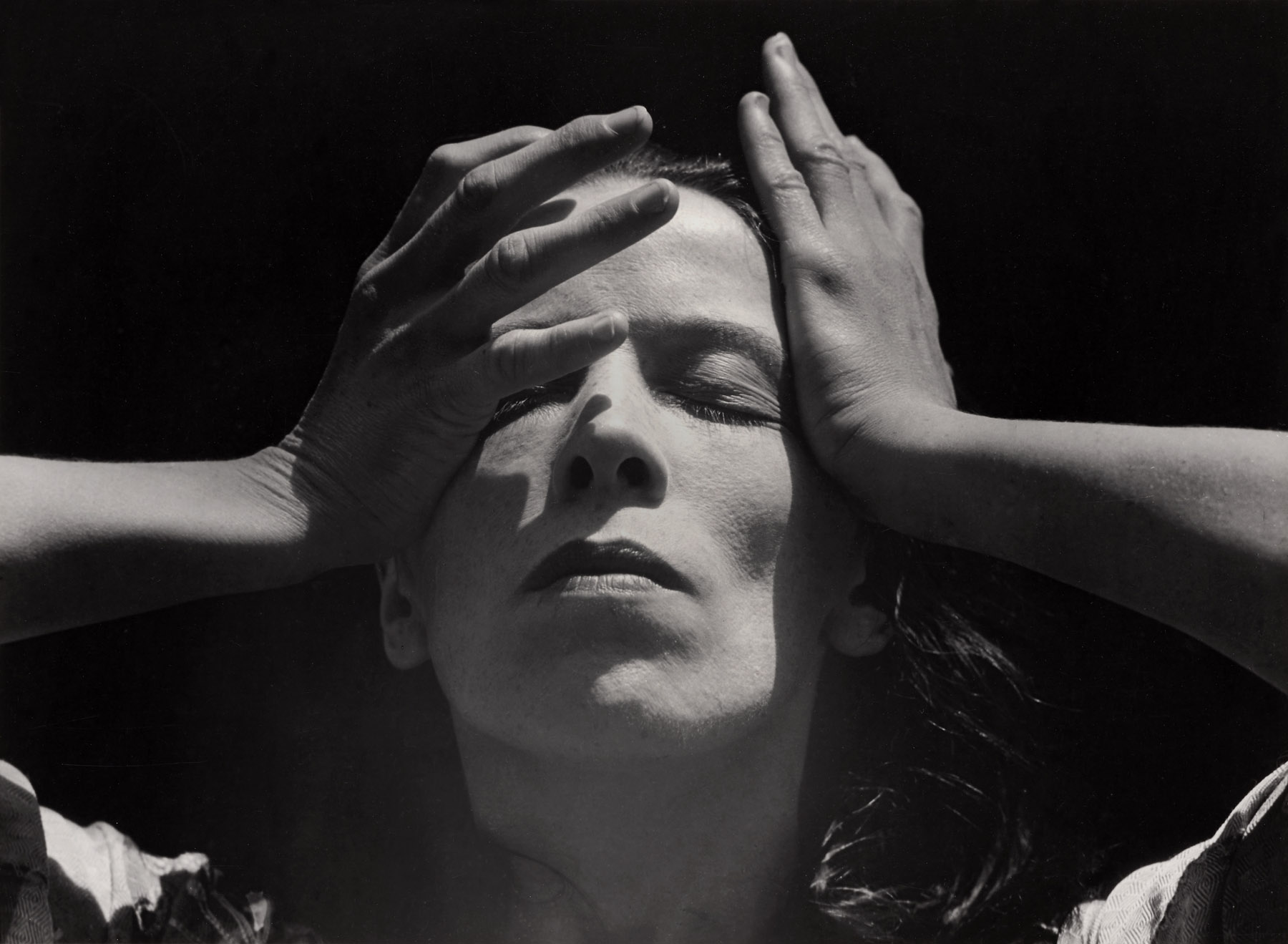
Although Weston saw early success with his work included in major exhibitions, this did not translate into a steady income. Like most artists during the Great Depression, the Federal Art Project – a branch of the Works Progress Administration – employed Weston, first as a sculptor and then later as a photographer. He quit the FAP in December of 1936 after about two and half years because he had no passion for the documentary nature of the work and it impinged upon time for his personal projects, something that he could not bear for long. Throughout the thirties and forties, he worked intermittently – and discontentedly – as a portrait and industrial photographer to stave off poverty and support his daughter who was born in 1938. In complete contrast to the realistic, documentary style of his FAP and commissioned works, an untitled photograph from 1937 is an extreme close-up of paint that is almost organic in appearance, with leaf-like veins in the upper portion of the image. The subject is essentially unrecognisable, which is a defining characteristic of many of Weston’s photographs.

The slim Depression years segued into the tumultuousness of World War II, during which Weston served in the US Army before a much-requested transfer to the US Signal Corps stationed him to work as a photographer in New York. At the end of the war, when Brett returned to Carmel, CA, where the Weston family had made their long-time home, he found his father beginning to show marked symptoms of Parkinson’s disease, which would increasingly debilitate the elder Weston in the last decade of his life. Before Edward’s death in 1958, he enlisted his sons Brett and Cole and a small group of trusted assistants to secure his lasting legacy by making thousands of prints under his supervision. In addition to printing work for his father, during this time, Brett also worked on his Guggenheim fellowship project and his second and third portfolios, White Sands (1949) and New York (1954).

Besides photographing the beaches of Carmel, one of which was dubbed “Weston Beach,” Brett also traveled up and down the California coast countless times over the decades. He repeatedly returned to capture the dunes of Oceano, and these images range from sweeping vistas to striking abstractions. An image from 1952, Dune, Oceano, although not technically a detail, falls into the latter category. The dunes appear wave-like and swirling, and a dark, somewhat-menacing shadow at the centre – similar to the roofline image taken in Mexico – provides graphic force. Jellyfish, California, another beach image, taken in 1967, is a close-up of one of the bulbous marine animals washed ashore. In contrast to the ethereal and weightless appearance jellyfish take underwater, it looks monumental and grotesquely beautiful. The curving form expands beyond the picture’s boundaries and in place of luminescence is a gradation of pure white reflections to jet-black striated patterns on the bell.

Although the tendency to work close-up had always been present in Weston’s work, it became much more pronounced and obvious after health issues necessitated a change in camera equipment. For over thirty years, Weston worked with a large format 8 x 10 camera and preferred contact prints (versus enlarging from smaller negatives). However, a heart attack in 1967 and an ongoing battle with angina forced Weston to switch to a smaller camera because he could no longer manage the bulky equipment. In 1968, he began using the Rollei SL-66 almost exclusively. The camera used roll film that produced small, square negatives and allowed the artist to work close-up with ease. As a result, his work became even more intent on exploring specific elements and abstract qualities. Sand and Kelp from around 1970 is a lyrical example of this. Individual grains of sand are visible and marked by traces of implied movement, both in the dancing shadows of the kelp and the trailing patterns lightly indented into the surface.

While Weston had traveled steadily and as often as he could afford to in his younger years – expeditions that included Europe, Japan, the Pacific Northwest, Baja California, and Mexico – his later years were spent primarily in Hawaii. The tropical climate was beneficial for his health, and the varied terrain provided limitless visual appeal. In 1979, the photographer purchased land there on the slopes of a volcanic mountain. He became especially engrossed with the lava formations and the verdant and spectacular plant life, which he photographed until his death in 1993.

Weston achieved, within his lifetime, the recognition and financial comforts of a highly esteemed photographer. Even so, following his death, Brett’s reputation was eclipsed in favour of his father, due in part to the notion that there wasn’t room for two Westons in the canon of modernist photography. The 2008 exhibition Out of the Shadow (Oklahoma City Museum of Art and The Phillips Collection) and his biography A Restless Eye (2011) have begun to remedy this situation. Significant Details furthers that work by centring on the uncharted, closeup images that characterise Weston’s innate and distinctive eye. These photographs reveal the major themes present in his oeuvre: a focus on natural and urban landscapes and the objects therein, the absence of human presence and apparent narrative, and an extraordinary ability to extract the microcosm from the macrocosm.

Erin Aitali, Director of Exhibitions and Registrar


Brett Weston (American, 1911-1993) 'Broken Glass, California' 1954


Brett Weston (American, 1911-1993)
Broken Glass, California
1954
Silver gelatin print
8 x 10 inches
The Brett Weston Archive
Courtesy Christian Keesee Collection, 2016


Brett Weston (American, 1911-1993) 'Torn Leaf, Hawaii' 1978


Brett Weston (American, 1911-1993)
Torn Leaf, Hawaii
1978
Silver gelatin print
10 3/4 x 12 inches
The Brett Weston Archive
Courtesy Christian Keesee Collection, 2016


Brett Weston (American, 1911-1993) 'Jellyfish, California' 1967


Brett Weston (American, 1911-1993)
Jellyfish, California
1967
Silver gelatin print
7 5/8 x 9 5/8 inches
The Brett Weston Archive
Courtesy Christian Keesee Collection, 2016


Brett Weston (American, 1911-1993) 'Cracked Paint' 1937 (printed later)


Brett Weston (American, 1911-1993)
Cracked Paint
1937 (printed later)
Silver gelatin print
12 1/2 x 10 1/8 inches
The Brett Weston Archive
Courtesy Christian Keesee Collection, 2016


Like Broken Glass, California (1954, above), this image of cracked paint is an extreme close-up to the point that the subject is indistinguishable. Instead pure form becomes the focus. This intense focus also characterises Weston’s approach to life; he prioritised his photography above all else, often at the expense of both financial stability and personal relationships (he was married four times and had countless lovers).

In 1937 Weston was living with his first wife, Cicely, in San Francisco who was employed as a violinist in the WPA symphony. Weston had recently quit the WPA because, as he explained in a letter to his father in December 1936, “It has been a good thing in many ways but after 2 1/2 years I feel that I have had enough experience of this kind. I feared it was beginning to tell on me as well as my work. I would rather divorce, starve, anything, than have this happen. The actual work I’ve been doing for the work program has been child’s play but the sacrifice of one’s priceless days… has become too much.”


Brett Weston (American, 1911-1993) 'Snow' 1954


Brett Weston (American, 1911-1993)
Snow
1954
Silver gelatin print
9 1/2 x 7 5/8 inches
The Brett Weston Archive
Courtesy Christian Keesee Collection, 2016


Pasadena Museum of California Art

This museum closed in October 2018

LIKE ART BLART ON FACEBOOK

Back to top