Installation view of the exhibition Thomas Struth: Figure Ground at Haus der Kunst, Munich Courtesy of the artist and Haus der Kunst, Munich
I have always liked this man’s work. His understanding of space, colour, form and photograph as aesthetic experience is sublime. His muscular compositions show evidence of clear thinking and seeing… an investigation into sachlichkeit, that is objectivity: the boundaries between human, animal and machine (the aesthetics of innovation).
And yet Struth’s “unheroic” images also show evidence of subjective forces at work: impulsion, chaos, and serendipity to name a few, capturing a ‘razzmatazz of sensations’ that challenge the existential nature of the human, ‘being’.
Dr Marcus Bunyan
Many thankx to Haus der Kunst for allowing me to publish the art work in the posting. Please click on the photographs for a larger version of the image.
“Most of the images are very unheroic.I have a strong relationship to clarity. That’s why my compositions and choices are very meticulous.”
Installation view of the exhibition Thomas Struth: Figure Ground at Haus der Kunst, Munich with Louvre 4, Paris (1989) centre left Courtesy of the artist and Haus der Kunst, Munich
Installation view of the exhibition Thomas Struth: Figure Ground at Haus der Kunst, Munich with Paradise 26 (Bougainville), Palpa, Peru (2003) to the right Courtesy of the artist and Haus der Kunst, Munich
This major exhibition by the pioneering German photographer Thomas Struth (born 1954) presents the most comprehensive survey of his genre-defining oeuvre. Covering four decades of work and every phase of his illustrious artistic career, the exhibition focuses especially on the aspect of Struth’s social interests which represent the important forces of his internationally influential artistic development. Starting with his first series Unbewusste Orte (Unconscious Places) published in 1987 through his current works that deal with the field of research and technology in the globalised world, Struth’s work develops its own specific analytical nature through his choice of subject matter, the manner of its photographic realisation and its modes of presentation. These aspirations are manifested in questioning the relevance of public space and transformation of cities, the cohesive factor of family solidarity, the importance of the relationship between nature and culture, and exploring the limits and possibilities of new technologies. The momentum of participation further characterises these aspirations, as Struth’s extensive pictorial inventions and strategies allow individual interpretation based on collective knowledge.
In this exhibition, early works and research materials related to the artist’s subject matter, and collected over several decades, are shown for the first time in the context of an exhibition, offering access and insight into Struth’s working methods. Together with the photographs, these materials elucidate his longstanding interests behind the different series, demonstrating the process of artistic translation before the perfection of the image.
Featuring around 130 works, two multichannel video installations, and a selection of archival material, the exhibition in Haus der Kunst is the largest survey of Struth’s artistic career to date. The survey links his early ideas to well-known series such as Straßen (Streets), Unbewusste Orte (Unconscious Places), Portraits, Museumsbilder (Museum Pictures), Paradise, and Audiences which are placed in dialogue with site-specific works like Löwenzahnzimmer (Dandelion Room), the landscape- and flower photographs that were made for the patients’ rooms at the Hospital on the Lindberg in Winterthur, Switzerland. It also includes photographs recently shown in the exhibition Nature & Politics. Within this interplay, the exciting ability of the artist to combine analysis and individual pictorial invention in multifaceted works and techniques builds an overarching idea on how to deal with the elementary matters of our times.
The exhibition is accompanied by a publication from Schirmer / Mosel Publishers, Munich, designed by Fernando Gutierrez, with texts by Thomas Weski, Ulrich Wilmes, Jana-Maria Hartmann, and an interview with the artist by Okwui Enwezor. The exhibition is organised by Haus der Kunst and curated by Thomas Weski.
Installation view of the exhibition Thomas Struth: Figure Ground at Haus der Kunst, Munich with Semi Submersible Rig, DSME Shipyard, Geoje Island (2007) at centre Courtesy of the artist and Haus der Kunst, Munich
Installation view of the exhibition Thomas Struth: Figure Ground at Haus der Kunst, Munich with Tokamak Asdex Upgrade Periphery, Max Planck IPP, Garching (2009) at left Courtesy of the artist and Haus der Kunst, Munich
Installation view of the exhibition Thomas Struth: Figure Ground at Haus der Kunst, Munich with The Faez Family, Rehovot (2009) second left Courtesy of the artist and Haus der Kunst, Munich
Take, for instance, Struth’s photograph “Chemistry Fume Cabinet, The University of Edinburgh” (2010). Ostensibly a photograph of a chemistry fume cabinet at the University of Edinburgh, photographed through a clear, glass window, the work is also a study in colour and form. Within a white background space, the back wall has black horizontal lines running along it, while the side walls have one vertical line each. These opposing lines create what appear to be a haphazard grid. A wide red horizontal structure runs across the front of the room, creating one more line that both breaks up and contributes to the grid. Various machines within the room, two square red panels on the left and right sides of the window, and six coloured balloons provide a series of objects that fit within the finely structured container of the photograph’s frame.
What struck me immediately upon seeing this image was how the various lines and objects interact with one another. Struth presents the viewer with a kind of interactive field in which she can either read the image “as is” – photograph documenting a chemistry fume cabinet – or as a purely aesthetic experience. Or, of course, she can do both, which is what makes Struth’s work so rich and gratifying. It is in the way his mastery of colour and other formal elements coincides with his documentation of the world.
Installation view of the exhibition Thomas Struth: Figure Ground at Haus der Kunst, Munich with Queen Elizabeth II & The Duke of Edinburgh, Windsor Castle (2010) at left Courtesy of the artist and Haus der Kunst, Munich
Installation view of the exhibition Thomas Struth: Figure Ground at Haus der Kunst, Munich with Aquarium, Atlanta, Georgia (2013) at right Courtesy of the artist and Haus der Kunst, Munich
I missed the closing date for this exhibition due to the ongoing problems with my hand. However, I believe it is valuable to post these images because Louise Lawler is an always provocative, thoughtful and interesting artist. She shines a light or, more possibly, pokes a big stick at patriarchal systems of value in art – turning perceived points of view, ways of seeing, and “the cultural circumstances that support art’s production, circulation, and presentation” on their head.
“… behind Ms. Lawler’s shape-shifting works lies a poetic intelligence, a political sharpness and an understanding of the artwork as a form of value, but also as a source and an object of love.”
Well said.
Lawler possesses a unique understanding of the forms of culture embodied within images and also an intimate knowledge of the archetypal forms buried deep within their bones. Is the pattern immanent in the paper (the cosmos), or is the paper a blank slate to be written on by the creator?
Distorted, restaged, reframed and re-presented for the times…
Dr Marcus Bunyan
Many thankx to MoMA for allowing me to publish the photographs in posting. Please click on the photographs for a larger version of the image.
(Note on reproducing Lawler’s Adjusted to Fit works: Each time these images are reproduced, they should be stretched to the space given to the reproduction. The original file (un-stretched) is the origin point for anything that is then adjusted by the photo editor.)
Louise Lawler: WHY PICTURES NOW is the first major survey in New York of the artist Louise Lawler (American, b. 1947), spanning the 40-year creative output of one of the most influential artists working in the fields of image production and institutional critique. The exhibition takes its title from one of Lawler’s most iconic works, Why Pictures Now (1982), a black-and-white photograph showing a matchbook propped up in an ashtray. Reminiscent of an advertising photograph or a film noir still, it asks the viewer to consider why the work takes the form of a picture, and why the artist is making pictures now. Lawler came of age as part of the Pictures Generation, a loosely knit, highly independent group of artists named for an influential exhibition, Pictures, organised in 1977 by art historian Douglas Crimp at Artists Space in New York. These artists used photography and appropriation-driven strategies to examine the functions and codes of representation. Lawler’s signature style was established in the late 1970s and early 1980s, when she began taking pictures of other artists’ works displayed in collectors’ homes, museums, storage spaces, and auction houses to question the value, meaning, and use of art.
WHY PICTURES NOW is organised by Roxana Marcoci, Senior Curator, with Kelly Sidley, Curatorial Assistant, Department of Photography.
“Ms. Lawler and Roxana Marcoci, the exhibition’s curator, have devised something quite different: an open, airy survey with lots of room for roaming, some chairs for sitting and two conjoined, markedly different halves focusing on Ms. Lawler’s activities with pictures and then words. The first half is dominated by photographs in various shapes and guises, including mural-size images. The second, which seems almost empty at first, contains two large vitrines of ephemera that show off Ms. Lawler’s gifts for graphic design and for language, with displays of everything from matchbook covers and napkins to exhibition announcements and art books that she photo-edited. …
Ms. Lawler’s images have multiple lives, exposing the ceaseless flexibility of photographs. Constantly recycled, they go from framed and portable to paperweights to the wall-covering murals of her “adjusted to fit” series. In the show’s first half, four “adjusted” photos cover immense, staggered walls, looming like ocean liners sliding out of their docks. Their monumentality thrills but also chides the art world for its embrace of spectacle and the overblown. …
It is hard to know if these words [“Why Pictures Now”] proclaim the power, or the worthlessness, of pictures. Probably both. Either way, behind Ms. Lawler’s shape-shifting works lies a poetic intelligence, a political sharpness and an understanding of the artwork as a form of value, but also as a source and an object of love.”
Join us for a conversation with MoMA director Glenn Lowry and curator Roxana Marcoci on the opening of the exhibition, Louise Lawler: WHY PICTURES NOW. The first New York museum survey of the work of American artist Louise Lawler, this exhibition is an exploration of her creative output, which has inspired fellow artists and cultural thinkers alike for the past four decades.
Among the most intriguing aspects of Lawler’s working process is her continuous re-presentation, reframing, or restaging in the present, a strategy through which she revisits her own images by transferring them to different formats – from photographs to paperweights, tracings, and works she calls “adjusted to fit” (images stretched or expanded to fit the location of their display). Lawler’s critical strategies of reformatting existing content not only suggest the idea that pictures can have more than one life, but underpin the intentional, relational character of her farsighted art.
Louise Lawler | HOW TO SEE the artist with MoMA curator Roxana Marcoci
Can the exact same image have a completely different meaning if its title or medium is changed? Explore the work of one of today’s most influential female artists, Louise Lawler, in the new exhibition Louise Lawler: WHY PICTURES NOW.
MoMA curator Roxana Marcoci gives us a tour of the exhibition that charts Lawler’s continuous re-presentation, reframing, or restaging of the present, a strategy through which Lawler revisits her own images by transferring them to different formats – from photographs to paperweights, tracings, and works she calls “adjusted to fit” (images stretched or expanded to fit the location of their display).
Louise Lawler’s Birdcalls at MoMA
You’re not hearing things. For the duration of the Louise Lawler exhibition, a stroll through our Abby Aldrich Rockefeller Sculpture Garden places you squarely in the middle of Birdcalls, the artist’s defiant, humorous critique of the art world’s captivation with male artists. Find out what exhibition inspired Lawler’s sole sound piece with MoMA curator Roxana Marcoci.
Lawler’s study of art in its commercial context will be complemented by the display of a work by a younger artist that highlights a different kind of economy. The sculpture New York State Unified Court System (top photo), by artist Cameron Rowland, included in the artist’s knockout exhibition at Artists Space this winter, takes the form of four oak benches used in courtrooms and built using prison labour.
“Swimming among the show’s images are words and wordplay that can have a few layers. One of Ms. Lawler’s better-known photographs shows Jasper Johns’s creamy “White Flag” (1955) hanging above a bed with an equally creamy monogrammed satin spread. The image is sensibly titled “Monogram,” all the more fittingly since “Monogram” is also the title of one of Robert Rauschenberg’s combines from the 1950s, when he and Mr. Johns were lovers.
“Lawler’s suspicion of the image is nothing new. In WHY PICTURES NOW, her career survey currently on view at the Museum of Modern Art, the Pictures Generation artist is again and again engaged in taking the familiar – a famous work of art, different forms of banal ephemera – and making it abnormal through clever subversion. There is a timid jostling of her male peers, a slight nudge off the pedestal of reverence, which is evident in much of her work and makes it eminently appealing – even if some of its institutional critique is diminished under the museum’s glow of prestige. But what is often obscured in Lawler’s work is the way that it’s not only questioning the apparatus of making and displaying art, but also its reception – the formalised way that we, the spectators, are looking.”
The Museum of Modern Art announces Louise Lawler: WHY PICTURES NOW, the first major survey in New York of the artist Louise Lawler (American, b. 1947). Spanning the 40-year creative output of one of the most influential artists working in the fields of image production and institutional critique, the exhibition will be on view from April 30 to July 30, 2017, in The Joan and Preston Robert Tisch Exhibition Gallery, sixth floor, along with one sound work, Birdcalls (1972-1981), which will be installed in The Abby Aldrich Rockefeller Sculpture Garden. The exhibition takes its title from one of Lawler’s most iconic works, Why Pictures Now (1982), a black-and-white photograph showing a matchbook propped up in an ashtray. Reminiscent of an advertising photograph or a film noir still, it asks the viewer to consider why the work takes the form of a picture, and why the artist is making pictures at this moment. Lawler came of age as part of the Pictures Generation, a loosely knit, highly independent group of artists named for an influential exhibition, Pictures, organised in 1977 by art historian Douglas Crimp at Artists Space in New York. These artists used photography and appropriation-driven strategies to examine the functions and codes of representation. Lawler’s signature style was established in the late 1970s and early 1980s, when she began taking pictures of other artists’ works displayed in collectors’ homes, museums, storage spaces, and auction houses to question the value, meaning, and use of art. WHY PICTURES NOW is organised by Roxana Marcoci, Senior Curator, with Kelly Sidley, Curatorial Assistant, Department of Photography.
Lawler’s work offers a defiant, witty, and sustained feminist analysis of the strategies that inform art’s production and reception. In 1971, she was invited to assist several artists for independent curator Willoughby Sharp’s Pier 18, an exhibition that featured 27 male artists on an abandoned pier on the Hudson River. While walking home after leaving the pier one evening, Lawler began to mimic birdlike sounds in order to ward off any unwanted interactions, chanting “Willoughby! Willoughby!” This parody evolved into Birdcalls, a seven-minute audio piece in which Lawler squawks, chirps, and twitters the names of famous male artists, from Vito Acconci to Lawrence Weiner – an astute critique of the name recognition enjoyed by her male contemporaries. Birdcalls thematises Lawler’s strategy of resistance to the authoritative and the patronymic proper name. This work will be played throughout the course of the exhibition, in MoMA’s Abby Aldrich Rockefeller Sculpture Garden.
An intriguing aspect of Lawler’s practice is her process of continuous re-presentation, reframing, or restaging in the present: she revisits her own work by transferring her images to different formats, from a photograph to a tracing, and to works that she calls “adjusted to fit.” The “tracings” are large-format black-and-white line versions of her photographs that eliminate colour and detail, functioning instead as “ghosts” of the originals. “Adjusted to fit” images are stretched or expanded to fit the location of their display, not only suggesting the idea that pictures can have more than one life, but also underpinning the intentional, relational character of Lawler’s farsighted art.
The exhibition consists of a sequence of mural-scale, “adjusted to fit” images set in dynamic relation to non-linear groupings of photographs – of collectors’ homes, auction houses, and museum installations – distinctive of Lawler’s conceptual exercises. Additionally, a deceptively empty gallery presents black-and-white tracings of Lawler’s photographs that have been printed on vinyl and mounted directly on the wall. A display of the artist’s ephemera from the 1970s to today highlights the feminist and performative undercurrents of her art. Lawler’s long history of artistic collaborations, with Sherrie Levine, Allan McCollum, Andrea Fraser, Felix Gonzalez-Torres, Christopher d’Arcangelo, Peter Nadin, and Lawrence Weiner, among others, come full circle in the ephemera on display. Furthermore, on the platform outside the gallery space, two “adjusted to fit” images are shown together with Cameron Rowland’s work New York State Unified Court System. Comprised of four oak courtroom benches, it was included in Rowland’s exhibition 91020000, presented at Artists Space in 2016. Lawler and Rowland share an interest in examining the imbalances of exploitative economies, the use value and exchange value of art, the politics of space, and the interplay of power between human relations and larger institutional structures, including markets, museums, prisons, and governments. Additionally, Andrea Fraser will perform her work May I Help You? in the exhibition space. In foregrounding her work’s relationship to the economies of collaboration and exchange, Lawler shifts focus from the individual picture to the broader history of art. Her careful attention to artistic contexts, modes of presentation, and viewers’ receptions generates witty, affective situations that contribute to institutional transformation.
One of her most famous images, “Pollock and Tureen” (1984), shows a fragment of a painting by Jackson Pollock above an antique soup tureen. In the photograph, the colour relationships are clear, offering insight into the choices of the collectors who “arranged” (a favourite word of Lawler’s) the scene. The work is about class, capitalism, and domesticity, not to mention reality and fiction. But when all the site-specific context is removed [in the tracing] … all we’re left with is contemplating the original Lawler artwork’s role in art history and the market.
In Benjamin Buchloh’s essay for Lawler’s retrospective last year at the Museum Ludwig, one of his most cogent points is about the nature of melancholy in her original photographs. “[H]er images,” he writes, “leave equally little doubt that there is hardly a more melancholic space than that of a fulfilled and seemingly satisfied utopian aspiration, one that has, however, not quite lived up to the originary promises … “
Nils Strindberg (Swedish, 1872-1897) Örnen efter landningen. Ur serien Ingenjör Andrées luftfärd, 14/7 1897 14/7 1897. The Eagle Balloon after landing From the series The Flight of the Eagle 1897/1930 Gelatin silver print
While there are some outstanding photographs in this posting, the selection seems rather ad hoc. It is always good to see the work of Julia Margaret Cameron and other illuminati of late 19 century photography, but the highlight in this posting are the ethereal and tragic photographs from the Eagle polar expedition.
We can only be grateful that so many negatives have survived, a testament to both the photographer, the developer and the coldness of the ice, leaving us with such transcendent images of human endurance.
Dr Marcus Bunyan
Many thankx to Moderna Museet for allowing me to publish the photographs in the posting. Please click on the photographs for a larger version of the image.
Nils Strindberg (Swedish, 1872-1897) 14/7 1897. After the crash From the series The Flight of the Eagle 1897/1930 Gelatin silver print Some rights reserved by Tekniska museet
Nils Strindberg (Swedish, 1872-1897) Setting up-camp, raising the Swedish flag From the series The Flight of the Eagle 1897/1930 Gelatin silver print Some rights reserved by Tekniska museet
Nils Strindberg (Swedish, 1872-1897) Moving a boat through the icy waters From the series The Flight of the Eagle 1897/1930 Gelatin silver print Some rights reserved by Tekniska museet
Nils Strindberg (Swedish, 1872-1897)
In July 1897, Salomon August Andrée (1854-1897) embarked on his voyage to the North Pole in the balloon Örnen [The Eagle], accompanied by the engineer Knut Frænkel (1870-1897) and the photographer Nils Strindberg. A few days later, the balloon crashed on the ice, and they were forced to continue their journey on foot. The conditions were severe, and the expedition ended in disaster. After a few months, in October, they made up camp on Kvitøya on Svalbard. This is where their bodies were found thirty years later, along with Strindberg’s camera.
The expedition and the events surrounding it, were widely publicised both at the time of the expedition, and later when they were found. Per Olof Sundman’s book The Flight of the Eagle (1967) was turned into a film by Jan Troell in 1982. Although these photographs were taken as scientific observations, and to document the work of the members of the expedition, they now appear as some of the most remarkable and beautiful photographs in polar history.
John Hertzberg (1871-1935) was a photographer and docent at the KTH Royal Institute of Technology. He was commissioned to develop the exposed films, and managed successfully to process ninety-three of Strindberg’s photographs. He made copies of the negatives, which were used to produce the prints on paper that are now at institutions including Moderna Museet, the National Museum of Science and Technology in Stockholm and Grenna Museum – Polarcenter in Gränna.
The original negatives ended up at the Royal Swedish Academy of Sciences in Stockholm. Hertzberg re-touched some of the pictures, and these are primarily the ones that have been published and embody the public perception of the expedition. Moderna Museet has both sets, and the re-touched photographs are shown above the un-retouched versions in this exhibition.
Nils Strindberg (Swedish, 1872-1897) At camp From the series The Flight of the Eagle 1897/1930 Gelatin silver print Some rights reserved by Tekniska museet
Nils Strindberg (Swedish, 1872-1897) Camp on White Island From the series The Flight of the Eagle 1897/1930 Gelatin silver print Some rights reserved by Tekniska museet
William Henry Fox Talbot (English, 1800-1877) Four Shelves of Books 1844 Salted Paper Print
William Henry Fox Talbot (English, 1800-1877)
The Scientist William Henry Fox Talbot in Britain experimented with various silver salt solutions on paper. In the mid-1830s, he succeeded in producing a negative image on photosensitive paper in a camera and had thus ingeniously invented the negative.
In 1844-1846, he published what could be regarded as the first photographically illustrated magazine, The Pencil of Nature, in which he described the technique and how photography could be used in practice. He himself claimed that its most important use was to produce evidence, but he also had artistic ambitions for his photographic images. It was Talbot who eventually launched the term “photography” (writing with light) for his invention. Many different words and metaphors were used to describe this new medium, but photography was soon established as its proper name.
Oscar Gustave Rejlander (British born Sweden, 1813-1875) Lesson 1860 Albumen silver print
Carl Jacob Malmberg (Swedish, 1824-1895) The copper quay and the polishing works at Fiskars bruk, Finland 1872 Albumen silver print
Fiskars (Swedish, Finnish: Fiskari) is a village in the town of Raseborg (Raasepori) in western Uusimaa, Finland. The village is the site of the former Fiskars Bruk, which was founded in 1646 and gave rise to the company Fiskars.
The exhibition Written in Light – The First Photographers explores Moderna Museet’s collection of photography from the second half of the 19th century. It includes the Museum’s unique collection of daguerreotypes and works by a few of the world’s most famous photographers: Julia Margaret Cameron, Oscar Gustave Rejlander, and Carleton E. Watkins.
Since its invention, photography has developed, changed, and been used for many different aims and purposes. With the breakthrough of digital images, and their omnipresence in social media, photography is once again in a period of change. This gives all the more reason to look back and consider the impact of its legacy on contemporary photography. This exhibition highlights the Museum’s collection of daguerreotypes, but also gives examples of other early photographic techniques.
Thanks to two significant acquisitions in the mid-1960s, the Helmut Gernsheim Duplicate Collection, and the Helmer Bäckström Photographic Collection, some of the most internationally famous photographers in history are represented at Moderna Museet.
Before and Behind the Lens
Written in Light and Film Inside an Image are part of the photographic project Before and Behind the Lens, which consists of a series of exhibitions, discussions and guided tours. Before and Behind the Lens examines the role of photographic images in art and the transformation of the medium since the early experiments with new technology in the 19th century, to today’s explorations of the potential of the optical lens. Moderna Museet has one of Europe’s finest collections of photography, ranging from pioneers such as Julia Margaret Cameron to many of the most influential contemporary artists who visualise the world for us with the camera lens.
Press release from Moderna Museet
Robert Adamson and David Octavius Hill Misses Grierson c. 1845 Salted paper print, calotype
Robert Adamson (Scottish, 1821-1848) and David Octavius Hill (Scottish, 1802-1870)
The first prominent calotype practitioners were active in Scotland, which was exempt from Talbot’s patent restrictions. David Octavius Hill was a portrait painter, and Robert Adamson an engineer. In 1843, they began collaborating as photographers, after Hill had been assigned to portray a group of clergymen and laymen who had left the Church of Scotland and founded the Free Church of Scotland. Hill wanted to use photographs to create individual portraits of the several hundred participants in this assembly.
It took them more than a year to produce a calotype of each member, and the painting took another 20 years for Hill to complete. They continued working together for four years, until Adamson’s premature death, producing nearly 3,000 photographs of architecture, landscapes, but especially portraits, which they always signed together. They also documented working women and men in the fishing village of Newhaven near Edinburgh in a natural and personal style that was unusual for that period.
Salted Paper Print, Calotype
Silver in common salt on/in paper 1839 – c. 1870
A paper is first soaked in a saline solution and then brushed on one side with silver nitrate, forming light-sensitive silver chloride. After allowing the paper to dry in the dark, it is exposed in sunlight for hours, in contact with a negative, until the image appears (printing-out). Excess silver chloride is then subjected to fixation in a strong saline solution or in sodium thiosulphate and is rinsed away in water. Subsequent gold toning (after 1849) lent the picture a richer tonal range and greater permanence. After 1850 they were often waxed and/or sometimes coated with a layer of albumen. Salted paper prints have a matte finish, and the paper fibres of the support are clearly visible in magnification. When fixed in salt, the image tone is reddish brown; in sodium sulphate it is a yellowish orange. Permanence is relatively low, and when faded or discoloured the prints turn to a yellowish brown. This technique was the first used to reproduce an image on paper from a negative. Although the term calotype is sometimes used, a calotype is actually a salted paper negative.
Johan Wilhelm Bergström (Swedish, 1812-1881) Self-Portrait c 1850 Daguerreotype
In 1844 Bergström became a photographer, an occupation he would hold for about ten years. As a daguerreotypist he became diligently engaged, and took pictures of the great people of the day. He also took a series of topographic images, which today are of great value. During a visit to Uppsala in 1845, he captured what is today the oldest known photographic image of the city, as well as a stereoscope image.
Daguerreotype
Amalgam on silver-coated copper 1839 – c. 1865
A copper plate is coated with a thin layer of silver, buffed and treated with iodine vapour in a closed container, transforming the silver to light-sensitive silver iodide. After being exposed in the camera for 10-30 minutes, the image is developed in heated mercury vapour. Silver and mercury form a white amalgam and the image is a reverse, low contrast positive. The picture was initially fixed in a saline bath, later in a bath of sodium sulphite. A subsequent toning in gold solution strengthened the sharpness and stability of the image. To protect the image against chemical and physical damage, the plate was tightly sealed with mats and glass and often enclosed in a case. Daguerreotypes are detailed, neutral in tone, sometimes hand-tinted, and are easily distinguishable by their alternately negative and positive impressions, depending on the angle of the light in which they are viewed.
Marcus Selmer (Danish worked Norway, 1819-1900) Bride from Birkeland 1855 Daguerreotype, hand coloured
Marcus Selmer (Danish worked Norway, 1819-1900) Bride from Birkeland (detail) 1855 Daguerreotype, hand coloured
It is not immediately clear what drew Marcus Selmer (1819-1900), a Danish portrait photographer, to spend most of his life working in Norway. He trained as a pharmacist in his native Denmark, and was working in a chemist owned by his uncle when he discovered daguerreotype photography. He experimented with this new technology in his spare time and began sending his pictures in to local exhibitions. In 1852, Selmer travelled to Norway, to visit some of his uncle’s family in the city of Bergen. He never returned.
He soon found work as a photographer in Bergen and, within a year, was able to establish his own studio. This became the first permanent photographic studio in Bergen, as few photographers who visited would stay all year round. Photographers often visited Bergen in the summer, hoping to capture the fjords and mountains that surround the area, but, as they needed good light for their work, the dark and cold weather had driven most of them away by the time winter rolled around. Selmer ingeniously built his studio almost entirely out of glass, allowing enough light into the space, which enabled him to continue working throughout the year.
Selmer’s work quickly became well-known throughout Norway. He sold many books of his photographs, and sold individual images to the press and the burgeoning tourist industry, before eventually being appointed the royal photographer in 1880. Although his career was varied, Selmer is primarily remembered today for his portraits of local people in national folk costume… These photographs depict the customs, traditions and culture of the Norwegian people, and reflect Selmer’s interest in his adopted home.
Carl Jacob Malmberg (Swedish, 1824-1895) Maria Catharina Malmberg with Children c. 1860 Ambrotype
Ambrotype
Silver in collodion on glass 1854 – c. 1880
A glass plate, coated with silver halogens in collodion, is sensitised with silver nitrate and then exposed wet in the camera. After being developed in iron sulphate – occasionally with the addition of silver nitrate – and fixed in potassium cyanide and washed, the plate is allowed to dry. The picture is then lacquered or protected with a sheet of glass, and the back is coated with black lacquer, textile, or cardboard so that the picture – actually a thin negative – is seen as a positive. It is a direct positive which is often tastefully displayed with mats and under glass in cases. Ambrotypes have a neutral tone, but are sometimes hand-tinted. The surface is characterised by a typical “doubleness”, as high-keys can be seen in the negative on the glass surface and low-keys against the dark background lining.
Oscar Gustave Rejlander (British born Sweden, 1813-1875) No title (Shoeless boy playing whistle) c. 1860 Albumen silver print
Oscar Gustave Rejlander (British born Sweden, 1813-1875)
One of few internationally famous Swedish photographers is Oscar Gustave Rejlander, but little is known of his early life in Sweden. He settled in Britain around 1840, where he worked as a photographer until he died. He had probably studied art and was interested in art history. His works show distinct influences from Italian renaissance, Spanish baroque, Dutch 17th-century painting and the British Pre-Raphaelites.
In his studio, he would build and photograph a kind of “tableaux vivants”, or staged scenes. Perhaps the most famous of Rejlander’s works is The Two Ways of Life from 1857, a negative montage consisting of some 30 exposures combined into a composition. Rejlander’s oeuvre also includes a series of pictures of poor children and families. Towards the end of his life, Rejlander met Charles Darwin and was commissioned to illustrate his acclaimed book The Expressions of the Emotions in Man and Animals (1872).
Oscar Gustave Rejlander (British born Sweden, 1813-1875) The Two Ways of Life 1857 Albumen silver print
In 1857 Rejlander made his best-known allegorical work, The Two Ways of Life. This was a seamlessly montaged combination print made of thirty-two images in about six weeks. First exhibited at the Manchester Art Treasures Exhibition of 1857, the work shows two youths being offered guidance by a patriarch. Each youth looks toward a section of a stage-like tableaux vivant – one youth is shown the virtuous pleasures and the other the sinful pleasures. (Wikipedia)
Carleton E. Watkins (American, 1829-1916) Down the Valley, Yosemite 1861 Albumen silver print
Carleton E. Watkins (American, 1829-1916) Tutueamela, El Capitan, 3000ft, Yosemite 1861 Albumen silver print
Carleton E. Watkins (American, 1829-1916)
Voyages of discovery, nature and landscapes were popular motifs for the early photographers. The growing tourism increased demand for pictures from exotic places, making this a source of income for publishers of photographic literature. The American West was one such region, and some of the photographers who began working there also documented the American Civil War. One of the most prominent of these was Carleton E. Watkins, who had travelled and photographed the Yosemite Valley on several occasions in the first half of the 1860s.
In his large-format photographs, so-called mammoth prints, he captured the massive mountain formations, dramatic waterfalls and gigantic trees. His heavy equipment was carried by some ten mules, and it is almost a miracle, considering the difficult conditions, that so many of his photographs survived.
A definite advancement in the process of creating negatives was made by the Brit Frederick Scott Archers (1813-1857), who discovered how to use glass sheets for the negative instead of paper. Collodion was used to bind the necessary silver salt to the glass, but it could only be exposed while wet, hence the term wet plate process. The glass negatives gave sharp details, and a large number of paper prints could be made from one negative.
Julia Margaret Cameron (British, 1815-1879) The Mother of Salome 1870 Albumen silver print
Julia Margaret Cameron (British, 1815-1879) The Angel at the Tomb 1870 Albumen silver print
Julia Margaret Cameron (British born India, 1815-1879)
In Victorian Britain, a small group of photographers were the very first to attempt to create and formulate art photography. Julia Margaret Cameron, who belonged to this group, left behind a fantastic collection of intimate portraits of her family and large circle of friends. She was an amateur photographer who was active mainly in the 1860s and 1870s.
Her staged pictures, inspired by myths, biblical stories and English literature, have a characteristically expressive soft focus. Cameron’s photographs are reminiscent of the Pre-Raphaelites and renaissance painting. The Moderna Museet collection of Julia Margaret Cameron includes portraits of Charles Darwin, Henry Taylor and Alfred Tennyson, along with staged tableaux of The Angel at the Grave and the melodramatic Maud from one of Tennyson’s most famous poems. Cameron’s last major photographic project in the UK, before she and her family moved to Ceylon, present Sri Lanka, was to illustrate Tennyson’s work Idylls of the King (1874-75).
Julia Margaret Cameron (British, 1815-1879) Maud “There has Fallen a splendid Tear From the Passion Flower at the Gate” 1875 Illustration to Tennyson’s Idylls of the King and Other Poems. Sitter is Mary Ann Hillier Albumen silver print
Albumen Silver Print
Silver in albumen on paper 1850 – c. 1900
A paper is brushed with a solution of albumen (egg white) and table salt and is allowed to dry. It is then bathed in silver nitrate and again allowed to dry, this time in darkness. Albumen, salt and silver form an emulsion containing light-sensitive silver salts which are exposed in daylight in direct contact with a negative until the desired image appears (printing-out). Residual light-sensitive silver salts are then removed through fixation, and the picture is washed in water. After 1855, most albumen silver photographs were gold-toned, followed by additional fixation and rinsing. Commercially produced albumen silver paper became available in 1863. Albumen silver prints have a thin paper support and are therefore normally mounted. The surface is usually glossy, and the tone may vary from yellow / red / brown to a violet blue, depending on exposure time and toning. Prints commonly change in tone to yellow / yellow-green in high-keys due to deterioration of the albumen. In magnification characteristic cracks can be seen.
Rosalie Sjöman (Swedish, 1833-1919) Alma Sjöman c. 1875 Albumen silver print, hand coloured
Rosalie Sjöman (Swedish, 1833-1919)
Rosalie Sjöman was one of many prominent women photographers. She opened a studio in 1864 on Drott-ninggatan 42 in Stockholm, after being widowed with three small children. The photographer Carl Jacob Malmberg had had his studio at this address previously, and there are some indications that Sjöman may have been working for him. Her business prospered, and towards the end of the 1870s Rosalie Sjöman had five female employees, and she seems to have chosen to hire women only. R. Sjöman & Comp. later opened studios on Regeringsgatan 6, and in Kalmar, Halmstad and Vaxholm.
Her oeuvre includes numerous carte-de-visite portraits and larger so-called cabinet cards, with a mixture of classic portraits, various staged scenes, people wear-ing local folk costumes, and mosaics. The expertly hand-tinted photographs are especially eye-catching; several of them portray her daughter Alma Sjöman.
In the 1860s, photography progressed from being an exclusive novelty into a more widespread and popular medium. The popular carte-de-visite were introduced in France in the mid-1850s, but became extremely fashionable when Emperor Napoleon III had his portrait made in the new format (6 x 9 cm). This trend spread rapidly, and portrait studios opened in large cities and smaller towns. This cartomania lasted for a decade, and the market stabilised around the mid-1870s, when the photographic medium entered a calmer phase.
Carl Jacob Malmberg (Swedish, 1824-1895) No title From the series Gymnastics c. 1875 Albumen silver print
Carl Jacob Malmberg (Swedish, 1824-1895)
The collection Carl Jacob Malmberg left behind includes most photographic techniques and image types. He is also an example of a photographer’s career development after the first innovative period in the 1840s and up to the 1890s. Malmberg was born in Finland and first studied to be a goldsmith in St Petersburg, where he also learned photography.
He moved to Stockholm, where he opened a studio in 1859 on Drottninggatan 42, and later on Norrtullsgatan 2, and finally on Regeringsgatan 6. Around this period, when cartes-de-visite portraits came into fashion, Malmberg’s practice really took off. On a visit to Finland in 1872, he took a series of photographs at Fiskars iron mill, documenting all the workshops and buildings. A slightly odd portfolio in Malmberg’s collection consists of more than 100 pictures of gymnasts. He had been commissioned by Hjalmar Ling at the Gymnastiska Centralinstitutet in Stockholm to take these pictures to illustrate the book Förkortad Öfversikt af allmän Rörelselära (Short Summary of General Exercise Physiology, 1880).
David Octavius Hill and Robert Adamson William Etty 1844/c. 1880 Carbon Print Reproduction photo: Prallan Allsten/Moderna Museet
Carbon Print
Charcoal (and colour) pigments and potassium bichromate in gelatin on paper 1864 – c. 1930
An emulsion with pigment and potassium dichromate in gelatin on thin paper is exposed in contact with a negative in daylight. The gelatin is hardened in relation to the amount of light during the exposure. The soaked paper is then turned over and pressed against a new support, coated with insoluble gelatin. The original support comes off in a bath of warm water or may be pulled off, and leaves an image with hardened pigmented gelatin. Any unexposed gelatin can then be washed off. The picture is finally subjected to an alum bath to remove the residual light-sensitive dichromate and to further harden the remaining gelatin. The result is a reversed image. It can be corrected by first reversing the negative or by transferring the image to a new support (Autotype).
Bühler and Höchheimer: A direct process on fabricated papers which were sensitised in alcohol, exposed in contact with a negative and developed in water. Carbon prints have a clear relief character with raised and glossy low-key areas. The tone is usually deep brown or black, but may vary with the choice of pigment. In magnification the emulsion gives a “ragged” impression, especially in high-keys.
Carl Curman (Swedish, 1833-1913) Waldemarsudde 1888 1888 Cyanotype
Carl Curman (Swedish, 1833-1913)
The physician Carl Curman had many interests, and studied both medicine and art as a young man. Eventually, he became a famous balneologist, and initiated the plan for public baths in Stockholm and eventually also the Sturebadet swimming baths.
He built a photographic studio at the Karolinska Institute in the early 1860s, and was a pioneer of medical photography, before being appointed a professor of plastic anatomy at the Royal Academy of Fine Arts in 1869. His lectures have been documented, in pictures showing students gathered around Curman for dissections. These photographic studies of the human anatomy were also used in the emerging field of eugenics – a troubling part of Western history.
Curman was never a professional photographer, but is one of the many practitioners who have made their mark on the history of photography. His more private projects include pictures from Lysekil, where he worked as a balneologist, from Stockholm where he lived, and from various travels abroad, together with his wife Calla Curman, co-founder of the women’s society Nya Idun.
Moderna Museet, Stockholm
Moderna Museet is ten minutes away from Kungsträdgården, and twenty minutes from T-Centralen or Gamla Stan. Walk past Grand Hotel and Nationalmuseum on Blasieholmen, opposite the Royal Palace. After crossing the bridge to Skeppsholmen, continue up the hill. The entrance to Moderna Museet and Arkitekturmuseet is on the left-hand side.
Glorious modernist photographs with avant-garde and surrealist overtones: the use of photomontage, double printing and solarisation is particularly effective.
The sensitive figure studies of males in classical pose carry an over current of barely suppressed desire evidencing a sexualised (post-colonial?) gaze falling on the exotic Other – even as Wendt was part of an emerging generation of artists documenting Sri Lanka’s culture and history from the inside.
More interesting than desire hiding through artistic ethnographic study are the landscapes, abstracts of coils of rope and the voluptuous female nudes. Stunning.
The media images were in such poor condition when I received them that I have spent a long time digitally cleaning and balancing them for your pleasure.
Dr Marcus Bunyan
Many thankx to Huis Marseille for allowing me to publish the photographs in the posting. Please click on the photographs for a larger version of the image.
“Lionel Wendt was the central figure of a cultural life torn between the death rattles of the Empire and a human appraisal of the untapped values of Ceylon.”
Pablo Neruda, Memoirs
“The proposition that confronted Wendt was that Sri Lanka had a way of life that was very old but which remained, in spite of poverty, squalor and apathy, a vital sense of life. He recognised that here man, living in traditional ways, had not become alienated from his environment… Evidence of his deep regard for Sri Lanka and its traditions are illustrated in the images he chose to capture with his camera, each being a tiny microcosm of a vast and magnificent tapestry. It was recognised by all those who knew him that Wendt had an endless capacity for work. He focussed on the country and the people with unerring judgement and relentless dedication, and in doing this, he stimulated a new consciousness among them and (just as pertinent) in some high places.”
Neville Weeraratne
“He never spoke much about his photography. I expect he wanted his images to speak for themselves and he never spoke of them or about himself. I suppose he was so critical of everybody else that he did not want to expose himself to the same treatment. He did not reveal himself. He was a very interior person. He showed no emotion though he expressed a great passion for things. Perhaps he was hypocritical.”
There is something special going on with regard to the oeuvre of Ceylonese photographer Lionel Wendt (1900-1944). After a period of relative obscurity, Wendt was rediscovered – or discovered, in fact – worldwide as a unique, individualistic photographer who availed himself of experimental techniques and modern compositions. Wendt’s choice of subjects was eclectic: from sensual and homo-erotic portraits to tropical images of Ceylon (now Sri Lanka), and from picturesque scenes to compositions for which he used modernist stylistic devices and experimental techniques. After Wendt’s premature death in 1944 his negatives were destroyed, but the work he left behind lives on. This consists of a collection of beautiful experimental prints, of which several are included in the renowned collections of such museums as Tate Modern in London and Rijksmuseum in Amsterdam. This year, Wendt’s work is being exhibited at Documenta 14 in Athens and, from 10 June till 3 September 2017, in a large-scale retrospective exhibit at Huis Marseille, which shines a spotlight on the fascinating work of this photographer in all its facets.
Who was Lionel Wendt?
Lionel Wendt was a concert pianist, author, patron of the arts, teacher and, above all, a first-class photographer. After having studied law and musical training as a concert pianist in Great Britain, Wendt returned to the city of his birth, Colombo in Ceylon, at the age of 24. It did not take long for him to dedicate himself fully to the arts after his return: piano, literature and the visual arts. It was particularly in photography that he found an ideal vehicle for expression. In 1934, he established the Photographic Society of Ceylon jointly with Bernard G. Thornley and P.J.C. Durrant, and started running Chitrafoto, the photographic studio of the Associated Newspapers of Ceylon and in which he also published a photographic column, in 1938. Wendt developed into a prominent avant-gardist – the ‘Oscar Wilde’ of the Ceylonese arts scene. His first solo exhibition took place in 1938 at the Camera Club in London, at the invitation of Ernst Leitz, the inventor and manufacturer of the Leica. Two years later, a solo exhibition followed in Colombo entitled Camera Work, probably in reference to Alfred Stieglitz’s avant-gardist photography magazine of the same name.
Tropical modernism, masterful prints
Initially, Wendt used a Rolleiflex for his photography, which he quickly replaced by a Leica. From approximately 1933 onwards, he started to print his film in his own darkroom, where he soon showed himself to be a master. He made refined bromide and gelatine silver prints with subtle shades of grey and gradations of black, which gave his nudes and landscapes a velvet-like quality. Wendt allowed himself to be inspired by the ‘straight photography’ of Paul Strand and Edward Weston and the surrealistic experiments of Man Ray, and experimented with techniques such as photogram, photomontage, double printing and solarisation.
Homosexuality, hiding in plain sight
Wendt’s work includes spectacular images of Ceylon: its landscapes, cultural heritage and local population, photographed during everyday activities or traditional rituals. However, his sensual homoerotic nudes are particularly astounding. In a time and at a place where homosexuality was not accepted, Wendt had his male subjects (men and boys) pose in the landscape or in his studio. Through the traditional Ceylonese loincloths worn by his subjects, which leave little to the imagination, and the academic poses he asked them to take, he was able to express his homosexuality under the guise of art and ethnography. He also created portraits of the members of the island’s avant-garde movement. Wendt played a significant role in the development of modernist painting on Ceylon; he acted as a patron of the arts and his house was a meeting place for the ’43 Group, the artistic movement that was a predecessor of Ceylonese modernism.
A dormant legacy reawakens
Following Wendt’s early death in 1944 his work sank into oblivion. In the course of time the hundreds of prints that comprise his legacy came into the possession of several collectors, galleries and museums. After having led a dormant existence for several decades, Wendt’s work was once again brought to the attention of the public in 1994.
Large-scale museum retrospective in the Netherlands
From 10 June through 3 September 2017, Huis Marseille is presenting the first museum solo exhibition of Lionel Wendt in the Netherlands, in collaboration with the Ton Peek Gallery (Utrecht) and Jhaveri Contemporary Gallery (London/Mumbai). Over 140 prints from various international private and museum collections have been brought together. Concurrent to the exhibition, the publishing house Fw:Books will be presenting the book Lionel Wendt. Ceylon featuring an overview of Wendt’s work (hardcover, 200 pages, design by Hans Gremmen). This is the first monograph since Lionel Wendt. A Centennial Tribute (2000), an extensive and revised version of the very first catalogue of Wendt’s oeuvre: Lionel Wendt’s Ceylon (1950).
Text from Huis Marseille
Installation views of the exhibition Lionel Wendt: Ceylon at Huis Marseille, Amsterdam
There is nothing that I need to add about the themes, re-sources and beauty of the photographs in this exhibition, than has not been commented on in Christopher Allen’s erudite piece of writing “Bill Henson images reflect the dark past at NGV” posted on The Australian website. It is all there for the reader:
“Figurative works like these, which invite an intense engagement because of our imaginative and affective response to beauty, are punctuated with landscapes that offer intervals of another kind of contemplation, a distant rather than close focus, an impersonal rather than a personal response, a meditation on time and space. …
Henson’s pictorial world is an intensely, almost hypnotically imaginative one, whose secret lies in a unique combination of closeness and distance. He draws on the deep affective power of physical beauty, and particularly the sexually ambiguous, often almost androgynous beauty of the young body, filled with a kind of potential energy, but not yet fully actualised. Yet these bodies are distanced and abstracted by their sculptural, nearly monochrome treatment, and transformed by a kind of alchemical synthesis with the ideal, poetic bodies of art. …
The figures are bewitching but withdraw like mirages, disembodied at the sensual level, only to be merged with the images of memory, the echoes of great works of the past, and to be reborn from the imagination as if some ancient sculpture were arising from darkness into the light of a new life.”
What I can add are some further observations. Henson is not so serious as to miss sharing a joke with his audience, as when the elbow of the classical statue in Untitled 2008/09 is mimicked in the background by the elbow of a figure. Henson is also a masterful storyteller, something that is rarely mentioned in comment upon his work. When you physically see this exhibition – the flow of the images, the juxtaposition of landscape and figurative works, the lighting of the work as the photographs emerge out of the darkness – all this produces such a sensation in the viewer that you are taken upon a journey into your soul. I was intensely moved by this work, by the bruised and battered bodies so much in love, that they almost took my breath away.
Another point of interest is the relationship between the philanthropist, the artist and the gallery. Due to the extraordinary generosity of Bill Bowness, whose gift of twenty-one photographs by Henson makes the NGV’s collection of his work the most significant of any public institution, the gallery was able to stage this exhibition. This is how art philanthropy should work: a private collector passionate about an artist’s work donating to an important institution to benefit both the artist, the institution and the art viewing public.
But then all this good work is undone in the promotion of the exhibition. I was supplied with the media images: five landscape images supplemented by five installation images of the same photographs. Despite requests for images of the figurative works they were not forthcoming. So I took my own.
We all know of the sensitivity around the work of Henson after his brush with the law in 2008, but if you are going to welcome 21 photographs into your collection, and stage a major exhibition of the donated work… then please have the courage of your convictions and provide media images of the ALL the work for people to see. For fear of offending the prurient right, the obsequiousness of the gallery belittles the whole enterprise.
If this artist was living in New York, London or Paris he would be having major retrospectives of his work, for I believe that Bill Henson is one of the greatest living photographers of his generation.
Dr Marcus Bunyan in front of Bill Henson’s Untitled 2009/10 which features Rembrandt’s The return of the prodigal son c. 1662 which is in the Hermitage, St. Petersburg Photo: Jeff Whitehead
The solo exhibition, Bill Henson, will showcase recent works by the Australian photographer, who is celebrated for his powerful images that sensitively explore the complexities of the human condition.
The exhibition brings together twenty-three photographs selected by the artist, traversing the key themes in the artist’s oeuvre, including sublime landscapes, portraiture, as well as classical sculpture captured in museum settings.
Inviting contemplation, Henson’s works present open-ended narratives and capture an intriguing sense of the transitory. Henson’s portraits show his subjects as introspective, focused on internal thoughts and dreams; his landscapes are photographed during the transitional moment of twilight; and the images shot on location inside museums juxtapose graceful marble statues against the transfixed visitors observing them.
Henson’s work is renowned for creating a powerful sense of mystery and ambiguity through the use of velvet-like blackness in the shadows. This is achieved through the striking use of chiaroscuro, an effect of contrasting light and shadow, which is used to selectively obscure and reveal the form of the human body, sculptures and the landscape itself.
“Henson’s photographs have a palpable sense of the cinematic and together they form a powerful and enigmatic visual statement,” said Tony Ellwood, Director, NGV. “The NGV mounted Bill Henson’s first solo exhibition in 1975 when Henson was only 19. Over forty years later, audiences to the NGV will be captivated by the beauty of Henson’s images once more,” said Ellwood.
On display at the National Gallery of Victoria as part of the inaugural NGV Festival of Photography, the exhibition has been made possible by the extraordinary generosity of Bill Bowness, whose gift of twenty-one photographs by Henson makes the NGV’s collection of his work the most significant of any public institution.
Press release from the National Gallery of Victoria
Installation view of the exhibition Bill Henson at the National Gallery of Victoria. Presented as part of the NGV Festival of Photography Photo: Sean Fennessy
Installation view of the exhibition Bill Henson at the National Gallery of Victoria. Presented as part of the NGV Festival of Photography Photo: Wayne Taylor
Installation view of the exhibition Bill Henson at the National Gallery of Victoria. Presented as part of the NGV Festival of Photography Photo: Sean Fennessy
“I think this whole conversation can be compressed into one thing. It’s that life is joyous and wonderful and it’s meant for us to grow as individuals, as citizens, as human beings and spirits. The terrible thing is that we have a choice and usually the negative choice is the easy way. That’s what we regret because we know we’ve harmed and we’re not meant to harm. We’re meant to heal and grow and share and if I had a knife at my neck or a gun to my head I’d say the same thing.”
Joel-Peter Witkin
Magical momenti mori
This will be short and sweet because I am on holiday in Europe.
It was a privilege to visit William Mora Galleries to see the first ever exhibition in Australia of the work of the renowned American photographer Joel-Peter Witkin. To be able to spend time with these photographic constructions in such a tranquil space truly was a blessing.
While it is possible to read all sorts of influences into the work – running from Diane Arbus (masks) through Surrealism, collage and homages to still-life “Vanitas” style paintings from the 1600s, the ‘Storyville’ prostitue photos of E.J. Bellocq, carte-de-visite and the conversant arched form of the window cut-outs of Victorian photo albums, mythological themes, ars moriendi (“The Art of Dying”), post-mortem photography, et al – what makes Witkin’s photographs so unique is that they could only, ever, be the work of this artist. When you look at these beautiful photographs they bear his unmistakable signature.
Witkin is able to construct in a performative space placed before the lens, engaging narratives which often have an allusive mystery embedded in them. I for one do not pretend to understand all that is going on within the images in terms of their symbolism – but this is not necessary. What I can feel is the profound love and affection that the artist has towards his subjects and his craft. Witkin is not afraid: of life, of death, of ambiguities of sexuality, identity and disability, that confront each and every one of us throughout life. He is not afraid to make bold moves in his art, scratching into the surface of the negative, bleaching into the print, collaging over the top of the base print, never afraid of high key moments in the mise-en-scène, all to create the affect that he wants in order to tell the story. He directs his imagination through the presence and physicality of the final print.
Witkin’s allegories, his mediations on the universality of death as memento mori, or meme/n/to (a meme is an element of a culture or system of behaviour passed from one individual to another, as in the multiple rituals of death) mori, remind people of the fragility of their lives and how vain are the glories of earthly life. His imaginative renditions posit this: no matter one’s station in life, the Dance of Death unites us all.
A sudden blow: the great wings beating still Above the staggering girl, her thighs caressed By the dark webs, her nape caught in his bill, He holds her helpless breast upon his breast.
How can those terrified vague fingers push The feathered glory from her loosening thighs? And how can body, laid in that white rush, But feel the strange heart beating where it lies?
A shudder in the loins engenders there The broken wall, the burning roof and tower And Agamemnon dead. Being so caught up, So mastered by the brute blood of the air, Did she put on his knowledge with his power Before the indifferent beak could let her drop?
“Trump is a child living in a narcissistic hollow man – with the power to destroy the world…
Trump is not qualified to be President. His election to that office represents the ignorance of the American electorate and the corruption of our political representatives. Ours is not an intellectual culture in which thought and reason are unselfishly presented. It is a “Pop Culture” of materialistic escapism which has elected an autocratic, draft dodging, corrupt business man, who has made this country the laughing stock of the world.
The Great Masturbator And The Country He Rode In On took several months to create. The Trump model was willing to pose nude. In his right hand is the nuclear button. On his extended left arm is written: “The Only Conquest Left Is Ivanka.” On his right arm, he is wearing the symbol of Communism, the secret agenda Russia is promoting today under Putin. And for reasons yet unknown, all of us look forward to know why Trump is Putin’s marionette.
I made this photograph because I am involved in mankind. As a citizen of this formally great country, and as an artist, I made this photograph to help defeat the Republican party in the 2018 elections for its cowardice in putting their party ahead of their country. Where are our elected leaders, the Lincoln’s, the Kennedy’s of today? Where are our citizen’s hero’s, the César Chávez’s, the Martin Luther King’s, the Rosa Parks of today?
What ever happened to morality, courage and integrity?”
Orpheus is a legendary musician, poet, and prophet in ancient Greek religion and myth. The major stories about him are centred on his ability to charm all living things and even stones with his music, his attempt to retrieve his wife, Eurydice, from the underworld, and his death at the hands of those who could not hear his divine music. As an archetype of the inspired singer, Orpheus is one of the most significant figures in the reception of classical mythology in Western culture, portrayed or alluded to in countless forms of art and popular culture including poetry, film, opera, music, and painting.
“It happened on a Sunday when my mother was escorting my twin brother and me down the steps of the tenement where we lived. We were going to church. While walking down the hallway to the entrance of the building, we heard an incredible crash mixed with screaming and cries for help. The accident involved three cars, all with families in them. Somehow, in the confusion, I was no longer holding my mother’s hand. At the place where I stood at the curb, I could see something rolling from one of the overturned cars. It stopped at the curb where I stood. It was the head of a little girl. I bent down to touch the face, to speak to it – but before I could touch it someone carried me away.”
Joel-Peter Witkin
Ars Moriendi
The Ars moriendi (“The Art of Dying”) are two related Latin texts dating from about 1415 and 1450 which offer advice on the protocols and procedures of a good death, explaining how to “die well” according to Christian precepts of the late Middle Ages. It was written within the historical context of the effects of the macabre horrors of the Black Death 60 years earlier and consequent social upheavals of the 15th century. It was very popular, translated into most West European languages, and was the first in a western literary tradition of guides to death and dying. There was originally a “long version” and a later “short version” containing eleven woodcut pictures as instructive images which could be easily explained and memorised. …
Ars moriendi consists of six chapters:
1/ The first chapter explains that dying has a good side, and serves to console the dying man that death is not something to be afraid of
2/ The second chapter outlines the five temptations that beset a dying man, and how to avoid them. These are lack of faith, despair, impatience, spiritual pride and avarice
3/ The third chapter lists the seven questions to ask a dying man, along with consolation available to him through the redemptive powers of Christ’s love
4/ The fourth chapter expresses the need to imitate Christ’s life
5/ The fifth chapter addresses the friends and family, outlining the general rules of behaviour at the deathbed
6/ The sixth chapter includes appropriate prayers to be said for a dying man
…
Allegorically the images depicted the contest between angels and demons over the fate of the dying man. In his dying agony his soul emerges from his mouth to be received by one of a band of angels. Common themes portrayed by illustrators include skeletons, the Last Judgement, corpses, and the forces of good and evil battling over souls.
I was born and grew up with this sexual controversy enduring ridicule and insults and humiliations. My family took advantage of me for being joto. And I’m not to blame for being born so tired of so much reproach I left my house to study and fight against everything. I made my life and I’m happy. I hope you catch me sometime and to Saint Sebastian I thank that I left with the good of this operation that changed my life. Bogota 2008
The symbolism of food and drink [in European painting 1400-1800] has roots in classical literature. Fruits, nuts, herbs, and grain are discussed in treatises on farming and natural history, and appear widely in mythology as attributes of gods and goddesses – grapes for Bacchus, god of wine; a sheaf of corn or wheat for Ceres, the grain goddess – and in metaphors for virtue and vice. Early religious writings such as the Bible and the Apocrypha, and Christian texts of the Middle Ages and Renaissance are also rich in this imagery, often borrowing from pagan symbolism and occasionally supplanting it. The pomegranate, for example, is depicted in mythological paintings as an attribute of Venus and a symbol of desire, fertility – because of its many seeds – and marriage, but appears as frequently in sacred images of the Virgin and Child. There are several legends of the pomegranate’s creation, contributing to its symbolic potency; according to one, it grew out of blood streaming from the wounded genitals of the lustful Acdestis. The pomegranate is perhaps best known, however, for its fateful role in the myth of Proserpina. Ovid tells in the Metamorphoses of Proserpina’s abduction by Pluto, ruler of the Underworld. Proserpina’s mother, Ceres, secured her release from Hades, but, before leaving Proserpina, ate the seeds from a pomegranate and, because she had consumed food in the Underworld, was compelled to spend part of every year there. Proserpina’s cyclical descent to Hades and rise to Earth was believed to bring about the changing of seasons, and the pomegranate was thus seen as a symbol of resurrection and immortality.
I’ve never liked the term ‘”vernacular” photography’ because, for me, every time someone presses the shutter of the camera they have a purpose: to capture a scene, however accidental or incidental. That context may lie outside recognised networks of production and legitimation but it does not lie outside performance and ritual. As Catherine Lumby observes, what the promiscuous flow of the contemporary image culture opens up, “is an expanded and abstracted terrain of becoming… whereby images exceed, incorporate or reverse the values that are presumed to reside within them in a patriarchal social order.”1 Pace Evans.
His art of an alternate order, his vision of a terrain of becoming is so particular, so different it has entered the lexicon of America culture.
Dr Marcus Bunyan
1/ Lumby, Catharine. “Nothing Personal: Sex, Gender and Identity in The Media Age,” in Matthews, Jill (ed.,). Sex in Public: Australian Sexual Cultures. St. Leonards: Allen and Unwin, 1997, pp. 14-15.
Walker Evans: “The passionate quest to identify the fundamental features of American vernacular culture… the term “vernacular” designates those popular or informal forms of expression used by ordinary people for everyday purposes – essentially meaning all that falls outside art, outside the recognised networks of production and legitimation, and which in the US thus serves to define a specifically American culture. It is all the little details of the everyday environment that make for “Americanness”: wooden roadside shacks, the way a shopkeeper lays out his wares in the window, the silhouette of the Ford Model T, the pseudo-cursive typography of Coca-Cola signs. It is a crucial notion for the understanding of American culture.”
Text from press release
Many thankx to the Centre Pompidou for allowing me to publish the artwork in the posting. Please click on the art work for a larger version of the image.
Walker Evans (1903-1975) was one of the most important of twentieth-century American photographers. His photographs of the Depression years of the 1930s, his assignments for Fortune magazine in the 1940s and 1950s, and his “documentary style” influenced generations of photographers and artists. His attention to everyday details and the commonplace urban scene did much to define the visual image of 20th-century American culture. Some of his photographs have become iconic.
Conceived as a retrospective of Evans’s work as a whole, the Centre Pompidou exhibition presents three hundred vintage prints in a novel and revelatory thematic organisation. It highlights the photographer’s recurrent concern with roadside buildings, window displays, signs, typography and faces, offering an opportunity to grasp what no doubt lies at the heart of Walker Evans’ work: the passionate quest to identify the fundamental features of American vernacular culture. In an interview of 1971, he explained the attraction as follows: “You don’t want your work to spring from art; you want it to commence from life, and that’s in the street now. I’m no longer comfortable in a museum. I don’t want to go to them, don’t want to be ‘taught’ anything, don’t want to see ‘accomplished’ art. I’m interested in what’s called vernacular. For example, finished, I mean educated, architecture doesn’t interest me, but I love to find American vernacular”.
In the English-speaking countries, and in America more notably, the term “vernacular” designates those popular or informal forms of expression used by ordinary people for everyday purposes – essentially meaning all that falls outside art, outside the recognised networks of production and legitimation, and which in the US thus serves to define a specifically American culture. It is all the little details of the everyday environment that make for “Americanness”: wooden roadside shacks, the way a shopkeeper lays out his wares in the window, the silhouette of the Ford Model T, the pseudo-cursive typography of Coca-Cola signs. It is a crucial notion for the understanding of American culture. It is to be found in the literature as early as the 19th century, but it is only in the late 1920s that it is first deployed in a systematic study of architecture. Its importance in American art would be theorised in the 1940s, by John Atlee Kouwenhoven, a professor of English with a particular interest in American studies who was close to Walker Evans himself.
After an introductory section that looks at Evans’s modernist beginnings, the exhibition introduces the subjects that would fascinate him throughout his career: the typography of signs, the composition of window displays, the frontages of little roadside businesses, and so on. It then goes on to show how Evans himself adopted the methods or visual forms of vernacular photography in becoming, for the time of an assignment, an architectural photographer, a catalogue photographer, an ambulant portrait photographer, while all the time explicitly maintaining the standpoint of an artist.
This exhibition is the first major museum retrospective of Evans’s work in France. Unprecedented in its ambition, it retraces the whole of his career, from his earliest photographs in the 1920s to the Polaroids of the 1970s, through more than 300 vintage prints drawn from the most important American institutions (among them the Metropolitan Museum and the Museum of Modern Art, New York, the J. Paul Getty Museum, Los Angeles, the Art Institute of Chicago, and the National Gallery of Art, Washington D.C.) and also more than a dozen private collections. It also features a hundred or so other exhibits drawn from the post cards, enamel signs, print images and other graphic ephemera that Evans collected his whole life long.
“You don’t want your work to spring from art; you want it to commence from life, and that’s in the street now. I’m no longer comfortable in a museum. I don’t want to go to them, don’t want to be ‘taught’ anything, don’t want to see ‘accomplished’ art. I’m interested in what’s called vernacular.”
Walker Evans, interviewed by Leslie Katz (1971)
Through more than 400 photographs and documents, this retrospective of the work of Walker Evans (1903-1975) explores the American photographer’s fascination with his country’s vernacular culture. Evans was one of the most important of twentieth-century American photographers. His photographs of the Depression years of the 1930s, his “documentary style” and his interest in American popular culture influenced generations of photographers and artists. Bringing together the best examples of his work, drawn from the most important private and public collections, the exhibition also accords a large place to the artefacts that Evans himself collected throughout his life, to offer a fresh approach to the work of one of the most significant figures in the history of photography.
Study of his images – from the very first photographs of the 1920s to the Polaroids of his last years – reveals a fascination with the utilitarian, the domestic and the local. This interest in popular forms and practices emerged very early, when he started to collect postcards as a teenager. More than ten thousand items he had gathered by the time of his death are now held by the Metropolitan Museum, New York. Other everyday objects from his personal collection – enamel signs, handbills and adverts – are exhibited here.
Walker Evans’s attraction to the vernacular finds expression, above all, in his choice of subjects: Victorian architecture, roadside buildings, shopfronts, cinema posters, placards, signs, etc. His pictures also feature the faces and bodies of ordinary people, whether victims of the Depression or anonymous passers-by. Something else “typically American” was the underside of progress. During the 1930s in particular, the American landscape was strewn with ruin and waste. Evans kept an eye on them ever after. Industrial waste, building debris, automobile carcases, wooden houses in ruins, Louisiana mansions fallen in the world, antiques, garbage, faded interiors, bare patches in exterior render: these were the other face of America. Just as much as the towering skyscraper or the gleaming motor car, all this was an element of the modern. This concern with decline and obsolescence gave the photographer a critical edge and reveals a profound fascination with the mechanisms of overproduction and consumption characteristic of the age.
Evans didn’t just collect the forms of the vernacular, he also borrowed its methods. In many of his images, he adopts the codes of applied photography: the shots in series, the frontality, the apparent objectivity. Waiting, camera in hand on the corner of the street or in the subway, he accumulated portraits of city-dwellers by the dozen, releasing his shutter with the mechanical regularity of a photo booth. Working like a post-card photographer or architectural photographer, Evans built up, in surprisingly systematic fashion, a catalogue of churches, doors, monuments and small-town main streets. Sculptures, wrought-iron chairs, household tools: all seem to have been selected for their unique qualities as objects. The repetitivity, the apparent objectivity and the absence of emphasis in these images are typical of commercial photographs produced to order. In 1935, the Museum of Modern Art, New York, asked Evans to photograph the six hundred sculptures of the exhibition of “African Negro Art”. The method he adopted was that of the catalogue photographer, rigorously avoiding dramatic effects by eliminating shadow; tightly framed and set against a neutral background, the pieces find a new elegance. The photographer would often have recourse to this regime in the years that followed, notably for a portfolio entitled “Beauties of the Common Tool”, published in Fortune magazine in July 1955. This adoption of the forms and procedures of non-artistic photography even as Evans laid claim to art prefigures – some decades in advance! – the practices of the conceptual artists of the 1960s.
Clément Chéroux Julie Jones in Code Couleur, No. 28, May – August 2017, pp. 14-17
“A GREAT review Marcus. As always. A master piece.” ~ Peter Barker, artist
Installation view of the entrance to the exhibition Under the sun: Reimagining Max Dupain’s Sunbaker at Monash Gallery of Art, Melbourne Photo: Marcus Bunyan
The misery of too much sun
Simply put (where the work in this exhibition is anything but), this is one of the most depressing Australian group photography exhibitions that I have seen in a very long time. I left the exhibition feeling like I wanted to slit my wrists.
“Reimagining” an image is always going to be problematic, especially such an iconic photograph as Max Dupain’s no-face, monolithic, Uluru-shaped, low depth of field, wet, British male tourist lying on Culburra Beach, New South Wales in the 1930s – an image that “supposedly conveys a quintessential Australian identity,” a “casual holiday snap that came to symbolise leisure and freedom in the 1970s [which] was taken in the uncertain economic times before the Second World War.”
The scope for such a contemporary conceptual exercise is vast and the artists in this exhibition don’t waste the opportunity. Variously but not exclusively we have:
~ Snow White and the Seven Dwarfs, the Breakfast Club (1985), a movie in which five teenagers navigate identity issues ~ Indigenous massacres in Australia … positions of the planets between 1789 and 1928, when 63 massacres of Indigenous peoples took place ~ Samoan culture – malu – the female-Samoan tattoo (tatau) ~ The lifeless body of three-year-old refugee Aylan Kurdi, lying face down on a beach in Turkey which now haunts the figure of the Sunbaker ~ Sufi-inspired choreography, the dancers wearing a hammam cloth ~ 1920s swimwear based on wartime camouflage schemes ~ Reclaiming of the feminist body both as a medium of deliberate submission and active resistance through women’s strength, endurance and resilience by undertaking physical and psychological experiments that test the limits of her body, playfully and painfully ~ Denunciating the violence of the sand mining industry on the ecosystem, the land and its peoples ~ Grandfather opal-mine worker in South Australia excluded from Aboriginal rights until 1967 ~ Paradox of a nation seen as a sun-blessed paradise while its shores have been a place of contestation and misery ~ Memories of childhood landscapes and research into the Massacre Map published by the Koorie Heritage Trust, which identified sites where Indigenous massacres occurred between 1836 and 1853 ~ Digitally animated Sunbaker to make it resonate as a symbol of the 229 years since colonisation
How you get from a holiday snap of a tourist visiting Australia, having a swim, flopping down on the beach and all the joy that this entails to Snow White and the Seven Dwarfs, the Breakfast Club, female-Samoan tattoos, camouflage schemes, reclaiming the feminist body and more contestation and misery than you can poke a stick at – massacres, more massacres, symbol of 229 years of colonisation and a body of a three-year-old refugee which now supposedly haunts the figure of Sunbaker – is mind boggling. And no, the powerful image of that small body does not haunt Sunbaker. It never will. Only in the titular imagination of the artist!
Some of these reconceptualisations draw such a long bow that the arrow fell out of the sky long before the art work was finished. The trajectory of most of this work is so cerebral that you wonder whether the artists actually thought about visual and associative outcomes, something that the viewer would make connection to and with, before they started making the work. Is this really a good idea? Does the image, Sunbaker, actually evoke any of these relationships? For example, what have positions of the planets between 1789 and 1928 and identified sites where Indigenous massacres occurred between 1836 and 1853 have to do with a sun baker… other than to assuage white guilt over the invasion of Aboriginal land? That is the crux of the matter: it’s all about white guilt.
There is such a thing as acknowledging the past and letting it go, while taking responsibility for the present and the future. As a Black American friend of mine said to me recently, he doesn’t blame white people for slavery, and neither do most Black Americans… it’s history, acknowledge it and move on; take responsibility for present injustices. Of course, past, present and future time are linked; memory and history influence culture, narrative and identity. But to constantly conceptualise, as much contemporary Australian photography does, the past AS the present through existential angst ridden explorations that produce forgettable images simply beggars belief. Let’s have more contestation and misery; let’s perpetuate the cycle of guilt, shame, misery and despair that we acknowledge was totally wrong. Let’s invert Sunbaker into a demon – a fractured, negative identity – both literally and metaphysically. Two artists literally do this, as though by inverting an image using this trope, you give the negative image profound power.
Other than Anne Zahalka’s wonderful feminist re-imag(in)ing of Sunbaker, the most evocative excavation of relationship to the original image comes from that gorgeous photographer William Yang. Just a celebration of sun, sand, sea, and male identity through beautiful, intimate images of the male body – “At Bondi Beach, people were sunbathing. There was an attractive openness in the atmosphere…” An atmosphere and a generosity of spirit sorely lacking in the rest of the work.
Max Dupain (Australian, 1911-1992) Sunbaker c. 1937 Gelatin silver print Monash Gallery of Art, City of Monash Collection acquired 1980
Anne Zahalka (Australian, b. 1957) The sunbather #2 1989 From the series Bondi: playground of the Pacific Monash Gallery of Art, City of Monash Collection acquired 1997
Installation views of Sara Oscar’s Pleasant Island (The Pacific Solution) (2017) from the exhibition Under the sun: Reimagining Max Dupain’s Sunbaker at Monash Gallery of Art, Melbourne Photos: Marcus Bunyan
Sara Oscar (Australian born 1975, Sydney, NSW) Pleasant Island (The Pacific Solution) 2017 Inkjet print on Hahnemuehle paper Courtesy the artist
Sara Oscar draws connections between the present and the past. Interested in how time changes the meaning of images, her practice is drawn to allegory and metaphor.
In late 2015, photographs circulated widely of the lifeless body of three-year-old refugee Aylan Kurdi, lying face down on a beach in Turkey. The pose has come to symbolise the plight of all refugees and now haunts the figure of the Sunbaker. Nauru – a picturesque island in Micronesia that imprisons refugees to Australia under the Pacific Solution – is the subject of this series that draws connections between the themes of colonialism, beach culture and immigration.
Nasim Nasr’s multimedia practice explores the cultural differences between East and West, looking at the complex identities that exist at their nexus.
Shot on Culburra Beach, NSW – where Dupain photographed the Sunbaker – Still for Eighty Years juxtaposes traditional motifs from the Middle East with the Australian beach landscape. Here, the beach becomes a place for cross-cultural dialogue. Inviting us to contemplate their mesmerising Sufi-inspired choreography, the dancers wear a hammam cloth specifically woven for the performance. Nasr’s work is a meditation on the transient nature of identity.
Installation views of Nasim Nasr’s Still for Eighty Years (2017) from the exhibition Under the sun: Reimagining Max Dupain’s Sunbaker at Monash Gallery of Art, Melbourne Photos: Marcus Bunyan
Nasim Nasr (born 1964, Tehran, Iran; lives and works Sydney, NSW) Still for Eighty Years 2017 Production stills from video Courtesy the artist and Greenaway Art Gallery, Adelaide
Installation view of Justene Williams’ Home security: out of the sun (2017) from the exhibition Under the sun: Reimagining Max Dupain’s Sunbaker at Monash Gallery of Art, Melbourne Photo: Marcus Bunyan
Justene Williams (Australian, b. 1970, Sydney, NSW) Home security: out of the sun 2017 Dye sublimation print on chromaluxe metal Courtesy of the artist and Sarah Cottier Gallery, Sydney
Home security is inspired by Dupain’s involvement in the Department of Home Security during the Second World War as part of the Sydney Camouflage Group. Working for the Australian Government, the group deployed visual illusions inspired by surrealism, cubism and abstraction to conceal military equipment. With his astute photographic eye for shadows, exposure and patterns, Dupain contributed to The Art of Camouflage, a manual that described techniques he later taught to soldiers in Darwin and Papua-new Guinea.
Inspired by the sheltering trees of the Sydney College of the Arts Callan Park Campus and 1920s swimwear based on wartime camouflage schemes, this work continues Williams exploration of the poetics and politics of camouflage.
Installation view of Daniel von Sturmer’s Sunbaker (MGA replica) (2017) from the exhibition Under the sun: Reimagining Max Dupain’s Sunbaker at Monash Gallery of Art, Melbourne Photo: Marcus Bunyan
Continuing his After Images series (begun in 2013), Daniel von Sturmer has photographed the shadow cast by the replica of Dupain’s Sunbaker held in the Monash Gallery of Art collection. Using a specially constructed ‘set’, the resulting work – a 1:1 image of the Sunbaker shadow – questions the aura held by the original, iconic image. How relevant is the original when multiple reproductions exist?
Examining the ability of photography to accurately capture the real world, this abstract black square draws connections between an image’s meaning and how significance is transferred from the original to the shadow.
Daniel von Sturmer (Born 1972, Auckland, Aotearoa, New Zealand Lives and works in Melbourne, Vic) Sunbaker (MGA replica) 2017 Unique archival pigment print Courtesy the artist and Anna Schwartz Gallery, Melbourne / Sydney
Under the sun: Reimagining Max Dupain’s Sunbaker is a large-scale exhibition of new works commissioned from 15 artists responding to Australian photographer Max Dupain’s iconic ‘Sunbaker’ image. Artists include Peta Clancy, Christopher Day, Destiny Deacon, Michaela Gleave, Nasim Nasr, Sara Oscar, Julie Rrap, Khaled Sabsabi, Yhonnie Scarce, Christian Thompson, Angela Tiatia. Kawita Vatanajyankur, Daniel Von Sturmer, Justene Williams and William Yang. Under the sun is a travelling exhibition produced by the Australian Centre for Photography (ACP).
MGA Curator Stella Loftus-Hills said, “MGA is delighted to be hosting Under the sun and to be revisiting Max Dupain’s Sunbaker (1937) 80 years after its creation. Dupain’s iconic photograph entered MGA’s collection in 1980 and this exhibition is a wonderful opportunity for our audiences to view the work in the context of contemporary art and to reflect upon its relationship to current ideas around national identity.”
Under the sun explores views of our culture, our identity and our nationhood through works that surprise, challenge and enthuse audiences. Commissioned by ACP, the mix of artists reflects Australia’s multi-cultural, multi-ethnic and multi-faith nature, enabling a creative and often very personal exploration of the question ‘is there something new under the sun?’ These artists contemplate, challenge and interpret the representation of Max Dupain’s photograph – which became an icon of a particular time and a particular vision of Australian culture – while offering unique perspectives on what it could possibly signify in our current society.
ACP Curator, Claire Monneraye said: “Max Dupain’s ‘Sunbaker’, remains an iconic representation of the Australian way of life and a milestone in the history of Australian photography. In this exhibition, the 15 artists have interrogated the social and political implications embedded within this image but also challenged the status of this photograph in our visual culture. Pushing the boundaries of the photographic medium, their works expose the aesthetical complexities at play in discussions around collective identity.
Examining the legacy of the past and questioning the relevance that this image might retain in the future, the exhibition draws on a range of diverse practitioners and creative forms to consider questions of representation and cultural pluralism while also reflecting on the depiction of the idealised body, discussing gender issues, cultural and political ideas relating to immigration and colonisation, and our relationship with the land.”
In this video work, Kawita Vatanajyankur reflects on her experience of migrating to Australia, exploring the resulting shift of identity. Celebrating women’s strength, endurance and resilience, Vatanajyankur’s captivating, seductive – and yet disquieting – video work critiques the challenges faced by migrant Asian women in relation to everyday labour.
Referring to her performances as ‘meditation postures’, the artist undertakes physical and psychological experiments that test the limits of her body, playfully and painfully. The artist’s self-objectification is part of a feminist art tradition that reclaims the female body, both as a medium of deliberate submission and active resistance.
Installation views of Kawita Vatanajyankur’s Carrier (2017) from the exhibition Under the sun: Reimagining Max Dupain’s Sunbaker at Monash Gallery of Art, Melbourne Photos: Marcus Bunyan
Kawita Vatanajyankur (Born 1987, Bangkok, Thailand Lives and works Bangkok and Sydney, NSW) Carrier 2017 Video stills Courtesy the artist and Stills Gallery, Sydney
Installation views of Destiny Deacon’s Sand minding and Sand grabs (2017) from the exhibition Under the sun: Reimagining Max Dupain’s Sunbaker at Monash Gallery of Art, Melbourne Photos: Marcus Bunyan
Destiny Deacon (Born 1957, Maryborough, Qld Lives and works Melbourne, Vic KuKu (Cape York) and Erub/Mer (Torres Strait) peoples) Sand minding 2017 Archival inkjet pigment print Sand grabs 2017 Archival inkjet pigment prints Courtesy the artist and Roslyn Oxley9 Gallery, Sydney
Throughout her career Destiny Deacon has orchestrated a personal and political theatre of kitsch and poignant ‘Aboriginalia’ to expose and deconstruct Indigenous issues. Deacon’s anti-art aesthetic confronts us with the cruelty of racism and the sombre reality of Australia’s colonial history.
Acknowledging the sand as central to Dupain’s photograph, Destiny Deacon denunciates the violence of the sand mining industry on the ecosystem, the land and its peoples. While hands are performing a destructive soil surgery, two uncanny dolls emerge from the sand. Both whistleblowers and guardians of the land, they invite us to consider a topical issue and its consequences.
Installation view of Christopher Day’s Untitled (2017) from the exhibition Under the sun: Reimagining Max Dupain’s Sunbaker at Monash Gallery of Art, Melbourne Photo: Marcus Bunyan
Christopher Day (Born 1978, Melbourne, Vic, 1978 Lives and works Melbourne, Vic) Untitled 2017 Pigment print
After processing, developing and scanning the photographs shot on his 35 mm camera, Christopher Day assembles, crops, combines and rearranges his images, again and again. Blending personal and historical narratives, Day’s complex imagery is ambiguous, humorous and allegorical, challenging simplistic definitions of identity and gender.
In this work a shiny round apple bearing visible teeth marks alludes to the story of Snow White and the Seven Dwarfs – each character embodying a set of clichés including Snow White herself, whose beauty and feminine charm become her undoing. The artist also refers to The Breakfast Club (1985), a movie in which five teenagers navigate identity issues.
Installation view of Michaela Gleave’s Under One Sun (2017) from the exhibition Under the sun: Reimagining Max Dupain’s Sunbaker at Monash Gallery of Art, Melbourne Photo: Marcus Bunyan
Michaela Gleave (Born 1980, Alice Springs, NT Lives and works Sydney, NSW) Under One Sun (detail) 2017 Silver gelatin prints Courtesy the artist and Anna Pappas Gallery, Melbourne
Under One Sun highlights the complexity of colonial history and the ambivalence of representing identity. Using Wikipedia‘s listing of Indigenous massacres in Australia, Michaela Gleave highlights the lack of the associated verified historical data. Her zoomed out installation documents the positions of the planets between 1789 and 1928, when 63 massacres of Indigenous peoples took place.
James Cook’s first Pacific voyage, to document the 1769 Transit of Venus and investigate the existence of Terra Australis Incognita, opened the way for the European settlement of Australia. Drawing parallels between the development of photography, science and colonisation, the artist reminds us that technological advances in astronomy and navigation helped expand the British Empire, with science often justifying the atrocities committed.
Installation views of Yhonnie Scarce’s Working Class Man (Andamooka Opal Fields) (2017) from the exhibition Under the sun: Reimagining Max Dupain’s Sunbaker at Monash Gallery of Art, Melbourne Photos: Marcus Bunyan
Yhonnie Scarce (Born 1973, Woomera, SA Lives and works Melbourne, Vic and Adelaide, SA Kokatha and Nukunu peoples) Working Class Man (Andamooka Opal Fields) 2017 Inkjet print on cotton rag paper, vintage metal bucket, blown glass Courtesy the artist and This Is No Fantasy + Dianne Tanzer Gallery, Melbourne
In this deeply personal work, Yhonnie Scarce pays tribute to her grandfather, who endured many hardships during his life as an opal-mine worker in South Australia. Looking at this family photograph, Scarce felt compelled to tell the story of a man who provided for his family and contributed to society, yet remained excluded from the rights of Australian citizenship until 1967.
Beyond the nostalgic, Scarce includes vernacular photographs in her installations not only to control her personal narrative but also to reaffirm the presence of unsung heroes. ‘Politically motivated and emotionally driven’, Working Class Man (Andamooka Opal Fields) epitomises the experience of many Indigenous Australians while interrogating the effects of colonisation on future generations.
Installation views of Angela Tiatia’s Dark Light (2017) from the exhibition Under the sun: Reimagining Max Dupain’s Sunbaker at Monash Gallery of Art, Melbourne Photos: Marcus Bunyan
Angela Tiatia (Born 1973, Auckland, Aotearoa, New Zealand Lives and works in Sydney, NSW) Dark Light 2017 Video, duration: 4 min, self-adhesive inkjet pigment print Courtesy the artist and Alcaston Gallery, Melbourne
With Dark Light, Angela Tiatia deconstructs every element of the Sunbaker to reconfigure its exact opposite. The sensual tension created by this process forces us to re-examine the familiar.
Tiatia also reveals deeper contradictions. A chandelier symbolising opulence and power is hung over the artist’s body which is baring the malu – the female-Samoan tattoo (tatau). In pre-Christian times, the malu signified protection and shelter as young women entered womanhood. However, it was condemned by missionaries alongside their male equivalent (pe’a) and some Samoan communities still forbid women to publicly expose the malu. Dark Light sees Tiatia resisting the forces of colonialism embedded within Samoan culture.
Christian Thompson (Born 1978, Gawler, SA Lives and works in London, England Bidjara people) This Brutal World 2017 Inkjet pigment print Courtesy the artist and Michael Reid, Sydney / Berlin
With This Brutal World, Christian Thompson focuses on portraiture and its ability to trouble the relationship between past and present.
Where Dupain’s Sunbaker supposedly conveys a quintessential Australian identity, Thompson reminds us of assimilation policies first outlined at the Aboriginal Welfare Initial Conference of Commonwealth and State Aboriginal Authorities in 1937. Here the artist wears a costume borrowed from London’s National Theatre. His eyes are covered with dried roses and his body is superimposed on the glittering shallow creek beds – images captured during trips to his traditional homelands in outback Queensland. Thompson employs references to the natural world to evoke spirituality.
Installation views of Julie Rrap’s Speechless (2017) from the exhibition Under the sun: Reimagining Max Dupain’s Sunbaker at Monash Gallery of Art, Melbourne Photos: Marcus Bunyan
Julie Rrap (Born 1950, Lismore, NSW Lives and works Sydney, NSW) Speechless 2017 Bronze and steel Courtesy the artist and Roslyn Oxley9 Gallery, Sydney
Julie Rrap’s long interest in the politics of the human body informed her investigation of the Sunbaker pose. A casual holiday snap that came to symbolise leisure and freedom in the 1970s, Dupain’s photograph was taken in the uncertain economic times before the Second World War.
Exploring the ambivalence of the pose and transposing this contradiction to now, Rrap draws attention to the paradox of a nation seen as a sun-blessed paradise while its shores have been a place of contestation and misery. Speechless places the viewer in two positions, showing the viewpoint of both the person who speaks out and the one who keeps their head down.
Installation views of Peta Clancy’s Fissures in time (2017) from the exhibition Under the sun: Reimagining Max Dupain’s Sunbaker at Monash Gallery of Art, Melbourne Photos: Marcus Bunyan
Peta Clancy (Born 1970, Melbourne, Vic, Lives and works Melbourne, Vic) Fissures in time (L to R) #3 #1 #2 #4 2017 Archival pigment prints Courtesy the artist
Drawing on memories of childhood landscapes, Peta Clancy repeatedly visited several locations in Victoria, taking photographs with her large-format camera. Informed by her research into the Massacre Map published by the Koorie Heritage Trust, which identified sites where Indigenous massacres occurred between 1836 and 1853, the artist has produced placeless images that question our relationship to landscapes of trauma and how we perceive reality.
After photographing a site, Clancy returned to install a large print on a custom-designed frame in front of the same landscape; slicing through the paper, then revealing sections of the scene behind before re-photographing it. The resulting images challenge you to see with fresh eyes.
Installation views of William Yang’s SUMMER, A suite of images and My Time at South Bondi (2017) from the exhibition Under the sun: Reimagining Max Dupain’s Sunbaker at Monash Gallery of Art, Melbourne Photos: Marcus Bunyan
William Yang (Born 1943, Mareeba, Qld Lives and works Sydney, NSW) SUMMER, A suite of images 2017 Digital pigment prints Courtesy the artist and Stills Gallery, Sydney
My Time at South Bondi 2017 Video with music by Daniel Holdsworth Duration: 4 min Courtesy the artist and Stills Gallery, Sydney
A prolific documentary photographer, storyteller and performer, William Yang creates works that tell an intimate, autobiographical story.
For this installation, William Yang draws on his extensive archive of images, memories and sensual experiences, showing the unique atmosphere of freedom that prevailed on Sydney beaches in the 70s, 80s and 90s. Taken around Bondi and Tamarama, Yang has captured the joy of an era and the beauty of the elements with humour and generosity. More than reminiscence or exposé, Yang’s images reveal sensitive connections and insightful reflections about cultural identity.
William Yang (Born 1943, Mareeba, Qld Lives and works Sydney, NSW) Golden Summer 1987/2016 Digital print with gold foil Courtesy the artist and Stills Gallery, Sydney
William Yang (Born 1943, Mareeba, Qld Lives and works Sydney, NSW) Lifesaver Double 1987/2017 Digital print Courtesy the artist and Stills Gallery, Sydney
William Yang (Born 1943, Mareeba, Qld Lives and works Sydney, NSW) Lifesavers #3 1987/2017 Digital print Courtesy the artist and Stills Gallery, Sydney
William Yang (Born 1943, Mareeba, Qld Lives and works Sydney, NSW) Splashproof #1 1994/2017 Digital print with digital text Courtesy the artist and Stills Gallery, Sydney
William Yang (Born 1943, Mareeba, Qld Lives and works Sydney, NSW) Splashproof #2 1994/2017 Digital print Courtesy the artist and Stills Gallery, Sydney
William Yang (Born 1943, Mareeba, Qld Lives and works Sydney, NSW) Splashproof #3 1994/2017 Digital print Courtesy the artist and Stills Gallery, Sydney
William Yang (Born 1943, Mareeba, Qld Lives and works Sydney, NSW) Bondi Beach (1970s) 1970s/2017 Digital print with text Courtesy the artist and Stills Gallery, Sydney
William Yang (Born 1943, Mareeba, Qld Lives and works Sydney, NSW) Tamarama Lifesavers 1981/2017 Digital print Courtesy the artist and Stills Gallery, Sydney
William Yang (Born 1943, Mareeba, Qld Lives and works Sydney, NSW) Checking Out Bondi 1981/2017 Digital print Courtesy the artist and Stills Gallery, Sydney
William Yang (Born 1943, Mareeba, Qld Lives and works Sydney, NSW) Childhood of Icarus 1975/2017 Digital print Courtesy the artist and Stills Gallery, Sydney
Khaled Sabsabi has recreated the negative of the Sunbaker by reframing the image and playing with the essential codes of the photographic medium. Sabsabi has multiplied, handpainted and digitally animated the photograph to make it resonate as a symbol of the 229 years since colonisation.
229 challenges the representation of race by inverting black and white, forcing us to question the almost imperceptible alterations, and examine notions of copyright and origin. Ultimately, 229 asks the viewer to be actively engaged and socially responsible.
Installation views of Khaled Sabsabi’s 229 (2017) from the exhibition Under the sun: Reimagining Max Dupain’s Sunbaker at Monash Gallery of Art, Melbourne Photos: Marcus Bunyan
Khaled Sabsabi (Born 1965, Tripoli, Lebanon Lives and works Sydney, NSW) 229 2017 Production stills from video Courtesy the artist and Milani Gallery, Brisbane
Monash Gallery of Art 860 Ferntree Gully Road, Wheelers Hill Victoria 3150 Australia Phone: + 61 3 8544 0500
Poul C Poulsen (Australian born Denmark, 1857-1925) Bushman with a swag c. 1885 Cabinet photograph
This exhibition looks fascinating. I wish I could have seen it!
Information about some photographers is included in the posting, as much as I could find through research online. Also included is a beautiful photograph of the Cloudland Ballroom (not in the exhibition) which I digitally restored.
I tried to work out the height of the young man in Bushman with a swag (c. 1885, above). If you take the billy can at his feet (bottom left) at about 24cm, measured by my ankles, then his height is around 180cm or 5’9″. What was his name, what did he do in his life?
Also notice the covers on his shoes that hide the laces, and the idyllic, painted pastoral backdrop with bridge. These are the details that fascinate. The studio prop of a rock outcrop against which he stands also appears in another image by the same photographer, Queensland policeman (c. 1885, below). How many days or months were these photographs taken apart? Did they know each other, being of similar age?
The presence of the people in these photographs is incredible. Even though they are posed, they stare back at us from across time and reach out to us to speak of their lives in that moment, in that studio in Brisbane, Australia.
Dr Marcus Bunyan
Many thankx to the Museum of Brisbane for allowing me to publish the photographs in the posting. Please click on the photographs for a larger version of the image.
Poul C Poulsen (Australian born Denmark, 1857-1925) Bushman with a swag (detail) c. 1885 Cabinet photograph
The Poulsen Studio was a very important establishment recording Queensland’s development for a considerable period of time.
Poul C. Poulsen, founder of the Poulsen Studios in Brisbane, was born in Denmark in 1857 and arrived in Sydney in 1876. In 1882, he moved to Queensland and was later joined by his sisters and brothers from Denmark. He opened his own studio at no 7 Queen Street in 1885 and later opened branches, run by his brothers in other Queensland towns. Poulsen vigorously advertised constant improvements and modernisation in his studio and in the service he provided. His sons and grandson followed in his footsteps.
Text from the State Library of Queensland website
Installation views of the exhibition Sit. Pose. Snap. Brisbane Portrait Photography 1850-1950 at the Museum of Brisbane
Sit. Pose. Snap. Brisbane Portrait Photography 1850-1950 explores the phenomenon of studio portrait photography in Brisbane, and shows how the process of capturing and sharing a portrait evolved from the formal studio sittings of the 19th century through to candid and relaxed photographs of the mid-20th century.
With the introduction of commercial photography in the mid 1850s, dozens of photographic studios popped up in and around Brisbane capitalising on this popular new technology. Interest in this novel sensation was high, and profitable – with photographers increasingly savvy when it came to selling their service and products.
Featuring hundreds of Brisbane residents captured in original photographs from local studios between 1850-1950, this exhibition draws from the extensive private collection of Marcel Safier – one of Australia’s most significant collectors of portrait photography. Discover the variety, trends and historical progression of photographic types through this period, from the early forms of daguerreotypes through to carte-de-visites and postcards. Woven into the exhibition is an examination of photographic techniques and technologies; the popularisation of photography; and the ever-increasing control that subjects have over their portrayal.
Significant Brisbane photographic houses of the period and their legacies are also featured. Visitors will have the chance to experience what it felt like to visit Mathewson & Co., one of the leading studios of the time, through an immersive Victorian backdrop and a journalist’s account from 1889. They will also have a chance to take a selfie in this recreated 19th century studio space.
From personal portraits capturing life’s most significant milestones, to the curious and often humorous ways in which people presented themselves, Sit. Pose. Snap. is a charming and nostalgic glimpse into a 19th century photographic studio.
Press release from the Museum of Brisbane
Daniel Marquis (Australian born Scotland, 1829-1879) The same woman in a crinoline dress posing with a chair, then a pedestal 1865-1870 Carte de visite
Daniel Marquis (Australian born Scotland, 1829-1879) The same woman in a crinoline dress posing with a chair, then a pedestal 1865-1870 Carte de visite
Daniel Marquis (1829-1879) was an early portrait photographer in Brisbane, Australia. Marquis was born in Glasgow, Scotland, where he had a studio as a professional photographer at 32 King Street, Stirling. Marquis travelled to Australia in 1865 and was given a land grant at Kangaroo Point, Queensland. He set up his photographic studio in 82 George Street, Brisbane, from 1866 to 1880.
Marquis was one of the earliest portrait photographers in Brisbane, working there exclusively until his death in 1879. Marquis had commissions to photograph leading members of society, for example the Governor of Queensland, Samuel Wensley Blackall, and Judge Alfred Lutwyche.
Alan Davies and Peter Stanbury. The mechanical eye in Australia: photography 1841-1900.
“Oscar [Friström] was soon involved in the business of photography, a popular artistic and cultural pursuit of the time; and it was also a ready source of income. By 1885 he had gone into partnership with the established photographer D Hutchison, and later Edward TB Hutchison. The business operated under various names, including Hutchison, Fristrom and Company and Elite Photographic Company.”
Julie K Brown, Versions of reality, PhD thesis, University of Queensland, 1984, pp. 37, 274 cited in W Ross Johnston. “Reviving Oscar Friström: his Aboriginal paintings,” in the Queensland History Journal Volume 22, No. 4, February 2014, p. 272.
Elite Photo Co’s dates and locations from Alan Davies’ and Peter Stanbury’s book The mechanical eye in Australia: photography 1841-1900:
1894-1895: Charters Towers Brisbane (Eddie T B Hutchison) Brisbane (John S Wiley) Brisbane (S E Hill) Brisbane (J Brame & Co)
Poul C Poulsen (Australian born Denmark, 1857-1925) Queensland policeman c. 1885 Carte de visite
In 1885, Poul C. Poulsen opened his photographic studio at No.7 Queen Street in Brisbane and over time established himself as an important and longstanding early Queensland photographer. State Library of Queensland is fortunate to hold a large collection of photographs taken by the Poulsen Studios.
Polsen was born in Denmark in 1857 and travelled to Sydney in 1876. In 1882 he travelled to Brisbane and in 1885 opened the studio in Queen Street, previously occupied by Gove and Allen, photographers. Via advertisements in local newspapers that year Poulsen proclaimed himself “the people’s favourite photographer” and offered “high class work at moderate charges.” Poulsen’s success enabled him to expanded his business, opening studios in regional centres including Gympie, Maryborough and Laidley as well as additional studios in Brisbane. Poulsen retired to Cooran in 1915, passing away in 1925. He is interred at Bulimba Cemetery. His sons and grandsons continued the family business after his death.
Hundreds of images taken by Poulsen Studios have been digitised and can be viewed online. These photographs range from individual or group portraits to external street views. The quality of these images are superb, most likely due to Poulsen’s desire to use the latest photographic equipment available at the time.
Poul C Poulsen (Australian born Denmark, 1857-1925) Unknown couple c. 1897 Cabinet photograph Marcel Safier collection
Directly opposite Fegan Studios on Queen Street was the studio of Ada Driver. Driver was one of the successful female photographers in Brisbane in the early 20th century, along with Elsie and Trissie Deazeley, Mary Lambert and Dorothy Coleman.
Before starting her own studio, Coleman had gained experience as a camera operator with Thomas Mathewson. Mathewson, along with Poul C Poulsen, set the standard of quality for portrait photography in Brisbane; between them they trained and inspired future generations of photographers.
Poulsen moved to Brisbane in 1882 and opened a branch of Gove and Allen opposite the Treasury Building on Queen Street.
This studio was later known as the American Photo Co, and then Poulsen Studios (below), and remained at this location until 1918. The studio was considered the major ‘society’ studio in Brisbane; Poulsen established a reputation for taking fine portraits of stars of the stage, including Dame Nellie Melba in 1903, and he secured the patronage of several Queensland governors.
Phil Manning. “Northern Exposure,” in Portrait 57 Winter 2017 on the National Portrait Gallery website 25 July 2017 [Online] Cited 13/12/2021
Poulsen Studio Child with bucket and spade 1920s Postcard
Albert Lomer & Co., (Albert Lomer Australian, 1862-1899, active c. 1865 – c. 1895) Three children c. 1885 Cabinet photograph
Professional photographer and colourist of Brisbane, Sydney and Queensland who worked throughout the mid to late 19th century. A one-time partner of Andrew Chandler, Lomer’s later clients included the painter Samuel Elyard.
Lomer worked in Melbourne before 1865 when he opened a studio at Sydney in partnership with Andrew Chandler. They advertised as being from W. Davies & Co. of Melbourne, where both had presumably trained. Their studio, The London Photographic Company, was at 419 George Street, next door to Lassetter’s ironmongery store. By February 1867 Lomer was continuing alone but promising that ‘the business will be conducted in the same efficient manner and under the same liberal principles as hitherto’. He had reduced the old price for cartes-de-visite to two for 5s or 15s a dozen and sold cabinet and other portrait photographs ‘beautifully coloured (on the premises) in oil or water’. Lomer appears to have been his own colourist, regularly advertising as both ‘artist and photographer’ (which this normally signified). In 1872-73 Lomer was working at 57 Bourke Street, Melbourne. He then established a very successful Brisbane studio at 158 Queen Street which lasted from 1874 until 1905, although he apparently no longer ran it after 1880. Branch studios were opened in various parts of the colony: the Lomer studio at Mackay in 1887 (managed by J.P. Kemp), a studio at Toowoomba (1893-96) and one at Ipswich (1898-99). Lomer was again in Sydney in 1880-95. In April 1881 Albert Lomer’s Parlour Studios at 805 George Street opposite the railway terminus,’The Really Popular (and Cheap) Photographer’, was selling cartes-de-visite for 7s 6d a dozen.
1862: Brisbane 1865-1870: 417-419 George Street, Sydney 18??: 775 George Street, Sydney 1872-1873: 57 Bourke Street East, Melbourne 1874-1900: 158 Queen Street, Brisbane 1887: Mackay, Queensland ( J P Kemp) 1893-1896: Toowoomba, Queensland 1894-1895: 158 Queen Street, Brisbane (G A Collins & F T E Keogh) 1896-1897: 158 Queen Street, Brisbane (G A Collins) 1898-1899: Brisbane Street, Ipswich, Queensland
Alan Davies and Peter Stanbury. The mechanical eye in Australia: photography 1841-1900.
Tuttle & Co., Lady in a heavily beaded bodice and skirt 1885-1894 Cabinet photograph
William Nutting Tuttle died 7 April 1895 at Sydney Hospital, Macquarie Street, Sydney buried Waverley Cemetery, Sydney
William Nutting Tuttle and Co. was a commercial photographic firm active in Australia in the 1880s and 1890s. The firm had various studios and were active in a variety of areas: Sydney 1883-91; Goulburn 1895; Brisbane 1885-95; Charters Towers 1888; Adelaide 1882-89; Melbourne 1881-94; Hawthorn 1888-89; Perth 1892, Fremantle 1892; Coolgardie 1895-96 (Davies and Stanbury 1985, p. 244).
“The enterprising gentlemen comprising the firm of Tuttle & Co. took the people of Melbourne by surprise some five years ago [1880]. Since then they have established studios and galleries in the principal cities of Australia. By careful attention to, and despatch of business, the elegance and attractiveness of their rooms, and the splendid finish of their work, they have earned a wide-spread reputation on the island continent, and lead the van there in the photographic art.”
Alan Davies and Peter Stanbury. The mechanical eye in Australia: photography 1841-1900, p. 244.
Tosca Studio Couple with child 1896-1900 Cabinet photograph
The management of the “Tosca” studios in Brisbane make it their proud boast that they are thoroughly up to date in every detail, and in this they challenge comparison with any photographic establishment in the Australian colonies. Their head studios, at 67 Queen-street, Brisbane, are known to all local residents, and since the commencement of their business a reputation has been established for high class work not only in the city of Brisbane, but throughout Queensland. Mr. W. T. Farrell, in whose hands is the sole control of the business, is a man of the widest range of experience in his particular line. He has gained his knowledge in the leading studios of Australasia. The high character of the work produced is vouched for by the fact that the chief operator, Mr. Stuart MacQee, was for many years under engagement to Messrs. W. and D. Downoy, Imperial Court photographers, of Ebury street, London, and was also five years with Messrs. Falle and Co., of Sydney. Branches of the “Tosca” studios have already been established at Gympie, Rockhampton, Charters Towers, and Townsville. It is also contemplated to establish branches in other country towns in the near future. As indicating the amount of business transacted, it may be mentioned that during the present year no fewer than 200,000 cabinet mounts have been imported by the firm. This is exclusive of mounts required for Paris panels, for which there is a very large demand. In the head studio alone, as much as £88 has been taken in one day from sitters.
Anonymous text. “The Tosca Portrait Studios,” in The Brisbane Courier Sat 11 Dec 1897, p. 6 on the Trove website [Online] Cited 13/12/2021
Dana Studio Lady wearing gloves with parasol 1897-1898 Cabinet photograph
James Patching & Co., Young lady in feathered hat leaning on bamboo furniture 1897-1901 Cabinet photograph
John Wiley (active 1880s – 1890s) Seated lady holding flowers 1899-1901 Cabinet photograph
John S Wiley’s dates and locations from Alan Davies’ and Peter Stanbury’s book The mechanical eye in Australia: photography 1841-1900:
Thomas Mathewson & Co., (active c. 1854 – c. 1934) Two Salvation Army girls 1910-1915 Postcard
Thomas Mathewson (born Helensburgh, Dumbartonshire, Scotland, UK, 1842 – died Brisbane 12 May 1934; arrived Australia 1853) was a professional photographer, was born in Helensburgh, Dumbartonshire, Scotland. He was orphaned in early adolescence, shortly after his family migrated to Moreton Bay, Queensland, in 1853. For a few months in 1854 he attended the Anglican Church School in Nicholas Street, Ipswich run by Alfred Hazelton, then learnt photography from Rev. Theophilus Beazeley in evening self-improvement classes at Ipswich. After practising as an amateur Mathewson set up as a professional photographer at Toowoomba in 1861. In 1865 he worked his way through the Darling Downs, via Roma, St George and the Gwydir River, reaching Sydney by late 1867. Travelling northwards, he took photographs at Gympie (1868-72), Rockhampton, Bowen, Charters Towers and Townsville.
Thomas’s brother Peter joined him in 1876 and the firm became Mathewson & Co. until the 1890s, operating mainly from Queen Street, Brisbane, but making regular tours to country towns and rural districts. Thomas, the senior partner, was said in 1894 to have made a speciality ‘of children and other pets’. Peter set up on his own in the late 1890s and his son Thomas eventually took over the firm, so the name Thomas Mathewson was associated with two separate Brisbane photographic studios. Thomas senior eventually renamed his business the Regent Studios, where he was assisted by his son Jack. Thomas junior called his father’s business the Austral Studio when he inherited it.
Thomas Mathewson senior died in Brisbane on 12 May 1934, aged ninety-three. Recognised as the ‘Grand Old Man’ of Queensland photography, he was said in 1894 to have left the ‘tracks of his tripod’ in every inhabited place from the Great Barrier Reef to the South Australian border. Before his death he wrote his recollections, depicting the excitement, initiative and hardships of an early cameraman as he trekked through the countryside ‘fully equipped with tents, one in which to photograph sitters, and another in which to live, together with all the needful paraphernalia of wet-plate photography, all packed in a two-wheeled vehicle drawn by two horses’.
Rod Fisher and Joan Kerr. “Thomas Mathewson,” on the Design & Art Australia Online website 1992 last updated 2011 [Online] Cited 13/12/2021
c. 1854: Ipswich, Qld c. 1853 – c. 1854: Moreton Bay, Qld c. 1867: Sydney, NSW c. 1865 – c. 1867: Gwydir River, NSW c. 1865 – c. 1867: St George, Qld c. 1865 – c. 1867: Roma, NSW c. 1868 – c. 1872: Townsville, Qld c. 1868 – c. 1872: Charters Towers, Qld c. 1868 – c. 1872: Bowen, Qld c. 1868 – c. 1872: Rockhampton, Qld c. 1868 – c. 1872: Gympie, Qld c. 1865 – c. 1867: Darling Downs, NSW c. 1861 – c. 1865: Toowoomba, Qld c. 1876 – c. 1900: Queen Street, Brisbane, Qld
Thomas Mathewson & Co., (active c. 1854 – c. 1934) Thomas Mathewson (inset) and his studio on Queen Street c. 1908 Sandy Barrie collection
Thomas Mathewson is regarded as the father of photography in Queensland, having begun his business in 1864 (the Mathewson family would go on to have a presence in Brisbane’s photographic community until 1940). It is said that Mathewson left the tracks of his tripod in every inhabited place from the Great Barrier Reef to the South Australian border. He returned to Brisbane in 1876, going into partnership with his brother, Peter, in a studio on Queen Street. In 1895 they ended the partnership and Thomas continued on his own, establishing Regent Studios, while Peter established Austral Studios. Both brothers established branches of their respective operations throughout Queensland.
Phil Manning. “Northern Exposure,” in Portrait 57 Winter 2017 on the National Portrait Gallery website 25 July 2017 [Online] Cited 13/12/2021
Thomas Mathewson & Co., (active c. 1854 – c. 1934) Lady in ‘snow’ c. 1880-1885 Cabinet photograph Marcel Safier collection
Regent Studios (Thomas Mathewson) Jane and Thomas Mathewson 1920s Card-mounted sepia-toned silver gelatin photograph
Talma Studios (Ferdinand Sturgess) (Brisbane, 1866-1939) Arthur Kean playing a flute 1915 Postcard
John ‘Jack’ Fegan (Australian, 1839-1919) Lady holding flowers c. 1915 Postcard
Jack Fegan was born John James William Rolling Fegan in 1839 and died in 1919. He operated photographic studios in Gympie and Brisbane. He was the first president of the Professional Photographers of Queensland.
Fegan & Ruddle 1902-1904: Brunswick St. Fortitude Valley 1918-1920: 126 Queen St. Brisbane Fegan Ltd. 126 Queen St. Bris. 1918 -1920. Fegan Studios Mrs Fegan (wife of “Jack”, manager after Jack’s death in 1922) 126 Queen st,. Bris.
John ‘Jack’ Fegan (Australian, 1839-1919) Family portrait before the father left for the First World War 1914-1918 Postcard
Fegan & Ruddle (1866-1939, Brisbane) Harry Smith Jr dressed as Duke of York for Children’s Hospital Ball 1902 Cabinet photograph
George Brown Girl with fancy buckled shoes 1912-1928 Postcard
Murray Studios (Brisbane & Gympie) The Noonans 1916-1919 Postcard
George Hendry Norma Horniblow in a bathing costume c. 1920 Parisian Studio Postcard
Norma Gwendoline Horniblow (1904-1977)
Trissie Deazeley Studio (active c. 1924 – c. 1928) Wedding party c. 1925 Silver gelatin photograph
Trissie Deazeley (active c. 1924 – c. 1928) was an early 20th century Queensland photographer.
One of the first female photographers in Brisbane was Ada Driver, whose Brisbane studio was right in Queen Street Mall along with other female photographers Trissie Deazeley, Dorothy Coleman and Mary Lambert.
c. 1927 – c. 1928: Brisbane, Qld c. 1924 – c. 1927: Toowoomba, Qld
Trissie Deazeley Studio (active c. 1924 – c. 1928) Wedding party (details) c. 1925 Silver gelatin photograph
Regent Studios (Fred Cherry) Girl holding a toy koala and boy holding a toy car 1940s Sepia-toned silver gelatin photograph in presentation folder
Anna Lee Group of friends at Cloudland Ballroom, including Mrs Hobson (front left) 1947-1950 Salon Postcard
Read the fascinating history of Brisbane’s most iconic building, the big arch on the hill that was the Cloudland Ballroom.
“Cloudland Dance Hall” at the time, builders declared, “With its private alcoves, upholstered seating, dressing rooms, and perfect ventilation… the ballroom will be the finest of its kind in Australia.” It was no exaggeration, and Cloudland was without doubt one of the best dance and concert venues in the country. The venue was a classic World War II structure. Inside it had hard timber floors, decorative columns, sweeping curtains, domed skylights and chandeliers. Cloudland also had an upper circle of tiered seating which overlooked the floor and stage.
On a commanding hilltop site in the Bowen Hills above Brisbane, Cloudland’s distinctive parabolic laminated roof arch, nearly 18 meters high, was visible for miles, and was illuminated at night. Inside, as the photo clearly shows, it was famed for elegant decoration and its sprung dance floor, reputed to be the best in Australia. Cloudland was significant as a landmark, and as a place where generations of Brisbane residents went for entertainment. It was illegally demolished in 1982.
Unknown photographer Cloudland Ballroom (digitally restored by MB) Nd
Paragon Portraits Tim, nearly 4 years-old, and Darryl, 2 years-old, at the Caldwell Christmas party 1949 Hand-coloured postcard
Museum of Brisbane Level 3, Brisbane City Hall King George Square, Brisbane
Opening hours: Open 7 days a week, 10am – 5pm daily, and until 7pm Fridays
e e e e e e e e e e e e e e e e e e e e e e e e e e e e e e e e e e e e e e e e e e e e e e e e e e e e e e e e e e e e e e e e e e e e e e e e e e e e e e e e e e e e e e e e e e e e e e e e e e e e e e e e e e e e e e e e e e e e e e e e e e e e e e e e e e e e e e e e e e e e e e e e e e e e e e e e e e e e e e e e e e e e e e e e e e e e e e e e e e e e e e e e e e e e e e e e e e e e e e e e e e e e e e e e e e e e e e e e e e e e e e e e e e e e e e e e e e e e e e e e e e e e e e e e e e e e e e e e e e e e e e e e e e e e e e e e e e e e e e e e e e e e e e e e e e e e e e e e e e e e e e e e e e e e e e e e e e e e e e e e e e e e e e e e e e e e e e e e e e e e e e e e e e e e e e e e e e e e e e e e e e e e e e e e e e e e e e e e e e e e e e e e e e e e e e e e e e e e e e e e e e e e e e e e e e e e e e e e e e e e e e e e e e e e e e e e e e e e e e e e e e e e e e e e e e e e e e e e e e e e e e e e e e e e e e e e e e e e e e e e e e e e e e e e e e e e e e e e e e e e e e e e e e e e e e e e e e e e e e e e e e e e e e e e e e e e e e e e e e e e e e e e e e e e e e e e e e e e e e e e e e e e e e e e e e e e e e e e e e e e e e e e e e e e e e e e e e
E
This polymorphic album of an exhibition by Patrick Pound at NGV Australia, Melbourne is unfortunately stuck with a most ridiculous title.
The great “show and tell” consists of 6 large galleries which are crammed full of thousands of photographs from the artists collection and artefacts from the NGV collection which form a (according to the exhibition blurb) “diagrammatic network of intersections, and in that way shows one of the underlying ideas of the whole exhibition, which is to seek out patterns and similarities and connections across objects and works of art and ideas. In other words, one thing leads to another.”
Not necessarily.
Pound is interested in the writing of Georges Perec (a member of the Oulipo group of writers and mathematicians which formed in France in 1960) and his use of “restrictions in his writing as a way of encouraging new patterns and structures.” Perec wrote a whole novel in 1969, A Void, translated from the original French La Disparition (literally, “The Disappearance”) entirely without using the letter e (except for the author’s name). Oulipo writers sought to produce a document that undermines its own reliability. Through structures – or constraints – on composition, Oulipo writers sought to produce new and interesting works.
In a similar vein Pound restricts his collections of photographs to restrictive themes, such as people falling, sleepers, holes, readers, the air, lamps, listening to music, hands, shadows, interventions, backs, possibly dead people, holding cameras, self-portraits, doubles, entrants, etc. He seeks to gather his thoughts through these collections, and proposes that collecting found photographs “is like taking cuttings from the world.” A form of collage.
For me the grouping of all these “found” photographs together in display cases is a form of conceptual conceit: the collection of such varied instances of the shadow of the photographer appearing in every image, for example, means very little. Unlike the restrictions that Perec proposes which lead to interesting outcomes, Pound’s restrictions do not enrich the individual photographs by placing them all together, in fact the opposite. The totality is less than the sum of the parts. Reductio ad absurdum.
As individual photographs (as seen below in this posting), the images have presence, they have an aura which emanates from the moment, and context, in which the photograph was taken. Different in each instance. But in this exhibition we are overwhelmed by thousands of images and cannot give them due attention; the photographic “trace” becomes specious. The aura of the singular image is denuded; the aura of the collective does not exist. The collections become the collective photograph (of space) as reassurance: that the interrupting time freeze of individual photographs is not unique and occurs again and again and again. Pound’s collections are a form of photographic cancer… a kind of photographic plate-spinning, where the artist tries to keep all topics rotating in mid-air.
Pound’s existential typologies and classifications are a form of superficial play, using one photo to beget another. The addition of artefacts from the NGV collection only highlights the folly, in which two ceramic parrots paired with a photograph of two parrots is the indulgent nadir. The typologies and collections can, however, be seen as an ironic comment on the nature of our image saturated society, where millions of photographs are uploaded and viewed on the www every day. They can also be seen as a comment on the way people view photography in contemporary culture, where every selfie or picture of what I had for breakfast is posted online for consumption. While I admire Pound’s pugnaciousness and the obsessiveness needed to collect all of these images (being a collector myself) and, further, the tenacity required to catalogue and arrange them all – I really wonder about the clinamen, a term coined by Lucretius to describe the unpredictable swerve of atoms in his version of physics. It was adopted by the Oulipo set as – quoting Paul Klee – ‘the error in the system’. By gathering all of these photographs together in groups, the periphery becomes the centre … AND LOSES ITS UNPREDICTABILITY – the collective photographs loose their punctum, their unpredicatability. The photographs loose their individual transcendence of time. Perec’s missing eeeeeeeeeeeeeee’s at the beginning of this text thus exclude chaos, randomness, the capital E.
Other statements and ideas also grate. “The camera reduces the world to a list of things to photograph. When I click BUY on eBay – for me that’s the equivalent of taking a photograph. The mouse is my camera.” Well, no actually. The camera never reduces the world, it just is, it’s a machine. It is the person who takes the photograph, the human, that reduces the world to what they want to photograph. And when you click BUY on eBay it is not the equivalent of taking a photograph. You have used your money, your capitalism, your CAPITAL, to purchase your DESIRE. You are taking someone else’s vernacular, their moment of deciding what to photograph, to purchase their desire so that you can possess it yourself. You are coveting time and space. “Eventually every photograph is a photograph of a dead person.” Well, no actually, because not every photograph is of a person. “The camera is an idling hearse.” Yes, and so is your body, and the motor car, and walking across the road. The effect of these oblique statements is to further dumb down the public understanding of photography.
The work in the exhibition starts to come alive in Room 2 The Museum of There / Not there, where all of the things in the room are asked to stand in for an absence, where everything is a remnant or a trace. “Each thing here is a reminder of something else, it can be seen a surrogate or a partial representation.” The dissociative associations challenge the viewer to create their own connections and narratives from the objects placed before them. They mentally challenge the viewer to imagine. This challenge is further heightened in some of the best work in the exhibition, the series Portmanteau – definition: a large travelling bag; a word blending the sounds and combining the meanings of two others: podcast is a portmanteau, a made-up word coined from a combination of the words iPod and broadcast – in which visually disparate images (a cloud, a person blowing gum; a golf ball hovering over the cup, an eclipse) make unusual but sympathetic and intriguing connections across time and space. Photographs such as High wire act (2015) and The Fountainhead (2016, both below) are complex and creative examples of focused image making which reminded me of the Bauhaus collages of Josef Albers where Albers nowhere changes, “the rules of the game more profoundly than in his collages that feature a multitude of photographs. His collage of a bullfight in San Sebastian can be read as a short story or experimental film, where we as viewers recognise that we are being transported to a distant time and place, no less enchanting for its impossibility.” Randomness and synchronicity are back in the game.
Speaking of games, my favourite Pound objects in the exhibition were his Solander box series The game of things (2016, below). Their charm, wittiness, beauty, visual and mental acuity put paid to many other forced associations in the exhibition. He observes that, “Some things have little to do with each other until they come into contact.” But even when they do come into contact, they can still have very little to do with each other. Why The game of things series works so well is that Pound restricts himself (yes that Perec restriction that actually means something) in order / disorder to create something new and interesting, a document that undermines its own reliability (its a game!). The clinamen, the unpredictable swerve which, according to Lucretius occurs “at no fixed place or time” and which provides the “free will which living things throughout the world have” appears. Pound’s free will combines disparate elements in a pared down aesthetic, a playful game, where there is no need for thousands of photographs to focus his ideas.
While Pound’s description of multiplicities, repetitions and differences is engaging in a humorous and ironic way as “lines of escape from the generalities of society,” they create distance from laws and norms even while still re-enacting them. Much more interesting are Pound’s subversions of a singular reality through the overlapping of images – both mental and physical. While existing in a physical space, the “game of things” actually lives in my mind because humanness is the ultimate clinamen.
Dr Marcus Bunyan
Word count: 1,372
Many thankx to the National Gallery of Victoria for allowing me to publish the photographs in the posting. Please click on the photographs for a larger version of the image. See Part 1 of the posting.
A page from Georges Perec’s book Species of Spaces (Espèces d’espaces) and Other Pieces 1974
Entrance to the exhibition Patrick Pound: The Great Exhibition with the work The photographer’s shadow (2000-2017) right Photo: Wayne Taylor
Installation view of Patrick Pound’s work The photographer’s shadow (2000-2017, detail) Photo: Wayne Taylor
Installation view of Patrick Pound’s work The photographer’s shadow (2000-2017, detail) Photo: Wayne Taylor
Installation views of the exhibition Patrick Pound: The Great Exhibition at NGV Australia, Federation Square. Presented as part of the NGV Festival of Photography. Photos: Wayne Taylor
Installation views of Patrick Pound’s work Damaged 2008-2017 (detail) Photos: Wayne Taylor
Installation views of The Museum of there / Not there 2016-2017 (detail) with (above) John Brack’s Self-portrait (1955), David Potts Cat show, London (1953), Eugène Atget’s Eclipse (1911, top right), Lee Friedlander’s Mount Rushmore (1969, middle right) and Erich Salomon’s Banquet at the Quai d’Orsay, Paris, August 1931 (bottom right). Photos: Wayne Taylor
Erich Salomon (German, 1886-1944) Banquet at the Quai d’Orsay, Paris, August 1931. ‘A le voilà, le roi des indiscrets!’ 1931, printed 1970 Gelatin silver photograph, ed. 3/100 Purchased, 1971
Here are some examples of how The Museum of There / Not there works:
From Rodin’s marble head without its helmet …
to a sculpture that’s lost its head yet remains holding onto its hair …
and from a broken comb found in an Egyptian tomb to a novelty wig …
it is full of missing parts, surrogates and substitutions, apparitions and disappearing acts.
Every representation is, after all, something of a conjurer’s trick.
Patrick Pound
The Museum of There / Not there is a collection of my things, and the NGV’s things. All of the things in this room are asked to stand in for an absence. To make its presence shimmer.
From a ventriloquist’s dummy to a copy of Jean-Paul Sartre’s Being and Nothingness; from a photo of an empty shell to a nineteenth-century bustle; from an American toy border patrol car to a painting of an immigrant – everything in this room is a remnant or a trace. They speak of being there or not being all there.
Each thing here is a reminder of something else, it can be seen a surrogate or a partial representation. There are things that are unfinished or incomplete; there are ghosts and traces; things that are missing parts or that are simply missing. Meanings too might have changed, or become fluid, with the passing of time. In effect, this is a giant collage where things are asked to stand in for other things. They are material realisations of ephemeral and ethereal states.
There is also a soundtrack, featuring music ranging from Tom Petty’s “Refugee” to Aretha Franklin’s “I Wonder (Where You Are Tonight)”.
“To collect is to gather your thoughts through things.”
“When I began collecting photographs I was thinking of the way the camera reduces the world to a list of things to photograph. I thought that to photograph was to collect the world in the form of pictures… As writer Susan Sontag said, photography is not so much a representation of the world but a piece of it. Collecting found photos is like taking cuttings from the world. For me it is a form of collage.”
“I did suggest the call the show ‘Enough Already’ but they went with ‘The Great Exhibition’. Perhaps the best thing about that is that even people who really don’t like it will still have to call it ‘The Great Exhibition’.”
“The camera reduces the world to a list of things to photograph. When I click BUY on eBay – for me that’s the equivalent of taking a photograph. The mouse is my camera.”
“As Honoré de Balzac said, “A hobby, a mania, is pleasure transformed into the shape of an idea!””
“Some things have little to do with each other until they come into contact.”
“To collect is to look for like-minded things. One thing inevitably leads to another. When you pair one thing with another, some things start to make sense – or not. In the end, every collection is, after all, a reflecting pool.”
“Every representation is, after all, something of a conjurer’s trick.”
“Art traditionally becalms her sitters.”
“Photography stops people in their tracks. Eventually every photograph is a photograph of a dead person. The camera is an idling hearse.”
Patrick Pound
Patrick Pound: The Great Exhibition is the first comprehensive exhibition of the New Zealand-born, Melbourne-based artist. An avid collector, Patrick Pound is equally interested in systems and the ordering of objects: an attempt, perhaps, to make things coherent. As Pound says, ‘to collect is to gather your thoughts through things’.
Through complex arrangements and installations of objects drawn from the artist’s expansive archives, Pound’s work playfully and poetically explores the art of collecting, and the ways in which things can hold and project ideas. For this exhibition Pound has created several vast new collections, which he describes as ‘museums of things’. Objects that are seemingly redundant or overlooked are meticulously collected by the artist and put back into ‘use’ in these museums. There are museums of falling, sleepers, and of holes.
The Museum of there / not there houses objects ranging from a souvenir spoon to a mask, a mourning locket to a painted ruin – one thing standing in for another. Within each museum a new logic or narrative is created for the viewer to unravel or identify. In several of Pound’s museums, works from the NGV Collection are grouped into their own categories or sit alongside his ‘things’, with the artist inviting us to rethink these works and consider what it means to collect.
“This room started with my collection of photos of reflections, and of photos of pairs of things; of twins and double exposures. I then began researching the NGV Collection and found an abundance of “pairs and doubles”, assembled within paintings, decorative arts objects, prints and photographs.
To collect is to look for like-minded things. One thing inevitably leads to another. When you pair one thing with another, some things start to make sense – or not. In the end, every collection is, after all, a reflecting pool.”
William De Morgan & Co., London (manufacturer, England 1872-1911) William De Morgan (designer, England 1839-1917) Startled tigers, dish c. 1880 Earthenware Felton Bequest, 1980
Man Ray (born United States 1890, lived in France 1921-1939, 1951-1976, died France 1976) Solarised double portrait 1930s Gelatin silver photograph Purchased through The Art Foundation of Victoria with the assistance of Miss F. MacDonald Anderson and Mrs E. E. O. Lumsden, Founder Benefactors, 1983
Guercino (Italian, 1591-1666) Study for Esther before Ahasuerus c. 1639 Red chalk Felton Bequest, 1923
Patrick Pound (New Zealander/Australian, b. 1962) The collection of shelves (installation view) 1999-2017 Circles 1999-2015 28 (screwed) 2004 Knife blocks 1999-2017 Things Change 2015 The Collector 2000-2017 Some French things 2014 Museum darts 1989-2017 Twenty six and one books 2010 Tangled 2012-2015 Blade magazine 2014 Criminal records 2012 Index cards 2012 Lost birds 1999-2014 Index photos 2013 The names 2007 Small arms 2000-2017 Soldiers 2009 Lockets 1989-2016 26 brown things 2002 Site specific installation comprising objects collected by the artist Photos: Wayne Taylor
Installation view of Patrick Pound’s work Twenty six and one books 2010 (detail) Photo: Wayne Taylor
These shelves house a range of collections which Pound has been gathering over many years: they demonstrate how collections of things gradually evolved into works of art. These collections tend to be smaller than others seen throughout this exhibition, and each one operates according to a very specific constraint. Their organisational technique derives from Pound’s interest in the Oulipo group of writers and mathematicians which formed in France in 1960 and, specifically, in the writing of key member Georges Perec. Pound is fascinated by Perec’s use of restrictions in his writing as a way of encouraging new patterns and structures, and has translated some of those ideas into the formation of these collections.
In Pound’s work Twenty six and one books, 2010, each book has a number in the title, starting with Ground Zero, all the way through to Maxim Gorky’s story collection Twenty-Six and One. The entire 26 brown things, 2002, collection was found and purchased by the artist in one shop, on the same day, with everything being – you guessed it – brown.
Like some vast novel cycle, collections reflect the world. The use of such constraints when organising the collections allows for surprising and poetic responses. If we look closely enough, things are found to reflect, to hold and to project ideas.
Installation view of the exhibition Patrick Pound: The Great Exhibition at NGV Australia with the work Portmanteau (2015-2017) at middle centre. Presented as part of the NGV Festival of Photography. Photo: Wayne Taylor
Photographs, objects and curios sourced from the internet and op shops will be organised alongside artworks from the NGV Collection in a wondrous series of encyclopaedic displays for Patrick Pound’s major exhibition Patrick Pound: The Great Exhibition.
An avid collector, the New Zealand-born, Melbourne-based artist is fascinated by the categorisation and ordering of objects. Irreverently titled The Great Exhibition, with a knowing nod to the epic ambitions of the famous London exposition of 1851, in his largest ever presentation Pound will showcase more than 50 collections, which he describes as ‘museums of things’, featuring hundreds of items from the artist’s expansive archives.
Pound has also extensively researched the scope of the NGV Collection, identifying more than 300 works from across all of the NGV collecting departments to incorporate into his ‘museums of things’. The connections that Pound draws between objects will allow audiences to see the NGV’s diverse holdings in surprising new contexts.
Among the ‘museums’, viewers will encounter vast displays of found photographs which, at closer glance, reveal their common thread, such as The hand of the photographer, a display in which the eclipsing thumb of the photographer is ever-present, and Damaged, a huge display of photographs which have been defaced by their original owners; faces marred by cigarette burns, marker or ripped out of the photo entirely.
Other ‘museums’ incorporate seemingly disparate items, like The Museum of there / Not there, which explores the idea of absence and presence, illustrated by a curated selection of objects such as an obsolete Australian $2 banknote and a mourning locket alongside a milk jug produced to commemorate the forthcoming coronation of King Edward VIII, who abdicated before he was crowned.
Tony Ellwood, Director, NGV, commented, “Through complex arrangements of items drawn from the artist’s archives alongside works from the NGV Collection, Pound’s installations playfully explore the art of collecting, and the ways in which things can hold and project ideas. Within each museum a new logic or exciting narrative is created for the viewer to unravel or identify.”
Pound last exhibited at the NGV in the 2013 exhibition Melbourne Now with his popular “Gallery of Air”, a wunderkammer of diverse artworks and objects that held the idea of air, drawn from the NGV Collection and the artist’s archives.
Press release from the NGV
Room 5
Installation views of the exhibition Patrick Pound: The Great Exhibition at NGV Australia, Federation Square. Presented as part of the NGV Festival of Photography. Photos: Wayne Taylor
This room contains several of Pound’s collections which intersect with each other in various ways, revealing what the artist describes as a ‘matrix of connections’. Occasionally the collections also connect to works of art in the NGV Collection, and vice versa. The room is a vast diagrammatic network of intersections, and in that way shows one of the underlying ideas of the whole exhibition, which is to seek out patterns and similarities and connections across objects and works of art and ideas. In other words, one thing leads to another.
This installation also reflects the way in which Pound searches on the internet, and the ways in which the internet leads us from one thing to another via algorithms. The room is a visual representation of what Pound describes as ‘thinking through things’.
Man Ray (born United States 1890, lived in France 1921-1939, 1951-1976, died France 1976) Eye and tears 1930s, printed 1972 Gelatin silver photograph Purchased, 1973
The photographs collected by Patrick Pound include masses of family and vernacular snapshots, as well as newspaper archives and movie stills, which he describes as being ‘unhinged’ from their original sources. Pound does not create photographs in the traditional sense; rather, he spends hours searching for, sorting and buying prints on the internet. He describes this process as a form of ‘retaking’ the photograph.
The images are then organised according to an idea or theme or pattern, such as: ‘readers’, ‘the air’, ‘lamps’ or ‘listening to music’. Pound says he likes the idea of photographing something you cannot otherwise see. Unexpected connections, repetitions and coincidences emerge when the images are placed together in this way. Looking through these images reminds the viewer of the dramatic changes that have occurred in photography – not only in terms of the evolving technology of cameras and prints, but also in terms of what people photograph, why, and how these photographs are shared.
“When I began collecting photographs I was thinking of the way the camera reduces the world to a list of things to photograph. I thought that to photograph was to collect the world in the form of pictures. I love the way photography is so directly connected with the world. It has a remarkable familiarity. We all think we can understand it immediately. As writer Susan Sontag said, photography is not so much a representation of the world but a piece of it. Collecting found photos is like taking cuttings from the world. For me it is a form of collage.
Typically, the analogue photograph stopped life in its tracks. It couldn’t stop time, of course, but it could hold it up to a mirror. The vernacular snap reminds us that the camera is both a portal and a mirror. Photographers used to put photographs in albums and in boxes to be viewed and reviewed at will. Photographs were never made to be scanned and redistributed on eBay. Whether they are analogue or digital, printed photographs have an afterlife that no one saw coming. Photography used to be the medium of record. Now it is equally the medium of transmission.”
Wall text from the exhibition
Room 6
Installation view of the exhibition Patrick Pound: The Great Exhibition at NGV Australia with at left, People from behind 2016-2017; at centre, People who look dead but (probably) aren’t 2011-2014; and at right, The sleepers 2007-2017. Presented as part of the NGV Festival of Photography. Photo: Wayne Taylor
The exhibition ends as it began, with figures whose backs are turned to us. Alongside are images of people who are asleep for the moment, and some forever; this gallery houses images of people who are all somehow removed from us. They are absorbed in their actions; they are unconscious, or not conscious, of us as they look away. There is a peculiar aspect of voyeurism that is afforded by the camera; the people in these photographs cannot see us looking at them. The camera also has a long association with the idea of stopping time – of freezing, or embalming, fleeting moments.
As Pound says, “Photography stops people in their tracks. Eventually every photograph is a photograph of a dead person. The camera is an idling hearse.”

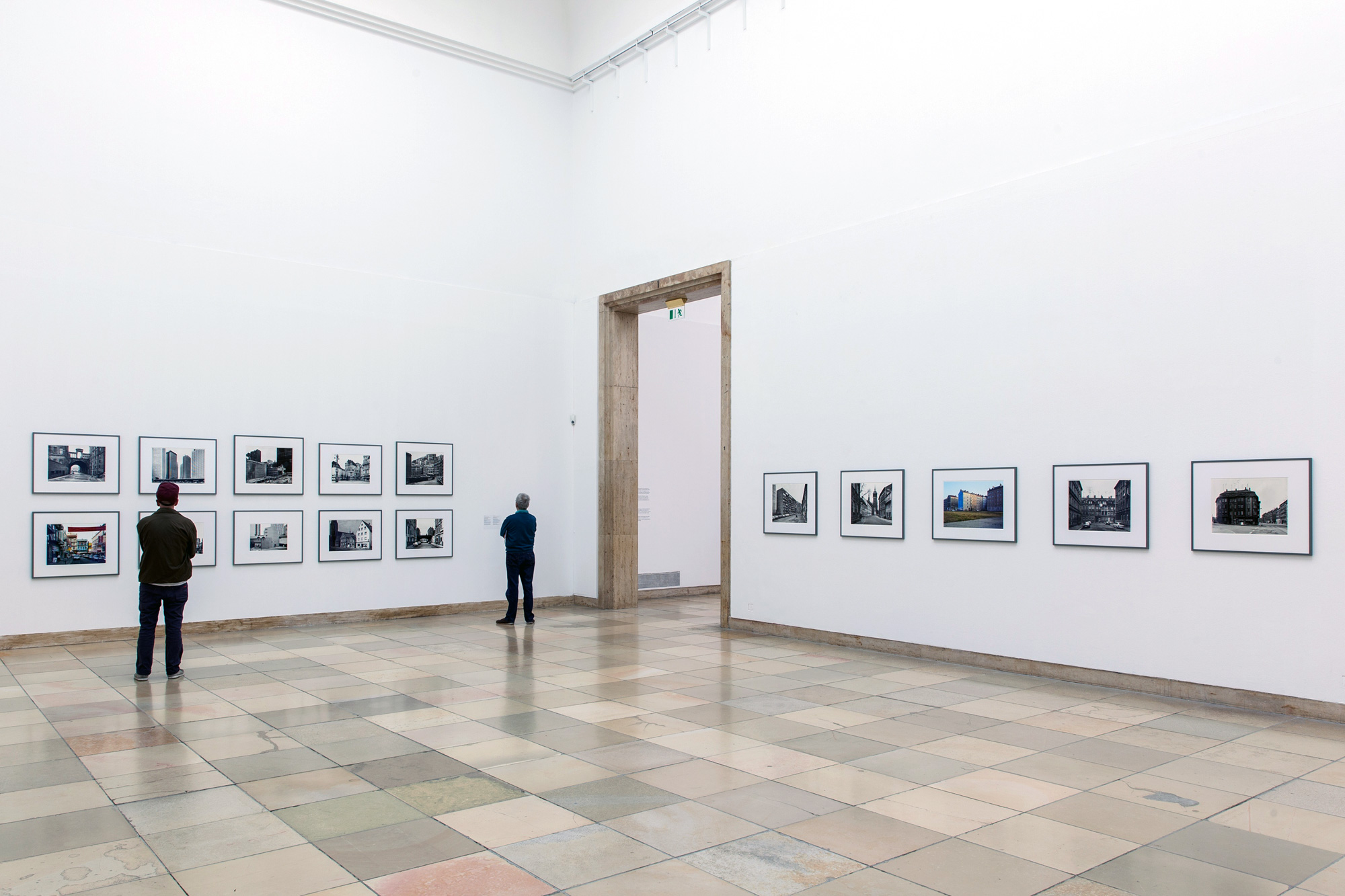
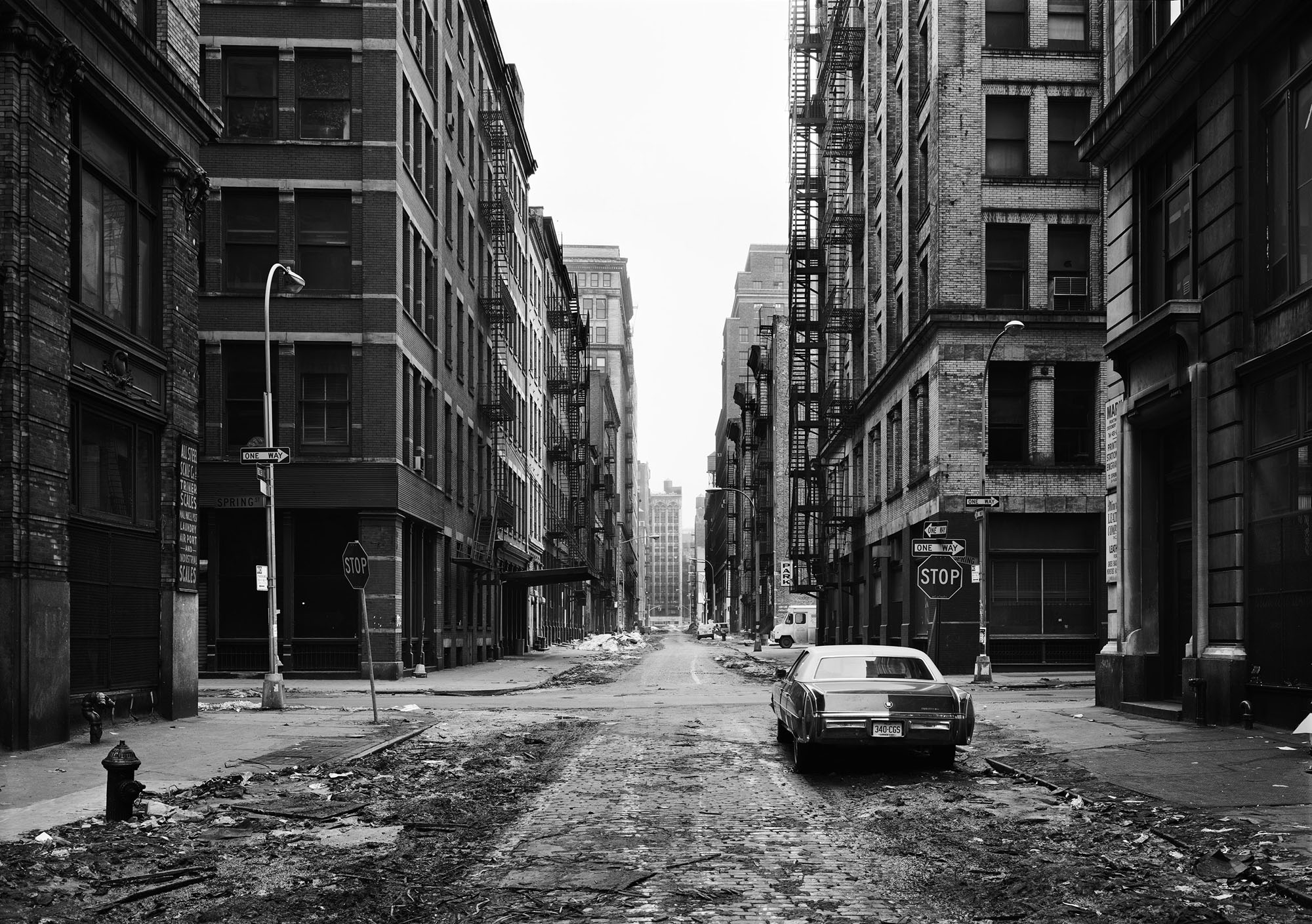

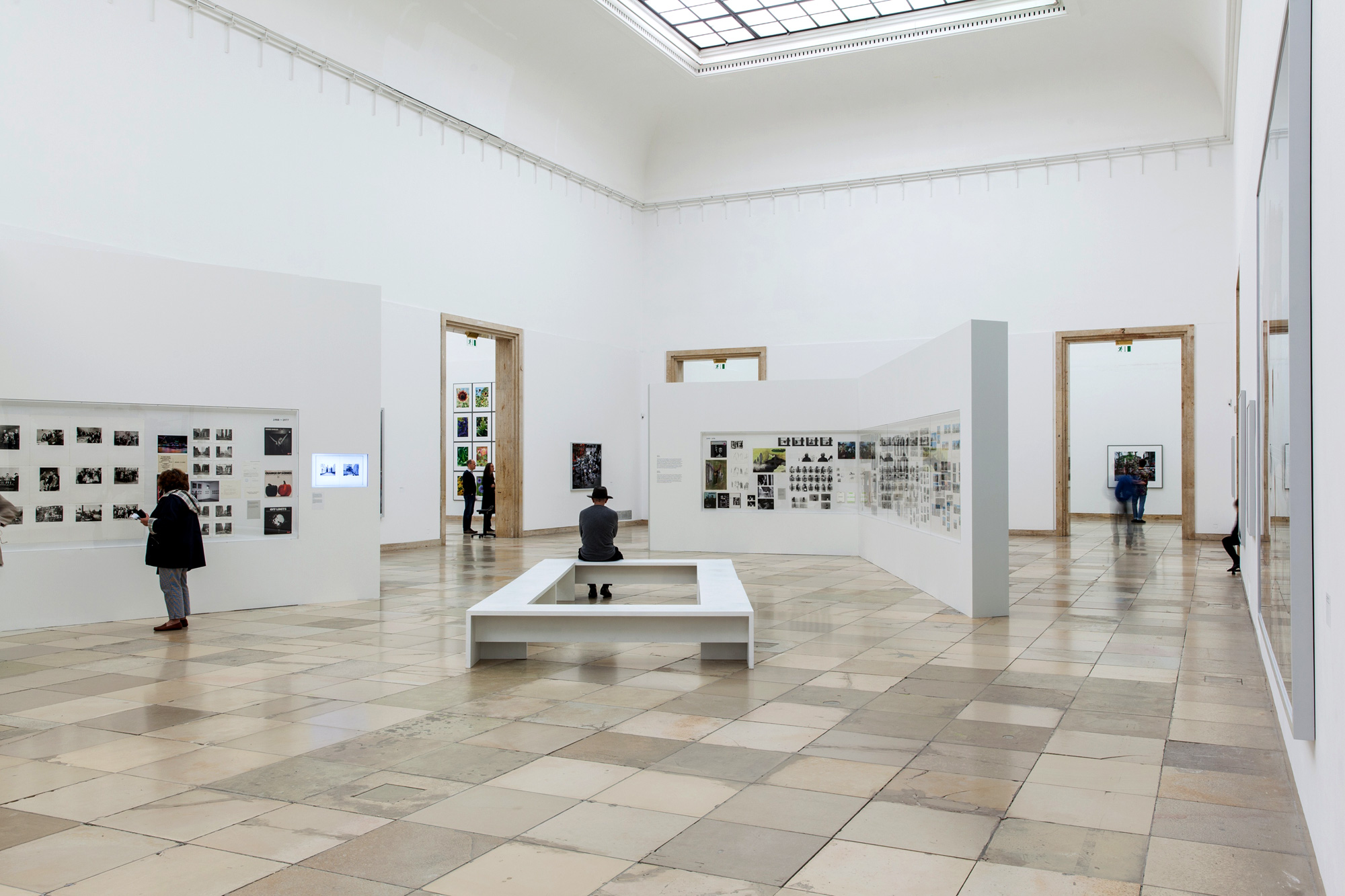

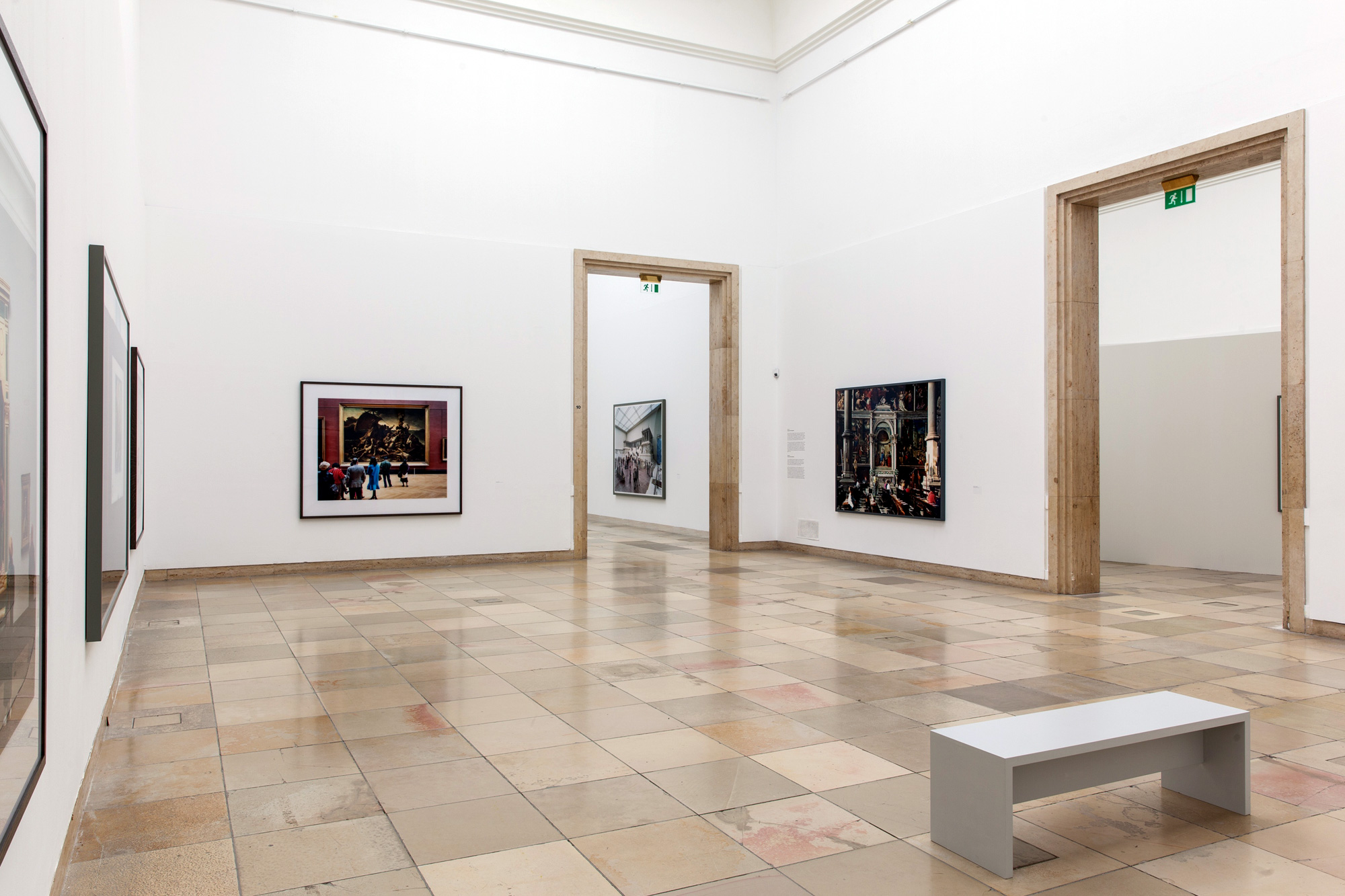

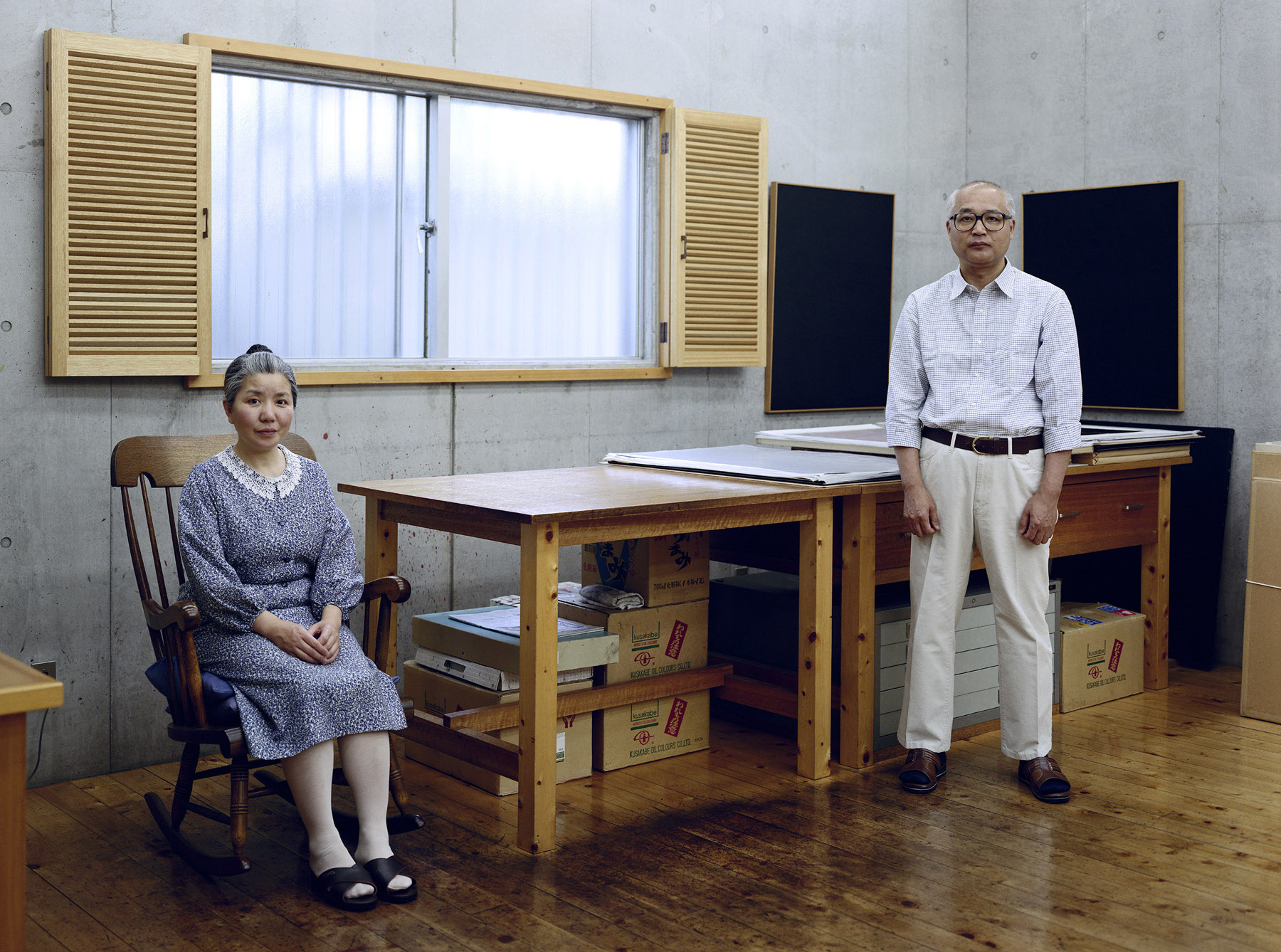


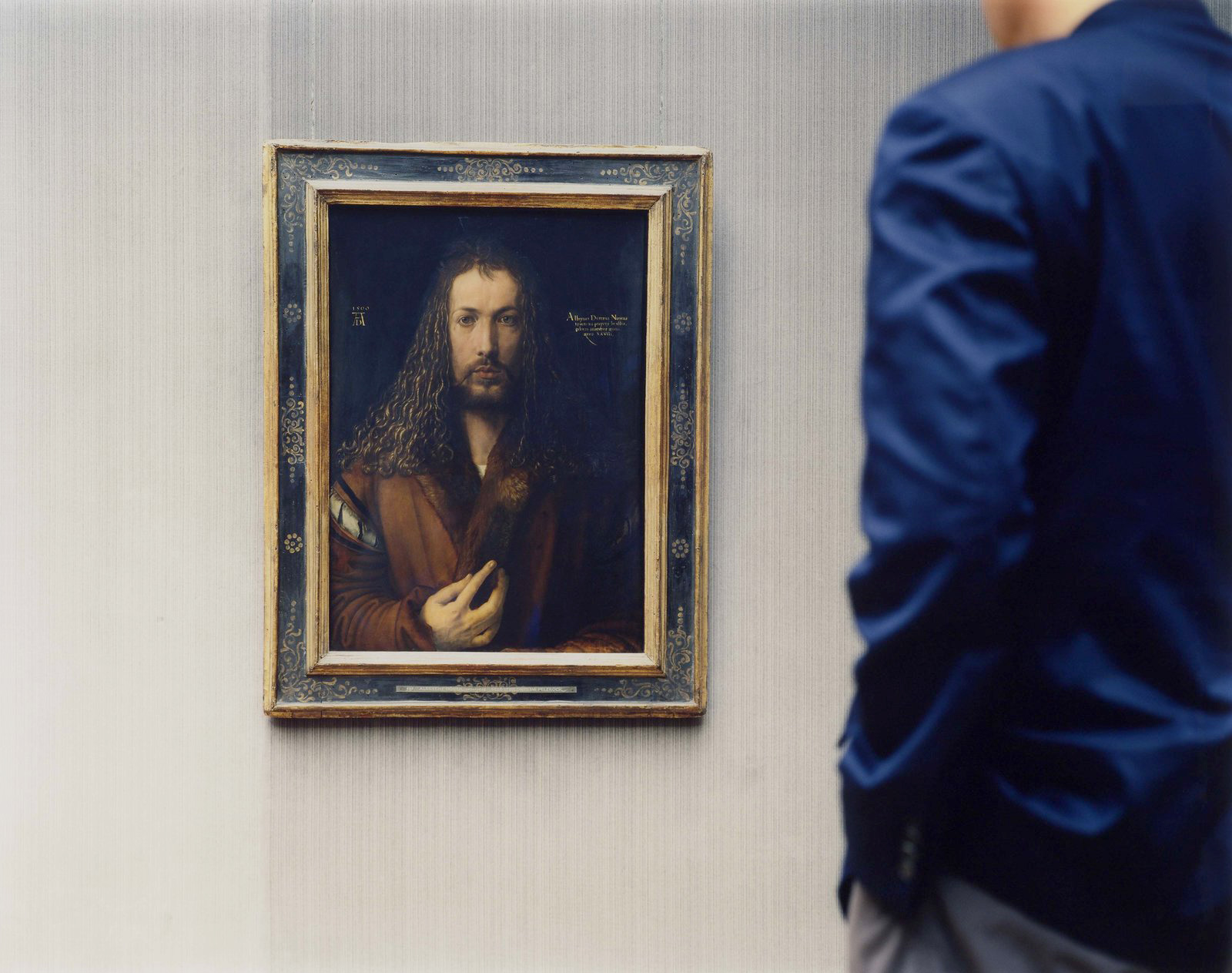

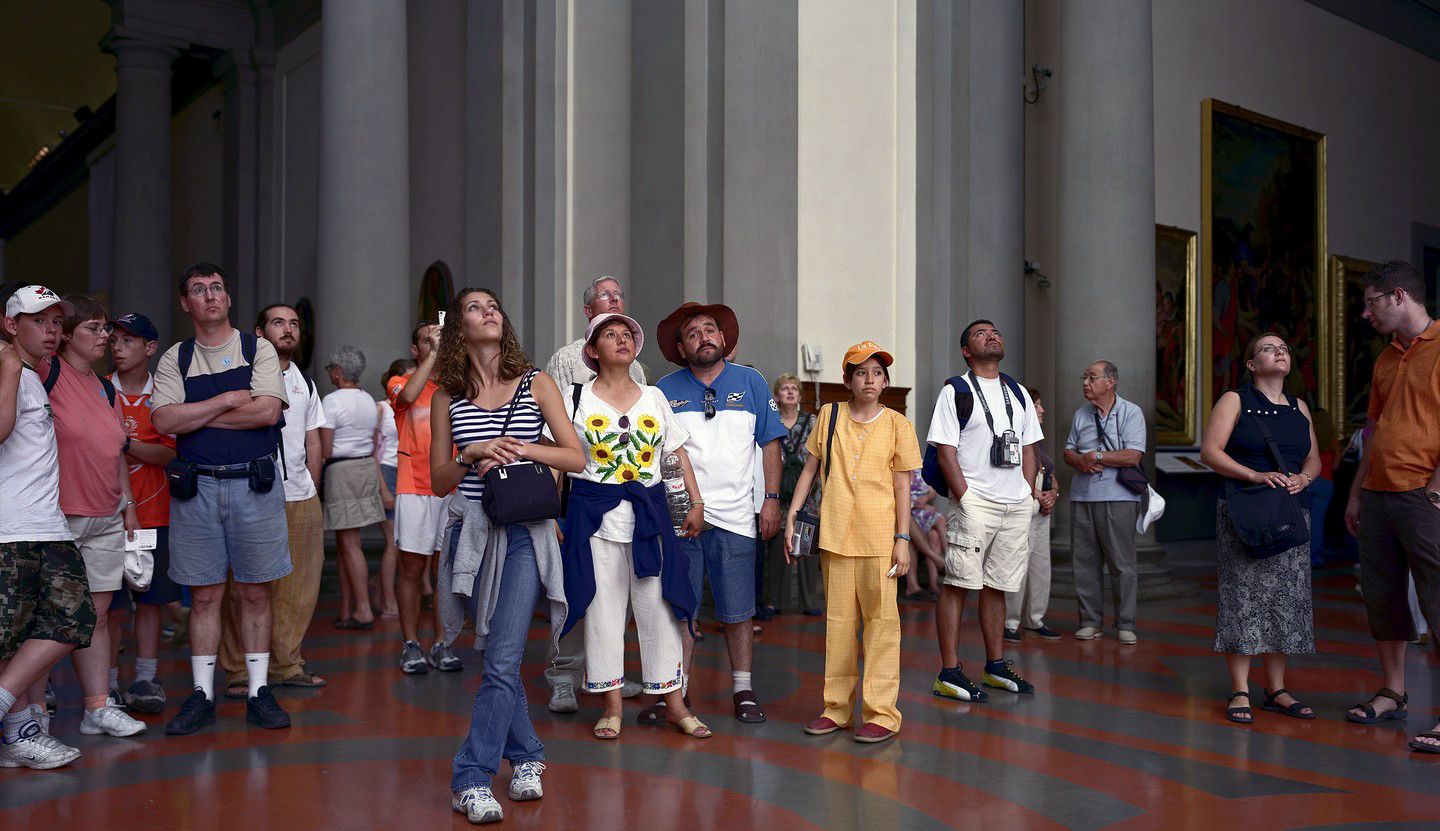
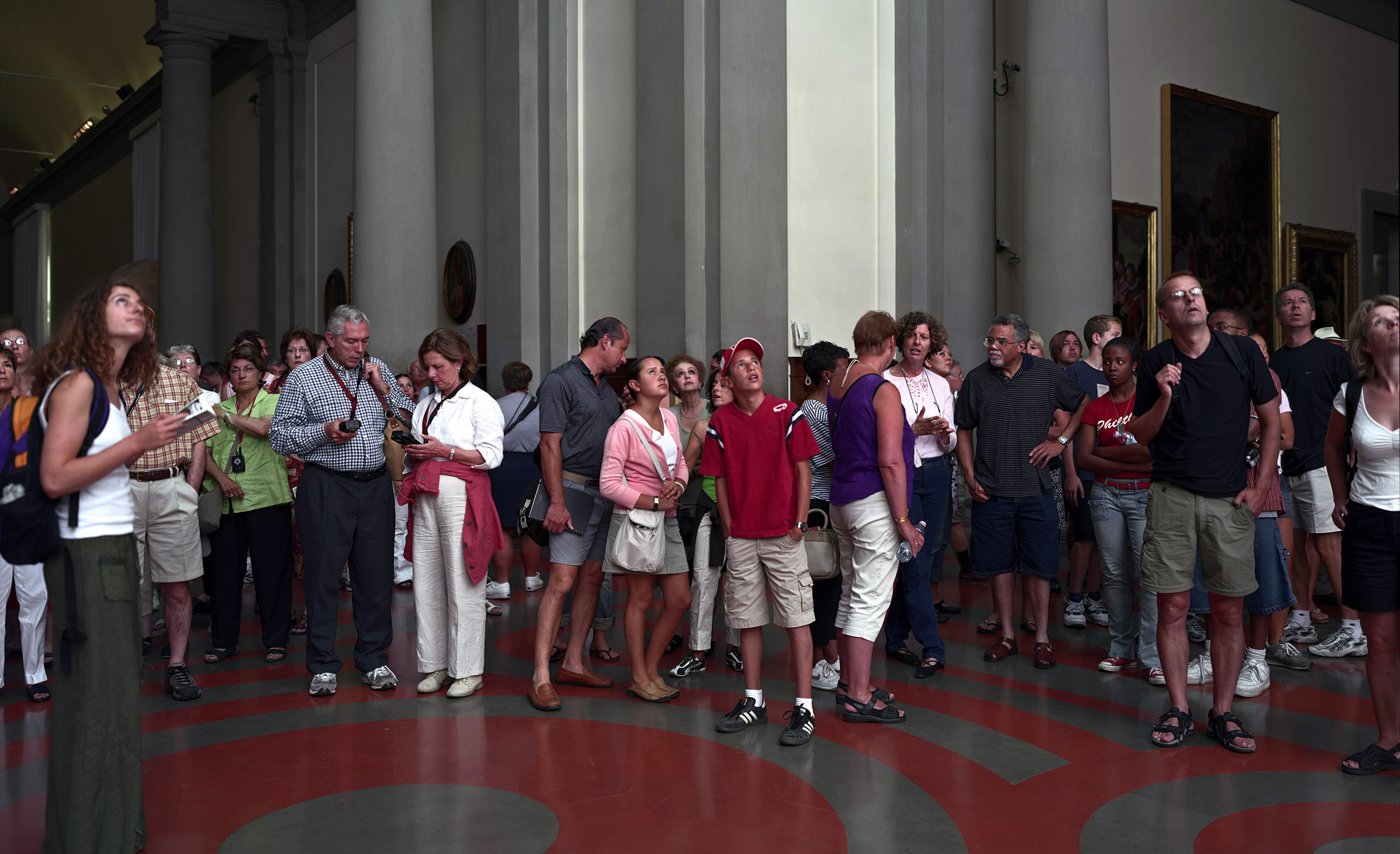
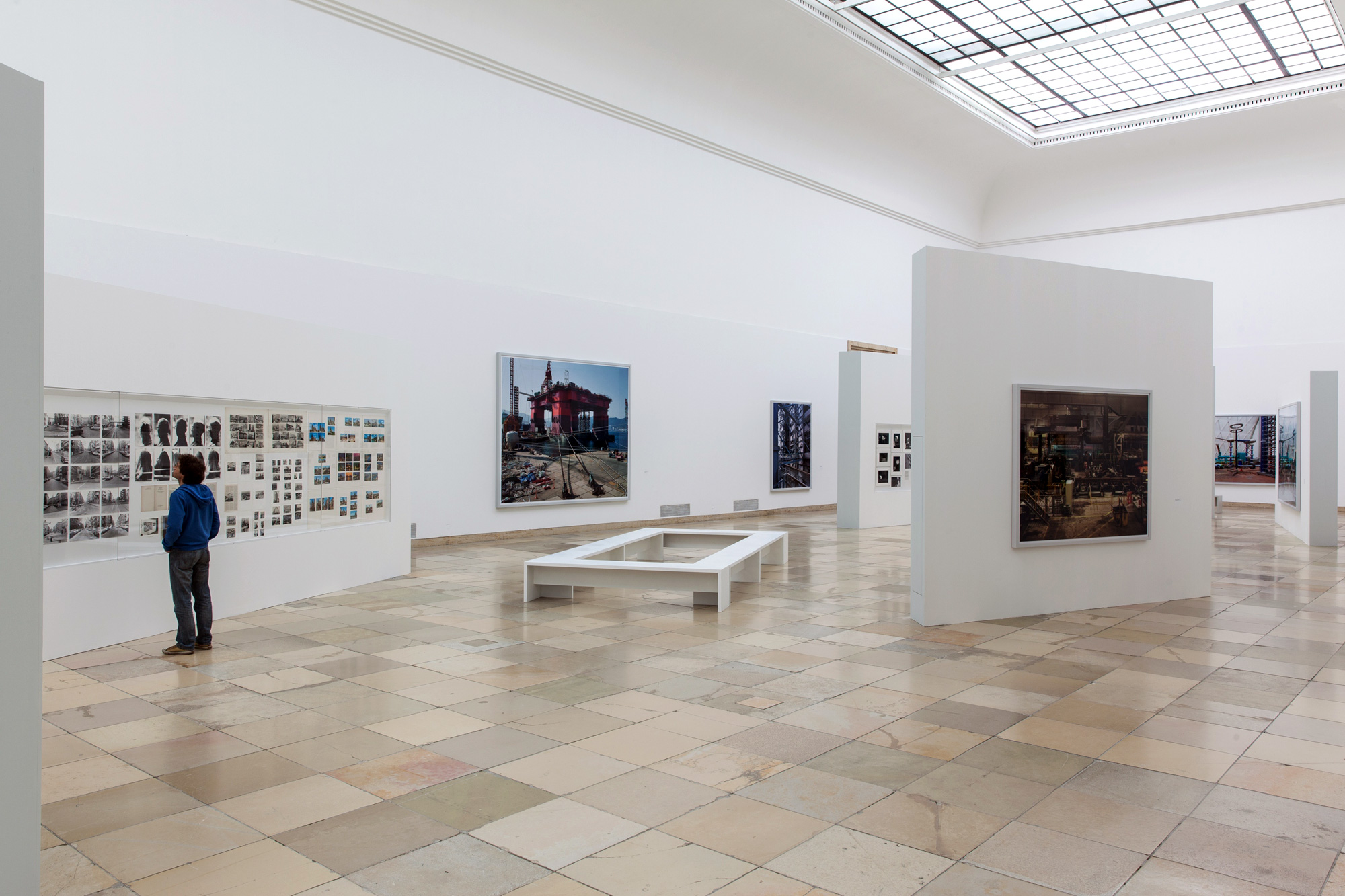
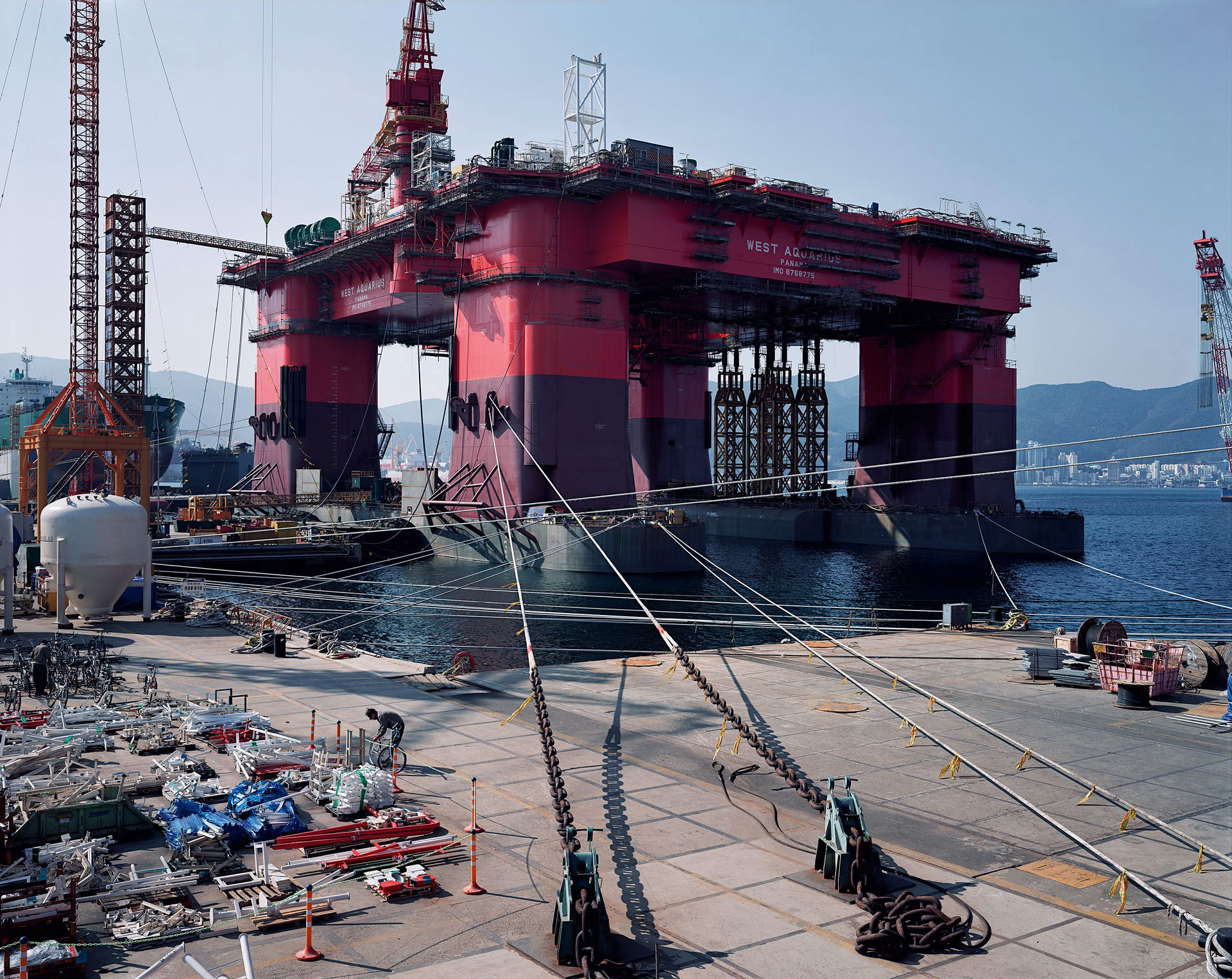

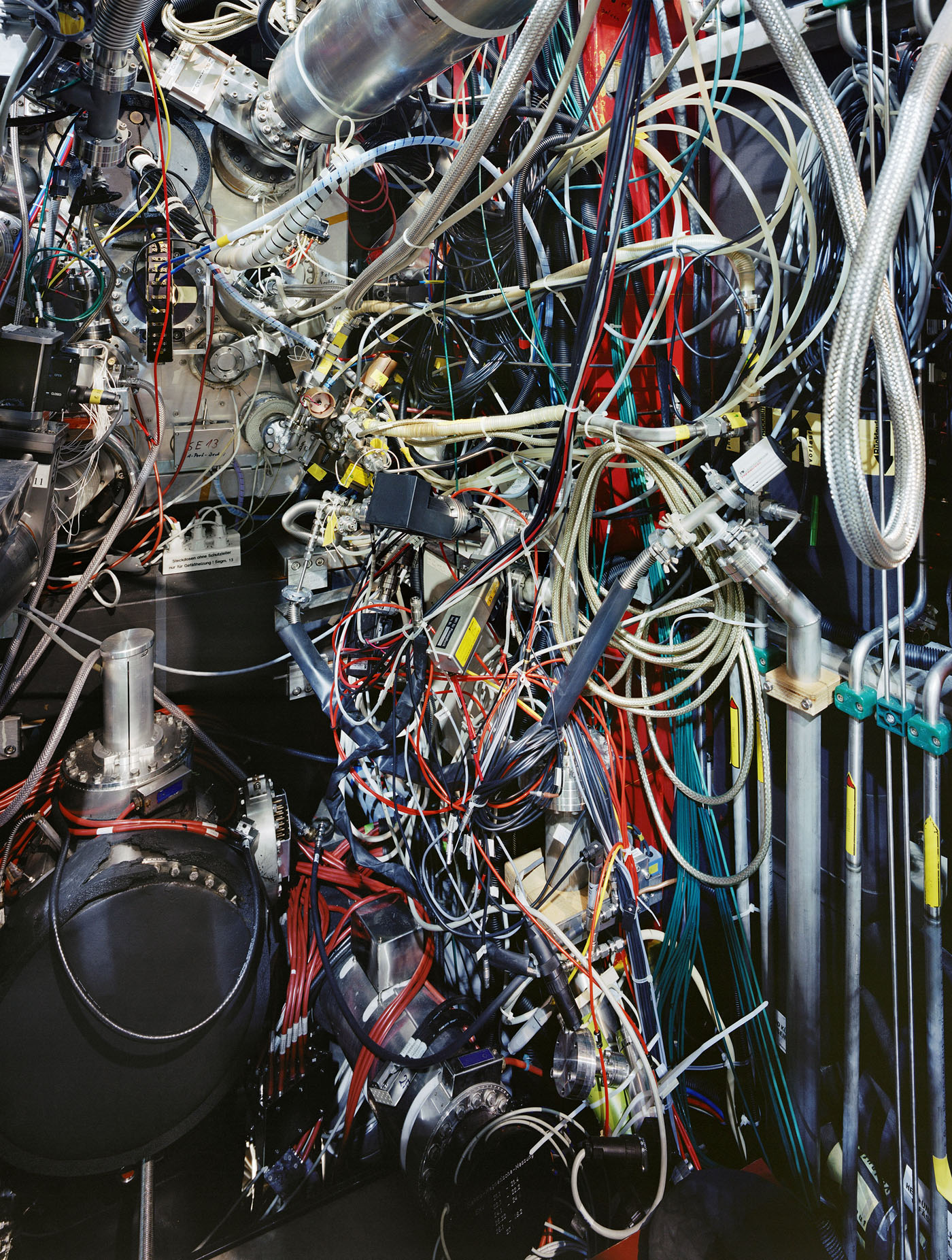

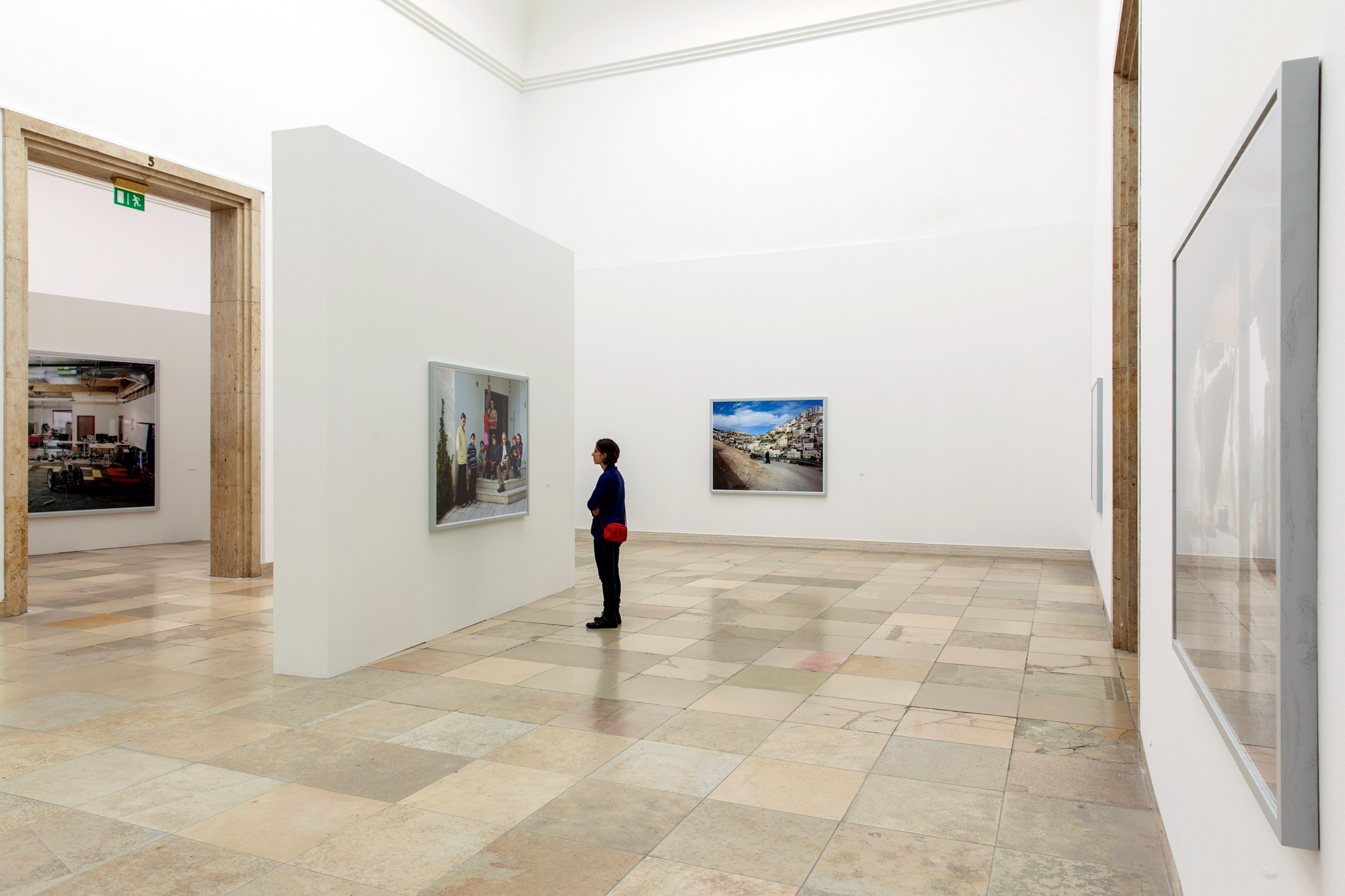

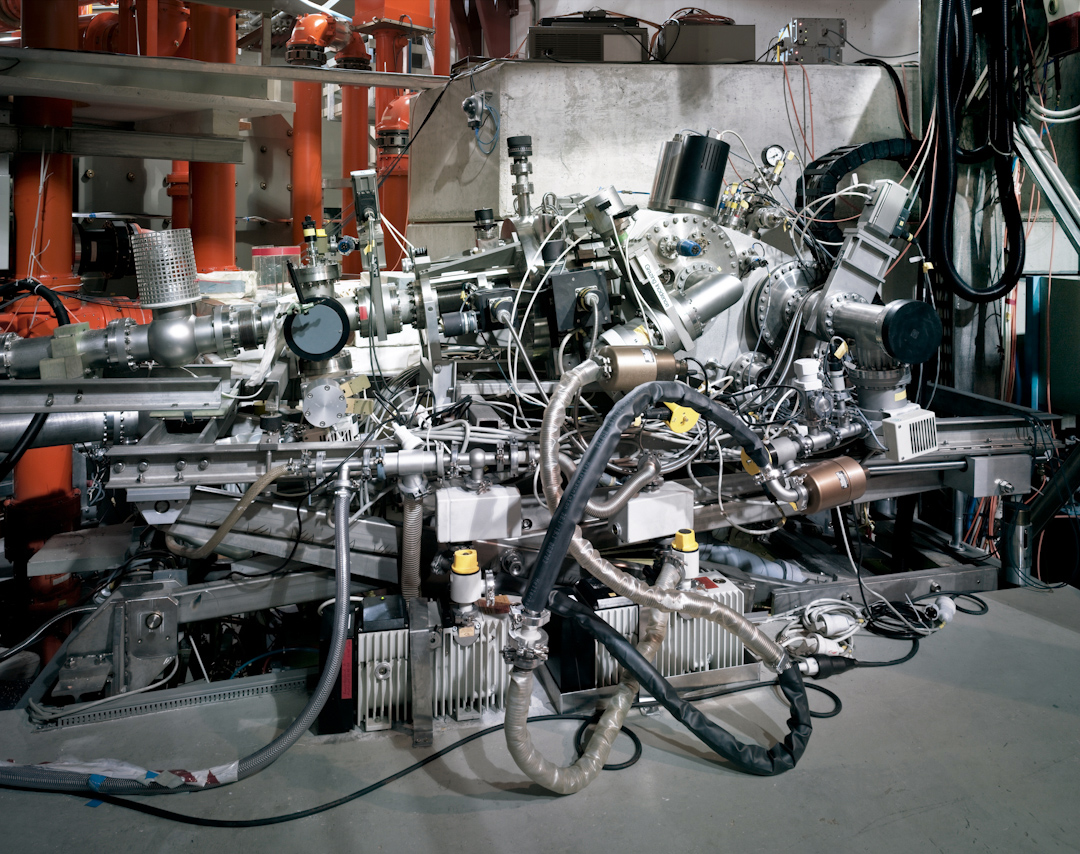
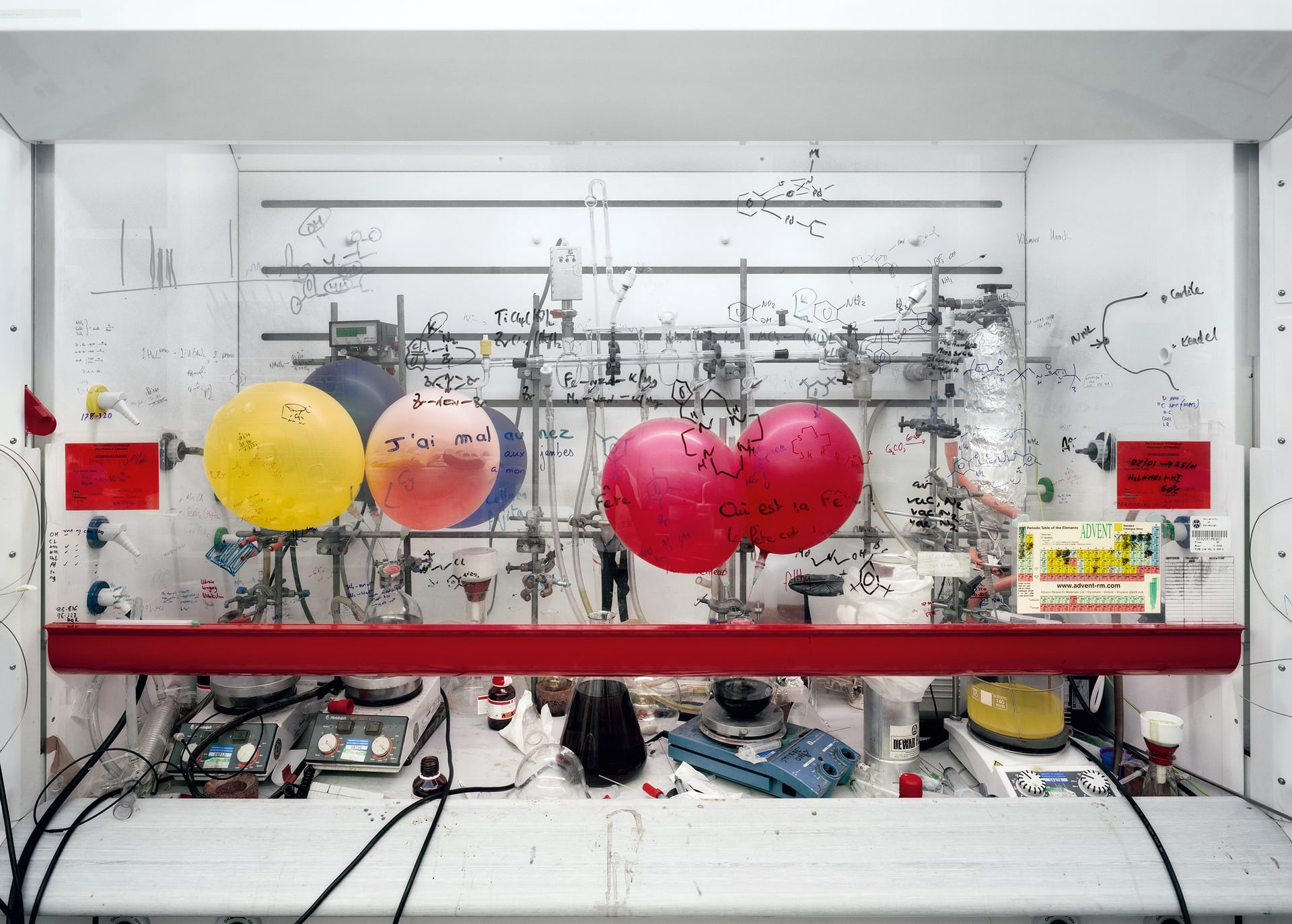

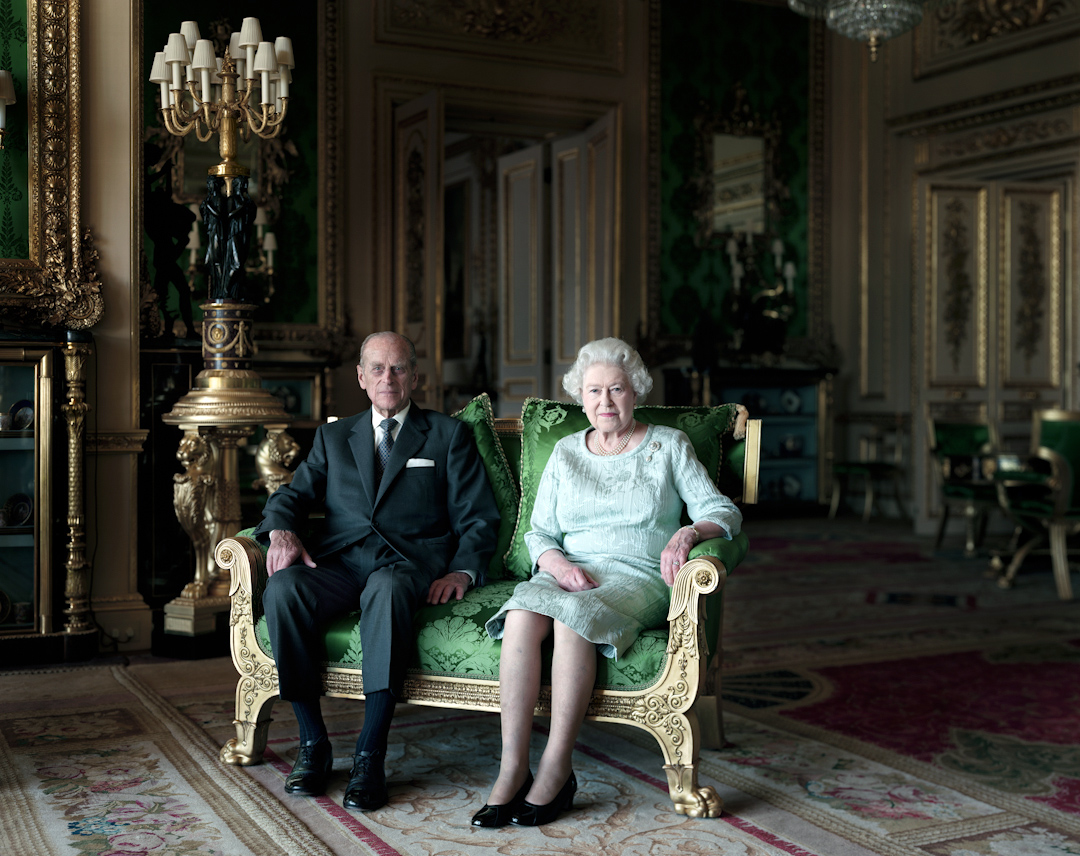
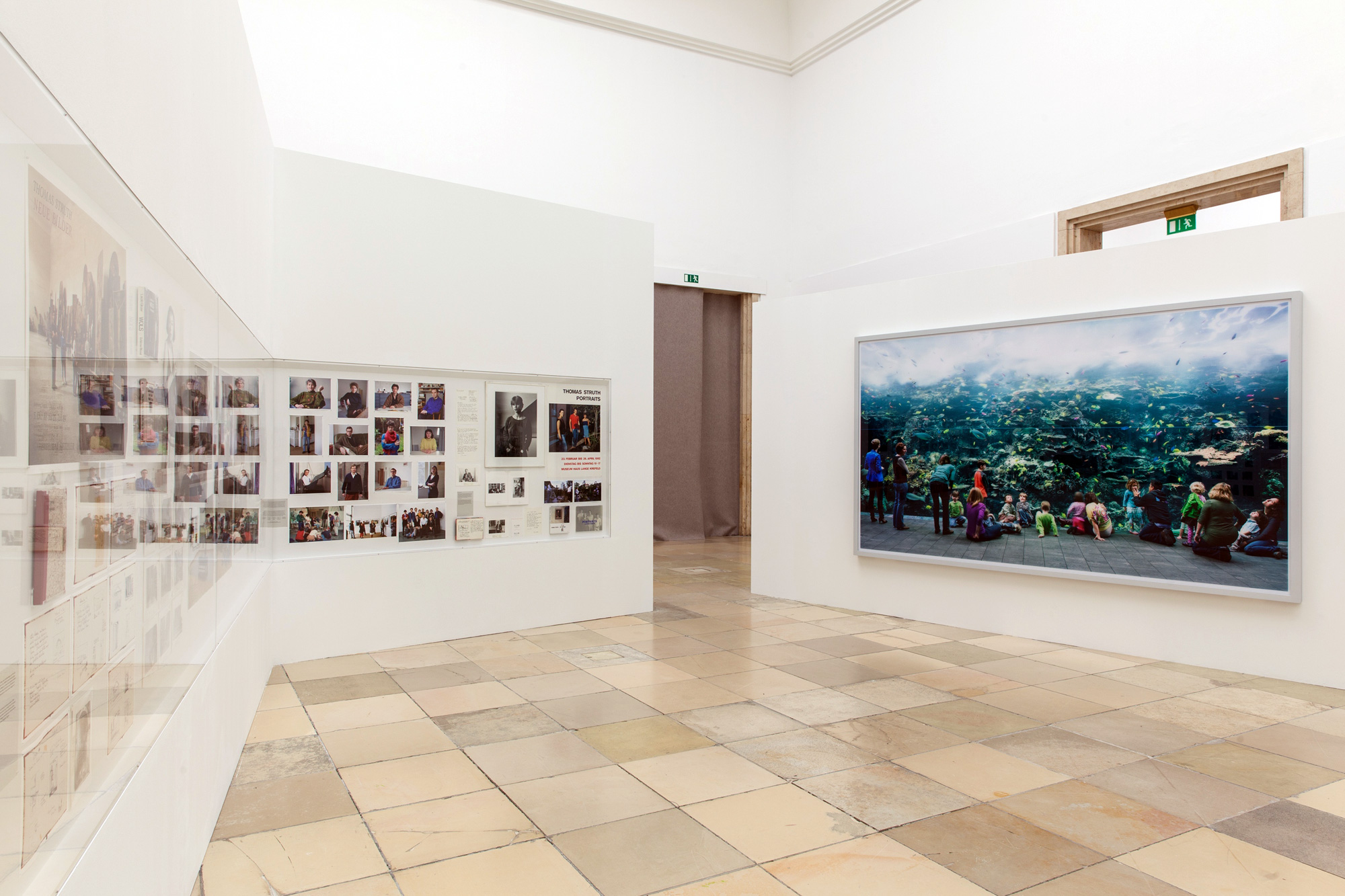

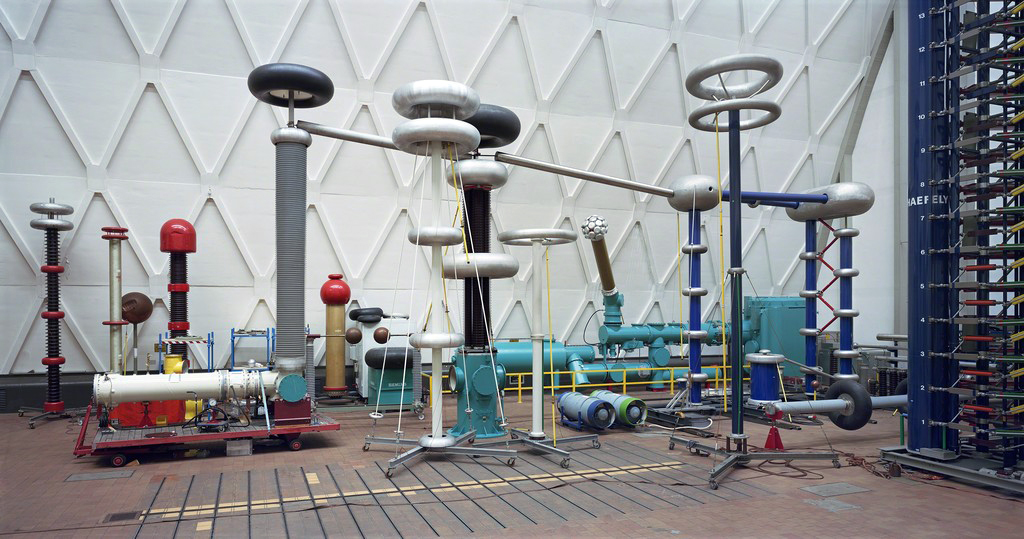
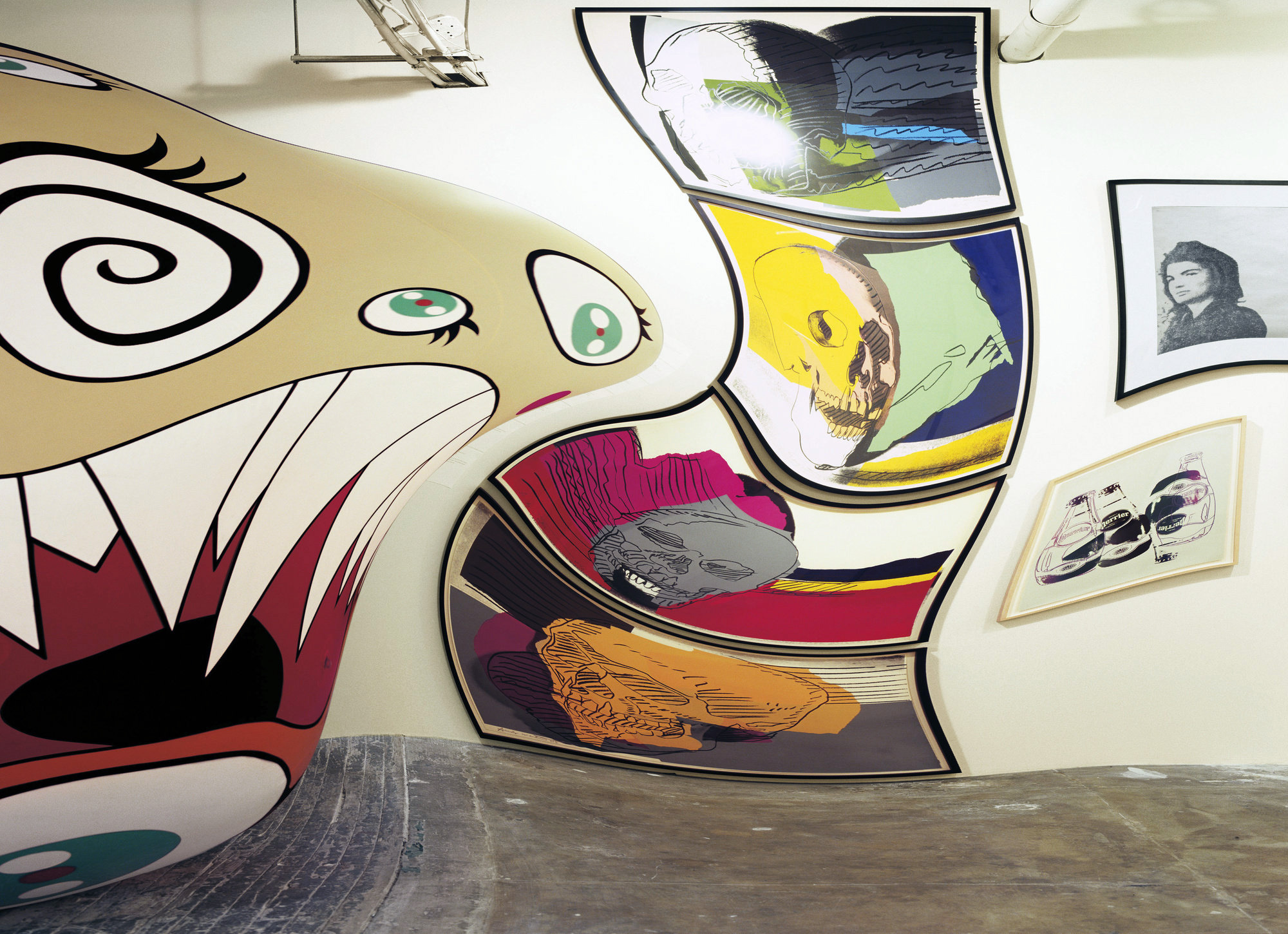

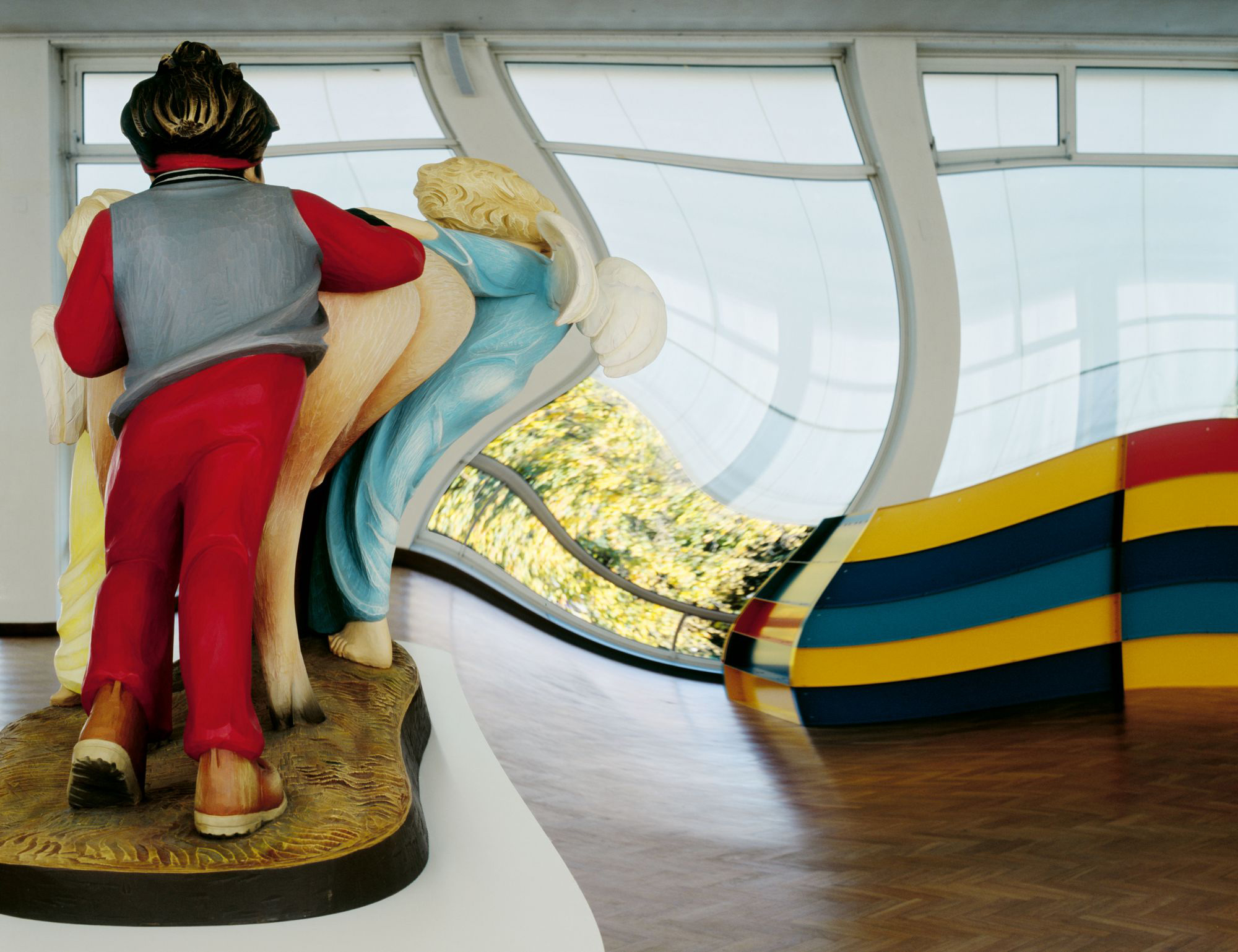
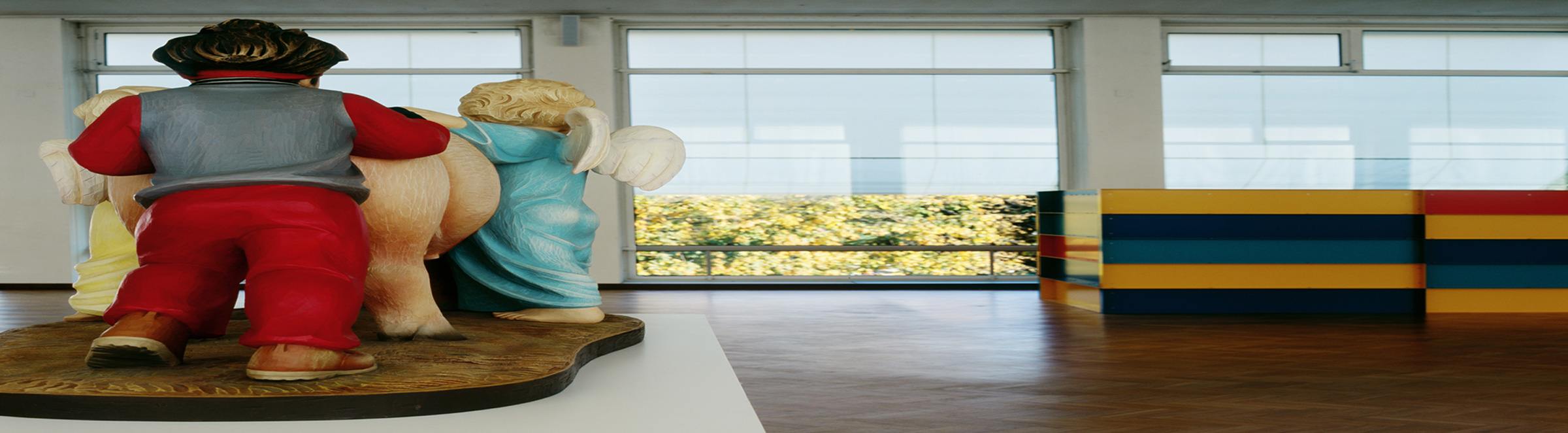
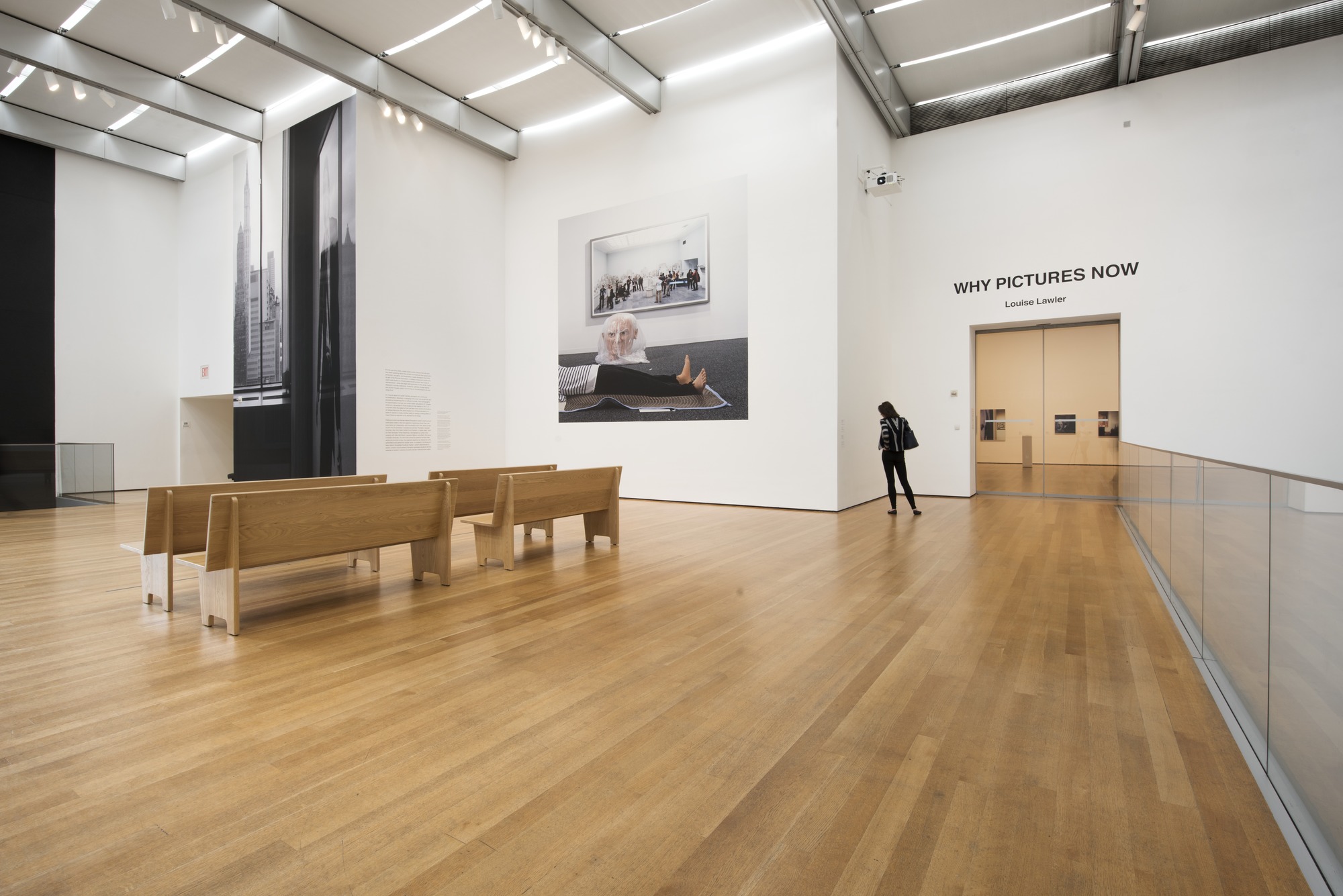
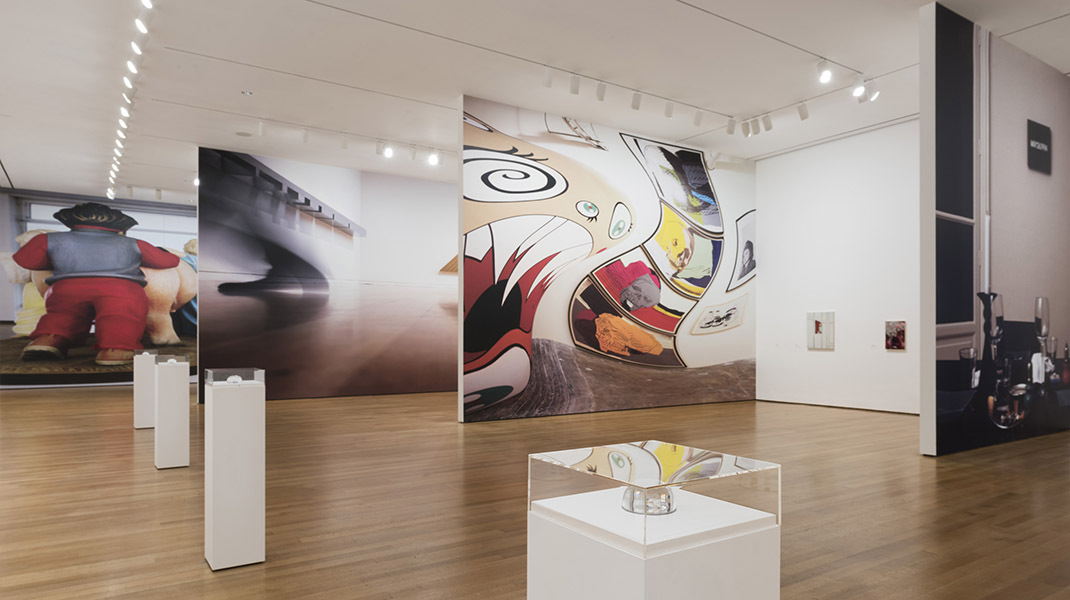
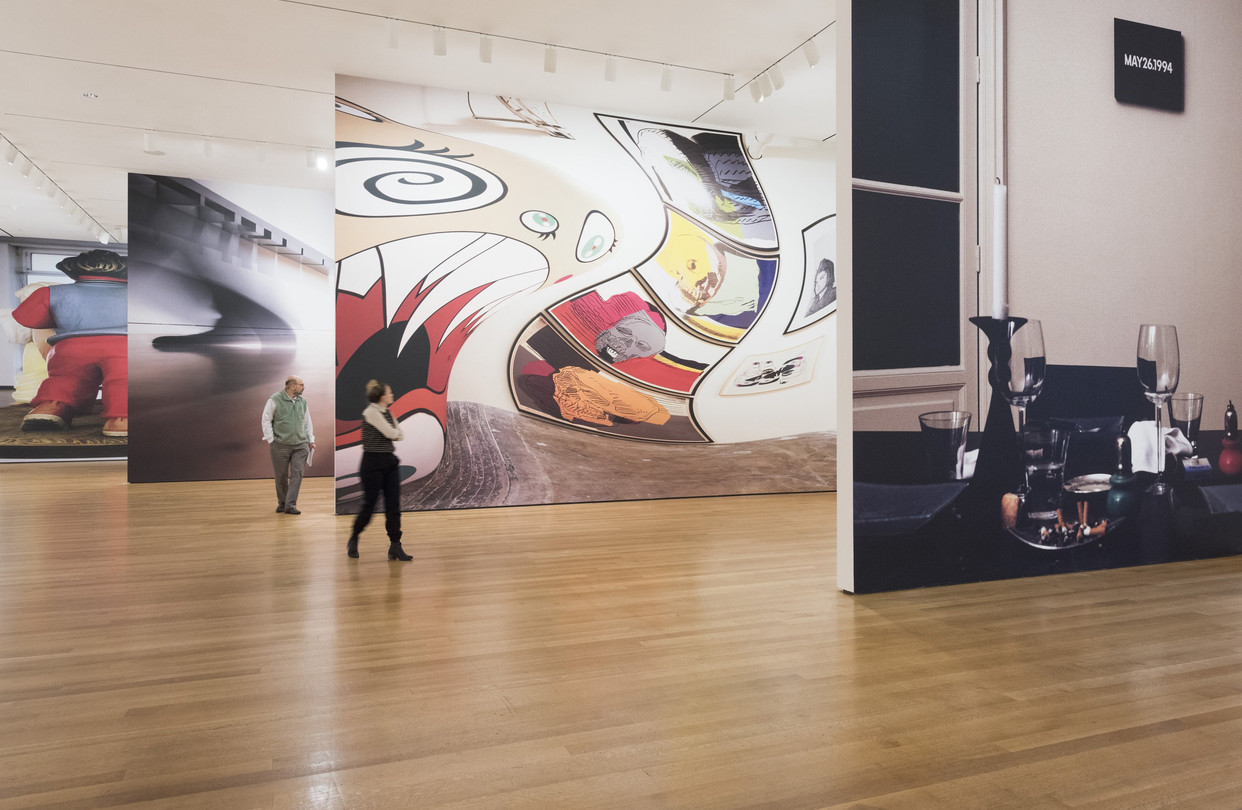
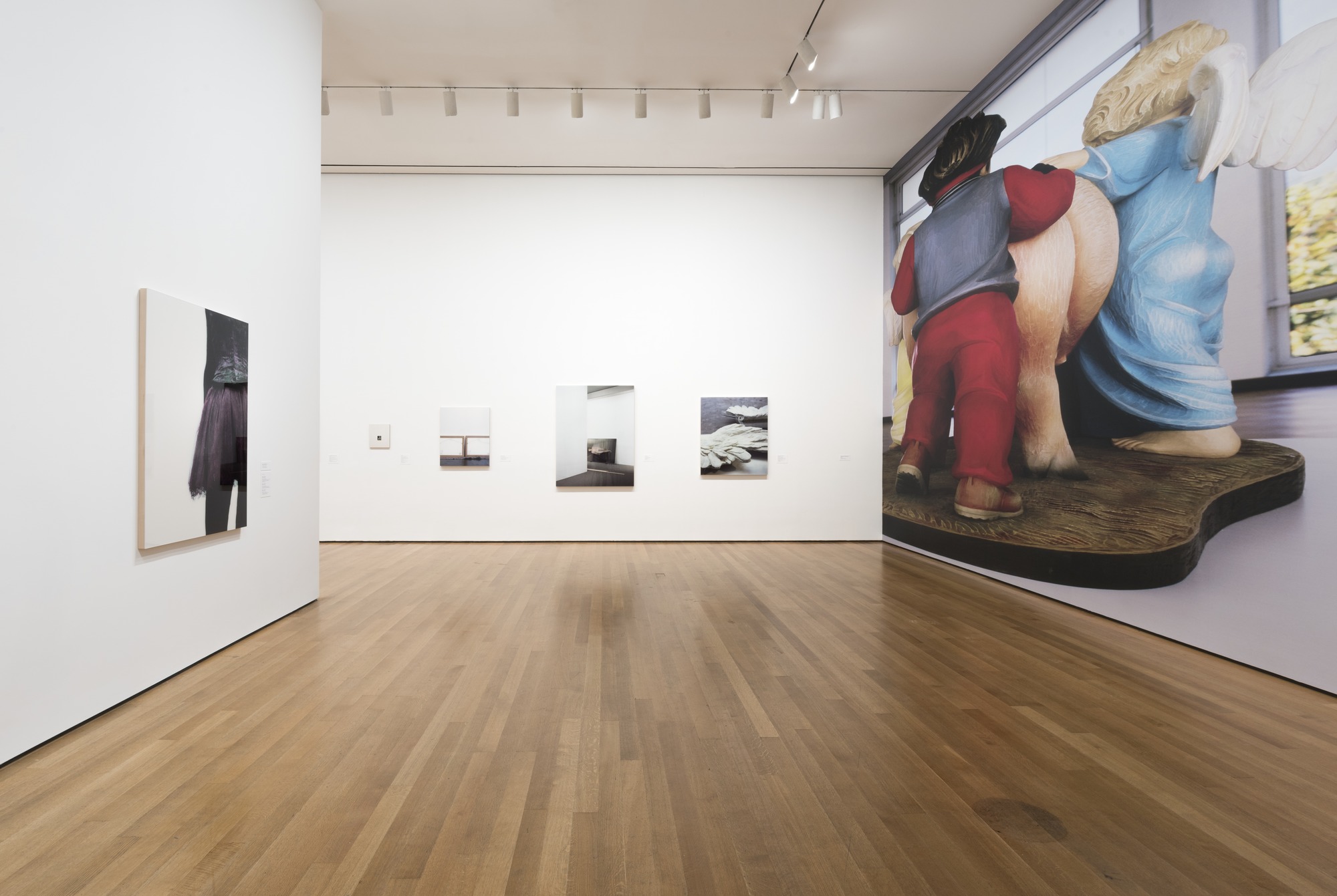
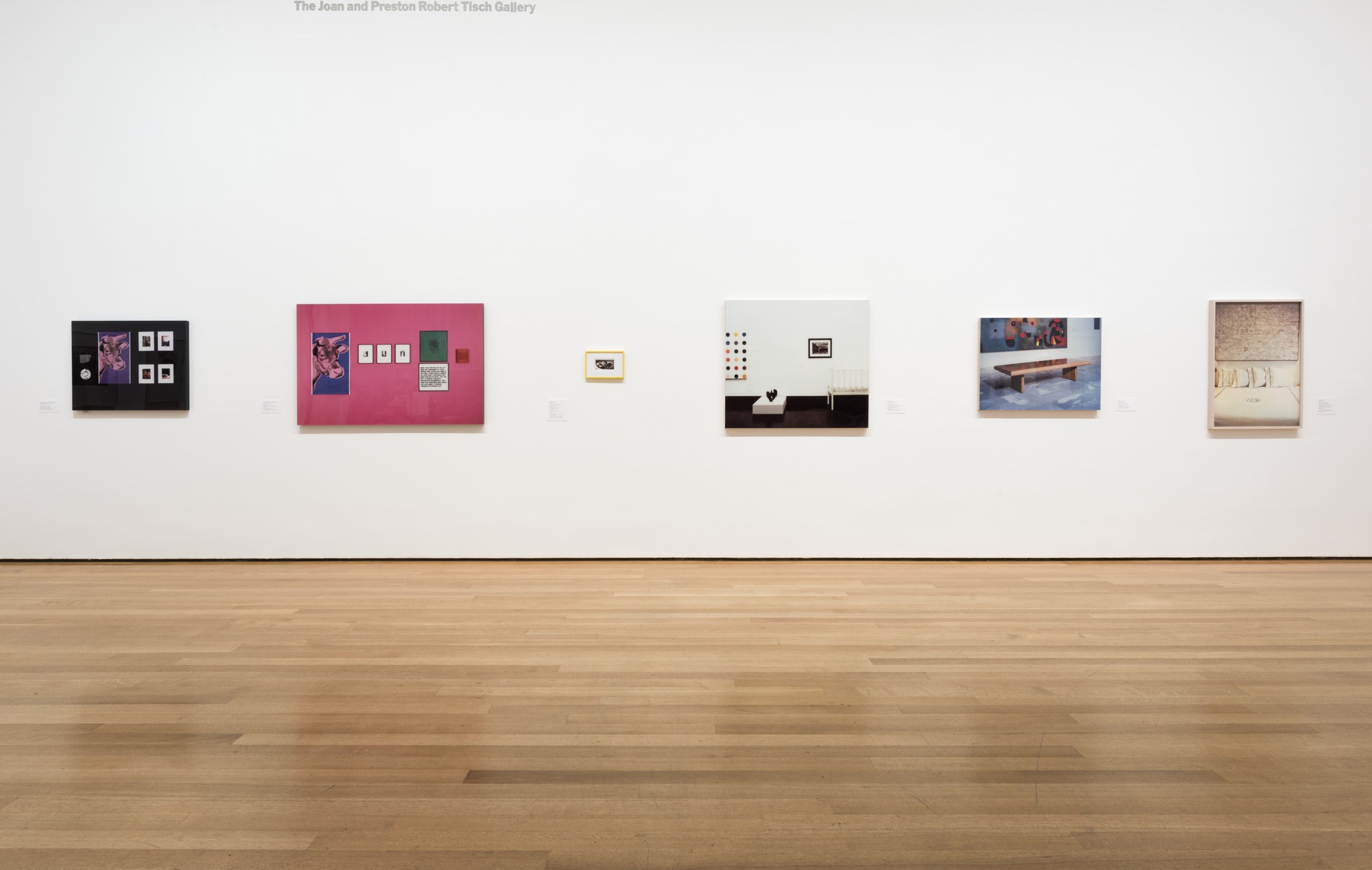
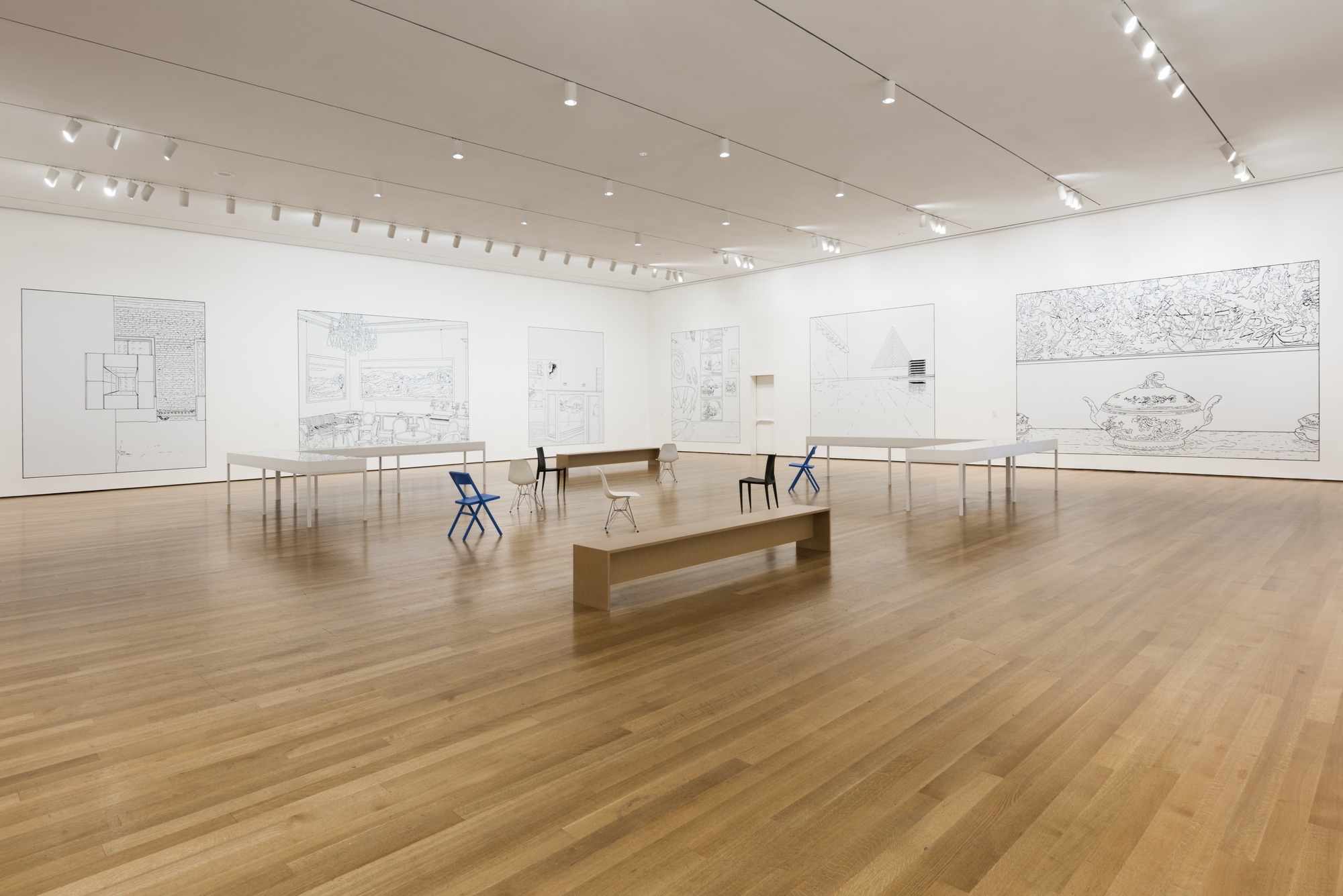
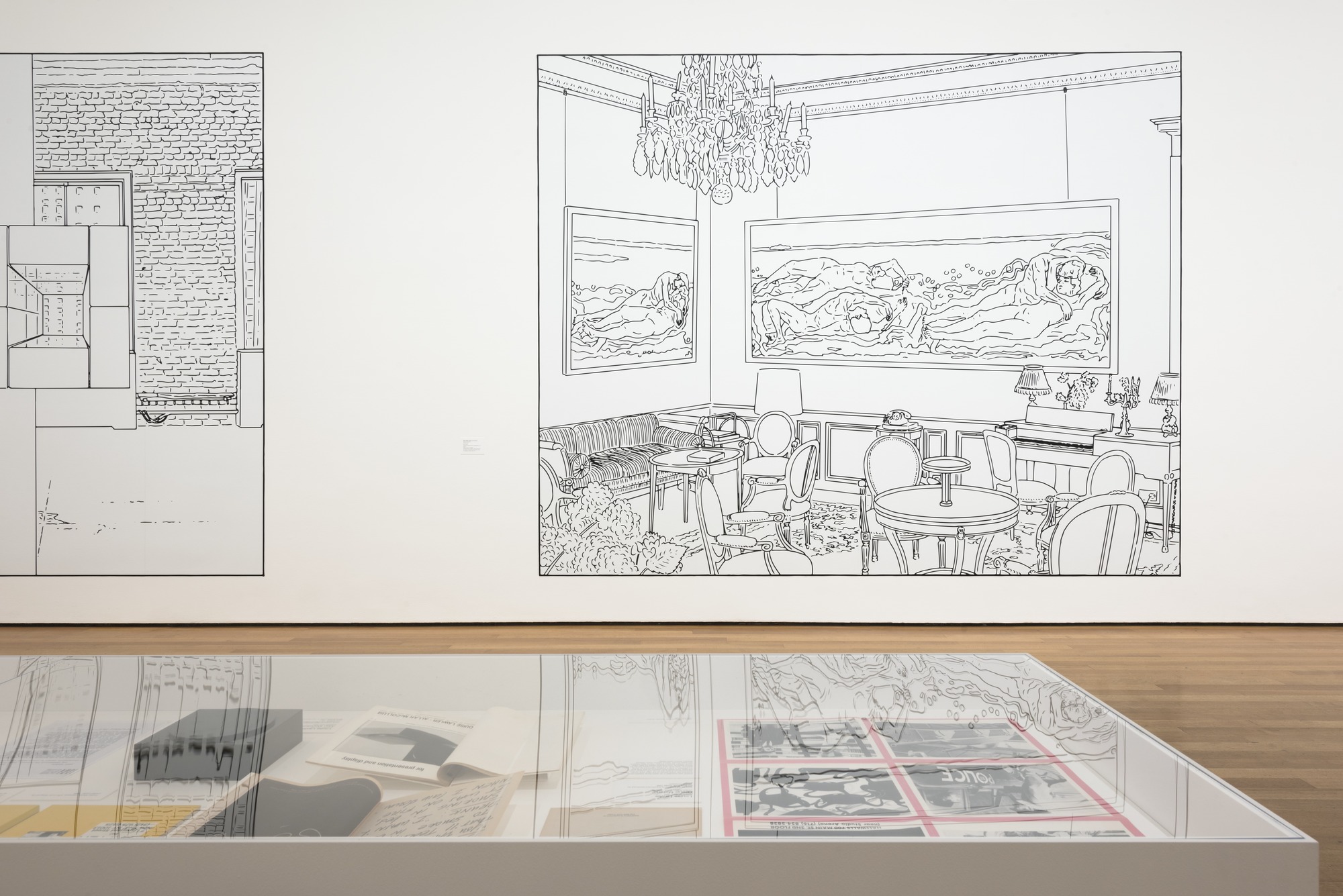
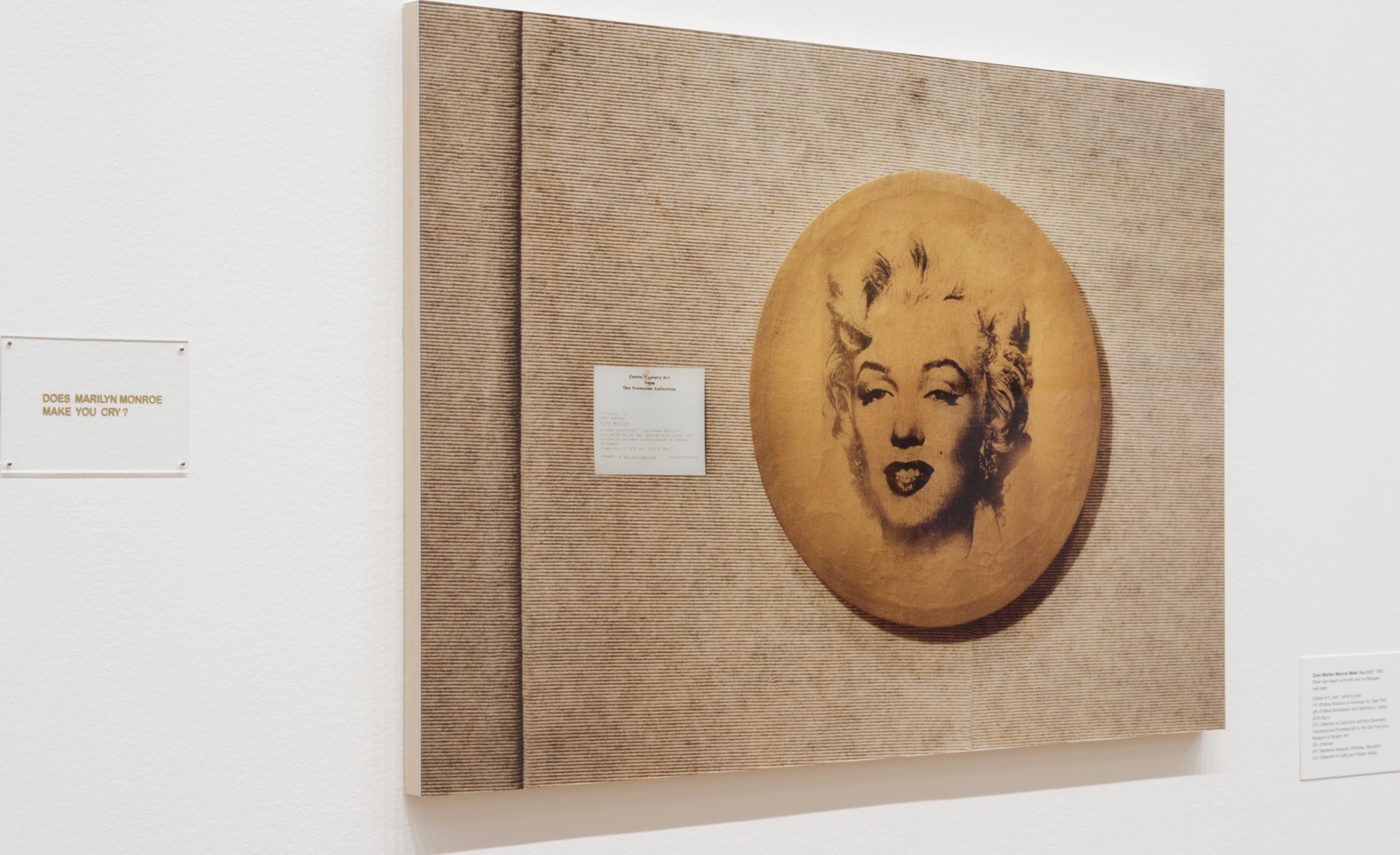
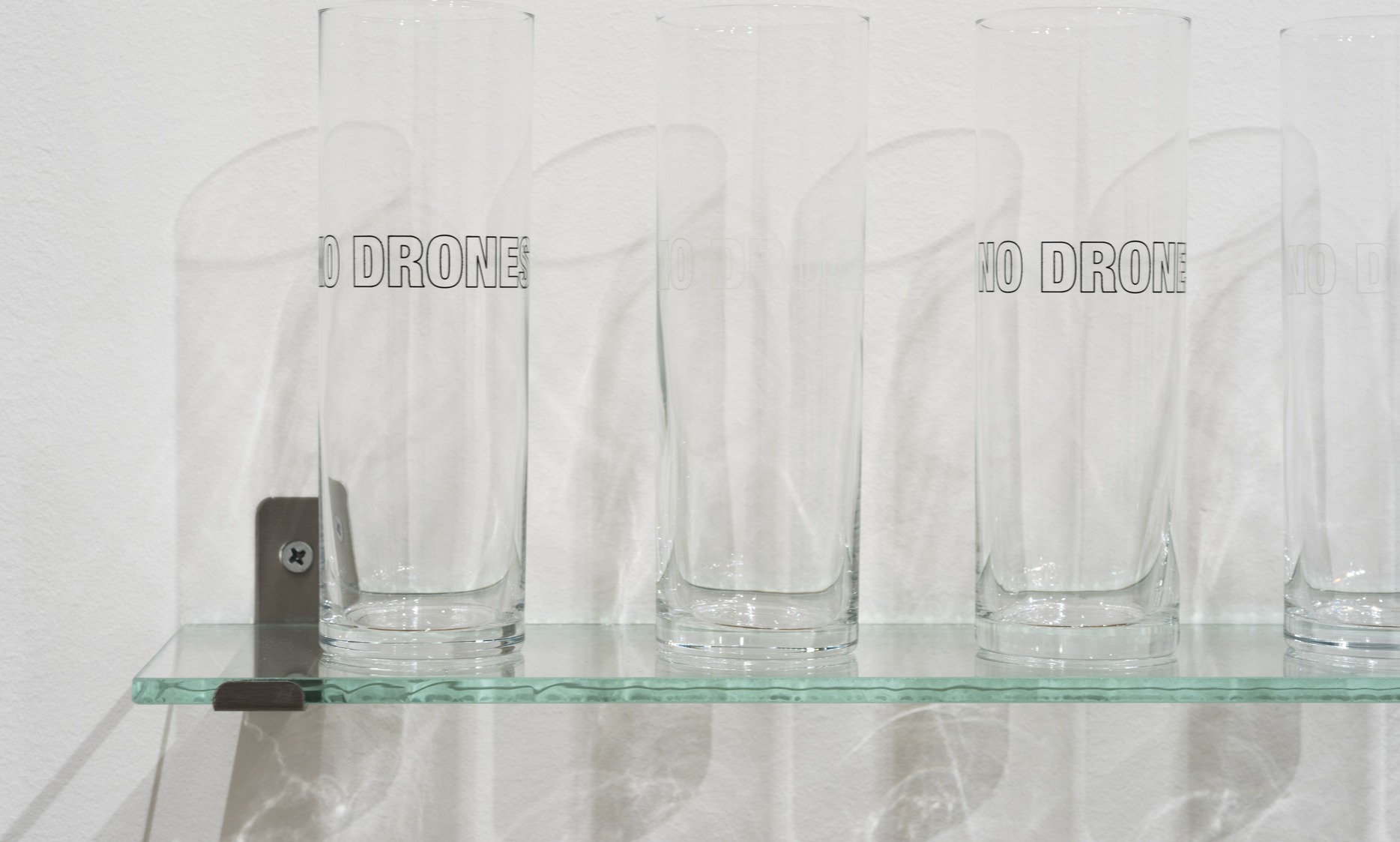
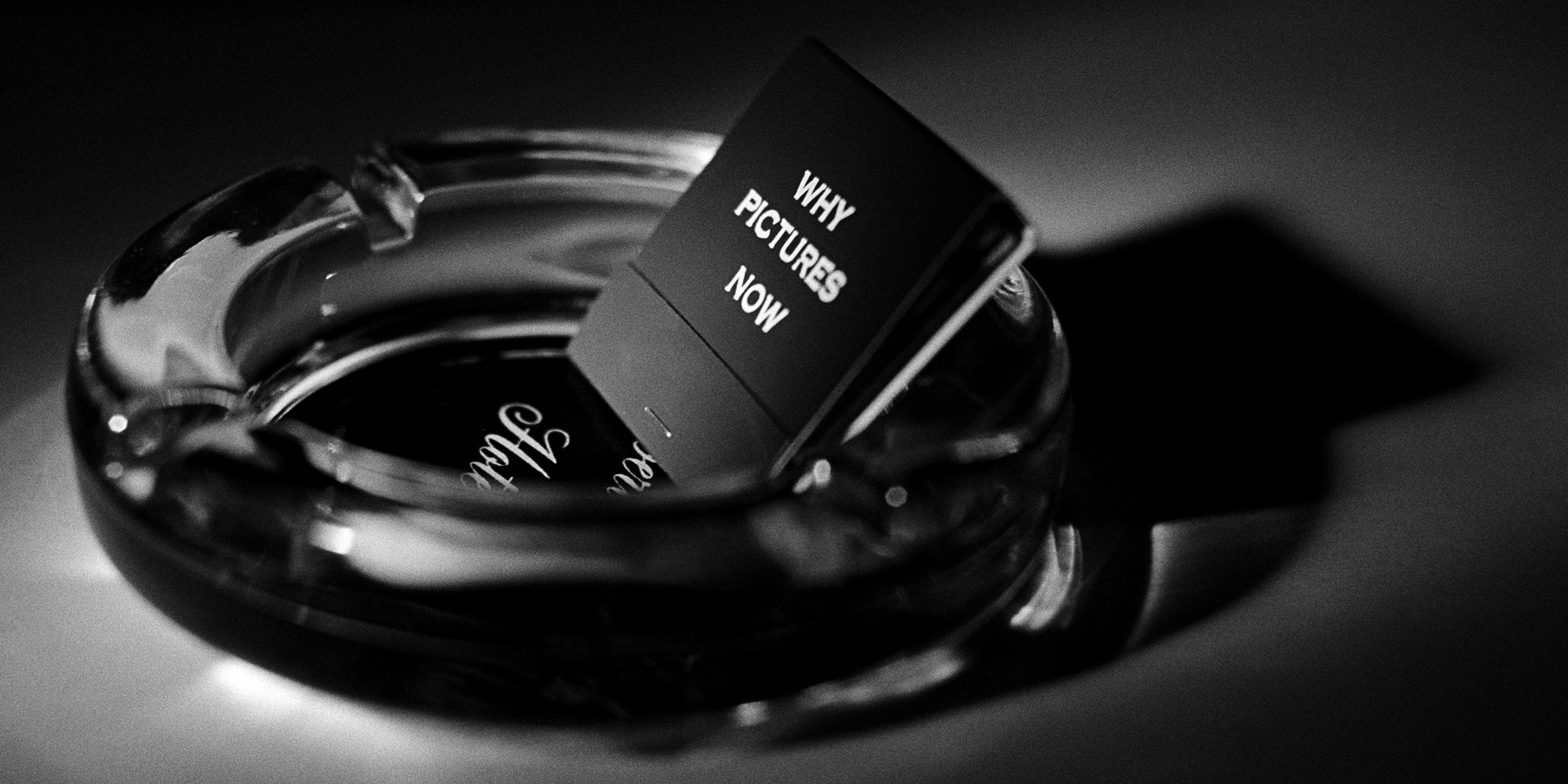
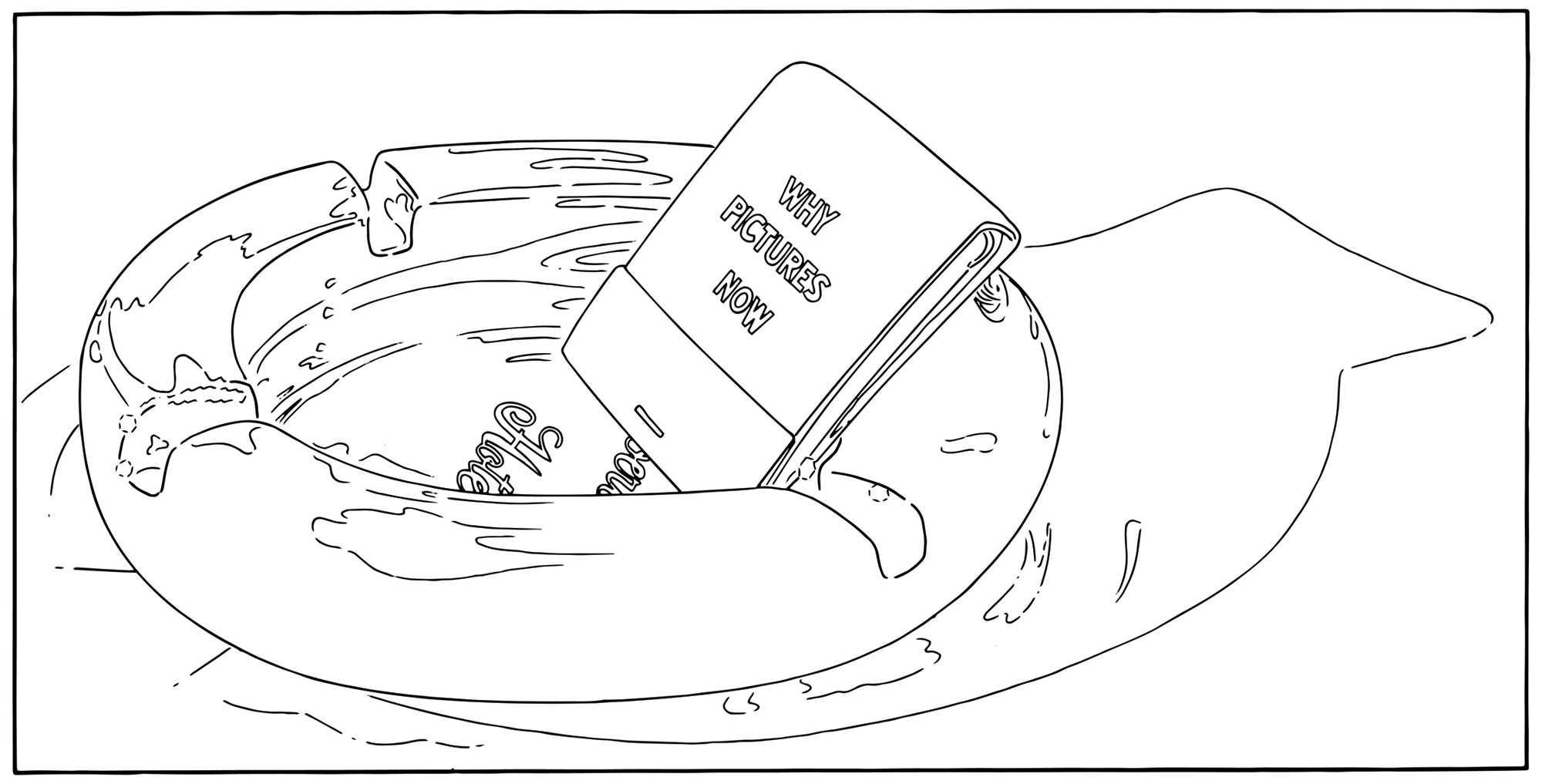
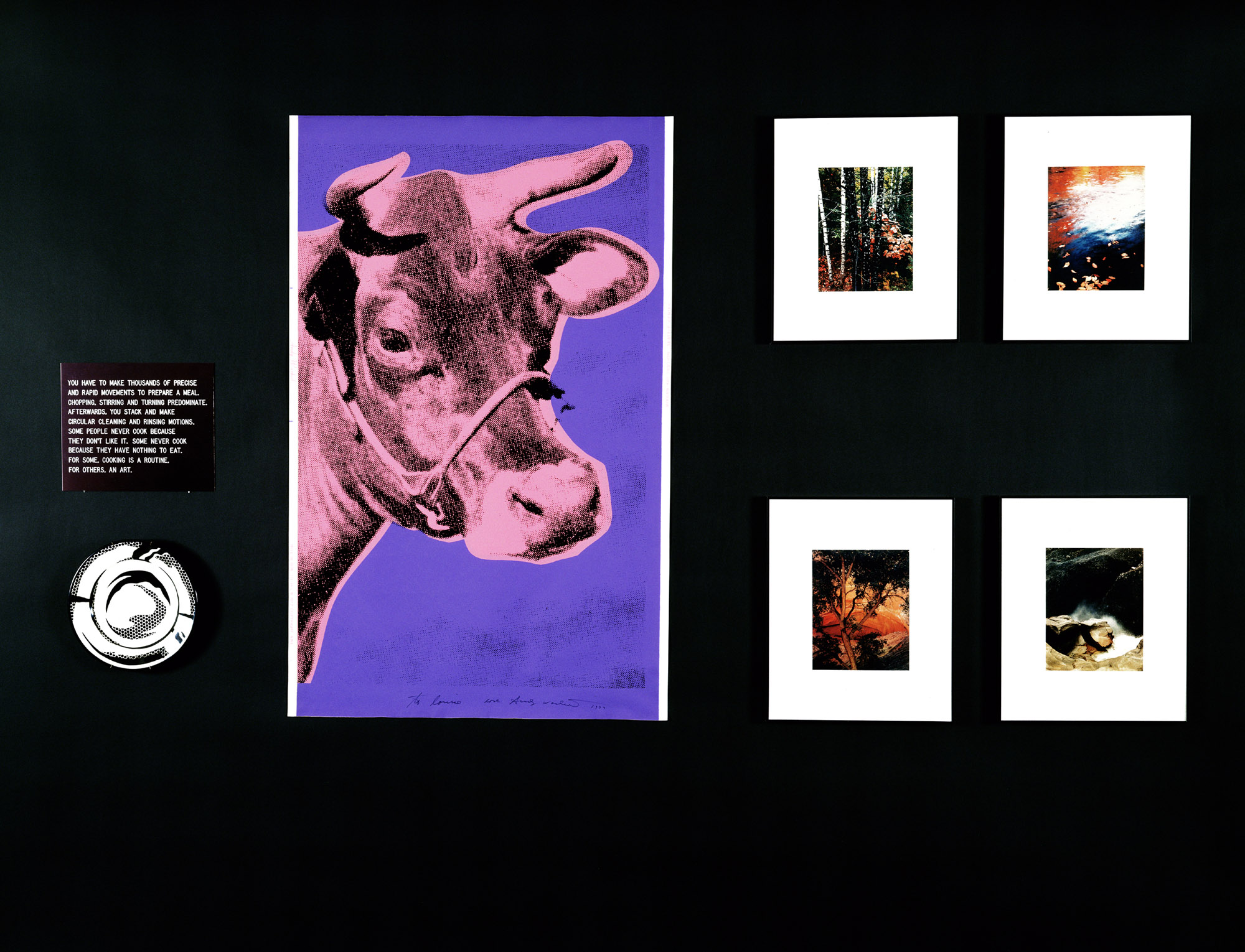
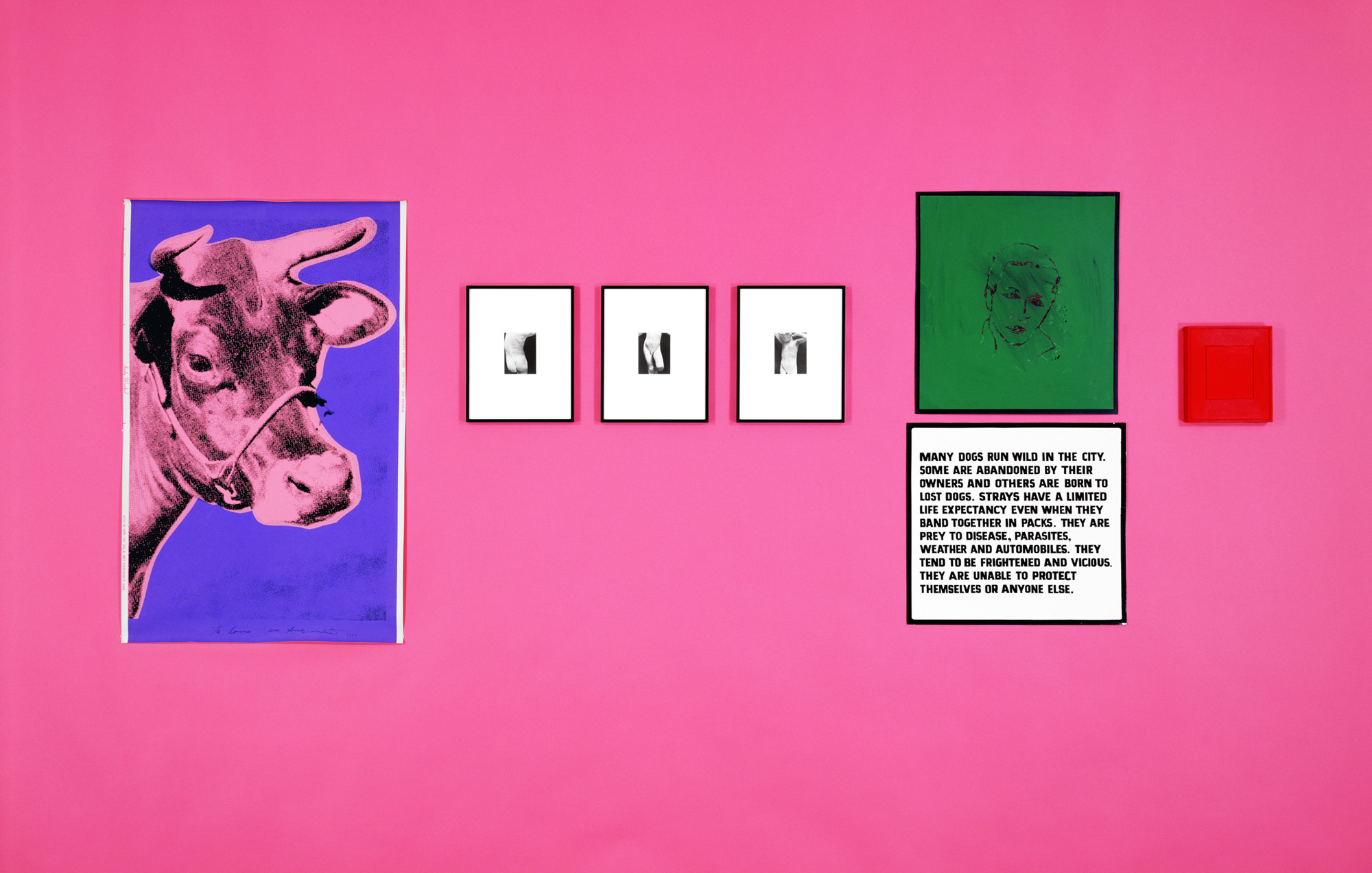
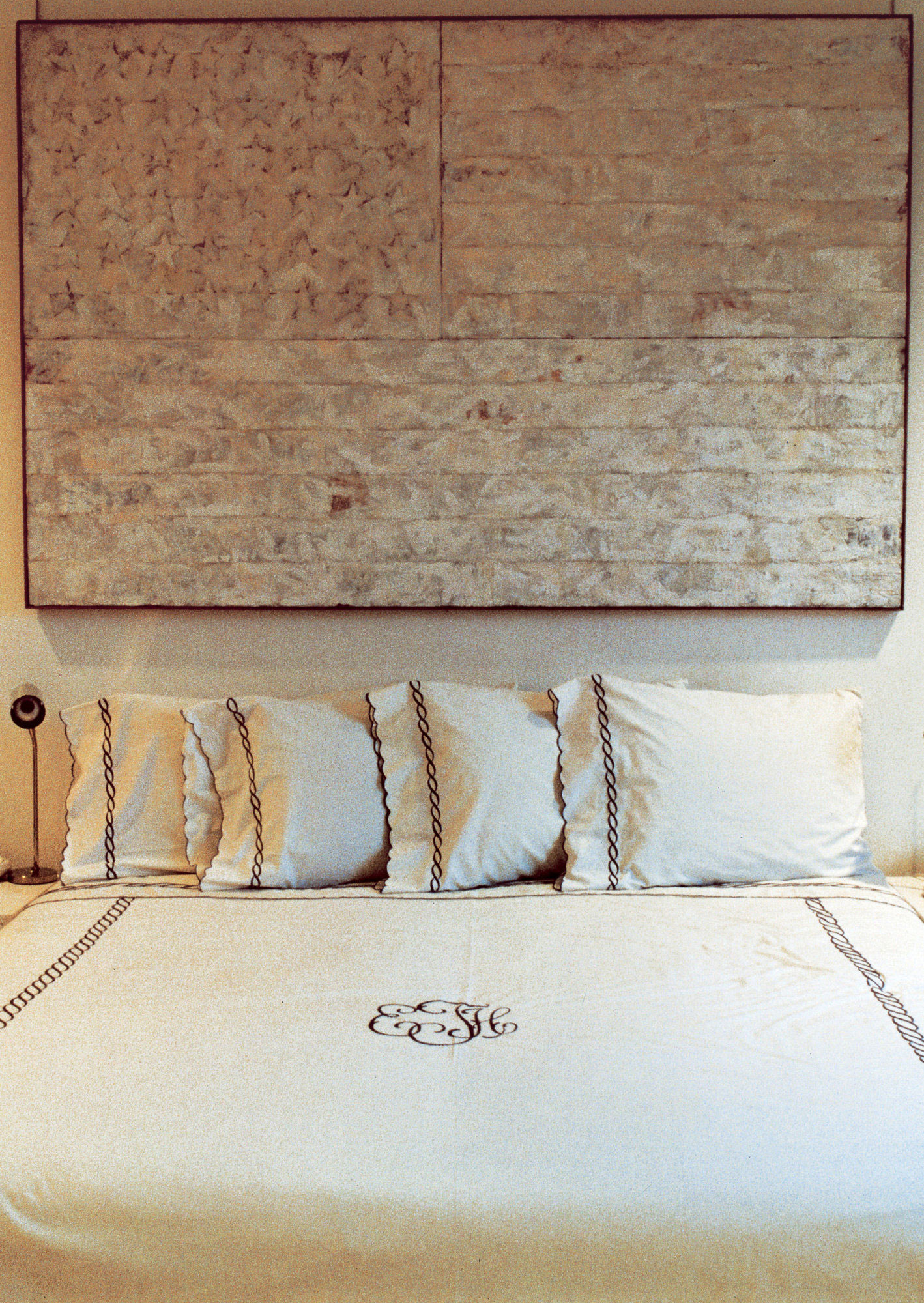
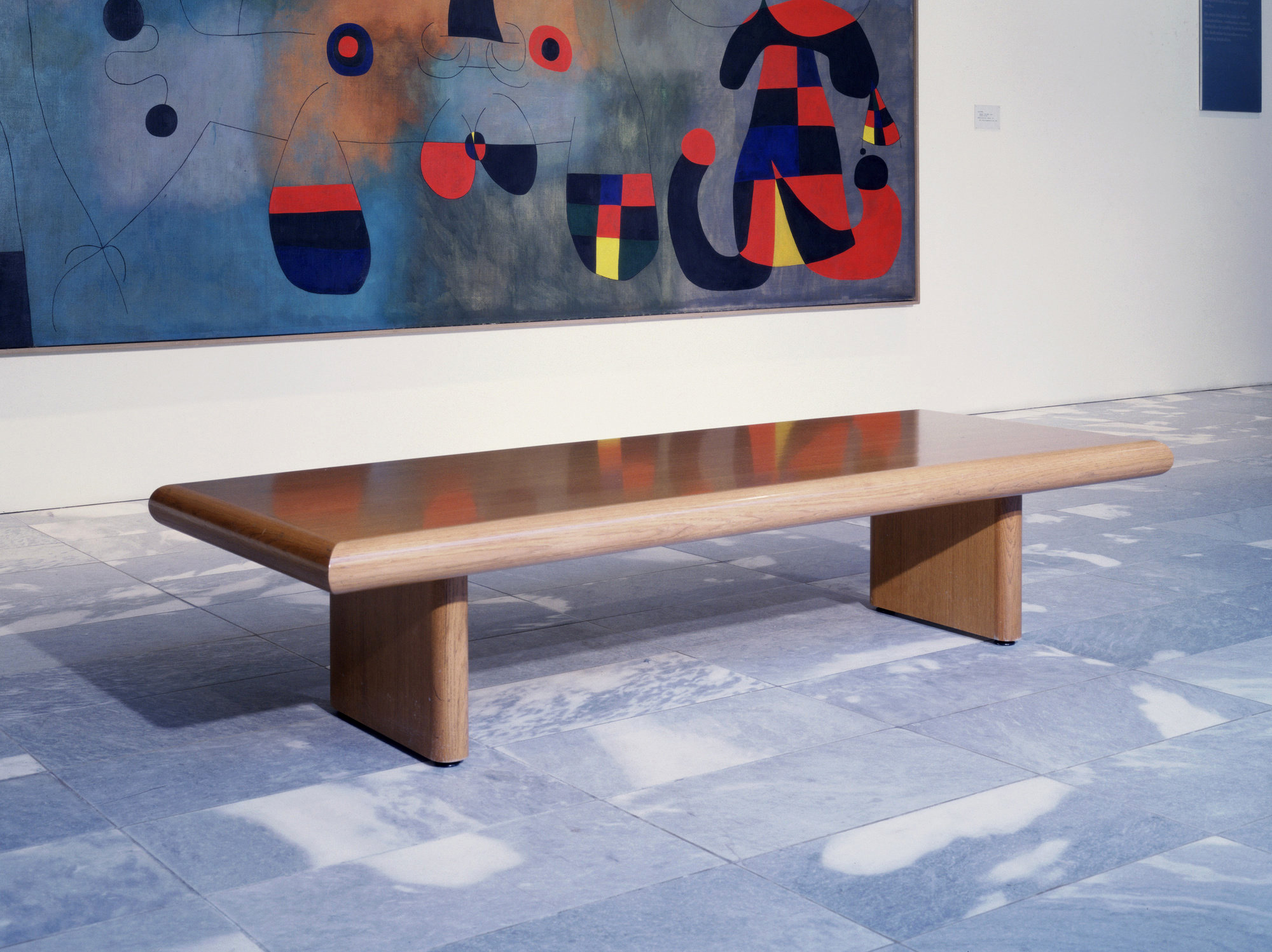
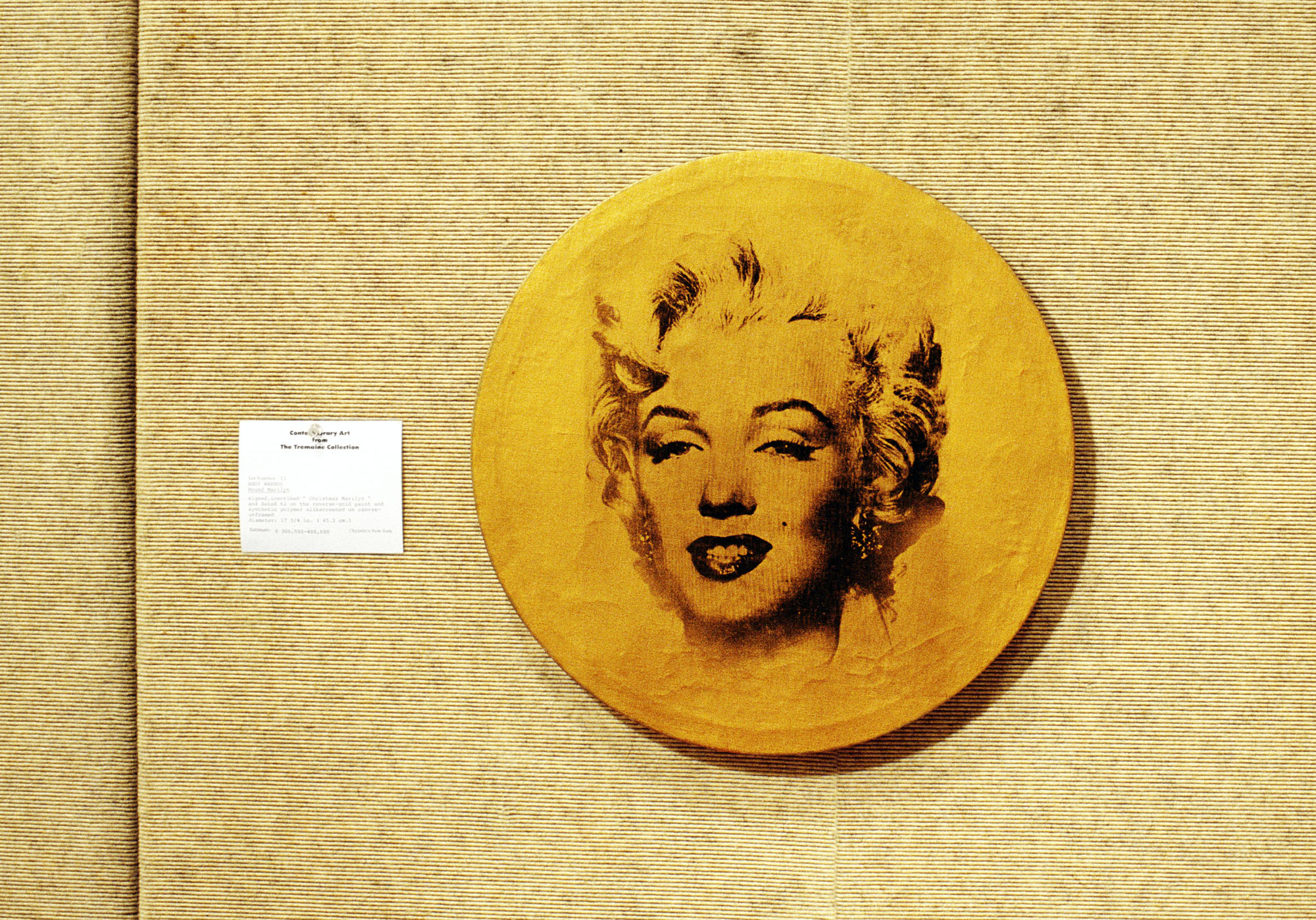
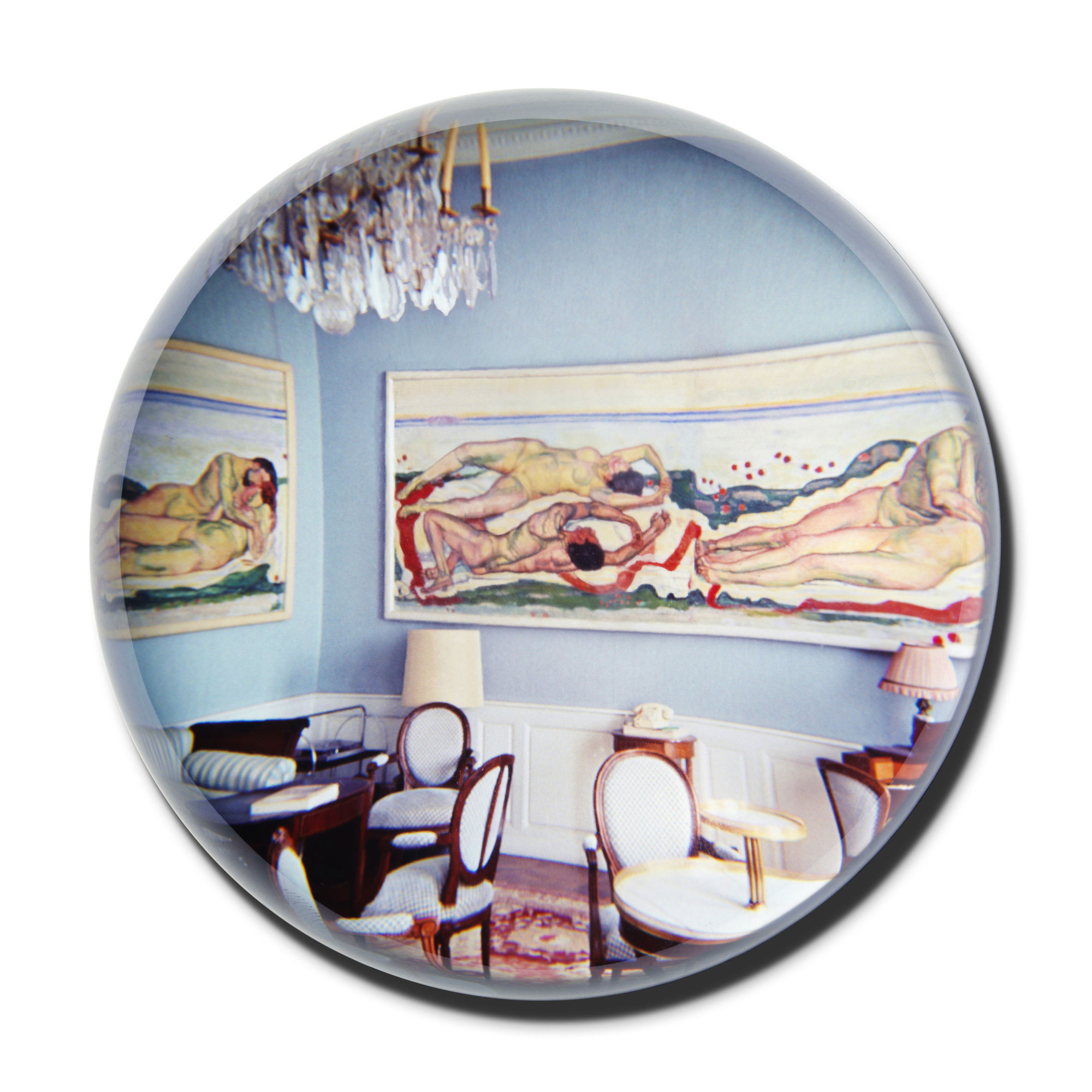
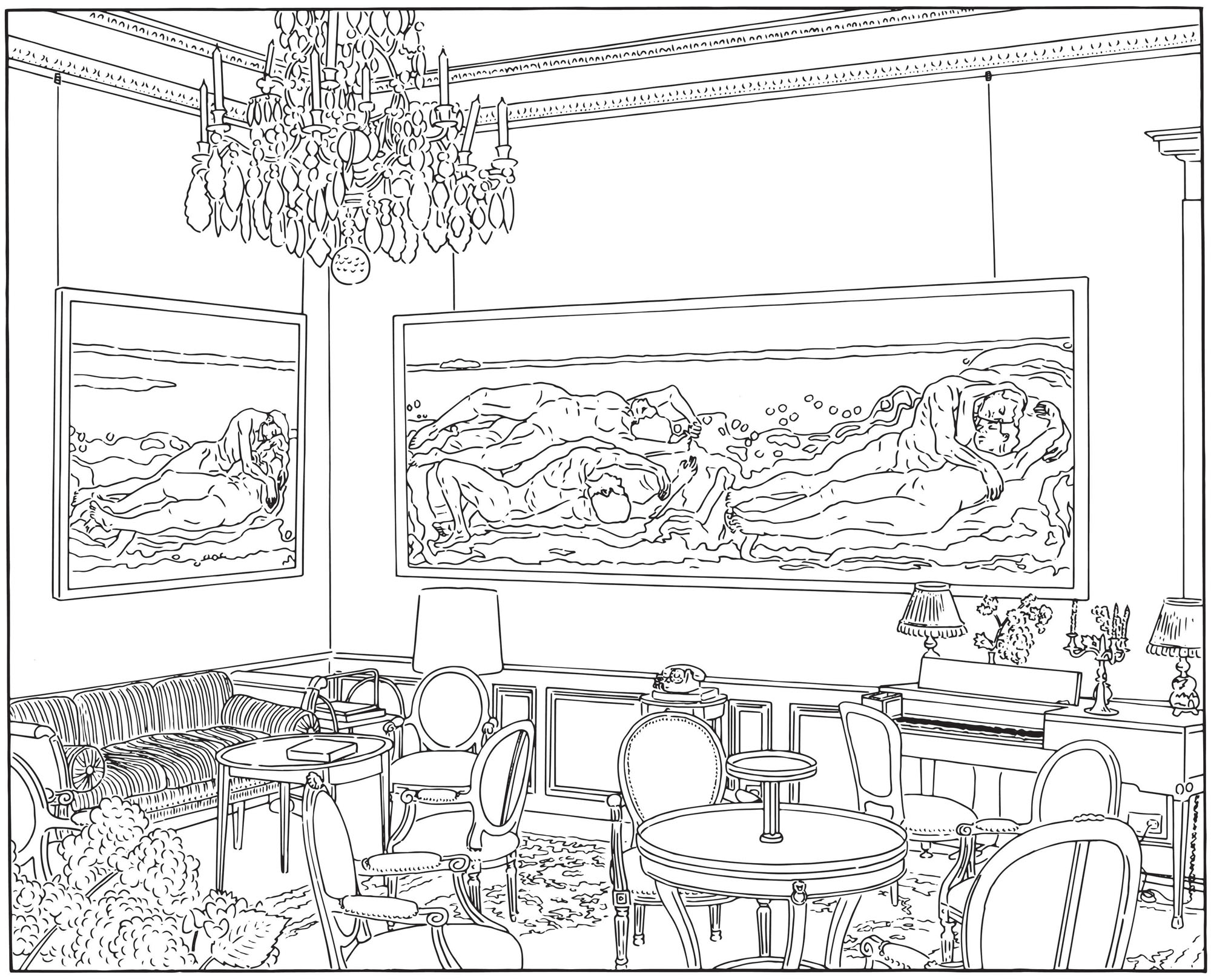
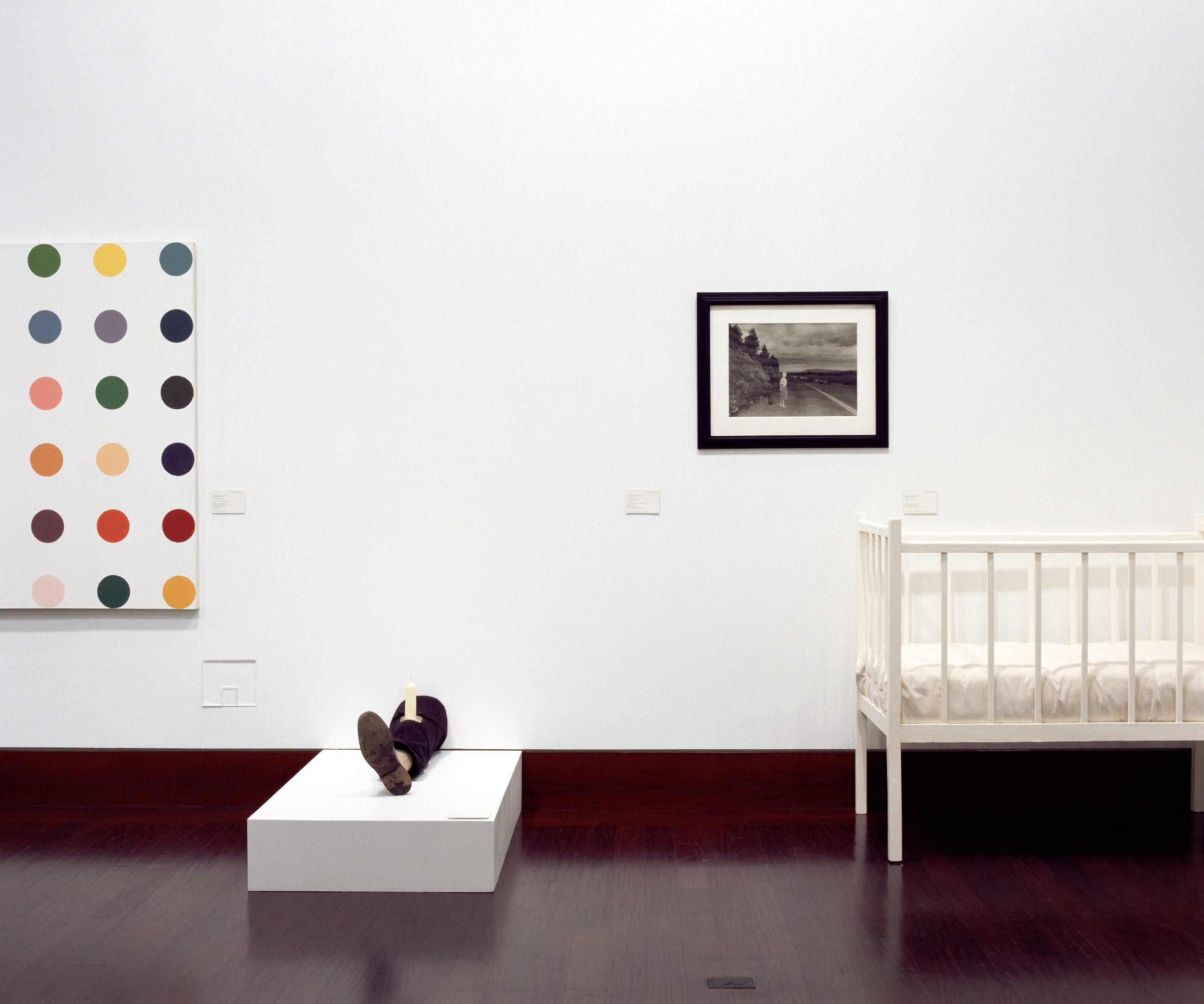
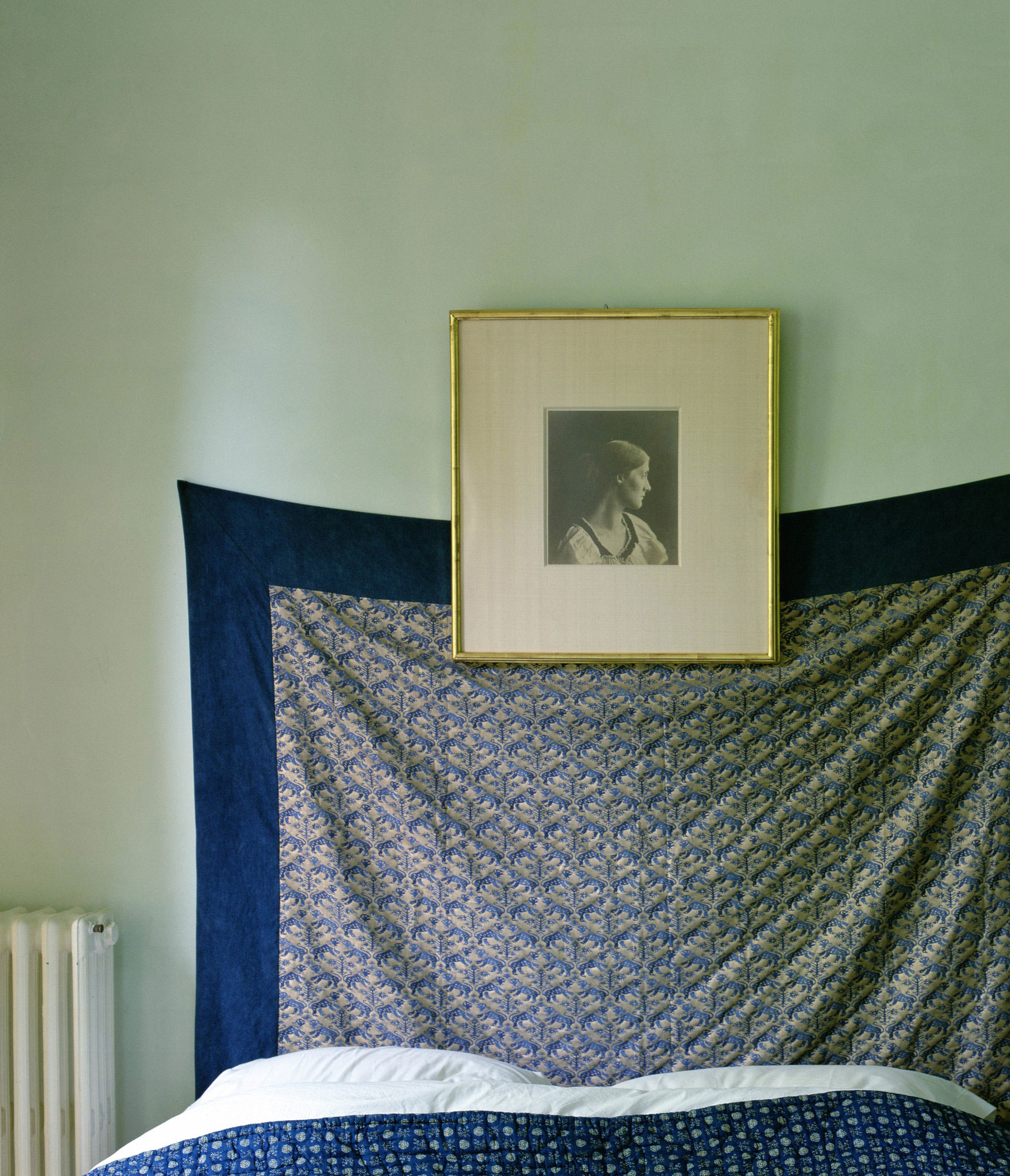

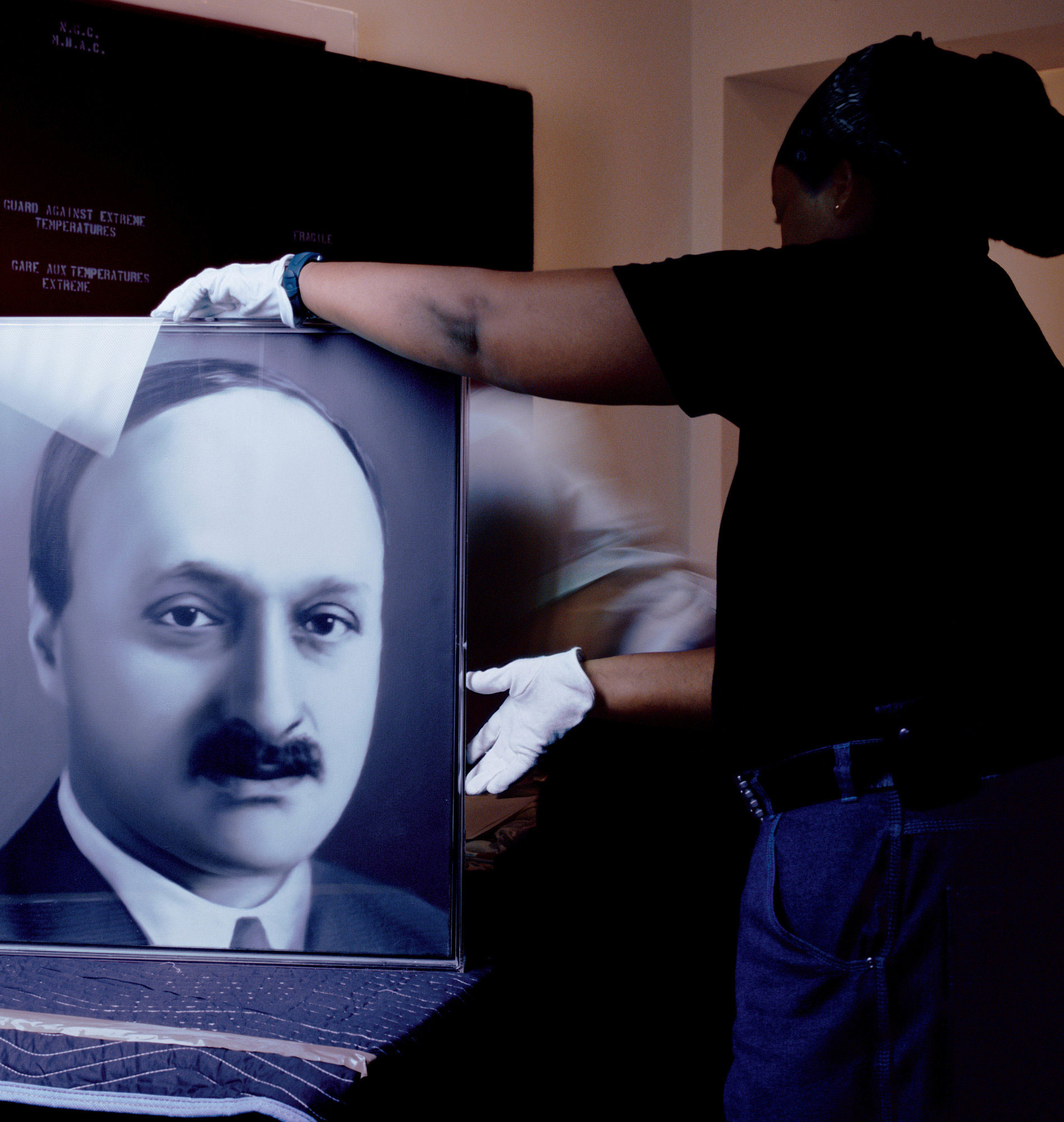

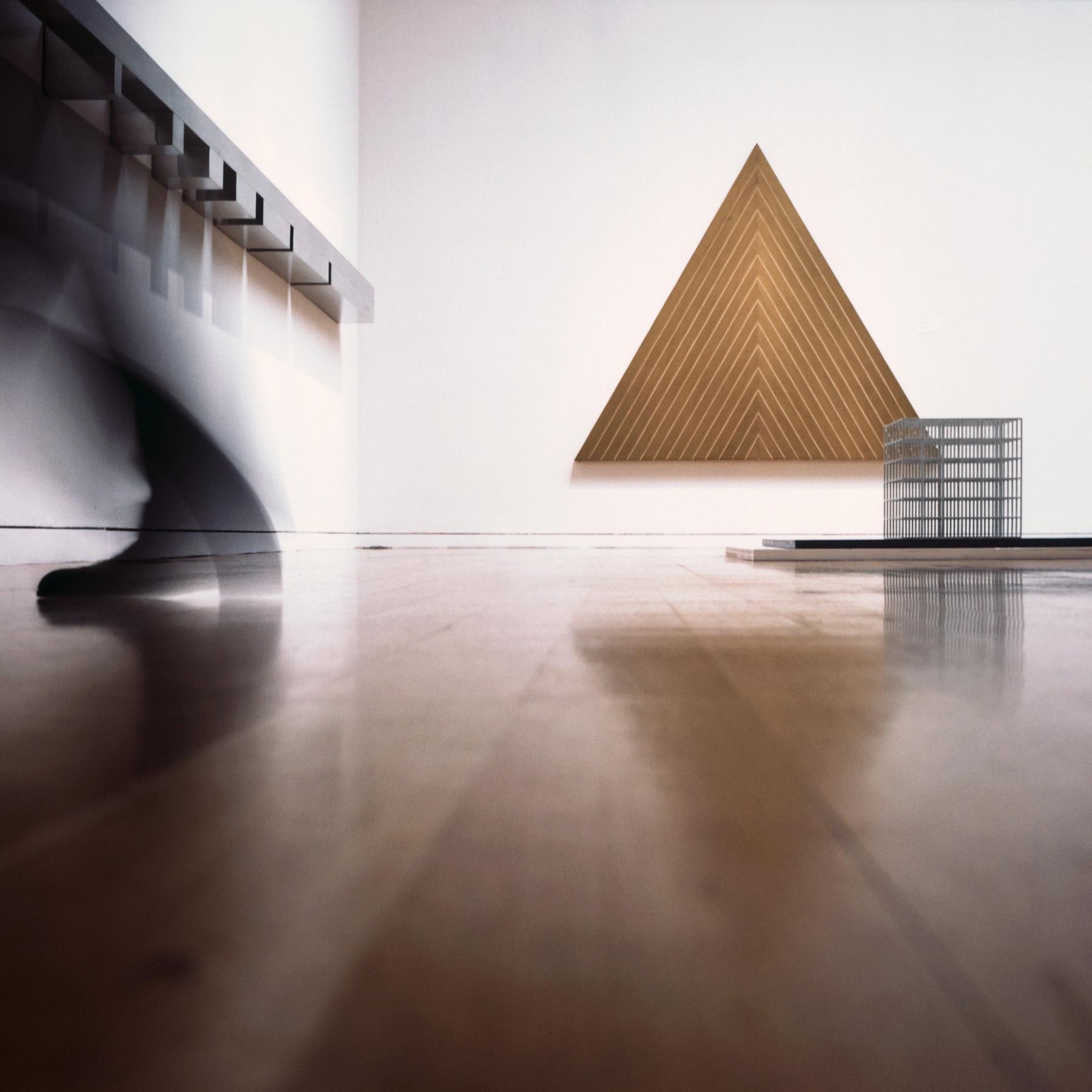

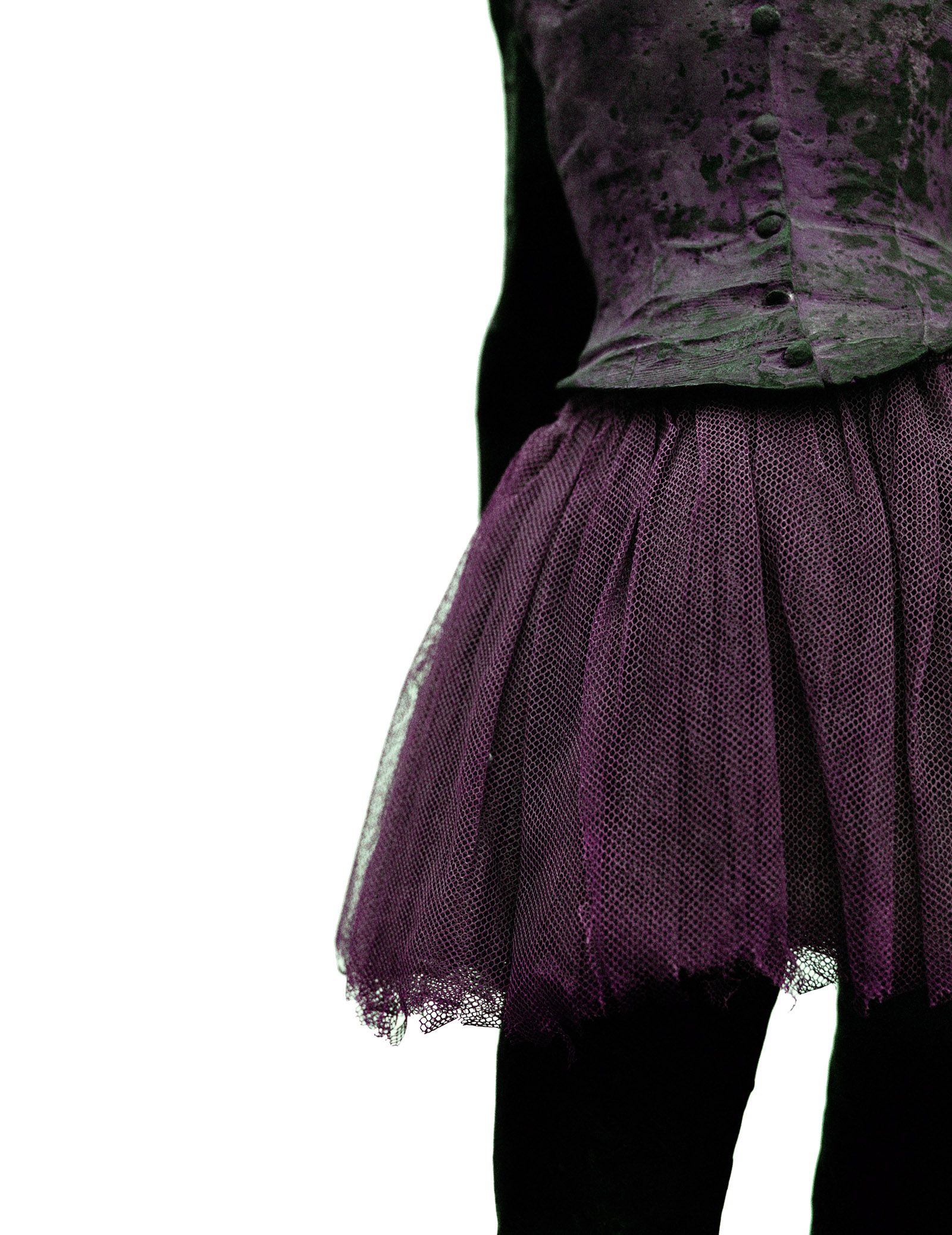
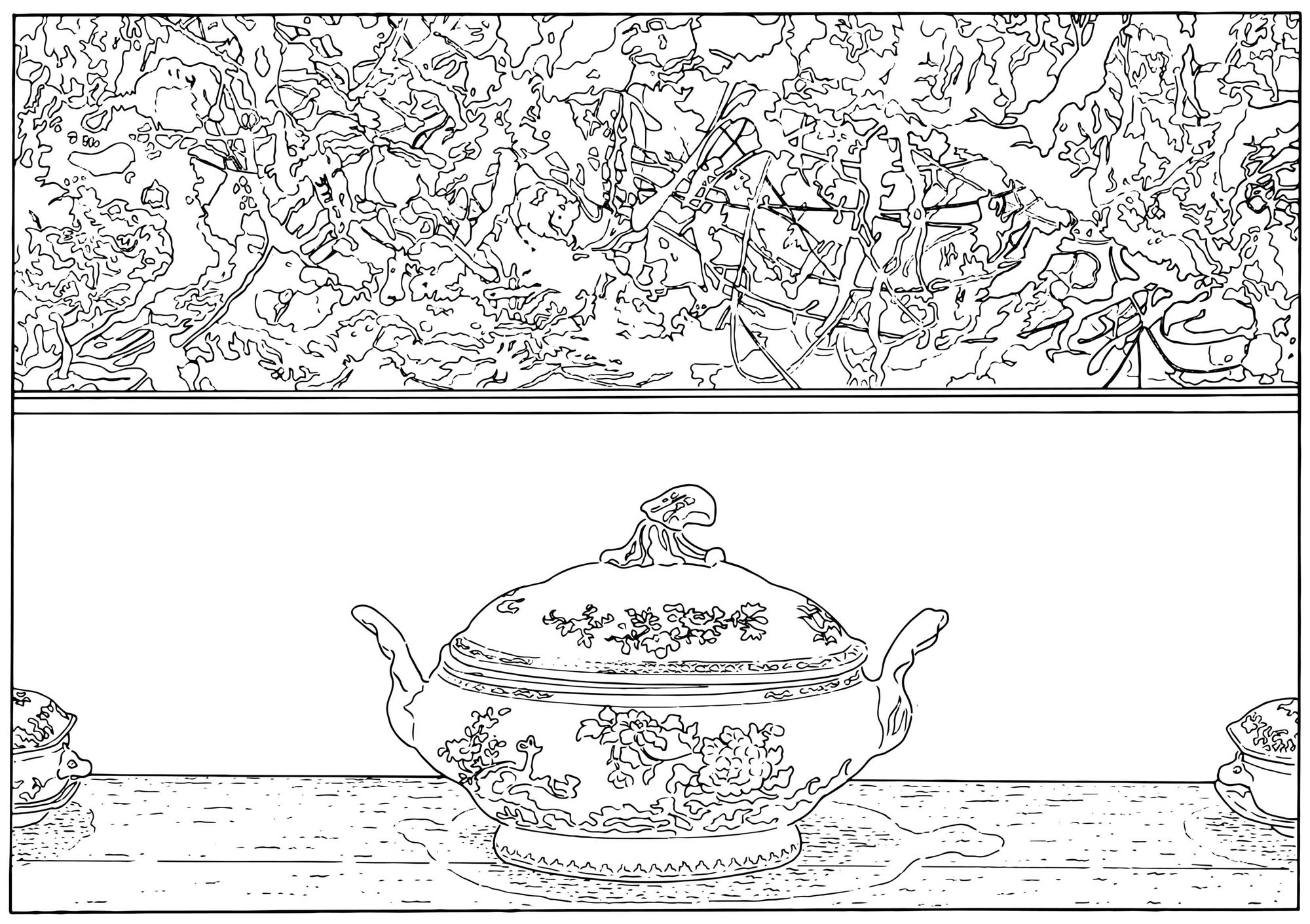


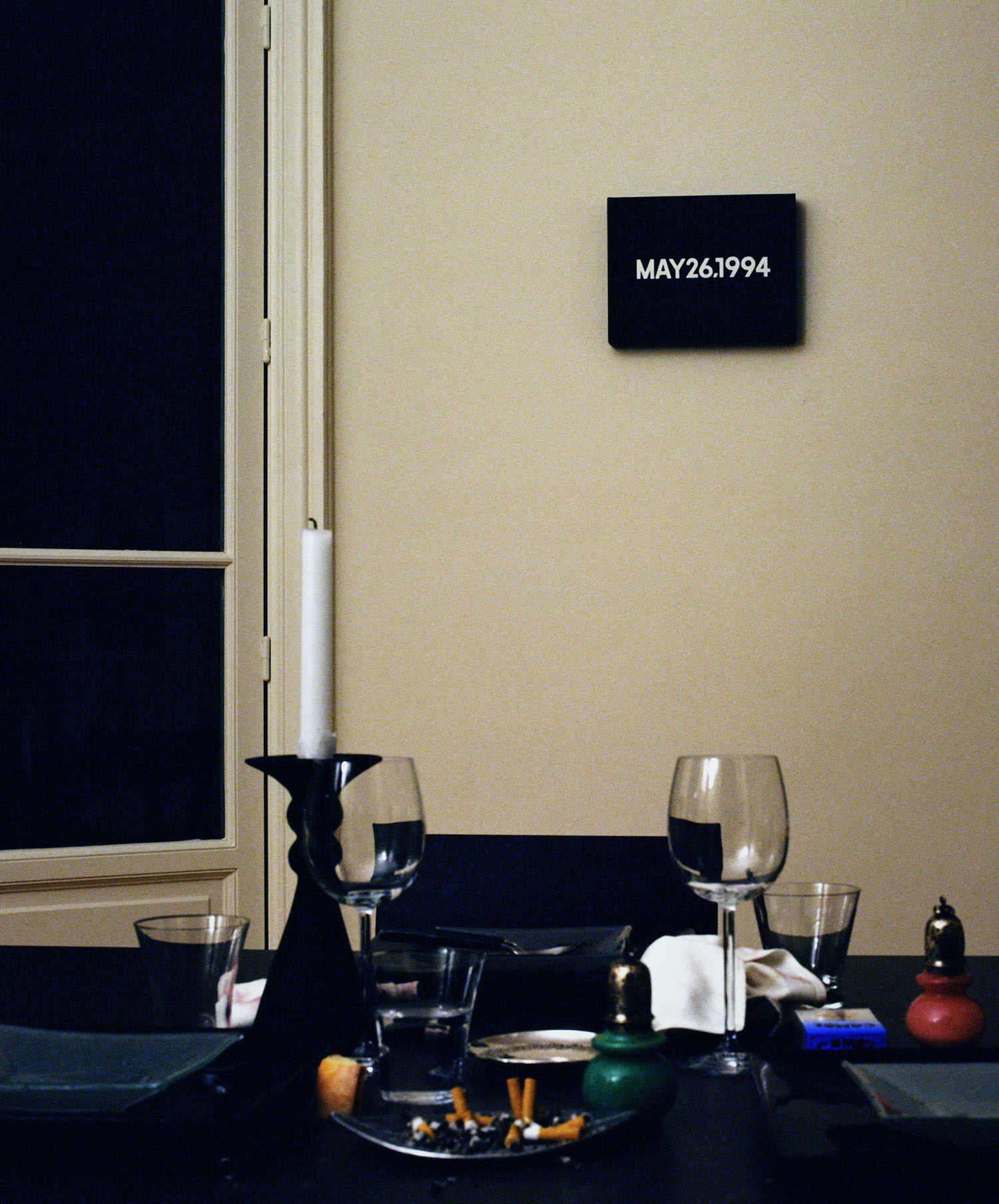
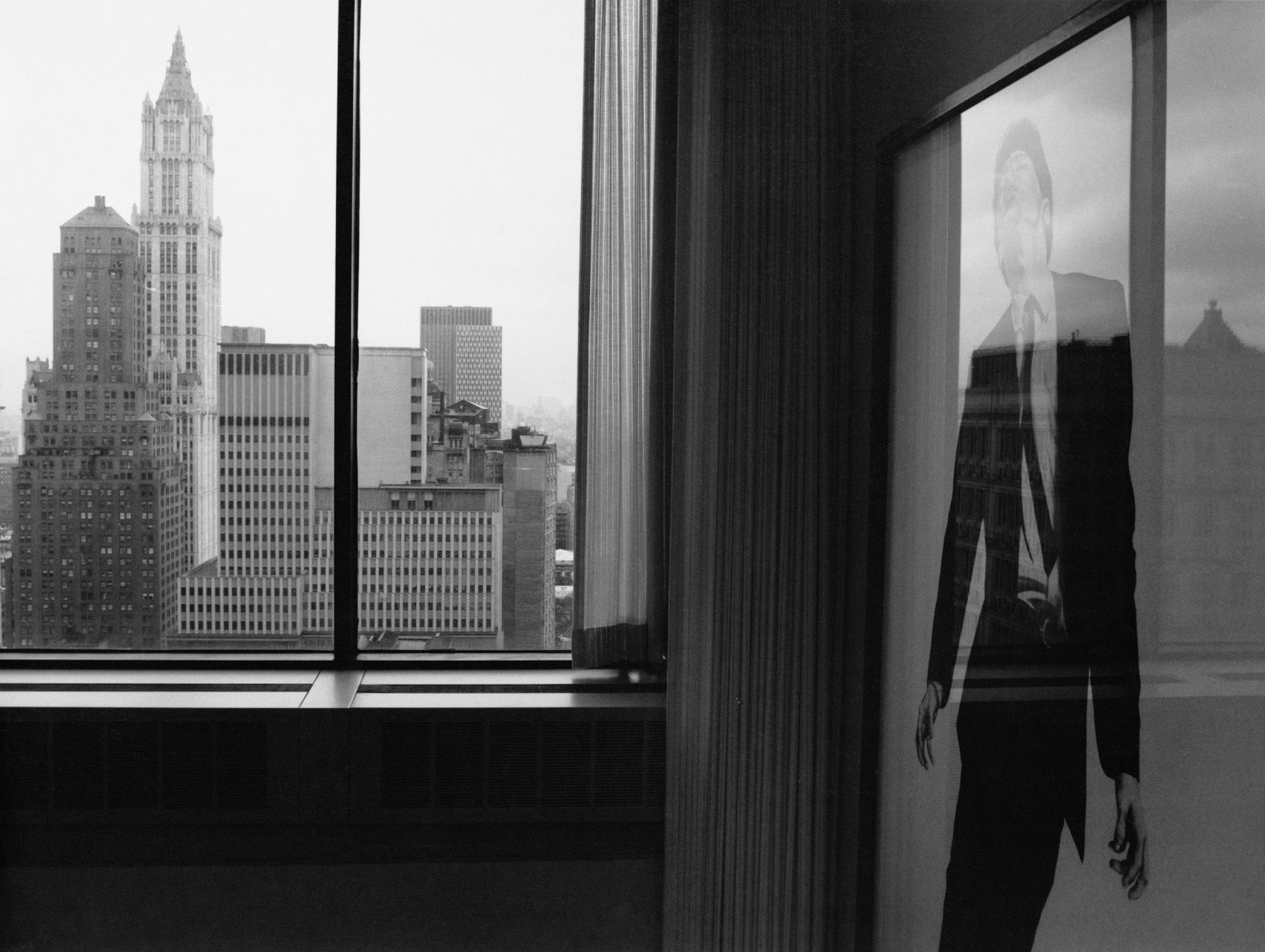

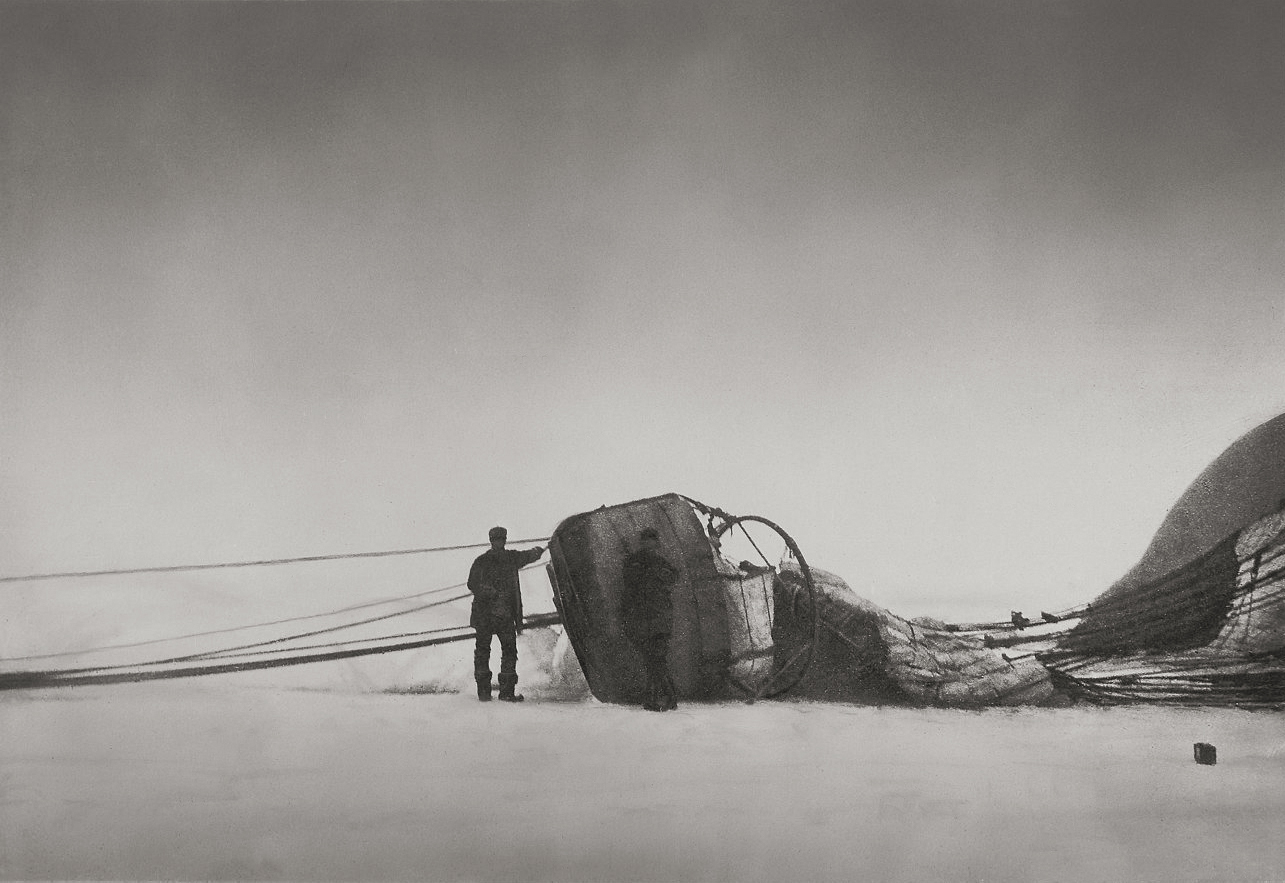
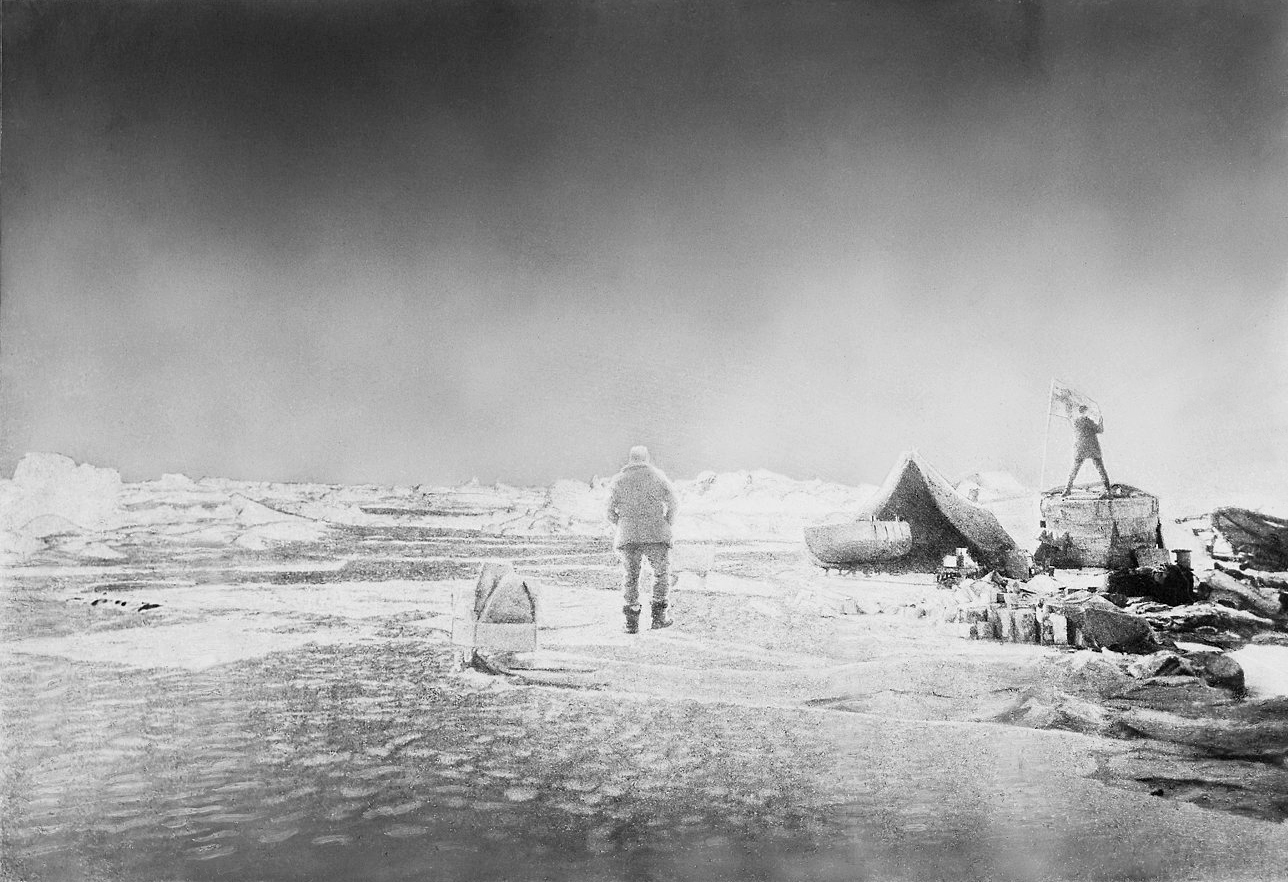
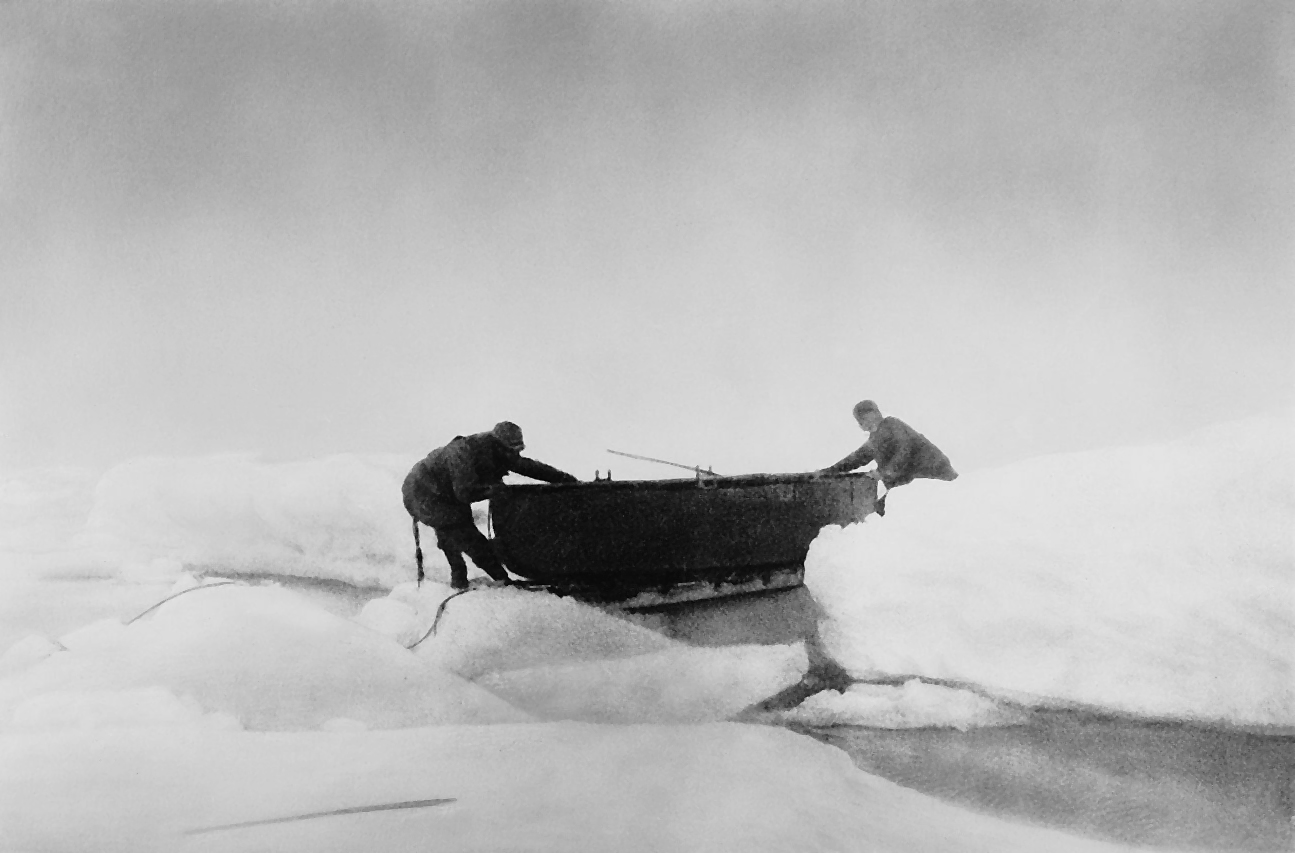

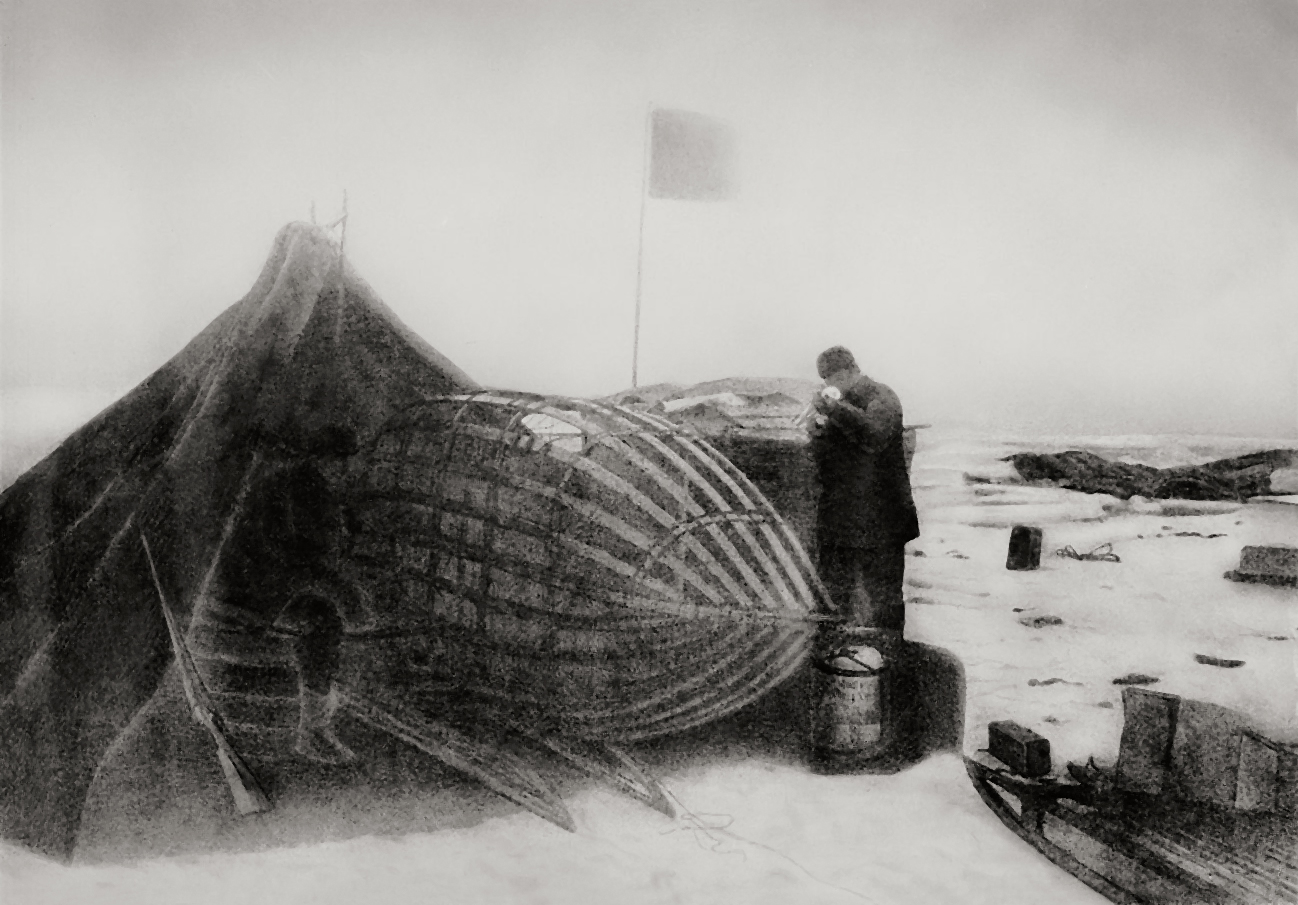
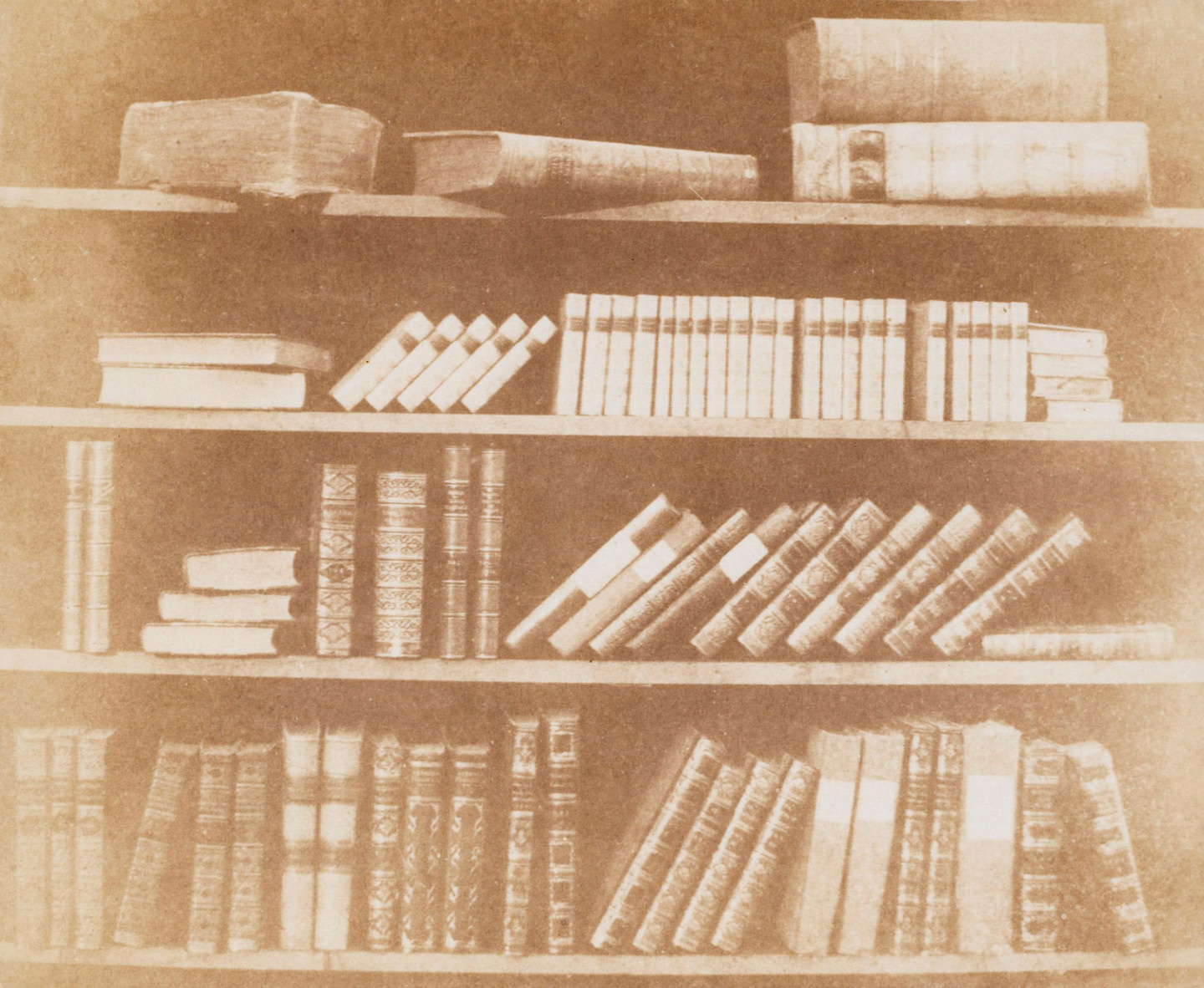
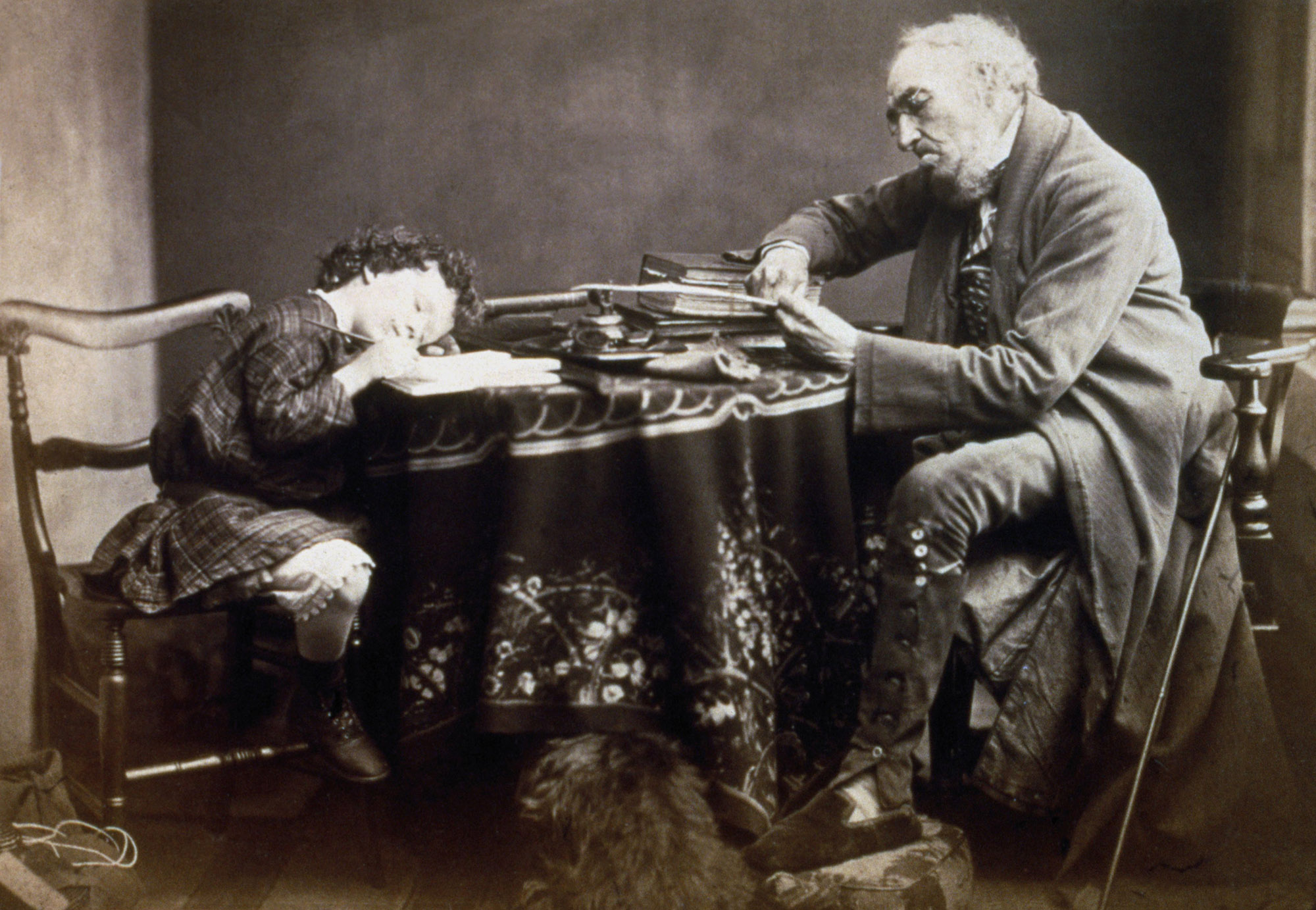
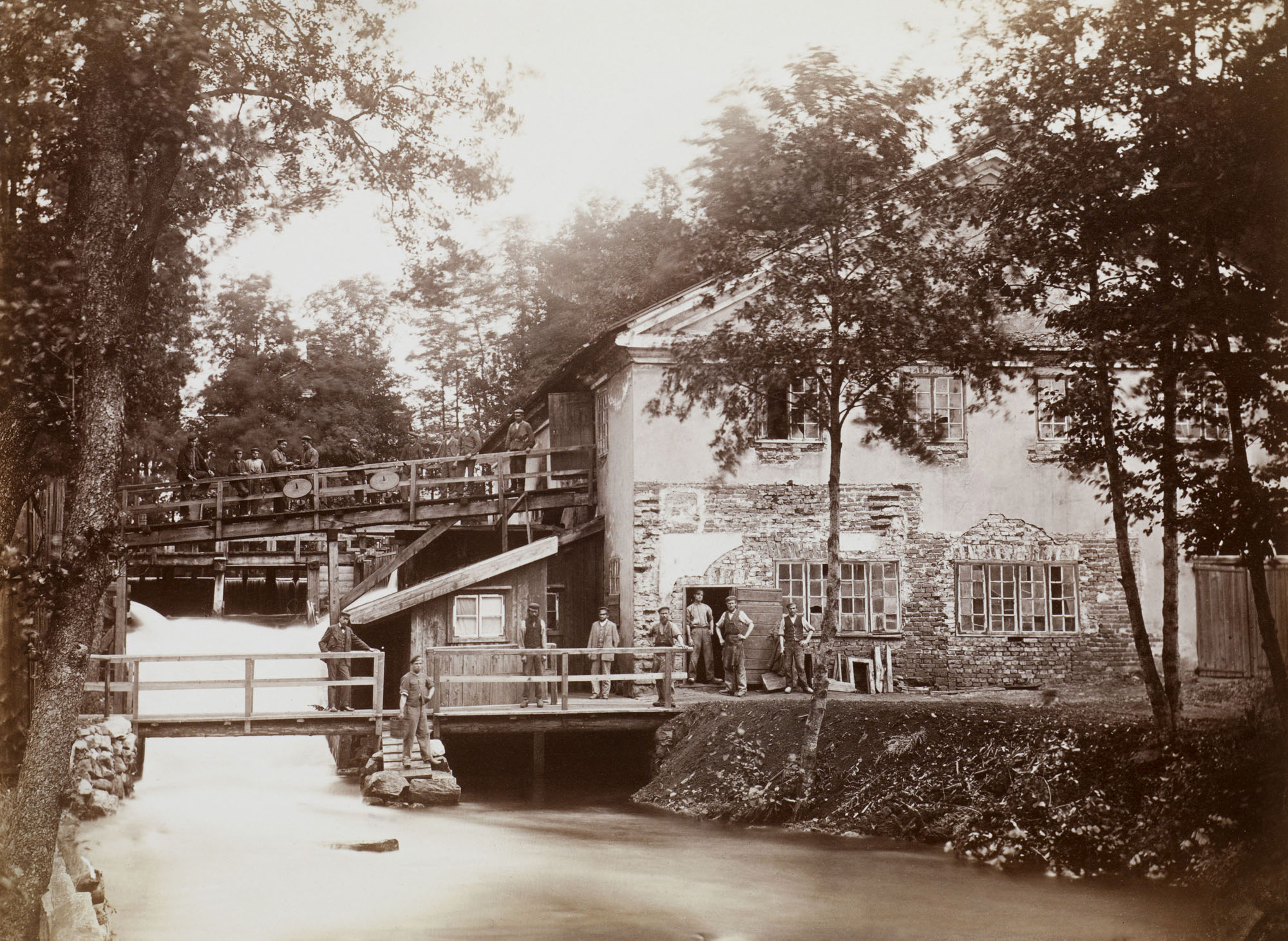

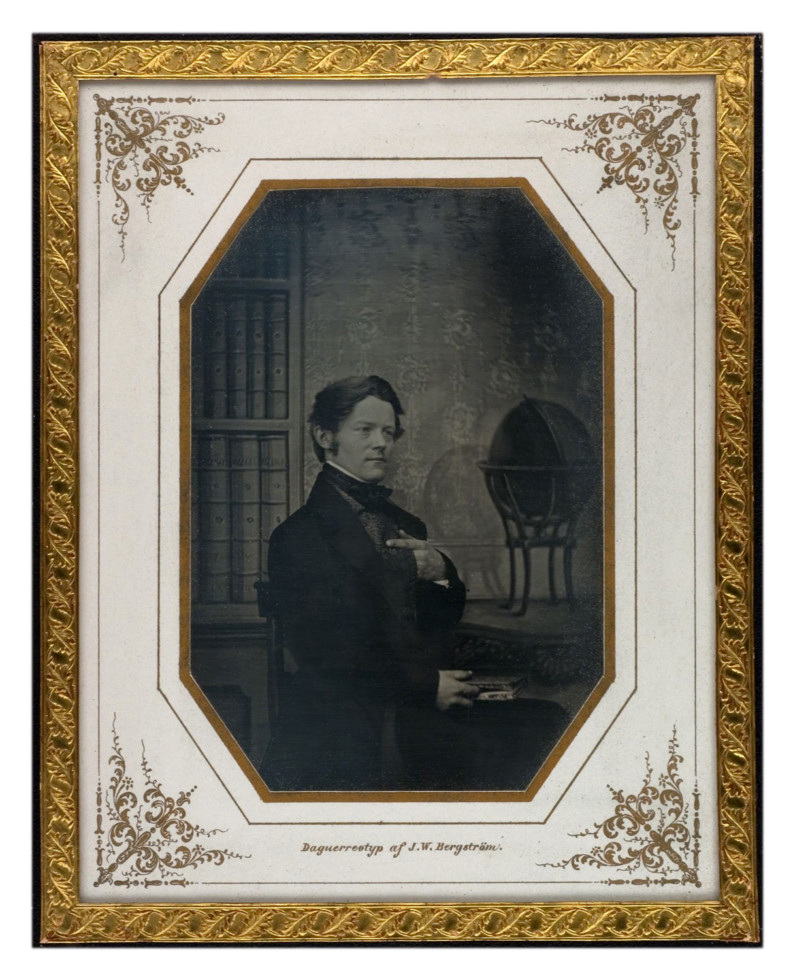

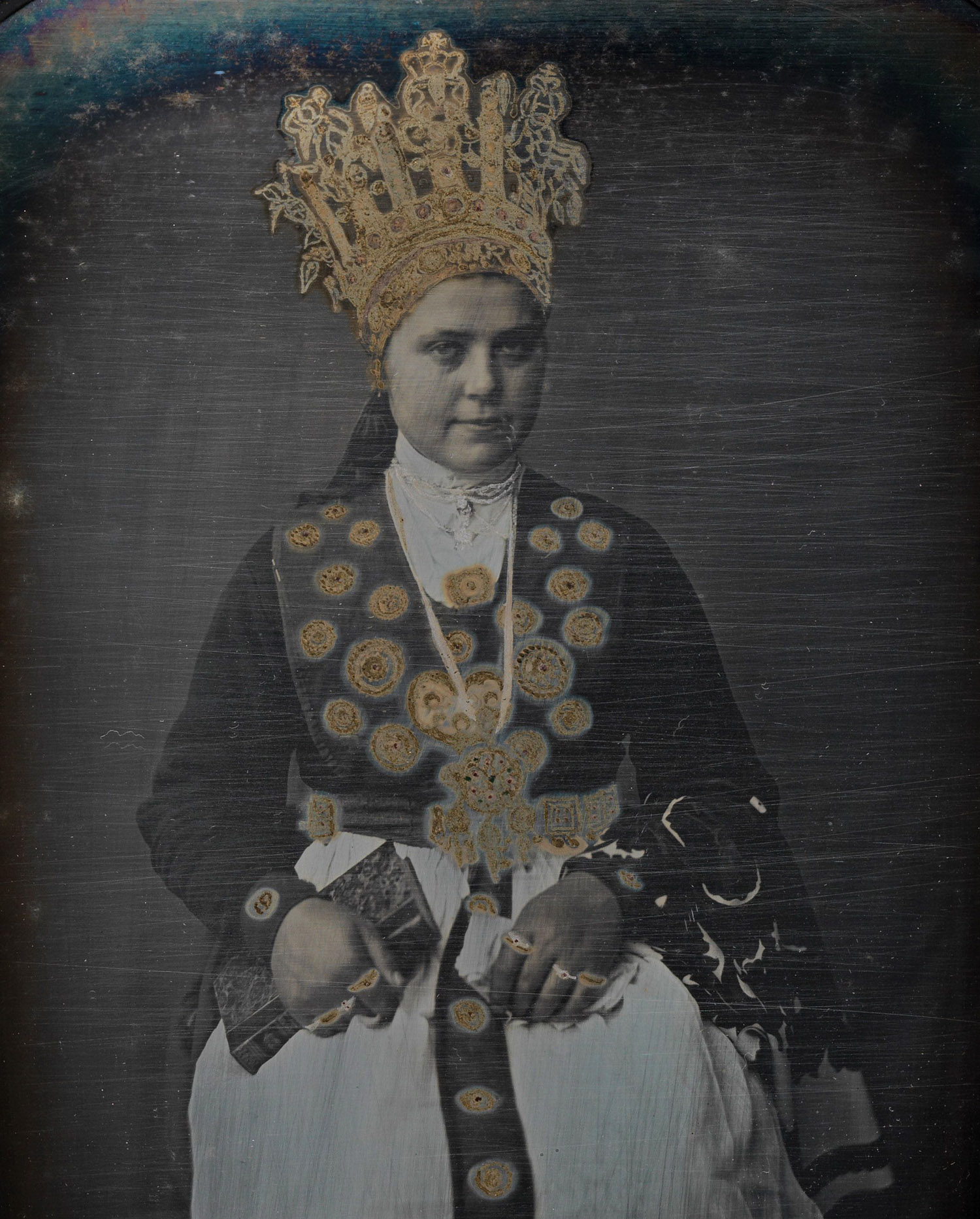

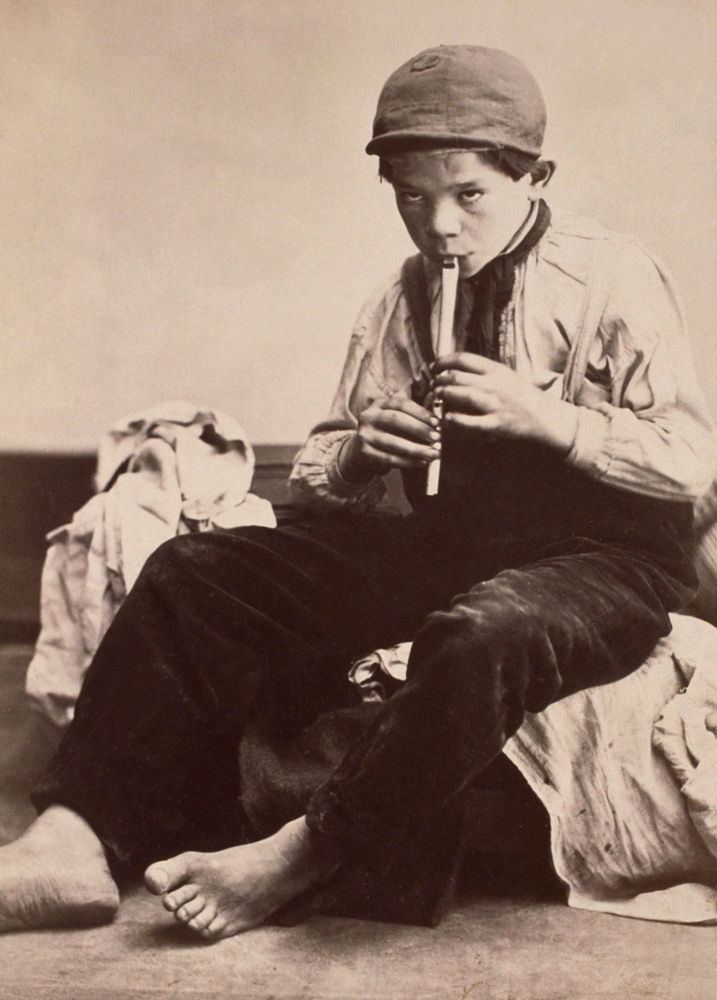

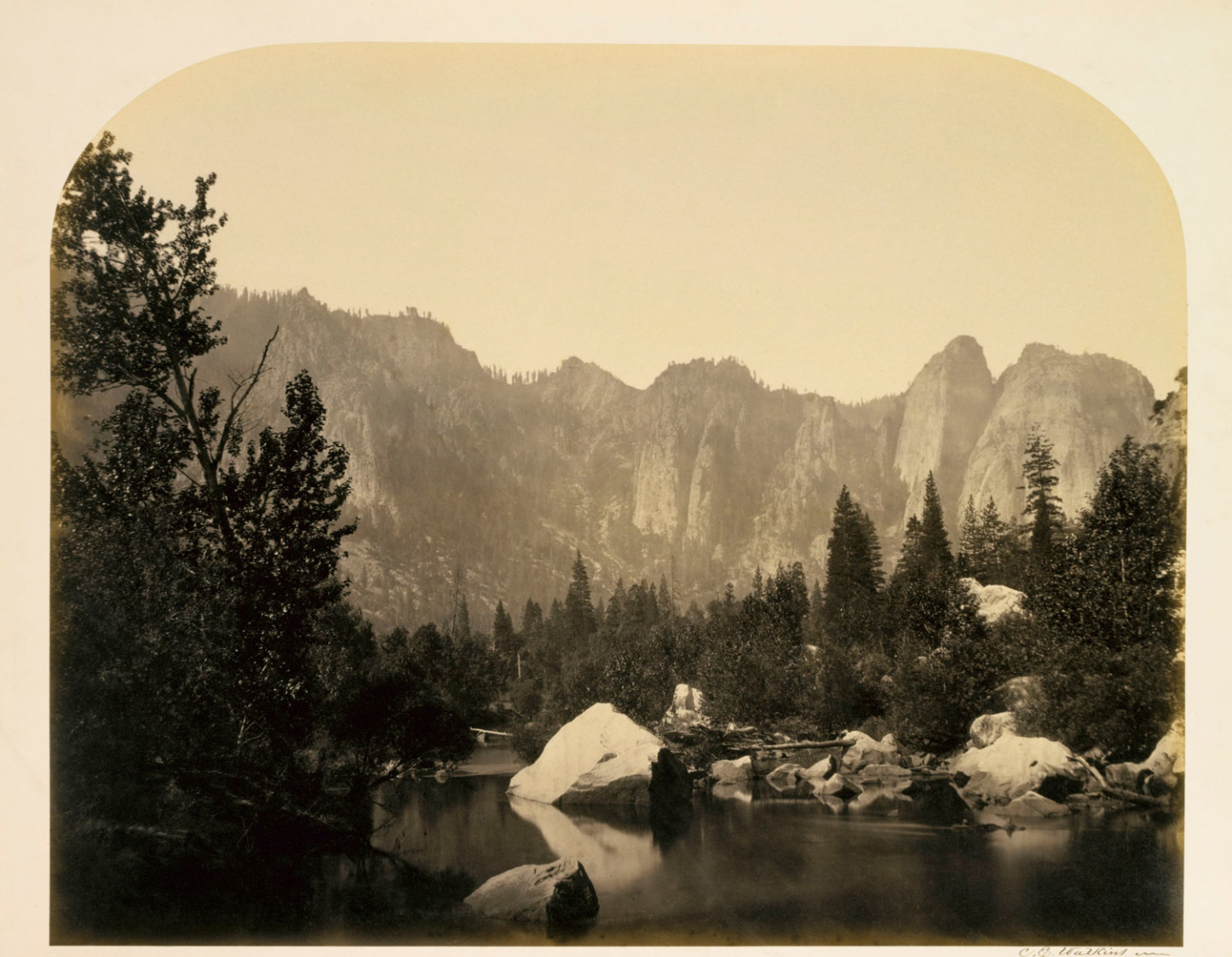


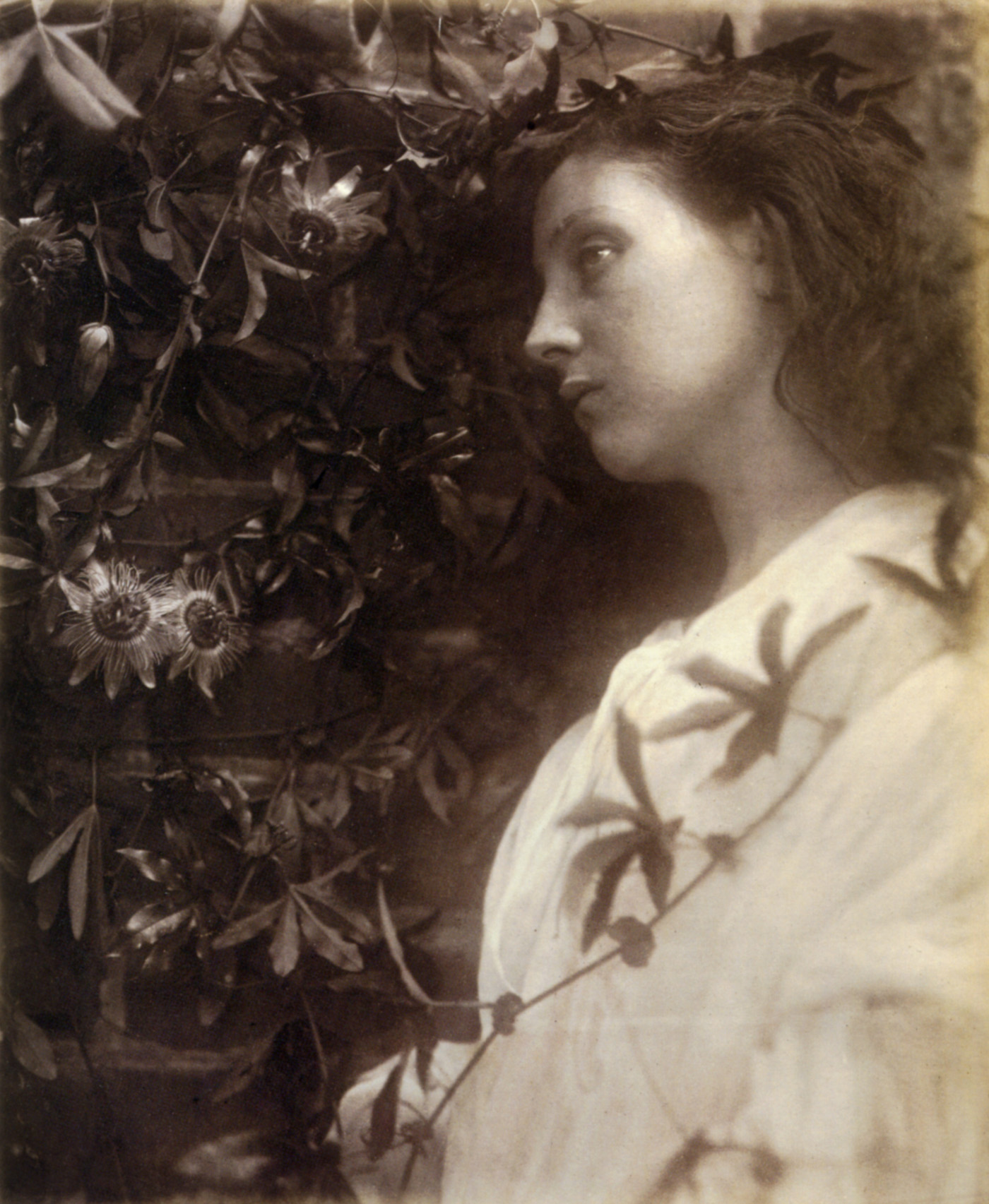


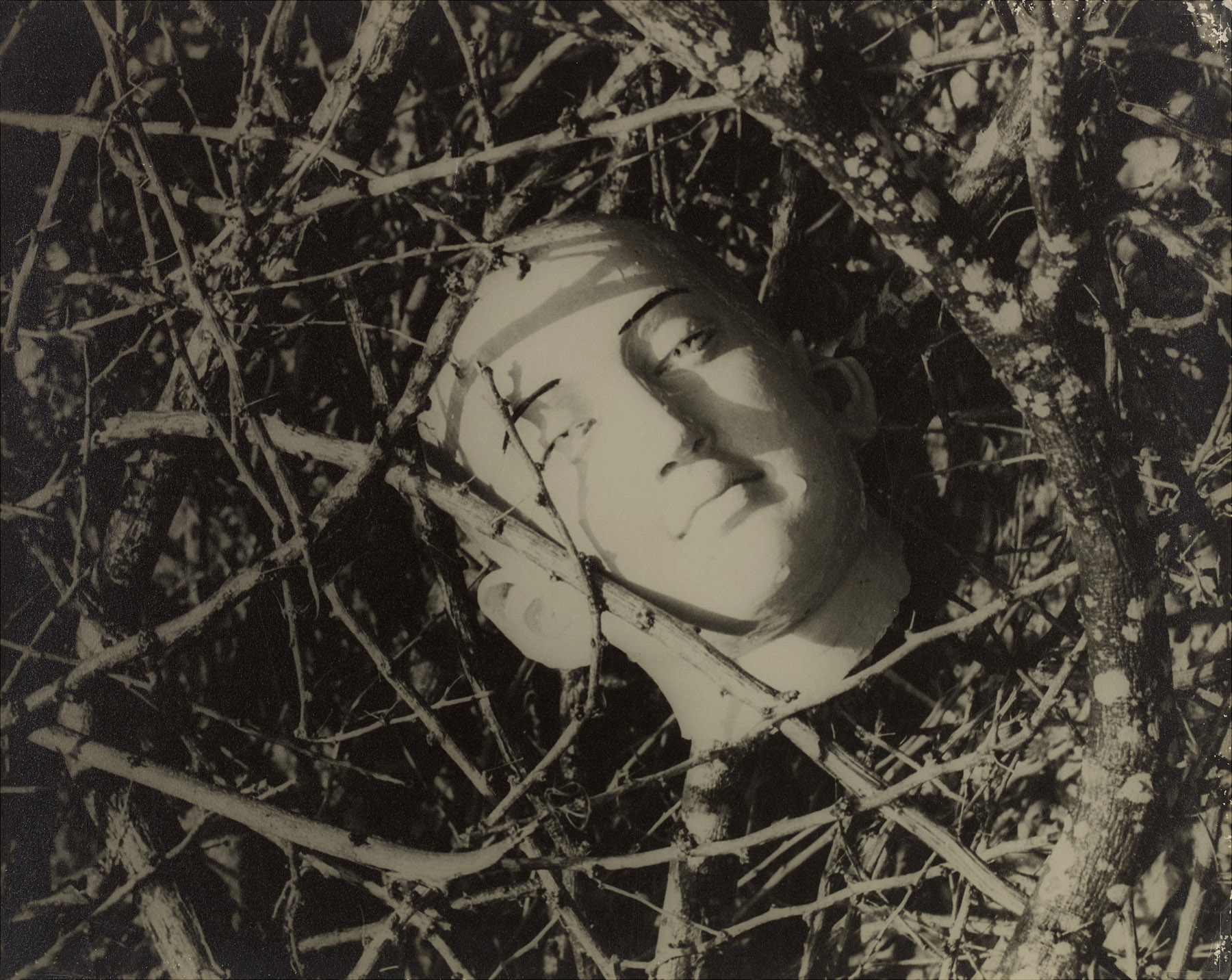
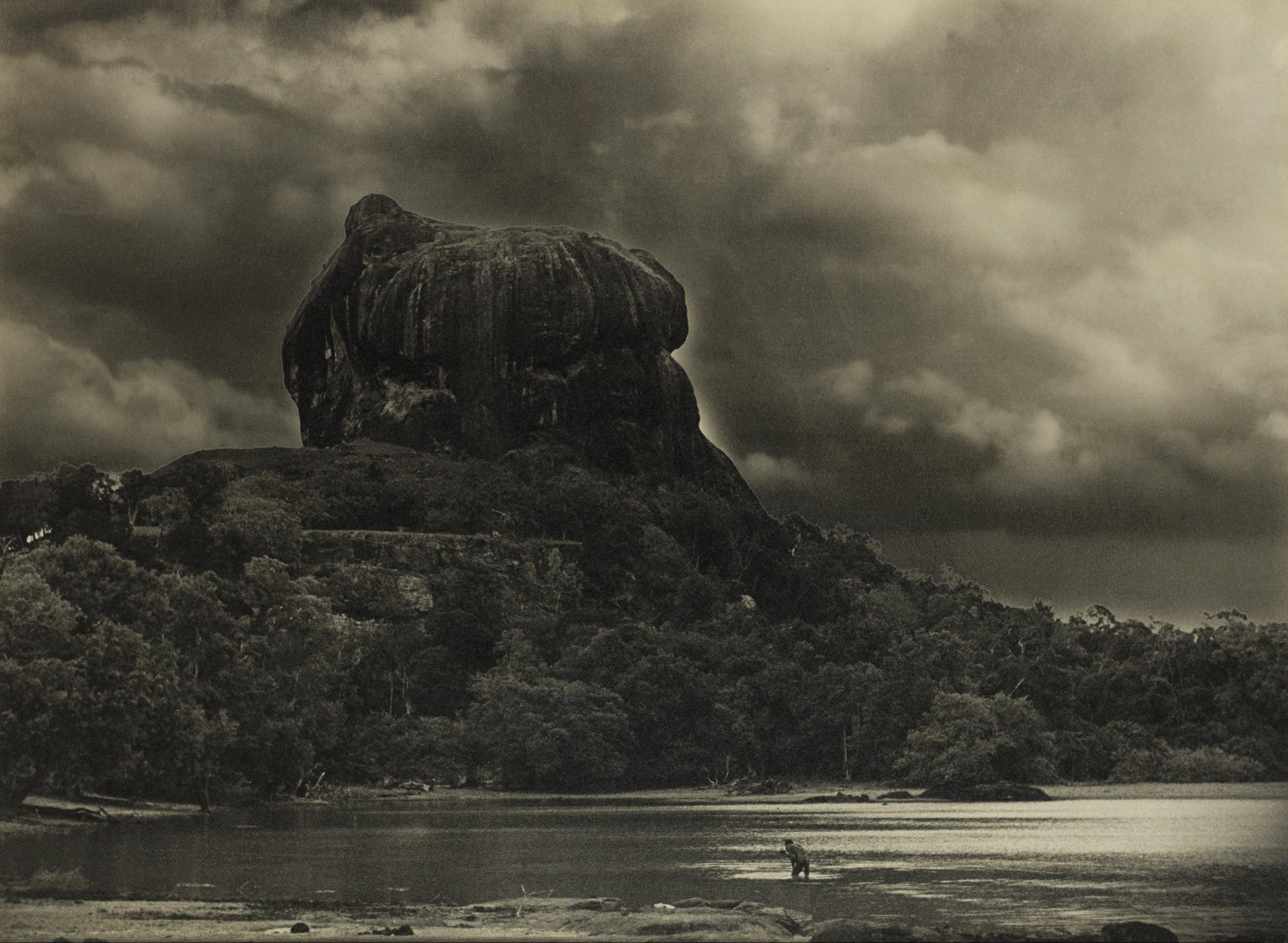
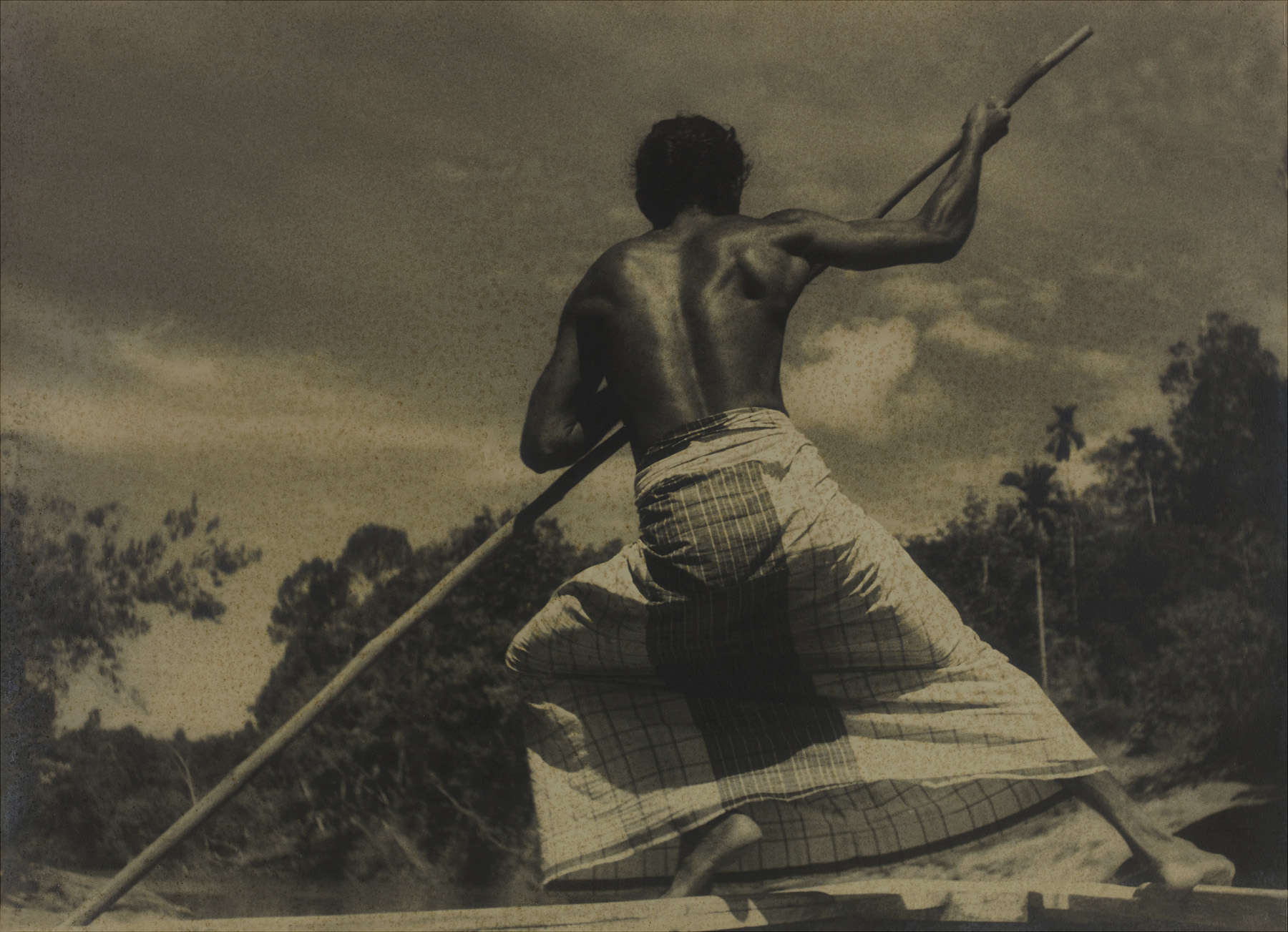

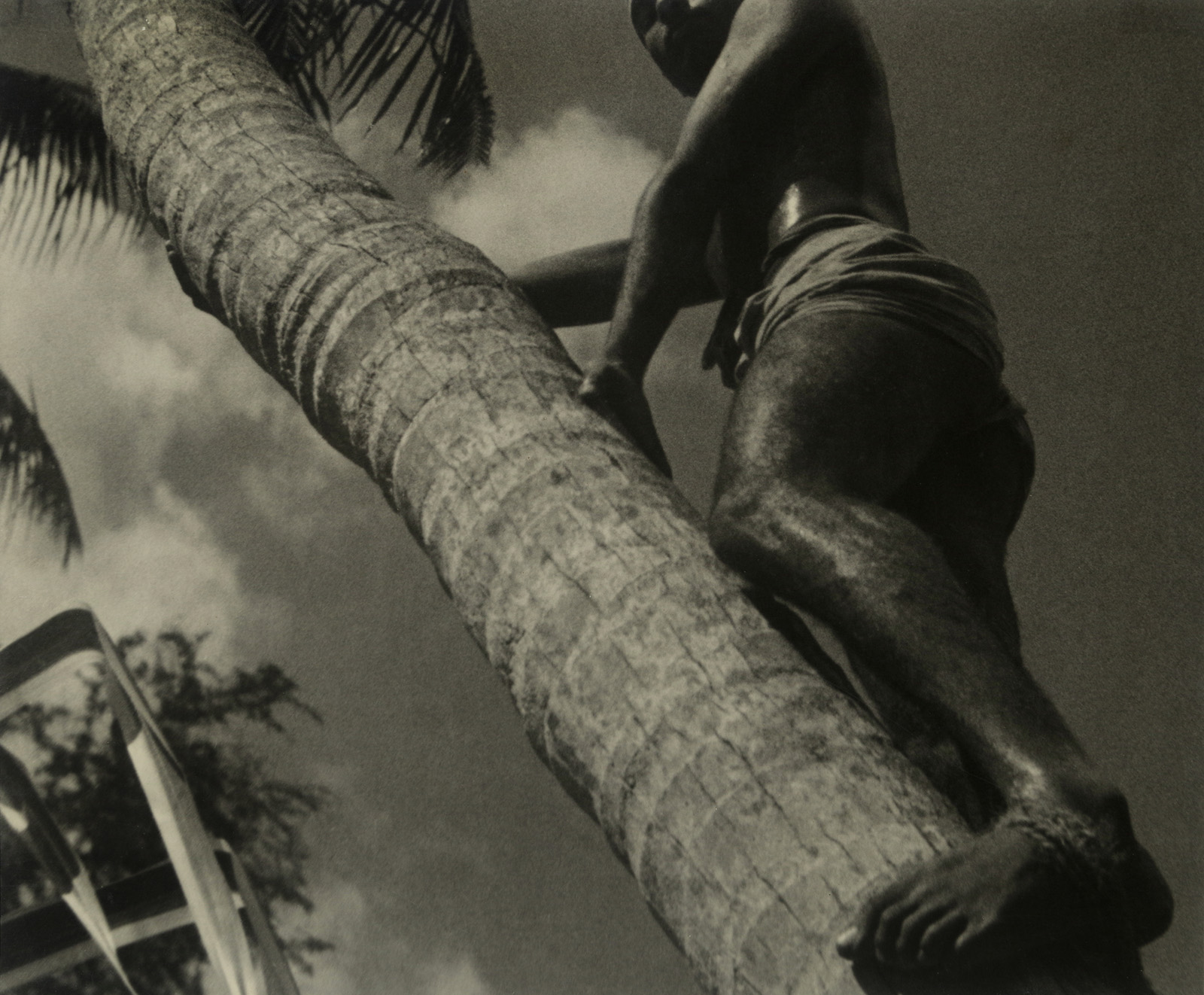


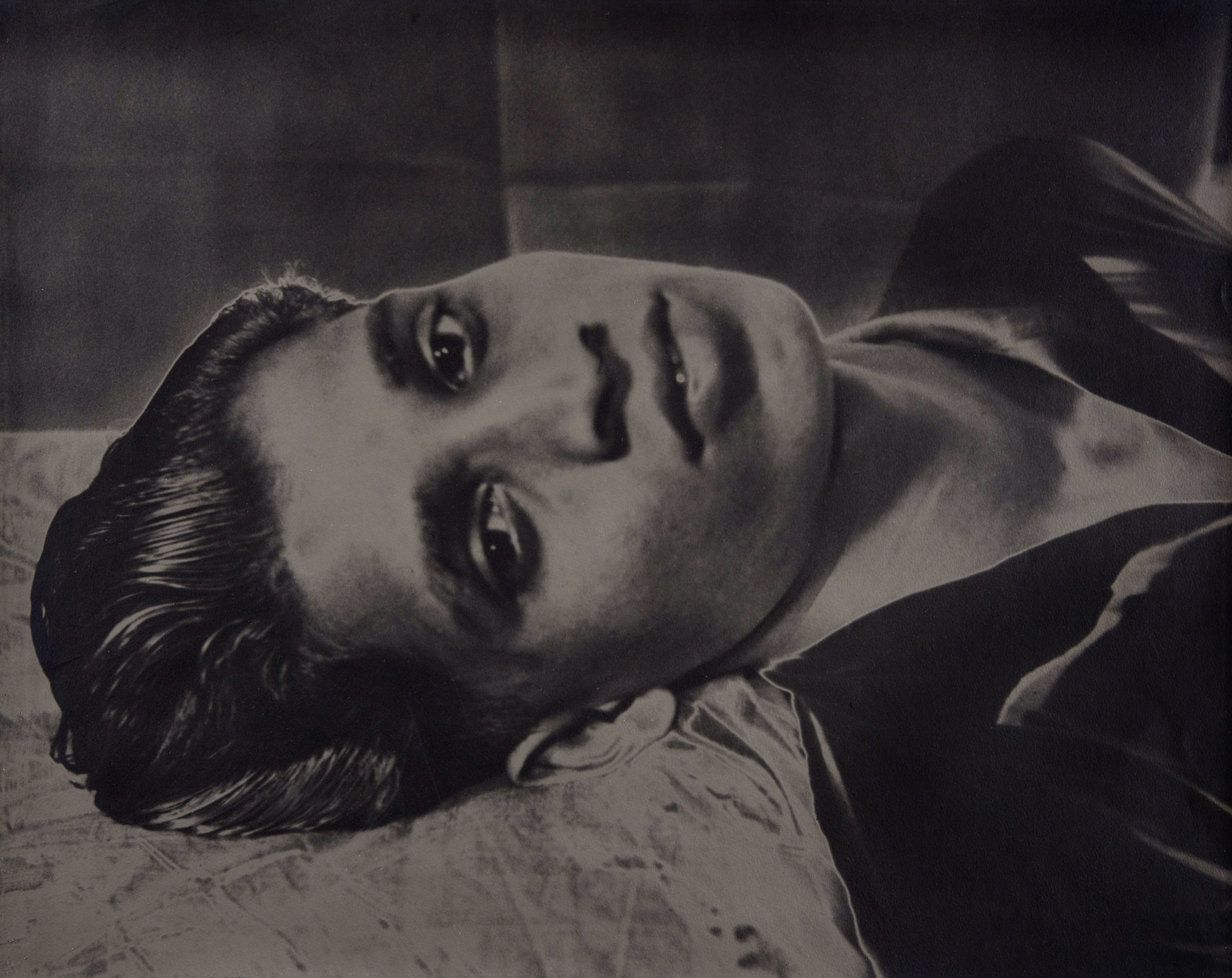
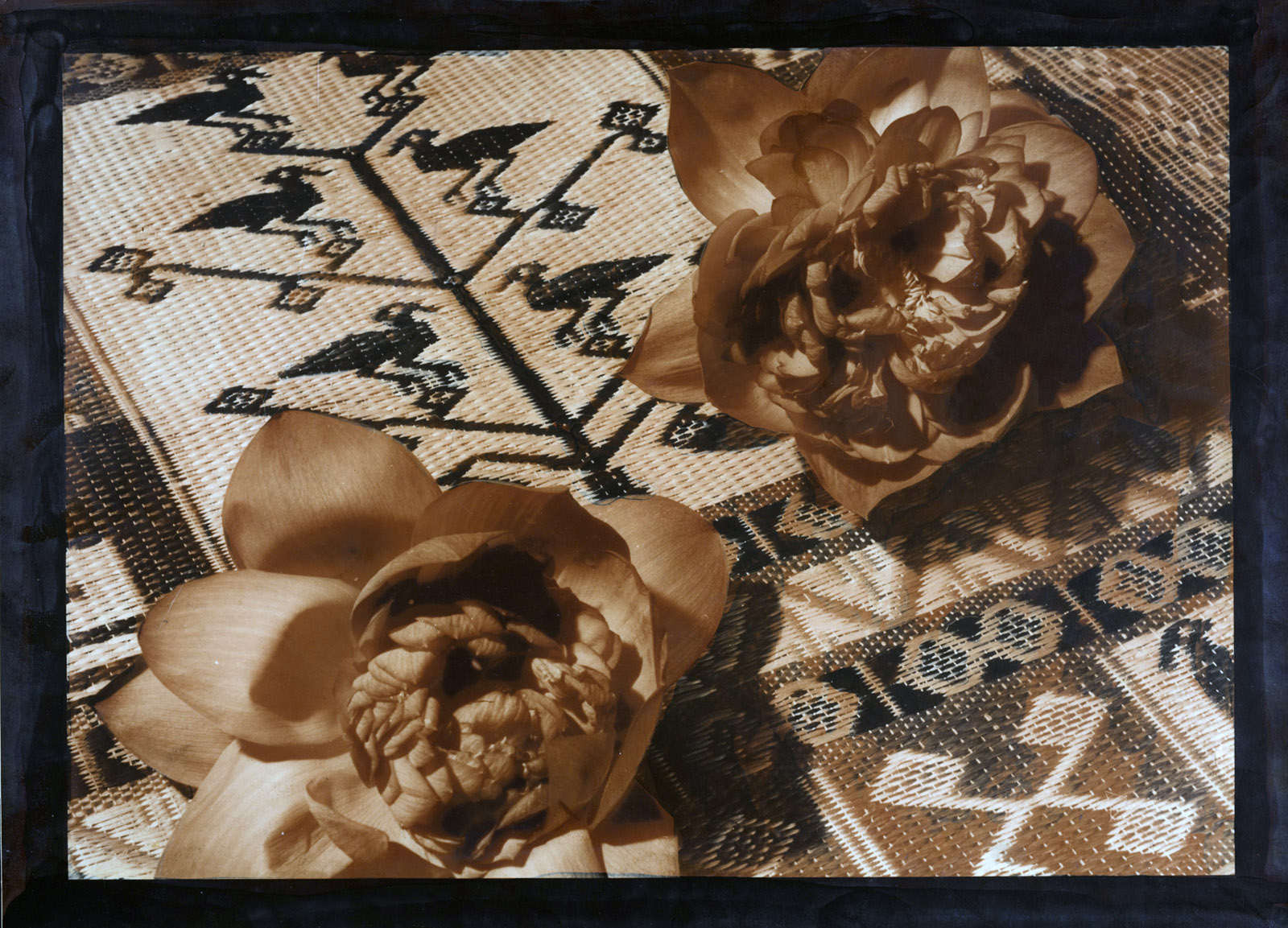
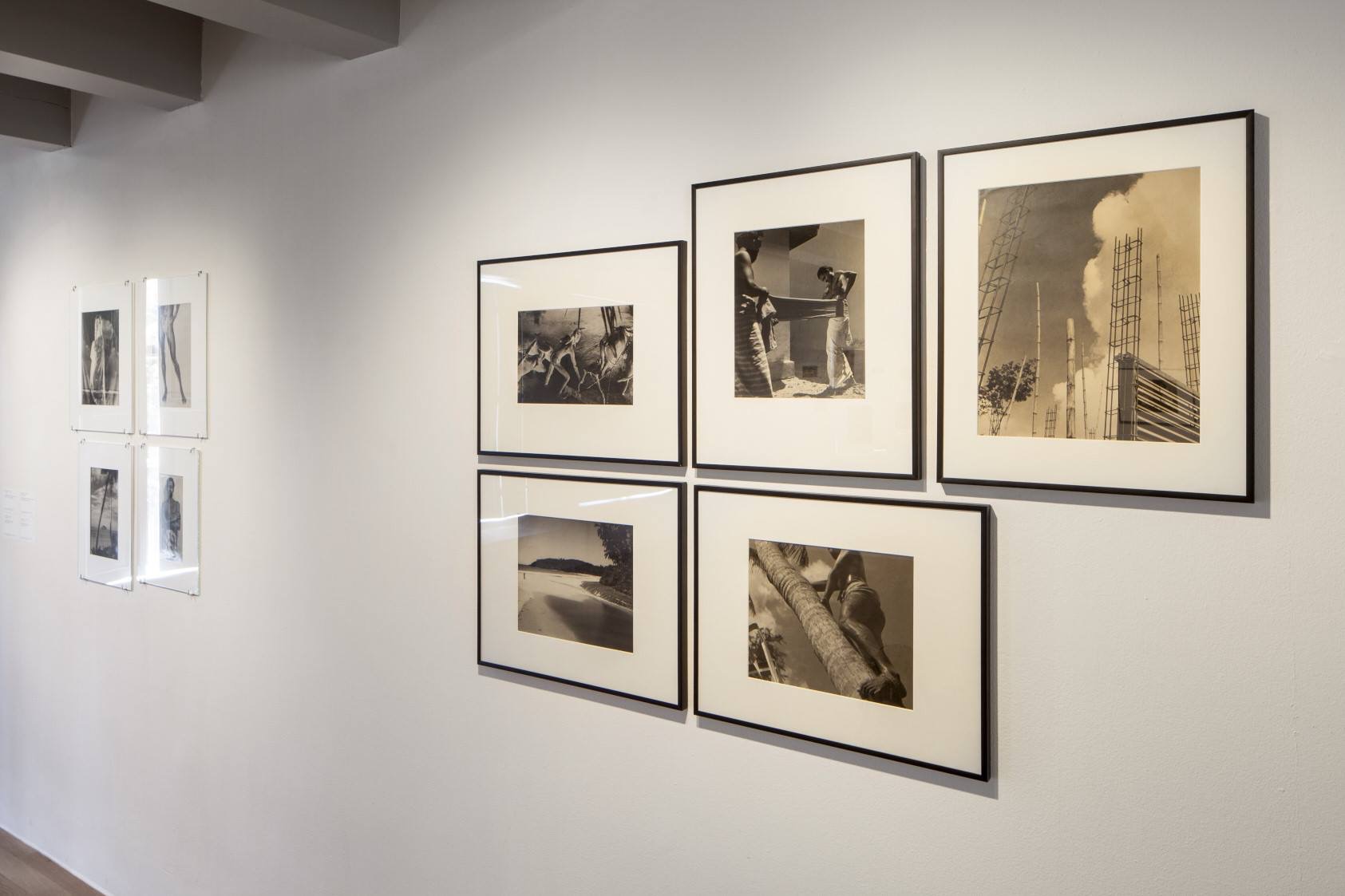
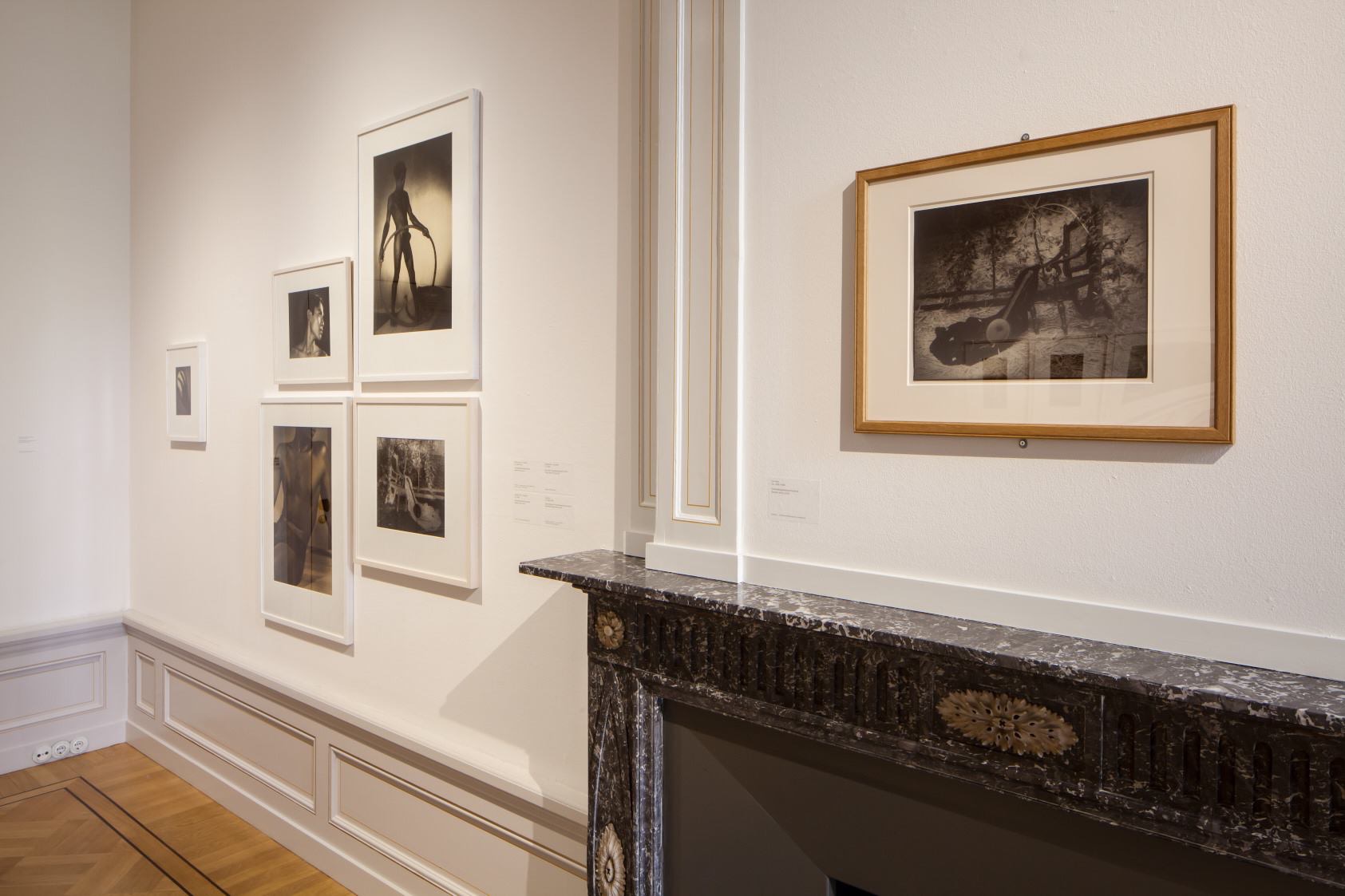
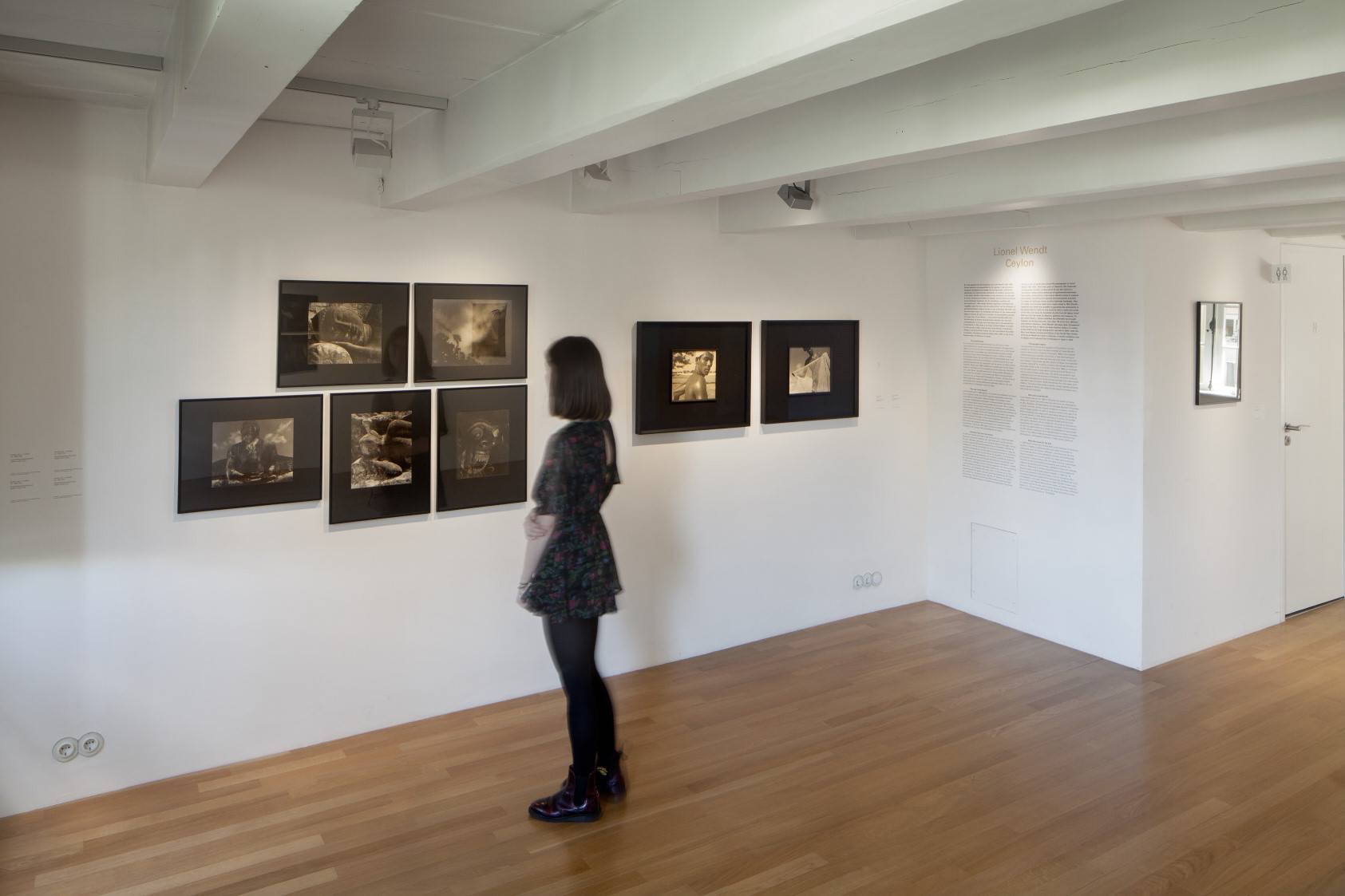


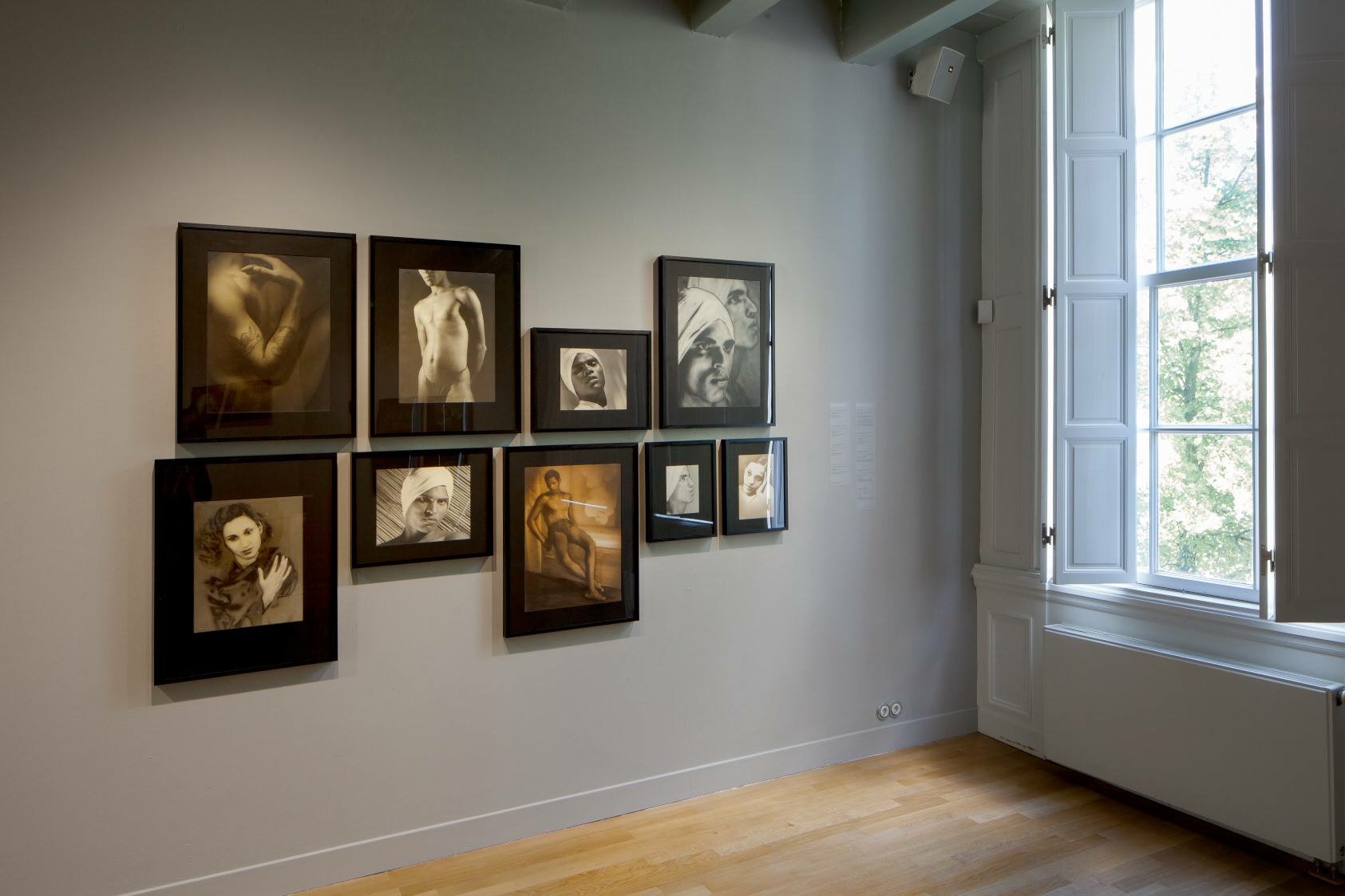


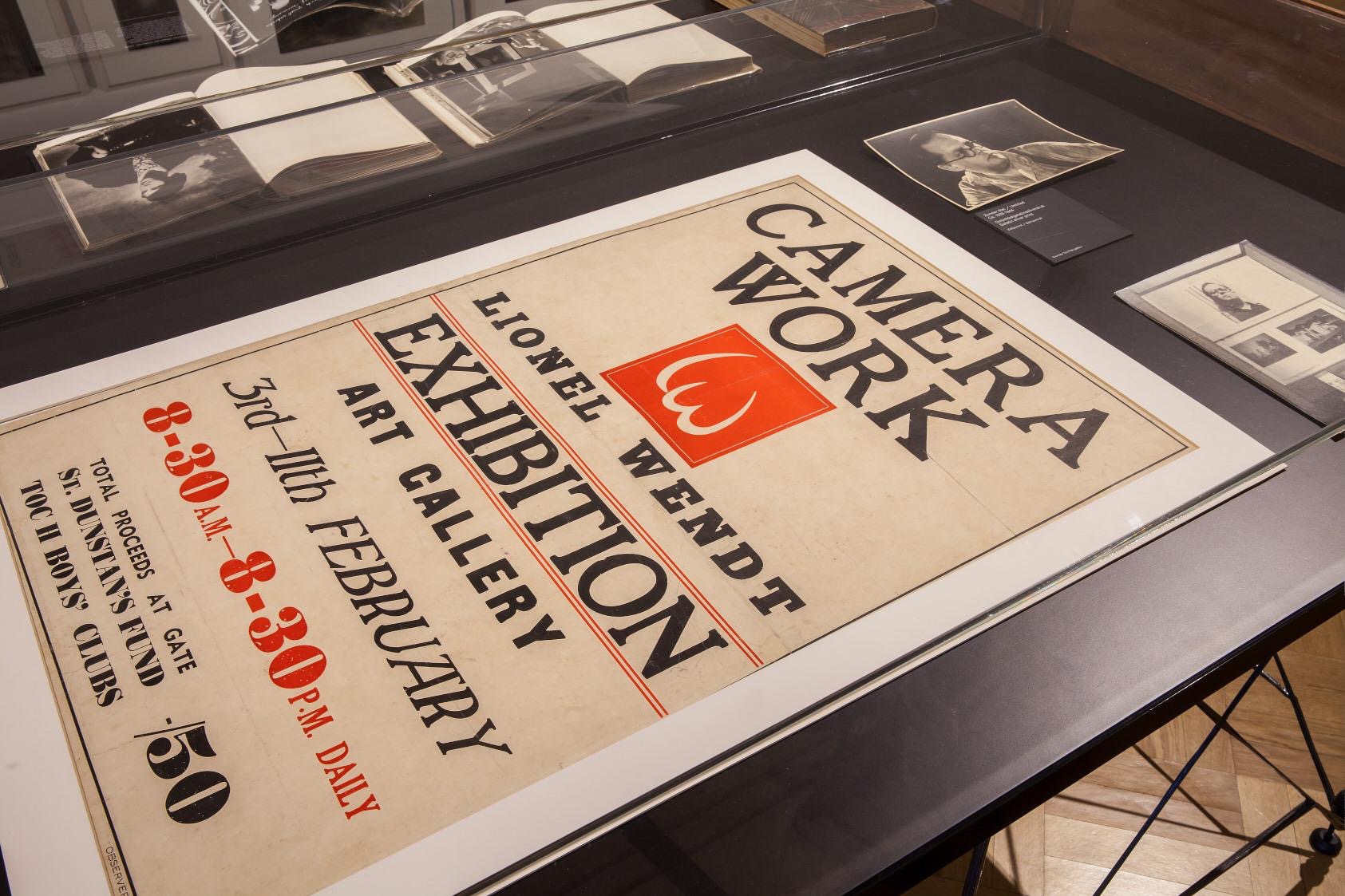


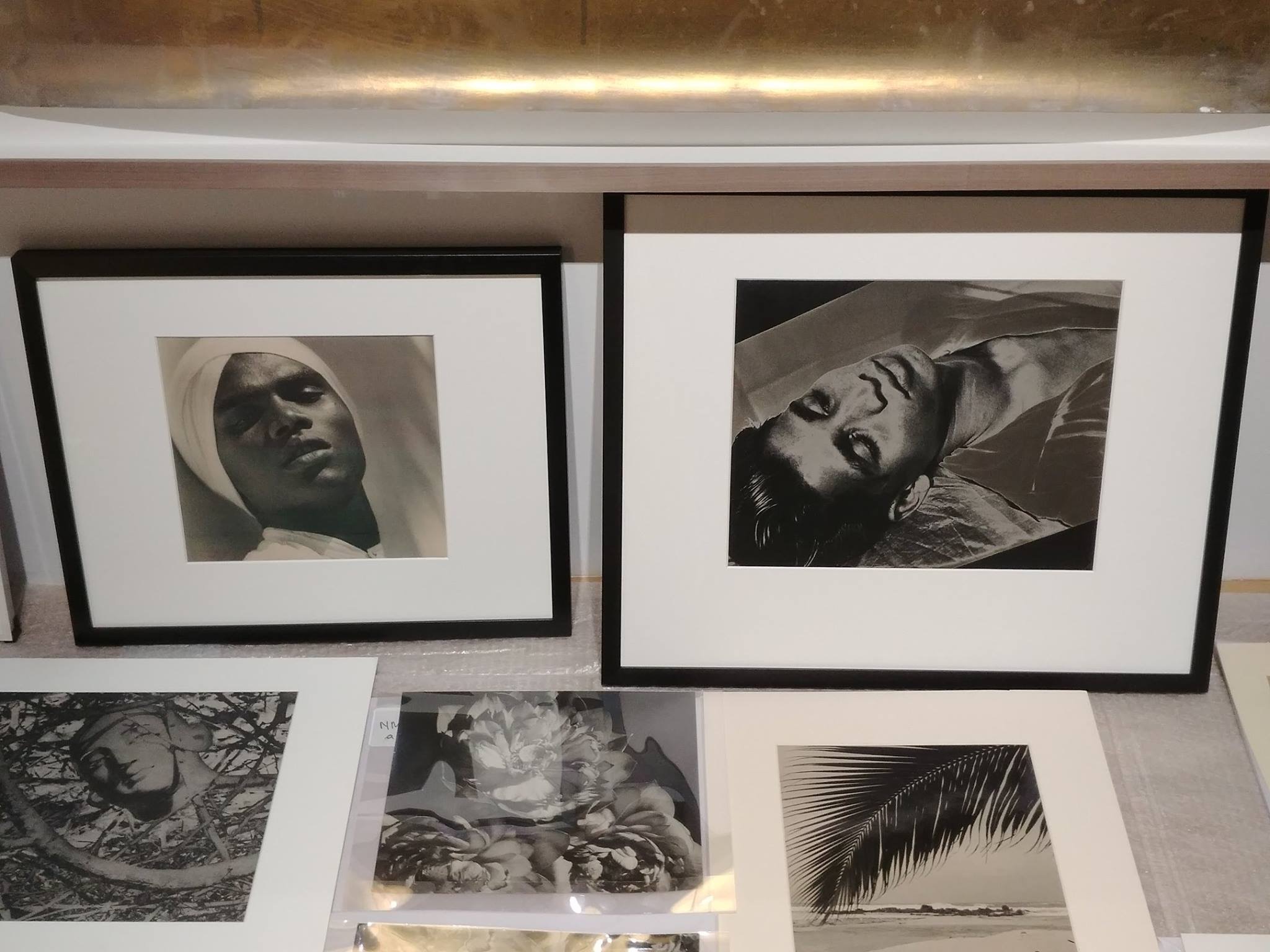
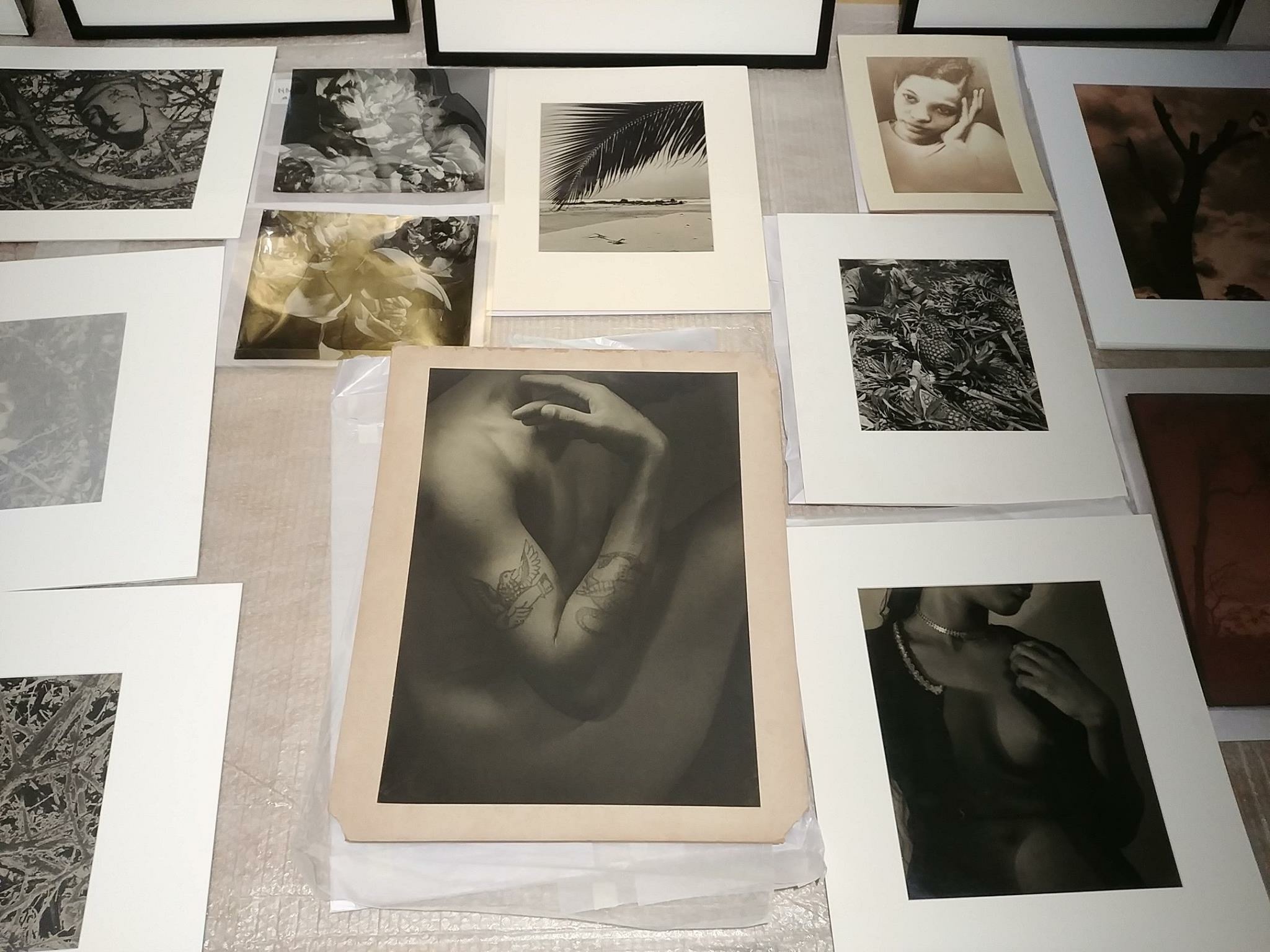


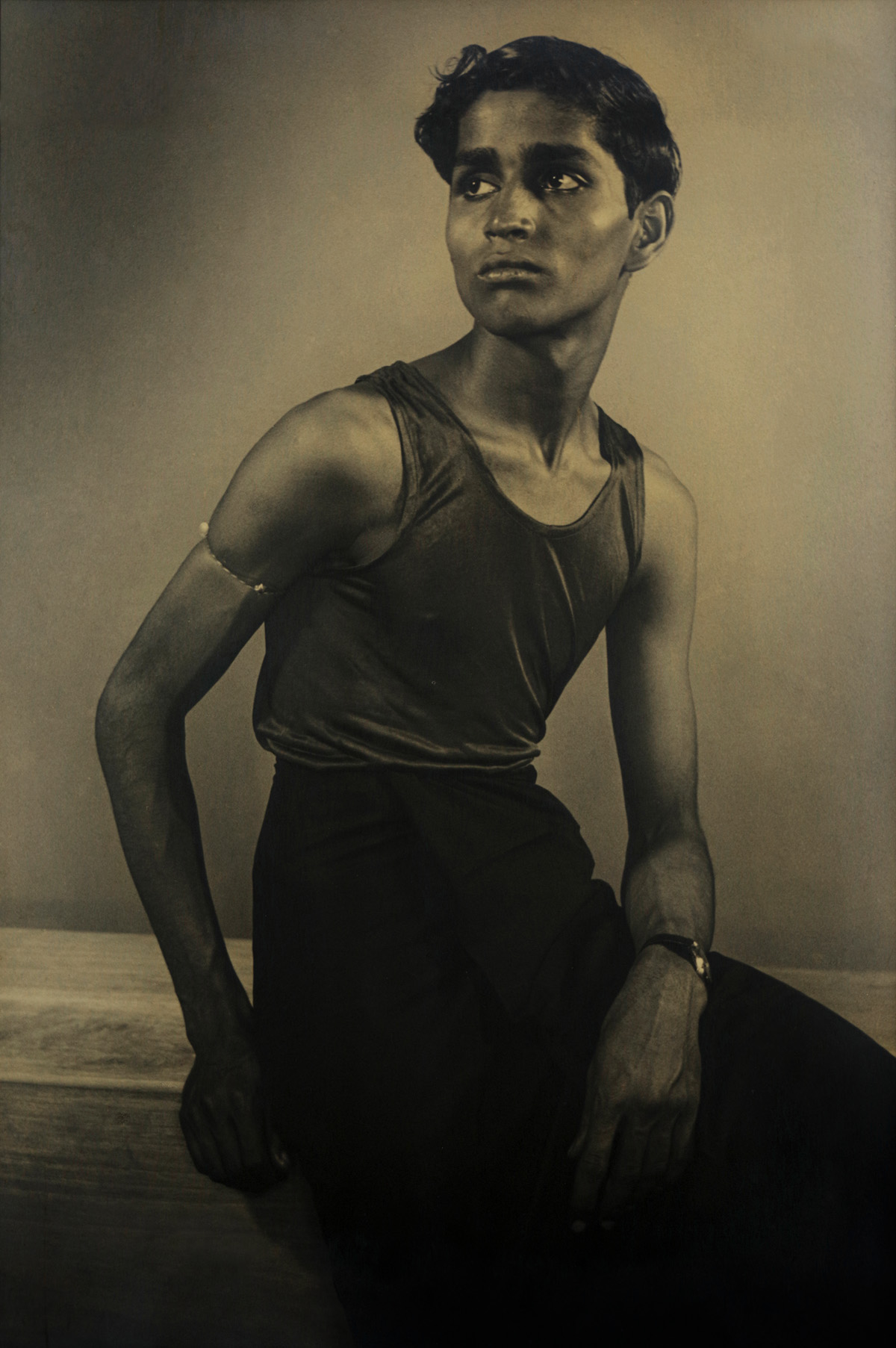
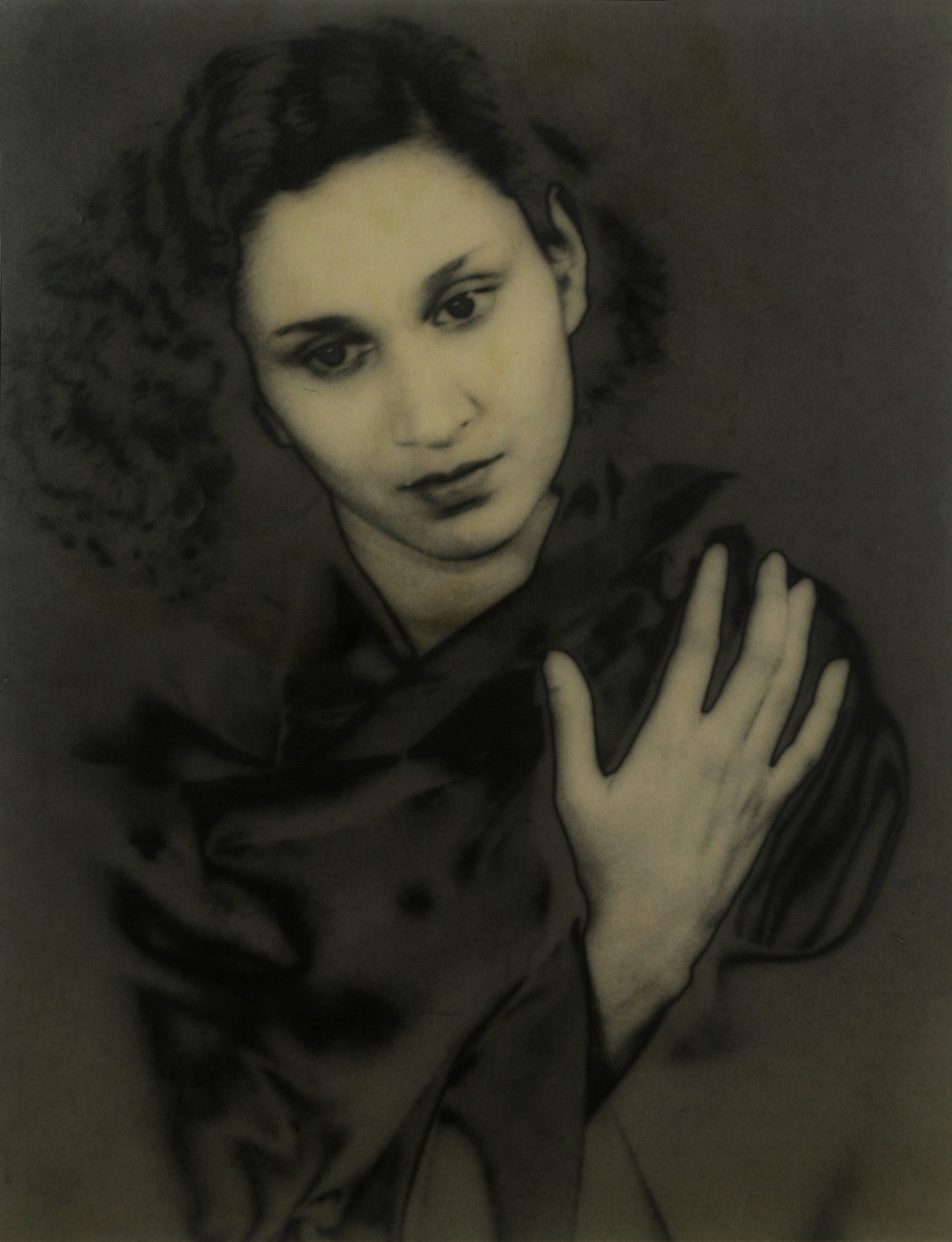
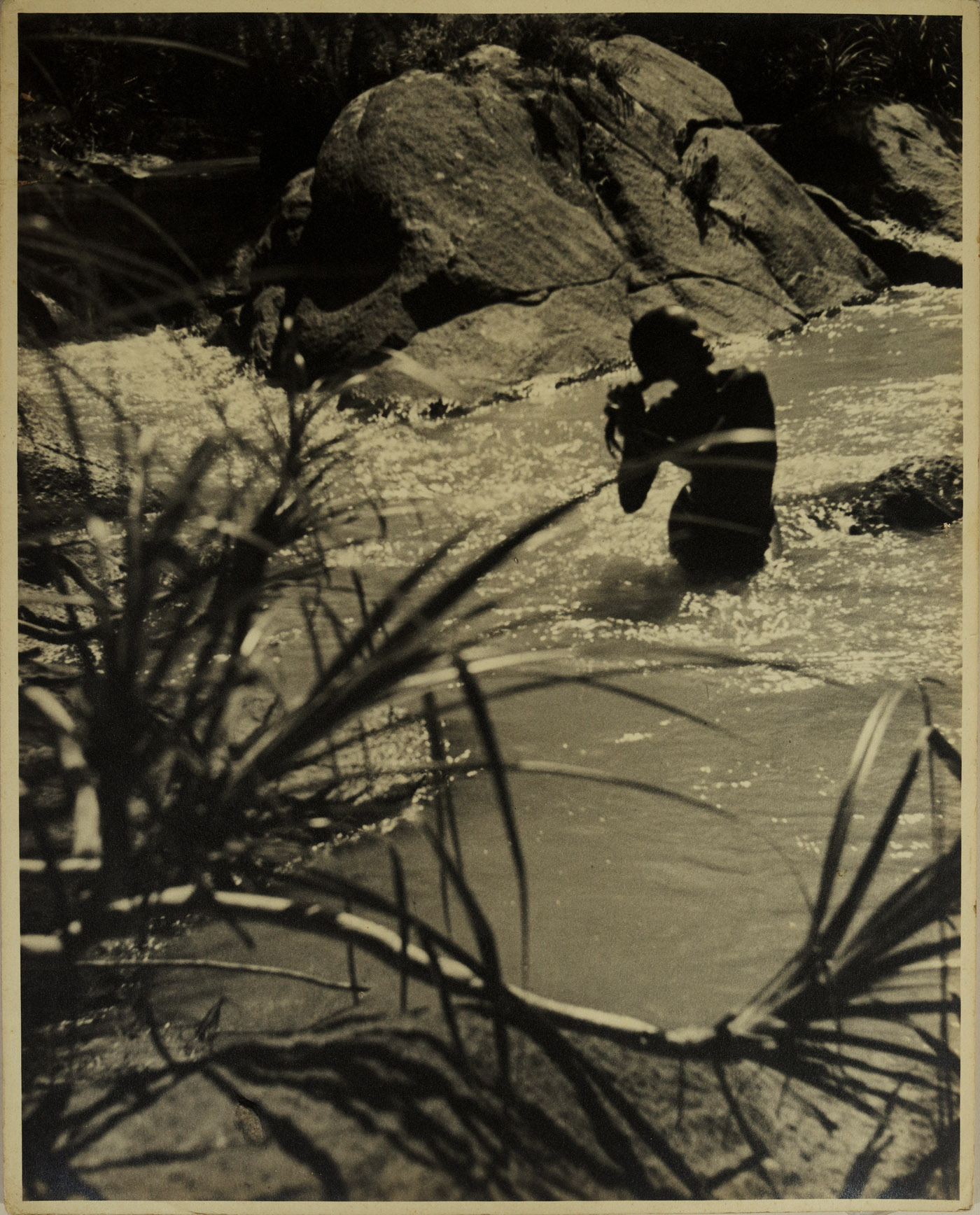
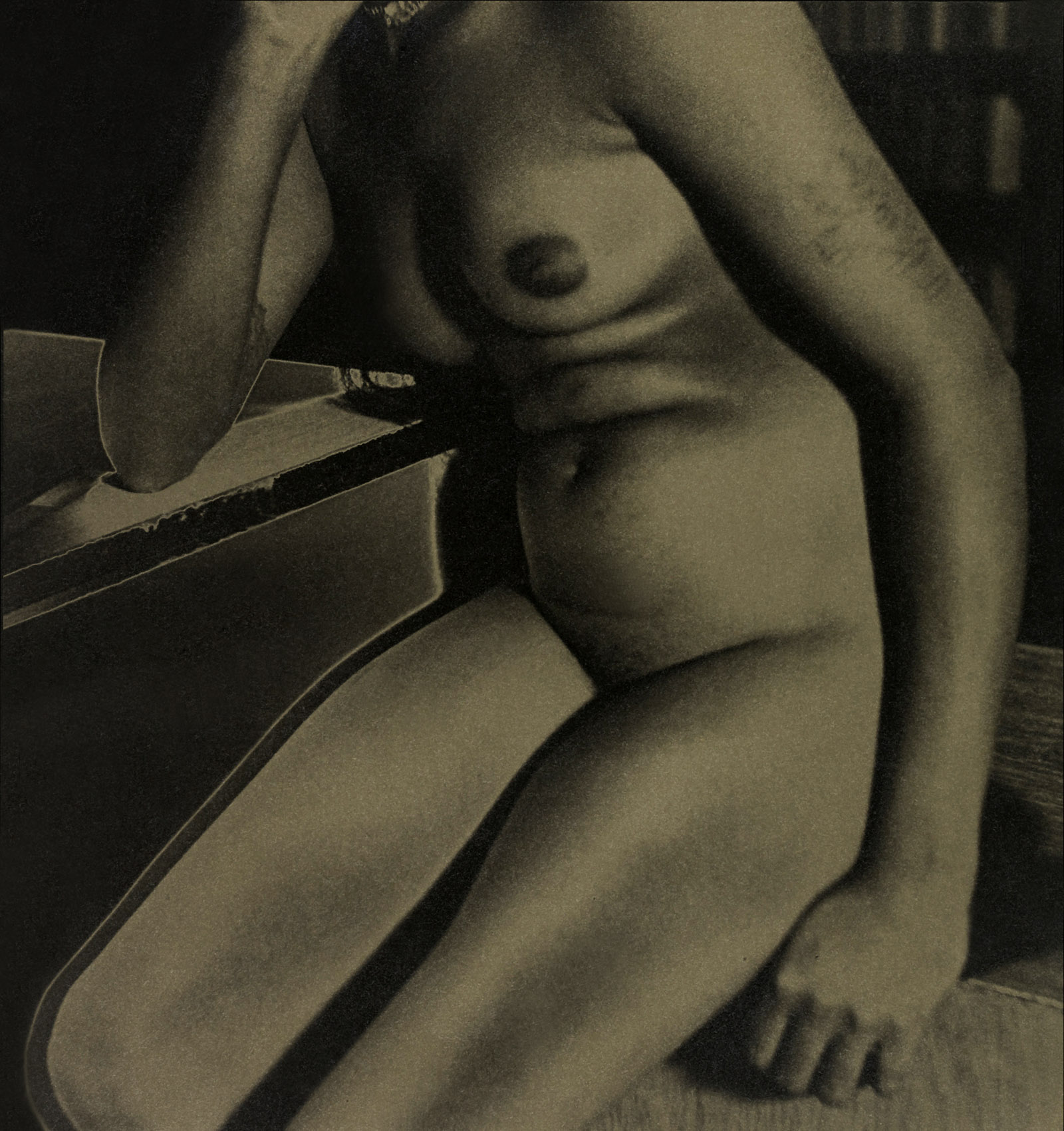


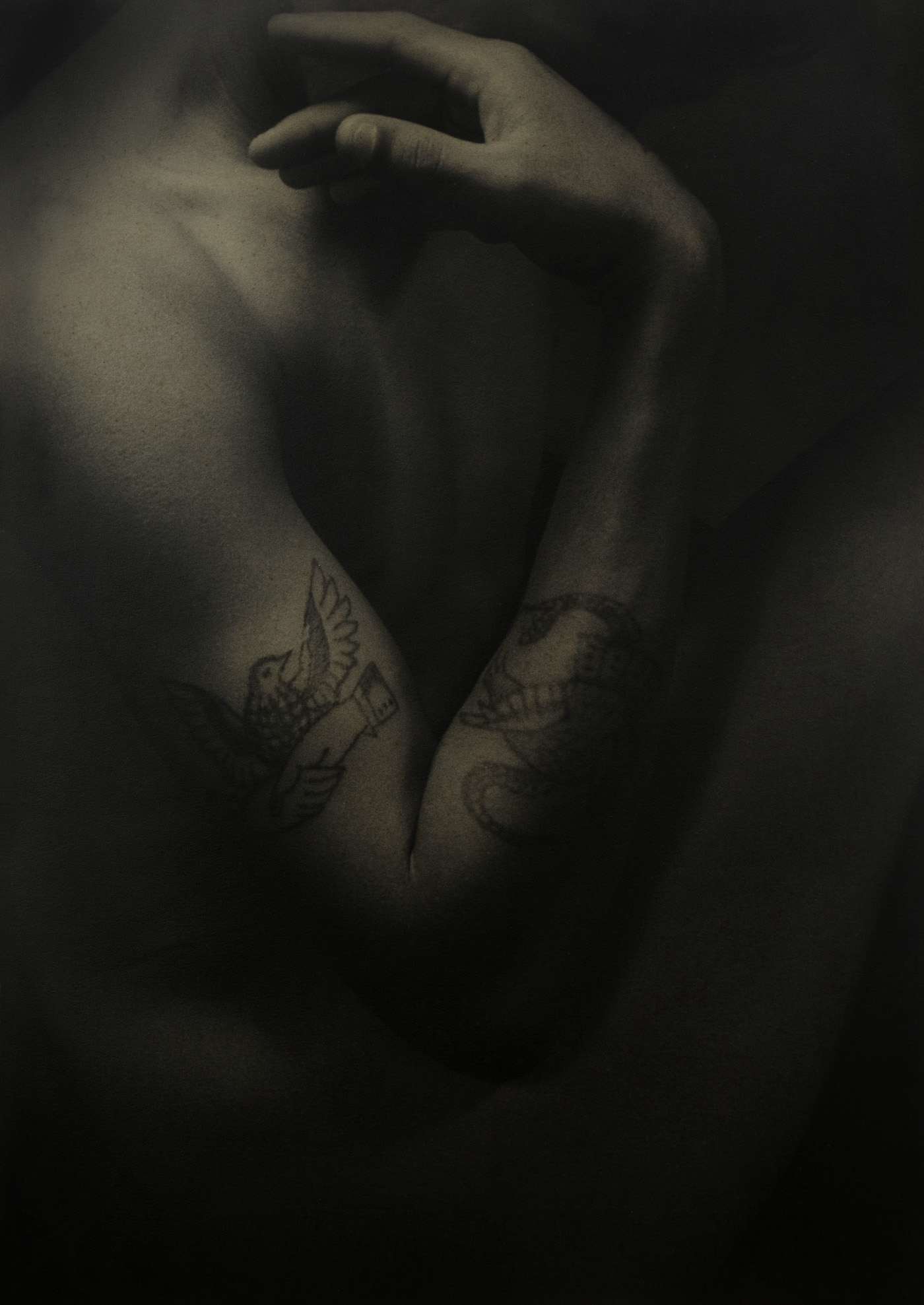
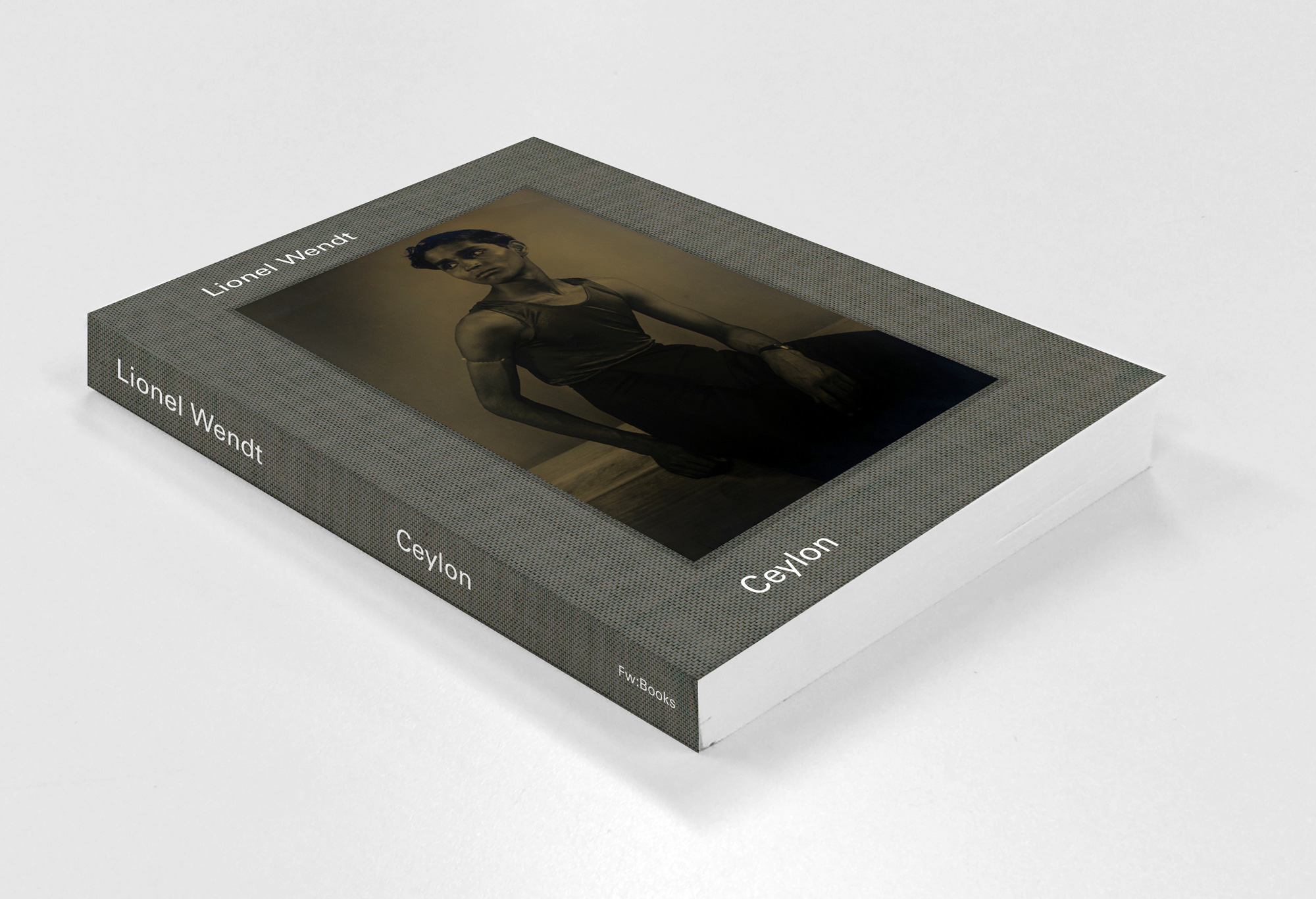


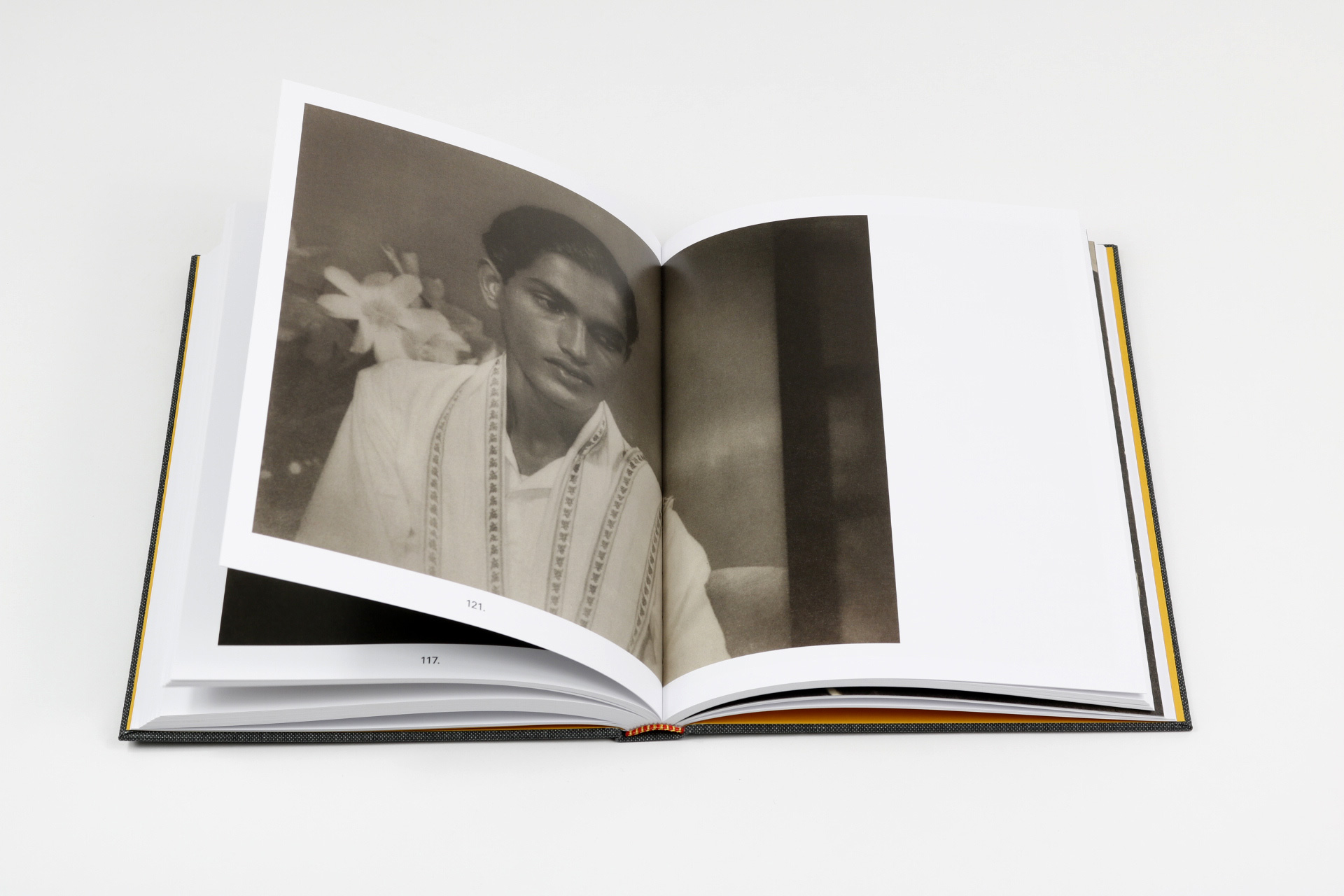
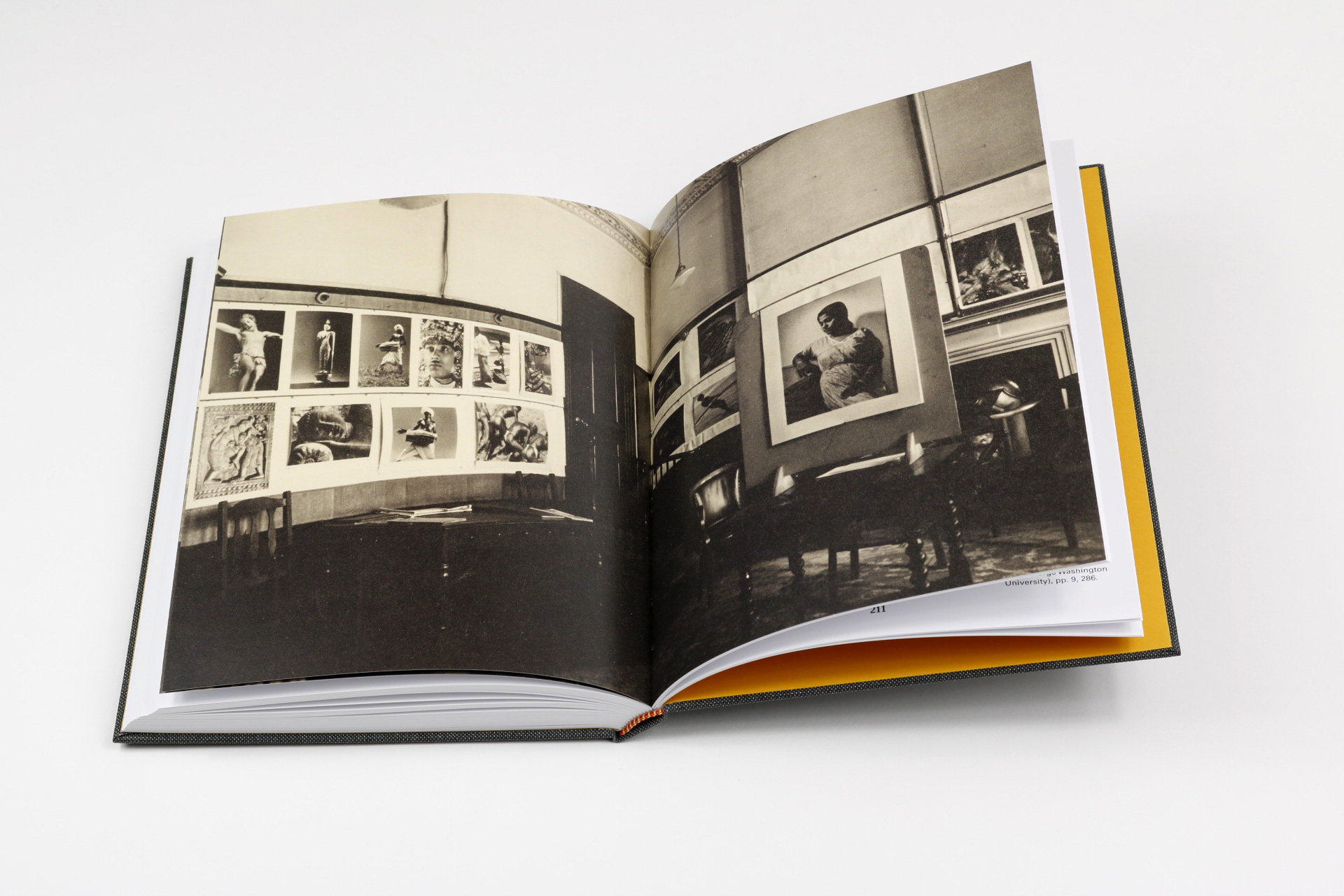


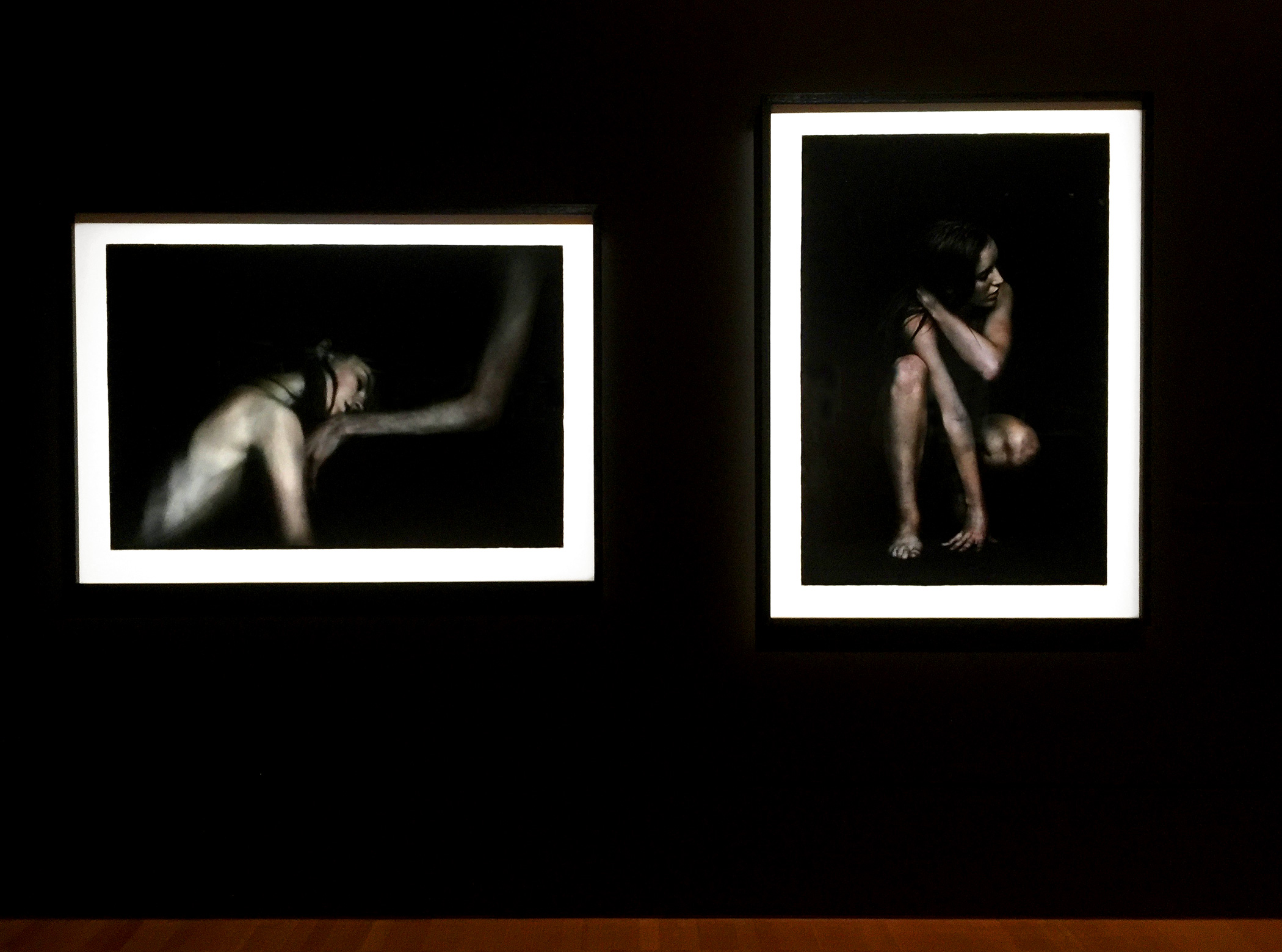
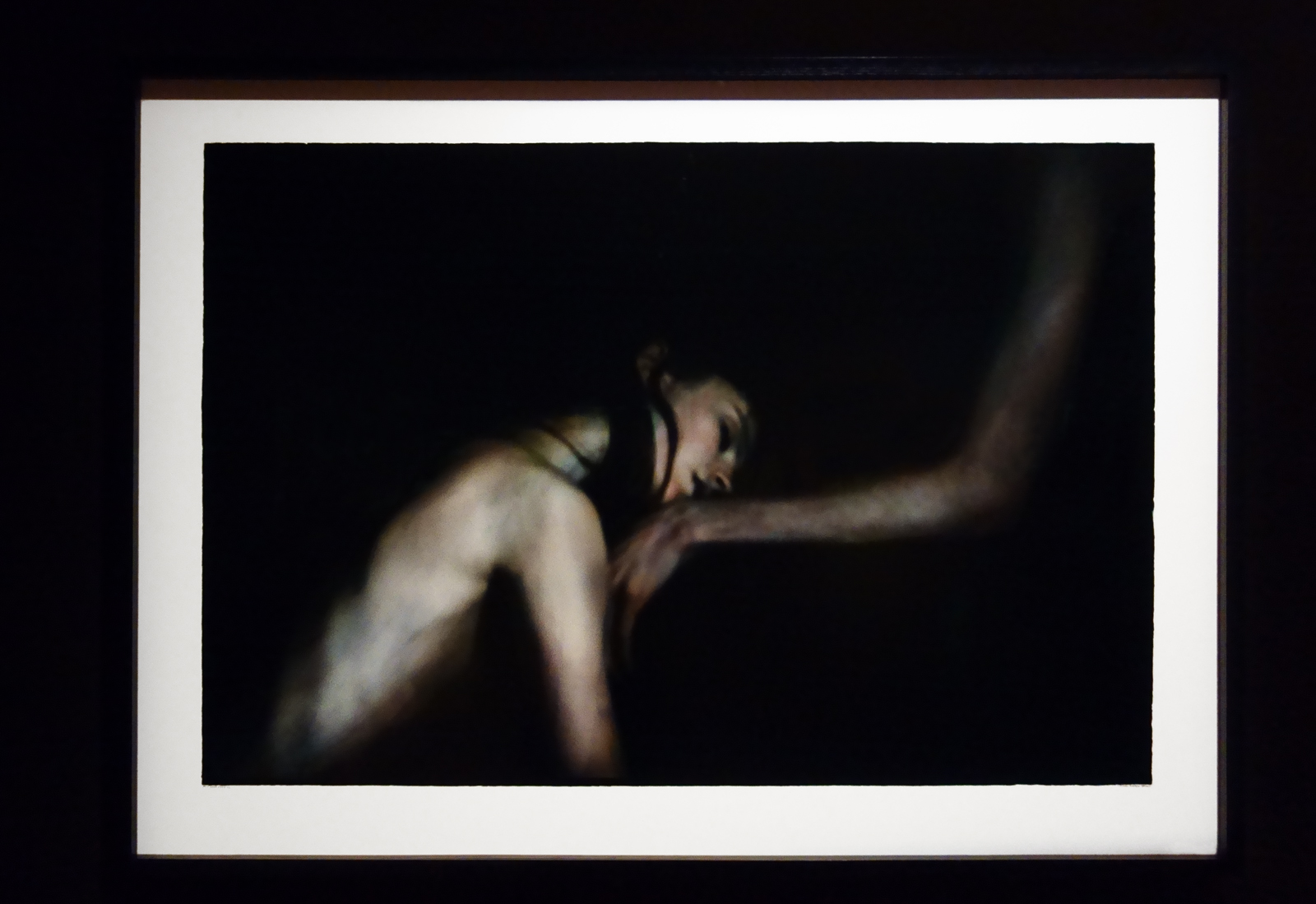
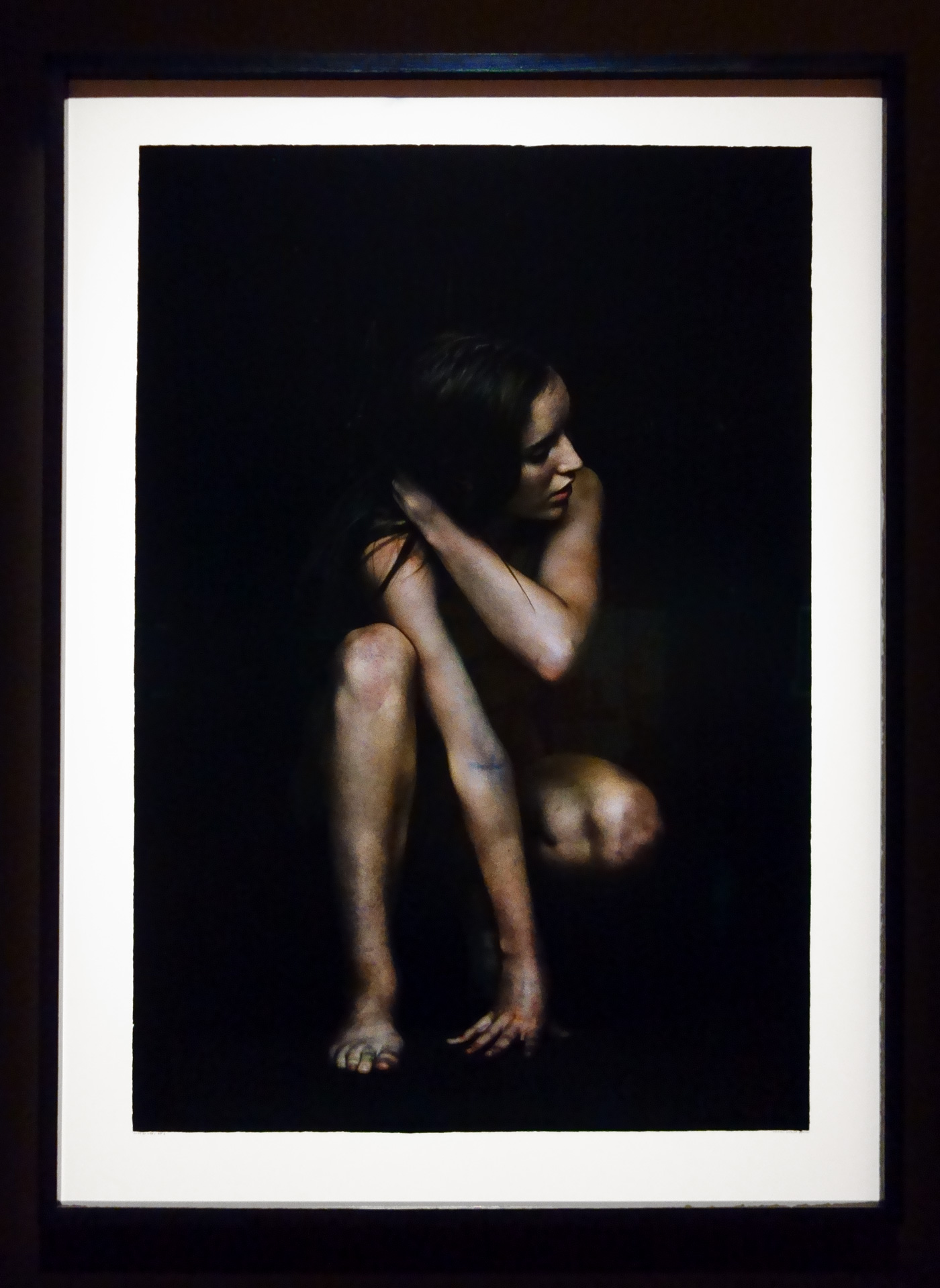
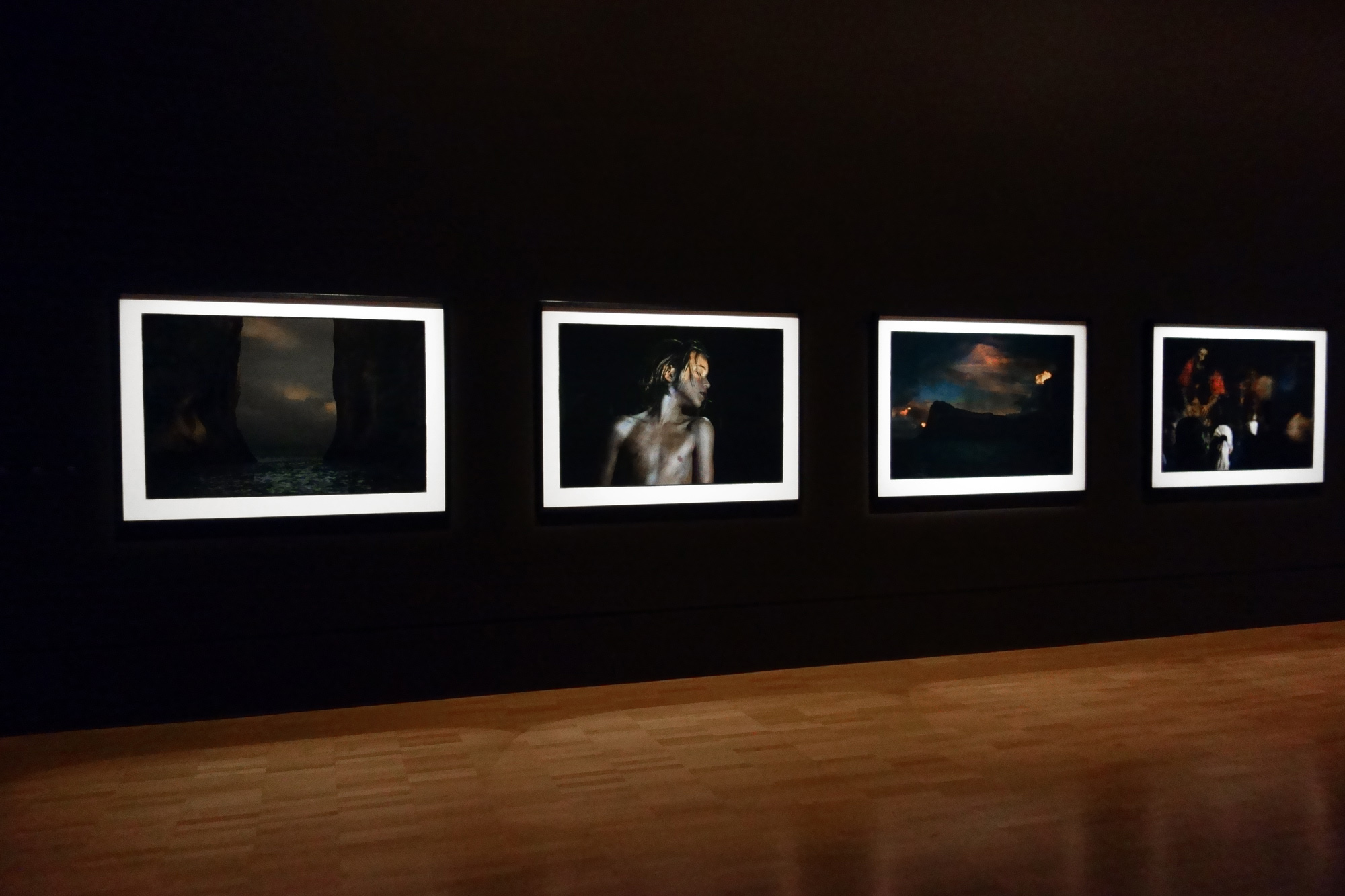
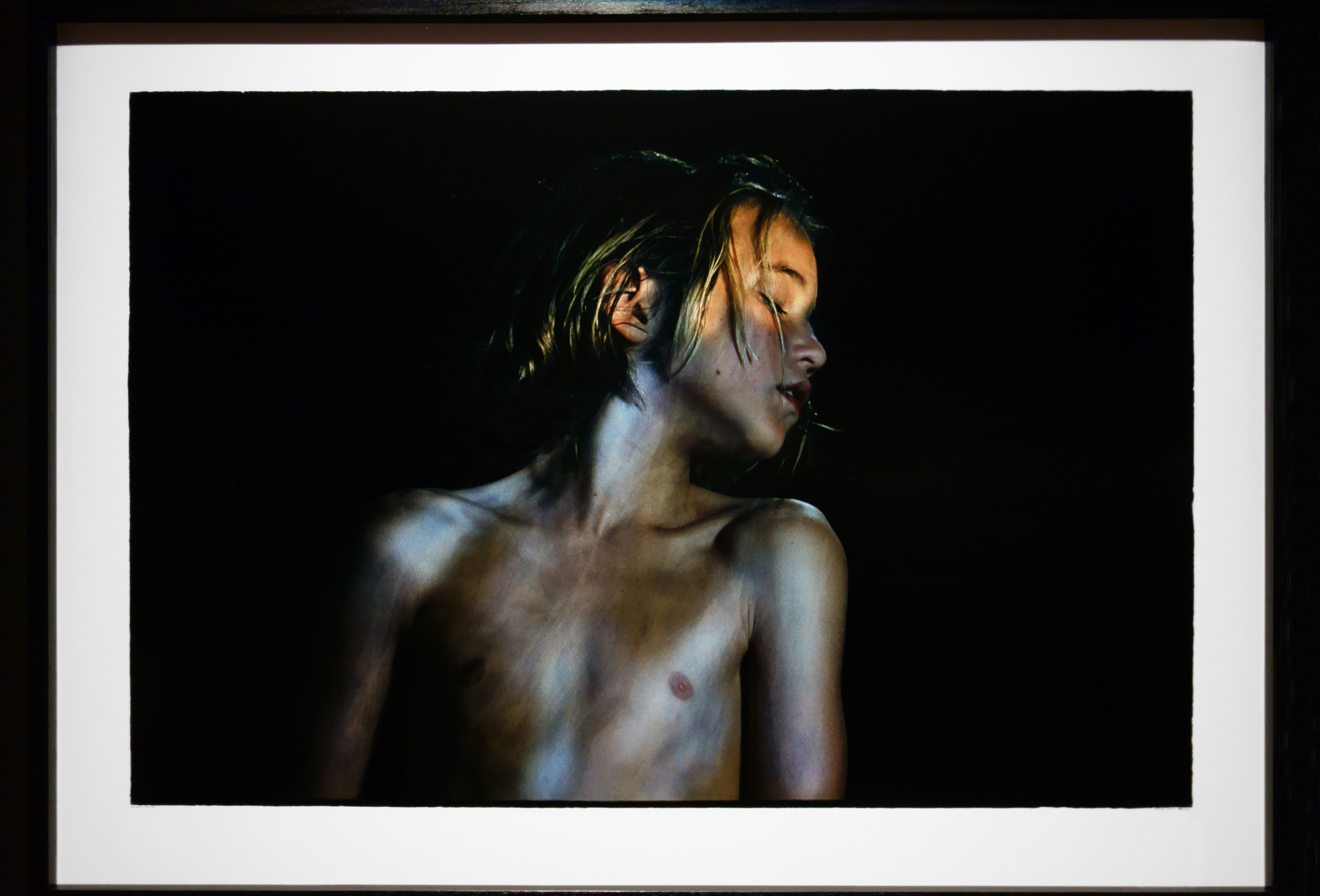

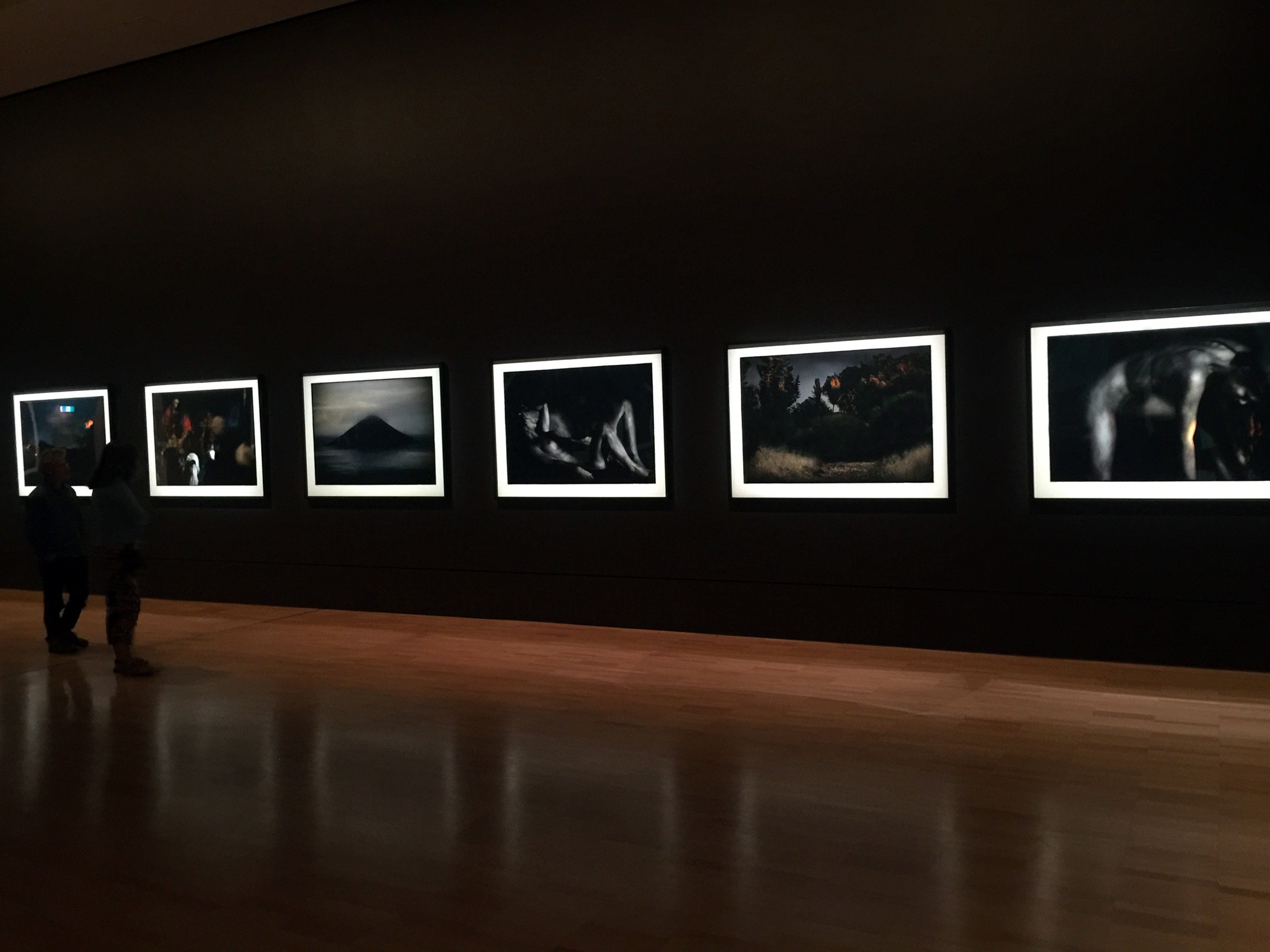

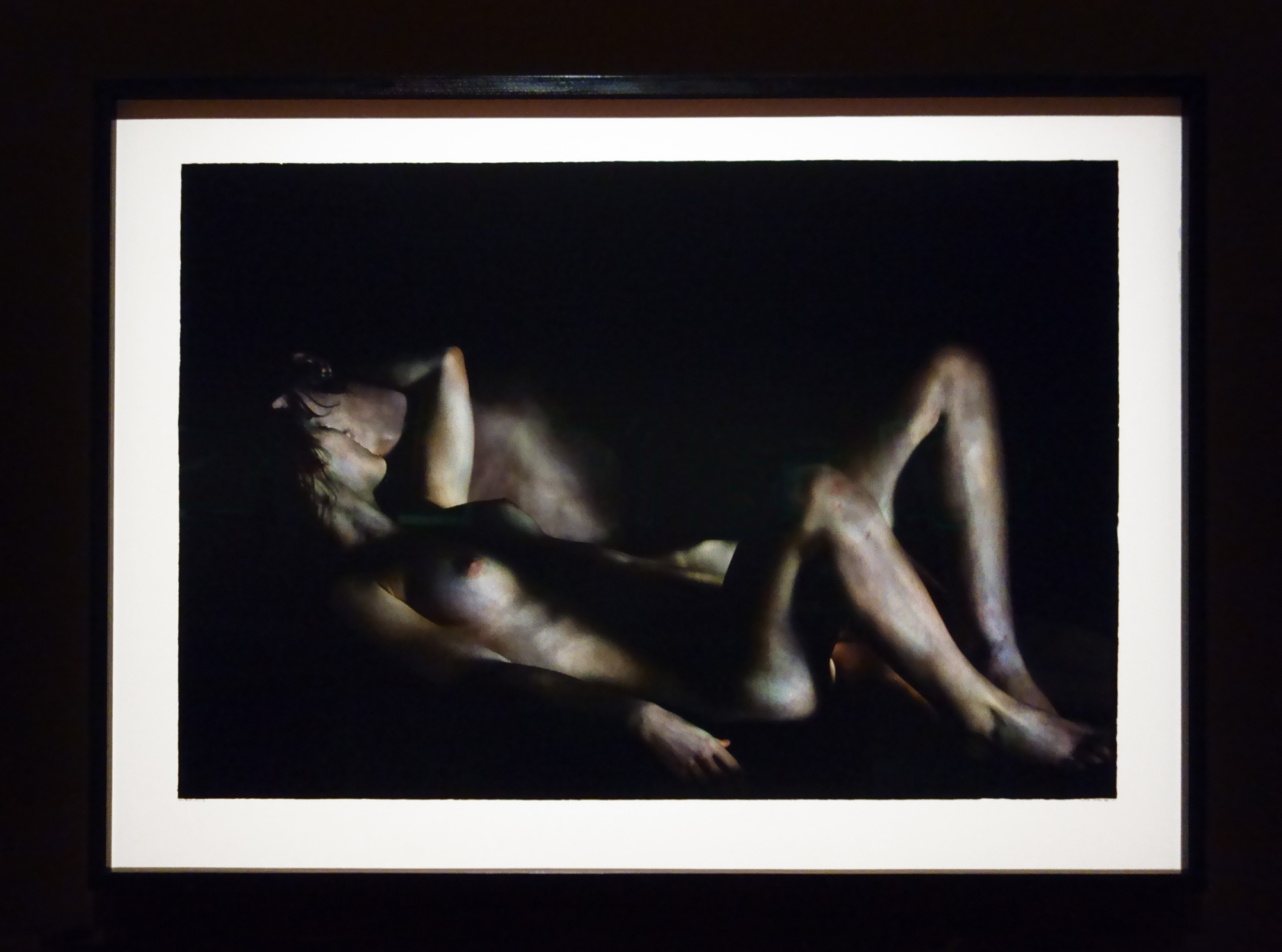
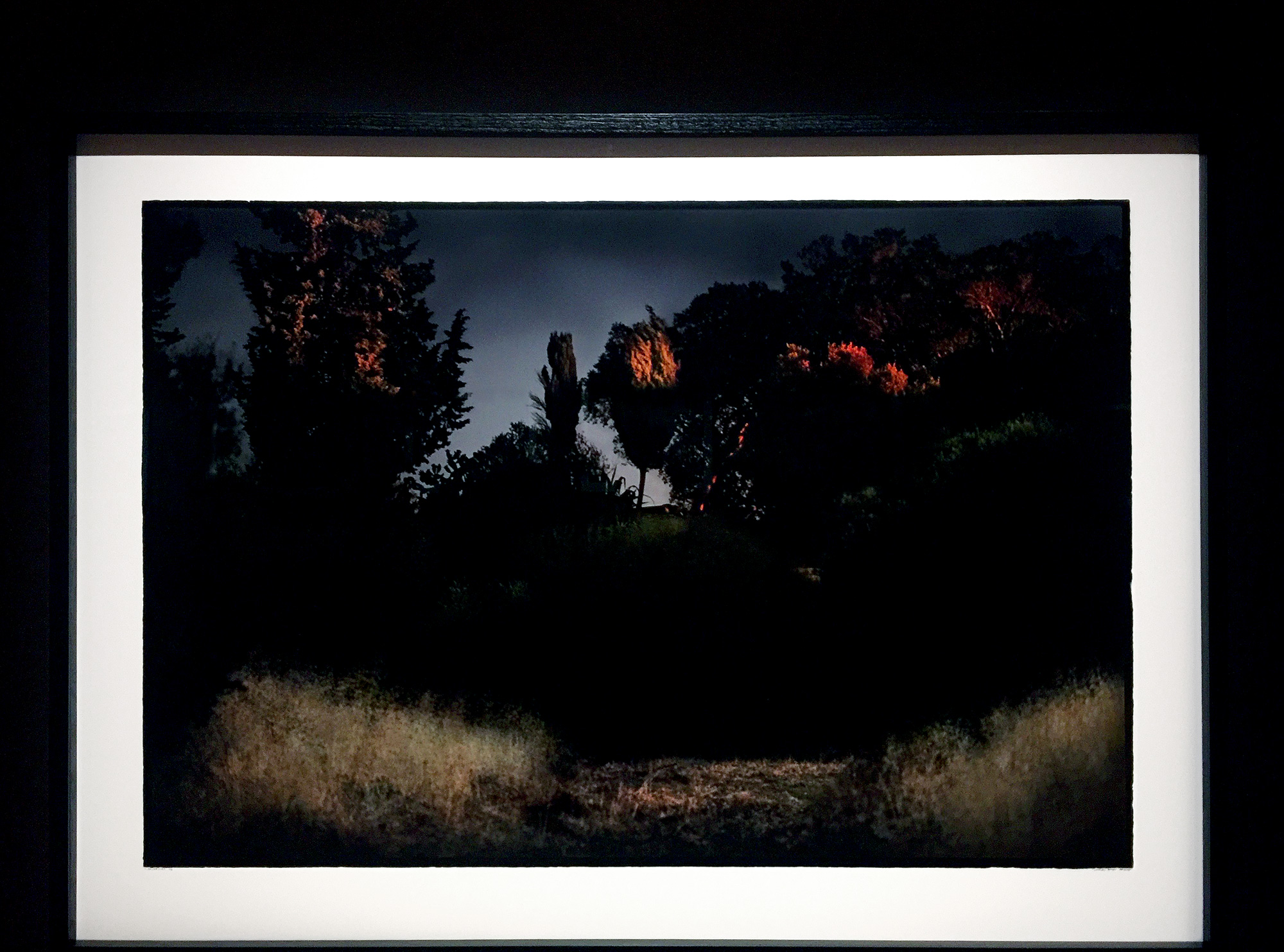


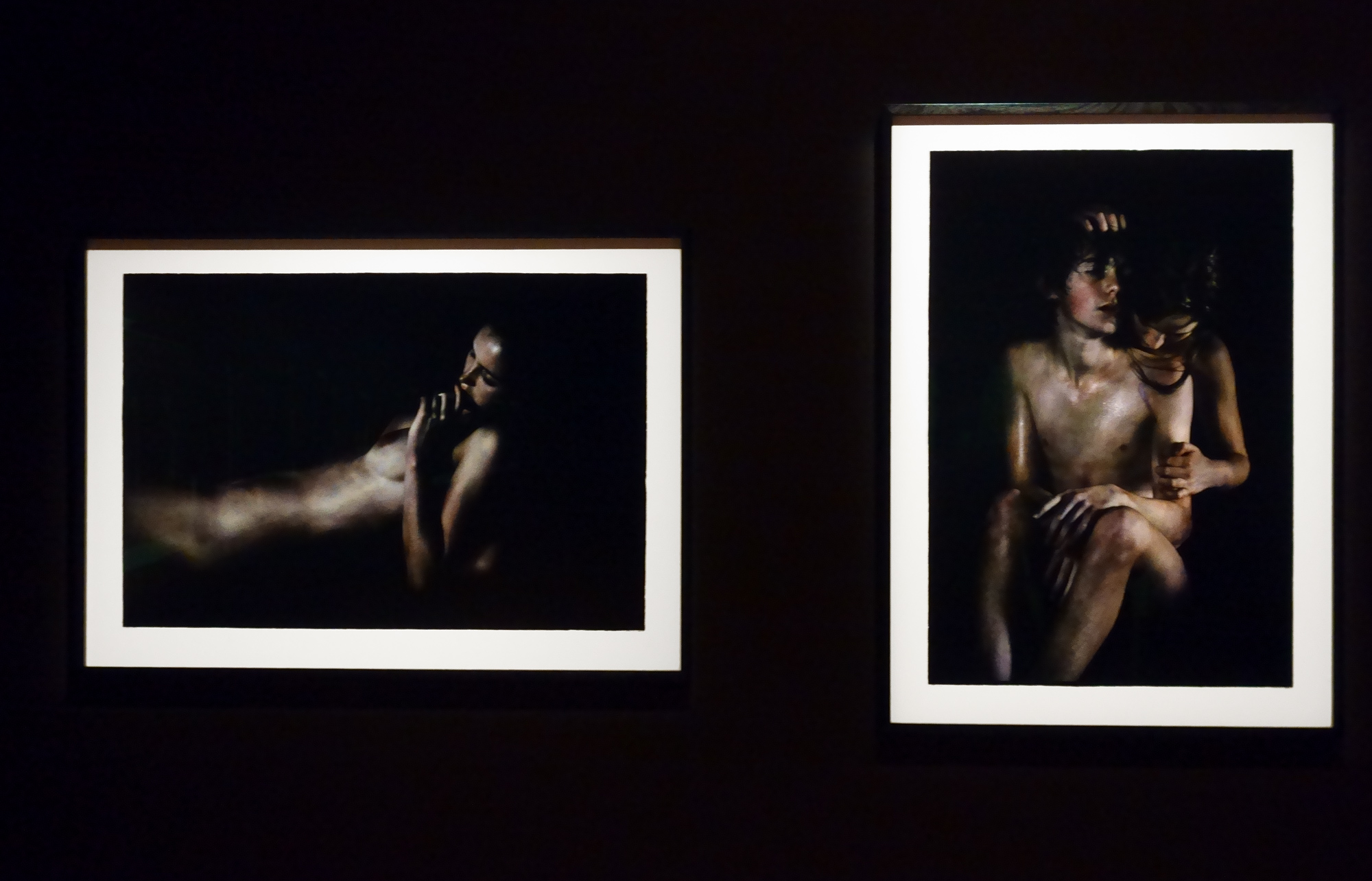
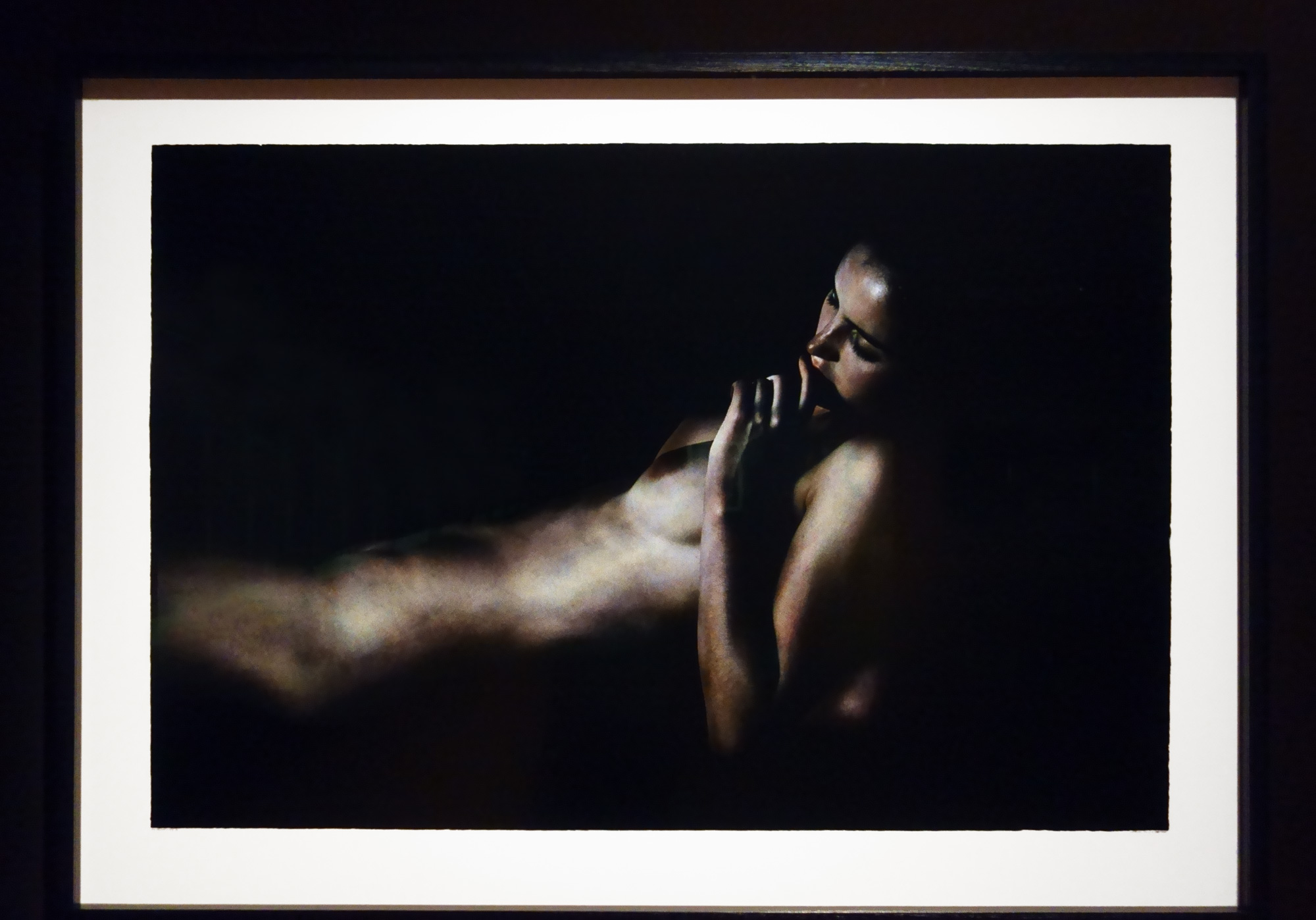
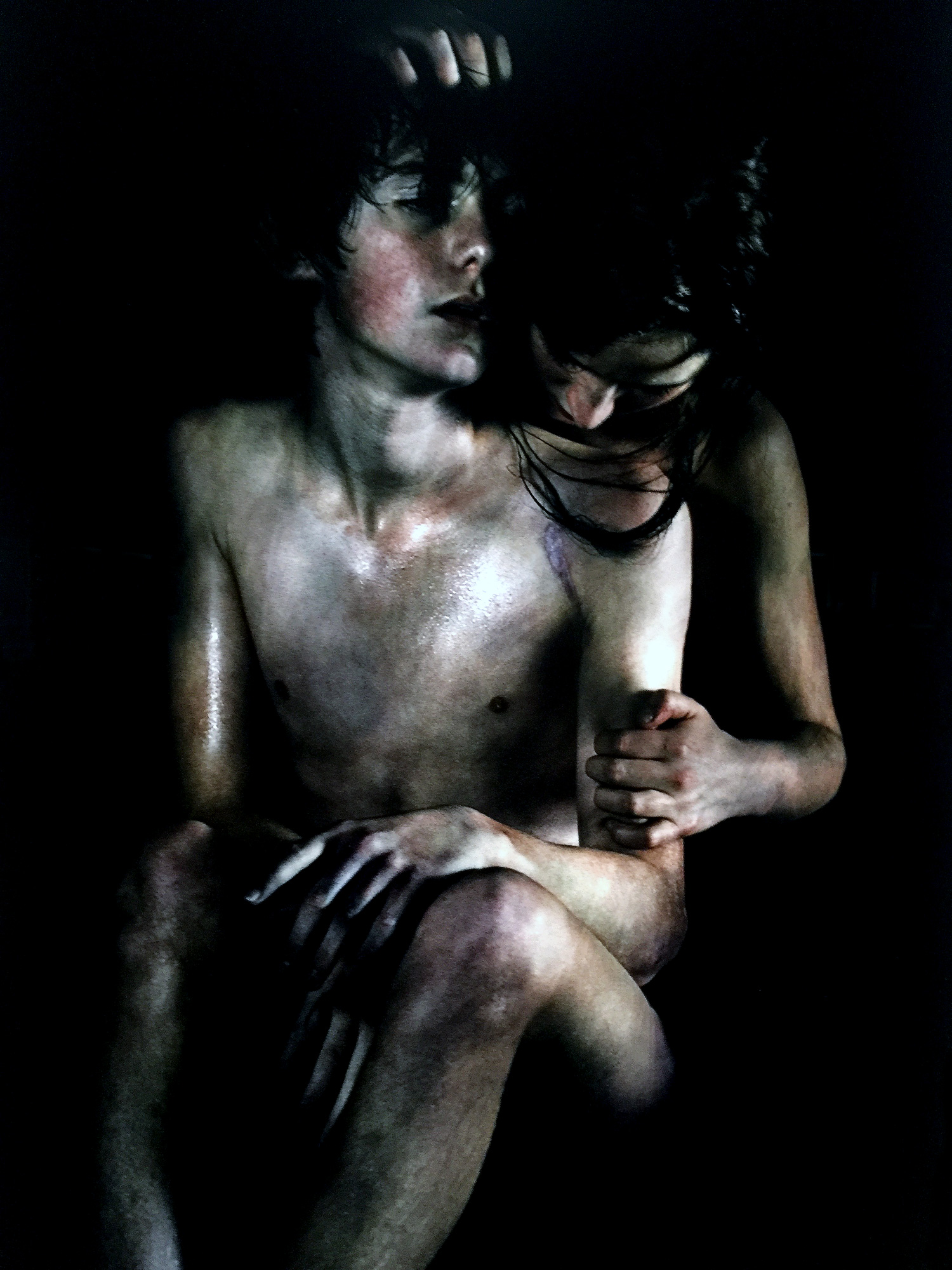

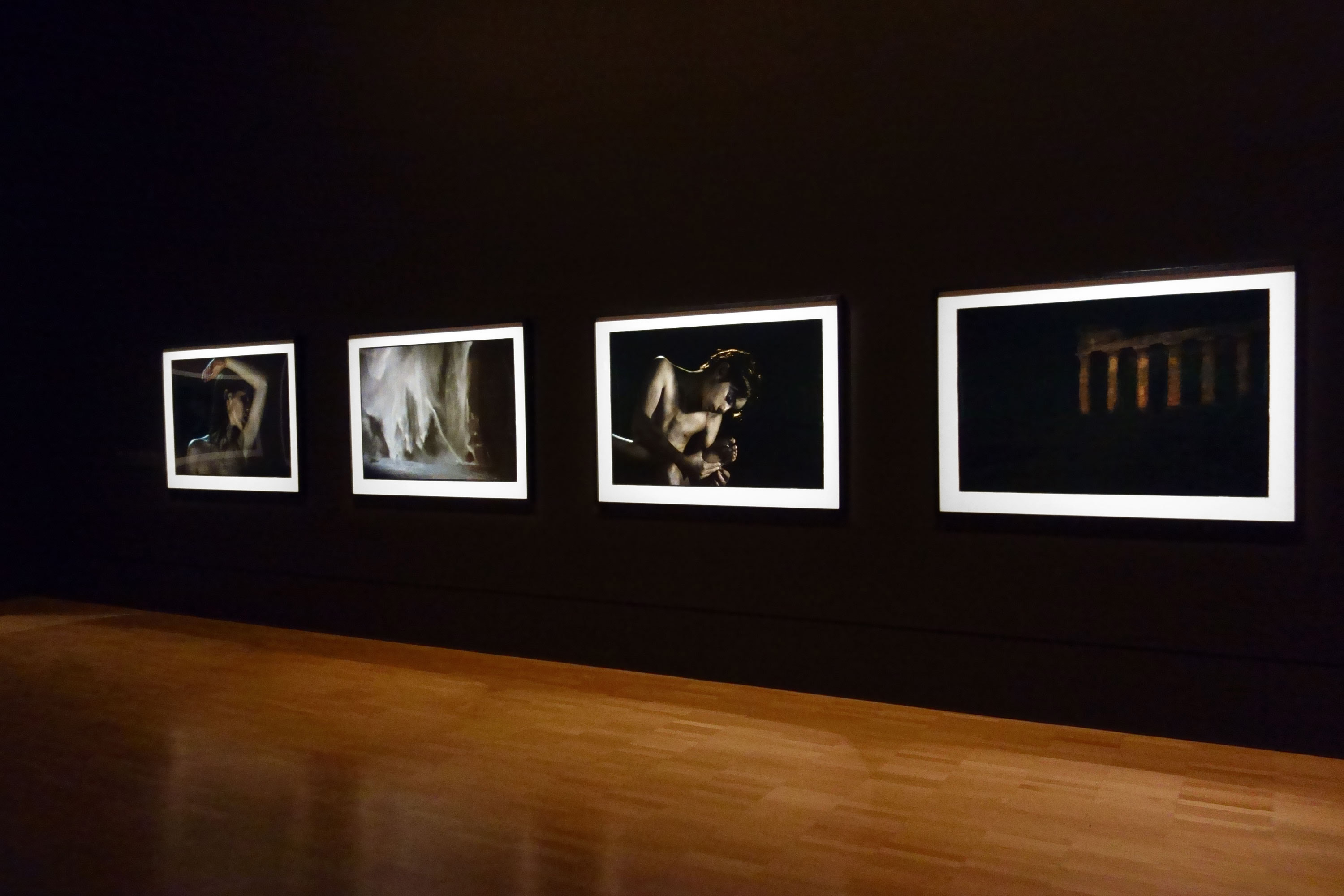
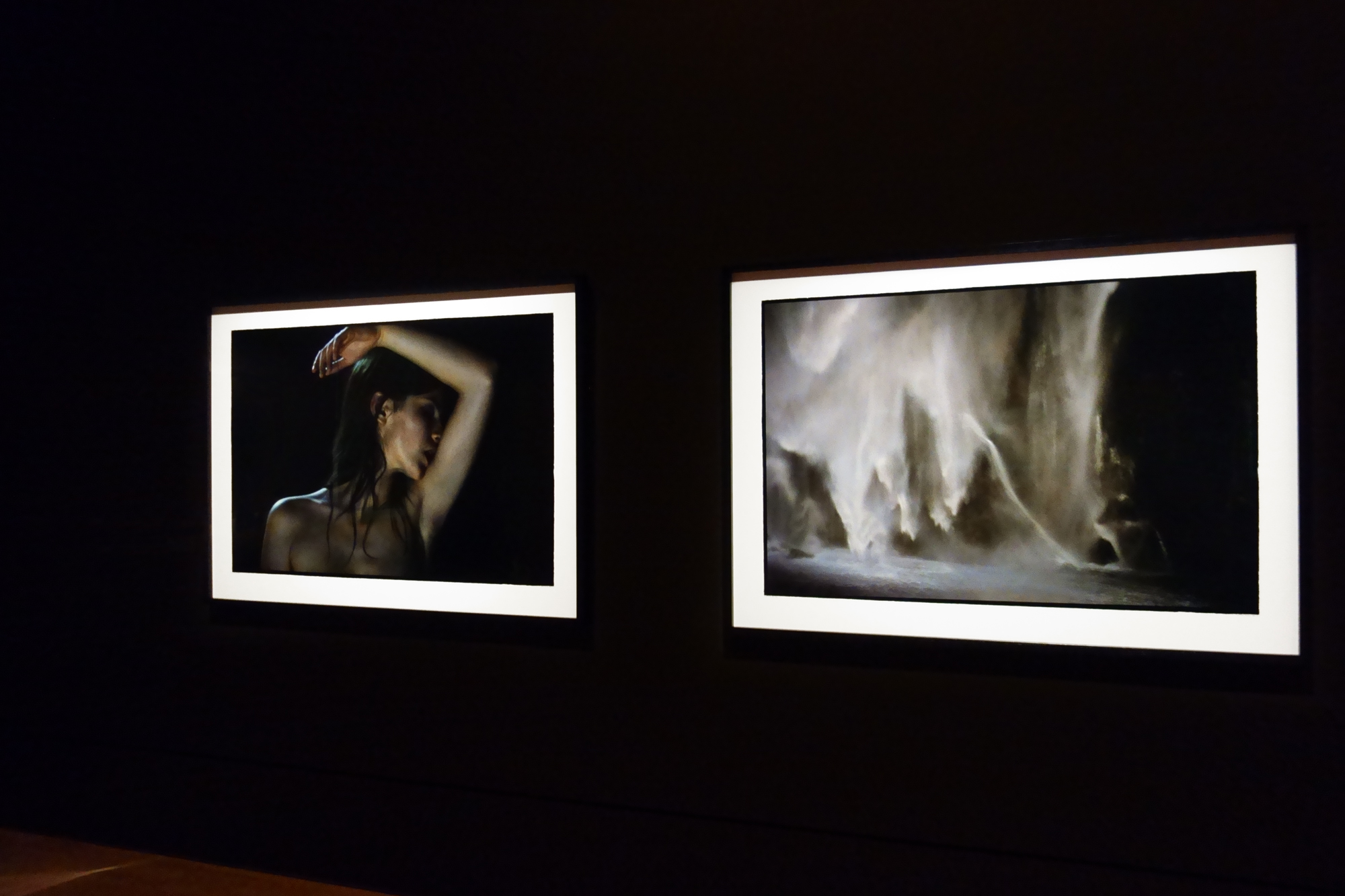


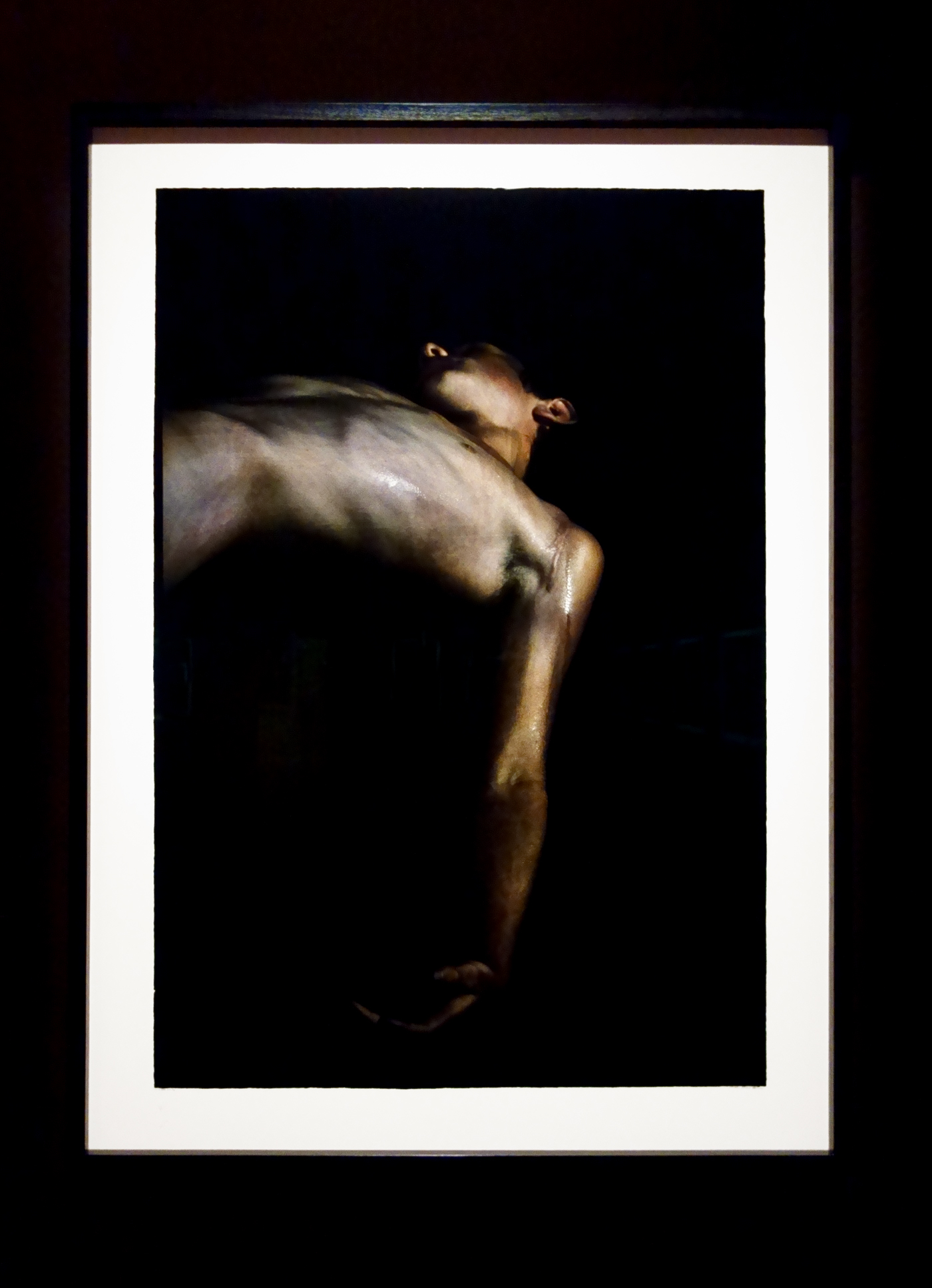


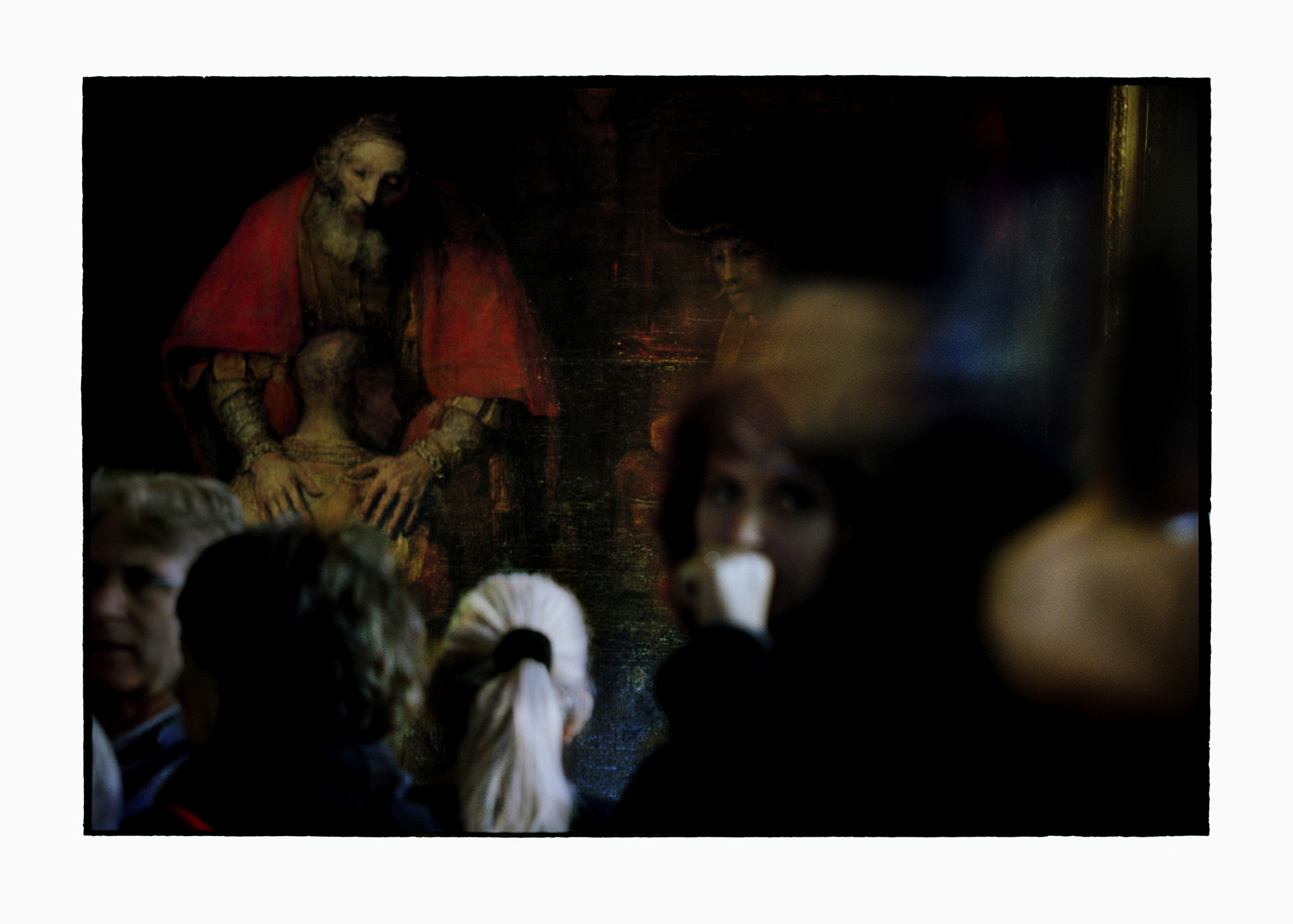
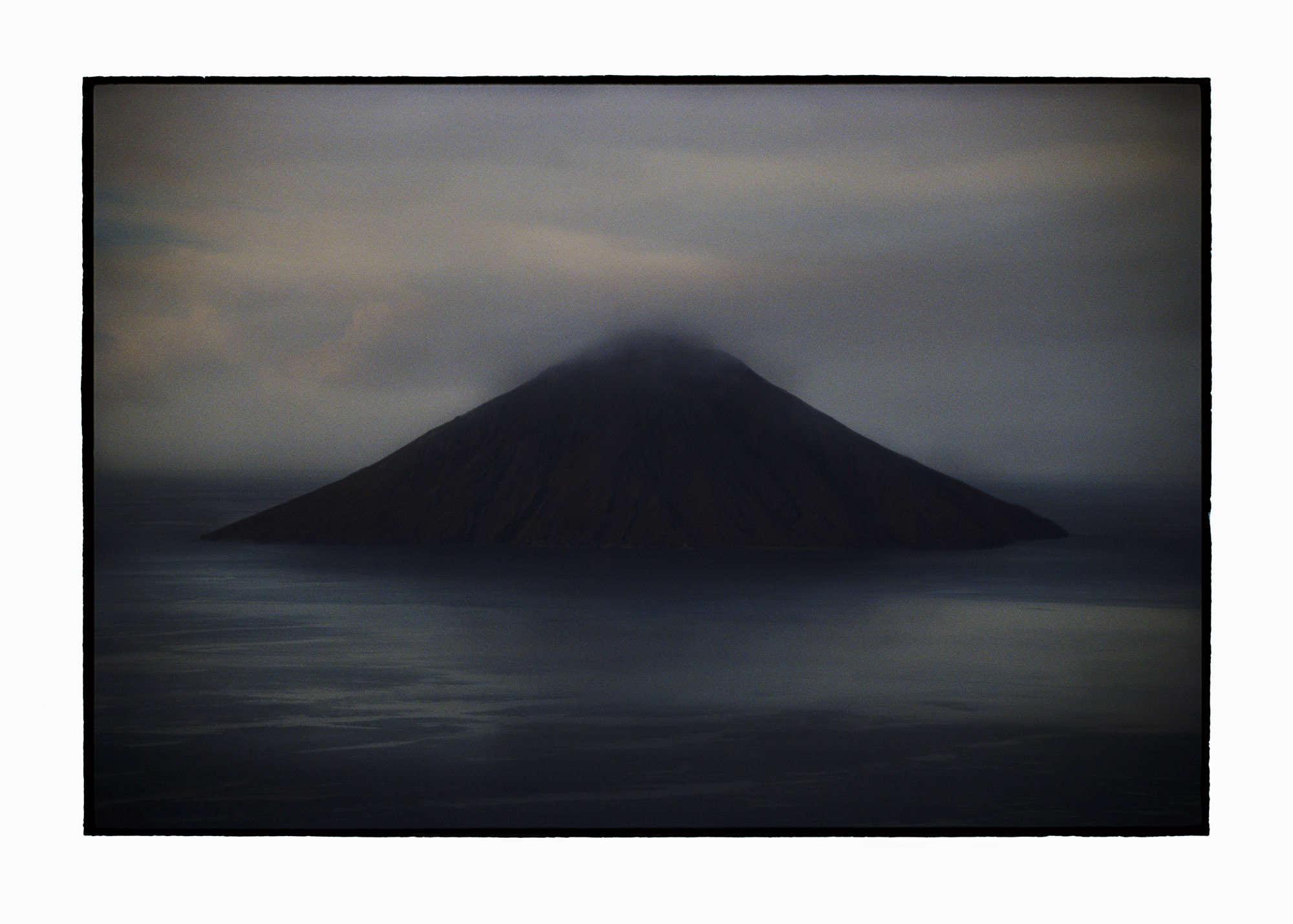


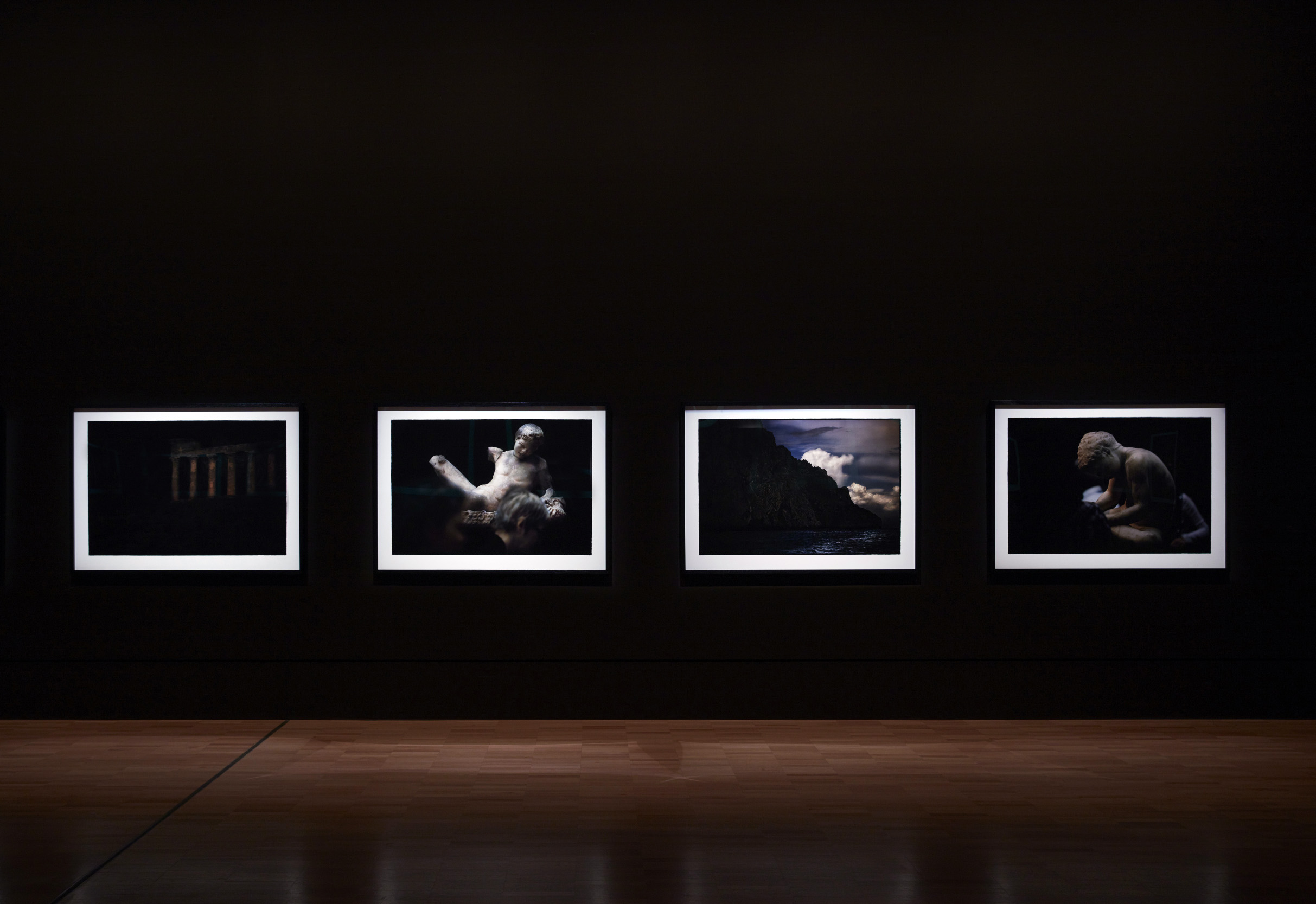

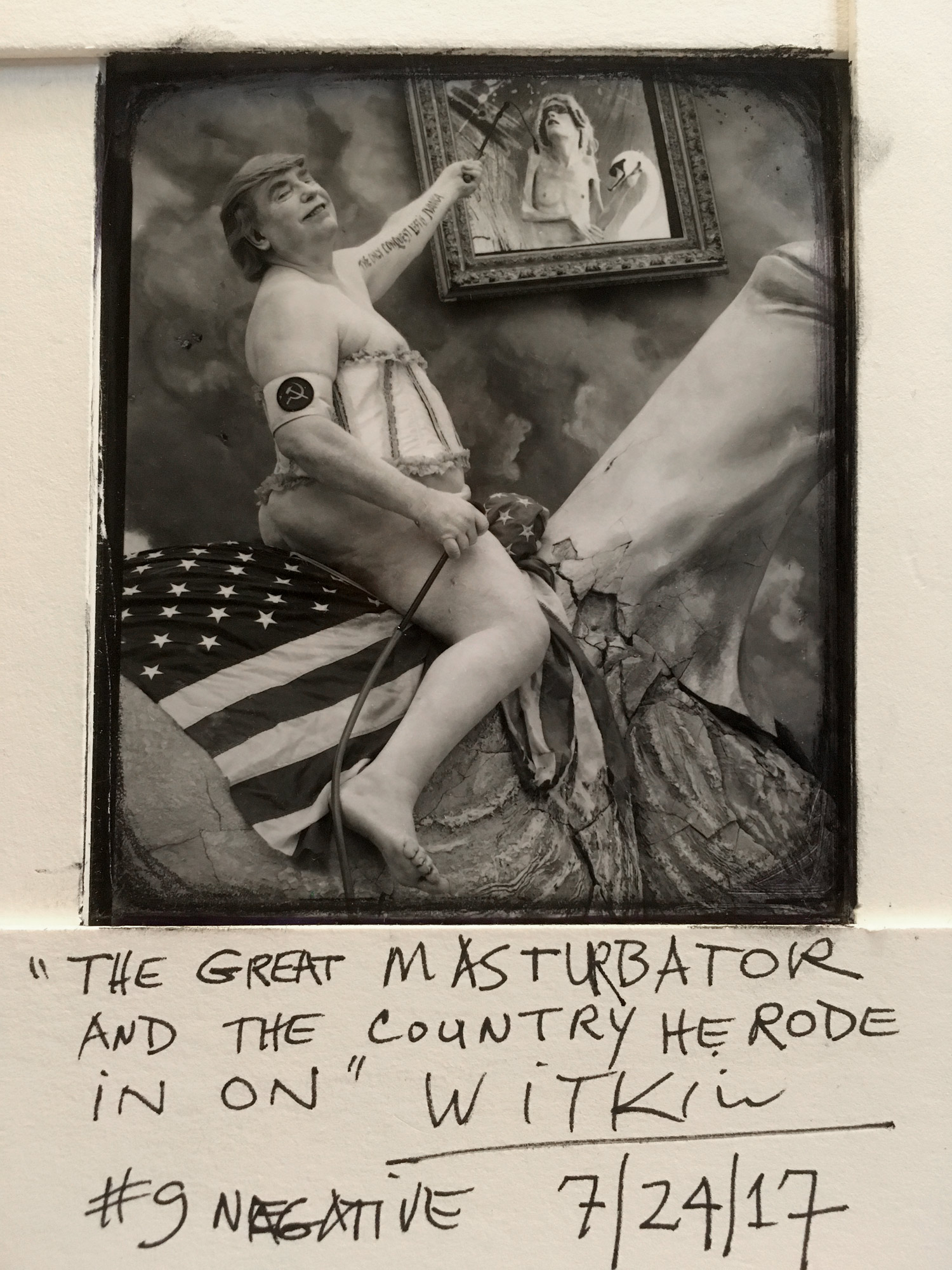
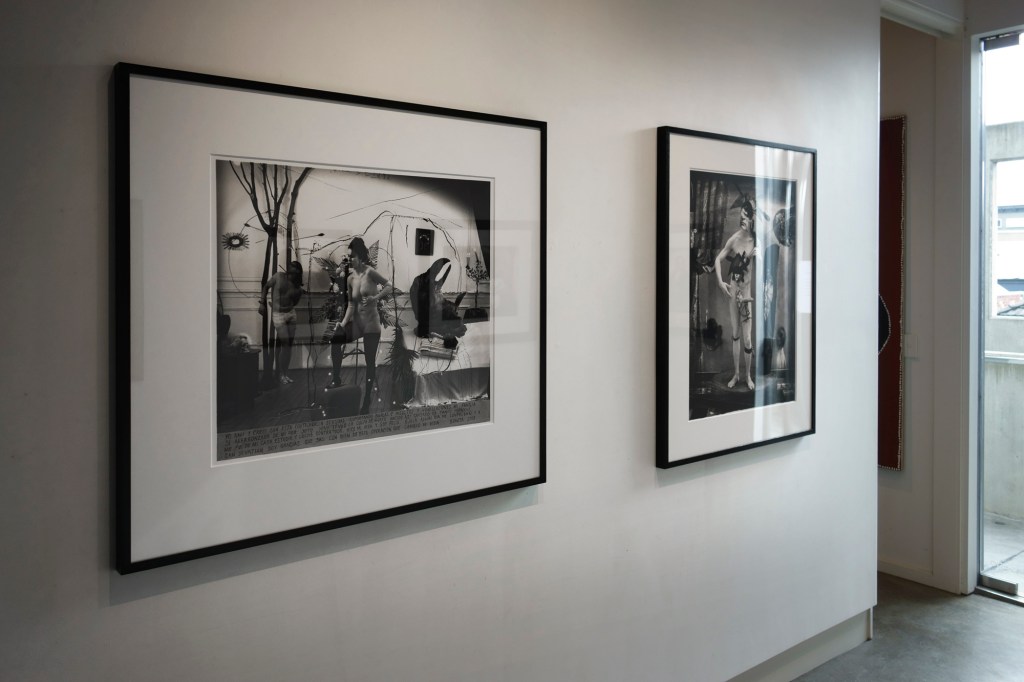
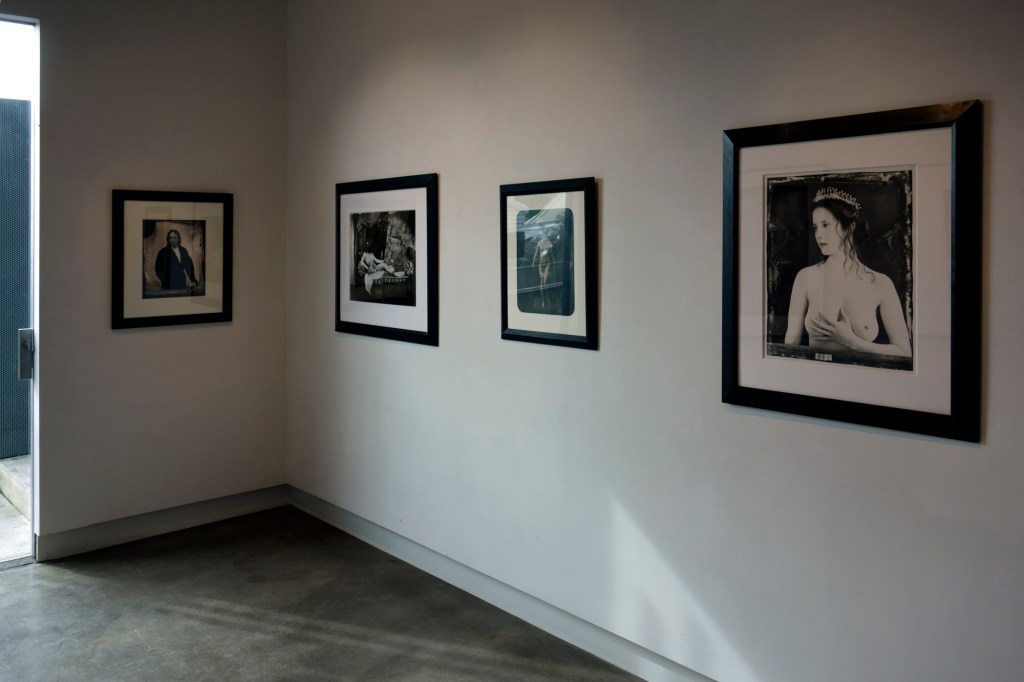
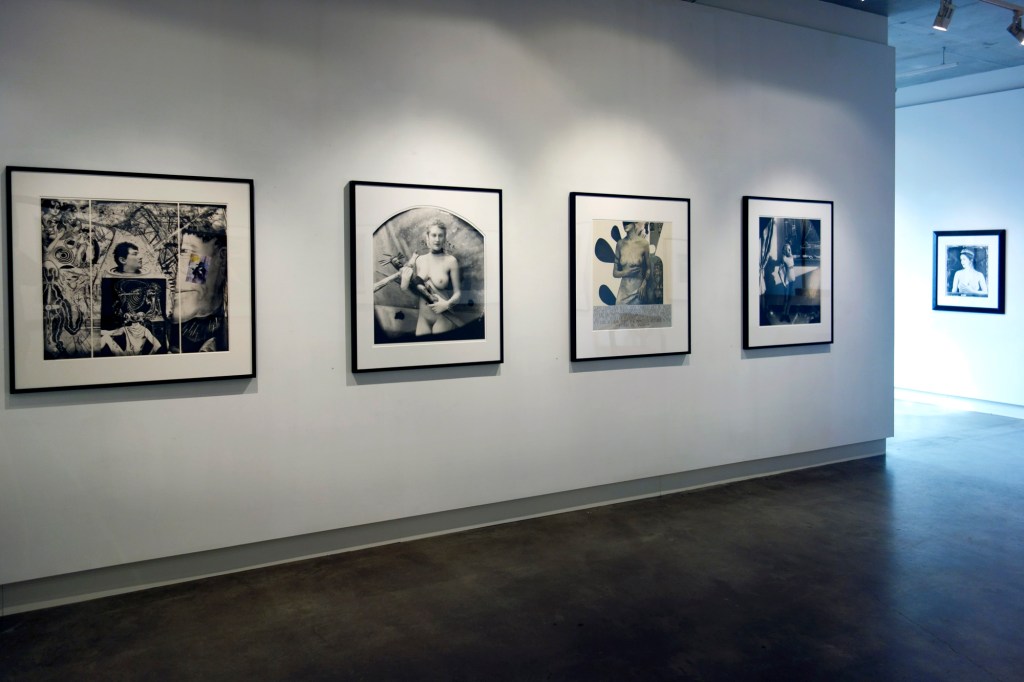
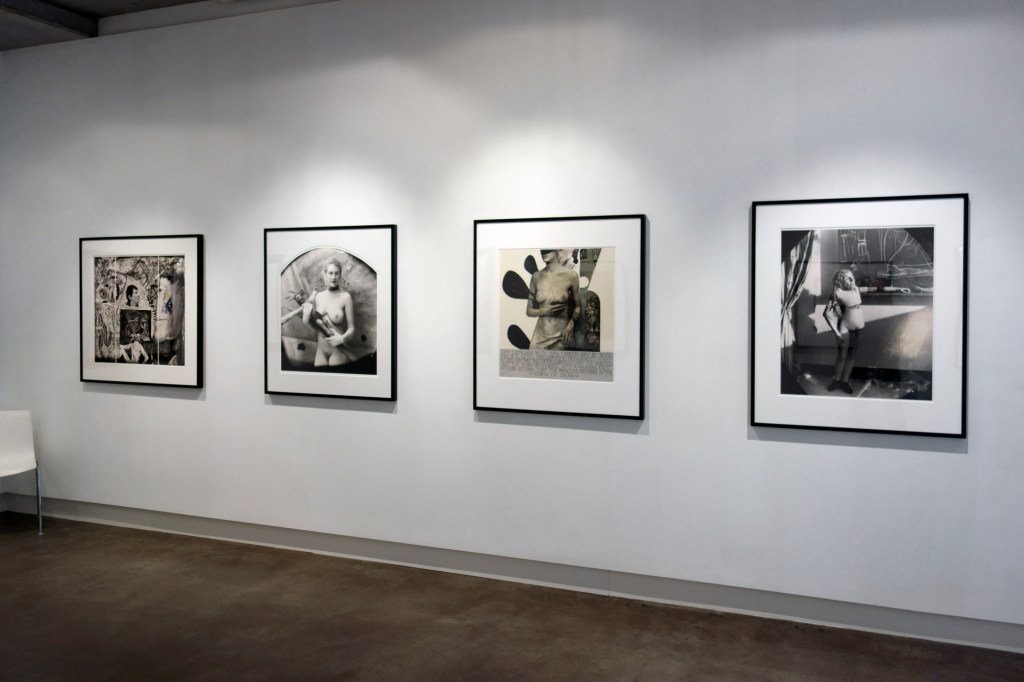
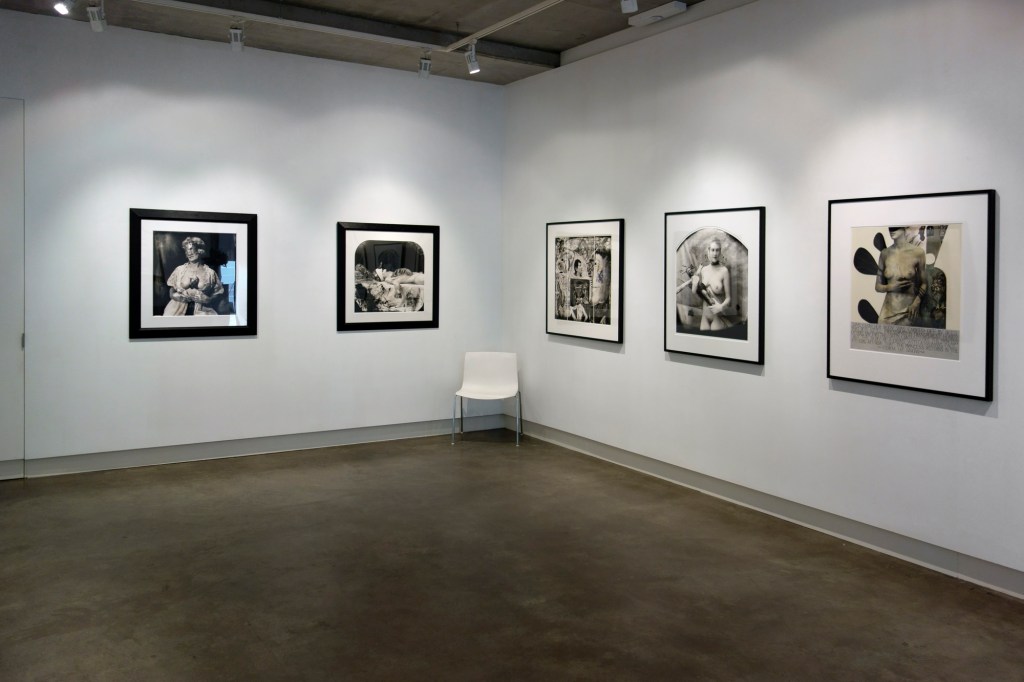

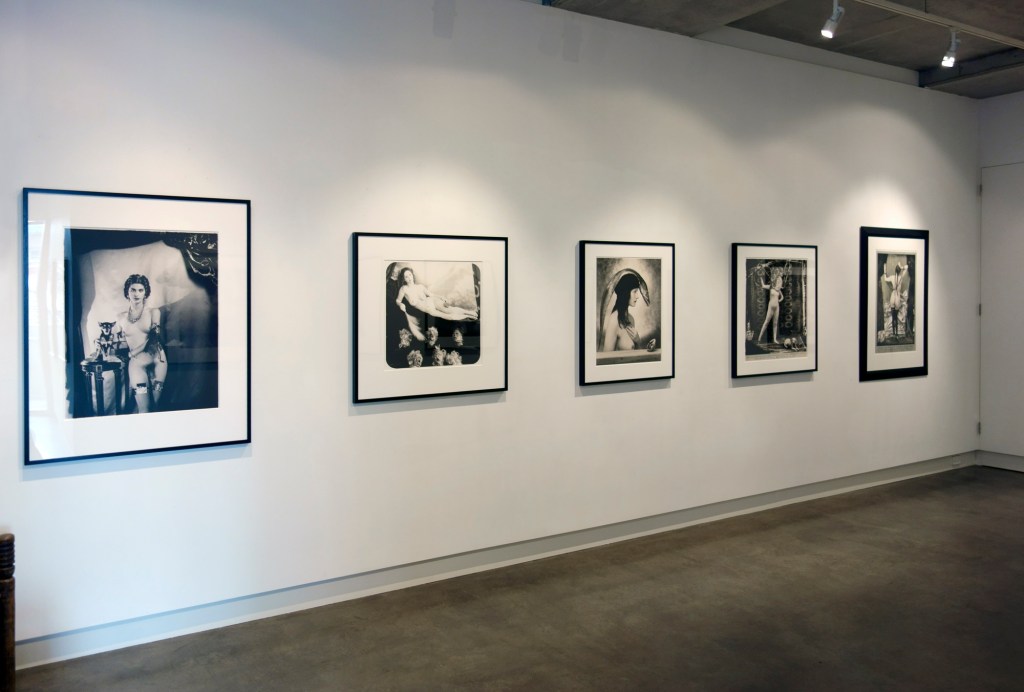
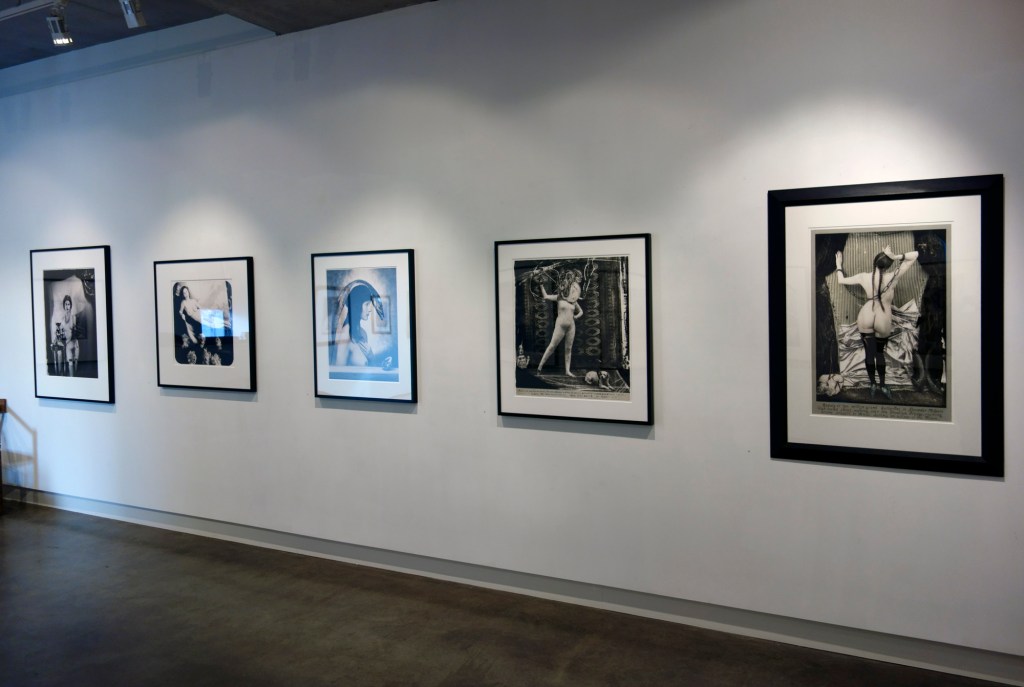

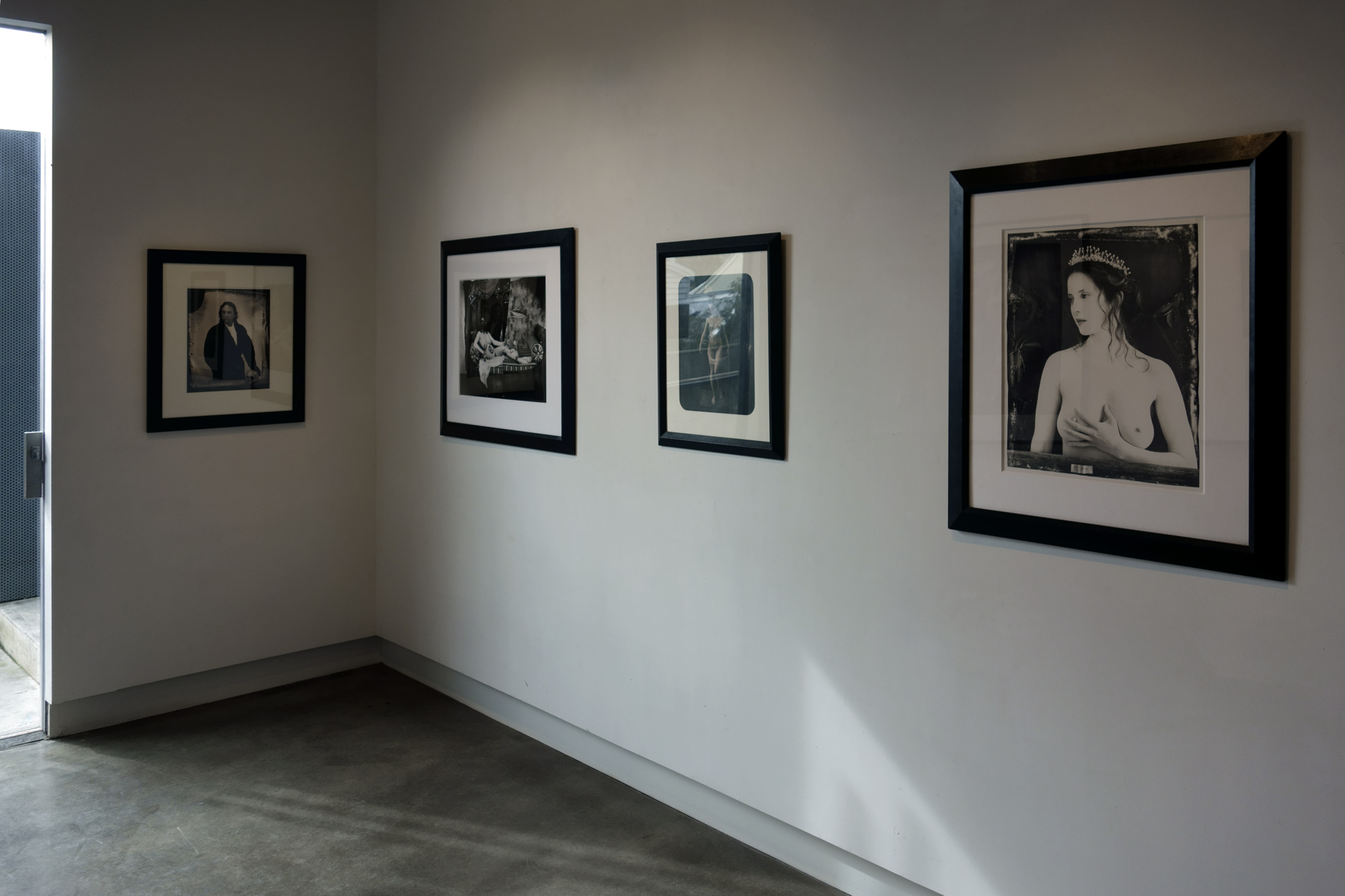
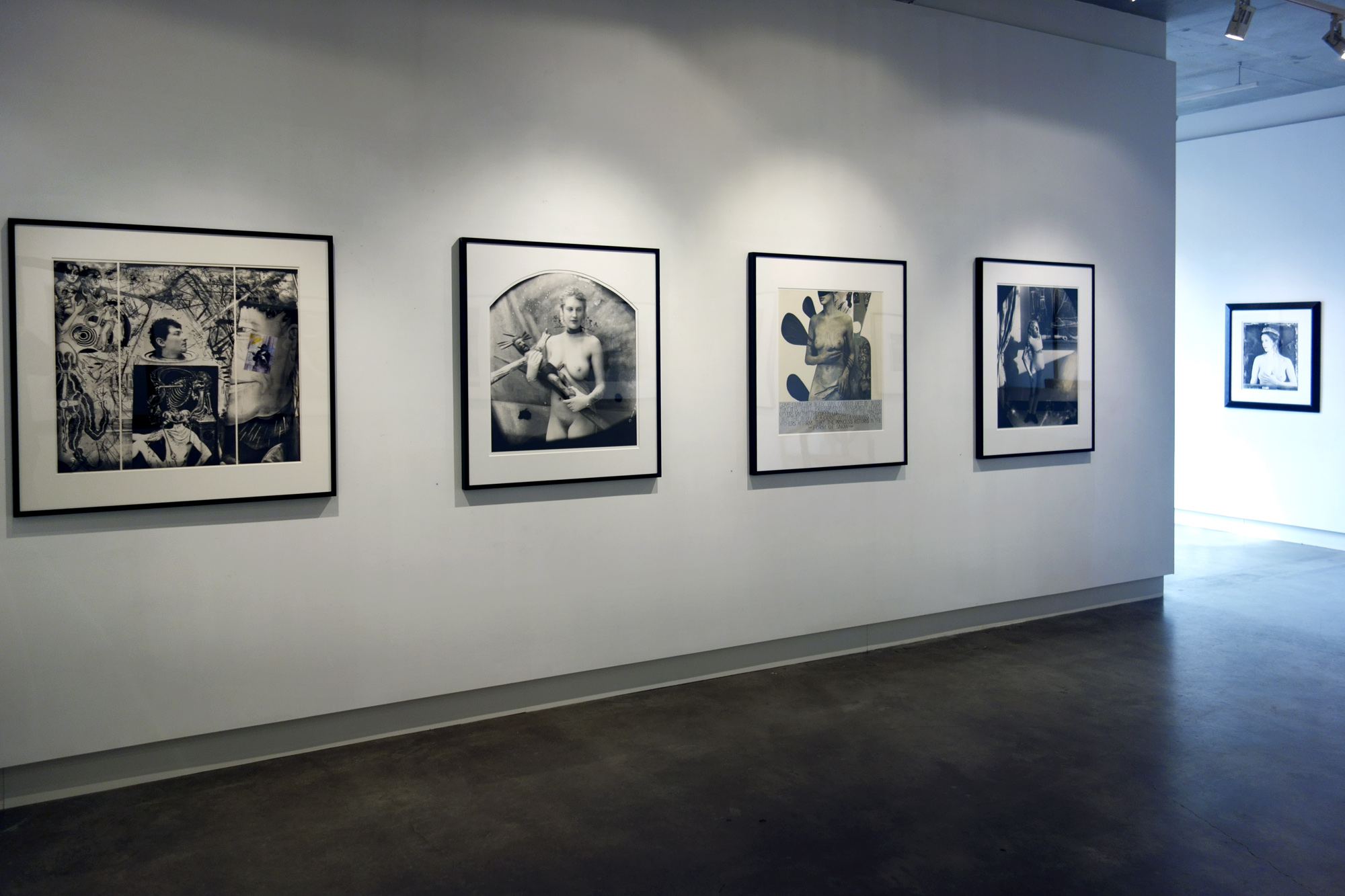

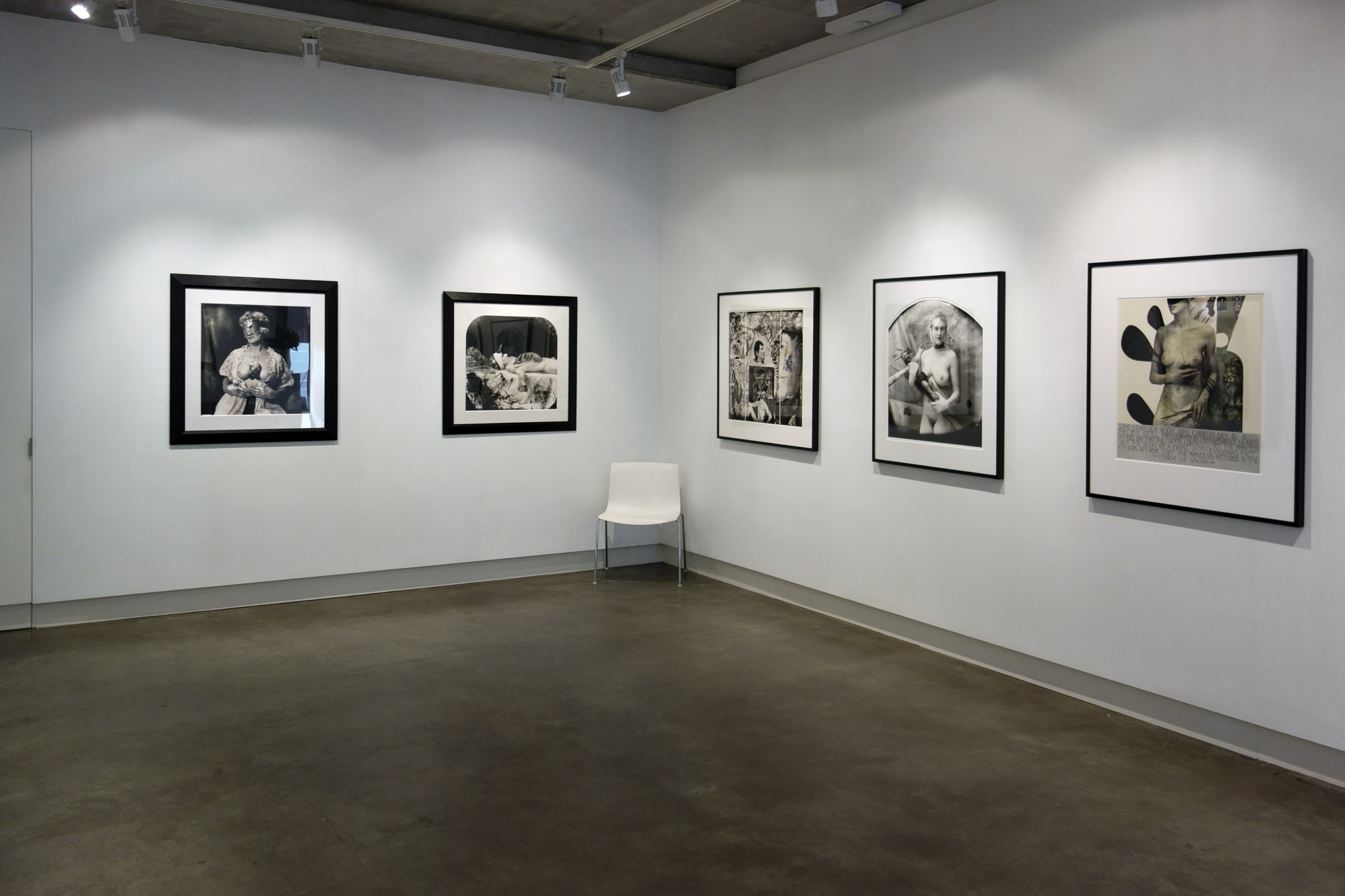
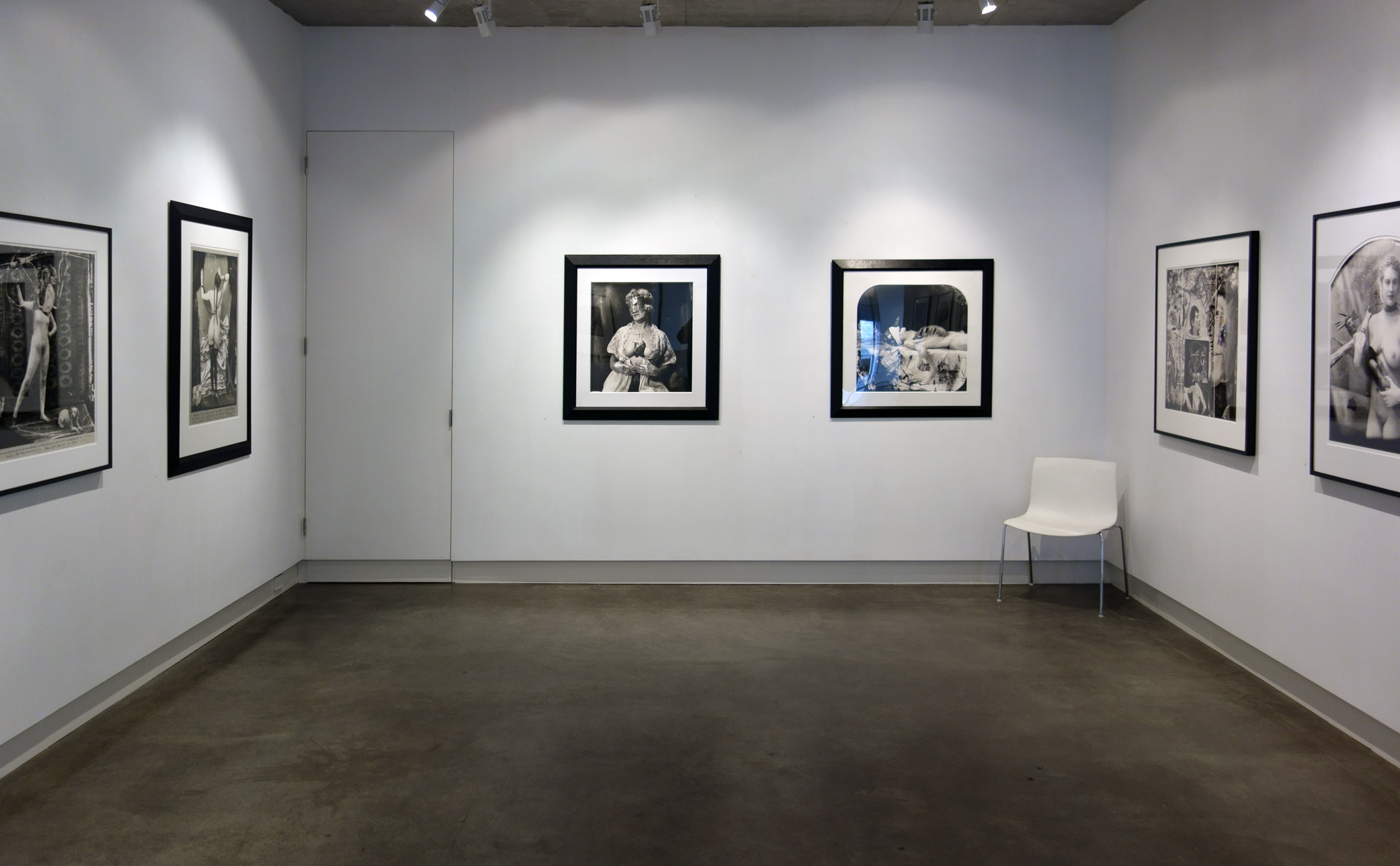
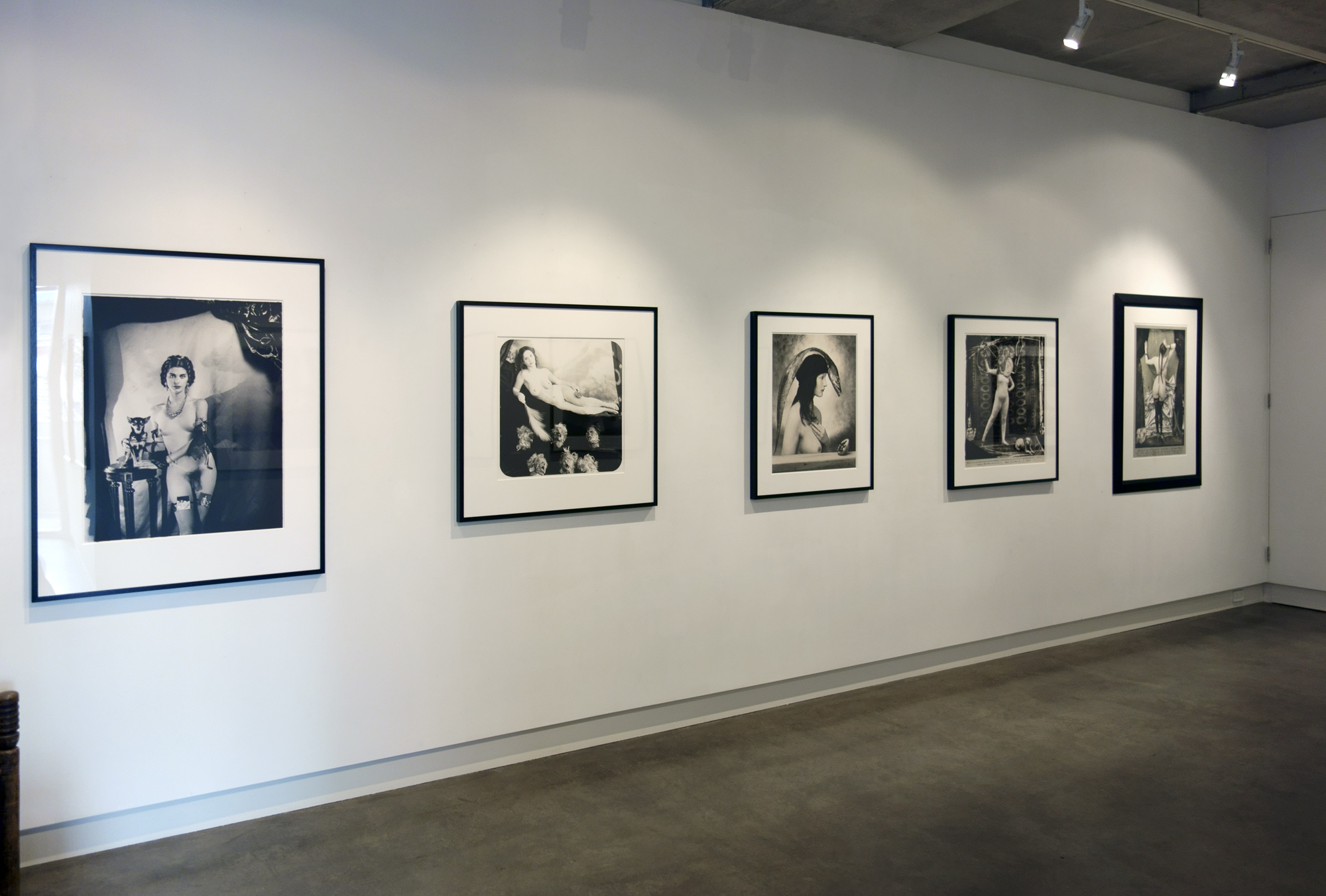
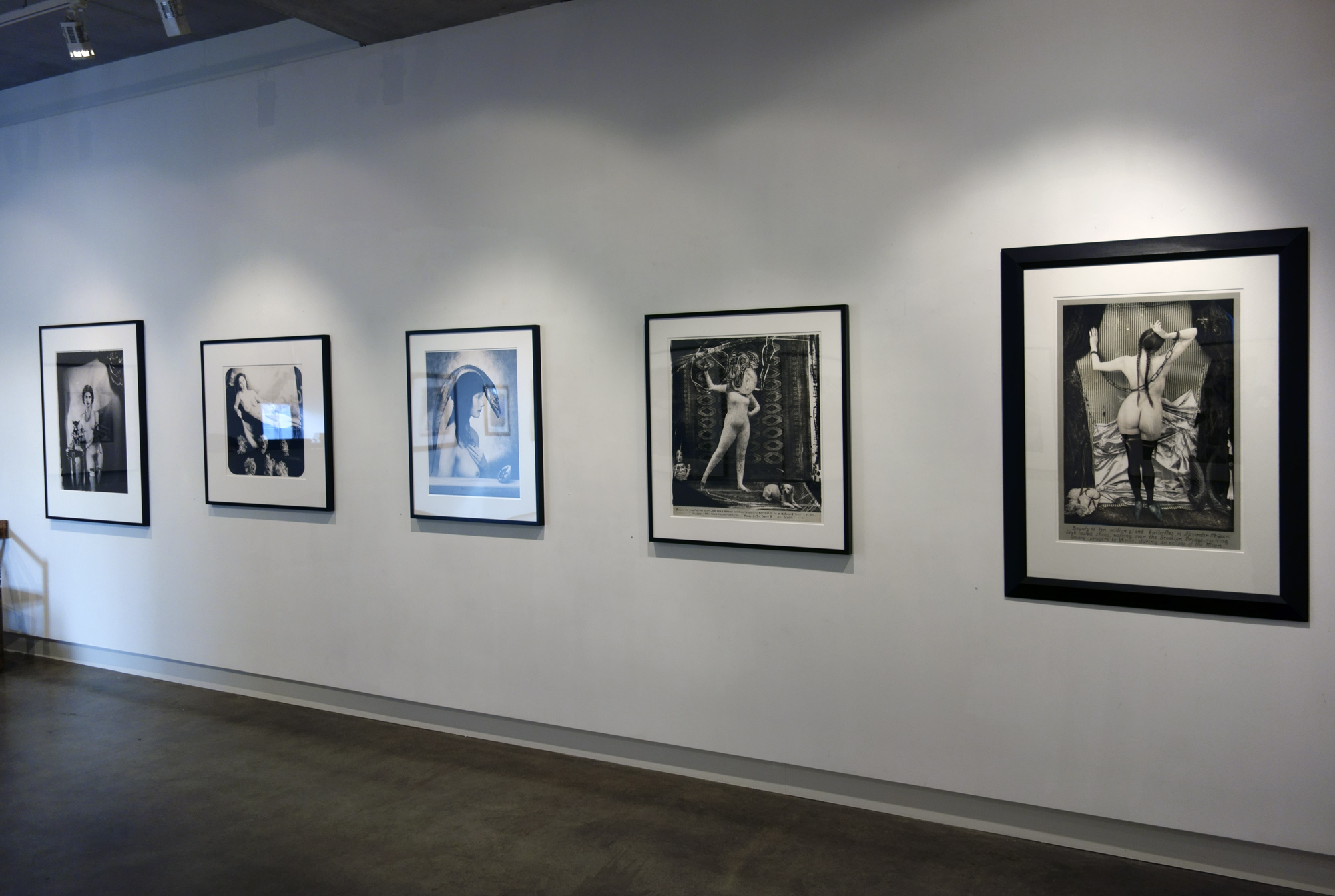
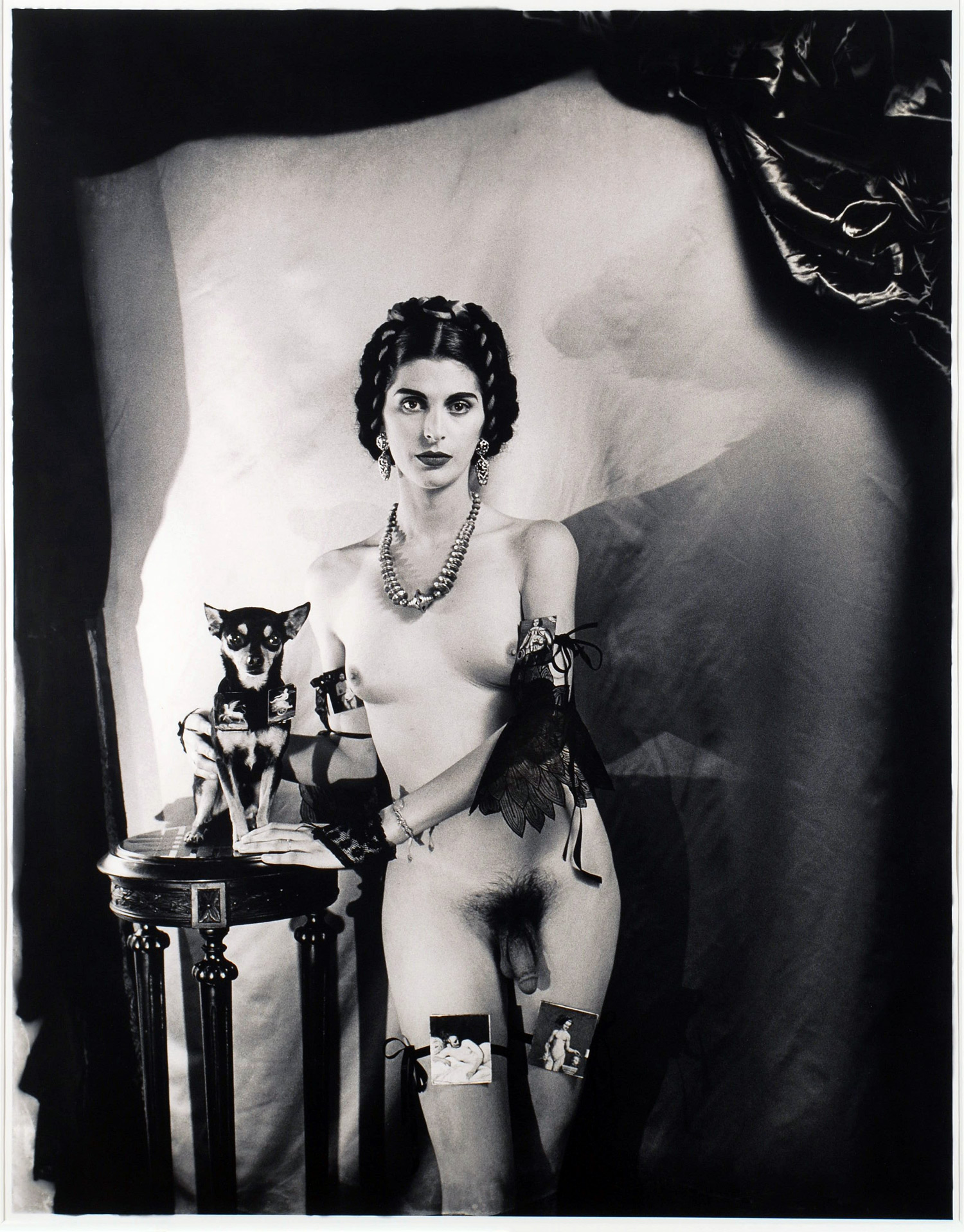

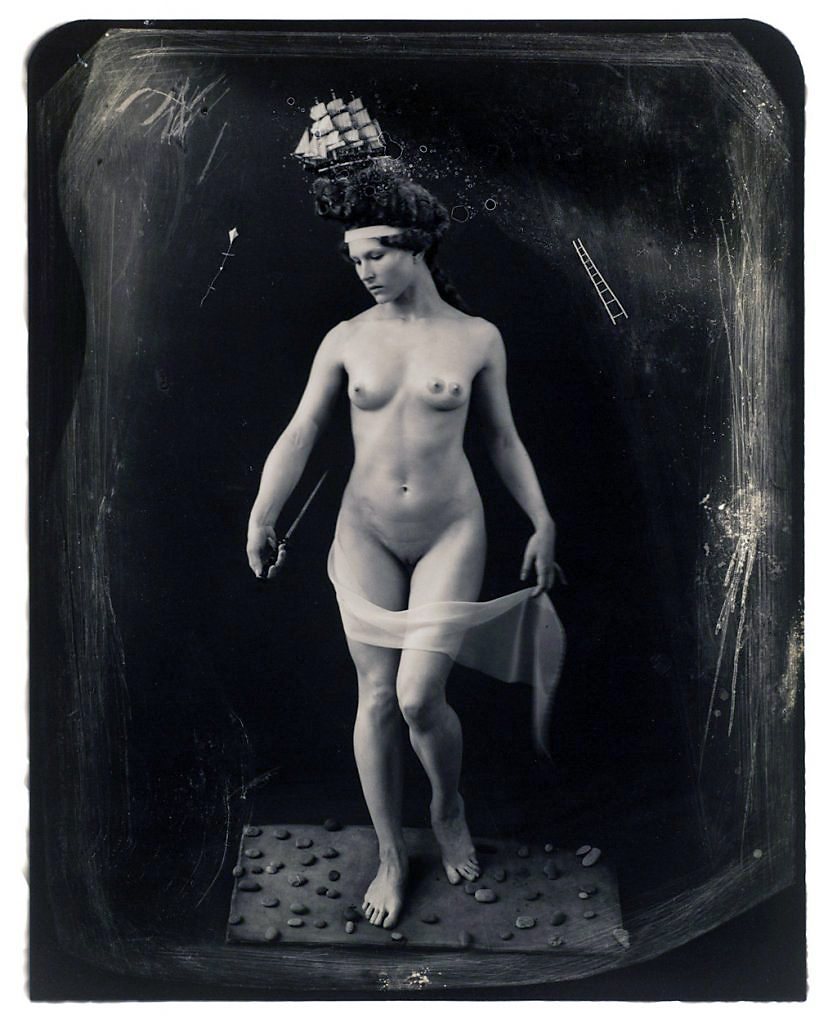
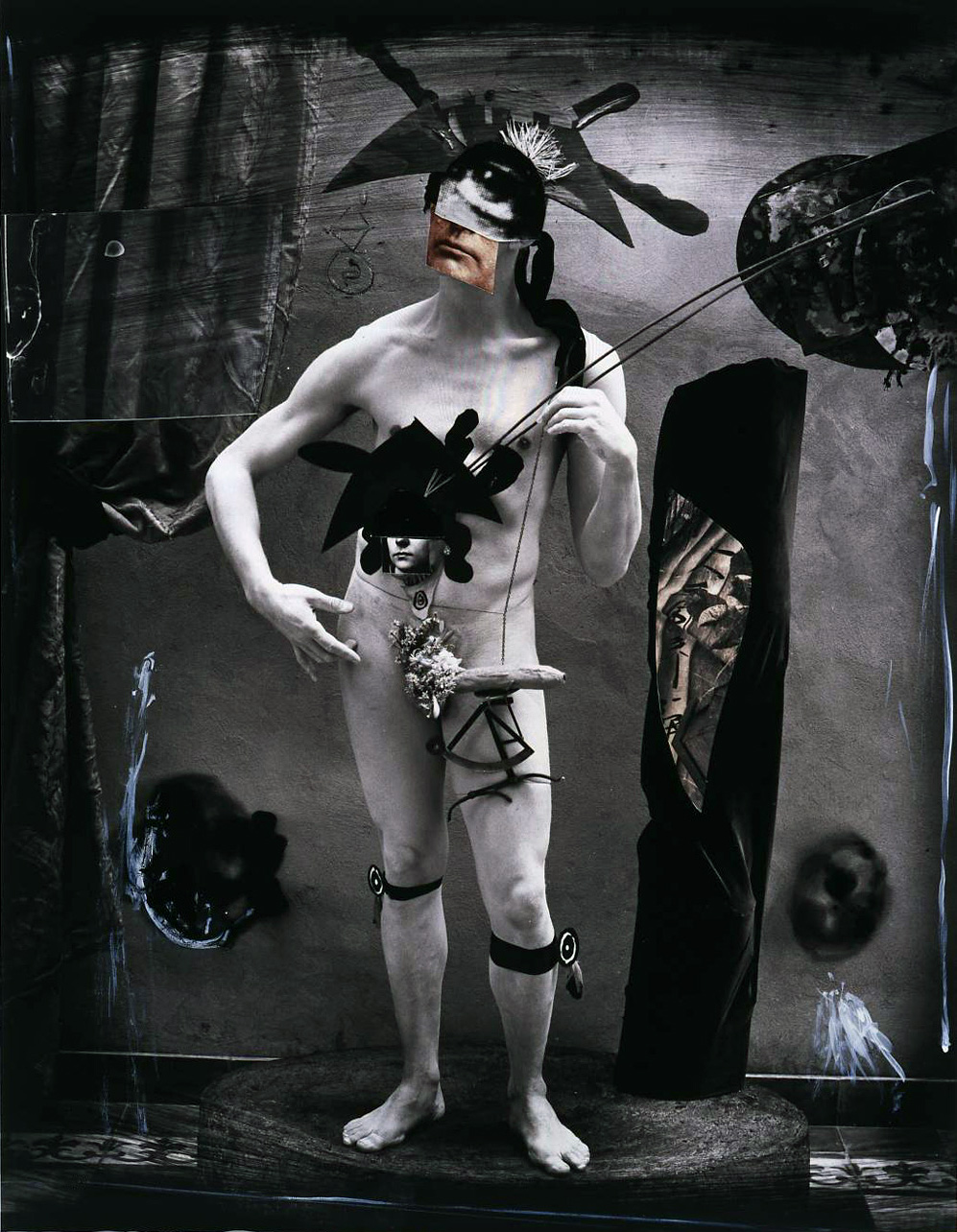

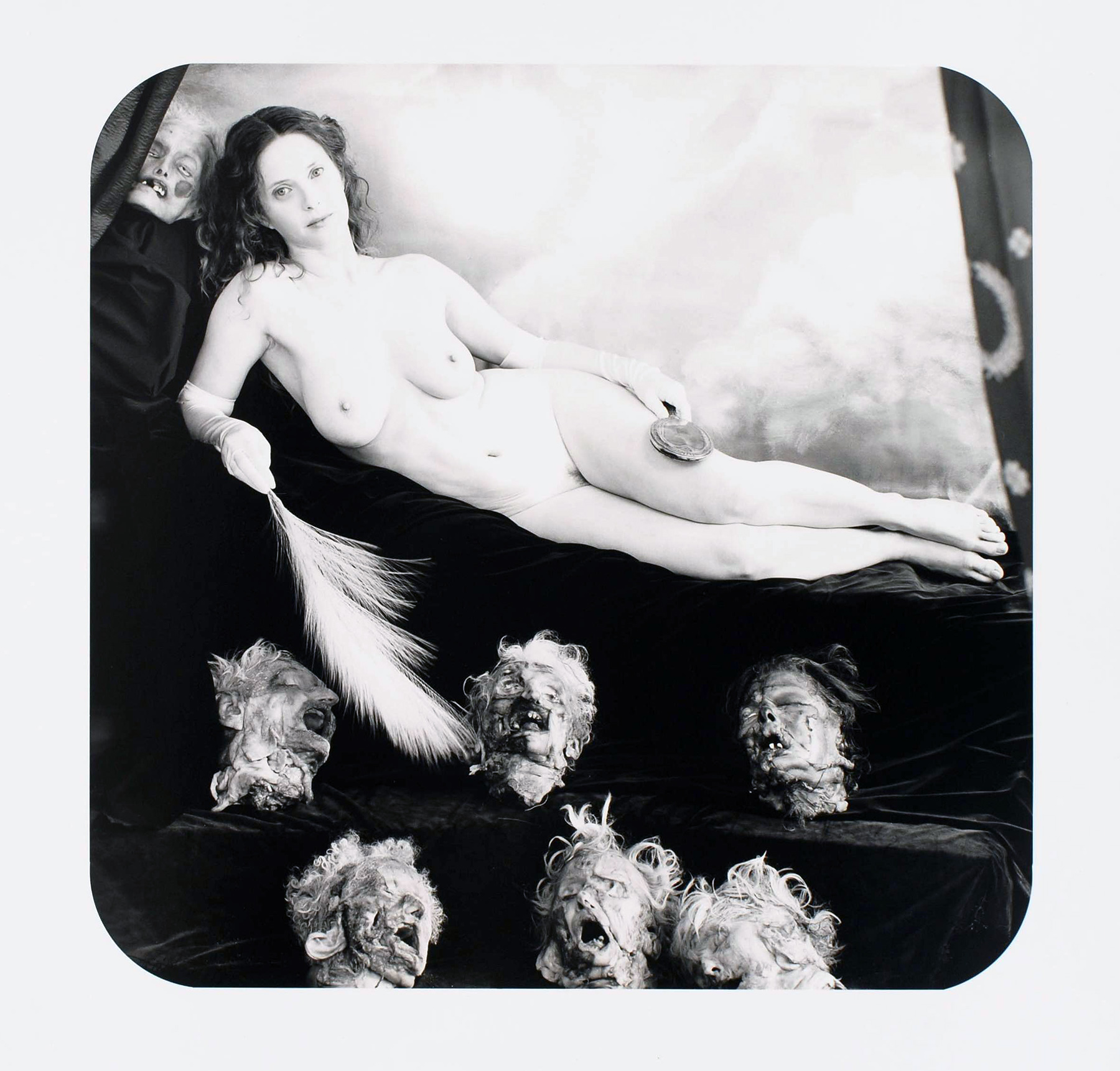
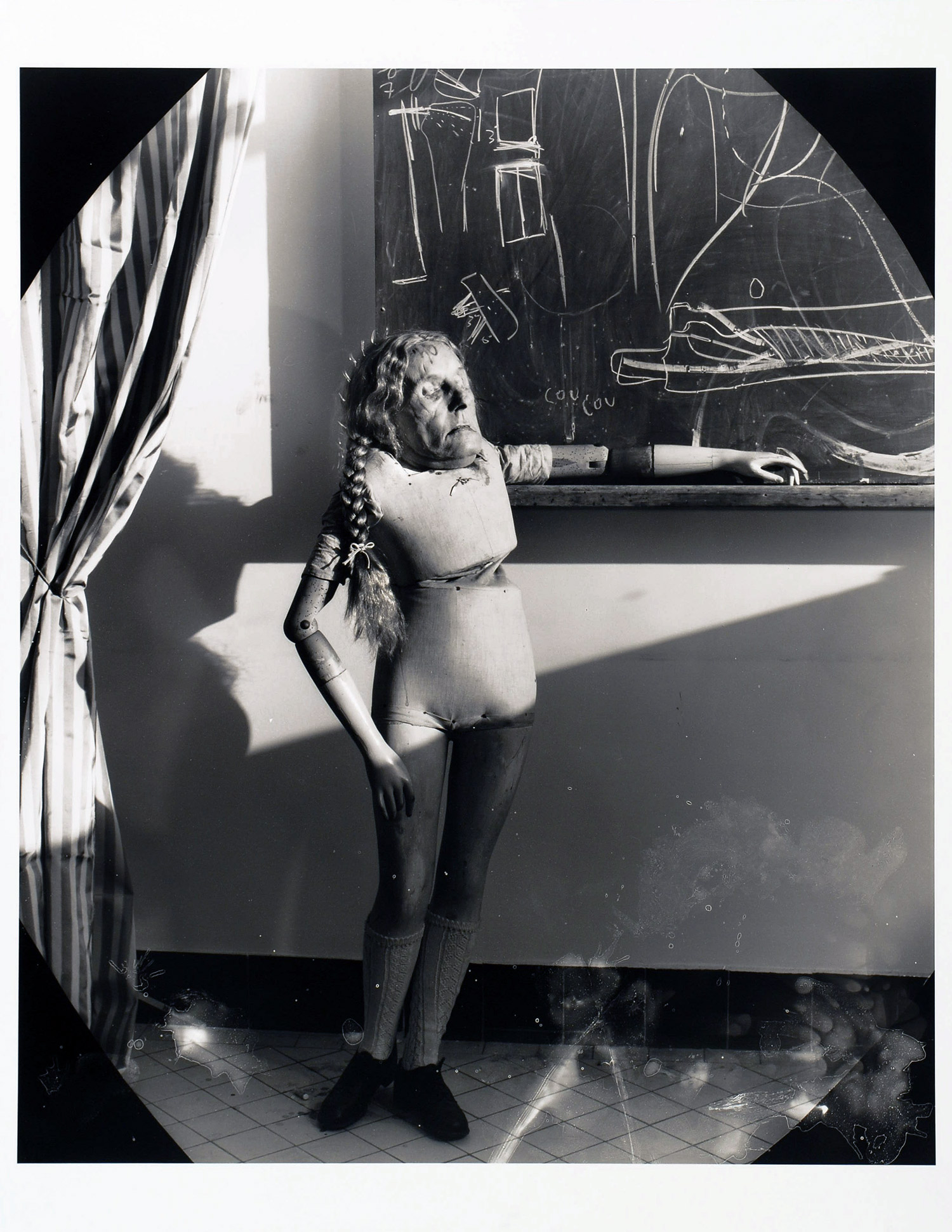


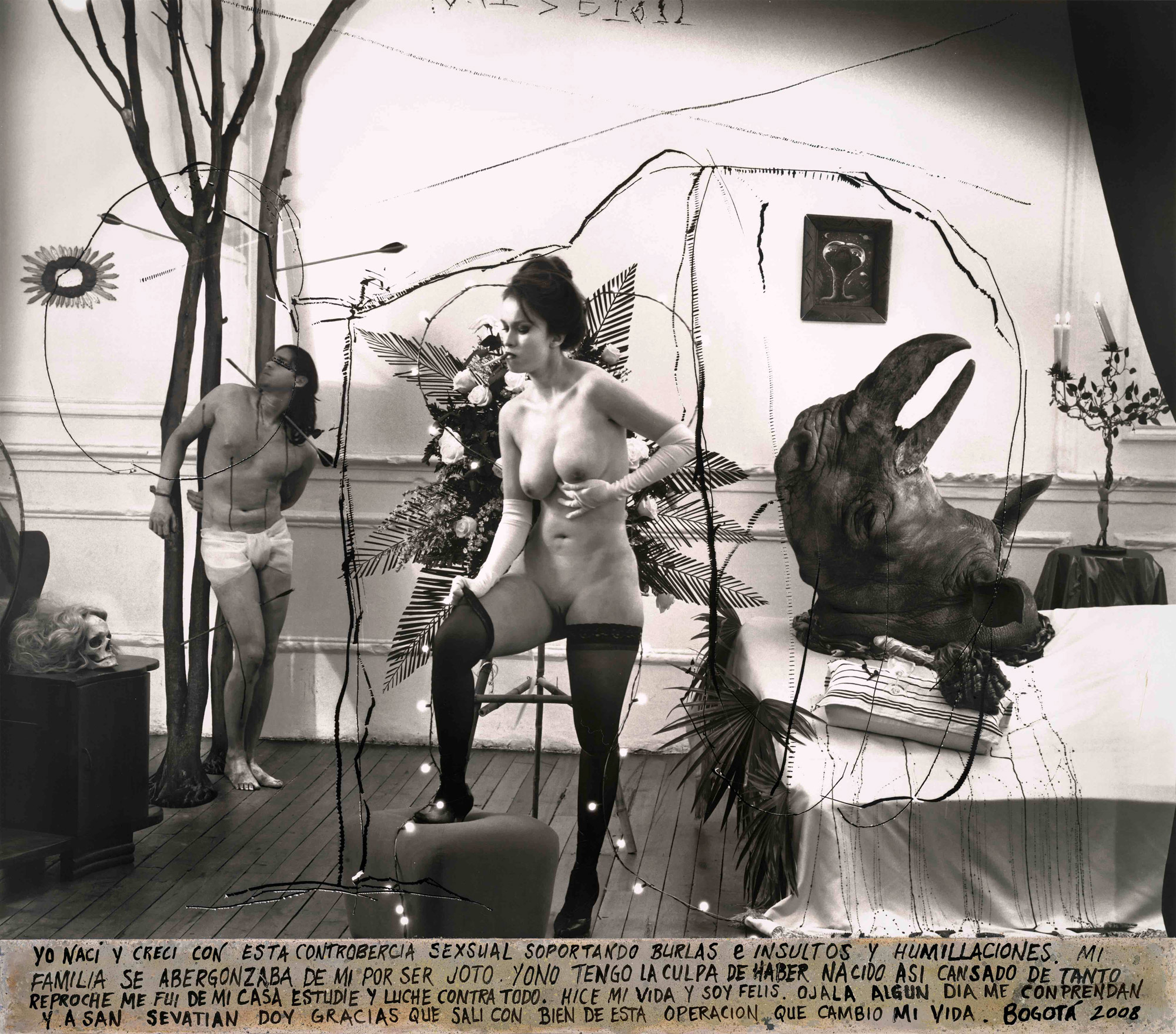
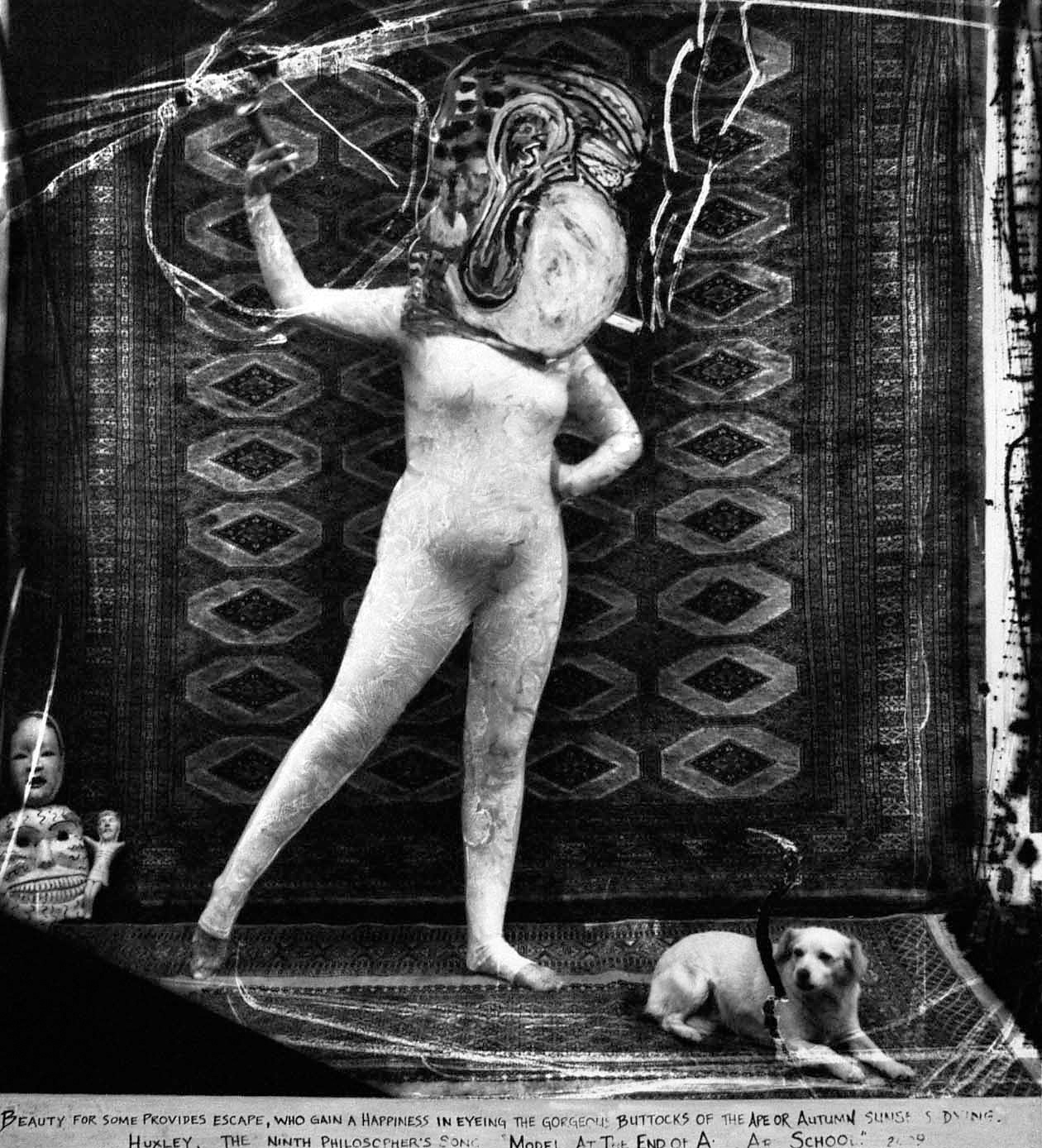
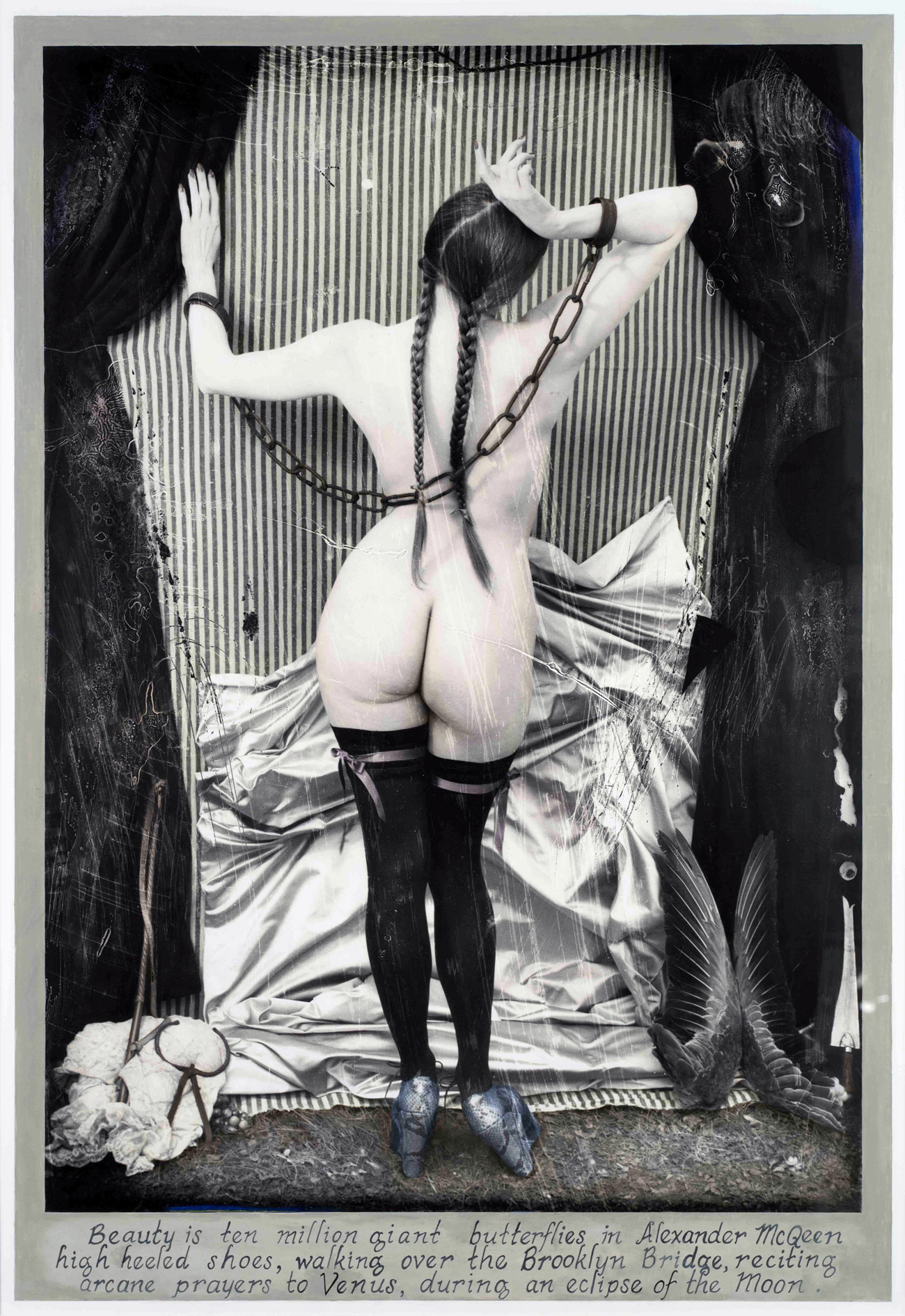

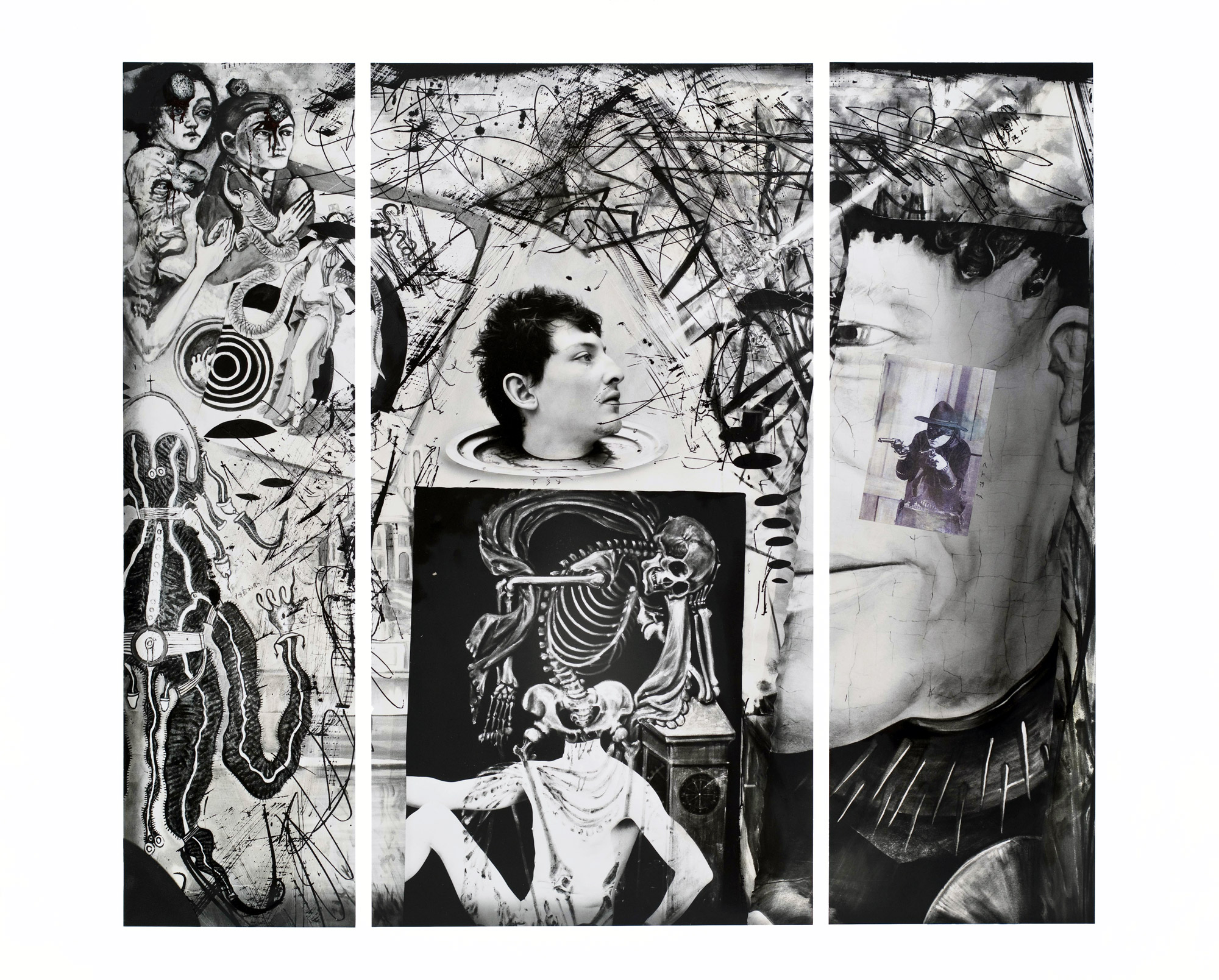
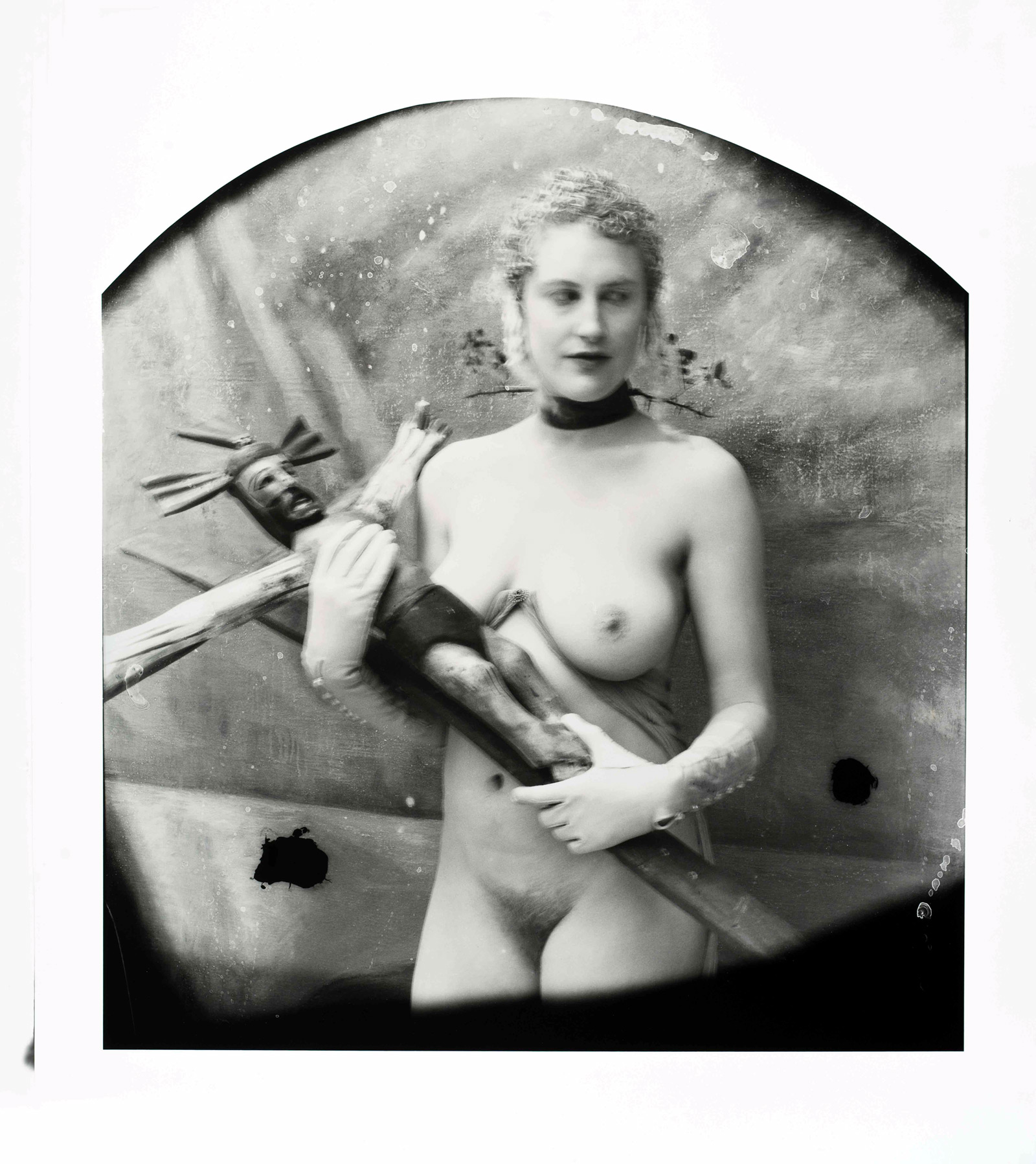

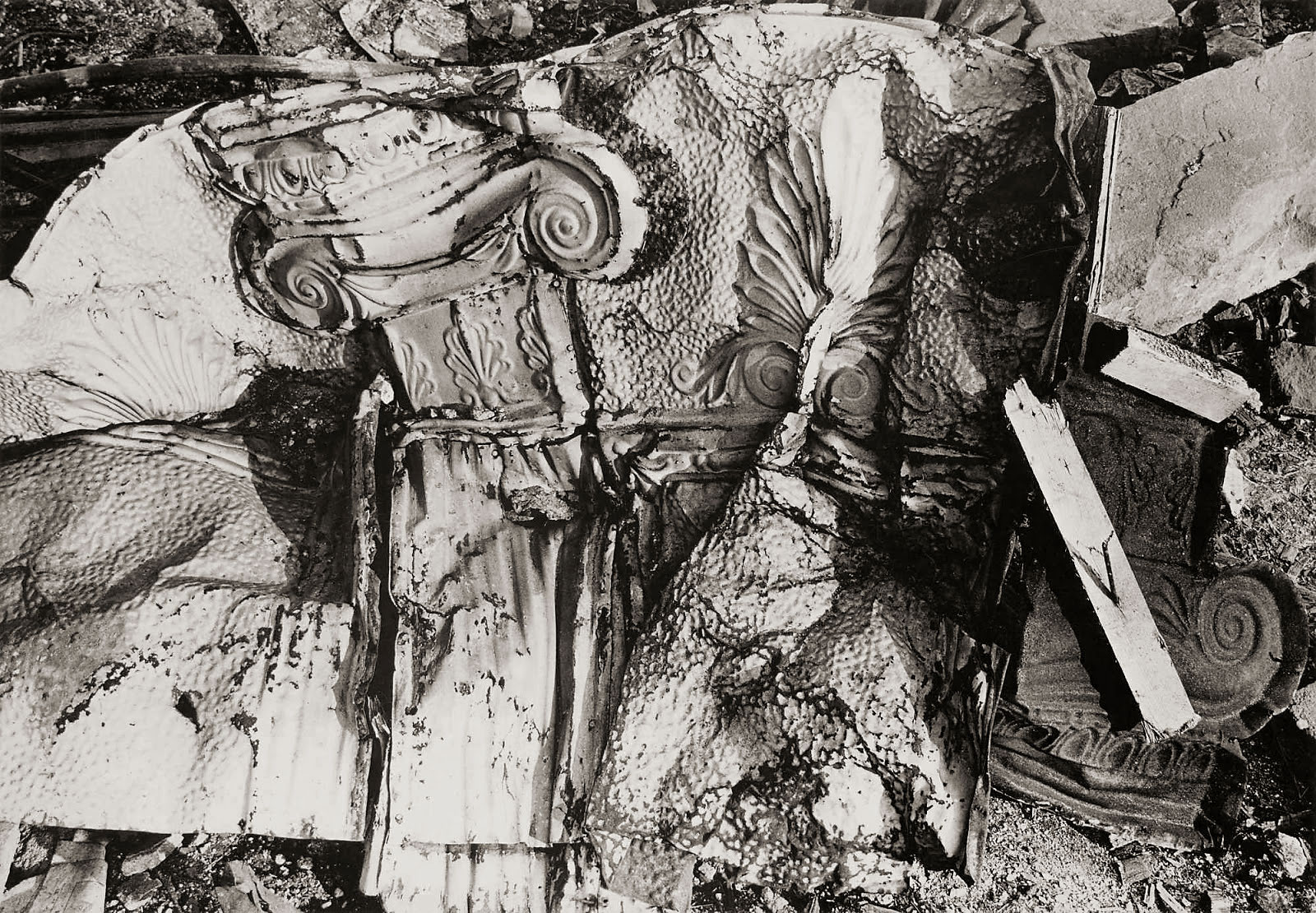
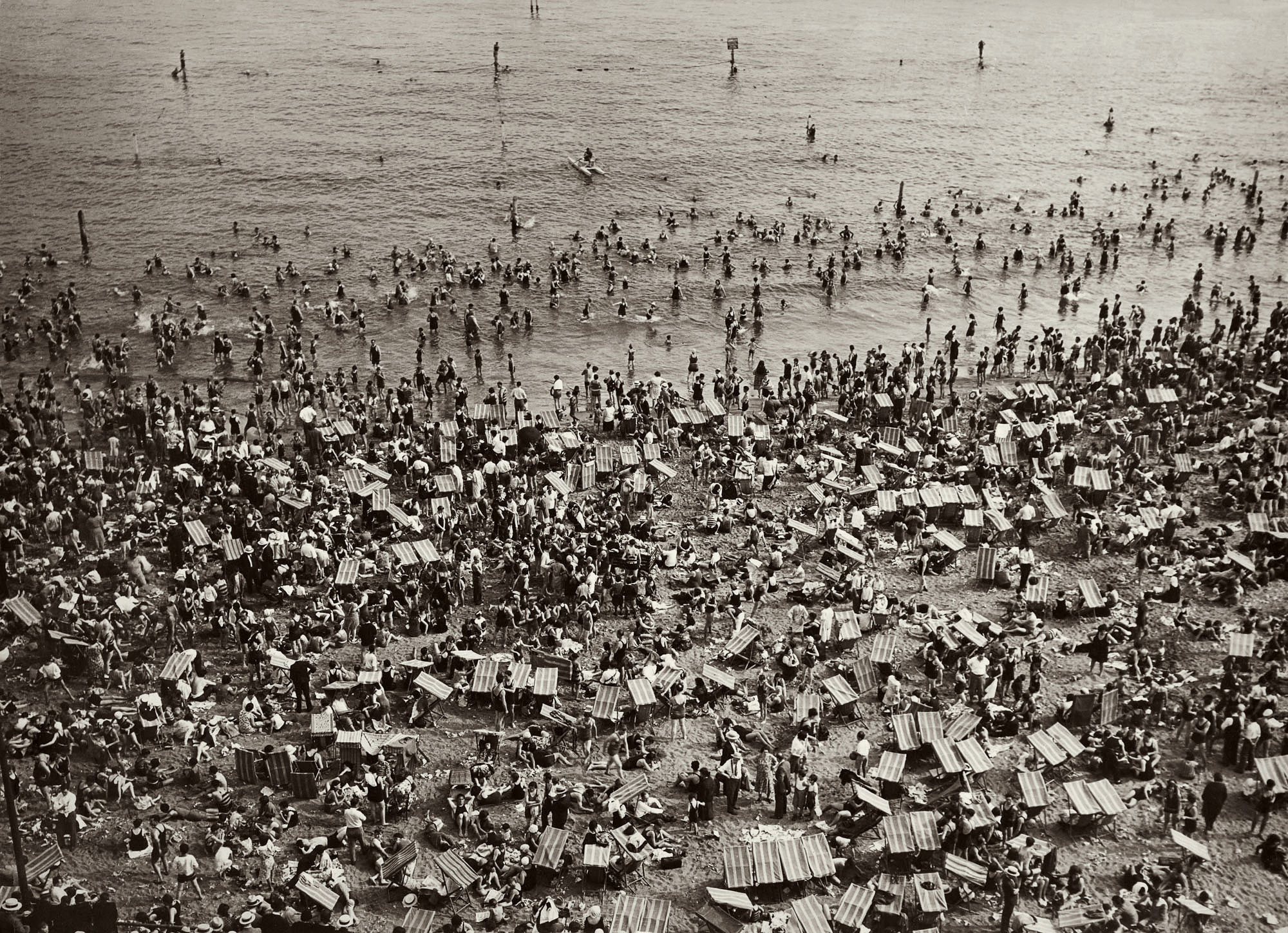
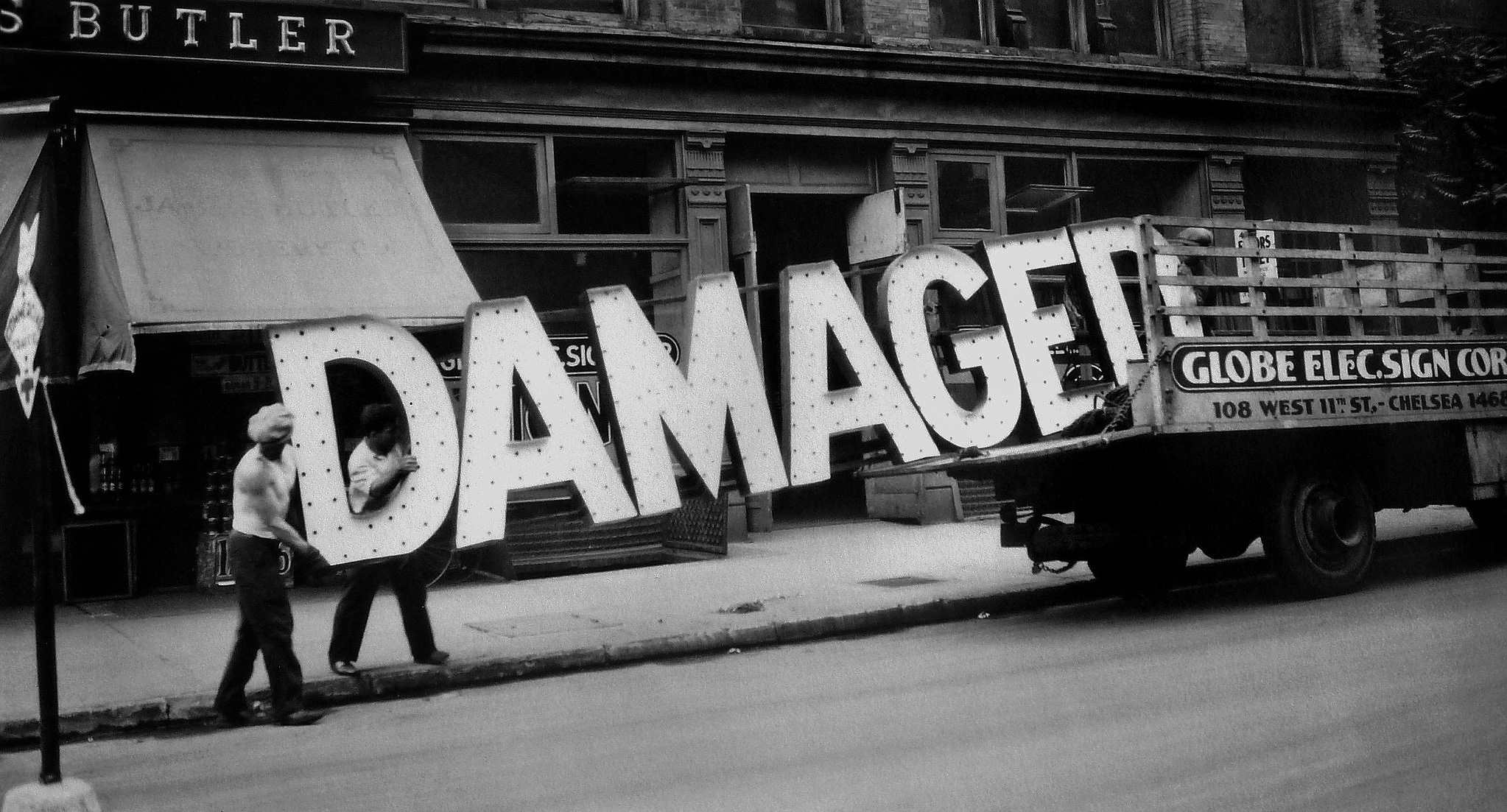
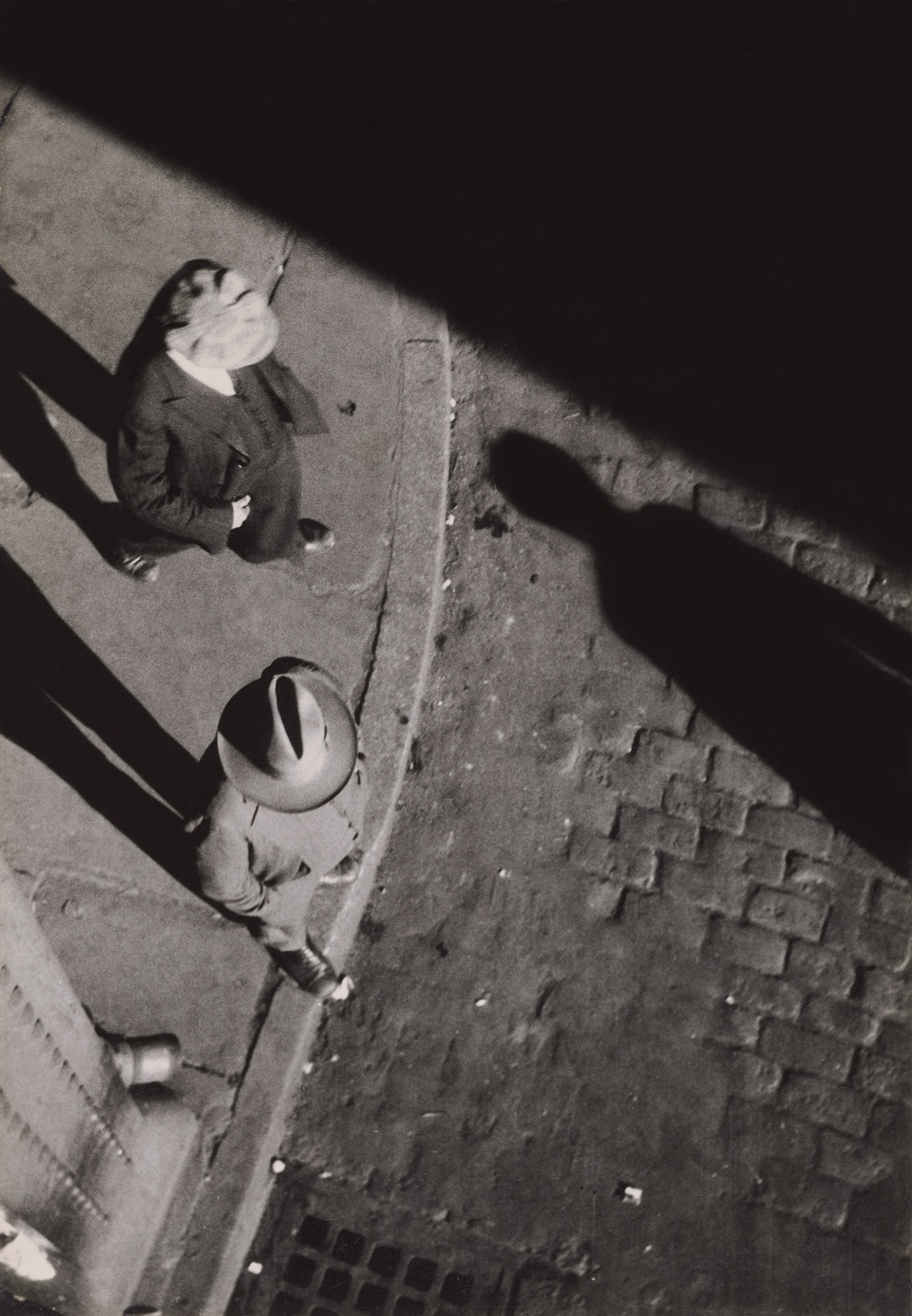
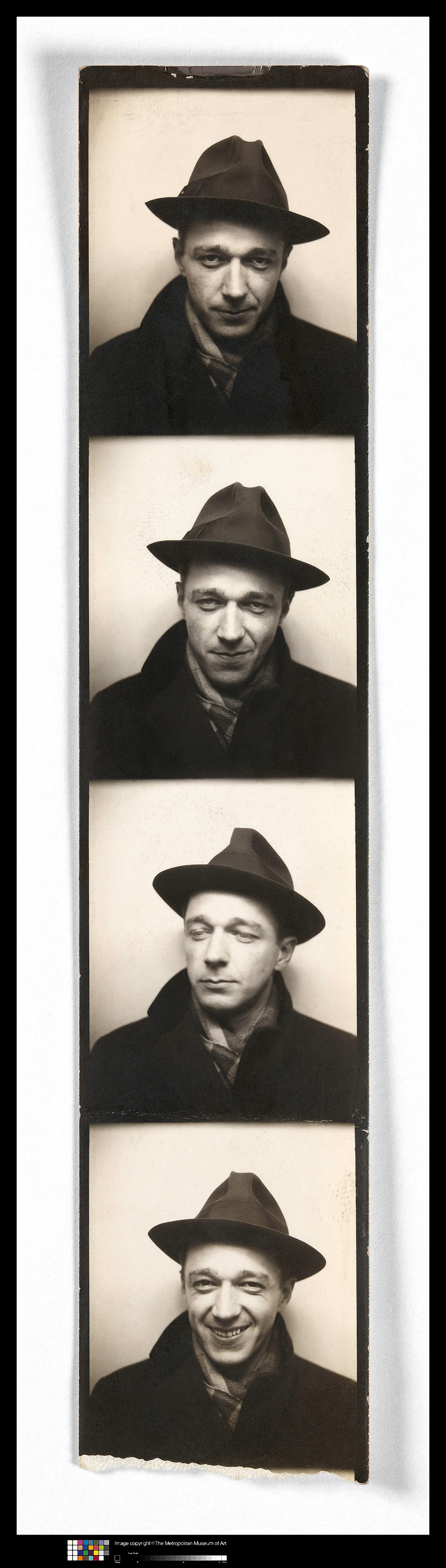

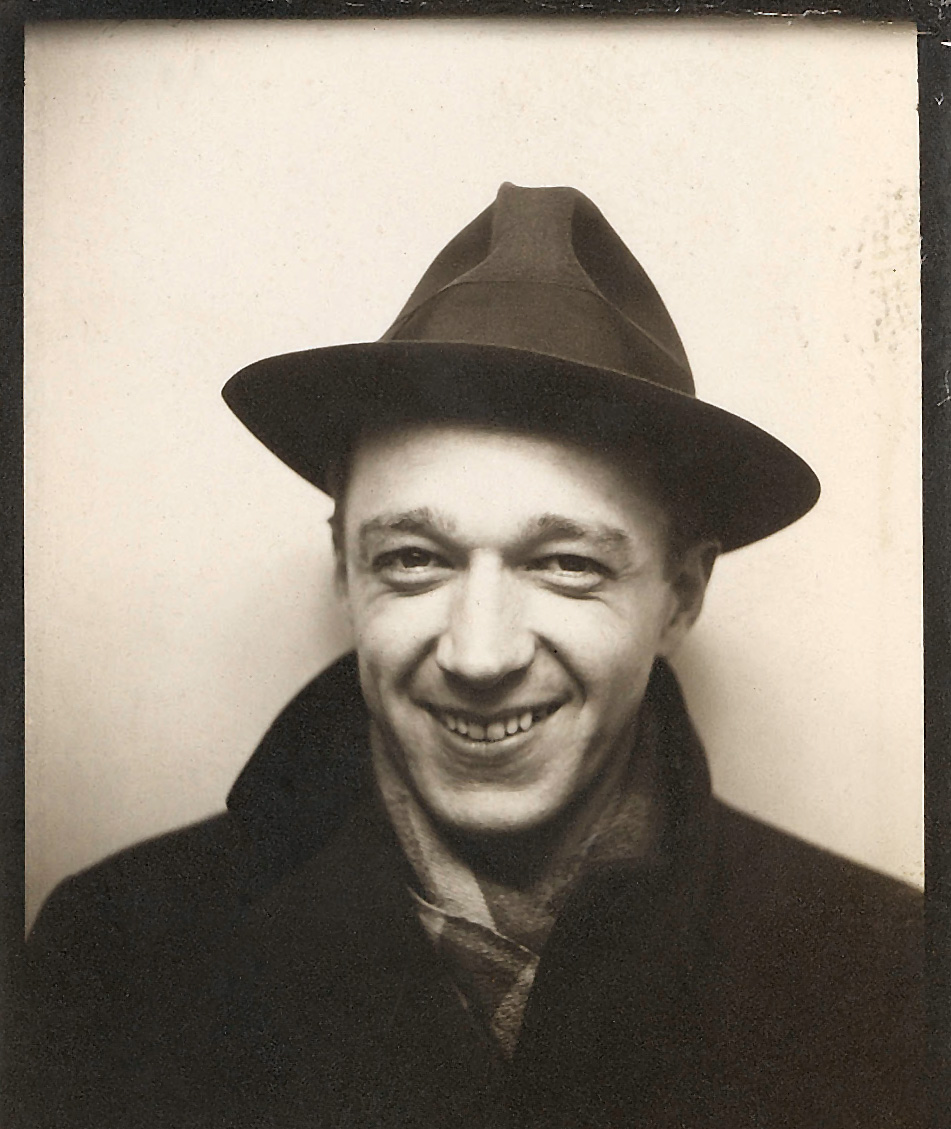
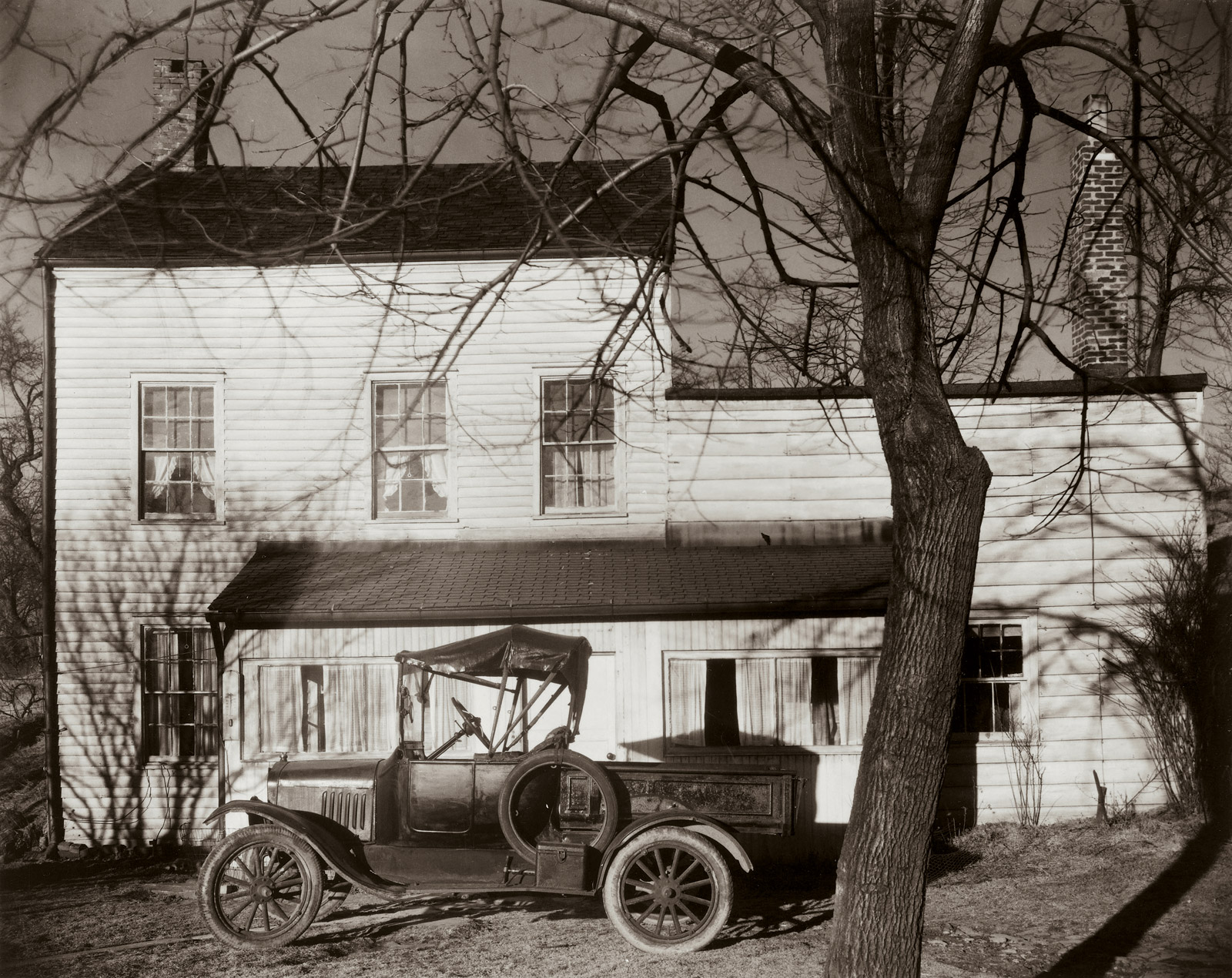


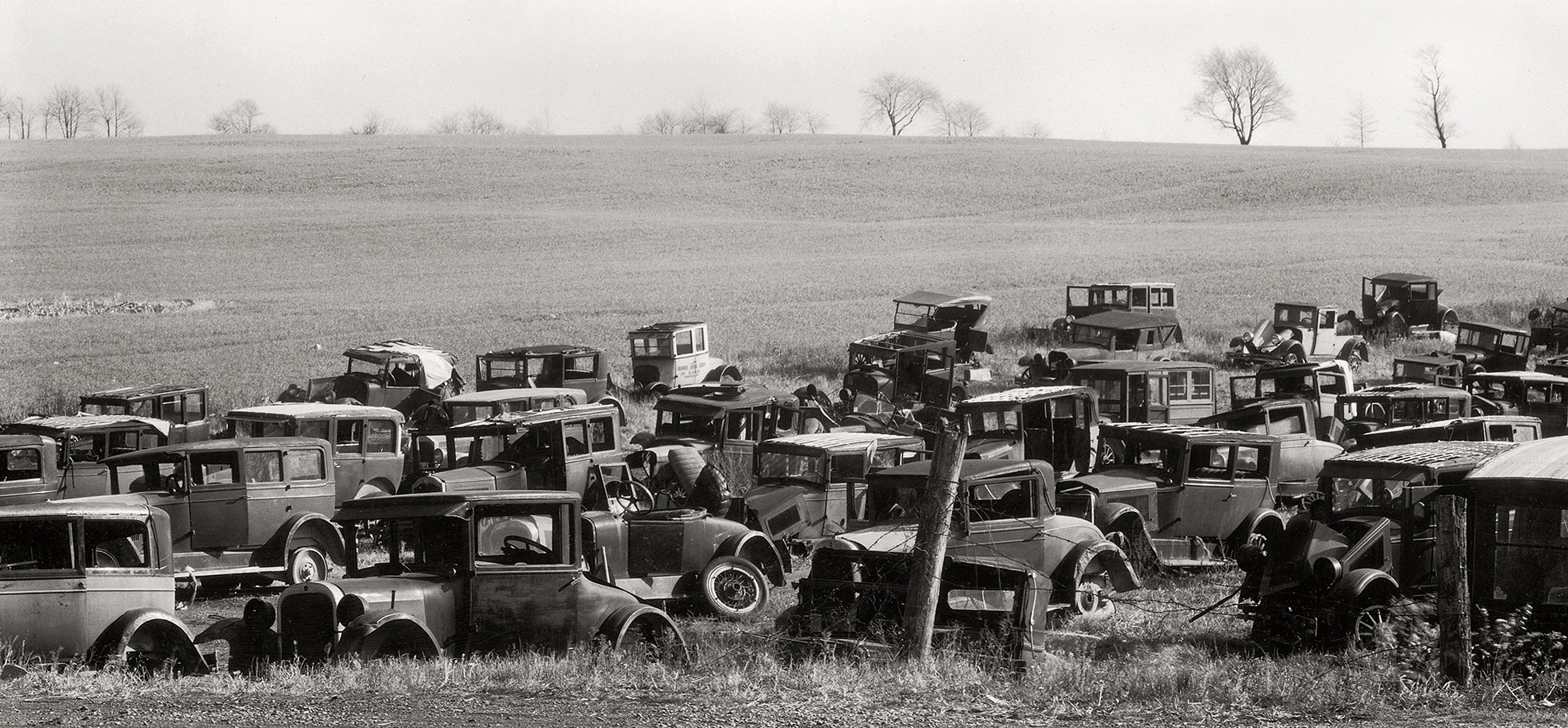
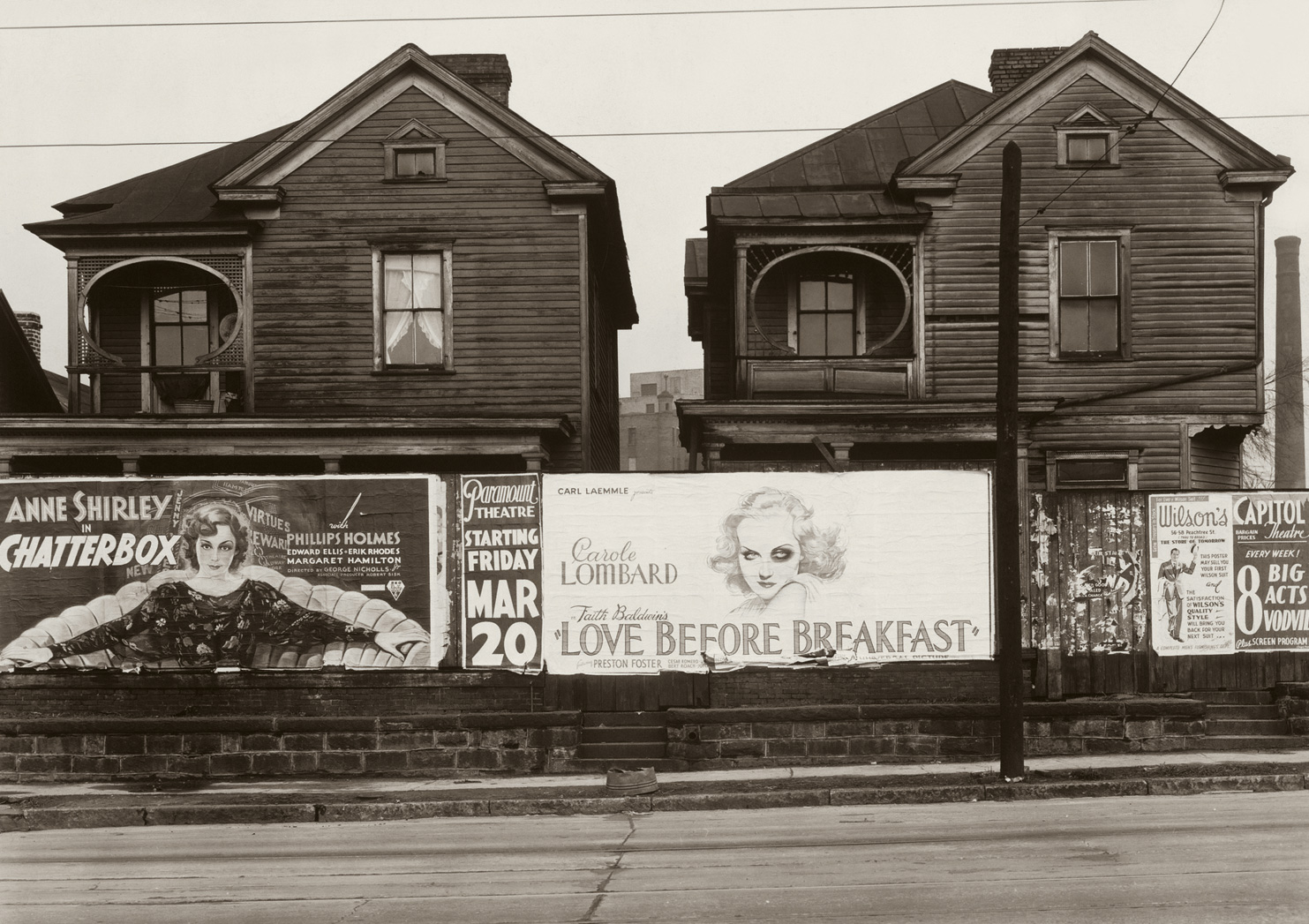
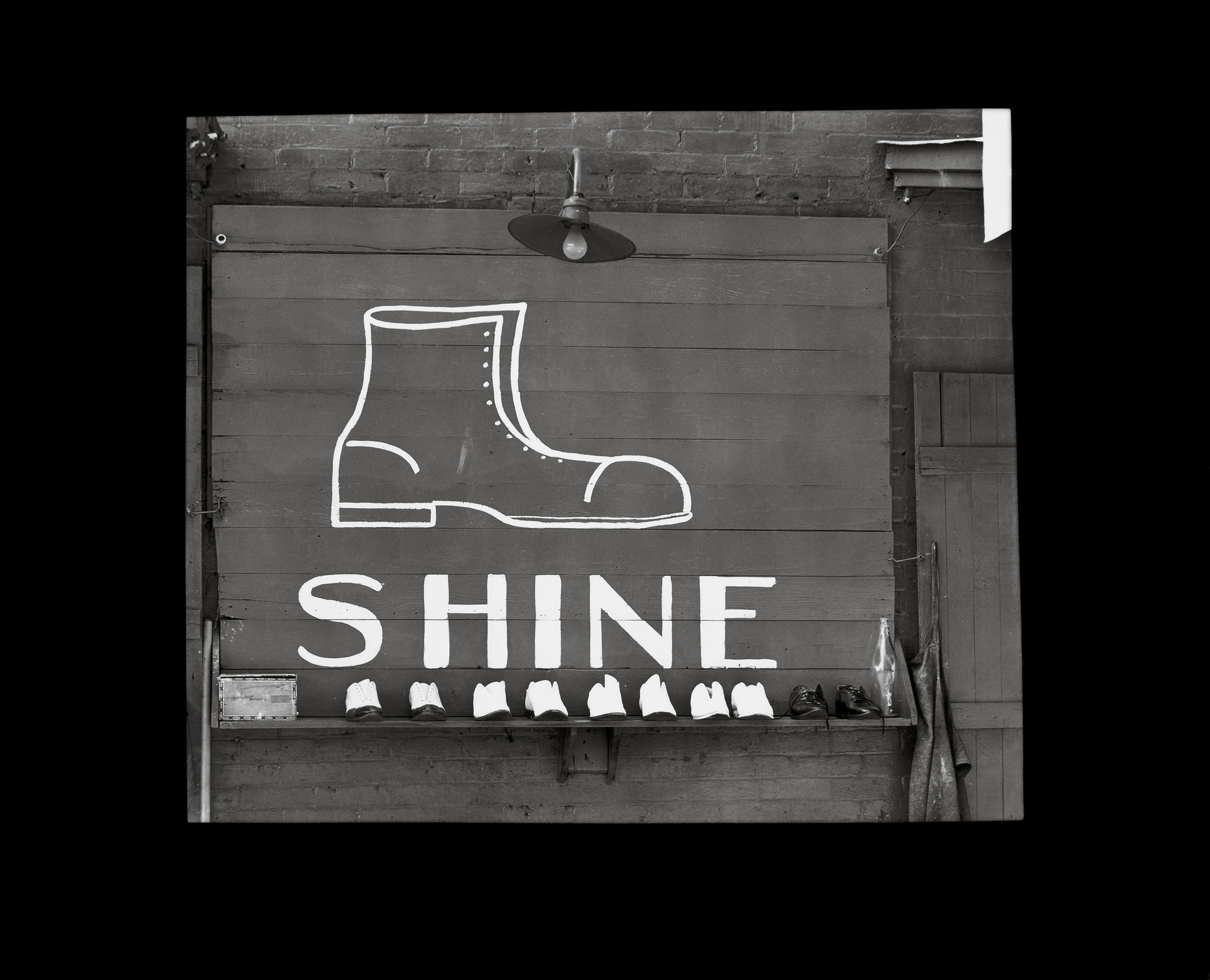


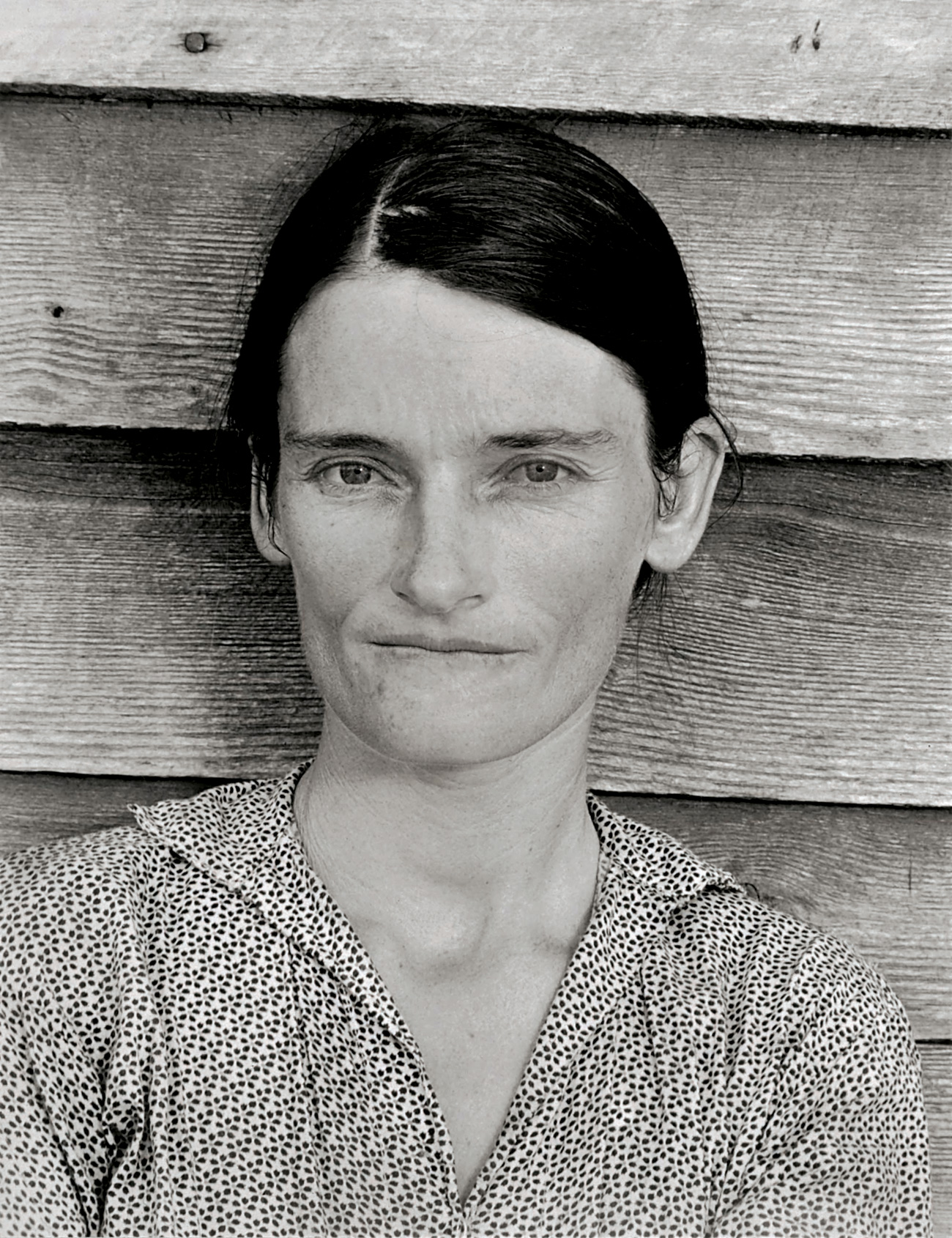

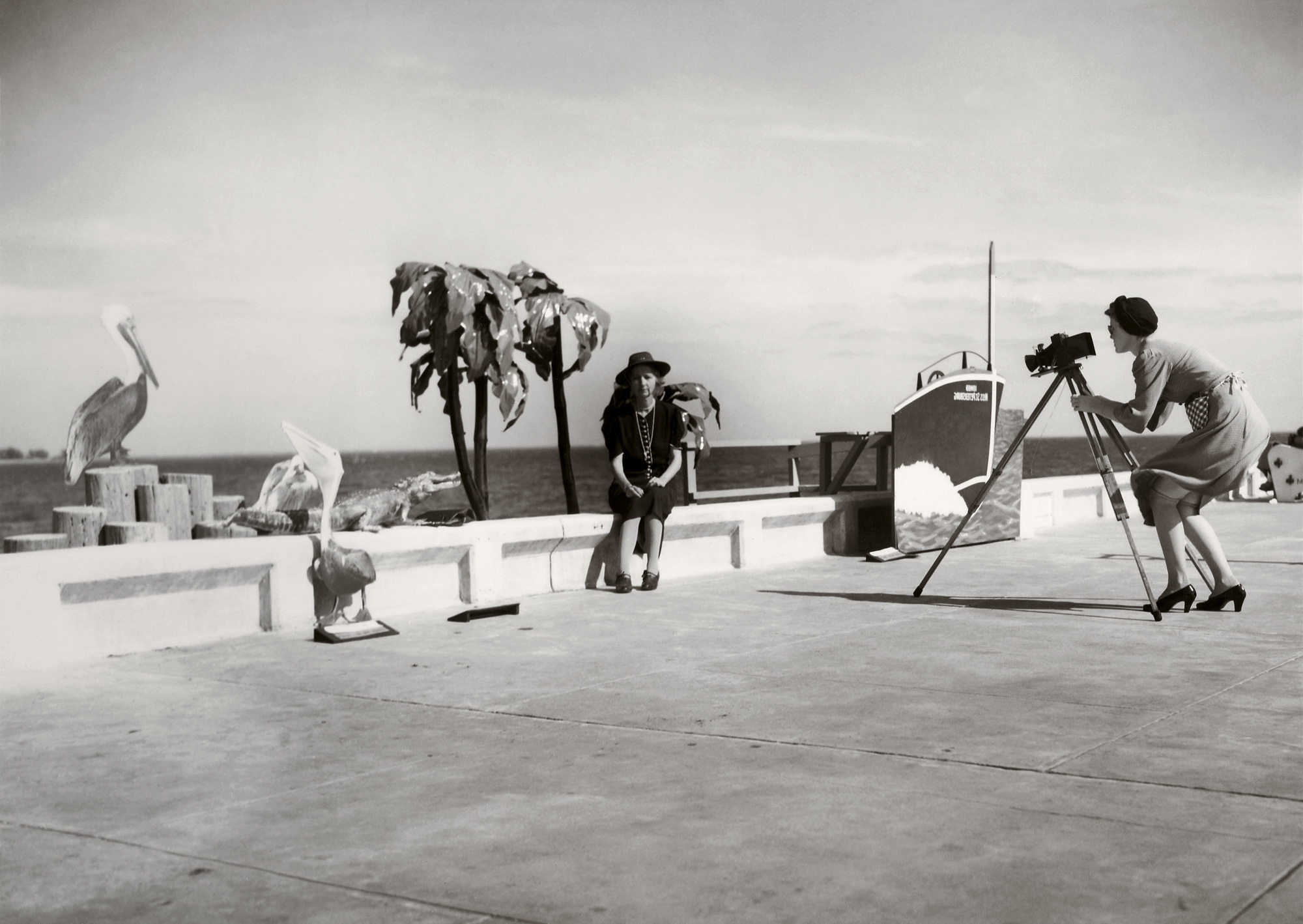
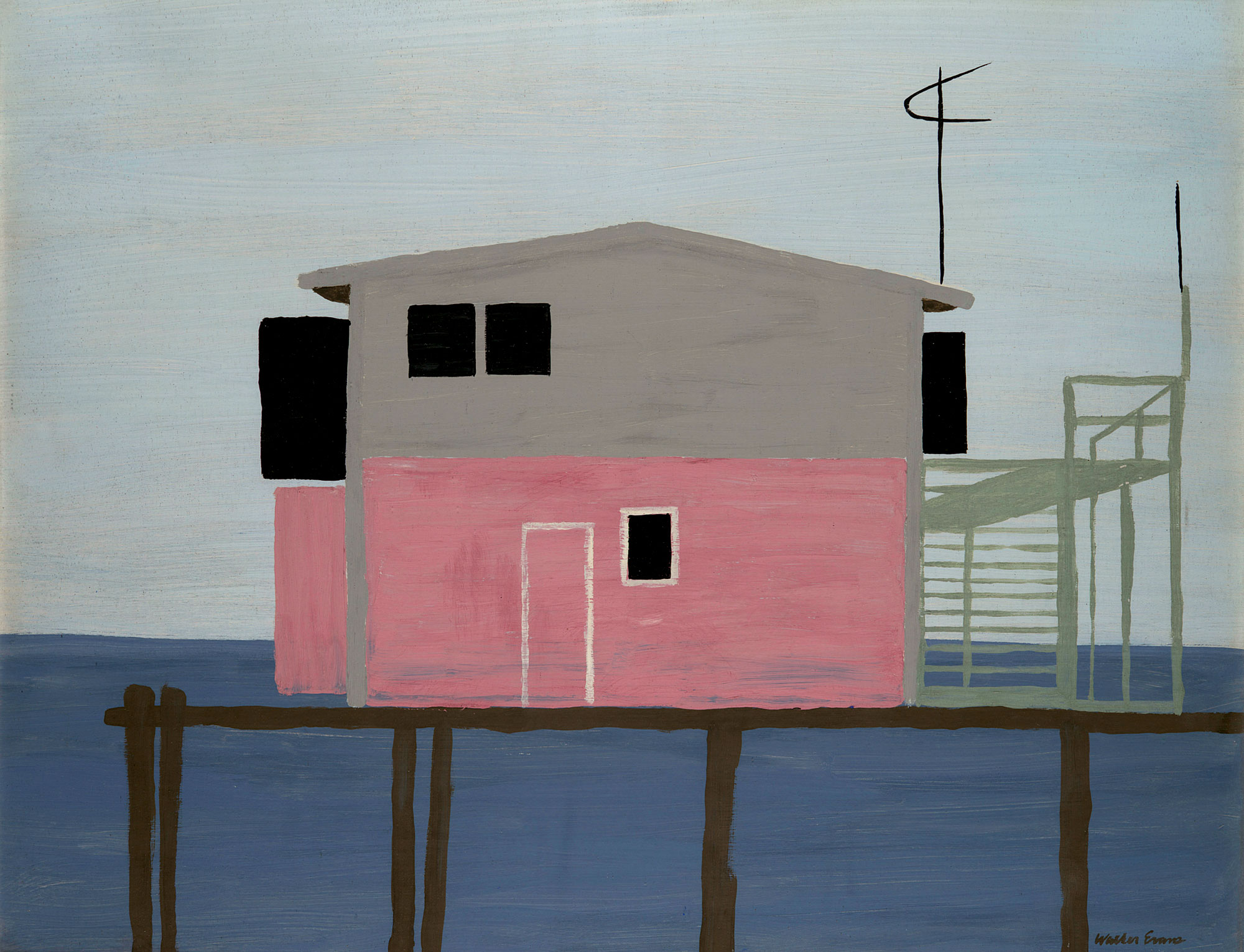


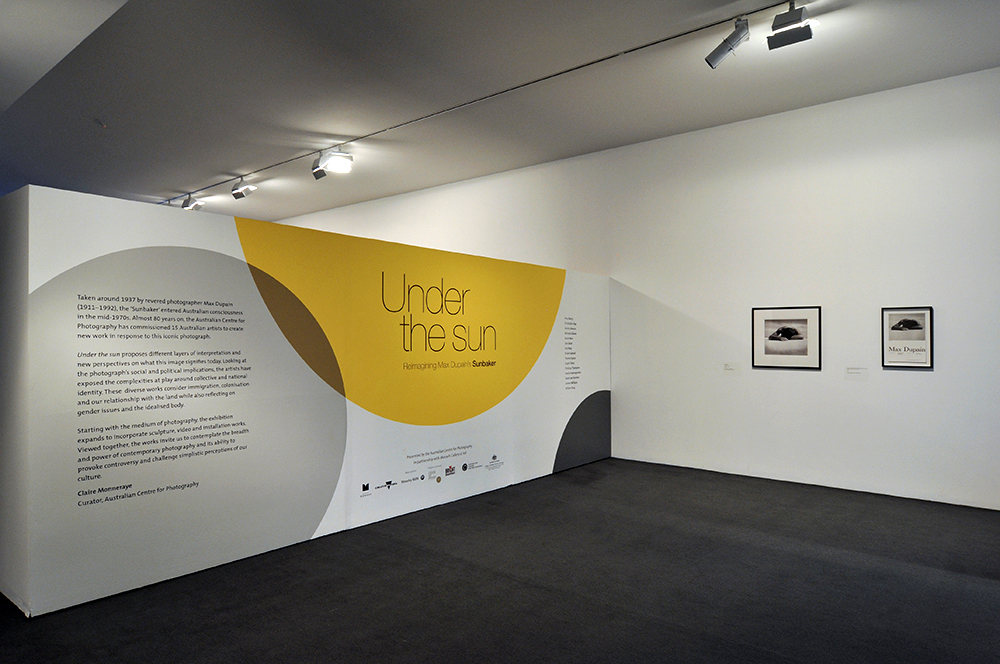
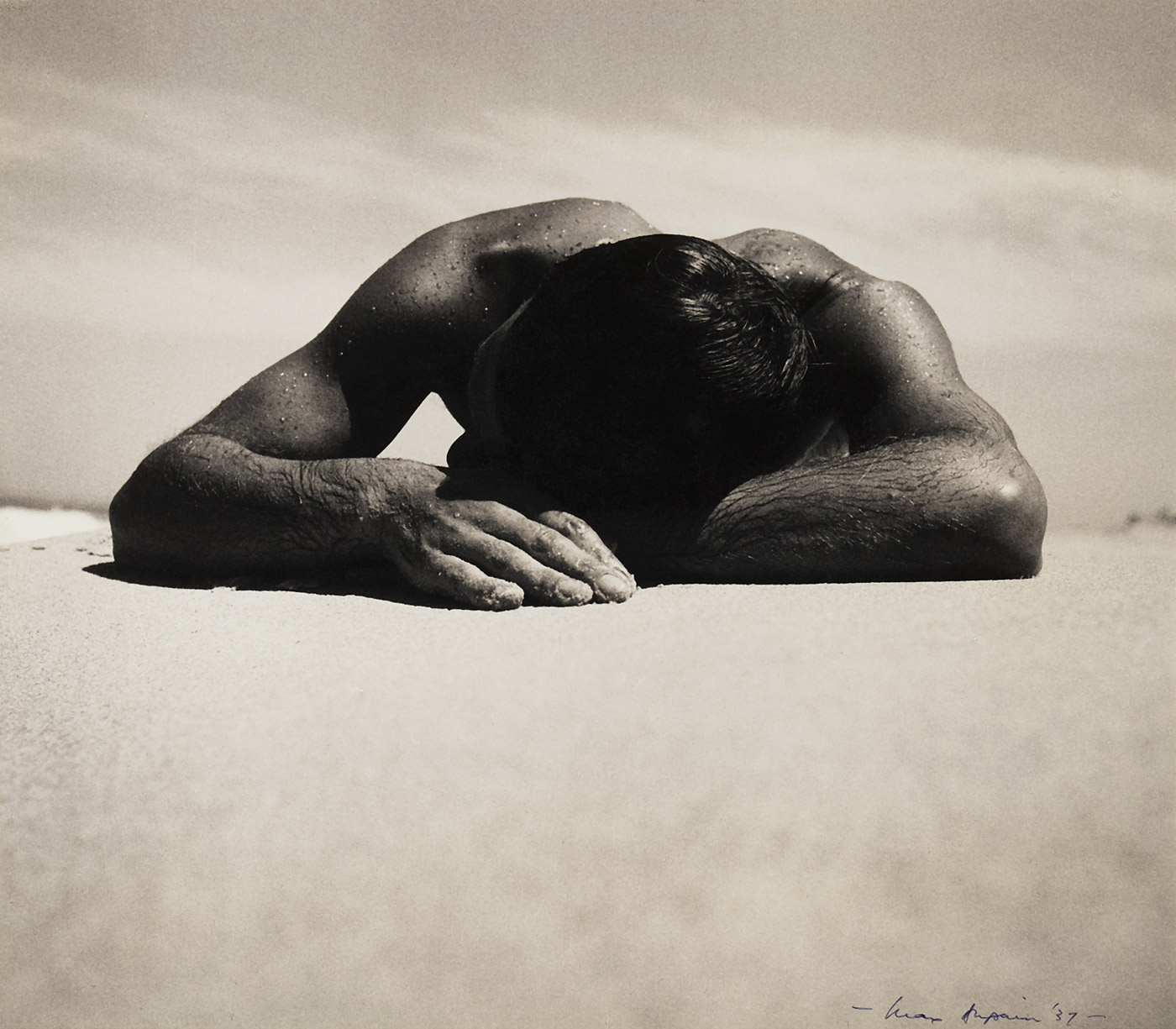
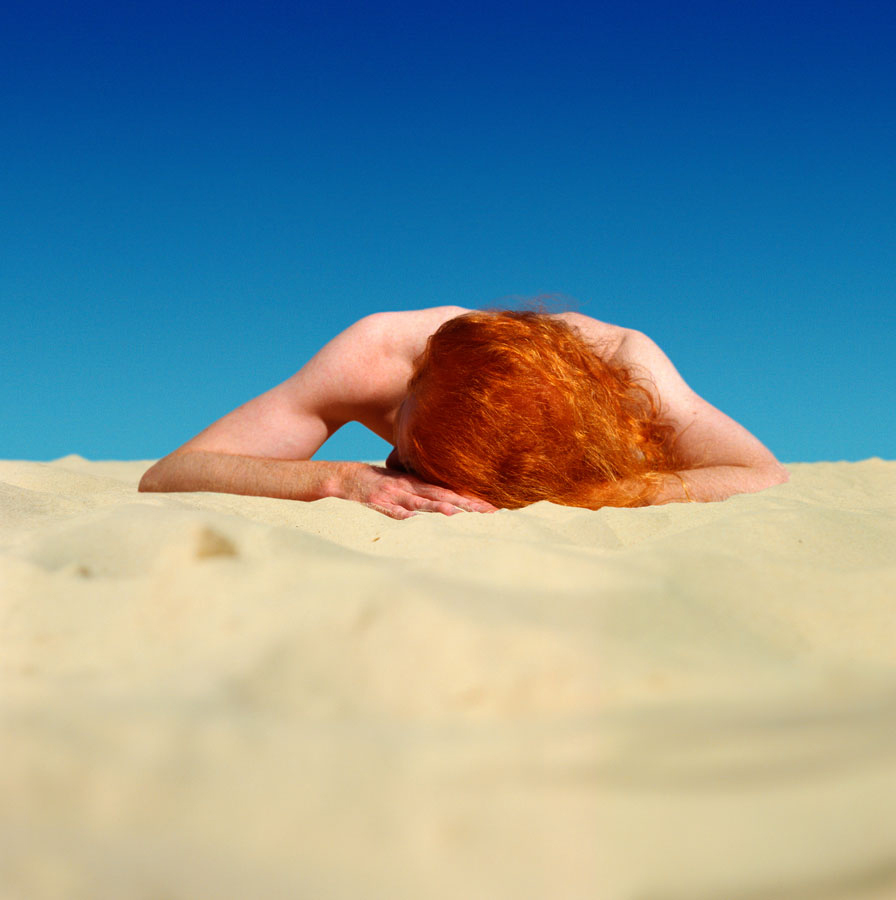
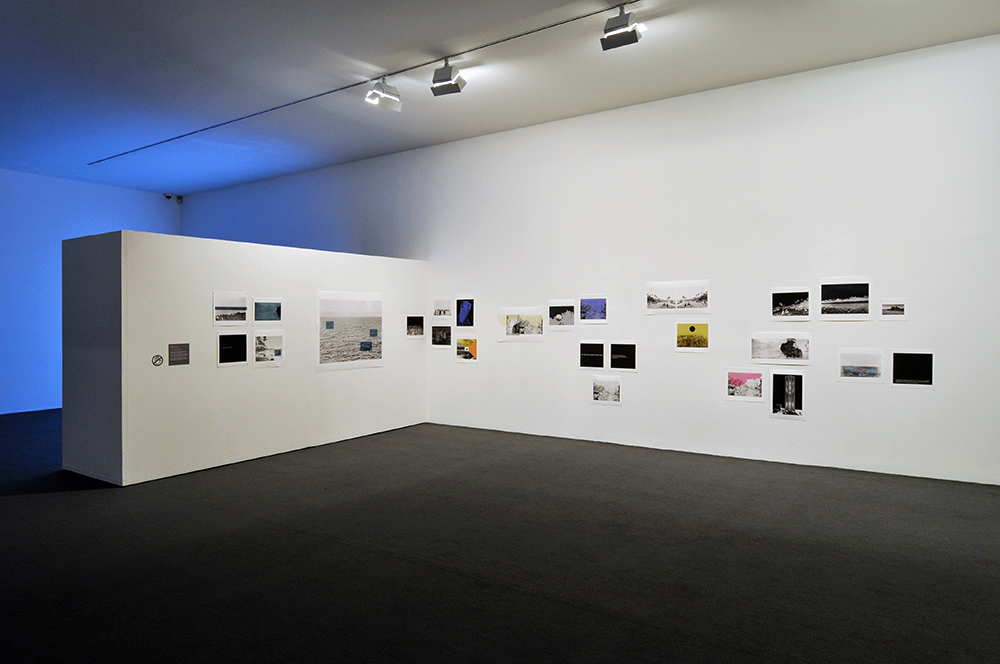
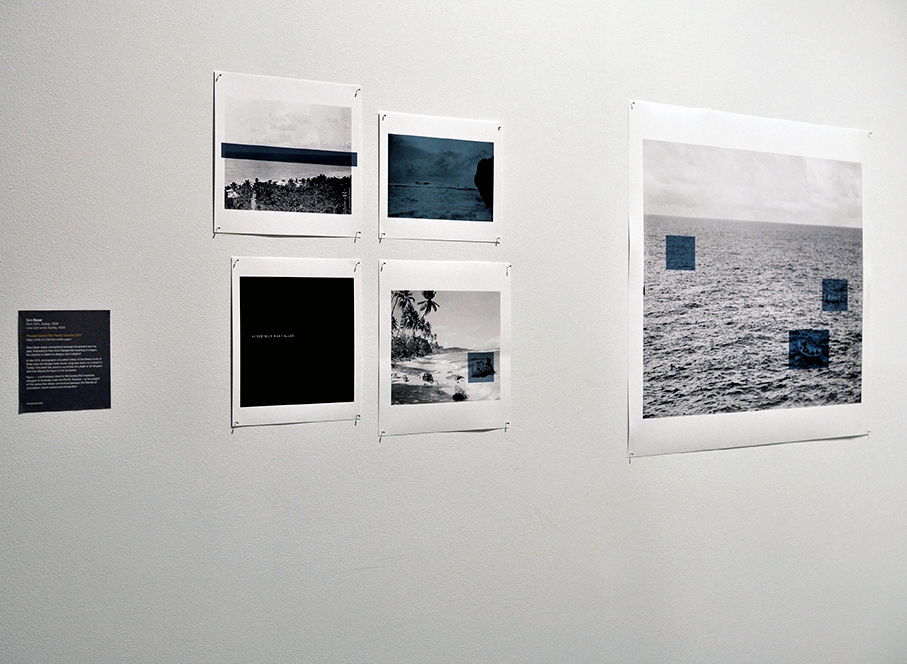
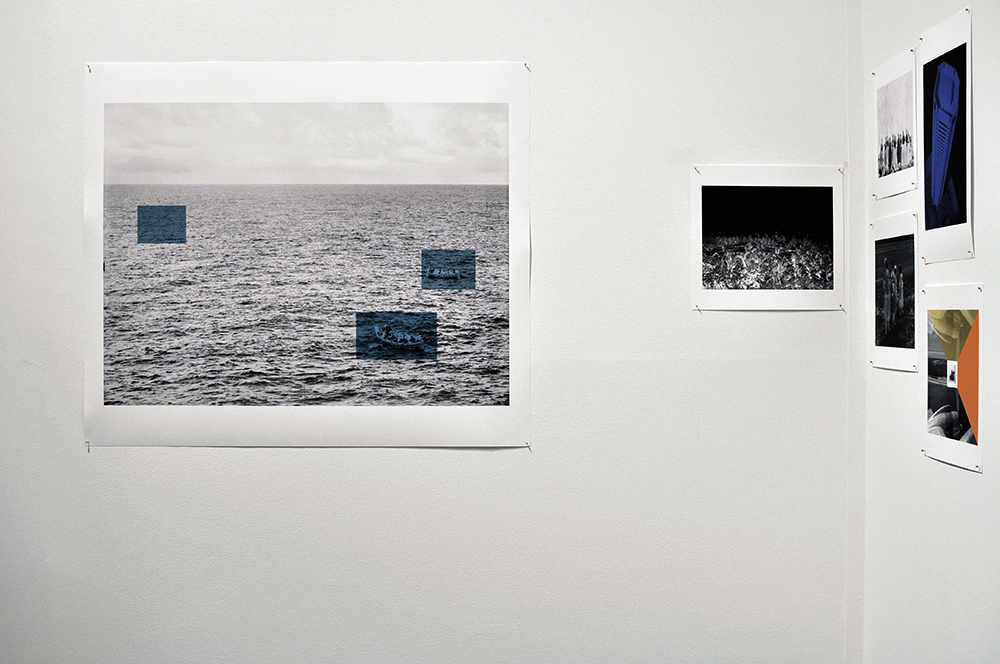
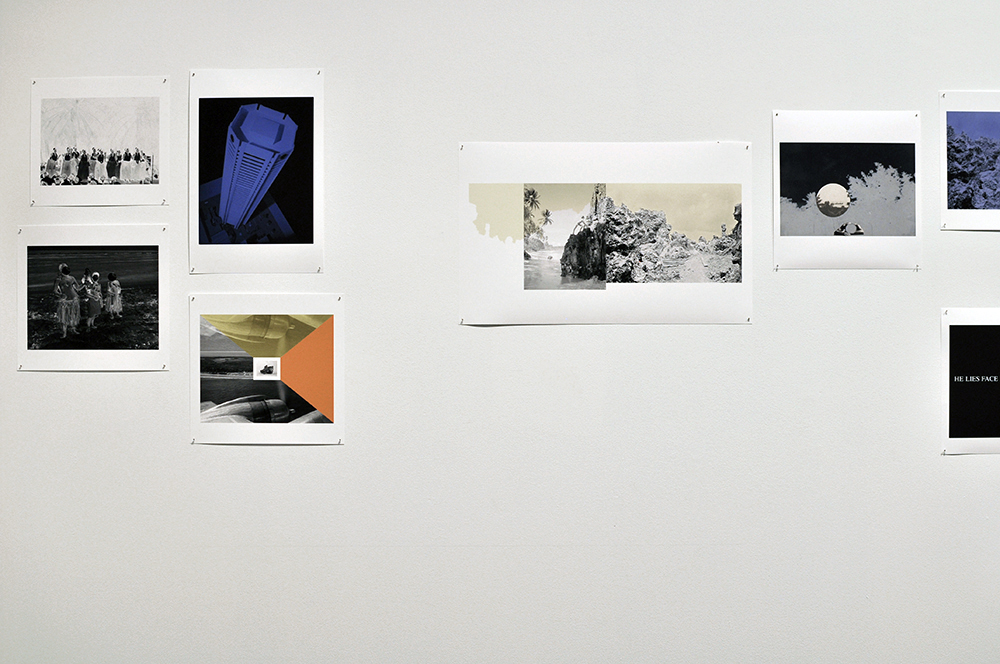
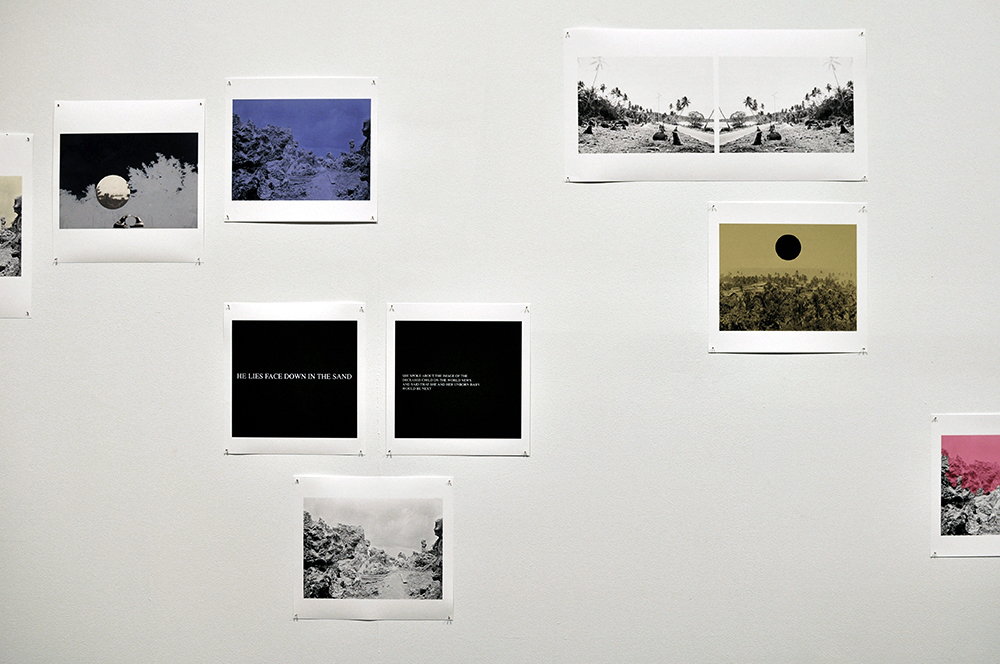
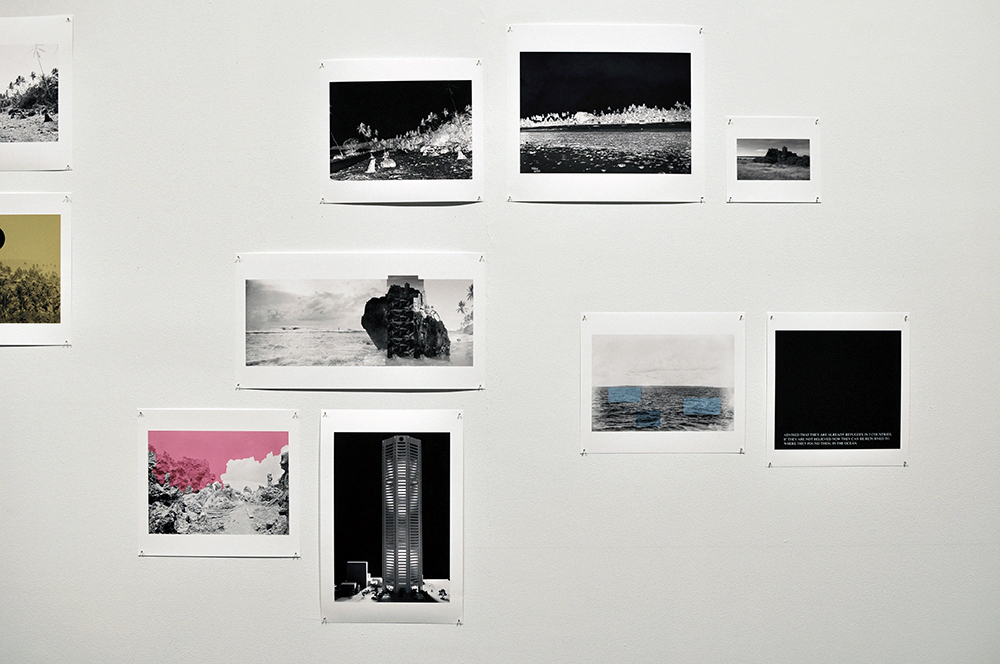
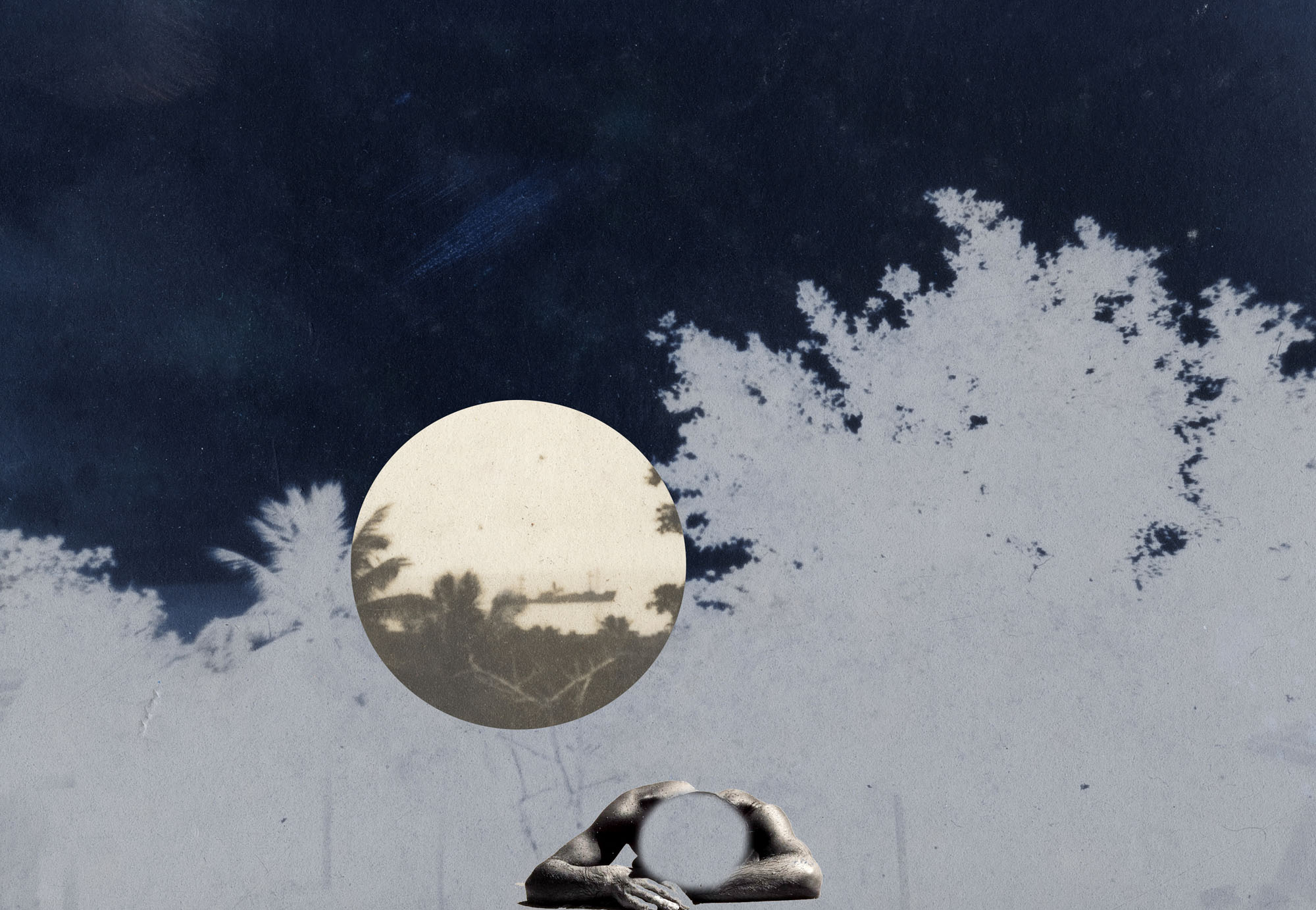
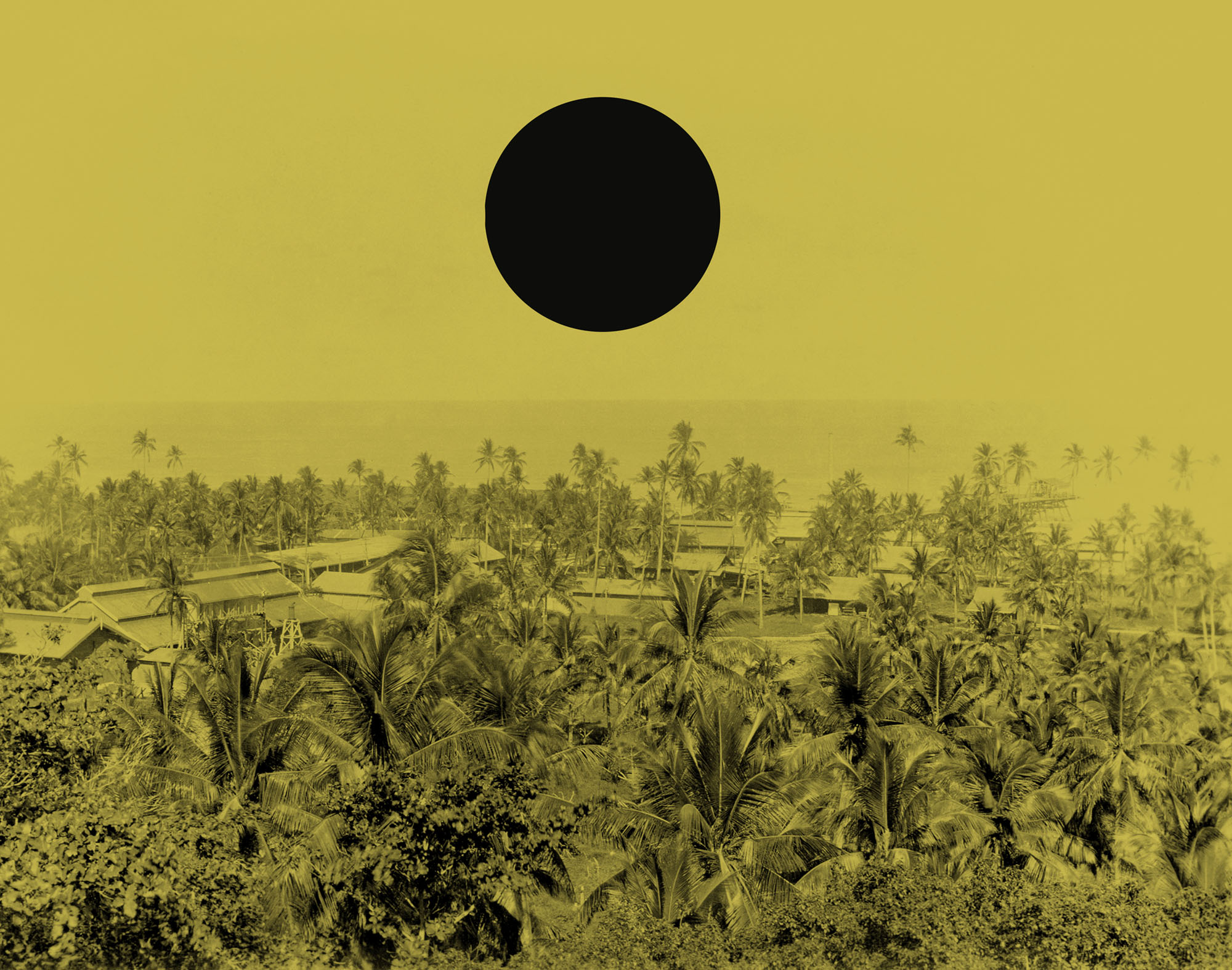
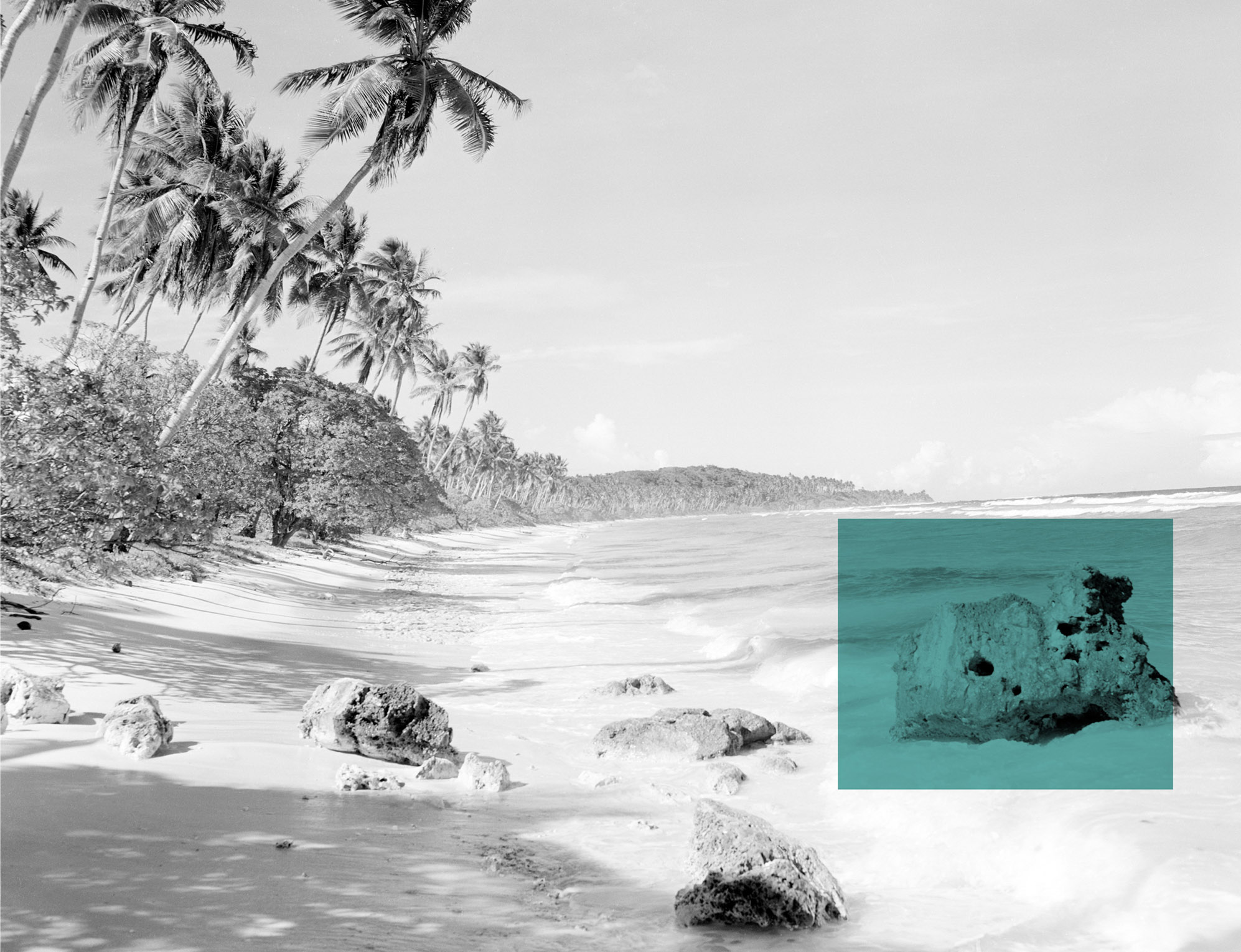
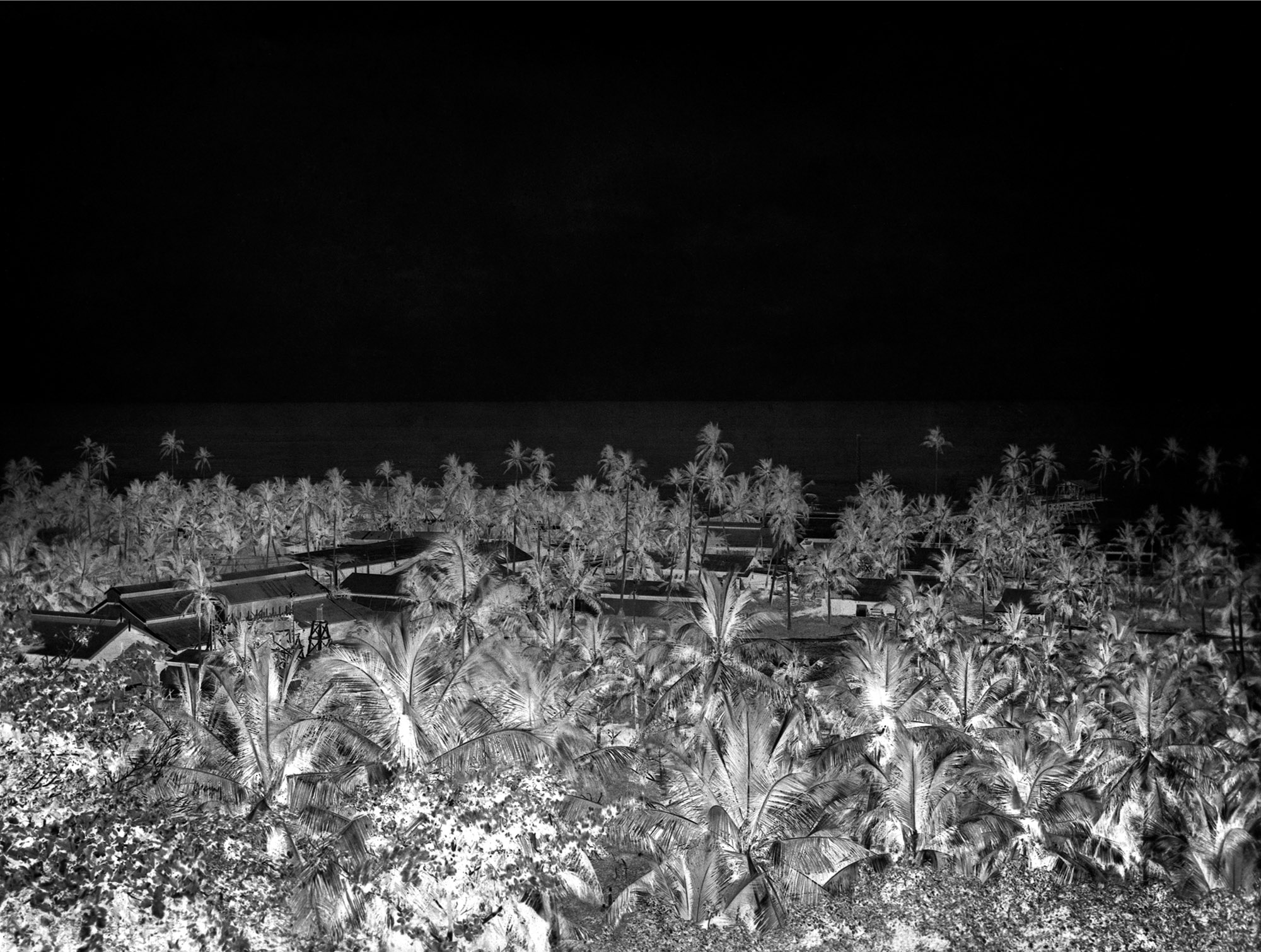
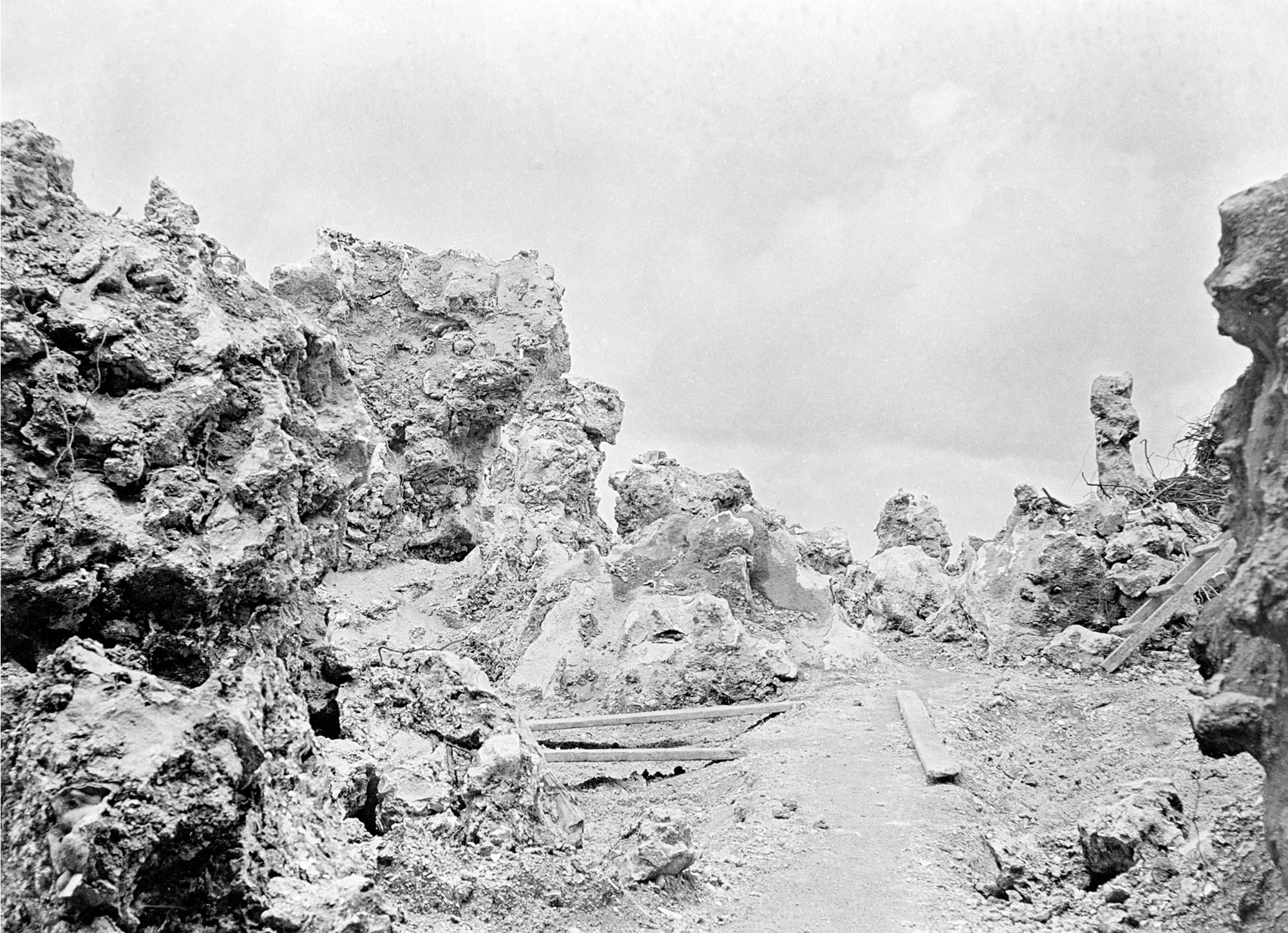
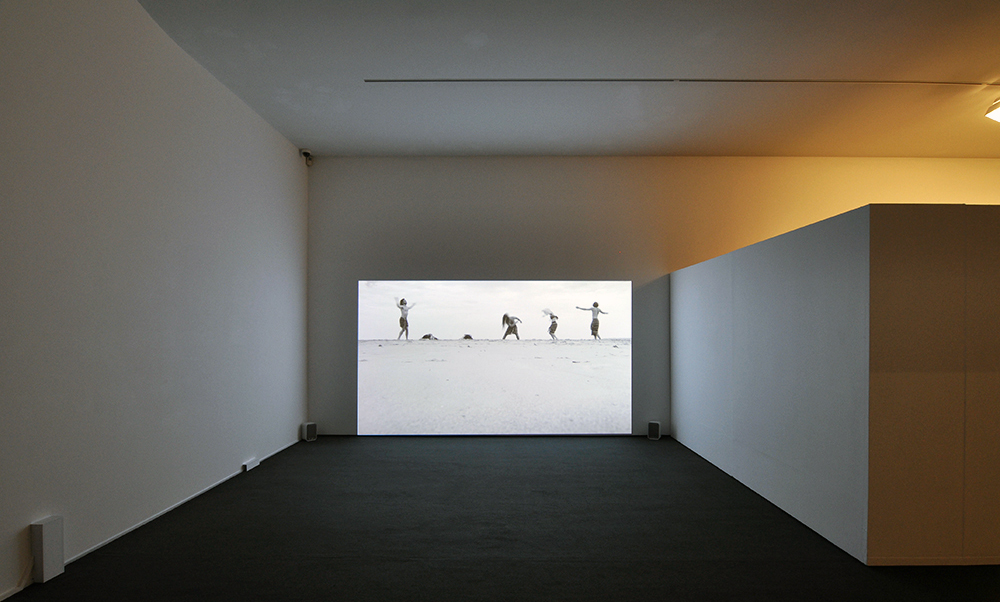
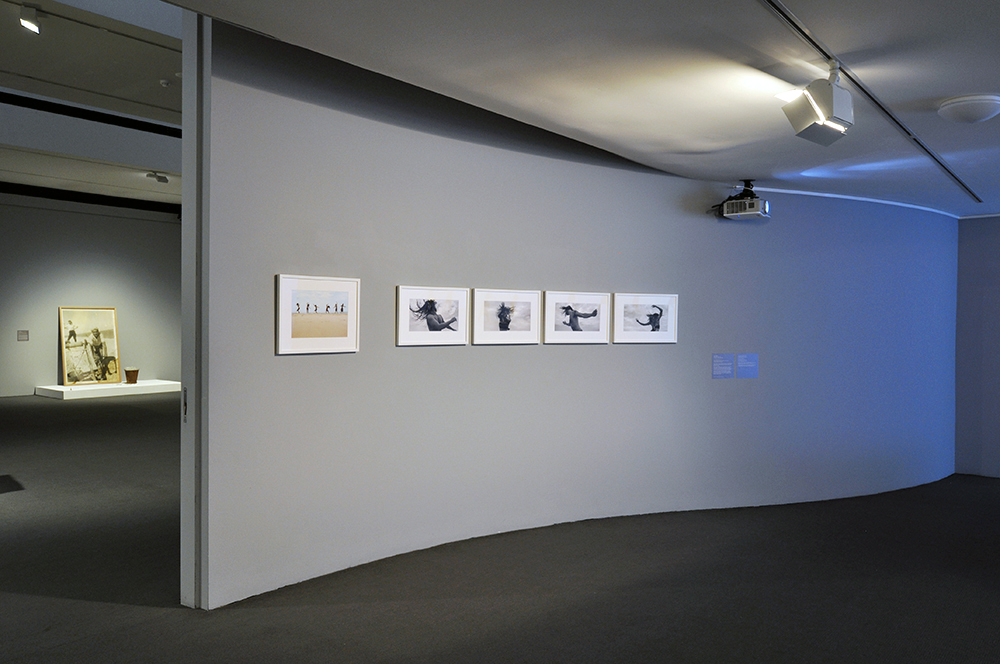
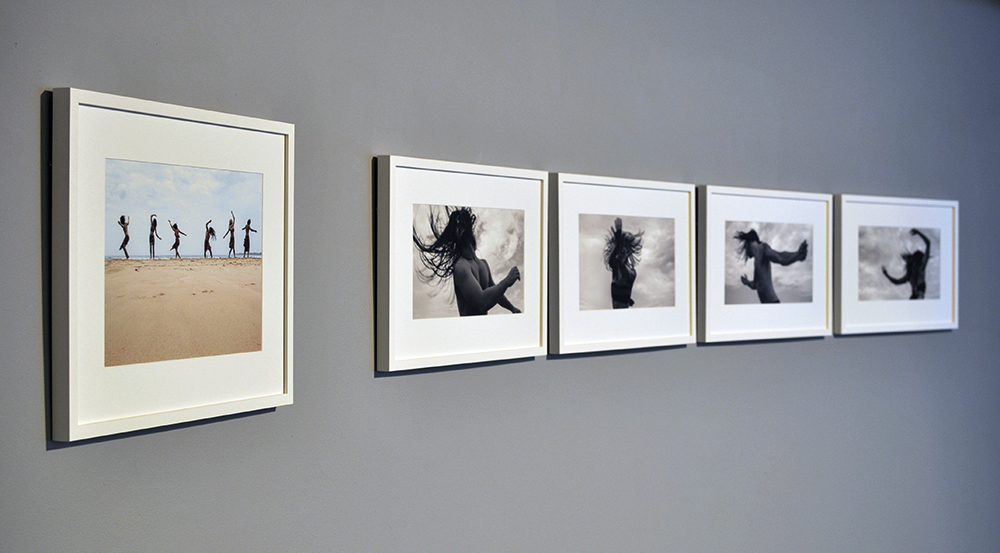
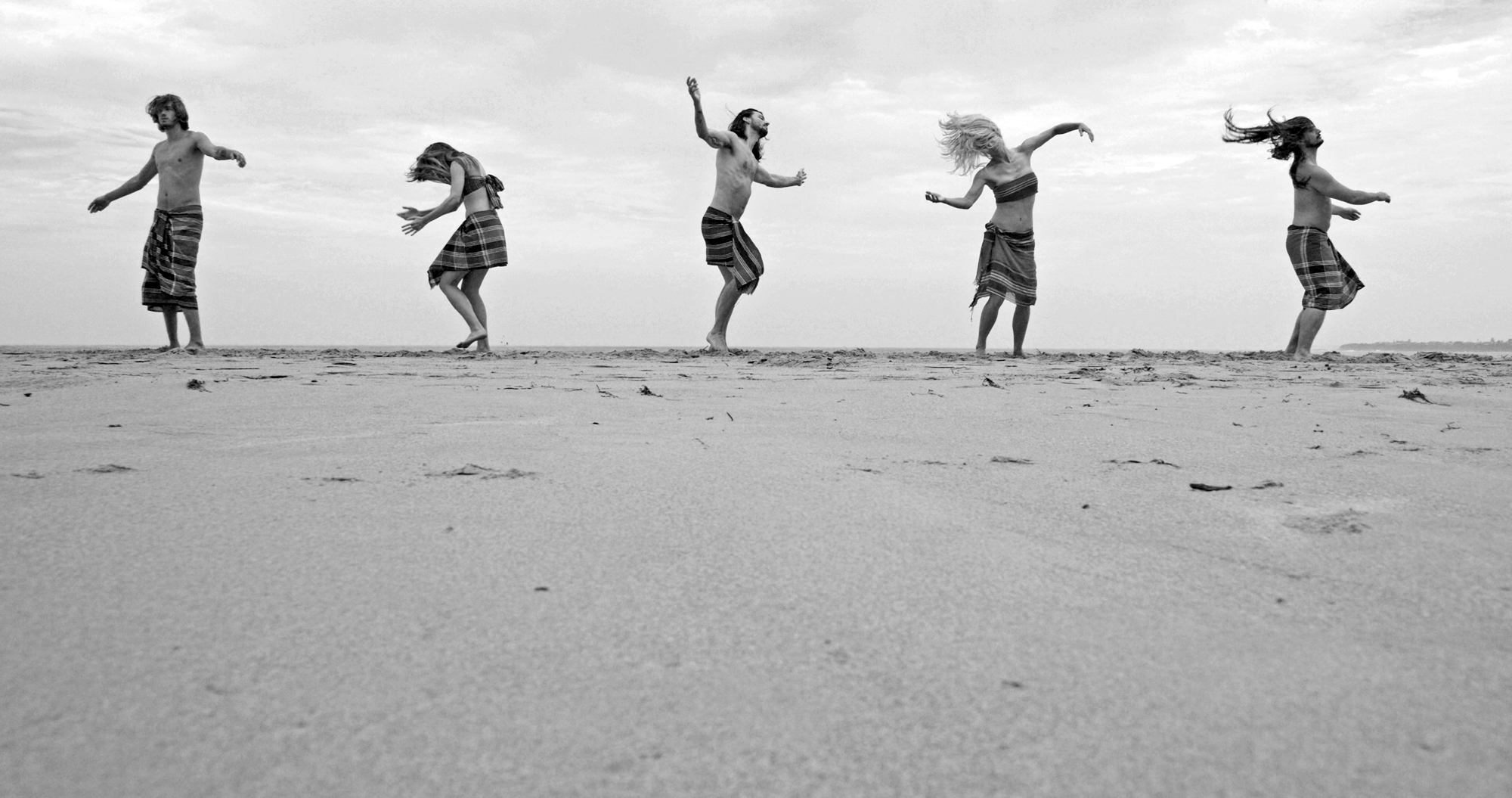
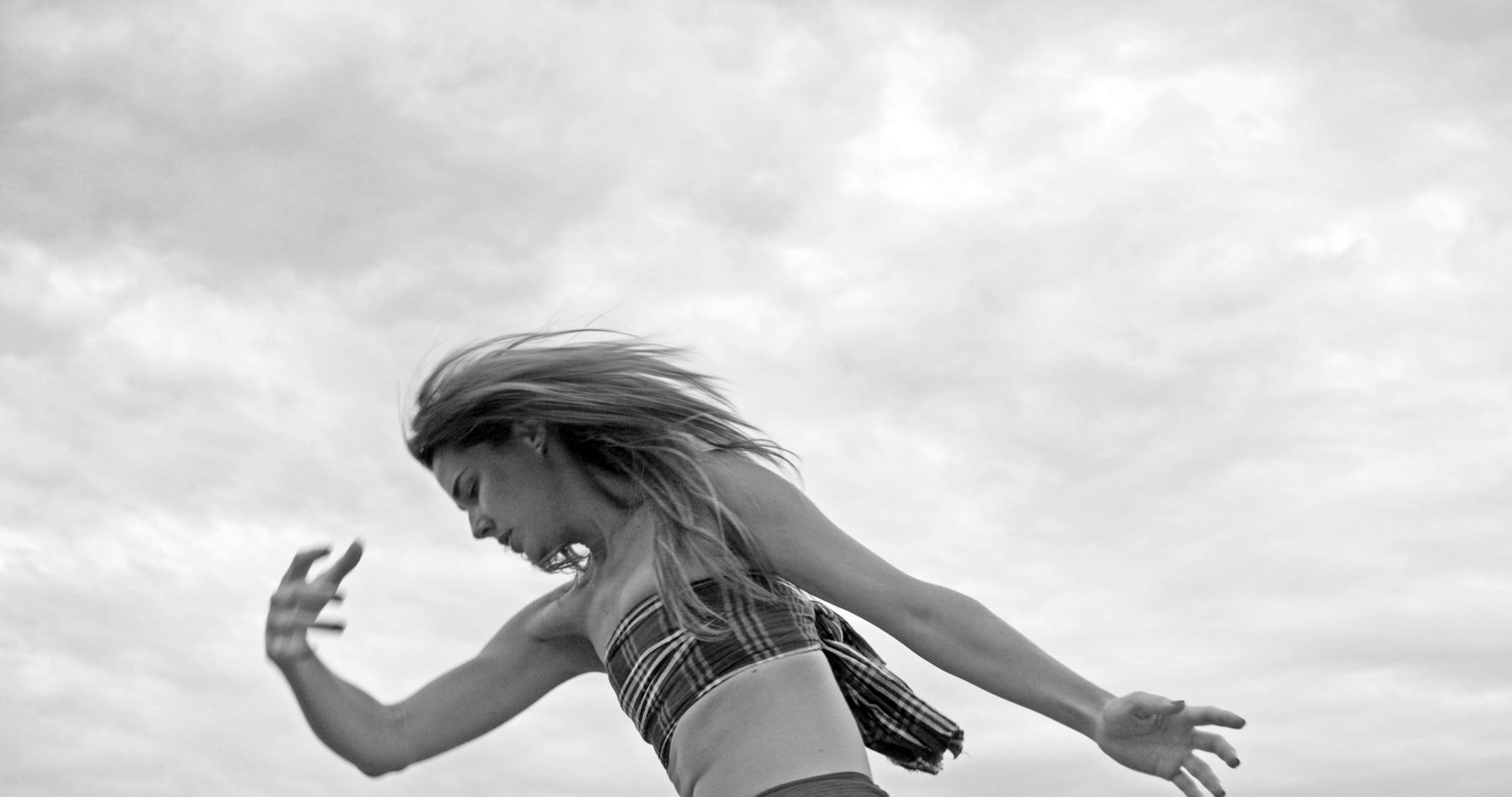
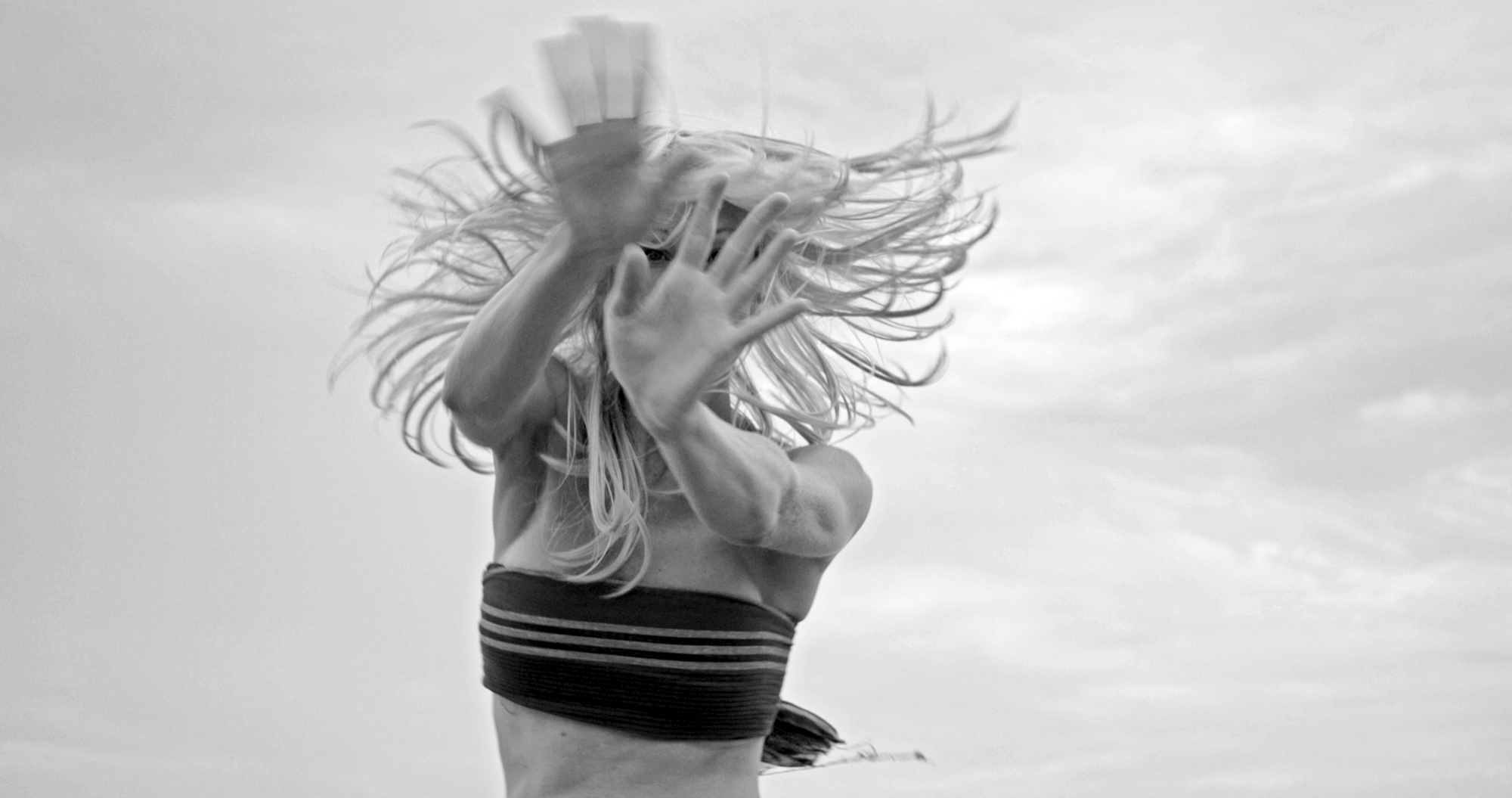
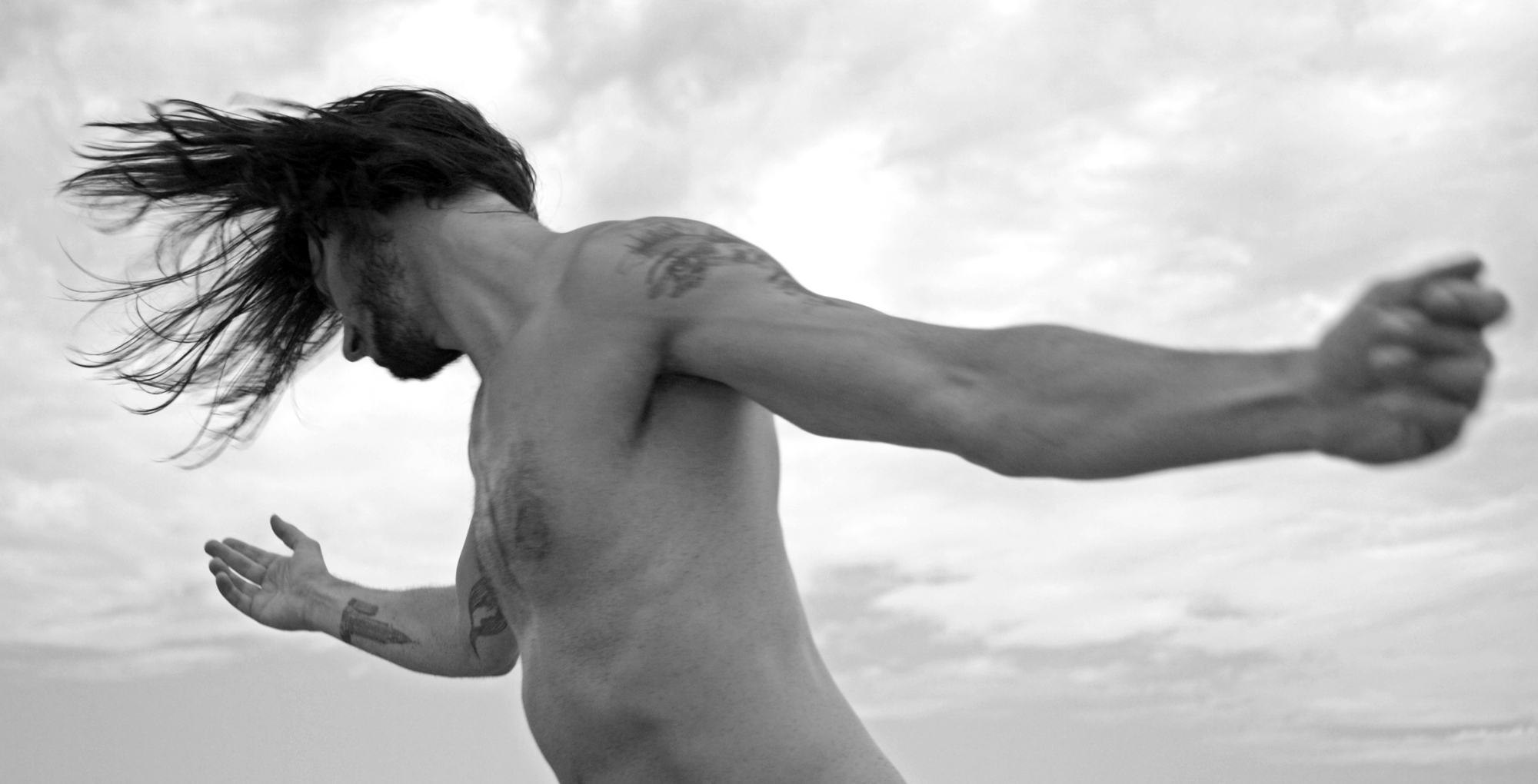
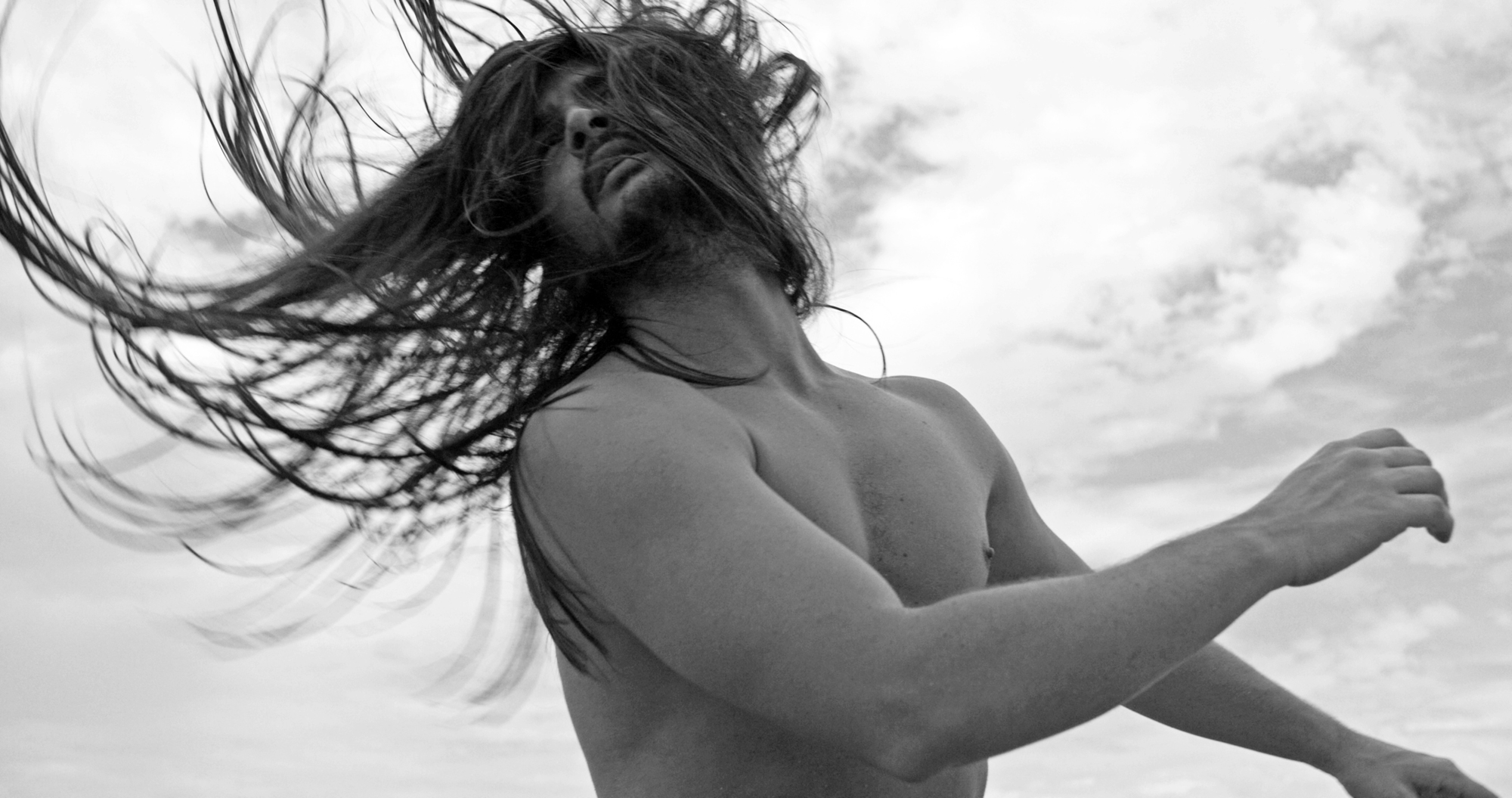
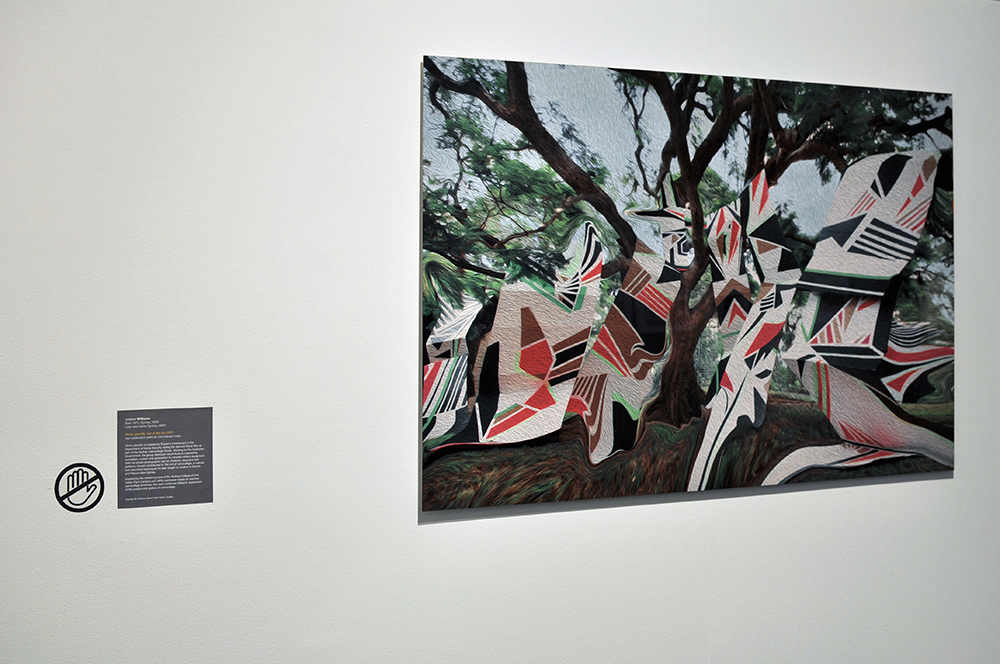
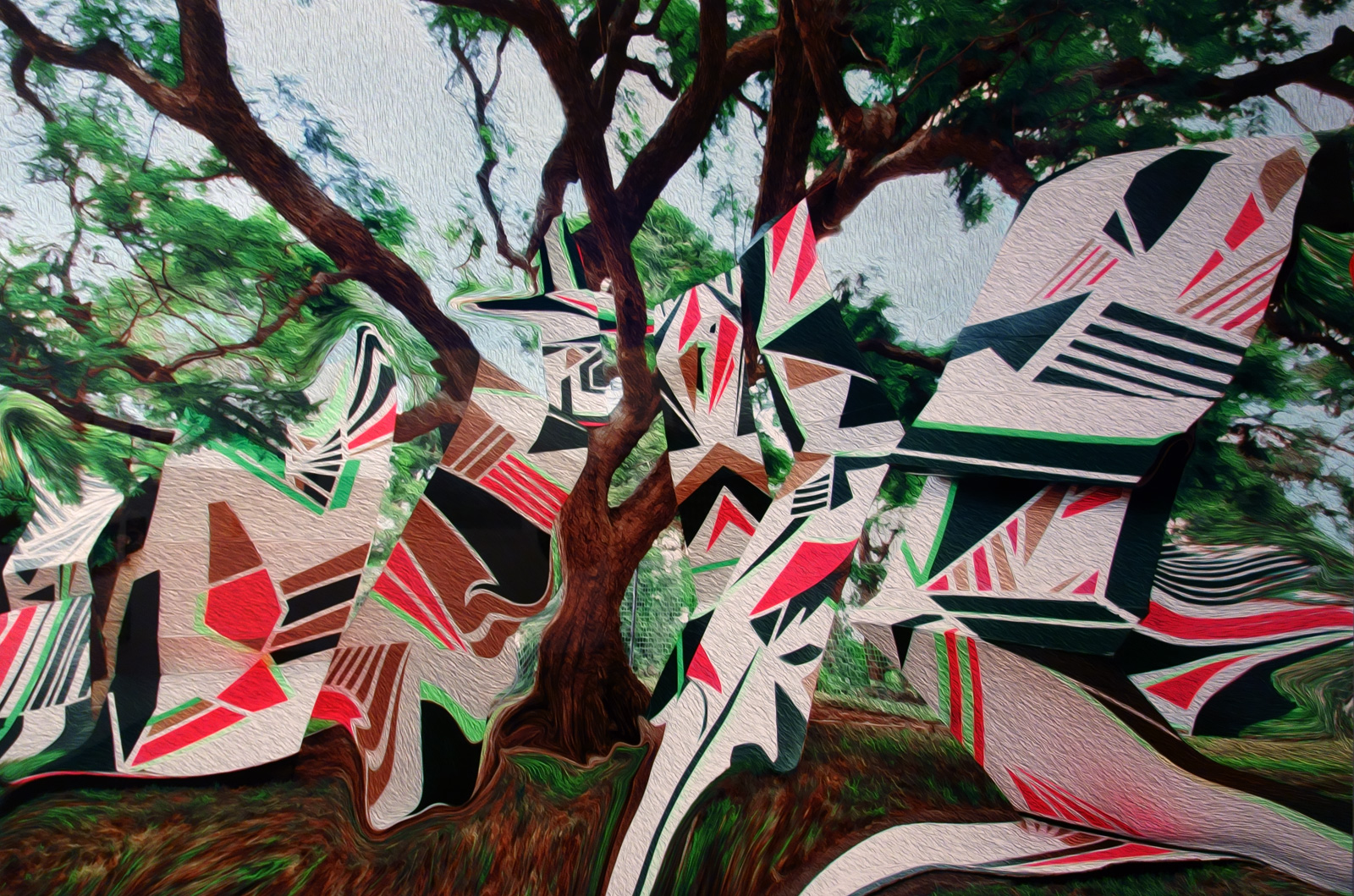
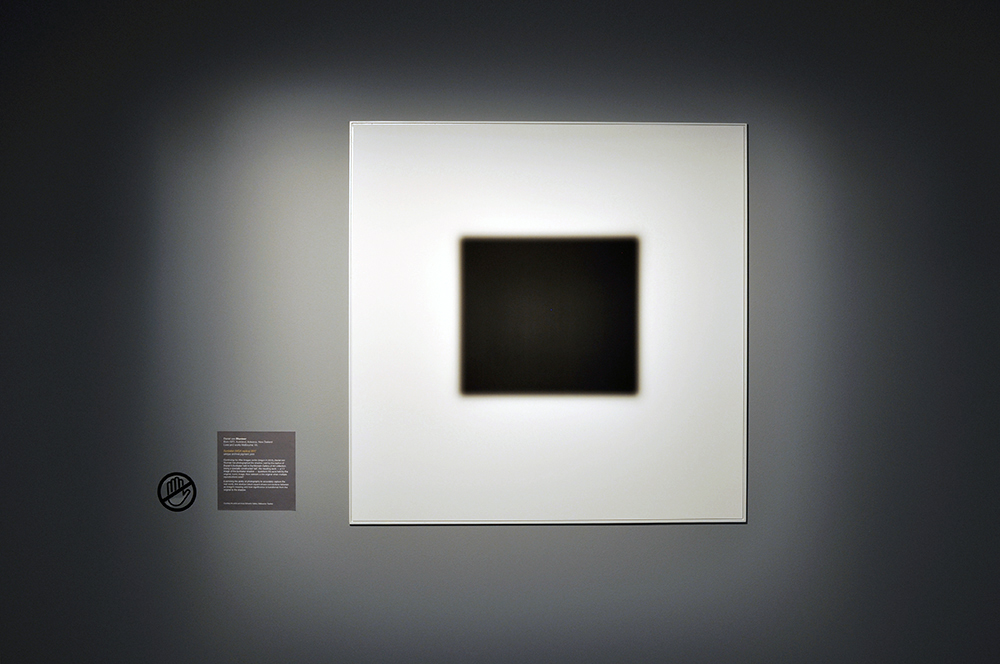

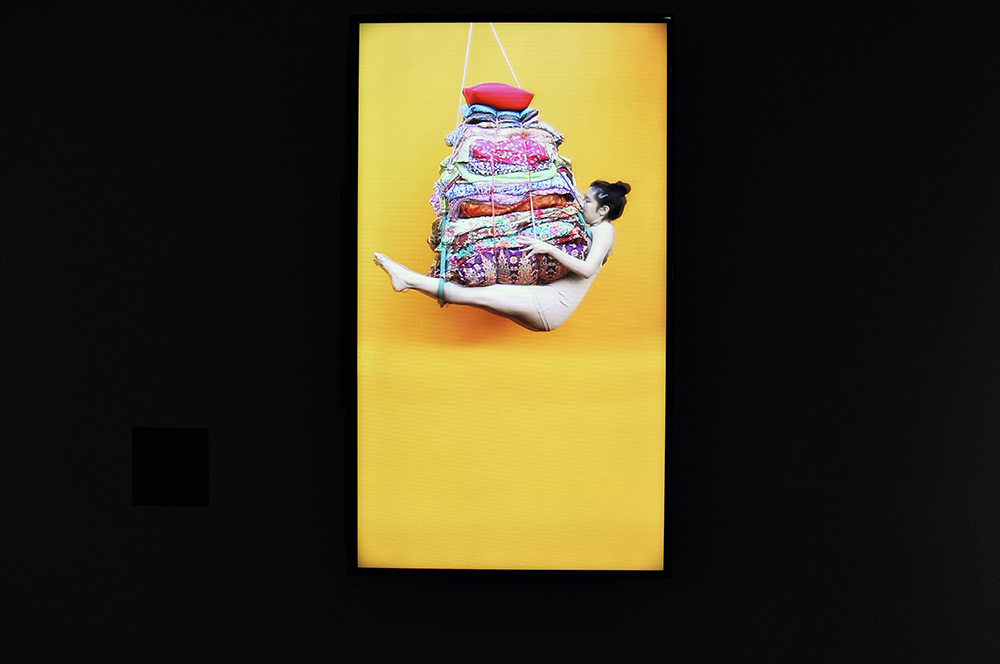


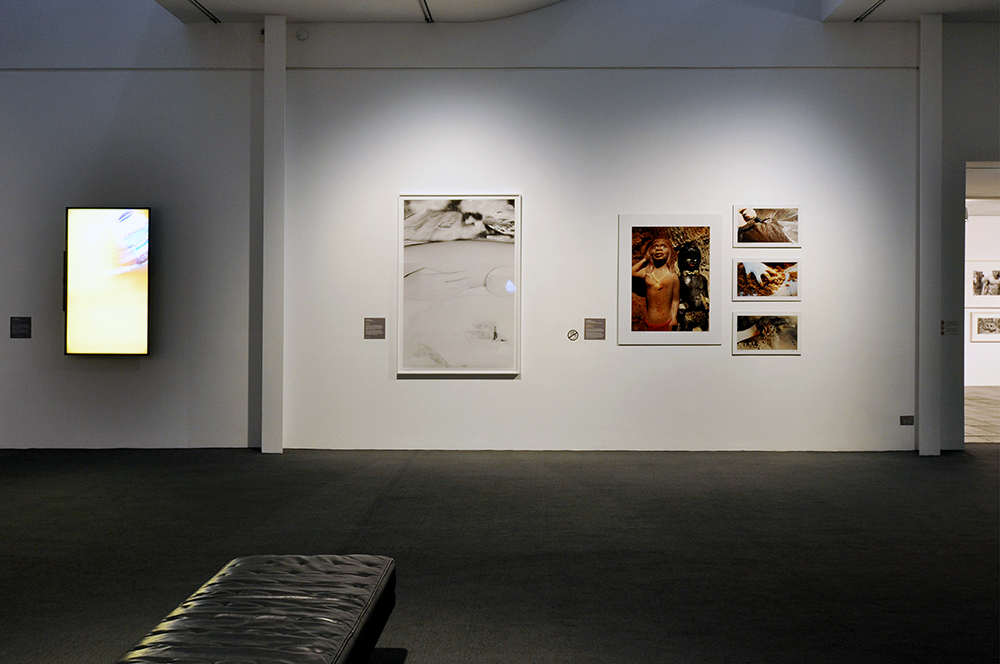
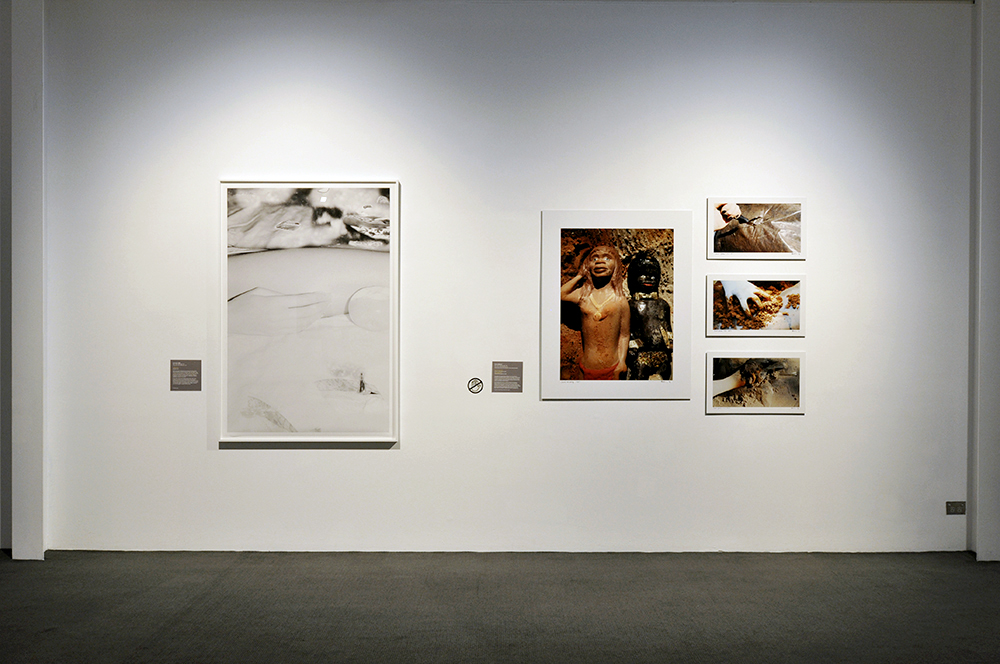
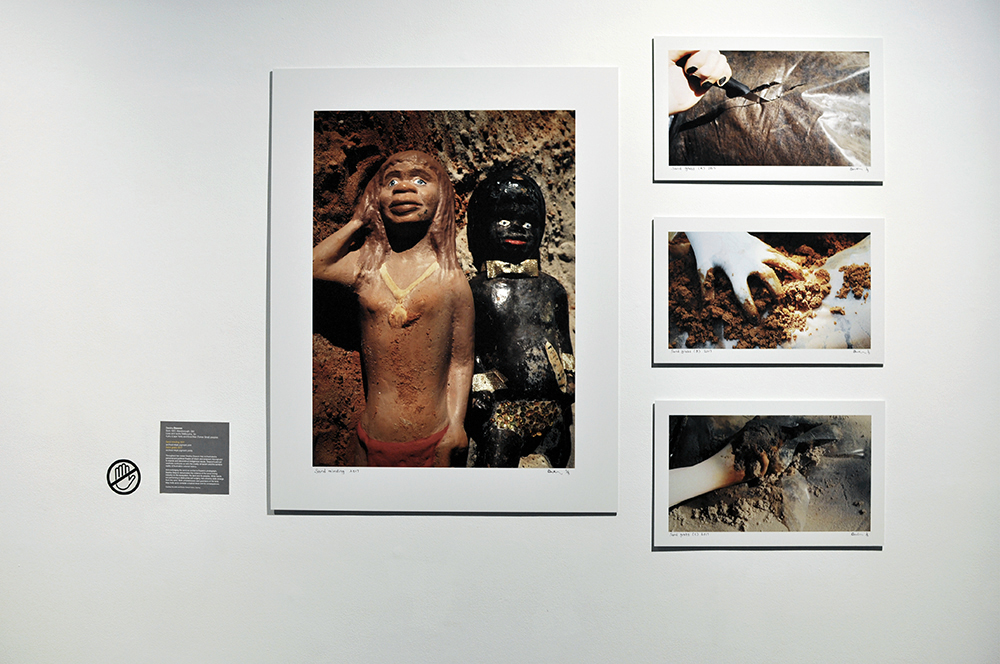
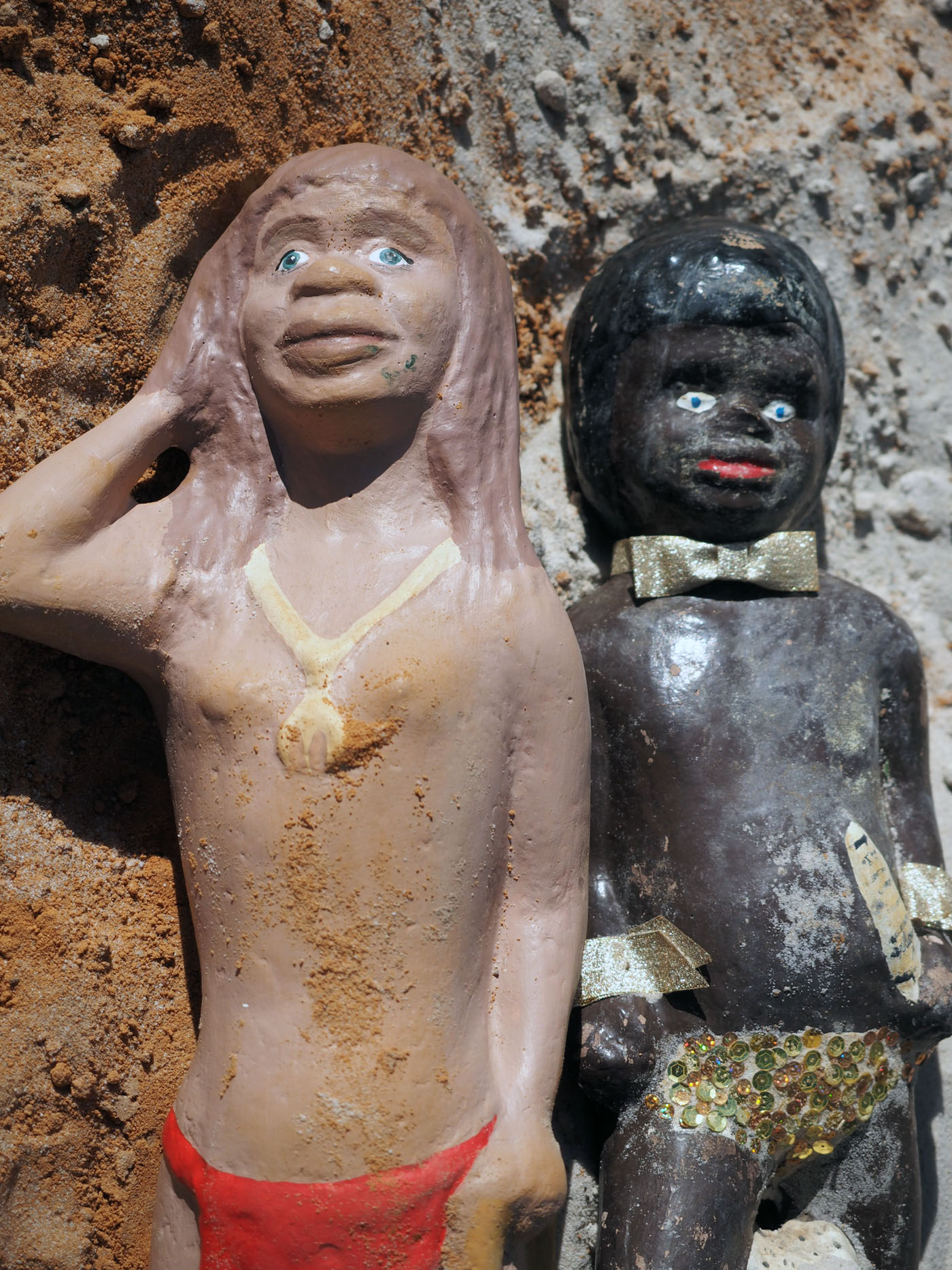
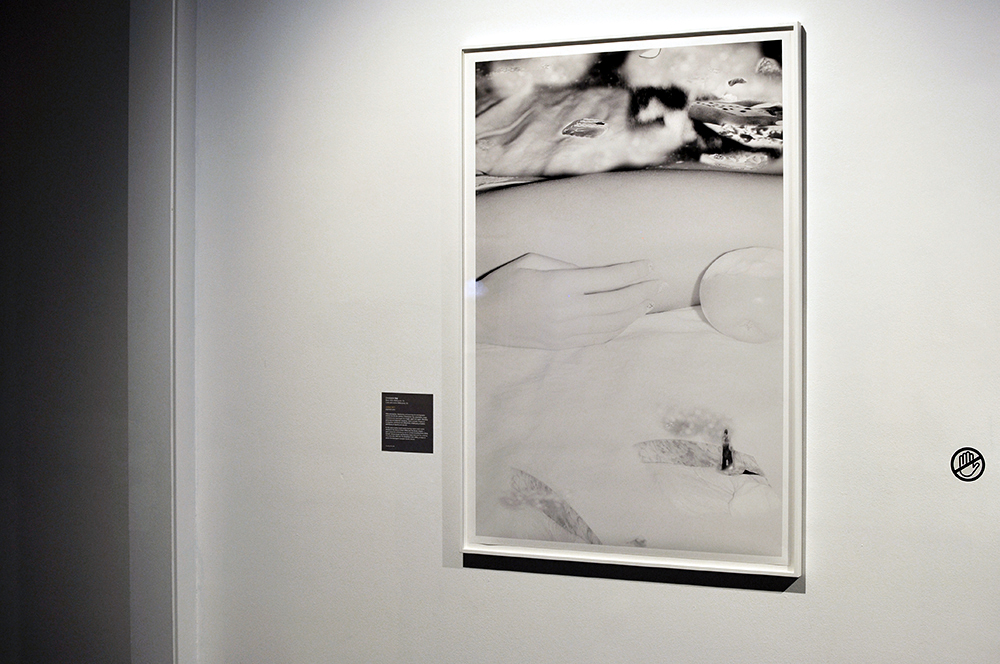

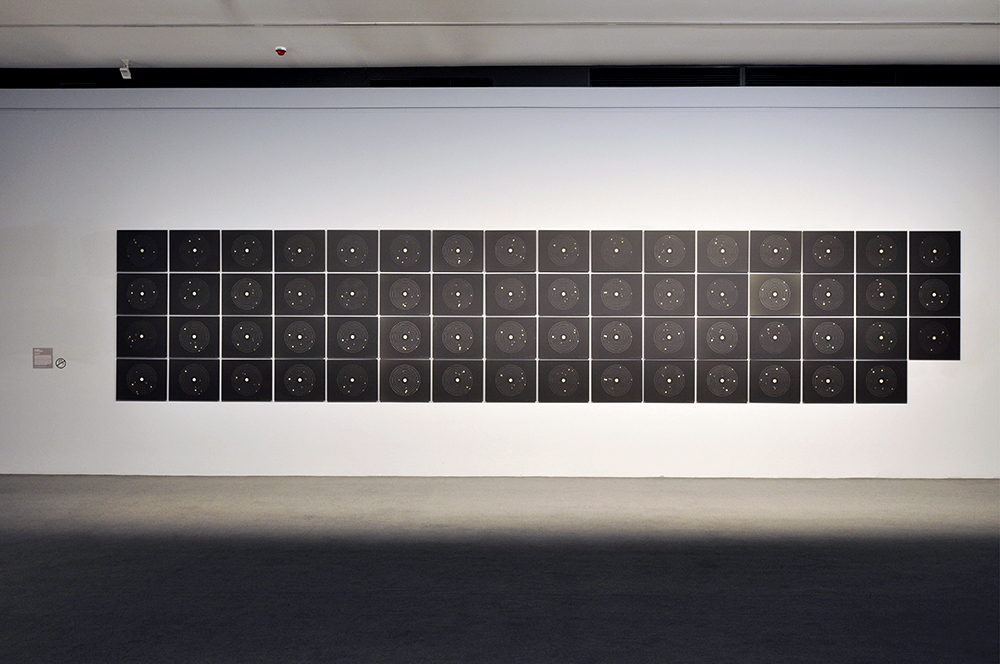

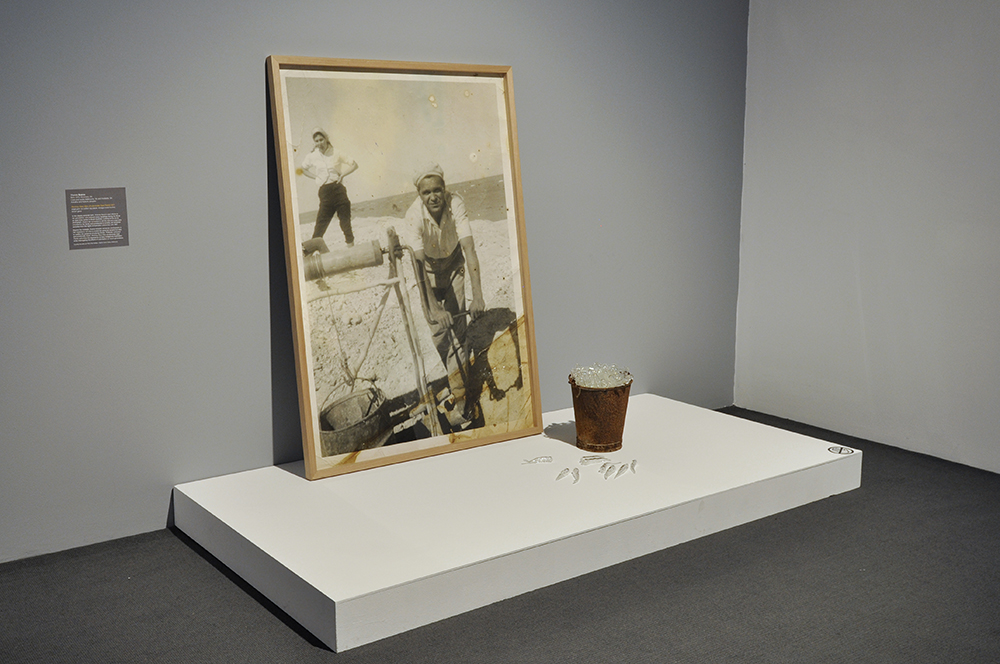
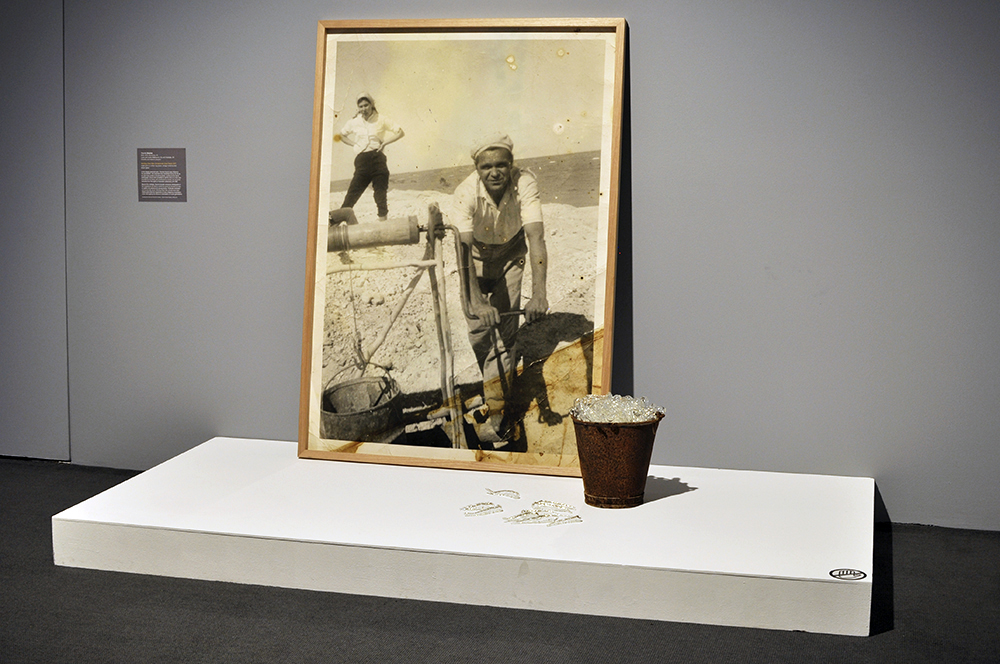
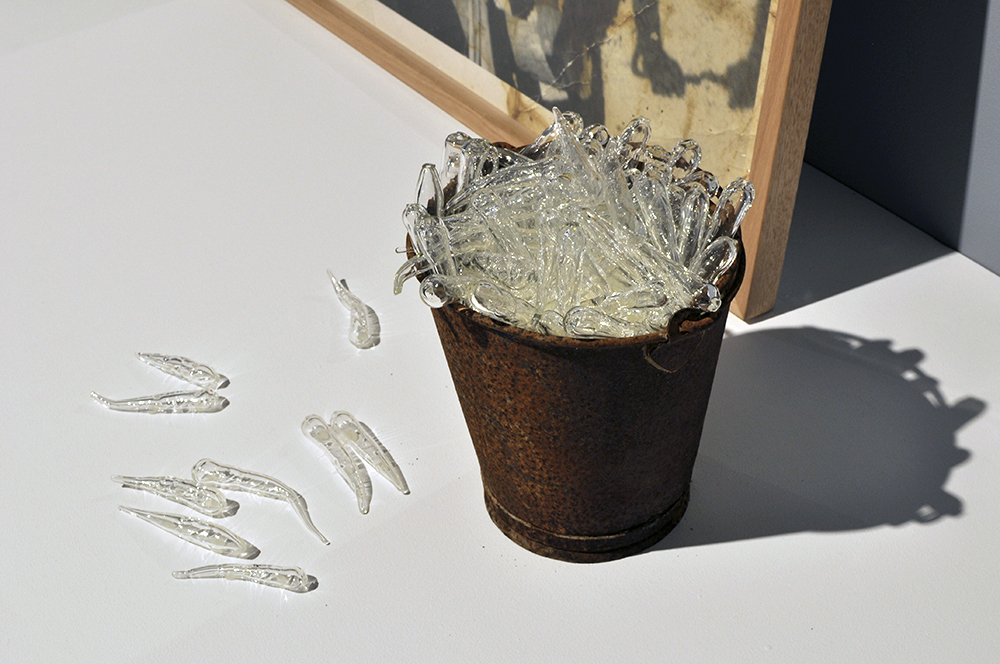
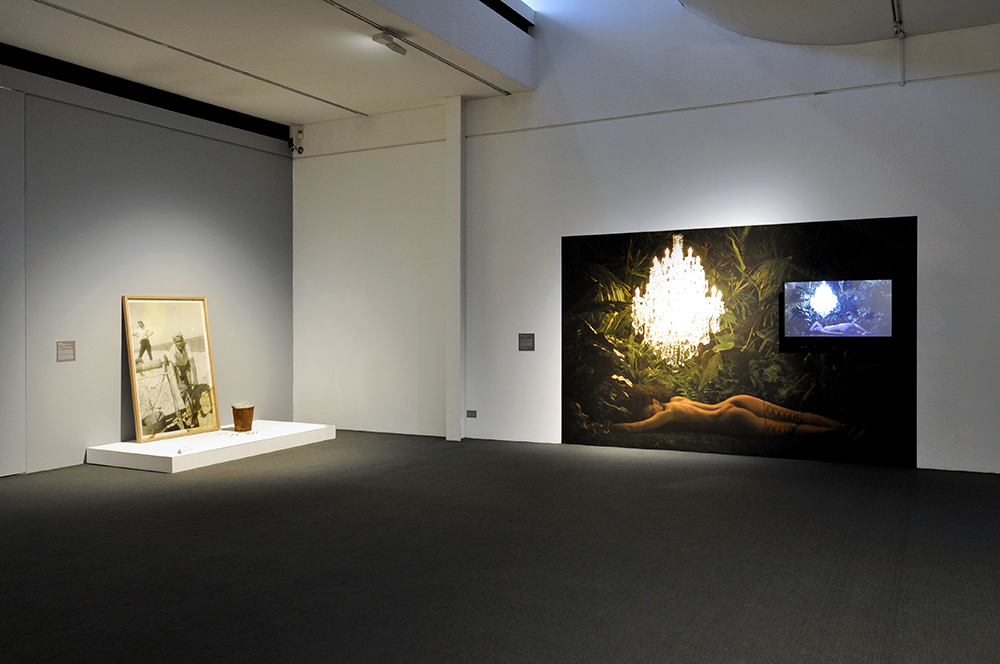
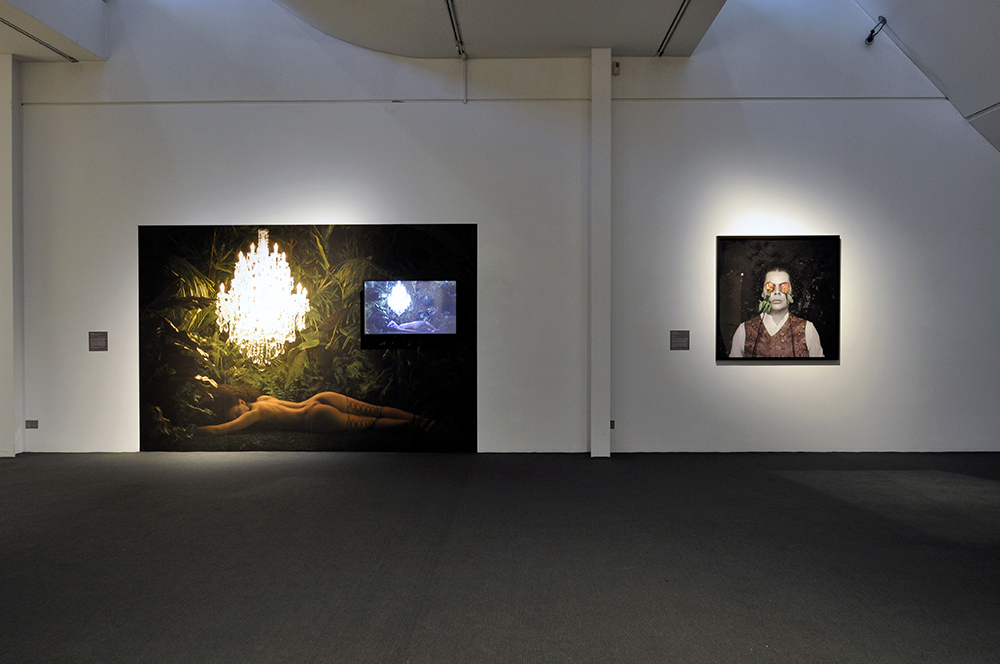
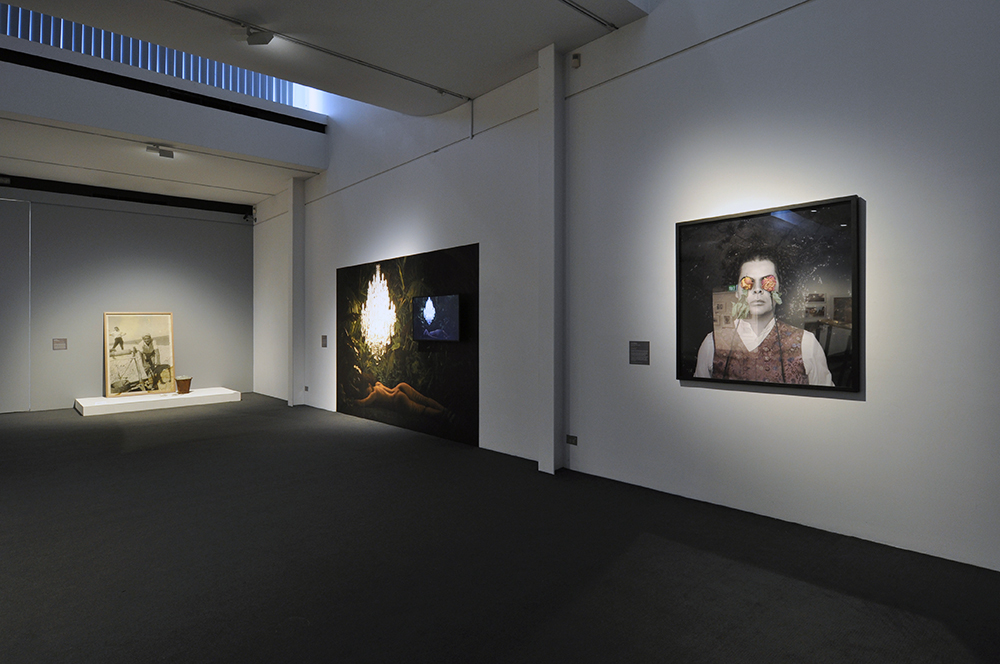
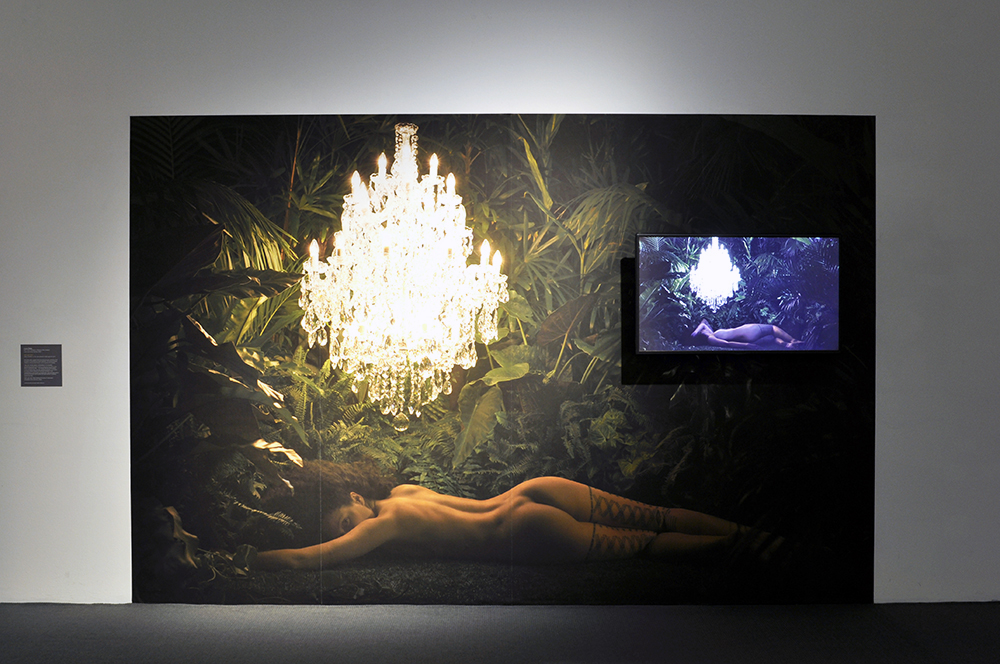
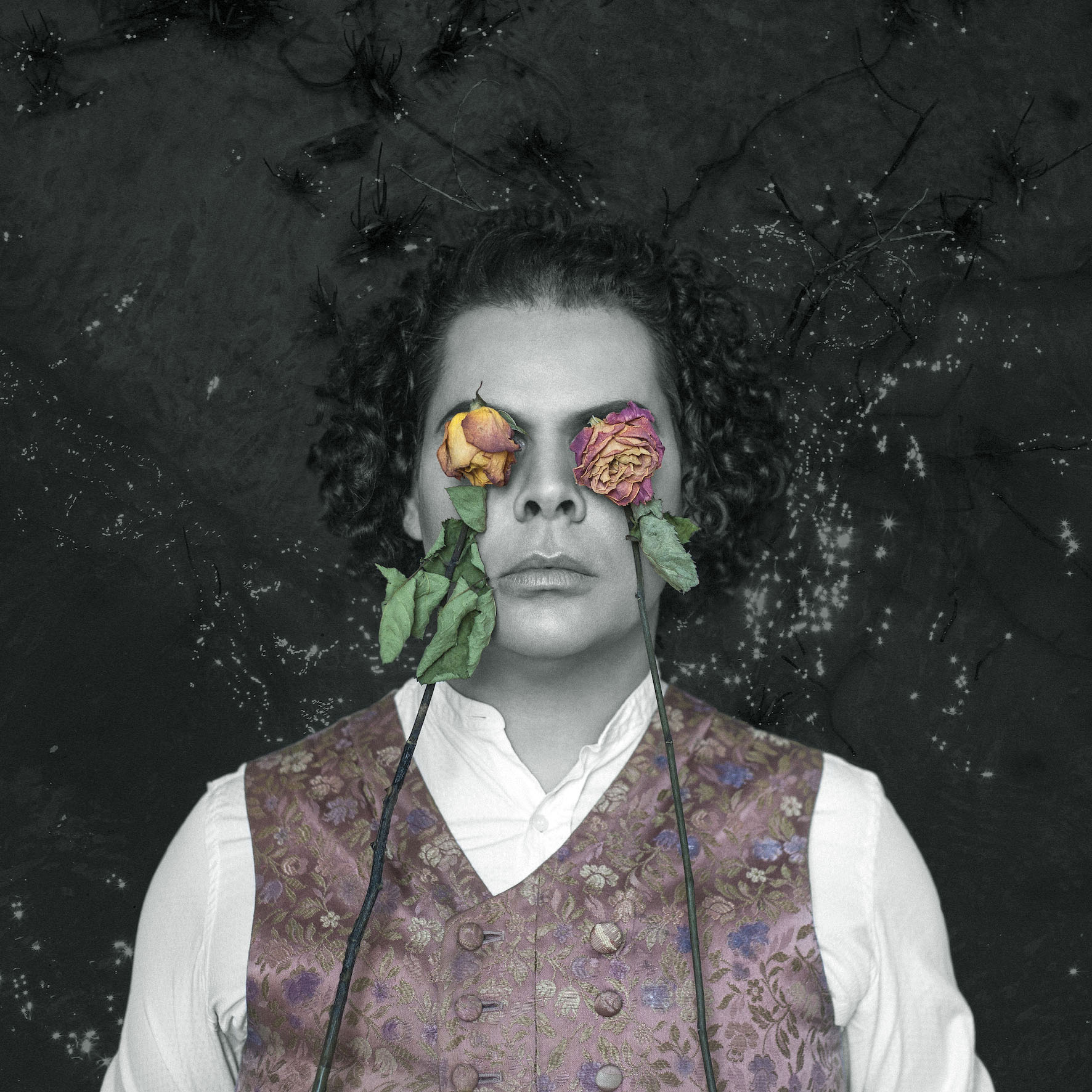
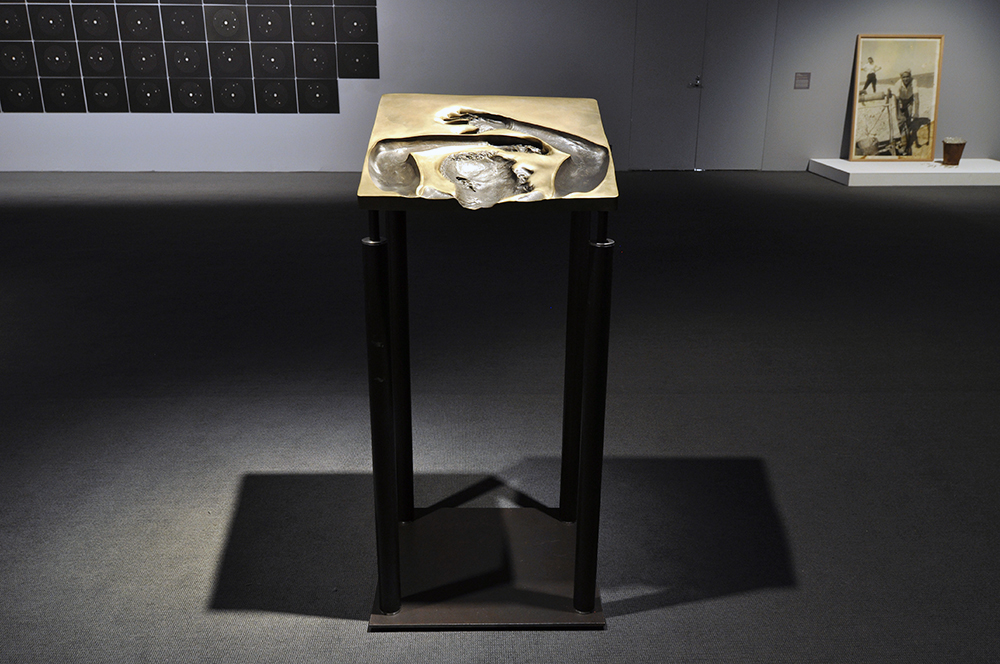
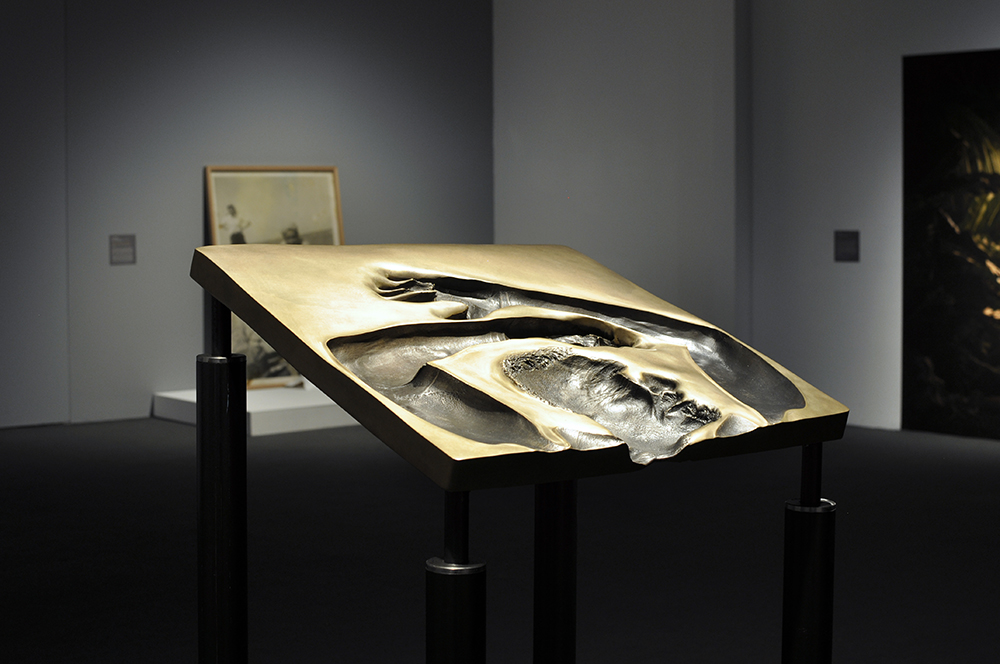
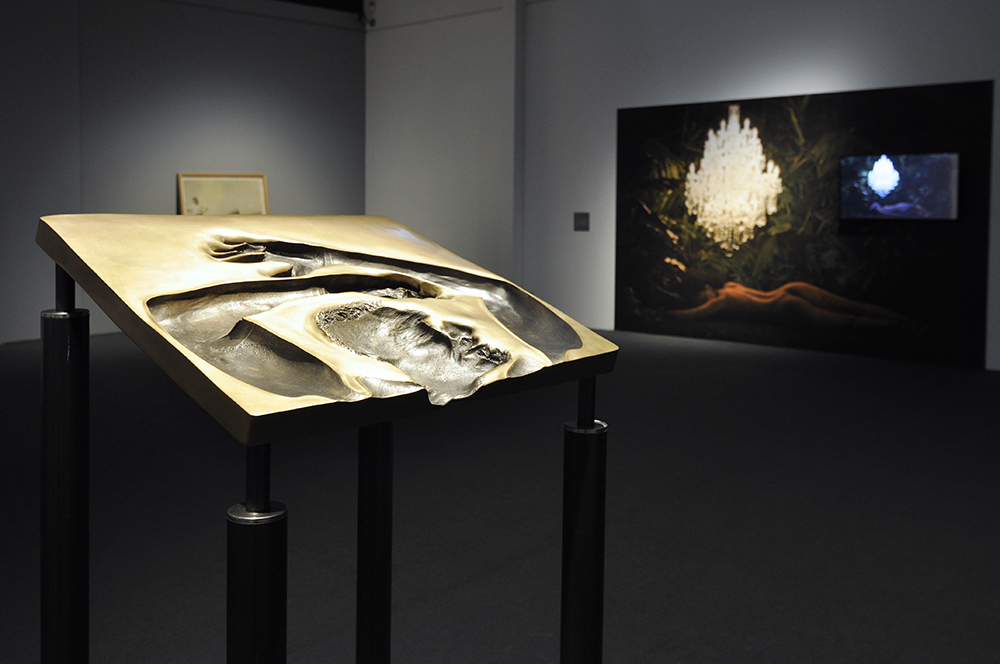
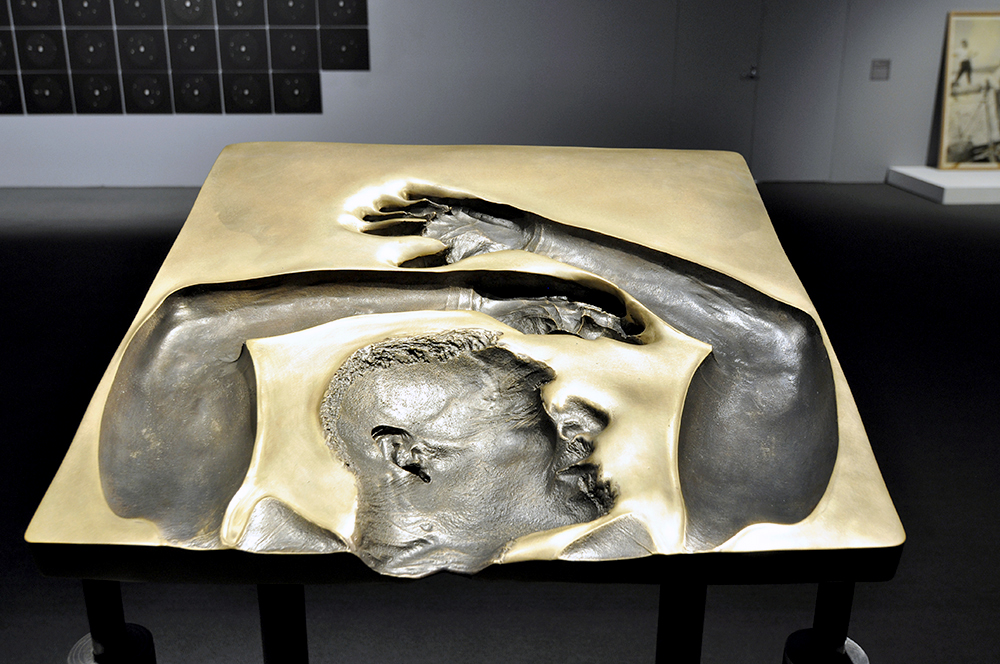
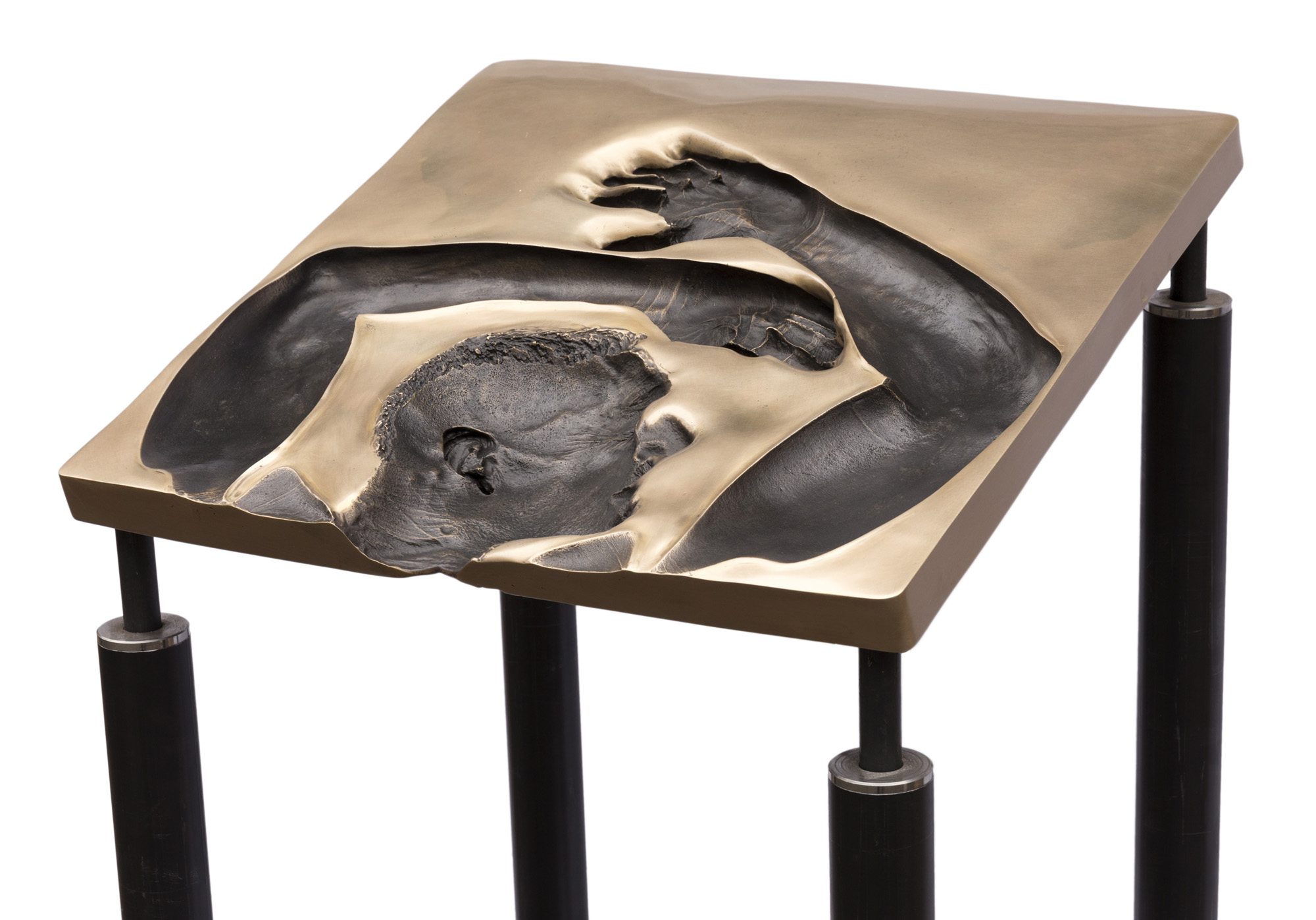
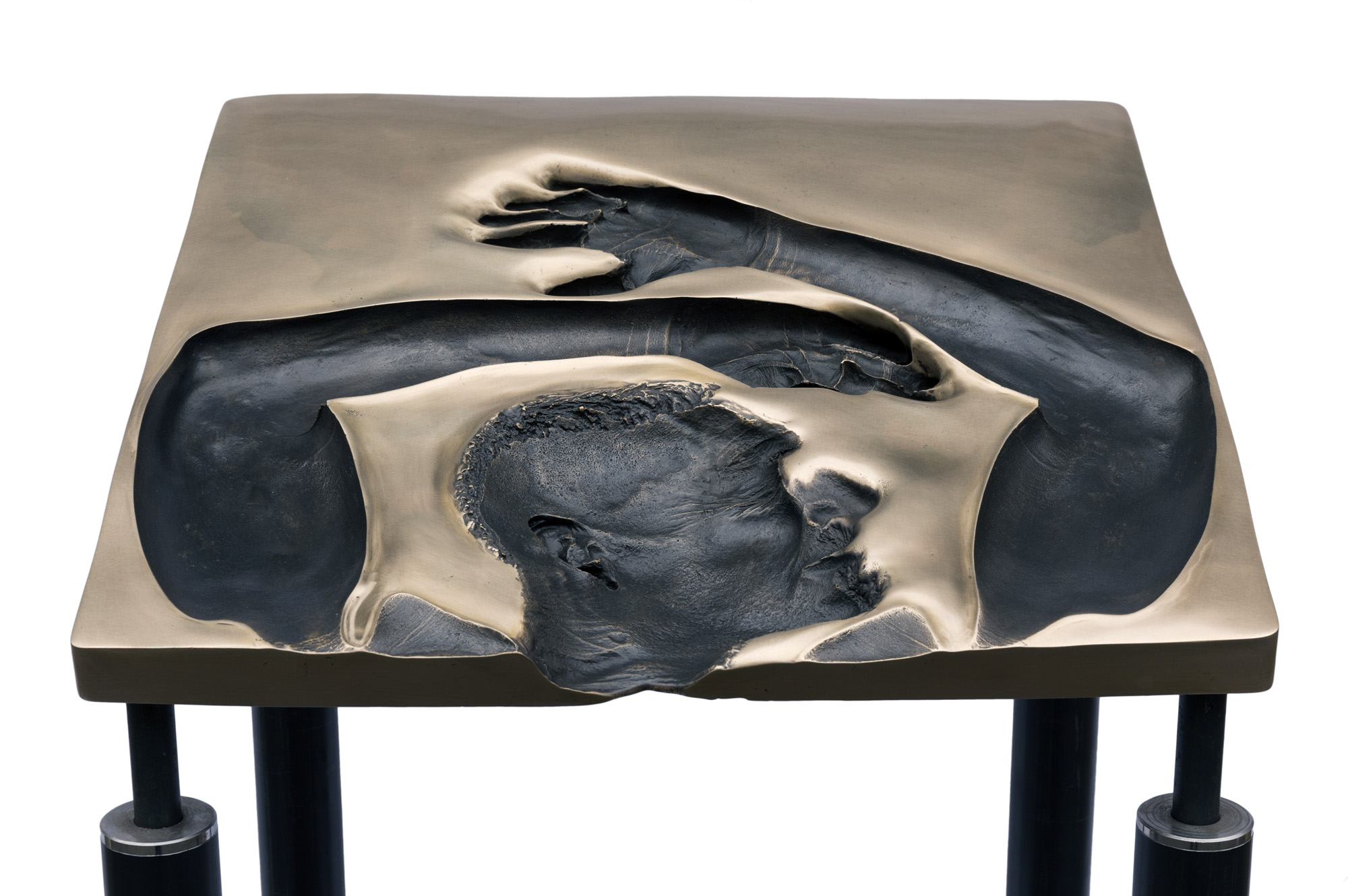
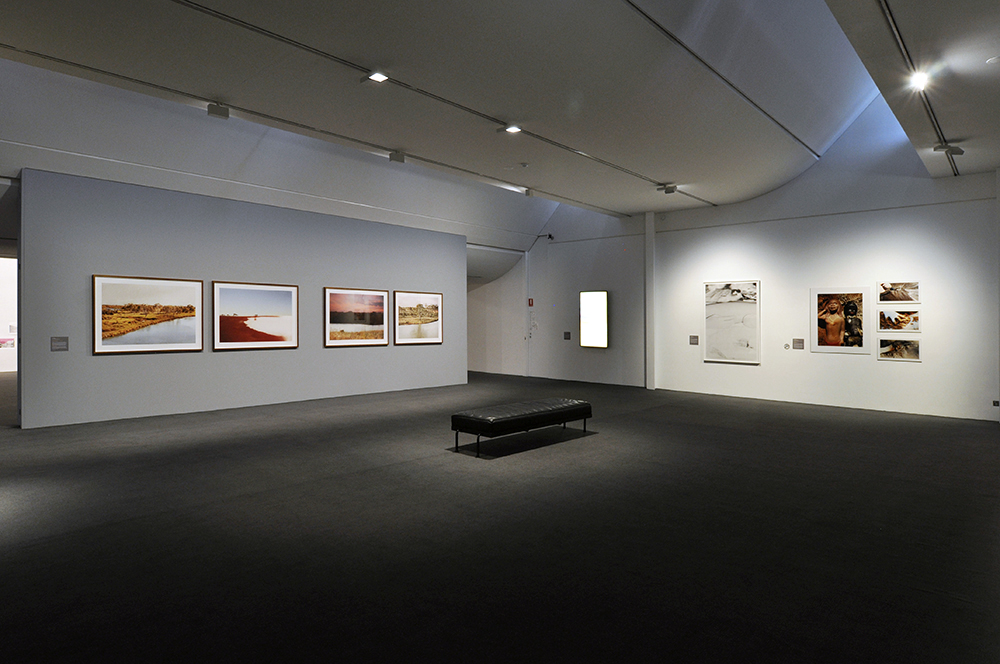
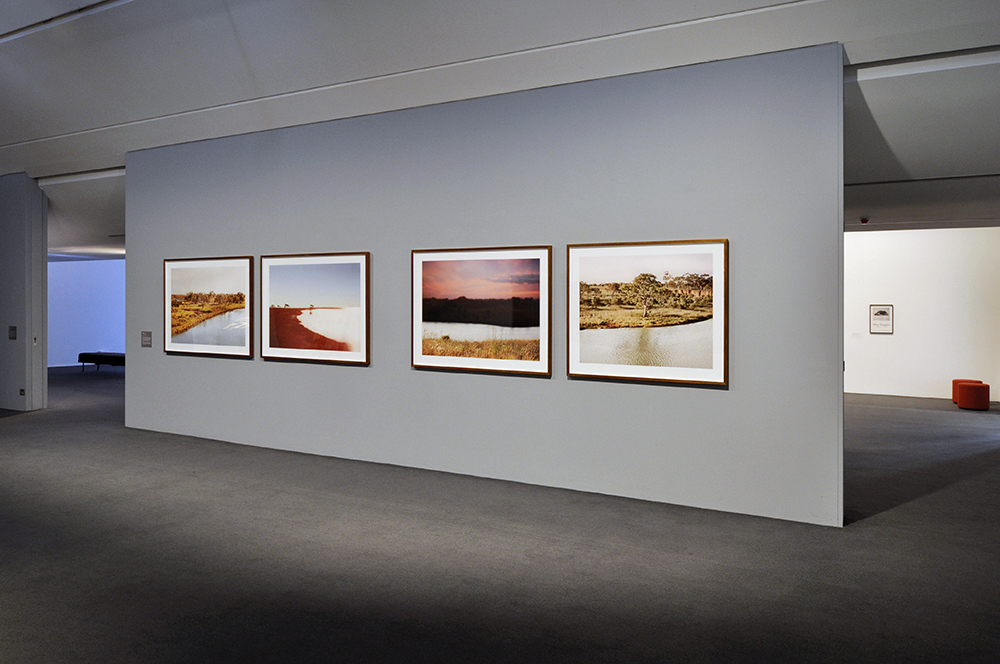
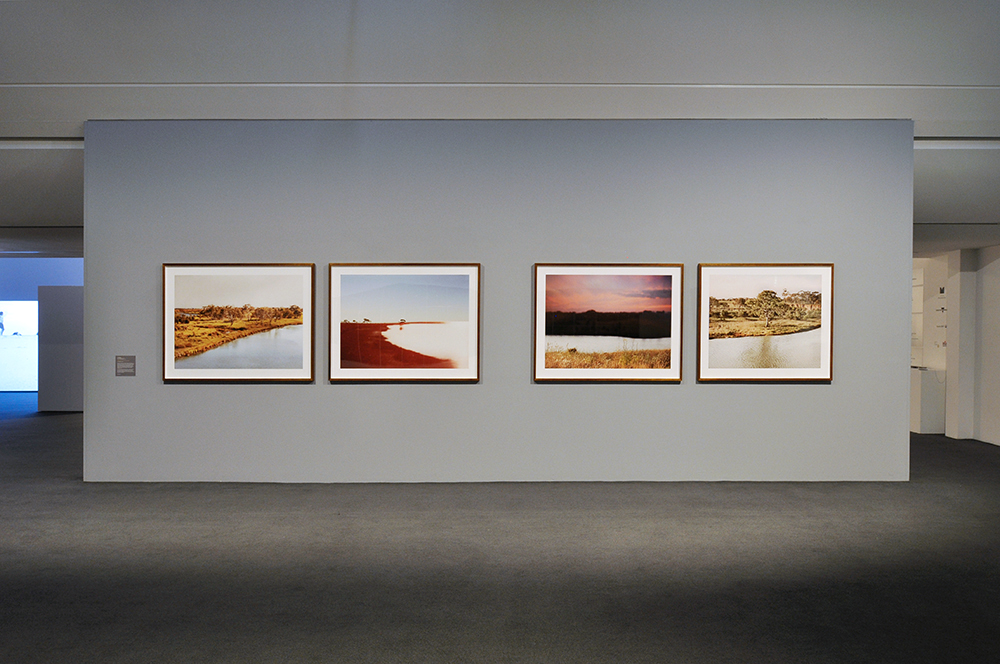
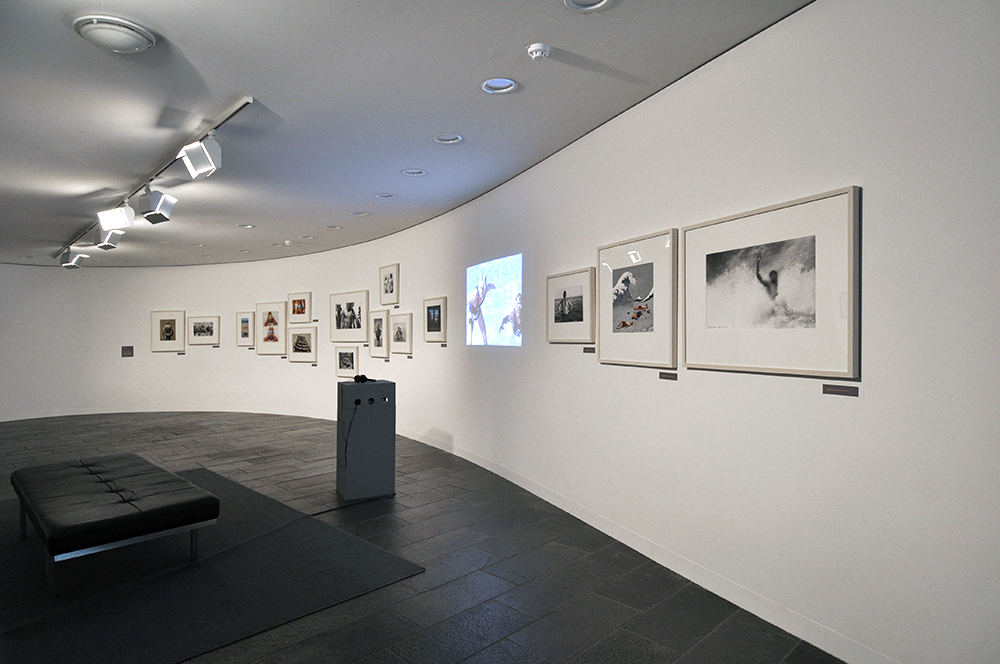
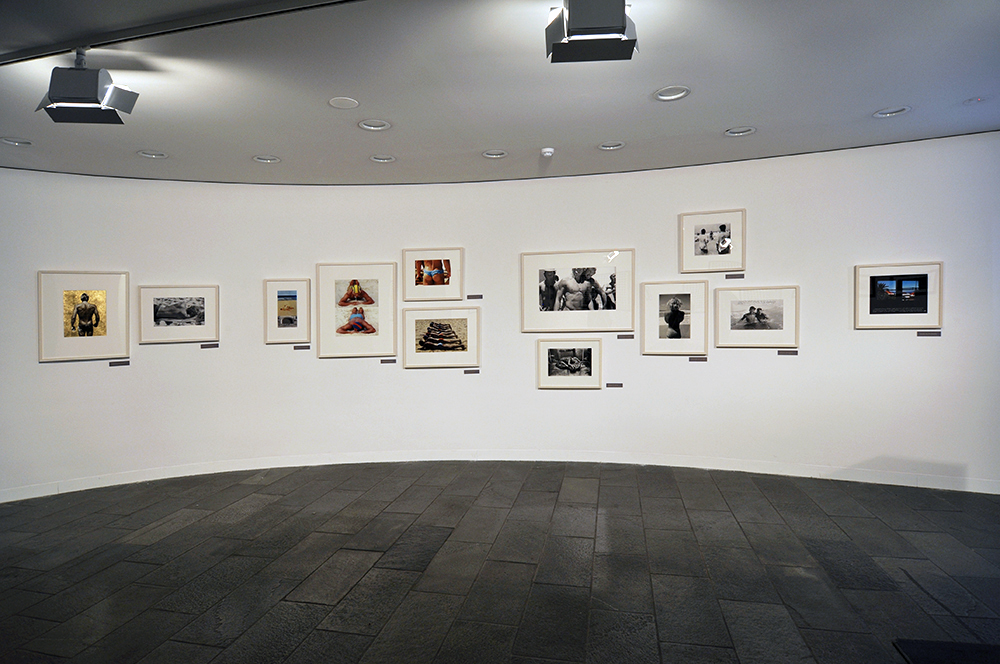
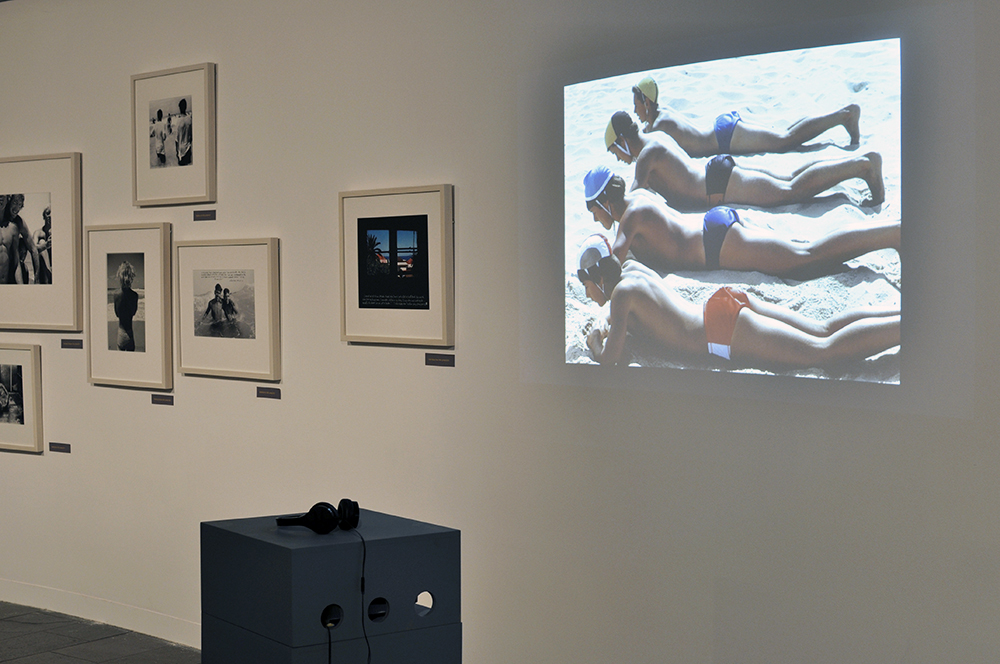
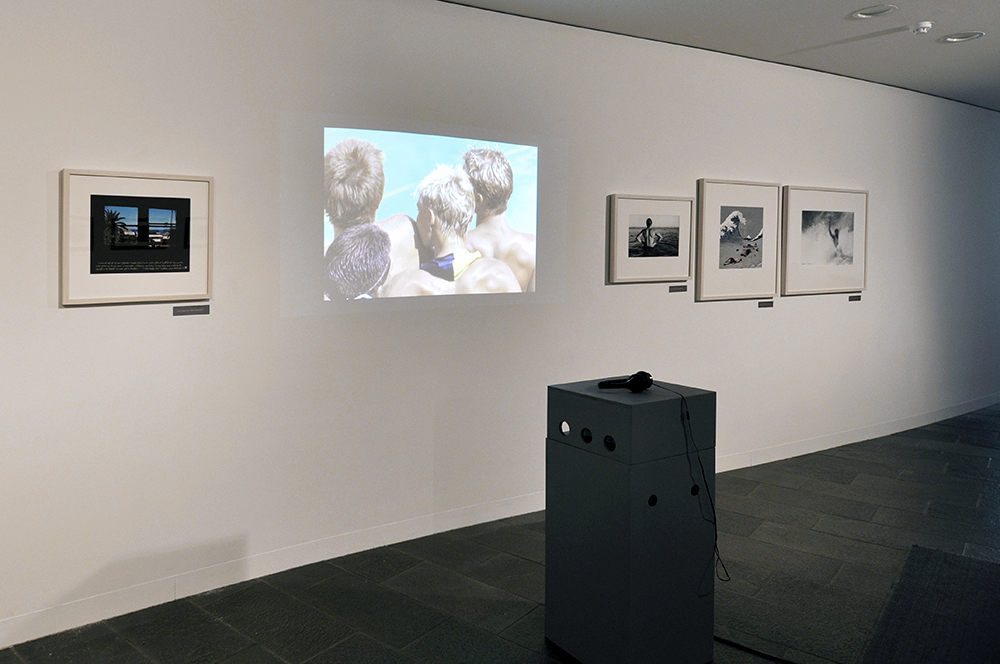
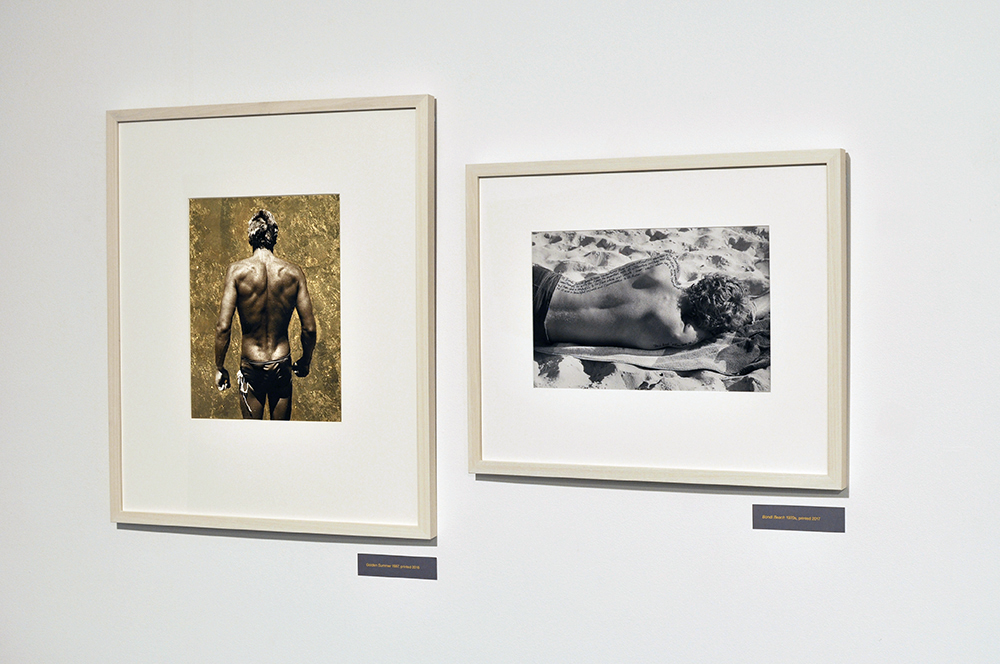
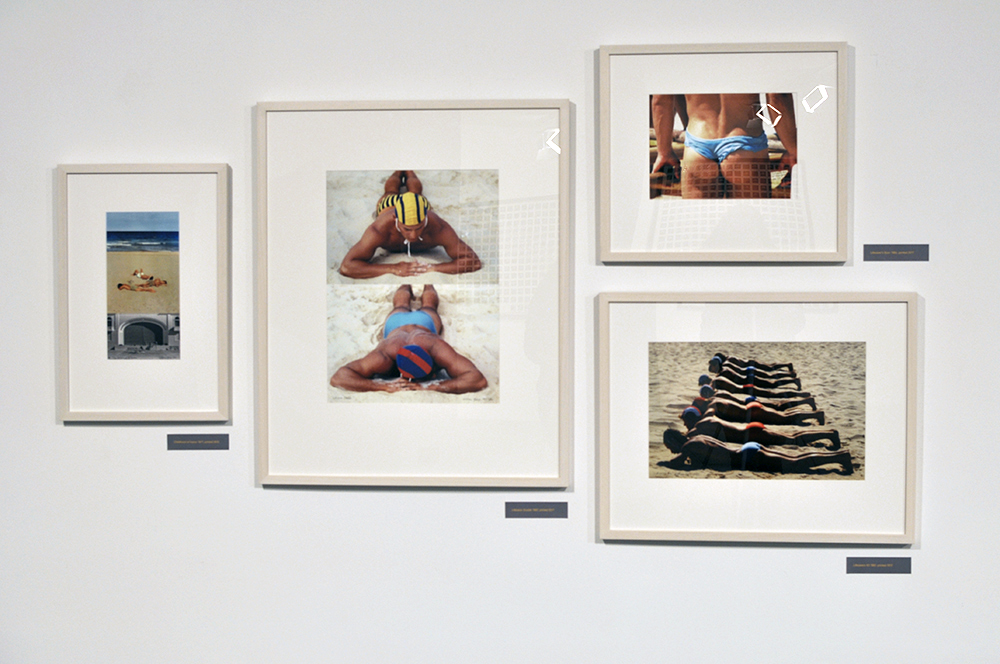
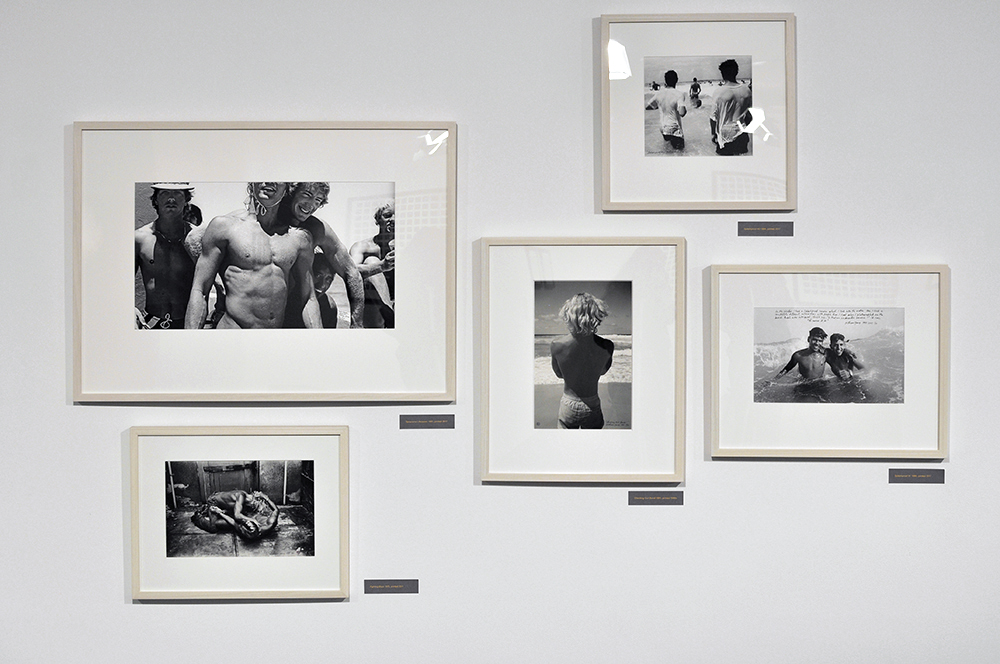
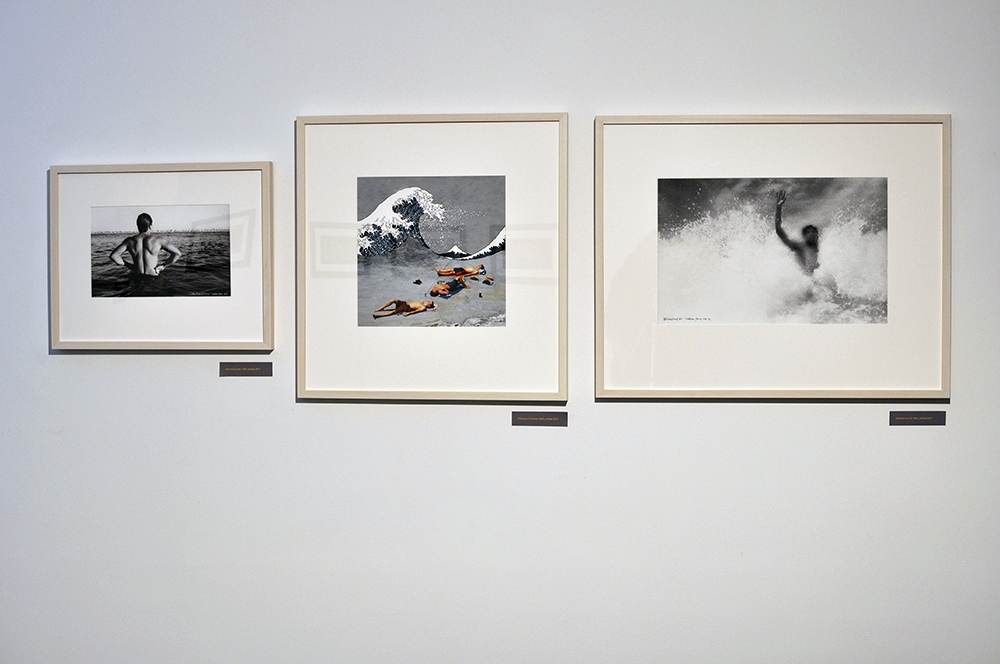


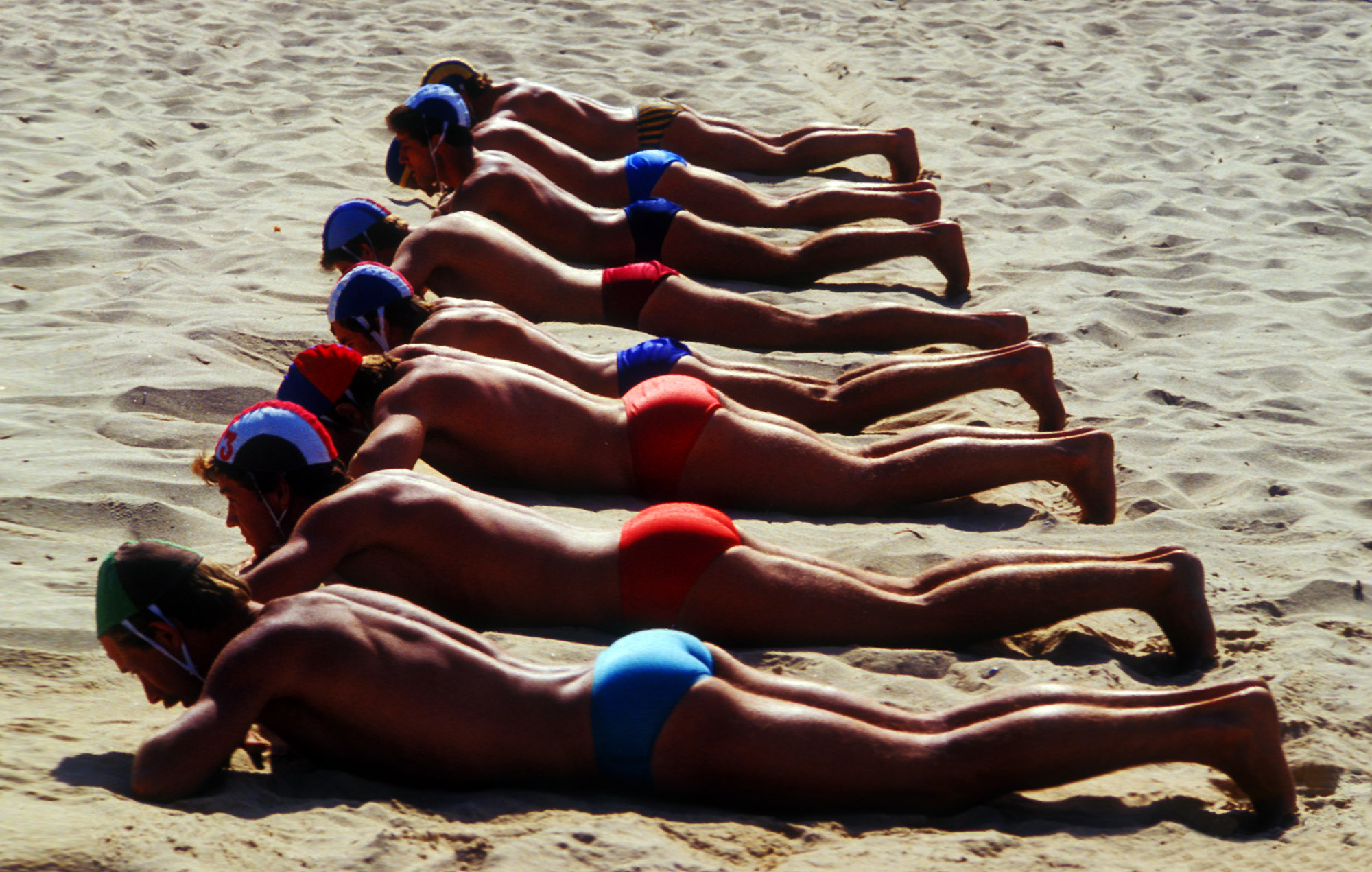
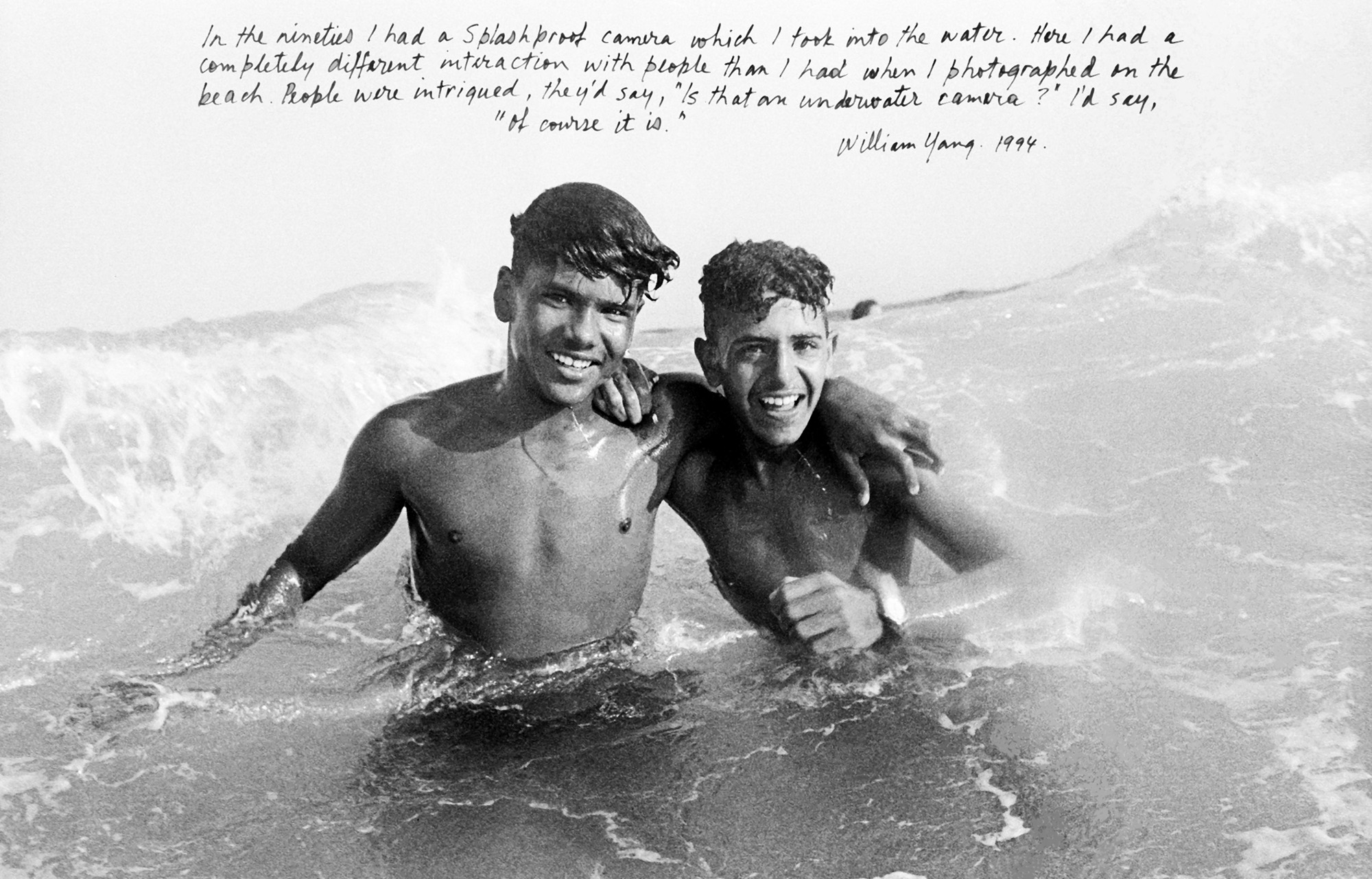
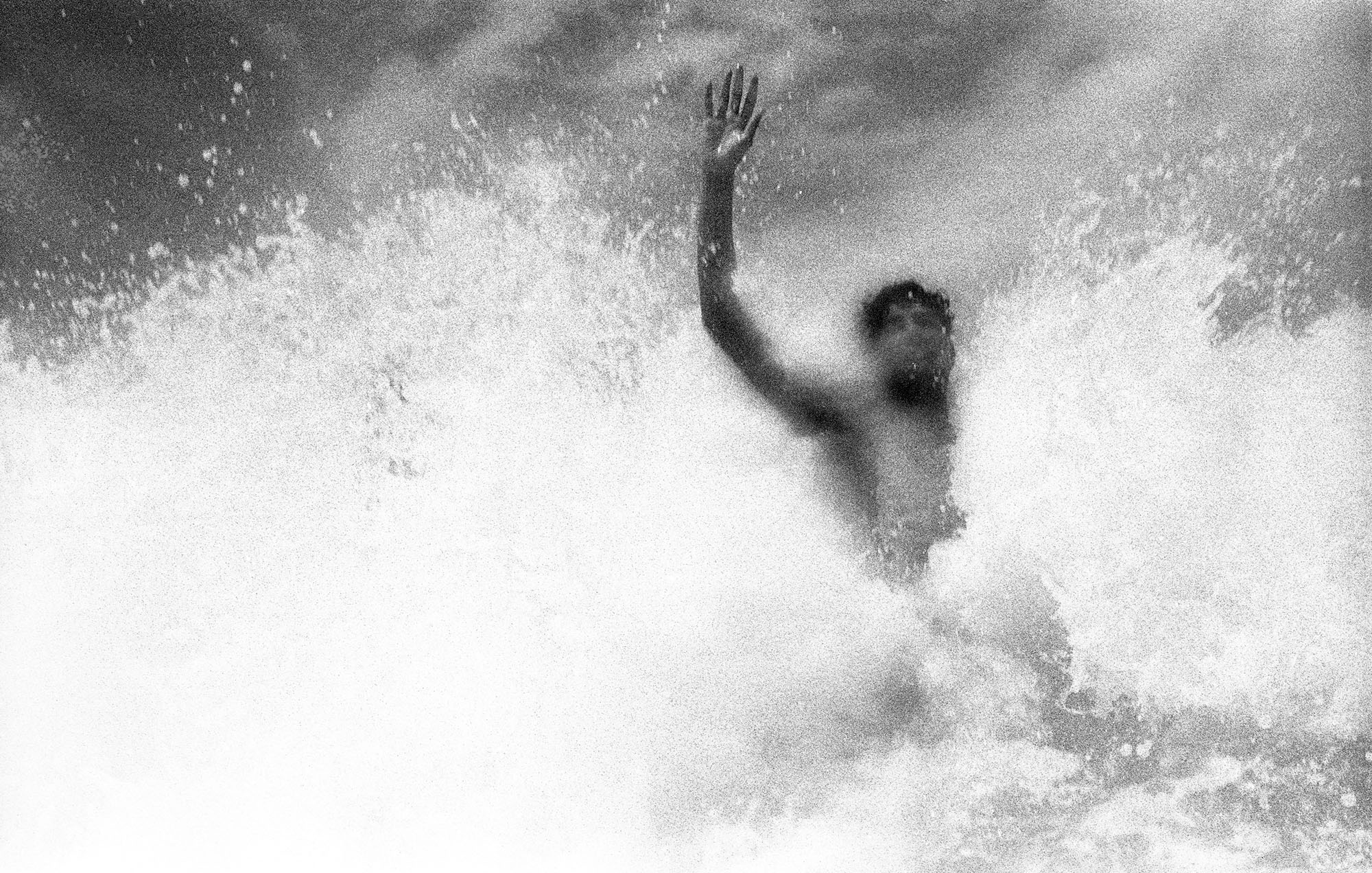
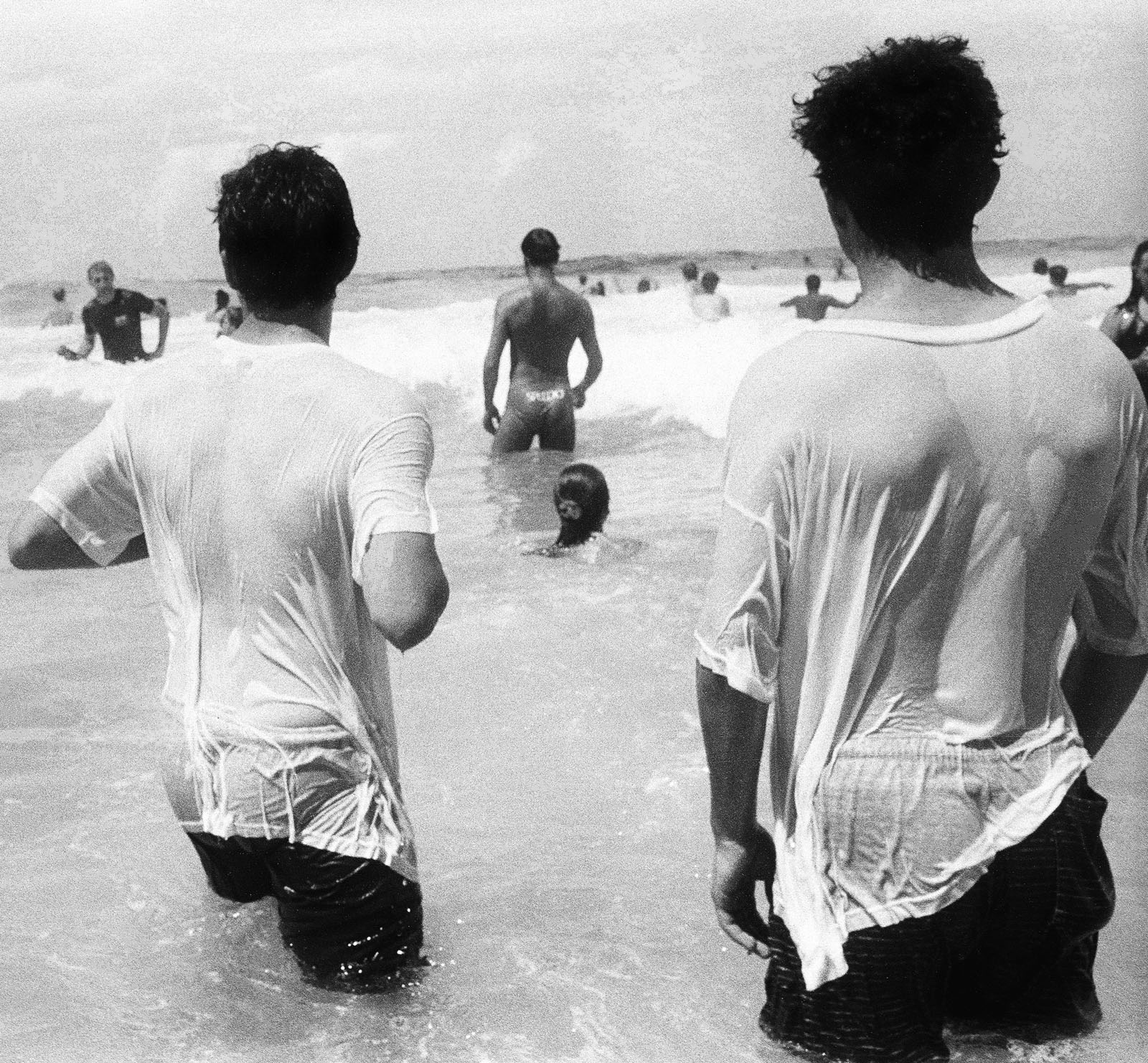
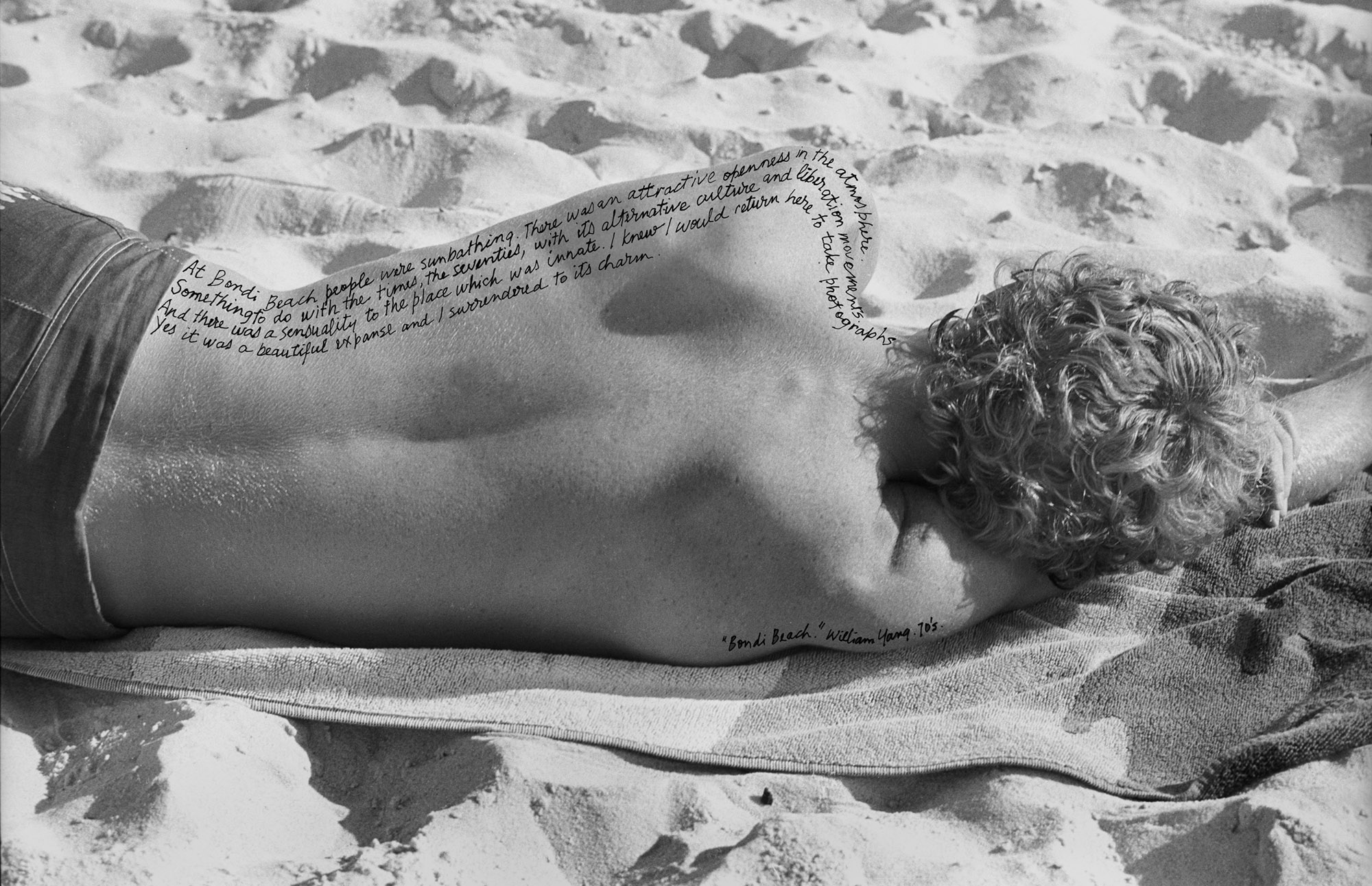
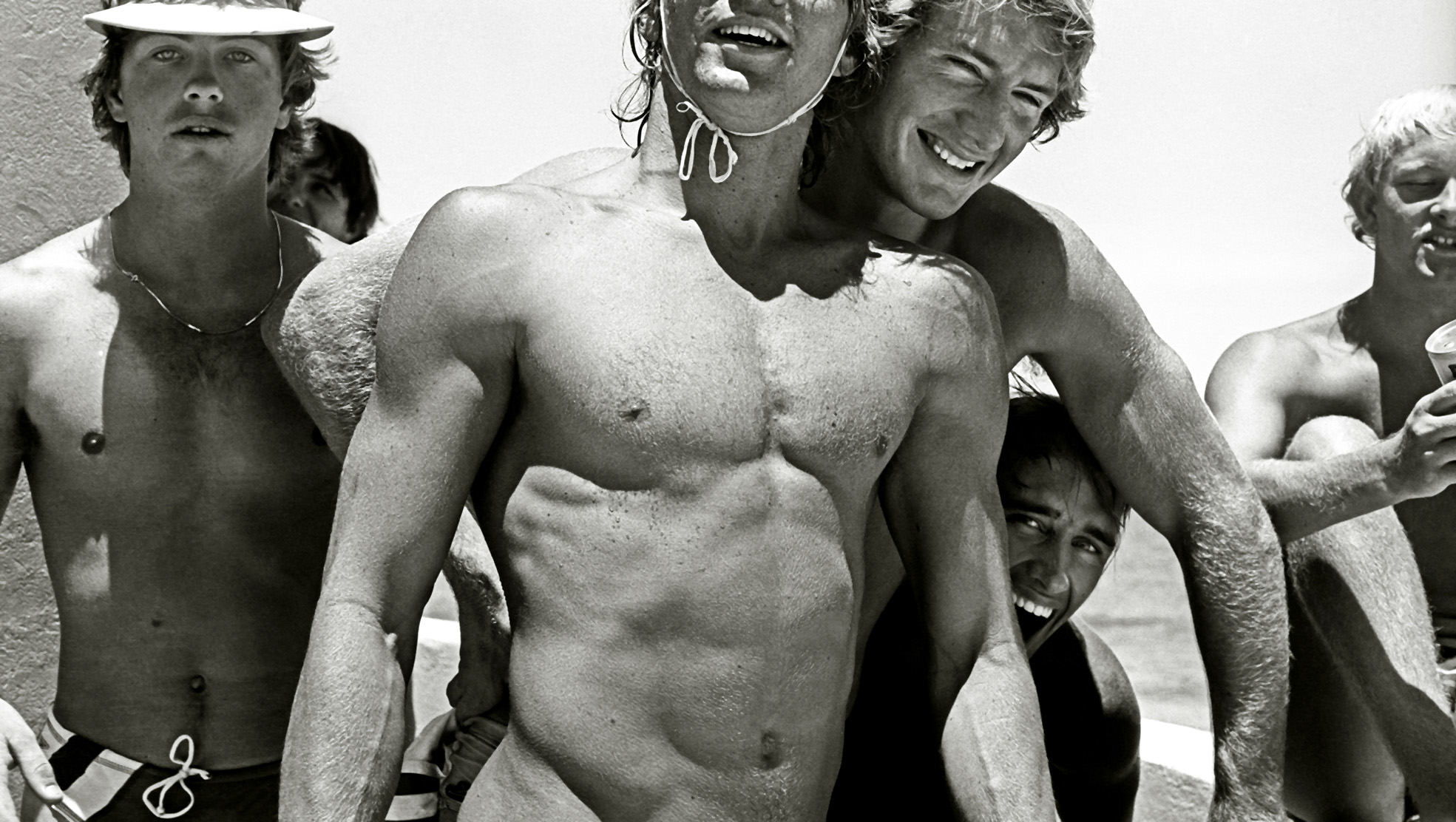
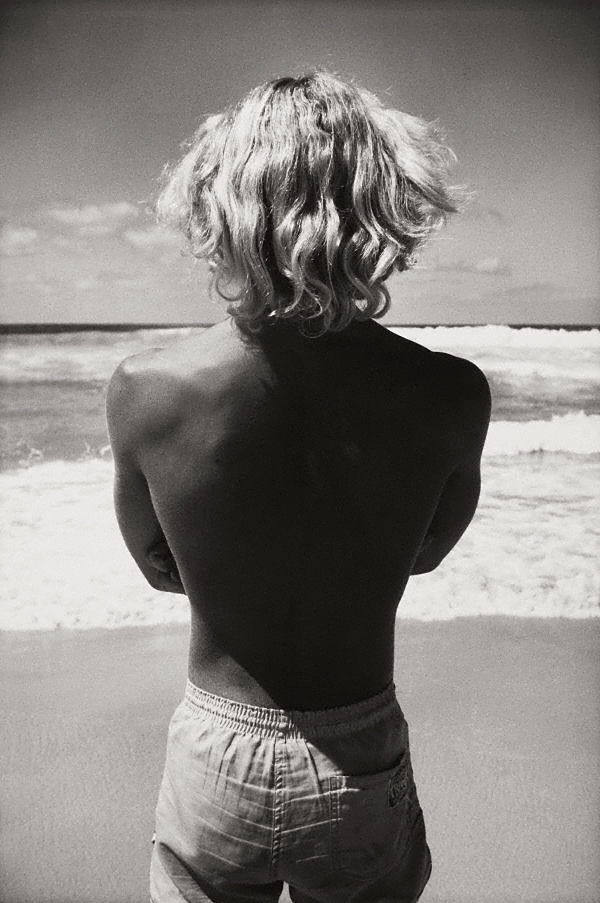
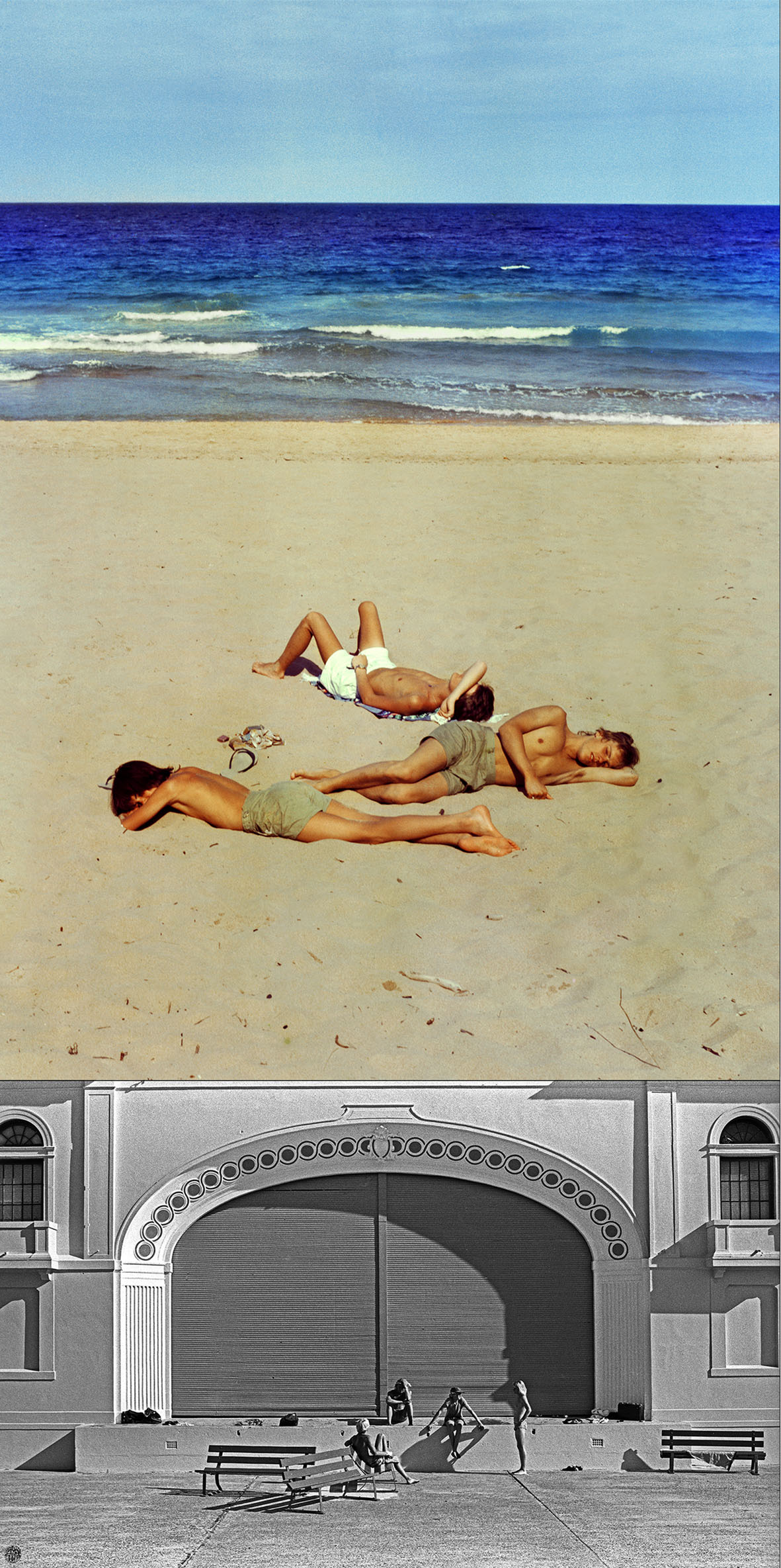
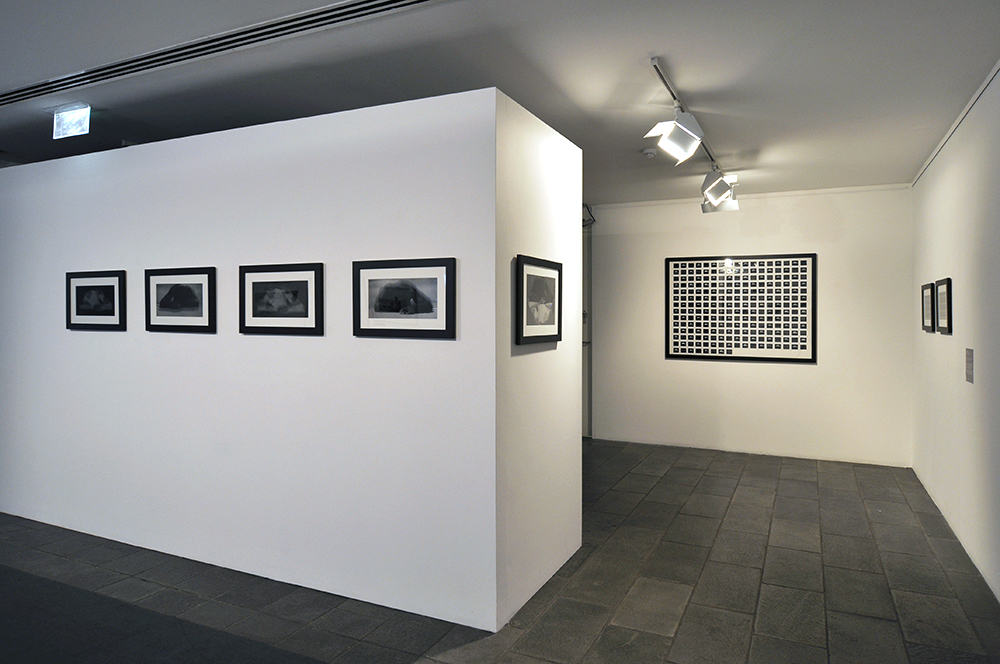
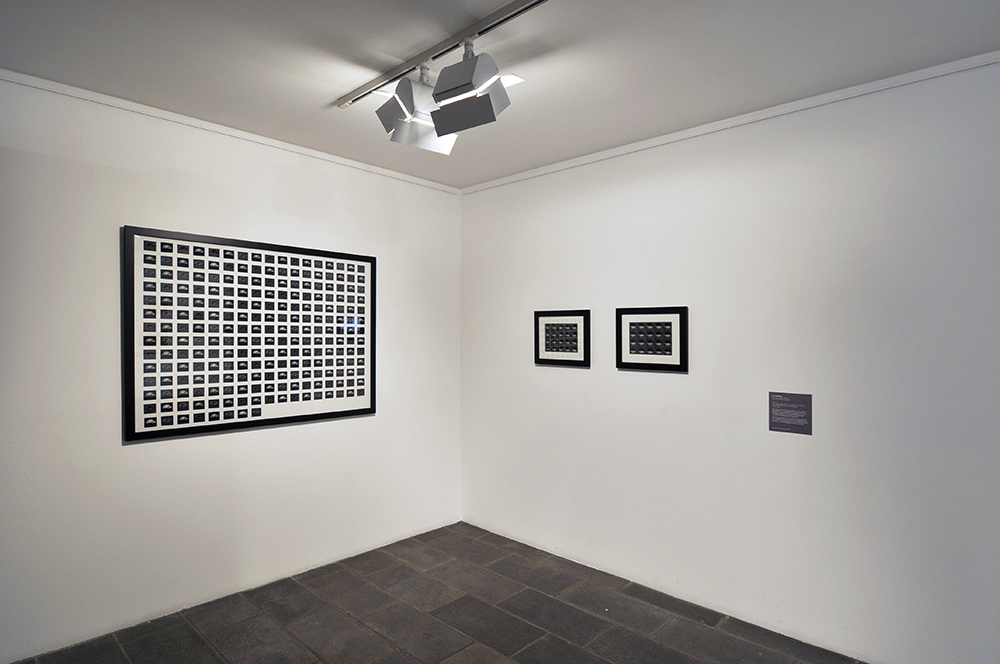
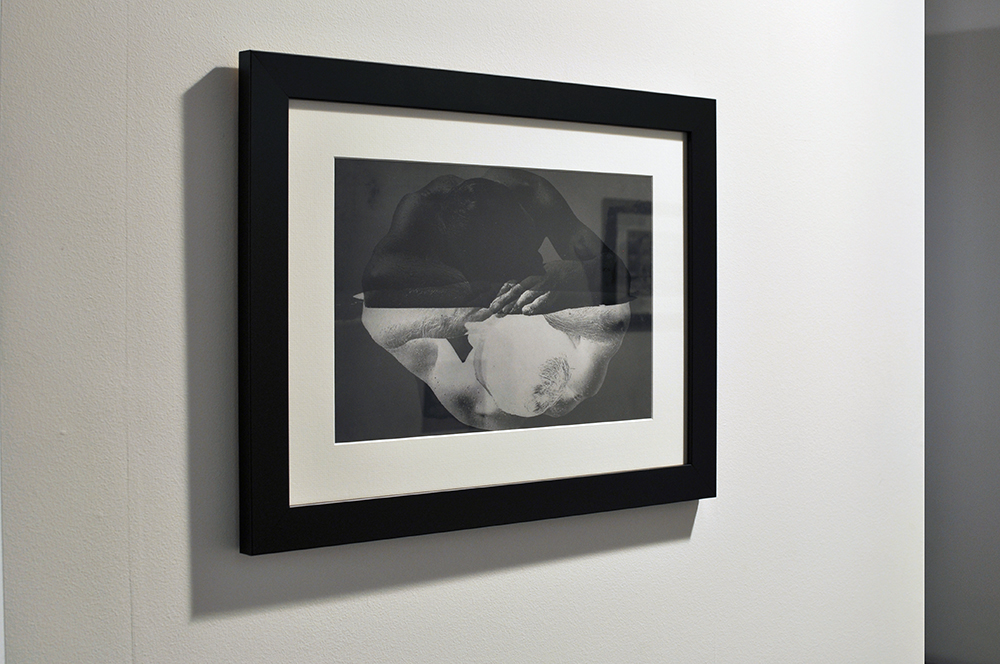
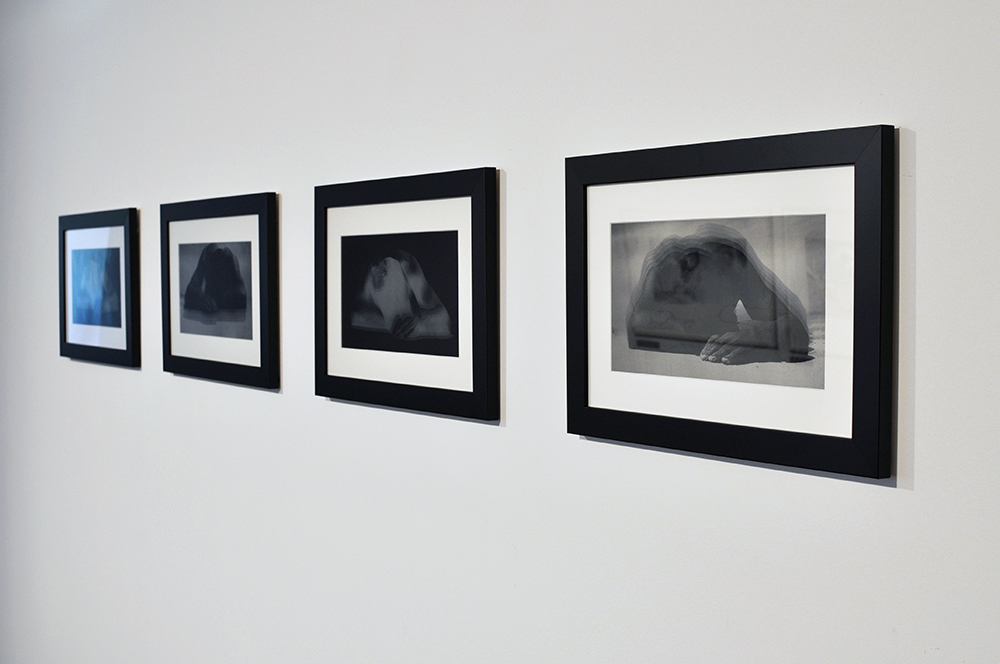

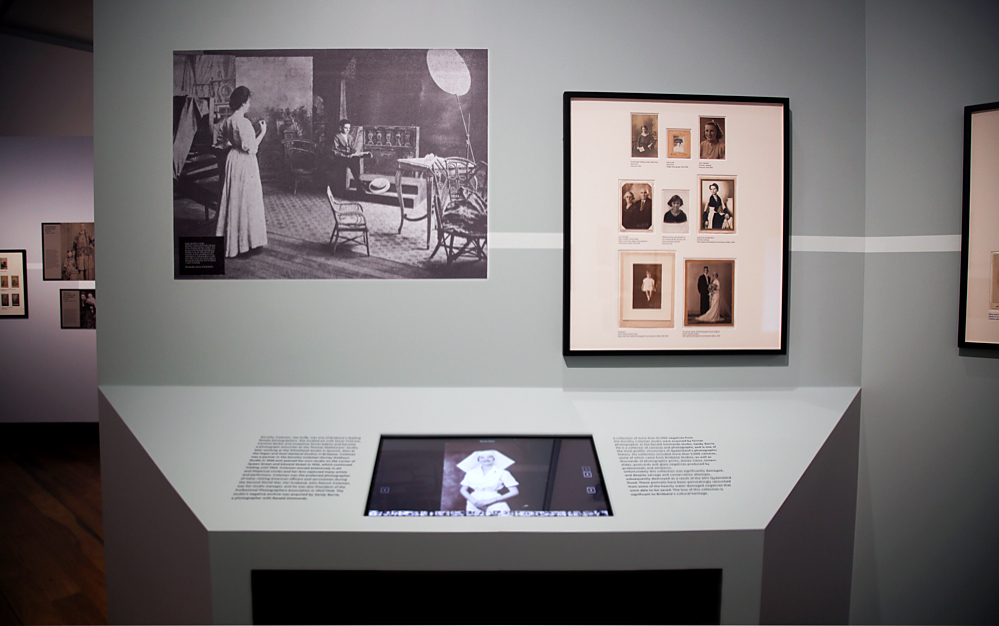
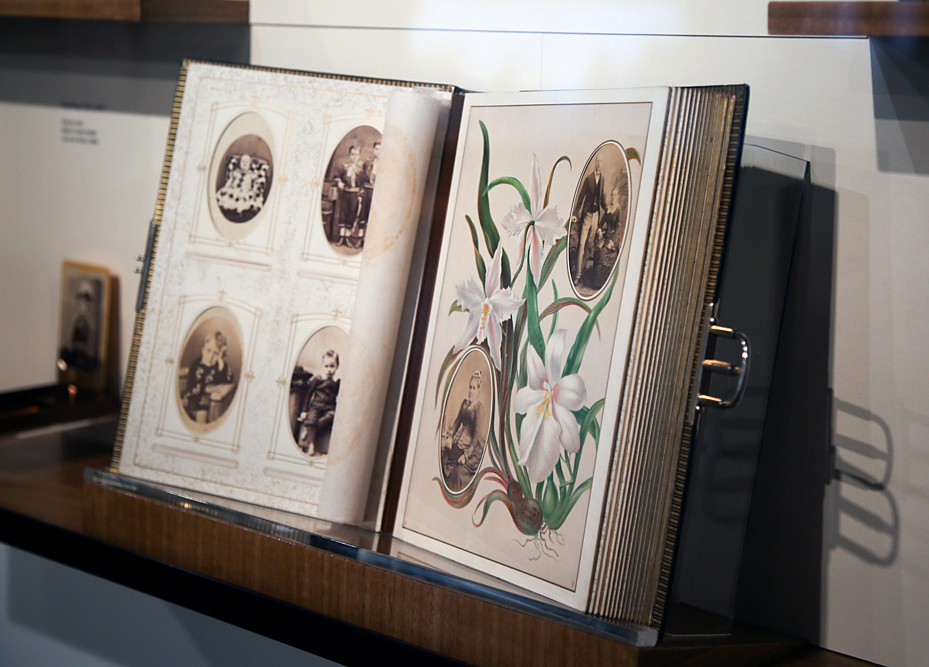
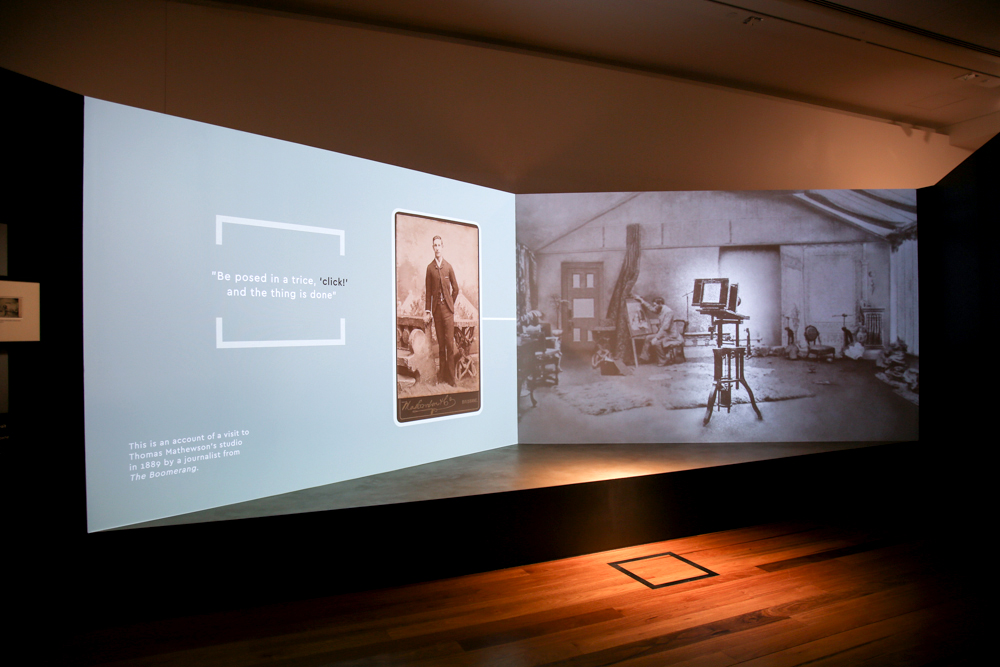
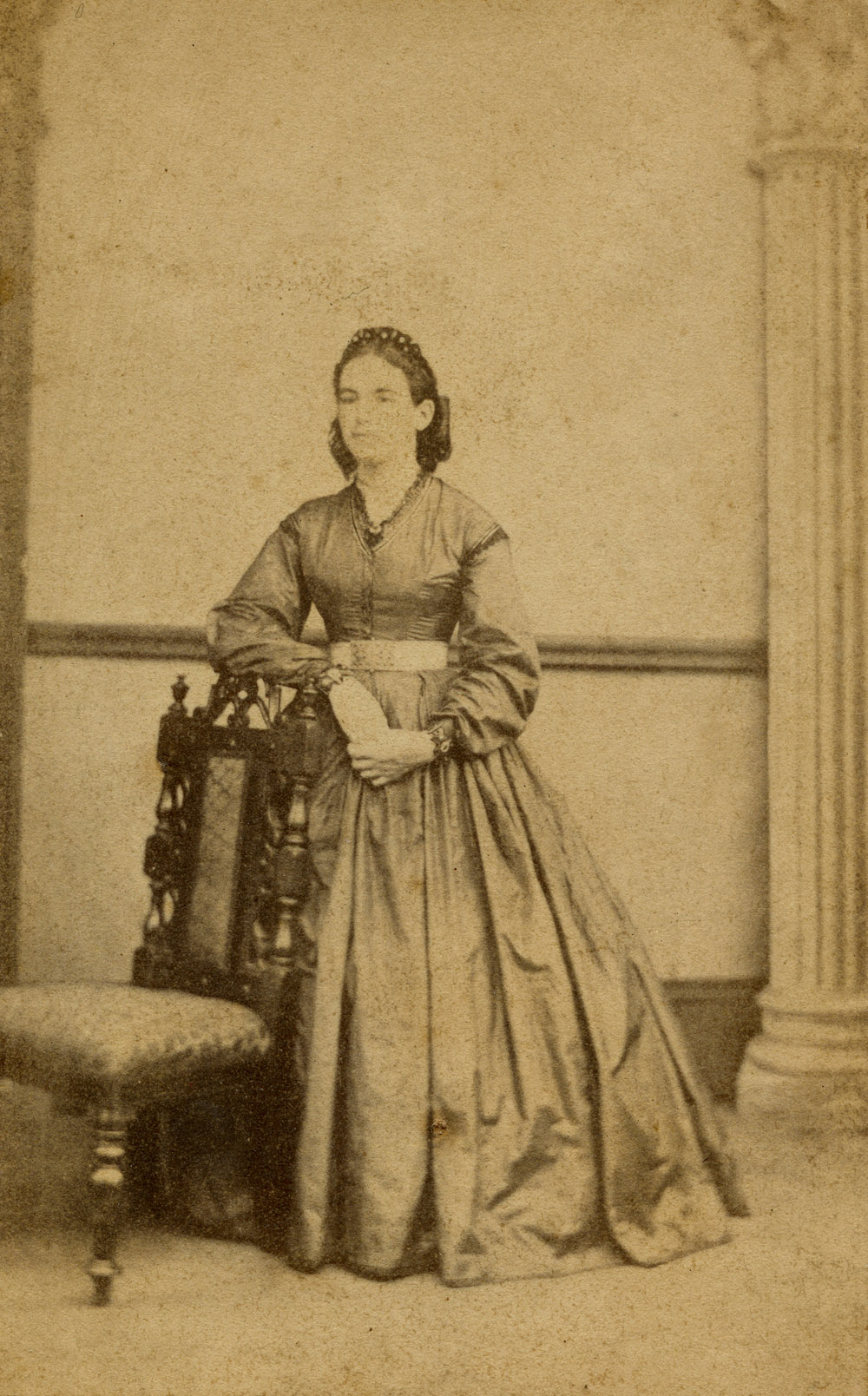


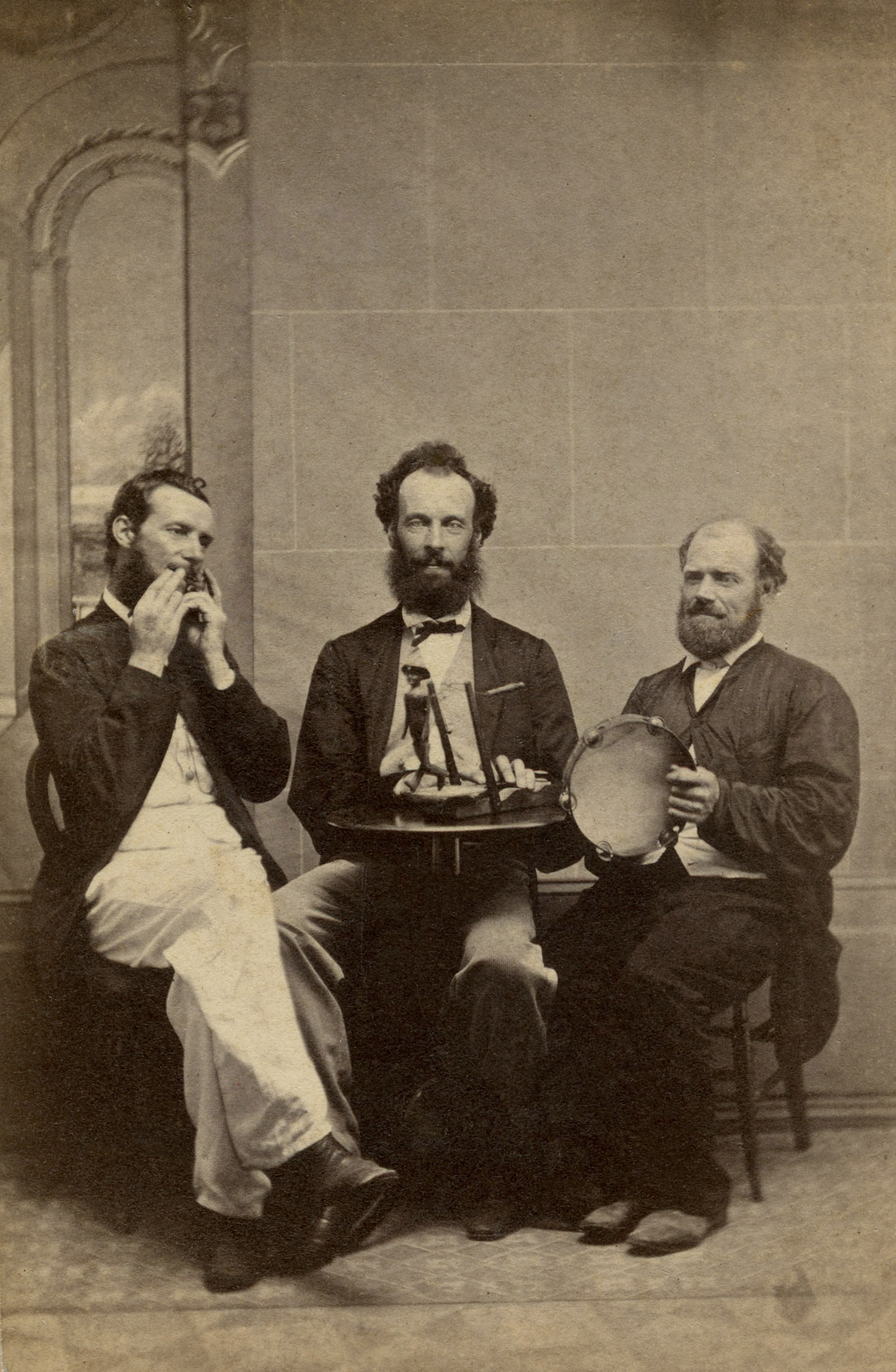

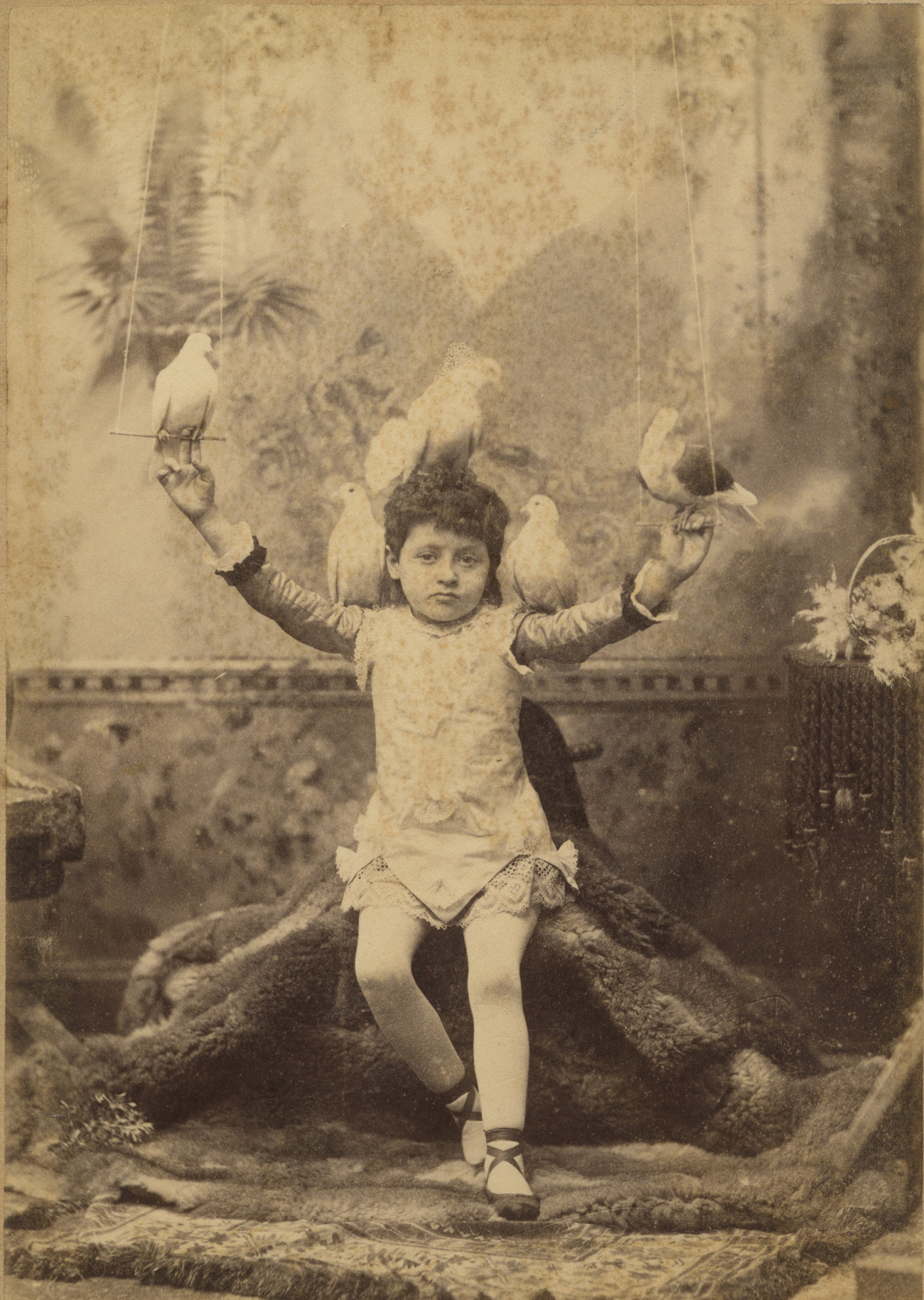
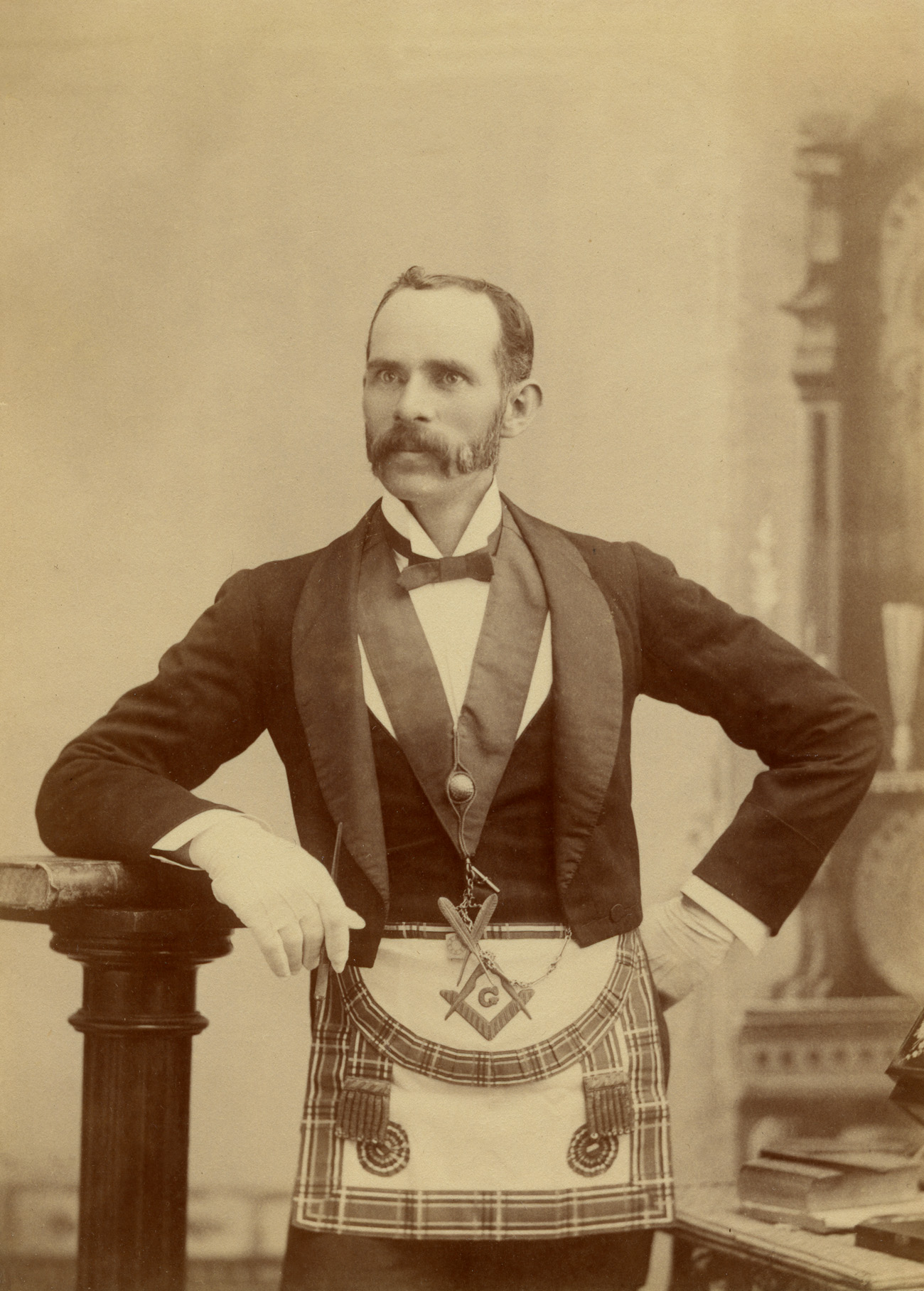
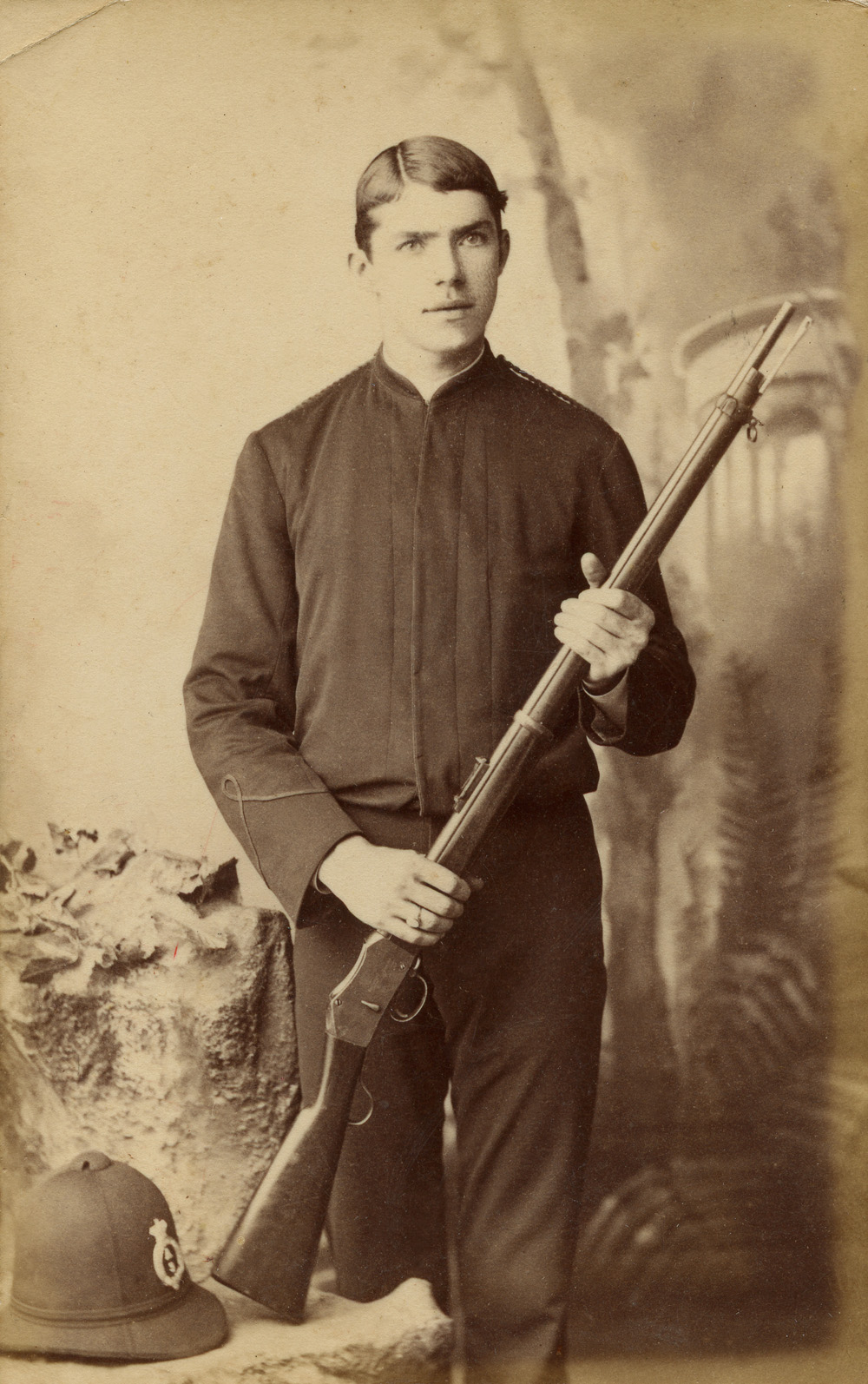
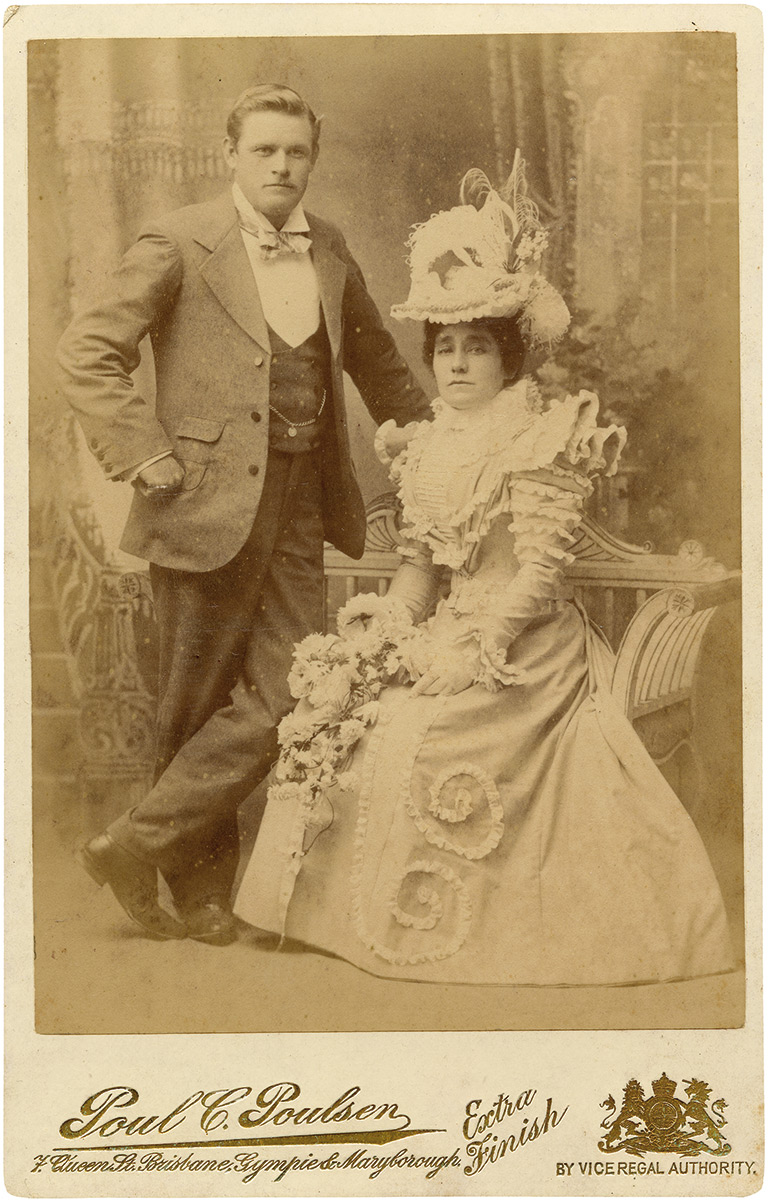
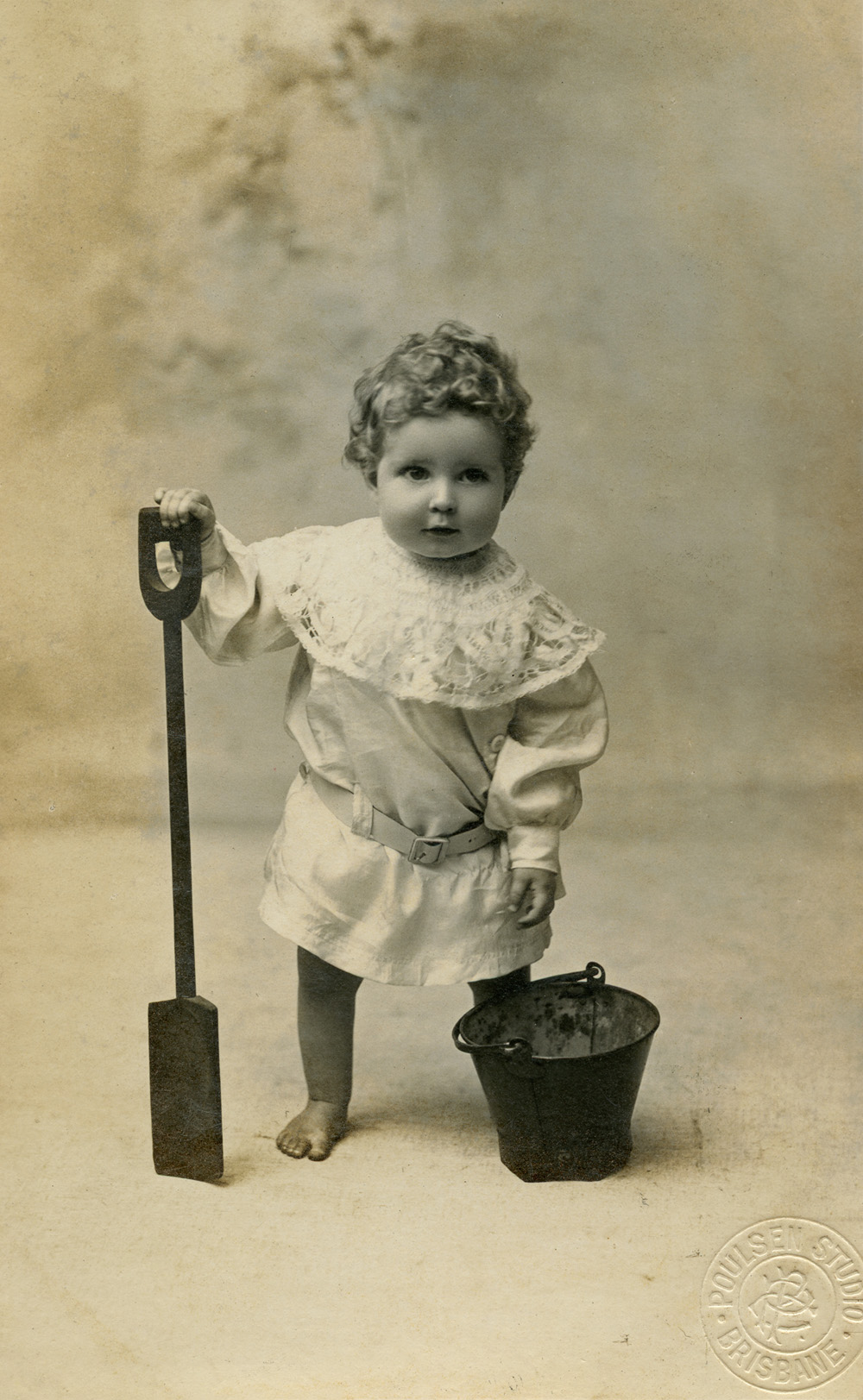
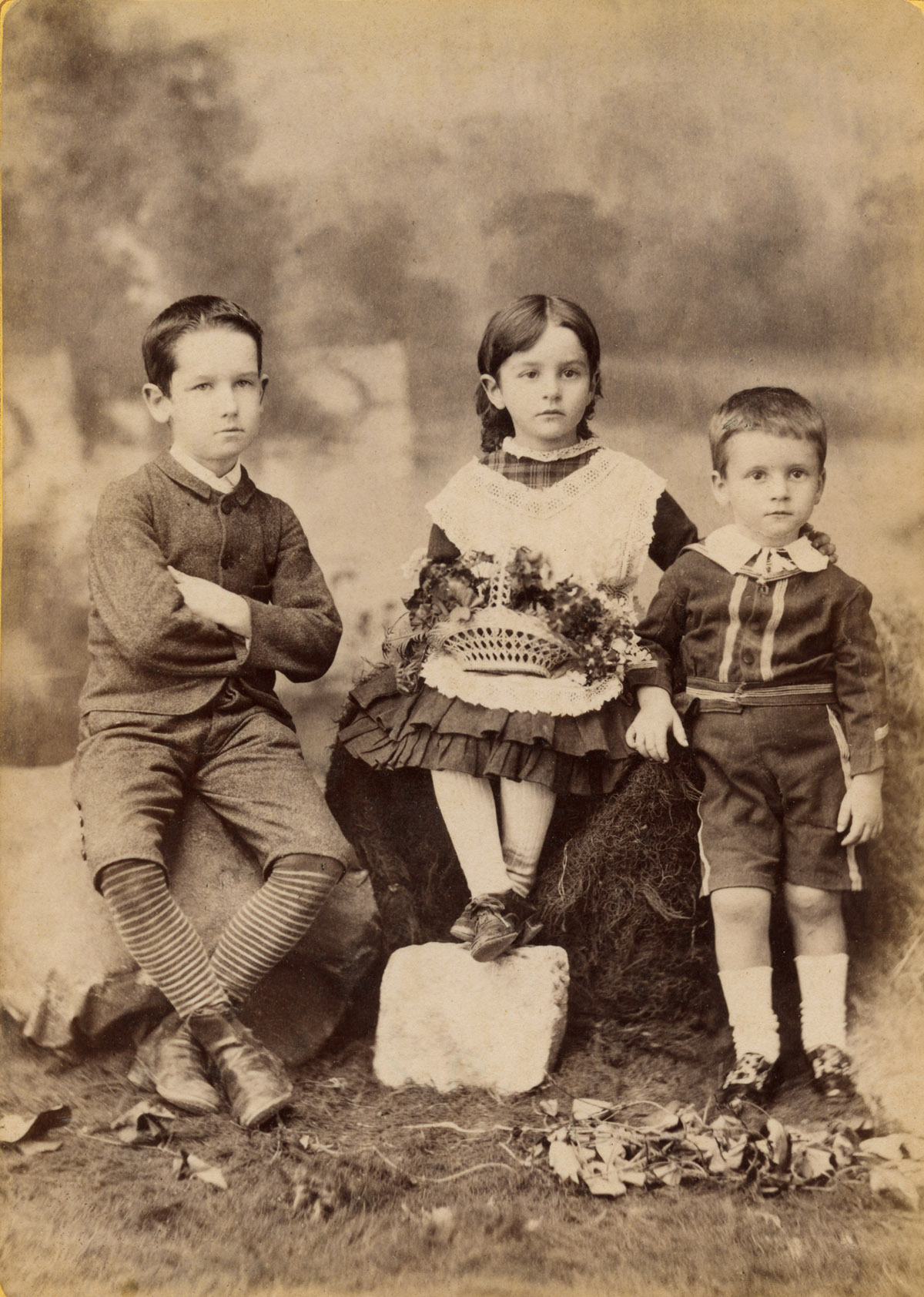
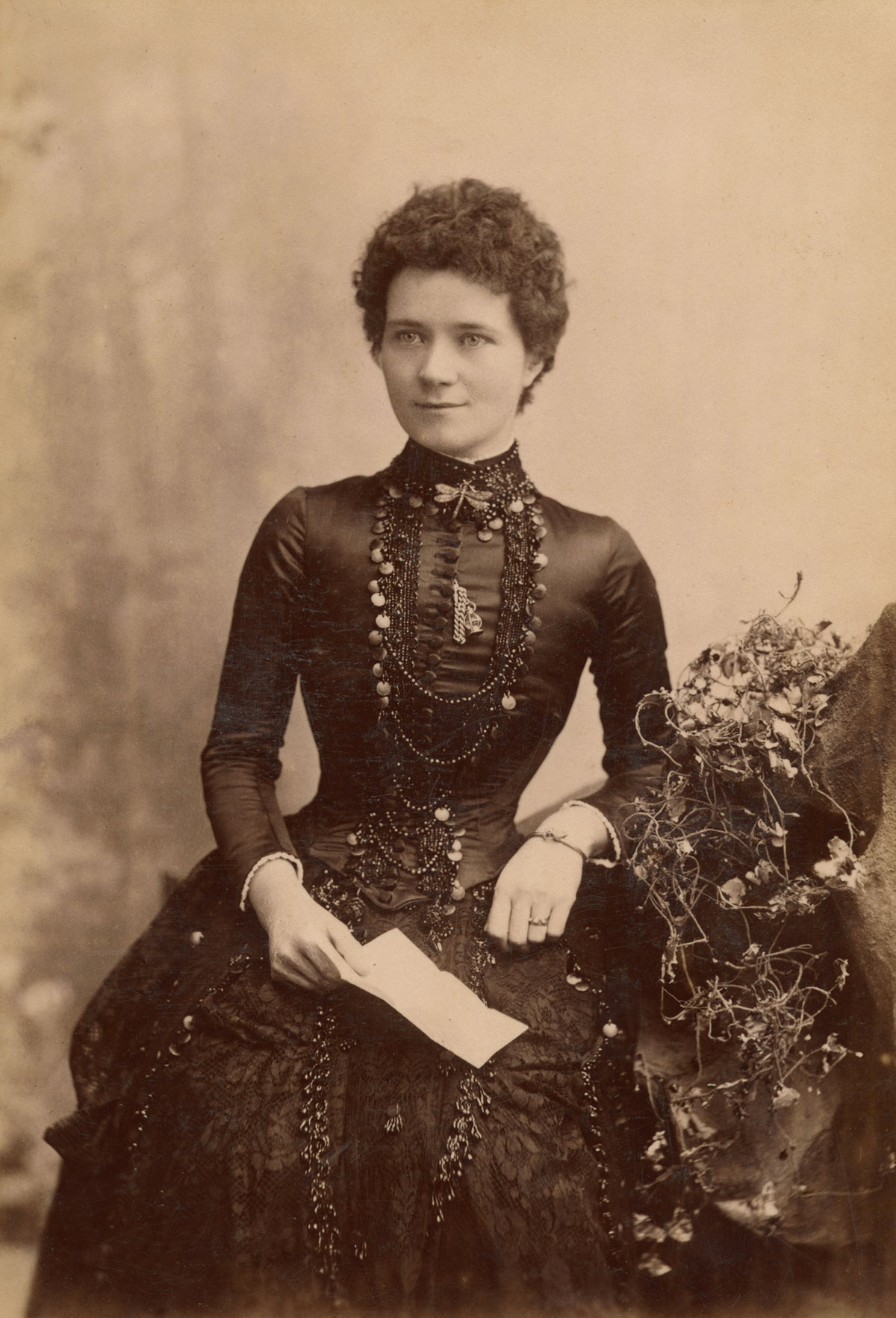

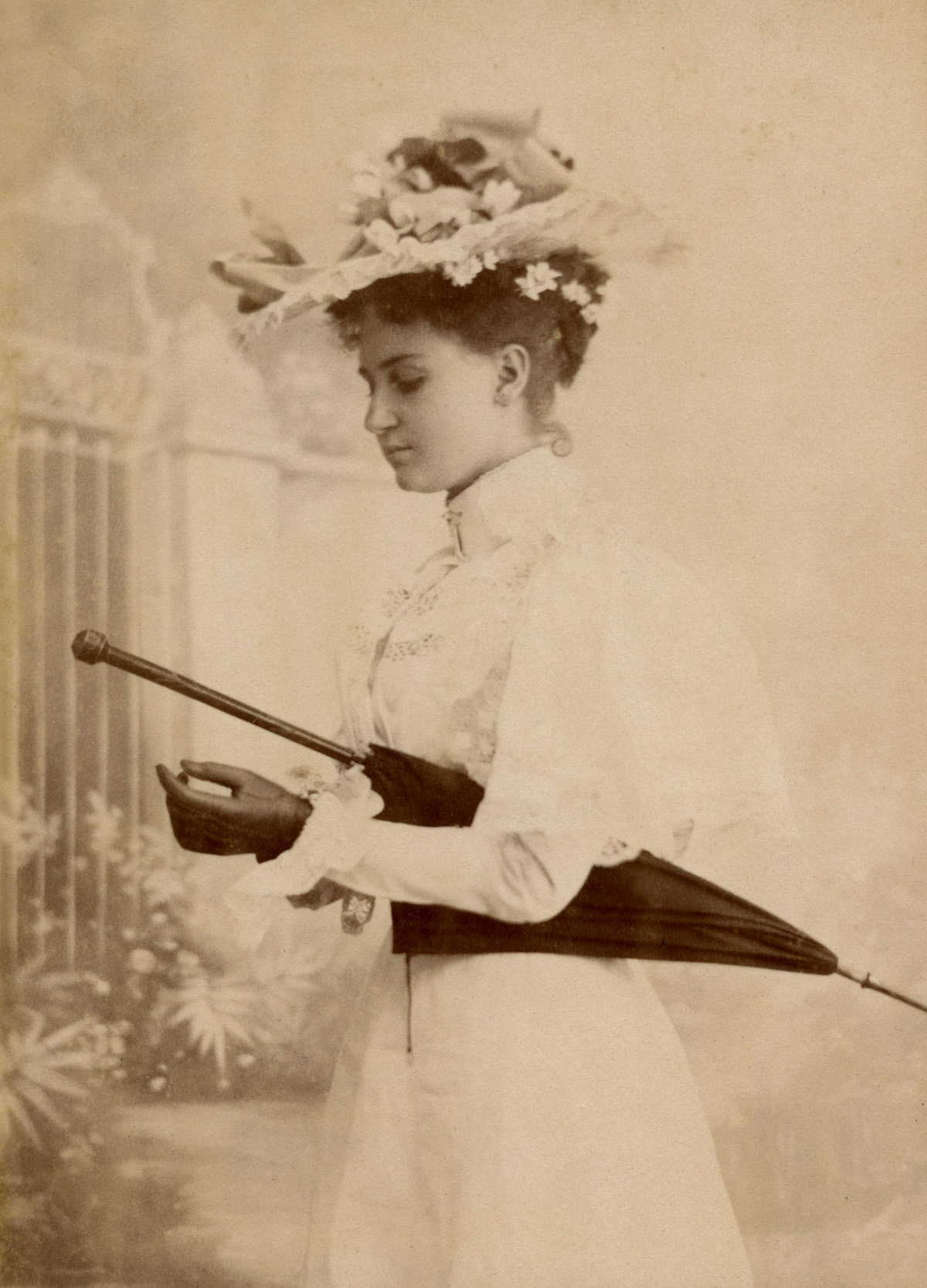
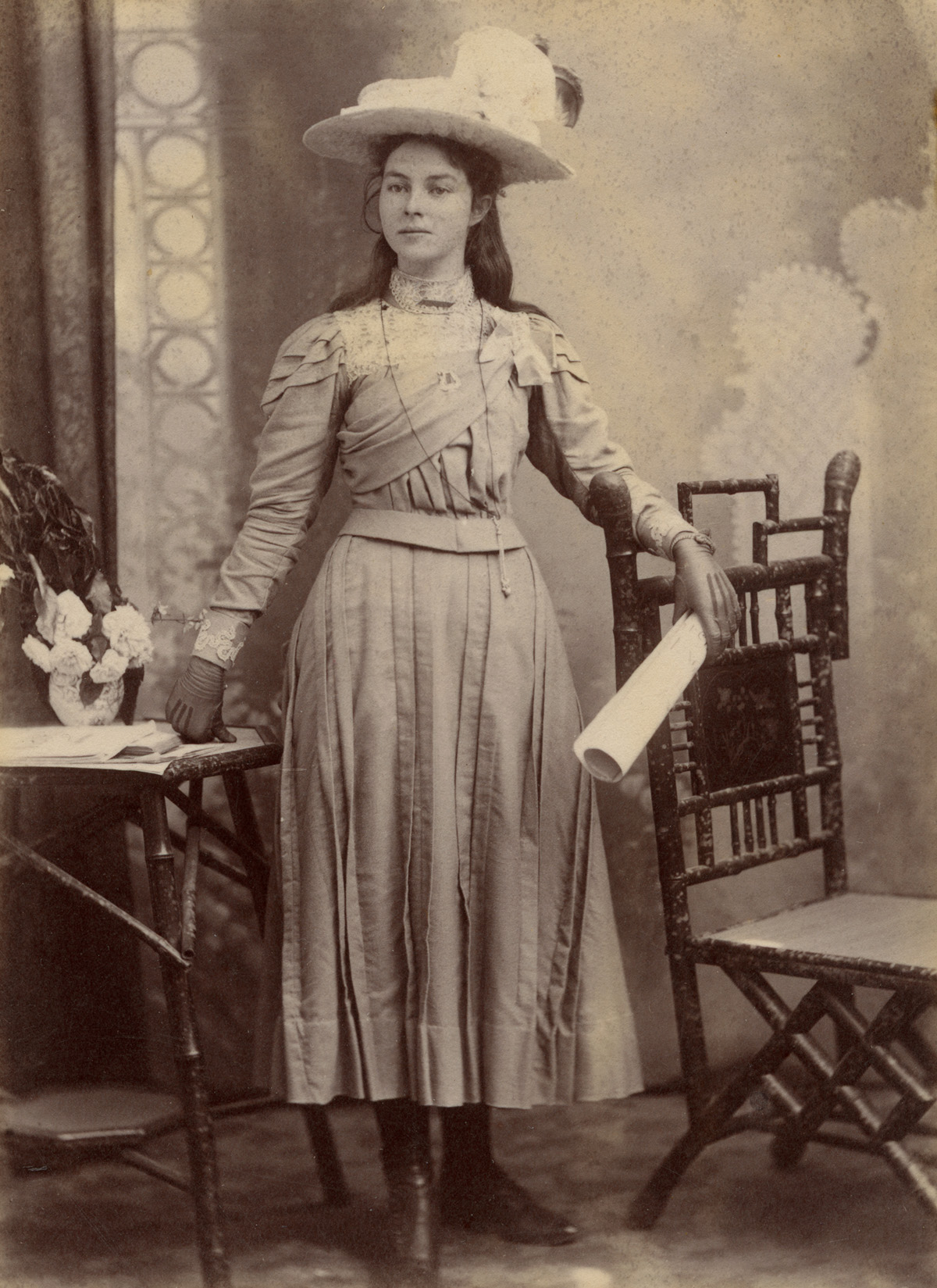
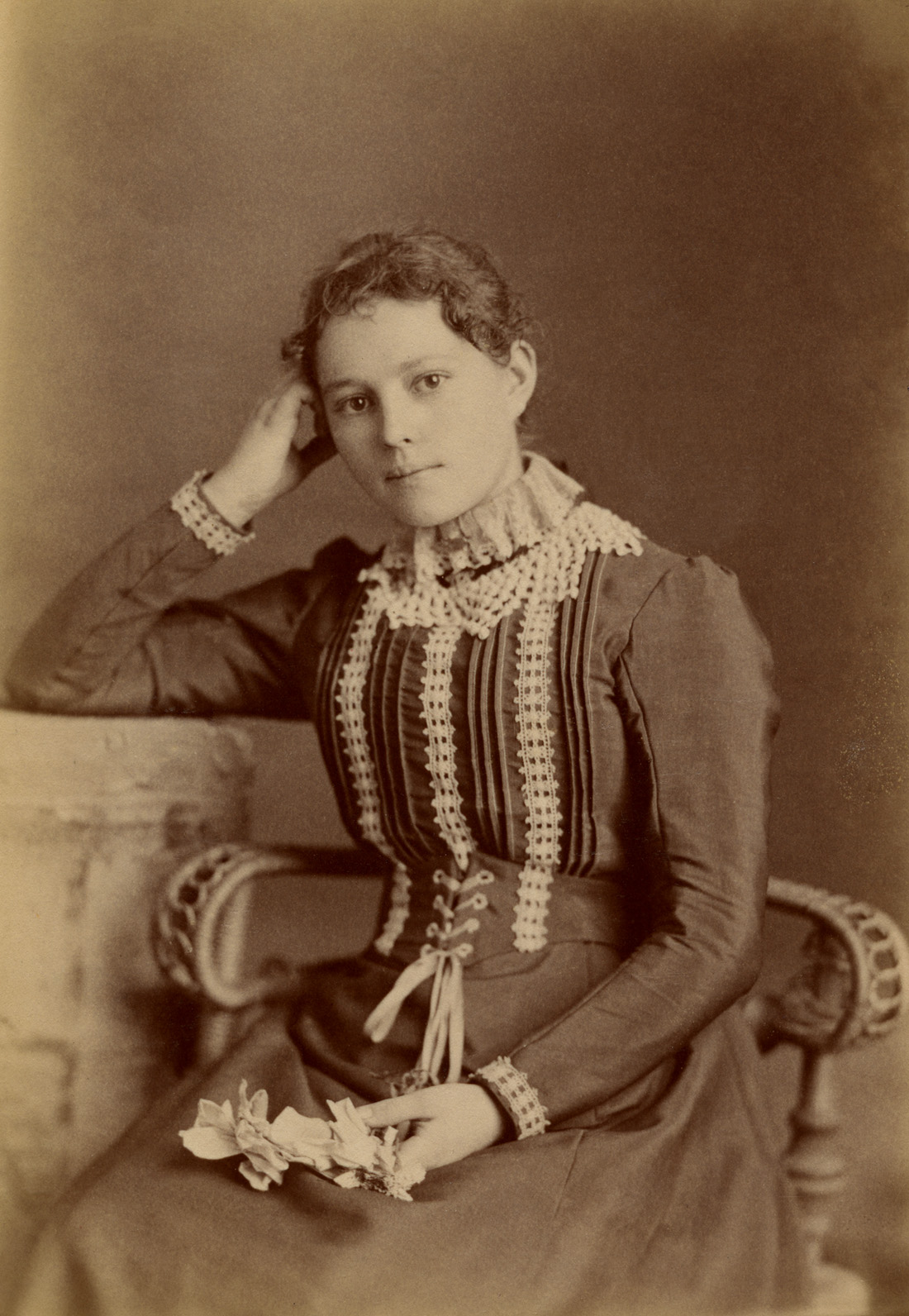

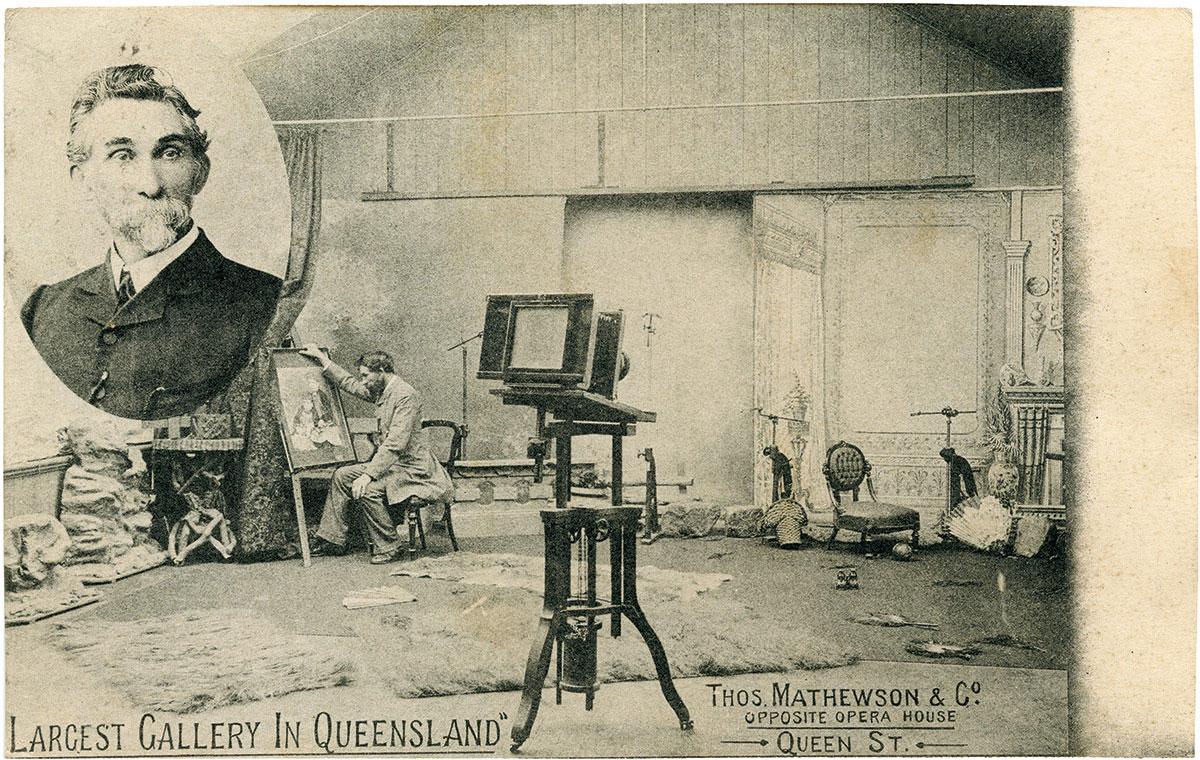






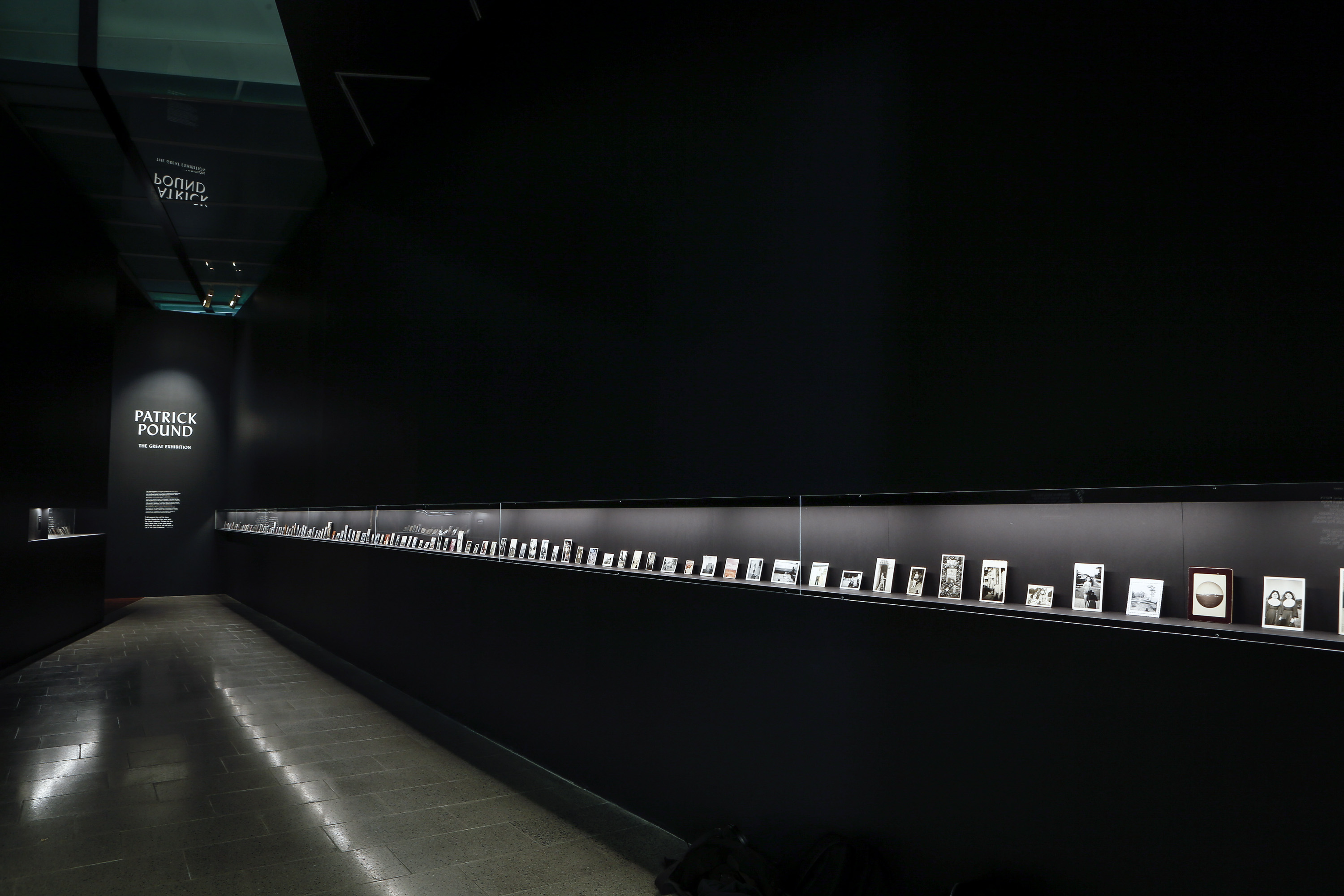
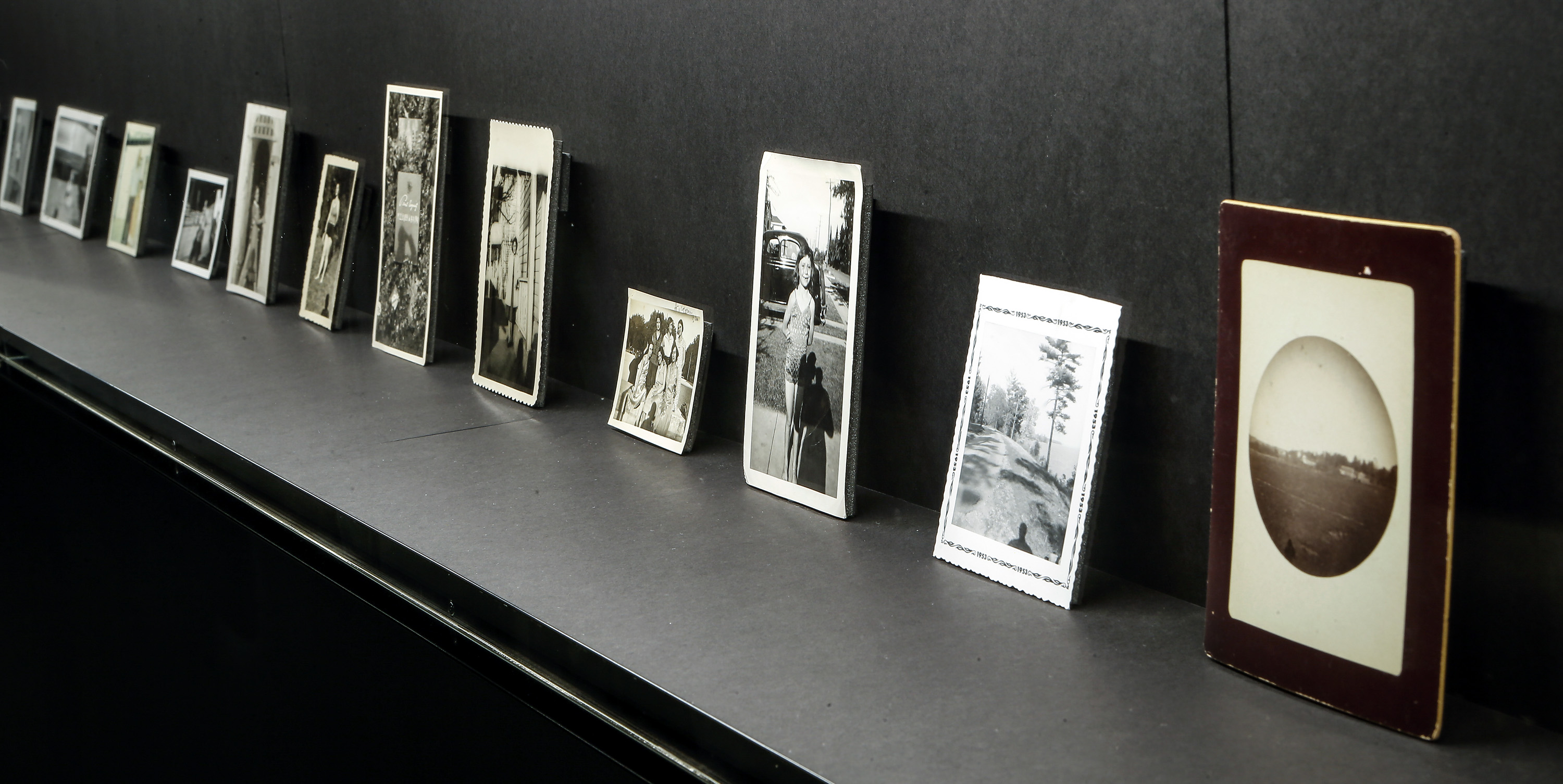
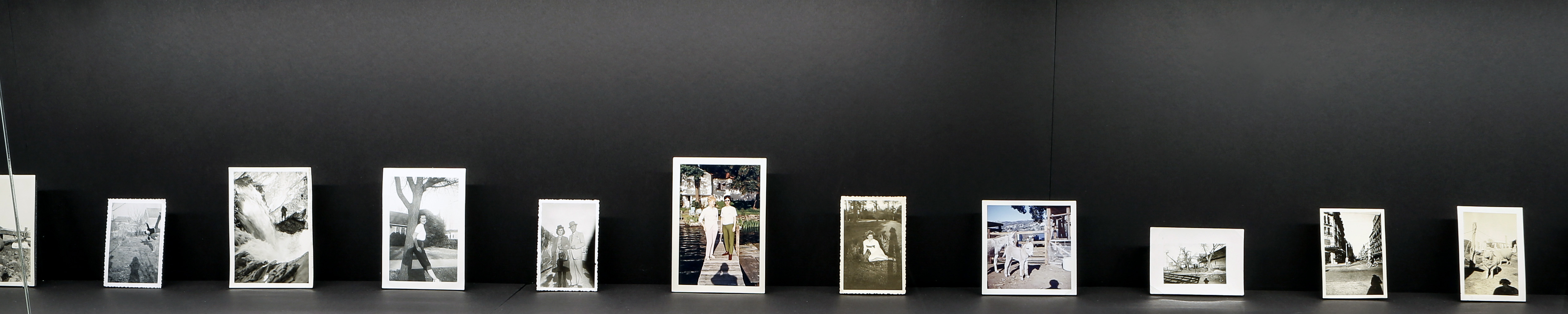

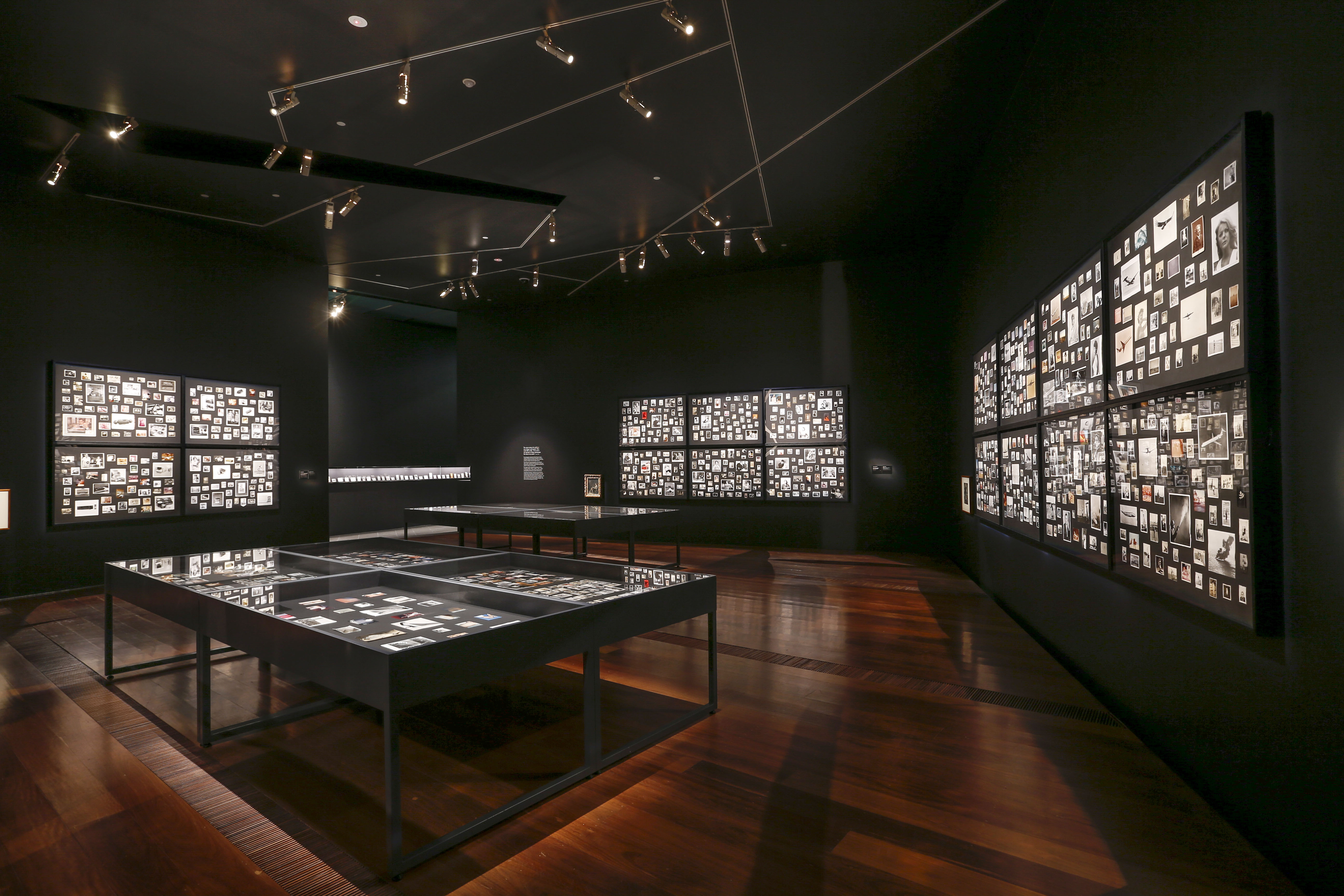
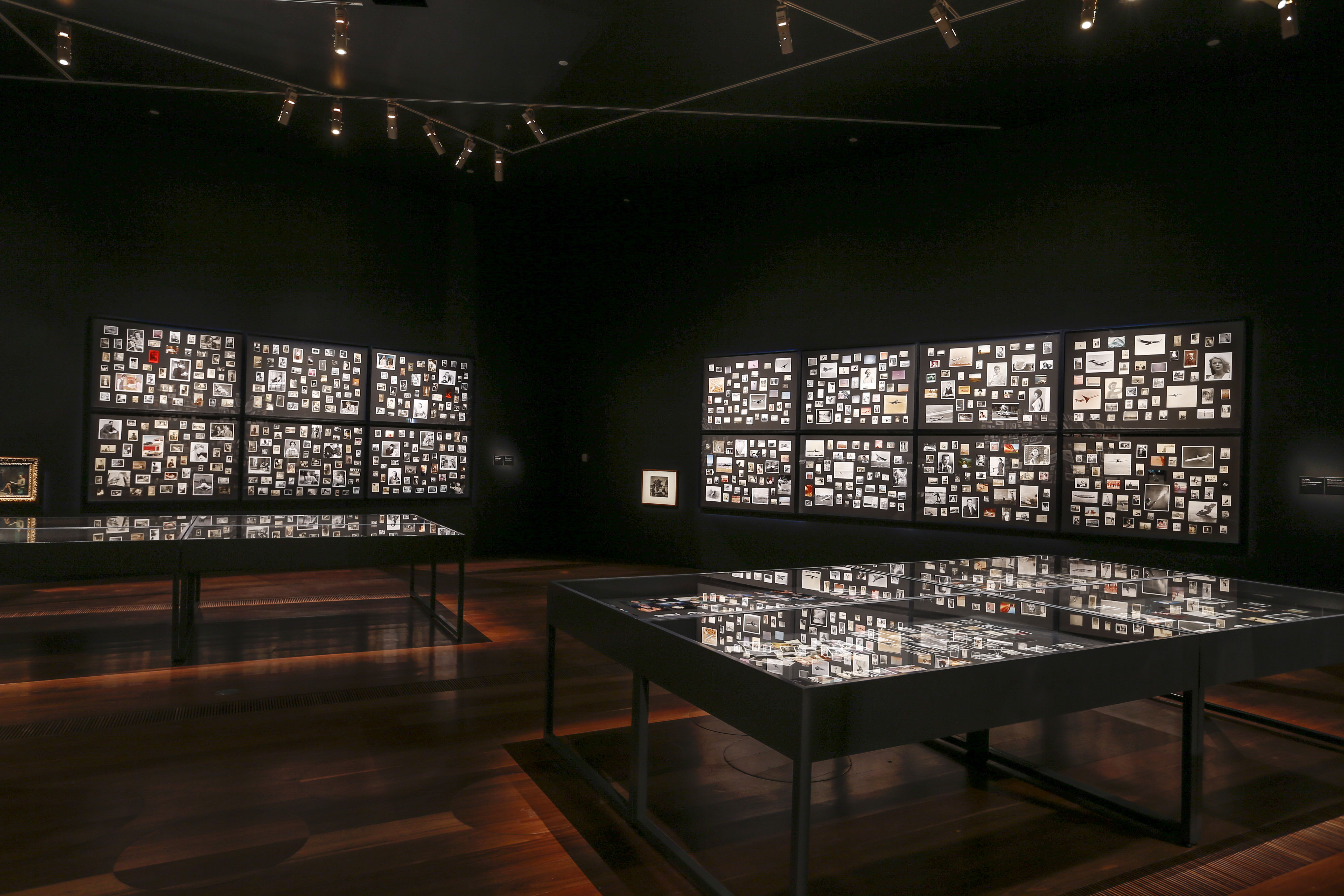

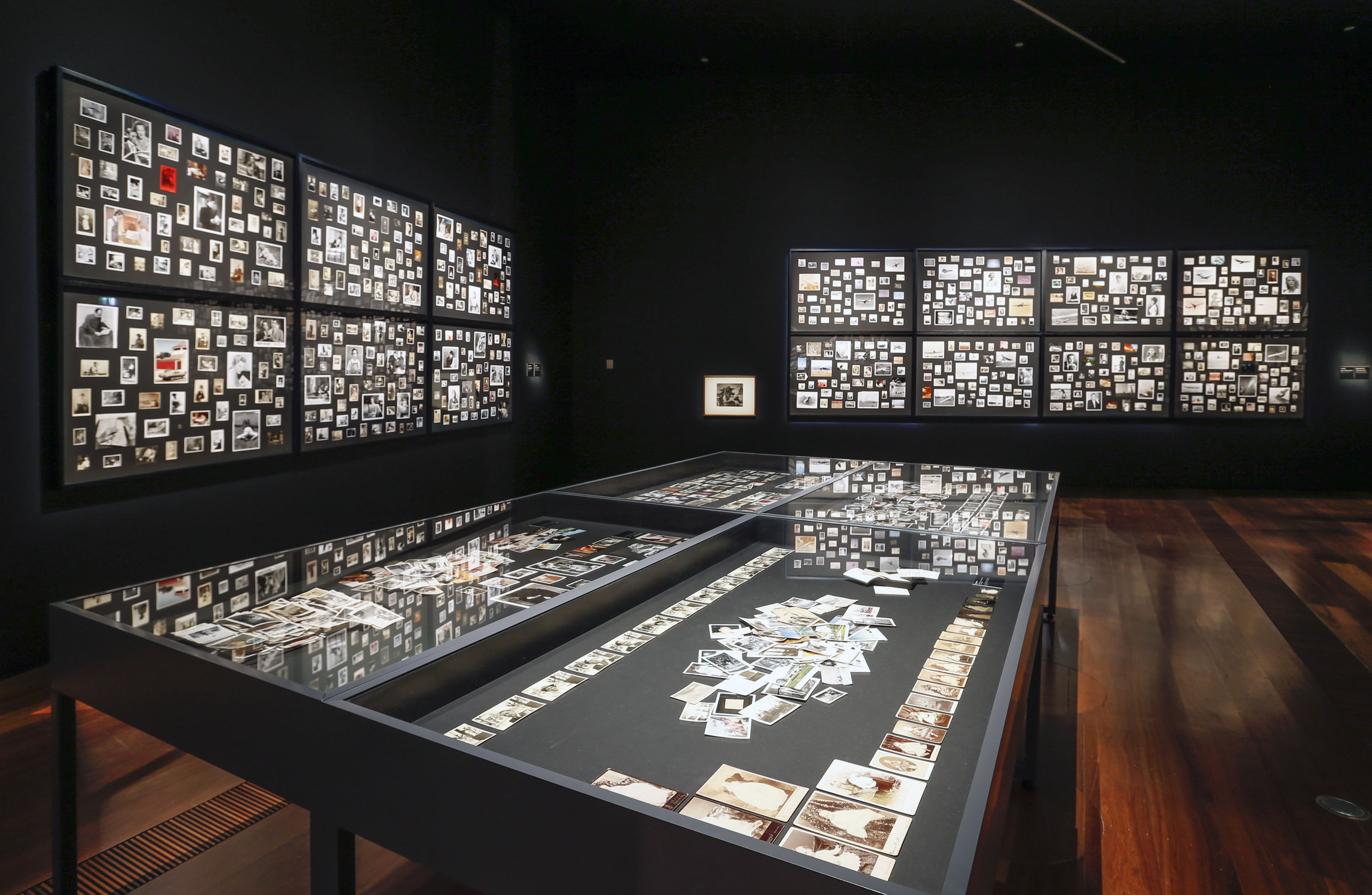
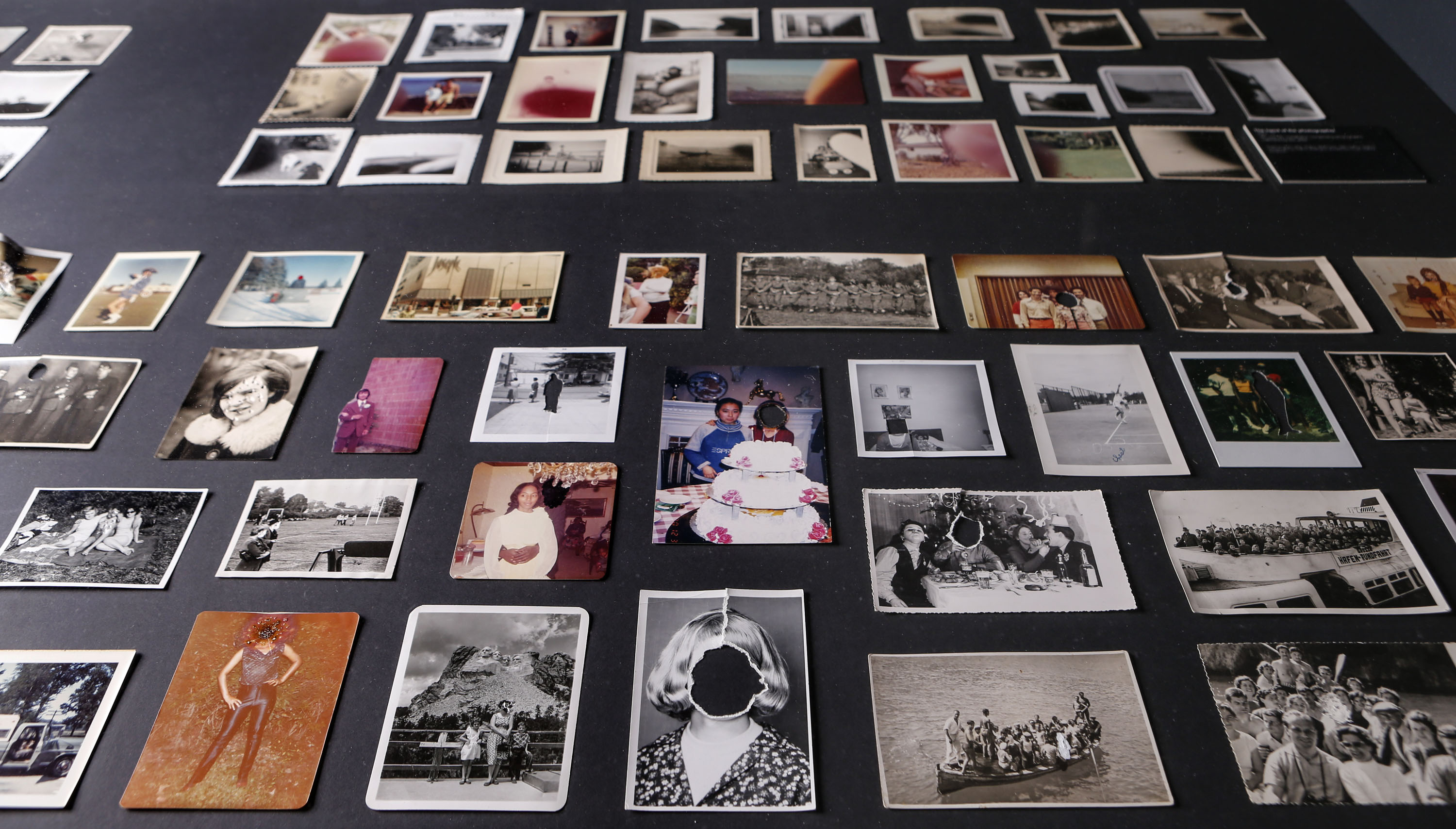

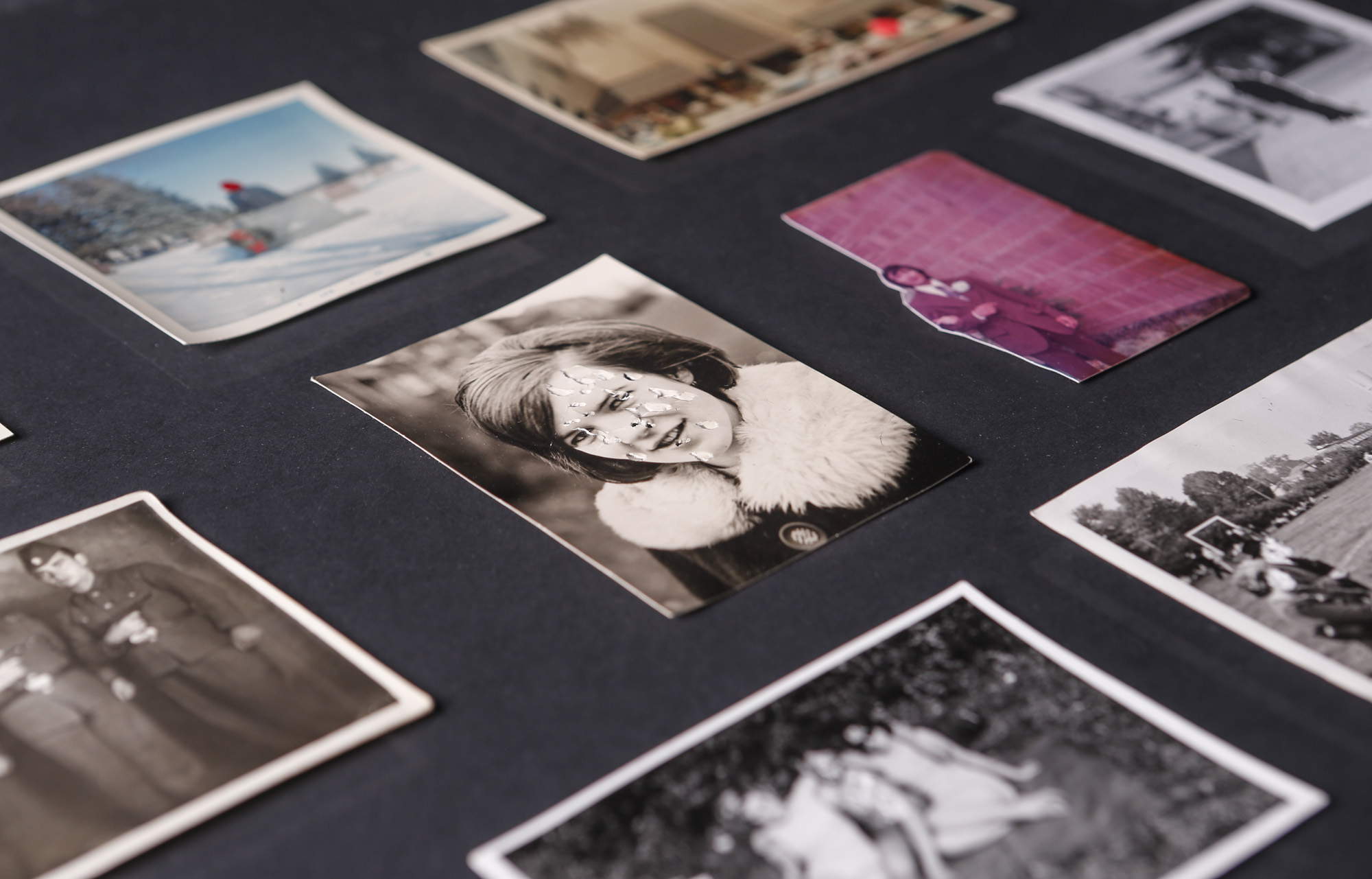





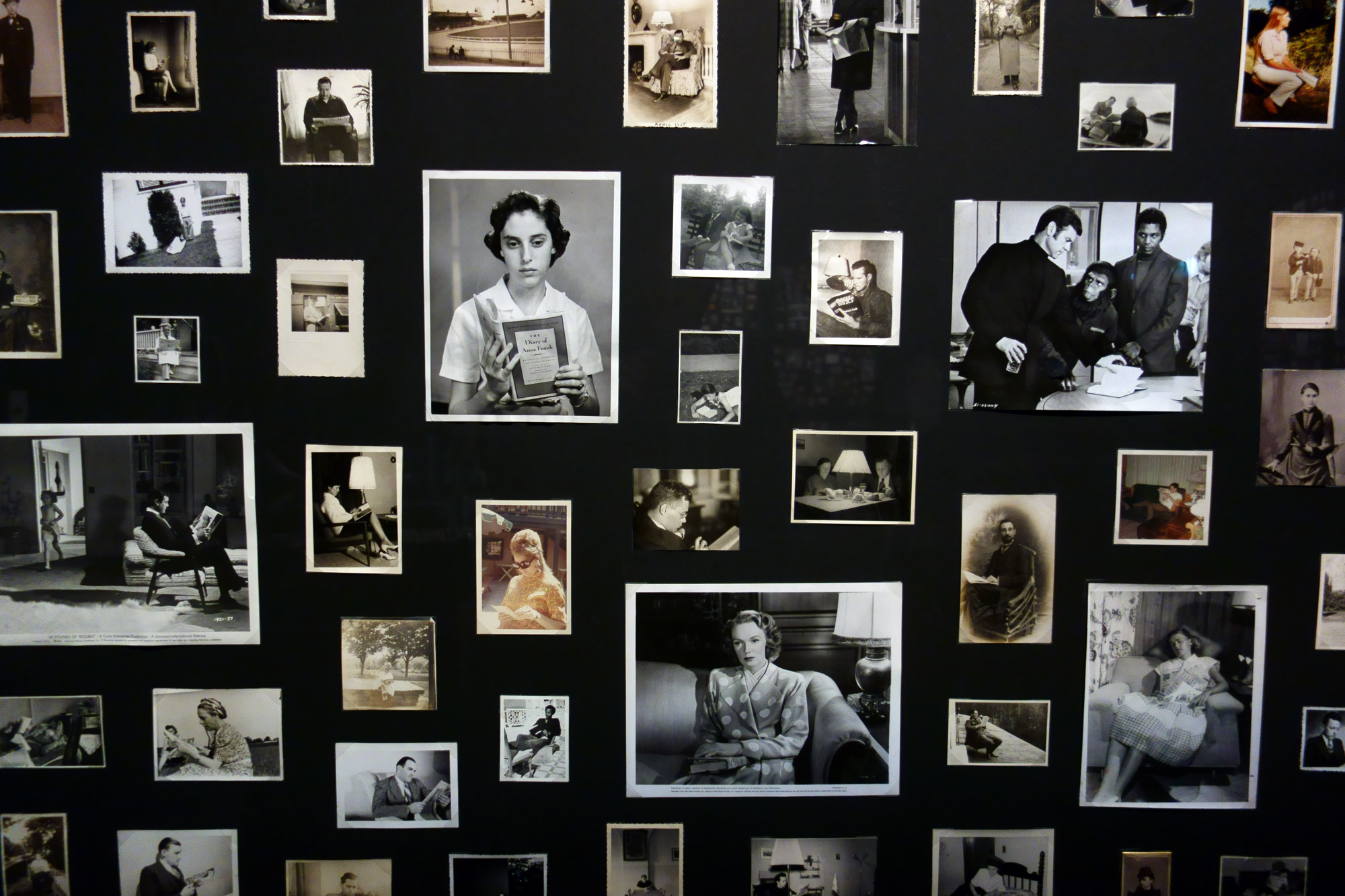


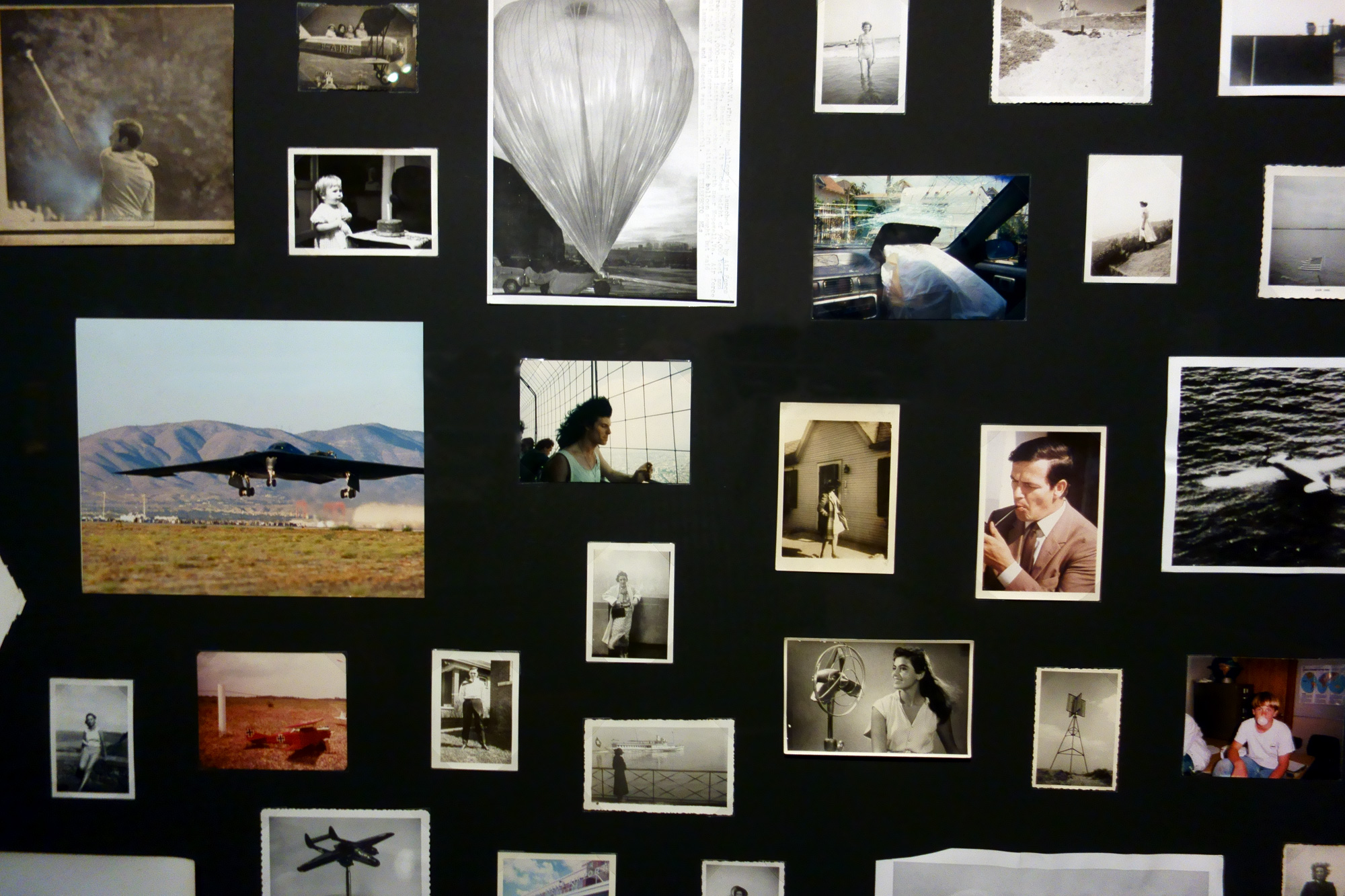
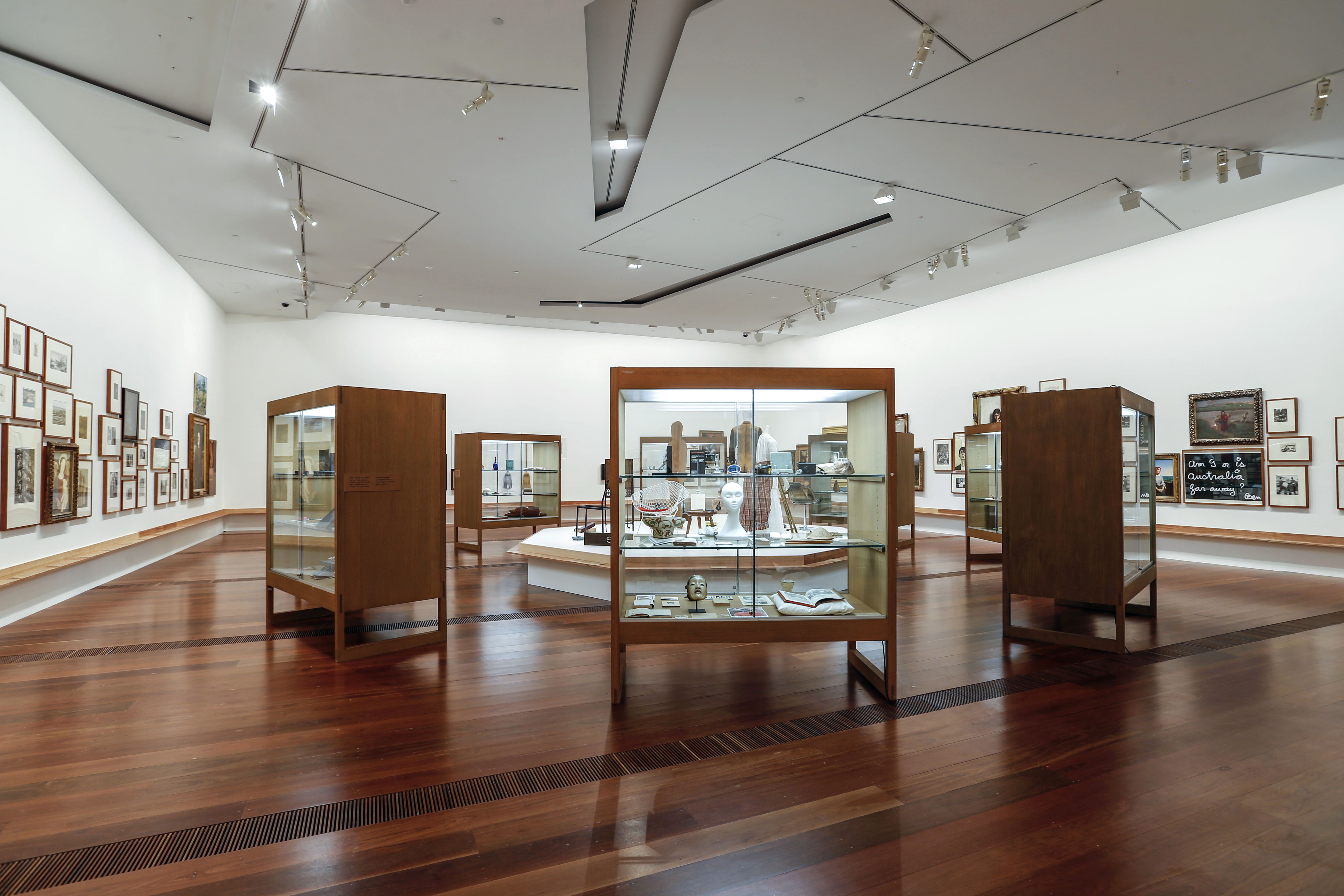





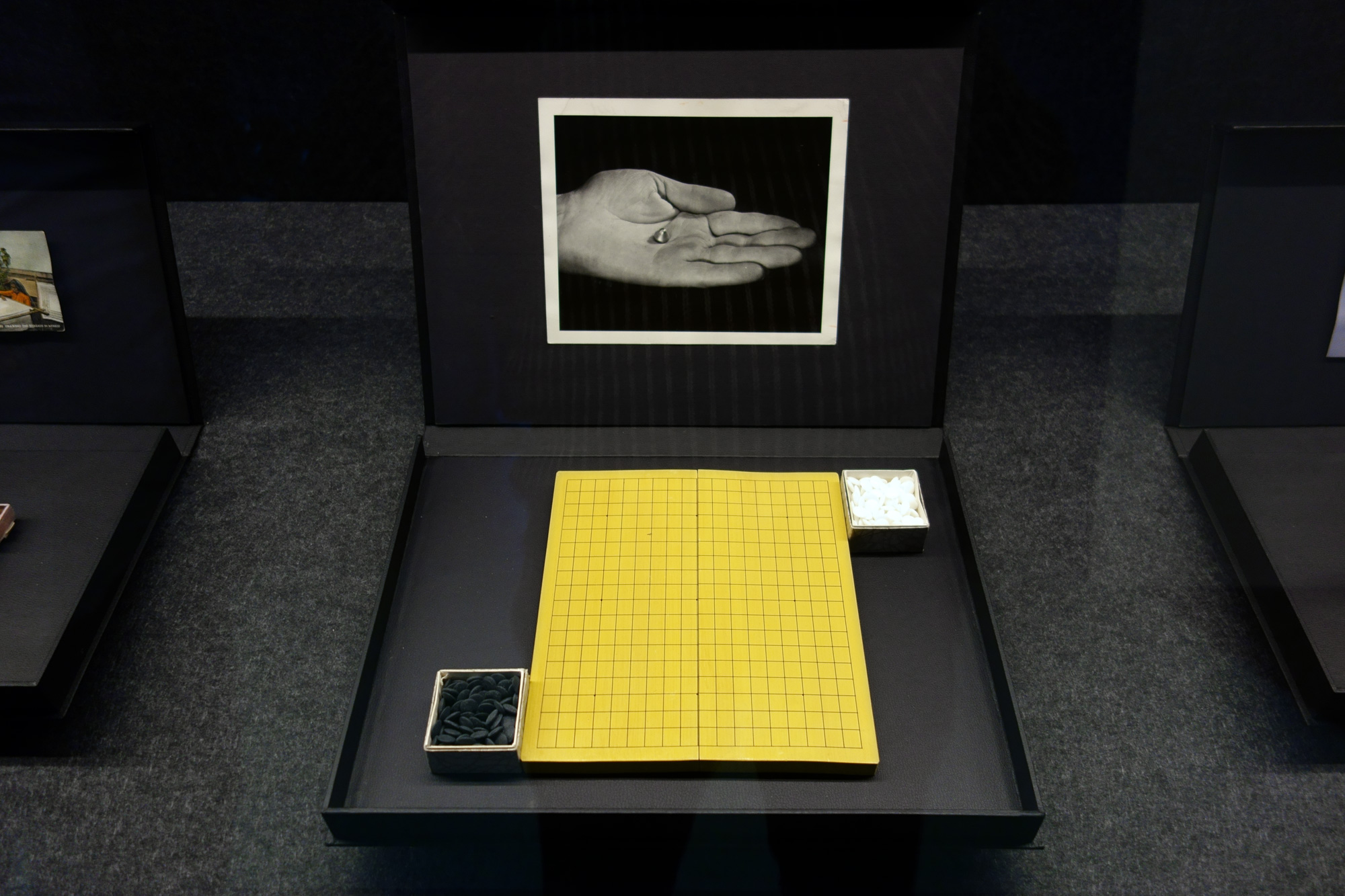
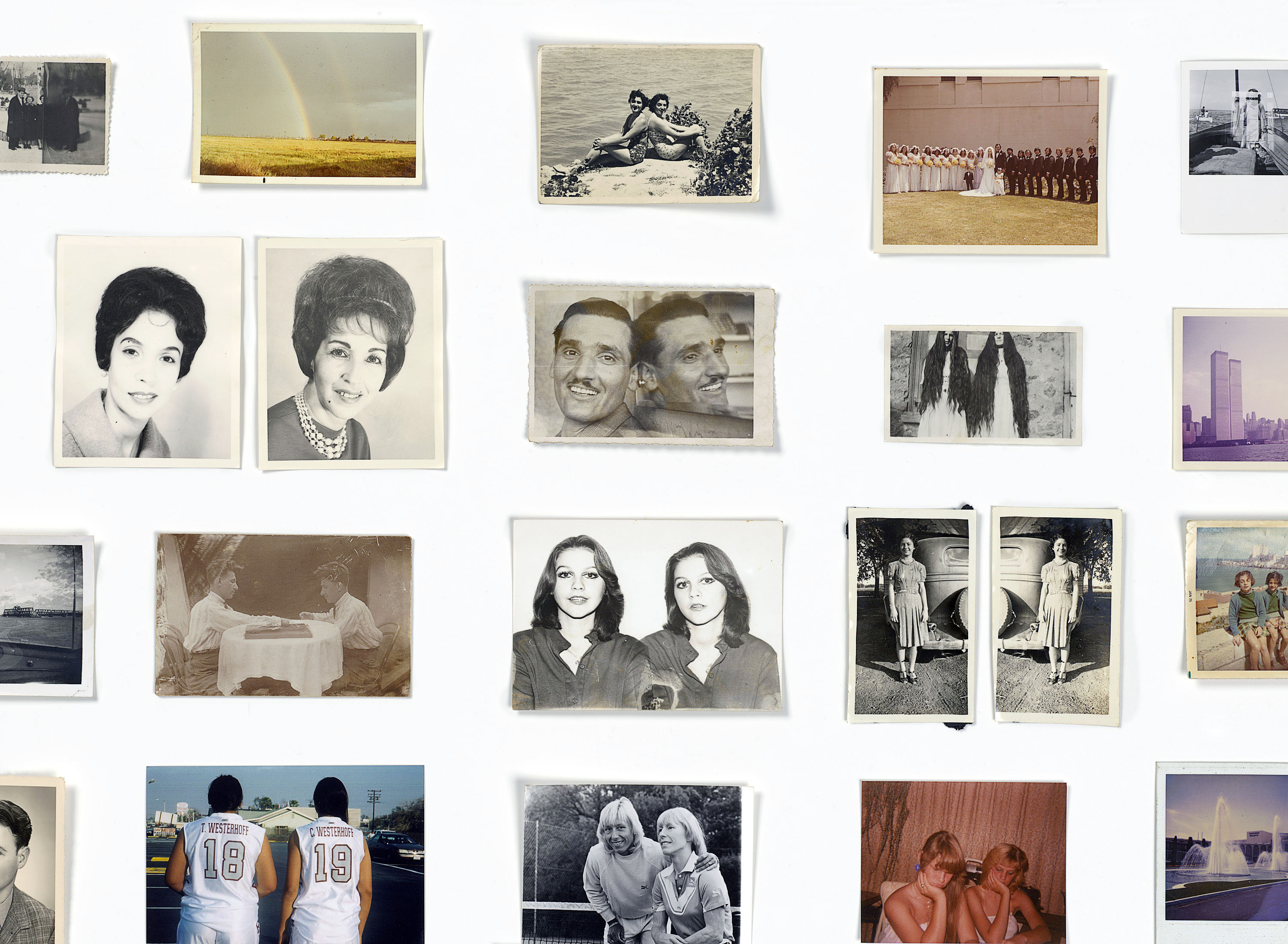
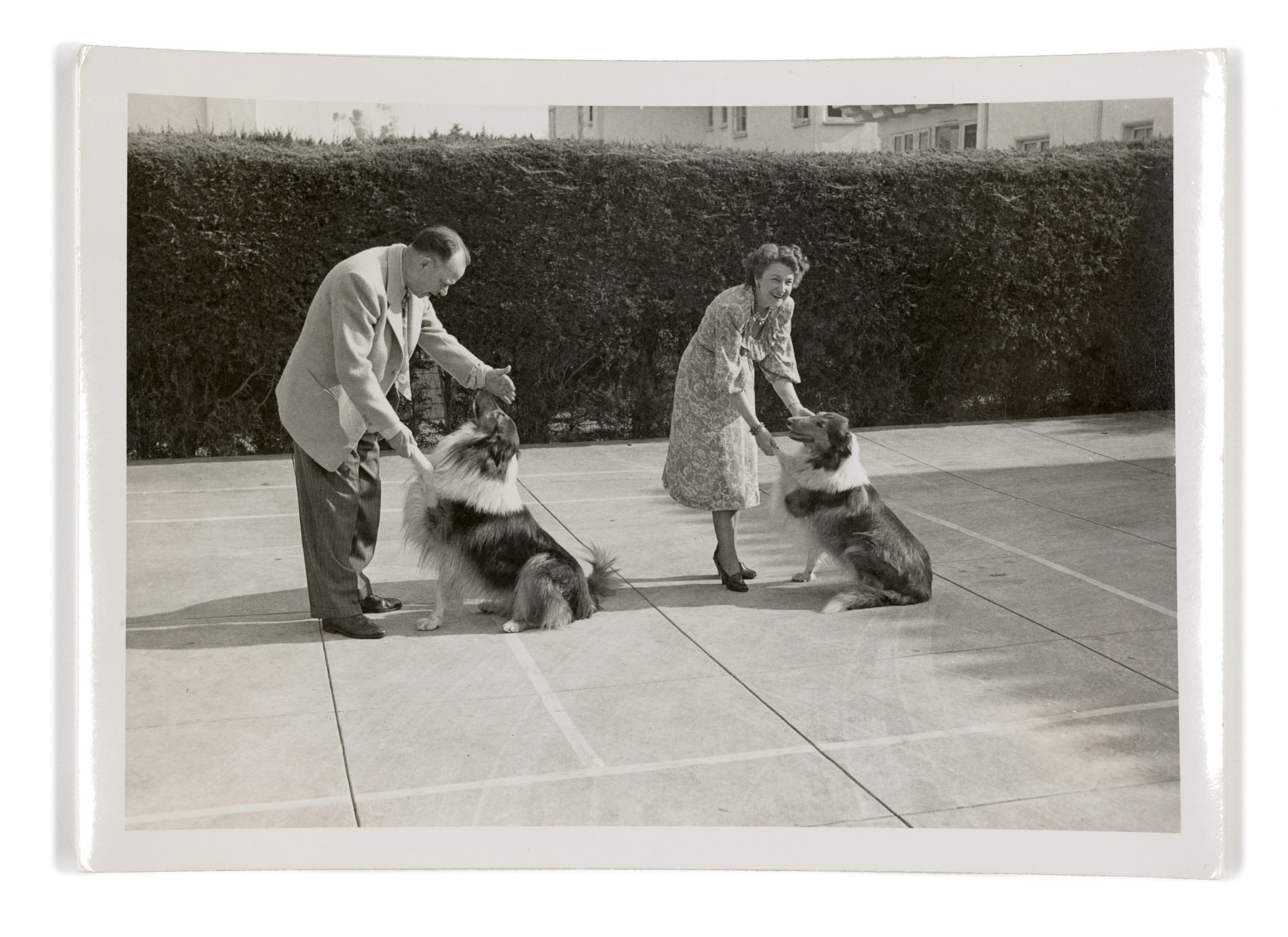
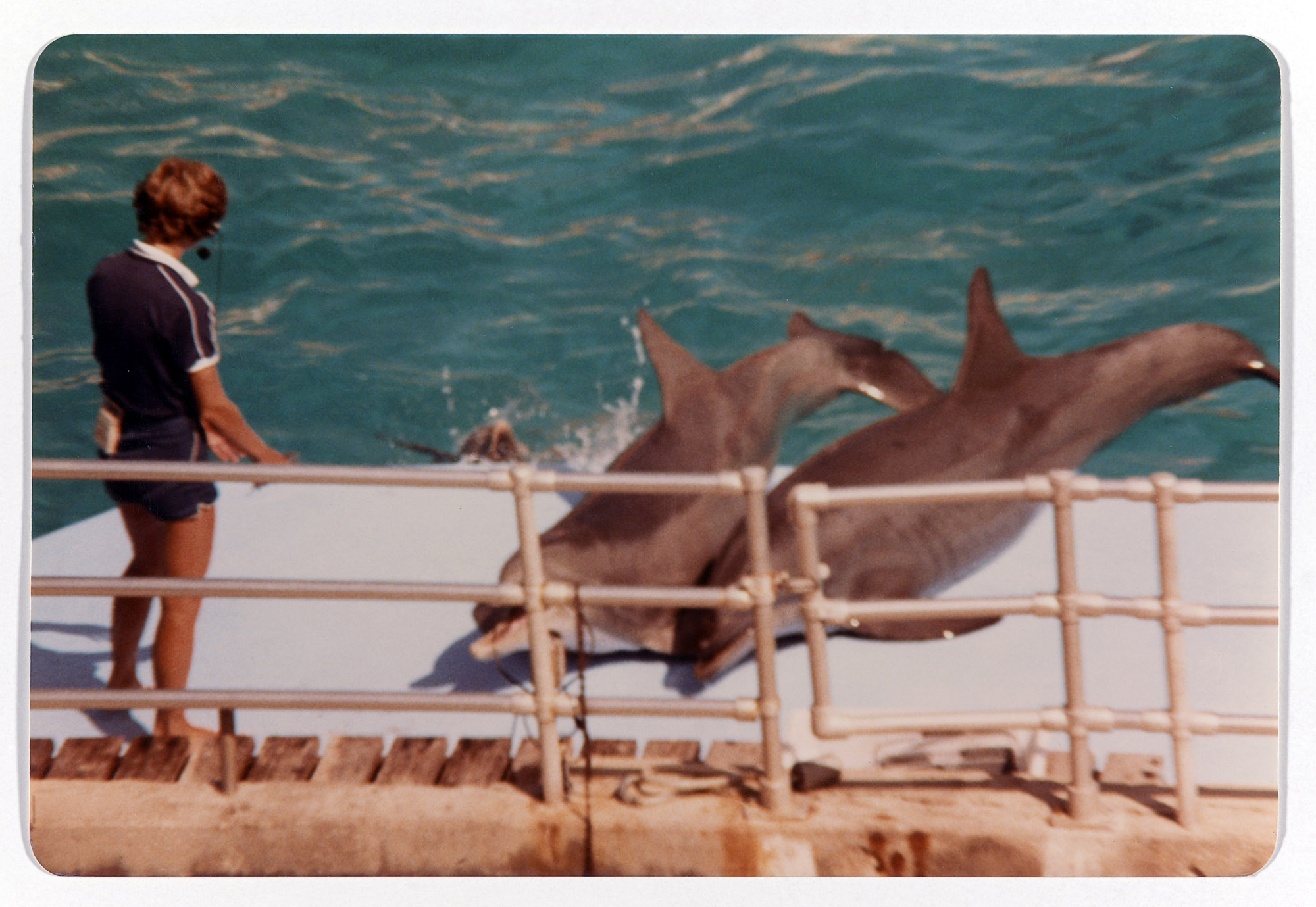
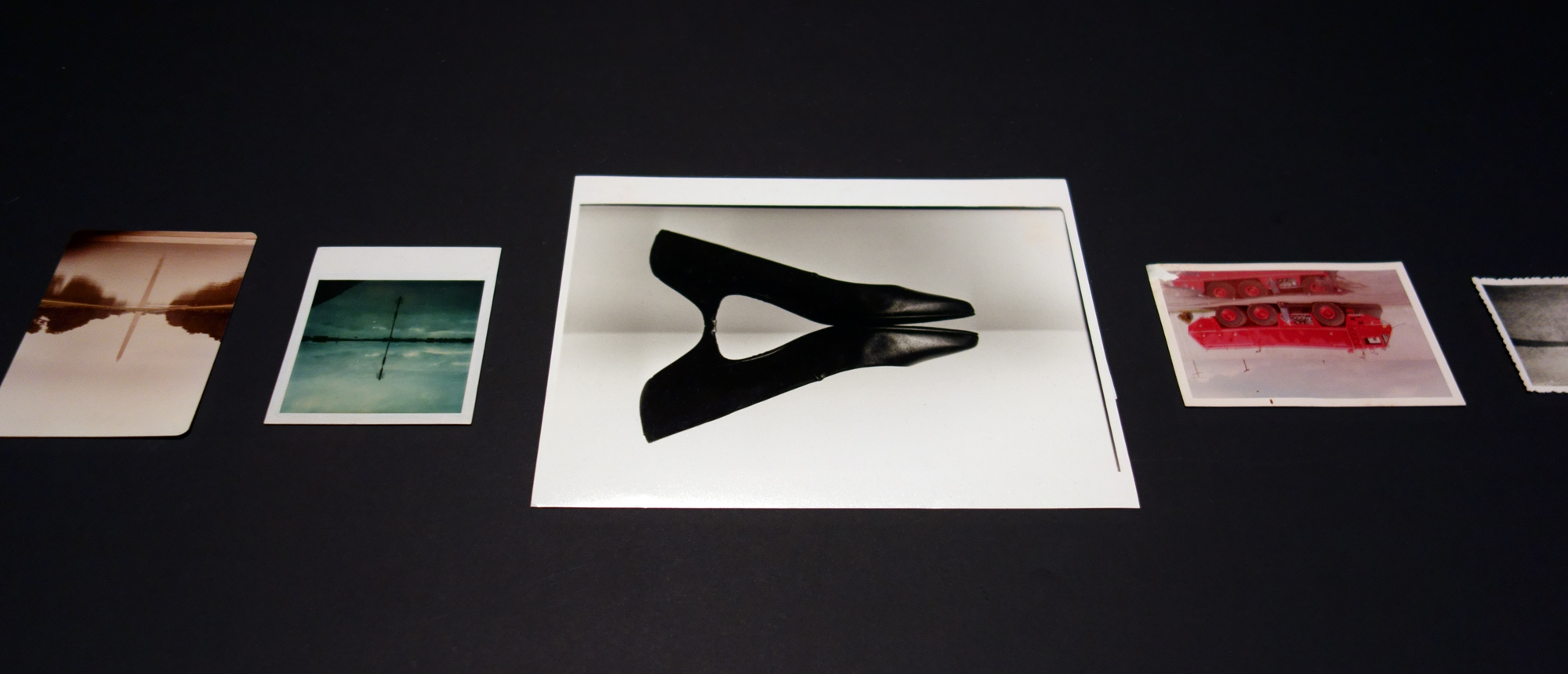


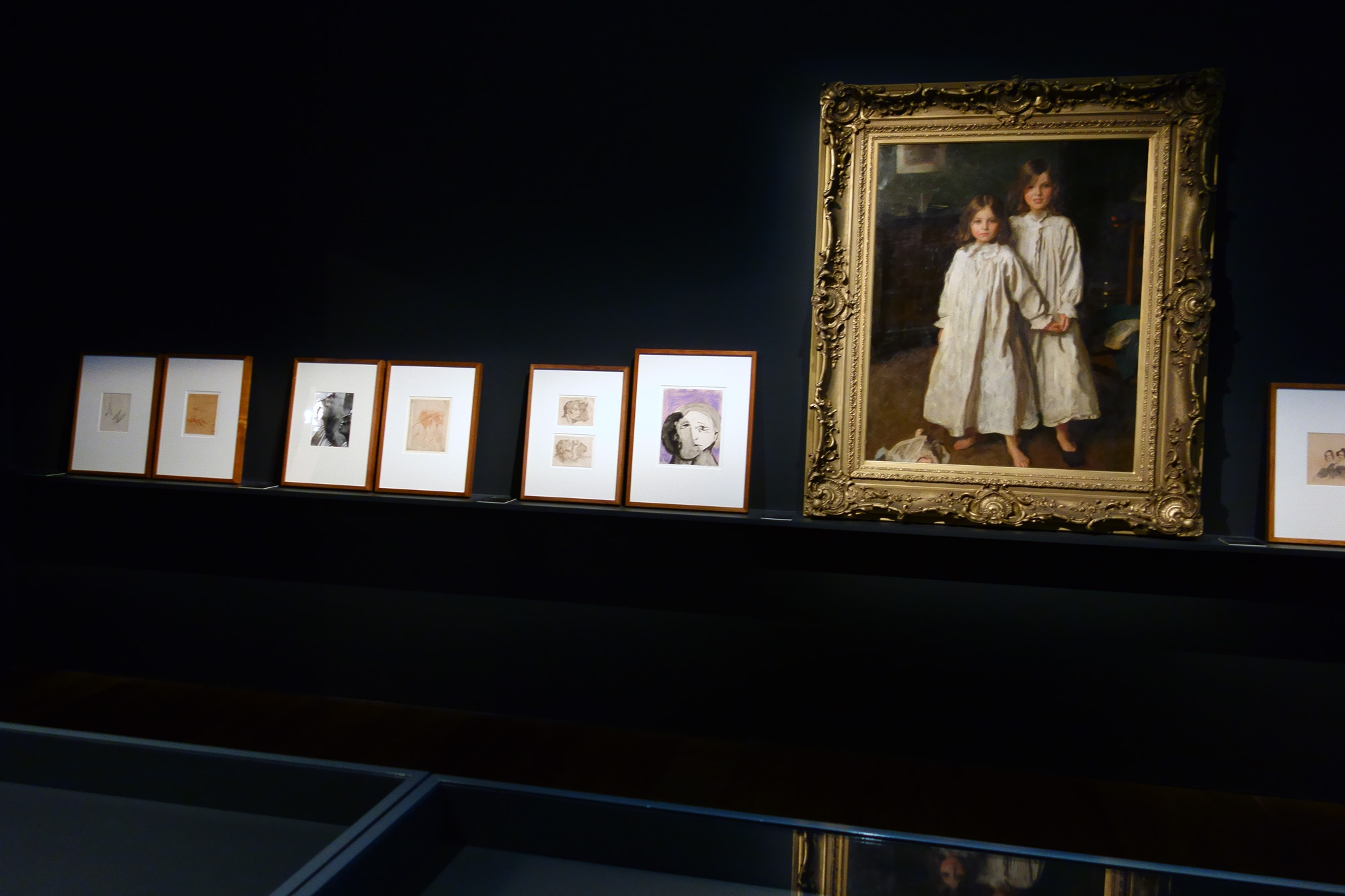
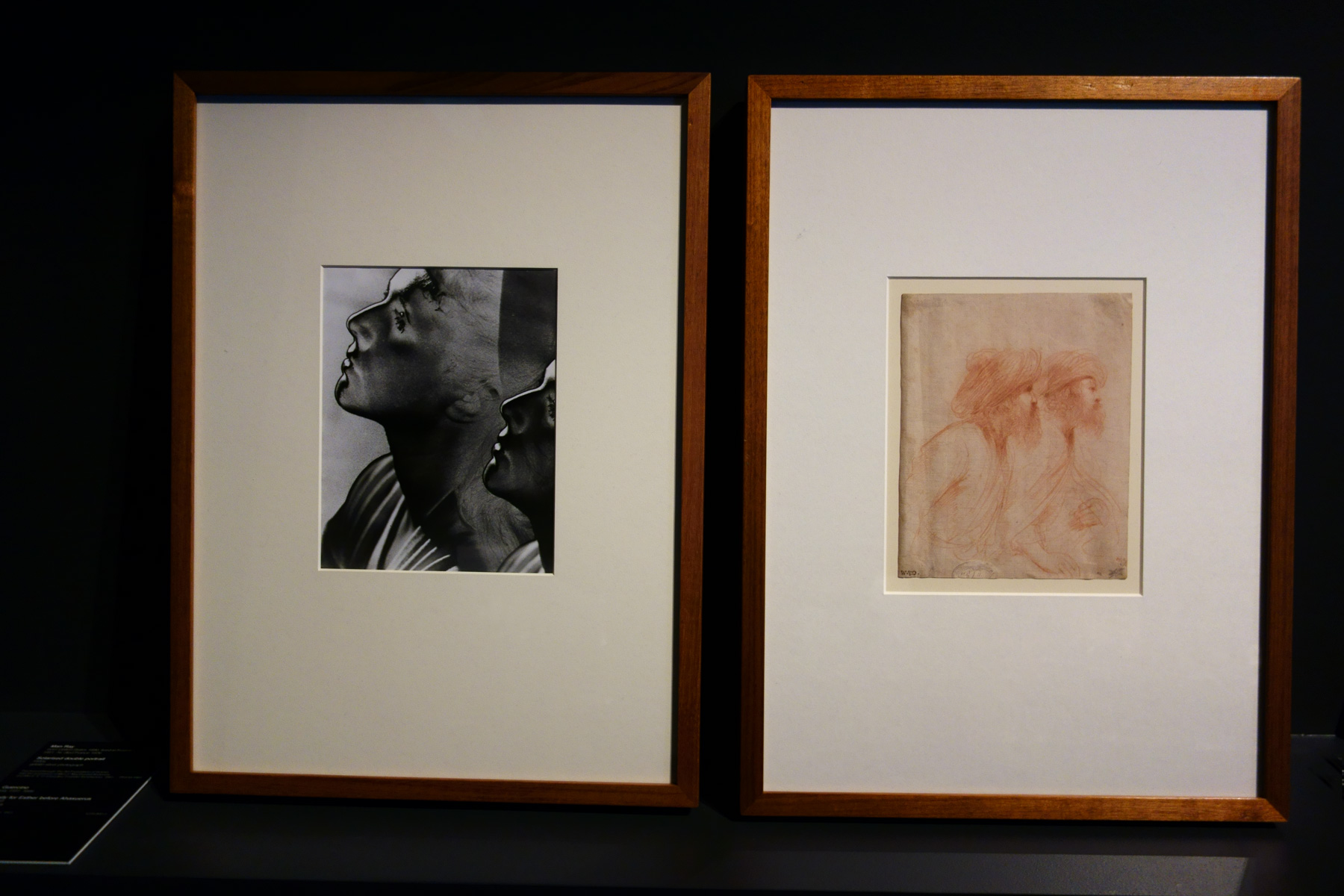
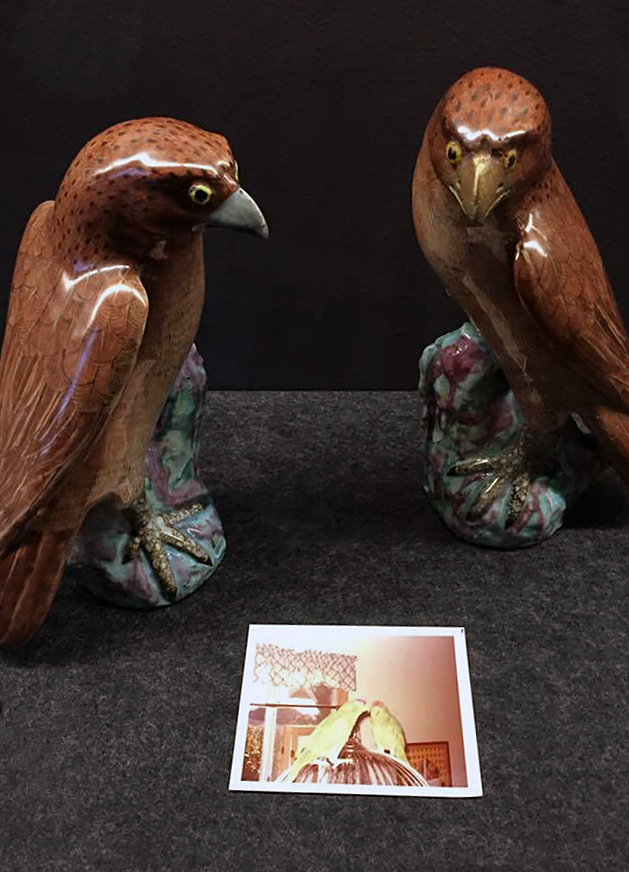
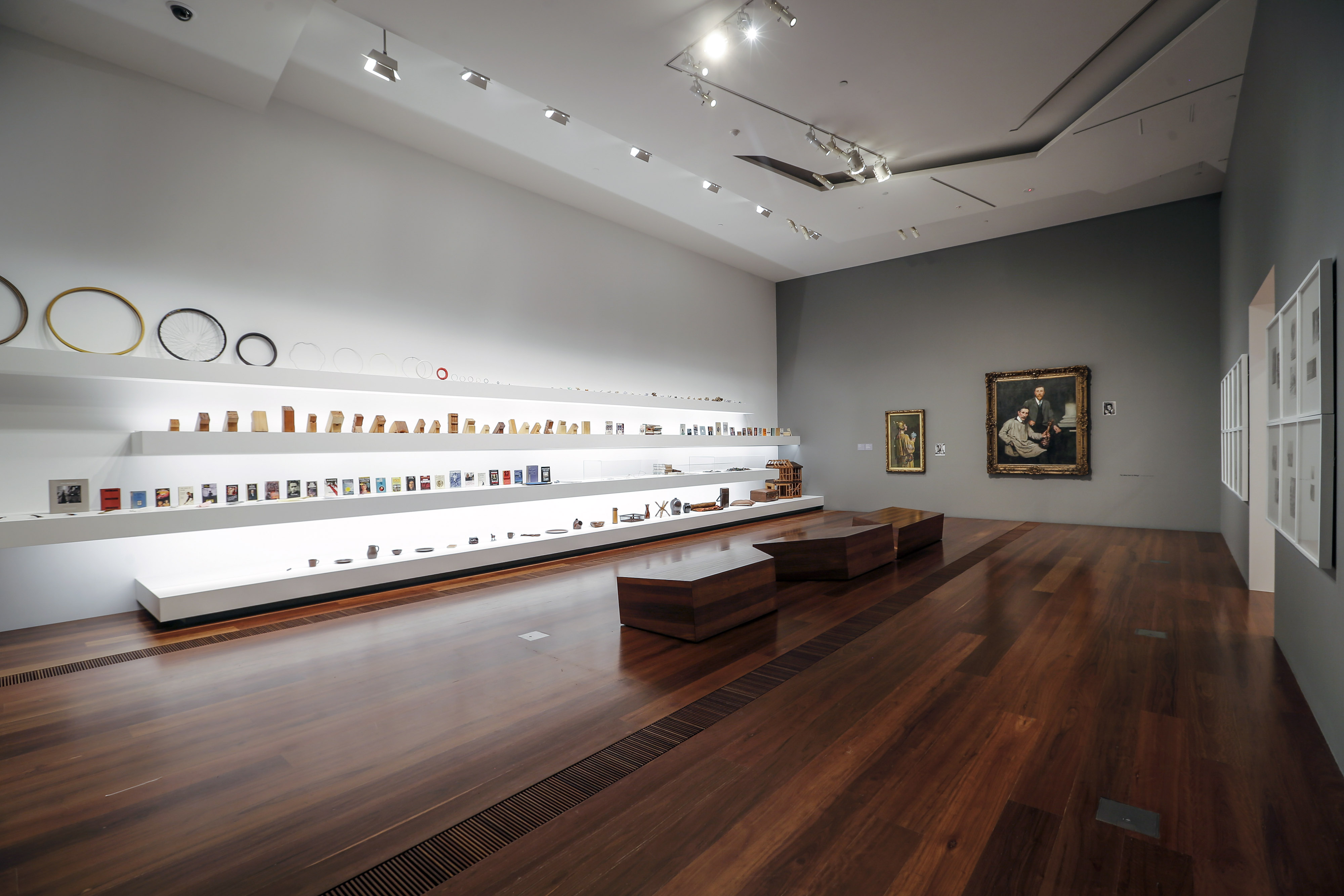
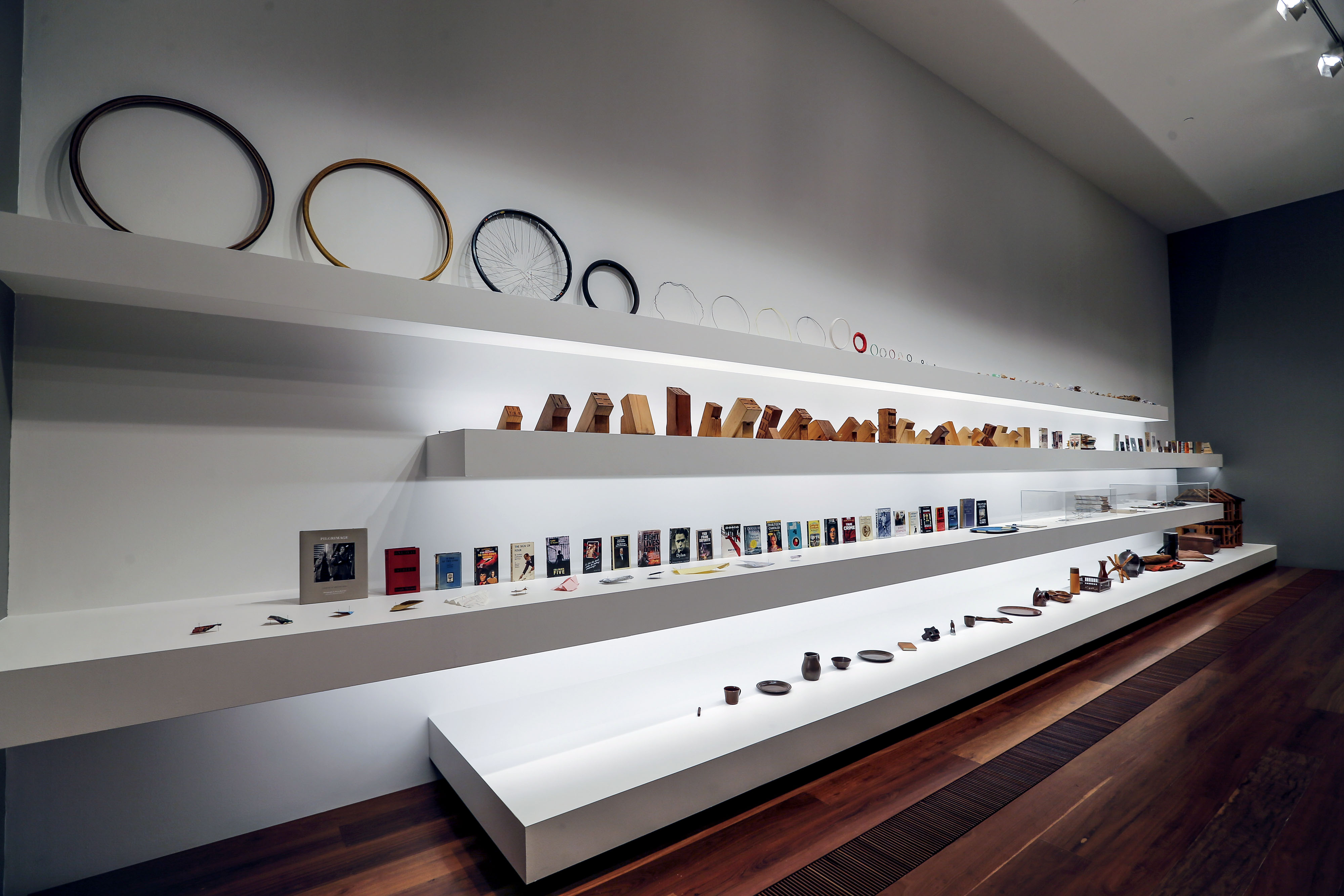

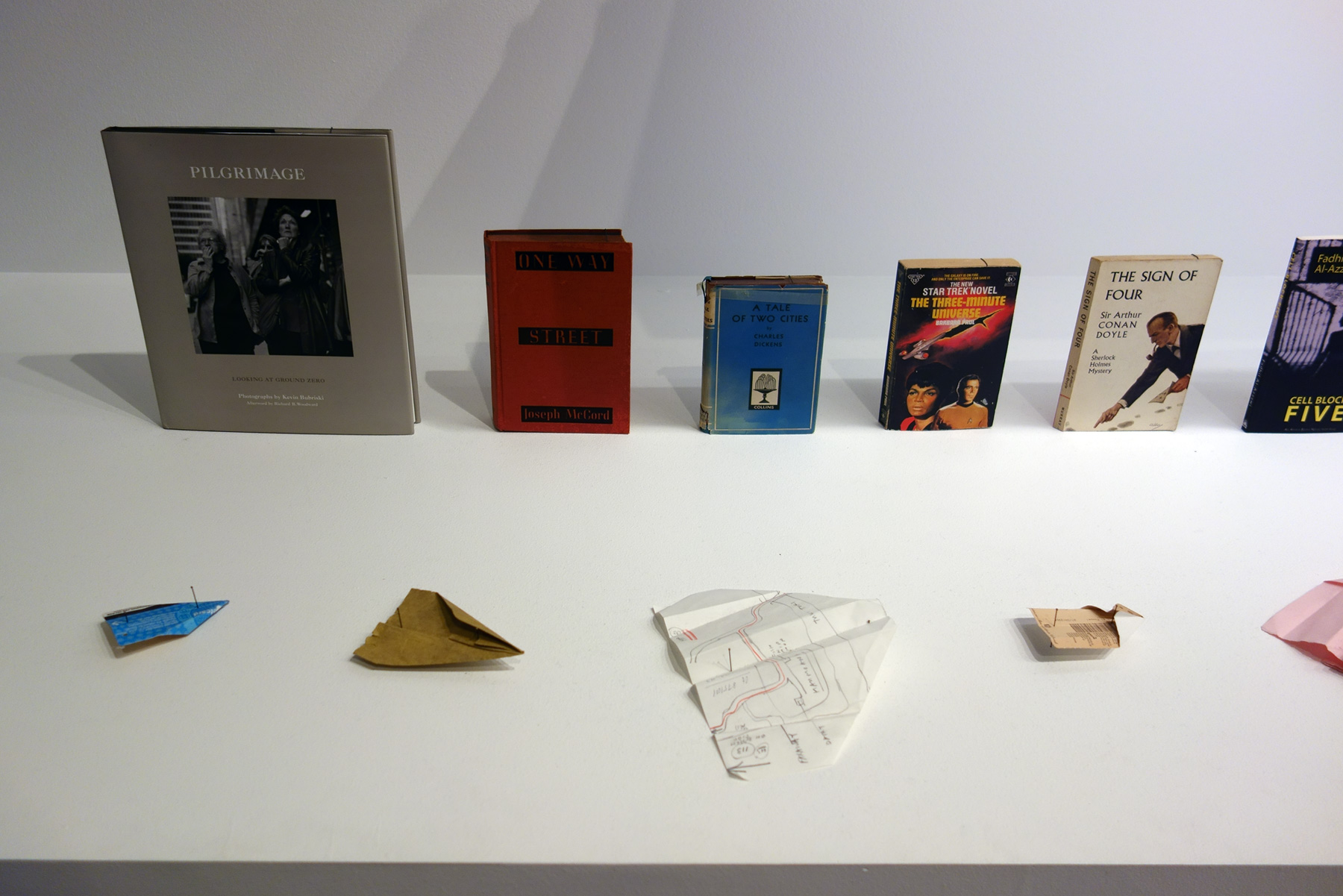


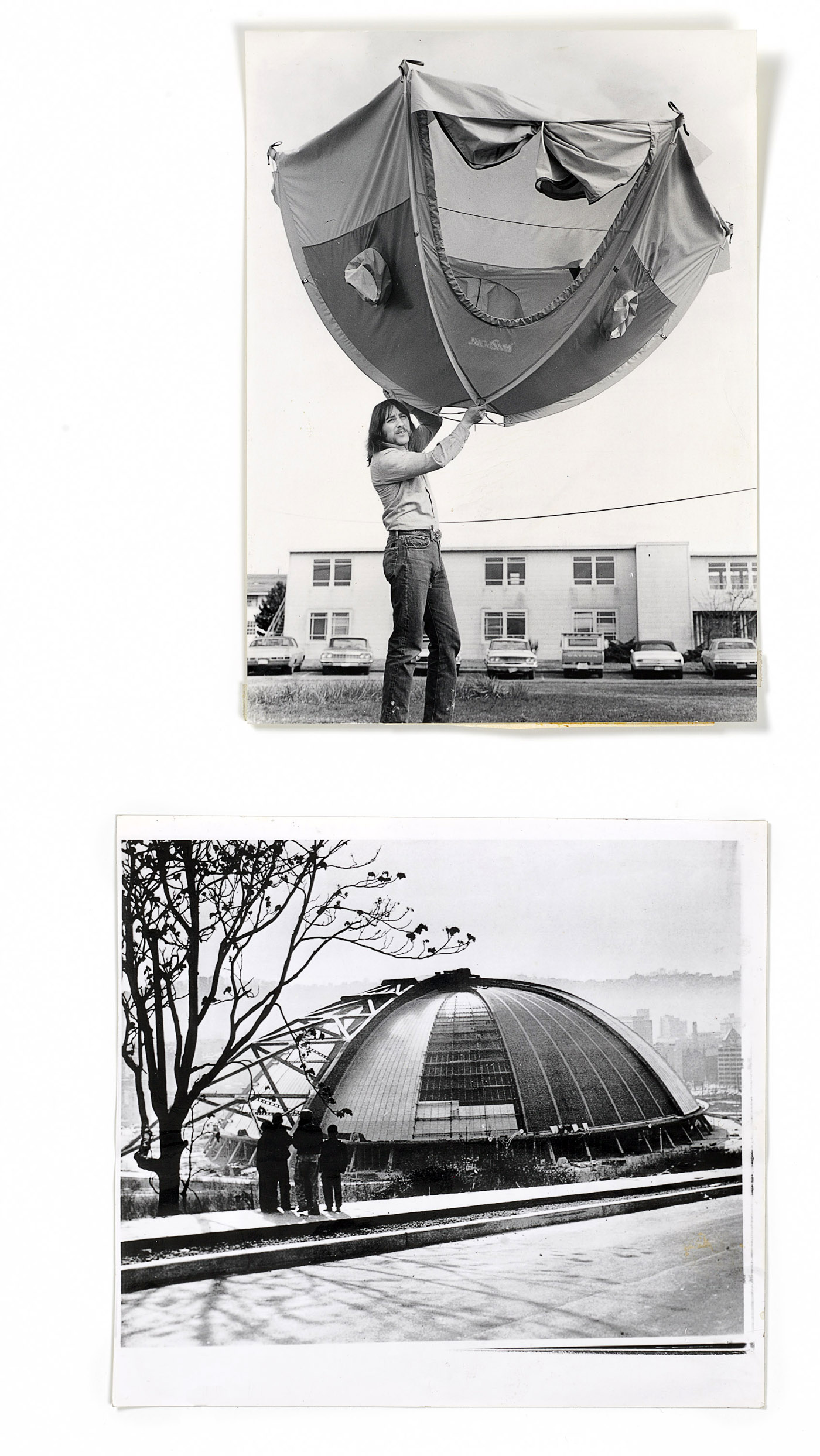
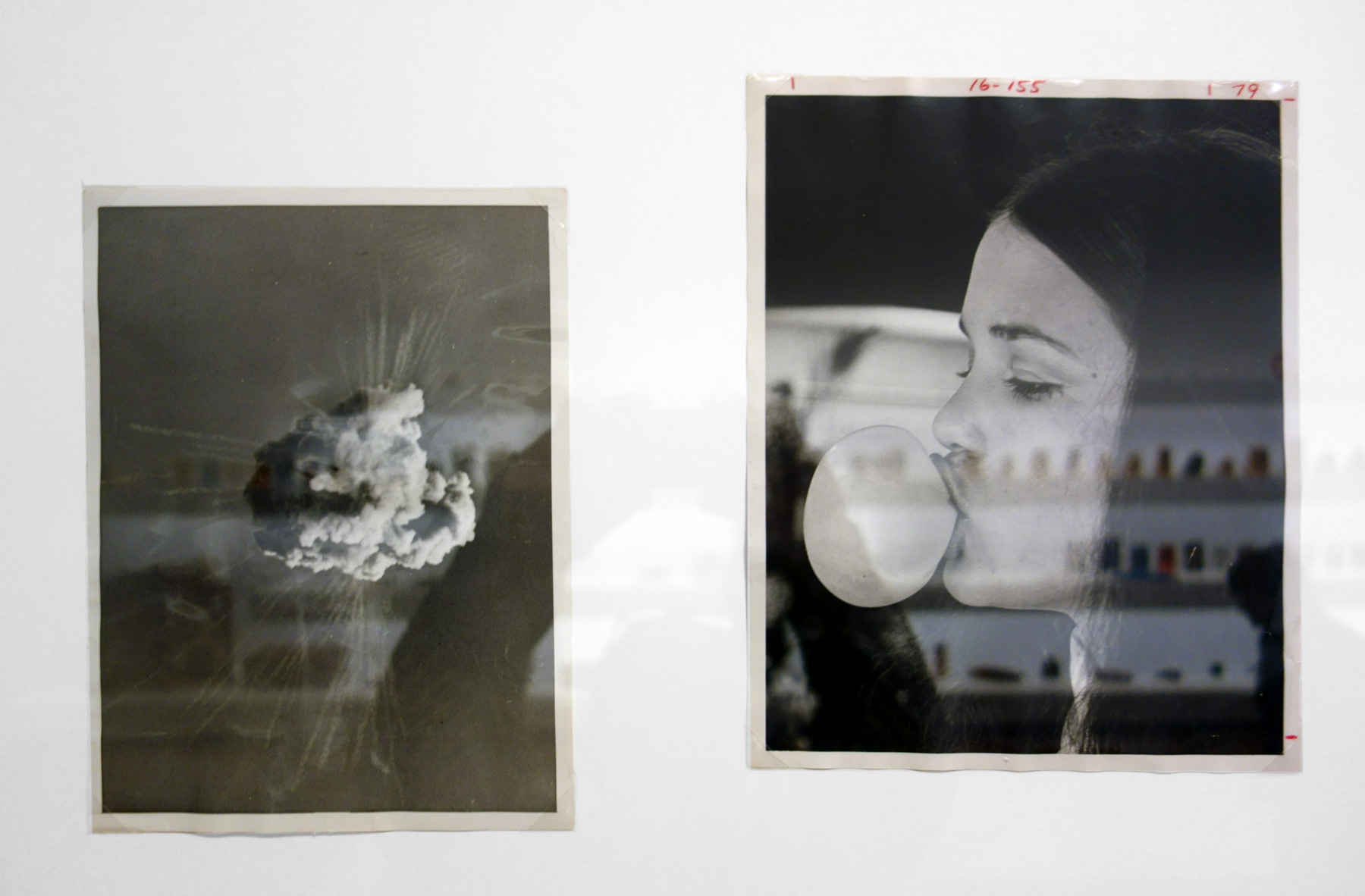
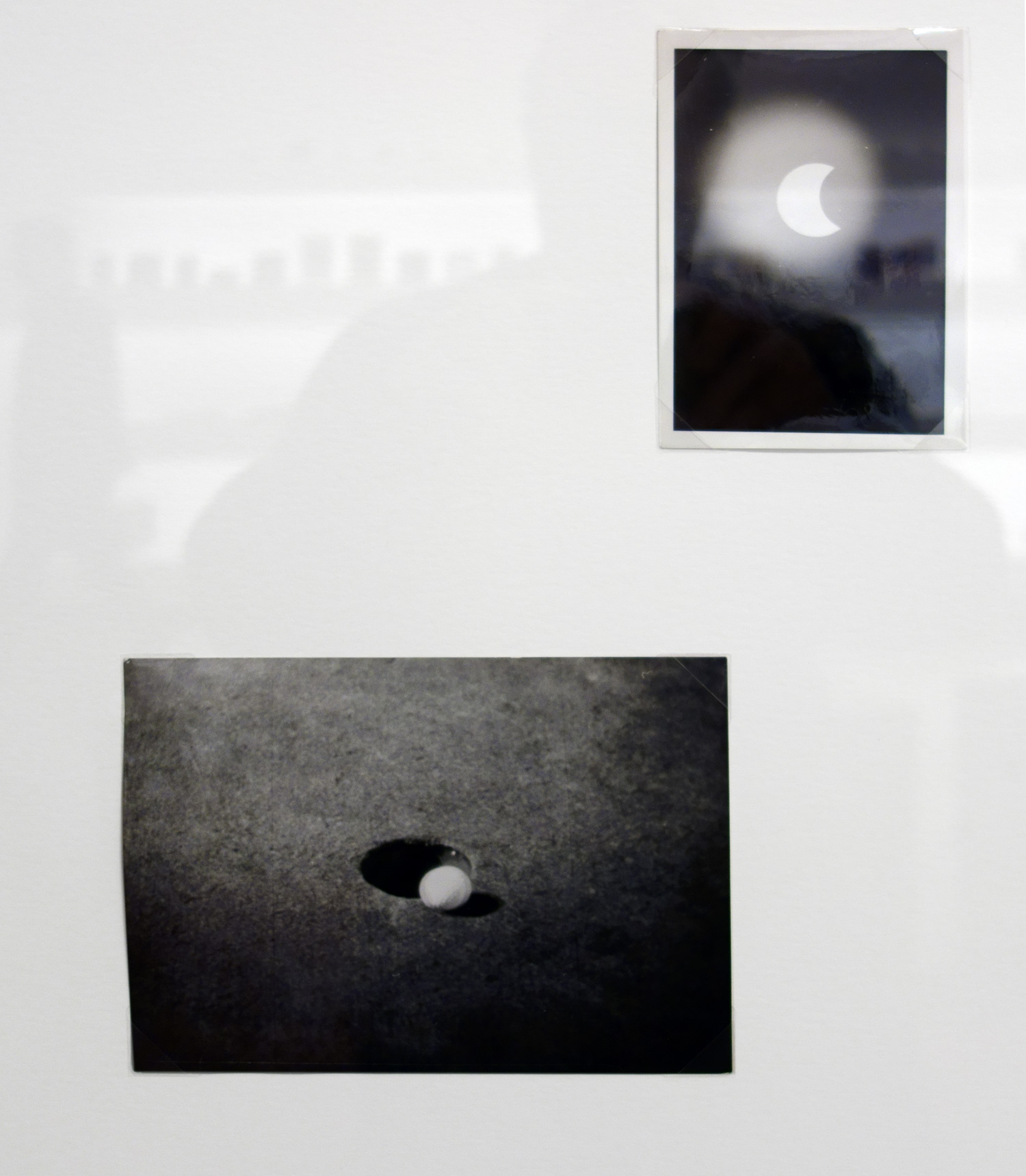
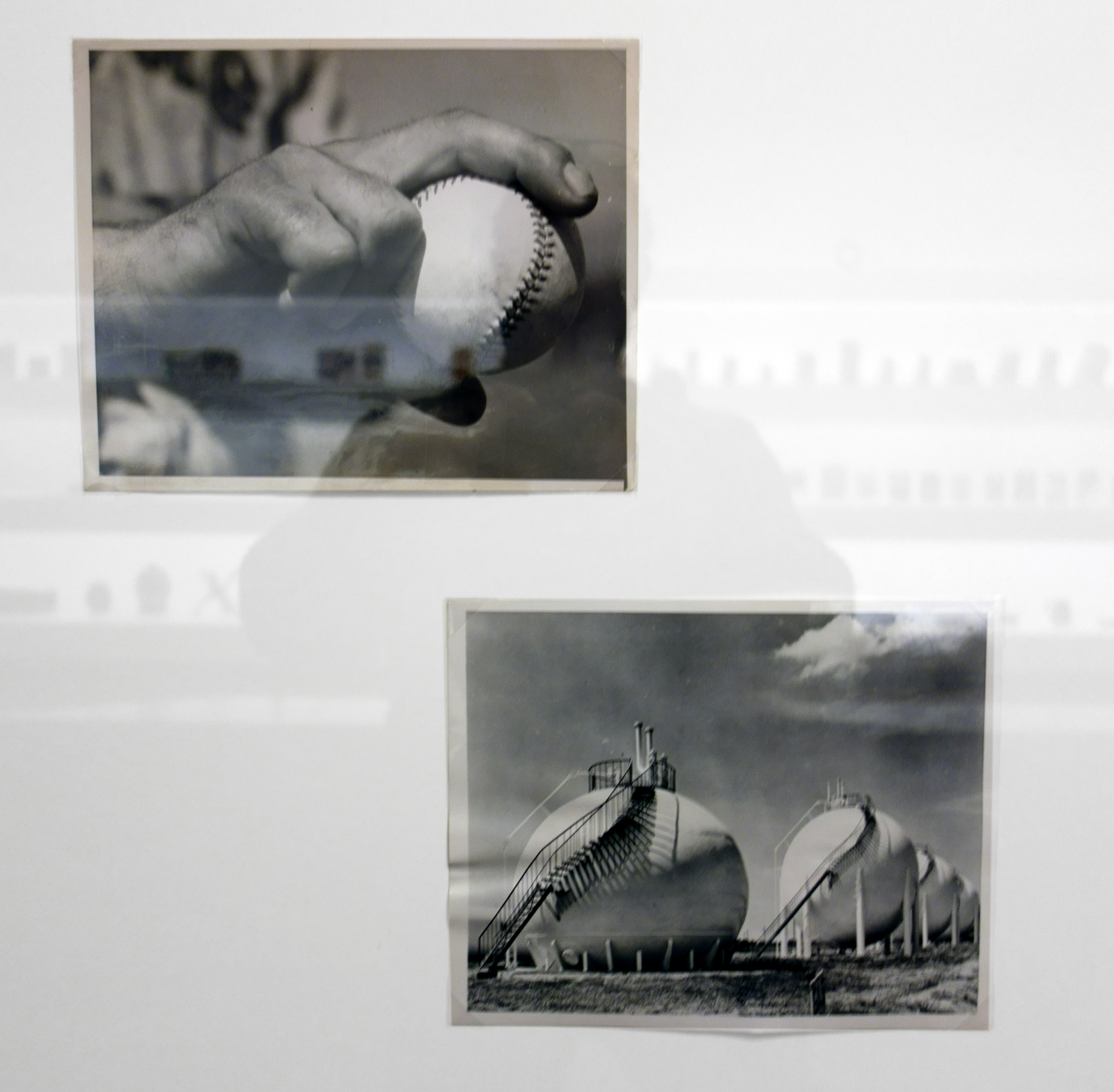
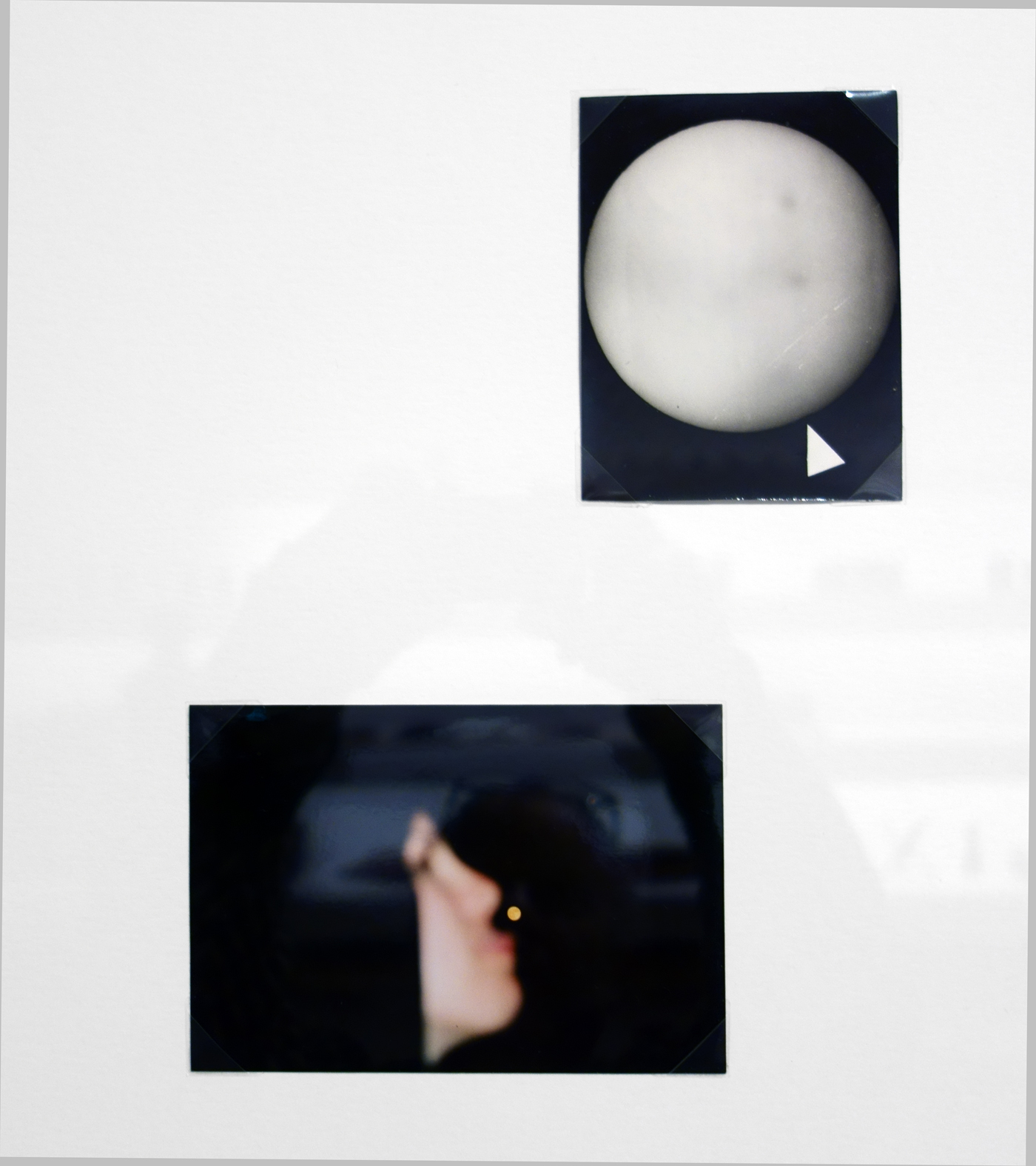

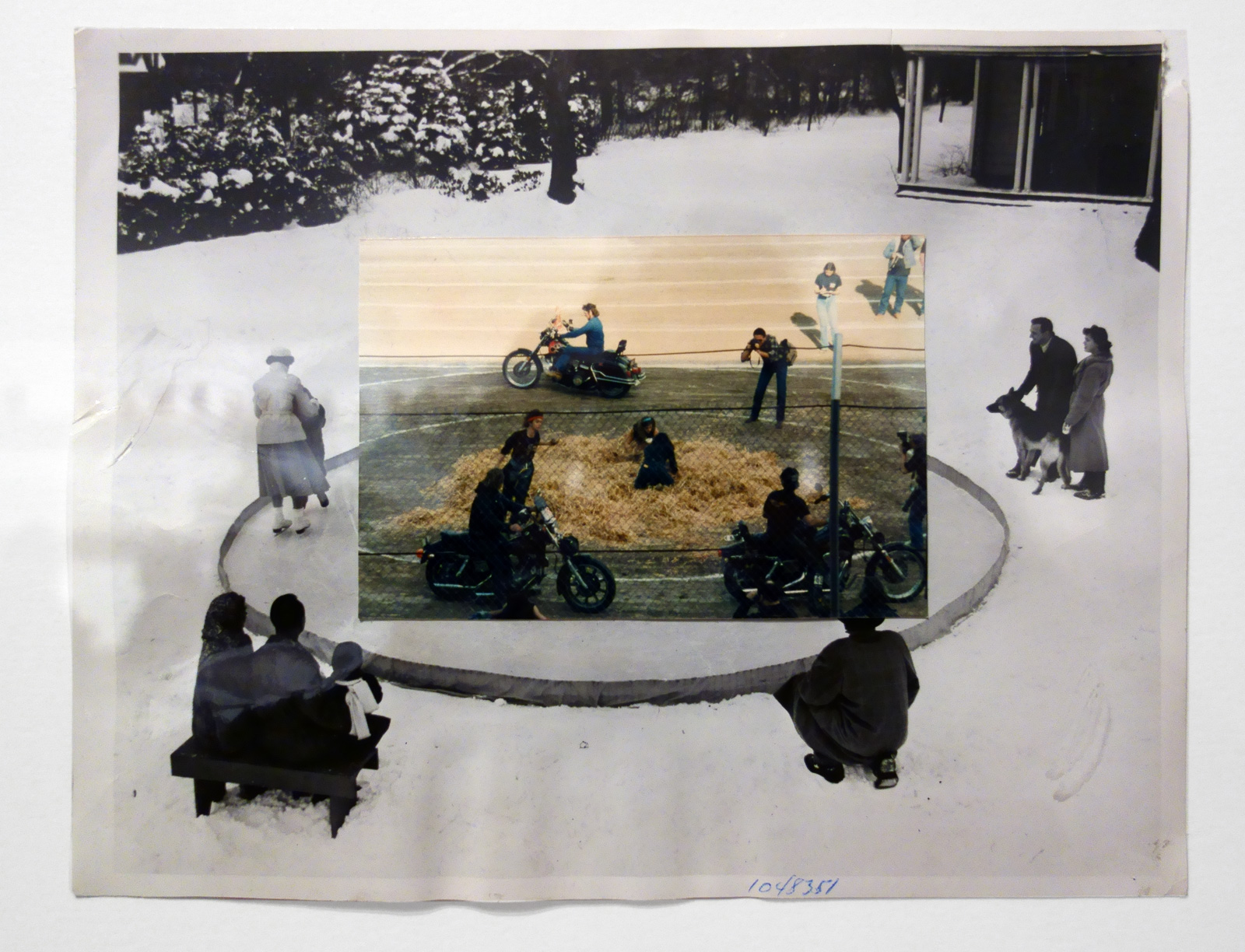
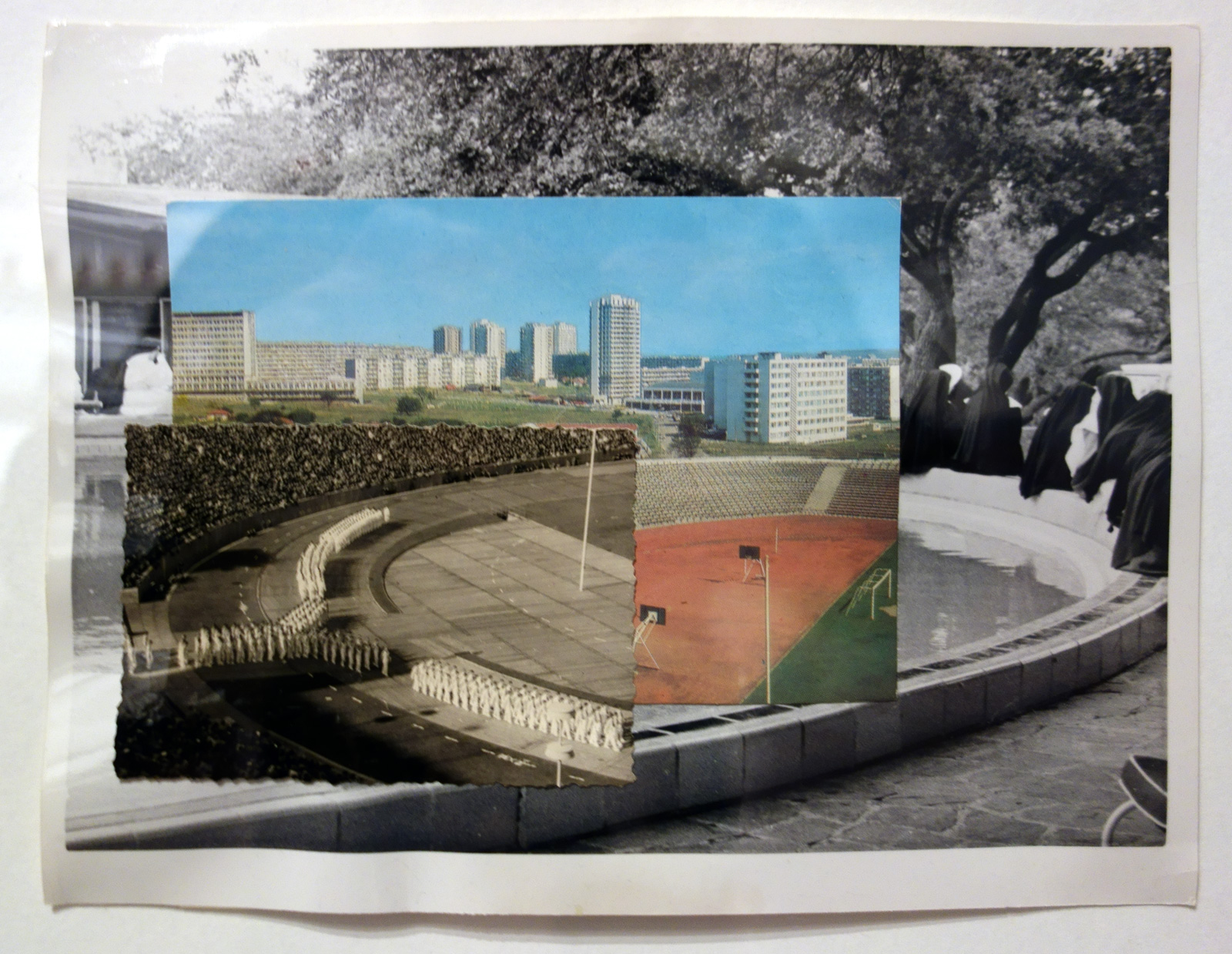
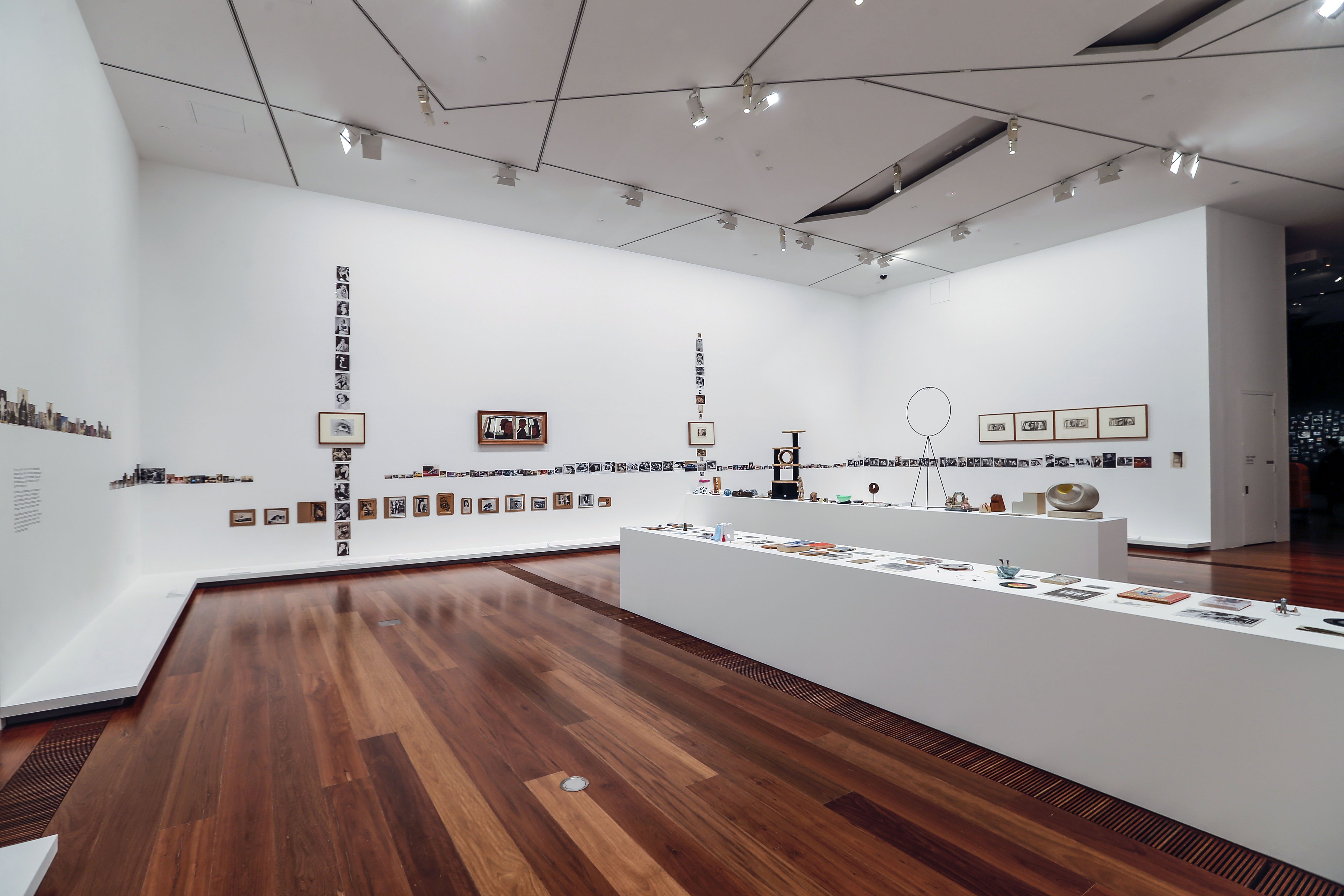


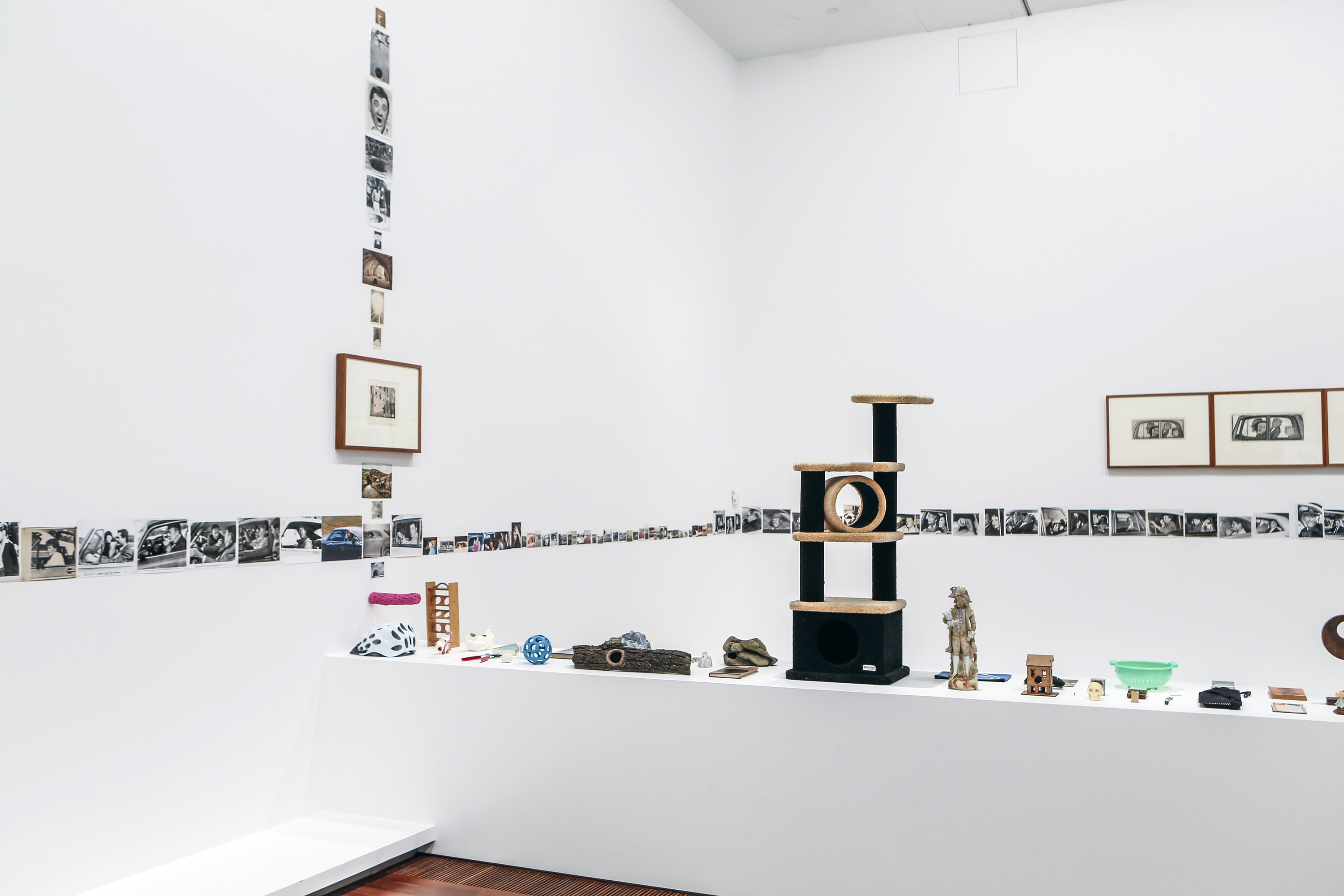


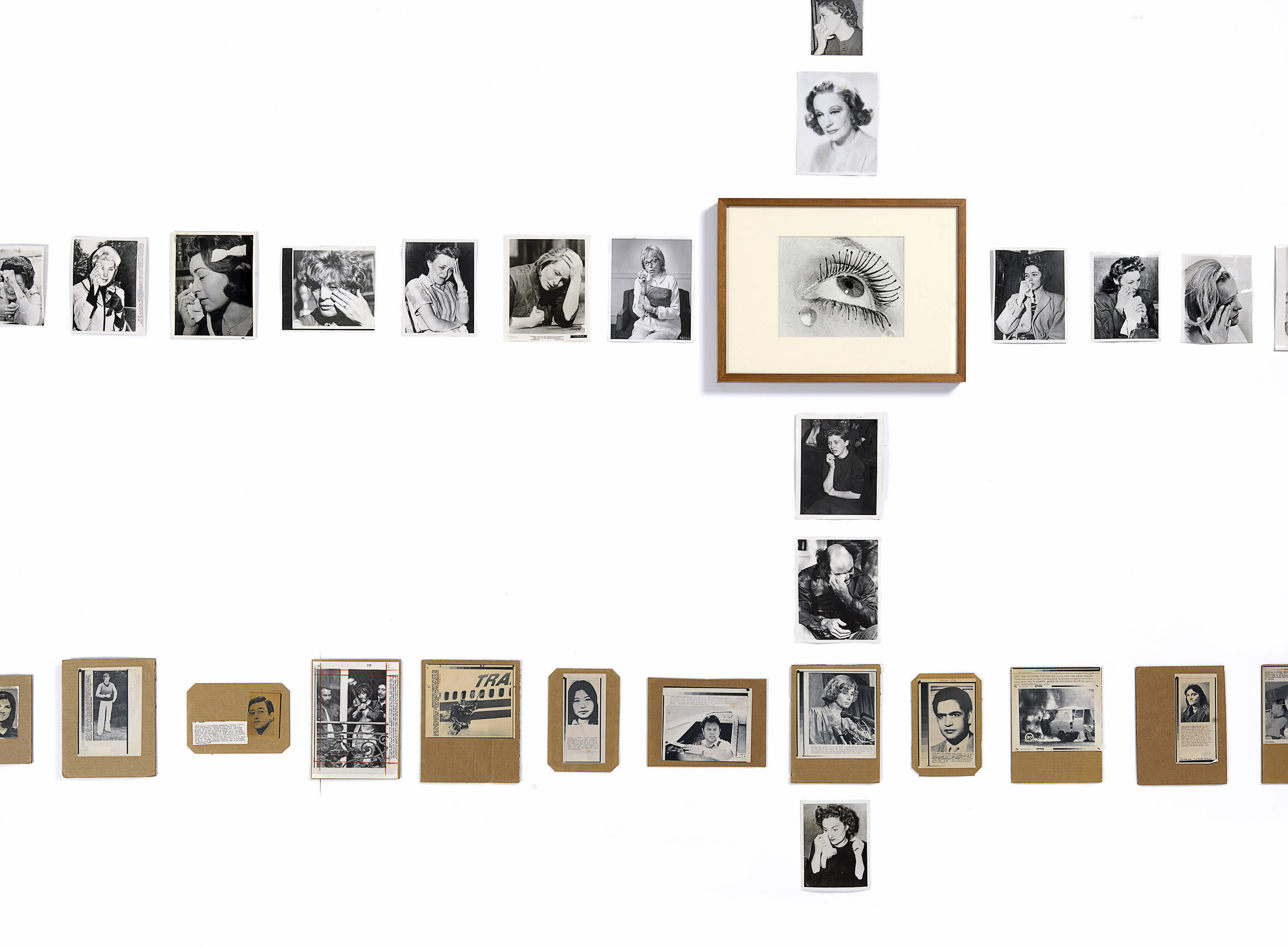

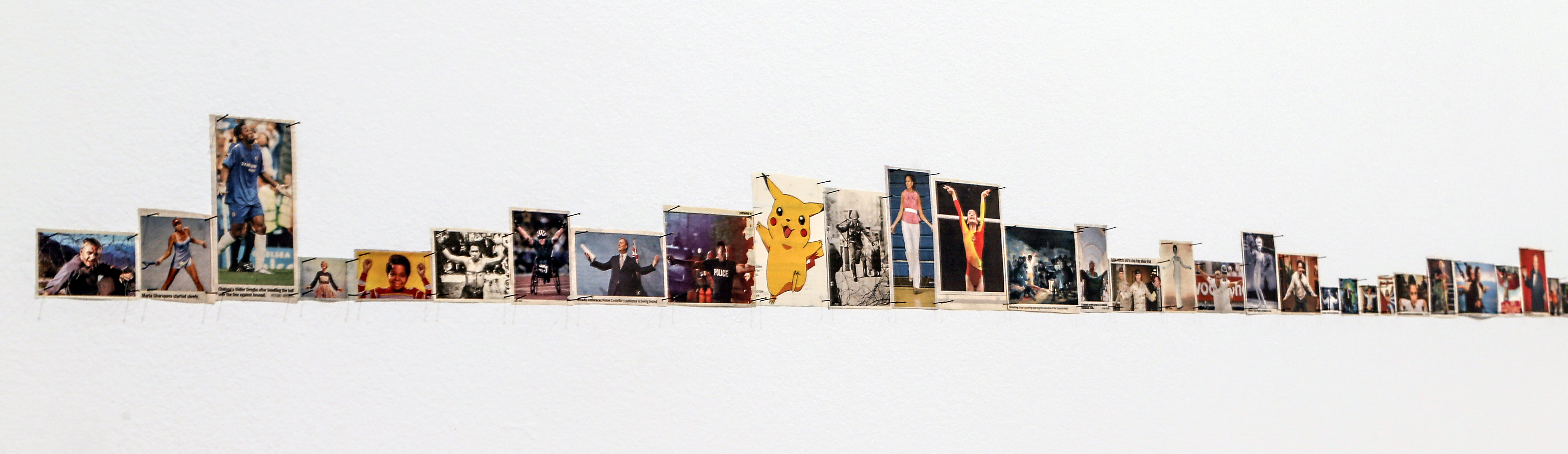


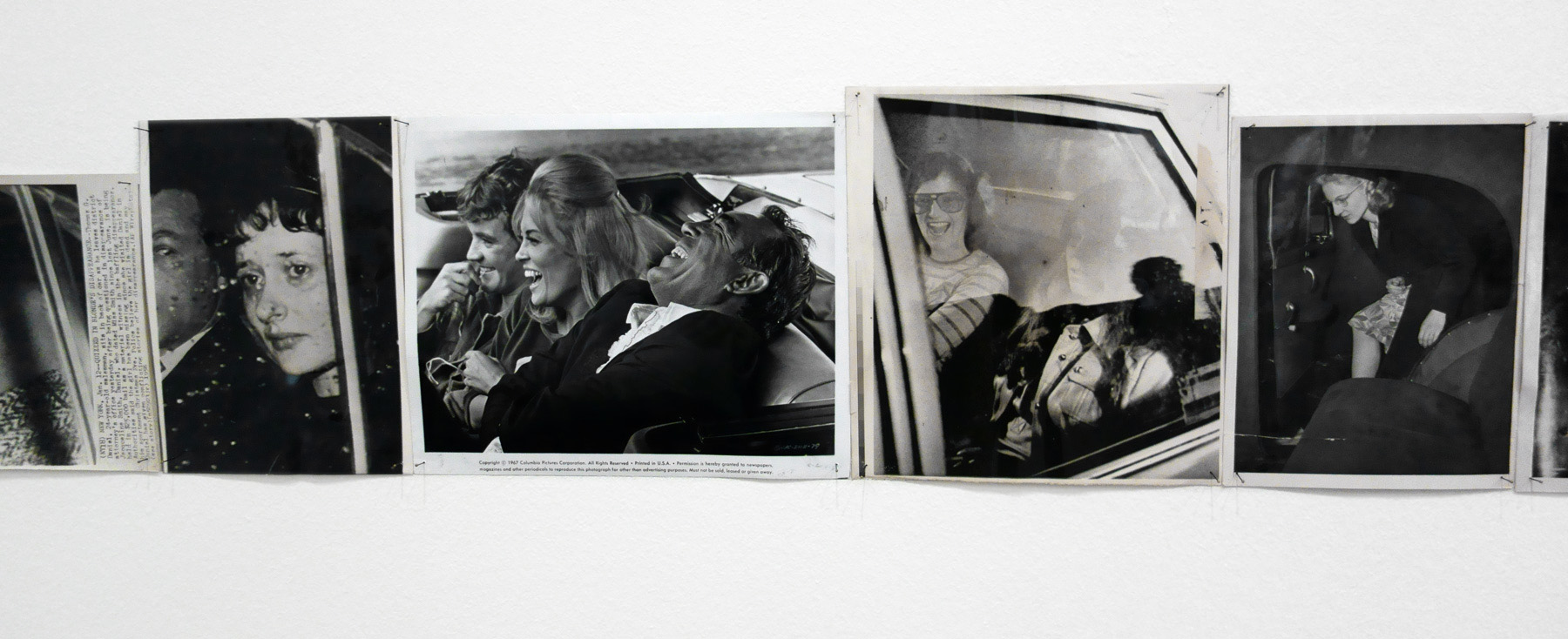
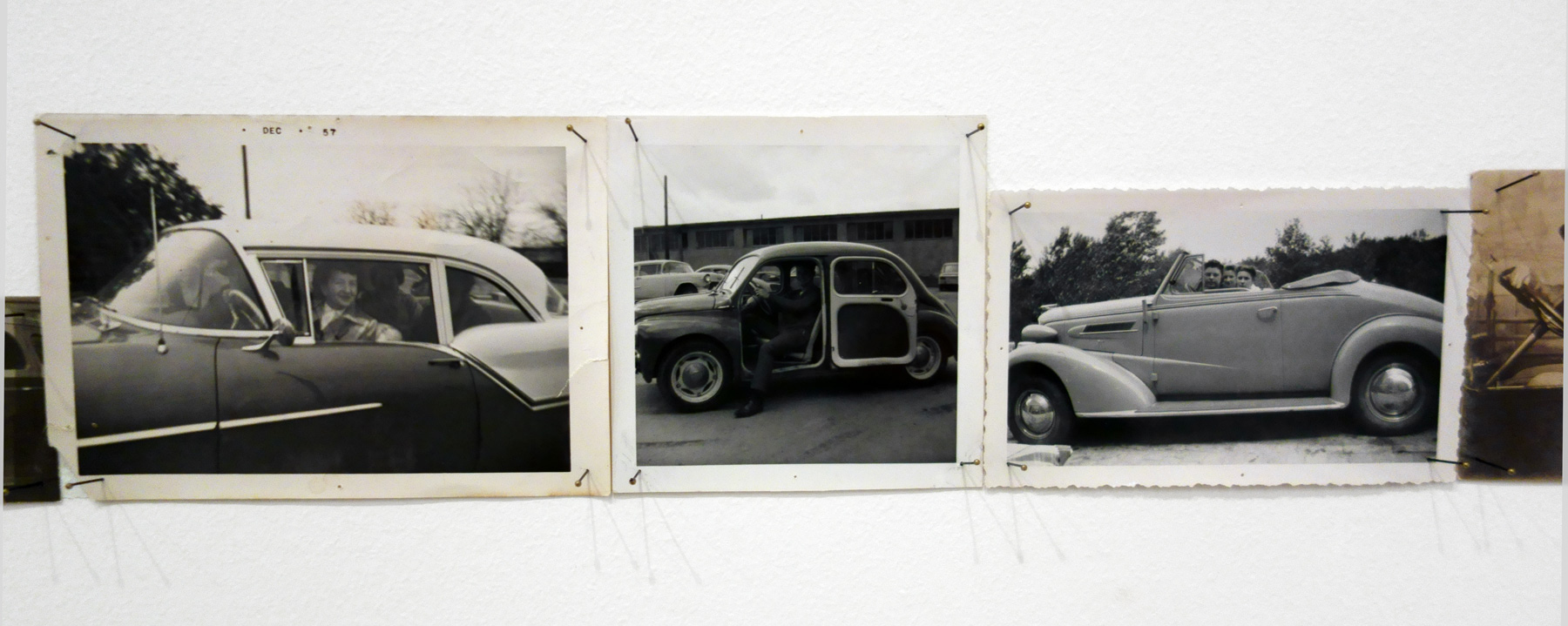
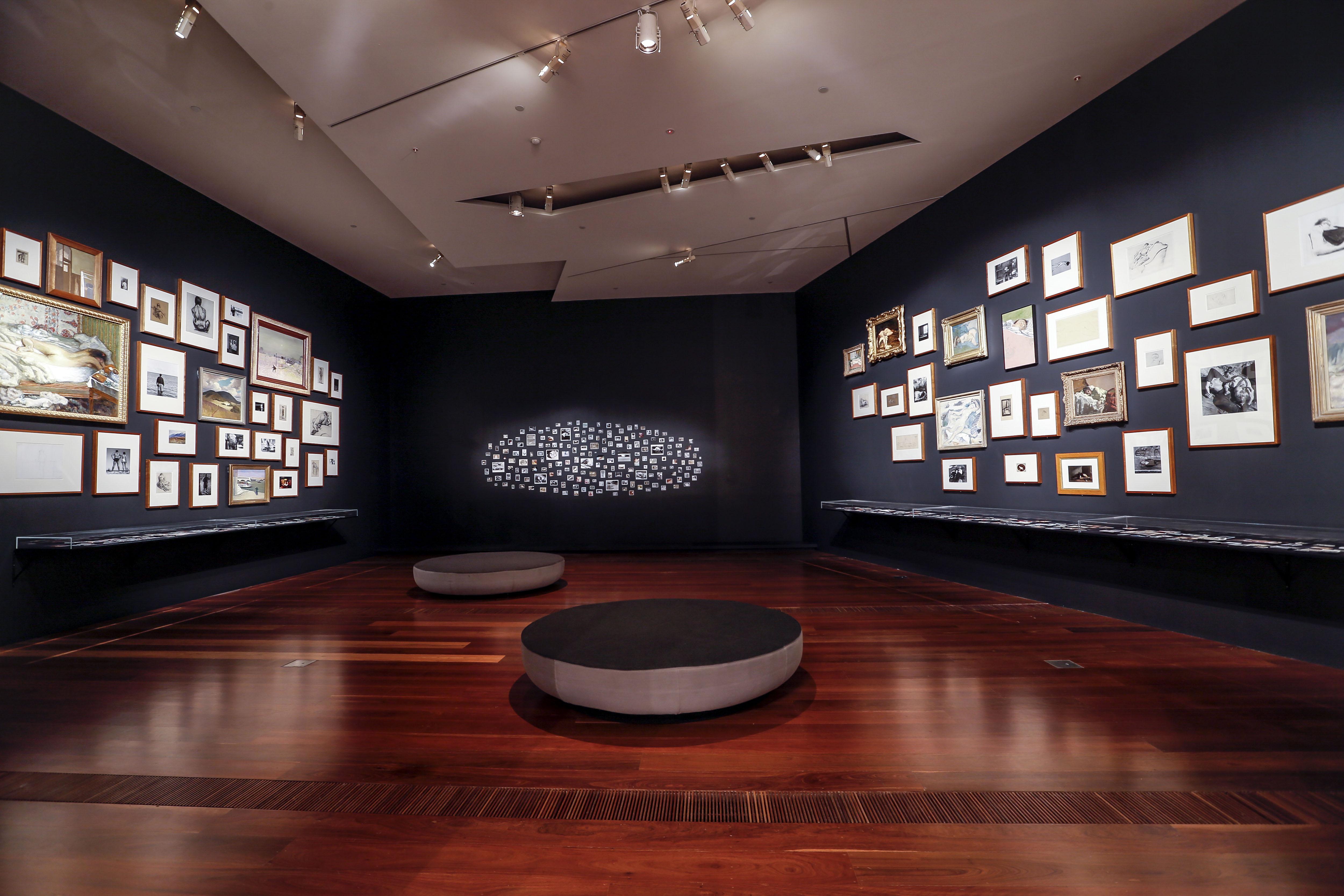
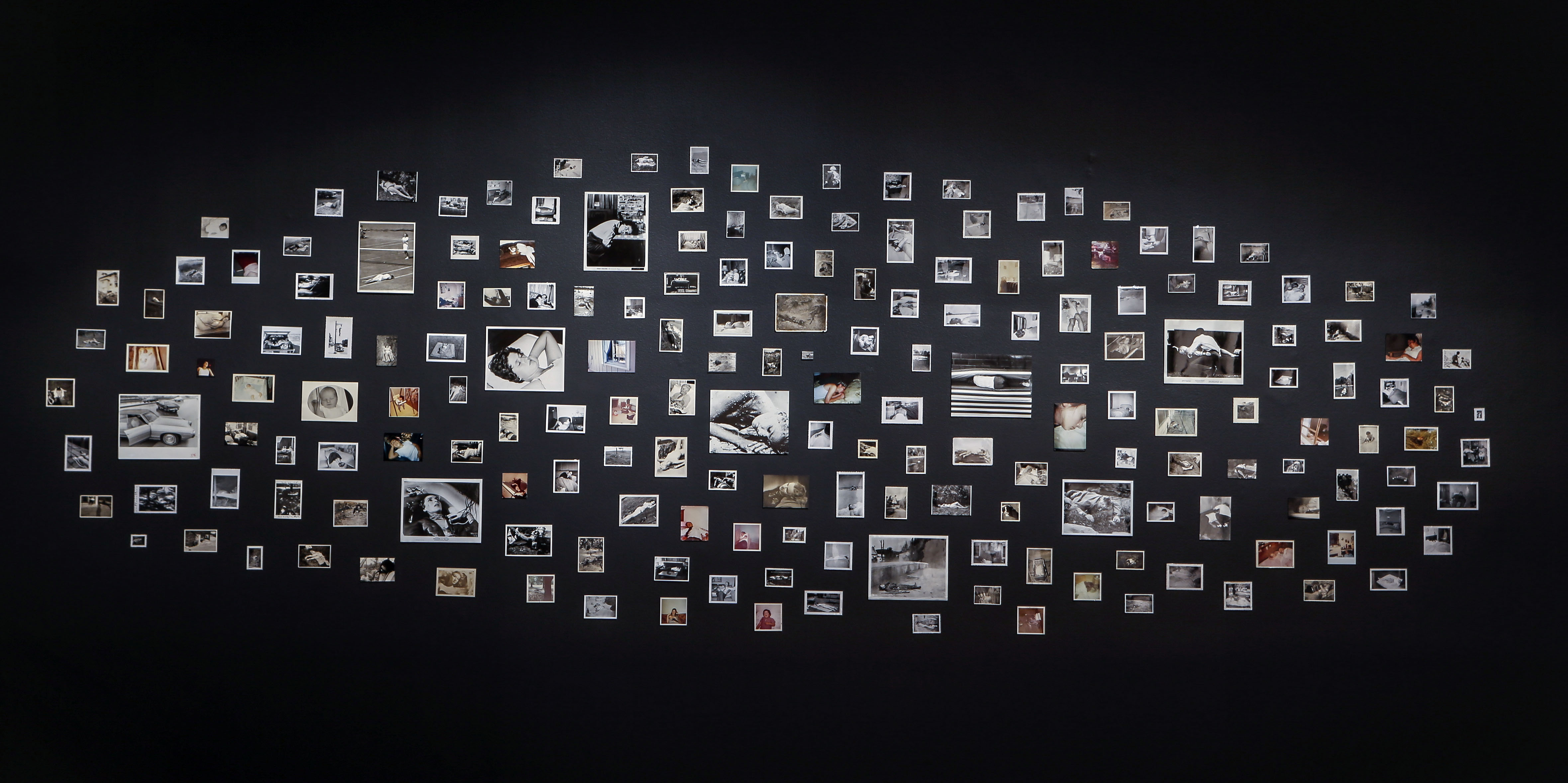
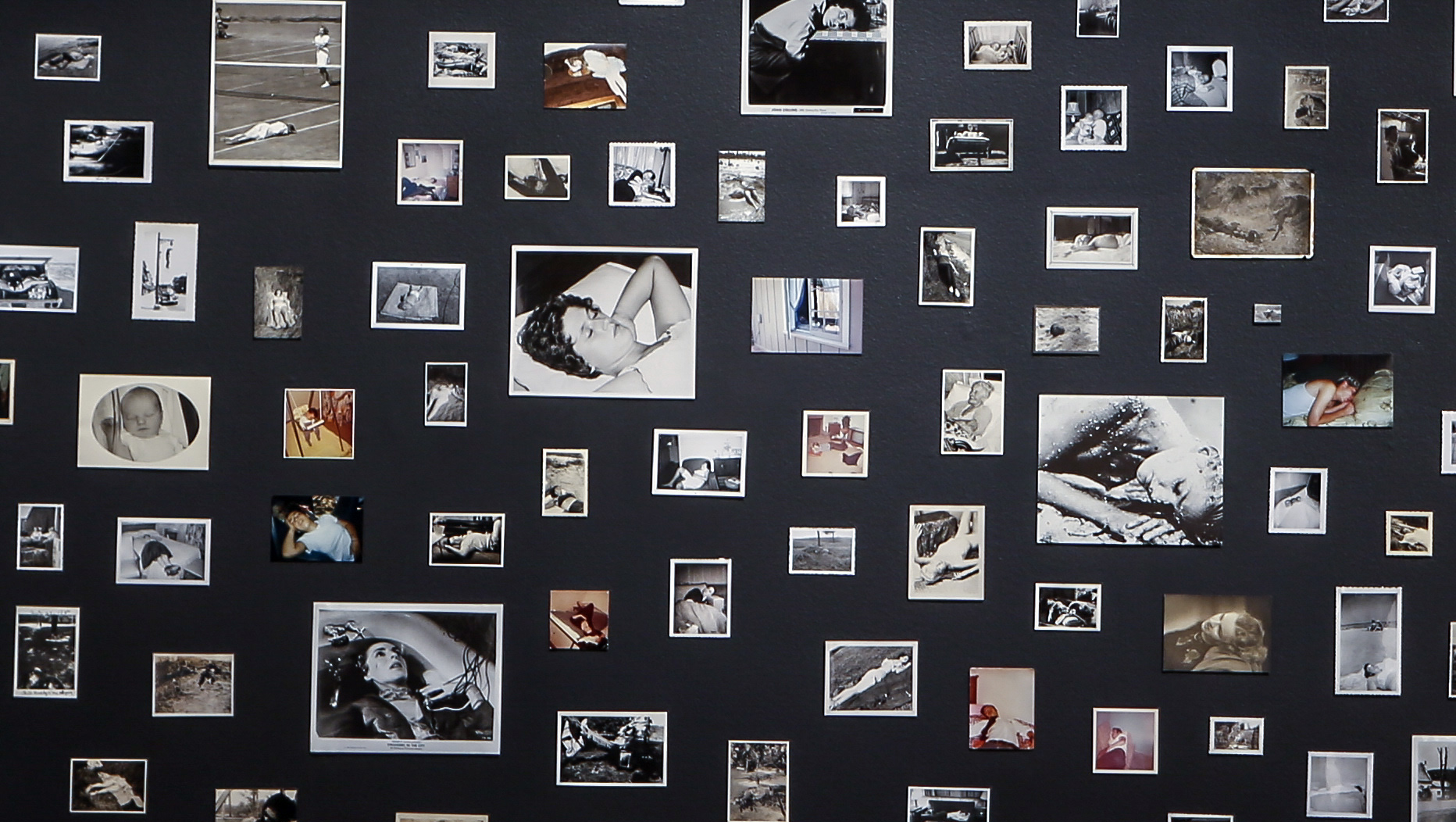
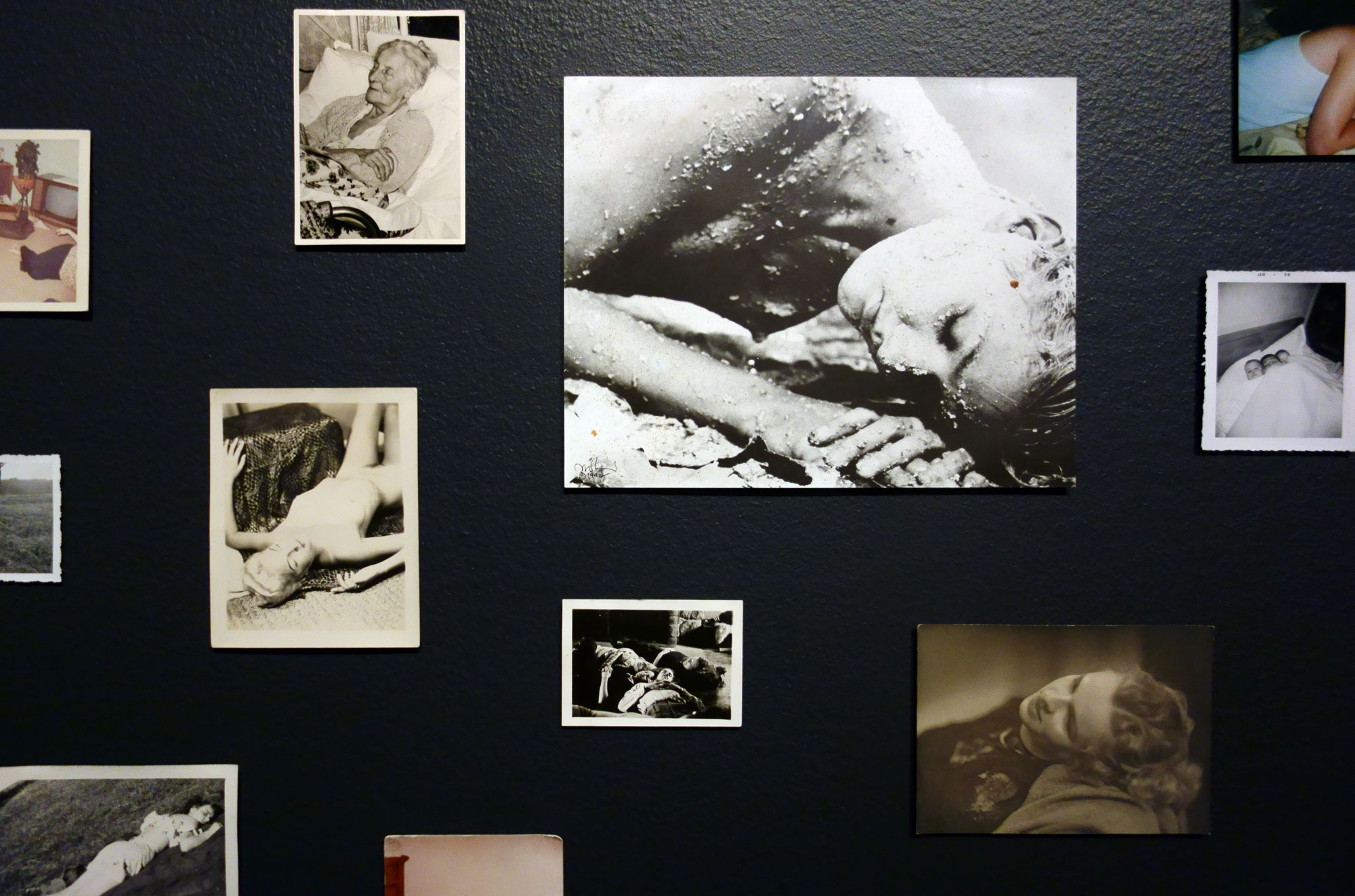
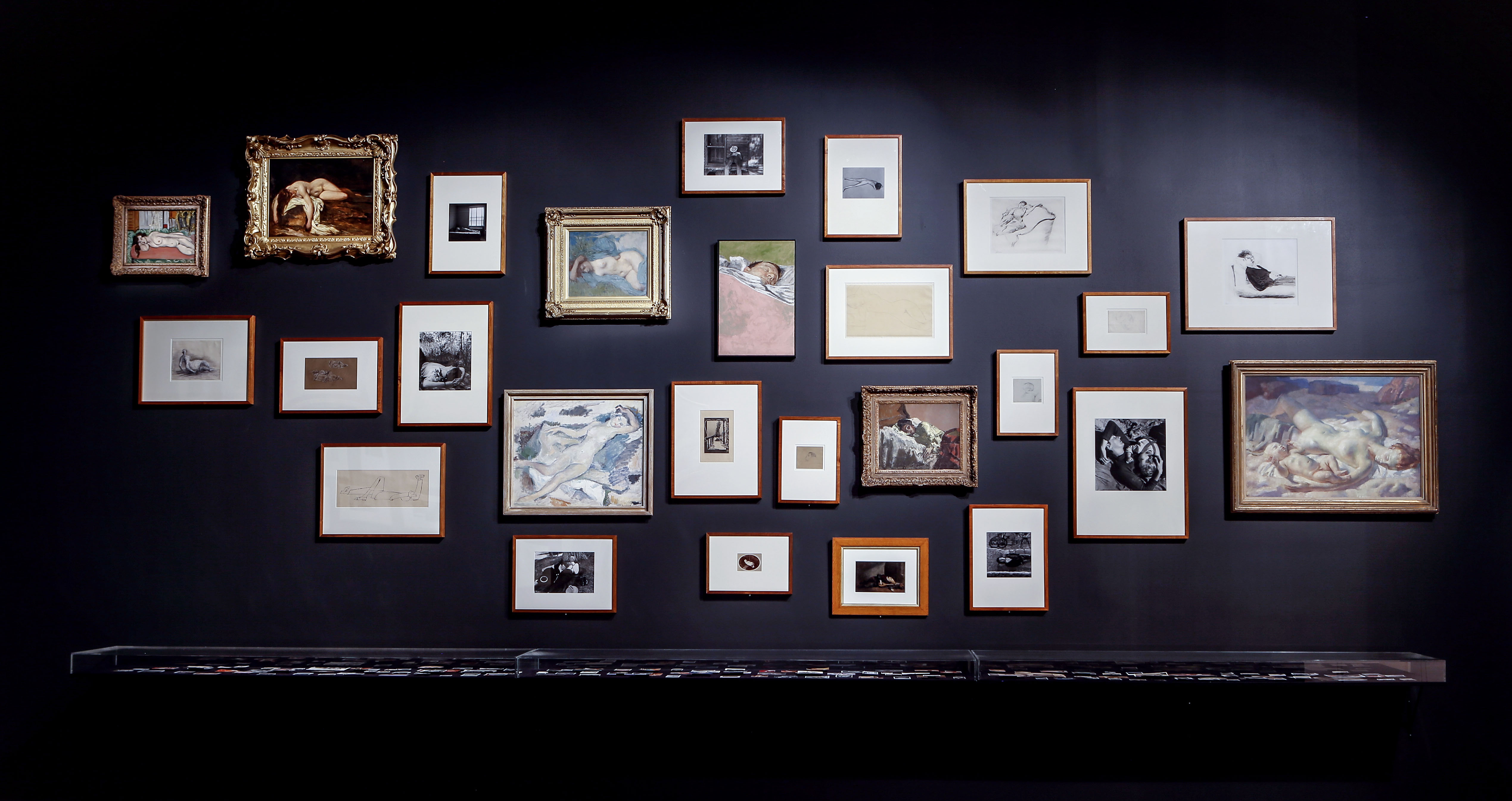


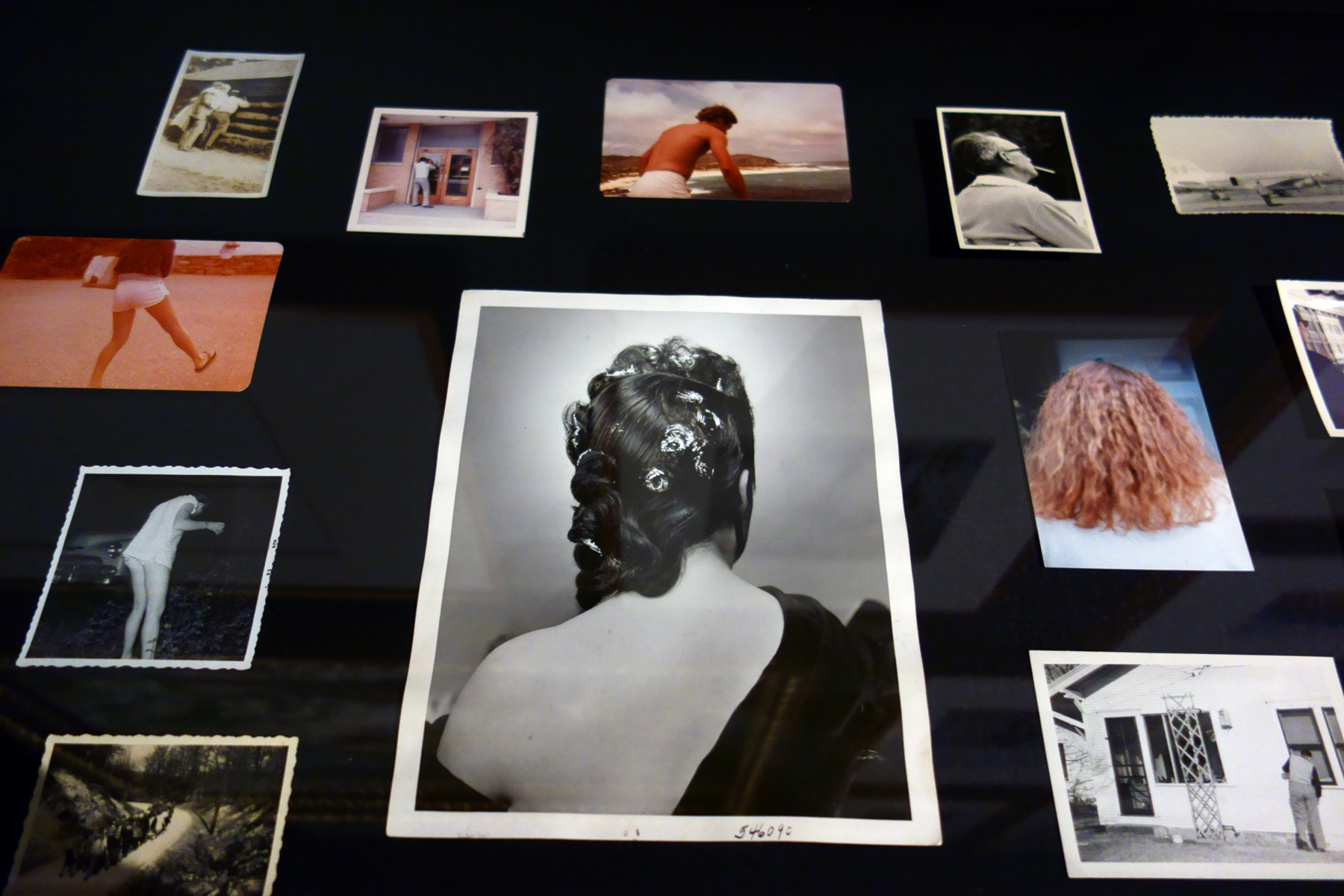
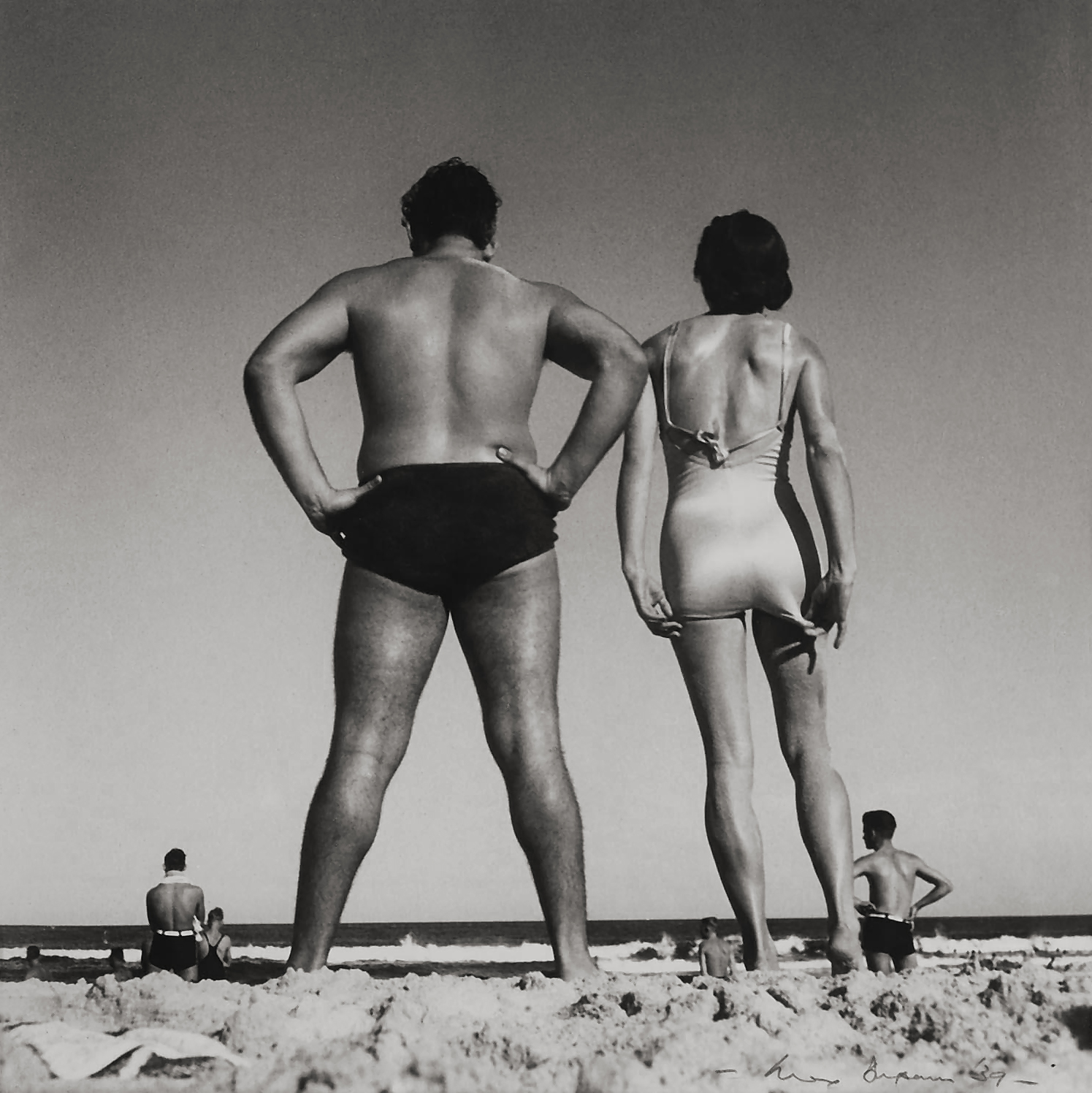
 Art Blart _ art and cultural memory archive
You must be logged in to post a comment.