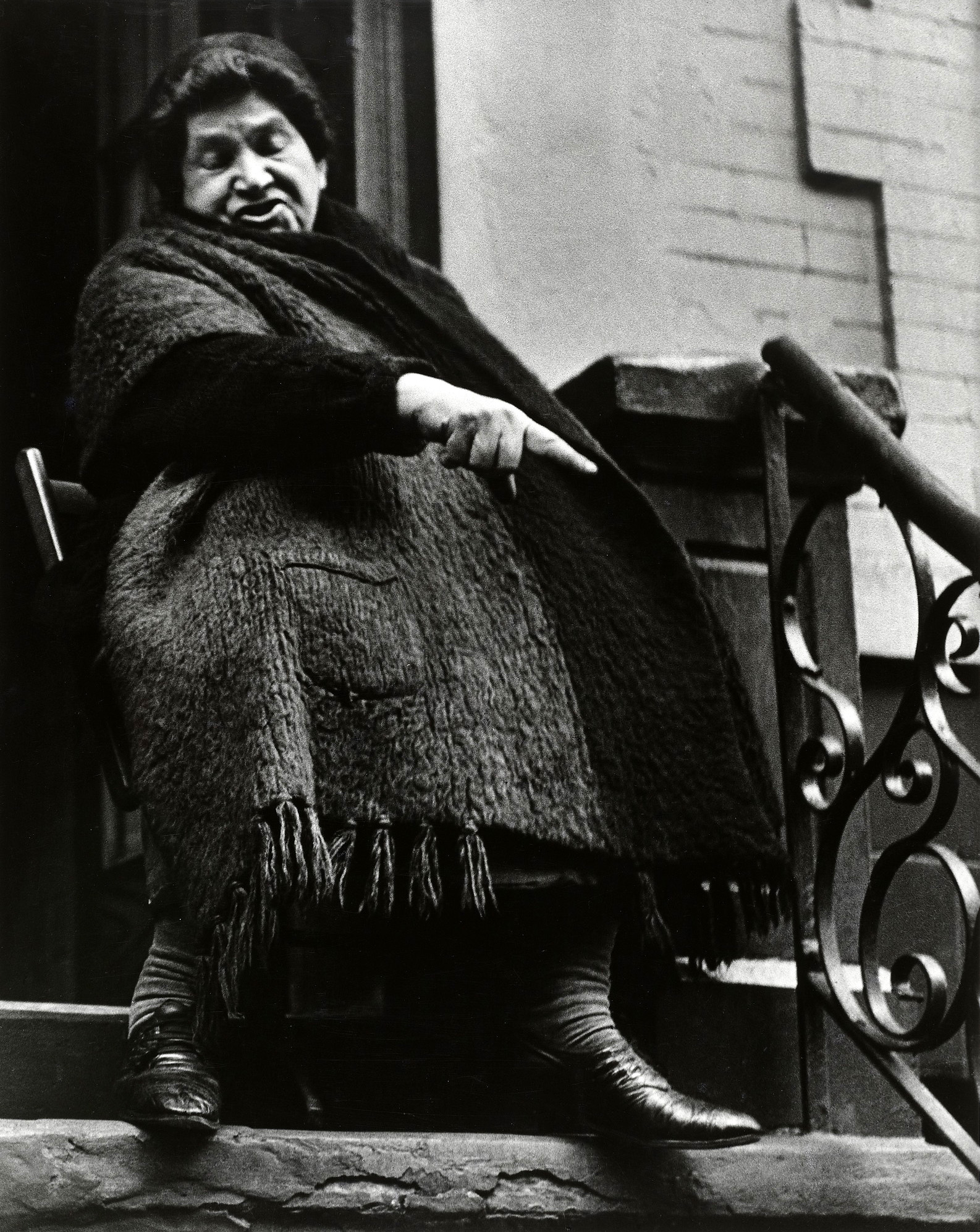
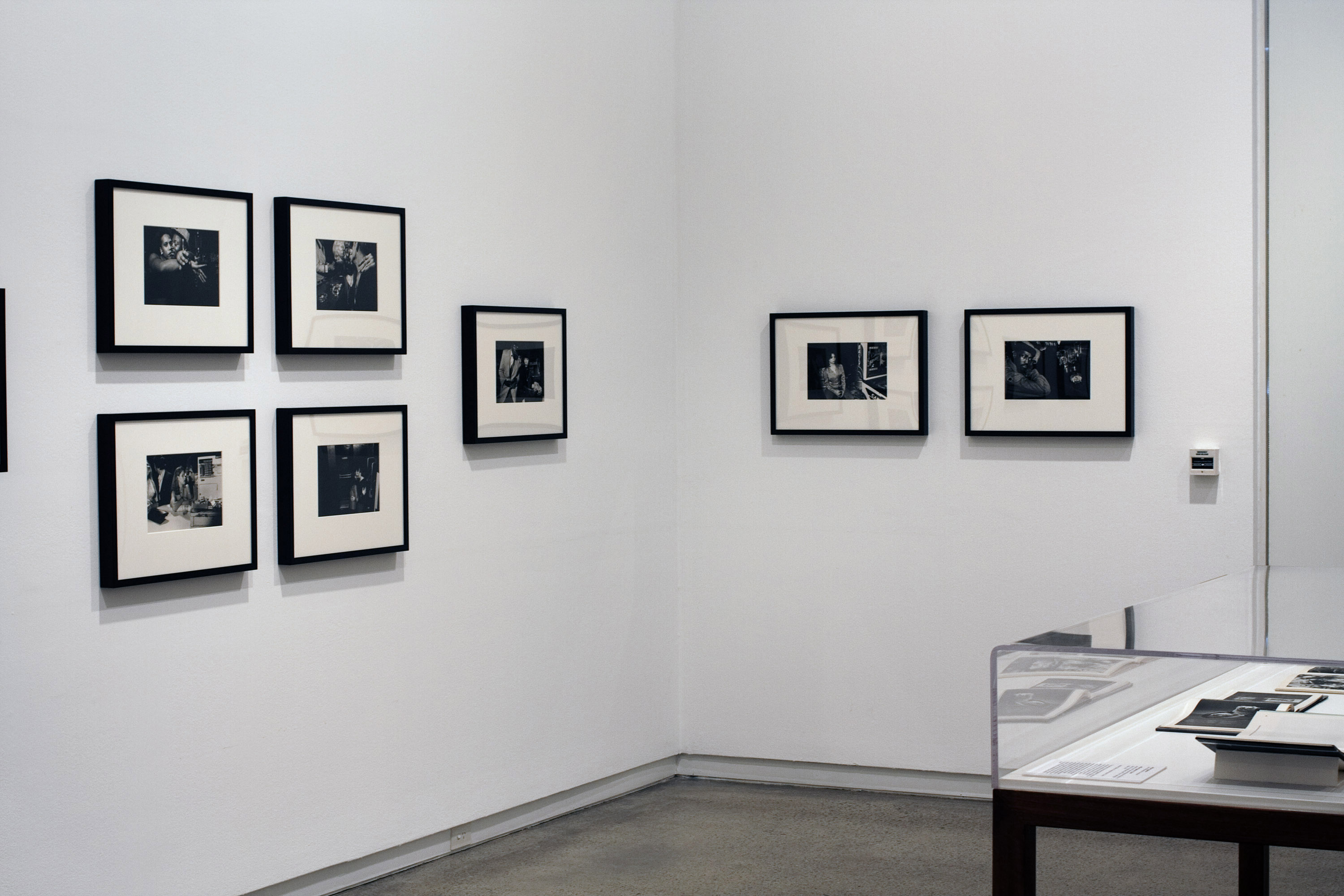
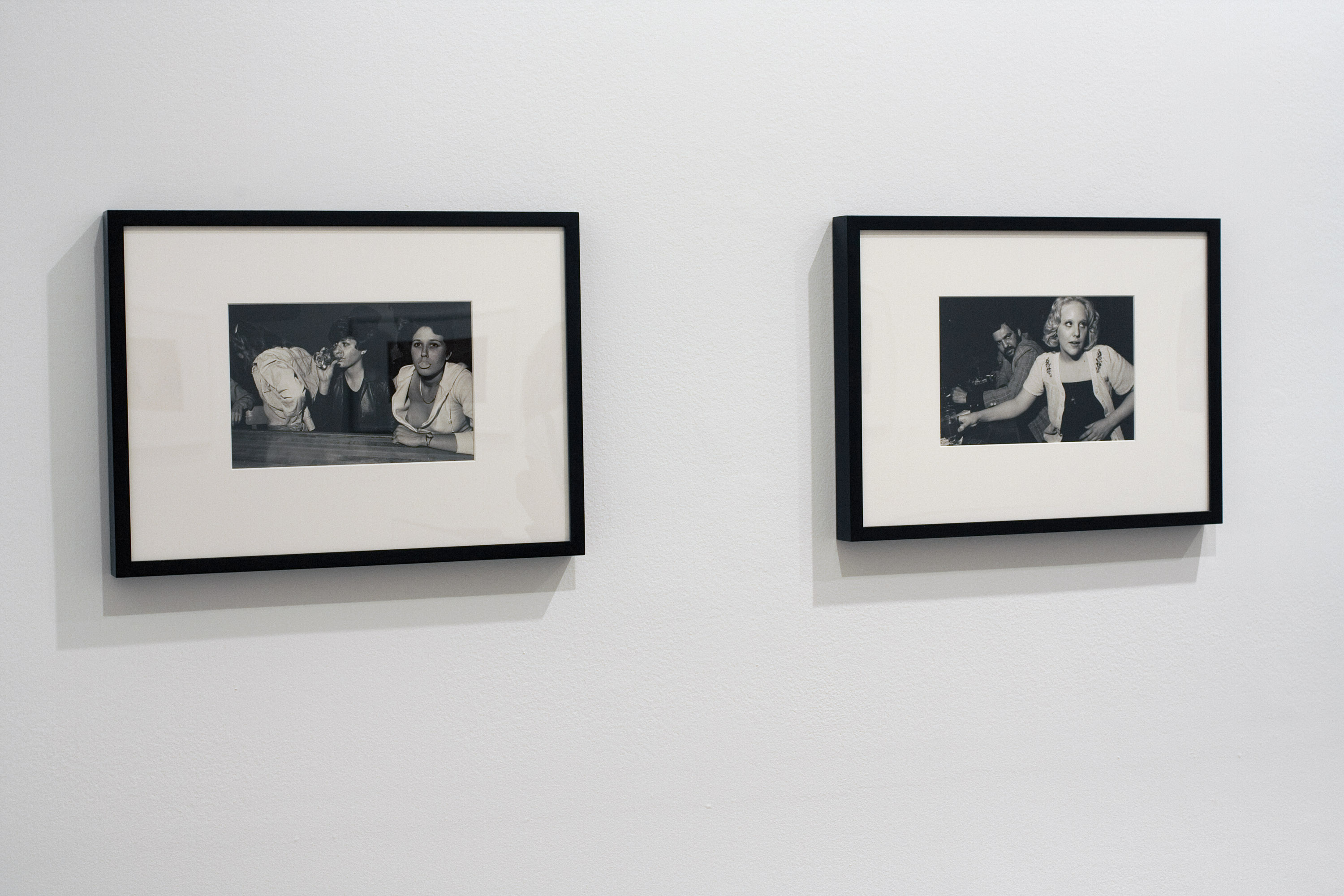
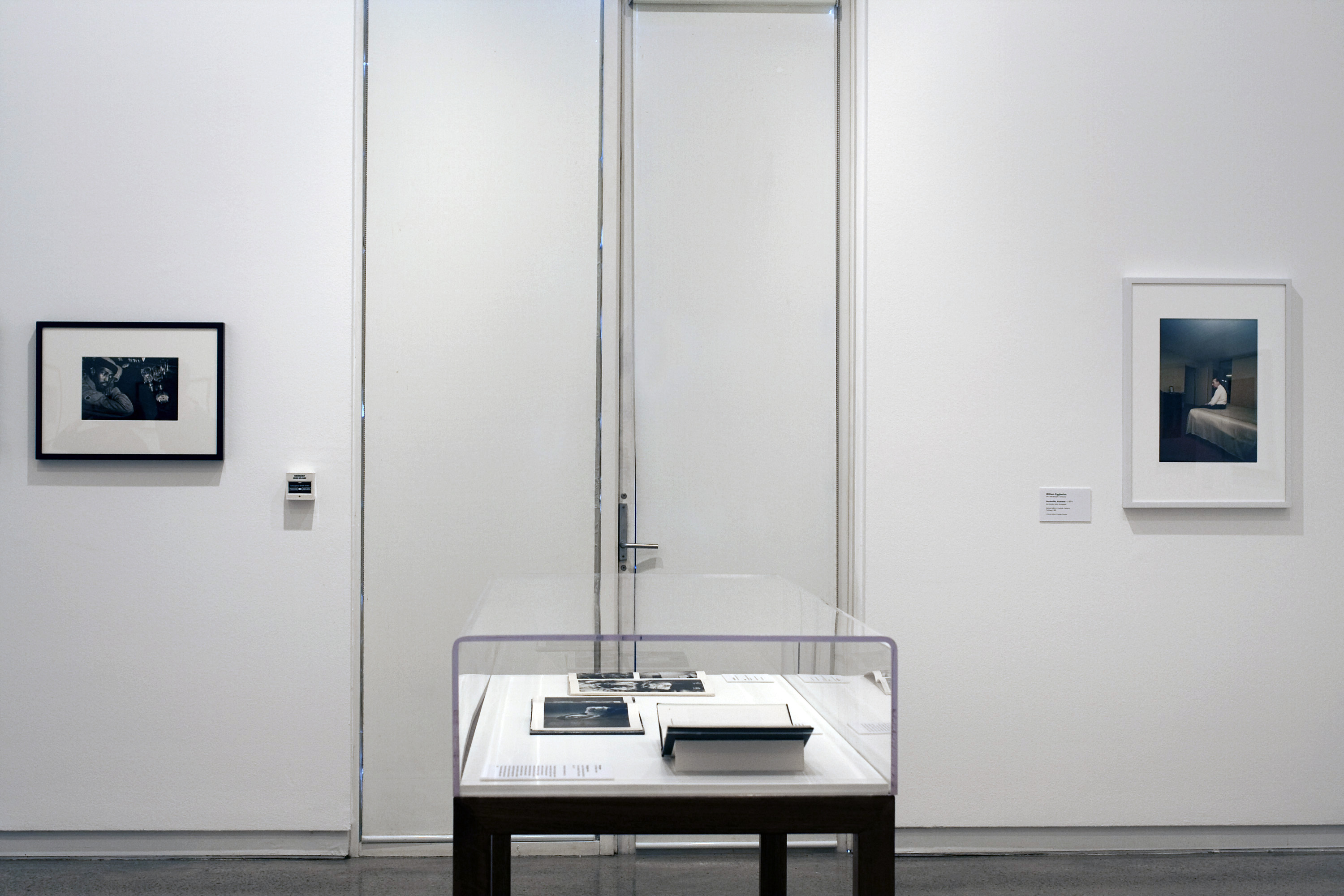
Review: ‘Diane Arbus: American Portraits’ at the Heide Museum of Modern Art, Melbourne

Exhibition dates: 21st March – 17th June, 2018

Curator at Heide: Anne O’Hehir


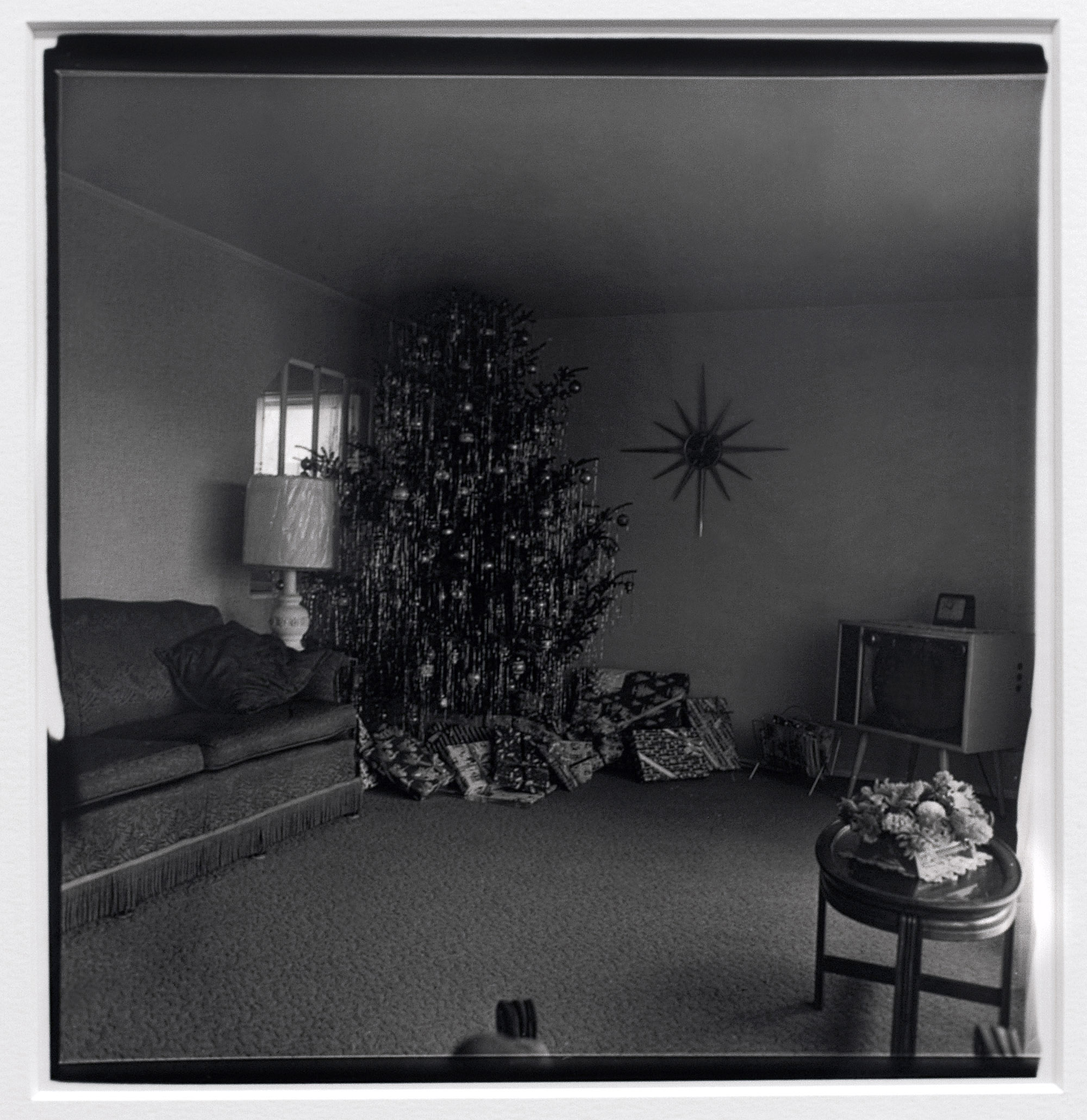
Diane Arbus (American, 1923-1971) 'Xmas tree in a living room in Levittown, L.I. 1963' 1963


Diane Arbus (American, 1923-1971)
Xmas tree in a living room in Levittown, L.I. 1963
1963
Silver gelatin print


Diane Arbus (American, 1923-1971) 'Xmas tree in a living room in Levittown, L.I. 1963' 1963 National Gallery of Australia, Canberra from the exhibition 'Diane Arbus: American Portraits' at the Heide Museum of Modern Art, Melbourne, March - June, 2018


Diane Arbus (American, 1923-1971)
Xmas tree in a living room in Levittown, L.I. 1963 (installation view)
1963
Silver gelatin print
National Gallery of Australia, Canberra
Purchased 1981
Photo: © Dr Marcus Bunyan and Heide Museum of Modern Art


The power of intention

If I had to nominate one photographer who is my favourite of all time, it would be Diane Arbus. There is just something about her photographs that impinge on my consciousness, my love of difference in human beings, their subversiveness and diversity. She pictures it all, some with irony, some with love, some with outright contempt, but always with interest. In photographs of dwarfs you don’t get the majesty and beauty that Susan Sontag desired, you get something else instead: the closeness of intention and effect – this is who this person was at that particular moment represented in a photograph, the essence of their being at that particular time.

Arbus was fascinated by the relationships between the psychological and the physical, probing her subjects with the camera to elicit a physical response. Her sensory, emotional, intellectual and aesthetic intelligence creates a single experience in relation to subject, stimulating her to respond to the world in her own unique way. While Arbus may well have hated aspects of American culture – “Its hypocrisy, this ‘happy happy’ story after the war, the consumerism, the racism, she feels deeply about that,” as Anne O’Hehir, curator of the National Gallery of Australia’s American Portraits observes – she photographed everything that makes us human in profound and powerful photographs. To me, her subjects were not ‘caught off guard’ nor did they unintentionally reveal aspects of themselves – they revealed themselves to Arbus just as they are, because she gained their trust, she had empathy for who they were… an empathy that probably flowed both ways, enhanced by the subjects sense of Arbus’ own personal travails.

It is unfortunate then, that this exhibition at Heide Museum of Modern Art is such a disappointment. This has nothing to do with the wonderful installation by the Heide curatorial team in the beautiful gallery spaces, but in the prints themselves and the artists that accompany Arbus’ work. Let’s look at the prints first.

According to the article “Diane Arbus: Iconic photographs on show together for first time at National Gallery of Australia” by Louise Maher on the ABC News website in June 2016, “The collection is one of the largest public holdings of her work outside New York and, according to NGA curator of photography Anne O’Hehir, one of the most impressive in the world. “The gallery was buying a huge amount of work in 1980 and ’81 leading up to the opening of the gallery in 1982,” Ms O’Hehir said. “We were offered in two lots these extraordinary photographs – they were the first release of prints from the Arbus estate and they were expensive at the time.”

These vintage prints are by the hand of Arbus, not later printings by other people, and as such should be as close a rendition to what Arbus intended the work to look like as can be found. The exhibition text notes that, “All the same, she was very clear about how she wanted her images to look; she worked hard to achieve a particular quality in her prints, which have a distinct feel and appearance that are quite different from other photographs of the 1960s … She reminds us consistently through a number of careful and deliberate strategies that we are looking at a photograph that has been made by a particular person.”

Through these strategies Arbus sought to differentiate her prints from the West Coast Ansel Adams Zone system of printing which was prevalent at the time. The Zone System would have been the antithesis of what Arbus wanted from her photographs. Every popular magazine at that time would have had Zone System stuff… so Arbus didn’t dare align herself with that school. But truth be told, if these prints are the best that she could do as a printer, then they are not very good. As can be seen from the installation photographs in this posting (not the media photographs), some of the prints are so dark as to be beyond comparison to the clarity of the prints that were later produced by her daughter Doon Arbus for the Arbus estate and for reproduction in books.

You only have to look at the installation photograph of Xmas tree in a living room in Levittown, L.I. 1963 (above) and another reproduction of this image to see how dark the National Gallery of Australia’s prints are. If you take time to actually look at the photographs one of the prints, Identical twins, Roselle, N.J., 1966 (1966, below) was barely in focus under the enlarger when developed, and several others have not been fixed properly. They may have been first release, but how far down the release were they? We don’t know whether these were the top shelf prints, or tenth in the stack. I know from personal experience that I have a numbering system from one to ten. You sell the best print and so number two then becomes number one, and so on.

The poorness of these prints again becomes a sign of intention. The print is the final, luminous rendition of a photographers previsualisation, the ultimate expression of their creativity. This is how I want to show you the world, through this photograph. It is the end point of a long process. I believe strongly that Arbus wanted to show things as clearly as possible, as clearly as the best possible use that photography could provide. She is like a razor the way she cuts through. But in these particular final renditions, she lets herself down. And the people who bought these photographs, should have realised what poor prints they were.

Turning to the artists that accompany the work of Arbus… was it really necessary to surround such a powerful artist’s work with such noise? While it is always a delight to see the work of Mary Ellen Mark, William Eggleston, Milton Rogovin, Lee Friedlander, Garry Winogrand, Lisette Model, Walker Evans, Weegee and William Klein, to try and embed the work of Arbus within a photographic milieu, within a cacophony of imagery that stretches from the 1930s to the 1980s, simply does not work. While Arbus emerges out of the concerns of her era, she is such a powerful presence and force that simply no one compares. She is so different from the organised Evans and or the macabre Weegee, more closely aligned to Model, and certainly by no stretch of the imagination does she influence Eggleston, Friedlander, Winogrand or Rogovin in any significant way… so that these artists works just become filler for this exhibition. If the intention was to situate Arbus’ work in the chronological “flow” of photography then the concept falls between intention and effect. While no artist’s work appears without regard to historical precedent, their work is simply their own and needs its own space to breathe.

What would have been more interesting would have been to position Arbus’ work within an Australian context. Now there’s an idea, since we live in Australia!

Here we go: exhibit Arbus’ prints with 15 prints by Carol Jerrems (Vale Street, Mark and Flappers), 15 prints of the early work of Polixeni Papapetrou (drag queens, Elvis fans, circus performers and wrestlers) and 15 prints of the work of Sue Ford. Four strong women who deal with issues of gender and identity in a forthright manner – not a cacophony of noise (9 artists, 6 of them men) to accompany the work of a genius. Analyse the influence of Arbus on this generation of Australian photographers. Pretty simple. Clean, concise, accessible, relevant to Australia audiences. Then intention would have possibly met effect.

There are highlights to be had within this exhibition, two in particular.

It was a pleasure to see the work of Milton Rogovin. I have always admired his work, and the small, intimate prints from his Lower West Side series (1973-2002) did not disappoint. While Arbus’ portraits are powerful visualisations, front and centre, Rogovin’s working class families are just… present. His social documentary photographs of working class families are almost reticent in their rendition. “His classical portraits, often grouped in diptychs and triptychs, expound narrative in a single image and over time. They compress time intimately… and by that I mean the viewer is engaged in a conversation with the subject, where we can imagine that we live those lives as they do (transcending time), the lives of what Rogovin called “the forgotten ones.” He makes their countenance, their physicality, the hardships they endure, and their narrative, directly and intimately compelling. We are made to feel their plight in the now and the forever. For these photographs are as relevant, if not more so, now as then.”

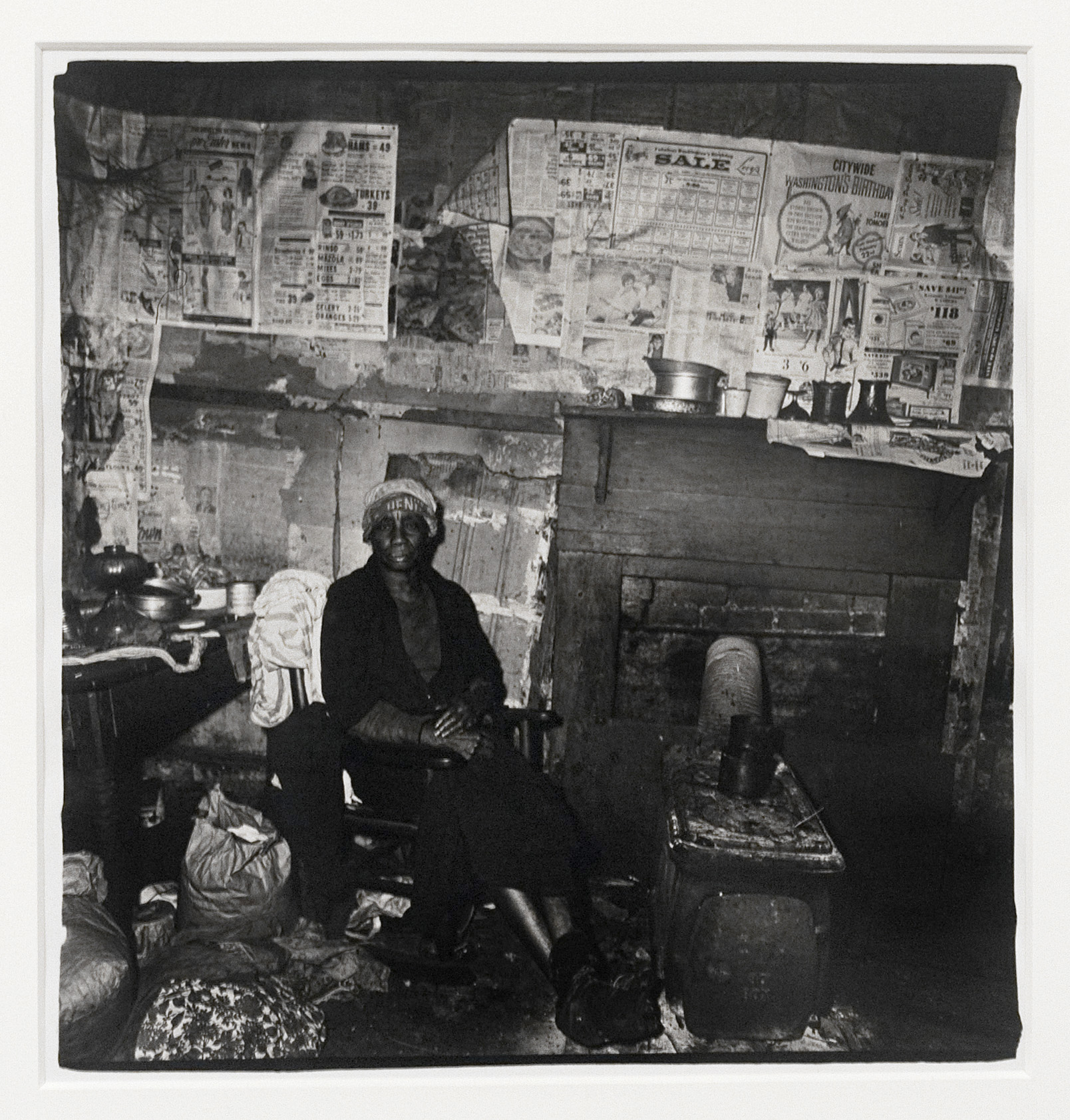
The other highlight is to see three Arbus photographs that I have never seen before: Old black woman with gnarled hand; Large black family in small shack; and Addie Taylor in her shack, Beaufort, South Carolina (all 1968, installation views below), all three taken with flash. These works were a revelation for their observational intimacy and evocation of a dark place in the existence of the poorest of human beings. The gnarled hand of the old woman lying in a filthy bed with cardboard walls is particularly distressing to say the least. To compare these photographs with Walker Evans’ flash photograph Hudson Street boarding house detail, New York (1931, below) and his naturally aspirated Bedroom, shrimp fisherman’s house, Biloxi, Mississippi (1945, below) in their pristine emptiness is instructive. This ideation, together with Arbus’ photographs relationship to the work of her sometime teacher Lisette Model (particularly her Lower East Side photographs (1939-1942); Albert-Alberta, Hubert’s 42nd St Flea Circus, New York (c. 1945) and Woman with Veil, San Francisco (1949) all below) are the zenith of this exhibition, where the intention of embedding Arbus’ photographs in the history of the medium comes best to fruition, in effect.

Finally, I must say a big thank you to Heide Museum of Modern Art for allowing me to come out to the gallery to take the installation photographs. Many thanks indeed.

Dr Marcus Bunyan


Many thankx to Heide Museum of Modern Art for allowing me to publish some of the photographs in the posting. Please click on some of the photographs for a larger version of the image.


“People who met Arbus often said she was incredibly seductive. Immensely curious, she was softly spoken and her ability to connect with and gain the trust of people was legendary. She talked about “the gap between intention and effect”, explaining “it really is totally fantastic that we look like this and you sometimes see that very clearly in a photograph. Something is ironic in the world and it has to do with the fact that what you intend never comes out like you intend it.””


Diane Arbus quoted in Kerrie O’Brien (curator of the National Gallery of Australia’s Diane Arbus: American Portraits) “Intimate, dark and compelling: the photographs of Diane Arbus,” on The Sydney Morning Herald website March 14, 2018 [Online] Cited 16/02/2022


“The people in an Arbus photograph are never trivialised; they have certainly a larger-than-life intensity that few other photographers can achieve. While they seem like figures from fairy tales or myth, they are also invested with powerful agency.”


Gillian Wearing quoted in Kerrie O’Brien (curator of the National Gallery of Australia’s Diane Arbus: American Portraits) “Intimate, dark and compelling: the photographs of Diane Arbus,” on The Sydney Morning Herald website March 14, 2018 [Online] Cited 16/02/2022


“When you’re awake enough to question your purpose and ask how to connect to it, you’re being prodded by the power of intention. The very act of questioning why you’re here is an indication that your thoughts are nudging you to reconnect to the field of intention. What’s the source of your thoughts about your purpose? Why do you want to feel purposeful? Why is a sense of purpose considered the highest attribute of a fully functioning person? The source of thought is an infinite reservoir of energy and intelligence.

In a sense, thoughts about your purpose are really your purpose trying to reconnect to you. This infinite reservoir of loving, kind, creative, abundant energy grew out of the originating intelligence, and is stimulating you to express this universal mind in your own unique way.”


Dr Wayne Dyer from ‘The Power of Intention’


Installation view of the exhibition 'Diane Arbus: American Portraits' at the Heide Museum of Modern Art, Melbourne

Installation view of the exhibition 'Diane Arbus: American Portraits' at the Heide Museum of Modern Art, Melbourne


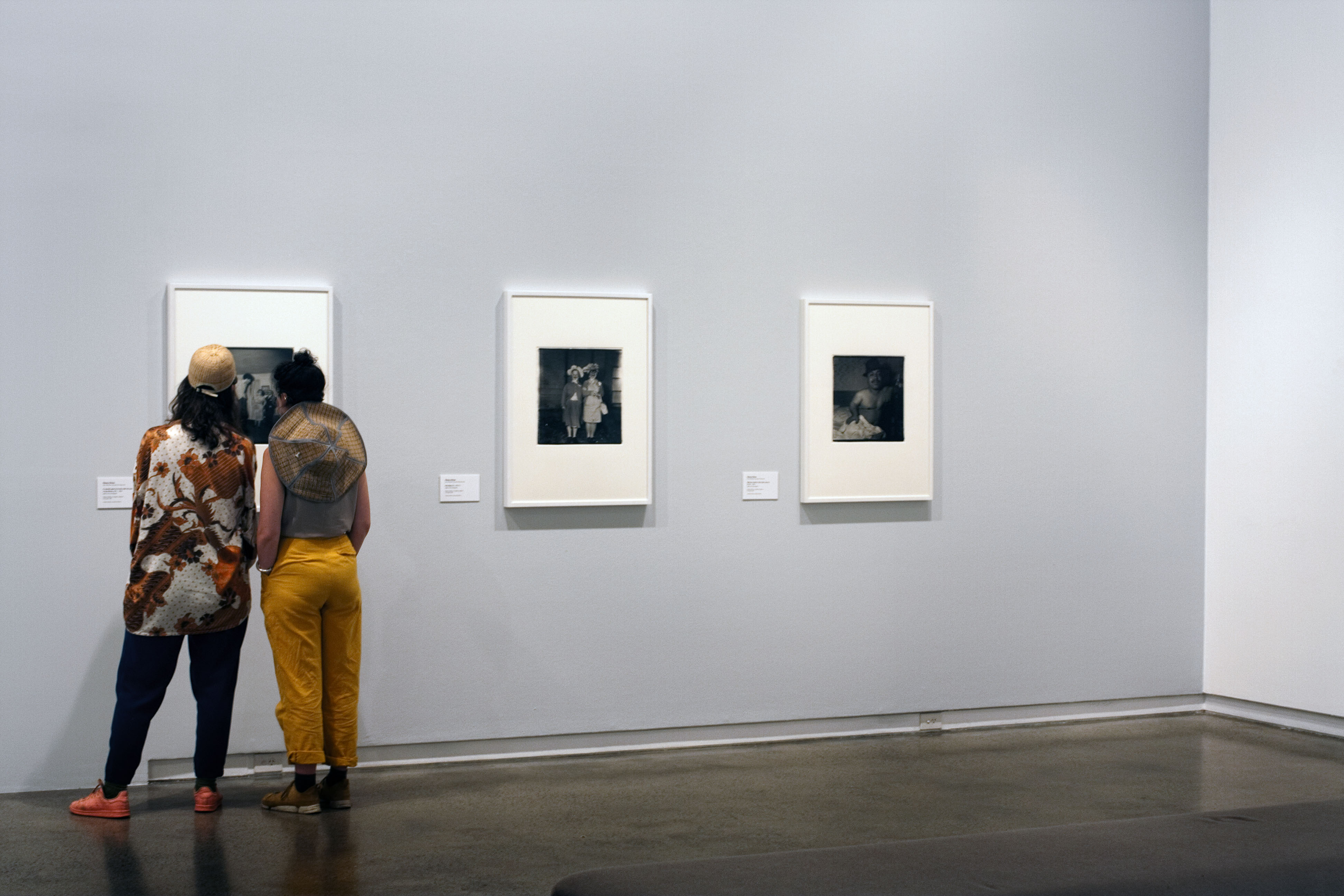
Installation views of the exhibition Diane Arbus: American Portraits at the Heide Museum of Modern Art, Melbourne
Photos: © Dr Marcus Bunyan and Heide Museum of Modern Art


Heide is delighted to host the National Gallery of Australia’s touring exhibition, Diane Arbus: American Portraits.

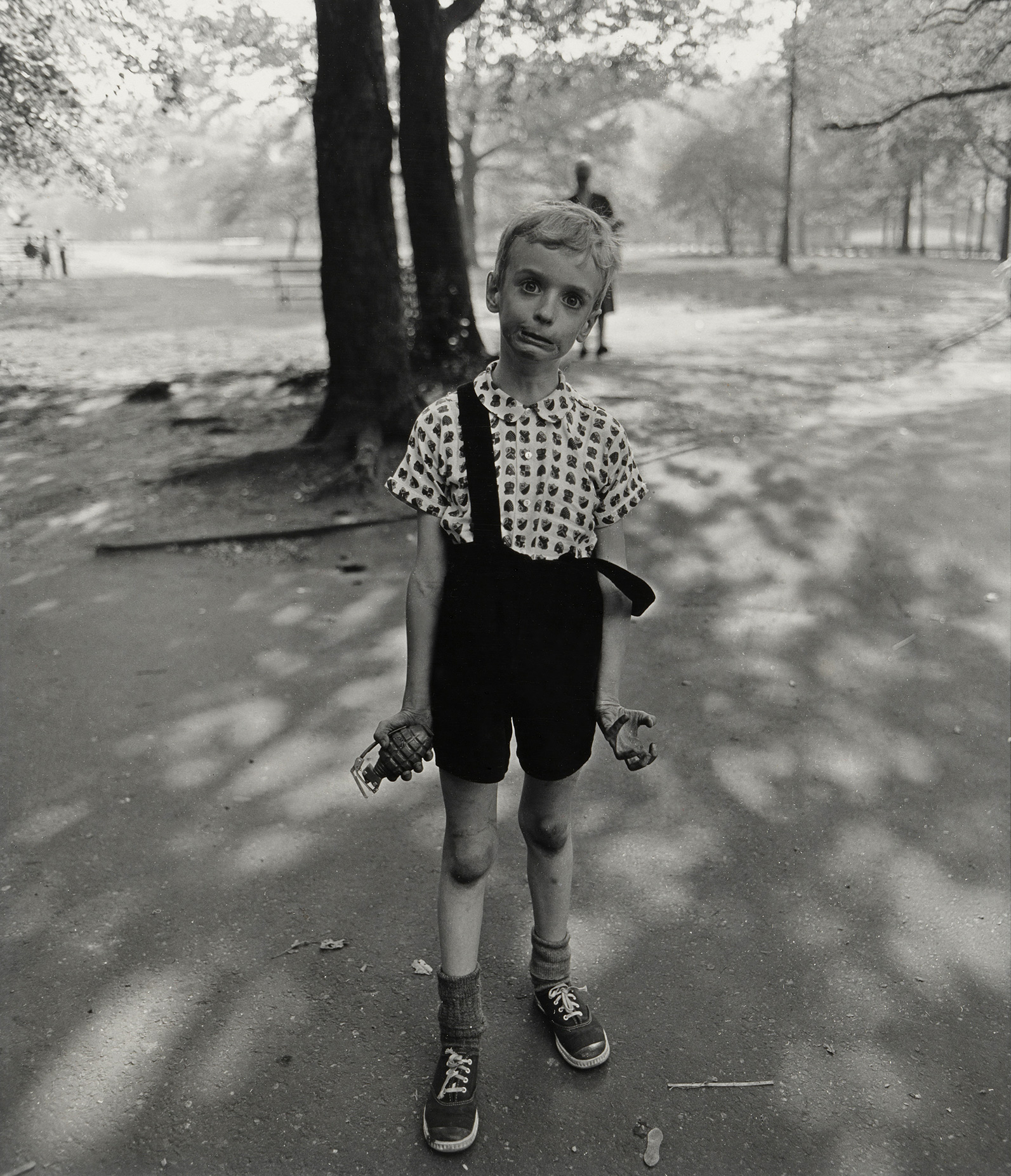
The photographs of Diane Arbus (1923-1971) are among the most widely recognised in the history of photography. Her images stand as powerful allegories of post-war America, and once seen are rarely forgotten. Works such as Identical twins, Roselle, N.J., 1967 and Child with toy hand grenade, in Central Park, New York City have been described as two of ‘the most celebrated images in the history of the medium’.

Featuring 35 of Arbus’s most iconic and confrontational images from 1961-1971, this exhibition examines the last decade of Arbus’s life,the period in which her style is in full flight. Her work has polarised viewers who question whether she exploited or empowered her subjects, who were often drawn from society’s margins. ‘The National Gallery of Australia is privileged to hold such an extraordinary collection of work by a photographer of Arbus’s significance,’ said Anne O’Hehir, curator. ‘This collection covers Arbus’s best-known pictures, and also includes images which are rarely seen. This exhibition is a testament to the power of Arbus’s extraordinary vision.’

Arbus’s photographs are exhibited alongside a selection of works by other leading American photographers whose work influenced Arbus, was shown alongside hers in the ’60s, or has been influenced by her. These include famous images by Lisette Model, Walker Evans and Weegee, her contemporaries William Klein, Garry Winogrand, Lee Friedlander and Milton Rogovin as well as a slightly younger generation, work by Mary Ellen Mark and William Eggleston.

Heide Director and CEO Dr Natasha Cica said: ‘Heide is delighted to present this exhibition of the renowned photographer Diane Arbus. Her uncompromising view challenged existing photography conventions in a surprising and enchanting way.’

Press release from Heide Museum of Modern Art


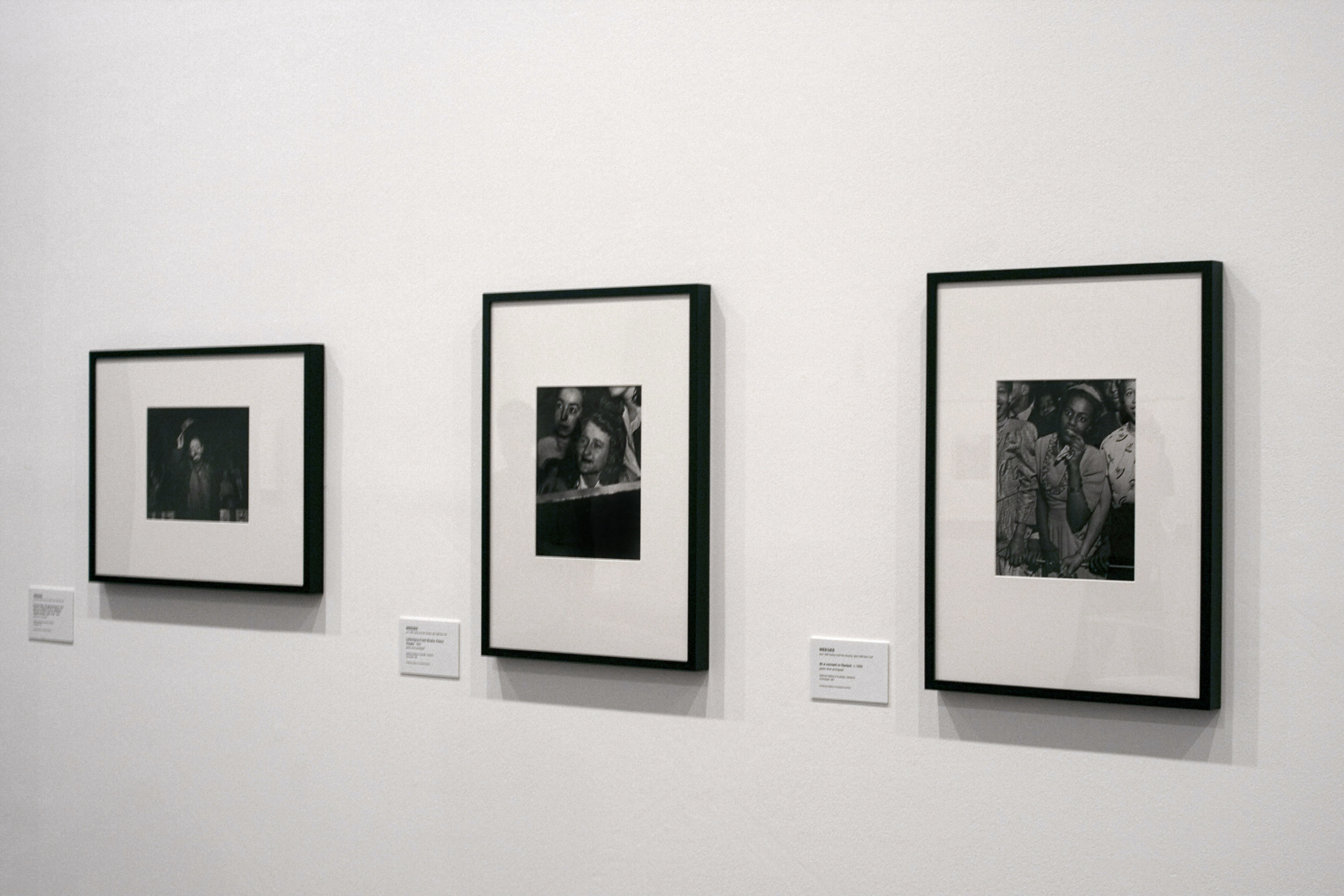
Installation view of the exhibition 'Diane Arbus: American Portraits' at the Heide Museum of Modern Art, Melbourne with at left, Weegee's 'No title (at a concert in Harlem)' c. 1948 followed by William Klein's 'Christmas shoppers, near Macy's, New York' 1954 and 'Stickball gang, New York' 1955


Installation views of the exhibition Diane Arbus: American Portraits at the Heide Museum of Modern Art, Melbourne with at left, Weegee’s No title (at a concert in Harlem) c. 1948, National Gallery of Australia, Canberra Purchased 1981 followed by William Klein’s Christmas shoppers, near Macy’s, New York 1954 and Stickball gang, New York 1955
Photo: © Dr Marcus Bunyan and Heide Museum of Modern Art


Weegee (Arthur Fellig) (American, 1899-1968) 'No title (at a concert in Harlem)' c. 1948 from the exhibition 'Diane Arbus: American Portraits' at the Heide Museum of Modern Art, Melbourne, March - June, 2018


Weegee (Arthur Fellig) (American, 1899-1968)
No title (at a concert in Harlem)
c. 1948
Gelatin silver photograph


Installation view of the exhibition 'Diane Arbus: American Portraits' at the Heide Museum of Modern Art, Melbourne

Installation view of the exhibition 'Diane Arbus: American Portraits' at the Heide Museum of Modern Art, Melbourne showing at left, William Klein's 'Christmas shoppers, near Macy's, New York' 1954; and at right, William Klein's 'Stickball gang, New York' 1955


Installation views of William Klein’s Christmas shoppers, near Macy’s, New York 1954 and Stickball gang, New York 1955
Photos: © Dr Marcus Bunyan and Heide Museum of Modern Art


Installation view of William Klein (born April 19, 1928) 'Christmas shoppers, near Macy's, New York' 1954 showing William Klein's 'Christmas shoppers, near Macy's, New York' 1954


Installation view of William Klein’s Christmas shoppers, near Macy’s, New York 1954 National Gallery of Australia, Canberra Purchased 1993
Photo: © Dr Marcus Bunyan and Heide Museum of Modern Art


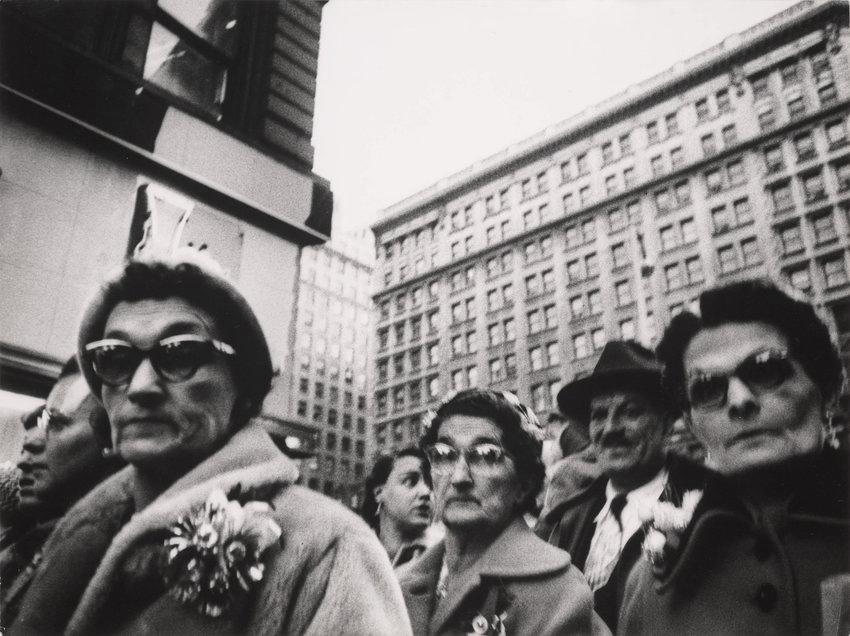
William Klein (American, 1928-2022) 'Christmas shoppers, near Macy's, New York' 1954


William Klein (American, 1928-2022)
Christmas shoppers, near Macy’s, New York
1954
Gelatin silver photograph


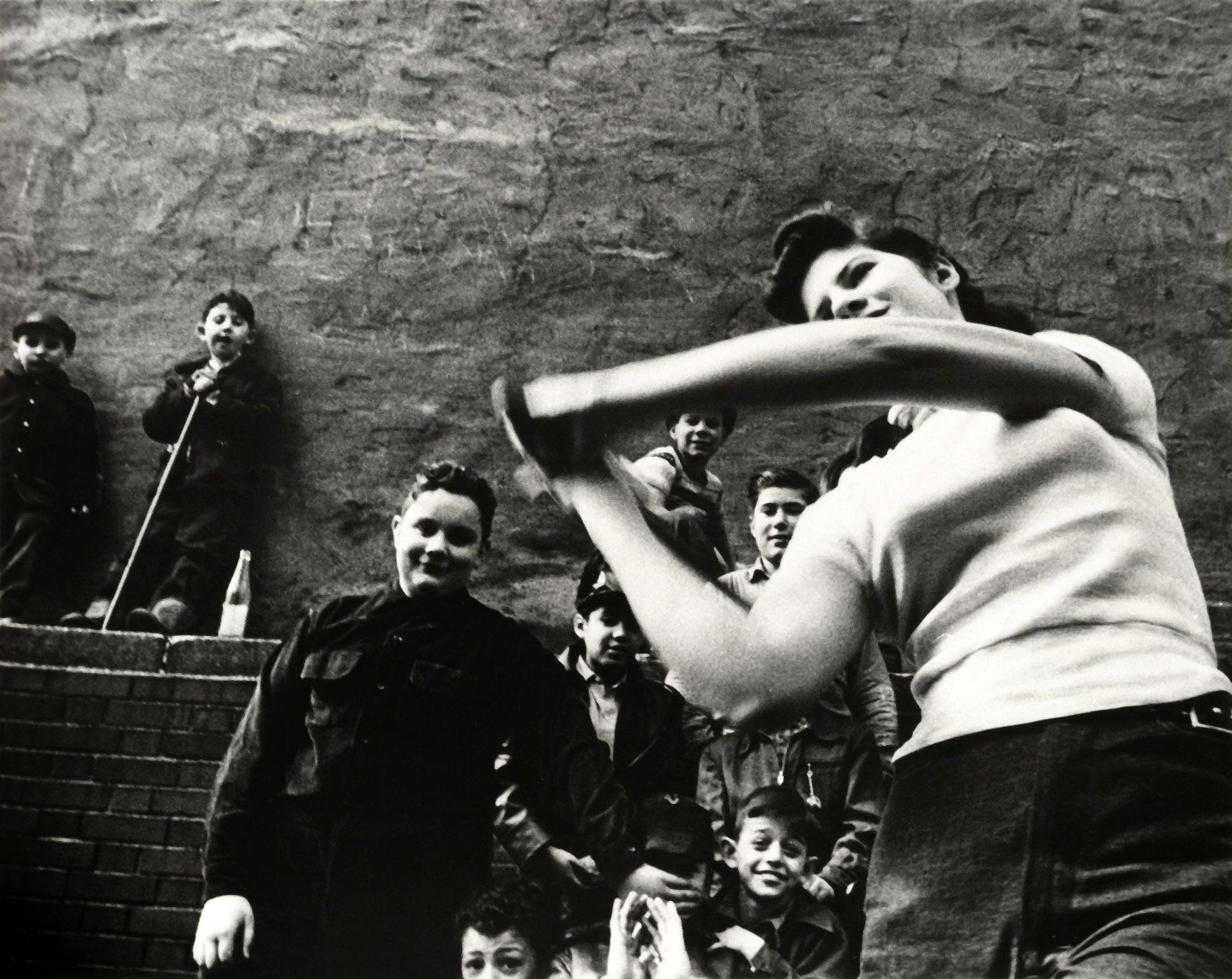
Klein sandwiched his relatively short photographic career, working as a fashion photographer for Vogue, between being a painter and a filmmaker. Self-taught, he experimented with flash, wide-angle lenses, blurring, abstraction and accidents, and produced grainy, high contrast prints. He is deliberately at the other end of the spectrum from the invisible, disinterested photographer. Klein deliberately got really close to his subjects, in their faces, and caught them reacting to being photographed on the street. ‘To be visible, intervene and show it’ was his mantra.

Text © National Gallery of Australia, Canberra


Installation view of William Klein's 'Stickball gang, New York' 1955


Installation view of William Klein’s Stickball gang, New York 1955 National Gallery of Australia, Canberra Purchased 1993
Photo: © Dr Marcus Bunyan and Heide Museum of Modern Art


William Klein (American, 1928-2022) 'Stickball gang, New York' 1955


William Klein (American, 1928-2022)
Stickball gang, New York
1955
Gelatin silver photograph


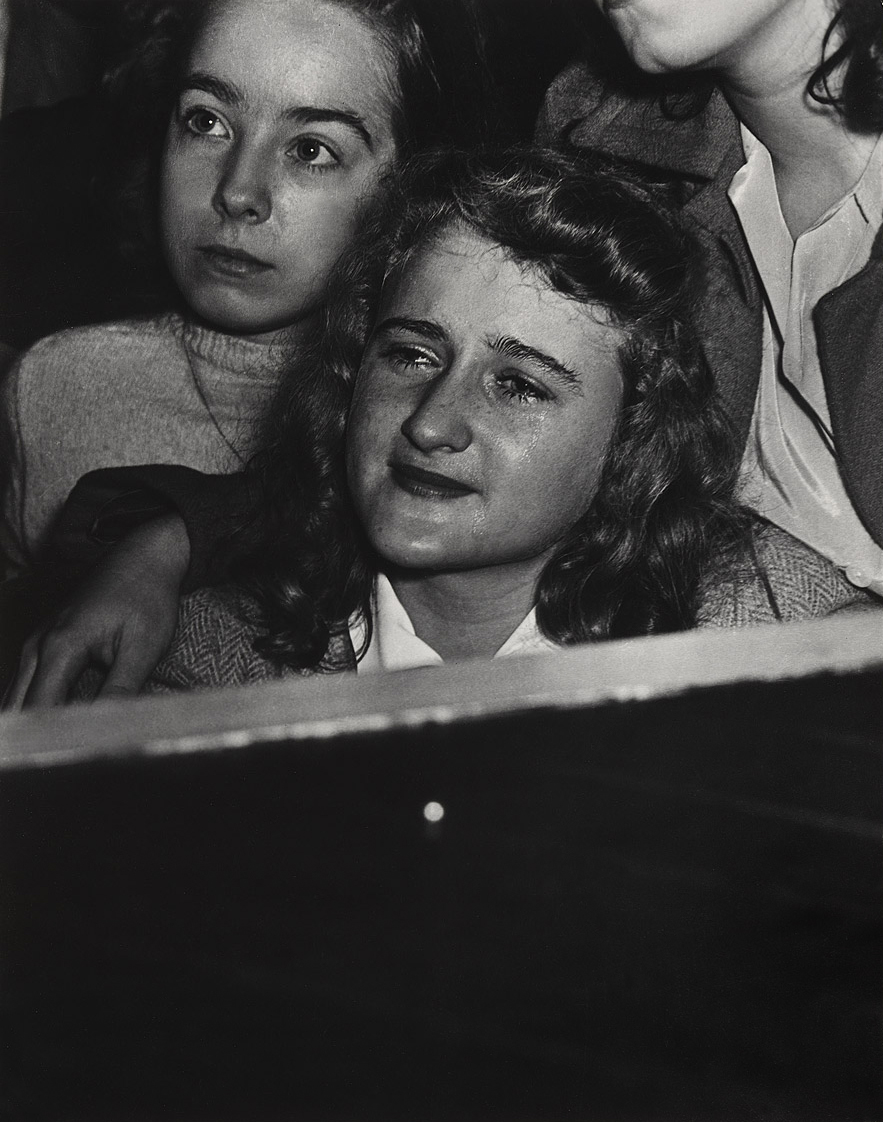
Installation view of the exhibition 'Diane Arbus: American Portraits' at the Heide Museum of Modern Art, Melbourne showing at left, Weegee's 'No title (listening to Frank Sinatra, Palace theatre)' c. 1944; and at right, Weegee's 'No title (at a concert in Harlem)' c. 1948


Installation view of the exhibition Diane Arbus: American Portraits at the Heide Museum of Modern Art, Melbourne showing at left, his No title (listening to Frank Sinatra, Palace theatre) c. 1944, National Gallery of Australia, Canberra Purchased 1981; and at right, Weegee’s No title (at a concert in Harlem) c. 1948, National Gallery of Australia, Canberra Purchased 1981
Photo: © Dr Marcus Bunyan and Heide Museum of Modern Art


Installation view of the exhibition 'Diane Arbus: American Portraits' at the Heide Museum of Modern Art, Melbourne showing from right to left, Weegee's 'No title (at a concert in Harlem)' c. 1948, followed by his 'No title (listening to Frank Sinatra, Palace theatre)' c. 1944 and 'Emmett Kelly, Ringling Brothers and Barnum & Bailey Circus' 1943


Installation view of the exhibition Diane Arbus: American Portraits at the Heide Museum of Modern Art, Melbourne showing from right to left, Weegee’s No title (at a concert in Harlem) c. 1948, followed by his No title (listening to Frank Sinatra, Palace theatre) c. 1944 and Emmett Kelly, Ringling Brothers and Barnum & Bailey Circus 1943
Photo: © Dr Marcus Bunyan and Heide Museum of Modern Art


Weegee (Arthur Fellig) (1899-1968) 'Emmett Kelly, Ringling Brothers and Barnum & Bailey Circus' 1943 (installation view)


Installation view of Weegee’s Emmett Kelly, Ringling Brothers and Barnum & Bailey Circus 1943, National Gallery of Australia, Canberra Purchased 1981
Photo: © Dr Marcus Bunyan and Heide Museum of Modern Art


Weegee (Arthur Fellig) (1899-1968) 'No title (listening to Frank Sinatra, Palace theatre)' c. 1944


Weegee (Arthur Fellig) (American, 1899-1968)
No title (listening to Frank Sinatra, Palace theatre)
c. 1944
Silver gelatin print


Installation view of the exhibition 'Diane Arbus: American Portraits' at the Heide Museum of Modern Art, Melbourne showing the work of Walker Evans


Installation view of the exhibition Diane Arbus: American Portraits at the Heide Museum of Modern Art, Melbourne showing the work of Walker Evans
Photo: © Dr Marcus Bunyan and Heide Museum of Modern Art


Installation view of the exhibition 'Diane Arbus: American Portraits' at the Heide Museum of Modern Art, Melbourne showing from left to right, Diane Arbus' 'Rocks on wheels, Disneyland, Cal' 1962; 'Xmas tree in a living room in Levittown, L.I. 1963'; and 'Lady in a rooming house parlour, Albion, N.Y. 1963'


Installation view of the exhibition Diane Arbus: American Portraits at the Heide Museum of Modern Art, Melbourne showing from left to right, Diane Arbus’ Rocks on wheels, Disneyland, Cal 1962; Xmas tree in a living room in Levittown, L.I. 1963; and Lady in a rooming house parlour, Albion, N.Y. 1963, all National Gallery of Australia, Canberra Purchased 1981
Photo: © Dr Marcus Bunyan and Heide Museum of Modern Art


Diane Arbus (American, 1923-1971) 'Rocks on wheels, Disneyland, Cal' 1962


Diane Arbus (American, 1923-1971)
Rocks on wheels, Disneyland, Cal
1962
Silver gelatin print


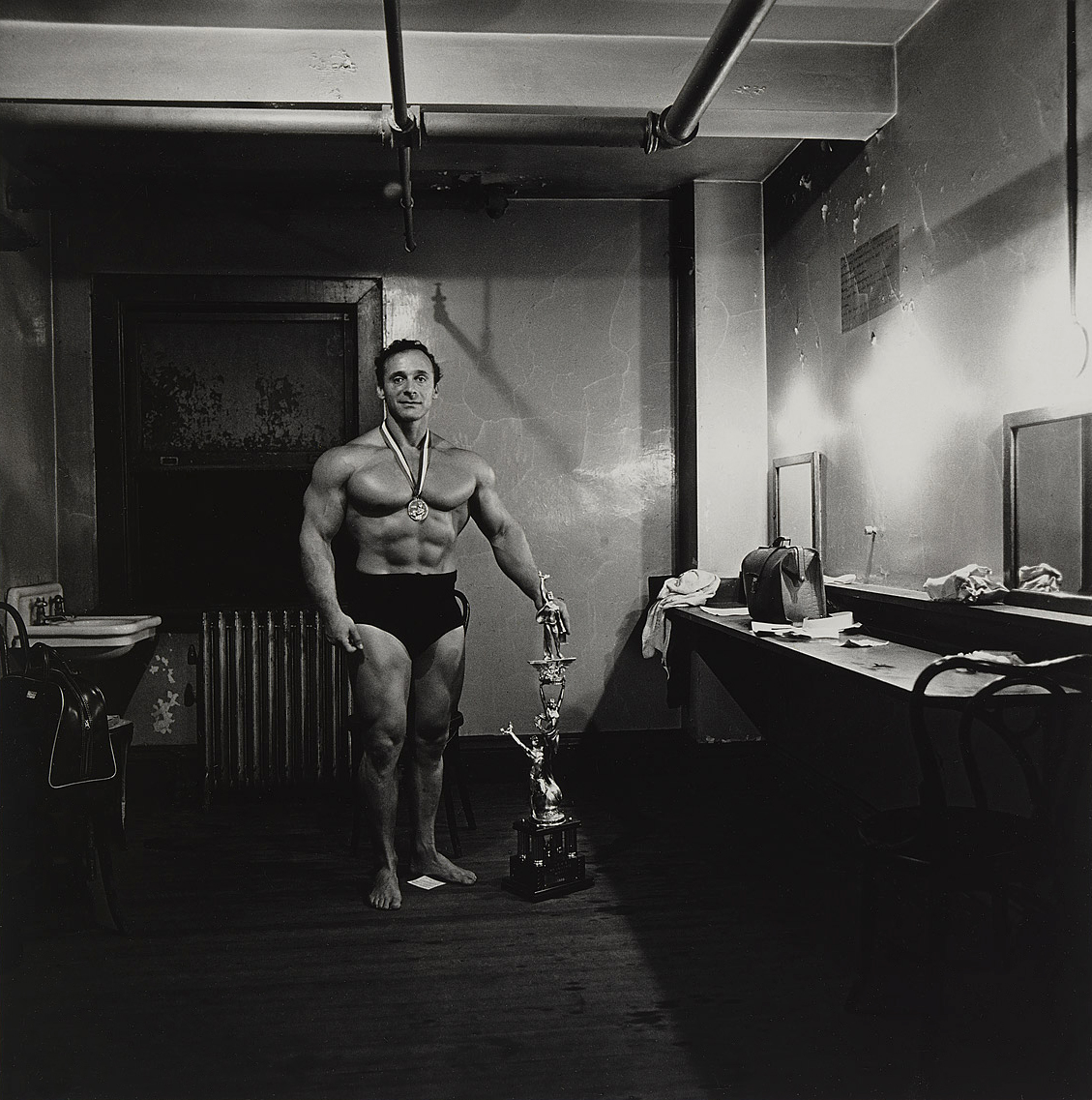
Installation view of the exhibition 'Diane Arbus: American Portraits' at the Heide Museum of Modern Art, Melbourne showing at left, Diane Arbus' 'Muscle Man in his dressing room with trophy, Brooklyn, N.Y.' 1962 and at right, 'Burlesque comedienne in her dressing room, Atlantic City, N.J.' 1963


Installation view of the exhibition Diane Arbus: American Portraits at the Heide Museum of Modern Art, Melbourne showing at left, Diane Arbus’ Muscle Man in his dressing room with trophy, Brooklyn, N.Y. 1962 and at right, Burlesque comedienne in her dressing room, Atlantic City, N.J. 1963, both National Gallery of Australia, Canberra Purchased 1981 and 1980
Photo: © Dr Marcus Bunyan and Heide Museum of Modern Art


Diane Arbus (American, 1923-1971) 'Muscle Man in his dressing room with trophy, Brooklyn, N.Y.' 1962


Diane Arbus (American, 1923-1971)
Muscle Man in his dressing room with trophy, Brooklyn, N.Y.
1962
Silver gelatin print


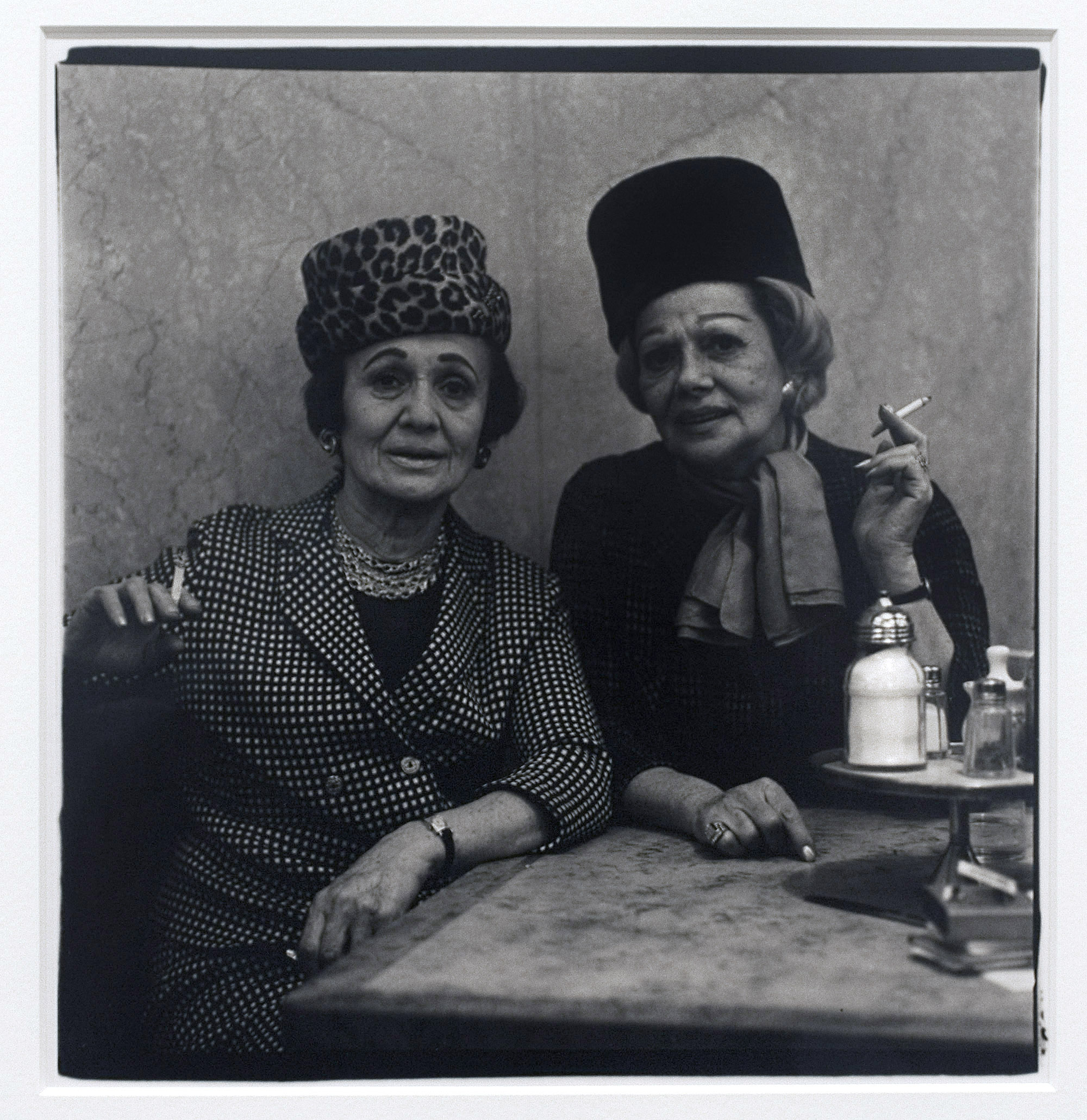
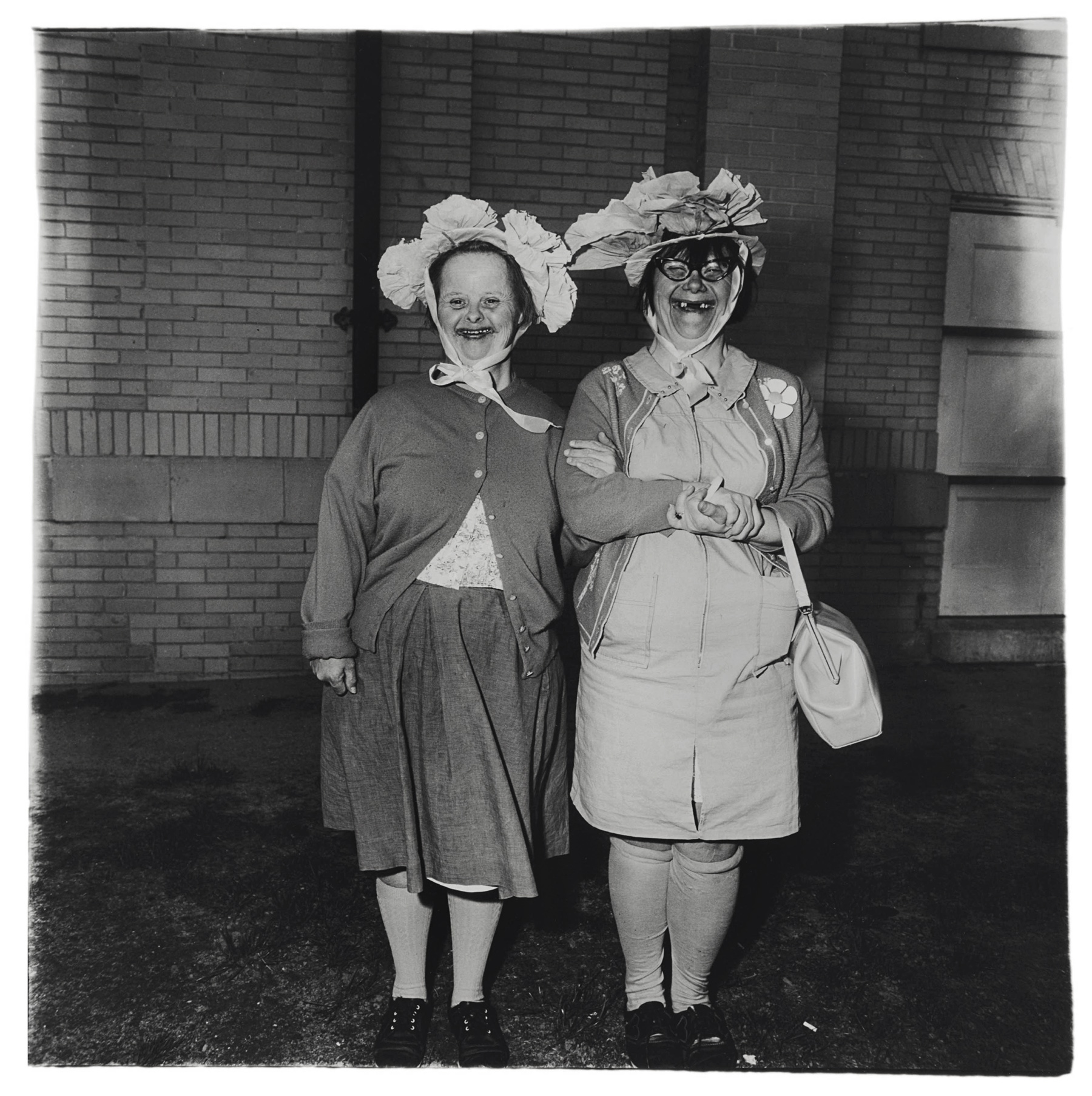
Diane Arbus (American, 1923-1971) 'Two Ladies at the Automat, New York City, 1966' 1966 (installation view)


Diane Arbus (American, 1923-1971)
Two Ladies at the Automat, New York City, 1966 (installation view)
1966
Silver gelatin print
National Gallery of Australia, Canberra
Purchased 1981
Photo: © Dr Marcus Bunyan and Heide Museum of Modern Art


Diane Arbus (American, 1923-1971) 'Transvestite with torn stocking, N.Y.C. 1966' 1966 (installation view)


Diane Arbus (American, 1923-1971)
Transvestite with torn stocking, N.Y.C. 1966 (installation view)
1966
Silver gelatin print
National Gallery of Australia, Canberra
Purchased 1981
Photo: © Dr Marcus Bunyan and Heide Museum of Modern Art


Diane Arbus (American, 1923-1971) 'Mae West on bed' 1965


Diane Arbus (American, 1923-1971)
Mae West on bed
1965
Gelatin silver photograph
National Gallery of Australia, Canberra
Purchased 1981


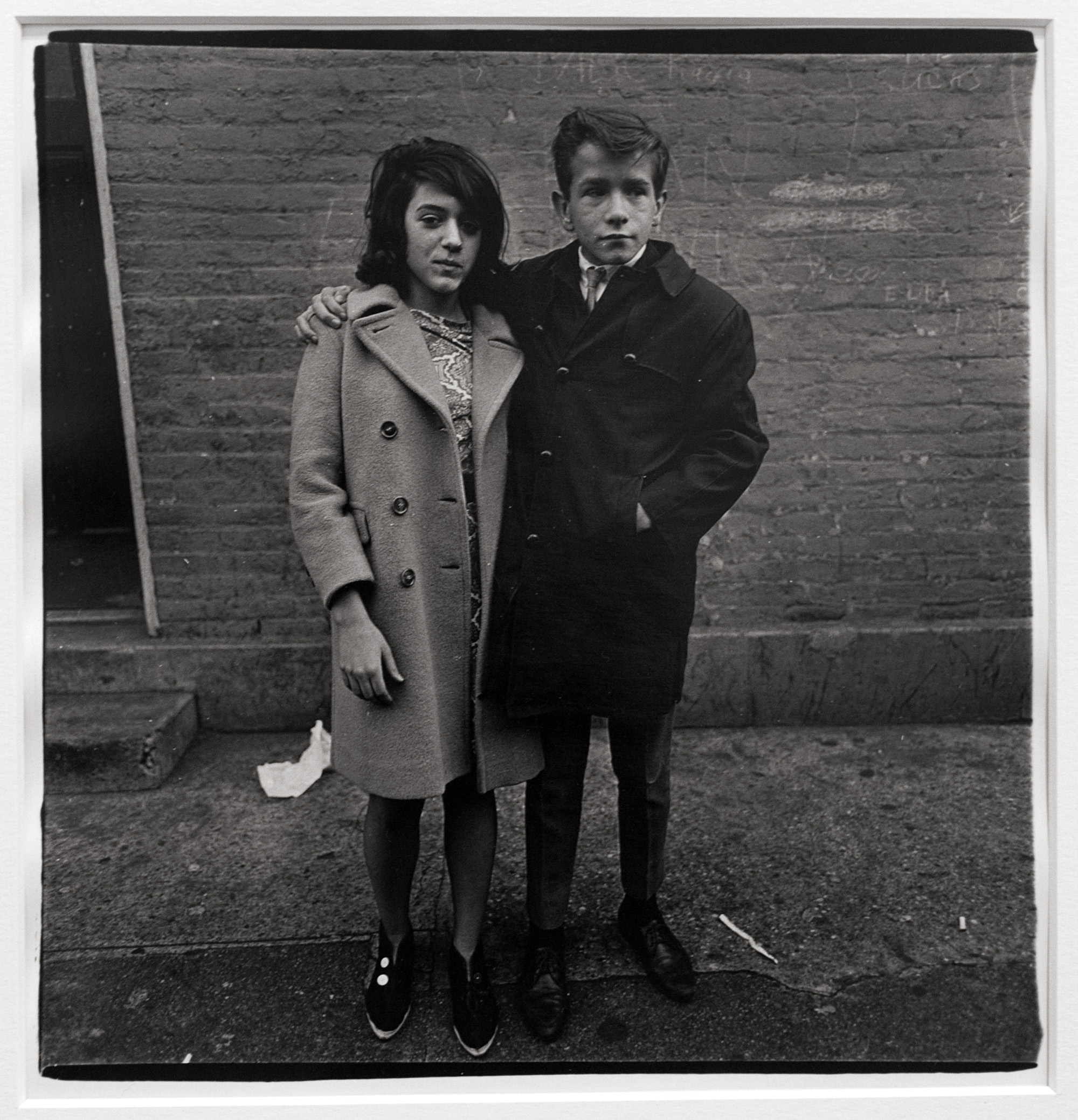
Diane Arbus (American, 1923-1971) 'Teenage couple on Hudson Street, N.Y.C. 1963' 1963 (installation view)


Diane Arbus (American, 1923-1971)
Teenage couple on Hudson Street, N.Y.C. 1963 (installation view)
1963
Gelatin silver photograph
National Gallery of Australia, Canberra
Purchased 1980
Photo: © Dr Marcus Bunyan and Heide Museum of Modern Art


Diane Arbus (American, 1923-1971) 'Teenage couple on Hudson Street, N.Y.C. 1963' 1963 (installation view)


Diane Arbus (American, 1923-1971)
Teenage couple on Hudson Street, N.Y.C. 1963 (installation view)
1963
Gelatin silver photograph
National Gallery of Australia, Canberra
Purchased 1980
Photo: © Dr Marcus Bunyan and Heide Museum of Modern Art


Diane Arbus (American, 1923-1971) 'Teenage couple on Hudson Street, N.Y.C. 1963' 1963


Diane Arbus (American, 1923-1971)
Teenage couple on Hudson Street, N.Y.C. 1963
1963
Gelatin silver photograph


Installation view of the exhibition 'Diane Arbus: American Portraits' at the Heide Museum of Modern Art, Melbourne showing from left to right, Diane Arbus' 'A Jewish giant at home with his parents in the Bronx, N.Y.' 1970; 'Untitled (1)' 1970-1971; and 'Mexican dwarf in his hotel room N.Y.C.' 1970

Installation view of the exhibition 'Diane Arbus: American Portraits' at the Heide Museum of Modern Art, Melbourne showing from left to right, Diane Arbus' 'A Jewish giant at home with his parents in the Bronx, N.Y.' 1970; 'Untitled (1)' 1970-1971; and 'Mexican dwarf in his hotel room N.Y.C.' 1970


Installation view of the exhibition Diane Arbus: American Portraits at the Heide Museum of Modern Art, Melbourne showing from left to right, Diane Arbus’ A Jewish giant at home with his parents in the Bronx, N.Y., 1970; Untitled (1) 1970-1971; and Mexican dwarf in his hotel room N.Y.C. 1970
Photos: © Dr Marcus Bunyan and Heide Museum of Modern Art


Diane Arbus (American, 1923-1971) 'A Jewish giant at home with his parents in the Bronx, N.Y., 1970' 1970


Diane Arbus (American, 1923-1971)
A Jewish giant at home with his parents in the Bronx, N.Y., 1970
1970
Gelatin silver photograph


Diane Arbus (American, 1923-1971) 'Untitled (1)' 1970-1971


Diane Arbus (American, 1923-1971)
Untitled (1)
1970-1971
Gelatin silver photograph


Diane Arbus (American, 1923-1971) 'Mexican dwarf in his hotel room N.Y.C. 1970' 1970


Diane Arbus (American, 1923-1971)
Mexican dwarf in his hotel room N.Y.C. 1970
1970
Gelatin silver photograph


Diane Arbus (American, 1923-1971) 'Identical twins, Roselle, N.J., 1966' 1966


Diane Arbus (American, 1923-1971)
Identical twins, Roselle, N.J., 1966
1966
Gelatin silver photograph


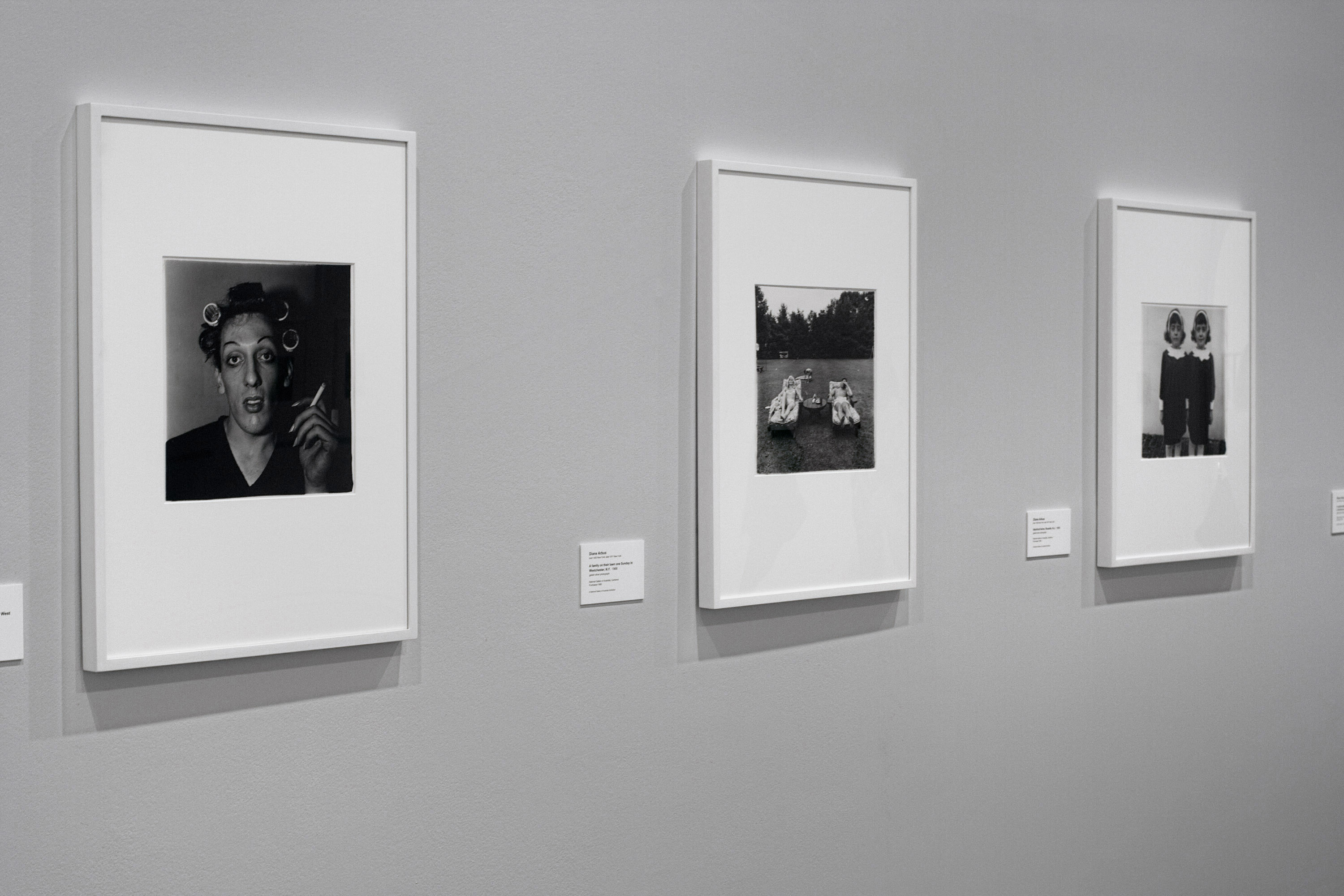
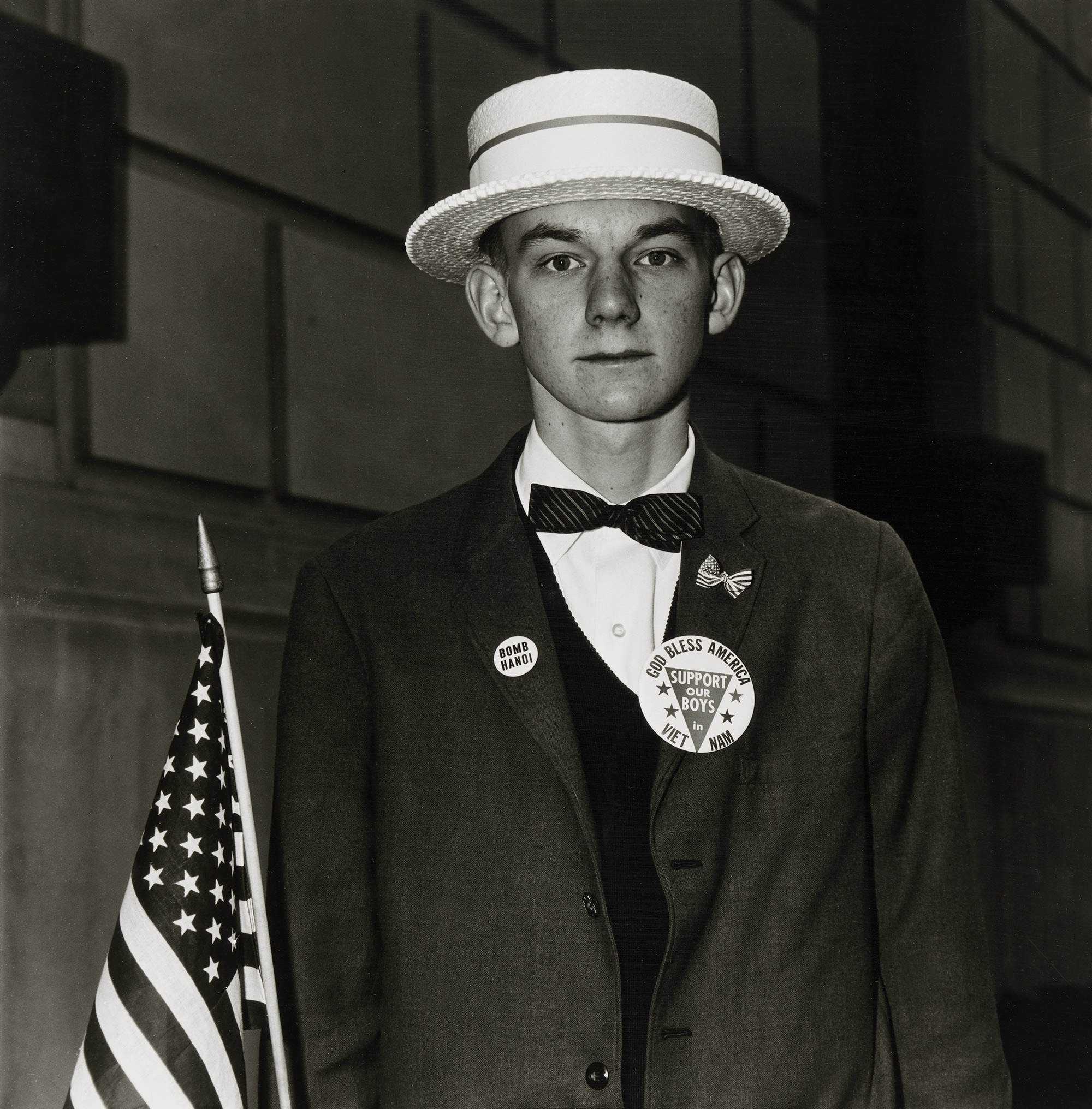
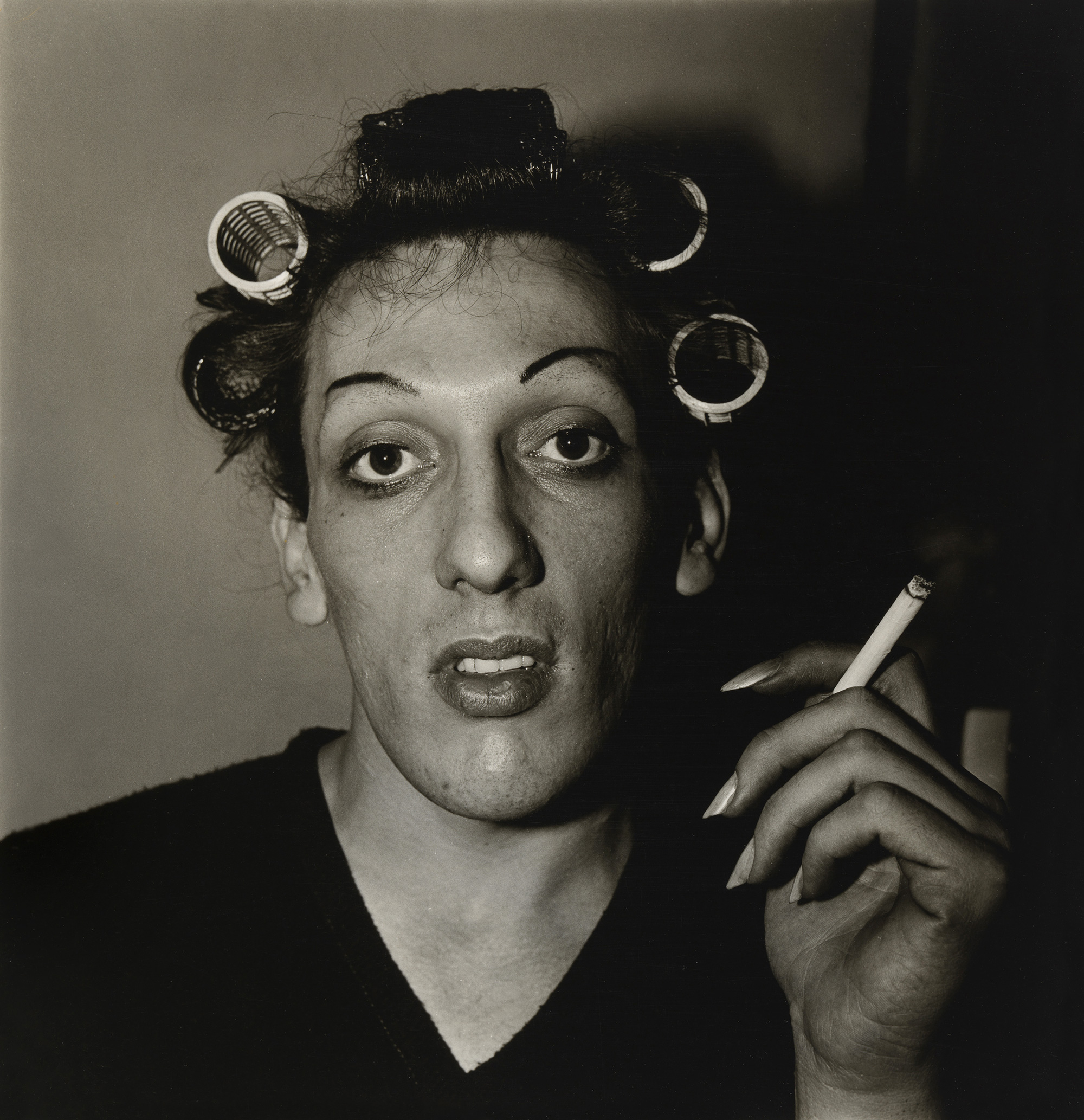
Installation view of the exhibition 'Diane Arbus: American Portraits' at the Heide Museum of Modern Art, Melbourne showing from left to right, Diane Arbus' 'Boy with a straw hat waiting to march in a pro-war parade, N.Y.C.' 1967; 'A young man in curlers at home on West 20th St., N.Y.C.' 1966; and 'A Family on Their Lawn One Sunday in Westchester, New York' 1968

Installation view of the exhibition 'Diane Arbus: American Portraits' at the Heide Museum of Modern Art, Melbourne showing from left to right, Diane Arbus' 'Boy with a straw hat waiting to march in a pro-war parade, N.Y.C.' 1967; 'A young man in curlers at home on West 20th St., N.Y.C.' 1966; and 'A Family on Their Lawn One Sunday in Westchester, New York' 1968


Installation view of the exhibition Diane Arbus: American Portraits at the Heide Museum of Modern Art, Melbourne showing from left to right, Diane Arbus’ Boy with a straw hat waiting to march in a pro-war parade, N.Y.C., 1967; A young man in curlers at home on West 20th St., N.Y.C. 1966; and A Family on Their Lawn One Sunday in Westchester, New York 1968
Photos: © Dr Marcus Bunyan and Heide Museum of Modern Art


Diane Arbus (American, 1923-1971) 'Boy with a straw hat waiting to march in a pro-war parade, N.Y.C., 1967' 1967


Diane Arbus (American, 1923-1971)
Boy with a straw hat waiting to march in a pro-war parade, N.Y.C., 1967
1967
Gelatin silver photograph
National Gallery of Australia, Canberra
Purchased 1980


Diane Arbus (American, 1923-1971) 'A young man in curlers at home on West 20th St., N.Y.C. 1966' 1966 (installation view)


Diane Arbus (American, 1923-1971)
A young man in curlers at home on West 20th St., N.Y.C. 1966 (installation view)
1966
Gelatin silver photograph
National Gallery of Australia, Canberra
Purchased 1980
Photo: © Dr Marcus Bunyan and Heide Museum of Modern Art


Diane Arbus (American, 1923-1971) 'A young man in curlers at home on West 20th St., N.Y.C. 1966' 1966


Diane Arbus (American, 1923-1971)
A young man in curlers at home on West 20th St., N.Y.C. 1966 (installation view)
1966
Gelatin silver photograph
Photo: © Dr Marcus Bunyan and Heide Museum of Modern Art


Diane Arbus (American, 1923-1971) 'A Family on Their Lawn One Sunday in Westchester, New York 1968' 1968


Diane Arbus (American, 1923-1971)
A Family on Their Lawn One Sunday in Westchester, New York 1968
1968
Gelatin silver photograph


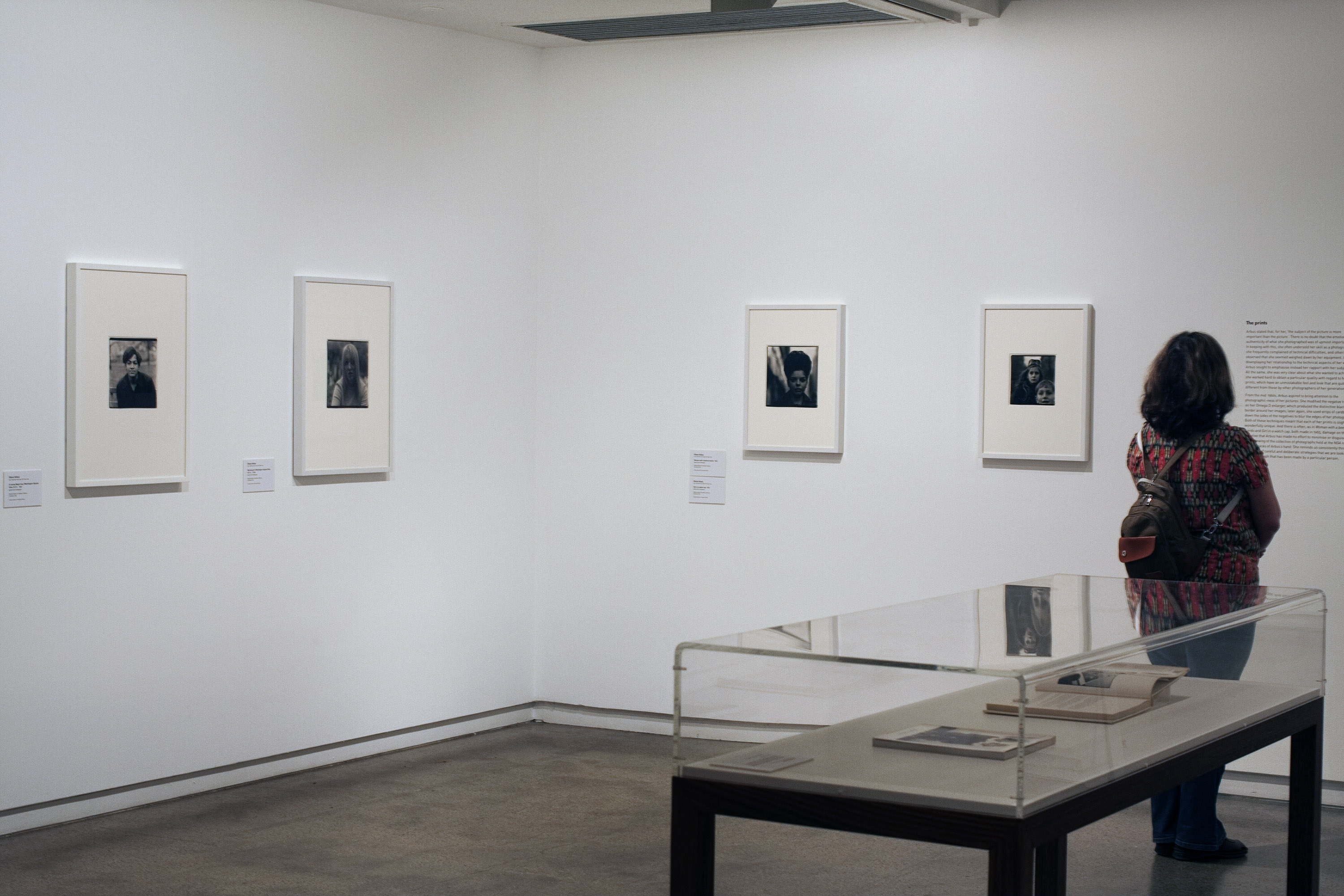
Installation view of the exhibition 'Diane Arbus: American Portraits' at the Heide Museum of Modern Art, Melbourne showing from left to right, Diane Arbus' 'A young Negro boy, Washington Square Park, N.Y.C.' 1965; 'Blonde girl in Washington Square Park' c. 1965-1968; 'Woman with a beehive hairdo' 1965; and 'Girl in a watch cap, N.Y.C.' 1965


Installation view of the exhibition Diane Arbus: American Portraits at the Heide Museum of Modern Art, Melbourne showing from left to right, Diane Arbus’ A young Negro boy, Washington Square Park, N.Y.C. 1965; Blonde girl in Washington Square Park c. 1965-1968; Woman with a beehive hairdo 1965; and Girl in a watch cap, N.Y.C. 1965
Photo: © Dr Marcus Bunyan and Heide Museum of Modern Art


Diane Arbus (American, 1923-1971) 'A young Negro boy, Washington Square Park, N.Y.C. 1965' c. 1965


Diane Arbus (American, 1923-1971)
A young Negro boy, Washington Square Park, N.Y.C. 1965
c. 1965
Gelatin silver photograph


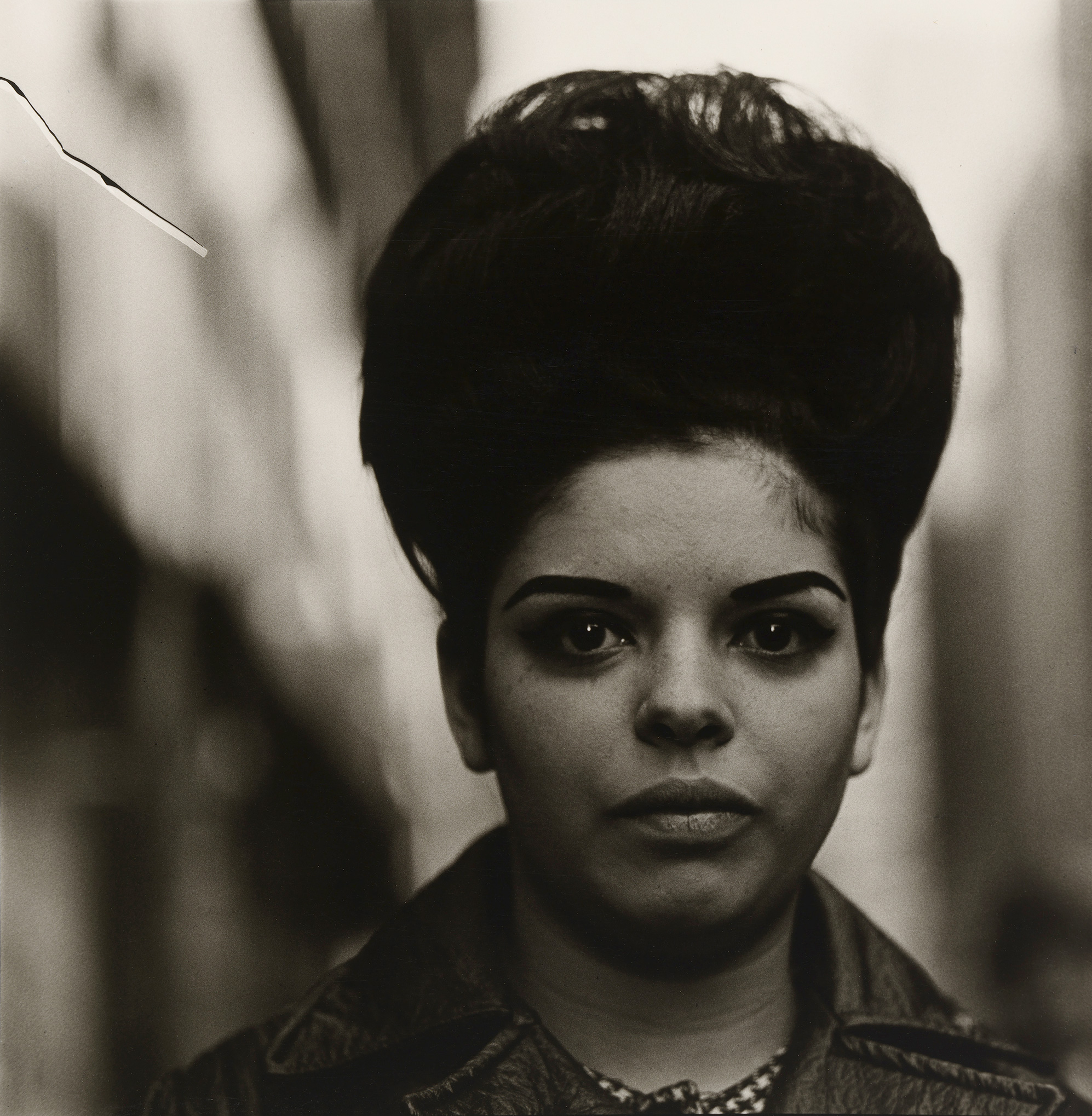
Installation view of the exhibition 'Diane Arbus: American Portraits' at the Heide Museum of Modern Art, Melbourne showing from left to right, Diane Arbus' 'Woman with a beehive hairdo' 1965 and 'Girl in a watch cap, N.Y.C.' 1965


Installation view of the exhibition Diane Arbus: American Portraits at the Heide Museum of Modern Art, Melbourne showing from left to right, Diane Arbus’ Woman with a beehive hairdo 1965 and Girl in a watch cap, N.Y.C. 1965
Photo: © Dr Marcus Bunyan and Heide Museum of Modern Art


Diane Arbus (American, 1923-1971) 'Woman with a beehive hairdo' 1965 (installation view)


Diane Arbus (American, 1923-1971)
Woman with a beehive hairdo (installation view)
1965
Gelatin silver photograph
National Gallery of Australia, Canberra
Purchased 1981
Photo: © Dr Marcus Bunyan and Heide Museum of Modern Art


Diane Arbus (American, 1923-1971) 'Woman with a beehive hairdo' 1965


Diane Arbus (American, 1923-1971)
Woman with a beehive hairdo
1965
Gelatin silver photograph


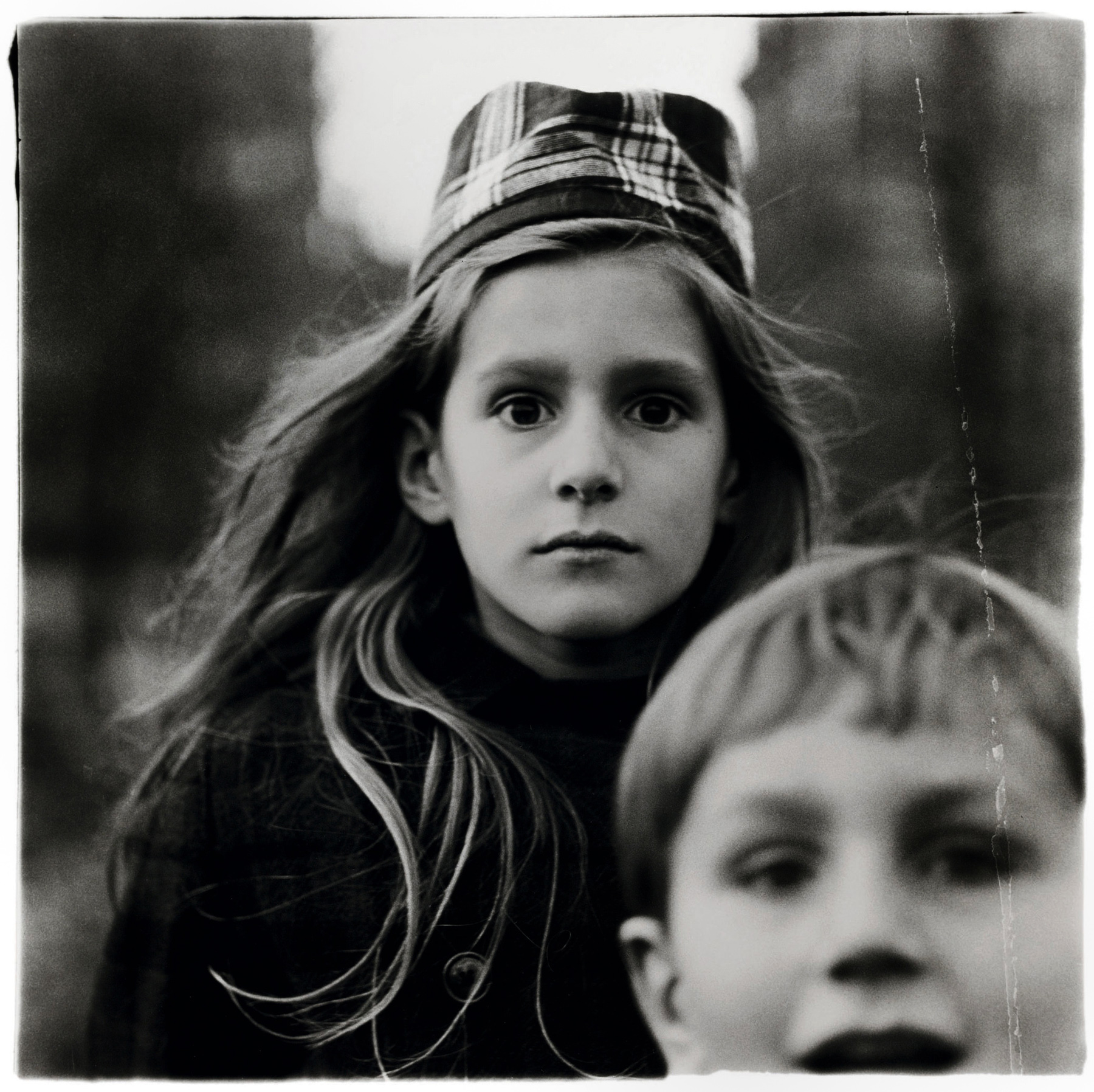
Diane Arbus (American, 1923-1971) 'Girl in a watch cap, N.Y.C. 1965' 1965


Diane Arbus (American, 1923-1971)
Girl in a watch cap, N.Y.C. 1965
1965
Gelatin silver photograph


Diane Arbus (American, 1923-1971) 'Child with toy hand grenade, in Central Park, New York City 1962' 1962


Diane Arbus (American, 1923-1971)
Child with toy hand grenade, in Central Park, New York City 1962
1962
Gelatin silver photograph
National Gallery of Australia, Canberra
Purchased 1980


Diane Arbus (American, 1923-1971) 'Old black woman with gnarled hand' 1968 (installation view)


Diane Arbus (American, 1923-1971)
Old black woman with gnarled hand (installation view)
1968
Gelatin silver photograph
National Gallery of Australia, Canberra
Purchased 1981
Photo: © Dr Marcus Bunyan and Heide Museum of Modern Art


Diane Arbus (American, 1923-1971) 'Large black family in small shack [Robert Evans and his family, 1968]' 1968 (installation view)


Diane Arbus (American, 1923-1971)
Large black family in small shack [Robert Evans and his family, 1968] (installation view)
1968
Gelatin silver photograph
National Gallery of Australia, Canberra
Purchased 1981
Photo: © Dr Marcus Bunyan and Heide Museum of Modern Art


Diane Arbus (American, 1923-1971) 'Addie Taylor in her shack, Beaufort, South Carolina' 1968 (installation view)


Diane Arbus (American, 1923-1971)
Addie Taylor in her shack, Beaufort, South Carolina (installation view)
1968
Gelatin silver photograph
National Gallery of Australia, Canberra
Purchased 1981
Photo: © Dr Marcus Bunyan and Heide Museum of Modern Art


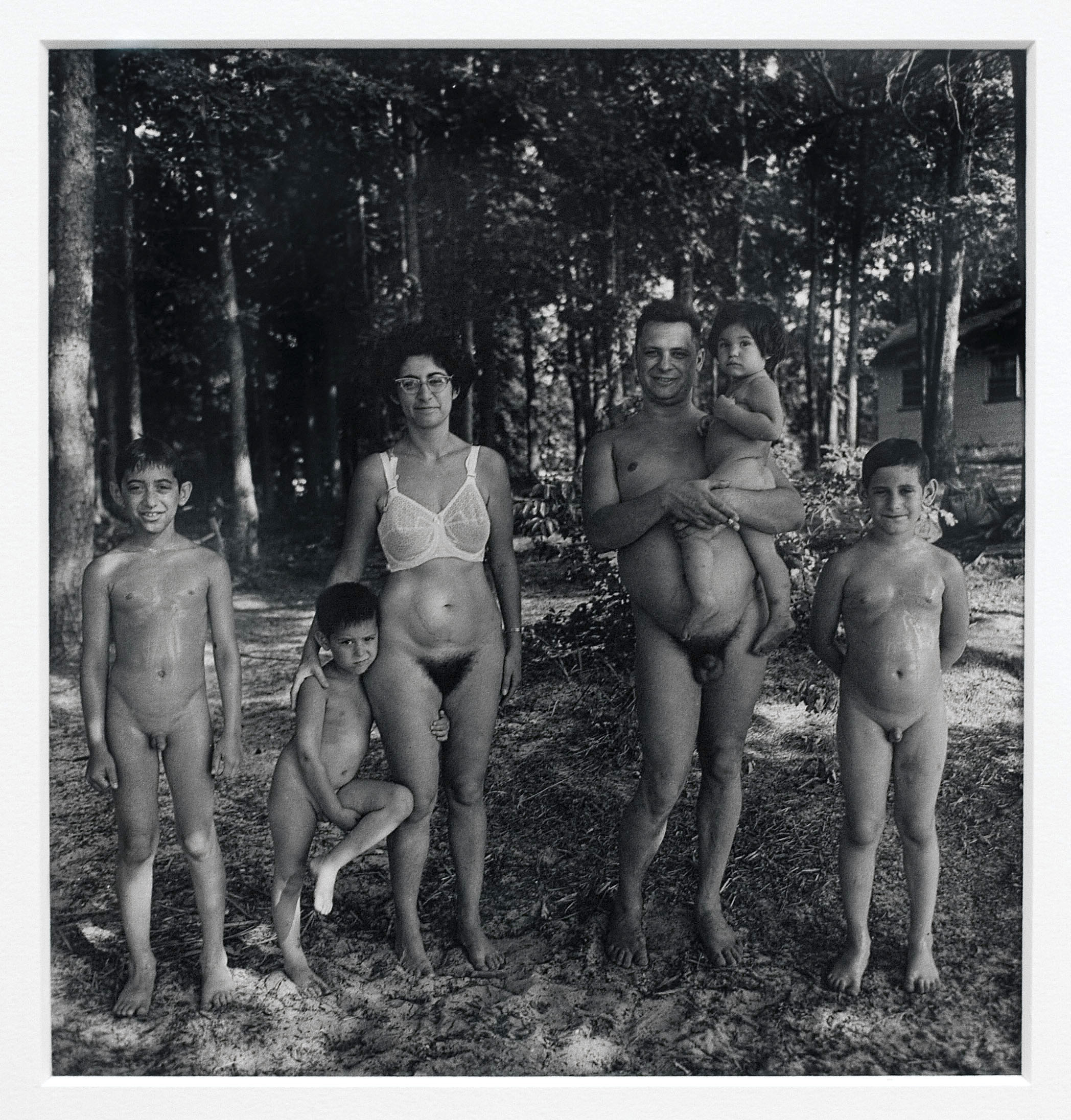
Diane Arbus (American, 1923-1971) 'A family of six at a nudist camp' c. 1963 (installation view)


Diane Arbus (American, 1923-1971)
A family of six at a nudist camp (installation view)
c. 1963
Gelatin silver photograph
National Gallery of Australia, Canberra
Purchased 1981
Photo: © Dr Marcus Bunyan and Heide Museum of Modern Art


Introduction

The photographs of Diane Arbus (1923-1971) are powerful allegories of postwar America. Once seen they are rarely forgotten. Contemporary audiences found the way that Arbus approached the genre of portraiture confronting and her work continues to polarise opinion. The images raise difficult, uncomfortable questions concerning the intent of the photographer.

Arbus had a huge curiosity about the society around her; her favourite thing was ‘to go where I’ve never been’. As she was a photographer, this manifested as an obsessive exploration into what it means to photograph and be photographed, and what can happen at that moment of exchange – something elusive and a little bit magical. Whether Arbus is an empathetic champion of the outsider, or an exploitative voyeur, is something that each viewer alone must decide.

The National Gallery of Australia’s collection of Arbus photographs is among the most impressive in the world. The NGA is extremely fortunate to have bought 36 rare, vintage prints in 1980 and 1981, from the earliest releases of prints from the Arbus Estate. These works are from the last decade of the artist’s life, the period in which her recognisable style is in full flight and she was in total control of her medium.

These rare prints are shown alongside photographs by others who also sought to redefine the tradition of portraiture, and whose vision of America is also both challenging and moving. The work of these photographers relates to Arbus in a variety of ways: they are influencers, contemporaries or heirs to aspects of her worldview. Like Arbus, they are keen, singular observers of their worlds, transforming the sometimes banal and ugly into images of unexpected beauty.

An uncompromising view of the world

Diane Arbus was born Diane Nemerov, the daughter of wealthy Jewish New Yorkers; her father ran Russek’s, a department store on Fifth Avenue selling furs and women’s clothing. Growing up in an apartment in a towering building on Central Park West, her world was highly protected, one in which she never felt adversity. This was something Arbus resented both at the time and later; it seemed to her to be an unreal experience of the world. At 18 she married her childhood sweetheart, Allan Arbus, and for a decade from the mid 1940s, they ran a successful photography studio doing fashion shots for leading picture magazines.

In 1956 Arbus ceased working with Allan in the studio and began instead to explore subjects of her own choice. She was, apart from the occasional class, essentially self-taught and as she struck out on her own, she undertook a detailed study of the work of other photographers. Compelled to confront that which had been off-limits in her own privileged childhood, she looked to other photographers who had confronted the world head-on, including Weegee, William Klein, Walker Evans and Lisette Model. They recorded, each in their own way, their surroundings with an at-times frightening candour. In their images, Arbus found an uncompromising view of the world, stripped of sentimentality.

Weegee

Weegee turns the banal and seedy underbelly of New York city streets after hours into moments of great psychological drama. A freelance news photographer, he supplied images to the popular press but was also well regarded in art circles. The Museum of Modern Art collected his work and exhibited it in 1943. Arbus owned a number of Weegee’s books and greatly admired his Runyonesque view of the world. She closely studied aspects of his working method as she formulated her own, especially his use of flash. His ‘wild dynamics’ made everyone else ‘look like an academician’, she wrote.

William Klein

Returning to New York in 1954 from his émigré life in Paris, Klein was at once taken aback by what he perceived to be a society pursuing purely materialistic goals, but also excited by the energy he found on the streets. Self-taught, he experimented with flash, wide-angle lenses, blurring and close-ups, abstraction and accidents, and produced grainy, high contrast prints. Klein’s 1956 book, Life is Good & Good for You in New York: Trance Witness Revels, a copy of which Arbus owned, gave impetus to the emerging genre of street photography through his harsh, uncompromising vision of the city. His work was met, particularly in the United States, with misunderstanding and hostility.

Walker Evans

The writer James Agee travelled to Alabama in America’s South in 1936 to research an article on the plight of tenant farmers for Fortune magazine. He chose photographer Walker Evans to accompany him. The article did not eventuate but a book did, Let us now praise famous men. Both men were unnerved by what they saw: Agee wrote of ‘the nakedness, disadvantage and humiliation of … an undefended and appallingly damaged group of human beings’. And yet in the face of this, Evans made images of insistent frontality and careful symmetrical framing; devoid of cliché or pretention, and suggesting an impartiality. This gave the images a great authenticity and power.

Evans’ oeuvre is essentially concerned with how photography represents the world. His significance in the development of twentieth-century photography was reappraised during the 1960s, largely through the largesse of John Szarkowski, the head of the Museum of Modern Art’s photography department at the time. Szarkowski argued that the foundations for many of the key aesthetic and formal tendencies of 1960s photography rested in Evans’ work. The catalogue that accompanied his 1938 exhibition American photographs, in particular, had a huge impact on the new generation of photographers, and on Arbus in particular. She met Evans in 1961 and visited him regularly at his New York home throughout the decade. He wrote in support of her 1963 Guggenheim Grant application.

Lisette Model

Lisette Model’s satirical portraits of the rich on the French Riviera and the photographs she made in the 1940s of the Lower East Side’s poor and marginalised bear out the fact that she took her own advice: ‘Don’t shoot ’till the subject hits you in the pit of your stomach’. By the 1950s she had largely turned to teaching and her influence on Arbus, who took a number of her classes at the New School in 1956 and again in 1957-1958, was profound. Model encouraged Arbus to pursue her own distinctive voice. Model recalled, ‘One day I said to her, and I think this was very crucial, “originality means coming from the source…” And from then on, Diane was sitting there and – I’ve never in my life seen anybody – not listening to me but suddenly listening to herself through what was said.’

The gap between intention and effect

Prior to 1962 Arbus worked primarily with a 35mm Nikon camera. Her images at this time were often about gesture, with grainy images and subjects frequently shown in movement. In 1962 Arbus switched to a 2 ¼ inch medium-format, twin-lens Rolleiflex (later a Mamiyaflex), which she used with a flash and which when printed full-frame, gave the photographs a square format. The pictures she took with these cameras are deceptively, deliberately simple. Compositionally they are often masterful with repetitions of shapes and minutely observed, subtly presented details. Despite the confronting subject matter, her images have a classical stillness, an insistent frontality that she borrowed from classic documentary photography. To this Arbus adds a very deliberate use of the snap-shot aesthetic, with slightly tilted picture planes and people caught unawares, to signal the authenticity of her connection with the subject.

Arbus developed a working method and style that offered what amounts to a critique of the photographic portrait. There is a palpable tension in the way she presents her subjects, a complicity in the image-making process which rubs up against the fact that her subjects seem caught off-guard, unintentionally revealing aspects of themselves. Arbus identified this as ‘the gap between intention and effect’, explaining that ‘it really is totally fantastic that we look like this and you sometimes see that very clearly in a photograph. Something is ironic in the world and it has to do with the fact that what you intend never comes out like you intend it’. Arbus’s ability to connect with and gain the trust of people is legendary. Fellow photographer Joel Meyerowitz felt that she was ‘an emissary from the world of feeling. She cared about these people. They felt that and gave her their secret’.

The aristocrats

As a student at the alternative Fieldston Ethical Culture School in the Bronx, Arbus developed a fascination with myths, ritual and public spectacle. This preoccupation remained steadfast throughout her life. For example, in 1963 she was awarded a prestigious Guggenheim Fellowship to document ‘American rites, manners and customs’. Arbus had an almost insatiable curiosity and fascination with the world and she sought to make photographs that addressed fundamental aspects of our humanity in the broadest terms. It was the photographer Lisette Model, with whom she studied in the late 1950s, who made her realise that, in a seemingly contradictory way, the more specific a photograph of something was, the more general its message became.

To this extent, it is notable that Arbus’s photographs rarely address the issues of the day in any overt and obvious way. While there are exceptions – for example, her work for magazines from the sixties, including portraits of celebrities and documentary work examining the plight of the poor in South Carolina – for the most part Arbus used the camera as a licence to enter the specifics of other people’s lives.

She was particularly drawn to marginalised people, who for whatever reason had fallen out of a conventional place in society and were forced (those born into disability) or chose (the nudists, for example) to construct their own identity. To find them, she frequented sideshow alleys and Hubert’s Freak Museum at Broadway and 42nd Street, joined nudist camps in New Jersey and Pennsylvania, and visited seedy hotels; she also found them in public spaces, in streets and parks where social rules were often arbitrarily imposed and discarded.

Arbus’s subjects are often seen to play with society’s roles and restrictions. She classified these people as ‘aristocrats’, having achieved a certain freedom from social constraints, and they made her feel a mix of shame and awe.

The prints

Arbus stated that, for her, ‘the subject of the picture is more important than the picture’. There is no doubt that the emotional authenticity of what she photographed was of upmost importance. In keeping with this, she often undersold her skill as a photographer; she often complained of technical difficulties, and others frequently observed that she seemed weighed down by her equipment. In downplaying her relationship to the technical aspects of her work, Arbus sought to emphasise instead her rapport with her subjects. All the same, she was very clear about how she wanted her images to look; she worked hard to achieve a particular quality in her prints, which have a distinct feel and appearance that are quite different from other photographs of the 1960s.

From the mid 1960s, Arbus worked hard to emphasise the photographic-ness of her pictures. She modified the negative tray on her Omega ‘D’ enlarger, which produced the distinctive black border around her images; later again, she used strips of cardboard down the sides of the negatives to blur the edges of her images. Both of these techniques meant that each of her prints is slightly, wonderfully unique. And there is often, as in the cases of Woman with a beehive hairdo and Girl in a watch cap, both made in 1965, damage (tears and marks) on the negative that Arbus has made no effort to minimise or disguise. Close viewing of the collection of photographs held at the NGA reveal ghostly traces of the hand of Arbus. She reminds us consistently through a number of careful and deliberate strategies that we are looking at a photograph that has been made by a particular person.

To know life

Arbus was not alone in photographing the social landscape of America in the 1960s. Others, including Garry Winogrand, Lee Friedlander and Milton Rogovin, similarly took to the country’s streets. Rogovin’s life work was to photograph people from poor minority groups, much of his work being made in Buffalo, New York, where he himself lived. Like Arbus, he often knew and befriended his subjects, returning to photograph them over many years, collaborating with them to create images of great dignity and integrity.

Like Arbus, Winogrand and Friedlander were included in the landmark 1967 exhibition New documents, curated by John Szarkowski for the Museum of Modern Art, New York. This was the only major showing of Arbus’s work during her lifetime. While acknowledging that each of the artists in the exhibition had their own distinct styles, Szarkowski characterised them as part of a generation that used the documentary tradition ‘to more personal ends.’ As he wrote: ‘Their aim has been not to reform life, but to know it. Their work betrays a sympathy – almost an affection – for the imperfections and frailties of society’.

An essential aspect of their innovation was the way they positioned photography and the acts of taking and viewing a photograph as an essential aspect of the work. Their photographs were not intended simply as windows to the world. As Winogrand noted when asked how he felt about missing photographs while he reloaded his camera, ‘there are no photographs while I’m reloading’. Winogrand, Friedlander and Arbus were fascinated by how the real was translated into the language of photography, and how the experience of the photograph involves a fascinating, multilayered three-way interaction between the photographer, the subject and the viewer.

Garry Winogrand

Winogrand restlessly prowled the same streets of New York as Arbus in the 1960s, working stealthily, capturing people without their knowledge. His viewpoint, one he asks the viewer to join, is unashamedly, unapologetically voyeuristic. He used a Leica M4 with a wide-angle lens and tipped the picture plane, giving his compositions a particular feel. Traumatised by the fraught political tensions of the cold war period, anxiety found its way into the imagery – lending his work an edge that makes for a compelling reading of an alienated and fearful society in the throes of change. His city is a site of unexpected confrontations and strange, witty juxtapositions. Fellow photographer Joel Meyerowitz remarked that Winogrand ‘set a tempo on the street so strong that it was impossible not to follow it. It was like jazz. You just had to get in the same groove’.

Lee Friedlander

Friedlander’s images are invariably about looking and this includes turning the camera on himself. He often intrudes into his hastily grabbed, ironic studies of the city, through reflection or shadow or a pair of shoes. Thus, the viewer of his photographs is constantly reminded that this is an image of the world that is made by someone, in this case, the photographer Lee Friedlander. The works are laconic, witty and intensely personal: and certainly the self-portraits are rarely flattering. Coming at the end of a decade in which a particular, new brand of art photographer had begun to achieve celebrity status, through the efforts of curators like John Szarkowski at the Museum of Modern Art, Friedlander’s self-portraits can also be seen as a shrewd send-up of fame.

Milton Rogovin

Originally trained as an optometrist, Rogovin began his career as a social documentary photographer in 1958, recording gospel services held in ‘store-front’ churches in the African-American neighbourhood of Buffalo, New York. Profoundly influenced as a young man by the impact of the Great Depression, Rogovin reflected that, ‘I could no longer be indifferent to the problems of the people, especially the poor, the forgotten ones’. He worked in collaboration with his subjects, who were always allowed to determine how they should be photographed. His photographs focus on family life, the celebrations and events that bind a community together, and the particulars of an individual’s existence.

The Arbus legacy

Arbus occupies an important place in the development of American photography. Her work has indelibly influenced the way that the documentary tradition has continued to evolve over the last 50 years, with many of the leading contemporary photographers, such as William Eggleston and Mary Ellen Mark, continuing to rethink the tradition, looking back to Arbus just as she looked back to her predecessors. Although it has often infuriated, and continues to do so, those who take issue with the way Arbus photographed the world, her impact on audiences and photographers alike is incontestable.

William Eggleston

While Arbus used the snap-shot aesthetic in her work to increase its aura of authenticity and immediacy, when Eggleston employed the same technique in colour without the abstraction and artistic mediation of black-and-white, contemporary audiences reacted with confusion. Careful observation of the images though reveals a masterful eye, and a sophisticated understanding of the way photography transforms the world. Eggleston’s images are at once monumental and mundane, ordinary and strange, prosaic and poetic. The result is luminous, breathtaking and perfectly banal.

Mary Ellen Mark

The photojournalist Mary Ellen Mark built a career photographing those on the fringes of society, seeking out those who she felt displayed what she described as attitude and often working on projects over many years, slowly earning trust. Her commitment was to give the people she photographed a unique voice, an individuality. Commenting on a body of work, Mark spoke of her desire to let her subjects ‘make contact with the outside world by letting them reach out and present themselves. I didn’t want to use them. I wanted them to use me’.

Mark spent months photographing the New York bar scene at night. This work formed the basis of her first one person exhibition, at the Photographers’ Gallery in London. She reflected at the time, ‘I would like to have the means to travel the whole country and show what America is through its bars. Millions of people who do not want or can not stay at home. The majority of clients are loners, which is why it is extremely difficult to work in these places. I had to make myself accepted’.

Anonymous text from the National Gallery of Australia website [Online] Cited 01/06/2018. No longer available online


Installation view of the exhibition 'Diane Arbus: American Portraits' at the Heide Museum of Modern Art, Melbourne showing at left, Lisette Model's 'Coney Island Bather, New York' 1939-1941 and at right, Lisette Model's 'Woman with Veil, San Francisco' 1949


Installation view of the exhibition Diane Arbus: American Portraits at the Heide Museum of Modern Art, Melbourne showing at left, Lisette Model’s Coney Island Bather, New York 1939-1941 and at right, Lisette Model’s Woman with Veil, San Francisco 1949
Photo: © Dr Marcus Bunyan and Heide Museum of Modern Art


Lisette Model (Austrian, 1901-1983) 'Coney Island Bather, New York' [Baigneuse, Coney Island] c. 1939-1941


Lisette Model (Austrian, 1901-1983)
Coney Island Bather, New York [Baigneuse, Coney Island]
c. 1939-1941
Silver gelatin print
National Gallery of Australia, Canberra


Lisette Model (Austrian, 1901-1983) 'Woman with Veil, San Francisco' 1949


Lisette Model (Austrian, 1901-1983)
Woman with Veil, San Francisco
1949
Silver gelatin print
National Gallery of Australia, Canberra
Purchased 1978


Installation view of the exhibition 'Diane Arbus: American Portraits' at the Heide Museum of Modern Art, Melbourne showing at left, Lisette Model's 'Lower East Side, New York' 1942 and at right, Lisette Model's 'Lower East Side, New York' 1939-1942


Installation view of the exhibition Diane Arbus: American Portraits at the Heide Museum of Modern Art, Melbourne showing at left, Lisette Model’s Lower East Side, New York 1942 and at right, Lisette Model’s Lower East Side, New York 1939-1942
Photo: © Dr Marcus Bunyan and Heide Museum of Modern Art


Lisette Model (Austrian, 1901-1983) 'Lower East Side, New York' 1942


Lisette Model (Austrian, 1901-1983)
Lower East Side, New York
1942
Gelatin silver photograph
49.2 h x 39.5 w cm
National Gallery of Australia, Canberra
Purchased 1978


Lisette Model (Austrian, 1901-1983) 'Lower East Side, New York' 1939-1942


Lisette Model (Austrian, 1901-1983)
Lower East Side, New York
1939-1942
Gelatin silver photograph
48.9 h x 38.9 w cm
National Gallery of Australia, Canberra
Purchased 1978


Installation view of the exhibition 'Diane Arbus: American Portraits' at the Heide Museum of Modern Art, Melbourne showing from left to right, Lisette Model's 'Fashion show, Hotel Pierre, New York City' 1940-1946; Lisette Model's 'Cafe Metropole, New York City' c. 1946; and Lisette Model's 'Albert-Alberta, Hubert's 42nd St Flea Circus, New York [Albert/Alberta]' c. 1945


Installation view of the exhibition Diane Arbus: American Portraits at the Heide Museum of Modern Art, Melbourne showing from left to right, Lisette Model’s Fashion show, Hotel Pierre, New York City 1940-1946; Lisette Model’s Cafe Metropole, New York City c. 1946; and Lisette Model’s Albert-Alberta, Hubert’s 42nd St Flea Circus, New York [Albert/Alberta] c. 1945
Photo: © Dr Marcus Bunyan and Heide Museum of Modern Art


Lisette Model (Austrian, 1901-1983) 'Fashion show, Hotel Pierre, New York City' 1940-1946


Lisette Model (Austrian, 1901-1983)
Fashion show, Hotel Pierre, New York City
1940-1946
Gelatin silver photograph
40.0 h x 49.6 w cm
National Gallery of Australia, Canberra
Purchased 1978


Lisette Model (1901-1983) 'Cafe Metropole, New York City' c. 1946


Lisette Model (Austrian, 1901-1983)
Cafe Metropole, New York City
c. 1946
Gelatin silver photograph
49.5 h x 40.0 w cm
National Gallery of Australia, Canberra
Purchased 1978


While training as a musician in Vienna, Lisette Model studied under the avant-garde composer Arnold Schoenberg, who introduced her to the Expressionist painters of the early 20th century. Influenced by European modernist philosophy and aesthetics, Model abandoned music in Paris in 1933, taking up painting and then photography. She gained initial renown for a series of photographs of men and women lounging in deck chairs along the Promenade des Anglais in the south of France. In 1938, she relocated to New York with her husband (the artist Evsa Model), where she took photographs of exuberant characters on the streets of New York – catching reflections of individuals in store windows and images of feet in motion and holidaymakers around Coney Island. Model taught at the New School where one of her most famous students was Diane Arbus, and was published by Harper’s Bazaar and other magazines.

Anonymous text. “Lisette Model,” on the Artsy website [Online] Cited 16/02/2022. No longer available online


Lisette Model (Austrian, 1901-1983) 'Albert-Alberta, Hubert's 42nd St Flea Circus, New York' c. 1945


Lisette Model (Austrian, 1901-1983)
Albert-Alberta, Hubert’s 42nd St Flea Circus, New York [Albert/Alberta]
c. 1945
Gelatin silver photograph
49.5 h x 39.7 w cm
National Gallery of Australia, Canberra
Purchased 1981


Installation view of the exhibition 'Diane Arbus: American Portraits' at the Heide Museum of Modern Art, Melbourne showing work from Mary Ellen Mark's 'The bar' series 1977

Installation view of the exhibition 'Diane Arbus: American Portraits' at the Heide Museum of Modern Art, Melbourne showing work from Mary Ellen Mark's 'The bar' series 1977

Installation view of the exhibition 'Diane Arbus: American Portraits' at the Heide Museum of Modern Art, Melbourne showing work from Mary Ellen Mark's 'The bar' series 1977


Installation view of the exhibition Diane Arbus: American Portraits at the Heide Museum of Modern Art, Melbourne showing work from Mary Ellen Mark’s The bar series 1977
Photos: © Dr Marcus Bunyan and Heide Museum of Modern Art


Mary Ellen Mark (American, 1940-2015) 'Untitled' from 'The bar series' 1977


Mary Ellen Mark (American, 1940-2015)
Untitled from The bar series
1977
Gelatin silver photograph
National Gallery of Australia, Canberra
Purchased 1980


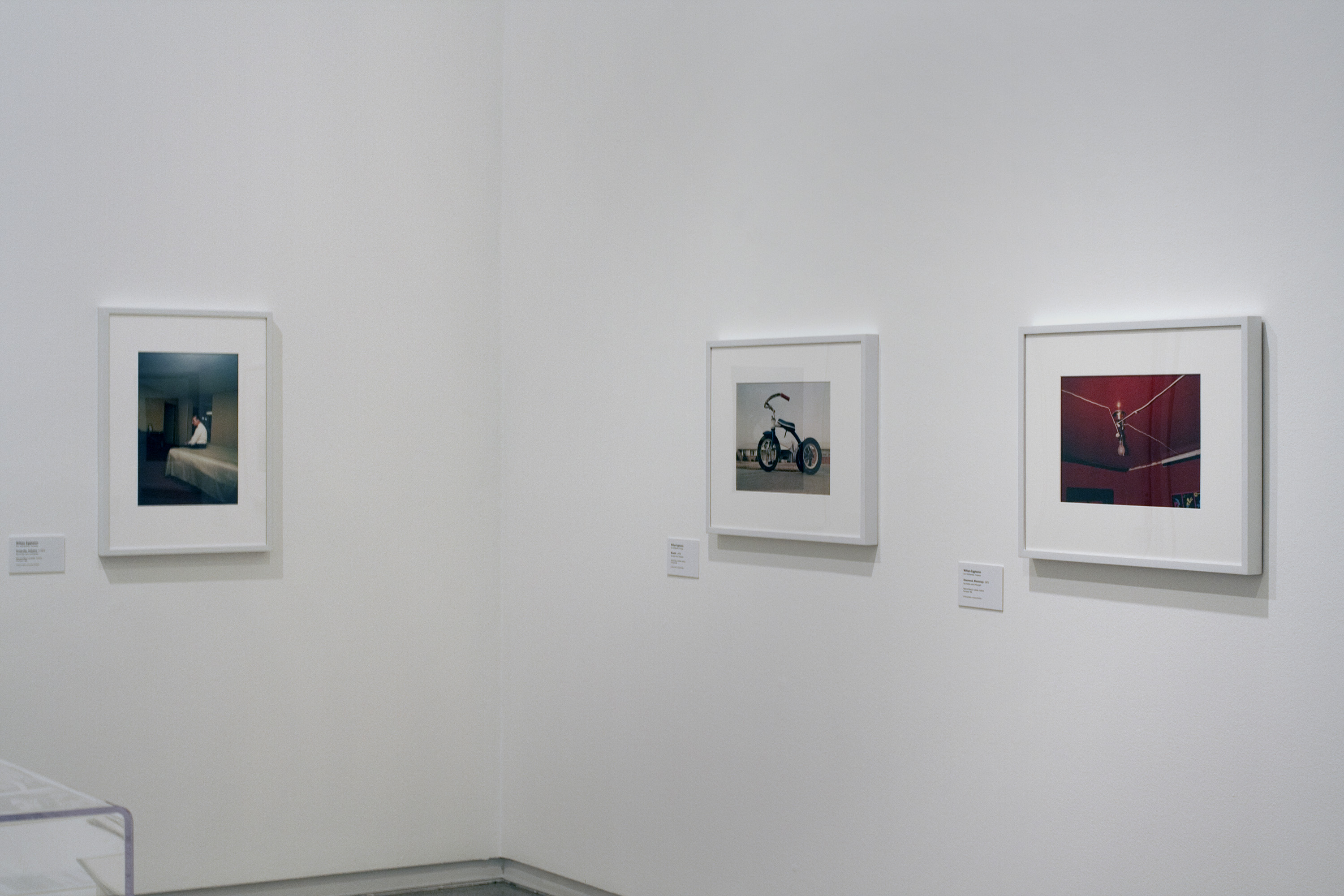
Installation view of the exhibition 'Diane Arbus: American Portraits' at the Heide Museum of Modern Art, Melbourne showing the work of William Eggleston

Installation view of the exhibition 'Diane Arbus: American Portraits' at the Heide Museum of Modern Art, Melbourne showing from left to right, William Eggleston's 'Huntsville, Alabama' c. 1971; William Eggleston's 'Memphis' c. 1969; and William Eggleston's 'Greenwood, Mississippi "The Red Ceiling"' 1973


Installation view of the exhibition Diane Arbus: American Portraits at the Heide Museum of Modern Art, Melbourne showing in the bottom image from left to right, William Eggleston’s Huntsville, Alabama c. 1971; William Eggleston’s Memphis c. 1969; and William Eggleston’s Greenwood, Mississippi “The Red Ceiling” 1973
Photos: © Dr Marcus Bunyan and Heide Museum of Modern Art


William Eggleston (American, b. 1939) 'Huntsville, Alabama' c. 1971


William Eggleston (American, b. 1939)
Huntsville, Alabama
c. 1971
Dye transfer colour photograph
46.6 h x 32.4 w cm
National Gallery of Australia, Canberra
Purchased 1980


William Eggleston (American, b. 1939) 'Memphis' c. 1970 printed 1980


William Eggleston (American, b. 1939)
Memphis
c. 1970 printed 1980
Dye transfer colour photograph
30.2 h x 44.2 w cm
National Gallery of Australia, Canberra
Purchased 1980


William Eggleston (American, b. 1939) 'Greenwood, Mississippi' ["The Red Ceiling"] 1973, printed 1979


William Eggleston (American, b. 1939)
Greenwood, Mississippi [“The Red Ceiling”]
1973, printed 1979
Dye transfer colour photograph
29.5 h x 45.4 w cm
National Gallery of Australia, Canberra
Purchased 1980


With its intense red, Eggleston’s picture of the spare room in a friend’s home is one of the most iconic of all colour photographs. Often called The red room, this photograph was intended to be shocking: Eggleston described the effect of the colour as like ‘red blood that is wet on the wall’. But the radicalness of the picture is not just in its juicy (and impossible to reproduce) redness; it is also found in the strange view it provides of a domestic interior, one that Eggleston has described as a ‘fly’s eye view’.

Text © National Gallery of Australia, Canberra


Installation view of the exhibition 'Diane Arbus: American Portraits' at the Heide Museum of Modern Art, Melbourne showing the work of Garry Winogrand

Installation view of the exhibition 'Diane Arbus: American Portraits' at the Heide Museum of Modern Art, Melbourne showing the work of Garry Winogrand


Installation views of the exhibition Diane Arbus: American Portraits at the Heide Museum of Modern Art, Melbourne showing the work of Garry Winogrand
Photos: © Dr Marcus Bunyan and Heide Museum of Modern Art


Garry Winogrand (American, 1928-1984) 'No title [Centennial Ball, Metropolitan Museum, New York]' 1969


Garry Winogrand (American, 1928-1984)
No title [Centennial Ball, Metropolitan Museum, New York]
1969
Gelatin silver photograph
27.2 h x 42.0 w cm
National Gallery of Australia, Canberra
Purchased 1980


Garry Winogrand (American, 1928-1984) 'New York City, New York'. From "Garry Winogrand" 1970


Garry Winogrand (American, 1928-1984)
New York City, New York. From “Garry Winogrand”
1970
Gelatin silver photograph
21.6 h x 32.6 w cm
National Gallery of Australia, Canberra
Purchased 1978


Winogrand was asked how he felt about missing photographs while he reloaded his camera. He replied ‘There are no photographs while I’m reloading’: There is no possibility in the Winograndian world view of regarding the camera as a window onto the world; it becomes a mirror reflecting back the photographer’s concerns. Winogrand was fascinated by how the real was translated into the photographic. In the end this fascination became an obsession from which he could not escape or find solace – or meaning. At the time of his death there were a third of a million exposures that he had never looked at including 2,500 undeveloped rolls of film.

Text © National Gallery of Australia, Canberra


Installation view of the exhibition 'Diane Arbus: American Portraits' at the Heide Museum of Modern Art, Melbourne showing the work of Lee Friedlander


Installation view of the exhibition Diane Arbus: American Portraits at the Heide Museum of Modern Art, Melbourne showing the work of Lee Friedlander
Photo: © Dr Marcus Bunyan and Heide Museum of Modern Art


Lee Friedlander (American, b. 1934) 'Rt. 9w, N.Y.' 1969


Lee Friedlander (American, b. 1934)
Rt. 9w, N.Y.
1969
Gelatin silver photograph
18.8 h x 28.2 w cm
National Gallery of Australia, Canberra
Purchased 1981


Lee Friedlander (American, b. 1934) 'Mount Rushmore' 1969


Lee Friedlander (American, b. 1934)
Mount Rushmore
1969
Gelatin silver photograph
18.8 h x 28.0 w cm
National Gallery of Australia, Canberra
Purchased 1981


“I always wanted to be a photographer. I was fascinated with the materials. But I never dreamed I would be having this much fun. I imagined something much less elusive, much more mundane.”

~ Lee Friedlander


Friedlander is known for his complex, layered images, exploring the way that the urban landscape fragments our vision. Throughout his career he has found endless fascination in photographing reflections in windows – merging what lies behind the glass with what is reflected in it – out of which he has created juxtapositions which are witty and insightful. He often inserts himself into the image, either overtly or more frequently as a shadow or partially concealed form – part of his face, for instance, hidden behind the camera.

In the 1960s he moved away from a recognisably documentary style toward one in which the subject is more elusive, reflecting a society which had itself become more fragmented and complex. By cropping and cutting up city and natural landscapes he changes our perception of them. In creating compositions that are dynamic, unexpected and often confusing, Friedlander asks us to look freshly at our everyday environments.

Text © National Gallery of Australia, Canberra


Installation view of the exhibition 'Diane Arbus: American Portraits' at the Heide Museum of Modern Art, Melbourne showing the work of Walker Evans


Installation view of the exhibition Diane Arbus: American Portraits at the Heide Museum of Modern Art, Melbourne showing the work of Walker Evans
Photo: © Dr Marcus Bunyan and Heide Museum of Modern Art


Walker Evans (American, 1903-1975) 'Hudson Street boarding house detail, New York' 1931


Walker Evans (American, 1903-1975)
Hudson Street boarding house detail, New York
1931
Gelatin silver photograph
15.7 h x 20.6 w cm
National Gallery of Australia, Canberra
Purchased 1980


Walker Evans (American, 1903-1975) 'Bedroom, shrimp fisherman's house, Biloxi, Mississippi' 1945


Walker Evans (American, 1903-1975)
Bedroom, shrimp fisherman’s house, Biloxi, Mississippi
1945
Gelatin silver photograph
23.4 h x 18.3 w cm
National Gallery of Australia, Canberra
Purchased 1980


Walker Evans (American, 1903-1975) 'Tenant Farmer's Wife, Alabama' 1936


Walker Evans (American, 1903-1975)
Tenant Farmer’s Wife, Alabama
[Allie Mae Burroughs, wife of a cotton sharecropper, Hale County, Alabama]

1936
Gelatin silver photograph
23.6 h x 18.0 w cm
National Gallery of Australia, Canberra
Purchased 1978


Installation view of the exhibition 'Diane Arbus: American Portraits' at the Heide Museum of Modern Art, Melbourne showing the work of Milton Rogovin with from left to right, 'Not titled (Family in front of house) – 241-2' 1973 and 'Not titled (Family in front of house) – 142-11' 1985, both from the 'Lower West Side' series (1973-2002)


Installation view of the exhibition Diane Arbus: American Portraits at the Heide Museum of Modern Art, Melbourne showing the work of Milton Rogovin with from left to right, Not titled (Family in front of house) – 241-2 1973 and Not titled (Family in front of house) – 142-11 1985, both from the Lower West Side series (1973-2002)
Photo: © Dr Marcus Bunyan and Heide Museum of Modern Art


“Written with her trademark flair and force, Sontag’s book [On Photography] inaugurated a wave of criticism, much of it influenced by Foucaultian theory, that underscored the instrumentality and implicit violence of photography, its ability to police and regulate it subjects, especially those lacking social and political power: the poor, presumed “deviants” or “criminals,” and workers. As Sontag herself acknowledged, however, photography is not only a predatory means of taking possession, but also a mode of conferring value; it can potentially be put to counter-hegemonic uses, used to see and frame in ways that affirm and legitimate, rather than strictly contain and control, the presence of culturally disenfranchised persons.”

“The power of his art stems from the particular manner in which Rogovin transforms traditional portrait photography and documentary practice, opening up potentially instrumentalist, one-sided visual forms to dynamics of reciprocity and mutuality…”

“Rogovin’s photography thus balances the documentary desire to grasp and present, to “capture” an image of the”Other,” with a commitment to holding back in order to allow his subjects space to shape the photographic process. His practice is a form of”approach,” to borrow a term from Carol Shloss, that resists even as it engages. We might call this an aesthetic of “making space”: a photographic method that creates room for subjects to actively participate in the production of their own images rather than stand as passive objects before a colonizing gaze.”

“The fact that Rogovin’s work at once invokes and questions the camera’s capacity to classify – to embed individuals in a larger archive – echoes his challenge to documentary business as usual. Certainly, Rogovin’s images of working people perform a classic documentary task: to lend public visibility to those who have been overlooked and exploited, to give aggrieved people the social recognition they are otherwise denied in our society. However, his images do not enforce the power and prerogatives of middle-class reformers or governmental institutions, as did so much early twentieth-century documentary photography, which, as Maren Stange has argued, tended to reassure “a 11 liberal middle-class that social oversight was both its duty and its right.” By refusing to provide pity-inducing images of working people that present them as weak and vulnerable, Rogovin’s photographs undercut the sense of privilege viewers often feel when looking at pictures of what Jacob Riis called “the other half.””

Joseph Entin. “Milton Rogovin’s Approach: Photography, Class, and the Aesthetics of Making Space (2008),” on the ASX website July 12, 2010 [Online] Cited 12/05/2018


Heide Museum of Modern Art
7, Templestowe Road
Bulleen, Victoria 3105

Opening hours:
(Heide II and Heide III)
Tuesday – Sunday 10.00am – 5.00pm

Heide Museum of Modern Art website

LIKE ART BLART ON FACEBOOK

Back to top

Exhibition: ‘Balthasar Burkhard’ at Fotomuseum Winterthur and Fotostiftung Schweiz, Winterthur, Zurich

Exhibition dates: 10th February – 21st May, 2018


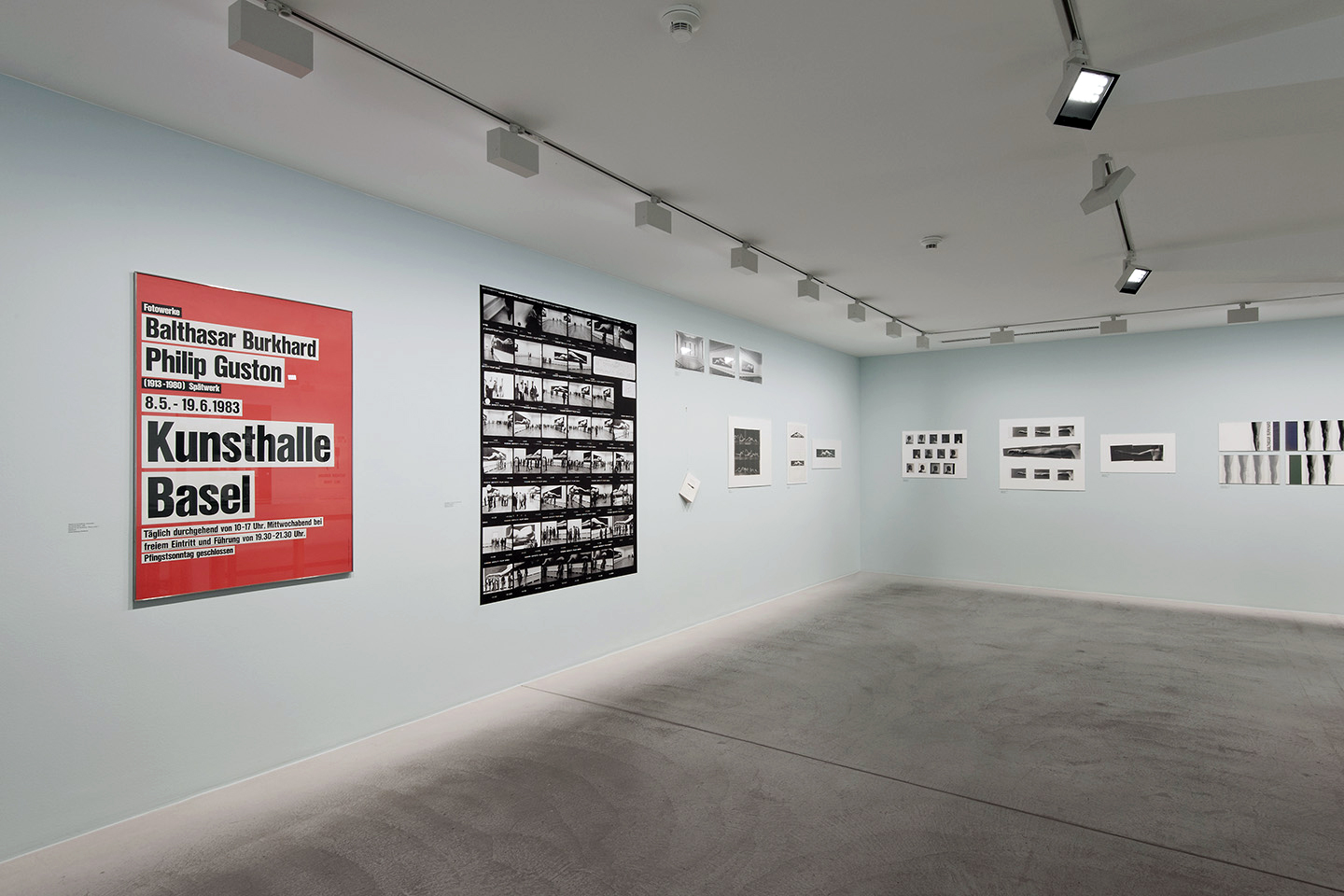
Balthasar Burkhard poster for his exhibition at Fotomuseum Winterthur

Balthasar Burkhard


As is so often the case with an artist, it is the early work that shines brightest in this posting.

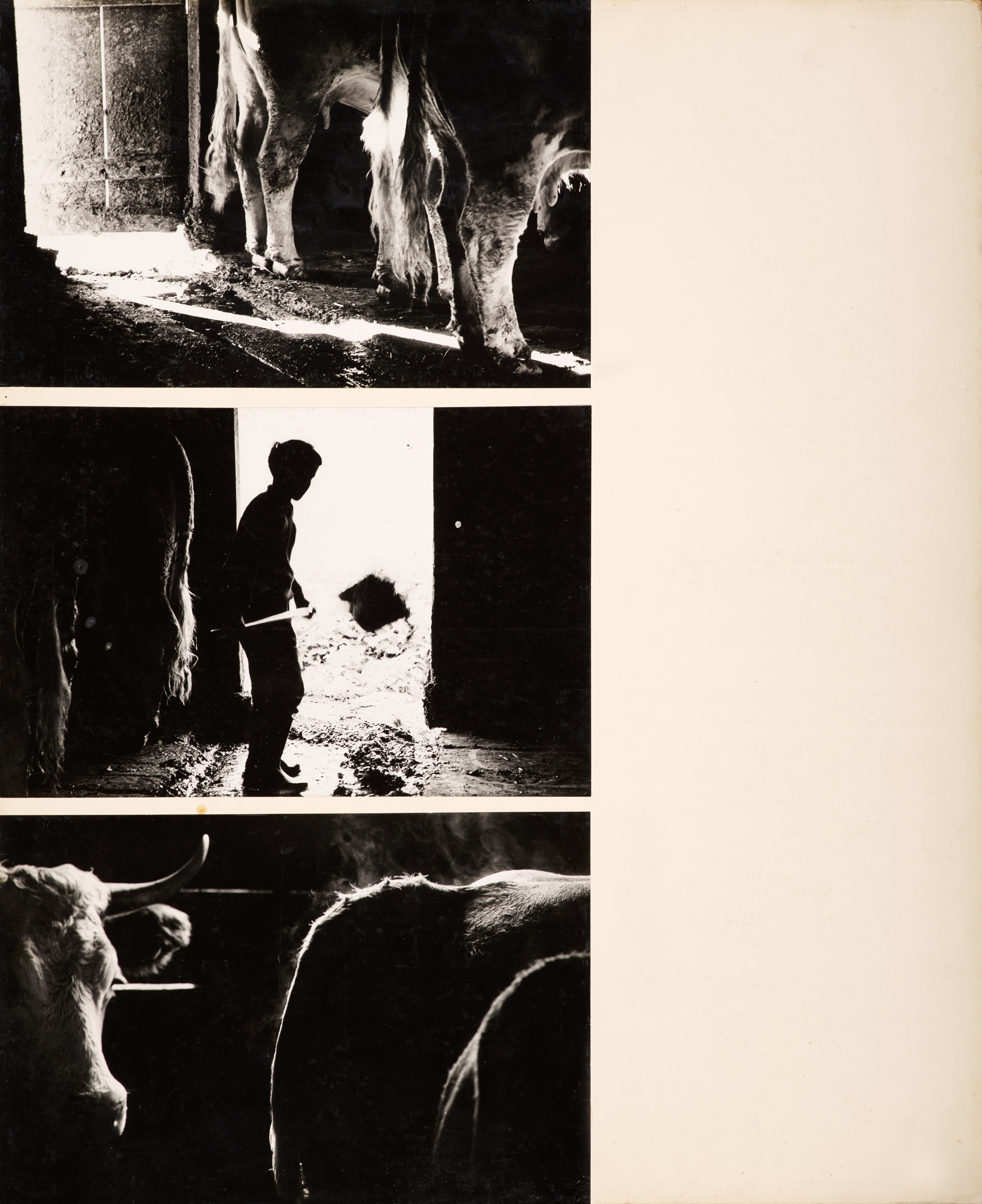
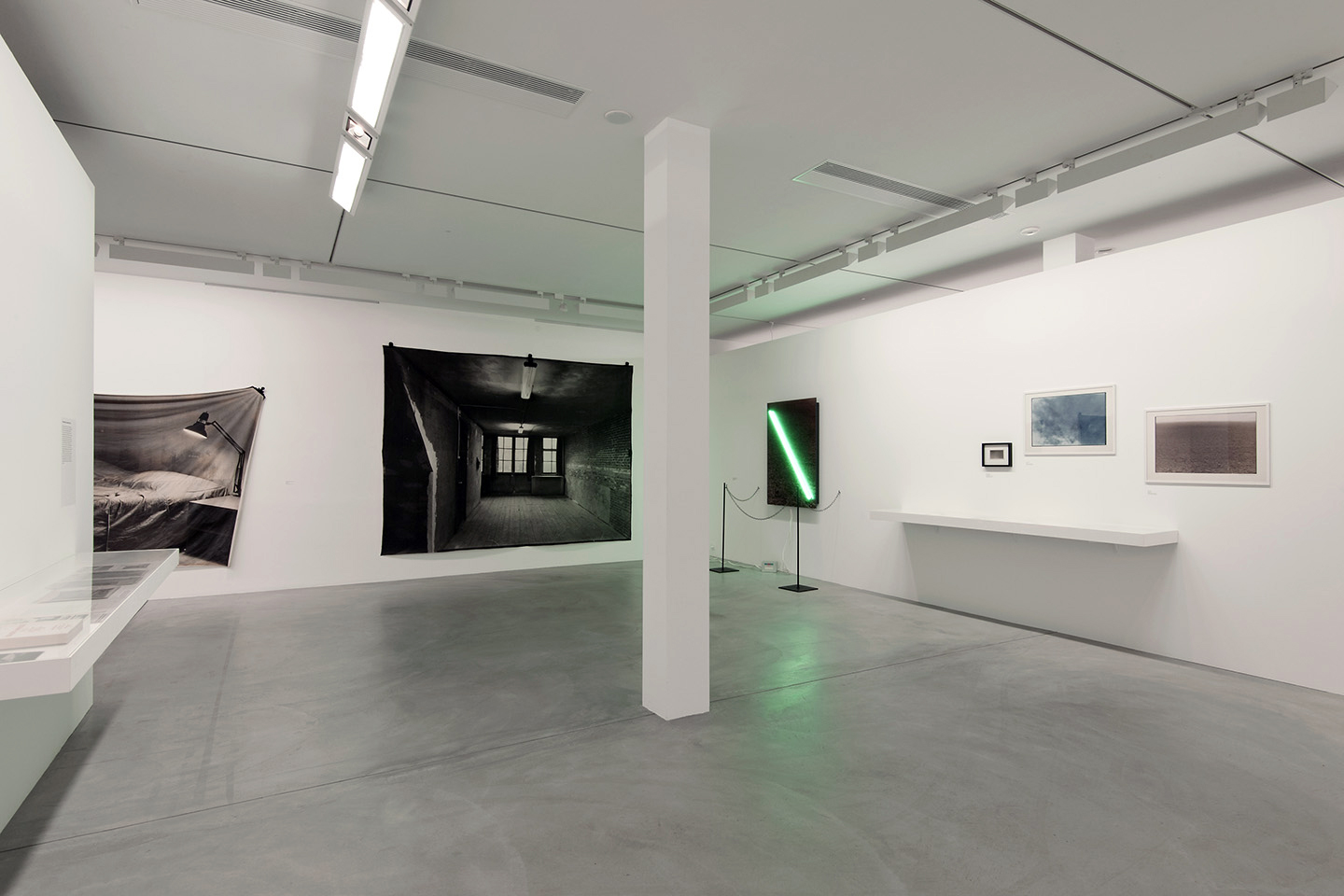
The works from On the Alp possess an essential power; the daring capture of actions and performances by the international avant-garde of the day make you wish you had been there; and the installation photograph of ‘The Knie’, Kunsthalle Basel in 1983 (below) makes me want to see more of his 1980s installations, with their shift in scale and repetitive nature. There are no more examples online, but a couple of photographs can be seen in the first installation photograph below.

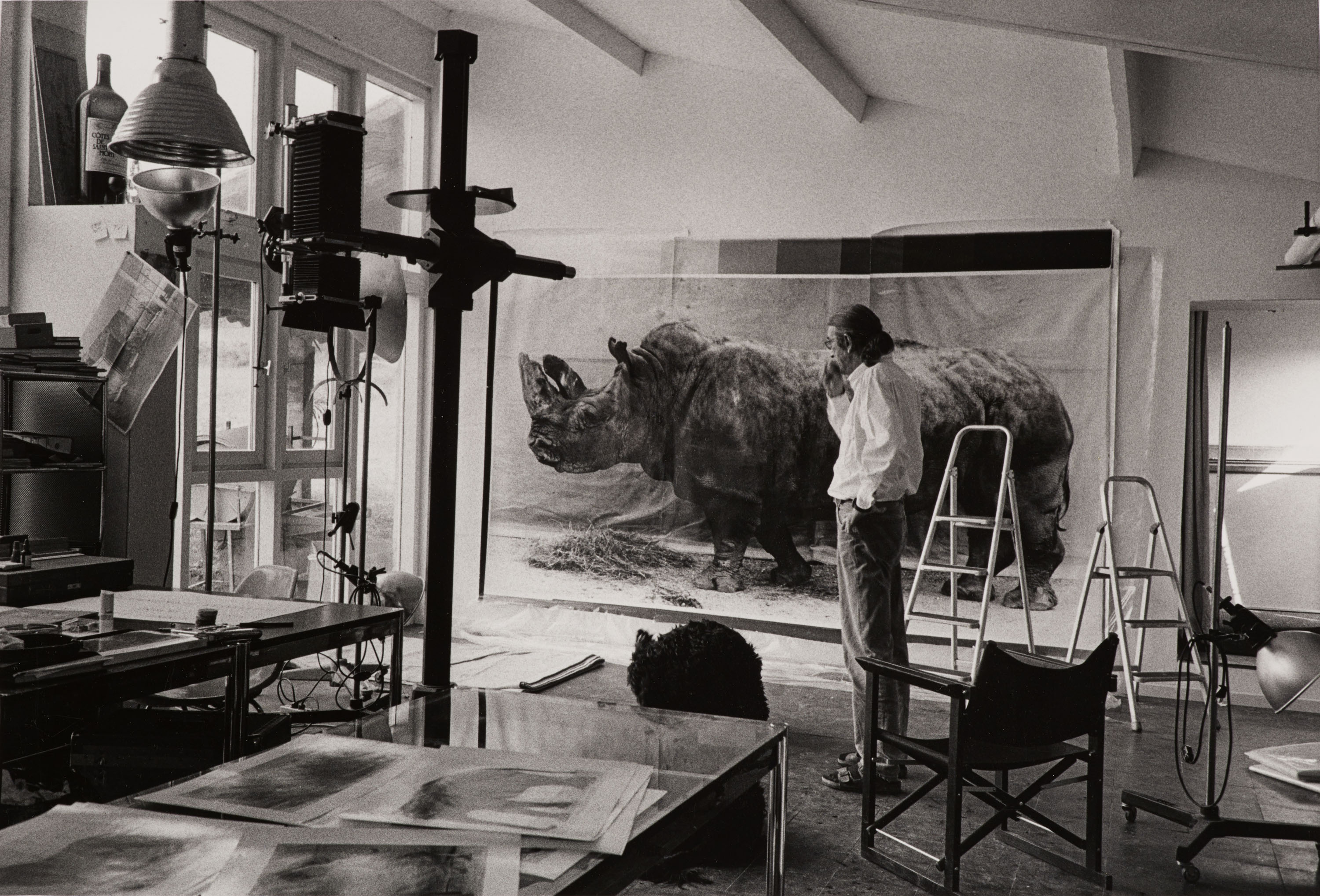
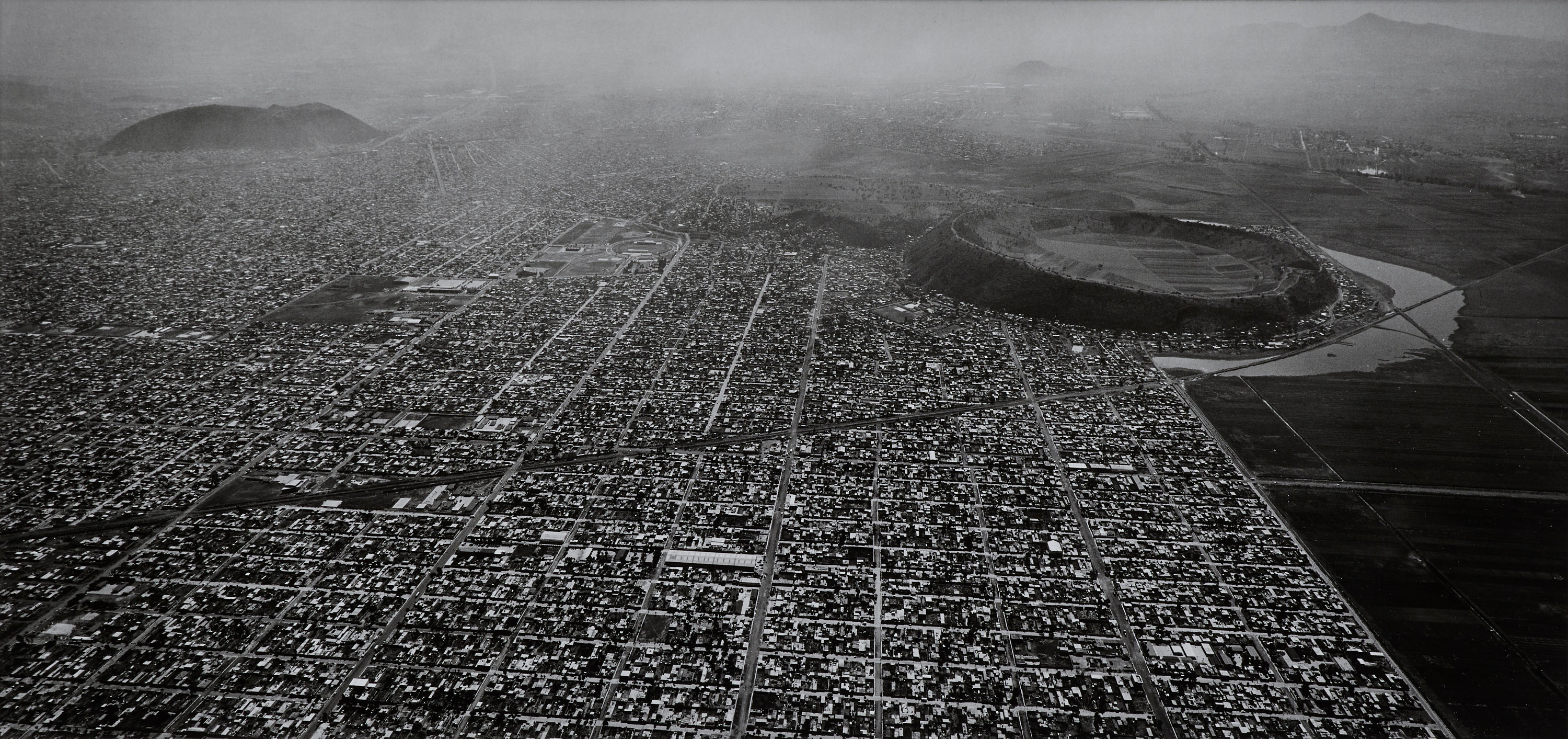
I can leave the underwhelming aerial, cloud and landscape work well alone. There are many people in the history of photography who have taken better photographs of such subject matter. His life-sized photographs of animals again do nothing for me. They possess a reductive minimalism riffing on the canvas backgrounds of Avedon blown up to enormous size (as in most contemporary photography, as if by making something large the photograph gains aura and importance) but they lead nowhere. Perhaps in their actual presence (the physicality of the print) I might be transported to another place, but in reproduction they are a one-dimensional non sequitur.

From the energy of the earlier work emerges “a beauty contest between animals in a photo-shoot”, scrupulous studio photos that demand to be taken seriously, but mean very little. Here, passion has lost out to rigorous and deathly control.

Dr Marcus Bunyan


Many thankx to Fotomuseum Winterthur and Fotostiftung Schweiz for allowing me to publish the photographs in the posting. Please click on the photographs for a larger version of the image.


Together, Fotomuseum Winterthur and Fotostiftung Schweiz will showcase the oeuvre of Swiss artist Balthasar Burkhard (1944-2010) in a major retrospective. Burkhard’s work spans half a century: from his early days as a trainee photographer with Kurt Blum to his seminal role in chronicling the art of his time, eventually becoming a photographic artist in his own right who brought photography into the realms of contemporary art in the form of the monumental tableau. More than 150 works and groups of works chart not only the progress of his own photographic career, but also the emergence of photography as an art form in the second half of the twentieth century. An exhibition in collaboration with Museum Folkwang, Essen, and Museo d’arte della Svizzera italiana, Lugano.


Balthasar Burkhard (Swiss, 1944-2010) from 'On the Alp' 1963 from the exhibition 'Balthasar Burkhard' at Fotomuseum Winterthur and Fotostiftung Schweiz, Winterthur, Zurich, Feb - May, 2018


Balthasar Burkhard (Swiss, 1944-2010)
from On the Alp
1963
© Estate Balthasar Burkhard


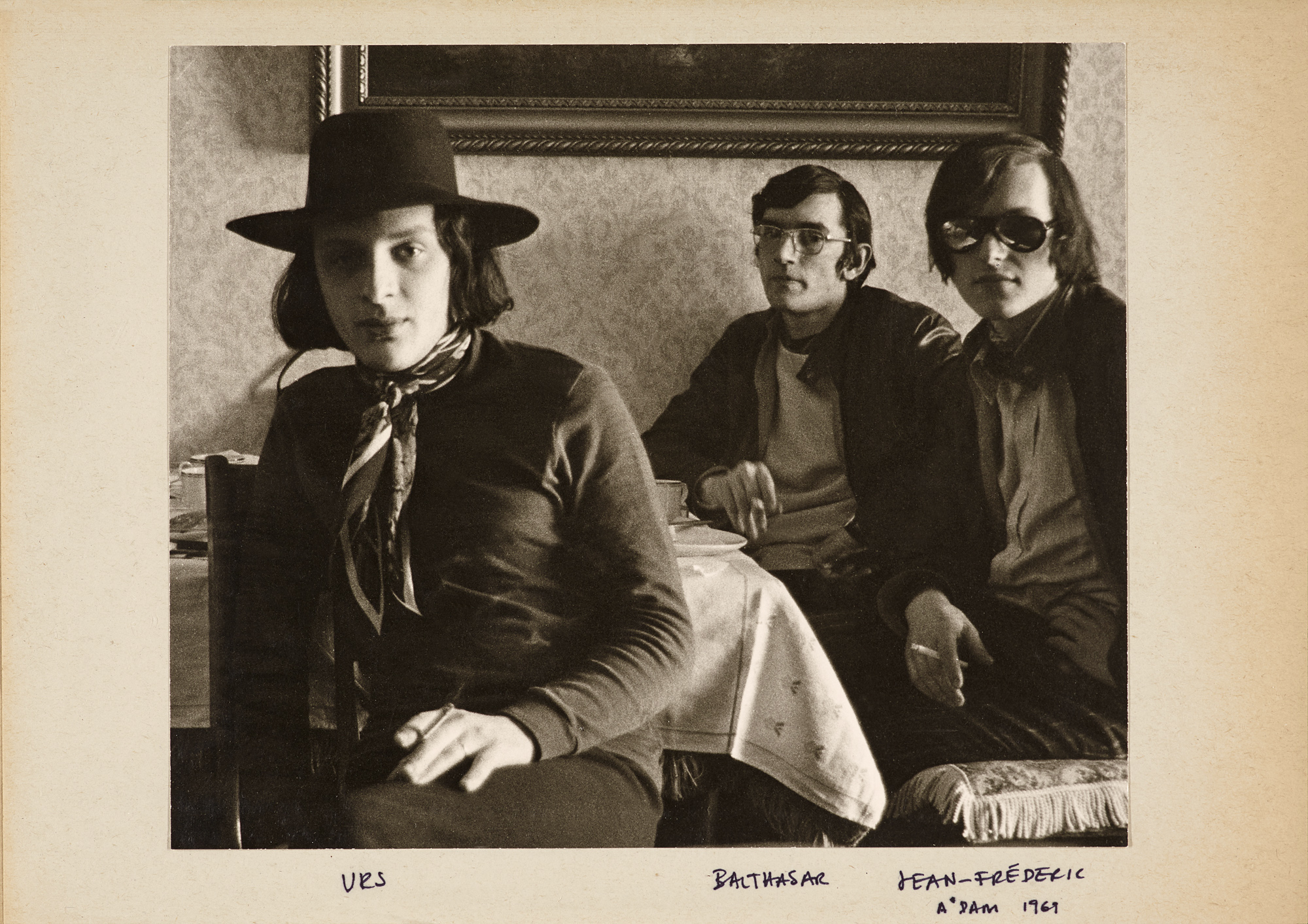
Balthasar Burkhard (Swiss, 1944-2010) 'Untitled (Urs Luthi, Balthasar Burkhard, Jean-Frederic Schnyder), Amsterdam' 1969 from the exhibition 'Balthasar Burkhard' at Fotomuseum Winterthur and Fotostiftung Schweiz, Winterthur, Zurich, Feb - May, 2018


Balthasar Burkhard (Swiss, 1944-2010)
Untitled (Urs Luthi, Balthasar Burkhard, Jean-Frederic Schnyder), Amsterdam
1969
© Estate Balthasar Burkhard


Urs Lüthi (b. 1947) is a Swiss conceptual artist who attended the School of Applied Arts in Zurich. Noted for using his body and alter ego as the subject of his artworks, he has worked in photography, sculpture, performance, silk-screen, video and painting.

Jean-Frédéric Schnyder (Swiss, b. 1945) began producing experimental objects in the late 1960s within the context of pop art and has since gone on to create a broad oeuvre encompassing photographs, sculptures, paintings, objects, and installations.


Balthasar Burkhard (Swiss, 1944-2010) 'Untitled (Jean-Christophe Ammann at Andy Warhol's Factory), New York' 1972


Balthasar Burkhard (Swiss, 1944-2010)
Untitled (Jean-Christophe Ammann at Andy Warhol’s Factory), New York
1972
© Estate Balthasar Burkhard


Jean-Christophe Ammann (14 January 1939 – 13 September 2015) was a Swiss art historian and curator.


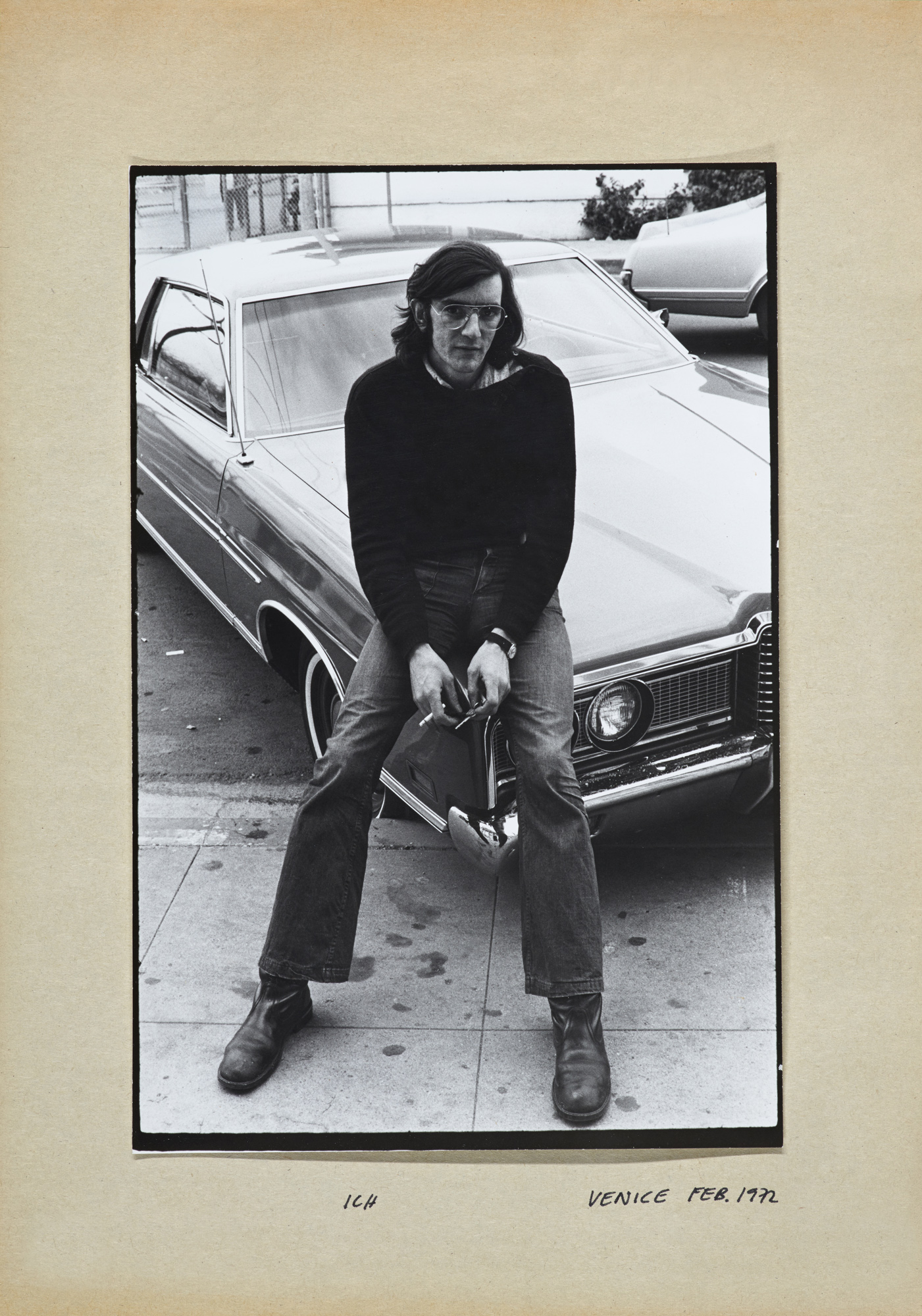
Jean-Christophe Ammann (Swiss, 1939-2015) 'Untitled (Balthasar Burkhard), USA' 1972


Jean-Christophe Ammann (Swiss, 1939-2015)
Untitled (Balthasar Burkhard), USA
Venice, 1972
© Estate Balthasar Burkhard


Together, Fotomuseum Winterthur and Fotostiftung Schweiz have launched a major retrospective exhibition dedicated to the lifetime achievement of Swiss artist Balthasar Burkhard (1944-2010). His oeuvre is almost unparalleled in the way it reflects not only the self-invention of a photographer but also the emancipation of photography as an artistic medium in its own right during the second half of the twentieth century.

The exhibition charts the many facets of Burkhard’s career, step by step, from his apprenticeship with Kurt Blum – in which he adhered closely to the traditional reportage and illustrative photography of the 1960s, and undertook his first independent photographic projects – to his role alongside legendary curator Harald Szeemann, and his documentation of Bern’s bohemian scene in the 1960s and 1970s. Balthasar Burkhard is the author of many iconic images of such groundbreaking exhibitions as When Attitudes Become Form at Kunsthalle Bern in 1969 and the 1972 documenta 5, capturing radical and frequently ephemeral works, actions and performances by the international avant-garde of the day.

Meanwhile, Burkhard endeavoured to make his mark both as a photographer and as an artist, developing his first large-scale photographic canvases in collaboration with his friend and colleague Markus Raetz, trying out his skills as an actor in the USA, and ultimately being invited to hold his own highly influential exhibitions at Kunsthalle Basel and Musée Rath in Geneva in 1983 and 1984. These enabled him to liberate photography from its purely documentary role by creating monumental tableaux in which he developed the motif of the body into sculptural human landscapes and site-specific architectures.

Throughout the course of his career, Burkhard turned time and again to portraiture. Whereas his early photographs tended to show artists in action within their own setting, his later portraits adopted an increasingly formalised approach. During the 1990s, he transposed this stylistic reduction to a wide-ranging series of animal portraits reminiscent of the encyclopaedic style of nineteenth century photography.

Another milestone of Burkhard’s oeuvre can be found in his vast aerial photographs of major mega cities such as Tokyo and Mexico City. These images, shot from an aircraft, like his images of the earth’s deserts, were destined to become a personal passion. Balthasar Burkhard’s quest for a morphology, for a formula that could encapsulate both nature and culture, is particularly evident in his later work, which ranges from pictures of waves and clouds, Swiss mountains and rivers, to the delicate fragility of plants. His interest was always focused on the materiality of the image. Alongside the highly idosyncratic and somewhat darkly sombre tonality of his prints, Burkhard constantly sought to explore every aspect of photography’s aesthetic and technical potential.

Encompassing half a century of creativity, the joint exhibition by Fotomuseum and Fotostiftung not only shows individual works, but also reflects on Balthasar Burkhard’s own view of how his photographs should be presented, underpinned by a wealth of documents from the archives of the artist. The exhibition is divided in two parts and shown in parallel in the exhibition spaces of Fotomuseum and Fotostiftung.

Press release


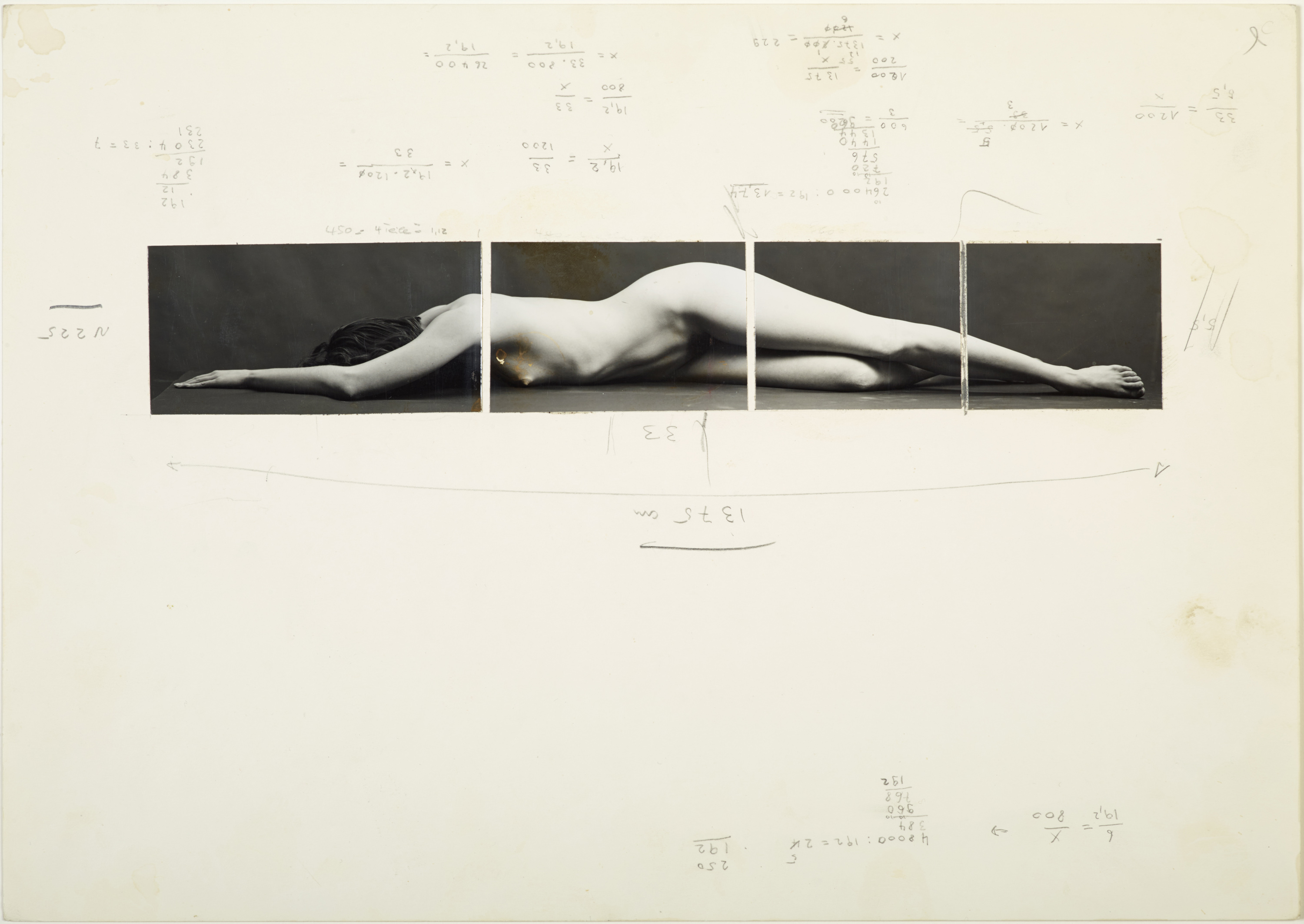
Balthasar Burkhard (Swiss, 1944-2010) / Markus Raetz (Swiss, 1941-2020) 'The Bed' 1969/1970


Balthasar Burkhard (Swiss, 1944-2010) / Markus Raetz (Swiss, 1941-2020)
The Bed
1969-1970
© Estate Balthasar Burkhard


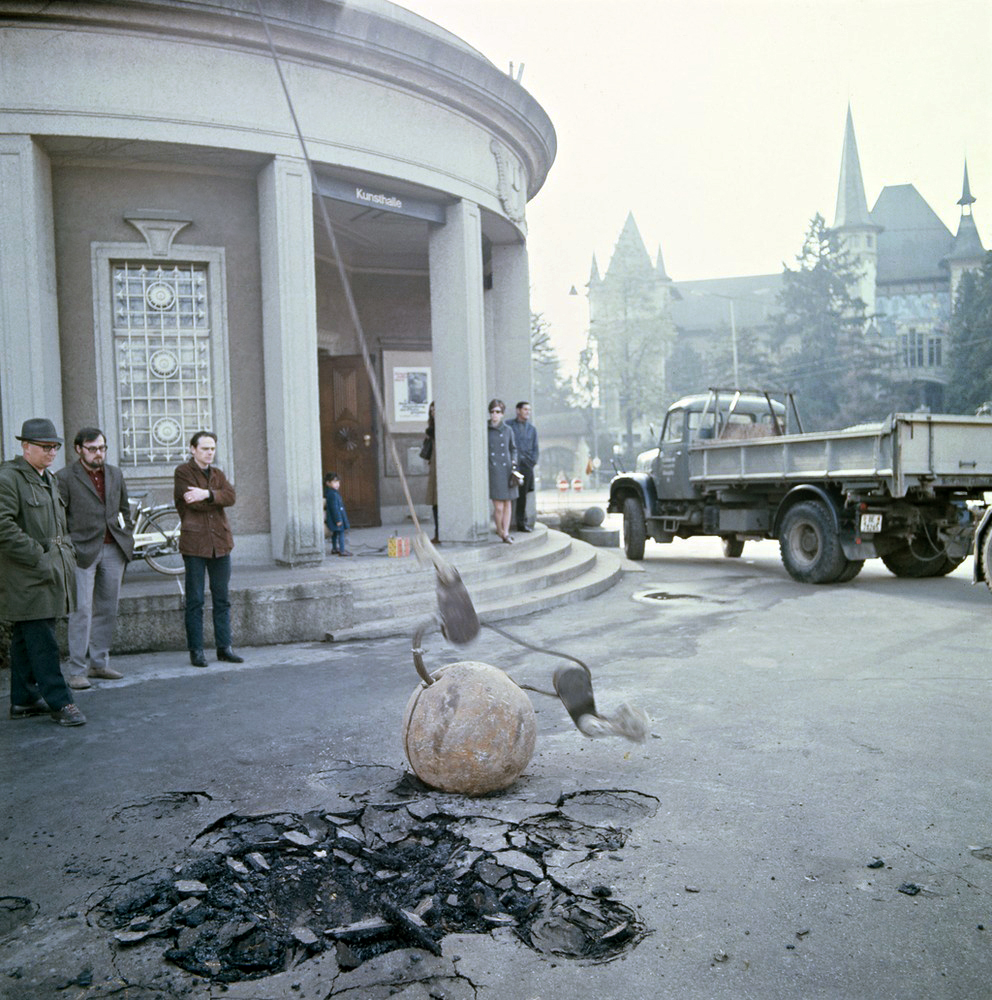
Balthasar Burkhard (Swiss, 1944-2010) 'Untitled (Michael Heizer, Berne Depression), Berne' 1969


Balthasar Burkhard (Swiss, 1944-2010)
Untitled (Michael Heizer, Berne Depression), Berne
1969
© J. Paul Getty Trust. Getty Research Institute, Los Angeles


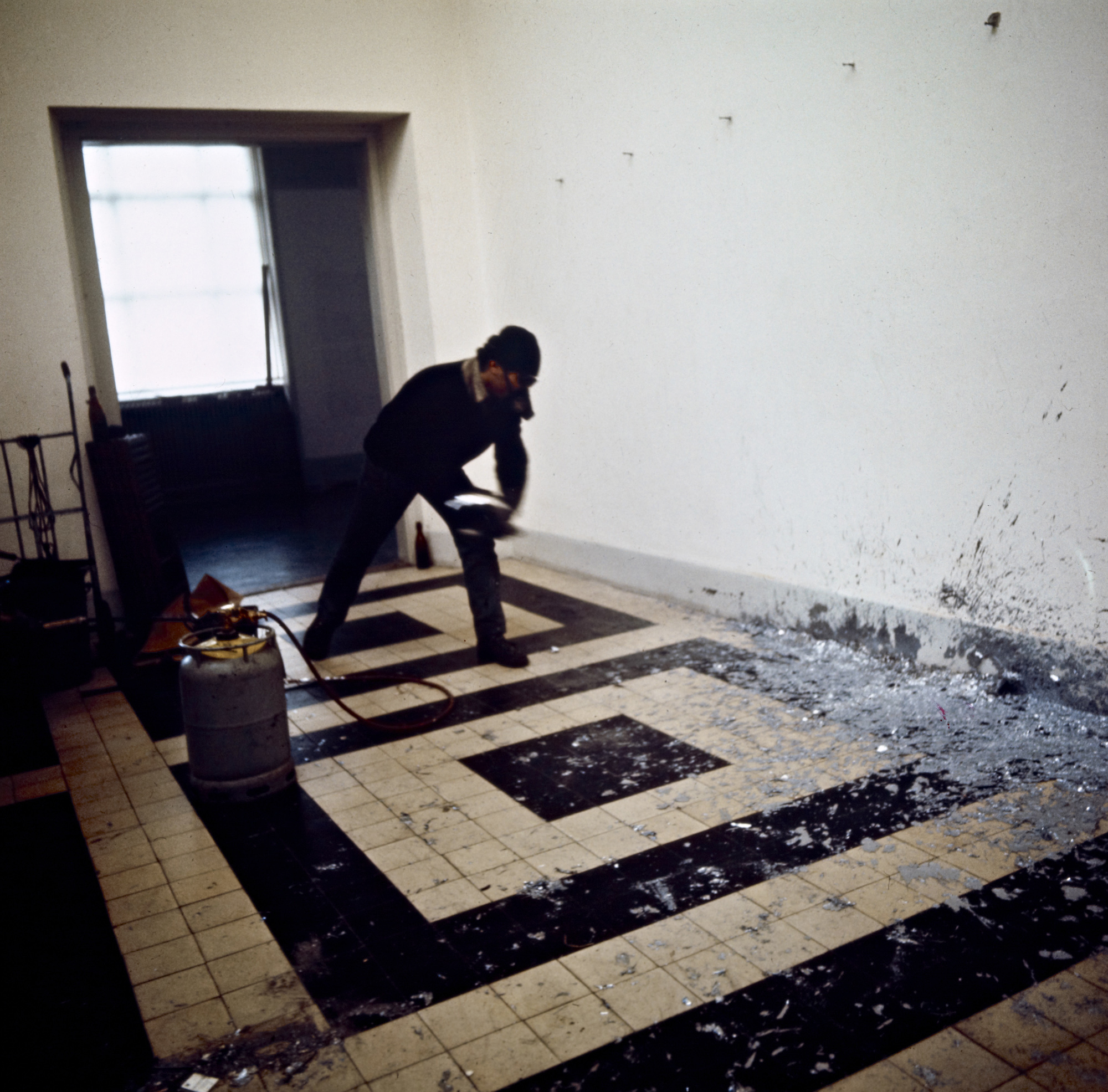
Balthasar Burkhard (Swiss, 1944-2010) 'Untitled (Richard Serra, Splash Piece), Berne' 1969


Balthasar Burkhard (Swiss, 1944-2010)
Untitled (Richard Serra, Splash Piece), Berne
1969
© J. Paul Getty Trust. Getty Research Institute, Los Angeles


Richard Serra (1938-2024) was an American artist known for his large-scale sculptures made for site-specific landscape, urban, and architectural settings. Serra’s sculptures are notable for their material quality and exploration of the relationship between the viewer, the work, and the site.


Balthasar Burkhard (Swiss, 1944-2010) 'Untitled (Harald Szeemann, the last day of documenta 5), Kassel' 1972


Balthasar Burkhard (Swiss, 1944-2010)
Untitled (Harald Szeemann, the last day of documenta 5), Kassel
1972
© Estate Balthasar Burkhard


With this major retrospective, Fotomuseum Winterthur and Fotostiftung Schweiz pay homage to the Swiss artist Balthasar Burkhard (1944-2010). His oeuvre is almost unparalleled in the way it reflects not only the self-invention of a photographer, but also the emancipation of photography as an artistic medium in its own right during the second half of the twentieth century.

Together, the two institutions chart the many and varied facets of Burkhard’s career, step by step. Fotostiftung presents early works from the days of his apprenticeship with Kurt Blum and his first independent documentary photographs. The exhibition also traces Burkhard’s role as a photographer alongside the curator Harald Szeemann and capturing images of Bern’s bohemian scene in the 1960s and 1970s. During that time, Burkhard carved his niche as a photographer and artist, developing his first large-scale photographic canvases in collaboration with his friend Markus Raetz and eventually breaking away from the European art world in search of both himself and new inspiration in the USA.

The second part of the exhibition at Fotomuseum shows the work created by Burkhard after his return to Europe, and his exploration of the photographic tableau. It was during this phase that he largely succeeded in emancipating photography from its purely documentary function. Using monumental formats, he translated the motif of the human body into sculptural landscapes and site-specific architectures. He went on to apply his stylistic device of formal reduction to portraits and landscapes. This marked the beginning of a series of experiments in the handling of photographic techniques. From long-distance aerial photographs of mega-cities such as Mexico City and Tokyo to close-up studies of flowers and plants, Burkhard seemed to be constantly seeking a formula that would embrace both nature and culture, encapsulating a sensory and sensual grasp of visible reality.

Encompassing half a century of creativity, the exhibition not only shows individual works, but is also underpinned by applied projects, films and many documents from the archives of the artist. This wealth of material allows a reflection both on Balthasar Burkhard’s own view of how his photographs should be presented in the exhibition space as well as his constant weighing-up of other media.

Part I (Fotostiftung Schweiz)

Early photographs

Balthasar Burkhard was just eight years old when his father gave him a camera to take along on a school excursion. Burkhard himself describes this early experience with the camera as the starting point of his career. It was also his father who suggested an apprenticeship with Kurt Blum, one of Switzerland’s foremost photographers, ranking along-side Paul Senn, Jakob Tuggener and Gotthard Schuh. Blum taught the young Balz, as he was nicknamed, all the finer points of darkroom technique as well as the art of large-format photography. The earliest work from Burkhard’s apprentice years is a reportage of the school, in the form of a book, while his documentation of the Distelzwang Society’s historic guildhall in the old quarter of Bern was clearly a lesson in architectural photography. Yet, no sooner had he completed his apprenticeship than Burkhard was already embarking on his very own independent projects inspired by post-war humanist photography, such as Auf der Alp, a study of rural Alpine life, for which he was awarded the Swiss Federal Grant for Applied Arts in 1964.

Chronicler of Bohemian Life in Bern

Even during his apprenticeship, Burkhard moved in the Bernese art circles to which his teacher Kurt Blum also belonged. In 1962, he created a first portrait, in book form, of painter and writer Urs Dickerhof. Shortly after that, he became friends with his near-contemporary Markus Raetz, and started taking photographs for the charismatic curator Harald Szeemann, who was director of Kunsthalle Bern from 1961 to 1969. Burkhard immersed himself in the vibrantly dynamic Swiss art scene, documenting the often controversial exhibitions of conceptual art at the Kunsthalle, and capturing the lives of Bern’s bohemian set with his 35mm camera. These visual mementos would later be collated in a kind of photographic journal. Initial collaborative projects with artists included a 1966 artists’ book about the village of Curogna (Ticino) and a window display for the Loeb department store in Bern featuring photographic portraits of the Bernese artist Esther Altorfer, devised in collaboration with Markus Raetz and his later wife, fashion designer Monika Raetz-Müller.

Landscapes 1969

Inspired by his friend Raetz, Burkhard photographed bleak and rugged snow-covered landscapes in the Bernese Seeland region. Heaps of earth piled up along the wayside reminded him of Robert Smithson’s Earthworks, which had just emerged in contemporary art. As Burkhard would later explain, “I wanted to leave out everything relating to myself, so that I could truly relate to what remained. I distanced myself from my subject-matter. I succeeded in stepping back both from myself and from my work.”

A close-up of bare agricultural soil, vaguely reminiscent of a lunar landscape, forms the basis for an object with a neon tube created in 1969 for the legendary exhibition When Attitudes Become Form in collaboration with Harald Szeemann, Markus Raetz and Jean-Frédéric Schnyder. In 1969, Burkhard’s brown-toned landscapes were included in the 1969 exhibition photo actuelle suisse in Sion. They were subsequently published as his first independent portfolio by Allan Porter in the May issue of Camera magazine, which was dedicated to avant-garde European photography and its affinity with contemporary art.

The Amsterdam Canvases 1969-1970

When Markus Raetz took a studio in Amsterdam in 1969, he and Burkhard continued to work on joint projects. Photographs of everyday motifs were enlarged, practically life-sized, onto canvas, and caused a sensation in the spring 1970 exhibition Visualisierte Denkprozesse (Visualised thought processes) at Kunstmuseum Luzern, curated by Jean-Christophe Ammann, who wrote: “On huge canvases, they [Raetz and Burkhard] showed, among other things, a spartan studio space, a bedroom, a kitchen, a curtain. They relativised the purely object-like character by hanging the canvases on clips. The resulting folds enriched the images by adding a new dimension.” In other words, the folds in the canvas created a “quasi ironic and disillusioning barrier.” Burkhard’s large-format works foreshadowed the monumental photographic tableaux that would eventually herald the ultimate march of photography into the museum space some ten years later.

Documentarist of the International Art Scene

By the end of the 1960s, Harald Szeemann and his polarising, controversial exhibitions were drawing increasing attention far beyond the boundaries of Switzerland. In particular, his (in)famous 1969 show When Attitudes Become Form unleashed heated debates that ultimately led to Szeemann’s resignation as director of Kunsthalle Bern. Then, in 1970, he shocked the members and visitors of the Kunstverein in Cologne with an exhibition dedicated to Happening & Fluxus. Here, too, Burkhard was on hand with his camera. Jean-Christophe Ammann, with whom Burkhard undertook a research trip to the USA in 1972, photographing many artists’ studios, proved no less controversial a figure. Moreover, Burkhard also photographed artists, actions and installations at the 1972 documenta 5 in Kassel, which was headed by none other than Szeemann himself. Given the expanded concept of art that prevailed at the time, which strengthened the role of performance art and installation works alike, photography, too, gained a newfound core significance. Indeed, it was only through photography that many of these innovative works were preserved for posterity.

Chicago and the Self-Invention of the Artist

Following a relatively unproductive period in the wake of documenta 5, during which he worked, among other things, on an unfinished documentary project about the small Swiss town of Zofingen, Burkhard spent the years between 1975 and 1978 in Chicago, where he taught photography at the University of Illinois. It was while he was there that he once again reprised the series of photo canvases he had been working on in Amsterdam between 1969 and 1970. This led to new large-format works portraying everyday scenes such as the back seat of an automobile or the interior of a home with a TV, as well as three now lost photographs of roller skaters and a very androgynous back-view nude study of a young man. In 1977 the Zolla/Lieberman Gallery in Chicago presented these canvases together with a selection of the Amsterdam works in what was Burkhard’s first solo exhibition. Critics were impressed by his “soft photographs”. The Chicago Tribune, for instance, enthused: “‘European’ grace is wedded to ‘American’ strength in a supreme artistic fiction that suggests the wide-screen format of film.”

Self-Portraits

In Chicago, Burkhard rekindled his friendship with performance and conceptual artist Thomas Kovachevic, whom he had first met at documenta 5 and who now introduced him to the local art scene. At the same time, Burkhard toyed with the notion of trying his chances as a film actor in Hollywood. With Kovachevich’s help, he produced a series of self-portraits, both Polaroids and slides, which he presented in a small snakeskin-covered box as his application portfolio. He approached Alfred Hitchcock and Joshua Shelley of Columbia Pictures, albeit unsuccessfully. His only film role was in Urs Egger’s 1978 Eiskalte Vögel (Icebound; screened in seminar room I). Burkhard later transformed some of his self-portraits into large-scale canvases, through which he asserted his newfound sense of identity as an artist, making himself the subject-matter of his own artistic work. One of these was also shown in the Photo Canvases exhibition at Zolla/Lieberman Gallery.


Balthasar Burkhard (Swiss, 1944-2010) 'feet 2' 1980


Balthasar Burkhard (Swiss, 1944-2010)
feet 2
1980
© Estate Balthasar Burkhard


Balthasar Burkhard (Swiss, 1944-2010) 'The Knie', Kunsthalle Basel (installation view) 1983


Balthasar Burkhard (Swiss, 1944-2010)
‘The Knie’, Kunsthalle Basel 
(installation view)
1983
© Estate Balthasar Burkhard


Balthasar Burkhard (Swiss, 1944-2010) 'Study of The Head' c. 1983


Balthasar Burkhard (Swiss, 1944-2010)
Study of The Head
c. 1983
© Estate Balthasar Burkhard


Balthasar Burkhard (Swiss, 1944-2010) 'Design for Body II' c. 1983


Balthasar Burkhard (Swiss, 1944-2010)
Design for Body II
c. 1983
© Estate Balthasar Burkhard


Part II (Fotomuseum Winterthur)

Body and Sculpture

The 1980s heralded the advent of a particularly productive period for Balthasar Burkhard in which he adopted a more sculptural approach to photography, treating his prints as an integral part of the exhibition architecture. Just as he himself had witnessed how the generation of artists before him had called the classic exhibition space into question, so too did his own latest works now begin to take control of that space. Burkhard became one of the foremost proponents of large-scale photographic tableaux, as evidenced by his groundbreaking exhibitions at Kunsthalle Basel in 1983 and Museé Rath, Geneva, in 1984.

It was in the photo canvases he made in Chicago during the late 1970s that Burkhard first turned towards the motif of the body as a sculptural form with which he would continue to experiment over the coming years. Such an overtly sculptural approach to the body and to the nude as landscape soon began to demand a larger format than Burkhard had previously been using. An arm, almost four metres long, framed by heavy steel, or the multipart installation Das Knie (Knee), reflect the very core of his creative oeuvre in all its many facets: monumentality, fragmentation and the breaking of genre boundaries by transposing two-dimensional images into spatially commanding installations.

Portraits: Types and Individuals

The increasing formal reduction of Balthasar Burkhard’s images continued in the field of portraiture. He invited fellow artists such as Lawrence Weiner and Christian Boltanski to sit for him. With this series, it seemed that he had finally put behind him his days as a chronicler of the art scene, reliant on the techniques of applied photography.

Portraits of a rather different kind are his profiles of animals, in an equally reduced setting, against the backdrop of a tarpaulin. Redolent of Renaissance drawings or nineteenth century animal photography, his images of sheep, wolves and lions come across as representing ideal and typical examples of their species without anthropomorphising them, while at the same time wrenching them out of their natural environment. These images reached a broad audience through the popular 1997 children’s book “Click!”, said the Camera, which was republished in its second edition in 2017.

Architectural Photography

Given his increasing success in the art world, Burkhard could well afford to be selective about his choice of commissioned works. He had already been taking photographs for architects connected with the Bern-based firm Atelier 5 back in the 1960s, and was still accepting commissions in this field in the 1990s. Burkhard’s photographic essay on the Ricola building designed by Swiss architects Herzog & de Meuron indicates just how thoroughly his own distinctive artistic syntax permeates his commissioned and architectural photography, right through to the details of fragments and materials. These photographs were shown in the Swiss Pavilion at the Venice Biennale of Architecture in 1991, having been explicitly designed for this particular exhibition space. As in his artistic oeuvre, Burkhard operates here with spatially commanding installations, skilfully dovetailing the architectural motif with the presentational form.

Aerial Photography

In the 1990s, before the art world had even begun to turn its attention to the subject of megacities, Burkhard was already taking a keen interest in the world’s major conurbations. Following in the footsteps of his father, who had been a Swiss airforce pilot, he took bird’s-eye-view photographs from a plane. His panoramic shots of cities such as London, Mexico City and Los Angeles were preceded by small-format studies of clouds: the so-called Nuages series. Having incorporated a study of rural Switzerland into his formative training in 1963 with the series Auf der Alp (On the Alp), he returned once more to focus on the landscape of his homeland in the early 2000s with an entire series of aerial photographs of the Bernina mountain range.

Landscape and Flora

In the last two decades of his life, Burkhard concentrated primarily on landscape and flora, turning to historical precedents both in his techniques and in his choice of motif. The desert formations of Namibia, in which all sense of proportion is lost amid the remote and untouched wilderness, set a counterpoint to the sprawling urban expanses of Mexico City and London. The diptych Welle (Wave), by contrast, pays homage to the work of French artist Gustave Courbet, with Burkhard making a pilgrimage to the tide swept shores where the father of Realism had painted in 1870.

In another series, Burkhard adapts the aesthetics of botanical plant studies, which were as widely used around the turn of the twentieth century as the complex photographic process of heliography, and transposes these to larger-than-life formats. Whereas Burkhard, as a young photographer, had captured the exuberant art scene of the 1960s and 1970s, snapshot-style, he later went on, as an artist-photographer, to explore the potential of the photographic tableau, diligently researching near-forgotten techniques and the sensual details of the visible world.

Artwork and Commissioned Work

The site-specific installations of his photographs and Burkhard’s own dedicated approach to museum spaces warrant an excursion into the archives of the artist, paying particular attention to four exemplary exhibitions.

One spectacular and iconic show was the Fotowerke (Photo works) exhibition at Kunsthalle Basel in 1983. Curated by artist Rémy Zaugg, the installations can be reconstructed thanks to the catalogue and copious documentation. Contact prints and studies, for instance, help to give an insight into the no longer extant thirteen metre work Körper I (Body I) as well as shedding light on the choice of motif for further body fragments.

A 1984 solo exhibition at the Le Consortium in Dijon, on the other hand, shows how Burkhard responded with his group of works Das Knie (Knee) to an entirely different installation context within the given space. Similarly, at the Musée Rath in Geneva that same year, Burkhard, together with his friend Niele Toroni, instigated a radical juxtaposition of photography and painting based on the pillars of the exhibition venue.

At Grand-Hornu in the Belgian town of Mons, by contrast, his life-sized photographs of animals were mounted at eye level. While Burkhard chose a large format for the exhibition venue, the images in his children’s book “Click!”, said the Camera tell of a beauty contest between animals in a photo-shoot. This apparent discrepancy between artwork and commissioned work never seemed to be relevant to Burkhard. The sheer volume of his studio photos, alone, indicates just how scrupulously precise he was about the way he wanted to be perceived as a serious photographer.

Wall text from the exhibition


Installation view of the exhibition 'Balthasar Burkhard' at Fotomuseum Winterthur and Fotostiftung Schweiz, Winterthur, Zurich February - May 2018

Installation view of the exhibition 'Balthasar Burkhard' at Fotomuseum Winterthur and Fotostiftung Schweiz, Winterthur, Zurich February - May 2018

Installation view of the exhibition 'Balthasar Burkhard' at Fotomuseum Winterthur and Fotostiftung Schweiz, Winterthur, Zurich February - May 2018

Installation view of the exhibition 'Balthasar Burkhard' at Fotomuseum Winterthur and Fotostiftung Schweiz, Winterthur, Zurich February - May 2018

Installation view of the exhibition 'Balthasar Burkhard' at Fotomuseum Winterthur and Fotostiftung Schweiz, Winterthur, Zurich February - May 2018


Installation views of the exhibition Balthasar Burkhard at Fotomuseum Winterthur and Fotostiftung Schweiz, Winterthur, Zurich February – May 2018


Balthasar Burkhard (Swiss, 1944-2010) 'Balthasar Burkhard in his studio' 1995


Balthasar Burkhard (Swiss, 1944-2010)
Balthasar Burkhard in his studio
1995
© Estate Balthasar Burkhard


Balthasar Burkhard (Swiss, 1944-2010) 'Camel' 1997


Balthasar Burkhard (Swiss, 1944-2010)
Camel
1997
© Estate Balthasar Burkhard


Balthasar Burkhard (Swiss, 1944-2010) 'Bull' 1996


Balthasar Burkhard (Swiss, 1944-2010)
Bull
1996
© Estate Balthasar Burkhard


Balthasar Burkhard (Swiss, 1944-2010) 'The Reindeer' 1996


Balthasar Burkhard (Swiss, 1944-2010)
The Reindeer
1996
© Estate Balthasar Burkhard


Balthasar Burkhard (Swiss, 1944-2010) 'Mexico City' 1999


Balthasar Burkhard (Swiss, 1944-2010)
Mexico City
1999
© Estate Balthasar Burkhard


Balthasar Burkhard (Swiss, 1944-2010) 'Mexico City' 1999


Balthasar Burkhard (Swiss, 1944-2010)
Mexico City
1999
© Estate Balthasar Burkhard


Balthasar Burkhard (Swiss, 1944-2010) 'Nuages ​​8' 1999


Balthasar Burkhard (Swiss, 1944-2010)
Nuages ​​8
1999
© Estate Balthasar Burkhard


Balthasar Burkhard (Swiss, 1944-2010) 'Ecosse' (Scotland) 2000


Balthasar Burkhard (Swiss, 1944-2010)
Ecosse (Scotland)
2000
© Estate Balthasar Burkhard


Balthasar Burkhard (Swiss, 1944-2010) 'Bernina' 2003


Balthasar Burkhard (Swiss, 1944-2010)
Bernina
2003
© Estate Balthasar Burkhard


Balthasar Burkhard (Swiss, 1944-2010) 'Silberen' 2004


Balthasar Burkhard (Swiss, 1944-2010)
Silberen
2004
© Estate Balthasar Burkhard


Balthasar Burkhard (Swiss, 1944-2010) 'Rio Negro' 2002


Balthasar Burkhard (Swiss, 1944-2010)
Rio Negro
2002
© Estate Balthasar Burkhard


Fotostiftung Schweiz
Grüzenstrasse 45
CH-8400 Winterthur (Zürich)
Phone: +41 52 234 10 30

Opening hours:
Tuesday – Saturday 11am – 6pm
Wednesday 11am – 8pm
Closed on Mondays

Fotostiftung Schweiz website

Fotomuseum Winterthur
Grüzenstrasse 44 + 45
CH-8400
Winterthur (Zürich)

Opening hours:
Tuesday to Sunday 11am – 6pm
Wednesday 11am – 8pm
Closed on Mondays

Fotomuseum Winterthur website

LIKE ART BLART ON FACEBOOK

Back to top

Exhibition: ‘The Polaroid Project’ at the Museum für Kunst und Gewerbe Hamburg

Exhibition dates: 16th March – 17th June, 2018


Anna Reynolds. 'Marcus / Mutilation of the Soul' October 1992


Anna Reynolds
Marcus / Mutilation of the soul
October 1992
Phillip Institute, Melbourne
Polaroid


I love Polaroid photography. As “instant” photography it can have immediacy, but it can also be used for conceptual work as can be see in this posting. You can manipulate the image while it is still developing, and you can also later reclaim the negative from the Polaroid itself, providing a useful scannable or printable negative for further experimentation.

The idea of “instant” photography bemuses me. Nothing is ever “instant”. For example, in the Polaroid image of me above (and in all of the images below), there was thought, an idea, a process, and imagination going on well before the photograph was taken, and during its development (the manipulation of the Polaroid around the figure). Even a simple, vernacular photograph of a family scene contains the fact that the person behind the camera made a conscious decision to capture something that they saw, and press the shutter at a particular moment. It is never a “snapshot” for the process of taking a photograph is always a sub / conscious, imaginative, exclamation of choice.

So there is this space and time of in/decision; there is also the space and time of waiting (and manipulating if so desired) for the Polaroid to develop. That is the magical part for me… to see the image develop not in the drip tray of the darkroom, but holding the image in your hand, watching it emerge from the ether right in front of your eyes. Instant no, unforgettable, yes.

Dr Marcus Bunyan


Many thankx to the Museum für Kunst und Gewerbe Hamburg for allowing me to publish the photographs in the posting. Please click on the photographs for a larger version of the image.


The Polaroid Project will shed light on the broad aesthetic spectrum made possible by the groundbreaking technology of instant photography, showcasing around 220 works by over 100 artists. Polaroid – a brand that has long since become a legend – revolutionised photography in a way that can still be felt today and which lives on in photo apps and on Instagram. The exhibition was developed by the Foundation for the Exhibition of Photography, Minneapolis / New York / Paris / Lausanne, the MIT Museum in Cambridge (Massachusetts), and WestLicht. Schauplatz für Fotografie (Vienna), in cooperation with MKG, and will be shown at numerous international museums.


James Nitsch. 'Razor Blade' 1976 from the exhibition 'The Polaroid Project' at the Museum für Kunst und Gewerbe Hamburg, March - June, 2017


James Nitsch
Razor Blade
1976
Polaroid SX-70 assemblage with razor blade
10.7 x 8.8cm
© James Nitsch


Guy Bourdin (French, 1928-1991) 'Charles Jourdan' 1978 from the exhibition 'The Polaroid Project' at the Museum für Kunst und Gewerbe Hamburg, March - June, 2017


Guy Bourdin (French, 1928-1991)
Charles Jourdan 1978
1978
C-Print
88.9 x 116.8cm
© The Guy Bourdin Estate 2017 / Courtesy of Louise Alexander Gallery


André Kertész (Hungarian, 1894-1985) 'August 13' 1979


André Kertész (Hungarian, 1894-1985)
August 13, 1979
1979
Polaroid SX-70
10.7 x 8.8cm
© The Estate of André Kertész, courtesy Stephen Bulger Gallery


Victor Landweber (American, b. 1943) 'Garbage Candy' 1979


Victor Landweber (American, b. 1943)
Garbage Candy
1979
Polaroid Polacolor Type 669 composite, bound in a book
10.8 x 16.1cm
© Victor Landweber, Collection Center for Creative Photography, The University of Arizona


Bruce Charlesworth (American, b. 1950) 'Untitled' 1979


Bruce Charlesworth (American, b. 1950)
Untitled
1979
Hand-painted Polaroid SX-70
10.7 x 8.8cm
© Bruce Charlesworth 1979


Barbara Crane (American, 1928-2019) 'Private Views' 1981


Barbara Crane (American, 1928-2019)
Private Views
1981
Polaroid Polacolor 4×5 Type 58
10.2 x 12.7cm
© Barbara Crane


Sandi Fellman (American, b. 1952) 'Grey Lion, Tokyo, Japan' 1983


Sandi Fellman (American, b. 1952)
Grey Lion, Tokyo, Japan
1983
Polaroid 20 x 24 Polacolor
73.7 x 56cm
© Sandi Fellman


Şahin Kaygun (Turkish, 1951-1992) 'Buttock' 1983


Şahin Kaygun (Turkish, 1951-1992)
Buttock
1983
Hand coloured, manipulated Polaroid Type 600 High Speed
10.7 x 8.8cm
© Şahin Kaygun


David Levinthal (American, b. 1949) 'Untitled' 1983-1985


David Levinthal (American, b. 1949)
Untitled from the series Modern Romance
1983-1985
Polaroid SX-70
10.7 x 8.8cm
© David Levinthal, ARS, NY and DACS, London 2017


In the exhibition The Polaroid Project, the Museum für Kunst und Gewerbe Hamburg presents for the first time the full scope of the phenomenon of the Polaroid photograph. Based on some 220 photos by over 100 artists, as well as 90 camera models and prototypes, the show sheds light on the whole aesthetic spectrum of instant photography and on the innovative technology that made this visual revolution possible. Polaroid stands for a technology, an industry, a company, and its products. Presented to the public for the first time in 1947 by Edwin Land in New York, instant camera film made the photo lab superfluous. As if by magic, the picture gradually appears before the eyes of the photographer and subject. Polaroid – a brand that has long since attained legendary status – thus transformed our handling of photography in a way that is still pervasive today, living on in photo apps and Instagram. In the heyday of the company in the mid-20th century, Polaroid sold its cameras and film to millions of amateurs and professionals. The technical and aesthetic qualities of the new medium, and above all the immediacy and spontaneity of the photos, made it an exciting field of experimentation for artists as well.

Polaroid itself has worked closely with photographers from the start. One of the earliest advisors to Edwin Land, inventor and founder of the Polaroid Corporation, was Ansel Adams, the godfather of American landscape photography. In its Artist Support Program, the company provides film and cameras to both established figures and nascent talents in the art and photography scene. In return, it receives not only feedback on its products but also selected works for the company collection. For artists, the inventions from Land’s company offer a playground for their own discoveries, one that provides fresh inspiration for their photography. It thus came about that the exponents of Pop Art – chief among them Andy Warhol – raised the status of the Polaroid photo to a whole new level with their excessive use of the medium, securing for it a place in the artistic sphere.

Press release from the Museum für Kunst und Gewerbe Hamburg


Dennis Hopper (American, 1936-2010) 'Los Angeles, Back Alley' 1987


Dennis Hopper (American, 1936-2010)
Los Angeles, Back Alley
1987
Polaroid SX-70
10.7 x 8.8cm
© Dennis Hopper, Courtesy of The Hopper Art Trust


Pierre-Louis Martin. 'Graines de Pissenlit' 1990


Pierre-Louis Martin
Graines de Pissenlit
1990
Gelatin silver print from Polaroid-Film Type 55
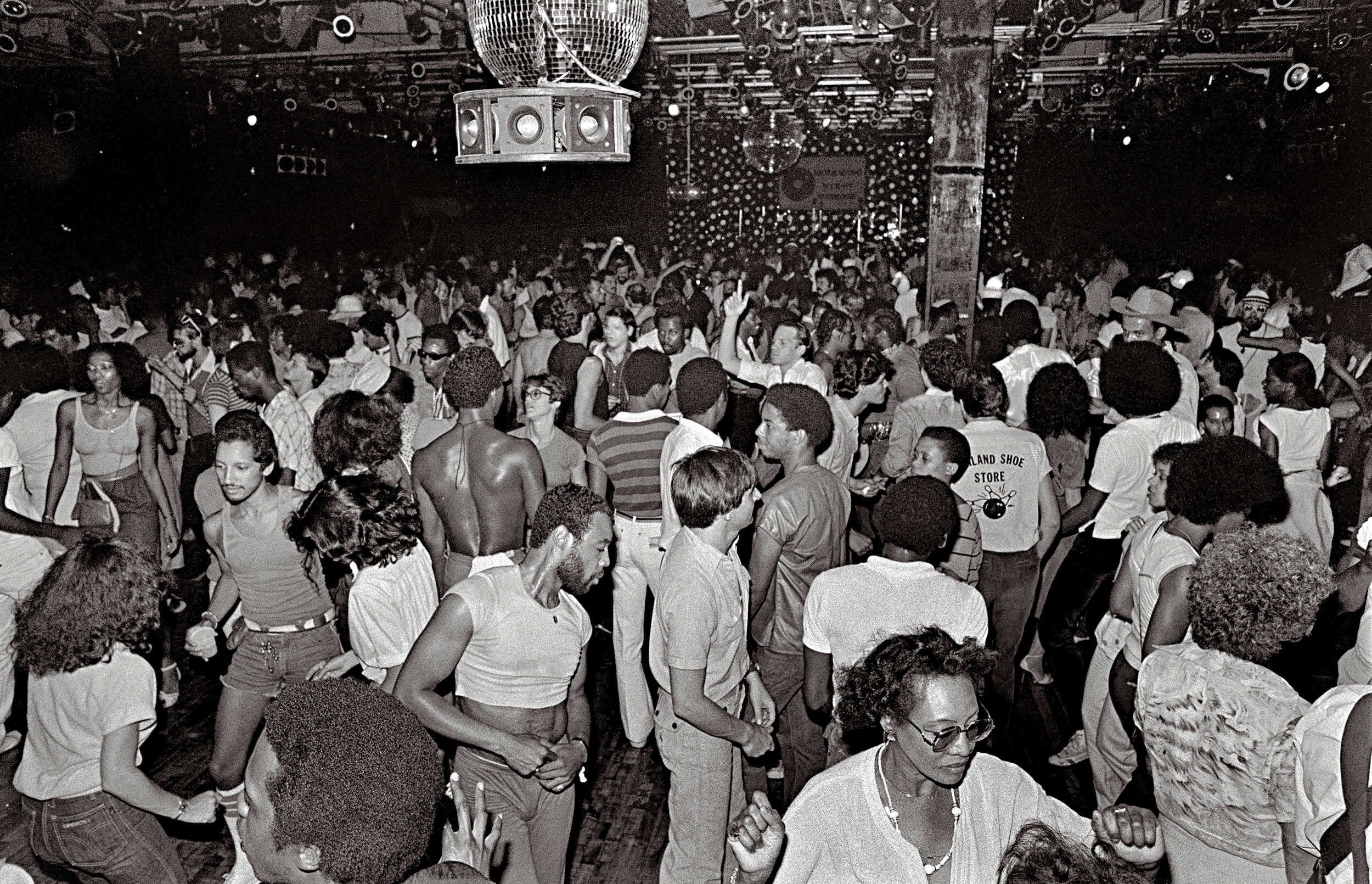
48.9 x 40cm
© Pierre-Louis Martin


Shelby Lee Adams (American, b. 1950) 'Esther and Bee Jay' 1991


Shelby Lee Adams (American, b. 1950)
Esther and Bee Jay
1991
Polaroid Polapan 4×5 Type 52
12.7 x 10.2cm
© Shelby Lee Adams


Kunihiro Shinohara (Japanese, b. 1948) 'Cosmic #9' 1993-2000


Kunihiro Shinohara (Japanese, b. 1948)
Cosmic #9
1993-2000
Inkjet print from Polaroid-Film Type 55
29.8 x 22.3cm
© Kunihiro Shinohara


Mark Klett (American, b. 1952) 'Contemplating the View at Muley Point, Utah' 1994


Mark Klett (American, b. 1952)
Contemplating the View at Muley Point, Utah
1994
Gelatin silver print from Polaroid-Film Type 55
40.6 x 50.8cm
© Mark Klett


Ellen Carey (American, b. 1952) 'Pulls (CMY)' 1997


Ellen Carey (American, b. 1952)
Pulls (CMY)
1997
Polaroid 20 x 24 Polacolor-Montage
210.8 x 167.6cm
© Ellen Carey, Jayne H. Baum Gallery, NYC, NY and M+B Gallery, LA, CA


Timothy White (American, b. 1956) 'Untitled' 1998


Timothy White (American, b. 1956)
Untitled
1998
Inkjet print from Polaroid-Film Type 665
50.8 x 40.6cm
© Timothy White


Toshio Shibata (Japanese, b. 1949) 'Untitled (# 228)' 2003


Toshio Shibata (Japanese, b. 1949)
Untitled (#228)
2003
Gelatin silver print from Polaroid-Film, Type 55
61 x 50.8cm
© Toshio Shibata


Chen Wei (Chinese, b. 1980) 'Everlasting Radio Wave-Test #5' 2008


Chen Wei (Chinese, b. 1980)
Everlasting Radio Wave-Test #5
2008
Fujifilm FP-100C
8.5 x 10.8cm
© Chen Wei


Paolo Gioli (Italian, 1942-2022) 'This Is Not My Face' 2010


Paolo Gioli (Italian, 1942-2022)
Questo volto non è il mio volto (This Face Is Not My Face)
2010
Polaroid 20 x 24 Polacolor and Polacolor transfer on acrylic
71 x 55cm
© Paolo Gioli


Museum für Kunst und Gewerbe Hamburg
Steintorplatz, 20099 Hamburg

Opening hours:
Tuesday to Sunday 10am – 6pm
Thursday 10am – 9pm
Closed Mondays

Museum fur Kunst und Gewerbe Hamburg website

LIKE ART BLART ON FACEBOOK

Back to top

Exhibition: ‘Susan Meiselas: Mediations’ at Jeu de Paume, Paris

Exhibition dates: 6th February – 20th May, 2018

Curators: Carles Guerra and Pia Viewing


Susan Meiselas (b. 1948, Baltimore) 'Sandinistes aux portes du quartier général de la Garde nationale à Esteli : "L'homme au cocktail Molotov", Nicaragua' 16 juillet 1979 from the exhibition 'Susan Meiselas: Mediations' at Jeu de Paume, Paris, Feb - May, 2018


Susan Meiselas (American, b. 1948)
Sandinistes aux portes du quartier général de la Garde nationale à Esteli : “L’homme au cocktail Molotov”, Nicaragua
16 juillet 1979
© Susan Meiselas/ Magnum Photos

NICARAGUA. Esteli. 1979. Sandinistas at the walls of the Esteli National Guard headquarters


The second of a double header from Jeu de Paume, Paris.

Whatever you write or say doesn’t matter. It’s the images that matter, the work before you.

Meiselas’ work offers respect, that is the key word, respect for the individuality of the people she photographs. You can feel it in her images; it is what gives them their power. Unlike the previous posting on the work of Raoul Hausmann, where it was all about the photographer, here the work is authored but the photographs are all about the subject: their place in the world, their trials and tribulations.

Meiselas’ photographs are very strong – graphic work (in form and declaration) balanced with an existential, human touch. Meiselas questions the nature of the original photograph and photographic process in order to understand how the photograph and its ongoing testimonies change in specific times and places, by developing multilayered narratives which integrate the participation of her subjects into her works. As such they are as much meditations on the human condition as much as mediations between place, her role as witness, storytelling, and how the meaning of images changes according to the context of their diffusion, which is facilitated by technology.

On the compilation of her visual histories, I can’t put it better than the text below:

“Lauded documentary photographer Susan Meiselas has been working at the nexus of history, politics, ethnography, art, and storytelling throughout her prolific career, producing multi-layered photographic narratives about individuals and societies across the U.S. and the world. Sensitive to both the potential and limitations of images, the 1992 MacArthur Fellow approaches her projects aware of their inevitable impartiality and incompleteness, supplementing her own photographs with texts, interviews, archival images, and other forms of documentation. “My projects are authored but I’d like to think they are not authoritative,” she says.”1

Dr Marcus Bunyan


1/ Anonymous text. “About Susan Meiselas” on the Artsy website Nd [Online] Cited 14/02/2022


Many thankx to Jeu de Paume for allowing me to publish the photographs in the posting. Please click on the photographs for a larger version of the image.


“It is important to me – in fact, it is central to my work – that I do what I can to respect the individuality of the people I photograph, all of whom exist in specific times and places.”

“This photograph is for whom. And so, for a long time that’s been the question motivating almost everything that I do.”


Susan Meiselas


A member of Magnum Photos since 1976, Susan Meiselas questions documentary practice. She became known through her work in conflict zones of Central America in the 1970s and 1980s in particular due to the strength of her colour photographs. Covering many subjects and countries, from war to human rights issues and from cultural identity to the sex industry, Meiselas uses photography, film, video and sometimes archive material, as she relentlessly explores and develops narratives integrating the participation of her subjects in her works. The exhibition highlights Susan Meiselas’ unique personal as well as geopolitical approach, showing how she moves through time and conflict and how she constantly questions the photographic process and her role as witness.


Susan Meiselas: Mediations at Jeu de Paume on Vimeo


Susan Meiselas (American, b. 1948) 'Sharif and Son' 1971 from the exhibition 'Susan Meiselas: Mediations' at Jeu de Paume, Paris, Feb - May, 2018


Susan Meiselas (American, b. 1948)
Sharif and Son
1971
From the series 44 Irving Street, 1971
© Susan Meiselas/Magnum Photos


Susan Meiselas (American, b. 1948) 'Lena juchée sur sa caisse, Essex Junction, Vermont, 1973' 1973


Susan Meiselas (American, b. 1948)
Lena juchée sur sa caisse, Essex Junction, Vermont, 1973
Lena on the Bally Box, Essex Junction, Vermont, 1973
1973
From the series Carnival Strippers, 1972-1975
© Susan Meiselas/Magnum Photos

USA. Essex Junction, Vermont. 1973. Lena on the Bally Box


Susan Meiselas (American, b. 1948) 'Lena après le spectacle, Essex Junction, Vermont, 1973' 1973


Susan Meiselas (American, b. 1948)
Lena après le spectacle, Essex Junction, Vermont, 1973
Lena after the show, Essex Junction, Vermont, 1973

1973
From the series Carnival Strippers, 1972-1975
© Susan Meiselas/ Magnum Photos

USA. Essex Junction, Vermont. 1973. Lena after the show


“Meiselas is known for her searing, visceral photographs of civil unrest and political revolution around the world, from Central America to Kurdistan. However, it is her “Carnival Strippers” that defines her career for many.”

Artsy Editors. “A History of Magnum Photos in Ten Photographers” on the Artsy website Jan 21, 2014 [Online] Cited 13/02/2022

See what they mean on the Susan Meiselas: “Carnival Strippers” 1972-1975 web page.


Susan Meiselas (American, b. 1948) 'Debbie et Renee, Rockland, Maine, 1972' 1972


Susan Meiselas (American, b. 1948)
Debbie et Renee, Rockland, Maine, 1972
1972
From the series Carnival Strippers, 1972-1975
© Susan Meiselas/Magnum Photos

USA. Rockland, Maine. 1972. Debbie and Renee


Meiselas’s first major photographic essay focused on the lives of women performing striptease at New England country fairs, whom she photographed during three consecutive summers while teaching photography in New York City public school classrooms. Carnival Strippers was originally published in 1976 with a new edition of the book (which included a CD of the audio recordings) produced by Steidl / Whitney in 2003. In 1976, Meiselas was invited to join the photographic cooperative Magnum Photos. Beginning in 1976, she photographed a group of young girls living in her neighbourhood of Little Italy, New York. Entitled Prince Street Girls, they inspired an on-going relationship.

Meiselas is best known for her coverage of the insurrection in Nicaragua and her documentation of human rights issues in Latin America for over a decade. In 1978 Meiselas made her first trip to Nicaragua, and that year one of her iconic images was published on the cover of the New York Times Magazine. In 1981, she published Nicaragua: June 1978-July 1979, reprinted in 2008 (with a DVD of the film “Pictures from a Revolution”) and in 2016 (with a customise AR app, to trigger film clips from the photographs). Her image of Pablo Jesús Aráuz, the ‘Molotov Man’, made on July 16, 1979 just before the triumph of the Sandinistas, has become an icon of the revolution. The image is shown recontextualised in the installation The Life of an Image: ‘Molotov Man’, 1979-2009. Meiselas served as an editor for two collaborative projects, both of which support and highlight the work of regional photographers. The first, El Salvador: The Work of Thirty Photographers, Writers and Readers, 1983, also features her own images. The second project, Chile from Within, W. W. Norton, 1991, focuses on work by photographers living under the Pinochet regime. Meiselas has also co-directed four films: Living at Risk: The Story of a Nicaraguan Family, 1986 ; Voyages, on her work in Nicaragua produced in collaboration with director M. Karlin, Pictures from a Revolution, 1991, with R. P. Rogers and A. Guzzetti; and Reframing History, 2004.

In 1992, Meiselas produced Kurdistan: In the Shadow of History, Random House, 1997; University of Chicago Press, 2008. The book was produced along with akaKURDISTAN, 1998, an online archive of collective memory, currently shown as a physical map with story books made by contributors from the Kurdish diaspora worldwide. Pandora’s Box, Trebruk/Magnum Editions, 2003, is an exploration of an underground New York S&M club that began in 1995. Both projects are shown as exhibition works.


Susan Meiselas (American, b. 1948) 'Mississippi' 1974


Susan Meiselas (American, b. 1948)
Mississippi
1974
From the series Porch Portraits, 1974
© Susan Meiselas/Magnum Photos


Susan Meiselas (American, b. 1948) 'Caroline du Sud' 1974


Susan Meiselas (American, b. 1948)
Caroline du Sud
1974
From the series Porch Portraits, 1974
© Susan Meiselas/Magnum Photos


Susan Meiselas (American, b. 1948) 'Dee et Lisa, Mott Street, Little Italy, New York, 1976' 1976


Susan Meiselas (American, b. 1948)
Dee et Lisa, Mott Street, Little Italy, New York, 1976
1976
From the series Prince Street Girls, 1975-1990
© Susan Meiselas/ Magnum Photos


Susan Meiselas (American, b. 1948) 'Roseann sur la route pour Manhatten Beach, New York, 1978' 1978


Susan Meiselas (American, b. 1948)
Roseann sur la route pour Manhatten Beach, New York, 1978
1978
From the series Prince Street Girls, 1975-1990
© Susan Meiselas/Magnum Photos

USA. New York CIty. 1978. Roseann on the way to Manhattan Beach


Alain Dejean / Sygma. 'Portrait de Susan Meiselas, Monimbo, Nicaragua' Septembre 1978


Alain Dejean / Sygma
Portrait de Susan Meiselas, Monimbo, Nicaragua
Septembre 1978
© Alain Dejean Sygma


The retrospective devoted to the American photographer Susan Meiselas (b. 1948, Baltimore) brings together a selection of works from the 1970s to the present day. A member of Magnum Photos since 1976, Susan Meiselas questions documentary practice. She became known through her work in conflict zones of Central America in the 1970s and 1980s in particular due to the strength of her colour photographs. Covering many subjects and countries, from war to human rights issues and from cultural identity to the sex industry, Meiselas uses photography, film, video and sometimes archive material, as she relentlessly explores and develops narratives integrating the participation of her subjects in her works. The exhibition highlights Susan Meiselas’s unique personal as well as geopolitical approach, showing how she moves through time and conflict and how she constantly questions the photographic process and her role as witness.

Her early works already illustrate her interest for documentary photography. Her very first project, 44 Irving Street (1971), was a series of black and white portraits. Here, she used her camera as a means of interacting with the other tenants of the boarding house where she lived during her time as a student. For Carnival Strippers (1972-1975), Meiselas followed strippers working in carnivals in New England over the course of three consecutive summers. The reportage is completed with audio recordings of the women, their clients and managers.

From this period originates also Prince Street Girls (1975-1992), which was shot in the district known as Little Italy, in New York, where Susan Meiselas still lives. She photographed a group of young girls over several years, capturing the changes that took place in their lives as they were growing up, constituting a chronicle of the evolving relationship between the young girls and the photographer.

Three important series represent the center of the exhibition: Nicaragua, El Salvador and Kurdistan. Made between the late 1970s and 2000, the works reveal the way in which the artist challenges and practises photography. During the course of her extensive travels in Latin America, over a number of decades, in times of war and peace, Meiselas returns to the sites where she took the original photographs, using the images to find the people she had met in order to pursue a record of their testimonies. With her project Mediations (1982), Susan Meiselas reveals how the meaning of images changes according to the context of their diffusion. Her novel approach is almost prophetic in a world where the diffusion of the image is facilitated by technology.

As from 1997, Meiselas addresses each conflict in a different way according to the context. Kurdistan: In the Shadow of History (1997) is an archive of the visual history of a people without a nation. Meiselas, who gathered those elements all around the world in collaboration with Kurdish people, constructed her work as an installation composed of a compilation of documents, photographs and videos.

In 1992, Meiselas, asked to contribute to an awareness campaign exposing domestic violence, began by photographing crime scenes, accompanying a team of police investigators, and then selected a number of documents with photographs from the archives of the San Francisco Police Department. This research led her to create Archives of Abuse, collages of police reports and photographs, exhibited in the city’s public spaces as posters on bus shelters.

For the retrospective at the Jeu de Paume, Susan Meiselas has created a new work, begun in 2015, based on her involvement with Multistory, a regional arts organisation based in the United Kingdom. This last series A Room of Their Own was made collaboratively in a refuge for women and focuses on domestic violence. The installation includes five narrative video works, featuring Meiselas’s photographs, first-hand testimonies, collages and drawings.

The exhibition of the Jeu de Paume is the most comprehensive retrospective of her work ever held in France. It retraces her trajectory since the 1970s as a visual artist who associates her subjects to her approach and questions the status of images in relation to the context in which they are perceived.

Press release from Jeu de Paume


Susan Meiselas (American, b. 1948) 'Masque traditionnel utilisé lors de l'insurrection populaire, Masaya, Nicaragua' 1978


Susan Meiselas (American, b. 1948)
Masque traditionnel utilisé lors de l’insurrection populaire, Masaya, Nicaragua
(Traditional mask used during the popular uprising, Masaya, Nicaragua)

1978
© Susan Meiselas/Magnum Photos


In the late 1970s, without an assignment of any sort, Susan Meiselas went to Nicaragua to cover the popular insurrection following the assassination of the editor of the opposition newspaper La Prensa. She became one of the most celebrated photojournalists in the world for her colour photographs of the Sandinista Popular Revolution. Some of them became icons of the Nicaraguan revolution. She didn’t see the insurrection as a series of isolated news events as a photojournalist would, but rather a historical process that was unfolding every day. Her approach was specific to the context of the conflict and the terrain.


Susan Meiselas (American, b. 1948) 'Fouille de toutes les personnes voyageant en voiture, en camion, en bus ou à pied, Ciudad Sandino, Nicaragua' 1978


Susan Meiselas (American, b. 1948)
Fouille de toutes les personnes voyageant en voiture, en camion, en bus ou à pied, Ciudad Sandino, Nicaragua
1978
© Susan Meiselas/Magnum Photos

NICARAGUA. Cuidad Sandino. Searching everyone traveling by car, truck, bus or foot


Susan Meiselas (American, b. 1948) 'Retour chez soi, Masaya, Nicaragua' 1978


Susan Meiselas (American, b. 1948)
Retour chez soi, Masaya, Nicaragua
1978
© Susan Meiselas/Magnum Photos

NICARAGUA. Masaya. September, 1978. Returning home


Susan Meiselas (American, b. 1948) 'Muchachos attendant la riposte de la Garde nationale, Matagalpa, Nicaragua' 1978


Susan Meiselas (American, b. 1948)
Muchachos attendant la riposte de la Garde nationale, Matagalpa, Nicaragua
1978
© Susan Meiselas/ Magnum Photos

NICARAGUA. Matagalpa. Muchachos await the counterattack by the National Guard


Susan Meiselas (American, b. 1948) 'Soldats fouillant la passagers du bus sur l’autoroute Nord, El Salvador' 1980


Susan Meiselas (American, b. 1948)
Soldats fouillant la passagers du bus sur l’autoroute Nord, El Salvador
1980
© Susan Meiselas/ Magnum Photos

EL SALVADOR. 1980. Soldiers search bus passengers along the Northern Highway


Susan Meiselas (American, b. 1948) 'Route pour Aguilares, El Salvador' 1983


Susan Meiselas (American, b. 1948)
Route pour Aguilares, El Salvador
1983
© Susan Meiselas/Magnum Photos

EL SALVADOR. 1983. Road to Aguilares.


With Mediations, 1982, the project that lends its title to this retrospective exhibition, Meiselas revealed the effects that the circulation of images produces on their meaning. At a time when, thanks to new technologies, photography has become the object of an all-reaching exchange, Meiselas’s attitude becomes unprecedented, while her archival projects constitute a valuable precedent. Two of them, the ones devoted to Nicaragua and Kurdistan, are widely represented in this exhibition.


Susan Meiselas (American, b. 1948) 'Veuve sur le charnier de Koreme, nord de l'Irak' 1992


Susan Meiselas (American, b. 1948)
Veuve sur le charnier de Koreme, nord de l’Irak
(Widow at the mass grave of Koreme, northern Iraq)

1992
© Susan Meiselas/Magnum Photos

NORTHERN IRAQ. Kurdistan. June, 1992. Widow at mass grave found in Koreme


The retrospective emphasises the development of Susan Meiselas’ photographic practice from the 1970s onwards. In most of her early work, she addresses the subjects of her portrait-based images by including them in one way or another in the process of her work. In 44 Irving Street, (1972), she asks the persons portrayed to comment on their representation and in Carnival Strippers (1975), a sound recording of the context in which the photographs are taken gives further perspective on the strippers lives. In addition to this aspect, her interest in archival documentation and the compilation of visual histories can also be traced back to this period (Lando, 1975) and one can see this develop in her research work on Kurdistan. Her treatment of images reveals that, in her artistic practice, she considers the photographic frame as a moment in time complementary to other forms of framing and capturing reality, which may be seen and reviewed over time.


Susan Meiselas (b. 1948, Baltimore) 'Blocs de béton signalant la fosse commune de Koreme, nord de l'Irak' 1992


Susan Meiselas (b. 1948, Baltimore)
Blocs de béton signalant la fosse commune de Koreme, nord de l’Irak
(Concrete blocks signaling Koreme Mass grave, northern Iraq)

1992
© Susan Meiselas/ Magnum Photos


Jeu de Paume
1, Place de la Concorde
75008 Paris
métro Concorde
Phone: 01 47 03 12 50

Opening hours:
Tuesday: 11.00 – 21.00
Wednesday – Sunday: 11.00 – 19.00
Closed Monday

Jeu de Paume website

LIKE ART BLART ON FACEBOOK

Back to top

Exhibition: ‘In the Beginning: Minor White’s Oregon Photographs’ at the Portland Art Museum Phase 1, Part 2

Exhibition dates: 9th December, 2017 – 6th May, 2018

Curated by Julia Dolan PhD, the Minor White Curator of Photography


Over two postings, Phase 1 of this exhibition which features one of the greatest collections of early photographs by Minor White!

View Part 1 of the posting


Minor White (American, 1908-1976) 'Untitled (Dock)' c. 1939 from the exhibition 'In the Beginning: Minor White's Oregon Photographs' at the Portland Art Museum Phase 1, Dec 2017 - May 2018


Minor White (American, 1908-1976)
Untitled (Dock)
c. 1939
Gelatin silver print
Courtesy of the Fine Arts Program, Public Buildings Service, U.S. General Services Administration
Commissioned through the New Deal art projects
Public domain


Catching fire

It is a memorable experience to be able to observe a great artist experimenting with his craft, which is exactly what MW is doing in the photographs in these two postings. Here is an artist at the start of the path, honing his skills as a “creative photographer”: for these are creative, public photographs not expressive, private ones.

The photographs are a strange mix… part modernism, part romanticism, with a large dose of Pictorialism (dare I mention the word!) thrown in for good measure. I can see influences of the night work of Brassaï; the architectural photographs of Charles Sheeler; the photographs of Albert Renger-Patzsch and the German New Objectivity; the urban and urbane photographs of Walker Evans (The Customer, c. 1939 and Joseph, Oregon (Joseph Cemetery) c. 1940 below); the spatiality, surrealism and detail of Eugene Atget’s Paris photographs; and the landscape work of Ansel Adams. Overlay these influences with feelings of spirituality, sexuality and the atmosphere of place and you have a heady mix. And yet these photographs are purely his own.

What a time MW was having when he made these photographs. There were no limits to where he could point his camera.

As I talk to my friend and mentor Ian Lobb about photography, we have brave conversations about artists, vision, looking, previsualisation, representation, the print, and more generally life, words, spirit. He observed of this group of photographs:

“There were things that looked like photographs that other people had made.
There were things that were naively interesting to him for what they were.
There were things that allowed him to experiment with ideas of metaphor.
There was a combination of subject matter and light that enabled him to touch upon a world of symbol and ritual without him ever really being confident in that world (at this time).

There were also affirmations of how he could organise the world through his camera. He knew he was really accomplished with organising the edges of his image (particularly the right hand edge) and how this segued into the centre of his images where he hoped he could also organise subject matter – but he was not as skilled with this. He was still learning his craft.

He also knew that he could escape reality by changing scale, changing the lightness of his subject matter, changing the mood of his images with print colour (cold events printed warm) and then affirming the mood of his images with print colour. He knew there must be more with how he printed – was he beginning to understand that there his knowledge of printing chemistry could also be applied to film chemistry? Maybe there was an inkling of this but he was never extremely skilful with this. And he was not trying to expose and change film development techniques according to the subject matter – but there were emerging confused questions about this that would be exceptionally refined later.

I don’t think he applied labels like modernist or romantic to himself – but he was burningly aware of his authorship – and it excited him to the bone. Sometimes he was aware that he was walking an edge between various worlds and this was starting to take a form where he was both teacher and student – he could sense it starting to appear in his images and this made him secretly full of delight.”

(Ian Lobb in conversation with Marcus Bunyan)


My friend has such a tremendous knowledge of the work of MW and of photography and life in general. I most appreciate the passing on of these observations to me. You really can feel that the artist is walking an edge between various worlds and that the photographs embody a critical shift in consciousness, from “truth in appearances” to a longing for transcendence. The work is full of symbolic and metaphorical allusions/illusions.

That MW’s photographs still offer these affirmations to the viewer nigh on 80 years later show’s the intensity of their visualisation. They are a gift from the cosmos to one human being and back to the cosmos (in the form of an ensō, or Zen circle), and should be accepted as such.

Dr Marcus Bunyan


Many thankx to the Portland Art Museum for allowing me to publish the photographs in the posting. Please click on the photographs for a larger version of the image.


Minor White (American, 1908-1976) 'Untitled (Propeller)' c. 1939 from the exhibition 'In the Beginning: Minor White's Oregon Photographs' at the Portland Art Museum Phase 1, Dec 2017 - May 2018


Minor White (American, 1908-1976)
Untitled (Propeller)
c. 1939
Gelatin silver print
Courtesy of the Fine Arts Program, Public Buildings Service, U.S. General Services Administration
Commissioned through the New Deal art projects
Public domain


“A banquet of frustration”: Minor White penned the phrase in 1939, after reading T. S. Eliot’s 1922 poem The Waste Land. “I perceived that if one could put out the energy to produce a banquet of frustration, then frustration had power,” White commented. “It was worth pursuing.”1

“The duplicity one senses in White’s career, in both his writing and his images, stems certainly from this frustration about sexuality (as Peter Bunnell has written, “White’s sexuality underlies the whole of the autobiographical statement contained in his work”), but it also mirrors a much larger counter tradition found within modernism itself, a romantic tradition that draws from Romanticism, Symbolism, Dada, and Surrealism. More specifically, White’s frustration coincides with the collapse of modernist ideals during the postwar era. This passage in the history of photography, if examined at all, is normally pinned to the arid vision of Robert Frank. Aesthetically, White’s vision was less dark than Frank’s, and in no sense nihilistic. Yet White’s work embodies a critical shift in consciousness, from the heroic modernist notion of “truth in appearances” toward the acknowledgment – and even the cultivation – of illusion, deception, and buried meanings. White’s banquet of frustration would look like a tea setting compared to the theoretical abattoirs of generations of later artists; nevertheless, the historical narrative of photographic modernism’s dissolution owes an early chapter to White and his longing for transcendence, which he seems not to have attained.”

Extracts from Kevin Moore. “Cruising and Transcendence in the Photographs of Minor White,” on the Aperture website [Online] Cited 27/04/2018

1/ Minor White. “Memorable Fancies,” 1932-1937 quoted in Peter C. Bunnell. Minor White: The Eye That Shapes. Princeton and Boston: The Art Museum, Princeton University; Bulfinch/Little Brown, 1989, p. 19.


Minor White (American, 1908-1976) 'Freight Depot' c. 1939


Minor White (American, 1908-1976)
Freight Depot
c. 1939
Gelatin silver print
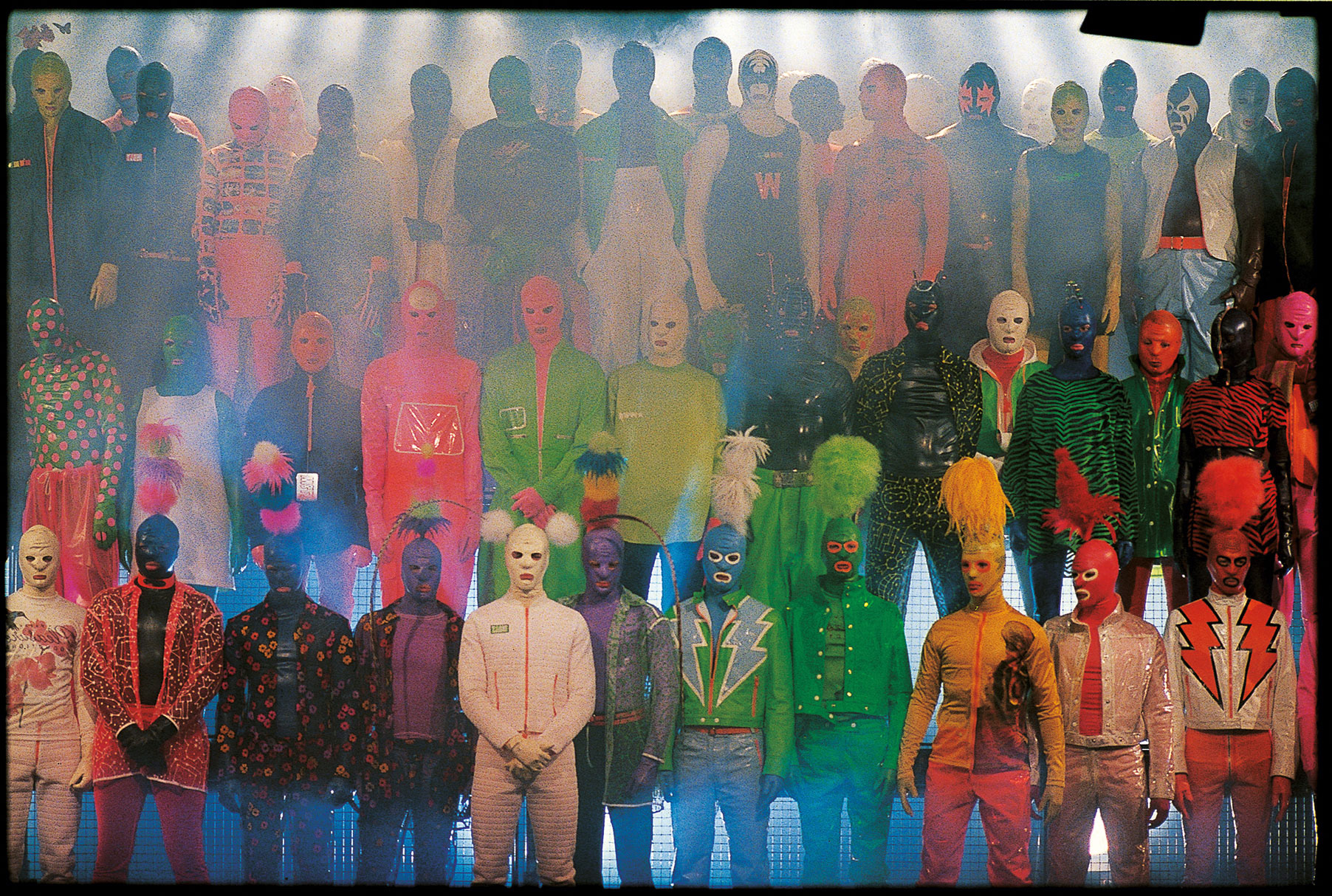
Courtesy of the Fine Arts Program, Public Buildings Service, U.S. General Services Administration
Commissioned through the New Deal art projects
Public domain


Minor White (American, 1908-1976) 'Untitled (Girder)' c. 1939


Minor White (American, 1908-1976)
Untitled (Girder)
c. 1939
Gelatin silver print
Courtesy of the Fine Arts Program, Public Buildings Service, U.S. General Services Administration
Commissioned through the New Deal art projects
Public domain


Minor White (American, 1908-1976) 'Untitled (Portland Lumber Mills)' c. 1939


Minor White (American, 1908-1976)
Untitled (Portland Lumber Mills)
c. 1939
Gelatin silver print
Courtesy of the Fine Arts Program, Public Buildings Service, U.S. General Services Administration
Commissioned through the New Deal art projects
Public domain


Minor White (American, 1908-1976) 'Log Boom' c. 1940


Minor White (American, 1908-1976)
Log Boom
c. 1940
Gelatin silver print
Courtesy of the Fine Arts Program, Public Buildings Service, U.S. General Services Administration
Commissioned through the New Deal art projects
Public domain


Minor White (American, 1908-1976) 'Boats at Dock' c. 1939


Minor White (American, 1908-1976)
Boats at Dock
c. 1939
Gelatin silver print
Courtesy of the Fine Arts Program, Public Buildings Service, U.S. General Services Administration
Commissioned through the New Deal art projects
Public domain


Minor White (American, 1908-1976) 'East Side of Willamette' c. 1939


Minor White (American, 1908-1976)
East Side of Willamette
c. 1939
Gelatin silver print
Courtesy of the Fine Arts Program, Public Buildings Service, U.S. General Services Administration
Commissioned through the New Deal art projects
Public domain


Minor White (American, 1908-1976) 'Boards' c. 1939


Minor White (American, 1908-1976)
Boards
c. 1939
Gelatin silver print
Courtesy of the Fine Arts Program, Public Buildings Service, U.S. General Services Administration
Commissioned through the New Deal art projects
Public domain


Minor White (American, 1908-1976) 'Lily Pads and Pike' c. 1939


Minor White (American, 1908-1976)
Lily Pads and Pike
c. 1939
Gelatin silver print
Courtesy of the Fine Arts Program, Public Buildings Service, U.S. General Services Administration
Commissioned through the New Deal art projects
Public domain


Minor White (American, 1908-1976) 'The Patch' c. 1939


Minor White (American, 1908-1976)
The Patch
c. 1939
Gelatin silver print
Courtesy of the Fine Arts Program, Public Buildings Service, U.S. General Services Administration
Commissioned through the New Deal art projects
Public domain


Minor White (American, 1908-1976) 'Horsetail and Skunk Cabbage' 1940


Minor White (American, 1908-1976)
Horsetail and Skunk Cabbage
1940
Gelatin silver print
Courtesy of the Fine Arts Program, Public Buildings Service, U.S. General Services Administration
Commissioned through the New Deal art projects
Public domain


Minor White (American, 1908-1976) 'Tree Root' c. 1939


Minor White (American, 1908-1976)
Tree Root
c. 1939
Gelatin silver print
Courtesy of the Fine Arts Program, Public Buildings Service, U.S. General Services Administration
Commissioned through the New Deal art projects
Public domain


Minor White (American, 1908-1976) 'Detail (California Foundry)' c. 1939


Minor White (American, 1908-1976)
Detail (California Foundry)
c. 1939
Gelatin silver print
Courtesy of the Fine Arts Program, Public Buildings Service, U.S. General Services Administration
Commissioned through the New Deal art projects
Public domain


Minor White (American, 1908-1976) 'Detail (227 Southeast Front Street)' 1938


Minor White (American, 1908-1976)
Detail (227 Southeast Front Street)
1938
Gelatin silver print
Courtesy of the Fine Arts Program, Public Buildings Service, U.S. General Services Administration
Commissioned through the New Deal art projects
Public domain


Minor White (American, 1908-1976) 'Front and Burnside' c. 1939


Minor White (American, 1908-1976)
Front and Burnside
c. 1939
Gelatin silver print
Courtesy of the Fine Arts Program, Public Buildings Service, U.S. General Services Administration
Commissioned through the New Deal art projects
Public domain


Minor White (American, 1908-1976) 'Ladd and Tilton Bank (1868 Southwest First and Stark Streets)' c. 1939


Minor White (American, 1908-1976)
Ladd and Tilton Bank (1868 Southwest First and Stark Streets)
c. 1939
Gelatin silver print
Courtesy of the Fine Arts Program, Public Buildings Service, U.S. General Services Administration
Commissioned through the New Deal art projects
Public domain


Minor White (American, 1908-1976) 'Pioneer Post Office and Portland Hotel Gate' c. 1939


Minor White (American, 1908-1976)
Pioneer Post Office and Portland Hotel Gate
c. 1939
Gelatin silver print
Courtesy of the Fine Arts Program, Public Buildings Service, U.S. General Services Administration
Commissioned through the New Deal art projects
Public domain


Minor White (American, 1908-1976) 'Southwest Fourth and Salmon Streets, Courthouse' c. 1939


Minor White (American, 1908-1976)
Southwest Fourth and Salmon Streets, Courthouse
c. 1939
Gelatin silver print
Courtesy of the Fine Arts Program, Public Buildings Service, U.S. General Services Administration
Commissioned through the New Deal art projects
Public domain


Minor White (American, 1908-1976) 'Kamm Building (Southwest Pine near First Avenue)' c. 1939


Minor White (American, 1908-1976)
Kamm Building (Southwest Pine near First Avenue)
c. 1939
Gelatin silver print
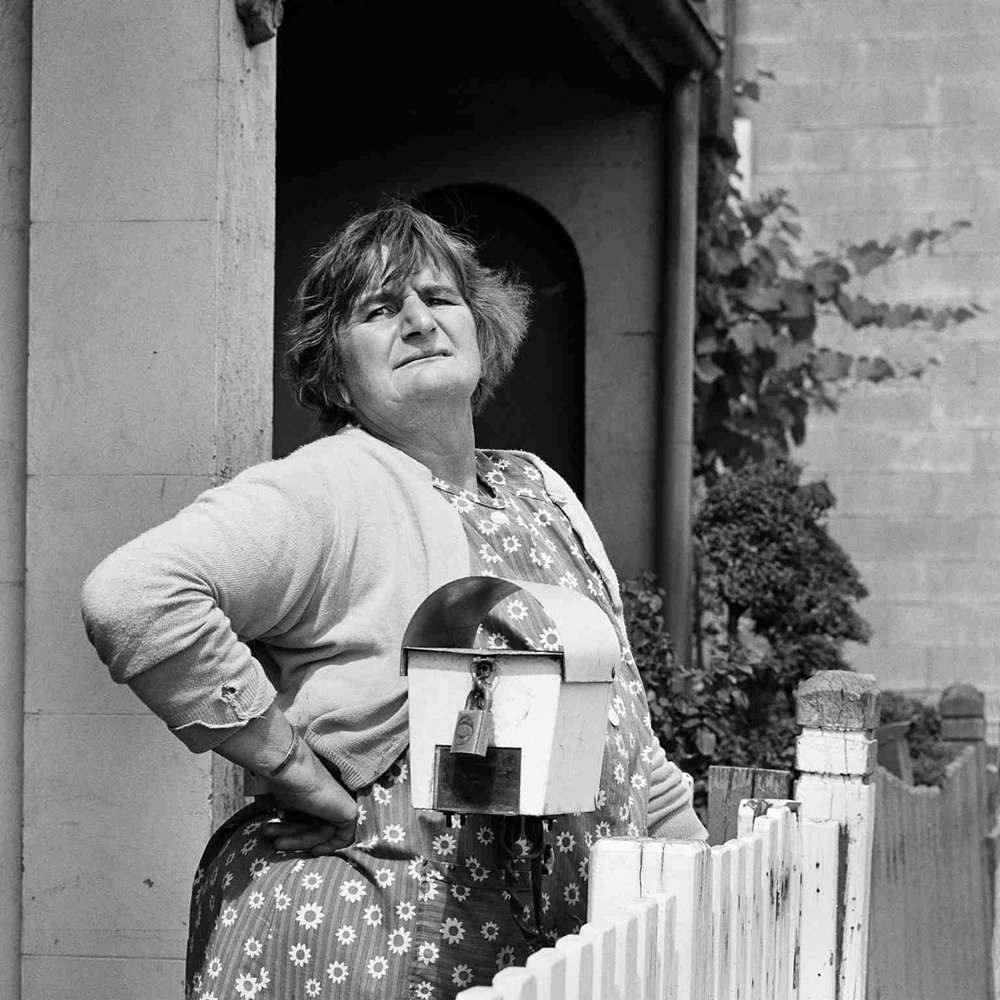
Courtesy of the Fine Arts Program, Public Buildings Service, U.S. General Services Administration
Commissioned through the New Deal art projects
Public domain


Minor White (American, 1908-1976) 'Fifth at Yamhill (Public Service Building)' c. 1939


Minor White (American, 1908-1976)
Fifth at Yamhill (Public Service Building)
c. 1939
Gelatin silver print
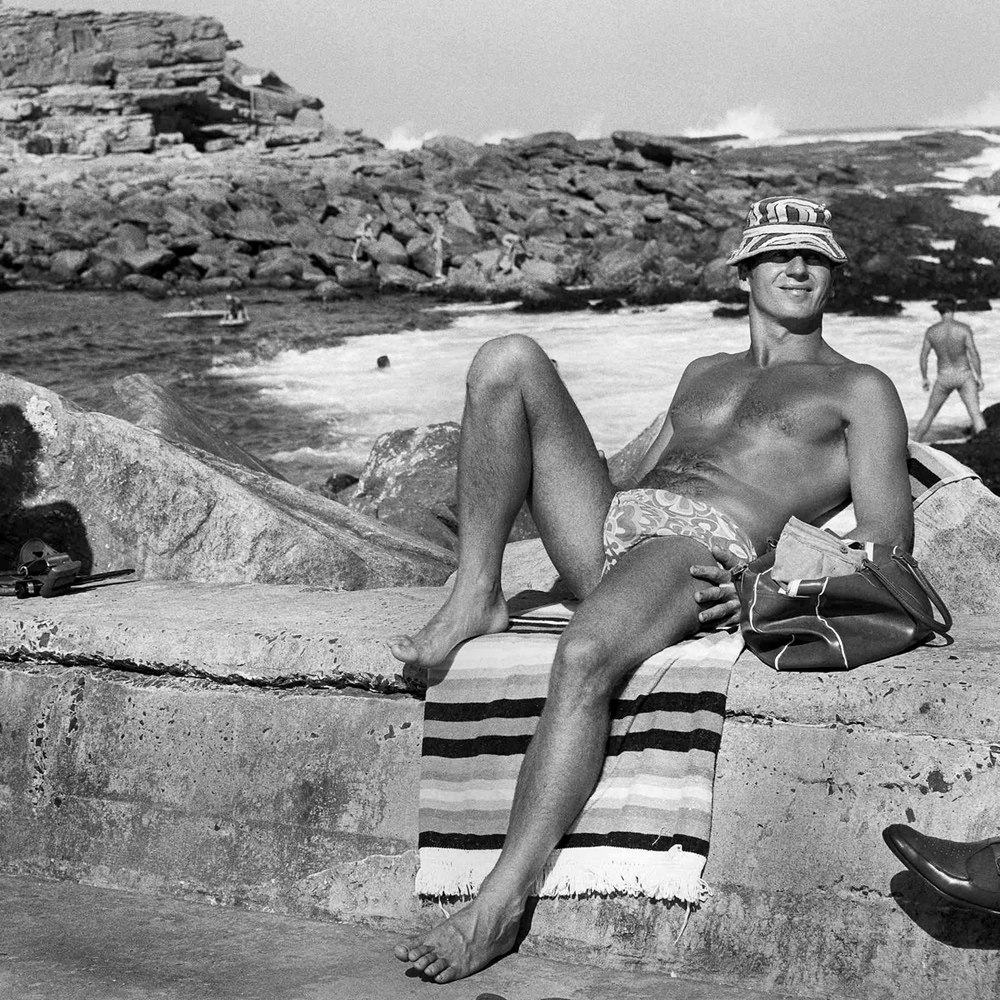
Courtesy of the Fine Arts Program, Public Buildings Service, U.S. General Services Administration
Commissioned through the New Deal art projects
Public domain


Minor White (American, 1908-1976) 'New on Old (Southeast Corner, First and Burnside)' c. 1939


Minor White (American, 1908-1976)
New on Old (Southeast Corner, First and Burnside)
c. 1939
Gelatin silver print
Courtesy of the Fine Arts Program, Public Buildings Service, U.S. General Services Administration
Commissioned through the New Deal art projects
Public domain


Minor White (American, 1908-1976) 'The Iron Fronts' c. 1939


Minor White (American, 1908-1976)
The Iron Fronts
c. 1939
Gelatin silver print
Courtesy of the Fine Arts Program, Public Buildings Service, U.S. General Services Administration
Commissioned through the New Deal art projects
Public domain


Minor White (American, 1908-1976) 'Front Street' 1939


Minor White (American, 1908-1976)
Front Street
1939
Gelatin silver print
Courtesy of the Fine Arts Program, Public Buildings Service, U.S. General Services Administration
Commissioned through the New Deal art projects
Public domain


Minor White (American, 1908-1976) 'Arches of the Dodd Building (Southwest Front Avenue and Ankeny Street)' 1938


Minor White (American, 1908-1976)
Arches of the Dodd Building (Southwest Front Avenue and Ankeny Street)
1938
Gelatin silver print
Courtesy of the Fine Arts Program, Public Buildings Service, U.S. General Services Administration
Commissioned through the New Deal art projects
No known copyright restrictions


In 1939 White was living at the Portland YMCA, where he had organised a camera club and had built a darkroom and modest gallery for exhibiting pictures. White’s photographs from this period concentrate on the environs of Portland, particularly the area of the commercial waterfront, which was undergoing demolition for redevelopment. Hired by the Oregon Art Project, an arm of the Works Progress Administration (WPA), White trawled the city’s Front Avenue neighbourhood, documenting the nineteenth-century buildings with cast-iron façades that were about to be torn down. White’s photographs are anything but clinical. His street views, many taken at night, have a ghostlike quality, with the occasional lone figure haunting the wet pavement; boarded-up doorways are cast in deep shadow; and mercantile objects, heaped onto the sidewalk before emptied warehouses, take on a forlorn anthropological character.

Among these pictures is a group of five depicting a handsome young man leaning in a doorway on Front Avenue. He is dressed like a labourer in jeans, work shirt, and boots, but there is something of the dandy in the raffish positioning of the man’s newsie cap, the tight cut of his trousers, pulled high and cinched at the waist, and the studied nonchalance of his pose. In one image, his hand is shoved into a pocket, leaving the index finger exposed and pointing downward toward a prominent bulge. Most importantly, he gazes – not at the photographer but down the street – intently and expectantly, as if anticipating something that has not yet come into view. A second photograph shows the man from behind, revealing the nape of his neck, a pair of rounded buttocks, and white stains splashed down the right thigh of his trousers. The pose suggests that he is urinating in this abject doorway with its peeling paint and debris underfoot; he could be taken for a plasterer relieving himself during a break. Another image, taken in a different boarded-up doorway, shows the man leaning with one arm raised and smiling coyly (again, not at the photographer), with his thumbs slipped under his belt and his fingers cupped, calling attention once again to his bulge. An “Air Circus” poster behind him advertises “Tex Rankin and other famous flyers” as well as “stunts” and “thrills.”

The scene is both explicit and coded, even to contemporary eyes. This handsome loitering man might have been taken by certain passersby for an ordinary labourer, on break or looking for work. Others might have recognised him as a man looking for sex (or for another kind of work) with other men. White’s sexual interest in men and his approach to looking at things “for what else they are” stratify the two narratives, establishing layers of meaning on parallel planes. This man is both a labourer and a cruising homosexual. He is, then, just what the photographic image in general would come to signify for White: a common trace from the visible world, transformed into another set of charged meanings.

Extract from Kevin Moore. “Cruising and Transcendence in the Photographs of Minor White,” on the Aperture website [Online] Cited 27/04/2018


Minor White (American, 1908-1976) 'Doorway, Dodd Building' c. 1939


Minor White (American, 1908-1976)
Doorway, Dodd Building
c. 1939
Gelatin silver print
Courtesy of the Fine Arts Program, Public Buildings Service, U.S. General Services Administration
Commissioned through the New Deal art projects
Public domain


White’s earlier Portland series, by contrast, is the darker product of a romantic turn of mind and conveys not the affirmative, civic-minded Whitman of poems such as “A Broadway Pageant” but the melancholy, searching Whitman of the “Calamus” poems. In Portland, we see White engaging Front Avenue for its sense of mystery and possibility, an investigation among darkened doorways and in the silhouettes of passing strangers for moments of revelation. More than simply a celebration of the manifold aspects of the city, the desired charge might be specified as the possibility of an erotic connection, however ephemeral, as proposed by Whitman in “City of Orgies”:

City of orgies, walks and joys,
City whom that I have lived and sung in your midst will one
   day make you illustrious,
Not the pageants of you, not your shifting tableaus, your
   spectacles, repay me,
Not the interminable rows of your houses, nor the ships
   at the wharves,
Nor the processions in the streets, nor the bright windows
   with goods in them,
Nor to converse with learn’d persons, or bear my share in
   the soiree or feast;
Not those, but as I pass O Manhattan, your frequent and
   swift flash of eyes offering me love,
Offering response to my own – these repay me, 
Lovers, continual lovers, only repay me.

Extract from Kevin Moore. “Cruising and Transcendence in the Photographs of Minor White,” on the Aperture website [Online] Cited 27/04/2018


Minor White (American, 1908-1976) 'Pilaster and Hood Molding, Dodd Building (Southwest Front and Ankeny)' c. 1939


Minor White (American, 1908-1976)
Pilaster and Hood Molding, Dodd Building (Southwest Front and Ankeny)
c. 1939
Gelatin silver print
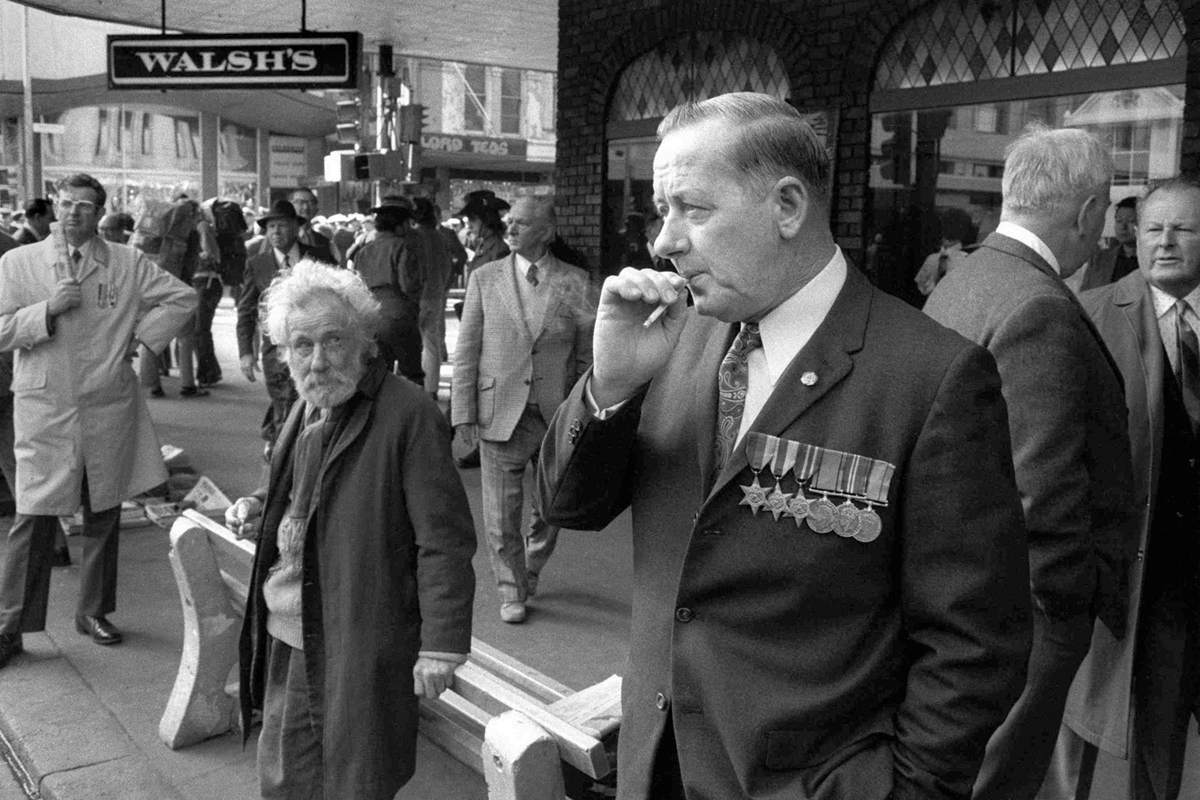
Courtesy of the Fine Arts Program, Public Buildings Service, U.S. General Services Administration
Commissioned through the New Deal art projects
Public domain


Minor White (American, 1908-1976) 'Door of Iron – First Brick Building in Portland, 1852 (Ladd and Tilton Building)' 1939


Minor White (American, 1908-1976)
Door of Iron – First Brick Building in Portland, 1852 (Ladd and Tilton Building)
1939
Gelatin silver print
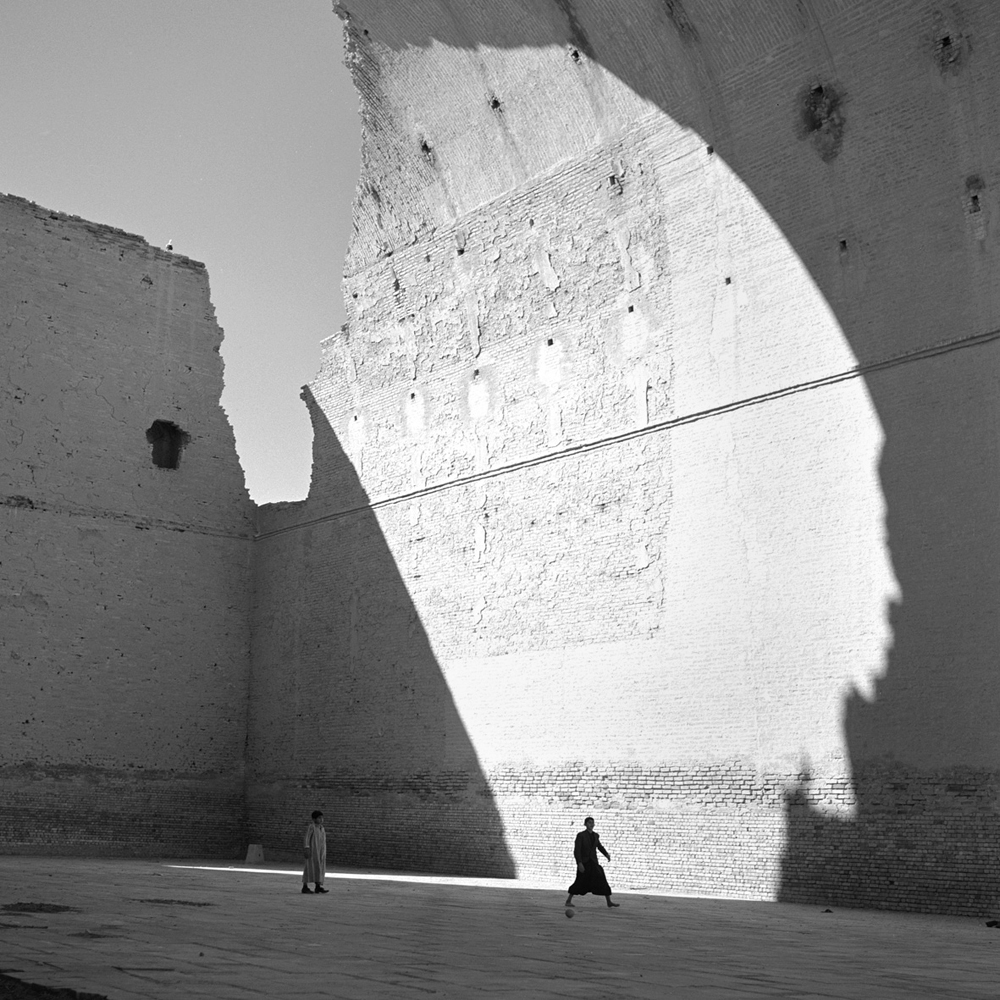
Courtesy of the Fine Arts Program, Public Buildings Service, U.S. General Services Administration
Commissioned through the New Deal art projects
Public domain


Minor White (American, 1908-1976) 'China Town' c. 1939


Minor White (American, 1908-1976)
China Town
c. 1939
Gelatin silver print
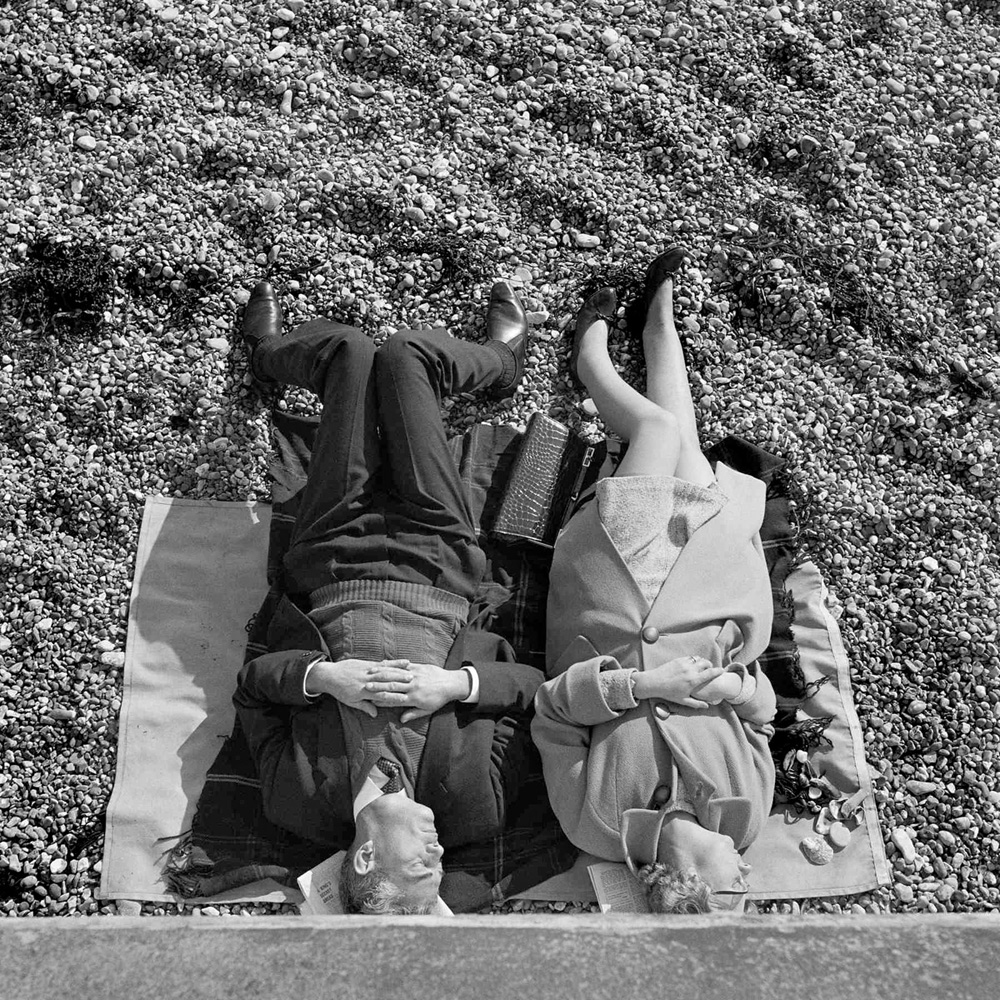
Courtesy of the Fine Arts Program, Public Buildings Service, U.S. General Services Administration
Commissioned through the New Deal art projects
Public domain


Minor White (American, 1908-1976) 'Morrison Bridge – Winter' 1938


Minor White (American, 1908-1976)
Morrison Bridge – Winter
1938
Gelatin silver print
Courtesy of the Fine Arts Program, Public Buildings Service, U.S. General Services Administration
Commissioned through the New Deal art projects
Public domain


Minor White (American, 1908-1976) 'St. Johns Bridge' c. 1939


Minor White (American, 1908-1976)
St. Johns Bridge
c. 1939
Gelatin silver print
Courtesy of the Fine Arts Program, Public Buildings Service, U.S. General Services Administration
Commissioned through the New Deal art projects
Public domain


Minor White (American, 1908-1976) 'Catherine Creek' c. 1941


Minor White (American, 1908-1976)
Catherine Creek
c. 1941
Gelatin silver print
Courtesy of the Fine Arts Program, Public Buildings Service, U.S. General Services Administration
Commissioned through the New Deal art projects
Public domain


Minor White (American, 1908-1976) 'Joseph, Oregon (Joseph Cemetery)' c. 1940


Minor White (American, 1908-1976)
Joseph, Oregon (Joseph Cemetery)
c. 1940
Gelatin silver print
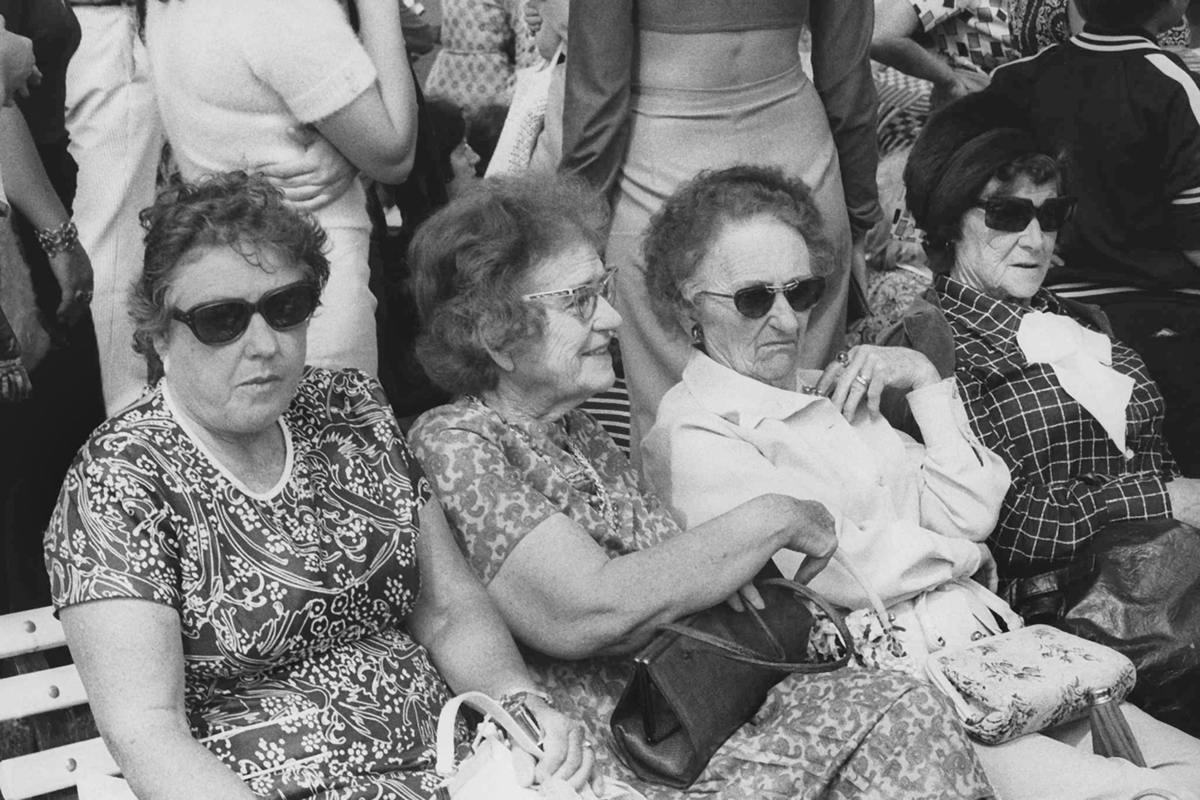
Courtesy of the Fine Arts Program, Public Buildings Service, U.S. General Services Administration
Commissioned through the New Deal art projects
Public domain


Minor White (American, 1908-1976) 'Hurricane Creek (Trees and Rock)' 1941


Minor White (American, 1908-1976)
Hurricane Creek (Trees and Rock)
1941
Gelatin silver print
Courtesy of the Fine Arts Program, Public Buildings Service, U.S. General Services Administration
Commissioned through the New Deal art projects
Public domain


Minor White (American, 1908-1976) 'Ice Lake' 1940


Minor White (American, 1908-1976)
Ice Lake
1940
Gelatin silver print
Courtesy of the Fine Arts Program, Public Buildings Service, U.S. General Services Administration
Commissioned through the New Deal art projects
Public domain


Minor White (American, 1908-1976) 'The Customer' c. 1939


Minor White (American, 1908-1976)
The Customer
c. 1939
Gelatin silver print
Courtesy of the Fine Arts Program, Public Buildings Service, U.S. General Services Administration
Commissioned through the New Deal art projects
Public domain


Minor White (American, 1908-1976) '1323-29 Southwest First Avenue' 1939


Minor White (American, 1908-1976)
1323-29 Southwest First Avenue
1939
Gelatin silver print
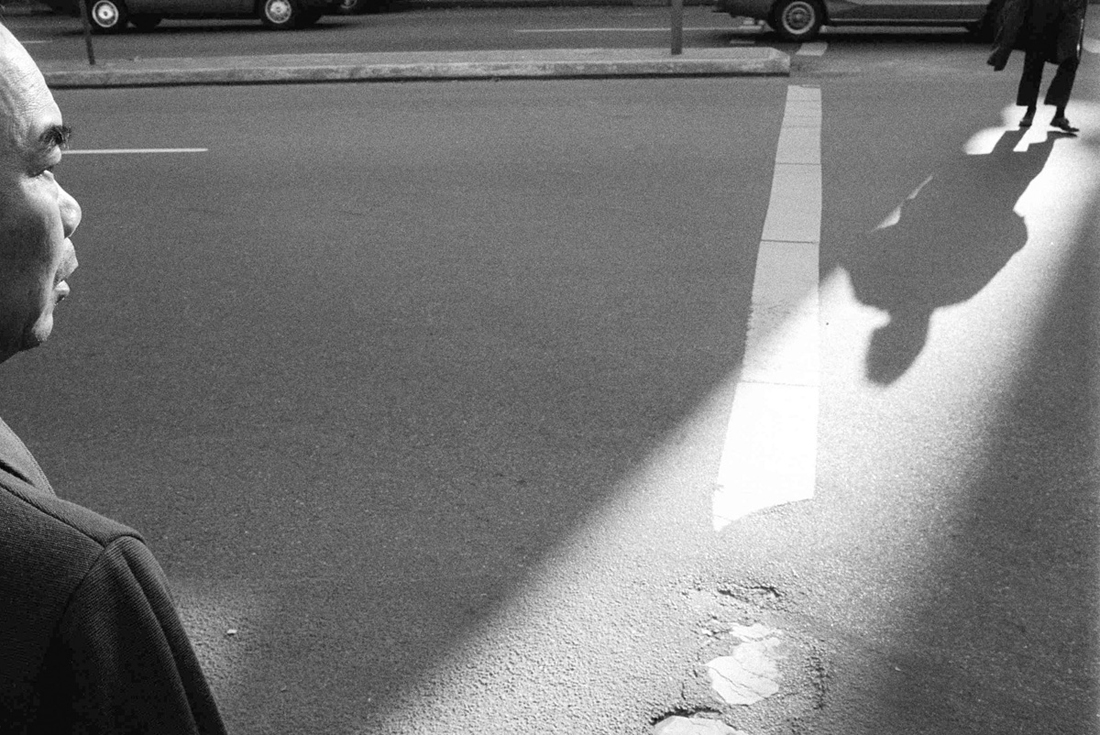
Courtesy of the Fine Arts Program, Public Buildings Service, U.S. General Services Administration
Commissioned through the New Deal art projects
Public domain


Minor White (American, 1908-1976) 'Untitled (Young Man)' c. 1939


Minor White (American, 1908-1976)
Untitled (Young Man)
c. 1939
Gelatin silver print
Courtesy of the Fine Arts Program, Public Buildings Service, U.S. General Services Administration
Commissioned through the New Deal art projects
Public domain


Minor White (American, 1908-1976) 'Shipmates Visit the Photographer' c. 1939


Minor White (American, 1908-1976)
Shipmates Visit the Photographer
c. 1939
Gelatin silver print
Courtesy of the Fine Arts Program, Public Buildings Service, U.S. General Services Administration
Commissioned through the New Deal art projects
Public domain


Minor White (American, 1908-1976) 'Untitled (Woman Sitting)' c. 1939


Minor White (American, 1908-1976)
Untitled (Woman Sitting)
c. 1939
Gelatin silver print
Courtesy of the Fine Arts Program, Public Buildings Service, U.S. General Services Administration
Commissioned through the New Deal art projects
Public domain


Minor White (American, 1908-1976) 'Untitled (Man Praying)' c. 1939


Minor White (American, 1908-1976)
Untitled (Man Praying)
c. 1939
Gelatin silver print
Courtesy of the Fine Arts Program, Public Buildings Service, U.S. General Services Administration
Commissioned through the New Deal art projects
Public domain


Portland Art Museum
1219 SW Park Avenue
Portland, OR 97205

Opening hours:
Thursday – Sun 10am – 6pm
Closed Monday, Tuesday and Wednesday

Portland Art Museum website

LIKE ART BLART ON FACEBOOK

Back to top

Exhibition: ‘Brassaï’ at Fundación MAPFRE, Barcelona

Exhibition dates: 20th February – 13th May, 2018

Curator: Mr. Peter Galassi


Brassaï (Gyulá Halász) (Hungarian-French, 1899-1984) 'Vista per sota del Pont Royal cap al Pont de Solférino [View through the pont Royal toward the pont Solférino]' c. 1933 from the exhibition 'Brassaï' at Fundación MAPFRE, Barcelona, Feb - May, 2018


Brassaï (Gyulá Halász) (Hungarian-French, 1899-1984)
Vista per sota del Pont Royal cap al Pont de Solférino
View through the pont Royal toward the pont Solférino

c. 1933
(Nuit / Night 53)
40.1 x 51cm
© Estate Brassaï Succession, Paris


For those who know how to look

Not everyone can see. It takes a great eye and a great mind, and the liberation of that mind, to be able to transform the mundane, the everyday, the vernacular – into art. Brassaï’s folklore, his mythology of life, suggests that the life of others (those living on the edge) is as valuable and essential to the formation of culture as any other part of existence.

Brassaï’s work comes alive at night and, as Alejandra Uribe Ríos observes, “The night was undoubtedly the great muse of his work, his inspiration.” While he got some of his friends to stage scenes for his book Paris by night – acting as prostitutes and customers hanging around in back alleys – it matters not one bit. The artist was embedded in this world and represents what he knows, what he has seen in his mind’s eye.

The density of his photographs is incredible – their atmosphere thick and heavy; revealing and beautiful. “In certain photographs, objects take on a particular light, a fascinating presence. Vision has fixed them “as they are in themselves” […]. It confers a density that is entirely foreign to their real existence. They are there, one might say, for the first time, but at the same time for the last.” The first and last, a circular compaction of time and space into the eternal present, objects as they are in themselves and will always be.

That fascinating presence can be felt even today, for that is what the time freeze of photography does: it “look backwards and forwards in the same instance.”

Brassaï saw something clearly, so that we might see it now. Look at the seemingly mundane space portrayed in Concierge’s Lodge, Paris (1933, below) from his book Paris de jour / Paris by Day. The photograph could be taken at night, but it is day! The small amount of sunlight falls on the tied-back curtain in the doorway; the crumpled mat lies outside the door; the two doors compete for our visual attention – one the solid presence that holds up the left hand side of the image, the other the vanishing point in the distance; and the eye is led down to this door by the pavement and the gutter with a band of water emphasising the form. The verticality of the worn and ancient stone work is emphasised by the modern metal box in front of it, leading the eye up to the Concierge sign only, mind you, for numbers 5 & 7. But then the mystery… what is going on above the ancient door at the rear – the sky, a ceiling, another wall lit by the last rays of the sun? Such a dense, complex image that requires an intimate knowledge of the mystery of place, in both the artist and the viewer.

Here we see Brassaï in Self-portrait, Boulevard Saint-Jacques, Paris 14ème, standing in the snow at night, heavy overcoat, hat, cigarette hanging out of his mouth, squinting through his camera to previsualise not just the photograph he is taking, but it’s final, physical embodiment, the print. In our world today of Insta-photos, millions and millions of photographs that mean basically nothing, and where anyone without training can pick up a camera and think of themselves a photographer, there is something to be said for taking the time to train and educate your eye and your mind. Only then might you reveal something about the world and, possibly, yourself as well.

Dr Marcus Bunyan

@mapfrefcultura #expo_brassai


Many thankx to Fundación MAPFRE for allowing me to publish the photographs in the posting. Please click on the photographs for a larger version of the image.


“I was eager to penetrate this other world, this fringe world, the secret, sinister world of mobsters, outcasts, toughs, pimps, whores, addicts, inverts. Rightly or wrongly, I felt at the time that this underground world represented Paris at its least cosmopolitan, its most alive, its most authentic, that in these colourful faces of its underworld there had been preserved from age to age, almost without alteration, the folklore of its most remote past.”


Brassaï, 1976


“In certain photographs, objects take on a particular light, a fascinating presence. Vision has fixed them “as they are in themselves” […]. It confers a density that is entirely foreign to their real existence. They are there, one might say, for the first time, but at the same time for the last.”


Brassaï, undated note


“To oblige the model to behave as if the photographer isn’t there really is to stage a comic performance. What’s natural is precisely not to dodge the photographer’s presence. The natural thing in that situation is for the model to pose honestly.”


Brassaï, undated note


“The night suggests, he does not teach. The night finds us and surprises us by its strangeness; it liberates in us the forces that, during the day, are dominated by reason.”

“Night does not show things, it suggests them. It disturbes and surprises us with its strangeness. It liberates forces within us which are dominated by our reason during the daytime.”


Brassaï


“The night was undoubtedly the great muse of his work, his inspiration. The train tracks, the lovers, the fog, the posters, the ballet and the cabarets. Everything is worthy of portraying for those who know how to look and that is undoubtedly one of Brassai’s merits: embodying the everyday, rescuing the magical, the lyrical, the mystery of common life, and doing it with elegance, converting the seemingly trivial into a artwork.”


Alejandra Uribe Ríos


Brassaï (Gyulá Halász) (Hungarian-French, 1899-1984) 'Porteria, París [Concierge's Lodge, Paris]' 1933 from the exhibition from the exhibition 'Brassaï' at Fundación MAPFRE, Barcelona, Feb - May, 2018


Brassaï (Gyulá Halász) (Hungarian-French, 1899-1984)
Porteria, París
Concierge’s Lodge, Paris

1933
(Paris de jour / Paris by Day 686)
29.3 x 22.2cm
© Estate Brassaï Succession, Paris


Brassaï (Gyulá Halász) (Hungarian-French, 1899-1984) 'The Eiffel Tower seen through the Gate of the Trocadéro' 1930-1932


Brassaï (Gyulá Halász) (Hungarian-French, 1899-1984)
La Torre Eiffel vista a través del reixat del Trocadéro
La torre Eiffel vista a través de la reja del Trocadero
The Eiffel Tower seen through the Gate of the Trocadéro

1930-32
(Nuit / Night 1; variant of Paris de nuit / Paris by Night, plate 57)
30 x 23.6cm
© Estate Brassaï Succession, Paris


Brassaï (Gyulá Halász) (Hungarian-French, 1899-1984) 'Extinguishing a Streetlight, rue Émile Richard' c. 1932


Brassaï (Gyulá Halász) (Hungarian-French, 1899-1984)
Apagant un fanal, Rue Émile Richard
Apagando una farola, rue Émile Richard
Extinguishing a Streetlight, rue Émile Richard

c. 1932
(Nuit / Night 267)
22.9 x 28.1cm
© Estate Brassaï Succession, Paris


Brassaï (Gyulá Halász) (Hungarian-French, 1899-1984) 'Avenue de l'Observatoire' 1934


Brassaï (Gyulá Halász) (Hungarian-French, 1899-1984)
Avenue de l’Observatoire
1934
Gelatin silver print
23.4 x 30.1cm
© Estate Brassaï Succession, Paris


Brassaï (Gyulá Halász) (Hungarian-French, 1899-1984) 'Streetwalker, near the place d’Italie' 1932


Brassaï (Gyulá Halász) (Hungarian-French, 1899-1984)
Meuca, a prop de la Place d’Italie
Prostituta, cerca de la Place d’Italie
Streetwalker, near the place d’Italie
1932
(Plaisirs / Pleasure 333)
29.9 x 22.9cm
© Estate Brassaï Succession, Paris


Introduction

Fundación MAPFRE is launching its 2018 exhibition programme in Barcelona with the exhibition Brassaï, a comprehensive survey of the career of this celebrated Hungarian-born French photographer whose work helped to define the spirit of Paris in the 1930s. Brassaï was one of the most important of the group of European and American photographers whose work in the inter-war years greatly enriched photography’s potential as a form of artistic expression.

The artist began to take photographs in 1929 or 1930, maintaining an intense level of activity throughout the 1930s. Brassaï’s principal subject was Paris, where he settled in 1924, intending to become a painter. Around the end of World War I the artistic centre of the city had shifted from Montmartre to Montparnasse where most of the artists, constituting a major international community, lived like a large family. Brassï was fascinated by the French capital and later said that he started to take photographs in order to express his passion for the city at night. Soon, however, he also began to take portraits, nudes, still life, images of everyday life and depictions of picturesque corners of the city and moments captured during the day.

Brassaï’s confidence in the power of blunt, straightforward photography to transform what it describes, as well as his talent for extracting from ordinary life iconic images of lasting force, won him an important place among the pioneers of modern photography.

This exhibition offers a survey of the artist’s career through more than 200 works (vintage photographs, a number of drawings, a sculpture and documentary material) grouped into twelve thematic sections, of which the two devoted to Paris in the 1930s are the most important. Produced by Fundación MAPFRE and curated by Peter Galassi, chief curator of the Department of Photography at the MoMA, New York, from 1991 to 2011, this is the first retrospective exhibition on Brassaï to be organised since 2000 (Centre Pompidou) and the first to be held in Spain since 1993.

The exhibition benefits from the exceptional loan of the Estate Brassaï Succession (Paris) and other loans from some of the most important institutions and private collections in Europe and the United States, including: The Art Institute of Chicago, The Museum of Fine Arts (Houston), The Metropolitan Museum of Art (New York), The Museum of Modern Art (New York), the Musée National d’Art Moderne, Centre Pompidou (París), The Philadelphia Museum of Art, The San Francisco Museum of Modern Art, David Dechman and Michel Mercure, ISelf Collection (London) and Nicholas and Susan Pritzker.

The Photographer – Brassaï (Gyulá Halász, 1899-1984)

Brassaï (the pseudonym of Gyulá Halász) was born in 1899 in Brassó, Transylvania (present-day Braşov in Rumania), from where he subsequently took his name for signing his photographs (Brassaï means “from Brassó”).

After studying art in Budapest and Berlin, he moved to Paris and very soon began to earn occasional money and establish a reputation by selling articles and caricatures to German and Hungarian magazines. Photographs were rapidly replacing traditional magazine illustrations and Brassaï also functioned as a one-man photo-agency. Eventually he started making photographs himself, abandoning painting and sculpting, disciplines for which he nevertheless retained great interest and to which he returned during his career. Around 1900, an aesthetic movement had justified its claim that photography was as a fine art by imitating the appearance of the traditional arts. It was not until the 1920s and 1930s that a new generation rejected that approach and began exploring the artistic potential of plain, ordinary photographs. When the tradition that they launched began to achieve widespread recognition in the 1970s, Brassaï would be recognised as one of its leading figures.

During the German occupation of Paris, Brassaï was obliged to stop taking photographs and he thus returned to drawing and writing. In 1949 he obtained French nationality. After the war he once again devoted part of his time to photography and traveled regularly to undertake commissions for the American magazine Harper’s Bazaar. He died in Beaulieu-sur-Mer (France) in 1984 without ever returning to his native Brassó.

The sections of the exhibition

Paris by Night

Paris by Night was in fact the result of a commission which the publisher Charles Peignot gave to the young and still unknown Brassaï. The book, of which a copy is presented in the exhibition, was published in December 1932 and was extremely successful thanks in part to its modern design, pages without margins and richly toned photogravures. Brassaï continued to explore nocturnal Paris throughout the 1930s, developing a personal vision that is embodied in numerous prints in the exhibition.

They evoke the city’s dynamic, vibrant mood: the close-up image of a gargoyle on Notre Dame Cathedral rather than a conventional view of that building, or the Pont Royal seen from the water rather than from above. These are almost always silent images in which time seems to stand still.

Pleasures

When Brassaï reorganised his archive just after World War II, gathered under the rubric Plaisirs he included his pictures of small-time criminals and prostitutes and other figures of Parisian low life together with images of Parisian entertainments, including cheap dance halls to local street fairs to the annual entertainments designed to flout bourgeois conventions. Brassaï obtained permission to work backstage at the famous Folies Bergère, which allowed him to observe everything that was happening from a high viewpoint. His images of Parisian low life transpose to the vivid new medium of photography a vital mythology that had been elaborated in literature and the traditional visual arts.

No one photographed Paris by night as skilfully as Brassaï but he also built up a considerable collection of images of the city by day. Its famous monuments, picturesque corners and details of everyday life are the subject of many of these photographs. Some of his images of the early 1930s reveal his interest in daring geometrical forms and abrupt truncation, for example his famous images of the city’s cobblestones. But even his boldest graphic experiments reflect his abiding fascination with the continuities of an enduring human civilisation.

Paris by day

Nobody photographed Paris at night as accurately as Brassaï, but also accumulated a considerable collection of images of the city in daylight. Monuments, picturesque corners or details of everyday life play a large part in these scenes.

Some of his photographs from the thirties also reflect his interest in geometric styles or abrupt cuts, as shown by the famous cobblestone images of city streets. But even these bolder graphic experiments reflect, like the rest of his images of the city, his permanent fascination with what for him was presented as a remote and inexhaustible tradition, in constant development.

Graffiti

The notion of graffiti as a powerful art form first emerged in the 20th century. Like African tribal objects, children’s art or that of the mentally ill, graffiti was considered more expressive and vital than the refined forms of traditional western art.

Brassaï was in fact one of the first to focus on this subject matter. He was an inveterate hoarder who throughout his life collected all types of cast-off objects and from almost the moment he began to take photographs he used the medium to record the graffiti he saw on the walls of Paris. He preferred examples of graffiti that had been incised or scratched to drawn or painted ones, as well as those in which the irregularity of the wall itself played an important role in aesthetic terms. He took hundreds of images of this type of which only a small selection is on display here.

Minotaure

Between the time of his arrival in Paris in early 1924 and his first steps in photography taken six years later, Brassaï built up a large circle of friends within the international community of artists and writers in Montparnasse. They included Les deux aveugles [The two blind men], as the art critics Maurice Raynal and the Greek-born E. Tériade referred to themselves. In December 1932, the same month that Paris de nuit was published, Tériade invited Brassaï to photograph Picasso and his studios to illustrate the first issue of Minotaure, the deluxe art magazine that would be published in 1933 by the Swiss publisher Albert Skira. Copies of various different issues are on display in this section. This collaboration marked the starting point of Brassaï’s friendship with Picasso, one of the most important of his entire life. Over the following years Brassaï would play an important role in the life of the magazine, particularly with the projects for which he collaborated with Salvador Dalí and as an illustrator to texts by André Breton, although in some cases as an artist in his own right. The first number of the magazine included a series of nudes by Brassaï and his growing graffiti series, while number 7 devoted several pages to Brassaï’s nocturnal visions. All these evoke the artist’s modernity and his relationship with the most important circles of the Parisian avant-garde.

Personages / Characters

In 1949 in his prologue to Camera in Paris, a monograph on contemporary photographers, Brassaï paraphrased Baudelaire in The Painter of modern Life and established a line of continuity between the art of the photographer and that of some of the great artists of the past such as Rembrandt, Goya and Toulouse-Lautrec. In this sense he explained how, like them, photography could elevate ordinary subjects to the level of the universal. The people depicted in this gallery reflect that idea as not only do we see a worker at Les Halles market, a transvestite or a penitent in Seville, but through the dignity given to them by the image all of them exceed their individuality and come to represent a collective.

Places and things

One of Brassaï’s earliest projects, which was never produced, was a book of photographs of cacti. Many years later, in 1957, he made a short film on animals. Most of his photographs of objects or places, however, focus on human creations, reflecting his boundless curiosity about the people that made them, used them or lived in them.

During his trips Brassaï took numerous photographs of which a small selection are on display here: a view of Gaudí’s Sagrada Familia from a high viewpoint, a painted wall in Sacromonte, Granada, and a shop window in New Orleans. In some of these images, such as Vineyard, Château Mouton-Rothschild (June 1953), the viewpoint jumps sharply from the foreground to the background, splitting the image in half along its horizontal axis – a pictorial device invented by Brassaï.

Society

During the mid-1930s and just after World War II, Brassaï photographed at more than two dozen gatherings of Parisian high society – costume balls, fancy soirées, and other events both at private homes and such elegant venues as the Ritz – as well as the famous Nuit de Longchamp (the race course just outside of Paris) every summer from 1936 to 1939. At these events he had much less opportunity to intervene in the action than in Parisian dance halls and bars, but he nonetheless was able to create lasting images of a distinct social reality. Perhaps the most extraordinary of them is his photograph of the celebration of the fiftieth anniversary of the Art Nouveau interior of the swank restaurant Maxim’s (completed just a few years before the Casa Garriga Nogués). Although that image has been famous since it was made in 1949, Brassaï’s series on Parisian high society is poorly known, and several of the photographs are presented for the first time in this exhibition.

Body of a woman

During the occupation of Paris (1940-1944), Brassaï declined to work for the Germans and so was unable to photograph openly. His only income seems to have come from a clandestine commission from Picasso to photograph the master’s sculptures. Partly at Picasso’s urging, Brassaï returned to drawing. Most of the drawings that he made in 1943-1945, like most of the drawings that survive from his time as an art student in Berlin in 1921-1922, are female nudes. The same is the case with many of the sculptures that he started to produce after the war, often made from stones worn by the effect of water.

It would be foolish to attempt to disguise the intensity of Brassaï’s male gaze behind the curtain of a purely aesthetic pursuit of “form.” What is distinctive and powerful in his images of the female body is their unembarrassed carnal urgency.

Portraits: artists, writers, friends

Pablo Picasso, Salvador Dalí, Henry Miller (who gave Brassaï the sobriquet “The eye of Paris”), Pierre Reverdy, Jacques Prévert, Henri Matisse and Léon-Paul Fargue are just a few of the subjects of the portraits on display in this section of the exhibition.

Most of Brassaï’s portraits are of people that he knew and perhaps as a result of that closeness they convey a powerful spirit of frankness, unencumbered by posturing. It is also true; however, that Brassaï regularly achieved that spirit even when he did not know the subject.

Sleep

Broadly speaking, the hallmark of advance European photography in the 1920s and 1930s was a new sense of mobility and spontaneity. But spontaneity was alien to Brassaï’s sensibility, which instead sought clarity and stability. Instead of the popular, hand-held camera, a 35mm Leica, Brassaï chose a camera that used glass plates and often stood on a tripod. As if to declare his independence from the aesthetic of mobility, he chose sleeping in public as a recurrent motif.

The street

Brassaï’s work for Harper’s Bazaar led him to travel in France and in numerous other places, from Spain to Sweden, the United States and Brazil. While the roots of his talent lay in Paris he thus produced an extensive body of photographs taken in places that were unfamiliar to him. The exhibition includes a number of these works, three of them depicting Spain.

Press release from Fundación MAPFRE


Brassaï (Gyulá Halász) (Hungarian-French, 1899-1984) 'Chez Suzy' 1931-1932


Brassaï (Gyulá Halász) (Hungarian-French, 1899-1984)
Chez Suzy
1931-1932
(Plaisirs / Pleasure 352)
30 x 23.8cm
© Estate Brassaï Succession, Paris


Brassaï (Gyulá Halász) (Hungarian-French, 1899-1984) 'Nude in the Bathtub' 1938


Brassaï (Gyulá Halász) (Hungarian-French, 1899-1984)
Nu a la banyera
Desnudo en la bañera
Nude in the Bathtub
1938
(Nu / Naked 199)
23.5 x 17.3cm
© Estate Brassaï Succession, Paris


Brassaï (Gyulá Halász) (Hungarian-French, 1899-1984) 'Four Seasons Ball, rue de Lappe' c. 1932


Brassaï (Gyulá Halász) (Hungarian-French, 1899-1984)
Bal des Quatre Saisons, rue de Lappe
Four Seasons Ball, rue de Lappe
c. 1932
(Plaisirs / Pleasures 2)
49.8 x 40.4 cm
Estate Brassaï Succession, Paris © Estate Brassaï Succession, Paris


Brassaï (Gyulá Halász) (Hungarian-French, 1899-1984) 'At Magic City' c. 1932


Brassaï (Gyulá Halász) (Hungarian-French, 1899-1984)
Al Magic City
En Magic City
At Magic City
c. 1932
(Plaisirs / Pleasures 439)
23.2 x 16.6cm
© Estate Brassaï Succession, Paris


Brassaï (Gyulá Halász) (Hungarian-French, 1899-1984) 'Lovers at the Gare Saint-Lazare' 1937


Brassaï (Gyulá Halász) (Hungarian-French, 1899-1984)
Amants a l’estació de Saint-Lazare
Amantes en la Gare Saint-Lazare
Lovers at the Gare Saint-Lazare
c. 1937
(Plaisirs / Pleasures 143)
23.6 x 17.3cm
© Estate Brassaï Succession, Paris


Brassaï (Gyulá Halász) (Hungarian-French, 1899-1984) 'Haute Couture Soirée' 1935


Brassaï (Gyulá Halász) (Hungarian-French, 1899-1984)
Vetllada d’alta costura
Velada de alta costura
Haute Couture Soirée
1935
(Soirées 85 (image reversed))
17.6 x 21.1cm
© Estate Brassaï Succession, Paris


Brassaï (Gyulá Halász) (Hungarian-French, 1899-1984) 'Lobster Seller, Seville' 1951


Brassaï (Gyulá Halász) (Hungarian-French, 1899-1984)
Venedor de marisc, Sevilla
Vendedor de marisco, Sevilla
Lobster Seller, Seville
1951
(Étranger / Foreign 401)
49.3 x 37cm
© Estate Brassaï Succession, Paris


Brassaï (Gyulá Halász) (Hungarian-French, 1899-1984) 'New Orleans' 1957


Brassaï (Gyulá Halász) (Hungarian-French, 1899-1984)
New Orleans
1957
(Amérique / America 451)
35.9 x 29.4cm
© Estate Brassaï Succession, Paris


Brassaï (Gyulá Halász) (Hungarian-French, 1899-1984) 'Montmartre' 1930-1931


Brassaï (Gyulá Halász) (Hungarian-French, 1899-1984)
Montmartre
1930-1931
[Paris de jour / Paris by day 472.C]
29.8 x 39.6 cm
© Estate Brassaï Succession, Paris


Brassaï (Gyulá Halász) (Hungarian-French, 1899-1984) 'Jean Genet, Paris' 1948


Brassaï (Gyulá Halász) (Hungarian-French, 1899-1984)
Jean Genet, Paris
1948
(Arts 787.E)
39.7 x 30.2cm
© Estate Brassaï Succession, Paris


Brassaï (Gyulá Halász) (Hungarian-French, 1899-1984) 'Picasso Holding One Of The Sculptures' 1939


Brassaï (Gyulá Halász) (Hungarian-French, 1899-1984)
Picasso Tenant Une De Les Sculptures
Picasso Holding One Of The Sculptures

1939
© Estate Brassaï Succession, Paris


Brassaï (Gyulá Halász) (Hungarian-French, 1899-1984) 'Portrait of Picasso in His Studio at 23 rue de La Boëtie, Paris' 1932


Brassaï (Gyulá Halász) (Hungarian-French, 1899-1984)
Portrait of Picasso in His Studio at 23 rue de La Boëtie, Paris
1932
© Estate Brassaï Succession, Paris


23 rue de La Boëtie, Paris


23 rue de La Boëtie, Paris


Brassaï (Gyulá Halász) (Hungarian-French, 1899-1984) 'Self-portrait, Boulevard Saint-Jacques, Paris 14ème' c. 1931-1932


Brassaï (Gyulá Halász) (Hungarian-French, 1899-1984)
Self-portrait, Boulevard Saint-Jacques, Paris 14ème
c. 1931-1932
© Estate Brassaï Succession, Paris


Fundación MAPFRE – Instituto de Cultura
Casa Garriga i Nogués exhibition space
Calle Diputació, 250
Barcelona

Opening hours:
Mondays closed
Tuesday to Sundays (and holidays): 11 am – 7 pm

Fundación MAPFRE website

LIKE ART BLART ON FACEBOOK

Back to top

Exhibition: ‘In the Beginning: Minor White’s Oregon Photographs’ at the Portland Art Museum Phase 1, Part 1

Exhibition dates: 9th December, 2017 – 6th May, 2018

Curated by Julia Dolan PhD, the Minor White Curator of Photography


Minor White (American, 1908-1976) 'Untitled (Union Station Loading Platform)' c. 1939 from the exhibition 'In the Beginning: Minor White's Oregon Photographs' at the Portland Art Museum Phase 1, Dec 2017 - May 2018


Minor White (American, 1908-1976)
Untitled (Union Station Loading Platform)
c. 1939
Gelatin silver print
Courtesy of the Fine Arts Program, Public Buildings Service, U.S. General Services Administration
Commissioned through the New Deal art projects, public domain


Phase 1 of this exhibition, over two postings on Art Blart, features one of the greatest collections of early photographs by Minor White!

In this posting it’s so nice to see the great man metaphorically getting his hands dirty – feet in the water, hand cupped to the eye looking through it to gauge the composition (his previsualisation), before getting under the black cloth to make final adjustments to his 4 x 5 view camera.

Other things to note in the Minor White During a Workshop photographs of MW using his camera are this:

1/ MW has tilted forward the front of the camera to extend the depth of field that recedes away from him, for example the sand or the surface of the water

2/ MW has also raised the front of the camera slightly

3/ MW is using a large Majestic tripod

4/ MW is possibly using a Weston light meter, for which he gave specific instructions in the first edition of his Zone System manual. The light meter can be seen still in it’s leather case with hanging strap in various images, with MW’s thumb on the dial in two images. In one image you can see him calculating his light meter exposure

5/ His glasses case is in his top shirt pocket, and he is wearing a well used hat (so important when taking photographs) with sweat stains on its brim


In these valuable pictures, the 51 year-old Minor White is making tiny adjustments to the camera movements to control the depth of field.

Paul Caponigro, a student of Minor White, observed that watching MW use the view camera was more than instructive, it was a joy. The very last sentence in the Fourth Sequence colophon reinforces the notion that the camera’s strongest point was its photographic authenticity, that is, a faithful camera technique leads to an authentic photograph, or to authenticity.1

“For technical data – the camera was faithfully used.” ~ MW

Further comment on the photographs in Part 2 of the posting.

Dr Marcus Bunyan


1/ Andrew E. Hershberger. “White’s Theory of Sequential Photography,” in Anna-Teresa Tymieniecka (ed.,). Analecta Husserliana: The Yearbook of Phenomenological Research Vol. LXXXVII. Human Creation Between Reality and Illusion. Springer, 2005, p. 212.


Many thankx to the Portland Art Museum for allowing me to publish the photographs in the posting. Please click on the photographs for a larger version of the image.


Maxwell Allara (American born Italy, 1906-1981) 'Untitled (Minor White During a Workshop)' 1959 from the exhibition 'In the Beginning: Minor White's Oregon Photographs' at the Portland Art Museum Phase 1, Dec 2017 - May 2018


Maxwell Allara (American born Italy, 1906-1981)
Untitled (Minor White During a Workshop)
1959
Gelatin silver print
Gift of the artist by his family: Helen D. Allara, Morgan F. Allara, and Mitchell W. Allara
© Maxwell Allara


Maxwell Allara (American born Italy, 1906-1981) 'Untitled (Minor White During a Workshop)' 1959 from the exhibition 'In the Beginning: Minor White's Oregon Photographs' at the Portland Art Museum Phase 1, Dec 2017 - May 2018


Maxwell Allara (American born Italy, 1906-1981)
Untitled (Minor White During a Workshop)
1959
Gelatin silver print
Gift of the artist by his family: Helen D. Allara, Morgan F. Allara, and Mitchell W. Allara
© Maxwell Allara


Maxwell Allara (American born Italy, 1906-1981) 'Untitled (Minor White During a Workshop)' 1959


Maxwell Allara (American born Italy, 1906-1981)
Untitled (Minor White During a Workshop)
1959
Gelatin silver print
Gift of the artist by his family: Helen D. Allara, Morgan F. Allara, and Mitchell W. Allara
© Maxwell Allara


Maxwell Allara (American born Italy, 1906-1981) 'Untitled (Minor White During a Workshop)' 1959 from the exhibition 'In the Beginning: Minor White's Oregon Photographs' at the Portland Art Museum Phase 1, Dec 2017 - May 2018


Maxwell Allara (American born Italy, 1906-1981)
Untitled (Minor White During a Workshop)
1959
Gelatin silver print
Gift of the artist by his family: Helen D. Allara, Morgan F. Allara, and Mitchell W. Allara
© Maxwell Allara


Maxwell Allara (American born Italy, 1906-1981) 'Untitled (Minor White During a Workshop)' 1959 from the exhibition 'In the Beginning: Minor White's Oregon Photographs' at the Portland Art Museum Phase 1, Dec 2017 - May 2018


Maxwell Allara (American born Italy, 1906-1981)
Untitled (Minor White During a Workshop)
1959
Gelatin silver print
Gift of the artist by his family: Helen D. Allara, Morgan F. Allara, and Mitchell W. Allara
© Maxwell Allara


Maxwell Allara (American born Italy, 1906-1981) 'Untitled (Minor White During a Workshop)' 1959 from the exhibition 'In the Beginning: Minor White's Oregon Photographs' at the Portland Art Museum Phase 1, Dec 2017 - May 2018


Maxwell Allara (American born Italy, 1906-1981)
Untitled (Minor White During a Workshop)
1959
Gelatin silver print
Gift of the artist by his family: Helen D. Allara, Morgan F. Allara, and Mitchell W. Allara
© Maxwell Allara


Maxwell Allara (American born Italy, 1906-1981) 'Untitled (Minor White During a Workshop)' 1959 from the exhibition 'In the Beginning: Minor White's Oregon Photographs' at the Portland Art Museum Phase 1, Dec 2017 - May 2018


Maxwell Allara (American born Italy, 1906-1981)
Untitled (Minor White During a Workshop)
1959
Gelatin silver print
Gift of the artist by his family: Helen D. Allara, Morgan F. Allara, and Mitchell W. Allara
© Maxwell Allara


Maxwell Allara (American born Italy, 1906-1981) 'Untitled (Minor White During a Workshop)' 1959 from the exhibition 'In the Beginning: Minor White's Oregon Photographs' at the Portland Art Museum Phase 1, Dec 2017 - May 2018


Maxwell Allara (American born Italy, 1906-1981)
Untitled (Minor White During a Workshop)
1959
Gelatin silver print
Gift of the artist by his family: Helen D. Allara, Morgan F. Allara, and Mitchell W. Allara
© Maxwell Allara


Maxwell Allara (American born Italy, 1906-1981) 'Untitled (Minor White During a Workshop)' 1959 from the exhibition 'In the Beginning: Minor White's Oregon Photographs' at the Portland Art Museum Phase 1, Dec 2017 - May 2018


Maxwell Allara (American born Italy, 1906-1981)
Untitled (Minor White During a Workshop)
1959
Gelatin silver print
Gift of the artist by his family: Helen D. Allara, Morgan F. Allara, and Mitchell W. Allara
© Maxwell Allara


Maxwell Allara (American born Italy, 1906-1981) 'Untitled (Minor White During a Workshop)' 1959 from the exhibition 'In the Beginning: Minor White's Oregon Photographs' at the Portland Art Museum Phase 1, Dec 2017 - May 2018


Maxwell Allara (American born Italy, 1906-1981)
Untitled (Minor White During a Workshop)
1959
Gelatin silver print
Gift of the artist by his family: Helen D. Allara, Morgan F. Allara, and Mitchell W. Allara
© Maxwell Allara


Maxwell Allara (American born Italy, 1906-1981) 'Untitled (Minor White During a Workshop)' 1959 from the exhibition 'In the Beginning: Minor White's Oregon Photographs' at the Portland Art Museum Phase 1, Dec 2017 - May 2018


Maxwell Allara (American born Italy, 1906-1981)
Untitled (Minor White During a Workshop)
1959
Gelatin silver print
Gift of the artist by his family: Helen D. Allara, Morgan F. Allara, and Mitchell W. Allara
© Maxwell Allara


Maxwell Allara (American born Italy, 1906-1981) 'Untitled (Minor White During a Workshop)' 1959 from the exhibition 'In the Beginning: Minor White's Oregon Photographs' at the Portland Art Museum Phase 1, Dec 2017 - May 2018


Maxwell Allara (American born Italy, 1906-1981)
Untitled (Minor White During a Workshop)
1959
Gelatin silver print
Gift of the artist by his family: Helen D. Allara, Morgan F. Allara, and Mitchell W. Allara
© Maxwell Allara


Long before co-founding Aperture magazine or establishing the groundbreaking photography program at Massachusetts Institute of Technology, renowned modernist photographer Minor White (American, 1908-1976) moved to Portland, where he sowed the seeds of what would become a forceful artistic vision. This exhibition of White’s rarely exhibited early works celebrates the artist’s influence on the region, and honours the Portland Art Museum’s dedication to acquiring and exhibiting photography as the institution enters its 125th year.

In 1937, after traveling to Portland from Minnesota and taking up residence at the downtown YMCA, White joined the Oregon Camera Club, using its darkroom and library to hone his photography skills. He instituted a darkroom, education, and exhibition program at the YMCA, and in 1938 was hired as a “creative photographer” for the Oregon Art Project, a division of the federal government’s Works Progress Administration. Charged with documenting the Front Avenue buildings slated for demolition as well as the waterfront factories, he captured the beauty of iron-front facades, the distinct forms of industrial architecture, and the cultural undercurrents of a city under transition. These photographs, much more than straightforward government documents, mark a critical period in Portland’s history and hold clues to White’s mature modernist approach.

In 1942, after touring the nation, White’s WPA images returned to Portland and became the first photographs to be accessioned into the Museum’s permanent collection. That same year, the Museum gave White his first solo exhibition and commissioned him to photograph two historic Portland homes. White was drafted into the Army later that spring, and although he never returned to live in the city, his bonds to the community remained strong, resulting in multiple Oregon-based workshops in the 1950s and 1960s. To this day he remains a significant influence on photographic practice in the Northwest and beyond.

The first phase of In the Beginning (on view December 9, 2017, through May 6, 2018) presents approximately 60 photographs of waterfront industrial buildings, Portland Civic Theatre portraits, night scenes, and images of Minor White teaching workshops in Oregon during the late 1950s and early 1960s. The second phase of the exhibition (on view May 6 through October 21, 2018) will feature downtown and Front Street scenes, photographs of Eastern Oregon, and images of two historic houses that White photographed for the Museum in 1942.

Text from the Portland Art Museum website


Minor White (American, 1908-1976) 'Plane Study' c. 1939 from the exhibition 'In the Beginning: Minor White's Oregon Photographs' at the Portland Art Museum Phase 1, Dec 2017 - May 2018


Minor White (American, 1908-1976)
Plane Study
c. 1939
Gelatin silver print
Courtesy of the Fine Arts Program, Public Buildings Service, U.S. General Services Administration
Commissioned through the New Deal art projects, public domain


Minor White (American, 1908-1976) 'Plane Study' c. 1939


Minor White (American, 1908-1976)
Plane Study
c. 1939
Gelatin silver print
Courtesy of the Fine Arts Program, Public Buildings Service, U.S. General Services Administration
Commissioned through the New Deal art projects, public domain


Minor White (American, 1908-1976) 'Untitled (Grain Elevators)' c. 1939


Minor White (American, 1908-1976)
Untitled (Grain Elevators)
c. 1939
Gelatin silver print
Courtesy of the Fine Arts Program, Public Buildings Service, U.S. General Services Administration
Commissioned through the New Deal art projects
Public domain


Minor White (American, 1908-1976) 'Grain Tanks' c. 1940


Minor White (American, 1908-1976)
Grain Tanks
c. 1940
Gelatin silver print
Courtesy of the Fine Arts Program, Public Buildings Service, U.S. General Services Administration
Commissioned through the New Deal art projects
Public domain


Minor White (American, 1908-1976) 'Grain Loading Depot' 1939


Minor White (American, 1908-1976)
Grain Loading Depot
1939
Gelatin silver print
Courtesy of the Fine Arts Program, Public Buildings Service, U.S. General Services Administration
Commissioned through the New Deal art projects, public domain


Minor White (American, 1908-1976) 'Untitled (Elevator, Tree, Car)' c. 1939


Minor White (American, 1908-1976)
Untitled (Elevator, Tree, Car)
c. 1939
Gelatin silver print
Courtesy of the Fine Arts Program, Public Buildings Service, U.S. General Services Administration
Commissioned through the New Deal art projects, public domain


Minor White (American, 1908-1976) 'Untitled (Grain Elevator from the Water)' c. 1939


Minor White (American, 1908-1976)
Untitled (Grain Elevator from the Water)
c. 1939
Gelatin silver print
Courtesy of the Fine Arts Program, Public Buildings Service, U.S. General Services Administration
Commissioned through the New Deal art projects, public domain


Minor White (American, 1908-1976) 'Untitled (Ship and Grain Elevator)' c. 1939


Minor White (American, 1908-1976)
Untitled (Ship and Grain Elevator)
c. 1939
Gelatin silver print
Courtesy of the Fine Arts Program, Public Buildings Service, U.S. General Services Administration
Commissioned through the New Deal art projects, public domain


Minor White (American, 1908-1976) 'Untitled (Dagmar Salen)' c. 1939


Minor White (American, 1908-1976)
Untitled (Dagmar Salen)
c. 1939
Gelatin silver print
Courtesy of the Fine Arts Program, Public Buildings Service, U.S. General Services Administration
Commissioned through the New Deal art projects, public domain


Minor White (American, 1908-1976) 'Water Street, Portland' 1939


Minor White (American, 1908-1976)
Water Street, Portland
1939
Gelatin silver print
Courtesy of the Fine Arts Program, Public Buildings Service, U.S. General Services Administration
Commissioned through the New Deal art projects, public domain


Minor White (American, 1908-1976) 'After the Fire Architecture (1211 Southwest First Avenue at Madison)' c. 1939


Minor White (American, 1908-1976)
After the Fire Architecture (1211 Southwest First Avenue at Madison)
c. 1939
Gelatin silver print
Courtesy of the Fine Arts Program, Public Buildings Service, U.S. General Services Administration
Commissioned through the New Deal art projects, public domain


Minor White (American, 1908-1976) 'Untitled (House at 27th Southwest Hall Street)' c. 1939


Minor White (American, 1908-1976)
Untitled (House at 27th Southwest Hall Street)
c. 1939
Gelatin silver print
Courtesy of the Fine Arts Program, Public Buildings Service, U.S. General Services Administration
Commissioned through the New Deal art projects, public domain


Minor White (American, 1908-1976) 'Untitled (Houses at Hall and First Street)' 1940


Minor White (American, 1908-1976)
Untitled (Houses at Hall and First Street)
1940
Gelatin silver print
Courtesy of the Fine Arts Program, Public Buildings Service, U.S. General Services Administration
Commissioned through the New Deal art projects, public domain


Minor White (American, 1908-1976) 'Jacobs House (Jacobs-Dolph House, Southwest Park and Montgomery)' c. 1939


Minor White (American, 1908-1976)
Jacobs House (Jacobs-Dolph House, Southwest Park and Montgomery)
c. 1939
Gelatin silver print
Courtesy of the Fine Arts Program, Public Buildings Service, U.S. General Services Administration
Commissioned through the New Deal art projects, public domain


Minor White (American, 1908-1976) 'Untitled (St. Mary's Academy, Third Avenue Entrance)' c. 1939


Minor White (American, 1908-1976)
Untitled (St. Mary’s Academy, Third Avenue Entrance)
c. 1939
Gelatin silver print
Courtesy of the Fine Arts Program, Public Buildings Service, U.S. General Services Administration
Commissioned through the New Deal art projects, public domain


Minor White (American, 1908-1976) 'Untitled (Beach and Pilings)' c. 1939


Minor White (American, 1908-1976)
Untitled (Beach and Pilings)
c. 1939
Gelatin silver print
Courtesy of the Fine Arts Program, Public Buildings Service, U.S. General Services Administration
Commissioned through the New Deal art projects, public domain


Minor White (American, 1908-1976) 'Portland' 1939


Minor White (American, 1908-1976)
Portland
1939
Gelatin silver print
Courtesy of the Fine Arts Program, Public Buildings Service, U.S. General Services Administration
Commissioned through the New Deal art projects, public domain


Minor White (American, 1908-1976) 'Hand Forge' c. 1939


Minor White (American, 1908-1976)
Hand Forge
c. 1939
Gelatin silver print
Courtesy of the Fine Arts Program, Public Buildings Service, U.S. General Services Administration
Commissioned through the New Deal art projects, public domain


Minor White (American, 1908-1976) 'Untitled (Sawdust)' c. 1939


Minor White (American, 1908-1976)
Untitled (Sawdust)
c. 1939
Gelatin silver print
Courtesy of the Fine Arts Program, Public Buildings Service, U.S. General Services Administration
Commissioned through the New Deal art projects, public domain


Minor White (American, 1908-1976) 'Untitled (Municipal Market, from a Barge on East Side of the River)' c. 1939


Minor White (American, 1908-1976)
Untitled (Municipal Market, from a Barge on East Side of the River)
c. 1939
Gelatin silver print
Courtesy of the Fine Arts Program, Public Buildings Service, U.S. General Services Administration
Commissioned through the New Deal art projects, public domain


Minor White (American, 1908-1976) 'Untitled (Pier B Municipal Terminal No. 1)' c. 1939


Minor White (American, 1908-1976)
Untitled (Pier B Municipal Terminal No. 1)
c. 1939
Gelatin silver print
Courtesy of the Fine Arts Program, Public Buildings Service, U.S. General Services Administration
Commissioned through the New Deal art projects, public domain


Minor White (American, 1908-1976) 'Design (Portland Dry Docks)' c. 1939


Minor White (American, 1908-1976)
Design (Portland Dry Docks)
c. 1939
Gelatin silver print
Courtesy of the Fine Arts Program, Public Buildings Service, U.S. General Services Administration
Commissioned through the New Deal art projects, public domain


Minor White (American, 1908-1976) 'Design' 1939


Minor White (American, 1908-1976)
Design
1939
Gelatin silver print
Image: 13 1/2 in x 10 3/8 in
Sheet: 13 1/2 in x 10 3/8 in
Courtesy of the Fine Arts Program, Public Buildings Service, U.S. General Services Administration. Commissioned through the New Deal art projects


Minor White (American, 1908-1976) 'Design (Cable and Chain)' c. 1940


Minor White (American, 1908-1976)
Design (Cable and Chain)
c. 1940
Gelatin silver print
Courtesy of the Fine Arts Program, Public Buildings Service, U.S. General Services Administration
Commissioned through the New Deal art projects, public domain


Portland Art Museum
1219 SW Park Avenue
Portland, OR 97205

Opening hours:
Thursday – Sun 10am – 6pm
Closed Monday, Tuesday and Wednesday

Portland Art Museum website

LIKE ART BLART ON FACEBOOK

Back to top

Exhibition: ‘Walker Evans’ at the San Francisco Museum of Modern Art (SFMOMA)

Exhibition dates: 30th September, 2017 – 4th February, 2018

Curator: Clément Chéroux


Walker Evans (American, 1903-1975) 'Self-Portrait' 1927 from the exhibition 'Walker Evans' at the San Francisco Museum of Modern Art (SFMOMA), Sept 2017 - Feb 2018


Walker Evans (American, 1903-1975)
Self-Portrait
1927
Gelatin silver print
Collection of The Metropolitan Museum of Art, New York, Ford Motor Company Collection, Gift of Ford Motor Company and John C. Waddell
© Walker Evans Archive, The Metropolitan Museum of Art, New York


I have posted on this exhibition before, when it was at the Centre Pompidou in Paris, but this iteration at SFMOMA is the exclusive United States venue for the Walker Evans retrospective exhibition – and the new posting contains fresh media images not available previously.

I can never get enough of Walker Evans. This perspicacious artist had a ready understanding of the contexts and conditions of the subject matter he was photographing. His photographs seem easy, unpretentious, and allow his sometimes “generally unaware” subjects (subway riders, labor workers) to speak for themselves. Does it matter that he was an outsider, rearranging furniture in workers homes while they were out in the fields: not at all. Photography has always falsified truth since the beginning of the medium and, in any case, there is never a singular truth but many truths told from many perspectives, many different points of view. For example, who is to say that the story of America proposed by Robert Frank in The Americans, from the point of view of an outsider, is any less valuable than that of Helen Levitt’s view of the streets of New York? For different reasons, both are as valuable as each other.

Evans’ photographs for the Farm Security Administration (FSA) documenting the effects of the Great Depression on American life are iconic because they are cracking good photographs, not because he was an insider or outsider. He was paid to document, to enquire, and that is what he did, by getting the best shot he could. It is fascinating to compare Floyd and Lucille Burroughs, Hale County, Alabama (1936, below) with Alabama Tenant Farmer Floyd Bourroughs (1936, below). In the first photograph the strong diagonal element of the composition is reinforced by the parallel placement of the three feet, the ‘Z’ shape of Lucille Burroughs leg then leading into her upright body, which is complemented by the two vertical door jams, Floyd’s head silhouetted by the darkness beyond. There is something pensive about the clasping of his hands, and something wistful and sad, an energy emanating from the eyes. If you look at the close up of his face, you can see that it is “soft” and out of focus, either because he moved and/or the low depth of field. Notice that the left door jam is also out of focus, that it is just the hands of both Floyd and Lucille and her face that are in focus. Does this low depth of field and lack of focus bother Evans? Not one bit, for he knows when he has captured something magical.

A few second later, he moves closer to Floyd Burroughs. You can almost hear him saying to Floyd, “Stop, don’t move a thing, I’m just going to move the camera closer.” And in the second photograph you notice the same wood grain to the right of Floyd as in the first photograph, but this time the head is tilted slightly more, the pensive look replaced by a steely gaze directed straight into the camera, the reflection of the photographer and the world beyond captured on the surface of the eye. Walker Evans is the master of recognising the extra/ordinary. “The street was an inexhaustible source of poetic finds,” describes Chéroux. In his creation of visual portfolios of everyday life, his “notions of realism, of the spectator’s role, and of the poetic resonance of ordinary subjects,” help Evans created a mythology of American life: a clear vision of the present as the past, walking into the future.

With the contemporary decline of small towns and blue collar communities across the globe Evans’ concerns, for the place of ordinary people and objects in the world, are all the more relevant today. As the text from the Metropolitan Museum observes, it is the individuals and social institutions that are the sites and relics that constitute the tangible expressions of American desires, despairs, and traditions. And not just of American people, of all people… for it is community that binds us together.

Dr Marcus Bunyan


Many thankx to the San Francisco Museum of Modern Art for allowing me to publish the text and photographs in the posting. Please click on the photographs for a larger version of the image.


Walker Evans (American, 1903-1975) 'Truck and Sign' 1928-1930 from the exhibition 'Walker Evans' at the San Francisco Museum of Modern Art (SFMOMA), Sept 2017 - Feb 2018


Walker Evans (American, 1903-1975)
Truck and Sign
1928-1930
Gelatin silver print
Private collection, San Francisco
© Walker Evans Archive, The Metropolitan Museum of Art, New York


Walker Evans is one of the most influential artists of the twentieth century. His elegant, crystal-clear photographs and articulate publications have inspired several generations of artists, from Helen Levitt and Robert Frank to Diane Arbus, Lee Friedlander, and Bernd and Hilla Becher. The progenitor of the documentary tradition in American photography, Evans had the extraordinary ability to see the present as if it were already the past, and to translate that knowledge and historically inflected vision into an enduring art. His principal subject was the vernacular – the indigenous expressions of a people found in roadside stands, cheap cafés, advertisements, simple bedrooms, and small-town main streets. For fifty years, from the late 1920s to the early 1970s, Evans recorded the American scene with the nuance of a poet and the precision of a surgeon, creating an encyclopaedic visual catalogue of modern America in the making. …

Most of Evans’ early photographs reveal the influence of European modernism, specifically its formalism and emphasis on dynamic graphic structures. But he gradually moved away from this highly aestheticised style to develop his own evocative but more reticent notions of realism, of the spectator’s role, and of the poetic resonance of ordinary subjects. …

In September 1938, the Museum of Modern Art opened American Photographs, a retrospective of Evans’ first decade of photography. The museum simultaneously published American Photographs – still for many artists the benchmark against which all photographic monographs are judged. The book begins with a portrait of American society through its individuals – cotton farmers, Appalachian miners, war veterans – and social institutions – fast food, barber shops, car culture. It closes with a survey of factory towns, hand-painted signs, country churches, and simple houses – the sites and relics that constitute the tangible expressions of American desires, despairs, and traditions.

Between 1938 and 1941, Evans produced a remarkable series of portraits in the New York City subway. They remained unpublished for twenty-five years, until 1966, when Houghton Mifflin released Many Are Called, a book of eighty-nine photographs, with an introduction by James Agee written in 1940. With a 35mm Contax camera strapped to his chest, its lens peeking out between two buttons of his winter coat, Evans was able to photograph his fellow passengers surreptitiously, and at close range. Although the setting was public, he found that his subjects, unposed and lost in their own thoughts, displayed a constantly shifting medley of moods and expressions – by turns curious, bored, amused, despondent, dreamy, and dyspeptic. “The guard is down and the mask is off,” he remarked. “Even more than in lone bedrooms (where there are mirrors), people’s faces are in naked repose down in the subway.”

Extract from Department of Photographs. “Walker Evans (1903-1975),” in Heilbrunn Timeline of Art History. New York: The Metropolitan Museum of Art, 2000 on the Metropolitan Museum of Art website October 2004 [Online] Cited 08/02/2022


Walker Evans (American, 1903-1975) 'Floyd and Lucille Burroughs, Hale County, Alabama' 1936


Walker Evans (American, 1903-1975)
Floyd and Lucille Burroughs, Hale County, Alabama
1936
Gelatin silver print
Collection of the J. Paul Getty Museum, Los Angeles
© Walker Evans Archive, The Metropolitan Museum of Art, New York


Walker Evans (American, 1903-1975) 'Floyd and Lucille Burroughs, Hale County, Alabama' 1936 (detail)


Walker Evans (American, 1903-1975)
Floyd and Lucille Burroughs, Hale County, Alabama (detail)
1936
Gelatin silver print
Collection of the J. Paul Getty Museum, Los Angeles
© Walker Evans Archive, The Metropolitan Museum of Art, New York


Walker Evans (American, 1903-1975) 'Alabama Tenant Farmer Floyd Bourroughs' 1936


Walker Evans (American, 1903-1975)
Alabama Tenant Farmer Floyd Bourroughs
1936
Gelatin silver print
22.9 x 18.4cm
Collection particulière, San Francisco
© Walker Evans Archive, The Metropolitan Museum of Art
Photo: © Fernando Maquieira, Cromotex


Walker Evans (American, 1903-1975) 'Allie Mae Burroughs, Wife of a Cotton Sharecropper, Hale Country, Alabama' 1936


Walker Evans (American, 1903-1975)
Allie Mae Burroughs, Wife of a Cotton Sharecropper, Hale County, Alabama
1936
Gelatin silver print
Private collection
© Walker Evans Archive, The Metropolitan Museum of Art, New York


“These are not photographs like those of Walker Evans who in James Agee’s account in Let Us Now Praise Famous Men took his pictures of the bare floors and iron bedsteads of the American mid-western sharecroppers while they were out tending their failing crops, and who even, as the evidence of his negatives proves, rearranged the furniture for a ‘better shot’. The best shot that Heilig could take was one that showed things as they were and as they should not be. …

To call these ‘socially-conscious documentary’ photographs is to acknowledge the class from which the photographer [Heilig] comes, not to see them as the result of a benign visit by a more privileged individual [Evans], however well-intentioned.”

Extract from James McCardle. “Weapon,” on the On This Day In Photography website [Online] Cited 29/01/2018


Walker Evans (American, 1903-1975) 'Sidewalk and Shopfront, New Orleans' 1935


Walker Evans (American, 1903-1975)
Sidewalk and Shopfront, New Orleans
1935
Gelatin silver print
Collection of the Museum of Modern Art, New York, gift of Willard Van Dyke
© Walker Evans Archive, The Metropolitan Museum of Art, New York


Walker Evans (American, 1903-1975) 'Fish Market near Birmingham, Alabama' 1936


Walker Evans (American, 1903-1975)
Roadside Stand Near Birmingham/Roadside Store Between Tuscaloosa and Greensboro, Alabama
1936
Gelatin silver print
Collection of the J. Paul Getty Museum, Los Angeles
© Walker Evans Archive, The Metropolitan Museum of Art, New York


Walker Evans (American, 1903-1975) 'Penny Picture Display, Savannah' 1936


Walker Evans (American, 1903-1975)
Penny Picture Display, Savannah
1936
Gelatin silver print
Pilara Foundation Collection
© Walker Evans Archive, The Metropolitan Museum of Art, New York


Walker Evans (American, 1903-1975) 'Subway Portrait' January 1941


Walker Evans (American, 1903-1975)
Subway Portrait
1938-1941
Gelatin silver print
Collection of the J. Paul Getty Museum, Los Angeles
© Walker Evans Archive, The Metropolitan Museum of Art, New York


Walker Evans (American, 1903-1975) 'Subway Passengers, New York' 1938


Walker Evans (American, 1903-1975)
Subway Portrait
1938-1941
Gelatin silver print
Collection of the J. Paul Getty Museum, Los Angeles
© Walker Evans Archive, The Metropolitan Museum of Art, New York


Walker Evans (American, 1903-1975) 'Subway Passengers, New York' 1938


Walker Evans (American, 1903-1975)
Subway Portrait
1938-1941
Gelatin silver print
Collection of the J. Paul Getty Museum, Los Angeles
© Walker Evans Archive, The Metropolitan Museum of Art, New York


Walker Evans (American, 1903-1975) '[Subway Passengers, New York City]' 1938


Walker Evans (American, 1903-1975)
Subway Portrait
1938-1941
Gelatin silver print
Collection of the J. Paul Getty Museum, Los Angeles
© Walker Evans Archive, The Metropolitan Museum of Art, New York


Walker Evans (American, 1903-1975) 'Subway Portraits' 1938-1941


Walker Evans (American, 1903-1975)
Subway Portraits
1938-1941
Gelatin silver print
Collection of the J. Paul Getty Museum, Los Angeles
© Walker Evans Archive, The Metropolitan Museum of Art, New York


Exhibition Displays Over 400 Photographs, Paintings, Graphic Ephemera and Objects from the Artist’s Personal Collection

The San Francisco Museum of Modern Art (SFMOMA) will be the exclusive United States venue for the retrospective exhibition Walker Evans, on view September 30, 2017, through February 4, 2018. As one of the preeminent photographers of the 20th century, Walker Evans’ 50-year body of work documents and distills the essence of life in America, leaving a legacy that continues to influence generations of contemporary photographers and artists. The exhibition will encompass all galleries in the museum’s Pritzker Center for Photography, the largest space dedicated to the exhibition, study and interpretation of photography at any art museum in the United States.

“Conceived as a complete retrospective of Evans’ work, this exhibition highlights the photographer’s fascination with American popular culture, or vernacular,” explains Clément Chéroux, senior curator of photography at SFMOMA. “Evans was intrigued by the vernacular as both a subject and a method. By elevating it to the rank of art, he created a unique body of work celebrating the beauty of everyday life.”

Using examples from Evans’ most notable photographs – including iconic images from his work for the Farm Security Administration (FSA) documenting the effects of the Great Depression on American life; early visits to Cuba; street photography and portraits made on the New York City subway; layouts and portfolios from his more than 20-year collaboration with Fortune magazine and 1970s Polaroids – Walker Evans explores Evans’ passionate search for the fundamental characteristics of American vernacular culture: the familiar, quotidian street language and symbols through which a society tells its own story. Decidedly popular and more linked to the masses than the cultural elite, vernacular culture is perceived as the antithesis of fine art.

While many previous exhibitions of Evans’ work have drawn from single collections, Walker Evans will feature over 300 vintage prints from the 1920s to the 1970s on loan from the important collections at major museums including the Metropolitan Museum of Art, the Getty Museum, the Museum of Modern Art, the Art Institute of Chicago, the National Gallery of Art, Washington, D.C., the National Gallery of Canada, the Musée du Quai Branly and SFMOMA’s own collection, as well as prints from private collections from around the world. More than 100 additional objects and documents, including examples of the artist’s paintings; items providing visual inspiration sourced from Evans’ personal collections of postcards, graphic arts, enamelled plates, cut images and signage; as well as his personal scrapbooks and ephemera will be on display. The exhibition is curated by the museum’s new senior curator of photography, Clément Chéroux, who joined SFMOMA in 2017 from the Musée National d’Art Moderne of the Centre Pompidou, Paris, organiser of the exhibition.

While most exhibitions devoted to Walker Evans are presented chronologically, Walker Evans‘ presentation is thematic. The show begins with an introductory gallery displaying Evans’ early modernist work whose style he quickly rejected in favour of focusing on the visual portfolio of everyday life. The exhibition then examines Evans’ captivation with the vernacular in two thematic contexts. The first half of the exhibition will focus on many of the subjects that preoccupied Evans throughout his career, including text-based images such as signage, shop windows, roadside stands, billboards and other examples of typography. Iconic images of the Great Depression, workers and stevedores, street photography made surreptitiously on New York City’s subways and avenues and classic documentary images of life in America complete this section. By presenting this work thematically, the exhibition links work separated by time and place and highlights Evans’ preoccupation with certain subjects and recurrent themes. The objects that moved him were ordinary, mass-produced and intended for everyday use. The same applied to the people he photographed – the ordinary human faces of office workers, labourers and people on the street.

“The street was an inexhaustible source of poetic finds,” describes Chéroux.

The second half of the exhibition explores Evans’ fascination with the methodology of vernacular photography, or styles of applied photography that are considered useful, domestic and popular. Examples include architecture, catalog and postcard photography as well as studio portraiture, and the exhibition juxtaposes this work with key source materials from the artist’s personal collections of 10,000 postcards, hand-painted signage and graphic ephemera (tickets, flyers, logos and brochures). Here Evans elevates vernacular photography to art, despite his disinclination to create fine art photographs. Rounding out this section are three of Evans’ paintings using vernacular architecture as inspiration. The exhibition concludes with Evans’ look at photography itself, with a gallery of photographs that unite Evans’ use of the vernacular as both a subject and a method.

About Walker Evans

Born in St. Louis, Walker Evans (1903-1975) was educated at East Coast boarding schools, Williams College, the Sorbonne and College de France before landing in New York in the late 1920s. Surrounded by an influential circle of artists, poets and writers, it was there that he gradually redirected his passion for writing into a career as a photographer, publishing his first photograph in the short-lived avant-garde magazine Alhambra. The first significant exhibition of his work was in 1938, when the Museum of Modern Art, New York presented Walker Evans: American Photographs, the first major solo exhibition at the museum devoted to a photographer.

In the 50 years that followed, Evans produced some of the most iconic images of his time, contributing immensely to the visibility of American culture in the 20th century and the documentary tradition in American photography. Evans’ best known photographs arose from his work for the Farm Security Administration (FSA), in which he documented the hardships and poverty of Depression-era America using a large-format, 8 x 10-inch camera. These photographs, along with his photojournalism projects from the 1940s and 1950s, his iconic visual cataloguing of the common American and his definition of the “documentary style,” have served as a monumental influence to generations of photographers and artists.

Press release from SFMOMA


Walker Evans (American, 1903-1975) 'Resort Photographer at Work' 1941


Walker Evans (American, 1903-1975)
Resort Photographer at Work
1941, printed later
Gelatin silver print
Collection of the J. Paul Getty Museum, Los Angeles
© Walker Evans Archive, The Metropolitan Museum of Art, New York


Walker Evans (American, 1903-1975) 'Untitled [Street scene]' 1950s


Walker Evans (American, 1903-1975)
Untitled [Street scene]
1950s
Gouache on paper
Collection of the J. Paul Getty Museum, Los Angeles
© Walker Evans Archive, The Metropolitan Museum of Art, New York


Walker Evans (American, 1903-1975) 'Street Debris, New York City' 1968


Walker Evans (American, 1903-1975)
Street Debris, New York City
1968
Gelatin silver print
Private collection, San Francisco
© Walker Evans Archive, The Metropolitan Museum of Art, New York


Walker Evans (American, 1903-1975) '"Labor Anonymous,” Fortune 34, no. 5, November 1946' 1946


Walker Evans (American, 1903-1975)
“Labor Anonymous,” Fortune 34, no. 5, November 1946
1946
Offset lithography
Centre Pompidou, Musée national d’art moderne, Paris, Bibliothèque Kandinsky, Collection of David Campany
© Walker Evans Archive, The Metropolitan Museum of Art, New York


Walker Evans (American, 1903-1975) '"The Pitch Direct. The Sidewalk Is the Last Stand of Unsophisticated Display," Fortune 58, no. 4, October 1958' 1958


Walker Evans (American, 1903-1975)
“The Pitch Direct. The Sidewalk Is the Last Stand of Unsophisticated Display,” Fortune 58, no. 4, October 1958
1958
Offset lithography
Centre Pompidou, Musée national d’art moderne, Paris, Bibliothèque Kandinsky, Collection of David Campany
© Walker Evans Archive, The Metropolitan Museum of Art, New York


Walker Evans (American, 1903-1975) 'Collage with Thirty-Six Ticket Stubs' 1975


Walker Evans (American, 1903-1975)
Collage with Thirty-Six Ticket Stubs
1975
Cut and pasted photomechanical prints on paper
Collection of The Metropolitan Museum of Art, New York, Walker Evans Archive
© Walker Evans Archive, The Metropolitan Museum of Art, New York


Unidentified Sign Painter. 'Coca-Cola Thermometer' 1930-1970


Unidentified Sign Painter
Coca-Cola Thermometer
1930-1970
Enamel on ferrous metal
Collection of The Metropolitan Museum of Art, New York, Walker Evans Archive
© Walker Evans Archive, The Metropolitan Museum of Art, New York


Walker Evans (American, 1903-1975) 'Chain-Nose Pliers' 1955


Walker Evans (American, 1903-1975)
Chain-Nose Pliers
1955
Gelatin silver print
The Bluff Collection
© Walker Evans Archive, The Metropolitan Museum of Art, New York


John T. Hill (American, b. 1934) 'Interior of Walker Evans's House, Fireplace with Painting of Car' 1975, printed 2017


John T. Hill (American, b. 1934)
Interior of Walker Evans’s House, Fireplace with Painting of Car
1975, printed 2017
Inkjet print
Private collection
© Walker Evans Archive, The Metropolitan Museum of Art, New York


Lenoir Book Co., 'Main Street, Showing Confederate Monument, Lenoir, North Carolina' 1900-1940


Lenoir Book Co.,
Main Street, Showing Confederate Monument, Lenoir, North Carolina
1900-1940
Offset lithography
Collection of The Metropolitan Museum of Art, New York, Walker Evans Archive
© Walker Evans Archive, The Metropolitan Museum of Art, New York


San Francisco Museum of Modern Art
151 Third Street
San Francisco, CA 94103

Opening hours:
Monday – Tuesday 10am – 5pm
Wednesday Closed
Thursday 1pm – 8pm
Friday – Sunday 10am – 5pm

San Francisco Museum of Modern Art website

LIKE ART BLART ON FACEBOOK

Back to top

Exhibition: ‘Photography in Argentina, 1850-2010: Contradiction and Continuity’ at The J. Paul Getty Museum, Los Angeles

Exhibition dates: 16th September, 2017 – 28th January, 2018


Charles DeForest Fredricks (American, 1823-1894) 'Inmigrantes alemanes en Buenos Aires jugando cartas' / 'German Immigrants in Buenos Aires Playing Cards' c. 1852 from the exhibition 'Photography in Argentina, 1850-2010: Contradiction and Continuity' at The J. Paul Getty Museum, Los Angeles, Sept 2017 - Jan 2018


Charles DeForest Fredricks (American, 1823-1894)
Inmigrantes alemanes en Buenos Aires jugando cartas / German Immigrants in Buenos Aires Playing Cards
c. 1852
Daguerreotype
Courtesy of Carlos G. Vertanessian


Charles DeForest Fredricks (American, 1823-1894)

Charles DeForest Fredricks (December 11, 1823 – May 25, 1894) was an American photographer.

Charles D. Fredricks was born in New York City on December 11, 1823. He learned the art of the daguerreotype from Jeremiah Gurney in New York, while he worked as a casemaker for Edward Anthony. In 1843, at the suggestion of his brother, Fredricks sailed for Angostura, today Ciudad Bolívar, Venezuela. His business took him to Pará, Rio Grande do Sul, Montevideo, Buenos Aires. He enjoyed great success in South America, remaining there until some time in the early 1850s.

Following a brief period in Charleston, South Carolina, Fredricks moved to Paris in 1853. Here he became the first photographer to create life-sized portraits, which artists (like Jules-Émile Saintin) were hired to colour using pastel.

On his return to New York City, he rejoined Jeremiah Gurney, though it is not clear whether he was initially a partner or an employee. By 1854, he had developed an early process for enlarging photographs. His partnership with Gurney ended in 1855.

During the latter half of the decade he operated a studio in Havana. Here he received awards for his photographic oil colours and watercolours. During the 1860s he operated a studio on Broadway that was noted for its cartes de visites. In the early 1860s, Charles Fredricks personally photographed John Wilkes Booth (the assassin of President Lincoln) on several occasions at his studio.

He retired from photography in 1889 and died in Newark, New Jersey, five years later, on May 25, 1894.

Text from the Wikipedia website


Charles DeForest Fredricks (American, 1823-1894) 'Inmigrantes alemanes en Buenos Aires jugando cartas' / 'German Immigrants in Buenos Aires Playing Cards' c. 1852 (detail)


Charles DeForest Fredricks (American, 1823-1894)
Inmigrantes alemanes en Buenos Aires jugando cartas / German Immigrants in Buenos Aires Playing Cards (detail)
c. 1852
Daguerreotype
Courtesy of Carlos G. Vertanessian


I knew very little about Argentinian photography before researching for this posting.

Such a rich historical photographic archive – Indigenous, political, activist, performative – engaged in the dissection of national identity construction. Lots of German émigrés, lots of strong women photographers e.g. Grete Stern, Annemarie Heinrich, Julio Pantoja and Graciela Sacco.

There is a deep probing in Argentinian photography. There is the irony of the not quite right and an investigation of the dark side, of danger, fear and violence, of loss, grief, rage and resignation. As one of the sections of the exhibition is titled, of Civilisation and Barbarism. A quotation in the posting observes, “One of the most effective means to exercise control of populations in contemporary capitalism is the production of fear.” Drop dead fear.

The bloodlines of the collective consciousness of the Argentinian people run very deep. The dead ones are still there…

Apologies for the lack of photographs in The Aesthetic Gesture section, there were just no good images available.

Dr Marcus Bunyan


Many thankx to the J. Paul Getty Museum for allowing me to publish the photographs in the posting. Please click on the photographs for a larger version of the image.


Gustavo Di Mario (Argentine, b. 1969) 'Malambistas I' / 'Malambo Dancers I' Negative 2014, print 2016 from the exhibition 'Photography in Argentina, 1850-2010: Contradiction and Continuity' at The J. Paul Getty Museum, Los Angeles, Sept 2017 - Jan 2018


Gustavo Di Mario (Argentinian, b. 1969)
Malambistas I / Malambo Dancers I
Negative 2014, print 2016
Chromogenic print
60 x 50cm
Courtesy of Gustavo Di Mario
© Gustavo Di Mario


Gustavo Di Mario (Argentinian, b. 1969) 'Carnaval' Negative 2005, printed 2015


Gustavo Di Mario (Argentinian, b. 1969)
Carnaval
Negative 2005, printed 2015
Chromogenic print
50 x 63.1cm
The J. Paul Getty Museum, purchased with funds provided by the Photographs Council
© Gustavo Di Mario


From its independence in 1810 until the economic crisis of 2001, Argentina was perceived as a modern country with a powerful economic system, a strong middle class, a large European-immigrant population, and an almost nonexistent indigenous culture. This perception differs greatly from the way that other Latin American countries have been viewed, and underlines the difference between Argentina’s colonial and postcolonial process and those of its neighbours. Comprising three hundred works by sixty artists, this exhibition examines crucial periods and aesthetic movements in which photography had a critical role, producing – and, at times, dismantling – national constructions, utopian visions, and avant-garde artistic trends.

This exhibition is part of Pacific Standard Time: LA/LA, a far reaching and ambitious exploration of Latin American and Latino art in dialogue with Los Angeles, taking place from September 2017 through January 2018 at more than 70 cultural institutions across Southern California. Pacific Standard Time is an initiative of the Getty. The presenting sponsor is Bank of America.

Contradiction and Continuity examines the complexities of Argentina’s history over 160 years, stressing the creation of contradictory narratives and the role of photography in constructing them. The exhibition concentrates on photographs that are fabricated rather than found, such as narrative tableaux and performances staged for the camera. However, it also includes examples of what has been considered documentary photography but can be interpreted as imagery intended as political propaganda or expressions of personal ideology.

The exhibition comprises seven sections: Civilization and Barbarism; National Myths: The Indigenous People; National Myths: The Gaucho; National Myths: Evita and the Modern City; The Aesthetic Gesture; The Political Gesture; and Fissures. These themes were chosen to emphasise crucial historical moments and aesthetic movements in Argentina in which photography played a critical role.

Civilisation and Barbarism

In 1845 Domingo Sarmiento (1811-1888), a prominent Argentine intellectual, published the novel Facundo, subtitled Civilization and Barbarism. Sarmiento, who would later be elected president, presented his political ideas in terms of an opposition between civilisation, represented by the capital city of Buenos Aires and European culture, and barbarism, represented by colonial customs, the gauchos, and the indigenous peoples. This section of the exhibition employs these antagonistic themes to introduce some of the complexities of Argentina’s history and culture. Nineteenth-century albums show the growth and advancement of the country through views of Buenos Aires and images that refer to progressive strategies initiated during this period, including railroad construction and the development of the educational system. In contrast, the work of several contemporary artists embodies the lifestyle and popular culture of the vast interior provinces of Argentina.

Like Sarmiento, Juan Bautista Alberdi (1810-1884), another influential intellectual, viewed immigration as a definitive measure for modernising the country. In Bases, published in 1853, he addressed the necessity of implementing policies to encourage immigration. The studio photographs in this section depict the growing presence of immigrant communities. Immigration is a key component to understanding Argentine society that continues to inspire contemporary artists.


Esteban Gonnet (French, 1830-1868) 'Recuerdos de Beunos Ayres' / 'Memories of Beunos Aires' 1864


Esteban Gonnet (French, 1830-1868)
Recuerdos de Beunos Ayres / Memories of Beunos Aires
1864
Page opening: La pirámide / The Pyramid
Albumen print


Benito Panunzi (Italian, 1835-1896) 'Monument to General San Martín' c. 1860-1869


Benito Panunzi (Italian, 1835-1896)
Monument to General San Martín
c. 1860-1869
Albumen print


National Myths: The Gaucho

The National Myths section of the exhibition focuses on the construction of specific state symbols, including indigenous people, the gaucho, First Lady Eva Perón, and the city of Buenos Aires. Around 1880, coinciding with increasing waves of immigration and efforts at modernisation, an avid debate on national identity arose among Argentine intellectuals and politicians.

By 1910, when the Centennial of Independence was celebrated, the gaucho emerged as an emblematic figure in the national iconography. The gaucho was already a common theme in Costumbrista (customs and character types) paintings of the eighteenth and nineteenth centuries. Criollismo (native culture), a movement of the late nineteenth century, stimulated a wider interest in gaucho-themed art, fiction, theatre, and photographs.

José Hernández’s epic narrative poem Martín Fierro (1872) and Eduardo Gutiérrez’s novel Juan Moreira (1879) were major influences. About 1890, amateur photographer Francisco Ayerza staged a series of romanticised photographs meant to illustrate a later edition of Fierro. Commercial studios accommodated women and children who wanted to be pictured as gauchos. More than a national symbol, the gaucho embodied the idealised masculinity of the virile Argentine man; the contemporary fashion photographs of Gustavo Di Mario present a queer interpretation of the gauchesque.


Francisco Ayerza (Argentinian, 1860-1901) 'Estudio para la edición de "Martín Fierro," gaucho con caballo' / 'Study for an edition of Martín Fierro, Gaucho with Horse' c. 1890, print about 1900-1905


Francisco Ayerza (Argentinian, 1860-1901)
Estudio para la edición de “Martín Fierro,” gaucho con caballo / Study for an edition of Martín Fierro, Gaucho with Horse
c. 1890, print about 1900-1905
Gelatin silver print
Courtesy of a private collection


Francisco Ayerza (1860 – Buenos Aires, Argentina – 1901), was a photographic artist founding member of the Argentine Photographic Society. He formed an artistic movement in Latin America .

At the end of the 19th century, Doctor Francisco Ayerza cultivated the still new photographic art as an amateur. He was one of the organizers of the Argentine Amateur Photographic Society, the first entity of the genre created in that country.

It was at Francisco Ayerza’s house (1266 Piedad Street) where a group of gentlemen met “with the aim of forming a society of photography amateurs”, which ultimately constituted the Argentine Amateur Photographic Society (1889). The following participated in the first session: Leonardo Pereyra, who was elected president; Germán Kühr, Francisco Ayerza (secretary), José María Gutiérrez, Roberto Wernicke, Ricardo N. Murray, Fritz Büsch, Juan Quevedo, Isidro Calderón de la Barca Piñeyro, Daniel MacKinglay, Leonardo Pereyra Iraola, Fernando Steinius and Fernando Denis. …

An aspect of the immediate reality that seduced Francisco Ayerza and his friends for its picturesque appearance was the Pampa, whose geography began to be altered by machinism and immigration, as documented by some prints. From this interest in the Argentine countryside and its customs was born the idea of ​​photographically illustrating the Martín Fierro and, although they made many shots, it could not be finished, despite the efforts made by the authors in such an exhausting task, and although the selected field to photograph was the Estancia San Juan de Pereyra, very close to Buenos Aires.

Text translated from the Spanish Wikipedia website


Gustavo Di Mario (Argentinian, b. 1969) 'Malambistas IV' / 'Malambo Dancers IV' Negative 2014, print 2016


Gustavo Di Mario (Argentinian, b. 1969)
Malambistas IV / Malambo Dancers IV
Negative 2014, print 2016
Chromogenic print
60 x 50cm
Courtesy of Gustavo Di Mario
© Gustavo Di Mario


Malambo was born in the Pampas around the 1600. Malambo is a peculiar native dance that is executed by men only. Its music has no lyrics and it is based entirely on rhythm. The malambo dancer is a master of tap dancing wearing gaucho’s boots. Among the most important malambo moves are: “la cepillada” (the foot sole brushes the ground), “el repique” (a strike to the floor using the back part of the boot) and the “floreos”. Malambo dancers’ feet barely touch the ground but all moves are energetic and complex. Together with tap dancing, malambo dancers use “boleadoras” and other aids such as “lazos”. Like “Payadas” for gauchos (improve singing), malambo was *the* competition among gaucho dancers.

Read more about the Malambo dance


Nicola Constantino (Argentinian, b. 1964) 'Nicola alada, inspirado en Bacon inspirado en Rembrandt' / 'Winged Nicola, Inspired by Bacon Inspired by Rembrandt' 2010


Nicola Constantino (Argentinian, b. 1964)
Nicola alada, inspirado en Bacon inspirado en Rembrandt / Winged Nicola, Inspired by Bacon Inspired by Rembrandt
2010
Inkjet print
173 x 135cm
Courtesy of Nicola Constantino
© Nicola Constantino


Marcos López (Argentinian, b. 1958) 'Reina del trigo. Gálvez, Provincia de Santa Fe' (Queen of Wheat, Gálvez, Santa Fe Province) 1997


Marcos López (Argentinian, b. 1958)
Reina del trigo. Gálvez, Provincia de Santa Fe (Queen of Wheat, Gálvez, Santa Fe Province)
1997, printed 2017
Hand-coloured inkjet print
50 × 70cm (19 11/16 × 27 9/16 in.)
Courtesy of the artist and Rolf Art, Buenos Aires
© Marcos López


Marcos López (Argentinian, b. 1958) 'Gaucho Gil. Buenos Aires' 2009, print 2017


Marcos López (Argentinian, b. 1958)
Gaucho Gil. Buenos Aires
2009, printed 2017
Hand-coloured inkjet print
144 × 100cm
Courtesy of Rolf Art and Marcos López
© Marcos López


National Myths: The Indigenous People

While the gaucho became a national myth, “official” images rarely addressed the existence of indigenous peoples. The practice of recording their presence in photography, however, was well established by the late nineteenth century. It began in the portrait studios of Buenos Aires when native caciques (chiefs) visited the capital for peaceful negotiations, or when they were brought in as prisoners and made to pose in traditional garb. Later, photographers would travel by train or wagon to Native American settlements or plantations where indigenous people worked.

These staged compositions, as in the rest of Latin America, portrayed indigenous people as exotic and passive, objectifying them and emphasising their “otherness.” Sitters were always isolated from signs of the “civilised” or “Christian” world. The iconography found in these nineteenth- and early twentieth century photographs corresponds to a nostalgic image of a backward and subjugated group ignored by progress. Modernist and contemporary artists, such as Grete Stern and Guadalupe Miles, presented a different and more accurate view of these people. Both Stern and Miles immersed themselves in indigenous communities, portraying their subjects as individuals rather than stereotypes.


Esteban Gonnet (French, 1830-1868) 'Cacique Tehuelche Casimiro Biguá' / 'Tehuelche Chief, Casimiro Biguá' 1864


Esteban Gonnet (French, 1830-1868)
Cacique Tehuelche Casimiro Biguá / Tehuelche Chief, Casimiro Biguá
1864
Albumen print
14.1 x 9.7cm
Courtesy of the Daniel Sale Collection
Photo: Javier Augustín Rojas


Born in Grenoble, France, Esteban Gonnet moved to Argentina from Newcastle, England, in 1857. Gonnet became a photographer after arriving in Buenos Aires in 1857. He was a surveyor, working with his cousin Hippolyte Gaillard, also a surveyor.

Gonnet’s work reflected the rural lifetime and customs, showing the life and customs of Aboriginal people and paisanos of that era, although Gonnet also took photographies in urban places. In most of his photography he tried to show the typical image of the creole, stereotyping Argentine customs, and using objects as symbols that would create iconic images of the era. His photos were then sold abroad (mostly in Europe), when photography of travels or distant places where gaining in popularity. Gonnet’s innovative style of work consisted of the use of negative system rather than daguerreotype (that was the most common technique by then). Furthermore, Gonnet usually chose to take pictures outdoors instead of working at a studio, which was also his hallmark.

Text from Wikipedia website


Antonio Pozzo (Argentinian born Italy, 1829-1910) 'Cacique Pincén' (Chief Pincén) 1878


Antonio Pozzo (Argentinian born Italy, 1829-1910)
Cacique Pincén (Chief Pincén)
1878
Printed by Samuel Rimathé, Swiss, born Italy, 1863-unknown
Albumen print
20.2 x 14cm (7 15/16 x 5 1/2 in.)
Collection of Diran Sirinian


Antonio Pozzo (Argentinian born Italy, 1829-1910) 'Cacique Pincén' (Chief Pincén) negative 1878; print c. 1900


Antonio Pozzo (Argentinian born Italy, 1829-1910)
Cacique Pincén (Chief Pincén)
Negative 1878; print c. 1900
Unknown printer, active Argentina, c. 1900
Hand-coloured halftone postcard
13.7 x 8.7cm
Courtesy of the Daniel Sale Collection
Photo: Javier Augustín Rojas


Sociedad Fotográfica Argentina de Aficionados (Argentine, active 1889-1926) 'India yagán u ona tejiendo una canasta' / 'Yagán or Ona Woman Weaving a Basket' c. 1890s


Sociedad Fotográfica Argentina de Aficionados (Argentine, active 1889-1926)
India yagán u ona tejiendo una canasta / Yagán or Ona Woman Weaving a Basket
c. 1890s
Printing-out paper
21 x 17cm
Courtesy of the Daniel Sale Collection
Photo: Javier Augustín Rojas


Attributed to Carlos R. Gallardo (Argentinian, 1855-1938) 'Esperando el ataque' / 'Waiting for the Attack' 1902


Attributed to Carlos R. Gallardo (Argentinian, 1855-1938)
Esperando el ataque / Waiting for the Attack
1902
Gelatin silver print
15.5 x 22cm
Courtesy of the Diran Sirinian
Photo: Javier Augustín Rojas


Grete Stern (Argentinian born Germany, 1904-1999) 'Mujer pilagá con sus hijos. Los Lomitas, Formosa' / 'Pilagá Woman with her Kids. Las Lomitas, Formosa' 1964


Grete Stern (Argentinian born Germany, 1904-1999)
Mujer pilagá con sus hijos. Los Lomitas, Formosa / Pilagá Woman with her Kids. Las Lomitas, Formosa
1964
From the series Aborígenes del gran Chaco argentine / Indigenous People from the Argentine Gran Chaco
Gelatin silver print
30 x 38cm
Courtesy of a private collection
© Estate of Grete Stern courtesy Galería Jorge Mara – La Ruche, Buenos Aires, 2016


Grete Stern (9 May 1904 – 24 December 1999) was a German-Argentinian photographer. Like her husband Horacio Coppola, she helped modernise the visual arts in Argentina, and in fact presented the first exhibition of modern photographic art in Buenos Aires, in 1935. (Wikipedia)

In Berlin in 1927, Stern began taking private classes with Walter Peterhans, who was soon to become head of photography at the Bauhaus. A year later, in Peterhans’s studio, she met Ellen (Rosenberg) Auerbach, with whom she opened a pioneering studio specialising in portraiture and advertising. Named after their childhood nicknames, the studio ringl + pit embraced both commercial and avant-garde loyalties, creating proto-feminist works. In Buenos Aires during the same period, Coppola initiated his photographic experimentations, exploring his surroundings and contributing to the discourse on modernist practices across media in local cultural magazines. In 1929 he founded the Buenos Aires Film Club to introduce the most innovative foreign films to Argentine audiences. His early works show the burgeoning interest in new modes of photographic expression that led him to the Bauhaus in 1932, where he met Stern and they began their joint history.

Following the close of the Bauhaus and amid the rising threat of the Nazi powers in 1933, Stern and Coppola fled Germany. Stern arrived first in London, where her friends included activists affiliated with leftist circles and where she made her now iconic portraits of German exiles, including those of Bertolt Brecht and Karl Korsch. After traveling through Europe, camera in hand, Coppola joined Stern in London, where he pursued a modernist idiom in his photographs of the fabric of the city, tinged alternately with social concern and surrealist strangeness.

In the summer of 1935, Stern and Coppola embarked for Buenos Aires [the had married in the same year, divorcing in 1943], where they mounted an exhibition in the offices of the avant-garde magazine Sur, announcing the arrival of modern photography in Argentina. The unique character of Buenos Aires was captured in Coppola’s photographic encounters from the city’s centre to its outskirts, and in Stern’s numerous portraits of the city’s intelligentsia, from feminist playwright Amparo Alvajar to essayist Jorge Luis Borges to poet-politician Pablo Neruda.

Text from the MoMA website


Leonel Luna (Argentinian, b. 1965) 'El rapto de Guinnard' / 'The Kidnap of Guinnard' 2002; print, 2017


Leonel Luna (Argentinian, b. 1965)
El rapto de Guinnard / The Kidnap of Guinnard
2002; print, 2017
Inkjet print on vinyl
112 x 72cm
Courtesy of a private collection
© Leonel Luna


National Myths: Evita and the Modern City

Photography contributed substantially to the construction of the myths of Buenos Aires as the “Modern City” and Evita as the symbol of Peronism. From the 1930s into the 1950s, the capital, like other advanced cosmopolitan metropolises, continued to expand. Some of the emblematic streets and monuments of the city, such as the Obelisk (1936), Avenida 9 de Julio (begun 1935), and Avenida Corrientes (1936), were built or renovated during this period. Buenos Aires became a model of progress for photographers like Horacio Coppola and Sameer Makarius, who produced series reinforcing this view.

Photography was among the propagandistic strategies deployed by the populist Perón administration (1946-1955). Eva Duarte de Perón (1919-1952), known as Evita, had an important role during the first presidency of her husband, Juan Perón (1895-1974), and became the most enduring image of Peronist ideology. Numerous photographers contributed to building an image of Evita as both an elegant celebrity and a compassionate politician. While Juan Di Sandro, considered the father of photojournalism in Argentina, made her political life accessible through views of official events, Annemarie Heinrich helped create her “new” femininity in glamorous studio portraits. Jaime Davidovich’s installation Evita, Then and Now: A Video Scrapbook (1984) and Santiago Porter’s Evita (2008) offer contrasting – critical as well as multidimensional – views of this complex figure.


Annemarie Heinrich (Argentinian born Germany, 1912-2005) 'Eva Perón' Negative 1944, print 1995


Annemarie Heinrich (Argentinian born Germany, 1912-2005)
Eva Perón
Negative 1944, print 1995
Gelatin silver print
32.5 x 27cm
Courtesy of Galería Vasari
© Archivo Heinrich Sanguinetti


Annemarie Heinrich (9 January 1912 – 22 September 2005) was a German-born naturalised Argentine photographer, who specialised in portraits and nudity. She is known for having photographed various celebrities of Argentine cinema, such as Tita Merello, Carmen Miranda, Zully Moreno and Mirtha Legrand; as well as other cultural personalities like Jorge Luis Borges, Pablo Neruda and Eva Perón.

Heinrich was born in Darmstadt and moved to Larroque, Entre Ríos Province, with her family in 1926, her father having been injured during the First World War. In 1930 she opened her first studio in Buenos Aires. Two years later she moved to a larger studio, and began photographing actors from the Teatro Colón. Her photos were also the cover of magazines such as El Hogar, Sintonía, Alta Sociedad, Radiolandia and Antena for forty years.

Heinrich’s work was shown in New York for the first time in 2016 at Nailya Alexander Gallery in the show “Annemarie Heinrich: Glamour and Modernity in Buenos Aires.” Heinrich is considered one of Argentina’s most important photographers.

Text from the Wikipedia website


Annemarie Heinrich (Argentinian born Germany, 1912-2005) 'Veraneando en la ciudad' / 'Spending the Summer in the City' 1959


Annemarie Heinrich (Argentinian born Germany, 1912-2005)
Veraneando en la ciudad / Spending the Summer in the City
1959
Gelatin silver print
18 x 18cm
Courtesy of the Guillermo Navone Collection
© Archivo Heinrich Sanguinetti


Juan Di Sandro (Argentinian born Italy, 1898-1988) 'Avenida 9 de julio con obelisco. Vista panorámica' / 'Avenida 9 de Julio with Obelisk. Panoramic View' 1956


Juan Di Sandro (Argentinian born Italy, 1898-1988)
Avenida 9 de julio con obelisco. Vista panorámica / Avenida 9 de Julio with Obelisk. Panoramic View
1956
Gelatin silver print
29 x 42cm
Courtesy of Galería Vasari
© Familia Di Sandro


Sameer Makarius (Argentinian born Egypt, 1924-2009) 'Obelisco' / 'Obelisk' 1957


Sameer Makarius (Argentinian born Egypt, 1924-2009)
Obelisco / Obelisk
1957
Gelatin silver print
Courtesy of Diran Sirinian
Photo: Javier Agustin Rojas
© Throckmorton Fine Arts


Sameer Makarius was without doubt one of the most prolific photographers in Buenos Aires during the 1950s and 60s. Almost every weekend, he ventured out taking along with him his two cameras, a Leica and an Olympus, to record his new home town. Makarius arrived in Buenos Aires in 1953 and the city must have made a real impact on him. Europe was scarred and slowly recuperating, but things were completely different here. A bustling, modern, elegant plus very confident capital was waiting to be explored. Taking photographs probably helped him to find his bearings and get to know the customs of the city’s inhabitants really well. But then, everybody’s past often determines both their present and their future. Makarius had studied art in Hungary and – being an artist – was inclined to a visual approach. He started out as a painter and abstraction, in all its various ramifications, was one of the main tendencies at the time, with Makarius following suit. Still, when he came to Argentina he was already principally interested in photography. At some stage, probably between the mid and late nineteen forties, a major shift had thus taken place and it is interesting to speculate why. Maybe, Makarius switched to photography because of practical reasons. Cameras were not only widely available at the time, but also coincided perfectly with his wandering life after the end of the war. Before moving to Argentina, he visited and lived in many countries, for example France and Switzerland. And, last but not least, because of his artistic background, he already knew how to deal with composition, light and shadow.

Marjan Groothuis. “Sameer Makarius,” on the Arte Aldia website Nd [Online] Cited 03/02/2022


Santiago Porter (Argentine, b. 1971) 'Evita' 2008


Santiago Porter (Argentinian, b. 1971)
Evita
2008
From the series Bruma II / Mist II
Inkjet print
154 x 123.5cm
Courtesy of the Collection Malba, Museo de Arte Latinoamericano de Buenos Aires
© Santiago Porter


The Political Gesture

The gesture of “pointing out” had its origin in conceptual Argentine photography of the 1960s and 1970s. The artistic act evolved into radical actions as the sociopolitical situation in Argentina deteriorated. This section of the exhibition investigates photographs of political gestures provoked by the last dictatorship of 1976-83, in relation to the earlier conceptual practice presented in the adjacent gallery, “The Aesthetic Gesture.”

The action of showing a photograph of a person who was kidnapped or “disappeared” during the dictatorship was employed by the activist group Madres de Plaza de Mayo. In their weekly marches, the Mothers always wore white head scarves and carried photographs of their children on homemade signs demanding they “Return Alive.” With the arrival of democracy and Nunca Más (Never Again), the official 1984 report of crimes against humanity, trials of the military leaders began. However, over the next fifteen years, many of those who were culpable operated with impunity due to such regulations as the Full Stop Law (1986), the Law of Due Obedience (1987), and the Pardons Act (1990). During this time, activist artist groups, such as Grupo Etcétera… and Escombros, emerged to remind the public of crimes and atrocities, pointing out those assassins who had hoped to remain anonymous.


Nicolás García Uriburu (Argentinian, 1937-2016) 'Le Geste - Coloration Du Grand Canale - Venise 1968-1970' / 'The Gesture - Colouring the Grand Canal - Venice 1968-70' 1968-1970


Nicolás García Uriburu (Argentinian, 1937-2016)
Le Geste – Coloration Du Grand Canale – Venise 1970 / The Gesture – Colouring the Grand Canal – Venice 1970
1968-70
Chromogenic print, stencil and ink
67 x 101cm
Courtesy of Rubén and Agustina Esposito
© Nicolás García Uriburu


Born in Buenos Aires in 1937, García Uriburu began painting at an early age and, in 1954, secured his first exhibition at the local Müller Gallery. He enrolled at the University of Buenos Aires, where he received a degree in architecture, and relocated to Paris with his wife, Blanca Isabel Álvarez de Toledo, in 1965. He would later father a child named “Azul” with Blanca. His Three Graces, a sculpture in the pop art style, earned him a Grand Prize at the National Sculpture Salon in 1968. Venturing into conceptual art, he mounted an acrylic display at the Iris Clert Gallery, creating an artificial garden that set a new direction for García Uriburu’s work towards environmental activism.

He was invited to the prestigious Venice Biennale in June 1968, where García Uriburu dyed Venice’s Grand Canal using fluorescein, a pigment which turns a bright green when synthesised by microorganisms in the water. Between 1968 and 1970, he repeated the feat in New York’s East River, the Seine, in Paris, and at the mouth of Buenos Aires’ polluted southside Riachuelo.

A pioneer in what became known as land art, he created a montage in pastel colours over photographs of the scenes in 1970, allowing the unlimited photographic reproduction of the work for the sake of raising awareness of worsening water pollution, worldwide. In addition to environmental conservation he also produced works of art that showcased humanistic naturalism and an antagonism between society and nature, such as: Unión de Latinoamérica por los ríos (Latin America Union for Rivers), and No a las fronteras políticas (No to Political Borders).

Text from the Wikipedia website


Eduardo Longoni (Argentinian, b. 1959) 'Madres de Plaza de Mayo durante su habitual ronda' / 'Mothers of Plaza de Mayo during Their Customary March' 1981


Eduardo Longoni (Argentinian, b. 1959)
Madres de Plaza de Mayo durante su habitual ronda / Mothers of Plaza de Mayo during Their Customary March
1981
Gelatin silver print
Courtesy of and © Eduardo Longoni


Eduardo Gil (Argentinian, b. 1948) 'Siluetas y canas. El Siluetazo. Buenos Aires 21-22 de setiembre, 1983' / 'Silhouettes and Cops. El Siluetazo. Buenos Aires, September 21-22, 1983' 1983


Eduardo Gil (Argentinian, b. 1948)
Siluetas y canas. El Siluetazo. Buenos Aires 21-22 de setiembre, 1983 / Silhouettes and Cops. El Siluetazo. Buenos Aires, September 21-22, 1983
1983
Gelatin silver print
17.5 x 24.5cm
Courtesy of a private collection
© Eduardo Gil


Adriano Lestido (Argentinian, b. 1955) 'Madre e hija de Plaza de Mayo' / 'Mother and Daughter from Plaza de Mayo' 1982, printed 1984


Adriano Lestido (Argentinian, b. 1955)
Madre e hija de Plaza de Mayo / Mother and Daughter from Plaza de Mayo
1982, printed 1984
Gelatin silver image
16.5 x 21.2cm
Courtesy of Rolf Art and Adriana Lestido
© Adriana Lestido


Grupo Escombros (Argentine, active since 1988) 'Mariposas' (Butterflies) 1988


Grupo Escombros (Argentine, active since 1988)
Mariposas (Butterflies)
1988
Pancartas (Signs) series
Chromogenic print (printed in monochrome) mounted on wood
40 × 60cm (15 3/4 × 23 5/8 in.)
Courtesy of the artists and WALDEN, Buenos Aires
© Grupo Escombros / WALDEN


Grupo Escombros was born in 1988, in full hyperinflation, as a group of street art or public art as it is usually defined. In that Argentina where the economic value of things changed hour by hour, everything seemed to collapse, including democracy reconquered at the cost of 30,000 missing and collective wounds that may never close.

When analysing this social, political and economic situation, the founding artists of the group asked themselves what would be left of the country. The answer was: “the rubble.” That day the group acquired its name. A name that today is more current than ever, because Argentina continues to collapse, relentlessly. Next to the name, and beyond the inevitable changes, there are characteristics that remained intact:

Most of the works were made outdoors, one street, a square, a cellar, an urban stream

They always express the sociopolitical reality that the country lives at that moment

It is expressed through all possible forms of communication: installations, manifestos, murals, objects, posters, poems, prints, talks, visual poems, graffiti, postcards, net art

Its members come from various disciplines: plastic, journalism, design, architecture. Their works are always collective, annulling the individualities that compose it. They do not belong to any political party or religious creed in particular. Despite constantly denouncing the conditions of absolute injustice in which the men, women and children of Argentina and Latin America live, it is a mistaken simplification to say that it is only a protest group.

Anonymous text from the Grupo Escombros website Nd [Online] 24/01/2018. No longer available online


Grupo Etcétera (Argentine, active since 1997) 'MÁSCARAS DESINHIBIDORAS - Escraches a los militares Riverso y Peyón' / 'UNINHIBITING MASKS - Escraches to (Former) Military Officers Riverso and Peyón (2)' 1998


Grupo Etcétera (Argentine, active since 1997)
MÁSCARAS DESINHIBIDORAS – Escraches a los militares Riverso y Peyón / UNINHIBITING MASKS – Escraches to (Former) Military Officers Riverso and Peyón (2)
1998
Chromogenic print
15 x 21.5cm
Courtesy of Archivo Etcétera
© Etcétera Archive


Etcétera is a multi-disciplinary collective created in Buenos Aires in 1997. It is made up of artists with a background in poetry, theater, visual arts and music. Its original purpose was to bring artistic expression closer to places of social conflict and shift these problems to cultural production spaces. These experiences take place at contemporary art venues such as museums, galleries and cultural centres, but also in the streets, at festivals, during protests and demonstrations, using different strategies including contextual and ephemeral public interventions. They consider themselves part of the “committed art” movement. In 2005, they created the Fundación del Movimiento Internacional Errorista (International Errorist Movement Foundation) with other artists and activists. This international organisation seeks to consolidate error as a life philosophy. The co-founders of the collective, Loreto Garín Guzmán y Federico Zukerfeld, are responsible for coordinating all activities, archives and other initiatives since 2007.


Grupo Etcétera (Argentine, active since 1997) 'ARGENTINA VS. ARGENTINA. Escrache to General Galtieri' 1998


Grupo Etcétera (Argentine, active since 1997)
ARGENTINA VS. ARGENTINA. Escrache to General Galtieri
1998
Chromogenic print
15 x 21.5cm
Courtesy of Archivo Etcétera
© Etcétera Archive


Escrache: Intimidatory action by citizens against persons in the political, administrative or military sphere, which consists in disseminating information about the abuses committed during their administration to their private homes or to any public place where they are identified.


Florencia Blanco (French, b. 1971) 'María y Andrés Pedro. Lobería, Buenos Aires' 2008


Florencia Blanco (French, b. 1971)
María y Andrés Pedro. Lobería, Buenos Aires
2008
From the series Donde están los muertos? / Where Are the Dead Ones?
Chromogenic print
70 x 70cm
Courtesy of Florencia Blanco
© Florencia Blanco


Julio Pantoja (Argentinian, b. 1961) 'Laura Romero, 26 años, estudiante de artes de la serie Los hijos. Tucumán, veinte años despues' / 'Laura Romero, 26 Years Old, Art Student from the series The Sons and Daughters. Tucumán, Twenty Years Later' 1996


Julio Pantoja (Argentinian, b. 1961)
Laura Romero, 26 años, estudiante de artes de la serie Los hijos. Tucumán, veinte años despues /
Laura Romero, 26 Years Old, Art Student from the series The Sons and Daughters. Tucumán, Twenty Years Later

1996
Gelatin silver print
20.7 x 20.7cm
The J. Paul Getty Museum, purchased with funds provided by the Photographs Council
© Julio Pantoja


Julio Pantoja (Argentinian, b. 1961) 'Natalia Ariñez, 23 años, esudiante de arquitectura' / 'Natalia Ariñez, 23 Years Old, Architecture Student' 1999


Julio Pantoja (Argentinian, b. 1961)
Natalia Ariñez, 23 años, esudiante de arquitectura / Natalia Ariñez, 23 Years Old, Architecture Student
1999
From the series The Sons and Daughters. Tucumán, Twenty Years Later
Gelatin silver print
20.7 x 20.7cm
The J. Paul Getty Museum, purchased with funds provided by the Photographs Council
© Julio Pantoja


Graciela Sacco (Argentinian, b. 1956) 'Untitled (#2)' 1993


Graciela Sacco (Argentinian, b. 1956)
Untitled (#2)
1993
From the series Bocanada
Heliography on paper
72.1 x 50.1cm
The J. Paul Getty Museum purchase with funds provided by the Photographs Council
© Graciela Sacco


Graciela Sacco (Argentina, Rosario, 1956 – November 5, 2017) was a visual artist and teacher from Argentina. She worked mainly with photography, video and installation.She received great recognition for the wide participation of his work in individual and collective exhibitions in his country, fairs and international biennials as those in Mexico, Venice and Shanghai , the most important worldwide… She was an artist committed to the problems of her country. …

Through light, shadows, space, time and movement, she captures the themes he addresses, builds, dialogues and discusses in his works; her first technical interest was photography as a visual language to portray time in a certain space, a certain context lived in a fixed image, navigating analogue and digital media, working with techniques such as Heliography , through which she transfers images to the surface of objects chosen for their compositions, which have been previously emulsified with photosensitive substances which allows their printing and thus provide wooden blocks, acrylic sheets, PVC, paintings, windows, suitcases, dishes, spoons, knives of new meanings and meanings that speak beyond their own meaning; how to use an empty spoon with the “reflection” of the mouth that will eat from it to talk about a society that goes hungry and needs, because as she herself has said: “we are individuals different from each other in their personal growth, but with shared or unresolved needs that unite us and relate”. For this reason Bocanada (1993-2014) and “Body to Body” (1996-2014) become an active work as long as the situation is repeated or is not solved (societies with hunger and ignored basic needs), will remain valid, in force and it can be traced and displayed as many times as necessary.

The first was a set of images reproduced and multiplied, a technique that took from the media and its means to advertise and promote ideas, events, news and products, but through art, taking advantage of the reproducibility of the same product, worth the redundancy, of modernity in the technification and technological evolution of the visual arts. It was born from the urban interventions that Sacco practiced in schools and public squares in Argentina, Brazil and European cities, in which she painted the streets with the image repeated hundreds of times of open mouths, which portray the hunger of the world, the poverty, the need, humility, problems that affect much of the world and that are of human and universal interest, anyone can understand or arouse.

Hence, the work can be reinterpreted anywhere in the world, alluding to the context in which it is presented. As in the second work mentioned in which is not hunger but protests and public demonstrations to claim rights and welfare of student and civil communities, then take advantage of public space as the space of free thought where they can be transformed, evidence and manifest the plurality of ideas and get the support or rejection of their listeners.

Google Translate from the Spanish Wikipedia entry


The Aesthetic Gesture

During the 1960s and 1970s, the art scene in Argentina fostered a radical break with traditional forms of art. The opening of new spaces dedicated to experimental art, most notably the Instituto Torcuato di Tella and CAyC (Centro de Arte y Comunicación), gave rise to conceptual art and the engagement of intellectual artists, who began to generate works in unconventional forms, including performances, actions, and installations.

Among these innovations was the “aesthetic gesture,” in which artists used actions and performances to “point out” or signal everyday life events, objects, and people, thus transforming them into works of art. Documented primarily with photographs, these pieces sought to invoke viewers as active participants in artistic actions, erasing the divisions between art and life. In his 1962 Vivo-Dito manifesto, for example, Alberto Greco advocated for “a living art”; and in his Signaling series of 1968, Edgardo Antonio Vigo “pointed out” common objects and events with the intention of producing aesthetic experiences. The difficult political climate of repression in the early 1970s, which culminated in the dictatorship period, provoked artists to undertake increasingly political productions.


Jaime Davidovich (Argentine-American, 1936-2016) 'Tape Project: Sidewalk 1' 1971


Jaime Davidovich (Argentine-American, 1936-2016)
Tape Project: Sidewalk 1
1971
Gelatin silver print
The J. Paul Getty Museum
© Jaime Davidovich


Fissures

The democracy restored to Argentina in 1983 followed a neoliberal model, one that favoured free-market capitalism. The implementation of neoliberalism, during the presidency of Carlos Menem (1989-99), together with the catastrophic economic collapse of 2001, provoked the questioning of long-held national ideals. The works in this section utilise architecture to highlight aspects of national history in relation to current sociopolitical issues. Santiago Porter’s photographs reflect the prosperity of the past in contrast to the present fiscal situation. Similarly, Nuna Mangiante’s graphite-altered pictures revolve around the 2001 crisis and, specifically, the corralito (when citizens were not allowed to withdraw their money from banks).

The works in this section stress inequality and its consequences in contemporary Argentina. SUB, Photographic Cooperative’s series A puertas cerradas (Behind Closed Gates) documents the comfortable life of a wealthy family in a gated neighbourhood outside Buenos Aires, while Gian Paolo Minelli’s photographs focus on people living in Barrio Piedrabuena, an impoverished neighbourhood in the capital city. Ananké Asseff’s portraits of middle-class citizens with their guns attest to rising fear and paranoia in contemporary Argentine society.


Santiago Porter (Argentinian, b. 1971) 'Casa de Moneda de la serie Bruma' / 'The Mint' Negative, 2007; print, 2015


Santiago Porter (Argentinian, b. 1971)
Casa de Moneda de la serie Bruma / The Mint
Negative, 2007; print, 2015
From the series Mist
inkjet print
The J. Paul Getty Museum, purchased with funds provided by the Photographs Council
© Santiago Porter


Martín Weber (Argentinian-Chilean, b. 1868) 'El jugador' / 'The Chess Player' 1999


Martín Weber (Argentinian-Chilean, b. 1868)
El jugador / The Chess Player
1999
From the series Ecos del interior / Echoes from the Interior
Silver dye bleach print
84 x 99cm framed
Courtesy and © Martín Weber


In the mid-nineteenth century, Argentina opened up to several waves of immigration, mostly European, which arrived through the port of Buenos Aires. The country also experienced strong waves of emigration: the first was in the 40s and was followed by two of a more political nature. One during the political persecution at universities under the dictatorship of Juan Carlos Onganía and the second following the coup in 1976. None however compared with the emigration that took place as from December 2001, when unemployment reached 22%.


Martín Weber (Argentinian-Chilean, b. 1868) 'Barras de colores' / 'Color Bars' 1996


Martín Weber (Argentinian-Chilean, b. 1868)
Barras de colores / Color Bars
1996
From the series Ecos del interior / Echoes from the Interior
Silver dye bleach print
84 x 99cm framed
Courtesy and © Martín Weber


Black-and-white TV began to be broadcast during Peron’s regime. The inaugural transmission showed Evita’s speaking from Plaza de Mayo. Color TV arrived under the military dictatorship of 1978, in time to broadcast soccer’s World Cup.


Guadalupe Miles (Argentinian, b. 1971) 'Sin título' (Untitled) 2001


Guadalupe Miles (Argentinian, b. 1971)
Sin título (Untitled)
2001, printed 2017
Chaco series
Inkjet print
100 × 100cm (39 3/8 × 39 3/8 in.)
Courtesy of the artist
© Guadalupe Miles


Guadalupe Miles (Argentinian, b. 1971) 'Untitled' 2001


Guadalupe Miles (Argentinian, b. 1971)
Sin título (Untitled)
2001, printed 2017
Chaco series
Inkjet print
100 × 100cm (39 3/8 × 39 3/8 in.)
Courtesy of the artist
© Guadalupe Miles


Alessandra Sanguinetti (American, b. 1968) 'Untitled' 1996-2004


Alessandra Sanguinetti (American, b. 1968)
Untitled
1996-2004
From the series En el sexto día / On the Sixth Day
Chromogenic (FujiFlex) print
73.7 x 73.7cm
Courtesy of Yossi milo Gallery, New York
© Alessandra Sanguinetti, Courtesy of Yossi milo Gallery, New York


Alessandra Sanguinetti (1968, New York, New York) is an American photographer. Born in New York, Sanguinetti moved to Argentina at the age of two and lived there until 2003. Sanguinetti has stated that she began taking photographs to create a sense of permanence in her life after realising that “everything is transitory.” Currently, she lives in San Francisco, California.

Her most involved project is a documentary photography project about two cousins – Guillermina and Belinda – as they grow up outside of Buenos Aires. The project began in 1999 when Sanguinetti visited her grandmother, Juana, in Argentina. She intended to take pictures of the animals which occupied her grandmother’s rural farm. However, she saw potential in her cousins, whom she had previously disregarded. Sanguinetti recounts this, “I was shooting them without even thinking it was work. My first idea was to just do a single story trying to figure out what they imagined life to be, just so I could get into their world.” Titled The Adventures of Guille and Belinda and the Enigmatic Meaning of their Dreams, the project follows them as they fantasise about becoming adults, early motherhood, and becoming young women while their relationship changes. In this particular collection of photographs, Alessandra makes commentaries about feminine conventions of beauty and behaviour, as well as gender roles and gender identity. She occasionally ridicules social expectations through her images, which are often satirical in nature.  These commentaries are best typified in Petals (2000) and The Couple (1999). Her images focus on the lives of young women and children. Sanguinetti told Vice reporter, Bruno Bayley, “Children are fascinating… As a society, we project so much of our hopes, frustrations, denials, and aspirations on children, and they are so transparent in how they reflect everything that is thrust upon them. How could I not photograph them?”

Text from the Wikipedia website


Alessandra Sanguinetti (American, b. 1968) 'Untitled' 1996-2004


Alessandra Sanguinetti (American, b. 1968)
Untitled
1996-2004
From the series En el sexto día / On the Sixth Day
Chromogenic (FujiFlex) print
73.7 x 73.7cm
Courtesy of Yossi milo Gallery, New York
© Alessandra Sanguinetti, Courtesy of Yossi milo Gallery, New York


Sebastián Friedman (Argentinian, b. 1973) 'Segurismos #7' c. 2010-11, printed 2016


Sebastián Friedman (Argentinian, b. 1973)
Segurismos #7
c. 2010-2011, printed 2016
From the series Segurismos
Chromogenic print
59.7 x 80cm
Courtesy of Sebastián Friedman
© Sebastián Friedman


SUB, Photographic Cooperative (Argentine, active since 2004) 'Titi (She Has the Same Name as Her Mother, Silvina) and Lili, One of the Maids, Share Moments of Relaxation. Titi Was Born in San Jorge Village and Her Relationship with Liliana Has developed since Birth' 2012, printed in 2017


SUB, Photographic Cooperative (Argentine, active since 2004)
Titi (She Has the Same Name as Her Mother, Silvina) and Lili, One of the Maids, Share Moments of Relaxation. Titi Was Born in San Jorge Village and Her Relationship with Liliana Has developed since Birth
2012, printed 2017
From the series A puertas cerradas (Behind Closed Gates)
Inkjet print
60 x 80cm
Courtesy of SUB, Photographic Cooperative
© Sub. Coop Todos los derechos reservados


Ananké Asseff (Argentinian, b. 1971) 'Luis' c. 2005-07, printed 2015


Ananké Asseff (Argentinian, b. 1971)
Luis
c. 2005-07, printed 2015
From the series Potential
198.6 x 129.2cm
Courtesy of Rolf Art and Ananké Asseff
© Ananké Asseff


One of the most effective means to exercise control of populations in contemporary capitalism is the production of fear.

To talk about one of my projects, in “Potential” I worked on the reaction of contemporary society when facing fear, and I got involved with Argentinian society more directly when I photographed the middle and upper classes with weapons in their houses. In this country, this is not something socially accepted, on the contrary. The embedded image of people carrying weapons is something associated with low-income earners and criminals. I put into question the prototype of the “suspect” that is generated by each society, but this issue, like all the other aspects that make up this project, goes beyond Argentinian society. It is something that involves us on a global level. At the time I made this work, people talked exhaustively about the lack of safety in Argentina and terrorism around the world. At the time I lived in Germany for a while (I got a scholarship from KHM) and the sense of insecurity was evident there as well, the weariness before someone unknown approaching or the presence of a stranger (a feeling that was much stronger if the other person looked like they were from the Middle East). Everything was exacerbated and worsened by the obsession of the mass media which propagated fear and terror in society. How awake we had to be (and still have to be) to avoid succumbing to these manipulations!

As Leonor Arfuch says, “certain registers of contemporary communication, certain topics and media obsessions allow the defining, and building, of tendentious trends and consensus, shared beliefs and feelings that invade our intimate and family structures, thus spreading easily into our personal history.”

Fear is a feeling that’s experienced individually but built within a society.

Anonymous text. “Argentina Notebook: Interview with Ananké Asseff,” on the Fototazo website 30/10/2015 [Online] Cited 03/02/2022


Ananké Asseff (Argentinian, b. 1971) 'Alberto de la serie (POTENCIAL)' / 'Alberto from the series (POTENTIAL)' c. 2005-2007; print, 2015


Ananké Asseff (Argentinian, b. 1971)
Alberto de la serie (POTENCIAL) / Alberto from the series (POTENTIAL)
c. 2005-2007; printed 2015
Inkjet print
The J. Paul Getty Museum, purchased with funds provided by the Photographs Council
© Ananké Asseff


Gian Paolo Minelli (Swiss, b. 1968) 'Milton' 2009, printed 2016


Gian Paolo Minelli (Swiss, b. 1968)
Milton
2009, printed 2016
From the series Zona Sur Barrio Piedrabuena
54 x 66cm
Courtesy of Dot Fiftyone Gallery and the artist
© Gian Paolo Minelli


Gian Paolo Minelli (Swiss, b. 1968) 'Luciano con tatuaje' / 'Luciano with Tatoo' 2009, printed 2016


Gian Paolo Minelli (Swiss, b. 1968)
Luciano con tatuaje / Luciano with Tatoo
2009, printed 2016
From the series Zona Sur Barrio Piedrabuena
54 x 66cm
Courtesy of Dot Fiftyone Gallery and the artist
© Gian Paolo Minelli


The J. Paul Getty Museum
1200 Getty Center Drive
Los Angeles, California 90049

Opening hours:
Daily 10am – 5pm

The J. Paul Getty Museum website

LIKE ART BLART ON FACEBOOK

Back to top

Exhibition: ‘Jakob Tuggener – Machine time’ at Fotostiftung Schweiz, Winterthur, Zurich

Exhibition dates: 21st October, 2017 – 28th January, 2018

Curator: Martin Gasser


Jakob Tuggener (Swiss, 1904-1988) 'Fabrik' (book cover) 1943


Jakob Tuggener (Swiss, 1904-1988)
Fabrik (Factory) (book cover)
1943
Rotapfel Verlag, Erlenbach-Zurich


Rare magician, strange alchemist, tells stories through visuals

I am indebted to James McArdle’s blog posting “Work” on his excellent On This Date In Photography website for alerting me to this exhibition, and for reminding me of the work of this outstanding artist, Jakob Tuggener.

The short version: Jakob Tuggener was a draftsman before he became an artist, studying poster design, typography, photography and film. “In 1943, in the middle of the Second World War, Tuggerer’s book Fabrik (Factory) appeared. At first glance, the series of 72 photographs without a text contained therein seems to depict a kind of history of industrialisation – from the rural textile industry to mechanical engineering and high-voltage electrical engineering to modern power plant construction in the mountains. An in-depth reading, however, shows that Tuggener’s film-associative series of photographs simultaneously points to the destructive potential of unrestrained technological progress, as a result of which he sees the then raging World War, and for which the Swiss arms industry produced unlimited weapons. Tuggener was ahead of his time with the book conceived according to the laws of silent film.” (Press release)

Fabrik, subtitled Ein Bildepos der Technik (“Epic of the technological image” or “A picture of technology”) pictures the world of work and industry, and “is considered a milestone in the history of the photo book.” It uses expressive visuals (actions, appearances and behaviours; movements, gestures and details – Tuggener loves the detail) to tell a subjective story, that of the relationship between human and machine. While the book was well ahead of its time, and influenced the early work of that famous Swiss photographer Robert Frank, it did not emerge out of a vacuum and is perhaps not as revolutionary as some people think. Nothing ever appears out of thin air.

“German photographer Paul Wolff, often working in collaboration with Alfred Tritschler, produced a number of exceptional photo books through the 1920s and ’30s, at a time when Constructivism and the Bauhaus influenced many with visions “of an industrialized and socialized society” that placed Germany at “the forefront of European photography” (Martin Parr and Gerry Badger. The Photobook: A History Volume I, Phaidon Press, 2005, p. 86). Arbeit! (1937) is particularly noted for its architectural framing and lighting of massive machinery, its striking portraits of factory workers, and is frequently aligned with works such as Lewis Hine’s Men at Work (1932) and Albert Renger-Patzsch’s Eisen und Stahl (Iron and Steel) (1931).” (Anonymous. “Arbeit!,” on the Bauman Rare Books website [Online] Cited 03/02/2022)

François Kollar’s project La France travail (Working France) (1931-1934), E. O. Hoppé’s Deutsche Arbeit (1930), Heinrich Hauser’s Schwarzes Revier (Black Area) (1930) and Germaine Krull’s Metal (1928) all address the profound social and economic tensions that preceded the Second World War, through an avant-garde photography in the style of “New Vision” and “New Objectivity” – that is, through objective photographs that question common rules of composition, avoiding the more obvious ways subjects would have been photographed at the time. Obscure angles and perspectives abound in these striking photobooks, making their clinical, objective fervour “the great persuaders” of the 1930s and 40s, Modernist and propaganda books of their time.

What made Tuggener so different was the uncompromising subjectiveness of his work, “photographing the two worlds, privilege and labour.” His direct, strong images of factories and high society use wonderful form, light, and shadow to convey their message, never loosing sight of the human dimension, for they shift “our angle from the boss’ POV [point of view] to those unable to get any respite or distance from the situation,” that of the workers. They are a piece of time and human history, which gets closer to the lived reality of the factory floor, than much of the work of his predecessors. Tuggener portrays the mundanity of the “operational sequence” (la chaîne opératoire) of the machine, where the human becomes the oil used to grease the cogs of the ever-demanding “mechanical monsters.” (See Evan Calder Williams’ “Rattling Devils” quotations below)

Tuggener then adds to this new way of seeing which recorded the multiplicity of his points of view – “a modern new style of photography showing not just how things looked, but how it felt to be there” – through the sequencing of the images, which can be seen in the wonderfully combined double pages of the Fabrik book layouts below. Take for example, the photograph that is on the dust jacket, a portrait of a middle-aged worker with a grave look on his face that says, “why the hell are you taking my photograph, why don’t you just f… off.” In the book, Tuggener pairs this image with a whistle letting off steam, a metaphor for the man’s state of being. Tuggener creates these most alien worlds from the inside out, worlds which are grounded in actual lived experience – the little screws lying in the palm of a blackened hand; Navy Cut cigarettes amongst steel artefacts; man being consumed by machine; man being dwarfed by machine; man as machine (the girl paired opposite the counting machine); the Frankenstein scenario of the laboratory (man as monster, machine as man); the intense, feverish eyes of the worker in Heater on electric furnace (the machine human as the devil); and the surrealism of a small doll among the serried ranks of mass destruction, facing the opposition, the opposing lined face of an older worker. This is the stuff of alchemy, the place where art challenges life.

“As Arnold Burgaurer cogently states in his introduction, Tuggener is a jack-of-all-trades: he exhibits, ‘the sharp eye of the hunter, the dreamy eye of the painter; he can be a realist, a formalist, romantic, theatrical, surreal.’ Tuggener’s moves effortlessly between large-format lucidity and grainy, blurred impressionism, in a book that is a decade ahead of its time.” (Martin Parr and Gerry Badger. The Photobook: A History Volume I, Phaidon Press, 2005, p. 144.)

James McCardle observes that, “the meaning of Fabrik is left to the viewer to discover between its pictures, its glimpses of an overwhelming industrial whole; it is essentially filmic on a cryptic film-noir level, a revelation to Frank.” Tuggener’s influence on the early work of Robert Frank can be seen in a sequence from the book Portfolio: 40 Photos 1941/1946 by Robert Frank that was republished by Steidl in 2009 (see below). “Like Tuggener, Frank tackles the task of seemingly incongruous subject matter and finds a harmony through edit and assembly. Again and again throughout this portfolio, Frank is not just trying to show his prowess in making images but in pairing them. They define conflicts in life.” Pace Tuggener. At Frank’s suggestion, Tuggener’s work appeared in both Edward Steichen’s Post-War European Photography and in The Museum of Modern Art’s seminal exhibition, The Family of Man, the latter an essentially humanist exhibition which took the form of a photo essay celebrating the universal aspects of the human experience.

McCardle goes onto suggest that Fabrik, as a photo book, was a model for Frank’s Les Américains: The Americans published fifteen years later in Paris by Delpire, 1958. On this point, we disagree. While his early work as seen in Portfolio: 40 Photos 1941/1946 may have been heavily influenced by Tuggener’s photo book, by the time Frank came to compose Les Américains (for that is what The Americans is, a composition) his point of view had changed, as had that of his camera. While The Americans has many formal elements that can be seen in the construction of the photographs, they also have an element of jazz that would have been inconceivable to Tuggener at that time. Grainy film, strange angles, lighting flare, street lights, night time photography, jukeboxes and American flags portray the American dream not so much from the vantage point of a knowing insider (as Tuggener was) but as a visitor from another planet. Not so much alienating world (man as machine) as alien world, picturing something that has never been recognised before. These are two different models of being. While both are photo books and both pair images together in sequences, Frank had moved on to another point of view, that of an “invalid” outsider, and his photo book has a completely different nature to that of Tuggener’s Fabrik.

Dr Marcus Bunyan

Word count: 1,366


Many thankx to Fotostiftung Schweiz for allowing me to publish some of the photographs in the posting. Please click on the photographs for a larger version of the image.


For Jakob Tuggener, whose works can be seen within the context of social documentary photography, the individual and the industrial boom of the 19th and 20th centuries were central themes. His often somber, black and white photographs seem to confront this new world with a sense of fear as well as admiration. Will technology help relieve us of physically hard labour or replace us altogether? Tuggener owes his renown to his photo book Fabrik (Factory) that was published in 1943. With an aesthetic approach that was unique for his time, Tuggener explores in his photographic essay the relationship between humans and the perceived threat as well as progress of technology. The labourers depicted are grave, their faces worn marked by deep folds, while a factory building in the background stands strong, enveloped in a vaporous cloud. This “Pictorial Epic of Technology,” as Tuggener himself described it, is today considered a milestone in the history of photography books.


Jakob Tuggener (Swiss, 1904-1988) Page layout from the book 'Fabrik' 1943

Jakob Tuggener (1904-1988) Page layout from the book Fabrik 1943


Jakob Tuggener (Swiss, 1904-1988) 'Steam whistle, Steckborn artificial silk factory' 1938 from the exhibition Exhibition: 'Jakob Tuggener – Machine time' at Fotostiftung Schweiz, Winterthur, Zurich, Oct 2017 - Jan 2018


Jakob Tuggener (Swiss, 1904-1988)
Steam whistle, Steckborn artificial silk factory
1938
Silver gelatin print
© Jakob Tuggener-Stiftung


Selection from the book 'Portfolio: 40 Photos 1941/1946' by Robert Frank


Selection from the book Portfolio: 40 Photos 1941/1946 by Robert Frank (Steidl, 2009)


The ‘weightless’ and the ‘grounded’ are two opposing themes that Frank repeatedly uses to move us through this sequence. Three radio transistors in a product shot float into the sky while a music conductor, his band and a church steeple succumb to gravity on the facing page. Even in this image Frank shifts focus to the sky and beyond – the weightless. When he photographs rural life, the farmers heft whole pigs into the air and another carries a huge bale of freshly cut grain which seems featherlight but for the woman trailing behind with hands ready to assist.

Considering this work was made while fascism was on the move through Europe, external politics is felt through metaphor. A painted portrait of men in uniform among a display of pots and pans for sale faces a brightly polished cog from a machine – its teeth sharp and precise. In another pairing, demonstrators waving flags in the streets of Zurich face a street sign covered with snow and frost, a Swiss flag blows in the background. in yet another of a crowd of spectators face the illuminated march of a piece of machinery – its illusory shadow filling in the ranks. These pairings feel under the influence of Jakob Tuggener, whose work Frank certainly knew. Like Tuggener, Frank tackles the task of seemingly incongruous subject matter and finds a harmony through edit and assembly.

Again and again throughout this portfolio, Frank is not just trying to show his prowess in making images but in pairing them. They define conflicts in life. One boy struggles to climb a rope while a ski jumper is frozen in flight. Fisherman bask in sunlight while two pedestrians are caught in blinding snowfall.

Text from the SB4 Photography and Books website December 14, 2009


Jakob Tuggener (Swiss, 1904-1988) 'Autoritratto, Zurigo [Self-portrait, Zurich]' 1927 from the exhibition Exhibition: 'Jakob Tuggener – Machine time' at Fotostiftung Schweiz, Winterthur, Zurich, Oct 2017 - Jan 2018


Jakob Tuggener (Swiss, 1904-1988)
Autoritratto, Zurigo (Self-portrait, Zurich)
1927
Silver gelatin print
© Jakob Tuggener-Stiftung


Jakob Tuggener (Swiss, 1904-1988) 'Budenzauber (Charm of the Attic Room) Jakob Tuggener with friends' 1935


Jakob Tuggener (Swiss, 1904-1988)
Budenzauber (Charm of the Attic Room) Jakob Tuggener with friends
1935
Silver gelatin print
© Jakob Tuggener-Stiftung


Jakob Tuggener (Swiss, 1904-1988) 'Plant entrance, Oerlikon Machine Factory' 1934


Jakob Tuggener (Swiss, 1904-1988)
Plant entrance, Oerlikon Machine Factory
1934
Silver gelatin print
© Jakob Tuggener-Stiftung


Jakob Tuggener (Swiss, 1904-1988) 'Work in the boiler' 1935


Jakob Tuggener (Swiss, 1904-1988)
Work in the boiler
1935
Silver gelatin print
© Jakob Tuggener-Stiftung


Jakob Tuggener (Swiss, 1904-1988) 'Running girl in the Maschinenfabrik Oerlikon' 1934


Jakob Tuggener (Swiss, 1904-1988)
Running girl in the Maschinenfabrik Oerlikon
1934
Silver gelatin print
© Jakob Tuggener-Stiftung


Jakob Tuggener (Swiss, 1904-1988) 'Façade, Oerlikon Machine Factory' 1936


Jakob Tuggener (Swiss, 1904-1988)
Façade, Oerlikon Machine Factory
1936
Silver gelatin print
© Jakob Tuggener-Stiftung


Jakob Tuggener (Swiss, 1904-1988) Page layout from the book 'Fabrik' 1943

Jakob Tuggener (1904-1988) Page layout from the book Fabrik 1943


Jakob Tuggener (Swiss, 1904-1988) 'Nell'ufficio della fonderia, fabbrica di costruzioni meccaniche Oerlikon' [In the foundry office, Oerlikon mechanical engineering factory] 1937


Jakob Tuggener (Swiss, 1904-1988)
Nell’ufficio della fonderia, fabbrica di costruzioni meccaniche Oerlikon (In the foundry office, Oerlikon mechanical engineering factory)
1937
From Fabrik 1933-1953
Silver gelatin print
© Jakob Tuggener-Stiftung


“Above all, the contrast between the brilliantly lit ballroom and the dark factory hall influenced the perception of his artistic oeuvre,” [curator] Martin Gasser explains. “Tuggener also positioned himself between these two extremes when he stated: ‘Silk and machines, that’s Tuggener’. In reality, he loved both: the wasteful luxury and the dirty work, the enchanting women and the sweaty labourers. For him, they were both of equal value and he resisted being categorised as a social critic who pitted one world against the other. On the contrary, these contrasts belonged to his conception of life and he relished experiencing the extremes – and the shades of tones in between – to the most intense degree.”


“Jakob Tuggener’s ‘Fabrik’, published in Zurich in 1943, is a milestone in the history of the photography book. Its 72 images, in the expressionist aesthetic of a silent movie, impart a skeptical view of technological progress: at the time the Swiss military industry was producing weapons for World War II. Tuggener, who was born in 1904, had an uncompromisingly critical view of the military-industrial complex that did not suit his era. His images of rural life and high-society parties had been easy to sell, but ‘Fabrik’ found no publisher. And when the book did come out, it was not a commercial success. Copies were sold at a loss and some are believed to have been pulped. Now this seminal work, which has since become a sought-after classic, is being reissued with a contemporary afterword. In his lifetime, Tuggener’s work appeared – at Robert Frank’s suggestion – in Edward Steichen’s ‘Post-War European Photography’ and in The Museum of Modern Art’s seminal exhibition, ‘The Family of Man’, in whose catalogue it remains in print. Tuggener’s death in 1988 left an immense catalogue of his life’s work, much of which has yet to be shown: more than 60 maquettes, thousands of photographs, drawings, watercolours, oil paintings and silent films.”


Book description on Amazon. The book has been republished by Steidl in January, 2012.


Jakob Tuggener (Swiss, 1904-1988) 'Tornos Machine-tool Factory, Moutier' 1942


Jakob Tuggener (Swiss, 1904-1988)
Tornos Machine-tool Factory, Moutier
1942
Silver gelatin print
© Jakob Tuggener-Stiftung


Jakob Tuggener (Swiss, 1904-1988) 'Navy Cut, Ateliers de construction mécanique Oerlikon (MFO)' [Navy Cut, Machine Shops Oerlikon (MFO)] 1940


Jakob Tuggener (Swiss, 1904-1988)
Navy Cut, Ateliers de construction mécanique Oerlikon (MFO) [Navy Cut, Machine Shops Oerlikon (MFO)]
1940
Silver gelatin print
© Jakob Tuggener-Stiftung


Jakob Tuggener (Swiss, 1904-1988) 'Pressure pipe, Vernayaz' 1938


Jakob Tuggener (Swiss, 1904-1988)
Pressure pipe, Vernayaz
1938
Silver gelatin print
© Jakob Tuggener-Stiftung


Jakob Tuggener (Swiss, 1904-1988) 'Grande Dixence power station' 1942


Jakob Tuggener (Swiss, 1904-1988)
Grande Dixence power station
1942
Silver gelatin print
© Jakob Tuggener Foundation


Jakob Tuggener (Swiss, 1904-1988) 'Laboratorio di ricerca, fabbrica di costruzioni meccaniche Oerlikon' [Research laboratory, Oerlikon mechanical engineering factory] 1941


Jakob Tuggener (Swiss, 1904-1988)
Laboratorio di ricerca, fabbrica di costruzioni meccaniche Oerlikon (Research laboratory, Oerlikon mechanical engineering factory)
1941
From Fabrik 1933-1953
Silver gelatin print
© Jakob Tuggener-Stiftung


Jakob Tuggener (Swiss, 1904-1988) 'Heater on electric furnace' 1943 (detail)


Jakob Tuggener (Swiss, 1904-1988)
Heater on electric furnace (detail)
1943
Silver gelatin print
© Jakob Tuggener-Stiftung


Jakob Tuggener (Swiss, 1904-1988) 'Heater on electric furnace' 1943


Jakob Tuggener (Swiss, 1904-1988)
Heater on electric furnace
1943
Silver gelatin print
© Jakob Tuggener-Stiftung


Jakob Tuggener (Swiss, 1904-1988) 'Worker, Maschinenfabrik Oerlikon' 1940s


Jakob Tuggener (Swiss, 1904-1988)
Worker, Maschinenfabrik Oerlikon
1940s
Silver gelatin print
© Jakob Tuggener Foundation


Jakob Tuggener (Swiss, 1904-1988) '"Amore", Maschinenfabrik Oerlikon' 1940s


Jakob Tuggener (Swiss, 1904-1988)
“Amore”, Maschinenfabrik Oerlikon
1940s
Silver gelatin print
© Jakob Tuggener Foundation


Jakob Tuggener (Swiss, 1904-1988) 'Weaving mill, Glattfelden' 1940s


Jakob Tuggener (Swiss, 1904-1988)
Weaving mill, Glattfelden
1940s
Silver gelatin print
© Jakob Tuggener Foundation


Jakob Tuggener (Swiss, 1904-1988) 'Lathe, Maschinenfabrik Oerlikon' 1949


Jakob Tuggener (Swiss, 1904-1988)
Lathe, Maschinenfabrik Oerlikon
1949
Silver gelatin print
© Jakob Tuggener-Stiftung


Jakob Tuggener (Swiss, 1904-1988) 'Lathe, Maschinenfabrik Oerlikon' 1949 (detail)


Jakob Tuggener (Swiss, 1904-1988)
Lathe, Maschinenfabrik Oerlikon (detail)
1949
Silver gelatin print
© Jakob Tuggener-Stiftung


Jakob Tuggener (Swiss, 1904-1988) 'Jacob Tuggener at the popular pavillion Montpellier manufactures an epic of industrial photographs of workers' portraits' Montpellier magazine 1943


Jakob Tuggener (Swiss, 1904-1988)
Jacob Tuggener at the popular pavillion Montpellier manufactures an epic of industrial photographs of workers’ portraits
Montpellier magazine
1943
© Jakob Tuggener-Stiftung


Jakob Tuggener (Swiss, 1904-1988) 'Forgeron dans une fabrique de wagons de Schlieren' [Blacksmith in a Schlieren wagon factory] 1949


Jakob Tuggener (Swiss, 1904-1988)
Forgeron dans une fabrique de wagons de Schlieren [Blacksmith in a Schlieren wagon factory]
1949
Silver gelatin print
© Jakob Tuggener-Stiftung


Jakob Tuggener (Swiss, 1904-1988) 'Untitled (Arms of work)' c. 1947


Jakob Tuggener (Swiss, 1904-1988)
Untitled (Arms of work)
c. 1947
Silver gelatin print
© Jakob Tuggener-Stiftung


Jakob Tuggener (1904-1988) is one of the exceptional phenomena of Swiss photography. His personal and expressive recordings of glittering celebrations of better society are legendary, and his 1943 book Fabrik (Factory) is considered a milestone in the history of the photo book. At the centre of the exhibition “Machine time” are photographs and films from the world of work and industry. They not only reflect the technical development from the textile industry in the Zurich Oberland to power plant construction in the Alps, but also testify to Tuggener’s lifelong fascination with all sorts of machines: from looms to smelting furnaces and turbines to locomotives, steamers and racing cars. He loved her noise, her dynamic movements and her unruly power, and he artistically transposed them. At the same time, he observed the men and women who keep up the motor of progress with their work – not without hinting that one day machines might dominate people.

Machine time

Jakob Tuggener knew the world of factories like no other photographer of his time, having completed an apprenticeship as a draftsman at Maag Zahnräder AG in Zurich and then worked in their design department. Through the photographer Gustav Maag he was also introduced to the technique of photography. However, as a result of the economic crisis in the late 1920s, he was dismissed, after which he fulfilled his childhood dream of becoming an artist by studying at the Reimannschule in Berlin. For almost a year he dealt intensively with poster design, typography and film and let himself be carried away with his camera by the dynamics of the big city.

After returning to Switzerland in 1932, he began working as a freelancer for the Maschinenfabrik Oerlikon (MFO), especially for their house newspaper with the programmatic title Der Gleichrichter (The Rectifier). Although the company already employed its own photographer, he was entrusted with the task of developing a kind of photographic interior view of the company. This was intended to bridge the gap between workers and office workers on the one hand and management on the other. By the end of the 1930s, in addition to multi-part reports from the production halls, as well as portraits of “members of the MFO family”, one-sided, album-like series of unnoticed scenes from everyday factory life appeared. From 1937 Tuggener also created a series of 16mm short films – always black and white, silent, and representing the tension between fiction and documentation. This includes, for example, the drama about death and transience (Die Seemühle (The Sea mill), 1944), which was influenced by surrealism and staged by Tuggener with amateur actors in a vacant factory on the shores of Lake Zurich. or the cinematic exploration of the subject of man and machine (Die Maschinenzeit (The Machine Time), 1938-1970). This ties in with the earlier book maquette of the same name and transforms it into a moving, immediately perceptible, but also fleeting vision of the Tuggenean machine age.

In 1943, in the middle of the Second World War, Tuggerer’s book Fabrik (Factory) appeared. At first glance, the series of 72 photographs without a text contained therein seems to depict a kind of history of industrialisation – from the rural textile industry to mechanical engineering and high-voltage electrical engineering to modern power plant construction in the mountains. An in-depth reading, however, shows that Tuggener’s film-associative series of photographs simultaneously points to the destructive potential of unrestrained technological progress, as a result of which he sees the then raging World War, and for which the Swiss arms industry produced unlimited weapons. Tuggener was ahead of his time with the book conceived according to the laws of silent film.1 Neither his uncompromisingly subjective photography nor his critical attitude matched the threatening situation in which Switzerland was called to unity and strength under the slogan “Spiritual Defense”.

Although the book was not commercially successful, Tuggener’s Fabrik was a great artistic success and continued to explore the issues of work and industry. He produced two more book maquettes: Schwarzes Eisen (Black Iron) (1950) and Die Maschinenzeit (The Machine Time) (1952). They can be understood as a kind of continuation of the published book, which the journalist Arnold Burgauer described as a “glowing and sparkling factual and accountable report of the world of the machine, of its development, its possibilities and limitations.” In the mid-1950s, on the threshold of the computer age, Tuggener’s classic “machine time” came to an end. On the one hand, the mechanical processes that had so fascinated Tuggener evaded his eyes. On the other hand, he could not or did not want to make friends with the idea that one day even a human heart could be replaced by a machine.

Portrayer of opposites

As early as 1930 in Berlin, Tuggener had begun to take pictures of the then famous Reimannschule balls. He was fascinated by the tingling erotic atmosphere of these occasions, and he found photography in sparsely lit rooms a great challenge. Back in Zurich, he immediately plunged into local nightlife to surrender to the splendour and luxury of mask, artist and New Year’s balls. Again and again he let himself be abducted by elegant ladies with their silk dresses, their necklines, bare back or shoulders in a glittering fairytale world, whose mysterious facets he sought to fathom with his Leica. Although Tuggener’s ball recordings were only perceived by a small insider audience for a long time, many quickly saw him as a “masterful portrayer of our world of stark contrasts,” a world torn between a brightly lit ballroom and gloomy factory hall. Tuggener also positioned himself between these extremes when he stated, “Silk and machines, that’s Tuggener.” Because he loved both the lavish luxury and the dirty work, the jewelled women and the sweaty men. He felt that he was equal and resisted being classified as a social critic.

In whatever world he moved, Jakob Tuggener did it with the elegance of a grand seigneur [a man whose rank or position allows him to command others]. He was an eye man with a casual, loving look for the inconspicuous, the superficial incident; not just a sensitive picture-poet, but the “photographische Dichter römisch I,” as he used to call himself self-confidently. Critic Max Eichenberger wrote of the Fabrik photographs: “Tuggener is able to make factory photographs that reveal not only a painter, but also a poet, and a rare magician and strange alchemist – lead, albeit modestly turned into gold.”

The exhibition Jakob Tuggener – Maschinenzeit includes vintage and later prints from the early 1930s to the late 1950s, which for the most part come from the photographers estate. In an adjoining room the exhibition will also feature a selection of his 16mm short films from the years 1937-1970, which revolve around the topic of “man and machine” in various ways. These films were newly digitised specifically for the exhibition (in collaboration with Lichtspiel / Cinematheque Bern).

Press release from Fotostiftung Schweiz


1/ The story in silent film is best told through visuals (such as actions, appearances and behaviours). Focus on movements and gestures, and borrow from dance and mime. Large, exaggerated motions translate well to silent films, but balance these also with subtlety (ie. a raised eyebrow, a quivering lip – especially when paired with a close-up shot).
Karlanna Lewis. “8 Tips for Making Silent Movies,” on the Raindance website June 1, 2014 [Online] Cited 03/02/2022


Jakob Tuggener (Swiss, 1904-1988) Page layout from the book 'Fabrik' 1943

Jakob Tuggener (Swiss, 1904-1988) Page layout from the book 'Fabrik' 1943

Jakob Tuggener (Swiss, 1904-1988) Page layout from the book 'Fabrik' 1943

Jakob Tuggener (Swiss, 1904-1988) Page layout from the book 'Fabrik' 1943

Jakob Tuggener (Swiss, 1904-1988) Page layout from the book 'Fabrik' 1943

Jakob Tuggener (Swiss, 1904-1988) Page layout from the book 'Fabrik' 1943

Jakob Tuggener (Swiss, 1904-1988) Page layout from the book 'Fabrik' 1943

Jakob Tuggener (Swiss, 1904-1988) Page layout from the book 'Fabrik' 1943

Jakob Tuggener (Swiss, 1904-1988) Page layout from the book 'Fabrik' 1943

Jakob Tuggener (Swiss, 1904-1988) Page layout from the book 'Fabrik' 1943

Jakob Tuggener (Swiss, 1904-1988) Page layout from the book 'Fabrik' 1943

Jakob Tuggener (Swiss, 1904-1988) Page layout from the book 'Fabrik' 1943

Jakob Tuggener (Swiss, 1904-1988) Page layout from the book 'Fabrik' 1943

Jakob Tuggener (Swiss, 1904-1988) Page layout from the book 'Fabrik' 1943

Jakob Tuggener (Swiss, 1904-1988) Page layout from the book 'Fabrik' 1943

Jakob Tuggener (1904-1988) Page layouts from the book Fabrik 1943


Extracts from Shard Cinema by Evan Calder Williams London: Repeater Books, 2017

“All gestures are perhaps inhuman, because they enact that hinge with the world, forging a bridge and buffer that can’t be navigated by words or by actions that feel like purely one’s own. In Vilém Flusser’s definition, a gesture is “a movement of the body or of a tool connected to the body for which there is no satisfactory causal explanation” – that is, it can’t be explained on its own isolated terms.26 The factory will massively extend this tendency, because the “explanation” lies not in the literal circuit of production but in the social abstraction of value driving the entire process yet nowhere immediately visible. We might frame the difficulty of this imagining with the concept of “operational sequence” (la chaîne opératoire), posed by French archaeologist André Leroi-Gourhan, which designates a “succession of mental operations and technical gestures, in order to satisfy a need (immediate or not), according to a preexisting project.”25

26. Vilém Flusser, Gestures (Minneapolis: University of Minnesota Press, 2014), p. 2.
27. Catherine Perlès, Les Industries Lithiques Taillées de Franchthi, Argolide: Presentation Generate et Industries Paleolithiques (Terre Haute: Indiana University Press, 1987), p. 23.


“Which is to say: we build factories. And in those factories, the process of the exteriorization of memory and muscle becomes almost total, as “the hand no longer intervenes except to feed or to stop” what Leroi-Gourhan, like Larcom, will call “mechanical monsters,” “machines without a nervous system of their own, constantly requiring the assistance of a human partner.”30 But along with engendering the panic of becoming caregiver to the inanimate, this also poses the problem of animation in an unprecedented way. Because if a “technical gesture is the producer of forms, deriving them from inert nature and preparing them for animation,” the factory constitutes us in a different network of the animated and animating.31 It’s a network that can be seen in those writings of factory workers, with their distinct sense of not just preparing those materials but becoming the pivot that eases, smooths, and guides the links of an operational sequence. In particular, a worker functions as the point of compression and transformation between tremendous motive force and products made whose regularity must be assured. The human becomes the regulator of this process, the assurance of an abstract standardization.”

30 André Leroi-Gourhan, Gesture and Speech, trans. Anna Bostock Berger (Cambridge, MA: MIT Press, 1993), p. 246
31. Ibid., p. 313


“… what I’m sketching here in this passage through scattered materials of the century prior to filmed moving images is something simpler, a small corrective to insist that by the time cinema was becoming a medium that seemed to offer a novel form of mechanical time, motion, and vision, one that historians and theorists will fixate on as the unique province and promise of film, many of its viewers had themselves already been enacting and struggling against that form for decades, day in, day out. The point is to place the human operator back in the frame, to ask after those who tended the machine before it was available as a spectacle, and to listen to how they understood what they were tangled in the midst of. But this is neither a humanist gesture of assuring the centrality of the person in the mesh that holds them nor a historical rejoinder to the forgetting and active dismissal of many of these personal accounts. Rather, it’s an effort to show how only with the operator’s experience made central can we see the real historical destruction of such illusions of centrality and, in their place, the novel construction of the human as tender and mender of a flailing inhuman net, the pivot who forms the connective tissue that enacts the lethal animation around her. In short, to see how the real subsumption of labor to capital is not only a systemic or periodizing concept that marks the historical transformation of discrete activities in accordance with the abstractions of value. It also is the granular description of a lived and bitterly contested process by which those abstractions get corporally and mechanically made and unmade, one which we can understand differently if we shift our angle from the boss’ POV to those unable to get any respite or distance from the situation.”

Excerpt from Evan Calder Williams. “Rattling Devils,” on the Viewpoint Magazine website July 13, 2017 [Online] Cited 29/12/2017


Jakob Tuggener (Swiss, 1904-1988) 'Ballo ungherese, Grand Hotel Dolder, Zurigo, 1935' [Hungarian dance, Grand Hotel Dolder, Zurich, 1935] 1935


Jakob Tuggener (Swiss, 1904-1988)
Ballo ungherese, Grand Hotel Dolder, Zurigo, 1935 (Hungarian dance, Grand Hotel Dolder, Zurich, 1935)
1935
From the series Nuits de bal, 1934-1950
Silver gelatin print
© Jakob Tuggener-Stiftung


Jakob Tuggener (Swiss, 1904-1988) 'Ballo ungherese, Grand Hotel Dolder, Zurigo, 1935' [Hungarian dance, Grand Hotel Dolder, Zurich, 1935] 1935


Jakob Tuggener (Swiss, 1904-1988)
Ballo ungherese, Grand Hotel Dolder, Zurigo, 1935 (Hungarian dance, Grand Hotel Dolder, Zurich, 1935)
1935
From the series Nuits de bal, 1934-1950
Silver gelatin print
© Jakob Tuggener-Stiftung


Jakob Tuggener (Swiss, 1904-1988) 'Hotel Belvédère, Davos, 1944' 1944


Jakob Tuggener (Swiss, 1904-1988)
Hotel Belvédère, Davos, 1944
1944
From the series Nuits de bal, 1934-1950
Silver gelatin print
© Jakob Tuggener-Stiftung


Jakob Tuggener (Swiss, 1904-1988) 'Carlton hotel, St. Moritz' Nd


Jakob Tuggener (Swiss, 1904-1988)
Carlton hotel, St. Moritz
Nd
From the series Nuits de bal, 1934-1950
Silver gelatin print
© Jakob Tuggener-Stiftung


Jakob Tuggener (Swiss, 1904-1988) 'Palace hotel, St. Moritz' 1948-1949


Jakob Tuggener (Swiss, 1904-1988)
Palace Hotel, St. Moritz, San Silvestro
1948-49
From the series Nuits de bal, 1934-1950
Silver gelatin print
© Jakob Tuggener-Stiftung


Jakob Tuggener (Swiss, 1904-1988) 'Ballo Acs, Grand Hotel Dolder, Zurigo, 1948' 1948


Jakob Tuggener (Swiss, 1904-1988)
Ballo Acs,Grand Hotel Dolder, Zurigo, 1948
1948
From the series Nuits de bal, 1934-1950
Silver gelatin print
© Jakob Tuggener-Stiftung


Jakob Tuggener (Swiss, 1904-1988) 'Ball Nights' 1934-1950


Jakob Tuggener (Swiss, 1904-1988)
Ball Nights
From the series Nuits de bal, 1934-1950
Silver gelatin print
© Jakob Tuggener-Stiftung


Fotostiftung Schweiz
Grüzenstrasse 45
CH-8400 Winterthur (Zürich)
Phone: +41 52 234 10 30

Opening hours:
Tuesday – Saturday 11am – 6pm
Wednesday 11am – 8pm
Closed on Mondays

Fotostiftung Schweiz website

LIKE ART BLART ON FACEBOOK

Back to top