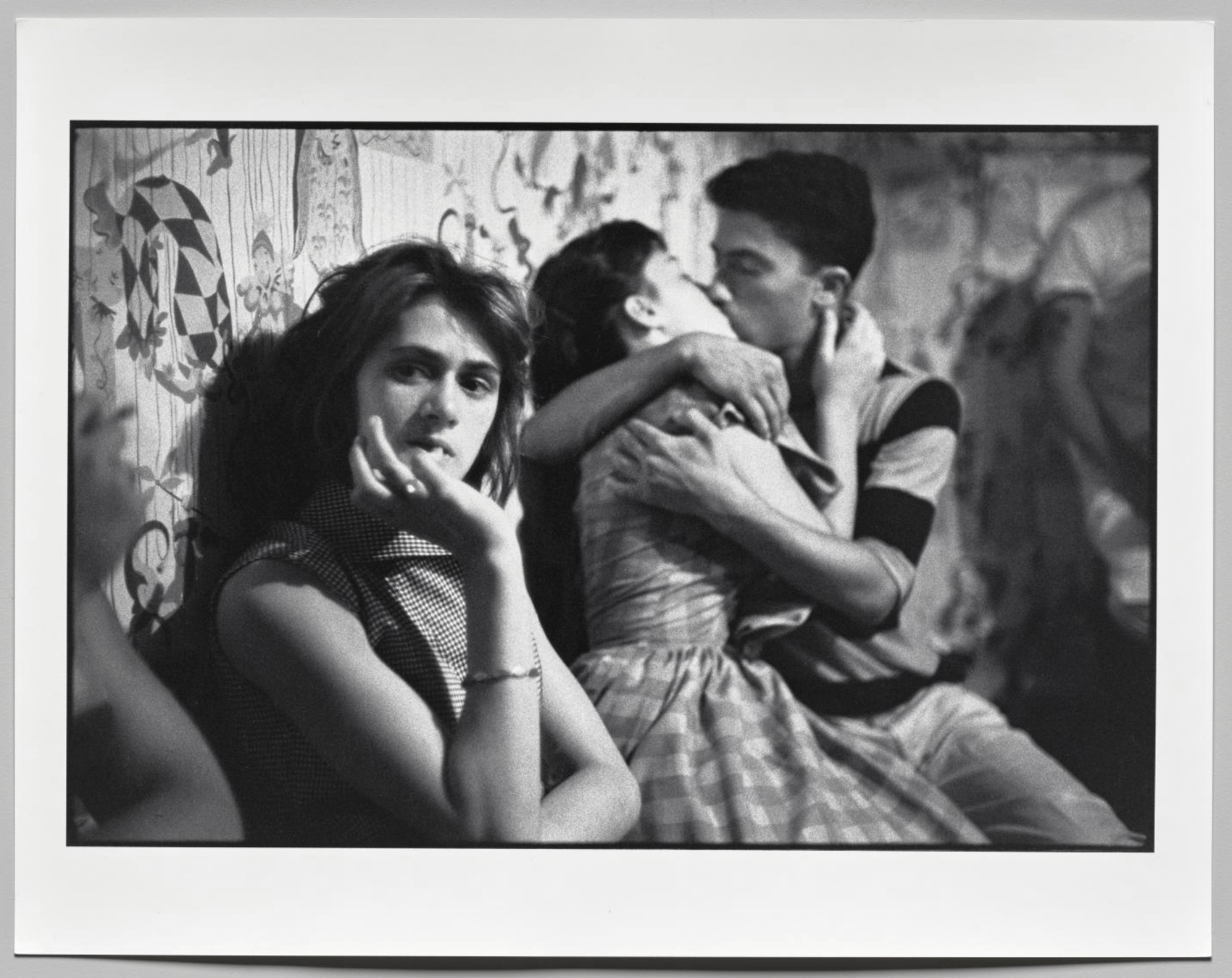
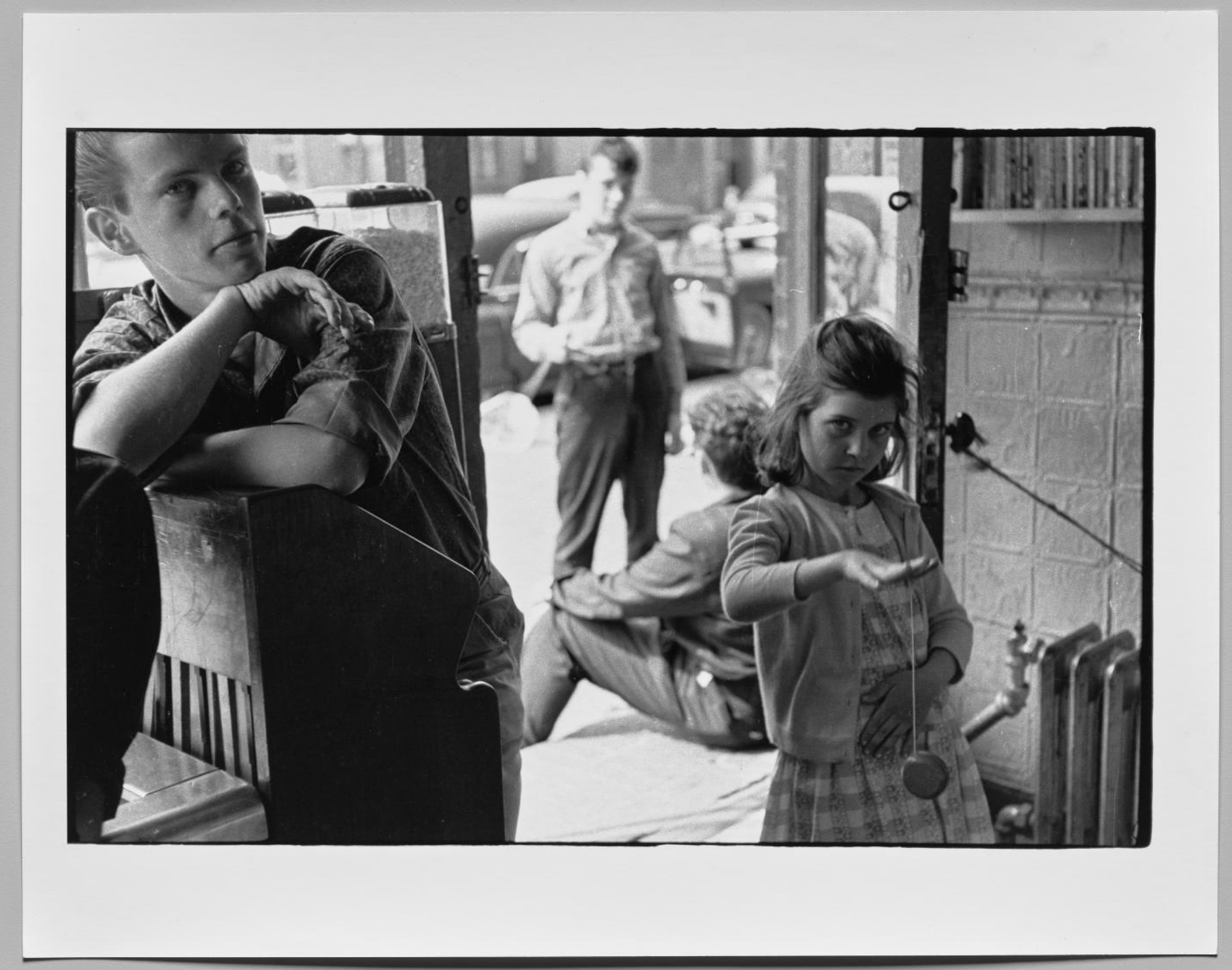
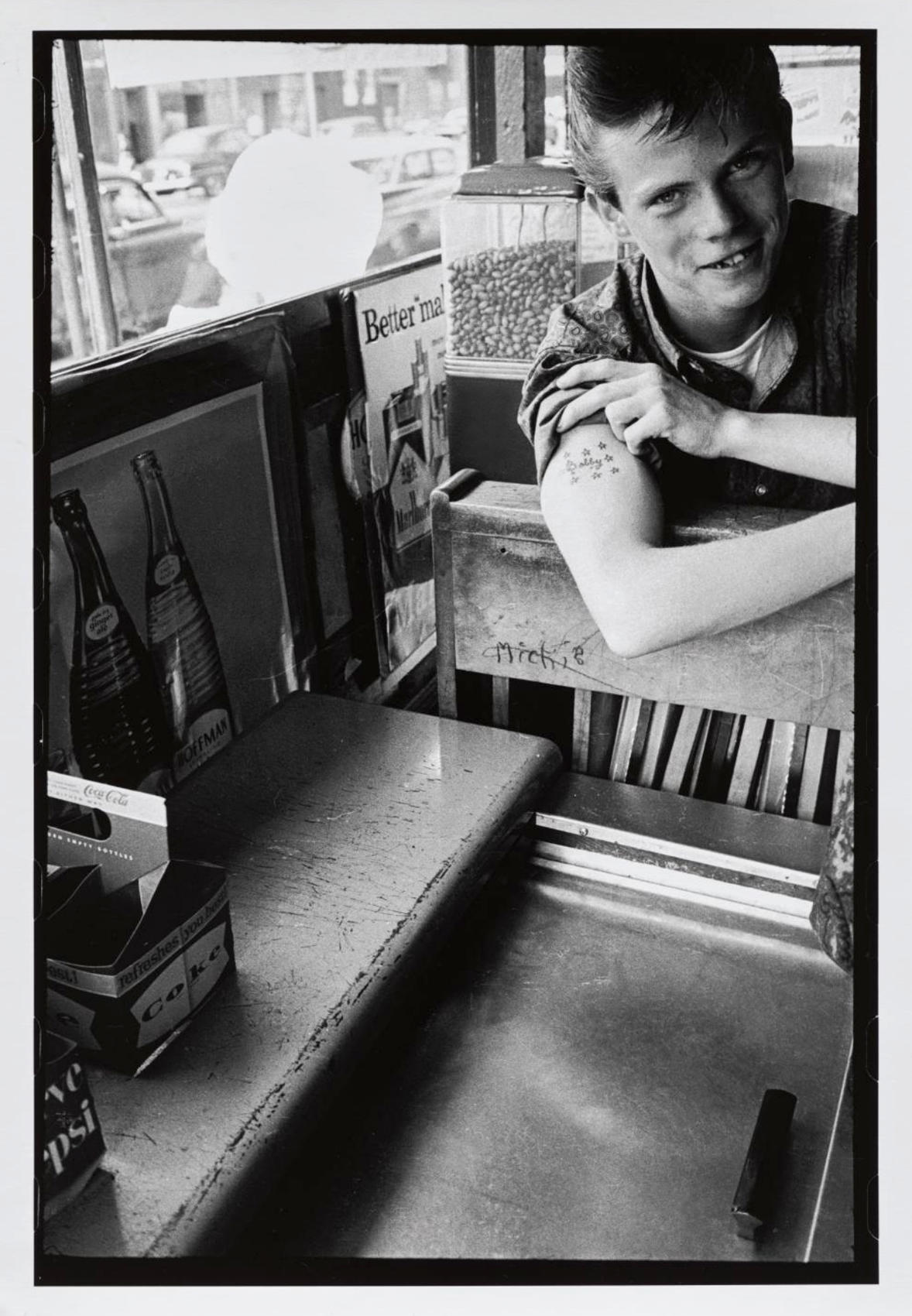
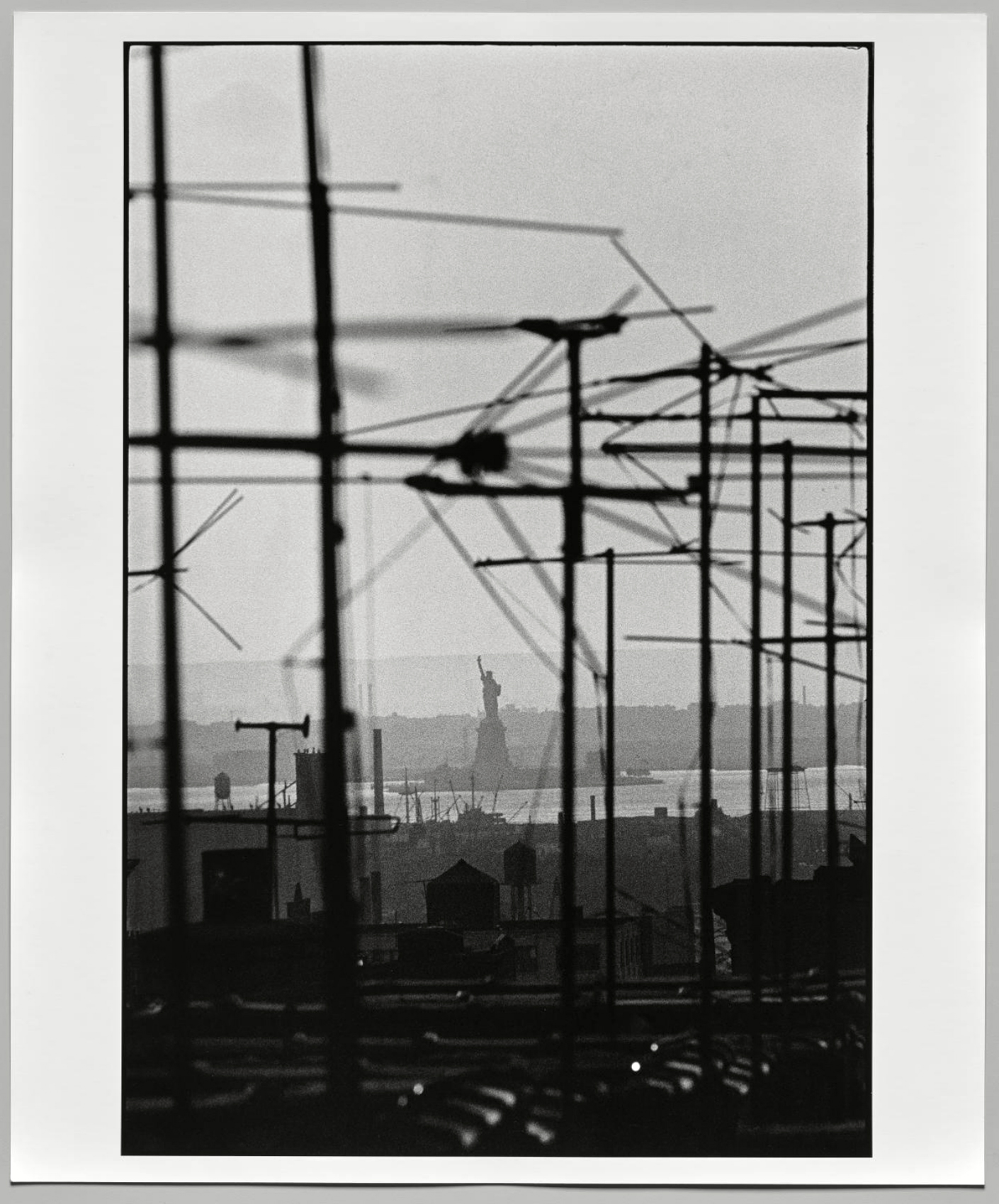
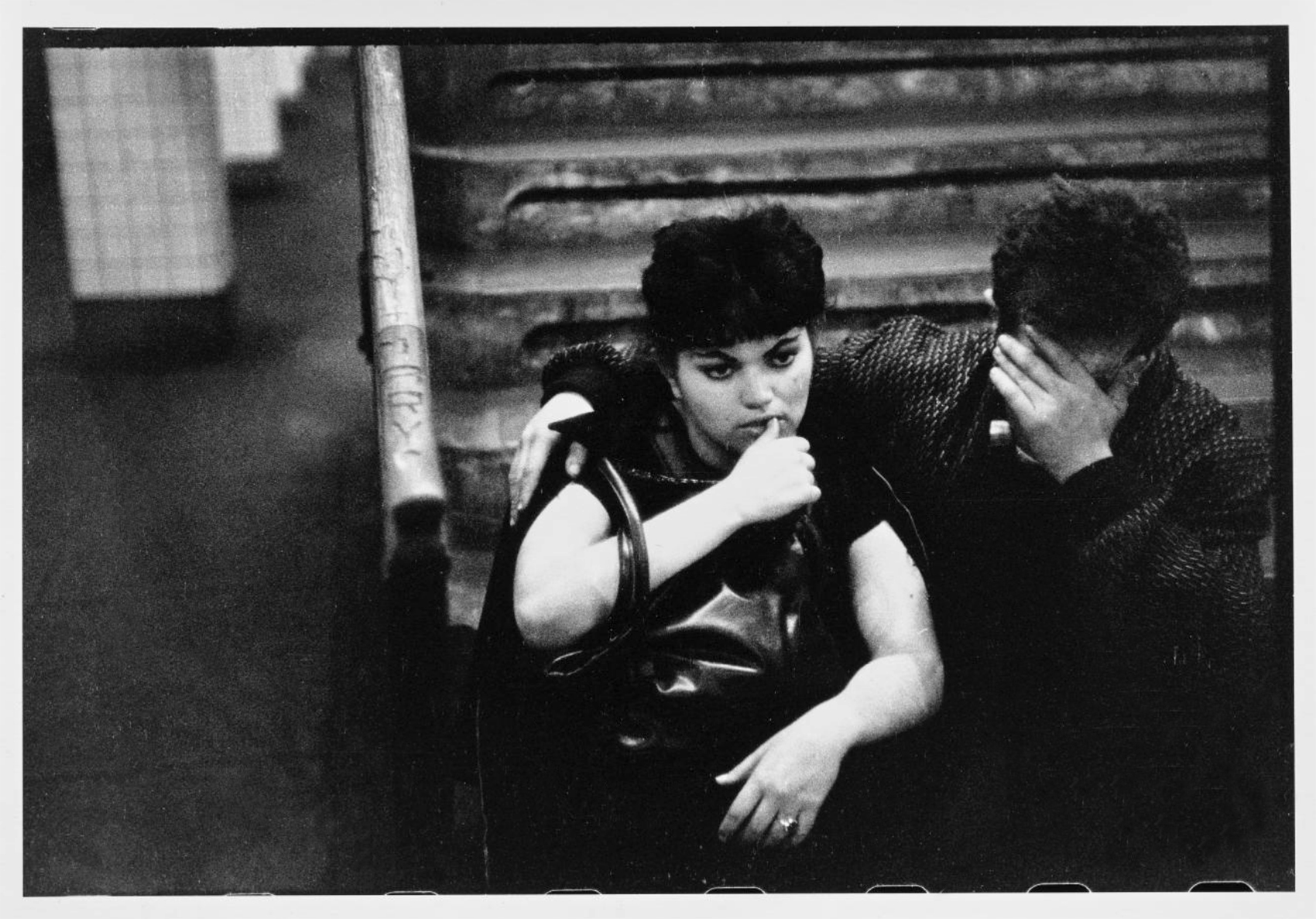
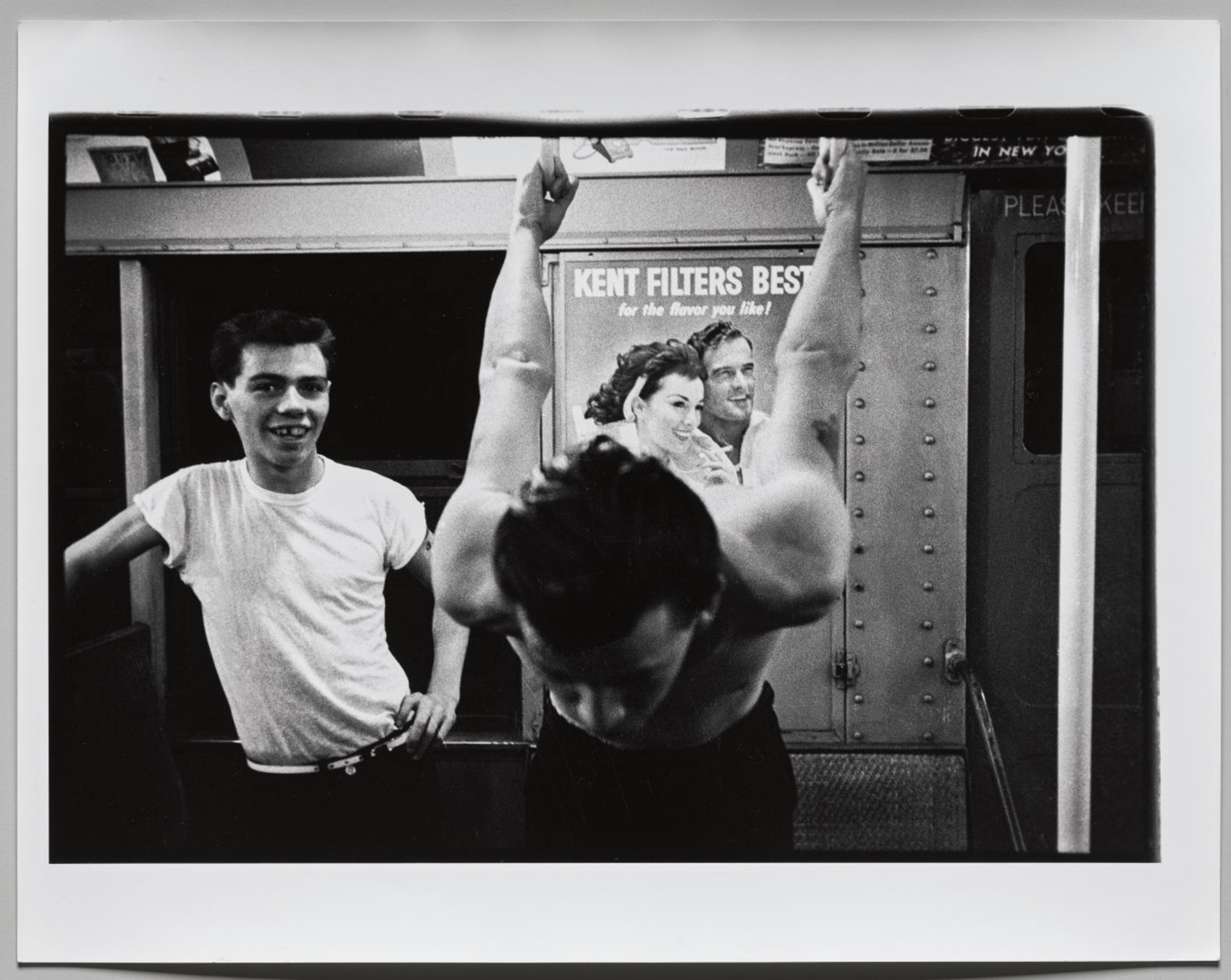
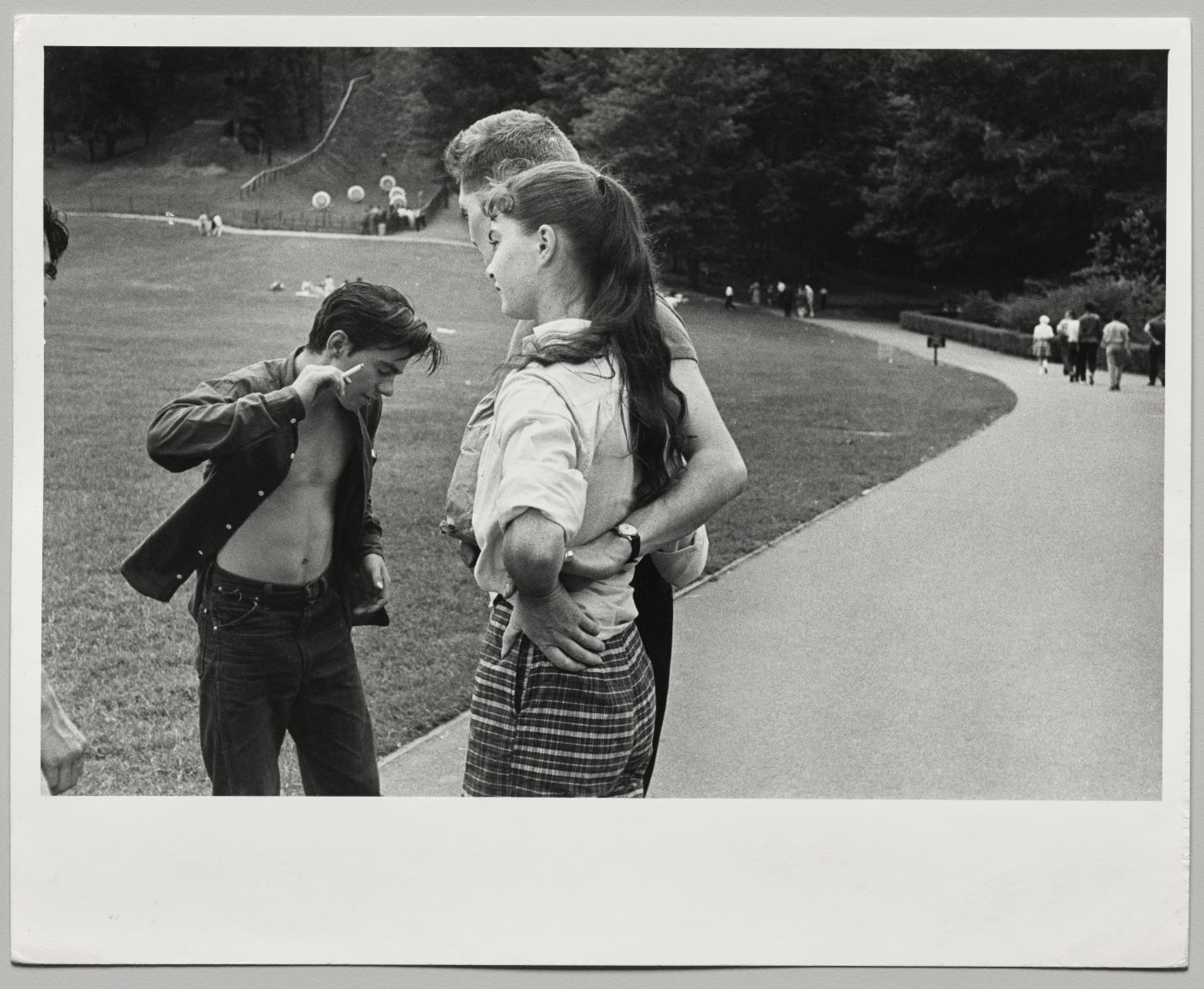
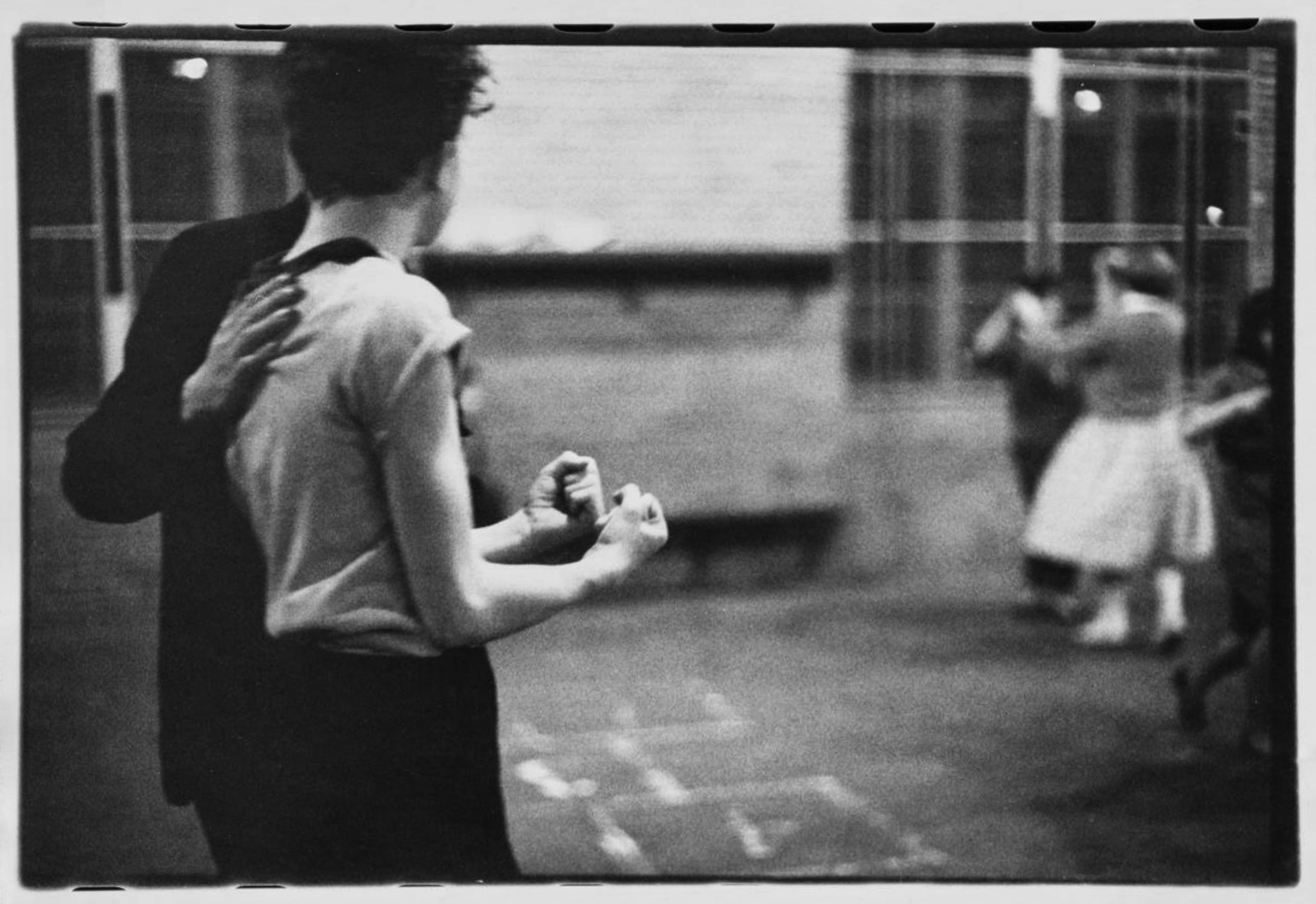
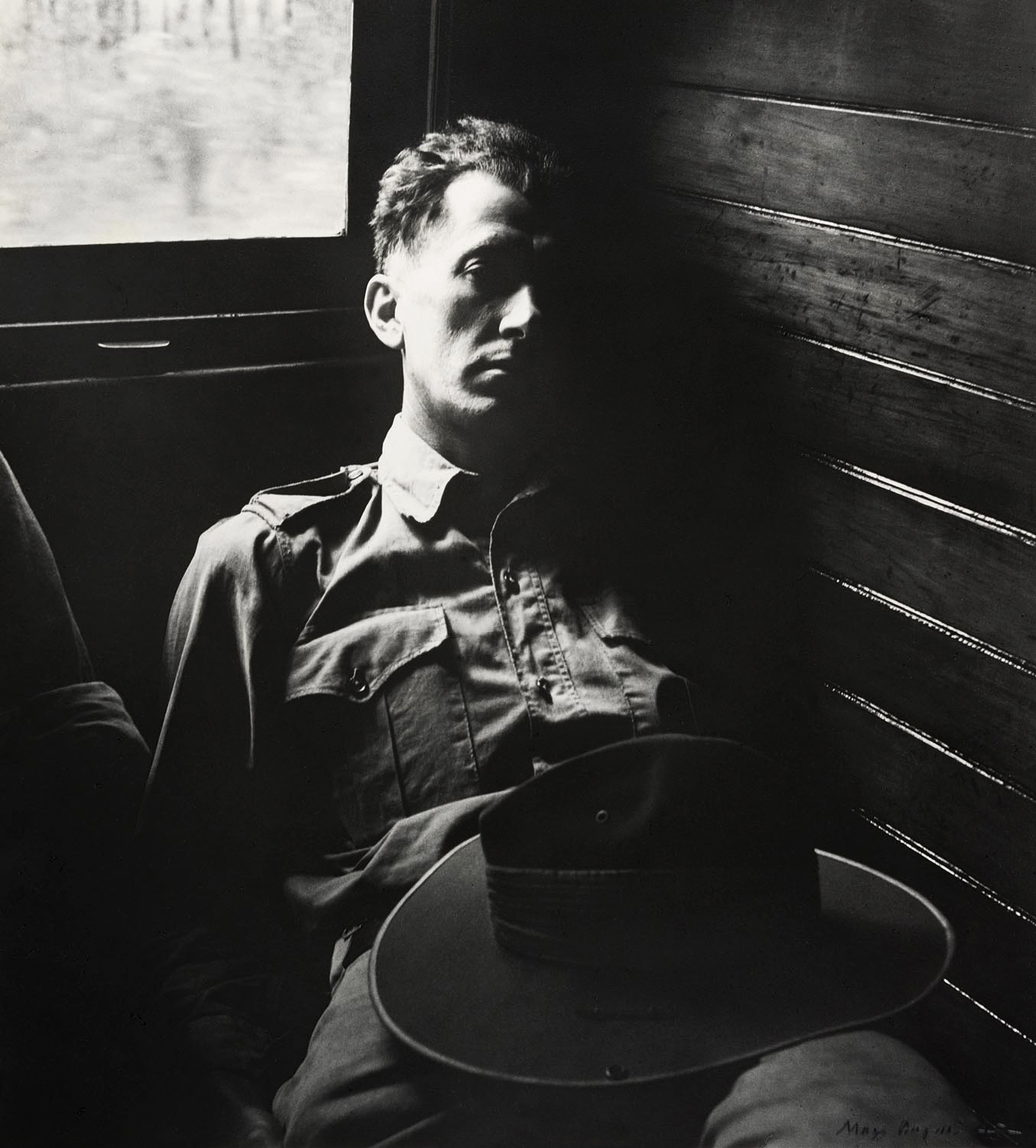
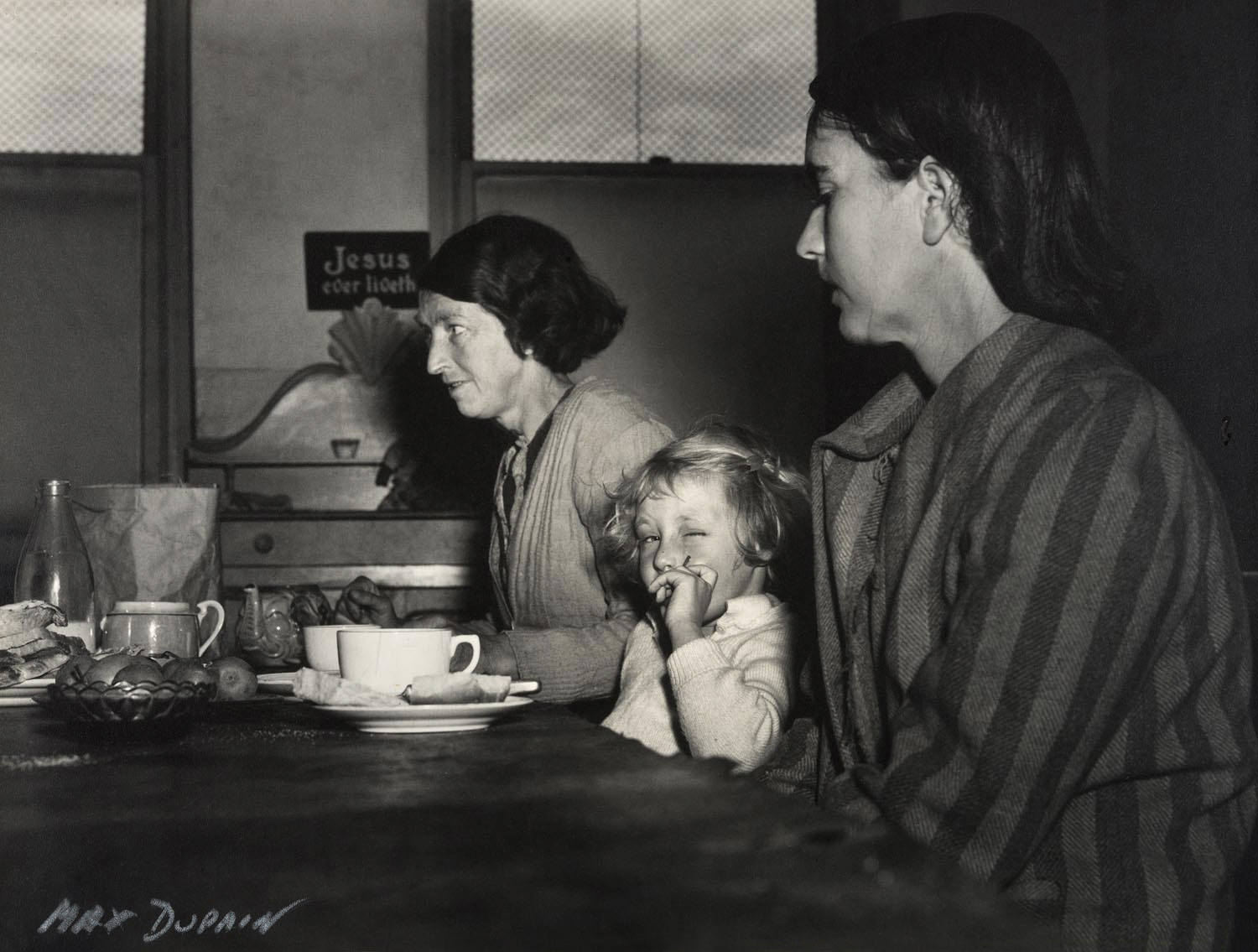
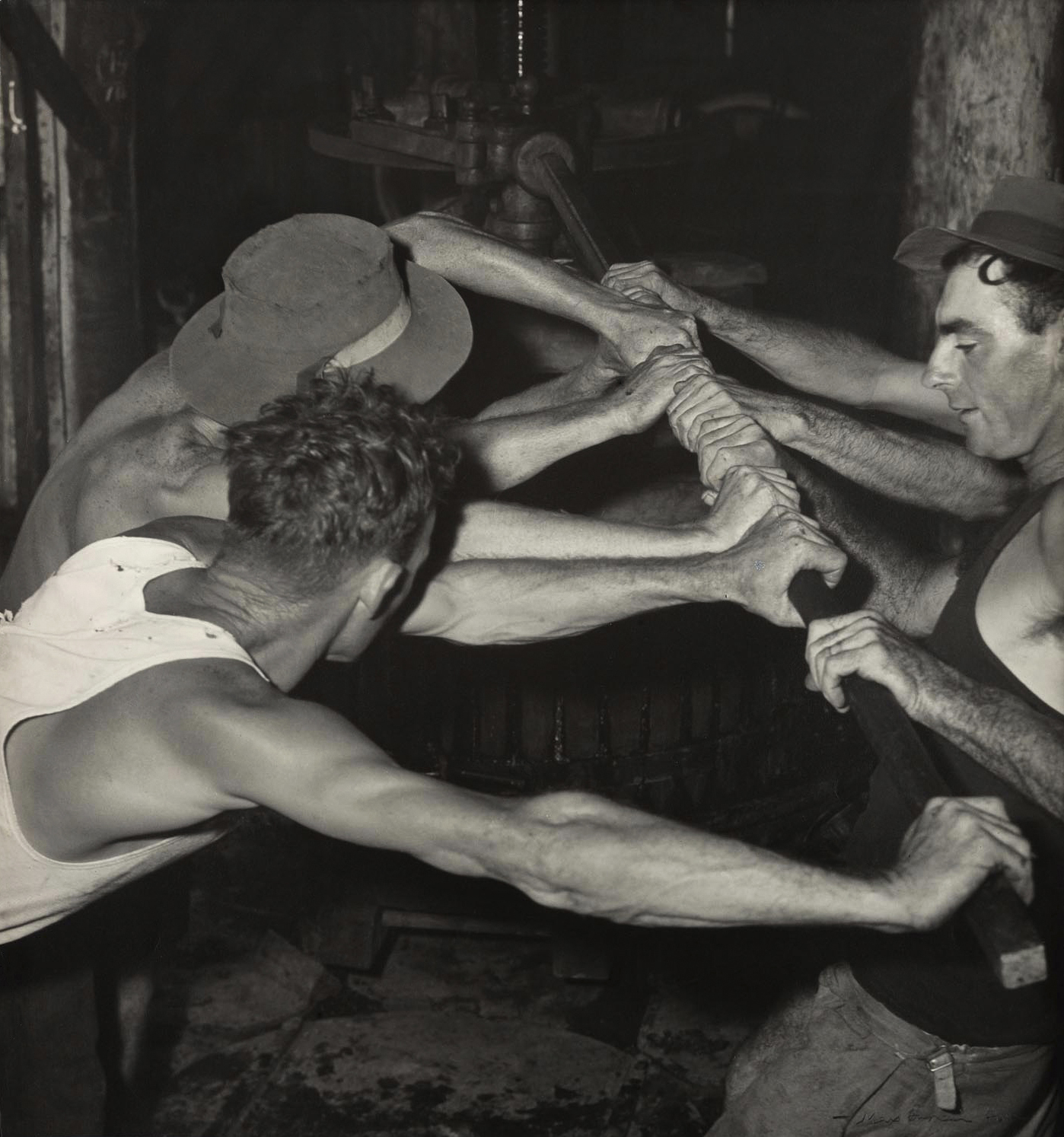
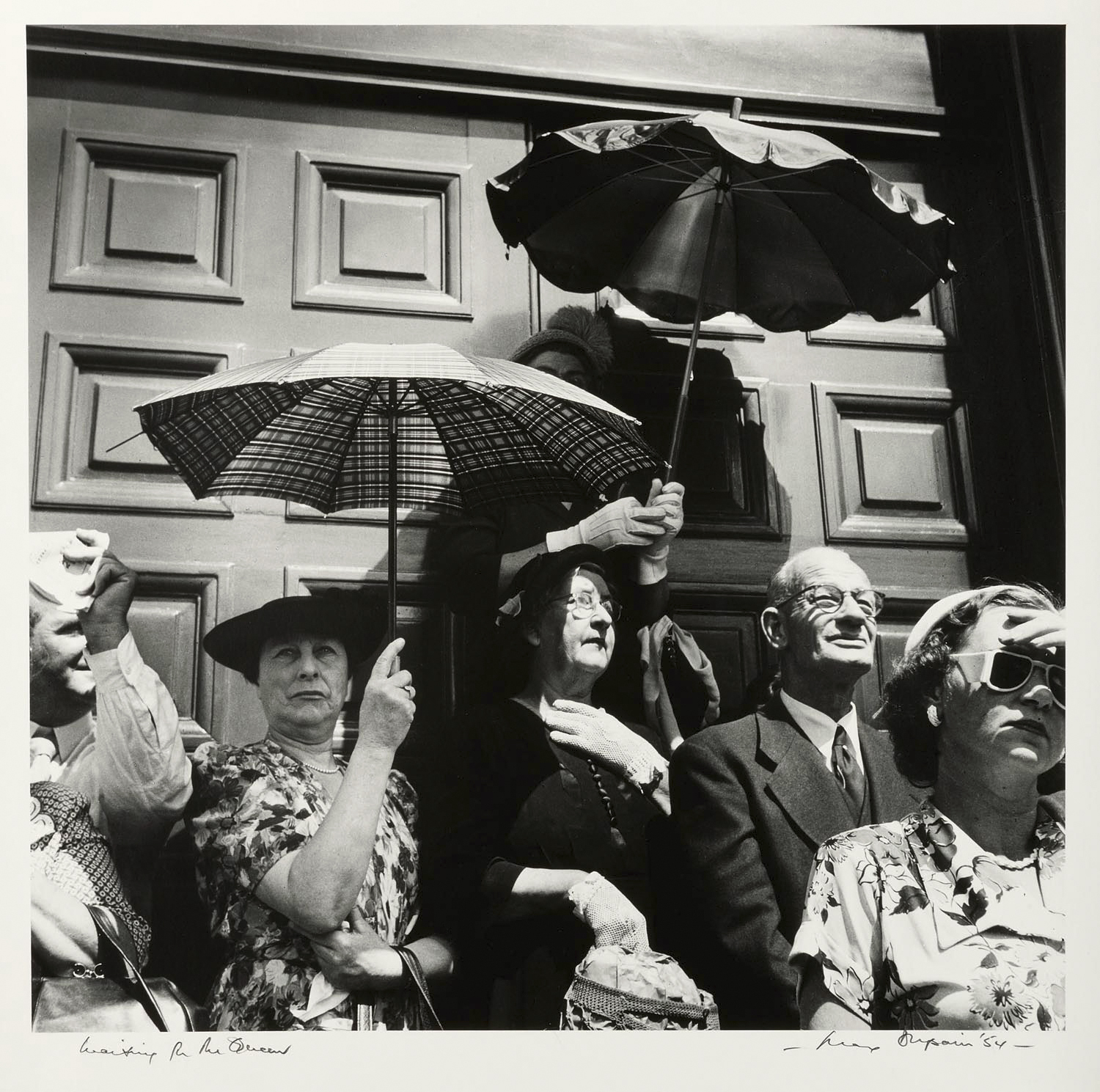
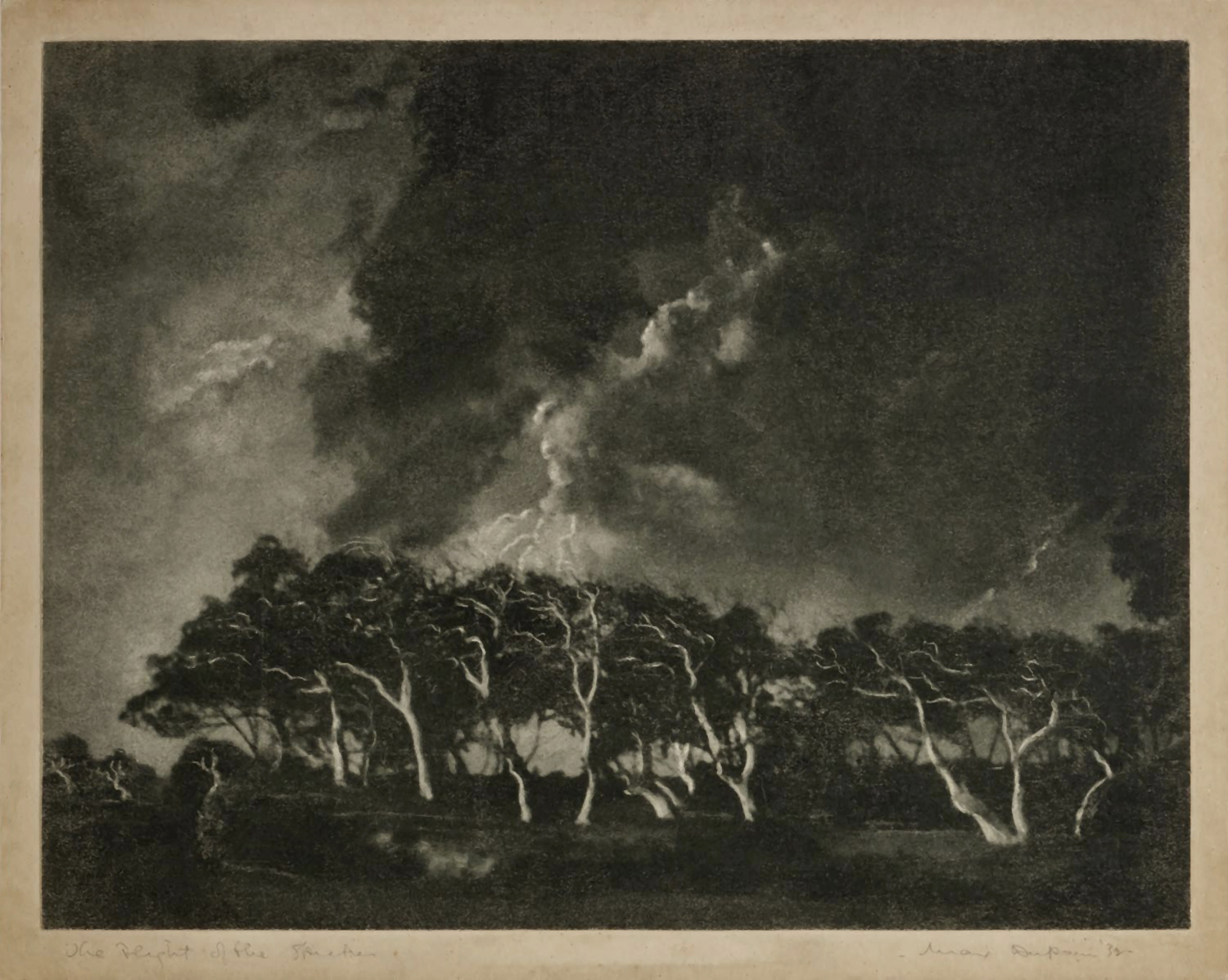
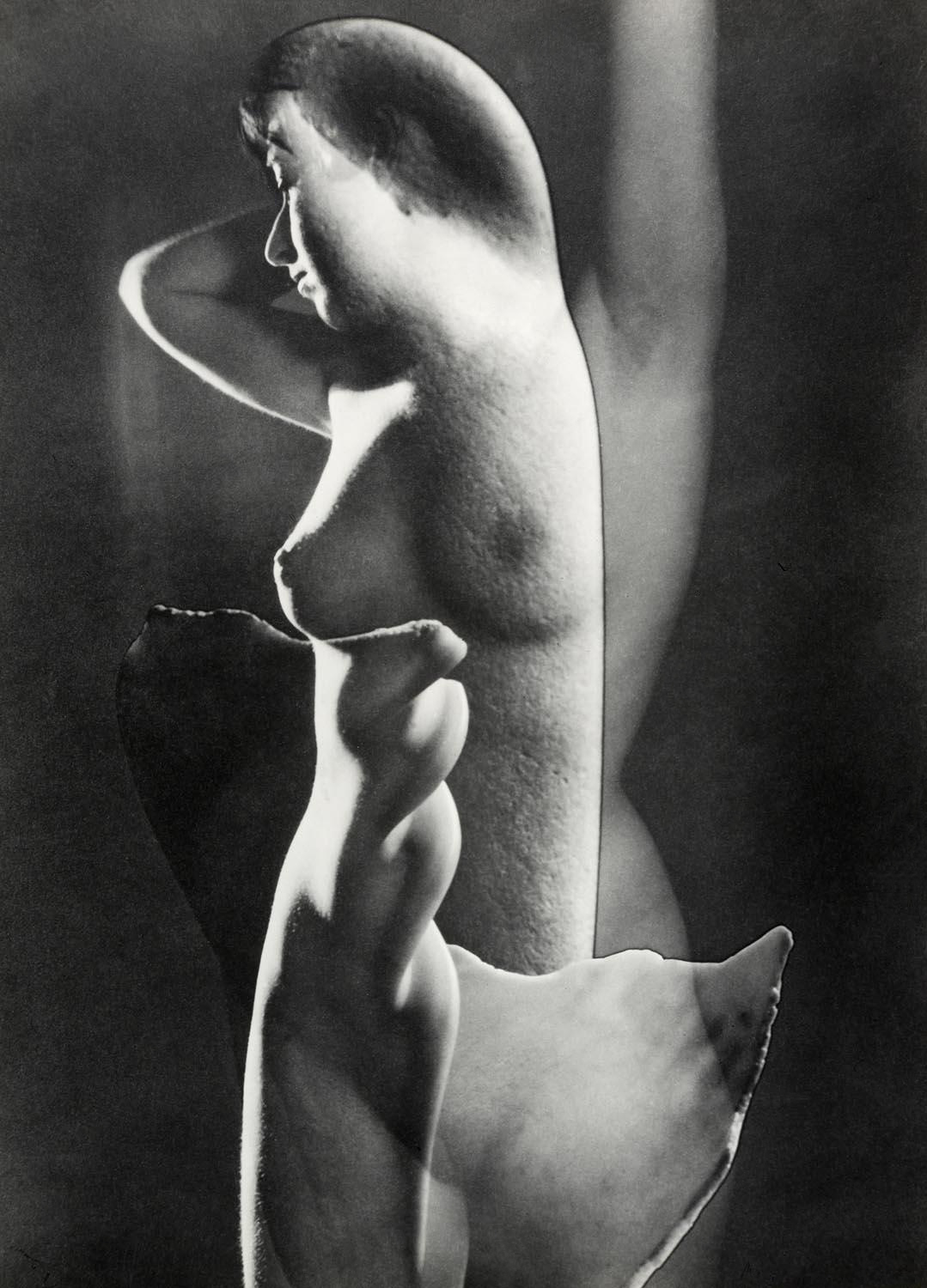
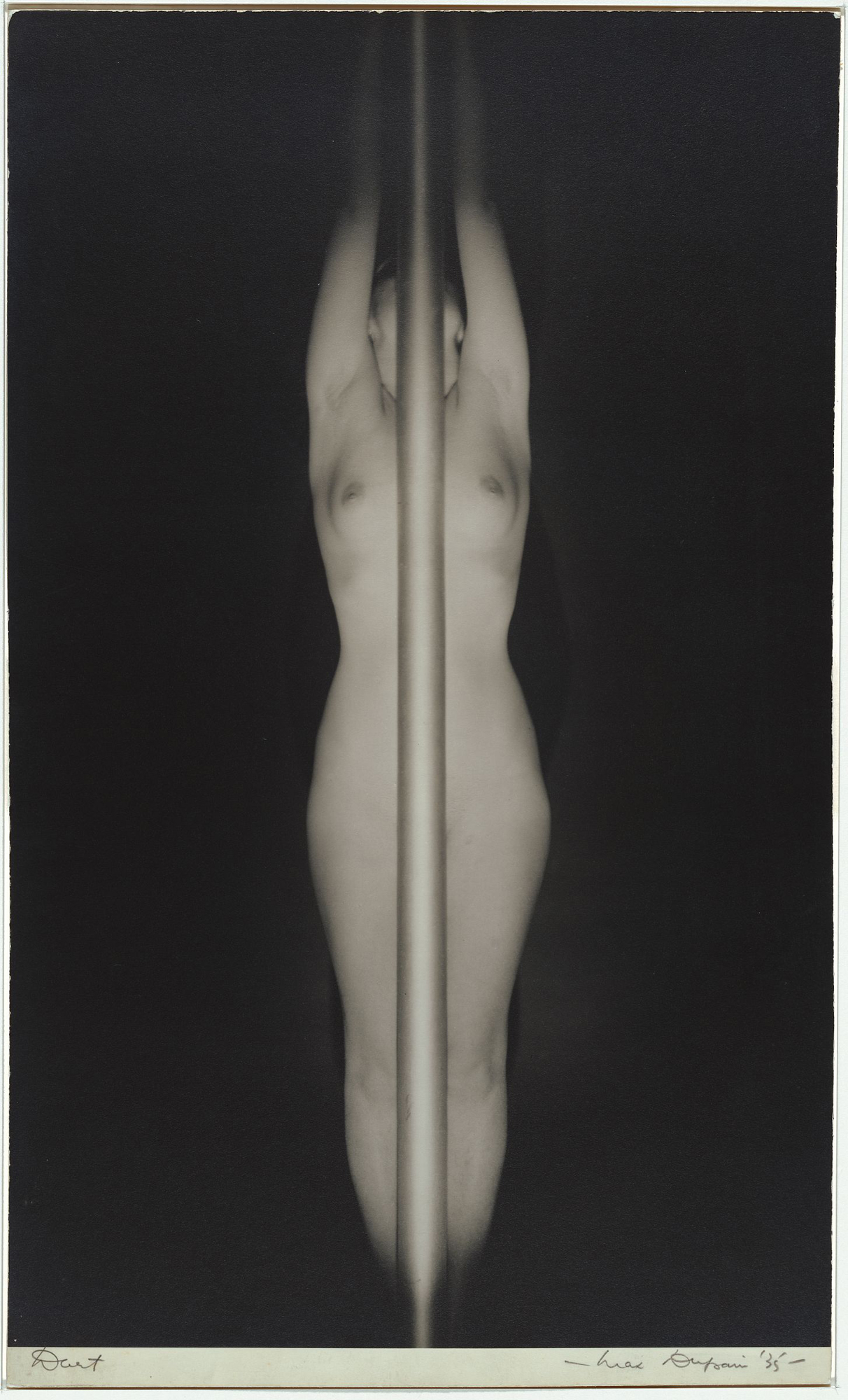
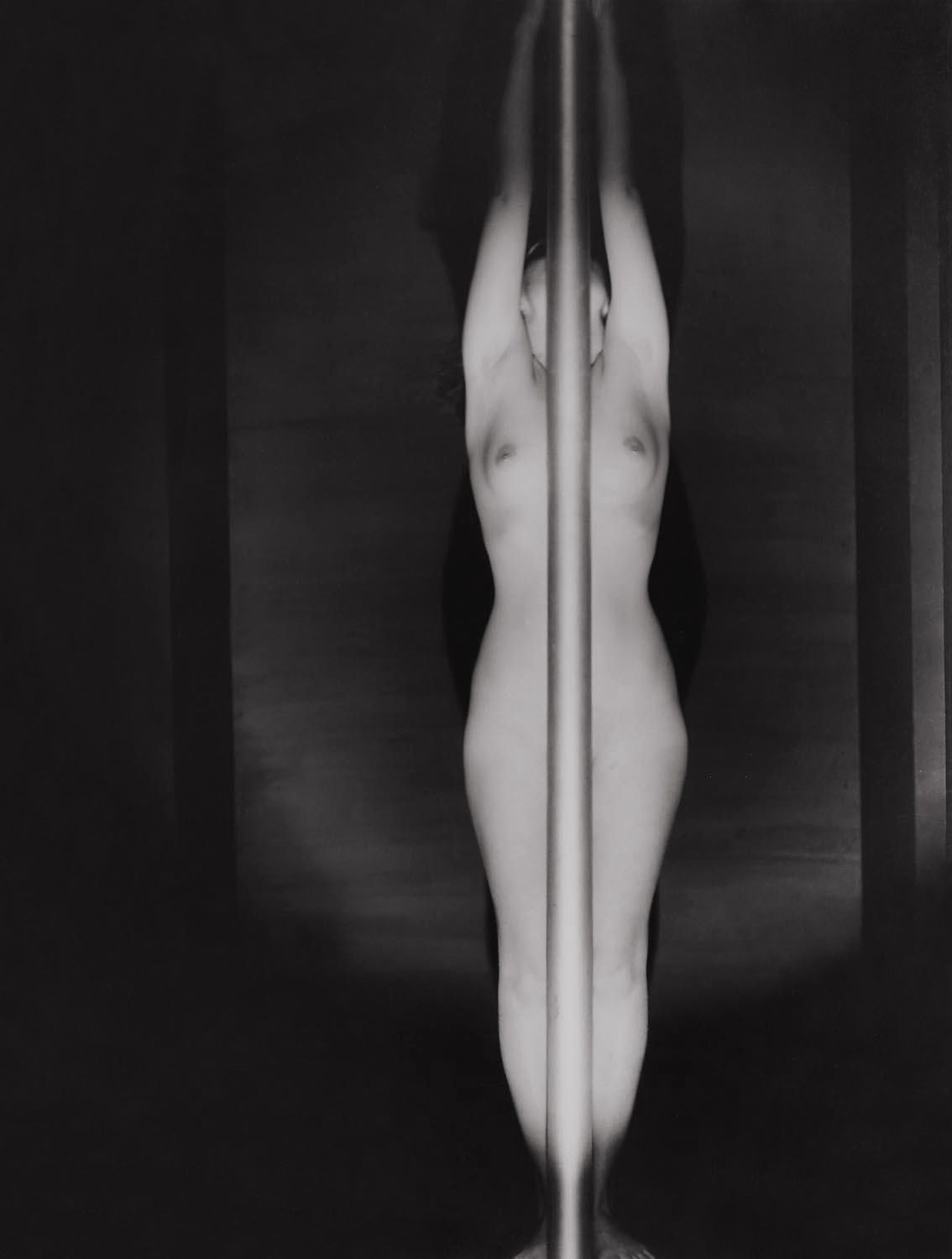
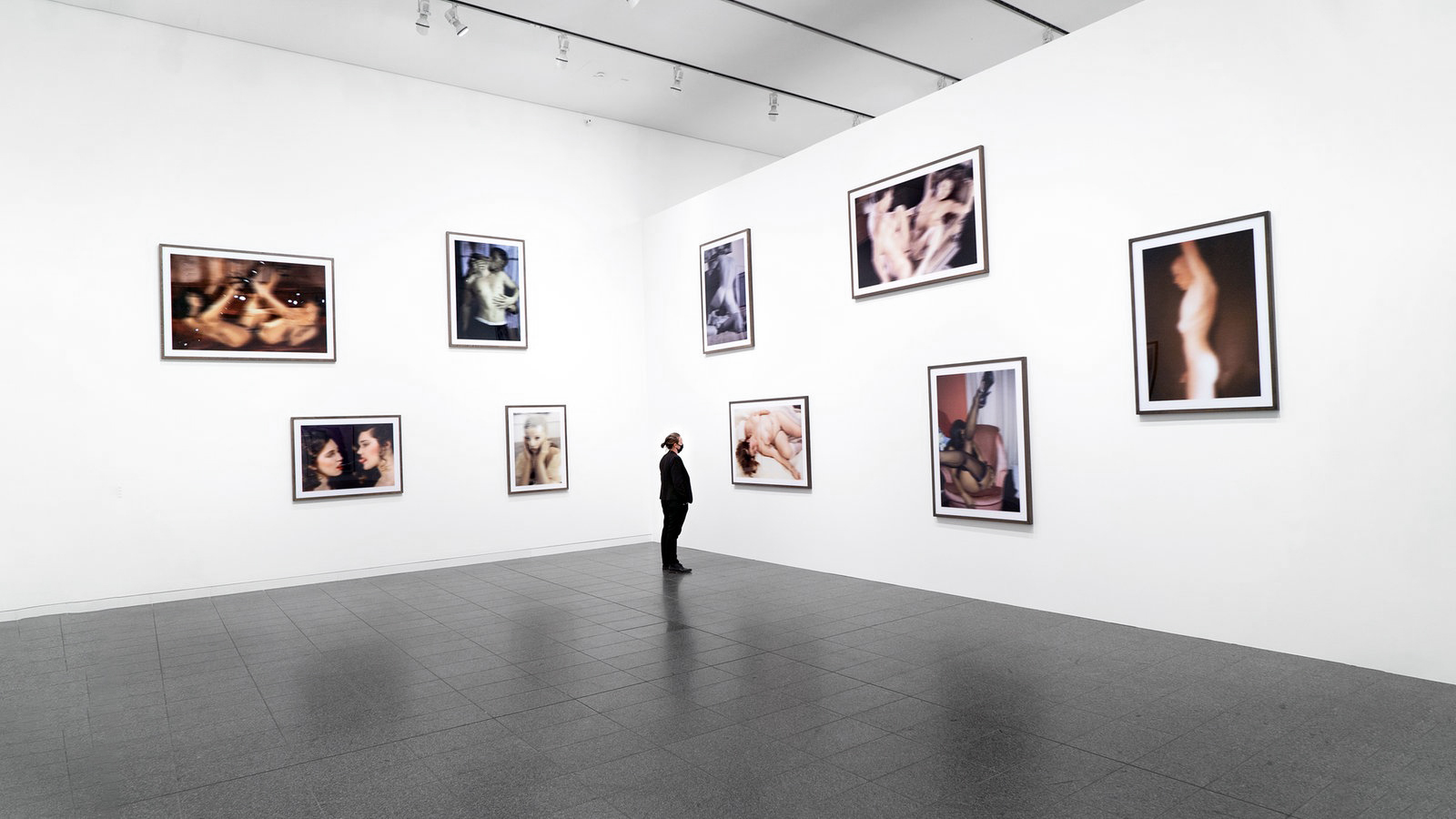
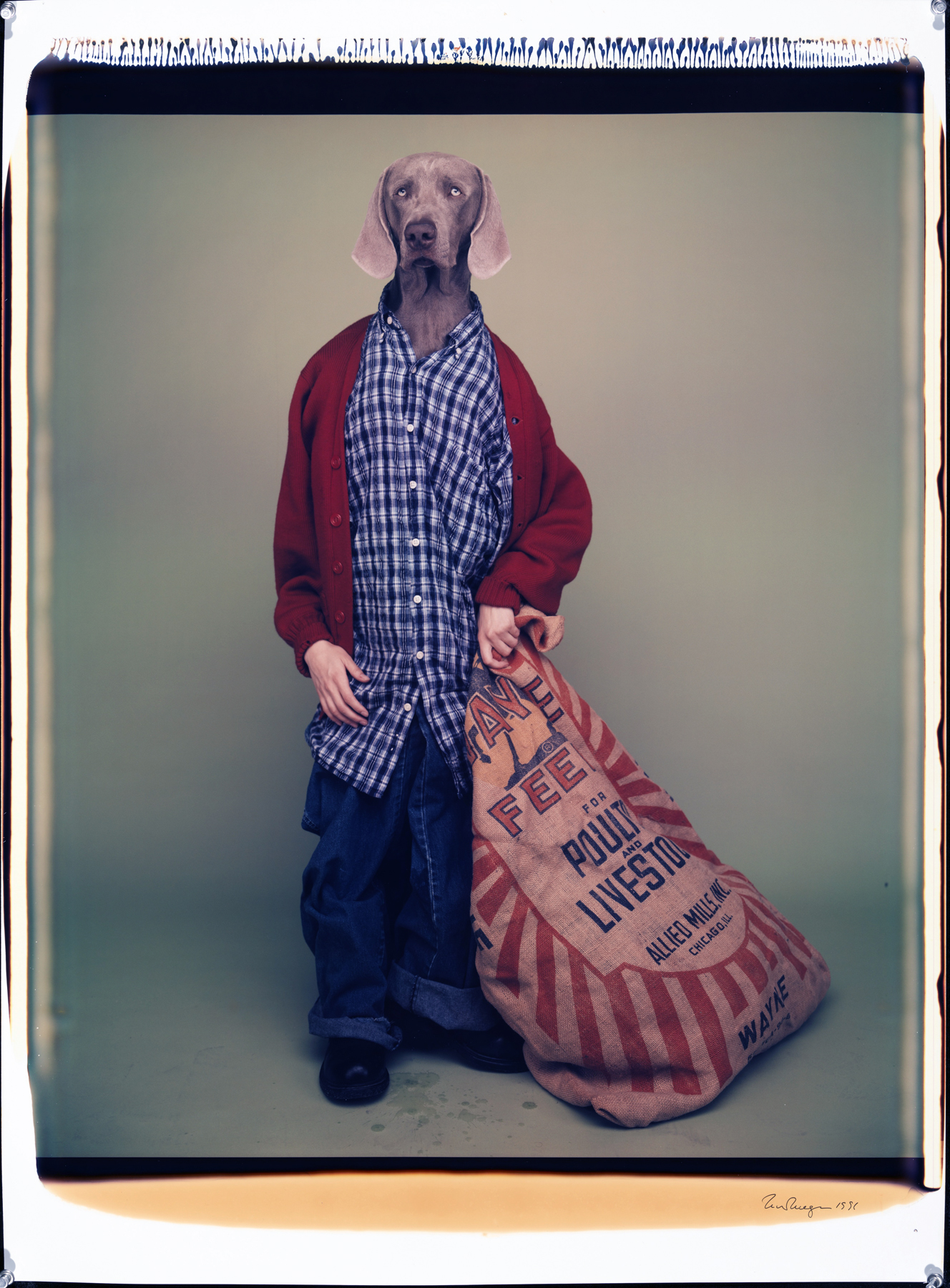
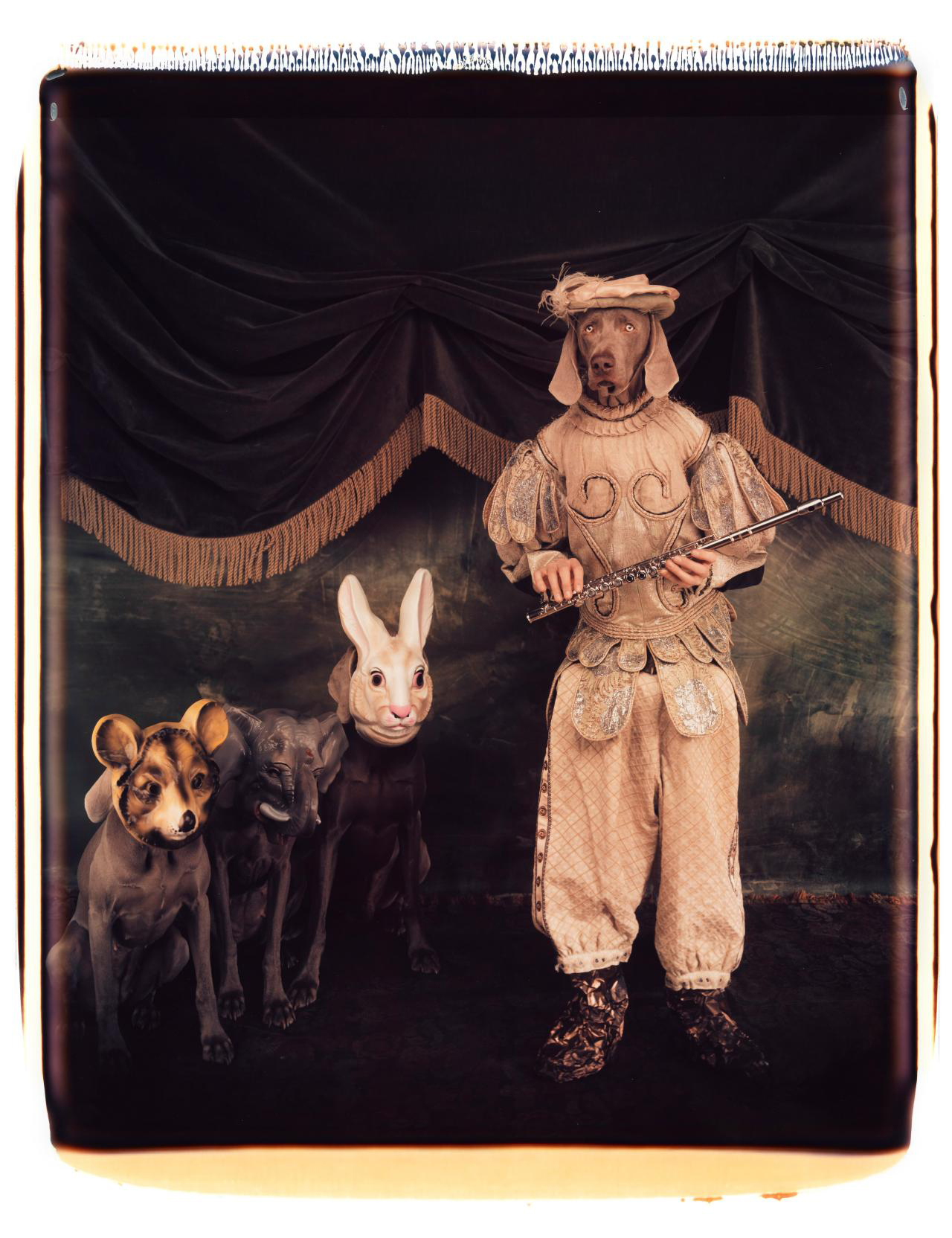
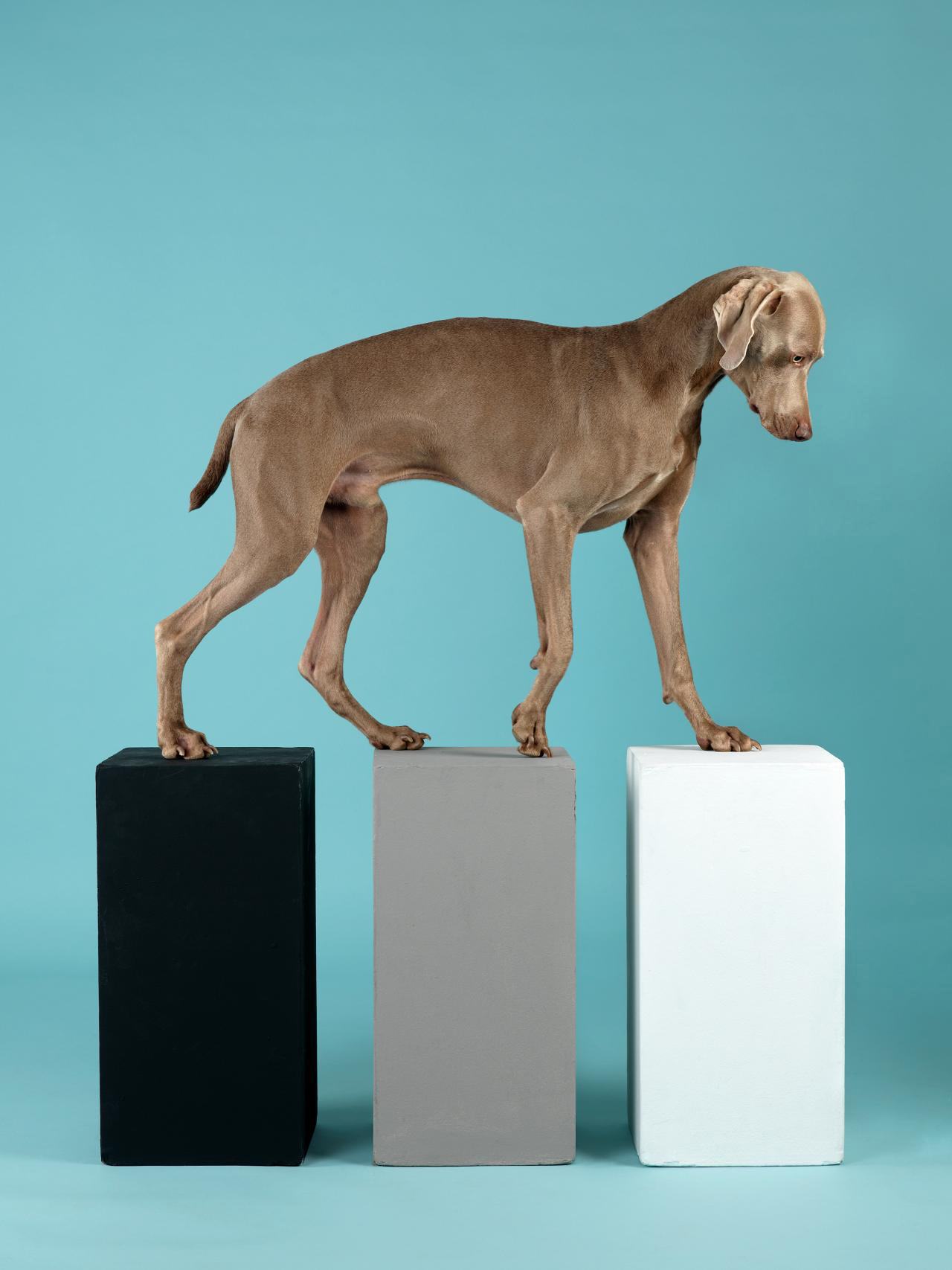
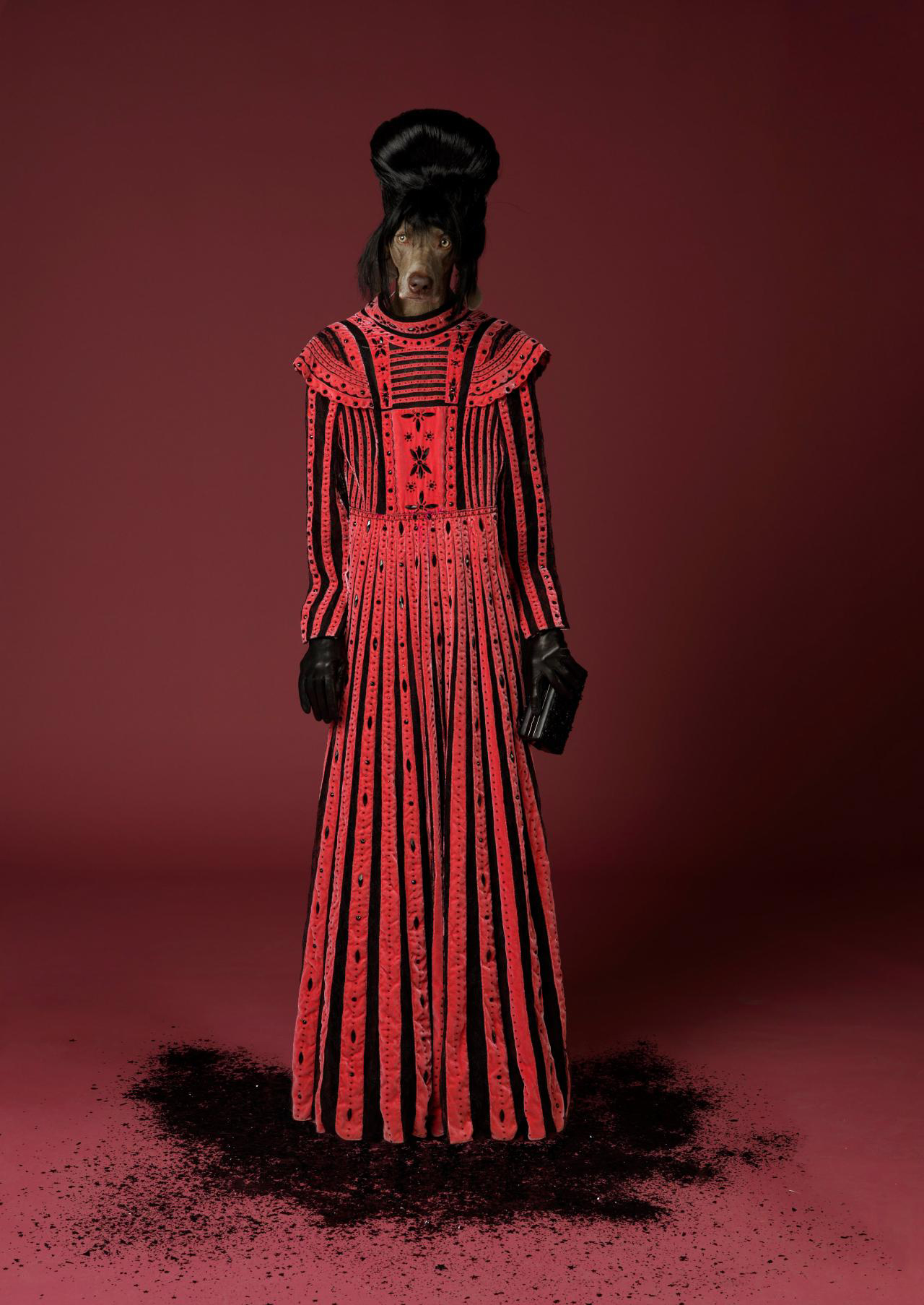
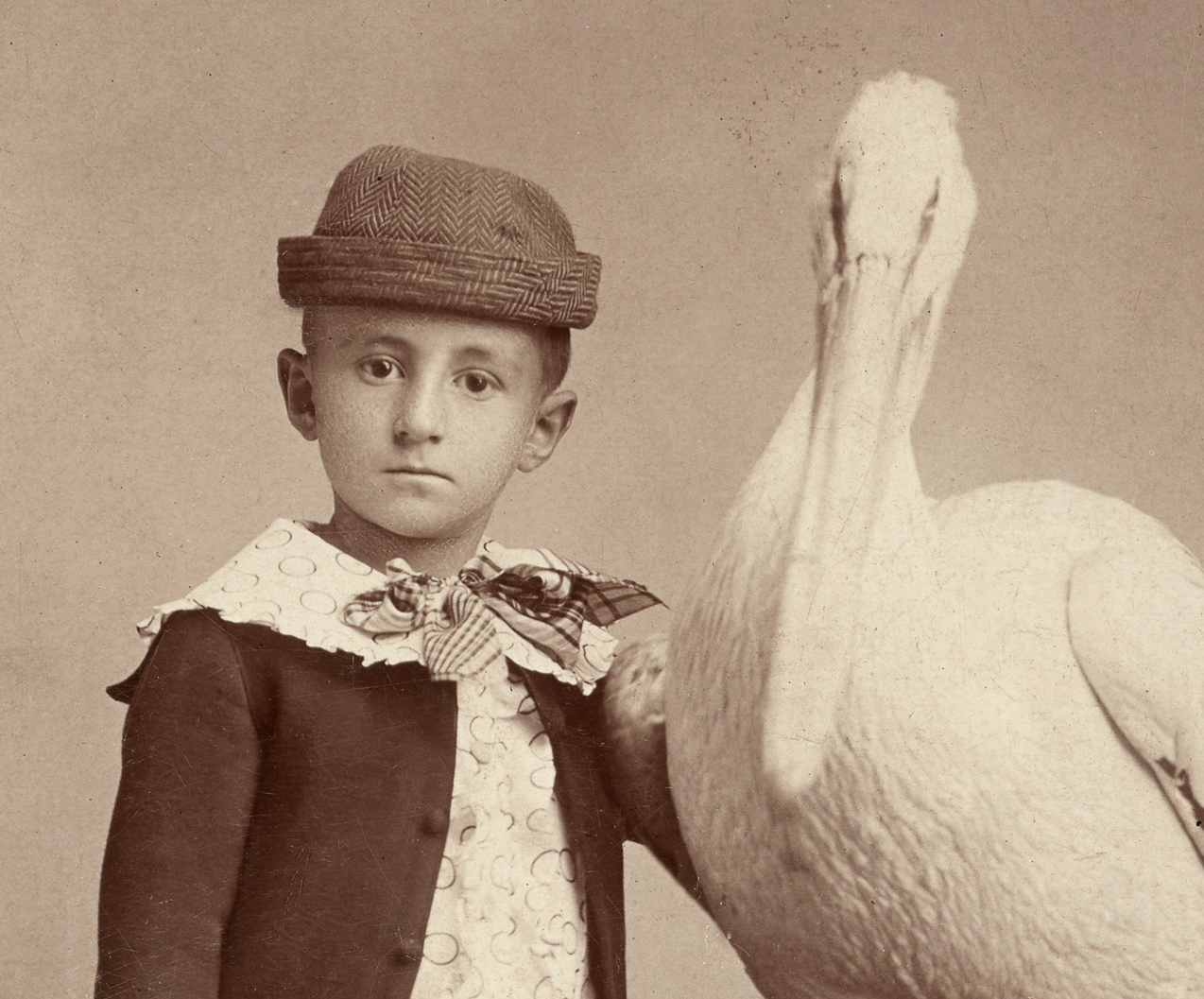
Many thankx to the Hague Museum of Photography for allowing me to publish the photographs in the posting. Please click on the photographs for a larger version of the image.
People like us / People we like
I didn’t always dress up the dogs. My first dog Man Ray was spared anthropomorphic adornment. That was left for Fay Ray. Fay and I came to a mutual realisation that she had a desire to be observed. Anyway, I found myself looking at her for long periods of time. Then one day, after some looking, I made her tall. Before long I was blurring the pedestal with fabric and creating the illusion of the anthropomorphic vertical. With the birth of Fay’s puppies, my cast of characters grew. Fay’s puppies – Chundo, Battina and Crooky – grew up watching their famous mother, and when it came their turn they were not taken by surprise. They knew what to do.
Colour fields
I began by ignoring colour, using the colour Polaroid film as though it were black and white. I distrusted colour. Sensuous, romantic, elusive colour. Colour was … well … colourful. In fact, the first few days with the Polaroid camera I made only black-on-black pictures. Man Ray under a black cloth against a black background. Polaroid film is very beautiful within a limited range. Man Ray was too dark for this film but Fay was perfect. With Fay I began to explore colour and light.
Weimaraners
No other breed that I am aware of is as conducive to the illusion of transformation as Weimaraners. Weimaraners are called ‘grey ghosts’. Their fur gives off an almost iridescent glow. They inhabit their forms in a strange way, never appearing to solidify into themselves as, say, a lab, a collie or a bulldog does. When you photograph a collie, you get a collie.
Tales
One day my assistant Andrea stood behind Fay to adjust her dress and she gestured out to me with her hand. Her long human arm appeared as Fay’s. The illusion startled me. A miracle. Kind of creepy. Fay was part human. I thought of cartoons and mythology, superheroes and Egyptian gods. Next thing you know, Batty’s son Chip was playing the flute.
Sit! / Stay!
The dogs have an obvious pride in what they do. They can sense the feeling in the room when they are working. If it’s a great picture or a difficult picture, they can feel what happens because everyone stops and goes ‘Wow!’ Fay was particularly agile and for her I concocted a series of anatomically challenging poses. I came to understand her balance and points of physical tension. Fay liked the challenge of a difficult pose. I think she liked to impress me.
Vogue / Style
I have a very awkward relationship with fashion. I’m a little bit timid about it. This isn’t the attitude of the typical fashion photographer. Fortunately, my Weimaraners are the perfect fashion models. Their slinky elegant forms are covered in grey, and grey, as everyone knows, goes with anything.
Nudes / Physique
Up close, unadorned, standing, sitting or lying before the eye of the big camera, the dogs become landscapes, a forest of trees, a topography of hills and valleys, earth and boulders, in a shoreline of endless interconnectivity.
Cubists
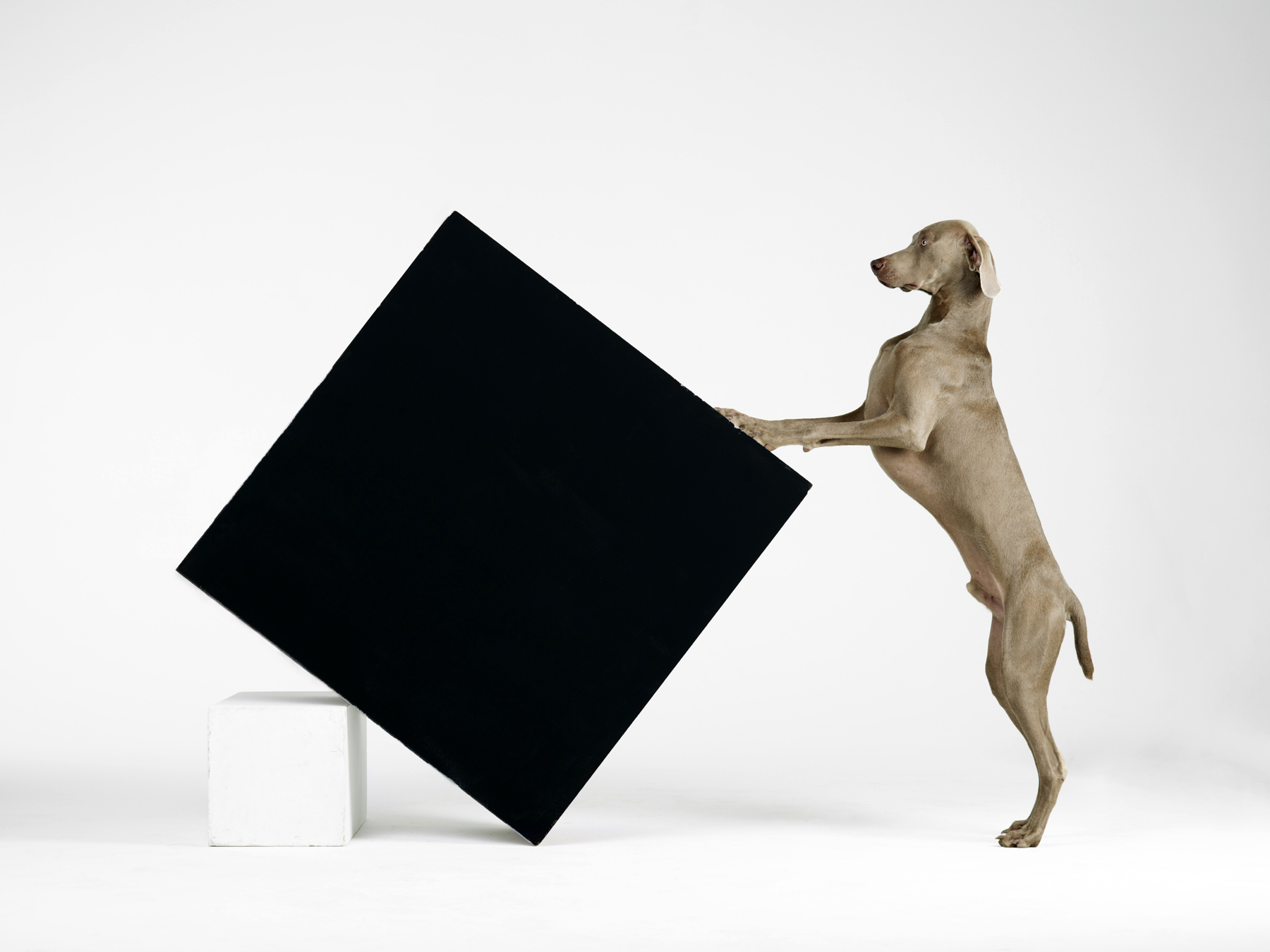
Since 1972 I have had a habit of keeping a white box in the studio. If I can’t think of anything to do, the box is a good place to start. The original work I made with this box alluded to Sol LeWitt’s minimal sculptures of the 1960s, but this is now a fading memory. I use a box the way a philosopher uses a chair, as a physical object representing hypothetical questions: ‘How many ways can a dog fit on a box?’, ‘How many dogs can fit in a box?’, ‘Around a box?’ And on and on. On these square wheels, round questions keep rolling.
Many artists have a muse. Movie directors perfect their craft working repeatedly with their favourite actors, while choreographers create some of their best works for a specific dancer. In some cases, the muse is a silent partner, the object of an artist’s intense and obsessive gaze; in others the work emerges from a partnership so close that it is unclear which is the artist and which is the muse. For the American artist William Wegman (b. 1943), his muses have been generations of the Weimaraner breed. The inspiration came in 1970 when his first dog, Man Ray – named after Wegman’s favourite artist – sat himself in front of the camera. Instead of sending his faithful companion to his bed, Wegman seized the moment, and the rest is history. Wegman was already a well-known artist, but it is his numerous, human-like portraits of his ever-expanding cast of Weimaraners that have brought him worldwide fame. In partnership with renowned guest curator William A. Ewing and the Foundation for the Exhibition of Photography, Fotomuseum Den Haag presents a major survey of no fewer than four decades of Wegman’s wide-ranging collaboration with Man Ray, Fay Wray, Candy and their descendants.
In Mozart’s The Magic Flute, the Queen of the Night persuades Prince Tamino to rescue her daughter Pamina from captivity under the high priest Sarastro; instead, he learns the high ideals of Sarastro’s community and seeks to join it. Separately, then together, Tamino and Pamina undergo severe trials of initiation, which end in triumph, with the Queen and her cohorts vanquished. The earthy Papageno, who accompanies Tamino on his quest, fails the trials completely but is rewarded anyway with the hand of his ideal female companion, Papagena.
Many great artists have a muse. Sometimes this muse is a silent partner, the object of an artist’s obsessive gaze. At other times the relationship is a deeply collaborative act.
The history of photography has its own celebrated cases: Jacques-Henri Lartigue and Renée Perle, for example, or Alfred Stieglitz and Georgia O’Keeffe. For William Wegman, whose muses have been all these things and more, inspiration arrived almost half a century ago, when a Weimaraner who had joined the family showed both aptitude and passion for performing before the camera. In honour of one of Wegman’s most admired modern artists, he was named Man Ray, the first in a line of highly spirited performers.
William Wegman is a renowned and versatile American artist who resists an easy classification as he moves adroitly between painting, drawing, photography, film, video, books and performances. Although his famed Weimaraners are not featured in all these media, they reside at the core of his art. In the late 1970s Wegman found, in the large-format Polaroid print, his ideal means of expression – the perfect print size, exquisite colour and an ‘instantaneity’ which allowed for spontaneity and beneficial ‘accidents’. When his Polaroid chapter finally came to an end, the artist shifted to working digitally, rediscovering in this new medium what was essential to him about the Polaroid process: the print size, expressive colour and the studio set-ups.
Wegman’s world may revolve around his dogs, but his choice of sets, costumes and props betray a fascination with art history – Cubism, colour field painting, Abstract Expressionism, Constructivism, Conceptualism and the like. The diverse fields of photography also intrigue the artist, and we find in his work landscapes, nudes, portraits, reportage and fashion.
And yet, is it all really about dogs? Being Human suggests otherwise: these performers are us and we are them: housewife, astronaut, lawyer, priest, farm worker, even a dog walker! Some pose proudly and with confidence, others express doubts or vulnerabilities. It’s all about being human.
Andrew Rumann (Australian, 1905-1974) Untitled [Departure from Circular Quay, Sydney for Fremantle and Singapore] 1941 Silver gelatin photograph 5.5 x 5.3cm
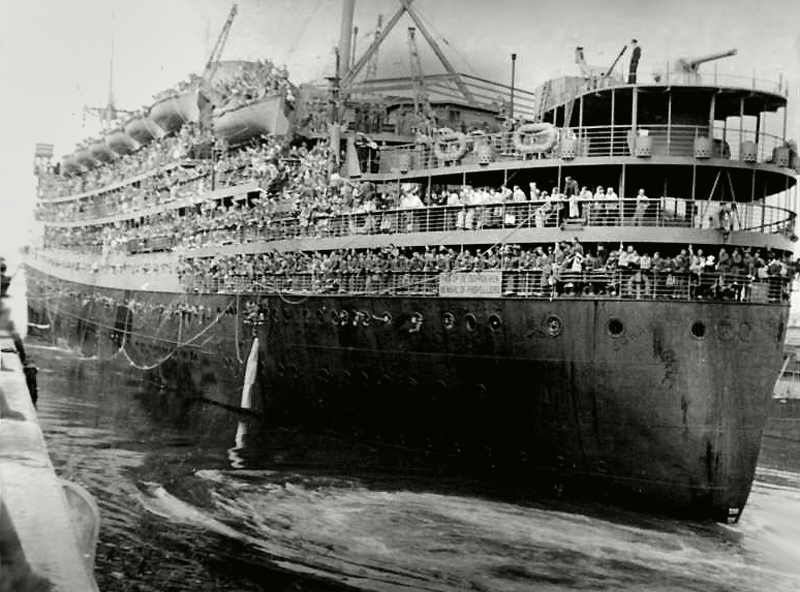
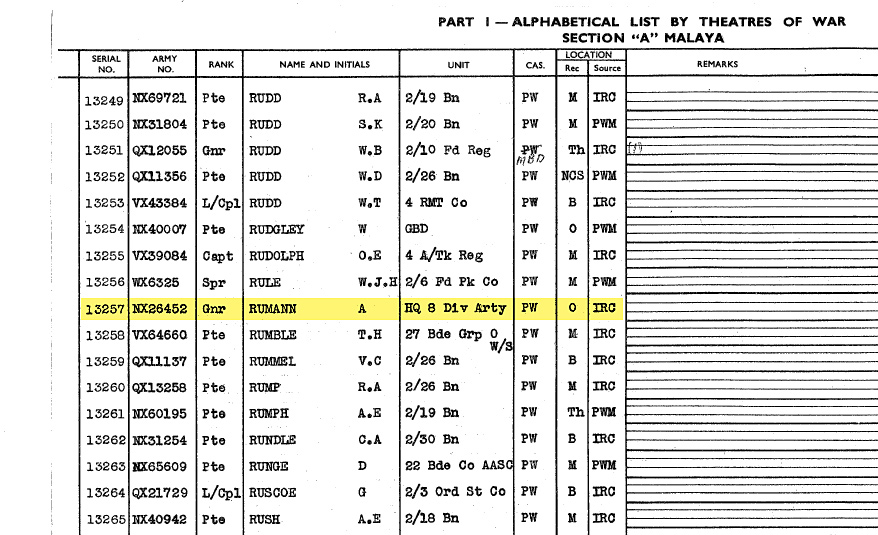
These photographs were given to me in an envelope titled “Gunner Andrew Rumann embarkation for Singapore, August 1941”. I have carefully digitally scanned and cleaned them. The attribution seems correct for the first group of photographs in the posting, Departure from Circular Quay, Sydney for Fremantle and Singapore, but not for the rest. I have located Rumann’s POW record and found several pictures of the ship he would have taken to travel to Singapore.
The other photographs in the posting show Australian armed services personnel (none are American), but there are several anomalies that enable me to say that these are later photographs. Four Australian women personnel stand in front of an American Red Cross sign, and the ARC (or Amcross) did not arrive in Australia until 1942. And in the photograph Transportation Corps US Army BKC*23, the men an women are standing on a US Army transportation barge, unlikely to have been in Australian waters before 1942. Behind them Carley floats hang from their tethers.
As always, what interests me most about these photographs are the details contained within: the casualness of the men waiting at Post Exchange No. 2, with their sandals, singlets and slough hats; the man caught mid-clamber, climbing up into the truck in Taking out the rubbish; the women in dark glasses and hat sheltering her eyes from the sun in BKC*23; the men peering out of the portholes in the same photograph, one with a fag in his mouth.
We can feel the heat emanating from these photographs (it must be summer). All the men are in shorts and topless. In photographs such as Transportation Corps US Army BKC*23 and Embarkation we can admire their lithe bodies, and observe the ubiquitous 1940s mop of curly hair with short back and sides. They were already athletic before departure, but imagine fighting in the stinking hot forests of Burma on Army rations, or ending up in a Japanese prisoner of war camp, with so little meat on the bone to start with. You would be a skeleton before long. Finally, there is one personal sign that you can make out in the crowd seeing off the troops to Singapore from Circular Quay in 1941. “Jim Carr” it reads. Did he survive the war? Who knows.
More than 15,000 Australian soldiers were captured at the fall of Singapore. Of these, more than 7000 would die as prisoners of war, some in transport ships on their way to Japan, sadly torpedoed by Allied submarines. Andrew Rumann survived his trip to Japan as a POW and returned to Australia after the war. He died in 1974 aged 68 years old.
Dr Marcus Bunyan
All photographs have been digitally scanned and cleaned by Marcus Bunyan. Please click on the photographs for a larger version of the image.
Gunner Andrew Rumann
Headquarters, Royal Australian Artillery, 8th Division, Australian Imperial Force (AIF)
Service Number – NX26452 Date of birth – 13 Sep 1905 Place of birth – Hungary Place of enlistment – Paddington NSW Next of Kin – Rumann, Rena
Malaya, captured at Singapore
Camp: Osaka, Japan
Andrew died in 1974 in Toor, Australia at 68 years old
In January 1941 a large component of the Australian Army’s recently raised 8th Division was posted to Malaya. An element of some 6000 men departed Sydney in the liner Queen Mary as part of Convoy US9 on 4 February 1941, arriving in Singapore two weeks later on 18 February. A further 5000 troops in Convoy US11B arrived at Keppel Harbour on 15 August 1941. Under the command of Major General Gordon Bennett, the force initially established its headquarters at Kuala Lumpur. Bennett had urged for specific territorial responsibility for his Division, and this resulted in an area which included Johore and Malacca, coming within his responsibility.
The Australian Army 8th Division in Malaya eventually reached about 15,000 men. An apt description of the commander, Major General Henry (Gordon) Bennett, found in a Veterans’ Affairs publication, (Moremon & Reid 2002) reads:
“A prominent citizen soldier, he had proven himself in World War I to be a fierce fighter and leader, but he was well known for his prickly temperament, argumentative nature and proneness to quarrel. His relations with senior British commanders and staff in Malaya were, at times, strained, as he grappled to maintain control of the Australian troops.”
Bennett’s independent spirit did not fit into the Allied command structure, however his Division generally acquitted themselves well against a seasoned enemy.
Walter Burroughs. “The Naval Evacuation of Singapore – February 1942,” on the Naval Historical Society of Australia website. June 2019 edition of the Naval Historical Review [Online] Cited 04/09/2020.
Ships:Johan Van Oldenbarnevelt, Katoomba, HMAS Sydney, Marnix Van St. Aldegonde, HMAS Canberra, Sibajak.
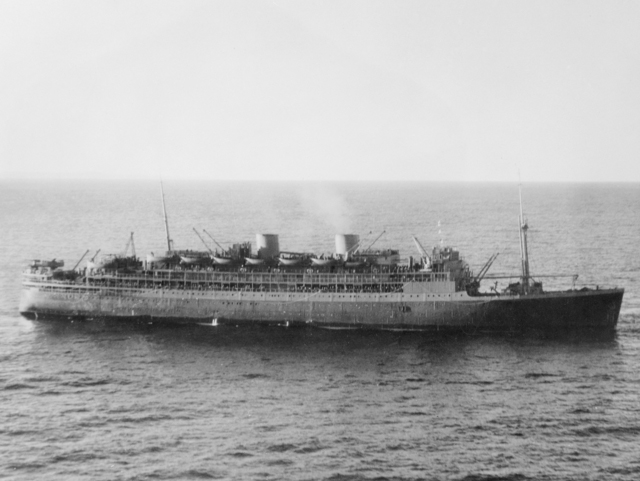
In late July 1941 a convoy was organised to transport 8th Division troops to Singapore. The convoy included three Dutch passenger ships, and escort ships from the Royal Australian Navy.
Summary of Embarkation for Johan van Oldenbarnevelt (HMT FF)
The following troops embarked Johan Van Oldenbarnevelt at Woolloomooloo, Sydney on 29/7/1941 for the voyage to Singapore.
61524 – 8 Division Artillery
29 men arrived including 3 officers, 1 warrant officer, 3 sergeants, 22 corporals and privates.
(Source: Australian Army War Diary 1/15/14 – District Records Office Eastern Command May – July 1941)
Troopship 32 – Voyage 4
She [JVO] departed Sydney on July 17 and headed for Auckland New Zealand where she arrived on July 21 and departed again on the 22nd. She returned to Sydney arriving on July 25 and departed again on the 29th, sailing via Fremantle to Singapore arriving on August 15. End of Troop voyage 4.
Johan van Oldenbarnevelt on the way to Fremantle, 1/8/1941 Aerial Starboard side view of the Dutch liner Johan van Oldenbarnevelt transporting Australian troops to the Middle East as part of convoy US11B. Note the 4.7 pound gun and 12 pounder AA gun aft 1st August 1941 Australian War Memorial Naval Historical Collection Public domain
Trooper Johan van Oldenbarnevelt is seen departing Wellington New Zealand during Troop Voyage 6 on September 15, 1941 – Note the guns up on the aft section!
Andrew Rumann (Australian, 1905-1974) Untitled [Departure from Circular Quay, Sydney for Fremantle and Singapore] 1941 Silver gelatin photograph 5.5 x 5.3cm
Circular Quay with the Sydney Harbour Trust building at left in the background. The spire is the CQ Fire Station No. 3.
Andrew Rumann (Australian, 1905-1974) Untitled [Departure from Circular Quay, Sydney for Fremantle and Singapore] 1941 Silver gelatin photograph 5.5 x 5.3cm
Andrew Rumann (Australian, 1905-1974) Untitled [Departure from Circular Quay, Sydney for Fremantle and Singapore] (detail) 1941 Silver gelatin photograph 5.5 x 5.3cm
Anonymous photographer (Australian) Untitled [Women standing in front of an American Red Cross sign] 1942-1945 Silver gelatin photograph 5.5 x 5.3cm
The American Red Cross (ARC or Amcross) in Australia during WW2 became the largest hotel and restaurant chain in Australia at the time. Amcross was headed by Norman H. Davis with its headquarters in Sydney, NSW. …
Four American women led by Miss Helen Hall arrived in Australia in about late August 1942 to take charge of American Red Cross Service Personnel and to establish new American Red Cross centres and to extend existing centres. Miss Hall was the administrative assistant to the delegate in charge of American Red Cross Service Clubs and Leave Areas in Australia. The other three women were Miss Hannah More Frazer, who was appointed Director of the American Red Cross Service Club in Melbourne in about September 1942; Miss Florice Langley who opened an ARC Service Club in Cairns, in far north Queensland; and Mrs. Anita Woodworth who opened an ARC Service Club in Charters Towers in north Queensland.
Anonymous photographer (Australian) Untitled [Transportation Corps US Army BKC*23] 1942-1945 Silver gelatin photograph 5.5 x 5.3cm
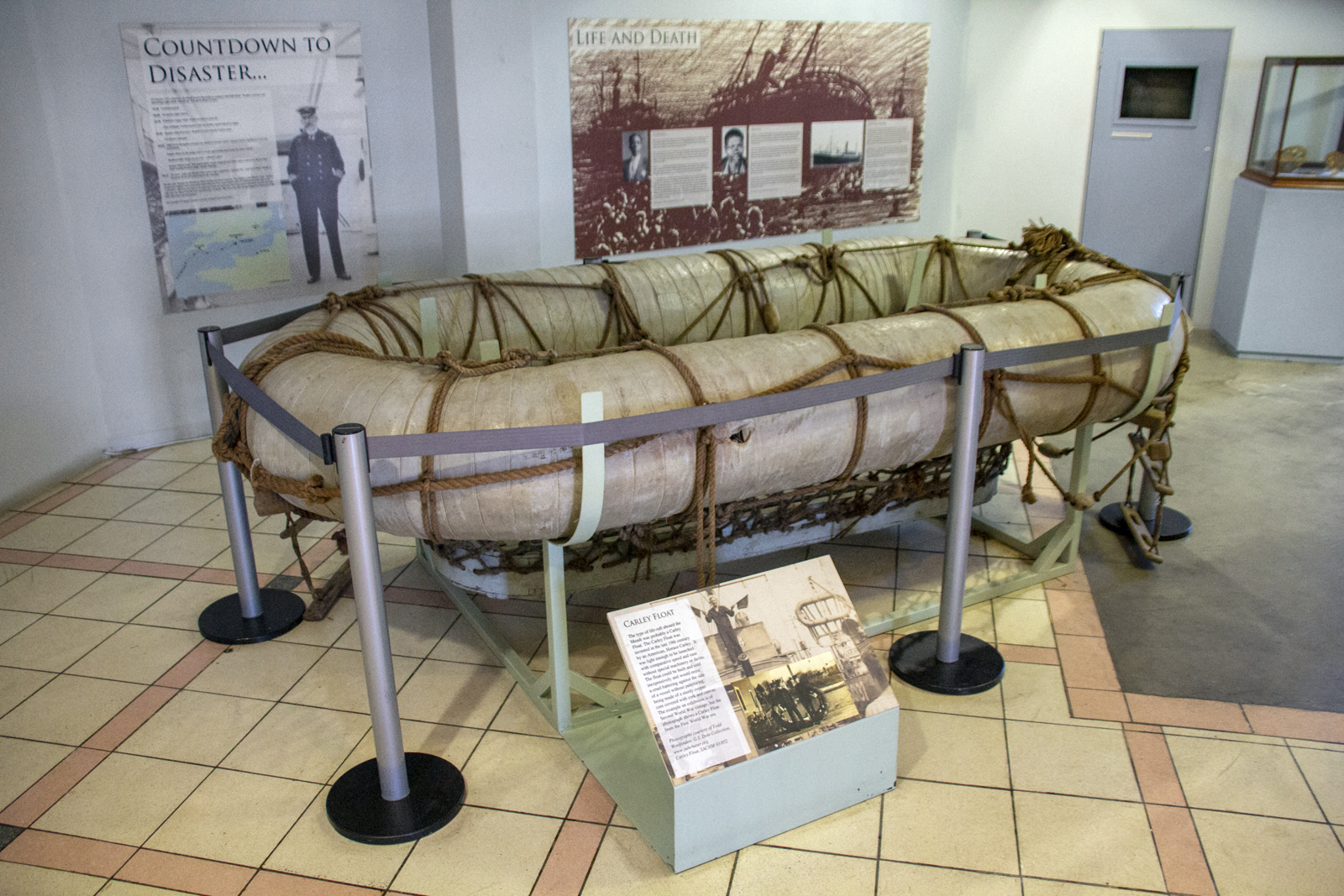
Mike Peel Carley float 2018 CC-BY-SA-4.0
Carley float
The Carley float (sometimes Carley raft) was a form of invertible liferaft designed by American inventor Horace Carley (1838-1918). Supplied mainly to warships, it saw widespread use in a number of navies during peacetime and both World Wars until superseded by more modern rigid or inflatable designs. Carley was awarded a patent in 1903 after establishing the Carley Life Float Company of Philadelphia. …
Simply by casting it over the side, the lightweight Carley float could be launched more rapidly than traditional rigid lifeboat designs, and without the need for specialised hoists. It could be mounted on any convenient surface and survive the battering against the ship’s sides during heavy seas. Unlike the rubber inflatable rafts of the period, it was relatively immune to compromise of its buoyant chambers. Seafarers in it were however completely exposed to the elements, and would suffer accordingly. An inquiry of 1946 reported that many sailors who had succeeded in getting to the safety of Carley floats had nevertheless succumbed to exposure before rescue could be made. The crew of the Canadian minesweeper HMCS Esquimalt, sunk offshore of Nova Scotia in April 1945, lost at least 16 to hypothermia during the six hours in which they awaited rescue. Few of the survivors could still walk.
Despite these shortcomings many seamen did owe their lives to the Carley float. Chinese sailor Poon Lim survived for a record 133 days adrift in the South Atlantic aboard a Carley float after his freighter SS Benlomond was sunk on 23 November 1942. He fashioned fishing gear from components of the raft. He was close to death when discovered off the coast of Brazil on 5 April 1943, but was able to walk ashore unaided.
Though its occupant did not survive, a shrapnel-ridden Carley float carried the body of an unknown man to land on Christmas Island in February 1942. The sun-bleached corpse had evidently spent a lengthy period at sea, though to this day it remains unknown from where the sailor had come. It has long been suspected that the body was that of a sailor from HMAS Sydney, which was lost with all hands under mysterious circumstances off the coast of Australia on 19 November 1941. A second Carley float, more confidently believed to be from Sydney, was recovered drifting 300 km off the Australian coast one week after the ship sank. It had been badly damaged by shellfire, but was empty. The float is now displayed at the HMAS Sydney exhibit of the Australian War Memorial, Canberra.
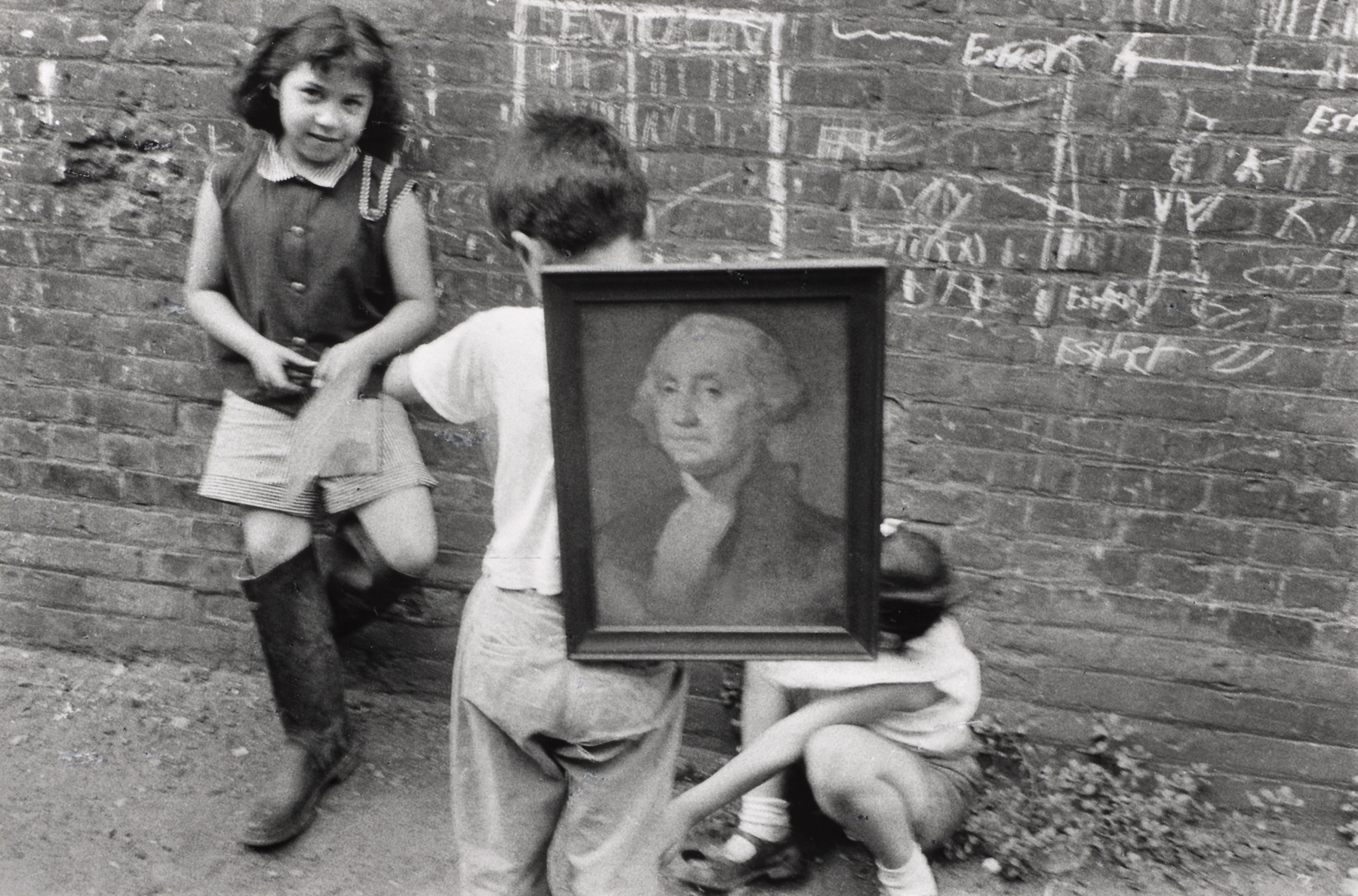
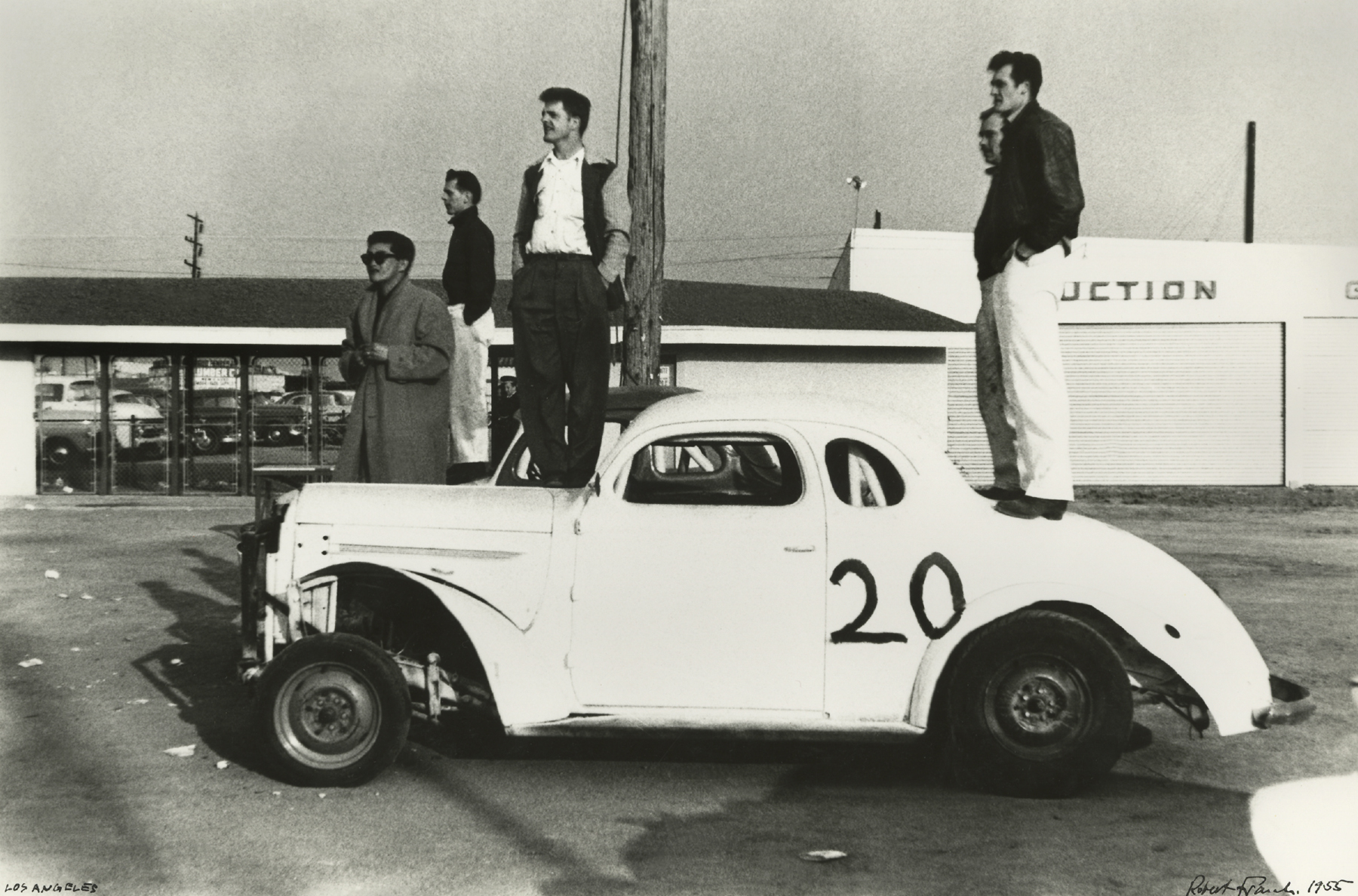
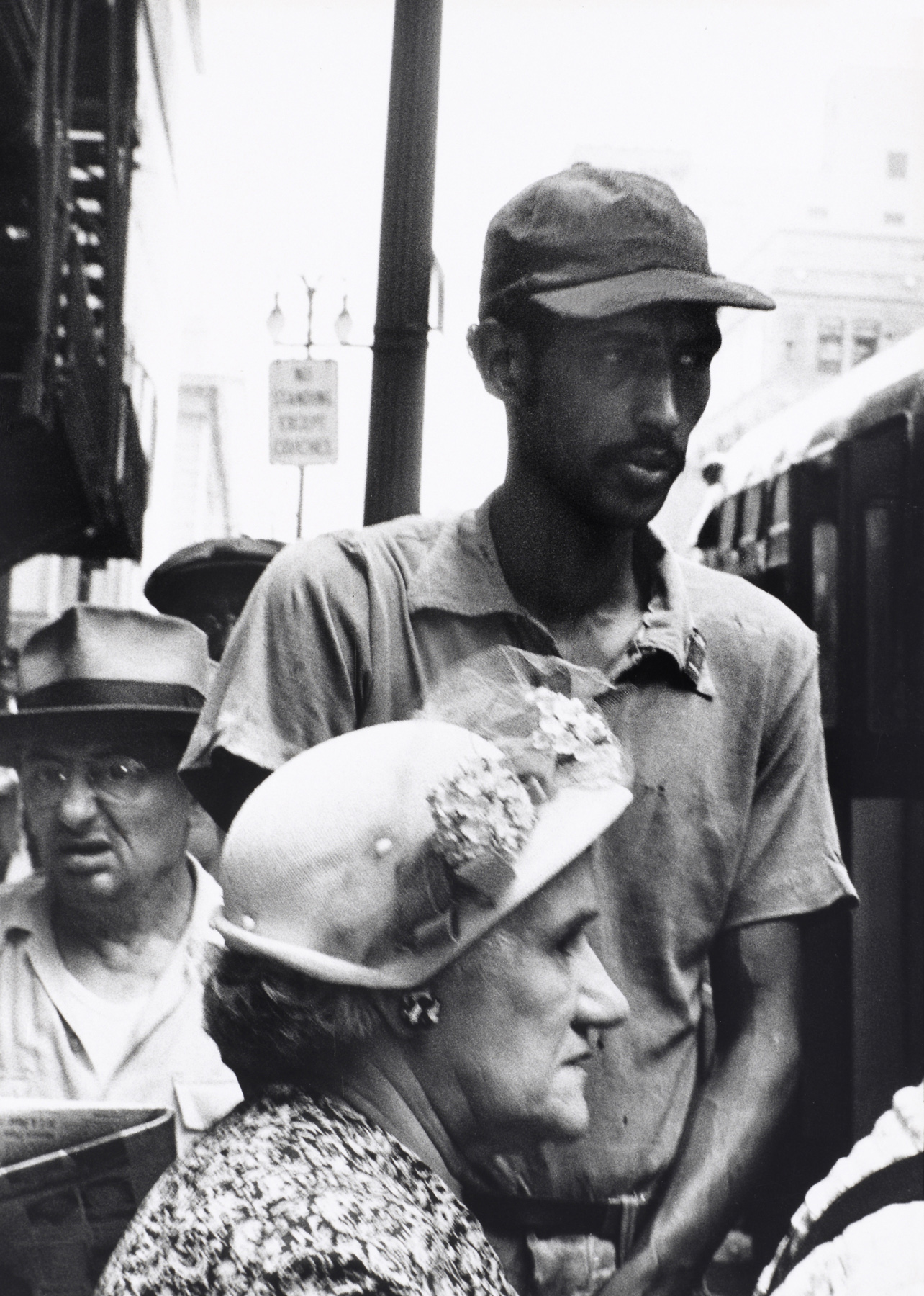
An interesting selection of media images, including some early Swiss and American photographs, which are rarely seen.
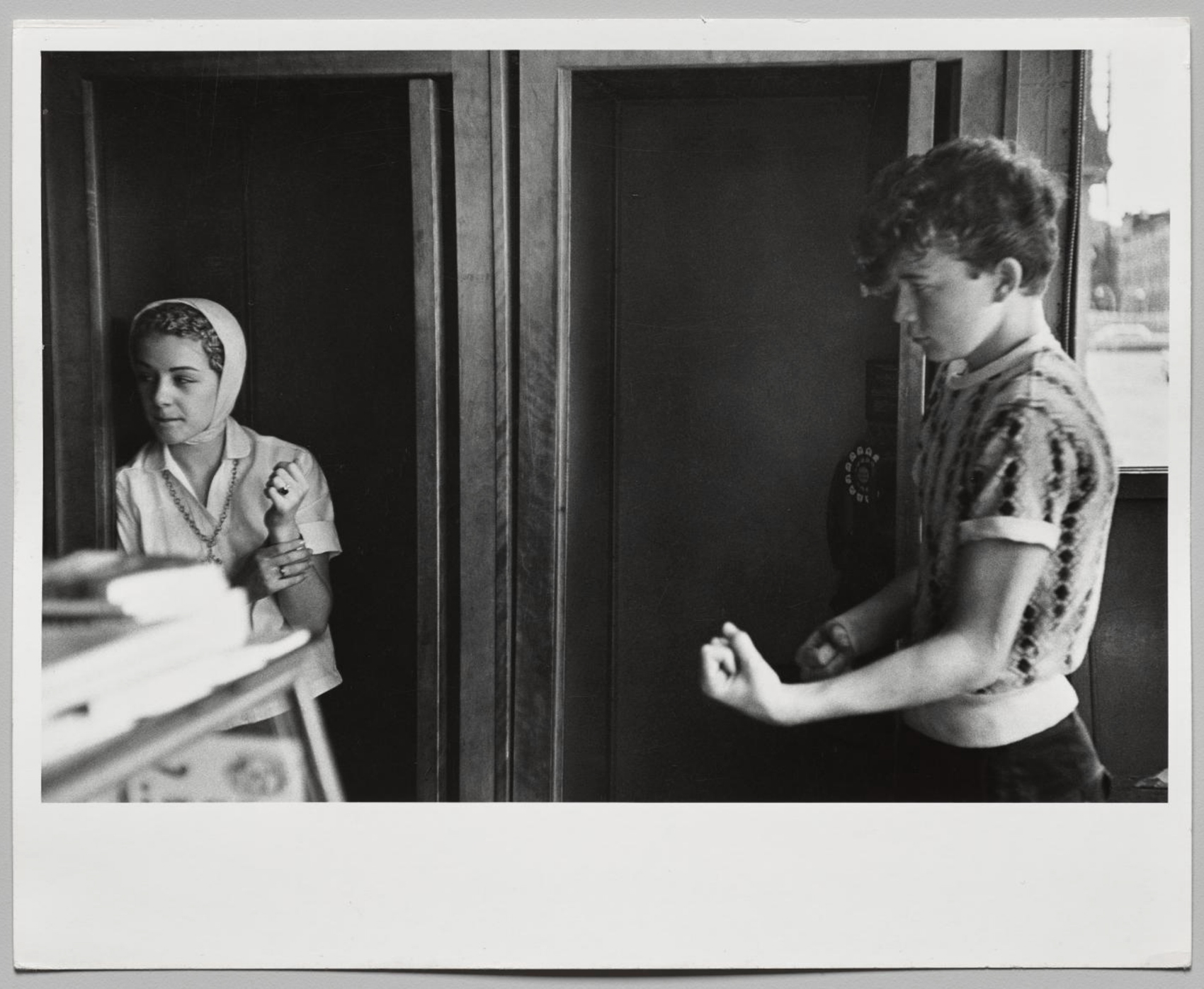
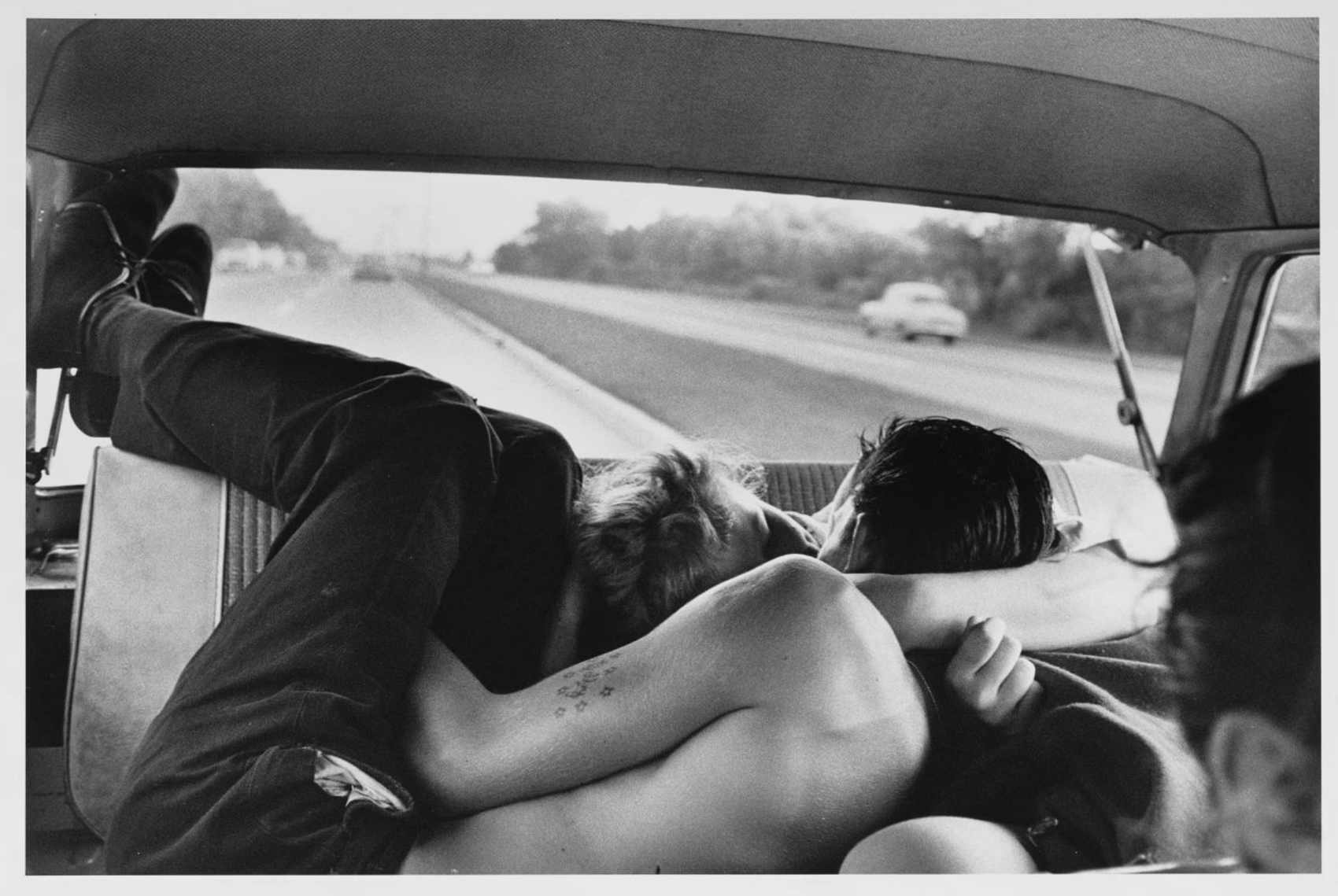
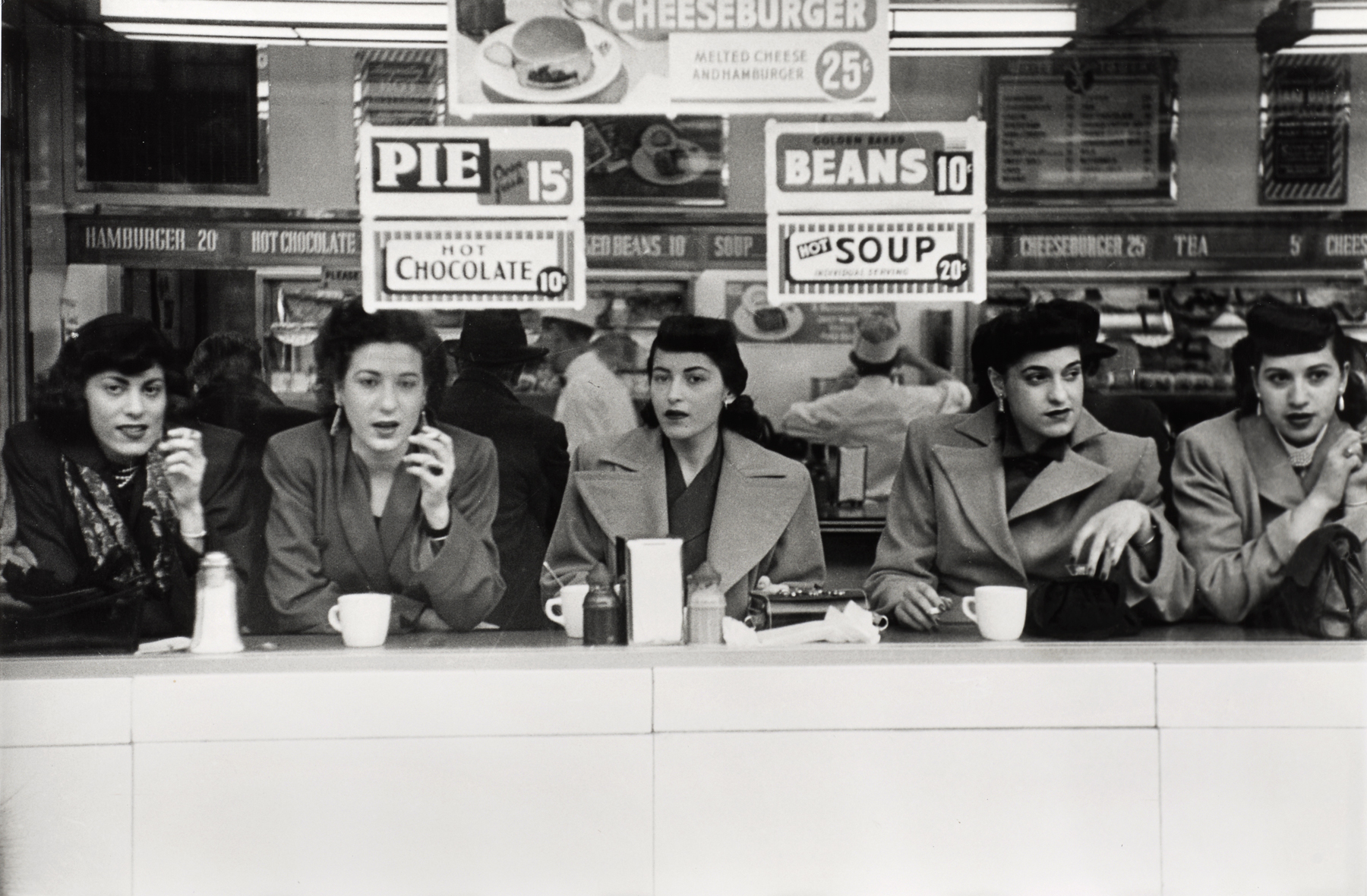
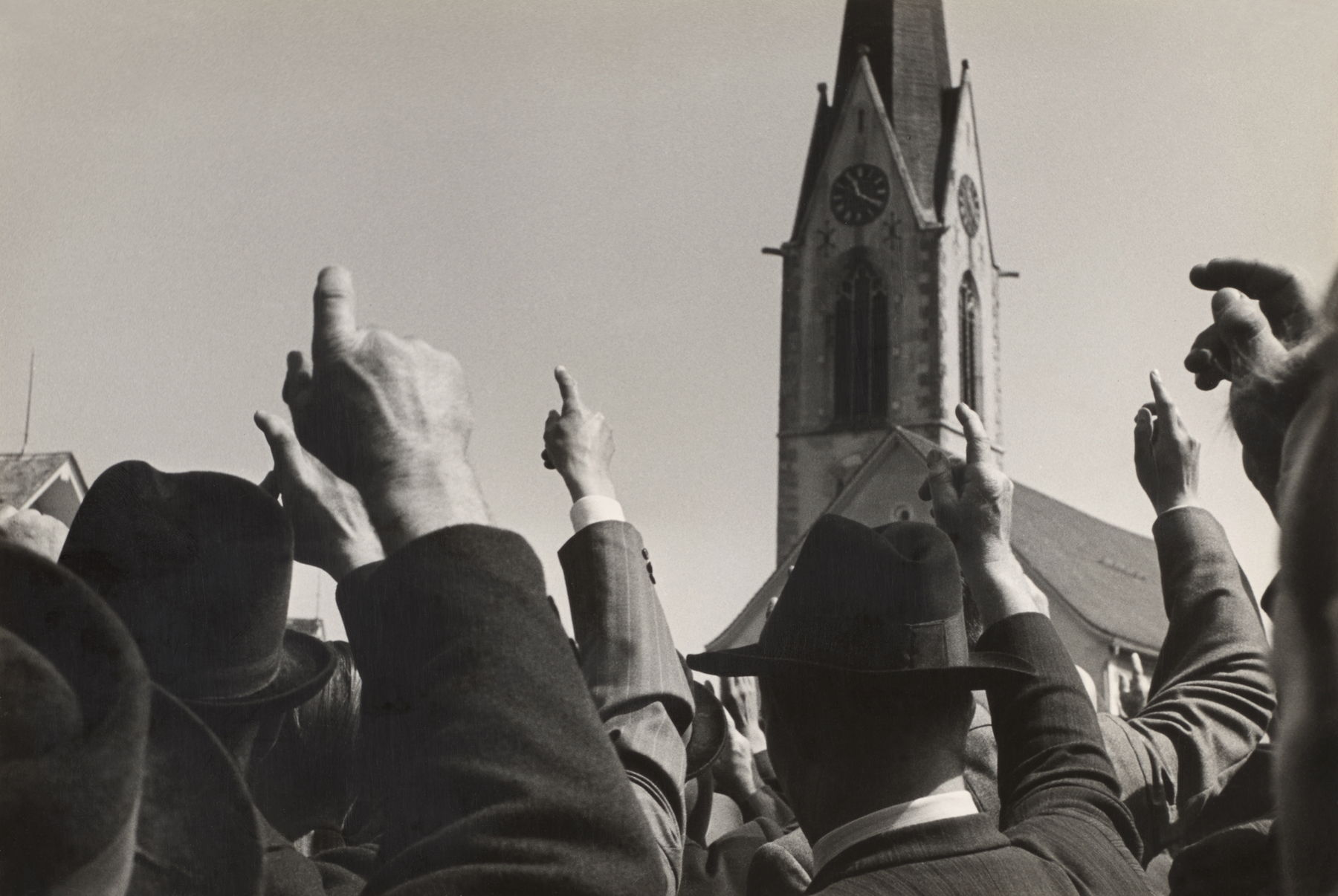
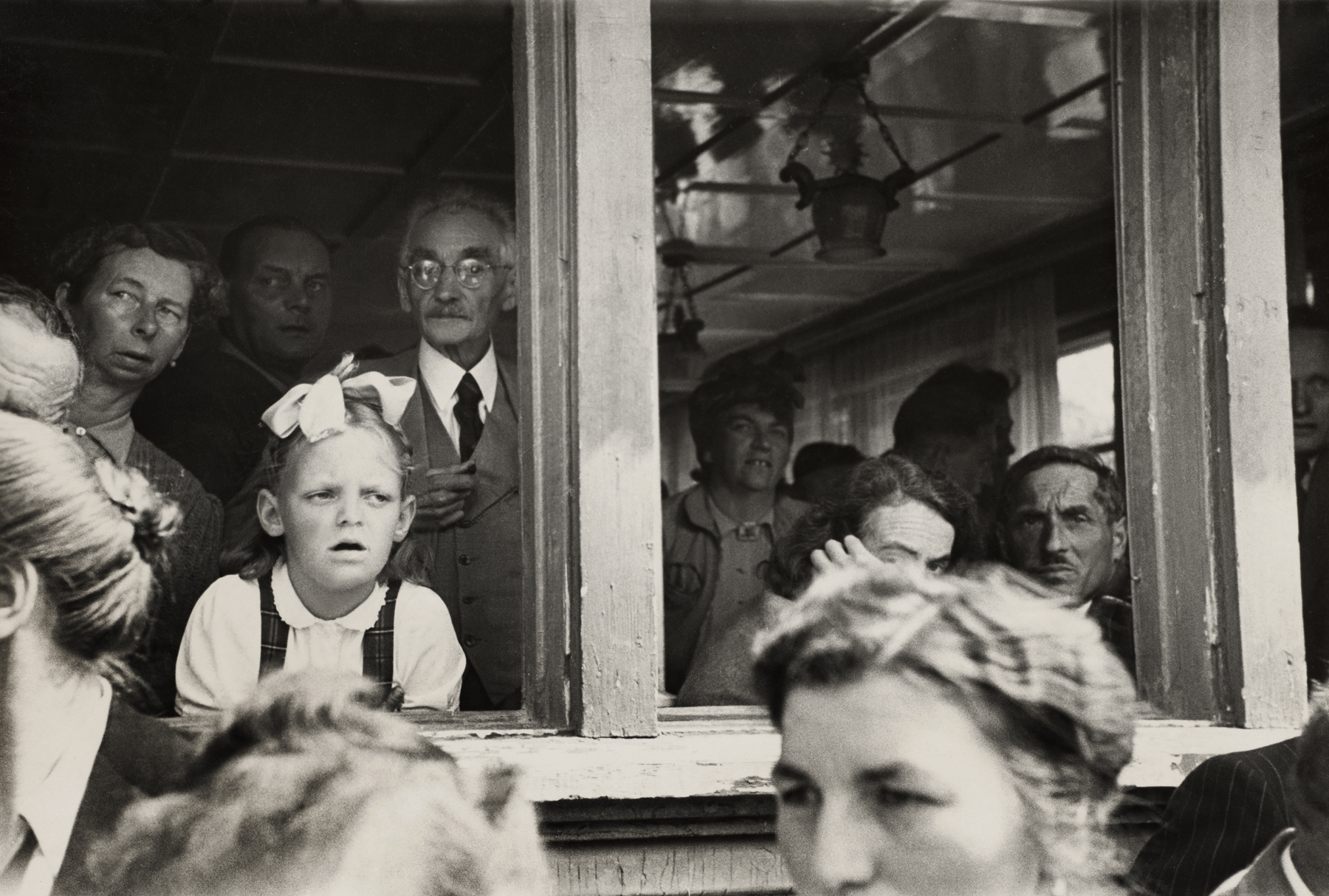
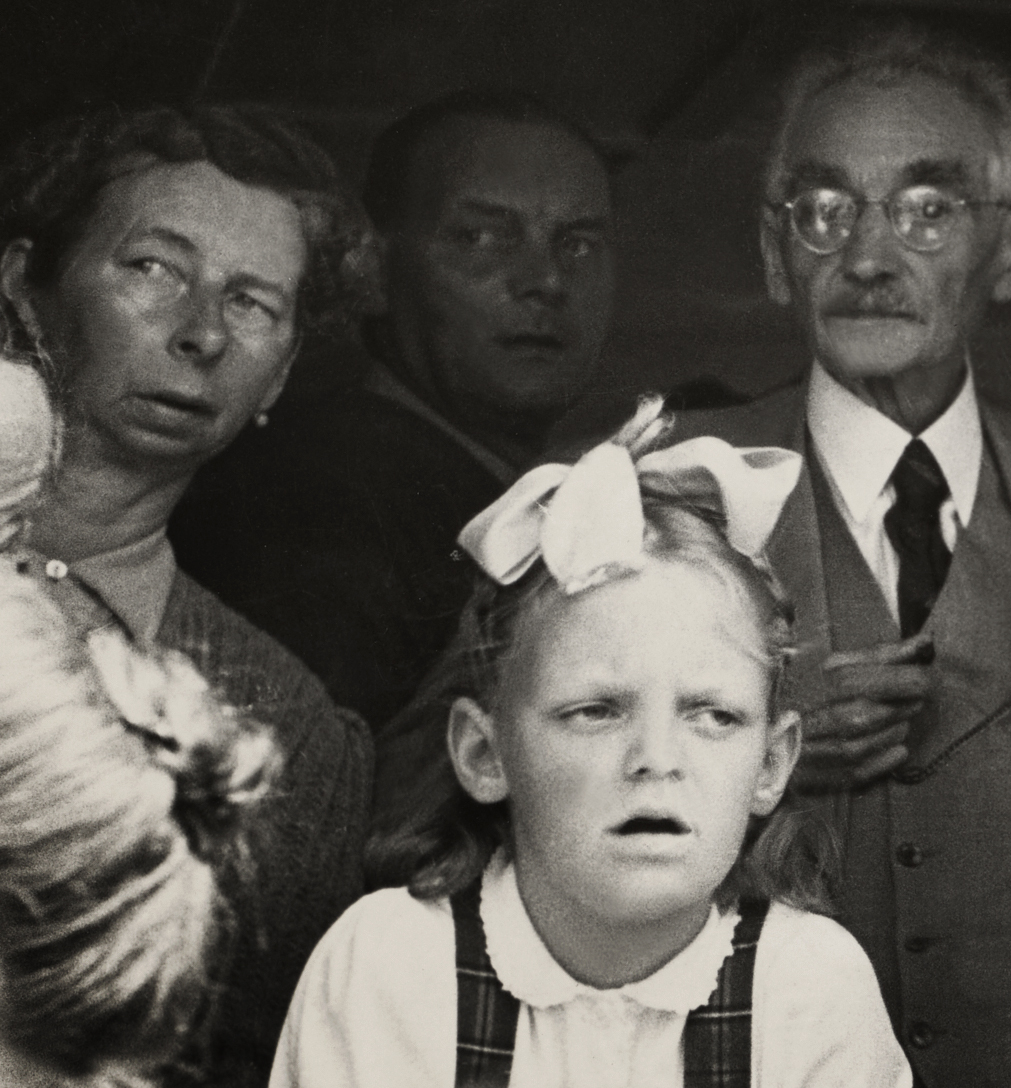
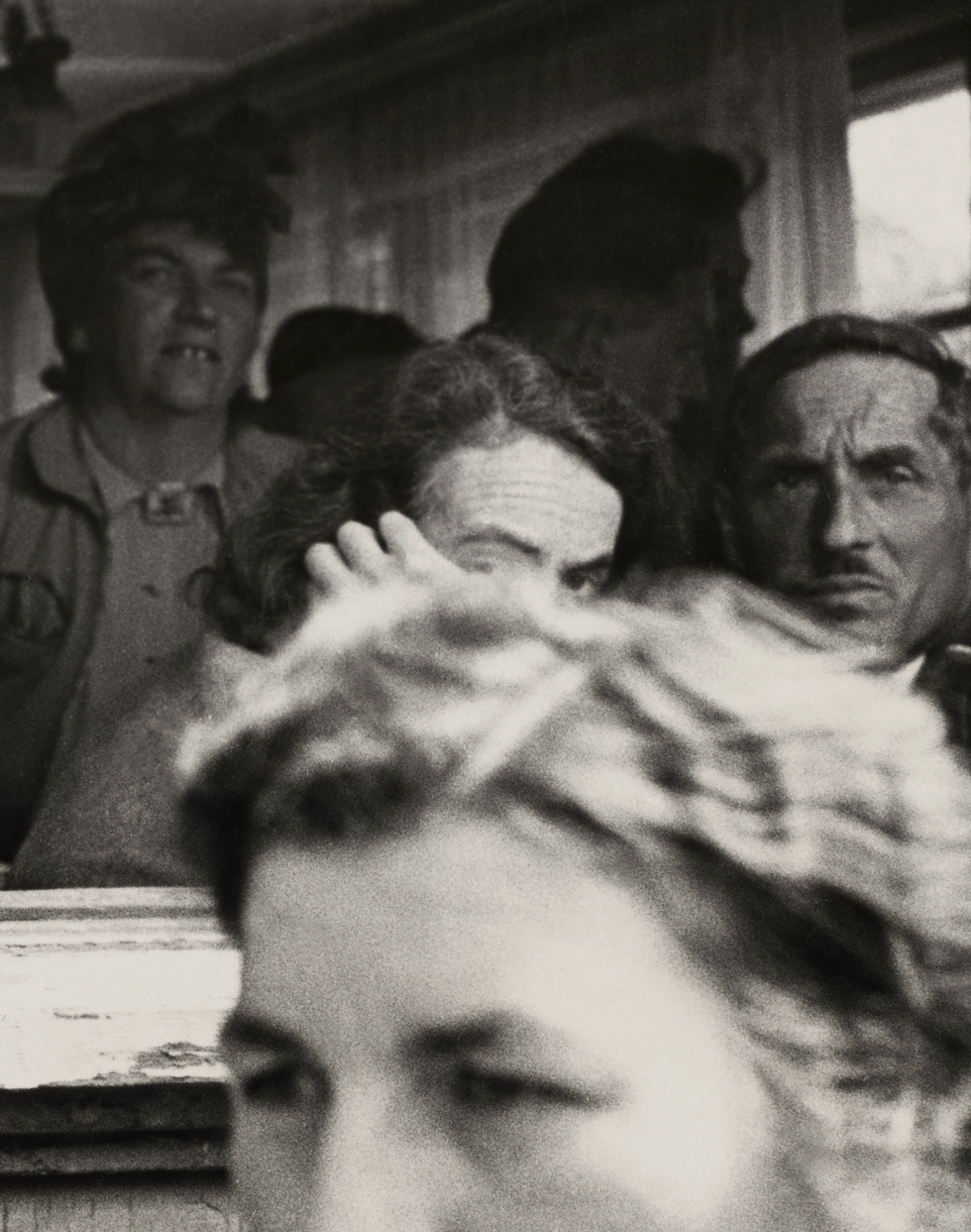
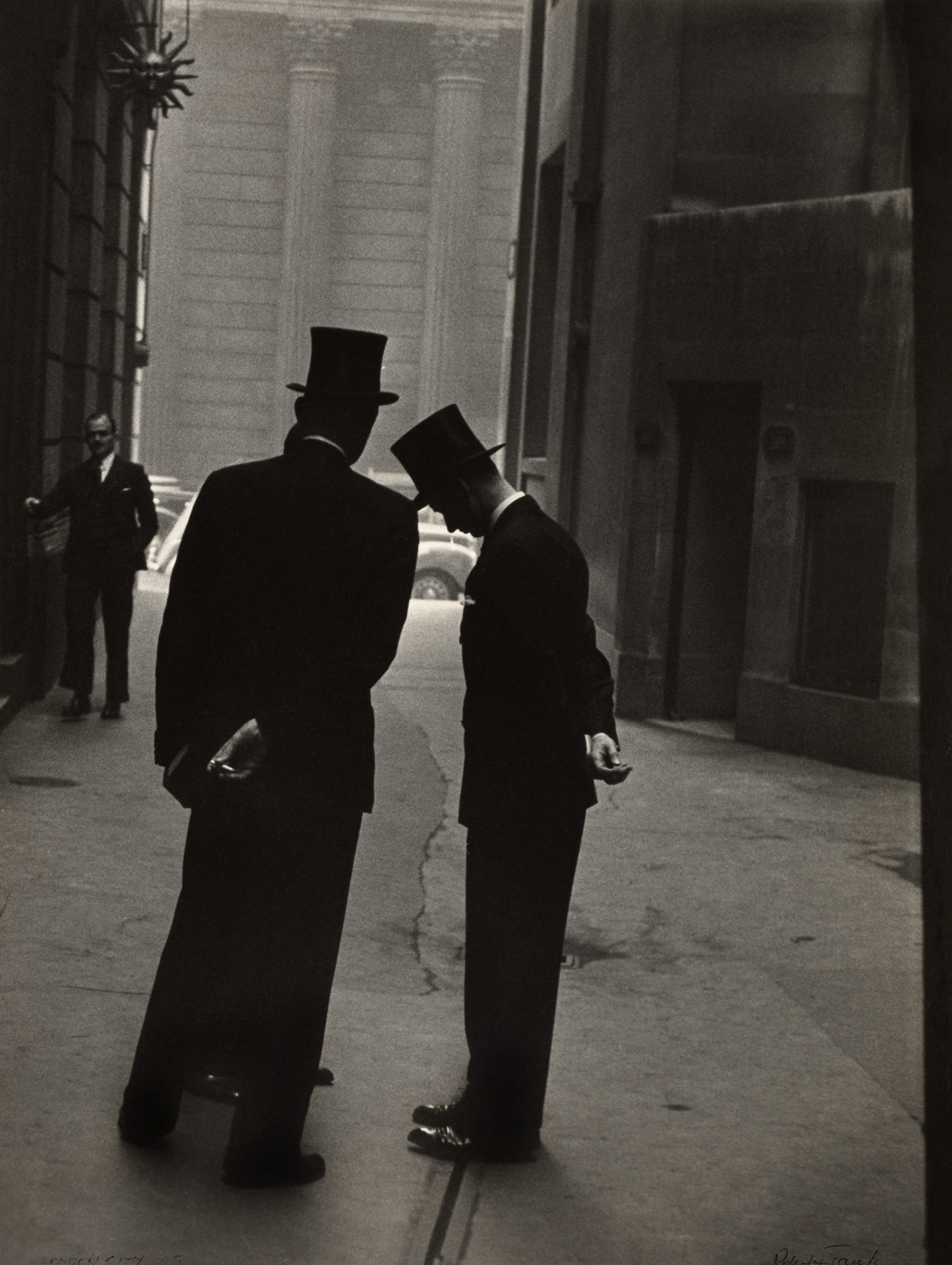
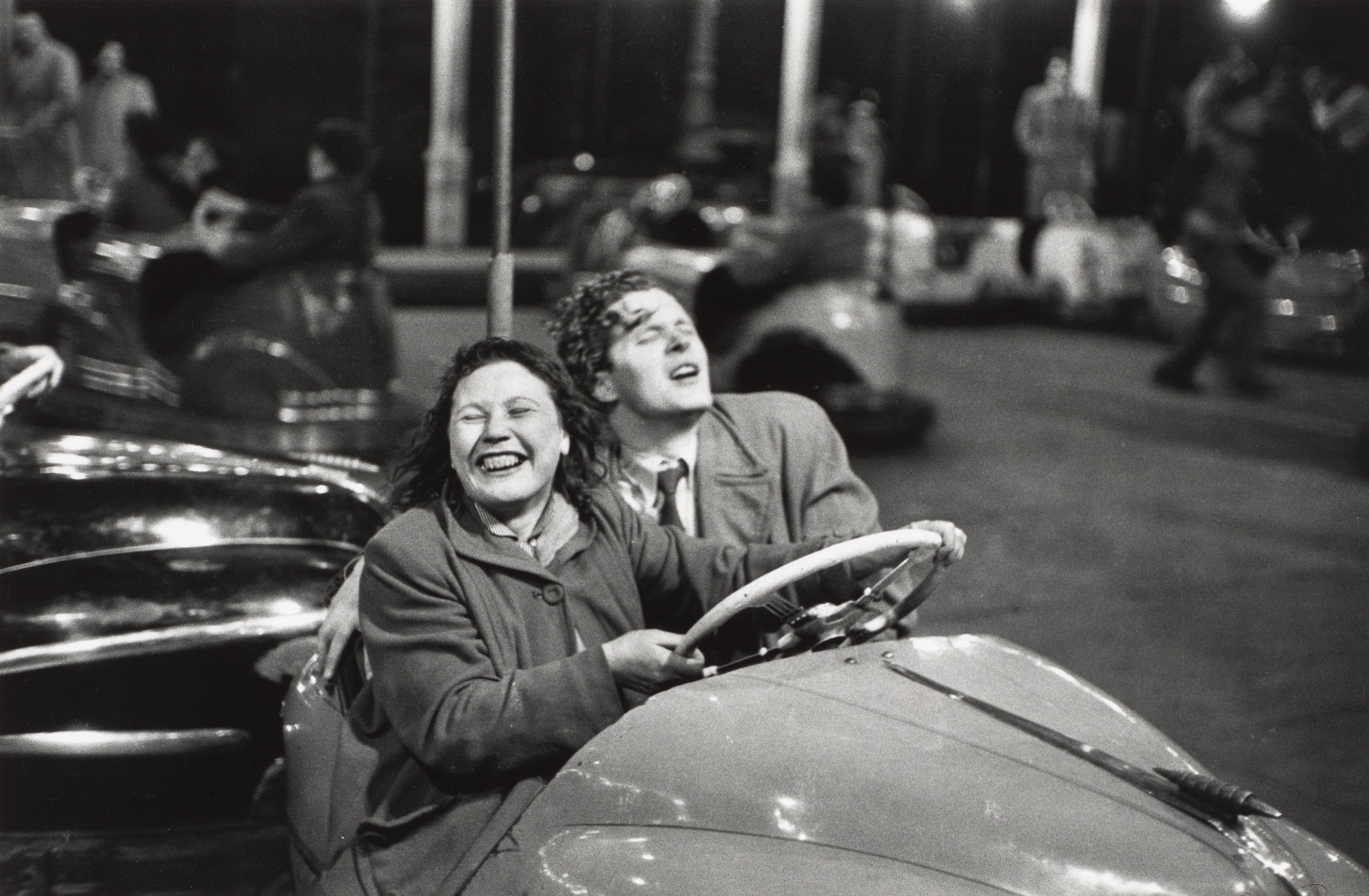
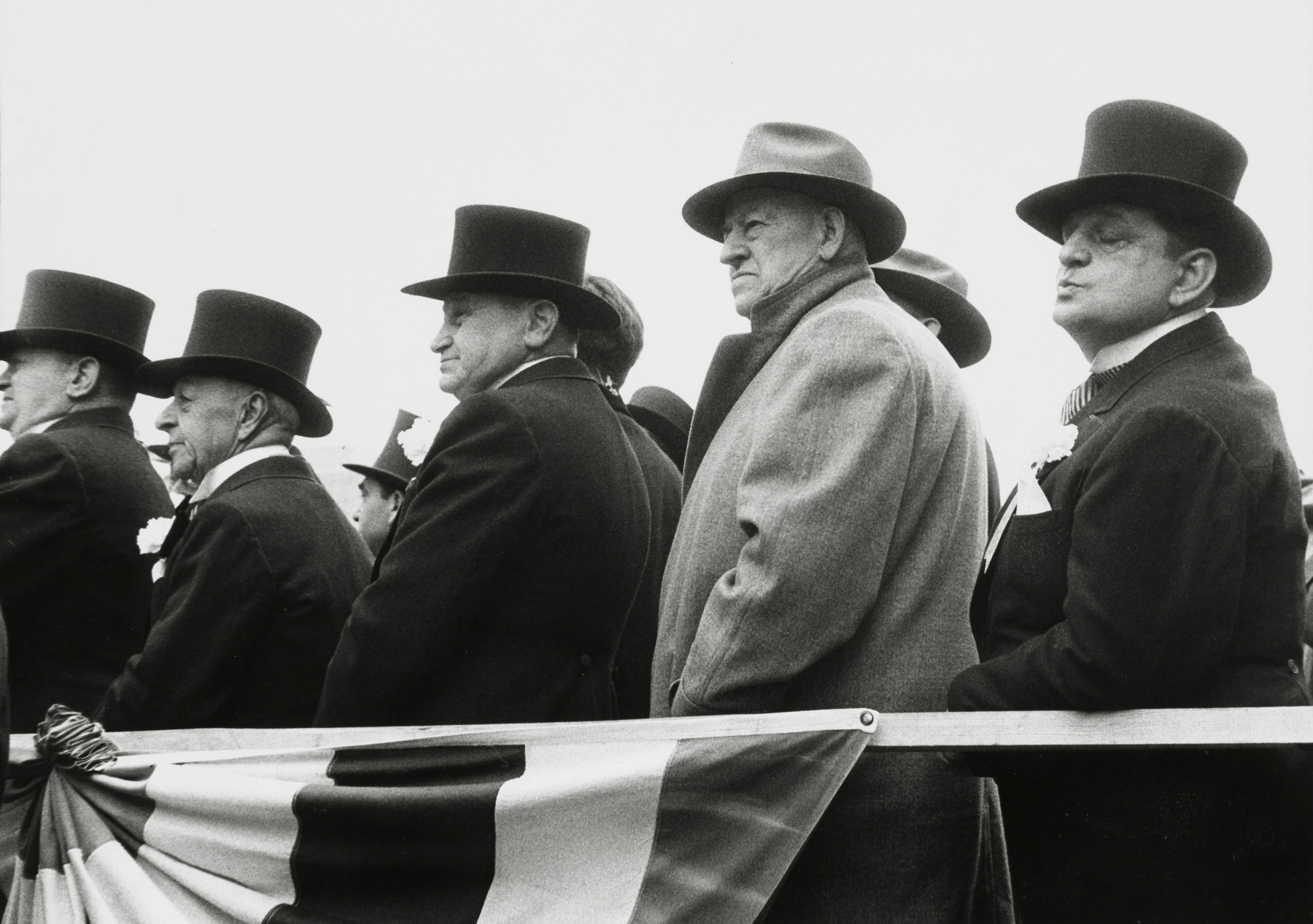
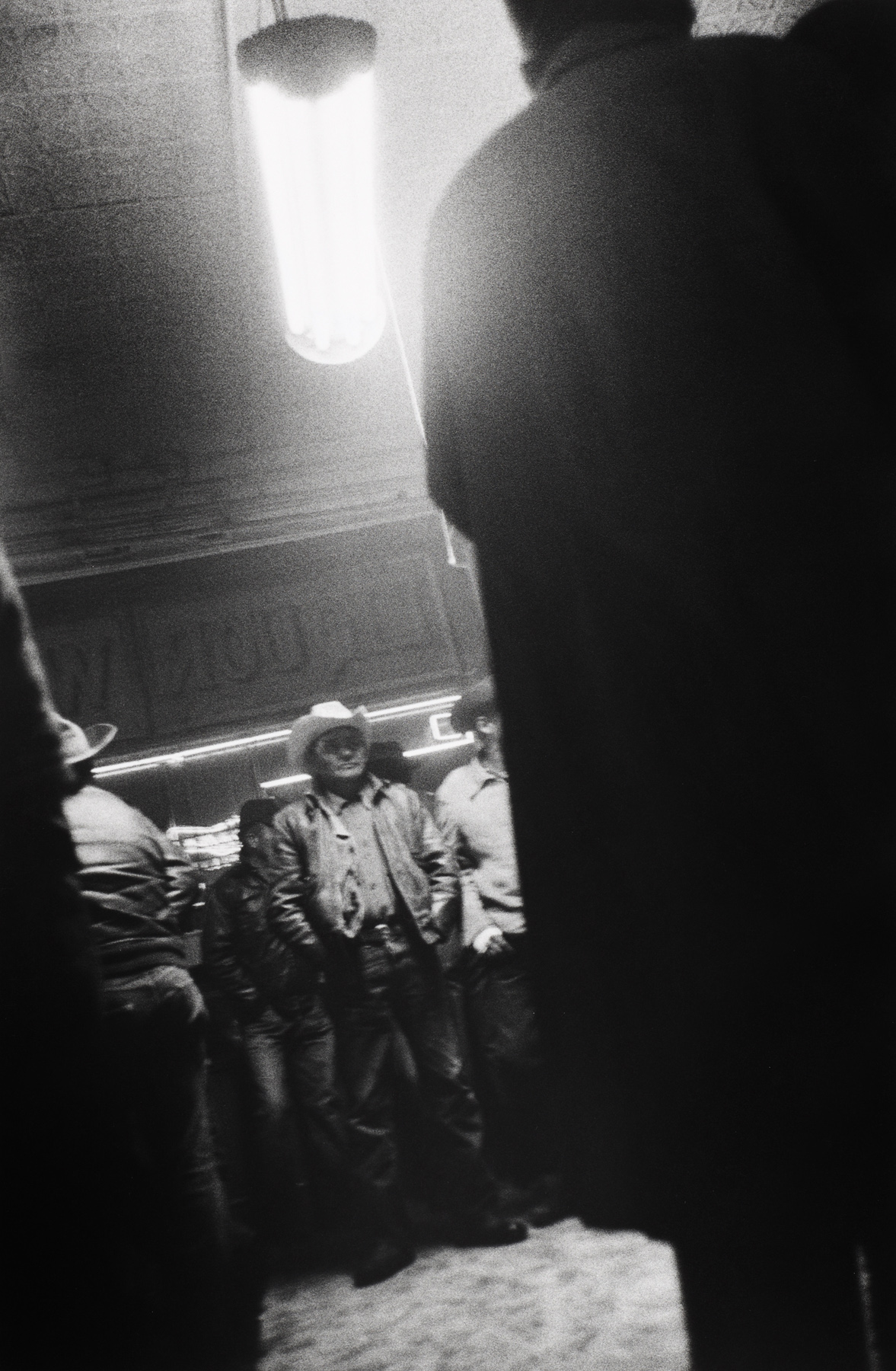
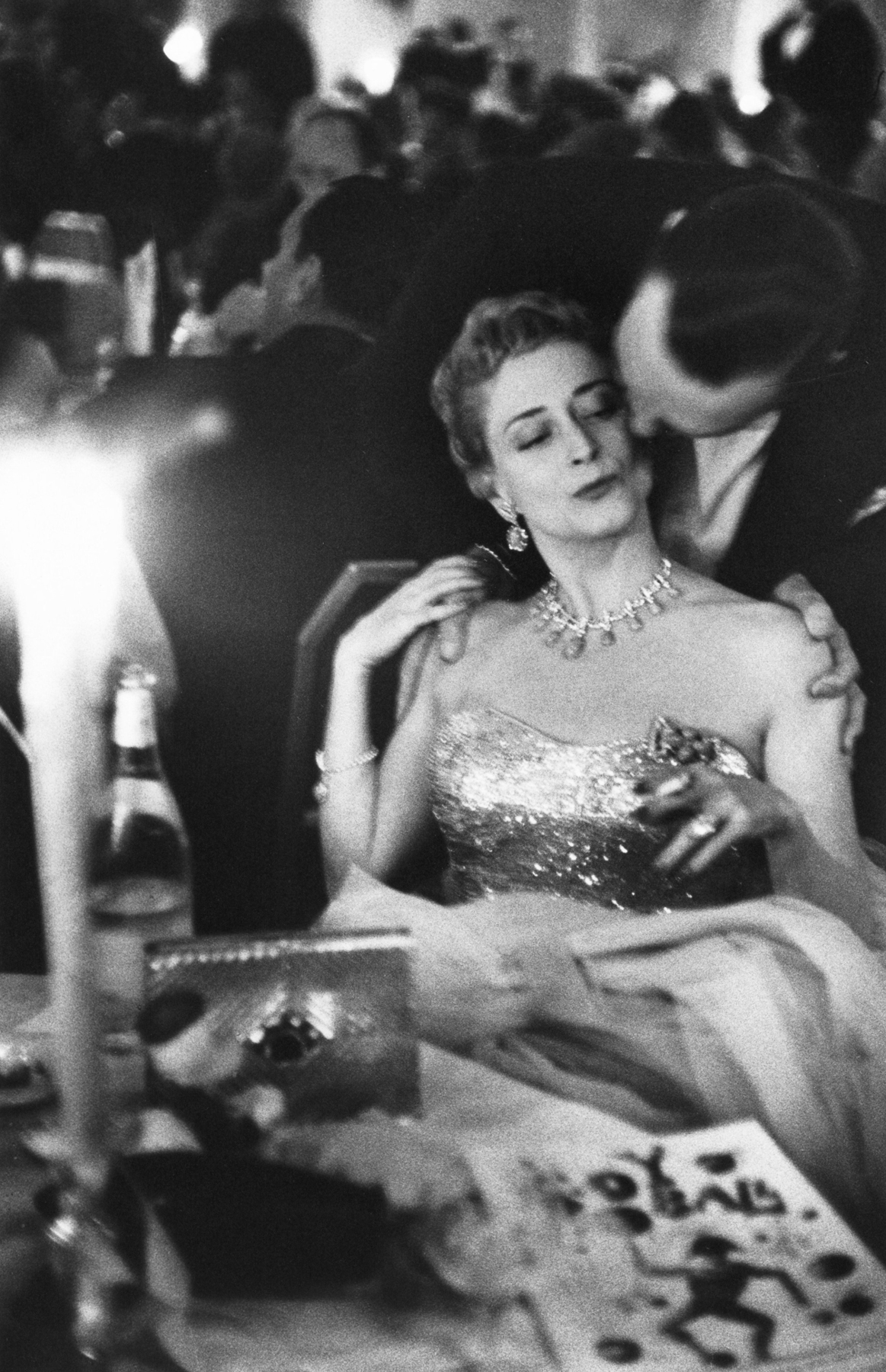
Frank’s perceptiveness of human beings and their context of being and becoming is incredible. Look at the faces in Landsgemeinde, Hundwil (1949, below), Paris (1952, below) and the attitude of the bodies, surmounted by the sun (top left), in London (1951, below).
“It is important to see what is invisible to others.”
Dr Marcus Bunyan
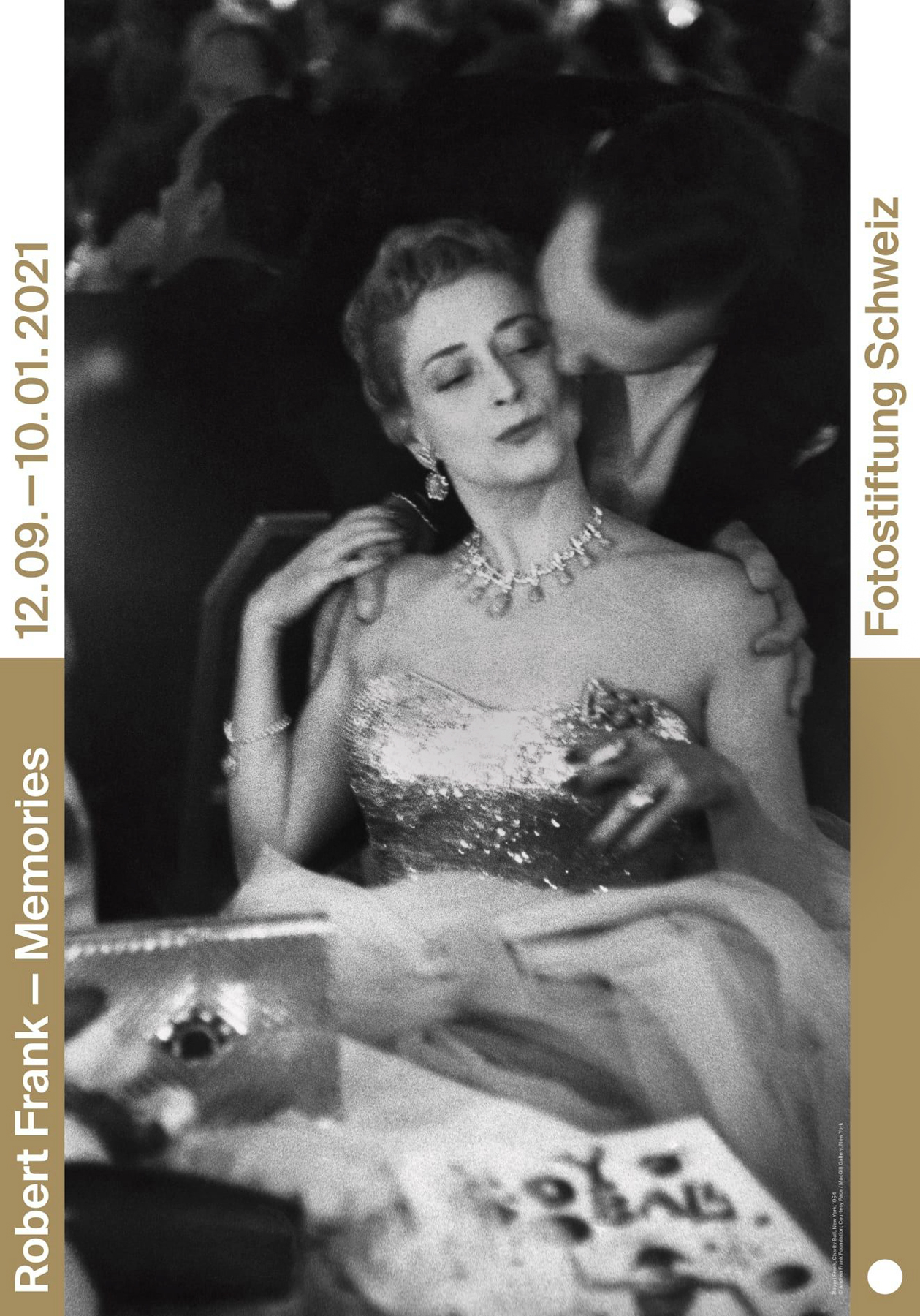
Many thankx to Fotostiftung Schweiz for allowing me to publish the photographs in the posting. Please click on the photographs for a larger version of the image.
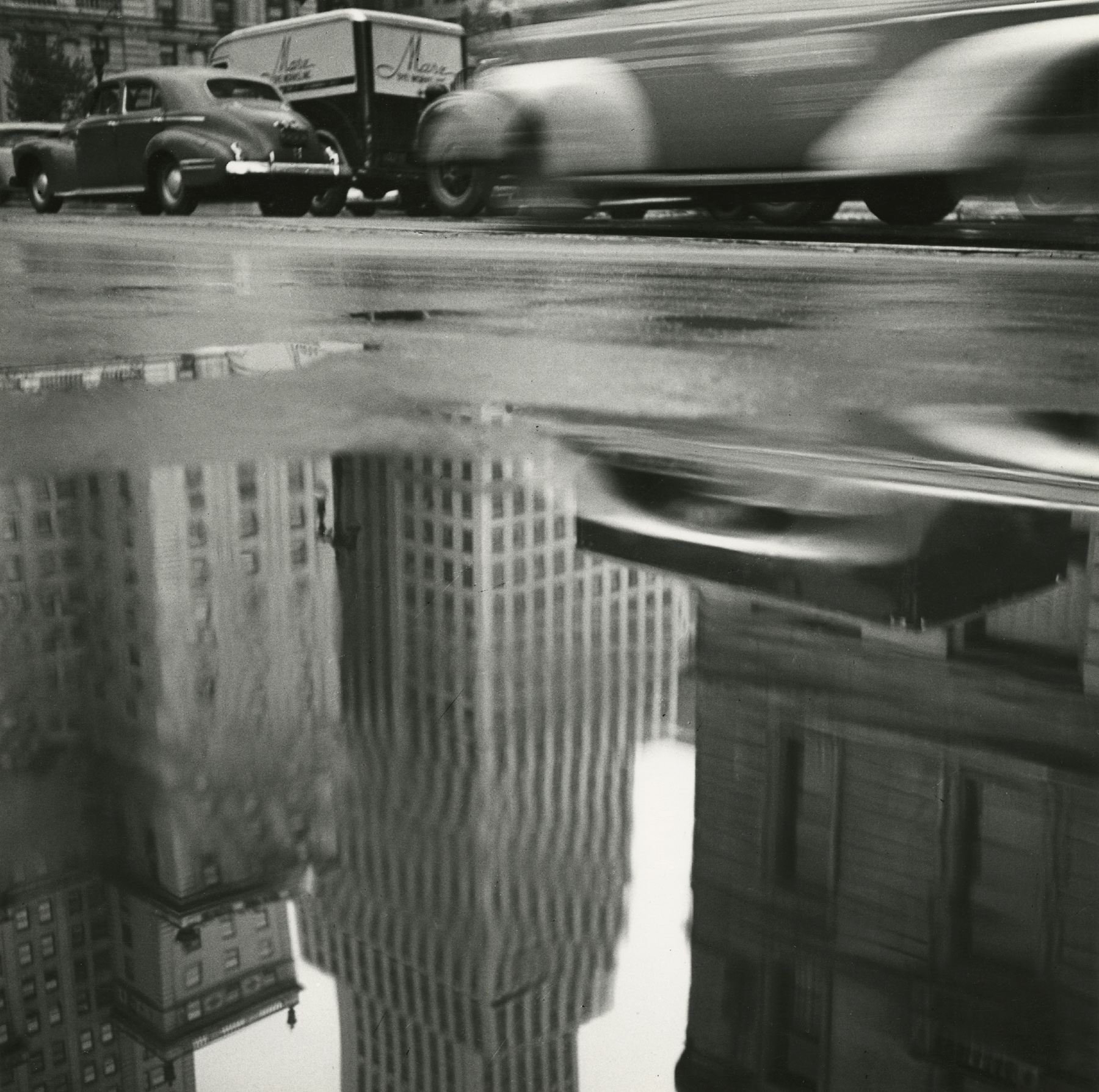
The recently deceased Robert Frank is widely regarded as one of the most important photographers of our time. His book The Americans, first published in Paris in 1958 and then in New York the following year, is quite possibly the most influential photo book of the 20th century. As a kind of photographic road movie, it sketches a gloomy social portrait that served as a wake-up call to all of America at the time. And his personal style, alternating between documentary and subjective expression, radically changed post-war photography. But The Americans wasn’t merely a spontaneous stroke of genius. Frank’s early works already feature back stories and side plots that are closely connected to the themes and images of his legendary book. The Fotostiftung Schweiz holds a collection of lesser-known works – many of which were donated by the artist – which illustrate the consolidation of Frank’s subjective style. In addition to essays from Switzerland and Europe, it also includes works from early 1950s America that are on par with the well-known classics, but remained unpublished for editorial reasons. At the heart of the exhibition Robert Frank – Memories is the narrative force of Frank’s visual language, which developed in opposition to all conventions and only received international recognition when Frank had already abandoned photography and turned to the medium of film.
The exhibition is accompanied by a presentation of the books that publisher Gerhard Steidl produced with Robert Frank over a period of more than 15 years.
Robert Frank, who was born in Zurich in 1924 and died last year in Canada, is widely regarded as one of the most important photographers of our time. Over the course of decades, he has expanded the boundaries of photography and explored its narrative potential like no other. Robert Frank travelled thousands of miles between the American East and West Coasts in the mid-1950s, going through nearly 700 films in the process. A selection of 83 black-and-white images from this blend of diary, sombre social portrait and photographic road movie would leave its mark on generations of photographers to come. The photobook The Americans was first published in Paris, followed by the US in 1959 – with an introduction by Beat writer Jack Kerouac, no less. Off-kilter compositions, cut-off figures and blurred motion marked a new photographic style teetering between documentation and narration that would have a profound impact on postwar photography.
It is quite possibly the single most influential book in the history of photography; however, rather than being a spontaneous stroke of genius, Frank had worked on his subjective visual language for years. Many of his photographs from Switzerland, Europe and South America, as well as his rarely shown works from the USA in the early 1950s, are on a par with the famous classics from The Americans. The photographer’s early work, which remained unpublished for editorial reasons and is therefore little known to this day, reveals connections to those iconic pictures that still define our image of America, even today.
At the heart of the exhibition Robert Frank – Memories is the narrative force of Robert Frank’s visual language, which developed in opposition to all conventions and only received international recognition after Frank had already abandoned photography and turned to the medium of film. The exhibition mainly features vintage silver gelatin prints from the collection of the Fotostiftung Schweiz, which either come from the former collection of Robert Frank’s long-time friend Werner Zryd (now owned by the Swiss Confederation) or were donated to the Fotostiftung Schweiz by the artist himself. They are complemented by a number of loans from the Fotomuseum Winterthur. A presentation of the books and films that publisher Gerhard Steidl released with Robert Frank over a period of more than 15 years accompanies the exhibition (in the corridor leading to the library and in the seminar room).
Early Work
In March 1947, Robert Frank arrived in New York following an adventurous journey on a cargo ship. The young, ambitious photographer had found Switzerland too stifling and he hoped to gain new freedom in America liberated from social and family obligations. The photographer carried a 6×6 Rolleiflex and a small spiral-bound book of 40 photographs taken during his apprentice years from 1941 to 1946. This portfolio included landscapes, portraits, personal photojournalistic works, and meticulously executed still lifes, all of which reveal that the 22-year old was a highly skilled photographer. It is therefore unsurprising that influential Harper’s Bazaar art director Alexey Brodovitch swiftly hired Frank as an assistant photographer after seeing his portfolio and first test photos.
In the magazine’s in-house photo studio, Frank photographed fashion industry products from clinical shots of women’s shoes and every imaginable accessory to laboriously staged fashion shoots and occasionally even photojournalistic assignments offering a little more freedom. Frank was successful and rose through the ranks, but quickly realised that this industry cared only about money, an attitude to which he couldn’t reconcile himself. Only a few months later, he quit his job in order to be able to work wholly free of constraints. He traveled to Peru and Bolivia the following year and often used his 35 mm Leica. Later he recalled: “I was making a kind of diary. I was very free with the camera. I didn’t think of what would be the correct thing to do; I did what I felt good doing. I was like an action painter.”
Frank returned to Europe in spring 1949. He photographed the yearly cantonal assembly in the Swiss canton of Appenzell Ausserrhoden, during which citizens (exclusively men back then) voted by a show of hands. However, he was unsuccessful in placing this story with a major periodical, even though he circulated the images via the acclaimed agency Magnum. Evidently, Frank had focused too little on the actual events. He was more interested in the bystanders’ stances than in the pomp of government officials wearing tailcoats and top hats. His photographs of this assembly prefigure the penetrating and critical gaze he would later level on America’s societal and political landscape. Here as there, his was an outsider’s subjective and inward looking perspective.
Black White and Things
In late 1949, the international magazine Camera published a first selection of Robert Frank’s work. The accompanying text described him as a photographer who loved “truth and unvarnished reality”, as someone “whose thirst for experience compelled him to get out and capture life with his camera”. Indeed, Frank worked chiefly in Paris, London, and Spain between 1949 and 1953, frequently traveling between Europe and the US. He reported on a bullfighter in Spain and observed life in London’s financial district. In Paris he took pictures of objects – mostly chairs and flowers – photographs he assembled in an album dedicated to his future wife. In subsequent years, he shook off any sentimental tendencies.
Frank continued his attempts to publish both smaller and more substantial stories and photo essays in glossy magazines such as Life, but with limited success. His reportage on Welsh coal miner Ben James, which appeared in U.S. Camera 1955 annual, was a rare exception. But Frank found himself less and less able to reconcile himself with the conventional view of photography as a universal language accessible to all. Instead, he increasingly distanced himself from print media’s expectations and developed a strong aversion to what he once termed stereotypical “Life stories”, “those goddamned stories with a beginning and an end”.
In autumn 1952, Frank created Black White and Things with his Zurich-based friend Werner Zryd. This handmade book comprising 34 photographs was an attempt to counter these expectations with something new: an intuitively ordered series of photos with neither text nor linear narrative structure, introduced simply by Saint-Exupéry’s famed lines from The Little Prince: “It is only with the heart that one can see rightly; what is essential is invisible to the eye.” Accordingly, Black White and Things is a kind of three-part visual poem: “Black” evokes death, materialism, loneliness, and anonymity; “White” evokes home, love, religion, and camaraderie; and “Things” engages with diametrical oppositions such as friendship and cruelty, and affection and solitude. The order and pairing of the images sparks thoughts, associations, and feelings. Yet Frank’s evocative arrangement is intentionally ambiguous and open: “Something must be left for the onlooker, he must have something to see. It is not all said for him.”
America, America
After a further trip to New York – which he assured his mother would be his last – Robert Frank applied for a Guggenheim fellowship in October 1954. His project proposal was for an “observation and record of what one naturalised American finds to see in the United States that signifies the kind of civilisation born here and spreading elsewhere”. The result was to be a book, for which he had already won support from Arnold Kübler, the long-standing editor of the Zurich-based culture magazine Du, and Robert Delpire, a young publisher in Paris. Thanks to help from Alexey Brodovitch, Walker Evans, Edward Steichen and others, Frank was the first European photographer to be awarded this generous fellowship. The award made it possible for him to set off on his now-legendary road trips across the US in spring 1955.
Over almost two years, Frank took more than 20,000 photographs on his travels. He made roughly 1,000 work prints in the autumn and winter of 1956-57, which he pinned to the walls and laid on the floor of his apartment. At the time his home was East Village, New York, where artists including Alfred Leslie and Willem de Kooning also lived. Over many months Frank made countless passes through his photographs, eliminating those images he was unsure of and focusing on specific themes. He constantly rearranged the selection that was gradually coming together until he had a first mocked-up book with just under 90 images and the provisional title America, America. Frank took this book with him when he traveled to Europe in summer 1957, showing it to Delpire and his Swiss photographer friend Gotthard Schuh.
Over the years, the America photographs not included in his final selection disappeared into archives and collections or even got lost altogether. Only recently has it been possible to ascertain that many of the rejected and unpublished photographs were of the same caliber as the 83 book images Frank and Delpire agreed on. Frank’s contact sheets show that these photos were often taken directly before or after the images that have become icons of photographic history. Rather than putting forth a single message, Frank’s dark take on 1950s America contains impressive variations, facets, and excursuses that made a powerful impression on many, including his early supporter, Schuh. Schuh wrote to his young friend: “I don’t know America, but your photographs frighten me because in them you show, with visionary alertness, things that affect us all.”
The Americans
Following the first French edition of Les Américains, Robert Frank’s book was published as The Americans in New York in 1959. The English edition dropped the cover illustration and the selection of texts on America (which Delpire had insisted on over Frank’s protests), and added an introduction by Jack Kerouac. Frank had much in common with the Beat poets, though he only met them after his Guggenheim-funded travels. Like Kerouac’s main character in On the Road, Frank crisscrossed the country with apparent aimlessness, working spontaneously. Moreover, his work shares a stylistic consonance with Beat literature: Frank had abandoned all technical conventions and photographed intuitively instead. Many of his photographs are underexposed and grainy; they frame a scene and omit key details; their horizons are slanting and the lighting is often murky. Frank’s focus was the everyday, the fleeting, and the marginal. People are shown turning away from the camera, and his landscapes are desolate and bleak, “really more like Russia”, as Frank once remarked to Kerouac. He flouted the rules he had learned during his early training as a photographer in Switzerland in order to be as true as possible to his subjective experience and to capture unvarnished reality.
Kerouac’s introduction begins with the words: “That crazy feeling in America when the sun is hot on the streets and music comes out of the jukeboxes or from a nearby funeral, that’s what Robert Frank has captured in tremendous photographs taken as he traveled on the road around practically forty-eight states in an old used car (on Guggenheim Fellowship) and with the agility, mystery, genius, sadness and strange secrecy of a shadow photographed scenes that have never been seen before on film …” The Americans is a long, poetic image arc with cross-references, digressions, and associations, but also mental leaps and ambiguities, which provoked many critics. Although most acknowledged that Frank’s photographs were highly powerful, they read his take on Americans as a malicious attack on the country. Frank, a Jewish foreigner, was resented for picking up on the racism, hollow patriotism, commodified cheer, and political corruption lurking behind the façade of American society. Even before his groundbreaking book was published, Robert Frank wrote: “Above all, I know that life for a photographer cannot be a matter of indifference. Opinion often consists of a kind of criticism. But criticism can come out of love. It is important to see what is invisible to others.”
Exhibition dates: 14th August – 1st November, 2020
Curator: John Rohrbach
G. S. Smith, Salt Lake City, UT [Taking in the view] c. 1880 Albumen silver print Amon Carter Museum of American Art, Fort Worth, Texas
While the premise for this exhibition is interesting – that cabinet cards acted as a “primer” for coaxing “Americans into thinking about portraiture as an informal act, forging the way for the snapshot and social media with its contemporary “selfie” culture – in reality, the notion is far fetched.
Of the many millions of cabinet cards produced during their period of proliferation (1880s-1910s), only a small percentage, perhaps as low as 3%, would ever fit the performative type illustrated in this posting. Most were of the “solemn records of likeness and stature type”, typically full-length, half-length or a head and shoulders portrait, usually of a single person, sometimes a couple or family. Even then, the performative type of cabinet card would have a limited distribution, either within the family or commercially.
The four sections of the exhibition – Caught in the Act (actors, orators and other public figures); The Trade (commercial advertising); Sharing Life: Family and Friends (family albums); and Acting Out (people at play; reality and truth) – are logical partitions of these certain types of cabinet card. But what interests me more are the psychological aspects of having ones photograph taken. Why is the person’s photograph being taken, at whose direction (the photographers, the sitters)… who is posing the individual, what do they intend to convey through the image, who decides what that message is and, of course, how does the viewer decipher the message. “The interpretation of a person’s acting out and an observer’s response varies considerably, with context and subject usually setting audience expectations.” (Wikipedia)
Here we must acknowledge that the acting out is not singular but plural, for it is as much an act on the part of the photographer as it is the sitter. How much the outcome is dependent on the “director” or the subject is an act of constant negotiation (and, of course, it is also an outcome of the ritual of production).
The curator John Rohrbach observes that, “In our current moment of ‘selfie’ culture and social media-centered interaction, understanding the history of self-presentation and portraiture is more prescient than ever…” but this statement, linking cabinet cards and selfies, is a very very long bow to draw. This is because cabinet cards are not “selfies” as we perceive them now – informal snapshots taken by the self – but posed and performed photographic studies that require inherent discipline, structure and form constructed by the photographer and the sitter to achieve their end.
I often wonder about the revelatory process of having one’s portrait taken in the early days of photography. I know from texts that I have read that some people found the process slow and irritating, the results unsatisfactory. On the other hand, imagine being made to stand still for several seconds when you are not used to being completely still. Could there possibly be a moment in time and space, of meditation and reconciliation with oneself, a revelation in the stillness of the seconds of exposure. A revelation more spiritual than performative? *Two girls (1864, below)
Dr Marcus Bunyan
Many thankx to the Amon Carter Museum of American Art for allowing me to publish the art work in the posting. Please click on the photographs for a larger version of the image.
Acting
The art or practice of representing a character on a stage or before cameras.
Acting serves countless purposes including the following: It reminds us of times past and forgotten, or gives us a glimpse of a possible future. It portrays our raw, unadulterated, vulnerable, emotional, and at times, ugly, horrifying humanity. It provokes emotion, thought, discussion, awareness, or even imagination.
Acting Out
A child is “acting out” when they exhibit unrestrained and improper actions. The behaviour is usually caused by suppressed or denied feelings or emotions.
Acting out reduces stress. It’s often a child’s attempt to show otherwise hidden emotions. Acting out may include fighting, throwing fits, or stealing. In severe cases, acting out is associated with antisocial behaviour and other personality disorders in teenagers and younger children. …
Acting Out a) represents in action and b) translates into action, expressing (something, such as an impulse or a fantasy) directly in overt behaviour without modification, not complying with social norms.
In the psychology of defence mechanisms and self-control, acting out is the performance of an action considered bad or anti-social. In general usage, the action performed is destructive to self or to others. The term is used in this way in sexual addiction treatment, psychotherapy, criminology and parenting. In contrast, the opposite attitude or behaviour of bearing and managing the impulse to perform one’s impulse is called acting in.
The performed action may follow impulses of an addiction (e.g. drinking, drug taking or shoplifting)[citation needed]. It may also be a means designed (often unconsciously or semi-consciously) to garner attention (e.g. throwing a tantrum or behaving promiscuously). Acting out may inhibit the development of more constructive responses to the feelings in question. …
Interpretation
The interpretation of a person’s acting out and an observer’s response varies considerably, with context and subject usually setting audience expectations.
Alternatives
Acting out painful feelings may be contrasted with expressing them in ways more helpful to the sufferer, e.g. by talking out, expressive therapy, psychodrama or mindful awareness of the feelings. Developing the ability to express one’s conflicts safely and constructively is an important part of impulse control, personal development and self-care.
Anonymous. “Acting out,” on the Wikipedia website [Online] Cited 04/10/2020
G. S. Smith, Salt Lake City, UT [Taking in the view] (detail) c. 1880 Albumen silver print Amon Carter Museum of American Art, Fort Worth, Texas
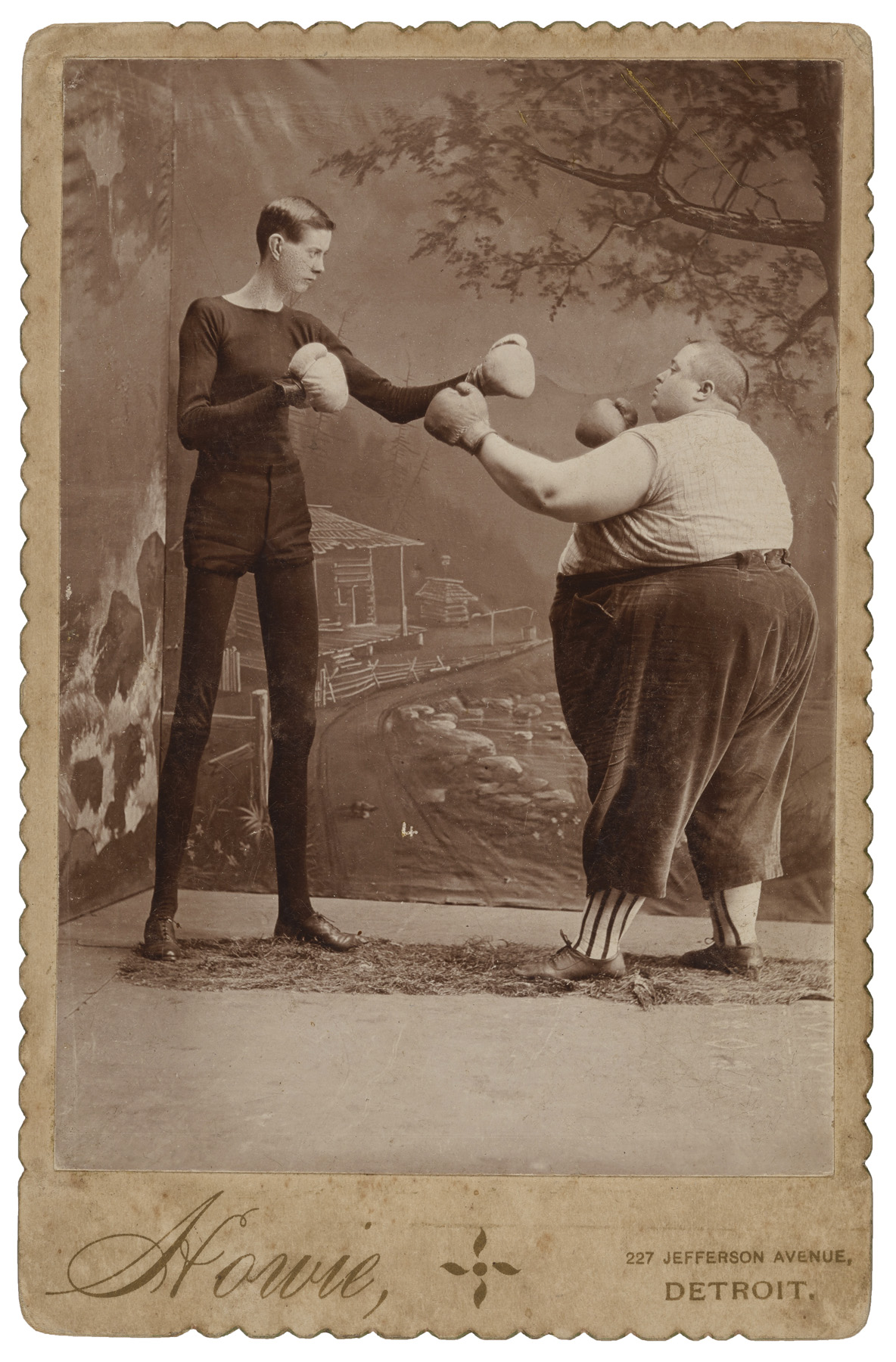
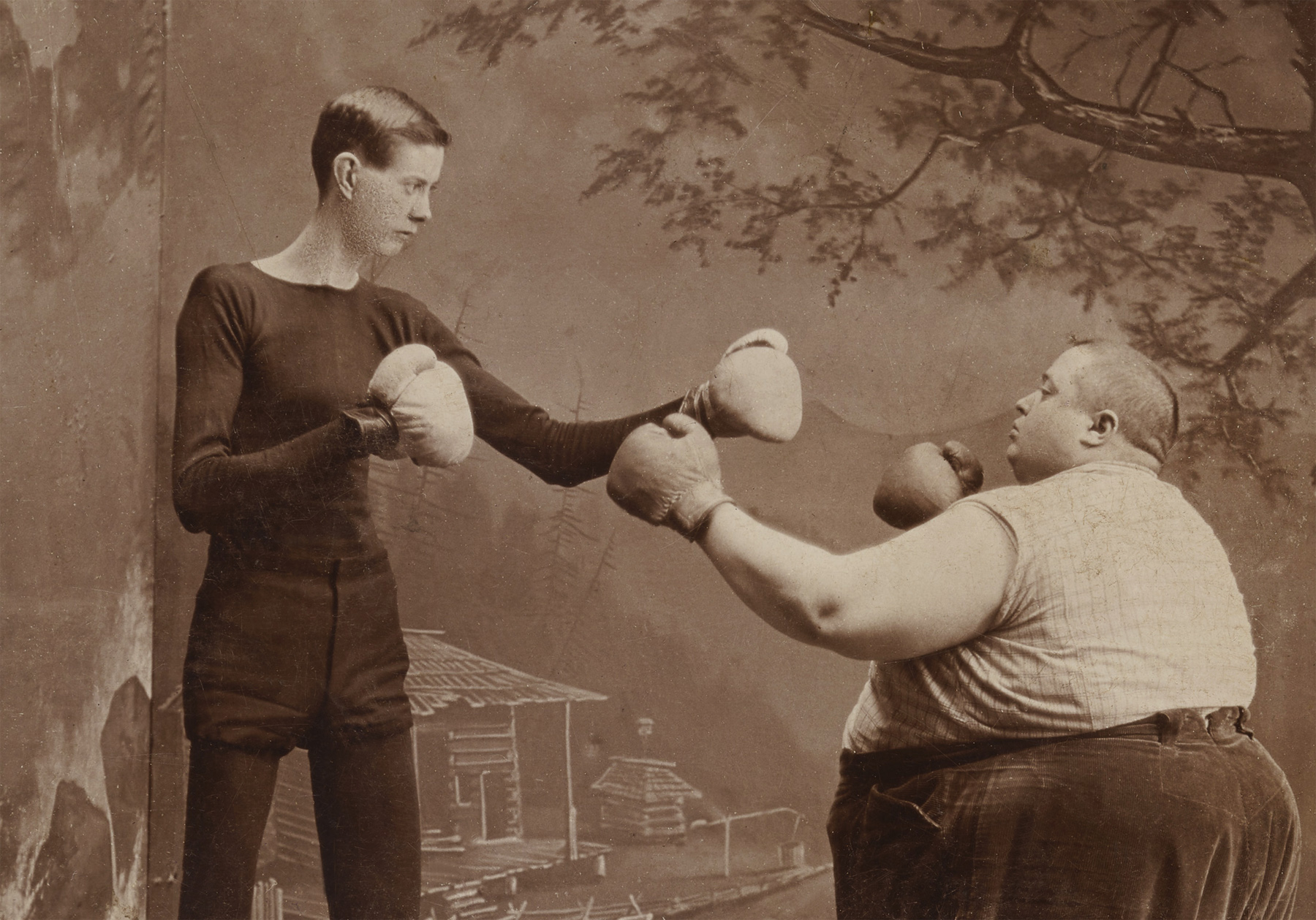
Howie, Detroit, MI George Moore and Fred Howe 1890s Collodion silver print Robert E. Jackson Collection
Fred Howe, the Fatman and George Moore, the living skeleton; they are the most comical boxers in the world. Fred Howe’s father was a carpenter at Alleghany City, Penn., and Fred started to learn the same trade, but soon became too fat. At the age of eighteen he joined the Forepaugh Circus as a “tat boy,” and there met his present sparring partner.
George Moore was born in Helena, Montana, where his father had a little dry goods shop. Until he was twenty-one years of age George worked in his father’s shop. But his greatest desire was to see the world. When the fist big circus came to Helena, the manager offered him an engagement to exhibit himself as the “living skeleton,” and he closed with the offer at once. Fred Howe, they soon became great friends. The doctors advised both to take as much exercise as possible – the one to gain flesh, and the other to get rid of it. These smart Yankee lads then resolved to combine duty with pleasure, so they went in for boxing. For a long time they practised privately. One day, however, the manager was told of the fun by some of his “freaks,” who had been allowed to see a set-to” between the two gladiators. The manager then arranged a round or two, and the moment he saw Howe and Moore face each other, he offered them a long engagement at an increased salary, if only they would do their boxing before the public. Today these funny fellows are not only expert boxers, but also perfect comedians in their “art.” Their boxing is uproariously funny.
Moore is 6ft. 3in. in height, and weighs but 97lb., Howe is only 4ft. 2in. high, and weights exactly 422lb.
The Strand Magazine
Howie, Detroit, MI George Moore and Fred Howe (detail) 1890s Collodion silver print Robert E. Jackson Collection
Alfred U. Palmquist (Swedish, 1850-1922) and Peder T. Jurgens, St. Paul, MN [Skater] 1880s Albumen silver print Amon Carter Museum of American Art, Fort Worth, Texas
The Swede Alfred U. Palmquist (1850-1922) immigrated to America in 1872. In 1874, together with the Norwegian Peder T. Jurgens he opened the photo studio Palmquist & Jurgens in St. Paul, Minnesota.
Alfred Palmquist was born in Finland to Swedish parents on June 21, 1850. We know nothing about his childhood and upbringing except that he emigrated to Minnesota in the United States at the age of twenty-two. A year later, he and a colleague started a photo studio in Saint Paul, Minnesota, which was named Palmquist & Lake.
Ten years later, in 1883, Palmquist entered into a collaboration with Peder T. Jurgens. We only know about his partner Jurgens that he was Norwegian and had previously supported himself as an economist. Peder Jurgens worked in the company between the years 1882 to 1888. The new company was then of course named Palmquist & Jurgens and lived on until the beginning of the 20th century. During the 1870s and 1880s, most photographers worked in their studios… Palmquist & Jurgens was such a typical photography company that preferred people to come to their studio to be photographed. The company had specialised in photographing famous families in Saint Paul.
M. C. Hosford, West Rutland, VT [Getting the cleaver] 1880s Albumen silver print Amon Carter Museum of American Art, Fort Worth, Texas
M. C. Hosford, West Rutland, VT [Getting the cleaver] (detail) 1880s Albumen silver print Amon Carter Museum of American Art, Fort Worth, Texas
M. C. Hosford, West Rutland, VT [Getting the saw] 1880s Albumen silver print Amon Carter Museum of American Art, Fort Worth, Texas
Acting Out: Cabinet Cards and the Making of Modern Photography offers the first-ever in-depth examination of the photographic phenomenon of cabinet cards. Cabinet cards were America’s main format for photographic portraiture through the last three decades of the nineteenth century. Inexpensive and sold by the dozen, they transformed getting one’s portrait made from a formal event taken up once or twice in a lifetime into a commonplace practice shared with family and friends.
Building on the museum’s history as a leader in American photography, this exhibition reveals how photography studios and their sitters across the United States introduced immediacy to studio portraiture and transformed their sessions into avenues of fun and personal expression. Sections will trace the cabinet card’s development and evolution, from its beginnings in celebrity culture through the marketing and advertising innovations of practitioners to the diversity of what people brought to their sittings. Not only did Americans embrace photography as a commonplace fact of life during these years, they openly played with the medium’s believability. In short, cabinet cards made photography modern.
This August, the Amon Carter Museum of American Art will present Acting Out: Cabinet Cards and the Making of Modern Photography, an exhibition offering the first in-depth examination of the nineteenth-century photographic phenomenon of cabinet cards. Charting the proliferation of this under appreciated photographic format, Acting Out reveals that cabinet cards coaxed Americans into thinking about portraiture as an informal act, forging the way for the snapshot and social media with its contemporary “selfie” culture. Acting Out presents hundreds of photographs – many on view publicly for the first time – from collections nationwide, including examples from the Carter’s own extensive photography collection. On view August 18 through November 1, 2020, the exhibition is organised by the Carter and will travel to the Los Angeles County Museum of Art.
In the second half of the nineteenth century, cabinet cards gave birth to the golden age of photographic portraiture in America. Measuring 6 1/2 by 4 1/4 inches, roughly the size of the modern-day smartphone screen, they were three times larger than the period’s leading photographic format. This larger size revealed previously obscured details in the images captured, encouraging action-ready gestures and the introduction of an astonishing array of props. Where photographs had once functioned as solemn records of likeness and stature, cabinet cards offered a new outlet for entertainment and remembering life’s everyday moments.
Acting Out investigates how this new performative medium prompted sitters to become far more comfortable with having their portrait made. By the time Eastman Kodak introduced its new affordable Brownie camera in 1900, cabinet cards had primed Americans to photograph every aspect of their lives. Though produced over 100 years ago, cabinet cards have a familiarity and a levity that resonates with our experience of photography today.
“Acting Out exemplifies the Carter’s commitment to organising exhibitions rooted in groundbreaking scholarship, a core tenet of our curatorial philosophy,” stated Andrew J. Walker, Executive Director. “This exhibition harnesses the resources of our vast photography collection and archive to show visitors the contemporary relevance of the medium’s pre-modern history.”
The exhibition is organised into four sections chronicling the birth and evolution of the cabinet card:
Caught in the Act: Actors, orators, and other public figures were among the first to embrace cabinet cards. This section examines how the creative innovations employed by New York photographer Napoleon Sarony and his cohorts built public enthusiasm for a new kind of photographic portraiture founded on a relaxed sense of immediacy that influenced studio photographers across America.
The Trade: This section looks at the entertaining and evocative ways that photographers worked to overcome low prices and fierce competition, and to stand out from their peers. Their creative solutions gave rise to the ubiquity of cabinet cards across America by the 1880s.
Sharing Life: Family and Friends: Over the last quarter of the nineteenth century, cabinet cards were often the favoured means for recording and celebrating family life. This evocative section reveals the ways in which cabinet cards established a model for family albums as channels for sharing and boasting of the joys and transits of life.
Acting Out: If portraiture was the ostensible subject of cabinet cards, play was just as important. This section examines Americans’ acceptance of the camera as a tool for shared amusement as they toyed with photography’s pretence of reality and truth.
“In our current moment of ‘selfie’ culture and social media-centered interaction, understanding the history of self-presentation and portraiture is more prescient than ever,” said John Rohrbach, Senior Curator of Photographs at the Carter. “This exhibition reveals how nineteenth-century Americans approached photography far more playfully than ever before, a transformation that forever shifted our relationship to the medium.”
Acting Out: Cabinet Cards and the Making of Modern Photography was organised by the Amon Carter Museum of American Art. The exhibition is supported in part by the Alice L. Walton Foundation Temporary Exhibitions Endowment and accompanied by a 232-page catalogue co-published with the University of California Press, Berkeley. The book is the first dedicated to the history of the cabinet card and features colour plates of 100 cards at their actual size. Contributors include Dr. John Rohrbach, Senior Curator of Photographs at the Amon Carter Museum of American Art; Dr. Erin Pauwels, Assistant Professor of American Art at Temple University; Dr. Britt Salvesen, Department Head and Curator of the Wallis Annenberg Department of Photography at the Los Angeles County Museum of Art; and Fernanda Valverde, Conservator of Photographs at the Carter.
Press release from the Amon Carter Museum of American Art
Unknown photographer [Chess against myself] 1880s Albumen silver print Amon Carter Museum of American Art, Fort Worth, Texas
Unknown photographer [Chess against myself] (detail) 1880s Albumen silver print Amon Carter Museum of American Art, Fort Worth, Texas
Hatch and White, Burlington, WI [Man in woman’s clothing] c. 1891 Collodion silver print Amon Carter Museum of American Art, Fort Worth, Texas
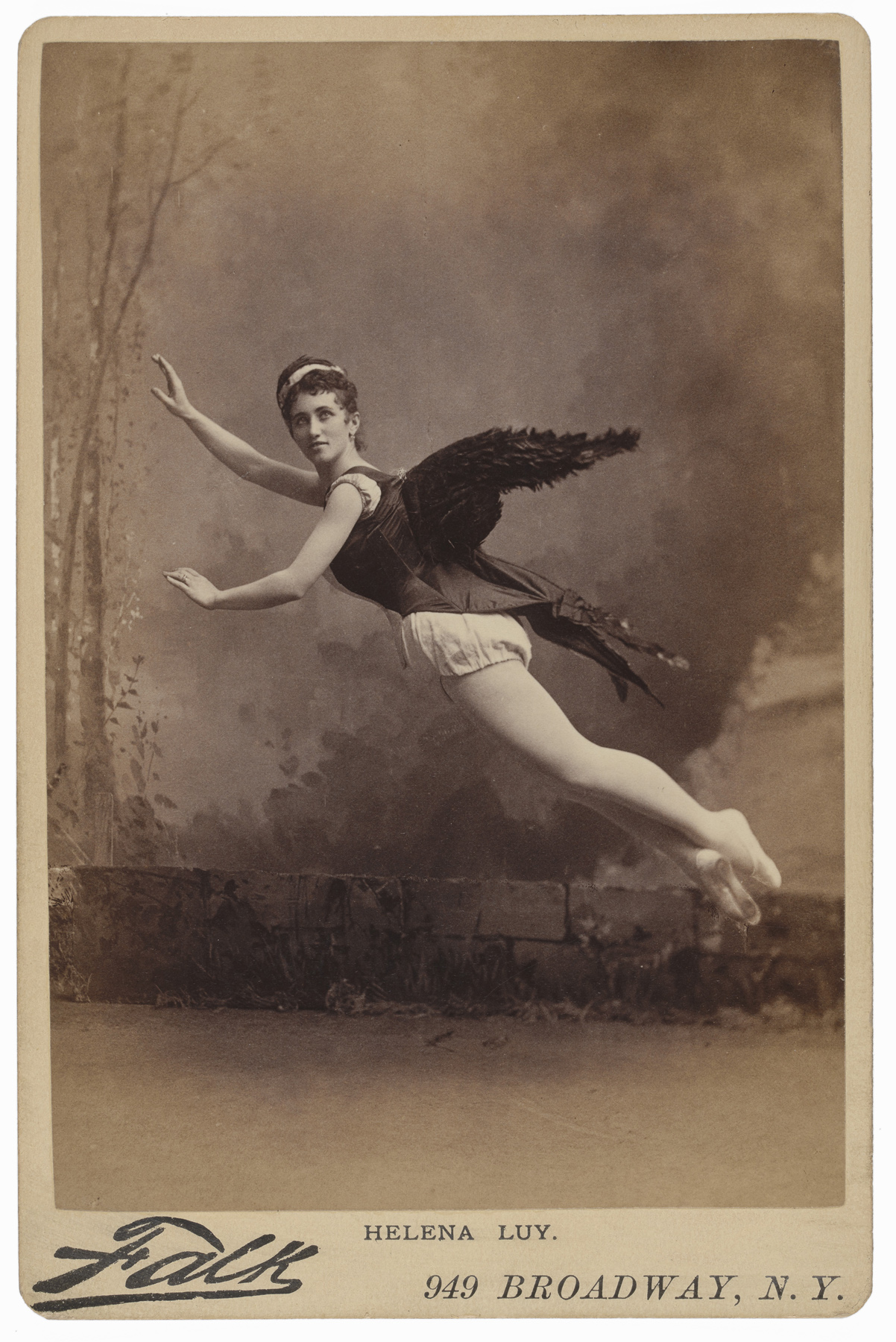
Benjamin J. Falk, New York, NY Helena Luy 1880s Albumen silver print Amon Carter Museum of American Art, Fort Worth, Texas
Benjamin J. Falk (American, 1853-1925)
When Napoleon Sarony died in 1896, Benjamin J. Falk ascended to the first place in the world of performing arts photography…
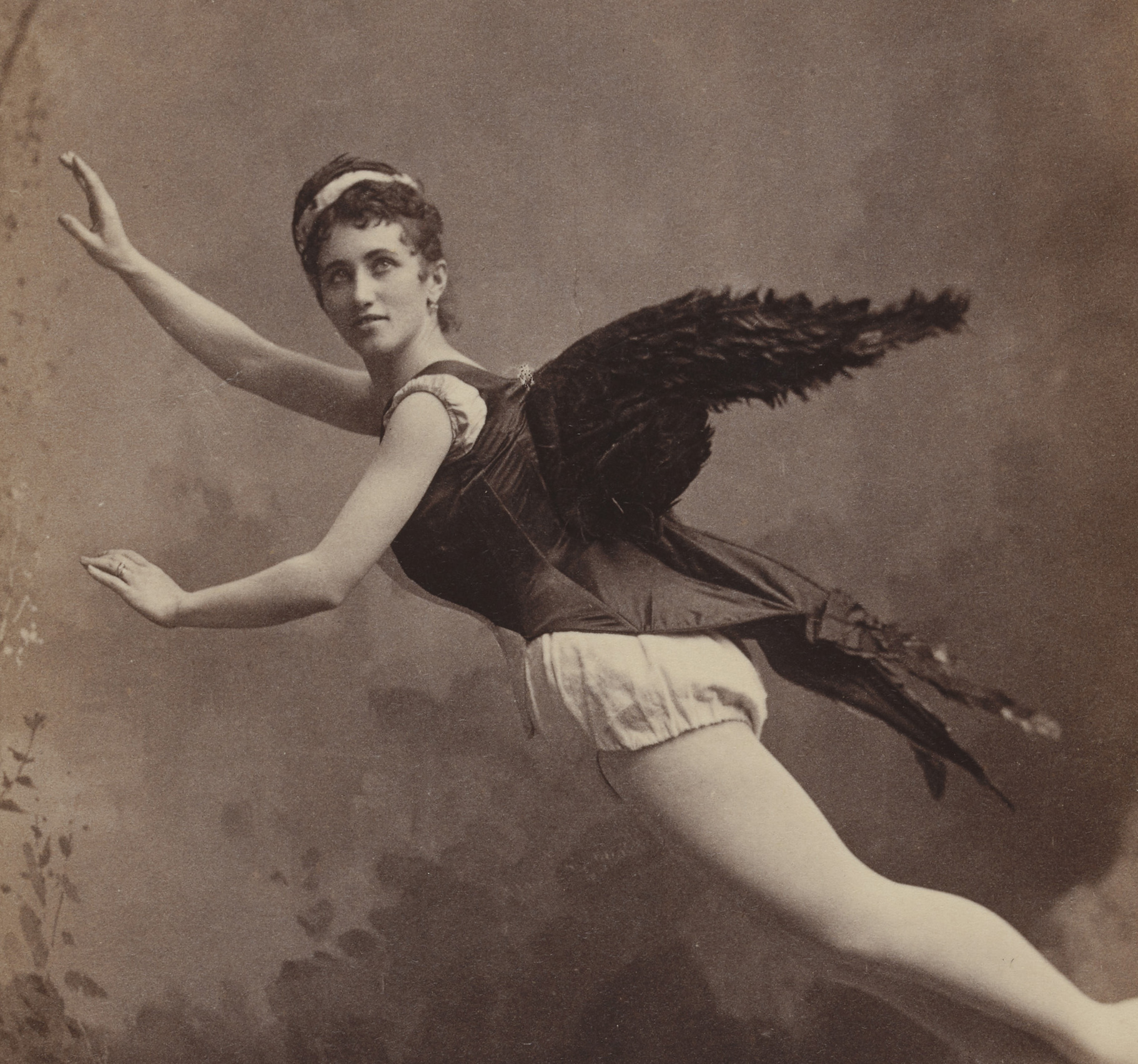
Falk’s contemporaries, who spoke primarily of the clarity, verisimilitude, and composure of his images, never recognised his greatest power as a portraitist. Falk was a man of extraordinary erotic engagement with his sitters, and the intensity of his attention becomes visible only when one sees the entirety of his work envisioning one of the several women – Belle Archer, Mrs. James Brown Potter, Cleo De Merode, Cissy Fitzgerald, Amy Busby, the Barrison Sisters – who capture his imagination. He was capable of refracting the sitter’s beauty in a tremendous array of scenes, costumes, and attitudes, doing so without making the images seem artificial.
When asked in 1893 what was most important in creating effective portraits, he replied matter of factly, “I name expression, posing and lighting in the order as they appear to be most important. The technique of the profession being absolutely under the control of the operator since the introduction of the dry plates, there is no excuse now for any but perfect photographic results. I have always made my price high enough, so that I did not have to consider the cost of material while doing my work.” The camera, in the proper hands, is, in many ways, a finer art tool to-day than the chisel or the brush, although, like them, it has its limitations.
Specialty
The first strong adherent of artificial light sources in the studio, Benjamin Falk created portraits that were among the most dramatically sculptural looking images of the 19th and early 20th centuries. Possessed of a playful visual wit, he often experimented with his images, using curious juxtapositions, unusual poses, and lighting highlights to convey distinctiveness of personality. Increasingly indifferent to painted backdrops, he did many portraits against blank walls or bleached out backcloths. He began the fashion for faces and figures suspended in a milky white ground that became ubiquitous shortly after 1900.
Anonymous. “Benjamin J. Falk,” on the Broadway Photographers website [Online] Cited 05/09/2020
Benjamin J. Falk, New York, NY Helena Luy (detail) 1880s Albumen silver print Amon Carter Museum of American Art, Fort Worth, Texas
Napoleon Sarony, New York, NY [Fanny Davenport] c. 1870 Albumen silver print Amon Carter Museum of American Art, Fort Worth, Texas
Napoleon Sarony (American, 1821-1896)
Napoleon Sarony (March 9, 1821 – November 9, 1896) was an American lithographer and photographer. He was a highly popular portrait photographer, best known for his portraits of the stars of late-19th-century American theatre. His son, Otto Sarony, continued the family business as a theatre and film star photographer.
Sarony was born in 1821 in Quebec, then in the British colony of Lower Canada, and moved to New York City around 1836. He worked as an illustrator for Currier and Ives before joining with James Major and starting his own lithography business, Sarony & Major, in 1843. In 1845, James Major was replaced in Sarony & Major by Henry B. Major, and the firm continued operating under that name until 1853. From 1853 to 1857, the firm was known as Sarony and Company, and from 1857 to 1867, as Sarony, Major & Knapp. Sarony left the firm in 1867 and established a photography studio at 37 Union Square, during a time when celebrity portraiture was a popular fad. Photographers would pay their famous subjects to sit for them, and then retain full rights to sell the pictures. Sarony reportedly paid the internationally famous stage actress Sarah Bernhardt $1,500 to pose for his camera, equivalent to $42,683 in 2019. In 1894, he published a portfolio of prints entitled “Sarony’s Living Pictures”.
Fanny Lily Gipsey Davenport (April 10, 1850 – September 26, 1898) was an English-American stage actress. The eldest child of Edward Loomis Davenport and Fanny Elizabeth (Vining) Gill Davenport, Fanny Lily Gypsey Davenport was born on April 10, 1850 in London.
Most of her siblings were actors, including Harry Davenport. She was brought to the United States in 1854 and educated in the Boston public schools. At age 7, she appeared at Boston’s Howard Athenæum as Metamora’s child, but her real debut occurred in February 1862 when she portrayed King Charles in Faint Heart Never Won Fair Lady at Niblo’s Garden.
In February 1862, she appeared in New York City at Niblo’s Garden at the age of 12 as the King of Spain in Faint Heart Never Won Fair Lady. From 1869 to 1877, she performed in Augustin Daly’s company; and afterwards, with a company of her own, acted with especial success in Sardou’s Fédora (1883) her leading man being Robert B. Mantell, Cleopatra (1890), and similar plays. She took over emotional Sardou roles that had been originated in Europe by Sarah Bernhardt. Her last appearance was at the Grand Opera House in Chicago on March 25, 1898, shortly before her death.
Her first husband was Edwin B. Price, an actor. They married on July 30, 1879, and divorced on June 8, 1888. On May 18, 1889, she married her leading man, Melbourne MacDowell. Both marriages were childless. Davenport died September 26, 1898, from an enlarged heart, at her summer home in Duxbury, Massachusetts.
Unknown photographer [Two girls] 1864 Albumen silver print (carte de visite) Amon Carter Museum of American Art, Fort Worth, Texas
Unknown photographer [Two girls] (detail) 1864 Albumen silver print (carte de visite) Amon Carter Museum of American Art, Fort Worth, Texas
A. M. Nikodem, Chicago, IL [Cat] 1880s Albumen silver print Robert E. Jackson Collection
A.M. Nikodem
According to Origin, Growth, and Usefulness of the Chicago Board of Trade: Its Leading Members, and Representative Business Men in other Branches of Trade (1885): “Miss A.M. Nikodem, Photographic Artist. No. 701 West Madison Street. – One of the most popular and finely appointed photographic studios in Chicago is that conducted by Miss A.M. Nikodem, who succeeded Mr. M. T. Baldwin one year ago. This lady, who is regarded as one of the most skilful and accomplished photographic artists in the city, occupies an entire two-storied building completely equipped with all modern improvements and appliances and her elegantly furnished parlours are the resort of the élite of Chicago. Miss Nikodem is the only lady in the city who give personal attention to the taking of pictures, etc., and having had an extended practical and theoretical training she has attained a marked perfection in her art. In social circles Miss Nikodem occupies a prominent position both as a skilful artist and estimable lady, while in the business world she is held in high esteem as an enterprising and capable woman.”
Nikodem occupied the studio at this address from 1885-1891, and then moved to another location. 1895 is the last year in which she seems to be listed in Chicago city guides. Despite her prominence, photographs from her studio are exceptionally uncommon. Nikodem’s skill is fully on display in this portrait. The three or four other examples of her work we could find, all in library special collections, are all of women or girls, and they display a uniform artistic excellence and technical photographic skill.
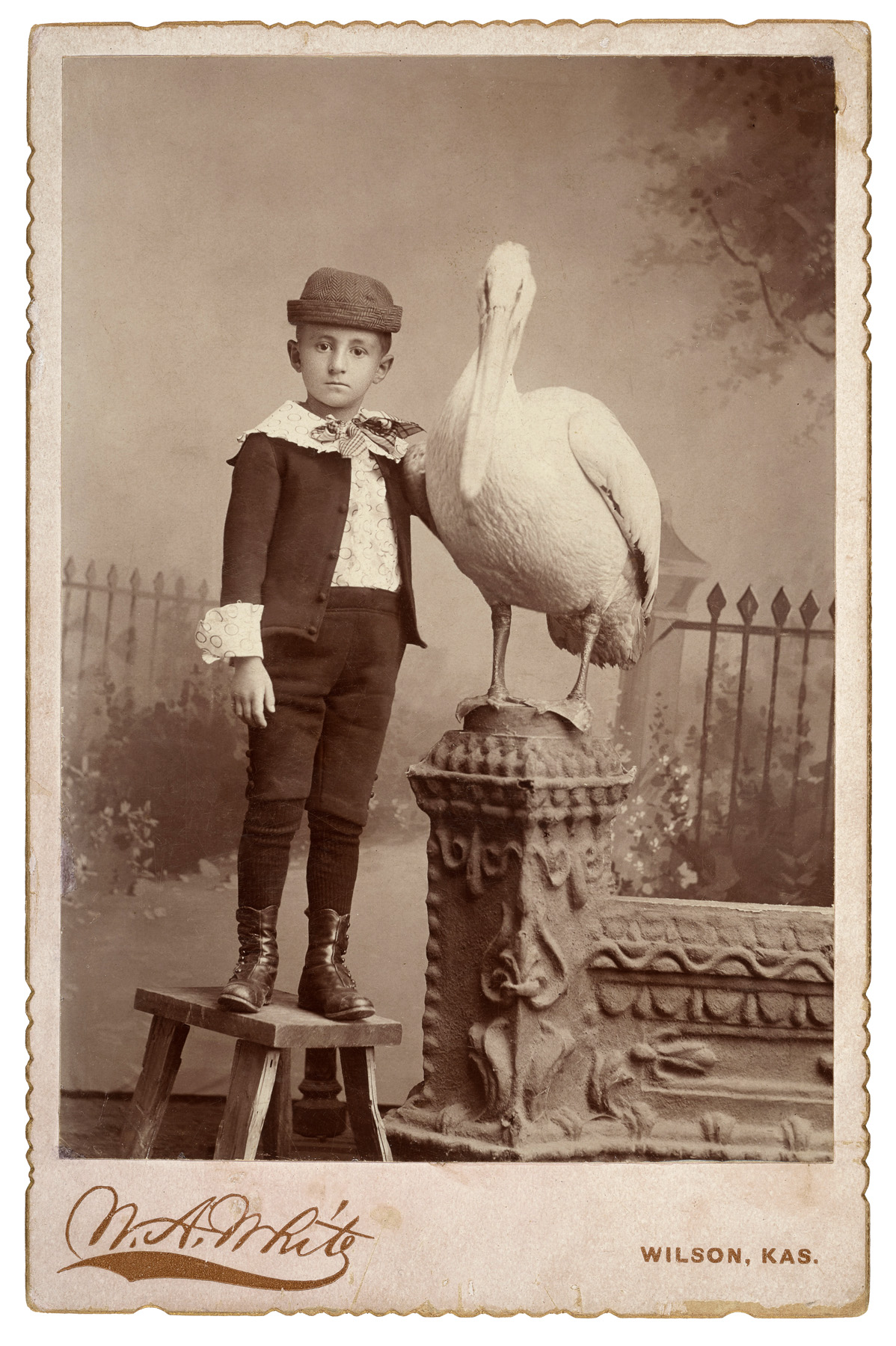
W. A. White, Wilson, KS My first baby friend Tompie and his pet 1896 Collodion silver print Robert E. Jackson Collection
W. A. White, Wilson, KS My first baby friend Tompie and his pet (detail) 1896 Collodion silver print Robert E. Jackson Collection
W. A. Wilcoxon, Bonaparte, IA [Baby] 1890s Collodion silver print Amon Carter Museum of American Art, Fort Worth, Texas
Unknown photographer [Painter] 1890s Albumen silver print William L. Schaeffer Collection
Unknown photographer [Painter] (detail) 1890s Albumen silver print William L. Schaeffer Collection
Charles L. Griffin, Scranton, PA [Toddler with dog] c. 1892 Gelatin silver print Amon Carter Museum of American Art, Fort Worth, Texas
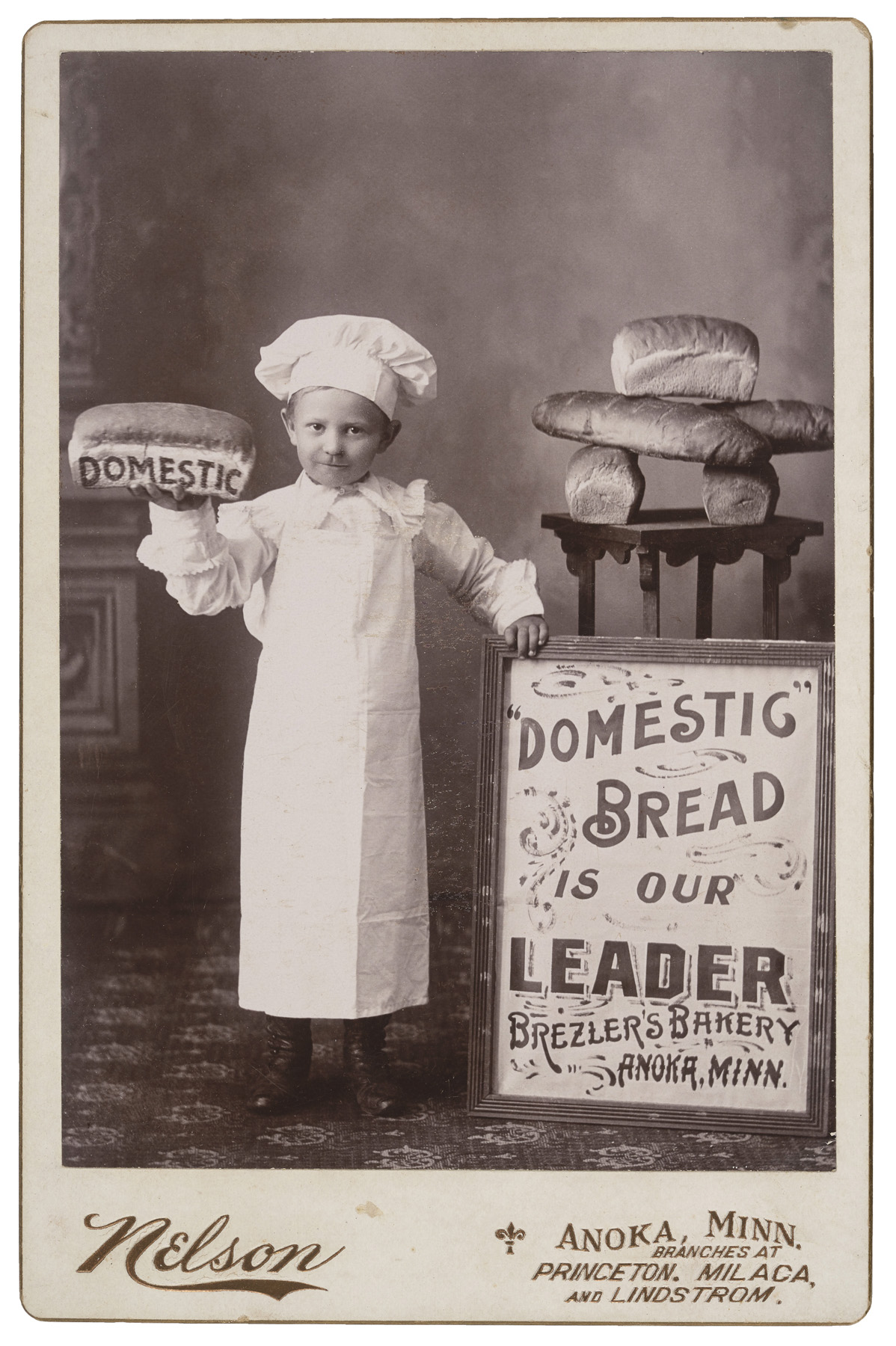
F. J. Nelson, Anoka, MN Domestic Bread c. 1890s Collodion silver print Amon Carter Museum of American Art, Fort Worth, Texas
Gilbert G. Oyloe (American, 1851-1927) Ossian, IA [Woman] 1880s Albumen silver print Robert E. Jackson Collection
Oyloe had a studio in Ossian during the 1880’s and 1890’s.
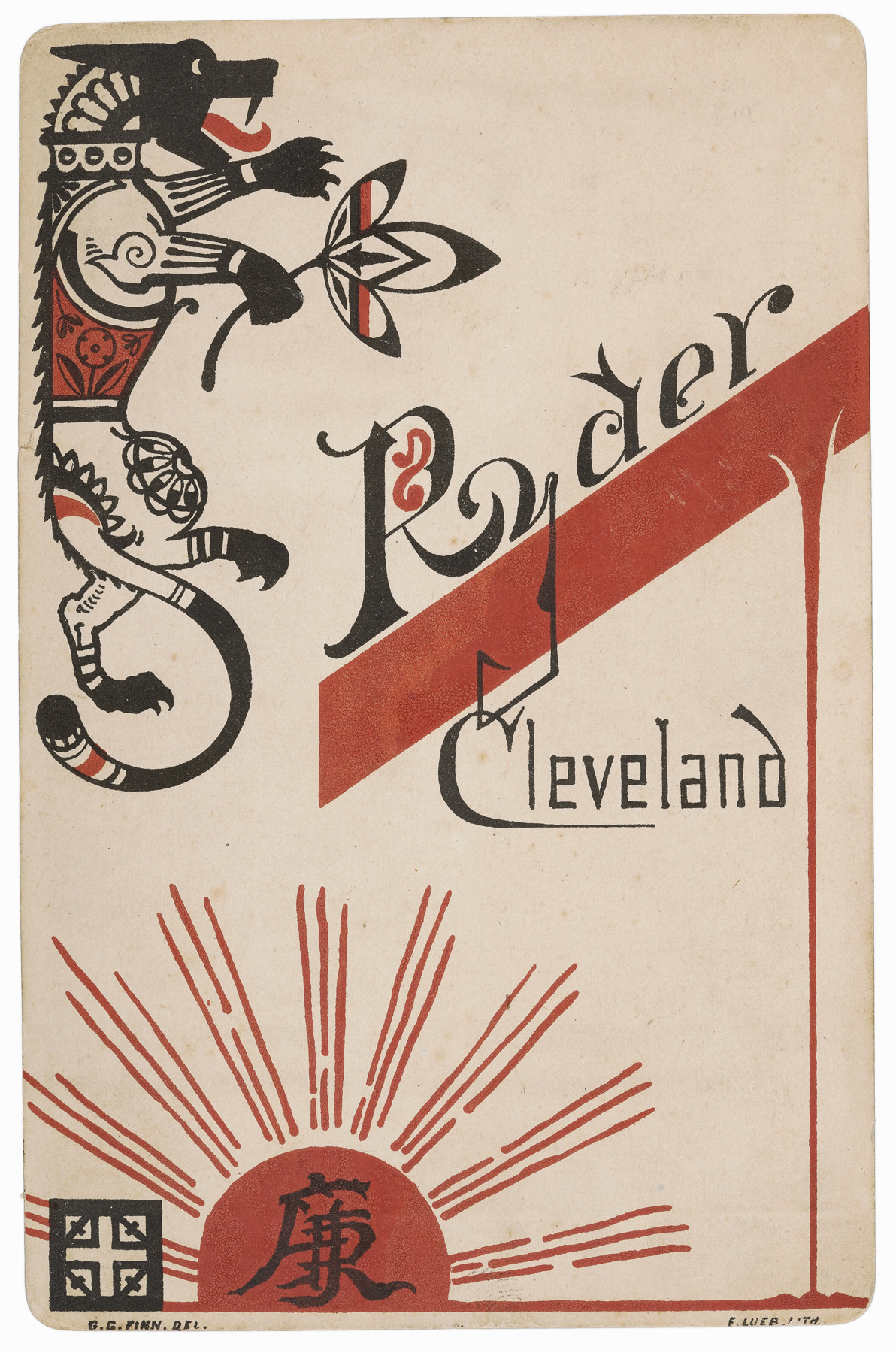
James F. Ryder, Cleveland, OH Verso 1880s Planographic print Gift of Robert E. Jackson Amon Carter Museum of American Art, Fort Worth, Texas
Charles Quartley, Baltimore, MD [Church woman] 1880s Albumen silver print Robert E. Jackson
Caroline Bergman, Louisville, KY Untitled [Bergman’s Photograph Gallery] c. 1890 Relief print Gift of Robert E. Jackson Amon Carter Museum of American Art, Fort Worth, Texas
Louise and Caroline Bergman
Louis Bergman opened a Louisville photo studio in 1872 on W Market. After 1885, however, Caroline Bergman (his wife) is listed as the proprietor and photographer, and Louis is listed only as “manager”. This very successful studio was in operation until 1896.
Louis Bergman’s … studio was located at 56 & 58 Market Street, in Louisville, Kentucky. Perusal of Louisville business directories reveals that Bergman began business with a partner. Bergman & Flexner; the firm was listed in the 1868 and 1869 directories. He was reported to be the sole proprietor of a studio from 1872 until 1886. Bergman was listed at a number of different addresses over these years. Using these addresses, it appears that this particular photograph was taken between 1873 and 1881. From 1886 through 1894 the proprietor of the studio became Caroline Bergman. The Photographic Times and American Photographer (1883) reported that Bergman was Vice President of the Photographers Mutual Benefit Society of Louisville. Louis Bergman (c. 1838 -?) was born in Hanover, Germany to Prussian parents. His wife, Carrie (1845 -?) was born in Louisiana to German parents. The couple married in about 1865. The Bergman’s had a daughter, Lillie, who was 12 years-old at the time of the 1880 census. The census listed Louis as a photographer and Carrie as a homemaker. It is interesting to note that when the couples daughter reached 18 years of age, Carrie became the studio’s proprietor / photographer.
Anonymous. “Man with a Great Beard in Louisville, Kentucky,” on The Cabinet Card Gallery website 03/01/2012 [Online] Cited 05/09/2020
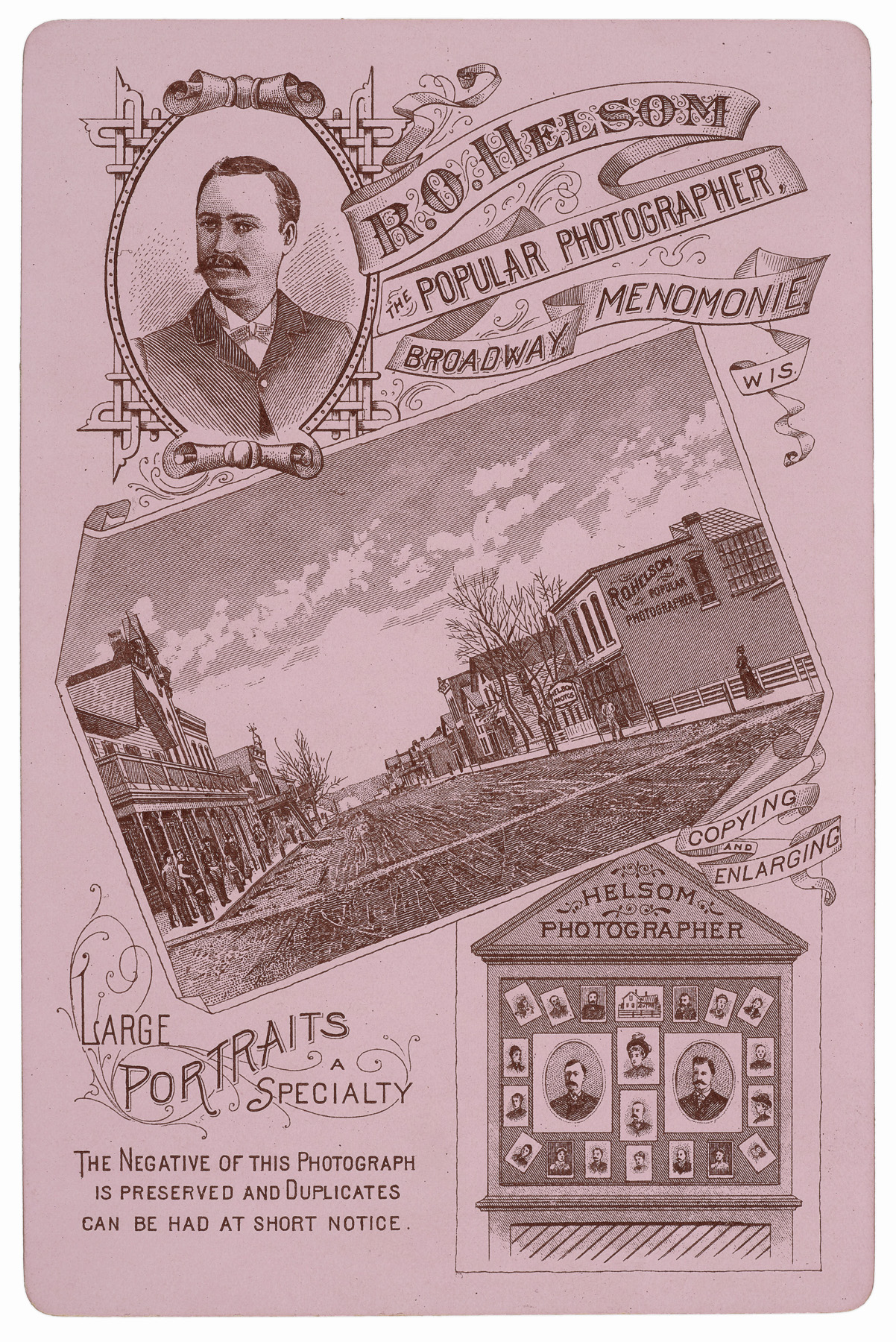
R. O. Helsom, Menomonie, WI Verso 1880s Relief print Gift of Robert E. Jackson Amon Carter Museum of American Art, Fort Worth, Texas
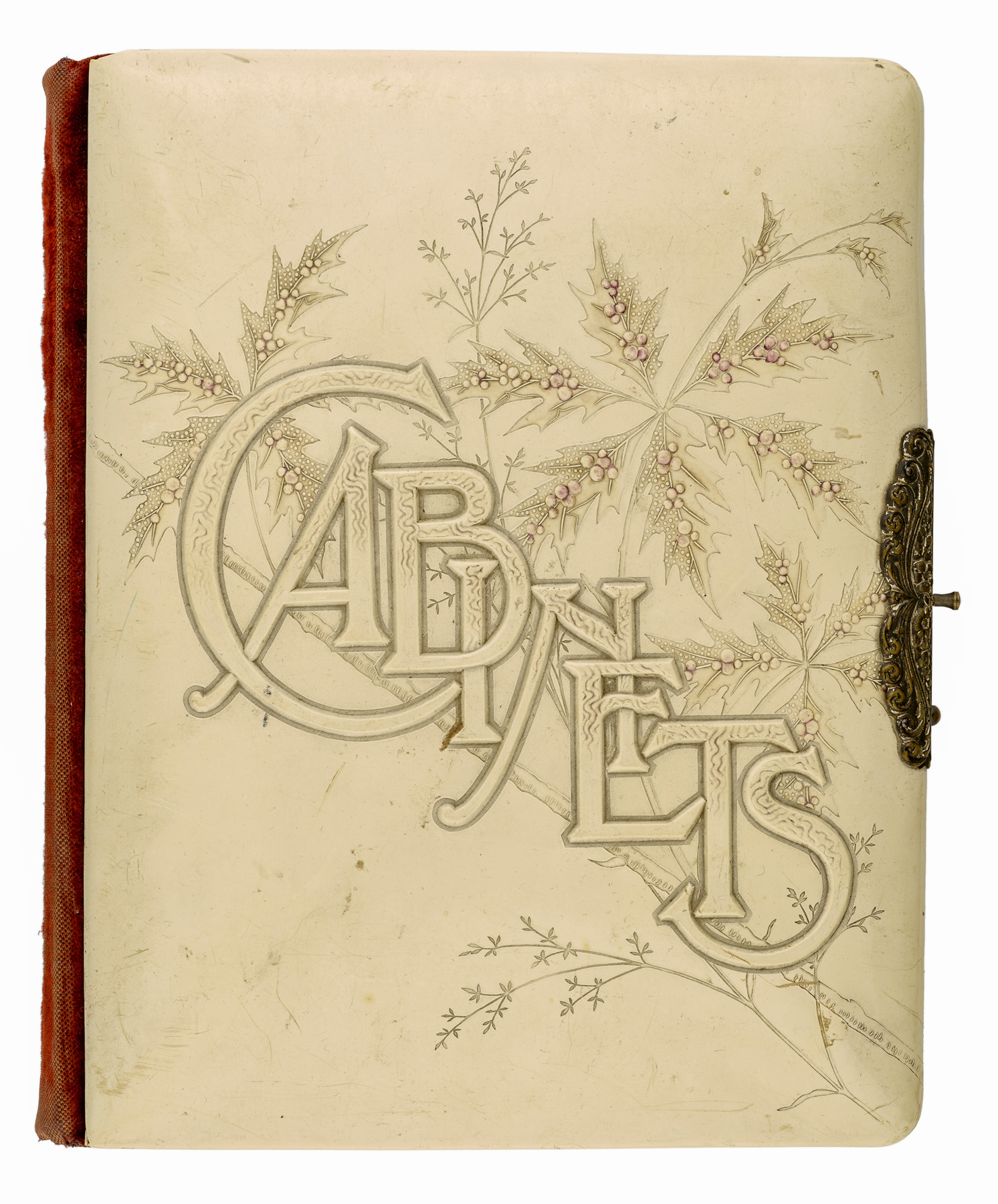
Cabinets c. 1880s Celluloid-covered album Robert E. Jackson Collection
Amon Carter Museum of American Art 3501 Camp Bowie Boulevard Fort Worth, TX 76107-2695
Exhibition dates: 26th June – 27th October, 2019 Visited September 2019 posted August 2020
Curators: Matthieu Rivallin and Pia Viewing
Entrance to the exhibition L’equilibriste, André Kertész at Jeu de Paume, Château de Tours Photo: Marcus Bunyan
equilibrist, noun: an acrobat who performs balancing feats, especially a tightrope walker.
Part 1 of a large posting on the exhibition L’equilibriste, André Kertész at Jeu de Paume, Château de Tours, which I saw in Tours in September 2019.
This was the most disappointing of the “grand master” exhibitions that I saw on my European photographic research tour, mainly because the photographs were all modern prints, and there seemed to be a lot of “filler” in the exhibition – namely, reproductions of late book layouts scattered generously throughout the rooms (see installation photographs below).
Having said that, it was still a great joy to see Kertész’s photographs, especially some of the photographs which are hard to find online. Here are images such as Görz, Italy 1915 and Abony 1921 which I have never seen before, together with rare Paris images such as Attelage, Paris 1925; Wooden horse, Paris c. 1926; The Quays after the rain, Paris 1963; Behind Notre-Dame, Paris 1925; Paris 1931; Legs, Paris 1928; Study of lines and shadow 1927 and Saint-Gervais-les-Bains, Savoie 1929 – none of which have been available in a large size online before.
Together with the three intense, brooding, suspended still life (The Fork, Paris 1928; Composition, Paris 1928 and Glasses and Pipe of Mondrian, Paris 1926) and the sublime, modernist Chez Mondrian, Paris 1926, one of the most outstanding photographs in the posting, and one of Kertész’s most famous images, is Burlesque dancer, Paris 1926. The circular tensioning of the image is immaculate. The form of the twisting male torso at left with its upraised right hand leads the eye to the drawing at top centre, which then descends to the framed female form at right which inverts the male form with the right hand of the female now raised. The eye then descends to the reclining dancer, the zig-zag arms and legs perfectly composed, her left hand touching the ground like the Bhumisparsha mudra which symbolises the Buddha’s enlightenment under the bodhi tree, when he summoned the earth goddess (quite apt) … while her left leg completes the circle, pointing towards the twisting legs of the male statue. The split of the male legs are reinforced by those in the female print, and complimented by the exquisite folds of the dancers silky dress, unnoticed until you really look at the print.
I will comment more comprehensively in Part 2 of the posting on Kertész’s Leica-ed world.
Exposition “L’équilibriste, André Kertész” au Jeu de Paume, Tours
Entrance to the exhibition L’equilibriste, André Kertész at Jeu de Paume, Château de Tours, with a poster of Rainy Day, Tokyo 1968 Photo: Marcus Bunyan
Entrance text to the exhibition L’equilibriste, André Kertész at Jeu de Paume, Château de Tours Photo: Marcus Bunyan
Installation view of the exhibition L’equilibriste, André Kertész at Jeu de Paume, Château de Tours with at left top, Friends, Esztergom 1917; at left bottom, Little geese, Esztergom 1918; at second left, Hungarian landscape 1914; at fifth left, Abony 1921; at seventh left, Young Gypsy 1918; at second right, Traveling violinist, Abony 1921 and at far right, Cellist 1916 Photo: Marcus Bunyan
André Kertész (Hungarian, 1894-1985) Les Amis, Esztergom (installation view) Friends, Esztergom 1917 Gelatin silver print Photo: Marcus Bunyan
André Kertész (Hungarian, 1894-1985) Petites oies, Esztergom (installation view) Little geese, Esztergom 1918 Gelatin silver print Photo: Marcus Bunyan
André Kertész (Hungarian, 1894-1985) Paysage hongrois (installation view) Hungarian landscape 1914 Gelatin silver print Photo: Marcus Bunyan
André Kertész (Hungarian, 1894-1985) Abony (installation view) 1921 Gelatin silver print Photo: Marcus Bunyan
André Kertész (Hungarian, 1894-1985) Jeune Tzigane (installation view) Young Gypsy 1918 Gelatin silver print Photo: Marcus Bunyan
André Kertész (Hungarian, 1894-1985) Violoncelliste (installation view) Cellist 1916 Gelatin silver print Photo: Marcus Bunyan
Installation view of the exhibition L’equilibriste, André Kertész at Jeu de Paume, Château de Tours with at left, Lovers, Budapest 1915 Photo: Marcus Bunyan
André Kertész (Hungarian, 1894-1985) Hungarian Memories (installation view) 1982 New York, New York Graphic Society / Boston, Little, Brown and Company Photo: Marcus Bunyan
André Kertész (Hungarian, 1894-1985) Lovers, Budapest 1915 Gelatin silver print
André Kertész (Hungarian, 1894-1985) Garçon endormi, Budapest (installation view) Sleeping boy, Budapest 1912 Gelatin silver print Photo: Marcus Bunyan
André Kertész (Hungarian, 1894-1985) Mon frère imitant le “scherzo” (installation view) My brother as a “Scherzo” 1919 Gelatin silver print Photo: Marcus Bunyan
André Kertész (Hungarian, 1894-1985) Mon frère imitant le “scherzo” My brother as a “Scherzo” 1919 Gelatin silver print
André Kertész (Hungarian, 1894-1985) Mon frère tel Icare, Dunaharaszti (installation view) My brother like Icarus, Dunaharaszti 1919 Gelatin silver print Photo: Marcus Bunyan
Text from the exhibition L’equilibriste, André Kertész at Jeu de Paume, Château de Tours Photo: Marcus Bunyan
André Kertész (Hungarian, 1894-1985) Hungarian Memories (installation view) 1982 New York, New York Graphic Society Photo: Marcus Bunyan
Installation view of the exhibition L’equilibriste, André Kertész at Jeu de Paume, Château de Tours with at centre bottom, Görz, Italy 1915, and at far right, Forced march towards the front1915 Photo: Marcus Bunyan
André Kertész (Hungarian, 1894-1985) Görz, Italy (installation view) 1915 Gelatin silver print Photo: Marcus Bunyan
André Kertész (Hungarian, 1894-1985) Marche forcée vers le front, entre Lonié et Mitulen, Pologne (installation view) Forced march towards the front, between Lonie and Mitulen, Poland 1915 Gelatin silver print Photo: Marcus Bunyan
Installation view of the exhibition L’equilibriste, André Kertész at Jeu de Paume, Château de Tours with at left, Meudon 1928 at second right top, Quai d’Orsay, Paris 1926 Photo: Marcus Bunyan
André Kertész (Hungarian, 1894-1985) Meudon 1928 Gelatin silver print
Text from the exhibition L’equilibriste, André Kertész at Jeu de Paume, Château de Tours Photo: Marcus Bunyan
André Kertész (Hungarian, 1894-1985) Quai d’Orsay, Paris 1926 Gelatin silver print
Installation view of the exhibition L’equilibriste, André Kertész at Jeu de Paume, Château de Tours with at left, Attelage, Paris 1925; at second left, 60 years of photography 1912-1972; and at fifth left, Trottoir, Paris 1929 Photo: Marcus Bunyan
André Kertész (Hungarian, 1894-1985) Attelage, Paris (installation view) Coupling, Paris 1925 Gelatin silver print Photo: Marcus Bunyan
André Kertész (Hungarian, 1894-1985) Soixante ans de photographie (installation view) 60 years of photography 1912-1972 Paris, éditions du Chêne, 1972 Photo: Marcus Bunyan
André Kertész (Hungarian, 1894-1985) Trottoir, Paris Sidewalk, Paris 1929 Gelatin silver print
Installation views of the exhibition L’equilibriste, André Kertész at Jeu de Paume, Château de Tours with at second left, Cheval de bois, Paris c. 1926; and at third left, Colette, Paris 1930. In the display cabinet is Marquette originale du livre non publié ‘Paris Automne’ December 1963 Photo: Marcus Bunyan
André Kertész (Hungarian, 1894-1985) Marquette originale du livre non publié ‘Paris Automne’ (installation view) Original maquette from the unpublished book ‘Paris Automne’ December 1963 Collection Médiathèque de l’architecture et du patrimoine Photo: Marcus Bunyan
André Kertész (Hungarian, 1894-1985) Cheval de bois, Paris (installation view) Wooden horse, Paris c. 1926 Gelatin silver print Photo: Marcus Bunyan
André Kertész (Hungarian, 1894-1985) Colette, Paris 1930 Gelatin silver print
This summer at the Jeu de Paume Château de Tours, the retrospective exhibition The equilibrist, André Kertész: 1912-1982 is dedicated to the great Hungarian naturalised American photographer (1894-1985). His work was in tune with his life and his feelings: from his beginnings in Hungary to the development of his talent in France, from his years of isolation in New York to his international recognition.
A major player in the Parisian artistic scene during the interwar period, André Kertész, whose career spanned more than seventy years, is today recognised as one of the most influential photographers of the 20th century. His abundant work, with compositions marked by the European avant-garde – especially from Eastern Europe – finds its source in his Hungarian culture, which combines poetry and intimacy.
His beginnings in his native country are an important step for this autodidact whose realistic approach differs from the pictorial-influenced fine art photography dear to the Hungarian photographers of his generation. Enlisted in the Austro-Hungarian army during the First World War, he depicts the daily life of soldiers and develops a poetry of the moment, far from heroic or dramatic acts of arms. After the war, he tried to make photography his profession.
In October 1925, he landed in Paris where he frequented avant-garde literary and artistic circles and photographed his friends from the Hungarian diaspora, the street scenes and the Parisian gardens. In France as in Germany, the press, in particular the magazine VU, orders reports and illustrations from him. From 1927, he had a personal exhibition at the Au Sacre du Printemps gallery. In 1933, he produced his famous series of Distortions which shows naked bodies reflected in a distorting mirror. This intense activity led him to design his own books; over the course of his life, he published nineteen of them, including Paris vu par André Kertész (1934).
In 1936, Kertész left for New York to honour a contract with the Keystone agency. However, he struggles to find his place in the face of sponsors with requests far removed from his Parisian years. A few exhibitions as well as the publication of Day of Paris (1945) were not enough to establish him as one of the main representatives of avant-garde photography in the United States. From 1963, the largest museums offered him the opportunity to exhibit his images. This recognition is accompanied by the publication of numerous books which allow him to review his work.
Produced from the collection of negatives and contact prints bequeathed by the photographer to France in 1984, The equilibrist, André Kertész is the fruit of the joint work of the Mediatheque of Architecture and Heritage, which preserves these archives today, and the Jeu de Paume. Consisting of around a hundred modern silver prints made in 1995 by Yvon Le Marlec, the shooter with whom Kertész collaborated in Paris, this exhibition revolves around the major books that the latter published during his lifetime. Through prints, original models and reproductions of pages from her works, she traces the close relationship that Kertész has forged throughout her life between her photographic and editorial practices, composing a visual narration that describes the interwar period in Europe and nearly fifty years in the United States.
Text from the Jeu de Paume website
André Kertész (Hungarian, 1894-1985) Les Quais après la pluie, Paris (installation view) The Quays after the rain, Paris 1963 Gelatin silver print Photo: Marcus Bunyan
André Kertész (Hungarian, 1894-1985) Derrière Notre-Dame, Paris (installation view) Behind Notre-Dame, Paris 1925 Gelatin silver print Photo: Marcus Bunyan
André Kertész (Hungarian, 1894-1985) La Tour Eiffel, Paris (installation view) Eiffel Tower, Paris 1929 Gelatin silver print Photo: Marcus Bunyan
André Kertész (Hungarian, 1894-1985) Le pont des arts, Paris The bridge of Arts, Paris 1932 Gelatin silver print
Installation views of the exhibition L’equilibriste, André Kertész at Jeu de Paume, Château de Tours with at left, Touraine 1930; at right top, Paris 1931; and at right bottom, Carrefour, Blois 1930 Photo: Marcus Bunyan
André Kertész (Hungarian, 1894-1985) Touraine (installation view) 1930 Gelatin silver print Photo: Marcus Bunyan
André Kertész (Hungarian, 1894-1985) Paris 1931 Gelatin silver print Photo: Marcus Bunyan
André Kertész (Hungarian, 1894-1985) Carrefour, Blois (installation view) 1930 Gelatin silver print Photo: Marcus Bunyan
André Kertész (Hungarian, 1894-1985) Carrefour, Blois 1930 Gelatin silver print
Installation view of the exhibition L’equilibriste, André Kertész at Jeu de Paume, Château de Tours with at left, La Fourchette, Paris 1928; at second left, Composition, Paris 1928; at second right, Les Lunettes et la Pipe de Mondrian, Paris 1926; and at right, Burlesque dancer, Paris 1926 Photo: Marcus Bunyan
André Kertész (Hungarian, 1894-1985) La Fourchette, Paris (installation view) The Fork, Paris 1928 Gelatin silver print Photo: Marcus Bunyan
André Kertész (Hungarian, 1894-1985) Composition, Paris (installation view) Les Mains de Paul Arma (The Hands of Paul Arma) 1928 Gelatin silver print Photo: Marcus Bunyan
André Kertész (Hungarian, 1894-1985) Composition, Paris Les Mains de Paul Arma (The Hands of Paul Arma) 1928 Gelatin silver print
André Kertész (Hungarian, 1894-1985) Les Lunettes et la Pipe de Mondrian, Paris (installation view) Glasses and Pipe of Mondrian, Paris 1926 Gelatin silver print
André Kertész (Hungarian, 1894-1985) Les Lunettes et la Pipe de Mondrian, Paris Glasses and Pipe of Mondrian, Paris 1926 Gelatin silver print
André Kertész (Hungarian, 1894-1985) Danseuse burlesque, Paris (installation view) Burlesque dancer, Paris 1926 Gelatin silver print
André Kertész (Hungarian, 1894-1985) Danseuse burlesque, Paris Burlesque dancer, Paris 1926 Gelatin silver print
Installation view of the exhibition L’equilibriste, André Kertész at Jeu de Paume, Château de Tours with at left, Legs, Paris 1928; at third left, Fun fair, Paris 1931; and at right, Latin Quarter, Paris 1926 Photo: Marcus Bunyan
André Kertész (Hungarian, 1894-1985) Jambes, Paris (installation view) Legs, Paris 1928 Gelatin silver print Photo: Marcus Bunyan
André Kertész (Hungarian, 1894-1985) Soixante ans de photographie (installation view) Sixty years of photography 1912-1972 Paris, éditions du Chêne, 1972
André Kertész (Hungarian, 1894-1985) Fête foraine, Paris Fun fair, Paris 1931 Gelatin silver print Photo: Marcus Bunyan
André Kertész (Hungarian, 1894-1985) Quartier Latin, Paris Latin Quarter, Paris 1926 Gelatin silver print
André Kertész (Hungarian, 1894-1985) Chez Mondrian, Paris (installation views) 1926 Gelatin silver print Photos: Marcus Bunyan
André Kertész (Hungarian, 1894-1985) Chez Mondrian, Paris 1926 Gelatin silver print
“I went to [Piet Mondrian’s] studio and instinctively tried to capture in my photographs the spirit of his paintings. He simplified, simplified, simplified. The studio with its symmetry dictated the composition. He has a vase with a flower, but the flower was artificial. It was coloured by him to match the studio.” ~ André Kertész
Decades after this photograph was made, André Kertész recalled the circumstances surrounding its creation. The composition is neatly divided in half: on the left is the intimate interior of the room in which Kertész stood, showing Mondrian’s straw boater on a peg and a table with the flower mentioned above. The vase perches precariously near the edge of the table, as if Kertész moved it to include it in the photographic frame. On the right, seen through a doorway, the curving banister and stairs soften the profusion of right angles and straight lines in the foyer.
Text from the J. Paul Getty website [Online] Cited 27/09/2020
Although Mondrian imposed rigid geometric order on everything in the apartment, Kertész found deviations in the curves of the staircase, vase, and the round boater hat hanging on the rack. (The hat belonged to the photographer’s friend Michel Seuphor, a painter and writer who authored a book on Mondrian, who had accompanied Kertész to the studio.) This photograph has become one of Kertész’s most famous, although it was not published until 1943. It was known previously only through exhibitions, including Kertész’s first exhibition in 1927 at the Parisian gallery Au Sacre du Printemps.
Text from the Art Institute of Chicago website [Online] Cited 27/09/2020
Installation view of the exhibition L’equilibriste, André Kertész at Jeu de Paume, Château de Tours with at second left, Chairs, Champs-Elysées, Paris, 1930; at centre top, Study of lines and shadow 1927; and at right, Peintre d’ombre, Paris 1926 Photo: Marcus Bunyan
André Kertész (Hungarian, 1894-1985) Chairs, Champs-Élysées, Paris 1929 Gelatin silver print
André Kertész (Hungarian, 1894-1985) Étude de lignes et d’ombre (installation view) Study of lines and shadow 1927 Gelatin silver print
André Kertész (Hungarian, 1894-1985) Saint-Gervais-les-Bains, Savoie (installation view) 1929 Gelatin silver print Photo: Marcus Bunyan
André Kertész (Hungarian, 1894-1985) Peintre d’ombre, Paris Shadow painter, Paris 1926 Gelatin silver print Photo: Marcus Bunyan
Installation view of the exhibition L’equilibriste, André Kertész at Jeu de Paume, Château de Tours Photo: Marcus Bunyan
Jeu de Paume at the Château de Tours 25 avenue André Malraux, 37000 Tours Phone: 02 47 70 88 46
Eugène Atget (French, 1857-1927) Fontaine des Quatre-Parties-du-Monde, Jardin Marco Polo, Paris 1907 Albumen silver print
Atget’s shadow
A delicious posting on the work of the French photographer Eugène Atget (1857-1927). Atget’s photographs bridge the gap between subjective and objective representation – on the one hand extolling the subjective quality of art as an expression of the artist’s inner self; but on the other, providing a rejection of artistic consciousness, his objective “documents for artists” appealing to the Surrealists who used his images in publications such as Révolution Surréaliste.
In their presence, the photographs of Atget proffer an intimate in/tension (intention) – between representation and abstraction, documentary and modern, ordinary and dream. His photography, “which focussed on seemingly ordinary sights on the streets of Paris – a door knocker, a mannequin, a window rail – is seen as a forerunner of Surrealist and modern approaches to photography.”1
Further, “The critic and philosopher Walter Benjamin famously invoked crime scenes in discussing Atget’s photographs. He was pointing to their emptiness, their clinical attention to details of the urban landscape, their absolute rejection of the sentimental and the grandiose. … In Atget’s Paris, “the city is evacuated, like an apartment that hasn’t yet found its new tenant,” Benjamin wrote.”2
And yet, there is always something of the artist in every photograph, no matter how criminal the raping of time.
Thinking of my latest body of work “A Day in the Tiergarten”, my current research into parks and photographers, and then looking at Atget’s photographs of parks, I believe that the “park” with Atget takes some of its meaning from the ownership of the parks and the royalty / citizen system that was in place at the time AND what that might allow. Here is the photographer bearing his heavy camera like a tramp on the road, wandering in an empty domain owned by a higher power – and using its magnificence to discover more about the self searching vagabond.
Sometimes the question: “is there anyone here” is answered like Cocteau in Beauty and the Beast, and the answer is: “yes there is – yourself” says the (objective) camera. Sometimes, in other ways, the photographer goes nearly crazy with the possibilities of photography: what is the truth about my presence, the presence of a rock, or the sky? Yes, there is you, but in saying that it opens up all these other (subjective) possibilities. The options of inserting ourselves into representation, into what photography can hold, drives us crazy.
As Lee Friedlander observes, “The photographs of these places … are a hint, just a blink at a piece of the real world. At most, an aphrodisiac.”
Dr Marcus Bunyan
1/ “Surrealism did not always involve the strange and absurd. For example, the photography of Eugène Atget (1857-1927), which focussed on seemingly ordinary sights on the streets of Paris – a door knocker, a mannequin, a window rail – is seen as a forerunner of Surrealist and modern approaches to photography… Only a year before his death, in 1926, Atget was approached by Man Ray for approval to use his photograph, L’Eclipse – Avril 1912 for the front cover of the publication La Révolution Surréaliste. Despite protestations that, “these are simply documents I make”, Atget’s rejection of artistic self-consciousness combined with his pictures of an old, often hauntingly deserted Paris, appealed to Surrealists.”
Anonymous. “Surrealist photography,” on the V&A website [Online] Cited 07/08/2020
2/ Anonymous. “Atget’s Paris, 100 years later,” on the Art Daily website 31/05/2020
Please click on the photographs for a larger version of the image.
“The subject itself,” he wrote of landscape, “is simply perfect, and no matter how well you manage as a photographer, you will only ever give a hint as to how good the real thing is. We photographers don’t really make anything: we peck at the world and try to find something curious or wild or beautiful that might fit into what the medium of photography can hold.”
“The photographs of these places,” he added, “are a hint, just a blink at a piece of the real world. At most, an aphrodisiac.”
Lee Friedlander
Eugène Atget (French, 1857-1927) Ancien Hotel dit de Sartine – 21 rue du Cherche-Midi, Paris 1906 Albumen silver print
Eugène Atget (French, 1857-1927) Ancien Monastère des Bénédictins Anglais, 269 rue Saint-Jacques. Paris 5 1900 Albumen silver print
Eugène Atget (French, 1857-1927) Hôtel du Maréchal de Tallard, 78 rue des Archives c. 1898-1905 Albumen silver print
Eugène Atget (French, 1857-1927) Grille de l’ancien pavillon de chasse de Philippe-Égalité (Hospice Debrousse), 148 rue de Bagnolet. Paris 20 1900 Albumen silver print
Eugène Atget (French, 1857-1927) Heurtoir, St. Étienne du Mont (Cherub Door Knocker) 1909 Albumen silver print
Eugène Atget (French, 1857-1927) Heurtoir, 6 rue du Parc Royal c. 1901-1914 Albumen silver print
Eugène Atget (French, 1857-1927) L’Oranger (with Shadow of Photographer and His Camera) 1900 Albumen silver print
Eugène Atget (French, 1857-1927) Le Portail de l’église Saint-Éliphe, Rampillon (Seine-et-Marne) 1921 Albumen silver print
The critic and philosopher Walter Benjamin famously invoked crime scenes in discussing Atget’s photographs. He was pointing to their emptiness, their clinical attention to details of the urban landscape, their absolute rejection of the sentimental and the grandiose.
As Benjamin observed, Atget established a beneficial “distance between man and his environment.” And Lima’s haunting updated recreations confirm the long-dead photographer’s disquieting insight – Paris doesn’t care about your presence. It is indifferent, and will certainly go on without you.
You can feel joy at standing on a Paris street, but the feeling is not reciprocated.
Atget, who was born in 1857, initially tried unsuccessfully at acting and painting. In 1890, he set up shop as a photographer, in order – as a sign over his door said – to provide “Documents for Artists.” He knew that painters needed images as models for their work, and he set about furnishing them.
For nearly three decades, he trudged through the city, bearing his heavy tripod and documenting a Paris of narrow streets and grime-covered low buildings that was already disappearing.
In 1920, Atget wrote: “I can say that I possess all of Old Paris.”
The world was mostly indifferent to Atget’s work until, several years before his death in 1927, he met a young American photographer, Berenice Abbott, who was working as an assistant to the artist Man Ray. She photographed him, wrote about him, acquired many of his prints and promoted him relentlessly for 50 years.
Today, Atget is recognised as a major figure in the history of photography.
The empty Paris of his prints looms out of the half-light of what seems like perpetual fog. His buildings are independent of people. They don’t even need them. Paris, the message seems to be, continues. It does not care about the individual presence. The city is not sentimental about humankind.
True, traces of humanity are ever-present in his pictures – torn advertising posters, artisanal shop signs, bins of vegetables, rows of boots. But these are only reminders that the city might once have been inhabited. And there are few people in the images to confirm this.
In Atget’s Paris, “the city is evacuated, like an apartment that hasn’t yet found its new tenant,” Benjamin wrote.
Compare that with the images from today. The occasional masked figures are incidental to the landscape. That they wear masks, hiding part of their faces, is a further denial of their humanity.
The “picturesque” – which Atget shunned, as Benjamin points out – is more difficult to avoid…”
Anonymous. “Atget’s Paris, 100 years later,” on the Art Daily website 31/05/2020
Exhibition dates: 13th September – 4th December 2019 Visited September 2019 posted July 2020
Installation view of the exhibition Brassaï at Foam, Amsterdam Photo: Marcus Bunyan
These are my thoughts at the time of my seeing the exhibition.
I have been blessed this trip by seeing an amazing selection of master photographers… Brassaï being no exception.
Every print in this exhibition is a vintage print. They were made by Brassaï before 1968. If larger than 30 x 40cm they were made after 1945 when he started printing with an enlarger.
As usual, the iPhone camera makes all the images too light and adds too much contrast. Think darker, less contrast in these vintage prints.
Brassaï’s prints are – just like those of Josef Sudek and August Sander that I have seen on this trip – much softer and with a more limited tonal range than I imagined. They are all the more atmospheric and magical because of it.
To walk around the exhibition and then arrive at an alcove (see walk through below)… to stand in front of Le Môme Bijou, the old lady with the jewellery and Billiard Player, is such a privilege. I am surrounded by the presence of these famous images. I peer intently at each of them, observing the details, feeling their eyes stare back at me. No deflection of intent, just these human beings and their spirit presented in a photograph. Brassaï captured their essence before they drifted away, just in that moment.
In the latter print the dark billiard ball was almost indistinguishable from the baize; in the former, the circular light in the woman’s eyes means that Brassaï must have set up a light, or that there was a light source, above and behind the camera. Specular highlights twinkle off jewellery and pearls. Even as she is draped in her bourgeois, bohemian ornamentation this dame of the night possesses a resilient, composed, determined air.
Personally, I think Brassaï’s Graffiti series are far stronger than Lee Friedlander’s series of the same name.
The juxtaposition of the photographs in Paris at Night is something I will always remember.
The more scrupulously [the photographer] has respected the independence and autonomy of his subject, and the closer he has gone toward it instead of bringing it nearer to himself, the more completely his own personality has become incorporated into his pictures.
Brassaï
Foam is proud to present the first retrospective of Brassaï in the Netherlands. The French photographer of Hungarian descent is considered a key figure of 20th-century photography.
Brassaï (1899-1984) created countless iconic images of 1930s Parisian life. He was famous for capturing the grittier aspects of the city, but also documented high society, including the ballet, opera, and intellectuals – among them his friends and contemporaries like Pablo Picasso, Salvador Dalí and Henri Matisse. The exhibition at Foam traces his career with over 170 vintage prints, plus a selection of drawings, a sculpture and documentary material.
Brassaï gathers many of the artistic facets of the photographer, from photos to drawings of female nudes. It is organised in twelve thematic sections: Paris by Day, and by Night, Minotaure, Graffiti, Society, Places and Things, Personages, Sleep, Pleasures, Body of a Woman, Portraits – Artists, Writers, Friends and TheStreet. Each is very different from the next – reflecting the diversity of Brassaï’s photographic work.
Digital walk through of the exhibition Brassaï at Foam, Amsterdam in September 2019
Installation views of the exhibition Brassaï at Foam, Amsterdam showing at second right in the bottom image, Brassaï’s Paris 1937, and at right Paris c. 1932 Photo: Marcus Bunyan
Brassaï (French, 1899-1984) Paris (installation view) c. 1932 Gelatin silver print Photo: Marcus Bunyan
Brassaï (French, 1899-1984) Paris (installation view) 1937 Gelatin silver print Photo: Marcus Bunyan
Installation views of the exhibition Brassaï at Foam, Amsterdam Photos: Marcus Bunyan
Foam is proud to announce the first retrospective of Brassaï in the Netherlands. This French photographer of Hungarian descent is considered as one of the key figures of 20th-century photography. Brassaï (1899-1984) created countless iconic images of 1930s Parisian life. He was famous for capturing the grittier aspects of the city, but also documented high society, including the ballet, opera, and intellectuals – among them his friends and contemporaries like Pablo Picasso, Salvador Dalí and Henri Matisse. The exhibition at Foam traces his career with over 170 vintage prints, plus a selection of drawings, a sculpture and documentary material.
Gyula Halász, Brassaï’s original name, was born in 1899 in Brassó, Transylvania (then part of the Austro-Hungarian empire, nowadays Brasov, Romania). He studied at the University of Arts in Berlin before finally settling in Paris in 1924, a city that was to become the main subject of his work. He started as a painter but soon discovered that his strongest and most original talent lay in photography. To keep his real name for his paintings, he signed journalistic work, caricatures and photographs with ‘Brassaï’ (from Brassó). His photos would make this pseudonym more famous than his real name. Brassaï’s work of the 1930s would become a cornerstone of a new tradition as photography was discovered as a medium with aesthetic potential. A generation earlier photographers had merely emulated the established arts. Now photography became an art in itself and the perfect medium to capture modern life.
The nocturnal scenes collected in his book Paris by Night (1933) are complemented by his work that reveals the everyday life of the city by day. The monuments, picturesque spots, scenes from daily life and architectural details are present in his work as a reflection of the irresistible fascination the artist felt for the French capital. In his quest to cover all of the facets of Paris, he also immersed himself in the city’s darker side. For Brassaï the gang members, outcasts, prostitutes and drug addicts all represented the least cosmopolitan aspect of Paris, an aspect that was more alive and more authentic. He compiled a huge collection of images of entertainment venues, ranging from night clubs to popular festivals and featuring the people who frequented them. Brassaï was deeply immersed in a wide circle of friends among the writers and artists of Montparnasse, who also became the subjects for some of his portraits. Most of the portraits taken by Brassaï were of well-known people, putting him into a very comfortable position. He collaborated with the luxury art magazine Minotaure right from its very first issue and enjoyed a prominent role for the publication over the years. After the war, he also travelled regularly on commissioned shoots for the American magazine Harper’s Bazaar.
The exhibition at Foam gathers many of the artistic facets of the photographer, from photos to drawings of female nudes. It is organised in twelve thematic sections: Paris by Day, and by Night, Minotaure, Graffiti, Society, Places and Things, Personages, Sleep, Pleasures, Body of a Woman, Portraits – Artists, Writers, Friends and TheStreet. Each is very different from the next – reflecting the diversity of Brassaï’s photographic work.
Brassaï (French, 1899-1984) Les Escaliers de Montmartre, Paris 1936 Gelatin silver print
Brassaï (French, 1899-1984) La rue Quincampoix (installation view) c. 1932 Gelatin silver print Photo: Marcus Bunyan
Brassaï (French, 1899-1984) Pillar of the Elevated, Metro Glacière (installation view) 1932 Gelatin silver print Photo: Marcus Bunyan
Brassaï (French, 1899-1984) Near the rue Mouffetard (installation view) c. 1945 Gelatin silver print Photo: Marcus Bunyan
Installation views of the exhibition Brassaï at Foam, Amsterdam showing in the lower image at centre, Brassaï’s Concierge’s Lodge, Paris, 1933 Photos: Marcus Bunyan
Brassaï (French, 1899-1984) Concierge’s Lodge, Paris (installation view) 1933 Gelatin silver print Photo: Marcus Bunyan
Brassaï (French, 1899-1984) Concierge’s Lodge, Paris 1933 Gelatin silver print Photo: Marcus Bunyan
Brassaï (French, 1899-1984) Lovers at the gare Saint Lazare (installation view) c. 1937 Gelatin silver print Photo: Marcus Bunyan
Brassaï (French, 1899-1984) Sunday Painter, avenue du Général Leclerc (installation view) 1946 Gelatin silver print Photo: Marcus Bunyan
Brassaï (French, 1899-1984) Hôtel de la Belle Étoile (installation view) 1945 Gelatin silver print Photo: Marcus Bunyan
Brassaï (French, 1899-1984) A Corpse on the Banks on the Seine (installation view) 1931 Gelatin silver print Photo: Marcus Bunyan
Brassaï (French, 1899-1984) Les Fétes de Paris: La Nuit Féerique de Longhamp 1937 In L’illustration, no. 4, 923 (July 10, 1937) 13. Rue Saint-Georges, Paris (9°) Photo: Marcus Bunyan
Regards, no. 155 (December 31, 1936) Back cover Photo: Marcus Bunyan
Installation view of the exhibition Brassaï at Foam, Amsterdam showing at at left, Brassaï’s Meat Porters, Les Halles c. 1935 and at second left, Au Cochon Limousin 1935 Photo: Marcus Bunyan
Brassaï (French, 1899-1984) Meat Porters, Les Halles (installation view) c. 1935 Gelatin silver print Photo: Marcus Bunyan
Brassaï (French, 1899-1984) Au Cochon Limousin (installation view) 1935 Gelatin silver print Photo: Marcus Bunyan
Brassaï (French, 1899-1984) Les Halles (installation view) 1930-1932 Gelatin silver print Photo: Marcus Bunyan
Brassaï (French, 1899-1984) Cesspool cleaners (installation view) c. 1931 Gelatin silver print Photo: Marcus Bunyan
Paris de nuit / Paris at night
Brassaï had been making photographs for barely two years when luck and ambition brought him a contract for a book on nocturnal Paris. When Paris de nuit (Paris at Night) was published to acclaim in December 1932, “Brassaï” became a familiar name in the world of photography. The book’s rich photogravures, marginalises pages, and bold design made it an icon of modernity. Many of Brassaï’s best night picture were made after Paris de nuit appeared, however, and many of his greatest images of Parisian nightlife were not published until 1976.
In the self-portrait here we see Brassaï’s first camera, a Voigtländer Bergheil that used 6.5 x 9 cm glass plates one at a time. The long exposures of night photography – often five minutes or more – required a tripod, which Brassaï frequently used for other pictures as well. While much of the adventurous European photography of the 1920s and 1930s celebrated mobility and speed, spontaneity was alien to Brassaï’s sensibility. He favoured images that are sharp, deliberate, and stable.
Installation views of the exhibition Brassaï at Foam, Amsterdam showing a modern enlargement of Brassaï’s Morris Column, avenue de l’Observatoire 1934 Photos: Marcus Bunyan
Brassaï (French, 1899-1984) Morris Column, avenue de l’Observatoire (installation view) 1934 Gelatin silver print Photo: Marcus Bunyan
Installation view of the exhibition Brassaï at Foam, Amsterdam showing at right, Brassaï’s Self portrait, On the boulevard Saint-Jacques 1930-1932 Photo: Marcus Bunyan
Brassaï (French, 1899-1984) Self portrait, On the boulevard Saint-Jacques 1930-1932 Gelatin silver print
Voigtländer Bergheil Built in 1932 6.5 x 9cm negative Green
Installation view of the exhibition Brassaï at Foam, Amsterdam showing in the bottom image at left, Brassaï’s The Tour Saint-Jacques 1932-1933, and at third right View through the pont Royal toward the pont Solférino c. 1933 Photos: Marcus Bunyan
Brassaï (French, 1899-1984) The Tour Saint-Jacques (installation view) 1932-1933 Gelatin silver print Photo: Marcus Bunyan
Brassaï (French, 1899-1984) View through the pont Royal toward the pont Solférino c. 1933 Gelatin silver print
Installation view of the exhibition Brassaï at Foam, Amsterdam showing at right, Brassaï’s Avenue de l’Observatoire in the Fog c. 1937 Photo: Marcus Bunyan
Brassaï (French, 1899-1984) Avenue de l’Observatoire in the Fog (installation view) c. 1937 Gelatin silver print Photo: Marcus Bunyan
Brassaï (French, 1899-1984) Avenue de l’Observatoire in the Fog c. 1937 Gelatin silver print
Brassaï (French, 1899-1984) Paris de Nuit (Paris at Night) pp. 9-10 1932 Book
Brassaï (French, 1899-1984) Paris de Nuit (Paris at Night) pp. 13-14 1932 Book
Digital flick through of Brassaï’s Paris de Nuit (Paris at Night) book 1932 Video: Marcus Bunyan
Brassaï (French, 1899-1984) Paris de Nuit (Paris at Night) pp. 19-20 (installation view) 1932 Book Photo: Marcus Bunyan
Minotaure, no. 7 (June 1935) Pages 24-25: Photographs by Brassaï, “Nuits parisiennes” (Parisian Nights) Pages 26-29: Photographs by Brassaï Photo: Marcus Bunyan
Portraits – artists, writers and friends
In Brassaï’s era, portraits and nudes were bread-and-butter genres for any professional photographer. As a portraitist Brassaï made a speciality of artists and writers, who often were his friends, and in 1982 he collected many of the best pictures in Les artistes de ma vie (The Artists of My Life), for which he also wrote the lively text. He excelled at two distinct types of portraiture: In one, the artist is framed by his environment – the studio. In the other, the subjects confronts the photographer frankly, and the setting hardly matters. In an undated note, Brassaï summed up his approach to the second type: “To oblige the model to behave as if the photographer isn’t there really is to stage a comic performance. What’s natural is precisely not to dodge the photographer’s presence. The natural thing in that situation is for the model to pose honestly.”
Installation views of the exhibition Brassaï at Foam, Amsterdam showing in the top photograph at right, Oskar Kokoschka in his Studio, Paris 1931-1932 (below) and in the bottom photograph at third right, Brassaï’s Kiki de Montparnasse and her Friends, Thérèse Treize and Lily c. 1932 (below) Photos: Marcus Bunyan
Brassaï (French, 1899-1984) Oskar Kokoschka in his Studio, Paris (installation view) 1931-1932 Gelatin silver print Photo: Marcus Bunyan
Brassaï (French, 1899-1984) Kiki de Montparnasse and her Friends, Thérèse Treize and Lily (installation view) c. 1932 Gelatin silver print Photo: Marcus Bunyan
Installation views of the exhibition Brassaï at Foam, Amsterdam showing in the bottom photograph at left, Brassaï’s Jean Genet 1948 (below) Photos: Marcus Bunyan
Brassaï (French, 1899-1984) Jean Genet 1948 Gelatin silver print
Graffiti
The appreciation of graffiti as a powerful if anonymous art form began to blossom in the twentieth century. Like African tribal objects and the art of children, graffiti was admired as more expressive and vital than the refined forms of traditional Western art. Brassaï was among the first to embrace it. He was an inveterate magpie who collected all manner of neglected artefacts and natural specimens throughout his life. Virtually as soon as he began making photographs, he used the medium to collect the graffiti that appeared abundantly on the walls of Paris – predominantly images that had been scratched or gouged rather than drawn or painted and, as he pointed out, in which irregularities of the wall itself played a role. He compiled hundreds of these pictures, a small sample of which is presented here.
Minotaure
Between arriving in Paris in early 1924 and taking up photography six years later, Brassaï developed a wide circle of friends among the international community of artists and writers in Montparnasse. Among them were Les deux aveugles (The Two Blind Men), as the art critics Maurice Raynal and E. Tériade called themselves. In December 1932 – the same month Brassaï’s book Paris de unit (Paris at Night) appeared – Tériade invited Brassaï to photograph Pablo Picasso and his studios in and near Paris for the first issue of Minotaure, a lavish art magazine launched in June 1933 by the Swiss published Albert Skira. Thus began one of the key friendships of Brassaï’s life. Over the next few years he played prominent role in Minotaure, notable as a collaborator of Salvador Dalí, as an illustrator of texts by André Breton, and, on a few occasions, as an artist in his own right.
Installation views of the exhibition Brassaï at Foam, Amsterdam showing to the right, photographs from Brassaï’s series Graffiti Photo: Marcus Bunyan
Minotaure, nos. 3-4 (December 1933) Pages 6-7: Photographs and text by Brassaï, “Du mur des cavernes au mur d’usine” (From the Wall of the Caves to the Wall of the Factory). Photos: Marcus Bunyan
This was the first appearance in print of Brassaï’s series Graffiti.
Brassaï (French, 1899-1984) The Sun King (installation view) 1945-1950 From the series Graffiti Gelatin silver print Photo: Marcus Bunyan
Brassaï (French, 1899-1984) Untitled (installation view) 1950 From the series Graffiti Gelatin silver print Photo: Marcus Bunyan
Brassaï (French, 1899-1984) Untitled (installation view) 1945-1955 From the series Graffiti Gelatin silver print Photo: Marcus Bunyan
Installation view of the exhibition Brassaï at Foam, Amsterdam showing photographs from the section Personages including at left La Môme Bijou, Bar de la Lune, Montmartre 1932; and in the centre, Billiard Player, boulevard Rochechouart 1932-1933 and Market Porter, Les Halles 1939 Photo: Marcus Bunyan
Personages
In the introduction to a book of his photographs that was published in 1949, Brassaï linked the modern arts of photography and film to the work of artists of the past who had depicted everyday life, among them Rembrandt van Rijn, Honoré Daumier, Edgar Degas, and Henri de Toulouse-Lautrec. He praised them for the “desire to get beyond the anecdotal and to promote [their] subjects to the dignity of types.” Brassaï himself had a talent for rendering at the same time a generic social role and a particular individual who inhabited it, as if his attentiveness to the person would elevate him or her into a distinctive personage.
Installation view of the exhibition Brassaï at Foam, Amsterdam showing photographs from the section Personages including at left, Festival in Seville 1951; and at right, La Môme Bijou, Bar de la Lune, Montmartre 1932 Photo: Marcus Bunyan
Installation view of the exhibition Brassaï at Foam, Amsterdam showing photographs from the section Personages including at left, Festival in Seville 1951; at centre, La Môme Bijou, Bar de la Lune, Montmartre 1932; and at right, Billiard Player, boulevard Rochechouart 1932-1933 Photo: Marcus Bunyan
Installation view of the exhibition Brassaï at Foam, Amsterdam showing a photograph from the section Personages, La Môme Bijou, Bar de la Lune, Montmartre 1932 Photo: Marcus Bunyan
Brassaï (French, 1899-1984) La Môme Bijou, Bar de la Lune, Montmartre (installation view) 1932 Gelatin silver print Photo: Marcus Bunyan
Brassaï (French, 1899-1984) La Môme Bijou, Bar de la Lune, Montmartre 1932 Gelatin silver print
Installation view of the exhibition Brassaï at Foam, Amsterdam showing photographs from the section Personages including at left La Môme Bijou, Bar de la Lune, Montmartre 1932; and at right, Billiard Player, boulevard Rochechouart 1932-1933 Photo: Marcus Bunyan
Installation view of the exhibition Brassaï at Foam, Amsterdam showing photographs from the section Personages including at left Billiard Player, boulevard Rochechouart 1932-1933; and at right, Market Porter, Les Halles 1939 Photo: Marcus Bunyan
Brassaï (French, 1899-1984) Market Porter, Les Halles (installation view) 1939 Gelatin silver print Photo: Marcus Bunyan
Brassaï (French, 1899-1984) Bal des Quatre Saisons, rue de Lappe c. 1932 Gelatin silver print
Brassaï (French, 1899-1984) Chez Suzy 1931-1932 Gelatin silver print
Brassaï (French, 1899-1984) At the Hôtel des Terrasses (installation view) c. 1932 Gelatin silver print Photo: Marcus Bunyan
Installation view of the exhibition Brassaï at Foam, Amsterdam showing photographs from Brassaï’s series Sleep Photo: Marcus Bunyan
Sleep
In 1945 Brassaï wrote a brief essay to accompany some of his pictures of sleepers. It reads in part “All things that stand against their inclination – a tree, a column, a tower, a rock – are regarded with a malign eye by gravity … She especially has a grudge against man, that foolhardy being who, in open collusion with the sunlight, alone among his brothers under the spell of gravitation, dares to stand up. For sunlight and gravity fight over living beings, the one turning over what the other has put up. Alas! Sunlight lives a long way away and can never be found when she is needed the most. Thus gravity is suited to have the last word.”
Installation view of the exhibition Brassaï at Foam, Amsterdam showing photographs from Brassaï’s series Sleep with at left, Paris c. 1934; and at centre, Sleeping c. 1935 Photo: Marcus Bunyan
Brassaï (French, 1899-1984) Paris (installation view) c. 1934 Gelatin silver print Photo: Marcus Bunyan
Brassaï (French, 1899-1984) Sleeping (installation view) c. 1935 Gelatin silver print Photo: Marcus Bunyan
Likely by Antoine-François-Jean Claudet (French, Lyon 1797 – 1867 London) Possibly by Nicolaas Henneman (Dutch, Heemskerk 1813 – 1898 London) The Chess Players (detail) c. 1845 Salted paper print from paper negative Sheet: 9 5/8 × 7 11/16 in. (24.5 × 19.6cm) Image: 7 13/16 × 5 13/16 in. (19.8 × 14.7cm) Bequest of Maurice B. Sendak, 2012 The Metropolitan Museum of Art Public domain
An excellent selection of photographs in this posting. I particularly like the gender-bending, shape-shifting, age-distorting 1850s-60s Carte-de-visite Album of Collaged Portraits by an unknown artist. I’ve never seen anything like it before, especially from such an early date. Someone obviously took a lot of care, had a great sense of humour and definitely had a great deal of fun making the album.
Other fascinating details include the waiting horses and carriages in Fox Talbot’s View of the Boulevards of Paris (1843); the mannequin perched above the awning of the photographic studio in Dowe’s Photograph Rooms, Sycamore, Illinois (1860s); and the chthonic underworld erupting from the tilting ground in Carleton E. Watkins’ California Oak, Santa Clara Valley (c. 1863).
Dr Marcus Bunyan
Many thankx to the Metropolitan Museum of Art for allowing me to publish the photographs in the posting. Please click on the photographs for a larger version of the image.
When The Met first opened its doors in 1870, photography was still relatively new. Yet over the preceding three decades it had already developed into a complex pictorial language of documentation, social and scientific inquiry, self-expression, and artistic endeavour.
These initial years of photography’s history are the focus of this exhibition, which features new and recent gifts to the Museum, many offered in celebration of The Met’s 150th anniversary and presented here for the first time. The works on view, from examples of candid portraiture and picturesque landscape to pioneering travel photography and photojournalism, chart the varied interests and innovations of early practitioners.
The exhibition, which reveals photography as a dynamic medium through which to view the world, is the first of a two-part presentation that plays on the association of “2020” with clarity of vision while at the same time honouring farsighted and generous collectors and patrons. The second part will move forward a century, bringing together works from the 1940s through the 1960s.
Text from the Metropolitan Museum of Art website
Likely by Antoine-François-Jean Claudet (French, Lyon 1797 – 1867 London) Possibly by Nicolaas Henneman (Dutch, Heemskerk 1813 – 1898 London) The Chess Players c. 1845 Salted paper print from paper negative Sheet: 9 5/8 × 7 11/16 in. (24.5 × 19.6cm) Image: 7 13/16 × 5 13/16 in. (19.8 × 14.7cm) Bequest of Maurice B. Sendak, 2012 The Metropolitan Museum of Art Public domain
Lewis Carroll (British, Daresbury, Cheshire 1832 – 1898 Guildford) [Alice Liddell] June 25, 1870 Albumen silver print from glass negative Sheet: 6 1/4 × 5 9/16 in. (15.9 × 14.1cm) Image: 5 7/8 × 4 15/16 in. (15 × 12.6cm) Bequest of Maurice B. Sendak, 2012 The Metropolitan Museum of Art Public domain
Eighteen-year-old Alice Liddell’s slumped pose, clasped hands, and sullen expression invite interpretation. A favoured model of Lewis Carroll, and the namesake of his novel Alice in Wonderland, Liddell had not seen the writer and photographer for seven years when this picture was made; her mother had abruptly ended all contact in 1863. The young woman poses with apparent unease in this portrait intended to announce her eligibility for marriage. The session closed a long and now controversial history with Carroll, whose portraits of children continue to provoke speculation. In what was to be her last sitting with the photographer, Liddell embodies the passing of childhood innocence that Carroll romanticised through the fictional Alice.
Unknown photographer (American) [Surveyor] c. 1854 Daguerreotype Case: 1.6 × 9.2 × 7.9cm (5/8 × 3 5/8 × 3 1/8 in.) Gift of Charles Isaacs and Carol Nigro, in celebration of the Museum’s 150th Anniversary, 2019 The Metropolitan Museum of Art Public domain
This portrait of a surveyor from an unknown daguerreotype studio was made during the heyday of the Daguerreian era in the United States, a time that coincided with an increased need for survey data and maps for the construction of railways, bridges, and roads. The unidentified surveyor, seated in a chair, grasps one leg of the tripod supporting his transit, a type of theodolite or surveying instrument that comprised a compass and rotating telescope. The carefully composed scene, in which the angle of the man’s skyward gaze is aligned with the telescope and echoed by one leg of the tripod, conflates its surveyor subject with an astronomer. As a result, the lands of young America are compared to the vast reaches of space, with both territories full of potential discovery.
Unknown photographer (American) [Surveyor] c. 1854 Daguerreotype Case: 1.6 × 9.2 × 7.9cm (5/8 × 3 5/8 × 3 1/8 in.) Gift of Charles Isaacs and Carol Nigro, in celebration of the Museum’s 150th Anniversary, 2019 The Metropolitan Museum of Art Public domain
Alphonse Delaunay (French, 1827-1906) Patio de los Arrayanes, Alhambra, Granada, Spain 1854 Albumen silver print from paper negative 10 in. × 13 5/8 in. (25.4 × 34.6cm) Gift of W. Bruce and Delaney H. Lundberg, 2017 The Metropolitan Museum of Art Public domain
One of the most talented students of famed French photographer Gustave Le Gray, Delaunay was virtually unknown before a group of his photographs appeared at auction in 2007. Subsequent research led to the identification of several bodies of work, including the documentation of contemporary events through instantaneous views captured on glass negatives. Delaunay also was a particular devotee of the calotype (or paper negative) process, with which he created his best pictures – including this view of the Alhambra. Among a group of pictures he made between 1851 and 1854 in Spain and Algeria, this view of the Patio de los Arrayanes reveals the extent to which Delaunay was able to manipulate the peculiarities of the paper negative. He revels in the graininess of the image, purposefully not masking out the sky before printing the negative, so that the marble tower appears somehow carved out of the very atmosphere that surrounds it. In contrast, the reflecting pool remains almost impossibly limpid, its dark surface offering a cool counterpart to the harsh Spanish sky.
Hippolyte Bayard (French, 1801-1887) [Classical Head] probably 1839 Salted paper print 6 1/2 × 5 7/8 in. (16.5 × 15cm) Purchase, Horace W. Goldsmith Foundation Gift, 2019 The Metropolitan Museum of Art Public domain
This luminous head seems to materialise before our very eyes, as if we are observing the moment in which the latent photographic image becomes visible. Nineteenth-century eyewitnesses to Hippolyte Bayard’s earliest photographs (direct positives on paper) described a similarly enchanting effect, in which hazy outlines coalesced with light and tone to form charmingly faithful, if indistinct, images. These works, which Bayard referred to as essais (tests or trials), often included statues and busts, which he frequently arranged in elaborate tableaux. In this case, he photographed the lone subject (an idealised classical head) from the front and side, as if it were a scientific specimen. The singular object emerges as a relic from photography’s origins and now distant past.
William Henry Fox Talbot (British, Dorset 1800 – 1877 Lacock) Group Taking Tea at Lacock Abbey August 17, 1843 Salted paper print from paper negative Mount: 9 15/16 in. × 13 in. (25.3 × 33cm) Sheet: 7 3/8 × 8 15/16 in. (18.7 × 22.7cm) Image: 5 in. × 7 1/2 in. (12.7 × 19cm) Bequest of Maurice B. Sendak, 2012 The Metropolitan Museum of Art Public domain
Although Talbot’s groundbreaking calotype (paper negative) process allowed for more instantaneous image making, works such as this one nevertheless reflect the technical limitations of early photography. Here, he adapts painterly conventions to the new medium, staging a genre scene on his family estate. The stilted arrangement of figures – rigidly posed to produce a clear image – belies Talbot’s attempt to show action in progress. To achieve sufficient light exposure, he photographed the domestic tableau outdoors, arranging his subjects before a blank backdrop to create the illusion of interior space.
Unknown artist (American or Canadian) [Carte-de-visite Album of Collaged Portraits] 1850s-1860s Albumen silver prints 5 15/16 × 5 1/8 × 2 1/16 in. (15.1 × 13 × 5.3cm) Bequest of Herbert Mitchell, 2008 The Metropolitan Museum of Art Public domain
Beginning in the late 1850s, cartes de visite, or small photographic portrait cards, were produced on a scale that put photography in the hands of the masses. This unusual collection of collages is ahead of its time in spoofing the rigidity of the format. The images play with scale and gender by juxtaposing cutout heads and mismatched sitters, thereby highlighting the difference between social identity – which was communicated in part through the exchange of calling cards – and individuality.
Unknown artist (American) [Studio Photographer at Work] c. 1855 Salted paper print Image: 5 1/8 × 3 13/16 in. (13 × 9.7cm) Sheet: 9 1/2 × 5 5/8 in. (24.1 × 14.3cm) William L. Schaeffer Collection, Promised Gift of Jennifer and Philip Maritz, in celebration of the Museum’s 150th Anniversary The Metropolitan Museum of Art
In this evocative image, picture making takes centre stage. Underneath a canopy of dark cloth, the photographer poses as if to adjust the bellows of a large format camera. The view reflected on its ground glass would appear reversed and upside down. Viewers’ expectations are similarly overturned, because the photographer’s subject remains unseen.
Unknown artist (American) [Boy Holding a Daguerreotype] 1850s Daguerreotype with applied colour Image: 3 1/4 × 2 3/4 in. (8.3 × 7cm) William L. Schaeffer Collection, Promised Gift of Jennifer and Philip Maritz, in celebration of the Museum’s 150th Anniversary The Metropolitan Museum of Art
The boy in this picture clutches a cased image to his chest, as if to illustrate his affection for the subject depicted within. Daguerreotypes were a novel form of handheld picture, portable enough to slip into a pocket or palm. Portraits exchanged between friends and family could be kept close – a practice often mimed by sitters, who would pose for one daguerreotype while holding another.
James Fitzallen Ryder (American, 1826-1904) Locomotive James McHenry (58), Atlantic and Great Western Railway 1862 Albumen silver print Image: 7 3/8 × 9 1/4 in. (18.7 × 23.5cm) Mount: 10 × 13 in. (25.4 × 33cm) William L. Schaeffer Collection, Promised Gift of Jennifer and Philip Maritz, in celebration of the Museum’s 150th Anniversary The Metropolitan Museum of Art
In spring 1862, the chief engineer in charge of building the Atlantic and Great Western Railway – which ran from Salamanca, New York, to Akron, Ohio, and from Meadville to Oil City, Pennsylvania – engaged James Ryder to make photographs that would convince shareholders of the worthiness of the project. Ryder’s assignment was “to photograph all the important points of the work, such as excavations, cuts, bridges, trestles, stations, buildings and general character of the country through which the road ran, the rugged and the picturesque.” In a converted railroad car kitted out with a darkroom, water tank, and developing sink, he processed photographs that make up one of the earliest rail surveys.
Attributed to Josiah Johnson Hawes (American, Wayland, Massachusetts 1808 – 1901 Crawford Notch, New Hampshire) Winter on the Common, Boston 1850s Salted paper print Window: 6 15/16 × 8 15/16 in. (17.6 × 22.7cm) Mat: 16 × 20 in. (40.6 × 50.8cm) William L. Schaeffer Collection, Promised Gift of Jennifer and Philip Maritz, in celebration of the Museum’s 150th Anniversary The Metropolitan Museum of Art
Having originally set his sights on a career as a painter, Josiah Hawes gave up his brushes for a camera upon first seeing a daguerreotype in 1841. Two years later, he joined Albert Sands Southworth in Boston to form the celebrated photographic studio Southworth & Hawes. Turning to paper-based photography in the early 1850s, Hawes frequently depicted local scenery. This surprising picture, which presents Boston Common through a veil of snow-laden branches, shows that Hawes brought his creative ambitions to the nascent art of photography.
Carleton E. Watkins (American, 1829-1916) [California Oak, Santa Clara Valley] c. 1863 Albumen silver print Image: 12 in. × 9 5/8 in. (30.5 × 24.5cm) Mount: 21 1/4 in. × 17 5/8 in. (54 × 44.8cm) William L. Schaeffer Collection, Promised Gift of Jennifer and Philip Maritz, in celebration of the Museum’s 150th Anniversary The Metropolitan Museum of Art
For viewers today, the crown of this majestic oak tree, with its complex network of branches, might evoke the allover paintings of Abstract Expressionism with their layers of dripped paint. As photographed by Carleton Watkins, the dark, flattened silhouette of the tree feathers out across the camera’s field of view. The sloped horizon line, uncommon in Watkins’s output, both echoes the ridge in the distance and grounds the energy of the tree canopy, ably demonstrating his masterful command of pictorial composition.
George Wilson Bridges (British, 1788-1864) Garden of Selvia, Syracuse, Sicily 1846 Salted paper print from paper negative Image: 6 15/16 × 8 9/16 in. (17.7 × 21.7cm) Sheet: 7 5/16 × 8 13/16 in. (18.5 × 22.4cm) Bequest of Maurice B. Sendak, 2012 The Metropolitan Museum of Art Public domain
The monk’s gesture of prayer in this image by George Wilson Bridges is a touchstone of stillness against the impressive landscape and vegetation that rise up behind him. Bridges was an Anglican reverend and friend of William Henry Fox Talbot, the inventor of the calotype (paper negative), who instructed him on the method before it was patented. Bridges was also one of the earliest photographers to embark upon a tour of the Mediterranean region; he wrote to Talbot that he conceived of the excursion both as a technical mission to advance photography and as a pilgrimage to collect imagery of religious sites.
Pietro Dovizielli (Italian, 1804-1885) [Spanish Steps, Rome] c. 1855 Albumen silver print from glass negative Image: 14 11/16 × 11 5/16 in. (37.3 × 28.8cm) Sheet: 24 7/16 × 18 7/8 in. (62 × 48cm) Gift of W. Bruce and Delaney H. Lundberg, in celebration of the Museum’s 150th Anniversary, 2019 The Metropolitan Museum of Art Public domain
Made in late afternoon light, Pietro Dovizielli’s picture shows a long shadow cast onto Rome’s Piazza di Spagna that almost obscures one of the market stalls flanking the base of the famed Spanish Steps. Rising above the sea of stairs is the church of Trinità dei Monti, its facade neatly bisected by the Sallustiano obelisk. In the piazza, a lone figure – the only visible inhabitant of this eerily empty public square – rests against the railing of the Barcaccia fountain. Keenly composed pictures like this led reviewers of Dovizielli’s photographs to proclaim them “the very paragons of architectural photography.”
Edouard Baldus (French (born Prussia), 1813-1889) [Amphitheater, Nîmes] c. 1853 Salted paper print from paper negative Overall: 12 3/8 × 15 3/16 in. (31.5 × 38.5cm) Gift of Joyce F. Menschel, in celebration of the Museum’s 150th Anniversary, 2019 The Metropolitan Museum of Art
Instead of photographing the entire arena in Nîmes, as he had two years earlier, Baldus focusses here on a section of the façade, playing the superimposed arches against the vertical, shadowed pylons in the foreground. The resulting composition manages to isolate and monumentalise the architecture, while creating a rhythmic play of light and dark that energises the picture. The photograph was part of a massive, four-year project, Villes de France photographiées, in which the views from the south of France were said to surpass all of the photographer’s previous work in the region.
William Henry Fox Talbot (British, Dorset 1800 – 1877 Lacock) View of the Boulevards of Paris 1843 Salted paper print from paper negative Mount: 9 in. × 10 1/16 in. (22.8 × 25.6cm) Sheet: 7 3/8 × 10 1/8 in. (18.7 × 25.7cm) Image: 6 5/16 × 8 1/2 in. (16.1 × 21.6cm) Bequest of Maurice B. Sendak, 2012 The Metropolitan Museum of Art Public domain
In May 1843 Talbot traveled to Paris to negotiate a licensing agreement for the French rights to his patented calotype process. His invention used a negative-positive system and a paper base – not a copper support as in a daguerreotype. Although his negotiations were not fruitful, Talbot’s views of the elegant new boulevards of the French capital were highly successful.
Filled with the incidental details of urban life, architectural ornamentation, and the play of spring light, this photograph appears as the second plate in Talbot’s groundbreaking publication The Pencil of Nature (1844). The chimney posts on the roofline of the rue de la Paix, the waiting horses and carriages, and the characteristically French shuttered windows evoke as vivid a notion of mid-nineteenth-century Paris now as they must have 170 years ago.
Lewis Dowe (American, active 1860s-1880s) [Dowe’s Photograph Rooms, Sycamore, Illinois] 1860s Albumen silver print Image: 5 7/8 × 7 5/8 in. (14.9 × 19.3cm) Mount: 8 × 10 in. (20.3 × 25.4cm) William L. Schaeffer Collection, Promised Gift of Jennifer and Philip Maritz, in celebration of the Museum’s 150th Anniversary The Metropolitan Museum of Art
Above a bustling thoroughfare in Sycamore, Illinois, boldface lettering advertises the services of photographer Lewis Dowe, a portraitist who also published postcards and stereoviews. Easier to miss in the image is a mannequin perched above the awning to promote the studio. The flurry of activity below Dowe’s storefront and the prime location of the outfit, poised between a tailor and a saloon, speak to the important role of photography in town life.
E. & H. T. Anthony (American) [Specimens of New York Bill Posting] 1863 Albumen silver prints Mount: 3 1/4 in. × 6 3/4 in. (8.3 × 17.1cm) Image: 2 15/16 in. × 6 in. (7.5 × 15.3cm) William L. Schaeffer Collection, Promised Gift of Jennifer and Philip Maritz, in celebration of the Museum’s 150th Anniversary The Metropolitan Museum of Art
Benefit concerts, minstrel shows, lectures, and horse races all clamour for attention in this graphic field of broadsides posted in the Bowery neighbourhood of Manhattan. The stereograph format lends added depth and dimensionality to the layered fragments of text, transporting viewers to a hectic city sidewalk. Published for a national market, the scene indexes a precise moment in the summer of 1863, offering armchair tourists an inadvertent trend report on downtown cultural life.
Roger Fenton (British, 1819-1869) The Diamond and Wasp, Balaklava Harbour March, 1855 Albumen silver print from glass negative Image: 8 in. × 10 1/8 in. (20.3 × 25.7cm) Mount: 19 5/16 × 24 3/4 in. (49 × 62.9cm) Gift of Thomas Walther Collection, in celebration of the Museum’s 150th Anniversary, 2019 The Metropolitan Museum of Art
Fenton’s view of the Black Sea port of Balaklava, which the British used as a landing point for their siege of Sevastopol during the Crimean War, shows a busy but orderly operation. The British naval ships, HMS Diamond and HMS Wasp, oversaw the management of transports into and out of the harbour, which explains the presence of ships and rowboats, as well as the large stack of crates near the rail track in the foreground. Against claims of “rough-and-tumble” mismanagement of Balaklava in the British press, Fenton (commissioned by a Manchester publisher to record the theatre of war) offers documentation of a well-functioning port.
Roger Fenton (British, 1819-1869) The Mamelon and Malakoff from front of Mortar Battery April, 1855 Salted paper print from glass negative Image: 9 1/8 × 13 1/2 in. (23.1 × 34.3cm) Sheet: 14 3/4 × 17 13/16 in. (37.5 × 45.3cm) Gift of Joyce F. Menschel, in celebration of the Museum’s 150th Anniversary, 2019 The Metropolitan Museum of Art
Fenton’s extensive documentation of the Crimean War – the first use of photography for that purpose – was a commercial endeavour that did not include pictures of battle, the wounded, or the dead. His unprepossessing view of a vast rocky valley instead discloses, in the distance, a site of crucial strategic importance. Fort Malakoff, the general designation of Russian fortifications on two hills (Mamelon and Malakoff) is just perceptible at the horizon line. Malakoff’s capture by the French in September 1855, five months after Fenton made this photograph, ended the eleven-month siege of Sevastopol and was the final episode of the war.
Felice Beato (British (born Italy), Venice 1832-1909 Luxor) and James Robertson (British, 1813-1881) [Dome of the Rock, Jerusalem] 1856-1857 Albumen silver print Image: 9 in. × 11 1/4 in. (22.9 × 28.6cm) Mount: 17 5/8 in. × 22 1/2 in. (44.8 × 57.2cm) Gift of Joyce F. Menschel, 2013 The Metropolitan Museum of Art
This detailed print showing the Dome of the Rock in Jerusalem provides a sense of the structure’s natural and architectural surroundings. Felice Beato depicted the religious site from a pilgrim’s point of view – walls and roads are given visual priority and stand between the viewer and the shrine. Holy sites such as this were the earliest and most common subjects of travel photography. Beato made multiple journeys to the Mediterranean and North Africa, and he is perhaps best known for photographing East Asia in the 1880s.
R.C. Montgomery (American, active 1850s) [Self-Portrait (?)] 1850s Daguerreotype with applied colour Image: 3 1/4 × 4 1/4 in. (8.3 × 10.8cm) William L. Schaeffer Collection, Promised Gift of Jennifer and Philip Maritz, in celebration of the Museum’s 150th Anniversary The Metropolitan Museum of Art
The insouciant subject here may be the daguerreotypist himself, posing in bed for a promotional picture or a private joke. His rumpled suit and haphazard hairstyle affect intimacy, perhaps in an effort to showcase an informal portrait style. Because they required long exposure times, daguerreotypes often captured sitters at their most stilted. With this surprising picture, the maker might have hoped to attract clients who were in search of a more novel or natural likeness.
The Metropolitan Museum of Art 1000 Fifth Avenue at 82nd Street New York, New York 10028-0198 Phone: 212-535-7710
Exhibition dates: 20th February – 17th May 2020? Coronavirus
Participating artists: Bas Jan Ader, Laurie Anderson, Kenneth Anger, Knut Åsdam, Richard Avedon, Aneta Bartos, Richard Billingham, Cassils, Sam Contis, John Coplans, Jeremy Deller, Rienke Dijkstra, George Dureau, Thomas Dworzak, Hans Eijkelboom, Fouad Elkoury, Rotimi Fani-Kayode, Hal Fischer, Samuel Fosso, Anna Fox, Masahisa Fukase, Sunil Gupta, Peter Hujar, Liz Johnson Artur, Isaac Julien, Kiluanji Kia Henda, Karen Knorr, Deana Lawson, Hilary Lloyd, Robert Mapplethrope, Peter Marlow, Ana Mendieta, Anenette Messager, Duane Michals, Tracey Moffat, Andrew Moisey, Richard Mosse, Adi Nes, Catherine Opie, Elle Pérez, Herb Ritts, Kalen Na’il Roach, Collier Schorr, Paul Mpagi Sepuya, Clarie Strand, Michael Subotzky, Larry Sultan, Hank Willis Thomas, Wolfgang Tillmans, Piotr Uklański, Andy Warhol, Karlheinz Weinberger, Marianne Wex, David Wojnarowicz, Akram Zaatari.
“As a writer Berger recognised that experience – whether it be personal, historical or aesthetic – will never conform to theories and systems. To read him today is to accept his failures and detours as a unique willingness to take risks.”
John MacDonald. “John Berger,” in the Sydney Morning Herald, 6 June, 2020
D-Construction: deliberate masculinities in a discontinuous world
Reviewers of this exhibition (see quotations below) have noted the preponderance of images of “traditional masculinity” – defined as “idealised, dominant (and) heterosexual” – and the paucity of images that show men as working, intelligent, sensitive human beings, “that men ever earned a living, cooked a meal or read a book… scarcely anything about the heart or intellect. Men are represented here almost entirely in terms of their bodies, sexuality or supposed type.” I need make no further comment. What I will say is that I believe the title of the exhibition to be a misnomer: a person cannot be “liberated” through photography, for photography is only a tool of a personal liberation. Liberation comes through an internal struggle of acceptance (thence liberation), one that is foremost FELT (for example, the double life one leads before you acknowledge that you are gay; or experiencing discrimination aimed at others and by proxy, yourself) and SEEN (the bashing of a mother as seen by a small child). Photographs picture the outcomes of this struggle for liberation, are a tool of that process not, I would argue, liberation itself.
What I can say is that I believe in masculinities, plural. Fluid, shifting, challenging, loving, working, intimate, spiritual masculinities that challenge normalcy and hegemonic masculinity, which is defined as “a practice that legitimises men’s dominant position in society and justifies the subordination of the common male population and women, and other marginalised ways of being a man.”
What I don’t believe in is masculinities, plural, that seek to fit into this [dis]continuous world (for we are born and then die) through the stability of their outward appearance, conforming to theories and systems – personal, historical or aesthetic – without reference to subversion, small intimacies, the toil of work, love and the passion of sexual bodies. In other words, masculinities that are not afraid to push the boundaries of being and becoming. To take risks, to experience, to feel.
While I was overjoyed at the “YES” vote on gay marriage that took place in December 2017 in Australia because I felt it was a victory for love, and equality… another part of me rejected as anathema the concept of a gay person buying into a historically patriarchal, heterosexual and monogamous institution such as marriage – too honour and obey. This is an untenable concept for a person who wants to be liberated. Coming out as I did in 1975, only 6 short years after the Stonewall Riots, the last thing I EVER wanted to be, was to be the same as a “straight” person. I was different. I fought for my difference and still believe in it.
Of course, in 2020 it’s another world. Today we all mix in together. But there is still something about “masculinities”, which in some varieties, have a sense of privilege and entitlement. Of power and control over others; of violence towards women, trans, other men and anyone who threatens their little ego, who leaves them, or jilts them. Their jealousy, their ego, bruised – they are so insecure, so insular, that they can only see their own world, their own minuscule problems (but massive in their eyes), and enforce their will on others.
My advice to “masculinities’, in fact any human being, is to go out, get yourself informed, experience, accept, and be the person that nobody thinks you can be. Be a human being. Examine your inner self, look at your dark side, your other side, your empathetic side, and try and understand the journey that you are on. Then, and only then, you might begin on that great path of personal enlightenment, that golden path on which there is no turning back.
Below I discuss some of these ideas with my good friend Nicholas Henderson, curator and archivist at the Australian Lesbian and Gay Archives.
Dr Marcus Bunyan
Many thankx to the Barbican Art Gallery for allowing me to publish the photographs in the posting. Please click on the photographs for a larger version of the image.
Masculinities: Liberation through Photography is a major group exhibition that explores how masculinity is experienced, performed, coded and socially constructed as expressed and documented through photography and film from the 1960s to the present day.
Through the medium of film and photography, this major exhibition considers how masculinity has been coded, performed, and socially constructed from the 1960s to the present day. Examining depictions of masculinity from behind the lens, the Barbican brings together the work of over 50 international artists, photographers and filmmakers including Laurie Anderson, Sunil Gupta, Rotimi Fani-Kayode, Isaac Julien and Catherine Opie.
In the wake of #MeToo the image of masculinity has come into sharper focus, with ideas of toxic and fragile masculinity permeating today’s society. This exhibition charts the often complex and sometimes contradictory representations of masculinities, and how they have developed and evolved over time. Touching on themes including power, patriarchy, queer identity, female perceptions of men, hypermasculine stereotypes, tenderness and the family, the exhibition shows how central photography and film have been to the way masculinities are imagined and understood in contemporary culture.
In fact, while there are a few gender-fluid figures here, they’re vastly outnumbered by manifestations of “traditional masculinity” – defined as “idealised, dominant (and) heterosexual”. Lebanese militiamen (in Fouad Elkoury’s perky full-length portraits from 1980), US marines (in Wolfgang Tillmans’ epic montage Soldiers – The Nineties), Taliban fighters, SS generals, Israel Defence Force grunts, footballers, cowboys and bullfighters fairly spring out of the walls from every direction. And what’s evident from the outset isn’t so much their diversity, as a unifying demeanour: a threatening intentness that comes wherever men are asked to perform their masculinity, but also a childlike vulnerability. …
Masculinity, the viewer is made to feel, criminalises men (Mikhael Subotzky’s images of South African gangsters on morgue slabs); isolates them (Larry Sultan’s poignant image of his elderly father practising his golf swing in his sitting room); renders them stupid (Richard Billingham’s excruciating, but now classic photo essay on his alcoholic father, ‘Ray’s a Laugh’). To be a man, it seems, is to be condemned to endlessly act out archetypal “masculine” behaviour, whether you’re an elderly drunk in a Birmingham high-rise or the elite American students taking part in the shouting competition staged by Irish photographer Richard Mosse.
Mark Hudson. “Does the Barbican’s Masculinities exhibition have important things to say about men?” on the Independent website Friday 21 February 2020 [Online] Cited 03/03/2020
There is not much here about work – unless you count the wall of Hollywood actors playing Nazis. You would never think, from this show, that men ever earned a living, cooked a meal or read a book (though there is a sententious vitrine of ‘Men Only’ magazines). Beyond the exceptions given, there is scarcely anything about the heart or intellect. Men are represented here almost entirely in terms of their bodies, sexuality or supposed type.
Laura Cumming. “Masculinities: Liberation Through Photography review – men as types,” on the Guardian website Sun 23 Feb 2020 [Online] Cited 03/03/2020
“The body can be taken as a reflection of the self because it can and should be treated as something to be worked upon … in order to produce it as a commodity. Overweight, slovenliness and even unfashionability, for example, are now moral disorders,” notes Don Slater
“The state of the body is seen as a reflection of the state of its owner, who is responsible for it and could refashion it. The body can be taken as a reflection of the self because it can and should be treated as something to be worked upon, and generally worked upon using commodities, for example intensively regulated, self-disciplined, scrutinized through diets, fitness regimes, fashion, self-help books and advice, in order to produce it as a commodity. Overweight, slovenliness, and even unfashionability, for example, are now moral disorders; even acute illnesses such as cancer reflect the inadequacy of the self and indeed of its consumption. One gets ill because one has consumed the wrong (unnatural) things and failed to consume the correct (‘natural’) ones: self, body, goods and environment constitute a system of moral choice.”
Slater, Don. Consumer Culture and Modernity. London: Polity Press, 1997, p. 92.
Installation view of Masculinities: Liberation through Photography at Barbican Art Gallery on February 19, 2020 in London, England showing John Coplans’ work Self-portrait, Frieze No 2, Four Panels 1994 Photo: Tristan Fewings/Getty Images for Barbican Art Gallery
Plan of the Masculinities: Liberation through Photography exhibition spaces
Introduction
Masculinities: Liberation through Photography explores the diverse ways masculinity has been experienced, performed, coded and socially constructed in photography and film from the 1960s to the present day.
Simone de Beauvoir’s famous declaration that ‘one is not born a woman, but rather becomes one’ provides a helpful springboard for considering what it means to be a male in today’s world, as well as the place of photography and film in shaping masculinity. What we have thought of as ‘masculine’ has changed considerably throughout history and within different cultures. The traditional social dominance of the male has determined a gender hierarchy which continues to underpin societies around the world.
In Europe and North America, the characteristics and power dynamics of the dominant masculine figure – historically defined by physical size and strength, assertiveness and aggression – though still pervasive today, began to be challenged and transformed in the 1960s. Amid a climate of sexual revolution, struggle for civil rights and raised class consciousness, the growth of the gay rights movement, the period’s counterculture and opposition to the Vietnam War, large sections of society argued for a loosening of the straitjacket of narrow gender definitions.
Set against the backdrop of the #MeToo movement, when manhood is under increasing scrutiny and terms such as ‘toxic’ and ‘fragile’ masculinity fill endless column inches, an investigation of this expansive subject is particularly timely, especially given current global politics characterised by male world leaders shaping their image as ‘strong’ men.
Touching on queer identity, race, power and patriarchy, men as seen by women, stereotypes of dominant masculinity as well as the family, the exhibition presents masculinity in all its myriad forms, rife with contradictions and complexities. Embracing the idea of multiple ‘masculinities’ and rejecting the notion of a singular ‘ideal man’, the exhibition argues for an understanding of masculinity liberated from societal expectations and gender norms.
Room 1-4
Disrupting the Archetype
Over the last six decades, artists have consistently sought to destabilise the narrow definitions of gender that determine our social structures in order to encourage new ways of thinking about identity, gender and sexuality. ‘Disrupting the Archetype’ explores the representation of conventional and at times clichéd masculine subjects such as soldiers, cowboys, athletes, bullfighters, body builders and wrestlers. By reconfiguring the representation of traditional masculinity – loosely defined as an idealised, dominant heterosexual masculinity – the artists presented here challenge our ideas of these hypermasculine stereotypes.
Across different cultures and spaces, the military has been central to the construction of masculine identities – which has been explored through the work of Wolfgang Tillmans (below) and Adi Nes (below) among others, while Collier Schorr (below) and Sam Contis’s powerful works (below) address the dominant and enduring representation of the lone cowboy. Athleticism, often perceived as a proxy for strength which is associated with masculinity, is called into question by Catherine Opie’s and Rineke Dijkstra’s tender portraits (below). The male body, a cornerstone for artists such as John Coplans (above), Robert Mapplethorpe and Cassils (below), is meanwhile exposed as a fleshy canvas, constantly in flux.
Historically, the non-western male body has undergone a complex process of subjectification through the Western gaze – invariably presented as either warlike or sexually charged. Viewed against this context, the work of Fouad Elkoury and Akram Zaatari, as well as the found photographs of Taliban fighters that Thomas Dworzak discovered in Afghanistan (below), can be read as deconstructing the Orientalist gaze.
Installation view of Masculinities: Liberation through Photography at Barbican Art Gallery on February 19, 2020 in London, England showing a detail from Wolfgang Tillmans’ epic montage Soldiers – The Nineties Photo: Tristan Fewings/Getty Images for Barbican Art Gallery
Installation view of Masculinities: Liberation through Photography at Barbican Art Gallery on February 19, 2020 in London, England showing a detail from trans masculine artist Cassils’ series Time Lapse, 2011 Photo: Tristan Fewings/Getty Images for Barbican Art Gallery
Installation view of Masculinities: Liberation through Photography at Barbican Art Gallery on February 19, 2020 in London, England showing at left a detail from trans masculine artist Cassils’ series Time Lapse, 2011, and at right the work of Rineke Dijkstra Photo: Tristan Fewings/Getty Images for Barbican Art Gallery
Installation views of Masculinities: Liberation through Photography at Barbican Art Gallery on February 19, 2020 in London, England showing photographs from Adi Nes’ series Soldiers, 1999 Photo: Tristan Fewings/Getty Images for Barbican Art Gallery
Adi Nes (Israeli, b. 1966) Untitled 2000 From the series Soldiers Courtesy Adi Nes & Praz-Delavallade Paris, Los Angeles
Adi Nes (Israeli, b. 1966) Untitled 1999 From the series Soldiers Courtesy Adi Nes & Praz-Delavallade Paris, Los Angeles
Adi Nes was born in Kiryat Gat. His parents are Jewish immigrants from Iran. He is openly gay. Nes is notable for series “Soldiers”, in which he mixes masculinity and homoerotic sexuality, depicting Israeli soldiers in a fragile way.
Nes creates cinematic images that reference war, sexuality, life, and death with the kind of stylised polish you might expect from a photographer whose images have appeared in the pages of Vogue Hommes. His partially autobiographical work is deliberate and staged in an attempt to raise questions about sexuality, masculinity and identity in Israeli culture. “The beginning point of my art is who I am,” he says. “Since I’m a man and I’m an Israeli, I deal with issues of identity with ‘Israeli-ness’ and masculinity, but my photographs are multi-layered.”
“The challenge of the photographer is to catch the viewer for more than one second in front of the picture,” says Nes, explaining his provocative images. “If you catch the viewer in front of the picture, it can touch the viewer.”
Anonymous text “Adi Nes on masculinity, sexuality and war,” from the Phaidon website 2012 [Online] Cited 07/03/2020
Thomas Dworzak (Germany, b. 1972) Taliban portraits 2002 Kandahar, Afghanistan
While covering the US invasion of Afghanistan in 2001, Magnum photographer Thomas Dworzak came across a handful of photo studios in Kandahar which despite the Taliban’s ban on photography had been authorised to remain open, for the sole purpose of taking identity photos. Complicating the conventional image of the hypermasculine soldier, the colour portraits Dworzak found in the back rooms of these studios depict Taliban fighters variously posing in front of scenic backdrops, holding hands, using guns or flowers as props or enveloped in a halo of vibrant colours, their eyes heavily made up with black kohl. These stylised photographs directly contradict the public image of the soldier in this overwhelmingly male-dominated patriarchal society.
Masculinities: Liberation through Photography catalogue cover
Installation view of Masculinities: Liberation through Photography at Barbican Art Gallery on February 19, 2020 in London, England showing photographs from Catherine Opie’s series High School Football, 2007-2009 Photo: Tristan Fewings/Getty Images for Barbican Art Gallery
‘Male Order’ invites the viewer to reflect on the construction of male power, gender and class. The artists gathered here have all variously attempted to expose and subvert how certain types of masculine behaviour have created inequalities both between and within gender identities. Two ambitious, multi-part works, Richard Avedon’s The Family, 1976, and Karen Knorr’s Gentlemen, 1981-1983, focus on typically besuited white men who occupy the corridors of power, while foregrounding the historic exclusion not only of women but also of other marginalised masculinities.
Male-only organisations, such as the military, private members’ clubs and college fraternities, have often served as an arena for the performance of ‘toxic’ masculinity, as chronicled in Andrew Moisey’s The American Fraternity: An Illustrated Ritual Manual, 2018. This startling book charts the misdemeanours of fraternity members alongside an indexical image bank of US Presidents, alongside leaders of government and industry who have belonged at one time or another to these fraternities. Richard Mosse’s film, Fraternity, 2007, takes a different tack by painting a portrait of male rage that is both playful and alarming.
Installation view of Masculinities: Liberation through Photography at Barbican Art Gallery on February 19, 2020 in London, England showing photographs from Richard Avedon’s series The Family (1976) Photo: Tristan Fewings/Getty Images for Barbican Art Gallery
Early in 1976, with both the post-Watergate political atmosphere and the approaching bicentennial celebration in mind, Rolling Stone asked Richard Avedon to cover the presidential primaries and the campaign trail. Avedon counter-proposed a grander idea – he had always wanted to photograph the men and women he believed to have constituted political, media and corporate elite of the United States.
For the next several months, Avedon traversed the country from migrant grape fields of California to NFL headquarters in Park Avenue and returned with an amazing portfolio of soldiers, spooks, potentates, and ambassadors that was too late for the bicentennial but published in Rolling Stone’s Oct. 21, 1976, just in time for the November elections.
Sixty-nine black-and-white portraits … were in Avedon’s signature style – formal, intimate, bold, and minimalistic. Appearing in them are President Ford and his three immediate successors – Carter, Reagan, and Bush. Other familiars of the American polity such as Kennedys and Rockefellers are here, and as are giants who held up the nation’s Fourth Pillar during that challenging decade: A. M. Rosenthal of the New York Times who decided to publish the Pentagon Papers, and Katharine Graham who led Woodward and Bernstein at Washington Post.
Alex Selwyn-Holmes. “The Family, 1976; Richard Avedon” on the Iconphotos website May 18, 2012 [Online] Cited 03/03/2020
Installation views of Masculinities: Liberation through Photography at Barbican Art Gallery on February 19, 2020 in London, England showing photographs from Karen Knorr’s series Gentlemen, 1981-1983 Photo: Tristan Fewings/Getty Images for Barbican Art Gallery
Installation view of Masculinities: Liberation through Photography at Barbican Art Gallery on February 19, 2020 in London, England showing Piotr Uklanski’s Untitled (The Nazis), 1998, a collage of actors dressed as Nazis, courtesy of Massimo De Carlo Photo: Tristan Fewings/Getty Images for Barbican Art Gallery
Room 7-8
Too Close to Home: Family and Fatherhood
Since its invention photography has been a powerful vehicle for the construction and documentation of family narratives. In contrast to the conventions of the traditional family portrait, the artists gathered here deliberately set out to record the ‘messiness’ of life, reflecting on misogyny, violence, sexuality, mortality, intimacy and unfolding family dramas, presenting a more complex and not always comfortable vision of fatherhood and masculinity.
Loss and the ageing male figure are central to the work of both Masahisa Fukase and Larry Sultan (both below). Their respective projects marked a new departure in the way men photographed each other, serving as a commentary on how old age engenders a loss of masculinity. An examination of everyday life, Richard Billingham’s tender yet bleak portraits of his father, as chronicled in Ray’s a Laugh, cast a brutally honest eye on his alcoholic father Ray against a backdrop of social decline (below).
Anna Fox’s disturbing autobiographical work undermines expectations of the traditional family album while revealing the mechanics of paternalistic power. Meanwhile, the father-daughter relationship is brought into sharp focus in Aneta Bartos’s sexually charged series Family Portrait which unsettles traditional family boundaries (below).
Installation view of Masculinities: Liberation through Photography at Barbican Art Gallery on February 19, 2020 in London, England showing the photographs of Larry Sultan from the series Pictures from Home Photo: Tristan Fewings/Getty Images for Barbican Art Gallery
Installation view of Masculinities: Liberation through Photography at Barbican Art Gallery on February 19, 2020 in London, England showing Richard Billingham’s photographs from the series Ray’s a Laugh Photo: Tristan Fewings/Getty Images for Barbican Art Gallery
Installation view of Masculinities: Liberation through Photography at Barbican Art Gallery on February 19, 2020 in London, England showing the photographs of Aneta Bartos’s sexually charged series Family Portrait Photo: Tristan Fewings/Getty Images for Barbican Art Gallery
Aneta Bartos (Born Poland, lives New York) Mirror 2015 From the series Family Portrait Archival inkjet print 30 x 30.65 inches
Aneta Bartos (Born Poland, lives New York) Apple 2015 From the series Family Portrait Archival inkjet print 30 x 30.65 inches
Since 2013 New York based artist Aneta Bartos has been traveling back to her hometown Tomaszów Mazowiecki, where she was raised by her father as a single parent from the age of eight until fourteen. Then 68 years old, and having spent a lifetime as a competitive body builder, Bartos’ father asked her to take a few shots documenting his physique before it degenerated and inevitably ran its course. The original request of her father inspired Bartos to transform his idea into a long-term project called Dad. A few summers later Dad developed into a new series of portraits, titled Family Portrait, exploring the complex dynamics between father and daughter.
Text from the Antwerp Art website [Online] Cited 01/03/2020
“The pastoral setting is a romanticised portal to Bartos’s past. Her father’s poses are often heroic; at times the pictures are playful and flirty, almost seductive. Seen together, they display the sadness of a man who knows he is ageing, with the subtext of his waning sexuality. They are bittersweet, images of time passing and memories being preserved.”
Elisabeth Biondi quoted on the Postmasters website 2017 [Online] Cited 01/03/2020
Installation views of Masculinities: Liberation through Photography at Barbican Art Gallery on February 19, 2020 in London, England showing photographs from Peter Hujar’s series Orgasmic Man 1969 (see below) Photo: Tristan Fewings/Getty Images for Barbican Art Gallery
Room 9-12
Queer Masculinity
In defiance of the prejudice and legal constraints against homosexuality in Europe, the United States and beyond over the last century, the works presented in ‘Queering Masculinity’ highlight how artists from the 1960s onwards have forged a new politically charged queer aesthetic.
In the 1970s, artists such as Peter Hujar (below), David Wojnarowicz, Sunil Gupta (below) and Hal Fischer (below) photographed gay lifestyles in New York and San Francisco in a bid to claim public visibility and therefore legitimacy at a time when homosexuality was still a criminal offence. Reflecting on their own queer experience and creating sensual bodies of work, artists such as Rotimi Fani-Kayode (below) and Isaac Julien (below) portrayed black gay desire while Catherine Opie’s seminal work Being and Having, 1991 (below), documented members of the dyke, butch and BDSM communities in San Francisco playing with the physical attributes associated with hypermasculinity in order to overturn traditional binary understandings of gender.
Installation views of Masculinities: Liberation through Photography at Barbican Art Gallery on February 19, 2020 in London, England showing photographs by Karlheinz Weinberger Photo: Tristan Fewings/Getty Images for Barbican Art Gallery
Installation view of Masculinities: Liberation through Photography at Barbican Art Gallery on February 19, 2020 in London, England showing photographs from Sunil Gupta’s series Christopher Street 1976 Photo: Tristan Fewings/Getty Images for Barbican Art Gallery
Gupta went on to study under Lisette Model at the New School and take his place among the most accomplished photographers, editors, and curators of his generation, exploring the way identities flower under various sexual, geographical, and historical conditions. But Christopher Street is where it all began. His subjects are engaged in an unprecedented moment in which it seemed possible to build a world of their own. He shows inner lives, barely concealed within the downturned face of a mustachioed man with his hands in his pockets, and outer ones as well, as other men cruise the lens right back, or laugh with each other, unbothered by the stranger with the camera. They were often just engaged in the everyday and extraordinary act of simply existing as gay. In each photograph, Gupta somehow projects a protective and versatile desire: to remember and be remembered at once.
Extract from Jesse Dorris. “Christopher Street Revisited,” on the Aperture website May 30th, 2019 [Online] Cited 29/02/2020
The 1976 Christopher Street series marks the first set of photographs Gupta made as a practicing artist, using the camera as a tool for open expression. His decision to use black and white film was partly aesthetic, yet also practical, as he was developing the prints in his bathroom. Although he uses a documentarian style, Gupta was by no means an impartial observer behind the camera, he was a participant, enthralled by his subjects.
The series … captures a specific moment in history – a cross section of a thriving community in one of New York’s most dynamic areas – Manhattan’s Christopher Street. Dressed in the latest fashions, moving confidently and relaxing on street corners, their visible presence is a signifier of a specific period of public consciousness. Un-staged and spontaneous, most of the artist’s subjects are unaware of the camera and are simply going about their day. Now, with hindsight, Gupta is struck by the routineness of the images, stating:
‘There is a poignancy they never had at the time… A few years later, the AIDS crisis took hold. The public nature of gay life was forced back into the shadows. Thousands of men died. New York shut down its bathhouses, gay parties became private, and this whole world became hidden again.’
Fusing the public with the personal, the Christopher Street series reflects the openness of the gay liberation movement, as well as Gupta’s own “coming out” as an artist. More than a nostalgic time capsule, the photographs reveal a community that shaped Gupta as a person and cemented his lifelong dedication to portraying people who have been denied a space to be themselves.
Extract from Anonymous. “Sunil Gupta: Christopher Street,” on the Monovisions website 24 May 2019 [Online] Cited 29/02/2020
Hal Fischer (American, b. 1950) Handkerchiefs 1977 From the series Gay Semiotics Gelatin silver print
Hal Fischer (American, b. 1950) Street Fashion Jock 1977 From the series Gay Semiotics Gelatin silver print
Installation view of Masculinities: Liberation through Photography at Barbican Art Gallery on February 19, 2020 in London, England showing at left, photographs from Isaac Julien’s series After Mazatlàn, 1999/2000 Photo: Tristan Fewings/Getty Images for Barbican Art Gallery
Installation view of Masculinities: Liberation through Photography at Barbican Art Gallery on February 19, 2020 in London, England showing Catherine Opie’s series Being and Having 1991 Photo: Tristan Fewings/Getty Images for Barbican Art Gallery
The exhibition brings together over 300 works by over 50 pioneering international artists, photographers and filmmakers such as Richard Avedon, Peter Hujar, Isaac Julien, Rotimi Fani-Kayode, Robert Mapplethorpe, Annette Messager and Catherine Opie to show how photography and film have been central to the way masculinities are imagined and understood in contemporary culture. The show also highlights lesser-known and younger artists – some of whom have never exhibited in the UK – including Cassils, Sam Contis, George Dureau, Elle Pérez, Paul Mpagi Sepuya, Hank Willis Thomas, Karlheinz Weinberger and Marianne Wex amongst many others. Masculinities: Liberation through Photography is part of the Barbican’s 2020 season, Inside Out, which explores the relationship between our inner lives and creativity.
Jane Alison, Head of Visual Arts, Barbican, said: ‘Masculinities: Liberation through Photography continues our commitment to presenting leading twentieth century figures in the field of photography while also supporting younger contemporary artists working in the medium today. In the wake of the #MeToo movement and the resurgence of feminist and men’s rights activism, traditional notions of masculinity has become a subject of fierce debate. This exhibition could not be more relevant and will certainly spark conversations surrounding our understanding of masculinity.’
With ideas around masculinity undergoing a global crisis and terms such as ‘toxic’ and ‘fragile’ masculinity filling endless column inches, the exhibition surveys the representation of masculinity in all its myriad forms, rife with contradiction and complexity. Presented across six sections by over 50 international artists to explore the expansive nature of the subject, the exhibition touches on themes of queer identity, the black body, power and patriarchy, female perceptions of men, heteronormative hypermasculine stereotypes, fatherhood and family. The works in the show present masculinity as an unfixed performative identity shaped by cultural and social forces.
Seeking to disrupt and destabilise the myths surrounding modern masculinity, highlights include the work of artists who have consistently challenged stereotypical representations of hegemonic masculinity, including Collier Schorr, Adi Nes, Akram Zaatari and Sam Contis, whose series Deep Springs, 2018 draws on the mythology of the American West and the rugged cowboy. Contis spent four years immersed in an all-male liberal arts college north of Death Valley meditating on the intimacy and violence that coexists in male-only spaces. Complicating the conventional image of the fighter, Thomas Dworzak‘s acclaimed series Taliban consists of portraits found in photographic studios in Kandahar following the US invasion of Afghanistan in 2001, these vibrant portraits depict Taliban fighters posing hand in hand in front of painted backdrops, using guns and flowers as props with kohl carefully applied to their eyes. Trans masculine artist Cassils‘ series Time Lapse, 2011, documents the radical transformation of their body through the use of steroids and a rigorous training programme reflecting on ideas of masculinity without men. Elsewhere, artists Jeremy Deller, Robert Mapplethorpe and Rineke Dijkstra dismantle preconceptions of subjects such as the wrestler, the bodybuilder and the athlete and offer an alternative view of these hyper-masculinised stereotypes.
The exhibition examines patriarchy and the unequal power relations between gender, class and race. Karen Knorr‘s series Gentlemen, 1981-83, comprised of 26 black and white photographs taken inside men-only private members’ clubs in central London and accompanied by texts drawn from snatched conversations, parliamentary records and contemporary news reports, invites viewers to reflect on notions of class, race and the exclusion of women from spaces of power during Margaret Thatcher’s premiership. Toxic masculinity is further explored in Andrew Moisey‘s 2018 photobook The American Fraternity: An Illustrated Ritual Manual which weaves together archival photographs of former US Presidents and Supreme Court Justices who all belonged to the fraternity system, alongside images depicting the initiation ceremonies and parties that characterise these male-only organisations.
With the rise of the Gay Liberation Movement through the 1960s followed by the AIDS epidemic in the early 1980s, the exhibition showcases artists such as Peter Hujar and David Wojnarowiz, who increasingly began to disrupt traditional representations of gender and sexuality. Hal Fischer‘s critical photo-text series Gay Semiotics, 1977, classified styles and types of gay men in San Francisco and Sunil Gupta’s street photographs captured the performance of gay public life as played out on New York’s Christopher Street, the site of the 1969 Stonewall Uprising. Other artists exploring the performative aspects of queer identity include Catherine Opie‘s seminal series Being and Having, 1991, showing her close friends in the West Coast’s LGBTQ+ community sporting false moustaches, tattoos and other stereotypical masculine accessories. Elle Pérez‘s luminous and tender photographs explore the representation of gender non-conformity and vulnerability, whilst Paul Mpagi Sepuya‘s fragmented portraits explore the studio as a site of homoerotic desire.
During the 1970s women artists from the second wave feminist movement objectified male sexuality in a bid to subvert and expose the invasive and uncomfortable nature of the male gaze. In the exhibition, Laurie Anderson‘s seminal work Fully Automated Nikon (Object/Objection/Objectivity), 1973, documents the men who cat-called her as she walked through New York’s Lower East Side while Annette Messager‘s series The Approaches, 1972, covertly captures men’s trousered crotches with a long-lens camera. German artist Marianne Wex‘s encyclopaedic project Let’s Take Back Our Space: ‘Female’ and ‘Male’ Body Language as a Result of Patriarchal Structures, 1977, presents a detailed analysis of male and female body language and Australian indigenous artist Tracey Moffatt‘s awkwardly humorous film Heaven, 1997, portrays male surfers changing in and out of their wet suits.
Further highlights include New York based artist Hank Willis Thomas, whose photographic practice examines the complexities of the black male experience; celebrated Japanese photographer Masahisa Fukase‘s The Family, 1971-1989, chronicles the life and death of his family with a particular emphasis on his father; and Kenneth Anger‘s technicolour experimental underground film Kustom Kar Kommandos, 1965, explores the fetishist role of hot rod cars amongst young American men.
Press release from the Barbican Art Gallery
Installation view of Masculinities: Liberation through Photography at Barbican Art Gallery on February 19, 2020 in London, England showing Hank Willis Thomas’ series Unbranded: Reflections in Black by Corporate America 1968-2008 2005-2008 (below) Photo: Tristan Fewings/Getty Images for Barbican Art Gallery
Room 13-14
Reclaiming the Black Body
Giving visual form to the complexity of the black male experience, this section foregrounds artists who over the last five decades have consciously subverted expectations of race, gender and the white gaze by reclaiming the power to fashion their own identities.
From Samuel Fosso’s playfully staged self-portraits, taken in his studio, in which he performs to the camera sporting flares and platforms boots or flirtatiously revealing his youthful male physique (below) to Kiluanji Kia Henda’s fictional scenarios in which he adopts the troubled personas of African men of power, the works presented here reflect on how black masculinity challenges the status quo (below).
The representation of black masculinity in the US is born out of a violent history of slavery and prejudice. Unbranded: Reflections in Black by Corporate America 1968-2008 by Hank Willis Thomas (below) draws attention to the ways in which corporate America has commodified the African American male experience while simultaneously perpetuating and reinforcing cultural stereotypes. Similarly, Deana Lawson’s powerful work Sons of Cush, 2016, highlights how the black male figure is often ‘idealised (in their physical beauty) and pathologised by the culture (as symbols of violence or fear)’.
Hank Willis Thomas (American, b. 1976) The Johnson Family 1981/2006 From the series Unbranded: Reflections in Black by Corporate America 1968-2008 2005-08
Concerned with the literal and figural objectifications of the African American male body, in his complex series Unbranded Hank Willis Thomas redeploys magazine adverts featuring African Americans made between 1968 – a pivotal moment in the struggle for civil rights – and 2008, which witnessed the accession of Barack Obama to the US presidency. By digitally stripping the ads of all text, branding and logos, Thomas draws attention to the ways in which corporate America has commodified the African American experience while simultaneously perpetuating and reinforcing cultural stereotypes.
Hank Willis Thomas (American, b. 1976) It’s the Real Thing! 1978/2008 From the series Unbranded: Reflections in Black by Corporate America 1968-2008 2005-2008
Installation view of Masculinities: Liberation through Photography at Barbican Art Gallery on February 19, 2020 in London, England showing a photograph from Kiluanji Kia Henda’s series The Last Journey of the Dictator Mussunda Nzombo Before the Great Extinction Act I Photo: Tristan Fewings/Getty Images for Barbican Art Gallery
Installation view of Masculinities: Liberation through Photography at Barbican Art Gallery on February 19, 2020 in London, England showing part of Marianne Wex’s encyclopaedic project Let’s Take Back Our Space: ‘Female’ and ‘Male’ Body Language as a Result of Patriarchal Structures, 1977 Photo: Tristan Fewings/Getty Images for Barbican Art Gallery
Room 15-16
Women on Men: Reversing the Male Gaze
As the second-wave feminist movement gained momentum through the 1960s and ’70s, female activists sought to expose and critique entrenched ideas about masculinity and to articulate alternative perspectives on gender and representation. Against this background, or motivated by its legacy, the artists gathered here have made men their subject with the radical intention of subverting their power, calling into question the notion that men are active and women passive.
In the early 1970s pioneers of feminist art such as Laurie Anderson (below) and Annette Messager consciously objectified the male body in a bid to expose the uncomfortable nature of the dominant male gaze. In contrast, filmmakers such as Tracey Moffatt (below) and Hilary Lloyd (above) turn the tables on male representations of desire to foreground the power of the female gaze.
In his humorous series The Ideal Man, 1978 (below), Hans Eijkelboom invited ten women to fashion him into their image of the ‘ideal’ man. Through this act Eijkelboom reverses the male to female power dynamic and inverts the traditional gender hierarchy.
Laurie Anderson (American, b. 1947) Man with a Cigarette 1973 From the series Fully Automated Nikon (Object/Objection/Objectivity)
Laurie Anderson (American, b. 1947) Two men in a car 1973 From the series Fully Automated Nikon (Object/Objection/Objectivity)
Anderson photographed men who called to her or whistled her on the street. In her artist statement she writes about one experience,
“As I walked along Houston Street with my fully automated Nikon. I felt armed, ready. I passed a man who muttered ‘Wanna fuck?’ This was standard technique: the female passes and the male strikes at the last possible moment forcing the woman to backtrack if she should dare to object. I wheeled around, furious. ‘Did you say that?’ He looked around surprised, then defiant ‘Yeah, so what the fuck if I did?’ I raised my Nikon, took aim began to focus. His eyes darted back and forth, an undercover cop? CLICK.
As it turned out, most of the men I shot that day had the opposite reaction. When i confronted them, the acted innocent, then offended, like some nasty invisible ventriloquist had ticked them into saying dirty words against their will. By the time I took their pictures they were posing, like taking their picture was the least I could do.”
“I decided to shoot pictures of men who made comments to me on the street. I had always hated this invasion of my privacy and now I had the means of my revenge. As I walked along Houston Street with my fully automated Nikon, I felt armed, ready. I passed a man who muttered ‘Wanna fuck?’ This was standard technique: the female passes and the male strikes at the last possible moment forcing the woman to backtrack if she should dare to object. I wheeled around, furious. ‘Did you say that?’ He looked around surprised, then defiant. ‘Yeah, so what the fuck if I did?’ I raised my Nikon, took aim, began to focus. His eyes darted back and forth, an undercover cop? CLICK.”
Anderson takes the power from her male pursuers, allowing them nothing more than the momentary fear that their depravity has just been captured in a picture.
“A playful video that glories in the female gaze and objectification of men. It zeros in on the Australian national sport, surfing, and in particular on several dozen good-looking muscular men changing into or out of their swimming trunks. This ritual is usually conducted in parking lots or on sidewalks, always near cars and sometimes inside them; it usually but not always involves a beach towel wound carefully around the torso. Ms Moffatt begins by shooting her subject unseen from inside a house and gradually moves closer and closer, engaging some in conversations that are never heard. The soundtrack alternates between the ocean surf and the sounds of drumming and chanting, male rituals of another, more authentic Australian culture. By the tape’s end, the artist’s voyeurism has shifted to participation; the camera shows her free hand, the one not holding the camera, darting into view, trying to undo the towel of the last surfer.”
New York Times
Installation view of Masculinities: Liberation through Photography at Barbican Art Gallery on February 19, 2020 in London, England showing part of Hans Eijkelboom’s series The Ideal Man, 1978
Glossary of Terms by CN Lester
Homosociality: Typically non-romantic and/or non-sexual same-sex relationships and social groupings – may sometimes include elements of homoeroticism, as they are frequently interdependent phenomena.
Normativity: The process by which some groups of people, forms of expression and types of behaviour are classified according to a perceived standard of what is ‘normal’, ‘natural’, desirable and permissible in society. Inevitably, this process designates people, expressions and behaviours that do not fit these norms as abnormal, unnatural, undesirable and impermissible.
Hegemonic Masculinity: ‘Hegemonic’ means ‘ruling’ or ‘commanding’ – hegemonic masculinity, therefore, indicates male dominance and the forms of masculinity occupying and perpetuating this dominant position. The term was coined in the 1980s by the scholar R. W. Connell, drawing on the Marxist philosopher Antonio Gramsci’s notion of cultural hegemony.
Hierarchy: Across many cultures throughout history, and continuing into the present moment throughout large parts of the world, gender functions as a hierarchy: some gender categories and gender expressions are granted higher value and more power than others. Men are often higher up the gender hierarchy than women, but the gender hierarchy is affected by racism, disablism, ageism, transphobia and other factors; in the West, men in their thirties are likely to be considered higher up the gender hierarchy than men in their eighties, for example.
Gender roles: Specific cultural roles defined by the weight of gendered ideas, restrictions and traditions. Men and women are often expected, sometimes forced, to occupy oppositional gender roles: aggressor versus victim, protector versus nurturer and so on. Many gender roles are specific to intersections of race, class, sexuality, religion and disabled status – examples of these types of gender roles can be seen in the stereotypes of the Jezebel or the Dragon Lady.
Patriarchy: Literally ‘the rule of the father’, a patriarchy is a society or structure centred around male dominance and in which women (and those of other genders) are not treated as or considered equal.
Queer: A slur, a term of reclamation and a specific and radical site of community and activism in solidarity with many kinds of difference, and specifically opposed to heteronormativity and cisnormativity. Queer studies and queer theory are important emerging fields of study.
Gender identity: Identity refers to what, who, and how someone or something is, both in the way this is understood as selfhood by an individual, and also the self as it is shaped and positioned by the world. Gender identity can be a surprisingly difficult term to pin down and is perhaps best understood as the stated truth of a person’s gender (or lack of gender), which is in itself the sum of many different factors.
Fetishisation: To turn the subject into a fetish, sexually or otherwise. Fetishisation in terms of gender and desire frequently occurs in conjunction with objectification and power. Men and women of colour are frequently fetishised by white people, in society and in artistic practice, through different stereotypes and limitations. Trans and disabled people are also subject to fetishisation, particularly in bodily terms. Kobena Mercer’s critical essay on Robert Mapplethorpe, ‘Reading Radical Fetishism’,1 and David Henry Hwang’s play and afterword to M. Butterfly (1988) both explore the notion of fetishisation.
1/ Kobena Mercer, ‘Reading Racial Fetishism: The Photographs of Robert Mapplethorpe’, in Emily Apter and William Pietz, eds, Fetishism as Cultural Discourse (Ithaca, NY: Cornell University Press, 1993), pp. 307-29.
Critical race theory: A branch of scholarship emerging from the application of critical theory to the study of law in the 1980s, critical race theory (CRT) is now taken as an approach and theoretical foundation across both academic and popular discourse. CRT names, examines and challenges the social constructions and functions of race and racism. Rejecting the idea of race as a ‘natural’ category, CRT looks instead to the cultural, structural and legal creation and maintenance of difference and oppression. Scholars working in this field include Kimberlé Williams Crenshaw, Eduardo Bonilla-Silva and Patricia Williams.
Me Too movement: ‘#MeToo is a movement that was founded in 2006 to support survivors of sexual violence, in particular black and brown girls, who were in the program that we were running. It has grown since then to include supporting grown people, women, and men, and other survivors, as well as helping people to understand what community action looks like in the fight to end sexual violence’ – Tarana Burke, founder of the Me Too movement.
Male gaze: A term coined by film critic Laura Mulvey, the notion of the male gaze develops Jean-Paul Sartre’s concept of le regard (the gaze) to take into account the power differentials and gender stereotyping inherent in ways of looking within patriarchal, sexist culture. The male gaze refers to how the world – and women in particular – are looked at and presented from a cisgender, straight, frequently white male perspective. In visual art the male gaze can be understood in multiple ways, from the male creator of the work, to men within the work viewing women or the world around them, to the (assumed) male viewer of the work itself. Many women artists have countered the male gaze through deconstruction and through the creation and promotion of works that centre the ‘female gaze’.
Installation views of Masculinities: Liberation through Photography at Barbican Art Gallery on February 19, 2020 in London, England Photo: Tristan Fewings/Getty Images for Barbican Art Gallery
Unknown photographer Photograph of Allied War exhibition, Serbian Section, V&A (installation view) 1917 Gelatin silver print The Royal Photographic Society Collection at the V&A Museum Photo: Marcus Bunyan
The older I grow, the more exponentially I appreciate and love these early photographs. Imagine having a collection like this!
Wonderful to see Edward Steichen’s Portrait – Lady H (1908, below) as I have a copy of Camera Work 22 in my collection.
The V&A has been collecting photographs since 1856, the year the Museum was founded, and it was one of the first museums to present photography exhibitions. Since then the collection has grown to be one of the largest and most important in the world, comprising around 500,000 images. The V&A is now honoured to have added the Royal Photographic Society (RPS) collection to its holdings, which contains around 270,000 photographs, an extensive library, and 6,000 cameras and pieces of equipment associated with leading artists and photographic pioneers.
Take a behind-the-scenes look at our world class photography collection following the transfer of the Royal Photographic Society (RPS) Collection, which has enabled a dramatic reimagining of the way photography is presented at the V&A. The photographs curators introduce a series of five highlights that are on display in the new Photography Centre, which opened on 12th October 2018. The first phase of the centre will more than double the space dedicated to photography at the Museum.
Text from the V&A and YouTube websites
Unknown photographer Photograph of Allied War exhibition, Serbian Section, V&A (installation view) 1917 Gelatin silver print The Royal Photographic Society Collection at the V&A Museum Photo: Marcus Bunyan
The V&A has been collecting and exhibiting photographs since the 1850s. This image shows part o a photographic exhibition held over 100 years ago in the same galleries you are standing in today. The exhibition presented a densely packed display of images depicting the Allied Powers during the First World War.
Installation views of the V&A Photography Centre, London Photos: Marcus Bunyan
Joseph Nicéphore Niépce (French, 1765-1833) Christ Carrying his Cross (installation views) 1827 Heliograph on pewter plate The Royal Photographic Society Collection at the V&A Museum Photos: Marcus Bunyan
The French inventor Niépce made the earliest surviving photographic images, which he called ‘heliographs’ or ‘sun-writing’. Only 16 are thought to still exist. Although Niépce experimented with light-sensitive plates inside a camera, he made most of his images, including this one, by placing engravings of works by other artists directly onto a metal plate. He would probably have had the resulting heliographs coated in ink and printed.
Joseph Nicéphore Niépce (French, 1765-1833) Christ Carrying his Cross (installation view) 1827 Heliograph on pewter plate The Royal Photographic Society Collection at the V&A Museum Photo: Marcus Bunyan
David Octavius Hill (Scottish, 1802-1870) and Robert Adamson (Scottish, 1821-1848) The Adamson Family (installation view) 1843-1845 Salted paper print The Royal Photographic Society Collection at the V&A Museum Photo: Marcus Bunyan
The partnership between Scottish painter Hill and chemist Adamson merged the art and science of photography. The pair initially intended to create preliminary studies for Hill’s paintings, but soon recognised photography’s artistic potential. With Hill’s knowledge of composition and lighting, and Adamson’s considerable sensitivity and dexterity in handling the camera, together they produced some of the most accomplished photographic portraits of their time.
William Henry Fox Talbot (British, 1800-1877) The Haystack 1844 From The Pencil of Nature Salted paper print The Royal Photographic Society Collection at the V&A Museum
Benjamin Brecknell Turner (British, 1815-1894) Hedgerow Trees, Clerkenleap (installation views) 1852-1854 Albumen print; Calotype negative The Royal Photographic Society Collection at the V&A Museum Photos: Marcus Bunyan
Turner took out a licence to practice ‘calotype’ photography from Talbot in 1848. He contact-printed positive images from paper negatives. The negative (below) and its corresponding positive (above) are reunited here to illustrate this process, but the pairing as you see them would not have been the photographer’s original intention for display. Although unique negatives were sometimes exhibited in their own right, only showing positive prints was the norm.
Benjamin Brecknell Turner (British, 1815-1894) Hedgerow Trees, Clerkenleap (installation view) 1852-1854 Albumen print; Calotype negative The Royal Photographic Society Collection at the V&A Museum Photo: Marcus Bunyan
Gustave Le Gray (French, 1820-1884) The Road to Chailly, Forest of Fontainebleau (installation view) 1852 Albumen print from a collodion glass negative Bequeathed to the V&A by Chauncey Hare Townshend Photo: Marcus Bunyan
Installation views of the V&A Photography Centre, London Photos: Marcus Bunyan
Gustave Le Gray (French, 1820-1884) The Marseillaise (The Departure of the Volunteers of 1792), by Francois Rude, 1833-35, Arc de Triomphe de l’Etoile, Paris (installation view) 1852 Albumen print Bequeathed to the V&A by Chauncey Hare Townshend Photo: Marcus Bunyan
Roger Fenton (British, 1819-1869) Parian Vase, Grapes and Silver Cup (installation view) 1860 Albumen print The Royal Photographic Society Collection at the V&A Museum Photo: Marcus Bunyan
Fenton was one of the most versatile and technically brilliant photographers of the 19th century. He excelled at many subjects, including war photography, portraiture, architecture and landscape. He also made a series of lush still lives. Here, grapes, plums and peaches are rendered in exquisite detail, and the silver cup on the right reflects a camera tripod.
Roger Fenton (British, 1819-1869) Parian Vase, Grapes and Silver Cup (installation view) 1860 Albumen print The Royal Photographic Society Collection at the V&A Museum Photo: Marcus Bunyan
Roger Fenton (British, 1819-1869) Parian Vase, Grapes and Silver Cup (installation view detail) 1860 Albumen print The Royal Photographic Society Collection at the V&A Museum Photo: Marcus Bunyan
Roger Fenton (British, 1819-1869) Still Life with Fruit and Decanter 1860 Albumen print The Royal Photographic Society Collection at the V&A Museum
Oscar Gustaf Rejlander (British born Sweden, 1813-1875) Head of St John the Baptist on a Charger(installation view) c. 1856 Albumen print The Royal Photographic Society Collection at the V&A Museum Photo: Marcus Bunyan
Rejlander probably intended this photograph to be part of a larger composition telling the biblical story of Salome, in which the severed head of John the Baptist was presented to her on a plate. Rejlander never made the full picture, however, and instead produced multiple prints of the head alone.
Oscar Gustaf Rejlander (British born Sweden, 1813-1875) Head of St John the Baptist on a Charger (installation view) c. 1856 Albumen print The Royal Photographic Society Collection at the V&A Museum
Francis Frith (British, 1822-1898) The Pyramids of Dahshoor [Dahshur], from the East, from Egypt, Sinai, and Jerusalem: A Series of Twenty Photographic Views by Francis Frith (installation view) 1858 (published 1860 or 1862) Albumen print The Royal Photographic Society Collection at the V&A Museum Photo: Marcus Bunyan
Frith’s photographs were popular and circulated widely, both because of their architectural interest and because they often featured sites mentioned in the Bible. Photographs of places described in biblical stories brought a new level of realism to a Christian Victorian audience, previously only available through the interpretations of a painter or illustrator.
Francis Frith (British, 1822-1898) The Pyramids of Dahshoor [Dahshur], from the East, from Egypt, Sinai, and Jerusalem: A Series of Twenty Photographic Views by Francis Frith (installation view) 1858 (published 1860 or 1862) Albumen print The Royal Photographic Society Collection at the V&A Museum Photo: Marcus Bunyan
Francis Frith (British, 1822-1898) The Pyramids of Dahshoor [Dahshur], from the East, from Egypt, Sinai, and Jerusalem: A Series of Twenty Photographic Views by Francis Frith 1858 (published 1860 or 1862) Albumen print The Royal Photographic Society Collection at the V&A Museum Photo: Marcus Bunyan
Installation view of the V&A Photography Centre, London Photo: Marcus Bunyan
Gustave Le Gray (French, 1820-1884) Solar Effect in the Clouds – Ocean(installation view) 1856-1859 Albumen Print Bequeathed to the V&A by Chauncey Hare Townshend Photo: Marcus Bunyan
Gustave Le Gray (French, 1820-1884) Solar Effect in the Clouds – Ocean 1856-1859 Albumen Print Art Institute of Chicago Creative Commons Zero (CC0)
Gustave Le Gray (French, 1820-1884) The Imperial Yacht, La Reine Hortense, Le Havre (installation view) 1856-1857 Albumen print Bequeathed to the V&A by Chauncey Hare Townshend Photo: Marcus Bunyan
Gustave Le Gray (French, 1820-1884) The Imperial Yacht, La Reine Hortense, Le Havre 1856-1857 Albumen print The Metropolitan Museum of Art Public domain
Gustave Le Gray (French, 1820-1884) Pavilion Richelieu, Louvre, Paris (installation view) 1857-1859 Albumen print Bequeathed to the V&A by Chauncey Hare Townshend Photo: Marcus Bunyan
Roger Fenton (British, 1819-1869) Balaclava from Guard’s Hill, the Crimea (installation view) 1855 Albumen print Bequeathed to the V&A by Chauncey Hare Townshend Photo: Marcus Bunyan
Roger Fenton (British, 1819-69) Balaclava from Guard’s Hill, the Crimea (installation view) 1855 Albumen print Bequeathed to the V&A by Chauncey Hare Townshend Photo: Marcus Bunyan
Julia Margaret Cameron (British, born India, 1815-1879) Lucia (installation view) 1864-1865 Albumen print The Royal Photographic Society Collection at the V&A Museum Photo: Marcus Bunyan
Charles Lutwide Dodgson (also known as Lewis Carroll)(British, 1832-1898) Tea Merchant (On Duty) and Tea Merchant (Off Duty) (installation view) 1873 Albumen prints The Royal Photographic Society Collection at the V&A Museum Photo: Marcus Bunyan
Lewis Carroll is best known as the author of Alice’s Adventures in Wonderland, but he was also an accomplished amateur photographer. Approximately half of his photographs are portraits of children, sometimes wearing foreign costumes or acting out scenes. Here, Alexandra ‘Xie’ Kitchen, his most frequent child sitter, poses in Chinese dress on a stack of tea chests.
Charles Lutwide Dodgson (also known as Lewis Carroll)(British, 1832-1898) Tea Merchant (On Duty) (installation view) 1873 Albumen prints The Royal Photographic Society Collection at the V&A Museum Photo: Marcus Bunyan
Charles Lutwide Dodgson (also known as Lewis Carroll)(British, 1832-1898) Tea Merchant (Off Duty) (installation view) 1873 Albumen prints The Royal Photographic Society Collection at the V&A Museum Photo: Marcus Bunyan
Julia Margaret Cameron (British, born India, 1815-1879) Pomona (installation view) 1887 Albumen print The Royal Photographic Society Collection at the V&A Museum Photo: Marcus Bunyan
The South Kensington museum (now the V&A) was the only museum to collect and exhibit Julia Margaret Cameron’s during her lifetime. This is one of several studies she made of Alice Liddell, who as a child had modelled for the author and photographer Lewis Carroll and inspired his novel Alice’s Adventures in Wonderland. Cameron, Carroll and Liddell moved in overlapping artistic and intellectual circles. Here, surrounded by foliage, a grown-up Alice poses as the Roman goddess of orchards and gardens.
Julia Margaret Cameron (British, born India, 1815-1879) Pomona (installation view) 1887 Albumen print The Royal Photographic Society Collection at the V&A Museum Photo: Marcus Bunyan
Installation view of the V&A Photography Centre, London Photo: Marcus Bunyan
Alvin Langdon Coburn (American 1882-1966) Frederick Holland Day (installation view) 1900 Gum platinum print The Royal Photographic Society Collection at the V&A Museum Photo: Marcus Bunyan
The British-American photographer Alvin Langdon Coburn enjoyed success on both sides of the Atlantic. Active in the early 20th century, he gained recognition from a young age as a talented photographer. His style ranged from the painterly softness of Pictorialism to the unusual vantage points and abstraction of Modernism. As well as being a practising photographer, Coburn was an avid collector. In 1930 he donated over 600 photographs to the Royal Photographic Society. The gift included examples of Coburn’s own work alongside that of his contemporaries, many of whom are now considered to be the most influential of their generation. Coburn also collected historic photographs, and was among the first in his time to rediscover and appreciate the work of 19th-century masters like Julia Margaret Cameron and Hill and Adamson.
Fredrick Holland Day (American, 1864-1933) Head of a Girl, Hampton, Virginia (installation view) 1905 Gum platinum print The Royal Photographic Society Collection at the V&A Museum Photo: Marcus Bunyan
Day made this portrait when he visited the Hampton Institute in Virginia, which was founded after the American Civil War as a teacher-training school for freed slaves. The institute’s camera club invited Day to visit the school and critique the work of its students. Day’s friend and fellow photographer, Frederick Evans, donated this strikingly modern composition to the Royal Photographic Society in 1937.
Fredrick Holland Day (American, 1864-1933) Head of a Girl, Hampton, Virginia (installation view) 1905 Gum platinum print The Royal Photographic Society Collection at the V&A Museum Photo: Marcus Bunyan
Fredrick Holland Day (American, 1864-1933) Head of a Girl, Hampton, Virginia 1905 Gum platinum print The Royal Photographic Society Collection at the V&A Museum
Gertrude Käsebier (American, 1852-1934) The Letter 1906 Platinum print The Royal Photographic Society Collection at the V&A Museum
Käsebier studied painting before opening a photography studio in New York. Her Pictorialist photographs often combine soft focus with experimental printing techniques. These sisters were dressed in historic costume for a ball, but their pose transforms a society portrait into a narrative picture. In a variant image, they turn to look at the framed silhouette on the wall.
Installation views of the V&A Photography Centre, London Photo: Marcus Bunyan
Francis James Mortimer (British, 1874-1944) Alvin Langdon Coburn at the Opening of His One-Man Exhibition the Royal Photographic Society, London (installation view) 1906 Carbon print The Royal Photographic Society Collection at the V&A Museum Photo: Marcus Bunyan
Annie Wardrope Brigman (American, 1869-1950) The Spirit of Photography c. 1908 Platinum print The Royal Photographic Society Collection at the V&A Museum
Alvin Langdon Coburn (American 1882-1966) Kensington Gardens (installation view) 1910 Platinum print The Royal Photographic Society Collection at the V&A Museum Photo: Marcus Bunyan
Cover of Camera Work Number XXVI(installation view) Photo: Marcus Bunyan
Edward Steichen (American, 1879-1973) Portrait – Lady H(installation view) 1908 Camera Work 22 1908 Photogravure The Royal Photographic Society Collection at the V&A Museum Photo: Marcus Bunyan
Edward Steichen (American, 1879-1973) Portrait – Lady H 1908 Camera Work 22 1908 Photogravure The Royal Photographic Society Collection at the V&A Museum
Paul Strand (American, 1890-1976) New York (installation view) 1916 Camera Work 48 1916 Photogravure The Royal Photographic Society Collection at the V&A Museum Photo: Marcus Bunyan
Alfred Stieglitz (American, 1864-1946) was an American photographer, publisher, writer and gallery owner. From 1903-1917, he published the quarterly journal Camera Work, which featured portfolios of exquisitely printed photogravures (a type of photograph printed in ink), alongside essays and reviews. Camera Work promoted photography as an art form, publishing the work of Pictorialist photographers who drew inspiration from painting, and reproducing 19th-century photographs. It also helped to introduce modern art to American audiences, including works by radical European painters such as Matisse and Picasso.
Alvin Langdon Coburn (American 1882-1966) Vortograph (installation view) 1917 Bromide print The Royal Photographic Society Collection at the V&A Museum Photo: Marcus Bunyan
Rudolph Koppitz (American, 1884-1936) Bewegungsstudie (Movement Study) 1926 Carbon print The Royal Photographic Society Collection at the V&A Museum
Koppitz was a leading art photographer in Vienna between the two World Wars, as well as a master of complex printing processes, including the pigment, gum and broccoli process of transfer printing. Tis dynamic and sensual composition captures dancers from the Vienna State Opera Ballet frozen mid-movement.
Herbert Bayer (Austrian American, 1900-85) Shortly Before Dawn (installation view) 1932-39 Gelatin silver print The Royal Photographic Society Collection at the V&A Museum Photo: Marcus Bunyan
Bayer had a varied and influential career as a designer, painter, photographer, sculptor, art director and architect. He taught at the Bauhaus school in Dessau, Germany, and later began to use photomontage, both in his artistic and advertising work. Using this process, he combined his photographs with found imagery, producing surreal or dreamlike pictures.
Herbert Bayer (Austrian American, 1900-85) Shortly Before Dawn (installation view) 1932-39 Gelatin silver print The Royal Photographic Society Collection at the V&A Museum Photo: Marcus Bunyan
Bernard Eilers (Dutch, 1878-1951) Reguliersbreestraat, Amsterdam (installation view) 1934 Foto-choma Eilers Given by Joan Luckhurst Eilers Photo: Marcus Bunyan
In the 1930s, the Dutch photographer Bernard Eilers developed an experimental new photographic colour separation process known as ‘Foto-chroma Eilers’. Although the process was short-lived, Eilers successfully used this technique to produce prints like this of great intensity and depth of colour. Here, the misty reflections and neon lights create an atmospheric but modern view of a rain-soaked Amsterdam at night.
Bernard Eilers (Dutch, 1878-1951) Reguliersbreestraat, Amsterdam (installation view) 1934 Foto-choma Eilers Given by Joan Luckhurst Eilers Photo: Marcus Bunyan
Edward Weston (American, 1886-1958) Valentine to Charis(installation view) 1935 Gelatin silver print The Royal Photographic Society Collection at the V&A Museum Photo: Marcus Bunyan
When Weston met the model and writer Charis Wilson in 1934, he was immediately besotted. This valentine to her contains a cluster of objects arranged as a still life, including the photographer’s camera lens and spectacles. Some of the objects seem to hold a special significance that only the lovers could understand. The numbers on the right possibly refer to their ages – there were almost thirty years between them.
Horst P. Horst (German-American, 1906-1999) Portrait of Gabrielle (‘Coco’) Chanel 1937 Gelatin silver print The Royal Photographic Society Collection at the V&A Museum
Variant, American Vogue, 1 December 1937, p. 86: ‘Fashion: Mid-Season Prophecies’
Caption reads: Chanel in her fitted, three-quarters coat / Mademoiselle Chanel, in one of her new coats that are making the news – a three quarters coat buttoned tightly and trimmed with astrakham like her cap. 01/12/1937
Nickolas Muray (American, 1892-1965) Women with headscarf, McCall’s Cover, July 1938(installation view) 1938 Tricolour carbro print The Royal Photographic Society Collection at the V&A Museum
Berenice Abbott (American, 1898-1991) Hardware Store(installation view) 1938 Gelatin silver print The Royal Photographic Society Collection at the V&A Museum Photo: Marcus Bunyan
Between 1935 and 1939, the Federal Art Project emptied Abbott to make a series of photographs entitled Changing New York, documenting the rapid development and urban transformation of the city. This picture shows the facade of a downtown hardware store, its wares arranged in a densely-packed window display with extend onto the pavement.
Berenice Abbott (American, 1898-1991) Hardware Store(installation view) 1938 Gelatin silver print The Royal Photographic Society Collection at the V&A Museum Photo: Marcus Bunyan
Berenice Abbott (American, 1898-1991) Hardware Store 1938 Gelatin silver print The Royal Photographic Society Collection at the V&A Museum
Walker Evans (American, 1903-75) Photographs of African masks, from an exhibition entitled African Negro Art at the Museum of Modern Art, New York (installation view) 1935 Gelatin silver prints The Royal Photographic Society Collection at the V&A Museum Photo: Marcus Bunyan
In 1935, the Museum of Modern Art commissioned Evans to photograph objects in its major exhibition of African art. Using his 8 x 10 inch view camera, he highlighted the artistry and detail of the objects, alternating between front, side and rear views. In total, Evans produced 477 images, and 17 complete sets of them were printed. Several of these sets were donated to colleges and libraries in America, and the V&A bought one set in 1936 to better represent African art in its collection.
The term ‘negro’ is given here in its original historical context.
Walker Evans (American, 1903-75) Photograph of African mask, from an exhibition entitled African Negro Art at the Museum of Modern Art, New York (installation view) 1935 Gelatin silver prints The Royal Photographic Society Collection at the V&A Museum Photo: Marcus Bunyan
Bill Brandt (British, 1904-1983) Dubuffet’s Right Eye Alberto Giacometti’s Left Eye Louise Nevelson’s Eye Max Ernst’s Left Eye (installation view) 1960-1963 Gelatin silver print The Royal Photographic Society Collection at the V&A Museum Photo: Marcus Bunyan
Bill Brandt (British, 1904-83) Dubuffet’s Right Eye (installation view) 1960-1963 Gelatin silver print The Royal Photographic Society Collection at the V&A Museum Photo: Marcus Bunyan
German-born Brandt moved to London in the 1930s. In his long and varied career, he made many compelling portraits of people including Ezra Pound, Dylan Thomas, the Sitwell family, Robert Graves and E.M. Forster. For this series he photographed the eyes of well-known artists over several years, creating a substantial collection of intense and unique portraits. The pictures play upon ideas of artistic vision and the camera lens, which acts as a photographer’s ‘mechanical eye’.
Josef Sudek (Czech, 1896-1976) Simple Still Life, Egg (installation view) 1950 Gelatin silver print The Royal Photographic Society Collection at the V&A Museum Photo: Marcus Bunyan
Throughout his career, Sudek used various photographic styles but always conveyed an intensely lyrical vision of the world. Here, his formal approach to a simple still life presents a poetic statement, and evokes an atmosphere of contemplation. Sudek’s motto and advice to his students – ‘hurry slowly’ – encapsulates his legendary patience and the sense of meditative stillness in his photographs.
Otto Steiner (German, 1915-1978) Luminogram (installation view) 1952 Gelatin silver print The Royal Photographic Society Collection at the V&A Museum Photo: Marcus Bunyan
Mark Cohen (American, b. 1943) True Color (installation views) 1974-1987 Portfolio of thirty dye transfer prints, printed in 2007 American Friends of the V&A through the generosity of The Michael G. and C. Jane Wilson 2007 Trust Photos: Marcus Bunyan
Known for his dynamic street photography, Cohen’s work presents a fragmented, sensory image of his hometown of Wiles-Barre, Pennsylvania. This set of pictures was taken at a time when colour photography was just beginning to be recognised as a fine art. Until the 1970s, colour had largely been associated with other advertising or family snapshots, and was not thought of as a legitimate medium for artists. Cohen and other photographers like William Eggleston transferred this perception using the dye-transfer printing process. Although complicated and time-consuming, the technique results in vibrant and high quality colour prints.
Mark Cohen (American, b. 1943) True Color (installation view detail) 1974-1987 Portfolio of thirty dye transfer prints, printed in 2007 American Friends of the V&A through the generosity of The Michael G. and C. Jane Wilson 2007 Trust Photo: Marcus Bunyan
Graham Smith (British, b. 1947) What she wanted & who she got (installation view) 1982 Gelatin silver print The Royal Photographic Society Collection at the V&A Museum Photo: Marcus Bunyan
Since the 1980s, Graham Smith has been photographing his hometown of South Bank near Middlesbrough. His images convey his deep sensitivity towards the effects of changing working conditions on the former industrial north-east. In this photograph, despite the suggested humour of the title, we are left wondering who the couple are and what the nature of their relationship might be.
Jan Kempenaers (Belgian, b. 1968) Spomenik #3 2006 C-type print
The Kosmaj monument in Serbia is dedicated to soldiers of the Kosmaj Partisan detachment from World War II.
Jan Kempenaers (Belgian, b. 1968) Spomenik #4 2007 C-type print
This monument, authored by sculptor Miodrag Živković, commemorates the Battle of Sutjeska, one of the bloodiest battles of World War II in the former Yugoslavia.
Kempenaers toured the balkans photographing ‘Spomeniks’ – monuments built in former Yugoslavia in the 1960s and ’70s on the sites of Second World War battles and concentration camps. Some have been vandalised in outpourings of anger against the former regime, while others are well maintained. In Kempenaers’ photographs, the monuments appear otherworldly, as if dropped from outer space into a pristine landscape.
Installation view of the V&A Photography Centre, London Photo: Marcus Bunyan
Victoria and Albert Museum Cromwell Road London SW7 2RL Phone: +44 (0)20 7942 2000
You must be logged in to post a comment.