
Exhibition dates: 10th May – 23rd August, 2026
Curators: Barbara Tannenbaum, Curator of Photography and Chair of Prints, Drawings, and Photographs at the Cleveland Museum of Art
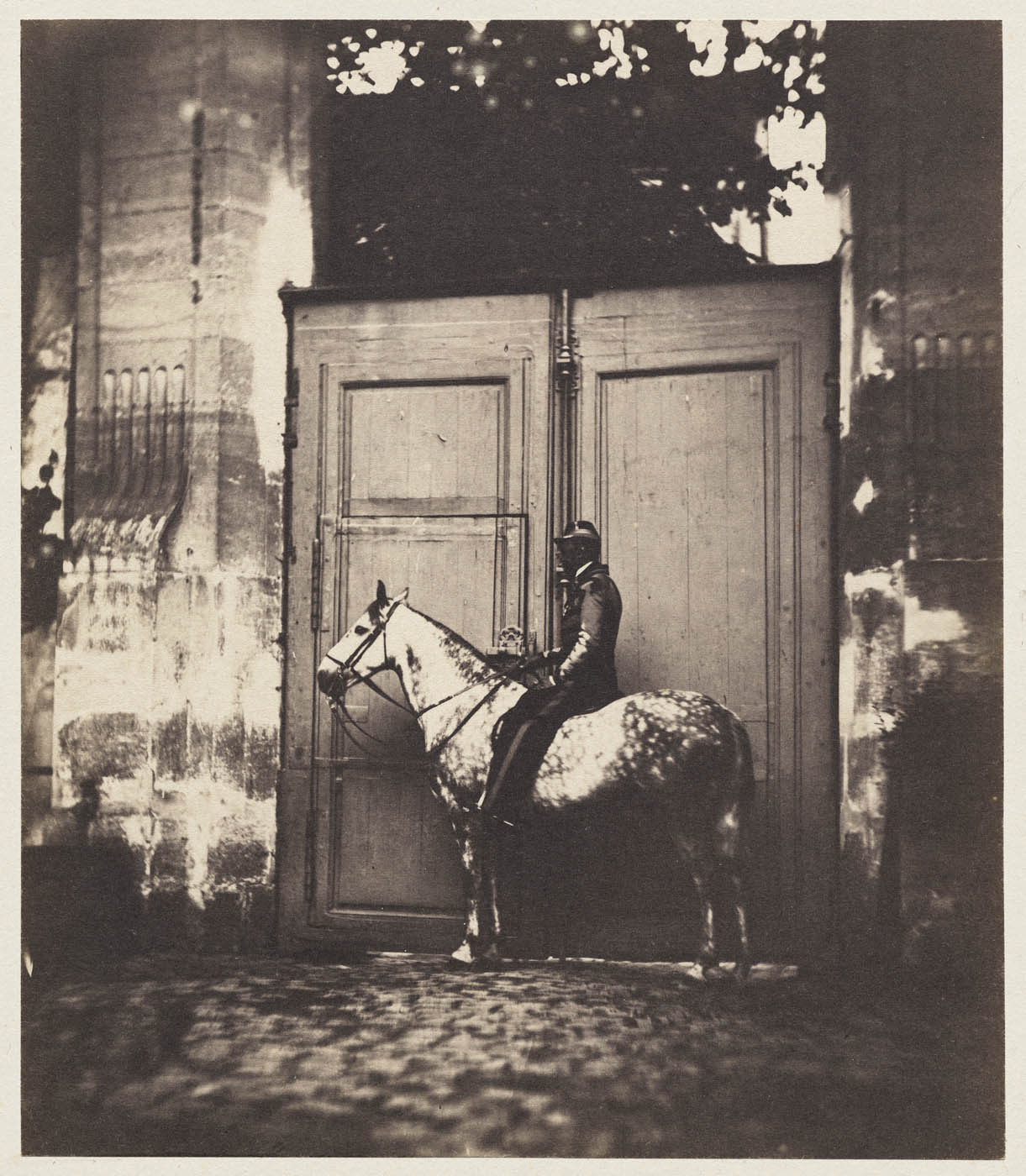
Unknown photographer
Black Horseman in Front of a Doorway
c. 1855
Salt print from wet collodion negative
Image: 15.5 x 13.5cm (6 1/8 x 5 5/16 in.)
Mounted: 47 x 30.6cm (18 1/2 x 12 1/16 in.)
Matted: 50.8 x 40.6cm (20 x 16 in.)
The Cleveland Museum of Art
John L. Severance Fund
The uniform of the rider identifies him as a major in the Chasseurs d’Afrique (African Light Infantry), a cavalry group within France’s colonial army in Africa. By 1855, African people were living in France, so he may have been born and raised there or have been African-born and in France for training.
Magnificent gems of 19th-century French photography.
The studied simplicity of Nadar’s Man on a Horse (c. 1860s, below), man and animal captured against a painted studio backdrop.
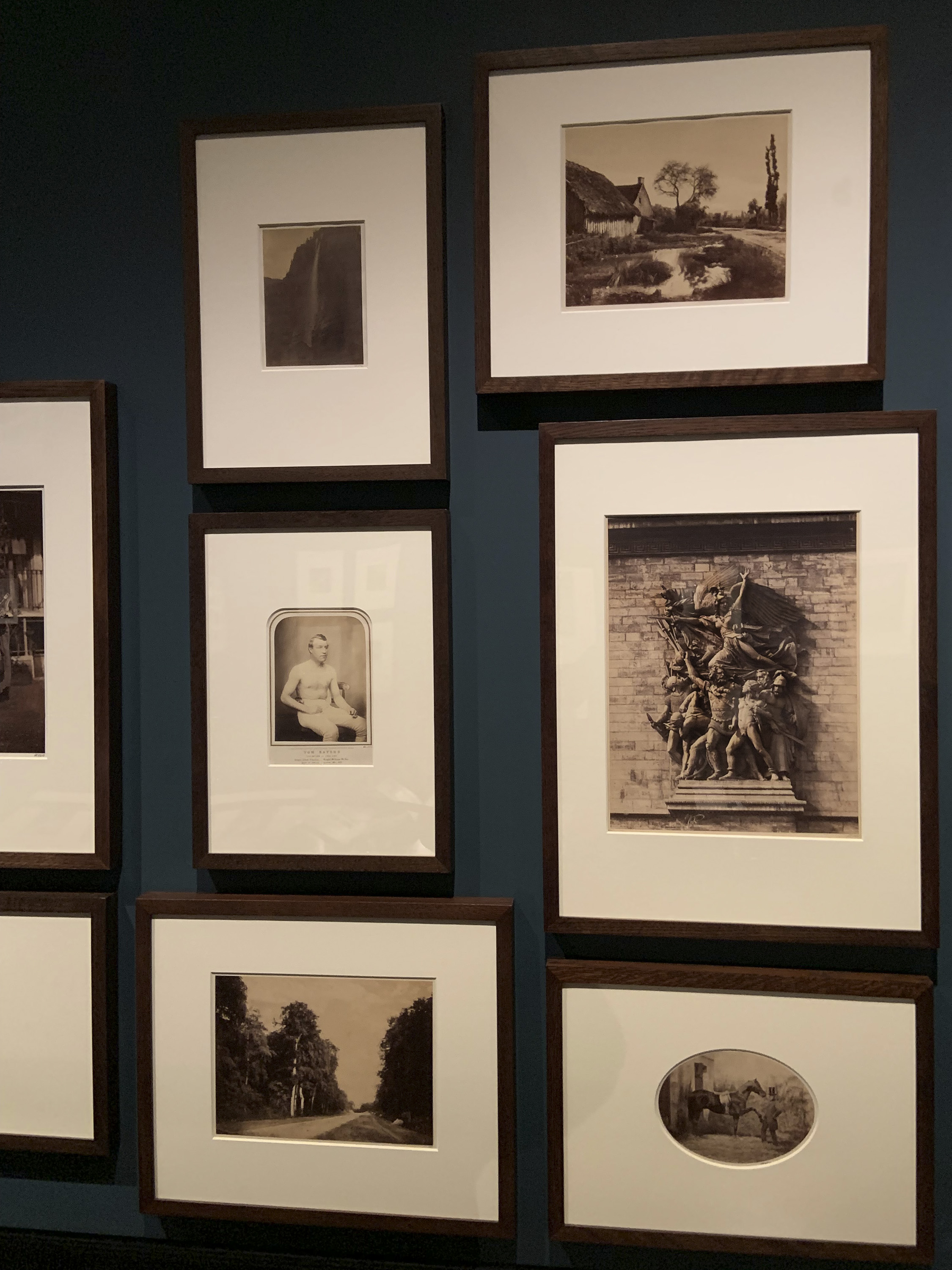
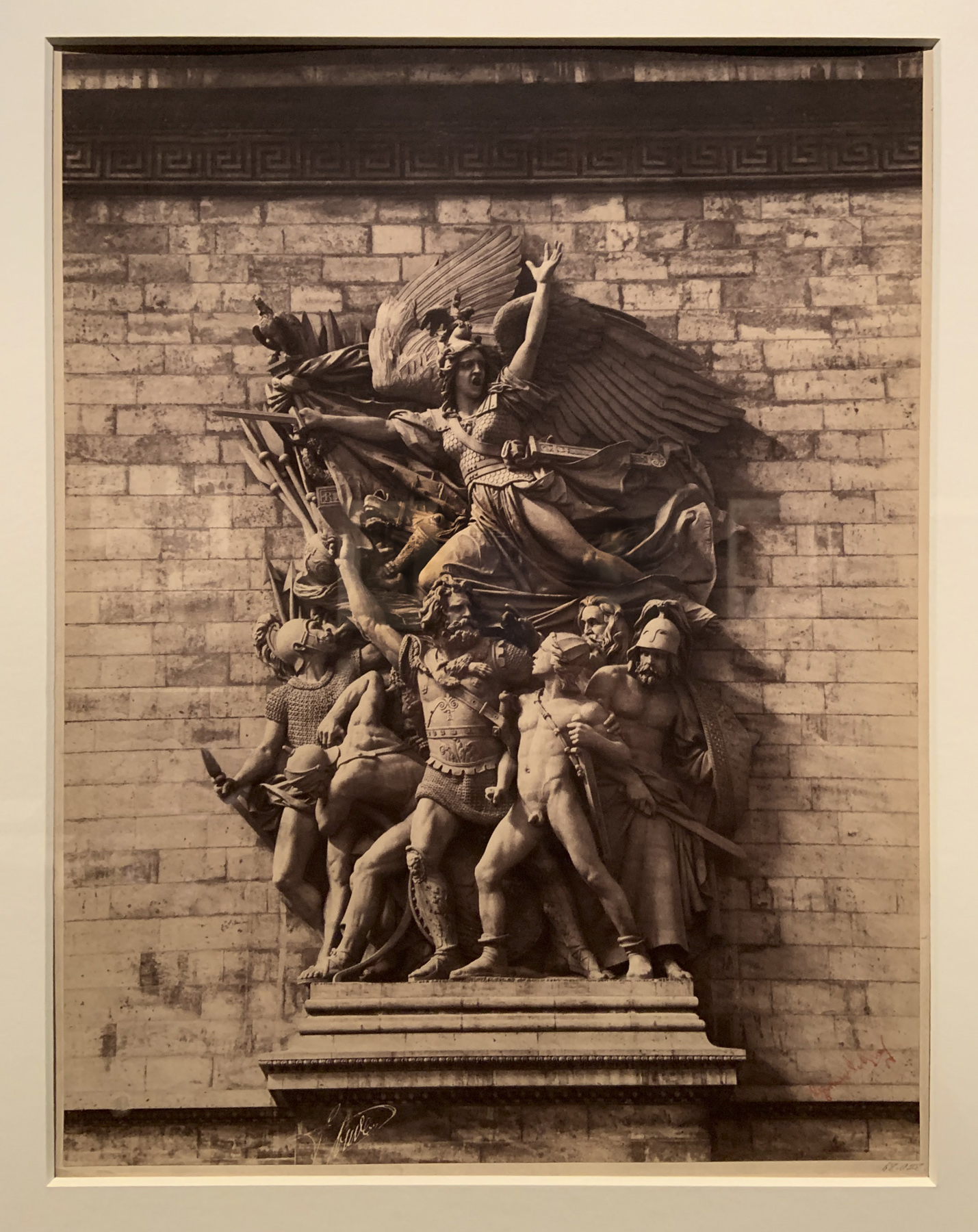
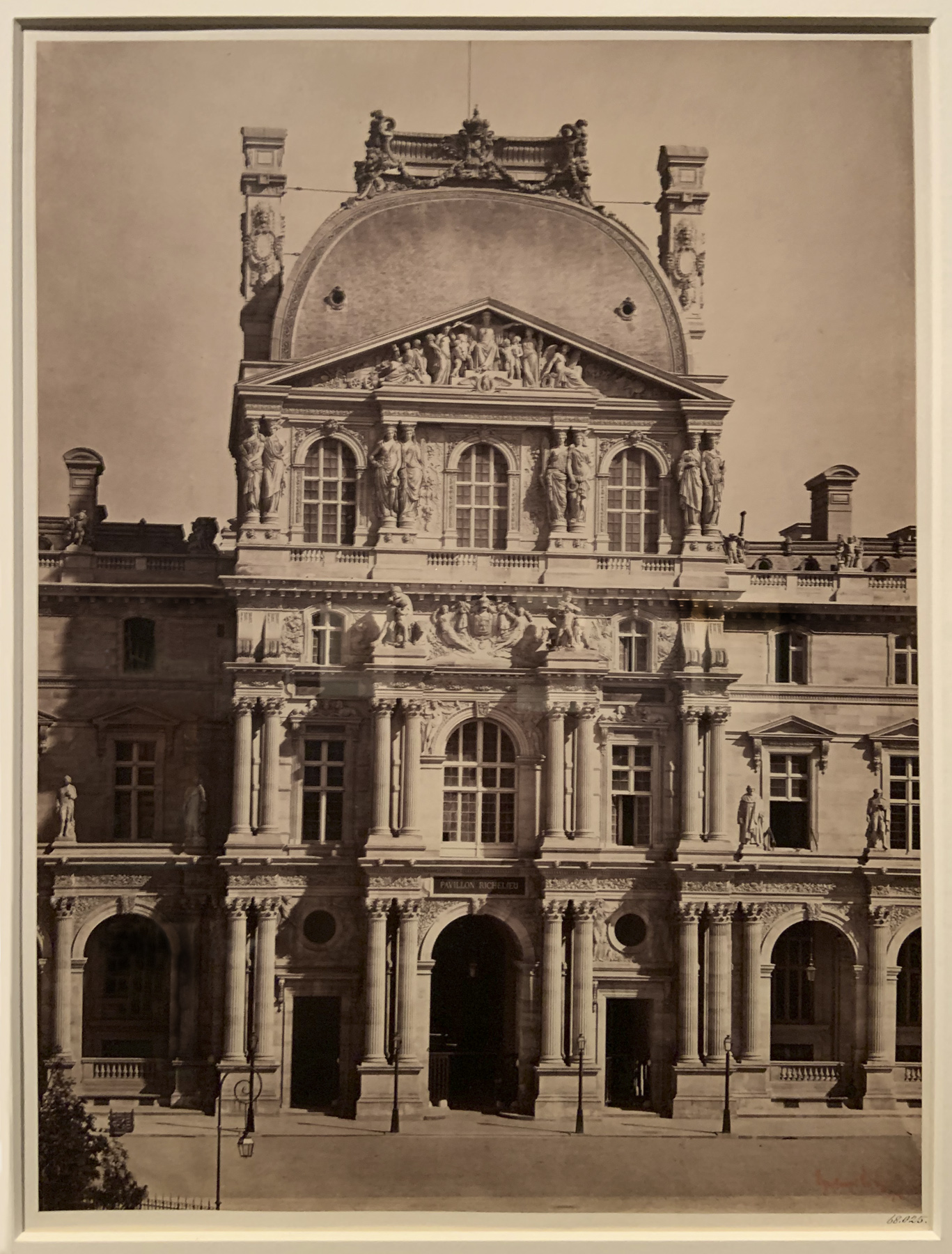
The formal beauty of Édouard Baldus’ architectural salted paper and albumen prints of Notre-Dame, Paris (1852-1853, below), Arc de Triomphe de l’Etoile, Paris (c. 1860s, below), Louvre, Façade rue de Rivoli, Paris (1855, below) and Pavilion Richelieu, Louvre, Paris (1856-1857, below) which emphasise the volume of the structures, their scale and grandeur.
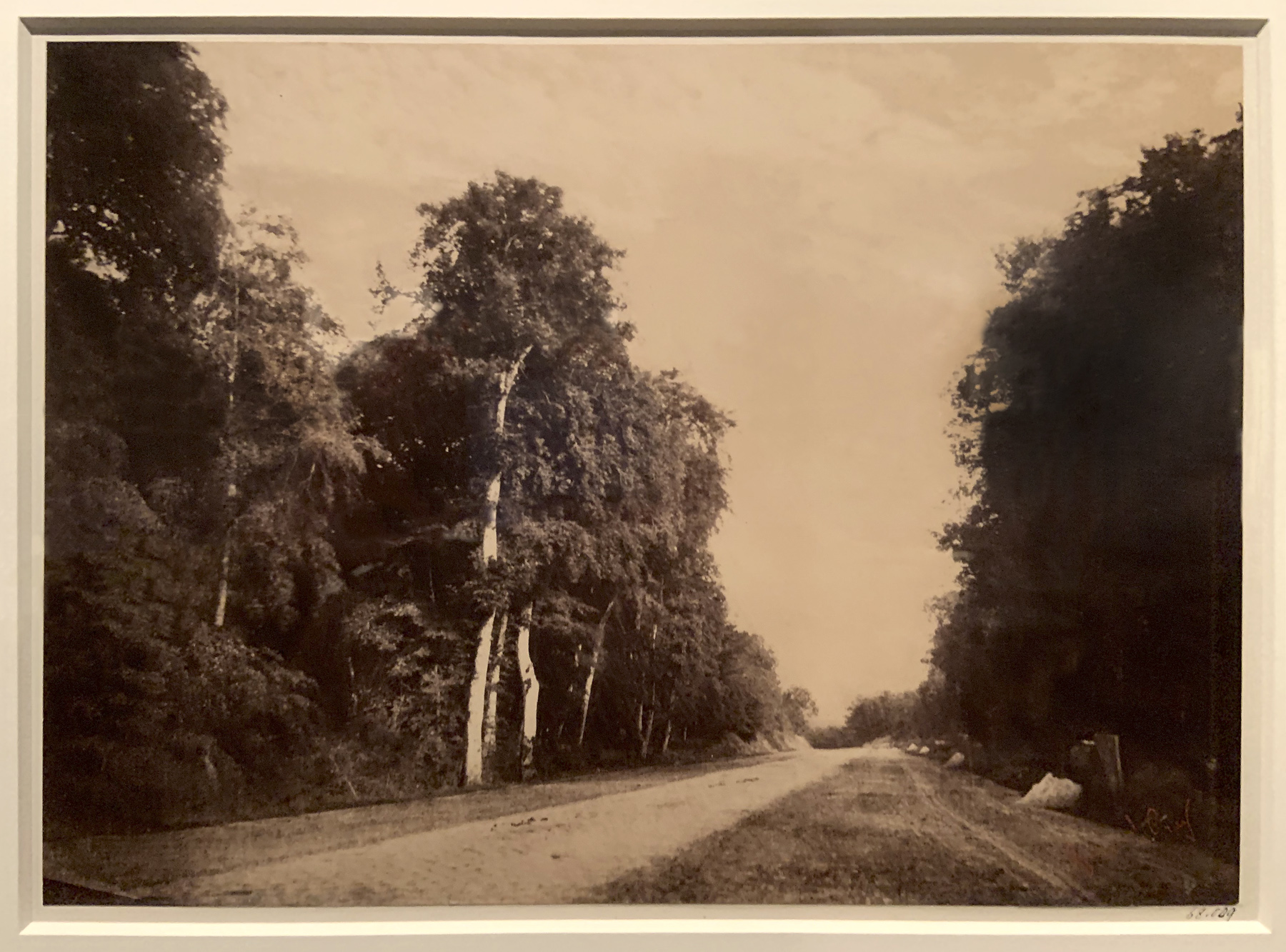
Compare these to the spatial openness and intimacy of Charles Marville’s Rue de la Ferronnerie (c. 1865, below) only 10 years later which leads, inexorably, to the alleyways and architectural details of Eugène Atget capturing a disappearing Paris, an Old Paris, towards the end of the 19th century.
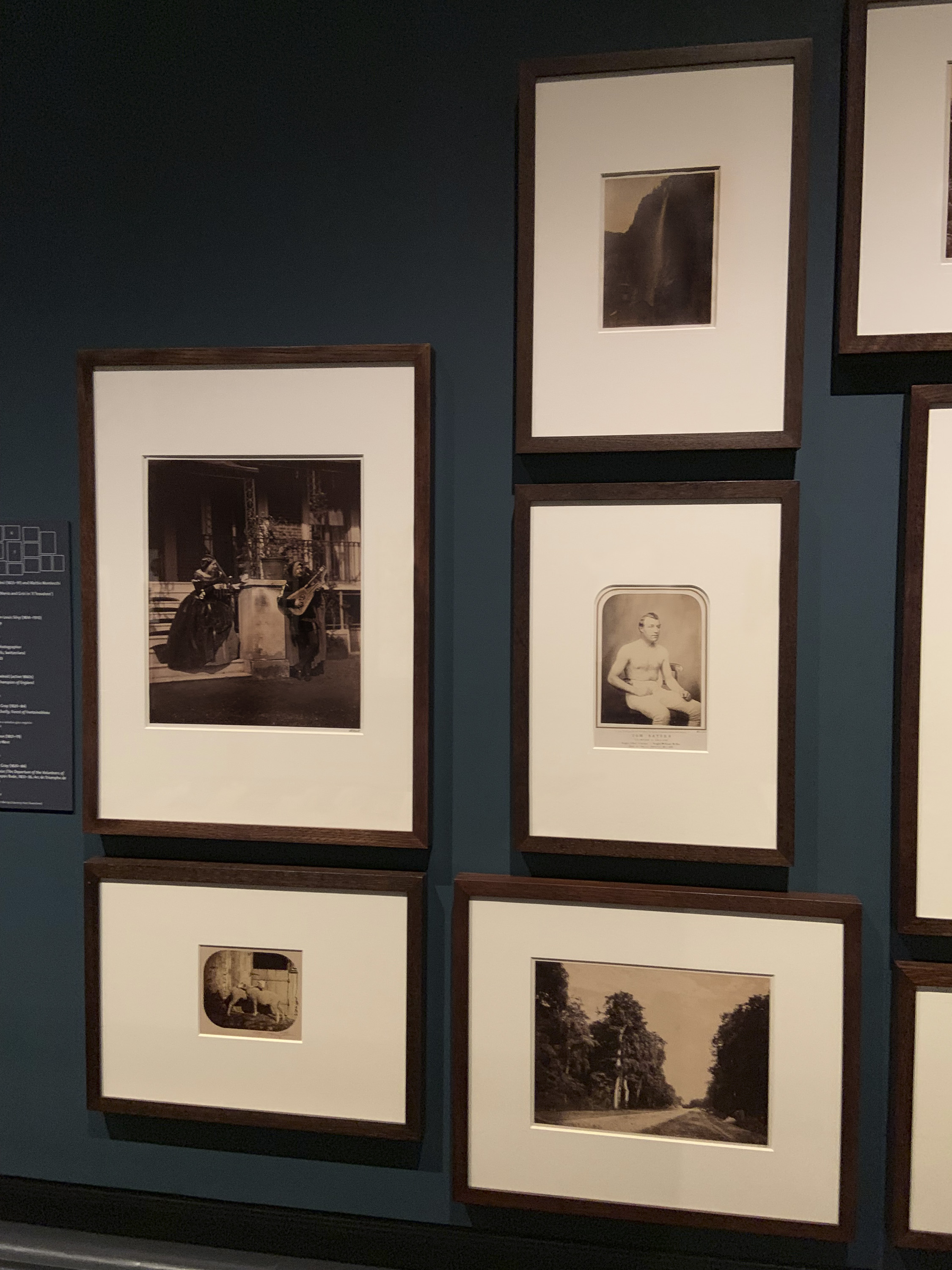
Dotted amongst these are an atmospheric landscape of the French interior near Lyon by that most bucolic of photographers Félix Thiollier; a pastoral village scene of impressionistic intimacy by Adolphe Braun, Untitled (Farm Animals) (1850s, below); and a superb photograph of a stone bridge set in mountainous landscape near the Spanish border taken by Gustave Le Gray, The Bridge of Palalda (near Amelieles-Bains) (1851-1852, below)
No conceptual histrionics, no untoward flourishes, just photographs of the utmost integrity of people and places in a time of change, photographs that hold the viewer’s gaze through the holistic balance and beauty of the images.
Dr Marcus Bunyan
.
Many thankx to The Cleveland Museum of Art for allowing me to publish the photographs in the posting. Please click on the photographs for a larger version of the image.
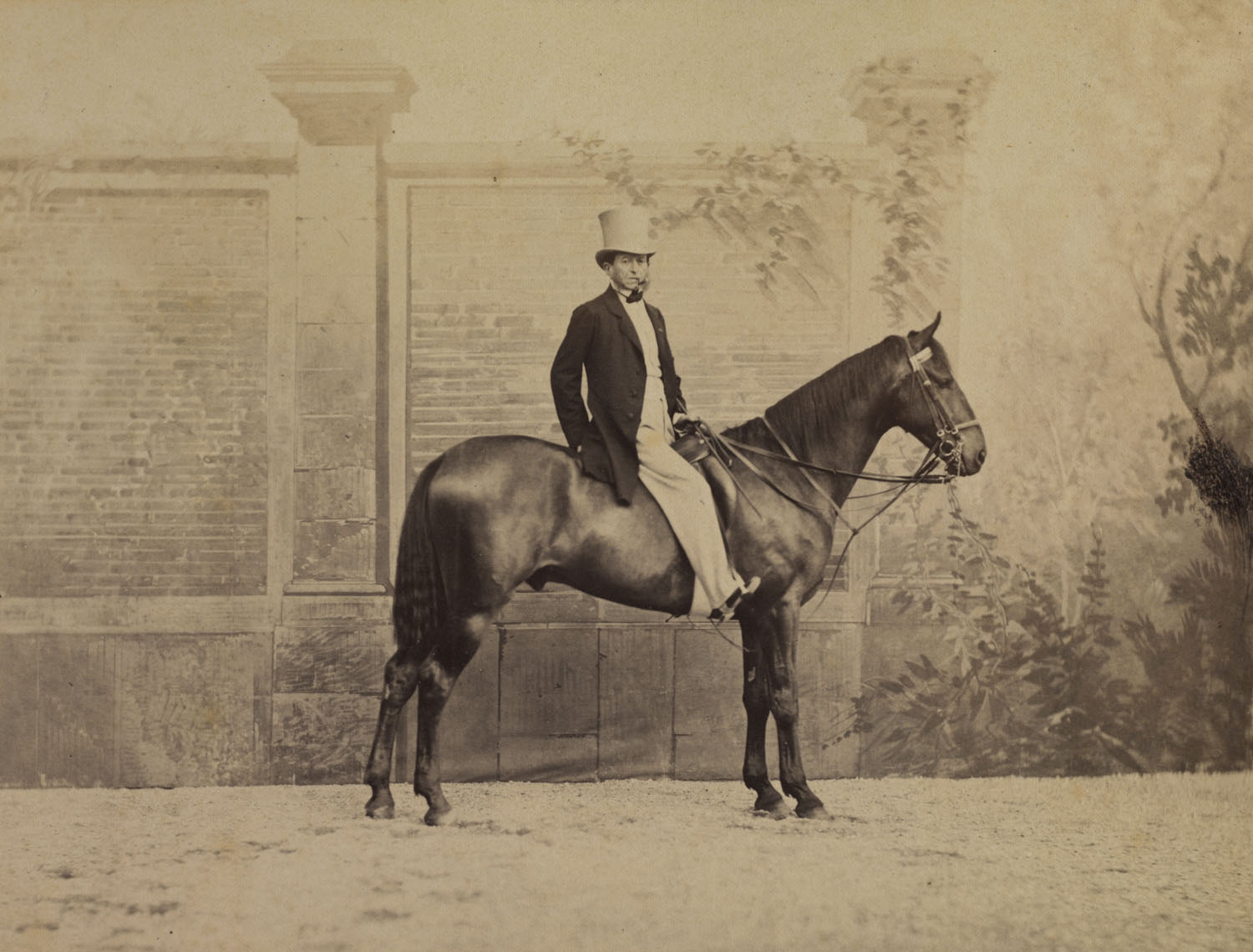
Nadar (French, 1820-1910)
Man on a Horse
c. 1860s
Albumen print from wet collodion negative
Image: 17 x 22.3cm (6 11/16 x 8 3/4 in.)
Matted: 35.6 x 45.7cm (14 x 18 in.)
The Cleveland Museum of Art
Gift of Robert Hershkowitz and Charles Isaacs
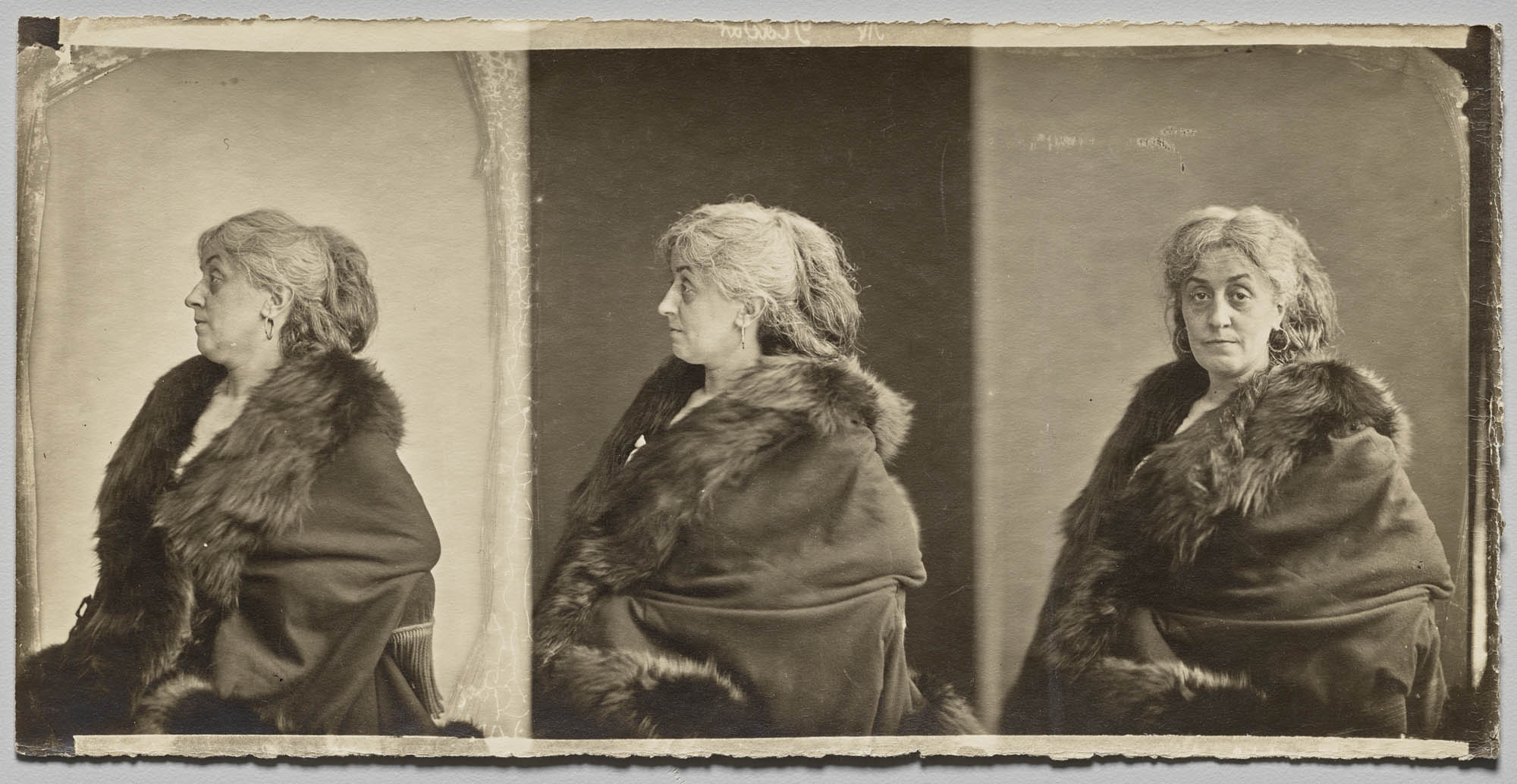
Nadar (French, 1820-1910)
Portrait of Ernestine Nadar, the artist’s wife, wearing fur stole
c. 1880-1883
Uncut sheet of three matte gelatin silver carte-de-visites
Overall: 10.8 x 21.9cm (4 1/4 x 8 5/8 in.)
The Cleveland Museum of Art
Gift of Michael Mattis and Judith Hochberg
This striking and unusual uncut sheet of carte-de-visite exposures was taken by one of France’s most successful early portraitist photographers, Nadar. His wife Ernestine frequently modeled for him, including when he tried out new equipment or processes such as these gelatin silver prints. These portraits seem to be an intimate, direct exchange between sitter and camera, wife and husband.
Nadar
Nadar (Gaspard-Félix Tournachon) French, 1820-1910
Born Gaspard-Félix Tournachon in Paris, Nadar is probably the best known French photographer. His portraits of celebrities and public figures help define our impression of France in the second half of the 19th century; his panache in conducting his business helped popularize photography. Educated at the Collège Bourber, Paris (1833-36), Nadar moved to Lyon, where he studied medicine (1837-38) before continuing his studies at the Hôtel Dieu and the Bicêtre in Paris. He wrote satires and essays and drew caricatures (his pseudonym derived from his barbed wit aimed against the establishment) for a number of Paris publications, eventually founding several of his own, and was a highly visible figure in the city’s cultural and artistic life. Learning photographic technique from Adophe Bertsch and Camille d’Arnaud, Nadar founded a studio in 1854. Twenty years later his son Paul, also a photographer, became director of the business and by 1886 headed the firm. He also worked for a time with his brother, Adrien, who sometimes called himself Nadar jeune, a practice which later prompted Nadar to file a lawsuit. Nadar’s exploits with aerial balloon photography were of both photographic and historic importance. Below ground, he used artificial light to make surveys of the catacombs and sewers of Paris, novel and highly popular curiosities. With his son Paul as photographer, he is credited with the first photo-interview, conducted with the scientist and color theorist Michel-Eugène Chevreul on his 100th birthday in 1886. Because of the importance of his work and the notoriety of his sitters, among them Franz Liszt, George Sand, Sarah Bernhardt, and Honoré Balzac, Nadar will long occupy a key place in the development of photography. T.W.F.
About the exhibition
Édouard Manet and Berthe Morisot lived during a tumultuous yet fertile period in France. Events included war and the loss of territory; modernisation and the rise of industry; and a shift from rural to urban living. As both artists were living in Paris, it became the largest city in continental Europe and the arts capital of the world. Manet and Morisot’s lifetime also coincided with the birth and rise of a new art form – photography – which recorded many of these social, political, and cultural changes.
Masters of the new medium such as Charles Marville and Édouard-Denis Baldus were commissioned by the Emperor Napoleon III, the Louvre museum, and the railroads to document both historic monuments and the construction of new architectural and engineering marvels throughout the country. This era also saw the rise of celebrity portraiture and of the general public as patron. Actresses such as Sarah Bernhardt and popular authors Victor Hugo, Charles Baudelaire, Alexandre Dumas, and others sat for photographers such as Nadar, André-Adolphe-Eugene Disderi, Gustave Le Gray, and Étienne Carjat. The resulting portraits were printed – and sold – in large quantities to meet a soaring public demand for portraits of the luminaries of the time. When the rising urban middle class sought to have their own likenesses recorded, they flocked to the same studios.
In this exhibition, drawn from the museum’s rich holdings of 19th-century French photography, we can feel that we, like the photographers, are eyewitnesses to the transformation of France in the 1800s. This show was organised to complement Manet & Morisot, on view in the Kelvin and Eleanor Smith Foundation Gallery from March 29 through July 5, 2026.
Text from The Cleveland Museum of Art website
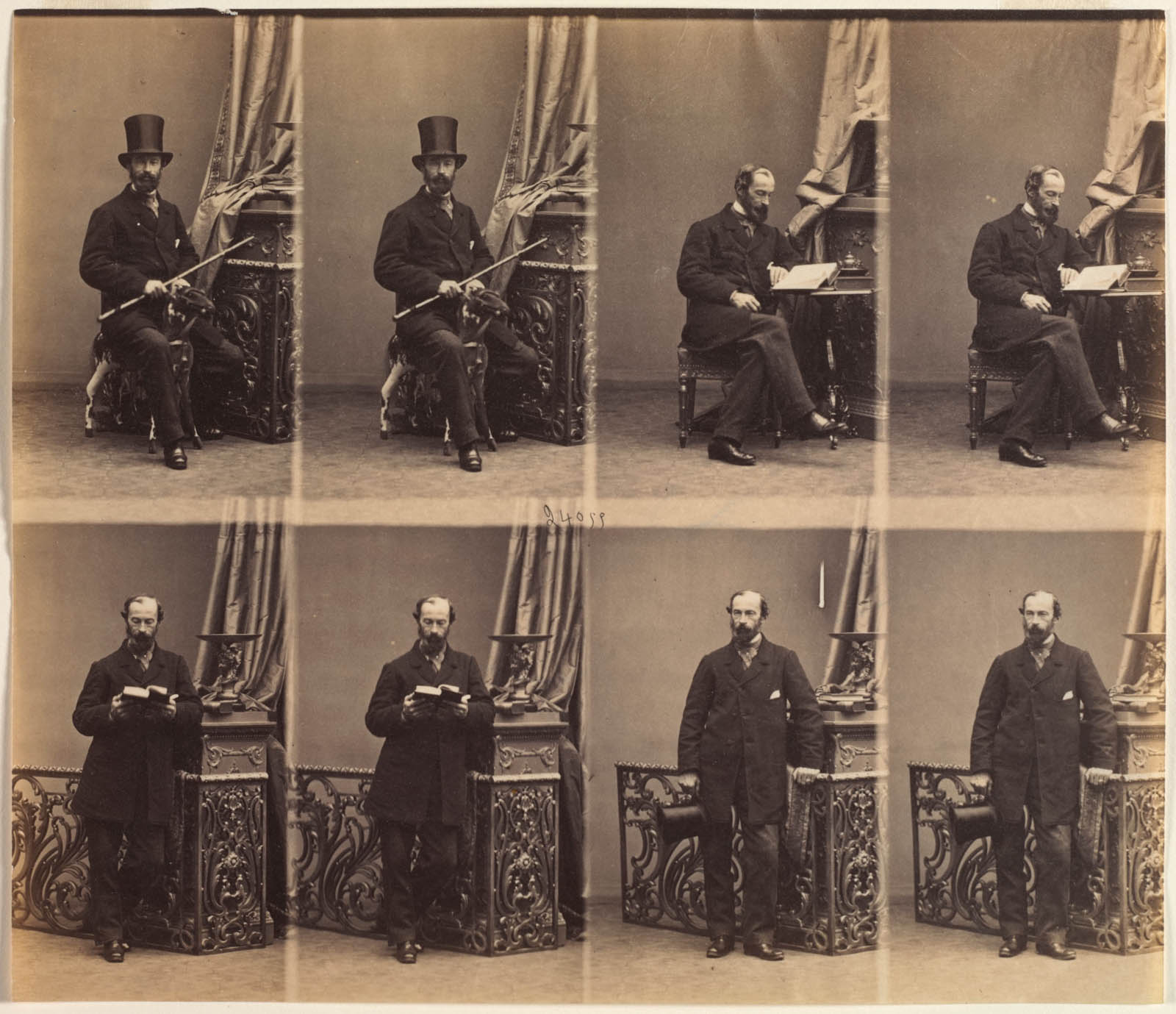
André Adolphe-Eugène Disdéri (French, 1819-1889)
Monsieur Merlen
1861
Albumen print from wet collodion negative, uncut carte-de-visite proof print
Image: 19.9 x 23.1cm (7 13/16 x 9 1/8 in.)
Matted: 35.6 x 45.7cm (14 x 18 in.)
The Cleveland Museum of Art
Gift of Paula and Robert Hershkowitz in memory of Sam Wagstaff
Public domain
The carte-de-visite process was so inexpensive, Monsieur Merlen felt he could clown around, riding a child’s toy horse in the first two exposures.
The carte-de-visite, a small photograph mounted on card stock, was patented by André Adolphe-Eugène Disdéri in 1854. This efficient, inexpensive process employed a camera with four lenses and a sliding plate holder that produced eight sequential exposures on a single glass negative. The resulting paper print was cut into individual images. This uncut sheet, which includes several humorous views, was probably produced for the sitter’s approval. The low cost of the carte-de-visite led to the trend of collecting celebrity portraits. By 1862, Disdéri’s studio was producing over 2,000 prints a day, making him reputedly the world’s richest photographer.
André Adolphe-Eugène Disdéri
André-Adolphe-Eugène Disdéri French, 1819-1889
Disdéri is best known as a portraitist and populariser of the carte-de-visite. He spent 10 years as a painter and working in the theatre, and another five in the clothing business, before becoming seriously interested in photography around age 30. He first operated studios in Brest and Nîmes, then moved to Paris and opened a studio in 1854, and a second in 1863. In 1854 Disdéri patented the carte-de-visite, a method of producing a number of small images on a single negative that achieved great popularity. He later opened additional studios in London, Madrid, and Toulon. Disdéri was one of the best known portrait photographers of his day, with many important commissions and sitters. Like Mathew Brady, he was an innovator and entrepreneur as well as an artist. The carte-de-visite, which he did not invent, but rather adapted, helped photography to become increasingly versatile as a medium and available to people of all means. In 1879 Disdéri sold his business and moved to Nice. Despite his success, he died 10 years later in Paris in poverty, obscurity, and poor health. T.W.F.
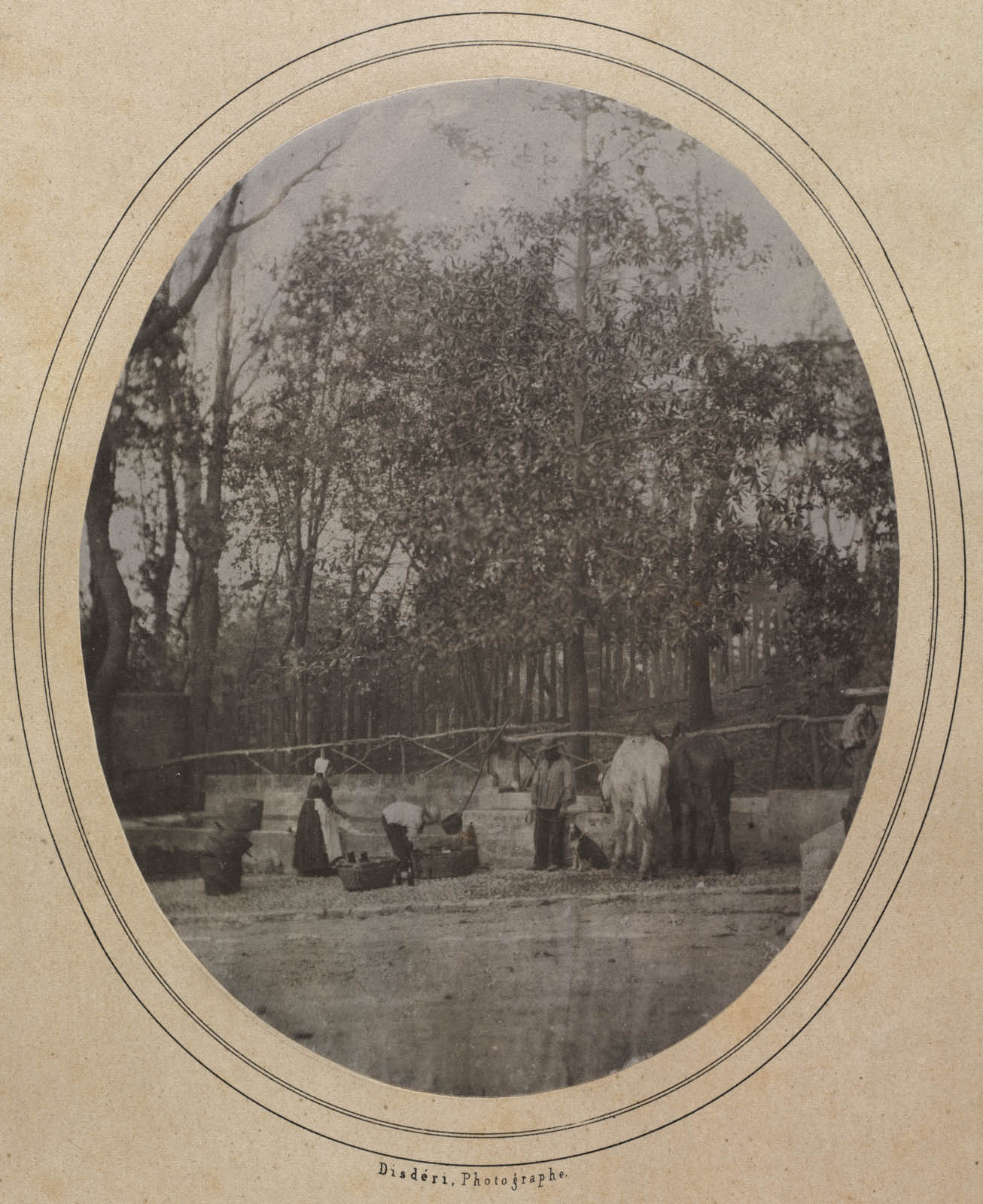
André Adolphe-Eugène Disdéri (French, 1819-1889)
Village Scene (Southern France)
c. 1853
Salted paper print from waxed-paper negative
Image: 15.2 x 12.2cm (6 x 4 13/16 in.)
Matted: 45.7 x 35.6cm (18 x 14 in.)
The Cleveland Museum of Art
John L. Severance Fund
André Adolphe-Eugène Disdéri is best known for his development in Paris in 1854 of the carte-de-visite format for portraits. The year before, he was living in Southern France where he made this rural view. Disderi used waxed-paper negatives for only a short time. The oval cropping and picturesque scene – posed but seemingly spontaneous – suggest that this is meant to be an artistic, rather than a documentary, photograph.
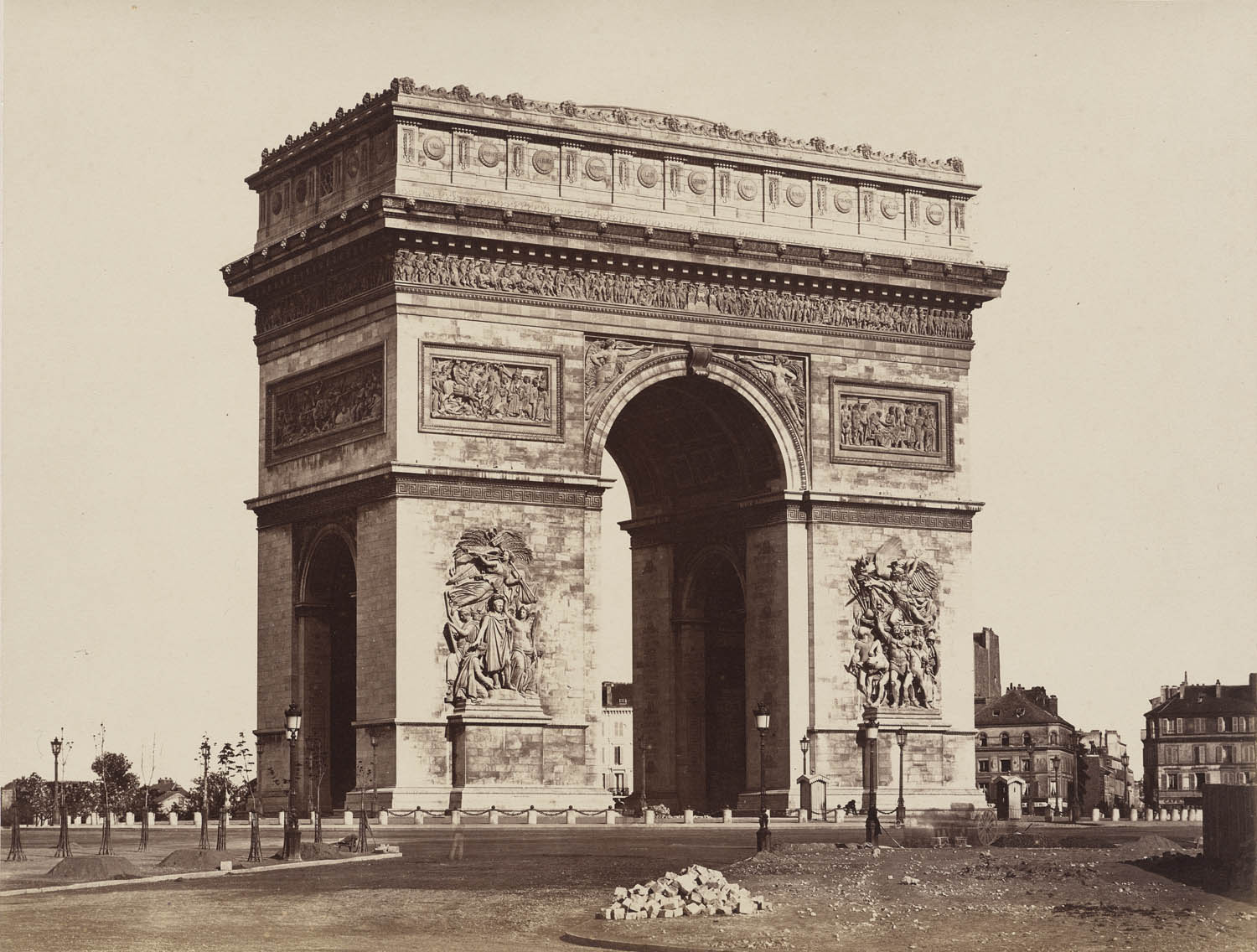
Édouard Baldus (French, 1813-1889)
Arc de Triomphe de l’Etoile, Paris
c. 1860s
Albumen print from collodion negative
Image: 21.5 x 28.2cm (8 7/16 x 11 1/8 in.)
Paper: 21.5 x 28.2cm (8 7/16 x 11 1/8 in.)
Mounted: 32.6 x 43.5 cm (12 13/16 x 17 1/8 in.)
The Cleveland Museum of Art
Severance and Greta Millikin Purchase Fund
Public domain
For three decades starting in 1854, Paris was a construction site as Baron Haussmann replaced the crooked streets and crumbling buildings of medieval Paris with a modern city. The cobblestones in the foreground were for paving the newly expanded set of broad avenues that radiated from the Arc, part of Baron Haussmann’s urban renewal plans. Exposure times for film in the 1860s were usually too long to capture people in the street, but a man – perhaps the paver – paused long enough to leave his “ghost” to the left of the cobblestones.
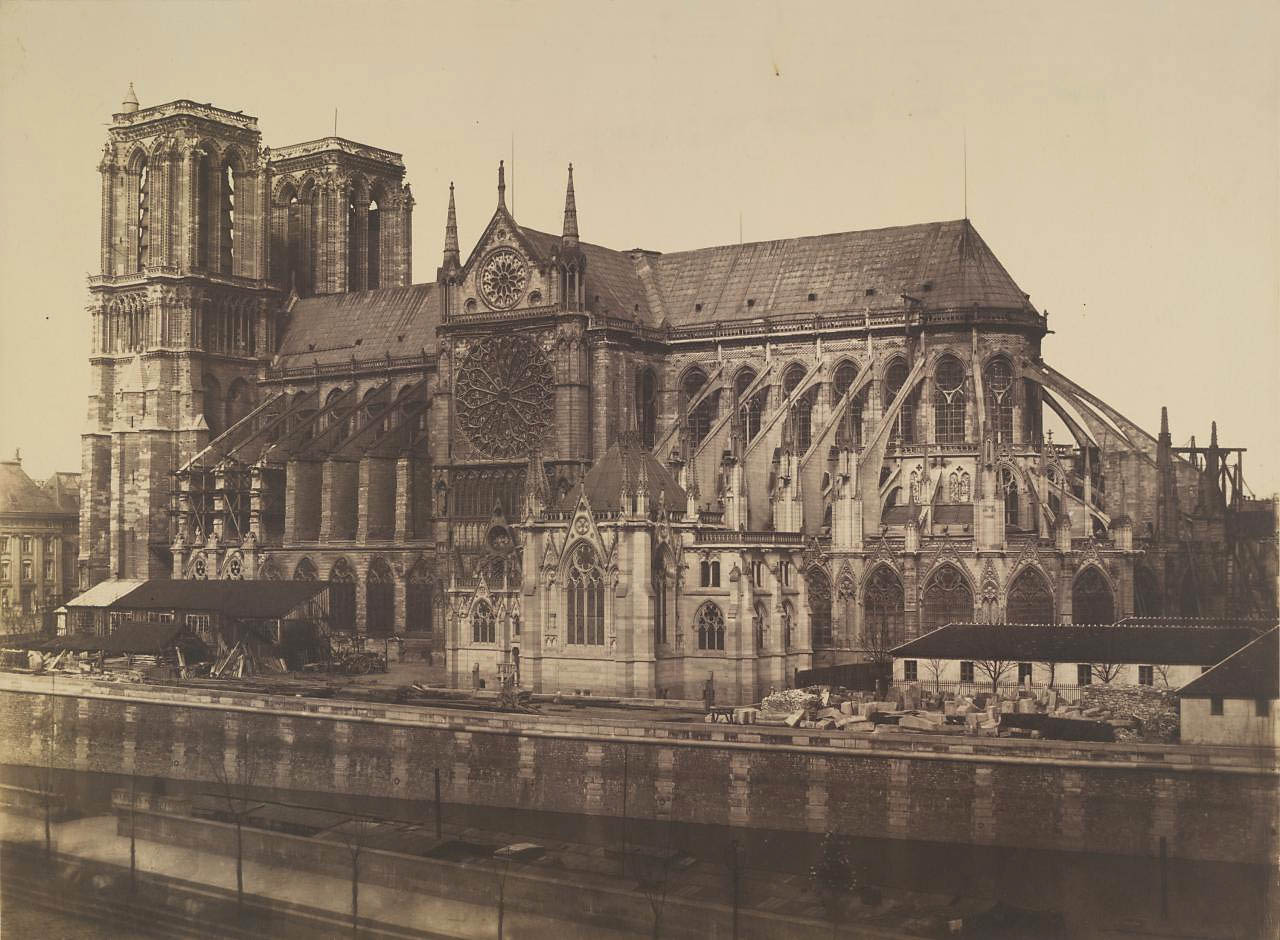
Édouard Baldus (French, 1813-1889)
Notre-Dame, Paris
1852-1853
Salted paper print from wet collodion negative
Image: 29.5 x 44.7cm (11 5/8 x 17 5/8 in.)
Matted: 50.8 x 61cm (20 x 24 in.)
The Cleveland Museum of Art
Edwin R. and Harriet Pelton Perkins Memorial Fund
Édouard Baldus photographed the side of the famed cathedral to capture the volume of the structure. Visible from this angle are two workshops for the church’s restoration, some of the construction materials, and scaffolding on three of its flying buttresses (architectural structures that form an arch with the wall they support).
Édouard Baldus
Édouard Baldus French, b. Prussia, 1813 – 1889
The large and regal prints made by Édouard-Denis Baldus are widely agreed to be among the finest photographic images ever produced. After serving as an artillery officer in the Prussian army, Baldus left his native country for France during the 1830s to become a painter. He exhibited his paintings of religious subjects, portraits, and genre scenes in the Paris Salons from 1841 – 51 and was naturalized as a French citizen in 1849, the same year his interests turned to photography. Combining his training in painting with an inquisitive, inventive technical expertise, Baldus produced a body of work of exceptional quality and interest. His subjects included architecture, landscape, and engineering feats. In 1851 the Commission des monuments historiques selected him for the Missions héliographique – a government project that sponsored the photographing of endangered classical and medieval architecture in France. For this important series Baldus produced views of Burgundy, Provence, and the Dauphiné, and the following year he completed a commission for the Ministry of the Interior. In 1855 he began his photography of railroads, some of his most distinctive work. A copy of his album recording the line between Paris and Boulogne was presented to Queen Victoria. He also documented the flooding of the Rhone, as well as construction of the new Louvre and other Paris views. A founding member of the Société héliographique and a member of the Société française de photographie (1857), Baldus exhibited his photographs widely in London, Amsterdam, Edinburgh, Brussels, and Paris and won numerous medals of award. A master printer, he produced combination prints in the early 1850s, frequently retouching his images with pencil and ink. His best work appears most often in specially assembled albums – such as Les principaux Monuments de la France reproduits en héliogravure par E. Baldus, published in 1875 from plates drawn from earlier negatives. Today, his work continues to be much sought after and to set a standard by which other photographers are judged. T.W.F.

Édouard Baldus (French, 1813-1889)
Louvre, Façade rue de Rivoli, Paris
1855
Albumen print
Image: 28 x 21.8cm (11 x 8 9/16 in.)
Paper: 39.9 x 29.9cm (15 11/16 x 11 3/4 in.)
The Cleveland Museum of Art
Gift of William and Margaret Lipscomb
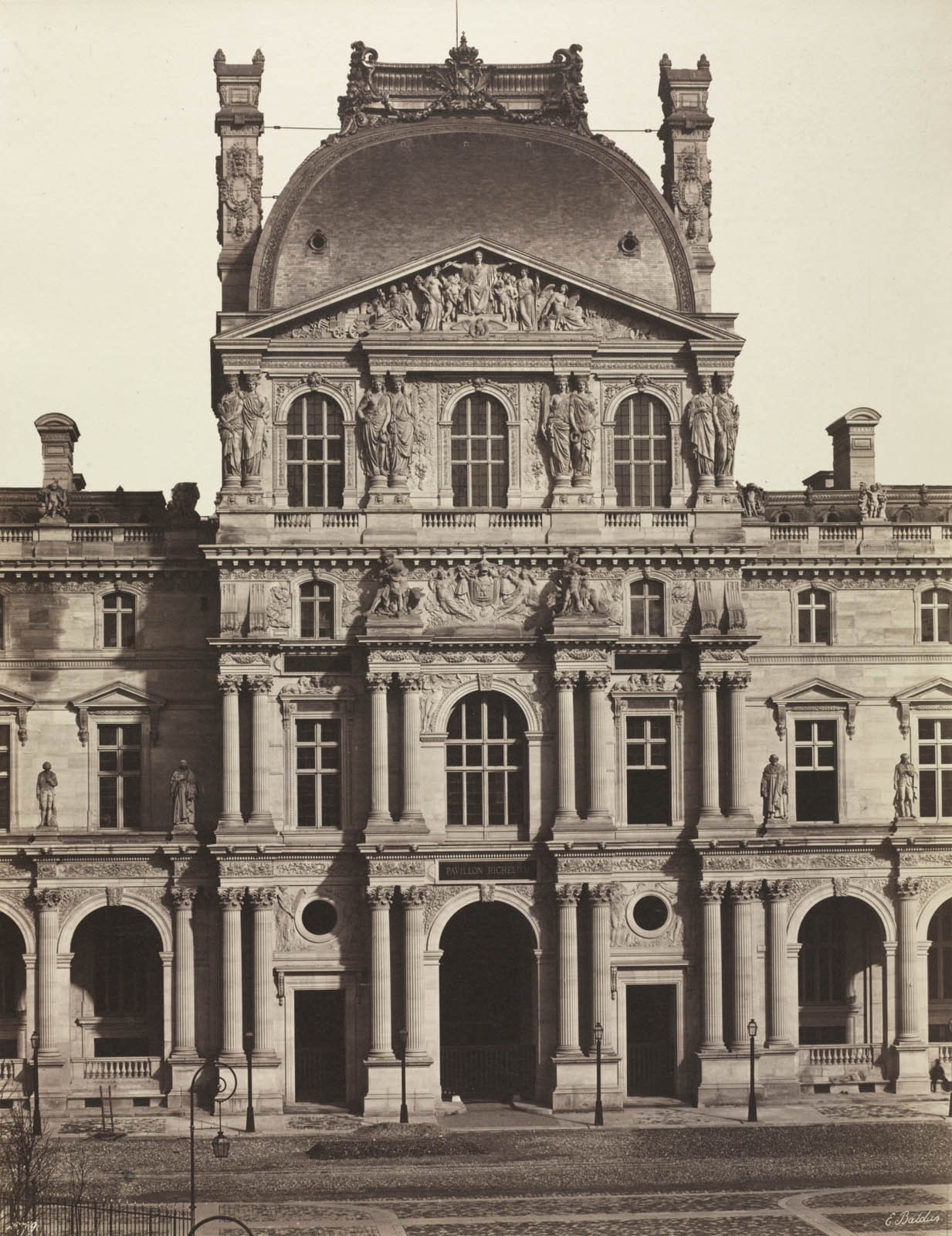
Édouard Baldus (French, 1813-1889)
Pavilion Richelieu, Louvre, Paris
1856-1857
Salted paper print, albumenised, from wet collodion negative
Image: 44.5 x 34.3cm (17 1/2 x 13 1/2 in.)
Matted: 61 x 50.8cm (24 x 20 in.)
The Cleveland Museum of Art
Andrew R. and Martha Holden Jennings Fund
In 1854, Édouard Baldus and two other artists were commissioned to record construction of the New Louvre. New wings joined the Louvre Palace, started in the late 1100s, to the Tuileries Palace, begun in 1564. The Pavilion Richelieu, completed shortly before this photograph was taken, originally housed governmental offices and only became part of the Louvre Museum in 1993.
Opening this weekend at the Cleveland Museum of Art, France in the Time of Manet and Morisot offers visitors a vivid view of the people, places, and defining moments that shaped 19th-century France. With approximately 50 photographs from CMA’s rich holdings, visitors will get a firsthand glimpse of the rapid industrial growth and political upheaval in this tumultuous, yet fertile, period of time.
This CMA-organised companion exhibition was designed to complement Manet & Morisot, the first ever major exhibition dedicated to the artistic exchange between Édouard Manet often referred to as the father of modern painting, and Berthe Morisot, the only woman among the founding members of the Impressionist movement. While Manet & Morisot travels nationally, this companion exhibition is uniquely presented at CMA, offering visitors an experience available only in Cleveland. Visitors to the CMA will have the opportunity to experience both exhibitions now through July 5, 2026.
“It’s truly a pleasure to share our rich holdings of 19th-century French photography alongside Manet & Morisot,” said Barbara Tannenbaum, curator of photography and chair of prints, drawings, and photographs. “In the mid-1800s, when the two painters were living in Paris, it became the largest city in continental Europe and the arts capital of the world. However, France also endured war and the loss of territory; experienced modernisation and the rise of industry; and saw a shift from rural to urban living. These events coincided with the birth of a new art form – photography – which was used to record these social, political, and cultural changes.”
In the 19th century, masters of the newfound photography medium, such as Charles Marville and Édouard Baldus, were commissioned by Emperor Napoleon III, the Louvre museum, and the railroads to document both historic monuments and the construction of new architectural and engineering marvels throughout the country.
This era also saw the rise of celebrity portraiture and of the public as patron. Actresses such as Sarah Bernhardt and popular authors Charles Baudelaire, Alexandre Dumas, and others sat for photographers such as Nadar, André Adolphe-Eugene Disderi, and Étienne Carjat. The resulting portraits were printed – and sold – in large quantities to meet a soaring public demand for portraits of the luminaries of the time. When the rising urban middle class sought to have their own likenesses recorded, they flocked to the same studios.
France in the Time of Manet and Morisot, a free exhibition, will be on view in the Mark Schwartz and Bettina Katz Photography Galleries from May 10, 2026, through August 23, 2026. Manet & Morisot, a ticketed exhibition, is on view in the Kelvin and Eleanor Smith Foundation Gallery through July 5, 2026.
“Together, these exhibitions offer a compelling portrait of a society in transition – one that visitors can now experience firsthand at the Cleveland Museum of Art,” said Tannenbaum.
Press release for The Cleveland Museum of Art
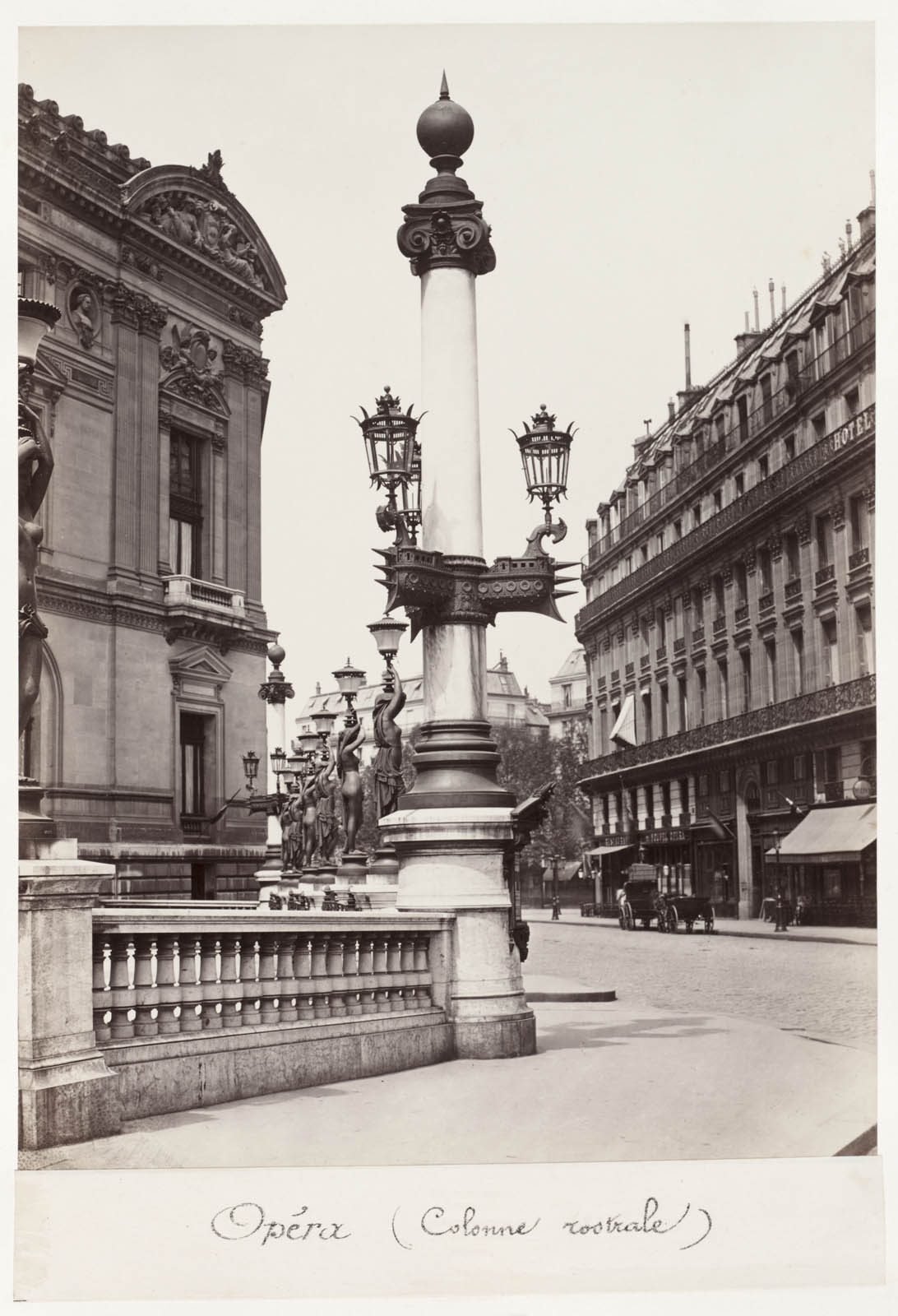
Charles Marville (French, 1813-1879)
Opéra (Rostral Column)
c. 1875
Albumen print from wet collodion negative
Image: 37.7 x 26.7cm (14 13/16 x 10 1/2 in.)
Mounted: 35.4 x 26.7cm (13 15/16 x 10 1/2 in.)
Matted: 71.1 x 55.9cm (28 x 22 in.)
The Cleveland Museum of Art
Purchase from the Karl B. Goldfield Trust
In the 1800s, gas lamps replaced the oil lights. When Napoleon III commissioned a new opera house in Paris in 1860, it was surrounded by a “Ring of Light,” including this column with three gas streetlights. The opera house became the setting for Gaston LeRoux’s 1910 novel The Phantom of the Opera, which inspired the 1976 musical and 2004 film.
Charles Marville
Charles Marville French, 1813-1879
At the invitation of the city of Paris, photographer Charles Marville was among the first to document the ancient quarters of his birthplace. His views, taken in the late 1850s, were intended to record the many buildings and neighborhoods ultimately destroyed by Baron Georges-Eugène Haussmann’s urban planning project that would create the boulevards and open spaces of modern Paris. While Marville’s survey of the city, extensive and thorough in scope, prefigured other important efforts of its kind, it is distinguished by its emotional accessibility. His work beautifully reveals a Paris that has long disappeared. Originally trained as a painter and illustrator, Marville worked with both calotype and glass plate negatives. He photographed in France, Italy, Germany, and Algeria, becoming most well known for his architectural imagery but also producing acclaimed landscapes and studies of trees. Many of Marville’s early views, often considered his best, were included in the albums of Louis-Désiré Blanquart-Évrard before the printer’s establishment in Lille closed in 1855. Named official photographer of Paris in 1862, Marville also served as photographer to the Imperial Museum of the Louvre and to King Vittorio Emmanuelle of Italy. T.W.F.
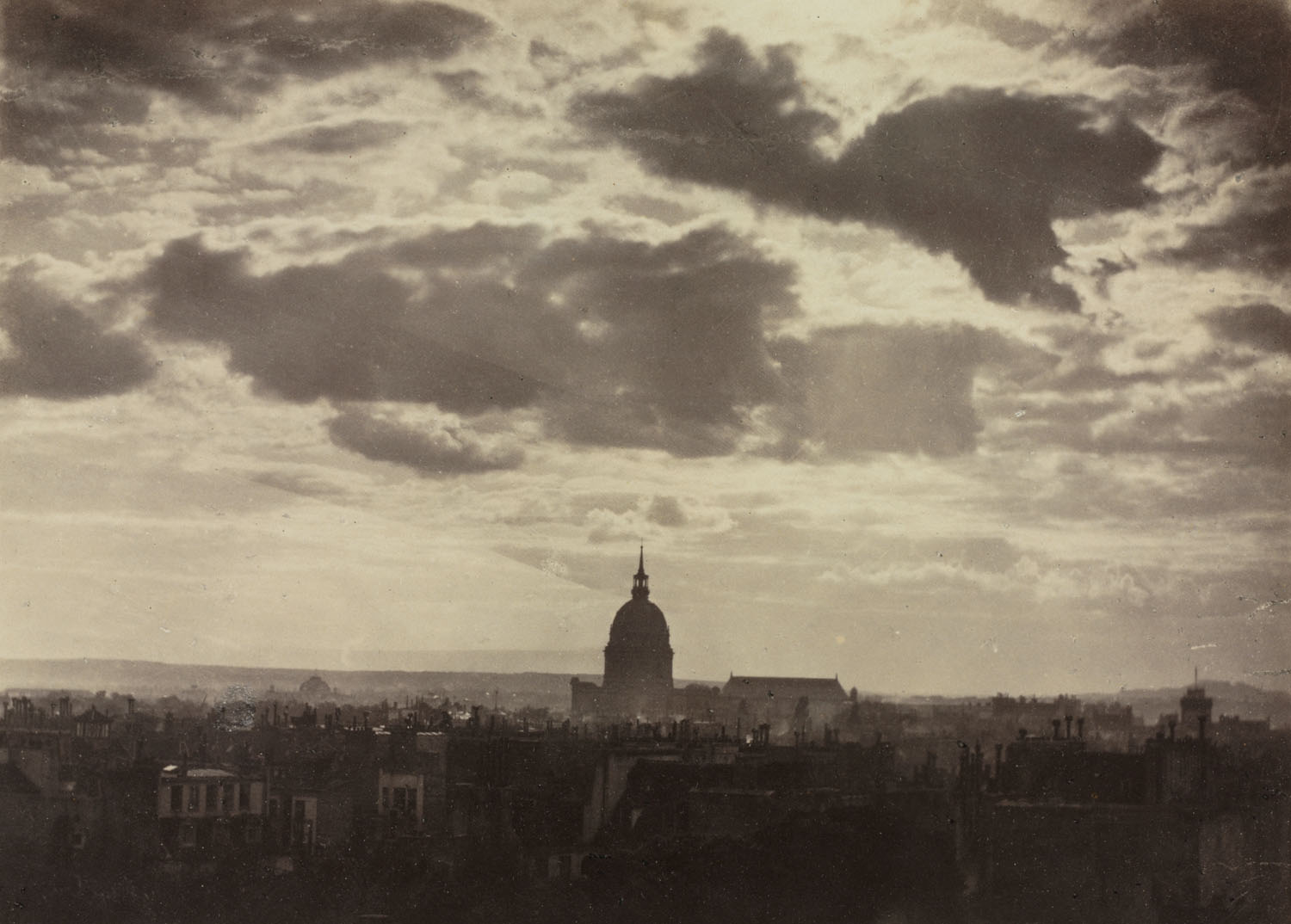
Charles Marville (French, 1813-1879)
Sky Study, Paris
1856-1857
Albumen print from wet collodion negative
Image: 15.3 x 21.4cm (6 x 8 7/16 in.)
Matted: 40.6 x 50.8cm (16 x 20 in.)
The Cleveland Museum of Art
John L. Severance Fund
Thirty years before the construction of the Eiffel Tower, Charles Marville made a series of views of the skies over Paris, some from various rooftops and others from his apartment window. This view frames the city so that the dome of the chapel of Les Invalides – a retirement home and hospital for military veterans – dominates the skyline. In the 1850s, the light-sensitive coatings for photographic plates were incapable of properly exposing both earth and the sky in a single shot. Marville here set his camera to capture the dramatic sky and clouds, which meant that the city below, for the most part, became a dark mass of undifferentiated buildings. The scale, drama, and majesty of this natural spectacle overwhelm human achievements.
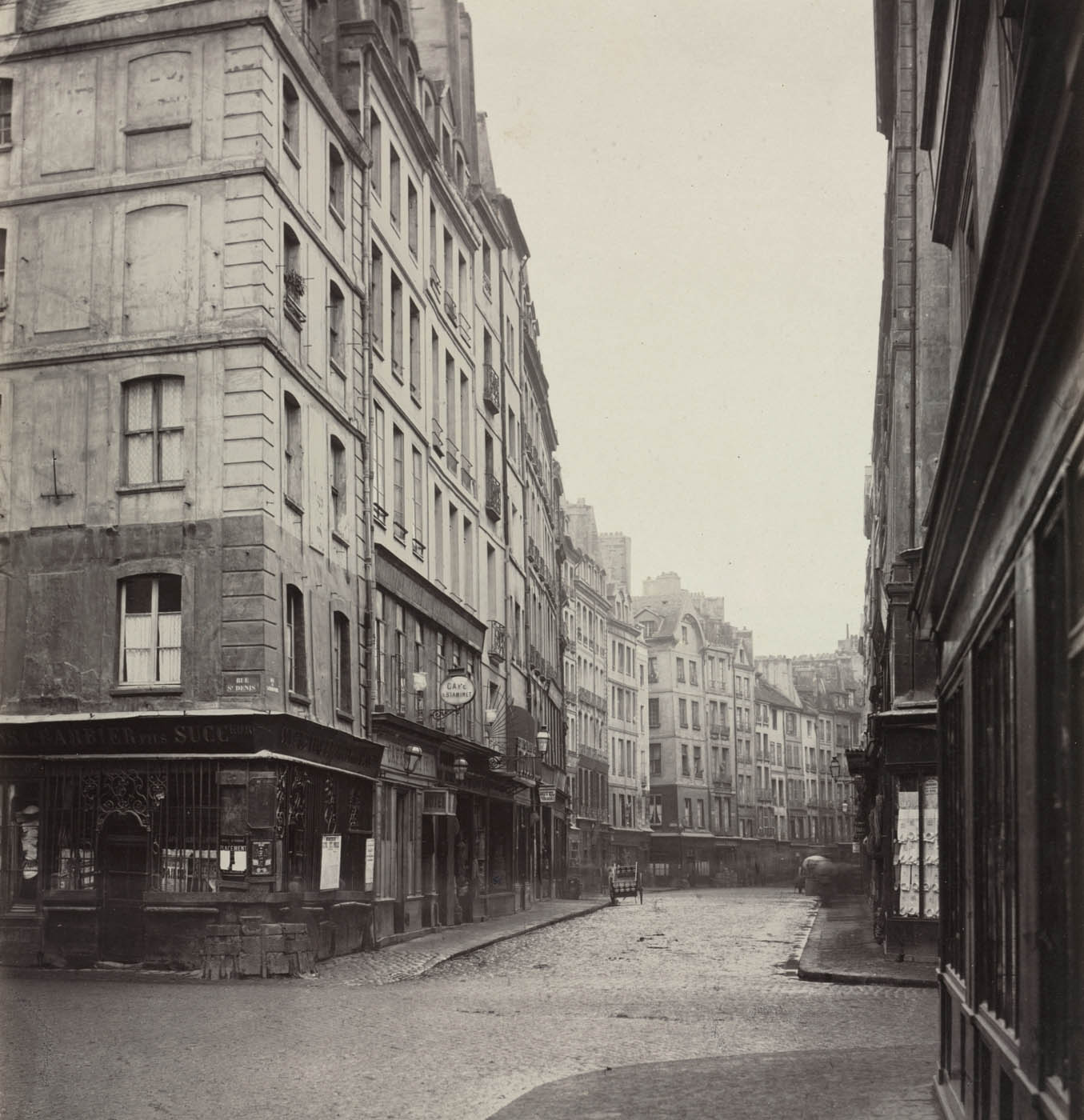
Charles Marville (French, 1813-1879)
Rue de la Ferronnerie
c. 1865
Albumen print from wet collodion negative
Image: 28 x 27cm (11 x 10 5/8 in.)
Matted: 61 x 50.8cm (24 x 20 in.)
The Cleveland Museum of Art
Leonard C. Hanna Jr. Fund
Charles Marville preferred photographing on overcast, rainy days when diffused light and glistening cobblestones yielded an image with the maximum tonal range and detail. In 1865, the ground floor spaces on the Rue de la Ferronnerie or “street of ironwork” (named in 1229) were occupied by businesses including a café, a hotel, and a men’s clothing store. Apartments on the upper floors housed some of the many people who moved from the country into the city during the Second Empire.
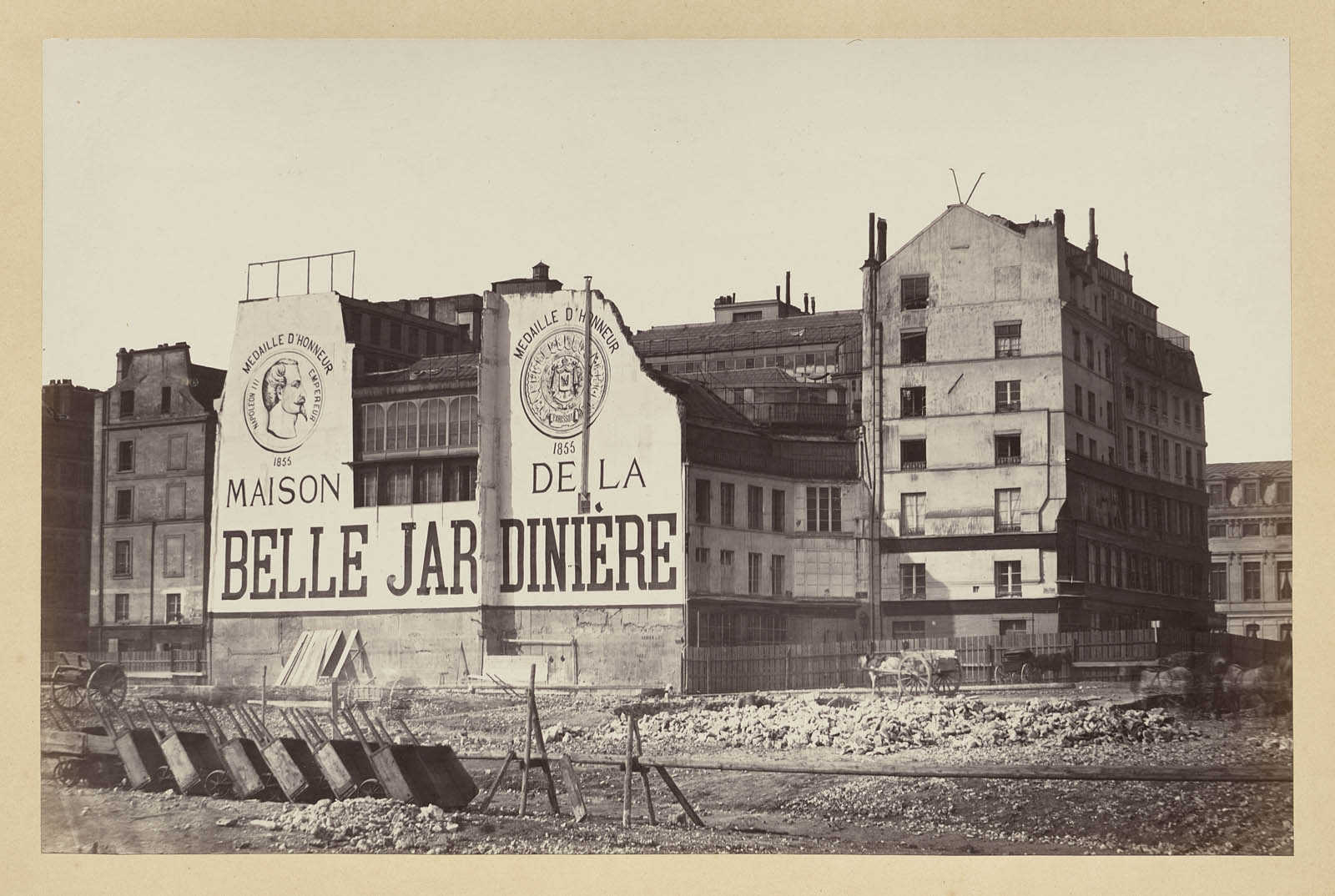
Attributed to Charles Marville (French, 1813-1879)
La Belle Jardinère: le magasin de la rue de la Cité pendant sa demolition, Paris
1864-1866
Albumen print from collodion negative
Image: 22.9 x 34.6cm (9 x 13 5/8 in.)
The Cleveland Museum of Art
Gift of Michael Mattis and Judith Hochberg
Founded in 1824, La Belle Jardinière (The Beautiful Gardener) department store pioneered the sale of ready-to-wear clothing for those of modest means.
The department store was located on the Ile de la Cité in the Seine in the middle of Paris. In 1864, as part of the renovation of the city, the government ordered that the store be replaced with a new building for the country’s oldest hospital. While there are numerous photographs of new structures and broad streets that resulted from Baron Haussmann’s urban renewal plan, views of the demolition of the old structures are rare.
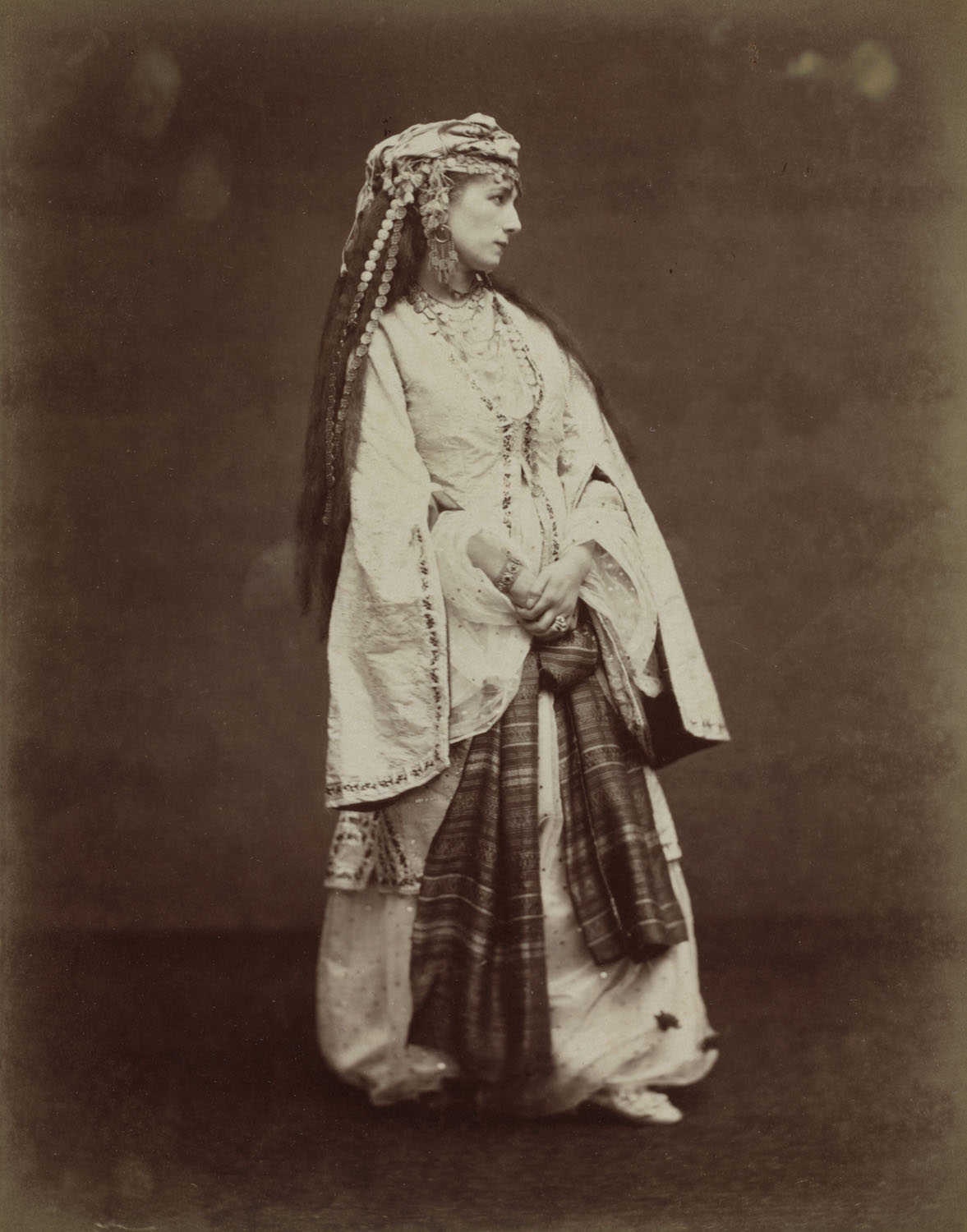
Étienne Carjat (French, 1828–1906)
Sarah Bernhardt in “Zaire” by Voltaire
1874
Albumen print from wet collodion negative
Image: 27.3 x 21.3cm (10 3/4 x 8 3/8 in.)
Matted: 50.8 x 40.6cm (20 x 16 in.)
The Cleveland Museum of Art
John L. Severance Fund
Photographer Étienne Carjat established his reputation through celebrity portraiture. Famed French actress Sarah Bernhardt is seen here as the star of Zaire, a play by the French author Voltaire first performed in 1732. The actress, who studied sculpture, exhibited work in the Paris Salon for the first time in 1874. She just missed being in the same show as Morisot, who exhibited regularly at the Salon from 1864 to 1873, but in 1874 decided instead to show in the first Impressionist exhibition. Édouard Manet produced many portraits of actresses and performers.
Étienne Carjat
Étienne Carjat French, 1828-1906
Born in Fareins, Étienne Carjat and his friend and contemporary Nadar are considered the masters of 19th-century French portrait photography. Like Nadar, whose immense reputation tended to overshadow his own, Carjat was a caricaturist and journalist, and much involved in politics and the arts. In style, however, he was more straightforward and less overtly dramatic than Nadar, frequently portraying his subjects in simple settings and showing close attention to expression, pose, detail, and line. After study with Pierre Petit in 1858, Carjat first took up photography to produce his series Le Panthéon Parisien in the early 1860s. He had several studios in Paris, from which he conducted a portrait business and contributed to the important series Galeries des célébrités contemporaines. Among his sitters were Émile Zola, Antonio Rossini, Charles Baudelaire, and Gustave Courbet. Carjat was a founder of the satirical journal Diogène (1856), as well as an author, actor, poet, and playwright. He became less active in photography after 1867 and reportedly ceased altogether after 1875. In 1878 he and Nadar are believed to have been the only mourners at the burial of their fellow caricaturist, the acerbic Honoré Daumier. T.W.F.
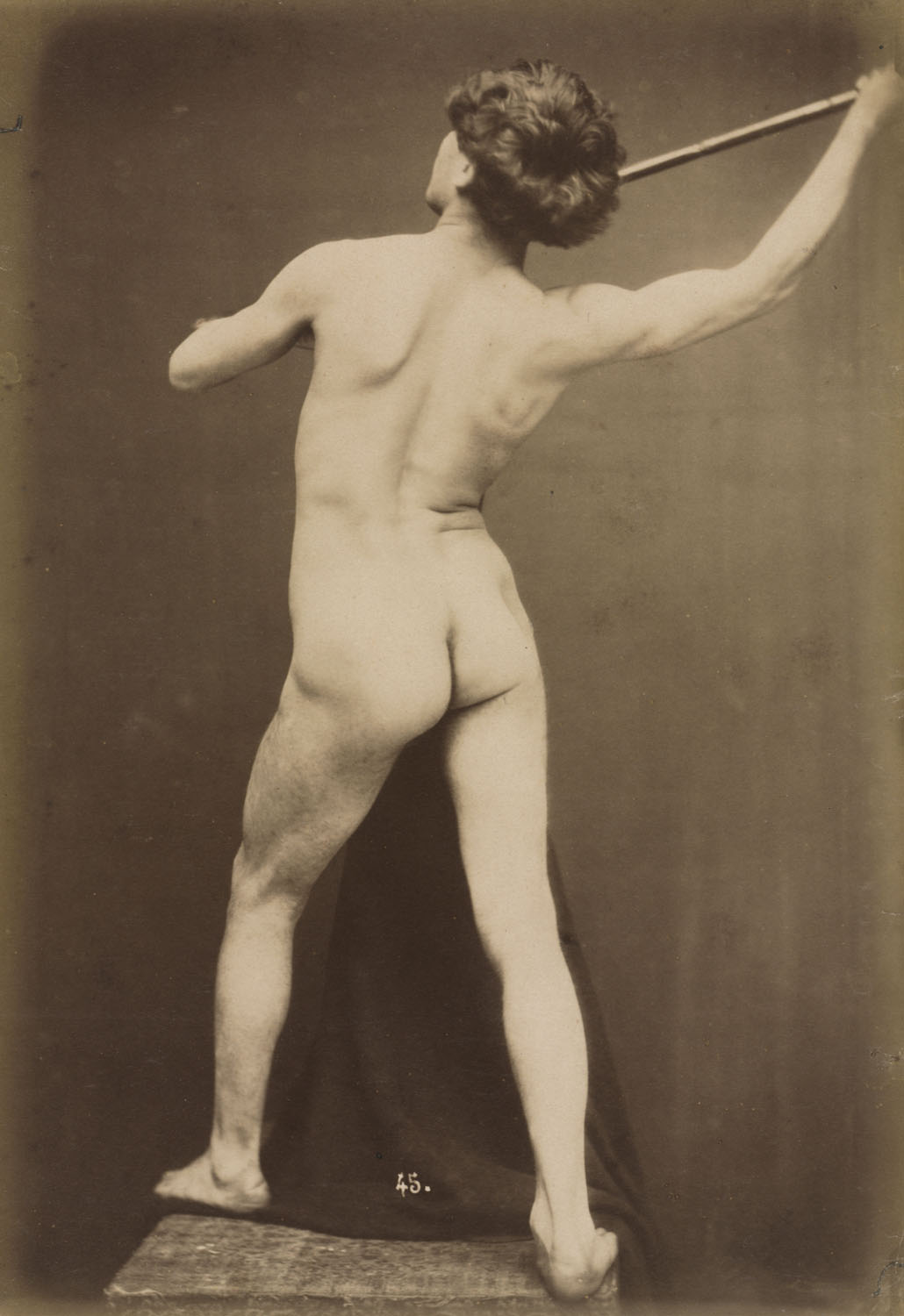
Guglielmo Marconi (French, 1842 – after 1885)
Male Nude
c. 1870-1875
Albumen print from wet collodion negative
Image: 27.2 x 18.8cm (10 11/16 x 7 3/8 in.)
Matted: 55.9 x 45.7cm (22 x 18 in.)
The Cleveland Museum of Art
John L. Severance Fund
Guglielmo Marconi specialised in nude studies for use by painters and sculptors. Using children, women, and men as models, he photographed a variety of poses traditionally employed by models in academic studios. Artists purchased them because working from a photograph was much cheaper than hiring a live model.

Unknown photographer and maker
Untitled (Case with portraits of a man and woman and hair ornaments)
c. 1870s
Photographs: photographs on enamel, framed in copper alloy metal frames; hair lockets: hair with pen and black and ink on cream-coloured backing; case: leather with metal push-clasp and velvet-lined interior
Image: 3.5 x 3cm (1 3/8 x 1 3/16 in.)
Case: 9 x 5 x 1cm (3 9/16 x 1 15/16 x 3/8 in.)
The Cleveland Museum of Art
John Cook Memorial Fund
The photographs of this man and woman, presumably husband and wife, are juxtaposed with clippings of their hair arranged to form their initials, A and M. In the late 1800s, photographic portraits and hair clippings combined in jewellery or frames served as mementos or memorials for loved ones. For permanence, the portraits here were vitrified on enamel, a process now used primarily for funerary monuments.
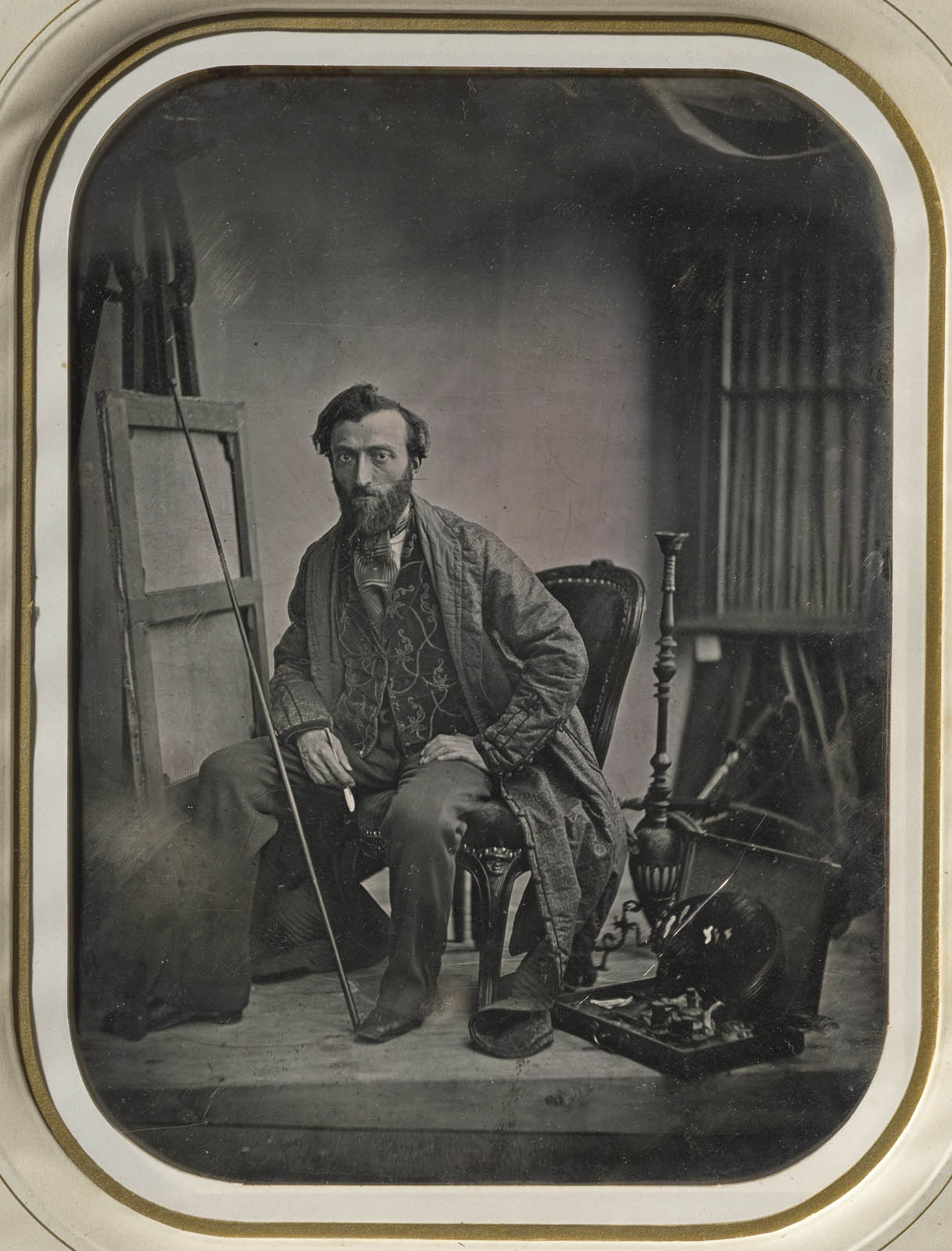
Camille Dolard (French, 1810-1884)
Self-Portrait in Painting Studio
c. 1843
Daguerreotype (full-plate)
Platemark: 20.5 x 15cm (8 1/16 x 5 7/8 in.)
Matted: 55.9 x 45.7cm (22 x 18 in.)
The Cleveland Museum of Art
Leonard C. Hanna Jr. Fund
Dolard, a portrait painter, may have offered photographs to prospective clients of lesser means. In this image, possibly made as an advertisement for his studio, he identifies himself as a painter, surrounded by the tools of the trade. The coat and the hookah suggest an interest in orientalism, a fashion that occupied many mid-19th-century artists. A remarkable technical achievement, this whole-plate image required Dolard to remain motionless for well over a minute, at least 30 times longer than the exposure for the smaller plates in the case below.
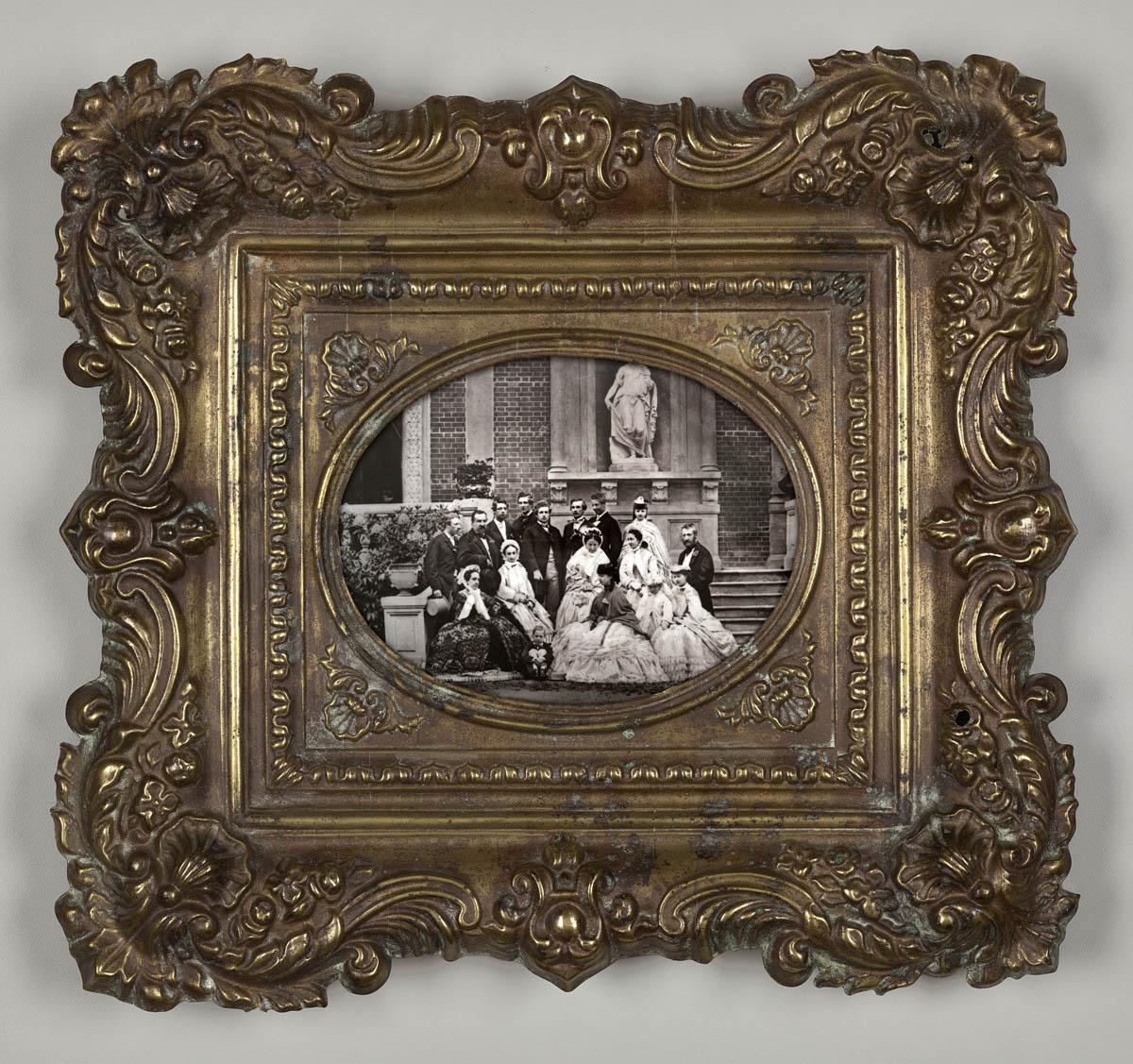
Camille Silvy (French, 1834-1910)
The d’Orléans Family during a Fête Champêtre at Orléans House
1864
Enamelist: Lafon de Camarsac (French, 1821-1905)
Enamelled photograph in original metal frame
Plate: 11.5 x 15.5cm (4 1/2 x 6 1/8 in.)
Framed: 27 x 29cm (10 5/8 x 11 7/16 in.)
The Cleveland Museum of Art
Jo Hershey Selden Fund
The image celebrates the d’Orléans family, who abdicated the French throne during the Revolution of 1848 and settled in England. The setting for this group portrait is d’Orléans House in Twickenham, where the d’Orléans hosted numerous grand social events such as the garden party that occasioned this sitting. Many of these events raised money to support monarchist and other activities in France.
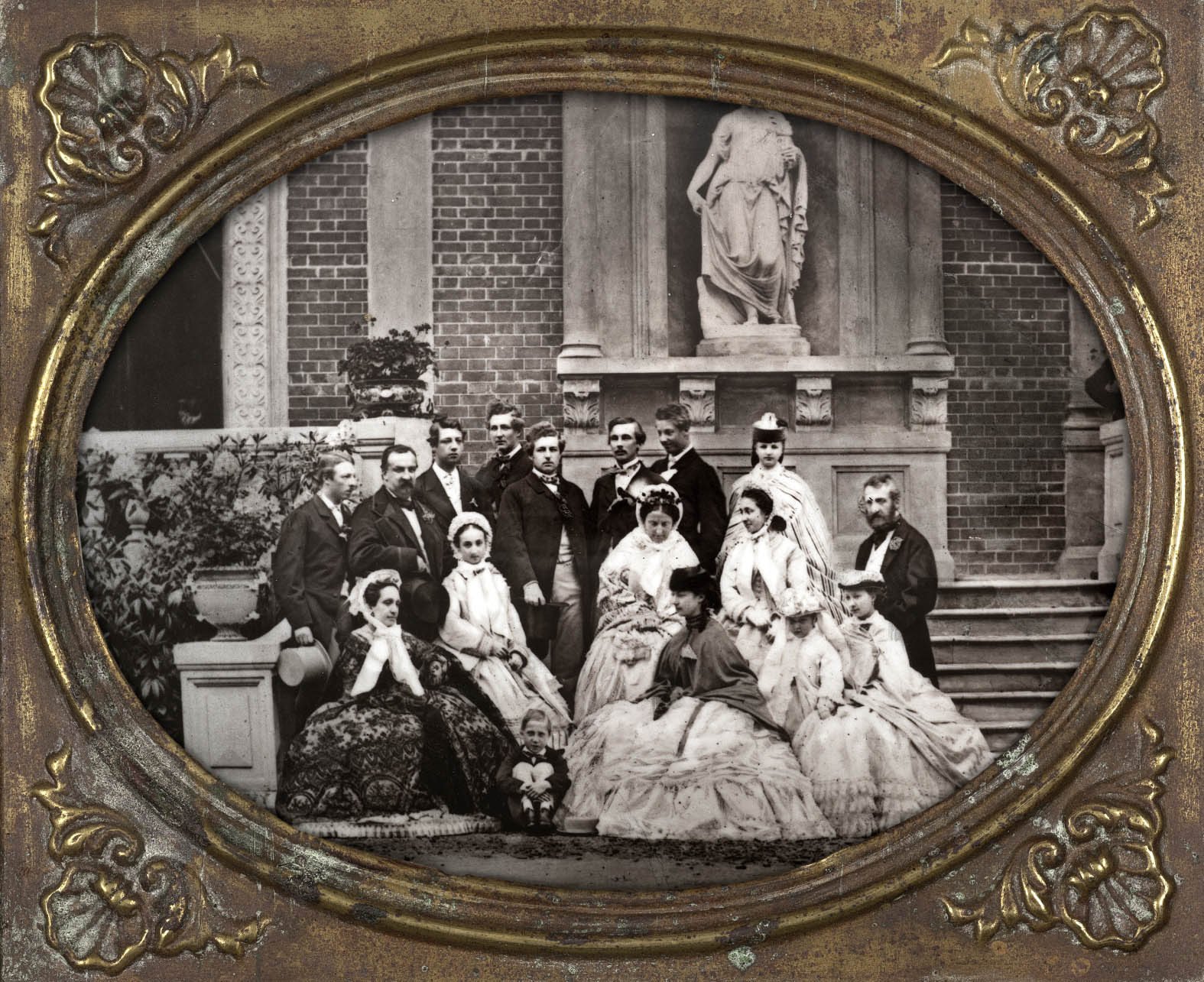
Camille Silvy (French, 1834-1910)
The d’Orléans Family during a Fête Champêtre at Orléans House (detail)
1864
Enamelist: Lafon de Camarsac (French, 1821-1905)
Enamelled photograph in original metal frame
Plate: 11.5 x 15.5cm (4 1/2 x 6 1/8 in.)
Framed: 27 x 29cm (10 5/8 x 11 7/16 in.)
The Cleveland Museum of Art
Jo Hershey Selden Fund
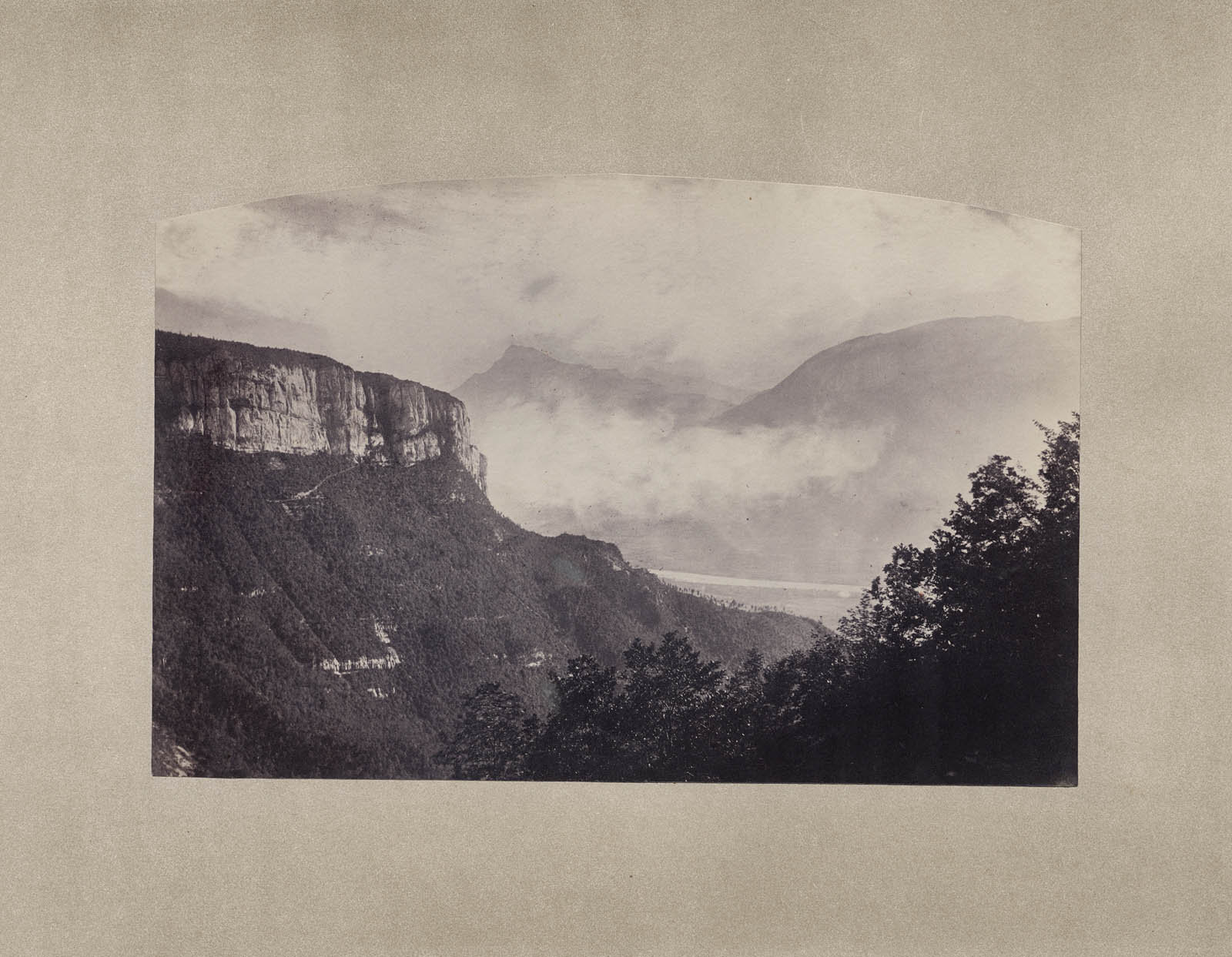
Félix Thiollier (French, 1842-1914)
Vue prise du Couvent des Dominicains, Chalais (Isère), France
c. 1865
Albumen print from collodion negative
Image: 13.1 x 20cm (5 3/16 x 7 7/8 in.)
Paper: 13.1 x 20cm (5 3/16 x 7 7/8 in.)
Mounted: 31.7 x 49.1cm (12 1/2 x 19 5/16 in.)
The Cleveland Museum of Art
Gift of Michael Mattis and Judith Hochberg
Félix Thiollier brought to landscape photography the emotional power and mystery of the Barbizon and naturalist painters whom he collected and befriended. This dramatic view provides a deep vista more commonly found in photographs of the Western United States at the time. Underlying it, however, are a geometric structure of overlapping triangles, curved top border, and atmospheric clouds and mist that relate directly to precedents in painting.

Auguste-Rosalie Bisson (French, 1826–1900) and Louis-Auguste Bisson (French, 1814–1876)
Mount Maudit, Savoy
1860
Albumen print from wet collodion negative
Image: 23.2 x 39.2cm (9 1/8 x 15 7/16 in.)
Matted: 50.8 x 61cm (20 x 24 in.)
The Cleveland Museum of Art
James Parmelee Fund
The Bisson brothers’ photograph of Mount Maudit – which translates as “cursed mountain” – makes the 14,649-foot peak seem inaccessible. In fact, it was not summited until 1878. Photographing at high altitudes necessitated climbing while carrying heavy equipment, including large glass plates and a portable darkroom, and required extraordinary technical prowess and speed in working with the chemicals at low temperatures.
Auguste-Rosalie Bisson and Louis-Auguste Bisson
Bisson Frères Louis-Auguste Bisson French, 1814-1876; and Auguste-Rosalie Bisson French, 1826-1900
Bisson Frères – consisting of brothers Louis-Auguste and Auguste-Rosalie Bisson, also known as the Bissons âiné and jeune (older and younger) – was one of the most celebrated and widely known French photographic studios and publishing houses of the 19th century. Begun by their father, a heraldic painter, the Bissons’ first studio opened in Paris in 1841, shortly after the invention of the daguerreotype. Louis-Auguste, a student of architecture and chemistry, learned photography directly from Louis-Jacques-Mandé Daguerre and went on to advance the medium through a number of inventions and techniques, contributions for which the brothers received considerable praise. He retired from the business in 1865. Auguste-Rosalie, perhaps the better known of the two, was responsible for some of their more spectacular photographic successes, including the first closeup views of the peaks of Mt. Blanc (1861). Among the Bissons’ many accomplishments and honors were a set of 900 daguerreotypes of the members of the French National Assembly, which were later published in lithographic copies; their appointment as official photographers to Napoléon III and Pope Pius IX; their role as founding members of the Société française de photographie; and their numerous and much-admired series of landscape, architectural, and portrait photographs. After his brother’s retirement, Auguste-Rosalie continued to work in photography, including a voyage to Egypt in 1869 and views of the Siege of Paris in 1871. As late as 1900, the year of his death, he patented a heliochrome process for the printing of photographs in color with ink. T.W.F.
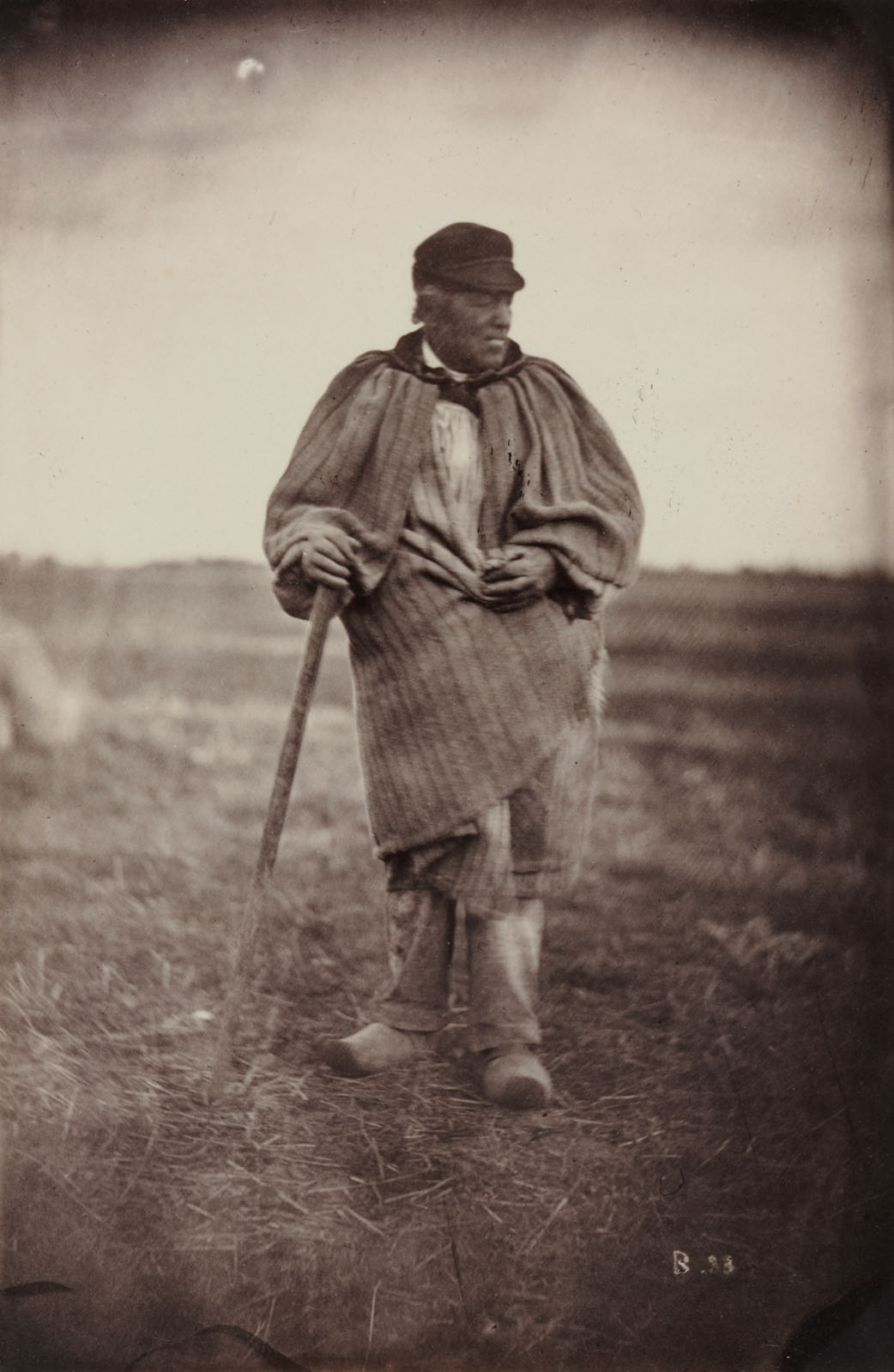
Auguste Giraudon’s Artist (French)
Man with Walking Stick
Late 1870’s
Albumen print from wet collodion negative
Image: 17.1 x 11.2cm (6 3/4 x 4 7/16 in.)
Paper: 17.1 x 11.2cm (6 3/4 x 4 7/16 in.)
Matted: 45.7 x 35.6cm (18 x 14 in.)
The Cleveland Museum of Art
Purchase from the J. H. Wade Fund
During the 1870s, Giraudon commissioned one or more artists – probably a French painter who wished to remain anonymous – to create photographs of peasants. Now called Giraudon’s Artist, this photographer was one of the few in the 1800s specialising in rural figure studies created for use by artists. The images were likely taken near Barbizon, a destination popular with artists who wanted to work from nature. The artistry of these images derives from their skilful use of light, ability to render a subject in the landscape, and a perceptive depiction of human dignity.
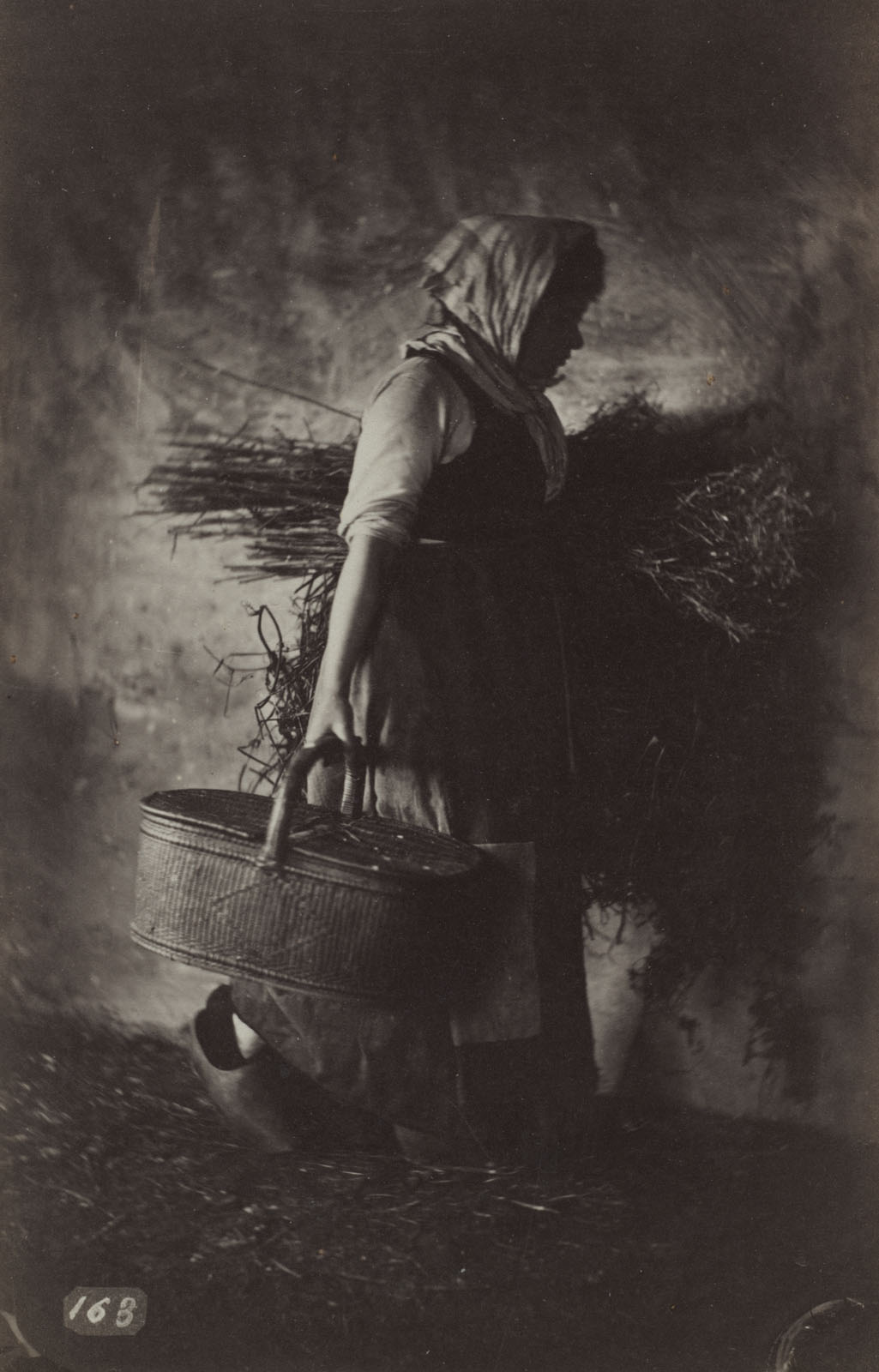
Auguste Giraudon’s Artist (French)
Female Peasant Carrying a Basket and Hay
c. 1870
Albumen print from wet collodion negative
Image: 17.2 x 11.1cm (6 3/4 x 4 3/8 in.)
Mounted: 20.7 x 15.8cm (8 1/8 x 6 1/4 in.)
Matted: 45.7 x 35.6cm (18 x 14 in.)
The Cleveland Museum of Art
John L. Severance Fund
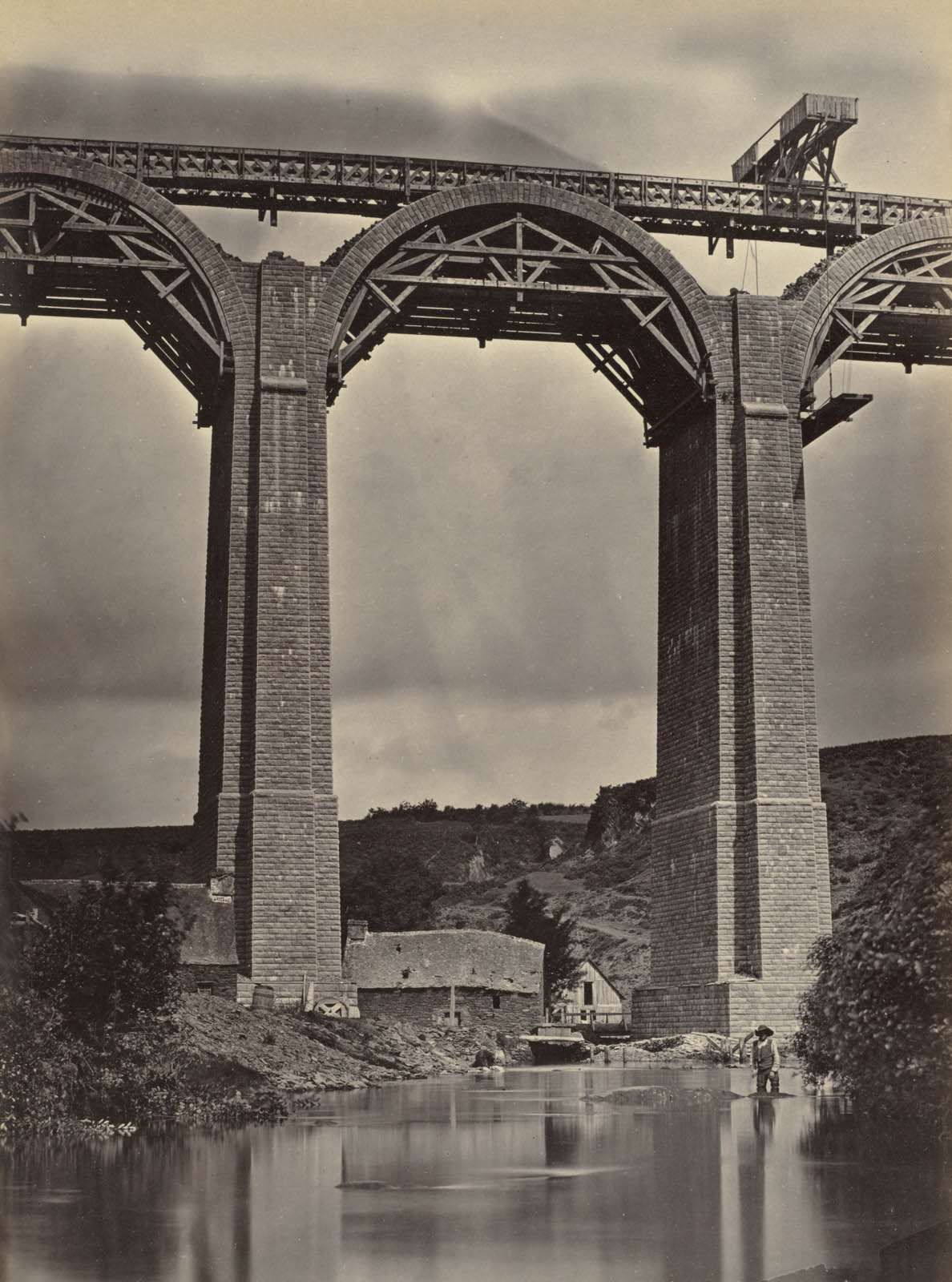
Jules DuClos (French, 1824-1879)
Pont-de-Buis, on the Doufine, France
c. 1865
Albumen print from wet collodion negative
Image: 33.8 x 30.1cm (13 5/16 x 11 7/8 in.)
Matted: 61 x 50.8cm (24 x 20 in.)
The Cleveland Museum of Art
John L. Severance Fund
The extension of railroad service from Paris across Brittany in northern France occurred in stages between 1840 and 1865. Extending railway service required the construction of railway bridges such as this masonry viaduct which crosses the Doufine River near Pont-de-Buis. Jules DuClos shows it under construction, with timbers supporting the arches and a man standing in the river below.
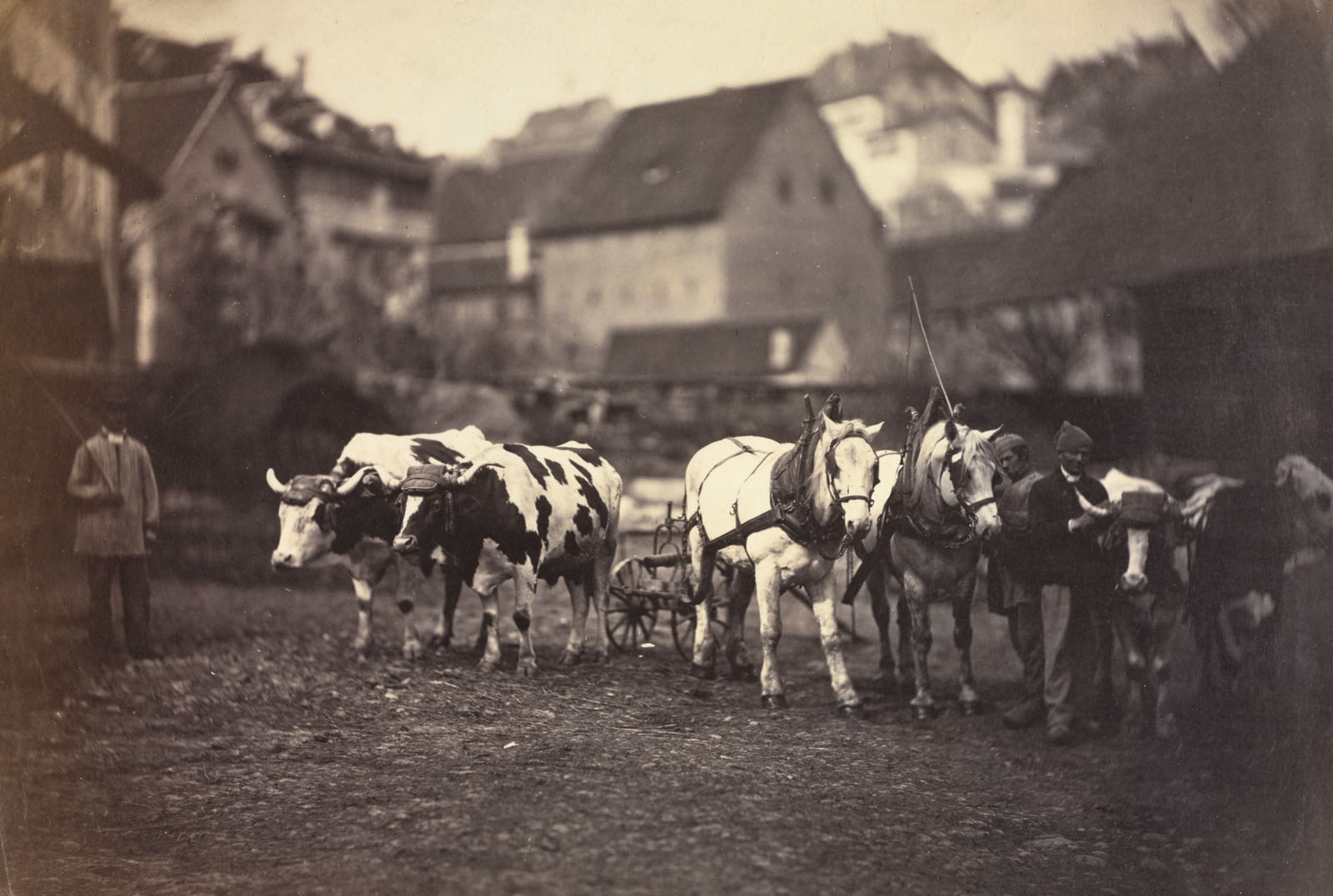
Adolphe Braun (French, 1812-1877)
Untitled (Farm Animals)
1850s
Albumen print from wet collodion negative
Image: 28 x 39.4cm (11 x 15 1/2 in.)
Framed: 53.7 x 63.8cm (21 1/8 x 25 1/8 in.)
Matted: 50.8 x 61cm (20 x 24 in.)
The Cleveland Museum of Art
Norman O. Stone and Ella A. Stone Memorial Fund
While the animals and farmers are in sharp focus in Adolphe Braun’s photograph, the buildings are blurred, suggesting that perhaps Braun intended to market these photographs to visual artists as models rather than intending them to be hung on people’s walls as a substitute for a painting.
Adolphe Braun
Adolphe Braun French, 1812-1877
Adolphe Braun, a French textile designer born in Besançon and trained in Paris, opened his own studio in Dornach, Alsace, before becoming involved in photography in the early 1850s. He produced several early floral textile designs that were published as lithographs. In 1853 Braun began work on a large album of some 300 photographic still-life studies of flowers, intended as aids for artists in the field of decorative arts. The work met with such success at the 1855 Exposition Universelle in Paris that he left the field of design for photography. Braun’s carefully executed still lifes are considered to be among the finest ever done. From the mid-1850s on, Braun’s firm, Adolphe Braun et Cie., later headed by his son Gaston (1845-1928), became one of the world’s largest studios and publishers of topographical views and of reproductions of works of art. In the latter effort, their importance was in part due to Gaston’s success with the orthochromatic process, in which photographic reproductions retained a tonal range very close to that of the original work of art. Braun et Cie. were the official photographers to Napoléon III and Pope Pius IX. Their reproductions of works in the Louvre, the Sistine Chapel, and many other subjects in architecture, sculpture, painting, and drawing, sometimes using the more permanent carbon or Woodburytype processes, were offered in all sizes and formats, and became the standard in their field. The number of negatives taken by the Brauns or their operators was variously estimated in 1870 to be between 4,000 and 8,000. The Brauns were members of the Société française de photographie. Both were awarded the French Legion of Honor-Adolphe in 1860, and Gaston in 1892. T.W.F.
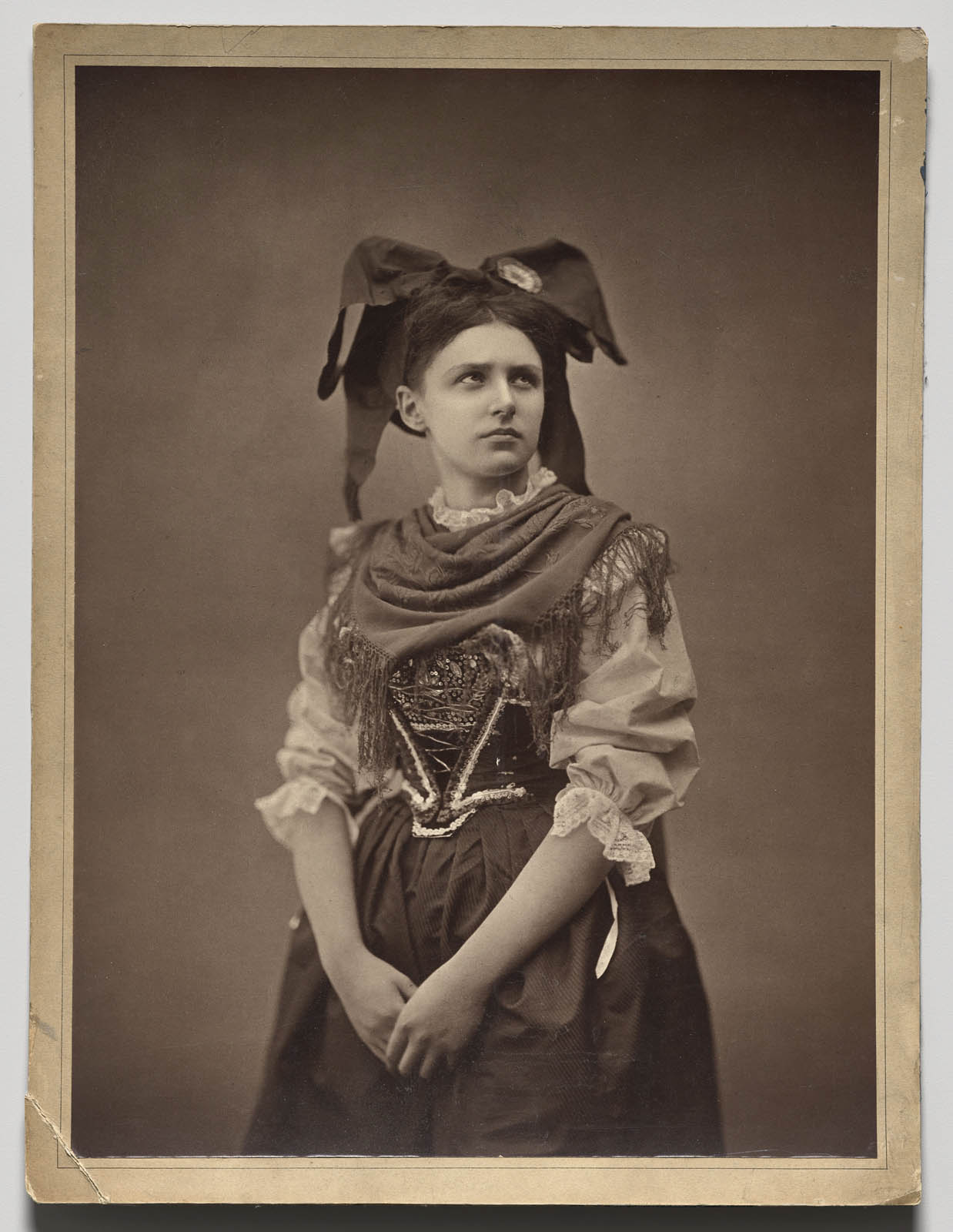
Adolphe Braun (French, 1812-1877)
Young Alsacienne Woman
c. 1871
Carbon print on a ruled mount
Image: 40 x 30.5cm (15 3/4 x 12 in.)
The Cleveland Museum of Art
Gift of Michael Mattis and Judith Hochberg
This woman wears a regional folk costume from the French region of Alsace, recalling traditions that were disappearing under the impact of industrialisation and modernisation.
At the end of the Franco-Prussian War, Prussia seized much of the regions of Alsace and Lorraine. That inspired Adolphe Braun to produce a series of images of women meant to personify those lost territories. The images proved so popular that they were reproduced on souvenir items including postcards and ceramic plates.
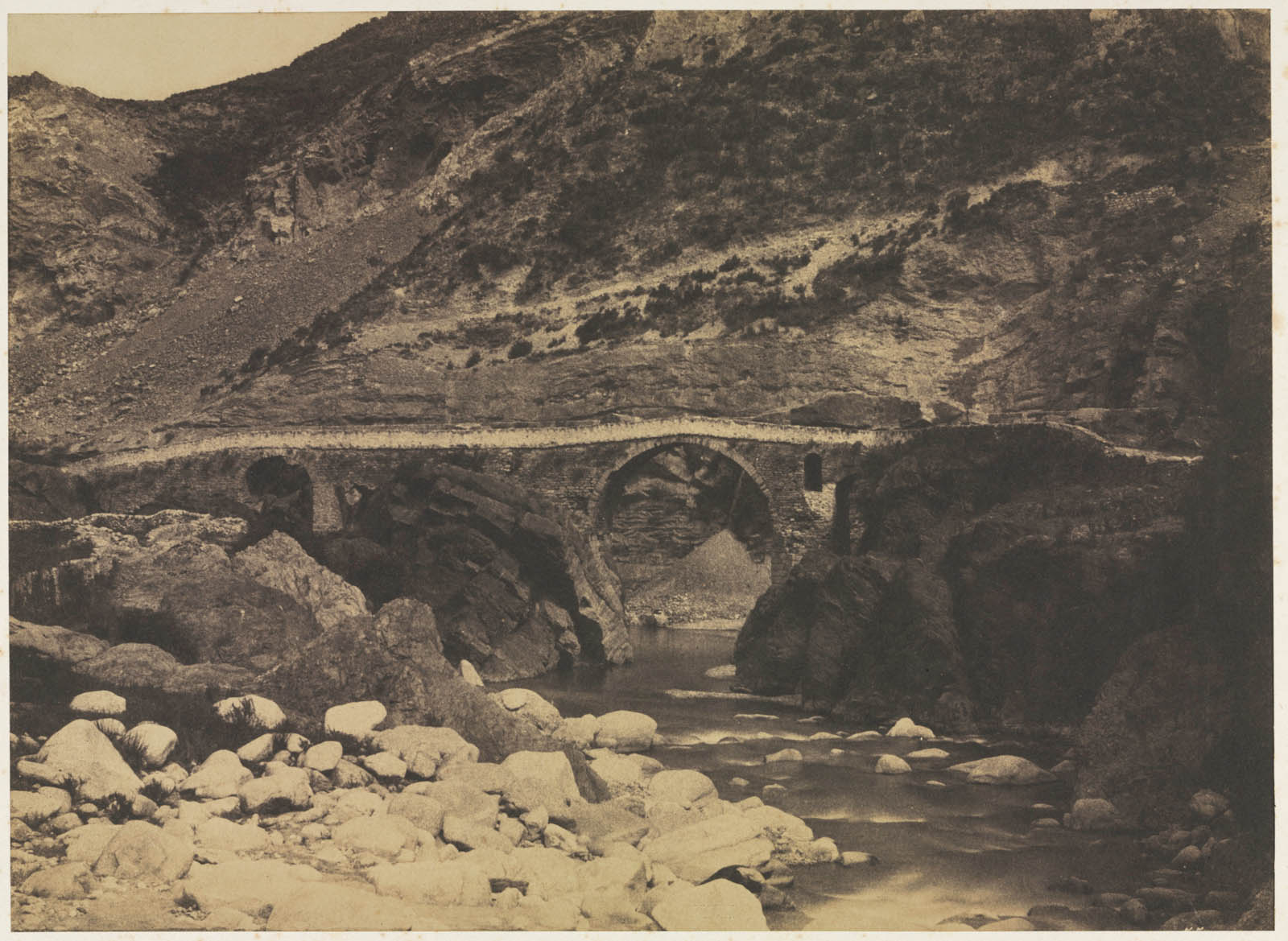
Gustave Le Gray (French, 1820-1884)
The Bridge of Palalda (near Amelieles-Bains)
1851-1852
Salted paper print from waxed-paper negative
Image: 23.8 x 32.7cm (9 3/8 x 12 7/8 in.)
Matted: 50.8 x 61cm (20 x 24 in.)
The Cleveland Museum of Art
John L. Severance Fund
In 1851, Gustave Le Gray and his friend, photographer Auguste Mestral, travelled throughout southwestern France for the Commission of Historic French Monuments to document sites of historical importance, especially those in urgent need of, or undergoing, restoration. This image was taken from the left bank of the Tech River, situated below the old town of Palalda, four miles from the Spanish border. Le Gray stressed the rugged landscape over a close-up rendering of the ancient bridge, which was not on his list of assigned sites.
Gustave Le Gray
Gustave Le Gray French, 1820-1884
A master both technically and aesthetically, Gustave Le Gray (born in Villiers-le-Bel) was one of the most important figures in 19th-century French photography, bringing to the medium artistic integrity and visual imagination. Le Gray, trained as a painter, was exhibiting his work in the Paris Salons in the late 1840s and early 1850s when he became interested in photography. Along with Henri Le Secq and Charles Nègre, he was a student of Paul Delaroche, a painter of considerable reputation and ability who was one of the first to grasp the importance of photography. In 1851 Le Gray announced his invention of a waxed paper negative, a significant improvement over earlier paper methods that was later adopted by Louis de Clercq, Dr. August Jakob Lorent, and others. That same year the Commission des Monuments historiques named him as one of five photographers of the Mission héliographique, for which he produced well-known studies of army manoeuvres at Chalons. Le Gray also worked with François Arago, the scientist and champion of Louis-Jacques-Mandé Daguerre, and later proposed a new method of toning prints, among other innovations. Le Gray was perhaps most admired for the effects he achieved with water and sky. To capture the subtle qualities of cloud patterns in some of his seascapes, he employed two negatives to produce the final image. His commissioned studies of historic monuments are classic examples of early architectural photography. In the early 1850s he worked in the Barbizon tradition at Fontainebleau and, in 1860, documented the uprising against François II in Palermo. He was a founding member of the Société héliographique and the Société française de photographie. Despite his influence and artistic success, Le Gray left Paris in 1865 to become a professor of design at the École Polytechnique in Cairo. He died in Egypt. T.W.F.
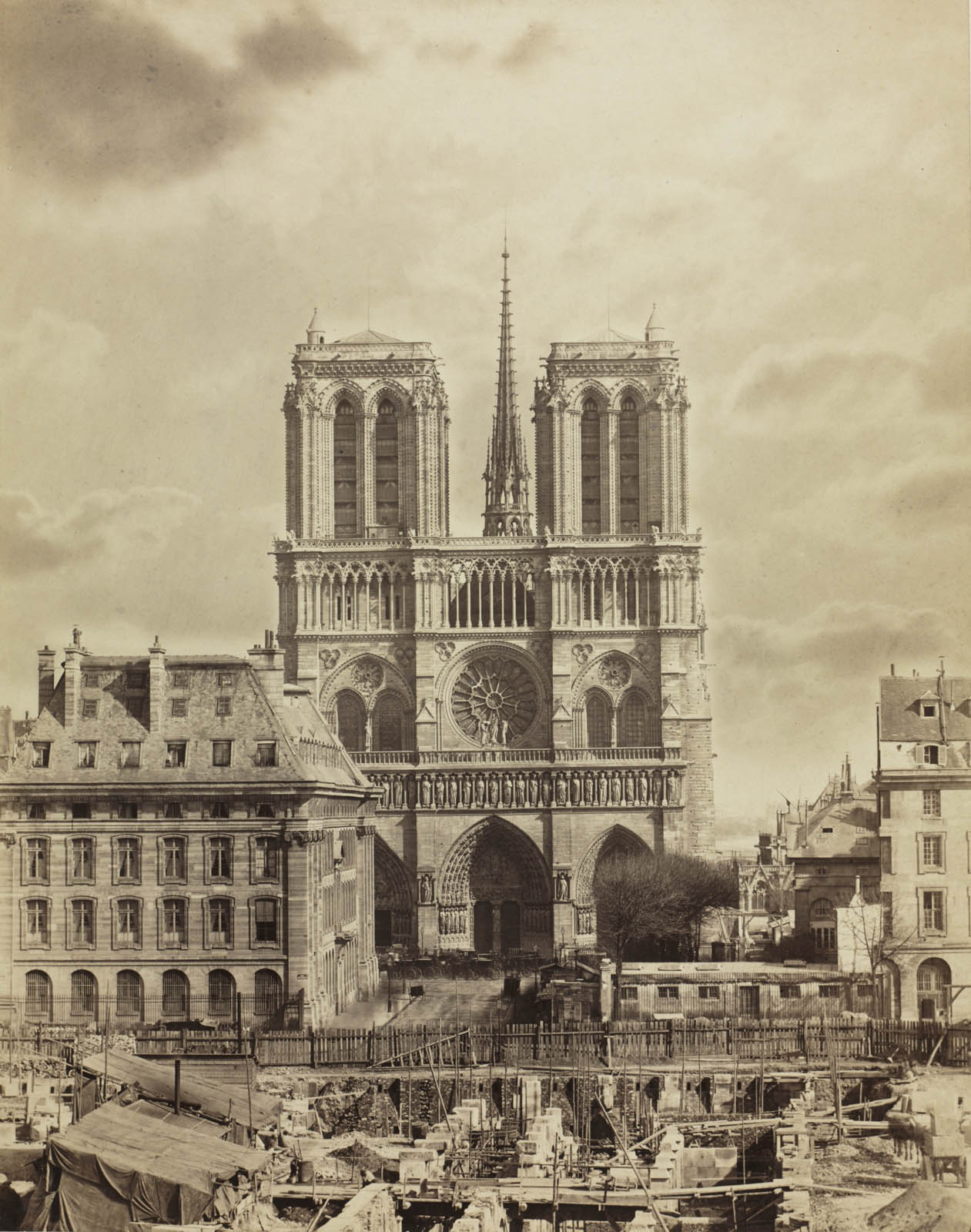
Charles Soulier (French, 1840-1875)
Notre Dame de Paris
early 1860s
Albumen print from glass negative
Image: 38 x 30.6cm (14 15/16 x 12 1/16 in.)
Matted: 71.1 x 61cm (28 x 24 in.)
The Cleveland Museum of Art
John L. Severance Fund
When the popularity of Victor Hugo’s novel The Hunchback of Notre Dame drew attention to the church, the state hired architect and preservationist Eugène Viollet-le-Duc to restore it. His renovation, which lasted from 1844 to 1864, modified the cathedral: he added the spire, gargoyles, and griffins. Charles Soulier shows us the church’s front and some of the surrounding neighbourhood, bustling with carriages and new construction.
Charles Soulier
Charles Soulier French, 1840-1875
Charles Soulier operated in partnerships, first with A. Clouzard (1854-59) and later with Claude-Marie Ferrier and his son A. Ferrier (1860-64). Soulier was among the first to take naturalistic, snapshot-like views of Paris. His city street scenes were represented in an extensive set of glass stereographs, a medium preferred by Soulier for the delicacy of its reproductive range. Panoramas of the city were considered his specialty. In 1859 Soulier photographed Napoléon III on his campaign in Austria; he was later named photographer to the emperor. He became a member of the Société française de photographie in 1867 and in 1871 documented activities of the Paris Commune. His work includes topographical, urban, and landscape views, among them images of Mt. Blanc and other European scenery, as well as photographic reproductions of artwork. T.W.F.
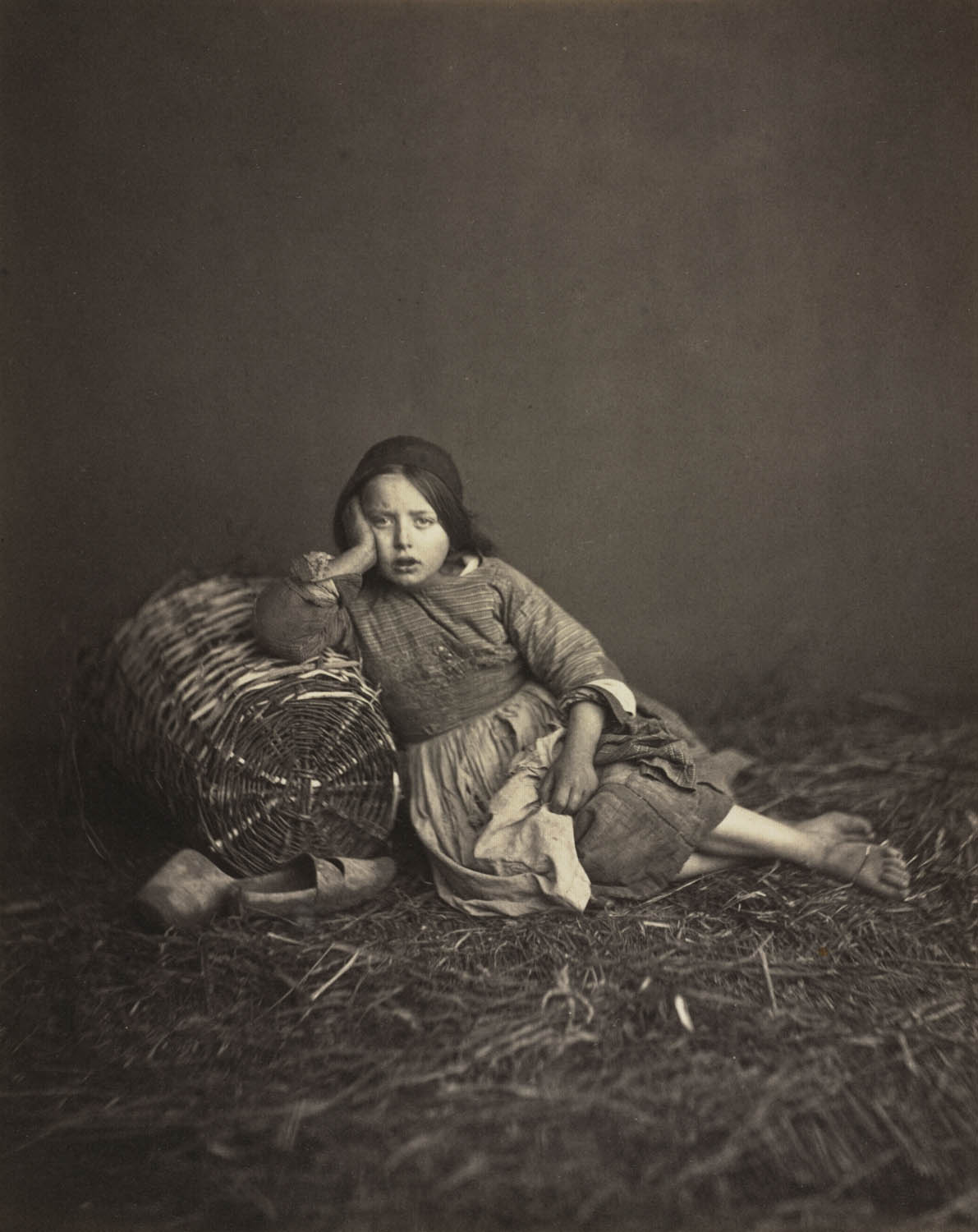
Edmond Bacot (French, 1814-1875)
Young Girl Seated on Straw, Leaning on a Basket
1862
Albumen print from wet collodion negative
Paper: 22.7 x 18.2cm (8 15/16 x 7 3/16 in.)
Matted: 50.8 x 40.6cm (20 x 16 in.)
The Cleveland Museum of Art
John L. Severance Fund
While Impressionist painters were depicting women outdoors in gardens and parks, scenes of rural labor were popular subjects for many other painters. Those painters sometimes turned to photographs as models for the figures in those paintings. Another print of this photograph and several other images of the same girl were owned by the novelist Victor Hugo, a champion of the working classes. Edmond Bacot took them while visiting Hugo.
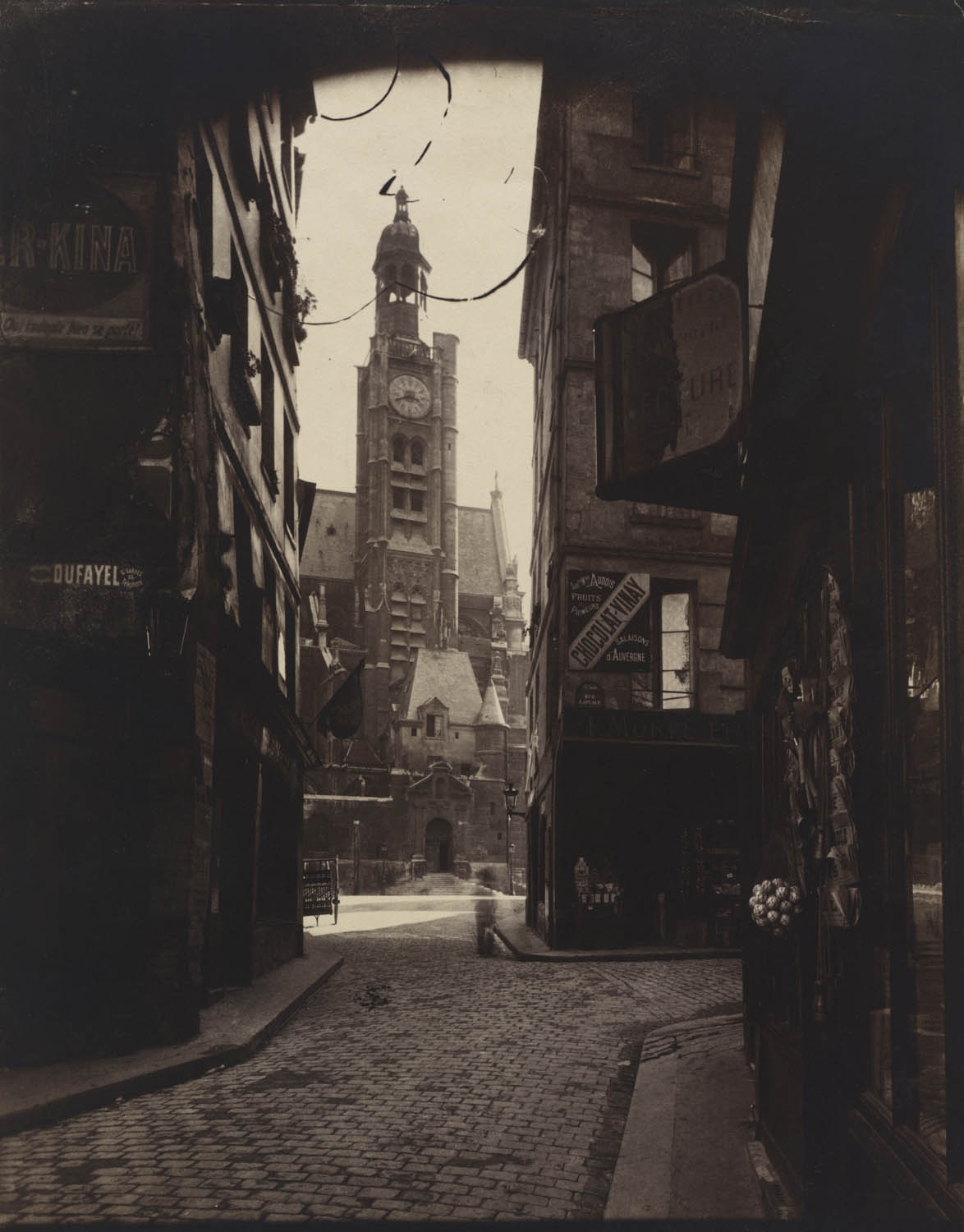
Eugène Atget (French, 1857-1927)
Rue de la Montagne-Sainte-Geneviève
1898
Albumen print, gold toned
Image: 22 x 17.4cm (8 11/16 x 6 7/8 in.)
Matted: 45.7 x 35.6cm (18 x 14 in.)
The Cleveland Museum of Art
John L. Severance Fund
This narrow street, the site of the founding of the University of Paris in 1112, ends in a church built in the 1600s. Atget sold his photographs not as art but as “documents for artists,” similar in purpose to the nude studies other photographers made for use by painters. That may be why he photographed early in the morning, when a normally bustling street like this one was empty.
Eugène Atget
Eugène Atget French, 1857-1927
Relatively unknown to the public during his lifetime, Eugène Atget is today an icon – one of the most celebrated and influential photographers of the 20th century. Born near Bordeaux, Atget first directed his efforts to painting and the stage before turning to photography shortly before 1890. He is best known for his documentary scenes of Paris and Versailles, but he photographed a number of other sites as well. Atget viewed his work as a historical and aesthetic record, regarding it as documentation for use by artists. Indeed, several artists are known to have painted from his images. Using relatively unsophisticated, even outdated equipment, Atget achieved a view of French architecture and culture that is both personal and factual. Along with the rediscovery of the images of Mathew Brady in the early 20th century, the recognition of Atget’s artistic accomplishments shortly before his death by Berenice Abbott, Man Ray, and others helped turn photographers away from the mannered style of Pictorialism toward the visual and technical clarity of modernism. Marked by a selective and highly individual method, his is among the most widely shown, published, and recognised work in photography today. T.W.F.
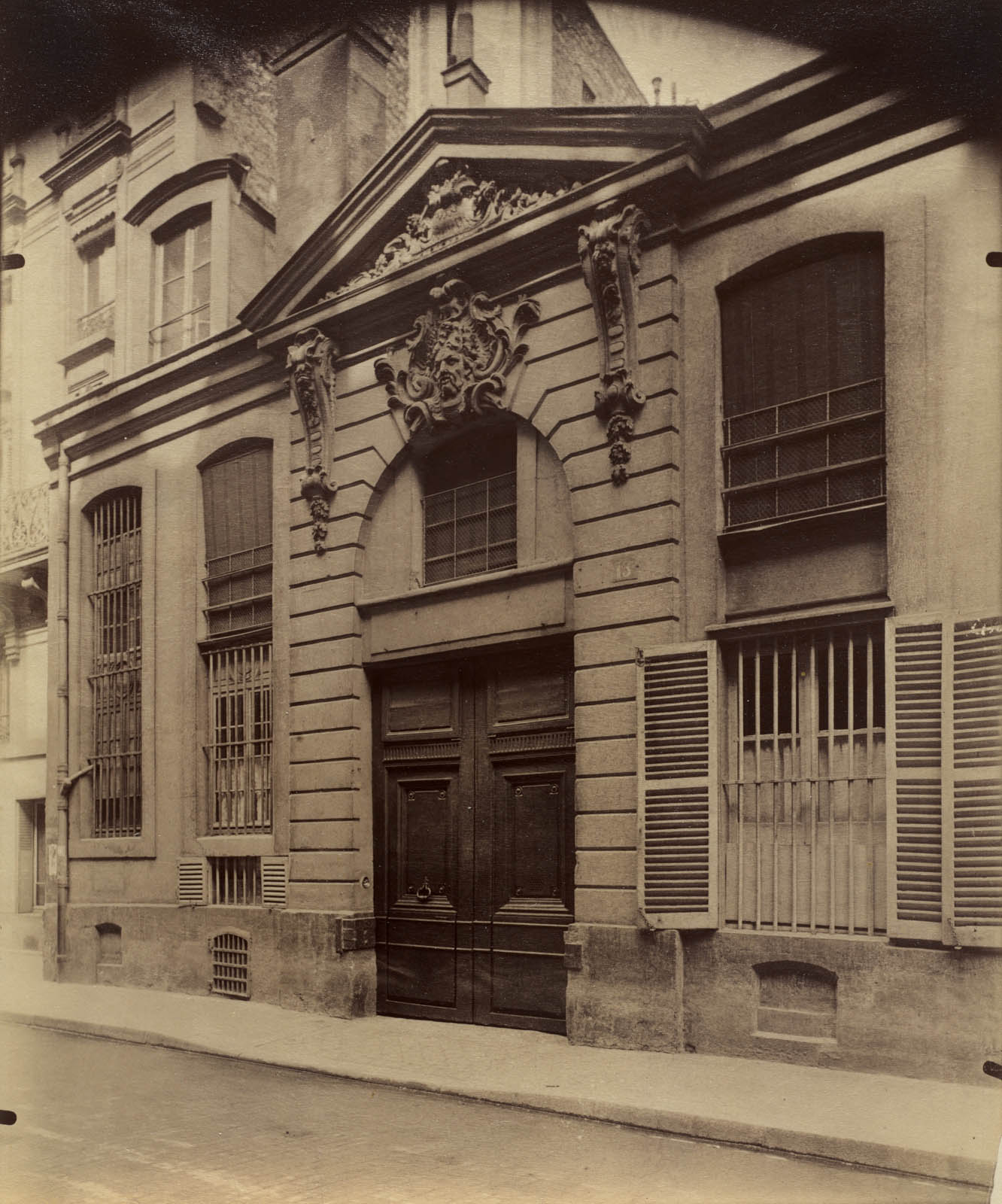
Eugène Atget (French, 1857-1927)
Rue du Regard
1899
Albumen print, gold toned
Image: 21.9 x 18.1cm (8 5/8 x 7 1/8 in.)
Matted: 45.7 x 35.6cm (18 x 14 in.)
The Cleveland Museum of Art
Norman O. Stone and Ella A. Stone Memorial Fund
This entrance, which looks similar today, led into the courtyard for the “petit hôtel de Guiche,” built in the 1700s, which adjoined the larger “hôtel de Guiche.” Fragments of those buildings have been incorporated into the modern structures that now occupy the land behind the portal. The houses were named for the de Guiche family, aristocrats that occupied them in the mid-1700s. Their son was guillotined in 1794 following the French Revolution.
Cleveland Museum of Art
11150 East Boulevard
Cleveland, Ohio 44106
Opening hours:
Tuesdays, Thursdays, Saturdays, Sundays 10.00am – 5.00pm
Wednesdays, Fridays 10.00am – 9.00pm
Closed Mondays












![Francis Frith (British, 1822-98) 'The Pyramids of Dahshoor [Dahshur], from the East, from Egypt, Sinai, and Jerusalem: A Series of Twenty Photographic Views by Francis Frith' 1858 (published 1860 or 1862) from the V&A Photography Centre, London 2019](https://artblart.com/wp-content/uploads/2020/05/frith-the-pyramids-of-dahshoor-web.jpg "Francis Frith (British, 1822-98) 'The Pyramids of Dahshoor [Dahshur], from the East, from Egypt, Sinai, and Jerusalem: A Series of Twenty Photographic Views by Francis Frith' 1858 (published 1860 or 1862) from the V&A Photography Centre, London 2019")























 Art Blart _ art and cultural memory archive
You must be logged in to post a comment.