Exhibition dates: 26th October, 2018 – 7th April, 2019
Curator: Keith F. Davis, Senior Curator, Photography
Ralston Crawford (American, 1906-1978) Unloading the Cargo c. 1942 Gelatin silver print 4 1/2 × 7 inches Gift of Neelon Crawford
Fascinated as he was “by the purified geometry of man-made things,” the best of these photographs from Ralston Crawford evidence a disciplined eye in the quest to portray a structured vision of the industrial world. While photographically there is nothing ground breaking here, these are strong images of abstract spaces – “precise and geometric, emphasising bold, simple forms.” What is of more interest is how “he applied a painter’s eye to the challenge of making interesting photographs.”
It is still amazing to me to think that anyone can just pick up a camera and call themselves a photographer, especially in today’s media saturated environment where everyone has a camera attached to their phone. You wouldn’t think of calling yourself a painter without years of experimentation and exploration of the medium and it’s abilities. And the same applies to being a photographic artist. To me, being an image maker takes years of looking, of understanding the medium, its history and its abilities, the construction of the picture plane, the light, the physicality of the print, the aura of the object.
Are these photographs well seen, framed and printed? Yes.
Are they memorable? Do they impinge on the consciousness like great photographs do and take you to a different plane of existence? No they don’t.
These are experiments, sketches, in light and form, static in their painting, immobile in their resilience.
Dr Marcus Bunyan
Many thankx to The Nelson-Atkins Museum of Art for allowing me to publish the photographs in the posting. Please click on the photographs for a larger version of the image.
Structured Vision: The Photographs of Ralston Crawford
Fascinated by the purified geometry of man-made things, Ralston Crawford (1906-1978) worked in a consistently formal, or abstract, manner across a variety of mediums. His photographs provide an essential look at a vital era of abstraction in American art, and at the cultural scenes and subjects from which that creative sensibility arose.
Crawford used the camera as a tool of both documentary and artistic expression. Some photographs served as studies for later paintings or prints. Most, however, were created and appreciated purely as photographs. His subjects ranged from urban and industrial themes to ships and sailing, jazz, the people and culture of New Orleans, bullfighting and religious processions in Spain, and the destructive power of the atomic bomb.
Ralston Crawford (American, 1906-1978) Dock Workers 1938 Gelatin silver print 6 1/2 × 8 15/16 inches Gift of Hallmark Cards, Inc.,
Ralston Crawford (American, 1906-1978) Grain Elevators, Buffalo c. 1942 Gelatin silver print 6 5/16 × 9 1/2 inches Gift of Neelon Crawford
Ralston Crawford (American, 1906-1978) Staging Area, Coulee Dam 1972 Gelatin silver print 13 × 19 1/8 inches Gift of Hallmark Cards, Inc.,
Ralston Crawford (American, 1906-1978) Grain Elevators with Shadows c. 1942 Gelatin silver print 9 1/8 × 7 3/16 inches Gift of the Hall Family Foundation
Ralston Crawford (American, 1906-1978) Flower Vases on Tomb, New Orleans c. 1959 Gelatin silver print 9 11/16 × 7 13/16 inches Gift of Neelon Crawford
Ralston Crawford (American, 1906-1978) Third Avenue Elevated 1948 Gelatin silver print 13 7/16 × 9 1/16 inches Gift of Hallmark Cards, Inc.,
Ralston Crawford (American, 1906-1978) Door with Striped Pole and Striped Wall, New Orleans 1967 Gelatin silver print 13 5/16 × 8 15/16 inches Gift of Neelon Crawford
Ralston Crawford, who celebrated the modern American industrial landscape in a precisionist style and captured the vitality of New Orleans jazz culture, is the subject of a photography exhibition opening at The Nelson-Atkins Museum of Art in Kansas City Oct. 26 through April 7, 2019. Structured Vision: The Photographs of Ralston Crawford, showcases the museum’s deep holdings of his work.
“Ralston Crawford’s photographs have a profound energy,” said Julián Zugazagoitia, Menefee D. and Mary Louise Blackwell CEO and Director of the Nelson-Atkins. “Throughout his career he juxtaposed creation and destruction, form and chaos. His body of work is wonderfully varied and reflects how complicated and rich one artistic sensibility can be.”
George Ralston Crawford (1906-1978) was born in Canada but grew up in Buffalo, New York, where his interest in docks, shipyards, bridges, and grain elevators blossomed. He was a sailor as a young adult and began studying art in the late 1920s, painting characteristically American subjects such as highways, bridges, and machines. His work was precise and geometric, emphasising bold, simple forms.
“Ralston Crawford is an important artist in the Nelson-Atkins collection because he applied a painter’s eye to the challenge of making interesting photographs,” said Keith F. Davis, Senior Curator, Photography. “There is enormous variety in his work, from industrial subjects to street life and cemeteries of New Orleans. Some of his pictures are about pure geometry; others celebrate the improvisational vitality of everyday life. Ultimately, all of Crawford’s work is about the interrelationship of structure and change.”
Crawford worked actively from the 1930s through the 1970s. He absorbed and expressed the basic energies of the mid-twentieth century, from the era’s industrial might to the destructive power of war and the atomic bomb. He celebrated the most basic of forces: creation, decay, time, and change. He travelled extensively throughout his life to paint, produce lithographs, take photographs, and teach. In addition to key gifts from the Hall Family Foundation, the artist’s son, Neelon Crawford, was instrumental in increasing the Nelson-Atkins’s holdings of his father’s photographs.
The exhibition is accompanied by a new book, The Photographs of Ralston Crawford, written by Davis, providing a fresh, comprehensive look at Crawford’s photographs from 1938 through the mid-1970s, including both well-known works and previously unpublished images. This volume, published by Yale University Press, is distributed for the Hall Family Foundation in association with the Nelson-Atkins.
Press release from The Nelson-Atkins Museum of Art
Ralston Crawford (American, 1906-1978) John “Papa” Joseph, Outside Barbershop, New Orleans 1958 Gelatin silver print 7 11/16 × 9 9/16 inches Gift of Neelon Crawford
Ralston Crawford (American, 1906-1978) Dancer and Meyer Kennedy at the Caravan Club, New Orleans 1953 Gelatin silver print, 9 1/2 × 7 9/16 inches Gift of Neelon Crawford
Ralston Crawford (American, 1906-1978) Tuxedo Brass Band, New Orleans 1959 Gelatin silver print 6 7/16 × 9 1/2 inches Gift of Neelon Crawford
Ralston Crawford (American, 1906-1978) Women in Sunday School Parade, New Orleans 1958 Gelatin silver print 6 3/16 × 9 9/16 inches Gift of Neelon Crawford
Ralston Crawford (American, 1906-1978) Bow and Rope 1972 Gelatin silver print 11 3/16 × 16 5/8 inches Gift of Neelon Crawford
“The swimming pool at Al-Khair Hotel, above Marmarita. A number of the young men are from the Christian militia that protects Marmarita and helps besiege both the Krak des Chevaliers and al Husn, the Sunni village built around it. The Krak fell to the Syrian army in March 2014. Reuters, quoting Lebanese medical sources, reported that over forty of the opposition fighters fleeing the area were wounded in an ambush on the way out, with eight dead.”
These magnificent, thought provoking photographs by Swiss photographer Matthias Bruggmann take a critical look at the representation of the atrocities of war. The photographs won the Prix Elysée in 2017, awarded by the Musée de l’Elysée.
The photographs picture everyday life in what Bangladeshi photographer Shahidul Alam has so aptly referred to as the “majority world” – that is, they attend to issues of critical importance in Asia, the Middle East, Africa, Latin America and Oceania… not Europe or America. They shine a light on the conflict that is taking place in Syria and the surrounding geographical area by offering an outsiders perspective, much as Robert Frank offered an outsiders perspective on American society as he travelled through the USA, the resultant photographs leading to the production of his famous book The Americans.
But here the stakes are much higher. Here, life hangs in the balance. The little girl with the blond hair balances on her father’s shoulders; a man in silhouette peers through his night scope while the stars of the cosmos hang in the night sky behind; a man fires his machine pistol by holding it above his head, his comrades sheltering behind rocks; while a young man sits on his haunches, hunched over, blindfolded, bruised and in handcuffs. Awaiting some unknown fate.
One image among these formal, classical photographs (a body of work which crosses over from photojournalism to contemporary artistic photography) is particularly disturbing. On the road, Iraq, September 24 2016 (below) shows a group of men much like the groups of men that can be seen in Baroque painting. One man addresses the viewer holding a mobile phone, his face a skeleton, mask; another four men hold mobile phones in various attitudes, recording the scene or looking into them; the man at left, with a gun thrusting down his leg, walks into the scene, while the one behind walks out of scene, left; in the distance at right, a machine gun is mounted on a tripod, with man walking out of scene, right; while at centre right a group of four men, one with a Union Jack flag on the crutch of his trousers (?!), gaze down at a recumbent figure, a figure that you don’t initially see when looking at the photograph, for every man is standing but for the blood soaked figure of death.
The photograph highlights the barrenness of the landscape and the symbolical values embedded in the scene (masculinity, war, guns, flags, mobile phones, bodies, attitudes, death), clues in a charade which the spectator solves volens nolens – unwilling (or) willing: like it or not. The truth is yelled at you, if you know how to interpret the symbols.
It’s the mundanity evidenced in most of these mise en scène that gets you in the guts, that stirs up my anger and feelings of sadness and regret. I am so over ugly, male energy, from whichever side, from wherever – used in the name of religion, nationalism, power and control – to rule the life of others. These photographs are like a sad lament, a prayer offered up to the human race to ask deliverance from distress, suffering, and pain. Indifference to the pain and suffering of others should not be an option, for “in difference”, “we look with respect to another culture or another people.” (Mr Massarwe)
Dr Marcus Bunyan
Many thankx to the Musée de l’Elysée for allowing me to publish the photographs in the posting. Please click on the photographs for a larger version of the image.
“Using toilet cleaner and a dental probe, middlemen clean ancient coins. Coins and other antiquities are exported throughout the region, mostly to Turkey, but also Lebanon and, in some cases, Jordan, from where silver shekels then make their way to the Jerusalem souvenir industry. The trickiest part is faking provenance so that the antiquities can enter the highly lucrative Western market – dealers in neighbouring countries would take a fifty percent cut on the sale for the procurement. The asking price for a Byzantine mosaic measuring around two square meters was between 1,500 and 2,000 dollars and smuggling it out to a neighbouring country cost around 4,000 dollars at that point. Many of the deals were carried out over WhatsApp, and Syrians were often double-crossed by unscrupulous foreign dealers. One of the men in this photograph later complained that a North American dealer had cost him a small fortune when he refused to pay up his share.”
“The remains of a barrel of chlorine (Cl₂) that was dropped on a house from a helicopter. This is one of the hundred or so documented attacks using chemical agents that happened before and after the 2013 Ghouta bombings in Damascus that the United States estimates killed 1,429. The Syrian government was the only warring faction to have access to airpower, therefore it is unthinkable that anyone else dropped this barrel. A man who refused to give his name, presenting himself as the owner of the house and the father of two of the children killed in the bombing, explained that he was an employee of a government-run granary. When he went back to work, he said, men came and offered him to interview him on an official TV channel to say that Jabhat al-Nusra had dropped the bomb. He added that the men offered to give him money to rebuild his house in exchange. This attack, which killed 3 and wounded over 130, was extensively documented, both by Human Rights Watch and by Christoph Reuter in Germany’s Der Spiegel. As of mid-2018, the Syrian Archive also held over a dozen videos of the attack and its aftermath.”
Matthias Bruggmann is the winner of the second edition of the Prix Elysée, with the support of Parmigiani Fleurier, for his project on Syria. Hoping to “bring, to Western viewers, a visceral comprehension of the intangible violence that underlies conflict”, he takes the gamble of hiding nothing in his explicit and brutal pictures. Taken in the field, they force the viewer to slow down and take stock of the war – geographically distant, admittedly, but made omnipresent by the media.
If the tens of thousands of pictures of torture taken by Syrian photographers do not attract the attention of a Western audience, what can a foreigner who doesn’t even speak Arabic hope to accomplish? The photographs of Matthias Bruggmann take a critical look at the representation of the atrocities of war. They give Westerners a more nuanced picture of the reality of an armed conflict and blur the boundaries between photojournalism and contemporary artistic photography.
Launched in 2012, his project plunges us into the complexity of the conflict. His images, which cover a geographic zone larger than Syria, question our moral assumptions and bring about a better understanding of the violence underlying this conflict.
Matthias Bruggmann explains: “Formally, my previous work put viewers in a position where they were asked to decide the nature of the work itself. A scientifically questionable analogy of this mechanism would be the observer effect in quantum physics, where the act of observing changes the nature of what is being observed. My Syrian work builds on this framework. From a documentation perspective, it is, thus far and to the best of my knowledge, unique as the work, inside Syria, of a single Western photographer, in large part thanks to the assistance and hard work of some of the best independent experts on the conflict. Because of the nature of this conflict, I believe it is necessary to expand the geographical scope of the work. At its core is an attempt at generating a sense of moral ambiguity. The design of this is to make viewers uneasy by challenging their own moral assumptions and, thus, attempt to bring, to Western viewers, a visceral comprehension of the intangible violence that underlies conflict. One of the means is by perverting the codes normally used in documentary photography to enhance identification with the subject.”
Biography
Matthias Bruggmann is a Swiss photographer who was born in Aixen-Provence in 1978. For the past 15 years, his work has focused on the different war zones throughout the world. After graduating from the Vevey School of Photography in 2003, he became interested very early on in the complexity of his profession in times of war. At the beginning of the 2000s, he accompanied the photojournalist Antonin Kratochvil, who covered the invasion of Iraq. This first experience provided him with the opportunity to explore the complex link between photojournalism and reality – what is actually grasped or described. Since that time, his personal projects have taken him to Egypt, Haiti, Libya and Somalia.
Matthias Bruggmann’s work was featured in the exhibition reGeneration: 50 photographers of tomorrow, organised by the Musée de l’Elysée in 2005, and he was part of the curatorial team for We Are All Photographers Now! presented at the museum in 2007. He is also one of the cofounders of the contemporary art space, Standard / Deluxe, in Lausanne. His photographs have been published in countless newspapers and magazines, including Le Monde, The Sunday Times, Time Magazine and National Geographic.
His work is included in a number of private collections, as well as the public collections of the Frac Midi-Pyrénées and the Musée de l’Elysée. His project on Syria received the Prix Elysée in 2017, awarded by the Musée de l’Elysée with the support of Parmigiani Fleurier. He is represented by the Contact Press Images agency and by the Galerie Polaris in Paris.
At the northern frontline between the Druze fighters and Jabhat al-Nusra, the older fighters teach the younger ones how to fight. Some of the fighters were in the security services, and either retired, or went absent without leave to defend their village.
Syria, 2012. In the old town of Homs, a group of fighters and activists meet to stage an allegorical piece written by one of them, who was, in his life, before the revolution, a known writer. In this piece, a lion (or assad, in Arabic…) has lost his voice, and mistreats the other animals to try to find it. The street next door is one of the most dangerous in the city, because it is the corner of government shooters.
A wonderful posting of photographs by this master photographer, including numerous images (Young Mother, Middle-class; Middle-class Children; Peddler; Girl in Fairground Caravan; “Test your Strength” Showman; Workmen in the Ruhr Region) I have never seen before.
What can you say about the work of this legend of photography that has not been said before, by so many people, in so many words. Therefore I will not be verbose but just note a few impressions.
How did Sander get these people to pose for him in this direct, open way? There is no affectation, no histrionics, the sitters (whether outside en plein air or inside against a ubiquitous plain wall / blank canvas) gaze directly, steadfastly, into his camera lens – quite pre/posed, quietly proposed and confident of their own identity and image. The peddler with his box of wares, the café waitress with her tray of tea and milk, the pastry chef with his bowl, or the showman whose gnarled and dirty hand clasps a cigar.
The “presence” and aura of these people is incredible. You can ascribe this presence to modernism and New Objectivity (a sharply focused, documentary quality to the photographic art) that sought to portray the reality of a life but to do so holy to the exclusion of the poetic in Sander’s work would be a mistake. While not self-consciously poetic, Sander’s work still contains elements of the pictorial – for example the painterly quality in his use of depth of field in portrait’s such as that of Painter [Heinrich Hoerle] (where we notice the very small depth of field from the front of the shirt to the back), or the framing of Girl in Fairground Caravan with its notably impressionistic melancholy and longing.
What I am really looking forward to is the book that is being published from this exhibition. As the text on Amazon notes, “A novel feature of this book is that all the reproductions are based on vintage prints produced and authorised by August Sander himself. The croppings and the desired tonal values are authentically rendered here for the first time in the long publication history of Sander’s brilliant portrait work.”
This is as close as you will get in book form to the original printing and tonality of Sander’s work. I am sure the book will become a classic and sell out quickly so get your orders in now for a June 2019 release.
Dr Marcus Bunyan
Many thankx to the Die Photographische Sammlung/SK Stiftung Kultur for allowing me to publish the photographs in the posting. Please click on the photographs for a larger version of the image.
The portrait photographs by August Sander count among the masterworks of their kind. Ever since acquiring the photographer’s estate, Die Photographische Sammlung/SK Stiftung Kultur has been busy cataloguing the Sander archive and has already presented these photographs in several theme-based shows. With “People of the 20th Century,” his most famous photographic compendium, Sander aspired to nothing less than to document the society of his day, based on examples of people pursuing different occupations and from various walks of life. The conceptually planned body of work testifies to the photographer’s acuity of perception and consummate skill at the use of the photographic medium. Over the decades, pictures such as “Young Farmers” (1914) and “Pastry Cook” (1928) have become photographic icons. But August Sander’s portraiture in fact harbours a large number of motifs of remarkable quality. These images provide insights, for example, into the population of the rural Westerwald region, the artist communities in Cologne and Berlin, and city life in general during his era.
In the current exhibition, Die Photographische Sammlung/SK Stiftung Kultur is displaying a representative selection of more then 150 original prints from “People of the 20th Century.” The majority come from the collection’s own holdings, joined by works on loan from the Museum of Modern Art, New York; the J. Paul Getty Museum, Los Angeles; the Pinakothek der Moderne, Munich; the Museum Ludwig Cologne / Photography Collection, the Berlinische Galerie, Berlin and private collections. Based on many years of research, the accompanying catalogue traces the genesis of these works in great depth and detail.
Text from the Die Photographische Sammlung/SK Stiftung Kultur website
The current exhibition with over 150 original photographs and numerous showcase material shows a representative cross-section of the project “People of the 20th Century”.
Sanders’ extensive portraiture was aimed at showing a cross-section of the population in which the different occupational and social types, spread over different generations, are reflected – a mirror of the times. In the title Sanders first published book in 1929, Antlitz der Zeit (Face of Our Time), this intention finds its echo. Both the indirectly expressed face of time and the individual physiognomies were the subject of the photographer’s unbroken attention for decades.
In order to give shape and form to his growing compendium, Sander created a concept in the mid-1920s in which he extensively named the image groups and folders that he had focused on. The groups are called “The Farmer”, “The Craftsman”, “The Woman”, “The Estates”, “The Artists”, “The Big City” and “The Last Man”. The latter perhaps misleading name stands for a series of pictures that very respectfully shows people on the margins of society. Sander’s concept of that time, which proposes a sequence of groups and folders, is also followed by the current exhibition with the inclusion of individual or several representative portfolio prints from the corresponding picture folders.
For the most part, the photographs are taken from the inventory of the August Sander Archive, which was acquired in 1992, which forms the foundation for the further development of the Photographic Collection / SK Stiftung Kultur, Cologne. Exclusive loans from originals will be consulted, such as the Berlinische Galerie, Museum of Modern Art, Berlin, the J. Paul Getty Museum, Los Angeles, the Museum Ludwig Köln, the Museum of Modern Art, New York and the Pinakothek der Moderne. Munich as well as from important private collections.
At Schirmer / Mosel Verlag, the book “August Sander – Masterpieces” was created at the same time as the exhibition in German and English editions. For the first time in the publication history of the photographer, the original prints are reproduced in authentic tonality, as well as in original cut-out reproduction.
Text from the Die Photographische Sammlung/SK Stiftung Kultur website
The current exhibition, featuring over 150 original photographs and numerous documents shown in display cases, presents a representative cross-section of the “People of the 20th Century” project.
The portraits from August Sander’s epochal work are not only of fundamental importance for the history of photography; they are also highly exciting objects of study – masterpieces for anyone who has an unsentimental, unbiased love of people and life; who likes to ask questions about the past and gather experiences for the future; who has a passion for looking, discovering, fantasising, and analysing:
How do the people portrayed appear to us today? How did they spend their lives? What delighted or shocked them? What experiences left a mark on their faces, their hands, their physiognomy? What can they share with us from their own bygone world and times? How did Sander manage to meet and talk to so many different people, and to entice them into posing for a picture? What does the photographic material convey to us today – at a time when hardly any photographs are developed in the darkroom and a kind of magic has thus been lost? What does time and manual craft mean for artistic engagement?
Viewed together, the people August Sander (1876-1964) depicted in such an objective yet dignified and personal manner unfold a whole cosmos that brings history to life. Looking at Sander’s photographs challenges us to search for similarities, differences, and comparable qualities. They summon memories of accounts from the past, render tangible transformations in people’s living conditions and way of life; we see occupations that have changed, which no longer exist or have been replaced; developments or events in society are made more vivid to us, as are changing pictorial styles and artistic aesthetics.
And yet apart from the referential character of Sander’s photographs, their historical relevance and inspirational force, qualities that have been highlighted by renowned authors such as Walter Benjamin, Alfred Döblin, Golo Mann, and Kurt Tucholsky, the pictures depict very concrete moments and display individually a remarkable degree of aesthetic quality. They compellingly demonstrate Sander’s knack at capturing reality and his eye for composing specific details into lifelike documentary photographs. Being able to experience this quality up close based on August Sander’s original handmade prints is a real privilege and something that can only be made possible on this scale in rare cases due to the conservation requirements of these so-called vintage prints.
August Sander first presented his project “People of the 20th Century” in 1927 at the Kölnischer Kunstverein. He had selected more than 110 prints, a group that, as far as can be reconstructed, largely diverges from the current presentation, let alone the fact that several different prints of individual motifs were and are in circulation. Since Sander developed the project or – as he called it – his cultural work “People of the 20th Century” between circa 1925 and 1955, i.e., over the course of three decades, also incorporating motifs he had produced from 1892 onwards, his stock of original prints and portfolios had grown immensely by the end of his life. Within his archive, this group of works forms a kind of cache from which the photographer drew freely for exhibitions and publications. This was a uniquely innovative approach in his day. Sander’s awareness of the exponential effect of image series as opposed to individual images made him a pioneer of conceptual photography, as did his resolute use of an unmanipulated, factual reproduction of his chosen motifs. His portraits were meant to underline his documentary approach and to do without any artistic embellishments while nonetheless manifesting a fine-tuned and restrained design.
Text from the Die Photographische Sammlung/SK Stiftung Kultur website
“As a holistic specimen without fixed parameters, “An informed object,” Zaatari elaborates, “is an object that is conscious of the material and processes that produced it, conscious of its provenance, its morphology and displacement over time, conscious of its history in the sense that it is able to communicate it. An informed object is already materialised, activated.” His self-declared “displacement” of these objects is thusly not about post-colonial uprooting, but rather a deeper, wider recognition of the apparatus that informs the production, circulation and reception of such images in, and beyond their respective context/s. In this expanded field, negatives, contact sheets, glass plates, double exposures, mistakes, erosion and all that is habitually left on the cutting room floor are re-valued as revelatory anomalies with “something to say”.”
Akram Zaatari quoted in Steven Matijcio / 2018
Alternate readings / elisions / a damaged life
This is the first posting of 2019, a new year, a new year of history, memory and life. And what a cracker of an exhibition to post first up!
I have always admired the Lebanese artist Akram Zaatari for the ability of his work to critique the inevitable, referential history of photographs. Anyone who can shine a light on forgotten narratives, histories, contexts and memories, who enlightens the fixed gaze of the camera and the viewer to show the Other, and who empowers the disenfranchised and tells their stories… is excellent in my eyes. For this is what Art Blart has sought to do in the last ten years: build an archive that exposes underrepresented artists and forgotten histories to the world.
Photography, and life, is not all that it seems… and Zaatari implicitly understands the conundrums of the taking, viewing and collecting of photographs in archives. He understands the physical quality of the medium (the presence of the negative, the glass slide, the print and their manipulation by the photographer) as well as the truth of the medium, a kind of truth telling – through history, time, the personal and the collective – that obscures as much as it reveals. As his short biography notes, “Akram Zaatari is an artist whose work is tied to collecting and exploring photographic practices in the making of social codes and aesthetic forms. Regarding the present through a wealth of photographic records from the past… Zaatari investigates notions of desire, pursuit, resistance, memory, surveillance, the shifting nature of political borders and the production and circulation of images in times of war.” Indeed, a rich investigative field which Zaatari makes full use of in his work.
Simply put, the project that Zaatari is undertaking is one of archaeological excavation / re-animation of the many aspects of the cultural geography of Lebanon, his role as auteur in this process combining “image-maker, archivist, curator, filmmaker and critical theorist to examine the photographic record, its making, genealogy and the role photography plays in the production and performance of identity.” (Wall text) “I’m really interested in how the personal and the intimate meet history,” Zaatari says. “What I’m doing is to write history, or [fill in] gaps of history, by using photographic documents.”1
Zaatari “deconstructs the archival impunity of photography to cultivate an expanded architecture of interpretation,” (Wall text) exploring the fold as a catalyst, a narrative, a re-organisation, an enduring obfuscation, and the memory of a material. What a photograph missed and what is present; what an archive catalogues and how, and what it misses, elides or denigrates (the classification system of an archive). As Rebecca Close observes, “The question of what an archive of the image fails to commemorate is particularly relevant in a country marred by decades of civil war and invasion.”2
It is also particularly relevant in a country (and a world) where men are in control. Zaatari interrogates (if I may use that pertinent word) the partitioning of history (between Palestine and Israel), the poses of decorum between male and female, the power of men in marriage, the stigma of homosexuality, male normativity, and “Zaatari’s framing of these photos (particularly as diminutive contact sheets) suggests modern cracks in the visual codification of patriarchal rule…” (Steven Matijcio) The centre cannot hold the weight of these hidden his/stories, as invisible “non-collections” (E. Edwards) in institutions are opened up for critical examination. The damage that accrues through such obfuscation, through such wilful blindness to the stories embedded in photographs is boundless.
What we must remember is that, “photography always lies for the photograph only depicts one version of reality, one version of a truth depending on what the camera is pointed at, what it excludes, who is pointing the camera and for what reasons, the context of the event or person being photographed (which is fluid from moment to moment) and the place and reason for displaying the photograph. In other words all photographs are, by the very nature, transgressive because they have only one visual perspective, only one line of sight – they exclude as much as they document and this exclusion can be seen as a volition (a choice of the photographer) and a violation of a visual ordering of the world (in the sense of the taxonomy of the subject, an upsetting of the normal order or hierarchy of the subject). Of course this line of sight may be interpreted in many ways and photography problematises the notion of a definitive reading of the image due to different contexts and the “possibilities of dislocation in time and space.” As Brian Wallis has observed, “The notion of an autonomous image is a fiction” as the photograph can be displaced from its original context and assimilated into other contexts where they can be exploited to various ends. In a sense this is also a form of autonomy because a photograph can be assimilated into an infinite number of contexts. “This de and re-contextualisation is itself transgressive of any “integrity” the photograph itself may have as a contextualised artefact.” As John Schwartz has insightfully noted, “[Photographs] carry important social consequences and that the facts they transmit in visual form must be understood in social space and real time,” “facts” that are constructions of reality that are interpreted differently by each viewer in each context of viewing.”3
I have no problem with the ethics and politics of the use of photo archives by contemporary artists and the appropriation of archival images as a form of “ironic archivization” to open up new critical insights into culture, and the culture of making, reading and archiving photographs. Zaatari appropriates these images for his own concerns to shine a light on what I call “the space between.” His interdisciplinary practice mines the history of the image while simultaneously expanding its legacy and life. As he observes of his profound and sensitive work, “Every photograph hides parts to reveal others… What a photograph missed and what was present at the time of exposure will remain inaccessible. In those folds lies a history, many histories.” With this powerhouse of an artist, these histories will not remain hidden for long.
Many thankx to Akram Zaatari and the Contemporary Arts Center, Cincinnati for allowing me to publish the photographs in the posting. Please click on the photographs for a larger version of the image.
Acclaimed Lebanese artist Akram Zaatari combines the roles of image-maker, archivist, curator, filmmaker and critical theorist to explore the role photography plays in both instituting and fabricating identity. He is also co-founder of the Arab Image Foundation (AIF), an organisation established in Beirut to preserve, study and exhibit photographs from the Middle East, North Africa and the Arab diaspora from the 19th century to today. Within this endeavour Zaatari discovered the photographs of Hashem El Madani (1928-2017), who recorded the lives of everyday individuals inside and outside his humble studio in the late 1940s and 50s. Zaatari recontextualises this work, along with other archival photos and documents, in an interdisciplinary practice that mines the history of the image while simultaneously expanding its legacy and life. His work is both for and against photography, and the complex histories it cobbles.
For this exhibition he positions the seemingly simple fold as a narrative form, a reorganisation, an enduring obfuscation and the memory of material. In his words, “a photograph captures space and folds it into a flat image, turning parts of a scene against others, covering them entirely. Every photograph hides parts to reveal others… What a photograph missed and what was present at the time of exposure will remain inaccessible. In those folds lies a history, many histories.” The work on display will attempt to uncover and imagine these stories, undertaking a provocative archaeology that peers into the fissures, scratches, erosion and that which archives previously shed.
Presented in partnership with FotoFocus Biennial 2018. Text from the Contemporary Arts Center website
This film is a meditative study of a selection of studio photographs culled from Lebanese photographer Hashem el Madani’s archives. In response to Madani’s maxim that “posing one’s hands on a flat surface such as a table, or a shoulder helps to straighten one’s shoulders,” Zaatari looks closely from one hand to the next, creating a portrait of Lebanese society that implicitly questions the politics embedded in poses of propriety and decorum. Fingers fitted with rings and bodies displaying the comfort and composure of a certain class are juxtaposed with others indicative of manual labor and untrained modelling. The slow, but precise inventory of the video, devoted to the most tactile limb in one’s body, also elicits the ever-present sensuality which circulates throughout Madani’s photographs.
Zaatari says that was normal in the 1950s. “If you had your picture taken you would seize the opportunity to create something different of yourself,” he says. “They wanted to look at themselves as if they were looking at an actor in a film.” It was fun.
Movies were a great source of inspiration for Madani’s sitters. This included acting out a kiss – but only men kissing men and women kissing women. “In a conservative society such as Saida, people were willing to play the kiss between two people of the same sex, but very rarely between a man and a woman,” Madani told Zaatari. He remembers that happening only once.
“If you look at it today you think – is it gay culture? But in fact it is not,” says Zaatari. Social restrictions were different then. “If you wanted to kiss it had to be a same-sex kiss to be accepted.”
Men showed off their photos, but for women a picture was considered intimate and would only be shared with a trusted few. Madani had purposely found a studio space on the first floor, so that women could visit discreetly – seen entering at street level, their destination would not be obvious. Once inside, they could relax – but it did not always end well.
American Psychological Association links ‘masculinity ideology’ to homophobia, misogyny
For the first time in its 127-year history, the American Psychological Association has issued guidelines to help psychologists specifically address the issues of men and boys – and the 36-page document features a warning.
“Traditional masculinity ideology has been shown to limit males’ psychological development, constrain their behaviour, result in gender role strain and gender role conflict and negatively influence mental health and physical health,” the report warns.
The new “Guidelines for the Psychological Practice with Boys and Men” (August 2018) defines “masculinity ideology” as “a particular constellation of standards that have held sway over large segments of the population, including: anti-femininity, achievement, eschewal of the appearance of weakness, and adventure, risk, and violence.” The report also links this ideology to homophobia, bullying and sexual harassment.
The new guidelines, highlighted in this month’s issue of Monitor on Psychology, which is published by the APA, linked this ideology to a series of stark statistics: Men commit approximately 90 percent of all homicides in the U.S., they are far more likely than women to be arrested and charged with intimate partner violence in the U.S., and they are four times more likely than women to die of suicide worldwide. …
The report addresses the “power” and “privilege” that males have when compared to their female counterparts, but it notes that this privilege can be a psychological double-edged sword.
“Men who benefit from their social power are also confined by system-level policies and practices as well as individual-level psychological resources necessary to maintain male privilege,” the guidelines state. “Thus, male privilege often comes with a cost in the form of adherence to sexist ideologies designed to maintain male power that also restrict men’s ability to function adaptively.”
The fold is the pleat that results from turning or bending part of material against another such as in textile, paper or even earth strata. The fold is the trace that such an action leaves on material, the crease that marks the location of turning and pressing.
Inherent in the action of folding, is that material is turned or moved in three dimensions hence engages with space. Folding is the basic and simplest step in creating form or enclosure. It confines space within folds. It covers parts with other parts. Folding is editing. It is a construction that does not look like its original form.
Unfolding is undoing, deconstructing, turning material back to its initial form. The creases in an unfolded material inscribe its history and in a way save it from amnesia. History inscribes itself on material in creases and in other forms. When unfolded, material testifies that history has already found its way to it, through the fold.
The fold is the memory of material.
When the fold is intentional, it aims to reorganise material to reduce its volume, to create form, or confine space. When accidental or natural such as in geology, or due to ageing organic matter, the fold is a permanent deformation of matter the form of which remains little predictable.
When intentional, the fold is a creative action, like folding a paper sheet into a paper airplane or an origami, like folding several sheets into a book, or a sheet of cardboard into a box or even folding clothes to reduce their volume and store them on a shelf or in a box of specific dimensions.
The fold is a narrative form.
In a way every photograph is an exposure of a field of vision, of something somewhere. Like folding confines space, a photograph captures space and folds into a flat image, turning parts of a scene against others covering them entirely. Every photograph hides parts to reveal others. Every photograph reproduces in small what’s much larger in life, or brings close an image of somewhere far and out of sight. The impact of a fold in a photographed space is permanent, in the sense that hidden parts in a picture are irretrievable. What a photograph missed and that was present at the time of exposure will remain inaccessible. In those folds lies a history, many histories.
The fold in a photograph is a detail through which a narrative different from that narrated by the photograph unfolds. It is an element through which the initial construction of a photograph, its making, is undone. It is an element that bears the history of a photograph, its memory.
The fold in time is the representation of time shortened, like in literature, in illustration or typically in film. The fold in time is the ellipsis. The fold within a narrative is the jump-cut or the jump in time. The fold acknowledges the existence of hidden narratives covered by others. In a film, the cut is the fold.
Left Akram Zaatari (Lebanese, b. 1966) [Unlabelled] Cairo, Egypt 1940s Inkjet print of gelatin silver negative on cellulose acetate film Photographer: Alban Courtesy of the Arab Image Foundation
A negative for photography is equivalent to an engraved zinc plate for traditional print-making. Not only does it allow for the reproduction of the image or print but it itself carrier traces of the tricks the photographer has used while making a picture. As such, photographers did not want their negatives to be displayed because they often carried details the studio might not want to share with the public. The portrait of a baby was made by the Cairo based photographer Alban in the 1940s. Access to the negative tells us that the baby was held by his mother and that she was later withdrawn from the picture
Wall text from the exhibition
Right Akram Zaatari (Lebanese, b. 1966) [Unlabelled] Tripoli, Lebanon 1980s Inkjet print of gelatin silver negative on cellulose acetate film Photographer: Joseph Avedissian Collection: Joseph Avedissian Courtesy of the Arab Image Foundation
At at time when going to a photography studio was the only way for people to be photographed for ID or other official purposes, these spaces were shared by a wide spectrum of society. During the Lebanese civil war, they were sometimes employed by opposing militias and certainly by civilians as well. Joseph Avedissian set up his first studio in the late 1950s in al Tell in Tripoli, North Lebanon. Like most inner cities during the civil war in Lebanon, al Tell was the playground of numerous militias ranging from the different Palestinian factions and the Syrian army extending to the Al Tawheed Islamic group in the 1980s. Zaatari visited Avedissian’s with the photographer Randa Saath in 2002. Thousands of negative sheets covered the floor, from where he picked up this sheet that represents one member of the local militia posing with his machine gun. Because of poor preservation, however, a patch of emulsion coming from another exposed negative was accidentally bound to it depicting a woman. The result is an uneasy co-habitation in the shared frame.
Desire for the archive as an unassailable repository of documents, testimony and truth seems to escalate despite, or perhaps because of, the more imminent reality that there is no singular history on which all peoples can agree. And while the “post-truth” era feels pandemic in North America, in other parts of the world this is an all too familiar paradigm where the manipulation of the past is a customary practice to administer the present, and influence the future. This is especially true of Lebanon, where fifteen years of malignant civil war from 1975-1990 has produced a knotty, contested history riddled with sectarian animosities, institutionalised amnesia, and ubiquitous uncertainty. And yet when nothing is solid, codified or certain, everything becomes possible. Across the Middle East where formal archives remain partial and at risk, an increasing number of artists employ the fragments as fodder for new forms of historical preservation and production. Akram Zaatari (b. 1966 Sidon, Lebanon) is a pioneer within this amorphous terrain, marrying personal experiences of the war, an abiding interest in the vernacular performance of identity via photo and film and a quasi-archaeological treatment of lens-based documents as artefacts. Beyond his individual practice, one of Zaatari’s greatest, most enduring contributions in this field may be the Arab Image Foundation (AIF) – an archival institution he co-founded with photographers Fouad Elkoury and Samer Mahdad in 1997 to self-declaredly “preserve, study and exhibit photographs from the Middle East, North Africa and the Arab diaspora from the 19th century to today.” And while the AIF has successfully amassed over 600,000 images from multiple countries and eras, Zaatari adamantly refutes the onset of institutionalisation – shunning the paralysing conservation practices of museums and libraries to double down on a more radical, generative employment of these materials. In his hands, this archive moves beyond a delicate commodity to circulate as a mutable constellation that partakes in an expanded field of histories with cumulative socio-cultural cargo. As such, the archive can be seen as both Zaatari’s medium and subject, and the AIF as both his fuel and foil – collecting and re-presenting photos as “a form,” in his words, “of creative un-making and re-writing that is no less important than the act of taking images.” Ensuing questions of authorship and appropriation yield to more multi-faceted strategies of displacement, where the re-framing of photos and films as living, changing vessels unfurls invigorating new layers and folds to mine and forage.
He does so, not as an iconoclast seeking to condemn archives as cogs in the machine of hegemony, but rather as a revitalising gesture that replaces rhetorical manipulations with emancipated re-assignment. For Zaatari, this frisson happens most intriguingly in the seemingly ordinary and banal, in the snapshots and mistakes archives historically diminish, where he argues, “It is a misconception that photographs testify to the course of history. It is history that inhabits photographs.” As such, Zaatari regularly subverts the canonical treatment of photos as evidentiary relics hidden away in cold storage to slow their inherent / inevitable chemical entropy. He instead treats images as susceptible material objects, and one could argue, as surrogates for the subjects and structures they depict. Much like the wrinkles, scars and repressions that the human body + mind collects, Zaatari reads the folds endemic to photography as a palimpsest of information and suggestion. Whether it be a purposeful edit or crop, an aesthetic gesture to redirect our viewing, or the natural degradation of materials over time, he argues that “The fold in a photograph is a detail through which a narrative different from that narrated by the photograph unfolds.” As fertile superstructures that expand the interpretive constitution of said photos, such folds are less obfuscations than nascent fonts for alternative narratives to percolate. “In these folds lies a history…” according to Zaatari, “many histories.” In this inclusive arena, the micro and macro flow into one another as citizen and state intermingle, and one discovers pockets of collective history in the pictures we have of ourselves and one another. These photos and their attendant folds do not float unattached in clouds, but instead coalesce as archives of their making, and lenses to look backward and forward.
In his position that “the traces that transactions leave on a photographic object become part of it,” Zaatari argues that the physical manufacture and decay of a photograph (or film) is as much a contribution to history as that which it depicts. He calls the ensuing composites “informed objects,” which, while partial or possibly broken, highlight the greater whole “like an exploded view of a machine,” or “a model of the human body used in anatomy class.” As a holistic specimen without fixed parameters, “An informed object,” Zaatari elaborates, “is an object that is conscious of the material and processes that produced it, conscious of its provenance, its morphology and displacement over time, conscious of its history in the sense that it is able to communicate it. An informed object is already materialised, activated.” His self-declared “displacement” of these objects is thusly not about post-colonial uprooting, but rather a deeper, wider recognition of the apparatus that informs the production, circulation and reception of such images in, and beyond their respective context/s. In this expanded field, negatives, contact sheets, glass plates, double exposures, mistakes, erosion and all that is habitually left on the cutting room floor are re-valued as revelatory anomalies with “something to say.” Zaatari’s poignant 2017 series A Photographer’s Shadow is a case in point, presenting a number of historical photos where the cameraman’s shadow has infiltrated the composition, which was historically reason to throw the picture away. In Zaatari’s revised appraisal, however, such discards are instead accentuated as elucidating nexus points where author and subject meet within the frame. A diptych of found photos Zaatari premieres in the CAC exhibition thickens this premise even further, displaying a malfunction in the camera of Hashem el Madani (1928-2017) that led to an in-frame doubling of men (presumably father and son) standing upon the rocks of a swelling shoreline. Evoking past hallmarks of romantic painting, a multiplicity gathers with equal muster across this pairing as the images coagulate with the residue and implication of generational, production and art historical lineage. The cresting physicality of this informed object is pushed even further in the 2017 work Against Photography, which removes the image from the equation to instead detail the natural patterns of environmental decay upon a series of 12 photo plates. By extracting the traditional focal point of the photographic process, Zaatari instead surveys iterations of deterioration that take on an uncanny beauty in multiple media – turning the archival chimera of folds and fracture into a verdant topography of patterns, avenues, and stories untold.
The continued consideration of the photograph as a physical entity with corresponding history, memory and lifespan connects to Zaatari’s ongoing exploration of the human body as it is performed for, and by the camera. As an index of experience and identity, the body and its photographic proxy find a surrogate-like relationship in the images he provocatively re-frames – where intimate narratives are gleaned from voluminous collections and otherwise numbing aggregates. And while we are only sometimes privy to the background and/or the names of those photographed, Zaatari is a long-standing student of the ways in which gender, sexuality and taboo are concurrently codified and obscured by indigenous photographic practices. By re-contextualising private photos in a public arena, Zaatari “frequently composes works,” according to Professor Mark Westmoreland, “that force the photographic medium to comment upon social aesthetics that it has been deployed to produce at different historical moments.” A compelling example is found in Zaatari’s 2011 re-presentation of Madani’s timeworn photographs of male bodybuilders performing feats of both physical strength and acrobatic agility in a showcase of masculine prowess. Inferences to homo-eroticism within this display were comparatively forbidden; and, while we must resist the temptation to define historical images through the lens of today, the entropic folds highlighted in Zaatari’s framing of these photos (particularly as diminutive contact sheets) suggests modern cracks in the visual codification of patriarchal rule, male normativity, and the stigma of homosexuality. Like the photographer’s shadow that interrupts the self-contained world of his subjects in Zaatari’s aforementioned work, the humbling eclipse that befalls many an ideology and monument creep over a pantheon of bravado here. The violent exercise of patriarchal custody is on frightening display in Zaatari’s 2012 diptych Damaged Negatives: Scratched Portraits of Mrs. Baqari and her friend, where otherwise benign photographs of two young women are marred by a flurry of black scratches. These disturbing scars are the product of a controlling husband who demanded Madani lacerate the negatives of a portrait session initiated by his wife before they were married. Years later, after Mrs. Baqari burned herself to death to escape his control, the widowed husband came back to Madani’s studio asking for enlargements of these photos. Their display decades later under the auspices of this exhibition demonstrates the extraordinary valence of the fold, which in this case manifests a tragic relationship, evokes the history of effigies and iconoclasm, embodies the systematic societal violence against women, and opens up a plethora of readings that could not exist without slashes that span both object and subject.
The social life of the informed objects that Zaatari presents thereby opens a larger sociological discourse which, in the case of Lebanon, speaks to the ways love and sexuality have been regulated – and liberated – via photography and film. He traces the visual trajectory of this contested history largely by way of Madani’s studio photography, which pictured thousands of people over the course of almost half a century in Zaatari’s hometown of Saida. The ensuing photos demonstrate a complex spectrum of desire as people moved across both sides of the state-sanctioned line, performing the love they coveted and that which they concealed. As a site of concurrent fantasy and societal uniformity, what genders, professions, events and relationships were prescribed to “look like” created an orthodoxy of both restrictions and their corresponding transgressions. In The End of Love (2013), Zaatari presents over 100 photos of wedding portraits taken in Madani’s studio that collectively illustrate the codes surrounding this classic trope. Kissing was forbidden for such a photo which, in Lebanon, was taken a week after the ceremony with the bride wearing her wedding dress, supplemented by a bouquet of plastic flowers and white gloves provided by the photographer. And while the ensuing images are stiff, sober and highly formulaic, this End of Love is not a cynical farewell to the romantic aura of marriage, but rather a site where ideals collect in the margins, in aspirations that exceed both the subject and frame. Much like Arthur Danto’s post-historical 1984 essay “The End of Art,” Zaatari’s collection implies the exhaustion of a particular lineage of love and the opening of a chaotic, open-ended eddy where de-regulated desire could be performed. Madani’s studio was the site and catalyst for many of these performances; but, in this exhibition Zaatari pairs The End of Love with the aspiration of his 2010 video Tomorrow Everything will be Alright, in which a proposed reunion of estranged lovers is told in the form of typewritten dialogue. The voices here remain anonymous throughout, much like the many couples in The End of Love, and we gradually learn that these contemporary, same-sex lovers speak in prose drawn from popular cinematic clichés. Their conflicted flirtation culminates in the familiar romantic trope of a sunset at seashore, and more specifically that portrayed in the 1986 film Le Rayon Vert in which a disillusioned woman’s faith in love is restored after she sees a green flash at twilight. And yet, despite the overt homage, the time stamp in the bottom corner of Zaatari’s version implies this is his personal footage. And, that amidst many formulae, clichés and the already said, in the seams between The End of Love and Tomorrow Everything will be Alright, something unique and human can be spoken.
In contrast to the charge that photos are moments plucked out of time – slowly staving off death in the airless preservation of archives – Zaatari re-situates photos entrusted to the AIF in a multiplied field that spans origins and invention. Rather than entrenching images with fixed historical assignments, he performs subtle interventions to uncover and suggest alternate readings that inject life into said objects. As a stirring case in point, Un-Dividing History (2017) merges historical images by Khalil Raad (1854-1957), a Palestinian from Jerusalem, and Yacov Ben Dov (1882-1968), a Zionist-Ukrainian filmmaker and photographer, who dually inhabited Jerusalem from 1907-1948 but “belonged,” in Zaatari’s words, “to completely different universes.” Glass photo plates from each of these men had been acquired into a private collection years later and stored against each other for over a half-century in the same position, slowly and mutually “contaminating” one another with the opposing image. Zaatari’s cyanotypes reveal these beautifully compromised hybrids, depicting “traces of one world inscribed into another,” and symbolically de-partitioning the tragic schisms / folds that have long scarred this population and place. This grid of 8 images is not one of easy, idealistic harmony, but rather a complex, messy, fundamentally human portrait of the way lives intersect and overlap, if only they are allowed. A related moment of extraordinary, stirring empathy is found in the 2013 project Letter to a Refusing Pilot, in which Zaatari realises the rumour of Hagai Tamir, an Israeli fighter pilot, who in 1982, during his country’s invasion of Lebanon, disobeyed the order to drop a bomb on what he knew to be a schoolhouse. The legend, and Zaatari’s ensuing interview with Tamir have taken multiple forms in the translation to art, most notably paper planes that have appeared in both video and physical form, floating across terrain that spans real and virtual, truth and myth. What in theory started as a description, or a document, or a letter, has thereby taken flight via multiple folds – transforming this story into a mutable vessel that lands often, but temporarily – its ultimate destination indeterminate. In this lightness of being and itinerant course, the paper plane embodies Zaatari’s affinity for ephemeral records rather than the weighted gravity of archives. These are images, objects, videos, memories and outtakes that bear creases, evince life, and find renewal in each and every reappraisal.
Akram Zaatari (Lebanese, b. 1966) Tomorrow everything will be alright 2010
Akram Zaatari was born in 1966, in Sidon, Lebanon and currently lives in Beirut. Zaatari works in photography, video, and performance to explore issues pertinent to the Lebanese postwar condition, specifically the mediation of territorial conflicts and wars though television and media. Zaatari collects and examines a wide range of documents that testify to the cultural and political conditions of Lebanon’s postwar society. His artistic practice involves the study and investigation of the way these documents straddle, conflate, or confuse notions of history and memory. By analysing and recontextualising found audiotapes, video footage, photographs, journals, personal collections, interviews, and recollections, Zaatari explores the dynamics that govern the state of image-making in situations of war. The strength of Zaatari’s work lies in its ability to capture fractured moments in time, even if these sometimes confuse because of their disconnect from the audience and lack of context. Regardless, the stories hold their own as fascinating narratives, managing to reflect on such universal themes as love and lust, and sweet reminiscence, even amidst turbulent political realities. The indie film was nominated for the teddy award for best short film in 2011.
Akram Zaatari (Lebanese, b. 1966) Letter to a Refusing Pilot 1 2013
Akram Zaatari (Lebanese, b. 1966) Letter to a Refusing Pilot 2 2013
Akram Zaatari (Lebanese, b. 1966) Letter to a Refusing Pilot 3 2013
Akram Zaatari (Lebanese, b. 1966) Letter to a Refusing Pilot4 2013
Akram Zaatari (Lebanese, b. 1966) Letter to a Refusing Pilot 5 2013
In the summer of 1982, a rumour made the rounds of a small city in South Lebanon, which was under Israeli occupation at the time. It was said that a fighter pilot in the Israeli air force had been ordered to bomb a target on the outskirts of Saida, but knowing the building was a school, he refused to destroy it. Instead of carrying out his commanders’ orders, the pilot veered off course and dropped his bombs in the sea. It was said that he knew the school because he had been a student there, because his family had lived in the city for generations, because he was born into Saida’s Jewish community before it disappeared. As a boy, Akram Zaatari grew up hearing ever more elaborate versions of this story, as his father had been the director of the school for twenty years. Decades later, Zaatari discovered it wasn’t a rumour. The pilot was real. Pulling together all of the different strands of Zaatari’s practice for the first time in a single work, Letter to a Refusing Pilot reflects on the complexities, ambiguities, and consequences of refusal as a decisive and generative act. Taking as its title a nod to Albert Camus’ four-part epistolary essay “Letters to a German Friend,” the work not only extends Zaatari’s interest in excavated narratives and the circulation of images in times of war, it also raises crucial questions about national representation and perpetual crisis by reviving Camus’s plea: “I should like to be able to love my country and still love justice.”
In an October 2012 interview with anthropologist Mark Westmoreland, Zaatari further probed whether emotions can be preserved with pictures. The difficulty in resolving the matter perhaps motivated the artist’s move into increasingly abstract terrain. The exhibition’s titular work confirms Zaatari’s current reticent position. Against Photography (2017) – 12 aluminium engravings produced from weathered negatives scanned and then put through a 3D scanner that records only surface texture – withdraws from the image entirely, leaving behind only the shine of relief.
Close, Rebecca. “Akram Zaatari” in ArtAsiaPacific, No. 104, Jul/Aug 2017, p. 108. ISSN: 1039-3625. Cited 07 Dec 18. No longer available online
These cyanotypes merge two bodies of work from a collection which is no longer in the Arab Image Foundation’s custody, and which consisted of glass plates of Khalil Raad, a photographer from Jerusalem, and those of Yacov Ben Dov, a Zionist filmmaker and photographer of Ukrainian descent. Raad and Ben Dov shared the same city, Jerusalem, but belonged to completely different universes. Zaatari conceived this series as a statement against partitioning history. As the glass plates were stored against each other for over 50 years in the same position, each plate was contaminated by the plate it was leaning against. The cyanotypes depict traces of a world impressed onto another and speak of the ineluctable shared history of Palestine and Israel, safeguarded by a passionate collector.
Anonymous text from the Sfeir-Semler Gallery website 2018 [Online] Cited 01/01/2019
Akram Zaatari (Lebanese, b. 1966) Un-Dividing History (details) 2017
History retraces Zaatari’s pursuit of damaged, erased, withdrawn or scrapped off photographic descriptions from the nineties until the present day. The earliest is a self-portrait he made in 1993, and the most recent are part of Photographic Phenomena, 2018 series.
Contemporary Arts Center Lois & Richard Rosenthal Center for Contemporary Art 44 E. 6th Street, Cincinnati, OH 45202 Phone: 513 345 8400
Opening hours: 10am – 4pm Monday and Tuesday: Closed (shop open 10am – 2.30pm) Wednesday – Friday: 10am – 7pm Saturday and Sunday: 10am – 4pm
Warning: Aboriginal and Torres Strait Islander readers should be aware that this posting contains images and names of people who may have since passed away.
Anonymous photographer Parlour, Broken Hill, New South Wales 1895 Gelatin silver print
A German Rönisch piano with a copy of “A Country Girl” above the keyboard (I can’t find any reference online to this song?). To the right, a two-panel screen with Christmas cards, one with the words “Hearty Greetings” and another with the date “1895”.
The last posting for 2018 features a selection of Australian black and white photographs that belong to a friend of mine, who has kindly allowed me to scan and publish them. The images have been digitally cleaned after scanning. The titles of the photographs are annotated on the back of the images.
The photographs are mainly of pastoral, colonial, outback, station, homestead and mining life, and picture the remoteness of these properties and towns c. 1910s-1950s. They also evidence the nature of white, colonial, patriarchal society much in evidence on pastoral stations during this time period. Hardly a women appears in these photographs, and Indigenous Australians usually only appear as stockmen or trackers.
Of most interest to me are the photographs of Poolamacca Station, c. 1910.
In the first photograph, Christmas Day, Poolamacca Station, north of Broken Hill, New South Wales (below) what is going on in the photograph remains a bit of a mystery. A man lies, apparently comatose, on a mattress outside, on the ground, in the strong midday sun (note the short length of the shadows). The man to the right reaches forward to clasp his hand, while other men around clasp each other’s hands to form a circle around the body. Some men look down at the body on the mattress, others stare straight at the camera, smoking cigars. A handsome man with a moustache, on bended knee and wearing a waistcoat, third from left, smiles broadly at the camera. A man at the back of the group rests his head against the stone of the building, eyes closed, as though he is drunk. The length of the exposure can be judged by the several blurred figures, particularly of the man standing and the head of the man at right rear.
Several scenarios are possible: is the man lying on the mattress really ill? Is it some kind of religious play being performed on Christmas Day? Are they all drunk and mucking about? And/or is it some kind of game, a charade? The circle of hands suggests to me it is a type of friendship game for the person lying on the mattress, a bond between them all, a supposition reinforced by the handsome man smiling at the camera. If the situation were serious, he would not be smiling. The second photograph, taken at the same time (before or afterwards?), features the men now accompanied by women, piled high on a cart pulled by four horses. At left behind the front horses can be seen what I believe is the same corrugated iron and building that appears at left in the first image. We can only guess the narrative in the first photograph because we do not have enough clues. Nevertheless, the photograph and its story remain a fascinating mystery.
The third and fourth photographs also tell an enigmatic story. Again, they have both been taken at the same time, as can be seen by the same riveted water tank behind each group in the photographs. The same fair-haired child also appears at right in the first photograph and sitting in his mother’s lap in the second photograph. From the length of his white apron, the white man in the photograph is possibly a cook or butcher at Poolamacca Station. The photographs also put lie to George Dutton’s claim that “in 1910 there was only two boys left” at Poolamacca Station (see extract from The Mutawintji research project report below).
What we have here is, possibly, an interracial marriage or partnership, a frontier marriage? whose Australian
“… boundary-crossing lovers are still omitted from the historical memory of the nation. Despite their long-term, cross-generational legacies, these unions virtually became a secret of state. …
These lovers generated families at the core of the cultural and historical interface that became the Australian nation. However, the young coloniser state did not like it.
From the coming of Federation until the 1960s, love affairs between Aboriginal people and others were severely restricted across all of northern Australia. Queensland moved rapidly to curb courtship and marriage between white Australian men and Aboriginal women. Western Australia and the Northern Territory followed. That didn’t mean that relationships stopped. Love often prevailed. …
Police and missionary enforcers placed white working class men living with Aboriginal women under sexual surveillance, forcing them to either apply for permits or be arrested. Many were fined or jailed. The Chief Protectors, who had the power to decide who could marry whom, regularly refused their written requests to marry.
Although largely untouched by the new laws, magistrates, pastoralists, police and missionaries also fell in love with Aboriginal women. It was not uncommon for cattle station owners and managers to practice a form of cross-frontier polygamy, sustaining relationships with both a white wife and an Aboriginal woman. …
Australian lovers who were willing to cross these punitive marriage bars showed an uncommon courage. Out of this “illicit love” came new generations who carry on the battles for their ancestors and their communities. Some are the very same people who are required today to justify their Aboriginality because of mixed descent. They have to keep explaining who they are and why they are speaking out.”1
What these rare photographs speak of is a love, an intimacy, and affection within a family unit. Just look at the gentleness as the man holds the child’s hands and the smile on the mother’s face. It is just a gorgeous photograph of love and happiness between white and black, of a smiling women with her children. Passed down through time, it is a privilege to be able to look, to understand, to feel the power of this relationship all of these years later.
Dr Marcus Bunyan
All of these photographs have been digitally cleaned. Many thankx to my friend Daniel for allowing me to publish the photographs in the posting. Please click on the photographs for a larger version of the image.
Anonymous photographer Christmas Day, Poolamacca Station, north of Broken Hill, New South Wales c. 1910 Gelatin silver print
Anonymous photographer Christmas Day, Poolamacca Station, north of Broken Hill, New South Wales (detail) c. 1910 Gelatin silver print
Anonymous photographer Christmas guests, Poolamacca Station, north of Broken Hill, New South Wales c. 1910 Gelatin silver print
Poolamacca Station
It is situated about 50 kilometres (31 mi) north of Broken Hill and 174 kilometres (108 mi) north east of Mannahill at the eastern end of the Barrier Range adjoining Sturts Meadows. The station currently occupies an area of 40,000 acres (16,187 ha). The abandoned township of Tarrawingee is situated within the boundaries of the station.
The property was established in the 1860s with the first owners of the run being Messrs Jones and Goode. In 1867 a shepherd staged a hoax with a white quartz gold find that lead to an aborted gold rush to the area. The first property in the area was Mount Gipps Station In 1865 with Corona, Mundi Mundi and Poolamacca being established shortly afterward. Sidney Kidman worked at Poolamacca during the 1870s as a boundary rider and stockman.
In 1877 the property was put up for auction by the trustees of the estate of Messrs E. M. Bagot and G. Bennett. At this stage the property was approximately 900 square miles (2,331 km2) in size along with a flock of 34,906 sheep. The property comprised ten separate runs including the 64,000 acre Bijerkerno run to the 25,000 acre Torrowangee run.
John Brougham acquired a half share in Poolamacca in 1889 and later secured the lease outright. Brougham remained at Poolamacca until 1915 when he moved to Adelaide. In 1892 approximately 50 Aboriginal people, were moved to Poolamacca station which under the regime of the late owner, Mr J. Brougham, constituted a sanctuary for the last remaining Aboriginal inhabitants of the Barrier Ranges and adjacent areas.
The lease was later split into two properties: Poolamacca and Wilangee in the 1920s. Moss Smith sold the property in 1927 to the Pastoral company of Adelaide following the death of his daughter whose body was found buried in a warren in Poolamacca late the year before after she had gone missing for four months.
In 2002 the property was acquired by the Indigenous Land Corporation with the title holders being the Wilyakali Aboriginal Corporation when the property occupied an area of 507 square kilometres (196 sq mi).
Sydney to Poolamacca map, New South Wales, Australia
Anonymous photographer Poolamacca Station, north of Broken Hill, New South Wales c. 1910 Gelatin silver print
Anonymous photographer Poolamacca Station, north of Broken Hill, New South Wales (detail) c. 1910 Gelatin silver print
Anonymous photographer Poolamacca Station, north of Broken Hill, New South Wales c. 1910 Gelatin silver print
Anonymous photographer Poolamacca Station, north of Broken Hill, New South Wales (detail) c. 1910 Gelatin silver print
Extracts from The Mutawintji research project
Keith Brougham, the son of John Brougham, the owner of Poolamacca (and brother of John Brougham Jnr of Gnalta station, now part of Mutawintji National Park), describes how the first pastoralists mapped out their original station boundaries by including the best waterholes:
“The wild aborigines were a help by following their tracks, as they knew of any existing water away from the river… One old aborigine who claims to be from one of the wild tribes told me the walkabout was a good sign to watch for – at that time a mob were having a hunt for a new hunting ground and had camped about midday. While they were stopped a pregnant woman had a baby there. Next day they were off again, mother and child and went straight to a waterhole, which the white people found by following their tracks” (Brougham, K.W.C. 1920, West of the Darling, MS, State Library of South Australia, p. 14)
… In 1862, the area north-west of Mt Murchison on the Darling River near present day Wilcannia was still frontier country. Mt Gipps station7, set up in 1865 (Kearns 1982), was the first station in the Broken Hill area. It included the country to the north of Broken Hill and the hill that was to become the Broken Hill mine and city. Mt Gipps was followed soon after by Poolamacca, Corona and Mundi Mundi.
No actual descriptions of the annexation of Mutawintji by pastoralists have been found so far, but as permanent waterholes are few to the north-west of the Darling River, descriptions of the annexure of other important water sources such as Yancannia in the mid 1860s suggest that there was likely to have been conflict. Yancannia station, to the north of Mutawintji, had been established by 1865 and contemporary accounts describe conflict with the local Aboriginal people. By 1872 the Aboriginal people of Yancannia gave the owners “very little trouble” and “a few of them [were] very useful” (Reid in Shaw, M.T. 1987, Yancannia Creek, Melbourne University Press, Melbourne, p. 104).
Dr Jeremy Beckett, Dr Luise Hercus, Dr Sarah Martin (edited by Claire Colyer). The Mutawintji research project report. MUTAWINTJI: Aboriginal Cultural Association with Mutawintji National Park. Published in 2008 by the Office of the Registrar, Aboriginal Land Rights Act 1983 (NSW), pp. 9-10.
It is clear from the Bonney records that people moved backwards and forwards between Yancannia, Momba, Tarella, Wonnaminta, Poolamacca and Gnalta/Mootwingee stations from the 1860s and through the 1880s. Bonney lists about 44 people as living at Momba and Tarella around 1881; some of the people from Momba have been traced and the descendents of some of the people Bonney described are Aboriginal owners of Mutawintji National Park. …
In 1892 about 50 Aboriginal people, including Outalpa George, were camped near Olary. At about this time they moved to Poolamacca station which “under the regime of the late owner, Mr J. Brougham, constituted a sanctuary for the last remaining Aboriginal inhabitants of the Barrier Ranges and adjacent areas” (Mawson, D. and Hossfeld, P.S. 1926, ‘Relics of Aboriginal Occupation in the Olary District’, Transactions of the Royal Society of South Australia, 50, pp. 17-25).
Keith Brougham, the son of John Brougham, writes about the 1890s:
“[in] 1892 [at] Poolamacca … we were amazed by the number of Aboriginals that were there… I had a boy mate staying with me and about two hundred blacks were camped in a sort of inlet in the hills of Silverton Hill, as it was called west of the homestead … The Aboriginals were practically in their wild state and did not speak our language” (Brougham MS n.d, p.1)
“… cotton dresses, high coloured and a great favourite of the [women] went as soon as they were landed, and olive oil for the [women’s] hair, always in demand” (Brougham MS n.d, p.2).
“[the Aboriginal people] were very handy in the woolshed at shearing time. The [women] did all the piece picking and men on the tables and picking up. The pickers were excellent at their job and all had a good eye, male and female” (Brougham MS n.d, p.3)
“… At Poolamacca my mother … employed a … girl who was neat and tidy, an extra good worker, and in 1896 she was really good” (Brougham MS n.d, p.12)
“… [at] Euriowie we had a lot of aboriginals working in the creeks surrounding this country picking up slugs of pure tin and bagging it” (Brougham MS n.d, p.23).
The APB [Aboriginal Protection Board] minutes recorded between 1890 and 1901 seldom mention the Mutawintji area. The only stations in the far north-west that received help from the APB were Poolamacca, occasionally Sturts Meadows, and the fringe camps at Milparinka, Tibooburra, Wanaaring and Wilcannia. The only station that consistently received rations throughout 1890-1901 was Poolamacca. Sturts Meadows (just to the west of Mutawintji) received rations in 1893, 1897 and 1898. Most stations either managed to fully employ the Aboriginal people living there or provided food and clothing of some sort without asking for compensation. …
During John Brougham’s time at Poolamacca during the 1890s and early 1900s, the station was something of a sanctuary for Aboriginal people but many had moved on by the time the Brougham family left. Some followed the Broughams to Gnalta station (now part of Mutawintji National Park) while others went to stations like Yancannia, where a large number of Aboriginal people lived and worked (Shaw, M.T. 1987, Yancannia Creek, Melbourne University Press, Melbourne). …
According to George Dutton, who was born on Yancannia station, there was a sizeable Aboriginal population at Poolamacca until about 1910, but almost none thereafter. George Dutton told Jeremy Beckett:
“At Poolamacca in 1901 there was a big mob of blackfellas, two hundred men without the women and kids. When I went back in 1910 there was only two boys left and graves all round” (Beckett, J. 1978, ‘George Dutton’s Country: Portrait of an Aboriginal Drover’, Aboriginal History, vol. 2 (1), pp. 19).
Dr Jeremy Beckett, Dr Luise Hercus, Dr Sarah Martin (edited by Claire Colyer). The Mutawintji research project report. MUTAWINTJI: Aboriginal Cultural Association with Mutawintji National Park. Published in 2008 by the Office of the Registrar, Aboriginal Land Rights Act 1983 (NSW), pp. 14-16.
Anonymous photographer Banjo playing in the garden, Broken Hill, far west of outback New South Wales c. 1910-1920 Gelatin silver print
Anonymous photographer Banjo playing in the garden, Broken Hill, far west of outback New South Wales (detail) c. 1910-1920 Gelatin silver print
Anonymous photographer Banjo playing in the garden, Broken Hill, far west of outback New South Wales (detail) c. 1910-1920 Gelatin silver print
Anonymous photographer Dr Tham?, Wagga Wagga, New South Wales c. 1900-1910 Gelatin silver print
Anonymous photographer Dr Tham?, Wagga Wagga, New South Wales (detail) c. 1900-1910 Gelatin silver print
Anonymous photographer Horse and trap, Wagga Wagga, New South Wales c. 1910 Gelatin silver print
Anonymous photographer Largs Pier Hotel, North-western suburb of Adelaide, South Australia c. 1910 Gelatin silver print
Largs Pier Hotel
Largs Pier Hotel is located on the corner of The Esplanade and Jetty Road in Largs Bay, South Australia.
The Largs Pier Hotel opened in 1882 on the same day as the Largs Bay Railway and Pier. Believed to be 23rd of December according to The Port Adelaide Historical Society. From 1882 till around 1892 the Largs Pier was the primary port of call for New Australians travelling from Europe. Many of these immigrants spent their first nights in Australia at the hotel.
Gold was discovered in the Tanami Desert by Alan Davidson. He arrived in the area in 1898 prospecting until 1901. He took the name Tanami for the region from local Aboriginal people who visited his camp. “On inquiry [he] learned that the native name of the rockholes (from [which the party obtained water] was Tanami, and that they “never died,” he said. Davidson showed the gold specimens to these Aboriginal people, who recognised it and described “mobs of similar stone to the east, together with a large creek containing plenty of water and fish. This they said was “two days’ sleep to the south of east”.
Anonymous photographer At the Granites (detail) c. 1930 Gelatin silver print
Note the man crouching at left holding a Kodak box camera, and the folding camera (most probably a Kodak as well) at the feet of the man third from right.
Anonymous photographer At the Granites (detail) c. 1930 Gelatin silver print
1950s Australia
Anonymous photographer Roy Hill Homestead, Pilbara region of Western Australia c. 1950 Gelatin silver print
Anonymous photographer Roy Hill Homestead, Pilbara region of Western Australia (detail) c. 1950 Gelatin silver print
Roy Hill Homestead
Statement of significance
Roy Hill Station has strong heritage significance as it has aesthetic, historical, scientific, and social values. It represents more than a hundred years of life on a Pilbara station, and its buildings and structures, reflect an evolutionary pattern of development. Roy Hill Station was the home of Alexander Langdon (Alex) Spring who made an enormous contribution to local government in the region between 1940-1970. He was a Councillor for 31 years, and was the first President of the East Pilbara Shire in 1972. He was made a Freeman of the Shire of East Pilbara in 1973. becoming the 13th Freeman in Western Australia.
Roy Hill continues to have significance as a large pastoral station, representing some of the other stations which owners did not want included in the Shire of East Pilbara Heritage Inventory.
History
Nat Cooke, the owner of Mallina Station near Port Hedland, founded Roy Hill Station in 1886 after searching for new pastures when Mallina had suffered a number of years of drought. With gold on his mind Cooke was always looking for gold bearing ore in his search for new grazing land. He was successful in bringing gold rock specimens to the authorities in 1886 though he had to accept a share with two other prospectors in the reward for the first gold found in the district. Despite his gold mining efforts around Nullagine, Nat Cooke started a going concern on Roy Hill Station which is situated on the headwaters of the Fortescue River. The first official lease of 20.000 acres was granted to D McKay in January 1890.
H L Spring was one of a consortium who established Roy Hill Pastoral Company in 1919 with Jim Smith as Manager. Mount Fraser. an adjoining station, was incorporated in 1919. bringing the lease up to approx. one million acres. Initially the property was set up as a cattle station. By 1925 there were 11,500 head of cattle. In 1928 sheep were introduced and the sheep numbers built up to 46.000 by the mid 1960s. At the same time 5,000-7,000 cattle were maintained. Roy Hill Station was one of the first in Australia to transport large numbers of cattle by truck from about 1925.
As Roy Hill was centrally located in relation to the other stations, it became a natural meeting point for a range of activities, particularly the meetings of the Nullagine Road Board. Roy Hill still remained an isolated station which greatly benefited from the introduction of the Flying Doctor Service and the School of the Air. Oral history collected from past employees of Roy Hill Station highlights the contribution made by the Aboriginal stockman to the running of the station. About 20 Aboriginal stockmen were employed during the 1930s.
The Spring family was associated with Roy Hill Station for many decades. It was managed after 1938 by Alex Spring who later became the first Shire President of the East Pilbara Shire, formed in 1972. The large, once gracious homestead had wide verandahs shading the windows. Surrounding the homestead were vegetable gardens and large flower beds, along with alfalfa for the milking cows and working horses, irrigated by water pumped from the river.
Evidence of the importance of Roy Hill’s central position in the district is found in the old Post Office and General Store situated next to the homestead. The old iron building still shows signs of its years of service as some furniture and shelving remain in the Post Office and Store. The main road used to lead people right past the Roy Hill Store and Post Office, but has since been realigned. The Post Office played a vital role for the people of the isolated Nullagine district, maintaining its own postcode for a number of years. The Post Office and Store closed in 1971.
Physical description
Roy Hill Homestead is situated 1km off the main road halfway between Newman and Nullagine. Roy Hill Station consists of a large number of buildings which demonstrate the dynamic process of running a pastoral station over a period of more than a century. There are a number of corrugated iron sheds built at different times for mechanical work and storage of station equipment. Close by is the aircraft directional beacon available for the nearby airstrip if a plane was lost. The original airstrip was approx. 6 miles from the homestead. Part of the very old cattle stockyards still stand next to a disused cattle killing hoist, reflecting a time when pastoralists regularly butchered cattle for their home consumption. The yards were the main trucking yards and general handling yards.
The large main house is one of a number of buildings that have been erected on the station since the turn of the century. It has cement block walls with a corrugated iron roof. Surrounding the large and once gracious home is a wide verandah. The house originally consisted of three bedrooms, a living room, guest room, dining room and school room. Nearby the house is a cluster of older buildings including a ‘Nissan hut’ shaped kitchen and dining room for workers and the old Post Office. Office and General Store.
The Post Office, Office and General Store has corrugated iron walls and a gabled tin roof. Inside the Post Office are the pigeon holes and other associated post office fittings. The service hatch for the Post Office is still visible from the outside. The General Store (to the rear of the Post Office) still has its shelves in place and much of the old equipment that has been collected there over the years gives a feeling of stepping back into another time. In the immediate vicinity of the homestead property are other remnants from the past.
Concrete pads found amongst the grass are the remains of Aboriginal stockmens quarters and the many rainwater tanks are reminders of the need to collect and store all water needed for consumption. A light aircraft parked near the airstrip is an important vehicle for transport and for mustering. Today the house stands unoccupied and the owner and any employees live in transportable homes near the old house.
Anonymous photographer Mundiwindi Station, Pilbara region of Western Australia c. 1950 Gelatin silver print
Mundiwindi
Mundiwindi just off the Jigalong Mission Road in Western Australia is a locality about 1000km north-northeast of Perth. Mundiwindi is at an altitude of about 575m above sea level. The nearest ocean is the Indian Ocean about 410km north-northwest of Mundiwindi. The nearest more populous place is the town of Newman which is 71km away with a population of around 3,500.
Mundiwindi is a ghost town in the Pilbara region of Western Australia. The town is around 1,150 kilometres (710 mi) north east of Perth and 124 kilometres (77 mi) south east of Newman, along the Jigalong Mission road. The town was established in 1914 as a telegraph station. The station was closed in 1977. The telegraph station was a link on the Australian Overland Telegraph Line linking the settled regions of Australia to the submarine cable at Broome. A weather station operated at the site between 1915 and 1981.
Anonymous photographer Mundiwindi Station, Pilbara region of Western Australia (detail) c. 1950 Gelatin silver print
Anonymous photographer Cardawan Station, central Western Australia c. 1950 Gelatin silver print
Stockman (Australia)
In Australia a stockman (plural stockmen) is a person who looks after the livestock on a large property known as a station, which is owned by a grazier or a grazing company. A stockman may also be employed at an abattoir, feedlot, on a livestock export ship, or with a stock and station agency. …
History
The role of the mounted stockmen came into being early in the 19th century, when in 1813 the Blue Mountains separating the coastal plain of the Sydney region from the interior of the continent was crossed. The town of Bathurst was founded shortly after, and potential farmers moved westward, and settled on the land, many of them as squatters. The rolling country, ideal for sheep and the large, often unfenced, properties necessitated the role of the shepherd to tend the flocks.
Early stockmen were specially selected, highly regarded men owing to the high value and importance of early livestock. All stockmen need to be interested in animals, able to handle them with confidence and patience, able to make accurate observations about them and enjoy working outdoors.
Australian Aborigines were good stockmen who played a large part in the successful running of many stations. With their intimate bonds to their tribal places, and local knowledge they also took considerable pride in their work. After the gold rushes white labour was expensive and difficult to retain. Aboriginal women also worked with cattle on the northern stations after this practice developed in northern Queensland during the 1880s. A Native administration Act later stopped the employment of women in the cattle camps. Aborigines and their families received the regular provision of food and clothing to retain their labour, but were paid only a small wage.
For more information on the role and conditions of Aboriginal stockmen, please see the book Aborigines in the Northern Territory Cattle Industry by Dr Frank Stevens, Australian National University Press, 1974.
“Perhaps nowhere in Australia have working and living conditions for Aborigines been so bad as on Northern Territory cattle stations. Though the Aborigines’ skill in handling cattle is acknowledged by their white employers, rarely have they gained recognition in any material way. None were paid full wages, many were fortunate if they received any cash wages at all, almost all lived in appalling conditions, and many were subjected to physical violence.
These facts emerge clearly from Dr Stevens’s thorough research into the conditions obtaining on Territory pastoral properties in the 1960s. During surveys in 1965 followed up in 1967, Dr Stevens questioned employers and both black and white workers in the industry, eliciting some revealing replies. It was apparent that the Aboriginal workers were fully aware of their degraded position and the way in which they were exploited.
Where possible Dr Stevens visited the Aboriginal station ‘camps’, though he met with opposition from some station owners, reluctant to allow him free access. In almost all of them the living conditions were primitive, the best of accommodation being little more than a corrugated iron hut. Few camps had running water or cooking facilities.
In the growing awareness of the Aborigines’ plight in Australia, this book is an important testimony of the conditions in which many lived and worked, conditions that must no longer be allowed to exist.”
Book jacket
Anonymous photographer Cardawan Station, central Western Australia (detail) c. 1950 Gelatin silver print
Anonymous photographer Railway Hotel, Lake Austin township, Murchison region of Western Australia c. 1950 Gelatin silver print
Austin, Western Australia
Austin is an abandoned town in the Murchison region of Western Australia. The town is located south of Cue on an island in Lake Austin and for this reason was also known as Lake Austin and The Island Lake Austin.
The lake and the town are both named after surveyor Robert Austin, who was the first European to explore and chart the area. Austin initially named the lake the Great Inland Marsh but the name was later changed to Lake Austin. The townsite was gazetted in 1895. When Austin travelled through the area he described it as very indifferent but also added the geological features indicate rich goldfields.
Curator: Joshua Chuang, The Miriam & Ira D. Wallach Associate Director for Art, Prints and Photographs, and The Robert B. Menschel Senior Curator of Photography and Elizabeth Cronin, Assistant Curator of Photography
Anna Atkins (English, 1799-1871) Snowden – from the Inn Garden at Capel Curig from an album of watercolours 1835-1863
Anna Atkins photographs are remarkable when you consider that
1/ Some sources claim that Atkins was the first female photographer
2/ She learnt directly from William Henry Fox Talbot about two of his inventions relating to photography: the “photogenic drawing” technique (in which an object is placed on light-sensitised paper which is exposed to the sun to produce an image) and calotypes
3/ She learnt the cyanotype process a year after its invention by Sir John Herschel, a friend of the Atkins family, and then applied the process to algae (specifically, seaweed) by making cyanotype photograms that were contact printed “by placing the unmounted dried-algae original directly on the cyanotype paper”
4/ She is often considered the first person to publish a book illustrated with photographic images: the self-published book of her cyanotype photograms in the first instalment of Photographs of British Algae: Cyanotype Impressions in October 1843 (Wikipedia)
The date is incredibly early, eight months before June 1844, when the first fascicle of William Henry Fox Talbot’s The Pencil of Nature was released; that book being the “first photographically illustrated book to be commercially published” or “the first commercially published book illustrated with photographs.” (Wikipedia)
What is interesting to me is not just Atkins choice of the new medium of photography to describe, both scientifically and aesthetically, the beauty and detail of her collection of seaweeds; but within that new medium of photography, she chose not the photogenic or calotype process, but the graphic cyanotype process with its vivid use of the colour blue, a ‘means of reproducing notes and diagrams, as in blueprints’.
Here we have a process that reproduces reality as in a diagram, a diagrammatic process that is then doubly reinforced when Atkins places her specimens directly on the cyanotype paper producing a photogram, a photographic image made without a camera. The resultant negative shadow image shows variations in tone that are dependent upon the transparency of the objects used. (Wikipedia)
Atkins photographs, produced “with great daring, creativity, and technical skill” are “a groundbreaking achievement in the history of photography and book publishing.” While Atkins’ books can be seen as the first systematic application of photography to science, each photograph used for scientific study or display of its species or type, there is a much more holistic creative project going on here.
Can you imagine the amount of work required to learn the calotype process, gather your thoughts, photograph the specimens, make the prints, write the text to accompany the images, and prepare the number of volumes to self-publish the book, all within a year? For any artist, this amount of concentrated, focused work requires an inordinate amount of time and energy and, above all, a clear visualisation of the outcome that you want to achieve.
That this was achieved by a woman in 1843, “in contrast to the constraints experienced by women in Victorian England,” makes Atkins achievement of scientific accuracy, ethereal beauty and sublime transcendence in her photographs truly breathtaking.
Dr Marcus Bunyan
Many thankx to The New York Public Library for allowing me to publish the photographs in the posting. Please click on the photographs for a larger version of the image.
Installation view of the exhibition Blue Prints: The Pioneering Photographs of Anna Atkins at The New York Public Library
Anna Atkins (1799-1871) came of age in Victorian England, a fertile environment for learning and discovery. Guided by her father, a prominent scientist, Atkins was inspired to take up photography, and in 1843 began making cyanotypes – a photographic process invented just the year before – in an effort to visualise and distribute information about her collection of seaweeds. With great daring, creativity, and technical skill, she produced Photographs of British Algae: Cyanotype Impressions, the first book to be illustrated with photographs, and the first substantial application of photography to science. Ethereal, deeply hued, and astonishingly detailed, the resulting images led her and her friend Anne Dixon to expand their visual inquiry to flowering plants, feathers, and other subjects. This exhibition draws upon more than a decade of careful research and sets Atkins and her much-admired work in context, shedding new light on her productions and showcasing the distinctive beauty of the cyanotype process, which is still used by artists today.
British Algae
Intended as a reference guide to native seaweeds, Anna Atkins Photographs of British Algae: Cyanotype Impressions was the first book in any field – and in any country – to be printed using photography to replace typesetting and conventional means of illustration. The graphic appeal of British Algae makes it tempting to view its contents as a form of decorative yet austere botanical art. Beauty, however, was not the only aim of its author, who sought to apply a new technology to circulate precise descriptions of her collection of seaweeds. Created at the height of the natural history mania that swept England, British Algae remains an enduring union of the expressive potential of photography and the pursuit to fathom the mysteries of the natural world.
Wall text from the exhibition
Installation view of the exhibition Blue Prints: The Pioneering Photographs of Anna Atkins at The New York Public Library
The Legacy of Pioneering Victorian Photographer Anna Atkins Celebrated in Dual Exhibitions at The New York Public Library
Anna Atkins’s influential photographs to be shown concurrently with an installation of works by contemporary artists guided by Atkins’s cyanotype imagery and process.
The work of Anna Atkins, one of the earliest woman photographers, is the impetus behind two complementary exhibitions opening this fall at The New York Public Library’s Stephen A. Schwarzman Building. Celebrating the 175th anniversary of the debut of her landmark book, Photographs of British Algae, the exhibitions examine Atkins’s life and work, as well as her ongoing legacy. Blue Prints: The Pioneering Photographs of Anna Atkins – the first full survey of Atkins’s major projects to be assembled – examines Atkins’s achievements, situating them within the context of her time; Anna Atkins Refracted: Contemporary Works testifies to the resonance of her photographs for artists today.
In contrast to the constraints experienced by women in Victorian England, Atkins conceived, printed, and published Photographs of British Algae, a groundbreaking achievement in the history of photography and book publishing. Carried out between 1843 and 1853, British Algae was the first book illustrated solely by the nascent medium of photography, and the first systematic application of photography to science. Each page of the seminal volume was hand-printed exclusively using the cyanotype, or blueprint, process. Nearly a century later, the timeless appeal of her cyanotypes – known for their deep blue colour – was rediscovered by historians and artists who have recognised her contributions in the field of photography.
Blue Prints explores Atkins’s training, her artistic and scientific pursuits, and her timely embrace of the new medium of photography. Featuring seldom-seen letters, artefacts from family and museum archives, and rare cyanotype volumes depicting various species of seaweeds, and later, ferns, flowering plants, and feathers – the exhibition also highlights the key roles played by Atkins’s scientist father as well as by Sir John Herschel and William Henry Fox Talbot, pivotal figures in the invention of photography, in cultivating her ambitions.
Opening October 19 in the Sue and Edgar Wachenheim III Gallery, Blue Prints includes items such as:
1/ Comparative copies of her book Photographs of British Algae, including 2/ Atkins’s presentation copy to Sir John Herschel, the inventor of the cyanotype process 3/ The only three known portraits of Anna Atkins 4/ A rare album of watercolours, a gift from Atkins to her husband 5/ An album presented by Anne Dixon, a collaborator of Atkins’s, to her nephew Henry Dixon in 1861, the only cyanotype album known to depict subjects other than algae or ferns
In addition to the Library’s exhibition dedicated to the work of Atkins, the Schwarzman Building will also display recent photographs and video by current artists reflecting the spirit of Atkins’s cyanotype images, her methodical approach, and her preoccupation with nature. This exhibition includes pieces from the mid-1990s through the present by a diverse group of international artists, several of whom have created installations expressly for this exhibition. These contemporary works range from experimental cyanotypes and photograms to time-based digital media. Anna Atkins Refracted opens on September 28 in the Rayner Special Collections Wing and Print Gallery on the third floor. Visitors can access audio commentary from select artists about their works and Atkins’ influence on their art through the Library’s website.
Exhibited artists include: Roy Arden, Erica Baum, Eric William Carroll, Susan Derges, Liz Deschenes, Kathleen Herbert, Katherine Hubbard, Mona Kuhn, Owen Kydd, María Martínez-Cañas, Meghann Riepenhoff, Alison Rossiter, Ulf Saupe, Lindy Smith, Kunié Sugiura, Penelope Umbrico, Mike Ware, Letha Wilson, Ellen Ziegler
Coinciding with these exhibitions, the Library will be publishing two books that attest to Atkins’s photographic achievements. One is an expanded edition of Larry J. Schaaf’s Sun Gardens, an in-depth study of Atkins’s work that first established her historical and artistic significance. The other is a facsimile of the Library’s copy of Photographs of British Algae, which is being produced by Steidl Verlag.
Blue Prints is co-organised by Joshua Chuang, The Miriam & Ira D. Wallach Associate Director for Art, Prints and Photographs, and The Robert B. Menschel Senior Curator of Photography and Larry J. Schaaf, independent scholar, with Emily Walz, Librarian, Art and Architecture
Anna Atkins Refracted is co-curated by Joshua Chuang, The Miriam & Ira D. Wallach Associate Director for Art, Prints and Photographs, and The Robert B. Menschel Senior Curator of Photography and Elizabeth Cronin, Assistant Curator of Photography.
Press release from The New York Public Library
Anna Atkins (English, 1799-1871) Laminaria phyllitis, from Part V of Photographs of British Algae: Cyanotype Impressions 1844-1845 Cyanotype Spencer Collection, The New York Public Library, Astor, Lenox and Tilden Foundations
Anna Atkins (English, 1799-1871) Furcellaria fastigiata, from Part IV, version 2 of Photographs of British Algae: Cyanotype Impressions 1846 or later Cyanotype Spencer Collection, The New York Public Library, Astor, Lenox and Tilden Foundations
Anna Atkins (English, 1799-1871) Alaria esculenta, from Part XII of Photographs of British Algae: Cyanotype Impressions 1849-1850 Cyanotype Spencer Collection, The New York Public Library, Astor, Lenox and Tilden Foundations
Anna Atkins (English, 1799-1871) Dictyota dichotoma, in the young state & in fruit, from Part XI of Photographs of British Algae: Cyanotype Impressions 1849-1850 Cyanotype Spencer Collection, The New York Public Library, Astor, Lenox and Tilden Foundations
Anna Atkins (English, 1799-1871) Nitophyllum gmeleni, from Part XI of Photographs of British Algae: Cyanotype Impressions 1849-1850 Cyanotype New York Public Library, Astor, Lenox and Tilden Foundations, Spencer Collection
Anna Atkins (English, 1799-1871) Grateloupia filicina, from Part IX of Photographs of British Algae: Cyanotype Impressions 1848-1849 Cyanotype Spencer Collection, The New York Public Library, Astor, Lenox and Tilden Foundations
Anna Atkins (English, 1799-1871) Halyseris polypodioides, from Part XII of Photographs of British Algae: Cyanotype Impressions 1849-1850 Cyanotype Spencer Collection, The New York Public Library, Astor, Lenox and Tilden Foundations
Anna Atkins (English, 1799-1871) Ulva latissima, from Volume III of Photographs of British Algae: Cyanotype Impressions 1853 Cyanotype Spencer Collection, The New York Public Library, Astor, Lenox and Tilden Foundations
Anna Atkins (English, 1799-1871) and Anne Dixon (British, 1799-1864) Papaver rhoeas, from a presentation album to Henry Dixon 1861 Cyanotype Private collection, courtesy of Hans P. Kraus Jr., New York
Anna Atkins (English, 1799-1871) and Anne Dixon (British, 1799-1864) Peacock, from a presentation album to Henry Dixon 1861 Cyanotype Private collection, courtesy of Hans P. Kraus Jr., New York
Unknown artist Anna Children c. 1820 Pencil From the Nurstead Court Archives
Unknown photographer Portrait of Anna Atkins c. 1862 Albumen print From the Nurstead Court Archives
New York Public Library Stephen A. Schwarzman Building 476 Fifth Avenue (42nd St and Fifth Ave) New York, NY, 10018 Phone: (917) 275-6975
A further posting on this exhibition, now showing at Jeu de Paume in Paris.
Eleven new media images, two videos, a selection of quotes from Dorothea Lange, and text from the exhibition curator Pia Viewing.
The most interesting of the images is the wide shot Migrant Mother, Nipomo, California (1936, above), part of a series of six that Lange took of Florence Owens Thompson and her children, the last image of which was to become the iconic image (see text below). The story of that image is fascinating and is told in detail in text from Wikipedia and other sources below.
It would seem that Lange was mistaken or made up the story to fill in the blanks; and that the image was at first a curse (ashamed that the world could see how poor they were) and now a source of pride, to the Thompson family. As the text pertinently notes, “The photograph’s fame caused distress for Thompson and her children and raised ethical concerns about turning individuals into symbols.”
Dr Marcus Bunyan
Many thankx to Jeu de Paume for allowing me to publish the photographs in the posting. Please click on the photographs for a larger version of the image.
Dorothea Lange (American, 1895-1966) Destitute pea pickers in California. Mother of seven children. Age thirty-two. Nipomo, California [original title, thumb removed; digital file, post-conservation] 1936 Gelatin silver print Library of Congress
Digital file was made from the original nitrate negative for “Migrant Mother” (LC-USF34-009058-C). The negative was retouched in the 1930s to erase the thumb holding a tent pole in lower right hand corner.
Title from caption card for negative. Title on print: “Destitute pea pickers in California. A 32 year old mother of seven children.”
Destitute pea pickers in California. Mother of seven children. Age thirty-two. Nipomo, California. In the 1930s, the FSA employed several photographers to document the effects of the Great Depression on Americans. Many of the photographs can also be seen as propaganda images to support the U.S. government’s policy distributing support to the worst affected, poorer areas of the country. Dorothea Lange’s image of a migrant pea picker, Florence Owens Thompson, and her family has become an icon of resilience in the face of adversity. Lange actually took six images that day, the last being the famous “Migrant Mother”. This is a montage of the other five pictures. Persons in picture (left to right) are: Viola (Pete) in rocker, age 14, standing inside tent; Ruby, age 5; Katherine, age 4, seated on box; Florence, age 32, and infant Norma, age 1 year, being held by Florence. Pete has moved inside the tent, and away from Lange, in hopes her photo can not be taken. Katherine stands next to her mother. Florence is talking to Ruby, who is hiding behind her mother, as Lange took the picture. Florence is nursing Norma. Katherine has moved back from her mother as Lange approached to take this shot. Ruby is still hiding behind her mother. Left to right are Florence, Ruby and baby Norma. Florence stopped nursing Norma and Ruby has come out from behind her. This photograph was the one used by the newspapers the following day to report the story of the migrants. Portrait shows Florence Owens Thompson with several of her children in a photograph known as “Migrant Mother”.
1/ Persons in picture (left to right) are: Viola (Pete) in rocker, age 14; standing inside tent, Ruby, age 5; Katherine, age 4; seated on box, Florence, age 32, and infant Norma, age 1 year, being held by Florence
2/ Viola has moved inside the tent. Katherine stands next to her mother. Florence is talking to Ruby, who is behind her mother
3/ Florence is nursing Norma. Katherine has moved back from her mother. Ruby is still behind her mother
4/ Left to right are Florence, Ruby and baby Norma
5/ Florence stopped nursing Norma. Ruby is still next to her mother. This photograph was the one used by the newspapers the following day to report the story of the starving migrants
“We do not know the order in which these photographs were taken, since they are 4″ x 5” individual negatives rather than 35mm film strips, which provide a record of the sequence of continuous exposures. However, Lange indicates in the above statement she moved closer as she continued to photograph. If that is true, then we have a good idea of the general order. We do know that one was selected, likely as a joint decision between Lange and representatives of the Resettlement Administration.
While “Migrant Mother” is well known, what is far less known is that Lange took six or seven pictures, five of which still exist. Lange posed Ms. Florence Thompson in different positions and used some of her seven children to create a series of compelling images. She asked Thompson to shift the position of the child in her arms to get the greatest emotional effect. Linda Gordon’s biography of Lange describes this as follows:
Lange asked the mother and children to move into several different positions. She began with a mid-distance shot. Then she backed up for one shot, then came closer for others. She moved aside a pile of dirty clothes (she would never embarrass her subjects). She then moved closer yet, focusing on three younger children and sidelining the teenage daughter out of the later pictures altogether… she offered the photographs to the press. The San Francisco News published two of them on March 10, 1936. In response, contributions of $200,000 poured in for the destitute farmworkers stuck in Nipomo. (Gordon, 2009, p. 237)
One was eventually selected to represent this scene to the nation.”
Anonymous. “The Great Depression, the Dust Bowl, and the New Deal,” on the Annenberg Learner website [Online] Cited 16/12/2018. No longer available online
Iconic photo
In March 1936, after picking beets in the Imperial Valley, Florence and her family were traveling on U.S. Highway 101 towards Watsonville “where they had hoped to find work in the lettuce fields of the Pajaro Valley.” On the road, the car’s timing chain snapped and they coasted to a stop just inside a pea-pickers‘ camp on Nipomo Mesa. They were shocked to find so many people camping there – as many as 2,500 to 3,500. A notice had been sent out for pickers, but the crops had been destroyed by freezing rain, leaving them without work or pay. Years later Florence told an interviewer that when she cooked food for her children that day little children appeared from the pea pickers’ camp asking, “Can I have a bite?”
While Jim Hill, her husband, and two of Florence’s sons went into town to get the car’s damaged radiator repaired, Florence and some of the children set up a temporary camp. As Florence waited, photographer Dorothea Lange, working for the Resettlement Administration, drove up and started taking photos of Florence and her family. She took six images in the course of ten minutes.
Lange’s field notes of the images read:
“Seven hungry children. Father is native Californian. Destitute in pea pickers’ camp … because of failure of the early pea crop. These people had just sold their tires to buy food.”
Lange later wrote of the encounter with Thompson:
“I did not ask her name or her history. She told me her age, that she was 32. She said that they had been living on frozen vegetables from the surrounding fields and birds that the children killed. She had just sold the tires from her car to buy food.”
Thompson claimed that Lange never asked her any questions and got many of the details incorrect. Troy Owens recounted:
“There’s no way we sold our tires, because we didn’t have any to sell. The only ones we had were on the Hudson and we drove off in them. I don’t believe Dorothea Lange was lying, I just think she had one story mixed up with another. Or she was borrowing to fill in what she didn’t have.”
In many ways, Migrant Mother is not typical of Lange’s careful method of interacting with her subject. Exhausted after a long road-trip, she did not talk much to the migrant woman, Florence Thompson, and didn’t record her information accurately. Although Thompson became a famous symbol of White motherhood, her heritage is Native American. The photograph’s fame caused distress for Thompson and her children and raised ethical concerns about turning individuals into symbols.
According to Thompson, Lange promised the photos would never be published, but Lange sent them to the San Francisco News as well as to the Resettlement Administration in Washington, D.C. The News ran the pictures almost immediately and reported that 2,500 to 3,500 migrant workers were starving in Nipomo, California. Within days, the pea-picker camp received 20,000 pounds (9,100 kg) of food from the federal government. Thompson and her family had moved on by the time the food arrived and were working near Watsonville, California.
While Thompson’s identity was not known for over 40 years after the photos were taken, the images became famous. The sixth image, especially, which later became known as Migrant Mother, “has achieved near mythical status, symbolising, if not defining, an entire era in United States history.” Roy Stryker called Migrant Mother the “ultimate” photo of the Depression Era: “[Lange] never surpassed it. To me, it was the picture … . The others were marvellous, but that was special … . She is immortal.” As a whole, the photographs taken for the Resettlement Administration “have been widely heralded as the epitome of documentary photography.” Edward Steichen described them as “the most remarkable human documents ever rendered in pictures.”
Thompson’s identity was discovered in the late 1970s. In 1978, acting on a tip, Modesto Bee reporter Emmett Corrigan located Thompson at her mobile home in Space 24 of the Modesto Mobile Village and recognised her from the 40-year-old photograph. A letter Thompson wrote was published in The Modesto Bee and the Associated Press distributed a story headlined “Woman Fighting Mad Over Famous Depression Photo.” Florence was quoted as saying “I wish she [Lange] hadn’t taken my picture. I can’t get a penny out of it. She didn’t ask my name. She said she wouldn’t sell the pictures. She said she’d send me a copy. She never did.”
Lange was funded by the federal government when she took the picture, so the image was in the public domain and Lange never directly received any royalties. However, the picture did help make Lange a celebrity and earned her “respect from her colleagues.”
In a 2008 interview with CNN, Thompson’s daughter Katherine McIntosh recalled how her mother was a “very strong lady”, and “the backbone of our family”. She said: “We never had a lot, but she always made sure we had something. She didn’t eat sometimes, but she made sure us children ate. That’s one thing she did do.”
Later life, death, and aftermath
Though Thompson’s 10 children bought her a house in Modesto, California, in the 1970s, Thompson found she preferred living in a mobile home and moved back into one.
Thompson was hospitalised and her family appealed for financial help in late August 1983. By September, the family had collected $35,000 in donations to pay for her medical care. Florence died of “stroke, cancer and heart problems” at Scotts Valley, California, on September 16, 1983. She was buried in Lakewood Memorial Park, in Hughson, California, and her gravestone reads: “FLORENCE LEONA THOMPSON Migrant Mother – A Legend of the Strength of American Motherhood.”
Daughter Katherine McIntosh told CNN that the photo’s fame had made the family feel both ashamed and determined never to be as poor again. Son Troy Owens said that more than 2,000 letters received along with donations for his mother’s medical fund led to a re-appraisal of the photo: “For Mama and us, the photo had always been a bit of [a] curse. After all those letters came in, I think it gave us a sense of pride.”
“One should really use the camera as though tomorrow you’d be stricken blind. To live a visual life is an enormous undertaking, practically unattainable, but when the great photographs are produced, it will be down that road. I have only touched it, just touched it.”
“On the Bowery I knew how to step over drunken men … I knew how to keep an expression of face that would draw no attention, so no one would look at me. I have used that my whole life in photographing.”
Interview with Lange, in Dorothea Lange, Part II : The Closer For Me, film produced by KQED for National Educational Television (NET), USA, 1965
“I never steal a photograph. Never. All photographs are made in collaboration, as part of their thinking as well as mine.”
“Often it’s just sticking around and being there, remaining there, not swopping in and swopping out in a cloud of dust; sitting down on the ground with people, letting the children look at your camera with their dirty, grimy little hands, and putting their fingers on the lens, and you let them, because you know that if you will behave in a generous manner, you’re very apt to receive it.”
Anne Whiston, Spirn, Daring to Look, p. 23-24
“My own approach is based upon three considerations. First – hands off! Whatever I photograph I do not molest or tamper with or arrange. Second – a sense of place. Whatever I photograph, I try to picture as part of its surroundings, as having roots. Third – a sense of time. Whatever I photograph, I try to show as having its position in the past or in the present.”
Beaumont and Nancy Newhall, Masters Of Photography, New York Castle Books, 1958, p. 140
“The good photograph is not the object, the consequences of the photograph are the objects.”
“I believe that the camera is a powerful medium for communication and I believe that the camera is a valuable tool for social research which has not been developed to its capacity.”
Dorothea Lange, quoted in Karen Tsujimoto, Dorothea Lange : Archive of an Artist, Oakland, Oakland Museum, 1995, p. 23
“Everything is propaganda for what you believe in, actually, isn’t it? … I don’t see that it could be otherwise. The harder and the more deeply you believe in anything, the more in a sense you’re a propagandist. Conviction, propaganda, faith. I don’t know, I never have been able to come to the conclusion that that’s a bad word […] But at any rate, that’s what the Office of War Information work was.”
“There is a sharp difference, a gulf. The woman’s position is immeasurably more complicated. There are not very many first class woman producers, not many. That is, producers of outside things. They produce in other ways. Where they can do both, it’s a conflict. I would like to try. I would like to have one year. I’d like to take one year, almost ask it of myself, ‘Could I have one year?’ Just one, when I would not have to take into account anything but my own inner demands. Maybe everybody would like that … but I can’t.”
Suzanne Riess, “Dorothea Lange: The Making of a documentary Photographer,” October 1960-August 1961, p. 181; 219-220
The Politics of Seeing features major works by the world famous American photographer Dorothea Lange (1895, Hoboken, New Jersey-1966, San Francisco, California), some of which have never before been exhibited in France. The exhibition focuses on the extraordinary emotional power of Dorothea Lange’s work and on the context of her documentary practice. It features five specific series: the Depression period (1933-1934), a selection of works from the Farm Security Administration (1935-1939), the Japanese American internment (1942), the Richmond shipyards (1942-1944) and a series on a Public defender (1955-1957). Over one hundred splendid vintage prints taken between 1933 and 1957 are enhanced by the presence of documents and screenings broadening the scope of an oeuvre often familiar to the public through images such as White Angel Breadline (1933) and Migrant Mother (1936), which are icons of photographic history. The majority of prints in this exhibition belong to the Oakland Museum of California, where Lange’s considerable archive, donated to the museum after her death by her husband Paul Shuster Taylor, is conserved.
Like John Steinbeck’s famous novel The Grapes of Wrath, Dorothea Lange’s oeuvre has helped shape our conception of the interwar years in America and contributed to our knowledge of this period. However, this exhibition also introduces other aspects of Dorothea Lange’s practice, which she herself considered archival. By placing the photographic work in the context of her anthropological approach, it enables viewers to appreciate how its power also lies in her capacity to interact with her subjects, evident in her captions to the images. She thereby considerably enriched the informative quality of the visual archive and produced a form of oral history for future generations.
In 1932, during the Great Depression that began in 1929, Lange observed the unemployed homeless people in the streets of San Francisco and decided to drop her studio portrait work because she felt that it was no longer adequate. During a two-year period that marked a turning point in her life, she took photographs of urban situations that portrayed the social impact of the recession. This new work became known in artistic circles and attracted the attention of Paul Schuster Taylor, professor of economics at the University of California, Berkeley. Taylor was a specialist in agricultural conflicts of the 1930s, and in particular Mexican migrant workers. He began using Lange’s photographs to illustrate his articles and in 1935 they started working together for the government agencies of the New Deal. Their collaboration lasted for over thirty years.
During the Second World War, Lange continued to practise photography and to document the major issues of the day, including the internment of Japanese-American families during the war; the economic and social development due to industries engaged in the war effort; and the criminal justice system through the work of a county public defence lawyer.
Dorothea Lange’s iconic images of the Great Depression are well known, but her photographs of Japanese-Americans interned during the Second World War were only published in 2006. Shown here for the first time in France, they illustrate perfectly how Dorothea Lange created intimate and poignant images throughout her career in order to denounce injustices and change public opinion. In addition to the prints, a selection of personal items, including contact sheets, field notes and publications allow the public to situate her work within the context of this troubled period.
The exhibition at the Jeu de Paume offers a new perspective on the work of this renowned American artist, whose legacy continues to be felt today. Highlighting the artistic qualities and the strength of the artist’s political convictions, this exhibition encourages the public to rediscover the importance of Dorothea Lange’s work as a landmark in the history of documentary photography.
A large sign reading “I am an American” placed in the window of a store, at 401-403 Eight and Franklin streets, on December 8, the day after Pearl Harbor. The store was closed following orders to persons of Japanese descent to evacuate from certain West Coast areas. The owner, a University of California graduate, will be housed with hundreds of evacuees in War Relocation Authority centers for the duration of the war.
Dorothea Nutzhorn (1895-1965), who took up photography at the age of eighteen, was born in Hoboken, New Jersey. The daughter of second-generation German immigrants, she adopted her mother’s maiden name, Lange, when she opened a portrait studio in San Francisco in 1918. In 1932, during the Great Depression, Lange shifted her focus from studio portraits to scenes showing the impact of the recession and the social unrest in the streets of San Francisco. This two-year period marked a turning point in her life. Paul Schuster Taylor, professor of economics at the University of California, and a specialist in agricultural conflicts, who later became her second husband, began using her photographs to illustrate his articles in 1934. They worked together for over thirty years. Co-authors of the famous book An American Exodus (1939), they were active in circulating images about social conditions in rural states.
Lange created some of the iconic images of the Great Depression, but this exhibition presents other aspects of her practice, which she herself considered archival. By placing her photographic work in the context of her anthropological approach, it reveals how her images were also rooted in her ability to connect with her subjects, evident in her captions to the images. She thus considerably enriched the informative quality of the visual archive and produced a form of oral history for future generations. Her work for government institutions and the publication of her images in the illustrated press enabled her to denounce injustice and change public opinion.
Her efforts to connect with her subjects can be seen in the five specific series featured in this exhibition: the Depression period (1932-1934), a selection of works from the Farm Security Administration (1935-1941), the Richmond shipyards (1942-1944), the Japanese American internment (1942) and a series on a public defender (1955-1957). By introducing contextual information and important archive material, the Jeu de Paume’s exhibition Dorothea Lange: Politics of Seeing endeavours to situate her majestic works within the social documentary context specific to the 1930s and 1940s, highlighting the artistic qualities of her work and the strength of her political convictions.
1. “The people that my life touched”, 1932-1934
In 1929 America’s urban and rural populations were hard hit by the Great Depression. Leading up to the stock market crash there had been a boom in agricultural production. However, by the late 1920s production was exceeding consumption, causing a drop in prices that had severe consequences for farmers. The textile and coal industries suffered sharp declines in wages and employment. In the 1930s, the oil, transportation and construction sectors declined at an even faster rate than agriculture, causing urban unemployment to rise above that of the rural states. In March 1933, in the midst of this crisis, Franklin D. Roosevelt was elected president.
This context of considerable social unrest prompted a change in direction in Lange’s engagement with photography. From 1932 to 1934, she captured demonstrations and homeless people in the streets of San Francisco. Urban portraits like White Angel Breadline (1933) later became iconic images of the period. Her work from this period was recognised in artistic circles and Paul Shuster Taylor used one of her photographs of the May Day demonstrations to illustrate his article about the longest, largest maritime strike in the history of the USA, which was published in the progressive social welfare journal Survey Graphic in September 1934.
2. The documentary survey – the narration of migration, 1935-1941
In 1935, Lange accompanied Taylor on several field trips to study people migrating to rural California from the Midwest. Taylor used Lange’s images to illustrate the articles as well as his federal reports. Such was the impact of Lange’s powerful images that the authorities built the first migrant camps for agricultural workers as part of Roosevelt’s New Deal policy. The latter consisted of numerous programmes intended to combat the devastating effects of the Depression in all areas of life across the country. One such programme was the Farm Security Administration (FSA), which led to the creation of the largest American photographic archive ever, containing over 130,000 negatives documenting how the New Deal helped to relieve poverty in rural areas.
Lange, who worked in twenty-two different states, was given two contracts, one running from 1935 to 1937 and the other from 1938 to the closure of the programme in January 1941. Her photographs highlighted the plight of people who were caught up in the complex economic web of industrial farming, victims of the failure of the American dream. The images and the transcriptions of oral testimonies that Lange made were personal and intimate recollections of a history that became a cause of significant public concern in the late 1930s.
3. “A two-ocean war” – Kaiser Shipyards, Richmond, 1942-1944
During the early 1940s, Lange was interested in a new form of internal migration caused by the rapid expansion of industries, naval training programmes and military defence organisations in the Bay Area, California. Here part of the once scorned and rejected “Okie” population (migrant farm workers) moved to urban districts, where they proudly contributed to the war effort. In 1944, Lange was commissioned by Fortune magazine to photograph the Kaiser Shipyard in Richmond. This young corporation, established to help with the war effort, employed nearly 100,000 unskilled workers thanks to new techniques of manufacture and assembly. Lange captured the changing of shifts and the intensity of the shipyard’s activity, the diversity of the workforce, intimate details of their living conditions, and the isolation and loneliness of the newcomers, and in particular African Americans, who were excluded from the local community. She was also interested in the unions’ unsuccessful efforts to cope with this large, diverse workforce and in women’s new status in the industrial sector.
4. The internment of American citizens of Japanese descent, 1942
Lange’s various series reflect many aspects of America’s cultural geography. Her desire to portray the dignity of people enduring hardship and the complexity of their situations, coupled with the need to produce a historical document, enabled Lange to produce work of universal scope.
In March 1942, in the wake of the Japanese attack on the American naval base at Pearl Harbor, Hawaii, on 7 December 1941, the US government ordered the internment of over 110,000 Americans of Japanese descent from the Pacific Coast military zones, crowning a century of racism against Asian immigrants. Executive Order 9066 targeted three generations of Japanese Americans, who were “relocated” to ten remote and intemperate camps in California, Arizona, Utah, Idaho, Colorado, Arkansas and Wyoming.
Lange was commissioned by the War Relocation Authority to cover the procedure from March to July 1942. Her sensitivity to the identity of cultural minorities was already evident in her photographs for the FSA commission. A decade later she captured the evacuation and incarceration of Japanese Americans, which lasted for over 18 months. These images belonged to a “military record” and were only released for publication in 2006.
5. The public defender, 1955-1957
A system of public defence for persons in need of legal support in court cases began in California in 1914 and by the 1950s had been introduced in many states throughout the country. Lange supported the idea of justice for all and was given an assignment by Life magazine to cover the subject at the Alameda County Court house, Oakland, to be published in May 1956 to mark Law Day. Lange was given permission to photograph in prison cells, as well as in and around the law court, taking over 450 images. She worked in conjunction with Martin Pulich, an American lawyer of Yugoslav descent, who recognised in Lange’s approach a social and political stance that mirrored his own commitment as a public defender. In this photographic essay she was able to pinpoint issues concerning racial prejudice that were omnipresent in the Bay Area at the time. The assignment did not appear in Life, but it was published in many newspapers, even internationally, and was also used by the national Legal Aid Society of New York to develop public services in the legal system.
Curator: Ann Shumard, Senior Curator of Photographs at the Smithsonian National Portrait Gallery, Washington, DC
Bishop & Gray Studio (American, active c. 1843) Dr. Rufus Priest c. 1843 Sixth-plate daguerreotype 8.3cm x 7cm (3 1/4″ x 2 3/4″) National Portrait Gallery, Smithsonian Institution; gift of David Becker
What strong faces these people have, especially in the three-quarter or slightly oblique profile view with the subject not staring at the camera.
There is something incredibly powerful about these one off, cased mausoleum portraits that today’s throwaway representations struggle to match. As Montgomery P. Simons opines, “The delicacy, durability and wonderful minutiae of the daguerreotype has never been approached by any of the improved pictures recently introduced.” The contemporary Philadelphia daguerreotypist Marcus Aurelius Root paid them this praise: “Their style, indeed, is peculiar to themselves; presenting beautiful effects of light and shade, and giving depth and roundness together with a wonderful softness or mellowness. These traits have achieved for them a high reputation with all true artists and connoisseurs.” Indeed, their jewel-like aura seems to emanate from within.
I have added bibliographic details about the sitters and the photographers where possible to the posting, as well as artwork – paintings, illustrations, writing, postcards and drawings – and enlarged details of the daguerreotypes. Pictured are the great and good of the land. Surgeon, cardinal, poet, artist, actress, entrepreneur, president, social reformer, general, commodore, nurse and advocate for the mentally ill with minimal acknowledgement of Native American people (Seneca Chief Governor Blacksnake). This “man of rare intellectual and moral power” died on a reservation in December 1859.
Dr Marcus Bunyan
Many thankx to the Smithsonian National Portrait Gallery for allowing me to publish the photographs in the posting. Please click on the photographs for a larger version of the image.
Marcus Aurelius Root (American, 1808-1888) Thomas Buchanan Read (March 12, 1822 – May 11, 1872) c. 1850 Half-plate daguerreotype National Portrait Gallery, Smithsonian Institution; gift of Miss Eunice Chambers
Thomas Buchanan Read (American, 1822-1872)
Thomas Buchanan Read (March 12, 1822 – May 11, 1872), was an American poet and portrait painter. Read was born in Corner Ketch, a hamlet close to Downingtown, in Chester County, Pennsylvania on March 12, 1822.
Beside painting, Read wrote a prose romance, The Pilgrims of the Great St. Bernard, and several books of poetry, including The New Pastoral, The House by the Sea, Sylvia, and A Summer Story. Some of the shorter pieces included in these, e.g., Sheridan’s Ride, Drifting, The Angler, The Oath, and The Closing Scene, have great merit. Read was briefly associated with the Pre-Raphaelite Brotherhood. His greatest artistic popularity took place in Florence. Among portraits he painted were Abraham Lincoln, Henry Wadsworth Longfellow, Alfred Tennyson, Elizabeth Barrett Browning, Robert Browning and William Henry Harrison. Read died from injuries sustained in a carriage accident, which weakened him and led him to contract pneumonia while on shipboard returning to America.
Marcus Aurelius Root (1808-1888) was a writing teacher and photographer. He was born in Granville, Ohio and died in Philadelphia, Pennsylvania.
On 20 June 1846, he bought John Jabez Edwin Mayall’s Chestnut Street photography studio that was in the same building as Root’s residence in Philadelphia, Pennsylvania. Root had success as a daguerreotypist working with his brother, Samuel Root. The Root Brothers had a gallery in New York City from 1849 to 1857. Marcus Aurelius Root authored an important book on photography entitled The Camera and the Pencil.
Beckers and Piard (American) Alexander Beckers (American born Germany, 1815-1905, active 1842-1869) Victor Piard (American born France, 1825-1901) Matthew Calbraith Perry (April 10, 1794 – March 4, 1858) c. 1855 Half-plate daguerreotype National Portrait Gallery, Smithsonian Institution
Alexander Beckers (American born German, 1815-1905)
Alexander Beckers first saw a daguerreotype in Philadelphia, and subsequently went to work there for photographer Frederick David Langenheim in 1843. The following year he moved to New York, where he is credited with the first whole-plate daguerreotypes made in that city. Within months Beckers opened the Langenheim & Beckers studio in New York, which became Beckers & Piard in 1849. In 1857 he patented a revolving stereograph viewer and shortly thereafter sold his daguerreotype business in order to concentrate his attention on the manufacture of stereograph viewers.
Anonymous text. “Alexander Beckers,” on the J. Paul Getty Museum website [Online] Cited 15/03/2022
Matthew Calbraith Perry (American, 1794-1858)
Matthew Calbraith Perry (April 10, 1794 – March 4, 1858) was a Commodore of the United States Navy who commanded ships in several wars, including the War of 1812 and the Mexican-American War (1846-1848). He played a leading role in the opening of Japan to the West with the Convention of Kanagawa in 1854.
Perry was interested in the education of naval officers, and assisted in the development of an apprentice system that helped establish the curriculum at the United States Naval Academy. With the advent of the steam engine, he became a leading advocate of modernising the U.S. Navy and came to be considered “The Father of the Steam Navy” in the United States.
[Several] daguerreotypes of Matthew Calbraith Perry (1794-1858) [were] made in New York City, in the months following Commodore Perry’s triumphant return from Japan in January of 1855. The seminal achievement of his long naval career, Perry’s shrewd and persistent negotiations with Japan opened that isolated nation to the West for the first time in its history.
[These] portraits can be dated to 1855-1856, based on the date of Perry’s return to the United States and the years the Beckers & Piard studio operated at 264 Broadway. A variant, more conventional, portrait from this same sitting, previously unattributed, exists in three identical half-plates, one in the National Portrait Gallery (above), one in the New-York Historical Society, and one sold at Swann Galleries, New York, in 1988 (Sale 1468, Lot 186). In addition, there is a half-plate profile study of Perry in the U. S. Naval Academy Museum in Annapolis, also made by Beckers & Piard, that was the model for a commemorative medal struck in Perry’s honour in 1856; and a half-plate seated portrait of Perry in his full uniform and regalia, also owned by the New-York Historical Society.
The portraits can be dated to 1855 or 1856 based upon Perry’s arrival in New York, from Japan, in 1855, and by the address of the daguerreotypists stamped on the portrait’s mat. Alexander Beckers and Victor Piard were active at 264 Broadway, the address on the mat, from 1853 to 1856. At some point in 1856, the studio moved across the street to 261 Broadway. This portrait would, therefore, have to have been made in 1855 or 1856.
Anonymous text. “Catalogue note,” on the Sotheby’s website 2012 [Online] Cited 28/11/2018.
Unknown artist (Japanese) Gasshukoku suishi teitoku kōjōgaki (Oral statement by the American Navy admiral) c. 1854 Library of Congress Public domain
A Japanese print showing three men, believed to be Commander Anan, age 54; Perry, age 49; and Captain Henry Adams, age 59, who opened up Japan to the west. The text being read may be President Fillmore’s letter to Emperor of Japan. This is a somewhat extensive restoration, meant to keep focus on the artwork, instead of the damage.
Unidentified artist (American) Dorothea Lynde Dix c. 1849 Half-plate daguerreotype National Portrait Gallery, Smithsonian Institution
Dorothea Lynde Dix (American, 1802-1887)
Dorothea Lynde Dix (April 4, 1802 – July 17, 1887) was an American advocate on behalf of the indigent mentally ill who, through a vigorous and sustained program of lobbying state legislatures and the United States Congress, created the first generation of American mental asylums. During the Civil War, she served as a Superintendent of Army Nurses. (Wikipedia)
What a human being… read her full Wikipedia entry. A champion of the poor and mentally ill, Dix and her nurses cared for the wounded from both sides of the American Civil War.
Unidentified artist (American) Dorothea Lynde Dix (detail) c. 1849 Half-plate daguerreotype National Portrait Gallery, Smithsonian Institution
Unidentified artist (American) Charlotte Cushman c. 1850 Half-plate daguerreotype National Portrait Gallery, Smithsonian Institution
Charlotte Saunders Cushman (July 23, 1816 – February 18, 1876) was an American stage actress. Her voice was noted for its full contralto register, and she was able to play both male and female parts. She lived intermittently in Rome, in an expatriate colony of prominent artists and sculptors, some of whom became part of her tempestuous private life.
Unidentified artist (American) Charlotte Cushman (detail) c. 1850 Half-plate daguerreotype National Portrait Gallery, Smithsonian Institution
Mathew Brady (American, 1822-1896) Charlotte Saunders Cushman between 1855 and 1865 Wet collodion glass negative Library of Congress Prints and Photographs Division. Brady-Handy Photograph Collection Public domain
Library of Congress description: “Charlotte Cushman as Meg Merriles”
Henry B. Hull (American, active c. 1855) Stonewall Jackson (Thomas Jonathan Jackson, 21 Jan 1824 – 10 May 1863) 1855 Sixth-plate daguerreotype Image: 8.4 x 7.2cm (3 5/16 x 2 13/16″) Case Open: 9.4 x 16.5 x 1.1cm (3 11/16 x 6 1/2 x 7/16″) National Portrait Gallery, Smithsonian Institution
Born Clarksburg, West Virginia
When future Confederate general Stonewall Jackson sat for this likeness in 1855, his emergence as one of the South’s most brilliant military tacticians lay six years away. A West Point graduate, Jackson had served with distinction in the Mexican American War, earning more citations for valour than any other American officer. He joined Virginia Military Institute as a professor of artillery tactics and natural philosophy in 1851, and later commanded the corps of VMI cadets that guarded the gallows at John Brown’s execution. Jackson had this daguerreotype made as a memento for his aunt and uncle while visiting them in the summer of 1855.
Text from the Smithsonian National Portrait Gallery website
Unidentified artist (American) Robert Dale Owen c. 1847 Sixth-plate daguerreotype National Portrait Gallery, Smithsonian Institution; gift of Andrew Oliver
Robert Owen Dale (American, 1801-1877)
Robert Dale Owen (November 7, 1801 – June 24, 1877) was a Scottish-born social reformer who immigrated to the United States in 1825, became a U.S. citizen, and was active in Indiana politics as member of the Democratic Party in the Indiana House of Representatives (1835-1839 and 1851-1853) and represented Indiana in the U.S. House of Representatives (1843-1847). As a member of Congress, Owen successfully pushed through the bill that established Smithsonian Institution and served on the Institution’s first Board of Regents. Owen also served as a delegate to the Indiana Constitutional Convention in 1850 and was appointed as U.S. chargé d’affaires (1853-1858) to Naples.
Owen was a knowledgeable exponent of the socialist doctrines of his father, Robert Owen, and managed the day-to-day operation of New Harmony, Indiana, the socialistic utopian community he helped establish with his father in 1825. Throughout his adult life, Robert Dale Owen wrote and published numerous pamphlets, speeches, books, and articles that described his personal and political views, including his belief in spiritualism. Owen co-edited the New-Harmony Gazette with Frances Wright in the late 1820s in Indiana and the Free Enquirer in the 1830s in New York City. Owen was an advocate of married women’s property and divorce rights, secured inclusion of an article in the Indiana Constitution of 1851 that provided tax-supported funding for a uniform system of free public schools, and established the position of Indiana Superintendent of Public Instruction. Owen is also noted for a series of open letters he wrote in 1862 that favoured the abolition of slavery and supported general emancipation, as well as a suggestion that the federal government should provide assistance to freedmen.
Unidentified artist (American) Robert Dale Owen (detail) c. 1847 Sixth-plate daguerreotype National Portrait Gallery, Smithsonian Institution; gift of Andrew Oliver
Southworth & Hawes (American, active 1843-1862) Albert Sands Southworth (12 Mar 1811 – 3 Mar 1894) Josiah Johnson Hawes (20 Feb 1808 – 7 Aug 1901) Franklin Pierce (23 Nov 1804 – 8 Oct 1869) c. 1852 Quarter-plate daguerreotype Image: 8.8 x 6.8cm (3 7/16 x 2 11/16″) Case Closed: 11.9 x 9.4cm (4 11/16 x 3 11/16″) Case Open: 11.9 x 18.7 x 1.2cm (4 11/16 x 7 3/8 x 1/2″) National Portrait Gallery, Smithsonian Institution
Franklin Pierce (American, 1804-1869)
Franklin Pierce (November 23, 1804 – October 8, 1869) was the 14th President of the United States (1853-1857), a northern Democrat who saw the abolitionist movement as a fundamental threat to the unity of the nation. He alienated anti-slavery groups by championing and signing the Kansas-Nebraska Act and enforcing the Fugitive Slave Act; yet he failed to stem conflict between North and South, setting the stage for Southern secession and the American Civil War.
Pierce was born in New Hampshire, and served in the U.S. House of Representatives and the Senate until he resigned from the Senate in 1842. His private law practice in New Hampshire was a success, and he was appointed U.S. Attorney for his state in 1845. He took part in the Mexican-American War as a brigadier general in the Army. He was seen by Democrats as a compromise candidate uniting northern and southern interests and was nominated as the party’s candidate for president on the 49th ballot at the 1852 Democratic National Convention. He and running mate William R. King easily defeated the Whig Party ticket of Winfield Scott and William A. Graham in the 1852 presidential election.
Southworth & Hawes was an early photographic firm in Boston, 1843-1863. Its partners, Albert Sands Southworth (1811-1894) and Josiah Johnson Hawes (1808-1901), have been hailed as the first great American masters of photography, whose work elevated photographic portraits to the level of fine art. Their images are prominent in every major book and collection of early American photography.
Southworth & Hawes worked almost exclusively in the daguerreotype process. Working in the 8 1/2 x 6 1/2 inch whole plate format, their images are brilliant, mirror-like, and finely detailed. Writing in the Photographic and Fine Art Journal, August 1855, the contemporary Philadelphia daguerreotypist Marcus Aurelius Root paid them this praise: “Their style, indeed, is peculiar to themselves; presenting beautiful effects of light and shade, and giving depth and roundness together with a wonderful softness or mellowness. These traits have achieved for them a high reputation with all true artists and connoisseurs.” He further noted that the firm had devoted their time chiefly to daguerreotypes, with little attention to photography on paper. …
During their 20 years of collaboration, Southworth & Hawes catered to Boston society and the famous. Their advertisements drew a distinction between the appropriate styles for personal versus public portraiture. “A likeness for an intimate acquaintance or one’s own family should be marked by that amiability and cheerfulness, so appropriate to the social circle and the home fireside. Those for the public, of official dignitaries and celebrated characters admit of more firmness, sternness and soberness.” Among their sitters were Louisa May Alcott, Lyman Beecher, Benjamin Butler, William Ellery Channing, Rufus Choate, Cassius Marcellus Clay, Charlotte Cushman, Richard Henry Dana, Jr., Dorothea Dix, Ralph Waldo Emerson, Edward Everett, William Lloyd Garrison, Grace Greenwood, Oliver Wendell Holmes, Sam Houston, Thomas Starr King, Louis Kossuth, Jenny Lind, Henry Wadsworth Longfellow, Horace Mann, Donald McKay, Lola Montez, George Peabody, William H. Prescott, Lemuel Shaw, Harriet Beecher Stowe, Charles Sumner, Daniel Webster, John Greenleaf Whittier, and Robert C. Winthrop.
Unidentified artist (American) Brady’s New Daguerreotype Saloon, New York Jun 11, 1853 Wood engraving on paper 36.6 × 24cm (14 7/16 × 9 7/16″) National Portrait Gallery, Smithsonian Institution
During the 1850s, Manhattan continued to extend north, and Mathew Brady followed suit with the opening of a new gallery, elegantly furnished, at number 359 Broadway. On June 11, 1853, the New York newspaper Illustrated News published a view of the interior of the gallery with the following comment: “The reception room is furnished with richness and artistic taste. Adorning its walls an extensive collection of daguerreotypes of remarkable figures, excellently executed, which is well worth a visit by anyone who wishes to contemplate American and European celebrities. Residents and foreigners alike will enjoy observing the great progress of the art exhibited here, and we convey to Mr. Brady our cordial wishes for success in his new venture.”
Text from the Smithsonian National Portrait Gallery website
Mathew B. Brady (American, 1823? – 15 Jan 1896) Thomas Cole (1 Feb 1801 – 11 Feb 1848) c. 1845 Half-plate daguerreotype on silver-coated copper plate Plate: 13.7 x 10.2cm (5 3/8 x 4″) Case Open: 15.8 × 24.4 × 1cm (6 1/4 × 9 5/8 × 3/8″) Case Closed: 15.8 × 12.3 × 2.7cm (6 1/4 × 4 13/16 × 1 1/16″) National Portrait Gallery, Smithsonian Institution; gift of Edith Cole Silberstein
Born Bolton-le-Moors, Lancashire, England
Artist Thomas Cole was a founding member of the Hudson River School of American painting, which sought to capture the sublime grandeur of the nation’s natural landscape. Believing that the best art also conveyed a moral lesson, Cole achieved his greatest fame with two series of allegorical paintings entitled The Course of Empire (1836) and The Voyage of Life (1841).
From the outset of his career, Mathew Brady courted major artists and welcomed the opportunity to daguerreotype them. This portrait is one of two known copies Brady made of his original daguerreotype of Cole, which is now in the collection of the Library of Congress.
Text from the Smithsonian National Portrait Gallery website
The Course of Empire is a series of five paintings created by Thomas Cole in the years 1833-1836. It is notable in part for reflecting popular American sentiments of the times, when many saw pastoralism as the ideal phase of human civilisation, fearing that empire would lead to gluttony and inevitable decay. The theme of cycles is one that Cole returned to frequently, such as in his The Voyage of Life series. The Course of Empire comprises the following works: The Course of Empire – The Savage State; The Arcadian or Pastoral State; The Consummation of Empire; Destruction; and Desolation. All the paintings are 39.5 inches by 63.5 inches (100cm by 161cm) except The Consummation of Empire which is 51″ by 76″ (130cm by 193cm).
The series of paintings depicts the growth and fall of an imaginary city, situated on the lower end of a river valley, near its meeting with a bay of the sea. The valley is distinctly identifiable in each of the paintings, in part because of an unusual landmark: a large boulder is situated atop a crag overlooking the valley. Some critics believe this is meant to contrast the immutability of the earth with the transience of man.
Thomas Cole (American, 1801-1848) The Savage State 1834 From The Course of Empire Oil on canvas Height: 39.5 in (100.3cm) Width: 63.5 in (161.2cm) New-York Historical Society
Thomas Cole (American, 1801-1848) The Consummation of Empire 1836 From The Course of the Empire Oil on canvas Height: 51 in (129.5cm) Width: 76 in (193cm) New-York Historical Society
The Voyage of Life is a series of paintings created by Thomas Cole in 1842, representing an allegory of the four stages of human life: childhood, youth, manhood, and old age. The paintings depict a voyager who travels in a boat on a river through the mid-19th-century American wilderness. In each painting the voyager rides the boat on the River of Life accompanied by a guardian angel. The landscape, each reflecting one of the four seasons of the year, plays a major role in conveying the story. With each instalment the boat’s direction of travel is reversed from the previous picture. In childhood, the infant glides from a dark cave into a rich, green landscape. As a youth, the boy takes control of the boat and aims for a shining castle in the sky. In manhood, the adult relies on prayer and religious faith to sustain him through rough waters and a threatening landscape. Finally, the man becomes old and the angel guides him to heaven across the waters of eternity.
Cole’s renowned four-part series traces the journey of an archetypal hero along the “River of Life.” Confidently assuming control of his destiny and oblivious to the dangers that await him, the voyager boldly strives to reach an aerial castle, emblematic of the daydreams of “Youth” and its aspirations for glory and fame. As the traveler approaches his goal, the ever more turbulent stream deviates from its course and relentlessly carries him toward the next picture in the series, where nature’s fury, evil demons, and self-doubt will threaten his very existence. Only prayer, Cole suggests, can save the voyager from a dark and tragic fate.
From the innocence of childhood, to the flush of youthful overconfidence, through the trials and tribulations of middle age, to the hero’s triumphant salvation, The Voyage of Life seems intrinsically linked to the Christian doctrine of death and resurrection. Cole’s intrepid voyager also may be read as a personification of America, itself at an adolescent stage of development. The artist may have been issuing a dire warning to those caught up in the feverish quest for Manifest Destiny: that unbridled westward expansion and industrialisation would have tragic consequences for both man and the land itself.
Thomas Cole (American, 1801-1848) The Voyage of Life: Youth 1842 Oil on canvas 134 × 194cm (53 in × 76 in) National Gallery of Art
Thomas Cole (American, 1801-1848) The Voyage of Life: Manhood 1842 Oil on canvas 132.8 × 198.1cm (52.3 in × 78.0 in) National Gallery of Art
Unidentified artist (American) Julia Catherine Seymour Conkling 1848 Sixth-plate daguerreotype Plate: 8.2 x 6.8cm (3 1/4″ x 2 11/16″) National Portrait Gallery, Smithsonian Institution
In addition to being the wife of Senator Roscoe Conkling, Julia Seymour was the sister of New York Governor and 1868 Democratic presidential nominee Horatio Seymour. In 1893 Julia Conkling founded the Oneida Chapter of the Daughters of the American Revolution, the fourth chapter formed after the 1890 founding of the national D.A.R.
A linen postcard of Conkling House, #3 Rutger Park, Rutger Street, Utica NY (The Landmarks Society of Greater Utica)
The first commercially viable form of photography, daguerreotypes brought portraiture within reach of average Americans in the mid-1800s. Today, they are an essential part of the museum’s collection. Daguerreotypes: Five Decades of Collecting celebrates the Portrait Gallery’s tradition of collecting with this intimate exhibition of 13 small-scale, one-of-a-kind portraits of early American influencers. The exhibition opens June 15 and will be on display on the museum’s first floor through June 2, 2019.
The presentation, organised by Ann Shumard, senior curator of photographs, celebrates the museum’s golden anniversary and highlights its extraordinary collection. With more than 23,000 objects, the Portrait Gallery holds some of the most important photographic portraits, including prized glass-plate negatives by Mathew Brady and the acclaimed 2017 acquisition of an 1843 daguerreotype likeness of President John Quincy Adams by artist Philip Haas, on permanent view in the museum’s America’s Presidents gallery.
The Portrait Gallery’s first photographic acquisition was a daguerreotype, which arrived as a gift in 1965 – three years before the museum opened its doors to the public. The image was a portrait by Marcus Aurelius Root of poet, painter and sculptor Thomas Buchanan Read, whose equestrian portrait of Union army general Philip Sheridan is on exhibit in the museum’s Civil War galleries.
When an Act of Congress established the National Portrait Gallery in 1962, the new museum was not initially authorised to collect photographs. An exception was made to accommodate gifts to its Support Collection. This enabled the Portrait Gallery to accept several significant daguerreotype portraits before 1976, when its charter was amended to allow for the acquisition of photographs. The museum’s collection now includes more than 150 daguerreotypes representing individuals as diverse in their achievements as showman P.T. Barnum, Seneca Nation leader Blacksnake, actress Charlotte Cushman, humanitarian Dorothea Dix, surgeon Thomas D. Mütter, U.S. Navy Commodore Matthew C. Perry and writer Henry David Thoreau.
“These daguerreotypes are remarkable artefacts from the dawn of American photography,” Shumard said. “Each is truly, as Oliver Wendell Holmes Sr. said, a ‘mirror with a memory.'”
A daguerreotype is a one-of-a-kind, direct-positive image produced on a sensitised plate of silver-clad copper. The process was introduced by French artist Louis-Jacques-Mandé Daguerre, but American practitioners were the ones who recognised the daguerreotype’s potential as a portrait medium. Through technical innovations, they transformed it from an experimental process into a commercially viable one within months of its introduction in August 1839. For nearly 20 years, the daguerreotype flourished in the United States as Americans flocked to studios in communities large and small to pose for their portraits.
Press release from the Smithsonian National Portrait Gallery
Alfred R. Waud (Alfred Rudolph) (American, 1828-1891) Kennesaw’s Bombardment, 64 June 27, 1864 Drawing on light gray paper: pencil, Chinese white, and black ink wash Digitised from original Library of Congress Public domain
Jeremiah Gurney (American, 17 October 1812 – 21 April 1895) Alfred R. Waud c. 1852 Half-plate daguerreotype National Portrait Gallery, Smithsonian Institution
Alfred Rudolph Waud (wōd) (October 2, 1828 – April 6, 1891) was an American artist and illustrator, born in London, England. He is most notable for the sketches he made as an artist correspondent during the American Civil War.
Jeremiah Gurney (American, 1812-1895)
Jeremiah Gurney (October 17, 1812 – April 21, 1895), was an American daguerreotype photographer operating in New York.
Gurney worked in the jewellery trade in Little Falls, New York, but soon moved his business to New York City and shortly after turned to photography, having been instructed and inspired by Samuel Morse. He was one of the pioneering practitioners of the daguerreotype process, opening the first American photo gallery at 189 Broadway in 1840, and charging $5 for a portrait.
He created remarkably detailed portraits, using to the full the remarkable tonal rendition of the process. He selected his clients from New York’s society elite, calling them “Distinguished Persons of the Age” and eschewing the political and entertainment figures favoured by his rival, Mathew Brady. The quality of Gurney’s portraits soon ensconced him as the finest daguerreotypist in Gotham.
Gurney’s photographic skills received numerous accolades, including a write-up in the Scientific American of 5 December 1846. The New York Illustrated News, in an 1853 article, wrote that his establishment at 349 Broadway “consisted of nine spacious rooms, devoted exclusively to this art.” In the 1840s Gurney showed his images at numerous exhibitions such as the American Institute Fair and later at the Crystal Palace in London, achieving international renown. His business flourished and in 1858 he built a three-story white marble studio at 707 Broadway to house his pictures, and it was the first building built for the sole purpose of photography in the United States.
Gurney played a leading role in the training of the first wave of pioneering photographers such as Mathew Brady, who made a name for himself as a civil war photographer. Brady had been employed as a journeyman making jewellery cases for E. Anthony & Co., and also made display cases for Gurney’s daguerreotypes. One of the things Gurney is best known for is having taken the only known photograph of Abraham Lincoln in death.
Jeremiah Gurney (American, 17 October 1812 – 21 April 1895) Alfred R. Waud (detail) c. 1852 Half-plate daguerreotype National Portrait Gallery, Smithsonian Institution
Leslie & Hooper (engravers) Gurney’s Daguerreian Saloon at 349 Broadway, NYC 12 November, 1853 From Frank Leslie’s Illustrated Newspaper Public domain
Samuel Root and Marcus Aurelius Root (American) Samuel Root (American, c. 1820-1889) Marcus Aurelius Root (American, 1808-1888) P.T. Barnum and General Tom Thumb c. 1850 Half-plate daguerreotype National Portrait Gallery, Smithsonian Institution
Samuel Root (American, c. 1820-1889) Marcus Aurelius Root (American, 1808-1888)
Samuel Root, was born circa 1820. Marcus spent his childhood in Ohio and briefly attended Ohio University before contracting pleurisy forced him to drop out. After working briefly as a portrait artist, Marcus began teaching penmanship at the encouragement of painter Thomas Sully, and opened his own school in Philadelphia in 1835. During this period, he wrote several books on penmanship, including Philosophical Theory and Practice of Penmanship (1842).
Marcus Root‘s interest in daguerreian art began when Louis Daguerre’s process was introduced in Philadelphia in 1839. He studied under famed daguerreian Robert Cornelius. For him, daguerreotype was more than just a new art form; it was an expression of nationalist ideals. After opening a series of galleries in various locations, he returned to Philadelphia, where he was joined by his younger brother Samuel, to whom he taught the daguerreian art. Together, the siblings opened a gallery at 363 Broadway in New York City in 1849, which Samuel managed. Marcus eventually sold his interest in the gallery to Josiah W. Thompson so that he could concentrate on the Philadelphia gallery.
By the 1850s, Marcus Root had become one of America’s most respected daguerreians, and Samuel Root’s artistry was also receiving national attention. He completed the first daguerreotype of Swedish opera singer Jenny Lind and such prominent political officials as Henry Clay and George M. Dallas. When major daguerreotype dealer Edward Anthony held the first national photographic contest, Samuel Root received the second prize, a pair of goblets.
After selling the Philadelphia gallery in 1856, Marcus Root heavily invested in the Mount Vernon Hotel in Cape May, New Jersey. However, shortly thereafter, the uninsured structure was destroyed in a fire. His misfortunes continued when he was seriously injured in a train accident while preparing for a New York City gallery opening. His one leg was crushed, and despite undergoing a lengthy and arduous recovery, Marcus Root remained crippled for the rest of his life. Samuel Root was also enduring his share of hardship. His first wife died, leaving him with a young son. He married Harriet Furman in 1856, and the couple settled in Dubuque, Iowa, where Samuel opened a gallery at 166 Main Street. He became a respected member of the community, and published several photographic texts on Dubuque, including Views of Dubuque and Stereoscopic Views of Dubuque and Surrounding Scenery.
During his long recovery, Marcus Root worked on an exhaustive history of American photography, which was later published as The Camera and the Pencil; Or the Heliographic Art. He was well enough to exhibit his daguerreotype portraits of famous people at the 1876 Centennial Celebration, but a serious fall from a streetcar in 1885 ended his active life, which was spent in relative seclusion until his death on April 12, 1888 at the age of 79. Samuel Root was not one to let adversity get him down, and after a hailstorm destroyed his gallery’s skylight, he photographed and sold the four-inch hailstones. He sold his Dubuque gallery on May 27, 1887, and while on a visit to his sister-in-law in New York, Samuel Root died suddenly of a cerebral haemorrhage on March 11, 1889. The Root brothers were two of America’s earliest and most commercially successful photographic pioneers.
Anonymous text. “Marcus and Samuel Root,” on the Historic Camera website 07/11/2013 [Online] Cited 15/03/2022
Charles Sherwood Stratton “General Tom Thumb” (American, 1838-1883)
Charles Sherwood Stratton (January 4, 1838 – July 15, 1883), better known by his stage name “General Tom Thumb”, was a dwarf who achieved great fame as a performer under circus pioneer P.T. Barnum. …
Phineas T. Barnum, a distant relative (half fifth cousin, twice removed), heard about Stratton and after contacting his parents, taught the boy how to sing, dance, mime, and impersonate famous people. Barnum also went into business with Stratton’s father, who died in 1855. Stratton made his first tour of America at the age of five, with routines that included impersonating characters such as Cupid and Napoleon Bonaparte as well as singing, dancing and comical banter with another performer who acted as a straight man. It was a huge success and the tour expanded.
A year later, Barnum took young Stratton on a tour of Europe, making him an international celebrity. Stratton appeared twice before Victoria of the United Kingdom of Great Britain and Ireland. He also met the three-year-old Prince of Wales, who would become King Edward VII. In 1845, he triumphed at the Théâtre du Vaudeville (France) in the play Le petit Poucet of Dumanoir and Clairville. The tour was a huge success, with crowds mobbing him wherever he went. After his three-year tour in Europe, Stratton began his rise to stardom in the United States. Stratton’s fame grew at an astonishing rate, and his popularity and celebrity surpassed that of any actor within his lifetime. …
Stratton’s first performances in New York marked a turning point in the history of freak show entertainment. Prior to Stratton’s debut, the presentation of ‘human curiosities’ for the purpose of entertainment was deemed dishonourable and seen as an unpleasing carnival attraction. However, after viewers were introduced to Stratton and performances, he was able to change the perception people held toward freak shows. Stratton’s lively and entertaining performances made these types of carnival shows one of the most favoured forms of theatrical entertainment in the United States.
Southworth & Hawes (American, active 1843-1862) Albert Sands Southworth (12 Mar 1811 – 3 Mar 1894) Josiah Johnson Hawes (20 Feb 1808 – 7 Aug 1901) Jonas Chickering (April 5, 1798 – December 8, 1853) 1853 Whole-plate daguerreotype National Portrait Gallery, Smithsonian Institution
Jonas Chickering (April 5, 1798 – December 8, 1853) was a piano manufacturer in Boston, Massachusetts.
Southworth & Hawes (American, active 1843-1862) Albert Sands Southworth (12 Mar 1811 – 3 Mar 1894) Josiah Johnson Hawes (20 Feb 1808 – 7 Aug 1901) Gaetano Bedini 1853 Whole-plate daguerreotype National Portrait Gallery, Smithsonian Institution
Gaetano Bedini (Italian, 1806-1864)
Gaetano Bedini (15 May 1806 – 6 September 1864) was an Italian ecclesiastic, Cardinal and diplomat of the Catholic Church.
On 15 March 1852 he was named titular Archbishop of Thebes, and, three days after, Apostolic Nuncio in Brazil. Once he received the archiepiscopal order on 4 July 1852 from cardinal Luigi Lambruschini, he decided to leave for Brazil, but he could not enter the country because of a plague epidemic, so he went to the United States. He was the first Papal Nuncio in the United States.
He arrived in New York on 30 June 1853. He became the target of attacks by non-Catholics because of his role in overthrowing the Anti-Papal Roman Republic in 1849, and his visit triggered the Cincinnati Riot of 1853 in which several hundred men marched in protest against his visit.
While travelling, Bedini met the president of the United States, Franklin Pierce, to whom he delivered a letter from the Pope, and the American Secretary of State, William L. Marcy. He ordained some new bishops, amongst whom were James Roosevelt Bayley, archbishop of the Archdiocese of Newark, John Loughlin, bishop of the Diocese of Brooklyn, and Louis De Goesbriand, bishop of the Diocese of Burlington. After visiting New York, Pittsburgh, Louisville, Baltimore and Philadelphia, he returned to Rome from New Orleans in January 1854.
F. C. Flint (American) Seneca Chief Governor Blacksnake c. 1850 Quarter-plate daguerreotype National Portrait Gallery, Smithsonian Institution
Governor Blacksnake (Tah-won-ne-ahs, born c. 1737-1760 – died 1859)
Tah-won-ne-ahs or Thaonawyuthe “The Nephew” (born between 1737 and 1760, died 1859), known in English as either Governor Blacksnake or Chainbreaker, was a Seneca war chief and leader. Along with other Iroquois war chiefs (most notably Mohawk leader Joseph Brant), he led warriors to fight on the side of the British during the American Revolutionary War from 1777 to 1783. He was prominent for his role at the Battle of Oriskany, in which the Loyalist and allied forces ambushed a force of rebels (now called Patriots). After the war he supported his maternal uncle Handsome Lake, as a prominent religious leader. Governor Blacksnake allied with the United States in the War of 1812 and later encouraged some accommodation to European-American settlers, allowing missionaries and teachers on the Seneca reservation.
Importantly, he also led a successful postwar struggle in New York in the 1850s after white men illegally bought reservation land. He helped gain a New York State Appeals Court ruling in 1861 that restored the Oil Springs Reservation to the Seneca. …
Blacksnake died on the Allegany Reservation in Cattaraugus County, New York in late December 1859. He is remembered by the Seneca Nation as “a man of rare intellectual and moral power.”
Montgomery P. Simons (American, 1817-1877, active Philadelphia, Pennsylvania 1840s-1870s) Dr. Thomas Dent Mutter (1811-1858) 1846 Half-plate daguerreotype National Portrait Gallery, Smithsonian Institution; purchased through the Marc Pachter Acquisitions Fund, Jon and Lillian Lovelace; partial gift of Stanley B. Burns, MD and The Burns Archive
Thomas Dent Mutter (American, 1811-1858)
Born in Richmond Virginia in 1811, Thomas Dent Mutter lost his brother, mother, father, and guardian grandmother to illness by the time he was seven. As a sickly orphan, Mutter developed an interest in medicine, enrolling in the University of Pennsylvania medical school at age 17.
Then as now, Philadelphia was the leading city in the nation for medical education. Founded in 1765, Mutter’s alma mater was the first hospital and medical school in North America. Today, Penn is one of five med schools in the city educating nearly 20% of all doctors in America. Visitors to Philadelphia can still see the stately Pennsylvania Hospital building at 8th and Spruce streets.
After graduating from Penn, young Mutter followed the path of many American doctors of the time and continued his education among the surgeons of Paris, France. There he learnt the innovative techniques of les operations plastiques (plastic surgery): cosmetic procedures to repair skin and tissue damaged by burns, tumors, or congenital defects.
In Paris, Mutter obtained an item since seen by thousands of museum-goers: a wax head-cast of a “horned” lady, a young woman with a thick brown protrusion extending from her forehead to below her chin. It was the first of many wax models, skeletons, and preserved body parts he would collect over the next few decades.
On returning to Philadelphia, Mütter (as he now styled himself, adding an umlaut to appear more European) became a prominent plastic surgeon. He was soon named chair of surgery at Jefferson Medical College, the city’s second-oldest medical school (now Thomas Jefferson University). There, he used his growing collection of one-of-a-kind medical specimens as a teaching tool to demonstrate the varied maladies which could affect the human body. “He wanted a well-rounded collection,” says Robert Hicks, director of the Mütter Museum. “One that reflected what a physician might see in practice.”
At Jefferson, Mütter built a reputation as a flamboyant and popular lecturer, a precocious young doctor at the forefront of a wave of new surgical techniques. He was an early adopter of anaesthesia and sterilisation, developments which made operations significantly less painful and risky. Tickets to his public surgeries were a hot commodity, and aspiring students praised his teaching skills and the specimens from his growing collection, which he wove into his lectures “so as to impress yet not confuse,” as he wrote at the time.
The later years of Mütter’s life were plagued by illness, including painful attacks of gout – a swelling of the joints often caused by poor nutrition – which made it impossible for the doctor to perform surgeries. Seeing that his days were numbered, the physician sought a permanent home for his extensive holdings of pathological specimens, waxworks, and diagrams so that they would be useful to future generations of doctors.
Extract from Christopher Munden. “A Weird History: Dr. Thomas Dent Mütter and his peculiar museum,” on the Phindie website May 23, 2016 [Online] Cited 01 November 2018
Montgomery P. Simons (American, 1817-1877) Photography in a nut shell; or, The experience of an artist in photography, on paper, glass and silver : with illustrations 1858 King & Baird, printer
Benjamin D. Maxham (American, 1821-1899, active 1848-1858) Henry David Thoreau (July 12, 1817 – May 6, 1862) 1856 Ninth-plate daguerreotype Height: 63mm (2.48 in) Width: 47mm (1.85 in) National Portrait Gallery, Smithsonian Institution; gift of anonymous donor
Calvin R. Greene was a Thoreau “disciple” who lived in Rochester, Michigan, and who first began corresponding with Thoreau in January 1856. When Greene asked for a photographic image of the author, Thoreau initially replied: “You may rely on it that you have the best of me in my books, and that I am not worth seeing personally – the stuttering, blundering, clodhopper that I am.” Yet Greene repeated his request and sent money for the sitting. Thoreau must have kept this commitment to his fan in the back of his mind for the next several months. On June 18, 1856, during a trip to Worcester, Massachusetts, Henry Thoreau visited the Daguerrean Palace of Benjamin D. Maxham at 16 Huntington Street and had three daguerreotypes taken for fifty cents each. He gave two of the prints to his Worcester friends and hosts, H.G.O. Blake and Theophilius Brown. The third he sent to Calvin Greene in Michigan. “While in Worcester this week I obtained the accompanying daguerreotype – which my friends think is pretty good – though better looking than I,” Thoreau wrote.
Benjamin D. Maxham (American, 1821-1899, active 1848-1858) Henry David Thoreau (July 12, 1817 – May 6, 1862) (detail, restored) 1856 Ninth-plate daguerreotype National Portrait Gallery, Smithsonian Institution; gift of anonymous donor
Henry David Thoreau (American, 1817-1862)
Henry David Thoreau (July 12, 1817 – May 6, 1862) was an American essayist, poet, philosopher, abolitionist, naturalist, tax resister, development critic, surveyor, and historian. A leading transcendentalist, Thoreau is best known for his book Walden, a reflection upon simple living in natural surroundings, and his essay “Civil Disobedience” (originally published as “Resistance to Civil Government”), an argument for disobedience to an unjust state.
Thoreau’s books, articles, essays, journals, and poetry amount to more than 20 volumes. Among his lasting contributions are his writings on natural history and philosophy, in which he anticipated the methods and findings of ecology and environmental history, two sources of modern-day environmentalism. His literary style interweaves close observation of nature, personal experience, pointed rhetoric, symbolic meanings, and historical lore, while displaying a poetic sensibility, philosophical austerity, and Yankee attention to practical detail. He was also deeply interested in the idea of survival in the face of hostile elements, historical change, and natural decay; at the same time he advocated abandoning waste and illusion in order to discover life’s true essential needs.
He was a lifelong abolitionist, delivering lectures that attacked the Fugitive Slave Law while praising the writings of Wendell Phillips and defending the abolitionist John Brown. Thoreau’s philosophy of civil disobedience later influenced the political thoughts and actions of such notable figures as Leo Tolstoy, Mahatma Gandhi, and Martin Luther King Jr.
Thoreau is sometimes referred to as an anarchist. Though “Civil Disobedience” seems to call for improving rather than abolishing government – “I ask for, not at once no government, but at once a better government” – the direction of this improvement contrarily points toward anarchism: “‘That government is best which governs not at all;’ and when men are prepared for it, that will be the kind of government which they will have.”
Transcendentalism
A core belief of transcendentalism is in the inherent goodness of people and nature. Adherents believe that society and its institutions have corrupted the purity of the individual, and they have faith that people are at their best when truly “self-reliant” and independent.
Transcendentalism emphasises subjective intuition over objective empiricism. Adherents believe that individuals are capable of generating completely original insights with little attention and deference to past masters.
Edward J. Kelty (American, 1888-1967) Century Photographers Ringling Brothers and Barnum & Bailey (Combined) Circus [clowns behind Madison Square Garden] c. 1925 Cyanotype 7 3/8 × 9 1/4 inches (23.8 × 23.5cm)
There’s a quality of legend about freaks… I mean, if you’ve ever spoken to someone with two heads, you know they know something you don’t. Most people go through life dreading they’ll have a traumatic experience – freaks were born with their trauma. They’ve already passed their test in life. They’re aristocrats.
Diane Arbus
The aristocrats
During my research for this posting, someone, somewhere, said that Kelty was “not a very adventurous photographer.” What a load of rubbish.
If they meant “adventurous” by being avant-garde to that you can only answer: imagine the passion and dedication, and the skill of the photographer to compose these panoramic images for 15 years, from the mid-1920s to 1940, using a specially made “banquet” camera that produced 12-by-20-inch images.
Just imagine loading up your car with such a monster camera and travelling the roads to the site of these circus encampments, sometimes two or three different circuses a day, to record a veritable feast of difference and diversity. To give equal weight to each and every person. And to then develop the negatives in the back of your car. If this is not adventurous I don’t know what is.
And Kelty had to pay for the privilege. “Kelty was under contract to that circus, meaning he had to pay Ringling Brothers a commission for every circus picture he took. But he was not a circus employee, which had several of its own photographers who specialized in behind-the-scenes candids.”1 The photographs, these grand assemblages of multiculturalism, were not staged for free.
Kelty’s stylised images of sideshow freaks, clowns and other circus exotics are highly idiosyncratic in the world of art photography because, of course, he would not have thought of himself as an artist. Much as Eugène Atget never thought of himself as an artist, hanging a sign on his studio door saying, “Documents pour artistes” (Documents for artists), the sign declaring, “… his modest ambition of providing other artists with images to use as source material in their own work” (MoMA), so Kelty would have only thought he was recording these mise-en-scène for his own benefit, his passion, and to possibly sell a few photographs on the side.
Kelty’s day job was that of professional banquet photographer photographing weddings and the corporate world. The freedom he must have felt going to the circus and engaging with all these wonderful people would have been incredible. And he didn’t discriminate: his egalitarian photographs document the archetypes of the travelling circus, from “group portraits of clowns, sideshow attractions, bands, elephants, menageries, aerialists, equestrians, tractor and train crews, candy butchers (seen with their backs turned to show the “Baby Ruth Candy” logo on their smocks), and even everybody in the Ringling-Barnum cookhouse tent on July 4, 1935.” (Amazon)
Ellen Warren in her article “The mysterious Mr. Kelty”2 observes that Kelty’s photographs are “hopelessly politically incorrect by today’s standards”. In one sense this is true, with the camera documenting and objectifying the “Other”, with the literal naming of difference – “congress of freaks”, “colored review” – but is this objectification little different to the later, more intimate photographs of Diane Arbus documenting a dwarf in his bedroom, a Jewish giant at home with his parents, or an Albino sword swallower at a carnival? Only the archetypal scale is different. In another and perhaps a more generous sense of spirit, Kelty’s images of circus life document a “family” that lived, breathed, ate and travelled together, who looked after each other during fires and vicissitudes, who had a job and food on the table during The Great Depression … people who Kelty imaged as equal and important as each other by placing them in row after row.
Two photographs are instructive in this regard, the earlier Congress of Freaks with Ringling Brothers and Barnum & Bailey Combined Circus(1931, below) and the later “Doll Family of Midgets”, Celebrating “Ringling Golden Jubilee”, Ringling Brothers and Barnum & Bailey Combined Circus Side Show(1933, below) in which Kelty returns two years later to document more or less the same group of people in the same setting. In the first image, one of the most famous of Kelty’s photographs, two lines of people rise from the outside and then fall (using the height of the subjects) towards the woman seated centrally in the bottom row who grounds the giant, Christ-like figure in the row above, his outstretched arms offering the display to the viewer. In the elegance and placement of figures this is a masterful construction of the image plane. In the later photograph Kelty doubles down, bookending both rows with symmetrical characters (giant women with headdresses, men in black tie) instead of just the one row in the first photograph – the rows again rising and falling towards the central characters, the giants framing the composition with outstretched arms. It might seem simple but it is not.
This is not some hack at work, not some unadventurous photographer with limited imagination, but a man composing a fugue like J.S.Bach, a veritable banquet for the eyes. To suggest otherwise is to not understand the history of photography, the history of representation, and the passion needed to represent life in all its forms.
Dr Marcus Bunyan
1/ Ellen Warren. “The mysterious Mr. Kelty,” on the Chicago Tribune website February 7, 2003 [Online] Cited 23/11/2018
2/ Ibid.,
All of the photographs in this posting are published under “fair use” conditions for the purpose of educational research and academic comment. Please click on the photographs for a larger version of the image.
Going by the evidence of the photographs, Kelty seems to have had three studio addresses close to each other in Midtown New York during his 15 years photographing the circus: first 144 West 46th (1925-1930), 74 W 47th (1931-1934) and finally 110 W 46th (1935-1940). As can be seen from the map above (with one exception of a photograph in St. Louis MO), Kelty usually travelled close to home to document the circus wherever they set up camp.
Edward J. Kelty (American, 1888-1967) Century Photographers 144 W 46 N.Y.C. Ringling Brothers and Barnum & Bailey Concert Band, Merle Evans – Bandmaster 1927 Gelatin silver print
Merle Slease Evans (American, 1891-1987)
Merle Slease Evans (December 26, 1891 – December 31, 1987) was a cornet player and circus band conductor who conducted the Ringling Bros. and Barnum & Bailey Circus for fifty years. He was known as the “Toscanini of the Big Top.” Evans was inducted into the American Bandmasters Association in 1947 and the International Circus Hall of Fame in 1975. …
Evans was hired as the band director for the newly merged Ringling Bros. and Barnum & Bailey Circus in 1919. Evans held this job for fifty years, until his retirement in 1969. He only missed performances due to a musicians union strike in 1942 and the death of his first wife. He wrote eight circus marches, including Symphonia and Fredella.
Edward J. Kelty (American, 1888-1967) Century Photographers 144 W 46 N.Y.C. Ringling Brothers and Barnum & Bailey Combined Circus Jersey City, N.J. – May 27th 1929 Gelatin silver print
Edward J. Kelty (American, 1888-1967) Century Photographers 74 W 47 N.Y.C. George Denman and His Staff, Ringling Brothers and Barnum & Bailey Combined Shows Irvington, N.J. – June 9th, 1931 Gelatin silver print 11 1/4 × 19 5/8 inches (28.6 × 49.9cm)
Edward J. Kelty (American, 1888-1967) Century Photographers 74 W 47 N.Y.C. Ringling Brothers and Barnum & Bailey Circus – Greatest Show on Earth – 1931 Gelatin silver print
Ringling Bros. and Barnum & Bailey Circus, also known as the Ringling Bros. Circus, Ringling Bros. or simply Ringling was an American traveling circus company billed as The Greatest Show on Earth. It and its predecessor shows ran from 1871 to 2017. Known as Ringling Bros. and Barnum & Bailey Combined Shows, the circus started in 1919 when the Barnum & Bailey’s Greatest Show on Earth, a circus created by P. T. Barnum and James Anthony Bailey, was merged with the Ringling Bros. World’s Greatest Shows. The Ringling brothers had purchased Barnum & Bailey Ltd. following Bailey’s death in 1906, but ran the circuses separately until they were merged in 1919. …
In 1871, Dan Castello and William Cameron Coup persuaded Barnum to come out of retirement as to lend his name, know-how and financial backing to the circus they had already created in Delavan, Wisconsin. The combined show was named “P.T. Barnum’s Great Traveling Museum, Menagerie, Caravan, and Hippodrome”. As described by Barnum, Castello and Coup “had a show that was truly immense, and combined all the elements of museum, menagerie, variety performance, concert hall, and circus”, and considered it to potentially be “the Greatest Show on Earth”, which subsequently became part of the circus’s name.
Independently of Castello and Coup, James Anthony Bailey had teamed up with James E. Cooper to create the Cooper and Bailey Circus in the 1860s. The Cooper and Bailey Circus became the chief competitor to Barnum’s circus. As Bailey’s circus was outperforming his, Barnum sought to merge the circuses. The two groups agreed to combine their shows on March 28, 1881. Initially named “P.T. Barnum’s Greatest Show On Earth, And The Great London Circus, Sanger’s Royal British Menagerie and The Grand International Allied Shows United”, it was eventually shortened to “Barnum and Bailey’s Circus”. Bailey was instrumental in acquiring Jumbo, advertised as the world’s largest elephant, for the show. Barnum died in 1891 and Bailey then purchased the circus from his widow. Bailey continued touring the eastern United States until he took his circus to Europe. That tour started on December 27, 1897, and lasted until 1902.
Separately, in 1884, five of the seven Ringling brothers had started a small circus in Baraboo, Wisconsin. This was about the same time that Barnum & Bailey were at the peak of their popularity. Similar to dozens of small circuses that toured the Midwest and the Northeast at the time, the brothers moved their circus from town to town in small animal-drawn caravans. Their circus rapidly grew and they were soon able to move their circus by train, which allowed them to have the largest traveling amusement enterprise of that time. Bailey’s European tour gave the Ringling brothers an opportunity to move their show from the Midwest to the eastern seaboard. Faced with the new competition, Bailey took his show west of the Rocky Mountains for the first time in 1905. He died the next year, and the circus was sold to the Ringling Brothers.
Ringling Bros. and Barnum & Bailey Circus
The Ringlings purchased the Barnum & Bailey Greatest Show on Earth in 1907 and ran the circuses separately until 1919. By that time, Charles Edward Ringling and John Nicholas Ringling were the only remaining brothers of the five who founded the circus. They decided that it was too difficult to run the two circuses independently, and on March 29, 1919, “Ringling Bros. and Barnum & Bailey Combined Shows” debuted in New York City. The posters declared, “The Ringling Bros. World’s Greatest Shows and the Barnum & Bailey Greatest Show on Earth are now combined into one record-breaking giant of all exhibitions.” Charles E. Ringling died in 1926, but the circus flourished through the Roaring Twenties.
John Ringling had the circus move its headquarters to Sarasota, Florida in 1927. In 1929, the American Circus Corporation signed a contract to perform in New York City. John Ringling purchased American Circus, owner of five circuses, for $1.7 million…
The circus suffered during the 1930s due to the Great Depression, but managed to stay in business. After John Nicholas Ringling’s death, his nephew, John Ringling North, managed the indebted circus twice, the first from 1937 to 1943. Special dispensation was given to the circus by President Roosevelt to use the rails to operate in 1942, in spite of travel restrictions imposed as a result of World War II. Many of the most famous images from the circus that were published in magazine and posters were captured by American photographer Maxwell Frederic Coplan, who traveled the world with the circus, capturing its beauty as well as its harsh realities.
Edward J. Kelty (American, 1888-1967) Century Photographers 74 W 47 N.Y.C. Congress of the World’s Rough Riders – Celebrating Ringling Golden Jubilee, Ringling Brothers and Barnum & Bailey Combined Circus Brooklyn, N.Y. May 19th 1933 Gelatin silver print
“In the late nineteenth century, America displayed a new imperialistic mood and a heightened desire to impress her independence upon Europe when she embarked upon a number of military adventures in the Caribbean and Pacific. During the same period, there appeared a new popular hero – the “Rough Rider” – who derived from the Western frontier but expanded the field of heroic action well beyond the shores of America. The creation of this hero and the scene in which he was set demonstrates how popular culture of the period not only embodied but facilitated crucial developments in the nation’s growth.”
Christine Bold. “The Rough Riders at Home and Abroad: Cody, Roosevelt, Remington and the Imperialist hero,” in Canadian Review of American Studies Volume 18 Issue 3, September 1987, pp. 321-350
Edward J. Kelty (American, 1888-1967) Century Photographers 74 W 47 N.Y.C. Celebrating “Ringling Golden Jubilee”, Ringling Brothers and Barnum & Bailey Combined Circus Brooklyn, N.Y. May 19th 1933 Gelatin silver print 11 1/4 × 19 5/8 inches (28.6 × 49.9cm)
Edward J. Kelty (American, 1888-1967) Century Photographers 74 W 47 N.Y.C. Ringling Brothers and Barnum & Bailey Combined Menagerie Brooklyn, N.Y. May 19th 1933 Gelatin silver print
In mid-20th century America, a typical circus traveled from town to town by train, performing under a huge canvas tent commonly called a “big top”. The Ringling Brothers and Barnum & Bailey Circus was no exception: what made it stand out was that it was the largest circus in the country. Its big top could seat 9,000 spectators around its three rings; the tent’s canvas had been coated with 1,800 pounds (820 kg) of paraffin wax dissolved in 6,000 US gallons (23,000 l) of gasoline, a common waterproofing method of the time.
A menagerie is a collection of captive animals, frequently exotic, kept for display; or the place where such a collection is kept, a precursor to the modern zoological garden. The term was first used in seventeenth century France in reference to the management of household or domestic stock. Later, it came to be used primarily in reference to aristocratic or royal animal collections. The French-language Methodical Encyclopaedia of 1782 defines a menagerie as an “establishment of luxury and curiosity.” Later on, the term referred also to travelling animal collections that exhibited wild animals at fairs across Europe and the Americas.
Texts from the Wikipedia website
Edward J. Kelty (American, 1888-1967) Century Photographers 74 W 47 N.Y.C. Ringling Golden Jubilee – Ringling Brothers and Barnum & Bailey Combined Circus Newark, N.Y. June ? 1933 Gelatin silver print
Edward J. Kelty (American, 1888-1967) Century Photographers 74 W 47 N.Y.C. Congress of Freaks with Ringling Brothers and Barnum & Bailey Combined Circus 1931 Gelatin silver print
Edward J. Kelty (American, 1888-1967) Century Photographers 74 W 47 N.Y.C. “Doll Family of Midgets”, Celebrating “Ringling Golden Jubilee”, Ringling Brothers and Barnum & Bailey Combined Circus Side Show 1933 Gelatin silver print 11 1/8 × 19 1/2 inches (28.3 × 49.5cm)
Edward J. Kelty (American, 1888-1967) Century Photographers 110 W 46 NYC Col. Tim McCoy and his Congress of Rough Riders of the World Featured on the Ringling Brothers and Barnum & Bailey Circus Newark. N.J. June 11th 1935 Gelatin silver print
Timothy John Fitzgerald McCoy (American, 1891-1978)
Timothy John Fitzgerald McCoy (April 10, 1891 – January 29, 1978) was an American actor, military officer, and expert on American Indian life and customs. He was also known Colonel T.J. McCoy.
McCoy worked steadily in movies until 1936, when he left Hollywood, first to tour with the Ringling Brothers Circus and then with his own “wild west” show. The show was not a success and is reported to have lost $300,000, of which $100,000 was McCoy’s own money. It folded in Washington, D.C. and the cowboy performers were each given $5 and McCoy’s thanks. The Indians on the show were returned to their respective reservations by the Bureau of Indian Affairs. …
For his contribution to the film industry, Col. Tim McCoy was honoured with a star on the Hollywood Walk of Fame. In 1973, McCoy was inducted into the Hall of Great Western Performers of the National Cowboy and Western Heritage Museum. McCoy was inducted into the Cowboy Hall of Fame in 1974.
Edward J. Kelty (American, 1888-1967) Century Photographers 110 W 46 NYC Ringling Brothers and Barnum & Bailey Circus Jersey City, N.J. June 12, 1935 Gelatin silver print
Edward J. Kelty (American, 1888-1967) Century Photographers 110 W 46 NYC Congress of Clowns, Ringling Brothers and Barnum & Bailey Combined Circus Patterson, N. J. June 13, 1935 Gelatin silver print 11 1/8 × 19 5/8inches (28.3 × 49.9cm)
Edward J. Kelty (American, 1888-1967) Century Photographers 110 W 46 NYC World Renowned Acrobats, Ringling Brothers and Barnum & Bailey Combined Circus Patterson, N. J. June 13, 1935 Gelatin silver print
Edward J. Kelty (American, 1888-1967) Century Photographers 110 W 46 NYC “Queens of the Air”, Ringling Brothers and Barnum & Bailey Combined Circus Patterson, N. J. June 13, 1935 Gelatin silver print 11 1/4 × 19 5/8 inches (28.6 × 49.9cm)
Edward J. Kelty (American, 1888-1967) Century Photographers 110 W 46 NYC Tommy Atkins Military Riding Maids featured with Ringling Brothers and Barnum & Bailey Circus Poughkeepsie, N.Y. – June 15th 1935 Gelatin silver print
Dorothy Herbert (American, 1910-1994)
Dorothy Herbert (1910-1994) joined Ringling Bros and Barnum & Bailey in 1930 when she was only 20 years old. Over the next decade she truly became a headliner – appearing on a variety of posters, including several seen here. Like Lillian Leitzel, May Wirth and Tim McCoy, and later Lou Jacobs and Gunther Gebel-Williams – her star status led to the creation of a number of posters featuring her image.
Herbert was only 24 years old when a portrait lithograph was added to the Ringling-Barnum billposter hod during the 1934 season. Starting that spring, and for several seasons following, an image of Miss Herbert and her horse Satan appeared in hundreds of store windows as both a one-sheet and a window card, and in a much larger format on the sides of walls and barns. The same portrait was also featured on the cover of the 1934 program book, the first time an individual circus star was featured on the Ringling-Barnum “Program and Daily Review”. …
[Herbert] features in a display that she starred in titled “Miss Tommy Atkins and Her Military Maids” The depiction is of a group of girls on horses, dressed in British red-coat dress uniforms. The act consisted of military equestrian manoeuvres and the reason it carried the name “Miss Tommy Atkins” is that a British soldier of the era was often referred to as a “Tommy Atkins” much in the way that American soldiers have been known as “G.I. Joe”.
Edward J. Kelty (American, 1888-1967) Century Photographers 74 W 47 N.Y.C. Hagenbeck-Wallace Circus Executive Staff New Brunswick, N.J. – June 17th 1931 Gelatin silver print
The Hagenbeck-Wallace Circus was a circus that traveled across America in the early part of the 20th century. At its peak, it was the second-largest circus in America next to Ringling Brothers and Barnum and Bailey Circus. It was based in Peru, Indiana.
The circus began as the “Carl Hagenbeck Circus” by Carl Hagenbeck (1844-1913). Hagenbeck was an animal trainer who pioneered the use of rewards-based animal training as opposed to fear-based training.
Meanwhile, Benjamin Wallace, a livery stable owner from Peru, Indiana, and his business partner, James Anderson, bought a circus in 1884 and created “The Great Wallace Show”. The show gained some prominence when their copyright for advertising posters was upheld by the Supreme Court in Bleistein v. Donaldson Lithographing Company. Wallace bought out his partner in 1890 and formed the “B. E. Wallace Circus”.
In 1907, Wallace purchased the Carl Hagenbeck Circus and merged it with his circus. The circus became known as the Hagenbeck-Wallace circus at that time, even though Carl Hagenbeck protested. He sued to prohibit the use of his name but lost in court. …
The circus spent its winters just outside Baldwin Park, California. There, on 35 acres of land, the circus stayed with its huge parade wagons parked alongside a railroad spur. The elephants spent time hauling refuse wagons, shunting railroad cars and piling baled hay. A tent at the eastern edge of the grounds was used by aerialists to practice trapeze and high-wire acts. The circus usually remained there from late November to early spring.
The Great Depression and Ringling’s ill health caused the Ringling empire to falter. In 1935, the circus split from Ringling Brothers and Barnum & Bailey and became the Hagenbeck-Wallace and Forepaugh-Sells Bros. Circus. It finally ceased operations in 1938.
The complex near Peru that formerly housed the winter home of Hagenbeck-Wallace now serves as the home of the Circus Hall of Fame.
Edward J. Kelty (American, 1888-1967) Century Photographers 74 W 47 N.Y.C. Hagenbeck-Wallace Circus 1931 Gelatin silver print 11 1/4 × 19 5/8 inches (28.6 × 49.9 cm.)
Edward J. Kelty (American, 1888-1967)
Edward J. Kelty (1888-1967) moved to New York City following his service in the Navy during World War I, and opened up his first studio, Flashlight Photographers. Kelty was drawn to the circus and visited Coney Island often. In the summer of 1922, he transformed his truck into a mini studio, darkroom and living quarters, and traveled across America. His panoramic views captured the performers – human and animal – associated with Ringling Bros. and Barnum & Bailey, Hagenbeck-Wallace, Sells-Floto, Clyde Beatty, Cole Bros. and other train, wagon and truck shows.
A typical day for Kelty would have him waking at dawn to set up cameras and tripods, gathering bearded ladies and sword swallowers, snake charmers and giants and shooting all morning. At times he had as many as 1,000 people in a picture. Afternoons were spent processing film and making proofs, taking orders and printing well into the night. The following day, he distributed prints, most often to circus staff and performers, before returning to his New York studio to work on his wedding and banquet photography business.
Kelty was hit hard by the Depression, and by 1942 had cashed in his glass plate negatives to settle a hefty bar tab. He moved to Chicago and, as legend has it, never took another photograph. His extant negatives eventually made their way into a Tennessee collection of circus memorabilia. Since Kelty used Nitrate-based film, which is unstable when improperly housed, the negatives self-destructed and were disposed of.
After Kelty died in 1967, his estranged family found no photographs, cameras or negatives among his belongings – just one old lens and a union concession employee ID card identifying him as a vendor at Chicago’s Wrigley Field. There was no evidence of the man who, along with his custom mammoth-size banquet camera and portable studio, documented America’s greatest traveling circuses.
Anonymous. “Edward J. Kelty,” on the Swann Galleries website Nd [Online] Cited 21/11/2018. No longer available online
Edward J. Kelty (American, 1888-1967) Century Photographers 74 W 47 N.Y.C. Hagenbeck-Wallace Circus, Jess Adkins, Manager – Rex De Rosselli, Producer of Spectacle – Harry McFarlan, Equestrienne Director Brooklyn, N.J. June 11th 1932 Gelatin silver print
Edward J. Kelty (American, 1888-1967) Century Photographers 74 W 47 N.Y.C. Hagenbeck-Wallace Circus, Jess Adkins, Manager – Rex De Rosselli, Producer of Spectacle – Harry McFarlan, Equestrienne Director St. Louis, MO. – May 11th 1934 Gelatin silver print
Banquet photography
Banquet photography is the photography of large groups of people, typically in a banquet setting such as a hotel or club banquet room, with the objective of commemorating an event. Clubs, associations, unions, circuses and debutante balls have all been captured by banquet photographers.
A banquet photograph is usually taken in black and white with a large format camera, with a wide angle lens, from a high angle to ensure that each person is in focus while seated at their table. Large cameras such as a 12 × 20 view camera or a panoramic camera were used. The defining characteristic of a banquet photograph is the depth of focus and detail and clarity of the image.
Banquet photography was most popular in the 1890s, and had mostly waned by the 1970s. In part its decline is owed to the difficult technical aspects of producing quality banquet photos, the difficulty of printing such large negatives, and the expense and size of the equipment needed. Today, though hard to find, there are a handful of photographers still shooting banquet photos with flashbulbs and large format film cameras. View cameras use large format sheet film – one sheet per photograph.
Edward J. Kelty (American, 1888-1967) Century Photographers 144 W 46 N.Y.C. Christy Brothers Circus Side Show, H. Emgard – Manager 1927 Gelatin silver print
George Washington Christy was born February 22 1889 in Pottstown, Pennsylvania to parents John and Ida Christy.
The circus opened in 1919 under the title of “Christy Hippodrome Shows” (later changed to Christy Bros. Circus). The show opened as a two car show, Christy purchased many of his parade wagons from the Ringling Bros. after they discontinued their downtown parades. The circus wintered first in Galveston, Texas and then in South Houston, where Christy had built a home.
On May 25, the show’s trained wrecked just outside of Cardston Alberta, Canada.. G.W. Christy, being the showman that he was set up in a cornfield near the wreck and gave a performance while the rails were being cleared. In 1925 and 1926, Christy operated a second unit named “Lee Bros.”, but closed it after the the 1926 season.
The “Great Depression” beginning in 1929, was a difficult time for all shows on the road. The Christy Bros. Circus was no exception, not only was the economy in bad shape but weather was also a major factor. Christy and his loyal employees struggled to keep the circus on the road. On July 7, 1930 the Christy Brothers Circus gave it’s last performance in Greeley, Colorado.
After the close of the show, most of the equipment was sold in 1935 to Jess Adkins and Zack Terrell, who were framing their Cole Bros. Circus, some of the parade wagons went to the “Ken Mayner Circus”. Christy kept his elephants and horses, the elephants were used to help build Spencer Highway in South Houston, Texas.
After leaving the circus world George Christy became mayor of the City of South Houston serving from 1949 to 1951 and again from 1960 to 1964. George Washington Christy died August 07, 1975 in Houston Texas.
Anonymous text. “Christy Bros Circus,” on the Circuses and Sideshows website Nd [Online] Cited 13/03/2022
Edward J. Kelty (American, 1888-1967) Century Photographers 144 W 46 N.Y.C. Walter L. Main Circus 1927 Gelatin silver print
The Walter L. Main Circus was founded by Walter L. Main in 1886. Walter’s father “William” was a horse farmer, trainer and trader in Trumbull, Ohio. William began supplying horses to circuses, which led to him joining the “Hilliard & Skinner’s Variety and Indian show”. William toured with several shows and in the 1870s began his own, very small circus. …
1904 was the last year that the “Walter L. Main Circus” operated under Walters ownership, the circus was sold that year to William P. Hall. In 1918 Walter leased the Main title to Andrew Downie who made a small fortune operating his circus under the Main name until he sold the show to the Miller Bros. of the 101 Ranch Wild West Show in 1924. In 1925 until 1928 the Main title was used by Floyd King and his brother Howard. The Main title was used by various operators 1930-1937.
Anonymous text. “Walter L. Main Circus,” on the Circuses and Sideshows website Nd [Online] Cited 13/03/2022
Edward J. Kelty (American, 1888-1967) Century Photographers 74 W 47 N.Y.C. Sells-Floto Big Double Side Show, Jersey City, N.J. – June 19th 1931, Lew. C. Edelmore – Manager 1931 Gelatin silver print
Edward J. Kelty (American, 1888-1967) Century Photographers 74 W 47 N.Y.C. Sam B. Dill’s Circus Mineola, L.I., N.Y. – June 19th 1933 Gelatin silver print
Early Wednesday morning, July 19, 1933, a long train arrived in York and stopped near the fairgrounds. The Sam B. Dill Circus had arrived.
“Young America, having caught the infectious circus spirit is likely to be in ahead of both morning orb and circus and be on the lot along with enthusiastic adults to greet the show train on its arrival there,” The York Dispatch reported the day before the train’s arrival.
The unloading and setting up of the circus tents and shows worked smoothly. All of the performers knew their jobs. They had been doing it multiple times each week since the circus had opened its season in Dallas on April 9.
Wagons containing the menagerie were rolled down ramps. Trunks were carried off to other areas. Elephants and roustabouts worked to raise the big top as the sun rose. Within a relatively short time, the big top tent was erected, and the performers went to work preparing their equipment inside while the roustabouts set up the bleacher seating.
By the time everything was finished around 9 a.m., the cooks in the circus kitchen had breakfast ready.
The Sam B. Dill Circus was scheduled to play two performances, at 2 p.m. and 8 p.m., for York residents.
“Sam B. Dill’s Circus isn’t the biggest circus in the world, but what it lacks in size it makes up in quality,” the Amarillo Sunday News and Globe wrote about the circus.
Dill had managed the famous John Robinson Circus, but when it was sold to the American Circus Corp., Dill had struck out on his own. Though not a large circus, Dill’s circus was popular and tended to sell out its performances.
After breakfast, everyone had a short rest, and then they began to scurry around getting the menagerie wagons harnessed to horses and in a line. Performers dressed in their bright and flamboyant costumes. At noon, “a long column of red, gold and glitter, with bands playing and banners flying will move sinuously out of the Richland Avenue gate,” The York Dispatch reported.
From Richland Avenue, the parade moved east on Princess Street, then north on George Street to Continental Square. From the square, the circus moved west on Market Street and then back to Richland Avenue. Thousands of spectators lined the route to watch the performers, hear the music and marvel at the wild animals.
The first wagon was the band wagon where Shirley Pitts, the country’s only female calliope player, conducted the band. Then came the wagons pulling tigers, monkeys, seals and more. Other flat wagons featured clowns goofing off and Wild West displays.
When the parade arrived back at the fairgrounds, many of the spectators followed. Although the big top wouldn’t open until 1 p.m., spectators wandered the midway, playing games, getting an up-close look at the menagerie or viewed some of the shows in the smaller tents.
The three-ring show under the big top had dozens of animals such as Oscar the Lion, Buddy the performing sea lion, camels, zebras, horses, elephants, dogs, monkeys and ponies.
Christian Belmont swung on the trapeze, along with aerialist Rene Larue. Mary Miller performed a head-balancing act. The four Bell Brothers showed off their acrobatic skills, and Betha Owen owned the high wire. Among the clowns, young Jimmy Thomas was noted as the “youngest clown in the circus world.” He traveled with his mother, Lorette Jordan, who was also an aerialist with the show.
The circus also liked to feature a western movie star with its Wild West acts. In 1933, that performer was Buck Steel. The following year, Tom Mix joined the circus. He had been a major western movie star who had seen his popularity decline in the 1920s. In 1935, he bought the circus from Dill and renamed it the Tom Mix Circus.
Following the 8 p.m. show, the performers broke down the circus and loaded it back on the train to head out by midnight for the next city.
Edward J. Kelty (American, 1888-1967) Century Photographers 74 W 47 N.Y.C. Hunt’s Three Ring Circus Northport, L.I., N.Y. – June 26th 1931 Gelatin silver print
Edward J. Kelty (American, 1888-1967) Century Photographers 74 W 47 N.Y.C. James Whalen and His Big Top Department – Ringling Brothers and Barnum & Bailey Combined Circus Reading, P.A. – June 1st 1934 Gelatin silver print
Edward J. Kelty (American, 1888-1967) Century Photographers 110 W 46 NYC Cole Brothers – Clyde Beatty Circus Cumberland, MD July 27th 1935 Gelatin silver print 11 1/4 × 19 5/8 inches (28.6 × 49.9 cm)
Clyde Beatty Circus
Clyde Beatty (June 10, 1903 – July 19, 1965) began his circus career working as a cage boy for Louis Roth, he learned his trade quickly and soon had his own animal act. Beatty’s “fighting act” style and his showmanship propelled him to stardom.
Not only was Clyde a star of the center ring but he also starred in numerous movies, radio shows and his adventures were fictionalised in novels. The name “Clyde Beatty” became a very value asset to circus. The name was used on posters and painted on show equipment alongside the circus’ name on whatever show he was working.
In 1935 Clyde Beatty was on Jess Adkins and Zack Terrell’s “Cole Bros. Circus”, Then in 1943 he worked for Art Concello on the “Clyde Beatty-Russell Bros. Circus”. Beatty continued to be active with the show until his death in 1965.
Anonymous text. “Clyde Beatty Circus,” on the Circuses and Sideshows website Nd [Online] Cited 13/03/2022
Cole Bros. Circus
The Cole Title dates back to 1870 when William Washington Cole (1847-1915), started the W. W. Cole Circus. Cole was very successful in in the circus business and when he died in 1915, left an estate of five million dollars. He is considered to be the first circus millionaire.
in 1906 the title was purchased by Canadian showman Martin Downs and his son James and the title was changed to Cole Bros.. The circus was moved from St. Louis, Mo. to it’s new winter quarters in Birmingham, Al..
In the late 1920s the Cole Bros. titled was used by Floyd King and his brother Howard. This version of the Cole Bros. Circus operated mostly in the west, playing mining camps and boomtowns, truly a frontier circus. The new Cole Bros. Circus, 35 railroad car show first took to the road in 1935 with Jess Adkins and Zack Terrell as the circus organisers and owners.
Terrell who had managed the Sells-Floto Circus for the American Circus Corp. from 1921-1932 and in 1934 he managed a circus at the Chicago World’s Fair operated by the Standard Oil Company.
Adkins had managed the Gentry Bros. Circus for Floyd King, the 25 car John Robinson Circus and in 1931 the Hagenbeck-Wallace Circus. Jess Adkins and Zack Terrell were very capable managers however neither had ever owned a circus, however in 1934 each were quietly making plans to take out their own circuses.
Adkins and Terrell went to Lancaster, Mo. and purchased equipment left from the now defunct Robbins Bros. Circus. The purchased included 15 wagons, 6 elephants, 5 camels, school horses, and zebras. The equipment was moved to Rochester, IN where they had bought property to serve as a winter quarters.
Adkins and Terrell hired Floyd King as general agent and Arnold Maley as office manager who both assisted in the organisation of the show.
This was the beginning of the Cole Bros. Circus
Anonymous text. “Cole Bros. Circus,” on the Circuses and Sideshows website Nd [Online] Cited 13/03/2022
Edward J. Kelty (American, 1888-1967) Century Photographers 110 W 46 NYC Col. W.T. Johnson’s World Champion Cowgirls – Madison Square Garden – New York City – 1935 1935 Gelatin silver print 11 1/4 × 19 5/8 inches (28.6 × 49.9cm)
The Great Depression of the 1930s was one of the most traumatic periods in American history. The human suffering caused by the Stock Market crash, and the business failures that followed took a toll which has never been fully calculated. Yet through all of the hardships, some business did thrive… One sport which prospered during the Depression was rodeo, Its big-time circuit grew enormously during the 1930s, and incomes of contestants and producers increased as well.
Much of the credit for this must go to Col. William Taylor Johnson of San Antonio, Texas. Johnson became a rodeo producer in 1928, and by the mid-thirties had taken over the prestigious Madison Square Garden Rodeo and created a viable eastern circuit which ushered in a new era of rodeo history. The eastern contests paid excellent prizes and extended the season, so that many cowboys and cowgirls did exceptionally well for those troubled times. During the Depression, average incomes for rodeo professionals on the big-time circuit averaged from one to three thousand dollars annually, while top champions earned from ten to twelve thousand dollars a year… By 1934, every rodeo which Johnson produced had set attendance records, and the eastern circuit was an integral part of rodeo. (“The Story of The Billboard, and Col. W. T. Johnson’s Rodeos,” The Billboard, 29 October 1934, p. 75). In spite of his many contributions, Johnson is honoured by no rodeo Hall of Fame, and has never been nominated. How could such a major figure be ignored?
Extract from the abstract from Mary Lou LeCompte. “Colonel William Thomas Johnson, Premier Rodeo Producer of the 1930s.” The University of Texas at Austin
Edward J. Kelty (American, 1888-1967) Century Photographers 110 W 46 U.S.W.P.A. Federal Theatre Circus Unit New York City, Sept. 26th 1936 Gelatin silver print
United States Works Progress Administration (U.S.W.P.A.)
The Works Progress Administration (WPA; renamed in 1939 as the Work Projects Administration) was the largest and most ambitious American New Deal agency, employing millions of people (mostly unskilled men) to carry out public works projects, including the construction of public buildings and roads. In a much smaller project, Federal Project Number One, the WPA employed musicians, artists, writers, actors and directors in large arts, drama, media, and literacy projects.
The Federal Theatre Project (FTP; 1935-1939) was a New Deal program to fund theatre and other live artistic performances and entertainment programs in the United States during the Great Depression. It was one of five Federal Project Number One projects sponsored by the Works Progress Administration. It was created not as a cultural activity but as a relief measure to employ artists, writers, directors and theatre workers. It was shaped by national director Hallie Flanagan into a federation of regional theatres that created relevant art, encouraged experimentation in new forms and techniques, and made it possible for millions of Americans to see live theatre for the first time. The Federal Theatre Project ended when its funding was canceled after strong Congressional objections to the left-wing political tone of a small percentage of its productions.
Texts from the Wikipedia website
Edward J. Kelty (American, 1888-1967) Century Photographers 74 W 47 N.Y.C. Marcellus Golden Models 1933 Gelatin silver print 11 1/4 × 8 7/8 inches (28.6 × 22.5cm)
“Fortunately, we aren’t entirely bereft of a visual record of these arcane marvels. A Manhattan banquet photographer name Edward Kelty, whose usual venue was hotel ballrooms and Christmas parties, went out intermittently in the summer from the early 1920s to the mid-1940s, taking panoramic tripod pictures of circus personnel, in what could only have constituted a labor of love. He was expert, anyway, from his bread-and-butter job, at joshing smiles and camaraderie out of disparate collection of people, coaxing them to drape their arms around each other and trust the box’s eye. He had begun close to home, at Coney Island freak shows, when the subway was extended out there, and Times Square flea-circus “museums” and variety halls, and the Harlem Amusement Palace. Later, building upon contact and friendships from those places, he outfitted a truck for darkroom purposes (presumably to sleep in too) and sallied farther to photograph the tented circuses that played on vacant lots in New Jersey, Connecticut, or on Long Island, and gradually beyond. He would pose an ensemble of horse wranglers, canvasmen, ticket takers, candy butchers, teeterboard tumblers, “web-sitters” (the guys who hold the ropes for the ballet girls who climb up them and twirl), and limelight daredevils, or the bosses and moneymen. He took everybody, roustabouts as conscientiously as impresarios, and although he was not artistically very ambitious – and did hawk his prints both to the public and to the troupers, at “six for $5” – in his consuming hobby he surely aspired to document this vivid, disreputable demimonde [a group of people on the fringes of respectable society] obsessively, thoroughly: which is his gift to us.
More of these guys may have been camera-shy than publicity hounds, but Kelty’s rubber-chicken award ceremonies and industrial photo shoots must have taught him how to relax jumpy people for the few minutes required. With his Broadway pinstripes and a news-man’s bent fedora, as proprietor of Century Flashlight Photographers in the West Forties, he must have become a trusted presence in the “Backyard” and “Clown Alley.” He knew show-business and street touts, bookies and scalpers – but also how to flirt with a marquee star. Because his personal life seems to have been a bit of a train wreck, I think of him more as a hatcheck girl’s swain, yet he knew hot to let the sangfroid sing from some of these faces… These zany tribes of showboaters must have amused him, after the wintertime’s chore of recording for posterity some forty-year drudge receiving a gold watch… The ushers, the prop men and riggers, the cookhouse crew, the elephant men and cat men, the show-girls arrayed in white bathing suits in a tightly chaperoned, winsome line, the hoboes who had put the tent up and, in the wee hours, would tear it down, and the bosses whose body language, with arms akimbo and swaggering legs, tells us something of who hey were: these collective images telegraph the complexity of the circus hierarchy, with the starts at the top, winos at the bottom. …
While arranging corporate personnel in the phoney bonhomie of an office get-together, Kelty must have longed for summer, when he would be snapping “Congresses” of mugging clowns, fugue-ing freaks, rodeo sharpshooters, plus the train crews known as “razor-backs” (Raise your backs!), who loaded and unloaded the wagons from railroad flatcars at midnight and dawn… Circuses flouted convention as part of their pitch – flaunted and cashed in on the romance of outlawry, like Old World gypsies. If there hadn’t been a crime wave when the show was in town, everybody sure expected one. And the exotic physiognomies, strangely cut clothes, and oddly focused, disciplined bodies were almost as disturbing – “Near Eastern,” whatever Near Eastern meant (it somehow sounded weirder than “Middle Eastern” or “Far Eastern”), bedouin Arabs, Turks and Persians, or Pygmies, Zulus, people cicatrized, “platter-lipped,” or nose-split. That was the point. They came from all over the known world to parade on gaudy ten-hitch wagons or caparisoned [decked out in rich decorative coverings] elephants down Main Street, and then, like the animals in the cages, you wanted them to leave town.
Edward Hoagland. Sex and the River Styx. Chelsea Green Publishing, 2011, pp. 81-84
Bearing witness – in private, in public, through creative judgement, editing and the selection process
“Bearing witness is a term that, used in psychology, refers to sharing our experiences with others, most notably in the communication to others of traumatic experiences. Bearing witness is a valuable way to process an experience, to obtain empathy and support, to lighten our emotional load via sharing it with the witness, and to obtain catharsis. Most people bear witness daily, and not only in reaction to traumatic events. We bear witness to one another through our writing, through art, and by verbally simply sharing with others.
In legal terms, witness is derived from a root meaning “to bear in mind;” “to remember;” “to be careful.” A witness in this light can be defined as one who has knowledge of something by recollection and experience, and who can tell about it accurately. By this definition, we are all witnesses for one another, whether or not by choice. Some instances of bearing witness, whether legally or psychologically, do not require the permission of the witness. At other times, the witness is a willing and active participant.
Art is a wonderful avenue for us to bear witness…”
Many thankx to Museum für Kunst und Gewerbe Hamburg for allowing me to publish the photographs in the posting. Please click on the photographs for a larger version of the image.
The exhibition DELETE at the Museum für Kunst und Gewerbe Hamburg (MKG) explores the production conditions under which photojournalists work and the selection processes their photographs go through before journals and magazines print them. How do publishers, editors, authors, and graphic designers influence the photographers’ work and the expressive force of their pictures? What requirements do the commissioned reports have to fulfil? What mechanisms determine which photos are shown and which never see the light of day? What then ends up being remembered, and what is forgotten? Guided by these questions, the MKG takes a look at four reportages from 1968 to 1983. On view are some 60 reportage photographs, four photo-spreads from the magazines, Stern, Playboy, Kristall, and Der Bote für die evangelische Frau, and four interview films which the photographers made for the exhibition. By comparing and contrasting the published photo-spreads with the original contact sheets as well as with the pictures selected by the photographers for the museum collection, and based on the photographers’ own accounts, viewers can discover the background behind the selection process, how journalists work, and what scope photographers are given to exercise their own creative judgement. The historical works by Thomas Hoepker, Ryūichi Hirokawa, Günter Hildenhagen, and Hanns-Jörg Anders are supplemented by a contemporary art film by Sirah Foighel Brutmann and Eitan Efrat that illuminates the selectivity of memory from an artistic perspective.
The exhibition DELETE is part of the 7th Triennial of Photography Hamburg, which is taking place from 8 June until 25 November 2018 under the motto Breaking Point.
Text from the Museum für Kunst und Gewerbe Hamburg website
“It was 1963 and I was on the staff of Kristall magazine in Germany when the editor asked me if I would be interested in taking a road trip across America with a writer friend of mine. I said, “Of course, but what do you want us to report on?” He simply answered, “show us the United States outside of the big cities and the well-known tourist spots. Show us what it’s like to live there for ordinary people.”
“This was a typical assignment in that period. It was still post-war Germany; people had not traveled widely, television was in its infancy and the magazine’s readers simply wanted to see and read about foreign countries. So we rented a car and drove it from New York to Los Angeles and back, looking at Middle America. The trip took us three months. My pictures were later printed in Kristall, covering twenty-five pages in five consecutive issues.”
The Sabra and Shatila massacre (also known as the Sabra and Chatila massacre) was the killing of between 460 and 3,500 civilians, mostly Palestinians and Lebanese Shiites, by a militia close to the Kataeb Party, also called Phalange, a predominantly Christian Lebanese right-wing party in the Sabra neighbourhood and the adjacent Shatila refugee camp in Beirut, Lebanon. From approximately 18.00 on 16 September to 08.00 on 18 September 1982, a widespread massacre was carried out by the militia under the eyes of their Israeli allies. The Phalanges, allies to the Israeli Defence Forces (IDF), were ordered by the IDF to clear out Palestine Liberation Organization (PLO) fighters from Sabra and Shatila, as part of the IDF manoeuvring into West Beirut. The IDF received reports of some of the Phalanges atrocities in Sabra and Shatila but failed to stop them.
The massacre was presented as retaliation for the assassination of newly elected Lebanese president Bachir Gemayel, the leader of the Lebanese Kataeb Party. It was wrongly assumed by the Phalangists that Palestinian militants had carried out the assassination. In June 1982, the Israel Defense Forces had invaded Lebanon with the intention of rooting out the PLO. By mid-1982, under the supervision of the Multinational Force, the PLO withdrew from Lebanon following weeks of battles in West Beirut and shortly before the massacre took place. Various forces – Israeli, Phalangists and possibly also the South Lebanon Army (SLA) – were in the vicinity of Sabra and Shatila at the time of the slaughter, taking advantage of the fact that the Multinational Force had removed barracks and mines that had encircled Beirut’s predominantly Muslim neighbourhoods and kept the Israelis at bay during the Beirut siege. The Israeli advance over West Beirut in the wake of the PLO withdrawal, which enabled the Phalangist raid, was considered a violation of the ceasefire agreement between the various forces. The Israeli Army surrounded Sabra and Shatila and stationed troops at the exits of the area to prevent camp residents from leaving and, at the Phalangists’ request, fired illuminating flares at night.
According to Alain Menargues, the direct perpetrators of the killings were the “Young Men”, a gang recruited by Elie Hobeika, a prominent figure in the Phalanges, the Lebanese Forces intelligence chief and liaison officer with Mossad, from men who had been expelled from the Lebanese Forces for insubordination or criminal activities. The killings are widely believed to have taken place under Hobeika’s direct orders. Hobeika’s family and fiancée had been murdered by Palestinian militiamen, and their Lebanese allies, at the Damour massacre of 1976, itself a response to the 1976 Karantina massacre of Palestinians and Lebanese Muslims at the hands of Christian militants. Hobeika later became a long-serving Member of the Parliament of Lebanon and served in several ministerial roles. Other Phalangist commanders involved were Joseph Edde from South Lebanon, Dib Anasta, head of the Phalangist Military Police, Michael Zouein, and Maroun Mischalani from East Beirut. In all 300-400 militiamen were involved, including some from Sa’ad Haddad’s South Lebanon Army.
In 1983, a commission chaired by Seán MacBride, the assistant to the UN Secretary General and President of United Nations General Assembly at the time, concluded that Israel, as the camp’s occupying power, bore responsibility for the violence. The commission also concluded that the massacre was a form of genocide.
In 1983, the Israeli Kahan Commission, appointed to investigate the incident, found that Israeli military personnel, aware that a massacre was in progress, had failed to take serious steps to stop it. The commission deemed Israel indirectly responsible, and Ariel Sharon, then Defense Minister, bore personal responsibility “for ignoring the danger of bloodshed and revenge”, forcing him to resign.
The four historical reportages deal with such diverse themes as the situation of blacks in the USA around 1963, the escalation of the conflict in Northern Ireland in 1969, the Sabra and Shatila massacre in Beirut in 1982, and the relationship of a disabled homosexual couple in a care facility from 1976 to 1999. These topics have lost nothing of their pertinence today – we need only think of the continuing racial conflicts in the USA, the renewed concerns about Northern Ireland with the prospect of the Brexit, or the treatment of the physically and mentally disabled. The exhibition does not aim to delve in depth into the complex historical incidents pictured, however, but rather to shed light on the power structures that determine what we remember about them. According to Michel Foucault, it is the limitations of the speakable that establish and define the discourse on what a society remembers and what is forgotten. The focus of the exhibition is thus on the mechanisms and processes of image selection and exclusion, with the aim of sensitising viewers to just how selective the contents of media reporting really are.
Thomas Hoepker (b. 1936) presents an epoch-making photo report on the USA, which he put together in the autumn of 1963 for the magazine Kristall. Several of his photos show black children growing up in poverty and desolation. Hoepker thus addresses racial segregation, one of the most pressing social problems facing the USA, and yet hardly any space was devoted to this issue in the photo-spreads printed across a total of 56 pages in six issues of Kristall during the year 1964. Although in the interview Hoepker describes selecting photos for the magazine as a collaborative effort between the author, photographer, and picture editors, the editor-in-chief always had the last word. The reportage photos that Hoepker handed over to MKG reflect his consuming interest in the situation of blacks in America. This discrepancy illustrates how events and situations may be evaluated very differently by photographers and editorial departments, and shows that photographers, although working on commission, view themselves as independent authors with their own agenda.
Thomas Hoepker taught himself photography and worked from 1960 alternately freelance and as a staff photographer for magazines, from 1962 for Kristall and from 1964 for Stern. He produced television documentaries in the 1970s. From 1978 to 1981, he was editor-in-chief of Geo magazine and from 1986 to 1989 art director at Stern. Hoepker has been a member of Magnum Photos since 1989.
Hanns-Jörg Anders (b. 1942) documented for Stern magazine the escalation of violence between Catholics and Protestants in Northern Ireland in 1969. He was working as a staff photographer for the magazine and largely left the selection of images for the report up to the picture editors. Anders’s colleague Gilles Caron took the rolls of film he had shot to Paris and sent them from there to the magazine in Hamburg. By the time Anders returned from his trip, the picture editors at Stern had already selected three photos for publication. The report focused on the street fighting in Belfast and Londonderry, showing demonstrators throwing stones, smoke, and heavily armed policemen – visuals that have dominated media coverage from the Prague Spring to the G20 summit. The photos in which Anders documented the social consequences of the civil war were passed over. Among them was the image We Want Peace, which Anders only discovered while subsequently reviewing his contact sheets, submitting it that same year to the World Press Photo Award contest. The picture shows a man wearing a gas mask leaning against a dark wall which is emblazoned with large white letters spelling “We Want Peace.” The photo won the award and is today an iconic image expressing the despair of people caught up in civil wars. In the interview film, Anders looks back on photojournalists’ work process in the days of analogue photography and the pre-eminence of the picture editors. As the exposed film was often not developed until it reached the editorial departments, photographers had no way of reviewing their own shots on site and thus no say in the selection of motifs for publication.
Hanns-Jörg Anders did commercial training and began working as a self-taught photographer in 1967. He was hired by Stern in 1968 and traveled the world doing reports for the magazine until retiring in 2002.
The Japanese journalist Ryūichi Hirokawa (b. 1943) photographed the scenes of the 1982 Sabra and Shatila massacre in Beirut on his own initiative, bringing to light the murder of hundreds of Palestinian refugees during the Lebanese Civil War. Hirokawa portrayed desperate survivors but mainly focused his lens on the numerous corpses strewn across the streets. He confronts the viewer with shocking images of the maimed faces and bodies of the victims. His report thus raises a question that still remains unanswered today: What role should be given in media coverage to photos that are meant to shock, and what should or must one be willing to expose viewers to? Hirokawa attaches great importance to retaining control over his images. He therefore decided against selling these photos to the Associated Press agency so that he could choose for himself how they would be used and published. Hirokawa’s Israel-critical photos were published in Yomiuri Shimbun, one of the most widely read Japanese daily papers at the time, in the magazine Shagaku, and in the Japanese Playboy.
Ryūichi Hirokawa was active in the Japanese student movement and uses the camera to express his political convictions. In 1967, he worked in an Israeli kibbutz and conceived a book about destroyed Palestinian villages, which was published in Japan in 1970. After returning to Japan, Hirokawa was a staff member in the Japanese office of the Palestine Liberation Organization (PLO).
Günter Hildenhagen (b. 1935) has been active as a freelance photojournalist since the mid-1960s, taking photos at hospitals, care facilities, and charitable organisations. He concentrates on portraits of individuals and images showing people relating to one another on equal terms. In 1976, the Wittekindshof, a care facility for the physically and mentally disabled, hired Hildenhagen and the journalist Maria Urbanczyk to portray the institute. Among the residents of the home, the photographer’s attention was drawn especially to a deaf Iranian named Mehri and his partner Karlheinz, who suffered from spastic paralysis. The two men had been living at the Wittekindshof since their youth and had become friends in the late 1950s, and ultimately also lovers. Hildenhagen was fascinated by how the friends had found their own form of communication, which remained incomprehensible to outsiders. He put these strengths and the personal story of his subjects at the centre of his reportage, thus going far beyond what his contemporaries were generally willing to acknowledge about disabled people, their abilities, their needs, and their sexuality. Unable to find a magazine willing to publish his story, Hildenhagen chose the exhibition format as a way to present his pictorial account to the public.
Günter Hildenhagen apprenticed with Pan Walther and then studied photography with Otto Steinert. He has been working as a freelance photojournalist since 1965. Hildenhagen started specialising in social issues early on, working for charitable organisations such as Diakonie and the German Caritas association.
The artist duo Sirah Foighel Brutmann (b. 1983) and Eitan Efrat (b. 1983) explore in their film Printed Matter (2011) the archive of the press photographer André Brutmann (1947-2002), who worked in Israel and Palestine from the early 1980s until 2002. On the basis of contact sheets and negatives that are placed one after the other on a light table, the viewer learns in chronological order of the events of the years 1982 to 2002. The material gives us an in-depth look at the day-to-day work of a photojournalist. The documented events range from politicians’ speeches, to fashion shows, to the battles of the first and second Intifadas in Israel (1987-1993, 2000-2005) and the assassination of Israeli Prime Minister Yitzhak Rabin in 1995. In the film, André Brutmann’s partner Hanna Foighel comments on the contact sheets, which are repeatedly interrupted by pictures of family life. Political history is thus interwoven with the private realm. The film presents the photographer as a chronicler of the times but at the same time questions the notion of the photojournalist as a neutral observer, underlining how he is wrapped up in both his own private life and the events of the day.
Sirah Foighel Brutmann and Eitan Efrat collaborate on audiovisual projects. They deal in their works with the spatial and temporal aspects of reading images. Printed Matter, too, addresses in this way the relationship between spectators and history as well as the time-bound nature of narratives and memories.
Text from the Museum für Kunst und Gewerbe Hamburg website



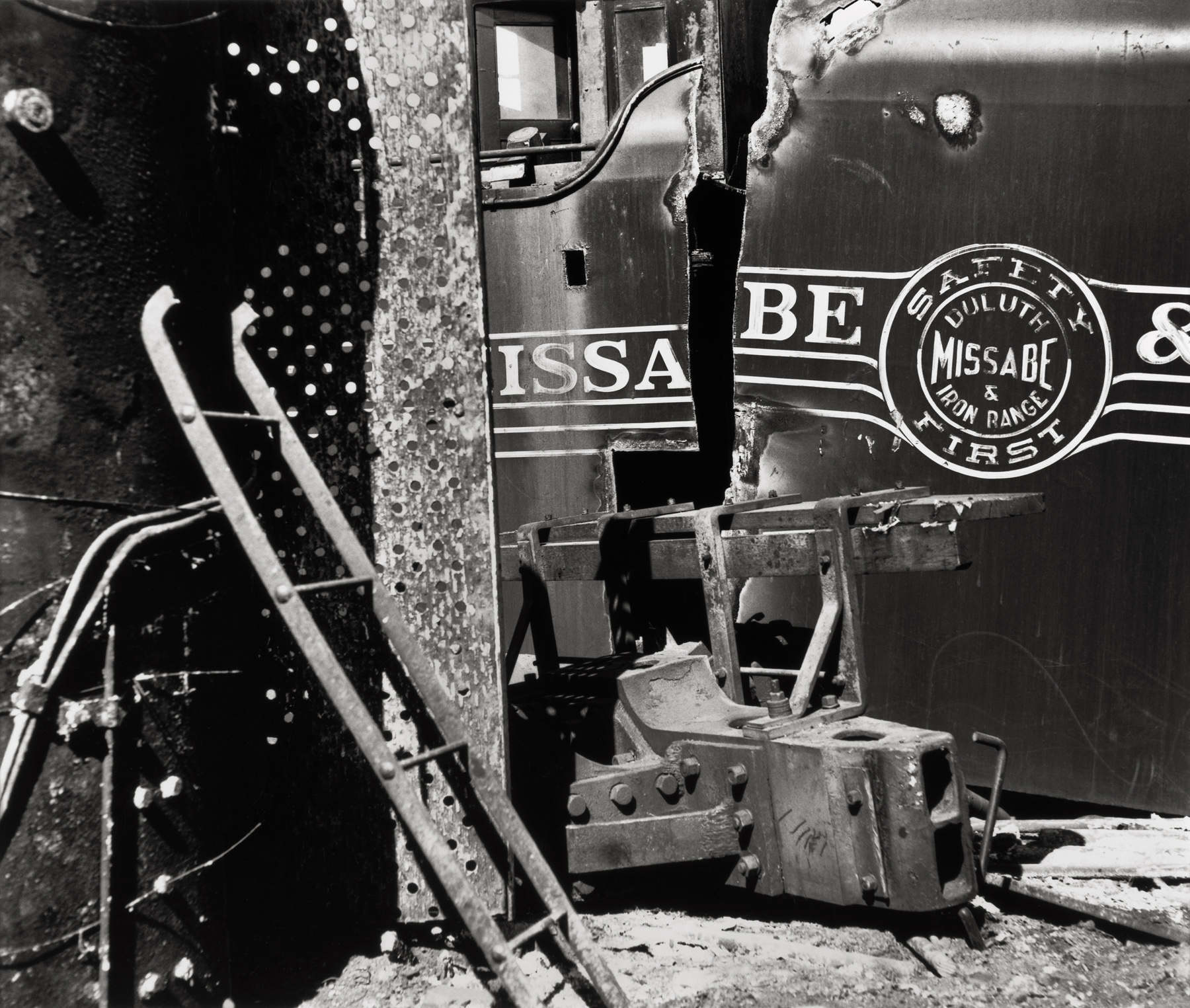


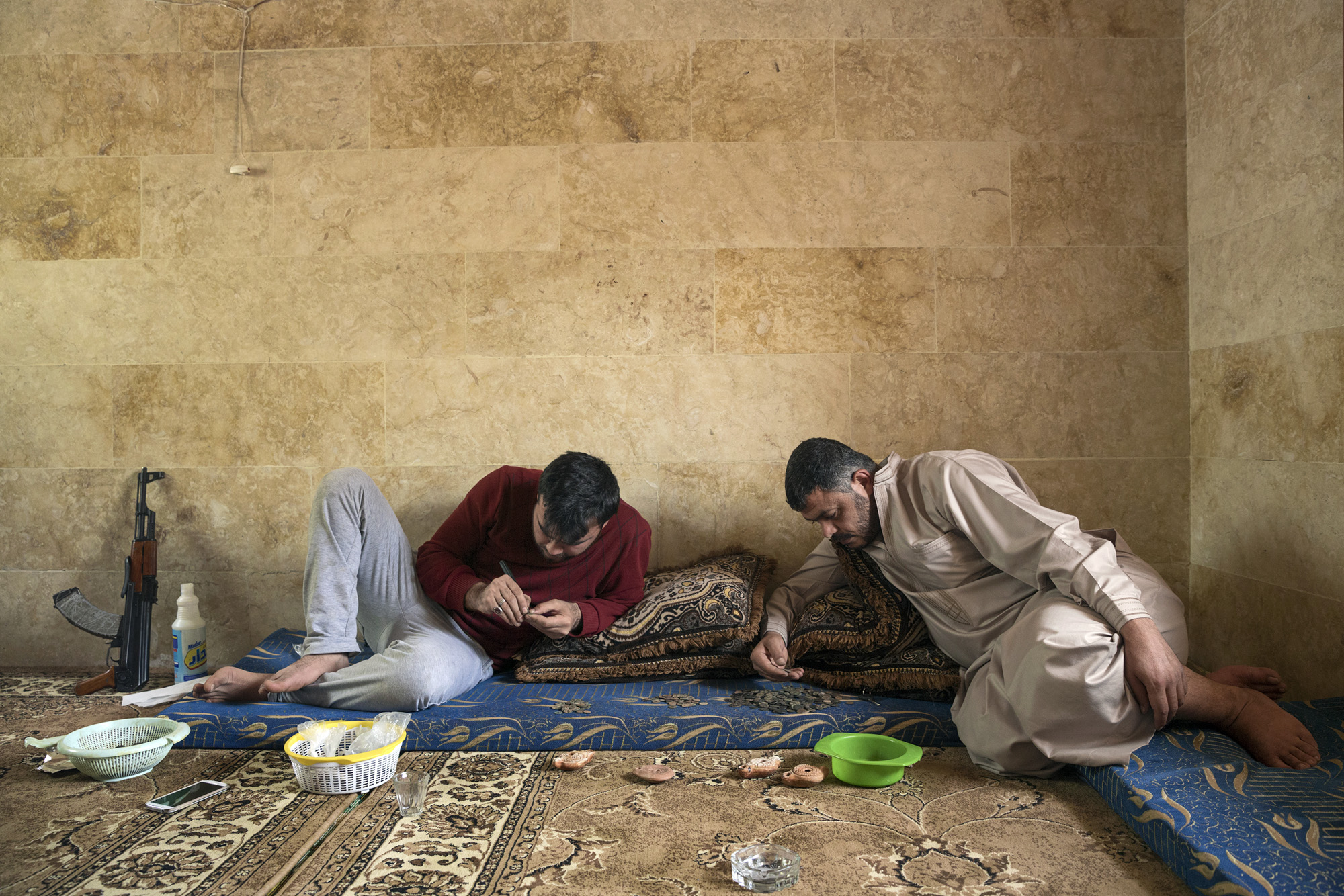
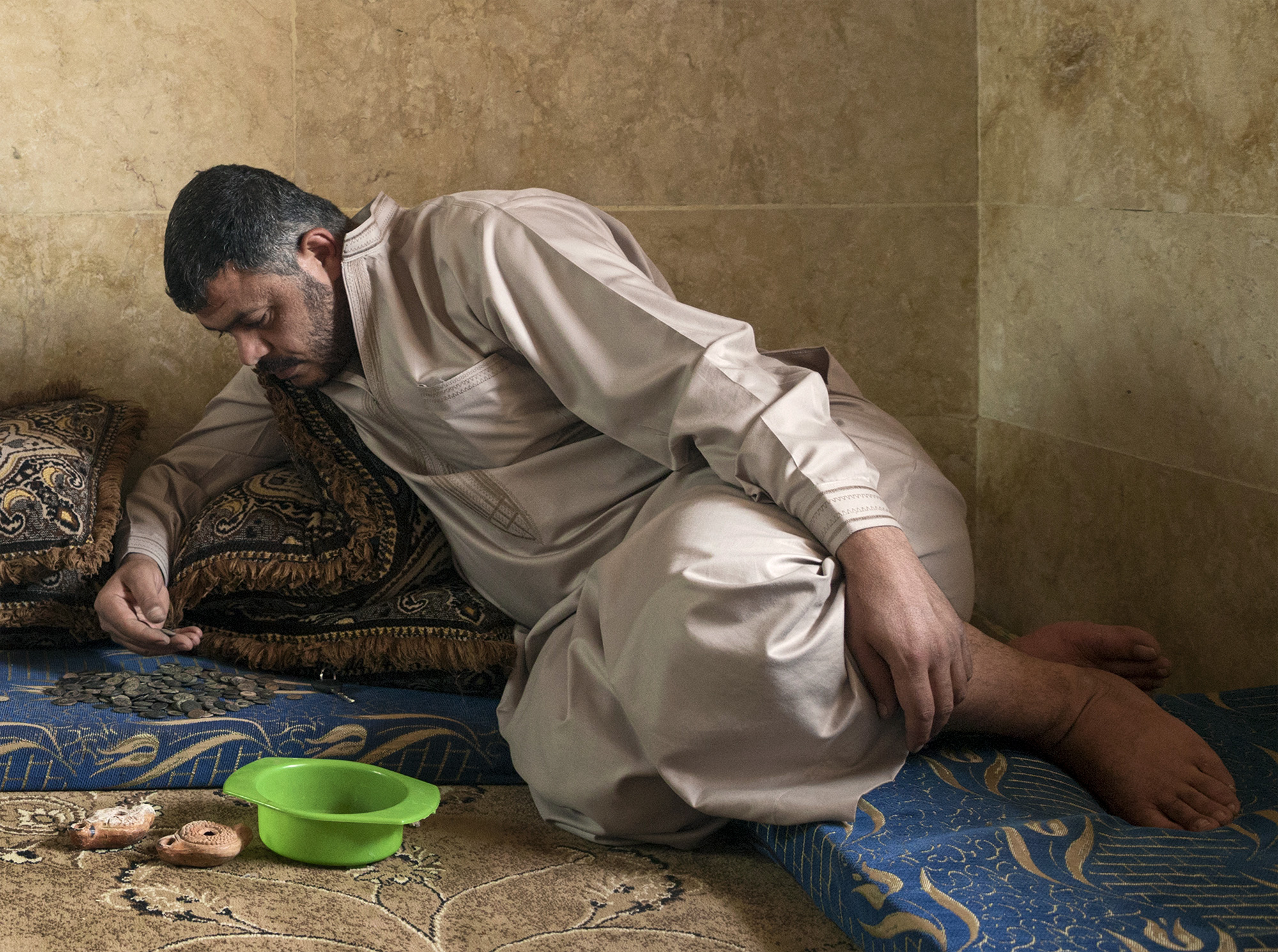

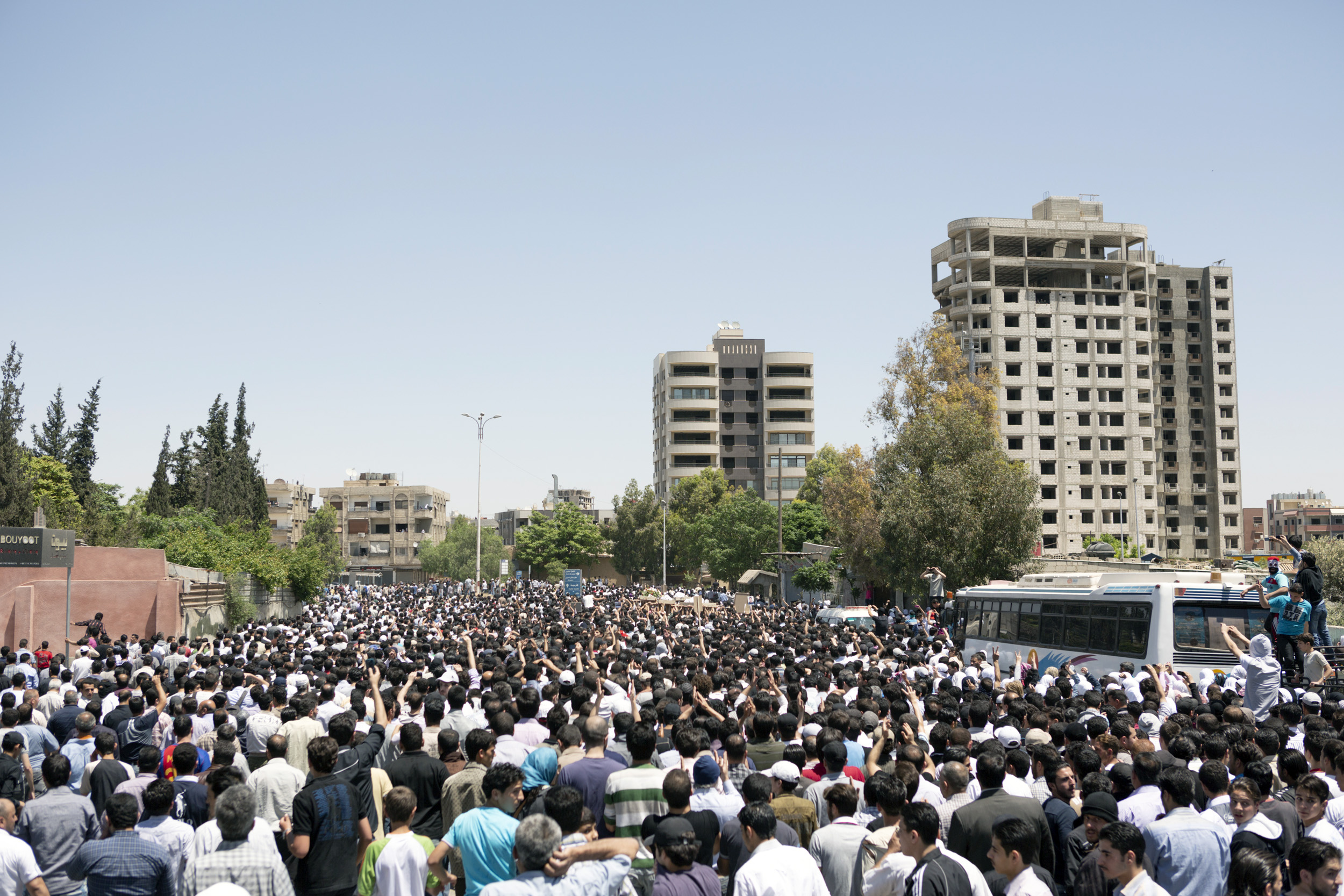
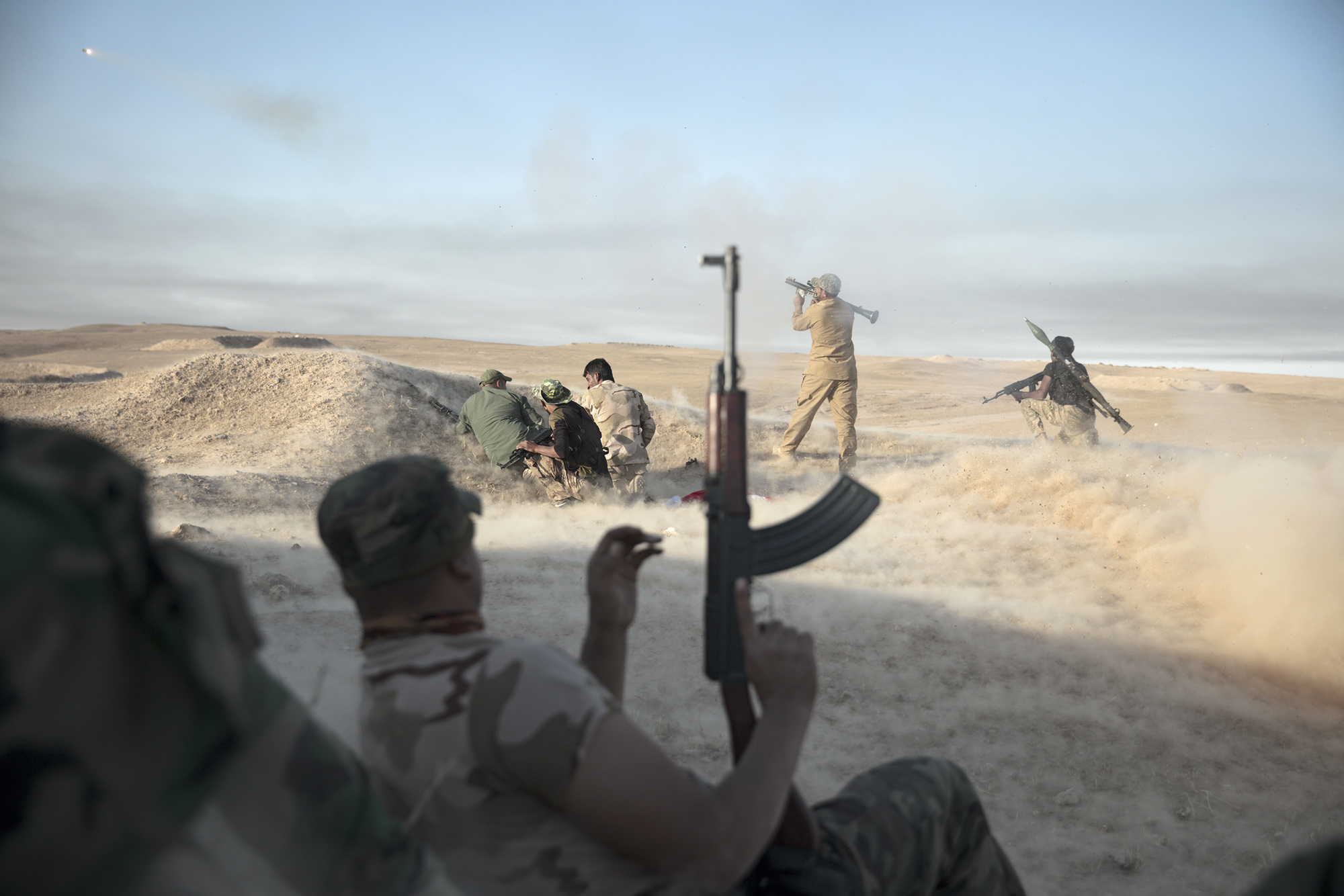


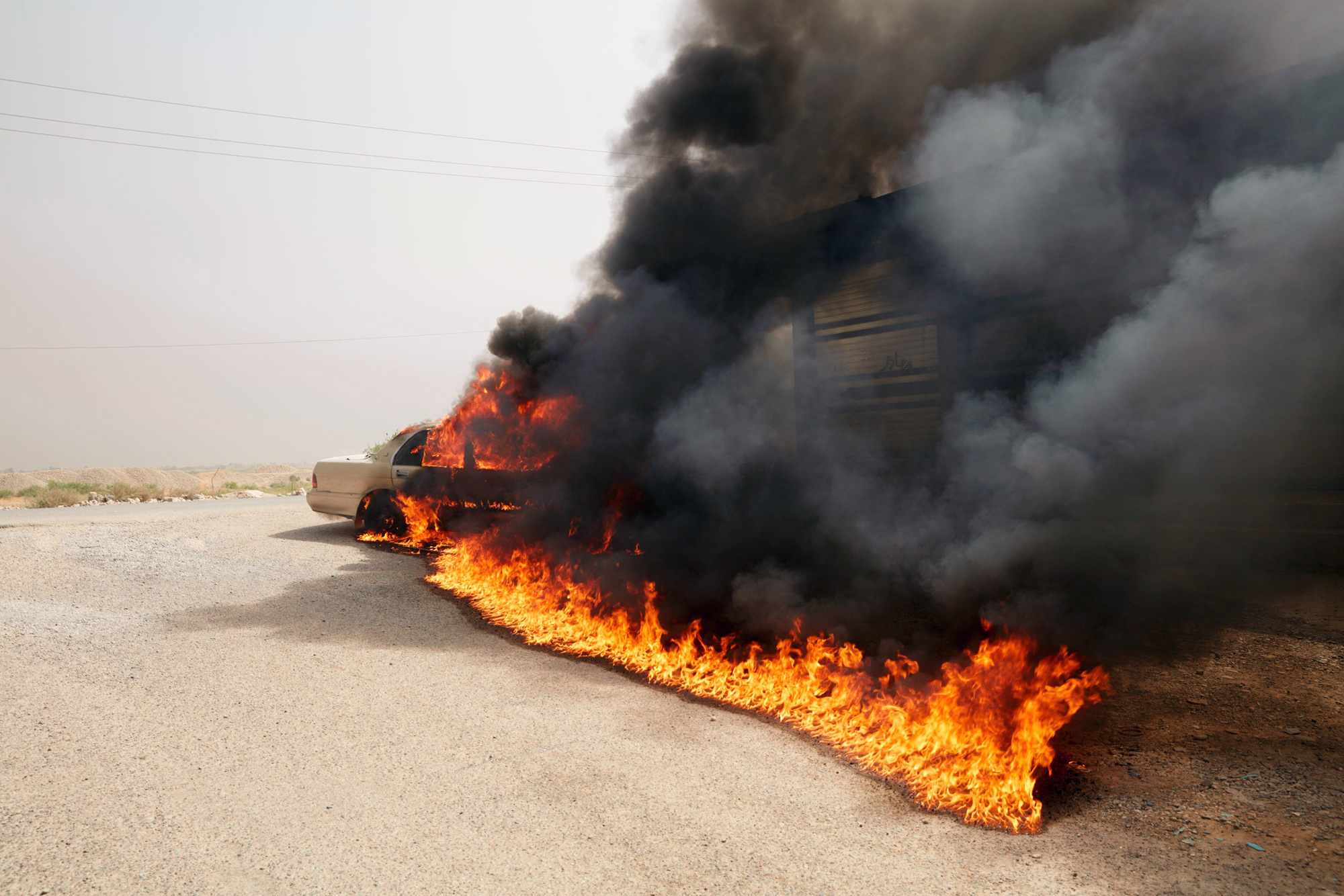


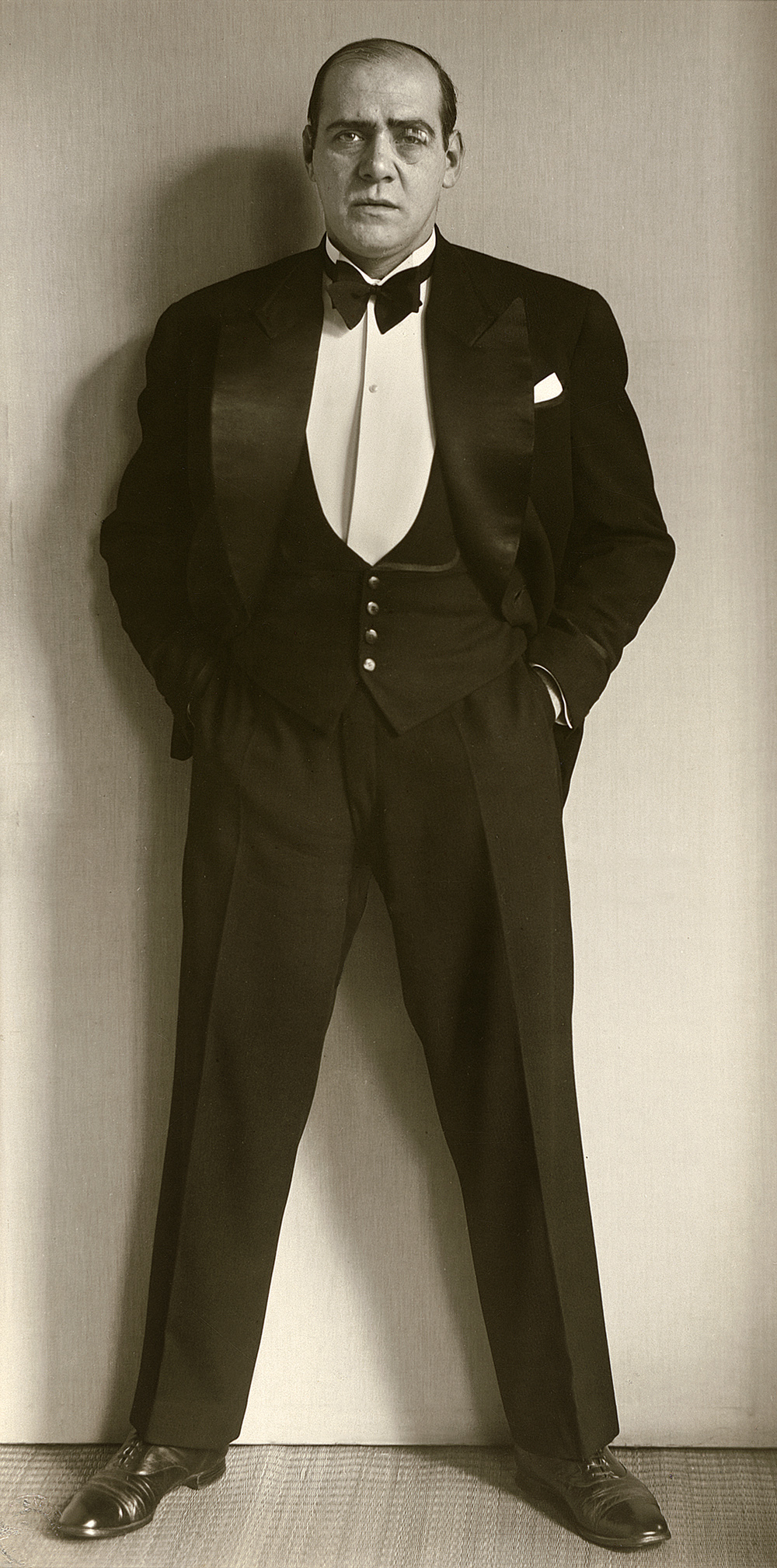
![August Sander (German, 1876-1964) 'The Dadaist Raoul Hausmann [with Hedwig Mankiewitz and Vera Broïdo]' 1929](https://artblart.com/wp-content/uploads/2019/01/sander-der_dadaist-web.jpg "August Sander (German, 1876-1964) 'The Dadaist Raoul Hausmann [with Hedwig Mankiewitz and Vera Broïdo]' 1929")
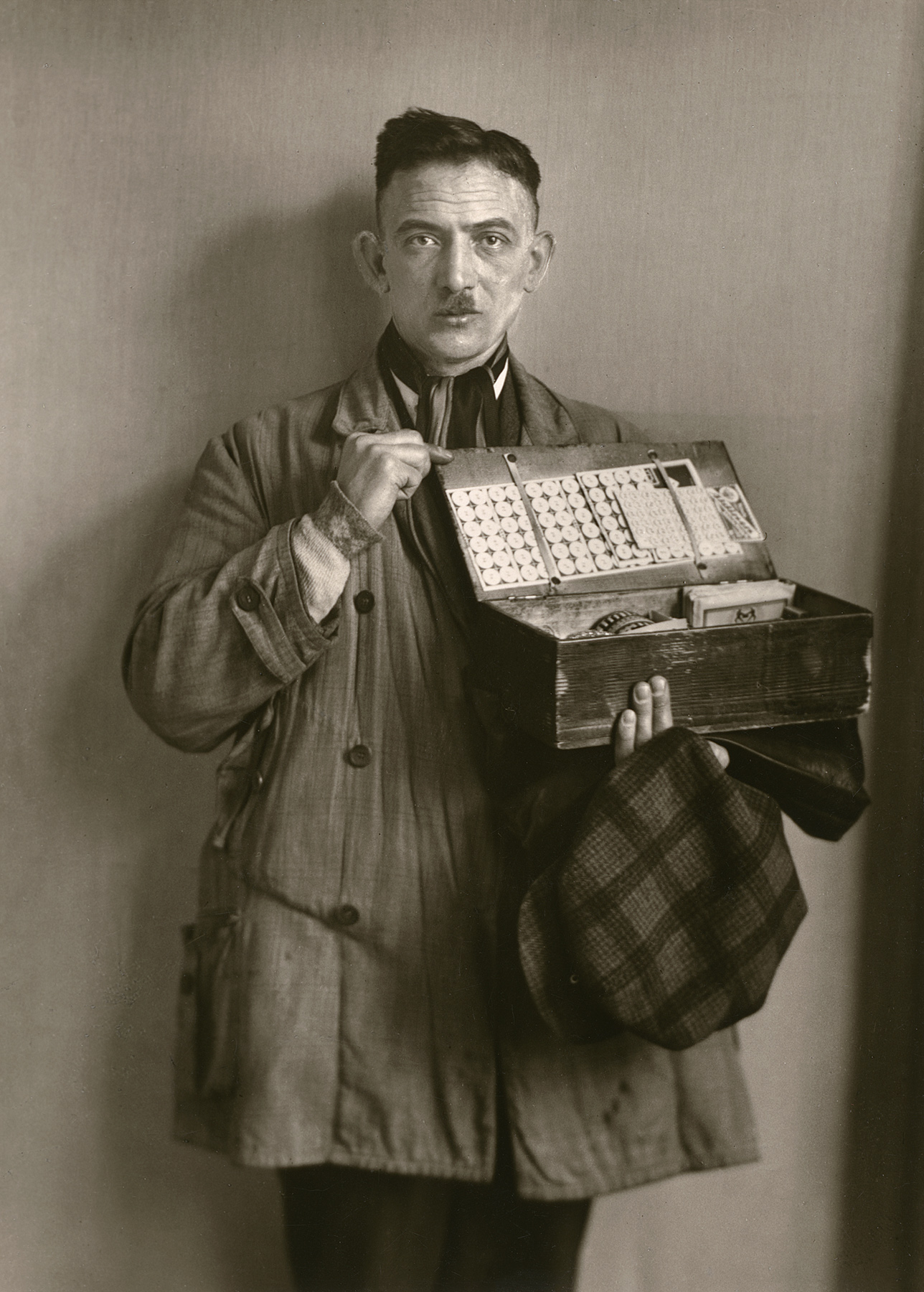
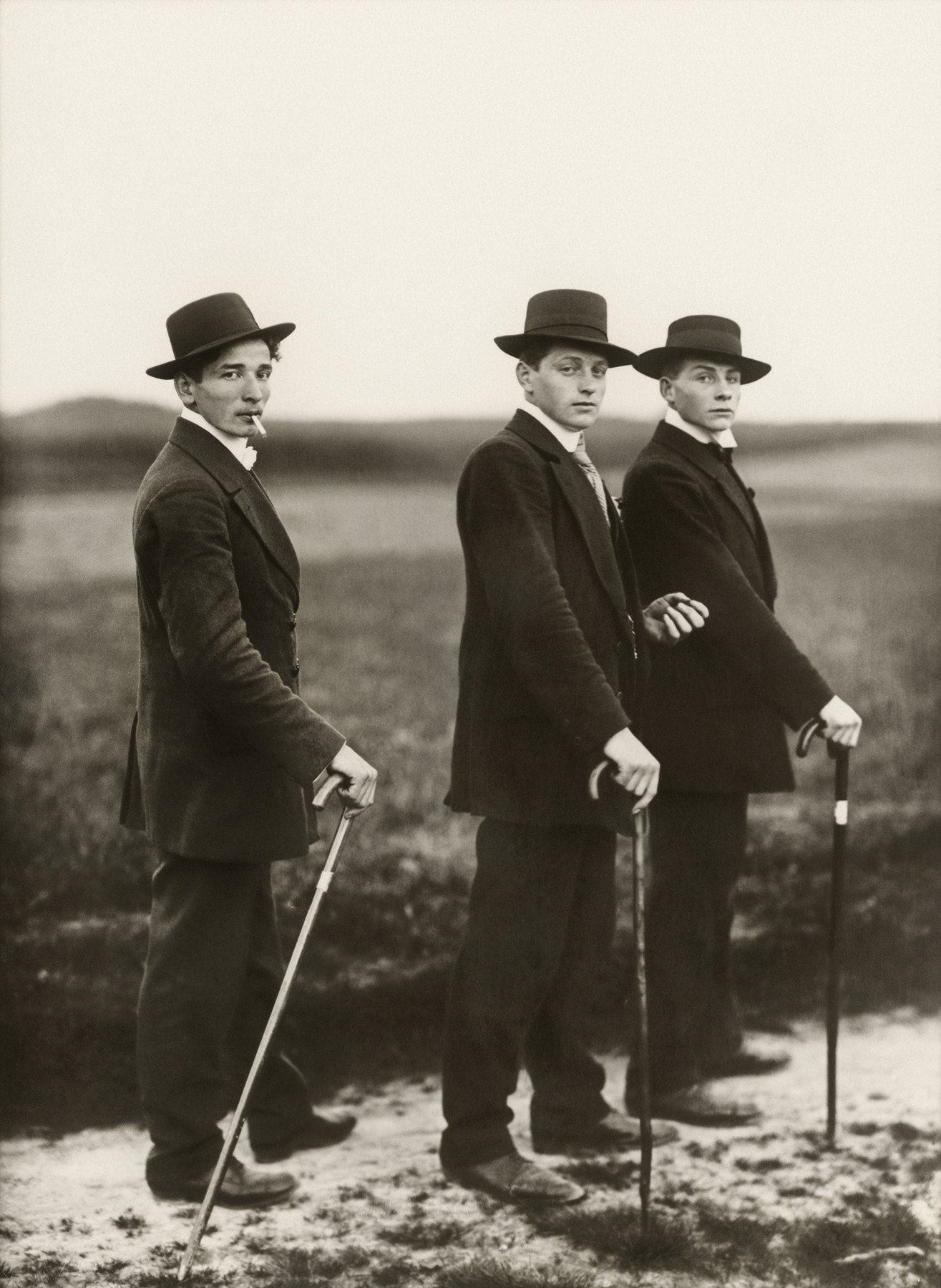
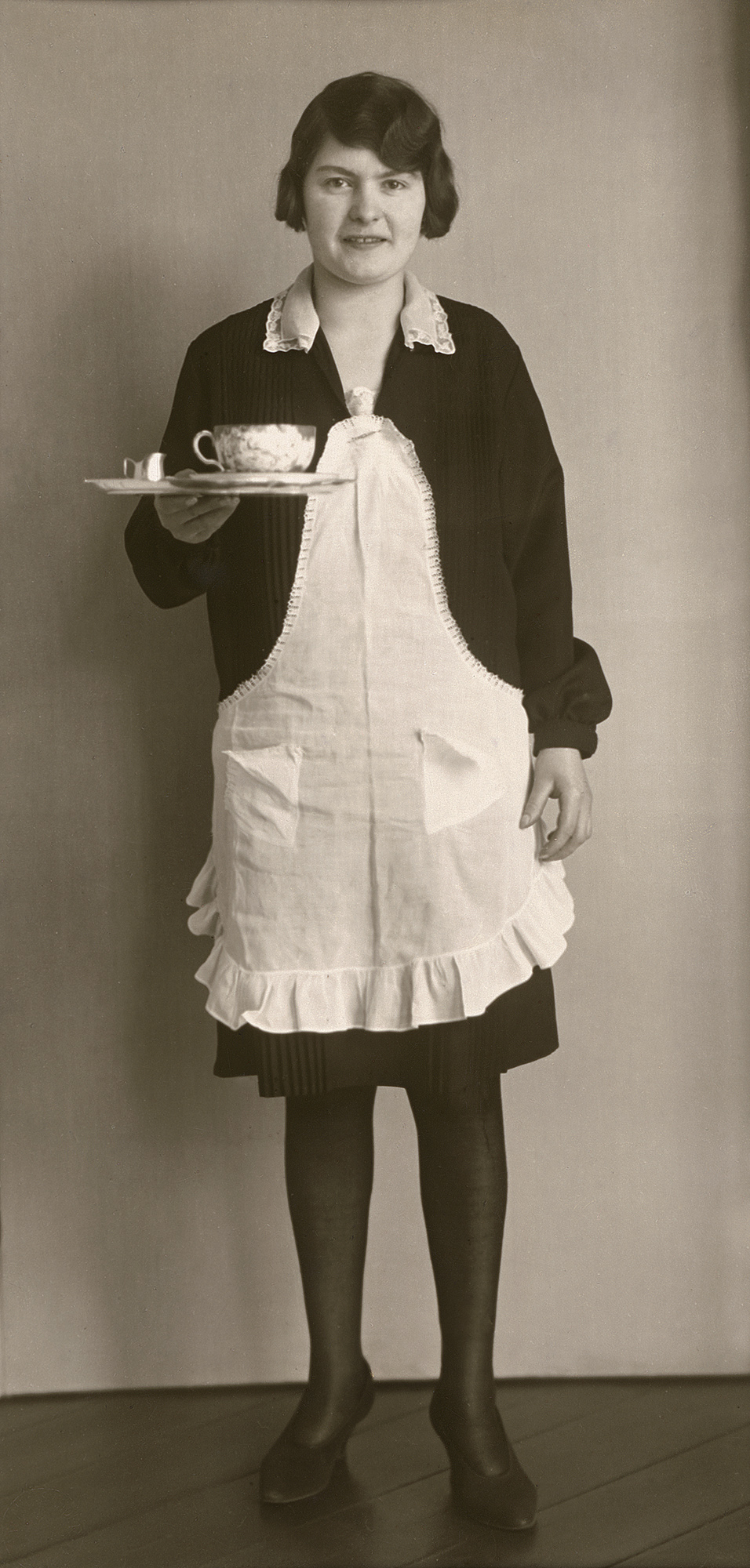
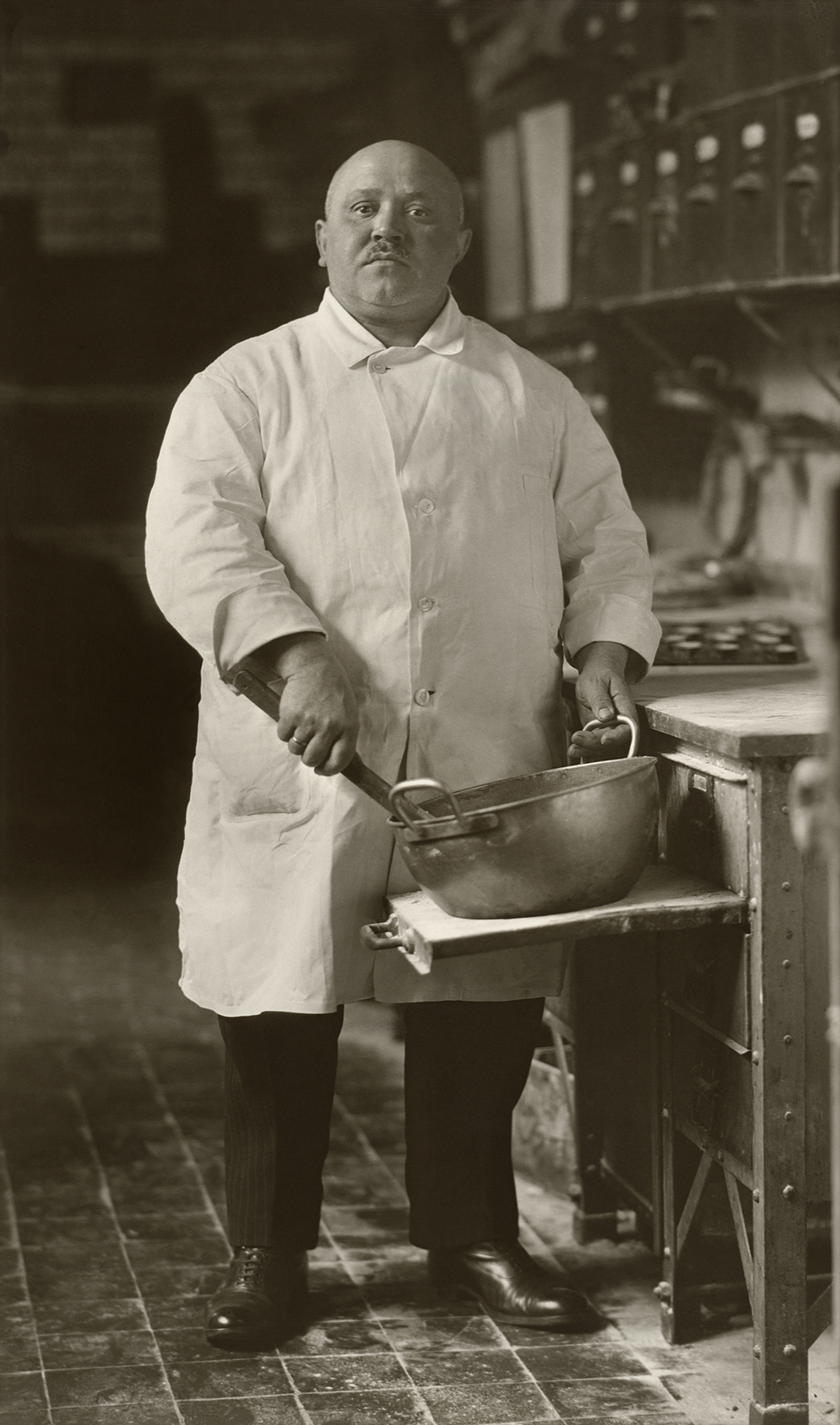
![August Sander (German, 1876-1964) 'Painter [Heinrich Hoerle]' 1928-1932](https://artblart.com/wp-content/uploads/2019/01/sander-maler_hoerle-web.jpg "August Sander (German, 1876-1964) 'Painter [Heinrich Hoerle]' 1928-1932")
![August Sander (German, 1876-1964) 'Painter [Heinrich Hoerle]' 1928-1932 (detail)](https://artblart.com/wp-content/uploads/2019/01/sander-maler_hoerle-detail.jpg "August Sander (German, 1876-1964) 'Painter [Heinrich Hoerle]' 1928-1932 (detail)")
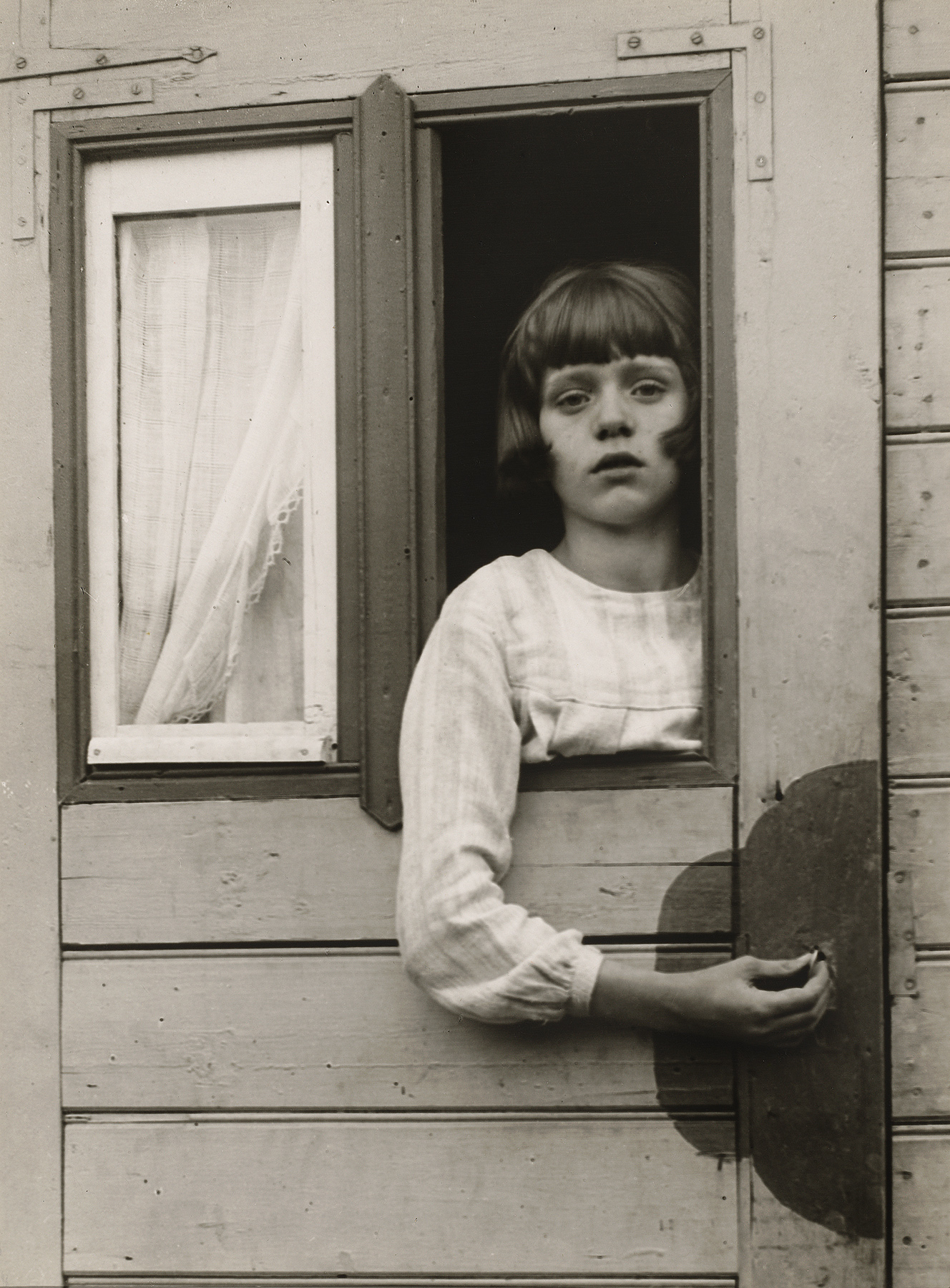
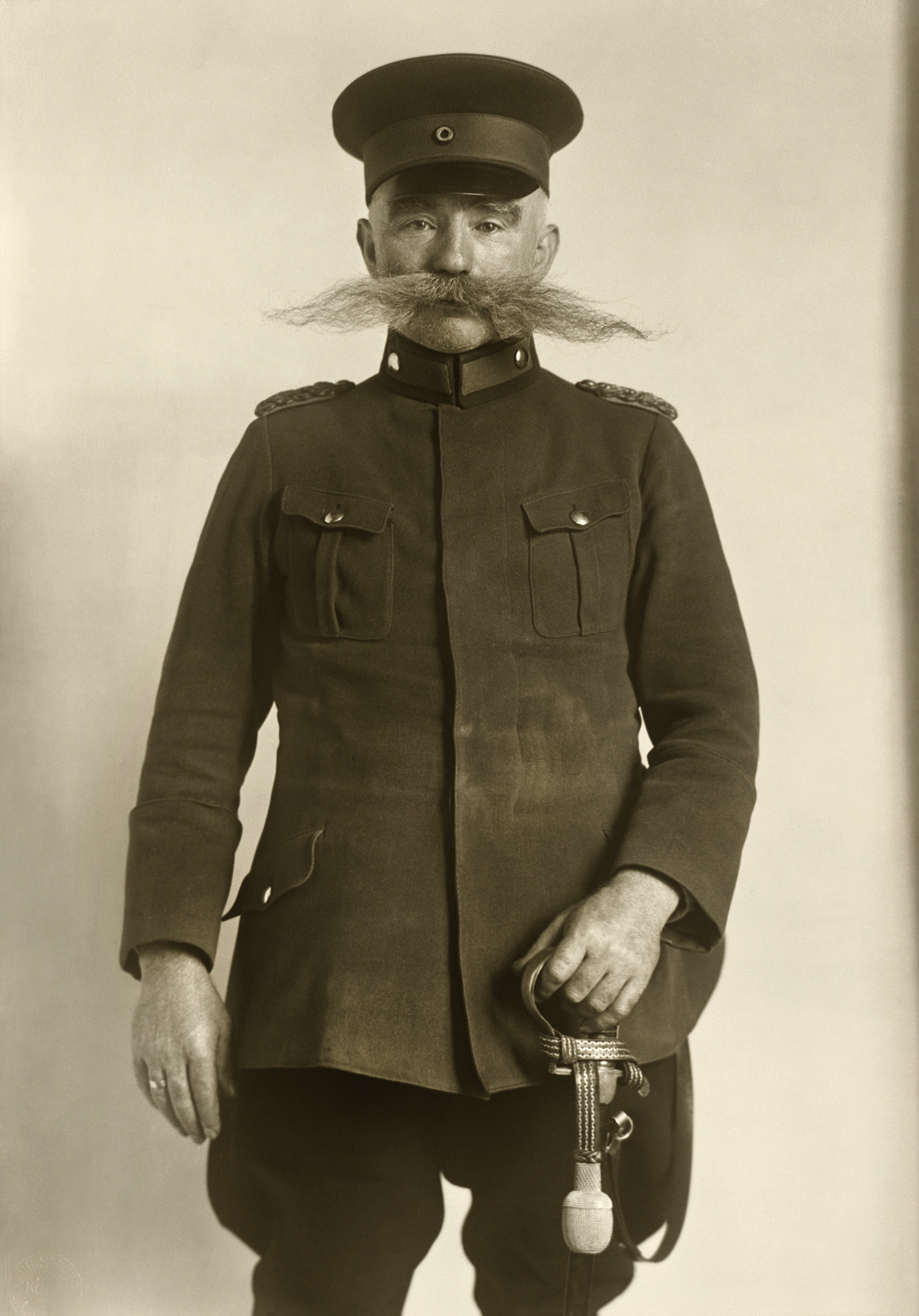

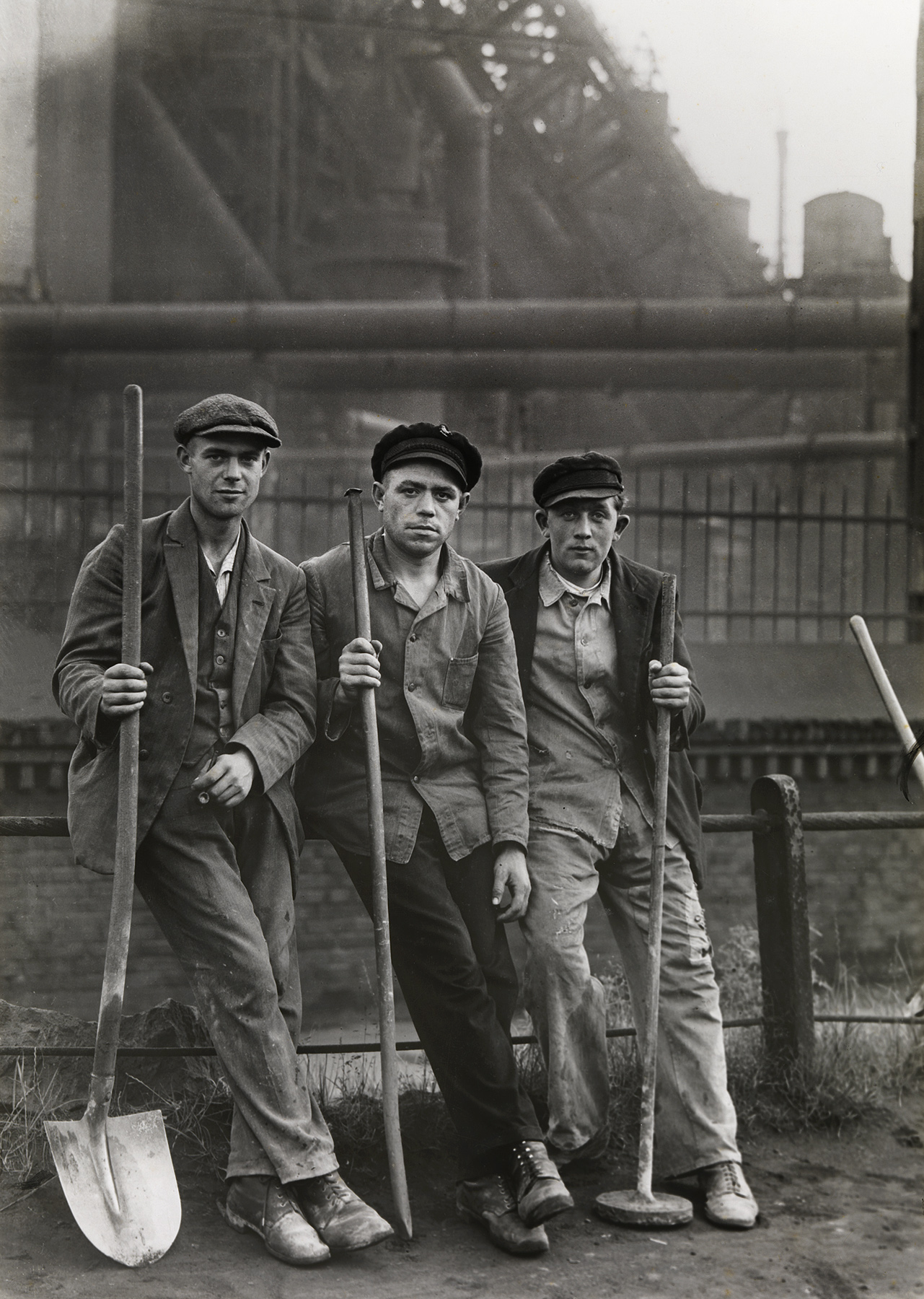
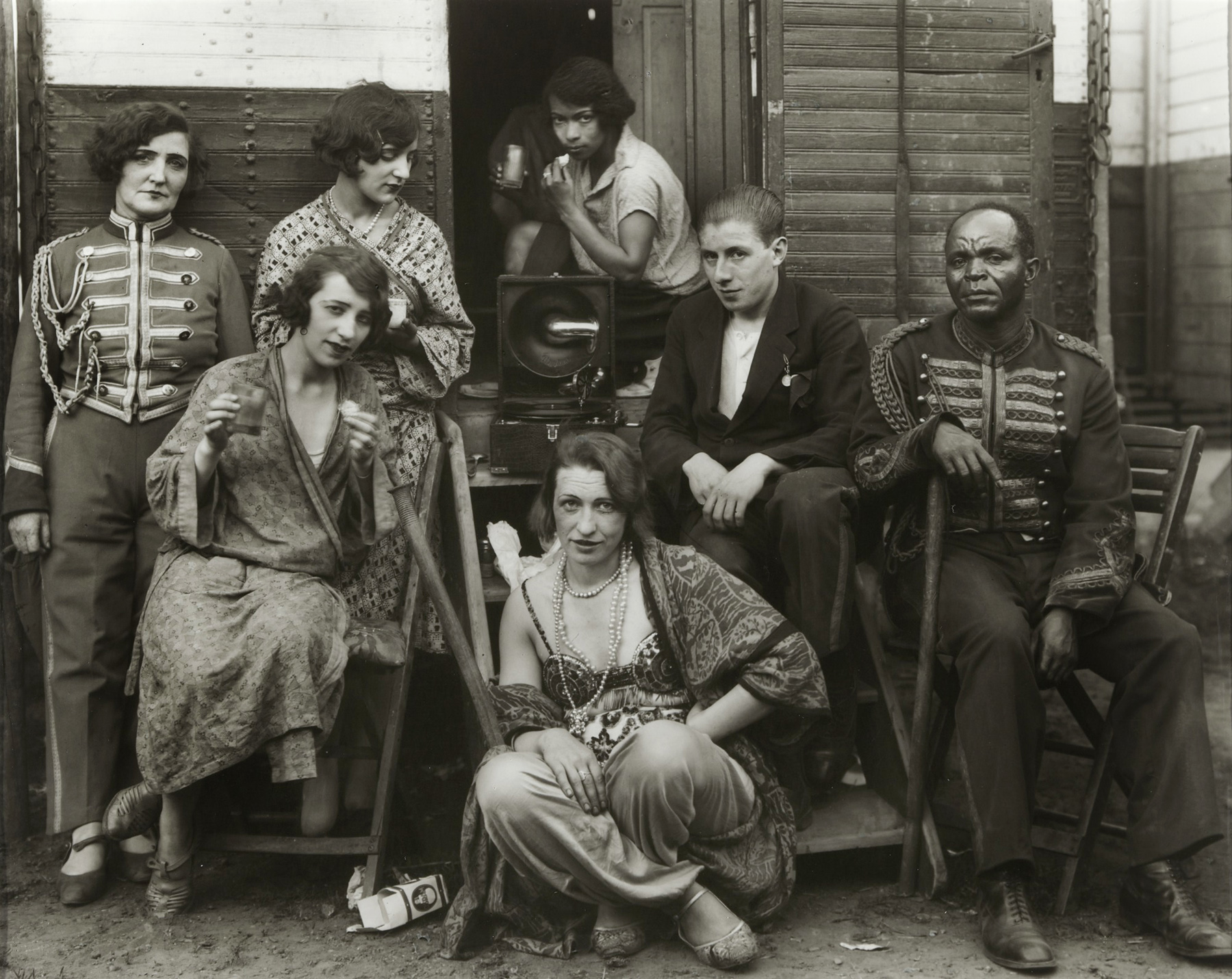
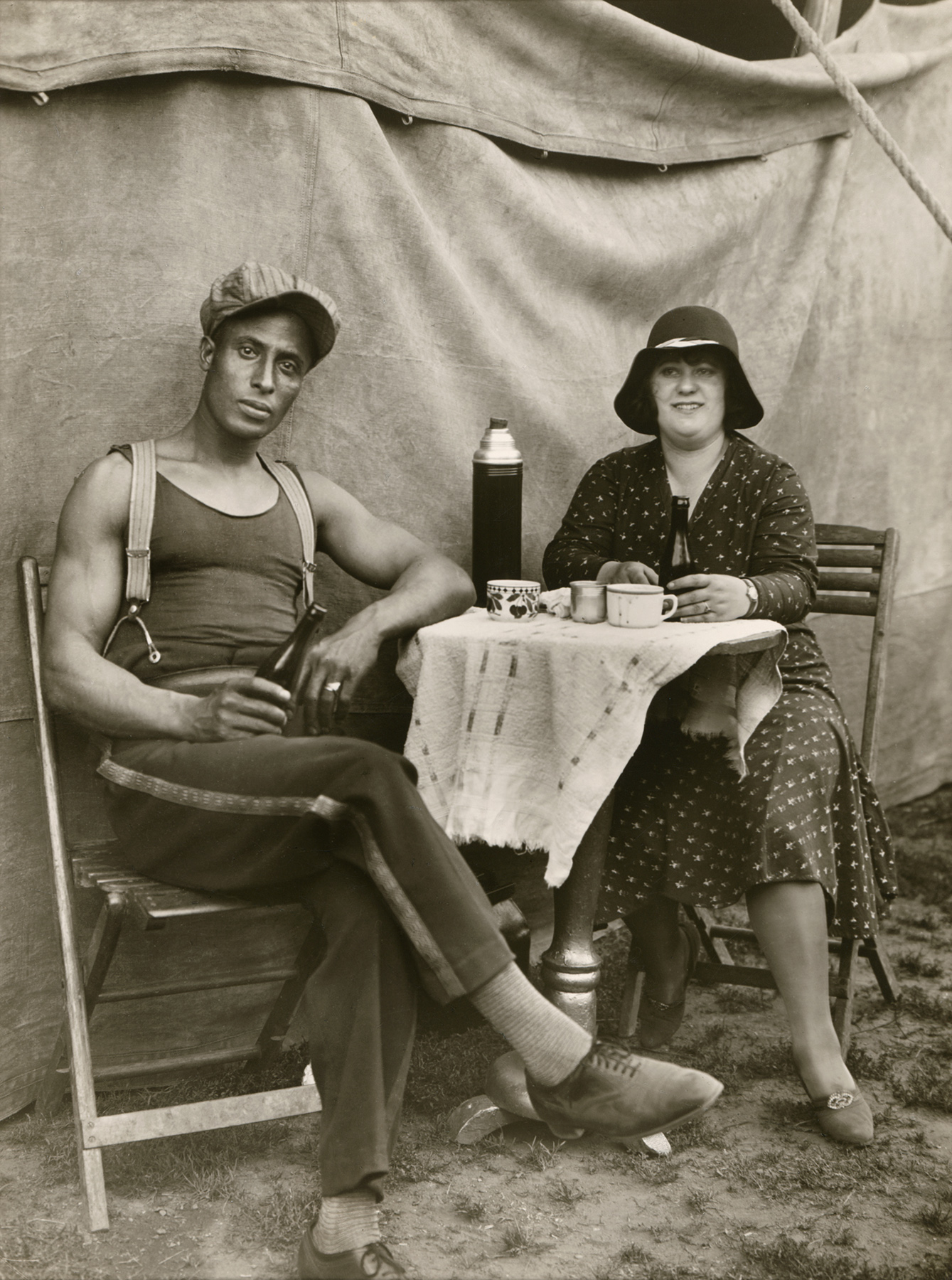

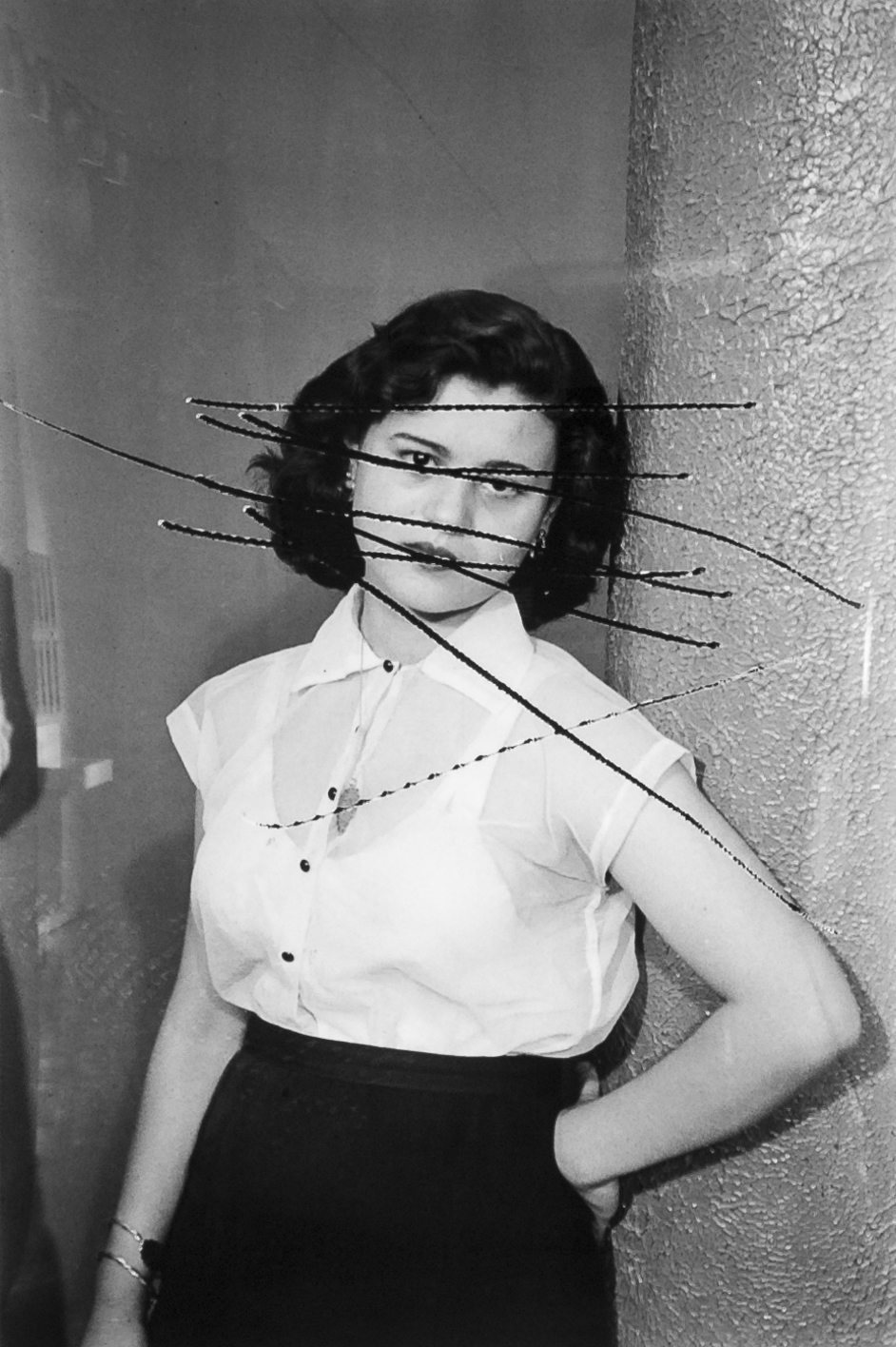

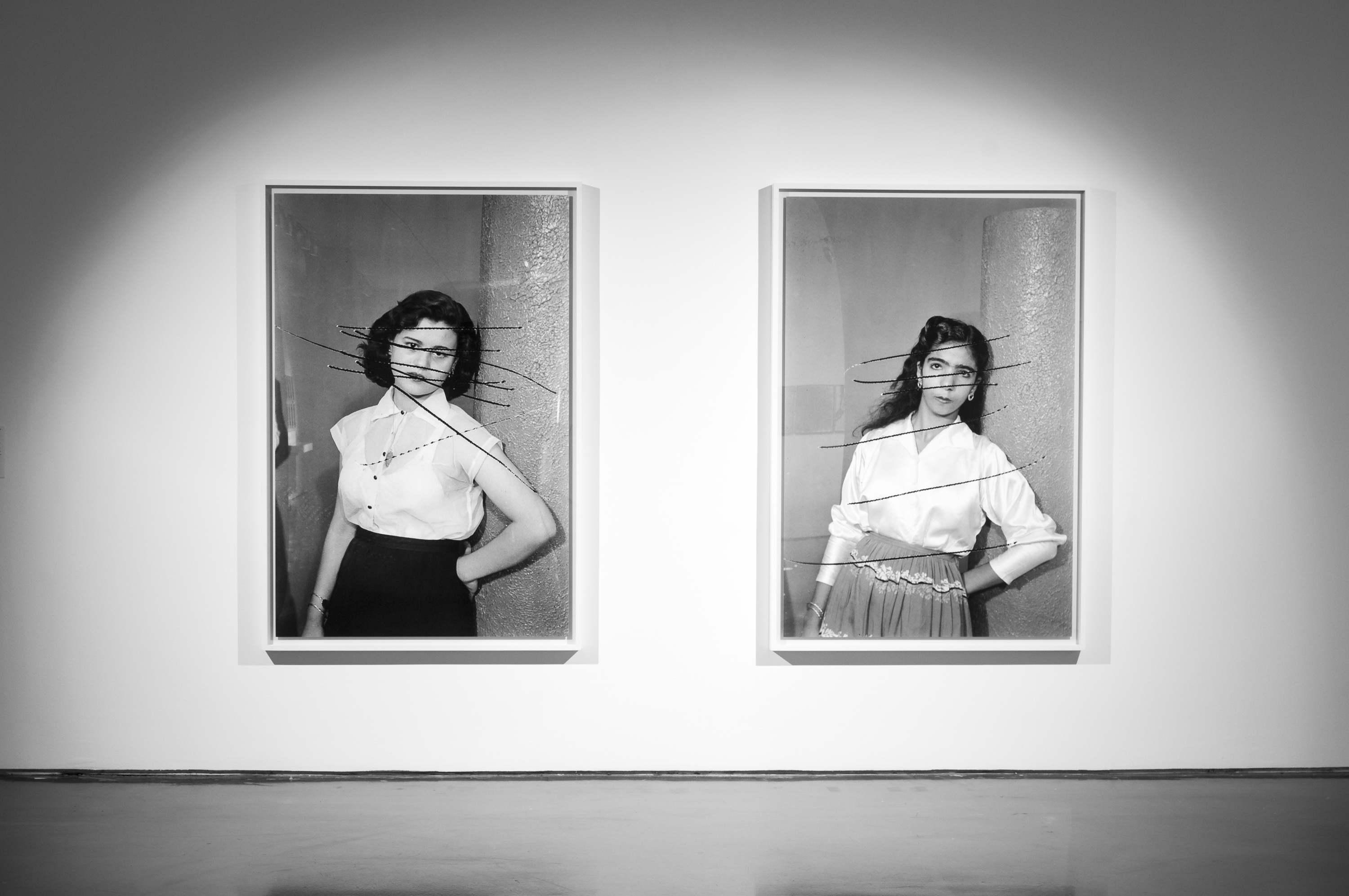
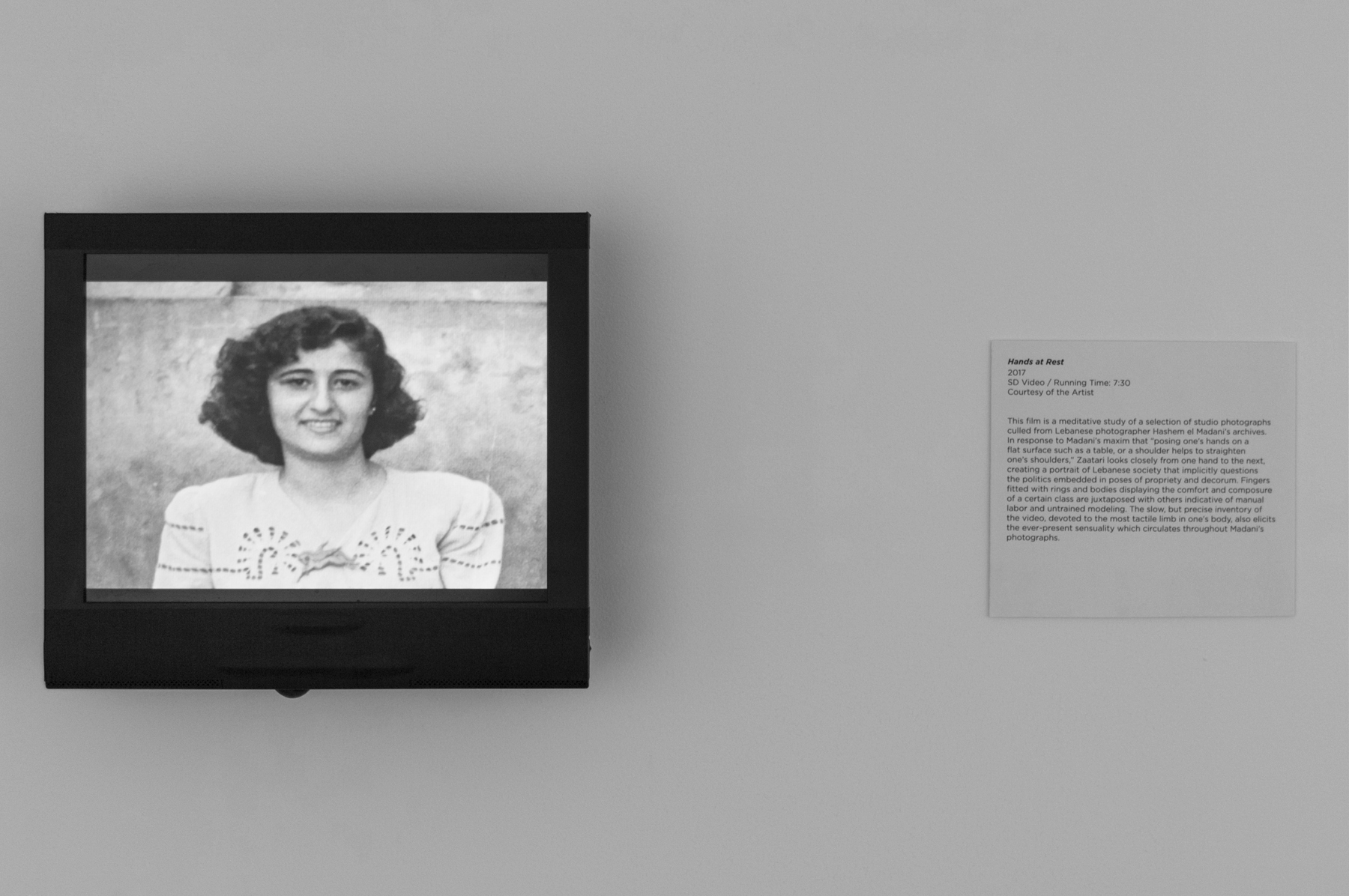


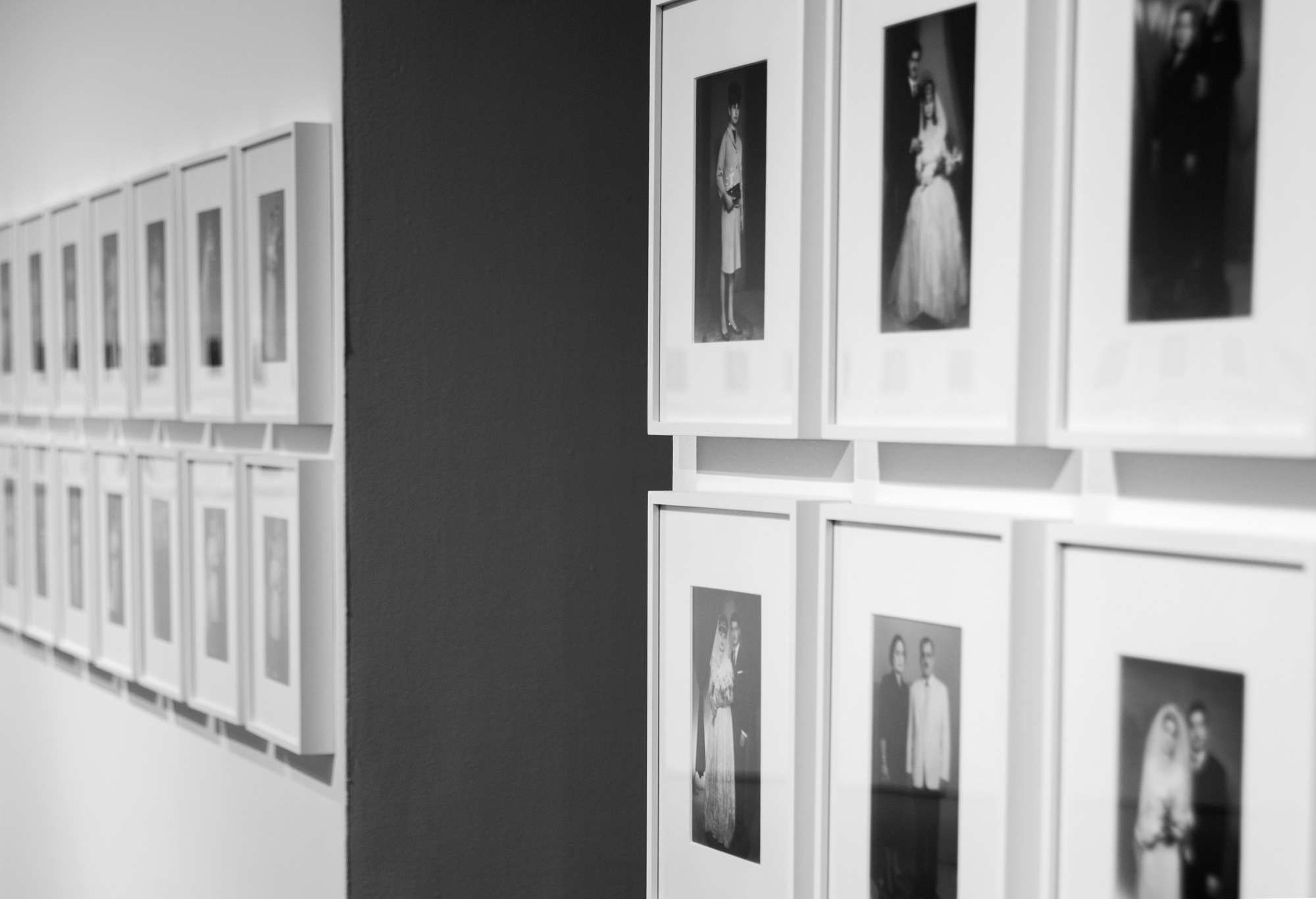

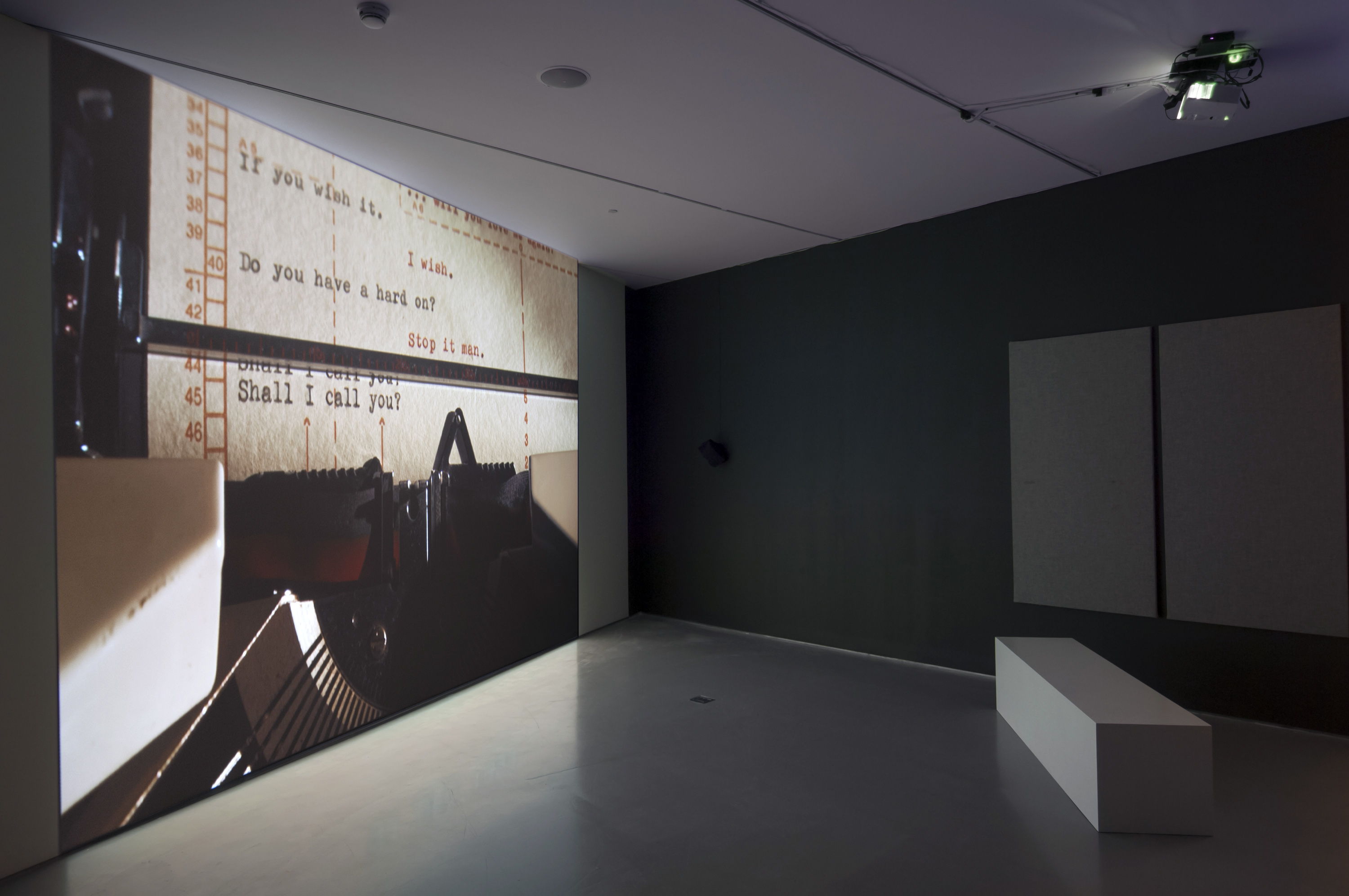

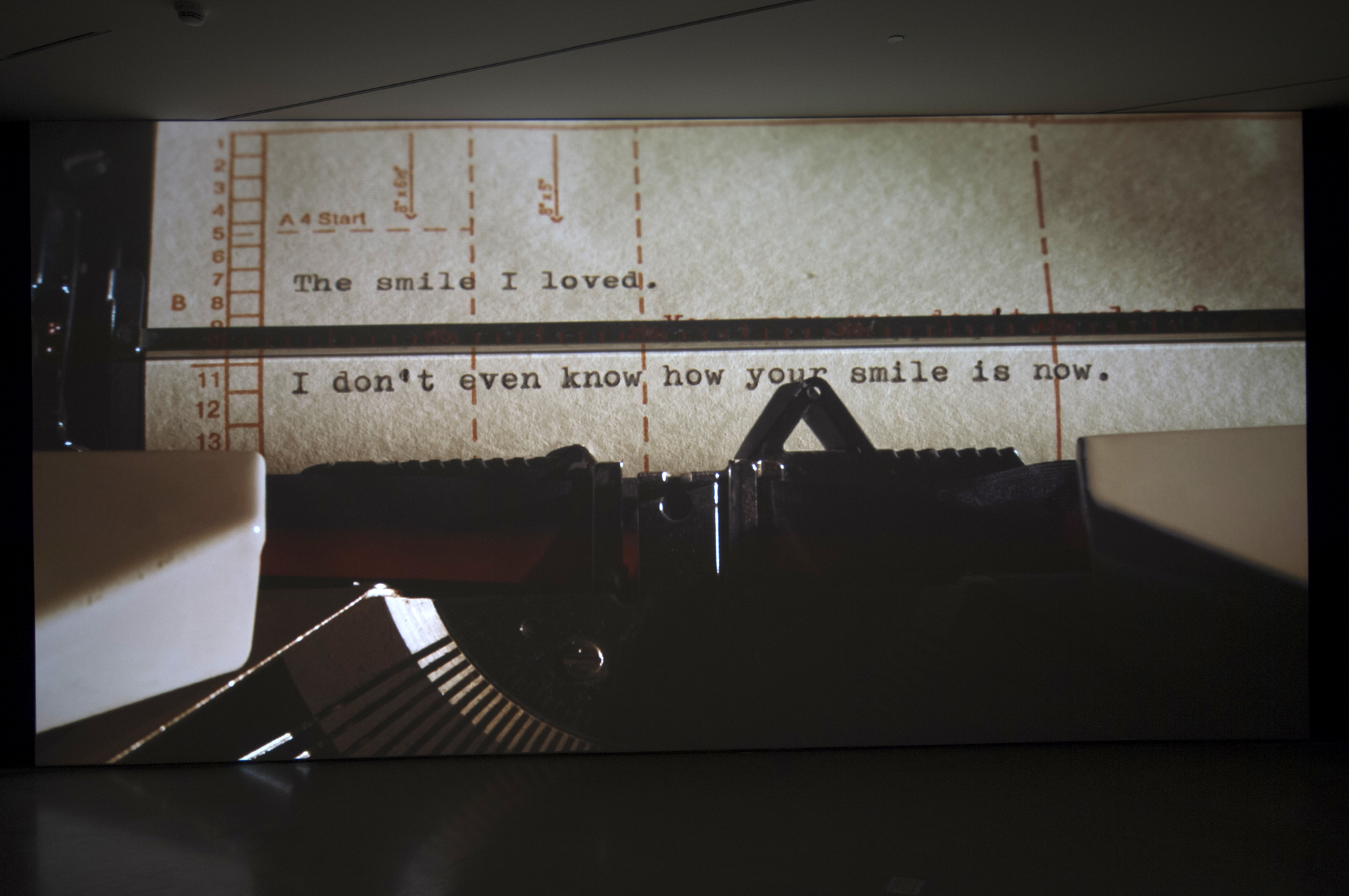


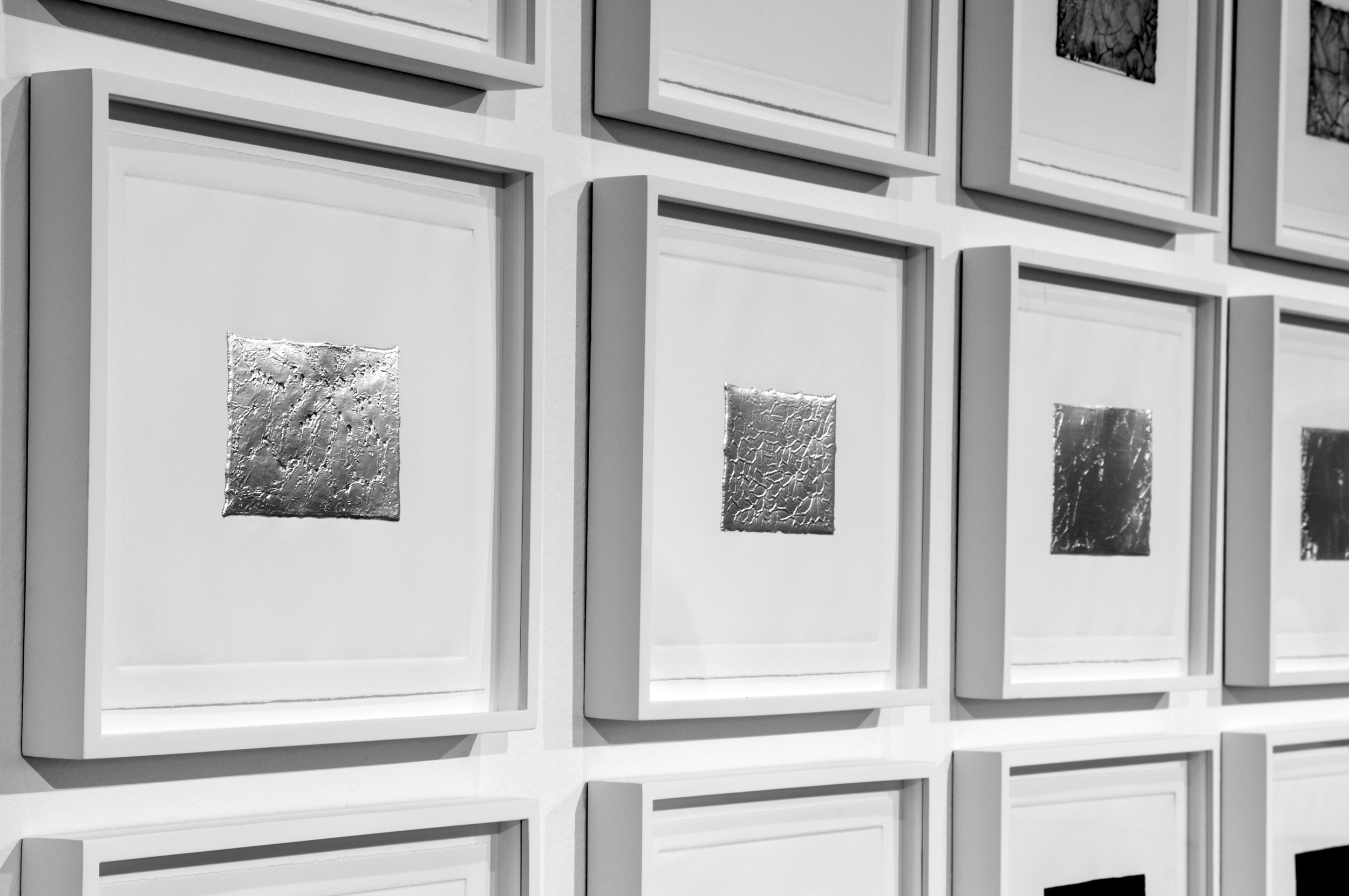


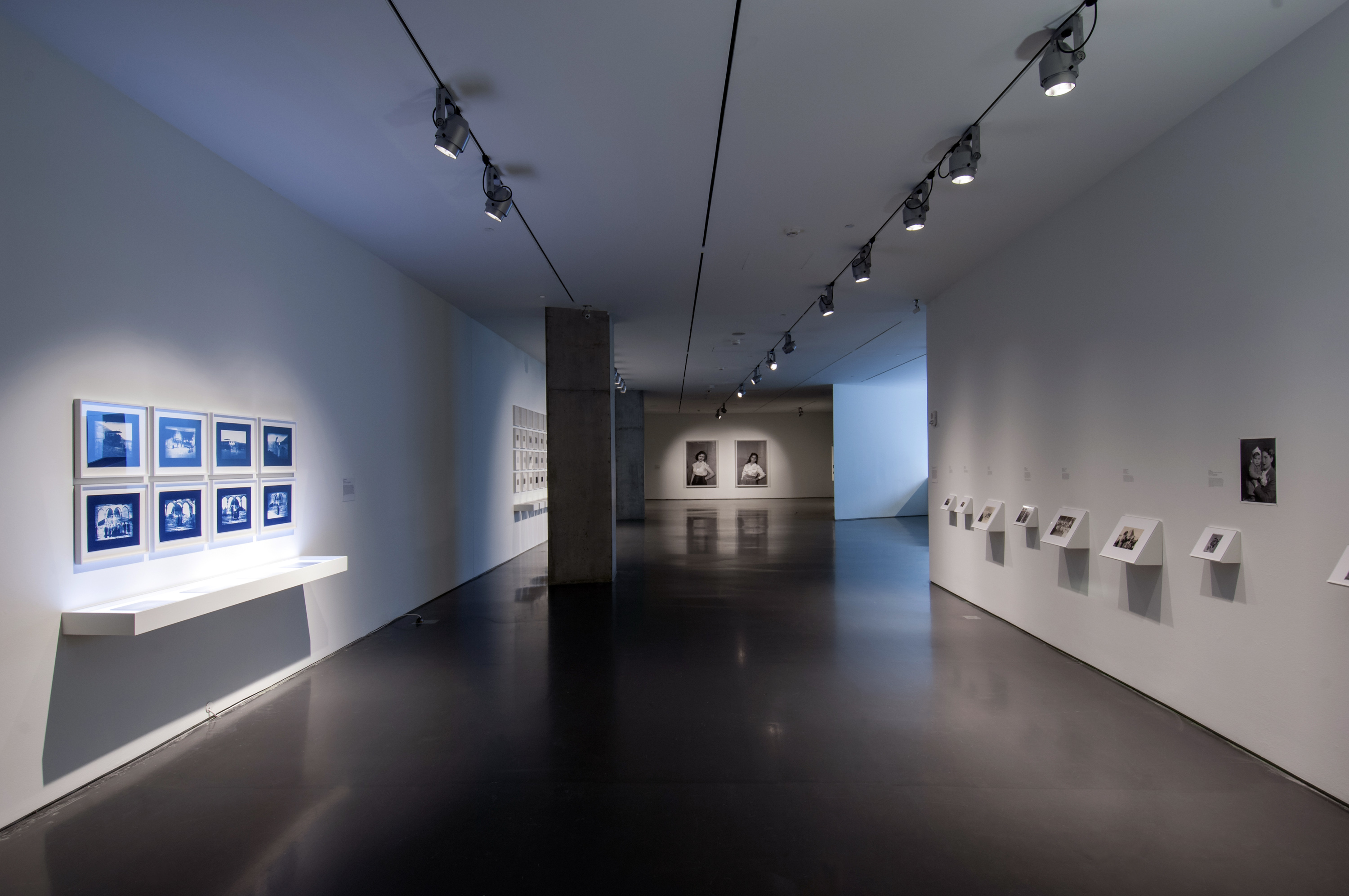
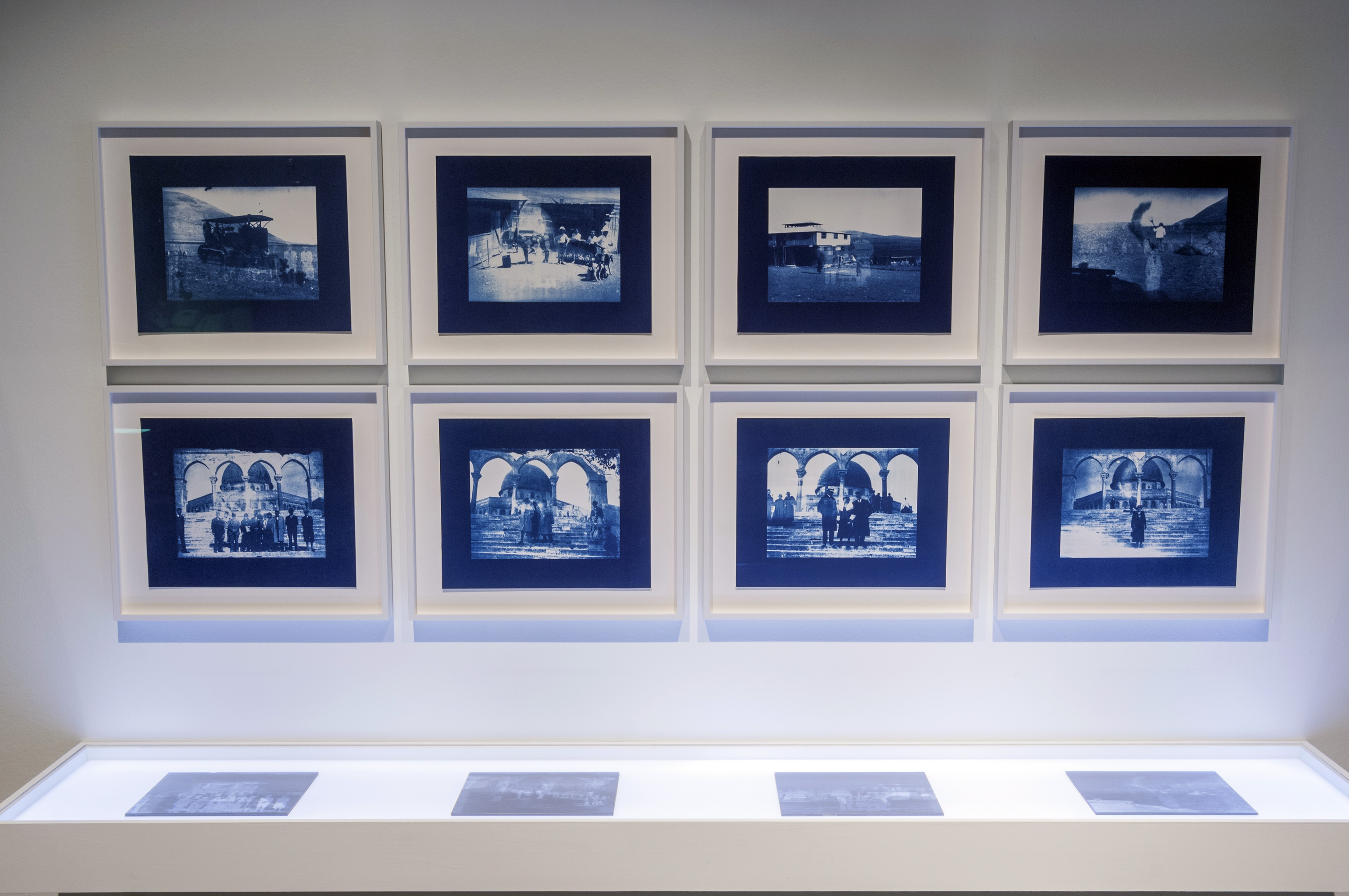

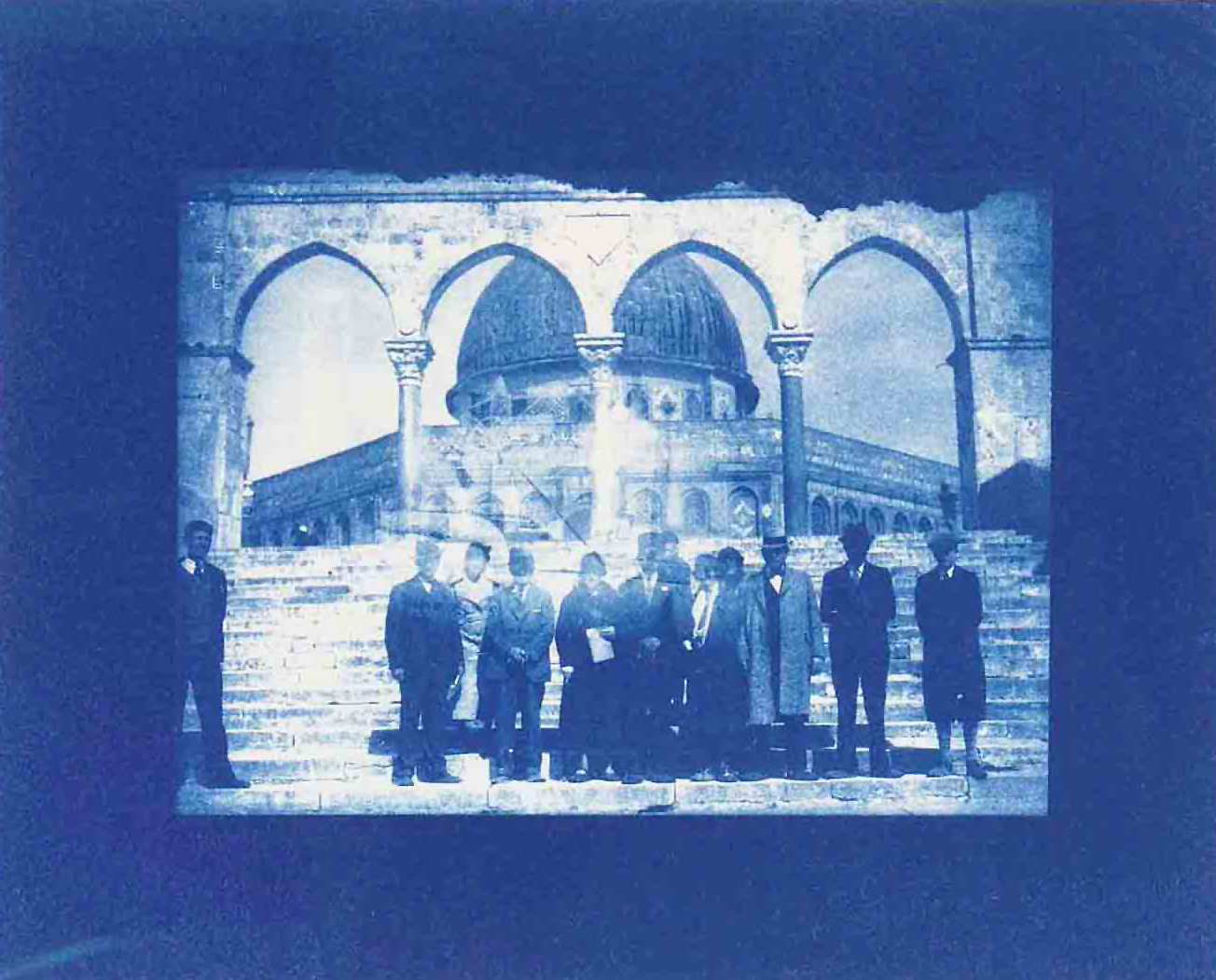


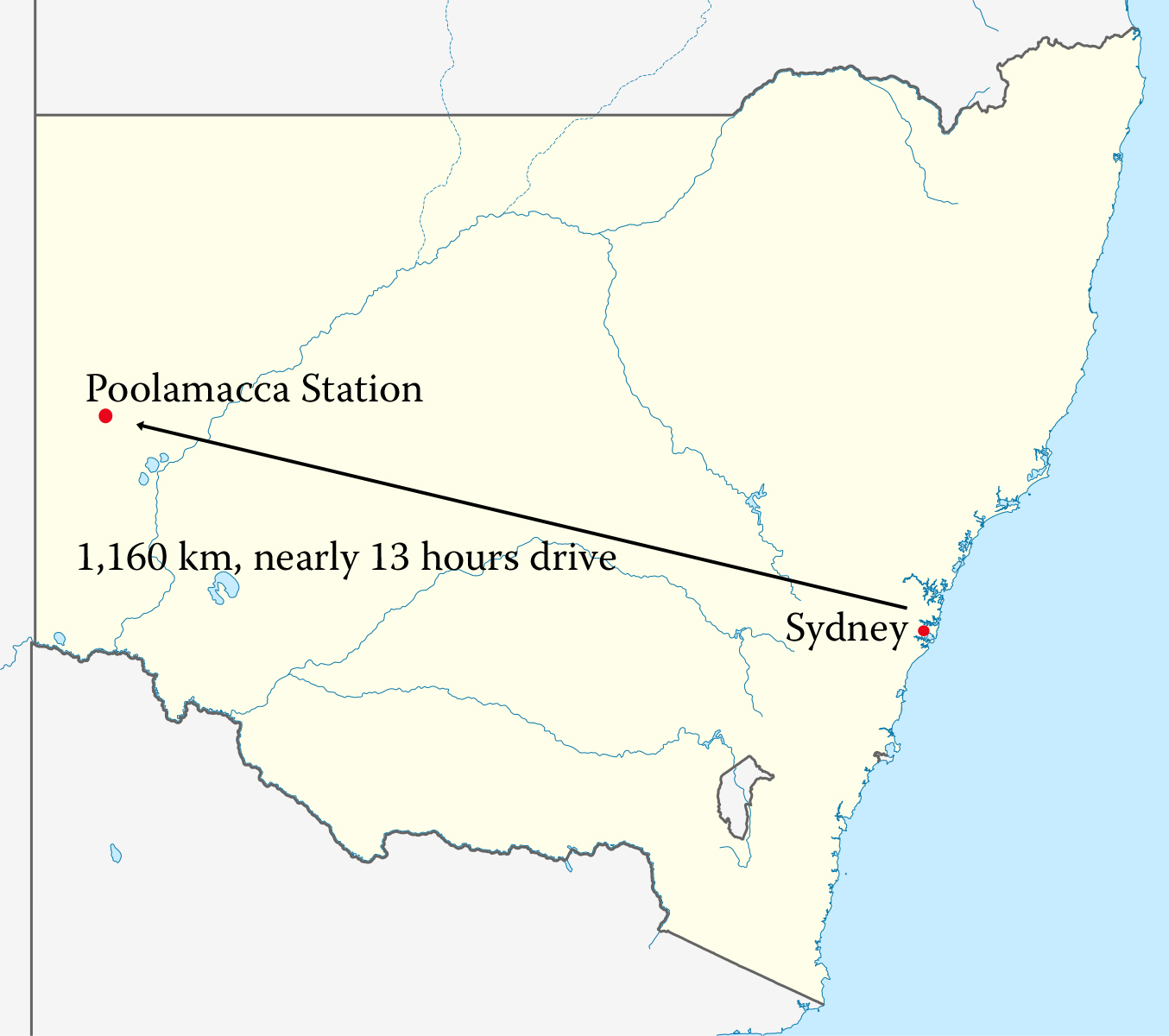
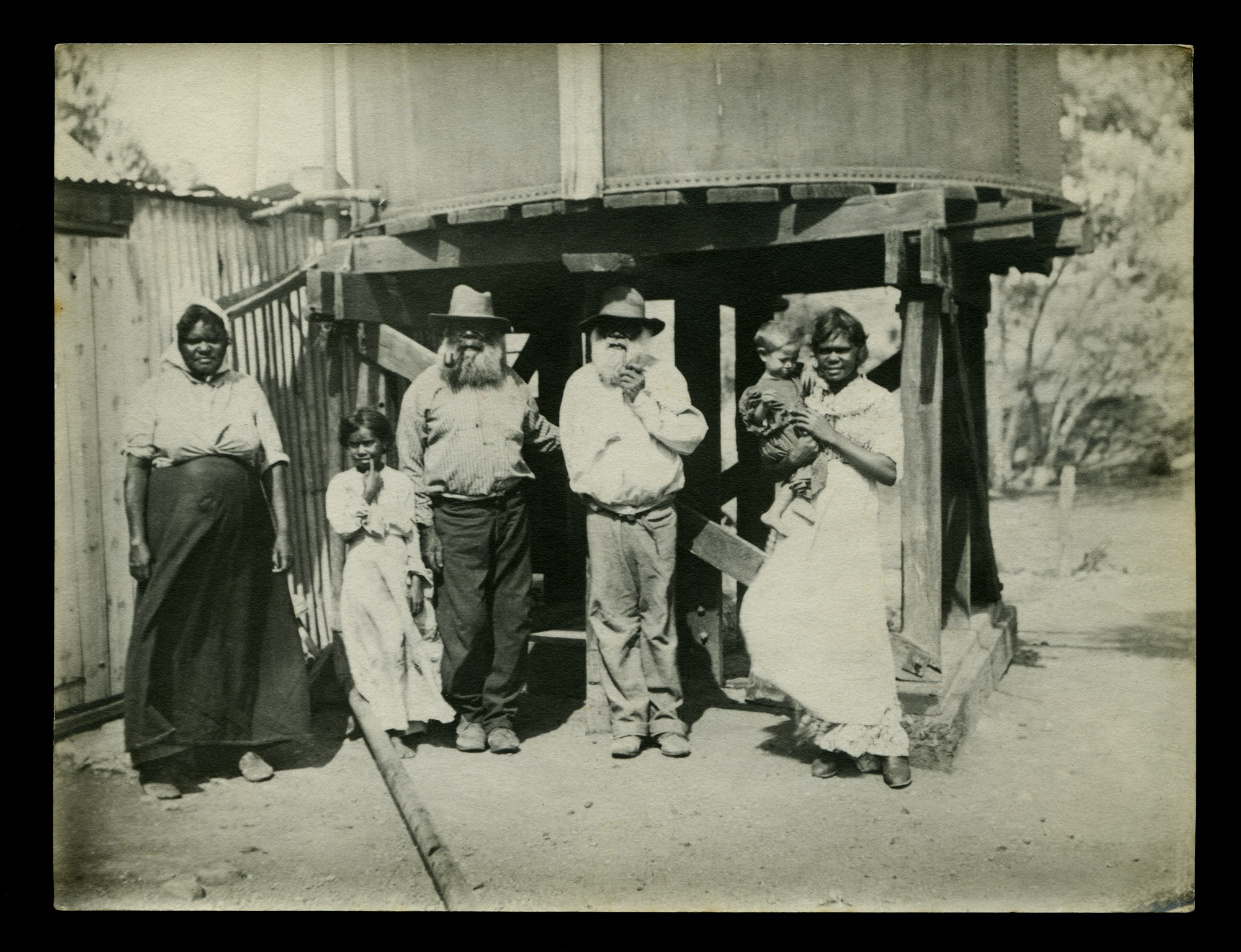
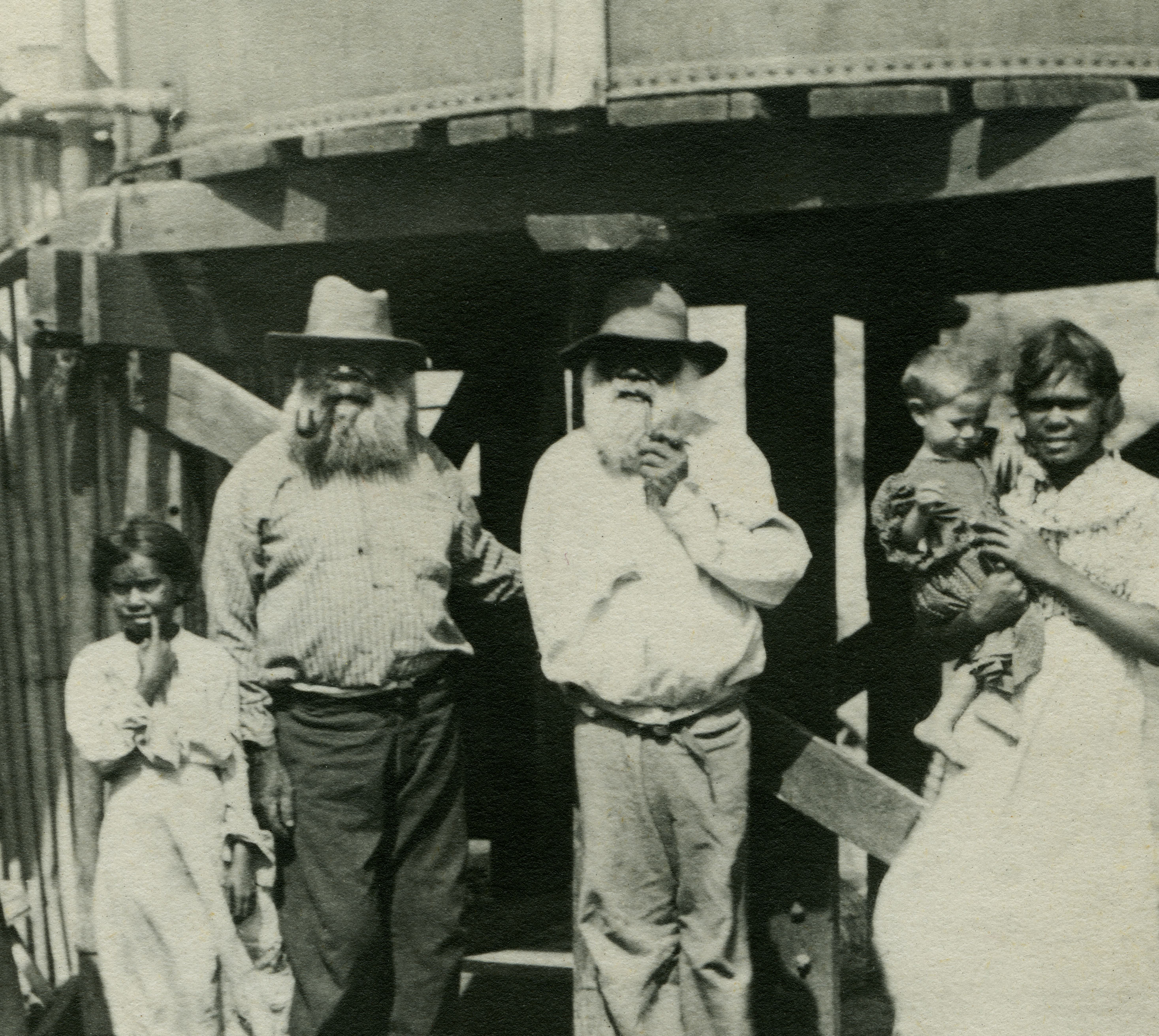


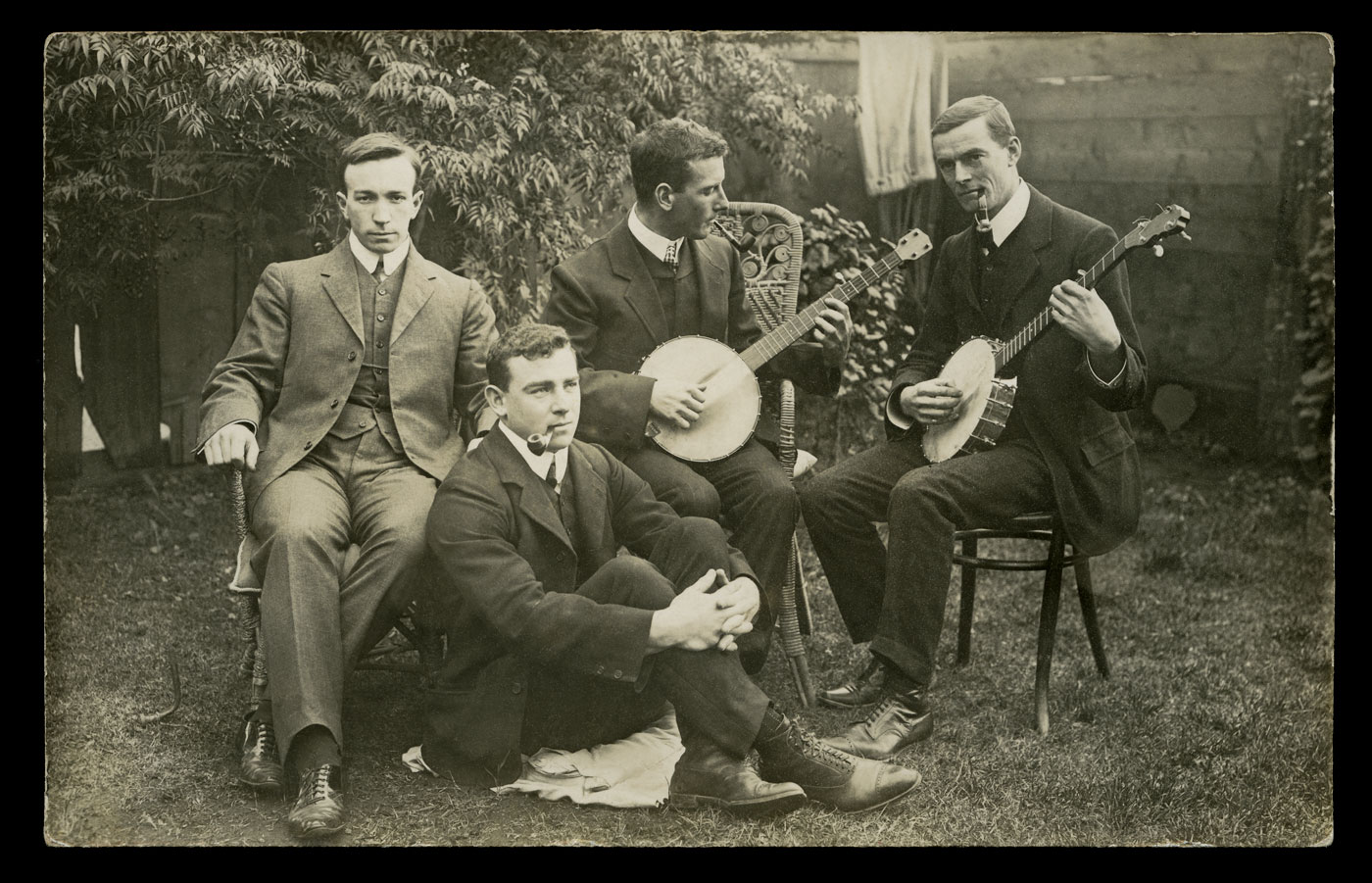
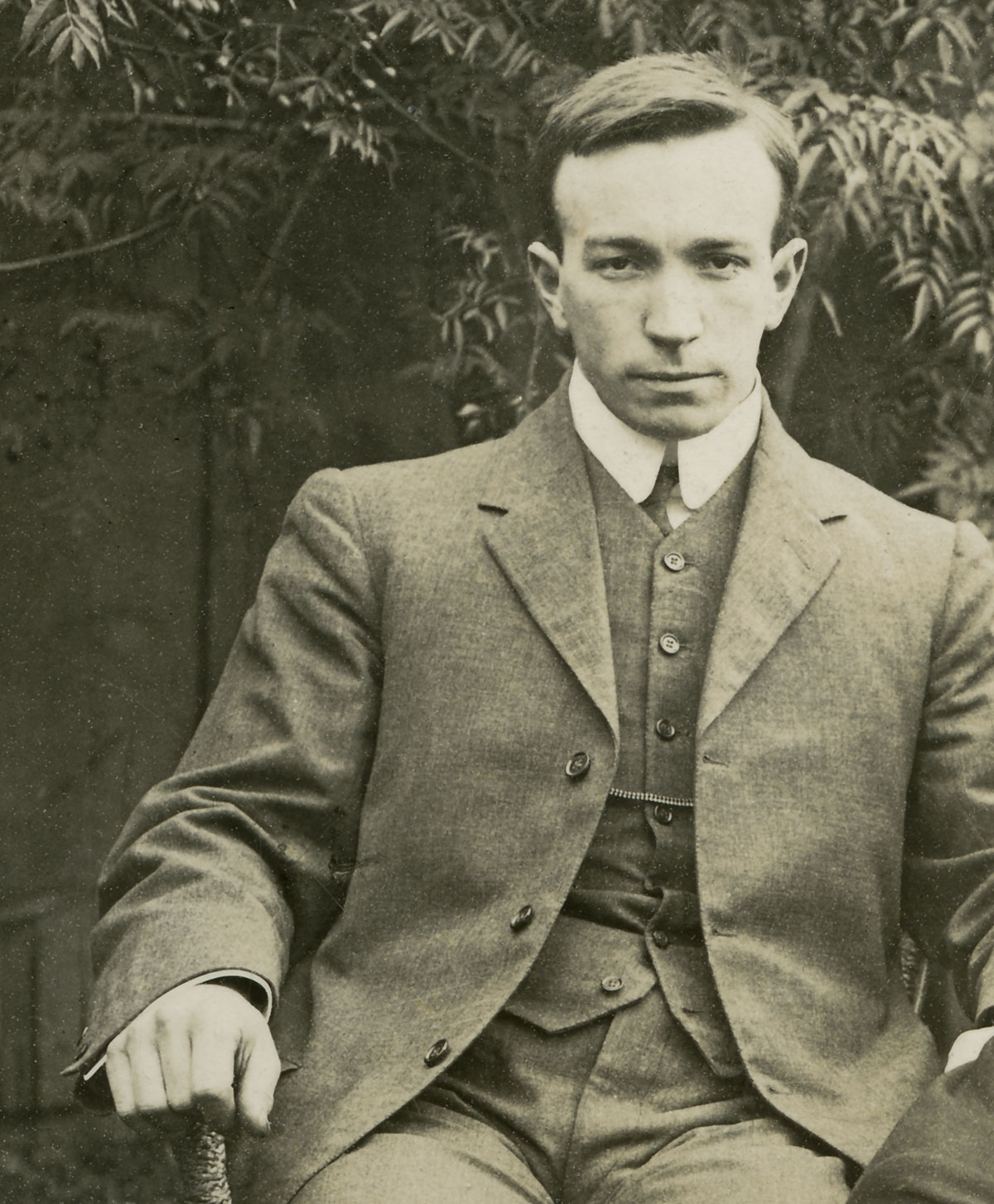

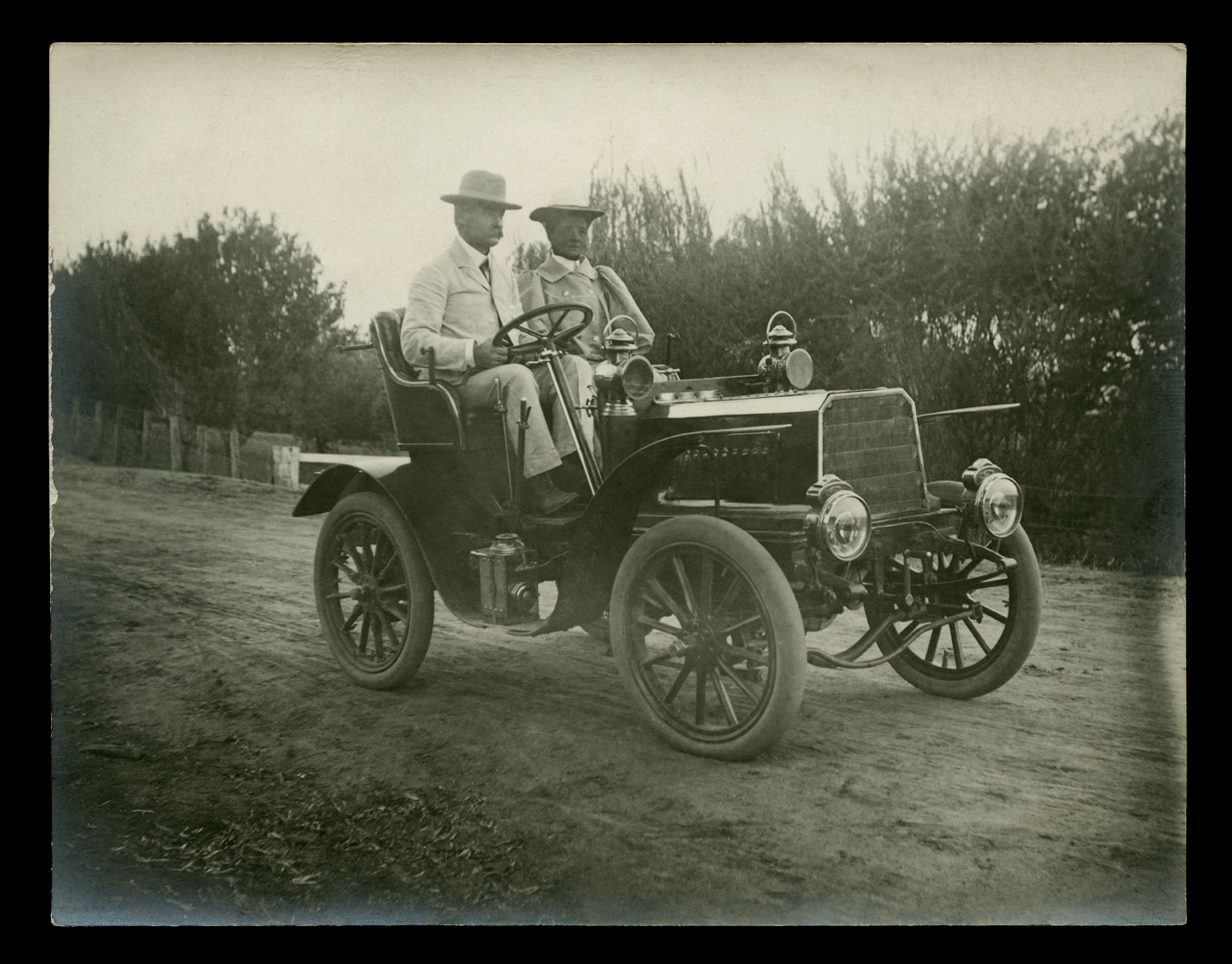
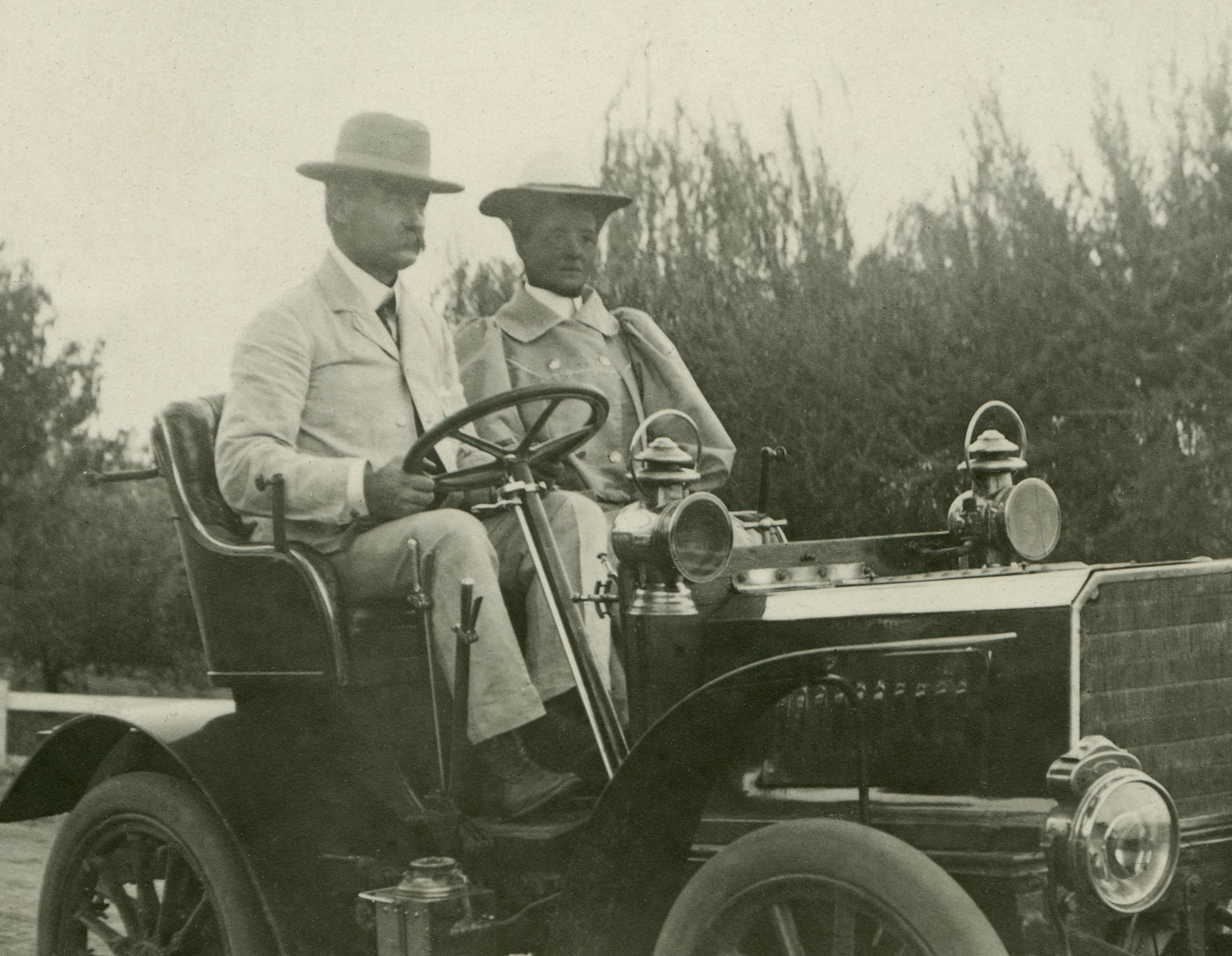
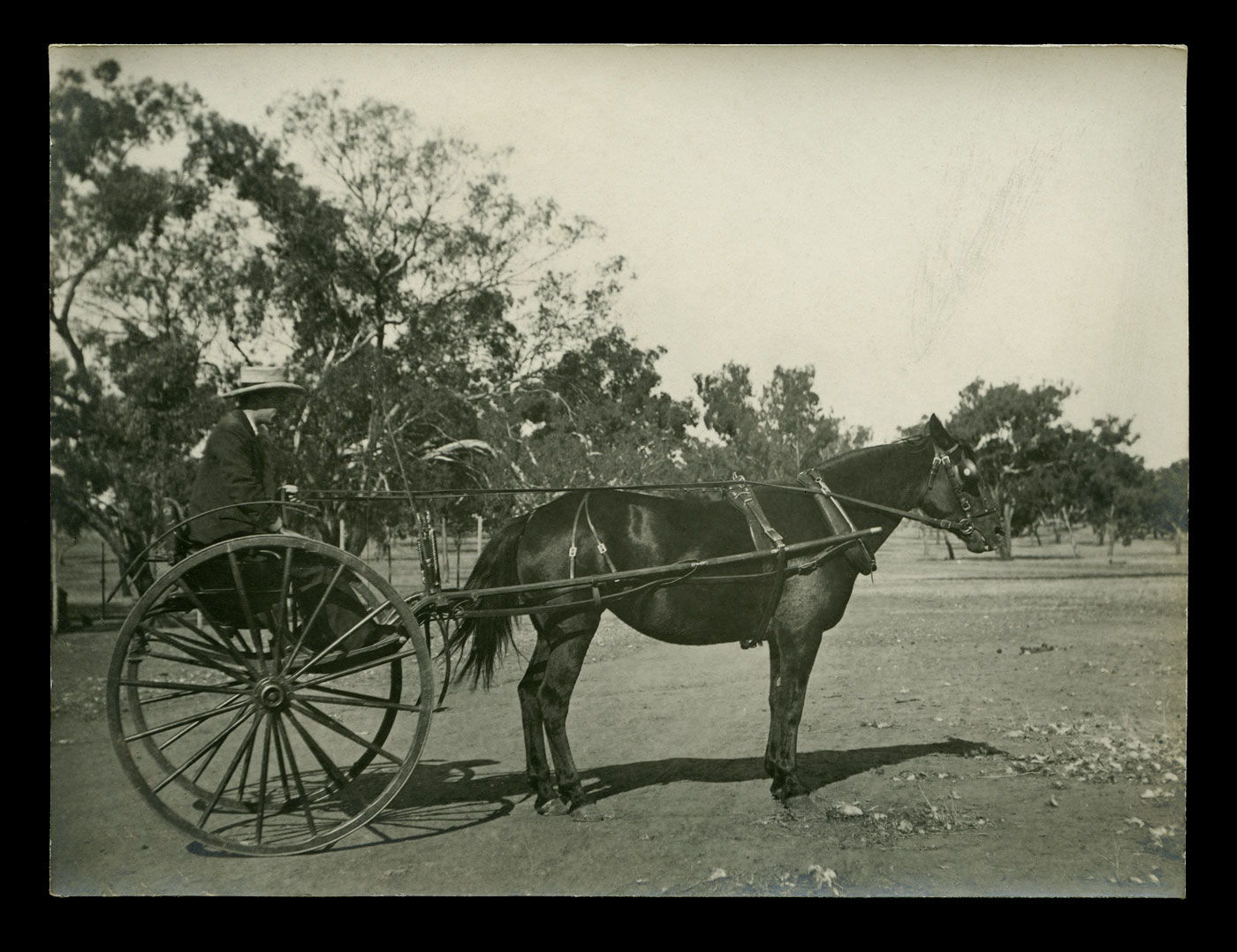

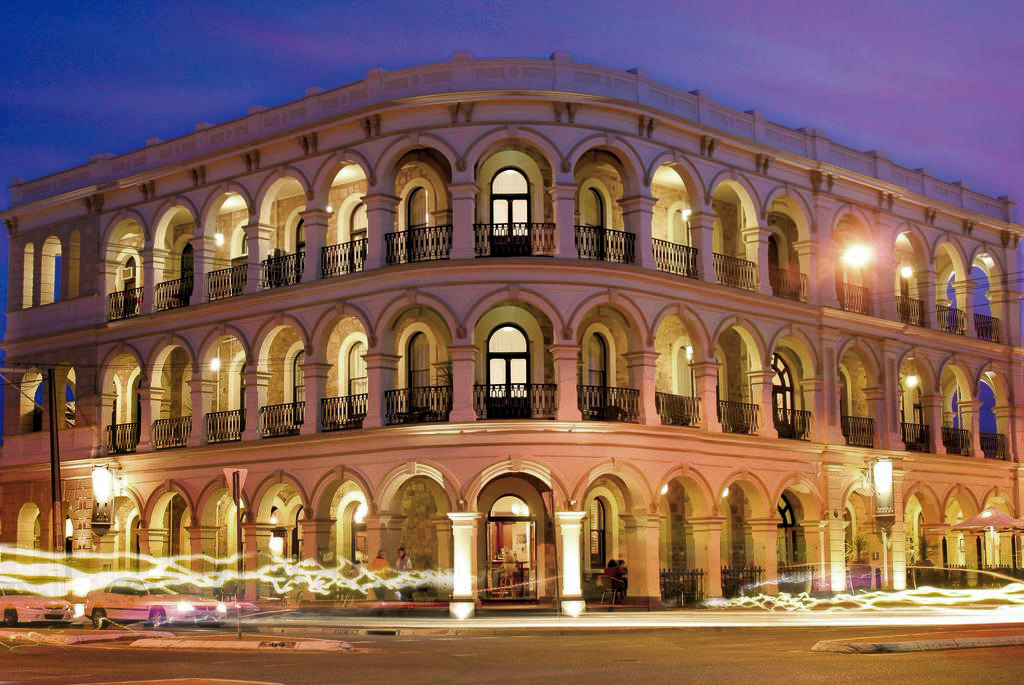
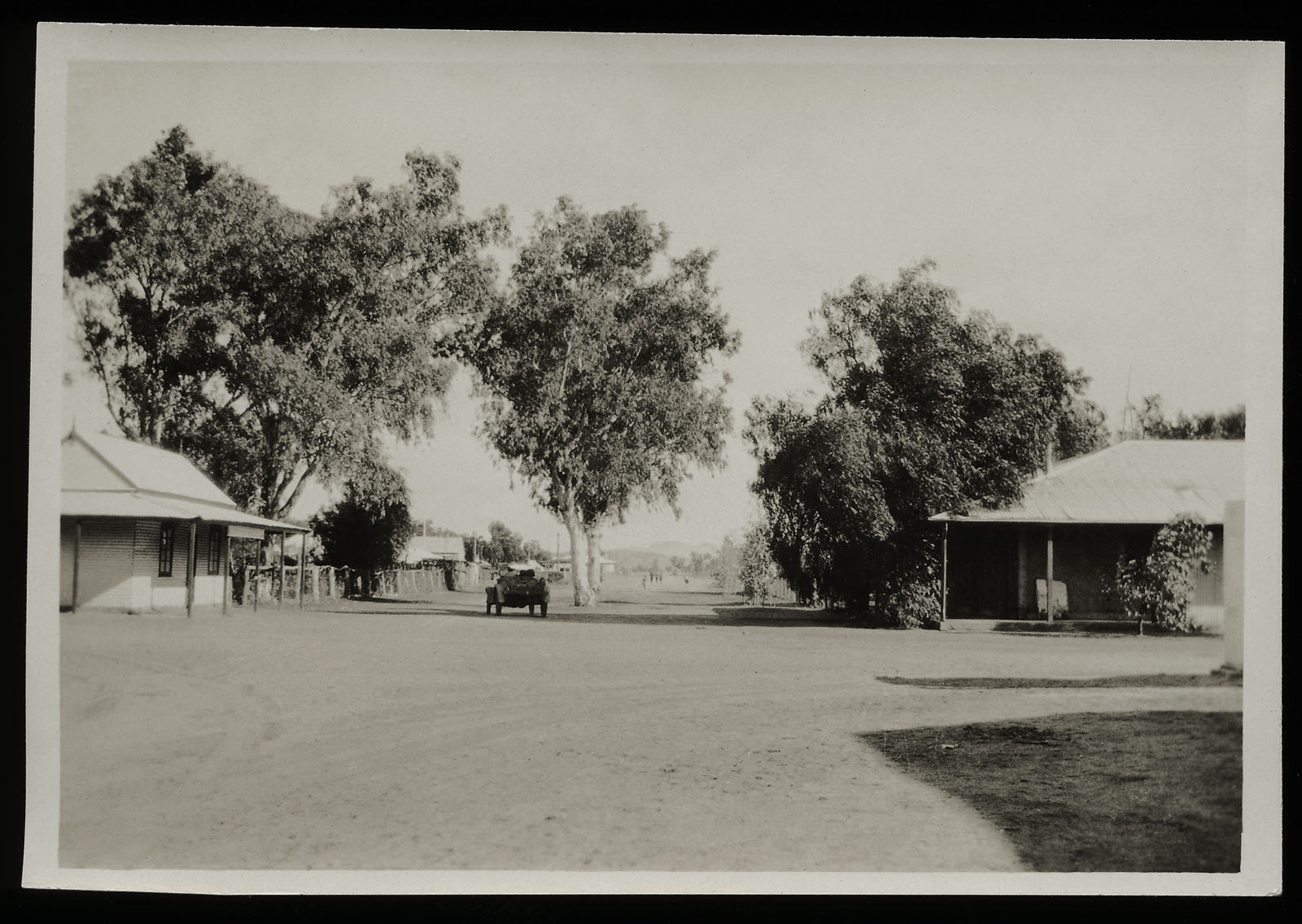

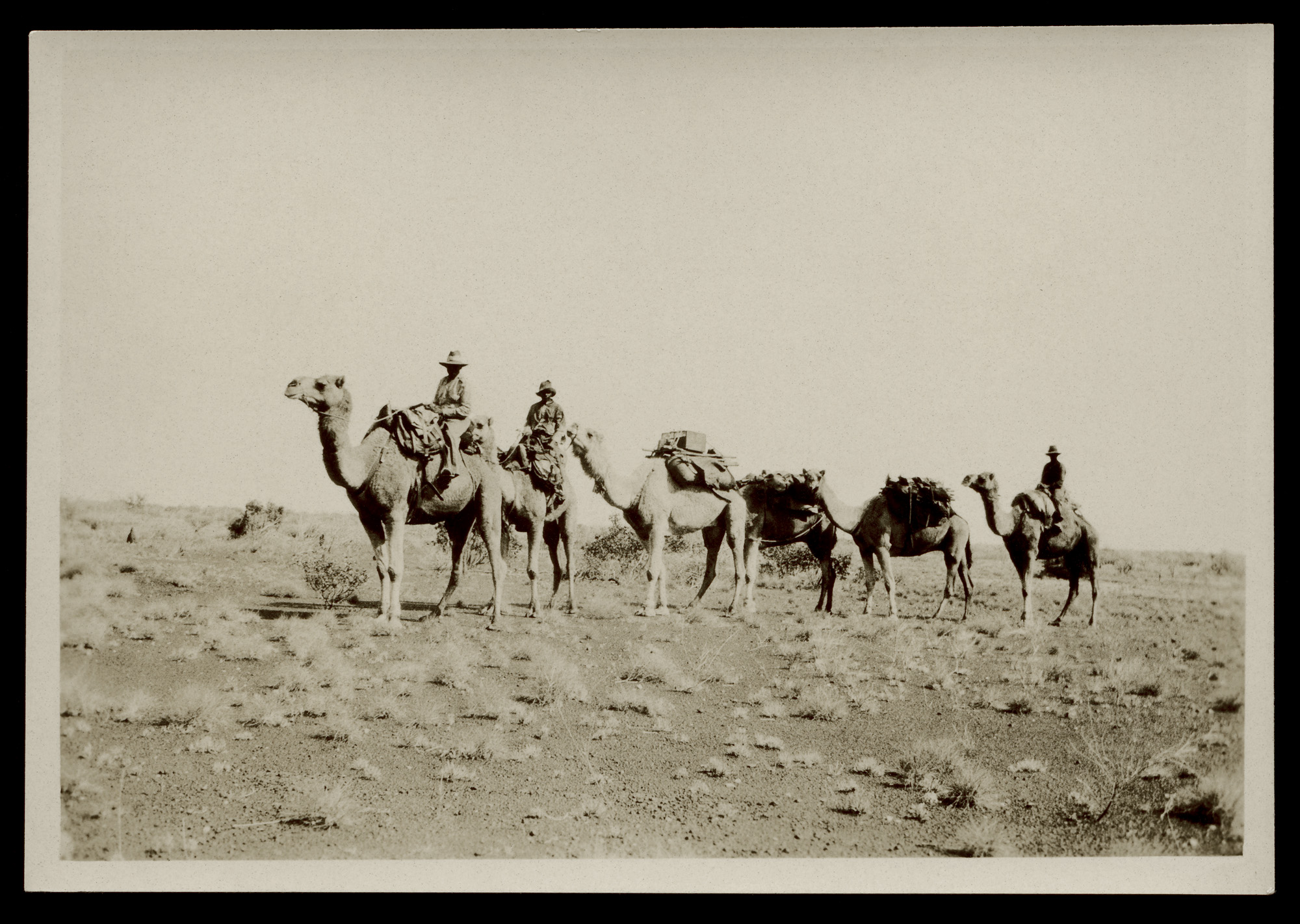
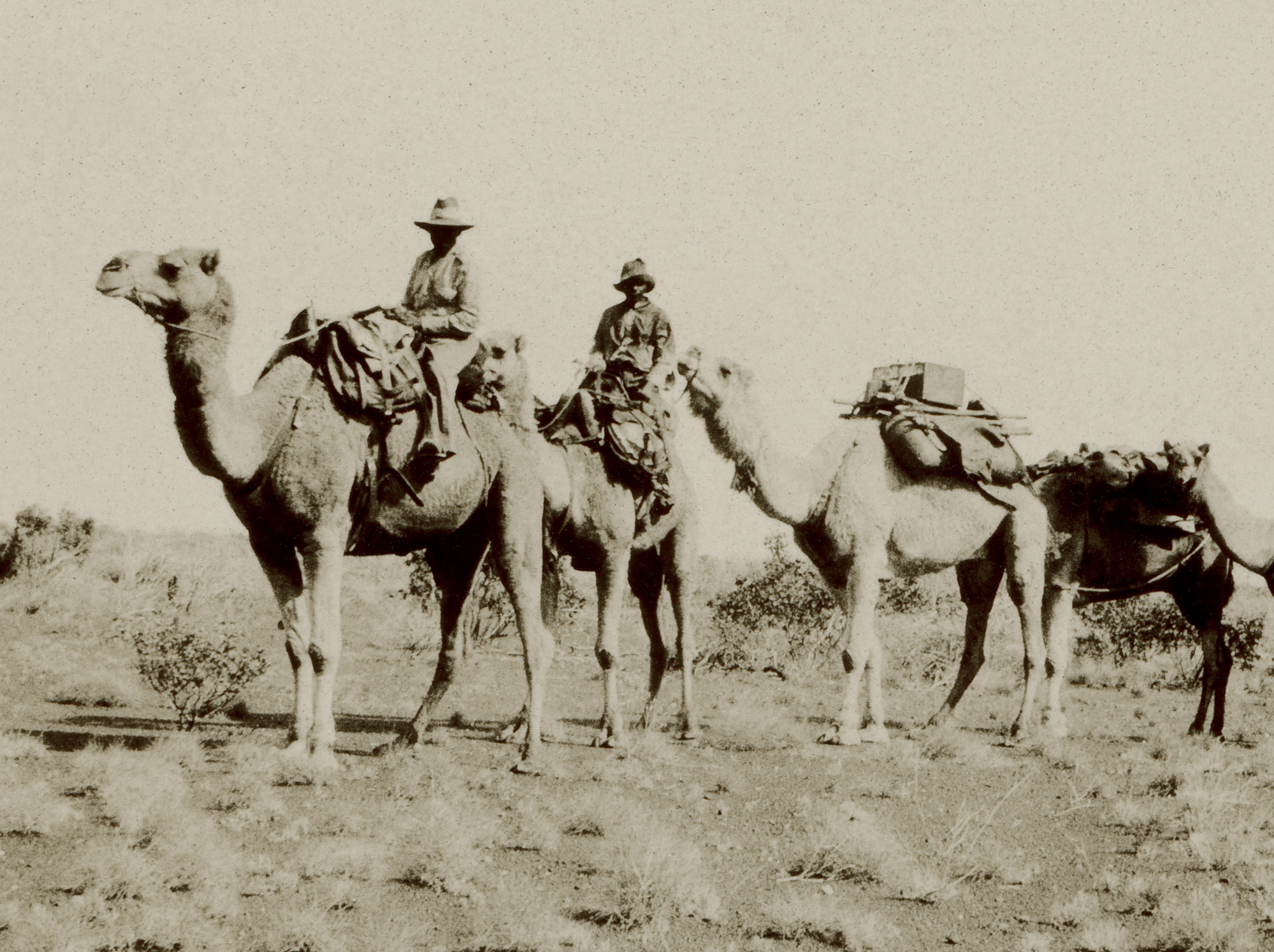
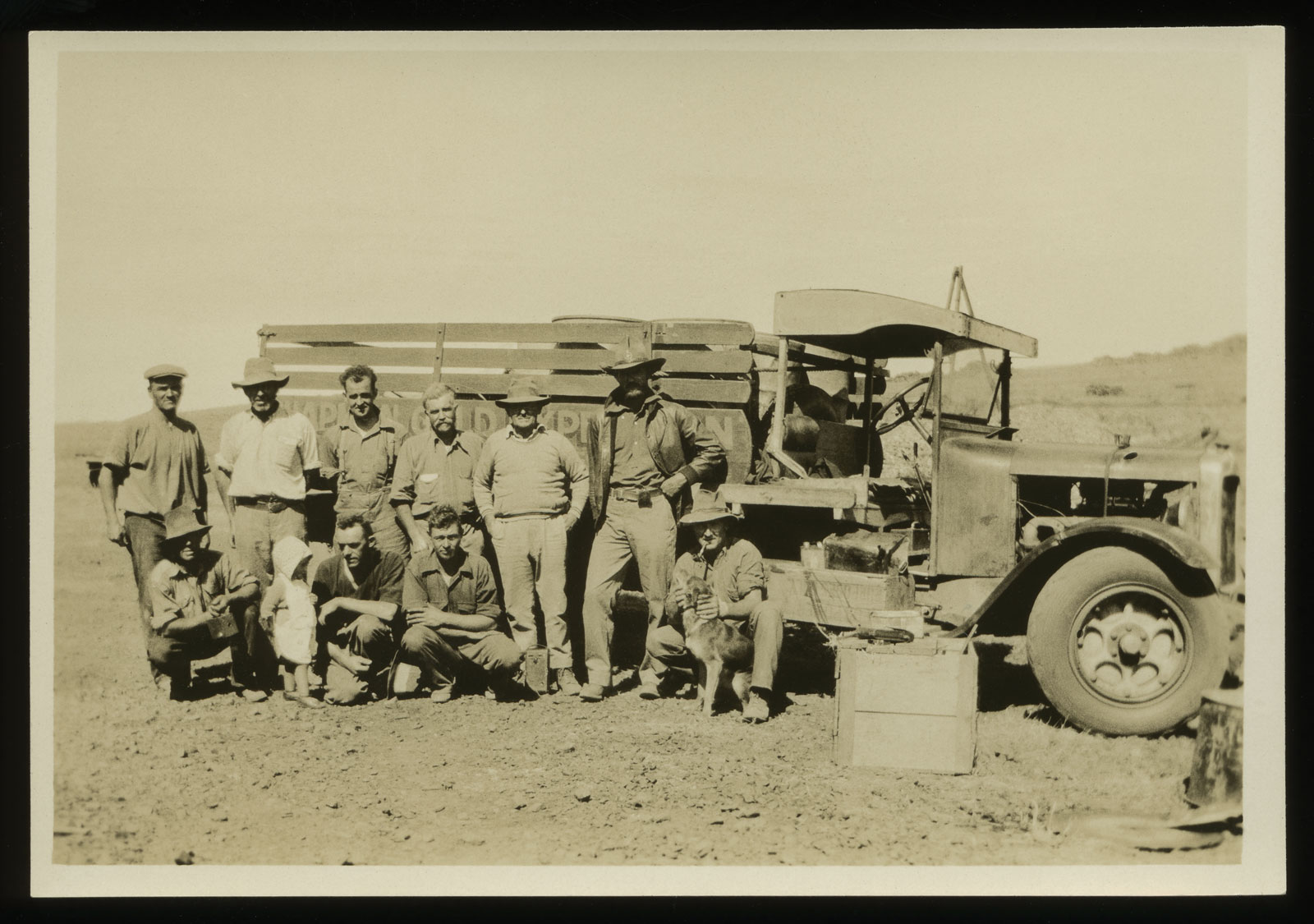
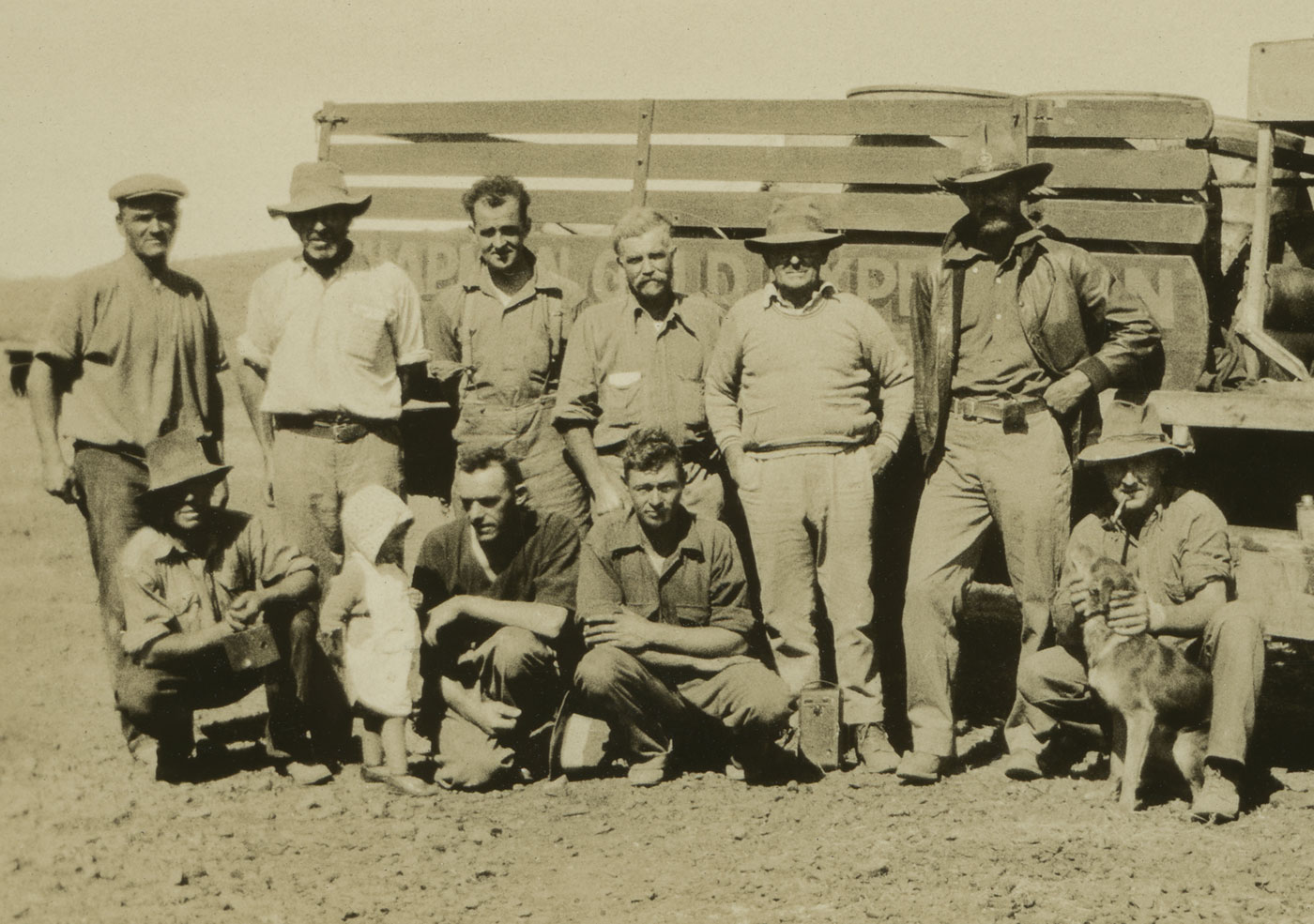


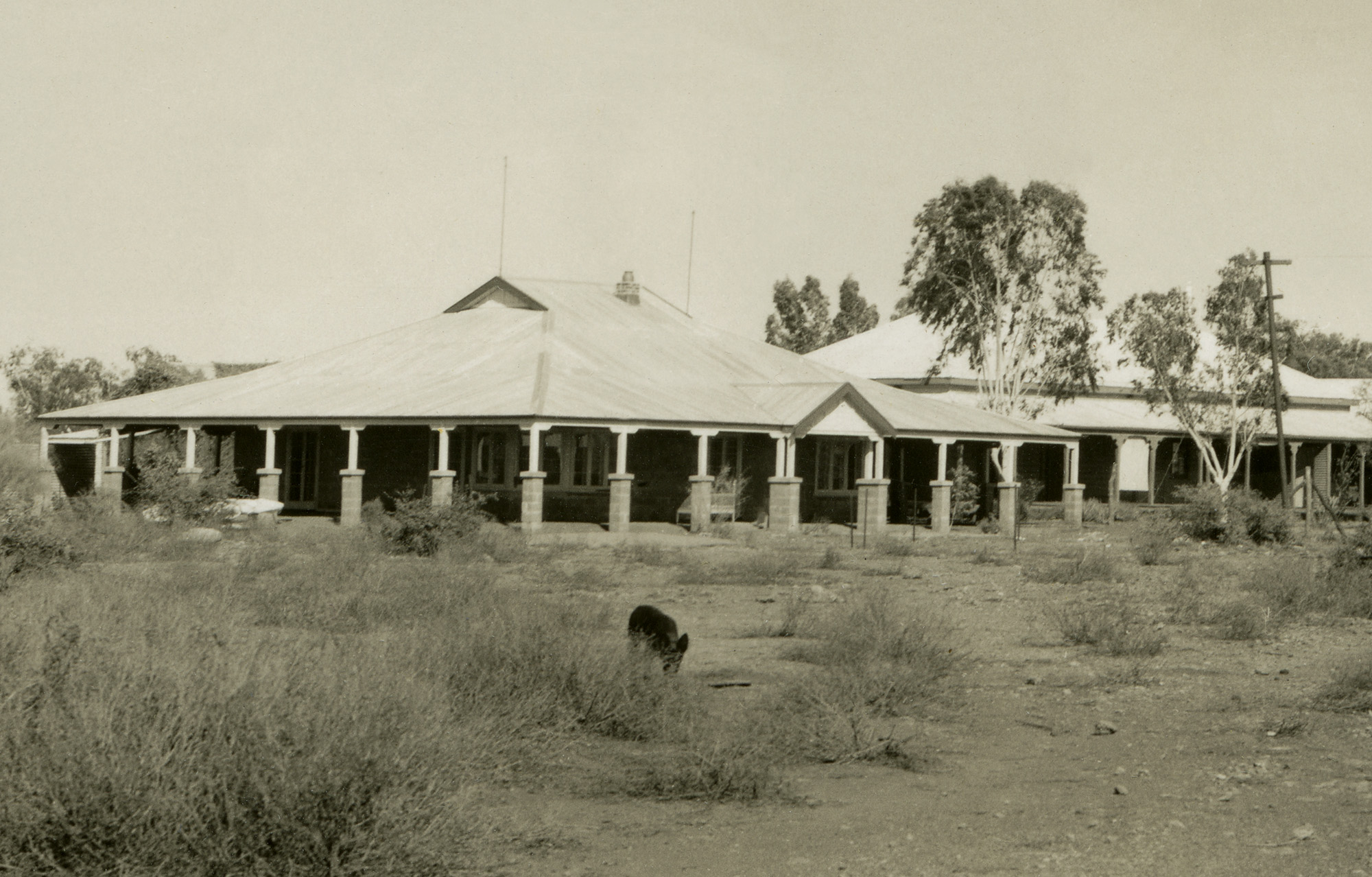
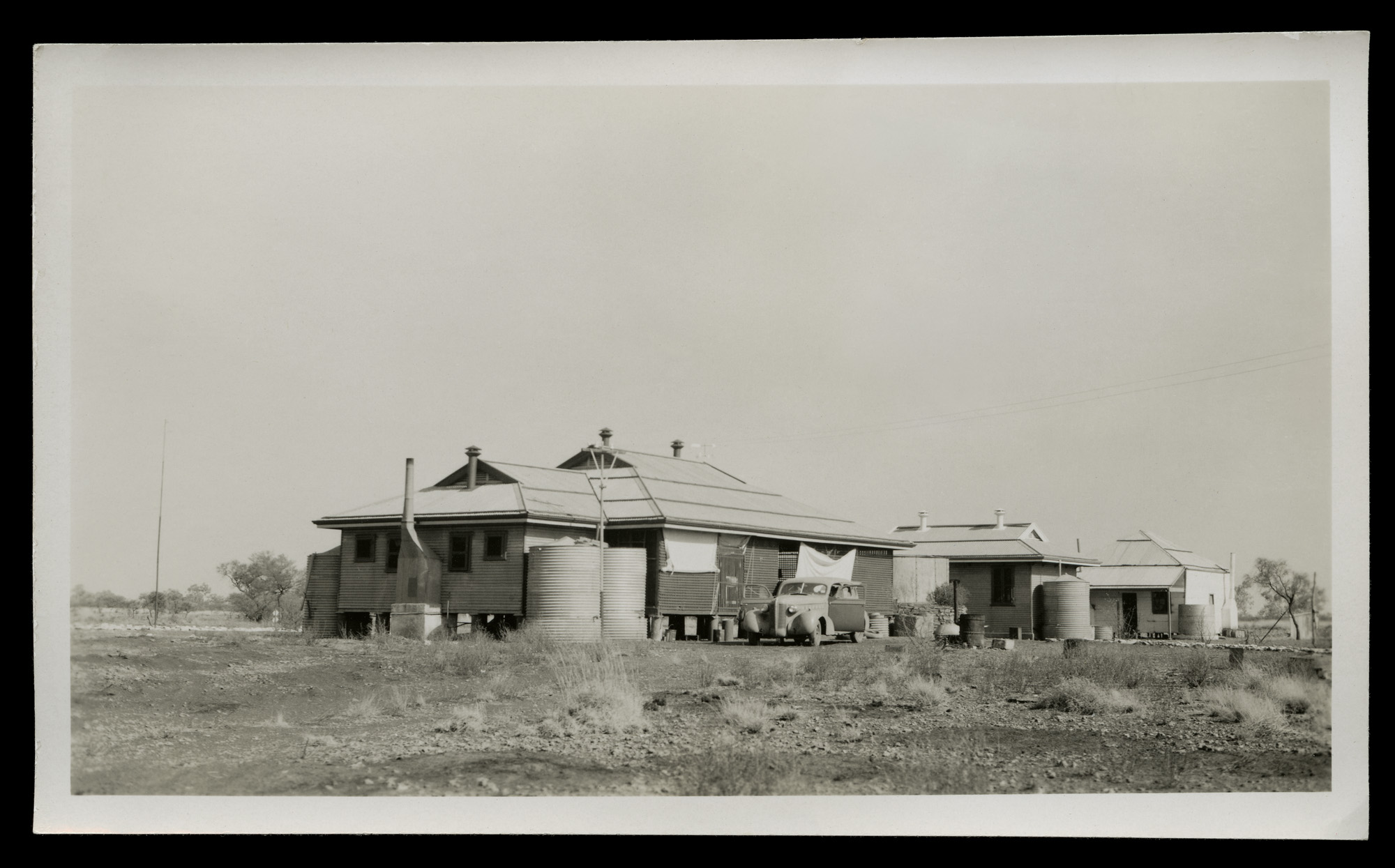


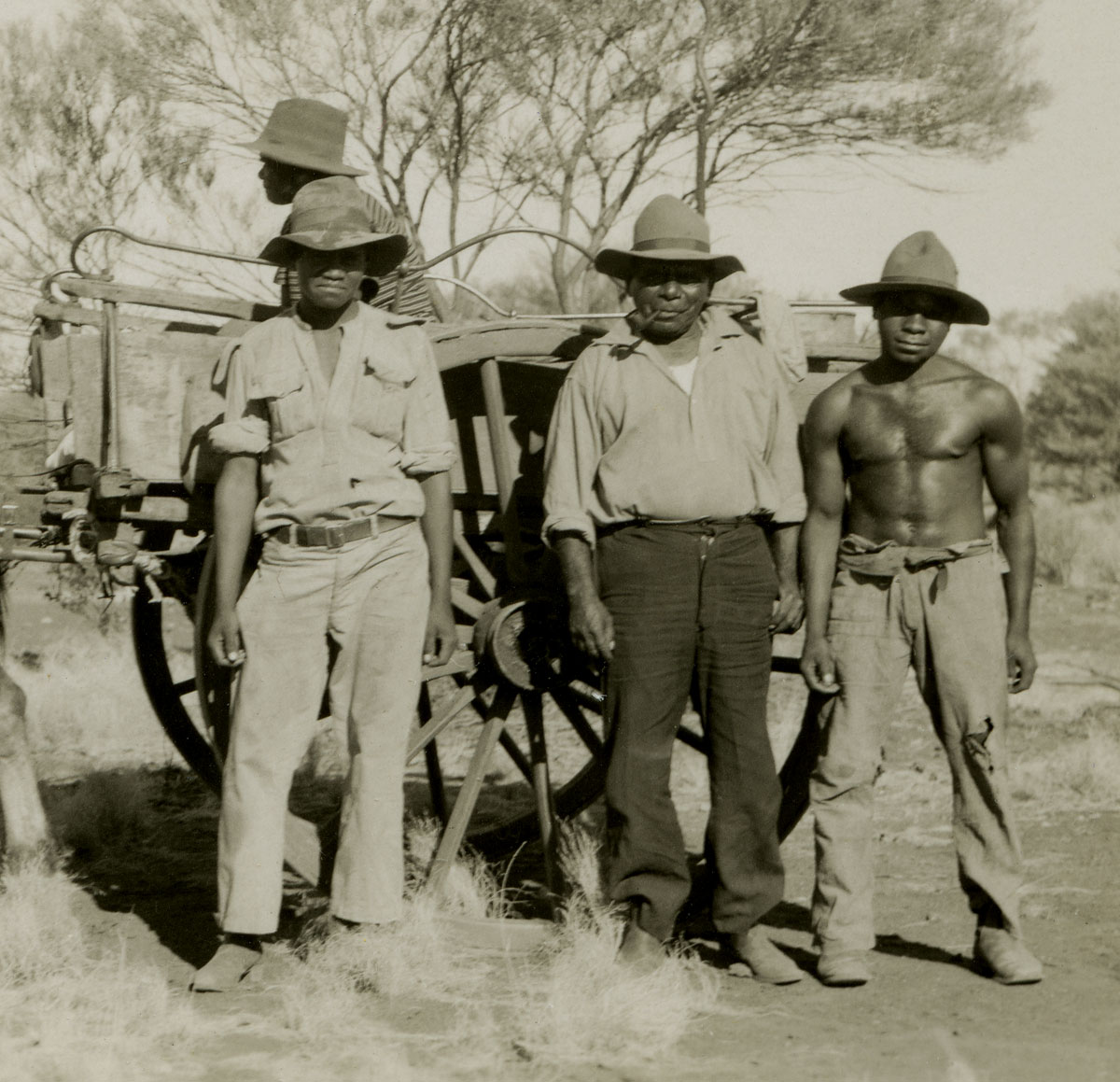


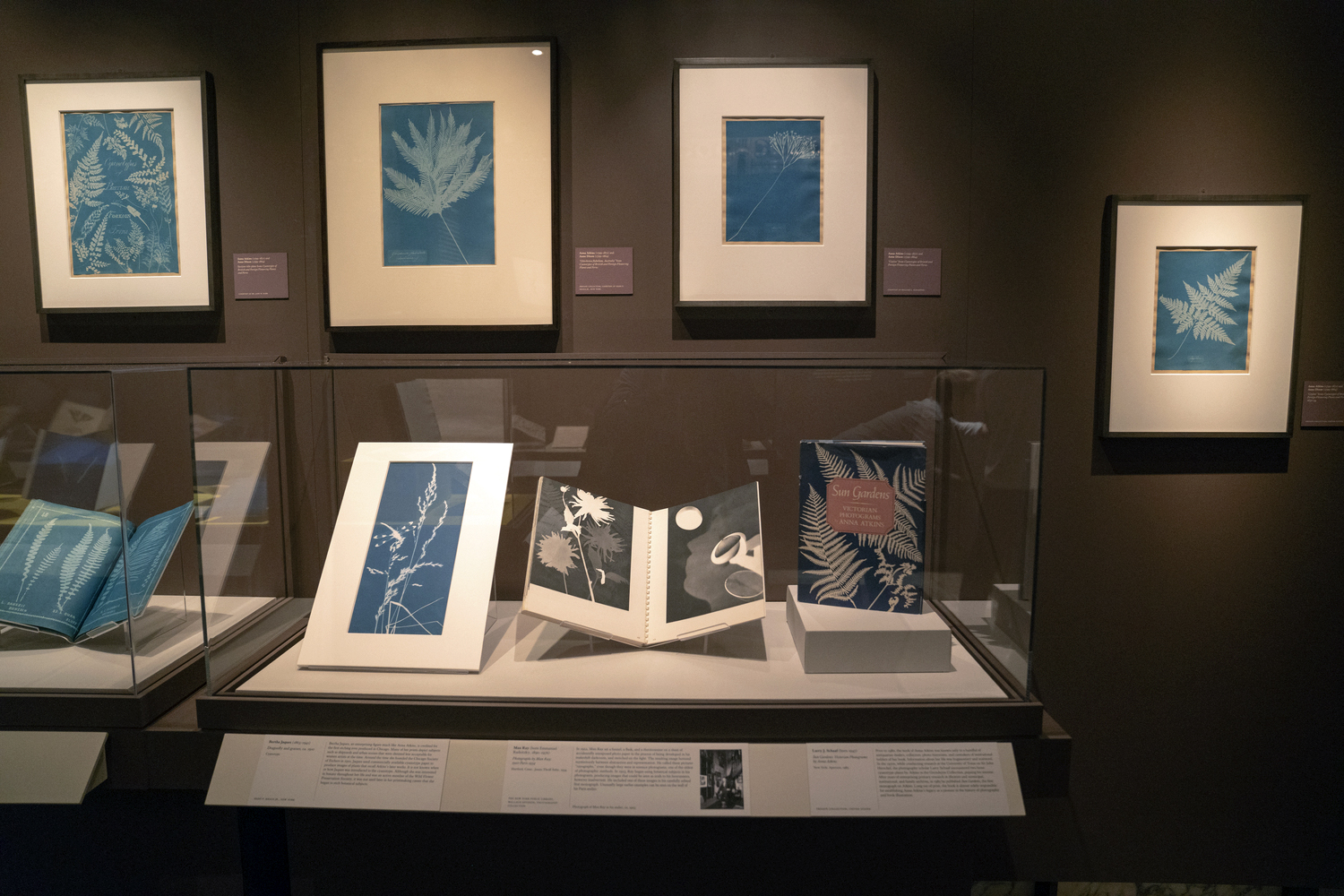






























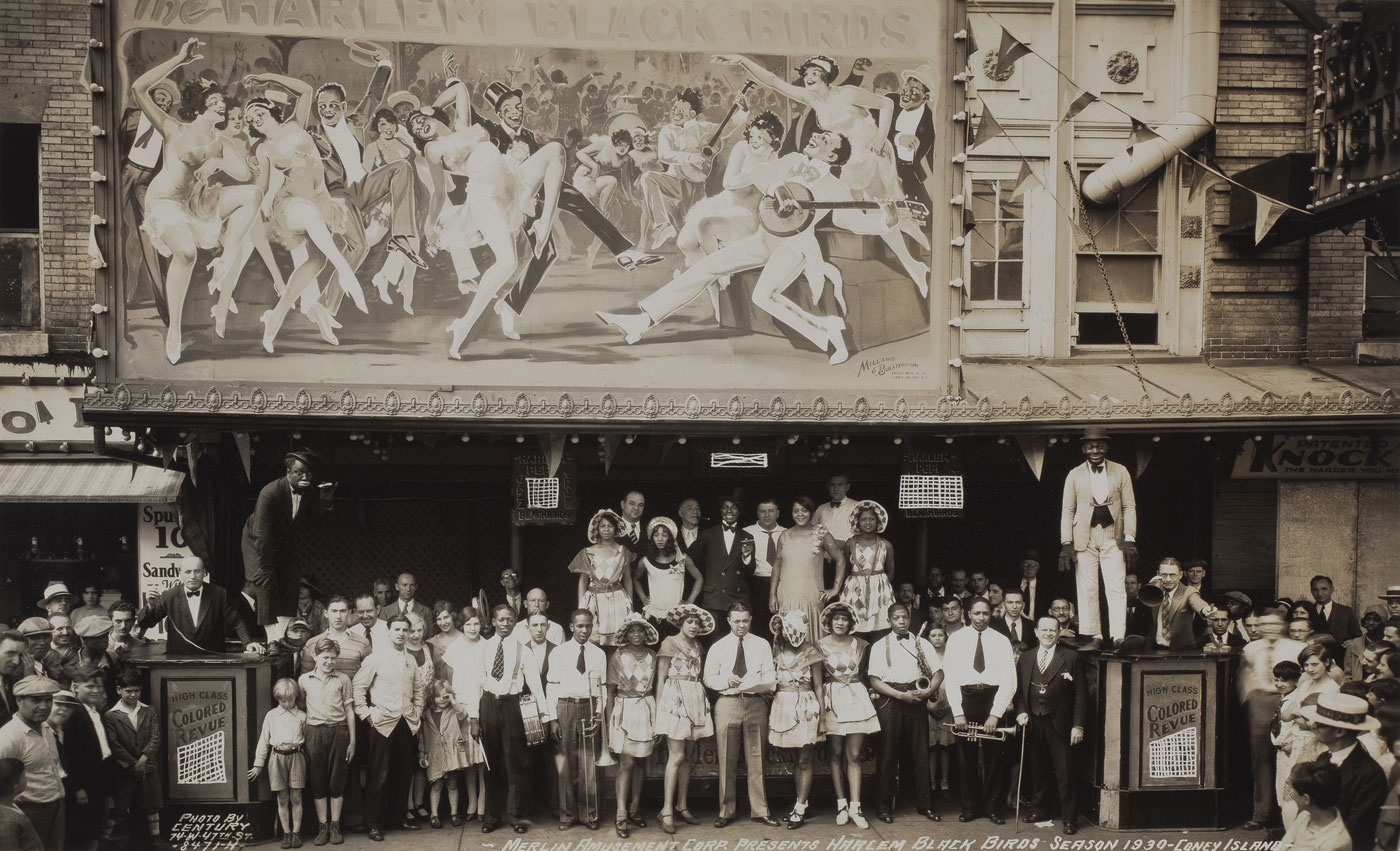


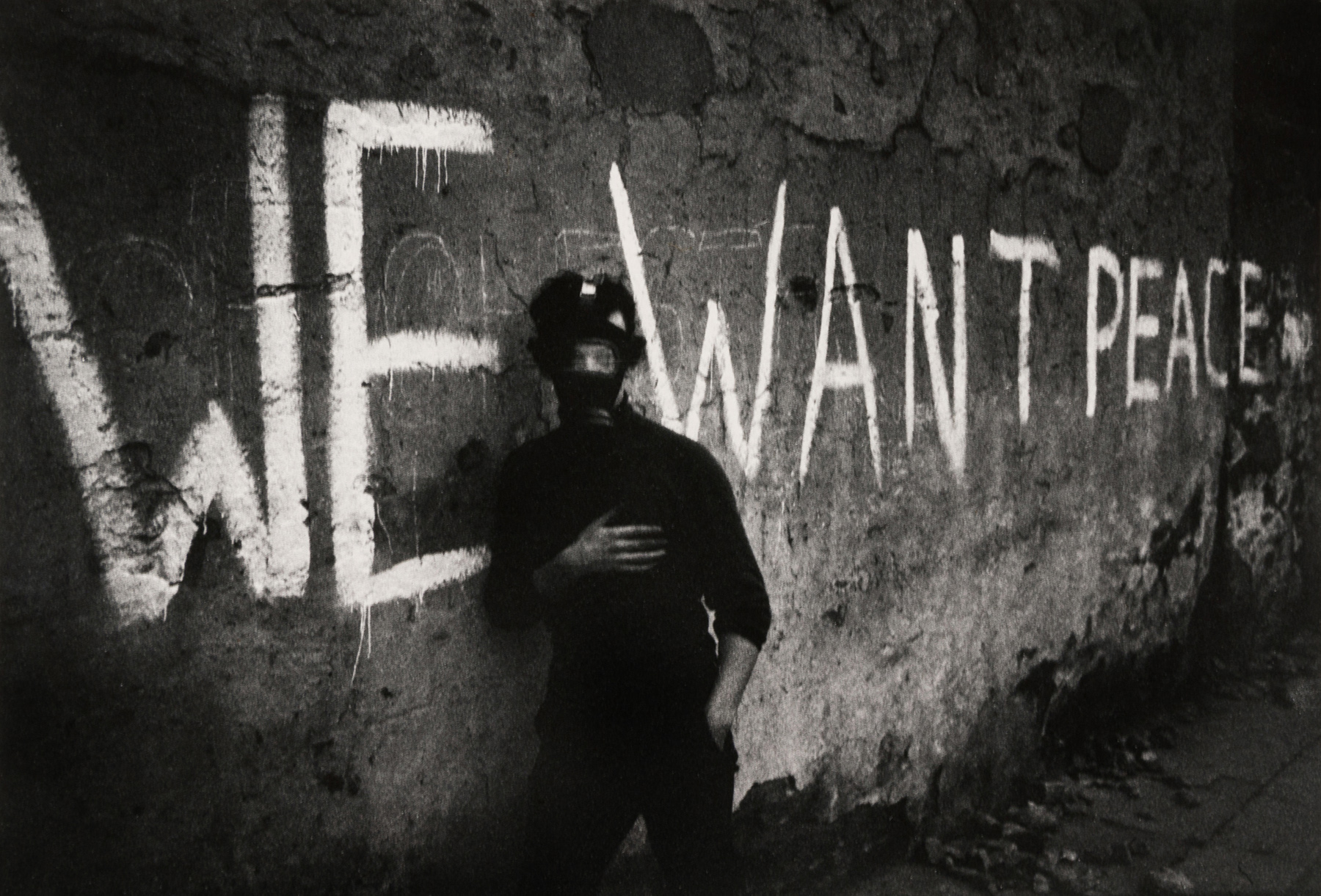
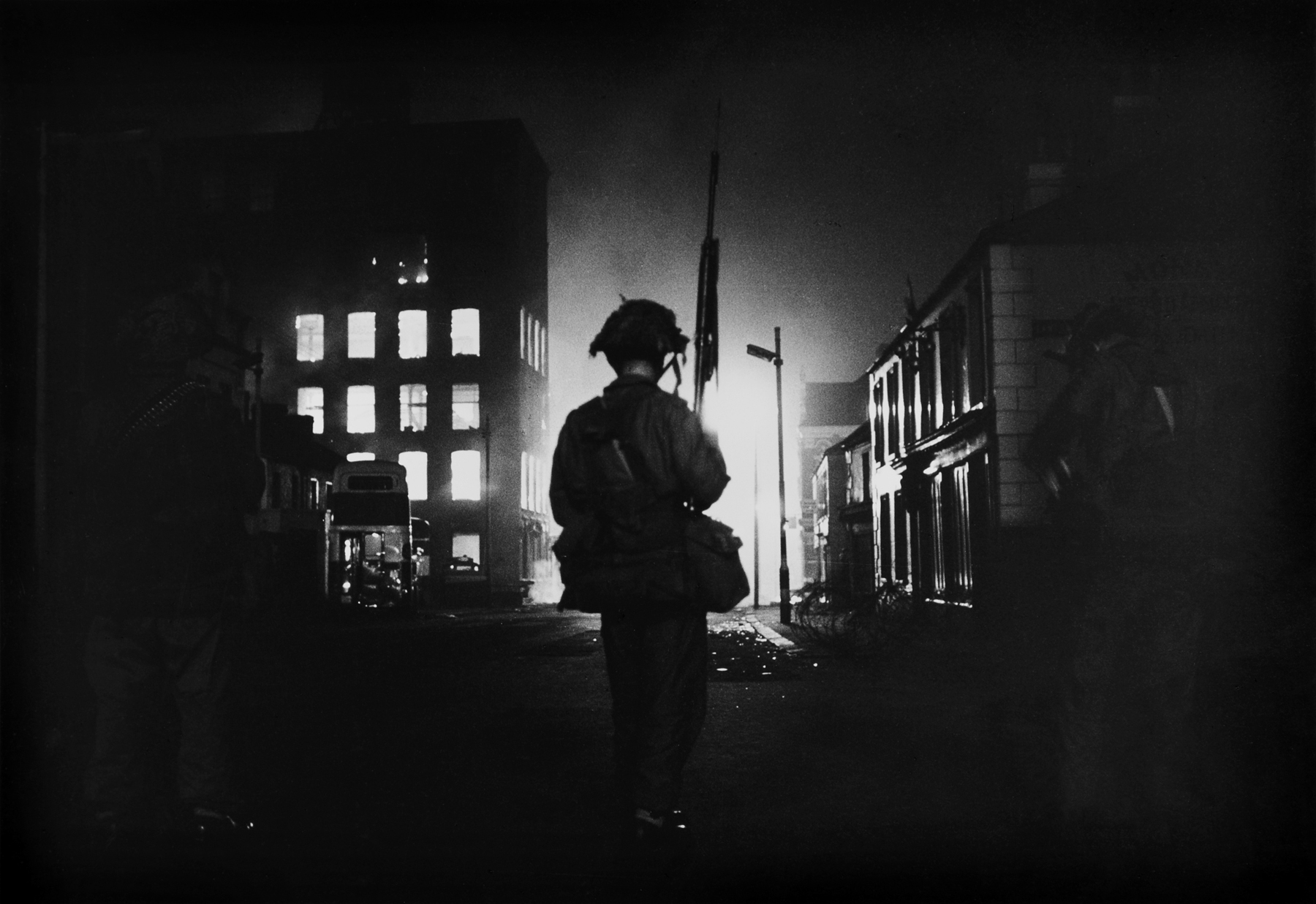
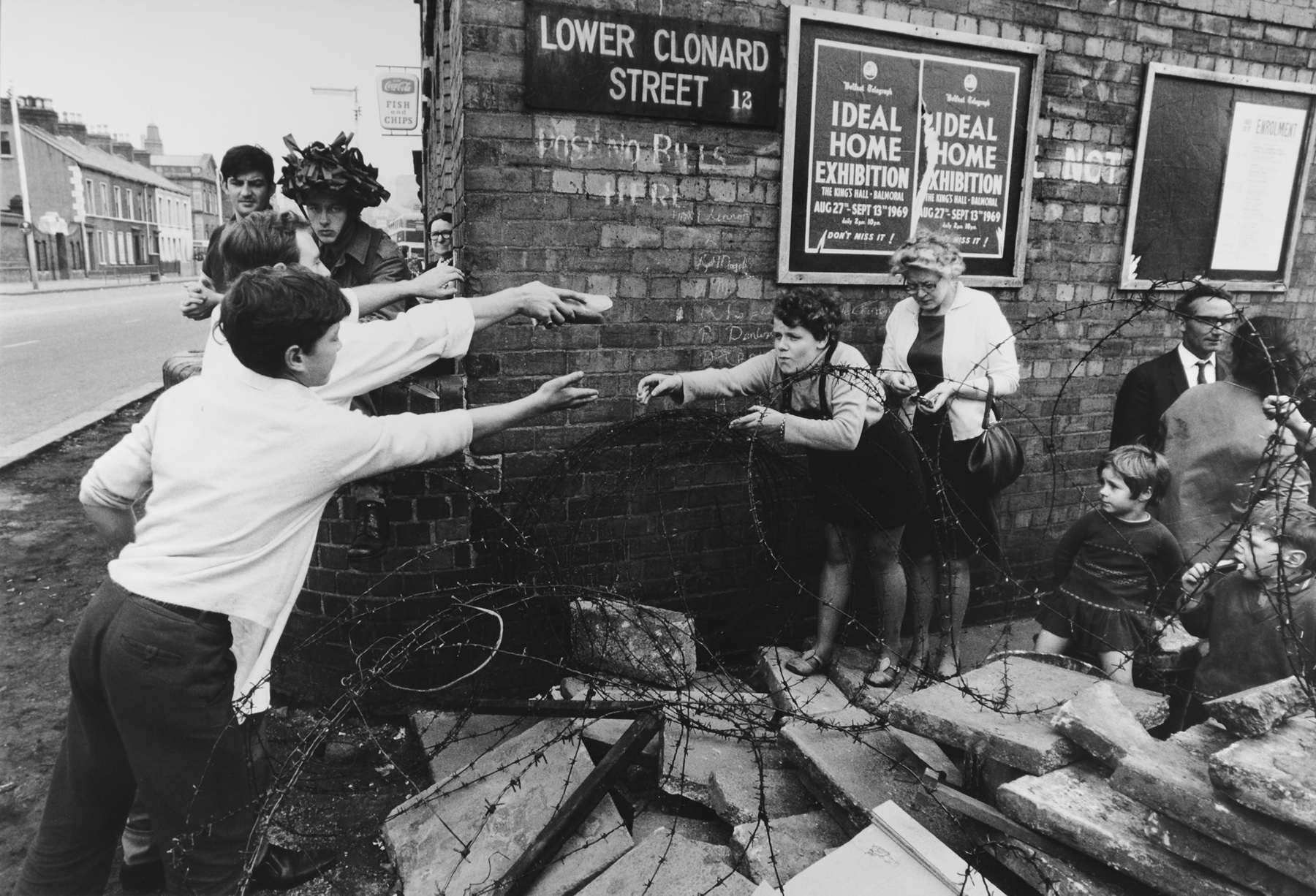
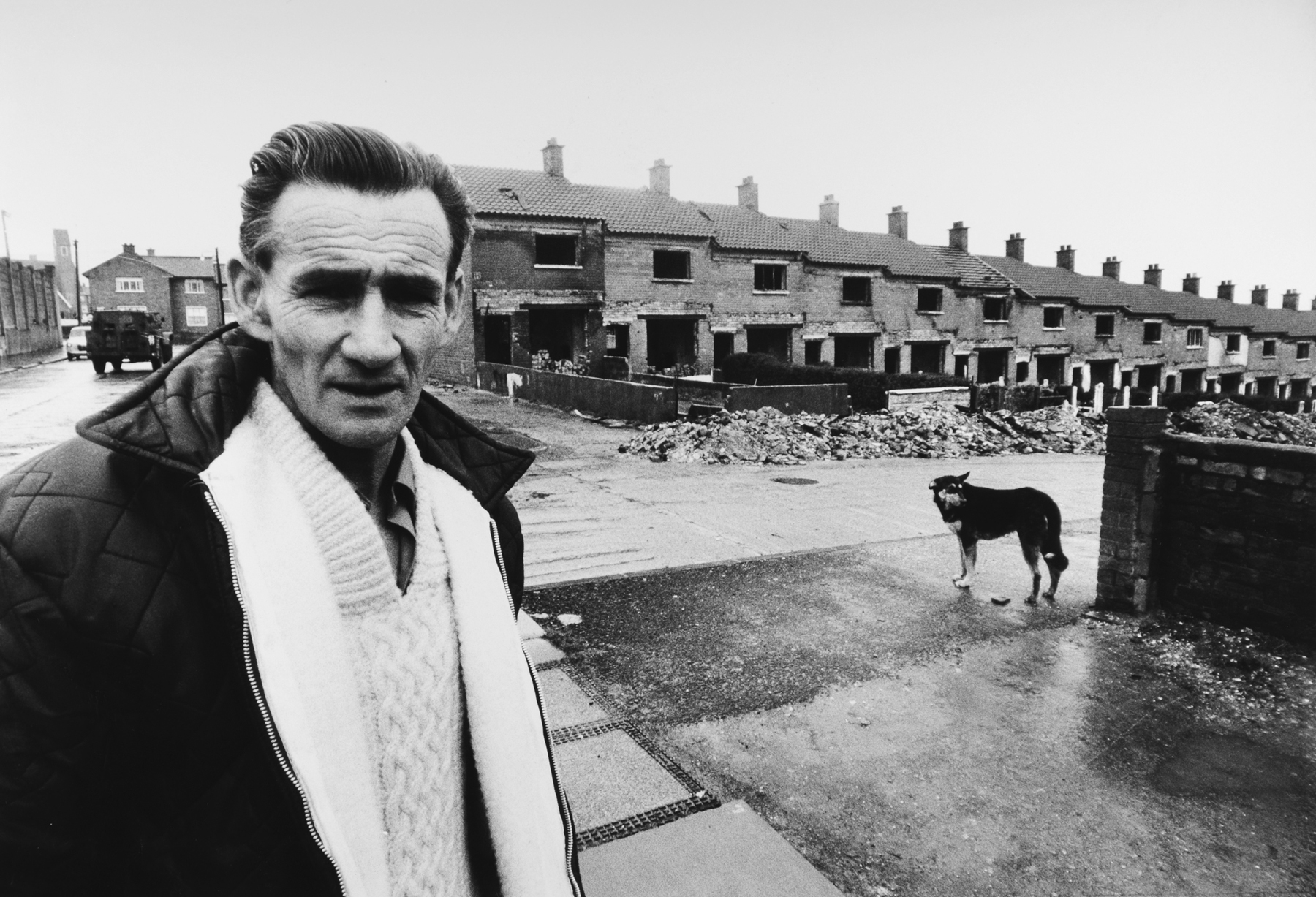
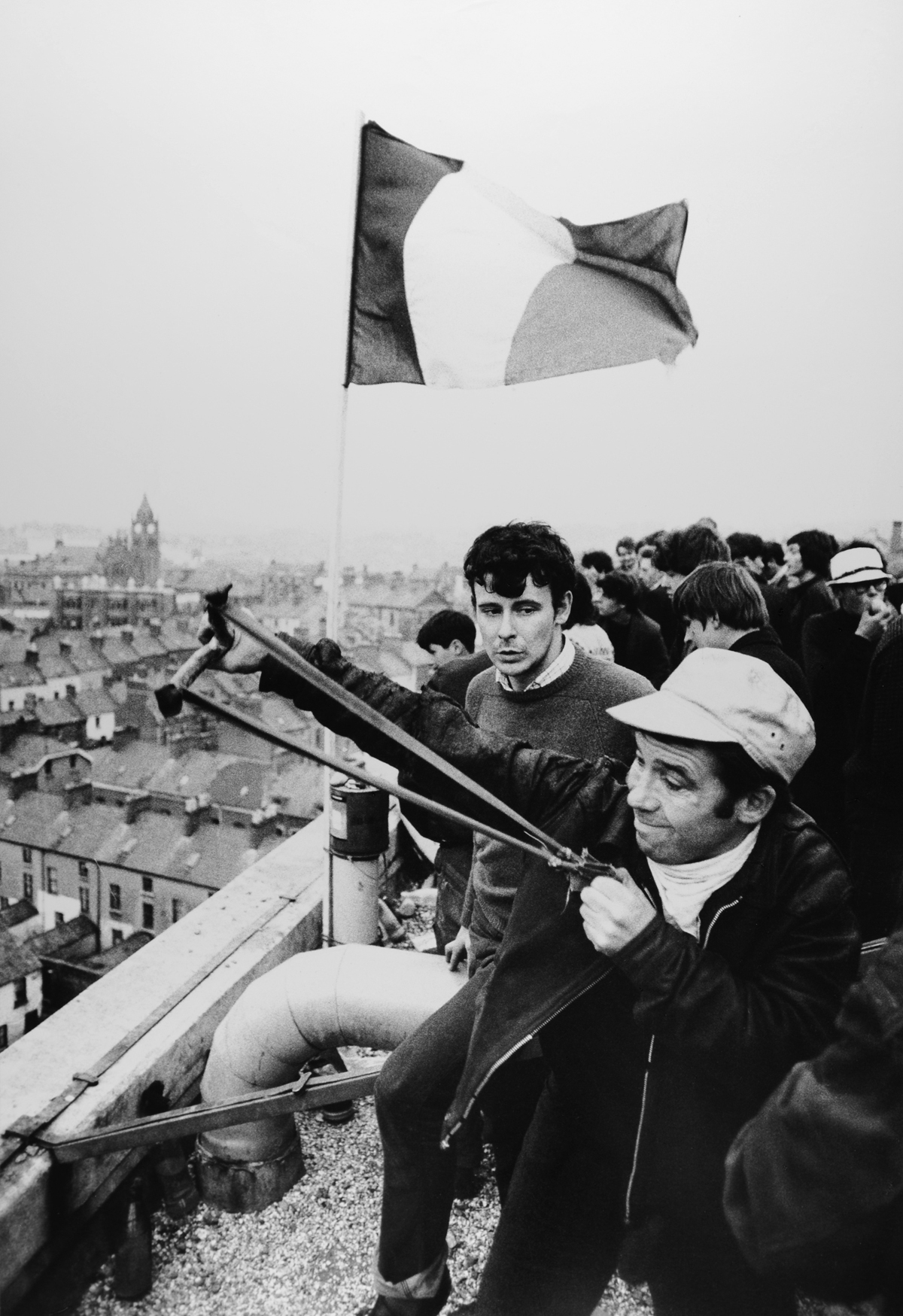
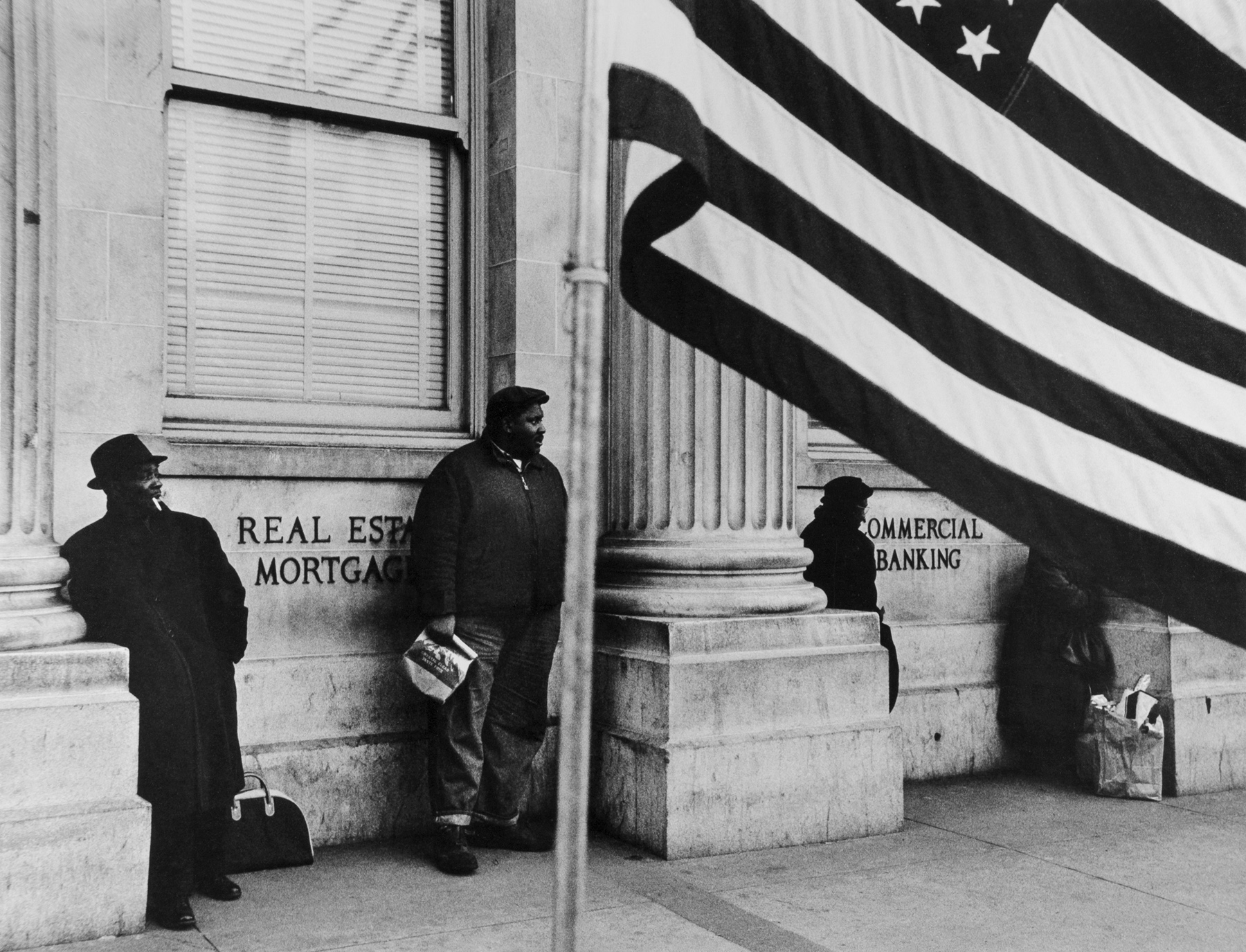
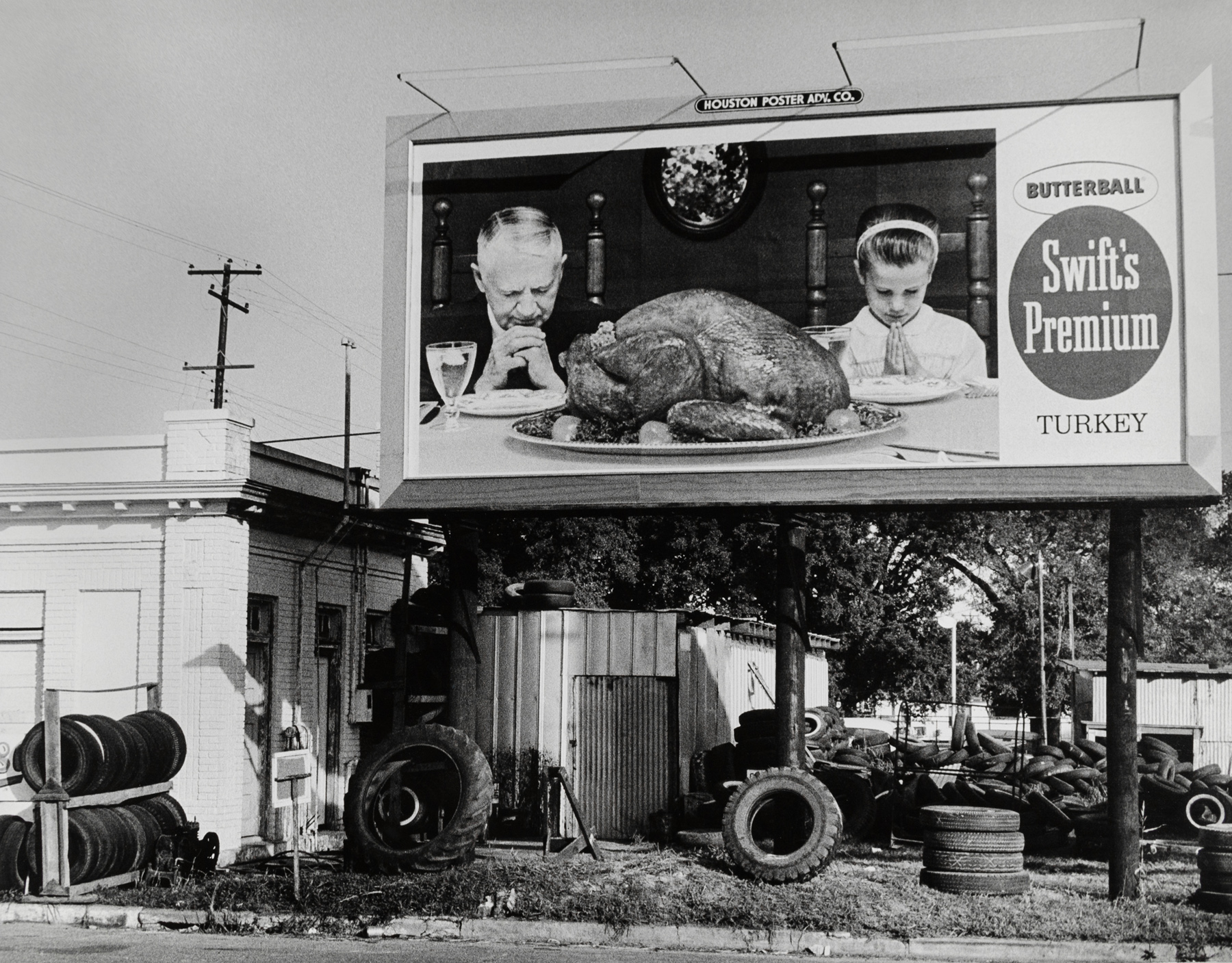
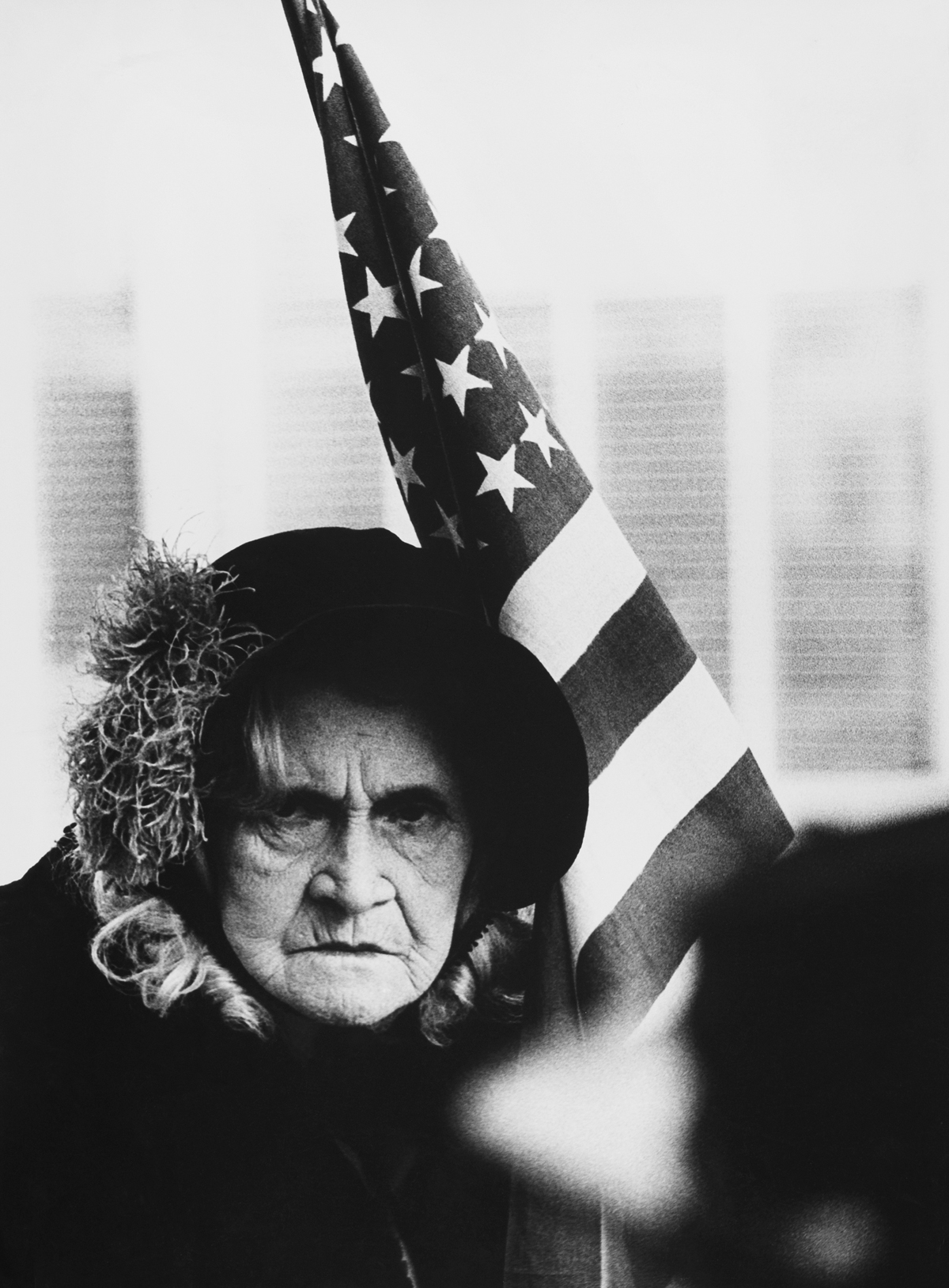
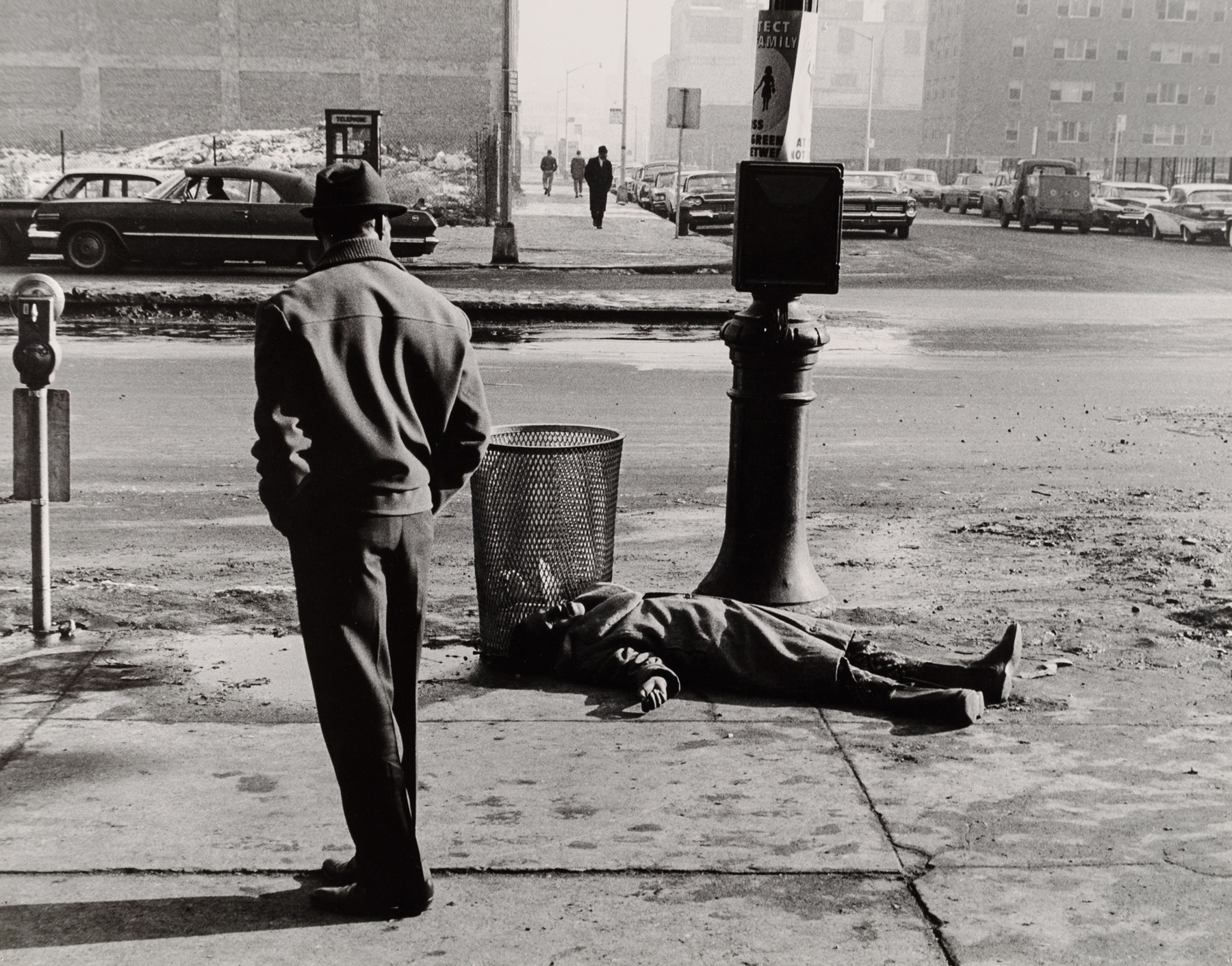
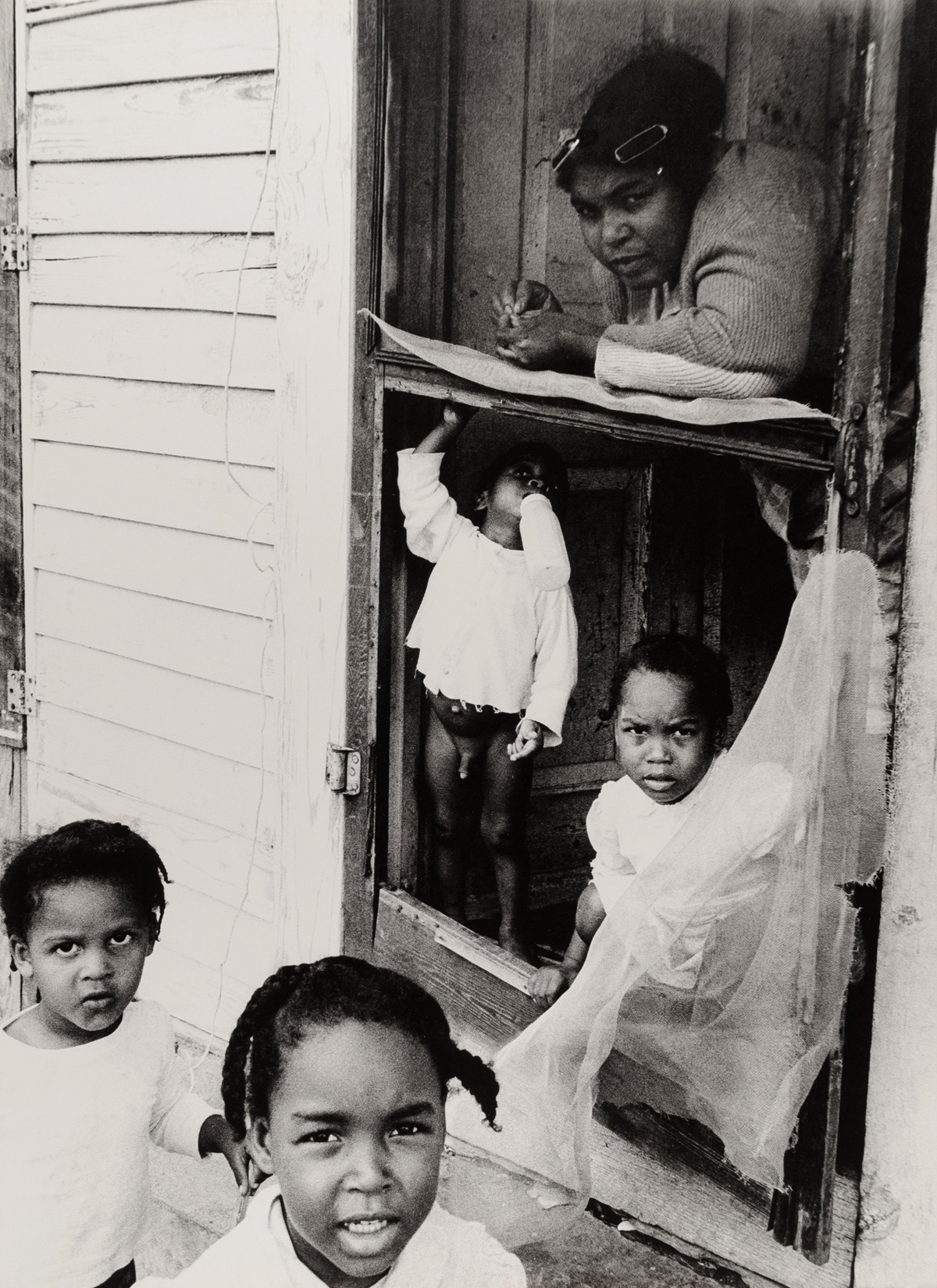
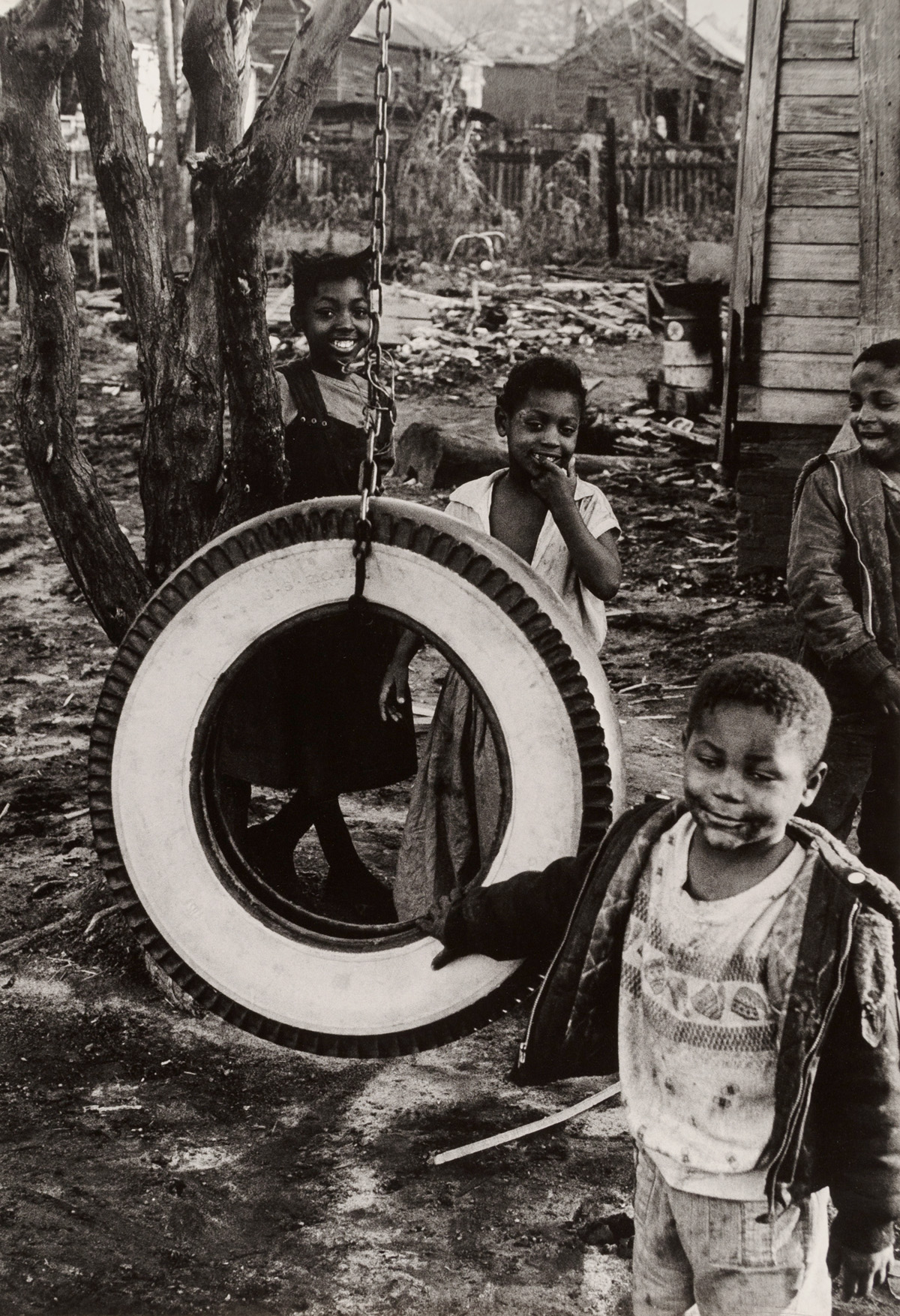
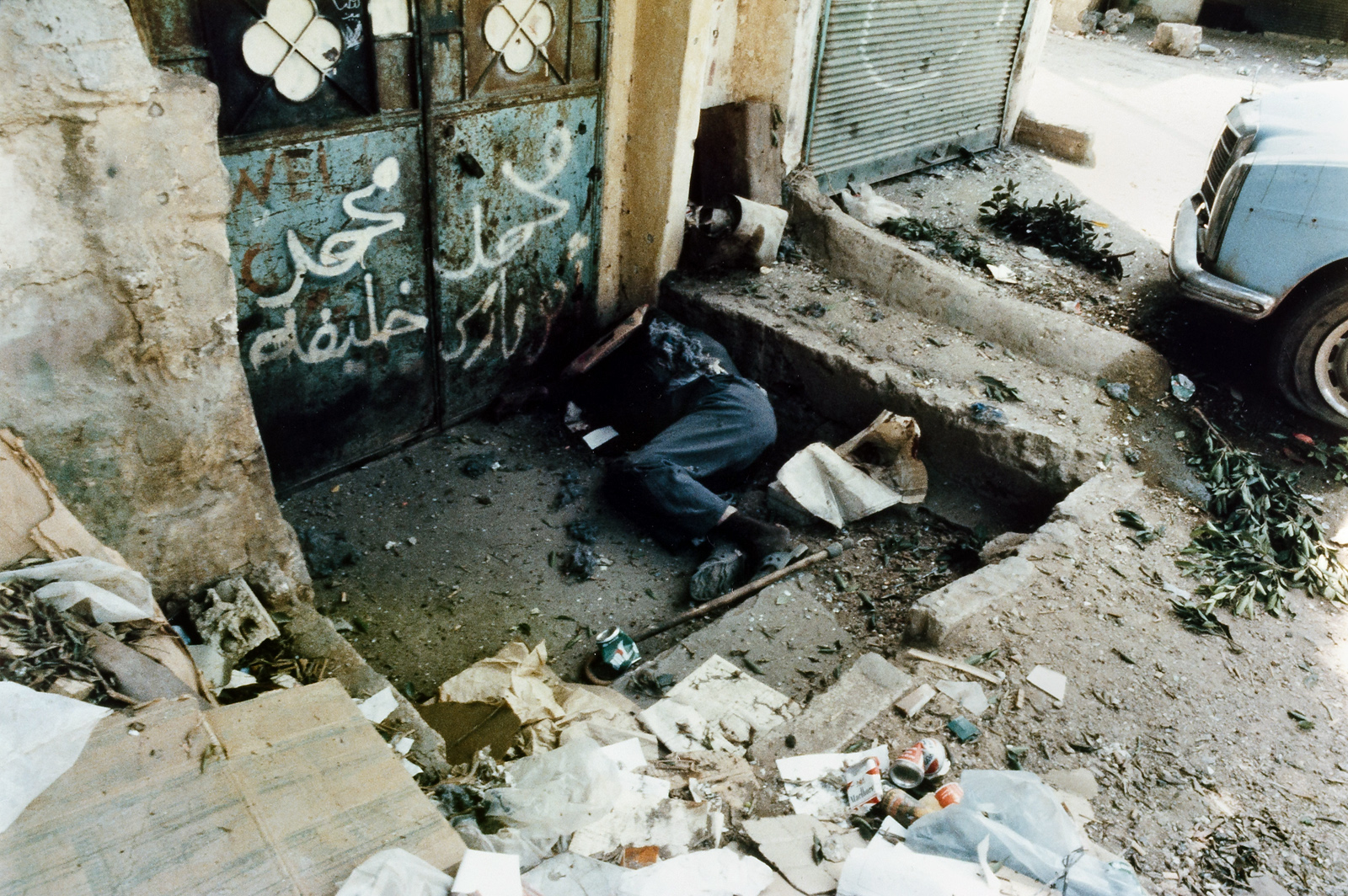
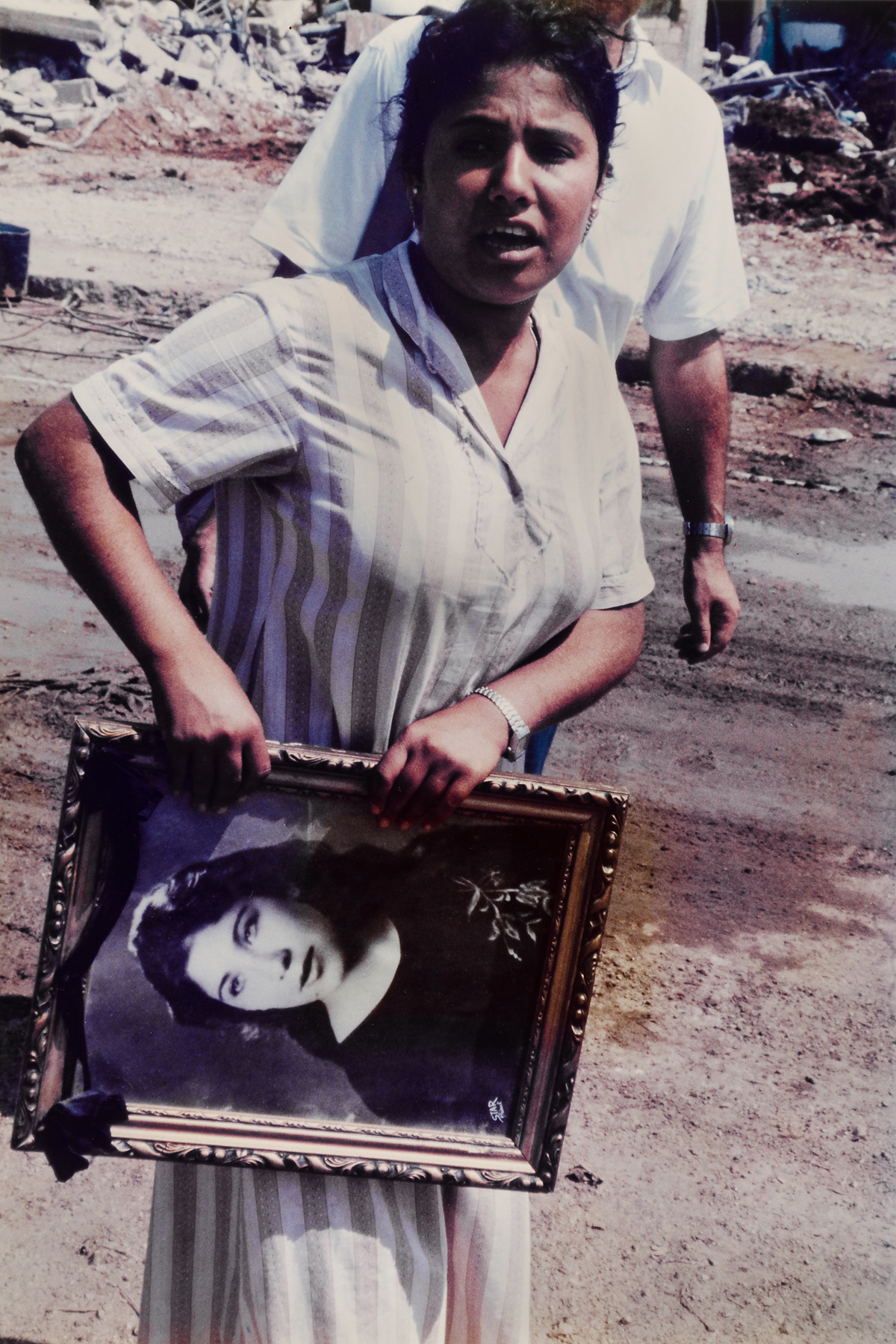
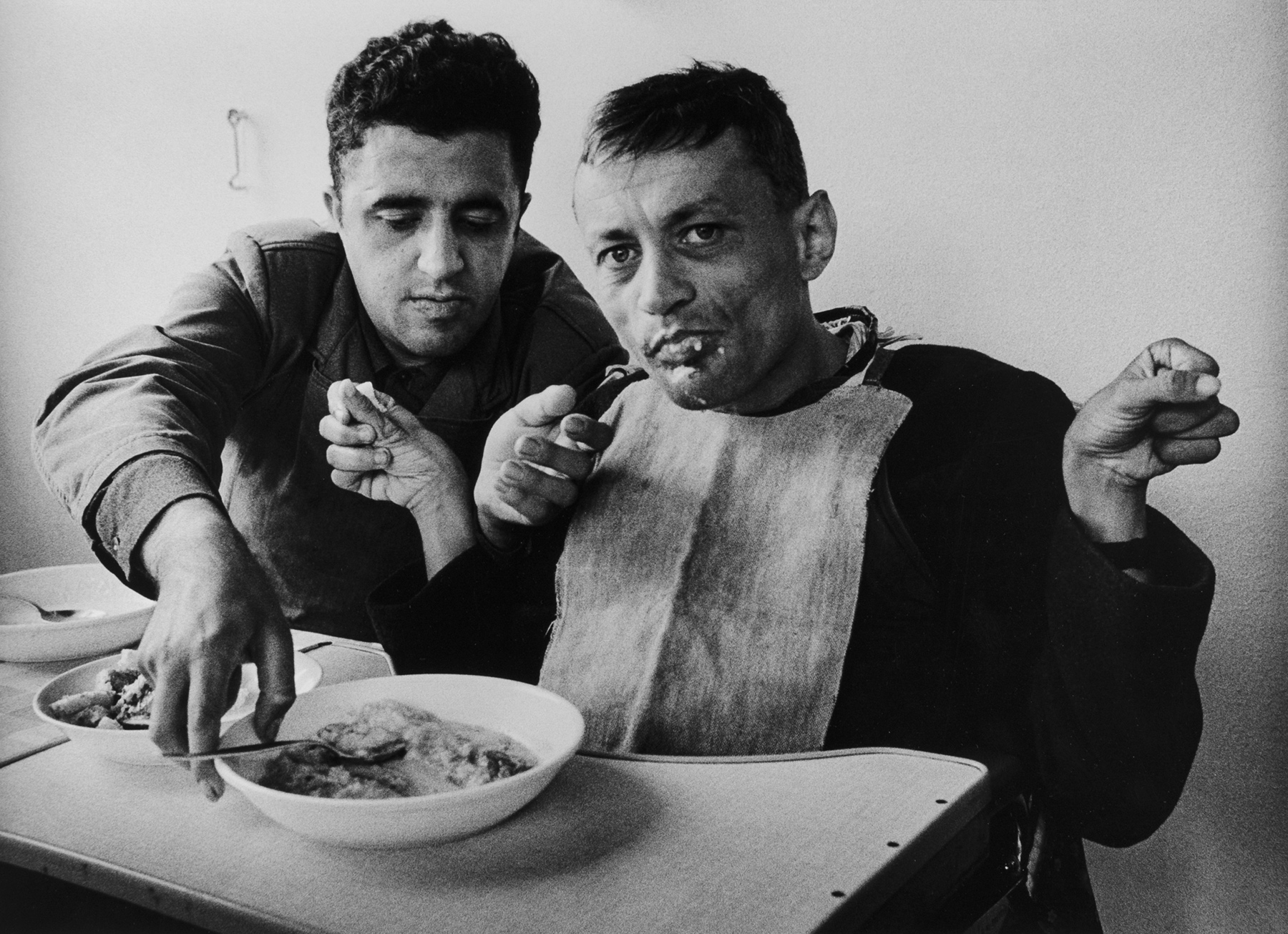
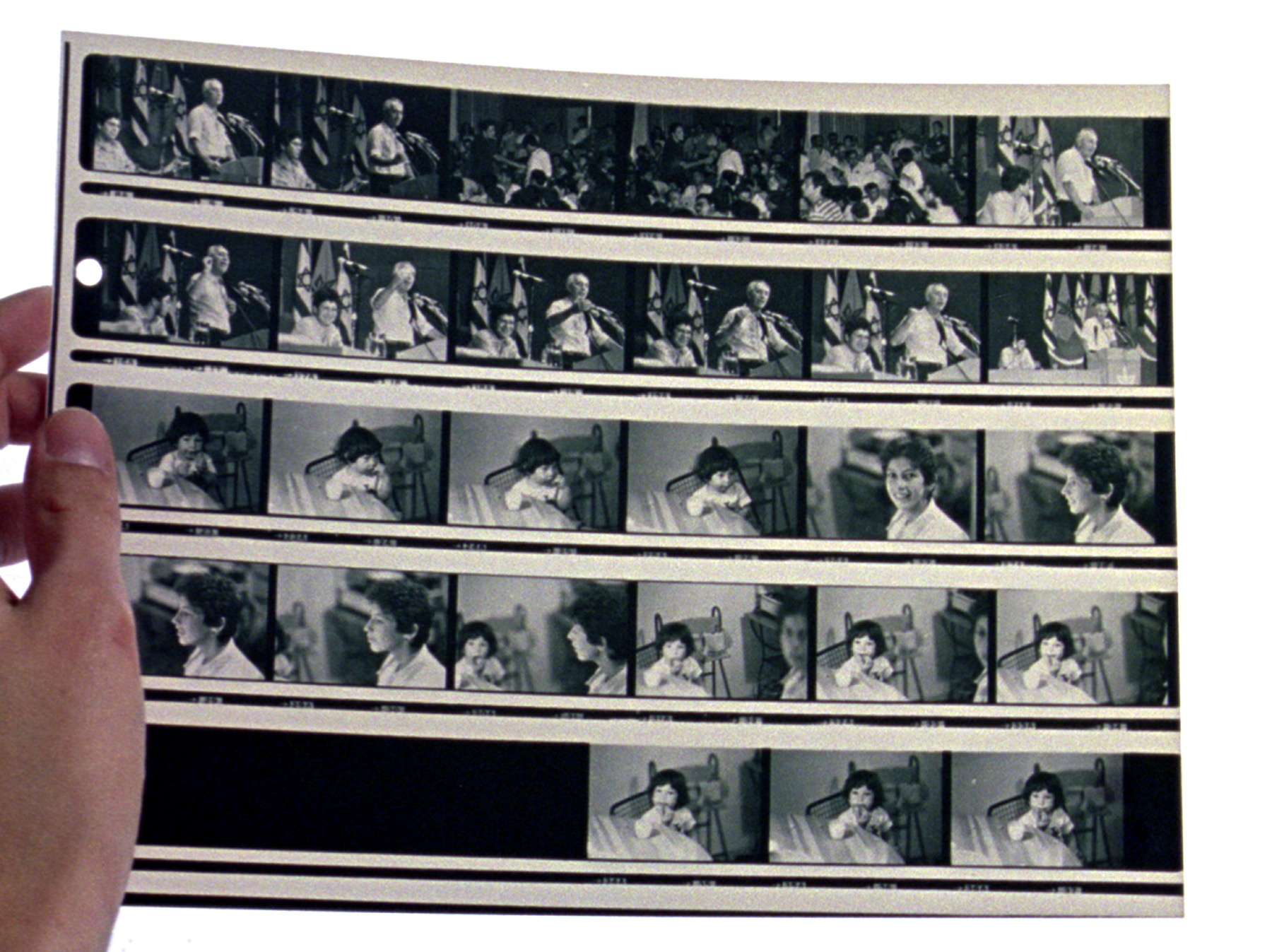
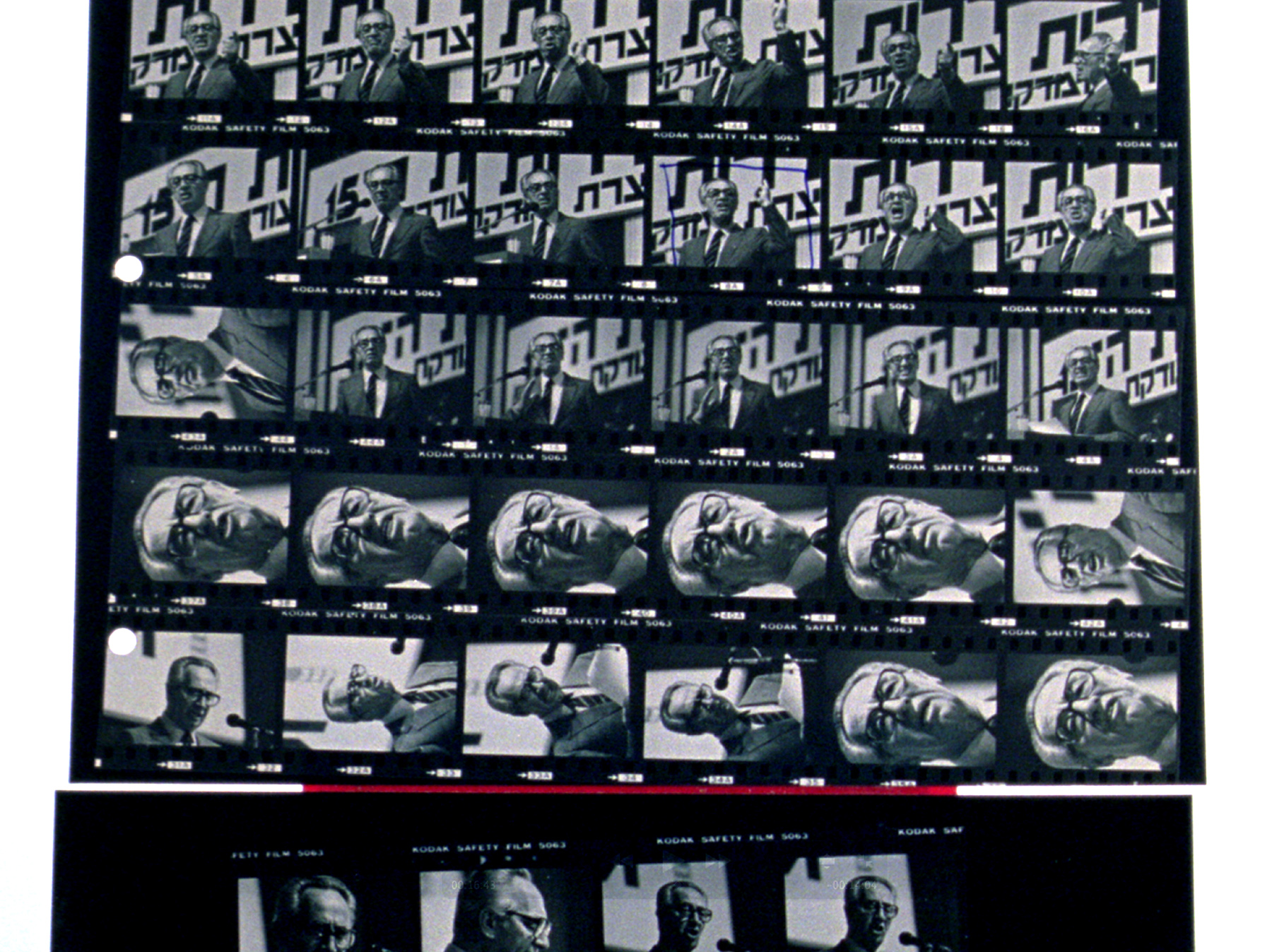
 Art Blart _ art and cultural memory archive
You must be logged in to post a comment.