Exhibition: ‘Hujar:Contact’ at the Morgan Library & Museum, New York City, New York

Exhibition dates: 22nd May – 25th October, 2026

Curator: Joel Smith, Richard L. Menschel Curator and Department Head of Photography


1955-63: Beginnings
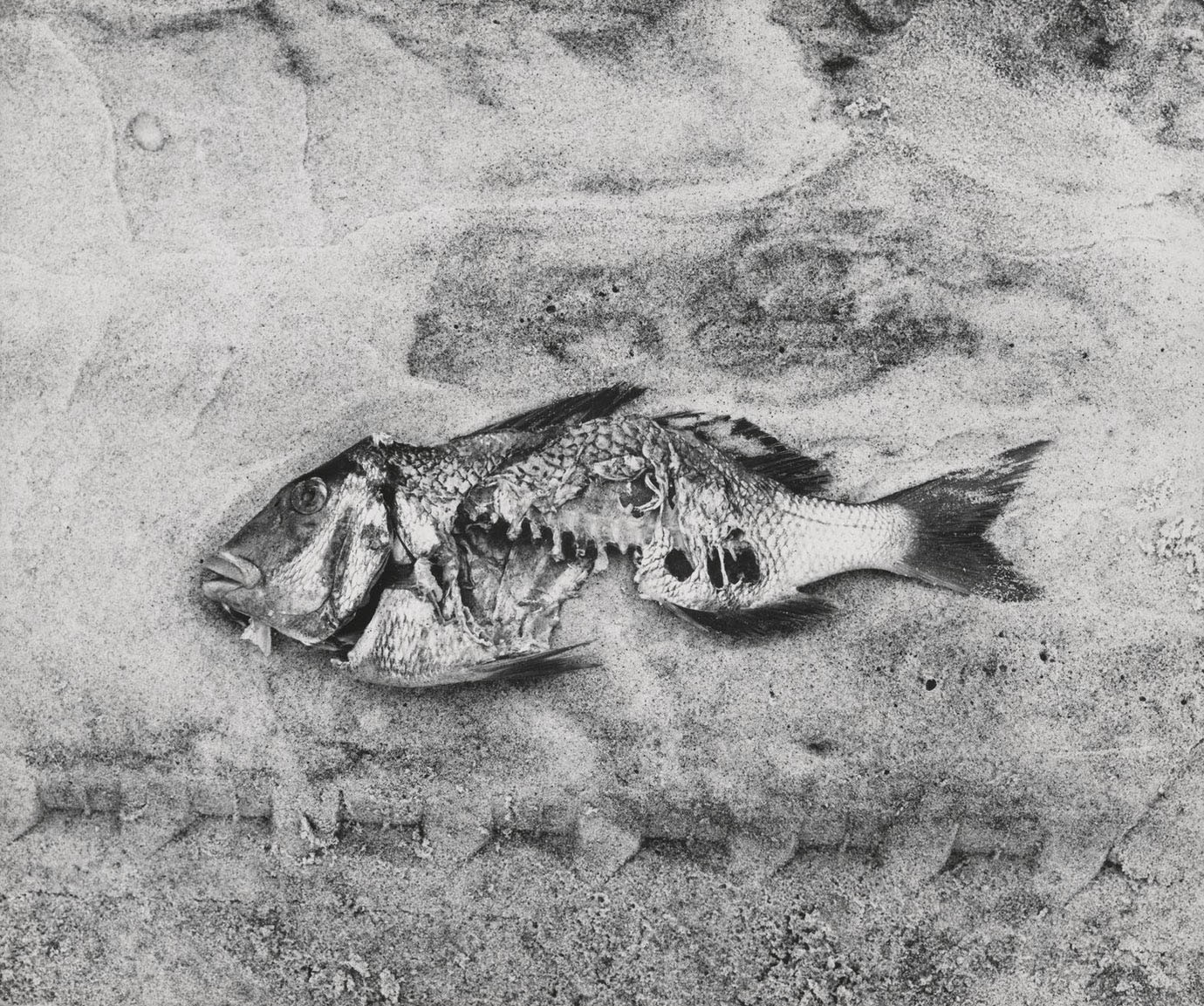
Peter Hujar (American, 1934-1987) 'Dead Fish, Fire Island' 1960-1962


Peter Hujar (American, 1934-1987)
Dead Fish, Fire Island
1960-1962
Gelatin silver print, mounted on board
Image/Sheet: 10 3/4 x 11 1/4 inches (37.3 x 28.5cm)
Morgan Library & Museum, New York, Peter Hujar Collection
Gift of Stephen Koch


Hujar found an unlikely elegance in this unpromising subject, discovered as he began spending more time in the early 1960s on Fire Island, off the southern coast of Long Island. The excavation of beauty out of decay points to Hujar’s early admiration for the wide-ranging work that Irving Penn had been publishing in Vogue magazine since the 1940s.

Large print label text


An empathetic eye

As many of you may know from reading Art Blart over the years, I deeply admire the work of the American photographer Peter Hujar (1934-1987).

With this exhibition we get to dive into the contact sheets of the artist which give insight into “the nature of his attention and the unique personality of each of his subjects.” They allow us, the viewer, to better understand the flow of Hujar’s creative process and the focus of his vision – the consistency of that vision, how he approaches his subject matter, his understanding of light, framing, presence – and the “rhythm of Hujar’s looking.”

I feel (a critical word) that Hujar approaches his subject with an open and informed mind. Using the experience of his many years as a commercial photographer he has the innate ability in his personal work to put the camera in the right place at the right time, to find time and time again what he is looking for in direct, honest, beautiful photographs of places, animals and people.

I look at the contact sheet for Caven Point, New Jersey, with David Wojnarowicz (1984, below) and observe that not one shot is wasted, that Hujar knows exactly his directorial language. He is an auteur with a recognisable personal style, recurring themes, and deep artistic control.

While less confrontational, more empathetic, more cinematic in the feeling of spatiality in the image, Hujar’s approach to subject matter is similar to a photographer of a slightly earlier generation, Diane Arbus (American, 1923-1971) who also ran a commercial photography studio, working as an art director, conceptualiser, and stylist before becoming disillusioned with the artificial demands of the commercial fashion world, then moving into mainly portrait photography.

Both artist’s know how to get the most from their subject matter letting the sitter – cow, horse, human, giant – speak of their place in the world, photographs revealing their inner spirit and energy. As Loring Knoblaunch observes, “As seen in these contact sheets, Hujar seemed to work best in a loose flow of time, where collaboration and connection were the variables that ultimately mattered to the capturing of a durable visual essence.” This is the embodiment of Hujar’s art.

Various texts insist on a sense of desolation (a state of extreme emptiness, destruction, or deep, hopeless sadness), fatalism and melancholy present in Hujar’s photographs:

“Woven throughout Peter Hujar’s photographs is a profound sense of fatality about the world. This bleakness in his art reflects both the abuse he faced as a child and his concern about the AIDS crisis which, at the time, only showed signs of worsening.” (Text from the Morgan Library & Museum Facebook page)

“Postindustrial Queens, windblown Caven Point, and burned-out, riot-torn Newark were places that appealed to Wojnarowicz’s and Hujar’s attunement to disaster. Their fatalism reflected the neglect and abuse each of them had known in childhood, as well as their consciousness of an AIDS crisis that only showed signs of deepening.” (Large print label text)

and in Loring Knoblauch‘s excellent review of the exhibition:

“Hujar’s work has always been filled with themes of darkness, melancholy, and alienation, and the visual evidence in his contact sheets reinforces those moods, but with a quiet undercurrent of attentive resolve.”

I don’t feel this at all.

As a gay man myself, having survived years of abuse growing up and having lived through the initial AIDS crisis in the 1980s and survived (and lost a lot of friends), I don’t find Hujar’s photography at all dark or bleak in regards to family, growing up or the AIDS crisis. In fact quite the opposite, I find his photographs uplifting, inspiring in their humanity and empathy.

Fatalism … what the hell is that anyway? “the philosophical and psychological doctrine that all events are fixed in advance by fate or an overarching power, making human free will, choices, and actions powerless to change the outcome”

No. Hujar’s very photographs speak against this concept (that human free will, choices and actions are powerless) through what he chooses to photograph, through the snap of the shutter (this instant not another) and through his photographs of protests against the lack of HIV/AIDS funding. Human actions DO matter in the outcome. And as to alienation (a state or feeling of being cut off, isolated, or estranged from people, society, or oneself), Hujar’s very engagement with the world – through his city, community and friends, through so many intersections with reality, so many points of view, forming such a nexus of connections – obviates such a reading of his work.

Through these contact sheets, through Hujar’s empathetic vision, we become, as Marina Vitaglione puts it, “immersed in the rhythm of Hujar’s looking.”

That looking is always lyrical, joyous and very human.

Dr Marcus Bunyan

PS. What we need now is an exhibition on the beginnings of Hujar’s artistic career!


Many thankx to the Morgan Library and Museum for allowing me to publish the photographs in the posting.

Many thankx also to Loring Knoblauch and the Collector Daily website for allowing me to publish the installation photographs in the posting. Permission is very much appreciated. Her review of the exhibition is excellent and offers the reader numerous insights into Hujar’s artistic practice.

Please click on the photographs for a larger version of the image.


“The changing of a pose, the tilt of a head, a move a little closer, a different angle of approach, a laugh, a moment of relaxation, a moment of anxiousness or wariness, another shift, and then bang! There it is. And of course, Hujar couldn’t know whether he’d gotten or not, so he often kept going. But for students of studio portraiture, this is the master class on offer in this exhibit – watch what he was looking for, how he was moving and adapting (quietly and unobtrusively hunting even), and where he ultimately found the pivot point where something boring became something unexpectedly vulnerable or compelling.”


“Hujar’s work has always been filled with themes of darkness, melancholy, and alienation, and the visual evidence in his contact sheets reinforces those moods, but with a quiet undercurrent of attentive resolve. He actually found what he was looking for more often than not, which is part of the reason his place in photographic history is secure.”


Loring Knoblauch. “Hujar:Contact @Morgan Library,” on the Collector Daily website, August 21, 2026 [Online] Cited 03/10/2026
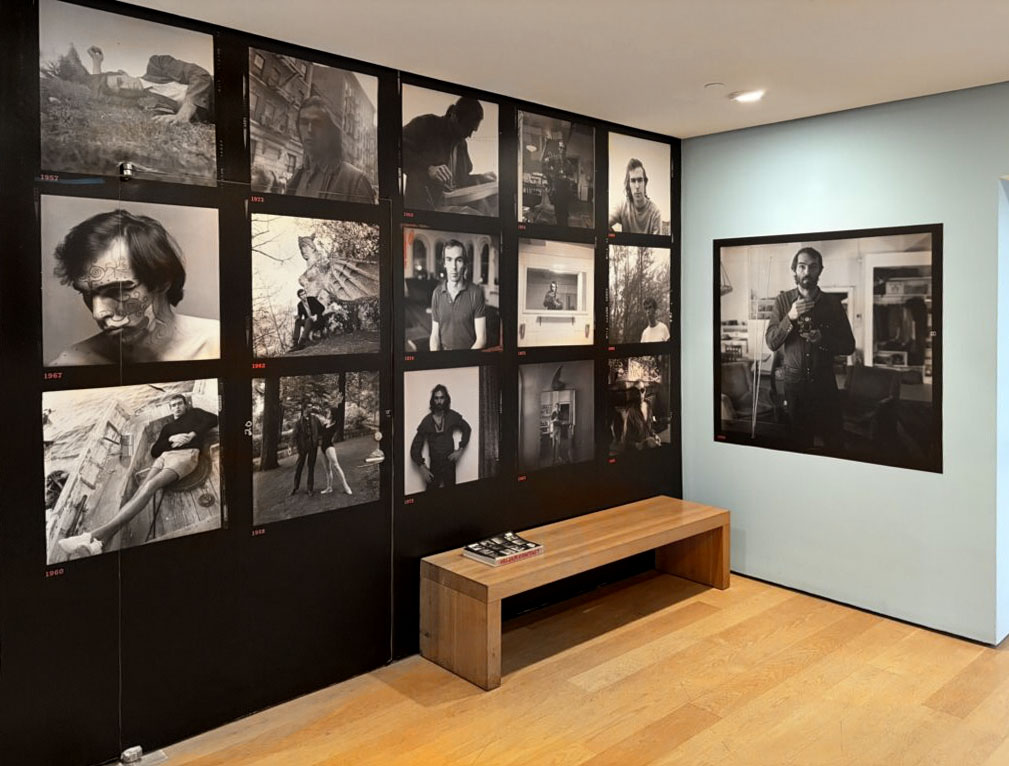
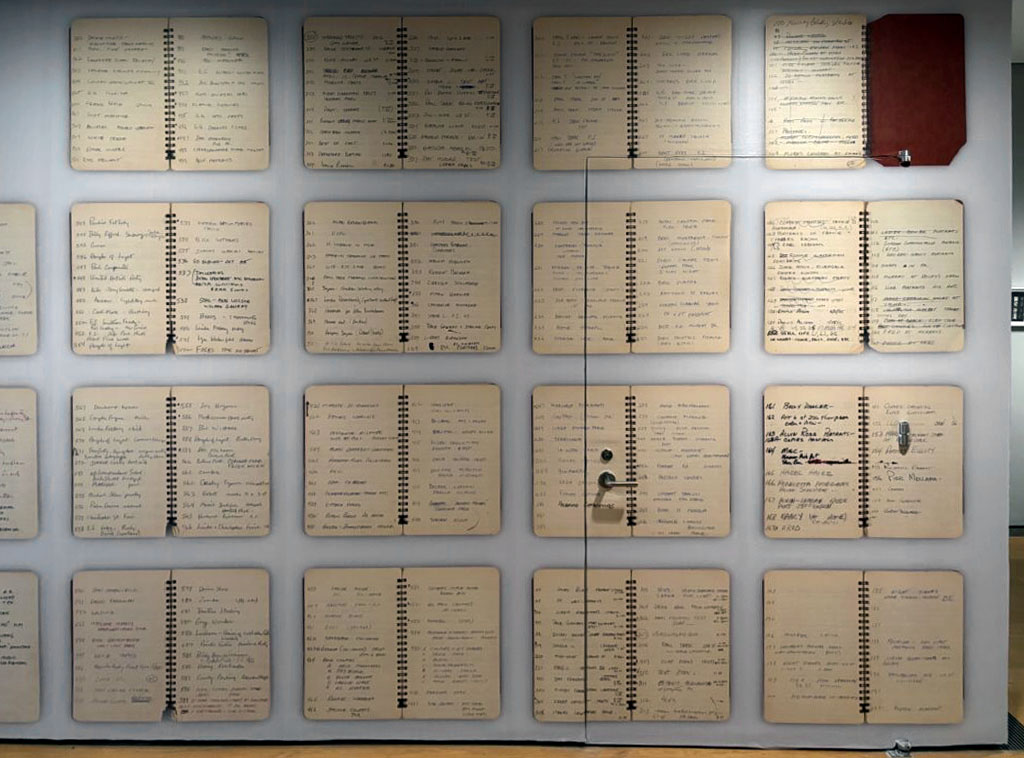


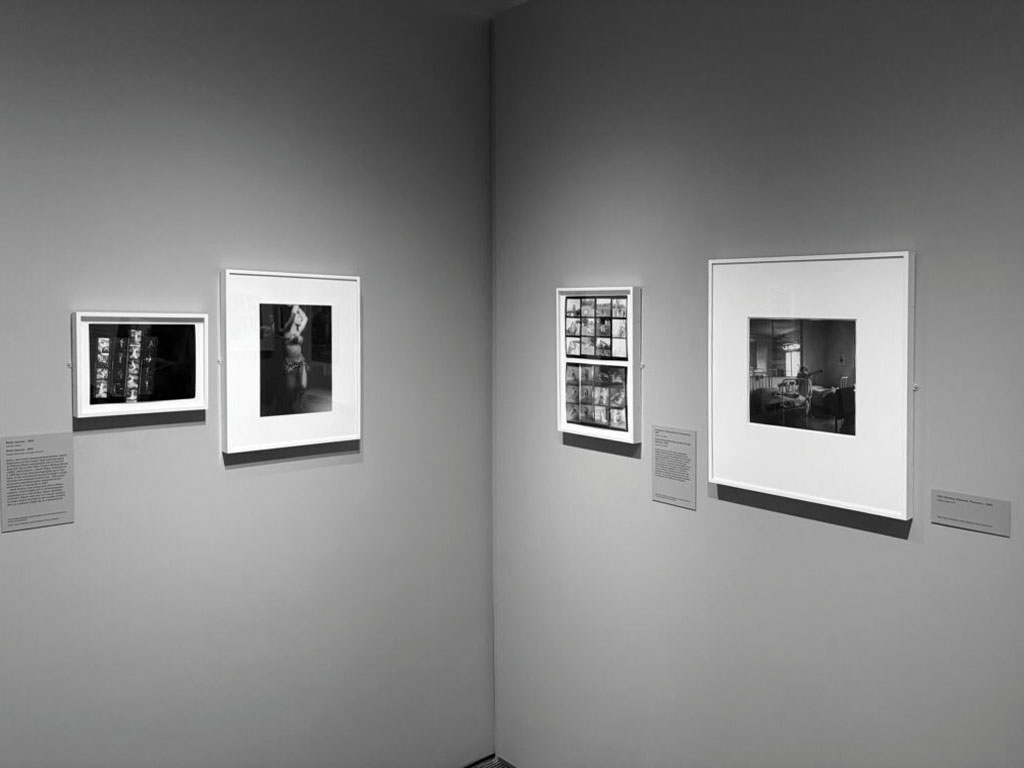
installation view of the exhibition 'Hujar:Contact' at the Morgan Library & Museum, New York City, New York, May - October, 2026


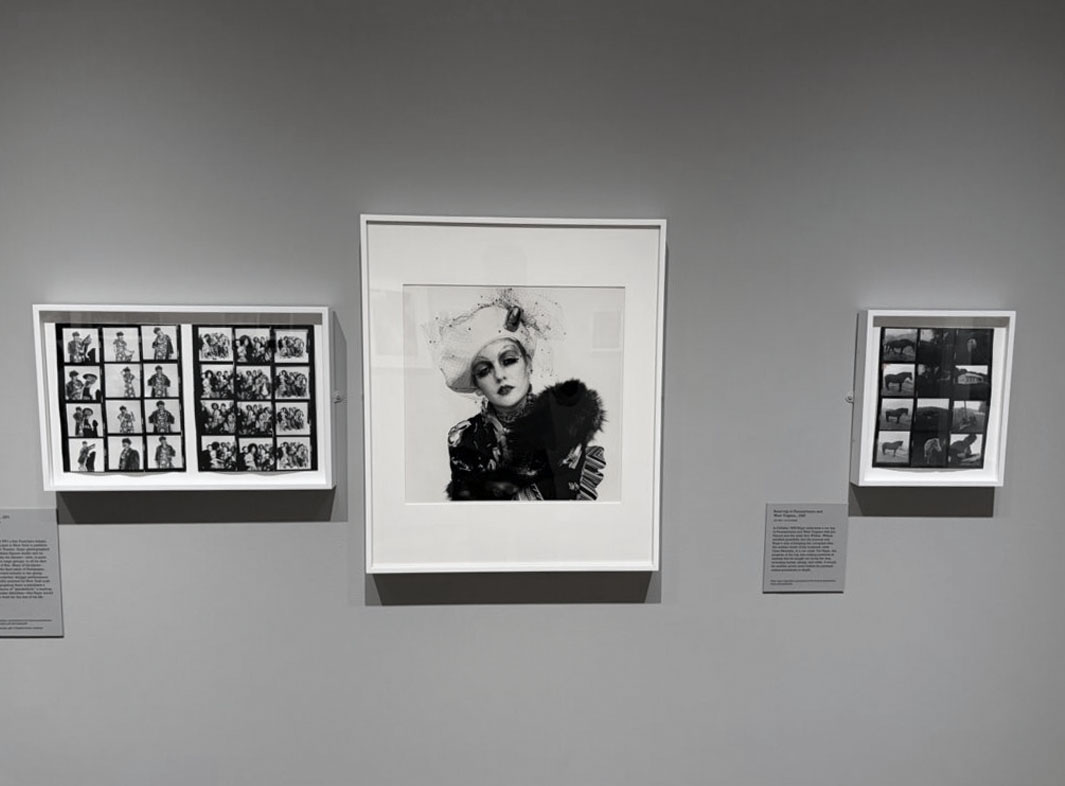
installation views of the exhibition Hujar:Contact at the Morgan Library & Museum, New York City, New York, May – October, 2026. Many thankx to Loring Knoblauch and the Collector Daily website for allowing me to publish the installation photographs in the posting.


1966-72: Onto the Page
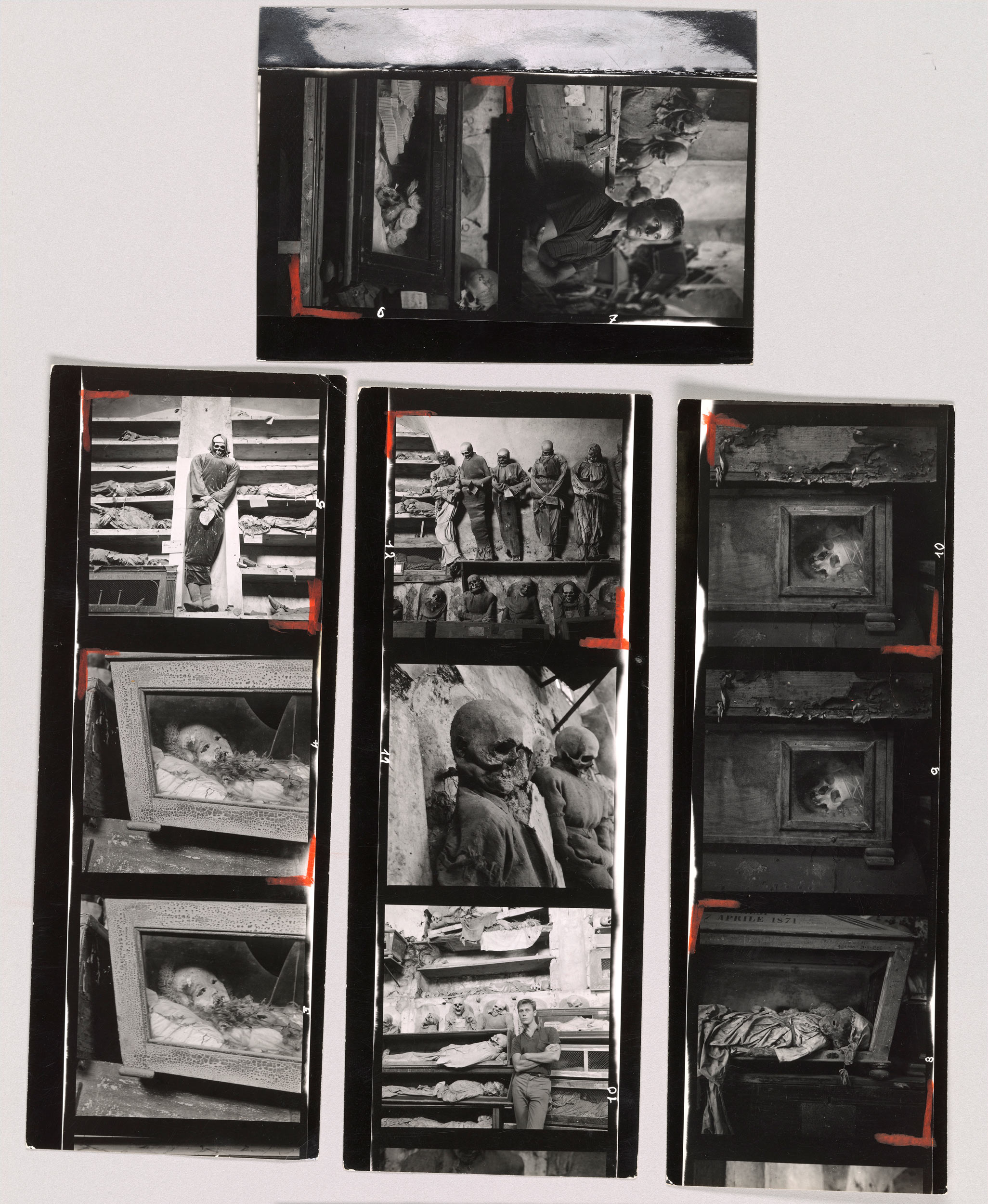
Peter Hujar (American, 1934-1987) 'Capuchin Catacombs, Palermo, with Paul Thek' 1963 job 256


Peter Hujar (American, 1934-1987)
Capuchin Catacombs, Palermo, with Paul Thek
1963
Job 256, 11 sheets
Contact sheet fragments
Dimensions vary – 3 fragments: 7 3/4 x 2 3/4 inches each; 1 fragment: 5 x 3 1/2 inches
Morgan Library & Museum, New York, Peter Hujar Collection, purchased on the Charina Endowment Fund, 2013
Courtesy of Fraenkel Gallery, San Francisco and Ortuzar, New York
© The Peter Hujar Archive / Artists Rights Society (ARS)


Near the end of their time in Italy, Hujar and Paul Thek visited the catacombs maintained by monks of the Capuchin order in Sicily. Thek was fascinated by the site, which he described as a room “decorated with corpses”; soon after returning to New York, he would be making sculpture exploring the decay of the flesh and the body’s status as an object. The photographs Hujar made in the catacombs in, as he said, “about 20 minutes,” proved to be of outsize importance in his later work, forming the second half of his 1976 monograph, Portraits in Life and Death.

Large print label text
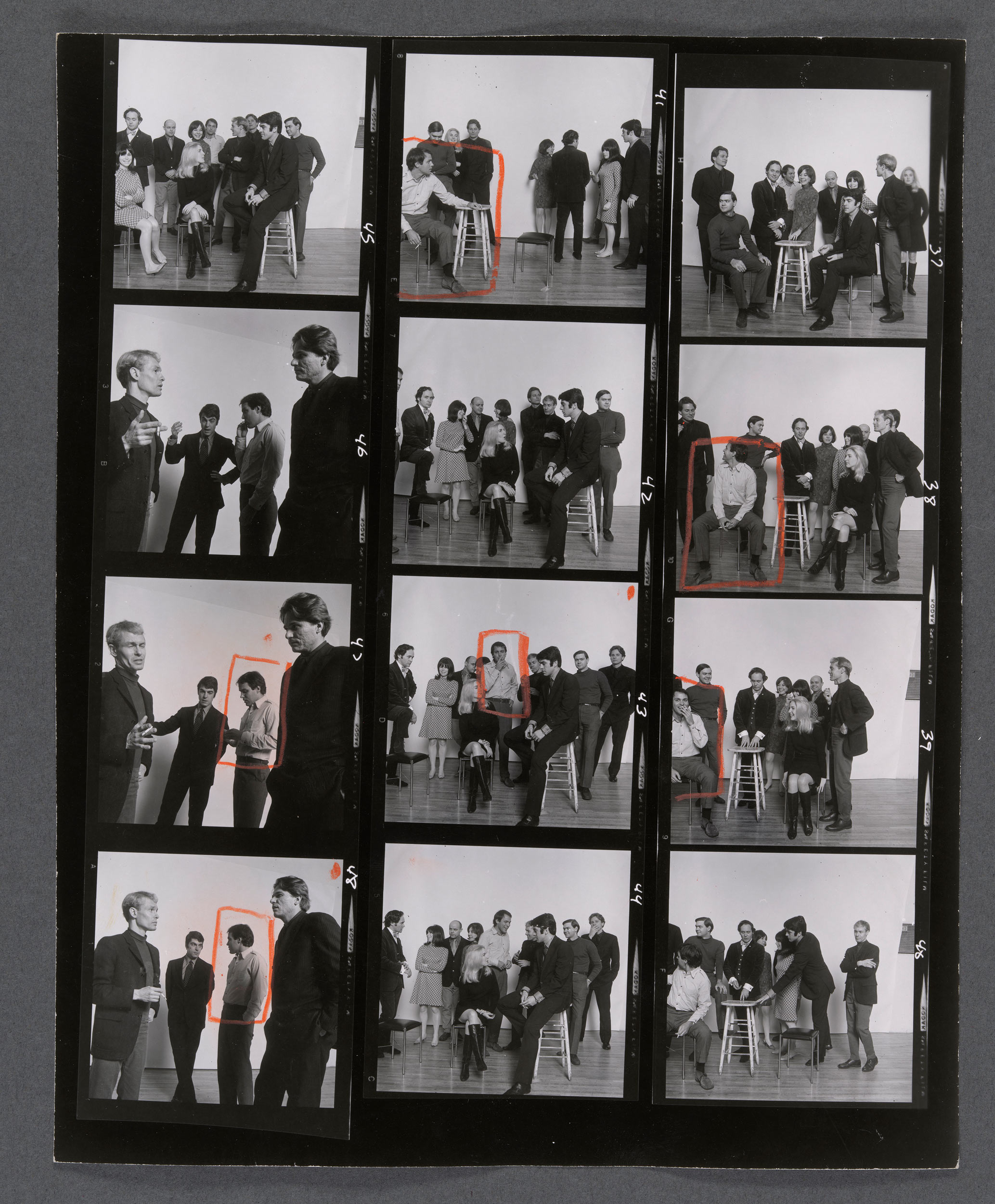
 

Peter Hujar (American, 1934-1987) 'Joseph Raffael among other Stable Gallery artists and staff' c. 1967 job 327


Peter Hujar (American, 1934-1987)
Joseph Raffael among other Stable Gallery artists and staff
c. 1967
Job 327, 11 sheets
Contact sheet
11 x 8 1/2 inches
Morgan Library & Museum, New York, Peter Hujar Collection, purchased on the Charina Endowment Fund, 2013
Courtesy of Fraenkel Gallery, San Francisco and Ortuzar, New York
© The Peter Hujar Archive / Artists Rights Society (ARS)


The group portrait is one of the most purely functional genres of photography: Creativity is stymied by the logistical challenge of attaining an exposure in which nobody blinks. Photographer Peter Hujar was attracted to the challenge. As seen in the markings on his contact sheets, he treated the group setting as a means of eliciting responses from selected individuals. In each frame of the eleven sheets in which Hujar portrayed those connected with the Stable Gallery, he drew squares to single out his former boyfriend, Joseph Raphael.

Large print label text


Hujar:Contact offers an unprecedented look into the life, times, and creative evolution of a master photographer. The exhibition features more than 110 contact sheets and 20 enlargements from the Morgan’s Peter Hujar Collection, which includes over 5,700 contact sheets from throughout the artist’s career.

Peter Hujar (1934-1987) began filing contact sheets and assigning them job numbers at age twenty-one. His records make it possible to track his development – from two decades as a studio assistant (1955-1967), when he pushed himself to try work of every kind, into the late 1960s and his work as a freelancer in fashion, music, and advertising, through his mature period (1974-1987) as a fiercely independent and influential artist in the East Village.

Many of the contact sheets bear editing marks that indicate ideas about cropping and printing and contextualize the exposures Hujar ultimately decided to enlarge. The intense, interactive quality of his portrait work comes to life in contact sheets that read as intimate pictorial narratives, revealing the nature of his attention and the unique personality of each of his subjects. As Hujar matures and struggles, and as the character of his social world changes from the 1950s through the 1960s, 1970s, and 1980s, his contact sheets tell the nuanced story of a lifetime, a community, and an era.

Text from the Morgan Library & Museum website
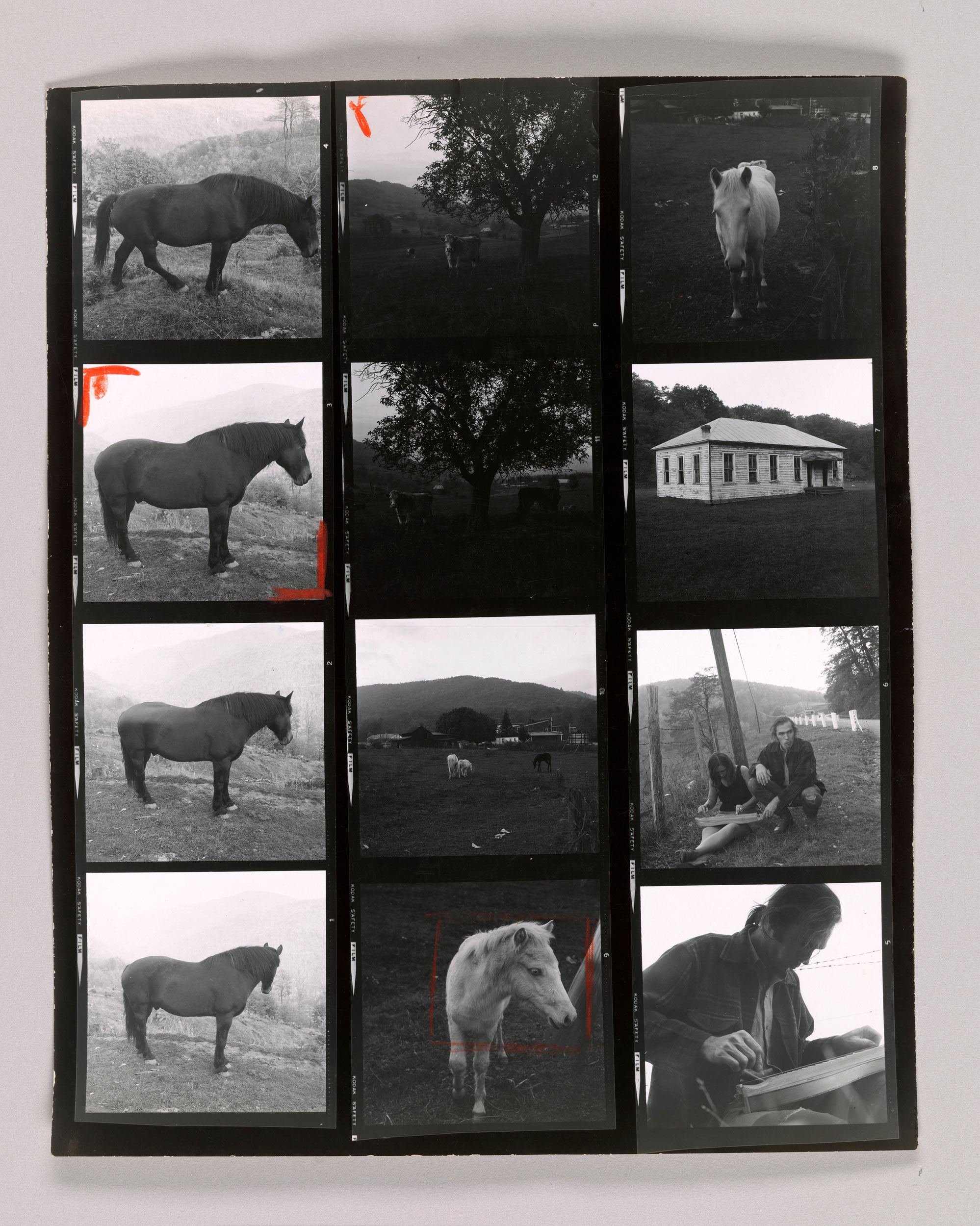
 

Peter Hujar (American, 1934-1987) 'Road trip to Pennsylvania and West Virginia with Ann Wilson and Jim Fouratt' 1969, job 463


Peter Hujar (American, 1934-1987)
Road Trip to Pennsylvania and West Virginia
1969
Job 463, 23 sheets
Contact sheet
11 x 8 1/2 inches
Morgan Library & Museum, New York, Peter Hujar Collection, purchased on the Charina Endowment Fund, 2013
Courtesy of Fraenkel Gallery, San Francisco and Ortuzar, New York
© The Peter Hujar Archive / Artists Rights Society (ARS)


In October 1969 Hujar undertook a car trip to Pennsylvania and West Virginia with Jim Fouratt and the artist Ann Wilson. Wilson recalled gratefully that the journey was Hujar’s way of keeping her occupied after the sudden death of her husband, critic Gene Swenson, in a car crash. For Hujar, the purpose of the trip was making portraits of animals that he sought out along the way, including horses, sheep, and cattle. It would be another seven years before he pursued animal portraiture in depth.

Large print label text
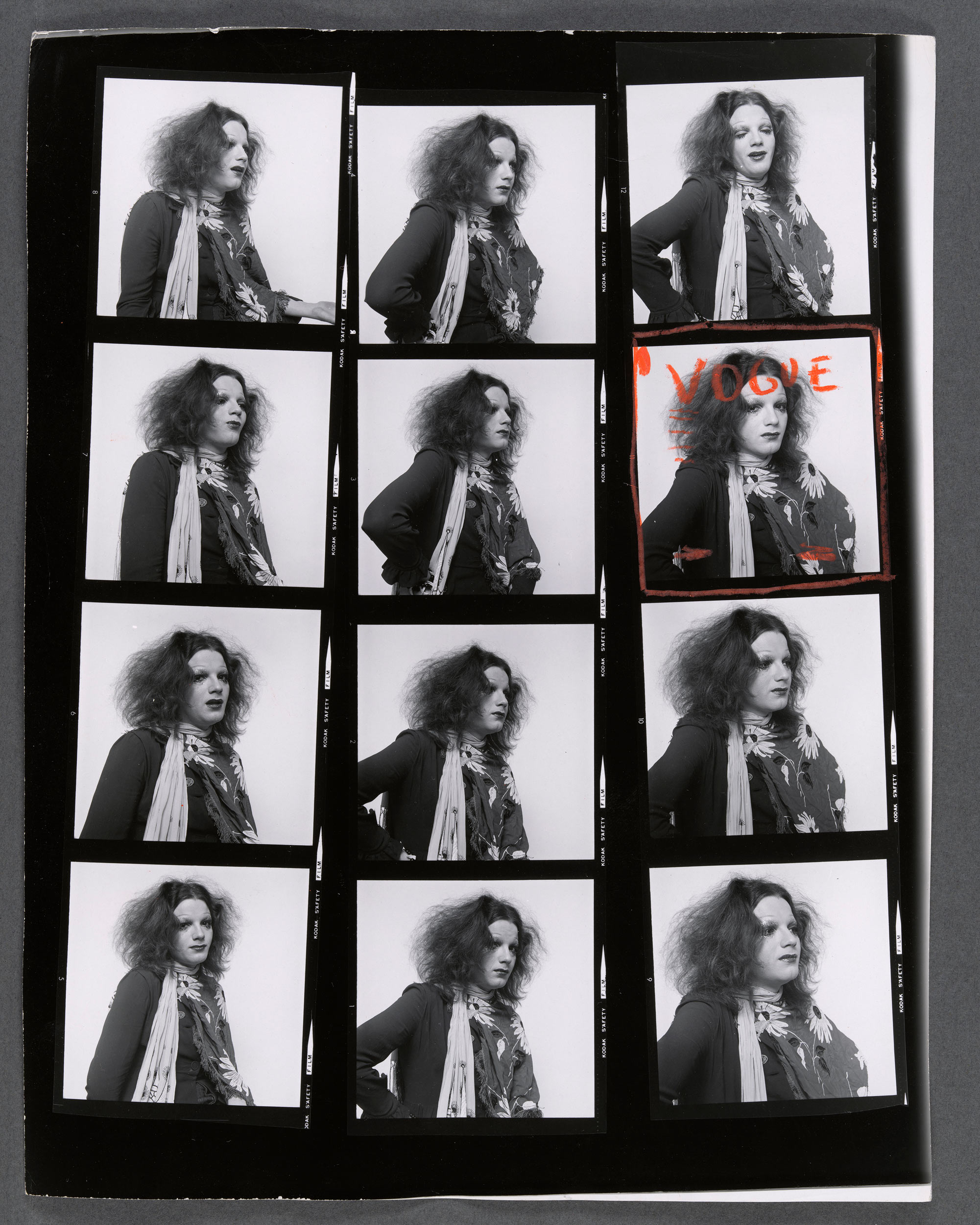
 

Peter Hujar (American, 1934-1987) 'Jackie Curtis for New Times magazine' c. 1970 job 474


Peter Hujar (American, 1934-1987)
Jackie Curtis at 10 East 23rd Street; Jackie Curtis for New Times magazine
c. 1970
Job 474 B, 7 sheets
Contact sheet
11 x 8 1/2 inches
Morgan Library & Museum, New York, Peter Hujar Collection, purchased on the Charina Endowment Fund, 2013
Courtesy of Fraenkel Gallery, San Francisco and Ortuzar, New York
© The Peter Hujar Archive / Artists Rights Society (ARS)


The bond Hujar formed with Warhol “superstar” Jackie Curtis reflected, in part, their mutual rejection of familiar sexual identities. Curtis told The New York Times, “I’m not a boy, not a girl, not a faggot, not a drag queen, not a transsexual – just me, Jackie.”

This contact sheet comes from the session for a 1970 New Times magazine feature on New Yorkers who defined their historical moment. The print is from a separate session, which yielded a spread of full-page portraits of Curtis in issue six of Newspaper.

Large print label text
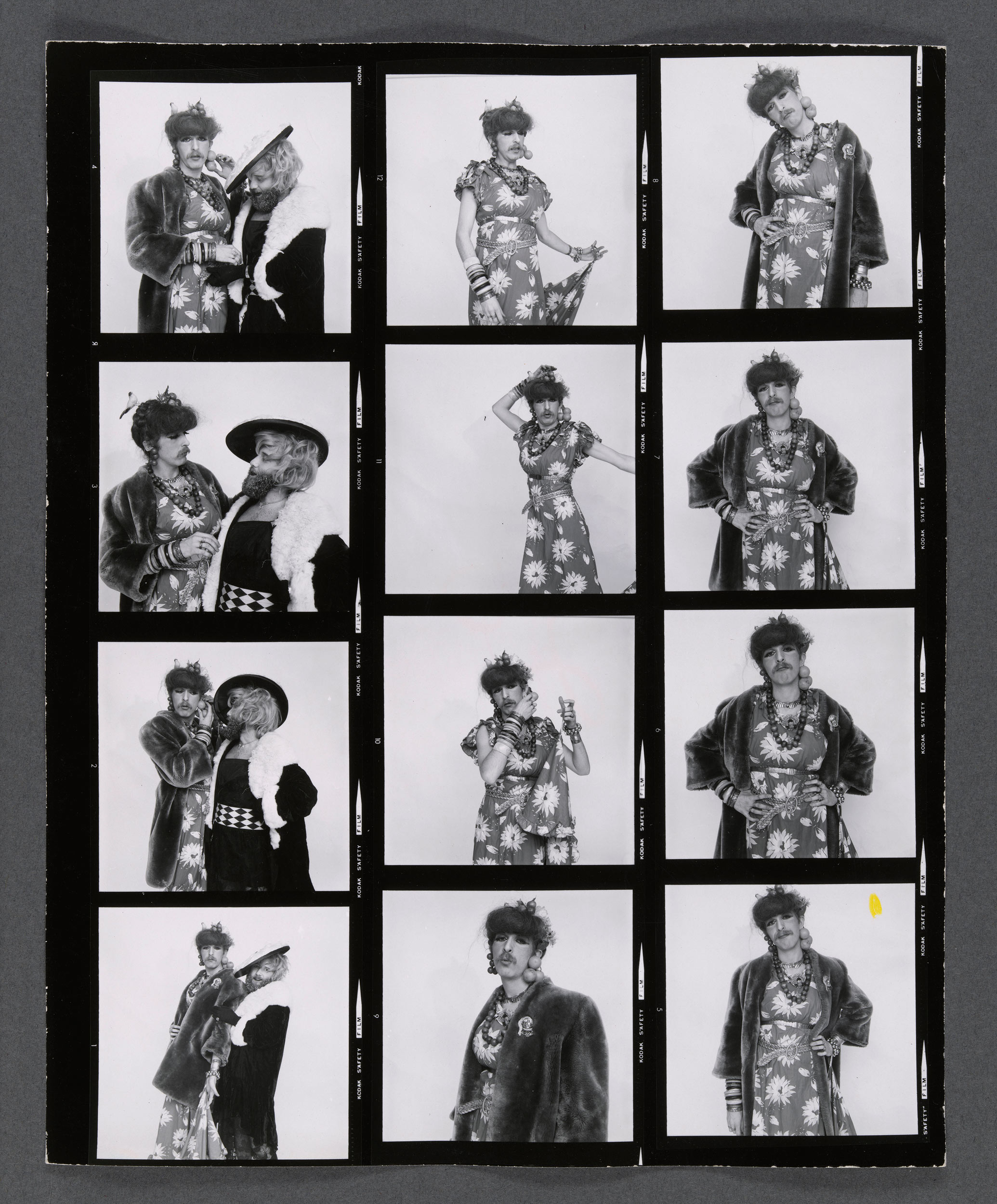
 

Peter Hujar (American, 1934-1987) 'The Cockettes at 10 East 23rd Street' 1971, job 519


Peter Hujar (American, 1934-1987)
The Cockettes at 10 East 23rd Street
1971
Job 519
The Morgan Library & Museum, Peter Hujar Collection, New York purchased on the Charina Endowment Fund, 2013
Courtesy of Fraenkel Gallery, San Francisco and Ortuzar, New York
© The Peter Hujar Archive / Artists Rights Society (ARS)


In November of 1971, the San Francisco troupe, the Cockettes, came to New York to perform at the Anderson Theatre. Peter Hujar photographed them in his Madison Square studio and on the street outside the theatre – solo, in pairs and trios, and in large groups. In all he shot over fifty rolls of film. Pictured here [below] is Fayette, one of the co-founders of the avant-garde experimental theatre troupe.

Many of these photographs ran in the final issue of Newspaper, which was devoted entirely to the group. Though the Cockettes’ shaggy performance style was roundly scorned by New York audiences, photographing them crystallised a theme – the stance of “genderfuck,” a madcap travesty of gender identities – that Hujar would explore in his work for the rest of his life.

Large print label text
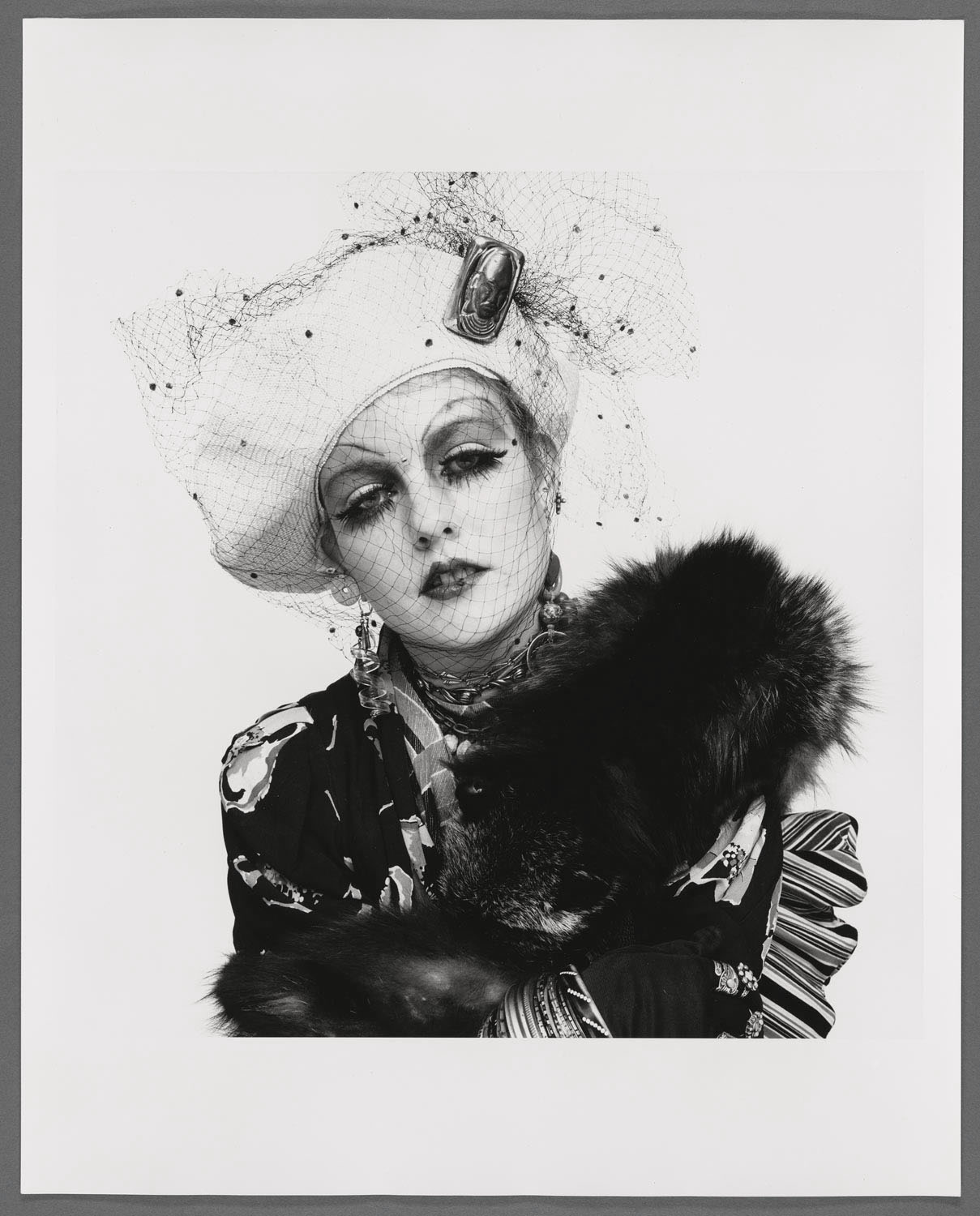
 

Peter Hujar (American, 1934-1987) 'Fayette' 1971


Peter Hujar (American, 1934-1987)
Fayette
1971
Gelatin silver print
Image: 14 11/16 x 14 11/16 inches (37.3 x 37.3cm)
Sheet: 19 7/8 x 15 7/8 inches (50.5 x 40.4cm)
The Morgan Library & Museum, Peter Hujar Collection, New York
Gift of Stephen Koch
Courtesy of Fraenkel Gallery, San Francisco and Ortuzar, New York
© The Peter Hujar Archive /
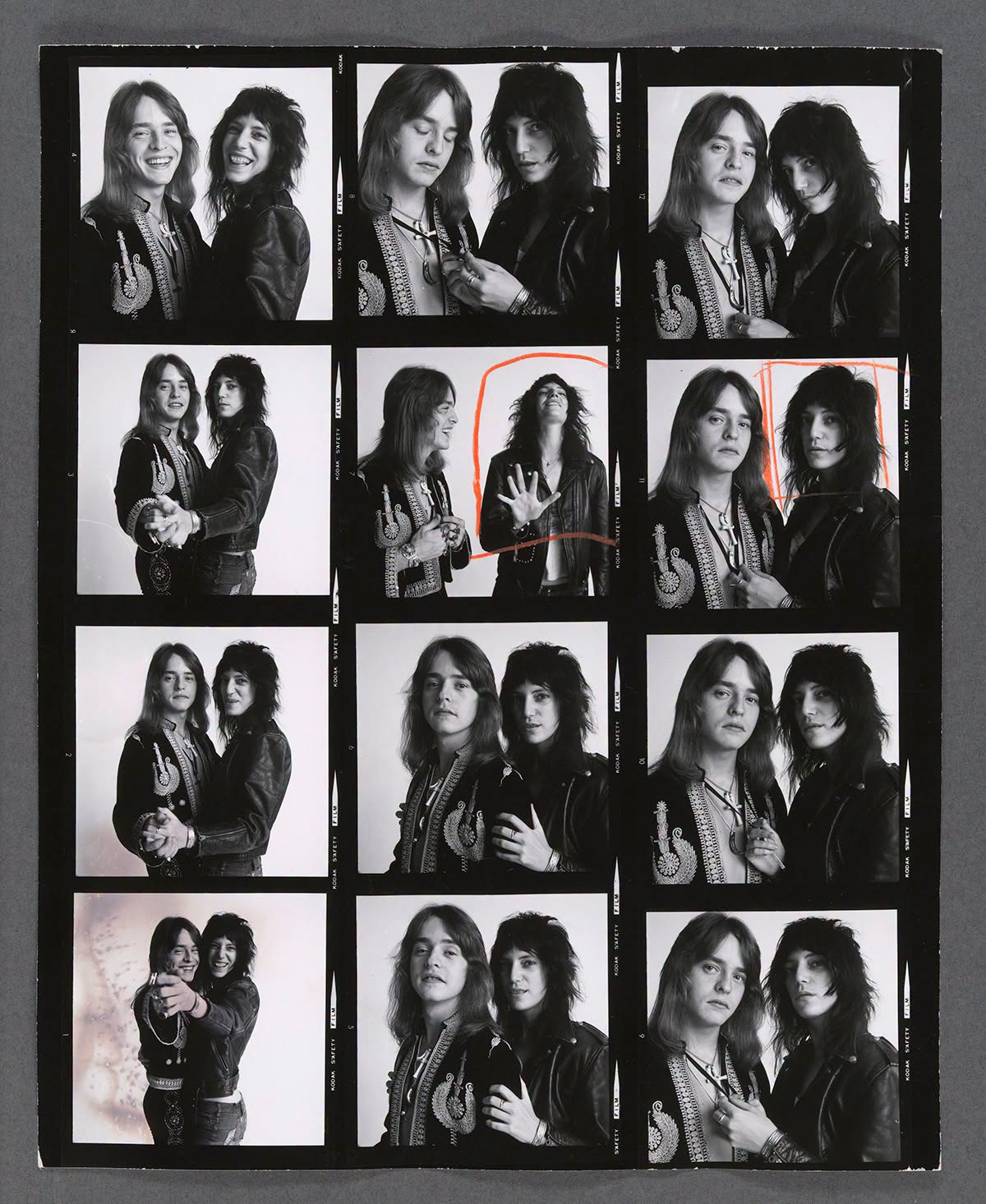
 

Peter Hujar (American, 1934-1987) 'Rick Derringer and Patti Smith' 1971, Job 517


Peter Hujar (American, 1934-1987)
Patti Smith and Rick Derringer
1971
Job 517, 11 sheets
Contact sheet
11 x 8 1/2 inches
The Morgan Library & Museum, Peter Hujar Collection, New York purchased on the Charina Endowment Fund
© The Peter Hujar Archive / Artists Rights Society (ARS)


At the turn of the 1970s, much of Peter Hujar’s paying work revolved around rock music publicity, including gigs ranging from concert coverage to record cover art to music magazine features. As documented in his contact sheets, Hujar frequently merged and swapped traditional gender codes in the presentation of the performers he photographed, such as Rick Derringer and Patti Smith pictured here.

Large print label text


This spring, the Morgan Library & Museum presents Hujar:Contact, an exhibition exploring the life, times, and creative evolution of photographer Peter Hujar (1934 – 1987). On view from May 22 through October 25, 2026, the exhibition features more than 110 contact sheets and 20 enlargements from the Morgan’s collection of Peter Hujar’s works.

Highlights include portraits of artists and performers such as Marsha P. Johnson, Jackie Curtis, Patti Smith, Candy Darling, John Zorn, and Ethyl Eichelberger, as well as Hujar’s creative collaborators and lovers, including Paul Thek, Joseph Raffael, and David Wojnarowicz. Hujar’s distinctive portraiture, alongside rare prints of his street photography, interiors, and landscapes, reveals the unflinching eye he cast upon a vast range of subjects.

In 2013, the Morgan acquired the 5,783 black-and-white contact sheets Hujar possessed at the time of his death, along with two notebooks, or “job books,” in which he recorded his photographic assignments and personal projects from 1954 until 1985. Together, these materials provide a detailed record of an artist who left no written reflection on his work, yet carefully preserved the traces of his decades-long photographic life. Hujar:Contact foregrounds the material processes that structured photographic practice in the era of film and chemical printing. Visitors to the exhibition will be transported to Hujar’s darkroom, invited to study these small images with the same attentiveness and care that Hujar himself brought to them.

“Following our 2018 exhibition Peter Hujar: Speed of Life, which explored the full length and breadth of Hujar’s artistic career for the first time, Hujar:Contact turns to his creative process,” said Colin B. Bailey, Katharine J. Rayner Director of the Morgan Library & Museum. “This exhibition advances the Morgan’s commitment to collecting and interpreting contemporary photography and to broadening appreciation for a medium that is both immediate and reflective.”

The exhibition elevates the contact sheet, traditionally a working tool, into an art object worthy of close visual reading in its own right. Each sheet reproduces an entire roll of film, allowing viewers to follow Hujar’s eye through a series of exposures. Many of the contact sheets include Hujar’s own handwritten notes, marks, and annotations, which indicate his changing approach to cropping and printing and elucidate the editorial decisions behind each final image.

“Contact sheets reveal an intimate history of Hujar’s habits, inspirations, and happy accidents – the intricacies hidden behind a final print,” said Joel Smith, curator of the exhibition and Richard L. Menschel Curator and Department Head of Photography at the Morgan. “Hujar:Contact illuminates the physical process that was central to his artistic practice.”

Reproduced at large scale on the walls are dozens of pages from Hujar’s job books, which provide the closest thing to a chronological account of his career. The earliest surviving page dates to 1954, when Hujar was just beginning to photograph friends and loved ones in New York. Over the following decades, the notebooks grew into a numbered record of hundreds of shoots, following the artist from his job as a studio assistant in the 1950s to his work in fashion and music journalism in the late 1960s, and ultimately to the independent portrait practice that defined his mature work in downtown New York.

By the mid-1970s, Hujar had become a central figure in the cultural life of New York’s East Village. Working primarily with a medium-format camera that allowed him to maintain eye contact with his sitters, Hujar cultivated an atmosphere in which photographer and subject shaped the image together. Visitors will gain a vivid sense of this collaborative process through the presentation of contact sheets alongside never-before-exhibited prints, unveiling how individual portraits emerged from a give and-take process grounded in patience and mutual curiosity.

Hujar:Contact is organised by Joel Smith, Richard L. Menschel Curator and Department Head of Photography.

The exhibition is accompanied by an eponymous catalogue that offers an authoritative and visually rich account of Peter Hujar’s creative process, featuring nearly five hundred reproductions of his contact sheets. Drawing from the Morgan Library & Museum’s extensive archive of more than five thousand original contact sheets and two job books created between 1954 and 1985, the publication provides an unprecedented look into the artist’s working methods.

Critical texts by Joel Smith establish a chronology of Hujar’s contact sheets, presenting a portrait of an artist developing, experimenting with, and refining his practice against the tumultuous cultural politics and sea changes of gay life conveyed by the words “Stonewall” and “AIDS.”

Throughout his career, Hujar recorded more than a thousand photo shoots in his job books. A complete transcription and annotation of these materials by Olivia McCall lends the volume unique scholarly value.

Published by the Morgan Library & Museum in association with MACK, the catalogue is available for pre-order in the Morgan Shop for $70.

Press release from the Morgan Library & Museum


1973-76: Life and Death
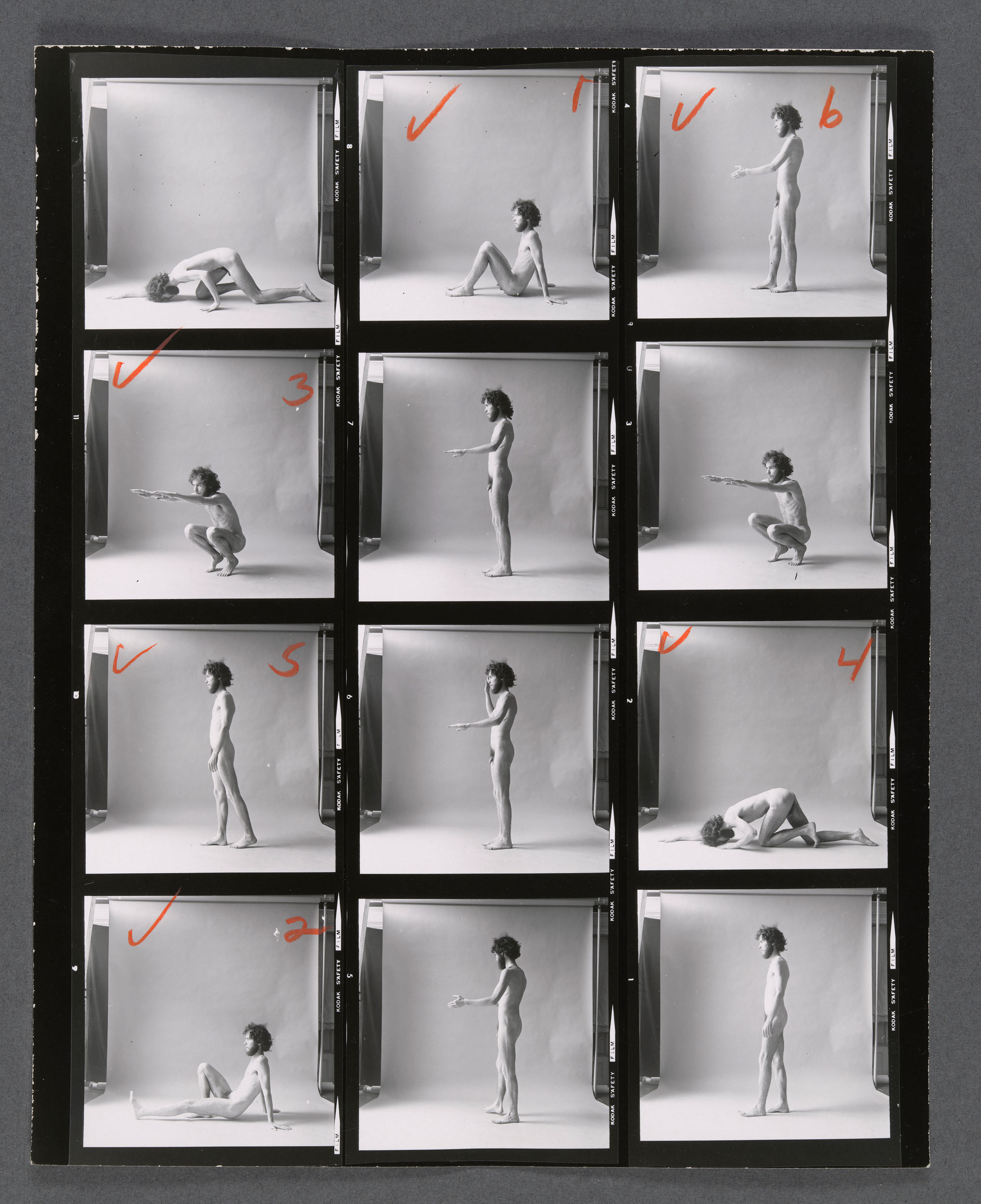
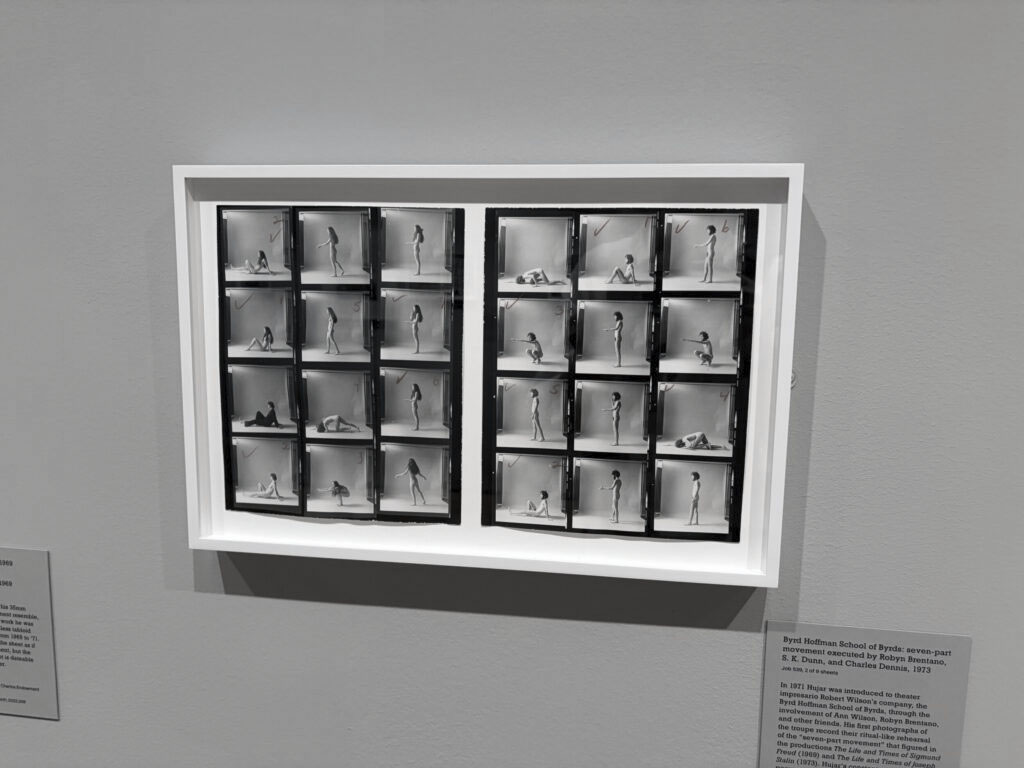
Peter Hujar (American, 1934-1987) 'Seven-part movement executed by Robyn Brentano, S. K. Dunn, and Charles Dennis of Robert Wilson’s Byrd Hoffman School of Byrds' 1973, job 539


Peter Hujar (American, 1934-1987)
Byrd Hoffman School of Byrds: 7-part movement executed by Robyn Brentano, S.K. Dunn, and Charles Dennis
1973
Job 539, 9 sheets
Contact sheet
11 x 8 1/2 inches
The Morgan Library & Museum, Peter Hujar Collection, New York purchased on the Charina Endowment Fund, 2013
Courtesy of Fraenkel Gallery, San Francisco and Ortuzar, New York
© The Peter Hujar Archive / Artists Rights Society (ARS)


In 1971 Hujar was introduced to theatre impresario Robert Wilson’s company, the Byrd Hoffman School of Byrds, through the involvement of Ann Wilson, Robyn Brentano, and other friends. His first photographs of the troupe record their ritual-like rehearsal of the “seven-part movement” that figured in the productions The Life and Times of Sigmund Freud (1969) and The Life and Times of Joseph Stalin (1973). Hujar’s constant profile-view perspective lends the session’s contact sheets the hypnotic regularity of a score by Wilson’s frequent collaborator, Philip Glass.

Large print label text
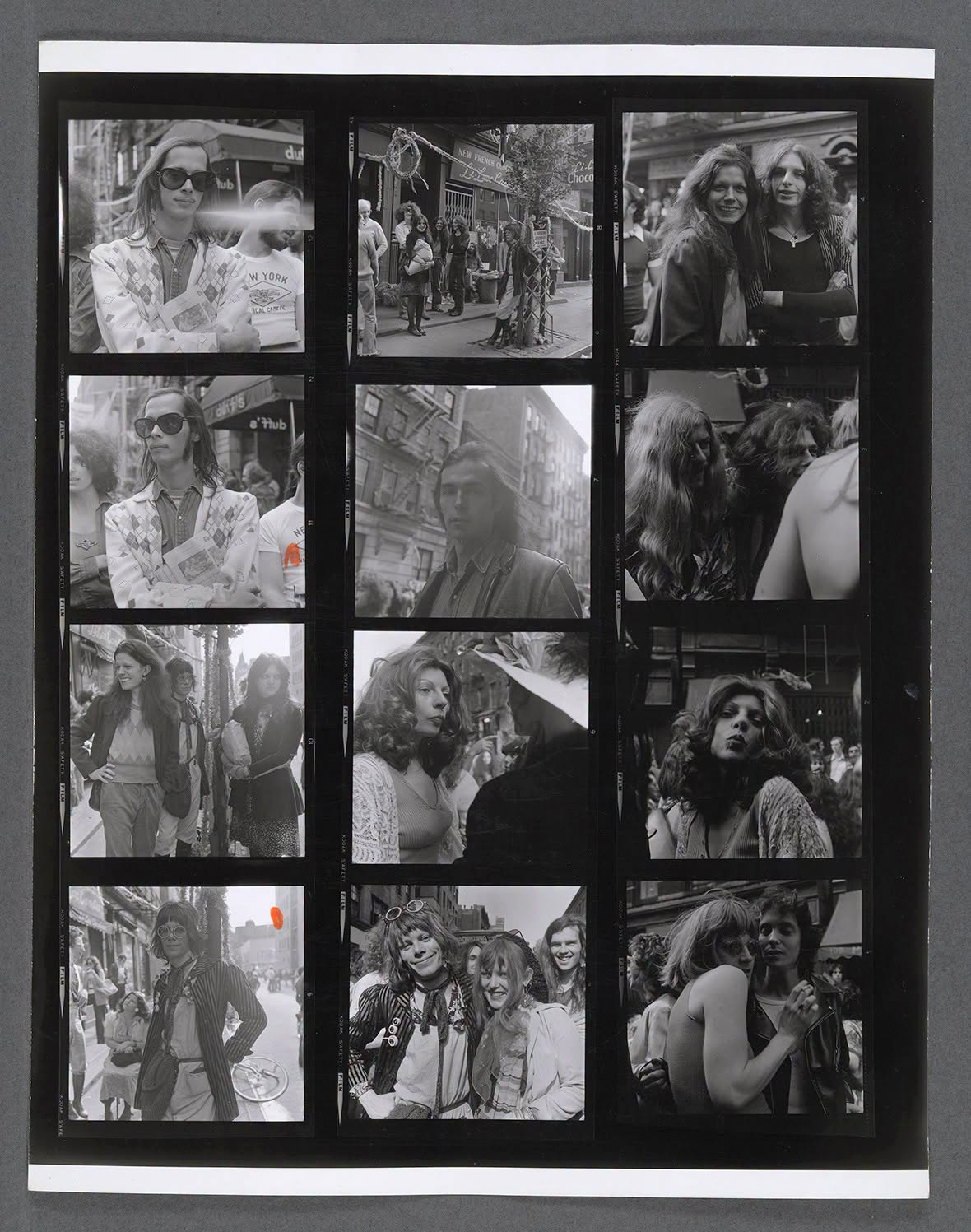
 

Peter Hujar (American, 1934-1987) 'Christopher Street Liberation Day Fair with John Waters and Jackie Curtis' 1973 job 577


Peter Hujar (American, 1934-1987)
Christopher Street Liberation Day Fair with John Waters and Jackie Curtis
1973
Job 577
Contact sheet
11 x 8 1/2 inches
The Morgan Library & Museum, Peter Hujar Collection, New York purchased on the Charina Endowment Fund
Courtesy of Fraenkel Gallery, San Francisco and Ortuzar, New York
© The Peter Hujar Archive / Artists Rights Society (ARS)


As seen in the central frame of this contact sheet, Peter Hujar often turned the camera over to others, inviting them to take a picture of him. Because he rarely made prints of these frames, it is possible that the gesture was intended as much to ease others’ nervousness around the camera as to produce a portrait of himself.

The 1973 Christopher Street Liberation Day Fair – the forerunner of the Pride March, from which this contact sheet originates – was notable for Sylvia Rivera’s historic speech in Washington Square Park, in which she advocated for members of the gay community who were homeless or incarcerated.

Large print label text
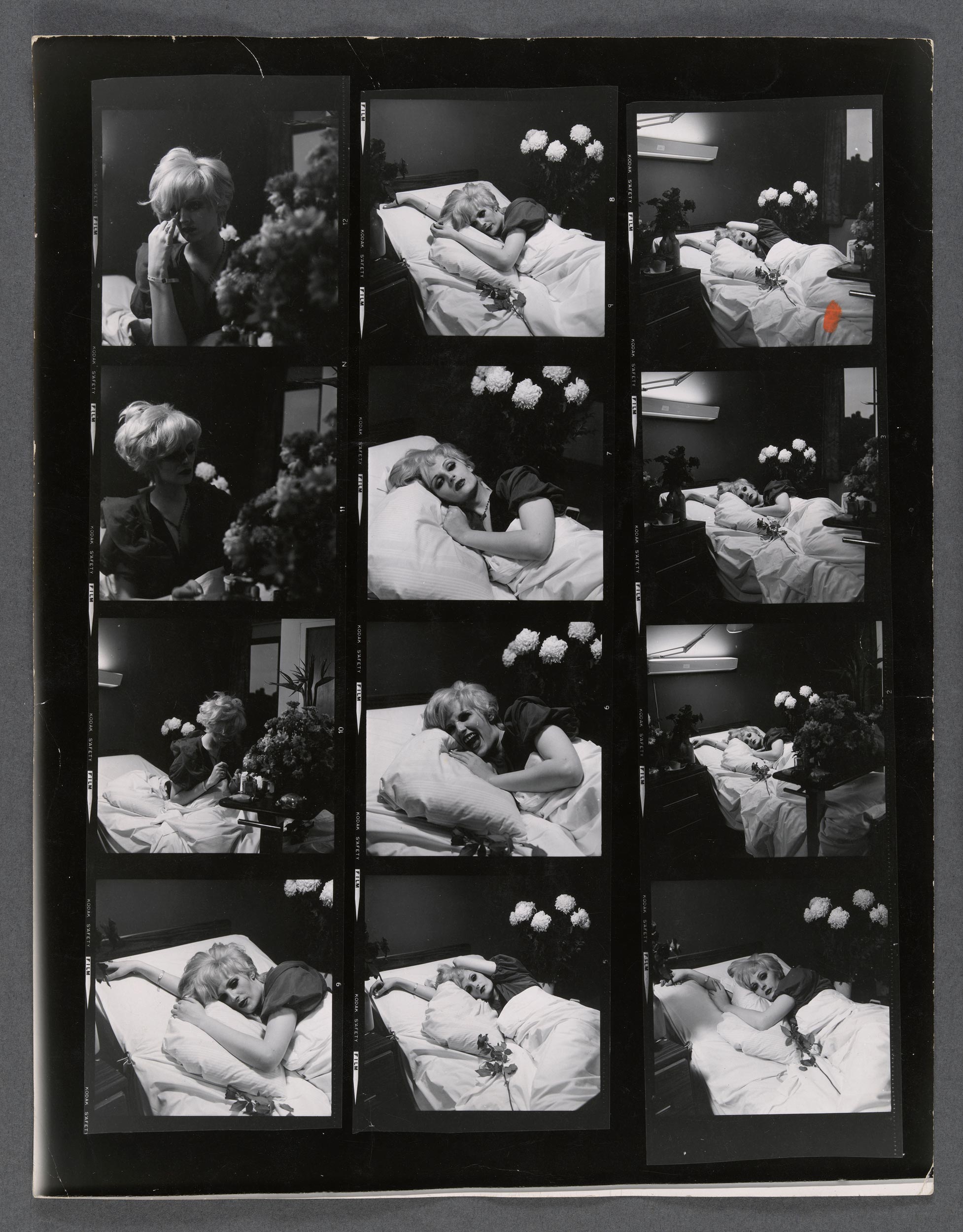
 

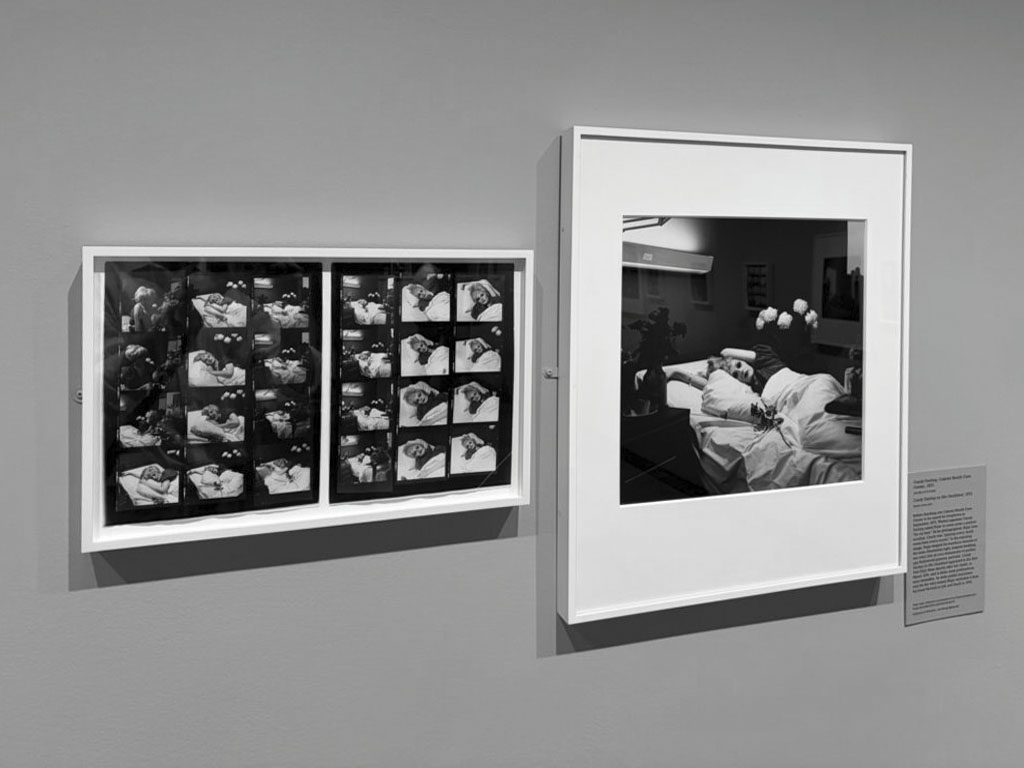
Peter Hujar (American, 1934-1987) 'Candy Darling in room 1423, Cabrini Health Care Center' 1973 job 587


Peter Hujar (American, 1934-1987)
Candy Darling in room 1423, Cabrini Health Care Center
1973
Job 587, 6 sheets
Contact sheet
11 x 8 1/2 inches
The Morgan Library & Museum, Peter Hujar Collection, New York purchased on the Charina Endowment Fund, 2013
Courtesy of Fraenkel Gallery, San Francisco and Ortuzar, New York
© The Peter Hujar Archive / Artists Rights Society (ARS)


Peter Hujar’s famous photograph, “Candy Darling on Her Deathbed,” [below] printed from the top-right frame marked with a dot, appeared in the New York Daily News shortly after her death in March 1974, and in several other publications soon thereafter. Perhaps due to this wide public circulation, Hujar excluded the image from his 1976 book “Portraits in Life and Death.”

Before checking into Cabrini Health Care Center for testing in September 1973, Warhol superstar Candy Darling asked Hujar to make a portrait “for my fans.” The contact sheet reveals the most iconic still of Candy lying languidly in bed, surrounded by movement, laughter, and theatricality.

Hujar later described their session as a kind of performance, recalling that Candy was “playing every death scene from every movie.” He mirrored this cinematic sensibility in his composition and printing process, shaping the final image so that the dreary details of the room—fluorescent light, hospital bedding, a single rose – are transformed into an icon reminiscent of Hollywood’s golden-age portraiture.

Large print label text


Peter Hujar (American, 1934-1987) 'Candy Darling on her Deathbed' 1973


Peter Hujar (American, 1934-1987)
Candy Darling on Her Deathbed
1973
Gelatin silver print
Collection of Richard L. and Ronay Menschel
© The Peter Hujar Archive / Artists Rights Society (ARS)
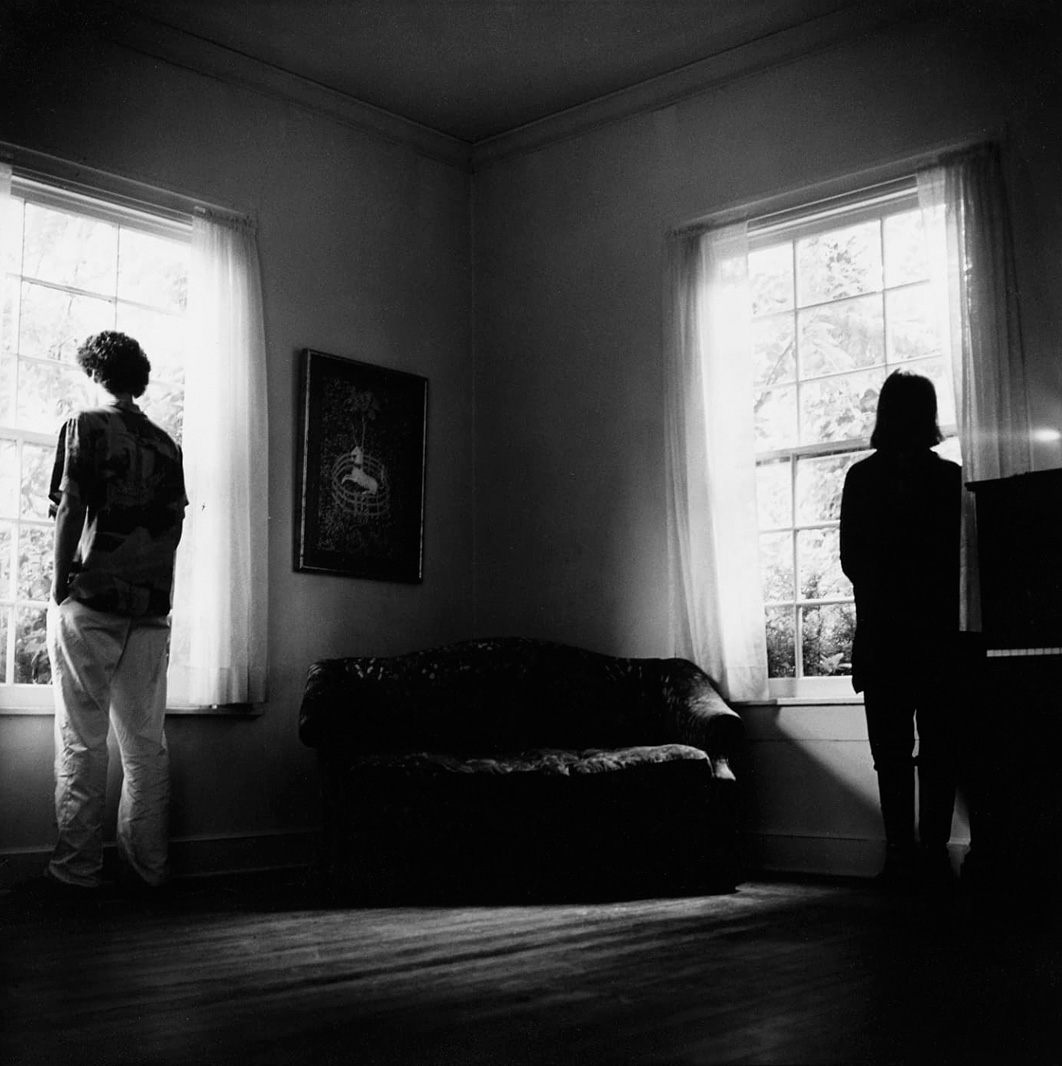
 

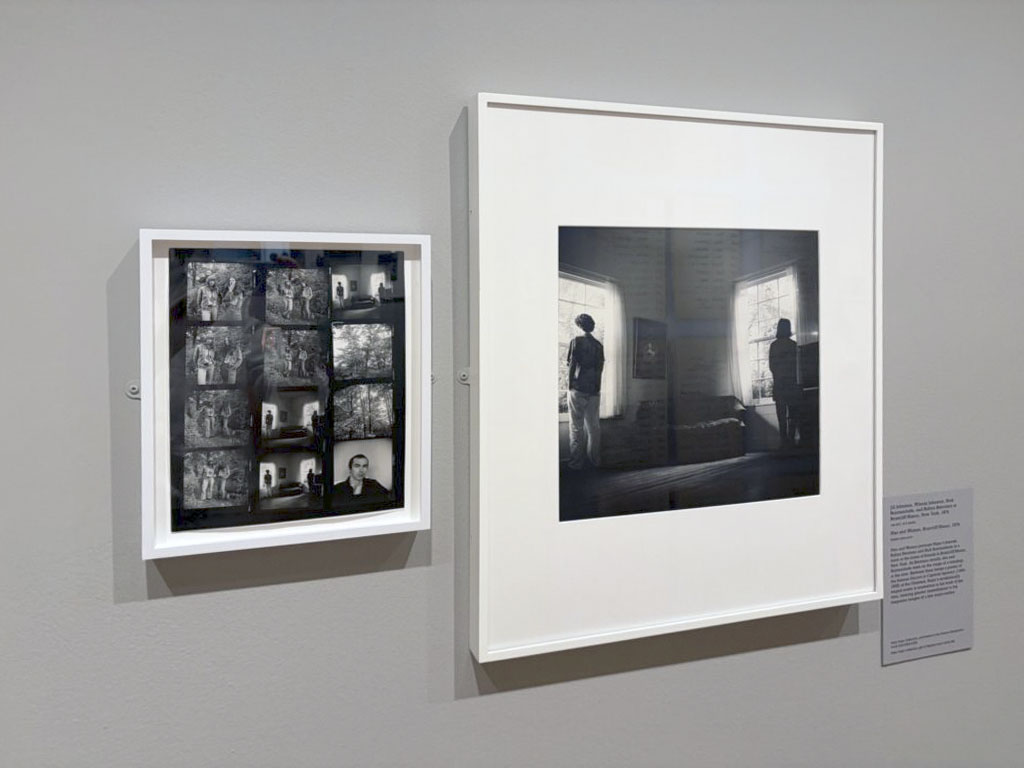
Peter Hujar (American, 1934-1987) 'Man and Woman at Windows, Briarcliff Manor' 1974


Peter Hujar (American, 1934-1987)
Man and Woman at Windows, Briarcliff Manor
1974
From Jill Johnston, Winnie Johnston, Rick Brintzenhofe, and Robyn Brentano at Briarcliff Manor, New York, 1974 (Job 607, 5 sheets)
Gelatin silver print
Image: 13 7/8 x 13 11/16 inches (35.3 x 34.8cm)
Sheet: 16 13/16 x 13 7/8 inches (42.7 x 35.3cm)
The Morgan Library & Museum, Peter Hujar Collection, New York
Gift of Stephen Koch
© The Peter Hujar Archive / Artists Rights Society (ARS)


Man and Woman portrays Hujar’s friends Robyn Brentano and Rick Brintzenhofe in a room at the home of friends in Briarcliff Manor, New York. As Brentano recalls, she and Brintzenhofe were on the verge of a breakup at the time. Between them hangs a poster of the famous Unicorn in Captivity tapestry (1495-1505) at the Cloisters. Hujar’s symbolically staged scene is anomalous in his work of the time, bearing greater resemblance to his magazine images of a few years earlier.

Large print label text
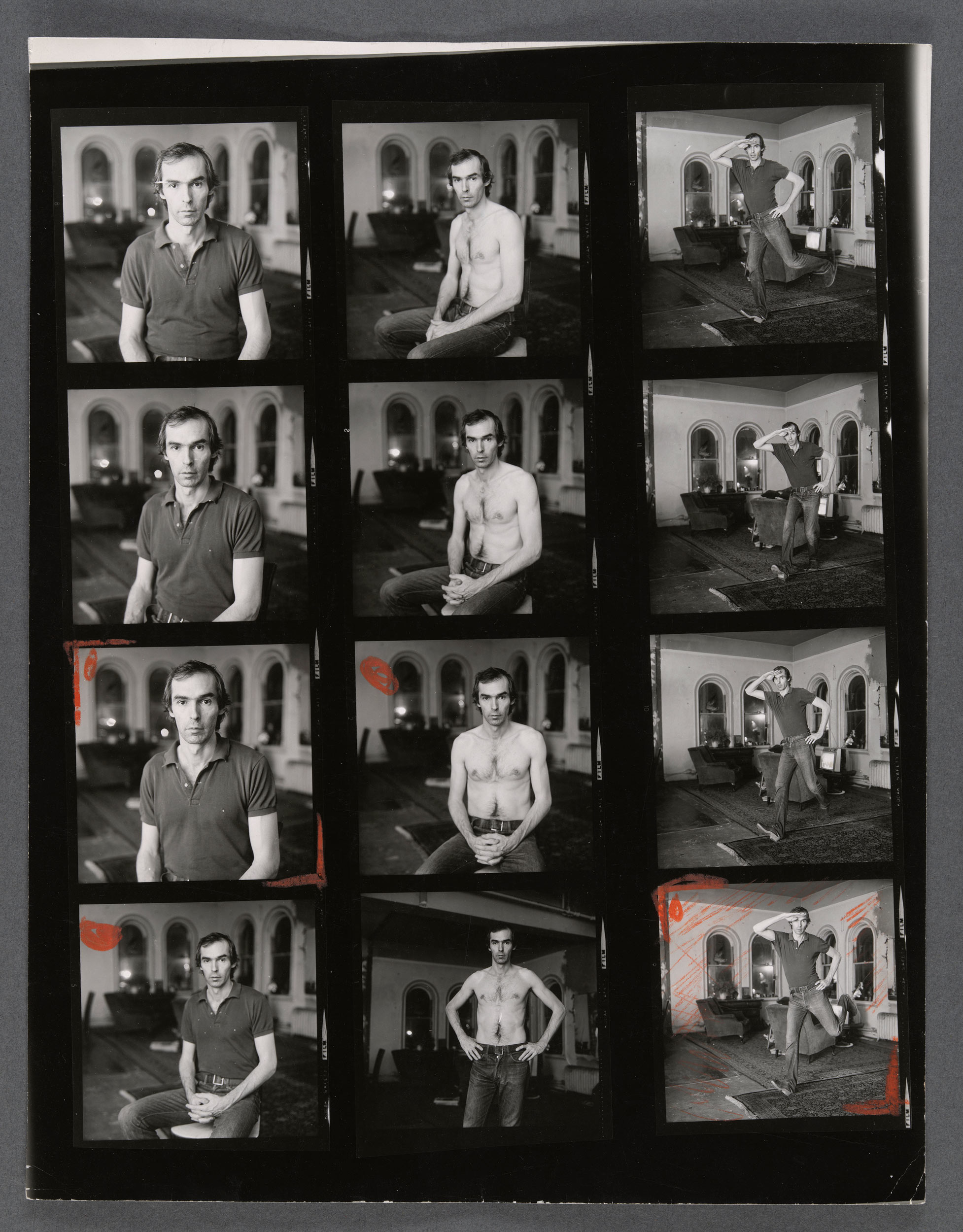
 

Peter Hujar (American, 1934-1987) 'Self-portraits at 189 Second Avenue' 1974, job 620


Peter Hujar (American, 1934-1987)
Self-portraits on heel
1974
Job 620, 3 sheets
Contact sheet
11 x 8 1/2 inches
The Morgan Library & Museum, Peter Hujar Collection, New York purchased on the Charina Endowment Fund, 2013
Courtesy of Fraenkel Gallery, San Francisco and Ortuzar, New York
© The Peter Hujar Archive / Artists Rights Society (ARS)


Hujar’s move into a large, low-rent space at 189 Second Avenue in the 1970s coincided with his decision to give up paid work altogether as he began to pursue more meaningful personal projects. As if trumpeting his arrival at the loft, in this contact sheet Hujar frolics and salutes the camera.

Hujar would live and work in the loft for the remainder of his life until New Year’s Day in 1987, when he received a tragic AIDS diagnosis. He quit abruptly thereafter, and even declined to catch up on his job-book entries for the preceding year’s work. He passed away that November due to related complications.

Large print label text
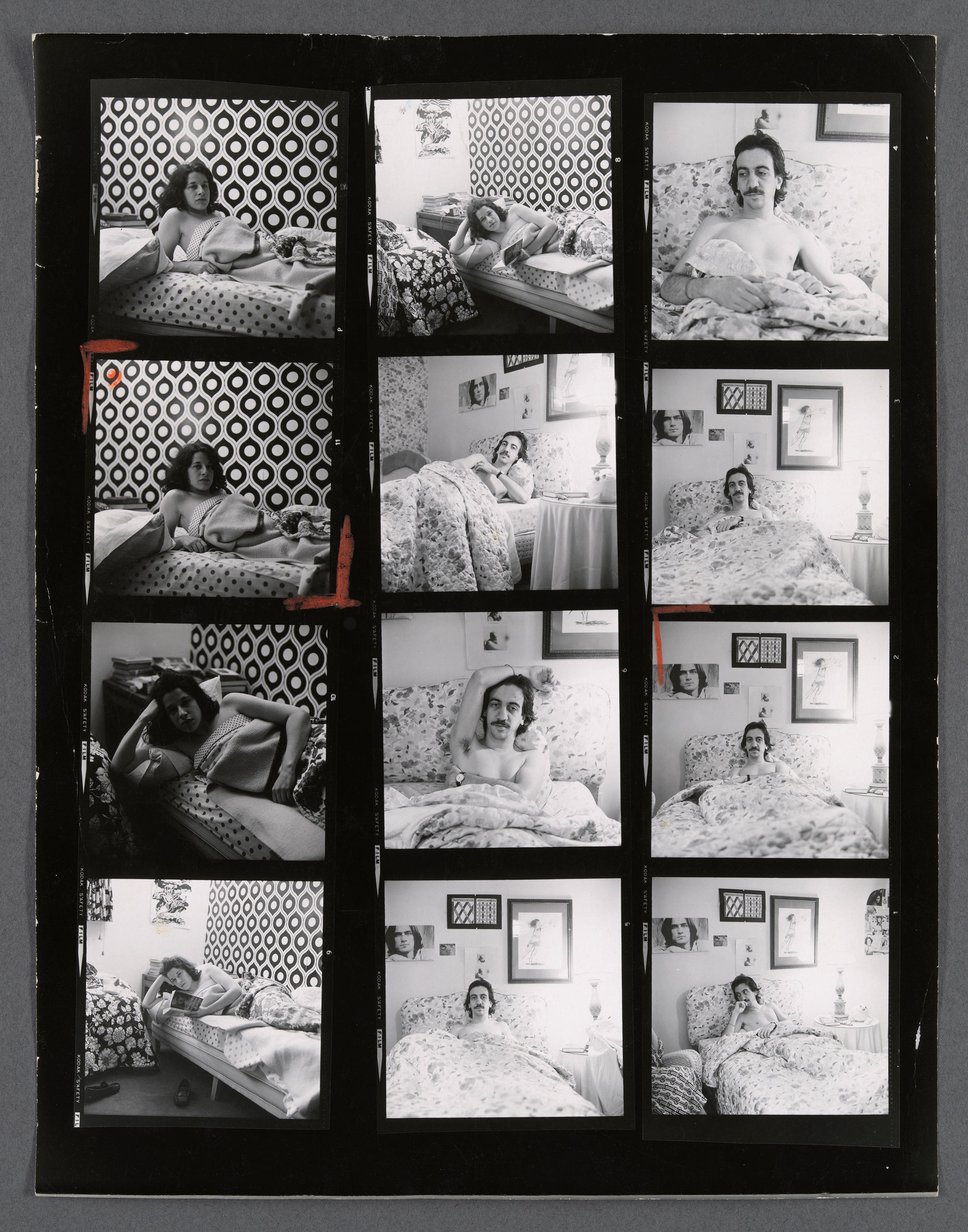
 

Peter Hujar (American, 1934-1987) 'Vince Aletti and Fran Lebowitz, Morristown, New Jersey' 1974, job 622


Peter Hujar (American, 1934-1987)
Vince Aletti and Fran Lebowitz, Morristown, New Jersey
1974
Job 622
The Morgan Library & Museum, Peter Hujar Collection, New York purchased on the Charina Endowment Fund, 2013
Courtesy of Fraenkel Gallery, San Francisco and Ortuzar, New York
© The Peter Hujar Archive / Artists Rights Society (ARS)


On a few occasions Fran Lebowitz invited Hujar and Vince Aletti to visit her family home in Morristown, New Jersey, and the three of them stayed overnight. Once, Hujar photographed each of his friends in the beds where they had spent the previous night, Aletti in Fran’s bedroom and Fran in her sister’s. The diaristic nature of the exposures looks ahead to the work of Nan Goldin, which Hujar would point to in the 1980s as a compelling next stage in the medium’s evolution.

Large print label text
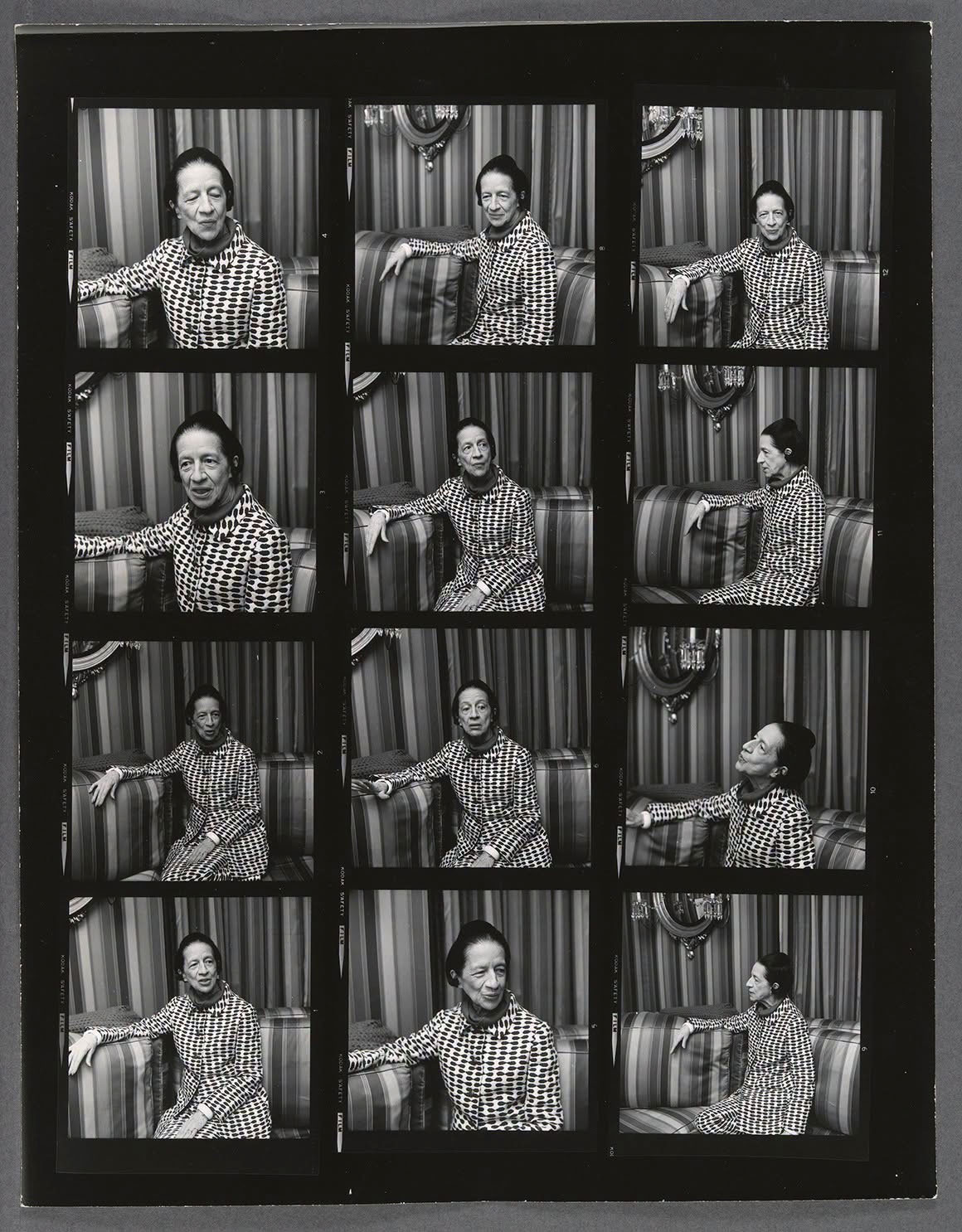
 

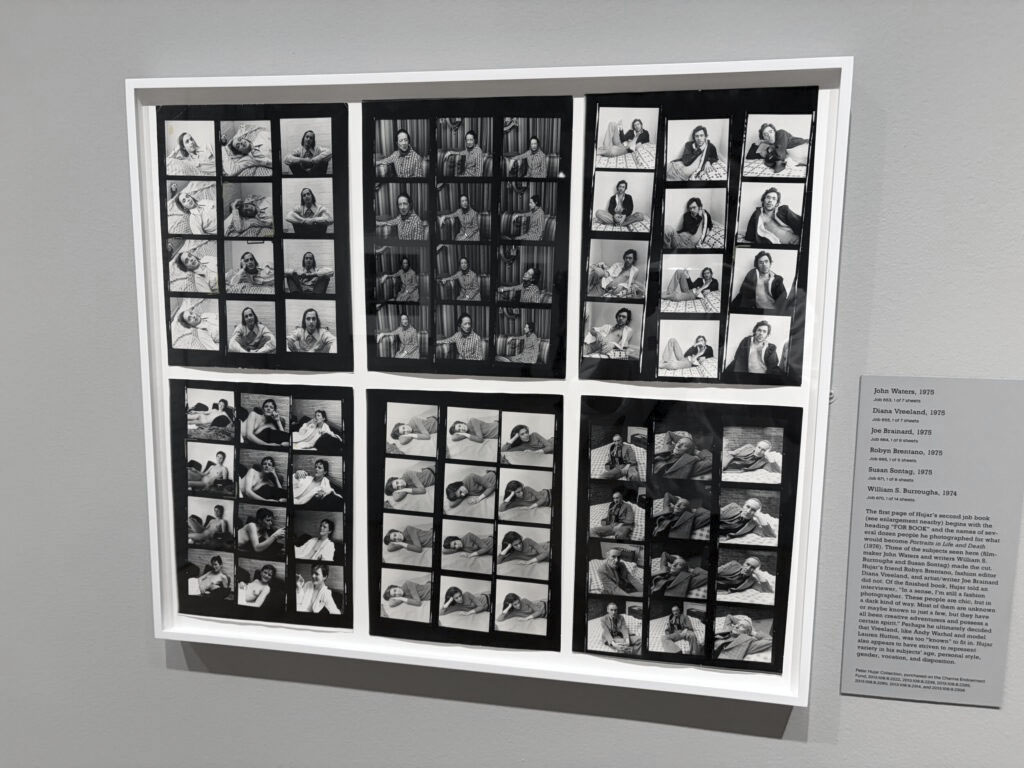
Peter Hujar (American, 1934-1987) 'Diana Vreeland' 1975 job 655


Peter Hujar (American, 1934-1987)
Diana Vreeland
1975
Job 655, 7 sheets
Contact sheet
11 x 8 1/2 inches
The Morgan Library & Museum, Peter Hujar Collection, New York, purchased on the Charina Endowment Fund, 2013
Courtesy of Fraenkel Gallery, San Francisco and Ortuzar, New York
© The Peter Hujar Archive / Artists Rights Society (ARS)


The first page of Peter Hujar’s second job book begins with the heading “FOR BOOK” and the names of several dozen people he photographed for what would become “Portraits in Life and Death” (1976). Hujar’s friend Robyn Brentano, fashion editor Diana Vreeland, and artist/writer Joe Brainard did not make the cut. Of the finished book, Hujar told an interviewer, “In a sense, I’m still a fashion photographer. These people are chic, but in a dark kind of way. Most of them are unknown or maybe known to just a few, but they have all been creative adventurers and possess a certain spirit.” Perhaps he ultimately decided that Vreeland, like Andy Warhol and model Lauren Hutton, was too “known” to fit in. Hujar also appears to have striven to represent variety in his subjects’ age, personal style, gender, vocation, and disposition.

Large label print text
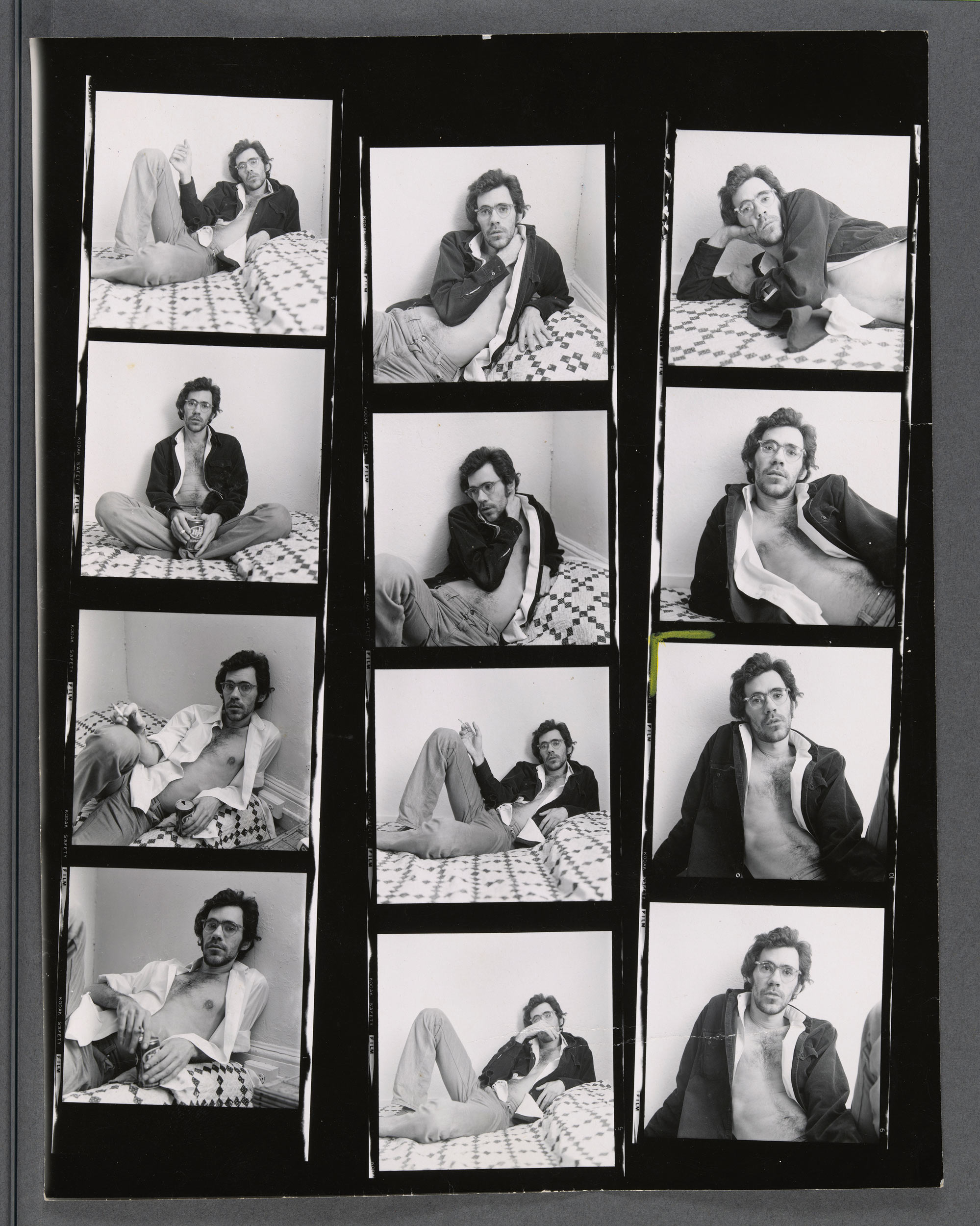
 

Peter Hujar (American, 1934-1987) 'Joe Brainard' 1975 job 664


Peter Hujar (American, 1934-1987)
Joe Brainard
1975
Job 664, 9 sheets
Contact sheet
11 x 8 1/2 inches
The Morgan Library & Museum, Peter Hujar Collection, New York, purchased on the Charina Endowment Fund, 2013
Courtesy of Fraenkel Gallery, San Francisco and Ortuzar, New York
© The Peter Hujar Archive / Artists Rights Society (ARS)


Joe Brainard was an American artist and writer associated with the New York School. His prodigious and innovative body of work included assemblages, collages, drawing, and painting, as well as designs for book and album covers, theatrical sets and costumes.
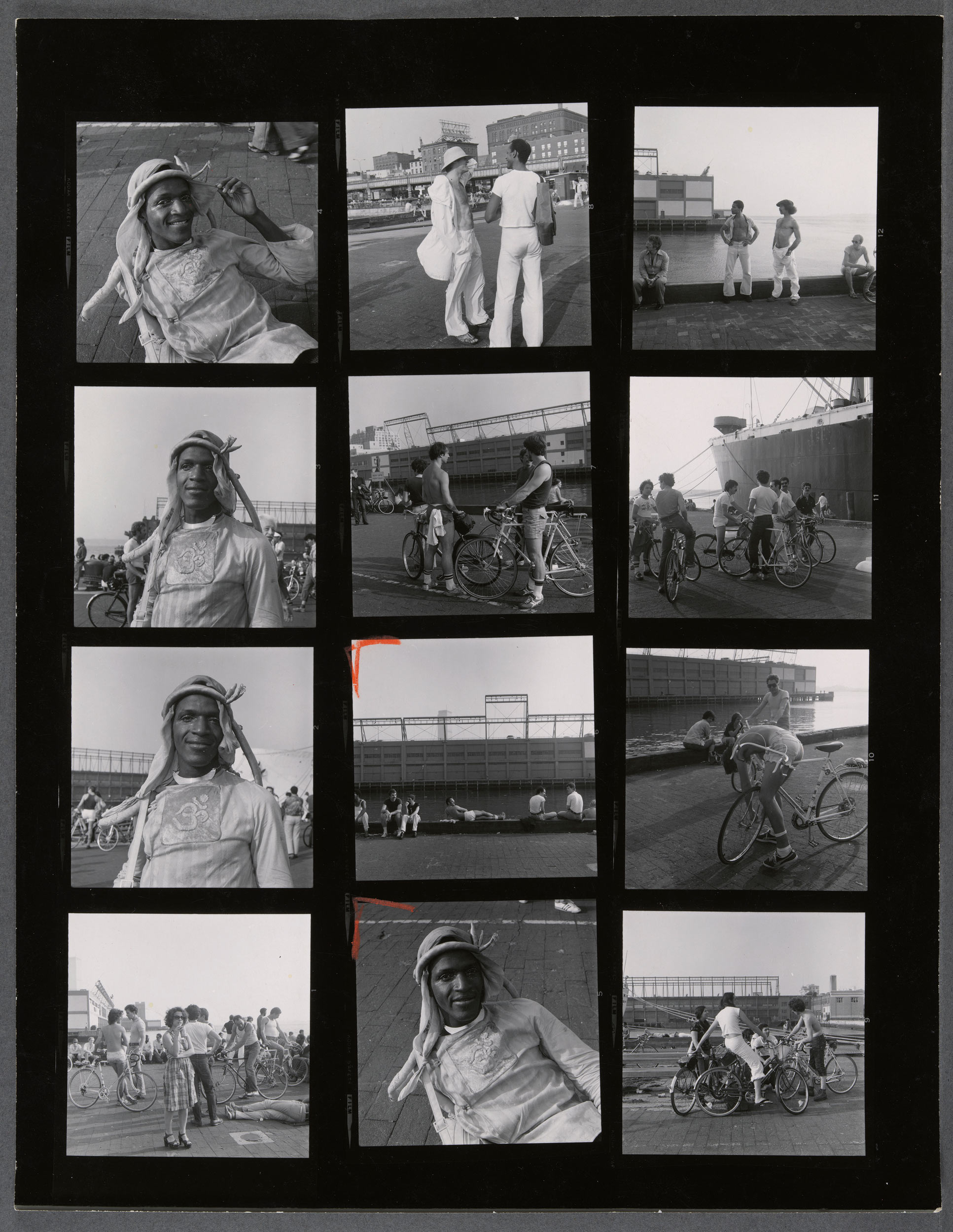
 

Peter Hujar (American, 1934-1987) 'Marsha P. Johnson on Christopher Street Pier, Easter' 1976, job 719


Peter Hujar (American, 1934-1987)
Marsha P. Johnson on Christopher Street Pier, Easter Sunday
1976
Job 719, 12 sheets
Contact sheet
11 x 8 1/2 inches
The Morgan Library & Museum, Peter Hujar Collection, New York purchased on the Charina Endowment Fund, 2013
Courtesy of Fraenkel Gallery, San Francisco and Ortuzar, New York
© The Peter Hujar Archive / Artists Rights Society (ARS)


Peter Hujar’s engagement with New York’s downtown arts and queer communities is reflected in his photographs of fellow artists, writers, and activists, including Marsha P. Johnson, pictured here. Johnson participated in the Stonewall uprising and became one of the figures most closely associated with the movement that emerged from it.

Large print label text


1977-80: Recovery

The term “Recovery” aligns with a period of personal realignment and stabilizing focus following years of emotional, financial, and professional instability. During these years, Hujar established a more structured rhythm with his medium, producing intimate, deeply felt portraits of downtown cultural luminaries, friends, and chosen family.
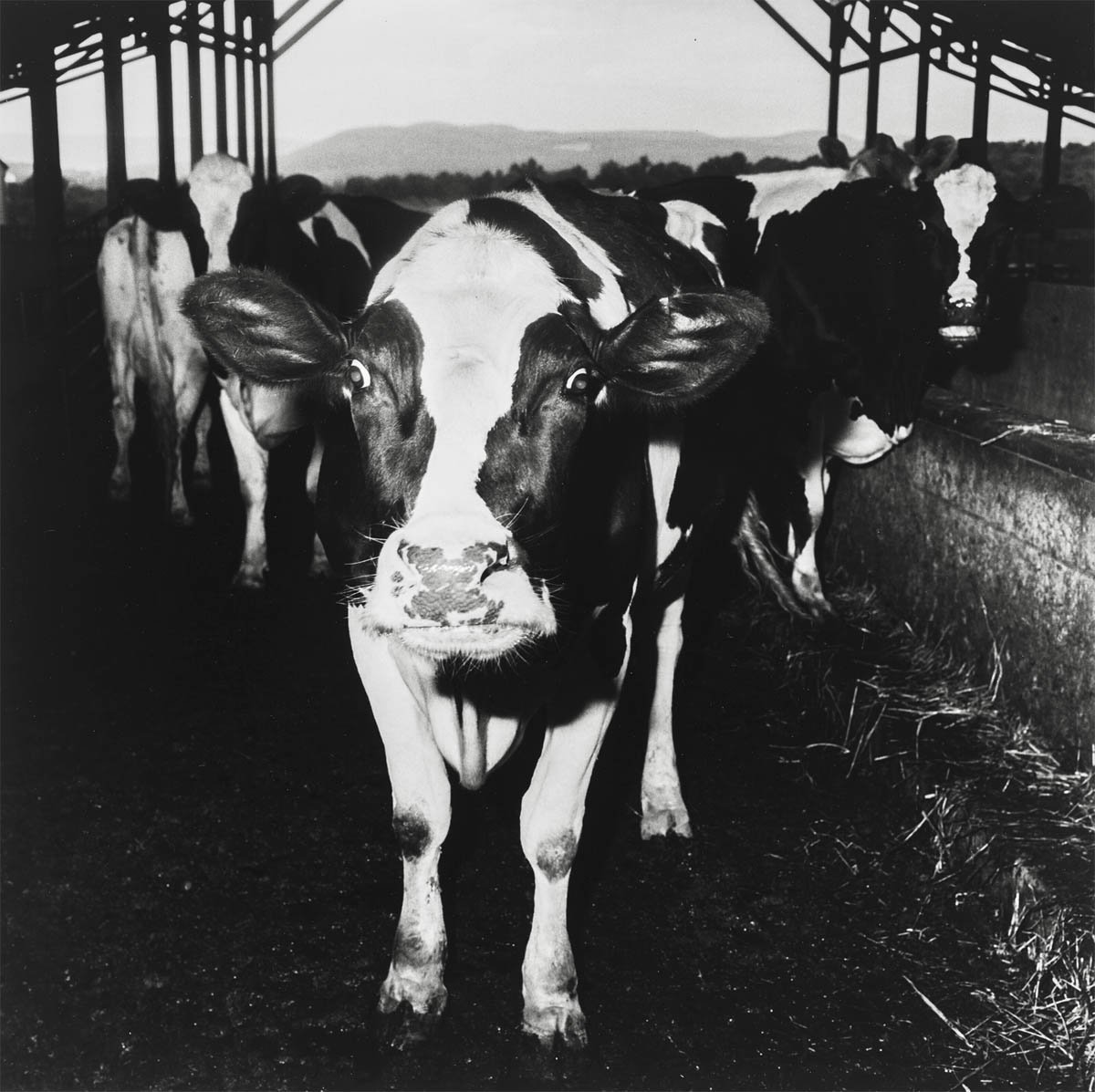
 

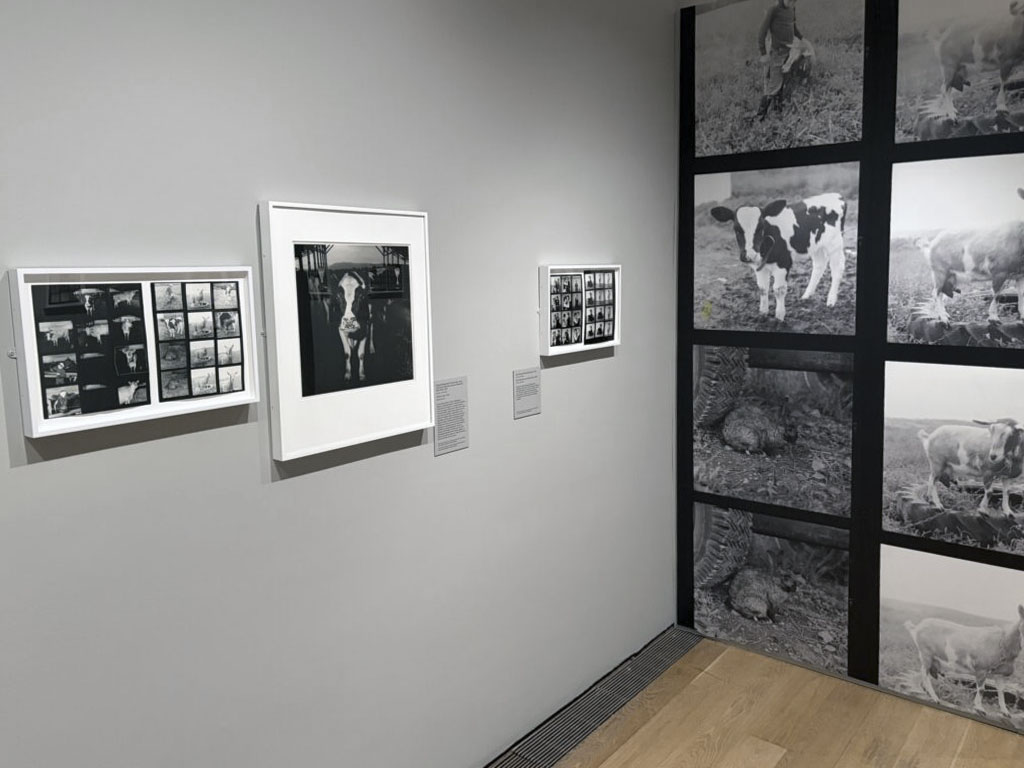
Peter Hujar (American, 1934-1987) 'Electric Cow' 1978


Peter Hujar (American, 1934-1987)
Electric Cow
1978
From Joseph Hyrkin and animals, Westtown, New York, 1978 (Job 820, 24 sheets)
Gelatin silver print
Image: 14 3/4 x 14 3/4 inches (37.4 x 37.4cm)
Sheet: 19 13/16 x 15 7/8 inches (50.3 x 40.4cm)
The Morgan Library & Museum, Peter Hujar Collection, New York
Gift of Roy Eddey and Joel Hershey in honor of the Morgan’s Centennial
© The Peter Hujar Archive / Artists Rights Society (ARS)


In the early 1970s a former colleague of Hujar’s at Harold Krieger’s studio, Roy Hyrkin, moved with his family to a remote farming area in Orange County, New York. Hujar, who could not drive, visited them when he could get a ride. Roy Hyrkin recalls Hujar’s rare mood of “delight” upon returning from morning walks with ten-year-old Joseph to photograph animals, including the cows Joseph milked at the dairy next door. Farm animals had been a constant presence during Hujar’s childhood at his grandparents’ house in Trenton, New Jersey. Friends who saw him photograph animals recall that he spoke to them in the same manner he used during any portrait session with a person.

Large print label text
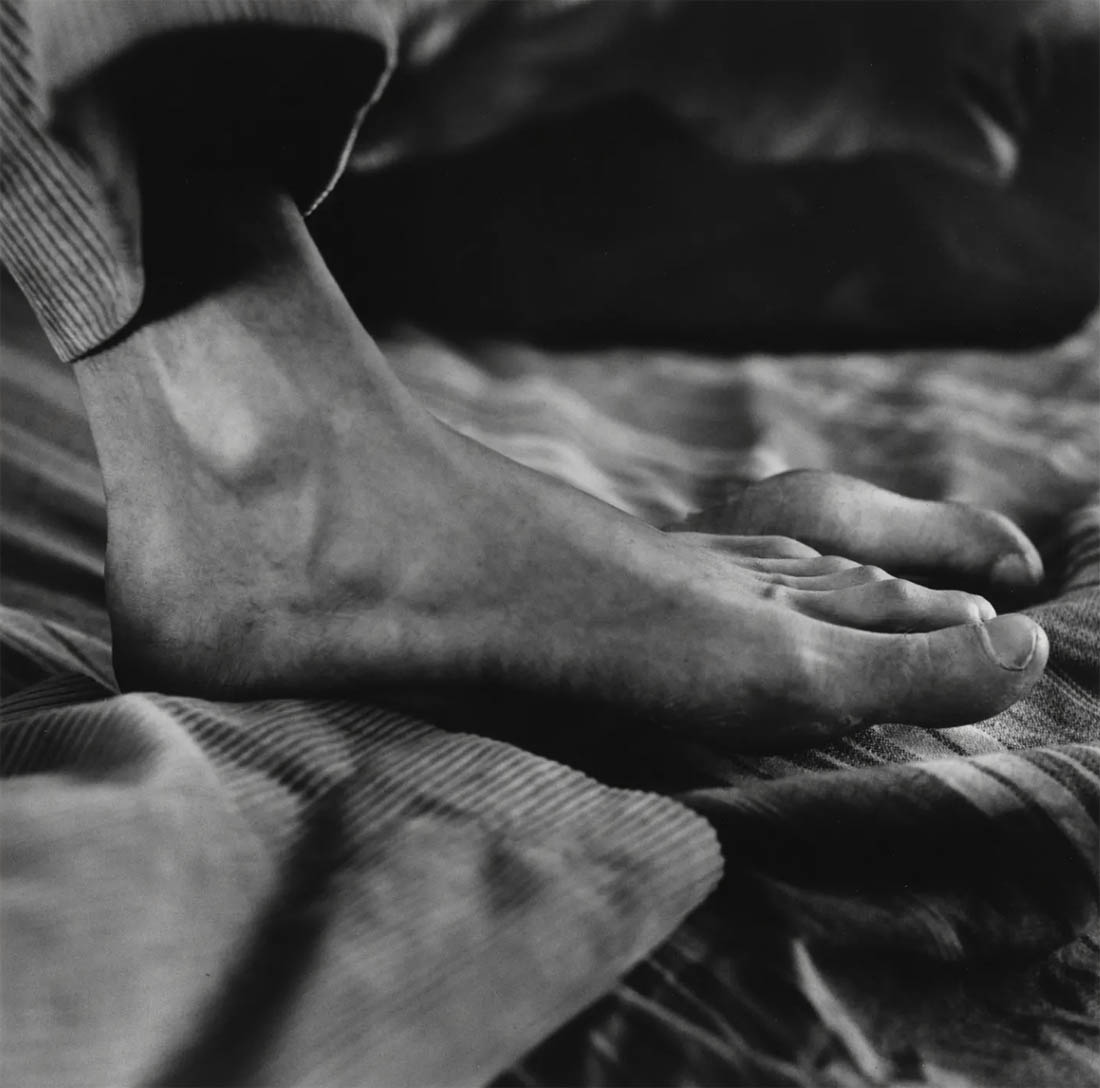
 

Peter Hujar (American, 1934-1987) 'Pascal (Feet), Paris' 1980


Peter Hujar (American, 1934-1987)
Pascal (Feet), Paris
1980
Gelatin silver print
Image: 14 9/16 x 14 3/4 inches (37 x 37.4cm)
Sheet: 19 7/8 x 15 15/16 inches (50.5 x 40.5cm)
The Morgan Library & Museum, Peter Hujar Collection, New York
Gift of Stephen Koch
© The Peter Hujar Archive / Artists Rights Society (ARS)


Among the ways that Hujar expanded his approach to portraiture was by zeroing in on parts of the body besides the face. In Paris for the opening of a gallery show of his work in 1980, he photographed the feet of the young fashion designer Pascal Humbert (misidentified in Hujar’s job book as “Imbert”), as well as close-ups of his face and scarred torso.

Large print label text


1981-87: Shadowlands
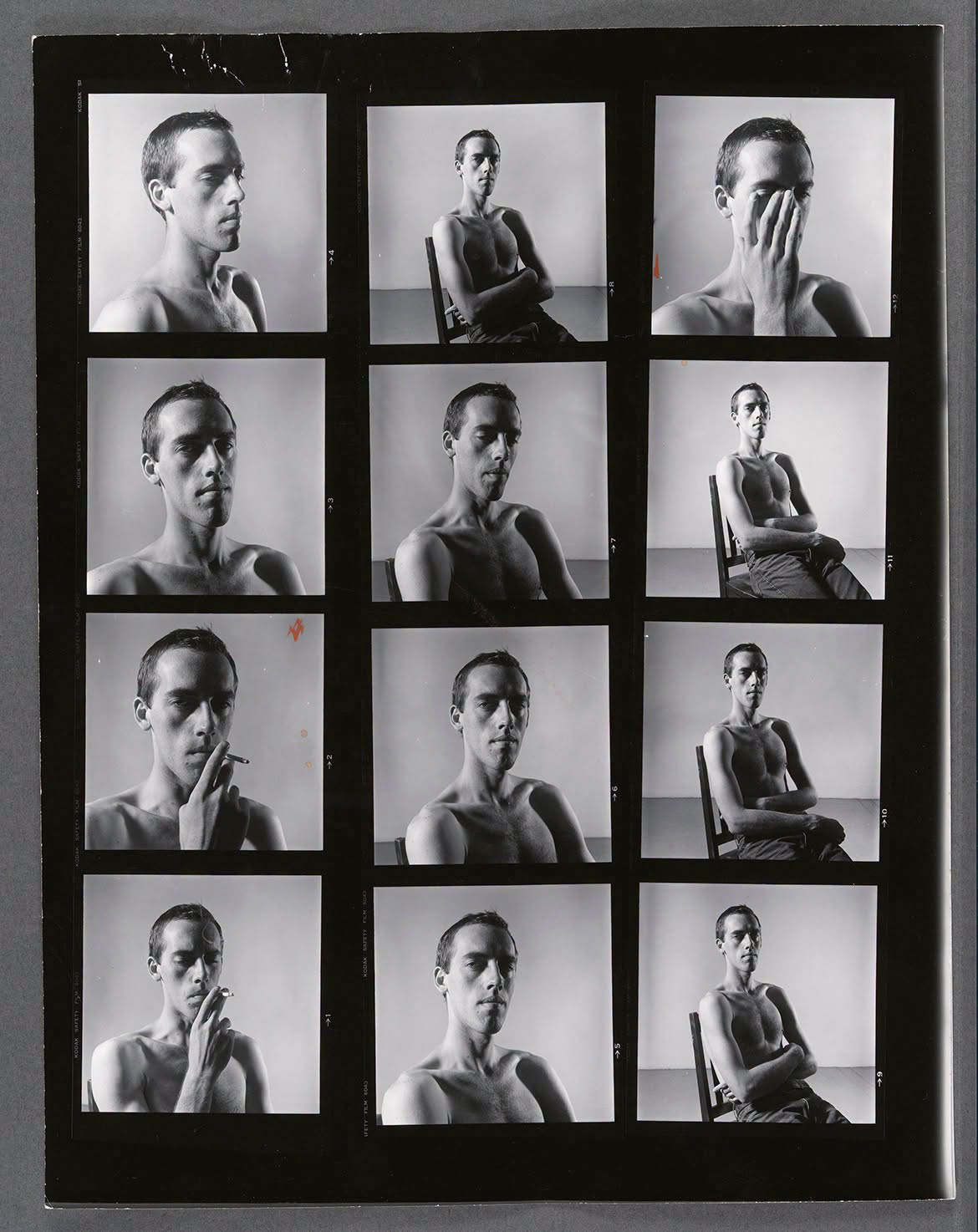
Peter Hujar (American, 1934-1987) 'David Wojnarowicz II' 1981 job 936


Peter Hujar (American, 1934-1987)
David Wojnarowicz #2
1981
Job 936, 8 sheets
Contact sheet
11 x 8 1/2 inches
The Morgan Library & Museum, Peter Hujar Collection, New York, purchased on the Charina Endowment Fund, 2013
Courtesy of Fraenkel Gallery, San Francisco and Ortuzar, New York
© The Peter Hujar Archive / Artists Rights Society (ARS)


The defining relationship of Peter Hujar’s final years was with David Wojnarowicz. When they met, at the Bar on Second Avenue in January of 1981, Wojnarowicz was writing poetry and playing music, and Hujar encouraged him to focus on his visual art.

In his job book Hujar distinguishes between two early sessions, “David W #1” and “David W #2.” On the latter date (seen here), he used bounced light that emphasises the volume of Wojnarowicz’s features and hints at an inner life that was as important to the portraitist as his outward appearance.

Large print label text
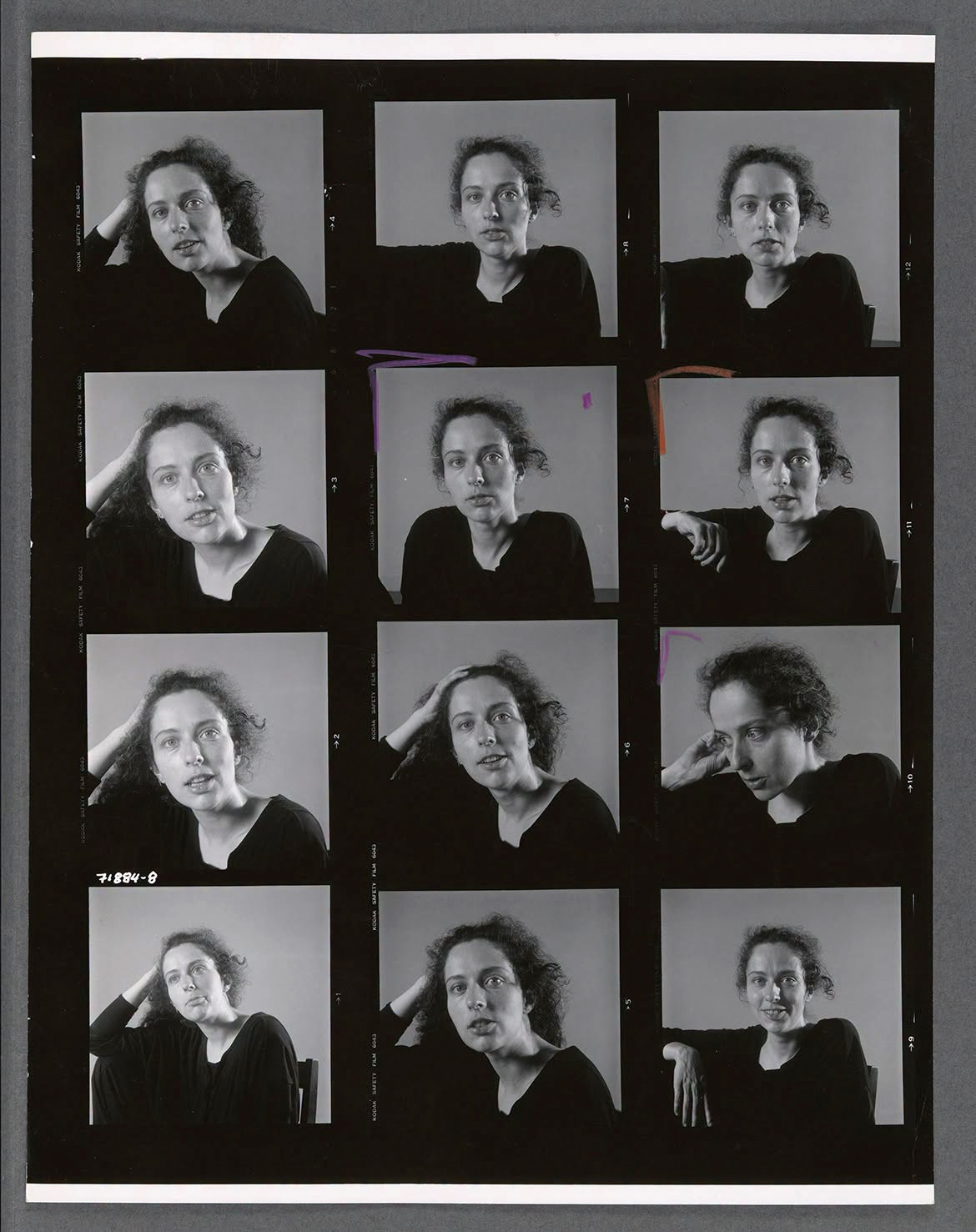
 

Peter Hujar (American, 1934-1987) 'Kiki Smith at 189' 1984 job 1052


Peter Hujar (American, 1934-1987)
Kiki Smith at 189
1984
Job 1052
Contact sheet
11 x 8 1/2 inches
The Morgan Library & Museum, Peter Hujar Collection, New York, purchased on the Charina Endowment Fund, 2013
Courtesy of Fraenkel Gallery, San Francisco and Ortuzar, New York
© The Peter Hujar Archive / Artists Rights Society (ARS)


The eyes dominate in Hujar’s portraits of artist Kiki Smith, in which he employs a softened version of the chiaroscuro lighting technique he evolved a few years earlier. A variant on this photograph is one of several portraits by Hujar, David Armstrong, and Nan Goldin that Cookie Mueller used for “before and after” illustrations in her book How to Get Rid of Pimples (1984), with hand-drawn dots added by the author to the “before” image of each sitter’s face.

Large print label text
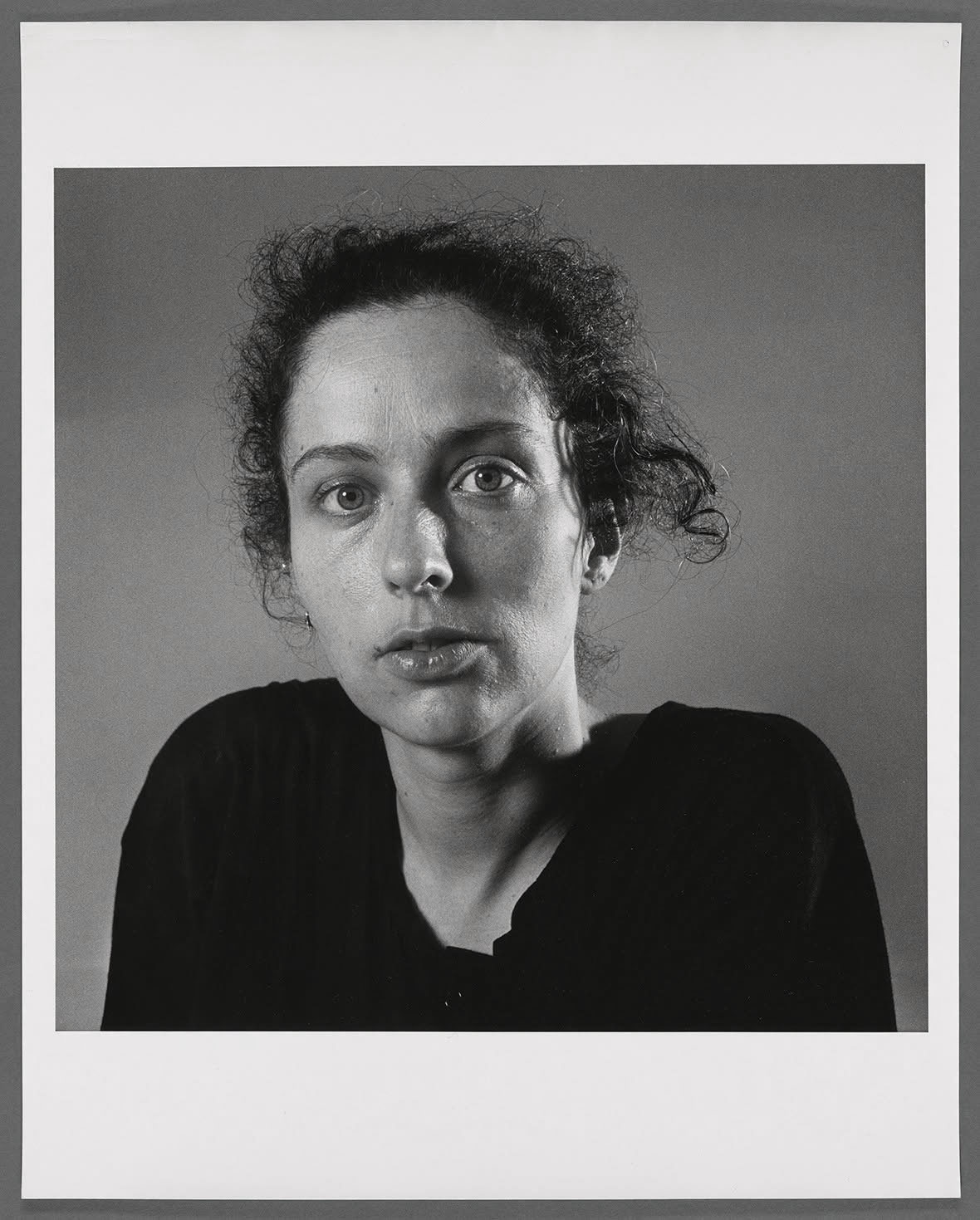
 

Peter Hujar (American, 1934-1987) 'Kiki Smith (2)' 1984


Peter Hujar (American, 1934-1987)
Kiki Smith (2)
1984
Gelatin silver print
Image: 14 5/8 x 14 3/4 inches (37.2 x 37.5cm)
Sheet: 19 7/8 x 15 7/8 inches (50.5 x 40.3cm)
The Morgan Library & Museum, Peter Hujar Collection, New York
Gift of Stephen Koch
© The Peter Hujar Archive / Artists Rights Society (ARS)
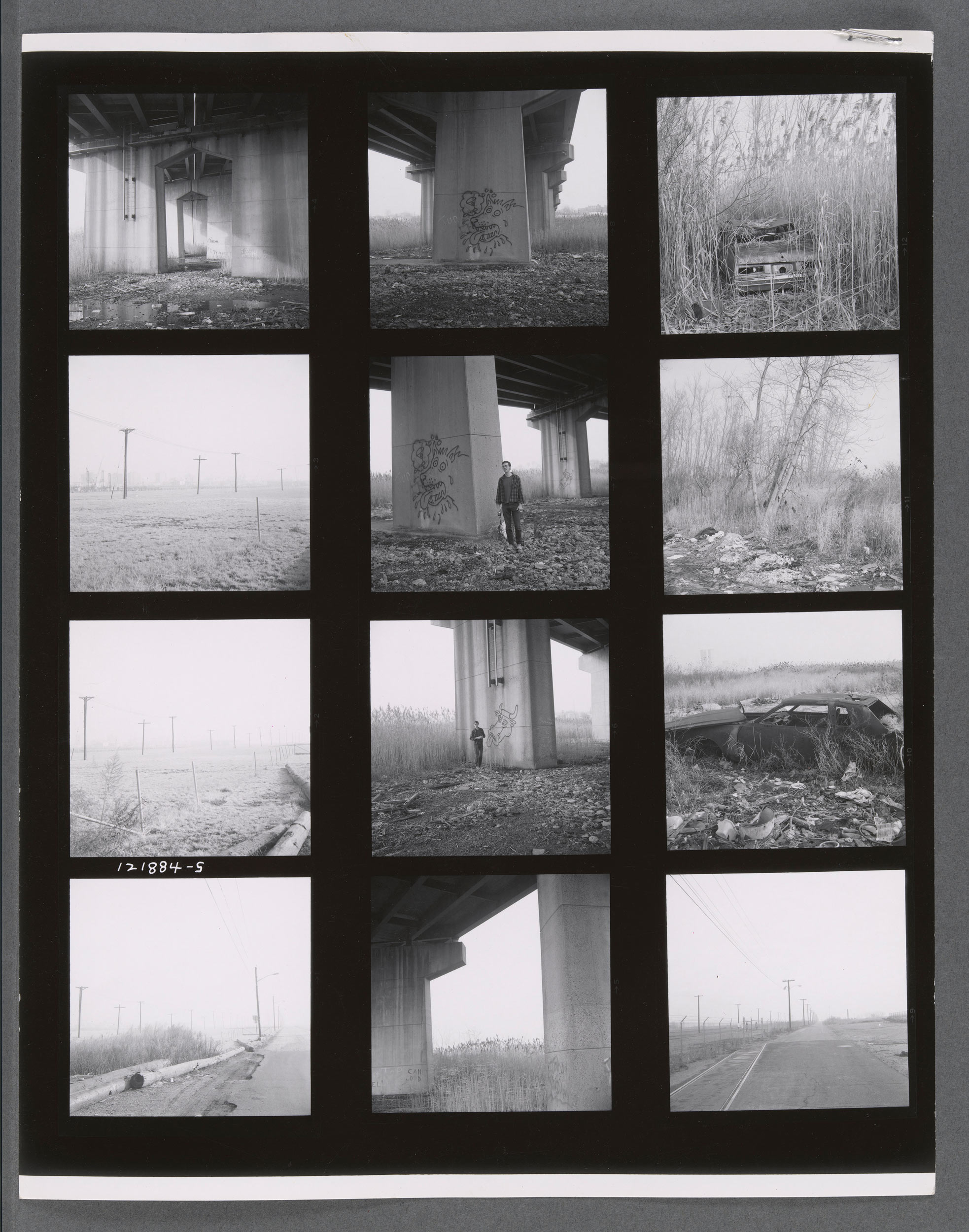
 

Peter Hujar (American, 1934-1987) 'Caven Point, New Jersey, with David Wojnarowicz' 1984 job 1063


Peter Hujar (American, 1934-1987)
Caven Point, New Jersey, with David Wojnarowicz
1984
Job 1063, 12 sheets
Contact sheet
11 x 8 1/2 inches
The Morgan Library & Museum, Peter Hujar Collection, New York, purchased on the Charina Endowment Fund, 2013
Courtesy of Fraenkel Gallery, San Francisco and Ortuzar, New York
© The Peter Hujar Archive / Artists Rights Society (ARS)


Postindustrial Queens, windblown Caven Point, and burned-out, riot-torn Newark were places that appealed to Wojnarowicz’s and Hujar’s attunement to disaster. Their fatalism reflected the neglect and abuse each of them had known in childhood, as well as their consciousness of an AIDS crisis that only showed signs of deepening. Assigned in 1983 to make a cover photograph for the Village Voice about gay dread and mourning, Hujar had enlisted Wojnarowicz as his model. Their shared experience of abandoned locales was formative both for their work and for their deepening friendship.

Large print label text


Woven throughout Peter Hujar’s photographs is a profound sense of fatality about the world. This bleakness in his art reflects both the abuse he faced as a child and his concern about the AIDS crisis which, at the time, only showed signs of worsening.

It was with this in mind that he set out with David Wojnarowicz, a creative he had taken on as mentee, to shoot a cover photograph for a Village Voice issue on gay dread and mourning. The pair visited several locations in post-industrial Queens, windblown Caven Point, and riot-torn Newark that appealed to their eye for disaster. Trips to abandoned locations like these proved to be formative for both their work and friendship alike.

Text from the Morgan Library & Museum Facebook page
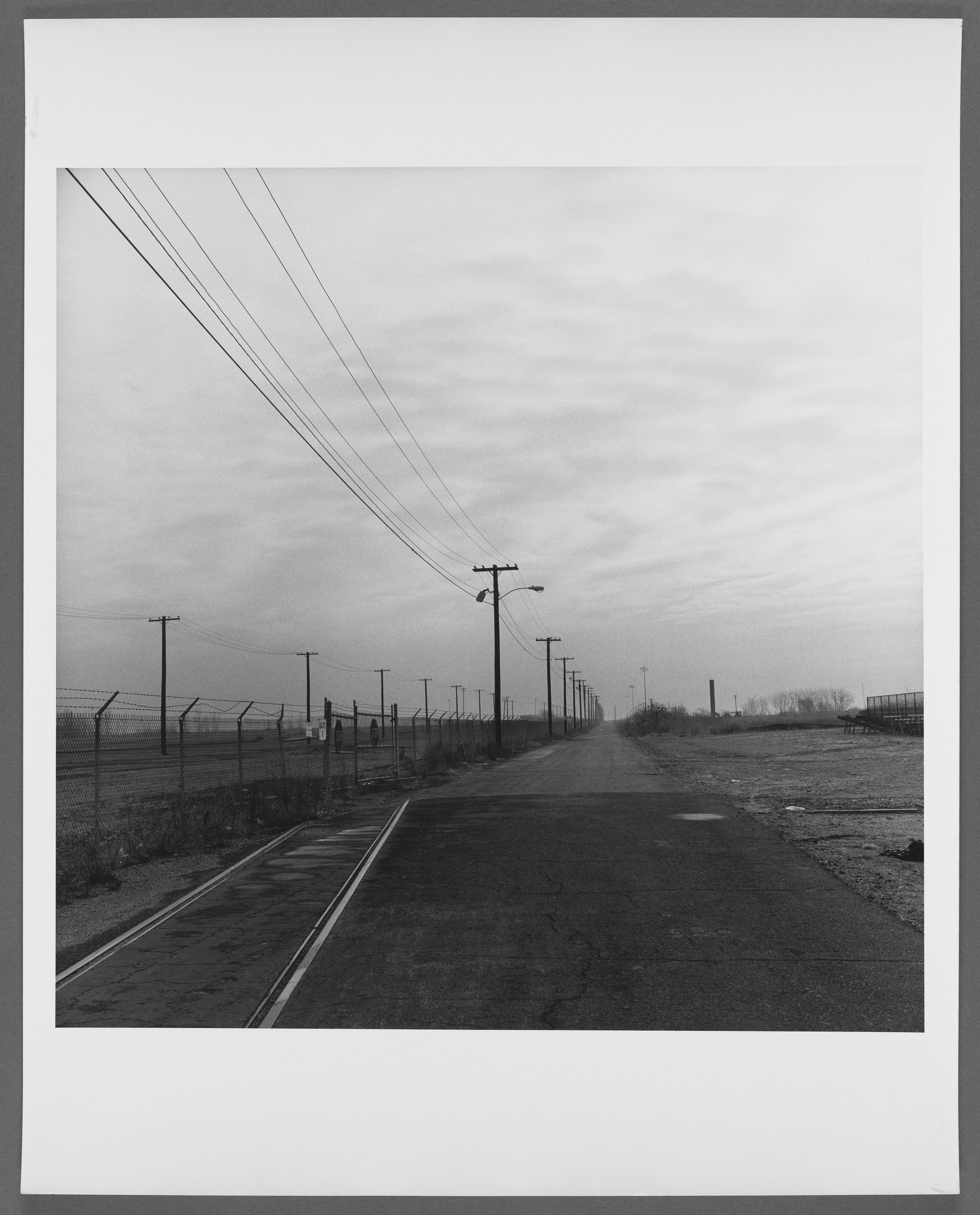
 

Peter Hujar (American, 1934-1987) 'Road and Power Line, New Jersey' 1984


Peter Hujar (American, 1934-1987)
Road and Power Line, New Jersey
1984
From Caven Point, New Jersey, with David Wojnarowicz, 1984 (Job 1063, 12 sheets)
Gelatin silver print
Image: 14 9/16 x 14 3/4 inches (37 x 37.4cm)
Sheet: 19 13/16 x 15 7/8 inches (50.4 x 40.3cm)
The Morgan Library & Museum, Peter Hujar Collection
Gift of Stephen Koch
Courtesy of Fraenkel Gallery, San Francisco and Ortuzar, New York
© The Peter Hujar Archive / Artists Rights Society (ARS)
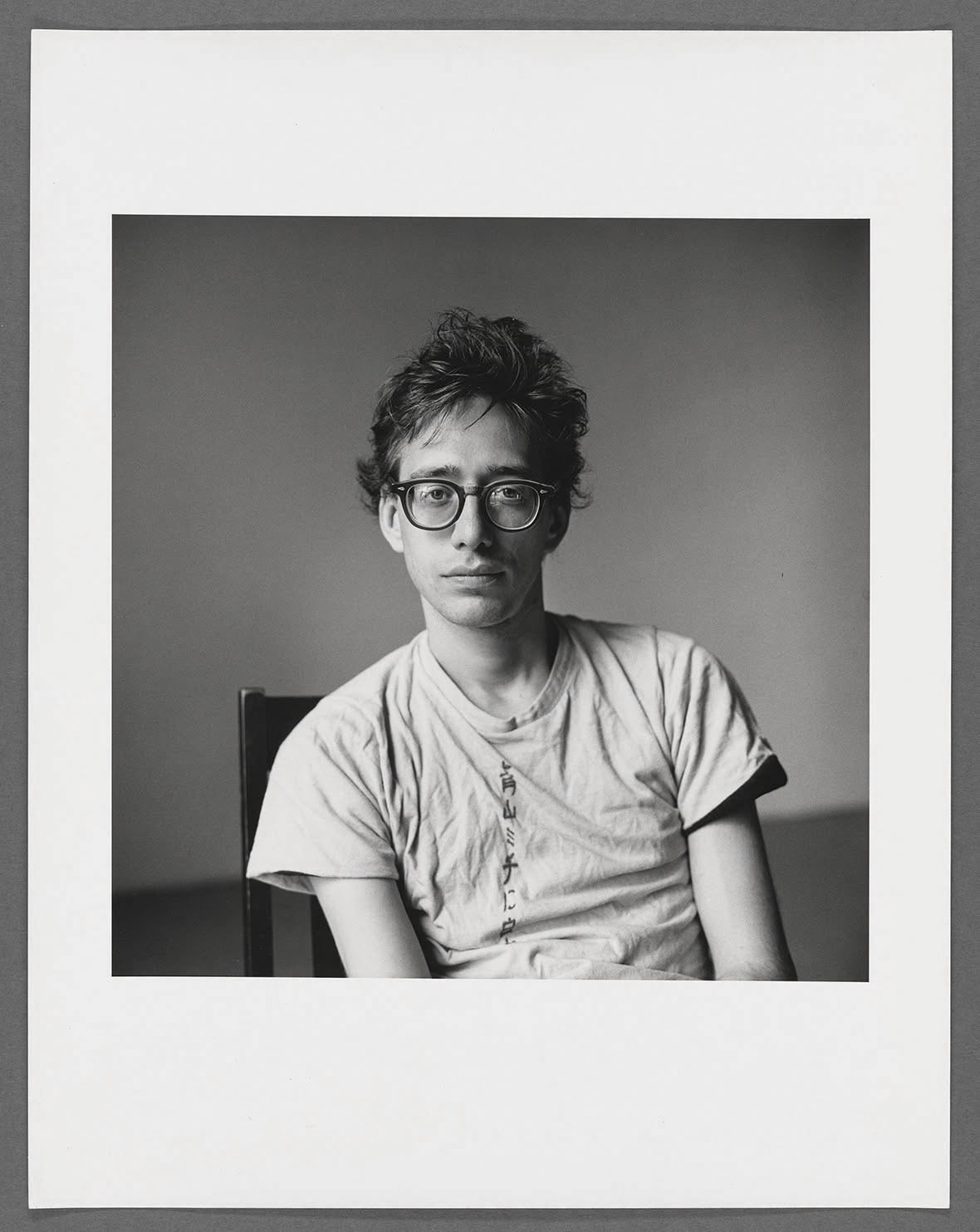
 

Peter Hujar (American, 1934-1987) 'John Zorn' 1986


Peter Hujar (American, 1934-1987)
John Zorn
1986
From John Zorn, 1986 (No job number, 9 sheets)
Gelatin silver print
Image: 9 x 8 1/16 inches (22.8 x 22.7cm)
Sheet: 13 7/8 x 10 7/8 inches (35.3 x 27.6cm)
The Morgan Library & Museum, Peter Hujar Collection
Gift of Stephen Koch
Courtesy of Fraenkel Gallery, San Francisco and Ortuzar, New York
© The Peter Hujar Archive / Artists Rights Society (ARS)


By the time of his final exhibition in early 1986, Peter Hujar’s health was in decline. He continued working for the rest of the year, but upon receiving a diagnosis of AIDS in early 1987, he quit abruptly, even declining to catch up on his job-book entries for the previous year’s work. Therefore, his final finished images, including these sensitive portraits of composer John Zorn, are dateable to 1986 by the very absence of detailed information about them.

Large print label text
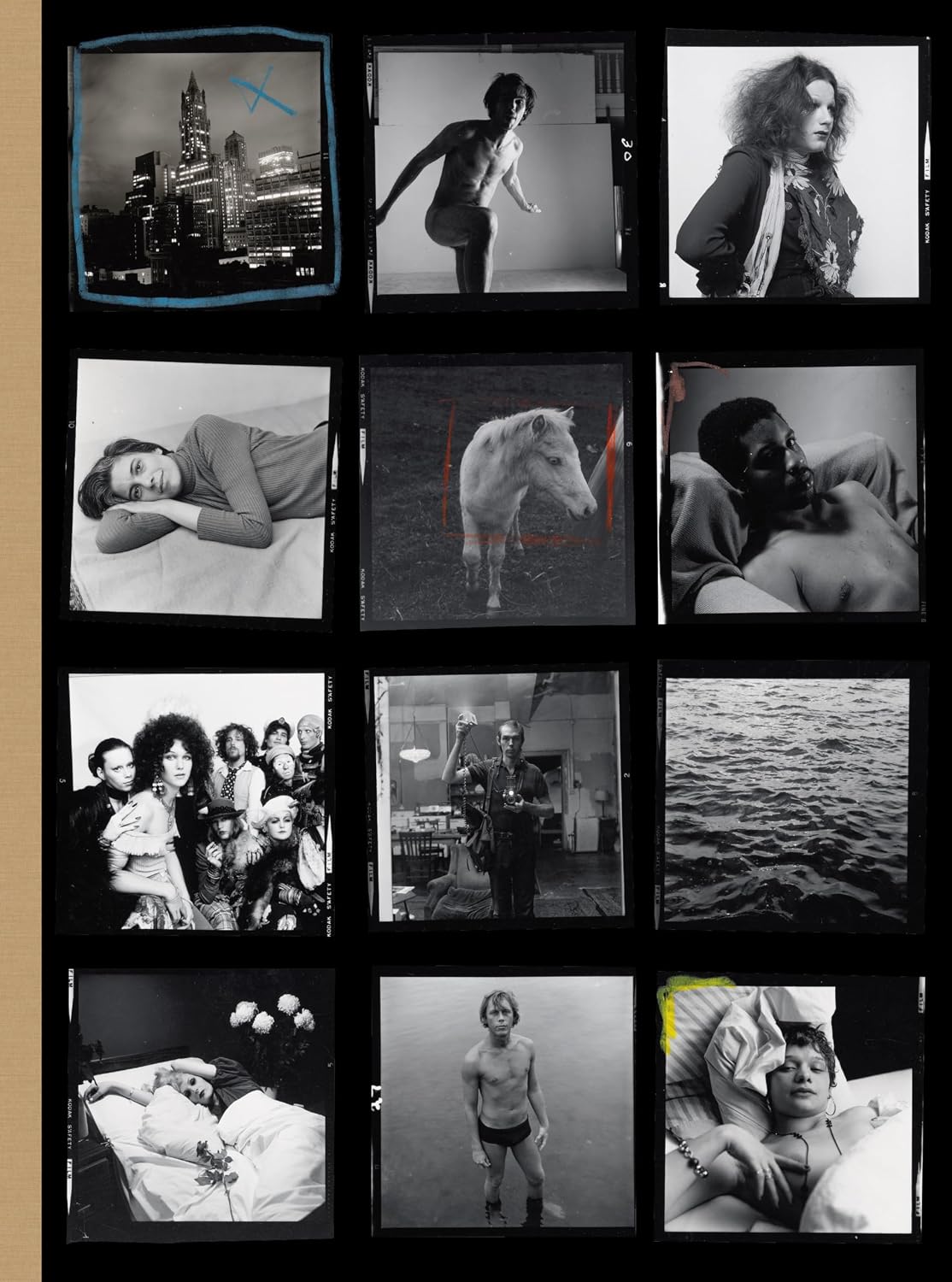
 

'Hujar:Contact' book cover


Hujar:Contact book cover


“Less a monograph than an exposed nervous system: strips of images accumulating into something restless and alive, all hesitation, process, and thought still developing in the tray. … Across the pages of Hujar:Contact, [the images] become immersive. … the experience is less that of viewing discrete photographs than inhabiting the rhythm of Hujar’s looking.”


Marina Vitaglione, Blind Magazine


Hujar:Contact explores the Morgan Library & Museum’s extensive archive of original contact sheets and job books made by the beloved photographer Peter Hujar between 1954 and 1987, which come together to form an enthralling visual document of the artist’s creative process. Hujar’s empathetic eye focused in on varying subjects – crowds of protest, damaged relics, farm animals – but above all he was preoccupied with making portraits of the overlapping circles of artists, writers, and underground luminaries he moved within in New York. Accompanying critical texts by Joel Smith establish a chronology of Hujar’s contact sheets, presenting an artist developing, experimenting with, and refining his practice against the tumultuous cultural politics and sea changes of gay life conveyed by the words ‘Stonewall’ and ‘AIDS’.

Throughout his career Hujar recorded more than a thousand photo shoots in his job books. These documents, which are transcribed and annotated in Hujar:Contact, illuminate the contact sheets, rich in never-before-seen images as well as the earliest iterations of Hujar’s most iconic works, including portraits of Susan Sontag, David Wojnarowicz, Candy Darling, Gary Indiana, Fran Lebowitz, and Paul Thek. This volume provides captivating insight into a master at work, forming an immersive chronicle of Hujar’s poignant efforts to connect, through photography, with the creative communities that defined his life, outlook, and art.

Text from the Amazon website


The Morgan Library & Museum
225 Madison Avenue at 36th Street, New York, NY
Phone: (212) 685-0008

Opening hours:
Tuesday – Thursday, Saturday – Sunday: 10.30am – 5pm
Friday: 10.30am – 7pm
Closed Mondays

The Morgan Library & Museum website

LIKE ART BLART ON FACEBOOK

Back to top

Photographs: Edward J. Kelty

November 2018


Edward Kelty (1888-1967) 'Ringling Brothers and Barnum & Bailey (Combined) Circus' c. 1925

Edward J. Kelty (American, 1888-1967)
Century Photographers
Ringling Brothers and Barnum & Bailey (Combined) Circus [clowns behind Madison Square Garden]
c. 1925
Cyanotype
7 3/8 × 9 1/4 inches (23.8 × 23.5cm)


There’s a quality of legend about freaks… I mean, if you’ve ever spoken to someone with two heads, you know they know something you don’t. Most people go through life dreading they’ll have a traumatic experience – freaks were born with their trauma. They’ve already passed their test in life. They’re aristocrats.


Diane Arbus


The aristocrats

During my research for this posting, someone, somewhere, said that Kelty was “not a very adventurous photographer.” What a load of rubbish.

If they meant “adventurous” by being avant-garde to that you can only answer: imagine the passion and dedication, and the skill of the photographer to compose these panoramic images for 15 years, from the mid-1920s to 1940, using a specially made “banquet” camera that produced 12-by-20-inch images.

Just imagine loading up your car with such a monster camera and travelling the roads to the site of these circus encampments, sometimes two or three different circuses a day, to record a veritable feast of difference and diversity. To give equal weight to each and every person. And to then develop the negatives in the back of your car. If this is not adventurous I don’t know what is.

And Kelty had to pay for the privilege. “Kelty was under contract to that circus, meaning he had to pay Ringling Brothers a commission for every circus picture he took. But he was not a circus employee, which had several of its own photographers who specialized in behind-the-scenes candids.”1 The photographs, these grand assemblages of multiculturalism, were not staged for free.

Kelty’s stylised images of sideshow freaks, clowns and other circus exotics are highly idiosyncratic in the world of art photography because, of course, he would not have thought of himself as an artist. Much as Eugène Atget never thought of himself as an artist, hanging a sign on his studio door saying, “Documents pour artistes” (Documents for artists), the sign declaring, “… his modest ambition of providing other artists with images to use as source material in their own work” (MoMA), so Kelty would have only thought he was recording these mise-en-scène for his own benefit, his passion, and to possibly sell a few photographs on the side.

Kelty’s day job was that of professional banquet photographer photographing weddings and the corporate world. The freedom he must have felt going to the circus and engaging with all these wonderful people would have been incredible. And he didn’t discriminate: his egalitarian photographs document the archetypes of the travelling circus, from “group portraits of clowns, sideshow attractions, bands, elephants, menageries, aerialists, equestrians, tractor and train crews, candy butchers (seen with their backs turned to show the “Baby Ruth Candy” logo on their smocks), and even everybody in the Ringling-Barnum cookhouse tent on July 4, 1935.” (Amazon)

Ellen Warren in her article “The mysterious Mr. Kelty”2 observes that Kelty’s photographs are “hopelessly politically incorrect by today’s standards”. In one sense this is true, with the camera documenting and objectifying the “Other”, with the literal naming of difference – “congress of freaks”, “colored review” – but is this objectification little different to the later, more intimate photographs of Diane Arbus documenting a dwarf in his bedroom, a Jewish giant at home with his parents, or an Albino sword swallower at a carnival? Only the archetypal scale is different. In another and perhaps a more generous sense of spirit, Kelty’s images of circus life document a “family” that lived, breathed, ate and travelled together, who looked after each other during fires and vicissitudes, who had a job and food on the table during The Great Depression … people who Kelty imaged as equal and important as each other by placing them in row after row.

In photographs such as Christy Brothers Circus Side Show, H. Emgard – Manager (1927, below), “Living Curiosities” mix it with “Minstrels”, musicians, dancers and comedians and a Scottish family band dressed up in Tartan. All given equal weight in a splendid display, a panopoly of presentation from around the world. And it would seem that the crowds at the circus were equally fascinated by these assemblages, and the process of Kelty taking the photograph, if the glimpses of the audience at left in Congress of the World’s Rough Riders – Celebrating Ringling Golden Jubilee, Ringling Brothers and Barnum & Bailey Combined Circus (1933, below) and at right in Col. Tim McCoy and his Congress of Rough Riders of the World Featured on the Ringling Brothers and Barnum & Bailey Circus (1935, below) are anything to go by.

Other things to note about the photographs are: the shutter time which can be seen by the moving figures at left in George Denman and His Staff, Ringling Brothers and Barnum & Bailey Combined Shows (1931, below); the impeccable use of even light; the use of flash in photographs such as Col. W.T. Johnson’s World Champion Cowgirls – Madison Square Garden – New York City – 1935 (1935, below) and Ringling Brothers and Barnum & Bailey Concert Band, Merle Evans – Bandmaster (1927, below); and Kelty’s innate ability to conduct and compose the scene. This is where Kelty excels himself as an artist and photographer, where he rises above the everyday to become extra-ordinary.

Two photographs are instructive in this regard, the earlier Congress of Freaks with Ringling Brothers and Barnum & Bailey Combined Circus (1931, below) and the later “Doll Family of Midgets”, Celebrating “Ringling Golden Jubilee”, Ringling Brothers and Barnum & Bailey Combined Circus Side Show (1933, below) in which Kelty returns two years later to document more or less the same group of people in the same setting. In the first image, one of the most famous of Kelty’s photographs, two lines of people rise from the outside and then fall (using the height of the subjects) towards the woman seated centrally in the bottom row who grounds the giant, Christ-like figure in the row above, his outstretched arms offering the display to the viewer. In the elegance and placement of figures this is a masterful construction of the image plane. In the later photograph Kelty doubles down, bookending both rows with symmetrical characters (giant women with headdresses, men in black tie) instead of just the one row in the first photograph – the rows again rising and falling towards the central characters, the giants framing the composition with outstretched arms. It might seem simple but it is not.

This is not some hack at work, not some unadventurous photographer with limited imagination, but a man composing a fugue like J.S.Bach, a veritable banquet for the eyes. To suggest otherwise is to not understand the history of photography, the history of representation, and the passion needed to represent life in all its forms.

Dr Marcus Bunyan


1/ Ellen Warren. “The mysterious Mr. Kelty,” on the Chicago Tribune website February 7, 2003 [Online] Cited 23/11/2018

2/ Ibid.,


All of the photographs in this posting are published under “fair use” conditions for the purpose of educational research and academic comment. Please click on the photographs for a larger version of the image.


Going by the evidence of the photographs, Kelty seems to have had three studio addresses close to each other in Midtown New York during his 15 years photographing the circus: first 144 West 46th (1925-1930), 74 W 47th (1931-1934) and finally 110 W 46th (1935-1940). As can be seen from the map above (with one exception of a photograph in St. Louis MO), Kelty usually travelled close to home to document the circus wherever they set up camp.


Edward Kelty (American, 1888-1967) 'Ringling Brothers and Barnum & Bailey Concert Band, Merle Evans - Bandmaster' 1927


Edward J. Kelty (American, 1888-1967)
Century Photographers 144 W 46 N.Y.C.
Ringling Brothers and Barnum & Bailey Concert Band, Merle Evans – Bandmaster
1927
Gelatin silver print


Merle Slease Evans (American, 1891-1987)

Merle Slease Evans (December 26, 1891 – December 31, 1987) was a cornet player and circus band conductor who conducted the Ringling Bros. and Barnum & Bailey Circus for fifty years. He was known as the “Toscanini of the Big Top.” Evans was inducted into the American Bandmasters Association in 1947 and the International Circus Hall of Fame in 1975. …

Evans was hired as the band director for the newly merged Ringling Bros. and Barnum & Bailey Circus in 1919. Evans held this job for fifty years, until his retirement in 1969. He only missed performances due to a musicians union strike in 1942 and the death of his first wife. He wrote eight circus marches, including Symphonia and Fredella.

Text from the Wikipedia website


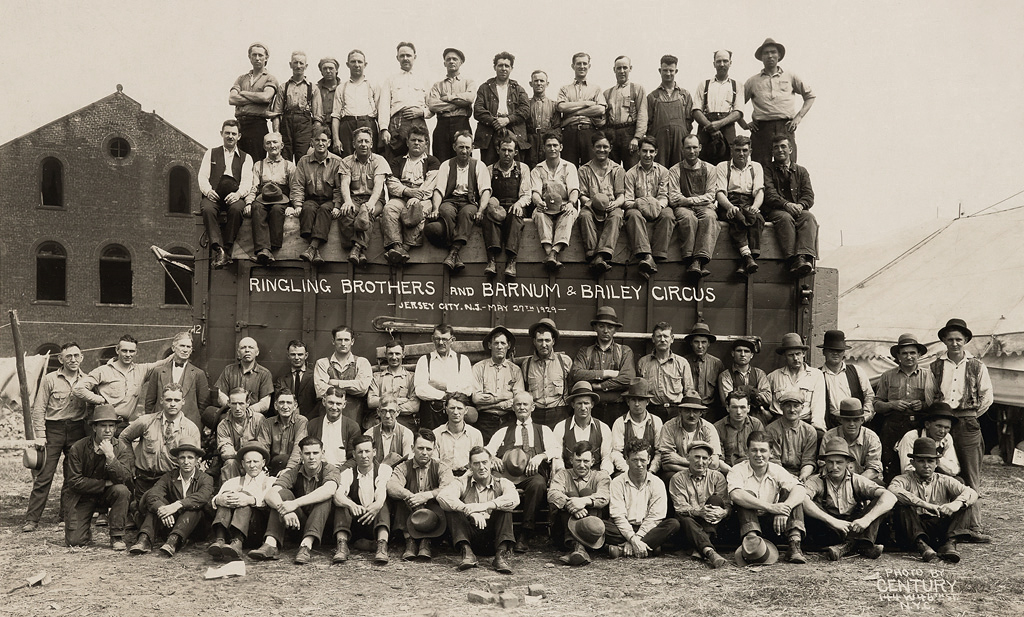
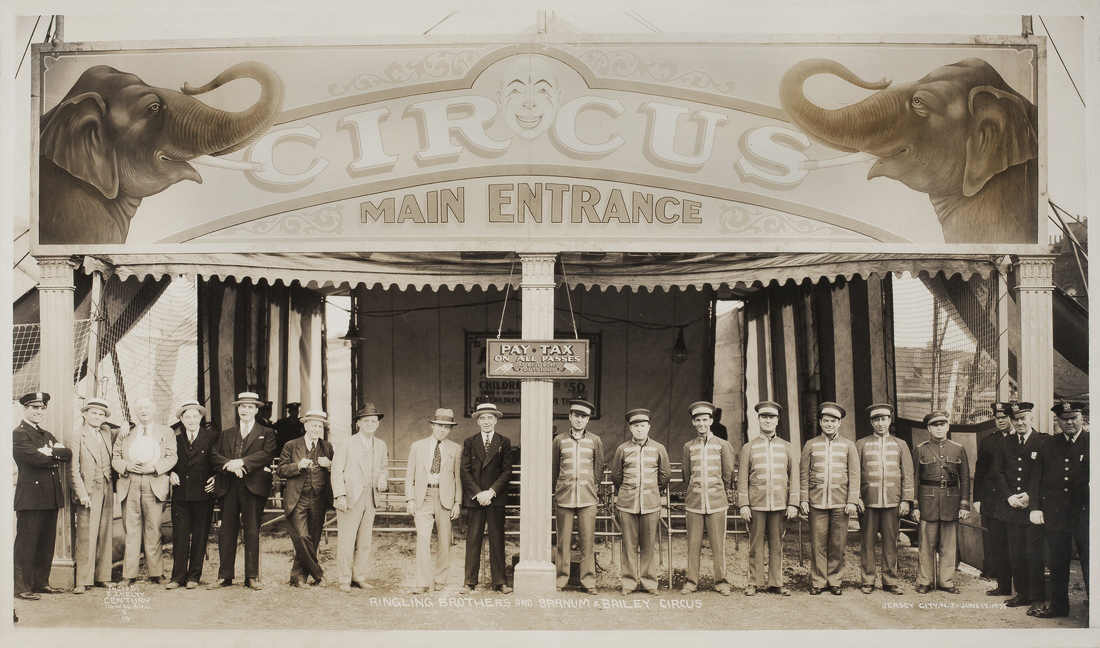
Edward Kelty (American, 1888-1967) 'Ringling Brothers and Barnum & Bailey Combined Circus' Jersey City, N.J. - May 27th 1929


Edward J. Kelty (American, 1888-1967)
Century Photographers 144 W 46 N.Y.C.
Ringling Brothers and Barnum & Bailey Combined Circus
Jersey City, N.J. – May 27th 1929
Gelatin silver print


Edward Kelty (American, 1888-1967) 'George Denman and His Staff, Ringling Brothers and Barnum & Bailey Combined Shows' Irvington, N.J. June 9th, 1931


Edward J. Kelty (American, 1888-1967)
Century Photographers 74 W 47 N.Y.C.
George Denman and His Staff, Ringling Brothers and Barnum & Bailey Combined Shows
Irvington, N.J. – June 9th, 1931
Gelatin silver print
11 1/4 × 19 5/8 inches (28.6 × 49.9cm)


Edward Kelty (1888-1967) 'Ringling Brothers and Barnum & Bailey Circus - Greatest Show on Earth -' 1931


Edward J. Kelty (American, 1888-1967)
Century Photographers 74 W 47 N.Y.C.
Ringling Brothers and Barnum & Bailey Circus – Greatest Show on Earth –
1931
Gelatin silver print


Ringling Bros. and Barnum & Bailey Circus, also known as the Ringling Bros. Circus, Ringling Bros. or simply Ringling was an American traveling circus company billed as The Greatest Show on Earth. It and its predecessor shows ran from 1871 to 2017. Known as Ringling Bros. and Barnum & Bailey Combined Shows, the circus started in 1919 when the Barnum & Bailey’s Greatest Show on Earth, a circus created by P. T. Barnum and James Anthony Bailey, was merged with the Ringling Bros. World’s Greatest Shows. The Ringling brothers had purchased Barnum & Bailey Ltd. following Bailey’s death in 1906, but ran the circuses separately until they were merged in 1919. …

In 1871, Dan Castello and William Cameron Coup persuaded Barnum to come out of retirement as to lend his name, know-how and financial backing to the circus they had already created in Delavan, Wisconsin. The combined show was named “P.T. Barnum’s Great Traveling Museum, Menagerie, Caravan, and Hippodrome”. As described by Barnum, Castello and Coup “had a show that was truly immense, and combined all the elements of museum, menagerie, variety performance, concert hall, and circus”, and considered it to potentially be “the Greatest Show on Earth”, which subsequently became part of the circus’s name.

Independently of Castello and Coup, James Anthony Bailey had teamed up with James E. Cooper to create the Cooper and Bailey Circus in the 1860s. The Cooper and Bailey Circus became the chief competitor to Barnum’s circus. As Bailey’s circus was outperforming his, Barnum sought to merge the circuses. The two groups agreed to combine their shows on March 28, 1881. Initially named “P.T. Barnum’s Greatest Show On Earth, And The Great London Circus, Sanger’s Royal British Menagerie and The Grand International Allied Shows United”, it was eventually shortened to “Barnum and Bailey’s Circus”. Bailey was instrumental in acquiring Jumbo, advertised as the world’s largest elephant, for the show. Barnum died in 1891 and Bailey then purchased the circus from his widow. Bailey continued touring the eastern United States until he took his circus to Europe. That tour started on December 27, 1897, and lasted until 1902.

Separately, in 1884, five of the seven Ringling brothers had started a small circus in Baraboo, Wisconsin. This was about the same time that Barnum & Bailey were at the peak of their popularity. Similar to dozens of small circuses that toured the Midwest and the Northeast at the time, the brothers moved their circus from town to town in small animal-drawn caravans. Their circus rapidly grew and they were soon able to move their circus by train, which allowed them to have the largest traveling amusement enterprise of that time. Bailey’s European tour gave the Ringling brothers an opportunity to move their show from the Midwest to the eastern seaboard. Faced with the new competition, Bailey took his show west of the Rocky Mountains for the first time in 1905. He died the next year, and the circus was sold to the Ringling Brothers.

Ringling Bros. and Barnum & Bailey Circus

The Ringlings purchased the Barnum & Bailey Greatest Show on Earth in 1907 and ran the circuses separately until 1919. By that time, Charles Edward Ringling and John Nicholas Ringling were the only remaining brothers of the five who founded the circus. They decided that it was too difficult to run the two circuses independently, and on March 29, 1919, “Ringling Bros. and Barnum & Bailey Combined Shows” debuted in New York City. The posters declared, “The Ringling Bros. World’s Greatest Shows and the Barnum & Bailey Greatest Show on Earth are now combined into one record-breaking giant of all exhibitions.” Charles E. Ringling died in 1926, but the circus flourished through the Roaring Twenties.

John Ringling had the circus move its headquarters to Sarasota, Florida in 1927. In 1929, the American Circus Corporation signed a contract to perform in New York City. John Ringling purchased American Circus, owner of five circuses, for $1.7 million…

The circus suffered during the 1930s due to the Great Depression, but managed to stay in business. After John Nicholas Ringling’s death, his nephew, John Ringling North, managed the indebted circus twice, the first from 1937 to 1943. Special dispensation was given to the circus by President Roosevelt to use the rails to operate in 1942, in spite of travel restrictions imposed as a result of World War II. Many of the most famous images from the circus that were published in magazine and posters were captured by American photographer Maxwell Frederic Coplan, who traveled the world with the circus, capturing its beauty as well as its harsh realities.

Text from the Wikipedia website


Edward Kelty (American, 1888-1967) 'Congress of the World's Rough Riders - Celebrating Ringling Golden Jubilee, Ringling Brothers and Barnum & Bailey Combined Circus' Brooklyn, N.Y. May 19th 1933


Edward J. Kelty (American, 1888-1967)
Century Photographers 74 W 47 N.Y.C.
Congress of the World’s Rough Riders – Celebrating Ringling Golden Jubilee, Ringling Brothers and Barnum & Bailey Combined Circus
Brooklyn, N.Y. May 19th 1933
Gelatin silver print


“In the late nineteenth century, America displayed a new imperialistic mood and a heightened desire to impress her independence upon Europe when she embarked upon a number of military adventures in the Caribbean and Pacific. During the same period, there appeared a new popular hero – the “Rough Rider” – who derived from the Western frontier but expanded the field of heroic action well beyond the shores of America. The creation of this hero and the scene in which he was set demonstrates how popular culture of the period not only embodied but facilitated crucial developments in the nation’s growth.”

Christine Bold. “The Rough Riders at Home and Abroad: Cody, Roosevelt, Remington and the Imperialist hero,” in Canadian Review of American Studies Volume 18 Issue 3, September 1987, pp. 321-350


Edward Kelty (1888-1967)


Edward J. Kelty (American, 1888-1967)
Century Photographers 74 W 47 N.Y.C.
Celebrating “Ringling Golden Jubilee”, Ringling Brothers and Barnum & Bailey Combined Circus
Brooklyn, N.Y. May 19th 1933
Gelatin silver print
11 1/4 × 19 5/8 inches (28.6 × 49.9cm)


Edward J. Kelty (American, 1888-1967) 'Ringling Brothers and Barnum & Bailey Combined Menagerie' Brooklyn, N.Y. May 19th 1933


Edward J. Kelty (American, 1888-1967)
Century Photographers 74 W 47 N.Y.C.
Ringling Brothers and Barnum & Bailey Combined Menagerie
Brooklyn, N.Y. May 19th 1933
Gelatin silver print


In mid-20th century America, a typical circus traveled from town to town by train, performing under a huge canvas tent commonly called a “big top”. The Ringling Brothers and Barnum & Bailey Circus was no exception: what made it stand out was that it was the largest circus in the country. Its big top could seat 9,000 spectators around its three rings; the tent’s canvas had been coated with 1,800 pounds (820 kg) of paraffin wax dissolved in 6,000 US gallons (23,000 l) of gasoline, a common waterproofing method of the time.

A menagerie is a collection of captive animals, frequently exotic, kept for display; or the place where such a collection is kept, a precursor to the modern zoological garden. The term was first used in seventeenth century France in reference to the management of household or domestic stock. Later, it came to be used primarily in reference to aristocratic or royal animal collections. The French-language Methodical Encyclopaedia of 1782 defines a menagerie as an “establishment of luxury and curiosity.” Later on, the term referred also to travelling animal collections that exhibited wild animals at fairs across Europe and the Americas.

Texts from the Wikipedia website


Edward Kelty (American, 1888-1967) 'Ringling Golden Jubilee - Ringling Brothers and Barnum & Bailey Combined Circus' Newark, N.Y. June ? 1933


Edward J. Kelty (American, 1888-1967)
Century Photographers 74 W 47 N.Y.C.
Ringling Golden Jubilee – Ringling Brothers and Barnum & Bailey Combined Circus
Newark, N.Y. June ? 1933
Gelatin silver print


Edward J. Kelty (American, 1888-1967) 'Congress of Freaks with Ringling Brothers and Barnum & Bailey Combined Circus' 1931


Edward J. Kelty (American, 1888-1967)
Century Photographers 74 W 47 N.Y.C.
Congress of Freaks with Ringling Brothers and Barnum & Bailey Combined Circus
1931
Gelatin silver print


Edward Kelty (American, 1888-1967) '"Doll Family of Midgets", Celebrating "Ringling Golden Jubilee", Ringling Brothers and Barnum & Bailey Combined Circus Side Show' 1933


Edward J. Kelty (American, 1888-1967)
Century Photographers 74 W 47 N.Y.C.
“Doll Family of Midgets”, Celebrating “Ringling Golden Jubilee”, Ringling Brothers and Barnum & Bailey Combined Circus Side Show
1933
Gelatin silver print
11 1/8 × 19 1/2 inches (28.3 × 49.5cm)


Edward J. Kelty (American, 1888-1967) 'Col. Tim McCoy and his Congress of Rough Riders of the World Featured on the Ringling Brothers and Barnum & Bailey Circus' Newark N.J. June 11th 1935


Edward J. Kelty (American, 1888-1967)
Century Photographers 110 W 46 NYC
Col. Tim McCoy and his Congress of Rough Riders of the World Featured on the Ringling Brothers and Barnum & Bailey Circus
Newark. N.J. June 11th 1935
Gelatin silver print


Timothy John Fitzgerald McCoy (American, 1891-1978)

Timothy John Fitzgerald McCoy (April 10, 1891 – January 29, 1978) was an American actor, military officer, and expert on American Indian life and customs. He was also known Colonel T.J. McCoy.

McCoy worked steadily in movies until 1936, when he left Hollywood, first to tour with the Ringling Brothers Circus and then with his own “wild west” show. The show was not a success and is reported to have lost $300,000, of which $100,000 was McCoy’s own money. It folded in Washington, D.C. and the cowboy performers were each given $5 and McCoy’s thanks. The Indians on the show were returned to their respective reservations by the Bureau of Indian Affairs. …

For his contribution to the film industry, Col. Tim McCoy was honoured with a star on the Hollywood Walk of Fame. In 1973, McCoy was inducted into the Hall of Great Western Performers of the National Cowboy and Western Heritage Museum. McCoy was inducted into the Cowboy Hall of Fame in 1974.

Text from the Wikipedia website


Edward Kelty (American, 1888-1967) 'Ringling Brothers and Barnum & Bailey Circus' Jersey City, N.J. June 12, 1935


Edward J. Kelty (American, 1888-1967)
Century Photographers 110 W 46 NYC
Ringling Brothers and Barnum & Bailey Circus
Jersey City, N.J. June 12, 1935
Gelatin silver print


Edward Kelty (American, 1888-1967) 'Congress of Clowns, Ringling Brothers and Barnum & Bailey Combined Circus' Patterson, N. J. June 13, 1935


Edward J. Kelty (American, 1888-1967)
Century Photographers 110 W 46 NYC
Congress of Clowns, Ringling Brothers and Barnum & Bailey Combined Circus
Patterson, N. J. June 13, 1935
Gelatin silver print
11 1/8 × 19 5/8inches (28.3 × 49.9cm)


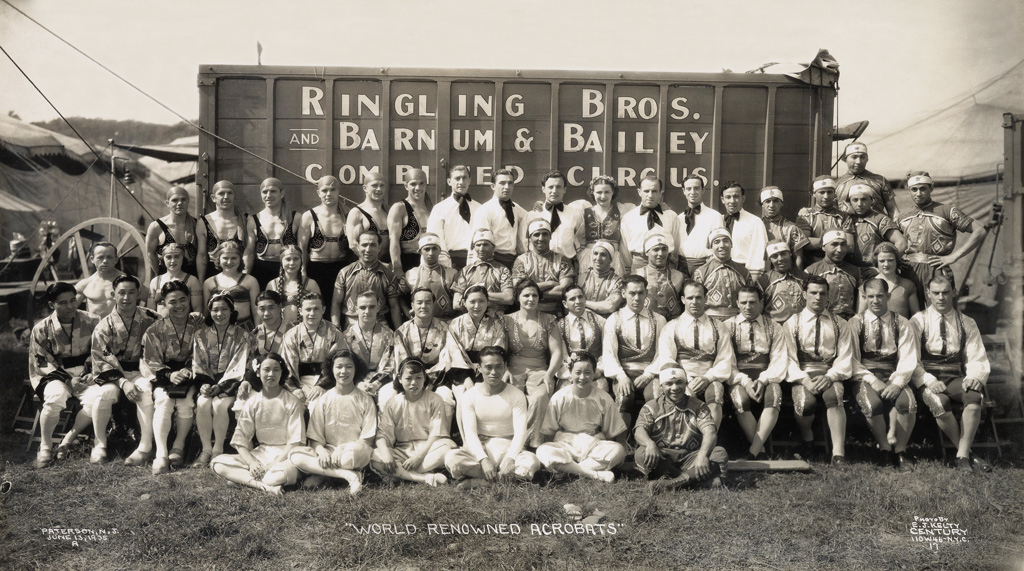
Edward Kelty (American, 1888-1967) 'World Renowned Acrobats, Ringling Brothers and Barnum & Bailey Combined Circus' Patterson, N. J. June 13, 1935


Edward J. Kelty (American, 1888-1967)
Century Photographers 110 W 46 NYC
World Renowned Acrobats, Ringling Brothers and Barnum & Bailey Combined Circus
Patterson, N. J. June 13, 1935
Gelatin silver print


Edward Kelty (American, 1888-1967) "Queens of the Air", Ringling Brothers and Barnum & Bailey Combined Circus' Patterson, N. J. June 13, 1935


Edward J. Kelty (American, 1888-1967)
Century Photographers 110 W 46 NYC
“Queens of the Air”, Ringling Brothers and Barnum & Bailey Combined Circus
Patterson, N. J. June 13, 1935
Gelatin silver print
11 1/4 × 19 5/8 inches (28.6 × 49.9cm)


Edward Kelty (American, 1888-1967) 'Tommy Atkins Military Riding Maids featured with Ringling Brothers and Barnum & Bailey Circus' Poughkeepsie, N.Y. - June 15th 1935


Edward J. Kelty (American, 1888-1967)
Century Photographers 110 W 46 NYC
Tommy Atkins Military Riding Maids featured with Ringling Brothers and Barnum & Bailey Circus
Poughkeepsie, N.Y. – June 15th 1935
Gelatin silver print


Dorothy Herbert (American, 1910-1994)

Dorothy Herbert (1910-1994) joined Ringling Bros and Barnum & Bailey in 1930 when she was only 20 years old. Over the next decade she truly became a headliner – appearing on a variety of posters, including several seen here. Like Lillian Leitzel, May Wirth and Tim McCoy, and later Lou Jacobs and Gunther Gebel-Williams – her star status led to the creation of a number of posters featuring her image.

Herbert was only 24 years old when a portrait lithograph was added to the Ringling-Barnum billposter hod during the 1934 season. Starting that spring, and for several seasons following, an image of Miss Herbert and her horse Satan appeared in hundreds of store windows as both a one-sheet and a window card, and in a much larger format on the sides of walls and barns. The same portrait was also featured on the cover of the 1934 program book, the first time an individual circus star was featured on the Ringling-Barnum “Program and Daily Review”. …

[Herbert] features in a display that she starred in titled “Miss Tommy Atkins and Her Military Maids” The depiction is of a group of girls on horses, dressed in British red-coat dress uniforms. The act consisted of military equestrian manoeuvres and the reason it carried the name “Miss Tommy Atkins” is that a British soldier of the era was often referred to as a “Tommy Atkins” much in the way that American soldiers have been known as “G.I. Joe”.

Extract from Chris Berry. “Dorothy Herbert (Ringling Bros and Barnum & Bailey),” on the Collectors Weekly website 2012 [Online] Cited 20/10/2018


Edward Kelty (American, 1888-1967) 'Hagenbeck-Wallace Circus Executive Staff' New Brunswick, N.J. - June 17th 1931


Edward J. Kelty (American, 1888-1967)
Century Photographers 74 W 47 N.Y.C.
Hagenbeck-Wallace Circus Executive Staff
New Brunswick, N.J. – June 17th 1931
Gelatin silver print


The Hagenbeck-Wallace Circus was a circus that traveled across America in the early part of the 20th century. At its peak, it was the second-largest circus in America next to Ringling Brothers and Barnum and Bailey Circus. It was based in Peru, Indiana.

The circus began as the “Carl Hagenbeck Circus” by Carl Hagenbeck (1844-1913). Hagenbeck was an animal trainer who pioneered the use of rewards-based animal training as opposed to fear-based training.

Meanwhile, Benjamin Wallace, a livery stable owner from Peru, Indiana, and his business partner, James Anderson, bought a circus in 1884 and created “The Great Wallace Show”. The show gained some prominence when their copyright for advertising posters was upheld by the Supreme Court in Bleistein v. Donaldson Lithographing Company. Wallace bought out his partner in 1890 and formed the “B. E. Wallace Circus”.

In 1907, Wallace purchased the Carl Hagenbeck Circus and merged it with his circus. The circus became known as the Hagenbeck-Wallace circus at that time, even though Carl Hagenbeck protested. He sued to prohibit the use of his name but lost in court. …

The circus spent its winters just outside Baldwin Park, California. There, on 35 acres of land, the circus stayed with its huge parade wagons parked alongside a railroad spur. The elephants spent time hauling refuse wagons, shunting railroad cars and piling baled hay. A tent at the eastern edge of the grounds was used by aerialists to practice trapeze and high-wire acts. The circus usually remained there from late November to early spring.

The Great Depression and Ringling’s ill health caused the Ringling empire to falter. In 1935, the circus split from Ringling Brothers and Barnum & Bailey and became the Hagenbeck-Wallace and Forepaugh-Sells Bros. Circus. It finally ceased operations in 1938.

The complex near Peru that formerly housed the winter home of Hagenbeck-Wallace now serves as the home of the Circus Hall of Fame.

Text from the Wikipedia website


Edward Kelty (American, 1888-1967) 'Hagenbeck-Wallace Circus' 1931


Edward J. Kelty (American, 1888-1967)
Century Photographers 74 W 47 N.Y.C.
Hagenbeck-Wallace Circus
1931
Gelatin silver print
11 1/4 × 19 5/8 inches (28.6 × 49.9 cm.)


Edward J. Kelty (American, 1888-1967)

Edward J. Kelty (1888-1967) moved to New York City following his service in the Navy during World War I, and opened up his first studio, Flashlight Photographers. Kelty was drawn to the circus and visited Coney Island often. In the summer of 1922, he transformed his truck into a mini studio, darkroom and living quarters, and traveled across America. His panoramic views captured the performers – human and animal – associated with Ringling Bros. and Barnum & Bailey, Hagenbeck-Wallace, Sells-Floto, Clyde Beatty, Cole Bros. and other train, wagon and truck shows.

A typical day for Kelty would have him waking at dawn to set up cameras and tripods, gathering bearded ladies and sword swallowers, snake charmers and giants and shooting all morning. At times he had as many as 1,000 people in a picture. Afternoons were spent processing film and making proofs, taking orders and printing well into the night. The following day, he distributed prints, most often to circus staff and performers, before returning to his New York studio to work on his wedding and banquet photography business.

Kelty was hit hard by the Depression, and by 1942 had cashed in his glass plate negatives to settle a hefty bar tab. He moved to Chicago and, as legend has it, never took another photograph. His extant negatives eventually made their way into a Tennessee collection of circus memorabilia. Since Kelty used Nitrate-based film, which is unstable when improperly housed, the negatives self-destructed and were disposed of.

After Kelty died in 1967, his estranged family found no photographs, cameras or negatives among his belongings – just one old lens and a union concession employee ID card identifying him as a vendor at Chicago’s Wrigley Field. There was no evidence of the man who, along with his custom mammoth-size banquet camera and portable studio, documented America’s greatest traveling circuses.

Anonymous. “Edward J. Kelty,” on the Swann Galleries website Nd [Online] Cited 21/11/2018. No longer available online


Edward Kelty (American, 1888-1967) 'Hagenbeck-Wallace Circus, Jess Adkins, Manager - Rex De Rosselli, Producer of Spectacle - Harry McFarlan, Equestrienne Director'. Brooklyn, N.J. June 11th 1932


Edward J. Kelty (American, 1888-1967)
Century Photographers 74 W 47 N.Y.C.
Hagenbeck-Wallace Circus, Jess Adkins, Manager – Rex De Rosselli, Producer of Spectacle – Harry McFarlan, Equestrienne Director
Brooklyn, N.J. June 11th 1932
Gelatin silver print


Edward Kelty (American, 1888-1967) 'Hagenbeck-Wallace Circus, Jess Adkins, Manager - Rex De Rosselli, Producer of Spectacle - Harry McFarlan, Equestrienne Director.' St. Louis, MO. - May 11th 1934


Edward J. Kelty (American, 1888-1967)
Century Photographers 74 W 47 N.Y.C.
Hagenbeck-Wallace Circus, Jess Adkins, Manager – Rex De Rosselli, Producer of Spectacle – Harry McFarlan, Equestrienne Director
St. Louis, MO. – May 11th 1934
Gelatin silver print


Banquet photography

Banquet photography is the photography of large groups of people, typically in a banquet setting such as a hotel or club banquet room, with the objective of commemorating an event. Clubs, associations, unions, circuses and debutante balls have all been captured by banquet photographers.

A banquet photograph is usually taken in black and white with a large format camera, with a wide angle lens, from a high angle to ensure that each person is in focus while seated at their table. Large cameras such as a 12 × 20 view camera or a panoramic camera were used. The defining characteristic of a banquet photograph is the depth of focus and detail and clarity of the image.

Banquet photography was most popular in the 1890s, and had mostly waned by the 1970s. In part its decline is owed to the difficult technical aspects of producing quality banquet photos, the difficulty of printing such large negatives, and the expense and size of the equipment needed. Today, though hard to find, there are a handful of photographers still shooting banquet photos with flashbulbs and large format film cameras. View cameras use large format sheet film – one sheet per photograph.

Text from the Wikipedia website


Edward Kelty (American, 1888-1967) 'Christy Brothers Circus Side Show, H. Emgard - Manager' 1927


Edward J. Kelty (American, 1888-1967)
Century Photographers 144 W 46 N.Y.C.
Christy Brothers Circus Side Show, H. Emgard – Manager
1927
Gelatin silver print


George Washington Christy was born February 22 1889 in Pottstown, Pennsylvania to parents John and Ida Christy.

The circus opened in 1919 under the title of “Christy Hippodrome Shows” (later changed to Christy Bros. Circus). The show opened as a two car show, Christy purchased many of his parade wagons from the Ringling Bros. after they discontinued their downtown parades. The circus wintered first in Galveston, Texas and then in South Houston, where Christy had built a home.

On May 25, the show’s trained wrecked just outside of Cardston Alberta, Canada.. G.W. Christy, being the showman that he was set up in a cornfield near the wreck and gave a performance while the rails were being cleared. In 1925 and 1926, Christy operated a second unit named “Lee Bros.”, but closed it after the the 1926 season.

The “Great Depression” beginning in 1929, was a difficult time for all shows on the road. The Christy Bros. Circus was no exception, not only was the economy in bad shape but weather was also a major factor. Christy and his loyal employees struggled to keep the circus on the road. On July 7, 1930 the Christy Brothers Circus gave it’s last performance in Greeley, Colorado.

After the close of the show, most of the equipment was sold in 1935 to Jess Adkins and Zack Terrell, who were framing their Cole Bros. Circus, some of the parade wagons went to the “Ken Mayner Circus”. Christy kept his elephants and horses, the elephants were used to help build Spencer Highway in South Houston, Texas.

After leaving the circus world George Christy became mayor of the City of South Houston serving from 1949 to 1951 and again from 1960 to 1964. George Washington Christy died August 07, 1975 in Houston Texas.

Anonymous text. “Christy Bros Circus,” on the Circuses and Sideshows website Nd [Online] Cited 13/03/2022


Edward Kelty (American, 1888-1967) 'Walter L. Main Circus' 1927


Edward J. Kelty (American, 1888-1967)
Century Photographers 144 W 46 N.Y.C.
Walter L. Main Circus
1927
Gelatin silver print


The Walter L. Main Circus was founded by Walter L. Main in 1886. Walter’s father “William” was a horse farmer, trainer and trader in Trumbull, Ohio. William began supplying horses to circuses, which led to him joining the “Hilliard & Skinner’s Variety and Indian show”. William toured with several shows and in the 1870s began his own, very small circus. …

1904 was the last year that the “Walter L. Main Circus” operated under Walters ownership, the circus was sold that year to William P. Hall. In 1918 Walter leased the Main title to Andrew Downie who made a small fortune operating his circus under the Main name until he sold the show to the Miller Bros. of the 101 Ranch Wild West Show in 1924. In 1925 until 1928 the Main title was used by Floyd King and his brother Howard. The Main title was used by various operators 1930-1937.

Anonymous text. “Walter L. Main Circus,” on the Circuses and Sideshows website Nd [Online] Cited 13/03/2022


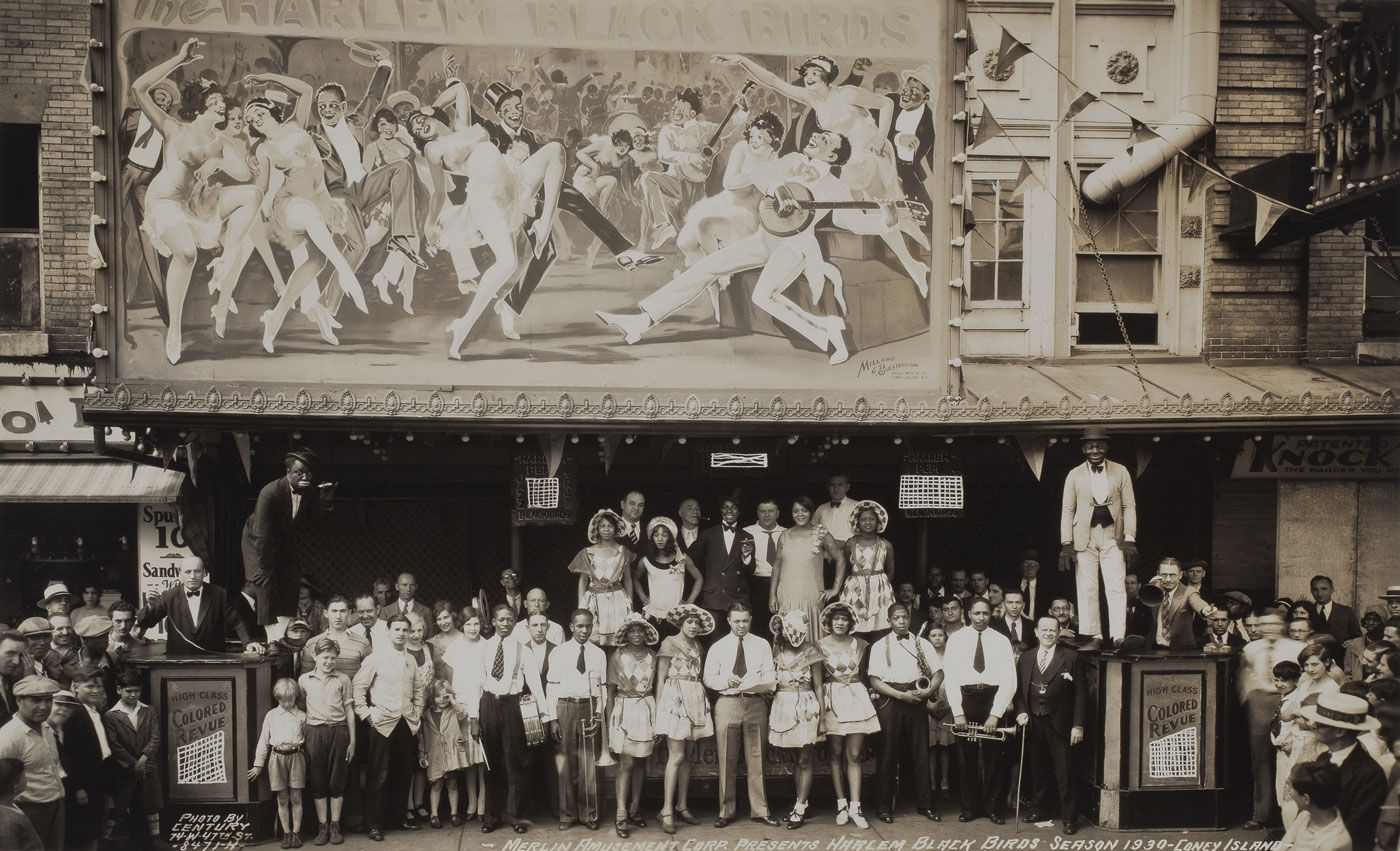
Edward J. Kelty (American, 1888-1967) 'Harlem Black Birds, Coney Island' 1930


Edward J. Kelty (American, 1888-1967)
Century Photographers 74 W 47 N.Y.C.
Harlem Black Birds, Coney Island
1930
12 x 20 in. (30.5 x 50.8cm)
Collection of Ken Harck
© Edward J. Kelty


Edward Kelty (American, 1888-1967) 'Sells-Floto Big Double Side Show, Jersey City, N.J. - June 19th 1931, Lew. C. Edelmore - Manager' 1931


Edward J. Kelty (American, 1888-1967)
Century Photographers 74 W 47 N.Y.C.
Sells-Floto Big Double Side Show, Jersey City, N.J. – June 19th 1931, Lew. C. Edelmore – Manager
1931
Gelatin silver print


Edward Kelty (American, 1888-1967) 'Sam B. Dill's Circus' Mineola, L.I. N.Y. - June 19th 1933


Edward J. Kelty (American, 1888-1967)
Century Photographers 74 W 47 N.Y.C.
Sam B. Dill’s Circus
Mineola, L.I., N.Y. – June 19th 1933
Gelatin silver print


Early Wednesday morning, July 19, 1933, a long train arrived in York and stopped near the fairgrounds. The Sam B. Dill Circus had arrived.

“Young America, having caught the infectious circus spirit is likely to be in ahead of both morning orb and circus and be on the lot along with enthusiastic adults to greet the show train on its arrival there,” The York Dispatch reported the day before the train’s arrival.

The unloading and setting up of the circus tents and shows worked smoothly. All of the performers knew their jobs. They had been doing it multiple times each week since the circus had opened its season in Dallas on April 9.

Wagons containing the menagerie were rolled down ramps. Trunks were carried off to other areas. Elephants and roustabouts worked to raise the big top as the sun rose. Within a relatively short time, the big top tent was erected, and the performers went to work preparing their equipment inside while the roustabouts set up the bleacher seating.

By the time everything was finished around 9 a.m., the cooks in the circus kitchen had breakfast ready.

The Sam B. Dill Circus was scheduled to play two performances, at 2 p.m. and 8 p.m., for York residents.

“Sam B. Dill’s Circus isn’t the biggest circus in the world, but what it lacks in size it makes up in quality,” the Amarillo Sunday News and Globe wrote about the circus.

Dill had managed the famous John Robinson Circus, but when it was sold to the American Circus Corp., Dill had struck out on his own. Though not a large circus, Dill’s circus was popular and tended to sell out its performances.

After breakfast, everyone had a short rest, and then they began to scurry around getting the menagerie wagons harnessed to horses and in a line. Performers dressed in their bright and flamboyant costumes. At noon, “a long column of red, gold and glitter, with bands playing and banners flying will move sinuously out of the Richland Avenue gate,” The York Dispatch reported.

From Richland Avenue, the parade moved east on Princess Street, then north on George Street to Continental Square. From the square, the circus moved west on Market Street and then back to Richland Avenue. Thousands of spectators lined the route to watch the performers, hear the music and marvel at the wild animals.

The first wagon was the band wagon where Shirley Pitts, the country’s only female calliope player, conducted the band. Then came the wagons pulling tigers, monkeys, seals and more. Other flat wagons featured clowns goofing off and Wild West displays.

When the parade arrived back at the fairgrounds, many of the spectators followed. Although the big top wouldn’t open until 1 p.m., spectators wandered the midway, playing games, getting an up-close look at the menagerie or viewed some of the shows in the smaller tents.

The three-ring show under the big top had dozens of animals such as Oscar the Lion, Buddy the performing sea lion, camels, zebras, horses, elephants, dogs, monkeys and ponies.

Christian Belmont swung on the trapeze, along with aerialist Rene Larue. Mary Miller performed a head-balancing act. The four Bell Brothers showed off their acrobatic skills, and Betha Owen owned the high wire. Among the clowns, young Jimmy Thomas was noted as the “youngest clown in the circus world.” He traveled with his mother, Lorette Jordan, who was also an aerialist with the show.

The circus also liked to feature a western movie star with its Wild West acts. In 1933, that performer was Buck Steel. The following year, Tom Mix joined the circus. He had been a major western movie star who had seen his popularity decline in the 1920s. In 1935, he bought the circus from Dill and renamed it the Tom Mix Circus.

Following the 8 p.m. show, the performers broke down the circus and loaded it back on the train to head out by midnight for the next city.

​James Rada Jr. “LOOKING BACK 1933: The circus comes to town,” from the York Dispatch website August 3, 2016 [Online] Cited 13/03/2022


Edward Kelty (American, 1888-1967) 'Hunt's Three Ring Circus' Northport, L.I., N.Y. - June 26th 1931


Edward J. Kelty (American, 1888-1967)
Century Photographers 74 W 47 N.Y.C.
Hunt’s Three Ring Circus
Northport, L.I., N.Y. – June 26th 1931
Gelatin silver print


Edward Kelty (American, 1888-1967) 'James Whalen and His Big Top Department - Ringling Brothers and Barnum & Bailey Combined Circus' Reading, P.A. - June 1st 1934


Edward J. Kelty (American, 1888-1967)
Century Photographers 74 W 47 N.Y.C.
James Whalen and His Big Top Department – Ringling Brothers and Barnum & Bailey Combined Circus
Reading, P.A. – June 1st 1934
Gelatin silver print


Edward Kelty (American, 1888-1967) 'Cole Brothers - Clyde Beatty Circus' Cumberland, MD July 27th 1935


Edward J. Kelty (American, 1888-1967)
Century Photographers 110 W 46 NYC
Cole Brothers – Clyde Beatty Circus
Cumberland, MD July 27th 1935
Gelatin silver print
11 1/4 × 19 5/8 inches (28.6 × 49.9 cm)


Clyde Beatty Circus

Clyde Beatty (June 10, 1903 – July 19, 1965) began his circus career working as a cage boy for Louis Roth, he learned his trade quickly and soon had his own animal act. Beatty’s “fighting act” style and his showmanship propelled him to stardom.

Not only was Clyde a star of the center ring but he also starred in numerous movies, radio shows and his adventures were fictionalised in novels. The name “Clyde Beatty” became a very value asset to circus. The name was used on posters and painted on show equipment alongside the circus’ name on whatever show he was working.

In 1935 Clyde Beatty was on Jess Adkins and Zack Terrell’s “Cole Bros. Circus”, Then in 1943 he worked for Art Concello on the “Clyde Beatty-Russell Bros. Circus”. Beatty continued to be active with the show until his death in 1965.

Anonymous text. “Clyde Beatty Circus,” on the Circuses and Sideshows website Nd [Online] Cited 13/03/2022

Cole Bros. Circus

The Cole Title dates back to 1870 when William Washington Cole (1847-1915), started the W. W. Cole Circus. Cole was very successful in in the circus business and when he died in 1915, left an estate of five million dollars. He is considered to be the first circus millionaire.

in 1906 the title was purchased by Canadian showman Martin Downs and his son James and the title was changed to Cole Bros.. The circus was moved from St. Louis, Mo. to it’s new winter quarters in Birmingham, Al..

In the late 1920s the Cole Bros. titled was used by Floyd King and his brother Howard. This version of the Cole Bros. Circus operated mostly in the west, playing mining camps and boomtowns, truly a frontier circus. The new Cole Bros. Circus, 35 railroad car show first took to the road in 1935 with Jess Adkins and Zack Terrell as the circus organisers and owners.

Terrell who had managed the Sells-Floto Circus for the American Circus Corp. from 1921-1932 and in 1934 he managed a circus at the Chicago World’s Fair operated by the Standard Oil Company.

Adkins had managed the Gentry Bros. Circus for Floyd King, the 25 car John Robinson Circus and in 1931 the Hagenbeck-Wallace Circus. Jess Adkins and Zack Terrell were very capable managers however neither had ever owned a circus, however in 1934 each were quietly making plans to take out their own circuses.

Adkins and Terrell went to Lancaster, Mo. and purchased equipment left from the now defunct Robbins Bros. Circus. The purchased included 15 wagons, 6 elephants, 5 camels, school horses, and zebras. The equipment was moved to Rochester, IN where they had bought property to serve as a winter quarters.

Adkins and Terrell hired Floyd King as general agent and Arnold Maley as office manager who both assisted in the organisation of the show.

This was the beginning of the Cole Bros. Circus

Anonymous text. “Cole Bros. Circus,” on the Circuses and Sideshows website Nd [Online] Cited 13/03/2022


Edward Kelty (American, 1888-1967) 'Col. W.T. Johnson's World Champion Cowgirls - Madison Square Garden - New York City - 1935'


Edward J. Kelty (American, 1888-1967)
Century Photographers 110 W 46 NYC
Col. W.T. Johnson’s World Champion Cowgirls – Madison Square Garden – New York City – 1935
1935
Gelatin silver print
11 1/4 × 19 5/8 inches (28.6 × 49.9cm)


The Great Depression of the 1930s was one of the most traumatic periods in American history. The human suffering caused by the Stock Market crash, and the business failures that followed took a toll which has never been fully calculated. Yet through all of the hardships, some business did thrive… One sport which prospered during the Depression was rodeo, Its big-time circuit grew enormously during the 1930s, and incomes of contestants and producers increased as well.

Much of the credit for this must go to Col. William Taylor Johnson of San Antonio, Texas. Johnson became a rodeo producer in 1928, and by the mid-thirties had taken over the prestigious Madison Square Garden Rodeo and created a viable eastern circuit which ushered in a new era of rodeo history. The eastern contests paid excellent prizes and extended the season, so that many cowboys and cowgirls did exceptionally well for those troubled times. During the Depression, average incomes for rodeo professionals on the big-time circuit averaged from one to three thousand dollars annually, while top champions earned from ten to twelve thousand dollars a year… By 1934, every rodeo which Johnson produced had set attendance records, and the eastern circuit was an integral part of rodeo. (“The Story of The Billboard, and Col. W. T. Johnson’s Rodeos,” The Billboard, 29 October 1934, p. 75). In spite of his many contributions, Johnson is honoured by no rodeo Hall of Fame, and has never been nominated. How could such a major figure be ignored?

Extract from the abstract from Mary Lou LeCompte. “Colonel William Thomas Johnson, Premier Rodeo Producer of the 1930s.” The University of Texas at Austin


Edward Kelty (American, 1888-1967) 'U.S.W.P.A. Federal Theatre Circus Unit' New York City, Sept. 26th 1936


Edward J. Kelty (American, 1888-1967)
Century Photographers 110 W 46
U.S.W.P.A. Federal Theatre Circus Unit
New York City, Sept. 26th 1936
Gelatin silver print


United States Works Progress Administration (U.S.W.P.A.)

The Works Progress Administration (WPA; renamed in 1939 as the Work Projects Administration) was the largest and most ambitious American New Deal agency, employing millions of people (mostly unskilled men) to carry out public works projects, including the construction of public buildings and roads. In a much smaller project, Federal Project Number One, the WPA employed musicians, artists, writers, actors and directors in large arts, drama, media, and literacy projects.

The Federal Theatre Project (FTP; 1935-1939) was a New Deal program to fund theatre and other live artistic performances and entertainment programs in the United States during the Great Depression. It was one of five Federal Project Number One projects sponsored by the Works Progress Administration. It was created not as a cultural activity but as a relief measure to employ artists, writers, directors and theatre workers. It was shaped by national director Hallie Flanagan into a federation of regional theatres that created relevant art, encouraged experimentation in new forms and techniques, and made it possible for millions of Americans to see live theatre for the first time. The Federal Theatre Project ended when its funding was canceled after strong Congressional objections to the left-wing political tone of a small percentage of its productions.

Texts from the Wikipedia website


Edward Kelty (American, 1888-1967) 'Marcellus Golden Models' 1933


Edward J. Kelty (American, 1888-1967)
Century Photographers 74 W 47 N.Y.C.
Marcellus Golden Models
1933
Gelatin silver print
11 1/4 × 8 7/8 inches (28.6 × 22.5cm)


“Fortunately, we aren’t entirely bereft of a visual record of these arcane marvels. A Manhattan banquet photographer name Edward Kelty, whose usual venue was hotel ballrooms and Christmas parties, went out intermittently in the summer from the early 1920s to the mid-1940s, taking panoramic tripod pictures of circus personnel, in what could only have constituted a labor of love. He was expert, anyway, from his bread-and-butter job, at joshing smiles and camaraderie out of disparate collection of people, coaxing them to drape their arms around each other and trust the box’s eye. He had begun close to home, at Coney Island freak shows, when the subway was extended out there, and Times Square flea-circus “museums” and variety halls, and the Harlem Amusement Palace. Later, building upon contact and friendships from those places, he outfitted a truck for darkroom purposes (presumably to sleep in too) and sallied farther to photograph the tented circuses that played on vacant lots in New Jersey, Connecticut, or on Long Island, and gradually beyond. He would pose an ensemble of horse wranglers, canvasmen, ticket takers, candy butchers, teeterboard tumblers, “web-sitters” (the guys who hold the ropes for the ballet girls who climb up them and twirl), and limelight daredevils, or the bosses and moneymen. He took everybody, roustabouts as conscientiously as impresarios, and although he was not artistically very ambitious – and did hawk his prints both to the public and to the troupers, at “six for $5” – in his consuming hobby he surely aspired to document this vivid, disreputable demimonde [a group of people on the fringes of respectable society] obsessively, thoroughly: which is his gift to us.

More of these guys may have been camera-shy than publicity hounds, but Kelty’s rubber-chicken award ceremonies and industrial photo shoots must have taught him how to relax jumpy people for the few minutes required. With his Broadway pinstripes and a news-man’s bent fedora, as proprietor of Century Flashlight Photographers in the West Forties, he must have become a trusted presence in the “Backyard” and “Clown Alley.” He knew show-business and street touts, bookies and scalpers – but also how to flirt with a marquee star. Because his personal life seems to have been a bit of a train wreck, I think of him more as a hatcheck girl’s swain, yet he knew hot to let the sangfroid sing from some of these faces… These zany tribes of showboaters must have amused him, after the wintertime’s chore of recording for posterity some forty-year drudge receiving a gold watch… The ushers, the prop men and riggers, the cookhouse crew, the elephant men and cat men, the show-girls arrayed in white bathing suits in a tightly chaperoned, winsome line, the hoboes who had put the tent up and, in the wee hours, would tear it down, and the bosses whose body language, with arms akimbo and swaggering legs, tells us something of who hey were: these collective images telegraph the complexity of the circus hierarchy, with the starts at the top, winos at the bottom. …

While arranging corporate personnel in the phoney bonhomie of an office get-together, Kelty must have longed for summer, when he would be snapping “Congresses” of mugging clowns, fugue-ing freaks, rodeo sharpshooters, plus the train crews known as “razor-backs” (Raise your backs!), who loaded and unloaded the wagons from railroad flatcars at midnight and dawn… Circuses flouted convention as part of their pitch – flaunted and cashed in on the romance of outlawry, like Old World gypsies. If there hadn’t been a crime wave when the show was in town, everybody sure expected one. And the exotic physiognomies, strangely cut clothes, and oddly focused, disciplined bodies were almost as disturbing – “Near Eastern,” whatever Near Eastern meant (it somehow sounded weirder than “Middle Eastern” or “Far Eastern”), bedouin Arabs, Turks and Persians, or Pygmies, Zulus, people cicatrized, “platter-lipped,” or nose-split. That was the point. They came from all over the known world to parade on gaudy ten-hitch wagons or caparisoned [decked out in rich decorative coverings] elephants down Main Street, and then, like the animals in the cages, you wanted them to leave town.

Edward Hoagland. Sex and the River Styx. Chelsea Green Publishing, 2011, pp. 81-84


LIKE ART BLART ON FACEBOOK

Back to top