
Exhibition dates: 22nd May – 25th October, 2026
Curator: Joel Smith, Richard L. Menschel Curator and Department Head of Photography
1955-63: Beginnings
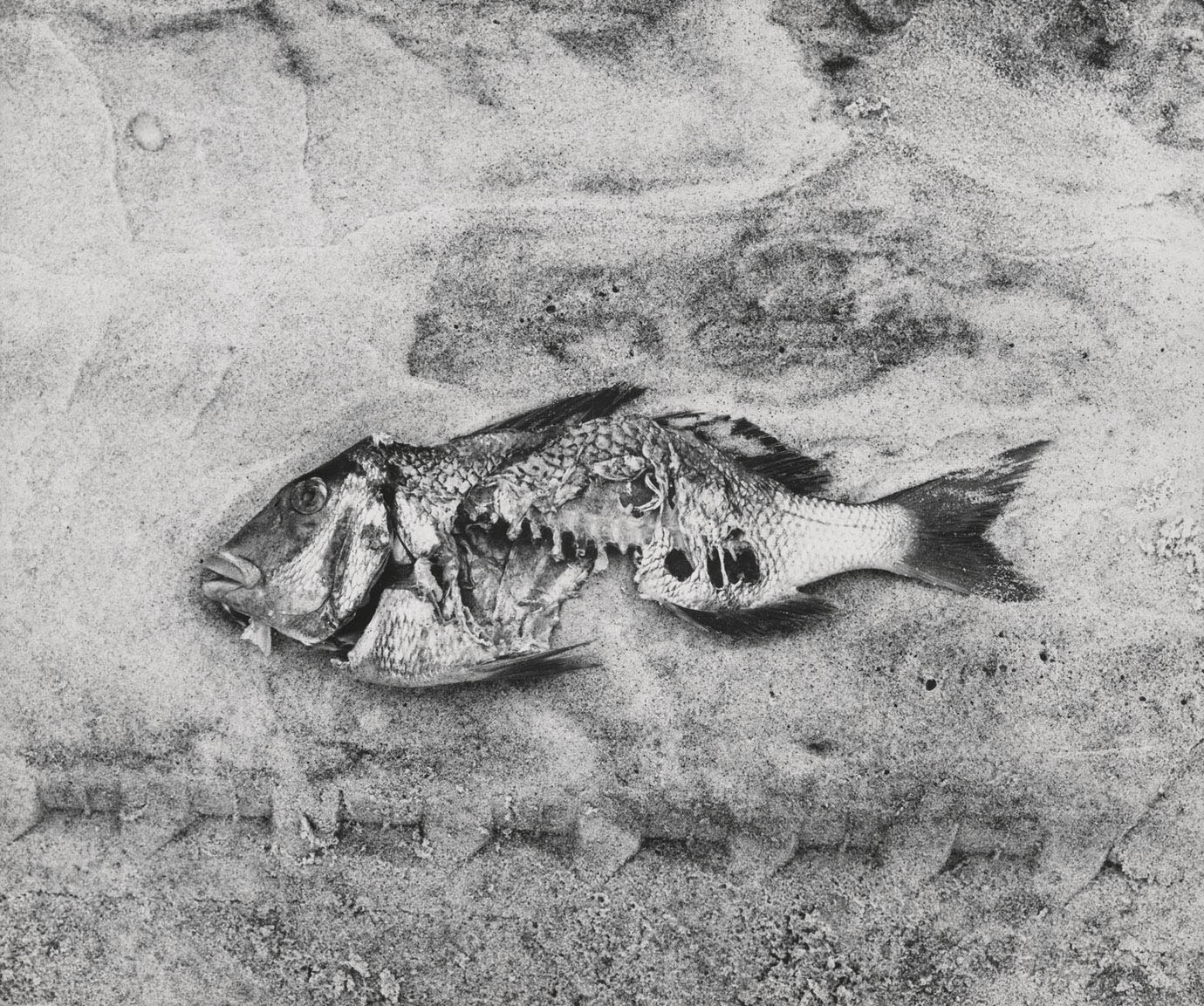
Peter Hujar (American, 1934-1987)
Dead Fish, Fire Island
1960-1962
Gelatin silver print, mounted on board
Image/Sheet: 10 3/4 x 11 1/4 inches (37.3 x 28.5cm)
Morgan Library & Museum, New York, Peter Hujar Collection
Gift of Stephen Koch
Hujar found an unlikely elegance in this unpromising subject, discovered as he began spending more time in the early 1960s on Fire Island, off the southern coast of Long Island. The excavation of beauty out of decay points to Hujar’s early admiration for the wide-ranging work that Irving Penn had been publishing in Vogue magazine since the 1940s.
Large print label text
An empathetic eye
As many of you may know from reading Art Blart over the years, I deeply admire the work of the American photographer Peter Hujar (1934-1987).
With this exhibition we get to dive into the contact sheets of the artist which give insight into “the nature of his attention and the unique personality of each of his subjects.” They allow us, the viewer, to better understand the flow of Hujar’s creative process and the focus of his vision – the consistency of that vision, how he approaches his subject matter, his understanding of light, framing, presence – and the “rhythm of Hujar’s looking.”
I feel (a critical word) that Hujar approaches his subject with an open and informed mind. Using the experience of his many years as a commercial photographer he has the innate ability in his personal work to put the camera in the right place at the right time, to find time and time again what he is looking for in direct, honest, beautiful photographs of places, animals and people.
I look at the contact sheet for Caven Point, New Jersey, with David Wojnarowicz (1984, below) and observe that not one shot is wasted, that Hujar knows exactly his directorial language. He is an auteur with a recognisable personal style, recurring themes, and deep artistic control.
While less confrontational, more empathetic, more cinematic in the feeling of spatiality in the image, Hujar’s approach to subject matter is similar to a photographer of a slightly earlier generation, Diane Arbus (American, 1923-1971) who also ran a commercial photography studio, working as an art director, conceptualiser, and stylist before becoming disillusioned with the artificial demands of the commercial fashion world, then moving into mainly portrait photography.
Both artist’s know how to get the most from their subject matter letting the sitter – cow, horse, human, giant – speak of their place in the world, photographs revealing their inner spirit and energy. As Loring Knoblaunch observes, “As seen in these contact sheets, Hujar seemed to work best in a loose flow of time, where collaboration and connection were the variables that ultimately mattered to the capturing of a durable visual essence.” This is the embodiment of Hujar’s art.
Various texts insist on a sense of desolation (a state of extreme emptiness, destruction, or deep, hopeless sadness), fatalism and melancholy present in Hujar’s photographs:
“Woven throughout Peter Hujar’s photographs is a profound sense of fatality about the world. This bleakness in his art reflects both the abuse he faced as a child and his concern about the AIDS crisis which, at the time, only showed signs of worsening.” (Text from the Morgan Library & Museum Facebook page)
“Postindustrial Queens, windblown Caven Point, and burned-out, riot-torn Newark were places that appealed to Wojnarowicz’s and Hujar’s attunement to disaster. Their fatalism reflected the neglect and abuse each of them had known in childhood, as well as their consciousness of an AIDS crisis that only showed signs of deepening.” (Large print label text)
and in Loring Knoblauch‘s excellent review of the exhibition:
“Hujar’s work has always been filled with themes of darkness, melancholy, and alienation, and the visual evidence in his contact sheets reinforces those moods, but with a quiet undercurrent of attentive resolve.”
I don’t feel this at all.
As a gay man myself, having survived years of abuse growing up and having lived through the initial AIDS crisis in the 1980s and survived (and lost a lot of friends), I don’t find Hujar’s photography at all dark or bleak in regards to family, growing up or the AIDS crisis. In fact quite the opposite, I find his photographs uplifting, inspiring in their humanity and empathy.
Fatalism … what the hell is that anyway? “the philosophical and psychological doctrine that all events are fixed in advance by fate or an overarching power, making human free will, choices, and actions powerless to change the outcome”
No. Hujar’s very photographs speak against this concept (that human free will, choices and actions are powerless) through what he chooses to photograph, through the snap of the shutter (this instant not another) and through his photographs of protests against the lack of HIV/AIDS funding. Human actions DO matter in the outcome. And as to alienation (a state or feeling of being cut off, isolated, or estranged from people, society, or oneself), Hujar’s very engagement with the world – through his city, community and friends, through so many intersections with reality, so many points of view, forming such a nexus of connections – obviates such a reading of his work.
Through these contact sheets, through Hujar’s empathetic vision, we become, as Marina Vitaglione puts it, “immersed in the rhythm of Hujar’s looking.”
That looking is always lyrical, joyous and very human.
Dr Marcus Bunyan
PS. What we need now is an exhibition on the beginnings of Hujar’s artistic career!
Many thankx to the Morgan Library and Museum for allowing me to publish the photographs in the posting.
Many thankx also to Loring Knoblauch and the Collector Daily website for allowing me to publish the installation photographs in the posting. Permission is very much appreciated. Her review of the exhibition is excellent and offers the reader numerous insights into Hujar’s artistic practice.
Please click on the photographs for a larger version of the image.
“The changing of a pose, the tilt of a head, a move a little closer, a different angle of approach, a laugh, a moment of relaxation, a moment of anxiousness or wariness, another shift, and then bang! There it is. And of course, Hujar couldn’t know whether he’d gotten or not, so he often kept going. But for students of studio portraiture, this is the master class on offer in this exhibit – watch what he was looking for, how he was moving and adapting (quietly and unobtrusively hunting even), and where he ultimately found the pivot point where something boring became something unexpectedly vulnerable or compelling.”
“Hujar’s work has always been filled with themes of darkness, melancholy, and alienation, and the visual evidence in his contact sheets reinforces those moods, but with a quiet undercurrent of attentive resolve. He actually found what he was looking for more often than not, which is part of the reason his place in photographic history is secure.”
Loring Knoblauch. “Hujar:Contact @Morgan Library,” on the Collector Daily website, August 21, 2026 [Online] Cited 03/10/2026
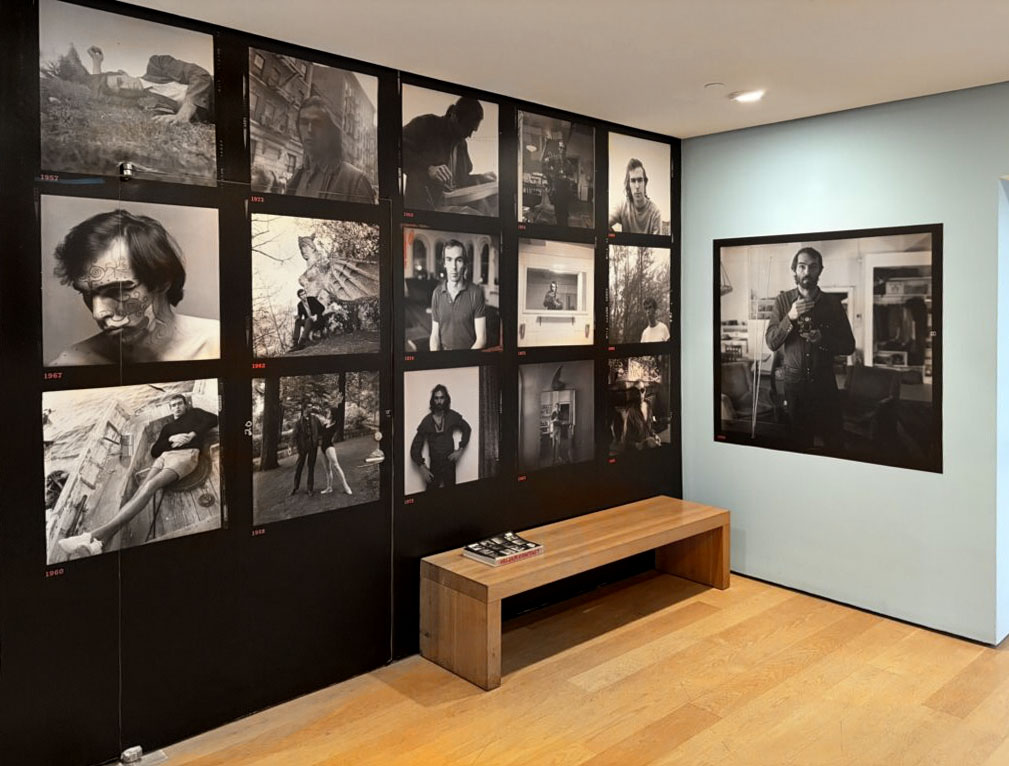
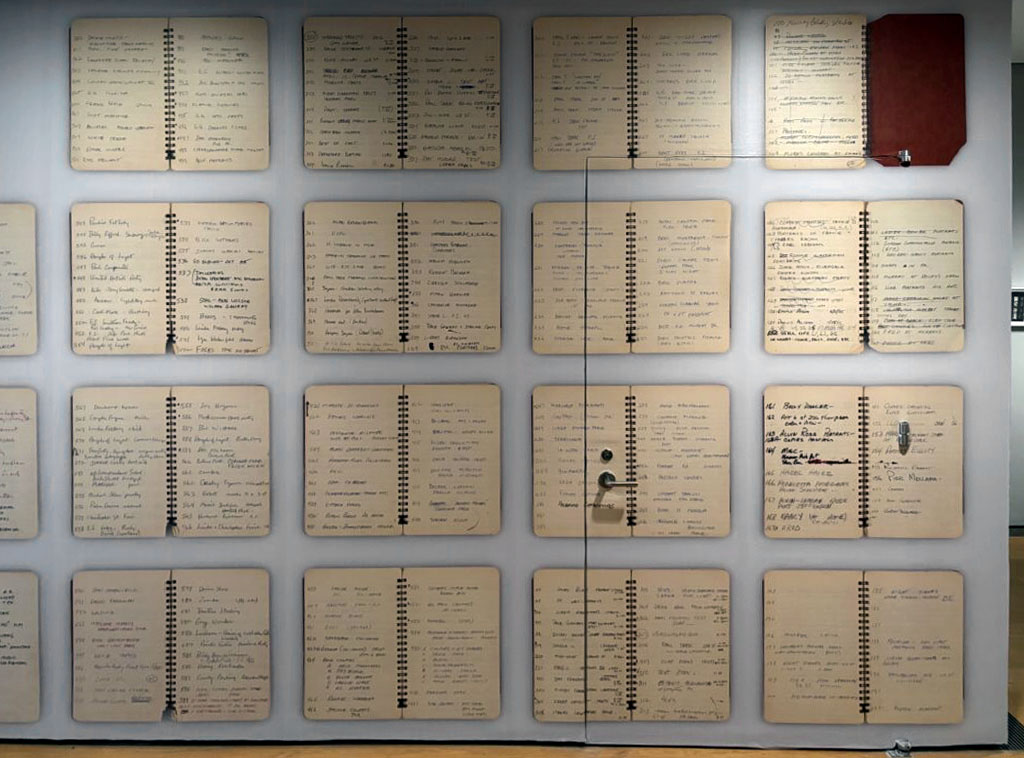
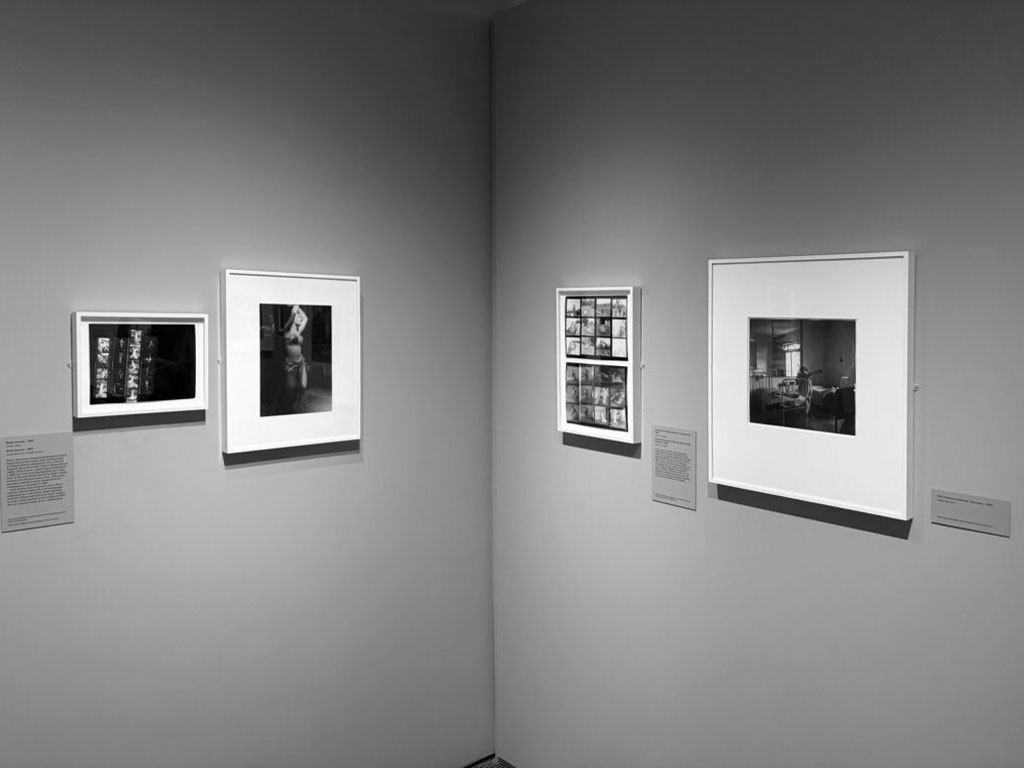
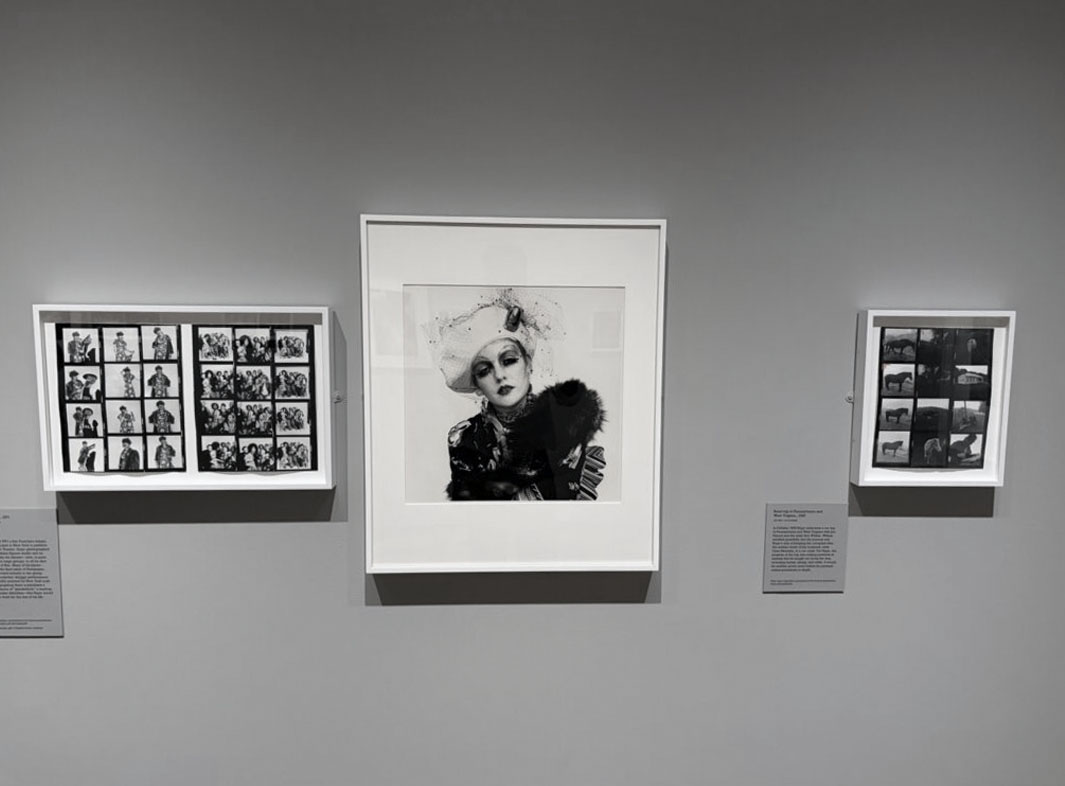
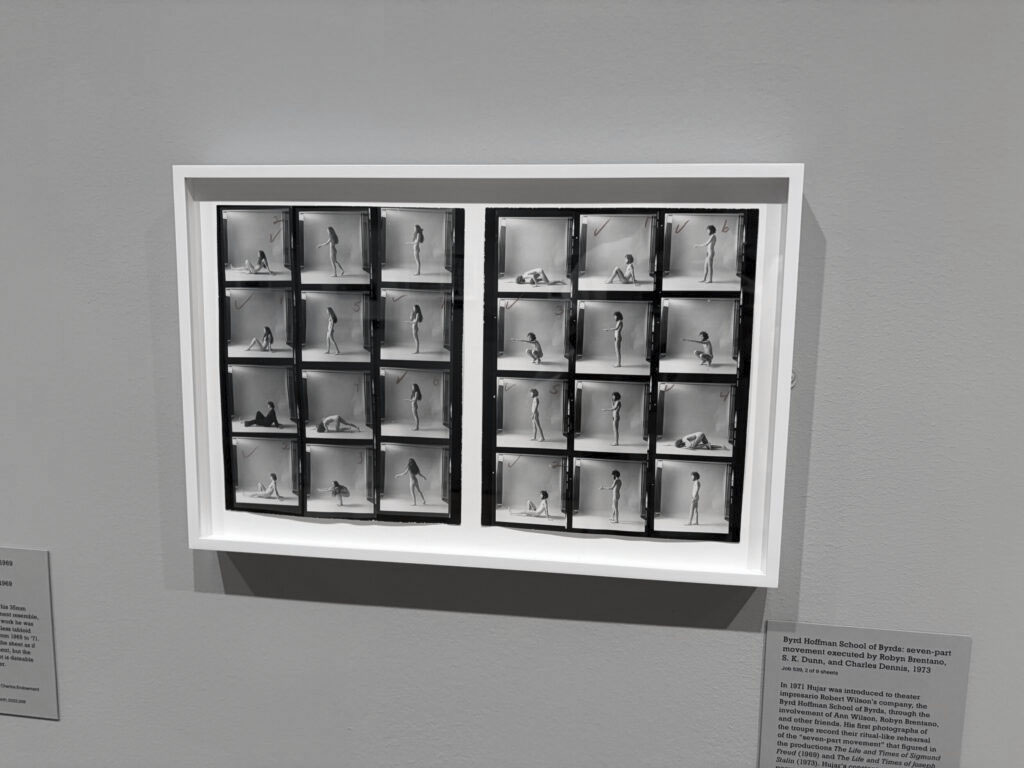
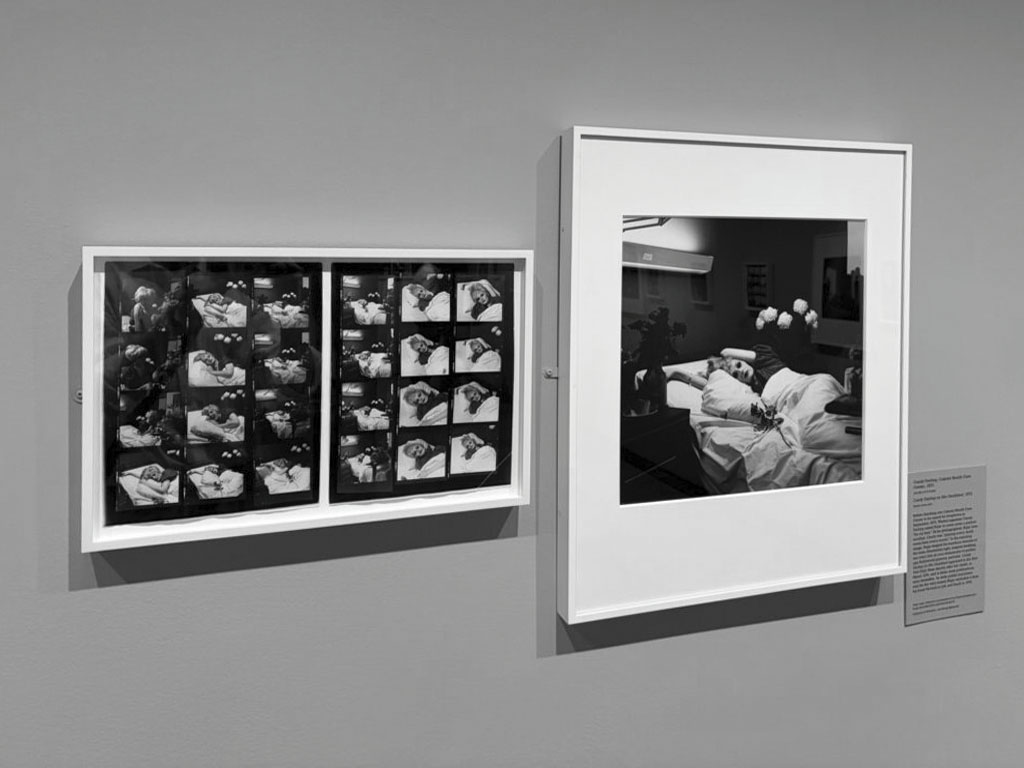
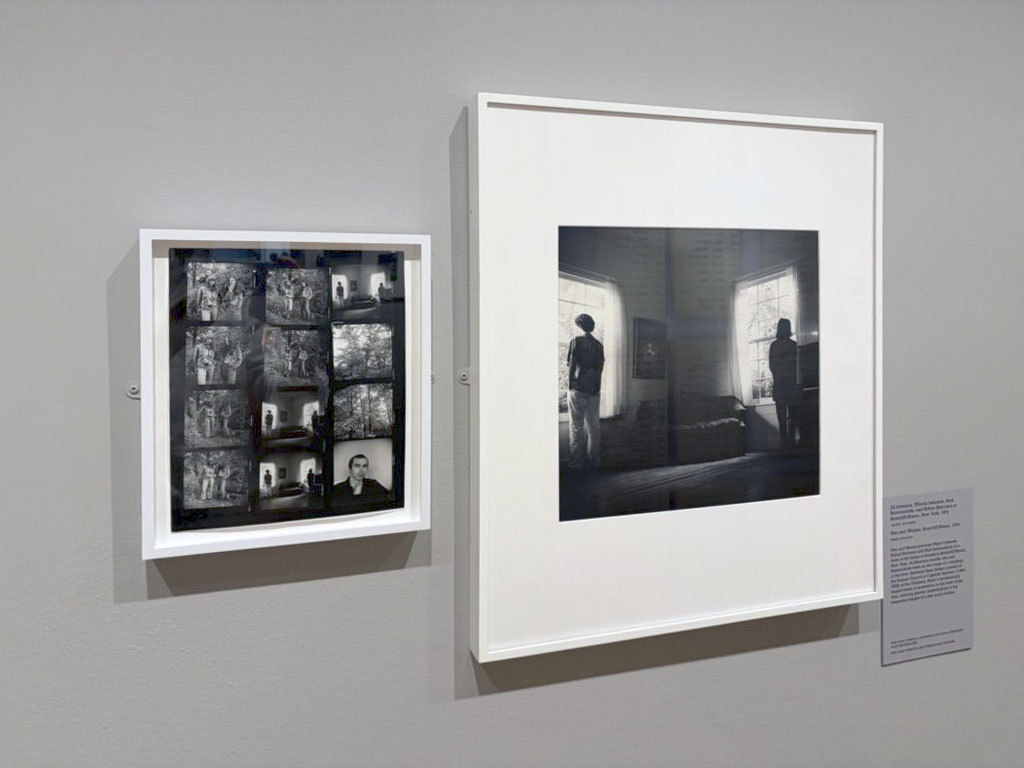
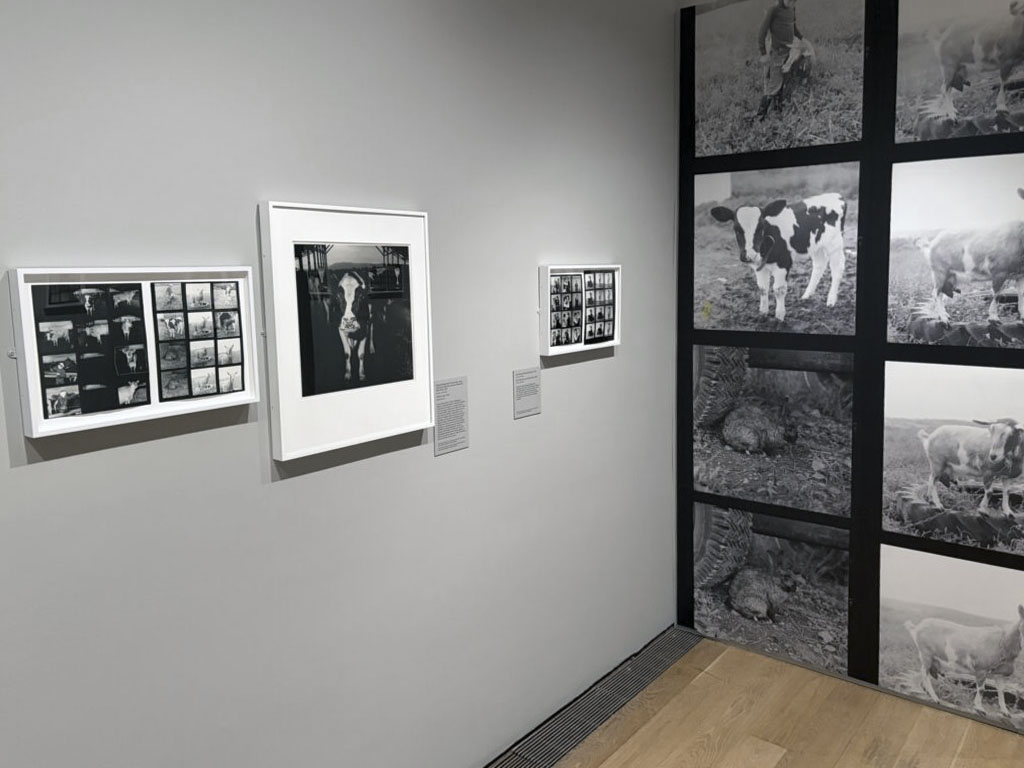
installation views of the exhibition Hujar:Contact at the Morgan Library & Museum, New York City, New York, May – October, 2026. Many thankx to Loring Knoblauch and the Collector Daily website for allowing me to publish the installation photographs in the posting.
1966-72: Onto the Page
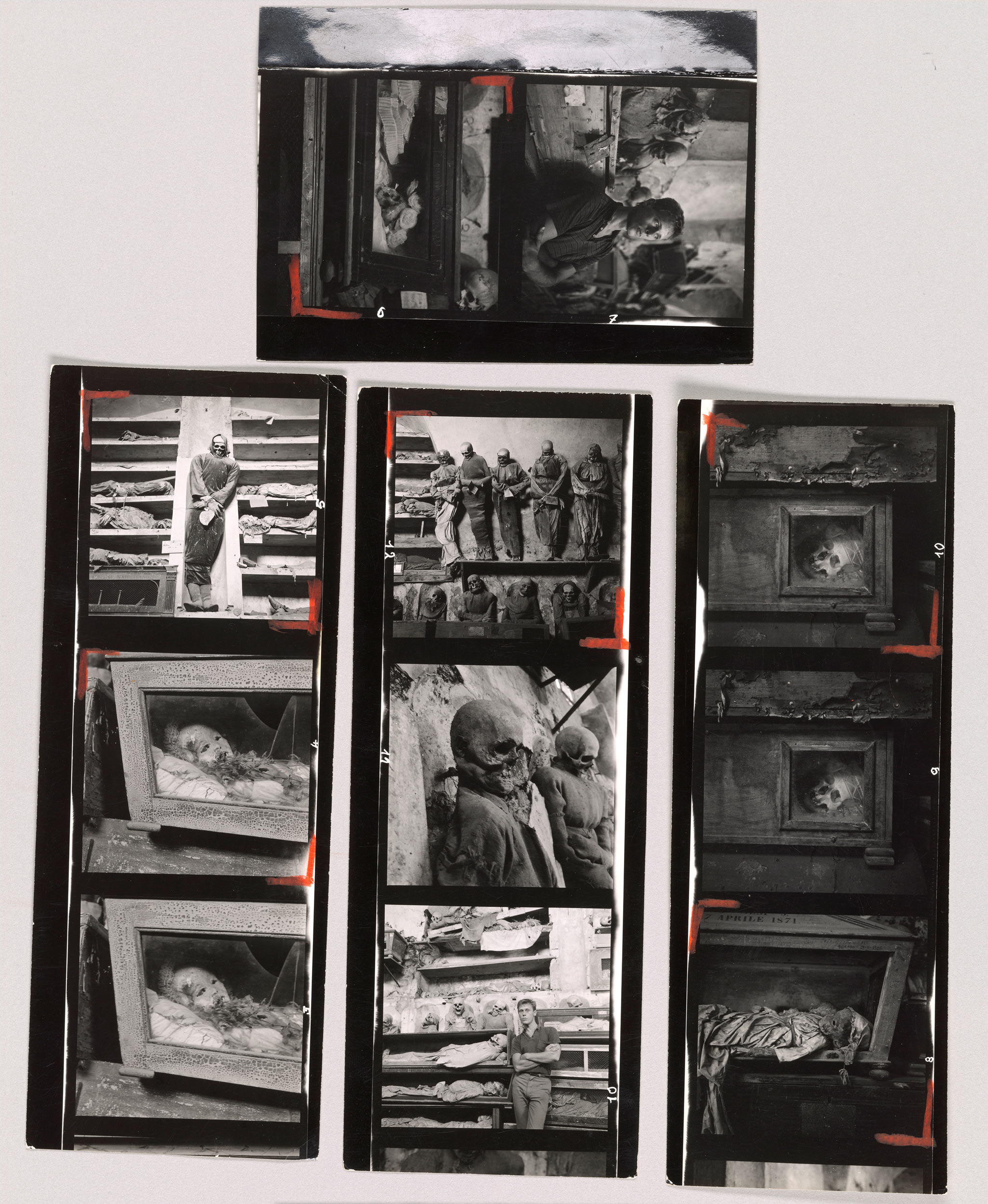
Peter Hujar (American, 1934-1987)
Capuchin Catacombs, Palermo, with Paul Thek
1963
Job 256, 11 sheets
Contact sheet fragments
Dimensions vary – 3 fragments: 7 3/4 x 2 3/4 inches each; 1 fragment: 5 x 3 1/2 inches
Morgan Library & Museum, New York, Peter Hujar Collection, purchased on the Charina Endowment Fund, 2013
Courtesy of Fraenkel Gallery, San Francisco and Ortuzar, New York
© The Peter Hujar Archive / Artists Rights Society (ARS)
Near the end of their time in Italy, Hujar and Paul Thek visited the catacombs maintained by monks of the Capuchin order in Sicily. Thek was fascinated by the site, which he described as a room “decorated with corpses”; soon after returning to New York, he would be making sculpture exploring the decay of the flesh and the body’s status as an object. The photographs Hujar made in the catacombs in, as he said, “about 20 minutes,” proved to be of outsize importance in his later work, forming the second half of his 1976 monograph, Portraits in Life and Death.
Large print label text
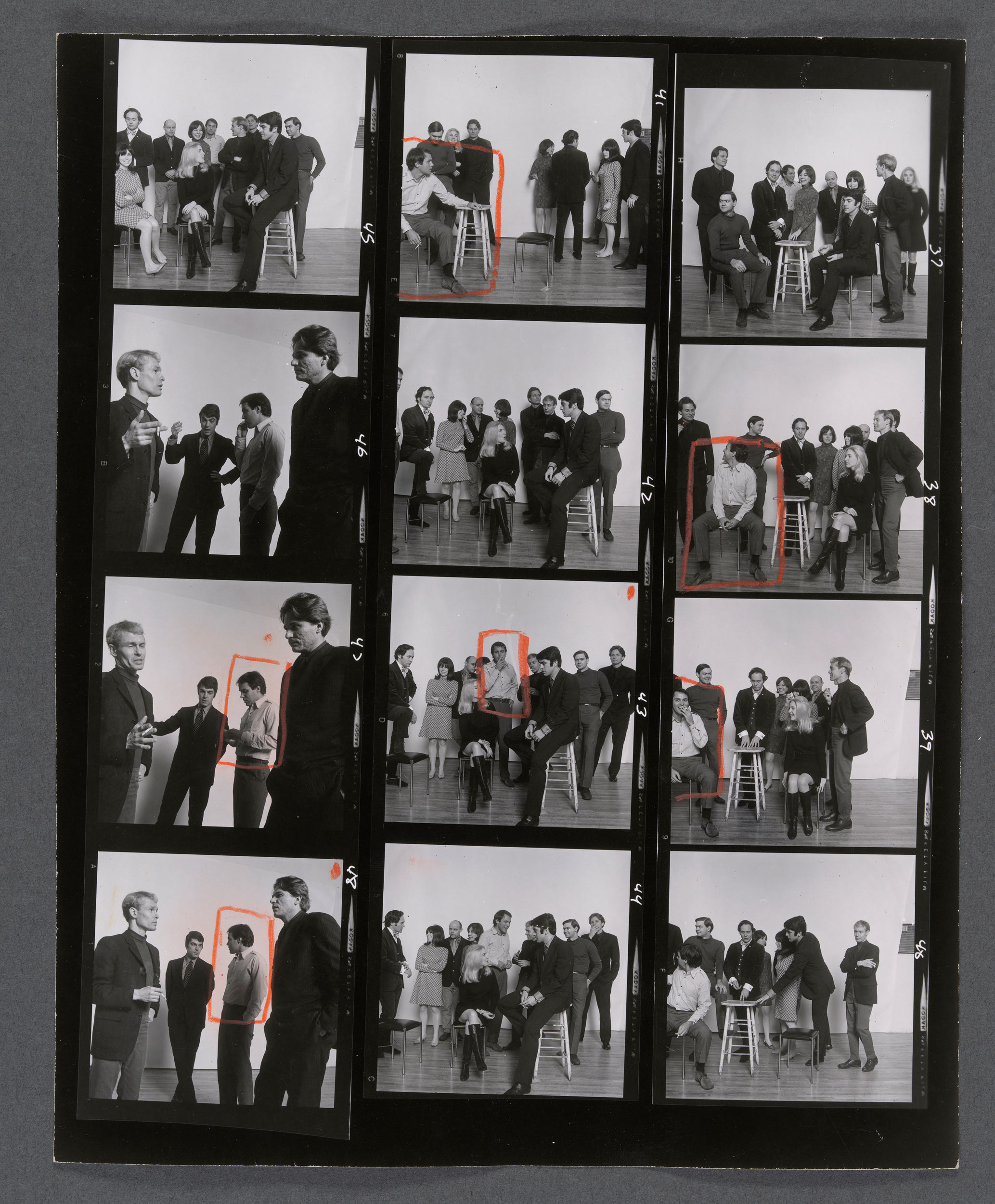
Peter Hujar (American, 1934-1987)
Joseph Raffael among other Stable Gallery artists and staff
c. 1967
Job 327, 11 sheets
Contact sheet
11 x 8 1/2 inches
Morgan Library & Museum, New York, Peter Hujar Collection, purchased on the Charina Endowment Fund, 2013
Courtesy of Fraenkel Gallery, San Francisco and Ortuzar, New York
© The Peter Hujar Archive / Artists Rights Society (ARS)
The group portrait is one of the most purely functional genres of photography: Creativity is stymied by the logistical challenge of attaining an exposure in which nobody blinks. Photographer Peter Hujar was attracted to the challenge. As seen in the markings on his contact sheets, he treated the group setting as a means of eliciting responses from selected individuals. In each frame of the eleven sheets in which Hujar portrayed those connected with the Stable Gallery, he drew squares to single out his former boyfriend, Joseph Raphael.
Large print label text
Hujar:Contact offers an unprecedented look into the life, times, and creative evolution of a master photographer. The exhibition features more than 110 contact sheets and 20 enlargements from the Morgan’s Peter Hujar Collection, which includes over 5,700 contact sheets from throughout the artist’s career.
Peter Hujar (1934-1987) began filing contact sheets and assigning them job numbers at age twenty-one. His records make it possible to track his development – from two decades as a studio assistant (1955-1967), when he pushed himself to try work of every kind, into the late 1960s and his work as a freelancer in fashion, music, and advertising, through his mature period (1974-1987) as a fiercely independent and influential artist in the East Village.
Many of the contact sheets bear editing marks that indicate ideas about cropping and printing and contextualize the exposures Hujar ultimately decided to enlarge. The intense, interactive quality of his portrait work comes to life in contact sheets that read as intimate pictorial narratives, revealing the nature of his attention and the unique personality of each of his subjects. As Hujar matures and struggles, and as the character of his social world changes from the 1950s through the 1960s, 1970s, and 1980s, his contact sheets tell the nuanced story of a lifetime, a community, and an era.
Text from the Morgan Library & Museum website
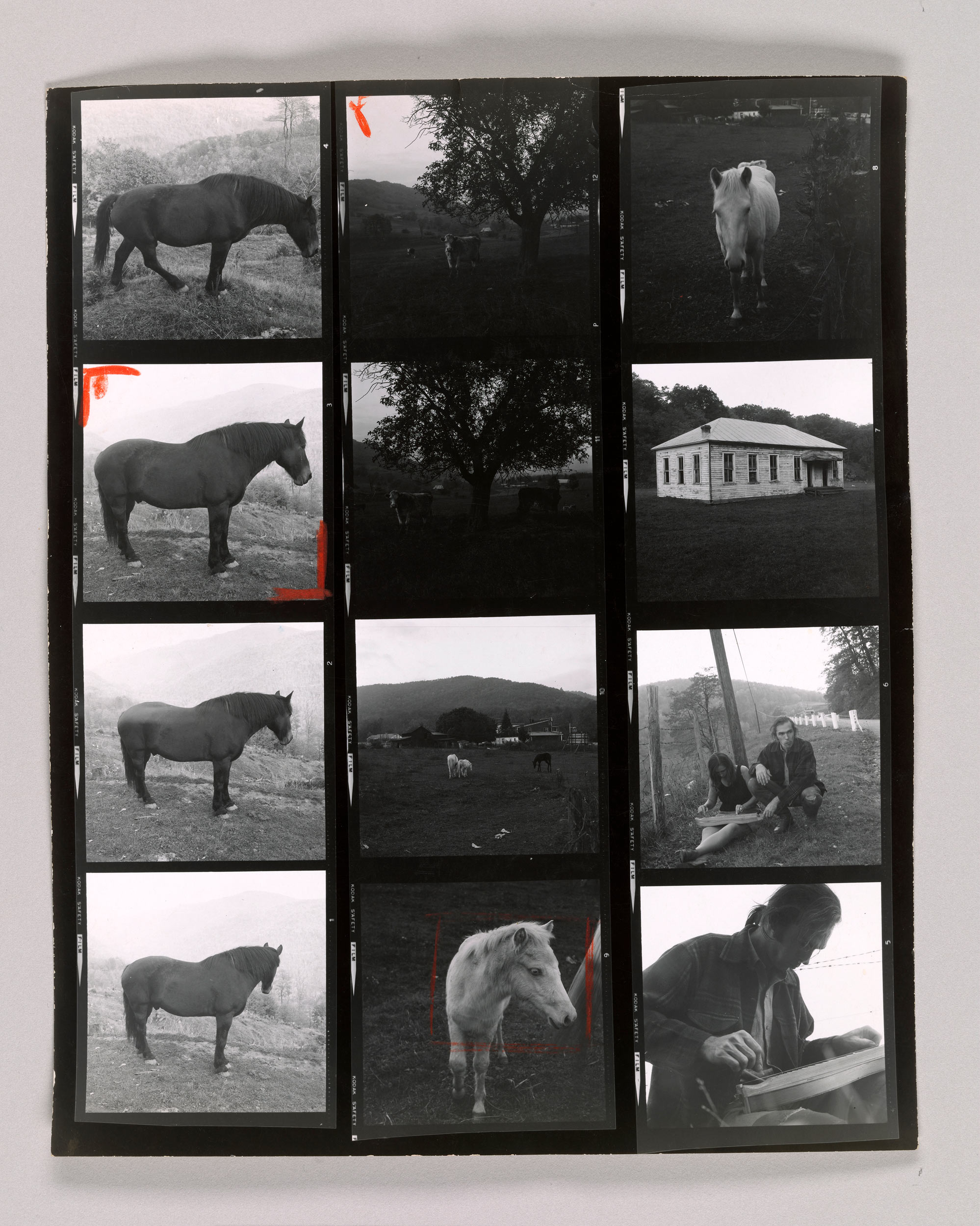
Peter Hujar (American, 1934-1987)
Road Trip to Pennsylvania and West Virginia
1969
Job 463, 23 sheets
Contact sheet
11 x 8 1/2 inches
Morgan Library & Museum, New York, Peter Hujar Collection, purchased on the Charina Endowment Fund, 2013
Courtesy of Fraenkel Gallery, San Francisco and Ortuzar, New York
© The Peter Hujar Archive / Artists Rights Society (ARS)
In October 1969 Hujar undertook a car trip to Pennsylvania and West Virginia with Jim Fouratt and the artist Ann Wilson. Wilson recalled gratefully that the journey was Hujar’s way of keeping her occupied after the sudden death of her husband, critic Gene Swenson, in a car crash. For Hujar, the purpose of the trip was making portraits of animals that he sought out along the way, including horses, sheep, and cattle. It would be another seven years before he pursued animal portraiture in depth.
Large print label text
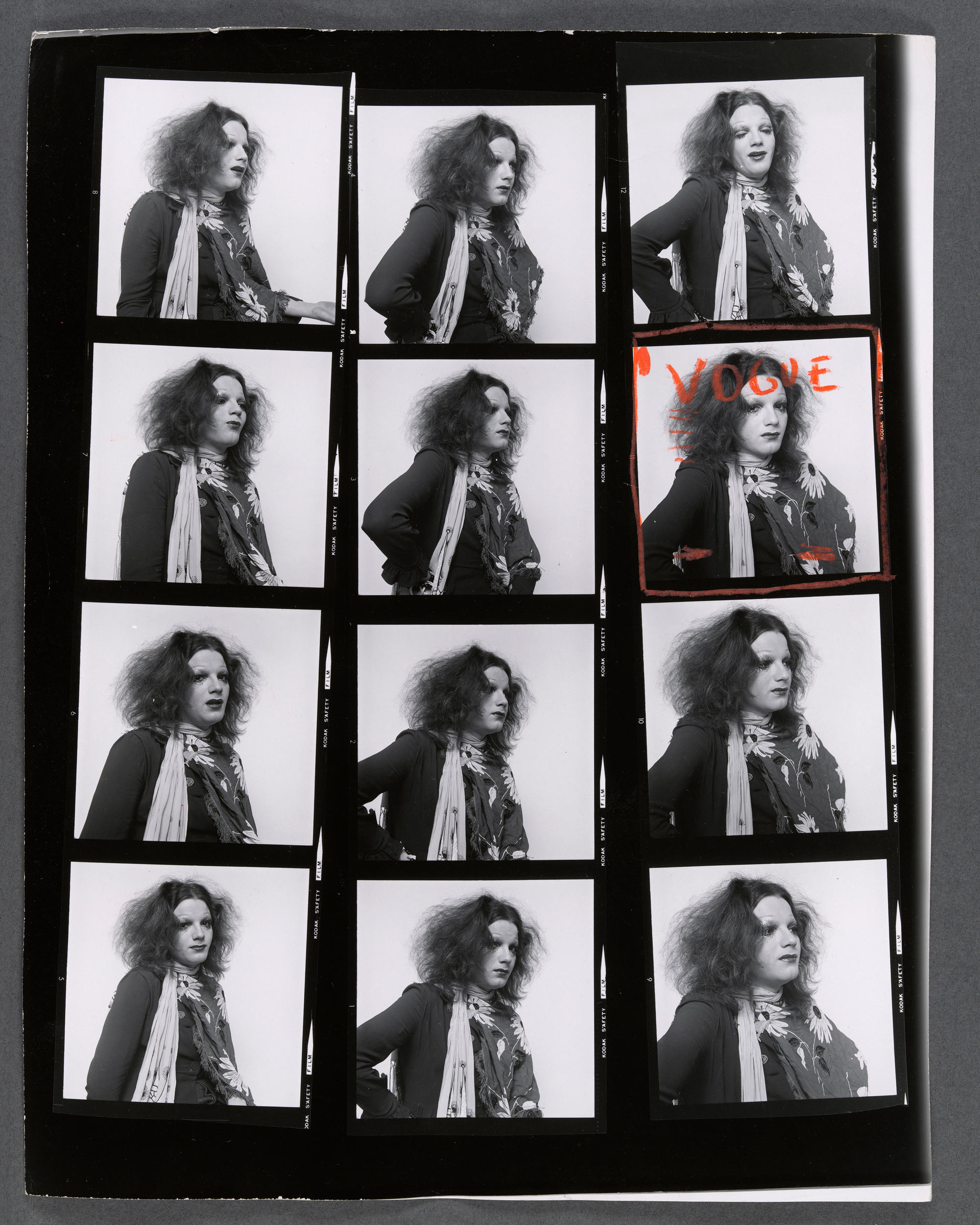
Peter Hujar (American, 1934-1987)
Jackie Curtis at 10 East 23rd Street; Jackie Curtis for New Times magazine
c. 1970
Job 474 B, 7 sheets
Contact sheet
11 x 8 1/2 inches
Morgan Library & Museum, New York, Peter Hujar Collection, purchased on the Charina Endowment Fund, 2013
Courtesy of Fraenkel Gallery, San Francisco and Ortuzar, New York
© The Peter Hujar Archive / Artists Rights Society (ARS)
The bond Hujar formed with Warhol “superstar” Jackie Curtis reflected, in part, their mutual rejection of familiar sexual identities. Curtis told The New York Times, “I’m not a boy, not a girl, not a faggot, not a drag queen, not a transsexual – just me, Jackie.”
This contact sheet comes from the session for a 1970 New Times magazine feature on New Yorkers who defined their historical moment. The print is from a separate session, which yielded a spread of full-page portraits of Curtis in issue six of Newspaper.
Large print label text
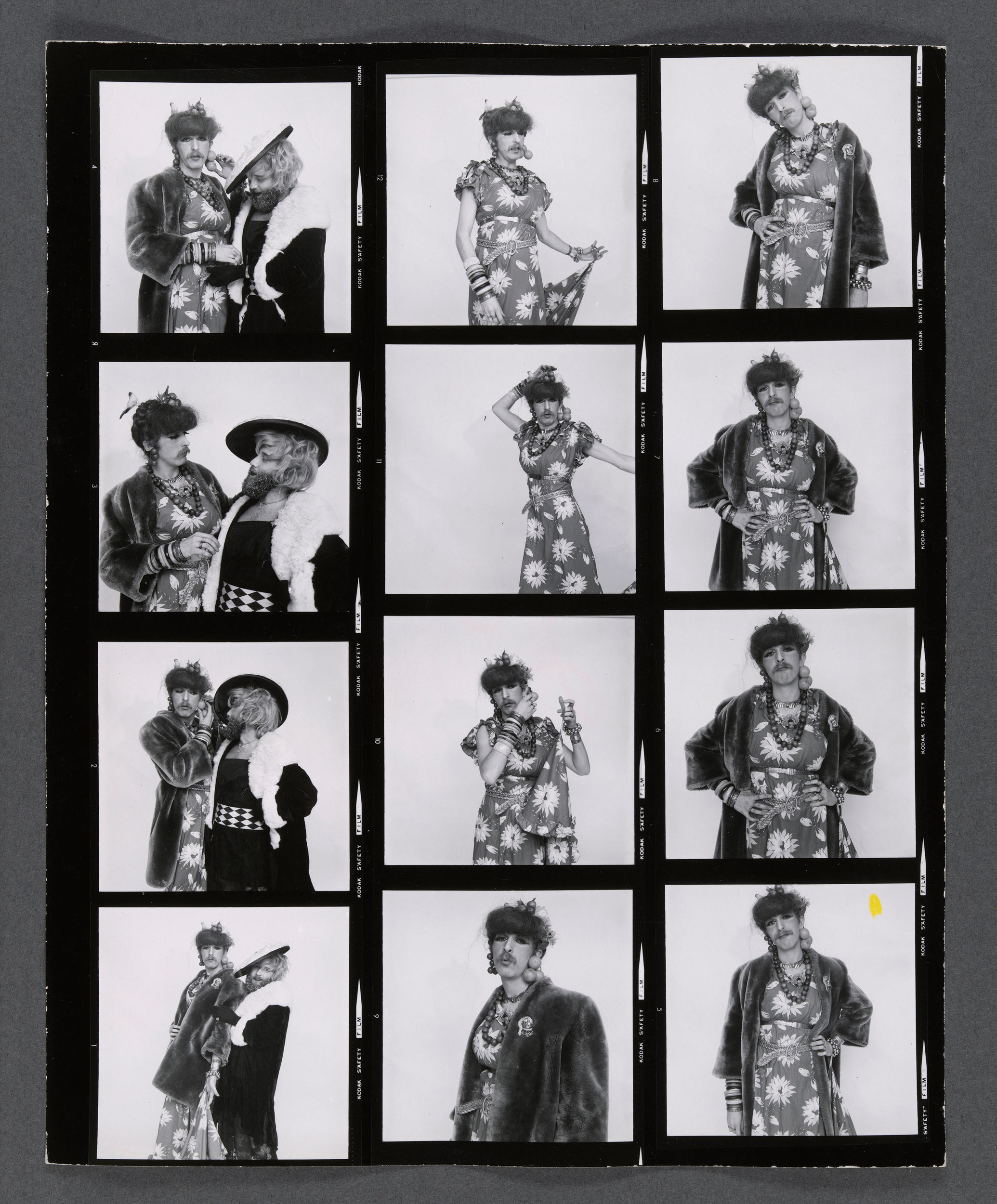
Peter Hujar (American, 1934-1987)
The Cockettes at 10 East 23rd Street
1971
Job 519
The Morgan Library & Museum, Peter Hujar Collection, New York purchased on the Charina Endowment Fund, 2013
Courtesy of Fraenkel Gallery, San Francisco and Ortuzar, New York
© The Peter Hujar Archive / Artists Rights Society (ARS)
In November of 1971, the San Francisco troupe, the Cockettes, came to New York to perform at the Anderson Theatre. Peter Hujar photographed them in his Madison Square studio and on the street outside the theatre – solo, in pairs and trios, and in large groups. In all he shot over fifty rolls of film. Pictured here [below] is Fayette, one of the co-founders of the avant-garde experimental theatre troupe.
Many of these photographs ran in the final issue of Newspaper, which was devoted entirely to the group. Though the Cockettes’ shaggy performance style was roundly scorned by New York audiences, photographing them crystallised a theme – the stance of “genderfuck,” a madcap travesty of gender identities – that Hujar would explore in his work for the rest of his life.
Large print label text
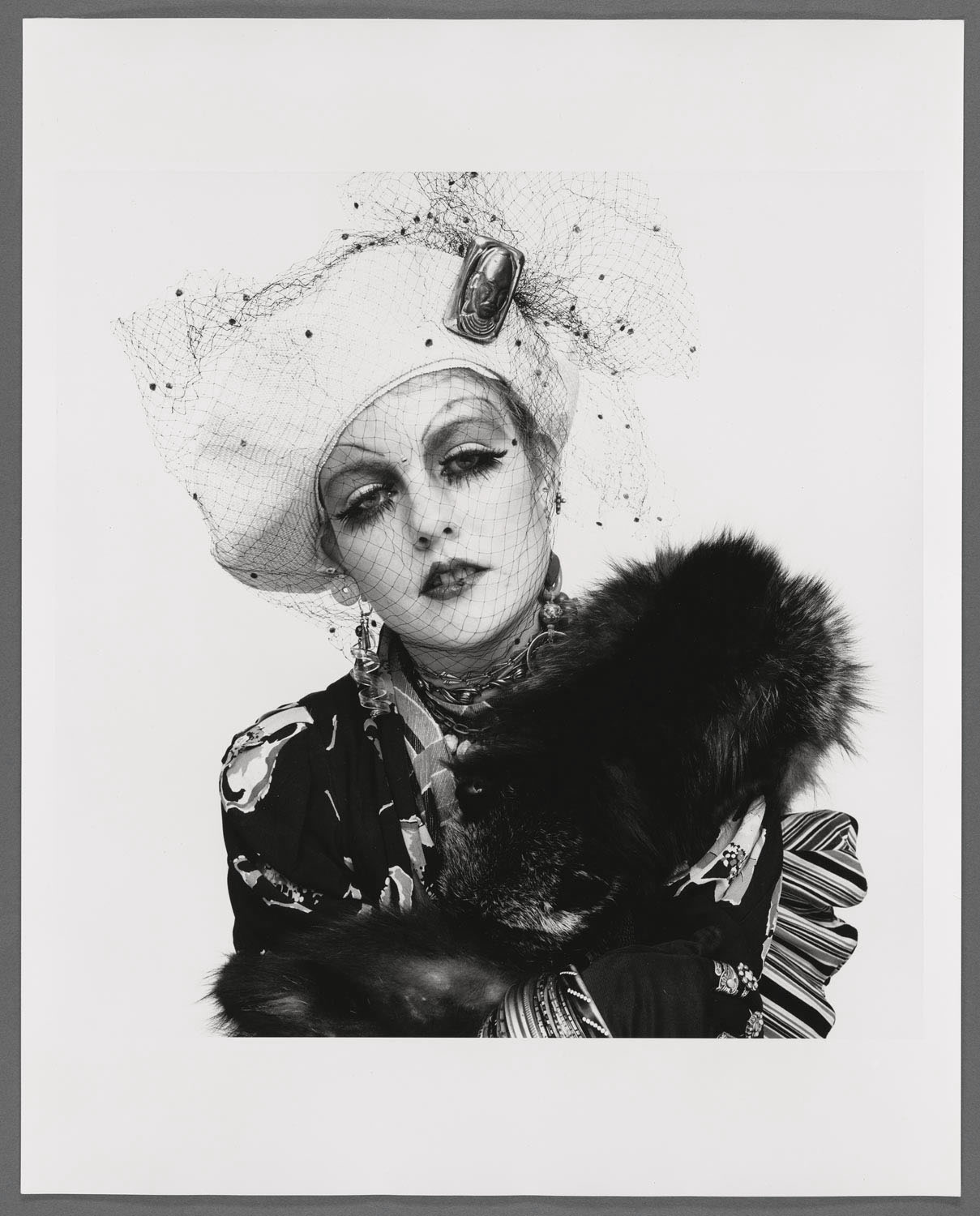
Peter Hujar (American, 1934-1987)
Fayette
1971
Gelatin silver print
Image: 14 11/16 x 14 11/16 inches (37.3 x 37.3cm)
Sheet: 19 7/8 x 15 7/8 inches (50.5 x 40.4cm)
The Morgan Library & Museum, Peter Hujar Collection, New York
Gift of Stephen Koch
Courtesy of Fraenkel Gallery, San Francisco and Ortuzar, New York
© The Peter Hujar Archive /
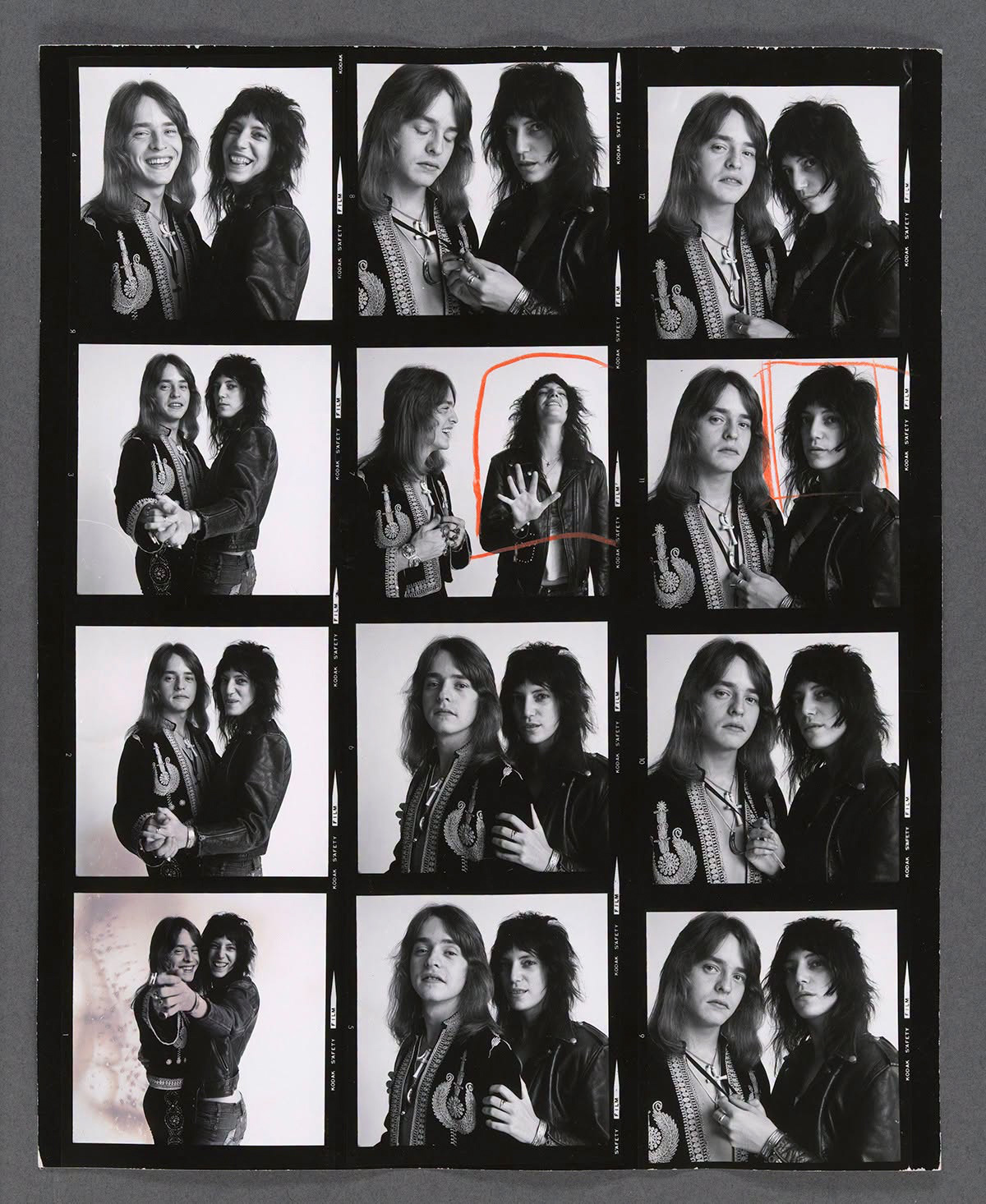
Peter Hujar (American, 1934-1987)
Patti Smith and Rick Derringer
1971
Job 517, 11 sheets
Contact sheet
11 x 8 1/2 inches
The Morgan Library & Museum, Peter Hujar Collection, New York purchased on the Charina Endowment Fund
© The Peter Hujar Archive / Artists Rights Society (ARS)
At the turn of the 1970s, much of Peter Hujar’s paying work revolved around rock music publicity, including gigs ranging from concert coverage to record cover art to music magazine features. As documented in his contact sheets, Hujar frequently merged and swapped traditional gender codes in the presentation of the performers he photographed, such as Rick Derringer and Patti Smith pictured here.
Large print label text
This spring, the Morgan Library & Museum presents Hujar:Contact, an exhibition exploring the life, times, and creative evolution of photographer Peter Hujar (1934 – 1987). On view from May 22 through October 25, 2026, the exhibition features more than 110 contact sheets and 20 enlargements from the Morgan’s collection of Peter Hujar’s works.
Highlights include portraits of artists and performers such as Marsha P. Johnson, Jackie Curtis, Patti Smith, Candy Darling, John Zorn, and Ethyl Eichelberger, as well as Hujar’s creative collaborators and lovers, including Paul Thek, Joseph Raffael, and David Wojnarowicz. Hujar’s distinctive portraiture, alongside rare prints of his street photography, interiors, and landscapes, reveals the unflinching eye he cast upon a vast range of subjects.
In 2013, the Morgan acquired the 5,783 black-and-white contact sheets Hujar possessed at the time of his death, along with two notebooks, or “job books,” in which he recorded his photographic assignments and personal projects from 1954 until 1985. Together, these materials provide a detailed record of an artist who left no written reflection on his work, yet carefully preserved the traces of his decades-long photographic life. Hujar:Contact foregrounds the material processes that structured photographic practice in the era of film and chemical printing. Visitors to the exhibition will be transported to Hujar’s darkroom, invited to study these small images with the same attentiveness and care that Hujar himself brought to them.
“Following our 2018 exhibition Peter Hujar: Speed of Life, which explored the full length and breadth of Hujar’s artistic career for the first time, Hujar:Contact turns to his creative process,” said Colin B. Bailey, Katharine J. Rayner Director of the Morgan Library & Museum. “This exhibition advances the Morgan’s commitment to collecting and interpreting contemporary photography and to broadening appreciation for a medium that is both immediate and reflective.”
The exhibition elevates the contact sheet, traditionally a working tool, into an art object worthy of close visual reading in its own right. Each sheet reproduces an entire roll of film, allowing viewers to follow Hujar’s eye through a series of exposures. Many of the contact sheets include Hujar’s own handwritten notes, marks, and annotations, which indicate his changing approach to cropping and printing and elucidate the editorial decisions behind each final image.
“Contact sheets reveal an intimate history of Hujar’s habits, inspirations, and happy accidents – the intricacies hidden behind a final print,” said Joel Smith, curator of the exhibition and Richard L. Menschel Curator and Department Head of Photography at the Morgan. “Hujar:Contact illuminates the physical process that was central to his artistic practice.”
Reproduced at large scale on the walls are dozens of pages from Hujar’s job books, which provide the closest thing to a chronological account of his career. The earliest surviving page dates to 1954, when Hujar was just beginning to photograph friends and loved ones in New York. Over the following decades, the notebooks grew into a numbered record of hundreds of shoots, following the artist from his job as a studio assistant in the 1950s to his work in fashion and music journalism in the late 1960s, and ultimately to the independent portrait practice that defined his mature work in downtown New York.
By the mid-1970s, Hujar had become a central figure in the cultural life of New York’s East Village. Working primarily with a medium-format camera that allowed him to maintain eye contact with his sitters, Hujar cultivated an atmosphere in which photographer and subject shaped the image together. Visitors will gain a vivid sense of this collaborative process through the presentation of contact sheets alongside never-before-exhibited prints, unveiling how individual portraits emerged from a give and-take process grounded in patience and mutual curiosity.
Hujar:Contact is organised by Joel Smith, Richard L. Menschel Curator and Department Head of Photography.
The exhibition is accompanied by an eponymous catalogue that offers an authoritative and visually rich account of Peter Hujar’s creative process, featuring nearly five hundred reproductions of his contact sheets. Drawing from the Morgan Library & Museum’s extensive archive of more than five thousand original contact sheets and two job books created between 1954 and 1985, the publication provides an unprecedented look into the artist’s working methods.
Critical texts by Joel Smith establish a chronology of Hujar’s contact sheets, presenting a portrait of an artist developing, experimenting with, and refining his practice against the tumultuous cultural politics and sea changes of gay life conveyed by the words “Stonewall” and “AIDS.”
Throughout his career, Hujar recorded more than a thousand photo shoots in his job books. A complete transcription and annotation of these materials by Olivia McCall lends the volume unique scholarly value.
Published by the Morgan Library & Museum in association with MACK, the catalogue is available for pre-order in the Morgan Shop for $70.
Press release from the Morgan Library & Museum
1973-76: Life and Death
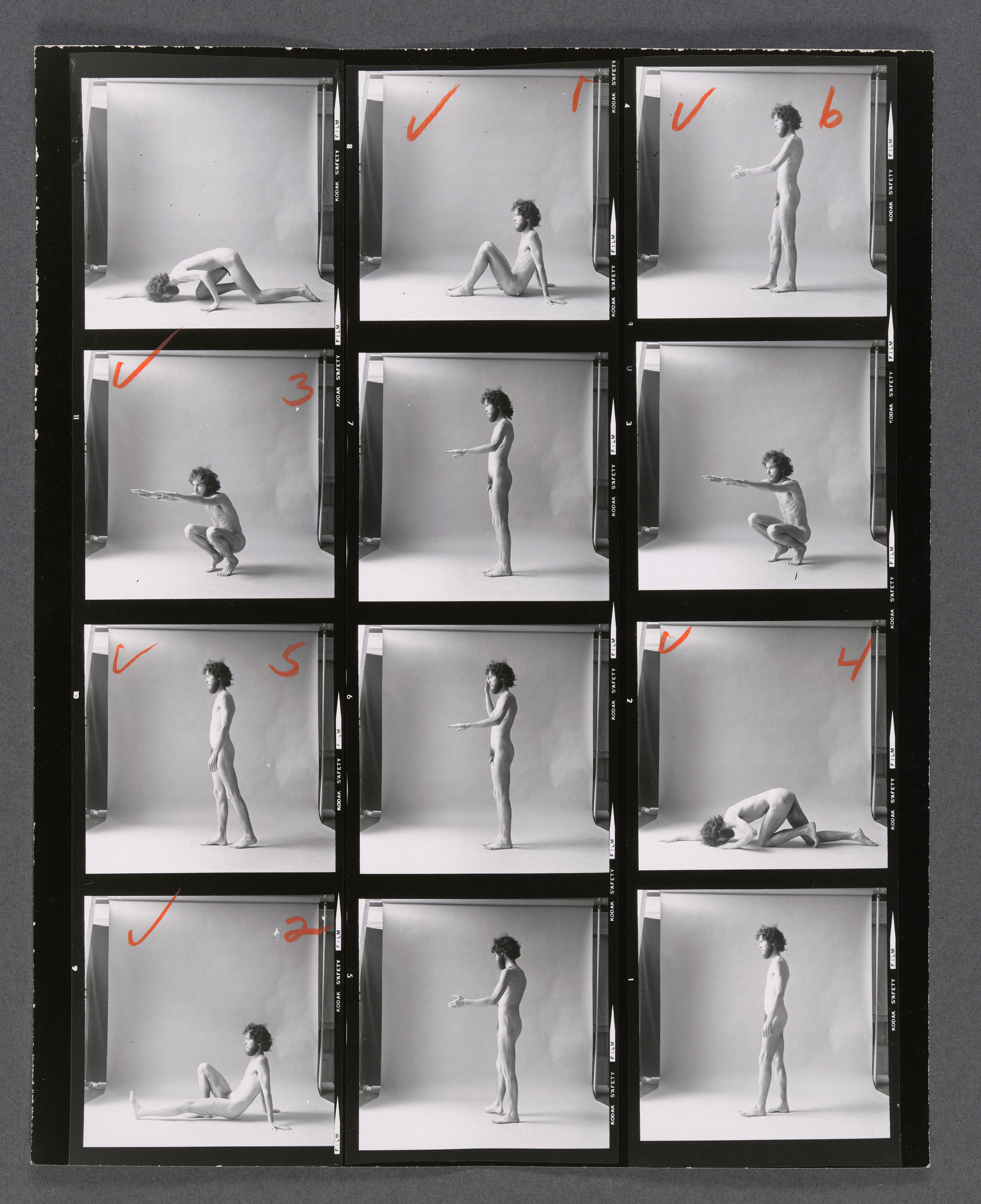
Peter Hujar (American, 1934-1987)
Byrd Hoffman School of Byrds: 7-part movement executed by Robyn Brentano, S.K. Dunn, and Charles Dennis
1973
Job 539, 9 sheets
Contact sheet
11 x 8 1/2 inches
The Morgan Library & Museum, Peter Hujar Collection, New York purchased on the Charina Endowment Fund, 2013
Courtesy of Fraenkel Gallery, San Francisco and Ortuzar, New York
© The Peter Hujar Archive / Artists Rights Society (ARS)
In 1971 Hujar was introduced to theatre impresario Robert Wilson’s company, the Byrd Hoffman School of Byrds, through the involvement of Ann Wilson, Robyn Brentano, and other friends. His first photographs of the troupe record their ritual-like rehearsal of the “seven-part movement” that figured in the productions The Life and Times of Sigmund Freud (1969) and The Life and Times of Joseph Stalin (1973). Hujar’s constant profile-view perspective lends the session’s contact sheets the hypnotic regularity of a score by Wilson’s frequent collaborator, Philip Glass.
Large print label text
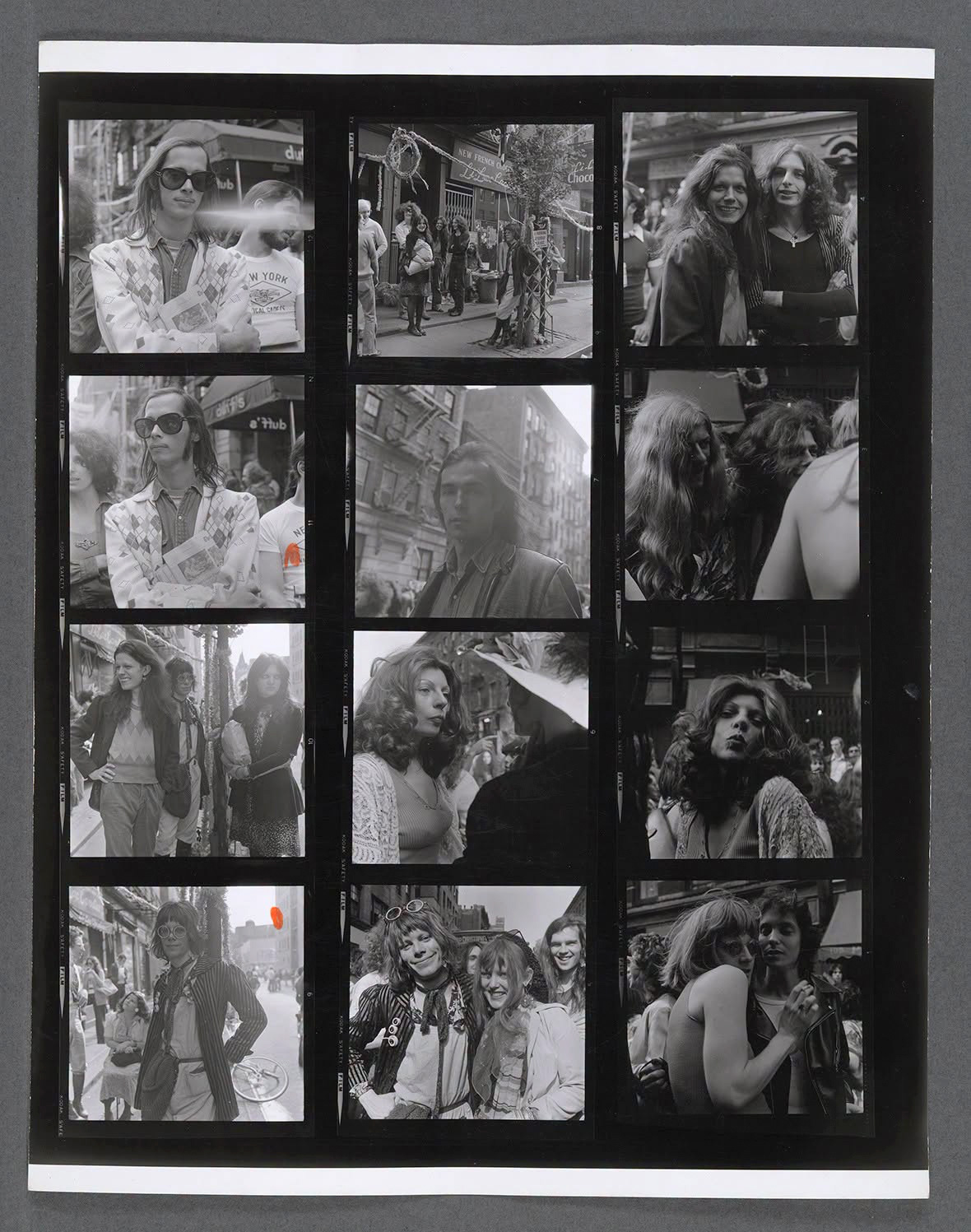
Peter Hujar (American, 1934-1987)
Christopher Street Liberation Day Fair with John Waters and Jackie Curtis
1973
Job 577
Contact sheet
11 x 8 1/2 inches
The Morgan Library & Museum, Peter Hujar Collection, New York purchased on the Charina Endowment Fund
Courtesy of Fraenkel Gallery, San Francisco and Ortuzar, New York
© The Peter Hujar Archive / Artists Rights Society (ARS)
As seen in the central frame of this contact sheet, Peter Hujar often turned the camera over to others, inviting them to take a picture of him. Because he rarely made prints of these frames, it is possible that the gesture was intended as much to ease others’ nervousness around the camera as to produce a portrait of himself.
The 1973 Christopher Street Liberation Day Fair – the forerunner of the Pride March, from which this contact sheet originates – was notable for Sylvia Rivera’s historic speech in Washington Square Park, in which she advocated for members of the gay community who were homeless or incarcerated.
Large print label text
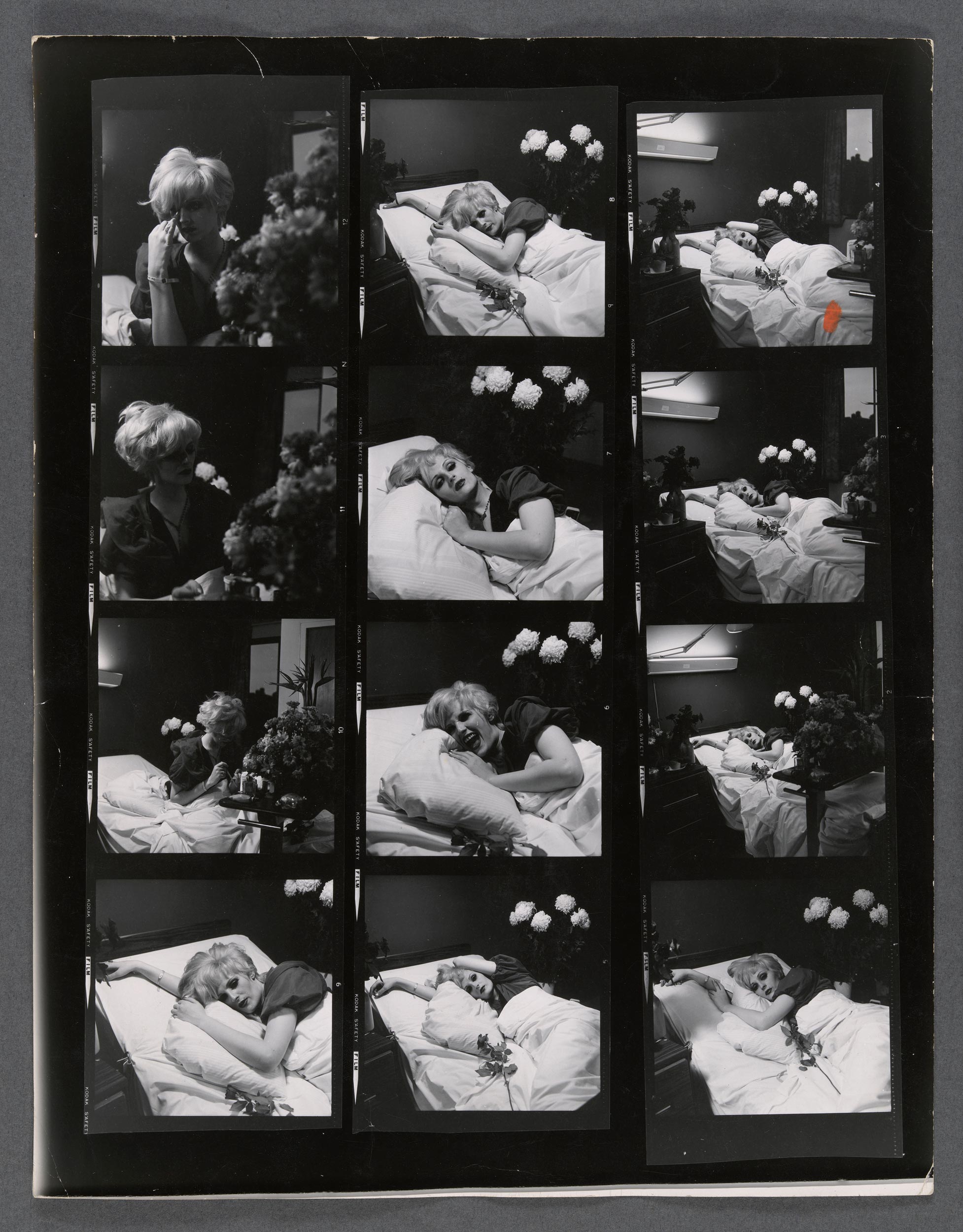
Peter Hujar (American, 1934-1987)
Candy Darling in room 1423, Cabrini Health Care Center
1973
Job 587, 6 sheets
Contact sheet
11 x 8 1/2 inches
The Morgan Library & Museum, Peter Hujar Collection, New York purchased on the Charina Endowment Fund, 2013
Courtesy of Fraenkel Gallery, San Francisco and Ortuzar, New York
© The Peter Hujar Archive / Artists Rights Society (ARS)
Peter Hujar’s famous photograph, “Candy Darling on Her Deathbed,” [below] printed from the top-right frame marked with a dot, appeared in the New York Daily News shortly after her death in March 1974, and in several other publications soon thereafter. Perhaps due to this wide public circulation, Hujar excluded the image from his 1976 book “Portraits in Life and Death.”
Before checking into Cabrini Health Care Center for testing in September 1973, Warhol superstar Candy Darling asked Hujar to make a portrait “for my fans.” The contact sheet reveals the most iconic still of Candy lying languidly in bed, surrounded by movement, laughter, and theatricality.
Hujar later described their session as a kind of performance, recalling that Candy was “playing every death scene from every movie.” He mirrored this cinematic sensibility in his composition and printing process, shaping the final image so that the dreary details of the room—fluorescent light, hospital bedding, a single rose – are transformed into an icon reminiscent of Hollywood’s golden-age portraiture.
Large print label text

Peter Hujar (American, 1934-1987)
Candy Darling on Her Deathbed
1973
Gelatin silver print
Collection of Richard L. and Ronay Menschel
© The Peter Hujar Archive / Artists Rights Society (ARS)
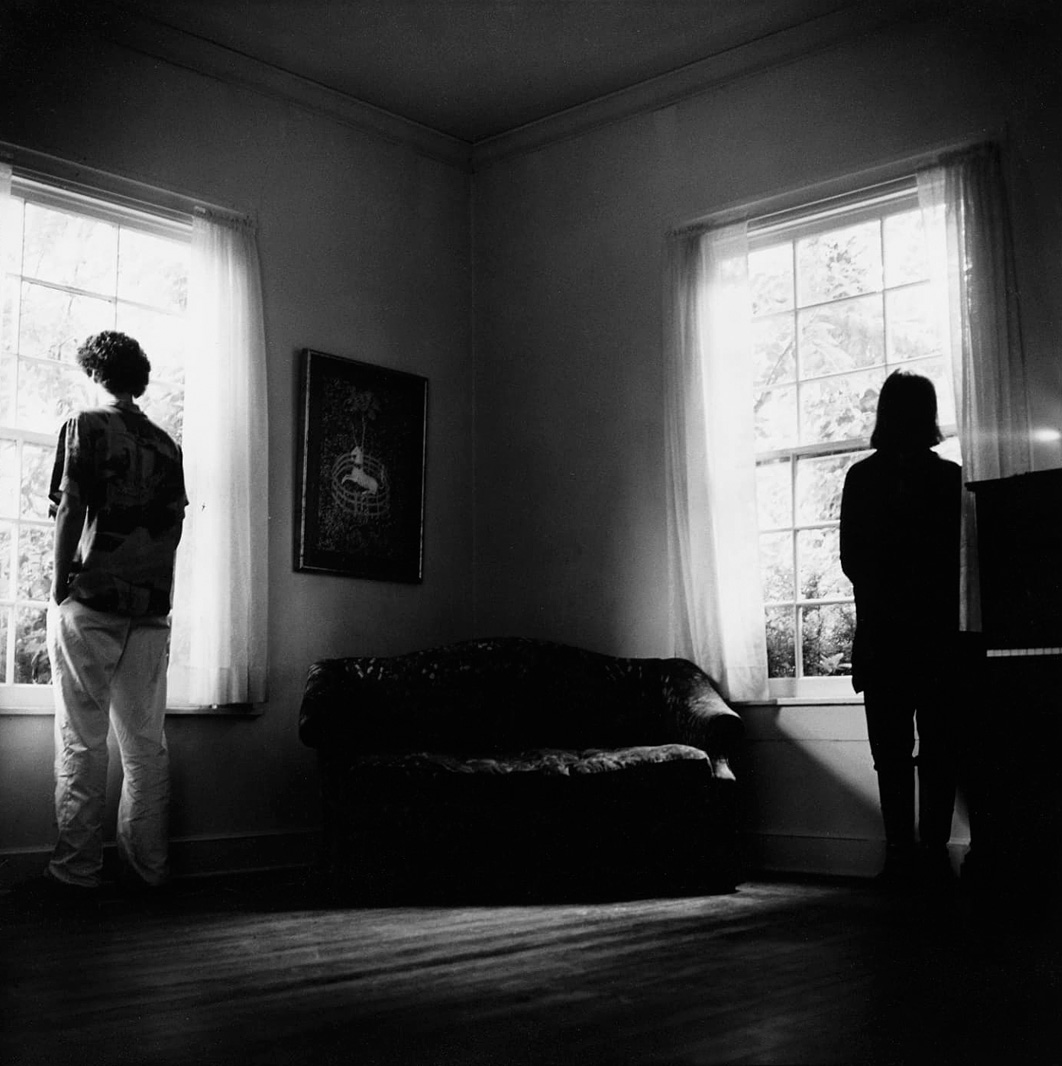
Peter Hujar (American, 1934-1987)
Man and Woman at Windows, Briarcliff Manor
1974
From Jill Johnston, Winnie Johnston, Rick Brintzenhofe, and Robyn Brentano at Briarcliff Manor, New York, 1974 (Job 607, 5 sheets)
Gelatin silver print
Image: 13 7/8 x 13 11/16 inches (35.3 x 34.8cm)
Sheet: 16 13/16 x 13 7/8 inches (42.7 x 35.3cm)
The Morgan Library & Museum, Peter Hujar Collection, New York
Gift of Stephen Koch
© The Peter Hujar Archive / Artists Rights Society (ARS)
Man and Woman portrays Hujar’s friends Robyn Brentano and Rick Brintzenhofe in a room at the home of friends in Briarcliff Manor, New York. As Brentano recalls, she and Brintzenhofe were on the verge of a breakup at the time. Between them hangs a poster of the famous Unicorn in Captivity tapestry (1495-1505) at the Cloisters. Hujar’s symbolically staged scene is anomalous in his work of the time, bearing greater resemblance to his magazine images of a few years earlier.
Large print label text
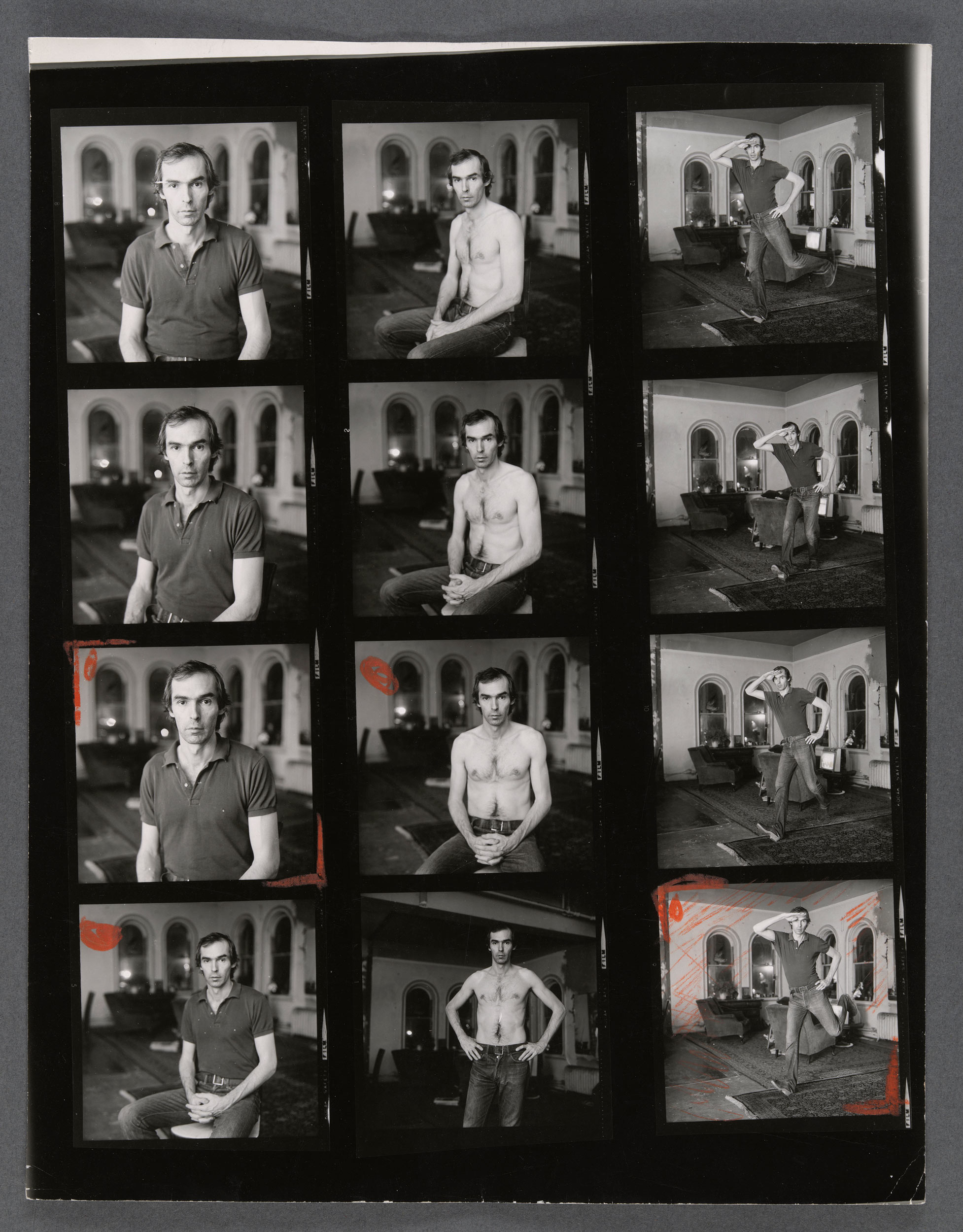
Peter Hujar (American, 1934-1987)
Self-portraits on heel
1974
Job 620, 3 sheets
Contact sheet
11 x 8 1/2 inches
The Morgan Library & Museum, Peter Hujar Collection, New York purchased on the Charina Endowment Fund, 2013
Courtesy of Fraenkel Gallery, San Francisco and Ortuzar, New York
© The Peter Hujar Archive / Artists Rights Society (ARS)
Hujar’s move into a large, low-rent space at 189 Second Avenue in the 1970s coincided with his decision to give up paid work altogether as he began to pursue more meaningful personal projects. As if trumpeting his arrival at the loft, in this contact sheet Hujar frolics and salutes the camera.
Hujar would live and work in the loft for the remainder of his life until New Year’s Day in 1987, when he received a tragic AIDS diagnosis. He quit abruptly thereafter, and even declined to catch up on his job-book entries for the preceding year’s work. He passed away that November due to related complications.
Large print label text
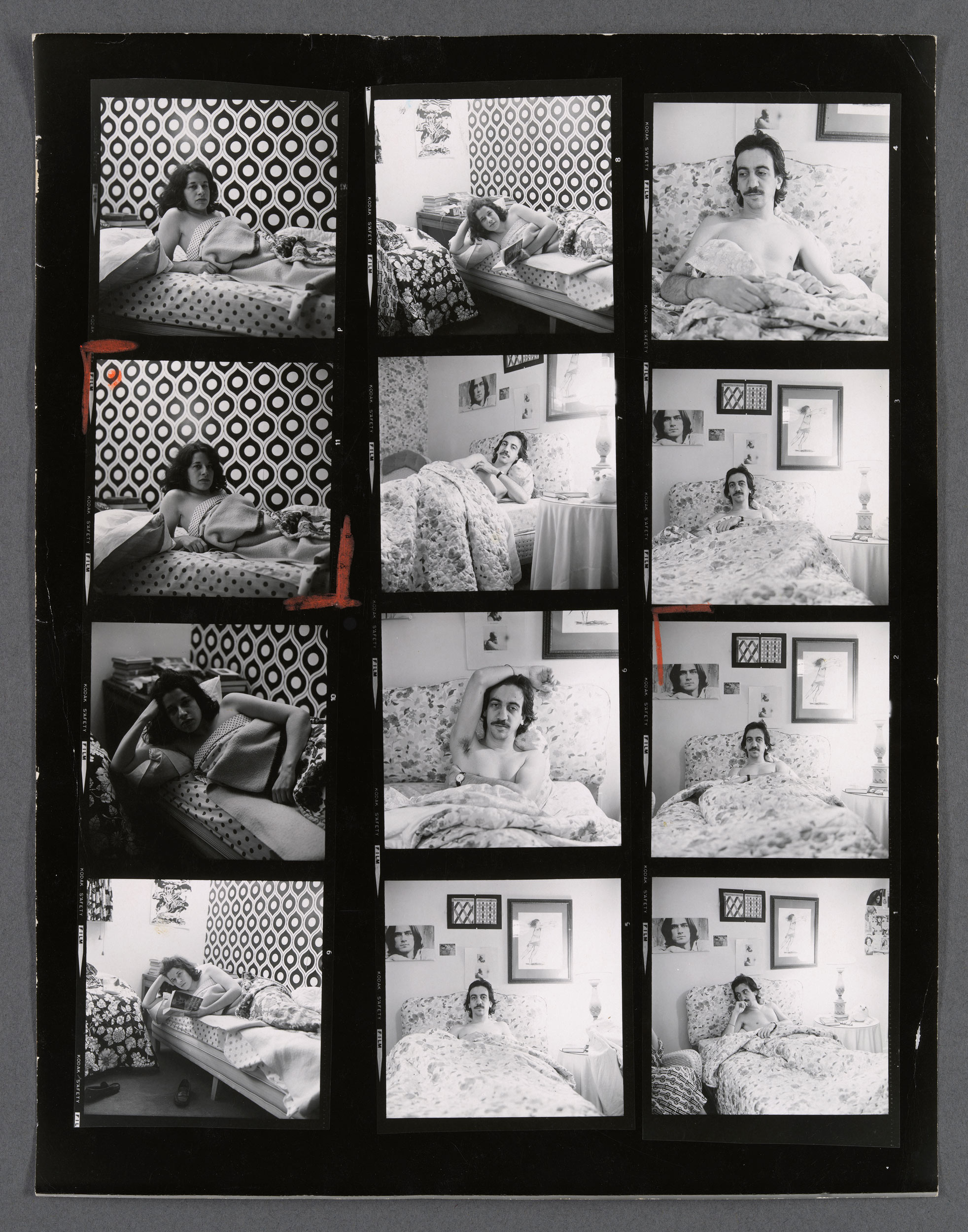
Peter Hujar (American, 1934-1987)
Vince Aletti and Fran Lebowitz, Morristown, New Jersey
1974
Job 622
The Morgan Library & Museum, Peter Hujar Collection, New York purchased on the Charina Endowment Fund, 2013
Courtesy of Fraenkel Gallery, San Francisco and Ortuzar, New York
© The Peter Hujar Archive / Artists Rights Society (ARS)
On a few occasions Fran Lebowitz invited Hujar and Vince Aletti to visit her family home in Morristown, New Jersey, and the three of them stayed overnight. Once, Hujar photographed each of his friends in the beds where they had spent the previous night, Aletti in Fran’s bedroom and Fran in her sister’s. The diaristic nature of the exposures looks ahead to the work of Nan Goldin, which Hujar would point to in the 1980s as a compelling next stage in the medium’s evolution.
Large print label text
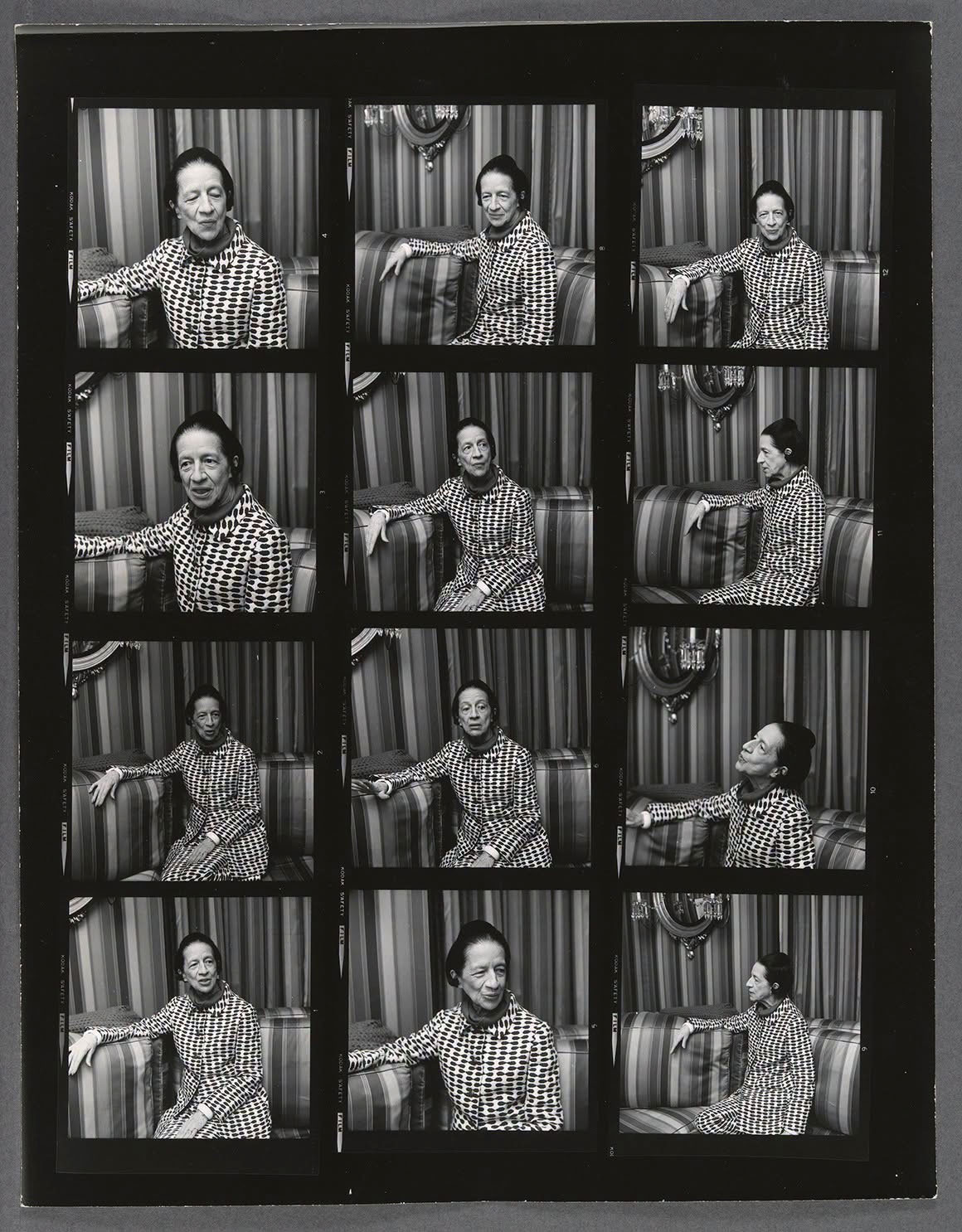
Peter Hujar (American, 1934-1987)
Diana Vreeland
1975
Job 655, 7 sheets
Contact sheet
11 x 8 1/2 inches
The Morgan Library & Museum, Peter Hujar Collection, New York, purchased on the Charina Endowment Fund, 2013
Courtesy of Fraenkel Gallery, San Francisco and Ortuzar, New York
© The Peter Hujar Archive / Artists Rights Society (ARS)
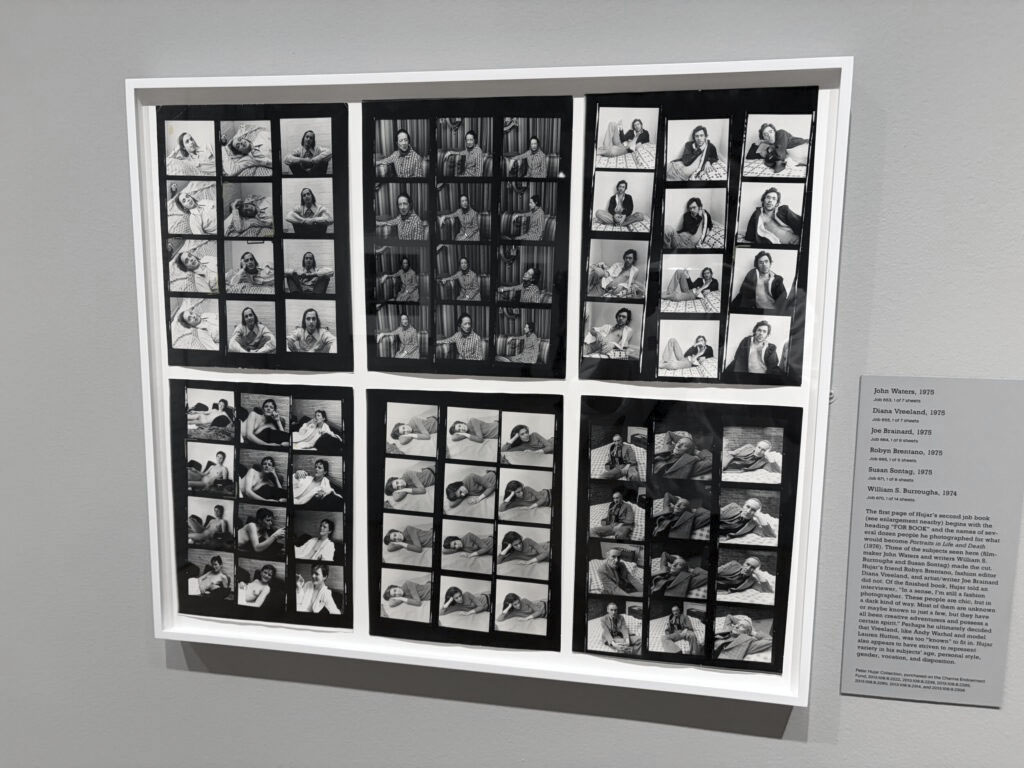
The first page of Peter Hujar’s second job book begins with the heading “FOR BOOK” and the names of several dozen people he photographed for what would become “Portraits in Life and Death” (1976). Hujar’s friend Robyn Brentano, fashion editor Diana Vreeland, and artist/writer Joe Brainard did not make the cut. Of the finished book, Hujar told an interviewer, “In a sense, I’m still a fashion photographer. These people are chic, but in a dark kind of way. Most of them are unknown or maybe known to just a few, but they have all been creative adventurers and possess a certain spirit.” Perhaps he ultimately decided that Vreeland, like Andy Warhol and model Lauren Hutton, was too “known” to fit in. Hujar also appears to have striven to represent variety in his subjects’ age, personal style, gender, vocation, and disposition.
Large label print text
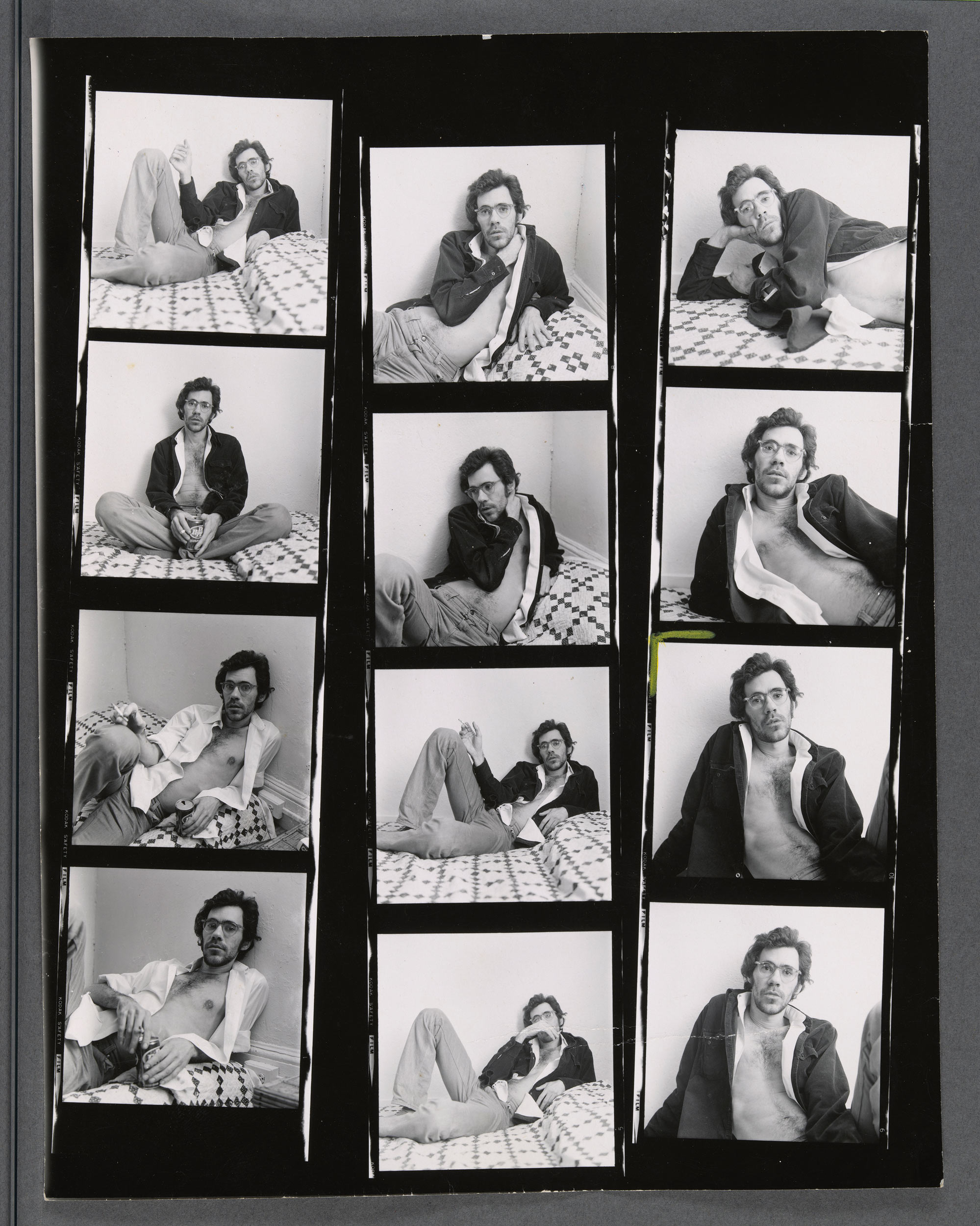
Peter Hujar (American, 1934-1987)
Joe Brainard
1975
Job 664, 9 sheets
Contact sheet
11 x 8 1/2 inches
The Morgan Library & Museum, Peter Hujar Collection, New York, purchased on the Charina Endowment Fund, 2013
Courtesy of Fraenkel Gallery, San Francisco and Ortuzar, New York
© The Peter Hujar Archive / Artists Rights Society (ARS)
Joe Brainard was an American artist and writer associated with the New York School. His prodigious and innovative body of work included assemblages, collages, drawing, and painting, as well as designs for book and album covers, theatrical sets and costumes.
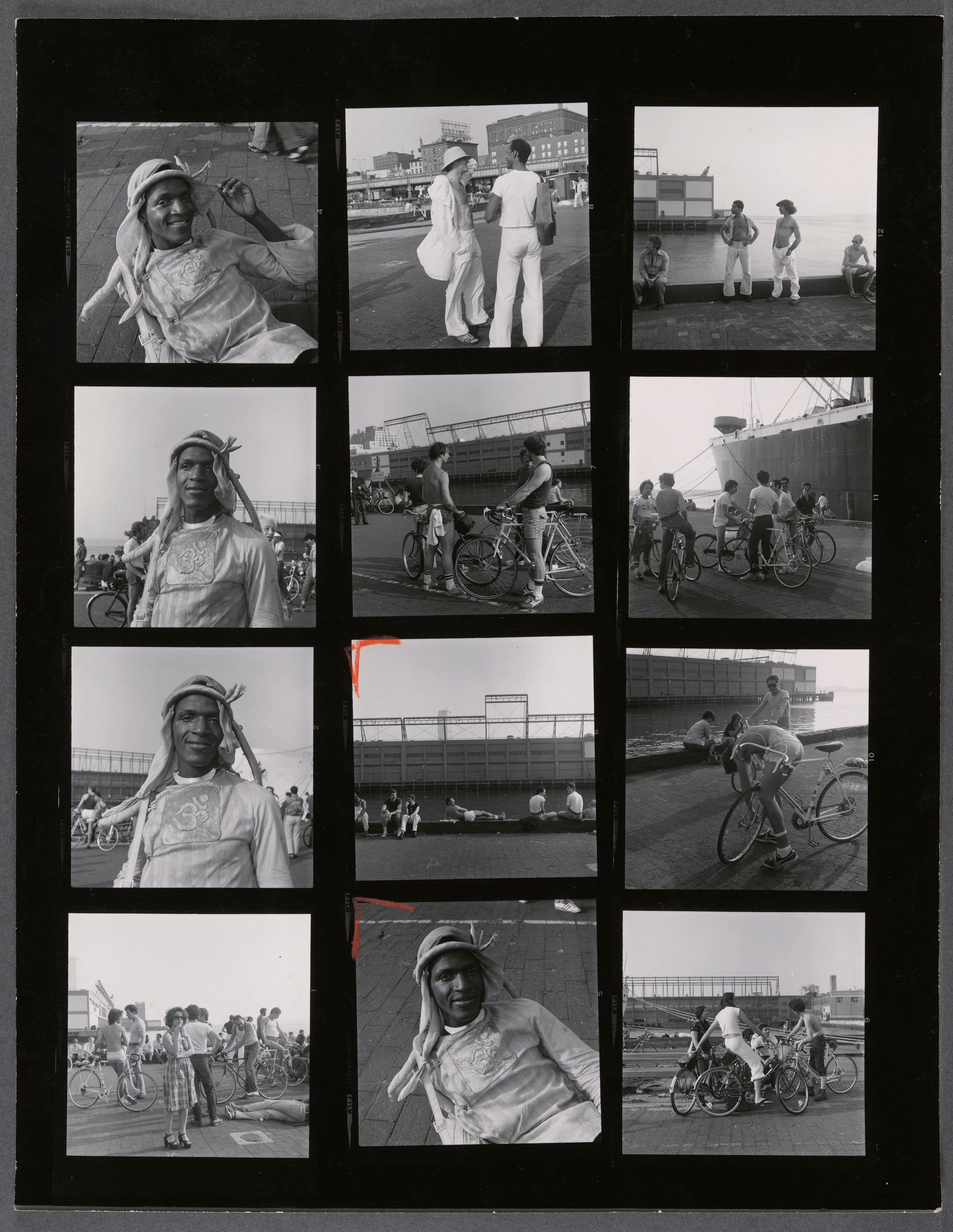
Peter Hujar (American, 1934-1987)
Marsha P. Johnson on Christopher Street Pier, Easter Sunday
1976
Job 719, 12 sheets
Contact sheet
11 x 8 1/2 inches
The Morgan Library & Museum, Peter Hujar Collection, New York purchased on the Charina Endowment Fund, 2013
Courtesy of Fraenkel Gallery, San Francisco and Ortuzar, New York
© The Peter Hujar Archive / Artists Rights Society (ARS)
Peter Hujar’s engagement with New York’s downtown arts and queer communities is reflected in his photographs of fellow artists, writers, and activists, including Marsha P. Johnson, pictured here. Johnson participated in the Stonewall uprising and became one of the figures most closely associated with the movement that emerged from it.
Large print label text
1977-80: Recovery
The term “Recovery” aligns with a period of personal realignment and stabilizing focus following years of emotional, financial, and professional instability. During these years, Hujar established a more structured rhythm with his medium, producing intimate, deeply felt portraits of downtown cultural luminaries, friends, and chosen family.
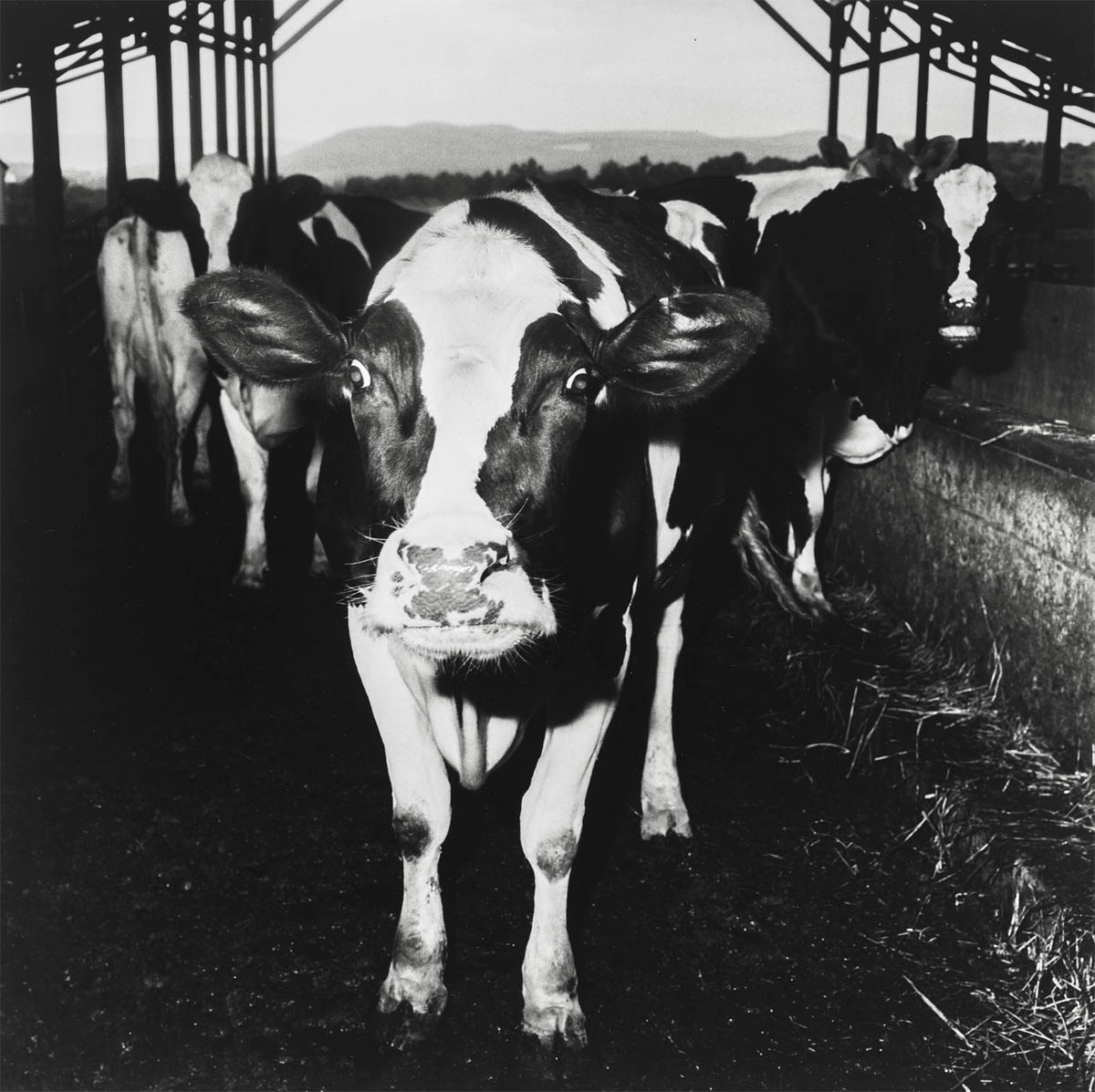
Peter Hujar (American, 1934-1987)
Electric Cow
1978
From Joseph Hyrkin and animals, Westtown, New York, 1978 (Job 820, 24 sheets)
Gelatin silver print
Image: 14 3/4 x 14 3/4 inches (37.4 x 37.4cm)
Sheet: 19 13/16 x 15 7/8 inches (50.3 x 40.4cm)
The Morgan Library & Museum, Peter Hujar Collection, New York
Gift of Roy Eddey and Joel Hershey in honor of the Morgan’s Centennial
© The Peter Hujar Archive / Artists Rights Society (ARS)
In the early 1970s a former colleague of Hujar’s at Harold Krieger’s studio, Roy Hyrkin, moved with his family to a remote farming area in Orange County, New York. Hujar, who could not drive, visited them when he could get a ride. Roy Hyrkin recalls Hujar’s rare mood of “delight” upon returning from morning walks with ten-year-old Joseph to photograph animals, including the cows Joseph milked at the dairy next door. Farm animals had been a constant presence during Hujar’s childhood at his grandparents’ house in Trenton, New Jersey. Friends who saw him photograph animals recall that he spoke to them in the same manner he used during any portrait session with a person.
Large print label text
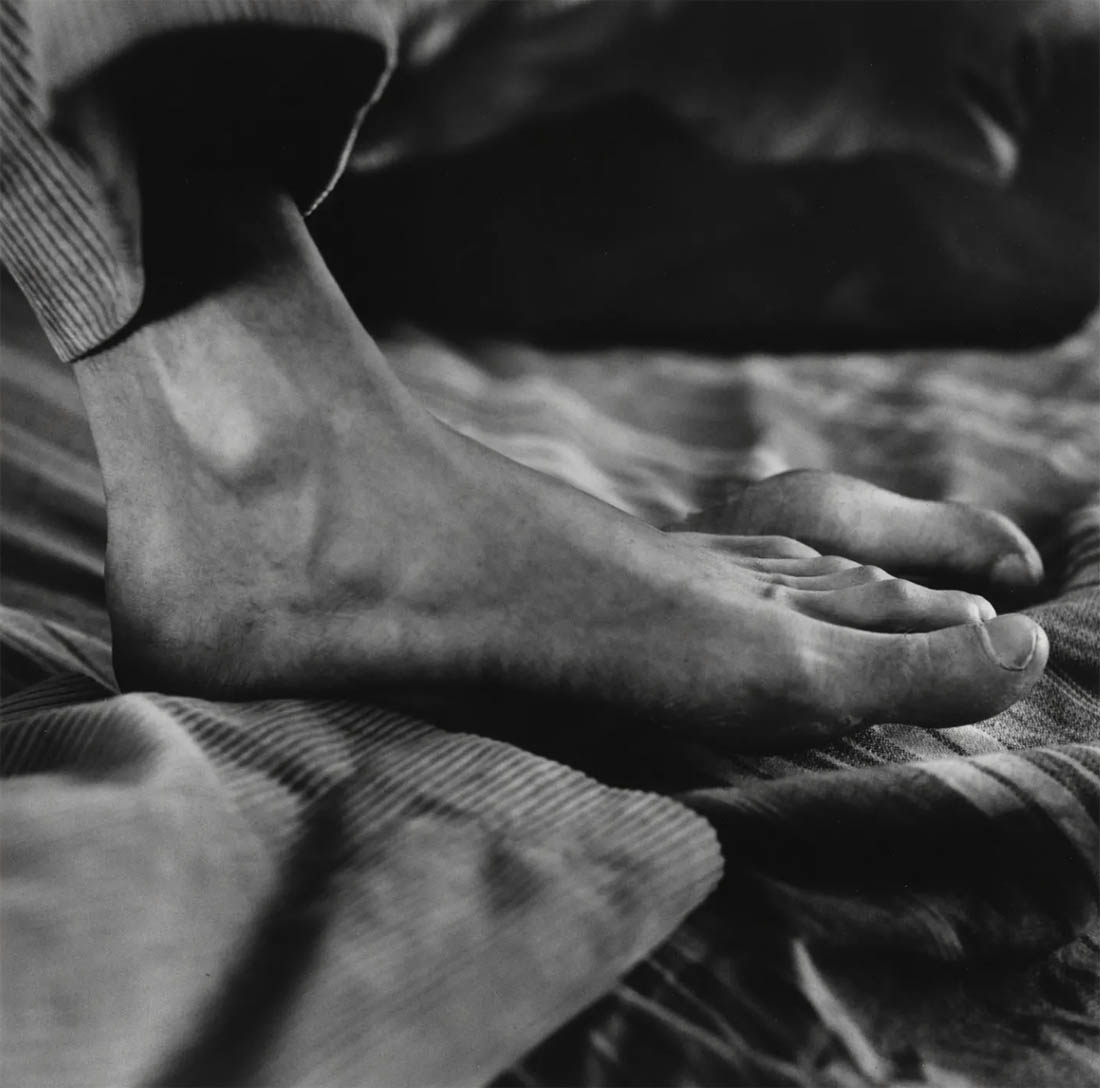
Peter Hujar (American, 1934-1987)
Pascal (Feet), Paris
1980
Gelatin silver print
Image: 14 9/16 x 14 3/4 inches (37 x 37.4cm)
Sheet: 19 7/8 x 15 15/16 inches (50.5 x 40.5cm)
The Morgan Library & Museum, Peter Hujar Collection, New York
Gift of Stephen Koch
© The Peter Hujar Archive / Artists Rights Society (ARS)
Among the ways that Hujar expanded his approach to portraiture was by zeroing in on parts of the body besides the face. In Paris for the opening of a gallery show of his work in 1980, he photographed the feet of the young fashion designer Pascal Humbert (misidentified in Hujar’s job book as “Imbert”), as well as close-ups of his face and scarred torso.
Large print label text
1981-87: Shadowlands
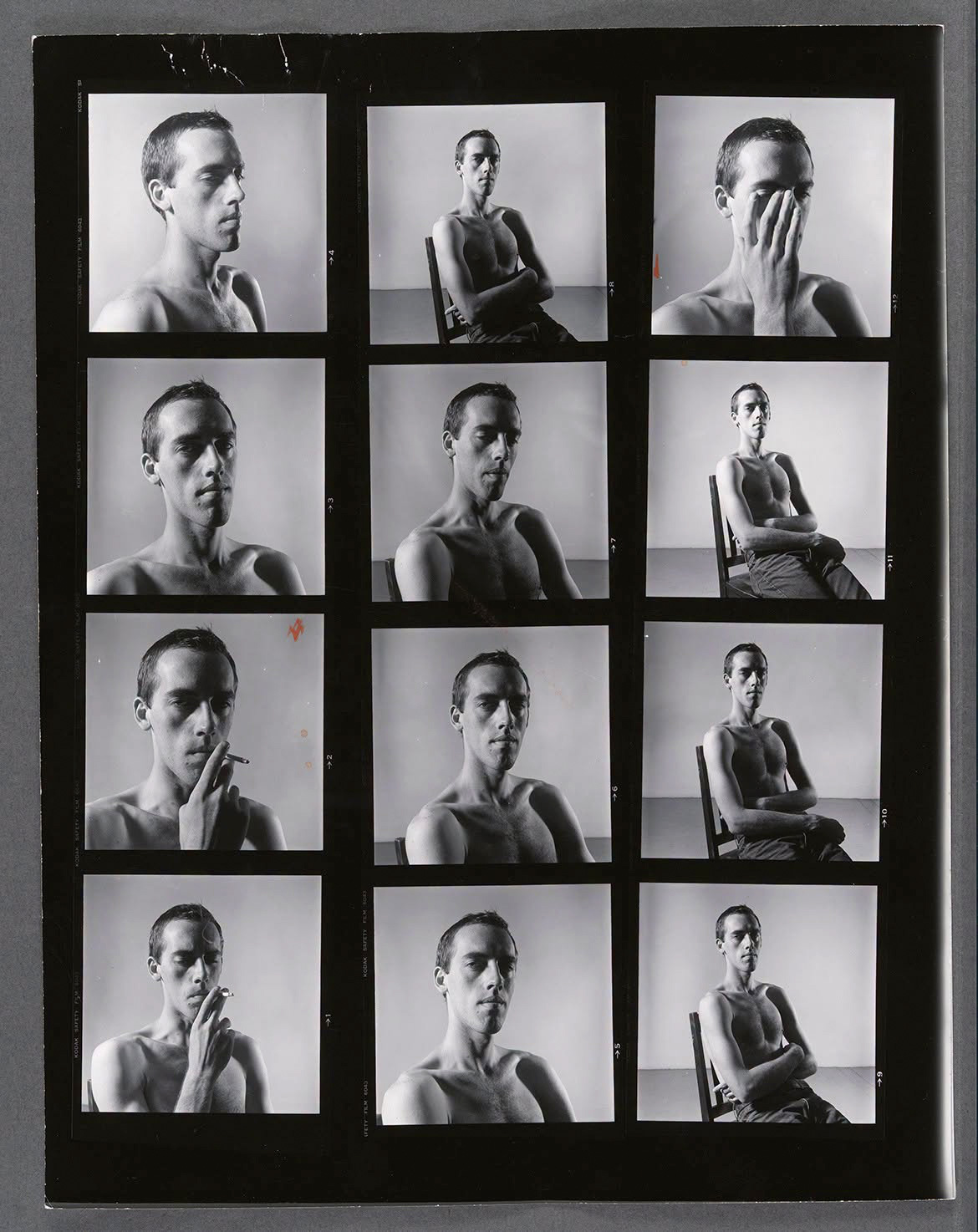
Peter Hujar (American, 1934-1987)
David Wojnarowicz #2
1981
Job 936, 8 sheets
Contact sheet
11 x 8 1/2 inches
The Morgan Library & Museum, Peter Hujar Collection, New York, purchased on the Charina Endowment Fund, 2013
Courtesy of Fraenkel Gallery, San Francisco and Ortuzar, New York
© The Peter Hujar Archive / Artists Rights Society (ARS)
The defining relationship of Peter Hujar’s final years was with David Wojnarowicz. When they met, at the Bar on Second Avenue in January of 1981, Wojnarowicz was writing poetry and playing music, and Hujar encouraged him to focus on his visual art.
In his job book Hujar distinguishes between two early sessions, “David W #1” and “David W #2.” On the latter date (seen here), he used bounced light that emphasises the volume of Wojnarowicz’s features and hints at an inner life that was as important to the portraitist as his outward appearance.
Large print label text
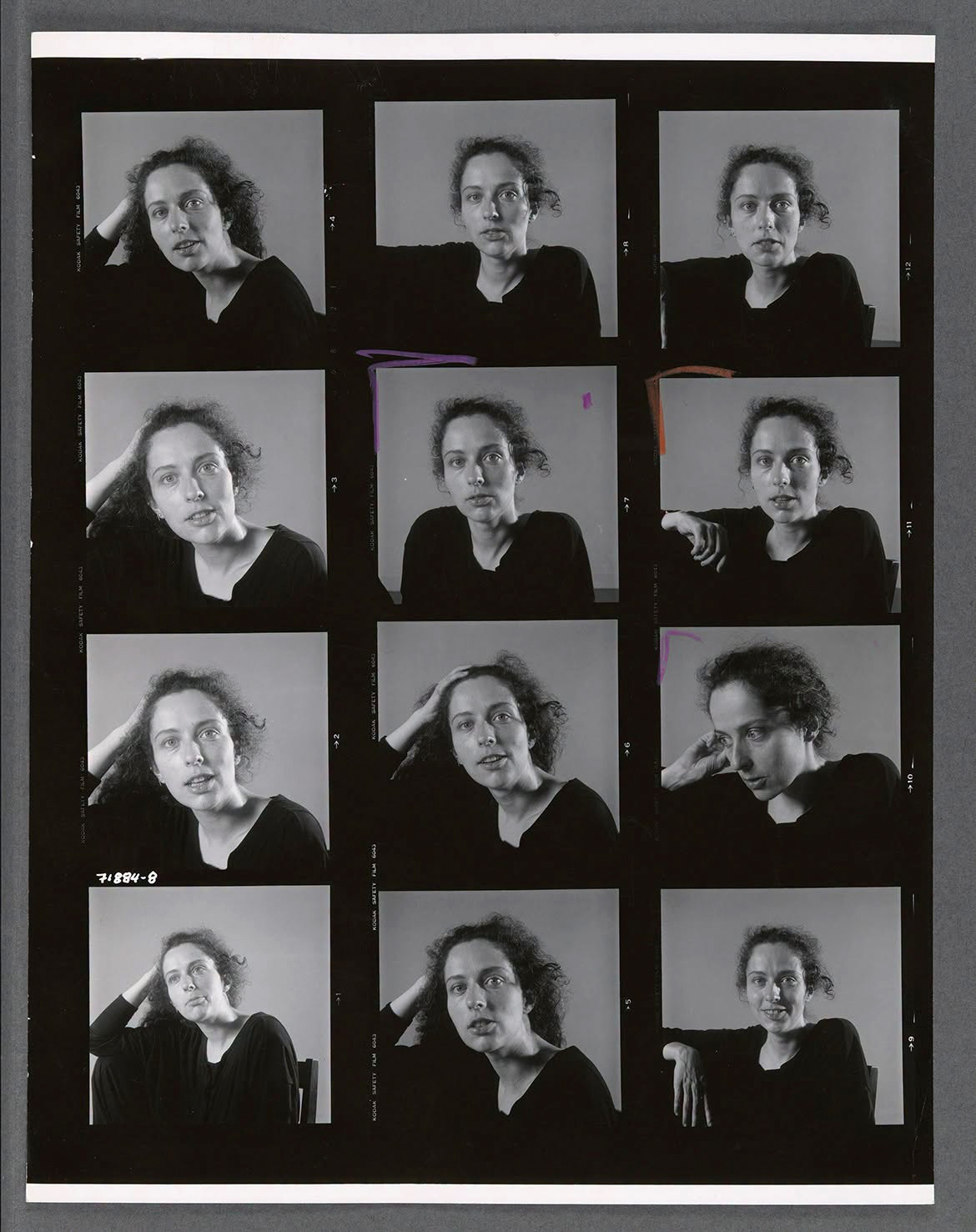
Peter Hujar (American, 1934-1987)
Kiki Smith at 189
1984
Job 1052
Contact sheet
11 x 8 1/2 inches
The Morgan Library & Museum, Peter Hujar Collection, New York, purchased on the Charina Endowment Fund, 2013
Courtesy of Fraenkel Gallery, San Francisco and Ortuzar, New York
© The Peter Hujar Archive / Artists Rights Society (ARS)
The eyes dominate in Hujar’s portraits of artist Kiki Smith, in which he employs a softened version of the chiaroscuro lighting technique he evolved a few years earlier. A variant on this photograph is one of several portraits by Hujar, David Armstrong, and Nan Goldin that Cookie Mueller used for “before and after” illustrations in her book How to Get Rid of Pimples (1984), with hand-drawn dots added by the author to the “before” image of each sitter’s face.
Large print label text
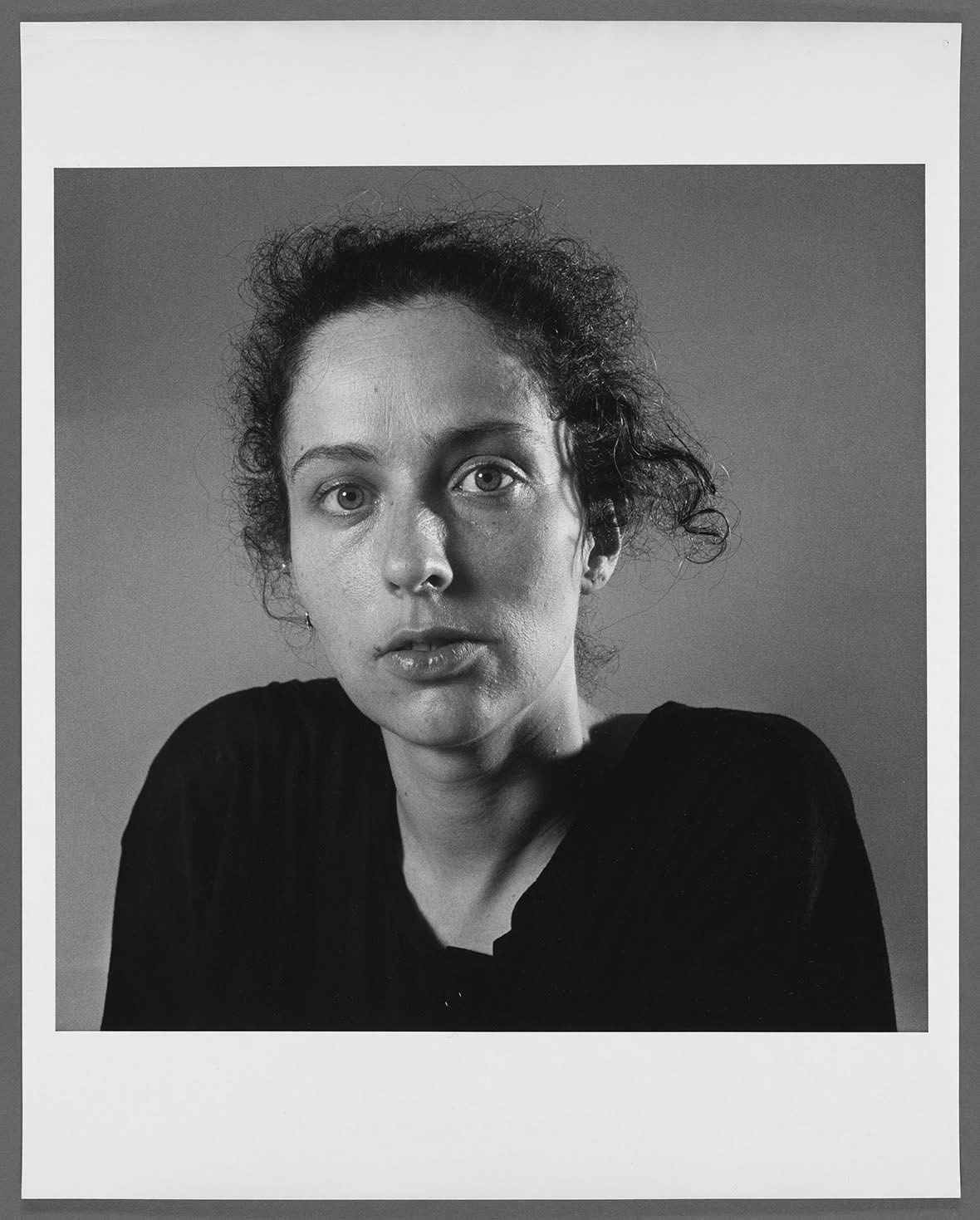
Peter Hujar (American, 1934-1987)
Kiki Smith (2)
1984
Gelatin silver print
Image: 14 5/8 x 14 3/4 inches (37.2 x 37.5cm)
Sheet: 19 7/8 x 15 7/8 inches (50.5 x 40.3cm)
The Morgan Library & Museum, Peter Hujar Collection, New York
Gift of Stephen Koch
© The Peter Hujar Archive / Artists Rights Society (ARS)
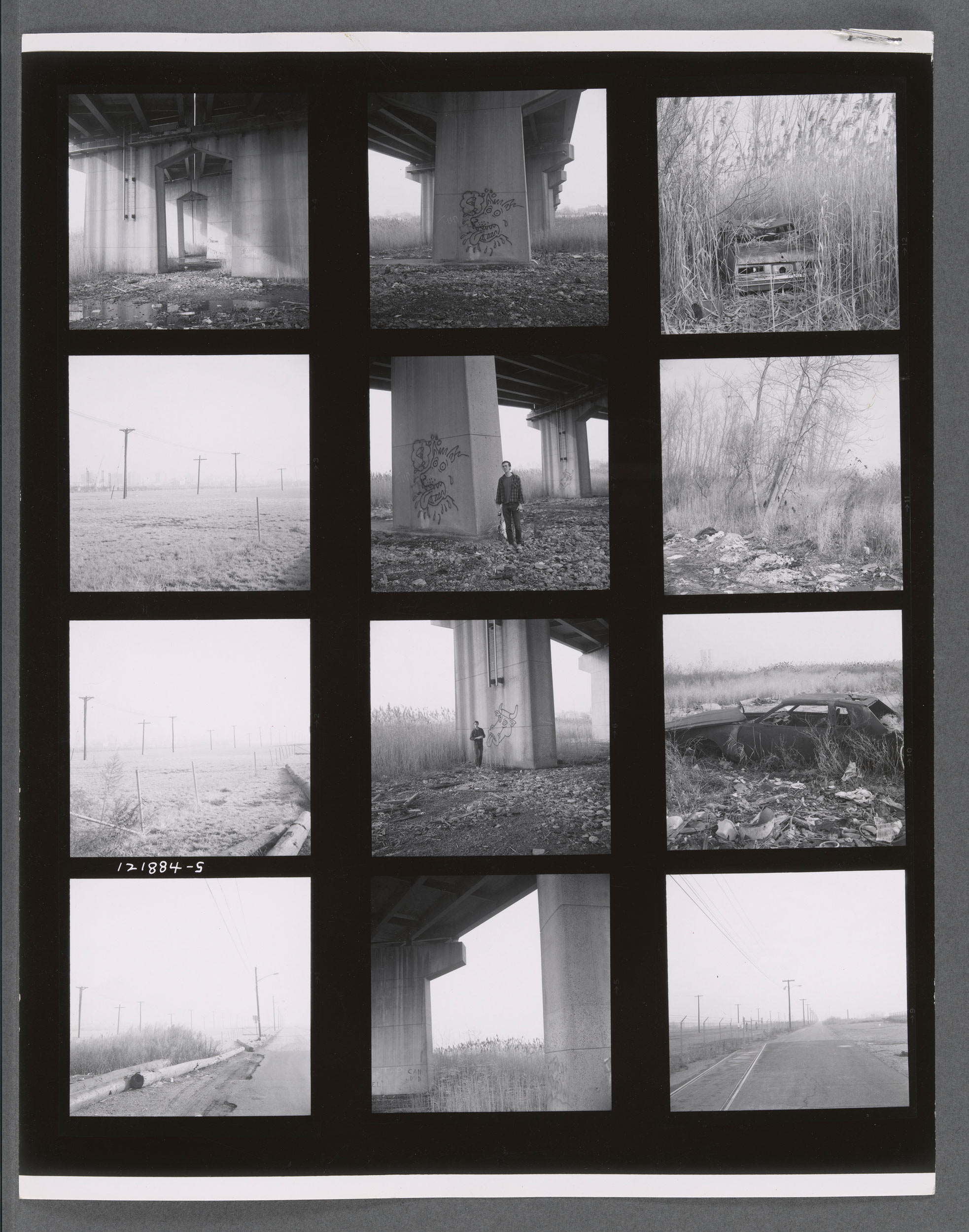
Peter Hujar (American, 1934-1987)
Caven Point, New Jersey, with David Wojnarowicz
1984
Job 1063, 12 sheets
Contact sheet
11 x 8 1/2 inches
The Morgan Library & Museum, Peter Hujar Collection, New York, purchased on the Charina Endowment Fund, 2013
Courtesy of Fraenkel Gallery, San Francisco and Ortuzar, New York
© The Peter Hujar Archive / Artists Rights Society (ARS)
Postindustrial Queens, windblown Caven Point, and burned-out, riot-torn Newark were places that appealed to Wojnarowicz’s and Hujar’s attunement to disaster. Their fatalism reflected the neglect and abuse each of them had known in childhood, as well as their consciousness of an AIDS crisis that only showed signs of deepening. Assigned in 1983 to make a cover photograph for the Village Voice about gay dread and mourning, Hujar had enlisted Wojnarowicz as his model. Their shared experience of abandoned locales was formative both for their work and for their deepening friendship.
Large print label text
Woven throughout Peter Hujar’s photographs is a profound sense of fatality about the world. This bleakness in his art reflects both the abuse he faced as a child and his concern about the AIDS crisis which, at the time, only showed signs of worsening.
It was with this in mind that he set out with David Wojnarowicz, a creative he had taken on as mentee, to shoot a cover photograph for a Village Voice issue on gay dread and mourning. The pair visited several locations in post-industrial Queens, windblown Caven Point, and riot-torn Newark that appealed to their eye for disaster. Trips to abandoned locations like these proved to be formative for both their work and friendship alike.
Text from the Morgan Library & Museum Facebook page
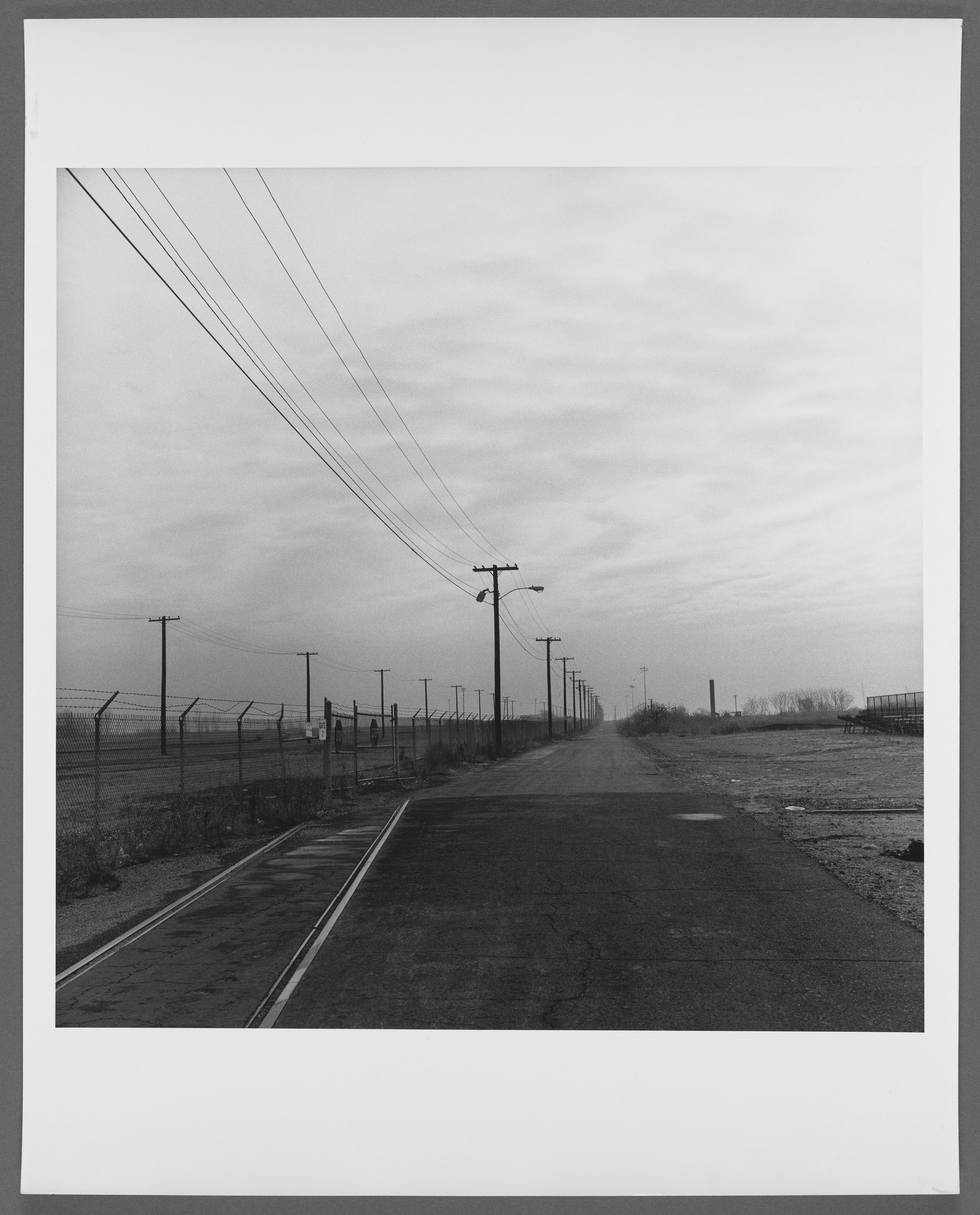
Peter Hujar (American, 1934-1987)
Road and Power Line, New Jersey
1984
From Caven Point, New Jersey, with David Wojnarowicz, 1984 (Job 1063, 12 sheets)
Gelatin silver print
Image: 14 9/16 x 14 3/4 inches (37 x 37.4cm)
Sheet: 19 13/16 x 15 7/8 inches (50.4 x 40.3cm)
The Morgan Library & Museum, Peter Hujar Collection
Gift of Stephen Koch
Courtesy of Fraenkel Gallery, San Francisco and Ortuzar, New York
© The Peter Hujar Archive / Artists Rights Society (ARS)
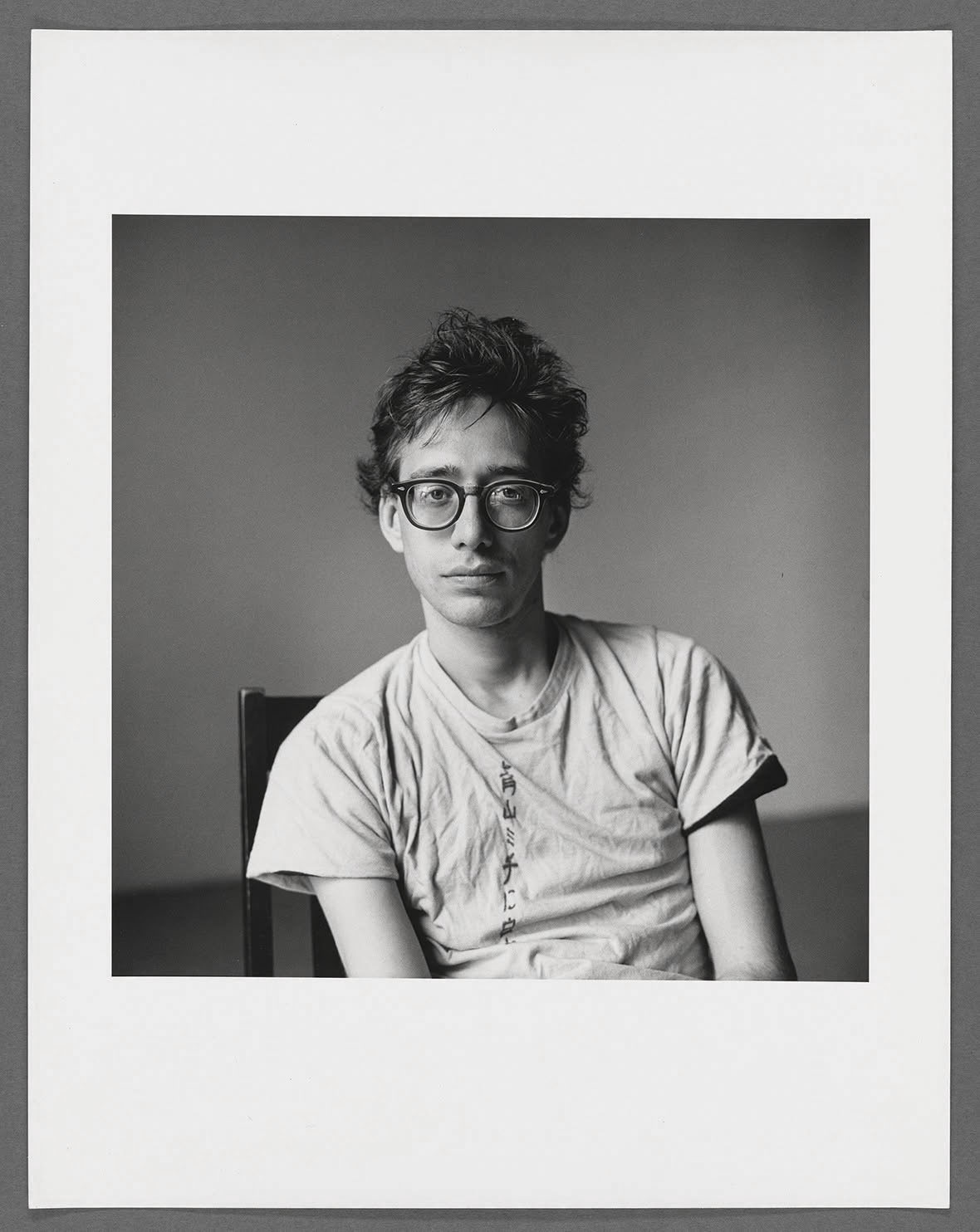
Peter Hujar (American, 1934-1987)
John Zorn
1986
From John Zorn, 1986 (No job number, 9 sheets)
Gelatin silver print
Image: 9 x 8 1/16 inches (22.8 x 22.7cm)
Sheet: 13 7/8 x 10 7/8 inches (35.3 x 27.6cm)
The Morgan Library & Museum, Peter Hujar Collection
Gift of Stephen Koch
Courtesy of Fraenkel Gallery, San Francisco and Ortuzar, New York
© The Peter Hujar Archive / Artists Rights Society (ARS)
By the time of his final exhibition in early 1986, Peter Hujar’s health was in decline. He continued working for the rest of the year, but upon receiving a diagnosis of AIDS in early 1987, he quit abruptly, even declining to catch up on his job-book entries for the previous year’s work. Therefore, his final finished images, including these sensitive portraits of composer John Zorn, are dateable to 1986 by the very absence of detailed information about them.
Large print label text
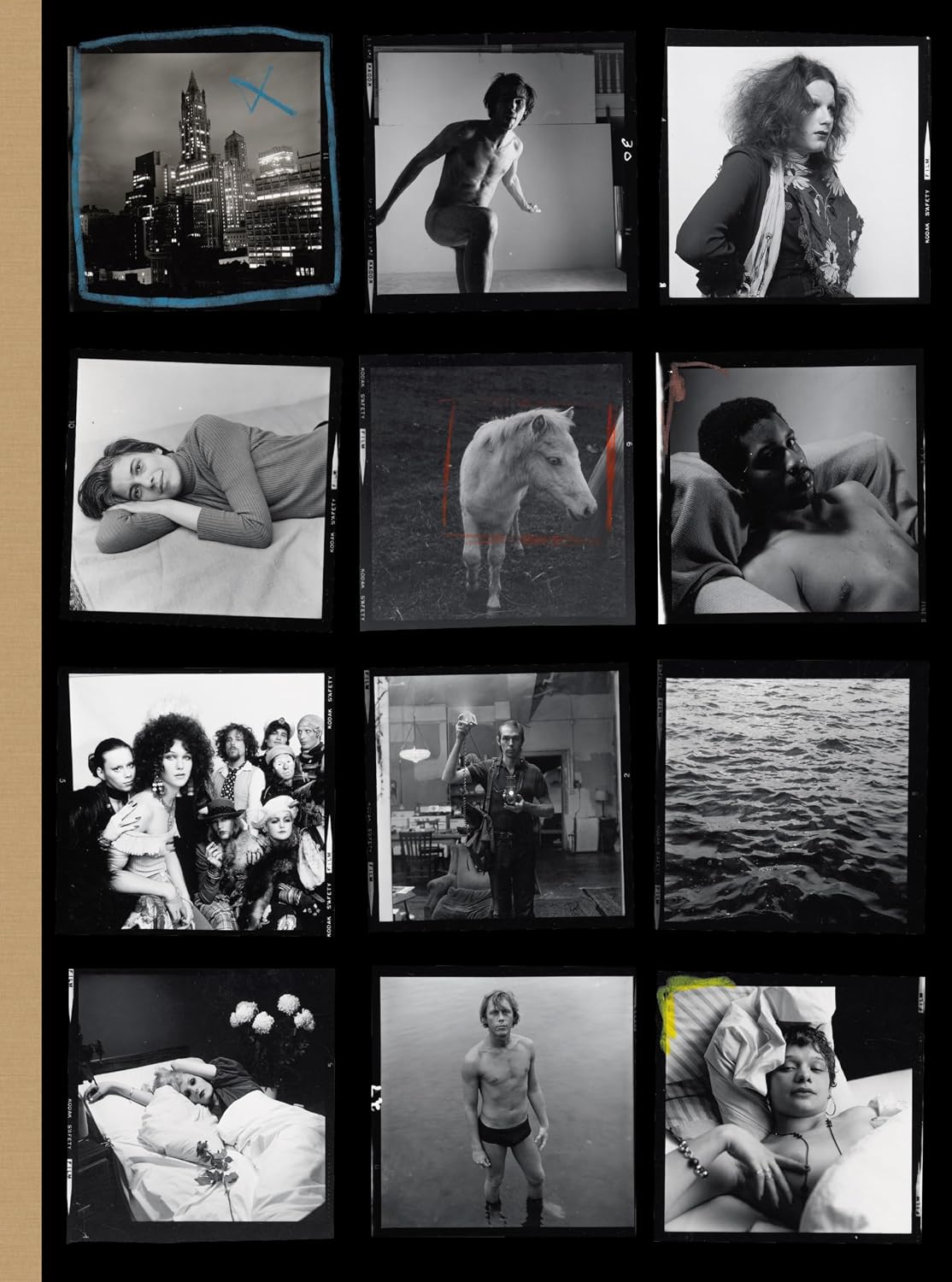
Hujar:Contact book cover
“Less a monograph than an exposed nervous system: strips of images accumulating into something restless and alive, all hesitation, process, and thought still developing in the tray. … Across the pages of Hujar:Contact, [the images] become immersive. … the experience is less that of viewing discrete photographs than inhabiting the rhythm of Hujar’s looking.”
Marina Vitaglione, Blind Magazine
Hujar:Contact explores the Morgan Library & Museum’s extensive archive of original contact sheets and job books made by the beloved photographer Peter Hujar between 1954 and 1987, which come together to form an enthralling visual document of the artist’s creative process. Hujar’s empathetic eye focused in on varying subjects – crowds of protest, damaged relics, farm animals – but above all he was preoccupied with making portraits of the overlapping circles of artists, writers, and underground luminaries he moved within in New York. Accompanying critical texts by Joel Smith establish a chronology of Hujar’s contact sheets, presenting an artist developing, experimenting with, and refining his practice against the tumultuous cultural politics and sea changes of gay life conveyed by the words ‘Stonewall’ and ‘AIDS’.
Throughout his career Hujar recorded more than a thousand photo shoots in his job books. These documents, which are transcribed and annotated in Hujar:Contact, illuminate the contact sheets, rich in never-before-seen images as well as the earliest iterations of Hujar’s most iconic works, including portraits of Susan Sontag, David Wojnarowicz, Candy Darling, Gary Indiana, Fran Lebowitz, and Paul Thek. This volume provides captivating insight into a master at work, forming an immersive chronicle of Hujar’s poignant efforts to connect, through photography, with the creative communities that defined his life, outlook, and art.
Text from the Amazon website
The Morgan Library & Museum
225 Madison Avenue at 36th Street, New York, NY
Phone: (212) 685-0008
Opening hours:
Tuesday – Thursday, Saturday – Sunday: 10.30am – 5pm
Friday: 10.30am – 7pm
Closed Mondays


You must be logged in to post a comment.