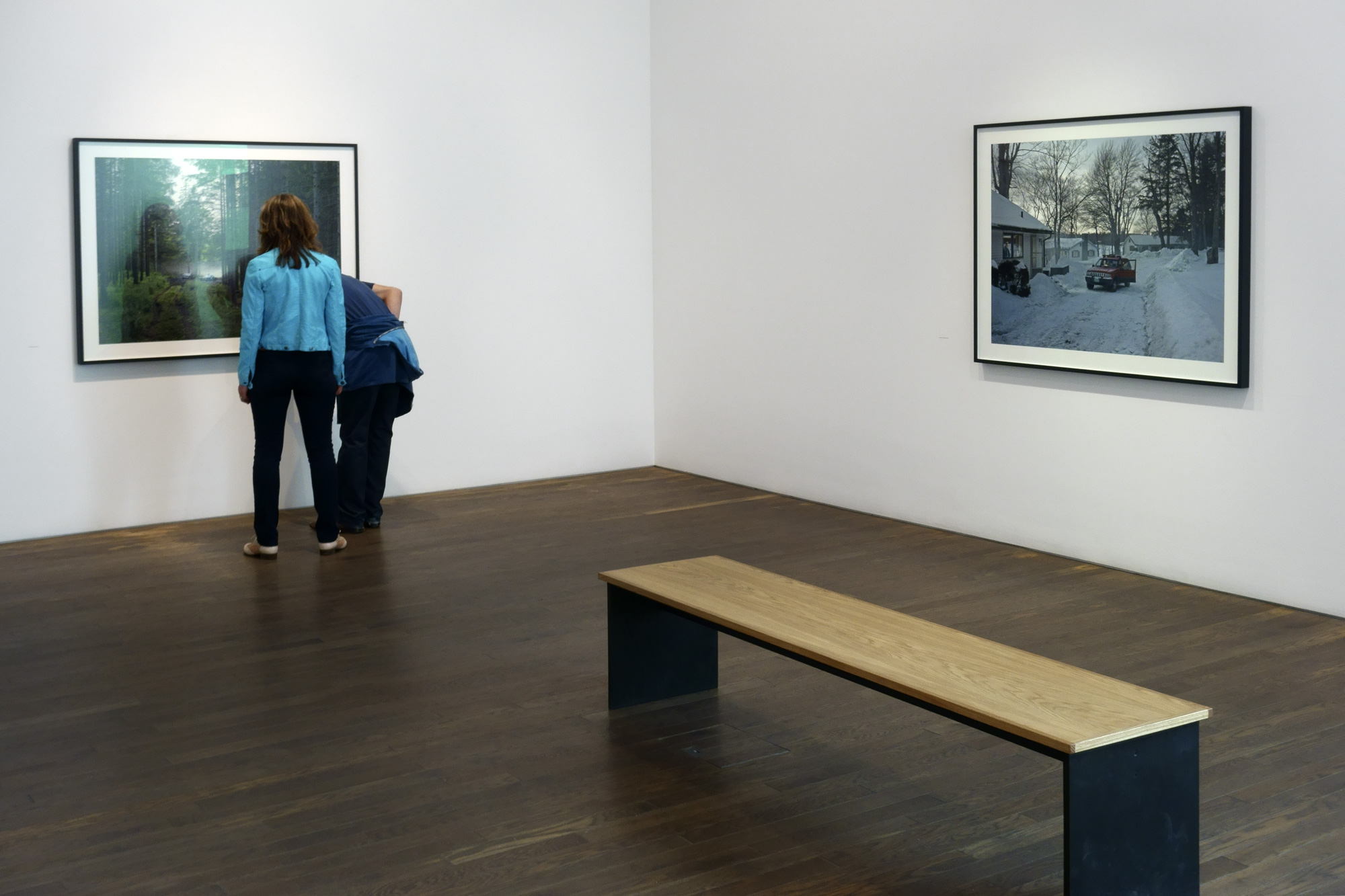
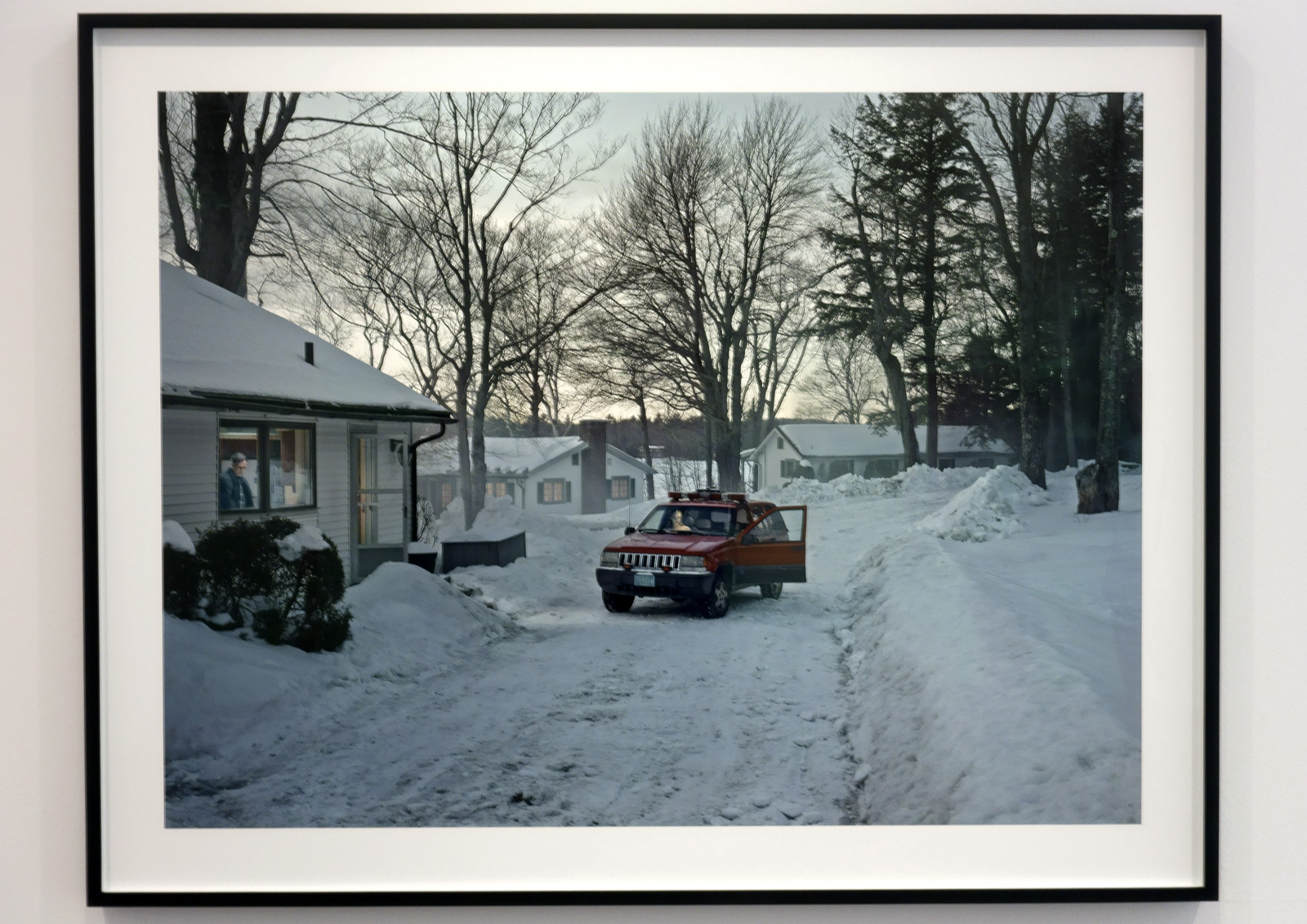
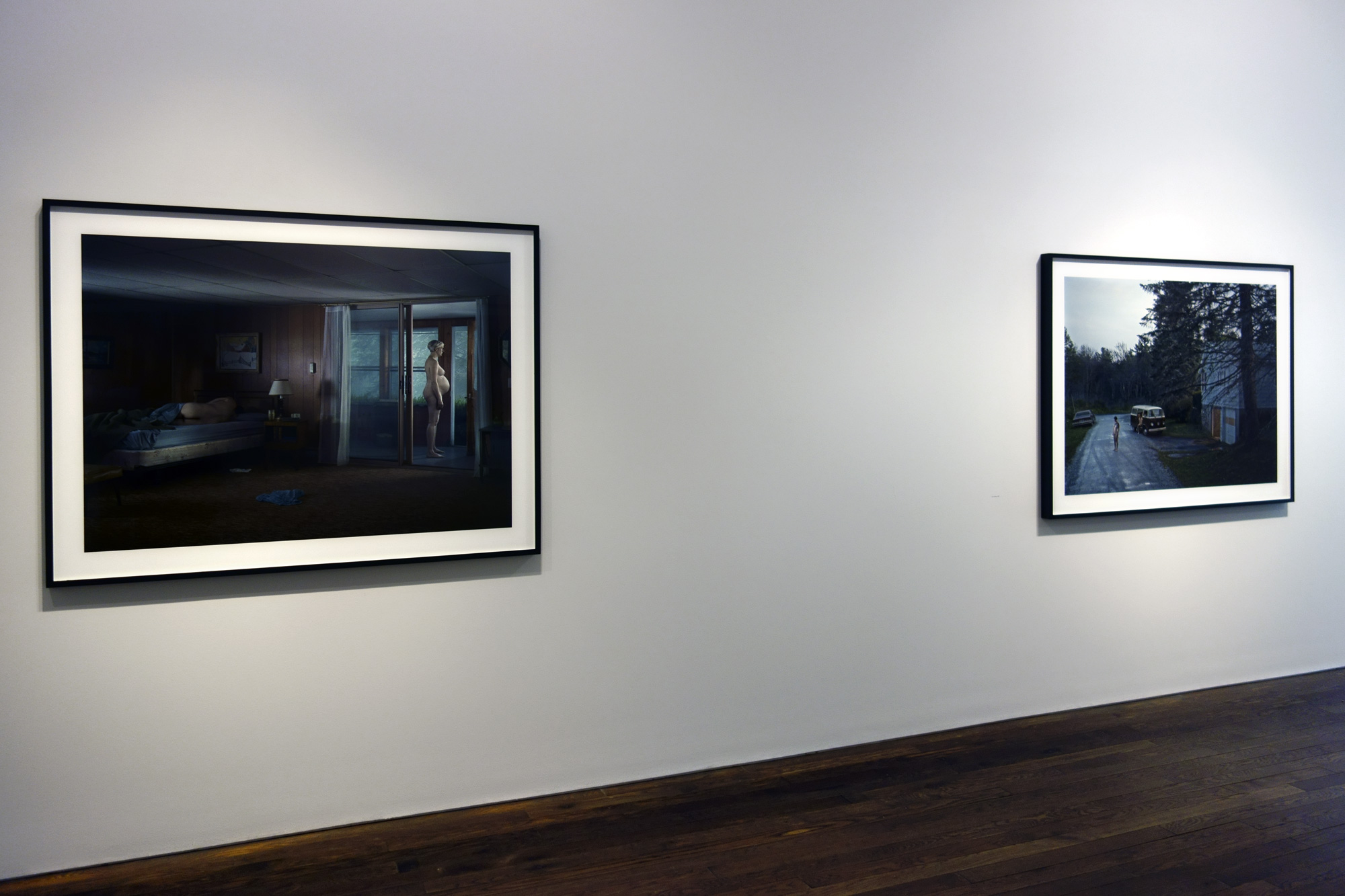
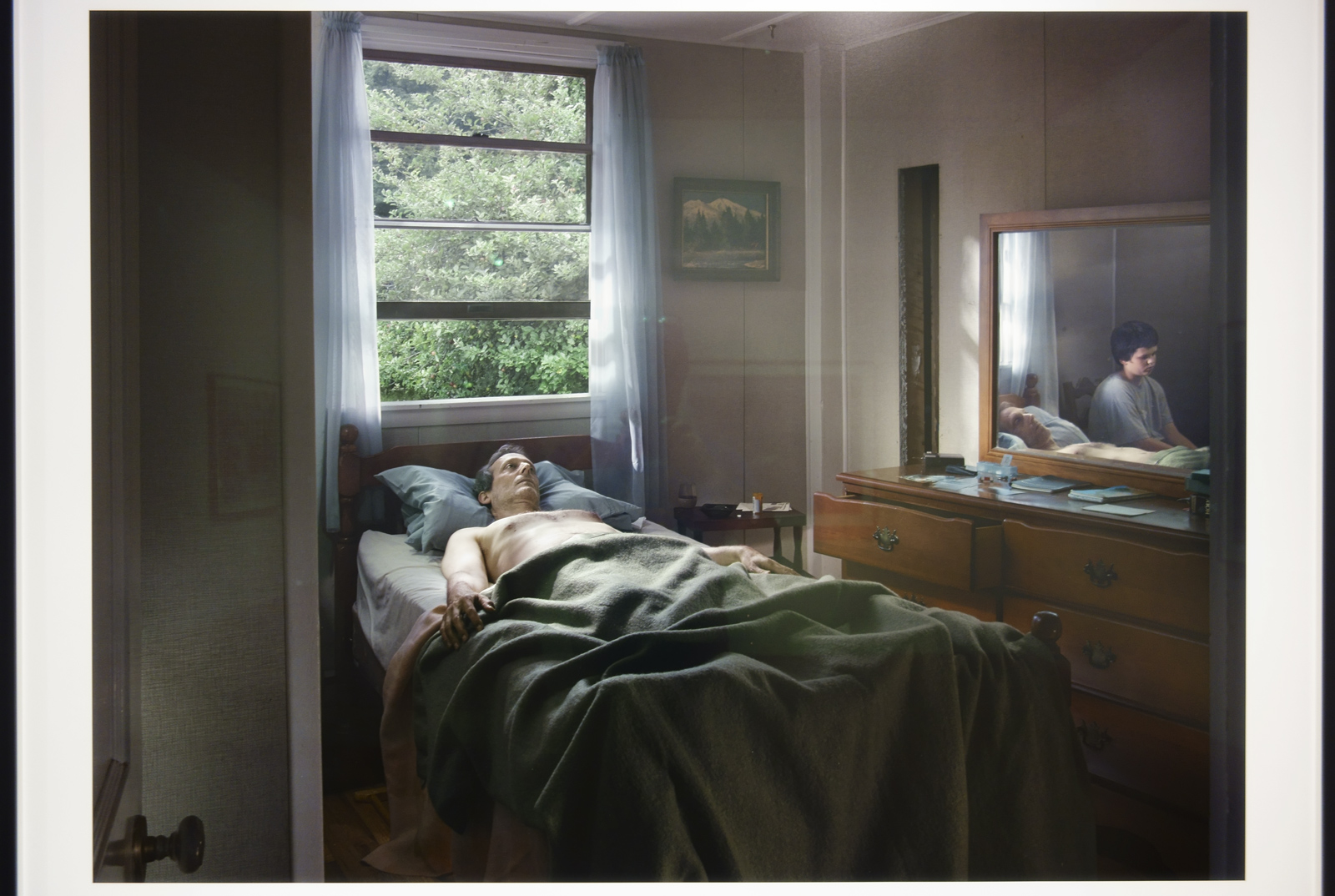
Exhibition: ‘An unorthodox flow of images’ at the Centre for Contemporary Photography (CCP), Melbourne Part 1

Exhibition dates: 30th September – 12th November, 2017

Curators: Naomi Cass and Pippa Milne

Living artists include: Laurence Aberhart, Brook Andrew, Rushdi Anwar, Warwick Baker, Paul Batt, Robert Billington, Christian Boltanski, Pat Brassington, Jane Brown, Daniel Bushaway, Sophie Calle, Murray Cammick, Christian Capurro, Steve Carr, Mohini Chandra, Miriam Charlie, Maree Clarke, Michael Cook, Bill Culbert, Christopher Day, Luc Delahaye, Ian Dodd, William Eggleston, Cherine Fahd, Fiona Foley, Juno Gemes, Simryn Gill, John Gollings, Helen Grace, Janina Green, Andy Guérif, Siri Hayes, Andrew Hazewinkel, Lisa Hilli, Eliza Hutchison, Therese Keogh, Leah King-Smith, Katrin Koenning, O Philip Korczynski, Mac Lawrence, Kirsten Lyttle, Jack Mannix, Jesse Marlow, Georgie Mattingley, Tracey Moffatt, Daido Moriyama, Harry Nankin, Jan Nelson, Phuong Ngo.

Historic photographers: Hippolyte Bayard (French, 1801-1887), Charles Bayliss (Australian born England, 1850-1897), Bernd and Hilla Becher (German; Bernd Becher 1931-2007, Hilla Becher 1934-2015), Lisa Bellear (Australian / Goernpil, 1962-2006), James E. Bray (Australian, 1832-1891), Jeff Carter (Australian, 1928-2010), Harold Cazneaux (Australian, 1878-1953), Olive Cotton (Australian, 1911-2003), Peter Dombrovskis (Australian, 1995-1996), Max Dupain (Australian, 1911-1992), Joyce Evans (Australian, 1929-2019), Walker Evans (American, 1903-1975), Sue Ford (Australian, 1943-2009), Marti Friedlander (New Zealand born Britain, 1928-2016), Kate Gollings (Australian, 1943-2017), André Kertész (Hungarian, 1894-1985), J. W. Lindt (Australian born Germany, 1845-1926), W. H. Moffitt (Australian, 1888-1948), David Moore (Australian, 1927-2003), Michael Riley (Australian / Wiradjuri/Kamilaroi, 1960-2004), Robert Rooney (Australian, 1937-2017), Joe Rosenthal (American, 1911-2006), Mark Strizic (Australian, 1928 -2012), Ingeborg Tyssen (Australian, 1945-2002), Aby Warburg (German, 1866-1929), Charles Woolley (Australian, 1834-1922).


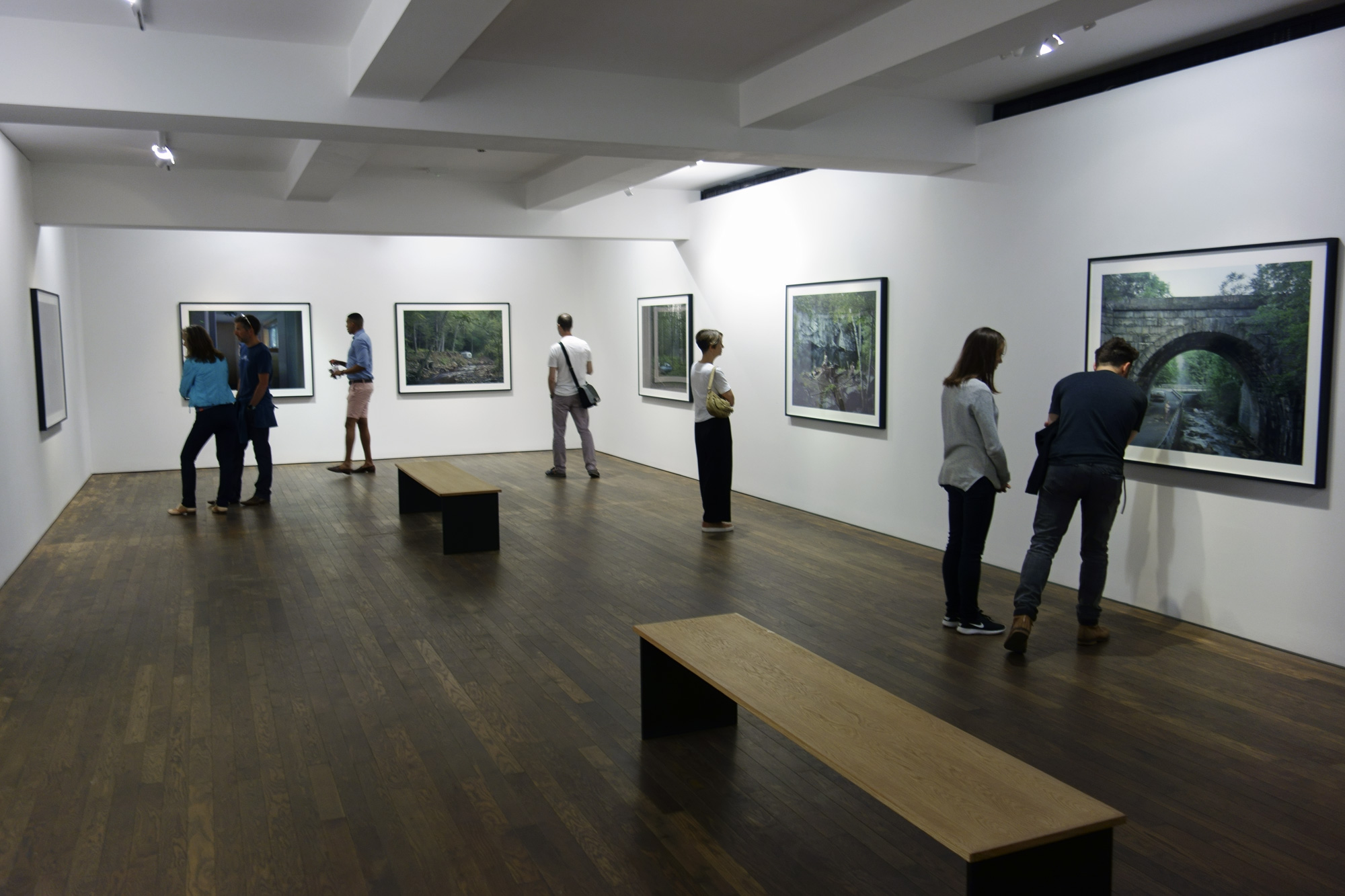
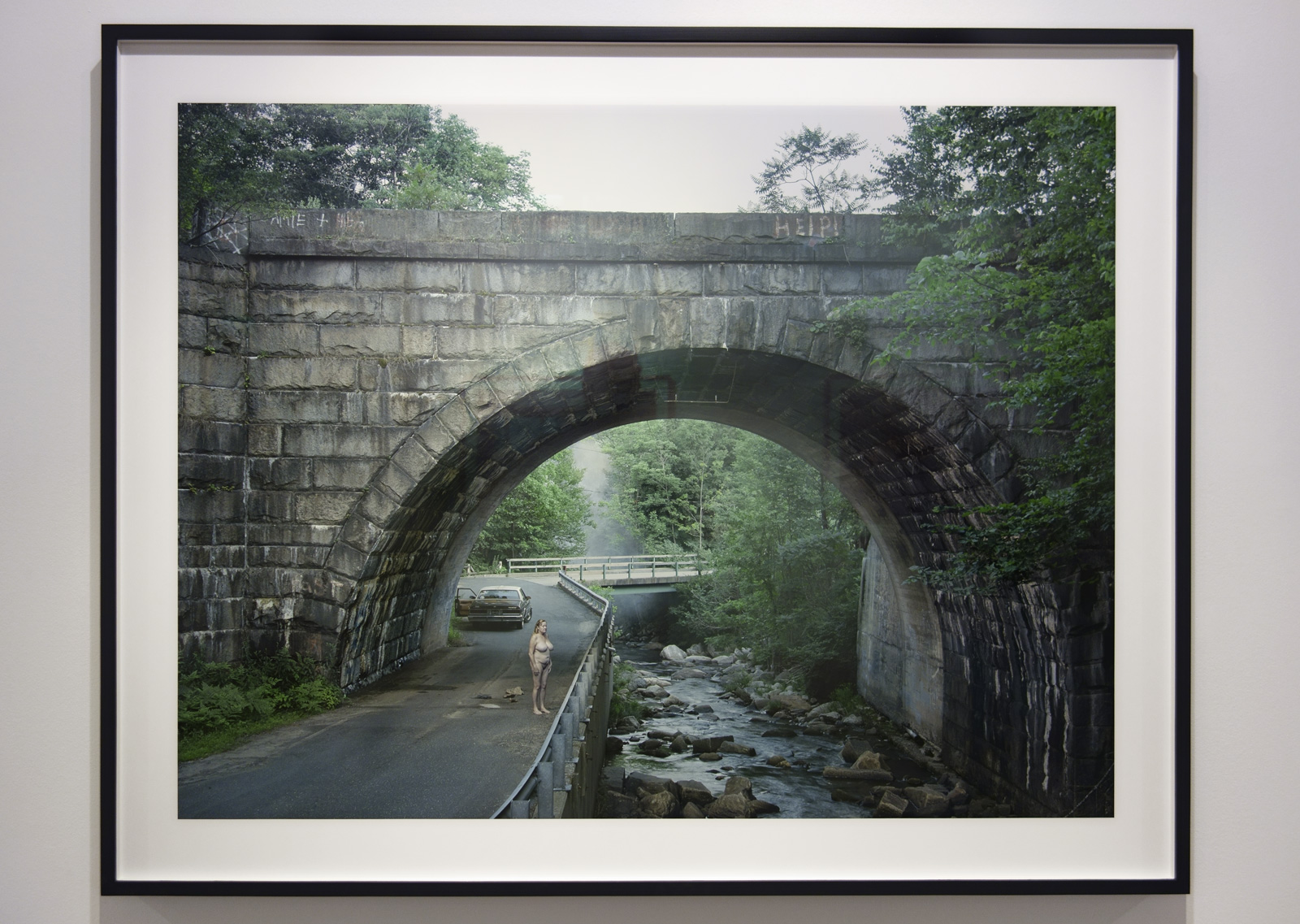
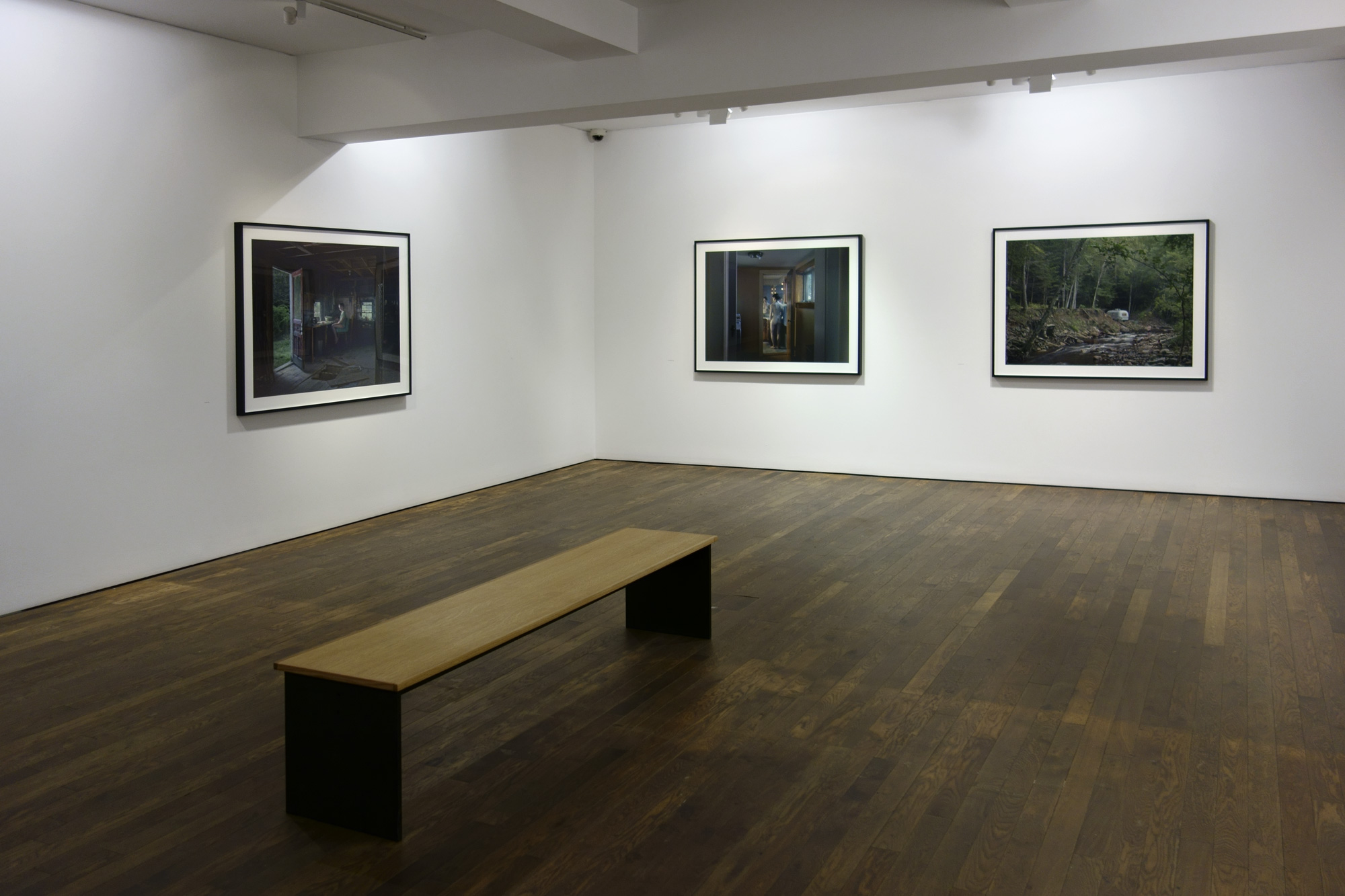
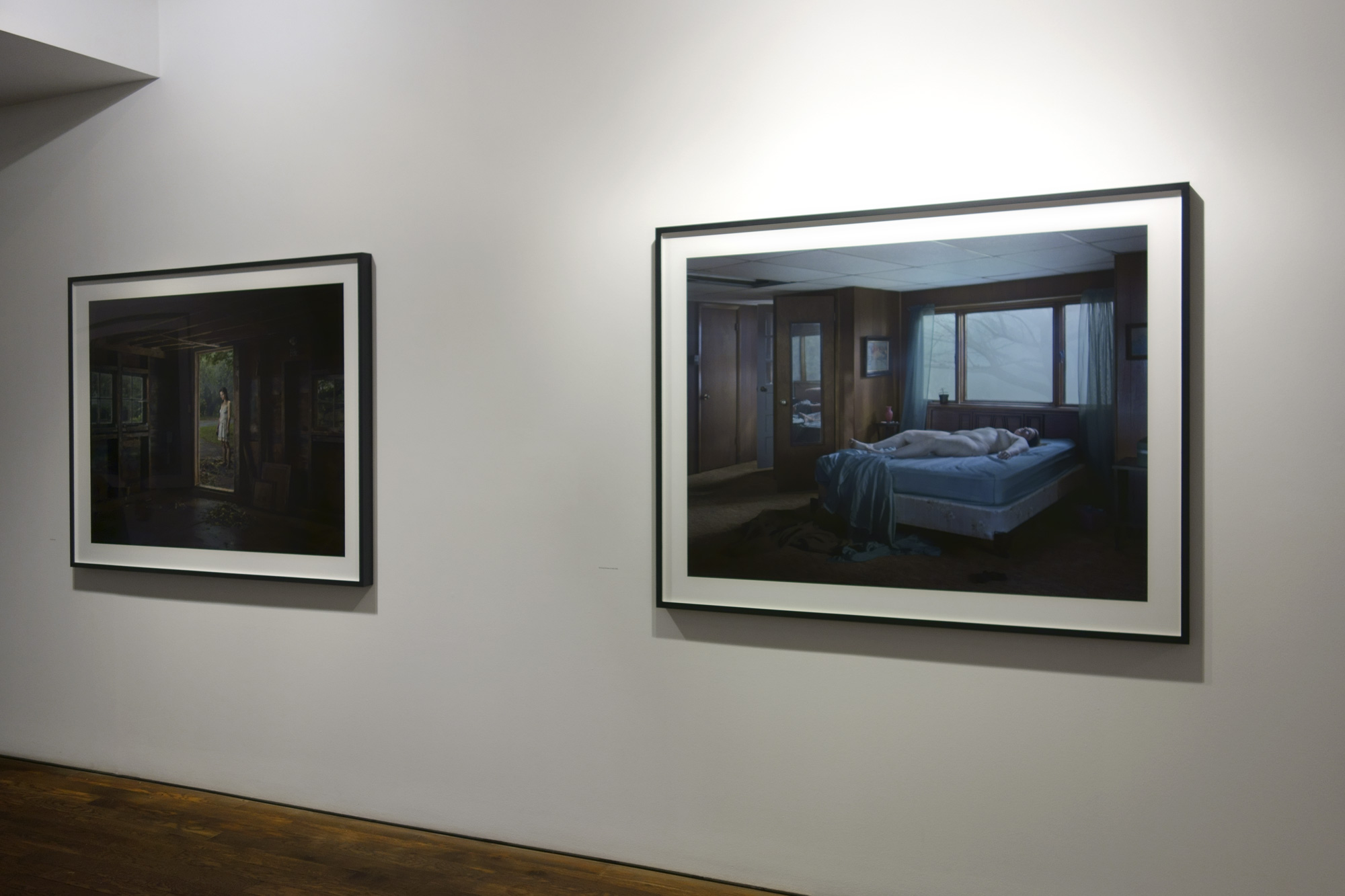
Installation photographs of the exhibition

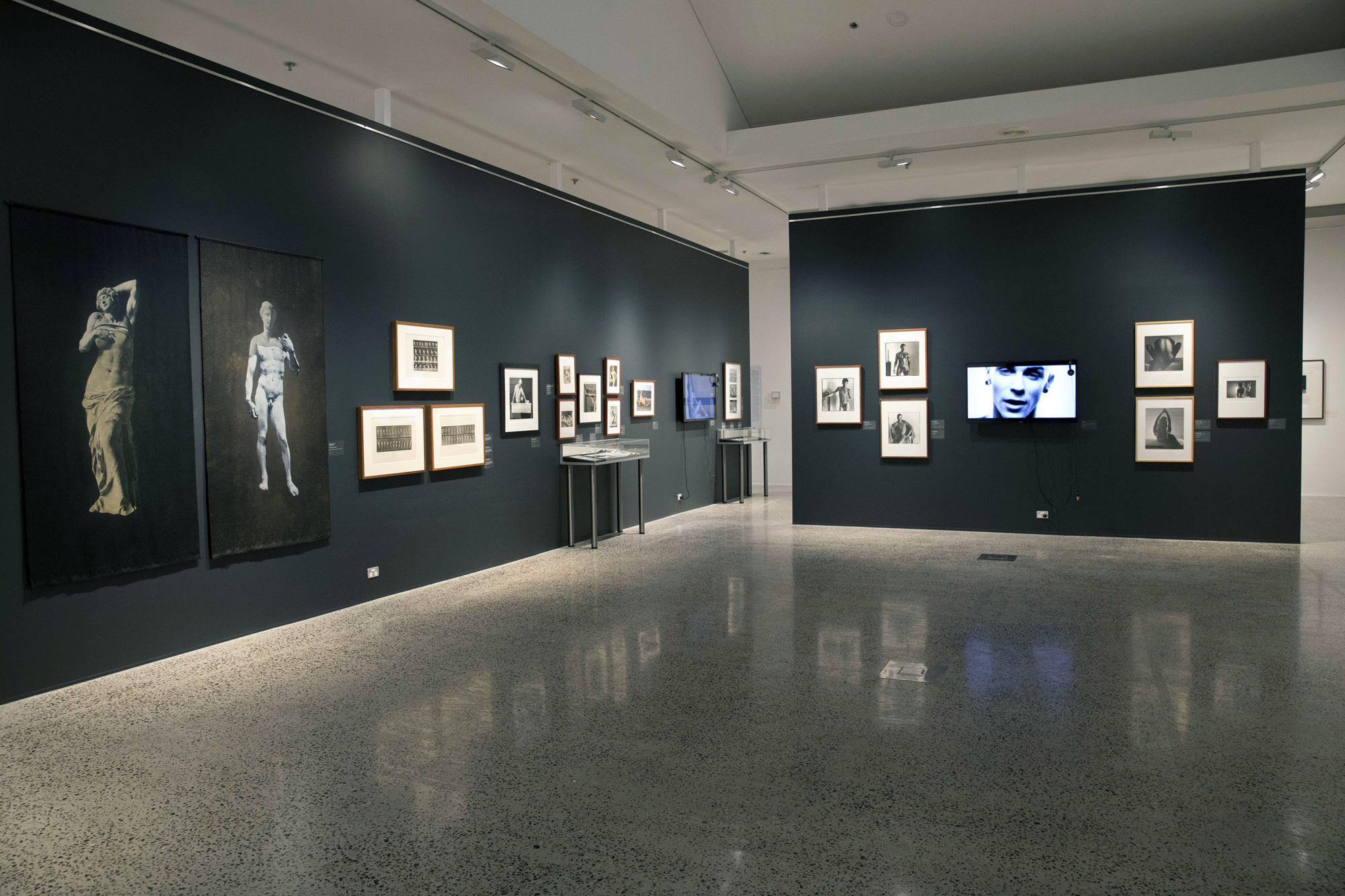
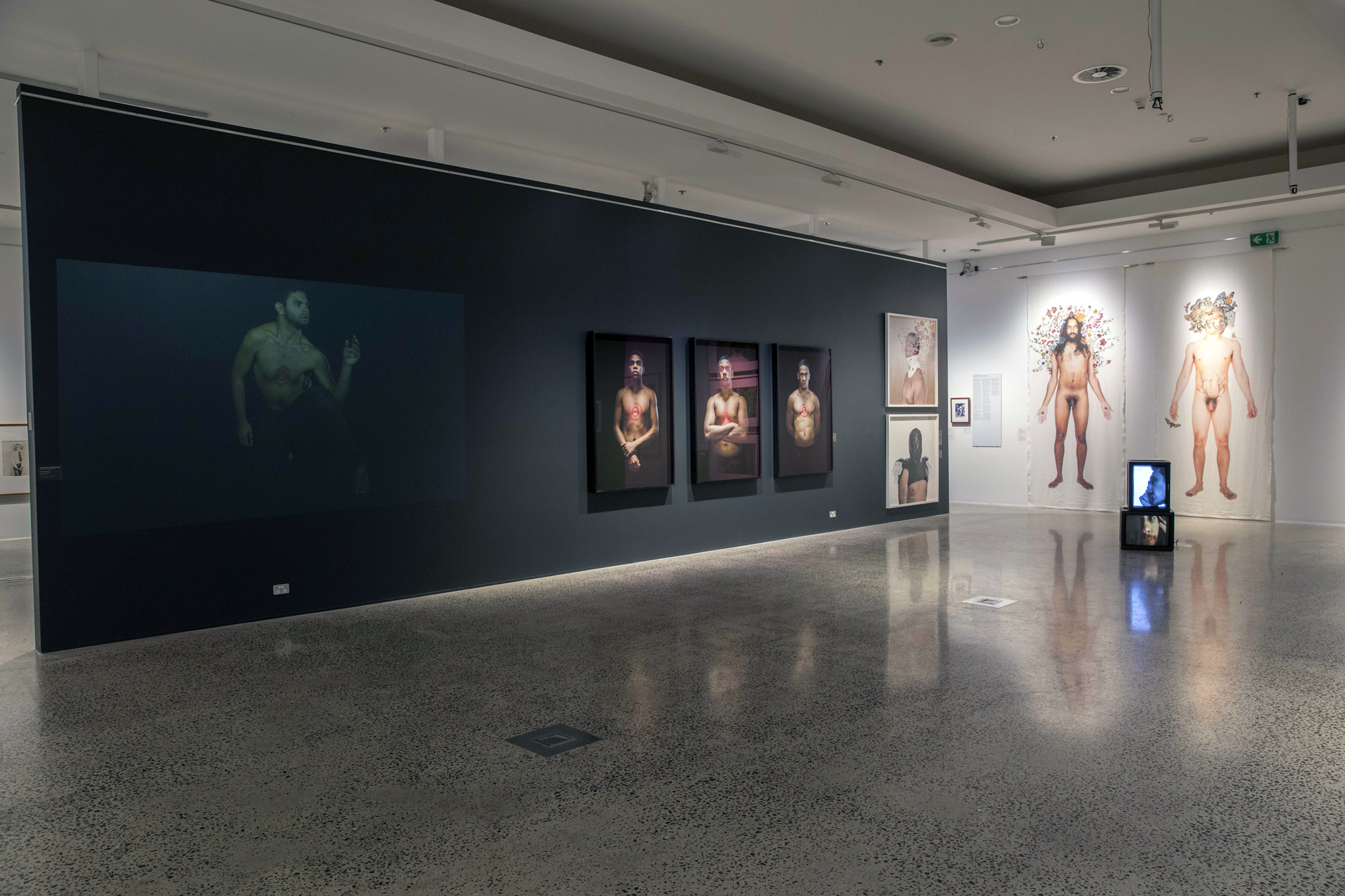
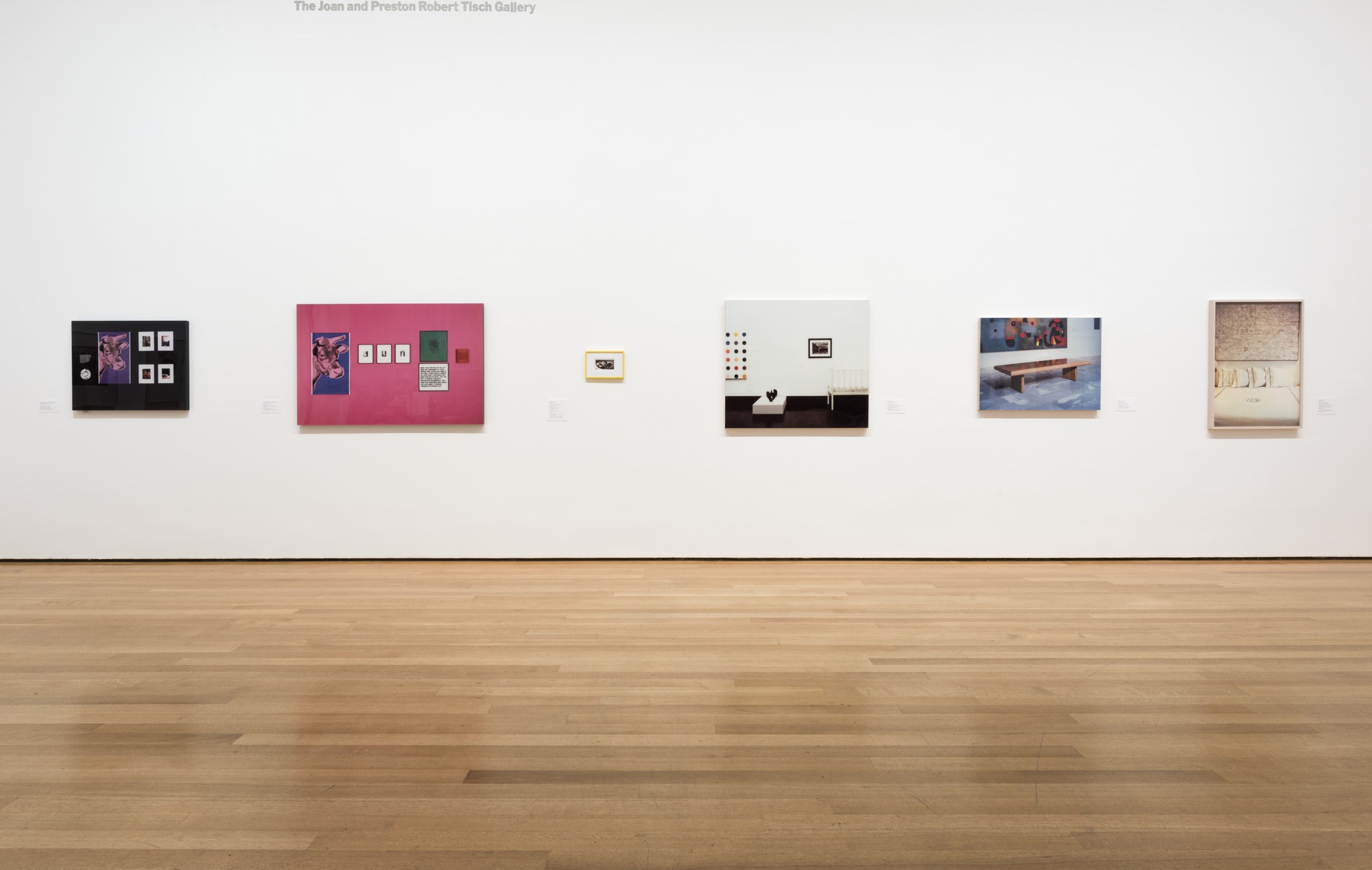
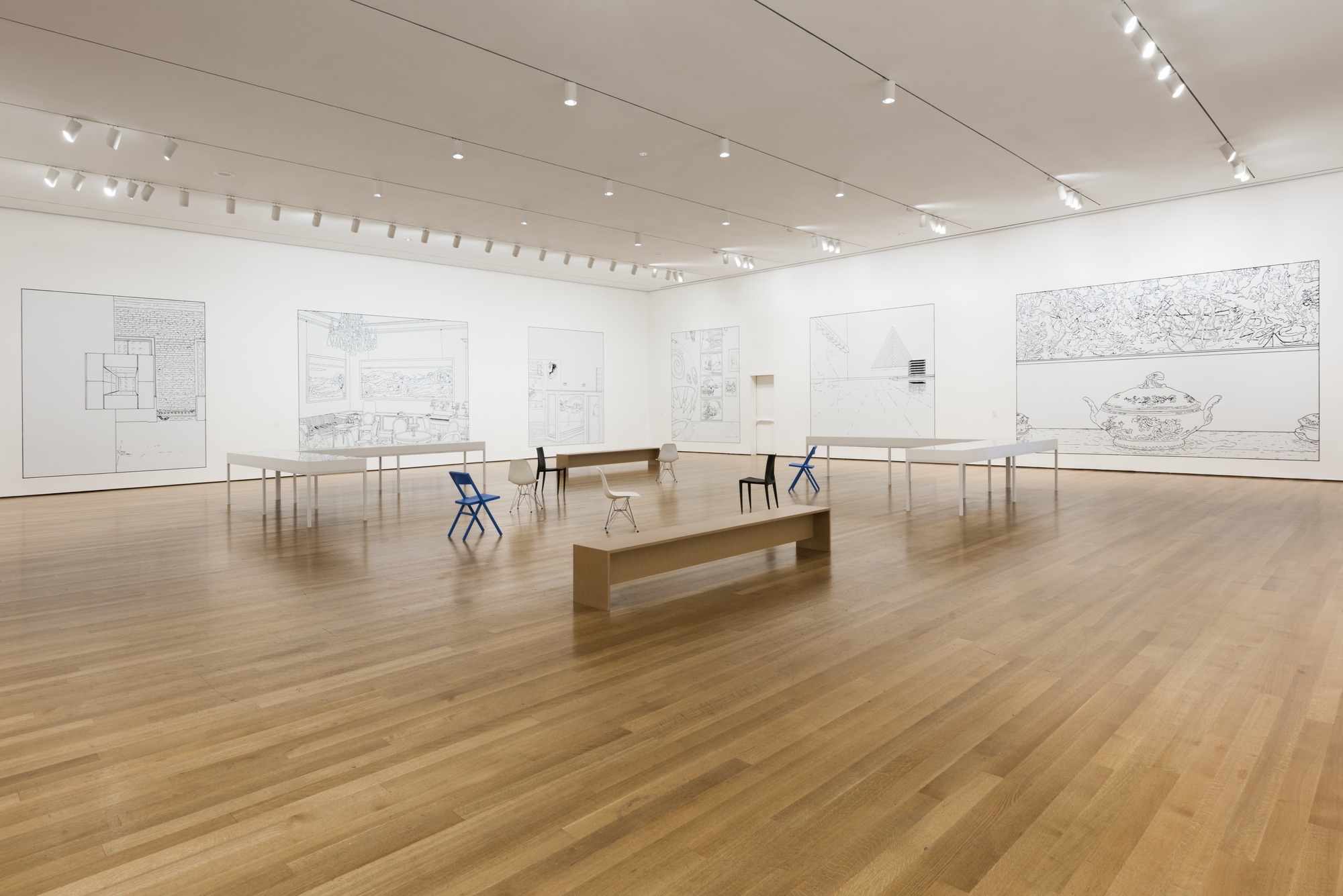
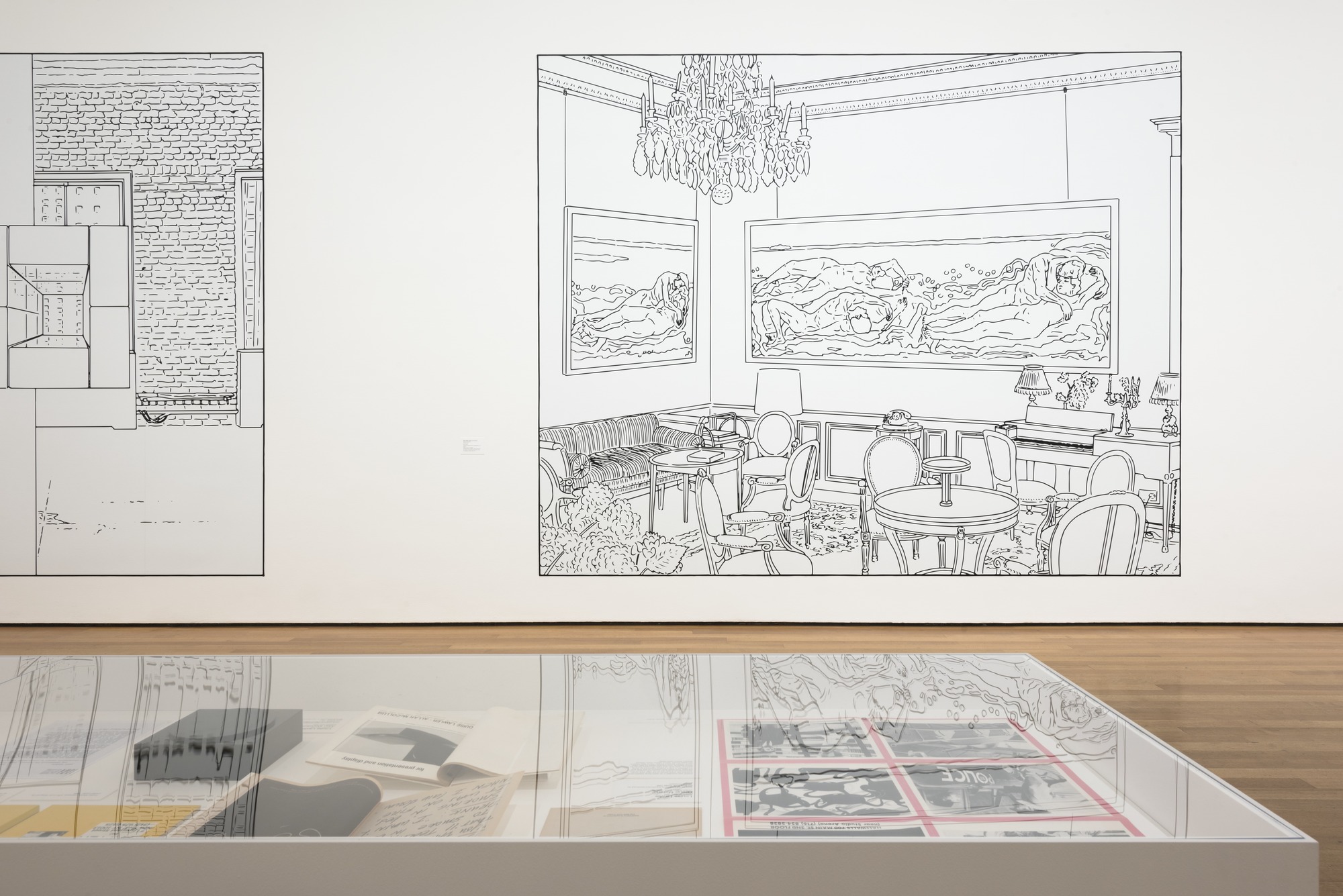
The installation photographs (some of the 148 images in the exhibition) proceed in spatial order, in the flow that they appear in the gallery spaces. The numbers in brackets refer to the number of the image in the field guide. The text is taken from the field guide to the exhibition (Online cited 01/11/2017. No longer available online).
Dr Marcus Bunyan


Many thankx to the CCP for allowing me to publish the photographs in the posting. Please click on the photographs for a larger version of the image. All installation photographs © Dr Marcus Bunyan, the artists and the CCP.


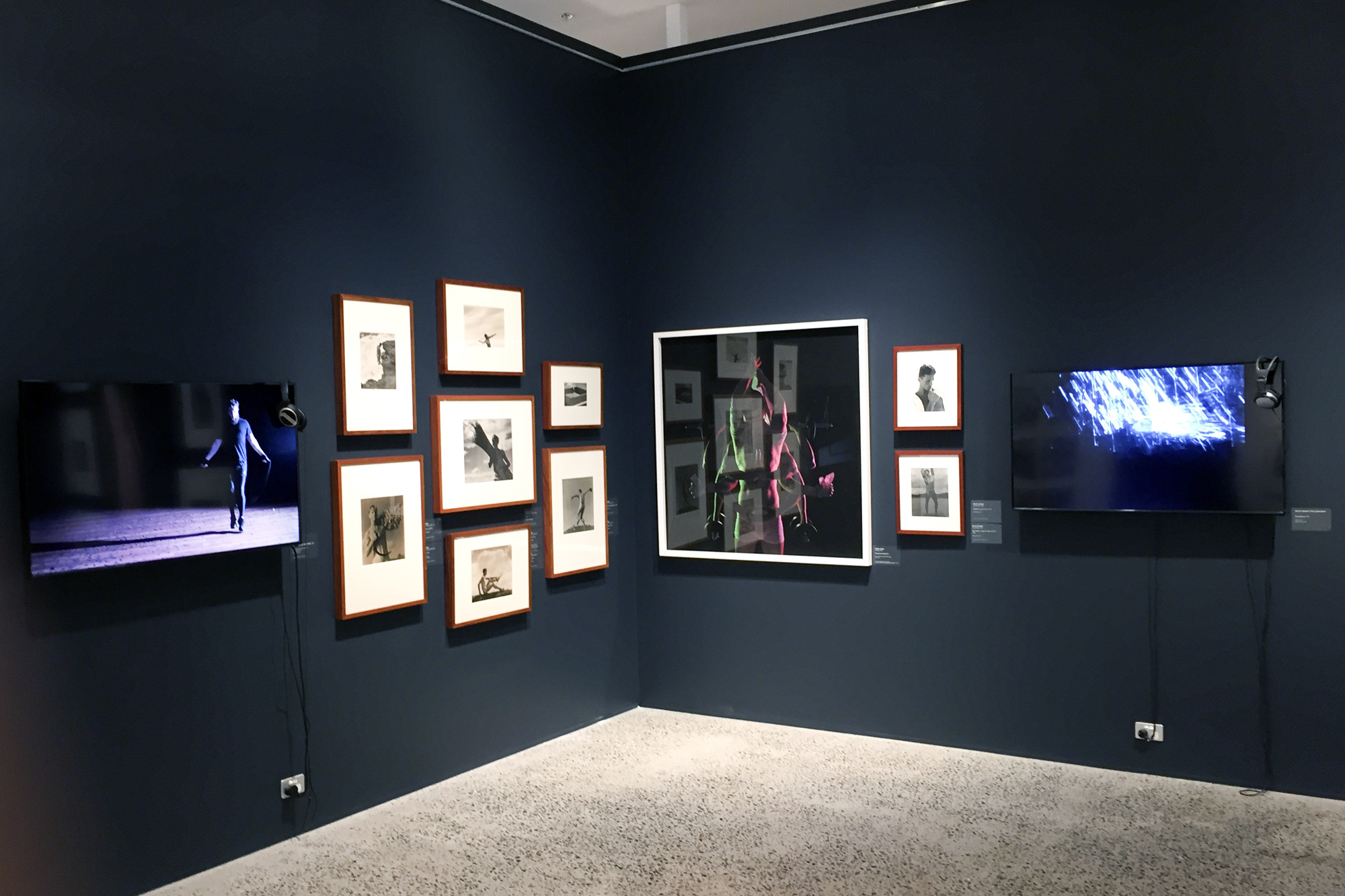
An unorthodox flow of images commences with what is known as the first press photograph in Australia and unfurls through historic, press, portraiture, popular and art photography, some in their intended material form and others as reproductions. An unbroken thread connects this line of still and moving images, each tied to those on either side through visual, conceptual, temporal, material or circumstantial links.

This is a proposition about photography now. Relationships between images are sometimes real, and sometimes promiscuous. Unorthodox brings new contexts to existing artworks whilst celebrating the materiality of real photographs, in real time and critically, honouring the shared democratic experience of the public gallery space.

Text from the CCP website


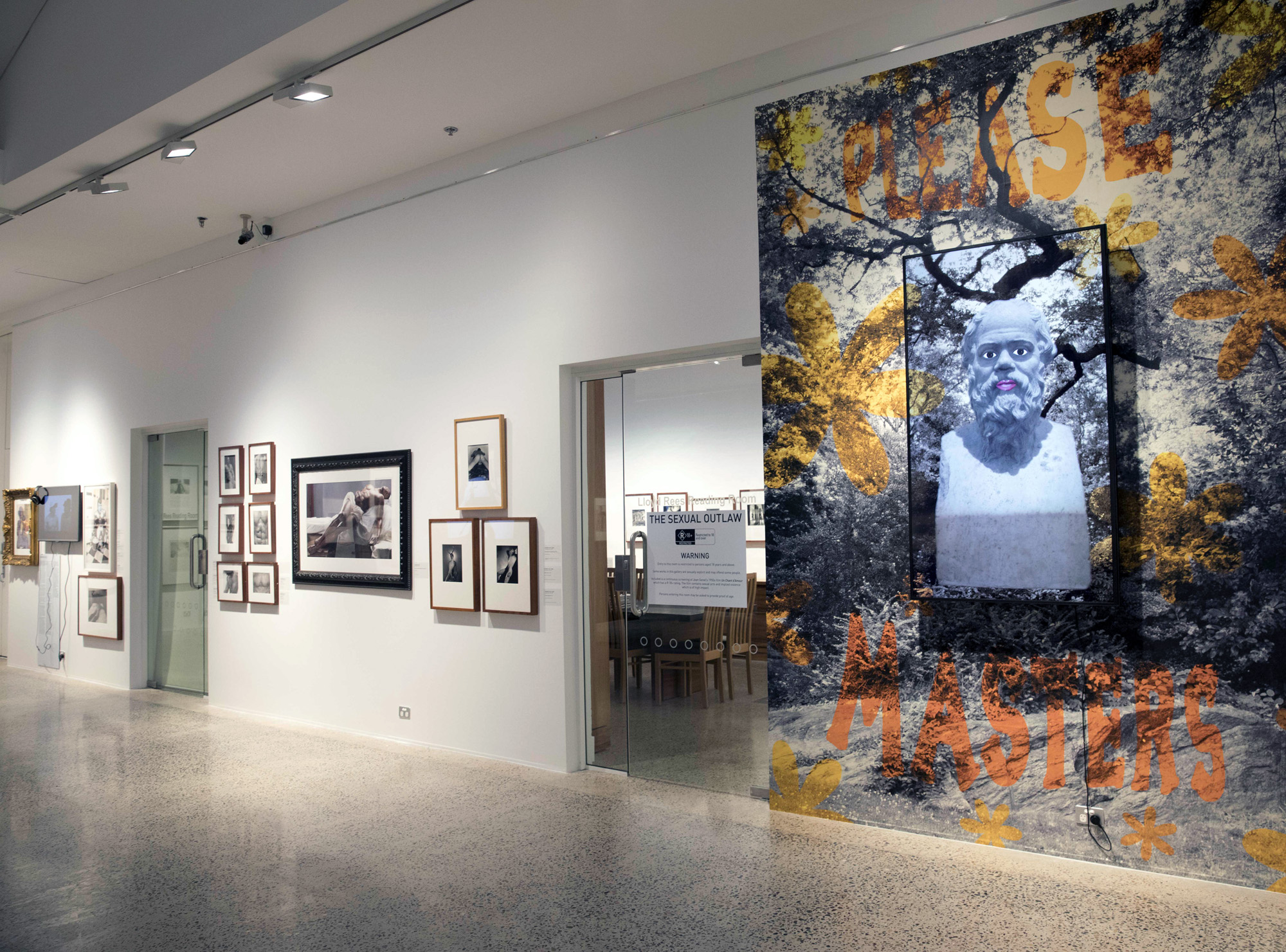
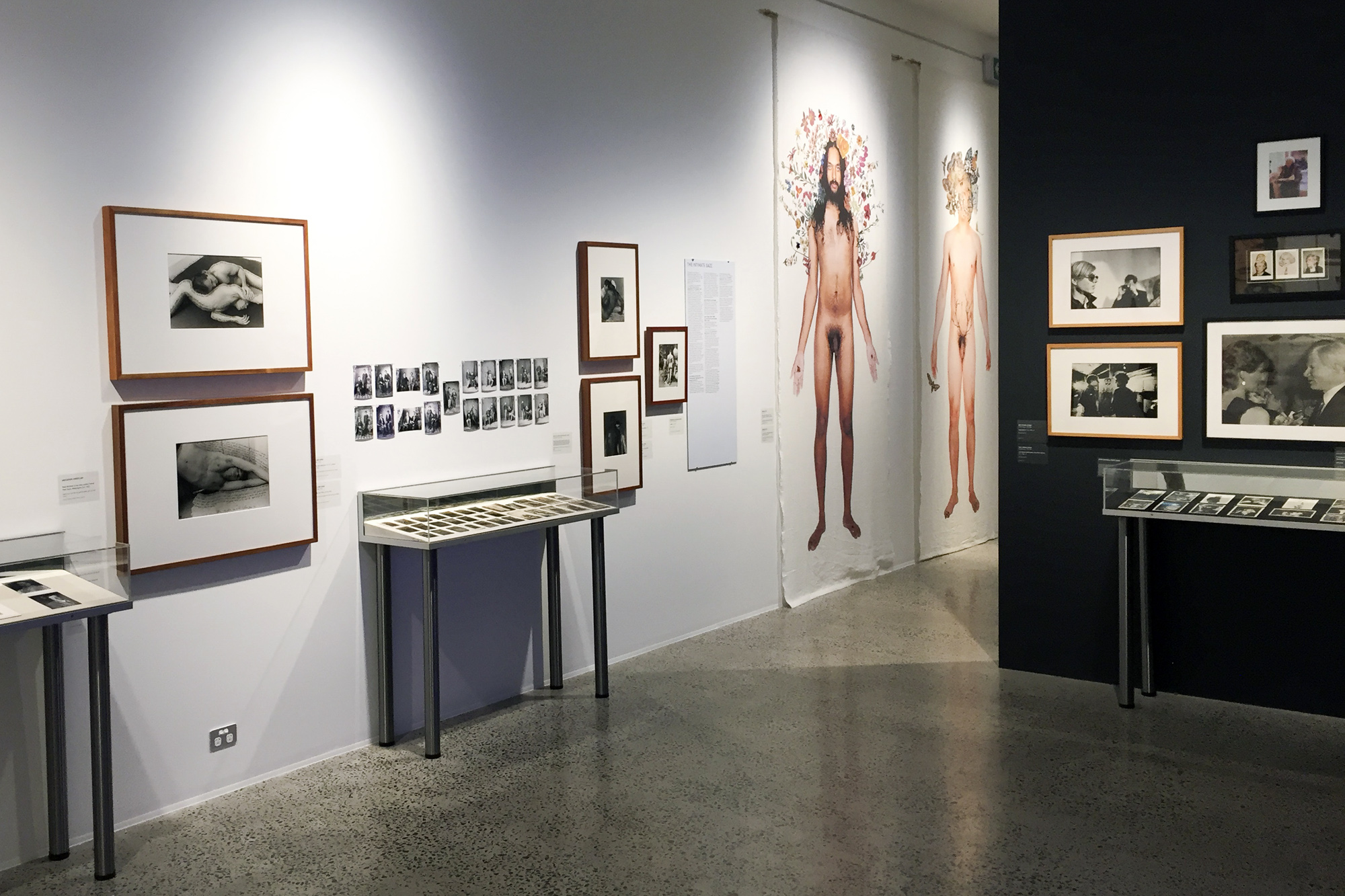
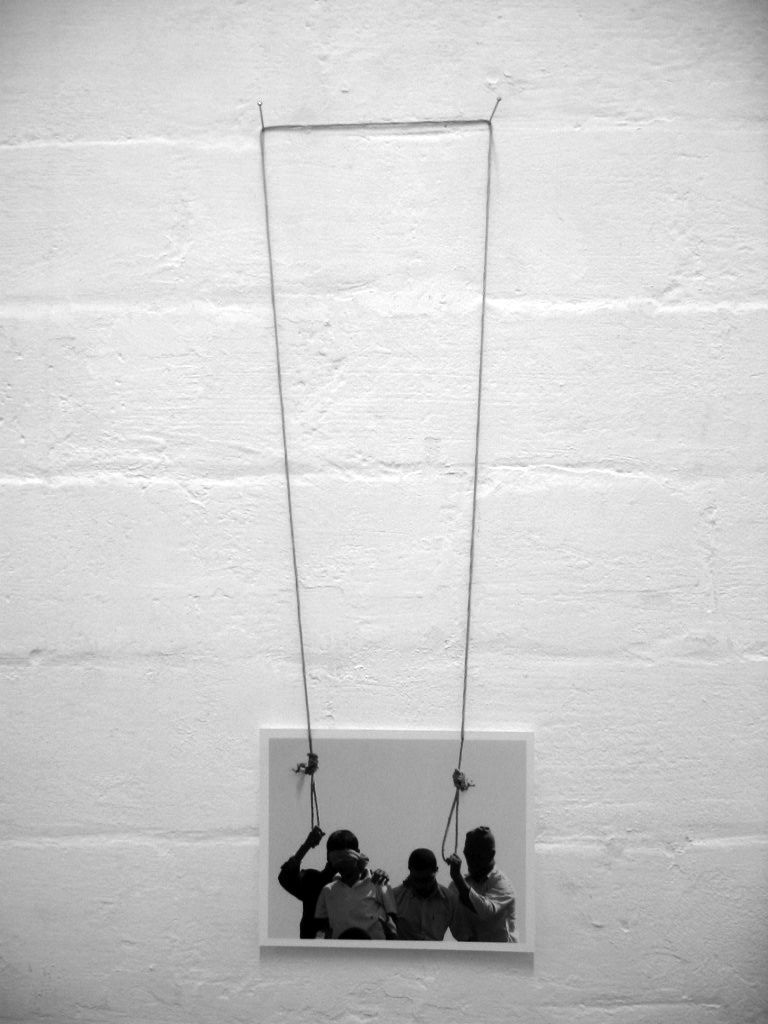
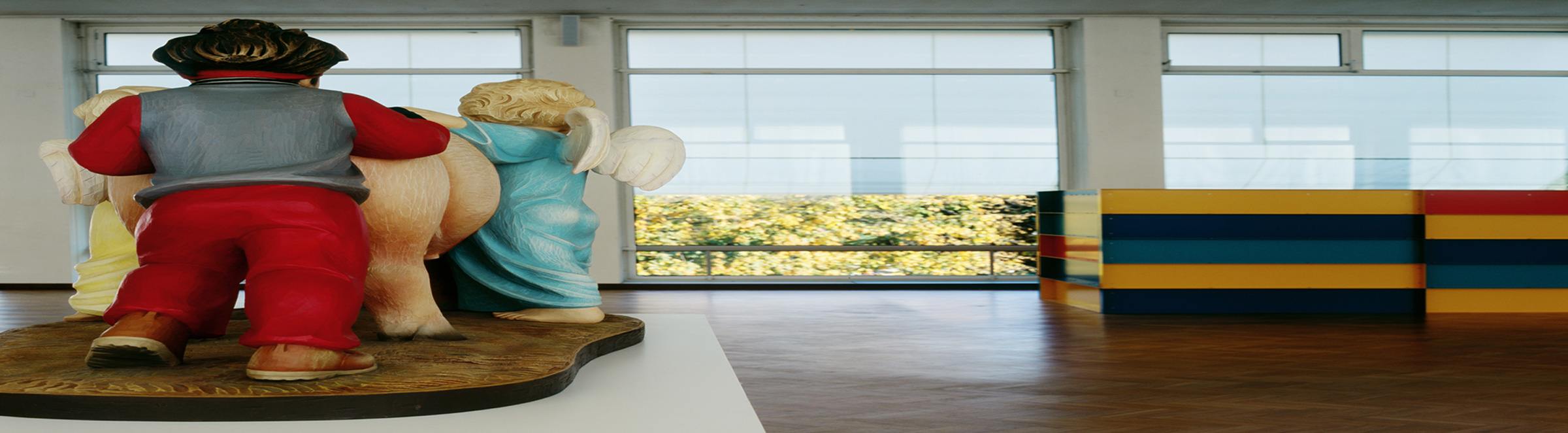
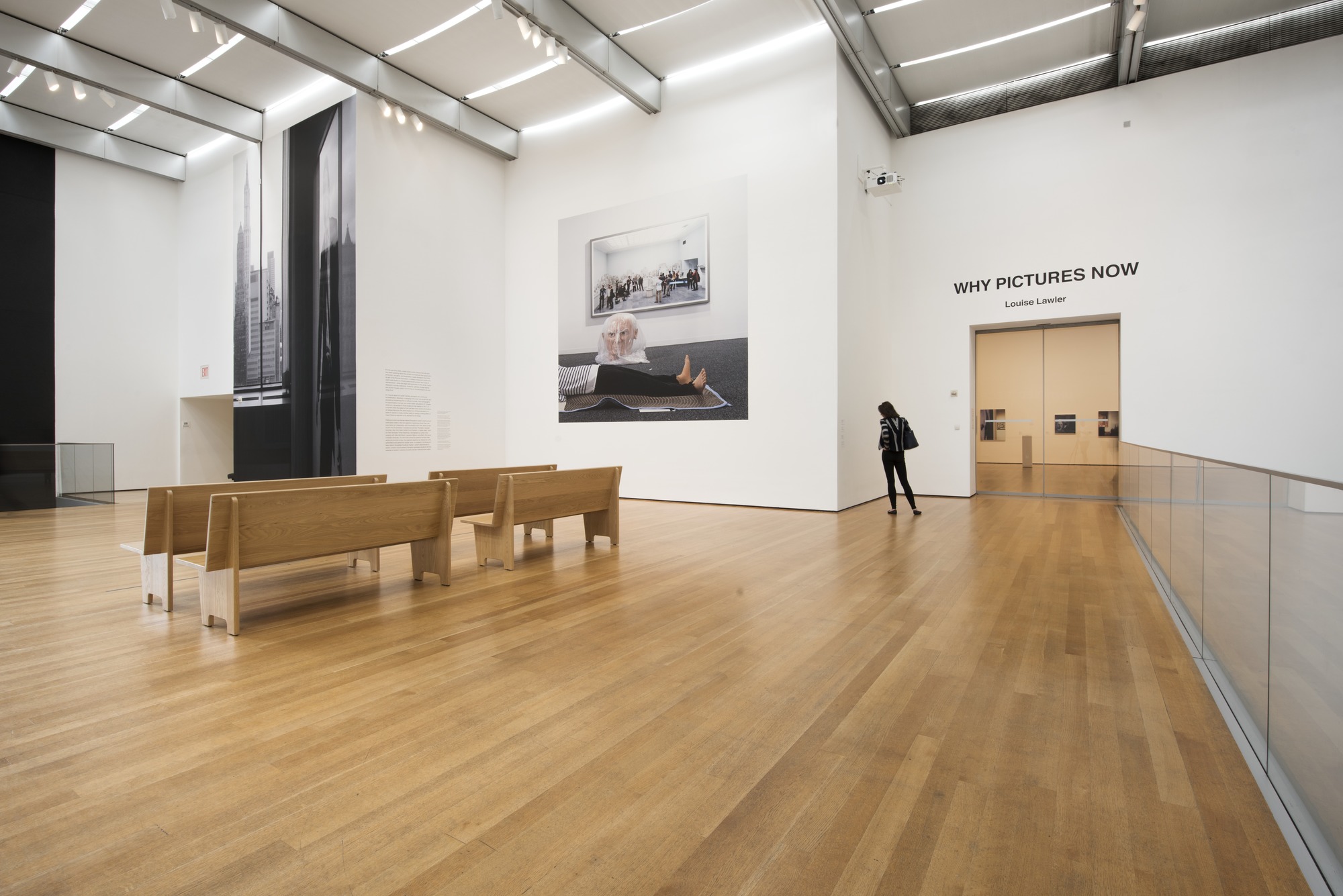
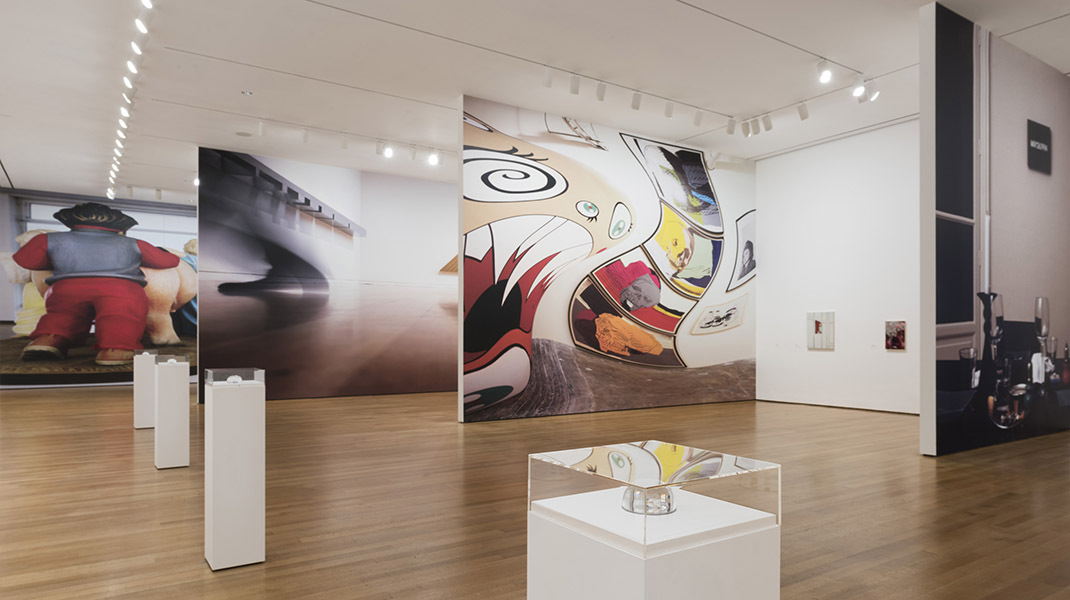
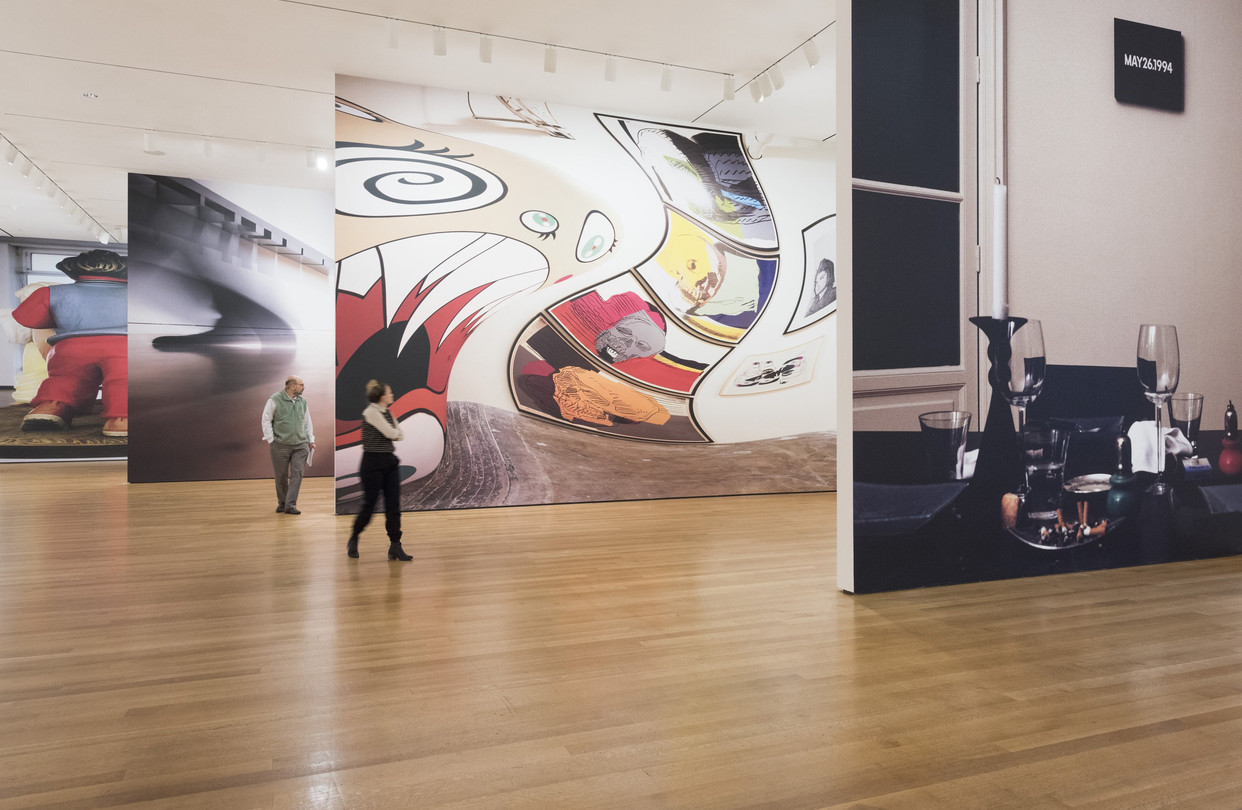
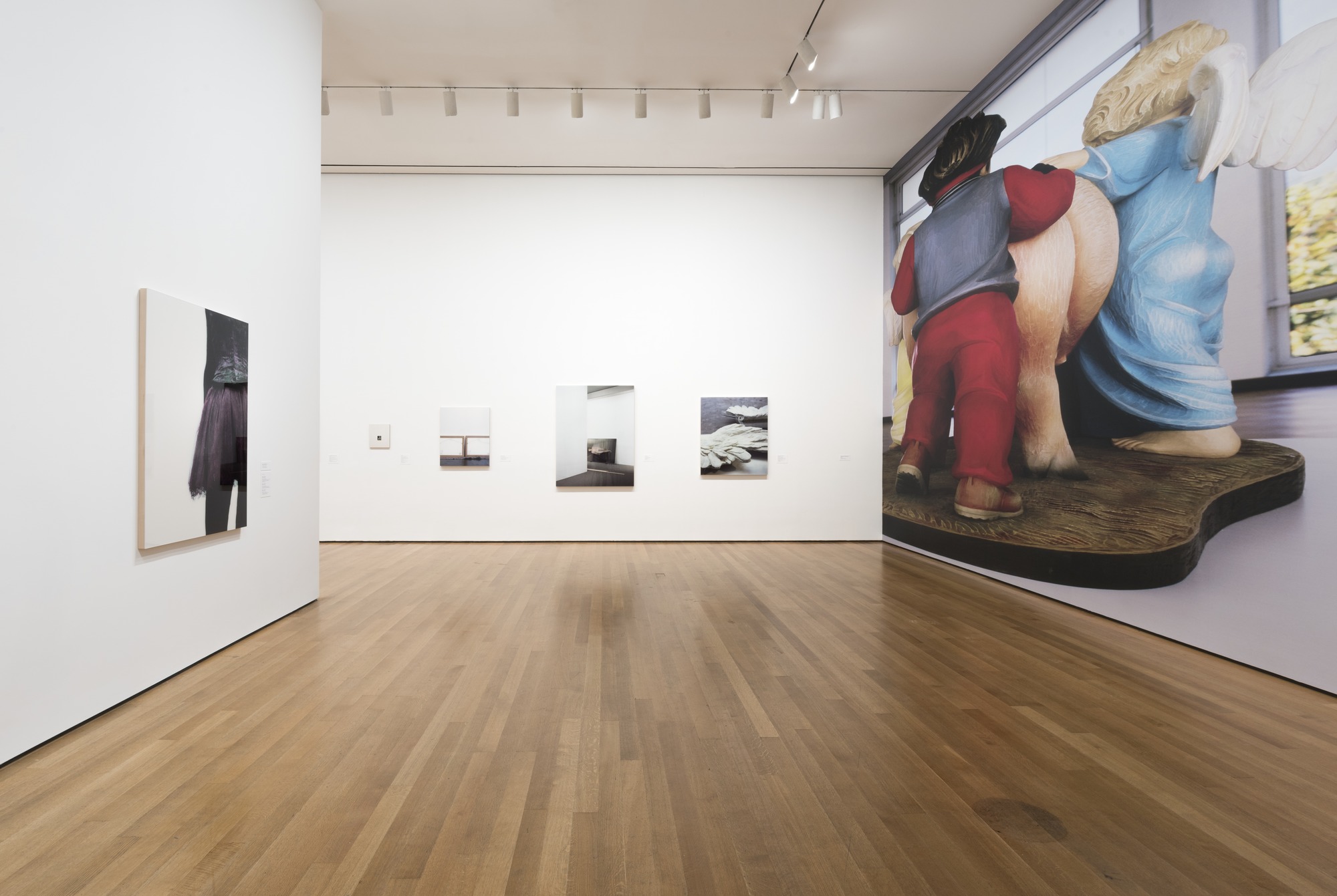
Installation view of the exhibition 'An Unorthodox Flow of Images' at the Centre for Contemporary Photography (CCP), Melbourne, September - November 2017 with at right, wallpaper of J. W. Lindt's 'Body of Joe Byrne, member of the Kelly Gang, hung up for photography, Benalla' 1880, to open the exhibition


Installation view of the exhibition An Unorthodox Flow of Images at the CCP, Melbourne with at right, wallpaper of J. W. Lindt’s Body of Joe Byrne, member of the Kelly Gang, hung up for photography, Benalla 1880, to open the exhibition
Photo: Marcus Bunyan


J W Lindt (Australian, 1845-1926) 'Body of Joe Byrne, member of the Kelly Gang, hung up for photography Benalla' 1880 from the exhibition 'An unorthodox flow of images' at the Centre for Contemporary Photography (CCP), Melbourne, Sept - Dec, 2017


(1) J W Lindt (Australian, 1845-1926)
Body of Joe Byrne, member of the Kelly Gang, hung up for photography, Benalla
1880
Courtesy State Library Victoria, Pictures Collection


J W Lindt: Thought to be the first press photograph in Australia, this shows Joe Byrne, a member of the Kelly Gang, strung up for documentation days after his death, which followed the siege at Glenrowan. Byrne is displayed for an unknown photographer and the painter Julian Ashton who is standing to the left with possibly a sketchbook under his arm. Lindt’s photograph captures not only the spectacle of Byrne’s body but the contingent of documentarians who arrived from Melbourne to record and widely disseminate the event for public edification.


Installation view of the exhibition 'An Unorthodox Flow of Images' at the Centre for Contemporary Photography (CCP), Melbourne, September - November 2017 showing (3) J. E. Bray's 'Kelly Gang Armour' 1880 cabinet card


Installation view of the exhibition An Unorthodox Flow of Images at the CCP, Melbourne showing (3) J. E. Bray’s Kelly Gang Armour 1880 cabinet card © Collection of Joyce Evans
Photo: Marcus Bunyan


J. E. Bray: “As objects of contemplation, images of the atrocious can answer to several different needs. To steel oneself against weakness. To make oneself more numb. To acknowledge the existence of the incorrigible.”

~ Susan Sontag, Regarding the Pain of Others (2003)


Installation view of the exhibition 'An Unorthodox Flow of Images' at the Centre for Contemporary Photography (CCP), Melbourne, September - November 2017 showing (7) J. E. Bray's 'Untitled ["McDonnell's Tavern opposite Railway Station, remains of Dan Kelly and Hart in coffins"]' 1880 cabinet card (right) and (8) a photograph by an unknown photographer Hunters of Ned Kelly 1880 (left)


Installation view of the exhibition An Unorthodox Flow of Images at the CCP, Melbourne showing (7) J. E. Bray’s Untitled [“McDonnell’s Tavern opposite Railway Station, remains of Dan Kelly and Hart in coffins”] 1880 cabinet card (right) and (8) a photograph by an unknown photographer Hunters of Ned Kelly 1880 (left)
Photo: Marcus Bunyan


Installation view of the exhibition 'An Unorthodox Flow of Images' at the Centre for Contemporary Photography (CCP), Melbourne, September - November 2017 showing at right (13) Tracey Moffatt's 'I Made a Camera' 2003

Installation view of the exhibition 'An Unorthodox Flow of Images' at the Centre for Contemporary Photography (CCP), Melbourne, September - November 2017 showing (13) Tracey Moffatt's 'I Made a Camera' 2003


Installation views of the exhibition An Unorthodox Flow of Images at the CCP, Melbourne showing (13) Tracey Moffatt’s I Made a Camera 2003
Photos: Marcus Bunyan


Moffatt: Returning to J.W. Lindt’s photograph – in particular the hooded central figure photographing Joe Byrne – Tracey Moffatt’s picturing of children role-playing calls to mind the colonial photographer’s anthropological gesture.


Installation view of the exhibition 'An Unorthodox Flow of Images' at the Centre for Contemporary Photography (CCP), Melbourne, September - November 2017 showing (14) Siri Hayes' 'In the far reaches of the familiar' 2011 (right) and (15) Janina Green's 'Self Portrait' 1996 (left)


Installation view of the exhibition An Unorthodox Flow of Images at the CCP, Melbourne showing (14) Siri Hayes’ In the far reaches of the familiar 2011 (right) and (15) Janina Green’s Self Portrait 1996 (left)
Photo: Marcus Bunyan


Installation view of the exhibition 'An Unorthodox Flow of Images' at the Centre for Contemporary Photography (CCP), Melbourne, September - November 2017 showing (15) Janina Green's 'Self Portrait' 1996


Installation view of the exhibition An Unorthodox Flow of Images at the CCP, Melbourne showing (15) Janina Green’s Self Portrait 1996
Photo: Marcus Bunyan


Green: Although celebrated for her hand coloured prints, this is in fact made with the second version of Photoshop.


Installation view of the exhibition 'An Unorthodox Flow of Images' at the Centre for Contemporary Photography (CCP), Melbourne, September - November 2017 showing (16) Georgie Mattingley's 'Portrait IV (After Arthroplasty)' 2016 (right) and (17) Lisa Hilli's 'In a Bind' 2015 (middle)


Installation view of the exhibition An Unorthodox Flow of Images at the CCP, Melbourne showing (16) Georgie Mattingley’s Portrait IV (After Arthroplasty) 2016 (right) and (17) Lisa Hilli’s In a Bind 2015 (middle)
Photo: Marcus Bunyan


Mattingley: The photographer’s hood has become a meat-worker’s protective gear, tenderly hand-coloured.

Hilli: ‘The woven material that hoods the artist’s identity is a reference to collected Pacific artefacts, which are usually of a practical nature. Magimagi is a plaited coconut fibre used for reinforcing architectural structures and body adornment within the Pacific. Here it emphasises the artist’s feeling of being bound by derogatory Western and anthropological labels used by museums and the erasure of Pacific bodies and narratives within public displays of Pacific materiality.’  ~ Lisa Hilli 2017, in an email to the curator


Installation view of the exhibition 'An Unorthodox Flow of Images' at the Centre for Contemporary Photography (CCP), Melbourne, September - November 2017 showing (18) Fiona Pardington's 'Saul' 1986 (right), (19) Fiona MacDonald's '12 Artists' 1987 (postcard, middle), and (20) Jack Mannix's 'Still Life, Footscray' 2013 (left)


Installation view of the exhibition An Unorthodox Flow of Images at the CCP, Melbourne showing (18) Fiona Pardington’s Saul 1986 (right), (19) Fiona MacDonald’s 12 Artists 1987 (postcard, middle), and (20) Jack Mannix’s Still Life, Footscray 2013 (left)
Photo: Marcus Bunyan


Pardington: A portrait of Joe Makea in his beekeeper’s helmet.

MacDonald: A vintage Victorian Centre for Photography (VCP) postcard, prior to its change of name to CCP.

Mannix: A vanitas is a still life artwork which includes various symbolic objects designed to remind the viewer of their mortality and of the worthlessness of worldly goods and pleasures.


Installation view of the exhibition 'An Unorthodox Flow of Images' at the Centre for Contemporary Photography (CCP), Melbourne, September - November 2017 showing (27) Wolfgang Sievers' 'The writer Jean Campbell, in her flat in East Melbourne' 1950 (right); (26) André Kertész's 'Chez Mondrian, Paris' 1926 (middle top); (28) Gisèle Freund's 'Vita Sackville-West' 1938 (middle bottom); and (29) Anne Zahalka's 'Home #3 (mirror)' 1998 (left)


Installation view of the exhibition An Unorthodox Flow of Images at the CCP, Melbourne showing (27) Wolfgang Sievers’ The writer Jean Campbell, in her flat in East Melbourne 1950 (right); (26) André Kertész’s Chez Mondrian, Paris 1926 (middle top); (28) Gisèle Freund’s Vita Sackville-West 1938 (middle bottom); and (29) Anne Zahalka’s Home #3 (mirror) 1998 (left)
Photo: Marcus Bunyan


Sievers: Wolfgang’s inscription on the back of this particular print reads: The writer Jean Campbell in her near-eastern flat with her portrait by Lina Bryans.

Kertész: A studio is site for the artist’s gathering of images.

Freund: Vita Sackville-West’s writing studio was in an Elizabethan tower at Sissinghurst in Kent, overlooking her famous white garden. It remains, exactly as she left it.

Zahalka: The boundary between home and studio is often blurred when an artist has a small child.


Installation view of the exhibition 'An Unorthodox Flow of Images' at the Centre for Contemporary Photography (CCP), Melbourne, September - November 2017

Installation view of the exhibition 'An Unorthodox Flow of Images' at the Centre for Contemporary Photography (CCP), Melbourne, September - November 2017

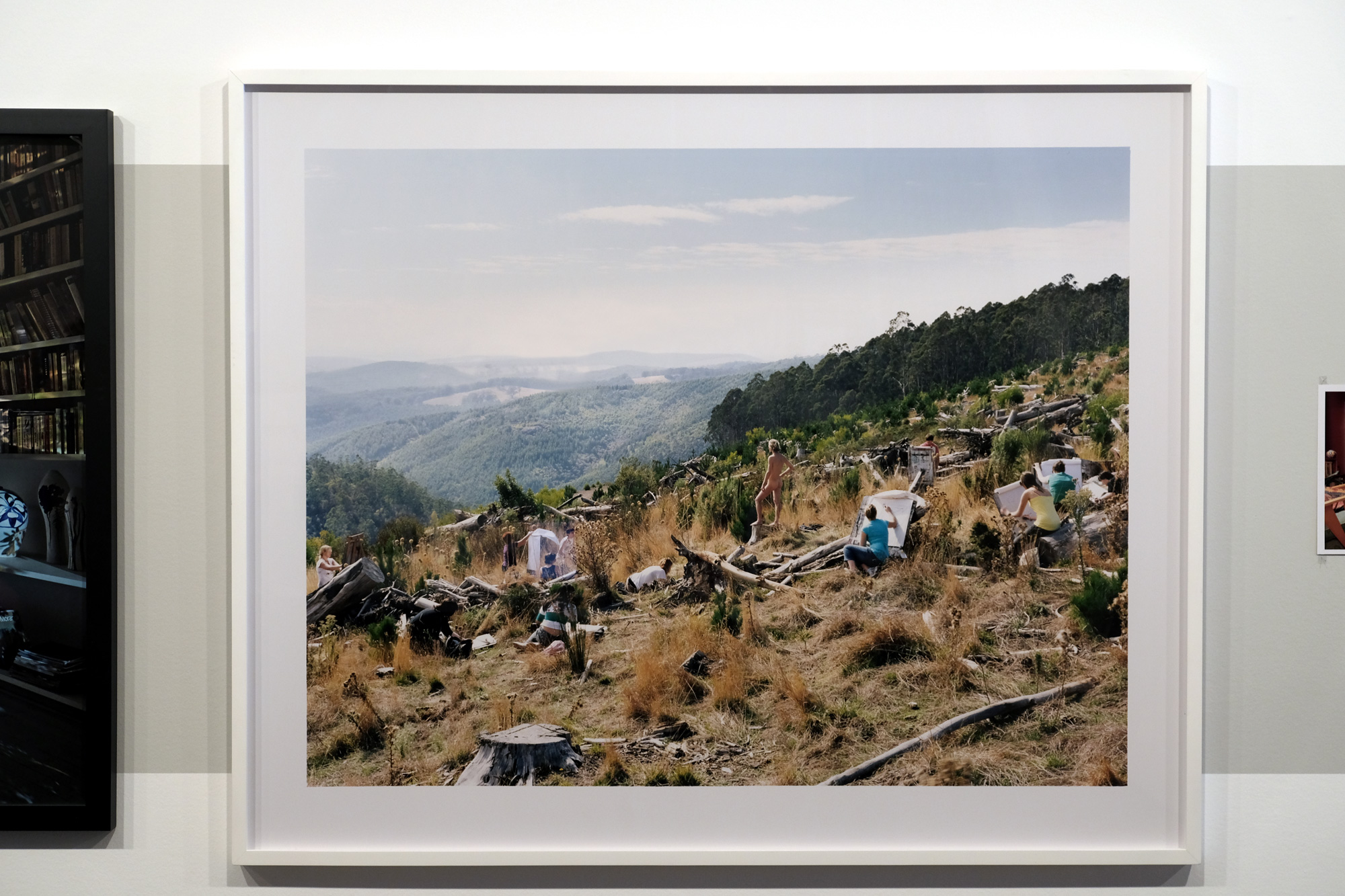
Installation view of the exhibition 'An Unorthodox Flow of Images' at the Centre for Contemporary Photography (CCP), Melbourne, September - November 2017 showing (30) Siri Hayes' 'Plein air explorers' 2008


Installation views of the exhibition An Unorthodox Flow of Images at the CCP, Melbourne showing in the bottom image (30) Siri Hayes’ Plein air explorers 2008
Photos: Marcus Bunyan


Hayes: An artist’s studio in the landscape.


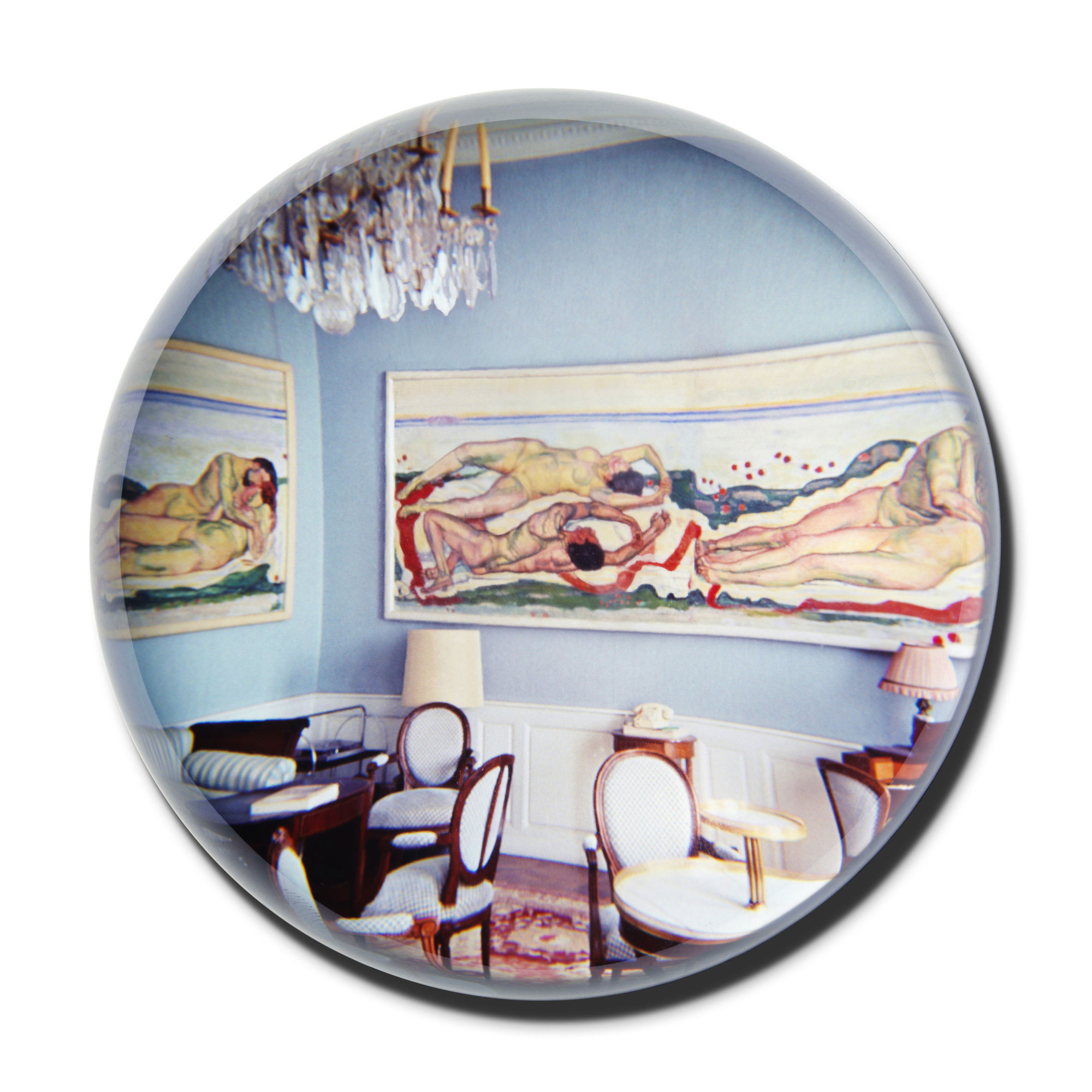
Installation view of the exhibition 'An Unorthodox Flow of Images' at the Centre for Contemporary Photography (CCP), Melbourne, September - November 2017 showing (31) Robyn Stacey's 'Wendy and Brett Whiteley's Library from the series Dark Wonder' 2016


Installation view of the exhibition An Unorthodox Flow of Images at the CCP, Melbourne showing (31) Robyn Stacey’s Wendy and Brett Whiteley’s Library from the series Dark Wonder 2016
Photo: Marcus Bunyan


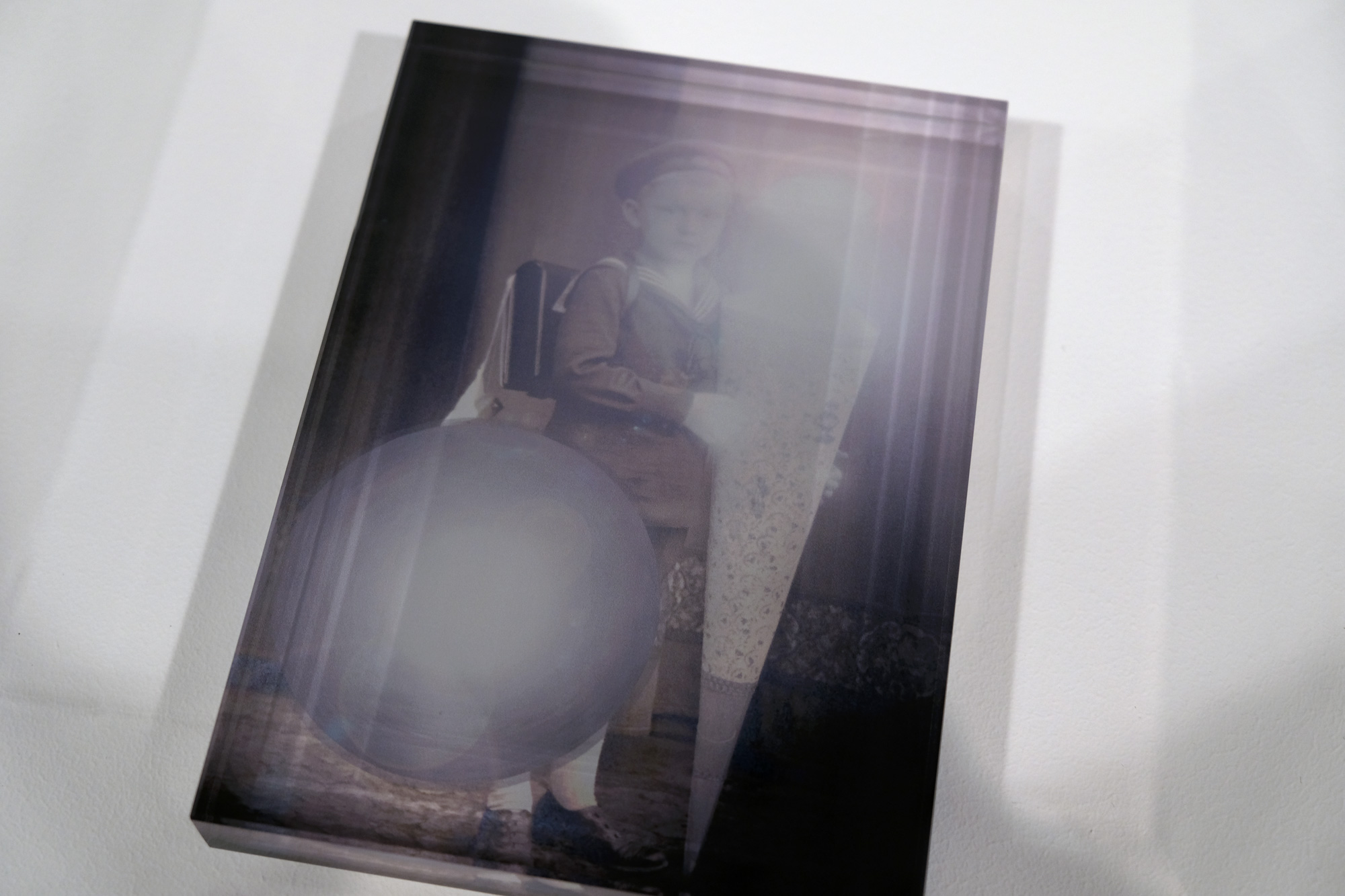
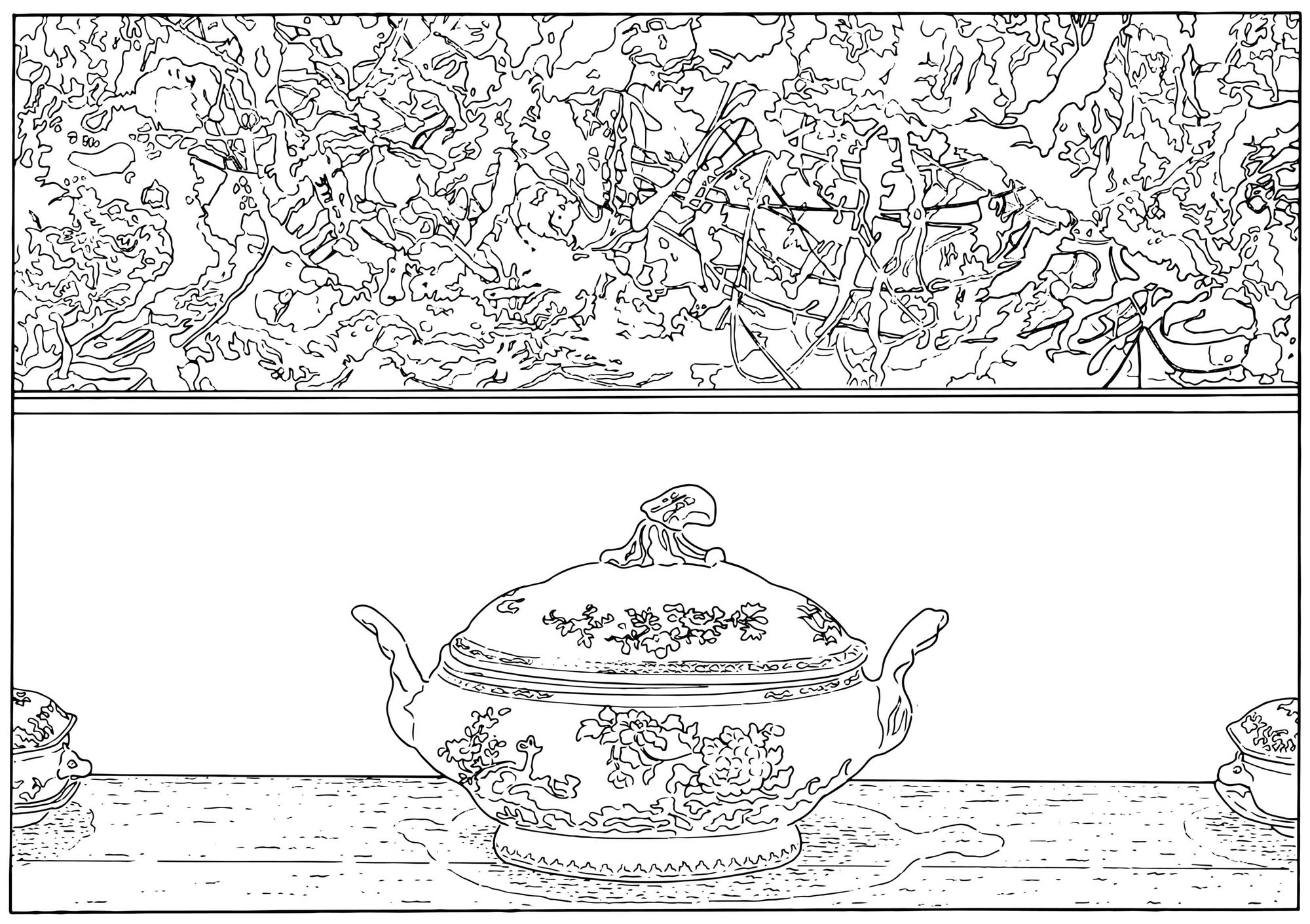
Stacey: The landscape brought into the studio by a camera obscura. Robyn Stacey captures the perfect moment of light and clarity, in this instance, also turning the egg-object into an orb of light.


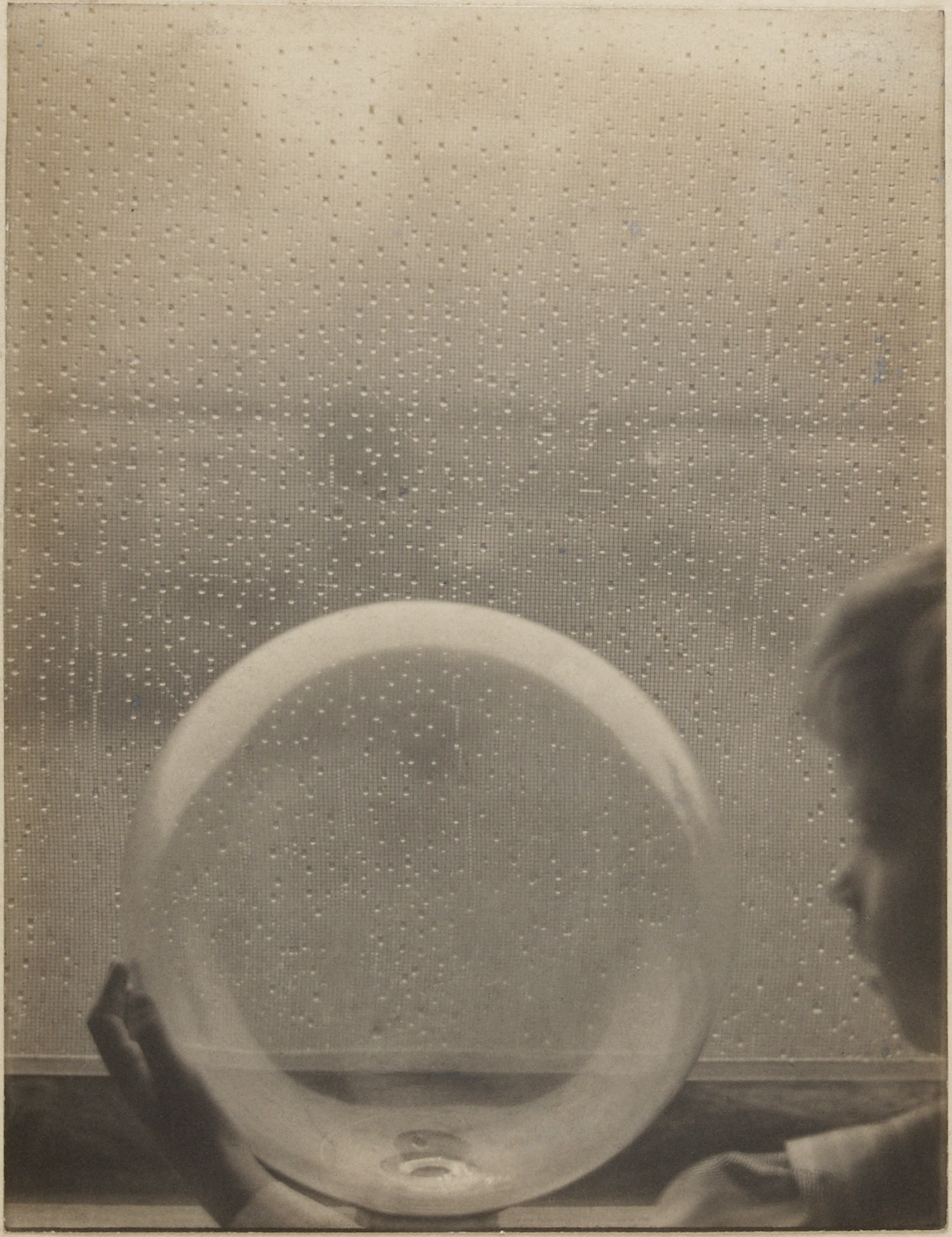
Installation view of the exhibition 'An Unorthodox Flow of Images' at the Centre for Contemporary Photography (CCP), Melbourne, September - November 2017 showing (33) NASA Images' 'A lunar disc as seen from the Apollo 15 spacecraft' 1971 (top); (34) Steve Carr's 'Smoke Bubble No. 30' 2010 (right); and (35) National Geographic Vol. 174, No. 6, December 1988 (left)


Installation view of the exhibition An Unorthodox Flow of Images at the CCP, Melbourne showing (33) NASA Images’ A lunar disc as seen from the Apollo 15 spacecraft 1971 (top); (34) Steve Carr’s Smoke Bubble No. 30 2010 (right); and (35) National Geographic Vol. 174, No. 6, December 1988 (left)
Photo: Marcus Bunyan


Carr: Smoke filled soap orb, reminiscent of a planet.

National Geographic: The subtitle to this special 1988 issue of National Geographic, which has a holographic front and back cover is: “As We Begin Our Second Century, the Geographic Asks: Can Man Save this Fragile Earth?”


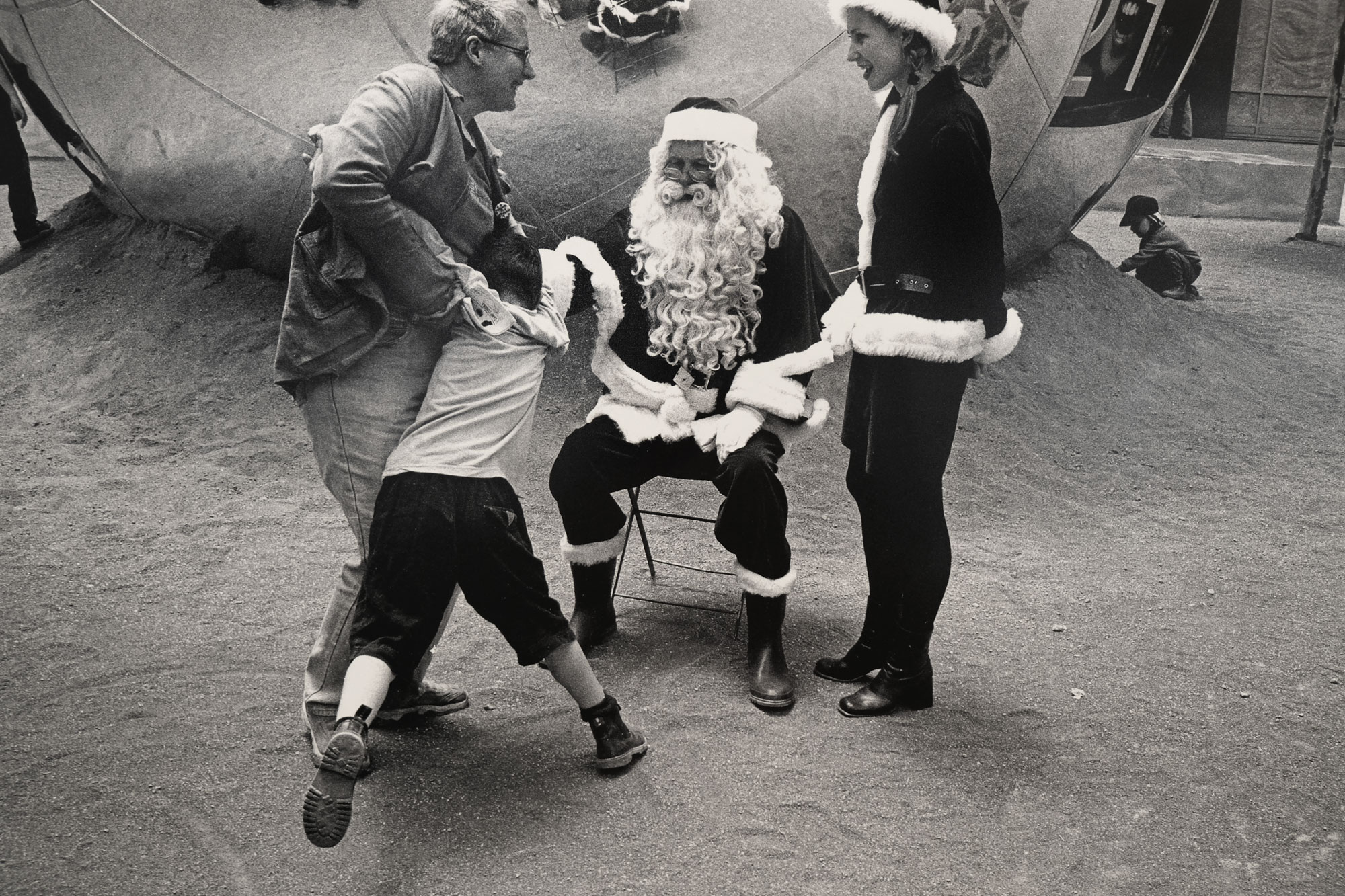
Installation view of the exhibition 'An Unorthodox Flow of Images' at the Centre for Contemporary Photography (CCP), Melbourne, September - November 2017 showing (39) Jesse Marlow's 'Santa' 2002


Installation view of the exhibition An Unorthodox Flow of Images at the CCP, Melbourne showing (39) Jesse Marlow’s Santa 2002
Photo: Marcus Bunyan


Installation view of the exhibition 'An Unorthodox Flow of Images' at the Centre for Contemporary Photography (CCP), Melbourne, September - November 2017 showing (44) Susan Fereday's 'Köln' 2016


Installation view of the exhibition An Unorthodox Flow of Images at the CCP, Melbourne showing (44) Susan Fereday’s Köln 2016
Photo: Marcus Bunyan


Installation view of the exhibition 'An Unorthodox Flow of Images' at the Centre for Contemporary Photography (CCP), Melbourne, September - November 2017 showing (49) W. H. Moffitt's 'Beach Scene, Collard #3' c. 1944


Installation view of the exhibition An Unorthodox Flow of Images at the CCP, Melbourne showing (49) W. H. Moffitt’s Beach Scene, Collard #3 c. 1944
Photo: Marcus Bunyan


W. H. Moffitt: The bromoil process was invented in 1907 by Englishman C. Wellbourne Piper. A bromoil print is simply a black and white photograph printed on a suitable photographic paper from which the silver image is removed and lithography inks applied.


Installation view of the exhibition 'An Unorthodox Flow of Images' at the Centre for Contemporary Photography (CCP), Melbourne, September - November 2017 showing (51) Sarah Brown's 'Quietly' 2017 (right); (52) Robert Billington's 'Narrabeen Baths' 1994 (middle bottom); and (53) Trent Parke's 'Untitled #92' 1999-2000 (middle top)


Installation view of the exhibition An Unorthodox Flow of Images at the CCP, Melbourne showing (51) Sarah Brown’s Quietly 2017 (right); (52) Robert Billington’s Narrabeen Baths 1994 (middle bottom); and (53) Trent Parke’s Untitled #92 1999-2000 (middle top)
Photo: Marcus Bunyan


Brown: The salted paper technique was created in the mid-1830s by Henry Fox Talbot. He made what he called “sensitive paper for “photogenic drawing” by wetting a sheet of writing paper with a weak solution of ordinary table salt, blotting and drying it, then brushing one side with a strong solution of silver nitrate.


Installation view of the exhibition 'An Unorthodox Flow of Images' at the Centre for Contemporary Photography (CCP), Melbourne, September - November 2017 showing (55) Charles Bayliss' 'Ngarrindjeri people, Chowilla Station, Lower Murray River, South Australia' 1886 (right) and (56) Anne Noble's 'Antarctic diorama, Polaria Centre, Tromso, Norway' 2005 (left)

Installation view of the exhibition 'An Unorthodox Flow of Images' at the Centre for Contemporary Photography (CCP), Melbourne, September - November 2017 showing (55) Charles Bayliss' 'Ngarrindjeri people, Chowilla Station, Lower Murray River, South Australia' 1886 (right) and (56) Anne Noble's 'Antarctic diorama, Polaria Centre, Tromso, Norway' 2005 (left)


Installation view of the exhibition An Unorthodox Flow of Images at the CCP, Melbourne showing (55) Charles Bayliss’ Ngarrindjeri people, Chowilla Station, Lower Murray River, South Australia 1886 (right) and (56) Anne Noble’s Antarctic diorama, Polaria Centre, Tromso, Norway 2005 (left)
Photos: Marcus Bunyan


Bayliss: Water looks like glass in this colonial photograph where the subjects perform for Bayliss. “Bayliss here re-creates a ‘native fishing scene’ tableau, reminiscent of a museum diorama.”

Noble: Water is glass in this diorama; photographed as if it were from nature.


Installation view of the exhibition 'An Unorthodox Flow of Images' at the Centre for Contemporary Photography (CCP), Melbourne, September - November 2017 showing (55) Charles Bayliss' 'Ngarrindjeri people, Chowilla Station, Lower Murray River, South Australia' 1886


Installation view of the exhibition An Unorthodox Flow of Images at the CCP, Melbourne showing (55) Charles Bayliss’ Ngarrindjeri people, Chowilla Station, Lower Murray River, South Australia 1886
Photo: Marcus Bunyan


Installation view of the exhibition 'An Unorthodox Flow of Images' at the Centre for Contemporary Photography (CCP), Melbourne, September - November 2017 showing (58) Andrew Hazewinkel's 'Staring together at the stars, #1' 2013 (right); (59) Ian Dodd's 'Wet Hair' 1974 (second right); (60) Juno Gemes' 'One with the Land' 1978 (middle); (61) David Rosetzky's 'Milo' 2017 (upper left); and (62) Brook Andrew's 'I Split Your Gaze' 1997 (left)


Installation view of the exhibition An Unorthodox Flow of Images at the CCP, Melbourne showing (58) Andrew Hazewinkel’s Staring together at the stars, #1 2013 (right); (59) Ian Dodd’s Wet Hair 1974 (second right); (60) Juno Gemes’ One with the Land 1978 (middle); (61) David Rosetzky’s Milo 2017 (upper left); and (62) Brook Andrew’s I Split Your Gaze 1997 (left)
Photo: Marcus Bunyan


Gemes: The subtitle to this photograph in some collections reads: ‘waiting for the sacred fish the Dunya and Wanra to come in, Mornington Island, Queensland’.


Installation view of the exhibition 'An Unorthodox Flow of Images' at the Centre for Contemporary Photography (CCP), Melbourne, September - November 2017

Installation view of the exhibition 'An Unorthodox Flow of Images' at the Centre for Contemporary Photography (CCP), Melbourne, September - November 2017

Installation view of the exhibition 'An Unorthodox Flow of Images' at the Centre for Contemporary Photography (CCP), Melbourne, September - November 2017

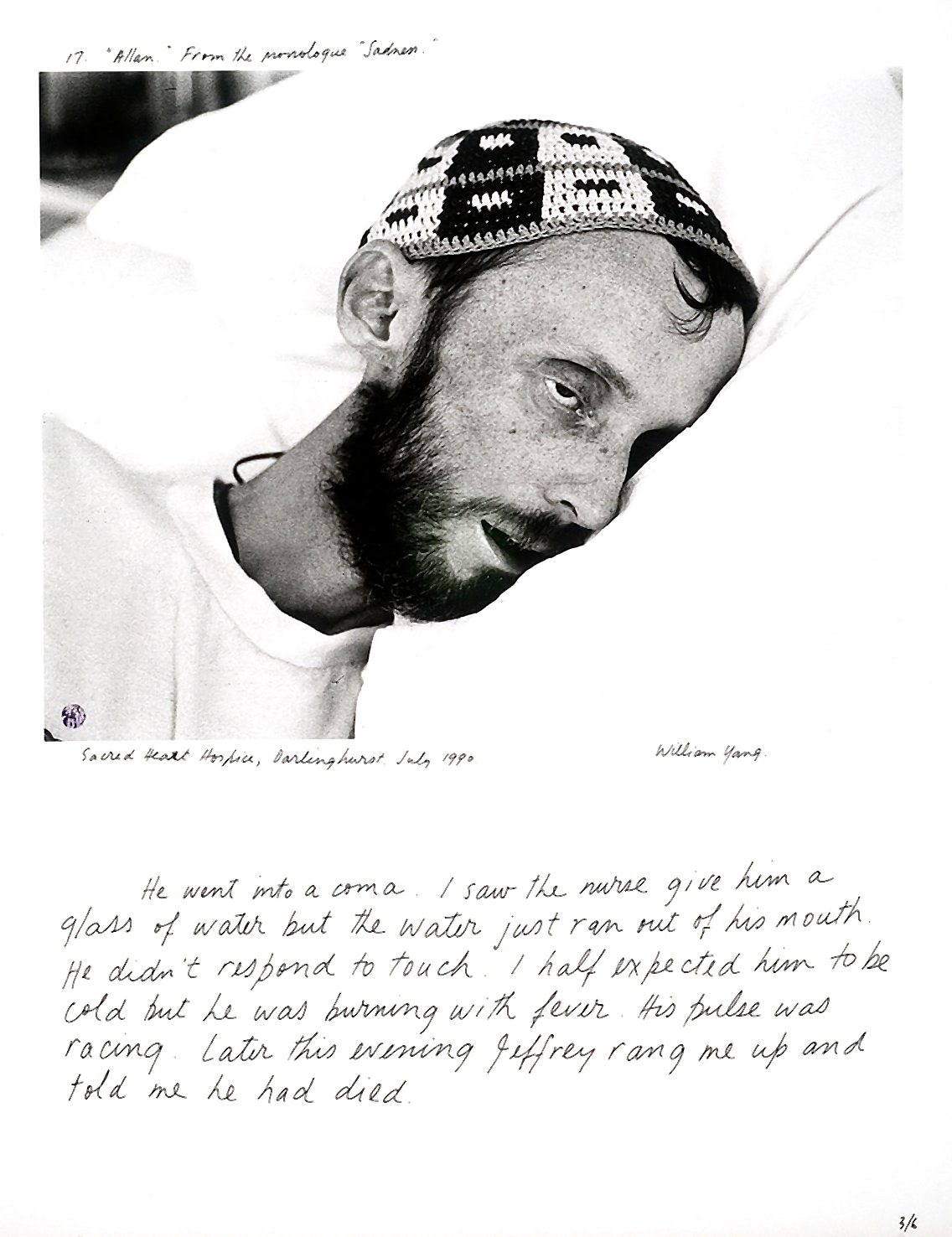
Installation view of the exhibition 'An Unorthodox Flow of Images' at the Centre for Contemporary Photography (CCP), Melbourne, September - November 2017 showing at centre right in the bottom image (64) William Yang's 'Alter Ego' 2000


Installation views of the exhibition An Unorthodox Flow of Images at the CCP, Melbourne showing at centre right in the bottom image (64) William Yang’s Alter Ego 2000 and at right, Brook Andrew’s I Split Your Gaze 1997
Photos: Marcus Bunyan


Brook Andrew (Australian, b. 1970) 'I Split Your Gaze' 1997


Brook Andrew (Australian, b. 1970)
I Split Your Gaze
1997
Gelatin silver print


Installation view of the exhibition 'An Unorthodox Flow of Images' at the Centre for Contemporary Photography (CCP), Melbourne, September - November 2017 showing (65) Sue Ford's 'Lyn and Carol' 1961 (right)


Installation view of the exhibition An Unorthodox Flow of Images at the CCP, Melbourne showing (65) Sue Ford’s Lyn and Carol 1961 (right)
Photo: Marcus Bunyan


Sue Ford (Australian, 1943-2009) 'Lyn and Carol' 1961


Sue Ford (Australian, 1943-2009)
Lyn and Carol
1961
Gelatin silver print


Installation view of the exhibition 'An Unorthodox Flow of Images' at the Centre for Contemporary Photography (CCP), Melbourne, September - November 2017 showing (67) a stereoscope by an unknown photographer titled 'Affection' c. 1882


Installation view of the exhibition An Unorthodox Flow of Images at the CCP, Melbourne showing (67) a stereoscope by an unknown photographer titled Affection c. 1882
Photo: Marcus Bunyan


Kilburn Brothers, Littleton, N. H. (publisher): In the stereoscope, the double image combines to create the illusion of three-dimensional space. Compelled to make meaning from disrupted information, the brain merges two slightly different images into a seemingly single three-dimensional image.


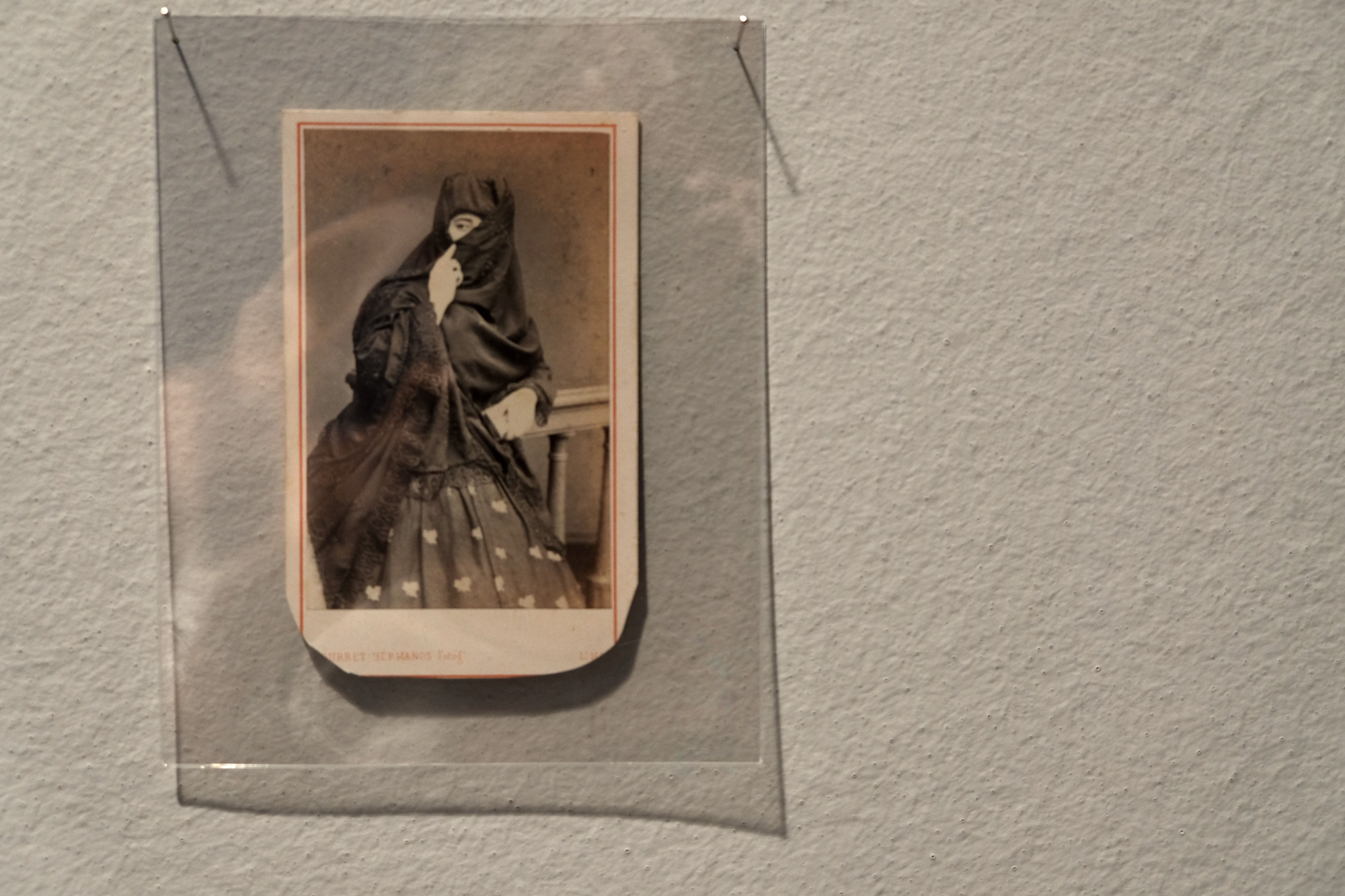
Installation view of the exhibition 'An Unorthodox Flow of Images' at the Centre for Contemporary Photography (CCP), Melbourne, September - November 2017 showing (68) a photograph by an unknown photographer (Courret Hermanos Fotografía - Eugenio Courret 1841 - c. 1900) titled 'Lima Tapadas' c. 1887


Installation view of the exhibition An Unorthodox Flow of Images at the CCP, Melbourne showing (68) a photograph by an unknown photographer (Courret Hermanos Fotografía – Eugenio Courret 1841 – c. 1900) titled Lima Tapadas c. 1887
Photo: Marcus Bunyan


Installation view of the exhibition 'An Unorthodox Flow of Images' at the Centre for Contemporary Photography (CCP), Melbourne, September - November 2017 showing (76) Harold Cazneaux's 'Spirit of Endurance' 1937


Installation view of the exhibition An Unorthodox Flow of Images at the CCP, Melbourne showing (76) Harold Cazneaux’s Spirit of Endurance 1937
Photo: Marcus Bunyan


Cazneaux: In the following two works, a critical change of title by the artist reveals what, alone, the eye cannot see. This photograph had already achieved iconic status as a symbol of the noble Australian landscape when, following the loss of his son who died aged 21 at Tobruk in 1941, Cazneaux flipped the negative and presented the image under the new title Spirit of Endurance. The tree is now classified on the National Trust of South Australia’s Register of Significant Trees.


Harold Cazneaux (Australian born New Zealand, 1878-1953)
'Spirit of endurance' 1937


Harold Cazneaux (Australian born New Zealand, 1878-1953)
Spirit of endurance
1937
Gelatin silver print


Installation view of the exhibition 'An Unorthodox Flow of Images' at the Centre for Contemporary Photography (CCP), Melbourne, September - November 2017 showing (77) Jeff Carter's 'The Eunuch, Marree, South Australia' 1964 (NB. note reflections in the image from the gallery)


Installation view of the exhibition An Unorthodox Flow of Images at the CCP, Melbourne showing (77) Jeff Carter’s The Eunuch, Marree, South Australia 1964 (NB. note reflections in the image from the gallery)
Photo: Marcus Bunyan


Carter: Changing a title can dramatically alter the meaning of an image. This work has had several titles:

Morning Break 1964;
Dreaming in the sun at Marree, outside the towns single store 1966;
At times there is not too much to do except just sit in the sun… 1968;
‘Pompey’ a well known resident of Marree;
and finally The Eunuch, Marree, South Australia 2000

Under early titles, the photograph appeared to be a simple portrait of “Pompey”, a local Aboriginal man in Marree who worked at the town’s bakery. The final title draws viewers’ attention away from what might have seemed to be the man’s relaxed approach to life, and towards the violence enacted on Aboriginal communities in castrating young boys.


Jeff Carter (Australian 1928-2010) 'Morning Break, Marnee SA' 1964


Jeff Carter (Australian 1928-2010)
Morning Break, Marnee SA
1964
Silver gelatin print


Installation view of the exhibition 'An Unorthodox Flow of Images' at the Centre for Contemporary Photography (CCP), Melbourne, September - November 2017 showing (78) Lisa Bellear's 'The Black GST Protest at Camp Sovereignty' 2006


Installation view of the exhibition An Unorthodox Flow of Images at the CCP, Melbourne showing (78) Lisa Bellear’s The Black GST Protest at Camp Sovereignty 2006
Photo: Marcus Bunyan


Bellear (Minjungbul/Goernpil/Noonuccal/Kanak): Is the demonstrator leading the policeman? Is the policeman arresting this demonstrator? Or is this tenderness between two men? This is a photograph of a photograph. As was her practice, Lisa Bellear always gave the original to her subject.


Installation view of the exhibition 'An Unorthodox Flow of Images' at the Centre for Contemporary Photography (CCP), Melbourne, September - November 2017 showing (82) photographer undisclosed ASIO surveillance images 1949-1980

Installation view of the exhibition 'An Unorthodox Flow of Images' at the Centre for Contemporary Photography (CCP), Melbourne, September - November 2017 showing (82) photographer undisclosed ASIO surveillance images 1949-1980


Installation views of the exhibition An Unorthodox Flow of Images at the CCP, Melbourne showing (82) photographer undisclosed ASIO surveillance images 1949-1980
Photos: Marcus Bunyan


ASIO: The Australian Security and Intelligence Organisation (ASIO) employed photographers to spy on Australian citizens. The photographs which were annotated to indicate persons of interest, were retained by ASIO along with other forms of material gathered through espionage.


Installation view of the exhibition 'An Unorthodox Flow of Images' at the Centre for Contemporary Photography (CCP), Melbourne, September - November 2017 showing (83) O. Philip Korczynski's 'Unwanted Witness and Run' 1980s


Installation view of the exhibition An Unorthodox Flow of Images at the CCP, Melbourne showing (83) O. Philip Korczynski’s Unwanted Witness and Run 1980s
Photo: Marcus Bunyan


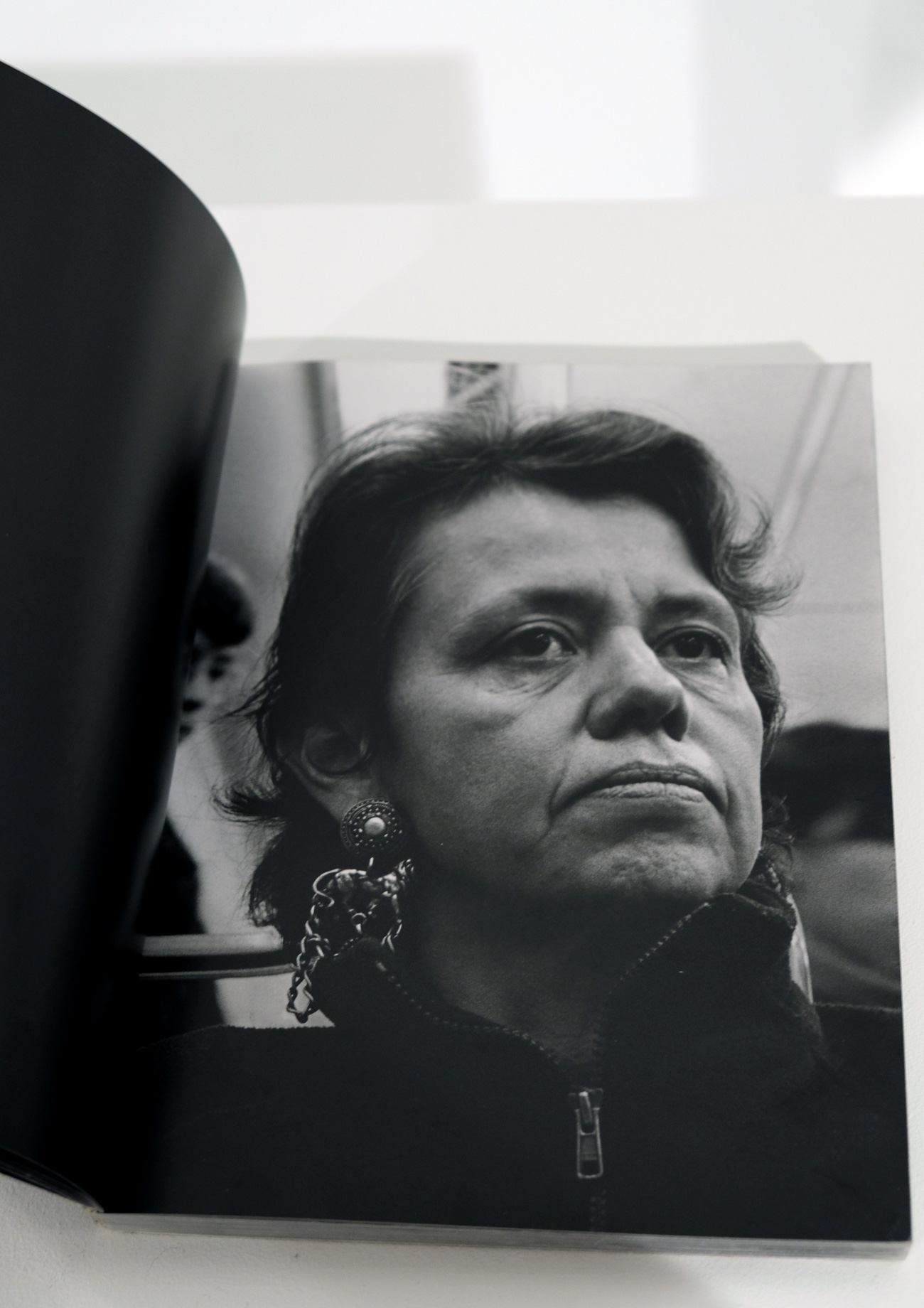
Installation view of the exhibition 'An Unorthodox Flow of Images' at the Centre for Contemporary Photography (CCP), Melbourne, September - November 2017 showing (85) pages from Luc Delahaye's book 'L'Autre' 1999

Installation view of the exhibition 'An Unorthodox Flow of Images' at the Centre for Contemporary Photography (CCP), Melbourne, September - November 2017 showing (85) pages from Luc Delahaye's book 'L'Autre' 1999

Installation view of the exhibition 'An Unorthodox Flow of Images' at the Centre for Contemporary Photography (CCP), Melbourne, September - November 2017 showing (85) pages from Luc Delahaye's book 'L'Autre' 1999

Installation view of the exhibition 'An Unorthodox Flow of Images' at the Centre for Contemporary Photography (CCP), Melbourne, September - November 2017 showing (85) pages from Luc Delahaye's book 'L'Autre' 1999


Installation views of the exhibition An Unorthodox Flow of Images at the CCP, Melbourne showing (85) pages from Luc Delahaye’s book L’Autre 1999
Photos: Marcus Bunyan


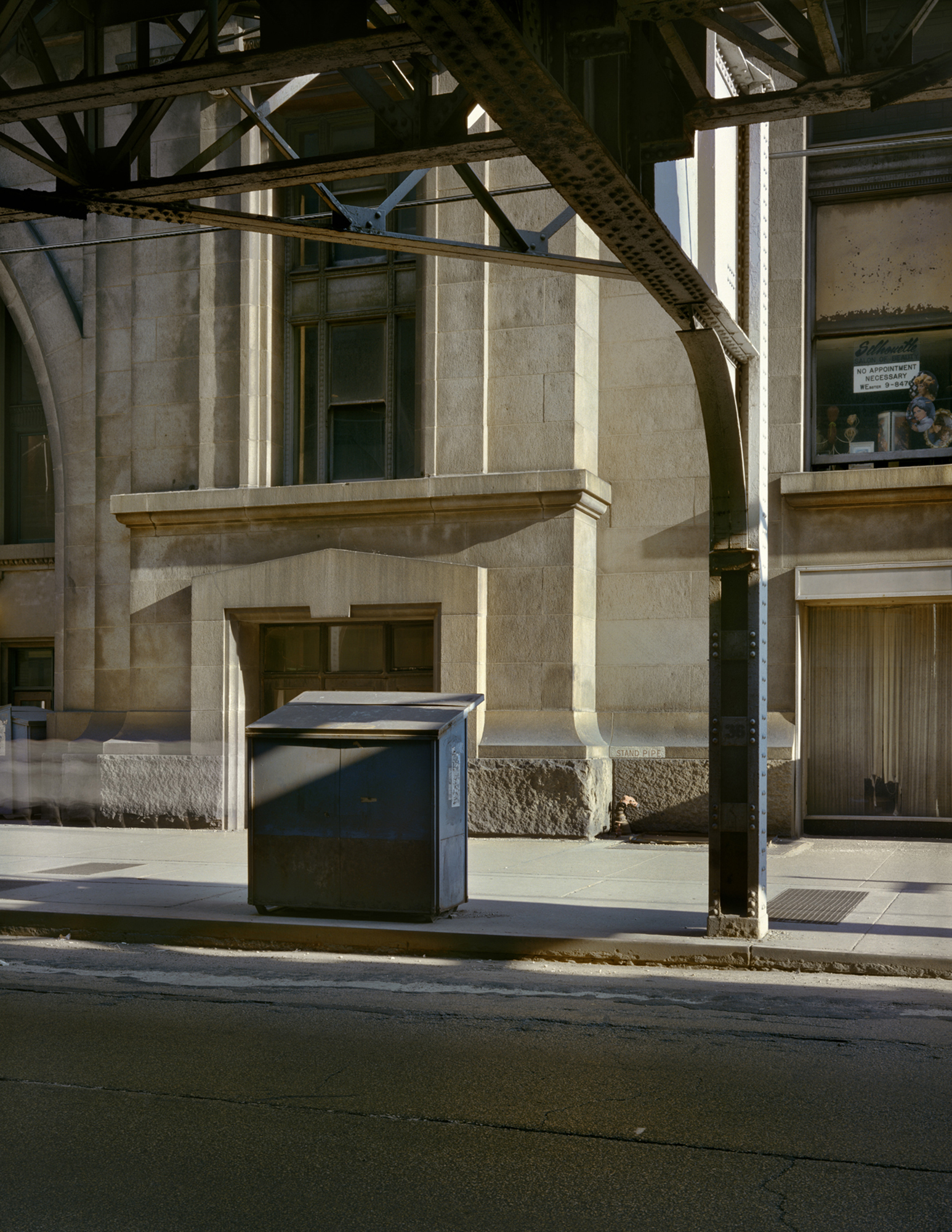
Delahaye: In the footsteps of Walker Evans’ classic candid series, Rapid Transit 1956.


Installation view of the exhibition 'An Unorthodox Flow of Images' at the Centre for Contemporary Photography (CCP), Melbourne, September - November 2017 showing (88) Tracey Lamb's 'Surveillance Image #3' 2015


Installation view of the exhibition An Unorthodox Flow of Images at the CCP, Melbourne showing (88) Tracey Lamb’s Surveillance Image #3 2015
Photo: Marcus Bunyan


Installation view of the exhibition 'An Unorthodox Flow of Images' at the Centre for Contemporary Photography (CCP), Melbourne, September - November 2017 showing (89) Walker Evans' 'Family Snapshots on Farmhouse Wall' 1936 (right) with (91) Photographer unknown 'Lee family portrait before the funeral' c. 1920 (top left); and (92) Photographer unknown 'Lee family portrait with portrait of dead father added' c. 1920 (bottom left)


Installation view of the exhibition An Unorthodox Flow of Images at the CCP, Melbourne showing (89) Walker Evans’ Family Snapshots on Farmhouse Wall 1936 (right) with (91) Photographer unknown Lee family portrait before the funeral c. 1920 (top left); and (92) Photographer unknown Lee family portrait with portrait of dead father added c. 1920 (bottom left)
Photo: Marcus Bunyan


Evans: During his celebrated work for the Farm Security Administration documenting the effects of the Great Depression, Walker Evans secretly removed these photographs from the home of his subject, and seemingly hurriedly pinned them to the exterior wall of the house, and photographed them without permission.


Installation view of the exhibition 'An Unorthodox Flow of Images' at the Centre for Contemporary Photography (CCP), Melbourne, September - November 2017 showing (90) photographer unknown 'In memoriam' album 1991


Installation view of the exhibition An Unorthodox Flow of Images at the CCP, Melbourne showing (90) photographer unknown In memoriam album 1991
Photo: Marcus Bunyan


Memoriam: Double exposure enables the impossible in this personal memorial album.


Installation view of the exhibition 'An Unorthodox Flow of Images' at the Centre for Contemporary Photography (CCP), Melbourne, September - November 2017 showing (91) Photographer unknown. 'Lee family portrait before the funeral' c. 1920 (top) and (92) photographer unknown. 'Lee family portrait with portrait of dead father added' c. 1920 (bottom)


Installation view of the exhibition An Unorthodox Flow of Images at the CCP, Melbourne showing (91) Photographer unknown Lee family portrait before the funeral c. 1920 (top) and (92) photographer unknown Lee family portrait with portrait of dead father added c. 1920 (bottom)
Photo: Marcus Bunyan


Funeral: When the family photographer arrived at the Lee home – the day of grandfather’s funeral – he asked them to pose with smiles so that, in the absence of a family portrait, he could create a composite portrait, which was given to the family some days later.


Installation view of the exhibition 'An Unorthodox Flow of Images' at the Centre for Contemporary Photography (CCP), Melbourne, September - November 2017 showing (93) Kate Gollings' 'Lee family portrait' 1986 (right) and (94) David Moore's 'Migrants arriving in Sydney' 1966 (left)


Installation view of the exhibition An Unorthodox Flow of Images at the CCP, Melbourne showing (93) Kate Gollings’ Lee family portrait 1986 (right) and (94) David Moore’s Migrants arriving in Sydney 1966 (left)
Photo: Marcus Bunyan


Gollings: A studio portrait of the Lee family, some 60 years following the previous two photographs. The young man is now grandfather. Still the photographer continues to craft the family, in this case through positioning the subjects, in ways which may or may not reflect actual family relationships.

Moore: In 2015, Judy Annear said of this famous photograph: “It’s great to consider that it’s not actually what it seems.” Years after the photo was published, it emerged that four of the passengers in it were not migrants but Sydneysiders returning home from holiday.


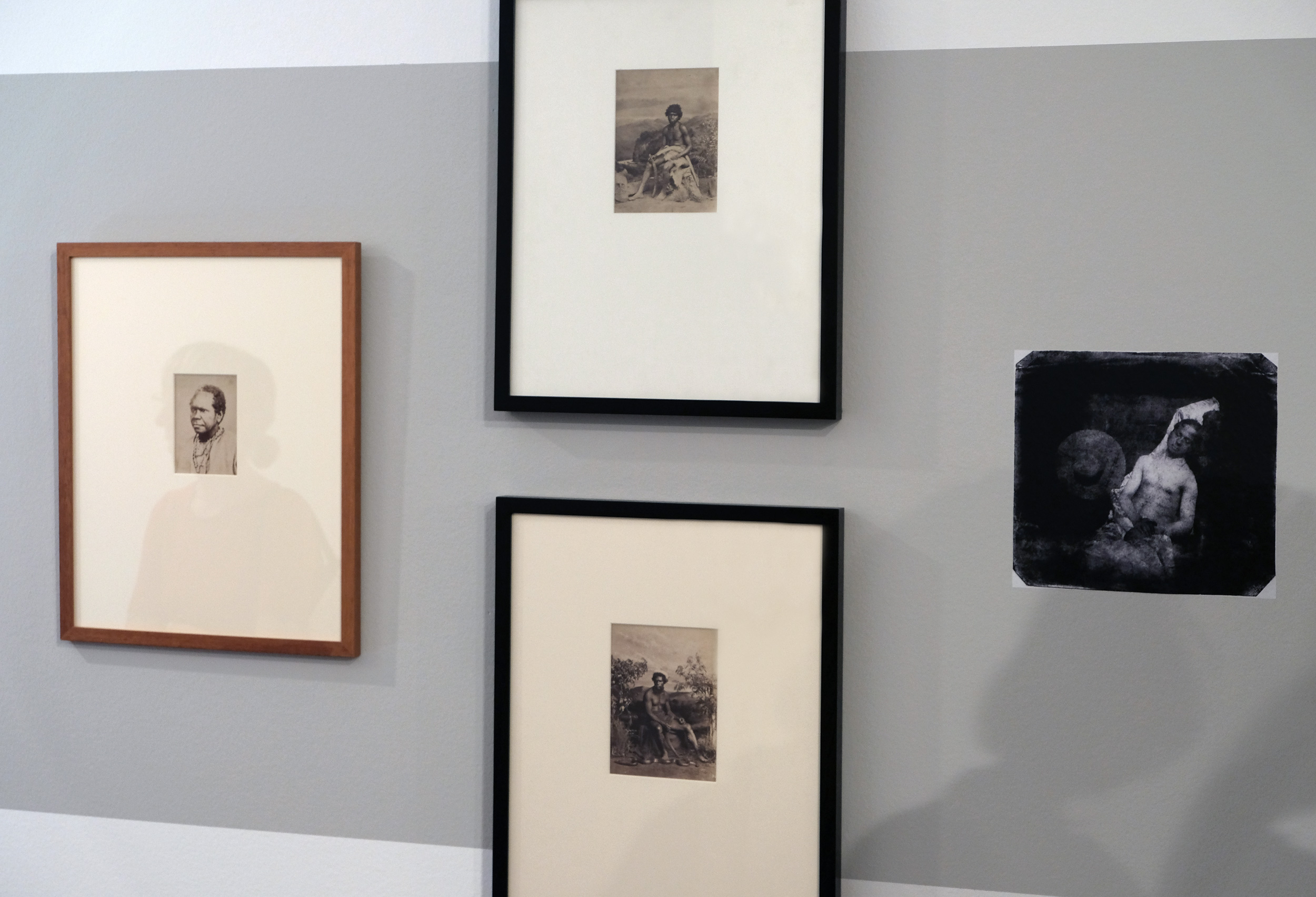
Installation view of the exhibition 'An Unorthodox Flow of Images' at the Centre for Contemporary Photography (CCP), Melbourne, September - November 2017 showing (98) Hippolyte Bayard's 'Self-portrait as a Drowned Man' 1840 (right); (99) J. W. Lindt's 'Untitled (Seated Aboriginal man holding Boomerangs)' c. 1874 (top middle); (100) J. W. Lindt's 'Untitled (Aboriginal man with Snake)' c. 1875 (bottom middle); and (101) Charles Woolley's 'Truccanini, last female Aborigine of Tasmania with shell necklace' 1886 (left)


Installation view of the exhibition An Unorthodox Flow of Images at the CCP, Melbourne showing (98) Hippolyte Bayard’s Self-portrait as a Drowned Man 1840 (right); (99) J. W. Lindt’s Untitled (Seated Aboriginal man holding Boomerangs) c. 1874 (top middle); (100) J. W. Lindt’s Untitled (Aboriginal man with Snake) c. 1875 (bottom middle); and (101) Charles Woolley’s Truccanini, last female Aborigine of Tasmania with shell necklace 1886 (left)
Photo: Marcus Bunyan


Bayard: With its telling title, this staged image is the first instance of intentional photographic fakery, made in protest by Bayard because he felt aggrieved that his role in the invention of photography was unrecognised.

Lindt: For white colonialists, photography became “a vehicle for recording new and exotic lands and informing the ‘unexotic’ Europe of the strange landscape, flora, fauna, and people. In the case of the postcard print fashion from around 1900; to entice tourists to cruise to [exotic] places … Ultimately and blatantly however, photography became another tool of colonialism, to label, control, dehumanise and disempower their subjects who could only reply in defiant gaze at the lens controlled by someone else.” ~ Djon Mundine from Fiona Foley: River of Corn, exh. cat. University of South Florida Contemporary Art Museum, Tampa, USA, 2001


Installation view of the exhibition 'An Unorthodox Flow of Images' at the Centre for Contemporary Photography (CCP), Melbourne, September - November 2017 showing (101) Charles Woolley's 'Truccanini, last female Aborigine of Tasmania with shell necklace' 1886 (right); (102) Christian Thompson's '(Bidjara) Untitled (self portrait) Image No 1' from 'Emotional Striptease' 2003 (middle); (103) Charles Kerry's 'Aboriginal Chief' c. 1901-1907 (top left); and (104) Brook Andrew's 'Sexy and Dangerous' 1996 (bottom left)


Installation view of the exhibition An Unorthodox Flow of Images at the CCP, Melbourne showing (101) Charles Woolley’s Truccanini, last female Aborigine of Tasmania with shell necklace 1886 (right); (102) Christian Thompson’s (Bidjara) Untitled (self portrait) Image No 1 from Emotional Striptease 2003 (middle); (103) Charles Kerry’s Aboriginal Chief c. 1901-1907 (top left); and (104) Brook Andrew’s Sexy and Dangerous 1996 (bottom left)
Photo: Marcus Bunyan


Thompson: Contemporary Indigenous artists return the colonial photographer’s gaze. “For Indigenous people the camera’s central role has been in transforming but really stereotyping our cultures.” In more recent times, “Indigenous people have moved behind the camera, firstly replacing the documenter, then creatively reinterpreting their photographic history.” ~ Djon Mundine from Fiona Foley: River of Corn, exh. cat. University of South Florida Contemporary Art Museum, Tampa, USA, 2001

Kerry: No name or details are recorded of this sitter from Barron River, QLD. He was a member of the touring Wild West Aboriginal troupe, which staged corroborees, weapon skills and tableaux of notorious encounters between armed Native Police and unarmed local communities.


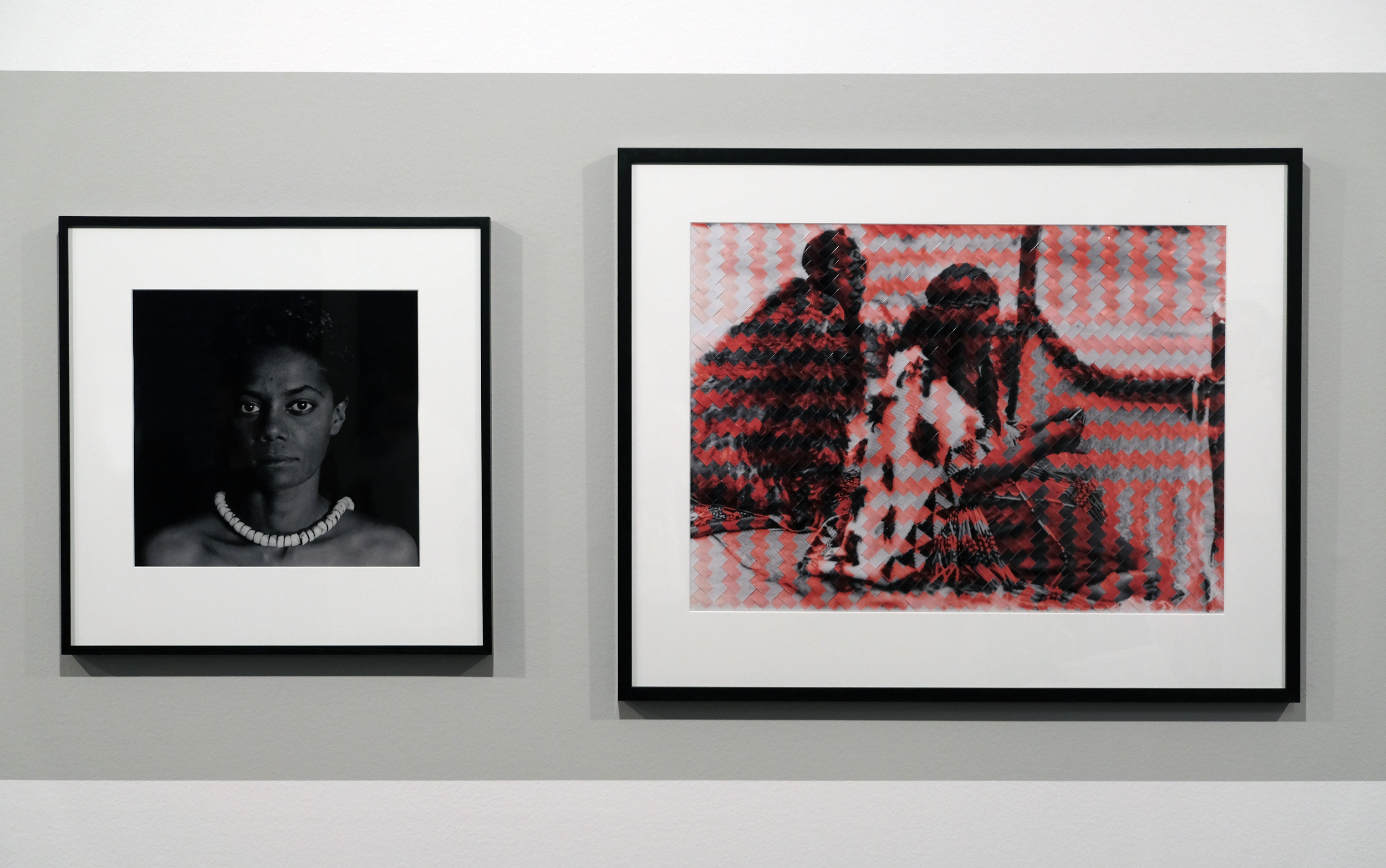
Installation view of the exhibition 'An Unorthodox Flow of Images' at the Centre for Contemporary Photography (CCP), Melbourne, September - November 2017 showing (105) Fiona Foley's '(Badtjala) Wild Times Call 2' 2001 (right); (106) Murray Cammick's 'Bob Marley p owhiri, White Heron Hotel, April 1979' 1979 (second right); and (107) Kirsten Lyttle's '(Waikato, Tainui A Whiro, Ngāti Tahinga) Twilled Work' 2013 (middle left)


Installation view of the exhibition An Unorthodox Flow of Images at the CCP, Melbourne showing (105) Fiona Foley’s (Badtjala) Wild Times Call 2 2001 (right); (106) Murray Cammick’s Bob Marley p owhiri, White Heron Hotel, April 1979 1979 (second right); and (107) Kirsten Lyttle’s (Waikato, Tainui A Whiro, Ngāti Tahinga) Twilled Work 2013 (middle left)
Photo: Marcus Bunyan


Foley: Referencing Hollywood’s representation of the Wild West, Fiona Foley stands with Seminole Indians.

Lyttle: This is woven using the Maori raranga (plaiting) technique for making kete whakario (decorated baskets). According to Mick Pendergrast, the pattern is not named, but attributed to Te Hikapuhi, (Ngati Pikiao), late 19th Century. ~ Pendergrast, M (1984), Raranga Whakairo, Coromandel Press, NZ, pattern 19.


Installation view of the exhibition 'An Unorthodox Flow of Images' at the Centre for Contemporary Photography (CCP), Melbourne, September - November 2017 showing (107) Kirsten Lyttle's '(Waikato, Tainui A Whiro, Ngāti Tahinga) Twilled Work' 2013 (right) and (108) Michael Riley's '(Wiradjuri/Kamilaroi) Maria' 1985 (left)


Installation view of the exhibition An Unorthodox Flow of Images at the CCP, Melbourne showing (107) Kirsten Lyttle’s (Waikato, Tainui A Whiro, Ngāti Tahinga) Twilled Work 2013 (right) and (108) Michael Riley’s (Wiradjuri/Kamilaroi) Maria 1985 (left)
Photo: Marcus Bunyan


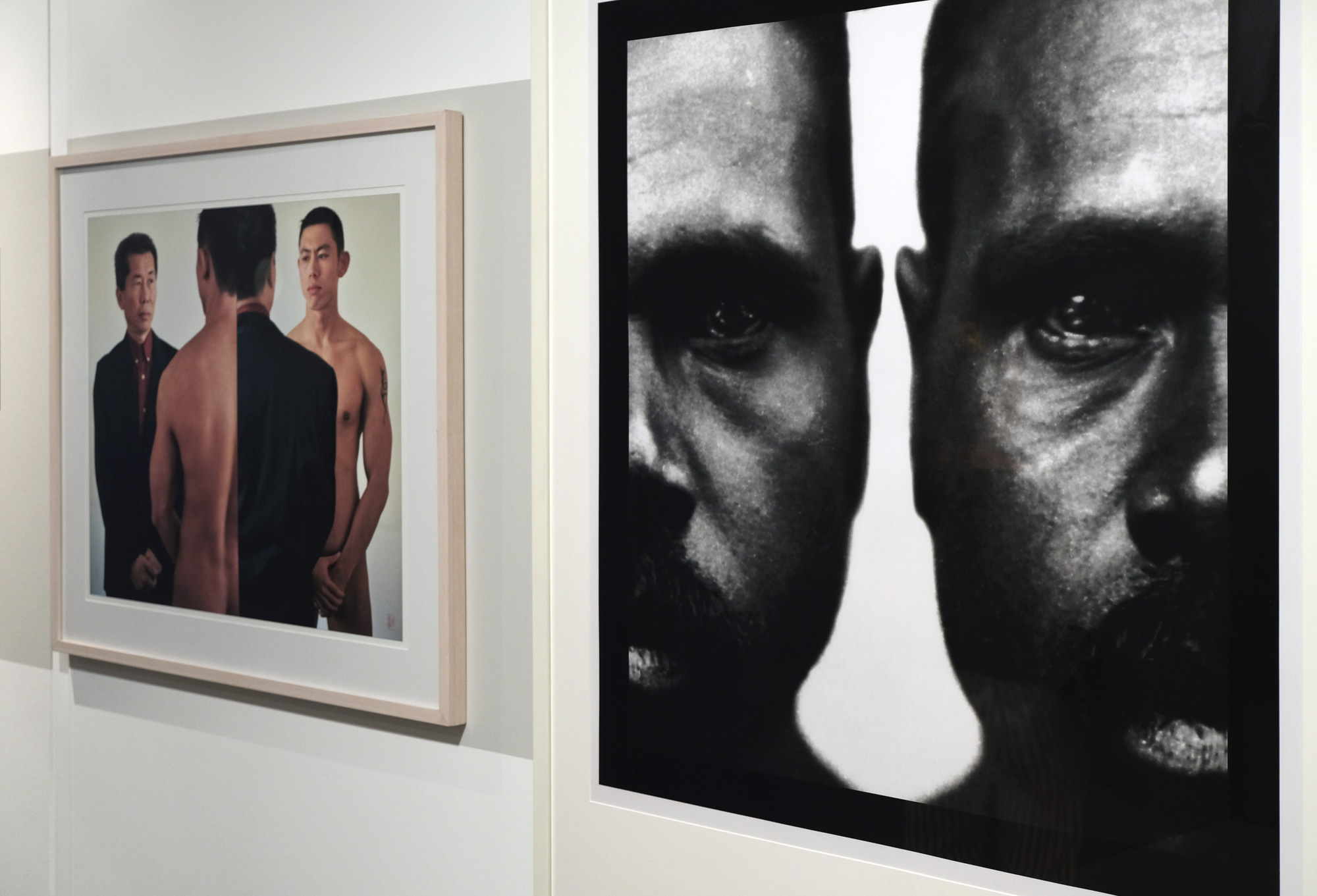
Installation view of the exhibition 'An Unorthodox Flow of Images' at the Centre for Contemporary Photography (CCP), Melbourne, September - November 2017 showing (109) Maree Clarke's '(Mutti Mutti, Yorta Yorta, BoonWurrung) Nan's House' (detail of installation) 2017 (right); (110) photographer unknown. 'Writer, Andre Malraux poses in his house of the Boulogne near Paris working at his book Le Musee Imaginaire or Imaginary Museum 2nd volume' 1953 (middle top); and (111) Clare Rae's 'Law Library' 2016 (bottom left)


Installation view of the exhibition An Unorthodox Flow of Images at the CCP, Melbourne showing (109) Maree Clarke’s (Mutti Mutti, Yorta Yorta, BoonWurrung) Nan’s House (detail of installation) 2017 (right); (110) photographer unknown Writer, Andre Malraux poses in his house of the Boulogne near Paris working at his book Le Musee Imaginaire or Imaginary Museum 2nd volume 1953 (middle top); and (111) Clare Rae’s Law Library 2016 (bottom left)
Photo: Marcus Bunyan


Clarke: This work is currently on display at the National Gallery of Australia, Canberra, as a hologram of the artist’s grandmother’s house, as remembered by the artist.

Unknown: ‘The imaginary museum’ or ‘the museum without walls’ (as it is often translated) is a collection reflecting Andre Malraux’s eurocentric conception of art history.


Installation view of the exhibition 'An Unorthodox Flow of Images' at the Centre for Contemporary Photography (CCP), Melbourne, September - November 2017 showing (117) Bill Culbert's 'Small glass pouring Light, France' 1997 (right) and (119) David Moore's 'Sisters of Charity' 1956 (left)


Installation view of the exhibition An Unorthodox Flow of Images at the CCP, Melbourne showing (117) Bill Culbert’s Small glass pouring Light, France 1997 (right) and (119) David Moore’s Sisters of Charity 1956 (left)
Photo: Marcus Bunyan


David Moore (Australian, 1927-2003) 'Sisters of Charity' 1956


David Moore (Australian, 1927-2003)
Sisters of Charity
1956
Gelatin silver print


Installation view of the exhibition 'An Unorthodox Flow of Images' at the Centre for Contemporary Photography (CCP), Melbourne, September - November 2017 showing (119) David Moore's 'Sisters of Charity' 1956 (bottom right); (118) Olive Cotton's 'Teacup Ballet' c. 1935 (top right); and (120) Bernd and Hilla Becher's 'Kies-und Schotterwerke' (Gravel Plants) 2006 (left)

Installation view of the exhibition 'An Unorthodox Flow of Images' at the Centre for Contemporary Photography (CCP), Melbourne, September - November 2017 showing (119) David Moore's 'Sisters of Charity' 1956 (bottom right); (118) Olive Cotton's 'Teacup Ballet' c. 1935 (top right); and (120) Bernd and Hilla Becher's 'Kies-und Schotterwerke' (Gravel Plants) 2006 (left)


Installation view of the exhibition An Unorthodox Flow of Images at the CCP, Melbourne showing (119) David Moore’s Sisters of Charity 1956 (bottom right); (118) Olive Cotton’s Teacup Ballet c. 1935 (top right); and (120) Bernd and Hilla Becher’s Kies-und Schotterwerke (Gravel Plants) 2006 (left)
Photo: Marcus Bunyan


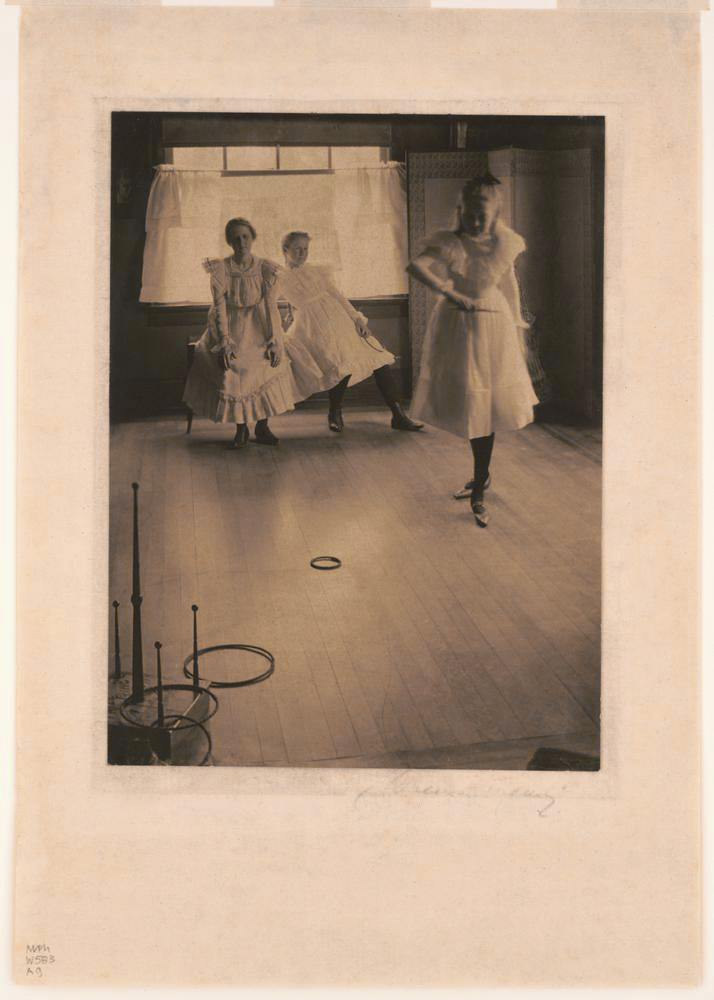
Olive Cotton (Australian, 1911-2003) 'Teacup Ballet' 1935


Olive Cotton (Australian, 1911-2003)
Teacup Ballet
c. 1935
Gelatin silver print


Installation view of the exhibition 'An Unorthodox Flow of Images' at the Centre for Contemporary Photography (CCP), Melbourne, September - November 2017 showing (120) Bernd and Hilla Becher's 'Kies-und Schotterwerke' (Gravel Plants) 2006


Installation view of the exhibition An Unorthodox Flow of Images at the CCP, Melbourne showing (120) Bernd and Hilla Becher’s Kies-und Schotterwerke (Gravel Plants) 2006
Photo: Marcus Bunyan


Installation view of the exhibition 'An Unorthodox Flow of Images' at the Centre for Contemporary Photography (CCP), Melbourne, September - November 2017 showing (120) Bernd and Hilla Becher's 'Kies-und Schotterwerke' (Gravel Plants) 2006 (right) and (121) Robert Rooney's 'Garments: 3 December - 19 March 1973' 1973 (left)


Installation view of the exhibition An Unorthodox Flow of Images at the CCP, Melbourne showing (120) Bernd and Hilla Becher’s Kies-und Schotterwerke (Gravel Plants) 2006 (right) and (121) Robert Rooney’s Garments: 3 December – 19 March 1973 1973 (left)
Photo: Marcus Bunyan


Installation view of the exhibition 'An Unorthodox Flow of Images' at the Centre for Contemporary Photography (CCP), Melbourne, September - November 2017 showing (122) Helen Grace's 'Time and motion study #1 'Women seem to adapt to repetitive-type tasks...'' 1980, printed 2011 (detail)


Installation view of the exhibition An Unorthodox Flow of Images at the CCP, Melbourne showing (122) Helen Grace’s Time and motion study #1 ‘Women seem to adapt to repetitive-type tasks…’ 1980, printed 2011 (detail)
Photo: Marcus Bunyan


Installation view of the exhibition 'An Unorthodox Flow of Images' at the Centre for Contemporary Photography (CCP), Melbourne, September - November 2017 showing (122) Helen Grace's 'Time and motion study #1 'Women seem to adapt to repetitive-type tasks...'' 1980, printed 2011 (detail, right) and (123) Max Dupain's 'Backyard Forster' 1940 (left)


Installation view of the exhibition An Unorthodox Flow of Images at the CCP, Melbourne showing (122) Helen Grace’s Time and motion study #1 ‘Women seem to adapt to repetitive-type tasks…’ 1980, printed 2011 (detail, right) and (123) Max Dupain’s Backyard, Forster 1940 (left)
Photo: Marcus Bunyan


Max Dupain (Australian, 1911 - 1992) 'Backyard, Forster, New South Wales' 1940


Max Dupain (Australian, 1911-1992)
Backyard, Forster, New South Wales
1940
Gelatin silver print


Installation view of the exhibition 'An Unorthodox Flow of Images' at the Centre for Contemporary Photography (CCP), Melbourne, September - November 2017 showing (123) Max Dupain's 'Backyard Forster' 1940 (right) and (124) Marie Shannon's 'Pussy' 2016 (left)


Installation view of the exhibition An Unorthodox Flow of Images at the CCP, Melbourne showing (123) Max Dupain’s Backyard Forster 1940 (right) and (124) Marie Shannon’s Pussy 2016 (left)
Photo: Marcus Bunyan


Shannon: Also a trace of the cat.


Installation view of the exhibition 'An Unorthodox Flow of Images' at the Centre for Contemporary Photography (CCP), Melbourne, September - November 2017 showing (127) Mac Lawrence's 'Five raised fingers' 2016


Installation view of the exhibition An Unorthodox Flow of Images at the CCP, Melbourne showing (127) Mac Lawrence’s Five raised fingers 2016
Photo: Marcus Bunyan


Lawrence: Watery trace.


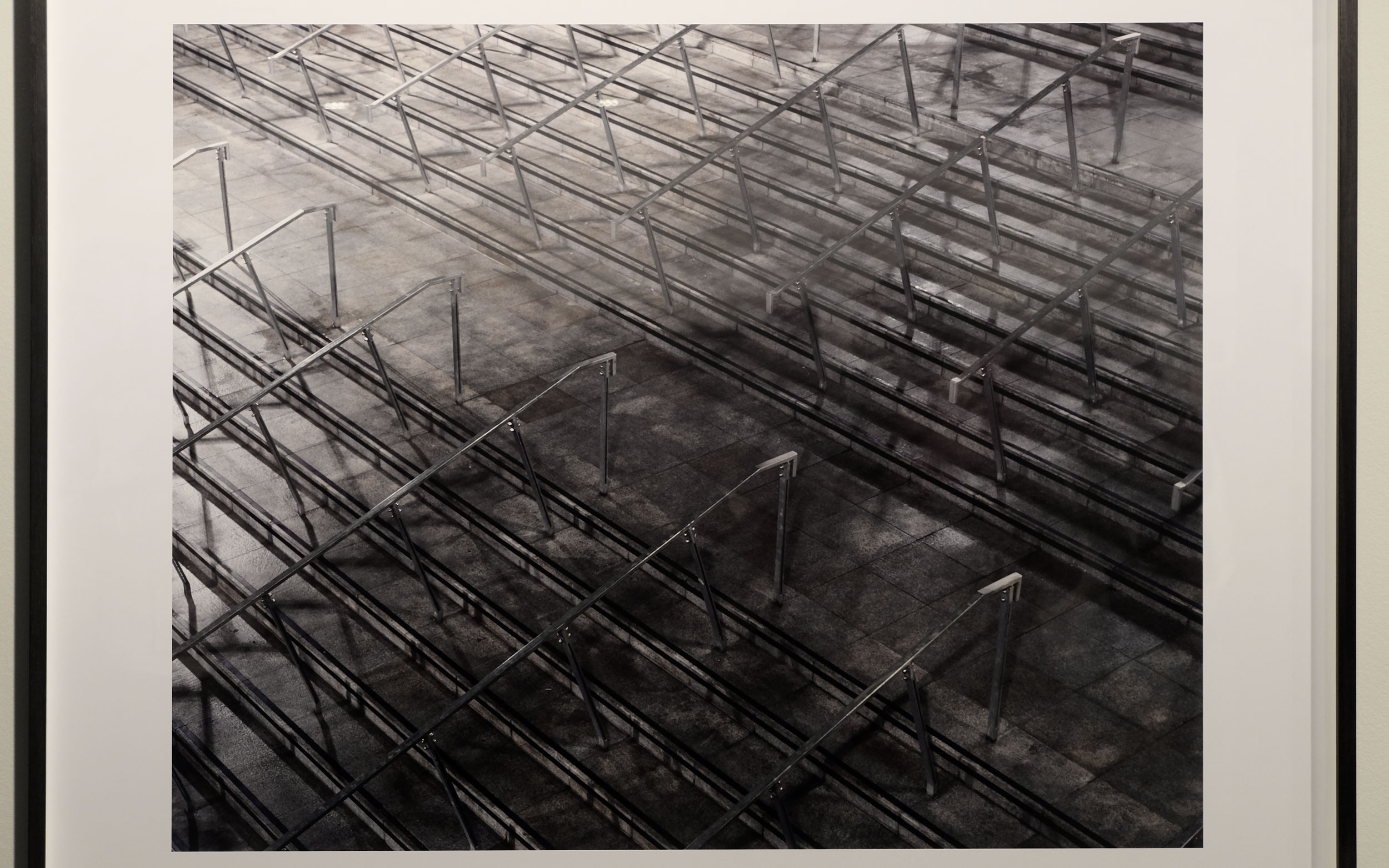
Installation view of the exhibition 'An Unorthodox Flow of Images' at the Centre for Contemporary Photography (CCP), Melbourne, September - November 2017 showing (136) Simon Terrill's 'Arsenal vs Fenerbahce' 2009


Installation view of the exhibition An Unorthodox Flow of Images at the CCP, Melbourne showing (136) Simon Terrill’s Arsenal vs Fenerbahce 2009


Terrill: The long exposure leaves only a trace of the football crowd, that has disappeared for the day.


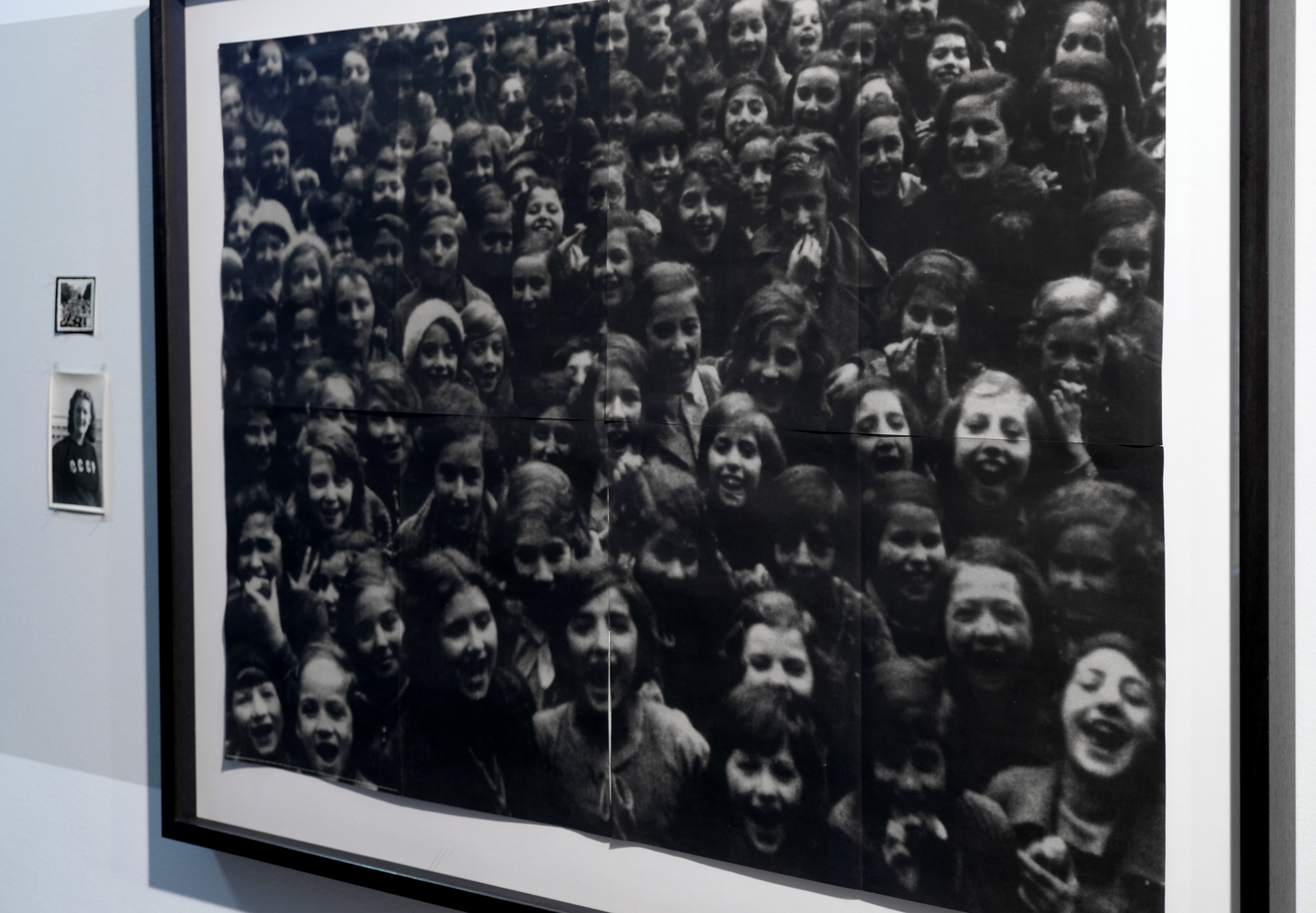
Installation view of the exhibition 'An Unorthodox Flow of Images' at the Centre for Contemporary Photography (CCP), Melbourne, September - November 2017 showing (137) Christian Boltanski's 'L'ecole de la Große Hamburger Straße, Berlin 1938' 1993


Installation view of the exhibition An Unorthodox Flow of Images at the CCP, Melbourne showing (137) Christian Boltanski’s L’ecole de la Große Hamburger Straße, Berlin 1938 1993
Photo: Marcus Bunyan


Boltanski: Photography records the passing or death of a particular moment. This is a photograph of a Jewish School in Berlin in 1938.


Installation view of the exhibition 'An Unorthodox Flow of Images' at the Centre for Contemporary Photography (CCP), Melbourne, September - November 2017 showing (138) Joyce Evans' 'Budapest Festival' 1949 (top) and (139) photographer unknown. 'Nina Dumbadze, Honoured Master of Sports of the USSR, world champion in discus throwing from the series Women of the Soviet Georgia' c. 1953 (bottom)


Installation view of the exhibition An Unorthodox Flow of Images at the CCP, Melbourne showing (138) Joyce Evans’ Budapest Festival 1949 (top) and (139) photographer unknown Nina Dumbadze, Honoured Master of Sports of the USSR, world champion in discus throwing from the series Women of the Soviet Georgia c. 1953 (bottom)
Photo: Marcus Bunyan


Installation view of the exhibition 'An Unorthodox Flow of Images' at the Centre for Contemporary Photography (CCP), Melbourne, September - November 2017 showing (139) photographer unknown. 'Nina Dumbadze, Honoured Master of Sports of the USSR, world champion in discus throwing from the series Women of the Soviet Georgia' c. 1953


Installation view of the exhibition An Unorthodox Flow of Images at the CCP, Melbourne showing (139) photographer unknown Nina Dumbadze, Honoured Master of Sports of the USSR, world champion in discus throwing from the series Women of the Soviet Georgia c. 1953
Photo: Marcus Bunyan


Installation view of the exhibition 'An Unorthodox Flow of Images' at the Centre for Contemporary Photography (CCP), Melbourne, September - November 2017 showing (141) Harry Burrell's 'Thylacine or Tasmanian Tiger', cover image for 'The Australian Magazine' 1958, September, Vol 12, No 11 1958


Installation view of the exhibition An Unorthodox Flow of Images at the CCP, Melbourne showing (141) Harry Burrell’s Thylacine or Tasmanian Tiger, cover image for The Australian Magazine 1958, September, Vol 12, No 11 1958
Photo: Marcus Bunyan


Burrell: Published in this museum journal, there is now some contention as to whether Burrell’s series of photographs of the extinct thylacine were made from life, or staged using a taxidermied animal.


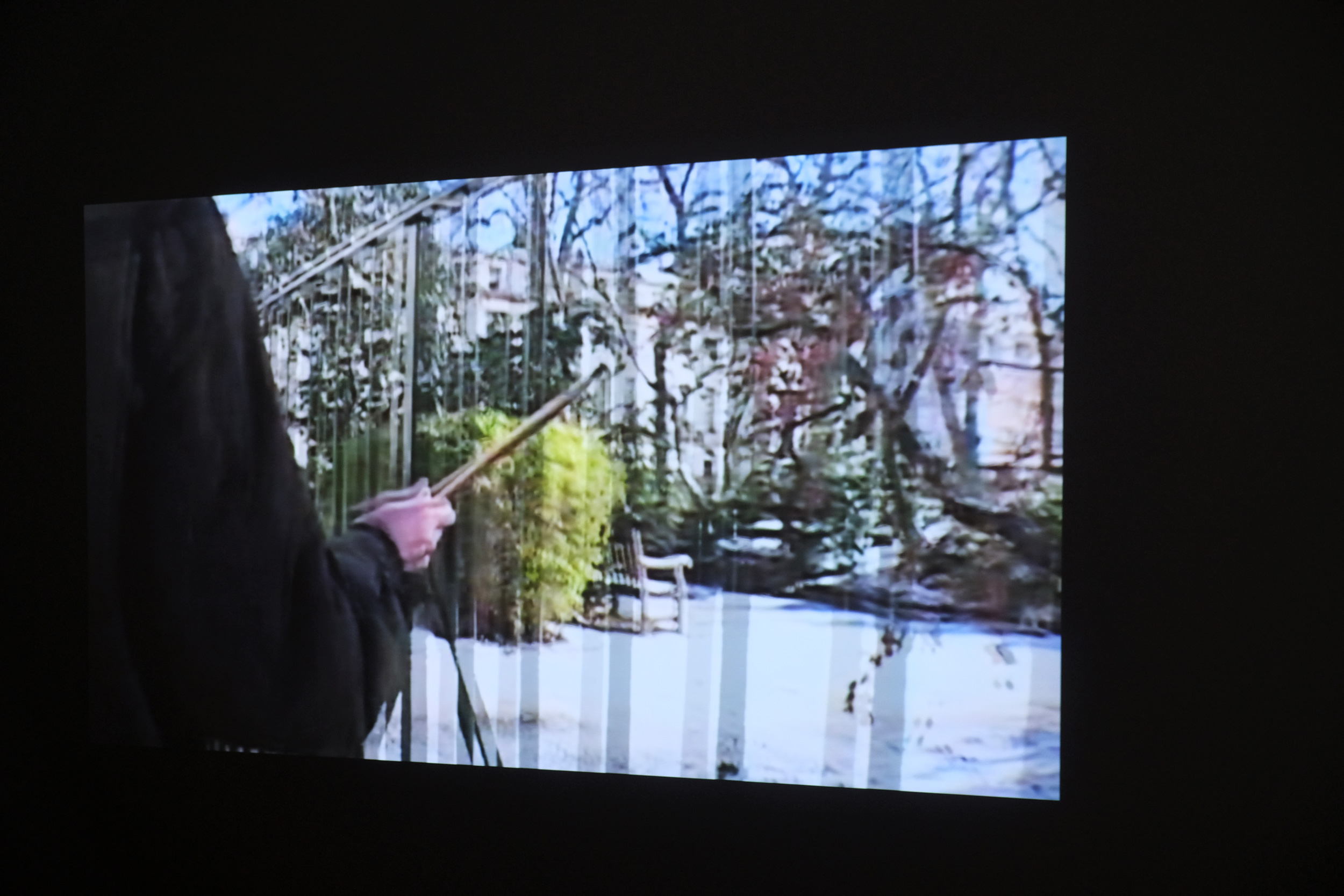
Installation view of the exhibition 'An Unorthodox Flow of Images' at the Centre for Contemporary Photography (CCP), Melbourne, September - November 2017 showing (148) Francis Alÿs' 'Fitzroy Square' 2004 (video still)

Installation view of the exhibition 'An Unorthodox Flow of Images' at the Centre for Contemporary Photography (CCP), Melbourne, September - November 2017 showing (148) Francis Alÿs' 'Fitzroy Square' 2004 (video still)


Installation view of the exhibition An Unorthodox Flow of Images at the CCP, Melbourne showing (148) Francis Alÿs’ Fitzroy Square 2004 (video stills)
Photos: Marcus Bunyan


(148) Francis Alÿs
Railings (Fitzroy square)
London, 2004
4.03 min.
Francis Alÿs website


We posit Fitzroy Square at this point; in honour of your journey through this unorthodox flow of images.


Centre for Contemporary Photography

No permanent exhibition space at the moment

Centre for Contemporary Photography website

LIKE ART BLART ON FACEBOOK

Back to top

Exhibition: ‘Alfred Stieglitz and Modern America’ at the Museum of Fine Arts, Boston

Exhibition dates: 22nd July – 5th November, 2017


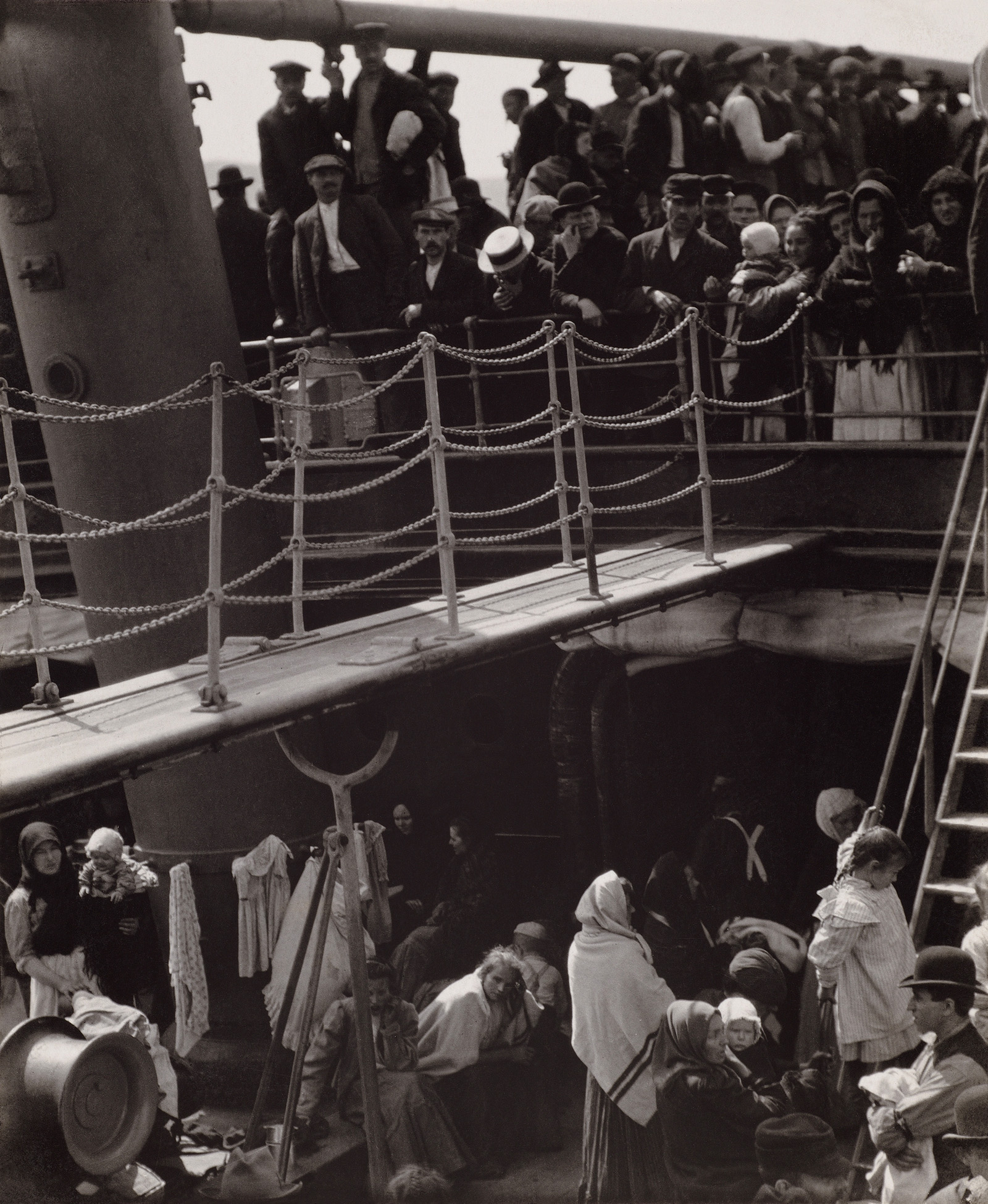
Alfred Stieglitz (American, 1864-1946) 'The Steerage' 1907 from the exhibition 'Alfred Stieglitz and Modern America' at the Museum of Fine Arts, Boston, July - Nov, 2017


Alfred Stieglitz (American, 1864-1946)
The Steerage
1907
Gelatin silver print
Gift of Miss Georgia O’Keeffe
Photograph: © Museum of Fine Arts, Boston


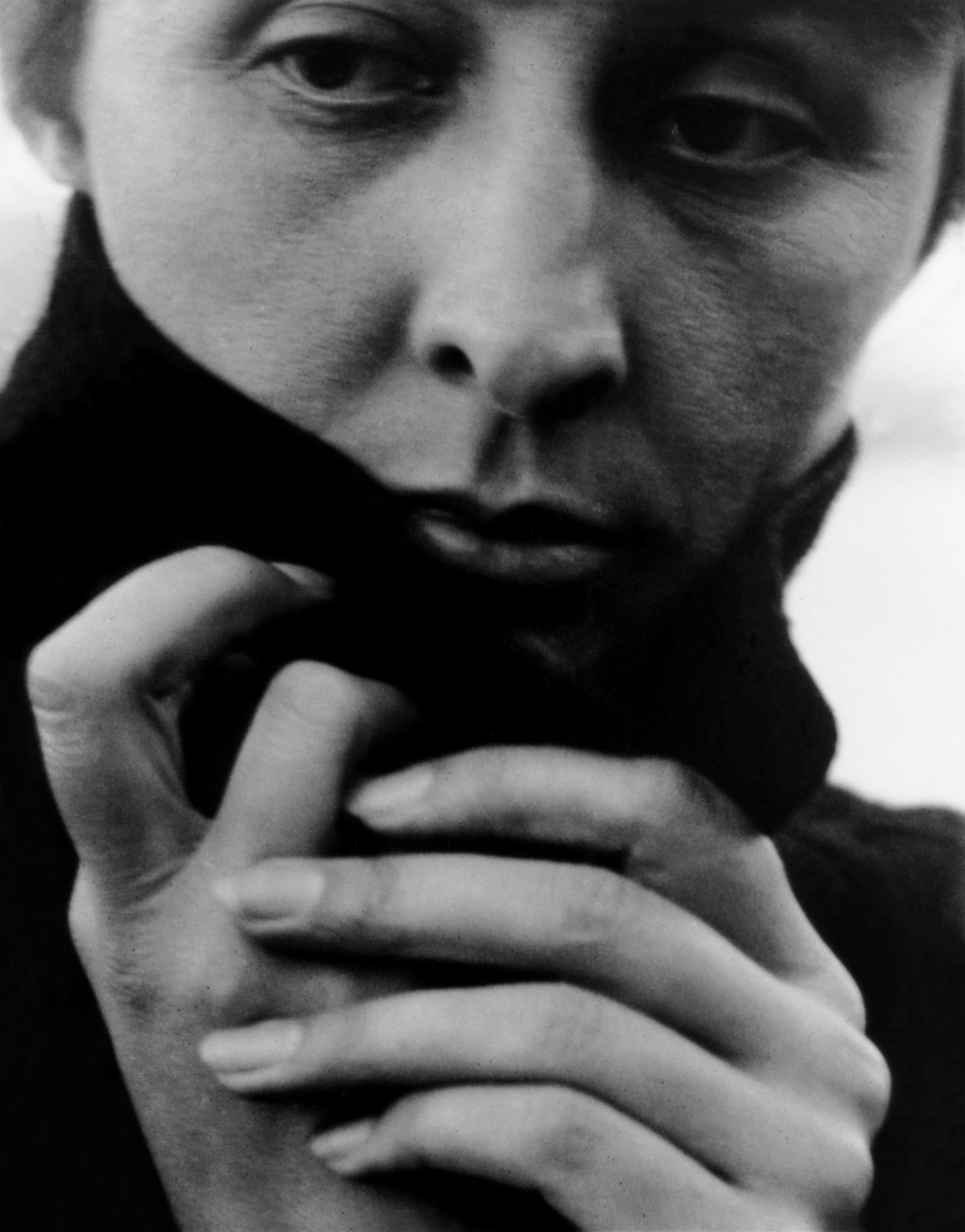
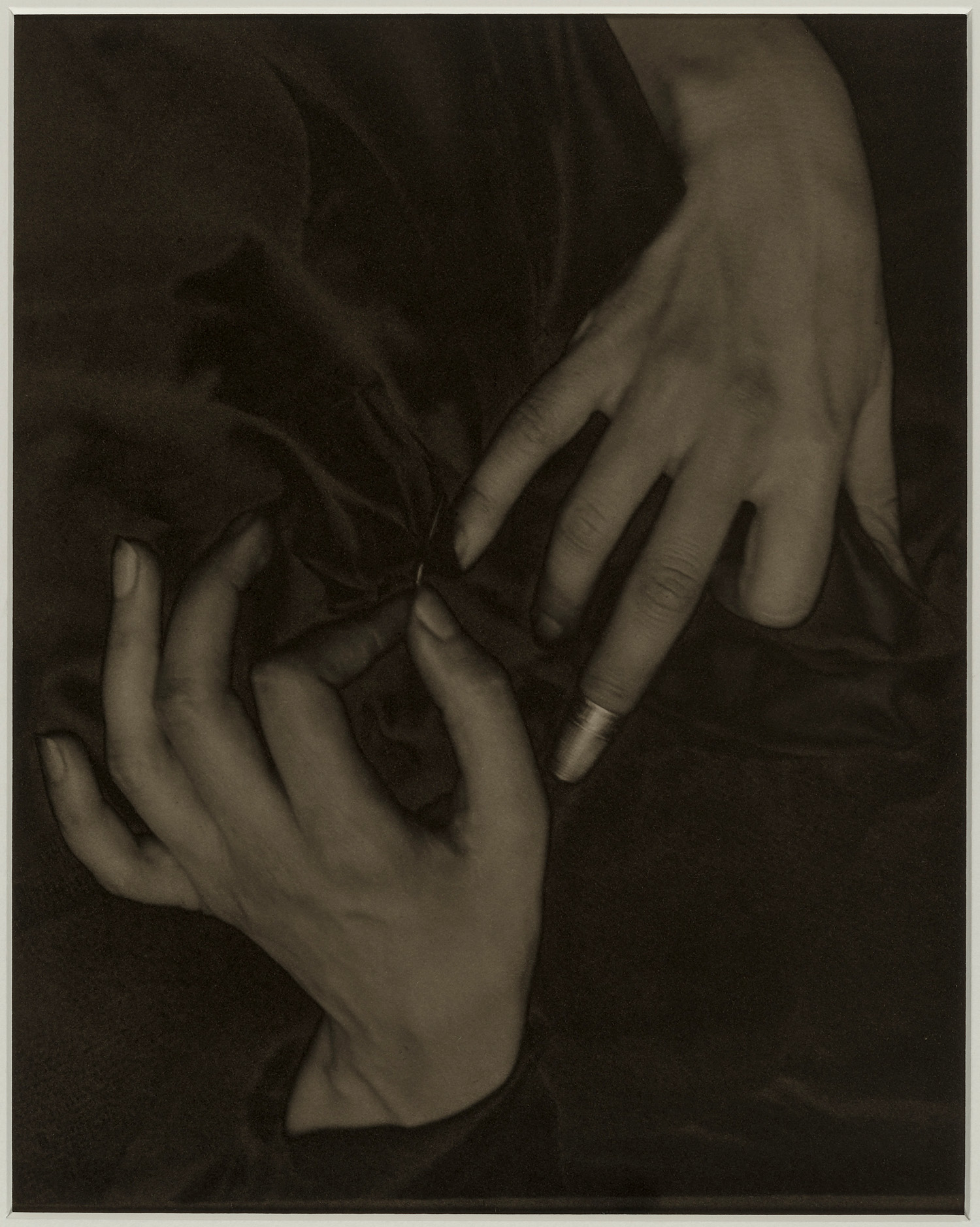
Look at the tonality and sensuality in Georgia O’Keeffe: A Portrait (8) (1919, below) and Dancing Trees (1922, below). No one would ever think of printing a photograph like that today!

Dr Marcus Bunyan


Many thankx to the Museum of Fine Arts Boston for allowing me to publish the photographs in the posting. Please click on the photographs for a larger version of the image.


This exhibition presents a selection of the MFA’s exceptional holdings of works by Alfred Stieglitz (1864-1946), the great American impresario of photography at the turn of the 20th century. Featuring 36 photographs, the exhibition showcases fine examples of his New York views, portraits and photographs that Stieglitz took at his family’s country home at Lake George. The New York views reveal the artist’s lifelong interest in the city, from his early explorations of the picturesque effects of rain, snow and nightfall to later ones that focus on the inherent geometry of modernity’s rising architectural structures. The portraits include 10 images from Stieglitz’s magnificent extended series of images of his wife, the celebrated painter Georgia O’Keeffe – a “portrait in time” that reflects his ideals of modern womanhood and is evocative of their close relationship. These portraits are accompanied by additional images of members of his family and friends.

The Lake George photographs include, in addition to views of the family property, a sequence of the mystical cloud studies that Stieglitz called “equivalents,” which explore the interpretation of inner states of being. Many of the photographs on view were donated by Stieglitz to the MFA in 1924 – making it one of the first museums in the US to collect photography as fine art. Enhanced by an additional gift from O’Keeffe in 1950, the MFA’s Stieglitz holdings form an outstanding survey of the photographer’s career, as well as the cornerstone of the Museum’s photography collection.

Text from the MFA website


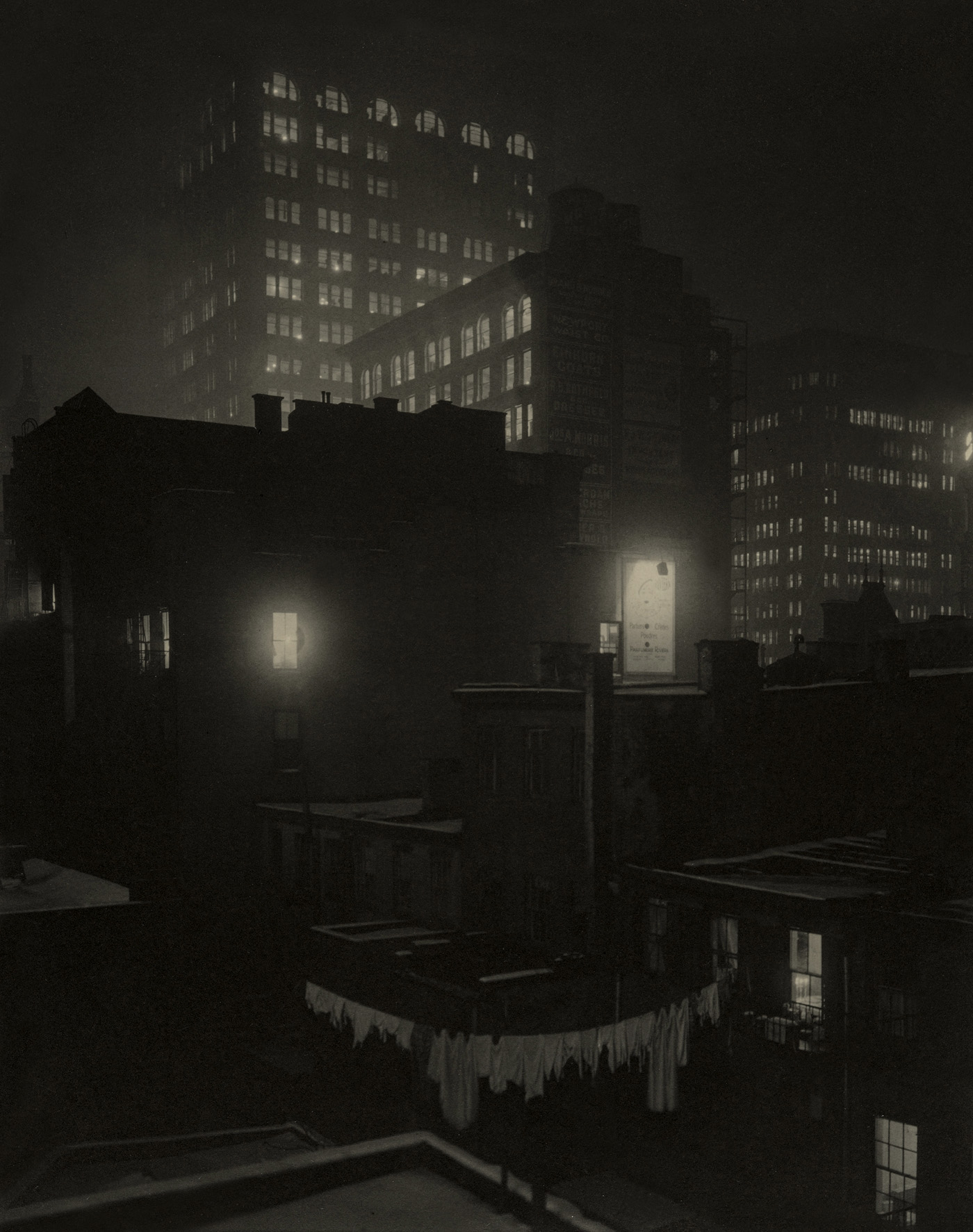
Alfred Stieglitz (American, 1864-1946) 'From the Back Window - "291" (1)' 1915 from the exhibition 'Alfred Stieglitz and Modern America' at the Museum of Fine Arts, Boston, July - Nov, 2017


Alfred Stieglitz (American, 1864-1946)
From the Back Window – “291” (1)
1915
Photograph, platinum print
Gift of Alfred Stieglitz
Photograph: © Museum of Fine Arts, Boston


291

291 is the commonly known name for an internationally famous art gallery that was located in Midtown Manhattan at 291 Fifth Avenue in New York City from 1905 to 1917. Originally known as the “Little Galleries of the Photo-Secession“, the gallery was created and managed by photographer Alfred Stieglitz.

The gallery is famous for two reasons. First, the exhibitions there helped bring art photography to the same stature in America as painting and sculpture. Pioneering artistic photographers such as Stieglitz, Edward Steichen, Alvin Langdon Coburn, Gertrude Käsebier and Clarence H. White all gained critical recognition through exhibitions at 291. Equally important, Stieglitz used this space to introduce to the United States some of the most avant-garde European artists of the time, including Henri Matisse, Auguste Rodin, Henri Rousseau, Paul Cézanne, Pablo Picasso, Constantin Brâncuși, and the Dadaists Francis Picabia and Marcel Duchamp.

Text from the Wikipedia website


Alfred Stieglitz (American, 1864-1946) 'Georgia O'Keeffe: A Portrait (4)' 1918


Alfred Stieglitz (American, 1864-1946)
Georgia O’Keeffe: A Portrait (4)
1918
Gelatin silver print
The Alfred Stieglitz Collection – Gift of the Georgia O’Keeffe Foundation, Sophie M. Friedman Fund and Lucy Dalbiac Luard Fund
Photograph: © Museum of Fine Arts, Boston


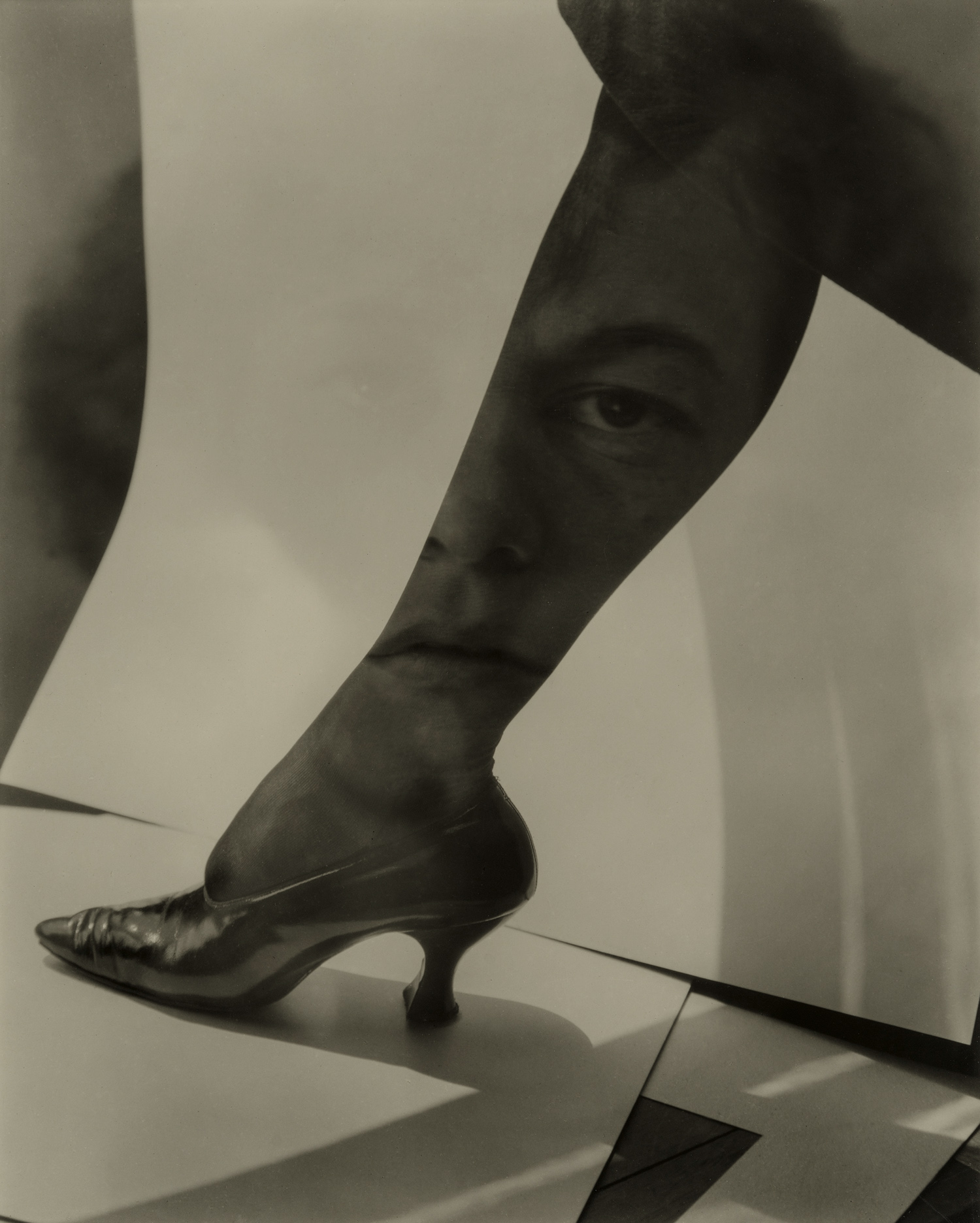
Alfred Stieglitz (American, 1864-1946) 'Dorothy True' 1919


Alfred Stieglitz (American, 1864-1946)
Dorothy True
1919
Gelatin silver print
Gift of Alfred Stieglitz
Photograph: © Museum of Fine Arts, Boston


First published in 1921 with the caption “Watch your step!” in the single issue of Marcel Duchamp and Man Ray’s magazine New York Dada, Stieglitz’s surreal portrait was a happy accident. Attempting to capture the modern character of Dorothy True, a friend of Georgia O’Keeffe, Stieglitz made two exposures: a conventional, full-face portrait and a view of one artfully posed leg. Stieglitz was thrilled with the fortuitous superimposition of the images, believing that together they captured the spirit of the postwar American female. While the equation of short hair and skirts with women’s liberation might seem trite today, Stieglitz made the portrait in 1919, the year that Congress extended suffrage to women. In 1926, he exhibited it with the title American Girl.

Text from the Metropolitan Museum of Art website


This double exposure of the face and leg of Dorothy True constitutes an unusual portrait. Her somewhat somber face, very faint, is not immediately apparent, but slowly a mouth, nose, and eye begin to reveal themselves in the black-stockinged ankle and calf. Alone, the image of the leg is an interesting one; her foot appears veritably stuffed into her stylish, patent leather pump. Her instep bulges out of the top of the shoe, and the leather ripples from the pressure at the toe, making the foot an almost sculptural form.

True appears to step down upon overturned prints or mats. A chair casts a graphic shadow across the floor, and a vertical paper backdrop echoes the black shadow at the upper left, uncovered by the sagging paper. The neat triangle of True’s skirt lends additional geometric balance.

Text from the Getty Museum website


Alfred Stieglitz (American, 1864-1946) 'Georgia O'Keeffe: A Portrait (8)' 1919


Alfred Stieglitz (American, 1864-1946)
Georgia O’Keeffe: A Portrait (8)
1919
Palladium print, solarised
Gift of Alfred Stieglitz
Photograph: © Museum of Fine Arts, Boston


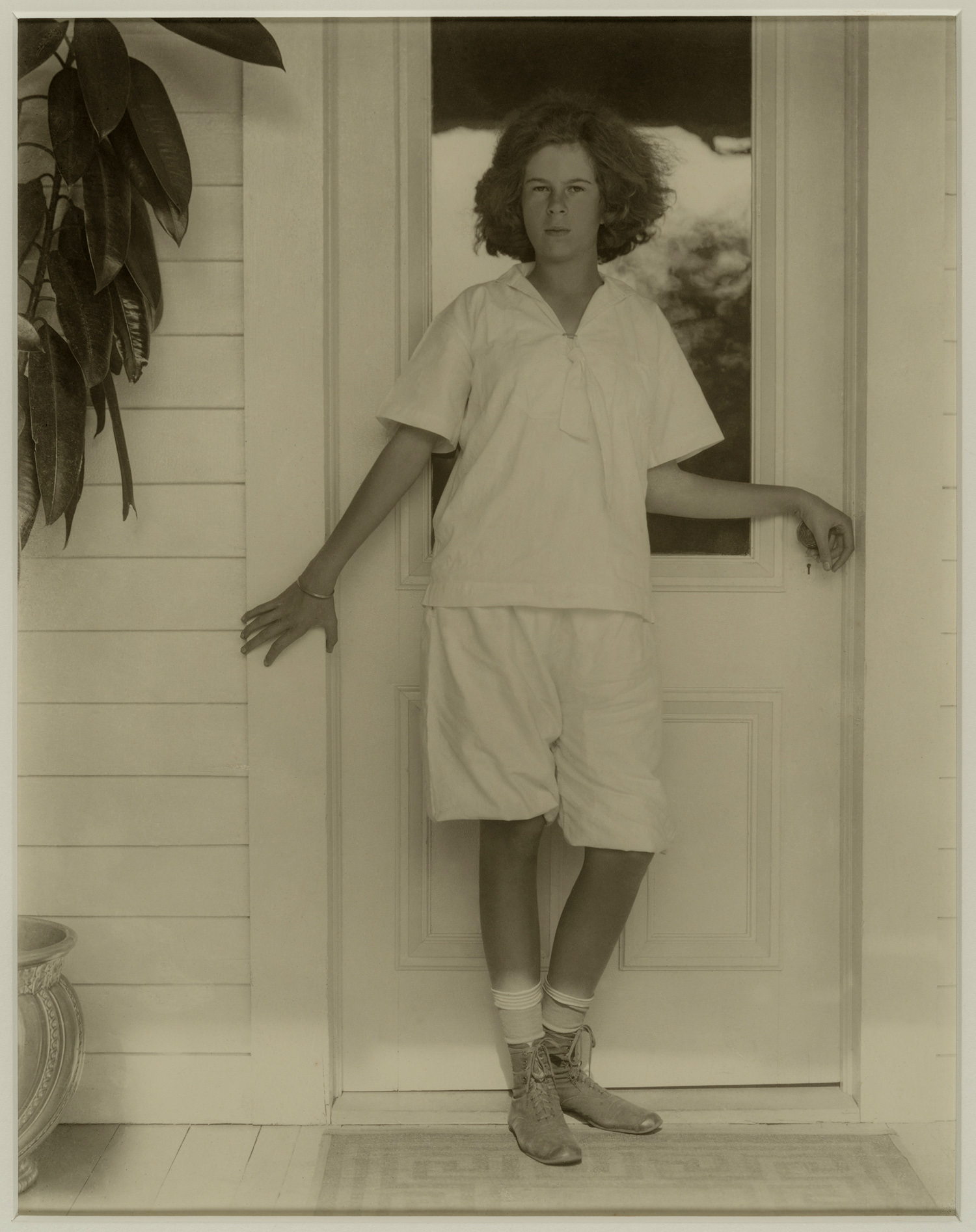
Alfred Stieglitz (American, 1864-1946) 'Georgia Engelhard' 1920


Alfred Stieglitz (American, 1864-1946)
Georgia Engelhard
1920
Gelatin silver print
Gift of Alfred Stieglitz
Photograph: © Museum of Fine Arts, Boston


Georgia Engelhard (American, 1906-1986)

Georgia Engelhard was the first child of George Engelhard and Agnes Stieglitz. It is as the niece of Alfred Stieglitz, modernism’s most successful early booster in the United States, that Engelhard’s artistic career was encouraged. From the age of 12 to 22 she corresponded regularly with Stieglitz who serve as a confidant to the young woman. Engelhard occasionally posed for Stieglitz and the uncle honoured her with an exhibition at his famous gallery, 291, when she was only ten years old. (Stieglitz’s motivation to show his niece’s work was more than likely a response to Wassily Kandinsky’s proposition that there was a fundamental spirituality to be found in true art and that children’s art had the ability to convey this “inner truth.”)

It is under the tutelage of Stieglitz’s wife, Georgia O’Keeffe, that Engelhard matured as a painter. In biographies Engelhard is repeatedly mentioned as O’Keeffe’s friend and companion. Georgia minor, as Engelhard was called, served as comic release for the older artist who often found Stieglitz and his family oppressive. The two artists frequently painted together at Stiegltiz’s summer house on Lake George and occasionally took excursions together. Engelhard’s paintings reflect O’Keeffe’s influence – flat areas of pure colour and sensuous curves are used to define the landscape. …

Despite a paralysing fear of heights, Engelhard became a premier mountain climber at the age of 20 and was the first female climber to ascend many of the peaks in the Canadian Rockies. Engelhard’s determination to overcome this specific fear evolved into a passion for the mountains that lasted throughout her lifetime…

Engelhard was also a writer and an accomplished photographer. In 1938 when she began living with Eaton Cromwell she stopped painting and together the couple pursued photography. While living in Switzerland they sold a number of their pictures to postcard companies. Few of Georgia Engelhard’s paintings are in existence today and when one does appear there is often a dispute about whether the canvas comes from O’Keefe’s hands or Engelhard’s.

Anonymous text. “Georgia Engelhard,” on the JWL Collection website [Online] Cited 05/01/2022. No longer available online


Alfred Stieglitz (American, 1864-1946) 'Georgia O'Keeffe: A Portrait (9)' probably around 1921


Alfred Stieglitz (American, 1864-1946)
Georgia O’Keeffe: A Portrait (9)
probably around 1921
Gelatin silver print
Gift of Alfred Stieglitz
Photograph: © Museum of Fine Arts, Boston


Alfred Stieglitz (American, 1864-1946) 'Dancing Trees' 1922


Alfred Stieglitz (American, 1864-1946)
Dancing Trees
1922
Palladium print
Gift of Alfred Stieglitz
Photograph: © Museum of Fine Arts, Boston


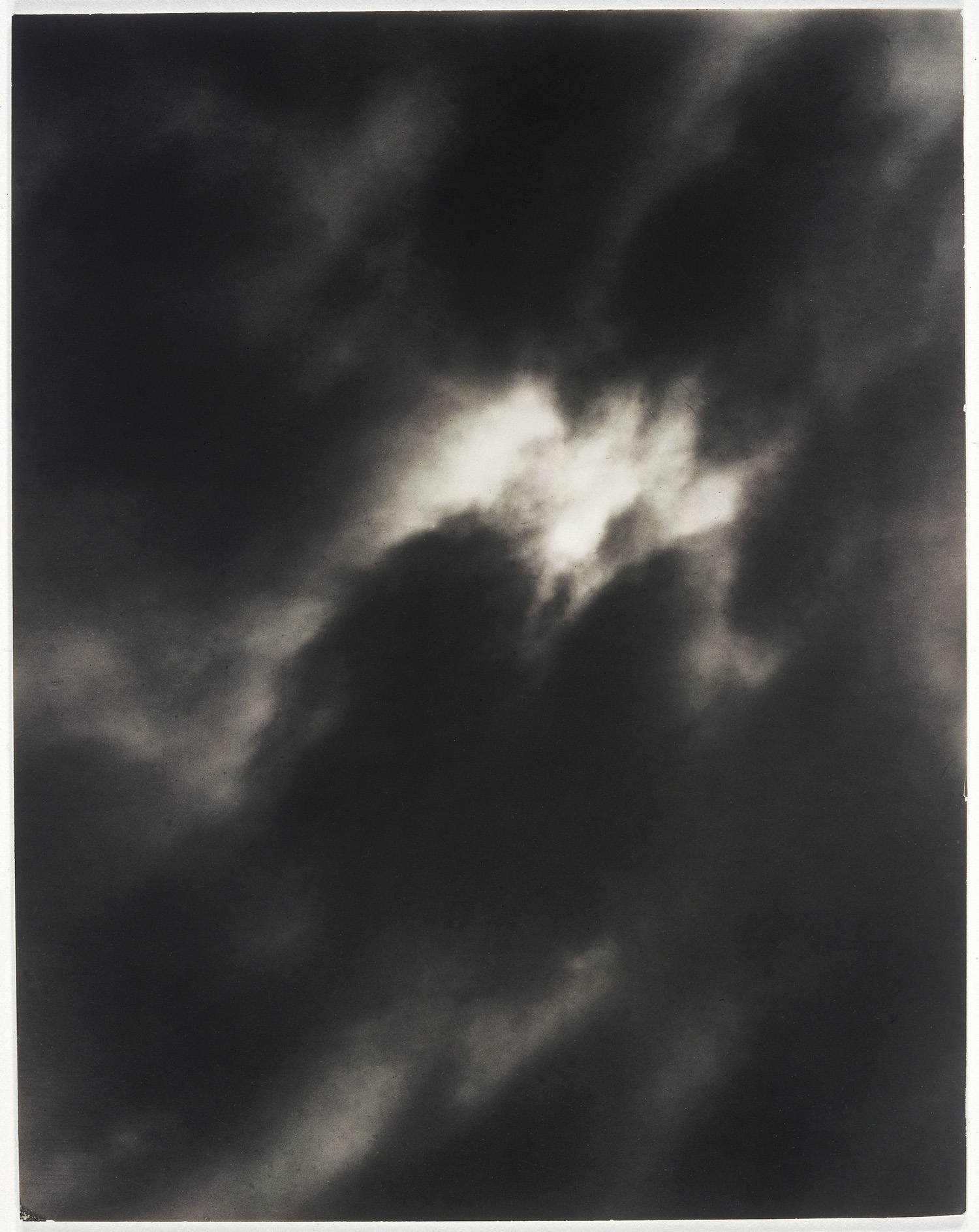
Alfred Stieglitz (American, 1864-1946) 'Equivalent' 1926


Alfred Stieglitz (American, 1864-1946)
Equivalent
1926
Gelatin silver print
Gift of Miss Georgia O’Keeffe
Photograph: © Museum of Fine Arts, Boston


“How to hold a moment, how to record something so completely, that all who see it will relive an equivalent of what has been expressed.”


Alfred Stieglitz (American, 1864-1946) 'Georgia O'Keeffe: A Portrait (15)' 1930


Alfred Stieglitz (American, 1864-1946)
Georgia O’Keeffe: A Portrait (15)
1930
Gelatin silver print
The Alfred Stieglitz Collection – Gift of the Georgia O’Keeffe Foundation and M. and M. Karolik Fund
Photograph: © Museum of Fine Arts, Boston


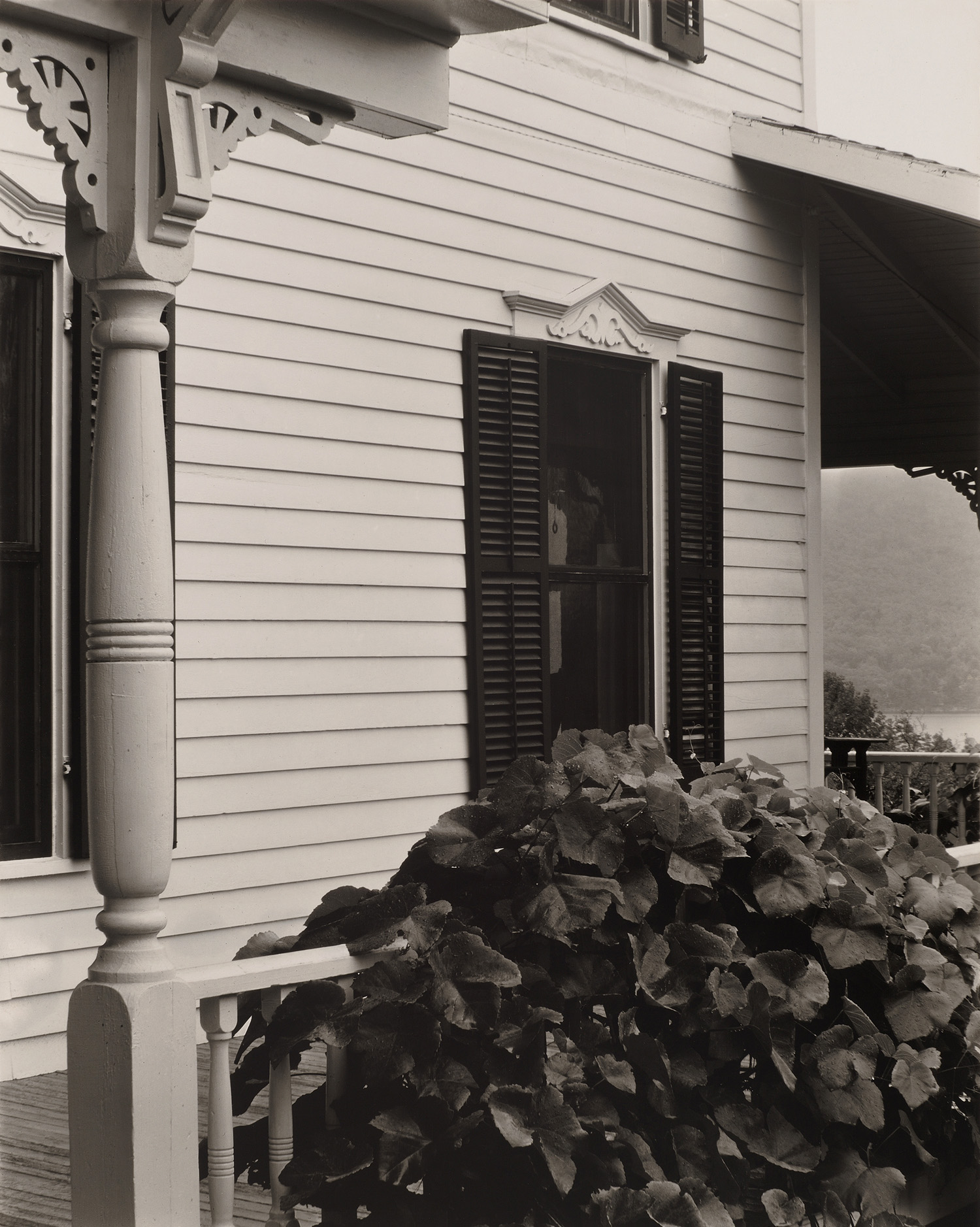
Alfred Stieglitz (American, 1864-1946) 'House and Grape Leaves' 1934


Alfred Stieglitz (American, 1864-1946)
House and Grape Leaves
1934
Gelatin silver print
Gift of Miss Georgia O’Keeffe
Photograph: © Museum of Fine Arts, Boston


Alfred Stieglitz (American, 1864-1946) 'From the Shelton, Looking West' 1935-1936


Alfred Stieglitz (American, 1864-1946)
From the Shelton, Looking West
1935-36
Gelatin silver print
Gift of Miss Georgia O’Keeffe
Photograph: © Museum of Fine Arts, Boston


Museum of Fine Arts, Boston
Avenue of the Arts
465 Huntington Avenue
Boston, Massachusetts

Opening hours:
Sunday 10am – 5pm
Monday 10am – 5pm
Tuesday Closed
Wednesday 10am – 5pm
Thursday 10am – 10pm
Friday 10am – 10pm
Saturday 10am – 5pm

Museum of Fine Arts, Boston website

LIKE ART BLART ON FACEBOOK

Back to top

Exhibition: ‘Charles Sheeler from Doylestown to Detroit’ at Museum of Fine Arts, Boston

Exhibition dates: 22nd July – 5th November, 2017


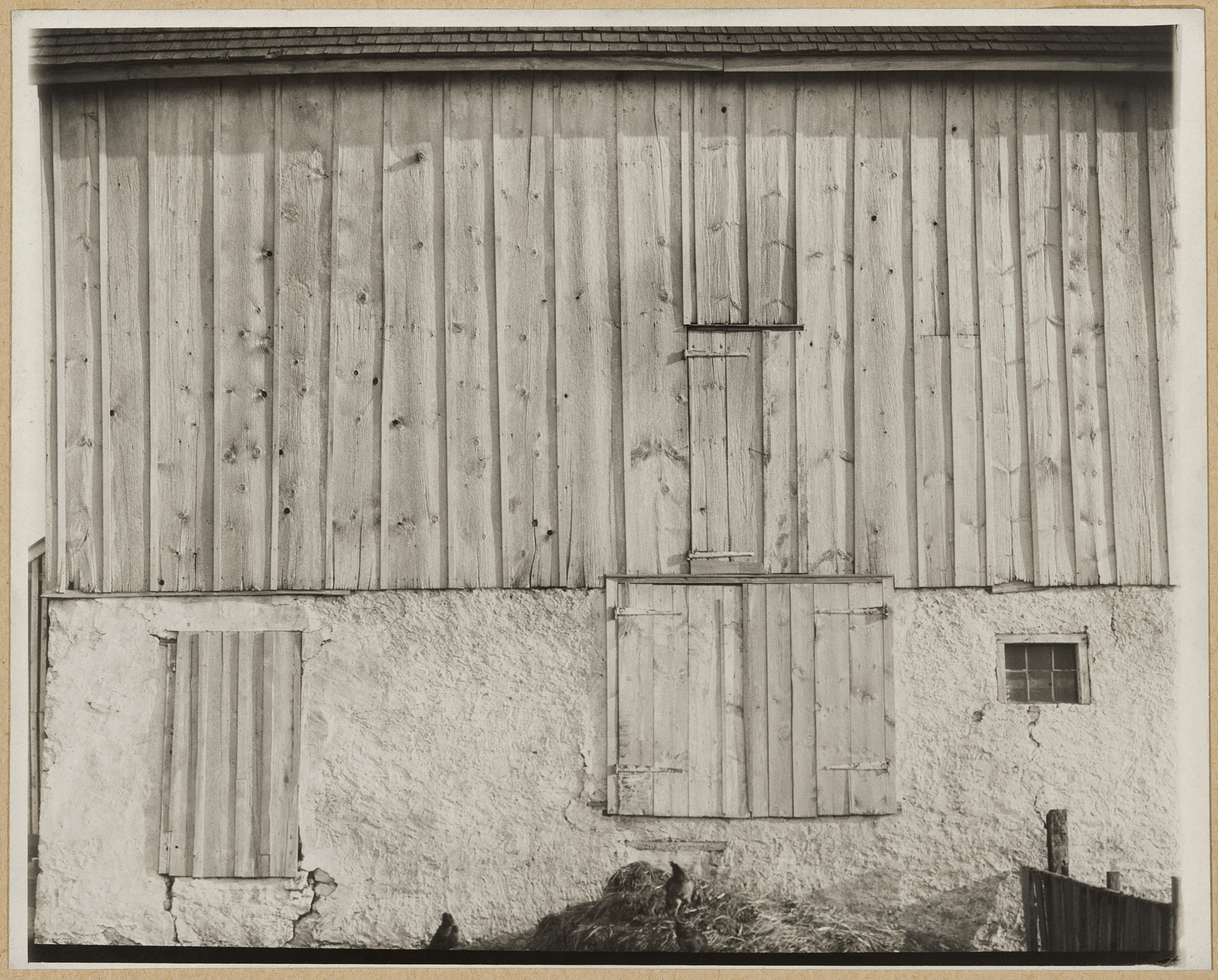
Charles Sheeler (American, 1883-1965) 'Side of White Barn, Bucks County, Pennsylvania' 1915 from the exhibition Exhibition: 'Charles Sheeler from Doylestown to Detroit' at Museum of Fine Arts, Boston, July - November, 2017


Charles Sheeler (American, 1883-1965)
Side of White Barn, Bucks County, Pennsylvania
1915
Gelatin silver print
© The Lane Collection
Courtesy, Museum of Fine Arts, Boston


Paul Strand (American, 1890 - 1976) 'White Fence, Port Kent, New York' 1916 (negative); 1945 (print)


Paul Strand (American, 1890-1976)
White Fence, Port Kent, New York
1916 (negative); 1945 (print)
© Paul Strand Archive, Aperture Foundation


Charles Sheeler is a cracking good photographer who’s work has not got the recognition that it deserves – in comparison to, say, Stieglitz, Strand, Steichen or Weston. When you think of those top echelon artists from the early twentieth century, his name is never mentioned. And it should be.

Sheeler’s Side of White Barn, Bucks County, Pennsylvania (1915, above) predates one of the most famous early modernist photographs, Strand’s White Fence, Port Kent, New York (1916, above) by a year, yet is hardly known. While Strand’s image possesses low depth of field, strong lighting and a focus on the fence as physical, geometric, sculptural object within the picture frame, Sheeler’s photograph is much more subtle but no less effective in its modernist vocation. The pictorial space is flattened into geometric shapes, the bottom of the photograph grounded by a cracked wall, hay, chickens and a fence, the top of the image foreclosed by the tiled roof of the barn and its attendant shadow (showing that the sun was high in the sky when this image was taken). Within the boundaries of the rectangle are subtle graduations of tone, colour and form, almost like an modernist etching with light, so beautifully does the artist both understand what he is seeing and how to render it through the physicality of the print. Unlike Strand’s “knock you over the head with the white picket fence”, Sheeler’s subtle paean to the modern world requires contemplation on the nature of light, photography and the fine art print. This is a masterpiece in the history of photographic art.

I am similarly convinced by Sheeler’s Ford Plant – CrissCrossed Conveyors (1927, below), in my opinion one of the top ten photographs of all time.

I cannot fault this image. The light falling on the subject is incredible (notice the shadow from the beam mid-upper left, telling us the time of day the photograph was taken), the tonality superb, the framing of the subject admirable – all elements tensioned perfectly within the pictorial plane. The bottom of the photograph is grounded by stacked tyres and the structure ascends to the heavens from there… not just in one element, but in five! The main criss-cross of the conveyors is placed off centre supported by an iron tower, which allows the eye to roam freely across the image. The placement also allows for another elevator to ascend behind the main two, while a set of steps climbs higher and higher eventually exiting the picture stage left. Behind the criss-crossed conveyors the depth of space that must exist in reality is proposed by two tanks, further reinforced by 8 chimney stacks, and yet this photograph evidences no such depth of field. While everything is reduced to flattened shapes in this machine age, modernist, objectified world – and while no human being is presented for scale – the human hand is all over this image: in the construction of such technology, in the presence of the human scale stairs, in the ascension to the sky of the organ pipes of the industrial cathedral, in the comprehending eye of the photographer, and in the presence, the aura, of this magnificent print. While this image may seem the antithesis of humanist photography in one sense, conversely it reaffirms the very act of humanity in another. Or perhaps I’m just an old romantic.

Dr Marcus Bunyan


Many thankx to the Museum of Fine Arts Boston for allowing me to publish the photographs in the posting. Please click on the photographs for a larger version of the image.


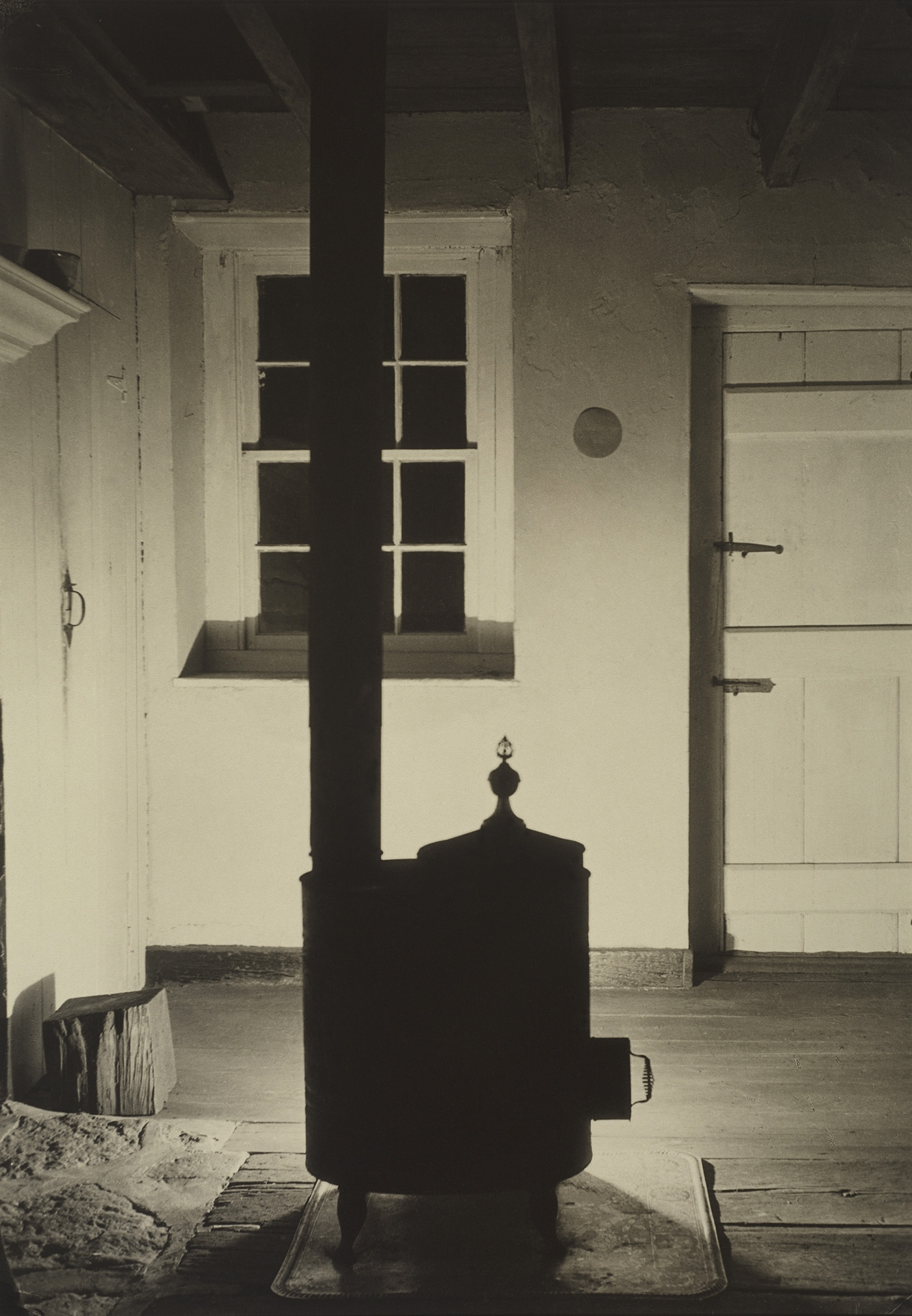
Charles Sheeler (American, 1883-1965) 'Doylestown House - The Stove' about 1917 from the exhibition Exhibition: 'Charles Sheeler from Doylestown to Detroit' at Museum of Fine Arts, Boston, July - November, 2017


Charles Sheeler (American, 1883-1965)
Doylestown House – The Stove
about 1917
Gelatin silver print
© The Lane Collection
Courtesy, Museum of Fine Arts, Boston


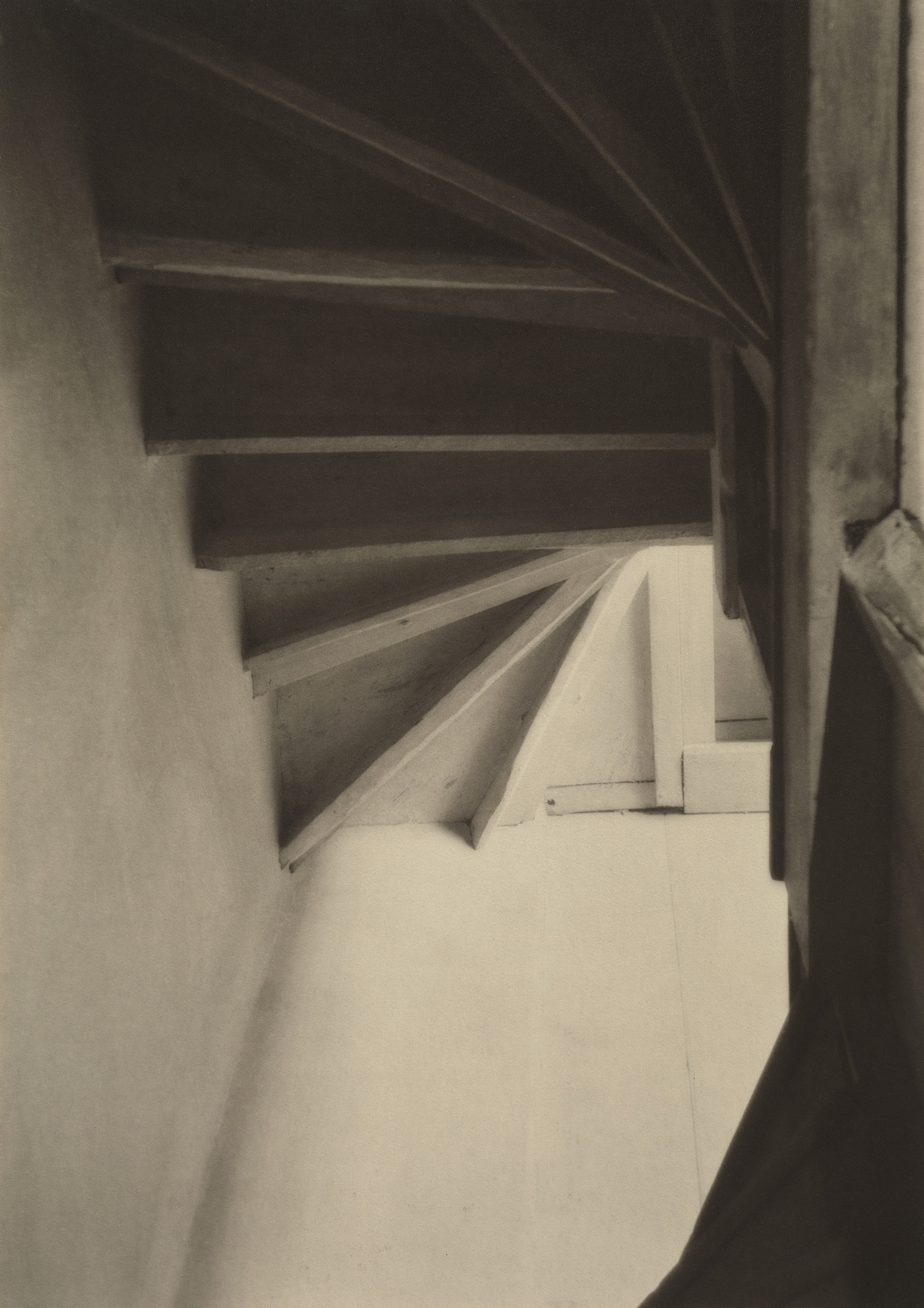
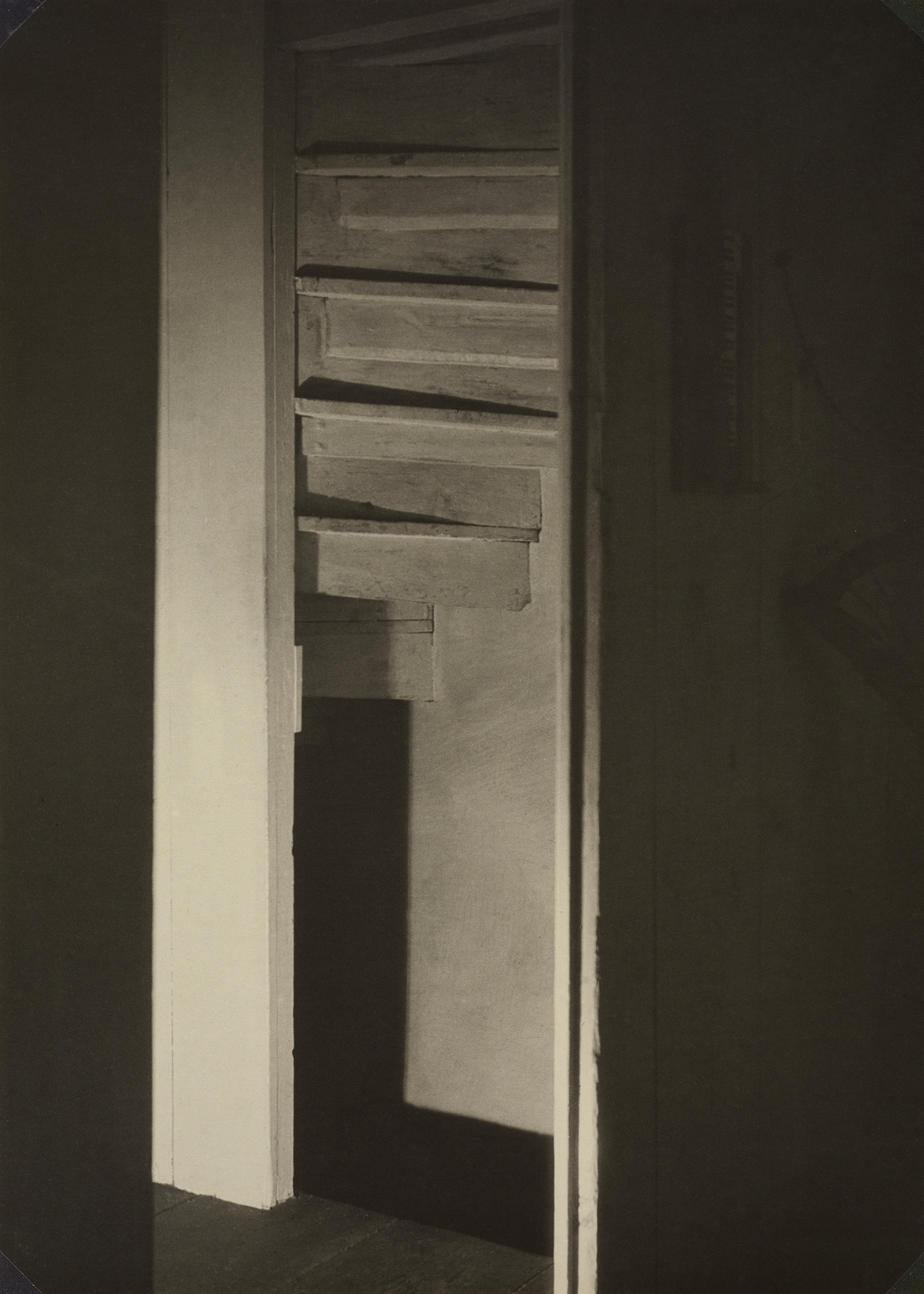
Charles Sheeler (American, 1883-1965) 'Doylestown House - Stairs from Below' Negative date: about 1916-1917


Charles Sheeler (American, 1883-1965)
Doylestown House – Stairs from Below
Negative date: about 1916-1917
Gelatin silver print
© The Lane Collection
Courtesy, Museum of Fine Arts, Boston


Charles Sheeler (American, 1883-1965) 'Doylestown House - Stairwell' Negative date: about 1916-1917


Charles Sheeler (American, 1883-1965)
Doylestown House – Stairwell
Negative date: about 1916-1917
Gelatin silver print
© The Lane Collection
Courtesy, Museum of Fine Arts, Boston


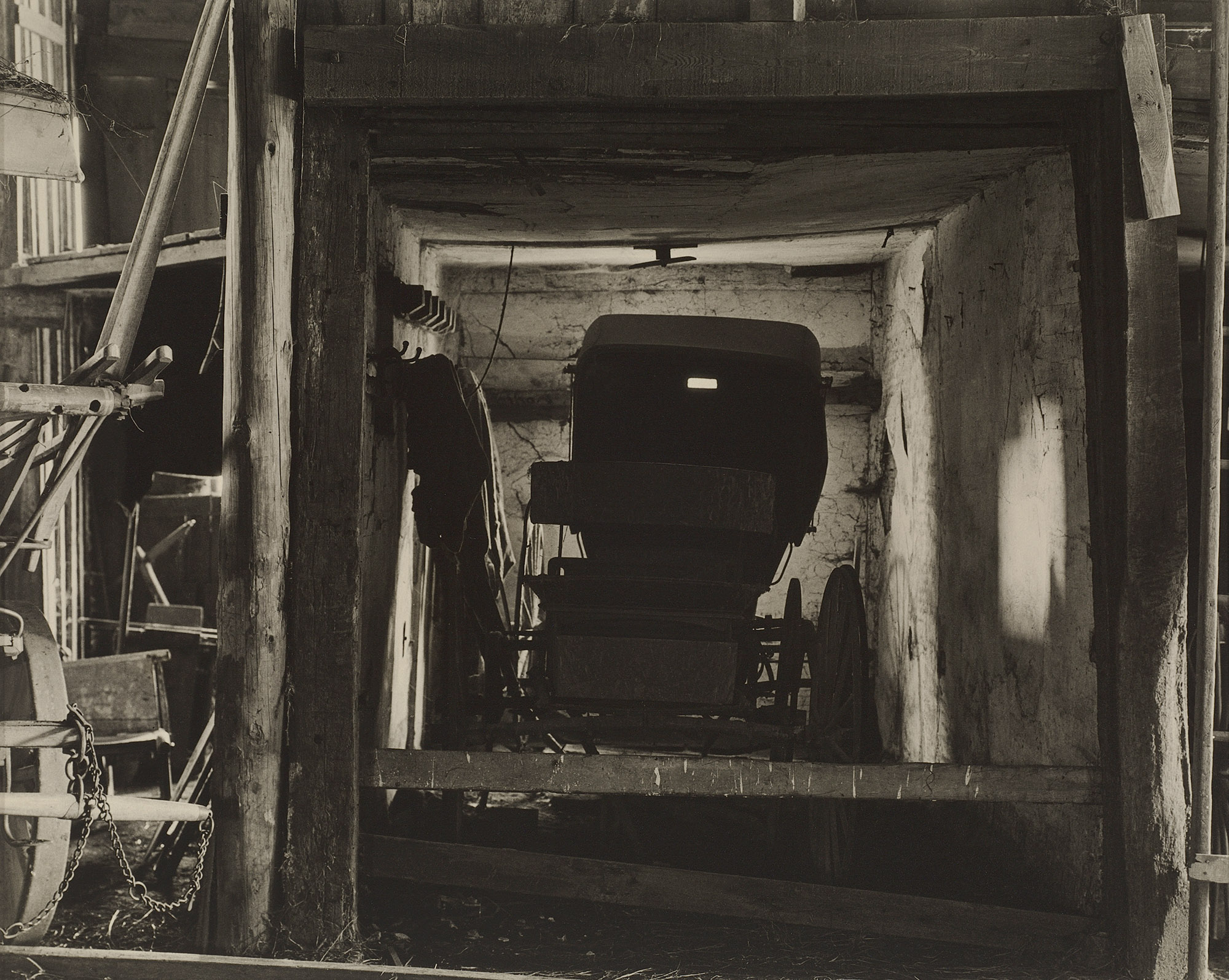
Charles Sheeler (American, 1883-1965) 'Buggy, Doylestown, Pennsylvania' Negative date: 1917


Charles Sheeler (American, 1883-1965)
Buggy, Doylestown, Pennsylvania
Negative date: 1917
Gelatin silver print
© The Lane Collection
Courtesy, Museum of Fine Arts, Boston


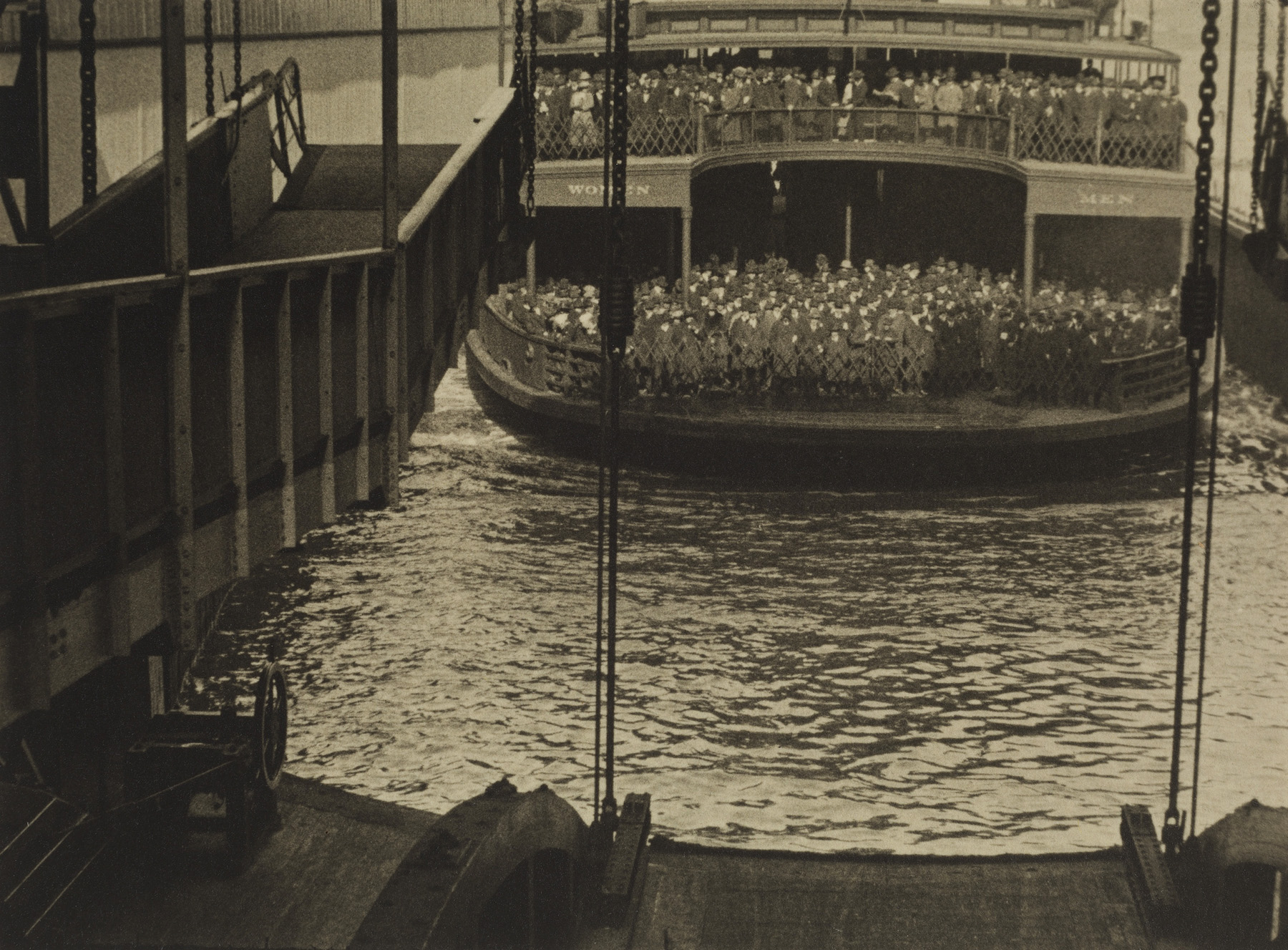
Charles Sheeler (American, 1883-1965) 'Manhatta - Ferry Docking' Negative date: 1920


Charles Sheeler (American, 1883-1965)
Manhatta – Ferry Docking
Negative date: 1920
Gelatin silver print
© The Lane Collection
Courtesy, Museum of Fine Arts, Boston


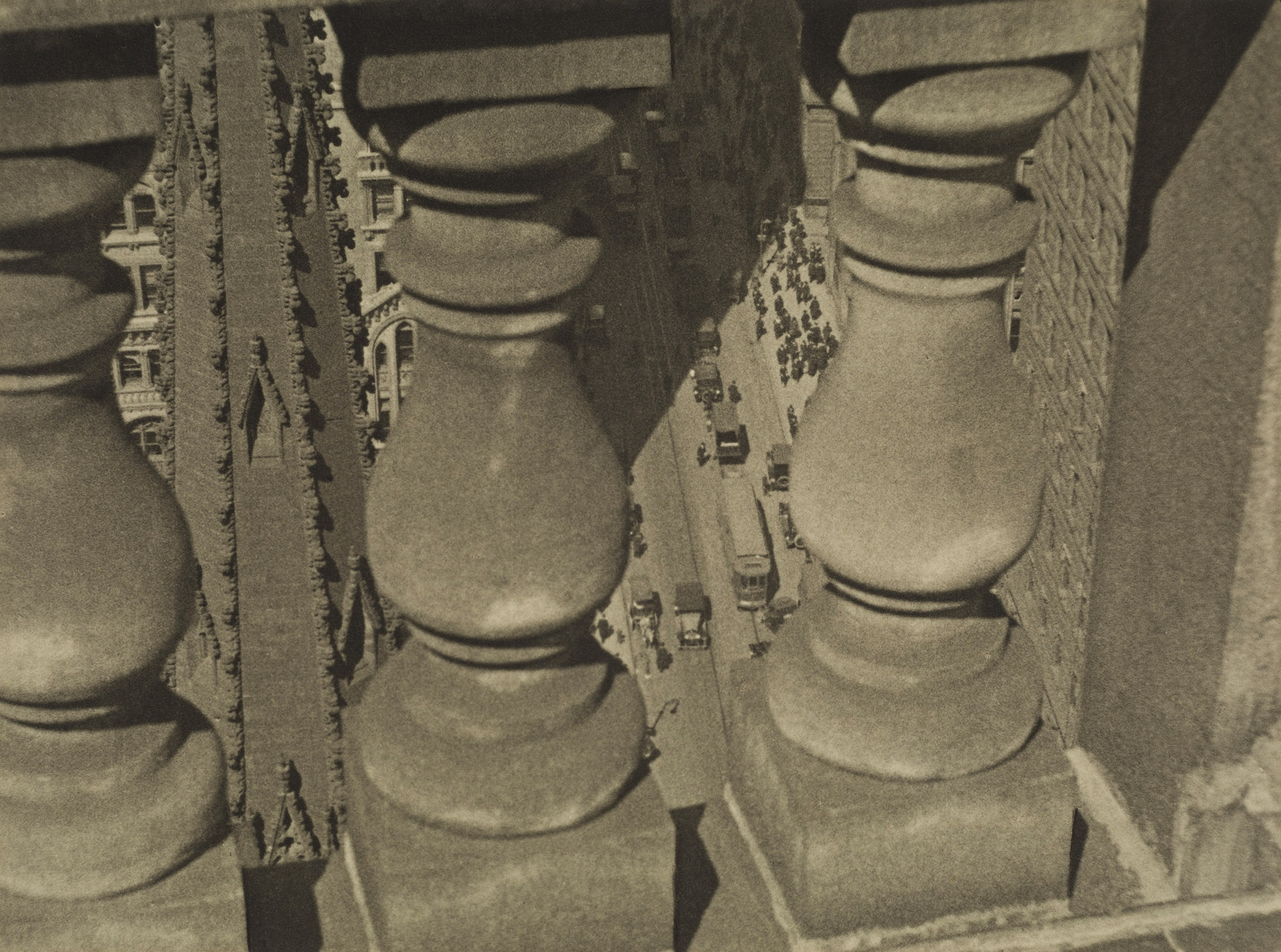
This exhibition celebrates the MFA’s unparalleled holdings of works by Charles Sheeler (1883-1965), presenting 40 photographs from three significant series created during the heyday of his career as a founder of American modernism.

After enjoying success as a painter, Sheeler initially took up photography as a way to make a living. His experiments with the medium included the 1916-1917 series of photographs capturing various elements of an 18th-century house he rented in Doylestown, Pennsylvania. The sequence of stark, geometric compositions was among the most abstract and avant-garde work being made in the US at the time – created in response to the Cubist art of Picasso and Braque that Sheeler had previously encountered in Europe.

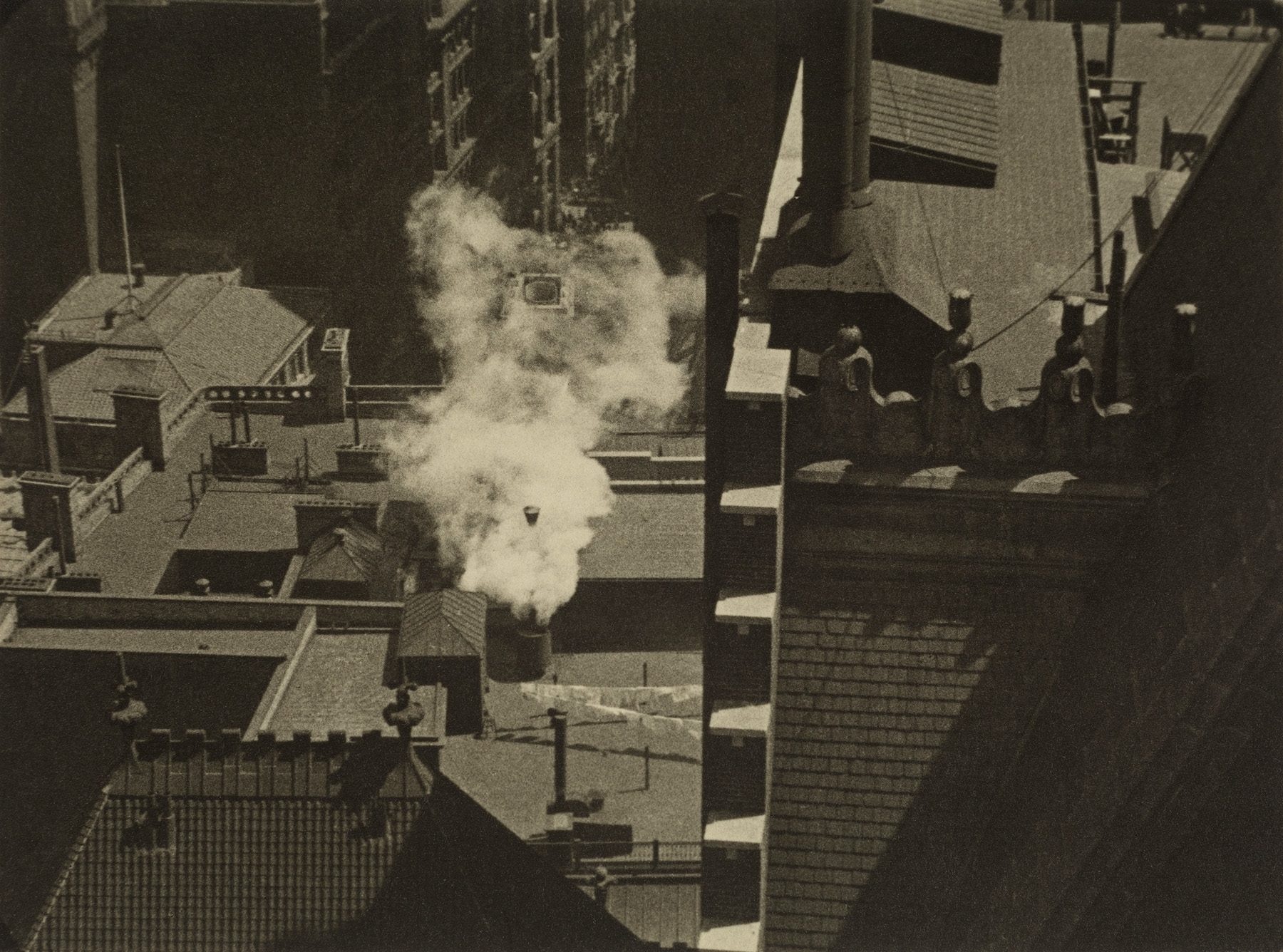
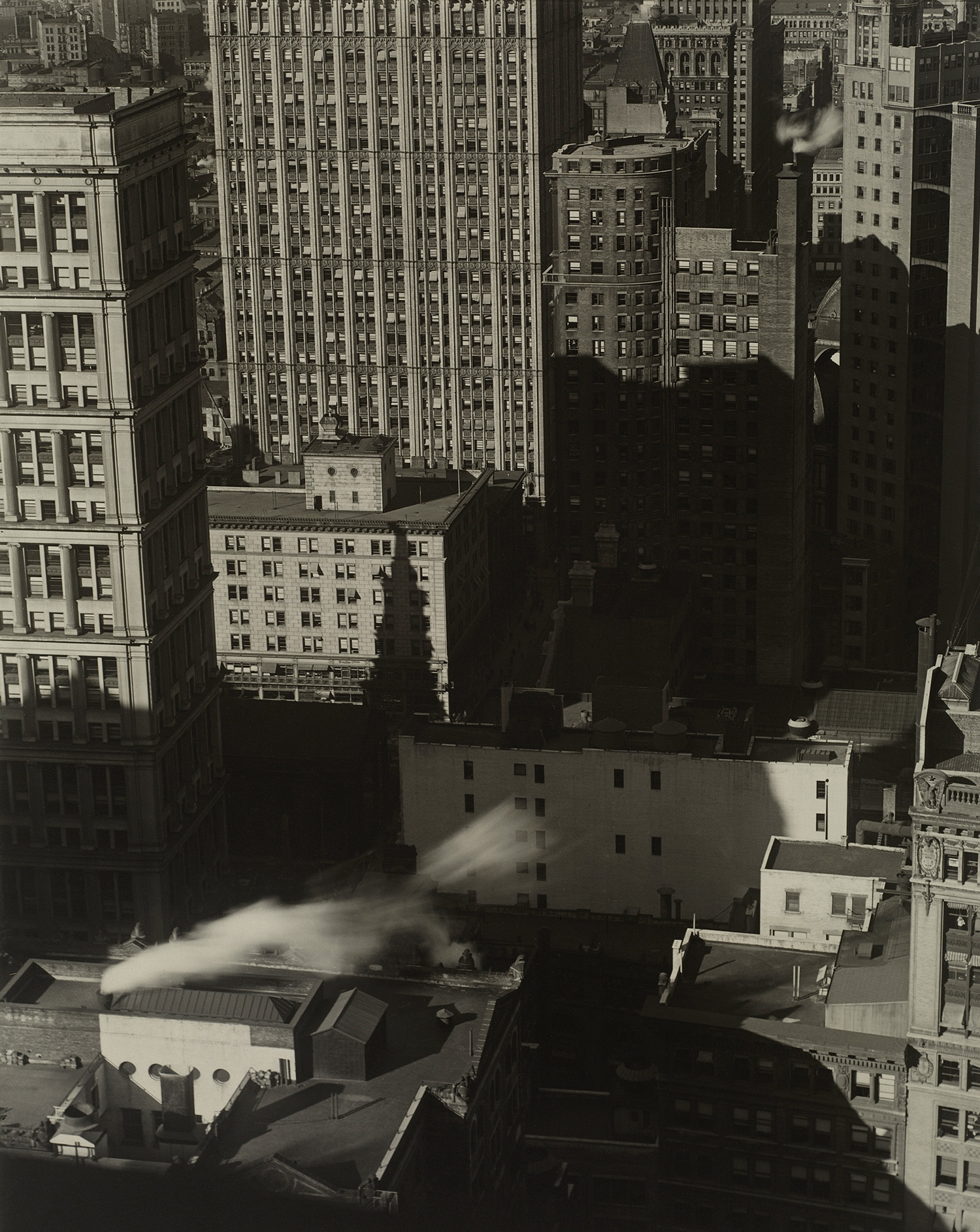
In 1920, Sheeler collaborated with fellow photographer Paul Strand on the short film Manhatta, presenting dramatic views of lower Manhattan. Abstract stills from the 35mm film, which was shot from steep angles, are presented alongside larger prints of Sheeler’s cinematic images of New York City, produced shortly after Manhatta – which he used as source material for his paintings. The film Manhatta is on view in the gallery.

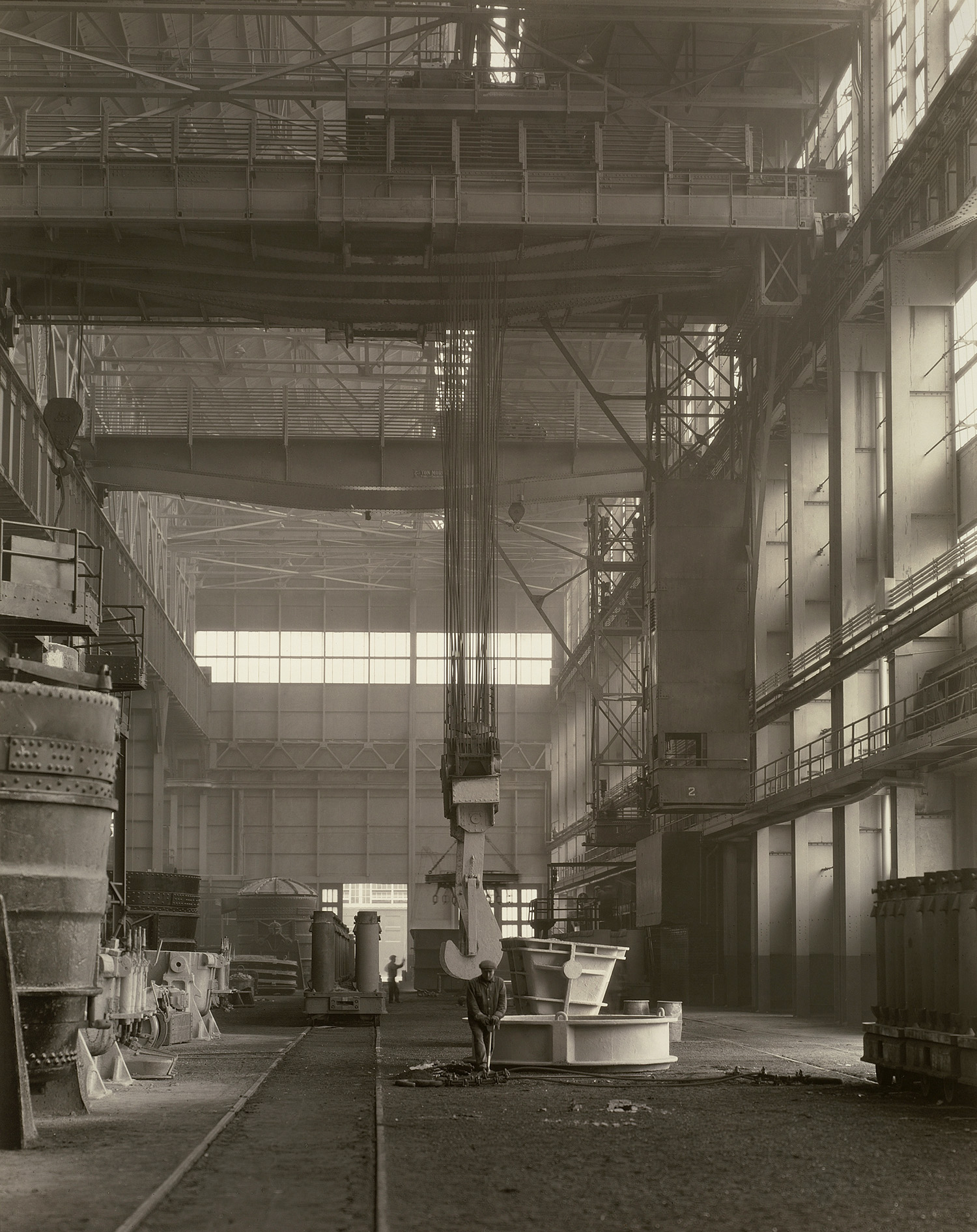
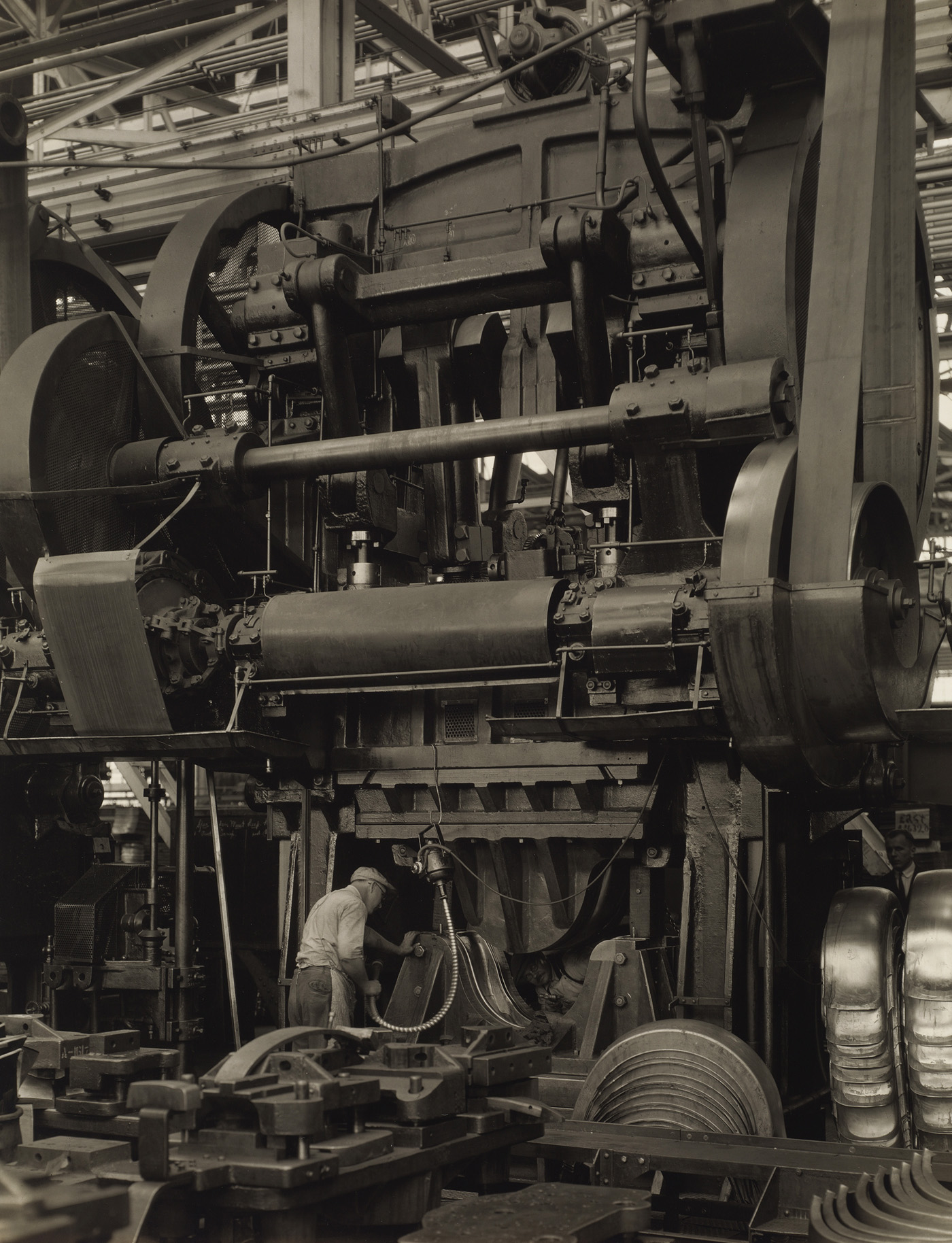
Charles Sheeler from Doylestown to Detroit culminates with the 1927 photographs of the Ford Motor Company plant in River Rouge, Michigan, commissioned to celebrate the introduction of Ford’s Model A. The cathedral-like scenes convey an optimism for American industry, and are now considered icons of Machine Age photography. All of the photographs in the exhibition are drawn from the Museum’s Lane Collection – one of the finest private holdings of 20th-century American art in the world, including Sheeler’s entire photographic estate – given to the MFA in 2012.

Text from the MFA website


Paul Strand and Charles Sheeler
Manhatta
1921
Courtesy of the Museum of Modern Art, New York
© Aperture Foundation Inc., Paul Strand Archive


In 1920 Paul Strand and artist Charles Sheeler collaborated on Manhatta, a short silent film that presents a day in the life of lower Manhattan. Inspired by Walt Whitman’s book “Leaves of Grass,” the film includes multiple segments that express the character of New York. The sequences display a similar approach to the still photography of both artists. Attracted by the cityscape and its visual design, Strand and Sheeler favoured extreme camera angles to capture New York’s dynamic qualities. Although influenced by Romanticism in its view of the urban environment, Manhatta is considered the first American avant-garde film.


Charles Sheeler (American, 1883-1965) 'Manhatta - Rooftops' Negative date: 1920


Charles Sheeler (American, 1883-1965)
Manhatta – Rooftops
Negative date: 1920
Gelatin silver print
© The Lane Collection
Courtesy, Museum of Fine Arts, Boston


Charles Sheeler (American, 1883-1965) 'Manhatta - Through a Balustrade' Negative date: 1920


Charles Sheeler (American, 1883-1965)
Manhatta – Through a Balustrade
Negative date: 1920
Gelatin silver print
© The Lane Collection
Courtesy, Museum of Fine Arts, Boston


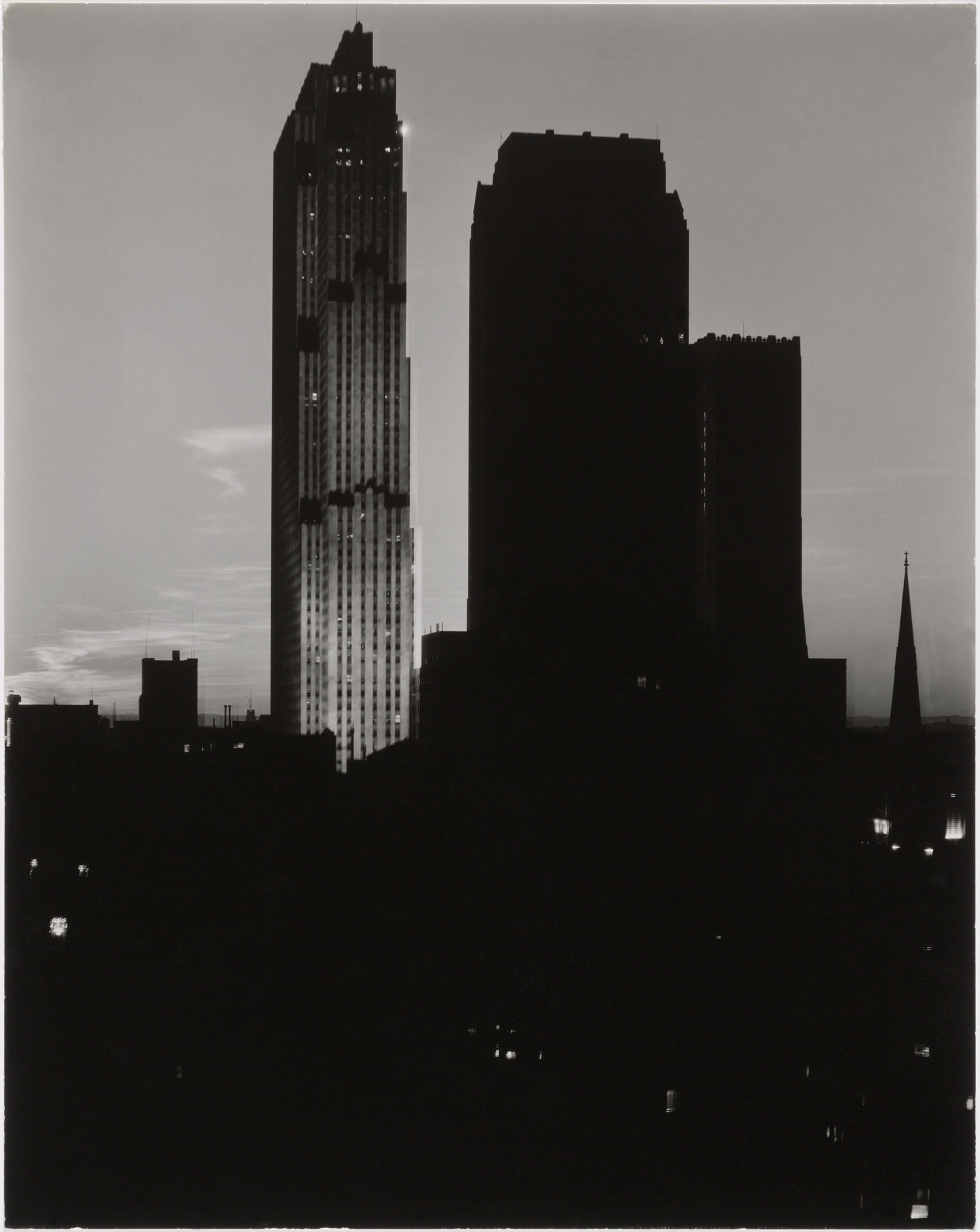
Charles Sheeler (American, 1883-1965) 'New York, Buildings in Shadows and Smoke' Negative date: 1920


Charles Sheeler (American, 1883-1965)
New York, Buildings in Shadows and Smoke
Negative date: 1920
Gelatin silver print
© The Lane Collection
Courtesy, Museum of Fine Arts, Boston


Charles Sheeler (American, 1883-1965) 'Ford Plant - Criss-Crossed Conveyors' 1927


Charles Sheeler (American, 1883-1965)
Ford Plant – CrissCrossed Conveyors
1927
Gelatin silver print
© The Lane Collection
Courtesy, Museum of Fine Arts, Boston


Charles Sheeler (American, 1883-1965) 'Ford Plant - Ladle Hooks, Open Hearth Building' Negative date: 1927


Charles Sheeler (American, 1883-1965)
Ford Plant – Ladle Hooks, Open Hearth Building
Negative date: 1927
Gelatin silver print
© The Lane Collection
Courtesy, Museum of Fine Arts, Boston


Charles Sheeler (American, 1883-1965) 'Ford Plant - Stamping Press' Negative date: 1927


Charles Sheeler (American, 1883-1965)
Ford Plant – Stamping Press
Negative date: 1927
Gelatin silver print
© The Lane Collection
Courtesy, Museum of Fine Arts, Boston


Museum of Fine Arts, Boston
Avenue of the Arts
465 Huntington Avenue
Boston, Massachusetts

Opening hours:
Sunday 10am – 5pm
Monday 10am – 5pm
Tuesday Closed
Wednesday 10am – 5pm
Thursday 10am – 10pm
Friday 10am – 10pm
Saturday 10am – 5pm

Museum of Fine Arts, Boston website

LIKE ART BLART ON FACEBOOK

Back to top

Exhibition: ‘The Summer of Love: Photography and Graphic Design’ at the Museum of Fine Arts, Boston

Exhibition dates: 6th July – 22nd October, 2017


Bonnie MacLean (American, 1939-2020) 'Muddy Waters, Buffalo Springfield, Richie Havens (Fillmore Auditorium, 1-6 August 1967)' 1967 from the exhibition 'The Summer of Love: Photography and Graphic Design' at the Museum of Fine Arts, Boston, July - Oct, 2017


Bonnie MacLean (American, 1939-2020)
Muddy Waters, Buffalo Springfield, Richie Havens (Fillmore Auditorium, 1-6 August 1967)
1967
Offset lithographic poster
Gift of Robert Bradford Wheaton and Barbara Ketcham Wheaton
Photograph: © Museum of Fine Arts, Boston


Aubrey Beardsley and “The Yellow Book,” Art Nouveau and the Vienna Secession, Josef Albers, Dada, Surrealism, William Blake (a favourite of mine), photography, typography and graphic design. You couldn’t ask for more… except for those psychedelic colours!

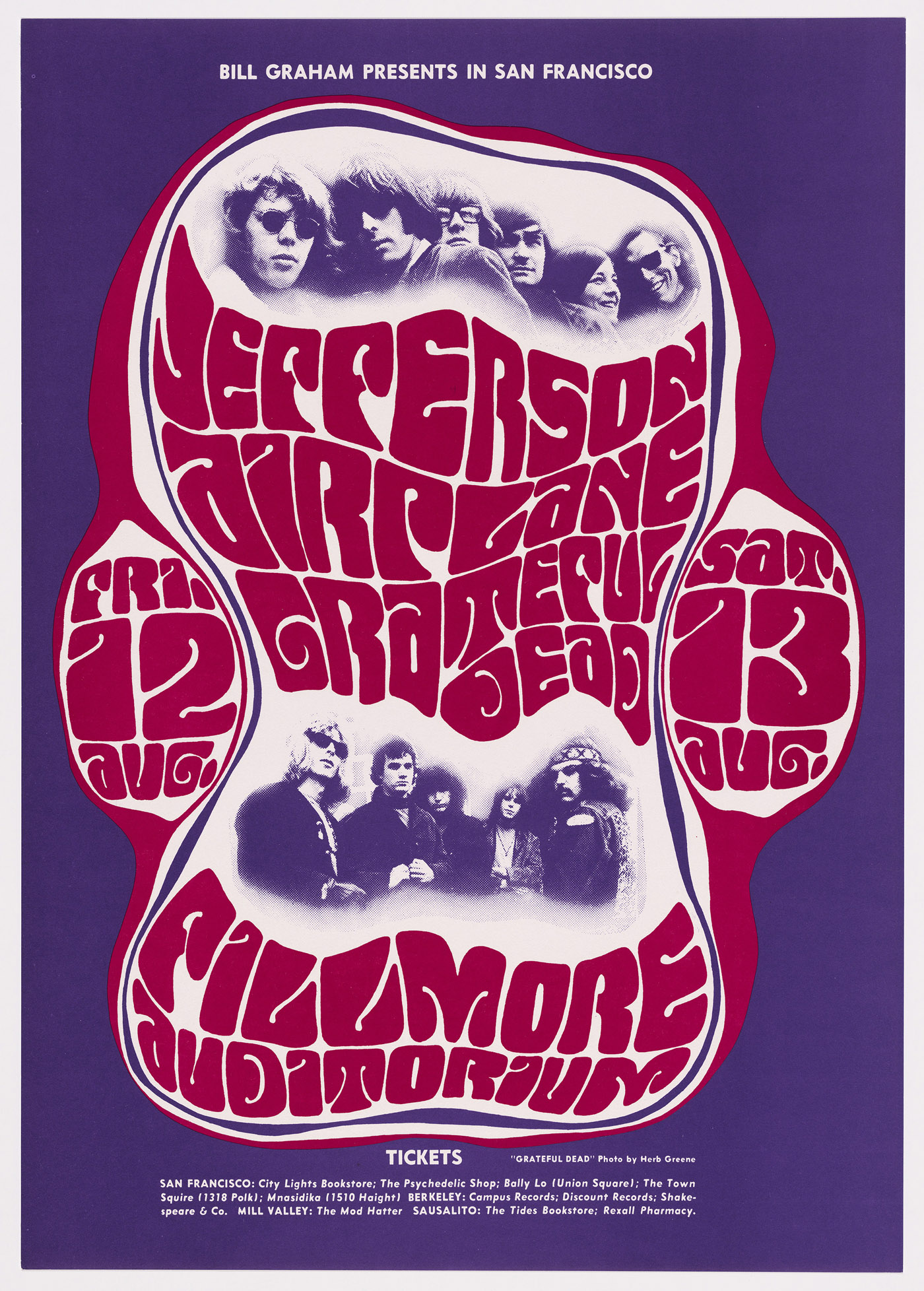
As a friend of mine observed of the Grateful Dead, Oxford Circle (1966) poster – look where the tickets were sold: psychedelic shops, book stores, record shops and coffee houses. He actually saw the Grateful Dead play live while he was in America, and he said it was quite a trip. As Mark Feeney keenly observes, this art was “liberation in two dimensions.”

He is correct, for these posters and record covers reflect the cultural era from which they emerge – the official beginnings of Gay Liberation, Feminism, student revolt, protests against war and racism, civil rights, drugs, free love and peace. They are powerful and eloquent works of art that summon the noisy spirit of the age, a riotous poltergeist hell bent on change.

And all these years later, they still look as fresh and as relevant (perhaps even more so in this conservative world), as they day they were created. Just fab!

Dr Marcus Bunyan

PS. It always amazes me the cultural contexts in which photography can be put to use.


Many thankx to the Museum of Fine Arts, Boston for allowing me to publish the photographs in the posting. Please click on the photographs for a larger version of the image.


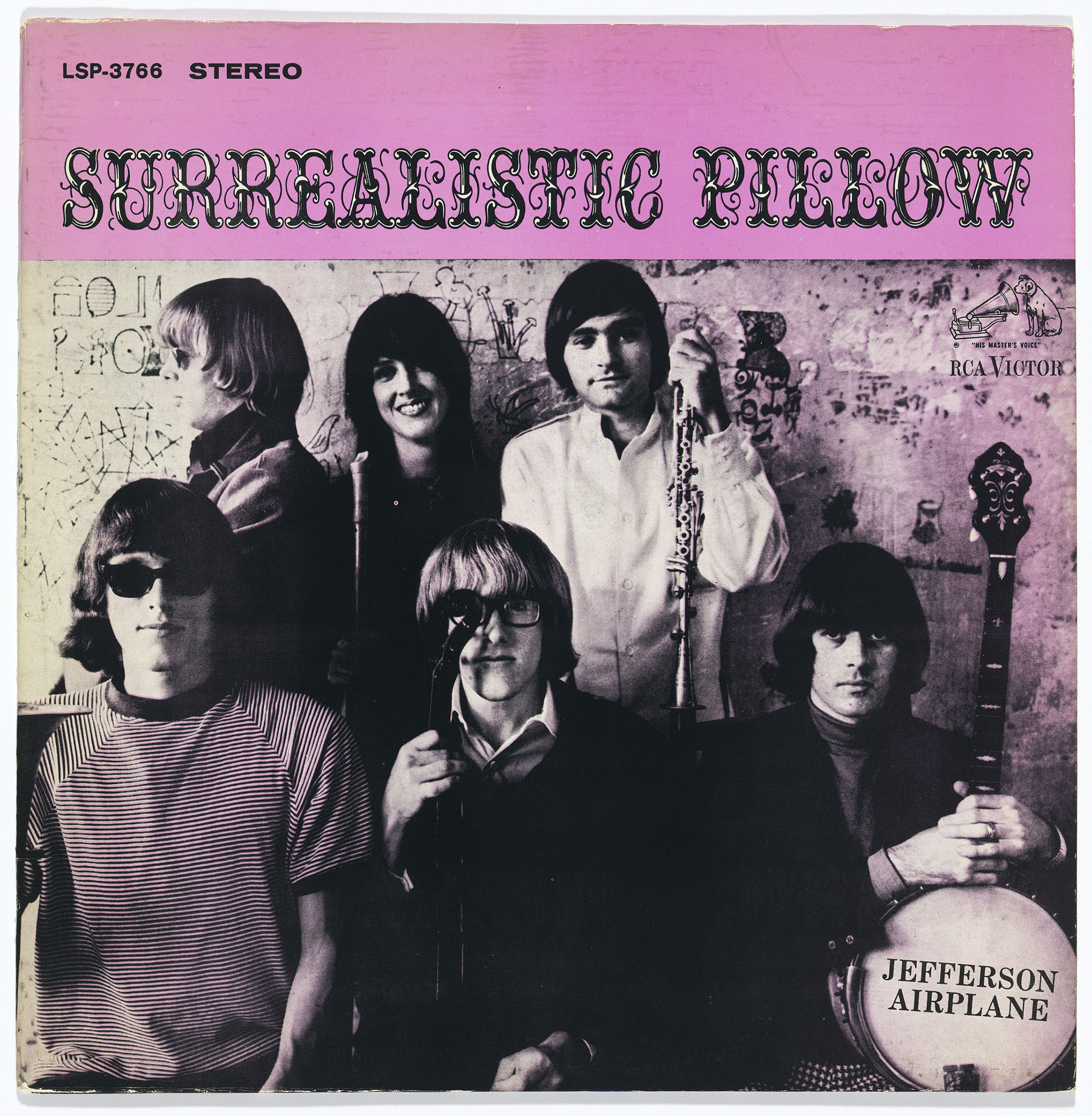
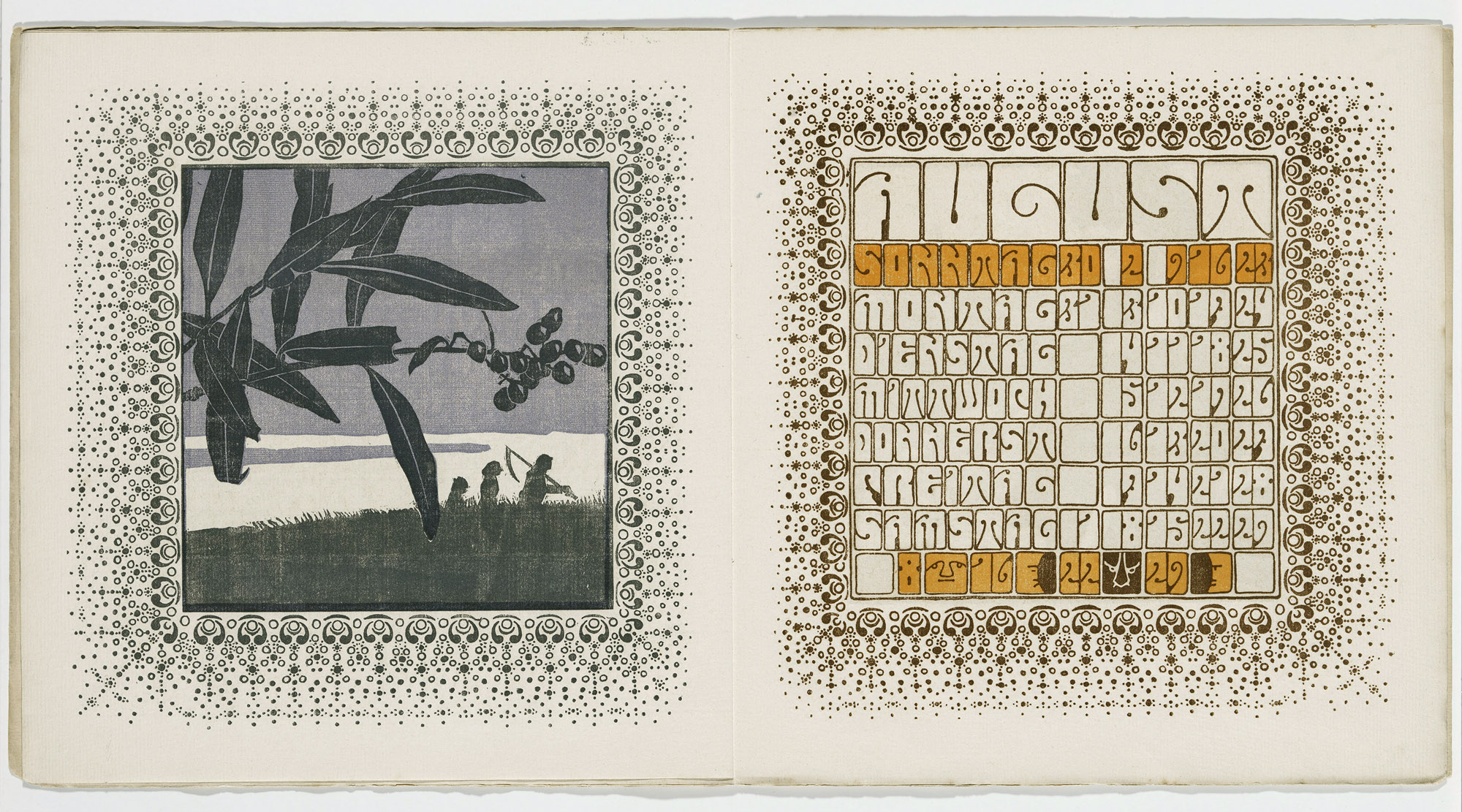
“What’s fascinating is how the graphic designs manage to have a kind of coherence despite being such a jumble. Certain principles recur: curves, yes, angles, no; a pugilistic employment of colour (psychedelia really did look … psychedelic); legibility as afterthought. So do certain influences: Aubrey Beardsley and “The Yellow Book,” Art Nouveau and the Vienna Secession, Dada, Surrealism (among the album covers on display is, yes, the Jefferson Airplane’s “Surrealistic Pillow”). The presiding spirit is William Blake: “The road of excess leads to the palace of wisdom.” The last thing the Haight cared about was history, but history’s hand lay all over it.

The look of these designs is assaultive, overly busy, restrained only by the confines of poster size or album cover. That look still feels exhilarating: liberation in two dimensions. It must have felt close to Martian back then. NASA wanted to put a man on the moon. Why stop there? Gravity was just another law to flout. One of the 32 Herb Greene photographs in “The Summer of Love” shows Airplane lead singer Grace Slick looking at the camera and flipping the bird. Maybe that image, even more than Blakean excess, is the presiding spirit.”


Mark Feeney. “The MFA celebrates San Francisco’s Summer of Love,” on the Boston Globe website July 6th 2017 [Online] Cited 02/01/2022. No longer available online


Victor Moscoso (American born Spain, b. 1936) 'The Chambers Brothers (The Matrix, 28 March-6 April 1967)' 1967 from the exhibition 'The Summer of Love: Photography and Graphic Design' at the Museum of Fine Arts, Boston, July - Oct, 2017


Victor Moscoso (American born Spain, 1936)
The Chambers Brothers (The Matrix, 28 March-6 April 1967)

1967
Offset lithographic poster
Gift of Robert Bradford Wheaton and Barbara Ketcham Wheaton
© ’67 Neon Rose
Photograph: © Museum of Fine Arts, Boston


Victor Moscoso (Spanish-American, b. 1936)

Victor Moscoso (born Galicia in 1936) is a Spanish-American artist best known for producing psychedelic rock posters, advertisements, and underground comix in San Francisco during the 1960s and 1970s.

Moscoso was the first of the rock poster artists of the 1960s era with formal academic training and experience. After studying art at Cooper Union in New York City and at Yale University, he moved to San Francisco in 1959. There, he attended the San Francisco Art Institute, where he eventually became an instructor. Moscoso’s use of vibrating colours was influenced by painter Josef Albers, one of his teachers at Yale. He was the first of the rock poster artists to use photographic collage in many of his posters.

Professional success came in the form of the psychedelic rock and roll poster art created for San Francisco’s dance halls and clubs. Moscoso’s posters for the Family Dog dance-concerts at the Avalon Ballroom and his Neon Rose posters for the Matrix resulted in international attention during the 1967 Summer of Love.

Text from the Wikipedia website


Stanley Miller (Mouse) (American, born in 1940) and Alton Kelley (American, 1940-2008) 'Moby Grape, Sparrow, The Charlatans (Avalon Ballroom, 13-14 January 1967)' 1967


Stanley Miller (Mouse) (American, b. 1940) and Alton Kelley (American, 1940-2008)
Moby Grape, Sparrow, The Charlatans (Avalon Ballroom, 13-14 January 1967)
1967
Poster, offset lithograph
Collection of Patrick Murphy
Courtesy, Museum of Fine Arts, Boston


Bonnie MacLean (American, 1939-2020) 'The Yardbirds, The Doors, James Cotton Blues Band, Richie Havens (Fillmore Auditorium, 25-30 July 1967)' 1967


Bonnie MacLean (American, 1939-2020)
The Yardbirds, The Doors, James Cotton Blues Band, Richie Havens (Fillmore Auditorium, 25-30 July 1967)
1967
Poster, offset lithograph
Collection of Patrick Murphy
Photograph: © Museum of Fine Arts, Boston


Bonnie MacLean (American, 1939-2020)

Bonnie MacLean, also known as Bonnie MacLean Graham is an American artist known for her classic rock posters. In the 1960s and 1970s she created posters and other art for the promotion of rock and roll concerts managed by Bill Graham, using the iconic psychedelic art style of the day. MacLean went on to continue her art as a painter focusing mostly of nudes, still lifes and landscapes.

Fillmore posters

Artist Wes Wilson was the main poster artist for the Fillmore Auditorium when he and Bill Graham had a “falling out” and Wilson quit. MacLean had been painting noticeboards at the auditorium in the psychedelic style, and took up the creation of the posters after Wilson left, creating about thirty posters, most in 1967. MacLean’s posters are included in many museum collections including at the Brooklyn Museum, the Fine Arts Museums of San Francisco collection and at the DeYoung museum. A few examples of her posters are in the San Francisco Museum of Modern Art collection.

Text from the Wikipedia website


Stanley Miller (Mouse) (American, b. 1940) and Alton Kelley (American, 1940-2008) 'Grateful Dead, Oxford Circle (Avalon Ballroom, 16-17 September 1966)' 1966


Stanley Miller (Mouse) (American, b. 1940) and Alton Kelley (American, 1940-2008)
Grateful Dead, Oxford Circle (Avalon Ballroom, 16-17 September 1966)
1966
Handbill, offset lithograph
Collection of Patrick Murphy
Photograph: © Museum of Fine Arts, Boston


Stanley Miller (Mouse) (American, b. 1940)

Stanley George Miller (born October 10, 1940), better known as Mouse and Stanley Mouse, is an American artist, notable for his 1960s psychedelic rock concert poster designs for the Grateful Dead and Journey albums cover art as well as many others.

Psychedelic posters

In 1965, Mouse travelled to San Francisco, California with a group of art school friends. Settling initially in Oakland, Mouse met Alton Kelley. Kelley, a self-taught artist, had recently arrived from Virginia City, Nevada, where he had joined a group of hippies who called themselves the Red Dog Saloon gang. Upon arrival in San Francisco Kelley and other veterans of the gang renamed themselves The Family Dog, and began producing rock music dances. In 1966, when Chet Helms assumed leadership of the group and began promoting the dances at the Avalon Ballroom, Mouse and Kelley began working together to produce posters for the events. Later the pair also produced posters for promoter Bill Graham and for other events in the psychedelic community.

In 1967, Mouse collaborated with artists Kelley, Rick Griffin, Victor Moscoso and Wes Wilson to create the Berkeley Bonaparte Distribution Agency. Mouse and Kelley also worked together as lead artists at Mouse Studios and The Monster Company – producing album cover art for the bands Journey and Grateful Dead. The Monster Company also developed a profitable line of T-shirts, utilising the four colour process for silk screening.

The psychedelic posters Mouse and Kelley produced were heavily influenced by Art Nouveau graphics, particularly the works of Alphonse Mucha and Edmund Joseph Sullivan. Material associated with psychedelics, such as Zig-Zag rolling papers, were also referenced. Producing posters advertising for such musical groups as Big Brother and the Holding Company, Quicksilver Messenger Service, and Grateful Dead led to meeting the musicians and making contacts that were later to prove fruitful.

Text from the Wikipedia website


Alton Kelley (American, 1940-2008)

Alton Kelley (June 17, 1940 in Houlton, Maine – June 1, 2008 in Petaluma, California) was an American artist best known for his psychedelic art, in particular his designs for 1960s rock concerts and albums. Along with artists Rick Griffin, Stanley Mouse, Victor Moscoso and Wes Wilson, Kelley founded the Berkeley Bonaparte distribution agency in order to produce and sell psychedelic poster art.

Along with fellow artist Stanley Mouse, Kelley is credited with creating the wings and beetles on all Journey album covers as well as the skull and roses image for the Grateful Dead. Kelley’s artwork on the 1971 self-titled live album, Grateful Dead, incorporated a black and white illustration of a skeleton by Edmund Sullivan, which originally appeared in a 19th-century edition of the Rubáiyát of Omar Khayyám.

Text from the Wikipedia website


Herb Greene (American, 1942-2025) 'Jefferson Airplane' 1966


Herb Greene (American, 1942-2025)
Jefferson Airplane
1966
Photograph, gelatin silver print
Gift of Arlette and Gus Kayafas and The Living New England Artists Purchase Fund, created by The Stephen and Sybil Stone Foundation
© Herb Greene
Photograph: © Museum of Fine Arts, Boston


Cover photograph by Herb Greene (American, 1942-2025) 'Jefferson Airplane, Surrealistic Pillow' 1967


Cover photograph by Herb Greene (American, 1942-2025)
Jefferson Airplane, Surrealistic Pillow
1967
Album cover, offset lithograph
Collection of Patrick Murphy
Photograph: © Museum of Fine Arts, Boston


Wes Wilson (American, 1937-2020) Photograph by Herb Greene (American, 1942-2025) 'Jefferson Airplane, Junior Wells Chicago Blues Band, Tim Rose (Fillmore Auditorium, 16-18 December 1966)' 1966


Wes Wilson (American, 1937-2020)
Photograph by Herb Greene (American, 1942-2025)
Jefferson Airplane, Junior Wells Chicago Blues Band, Tim Rose (Fillmore Auditorium, 16-18 December 1966)
1966
Offset lithographic poster
Gift of Robert Bradford Wheaton and Barbara Ketcham Wheaton
Photograph: © Museum of Fine Arts, Boston


In celebration of the Summer of Love’s 50th anniversary, this exhibition explodes with a profusion of more than 120 posters, album covers and photographs from the transformative years around 1967. That summer, fuelled by sensational stories in the national media, San Francisco’s Haight-Ashbury neighbourhood became a mecca for thousands seeking an alternative to the constrictions of postwar American society. A new graphic vocabulary emerged in posters commissioned to advertise weekly rock concerts at the Fillmore Auditorium and the Avalon Ballroom, with bands such as Jefferson Airplane, the Grateful Dead, and the Janis Joplin-led Big Brother & The Holding Company.

A group of more than 50 concert posters highlights experiments with psychedelic graphic design and meandering typography – often verging on the illegible. These include works by Wes Wilson, who took inspiration from earlier art movements such as the Vienna Secession, and Victor Moscoso, whose studies of colour theory with Josef Albers at Yale University translated into striking use of bright, saturated colours in his own designs. A grid of 25 album covers traces the influence of the famously amorphous lettering in the Beatles’ 1965 album Rubber Soul on countless covers and posters from later in the decade.

At the heart of the exhibition is a group of 32 photographs by Herb Greene, a pioneering member of the Haight-Ashbury counterculture and now a resident of Massachusetts. Many of his iconic images document the city’s burgeoning music scene, while a selection from a newly published portfolio offers a glimpse at everyday life in the Haight during the fabled summer of 1967.

Text from the Museum of Fine Arts website


Herb Greene (American, 1942-2025) 'Ohio to San Fransico: Haight Street 1967 (Plate 17)' 1967, printed 2013


Herb Greene (American, 1942-2025)
Ohio to San Fransico: Haight Street 1967 (Plate 17)
1967, printed 2013
Photograph, gelatin silver print
Private collection
Courtesy, Museum of Fine Arts, Boston


Herb Greene (American, 1942-2025) 'Ohio to San Fransico: Haight Street 1967 (Plate 20)' 1967, printed 2013


Herb Greene (American, 1942-2025)
Ohio to San Fransico: Haight Street 1967 (Plate 20)
1967, printed 2013
Photograph, gelatin silver print
Private collection
Courtesy, Museum of Fine Arts, Boston


Herb Greene (American, 1942-2025) 'Ohio to San Fransico: Haight Street 1967 (Plate 30)' 1967, printed 2013


Herb Greene (American, 1942-2025)
Ohio to San Fransico: Haight Street 1967 (Plate 30)
1967, printed 2013
Photograph, gelatin silver print
Private collection
Courtesy, Museum of Fine Arts, Boston


Herb Greene (American, 1942-2025) 'Dead on Haight' From the portfolio 'Brief Encounters with the Dead' 1966, printed 2006


Herb Greene (American, 1942-2025)
Dead on Haight
From the portfolio Brief Encounters with the Dead
1966, printed 2006
Photograph, gelatin silver print
Collection of Jeanne and Richard S. Press
Photograph: © Museum of Fine Arts, Boston


Herb Greene (American, 1942-2025)

Herb “Herbie” Greene (born April 3, 1942 – March 3, 2025) was an American photographer best known for his portraits of The Grateful Dead, the iconic psychedelic rock band led by Jerry Garcia. Over 50 years, Greene’s photographs traced the band’s evolution from its roots in San Francisco’s psychedelic underground to global stardom.

His portraits of other rock and roll luminaries – including Janis Joplin, Grace Slick, Led Zeppelin, Rod Stewart, Jeff Beck, The Pointer Sisters, Carlos Santana, Sly Stone, and more – have been regularly featured in Rolling Stone magazine and several books documenting the music of the 1960s counterculture.

Known as “Herbie” by his friends, Greene won high praise for his ability to capture intimate portraits of the most revered figures in rock. That access was largely due to his relationships with the bands he photographed. Although he refers to himself as “just the guy with the long hair and the camera,” Greene lived in San Francisco during the 1960s rock revolution and was friends with renowned musicians, promoters, and artists.

1960s San Francisco

In 1961, Greene took photography classes at City College of San Francisco and later enrolled at San Francisco State University, where he majored in anthropology and communications. After moving into an apartment near the famed Haight-Ashbury district, he met Jerry Garcia at a bluegrass café called the Fox and Hound. The two became friends and Greene booked his first gig, a portrait session with Garcia’s band, The Warlocks. (The band would eventually change its name to The Grateful Dead).

As Greene’s reputation grew, some of the decade’s most iconic performers came to him for portraits and album covers. He photographed Big Brother and the Holding Company and its lead singer, Janis Joplin. He shot the cover for the Jefferson Airplane’s second album, Surrealistic Pillow, and captured rare portrait sessions with Rod Stewart, Jeff Beck, Led Zeppelin, Jethro Tull, Procol Harem and others. His portfolio landed him a job as a fashion photographer with Joseph Magnin and Co, a prominent San Francisco department store. Greene began to split his time between San Francisco and a new studio in Los Angeles. As the 1960s came to a close, his work with The Grateful Dead and other iconic rockers continued.

Greene and The Grateful Dead

Greene first met Jerry Garcia in 1963 at The Fox and Hound, a bluegrass café on North Beach in San Francisco. Both were just 21 years old, and Garcia had not yet formed The Warlocks, the band that would eventually become The Grateful Dead. He was playing as part of the Sleepy Hollow Hog Stompers, a folk trio. After one of the Garcia’s sets, Greene introduced himself. It was the start of a lifelong friendship. The pair remained friends until Garcia’s death in August 1995.

While many photographers have captured The Grateful Dead on film, Greene is widely regarded as the group’s unofficial photographer. Over 50 years, he shot just 10 sit-down sessions with the band, but his images’ intimacy offer a rare glimpse into the band’s evolution from a fledgling group to international stars.

Photography style and equipment

Despite ample opportunities, Greene did not photograph musicians on stage. Instead, he shot portraits of his subjects in his studios, backstage, and in his home. His pieces include both one-on-one and group shots, and he is renowned for his ability to capture intimate expressions from revered musical figures.

Green’s portraits were shot in both colour and black-and-white, and the bulk of his work was captured on Kodak Tri-X 120-roll film, using D76 developer. His go-to cameras were a Hasselblad and Mamiya RB67.

Text from the Wikipedia website


Wes Wilson (American, 1937-2020) Photographs by Herb Greene (American, 1942-2025) 'Jefferson Airplane, Grateful Dead (Fillmore Auditorium, 12-13 August 1966)' 1966


Wes Wilson (American, 1937-2020)
Photographs by Herb Greene (American, 1942-2025)
Jefferson Airplane, Grateful Dead (Fillmore Auditorium, 12-13 August 1966)
1966
Poster, offset lithograph
Collection of Patrick Murphy
Photograph: © Museum of Fine Arts, Boston


Alfred Roller (Austrian, 1864-1935) 'Ver Sacrum Calendar: August' 1902


Alfred Roller (Austrian, 1864-1935)
Ver Sacrum Calendar: August
1902
Calendar illustrated with colour woodcuts
William A. Sargent Fund
Photograph: © Museum of Fine Arts, Boston


Alfred Roller (Austrian, 1864-1935)

Alfred Roller (2 October 1864 – 21 June 1935) was an Austrian painter, graphic designer, and set designer.

Roller was born in Brünn (Brno), Moravia. He at first studied painting at the Academy of Fine Arts in Vienna under Christian Griepenkerl and Eduard Peithner von Lichtenfels, but eventually became disenchanted with the Academy’s traditionalism. In 1897 he co-founded the Viennese Secession with Koloman Moser, Joseph Maria Olbrich, Josef Hoffmann, Gustav Klimt, and other artists who rejected the prevalent academic style of art. He became a professor of drawing at the University of Applied Arts Vienna (Kunstgewerbeschule) in 1899, and president of the Secession in 1902.

In his early career Roller was very active as a graphic designer and draughtsman. He designed numerous covers and vignettes for the pages the Secessionist periodical Ver Sacrum, as well as the posters for the fourth, fourteenth, and sixteenth Secession exhibitions. He also designed the layout of the exhibitions themselves.

In 1902 Roller was introduced to the composer Gustav Mahler by Carl Moll. Roller expressed an interest in stage design and showed Mahler several sketches he had made for Wagner’s Tristan und Isolde. Mahler was impressed and decided to employ Roller to design the sets for a new production of the piece. The production, which premiered in February 1903, was a great critical success. Roller continued to design sets for Mahler’s productions. Eventually Roller left the Secession and his teaching post at the Kunstgewerbeschule to be appointed chief stage designer to the Vienna State Opera, a position he held until 1909. He died in Vienna in 1935.

Text from the Wikipedia website


Museum of Fine Arts, Boston
Avenue of the Arts
465 Huntington Avenue
Boston, Massachusetts

Opening hours:
Sunday 10am – 5pm
Monday 10 am – 5pm
Tuesday Closed
Wednesday 10am – 5pm
Thursday 10am – 10pm
Friday 10am – 10pm
Saturday 10am – 5pm

Museum of Fine Arts, Boston website

LIKE ART BLART ON FACEBOOK

Back to top

Review: ‘Gregory Crewdson: Cathedral of the Pines’ at The Photographers’ Gallery, London

Exhibition dates: 23rd June – 8th October, 2017


Gregory Crewdson (American, b. 1962) 'The Haircut' 2014 from the exhibition 'Gregory Crewdson: Cathedral of the Pines' at The Photographers' Gallery, London, June - October, 2017


Gregory Crewdson (American, b. 1962)
The Haircut
2014
© Gregory Crewdson. Courtesy Gagosian


End of days

I have written critically and glowingly of Crewdson’s work in the past (see my review of his exhibition at the Centre for Contemporary Photography, Melbourne 2012). With the exhibition Gregory Crewdson: Cathedral of the Pines the same elements are extant: life in the back woods of America, the tableaux beautifully staged and presented in large photographic prints throughout the three floors of the expansive spaces of the Photographers’ Gallery, London. And yet there is something particularly “icky”, if I can use that word, about this new body of work. What made me feel this way?

Firstly, I was uncomfortable with the number of naked or half-naked females (compared to men) in the photographs, all looking vulnerable, melancholic and isolated in small, rural town America. If this is how Crewdson sees women in the microcosms he creates – vulnerable women “pictured” in forest and cabin settings – this incessant observation is objectionable to me. These are not powerful, strong, independent women, far from it. These are stateless women who peer endlessly out of windows, or sit on the end of beds looking downcast. It is almost degrading to females that these woman are so passive and objectified. Reinforcing the theme of isolation and desperation is the word “HELP!” painted on the bridge above a naked woman standing on a roadway; reinforcing the feeling of voyeurism is a woman’s bra hanging in a toilet being observed by a man on a pair of skis.

Secondly, compared to the earlier series, the spaces in these new photographs seem to be completely dead. The photographs look handsome enough but they have a very different feel from the previous work. While externally referencing a sense of space and uncertainty present in B grade movies, European and American 19th century landscape paintings (where the human figure is dwarfed by the supposed sublime), and the paintings of Edward Hopper – the spaces in these new works feel closed, locked down and a bit scary. Nothing is real (and never has been) in Crewdson’s work but this time everything seems to be over directed. As my friend Elizabeth Gertsakis observed, “The environmental context is chilling. The palette is extremely cold, there is no warmth at all. The viewer is not welcome, because there is nothing to be welcome to… even for curiosity’s sake. No one is real here – everything is silent.” Or dead. Or lifeless.

The whole series seems apathetic. That is, apathy with extreme effort. While Crewdson observes that the darkness lifted, leading to a reconnection with his artistic process and a period of renewal and intense creativity, this work is clearly at the end of something. As Elizabeth comments, “An invisible wall has come down here… and there is absolutely no entry. This body of work is so much more pervy because it is so obvious and wooden. The camera here is well and truly in the mortuary and the photographer is the undertaker as well as the man who makes dead faces look ‘human’.” But he doesn’t make them human, and there’s the rub. Which all begs the question: where is this work going?

While Crewdson continues to move down a referential and associative path, the work fails to progress conceptually even as the work ultimately stagnates, both visually and emotionally. These wooden mise en scène are based on a very tired conceptual methodology, that of the narrative of the B grade movie which, if you have the money, time and willingness to invest in, can seem sufficiently sophisticated. Of course, buyers want to keep buying a signatory technique or idea that is easily recognisable and this adds to the cachet of the art… but as a critic you have to ask where the work is going, if an artist keeps repeating the same thing over and over and over again in slightly different contexts.

Imagine if Degas had kept painting ballet dancers using the same lighting, the same perspective, the same colour palette, the same psychological investigation painting after painting… what we would be saying about the resulting work? Sure, there is great technical proficiency contained in Crewdson’s work, but is he pushing the work anywhere more interesting?

And the simple answer to that question is, no he isn’t.

No wonder he has been having a tough time reconnecting with his artistic process.

Dr Marcus Bunyan


All installation photographs © Dr Marcus Bunyan, The Photographers’ Gallery and the artist. Please observe that there are reflections in the installation photographs of the surrounding gallery.


“It was deep in the forests of Becket, Massachusetts that I finally felt darkness lift, experienced a reconnection with my artistic process, and moved into a period of renewal and intense creativity.”


Gregory Crewdson


Room 1


Installation view of Room 1 of 'Gregory Crewdson: Cathedral of the Pines' at The Photographers' Gallery

Installation view of Room 1 of 'Gregory Crewdson: Cathedral of the Pines' at The Photographers' Gallery showing 'Woman at Sink' 2014

Gregory Crewdson. Woman at Sink 2014
Installation view of Room 1 of 'Gregory Crewdson: Cathedral of the Pines' at The Photographers' Gallery

Installation view of Room 1 of 'Gregory Crewdson: Cathedral of the Pines' at The Photographers' Gallery showing 'Woman in Parked Car' 2014

Gregory Crewdson. Woman in Parked Car 2014
Installation view of Room 1 of 'Gregory Crewdson: Cathedral of the Pines' at The Photographers' Gallery showing 'The Basement' (2014)

Installation view of Room 1 of 'Gregory Crewdson: Cathedral of the Pines' at The Photographers' Gallery


Installation views of Room 1 of Gregory Crewdson: Cathedral of the Pines at The Photographers’ Gallery, London showing in the bottom two images, The Basement (2014)
Photos: © Dr Marcus Bunyan


Gregory Crewdson (American, b. 1962) 'The Basement' 2014 from the exhibition 'Gregory Crewdson: Cathedral of the Pines' at The Photographers' Gallery, London, June - October, 2017


Gregory Crewdson (American, b. 1962)
The Basement
2014
© Gregory Crewdson. Courtesy Gagosian


This is the first UK exhibition of Cathedral of the Pines, a new body of work by acclaimed American artist Gregory Crewdson, and it is also the first time The Photographers’ Gallery has devoted all three of its gallery spaces to one artist.

With this series, produced between 2013 and 2014, Crewdson departs from his interest in uncanny suburban subjects and explores human relations within more natural environments. In images that recall nineteenth-century American and European paintings, Crewdson photographs figures posing within the small rural town of Becket, Massachusetts, and its vast surrounding forests, including the actual trail from which the series takes its title. Interior scenes charged with ambiguous narratives probe tensions between human connection and separation, intimacy and isolation.

Crewdson describes this project as ‘his most personal’, venturing to retrieve in the remote setting of the forest, a reminiscence of his childhood. The images in Cathedral of the Pines, located in the dystopian landscape of the anxious American imagination, create atmospheric scenes, many featuring local residents, and for the first time in Crewdson’s work, friends and family. In Woman at Sink, a woman pauses from her domestic chores, lost in thought. In Pickup Truck, Crewdson shows a nude couple in the flatbed of a truck in a dense forest – the woman seated, the man turned away in repose. Crewdson situates his disconsolate subjects in familiar settings, yet their cryptic actions – standing still in the snow, or nude on a riverbank – hint at invisible challenges. Precisely what these challenges are, and what fate awaits these anonymous figures, are left to the viewer’s imagination.

Crewdson’s careful crafting of visual suspense conjures forebears such as Diane Arbus, Alfred Hitchcock, and Edward Hopper, as well as the influence of Hollywood cinema and directors such as David Lynch. In Cathedral of the Pines, Crewdson’s persistent psychological leitmotifs evolve into intimate figurative dramas. Visually alluring and often deeply disquieting, these tableaux are the result of an intricate production process: For more than twenty years, Crewdson has used the streets and interiors of small-town America as settings for photographic incarnations of the uncanny.

Maintaining his trademark elaborate production processes, Crewdson works with a large crew to produce meticulously staged images with an obsessive attention to detail. Situated between Hollywood cinema and nineteenth-century American and European Romantic landscape painting, these scenes are charged with ambiguous narratives, which prove tensions between human connection and separation, intimacy and isolation.

Text from The Photographers’ Gallery website and wall text


Room 2


Installation view of Room 2 of 'Gregory Crewdson: Cathedral of the Pines' at The Photographers' Gallery

Installation view of Room 2 of 'Gregory Crewdson: Cathedral of the Pines' at The Photographers' Gallery

Installation view of Room 2 of 'Gregory Crewdson: Cathedral of the Pines' at The Photographers' Gallery showing 'The VW Bus' 2013

Gregory Crewdson. The VW Bus 2013
Installation view of Room 2 of 'Gregory Crewdson: Cathedral of the Pines' at The Photographers' Gallery showing 'Pregnant Woman on Porch' 2013

Gregory Crewdson. Pregnant Woman on Porch 2013
Installation view of Room 2 of 'Gregory Crewdson: Cathedral of the Pines' at The Photographers' Gallery

Installation view of Room 2 of 'Gregory Crewdson: Cathedral of the Pines' at The Photographers' Gallery showing 'Father and Son' 2013

Gregory Crewdson. Father and Son 2013
Installation view of Room 2 of 'Gregory Crewdson: Cathedral of the Pines' at The Photographers' Gallery showing 'The Ice Hut' 2014

Gregory Crewdson. The Ice Hut 2014
Installation view of Room 2 of 'Gregory Crewdson: Cathedral of the Pines' at The Photographers' Gallery

Installation view of Room 2 of 'Gregory Crewdson: Cathedral of the Pines' at The Photographers' Gallery showing 'Sisters' 2014

Gregory Crewdson. Sisters 2014
Installation view of Room 2 of 'Gregory Crewdson: Cathedral of the Pines' at The Photographers' Gallery showing 'Sisters' 2014 (detail)

Gregory Crewdson. Sisters 2014 (detail)
Installation view of Room 2 of 'Gregory Crewdson: Cathedral of the Pines' at The Photographers' Gallery

Installation view of Room 2 of 'Gregory Crewdson: Cathedral of the Pines' at The Photographers' Gallery showing 'The Disturbance' 2014

Gregory Crewdson. The Disturbance 2014 (detail below)
Installation view of Room 2 of 'Gregory Crewdson: Cathedral of the Pines' at The Photographers' Gallery showing 'The Disturbance' 2014 (detail)


Installation views of Room 2 of Gregory Crewdson: Cathedral of the Pines at The Photographers’ Gallery, London showing in the bottom two images, The Disturbance 2014
Photos: © Dr Marcus Bunyan


Gregory Crewdson (American, b. 1962) 'The Disturbance' 2014 from the exhibition 'Gregory Crewdson: Cathedral of the Pines' at The Photographers' Gallery, London, June - October, 2017


Gregory Crewdson (American, b. 1962)
The Disturbance
2014
© Gregory Crewdson. Courtesy Gagosian


Room 3


Installation view of Room 3 of 'Gregory Crewdson: Cathedral of the Pines' at The Photographers' Gallery

Installation view of Room 3 of 'Gregory Crewdson: Cathedral of the Pines' at The Photographers' Gallery showing 'Woman on Road' 2014

Gregory Crewdson. Woman on Road 2014
Installation view of Room 3 of 'Gregory Crewdson: Cathedral of the Pines' at The Photographers' Gallery

Installation view of Room 3 of 'Gregory Crewdson: Cathedral of the Pines' at The Photographers' Gallery

Installation view of Room 3 of 'Gregory Crewdson: Cathedral of the Pines' at The Photographers' Gallery

Installation view of Room 3 of 'Gregory Crewdson: Cathedral of the Pines' at The Photographers' Gallery

Installation view of Room 3 of 'Gregory Crewdson: Cathedral of the Pines' at The Photographers' Gallery

Installation view of Room 3 of 'Gregory Crewdson: Cathedral of the Pines' at The Photographers' Gallery


Installation views of Room 3 of Gregory Crewdson: Cathedral of the Pines at The Photographers’ Gallery, London
Photos: © Dr Marcus Bunyan


The Photographers Gallery
16-18 Ramillies Street
London
W1F 7LW

Opening hours:
Monday – Wednesday: 10.00 – 18.00
Thursday and Friday: 10.00 – 20.00
Saturday: 10.00 – 18.00
Sunday: 11.00 – 18.00

The Photographers’ Gallery website

LIKE ART BLART ON FACEBOOK

Back to top

Exhibition: ‘Autophoto’ at Fondation Cartier pour l’art contemporain, Paris

Exhibition dates: 20th April – 24th September, 2017

Artists: Robert Adams • Eve Arnold • Bernard Asset • Éric Aupol • Theo Baart Et Cary Markerink • Sue Barr • Valérie Belin • Martin Bogren • Nicolas Bouvier • David Bradford • Brassaï • Alain Bublex • Edward Burtynsky • Andrew Bush • Ronni Campana • Gilles Caron • Alejandro Cartagena • Kurt Caviezel • Philippe Chancel • Larry Clark • Langdon Clay • Stéphane Couturier • Bruce Davidson • Jean Depara • Raymond Depardon • John Divola • Robert Doisneau • William Eggleston • Elliott Erwitt • Walker Evans • Barry Feinstein • Pierre De Fenoÿl • Alain Fleischer • Robert Frank • Lee Friedlander • Bernhard Fuchs • Paolo Gasparini • Óscar Fernando Gómez • Jeff Guess • Andreas Gursky • Fernando Gutiérrez • Jacqueline Hassink • Anthony Hernandez • Yasuhiro Ishimoto • Peter Keetman • Seydou Keïta • Germaine Krull • Seiji Kurata • Justine Kurland • Jacques Henri Lartigue • O. Winston Link • Peter Lippmann • Marcos López • Alex Maclean • Ella Maillart • Man Ray • Mary Ellen Mark • Arwed Messmer • Ray K. Metzker • Sylvie Meunier Et Patrick Tourneboeuf • Joel Meyerowitz • Kay Michalak et Sven Völker • Óscar Monzón • Basile Mookherjee • Daido Moriyama • Patrick Nagatani • Arnold Odermatt • Catherine Opie • Trent Parke • Martin Parr • Mateo Pérez • Jean Pigozzi • Bernard Plossu • Matthew Porter • Edward Quinn • Bill Rauhauser • Rosângela Rennó • Luciano Rigolini • Miguel Rio Branco • Ed Ruscha • Sory Sanlé • Hans-christian Schink • Antoine Schnek • Stephen Shore • Malick Sidibé • Guido Sigriste • Raghubir Singh • Melle Smets Et Joost Van Onna • Jules Spinatsch • Dennis Stock • Hiroshi Sugimoto • Juergen Teller • Tendance Floue • Thierry Vernet • Weegee • Henry Wessel • Alain Willaume


Jacques Henri Lartigue (French, 1894-1986) 'Une Delage au Grand Prix de l’Automobile Club de France, circuit de Dieppe' June 26, 1912 from the exhibition 'Autophoto' at Fondation Cartier pour l'art contemporain, Paris, April - Sept, 2017


Jacques Henri Lartigue (French, 1894-1986)
Une Delage au Grand Prix de l’Automobile Club de France, circuit de Dieppe
June 26, 1912
Gelatin silver print
30 x 40cm
Donation Jacques Henri Lartigue, Charenton-le-Pont Photographie Jacques Henri Lartigue
© Ministère de la Culture – France/AAJHL
Exhibition Autophoto from April 20 to September 24, 2017
Fondation Cartier pour l’art contemporain, Paris


I missed this exhibition when I was in Paris recently. A great pity, I would have liked to have seen it. Some rare photographs that I have never laid eyes on before. I especially love Ray K. Metzker’s Washington, DC. The photography in both Paris and London was disappointing during my month overseas. Other than a large exhibition of Gregory Crewdson’s photographs at the Photographers’ Gallery London, there was not much of interest on offer.

Dr Marcus Bunyan

PS. So many more horizontal photographs than vertical, the automobile obviously lending itself to this orientation. I love this observation: “Photography, a tool of immobility, benefited from the automobile, a mobility tool.” And this from Jean Baudrillard: “Riding is a form spectacular amnesia. Everything to discover, everything to be erased.”


Many thankx to Fondation Cartier pour l’art contemporain for allowing me to publish the photographs in the posting. Please click on the photographs for a larger version of the image.


“Photographing is a profession. Craftsmanship. A job that one learns, that one makes more or less well, like all trades. The photographer is a witness. The witness of his time. The true photographer is the witness of every day, they are the reporter. “


Germaine Krull


“I think that cars today are almost the exact equivalent of the great Gothic cathedrals; I mean the supreme creation of an era, conceived with passion by unknown artists, and consumed in image if not in usage by a whole population which appropriates them as a purely magical object.”


Roland Barthes, Mythologies, Le Seuil, Paris, 1970, p. 150


Thirty years after the exhibition Hommage à Ferrari, the Fondation Cartier pour l’art contemporain will once again focus its attention on the world of cars with the exhibition Autophoto, dedicated to photography’s relationship to the automobile. Since its invention, the automobile has reshaped our landscape, extended our geographic horizons, and radically altered our conception of space and time. The car has also influenced the approach and practice of photographers, providing them not only with a new subject but also a new way of exploring the world and a new means of expression. Based on an idea by Xavier Barral and Philippe Séclier, Autophoto will present over 500 works from the beginning of the 20th century to the present. It will invite us to discover the many facets of automotive culture – aesthetic, social, environmental, and industrial – through the eyes of photographers from around the world. The exhibition will bring together over 90 photographers including both famous and lesser-known figures such as Jacques Henri Lartigue, William Eggleston, Justine Kurland and Jacqueline Hassink, who have shown a fascination for the automobile as a subject or have used it as a tool to take their pictures.


Visite de l’exposition – Autophoto – 2017

Thirty years after the Hommage à Ferrari exhibition which put the spotlight on these legendary cars, the Fondation Cartier pour l’art contemporain presents, on a proposal by Xavier Barral and Philippe Séclier, the Autophoto exhibition devoted to the relationship between photography and the automobile. Since its creation, the automobile has shaped the landscape, allowed the discovery of new horizons and upset our conception of time and space.


Juergen Teller (German, b. 1964) 'OJ Simpson no. 5' Miami 2000 from the exhibition 'Autophoto' at Fondation Cartier pour l'art contemporain, Paris, April - Sept, 2017


Juergen Teller (German, b. 1964)
OJ Simpson no. 5
Miami 2000
Giclee print
51 x 61cm
Collection of the artist
© Juergen Teller, 2017


'Relevé photographique des voies de circulation mondiales réalisé par Michelin' c. 1930


Relevé photographique des voies de circulation mondiales réalisé par Michelin
c. 1930
Collection Michelin, Clermont-Ferrand
© Michelin


Studio portraits, 'China' c. 1950, collected by Thomas Sauvin


Studio portraits
China
c. 1950
Collected by Thomas Sauvin
Colourised gelatin silver print
7.5 x 11.5cm
Collection Beijing Silvermine/Thomas Sauvin, Paris Photo all rights reserved


Seydou Keïta (Malian, 1921-2001) 'Untitled' 1952–1955 from the exhibition 'Autophoto' at Fondation Cartier pour l'art contemporain, Paris, April - Sept, 2017


Seydou Keïta (Malian, 1921-2001)
Untitled
1952-1955
Gelatin silver print
50 × 60cm
CAAC – The Pigozzi Collection, Geneva
© SKPEAC (The Seydou Keïta Photography Estate Advisor Corporation)


Nicolas Bouvier (Swiss, 1929-1998) 'Entre Prilep et Istanbul, Turquie' 1953


Nicolas Bouvier (Swiss, 1929-1998)
Entre Prilep et Istanbul, Turquie
1953
Musée de l’Élysée, Lausanne
© Fonds Nicolas Bouvier / Musée de l’Élysée, Lausanne


O. Winston Link (American, 1914-2001) 'Hot Shot Eastbound' 1956


O. Winston Link (American, 1914-2001)
Hot Shot Eastbound
1956
Collection Mathé Perrin, Bruxelles
© O. Winston Link


Ray K. Metzker (American, 1931-2014) 'Washington, DC' 1964


Ray K. Metzker (American, 1931-2014)
Washington, DC
1964
Gelatin silver print
20 × 25.5cm
Courtesy Les Douches la Galerie, Paris/Laurence Miller Gallery, New York
© Estate Ray K. Metzker, courtesy Les Douches la Galerie, Paris/Laurence Miller Gallery, New York


Bernard Plossu (French, b. 1945) 'Sur la route d'Acapulco, Mexique' 1966


Bernard Plossu (French, b. 1945)
Sur la route d’Acapulco, Mexique
1966
From Le Voyage mexicain series
Gelatin silver print
18 × 27cm
Courtesy of the artist/Galerie Camera Obscura, Paris
© Bernard Plossu


Bernard Plossu (French, b. 1945) 'Chiapas, Mexique' 1966


Bernard Plossu (French, b. 1945)
Chiapas, Mexique
1966
From Le Voyage mexicain series
Gelatin silver print
18 × 27cm
Courtesy of the artist/Galerie Camera Obscura, Paris
© Bernard Plossu


“A panorama framed by the rectangle of the windshield. A long ribbon of asphalt, a line of flight that stretches towards the horizon. For more than a century, we can capture this image and travel the world by car, this photographic “box”. Automotive and photography, two tools to model the landscape, two mechanics of the traction and attraction, have emerged at the end of the nineteenth century, through new rhythms and new rites, the society of modern times. If the photograph allows multiple views and list them, to memorise the movement and leave a trace, the automobile makes it possible to move in space. Photography, a tool of immobility, benefited from the automobile, a mobility tool. And if the automobile like photography is constantly evolving, these two inventions have parallel paths in order to better, to master space-time. “Riding is a form spectacular amnesia. Everything to discover, everything to be erased,”1 writes Jean Baudrillard.”

From the foreword by commissioners of the exhibition Xavier Barral and Philippe Séclier

1/ Jean Baudrillard, Amérique, Grasset, Paris, 1986, p. 15


Henry Wessel (American, 1942-2018) 'Pennsylvania' 1968


Henry Wessel (American, 1942-2018)
Pennsylvania
1968
Courtesy Galerie Thomas Zander, Cologne
© Henry Wessel, courtesy Galerie Thomas Zander, Cologne.


William Eggleston (American, b. 1939) 'Los Alamos' series 1965-1968


William Eggleston (American, b. 1939)
Los Alamos series
1965-1968
Dye-transfer print
40.5 × 50.5cm
Eggleston Artistic Trust, courtesy David Zwirner, New York/London
© Eggleston Artistic Trust. Courtesy David Zwirner, New York/London


Henry Wessel (American, 1942-2018) 'Los Alamos' series c. 1974


Henry Wessel (American, 1942-2018)
Los Alamos series
c. 1974
Inkjet print
56 × 73.5cm
Eggleston Artistic Trust, Memphis
© Eggleston Artistic Trust, Memphis


Bill Rauhauser (American, 1918-2017) 'Detroit Auto Show' series c. 1975


Bill Rauhauser (American, 1918-2017)
Detroit Auto Show series
c. 1975
Detroit Institute of Arts, don de l’artiste en mémoire de Doris Rauhauser
© 2007 Rauhauser Photographic Trust. All Rights Reserved


Langdon Clay (American, b. 1949) 'Zizka Cleaners car, Buick Electra' 1976


Langdon Clay (American, b. 1949)
Zizka Cleaners car, Buick Electra
Series Cars, New York City, 1976
Slide-show
Courtesy of the artist
© Langdon Clay


Joel Meyerowitz (American, b. 1938) 'Upstate New York' 1977


Joel Meyerowitz (American, b. 1938)
Upstate New York
1977
Collection Joel Meyerowitz Photography, New York
© Joel Meyerowitz, courtesy Polka Galerie, Paris


Bernard Asset (French, b. 1955) 'Passager d'Alain Prost (Alain Prost au volant d’une Renault RE30B, tests F1 sur le circuit Dijon-Prenois)' 1982


Bernard Asset (French, b. 1955)
Passager d’Alain Prost (Alain Prost au volant d’une Renault RE30B, tests F1 sur le circuit Dijon-Prenois)
1982
Collection de l’artiste
© Bernard Asset


David Bradford (American, b. 1951) 'Coaster Ride Stealth' 1994


David Bradford (American, b. 1951)
Coaster Ride Stealth
1994
From Drive-By Shootings series
C-print
28 × 35.5cm
Courtesy of the artist
© David Bradford


Andrew Bush (American, b. 1956) 'Woman Waiting to Proceed South at Sunset and Highland Boulevards, Los Angeles, at Approximately 11:59 a.m. One Day in February 1997' 1997


Andrew Bush (American, b. 1956)
Woman Waiting to Proceed South at Sunset and Highland Boulevards, Los Angeles, at Approximately 11:59 a.m. One Day in February 1997
1997
From Vector Portraits series
C-print
122 × 151cm
Courtesy M+B Gallery, Los Angeles
© Andrew Bush


Rosângela Rennó (Brazilian, b. 1962) 'Cerimônia do Adeus' series,1997-2003


Rosângela Rennó (Brazilian, b. 1962)
Cerimônia do Adeus series
1997-2003
C-print face-mounted on Plexiglas
50 × 68 cm
Courtesy of the artist/Cristina Guerra Contemporary Art, Lisbon
© Rosângela Rennó


Valérie Belin (French, b. 1964) 'Untitled' 2002


Valérie Belin (French, b. 1964)
Untitled
2002
Gelatin silver print
61 x 71.5cm (framed)
Courtesy of the artist/Galerie Nathalie Obadia, Paris/Brussels
© Valérie Belin/ADAGP, Paris 2017


Stéphane Couturier (French, b. 1957) 'MELT, Toyota No 8' 2005


Stéphane Couturier (French, b. 1957)
MELT, Toyota No. 8
2005
From Melting Point, Usine Toyota, Valenciennes series
C-print
92 × 137cm
Collection of the artist
Courtesy La Galerie Particulière, Paris/Brussels
© Stéphane Couturier


Óscar Fernando Gómez (Mexican, b. 1970) 'Windows' series, 2009

Óscar Fernando Gómez (Mexican, b. 1970) 'Windows' series, 2009

Óscar Fernando Gómez (Mexican, b. 1970) 'Windows' series, 2009

Óscar Fernando Gómez (Mexican, b. 1970) 'Windows' series, 2009

Óscar Fernando Gómez (Mexican, b. 1970) 'Windows' series, 2009


Óscar Fernando Gómez (Mexican, b. 1970)
Windows series
2009
Slide show
Courtesy Martin Parr Studio, Bristol
© Óscar Fernando Gómez


Alain Willaume (French, b. 1956) '#5069' 2012


Alain Willaume (French, b. 1956)
#5069
2012
From the Échos de la poussière et de la fracturation series
Collection de l’artiste
© Alain Willaume (Tendance Floue)


Peter Lippmann (American works Paris, b. 1956) 'Citroën Traction 7' 2012


Peter Lippmann (American works Paris, b. 1956)
Citroën Traction 7
2012
From the Paradise Parking series
C-print
75 × 100cm
Collection of the artist
© Peter Lippmann


Justine Kurland (American, b. 1969) '280 Coup' 2012


Justine Kurland (American, b. 1969)
280 Coup
2012
Inkjet Print
47 x 61cm
Courtesy of the artist/Mitchell-Innes & Nash, New York
© Justine Kurland


Melle Smets and Joost Van Onna. 'Turtle 1. Building a Car in Africa' 2016


Melle Smets and Joost Van Onna
Turtle 1. Building a Car in Africa
2016
Courtesy des artistes / Paradox, Edam
© Melle Smets et Joost Van Onna


Luciano Rigolini (Swiss, b. 1950) 'Tribute to Giorgio de Chirico' 2017


Luciano Rigolini (Swiss, b. 1950)
Tribute to Giorgio de Chirico
2017
Duratrans in lightbox
124 x 154cm
Collection of the artist
© Luciano Rigolini (appropriation – unknown photographer, 1958)


First Visions: A New Subject for Photography

In the early 20th century, the automobile and its impact on the landscape had already become a subject of predilection for many photographers, influencing both the form and content of their work. The exhibition will begin by focusing on early photographers like Jacques Henri Lartigue, Germaine Krull, and Brassaï, who used the automobile to varying degrees in their work. They registered the thrill of speed, the chaos of Parisian traffic or the city’s dramatic car-illuminated nocturnal landscape to represent a society in transition at the birth of the modern age. Other photographers of the time were attracted by the promise of freedom and mobility offered by the automobile. Anticipating the modern road trip, Swiss writers and photographers Ella Maillart and Nicolas Bouvier, travelled throughout Asia in the 1930s and 1950s respectively, using their cars and cameras to record their adventures along the way.

Auto Portraits

The exhibition will also present a series of “auto portraits”* made by a variety of photographers from the mi-twentieth century to the present. Yashuhiro Ishimoto and Langdon Clay’s photographs, for example, are portraits in profile of cars parked on sparsely inhabited city streets, that immerse the viewer in a different eras and atmospheres. Ishimoto’s black and white photographs, taken in Chicago in the 1950s, emphasise their polished, curved silhouettes in a distanced and serial manner, while Langdon Clay’s colour pictures taken in New York in the 1970s, show their decaying and dented chassis in an eerie nocturnal light. Other works in this section, such as the found photographs of Sylvie Meunier and Patrick Tourneboeuf’s American Dream series, or the flamboyant portraits of African photographers Seydou Keïta and Sory Sanlé, focus on the role of the automobile as a emblem of social mobility showing proud owners posing with their cars.

*A play on words in French: auto portrait meaning self-portrait.

The Car as a Medium: New Perspectives on the Landscape

Many photographers have exploited the technical and aesthetic possibilities offered by the automobile, using it like a camera to capture the surrounding landscape through car windows or the reflections in rear-view mirrors.

Cars have determined the framing and composition as well as the serial nature of the photographs of Joel Meyerowitz, Daido Moriyama, John Divola and David Bradford who have all worked from moving cars. From behind their windshields, these photographers capture an amusing store sign, a white car behind a wire fence, a dog running along a dusty road, a highway stretching out into the horizon. Other photographers, including Sue Barr, Robert Adams, Ed Ruscha, and Alex MacLean scrutinise our car-altered environment. Their landscape is no longer one of magnificent mountains, wondrous waterfalls or awe-inspiring canyons, but of a world transformed by the automobile with its suburban housing complexes, parking lots, and highway infrastructure.

Our Car Culture: Industry, History and New Ways of Life

Many photographers have explored other aspects of our car culture, from the car industry and its impact on the environment to its role in history and society. Both Robert Doisneau and Robert Frank registered life in the factory, from the machines and productions lines to the activities of the workers lives, the first at the Renault plant in the 1930s and the second at Ford River Rouge in the 1950s. Their photographs, unique in their attention to individual assembly line workers, contrast with the work of contemporary photographer Stéphane Couturier whose deliberately distanced, impersonal pictures taken at a Toyota factory reflect the increasingly dehumanised nature of contemporary industry. Working in Ghana, far from the automated factory photographed by Stéphane Couturier, Dutch artist Melle Smets, and sociologist Joost Van Onna, put industrial waste from the car industry to good use. Collaborating with local craftsman in a region called Suame Magazine, where cars are disassembled and their parts traded, they created a car specifically for the African market called Turtle 1, using parts from different brands that happened to be available. Their installation, which includes photographs, drawings, and videos, documents the entire fabrication process of this car.

Photographers such as Philippe Chancel, Éric Aupol and Edward Burtynsky are concerned with the car industry’s damage to the environment. Philippe Chancel’s work focuses on the city of Flint and its dismantled General Motors factory, while Éric Aupol’s and Ed Burtynsky’s photographs reveal the sculptural yet apocalyptic beauty of industrial waste sites.

Other photographers reveal how the car plays an important role in historical events, in society and in daily life. Arwed Messmer’s Reenactement series brings together photographs from the archives of the Stasi showing how people used cars in unusual ways to escape from East Germany, and Fernando Gutiérrez work, Secuelas, explores the role of the Ford Falcon, a symbol of Argentina’s military dictatorship, in the collective imaginary of the Argentinean people. Jacqueline Hassink’s immersive projection Car Girls investigates the role and status of women who work in car shows around the world. Martin Parr’s series From A to B chronicles the thoughts dreams and anxieties of British motorists. Still other series by photographers such as Rosângela Rennó, Óscar Monzón, Kurt Caviezel and Bruce Davidson show how the car has become an extension of the home, used for weddings and picnics, living and sleeping, arguments and making love.

The Fondation Cartier has also invited artist Alain Bublex to create for the exhibition a series of 10 model cars that cast a fresh eye on the history of automobile design. His installation combines photographs, drawings and models to explore how the car design has evolved over time incorporating new techniques, forms, and practices.

Despite energy crises, ecology movements, and industrial mismanagement, the car remains essential to our daily lives. At a time when we are questioning the role and the future of the automobile in our society, the Autophoto exhibition reexamines, with nostalgia, humour, and a critical eye, this 20th century symbol of freedom and independence.

The Catalogue

Bringing together over 600 images, the catalogue of the Autophoto exhibition reveals how photography, a tool privileging immobility, benefited from the automobile, a tool privileging mobility. The catalogue features iconic images by both historic and contemporary photographers who have captured the automobile, and transformed this popular accessible object through their passionate and creative vision. Quotes by the artists, and a chronology of automobile design, as well as interviews and texts by specialists provide a deeper understanding of this vast topic through a variety of aesthetic, sociological, and historical perspectives.

Press release from The Fondation Cartier


Peter Keetman (German, 1916-2005) 'Hintere Kotflügel' 1953


Peter Keetman (German, 1916-2005)
Hintere Kotflügel (Rear fenders)
1953
From Eine Woche im Volkswagenwerk (A week at the Volkswagenwerk) series
Gelatin silver print
27 × 24.5cm
Nachlass Peter Keetman/Stiftung F.C. Gundlach, Hamburg
© Nachlass Peter Keetman/Stiftung F.C. Gundlach, Hamburg


Ed Ruscha (American, b. 1937) '7133 Kester, Van Nuys' 1967


Ed Ruscha (American, b. 1937)
7133 Kester, Van Nuys
1967
Thirtyfour Parking Lots series
Chipmunk Collection
© Ed Ruscha, courtesy Gagosian Gallery


Malick Sidibé (Malian, 1935-2016) 'Taximan avec voiture' 1970


Malick Sidibé (Malian, 1935-2016)
Taximan avec voiture
1970
Gelatin silver print
40 x 30cm
Courtesy Galerie Magnin-A, Paris
© Malick Sidibé


Lee Friedlander (American, b. 1934) 'Montana' 2008


Lee Friedlander (American, b. 1934)
Montana
2008
From the America by Car series
Gelatin silver print
37.5 × 37.5cm
Courtesy Fraenkel Gallery, San Francisco
© Lee Friedlander, courtesy Fraenkel Gallery, San Francisco


Lee Friedlander (American, b. 1934) 'California' 2008


Lee Friedlander (American, b. 1934)
California
2008
From the America by Car series
Gelatin silver print
37.5 × 37.5cm
Courtesy Fraenkel Gallery, San Francisco
© Lee Friedlander, courtesy Fraenkel Gallery, San Francisco


Alejandro Cartagena (Mexican, b. 1977) 'The Carpoolers' series 2011–2012


Alejandro Cartagena (Mexican, b. 1977)
The Carpoolers series
2011-12
Installation of 15 inkjet prints
55.5 × 35.5cm (each)
Courtesy Patricia Conde Galería, Mexico City
© Alejandro Cartagena


Ronni Campana (Italian, b. 1987) 'Badly Repaired Cars' series 2016


Ronni Campana (Italian, b. 1987)
Badly Repaired Cars series
2016
Inkjet print
60 × 40cm
Collection of the artist
© Ronni Campana


Fondation Cartier pour l’art contemporain
261 Boulevard Raspail, Paris

Opening hours: Every day except Mondays, 11am – 8pm
Opening Tuesday evenings until 10pm

Fondation Cartier website

LIKE ART BLART ON FACEBOOK

Back to top

Exhibition: ‘Louise Lawler: WHY PICTURES NOW’ at the Museum of Modern Art (MoMA), New York

Exhibition dates: 30th April – 30th July, 2017

Curators: Roxana Marcoci, Senior Curator, with Kelly Sidley, Curatorial Assistant, Department of Photography.


Louise Lawler (American, b. 1947) 'Pollyanna (adjusted to fit) distorted for the times' 2007/2008/2012 from the exhibition 'Louise Lawler: WHY PICTURES NOW' at the Museum of Modern Art (MoMA), New York, April - July, 2017


Louise Lawler (American, b. 1947)
Pollyanna (adjusted to fit) distorted for the times
2007/2008/2012
As adjusted for the MoMA exhibition WHY PICTURES NOW, 2017
Dimensions variable
Courtesy the artist and Metro Pictures
© 2017 Louise Lawler


I missed the closing date for this exhibition due to the ongoing problems with my hand. However, I believe it is valuable to post these images because Louise Lawler is an always provocative, thoughtful and interesting artist. She shines a light or, more possibly, pokes a big stick at patriarchal systems of value in art – turning perceived points of view, ways of seeing, and “the cultural circumstances that support art’s production, circulation, and presentation” on their head.

“… behind Ms. Lawler’s shape-shifting works lies a poetic intelligence, a political sharpness and an understanding of the artwork as a form of value, but also as a source and an object of love.”

Well said.

Lawler possesses a unique understanding of the forms of culture embodied within images and also an intimate knowledge of the archetypal forms buried deep within their bones. Is the pattern immanent in the paper (the cosmos), or is the paper a blank slate to be written on by the creator?

Distorted, restaged, reframed and re-presented for the times…

Dr Marcus Bunyan


Many thankx to MoMA for allowing me to publish the photographs in posting. Please click on the photographs for a larger version of the image.

#art #moma #museumofmodernart #museum #modernart #nyc #education #artist #photography #womenartists #femaleartists #louiselawler #whypicturesnow


Louise Lawler (American, b. 1947) 'Pollyanna (adjusted to fit)' 2007/2008/2012 from the exhibition 'Louise Lawler: WHY PICTURES NOW' at the Museum of Modern Art (MoMA), New York, April - July, 2017


Louise Lawler (American, b. 1947)
Pollyanna (adjusted to fit)
2007/2008/2012
As adjusted for the MoMA exhibition WHY PICTURES NOW, 2017
Dimensions variable
Courtesy the artist and Metro Pictures
© 2017 Louise Lawler


Louise Lawler (American, b. 1947) 'Produced in 1988, Purchased in 1989; Produced in 1989, Purchased in 1993 (adjusted to fit), distorted for the times' 1995/2010


Louise Lawler (American, b. 1947)
Produced in 1988, Purchased in 1989; Produced in 1989, Purchased in 1993 (adjusted to fit), distorted for the times
1995/2010
Dimensions variable
Courtesy the artist and Metro Pictures
© 2017 Louise Lawler


(Note on reproducing Lawler’s Adjusted to Fit works: Each time these images are reproduced, they should be stretched to the space given to the reproduction. The original file (un-stretched) is the origin point for anything that is then adjusted by the photo editor.)


Louise Lawler (American, b. 1947) 'Produced in 1988, Purchased in 1989; Produced in 1989, Purchased in 1993 (adjusted to fit)' 1995/2010


Louise Lawler (American, b. 1947)
Produced in 1988, Purchased in 1989; Produced in 1989, Purchased in 1993 (adjusted to fit), distorted for the times
1995/2010
Dimensions variable
Courtesy the artist and Metro Pictures
© 2017 Louise Lawler


Louise Lawler: WHY PICTURES NOW is the first major survey in New York of the artist Louise Lawler (American, b. 1947), spanning the 40-year creative output of one of the most influential artists working in the fields of image production and institutional critique. The exhibition takes its title from one of Lawler’s most iconic works, Why Pictures Now (1982), a black-and-white photograph showing a matchbook propped up in an ashtray. Reminiscent of an advertising photograph or a film noir still, it asks the viewer to consider why the work takes the form of a picture, and why the artist is making pictures now. Lawler came of age as part of the Pictures Generation, a loosely knit, highly independent group of artists named for an influential exhibition, Pictures, organised in 1977 by art historian Douglas Crimp at Artists Space in New York. These artists used photography and appropriation-driven strategies to examine the functions and codes of representation. Lawler’s signature style was established in the late 1970s and early 1980s, when she began taking pictures of other artists’ works displayed in collectors’ homes, museums, storage spaces, and auction houses to question the value, meaning, and use of art.

WHY PICTURES NOW is organised by Roxana Marcoci, Senior Curator, with Kelly Sidley, Curatorial Assistant, Department of Photography.


“Ms. Lawler and Roxana Marcoci, the exhibition’s curator, have devised something quite different: an open, airy survey with lots of room for roaming, some chairs for sitting and two conjoined, markedly different halves focusing on Ms. Lawler’s activities with pictures and then words. The first half is dominated by photographs in various shapes and guises, including mural-size images. The second, which seems almost empty at first, contains two large vitrines of ephemera that show off Ms. Lawler’s gifts for graphic design and for language, with displays of everything from matchbook covers and napkins to exhibition announcements and art books that she photo-edited. …

Ms. Lawler’s images have multiple lives, exposing the ceaseless flexibility of photographs. Constantly recycled, they go from framed and portable to paperweights to the wall-covering murals of her “adjusted to fit” series. In the show’s first half, four “adjusted” photos cover immense, staggered walls, looming like ocean liners sliding out of their docks. Their monumentality thrills but also chides the art world for its embrace of spectacle and the overblown. …

It is hard to know if these words [“Why Pictures Now”] proclaim the power, or the worthlessness, of pictures. Probably both. Either way, behind Ms. Lawler’s shape-shifting works lies a poetic intelligence, a political sharpness and an understanding of the artwork as a form of value, but also as a source and an object of love.”


Roberta Smith. “Louise Lawler’s Stealth Aesthetic (and Muted Aura),” on the New York Times website May 11, 2017 [Online] Cited 29/12/2021


Louise Lawler: WHY PICTURES NOW | MoMA LIVE

Join us for a conversation with MoMA director Glenn Lowry and curator Roxana Marcoci on the opening of the exhibition, Louise Lawler: WHY PICTURES NOW. The first New York museum survey of the work of American artist Louise Lawler, this exhibition is an exploration of her creative output, which has inspired fellow artists and cultural thinkers alike for the past four decades.

Among the most intriguing aspects of Lawler’s working process is her continuous re-presentation, reframing, or restaging in the present, a strategy through which she revisits her own images by transferring them to different formats – from photographs to paperweights, tracings, and works she calls “adjusted to fit” (images stretched or expanded to fit the location of their display). Lawler’s critical strategies of reformatting existing content not only suggest the idea that pictures can have more than one life, but underpin the intentional, relational character of her farsighted art.


Louise Lawler | HOW TO SEE the artist with MoMA curator Roxana Marcoci

Can the exact same image have a completely different meaning if its title or medium is changed? Explore the work of one of today’s most influential female artists, Louise Lawler, in the new exhibition Louise Lawler: WHY PICTURES NOW.

MoMA curator Roxana Marcoci gives us a tour of the exhibition that charts Lawler’s continuous re-presentation, reframing, or restaging of the present, a strategy through which Lawler revisits her own images by transferring them to different formats – from photographs to paperweights, tracings, and works she calls “adjusted to fit” (images stretched or expanded to fit the location of their display).


Louise Lawler’s Birdcalls at MoMA

You’re not hearing things. For the duration of the Louise Lawler exhibition, a stroll through our Abby Aldrich Rockefeller Sculpture Garden places you squarely in the middle of Birdcalls, the artist’s defiant, humorous critique of the art world’s captivation with male artists. Find out what exhibition inspired Lawler’s sole sound piece with MoMA curator Roxana Marcoci.


Installation view of 'Louise Lawler: WHY PICTURES NOW' at The Museum of Modern Art

Installation view of 'Louise Lawler: WHY PICTURES NOW' at The Museum of Modern Art

Installation view of 'Louise Lawler: WHY PICTURES NOW' at The Museum of Modern Art

Installation view of 'Louise Lawler: WHY PICTURES NOW' at The Museum of Modern Art

Installation view of 'Louise Lawler: WHY PICTURES NOW' at The Museum of Modern Art

Installation view of 'Louise Lawler: WHY PICTURES NOW' at The Museum of Modern Art

Installation view of 'Louise Lawler: WHY PICTURES NOW' at The Museum of Modern Art

Installation view of 'Louise Lawler: WHY PICTURES NOW' at The Museum of Modern Art

Installation view of 'Louise Lawler: WHY PICTURES NOW' at The Museum of Modern Art


Installation views of Louise Lawler: WHY PICTURES NOW
© 2017 The Museum of Modern Art
Photos: Martin Seck


Lawler’s study of art in its commercial context will be complemented by the display of a work by a younger artist that highlights a different kind of economy. The sculpture New York State Unified Court System (top photo), by artist Cameron Rowland, included in the artist’s knockout exhibition at Artists Space this winter, takes the form of four oak benches used in courtrooms and built using prison labour.

Brian Boucher. “MoMA Plans a Giant Louise Lawler Retrospective for 2017,” on the Artnet website June 23, 2016 [Online] Cited 29/12/2021


Louise Lawler (American, b. 1947) 'Why Pictures Now' 1981


Louise Lawler (American, b. 1947)
Why Pictures Now
1981
Gelatin silver print
3 x 6” (7.6 x 15.2cm)
The Museum of Modern Art, New York
Acquired with support from Nathalie and Jean-Daniel Cohen in honour of Roxana Marcoci
© 2016 Louise Lawler


Louise Lawler (American, b. 1947) 'Why Pictures Now (traced)' 1981/2013


Louise Lawler (American, b. 1947)
Why Pictures Now (traced)
1981/2013
Dimensions variable
Courtesy the artist and Metro Pictures
© 2016 Louise Lawler


Louise Lawler (American, b. 1947) '(Roy Lichtenstein and Other Artists) Black' 1982


Louise Lawler (American, b. 1947)
(Roy Lichtenstein and Other Artists) Black
1982
Silver dye bleach print
28 1/2 x 37 1/4″ (72.4 x 94.6cm)
Courtesy the artist and Metro Pictures
© 2016 Louise Lawler


Louise Lawler (American, b. 1947) '(Andy Warhol and Other Artists) Tulip' 1982


Louise Lawler (American, b. 1947)
(Andy Warhol and Other Artists) Tulip
1982
Silver dye bleach print
38 1/2 x 60 1/2″ (97.8 x 153.7cm)
Courtesy the artist and Metro Pictures
© 2016 Louise Lawler


Louise Lawler (American, b. 1947) 'Monogram' 1984


Louise Lawler (American, b. 1947)
Monogram
1984
Silver dye bleach print
39 1/2 × 28″ (100.3 × 71.1cm)
Courtesy the artist and Metro Pictures, New York
© 2017 Louise Lawler


“Swimming among the show’s images are words and wordplay that can have a few layers. One of Ms. Lawler’s better-known photographs shows Jasper Johns’s creamy “White Flag” (1955) hanging above a bed with an equally creamy monogrammed satin spread. The image is sensibly titled “Monogram,” all the more fittingly since “Monogram” is also the title of one of Robert Rauschenberg’s combines from the 1950s, when he and Mr. Johns were lovers.

Roberta Smith. “Louise Lawler’s Stealth Aesthetic (and Muted Aura),” on the New York Times website May 11, 2017 [Online] Cited 29/12/2021


Louise Lawler (American, b. 1947) 'Untitled, 1950-51' 1987


Louise Lawler (American, b. 1947)
Untitled, 1950-51
1987
Silver dye bleach print
29 3/8 × 39 1/4″ (74.6 × 99.7cm)
Courtesy the artist and Metro Pictures, New York
© 2017 Louise Lawler


Louise Lawler (American, b. 1947) 'Does Andy Warhol Make You Cry?' 1988


Louise Lawler (American, b. 1947)
Does Andy Warhol Make You Cry?
1988
Silver dye bleach print with text on Plexiglass wall label
Image (shown): 27 1/4 x 39″ (69.2 x 99.1cm)
Label: 4 3/8 x 6 3/8 in. (11.1 x 16.2cm)
The Museum of Modern Art, New York
Gift of Gabriella de Ferrari in honour of Karen Davidson
© 2016 Louise Lawler


“Lawler’s suspicion of the image is nothing new. In WHY PICTURES NOW, her career survey currently on view at the Museum of Modern Art, the Pictures Generation artist is again and again engaged in taking the familiar – a famous work of art, different forms of banal ephemera – and making it abnormal through clever subversion. There is a timid jostling of her male peers, a slight nudge off the pedestal of reverence, which is evident in much of her work and makes it eminently appealing – even if some of its institutional critique is diminished under the museum’s glow of prestige. But what is often obscured in Lawler’s work is the way that it’s not only questioning the apparatus of making and displaying art, but also its reception – the formalised way that we, the spectators, are looking.”


Craig Hubert. “Louise Lawler Screens a Movie with No Images,” on the Hyperallergic website May 5, 2017 [Online] Cited 29/12/2021


The Museum of Modern Art announces Louise Lawler: WHY PICTURES NOW, the first major survey in New York of the artist Louise Lawler (American, b. 1947). Spanning the 40-year creative output of one of the most influential artists working in the fields of image production and institutional critique, the exhibition will be on view from April 30 to July 30, 2017, in The Joan and Preston Robert Tisch Exhibition Gallery, sixth floor, along with one sound work, Birdcalls (1972-1981), which will be installed in The Abby Aldrich Rockefeller Sculpture Garden. The exhibition takes its title from one of Lawler’s most iconic works, Why Pictures Now (1982), a black-and-white photograph showing a matchbook propped up in an ashtray. Reminiscent of an advertising photograph or a film noir still, it asks the viewer to consider why the work takes the form of a picture, and why the artist is making pictures at this moment. Lawler came of age as part of the Pictures Generation, a loosely knit, highly independent group of artists named for an influential exhibition, Pictures, organised in 1977 by art historian Douglas Crimp at Artists Space in New York. These artists used photography and appropriation-driven strategies to examine the functions and codes of representation. Lawler’s signature style was established in the late 1970s and early 1980s, when she began taking pictures of other artists’ works displayed in collectors’ homes, museums, storage spaces, and auction houses to question the value, meaning, and use of art. WHY PICTURES NOW is organised by Roxana Marcoci, Senior Curator, with Kelly Sidley, Curatorial Assistant, Department of Photography.

Lawler’s work offers a defiant, witty, and sustained feminist analysis of the strategies that inform art’s production and reception. In 1971, she was invited to assist several artists for independent curator Willoughby Sharp’s Pier 18, an exhibition that featured 27 male artists on an abandoned pier on the Hudson River. While walking home after leaving the pier one evening, Lawler began to mimic birdlike sounds in order to ward off any unwanted interactions, chanting “Willoughby! Willoughby!” This parody evolved into Birdcalls, a seven-minute audio piece in which Lawler squawks, chirps, and twitters the names of famous male artists, from Vito Acconci to Lawrence Weiner – an astute critique of the name recognition enjoyed by her male contemporaries. Birdcalls thematises Lawler’s strategy of resistance to the authoritative and the patronymic proper name. This work will be played throughout the course of the exhibition, in MoMA’s Abby Aldrich Rockefeller Sculpture Garden.

An intriguing aspect of Lawler’s practice is her process of continuous re-presentation, reframing, or restaging in the present: she revisits her own work by transferring her images to different formats, from a photograph to a tracing, and to works that she calls “adjusted to fit.” The “tracings” are large-format black-and-white line versions of her photographs that eliminate colour and detail, functioning instead as “ghosts” of the originals. “Adjusted to fit” images are stretched or expanded to fit the location of their display, not only suggesting the idea that pictures can have more than one life, but also underpinning the intentional, relational character of Lawler’s farsighted art.

The exhibition consists of a sequence of mural-scale, “adjusted to fit” images set in dynamic relation to non-linear groupings of photographs – of collectors’ homes, auction houses, and museum installations – distinctive of Lawler’s conceptual exercises. Additionally, a deceptively empty gallery presents black-and-white tracings of Lawler’s photographs that have been printed on vinyl and mounted directly on the wall. A display of the artist’s ephemera from the 1970s to today highlights the feminist and performative undercurrents of her art. Lawler’s long history of artistic collaborations, with Sherrie Levine, Allan McCollum, Andrea Fraser, Felix Gonzalez-Torres, Christopher d’Arcangelo, Peter Nadin, and Lawrence Weiner, among others, come full circle in the ephemera on display. Furthermore, on the platform outside the gallery space, two “adjusted to fit” images are shown together with Cameron Rowland’s work New York State Unified Court System. Comprised of four oak courtroom benches, it was included in Rowland’s exhibition 91020000, presented at Artists Space in 2016. Lawler and Rowland share an interest in examining the imbalances of exploitative economies, the use value and exchange value of art, the politics of space, and the interplay of power between human relations and larger institutional structures, including markets, museums, prisons, and governments. Additionally, Andrea Fraser will perform her work May I Help You? in the exhibition space. In foregrounding her work’s relationship to the economies of collaboration and exchange, Lawler shifts focus from the individual picture to the broader history of art. Her careful attention to artistic contexts, modes of presentation, and viewers’ receptions generates witty, affective situations that contribute to institutional transformation.

Press release from MoMA


Louise Lawler (American, b. 1947) 'Untitled (Salon Hodler)' 1992


Louise Lawler (American, b. 1947)
Untitled (Salon Hodler)
1992
Paperweight (silver dye bleach print, crystal, felt) with text on wall
Paperweight: 2″ (5.1cm) high, 3 1/2″ (8.9cm) diam.
Courtesy the artist and Metro Pictures, New York
© 2017 Louise Lawler


Louise Lawler (American, b. 1947) 'Salon Hodler (traced)' 1992/1993/2013


Louise Lawler (American, b. 1947)
Salon Hodler (traced)
1992/1993/2013
Dimensions variable
Courtesy the artist and Metro Pictures
© 2016 Louise Lawler


Louise Lawler (American, b. 1947) 'Sentimental' 1999/2000


Louise Lawler (American, b. 1947)
Sentimental
1999/2000
Silver dye bleach print
40 3/4 x 46 3/4 inches (103.5 x 118.7cm)
The Museum of Modern Art, New York
Promised gift of Glenn and Amanda Fuhrman
© 2016 Louise Lawler


Louise Lawler (American, b. 1947) 'WAR IS TERROR' 2001/2003


Louise Lawler (American, b. 1947)
WAR IS TERROR
2001/2003
Silver dye bleach print
30 × 25 3/4″ (76.2 × 65.4cm)
Courtesy the artist and Metro Pictures, New York
© 2017 Louise Lawler


Louise Lawler (American, b. 1947) 'Nude' 2002/2003


Louise Lawler (American, b. 1947)
Nude
2002/2003
Silver dye bleach print
59 1/2 × 47 1/2 inches (151.1 × 120.7cm)
Courtesy the artist and Metro Pictures, New York
© 2017 Louise Lawler


Louise Lawler (American, b. 1947) 'White Gloves' 2002/2004


Louise Lawler (American, b. 1947)
White Gloves
2002/2004
Silver dye bleach print
29 × 27 1/2 inches (73.7 × 69.9cm)
Courtesy the artist and Metro Pictures, New York
© 2017 Louise Lawler


Louise Lawler (American, b. 1947) 'Life After 1945 (Faces)' 2006/2007


Louise Lawler (American, b. 1947)
Life After 1945 (Faces)
2006/2007
Silver dye bleach print
40 x 33 1/4 inches (101.6 x 84.5cm)
The Museum of Modern Art, New York
Promised gift of Glenn and Amanda Fuhrman
© 2016 Louise Lawler


Louise Lawler (American, b. 1947) 'Triangle (adjusted to fit)' 2008/2009/2011


Louise Lawler (American, b. 1947)
Triangle (adjusted to fit)
2008/2009/2011
Dimensions variable
Courtesy the artist and Metro Pictures
© 2016 Louise Lawler


Louise Lawler (American, b. 1947) 'No Drones' 2010/2011


Louise Lawler (American, b. 1947)
No Drones
2010/2011
Chromogenic colour print
29 1/4 x 19 3/4 inches (74.3 x 50.2cm)
Courtesy the artist and Metro Pictures
© 2016 Louise Lawler


Louise Lawler (American, b. 1947) 'Marie +270' 2010/2012


Louise Lawler (American, b. 1947)
Marie +270
2010/2012
Chromogenic colour print
59 x 45 1/2 inches (149.9 x 115.6cm)
The Museum of Modern Art, New York
Promised gift of Ricki Gail Conway
© 2016 Louise Lawler


Louise Lawler (American, b. 1947) 'Pollock and Tureen (traced)' 1984/2013


Louise Lawler (American, b. 1947)
Pollock and Tureen (traced)
1984/2013
Dimensions variable
The Museum of Modern Art, New York
The Abby Aldrich Rockefeller Endowment
© 2016 Louise Lawler


One of her most famous images, “Pollock and Tureen” (1984), shows a fragment of a painting by Jackson Pollock above an antique soup tureen. In the photograph, the colour relationships are clear, offering insight into the choices of the collectors who “arranged” (a favourite word of Lawler’s) the scene. The work is about class, capitalism, and domesticity, not to mention reality and fiction. But when all the site-specific context is removed [in the tracing] … all we’re left with is contemplating the original Lawler artwork’s role in art history and the market.

In Benjamin Buchloh’s essay for Lawler’s retrospective last year at the Museum Ludwig, one of his most cogent points is about the nature of melancholy in her original photographs. “[H]er images,” he writes, “leave equally little doubt that there is hardly a more melancholic space than that of a fulfilled and seemingly satisfied utopian aspiration, one that has, however, not quite lived up to the originary promises … “

Hrag Vartanian. “The Values of Louise Lawler,” on the Hypoallergic website July 21, 2014 [Online] Cited 29/12/2021


Louise Lawler (American, b. 1947) 'Hand on Her Back (traced)' 1997/1998/2013


Louise Lawler (American, b. 1947)
Hand on Her Back (traced)
1997/1998/2013
Dimensions variable
Courtesy the artist and Metro Pictures
© 2016 Louise Lawler


Louise Lawler (American, b. 1947) 'Evening Sale' 2010/2015


Louise Lawler (American, b. 1947)
Evening Sale
2010/2015
Silver dye bleach print
50 x 36 5/8 inches (127 x 93cm)
Courtesy the artist and Metro Pictures
© 2016 Louise Lawler


Louise Lawler (American, b. 1947) 'Big (adjusted to fit)' 2002/2003/2016


Louise Lawler (American, b. 1947)
Big (adjusted to fit)
2002/2003/2016
Dimensions variable
The Museum of Modern Art, New York
Acquired through the generosity of The Modern Women’s Fund and The Contemporary Arts Council
© 2016 Louise Lawler


Louise Lawler (American, b. 1947) 'Still Life (Candle) (adjusted to fit)' 2003/2016


Louise Lawler (American, b. 1947)
Still Life (Candle) (adjusted to fit)
2003/2016
Dimensions variable
Courtesy the artist and Metro Pictures
© 2016 Louise Lawler


Louise Lawler (American, b. 1947) 'Arranged by Donald Marron, Susan Brundage, Cheryl Bishop at Paine Webber Inc. (adjusted to fit)' 1982/2016


Louise Lawler (American, b. 1947)
Arranged by Donald Marron, Susan Brundage, Cheryl Bishop at Paine Webber Inc. (adjusted to fit)
1982/2016
Dimensions variable
Courtesy the artist and Metro Pictures
© 2016 Louise Lawler


The Museum of Modern Art
11 West 53 Street
New York, NY 10019
Phone: (212) 708-9400

Opening hours:
10.30am – 5.30pm
Open seven days a week

MoMA website

LIKE ART BLART ON FACEBOOK

Back to top

Exhibition: ‘Joel-Peter Witkin – Photographs 1980-2016’ at William Mora Galleries, Melbourne

Exhibition dates: 3rd – 25th August, 2017


Joel-Peter Witkin (American, 1939-) 'Arms Broken By A Window, New Mexico' 1980 from the exhibition 'Joel-Peter Witkin – Photographs 1980-2016' at William Mora Galleries, Melbourne, August 2017


Joel-Peter Witkin (American, b. 1939)
Arms Broken By A Window, New Mexico
1980
Tirage argentique
64 x 64cm
Courtesy Baudoin Lebon and William Mora Galleries
© Joel-Peter Witkin


“I think this whole conversation can be compressed into one thing. It’s that life is joyous and wonderful and it’s meant for us to grow as individuals, as citizens, as human beings and spirits. The terrible thing is that we have a choice and usually the negative choice is the easy way. That’s what we regret because we know we’ve harmed and we’re not meant to harm. We’re meant to heal and grow and share and if I had a knife at my neck or a gun to my head I’d say the same thing.”


Joel-Peter Witkin


Magical momenti mori

This will be short and sweet because I am on holiday in Europe.

It was a privilege to visit William Mora Galleries to see the first ever exhibition in Australia of the work of the renowned American photographer Joel-Peter Witkin. To be able to spend time with these photographic constructions in such a tranquil space truly was a blessing.

While it is possible to read all sorts of influences into the work – running from Diane Arbus (masks) through Surrealism, collage and homages to still-life “Vanitas” style paintings from the 1600s, the ‘Storyville’ prostitue photos of E.J. Bellocq, carte-de-visite and the conversant arched form of the window cut-outs of Victorian photo albums, mythological themes, ars moriendi (“The Art of Dying”), post-mortem photography, et al – what makes Witkin’s photographs so unique is that they could only, ever, be the work of this artist. When you look at these beautiful photographs they bear his unmistakable signature.

Witkin is able to construct in a performative space placed before the lens, engaging narratives which often have an allusive mystery embedded in them. I for one do not pretend to understand all that is going on within the images in terms of their symbolism – but this is not necessary. What I can feel is the profound love and affection that the artist has towards his subjects and his craft. Witkin is not afraid: of life, of death, of ambiguities of sexuality, identity and disability, that confront each and every one of us throughout life. He is not afraid to make bold moves in his art, scratching into the surface of the negative, bleaching into the print, collaging over the top of the base print, never afraid of high key moments in the mise-en-scène, all to create the affect that he wants in order to tell the story. He directs his imagination through the presence and physicality of the final print.

Witkin’s allegories, his mediations on the universality of death as memento mori, or meme/n/to (a meme is an element of a culture or system of behaviour passed from one individual to another, as in the multiple rituals of death) mori, remind people of the fragility of their lives and how vain are the glories of earthly life. His imaginative renditions posit this: no matter one’s station in life, the Dance of Death unites us all.

Dr Marcus Bunyan


Many thankx to Anna and William Mora for allowing me to publish the photographs in the posting. All installation photographs © Dr Marcus Bunyan, William Mora Galleries, Melbourne and the artist. Please click on the photographs for a larger version of the image.


A sudden blow: the great wings beating still
Above the staggering girl, her thighs caressed
By the dark webs, her nape caught in his bill,
He holds her helpless breast upon his breast.

How can those terrified vague fingers push
The feathered glory from her loosening thighs?
And how can body, laid in that white rush,
But feel the strange heart beating where it lies?

A shudder in the loins engenders there
The broken wall, the burning roof and tower
And Agamemnon dead.
Being so caught up,
So mastered by the brute blood of the air,
Did she put on his knowledge with his power
Before the indifferent beak could let her drop?


W. B. Yeats (1865-1939)
‘Leda and the Swan’


Joel-Peter Witkin (American, b. 1939) 'The Great Masturbator And The Country He Rode In On, New Mexico' 2017 from the exhibition 'Joel-Peter Witkin – Photographs 1980-2016' at William Mora Galleries, Melbourne, August 2017


Joel-Peter Witkin (American, b. 1939)
The Great Masturbator And The Country He Rode In On, New Mexico
2017
Tirage argentique
35 x 32cm
Courtesy Baudoin Lebon and William Mora Galleries
© Joel-Peter Witkin


“Trump is a child living in a narcissistic hollow man – with the power to destroy the world…

Trump is not qualified to be President. His election to that office represents the ignorance of the American electorate and the corruption of our political representatives. Ours is not an intellectual culture in which thought and reason are unselfishly presented. It is a “Pop Culture” of materialistic escapism which has elected an autocratic, draft dodging, corrupt business man, who has made this country the laughing stock of the world.

The Great Masturbator And The Country He Rode In On took several months to create. The Trump model was willing to pose nude. In his right hand is the nuclear button. On his extended left arm is written: “The Only Conquest Left Is Ivanka.” On his right arm, he is wearing the symbol of Communism, the secret agenda Russia is promoting today under Putin. And for reasons yet unknown, all of us look forward to know why Trump is Putin’s marionette.

I made this photograph because I am involved in mankind. As a citizen of this formally great country, and as an artist, I made this photograph to help defeat the Republican party in the 2018 elections for its cowardice in putting their party ahead of their country. Where are our elected leaders, the Lincoln’s, the Kennedy’s of today? Where are our citizen’s hero’s, the César Chávez’s, the Martin Luther King’s, the Rosa Parks of today?

What ever happened to morality, courage and integrity?”

Joel-Peter Witkin


Installation photographs


Installation view of the exhibition 'Joel-Peter Witkin - Photographs 1980-2016' at William Mora Galleries, Melbourne

Installation view of the exhibition 'Joel-Peter Witkin - Photographs 1980-2016' at William Mora Galleries, Melbourne

Installation view of the exhibition 'Joel-Peter Witkin - Photographs 1980-2016' at William Mora Galleries, Melbourne

Installation view of the exhibition 'Joel-Peter Witkin - Photographs 1980-2016' at William Mora Galleries, Melbourne

Installation view of the exhibition 'Joel-Peter Witkin - Photographs 1980-2016' at William Mora Galleries, Melbourne

Installation view of the exhibition 'Joel-Peter Witkin - Photographs 1980-2016' at William Mora Galleries, Melbourne

Installation view of the exhibition 'Joel-Peter Witkin - Photographs 1980-2016' at William Mora Galleries, Melbourne

Installation view of the exhibition 'Joel-Peter Witkin - Photographs 1980-2016' at William Mora Galleries, Melbourne


Installation views of the exhibition Joel-Peter Witkin – Photographs 1980-2016 at William Mora Galleries, Melbourne
© Dr Marcus Bunyan, William Mora Galleries, Melbourne and the artist


Joel-Peter Witkin (American, b. 1939) 'Man With Dog, Mexico' 1990


Joel-Peter Witkin (American, b. 1939)
Man With Dog, Mexico
1990
Tirage argentique
95 x 72cm
Courtesy Baudoin Lebon and William Mora Galleries
© Joel-Peter Witkin


Joel-Peter Witkin (American, b. 1939) 'Self Portrait Reminiscent As A Self Portrait As A Vanity' 1995


Joel-Peter Witkin (American, b. 1939)
Self Portrait Reminiscent As A Self Portrait As A Vanity
1995
Tirage argentique
42 x 34cm
Courtesy Baudoin Lebon and William Mora Galleries
© Joel-Peter Witkin


Joel-Peter Witkin (American, b. 1939) 'Beauty Had Three Nipples' 1998


Joel-Peter Witkin (American, b. 1939)
Beauty Had Three Nipples
1998
Tirage argentique
55 x 63cm
Courtesy Baudoin Lebon and William Mora Galleries
© Joel-Peter Witkin


Joel-Peter Witkin (American, b. 1939) 'Monsieur Baguette As Orpheo' 2004


Joel-Peter Witkin (American, b. 1939)
Monsieur Baguette As Orpheo
2004
Tirage argentique
72 x 65cm
Courtesy Baudoin Lebon and William Mora Galleries
© Joel-Peter Witkin


Orpheus is a legendary musician, poet, and prophet in ancient Greek religion and myth. The major stories about him are centred on his ability to charm all living things and even stones with his music, his attempt to retrieve his wife, Eurydice, from the underworld, and his death at the hands of those who could not hear his divine music. As an archetype of the inspired singer, Orpheus is one of the most significant figures in the reception of classical mythology in Western culture, portrayed or alluded to in countless forms of art and popular culture including poetry, film, opera, music, and painting.


Joel-Peter Witkin (American, b. 1939) 'Mother Of The Future' 2004


Joel-Peter Witkin (American, b. 1939)
Mother Of The Future
2004
Tirage argentique
67 x 76cm
Courtesy Baudoin Lebon and William Mora Galleries
© Joel-Peter Witkin


Joel-Peter Witkin (American, b. 1939) 'Ars Moriendi' 2007


Joel-Peter Witkin (American, b. 1939)
Ars Moriendi
2007
Tirage argentique
66 x 71cm
Courtesy Baudoin Lebon and William Mora Galleries
© Joel-Peter Witkin


“It happened on a Sunday when my mother was escorting my twin brother and me down the steps of the tenement where we lived. We were going to church. While walking down the hallway to the entrance of the building, we heard an incredible crash mixed with screaming and cries for help. The accident involved three cars, all with families in them. Somehow, in the confusion, I was no longer holding my mother’s hand. At the place where I stood at the curb, I could see something rolling from one of the overturned cars. It stopped at the curb where I stood. It was the head of a little girl. I bent down to touch the face, to speak to it – but before I could touch it someone carried me away.”


Joel-Peter Witkin


Ars Moriendi

The Ars moriendi (“The Art of Dying”) are two related Latin texts dating from about 1415 and 1450 which offer advice on the protocols and procedures of a good death, explaining how to “die well” according to Christian precepts of the late Middle Ages. It was written within the historical context of the effects of the macabre horrors of the Black Death 60 years earlier and consequent social upheavals of the 15th century. It was very popular, translated into most West European languages, and was the first in a western literary tradition of guides to death and dying. There was originally a “long version” and a later “short version” containing eleven woodcut pictures as instructive images which could be easily explained and memorised. …

Ars moriendi consists of six chapters:

1/ The first chapter explains that dying has a good side, and serves to console the dying man that death is not something to be afraid of

2/ The second chapter outlines the five temptations that beset a dying man, and how to avoid them. These are lack of faith, despair, impatience, spiritual pride and avarice

3/ The third chapter lists the seven questions to ask a dying man, along with consolation available to him through the redemptive powers of Christ’s love

4/ The fourth chapter expresses the need to imitate Christ’s life

5/ The fifth chapter addresses the friends and family, outlining the general rules of behaviour at the deathbed

6/ The sixth chapter includes appropriate prayers to be said for a dying man

Allegorically the images depicted the contest between angels and demons over the fate of the dying man. In his dying agony his soul emerges from his mouth to be received by one of a band of angels. Common themes portrayed by illustrators include skeletons, the Last Judgement, corpses, and the forces of good and evil battling over souls.

Text from Wikipedia website


Joel-Peter Witkin (American, b. 1939) 'Bad Student' 2007


Joel-Peter Witkin (American, b. 1939)
Bad Student
2007
Tirage argentique
86 x 70cm
Courtesy Baudoin Lebon and William Mora Galleries
© Joel-Peter Witkin


Joel-Peter Witkin (American, b. 1939) 'Myself As A Dead Clown' 2007


Joel-Peter Witkin (American, b. 1939)
Myself As A Dead Clown
2007
Tirage argentique
93 x 99cm
Courtesy Baudoin Lebon and William Mora Galleries
© Joel-Peter Witkin


Joel-Peter Witkin (American, b. 1939) 'La Giovanissima' 2007


Joel-Peter Witkin (American, b. 1939)
La Giovanissima
2007
Tirage argentique
87 x 76cm
Courtesy Baudoin Lebon and William Mora Galleries
© Joel-Peter Witkin


Joel-Peter Witkin (American, b. 1939) 'The Scale, Bogota' 2008


Joel-Peter Witkin (American, b. 1939)
The Scale, Bogota
2008
Tirage argentique
77 x 88cm
Courtesy Baudoin Lebon and William Mora Galleries
© Joel-Peter Witkin


I was born and grew up with this sexual controversy enduring ridicule and insults and humiliations. My family took advantage of me for being joto. And I’m not to blame for being born so tired of so much reproach I left my house to study and fight against everything. I made my life and I’m happy. I hope you catch me sometime and to Saint Sebastian I thank that I left with the good of this operation that changed my life. Bogota 2008


Joel-Peter Witkin (American, 1939-) 'Model At The End Of Art School' 2009


Joel-Peter Witkin (American, b. 1939)
Model At The End Of Art School
2009
Tirage argentique
72 x 65cm
Courtesy Baudoin Lebon and William Mora Galleries
© Joel-Peter Witkin


Beauty for some provides escape,
Who gain a happiness in eyeing
The gorgeous buttocks of the ape
Or Autumn sunsets exquisitely dying.

Julian Huxley (1887-1975)
Ninth Philosopher’s Song (1920)


Joel-Peter Witkin (American, b. 1939) 'The Paris Triad : Venus in Chains, Paris' 2010


Joel-Peter Witkin (American, b. 1939)
The Paris Triad: Venus in Chains, Paris
2010
Tirage argentique
123 x 95cm
Courtesy Baudoin Lebon and William Mora Galleries
© Joel-Peter Witkin


Joel-Peter Witkin (American, b. 1939) 'The Green Princess, Paris' 2011


Joel-Peter Witkin (American, b. 1939)
The Green Princess, Paris
2011
Tirage argentique
82 x 73cm
Courtesy Baudoin Lebon and William Mora Galleries
© Joel-Peter Witkin


Joel-Peter Witkin (American, b. 1939) 'A History Of The White World' 2011


Joel-Peter Witkin (American, b. 1939)
A History Of The White World
2011
Tirage argentique
67 x 76cm
Courtesy Baudoin Lebon and William Mora Galleries
© Joel-Peter Witkin


Joel-Peter Witkin (American, b. 1939) 'Presenter Of The End Of Time Award' 2013


Joel-Peter Witkin (American, b. 1939)
Presenter Of The End Of Time Award
2013
Tirage argentique
113 x 103cm
Courtesy Baudoin Lebon and William Mora Galleries
© Joel-Peter Witkin


Joel-Peter Witkin (American, b. 1939) 'Imperfect Thirst' 2016


Joel-Peter Witkin (American, b. 1939)
Imperfect Thirst
2016
Tirage argentique
67 x 54cm
Courtesy Baudoin Lebon and William Mora Galleries
© Joel-Peter Witkin


The symbolism of food and drink [in European painting 1400-1800] has roots in classical literature. Fruits, nuts, herbs, and grain are discussed in treatises on farming and natural history, and appear widely in mythology as attributes of gods and goddesses – grapes for Bacchus, god of wine; a sheaf of corn or wheat for Ceres, the grain goddess – and in metaphors for virtue and vice. Early religious writings such as the Bible and the Apocrypha, and Christian texts of the Middle Ages and Renaissance are also rich in this imagery, often borrowing from pagan symbolism and occasionally supplanting it. The pomegranate, for example, is depicted in mythological paintings as an attribute of Venus and a symbol of desire, fertility – because of its many seeds – and marriage, but appears as frequently in sacred images of the Virgin and Child. There are several legends of the pomegranate’s creation, contributing to its symbolic potency; according to one, it grew out of blood streaming from the wounded genitals of the lustful Acdestis. The pomegranate is perhaps best known, however, for its fateful role in the myth of Proserpina. Ovid tells in the Metamorphoses of Proserpina’s abduction by Pluto, ruler of the Underworld. Proserpina’s mother, Ceres, secured her release from Hades, but, before leaving Proserpina, ate the seeds from a pomegranate and, because she had consumed food in the Underworld, was compelled to spend part of every year there. Proserpina’s cyclical descent to Hades and rise to Earth was believed to bring about the changing of seasons, and the pomegranate was thus seen as a symbol of resurrection and immortality.

Jennifer Meagher. “Food and Drink in European Painting, 1400-1800,” on The Met website [Online] Cited 06/08/2017


William Mora Galleries
60 Tanner Street, Richmond
Victoria, Australia 3121

Opening hours:
Wednesday – Friday 10am – 4pm

William Mora Galleries website

LIKE ART BLART ON FACEBOOK

Back to top

Exhibition: ‘Walker Evans’ at the Centre Pompidou, Paris

Exhibition dates: 26th April – 14th August, 2017

Curator: Mnam/Cci, Clément Cheroux


Walker Evans (American, 1903-1975) 'Stamped Tin Relic' 1929 from the exhibition 'Walker Evans' at the Centre Pompidou, Paris, April - August, 2017


Walker Evans (American, 1903-1975)
Stamped Tin Relic
1929
Gelatin silver print
23.3 x 28cm
Collection Centre Pompidou, Paris Achat en 1996
© Walker Evans Archive, The Metropolitan Museum of Art
Photo: © Centre Pompidou / Dist.RMN-GP


The un/ordinariness of ordinariness

What a pleasure.

I’ve never liked the term ‘”vernacular” photography’ because, for me, every time someone presses the shutter of the camera they have a purpose: to capture a scene, however accidental or incidental. That context may lie outside recognised networks of production and legitimation but it does not lie outside performance and ritual. As Catherine Lumby observes, what the promiscuous flow of the contemporary image culture opens up, “is an expanded and abstracted terrain of becoming… whereby images exceed, incorporate or reverse the values that are presumed to reside within them in a patriarchal social order.”1 Pace Evans.

His art of an alternate order, his vision of a terrain of becoming is so particular, so different it has entered the lexicon of America culture.

Dr Marcus Bunyan

1/ Lumby, Catharine. “Nothing Personal: Sex, Gender and Identity in The Media Age,” in Matthews, Jill (ed.,). Sex in Public: Australian Sexual Cultures. St. Leonards: Allen and Unwin, 1997, pp. 14-15.


Walker Evans: “The passionate quest to identify the fundamental features of American vernacular culture… the term “vernacular” designates those popular or informal forms of expression used by ordinary people for everyday purposes – essentially meaning all that falls outside art, outside the recognised networks of production and legitimation, and which in the US thus serves to define a specifically American culture. It is all the little details of the everyday environment that make for “Americanness”: wooden roadside shacks, the way a shopkeeper lays out his wares in the window, the silhouette of the Ford Model T, the pseudo-cursive typography of Coca-Cola signs. It is a crucial notion for the understanding of American culture.”

Text from press release


Many thankx to the Centre Pompidou for allowing me to publish the artwork in the posting. Please click on the art work for a larger version of the image.


Walker Evans (American, 1903-1975) 'Coney Island Beach' c. 1929 from the exhibition 'Walker Evans' at the Centre Pompidou, Paris, April - August, 2017


Walker Evans (American, 1903-1975)
Coney Island Beach
c. 1929
Gelatin silver print
22.5 x 31cm
The J.Paul Getty Museum, Los Angeles, Los Angeles
© Walker Evans Archive, The Metropolitan Museum of Art
Photo: © The J. Paul Getty Museum, Los Angeles


Walker Evans (American, 1903-1975) 'Truck and Sign' 1928-1930


Walker Evans (American, 1903-1975)
Truck and Sign
1928-1930
Gelatin silver print
16.5 x 22.2cm
Collection particulière, San Francisco
© Walker Evans Archive, The Metropolitan Museum of Art
Photo: © Fernando Maquieira, Cromotex


Walker Evans (American, 1903-1975) 'New York City Street Corner' 1929


Walker Evans (American, 1903-1975)
New York City Street Corner
1929
Gelatin silver print
18.4 x 12.7cm
The J. Paul Getty Museum, Los Angeles
© Walker Evans Archive, The Metropolitan Museum of Art
Photo: © The J. Paul Getty Museum, Los Angeles


Walker Evans (American, 1903-1975) 'Self-Portrait in Automated Photobooth' 1930


Walker Evans (American, 1903-1975)
Self-Portrait in Automated Photobooth
1930
Gelatin silver print
18.3 x 3.8cm
The Metropolitan Museum of Art, New York
© Walker Evans Archive, The Metropolitan Museum of Art
Photo: © The Metropolitan Museum of Art, Dist-RMN-GP/Image of the MMA


Walker Evans (American, 1903-1975) 'Self-Portrait in Automated Photobooth' 1930 (detail)

Walker Evans (American, 1903-1975) 'Self-Portrait in Automated Photobooth' 1930 (detail)


Walker Evans (American, 1903-1975)
Self-Portrait in Automated Photobooth (details)
1930
Gelatin silver print
18.3 x 3.8cm
The Metropolitan Museum of Art, New York
© Walker Evans Archive, The Metropolitan Museum of Art
Photo: © The Metropolitan Museum of Art, Dist-RMN-GP/Image of the MMA


Walker Evans (1903-1975) was one of the most important of twentieth-century American photographers. His photographs of the Depression years of the 1930s, his assignments for Fortune magazine in the 1940s and 1950s, and his “documentary style” influenced generations of photographers and artists. His attention to everyday details and the commonplace urban scene did much to define the visual image of 20th-century American culture. Some of his photographs have become iconic.

Conceived as a retrospective of Evans’s work as a whole, the Centre Pompidou exhibition presents three hundred vintage prints in a novel and revelatory thematic organisation. It highlights the photographer’s recurrent concern with roadside buildings, window displays, signs, typography and faces, offering an opportunity to grasp what no doubt lies at the heart of Walker Evans’ work: the passionate quest to identify the fundamental features of American vernacular culture. In an interview of 1971, he explained the attraction as follows: “You don’t want your work to spring from art; you want it to commence from life, and that’s in the street now. I’m no longer comfortable in a museum. I don’t want to go to them, don’t want to be ‘taught’ anything, don’t want to see ‘accomplished’ art. I’m interested in what’s called vernacular. For example, finished, I mean educated, architecture doesn’t interest me, but I love to find American vernacular”.

In the English-speaking countries, and in America more notably, the term “vernacular” designates those popular or informal forms of expression used by ordinary people for everyday purposes – essentially meaning all that falls outside art, outside the recognised networks of production and legitimation, and which in the US thus serves to define a specifically American culture. It is all the little details of the everyday environment that make for “Americanness”: wooden roadside shacks, the way a shopkeeper lays out his wares in the window, the silhouette of the Ford Model T, the pseudo-cursive typography of Coca-Cola signs. It is a crucial notion for the understanding of American culture. It is to be found in the literature as early as the 19th century, but it is only in the late 1920s that it is first deployed in a systematic study of architecture. Its importance in American art would be theorised in the 1940s, by John Atlee Kouwenhoven, a professor of English with a particular interest in American studies who was close to Walker Evans himself.

After an introductory section that looks at Evans’s modernist beginnings, the exhibition introduces the subjects that would fascinate him throughout his career: the typography of signs, the composition of window displays, the frontages of little roadside businesses, and so on. It then goes on to show how Evans himself adopted the methods or visual forms of vernacular photography in becoming, for the time of an assignment, an architectural photographer, a catalogue photographer, an ambulant portrait photographer, while all the time explicitly maintaining the standpoint of an artist.

This exhibition is the first major museum retrospective of Evans’s work in France. Unprecedented in its ambition, it retraces the whole of his career, from his earliest photographs in the 1920s to the Polaroids of the 1970s, through more than 300 vintage prints drawn from the most important American institutions (among them the Metropolitan Museum and the Museum of Modern Art, New York, the J. Paul Getty Museum, Los Angeles, the Art Institute of Chicago, and the National Gallery of Art, Washington D.C.) and also more than a dozen private collections. It also features a hundred or so other exhibits drawn from the post cards, enamel signs, print images and other graphic ephemera that Evans collected his whole life long.

Press release from the Centre Pompidou


Walker Evans (American, 1903-1975) 'Westchester, New York, farmhouse' 1931


Walker Evans (American, 1903-1975)
Westchester, New York, farmhouse
1931
Gelatin silver print pasted on cardboard
18 x 22.1cm
Collection Centre Pompidou, Paris
© W. Evans Arch., The Metropolitan Museum of Art
Photo: © Centre Pompidou / Dist. RMN-GP


Walker Evans (American, 1903-1975) 'Main Street, Saratoga Springs, New York' 1931


Walker Evans (American, 1903-1975)
Main Street, Saratoga Springs, New York
1931
Gelatin silver print
18.73 x 16.19cm
Collection particulière, San Francisco
© Walker Evans Archive, The Metropolitan Museum of Art
Photo: © Fernando Maquieira, Cromotex


Walker Evans (American, 1903-1975) 'License Photo Studio, New York' 1934


Walker Evans (American, 1903-1975)
License Photo Studio, New York
1934
Gelatin silver print
27.9 x 21.6cm (image: 18.3 x 14.4cm)
The J. Paul Getty Museum, Los Angeles
© Walker Evans Archive, The Metropolitan Museum of Art
Photo: © The J. Paul Getty Museum, Los Angeles


Walker Evans (American, 1903-1975) 'Penny Picture Display, Savannah' 1936


Walker Evans (American, 1903-1975)
Penny Picture Display, Savannah
1936
Gelatin silver print
21.9 x 17.6cm
The Museum of Modern Art, New York Gift of Willard Van Dyke
© Walker Evans Archive, The Metropolitan Museum of Art
Photo: © 2016. Digital Image, The Museum of Modern Art, New York / Scala, Florence


Walker Evans (American, 1903-1975) 'Joe's Auto Graveyard' 1936


Walker Evans (American, 1903-1975)
Joe’s Auto Graveyard
1936
Gelatin silver print
11.43 x 18.73cm
Collection particulière, San Francisco
© Walker Evans Archive, The Metropolitan Museum of Art
Photo: © Ian Reeves


Walker Evans (American, 1903-1975) 'Houses and Billboards in Atlanta' 1936


Walker Evans (American, 1903-1975)
Houses and Billboards in Atlanta
1936
Gelatin silver print
16.5 x 23.2cm
The Museum of Modern Art, New York
© Walker Evans Archive, The Metropolitan Museum of Art
Photo: © 2016. Digital Image, The Museum of Modern Art, New York / Scala, Florence


Curator’s point of view


“You don’t want your work to spring from art; you want it to commence from life, and that’s in the street now. I’m no longer comfortable in a museum. I don’t want to go to them, don’t want to be ‘taught’ anything, don’t want to see ‘accomplished’ art. I’m interested in what’s called vernacular.”

Walker Evans, interviewed by Leslie Katz (1971)


Through more than 400 photographs and documents, this retrospective of the work of Walker Evans (1903-1975) explores the American photographer’s fascination with his country’s vernacular culture. Evans was one of the most important of twentieth-century American photographers. His photographs of the Depression years of the 1930s, his “documentary style” and his interest in American popular culture influenced generations of photographers and artists. Bringing together the best examples of his work, drawn from the most important private and public collections, the exhibition also accords a large place to the artefacts that Evans himself collected throughout his life, to offer a fresh approach to the work of one of the most significant figures in the history of photography.

Study of his images – from the very first photographs of the 1920s to the Polaroids of his last years – reveals a fascination with the utilitarian, the domestic and the local. This interest in popular forms and practices emerged very early, when he started to collect postcards as a teenager. More than ten thousand items he had gathered by the time of his death are now held by the Metropolitan Museum, New York. Other everyday objects from his personal collection – enamel signs, handbills and adverts – are exhibited here.

Walker Evans’s attraction to the vernacular finds expression, above all, in his choice of subjects: Victorian architecture, roadside buildings, shopfronts, cinema posters, placards, signs, etc. His pictures also feature the faces and bodies of ordinary people, whether victims of the Depression or anonymous passers-by. Something else “typically American” was the underside of progress. During the 1930s in particular, the American landscape was strewn with ruin and waste. Evans kept an eye on them ever after. Industrial waste, building debris, automobile carcases, wooden houses in ruins, Louisiana mansions fallen in the world, antiques, garbage, faded interiors, bare patches in exterior render: these were the other face of America. Just as much as the towering skyscraper or the gleaming motor car, all this was an element of the modern. This concern with decline and obsolescence gave the photographer a critical edge and reveals a profound fascination with the mechanisms of overproduction and consumption characteristic of the age.

Evans didn’t just collect the forms of the vernacular, he also borrowed its methods. In many of his images, he adopts the codes of applied photography: the shots in series, the frontality, the apparent objectivity. Waiting, camera in hand on the corner of the street or in the subway, he accumulated portraits of city-dwellers by the dozen, releasing his shutter with the mechanical regularity of a photo booth. Working like a post-card photographer or architectural photographer, Evans built up, in surprisingly systematic fashion, a catalogue of churches, doors, monuments and small-town main streets. Sculptures, wrought-iron chairs, household tools: all seem to have been selected for their unique qualities as objects. The repetitivity, the apparent objectivity and the absence of emphasis in these images are typical of commercial photographs produced to order. In 1935, the Museum of Modern Art, New York, asked Evans to photograph the six hundred sculptures of the exhibition of “African Negro Art”. The method he adopted was that of the catalogue photographer, rigorously avoiding dramatic effects by eliminating shadow; tightly framed and set against a neutral background, the pieces find a new elegance. The photographer would often have recourse to this regime in the years that followed, notably for a portfolio entitled “Beauties of the Common Tool”, published in Fortune magazine in July 1955. This adoption of the forms and procedures of non-artistic photography even as Evans laid claim to art prefigures – some decades in advance! – the practices of the conceptual artists of the 1960s.

Clément Chéroux
Julie Jones
in Code Couleur, No. 28, May – August 2017, pp. 14-17


Walker Evans (American, 1903-1975) 'Shoeshine Stand Detail in Southern Town' 1936


Walker Evans (American, 1903-1975)
Shoeshine Stand Detail in Southern Town
1936
Gelatin silver print
14.5 x 17cm
The Metropolitan Museum of Art, New York Anonymous Gift
© Walker Evans Archive, The Metropolitan Museum of Art
Photo: © The Metropolitan Museum of Art, Dist-RMN-GP/Image of the MMA


Walker Evans (American, 1903-1975) 'Negroes' Church, South Carolina' March 1936


Walker Evans (American, 1903-1975)
Negroes’ Church, South Carolina
March 1936, circulation April 1969
Gelatin silver print
25.2 x 20.2cm
Musée des beaux-arts du Canada, Ottawa Acheté en 1969
© Walker Evans Archive, The Metropolitan Museum of Art
Photo: © Musée des Beaux-Arts du Canada, Ottawa


Walker Evans (American, 1903-1975) 'Alabama Tenant Farmer Floyd Bourroughs' 1936


Walker Evans (American, 1903-1975)
Alabama Tenant Farmer Floyd Bourroughs
1936
Gelatin silver print
22.9 x 18.4cm
Collection particulière, San Francisco
© Walker Evans Archive, The Metropolitan Museum of Art
Photo: © Fernando Maquieira, Cromotex


Walker Evans (American, 1903-1975) 'Allie Mae Burroughs, Wife of a Cotton Sharecropper, Hale Country, Alabama' 1936


Walker Evans (American, 1903-1975)
Allie Mae Burroughs, Wife of a Cotton Sharecropper, Hale Country, Alabama
1936
Gelatin silver print
22.3 x 17.3cm
Collection particulière
© Walker Evans Archive, The Metropolitan Museum of Art
Photo: © Collection particulière


Walker Evans (American, 1903-1975) 'Subway Portrait' January 1941


Walker Evans (American, 1903-1975)
Subway Portrait
January 1941
Gelatin silver print
20.9 x 19.1cm
National Gallery of Art, Washington Gift of Kent and Marcia Minichiello, in Honour of the 50th Anniversary of the National Gallery of Art
© Walker Evans Archive, The Metropolitan Museum of Art
Photo: © National Gallery of Art, Washington


Walker Evans (American, 1903-1975) 'Resort Photographer at Work' 1941


Walker Evans (American, 1903-1975)
Resort Photographer at Work
1941
Gelatin silver print, later print
15.9 x 22.4cm
The J. Paul Getty Museum, Los Angeles
© Walker Evans Archive, The Metropolitan Museum of Art
Photo: © The J. Paul Getty Museum, Los Angeles


Walker Evans (American, 1903-1975) 'Anna Maria, Florida' October 1958


Walker Evans (American, 1903-1975)
Anna Maria, Florida
October 1958
Oil on fibreboard
40 × 50.2cm
The Metropolitan Museum of Art, New York. Walker Evans Archive, 1994
© Walker Evans Archive, The Metropolitan Museum of Art
Photo: © The Metropolitan Museum of Art, Dist. RMN-Grand Palais / image of the MMA


Walker Evans (American, 1903-1975) 'Untitled, Detroit' 1946


Walker Evans (American, 1903-1975)
Untitled, Detroit
1946
Gelatin silver print
16 x 11.4cm
Fondation A.Stichting, Bruxelles
© Walker Evans Archive, The Metropolitan Museum of Art
Photo: © Fondation A.Stichting, Bruxelles


Walker Evans (American, 1903-1975) 'Tin Snips by J. Wiss and Sons Co., $1.85' 1955


Walker Evans (American, 1903-1975)
Tin Snips by J. Wiss and Sons Co., $1.85
1955
Gelatin silver print
25.2 x 20.3cm
The J. Paul Getty Museum, Los Angeles
© Walker Evans Archive, The Metropolitan Museum of Art
Photo: © The J. Paul Getty Museum, Los Angeles


Centre Pompidou 
75191 Paris cedex 04
Phone: 00 33 (0)1 44 78 12 33

Opening hours:
Exhibition open every day from 11am – 9pm except on Tuesday
Closed on May 1st

Centre Pompidou website

LIKE ART BLART ON FACEBOOK

Back to top

Review: ‘Patrick Pound: The Great Exhibition’ as part of the NGV Festival of Photography at NGV Australia, Melbourne Part 2

Exhibition dates: 31st March – 30th July, 2017

Photographs are in the chronological room order of the exhibition.


Entrance


Patrick Pound (New Zealander / Australian, b. 1962) 'Pairs (and the double)' 2016-2017 (detail) from the exhibition 'Patrick Pound: The Great Exhibition' as part of the NGV Festival of Photography at NGV Australia, Melbourne, March - July, 2017


Patrick Pound (New Zealand/Australian, b. 1962)
The entrants (detail)
2016-2017
Site specific installation comprising objects collected by the artist and works from the NGV Collection
Courtesy of the artist, Station, Melbourne, Stills Gallery, Sydney, Hamish McKay Gallery, Wellington and Melanie Roger Gallery, Auckland
© Patrick Pound


e e e e e e e e e e e e e e e e e e e e e e e e e e e e e e e e e e e e e e e e e e e e e e e e e e e e e e e e e e e e e e e e e e e e e e e e e e e e e e e e e e e e e e e e e e e e e e e e e e e e e e e e e e e e e e e e e e e e e e e e e e e e e e e e e e e e e e e e e e e e e e e e e e e e e e e e e e e e e e e e e e e e e e e e e e e e e e e e e e e e e e e e e e e e e e e e e e e e e e e e e e e e e e e e e e e e e e e e e e e e e e e e e e e e e e e e e e e e e e e e e e e e e e e e e e e e e e e e e e e e e e e e e e e e e e e e e e e e e e e e e e e e e e e e e e e e e e e e e e e e e e e e e e e e e e e e e e e e e e e e e e e e e e e e e e e e e e e e e e e e e e e e e e e e e e e e e e e e e e e e e e e e e e e e e e e e e e e e e e e e e e e e e e e e e e e e e e e e e e e e e e e e e e e e e e e e e e e e e e e e e e e e e e e e e e e e e e e e e e e e e e e e e e e e e e e e e e e e e e e e e e e e e e e e e e e e e e e e e e e e e e e e e e e e e e e e e e e e e e e e e e e e e e e e e e e e e e e e e e e e e e e e e e e e e e e e e e e e e e e e e e e e e e e e e e e e e e e e e e e e e e e e e e e e e e e e e e e e e e e e e e e e e e e e e e e e e e


E


This polymorphic album of an exhibition by Patrick Pound at NGV Australia, Melbourne is unfortunately stuck with a most ridiculous title.

The great “show and tell” consists of 6 large galleries which are crammed full of thousands of photographs from the artists collection and artefacts from the NGV collection which form a (according to the exhibition blurb) “diagrammatic network of intersections, and in that way shows one of the underlying ideas of the whole exhibition, which is to seek out patterns and similarities and connections across objects and works of art and ideas. In other words, one thing leads to another.”

Not necessarily.

Pound is interested in the writing of Georges Perec (a member of the Oulipo group of writers and mathematicians which formed in France in 1960) and his use of “restrictions in his writing as a way of encouraging new patterns and structures.” Perec wrote a whole novel in 1969, A Void, translated from the original French La Disparition (literally, “The Disappearance”) entirely without using the letter e (except for the author’s name). Oulipo writers sought to produce a document that undermines its own reliability. Through structures – or constraints – on composition, Oulipo writers sought to produce new and interesting works.

In a similar vein Pound restricts his collections of photographs to restrictive themes, such as people falling, sleepers, holes, readers, the air, lamps, listening to music, hands, shadows, interventions, backs, possibly dead people, holding cameras, self-portraits, doubles, entrants, etc. He seeks to gather his thoughts through these collections, and proposes that collecting found photographs “is like taking cuttings from the world.” A form of collage.

For me the grouping of all these “found” photographs together in display cases is a form of conceptual conceit: the collection of such varied instances of the shadow of the photographer appearing in every image, for example, means very little. Unlike the restrictions that Perec proposes which lead to interesting outcomes, Pound’s restrictions do not enrich the individual photographs by placing them all together, in fact the opposite. The totality is less than the sum of the parts. Reductio ad absurdum.

As individual photographs (as seen below in this posting), the images have presence, they have an aura which emanates from the moment, and context, in which the photograph was taken. Different in each instance. But in this exhibition we are overwhelmed by thousands of images and cannot give them due attention; the photographic “trace” becomes specious. The aura of the singular image is denuded; the aura of the collective does not exist. The collections become the collective photograph (of space) as reassurance: that the interrupting time freeze of individual photographs is not unique and occurs again and again and again. Pound’s collections are a form of photographic cancer… a kind of photographic plate-spinning, where the artist tries to keep all topics rotating in mid-air.

Pound’s existential typologies and classifications are a form of superficial play, using one photo to beget another. The addition of artefacts from the NGV collection only highlights the folly, in which two ceramic parrots paired with a photograph of two parrots is the indulgent nadir. The typologies and collections can, however, be seen as an ironic comment on the nature of our image saturated society, where millions of photographs are uploaded and viewed on the www every day. They can also be seen as a comment on the way people view photography in contemporary culture, where every selfie or picture of what I had for breakfast is posted online for consumption. While I admire Pound’s pugnaciousness and the obsessiveness needed to collect all of these images (being a collector myself) and, further, the tenacity required to catalogue and arrange them all – I really wonder about the clinamen, a term coined by Lucretius to describe the unpredictable swerve of atoms in his version of physics. It was adopted by the Oulipo set as – quoting Paul Klee – ‘the error in the system’. By gathering all of these photographs together in groups, the periphery becomes the centre … AND LOSES ITS UNPREDICTABILITY – the collective photographs loose their punctum, their unpredicatability. The photographs loose their individual transcendence of time. Perec’s missing eeeeeeeeeeeeeee’s at the beginning of this text thus exclude chaos, randomness, the capital E.

Other statements and ideas also grate. “The camera reduces the world to a list of things to photograph. When I click BUY on eBay – for me that’s the equivalent of taking a photograph. The mouse is my camera.” Well, no actually. The camera never reduces the world, it just is, it’s a machine. It is the person who takes the photograph, the human, that reduces the world to what they want to photograph. And when you click BUY on eBay it is not the equivalent of taking a photograph. You have used your money, your capitalism, your CAPITAL, to purchase your DESIRE. You are taking someone else’s vernacular, their moment of deciding what to photograph, to purchase their desire so that you can possess it yourself. You are coveting time and space. “Eventually every photograph is a photograph of a dead person.” Well, no actually, because not every photograph is of a person. “The camera is an idling hearse.” Yes, and so is your body, and the motor car, and walking across the road. The effect of these oblique statements is to further dumb down the public understanding of photography.

The work in the exhibition starts to come alive in Room 2 The Museum of There / Not there, where all of the things in the room are asked to stand in for an absence, where everything is a remnant or a trace. “Each thing here is a reminder of something else, it can be seen a surrogate or a partial representation.” The dissociative associations challenge the viewer to create their own connections and narratives from the objects placed before them. They mentally challenge the viewer to imagine. This challenge is further heightened in some of the best work in the exhibition, the series Portmanteau – definition: a large travelling bag; a word blending the sounds and combining the meanings of two others: podcast is a portmanteau, a made-up word coined from a combination of the words iPod and broadcast – in which visually disparate images (a cloud, a person blowing gum; a golf ball hovering over the cup, an eclipse) make unusual but sympathetic and intriguing connections across time and space. Photographs such as High wire act (2015) and The Fountainhead (2016, both below) are complex and creative examples of focused image making which reminded me of the Bauhaus collages of Josef Albers where Albers nowhere changes, “the rules of the game more profoundly than in his collages that feature a multitude of photographs. His collage of a bullfight in San Sebastian can be read as a short story or experimental film, where we as viewers recognise that we are being transported to a distant time and place, no less enchanting for its impossibility.” Randomness and synchronicity are back in the game.

Speaking of games, my favourite Pound objects in the exhibition were his Solander box series The game of things (2016, below). Their charm, wittiness, beauty, visual and mental acuity put paid to many other forced associations in the exhibition. He observes that, “Some things have little to do with each other until they come into contact.” But even when they do come into contact, they can still have very little to do with each other. Why The game of things series works so well is that Pound restricts himself (yes that Perec restriction that actually means something) in order / disorder to create something new and interesting, a document that undermines its own reliability (its a game!). The clinamen, the unpredictable swerve which, according to Lucretius occurs “at no fixed place or time” and which provides the “free will which living things throughout the world have” appears. Pound’s free will combines disparate elements in a pared down aesthetic, a playful game, where there is no need for thousands of photographs to focus his ideas.

While Pound’s description of multiplicities, repetitions and differences is engaging in a humorous and ironic way as “lines of escape from the generalities of society,” they create distance from laws and norms even while still re-enacting them. Much more interesting are Pound’s subversions of a singular reality through the overlapping of images – both mental and physical. While existing in a physical space, the “game of things” actually lives in my mind because humanness is the ultimate clinamen.

Dr Marcus Bunyan

Word count: 1,372


Many thankx to the National Gallery of Victoria for allowing me to publish the photographs in the posting. Please click on the photographs for a larger version of the image. See Part 1 of the posting.


A page from Georges Perec's book 'Species of Spaces (Espèces d'espaces) and Other Pieces' 1974


A page from Georges Perec’s book Species of Spaces (Espèces d’espaces) and Other Pieces 1974


Installation view of the exhibition 'Patrick Pound: The Great Exhibition' at NGV Australia, Federation Square with the work 'The photographer's shadow' (2000-2017) right


Entrance to the exhibition Patrick Pound: The Great Exhibition with the work The photographer’s shadow (2000-2017) right
Photo: Wayne Taylor


Installation view of the exhibition 'Patrick Pound: The Great Exhibition' at NGV Australia, Federation Square showing Patrick Pound's work 'The photographer's shadow' (2000-2017, detail)


Installation view of Patrick Pound’s work The photographer’s shadow (2000-2017, detail)
Photo: Wayne Taylor


Installation view of the exhibition 'Patrick Pound: The Great Exhibition' at NGV Australia, Federation Square showing Patrick Pound's work 'The photographer's shadow' (2000-2017, detail)


Installation view of Patrick Pound’s work The photographer’s shadow (2000-2017, detail)
Photo: Wayne Taylor


Patrick Pound (New Zealander/Australian, b. 1962)
The photographer’s shadow (detail)
2000-2017
Site specific installation comprising photographs collected by the artist
Video: © Dr Marcus Bunyan, National Gallery of Victoria and Patrick Pound


Patrick Pound (New Zealander/Australian, b. 1962) 'The photographer's shadow' 2000-2017 (detail) from the exhibition 'Patrick Pound: The Great Exhibition' as part of the NGV Festival of Photography at NGV Australia, Melbourne, March - July, 2017


Patrick Pound (New Zealander/Australian, b. 1962)
The photographer’s shadow (detail)
2000-2017
Collection of the artist
Courtesy of Station, Melbourne, Stills Gallery, Sydney, Hamish McKay Gallery, Wellington and Melanie Roger Gallery, Auckland
© Patrick Pound


Patrick Pound (New Zealander/Australian, b. 1962)
People holding cameras (detail)
2007-2017
Site specific installation comprising photographs collected by the artist
Video: © Dr Marcus Bunyan, National Gallery of Victoria and Patrick Pound


Room 1


Installation view of the exhibition 'Patrick Pound: The Great Exhibition' at NGV Australia, Federation Square. Presented as part of the NGV Festival of Photography

Installation view of the exhibition 'Patrick Pound: The Great Exhibition' at NGV Australia, Federation Square. Presented as part of the NGV Festival of Photography

Installation view of the exhibition 'Patrick Pound: The Great Exhibition' at NGV Australia, Federation Square. Presented as part of the NGV Festival of Photography

Installation view of the exhibition 'Patrick Pound: The Great Exhibition' at NGV Australia, Federation Square. Presented as part of the NGV Festival of Photography


Installation views of the exhibition Patrick Pound: The Great Exhibition at NGV Australia, Federation Square. Presented as part of the NGV Festival of Photography.
Photos: Wayne Taylor


Installation view of the exhibition 'Patrick Pound: The Great Exhibition' at NGV Australia, Federation Square showing Patrick Pound's work 'Damaged' 2008-2017 (detail)

Installation view of the exhibition 'Patrick Pound: The Great Exhibition' at NGV Australia, Federation Square showing Patrick Pound's work 'Damaged' 2008-2017 (detail)

Installation view of the exhibition 'Patrick Pound: The Great Exhibition' at NGV Australia, Federation Square showing Patrick Pound's work 'Damaged' 2008-2017 (detail)


Installation views of Patrick Pound’s work Damaged 2008-2017 (detail)
Photos: Wayne Taylor


Patrick Pound (New Zealander/Australian, b. 1962) 'Damaged' 2008-2017 (detail)

Patrick Pound (New Zealander/Australian, b. 1962) 'Damaged' 2008-2017 (detail)

Patrick Pound (New Zealander/Australian, b. 1962) 'Damaged' 2008-2017 (detail)

Patrick Pound (New Zealander/Australian, b. 1962) 'Damaged' 2008-2017 (detail)


Patrick Pound (New Zealander/Australian, b. 1962)
Damaged (details)
2008-2017
Collection of the artist
Courtesy of Station, Melbourne, Stills Gallery, Sydney, Hamish McKay Gallery, Wellington and Melanie Roger Gallery, Auckland
© Patrick Pound


Installation view of the exhibition 'Patrick Pound: The Great Exhibition' at NGV Australia, Federation Square showing Patrick Pound's work 'People holding cameras' 2007-2017 (detail)


Installation view of Patrick Pound’s work People holding cameras 2007-2017 (detail)
Photo: Wayne Taylor


Installation view of the exhibition 'Patrick Pound: The Great Exhibition' at NGV Australia, Federation Square showing Patrick Pound's work 'Listen to the music' 2016-2017 (detail)


Installation view of Patrick Pound’s work Listen to the music 2016-2017 (detail)
Photo: Wayne Taylor


Installation view of the exhibition 'Patrick Pound: The Great Exhibition' at NGV Australia, Federation Square showing Patrick Pound's work 'Self portraits' 2007-2017 (detail)


Installation view of Patrick Pound’s work Self portraits 2007-2017 (detail)
Photo: Wayne Taylor


Patrick Pound (New Zealander/Australian 1962- ) 'The hand of the photographer' (detail) 2007-2017

Patrick Pound (New Zealander/Australian 1962- ) 'The hand of the photographer' (detail) 2007-2017

Patrick Pound (New Zealander/Australian 1962- ) 'The hand of the photographer' 2007-2017  (detail)


Patrick Pound (New Zealander/Australian 1962- )
The hand of the photographer (details)
2007-2017
Collection of the artist
Courtesy of Station, Melbourne, Stills Gallery, Sydney, Hamish McKay Gallery, Wellington and Melanie Roger Gallery, Auckland
© Patrick Pound


Installation view of the exhibition 'Patrick Pound: The Great Exhibition' at NGV Australia, Federation Square showing 'The readers' 2016-2017 (installation view detail)

Installation view of the exhibition 'Patrick Pound: The Great Exhibition' at NGV Australia, Federation Square showing 'The readers' 2016-2017 (installation view detail)

Installation view of the exhibition 'Patrick Pound: The Great Exhibition' at NGV Australia, Federation Square showing 'The readers' 2016-2017 (installation view detail)

Installation view of the exhibition 'Patrick Pound: The Great Exhibition' at NGV Australia, Federation Square showing 'The readers' 2016-2017 (installation view detail)


Patrick Pound (New Zealander/Australian 1962- )
The readers (installation view details)
2016-2017
Site specific installation comprising photographs collected by the artist and works from the NGV Collection
Courtesy of the artist, Station, Melbourne, Stills Gallery, Sydney, Hamish McKay Gallery, Wellington and Melanie Roger Gallery, Auckland
© Patrick Pound
Photos: © Dr Marcus Bunyan, National Gallery of Victoria and Patrick Pound


Installation view of the exhibition 'Patrick Pound: The Great Exhibition' at NGV Australia, Federation Square showing 'Photography and air' 2016-2017 (installation view detail)

Installation view of the exhibition 'Patrick Pound: The Great Exhibition' at NGV Australia, Federation Square showing 'Photography and air' 2016-2017 (installation view detail)


Patrick Pound (New Zealander/Australian, b. 1962)
Photography and air (installation view details)
2016-2017
Site specific installation comprising photographs collected by the artist and works from the NGV Collection
Courtesy of the artist, Station, Melbourne, Stills Gallery, Sydney, Hamish McKay Gallery, Wellington and Melanie Roger Gallery, Auckland
© Patrick Pound
Photos: © Dr Marcus Bunyan, National Gallery of Victoria and Patrick Pound


Room 2


Installation view of the exhibition 'Patrick Pound: The Great Exhibition' at NGV Australia, Federation Square showing views of 'The Museum of there / Not there' 2016-2017 (detail)

Installation view of the exhibition 'Patrick Pound: The Great Exhibition' at NGV Australia, Federation Square showing views of 'The Museum of there / Not there' 2016-2017 (detail)

Installation view of the exhibition 'Patrick Pound: The Great Exhibition' at NGV Australia, Federation Square showing views of 'The Museum of there / Not there' 2016-2017 (detail)

Installation view of the exhibition 'Patrick Pound: The Great Exhibition' at NGV Australia, Federation Square showing a view of 'The Museum of there / Not there' 2016-2017 (detail) with John Brack's 'Self-portrait' (1955), David Potts 'Cat show, London' (1953), Eugène Atget's 'Eclipse' (1911, top right), Lee Friedlander's 'Mount Rushmore' (1969, middle right) and Erich Salomon's 'Banquet at the Quai d'Orsay, Paris, August 1931' (bottom right)


Installation views of The Museum of there / Not there 2016-2017 (detail) with (above) John Brack’s Self-portrait (1955), David Potts Cat show, London (1953), Eugène Atget’s Eclipse (1911, top right), Lee Friedlander’s Mount Rushmore (1969, middle right) and Erich Salomon’s Banquet at the Quai d’Orsay, Paris, August 1931 (bottom right).
Photos: Wayne Taylor


Erich Salomon (Germany 1886-1944) 'Banquet at the Quai d'Orsay, Paris, August 1931. 'A le voilà, le roi des indiscrets!'' 1931, printed 1970


Erich Salomon (German, 1886-1944)
Banquet at the Quai d’Orsay, Paris, August 1931. ‘A le voilà, le roi des indiscrets!’
1931, printed 1970
Gelatin silver photograph, ed. 3/100
Purchased, 1971


Here are some examples of how
The Museum of There / Not there works:

From Rodin’s marble head
without its helmet …
to a sculpture that’s lost its head
yet remains holding onto its hair …
and from a broken comb found in
an Egyptian tomb to a novelty wig …
it is full of missing parts,
surrogates and substitutions,
apparitions and disappearing acts.
Every representation is, after all,
something of a conjurer’s trick.
Patrick Pound


The Museum of There / Not there is a collection of my things, and the NGV’s things. All of the things in this room are asked to stand in for an absence. To make its presence shimmer.

From a ventriloquist’s dummy to a copy of Jean-Paul Sartre’s Being and Nothingness; from a photo of an empty shell to a nineteenth-century bustle; from an American toy border patrol car to a painting of an immigrant – everything in this room is a remnant or a trace. They speak of being there or not being all there.

Each thing here is a reminder of something else, it can be seen a surrogate or a partial representation. There are things that are unfinished or incomplete; there are ghosts and traces; things that are missing parts or that are simply missing. Meanings too might have changed, or become fluid, with the passing of time. In effect, this is a giant collage where things are asked to stand in for other things. They are material realisations of ephemeral and ethereal states.

There is also a soundtrack, featuring music ranging from Tom Petty’s “Refugee” to Aretha Franklin’s “I Wonder (Where You Are Tonight)”.

Patrick Pound


Installation view of Patrick Pound's 'The Museum of there / Not there' 2016-2017 (detail)

Installation view of Patrick Pound's 'The Museum of there / Not there' 2016-2017 (detail)

Installation view of Patrick Pound's 'The Museum of there / Not there' 2016-2017 (detail)

Installation view of Patrick Pound's 'The Museum of there / Not there' 2016-2017 (detail)


Patrick Pound (New Zealander/Australian, b. 1962)
The Museum of There / Not there (installation view details)
2016-2017
Site specific installation comprising objects collected by the artist, a selection of works by the artist, and works from the NGV Collection
Courtesy of the artist, Station, Melbourne, Stills Gallery, Sydney, Hamish McKay Gallery, Wellington and Melanie Roger Gallery, Auckland
© Patrick Pound
Photos: © Dr Marcus Bunyan, National Gallery of Victoria and Patrick Pound


Passageway


Patrick Pound (New Zealander/Australian, b. 1962) 'The game of things' 2016 (installation view detail)


Patrick Pound (New Zealander/Australian, b. 1962)
The game of things (installation view detail)
2016
Collection of the artist
Courtesy of Station, Melbourne, Stills Gallery, Sydney, Hamish McKay Gallery, Wellington and Melanie Roger Gallery, Auckland
© Patrick Pound
Photo: © Dr Marcus Bunyan, National Gallery of Victoria and Patrick Pound


“Photographs and things reflect on each other as if in a game or a puzzle.” ~ Patrick Pound


Patrick Pound (New Zealander/Australian, b. 1962) 'The game of things' 2016 (installation view detail)


Patrick Pound (New Zealander/Australian, b. 1962)
The game of things (installation view detail)
2016
Collection of the artist
Courtesy of Station, Melbourne, Stills Gallery, Sydney, Hamish McKay Gallery, Wellington and Melanie Roger Gallery, Auckland
© Patrick Pound
Photo: © Dr Marcus Bunyan, National Gallery of Victoria and Patrick Pound


Patrick Pound (New Zealander/Australian, b. 1962) 'The game of things' 2016 (installation view detail)


Patrick Pound (New Zealander/Australian, b. 1962)
The game of things (installation view detail)
2016
Collection of the artist
Courtesy of Station, Melbourne, Stills Gallery, Sydney, Hamish McKay Gallery, Wellington and Melanie Roger Gallery, Auckland
© Patrick Pound
Photo: © Dr Marcus Bunyan, National Gallery of Victoria and Patrick Pound


Patrick Pound (New Zealander/Australian, b. 1962) 'The game of things' 2016 (installation view detail)


Patrick Pound (New Zealander/Australian, b. 1962)
The game of things (installation view detail)
2016
Collection of the artist
Courtesy of Station, Melbourne, Stills Gallery, Sydney, Hamish McKay Gallery, Wellington and Melanie Roger Gallery, Auckland
© Patrick Pound
Photo: © Dr Marcus Bunyan, National Gallery of Victoria and Patrick Pound


Patrick Pound (New Zealander/Australian, b. 1962) 'The game of things' 2016 (installation view detail)


Patrick Pound (New Zealander/Australian, b. 1962)
The game of things (installation view detail)
2016
Collection of the artist
Courtesy of Station, Melbourne, Stills Gallery, Sydney, Hamish McKay Gallery, Wellington and Melanie Roger Gallery, Auckland
© Patrick Pound
Photo: © Dr Marcus Bunyan, National Gallery of Victoria and Patrick Pound


“To collect is to gather your thoughts through things.”

“When I began collecting photographs I was thinking of the way the camera reduces the world to a list of things to photograph. I thought that to photograph was to collect the world in the form of pictures… As writer Susan Sontag said, photography is not so much a representation of the world but a piece of it. Collecting found photos is like taking cuttings from the world. For me it is a form of collage.”

“I did suggest the call the show ‘Enough Already’ but they went with ‘The Great Exhibition’. Perhaps the best thing about that is that even people who really don’t like it will still have to call it ‘The Great Exhibition’.”

“The camera reduces the world to a list of things to photograph. When I click BUY on eBay – for me that’s the equivalent of taking a photograph. The mouse is my camera.”

“As Honoré de Balzac said, “A hobby, a mania, is pleasure transformed into the shape of an idea!””

“Some things have little to do with each other until  they come into contact.”

“To collect is to look for like-minded things. One thing inevitably leads to another. When you pair one thing with another, some things start to make sense – or not. In the end, every collection is, after all, a reflecting pool.”

“Every representation is, after all, something of a conjurer’s trick.”

“Art traditionally becalms her sitters.”

“Photography stops people in their tracks. Eventually every photograph is a photograph of a dead person. The camera is an idling hearse.”


Patrick Pound


Patrick Pound: The Great Exhibition is the first comprehensive exhibition of the New Zealand-born, Melbourne-based artist. An avid collector, Patrick Pound is equally interested in systems and the ordering of objects: an attempt, perhaps, to make things coherent. As Pound says, ‘to collect is to gather your thoughts through things’.

Through complex arrangements and installations of objects drawn from the artist’s expansive archives, Pound’s work playfully and poetically explores the art of collecting, and the ways in which things can hold and project ideas. For this exhibition Pound has created several vast new collections, which he describes as ‘museums of things’. Objects that are seemingly redundant or overlooked are meticulously collected by the artist and put back into ‘use’ in these museums. There are museums of falling, sleepers, and of holes.

The Museum of there / not there houses objects ranging from a souvenir spoon to a mask, a mourning locket to a painted ruin – one thing standing in for another. Within each museum a new logic or narrative is created for the viewer to unravel or identify. In several of Pound’s museums, works from the NGV Collection are grouped into their own categories or sit alongside his ‘things’, with the artist inviting us to rethink these works and consider what it means to collect.

Text from the NGV


Room 3


Patrick Pound (New Zealander/Australian 1962- ) 'Pairs (and the double)' 2016-2017 (detail)


Patrick Pound (New Zealander/Australian, b. 1962)
Pairs (and the double) (detail)
2016-2017
Collection of the artist
Courtesy of Station, Melbourne, Stills Gallery, Sydney, Hamish McKay Gallery, Wellington and Melanie Roger Gallery, Auckland
© Patrick Pound


“This room started with my collection of photos of reflections, and of photos of pairs of things; of twins and double exposures. I then began researching the NGV Collection and found an abundance of “pairs and doubles”, assembled within paintings, decorative arts objects, prints and photographs.

To collect is to look for like-minded things. One thing inevitably leads to another. When you pair one thing with another, some things start to make sense – or not. In the end, every collection is, after all, a reflecting pool.”

~ Patrick Pound


Patrick Pound (New Zealander/Australian 1962- ) 'Pairs (and the double)' 2016-2017 (detail)


Patrick Pound (New Zealander/Australian, b. 1962)
Pairs (and the double) (detail)
2016-2017
Collection of the artist
Courtesy of Station, Melbourne, Stills Gallery, Sydney, Hamish McKay Gallery, Wellington and Melanie Roger Gallery, Auckland
© Patrick Pound


Patrick Pound (New Zealander/Australian 1962- ) 'Pairs (and the double)' 2016-2017 (detail)


Patrick Pound (New Zealander/Australian, b. 1962)
Pairs (and the double) (detail)
2016-2017
Collection of the artist
Courtesy of Station, Melbourne, Stills Gallery, Sydney, Hamish McKay Gallery, Wellington and Melanie Roger Gallery, Auckland
© Patrick Pound


Installation view of the exhibition 'Patrick Pound: The Great Exhibition' at NGV Australia, Federation Square. Presented as part of the NGV Festival of Photography

Installation view of the exhibition 'Patrick Pound: The Great Exhibition' at NGV Australia, Federation Square. Presented as part of the NGV Festival of Photography


William De Morgan (designer, England 1839-1917) 'Startled tigers, dish' c. 1880


William De Morgan & Co., London (manufacturer, England 1872-1911)
William De Morgan (designer, England 1839-1917)
Startled tigers, dish
c. 1880
Earthenware
Felton Bequest, 1980


Installation view of the exhibition 'Patrick Pound: The Great Exhibition' at NGV Australia, Federation Square. Presented as part of the NGV Festival of Photography

Installation view of the exhibition 'Patrick Pound: The Great Exhibition' at NGV Australia, Federation Square showing at left, Man Ray's 'Solarised double portrait' 1930s; and at right, Guercino's 'Study for Esther before Ahasuerus' c. 1639


Man Ray (born United States 1890, lived in France 1921-1939, 1951-1976, died France 1976)
Solarised double portrait
1930s
Gelatin silver photograph
Purchased through The Art Foundation of Victoria with the assistance of Miss F. MacDonald Anderson and Mrs E. E. O. Lumsden, Founder Benefactors, 1983

Guercino (Italian, 1591-1666)
Study for Esther before Ahasuerus
c. 1639
Red chalk
Felton Bequest, 1923


Patrick Pound (New Zealander/Australian, b. 1962) 'Pairs (and the double)' 2016-2017 (installation view detail)


Patrick Pound (New Zealander/Australian, b. 1962)
Pairs (and the double) (installation view details)
2016-2017
Collection of the artist
Courtesy of Station, Melbourne, Stills Gallery, Sydney, Hamish McKay Gallery, Wellington and Melanie Roger Gallery, Auckland
© Patrick Pound
Photos: © Dr Marcus Bunyan, National Gallery of Victoria and Patrick Pound


Room 4


Installation view of the exhibition 'Patrick Pound: The Great Exhibition' at NGV Australia, Federation Square showing 'The collection of shelves' 1999-2017

Installation view of the exhibition 'Patrick Pound: The Great Exhibition' at NGV Australia, Federation Square showing 'The collection of shelves' 1999-2017


Patrick Pound (New Zealander/Australian, b. 1962)
The collection of shelves (installation view)
1999-2017
Circles 1999-2015
28 (screwed) 2004
Knife blocks 1999-2017
Things Change 2015
The Collector 2000-2017
Some French things 2014
Museum darts 1989-2017
Twenty six and one books 2010
Tangled 2012-2015
Blade magazine 2014
Criminal records 2012
Index cards 2012
Lost birds 1999-2014
Index photos 2013
The names 2007
Small arms 2000-2017
Soldiers 2009
Lockets 1989-2016
26 brown things 2002
Site specific installation comprising objects collected by the artist
Photos: Wayne Taylor


Installation view of the exhibition 'Patrick Pound: The Great Exhibition' at NGV Australia, Federation Square showing his 'Twenty six and one books' 2010 (detail)


Installation view of Patrick Pound’s work Twenty six and one books 2010 (detail)
Photo: Wayne Taylor


Patrick Pound (New Zealander/Australian, b. 1962) 'Twenty six and one books' 2010 (installation view detail)


Patrick Pound (New Zealander/Australian, b. 1962)
Twenty six and one books (installation view detail)
2010
Museum darts (detail)
1989-2017
From the work Twenty six and one books 2010
© Patrick Pound
Photo: © Dr Marcus Bunyan, National Gallery of Victoria and Patrick Pound


These shelves house a range of collections which Pound has been gathering over many years: they demonstrate how collections of things gradually evolved into works of art. These collections tend to be smaller than others seen throughout this exhibition, and each one operates according to a very specific constraint. Their organisational technique derives from Pound’s interest in the Oulipo group of writers and mathematicians which formed in France in 1960 and, specifically, in the writing of key member Georges Perec. Pound is fascinated by Perec’s use of restrictions in his writing as a way of encouraging new patterns and structures, and has translated some of those ideas into the formation of these collections.

In Pound’s work Twenty six and one books, 2010, each book has a number in the title, starting with Ground Zero, all the way through to Maxim Gorky’s story collection Twenty-Six and One. The entire 26 brown things, 2002, collection was found and purchased by the artist in one shop, on the same day, with everything being – you guessed it – brown.

Like some vast novel cycle, collections reflect the world. The use of such constraints when organising the collections allows for surprising and poetic responses. If we look closely enough, things are found to reflect, to hold and to project ideas.


Patrick Pound (New Zealander/Australian 1962- ) 'Tangled' 2012-2015 (installation view)

Patrick Pound (New Zealander/Australian 1962- ) 'Tangled' 2012-2015 (installation view detail)


Patrick Pound (New Zealander/Australian, b. 1962)
Tangled (installation view details)
2012-2015
Collection of the artist
Courtesy of Station, Melbourne, Stills Gallery, Sydney, Hamish McKay Gallery, Wellington and Melanie Roger Gallery, Auckland
© Patrick Pound


Installation view of the exhibition 'Patrick Pound: The Great Exhibition' at NGV Australia, Federation Square with the work 'Portmanteau' (2015-2017) at middle centre


Installation view of the exhibition Patrick Pound: The Great Exhibition at NGV Australia with the work Portmanteau (2015-2017) at middle centre. Presented as part of the NGV Festival of Photography.
Photo: Wayne Taylor


Patrick Pound (New Zealander/Australian 1962- ) 'Portmanteau' 2015-2017


Patrick Pound (New Zealander/Australian, b. 1962)
Portmanteau (detail)
2015-2017
Collection of the artist
Courtesy of Station, Melbourne, Stills Gallery, Sydney, Hamish McKay Gallery, Wellington and Melanie Roger Gallery, Auckland
© Patrick Pound


Patrick Pound (New Zealander/Australian, b. 1962) 'Portmanteau' 2015-2017 (installation view detail)


Patrick Pound (New Zealander/Australian, b. 1962)
Portmanteau (installation view detail)
2015-2017
Collection of the artist
Courtesy of Station, Melbourne, Stills Gallery, Sydney, Hamish McKay Gallery, Wellington and Melanie Roger Gallery, Auckland
© Patrick Pound
Photo: © Dr Marcus Bunyan, National Gallery of Victoria and Patrick Pound


Patrick Pound (New Zealander/Australian, b. 1962) 'Portmanteau' 2015-2017 (installation view detail)


Patrick Pound (New Zealander/Australian, b. 1962)
Portmanteau (installation view detail)
2015-2017
Collection of the artist
Courtesy of Station, Melbourne, Stills Gallery, Sydney, Hamish McKay Gallery, Wellington and Melanie Roger Gallery, Auckland
© Patrick Pound
Photo: © Dr Marcus Bunyan, National Gallery of Victoria and Patrick Pound


Patrick Pound (New Zealander/Australian, b. 1962) 'Portmanteau' 2015-2017 (installation view detail)


Patrick Pound (New Zealander/Australian, b. 1962)
Portmanteau (installation view detail)
2015-2017
Collection of the artist
Courtesy of Station, Melbourne, Stills Gallery, Sydney, Hamish McKay Gallery, Wellington and Melanie Roger Gallery, Auckland
© Patrick Pound
Photo: © Dr Marcus Bunyan, National Gallery of Victoria and Patrick Pound


Patrick Pound (New Zealander/Australian, b. 1962) 'Portmanteau' 2015-2017 (installation view detail)


Patrick Pound (New Zealander/Australian, b. 1962)
Portmanteau (installation view detail)
2015-2017
Collection of the artist
Courtesy of Station, Melbourne, Stills Gallery, Sydney, Hamish McKay Gallery, Wellington and Melanie Roger Gallery, Auckland
© Patrick Pound
Photo: © Dr Marcus Bunyan, National Gallery of Victoria and Patrick Pound


Patrick Pound (New Zealander/Australian, b. 1962) 'Portmanteau' 2015-2017 (installation view detail)


Patrick Pound (New Zealander/Australian, b. 1962)
Portmanteau (installation view detail)
2015-2017
Collection of the artist
Courtesy of Station, Melbourne, Stills Gallery, Sydney, Hamish McKay Gallery, Wellington and Melanie Roger Gallery, Auckland
© Patrick Pound
Photo: © Dr Marcus Bunyan, National Gallery of Victoria and Patrick Pound


Patrick Pound (New Zealander/Australian, b. 1962) 'High wire act' 2015 (installation view)


Patrick Pound (New Zealander/Australian, b. 1962)
High wire act (installation view)
2015
Collage of photographs
Courtesy of the artist, Station, Melbourne, Stills Gallery, Sydney, Hamish McKay Gallery, Wellington and Melanie Roger Gallery, Auckland
© Patrick Pound
Photo: © Dr Marcus Bunyan, National Gallery of Victoria and Patrick Pound


Patrick Pound (New Zealander/Australian, b. 1962) 'The Fountainhead' 2016 (installation view)


Patrick Pound (New Zealander/Australian, b. 1962)
The Fountainhead (installation view)
2016
Collage of photographs
Courtesy of the artist, Station, Melbourne, Stills Gallery, Sydney, Hamish McKay Gallery, Wellington and Melanie Roger Gallery, Auckland
© Patrick Pound
Photo: © Dr Marcus Bunyan, National Gallery of Victoria and Patrick Pound


Photographs, objects and curios sourced from the internet and op shops will be organised alongside artworks from the NGV Collection in a wondrous series of encyclopaedic displays for Patrick Pound’s major exhibition Patrick Pound: The Great Exhibition.

An avid collector, the New Zealand-born, Melbourne-based artist is fascinated by the categorisation and ordering of objects. Irreverently titled The Great Exhibition, with a knowing nod to the epic ambitions of the famous London exposition of 1851, in his largest ever presentation Pound will showcase more than 50 collections, which he describes as ‘museums of things’, featuring hundreds of items from the artist’s expansive archives.

Pound has also extensively researched the scope of the NGV Collection, identifying more than 300 works from across all of the NGV collecting departments to incorporate into his ‘museums of things’. The connections that Pound draws between objects will allow audiences to see the NGV’s diverse holdings in surprising new contexts.

Among the ‘museums’, viewers will encounter vast displays of found photographs which, at closer glance, reveal their common thread, such as The hand of the photographer, a display in which the eclipsing thumb of the photographer is ever-present, and Damaged, a huge display of photographs which have been defaced by their original owners; faces marred by cigarette burns, marker or ripped out of the photo entirely.

Other ‘museums’ incorporate seemingly disparate items, like The Museum of there / Not there, which explores the idea of absence and presence, illustrated by a curated selection of objects such as an obsolete Australian $2 banknote and a mourning locket alongside a milk jug produced to commemorate the forthcoming coronation of King Edward VIII, who abdicated before he was crowned.

Tony Ellwood, Director, NGV, commented, “Through complex arrangements of items drawn from the artist’s archives alongside works from the NGV Collection, Pound’s installations playfully explore the art of collecting, and the ways in which things can hold and project ideas. Within each museum a new logic or exciting narrative is created for the viewer to unravel or identify.”

Pound last exhibited at the NGV in the 2013 exhibition Melbourne Now with his popular “Gallery of Air”, a wunderkammer of diverse artworks and objects that held the idea of air, drawn from the NGV Collection and the artist’s archives.

Press release from the NGV


Room 5


Installation view of the exhibition 'Patrick Pound: The Great Exhibition' at NGV Australia, Federation Square. Presented as part of the NGV Festival of Photography

Installation view of the exhibition 'Patrick Pound: The Great Exhibition' at NGV Australia, Federation Square. Presented as part of the NGV Festival of Photography

Installation view of the exhibition 'Patrick Pound: The Great Exhibition' at NGV Australia, Federation Square. Presented as part of the NGV Festival of Photography

Installation view of the exhibition 'Patrick Pound: The Great Exhibition' at NGV Australia, Federation Square. Presented as part of the NGV Festival of Photography

Installation view of the exhibition 'Patrick Pound: The Great Exhibition' at NGV Australia, Federation Square. Presented as part of the NGV Festival of Photography

Installation view of the exhibition 'Patrick Pound: The Great Exhibition' at NGV Australia, Federation Square. Presented as part of the NGV Festival of Photography


Installation views of the exhibition Patrick Pound: The Great Exhibition at NGV Australia, Federation Square. Presented as part of the NGV Festival of Photography.
Photos: Wayne Taylor


This room contains several of Pound’s collections which intersect with each other in various ways, revealing what the artist describes as a ‘matrix of connections’. Occasionally the collections also connect to works of art in the NGV Collection, and vice versa. The room is a vast diagrammatic network of intersections, and in that way shows one of the underlying ideas of the whole exhibition, which is to seek out patterns and similarities and connections across objects and works of art and ideas. In other words, one thing leads to another.

This installation also reflects the way in which Pound searches on the internet, and the ways in which the internet leads us from one thing to another via algorithms. The room is a visual representation of what Pound describes as ‘thinking through things’.


Patrick Pound (New Zealander/Australian, b. 1962) 'In tears' 2016-2017 (installation view)


Patrick Pound (New Zealander/Australian, b. 1962)
In tears (installation view)
2016-2017
Site specific installation comprising photographs collected by the artist
Courtesy of the artist, Station, Melbourne, Stills Gallery, Sydney, Hamish McKay Gallery, Wellington and Melanie Roger Gallery, Auckland
© Patrick Pound


Man Ray (born United States 1890, lived in France 1921-1939, 1951-1976, died France 1976) 'Eye and tears' 1930s, printed 1972


Man Ray (born United States 1890, lived in France 1921-1939, 1951-1976, died France 1976)
Eye and tears
1930s, printed 1972
Gelatin silver photograph
Purchased, 1973


Patrick Pound (New Zealander/Australian 1962- ) 'With arms outstretched' 2016-2017 (installation view detail)


Patrick Pound (New Zealander/Australian 1962- )
With arms outstretched (installation view detail)
2016-2017
Site specific installation comprising photographs collected by the artist
Courtesy of the artist, Station, Melbourne, Stills Gallery, Sydney, Hamish McKay Gallery, Wellington and Melanie Roger Gallery, Auckland
© Patrick Pound
Photo: © Dr Marcus Bunyan, National Gallery of Victoria and Patrick Pound


Patrick Pound (New Zealander/Australian 1962- ) 'Drive by (en passant)' 2016-2017 (installation view detail)


Patrick Pound (New Zealander/Australian, b. 1962)
Drive by (en passant) (detail)
2016-2017
Collection of the artist
Courtesy of Station, Melbourne, Stills Gallery, Sydney, Hamish McKay Gallery, Wellington and Melanie Roger Gallery, Auckland
© Patrick Pound


Patrick Pound (New Zealander/Australian 1962- ) 'Drive by (en passant)' 2016-2017 (installation view detail)


Patrick Pound (New Zealander/Australian, b. 1962)
Drive by (en passant) (installation view detail)
2016-2017
Collection of the artist
Courtesy of Station, Melbourne, Stills Gallery, Sydney, Hamish McKay Gallery, Wellington and Melanie Roger Gallery, Auckland
© Patrick Pound
Photo: © Dr Marcus Bunyan, National Gallery of Victoria and Patrick Pound


Patrick Pound (New Zealander/Australian 1962- ) 'Drive by (en passant)' 2016-2017 (installation view detail)


Patrick Pound (New Zealander/Australian, b. 1962)
Drive by (en passant) (installation view detail)
2016-2017
Collection of the artist
Courtesy of Station, Melbourne, Stills Gallery, Sydney, Hamish McKay Gallery, Wellington and Melanie Roger Gallery, Auckland
© Patrick Pound
Photo: © Dr Marcus Bunyan, National Gallery of Victoria and Patrick Pound


Patrick Pound (New Zealander/Australian 1962- ) 'Drive by (en passant)' 2016-2017 (installation view detail)


Patrick Pound (New Zealander/Australian, b. 1962)
Drive by (en passant) (installation view detail)
2016-2017
Collection of the artist
Courtesy of Station, Melbourne, Stills Gallery, Sydney, Hamish McKay Gallery, Wellington and Melanie Roger Gallery, Auckland
© Patrick Pound
Photo: © Dr Marcus Bunyan, National Gallery of Victoria and Patrick Pound


The photographs collected by Patrick Pound include masses of family and vernacular snapshots, as well as newspaper archives and movie stills, which he describes as being ‘unhinged’ from their original sources. Pound does not create photographs in the traditional sense; rather, he spends hours searching for, sorting and buying prints on the internet. He describes this process as a form of ‘retaking’ the photograph.

The images are then organised according to an idea or theme or pattern, such as: ‘readers’, ‘the air’, ‘lamps’ or ‘listening to music’. Pound says he likes the idea of photographing something you cannot otherwise see. Unexpected connections, repetitions and coincidences emerge when the images are placed together in this way. Looking through these images reminds the viewer of the dramatic changes that have occurred in photography – not only in terms of the evolving technology of cameras and prints, but also in terms of what people photograph, why, and how these photographs are shared.

“When I began collecting photographs I was thinking of the way the camera reduces the world to a list of things to photograph. I thought that to photograph was to collect the world in the form of pictures. I love the way photography is so directly connected with the world. It has a remarkable familiarity. We all think we can understand it immediately. As writer Susan Sontag said, photography is not so much a representation of the world but a piece of it. Collecting found photos is like taking cuttings from the world. For me it is a form of collage.

Typically, the analogue photograph stopped life in its tracks. It couldn’t stop time, of course, but it could hold it up to a mirror. The vernacular snap reminds us that the camera is both a portal and a mirror. Photographers used to put photographs in albums and in boxes to be viewed and reviewed at will. Photographs were never made to be scanned and redistributed on eBay. Whether they are analogue or digital, printed photographs have an afterlife that no one saw coming. Photography used to be the medium of record. Now it is equally the medium of transmission.”

Wall text from the exhibition


Room 6


Installation view of the exhibition 'Patrick Pound: The Great Exhibition' at NGV Australia, Federation Square with at left, 'People from behind' 2016-2017; at centre, 'People who look dead but (probably) aren't' 2011-2014; and at right, 'The sleepers' 2007-2017


Installation view of the exhibition Patrick Pound: The Great Exhibition at NGV Australia with at left, People from behind 2016-2017; at centre, People who look dead but (probably) aren’t 2011-2014; and at right, The sleepers 2007-2017. Presented as part of the NGV Festival of Photography.
Photo: Wayne Taylor


The exhibition ends as it began, with figures whose backs are turned to us. Alongside are images of people who are asleep for the moment, and some forever; this gallery houses images of people who are all somehow removed from us. They are absorbed in their actions; they are unconscious, or not conscious, of us as they look away. There is a peculiar aspect of voyeurism that is afforded by the camera; the people in these photographs cannot see us looking at them. The camera also has a long association with the idea of stopping time – of freezing, or embalming, fleeting moments.

As Pound says, “Photography stops people in their tracks. Eventually every photograph is a photograph of a dead person. The camera is an idling hearse.”


Patrick Pound (New Zealander/Australian, b. 1962) 'People who look dead but (probably) aren't' 2011-2014


Patrick Pound (New Zealander/Australian, b. 1962)
People who look dead but (probably) aren’t
2011-2014
Gelatin silver photographs and type C photographs
Yvonne Pettengell Bequest, 2014
© Patrick Pound
Photo: Wayne Taylor


Patrick Pound (New Zealander/Australian, b. 1962) 'People who look dead but (probably) aren't' 2011-2014 (detail)


Installation view of Patrick Pound’s People who look dead but (probably) aren’t 2011-2014 (installation view detail)
Photo: Wayne Taylor


Patrick Pound (New Zealander/Australian, b. 1962) 'People who look dead but (probably) aren't' 2011-2014 (installation view detail)


Patrick Pound (New Zealander/Australian, b. 1962)
People who look dead but (probably) aren’t (installation view detail)
2011-2014
Gelatin silver photographs and type C photographs
Yvonne Pettengell Bequest, 2014
© Patrick Pound
Photo: © Dr Marcus Bunyan, National Gallery of Victoria and Patrick Pound


Installation view of the exhibition 'Patrick Pound: The Great Exhibition' at NGV Australia, Federation Square showing 'The sleepers' 2007-2017 (installation view)


Installation view of Patrick Pound’s The sleepers 2007-2017 (installation view)
Photo: Wayne Taylor


Patrick Pound (New Zealander/Australian, b. 1962) 'The sleepers' 2007-2017 (installation view detail)


Patrick Pound (New Zealander/Australian, b. 1962)
The sleepers (installation view detail)
2007-2017
Site specific installation comprising photographs collected by the artist
Courtesy of the artist, Station, Melbourne, Stills Gallery, Sydney, Hamish McKay Gallery, Wellington and Melanie Roger Gallery, Auckland
© Patrick Pound
Photo: © Dr Marcus Bunyan, National Gallery of Victoria and Patrick Pound


Installation view of the exhibition 'Patrick Pound: The Great Exhibition' at NGV Australia, Federation Square showing 'People from behind' 2016-2017


Installation view of Patrick Pound’s People from behind 2016-2017 (installation view)
Photo: Wayne Taylor


Patrick Pound (New Zealander/Australian, b. 1962) 'People from behind' 2016-2017 (installation view detail)

Patrick Pound (New Zealander/Australian, b. 1962) 'People from behind' 2016-2017 (installation view detail)


Patrick Pound (New Zealander/Australian, b. 1962)
People from behind (installation view details)
2016-2017
Site specific installation comprising works from the NGV Collection
Courtesy of the artist, Station, Melbourne, Stills Gallery, Sydney, Hamish McKay Gallery, Wellington and Melanie Roger Gallery, Auckland
© Patrick Pound
Photos: © Dr Marcus Bunyan, National Gallery of Victoria and Patrick Pound


Max Dupain (Australian, 1911-1992) 'Bondi' 1939, printed c. 1975


Max Dupain (Australian, 1911-1992)
Bondi
1939, printed c. 1975
Gelatin silver photograph
Purchased with the assistance of the Visual Arts Board, 1976


The Ian Potter Centre: NGV Australia
Federation Square
Corner of Russell and 
Flinders Streets, Melbourne

Opening hours:
Daily 10am – 5pm

National Gallery of Victoria website

LIKE ART BLART ON FACEBOOK

Back to top