Curator: Jeff L. Rosenheim, Joyce Frank Menschel Curator in Charge of the Department of Photographs at The Met
Unknown American photographer Studio Portrait 1940s-1950s Gelatin silver print The Metropolitan Museum of Art, New York, Twentieth-Century Photography Fund, 2015, 2017 Image courtesy The Metropolitan Museum of Art
“To the eye and spirit, pictures are just what poetry and music are to the ear and heart.”
“With the clear perception of things as they are, must stand the faithful rendering of things as they seem. The dead fact is nothing without the living expression.”
Frederick Douglass. “Pictures and Progress”
“True art, when it happens to us, challenges the ‘I’ that we are.”
Jeanette Winterson. “Art Objects,” in Art Objects: Essays on Ecstasy and Effrontery, 1996
Without worry … here ‘I am’
Part 2 of this glorious posting: mainly 1940s, African American “studio” portrait photography. Lets see what we can garner about these “studio” spaces by looking at the photographs. View Part 1 of the posting.
Firstly, they are very small, usually with bare floorboards, carpet or linoleum on the floor. Some (such as the photography of the man holding his child) are literally just big enough to pose and light the subject. As can be seen in the photograph of the lady holding a large handbag, the painted backdrops can be changed in and out, in this instance the scrim placed in front of another painted background. Notice also the worn lino in this photograph, where so many people have walked in an posed in this studio, in this very spot. Historically, painted backdrops have been used since the earliest days of photography, appearing in ambrotypes and tintypes of American Civil War soldiers. It would not surprise me is some of the studios from that time were still going in the 1940s.
Secondly, we can observe the lighting and depth of field. The lighting seems to be either by one or two lights (probably not moved between clients) that sit on axis, meaning there is a horizontal line between the light, the camera and the subject – a nearly horizontal light source. The depth of field is low, the camera probably pre-focused on the table, chair or pedestal within the studio space. Because of the small studio space, the subject placed up tight against the painted backdrop, and the low depth of field… there is a consequent flattening of the subject within the image plane. The photographs are either full figure standing, sitting or cropped closer at the waist.
While the idyllic painted backdrops add context to these studio portraits, it is the pose of the sitters that is so mesmerising in the photographs. These people were living in anxious, dangerous times – the Second World War, the Cold War, and the ever present racism against African Americans were some of the issues that they had to deal with – and yet they pose quite confidently for the camera, seemingly with no hidden agenda or deception. They are choosing to pose for their own reasons. As Jeff Rosenheim, the Met’s photography curator observes, “In these pictures, we see them in reflection of where they are and what their conditions are.”
I think there are a few things happening at once here. These studios give the impression that they are really joyous places. Is it the staff, or the need to document an important occasion like the birth of a child, a marriage, a graduation, or sisters, or is it something more intangible? The studios seem a great place to be. There is this JOY that seems to radiate off of the sitters and then there is a pride that is not referencing being accepted in a white community, but has layers of self containment / their own self, their friends, and something else.
“You live the life you’ve got.” So says a character from one of my favourite British TV series Vera. And that is what these photographs picture – the life they are living, the life they have got. In these photographs there is a direct vision, direct seeing… and looking, which is what makes them so powerful and effective. Unlike contemporary popular portraits, blasted over the airwaves on Instagram, Snapchat, Facebook, etc. there is a direct connection to the lives of these people. While they lived in anxious times, their representation by the camera is clear and focused. Today our anxiety is more prescient, more at the forefront of out consciousness, our identity formation, the way we interact with the world. Who is looking and who is watching, and what is our image. Selfies on sticks or images in front of mirrors step to the front.
When looking at these photographs I have to ask, is there something here that is gone? Something we can remember yet has been sneakily stolen from us?
In contemporary portrait photography what has been stolen from us is the sense of joy, happiness, and intimacy in our own self, and how devolved we have become from the essence of our own being. The “dead pan” looks on people’s faces, the anxiety to get the right shot, the hands in the air with mobile phones to capture anything that is seen as worthwhile (just because you can) has become ubiquitous the world over. We have gone through a recent period of devolution and may need to regain lost ground, for what makes these photographs special – magical in the truest sense sense of the word – is that they just are. No ego from subject or photographer, no prejudice encroaching from the outside world, these people and their photographic trace just capture the essence of their being. Without worry… here ‘I am’.
Dr Marcus Bunyan
Many thankx to the Metropolitan Museum of Art for allowing me to publish the photographs in the posting. Please click on the photographs for a larger version of the image.
This exhibition will present more than one hundred and fifty studio portraits of African Americans from the mid-twentieth century, part of an important recent acquisition by The Met. Produced by mostly unidentified makers, the photographs are a poignant, collective self portrait of the African American experience during the 1940s and 1950s – a time of war, middle-class growth, and seismic cultural change.
Charles “Teenie” Harris (American, 1908-1998) John Davis after being beaten by police officer Dan McTague, in his home at 1303 Wylie Avenue, Hill District, August 1951 1951 Gelatin silver print
Charles “Teenie” Harris (American, 1908-1998) Mary Reid holding threatening notes with swastikas and American Nazi Party propaganda, in July 1964 1964 Gelatin silver print
Unknown American photographer Studio Portrait 1940s-1950s Gelatin silver print The Metropolitan Museum of Art, New York, Twentieth-Century Photography Fund, 2015, 2017 Image courtesy The Metropolitan Museum of Art
Unknown American photographer Studio Portrait 1940s-1950s Gelatin silver print The Metropolitan Museum of Art, New York, Twentieth-Century Photography Fund, 2015, 2017 Image courtesy The Metropolitan Museum of Art
Unknown American photographer Studio Portrait 1940s-1950s Gelatin silver print The Metropolitan Museum of Art, New York, Twentieth-Century Photography Fund, 2015, 2017 Image courtesy The Metropolitan Museum of Art
Unknown American photographer Studio Portrait 1940s-1950s Gelatin silver print The Metropolitan Museum of Art, New York, Twentieth-Century Photography Fund, 2015, 2017 Image courtesy The Metropolitan Museum of Art
Unknown American photographer Studio Portrait 1940s-1950s Gelatin silver print The Metropolitan Museum of Art, New York, Twentieth-Century Photography Fund, 2015, 2017 Image courtesy The Metropolitan Museum of Art
Unknown American photographer Studio Portrait 1940s-1950s Gelatin silver print The Metropolitan Museum of Art, New York, Twentieth-Century Photography Fund, 2015, 2017 Image courtesy The Metropolitan Museum of Art
Unknown American photographer Studio Portrait 1940s-1950s Gelatin silver print The Metropolitan Museum of Art, New York, Twentieth-Century Photography Fund, 2015, 2017 Image courtesy The Metropolitan Museum of Art
Unknown American photographer Studio Portrait 1940s-1950s Gelatin silver print The Metropolitan Museum of Art, New York, Twentieth-Century Photography Fund, 2015, 2017 Image courtesy The Metropolitan Museum of Art
Unknown American photographer Studio Portrait 1940s-1950s Gelatin silver print The Metropolitan Museum of Art, New York, Twentieth-Century Photography Fund, 2015, 2017 Image courtesy The Metropolitan Museum of Art
Unknown American photographer Studio Portrait 1940s-1950s Gelatin silver print The Metropolitan Museum of Art, New York, Twentieth-Century Photography Fund, 2015, 2017 Image courtesy The Metropolitan Museum of Art
Unknown American photographer Studio Portrait 1940s-1950s Gelatin silver print The Metropolitan Museum of Art, New York, Twentieth-Century Photography Fund, 2015, 2017 Image courtesy The Metropolitan Museum of Art
African American Portraits: Photographs from the 1940s and 1950s, on view June 26 through October 8, 2018,will present more than 150 studio portraits from the mid-20th century. The exhibition offers a seldom seen view of the African American experience in the United States during World War II and the following decade – a time of war, middle-class growth, and seismic cultural change. Part of an important acquisition made by The Met in 2015 and 2017, these photographs build on and expand the Museum’s strong holdings in portraiture from the beginning of photography in the 1840s to the present. The exhibition is made possible by the Alfred Stieglitz Society.
The portraits on view generally feature sitters in a frontal pose against a painted backdrop – soldiers and sailors model their uniforms, graduates wear their caps and gowns, lovers embrace, and new parents cradle their infants. Both photographers and subjects remain mostly unidentified.
In the wartime economy, photographic studios became hubs of activity for local and regional communities. Some studios were small and transient, others more established and identifiable, such as the Daisy Studio in Memphis, Tennessee. Using waterproof direct positive paper rather than film, the studios were able to offer their clientele high quality, inexpensive portraits in a matter of minutes. The poignancy of these small photographs lies in the essential respect the camera offers its subjects, who sit for their portraits as an act of self-expression.
African American Portraits: Photographs from the 1940s and 1950s is organised by Jeff L. Rosenheim, Joyce Frank Menschel Curator in Charge of the Department of Photographs at The Met.
Press release from the Metropolitan Museum of Art
SAME STUDIO AND PERSON
Unknown American photographer Studio Portrait 1940s-1950s Gelatin silver print The Metropolitan Museum of Art, New York, Twentieth-Century Photography Fund, 2015, 2017 Image courtesy The Metropolitan Museum of Art
Unknown American photographer Studio Portrait 1940s-1950s Gelatin silver print The Metropolitan Museum of Art, New York, Twentieth-Century Photography Fund, 2015, 2017 Image courtesy The Metropolitan Museum of Art
SAME STUDIO, SAME AND DIFFERENT BACKDROPS
You can tell by the legs of the seat.
Unknown American photographer Studio Portrait 1940s-1950s Gelatin silver print The Metropolitan Museum of Art, New York, Twentieth-Century Photography Fund, 2015, 2017 Image courtesy The Metropolitan Museum of Art
Unknown American photographer Studio Portrait 1940s-1950s Gelatin silver print The Metropolitan Museum of Art, New York, Twentieth-Century Photography Fund, 2015, 2017 Image courtesy The Metropolitan Museum of Art
Unknown American photographer Studio Portrait 1940s-1950s Gelatin silver print The Metropolitan Museum of Art, New York, Twentieth-Century Photography Fund, 2015, 2017 Image courtesy The Metropolitan Museum of Art
Unknown American photographer Studio Portrait 1940s-1950s Gelatin silver print The Metropolitan Museum of Art, New York, Twentieth-Century Photography Fund, 2015, 2017 Image courtesy The Metropolitan Museum of Art
Unknown American photographer Studio Portrait 1940s-1950s Gelatin silver print The Metropolitan Museum of Art, New York, Twentieth-Century Photography Fund, 2015, 2017 Image courtesy The Metropolitan Museum of Art
SAME STUDIO DIFFERENT BACKDROP
You can tell by the curtain at right, and the pedestal.
Unknown American photographer Studio Portrait 1940s-1950s Gelatin silver print The Metropolitan Museum of Art, New York, Twentieth-Century Photography Fund, 2015, 2017 Image courtesy The Metropolitan Museum of Art
Unknown American photographer Studio Portrait 1940s-1950s Gelatin silver print with hand colouring The Metropolitan Museum of Art, New York, Twentieth-Century Photography Fund, 2015, 2017 Image courtesy The Metropolitan Museum of Art
SAME STUDIO DIFFERENT BACKDROP
You can tell by the style of the painting, the positioning of the flowers, and the decoration on the carpet of the stairs.
Unknown American photographer Studio Portrait 1940s-1950s Gelatin silver print The Metropolitan Museum of Art, New York, Twentieth-Century Photography Fund, 2015, 2017 Image courtesy The Metropolitan Museum of Art
Unknown American photographer Studio Portrait 1940s-1950s Gelatin silver print with hand colouring The Metropolitan Museum of Art, New York, Twentieth-Century Photography Fund, 2015, 2017 Image courtesy The Metropolitan Museum of Art
DAISY STUDIO
Daisy Studio (American, active 1940s) Studio Portrait 1940s-1950s Gelatin silver print The Metropolitan Museum of Art, New York, Twentieth-Century Photography Fund, 2015, 2017 Image courtesy The Metropolitan Museum of Art
Daisy Studio (American, active 1940s) Studio Portrait 1940s-1950s Gelatin silver print The Metropolitan Museum of Art, New York, Twentieth-Century Photography Fund, 2015, 2017 Image courtesy The Metropolitan Museum of Art
Daisy Studio (American, active 1940s) Studio Portrait 1940s-1950s Gelatin silver print The Metropolitan Museum of Art, New York, Twentieth-Century Photography Fund, 2015, 2017 Image courtesy The Metropolitan Museum of Art
Daisy Studio (American, active 1940s) Studio Portrait 1940s-1950s Gelatin silver print The Metropolitan Museum of Art, New York, Twentieth-Century Photography Fund, 2015, 2017 Image courtesy The Metropolitan Museum of Art
The Metropolitan Museum of Art 1000 Fifth Avenue at 82nd Street New York, New York 10028-0198 Phone: 212-535-7710
Opening hours: Sunday – Tuesday and Thursday: 10am – 5pm Friday and Saturday: 10am – 9pm Closed Wednesday
Exhibition dates: 13th July – 30th September, 2018
Curators: This exhibition is co-curated by David Kiehl, Curator Emeritus, and David Breslin, DeMartini Family Curator and Director of the Collection.
David Wojnarowicz (American, 1954-1992) with Tom Warren Self-Portrait of David Wojnarowicz 1983-1984 Acrylic and collaged paper on gelatin silver print 60 × 40 in. (152.4 × 101.6cm) Collection of Brooke Garber Neidich and Daniel Neidich Photo: Ron Amstutz
Man on fire
… and two important ones I forgot: earth and spirit!
What an unforgettable, socially aware artist.
His work, and the concepts it investigates, have lost none of their relevance. With the rise of the right, Trump, fake news, discrimination and the ongoing bigotry of religion his thoughts and ideas, his writing, and his imagination are as critical as ever to understanding the dynamics of power and oppression. As Olivia Laing observes, ” …the forces he spoke out against are as lively and malevolent as ever.”
Remember: silence is the voice of complicity.
Although in his lifetime he never achieved the grace he desired, through his art the grace of his spirit lives on. Love and respect.
Dr Marcus Bunyan
Many thankx to the Whitney Museum of American Art for allowing me to publish the photographs in the posting. Please click on the photographs for a larger version of the image.
“I want to throw up because we’re supposed to quietly and politely make house in this killing machine called America and pay taxes to support our own slow murder, and I’m amazed that we’re not running amok in the streets and that we can still be capable of gestures of loving after lifetimes of all this.”
“It is exhausting, living in a population where people don’t speak up if what they witness doesn’t directly threaten them…”
“When I was told that I’d contracted this virus it didn’t take me long to realise that I’d contracted a diseased society, as well.”
“I’ve always painted what I see, and what I experience, and what I perceive, so it naturally has a place in the work. I think not all the work I do is about AIDS or deals with AIDS, but I think the threads of it are in the other work as well.”
“I think what I really fear about death is the silencing of my voice… I feel this incredible pressure to leave something of myself behind.”
“To make the private into something public is an action that has terrific ramifications.”
“I’m beginning to believe that one of the last frontiers for radical gesture is the imagination…”
“Smell the flowers while you can.”
“All I want is some kind of grace.”
David Wojnarowicz
The image of Rimbaud as a loner bad boy – shooting up, masturbating, prowling Times Square – embodied Wojnarowicz’s early view of what an artist should be: a guerrilla infiltrator, disrupter of what he called the “pre-invented world” that we’re all told is normal, a world of fake borders, gated hierarchies and controlling insider laws. …
A salon-like central gallery is lined with large-scale pictures from the mid-1980s that are basically the equivalent of the history paintings produced by Nicolas Poussin and Thomas Cole, big-thinking panoramas that addressed contemporary politics in a classical language of mythology and landscape. …
Wojnarowicz unabashedly turned, as he said, “the private into something public.” He collapsed political, cultural and personal history in a way that he hadn’t before. He took his outsider citizenship as a subject and weaponized it. The move was strategically effective: It got a lot of attention, including a barrage of right-wing attacks that have persisted into the near-present.”
“Wojnarowicz, the writer, painter, photographer, poet, printmaker and activist, was gay himself, and in his work addressed same-sex desire, the Aids crisis, the persecution of sexual minorities and the Reagan administration’s refusal to acknowledge their existence. But his work is really about America, a place he had described in his 1991 essay collection ‘Close to the Knives’ as an “illusion”, a “killing machine”, a “tribal nation of zombies … slowly dying beyond our grasp”.
“Long before the word intersectionality was in common currency, Wojnarowicz was alert to people whose experience was erased by what he called “the pre‑invented world” or “the one-tribe nation”. Politicised by his own sexuality, by the violence and deprivation he had been subjected to, he developed a deep empathy with others, a passionate investment in diversity.”
“AIDS is not history. The AIDS crisis did not die with David Wojnarowicz,” reads a mission statement displayed by protesters at the museum. “We are here tonight to honor David’s art and activism by explicitly connecting them to the present day. When we talk about HIV/AIDS without acknowledging that there’s still an epidemic – including in the United States – the crisis goes quietly on and people continue to die… The danger is when you look right now at young people, they think AIDS is over with. They don’t think anyone is living with HIV. They go to the museum and they see it as art – they don’t see AIDS as an urgent problem…”
This exhibition will be the first major, monographic presentation of the work of David Wojnarowicz (1954-1992) in over a decade. Wojnarowicz came to prominence in the East Village art world of the 1980s, actively embracing all media and forging an expansive range of work both fiercely political and highly personal. Although largely self-taught, he worked as an artist and writer to meld a sophisticated combination of found and discarded materials with an uncanny understanding of literary influences. First displayed in raw storefront galleries, his work achieved national prominence at the same moment that the AIDS epidemic was cutting down a generation of artists, himself included. This presentation will draw upon recently-available scholarly resources and the Whitney’s extensive holdings of Wojnarowicz’s work.
David Wojnarowicz’s Untitled (Buffalo) is one of the artist’s best-known works and perhaps one of the most haunting artistic responses to the AIDS crisis of the 1980s. The work depicts a herd of buffalo falling off a cliff to their deaths. The artist provides very little context for why and how the creatures got there. The work is in reality, a photograph of a diorama from a museum in Washington, DC depicting an early Native American hunting technique. Through appropriation of this graphic image, the artist evokes feelings of doom and hopelessness, making the work extremely powerful and provocative. Made in the wake of the artist’s HIV-positive diagnosis, Wojnarowicz’s image draws a parallel between the AIDS crisis and the mass slaughter of buffalo in America in the nineteenth century, reminding viewers of the neglect and marginalisation that characterised the politics of HIV/AIDS at the time.
Anonymous text from the Paddle 8 website Nd [Online] Cited 26/09/2022. No longer available online
Beginning in the late 1970s, David Wojnarowicz (1954-1992) created a body of work that spanned photography, painting, music, film, sculpture, writing, and activism. Largely self-taught, he came to prominence in New York in the 1980s, a period marked by creative energy, financial precariousness, and profound cultural changes. Intersecting movements – graffiti, new and no wave music, conceptual photography, performance, and neo-expressionist painting – made New York a laboratory for innovation. Wojnarowicz refused a signature style, adopting a wide variety of techniques with an attitude of radical possibility. Distrustful of inherited structures – a feeling amplified by the resurgence of conservative politics – he varied his repertoire to better infiltrate the prevailing culture.
Wojnarowicz saw the outsider as his true subject. Queer and later diagnosed as HIV-positive, he became an impassioned advocate for people with AIDS when an inconceivable number of friends, lovers, and strangers were dying due to government inaction. Wojnarowicz’s work documents and illuminates a desperate period of American history: that of the AIDS crisis and culture wars of the late 1980s and early 1990s. But his rightful place is also among the raging and haunting iconoclastic voices, from Walt Whitman to William S. Burroughs, who explore American myths, their perpetuation, their repercussions, and their violence. Like theirs, his work deals directly with the timeless subjects of sex, spirituality, love, and loss. Wojnarowicz, who was thirty-seven when he died from AIDS-related complications, wrote: “To make the private into something public is an action that has terrific ramifications.”
Text from the Whitney Museum of American Art
David Wojnarowicz in 1988
David Wojnarowicz (History Keeps Me Awake at Night) Whitney Museum of American Art
Beginning in the late 1970s, David Wojnarowicz (1954-1992) created a body of work that spanned photography, painting, music, film, sculpture, writing, and activism. Largely self-taught, he came to prominence in New York in the 1980s, a period marked by creative energy, financial precariousness, and profound cultural changes. Intersecting movements – graffiti, new and no wave music, conceptual photography, performance, and neo-expressionist painting – made New York a laboratory for innovation. Wojnarowicz refused a signature style, adopting a wide variety of techniques with an attitude of radical possibility. He saw the outsider as his true subject. Queer and later diagnosed as HIV-positive, he became an impassioned advocate for people with AIDS when an inconceivable number of friends, lovers, and strangers were dying due to government inaction.
Whitney Museum of American Art
This summer, the most complete presentation to date of the work of artist, writer, and activist David Wojnarowicz will be on view in a full-scale retrospective organised by the Whitney Museum of American Art. David Wojnarowicz: History Keeps Me Awake at Night is the first major re-evaluation since 1999 of one of the most fervent and essential voices of his generation.
Beginning in the late 1970s, David Wojnarowicz (1954-1992) created a body of work that spanned photography, painting, music, film, sculpture, writing, performance, and activism. Joining a lineage of iconoclasts, Wojnarowicz (pronounced Voyna-ROW-vich) saw the outsider as his true subject. His mature period began with a series of photographs and collages that honoured – and placed himself among – consummate countercultural figures like Arthur Rimbaud, William Burroughs, and Jean Genet. Even as he became well-known in the East Village art scene for his mythological paintings, Wojnarowicz remained committed to writing personal essays. Queer and HIV-positive, Wojnarowicz became an impassioned advocate for people with AIDS at a time when an inconceivable number of friends, lovers, and strangers – disproportionately gay men – were dying from the disease and from government inaction.
Scott Rothkopf, Deputy Director for Programs and Nancy and Steve Crown Family Chief Curator, remarked, “Since his death more than twenty-five years ago, David Wojnarowicz has become an almost mythic figure, haunting, inspiring, and calling to arms subsequent generations through his inseparable artistic and political examples. This retrospective will enable so many to confront for the first time, or anew, the groundbreaking multidisciplinary body of work on which his legacy actually stands.”
David Breslin noted, “With rage and beauty, David Wojnarowicz made art that questioned power, particularly why some lives are visible and others are hidden. Wojnarowicz wrote, ‘To make the private into something public is an action that has terrific ramifications.’ Present throughout his work and this exhibition is the will to show the desires, dreams, and politics of outsiders – like him – queer, economically marginalised, sick, vulnerable, and vibrantly idiosyncratic.”
Largely self-taught, Wojnarowicz came to prominence in New York in the 1980s, a period marked by great creative energy and profound cultural changes. Intersecting movements – graffiti, new and no wave music, conceptual photography, performance, neo-expressionist painting – made New York a laboratory for innovation. Unlike many artists, Wojnarowicz refused a signature style, adopting a wide variety of techniques with an attitude of radical possibility. Distrustful of inherited structures, a feeling amplified by the resurgence of conservative politics, Wojnarowicz varied his repertoire to better infiltrate the culture.
Wojnarowicz was a poet before he was a visual artist. His mature period began with Rimbaud in New York (1978-1979), in which he photographed friends wearing a mask of the nineteenth-century French poet’s face and posing throughout New York City. He became, in the 1980s, a figure in the East Village art scene, showing his paintings, photographs, and installations at galleries like Civilian Warfare, Gracie Mansion, and P.P.O.W. During a time when AIDS was ravaging the artistic community of New York, Wojnarowicz emerged as a powerful activist and advocate for the rights of people with AIDS and the queer community, becoming deeply entangled in the culture wars.
His essay for the catalogue accompanying the exhibition Witnesses: Against Our Vanishing (curated by Nan Goldin at Artists Space in 1989-1990) came under fire for its vitriolic attack on politicians and leaders who were preventing AIDS treatment and awareness. The National Endowment for the Arts (NEA) threatened to defund the exhibition, and Wojnarowicz fought against this and for the first amendment rights of artists.
The Whitney retrospective will include an excerpt of footage shot by Phil Zwickler, a filmmaker, fellow activist, and friend of Wojnarowicz who also died of AIDS, in which Wojnarowicz is seen preparing to talk to the press in the wake of the NEA controversy. Important text-photo works from this period, which incorporated writings from Close to the Knives: A Memoir of Disintegration, a collection of essays published a year prior to Wojnarowicz’s death, will also be in the Whitney show, including When I Put My Hands on Your Body (1990), Untitled (One day this kid…) (1989), and the iconic photograph Untitled (Falling Buffalo) (1988-1989).
The Whitney exhibition begins with the artist’s early experiments in collage and photography that were contemporaneous with the Rimbaud in New York series and features three of Wojnarowicz’s original journals that he kept during the time he was living in Paris and conceiving the Rimbaud photographs. Also on view will be the original Rimbaud mask the artist had his friends wear to pose for the photographs.
Wojnarowicz’s early stencil works first appeared on the streets of downtown Manhattan. These show him developing an iconographic language that he also used on the walls of the abandoned piers on the Hudson River and would figure in the more complex studio paintings that characterise his art later in the decade. An important group of spray and collage paintings in 1982 focus on an image of the artist Peter Hujar, his great friend and mentor. A group of Hujar’s photographs of Wojnarowicz will be shown in conversation with these paintings. By the mid-1980s, Wojnarowicz’s paintings combined mythological subject matter with elements that explored urbanism, technology, religion, and industry.
His masterful suite of four paintings from 1987, each named for one of the four elements, will be shown in their own gallery both to emphasise the centrality of painting and image-making during this moment and to mark the beginning of a period of mourning, rage, and action (both aesthetic and activist) marked by the death of Hujar and others to AIDS-related complications. His never-completed film, Fire in My Belly, will be shown among other unfinished film work that later would become the source for much of his photographic work from 1988-89: the Ant Series, The Weight of the World, and Spirituality (for Paul Thek). A gallery will be devoted to a recording of Wojnarowicz reading from his own writings in 1992 at The Drawing Center in Soho.
Installation view of David Wojnarowicz: History Keeps Me Awake at Night (Whitney Museum of American Art, New York, July 13-September 30, 2018). Clockwise, from top left: Andreas Sterzing, Something Possible Everywhere: Pier 34, NYC, 1983-1984; David Wojnarowicz, Fuck You Faggot Fucker, 1984; Peter Hujar, Untitled (Pier), 1983; Peter Hujar, Canal Street Piers: Krazy Kat Comic on Wall (by David Wojnarowicz), 1983; David Wojnarowicz, Untitled, 1982; David Wojnarowicz, Untitled (Slam Click), 1983 Photograph by Ron Amstutz
Installation view of David Wojnarowicz: History Keeps Me Awake at Night (Whitney Museum of American Art, New York, July 13-September 30, 2018) Photograph by Ron Amstutz
Installation view of David Wojnarowicz: History Keeps Me Awake at Night (Whitney Museum of American Art, New York, July 13-September 30, 2018)
Installation view of David Wojnarowicz: History Keeps Me Awake at Night (Whitney Museum of American Art, New York, July 13-September 30, 2018). From left to right: He Kept Following Me, 1990; I Feel A Vague Nausea, 1990; Americans Can’t Deal with Death, 1990; We Are Born into a Preinvented Existence, 1990. Photograph by Ron Amstutz
About the Artist
After hitchhiking across the U.S. and living for several months in San Francisco, and then in Paris, David Wojnarowicz settled in New York in 1978 and soon after began to exhibit his work in East Village galleries. He was included in the 1985 and 1991 Whitney Biennials, and was shown in numerous museum and gallery exhibitions throughout the United States and Europe. Previous exhibitions to focus on Wojnarowicz include “Tongues of Flame” at the University Galleries of Illinois State University (1990) and “Fever: The Art of David Wojnarowicz” at the New Museum (1999). Wojnarowicz was the author of a number of books, including Close to the Knives: A Memoir of Disintegration (1991). His artwork is in numerous private and public collections including the Whitney Museum of American Art; the Metropolitan Museum of Art; The Museum of Modern Art, New York; The Art Institute of Chicago; the Broad Art Foundation, Los Angeles; and Museo Nacional Centro de Arte Reina Sofía, Madrid, Spain.
Press release from the Whitney Museum of American Art
Gallery 1
Wojnarowicz, who aspired to be a writer in the 1970s, immersed himself in the work of William S. Burroughs and Jean Genet – two collages here feature them – but he felt a particular kinship to the iconoclastic nineteenth-century French poet Arthur Rimbaud. In the summer of 1979, just back from a stay in Paris with his sister, the twenty-four-year-old Wojnarowicz photographed three of his friends roaming the streets of New York wearing life-size masks of Rimbaud. Using a borrowed camera, Wojnarowicz staged the images in places important to his own story: the subway, Times Square, Coney Island, all-night diners, the Hudson River piers, and the loading docks in the Meatpacking District, just steps away from the Whitney Museum. Born one hundred years, almost to the month, before Wojnarowicz, Rimbaud rejected established categories and wanted to create new and sensuous ways to participate in the world. He, like Wojnarowicz, was the forsaken son of a sailor father, made his queerness a subject of his work, and knowingly acknowledged his status as an outsider (“Je est un autre” – “I is an other” – is perhaps Rimbaud’s most famous formulation).
David Wojnarowicz (American, 1954-1992) Arthur Rimbaud in New York 1978-1979 (printed 1990) Gelatin silver print 8 × 10 in. (20.3 × 25.4cm) Collection of the Estate of David Wojnarowicz Courtesy P.P.O.W, New York
David Wojnarowicz (American, 1954-1992) Arthur Rimbaud in New York (On Subway) 1978-1979 (printed 1990) Gelatin silver print 8 × 10 in. (20.3 × 25.4cm) Collection of the Estate of David Wojnarowicz Courtesy P.P.O.W, New York
David Wojnarowicz (American, 1954-1992) Arthur Rimbaud in New York (Duchamp, Pier) 1978-1979 (printed 2004) Gelatin silver print 10 × 8 in. (25.4 × 20.3cm) Collection of Philip E. Aarons and Shelley Fox Aarons Image courtesy the Estate of David Wojnarowicz and P.P.O.W., New York
David Wojnarowicz (American, 1954-1992) Untitled (Genet after Brassaï) 1979 Collage of offset-lithographs and coloured pencil 12 × 15 in. (30.5 × 38.1cm) Private collection Photo: Carson Zullinger
At the same time as he conceived the Rimbaud series, Wojnarowicz created homages to other personal heroes, including Jean Genet (1910-1986), the French novelist, poet, and political activist. Genet resonated with Wojnarowicz for his erotic vision of the universe, his embrace of the outsider, and his frank writing on gay sex. For Untitled (Genet after Brassaï), Wojnarowicz transforms the iconoclast writer into a saint; in the background, a Christ figure appears to be shooting up with a syringe. When later criticised by religious conservatives, Wojnarowicz explained that he saw drug addiction as a contemporary struggle that an empathetic Christ would identify with and forgive.
Gallery 2
In the early 1980s Wojnarowicz had no real income. He scavenged materials like supermarket posters and trashcan lids as well as cheap printed materials available in his Lower East Side neighbourhood. Incorporating them in his art, Wojnarowicz found radical possibilities in these discarded, forgotten artefacts and in the city itself. He embraced the abandoned piers on the Hudson River, particularly Pier 34 just off Canal Street, for the freedom they offered. He cruised for sex there, and he also wrote and made art on site. He appreciated their proximity to nature and the solitude he could find there.
Wojnarowicz began using stencils out of necessity. He was a member of the band, 3 Teens Kill 4, whose album, No Motive, can be played on the website. He produced posters for their shows, and to prevent their removal started making templates to spray-paint his designs on buildings, walls, and sidewalks. These images – the burning house, a falling man, a map outline of the continental United States, a dive-bombing aircraft, a dancing figure – became signature elements in his visual vocabulary, creating an iconography of crisis and vulnerability. Wojnarowicz frequently railed against what he called the “pre-invented world”: a world colonised and corporatised to such an extent that it seems to foreclose any alternatives. For him, using found objects, working at the abandoned piers for an audience of friends and strangers, and creating a language of his own were ways to shatter the illusion of the pre-invented world and make his own reality.
David Wojnarowicz (American, 1954-1992) Diptych II 1982 Spray paint with acrylic on composition board 48 × 96 in. (121.9 × 243.8cm) Collection of Raymond J. Learsy Image courtesy Raymond J. Learsy Photo: Brian Wilcox
David Wojnarowicz (American, 1954-1992) Jean Genet Masturbating in Metteray Prison (London Broil) 1983 Screenprint on supermarket poster 34 × 25 in. (86.4 × 63.5cm) Whitney Museum of American Art, New York Purchase, with funds from the Print Committee Photo: Mark-Woods.com
David Wojnarowicz (American, 1954-1992) Fuck You Faggot Fucker 1984 Four black-and-white photographs, acrylic, and collaged paper on Masonite 48 × 48 in. (121.9 × 121.9cm) Collection of Barry Blinderman Image courtesy Barry Blinderman, Normal, Illinois Photo: Jason Judd
This work was one of Wojnarowicz’s first to directly tackle homophobia and gay bashing and to embrace same-sex love. Its title comes from a scrap of paper containing a homophobic slur that Wojnarowicz found and affixed below the central image of two men kissing. Made with one of his stencils, these anonymous men are archetypes, stand-ins for a multitude of personal stories. Using photographs taken at the piers and in an abandoned building on Avenue B, Wojnarowicz also includes himself and his friends John Hall and Brian Butterick in this constellation. Maps like those in the background here often appear in Wojnarowicz’s work; for him, they represented a version of reality that society deemed orderly and acceptable. He often cut and reconfigured the maps to gesture toward the groundlessness, chaos, and arbitrariness of both man-made borders and the divisions between “civilisation” and nature.
David Wojnarowicz (American, 1954-1992) Fuck You Faggot Fucker (details) 1984 Four black-and-white photographs, acrylic, and collaged paper on Masonite 48 × 48 in. (121.9 × 121.9cm) Collection of Barry Blinderman Image courtesy Barry Blinderman, Normal, Illinois
David Wojnarowicz (American, 1954-1992) Prison Rape 1984 Acrylic and spray paint on posters on composition board 48 × 48 in. (121.9 × 121.9cm) Private collection Image courtesy Ted Bonin Photo: Joerg Lohse
Andreas Sterzing Something Possible Everywhere: Pier 34, NYC [Wojnarowicz’s Gagging Cow at the Pier] 1983 Courtesy the artist and Hunter College Art Galleries, New York
“So simple, the appearance of night in a room full of strangers, the maze of hallways wandered as in films, the fracturing of bodies from darkness into light, sounds of plane engines easing into the distance.”
~ David Wojnarowicz
Peter Hujar (American, 1934-1992) Canal Street Piers: Krazy Kat Comic on Wall (by David Wojnarowicz) 1983 Gelatin silver print 8 x 8 inches (20.3 x 20.3cm) Peter Hujar Archive, courtesy Pace/MacGill Gallery, New York, and Fraenkel Gallery, San Francisco
David Wojnarowicz (American, 1954-1992) Untitled (Two Heads) 1984 Acrylic on commercial screenprint poster 41 × 47 1/2 in. (104.1 × 120.7cm) Collection of the Ford Foundation Image courtesy the Fales Library and Special Collections, New York University
David Wojnarowicz (American, 1954-1992) Incident #2 – Government Approved 1984 Acrylic and collaged paper on composition board 51 × 51 × 7/8 in. (129.5 × 129.5 × 2.2cm) framed Collection of Howard Bates Johnson
Gallery 3
For his exhibition at the East Village gallery Civilian Warfare in May 1984, Wojnarowicz created a group of cast-plaster heads that he individualised by applying torn maps and paint. He made twenty-three of them, a reference to the number of chromosome pairs in human DNA, and explained that the series was about “the evolution of consciousness.” At the gallery, he installed these “alien heads” on long shelves on a wall painted with a bull’s-eye. Suggesting a ring line, the installation evoked the conflicts then ravaging Central and South America, from the Contra War in Nicaragua to the Salvadoran Civil War to the Argentine Dirty War. The spectre of torture, disappearance, and human-rights abuses cast a shadow over all of the Americas.
David Wojnarowicz (American, 1954-1992) Untitled 1984 From the Metamorphosis series Collaged paper and acrylic on plaster 9 1/2 × 9 1/2 × 9 1/2 in. (24.1 × 24.1 × 24.1cm) Collection of Beth Rudin DeWoody Image courtesy Beth Rudin DeWoody Photo: Monica McGivern
Gallery 4
Wojnarowicz met Peter Hujar in 1980. They were briefly lovers, but the relationship soon transitioned and intensified into a friendship that defied categorisation. The two frequently made artworks using the other as subject. Twenty years Wojnarowicz’s senior, Hujar was a photographer and a known figure in the New York art world, esteemed for his achingly beautiful, technically flawless portraits. At the time of their meeting, Wojnarowicz was still finding his way. It was Hujar who convinced him that he was an artist and, specifically, encouraged him to paint – something Wojnarowicz had never done. After Hujar’s death in 1987 due to complications from AIDS, Wojnarowicz would claim him as “my brother, my father, my emotional link to the world.”
David Wojnarowicz (American, 1954-1992) Peter Hujar Dreaming/Yukio Mishima: Saint Sebastian 1982 Acrylic and spray paint on Masonite 48 × 48 in. (121.9 × 121.9cm) Collection of Matthijs Erdman Image courtesy the Estate of David Wojnarowicz and P.P.O.W, New York
In this painting from 1982, Wojnarowicz composes a meditation on male desire. His friend and mentor Peter Hujar stretches across the bottom, reclining with his eyes closed, apparently dreaming the scene above. An image of the Japanese author Yukio Mishima (1925-1970) masturbating dominates the centre of the composition; it is inspired by the writer’s description of his first masturbatory experience, initiated by a reproduction of a Renaissance painting of Saint Sebastian. The torso of the Christian martyr – young, statuesque, and pierced with arrows – rises above, a glowing aura linking him to the night sky and offering him up as an icon of queerness.
This photograph of Wojnarowicz with his head bowed appeared on the cover of the June 28, 1983, edition of The Village Voice. It accompanied the article “Heartsick: Fear and Loving in the Gay Community” by Richard Goldstein. At the time of publication, very little was known about HIV and AIDS, including how it spread. Goldstein wrote: “If one were to devise a course of action based on incontrovertible evidence alone, there would be no conclusion to draw. Should I screen out numbers who look like they’ve been around? Should I travel to have sex? Should I look for lesions before I leap? How do I know my partner doesn’t have the illness in its (apparently protracted) dormant stage?” By the end of 1983, there were 2,118 reported AIDS-related deaths in the United States.
Peter Hujar (American, 1934-1992) David Wojnarowicz with Hand Touching Eye 1981 Gelatin silver print 14 3/4 x 14 3/4″ (37.4 x 37.4cm) The Museum of Modern Art, New York The Fellows of Photography Fund
Peter Hujar (American, 1934-1992) David Wojnarowicz Reclining (II) 1981 Gelatin silver print 14 11/16 x 14 13/16 in. (37.3 x 37.6cm) Princeton University Art Museum, Princeton, NJ Gift of Stephen Koch
David Wojnarowicz (American, 1954-1992) Untitled (Green Head) 1982 Acrylic on composition board 48 × 96 in. (121.9 × 243.8cm) Collection of Hal Bromm and Doneley Meris
Gallery 5
In the mid-1980s Wojnarowicz began to incorporate his disparate signs and symbols into complex paintings. A fierce critic of a society he saw degrading the environment and ostracising the outsider, Wojnarowicz made compositions that were dense with markers of industrial and colonised life. These include railroad tracks and highways, sprawling cities and factory buildings, maps and currency, nuclear power diagrams and crumbling monuments. Interspersed among them are symbols that he connected to fragility, such as blood cells, animals and insects, and the natural world. Wojnarowicz used these depictions as metaphors for a culture that devalues the lives of those on the periphery of mainstream culture. He made these paintings at a time when AIDS was ravaging New York, particularly the gay community. Although AIDS was first identified in 1981, President Ronald Reagan did not mention it publicly until 1985. By the end of that year, in New York alone there already had been 3,766 AIDS-related deaths.
David Wojnarowicz (American, 1954-1992) History Keeps Me Awake at Night (For Rilo Chmielorz) 1986 Acrylic, spray paint, and collaged paper on composition board 72 x 84 in. (170.2 x 200cm) Collection of John P. Axelrod Photo: Ron Cowie
In History Keeps Me Awake at Night (for Rilo Chmielorz) Wojnarowicz presents a dystopic vision of American life. Presenting simulated American currency and bureaucratic emblems alongside symbols of crime, monstrosity, and chaos, the painting’s threatening imagery runs counter to the apparently placid sleep of the man below. If the painting is about fear, perhaps the fear of staring down AIDS, Wojnarowicz presents it as an endemic condition in which new fears are built upon historical ones.
A nightmarish allegory of violence and capitalism, Das Reingold: New York Schism makes reference to Richard Wagner’s opera Das Rheingold (1854), in which the holder of a magical ring will gain the power to rule the world should he renounce love. This narrative assumed particular power at a moment when artists were joining the group ACT UP (AIDS Coalition to Unleash Power) to protest the profiteering of pharmaceutical companies and government mismanagement of the AIDS crisis.
The Death of American Spirituality contains a number of Wojnarowicz’s recurring symbols and imagery densely layered in a single composition. With its radically juxtaposed motifs that suggest different temporalities – from geologic landforms to emblems of the American West and the Industrial Revolution – the mythical tableau depicts destruction proliferating alongside technological advancement and geographic conquest.
David Wojnarowicz (American, 1954-1992) I Use Maps Because I Don’t Know How to Paint 1984 Acrylic and collaged paper on composition board 48 x 48 in. (121.9 x 121.9cm) Rubell Family Collection, Miami
David Wojnarowicz (American, 1954-1992) The Birth of Language II 1986 Acrylic, spray paint, and collaged paper on wood 67 x 79 in. (170.2 x 200.7cm) Collection of Matthijs Erdman
David Wojnarowicz (American, 1954-1992) Earth, Wind, Fire, and Water 1986 Acrylic and spray paint on canvas 78 3/4 in. × 157 1/2 in. (200 × 400cm) Private collection Image courtesy Daniel Buchholz and Christopher Müller, Cologne Photo: Nick Ash
Gallery 6
Wojnarowicz filmed constantly during this period, bringing his Super 8 camera with him on his frequent travels. At the end of October 1986, he went to Mexico where he filmed the Day of the Dead festivities and other scenes at Teotihuacán. This footage includes fire ants climbing on objects such as clocks, currency, and a crucifix that Wojnarowicz brought with him. Wojnarowicz, who was raised Roman Catholic, would later speak of Jesus Christ as one who “took on the suffering of all people.” As the AIDS crisis intensified, he sought to find a symbolic language that encapsulated ideas of spirituality, mortality, vulnerability, and violence. He began to edit the Mexican footage into a film entitled A Fire in My Belly, but it was never finished. Ravenous for the world and its offerings, Wojnarowicz used film as form of second sight, a visual notebook, and a record for us to see the world – at least in ashes – as he did.
David Wojnarowicz (American, 1954-1992) Still from an unfinished film Super 8 film, black and white, silent, 3 minutes Courtesy the Fales Library and Special Collections, New York University
David Wojnarowicz (American, 1954-1992) Unfinished Film (A Fire in My Belly) 1986-1987 Super 8 film transferred to digital video, black-and-white and colour, silent; 20:56 min. Fales Library and Special Collections, New York University
Original Silent Version of “A Fire in My Belly” by the late David Wojnarowicz. This film was censored by The National Portrait Gallery in early December, 2010.
Gallery 7
On September 17, 1987, Gracie Mansion Gallery opened an exhibition of Wojnarowicz’s work called The Four Elements. These symbolically and technically dense paintings – allegorical representations of earth, water, fire, and wind – are Wojnarowicz’s take on a theme with a long history in European art. By linking his contemporary moment to a historical subject, he claims a lineage for his work as he suggests the particularity – and particular violence – of his time.
David Wojnarowicz (American, 1954-1992) Water 1987 Acrylic, ink, and collaged paper on composition board 72 × 96 in. (182.9 × 243.8cm) Second Ward Foundation Image courtesy the Estate of David Wojnarowicz and P.P.O.W, New York
David Wojnarowicz (American, 1954-1992) Water (details) 1987 Acrylic, ink, and collaged paper on composition board 72 × 96 in. (182.9 × 243.8cm) Second Ward Foundation Image courtesy the Estate of David Wojnarowicz and P.P.O.W, New York
David Wojnarowicz (American, 1954-1992) Earth 1987 Acrylic and collaged paper on wood, two panels 72 × 96 in. (182.9 × 243.8cm) The Museum of Modern Art, New York Gift of Agnes Gund
David Wojnarowicz (American, 1954-1992) Wind (For Peter Hujar) 1987 Acrylic and collaged paper on composition board, two panels 72 × 96 in. (182.9 × 243.8cm) Collection of the Second Ward Foundation
Wind (For Peter Hujar) is the most personal and self-referential of Wojnarowicz’s Four Elements paintings. A red line running through an open window connects a baby – based on a photograph of his brother Steven’s newborn – to a headless paratrooper. Wojnarowicz, in his only painted self-portrait, stands behind. The bird’s wing dominating the upper left quarter of the painting is a copy of one of Hujar’s favorite works – a 1512 drawing by the German artist Albrecht Dürer. Hujar would die less than two months after this painting was first exhibited and Wojnarowicz later had the wing carved into his friend’s tombstone. Three days after Hujar’s death, Wojnarowicz wrote in his journal after visiting his grave: “He sees me, I know he sees me. He’s in the wind in the air all around me.”
David Wojnarowicz (American, 1954-1992) Fire 1987 Acrylic and collaged paper on wood, two panels 72 x 96 in. (182.9 x 243.8cm) The Museum of Modern Art, New York Gift of Agnes Gund and Barbara Jakobson Fund
Gallery 8: Sound Gallery
Writing and engaging in readings was an important part of David Wojnarowicz’s practice. The transcript on the website is text from audio recordings of Wojnarowicz reading his own work in 1992 at the Drawing Center, New York, at a benefit for Needle Exchange. He read excerpts from his books Close to the Knives: A Memoir of Disintegration (1991) and Memories That Smell Like Gasoline (1992); a short work, “Spiral,” which appeared in Artforum in 1992; and another brief piece that begins with the phrase “When I put my hands on your body,” which also appears in one of his photo-based works.
Gallery 9
Wojnarowicz was in the hospital room when Peter Hujar died from complications related to AIDS. He asked the others who were there to leave so that he could film and photograph his friend for the last time. The three tender images of Hujar’s head, hands, and feet installed here come from this final encounter. While Wojnarowicz would continue to draw and paint after Hujar’s death, photography and writing would preoccupy him until the end of his life. He moved into Hujar’s loft, which had a darkroom, enabling him to reconsider – and experiment with – the vast number of negatives he had accumulated over the years.
Wojnarowicz found himself at the centre of political debates involving the National Endowment for the Arts (NEA). In a newsletter that the American Family Association distributed to criticise NEA funding of exhibitions with gay content, the religious lobby group excerpted Wojnarowicz’s work out of context. He sued for copyright infringement and won. Wojnarowicz’s hand-edited affdavit and related materials are included here. The searing essay he contributed to the catalogue for Witnesses: Against Our Vanishing, an exhibition curated by artist Nan Goldin in 1989, triggered the NEA to withdraw its funding. In it Wojnarowicz strenuously criticised – and personally demonised conservative policy-makers for failing to halt the spread of AIDS by discouraging education about safe sex practices. One of its most memorable passages is the pronouncement: “WHEN I WAS TOLD THAT I’D CONTRACTED THIS VIRUS IT DIDN’T TAKE ME LONG TO REALIZE THAT I’D CONTRACTED A DISEASED SOCIETY AS WELL.”
David Wojnarowicz (American, 1954-1992) Bad Moon Rising 1989 Four gelatin silver prints, acrylic, string, and collage on composition board 36 3/4 x 36 5/8 x 2 1/4 in. (93.3 x 93 x 5.7cm) Collection of Steven Johnson and Walter Sudol Courtesy Second Ward Foundation
Phil Zwickler (b. 1954; Alexandria, VA; d. 1991; New York, NY) Footage of Wojnarowicz speaking about the National Endowment for the Arts controversy (extract) 1989 Video transferred to digital video, color, sound; 7:23 min. Fales Library and Special Collections, New York University; courtesy the Estate of Phil Zwickler
Artist David Wojnarowicz discusses right-wing backlash against the NEA and arts funding (circa 1989).
This 1989 video by Phil Zwickler, a filmmaker, journalist, and AIDS activist, was shot in Wojnarowicz’s apartment days before the opening of Witnesses: Against Our Vanishing, an exhibition that presented artists’ responses to the AIDS crisis. John Frohnmayer, the chairman of the National Endowment for the Arts (NEA), withdrew the NEA’s $10,000 grant to the exhibition in response to the essay that Wojnarowicz wrote for the catalogue. The grant was later partially reinstated, but with the stipulation that no money was to be used to support the catalogue. Zwickler filmed Wojnarowicz while the controversy was unfolding.
David Wojnarowicz (American, 1954-1992) Untitled (Hujar Dead) 1988-1989 Black-and-white photograph, acrylic, screenprint, and collaged paper on Masonite 39 × 32 in. (99.1 × 81.3cm) Whitney Museum of American Art, New York Gift of Steven Johnson and Walter Sudol in memory of David Wojnarowicz Image courtesy the Estate of David Wojnarowicz and P.P.O.W, New York
This painting presents an urgent condemnation of systemic homophobia and government inattention to people with AIDS – including, by that point, Wojnarowicz himself – and expresses the artist’s extreme anger at being at the mercy of those in power. The nine photographs at the centre of the painting are of Peter Hujar, taken shortly after his death. The painting was included in Witnesses: Against Our Vanishing at New York’s Artists Space from November 16, 1989, to January 6, 1990. Curated by Nan Goldin, the exhibition also included work by other artists responding to the AIDS crisis: David Armstrong, Tom Chesley, Dorit Cypris, Jane Dickson, Philip-Lorca DiCorcia, Darrel Ellis, Allen Frame, Peter Hujar, Greer Lankton, Siobhan Liddel, James Nares, Perico Pastor, Margo Pelletier, Clarence Elie Rivera, Vittorio Scarpati, Jo Shane, Kiki Smith, Janet Stein, Stephen Tashjian, Shellburne Thurber, and Ken Tisa.
David Wojnarowicz (American, 1954-1992) Childhood 1988 Acrylic, watercolour, and collaged paper on canvas 42 × 47 1/2 in. (106.7 × 120.7cm) Collection of Eric Ceputis and David W. Williams Photo: Michael Tropea
David Wojnarowicz (American, 1954-1992) Something from Sleep III (For Tom Rauffenbart) 1989 Acrylic and spray paint on canvas 48 1/2 x 39 x 1 5/8 in. (123.2 x 99.1 x 4.1cm) Collection of Tom Rauffenbart
Installation view of David Wojnarowicz: History Keeps Me Awake at Night at the Whitney Museum of American Art, New York showing some of the Ant series
David Wojnarowicz (American, 1954-1992) Untitled (Time and Money) 1988-1989 From the Ant Series Gelatin silver print 16 × 20 in. (40.6 × 50.8cm) Collection of Steve Johnson and Walter Sudol Courtesy Second Ward Foundation Image courtesy the Estate of David Wojnarowicz and P.P.O.W, New York
David Wojnarowicz (American, 1954-1992) Untitled (Desire) 1988-1989 From the Ant Series Gelatin silver print 16 x 20 in. (40.6 x 50.8cm) Collection of Steven Johnson and Walter Sudol Courtesy Second Ward Foundation
David Wojnarowicz (American, 1954-1992) Untitled (Violence) 1988-1989 From the Ant Series Gelatin silver print 16 x 20 in. (40.6 x 50.8cm) Collection of Steven Johnson and Walter Sudol Courtesy Second Ward Foundation
David Wojnarowicz (American, 1954-1992) Spirituality (For Paul Thek) 1988-1989 Gelatin silver prints on museum board 41 × 32 1/2 in. (104.1 × 82.6cm) Collection of Steve Johnson and Walter Sudol Courtesy Second Ward Foundation Image courtesy the Estate of David Wojnarowicz and P.P.O.W, New York
Wojnarowicz often presented a series of photographs as a single composition, as he does with Spirituality (For Paul Thek). This method allows the images to retain their singularity as they merge into one entity, and to serve as potent metaphors for the role – and importance – of the individual in the larger society. The central image of the crucifix was taken while Wojnarwicz was in Teotihuacán, north of Mexico City. He wanted to stage an image that suggested the eternal conflict between nature and man-made culture. Wojnarowicz considered ants to be evolved beings, writing in a 1989 text that they “are the only insects to keep pets, use tools, make war, and capture slaves.” The photograph of the reclining man was taken in 1980 and depicts Wojnarowicz’s friend Iola Carew, then a coworker at the nightclub Danceteria. Carew was the first person Wojnarowicz knew to be diagnosed with AIDS. The work is dedicated to the artist Paul Thek, who died of AIDS-related complications in 1988.
David Wojnarowicz (American, 1954-1992) Spirituality (For Paul Thek) (details) 1988-1989 Gelatin silver prints on museum board 41 × 32 1/2 in. (104.1 × 82.6cm) Collection of Steve Johnson and Walter Sudol Courtesy Second Ward Foundation Image courtesy the Estate of David Wojnarowicz and P.P.O.W, New York
The works in Wojnarowicz’s Sex Series are punctuated with circular insets containing an array of cropped details, including pornographic imagery. For Wojnarowicz, these voyeuristic “peepholes” evoked surveillance photos or objects under a microscope. This was one of his first projects after Hujar’s death and Wojnarowicz’s own diagnosis with HIV. “It came out of loss,” he said. “I mean every time I opened a magazine there was the face of somebody else who died. It was so overwhelming and there was this huge backlash about sex, even within the activist community… And it essentially came out of wanting some sexy images on the wall – for me. To keep me company. To make me feel better.”
The sole survey of Wojnarowicz’s work during his lifetime, David Wojnarowicz: Tongues of Flame, was held in 1990 at Illinois State University in Normal. In the lead-up to the exhibition, he began work on the four large-scale paintings of exotic flowers. Equating the beauty of the body with its very fragility, Wojnarowicz uses the flower as an allusion to the AIDS crisis, his own illness, and a continuum of loss. Importantly, the flower also suggests the possibility and necessity of beauty. The artist Zoe Leonard recalls showing Wojnarowicz, at the height of the AIDS crisis, her small work prints of clouds. Leonard, also an activist, recalls: “I felt guilty and torn. I felt detached – my work was so subtle and abstract, so apolitical on the surface. I remember showing those pictures to David and talking things over with him and he said – I’m paraphrasing – Don’t ever give up beauty. We’re fighting so that we can have things like this, so that we can have beauty again.”
David Wojnarowicz (American, 1954-1992) Weight of the Earth I 1988 Fourteen gelatin silver prints and watercolour on paper on board 39 x 41 1/4 in. (99.1 x 104.8cm) The Museum of Modern Art, New York; The Family of Man Fund
David Wojnarowicz (American, 1954-1992) Weight of the Earth II 1988-1989 Fourteen gelatin silver prints and watercolor on paper on board 39 x 41 1/4 in. (99.1 x 104.8cm) Collection of Dunja Siegel
Through compositions like these Wojnarowicz sought to create a language out of images. To him, the combination of images described something painful but also mysterious about the experience of being alive – “about captivity in all that surrounds us,” in his words, and the “heaviness of the pre-invented experience we are thrust into.”
David Wojnarowicz (American, 1954-1992) Fever 1988-1989 Three gelatin silver prints on museum board 31 × 25 in. (78.7 × 63.5cm) Collection of Michael Hoeh Image courtesy the Estate of David Wojnarowicz and P.P.O.W, New York
David Wojnarowicz (American, 1954-1992) Something from Sleep IV (Dream) 1988-1989 Gelatin silver print, acrylic, and collaged paper on Masonite 16 × 20 1/2 in. (40.6 × 52.1cm) Collection of Luis Cruz Azaceta and Sharon Jacques Image courtesy Luis Cruz Azaceta and Sharon Jacques Photo: by Dylan Cruz Azaceta
David Wojnarowicz (American, 1954-1992) I Feel A Vague Nausea 1990 Five gelatin silver prints, acrylic, string, and screenprint on composition board 62 × 50 × 3 in. (157.5 × 127 × 7.6cm) Collection of Michael Hoeh Image courtesy the Estate of David Wojnarowicz and P.P.O.W, New York
David Wojnarowicz (American, 1954-1992) Americans Can’t Deal with Death 1990 Two black-and-white photographs, acrylic, string, and screenprint on Masonite 60 × 48 in. (152.4 × 121.9cm) Collection of Eric Ceputis and David W. Williams Image courtesy the Estate of David Wojnarowicz and P.P.O.W, New York
“Americans can’t deal with death unless they own it. If they own it they will celebrate it…”
Gallery 11
Wojnarowicz’s work concerns itself with the mechanisms, politics, and manipulations of power that make some lives visible and others not. The will to make bodies present – the compulsion to clear a space for queer representations not commonly seen through language and image – was threaded throughout his work, exacerbated by the AIDS crisis, and crystallised in his work. Untitled (One Day This Kid… ) (1990-1991) is perhaps Wojnarowicz’s best-known work. Black script shapes the boundary of a boy’s body – a boy whom we know, with his high forehead, prominent teeth, and electric eyes, is Wojnarowicz as a child. He sits for what we assume is a school picture, and he’s no older than eight. The text that surrounds him projects the child into a future scarred by abuse and homophobia. This artwork, like many by Wojnarowicz, has rightly come to embody the spirit of protest, struggle, and resistance. Wojnarowicz died on July 22, 1992. By the end of that year, 38,044 others in New York had died from AIDS-related complications. In his essay “Postcards from America: X Rays from Hell,” Wojnarowicz states what is equally true of art and protest: “With enough gestures we can deafen the satellites and lift the curtains surrounding the control room.”
David Wojnarowicz (American, 1954-1992) Sub-Species Helms Senatorius 1990 Silver dye bleach print (Cibachrome) 16 x 20 in. (40.6 x 50.8cm) Whitney Museum of American Art, New York Gift of Steven Johnson and Walter Sudol
In this work, Senator Jesse Helms of North Carolina appears as a spider with a swastika on his back. In 1989, in response to the controversy regarding his essay for the Witnesses: Against Our Vanishing catalogue, Wojnarowicz drafted a press release that included a description of Helms as one of seven particularly bad actors in the fight against AIDS. It read, in part:
‘One of the more dangerous homophobes in the continental United States… Has introduced legislation that denies federal funding for any program that mentions homosexuality… Cut out any and all AIDS education funding that relates to gays and lesbians. Introduced legislation that we must now live with that prevents any HIV-positive people or PWA’s [people with AIDS] from entering any border of the U.S.A. as well as deporting people with green cards forcibly tested and found to be HIV-positive.’
David Wojnarowicz (American, 1954-1992) Bread Sculpture 1988-1989 Bread, string, and needle with newspaper 11 1/2 × 14 1/8 in. × 6 in. (29.2 × 35.9 × 15.2cm) Collection of Gail and Tony Ganz Photo: Ed Glendinning
Wojnarowicz used red string as a material throughout his practice. From his early supermarket posters to the flower paintings, he stitched red string into the surface of his compositions to suggest the seams and irreconcilable breaks in culture. In his unfinished film A Fire in My Belly (1986-1987, see above), Wojnarowicz included footage of the stitching together of a broken loaf of bread. This sculpture is a physical manifestation of that earlier idea. The film also included footage of what appeared to be a man’s lips being sewn together. A version of that image by Andreas Sterzing – picturing Wojnarowicz himself – would become one of the most galvanising images to come out of the AIDS crisis.
David Wojnarowicz (American, 1954-1992) What Is This Little Guy’s Job in the World 1990 Gelatin silver print 13 3/4 × 19 1/8 in. (34.9 × 48.6cm) Collection of Penelope Pilkington Image courtesy the Estate of David Wojnarowicz and P.P.O.W, New York
David Wojnarowicz (American, 1954-1992) Untitled (When I Put My Hands on Your Body) 1990 Gelatin silver print and screenprint on board 26 x 38 in. (66 x 96.5cm) Collection of Eric Ceputis and David W. Williams Promised gift to the Art Institute of Chicago
Wojnarowicz visited Dickson Mounds, a museum on the site of an ancient Indigenous community in Lewistown, Illinois, around the time of his 1989 exhibition at Illinois State University. There, he photographed a burial site displaying skeletons and artefacts that had been excavated in 1927. Wojnarowicz, facing his own mortality and the deaths of many whom he loved, returned to the photograph a few years later and layered it with his own text about loss to create this work. The exhibit at Dickson Mounds closed in 1992 after years of protests by Native American activists and their supporters who objected to the public display of human remains. Activists also were fighting at the national level around this time for legislation affirming Indigenous peoples’ right to protect the graves and remains of their ancestors. Wojnarowicz, who frequently wrote and spoke out in support of those who had been forgotten and disenfranchised due to U.S. policies, including Native Americans, recorded the following in an audio journal from 1989: “If I’m making a painting about the American West and I want to talk about the railroad bringing culture – white culture – across the country and exploiting or destroying Indian culture… I see that there’s a certain amount of information that is totally ignored in this country. That all this is built on blood.”
David Wojnarowicz (American, 1954-1992) Untitled (Face in Dirt) 1991 (printed 1993) Gelatin silver print 19 × 23 in. (48.3 × 58.4cm) Collection of Ted and Maryanne Ellison Simmons Image courtesy the Estate of David Wojnarowicz and P.P.O.W, New York
This photograph was taken in late May 1991 at Chaco Canyon in New Mexico while Wojnarowicz and his friend Marion Scemama took a road trip around the American Southwest. Cynthia Carr, Wojnarowicz’s biographer, describes how the photograph came to be:
‘He had been there before and knew exactly where he wanted to stage this. “We’re going to dig a hole,” he told her, “and I’m going to lie down.” They began digging without saying a word, a hole for his upper body and a bit for the legs. They used their hands. The dirt was loose and dry. He lay down and closed his eyes. Marion put dirt around his face till it was halfway up his cheeks and then stood over him, photographing his half buried face first with his camera and then with hers.’
Whitney Museum of American Art 99 Gansevoort Street New York, NY 10014 Phone: (212) 570-3600
Exhibition dates: 19th November, 2017 – 28th May, 2018
Stephen Shore is organised by Quentin Bajac, The Joel and Anne Ehrenkranz Chief Curator of Photography, with Kristen Gaylord, Beaumont and Nancy Newhall Curatorial Fellow, Department of Photography, MoMA.
1970s colour photography is the key period in the work of Stephen Shore. These classical, formal colour photographs capture “mundane aspects of American popular culture in straightforward, unglamorous images.” They are what made him famous. They are, historically, conceptually and emotionally, his most effective means of communication as an artist.
American Surfaces and Uncommon Places made Shore “one of the most prominent figures of the American New Color movement,” showing colour just as colour.
I know that is a strange thing to say, but Shore was showing the world in a different light… and he was using an aesthetic based on the straight forward use of colour. Colour is just there, part of the form of the image. Of course there are insightful subjective judgements about what to photograph in American surburbia, but this subjectivity and the use of colour within it is subsumed into the song that Shore was composing. It all comes back to music. Here’s a Mozart tune, this is his aesthetic, for eternity.
I remember seeing two vintage Stephen Shore chromogenic colour prints from 1976 where the colours were still true and had not faded in the exhibition American Dreams: 20th century photography from George Eastman House at Bendigo Art Gallery. This was incredible experience – seeing vintage prints from one of the masters of colour photography; noticing that they are not full of contrast like a lot of today’s colour photographs – more like a subtle Panavision or Technicolor film from the early 1960s. Rich, subtle, beautiful hues with the photograph containing this amazing presence, projected through the construction of the image and the physicality of the print.
Shore has a fantastic eye and his colour photographs are beautifully resolved. The subjectivity is not pushed, because his song was in tune, and he just sang it. Like his contemporaries, Wiliam Eggleston, Richard Misrach and Joel Meyerwitz, there are some artists who just know how to play the tune.
Dr Marcus Bunyan
Many thankx to MoMA for allowing me to publish the photographs in posting. Please click on the photographs for a larger version of the image.
Stephen Shore encompasses the entirety of the artist’s work of the last five decades, during which he has conducted a continual, restless interrogation of image making, from the gelatin silver prints he made as a teenager to his current engagement with digital platforms. One of the most significant photographers of our time, Stephen Shore (American, b. 1947) has often been considered alongside other artists who rose to prominence in the 1970s by capturing the mundane aspects of American popular culture in straightforward, unglamorous images. But Shore has worked with many forms of photography, switching from cheap automatic cameras to large-format cameras in the 1970s, pioneering the use of colour before returning to black and white in the 1990s, and in the 2000s taking up the opportunities of digital photography, digital printing, and social media.
The artist’s first survey in New York to include his entire career, this exhibition will both allow for a fuller understanding of Shore’s work, and demonstrate his singular vision – defined by an interest in daily life, a taste for serial and often systematic approaches, a strong intellectual underpinning, a restrained style, sly humour, and visual casualness – and uncompromising pursuit of photography’s possibilities.
Stephen Shore | MoMA LIVE
Join us for a conversation with MoMA Chief Curator of Photography Quentin Bajac and artist Stephen Shore on the opening of the exhibition, “Stephen Shore,” moderated by MoMA Senior Deputy Director of Curatorial Affairs, Peter Reed.
One of the most significant photographers of our time, Stephen Shore has often been considered alongside other artists who rose to prominence in the 1970s by capturing the mundane aspects of American popular culture in straightforward, unglamorous images. But Shore has worked with many forms of photography, and this exhibition encompasses the entirety of the artist’s work of the last five decades, during which he has conducted a continual, restless interrogation of image making, from the gelatin silver prints he made as a teenager to his current engagement with digital platforms.
The Museum of Modern Art presents the most comprehensive exhibition ever organised of photographer Stephen Shore’s work, on view from November 19, 2017, until May 28, 2018. The exhibition tracks the artist’s work chronologically, from the gelatin silver prints he made as a teenager to his current work with digital platforms. Stephen Shore establishes the artist’s full oeuvre in the context of his time – from his days at Andy Warhol’s Factory through the rise of American colour photography and the transition to large-scale digital photography – and argues for his singular vision and uncompromising pursuit of photography’s possibilities. The exhibition will include hundreds of photographic works along with additional materials including books, ephemera, and objects. Stephen Shore is organised by Quentin Bajac, The Joel and Anne Ehrenkranz Chief Curator of Photography, with Kristen Gaylord, Beaumont and Nancy Newhall Curatorial Fellow, Department of Photography, MoMA.
Born in 1947, Shore spearheaded the New Color Photography movement in the United States in the 1970s, and became a major catalyst in the renewal of documentary photography in the late 1990s, both in the US and Europe, blending the tradition of American photographers such as Walker Evans with influences from various artistic movements, including Pop, Conceptualism, and even Photo-Realism. Shore’s images seem to achieve perfect neutrality, in both subject matter and approach. His approach cannot be reduced to a style but is best summed up with a few principles from which he has seldom deviated: the search for maximum clarity, the absence of retouching and reframing, and respect for natural light. Above all, he exercises discipline, limiting his shots as much as possible – one shot of a subject, and very little editing afterward.
Shore started developing negatives from his parents when he was only six, received his first camera when he was nine, and sold prints to Edward Steichen, then director of MoMA’s Department of Photography, at the age of 14. In the early 1960s Shore became interested in film, both narrative and experimental, and he showed his short film Elevator in 1965 at the Film-Makers’ Cinematheque, where he first met Andy Warhol. That spring, he dropped out of high school and started photographing at Warhol’s studio, The Factory, initially on an almost daily basis, then more sporadically, until 1967. Elevator has been restored by conservators and will be screened in the exhibition for the first time since the 1960s.
In 1969, Shore used serial black-and-white projects to deconstruct the medium and rebuild it on a more detached, intellectual foundation. In these works, many shot in Amarillo, Texas, with his friend Michael Marsh as his main model, Shore was striving to free himself from certain photographic conventions: the concept of photography as the art of creating isolated and “significant” images, and the related cult of the “decisive moment”; perfect framing; and the expressive subjectivity of the photographer. The principle of multiplicity prevails in Shore’s work of that period – series, suites, and sequences that resist all narrative temptation. In their attempt to eliminate subjectivity, these series are related to a number of Conceptual photographic works by other artists of the same period.
In November 1971 Shore curated an exhibition called All the Meat You Can Eat at the 98 Greene Street Loft. Embracing a century of photography, the show was composed largely of found images collected by Shore and two friends, Weston Naef, then a curator at The Metropolitan Museum of Art, and Michael Marsh. It also included images by Shore, such as shots taken with a Mick-a-Matic camera and colour photos that would serve as the basis for the postcards in his series Greetings from Amarillo, “Tall in Texas.”Stephen Shore will include a reconstructed version of this display, using material from Shore’s archives – some that was originally in the exhibition and some that has been selected by Shore for this installation.
In the early 1970s Shore turned to colour photography, a format that at that time was still largely overlooked by art photographers. In March 1972, he started taking snapshots of his daily life, embarking in June and July of the same year on a road trip to the southern US. For two months he photographed his everyday life in an almost systematic way – unremarkable buildings, main streets, highway intersections, hotel rooms, television screens, people’s faces, toilet seats, unmade beds, a variety of ornamental details, plates of food, shop windows, inscriptions, and commercial signs. In September and October 1972, images from the series were shown at Light Gallery in New York under the title American Surfaces. The MoMA display of this work echoes that initial presentation, in which the small Kodacolor prints were attached directly to the wall, unframed, in a grid of three rows.
Begun in 1973 and completed almost 10 years later, Shore’s next project, Uncommon Places, inhabits the same world and deals with the same themes as American Surfaces. Yet because of Shore’s move from a handheld 35mm camera to a large-format one, Uncommon Places features fewer details and close-ups and a more detached approach. Appearing in the context of accelerated change in the national landscape, especially in areas of suburban sprawl, it betrays a more contemplative reading of individual images. Before being published as a book in 1982, the series was exhibited both in the US and abroad, especially in Germany, making Shore one of the most prominent figures of the American New Color movement. Though he is best known for his large-format work of this period, Shore was at the same time experimenting with other photographic formats. The exhibition will include a selection of stereo images he made in 1974 that were never published, and have not been exhibited since 1975.
While working on what would become Uncommon Places, Shore began to accept photographic commissions, not only for editorial work but also for institutions and companies. If some of these commissions seem quite distant from Uncommon Places, most of them still show some affinity with the series in their attention to architecture and exploration of “Americanness.” He took photographs focusing on contemporary vernacular architecture that the architects Robert Venturi and Denise Scott Brown used in their 1976 exhibition Signs of Life: Symbols in the American City. This exhibition will feature some of the original, gridded transparencies from Signs of Life that incorporate images by Shore and other photographers, not seen since 1976. Finally, some commissions he did for magazines alternate between urban landscapes, portraits, and architectural details in a direct extension of Uncommon Places. Shore would include a number of commissioned photographs in his personal body of work, showing how porous the borders were between the two groups of images, and Stephen Shore will include examples both of the photographs in context in books and periodicals, and of others that were not subsequently published.
Starting in the late 1970s, Shore gradually abandoned urban and suburban areas and turned to the natural landscape, a subject he would concentrate on almost exclusively during the next decade. These included the landscapes of Montana (1982-1983), where he settled with his wife in 1980, Texas (1983-1988), and the Hudson Valley (1984-1986), where he moved in 1982, but also more international locations: the Highlands of Scotland (1988); Yucatán, in Mexico (1990); and finally the Po Valley, with a series in Luzzara, Italy (1993). This period corresponds also to a reduced public visibility of his photographic work, marked by fewer exhibitions, publications, and commissions.
In the early 2000s Shore began experimenting with digital tools and technologies that had only recently become available. Between 2003 and 2010, he made dozens of print-on-demand books, which were each printed in limited editions of 20 copies, making them similar to artist’s books. But the ease of production, speed of execution, democratic nature of the technique used, and modesty of the finished product are in direct line with the snapshots of American Surfaces and the immediacy of Polaroid images. In the choice of subjects and approaches, the series of books seems both literally and figuratively to be a mini-version of Shore’s entire oeuvre, blending and reworking the themes that have always been important to him – an exhaustive exploration of a particular subject or place, a penchant for the vernacular, an interest in sequence, a tendency toward autobiography, a search for a kind of immediacy, and a dry sense of humour – while still retaining its autonomy and specificity. A few years later he created Winslow, Arizona in a single day in 2013. The precise temporal duration of the series – one day from sunrise to sunset – links it to some of Shore’s print-on-demand books, but it takes on a new performance-based dimension. Over 180 of the pictures Shore took that day were presented, unedited and in the order in which they were shot, in a slide show, projected on a drive-in screen in Barstow, California, a few days after he took them.
In 1996 and 1997 Shore, who had always been fascinated by archaeology, undertook photographic projects around excavation sites in Israel and Italy, shooting solely in black and white. Within the archaeological remains of these vanished cities, Shore was especially interested in the human dimension, both domestic and secular, seen in bones, pottery, and vestiges of dwellings and shops. Then, between September of 2009 and the spring of 2011, Shore returned to the region five times, photographing throughout the entire territory from north to south, or From Galilee to the Negev, as he titled the book he published of a selection of his photographs in Israel and the West Bank. As indicated by the title and structure of the book, with chapters organised geographically, the project was guided by a topographical exploration. It mixes various temporalities – which are echoed by the diversity of the images – bringing together the “short term” of people and events with and the “long term” of the landscape and planet.
The photographs Shore took in Ukraine in the summer of 2012 and the fall of 2013 have as their subject the country’s Jewish community, specifically survivors of the Holocaust who are assisted today by the Survivor Mitzvah Project. Following three years of photographing primarily in Israel, the series provided Shore with the opportunity to continue working with subjects related to his Jewish roots. In a break from his norm, Shore structured the Ukraine series around the human figure. Survivors in Ukraine, the book of photographs he published in 2015, provides accounts of 22 survivors, all more than 80 years old, through a wide range of images: close-ups, busts, and full-length portraits; fragmentary portraits of hands, arms, and legs; views of dwellings and interiors; and still-life details of meals, belongings, and memorials to departed family members.
In the summer of 2014 Shore decided to devote most of his photographic activity to Instagram, where he posts images almost every day. While he continues to take on commissions, the bulk of his personal production over the past three years has been through the social networking app; he considers this output his current “work.” With Instagram Shore has reestablished a rapid, instantaneous practice, one that requires him to be on constant alert. It also presents a new, dual aesthetic challenge for Shore in the square format and the small size of the image. These constraints encourage a simplification of the picture, making it more a “notation” than a constructed image. Tablets will be stationed within a gallery of the exhibition, allowing viewers to scroll through Shore’s Instagram feed, which will feature new images as Shore continues to post them.
Look at the tonality and sensuality in Georgia O’Keeffe: A Portrait (8) (1919, below) and Dancing Trees (1922, below). No one would ever think of printing a photograph like that today!
Dr Marcus Bunyan
Many thankx to the Museum of Fine Arts Boston for allowing me to publish the photographs in the posting. Please click on the photographs for a larger version of the image.
This exhibition presents a selection of the MFA’s exceptional holdings of works by Alfred Stieglitz (1864-1946), the great American impresario of photography at the turn of the 20th century. Featuring 36 photographs, the exhibition showcases fine examples of his New York views, portraits and photographs that Stieglitz took at his family’s country home at Lake George. The New York views reveal the artist’s lifelong interest in the city, from his early explorations of the picturesque effects of rain, snow and nightfall to later ones that focus on the inherent geometry of modernity’s rising architectural structures. The portraits include 10 images from Stieglitz’s magnificent extended series of images of his wife, the celebrated painter Georgia O’Keeffe – a “portrait in time” that reflects his ideals of modern womanhood and is evocative of their close relationship. These portraits are accompanied by additional images of members of his family and friends.
The Lake George photographs include, in addition to views of the family property, a sequence of the mystical cloud studies that Stieglitz called “equivalents,” which explore the interpretation of inner states of being. Many of the photographs on view were donated by Stieglitz to the MFA in 1924 – making it one of the first museums in the US to collect photography as fine art. Enhanced by an additional gift from O’Keeffe in 1950, the MFA’s Stieglitz holdings form an outstanding survey of the photographer’s career, as well as the cornerstone of the Museum’s photography collection.
291 is the commonly known name for an internationally famous art gallery that was located in Midtown Manhattan at 291 Fifth Avenue in New York City from 1905 to 1917. Originally known as the “Little Galleries of the Photo-Secession“, the gallery was created and managed by photographer Alfred Stieglitz.
The gallery is famous for two reasons. First, the exhibitions there helped bring art photography to the same stature in America as painting and sculpture. Pioneering artistic photographers such as Stieglitz, Edward Steichen, Alvin Langdon Coburn, Gertrude Käsebier and Clarence H. White all gained critical recognition through exhibitions at 291. Equally important, Stieglitz used this space to introduce to the United States some of the most avant-garde European artists of the time, including Henri Matisse, Auguste Rodin, Henri Rousseau, Paul Cézanne, Pablo Picasso, Constantin Brâncuși, and the Dadaists Francis Picabia and Marcel Duchamp.
First published in 1921 with the caption “Watch your step!” in the single issue of Marcel Duchamp and Man Ray’s magazine New York Dada, Stieglitz’s surreal portrait was a happy accident. Attempting to capture the modern character of Dorothy True, a friend of Georgia O’Keeffe, Stieglitz made two exposures: a conventional, full-face portrait and a view of one artfully posed leg. Stieglitz was thrilled with the fortuitous superimposition of the images, believing that together they captured the spirit of the postwar American female. While the equation of short hair and skirts with women’s liberation might seem trite today, Stieglitz made the portrait in 1919, the year that Congress extended suffrage to women. In 1926, he exhibited it with the title American Girl.
This double exposure of the face and leg of Dorothy True constitutes an unusual portrait. Her somewhat somber face, very faint, is not immediately apparent, but slowly a mouth, nose, and eye begin to reveal themselves in the black-stockinged ankle and calf. Alone, the image of the leg is an interesting one; her foot appears veritably stuffed into her stylish, patent leather pump. Her instep bulges out of the top of the shoe, and the leather ripples from the pressure at the toe, making the foot an almost sculptural form.
True appears to step down upon overturned prints or mats. A chair casts a graphic shadow across the floor, and a vertical paper backdrop echoes the black shadow at the upper left, uncovered by the sagging paper. The neat triangle of True’s skirt lends additional geometric balance.
Georgia Engelhard was the first child of George Engelhard and Agnes Stieglitz. It is as the niece of Alfred Stieglitz, modernism’s most successful early booster in the United States, that Engelhard’s artistic career was encouraged. From the age of 12 to 22 she corresponded regularly with Stieglitz who serve as a confidant to the young woman. Engelhard occasionally posed for Stieglitz and the uncle honoured her with an exhibition at his famous gallery, 291, when she was only ten years old. (Stieglitz’s motivation to show his niece’s work was more than likely a response to Wassily Kandinsky’s proposition that there was a fundamental spirituality to be found in true art and that children’s art had the ability to convey this “inner truth.”)
It is under the tutelage of Stieglitz’s wife, Georgia O’Keeffe, that Engelhard matured as a painter. In biographies Engelhard is repeatedly mentioned as O’Keeffe’s friend and companion. Georgia minor, as Engelhard was called, served as comic release for the older artist who often found Stieglitz and his family oppressive. The two artists frequently painted together at Stiegltiz’s summer house on Lake George and occasionally took excursions together. Engelhard’s paintings reflect O’Keeffe’s influence – flat areas of pure colour and sensuous curves are used to define the landscape. …
Despite a paralysing fear of heights, Engelhard became a premier mountain climber at the age of 20 and was the first female climber to ascend many of the peaks in the Canadian Rockies. Engelhard’s determination to overcome this specific fear evolved into a passion for the mountains that lasted throughout her lifetime…
Engelhard was also a writer and an accomplished photographer. In 1938 when she began living with Eaton Cromwell she stopped painting and together the couple pursued photography. While living in Switzerland they sold a number of their pictures to postcard companies. Few of Georgia Engelhard’s paintings are in existence today and when one does appear there is often a dispute about whether the canvas comes from O’Keefe’s hands or Engelhard’s.
Anonymous text. “Georgia Engelhard,” on the JWL Collection website [Online] Cited 05/01/2022. No longer available online
I missed the closing date for this exhibition due to the ongoing problems with my hand. However, I believe it is valuable to post these images because Louise Lawler is an always provocative, thoughtful and interesting artist. She shines a light or, more possibly, pokes a big stick at patriarchal systems of value in art – turning perceived points of view, ways of seeing, and “the cultural circumstances that support art’s production, circulation, and presentation” on their head.
“… behind Ms. Lawler’s shape-shifting works lies a poetic intelligence, a political sharpness and an understanding of the artwork as a form of value, but also as a source and an object of love.”
Well said.
Lawler possesses a unique understanding of the forms of culture embodied within images and also an intimate knowledge of the archetypal forms buried deep within their bones. Is the pattern immanent in the paper (the cosmos), or is the paper a blank slate to be written on by the creator?
Distorted, restaged, reframed and re-presented for the times…
Dr Marcus Bunyan
Many thankx to MoMA for allowing me to publish the photographs in posting. Please click on the photographs for a larger version of the image.
(Note on reproducing Lawler’s Adjusted to Fit works: Each time these images are reproduced, they should be stretched to the space given to the reproduction. The original file (un-stretched) is the origin point for anything that is then adjusted by the photo editor.)
Louise Lawler: WHY PICTURES NOW is the first major survey in New York of the artist Louise Lawler (American, b. 1947), spanning the 40-year creative output of one of the most influential artists working in the fields of image production and institutional critique. The exhibition takes its title from one of Lawler’s most iconic works, Why Pictures Now (1982), a black-and-white photograph showing a matchbook propped up in an ashtray. Reminiscent of an advertising photograph or a film noir still, it asks the viewer to consider why the work takes the form of a picture, and why the artist is making pictures now. Lawler came of age as part of the Pictures Generation, a loosely knit, highly independent group of artists named for an influential exhibition, Pictures, organised in 1977 by art historian Douglas Crimp at Artists Space in New York. These artists used photography and appropriation-driven strategies to examine the functions and codes of representation. Lawler’s signature style was established in the late 1970s and early 1980s, when she began taking pictures of other artists’ works displayed in collectors’ homes, museums, storage spaces, and auction houses to question the value, meaning, and use of art.
WHY PICTURES NOW is organised by Roxana Marcoci, Senior Curator, with Kelly Sidley, Curatorial Assistant, Department of Photography.
“Ms. Lawler and Roxana Marcoci, the exhibition’s curator, have devised something quite different: an open, airy survey with lots of room for roaming, some chairs for sitting and two conjoined, markedly different halves focusing on Ms. Lawler’s activities with pictures and then words. The first half is dominated by photographs in various shapes and guises, including mural-size images. The second, which seems almost empty at first, contains two large vitrines of ephemera that show off Ms. Lawler’s gifts for graphic design and for language, with displays of everything from matchbook covers and napkins to exhibition announcements and art books that she photo-edited. …
Ms. Lawler’s images have multiple lives, exposing the ceaseless flexibility of photographs. Constantly recycled, they go from framed and portable to paperweights to the wall-covering murals of her “adjusted to fit” series. In the show’s first half, four “adjusted” photos cover immense, staggered walls, looming like ocean liners sliding out of their docks. Their monumentality thrills but also chides the art world for its embrace of spectacle and the overblown. …
It is hard to know if these words [“Why Pictures Now”] proclaim the power, or the worthlessness, of pictures. Probably both. Either way, behind Ms. Lawler’s shape-shifting works lies a poetic intelligence, a political sharpness and an understanding of the artwork as a form of value, but also as a source and an object of love.”
Join us for a conversation with MoMA director Glenn Lowry and curator Roxana Marcoci on the opening of the exhibition, Louise Lawler: WHY PICTURES NOW. The first New York museum survey of the work of American artist Louise Lawler, this exhibition is an exploration of her creative output, which has inspired fellow artists and cultural thinkers alike for the past four decades.
Among the most intriguing aspects of Lawler’s working process is her continuous re-presentation, reframing, or restaging in the present, a strategy through which she revisits her own images by transferring them to different formats – from photographs to paperweights, tracings, and works she calls “adjusted to fit” (images stretched or expanded to fit the location of their display). Lawler’s critical strategies of reformatting existing content not only suggest the idea that pictures can have more than one life, but underpin the intentional, relational character of her farsighted art.
Louise Lawler | HOW TO SEE the artist with MoMA curator Roxana Marcoci
Can the exact same image have a completely different meaning if its title or medium is changed? Explore the work of one of today’s most influential female artists, Louise Lawler, in the new exhibition Louise Lawler: WHY PICTURES NOW.
MoMA curator Roxana Marcoci gives us a tour of the exhibition that charts Lawler’s continuous re-presentation, reframing, or restaging of the present, a strategy through which Lawler revisits her own images by transferring them to different formats – from photographs to paperweights, tracings, and works she calls “adjusted to fit” (images stretched or expanded to fit the location of their display).
Louise Lawler’s Birdcalls at MoMA
You’re not hearing things. For the duration of the Louise Lawler exhibition, a stroll through our Abby Aldrich Rockefeller Sculpture Garden places you squarely in the middle of Birdcalls, the artist’s defiant, humorous critique of the art world’s captivation with male artists. Find out what exhibition inspired Lawler’s sole sound piece with MoMA curator Roxana Marcoci.
Lawler’s study of art in its commercial context will be complemented by the display of a work by a younger artist that highlights a different kind of economy. The sculpture New York State Unified Court System (top photo), by artist Cameron Rowland, included in the artist’s knockout exhibition at Artists Space this winter, takes the form of four oak benches used in courtrooms and built using prison labour.
“Swimming among the show’s images are words and wordplay that can have a few layers. One of Ms. Lawler’s better-known photographs shows Jasper Johns’s creamy “White Flag” (1955) hanging above a bed with an equally creamy monogrammed satin spread. The image is sensibly titled “Monogram,” all the more fittingly since “Monogram” is also the title of one of Robert Rauschenberg’s combines from the 1950s, when he and Mr. Johns were lovers.
“Lawler’s suspicion of the image is nothing new. In WHY PICTURES NOW, her career survey currently on view at the Museum of Modern Art, the Pictures Generation artist is again and again engaged in taking the familiar – a famous work of art, different forms of banal ephemera – and making it abnormal through clever subversion. There is a timid jostling of her male peers, a slight nudge off the pedestal of reverence, which is evident in much of her work and makes it eminently appealing – even if some of its institutional critique is diminished under the museum’s glow of prestige. But what is often obscured in Lawler’s work is the way that it’s not only questioning the apparatus of making and displaying art, but also its reception – the formalised way that we, the spectators, are looking.”
The Museum of Modern Art announces Louise Lawler: WHY PICTURES NOW, the first major survey in New York of the artist Louise Lawler (American, b. 1947). Spanning the 40-year creative output of one of the most influential artists working in the fields of image production and institutional critique, the exhibition will be on view from April 30 to July 30, 2017, in The Joan and Preston Robert Tisch Exhibition Gallery, sixth floor, along with one sound work, Birdcalls (1972-1981), which will be installed in The Abby Aldrich Rockefeller Sculpture Garden. The exhibition takes its title from one of Lawler’s most iconic works, Why Pictures Now (1982), a black-and-white photograph showing a matchbook propped up in an ashtray. Reminiscent of an advertising photograph or a film noir still, it asks the viewer to consider why the work takes the form of a picture, and why the artist is making pictures at this moment. Lawler came of age as part of the Pictures Generation, a loosely knit, highly independent group of artists named for an influential exhibition, Pictures, organised in 1977 by art historian Douglas Crimp at Artists Space in New York. These artists used photography and appropriation-driven strategies to examine the functions and codes of representation. Lawler’s signature style was established in the late 1970s and early 1980s, when she began taking pictures of other artists’ works displayed in collectors’ homes, museums, storage spaces, and auction houses to question the value, meaning, and use of art. WHY PICTURES NOW is organised by Roxana Marcoci, Senior Curator, with Kelly Sidley, Curatorial Assistant, Department of Photography.
Lawler’s work offers a defiant, witty, and sustained feminist analysis of the strategies that inform art’s production and reception. In 1971, she was invited to assist several artists for independent curator Willoughby Sharp’s Pier 18, an exhibition that featured 27 male artists on an abandoned pier on the Hudson River. While walking home after leaving the pier one evening, Lawler began to mimic birdlike sounds in order to ward off any unwanted interactions, chanting “Willoughby! Willoughby!” This parody evolved into Birdcalls, a seven-minute audio piece in which Lawler squawks, chirps, and twitters the names of famous male artists, from Vito Acconci to Lawrence Weiner – an astute critique of the name recognition enjoyed by her male contemporaries. Birdcalls thematises Lawler’s strategy of resistance to the authoritative and the patronymic proper name. This work will be played throughout the course of the exhibition, in MoMA’s Abby Aldrich Rockefeller Sculpture Garden.
An intriguing aspect of Lawler’s practice is her process of continuous re-presentation, reframing, or restaging in the present: she revisits her own work by transferring her images to different formats, from a photograph to a tracing, and to works that she calls “adjusted to fit.” The “tracings” are large-format black-and-white line versions of her photographs that eliminate colour and detail, functioning instead as “ghosts” of the originals. “Adjusted to fit” images are stretched or expanded to fit the location of their display, not only suggesting the idea that pictures can have more than one life, but also underpinning the intentional, relational character of Lawler’s farsighted art.
The exhibition consists of a sequence of mural-scale, “adjusted to fit” images set in dynamic relation to non-linear groupings of photographs – of collectors’ homes, auction houses, and museum installations – distinctive of Lawler’s conceptual exercises. Additionally, a deceptively empty gallery presents black-and-white tracings of Lawler’s photographs that have been printed on vinyl and mounted directly on the wall. A display of the artist’s ephemera from the 1970s to today highlights the feminist and performative undercurrents of her art. Lawler’s long history of artistic collaborations, with Sherrie Levine, Allan McCollum, Andrea Fraser, Felix Gonzalez-Torres, Christopher d’Arcangelo, Peter Nadin, and Lawrence Weiner, among others, come full circle in the ephemera on display. Furthermore, on the platform outside the gallery space, two “adjusted to fit” images are shown together with Cameron Rowland’s work New York State Unified Court System. Comprised of four oak courtroom benches, it was included in Rowland’s exhibition 91020000, presented at Artists Space in 2016. Lawler and Rowland share an interest in examining the imbalances of exploitative economies, the use value and exchange value of art, the politics of space, and the interplay of power between human relations and larger institutional structures, including markets, museums, prisons, and governments. Additionally, Andrea Fraser will perform her work May I Help You? in the exhibition space. In foregrounding her work’s relationship to the economies of collaboration and exchange, Lawler shifts focus from the individual picture to the broader history of art. Her careful attention to artistic contexts, modes of presentation, and viewers’ receptions generates witty, affective situations that contribute to institutional transformation.
One of her most famous images, “Pollock and Tureen” (1984), shows a fragment of a painting by Jackson Pollock above an antique soup tureen. In the photograph, the colour relationships are clear, offering insight into the choices of the collectors who “arranged” (a favourite word of Lawler’s) the scene. The work is about class, capitalism, and domesticity, not to mention reality and fiction. But when all the site-specific context is removed [in the tracing] … all we’re left with is contemplating the original Lawler artwork’s role in art history and the market.
In Benjamin Buchloh’s essay for Lawler’s retrospective last year at the Museum Ludwig, one of his most cogent points is about the nature of melancholy in her original photographs. “[H]er images,” he writes, “leave equally little doubt that there is hardly a more melancholic space than that of a fulfilled and seemingly satisfied utopian aspiration, one that has, however, not quite lived up to the originary promises … “
Curators: Jeff Rosenheim, Curator in Charge, Photographs, The Metropolitan Museum of Art and Maria Morris Hambourg, Independent Curator and Former Curator in Charge, Photographs, The Metropolitan Museum of Art
Irving Penn. The high priest of high modernist photography.
I know a lot of people adore his photography but I am not an acolyte quietly accepting his elevation to sainthood in the high temple of art museums.
I find Penn’s aesthetic aesthetic, his performing photography if you like, unappealing. To me his work is more about the photographer than it is about the subject. His photographs, in whatever style – portraiture, nude, still life – seem cold and lifeless. Like a dead fish. There is little pleasure to be gained from looking at his photographs or the people in them. I find little celebration of photography in his work, as in, this is what the camera does at its best, a dialogue between photographer and subject.
Penn was a commercial photographer who had aspirations of being an artist. As Mark L. Power observes, “One of the characteristics of the Penn style was the expressive silhouette or outline around the figure, a sculptural delineation of form, at once beautiful and austere, whether his subject was a still life, a fashion model or a portrait.” My god did he love silhouette and shadow, usually played off against a plain backdrop.
There is that key word, play. There is no sense of spontaneity in his photographs, no sense of fun, no sense of an understanding of the aura of the subject.
I think of the portraits of August Sander or Richard Avedon’s series In the American West (the latter using a plain backdrop), both with their depth of vision and feeling for the people they were photographing … and then I look at the Cuzco portraits of Penn. I get nothing back about the lives of these people in Penn’s photographs. I think of the distorted nudes of Bill Brandt with their sensuality and sublime angles … and then I look at the nudes of Penn. They just don’t stack up, they feel clumsy, trite. I look at his colour still life, and I imagine the colour work of Paul Outerbridge, the absolute intensity of feeling that I can recall from Outerbridge’s still life in my mind’s eye. No such feeling exists in Penn’s still life.
If you watch the video of Penn at work in Morocco in 1971 (below), everything is controlled to within an inch of its life. A tilt of the head here, a raise of the chin there. This is a commercial studio photographer at work. As I said earlier, the work is not a celebration of photography but about the control of the photographer through the pose of the subject. Jammed into a wedge of scenery the sitters perform for his camera – Schiaparelli, Capote, Charles James et al – flaccid characters, almost caricatures in their positioning. Other than variants such as the intense eye of Pablo Picasso, or the blindness of Ingmar Bergman, I don’t believe that Penn was ever, will ever be, a great portraitist. He has no feeling for his sitters.
Of course, there is “the relationship of content to form – a relationship that underpins all art” at which Penn excels, but he is no Atget, Evans or Eggleston, where we are constantly surprised at where the photographer places the camera, how they place the frame, how they “form the starting point of the image’s visual structure,” how we wonder at the results, how we day dream the narrative. As Victor Burgin observes, “… what the world ‘is’ depends extensively upon how it is described: in a culture where the expression ‘old bag’ is in circulation to describe an ageing woman that is precisely what she is in perpetual danger of ‘being’.”
In Penn’s work the photograph and its representation is never in any danger of “becoming”, it already is. Penn’s “old bag” never changes. By repeating the same trope over and over – the formalist aesthetic, the silhouette, the plain back drop, the controlled pose – his work never evolves, never moves with an illusive quality to a place that the viewer does not feel they already know. The world of murky imperfection, uncertainty and ephemeral juxtapositions to which our mortal senses have access is replaced by a world of perfection and light in which everything has its predestined place.
Perhaps I just long for the fundamental contradictions of life in art, antinomies, options for now and the future.
Many thankx to the Metropolitan Museum of Art for allowing me to publish the photographs in the posting. Please click on the photographs for a larger version of the image.
Irving Penn on Location in Morocco, 1971
This 8mm film footage, shot by Lisa Fonssagrives-Penn in 1971, shows Irving Penn at work in his portable studio on location in Morocco. Presented in conjunction with the exhibition “Irving Penn: Centennial,” on view at The Met Fifth Avenue from April 24 through July 30, 2017.
Irving Penn Centennial
A preview of the exhibition Irving Penn Centennial April 24 – July 30, 2017 at The Met, featuring Jeff Rosenheim, Curator in Charge, Photographs, The Metropolitan Museum of Art and Maria Morris Hambourg, Independent Curator and Former Curator in Charge, Photographs, The Metropolitan Museum of Art.
“As a way of beginning, one might compare the art of photography to the act of pointing. All of us, even the best-mannered of us, occasionally point, and it must be true that some of us point to more interesting facts, events, circumstances, and configurations than others. It is not difficult to imagine a person – a mute Virgil of the corporeal world – who might elevate the act of pointing to a creative plane, a person who would lead us through the fields and streets and indicate a sequence of phenomena and aspects that would be beautiful, humorous, morally instructive, cleverly ordered, mysterious, or astonishing, once brought to our attention, but that had been unseen before, or seen dumbly, without comprehension. This talented practitioner of the new discipline (the discipline a cross between theater and criticism) would perform with a special grace, sense of timing, narrative sweep, and wit, thus endowing the act not merely with intelligence, but with that quality of formal rigor that identifies a work of art, so that we would be uncertain, when remembering the adventure of the tour, how much of our pleasure and sense of enlargement had come from the things pointed to and how much from a pattern created by the pointer.”
John Szarkowski. “Atget, Pointing”
“The word classic is often used about Penn’s work; it entails a certain gravitas characterised by rigour almost to the point of aloofness, an awareness of beauty throughout many genres, a graphic elegance of line and contour that is uniquely his, and a relationship of his work to artists of the past, usually painters rather than photographers. Although it could be said his photography was an advertisement for a haut monde world, his work was sometimes a subtle and somewhat sly subversion of the values of that lifestyle.”
Mark L. Power. “Irving Penn: Beyond Beauty,” at the Smithsonian Museum of American Art, Washington, DC.
The most comprehensive retrospective to date of the work of the great American photographer Irving Penn (1917-2009), this exhibition will mark the centennial of the artist’s birth. Over the course of his nearly 70-year career, Penn mastered a pared-down aesthetic of studio photography that is distinguished for its meticulous attention to composition, nuance, and detail.
The exhibition follows the 2015 announcement of the landmark promised gift from The Irving Penn Foundation to The Met of more than 150 photographs by Penn, representing every period of the artist’s dynamic career with the camera. The gift will form the core of the exhibition, which will feature more than 200 photographs by Penn, including iconic fashion studies of Lisa Fonssagrives-Penn, the artist’s wife; exquisite still lifes; Quechua children in Cuzco, Peru; portraits of urban labourers; female nudes; tribesmen in New Guinea; and colour flower studies. The artist’s beloved portraits of cultural figures from Truman Capote, Picasso, and Colette to Ingmar Bergman and Issey Miyake will also be featured. Rounding out the exhibition will be photographs by Penn that entered The Met collection prior to the promised gift.
In Cuzco, Penn photographed both residents and visitors who came to the city from nearby villages with goods to sell or barter at the Christmastime fiestas. Many arrived at the studio to sit for their annual family portraits. Penn later recalled that they “found me instead of him [the local photographer] waiting for them, and instead of paying me for the pictures it was I who paid them for posing.”
In general, daughters from nice families were not encouraged to be in-house models. “Being a studio model was viewed as preferable,” said Régine Debrise, who posed for the photographers Irving Penn and Henry Clarke before becoming an editor at French Vogue, “because the hours were contained and the conditions were better. Being in-house meant sharing the cabine, often a cramped room, with 10 other girls, and it lacked any kind of privacy.”
Anonymous. “Cabine fever: inside Dior’s fitting room,” on The Telegraph website [Online] Cited 14/07/2017. No longer available online
Lisa Fonssagrives (May 17, 1911 – February 4, 1992), born Lisa Birgitta Bernstone was a Swedish fashion model widely credited as the first supermodel.
Before Fonssagrives came to the United States in 1939, she was already a top model. Her image appeared on the cover of many magazines during the 1930s, 1940s and 1950s, including Town & Country, Life, Time, Vogue, and the original Vanity Fair. She was reported as “the highest paid, highest praised, high fashion model in the business”. Fonssagrives once described herself as a “good clothes hanger”.
She worked with fashion photographers including George Hoyningen-Huene, Man Ray, Horst, Erwin Blumenfeld, George Platt Lynes, Richard Avedon, and Edgar de Evia. She married Parisian photographer Fernand Fonssagrives in 1935; they divorced and she later married another photographer, Irving Penn, in 1950. She went on to become a sculptor in the 1960s and was represented by the Marlborough Gallery in Manhattan.
Jeanne LaFaurie was a Paris couturiere working from 1925 until 1958. The house was known for dependable, if not spectacular, clothing and fine draping. Courreges worked there as a draftsman in 1947. Michel Goma became the house designer 1950-1958, when he bought the house and renamed it. It closed in 1963.
pastperfectvintage.com. “La Faurie, Jeanne,” on the Vintage Fashion Guild website Jul 17, 2010 [Online] Cited 21/12/2021
Rochas is a fashion, beauty, and perfume house founded in 1925 by French designer Marcel Rochas (born 1902, died 1955) the first designer of 2/3-length coats and skirts with pockets. “His designs could be seen as the polar opposite of Chanel’s simplicity. Dresses were proper gowns and came with the optimum amount of frills, with lace, wide shoulders and nipped-in waists.”
Annemarie Margot “Sunny” Harnett (1924 – May 1987) was an American model in the 1950s and actress. She can be found in fashion magazines throughout that era – including frequently on the cover of Vogue – and was often a model of choice by photographer Edgar de Evia. Harper’s Bazaar ranks her as one of the 26 greatest models of all time.
When Penn arrived at Picasso’s house in the south of France, the artist pretended not to be home. But after Penn’s assistant climbed over the locked gate, Picasso granted the photographer ten minutes. Covering his sweat-shirt with a Spanish cape, Picasso tried to playfully deflect him. Variants of this image show how Penn patiently worked the pose, allowing the artist his costume play while progressively boring in to isolate the riveting gaze of his left eye.
Naomi Ruth Sims (March 30, 1948 – August 1, 2009) was an American model, businesswoman and author. She was the first African-American model to appear on the cover of Ladies’ Home Journal, and is widely credited as being the first African-American supermodel. …
She became one of the first successful black models while still in her teens, and achieved worldwide recognition from the late 1960s into the early 1970s, appearing on the covers of prestigious fashion and popular magazines. The New York Times wrote that (her) “appearance as the first black model on the cover of Ladies’ Home Journal in November 1968 was a consummate moment of the Black is Beautiful movement”. She also appeared on the cover of the October 17, 1969 issue of Life magazine. This made her the first African-American model on the cover of the magazine. The images from the 1967 New York Times fashion magazine cover and the 1969 Life magazine cover were exhibited at the Metropolitan Museum of Art in an exhibition entitled The Model as Muse.
Emanuel (Maffeolit) Ungaro (1933-2019) was a French fashion designer, who founded the fashion house called the House of Emanuel Ungaro in 1965. At the age of 22, he moved to Paris. Three years later he began designing for the House of Cristobal Balenciaga for three years before quitting to work for Courrèges. Four years later, in 1965 with the assistance of Swiss artist Sonja Knapp and Elena Bruna Fassio, Emanuel Ungaro opened his own fashion house in Paris.
Vittoria Marisa Schiaparelli Berenson (born February 15, 1947) is an American actress and model. A fashion model who came to prominence in the 1960s – “I once was one of the highest paid models in the world”, she told The New York Times – Berenson appeared on the cover of the July 1970 issue of Vogue as well as the cover of Time on December 15, 1975. She appeared in numerous fashion layouts in Vogue in the early 1970s and her sister Berry was a photographer for the magazine as well. She was known as “The Queen of the Scene” for her frequent appearances at nightclubs and other social venues in her youth, and Yves Saint Laurent dubbed her “the girl of the Seventies”.
Eventually, she was cast in several prominent film roles, including Gustav von Aschenbach’s wife in Luchino Visconti’s 1971 film Death in Venice, the Jewish department store heiress Natalia Landauer in the 1972 film Cabaret, for which she received acclaim (including two Golden Globe nominations, a BAFTA nomination and an award from the National Board of Review), and the tragic beauty Lady Lyndon in the Stanley Kubrick film Barry Lyndon (1975).
Issey Miyake (born 22 April 1938) is a Japanese fashion designer. He is known for his technology-driven clothing designs, exhibitions and fragrances…
In the late 1980s, he began to experiment with new methods of pleating that would allow both flexibility of movement for the wearer as well as ease of care and production. In which the garments are cut and sewn first, then sandwiched between layers of paper and fed into a heat press, where they are pleated. The fabric’s ‘memory’ holds the pleats and when the garments are liberated from their paper cocoon, they are ready-to wear. He did the costume for Ballett Frankfurt with pleats in a piece named “the Loss of Small Detail” choreographed by William Forsythe and also work on ballet “Garden in the setting”.
Curators: Jeff Rosenheim, Curator in Charge, Photographs, The Metropolitan Museum of Art and Maria Morris Hambourg, Independent Curator and Former Curator in Charge, Photographs, The Metropolitan Museum of Art
Part 1 of this bumper posting, with some biographical information on the lesser known sitters.
Many thankx to the Metropolitan Museum of Art for allowing me to publish the photographs in the posting. Please click on the photographs for a larger version of the image.
The most comprehensive retrospective to date of the work of the great American photographer Irving Penn (1917-2009), this exhibition will mark the centennial of the artist’s birth. Over the course of his nearly 70-year career, Penn mastered a pared-down aesthetic of studio photography that is distinguished for its meticulous attention to composition, nuance, and detail.
The exhibition follows the 2015 announcement of the landmark promised gift from The Irving Penn Foundation to The Met of more than 150 photographs by Penn, representing every period of the artist’s dynamic career with the camera. The gift will form the core of the exhibition, which will feature more than 200 photographs by Penn, including iconic fashion studies of Lisa Fonssagrives-Penn, the artist’s wife; exquisite still lifes; Quechua children in Cuzco, Peru; portraits of urban labourers; female nudes; tribesmen in New Guinea; and colour flower studies. The artist’s beloved portraits of cultural figures from Truman Capote, Picasso, and Colette to Ingmar Bergman and Issey Miyake will also be featured. Rounding out the exhibition will be photographs by Penn that entered The Met collection prior to the promised gift.
Charles Wilson Brega James (18 July 1906 – 23 September 1978) was a British-born fashion designer known as “America’s First Couturier”. He is widely considered to have been a master of cutting and is known for his highly structured aesthetic. …
James looked upon his dresses as works of art, as did many of his customers. Year after year, he reworked original designs, ignoring the sacrosanct schedule of seasons. The components of the precisely constructed designs were interchangeable, so that James had a never-ending fund of ideas on which to draw. He is most famous for his sculpted ball gowns made of lavish fabrics and to exacting tailoring standards, but is also remembered for his capes and coats, often trimmed with fur and embroidery, and his spiral zipped dresses. He is also famed for a unique, one of a kind white satin quilted jacket made in 1938 and now in the Victoria and Albert Museum, described as the starting point for “anoraks, space man and even fur jackets”.
Tanaquil Le Clercq (October 2, 1929 – December 31, 2000) was a principal dancer with the New York City Ballet. Her dancing career ended abruptly when she was stricken with polio in Copenhagen during the company’s European tour in 1956. Eventually regaining most of the use of her arms and torso, she remained paralysed from the waist down for the rest of her life. …
When she was fifteen years old, George Balanchine asked her to perform with him in a dance he choreographed for a polio charity benefit. In an eerie portent of things to come, he played a character named Polio, and Le Clercq was his victim who became paralysed and fell to the floor. Then, children tossed dimes at her character, prompting her to get up and dance again.
Corrado Cagli (Ancona, 1910 – Rome, 1976) was an Italian painter of Jewish heritage, who lived in the United States during World War II. …
He enlisted in the U.S. Army and was involved in the 1944 Normandy landings, and fought in Belgium and Germany. He was with the forces that liberated the Buchenwald concentration camp, and made a series of dramatic drawings on that subject. In 1948, Cagli returned to Rome to take up permanent residence there. From that time forward, he experimented in various abstract and non-figurative techniques (neo-metaphysical, neo-cubist, informal). He was awarded the Guggenheim prize (1946) and the Marzotto prize (1954).
Vittorio Rieti (January 28, 1898 – February 19, 1994) was a Jewish-Italian composer. Born in Alexandria, Egypt, Rieti moved to Milan to study economics. He subsequently studied in Rome under Respighi and Casella, and lived there until 1940. … He emigrated to the United States in 1940, becoming a naturalised American citizen on the 1st of June 1944. He taught at the Peabody Conservatory of Music in Baltimore (1948-49), Chicago Musical College (1950-54), Queens College, New York (1958-60), and New York College of Music (1960-64).
George Balanchine (January 22 [O.S. January 9] 1904 – April 30, 1983) was a choreographer. Styled as the father of American ballet, he co-founded the New York City Ballet and remained its Artistic Director for more than 35 years.
Balanchine took the standards and technique from his time at the Imperial Ballet School and fused it with other schools of movement that he had adopted during his tenure on Broadway and in Hollywood, creating his signature “neoclassical style”. He was a choreographer known for his musicality; he expressed music with dance and worked extensively with leading composers of his time like Igor Stravinsky. Balanchine was invited to America in 1933 by a young arts patron named Lincoln Kirstein, and together they founded the School of American Ballet. Along with Kirstein, Balanchine also co-founded the New York City Ballet (NYCB).
The Metropolitan Museum of Art will present a major retrospective of the photographs of Irving Penn to mark the centennial of the artist’s birth. Over the course of his nearly 70-year career, Irving Penn (1917-2009) mastered a pared-down aesthetic of studio photography that is distinguished for its meticulous attention to composition, nuance, detail, and printmaking. Irving Penn: Centennial, opening April 24, 2017, will be the most comprehensive exhibition of the great American photographer’s work to date and will include both masterpieces and hitherto unknown prints from all his major series.
Long celebrated for more than six decades of influential work at Vogue magazine, Penn was first and foremost a fashion photographer. His early photographs of couture are masterpieces that established a new standard for photographic renderings of style at mid-century, and he continued to record the cycles of fashions year after year in exquisite images characterised by striking shapes and formal brilliance. His rigorous modern compositions, minimal backgrounds, and diffused lighting were innovative and immensely influential. Yet Penn’s photographs of fashion are merely the most salient of his specialties. He was a peerless portraitist, whose perceptions extended beyond the human face and figure to take in more complete codes of demeanour, adornment, and artefact. He was also blessed with an acute graphic intelligence and a sculptor’s sensitivity to volumes in light, talents that served his superb nude studies and life-long explorations of still life.
Penn dealt with so many subjects throughout his long career that he is conventionally seen either with a single lens – as the portraitist, fashion photographer, or still life virtuoso – or as the master of all trades, the jeweller of journalists who could fine-tool anything. The exhibition at The Met will chart a different course, mapping the overall geography of the work and the relative importance of the subjects and campaigns the artist explored most creatively. Its organisation largely follows the pattern of his development so that the structure of the work, its internal coherence, and the tenor of the times of the artist’s experience all become evident.
The exhibition will most thoroughly explore the following series: street signs, including examples of early work in New York, the American South, and Mexico; fashion and style, with many classic photographs of Lisa Fonssagrives-Penn, the former dancer who became the first supermodel as well as the artist’s wife; portraits of indigenous people in Cuzco, Peru; the Small Trades portraits of urban labourers; portraits of beloved cultural figures from Truman Capote, Joe Louis, Picasso, and Colette to Alvin Ailey, Ingmar Bergman, and Joan Didion; the infamous cigarette still lifes; portraits of the fabulously dressed citizens of Dahomey (Benin), New Guinea, and Morocco; the late “Morandi” still lifes; voluptuous nudes; and glorious colour studies of flowers. These subjects chart the artist’s path through the demands of the cultural journal, the changes in fashion itself and in editorial approach, the fortunes of the picture press in the age of television, the requirements of an artistic inner voice in a commercial world, the moral condition of the American conscience during the Vietnam War era, the growth of photography as a fine art in the 1970s and 1980s, and personal intimations of mortality. All these strands of meaning are embedded in the images – a web of deep and complex ideas belied by the seeming forthrightness of what is represented.
Penn generally worked in a studio or in a traveling tent that served the same purpose, and favoured a simple background of white or light grey tones. His preferred backdrop was made from an old theatre curtain found in Paris that had been softly painted with diffused grey clouds. This backdrop followed Penn from studio to studio; a companion of over 60 years, it will be displayed in one of the Museum’s galleries among celebrated portraits it helped create. Other highlights of the exhibition include newly unearthed footage of the photographer at work in his tent in Morocco; issues of Vogue magazine illustrating the original use of the photographs and, in some cases, to demonstrate the difference between those brilliantly coloured, journalistic presentations and Penn’s later reconsidered reuse of the imagery; and several of Penn’s drawings shown near similar still life photographs.
Exhibition credits
Irving Penn: Centennial is co-curated by Maria Morris Hambourg, independent curator and the founding curator of The Met’s Department of Photographs, and Jeff L. Rosenheim, Joyce Frank Menschel Curator in Charge of the Department of Photographs at The Met.
Bridget Bate Tichenor (born Bridget Pamela Arkwright Bate on November 22, 1917 – died on October 20, 1990), also known as Bridget Tichenor or B.B.T., was a Mexican surrealist painter of fantastic art in the school of magic realism and a fashion editor. Born in Paris and of British descent, she later embraced Mexico as her home. …
Bate Tichenor’s painting technique was based upon 16th-century Italian tempera formulas that artist Paul Cadmus taught her in New York in 1945, where she would prepare an eggshell-finished gesso ground on masonite board and apply (instead of tempera) multiple transparent oil glazes defined through chiaroscuro with sometimes one hair of a #00 sable brush. Bate Tichenor considered her work to be of a spiritual nature, reflecting ancient occult religions, magic, alchemy, and Mesoamerican mythology in her Italian Renaissance style of painting.
The cultures of Mesoamerica and her international background would influence the style and themes of Bate Tichenor’s work as a magic realist painter in Mexico. She was among a group of surrealist and magic realist female artists who came to live in Mexico in the late 1940s and early 1950s.
Jean Patchett (February 16, 1926 – January 22, 2002) was a leading fashion model of the late 1940s, 1950s and early 1960s. She was among the best known models of that era, which included Dovima, Dorian Leigh, Suzy Parker, Evelyn Tripp and Lisa Fonssagrives. Patchett was the subject of two of Vogue Magazine’s most famous covers, both shot in 1950 by Erwin Blumenfeld and Irving Penn. She was famous for being one of the first high-fashion models to appear remote; previously, models had appeared warm and friendly. Irving Penn described her as “a young American goddess in Paris couture”.
Mary Jane Russell (10 July 1926 – 2003) was a successful New York-based American photographic fashion model between 1948 and 1961. She often worked with Louise Dahl-Wolfe and Irving Penn, and appeared on many covers for Vogue and Harper’s Bazaar during the course of her modelling career. …
Russell was … a favourite model of Irving Penn, who remembered her qualities of concentration and tenderness. Two of Penn’s better known images of her were Girl Drinking, published in Vogue in 1949, and the 1951 photograph Girl with Tobacco on Tongue. As Russell did not smoke, the process of taking the latter photograph made her physically sick.
Curators: Roxana Marcoci, Senior Curator, Department of Photography, and Sarah Suzuki, Curator, Department of Drawings and Prints; with Hillary Reder, Curatorial Assistant, Department of Drawings and Prints.
Various artists with Natalia Goncharova, Mikhail Larionov, Nikolai Rogovin, Vladimir Tatlin Mirskontsa (Worldbackwards) 1912
My apologies to readers of Art Blart, but my postings will be short of comment in the next month or so as I try to take as much rest as possible. I have bad hands which is preventing me from using the keyboard. At the moment I am using dictation software to do the writing for me. I will keep the blog going as much as possible because it is my form of therapy for my mental health.
Which brings me to this posting, another slice of the brilliance of the European inter-war avant-garde, this time from Russia. Design, intense colouration (or lack of it), and complexity of form are hallmarks of this “new, militant art.” Photomontage, form and propaganda go hand in hand with this New Vision. The photograph and the cinema were social and essential elements of this new world order.
Perspective shifted. Pictorial planes fractured. Points of view pictured the unusual: from below, from above, with few vanishing points contained within the image or photomontage. Films had no sound and often no story and no actors. They were experimental intersections of man, machinery, and the world. Art was exciting and revolutionary. For me, Aleksandr Rodchenko is the star of the show. You only have to look at images such as Mother, Pioneer with Bugle, Pioneer girl, and the two photographs titled Dive (1934, below) – both with a sense of weightlessness and perspectival difference – to understand the genius of this artist.
It is indeed a telling indictment that such creativity, in both Russia and Germany (and by default, the rest of Europe), was snuffed out by two dictators who imposed on art a (usually masculine) utopian purity which stifled any hint of militant subversion and originality.
Dr Marcus Bunyan
Many thankx to the Museum of Modern Art for allowing me to publish the photographs in the posting. Please click on the photographs for a larger version of the image.
We are breaking with the past, because we cannot accept its hypotheses. We ourselves are creating our own hypotheses anew and only upon them … can we build our new life and new world view.
Lyubov Popova
Russian Avant-Garde | HOW TO SEE the art movement with MoMA curator Roxana Marcoci
For the hundredth anniversary of the 1917 Russian Revolution, MoMA curator Roxana Marcoci explains how artists such as Malevich, Rodchenko, and Vertov attempted to revolutionise Russian society through new means of artistic production – and how the styles developed by the Russian Avant-Garde still affect how we look at art today.
Natalia Goncharova (Russian, 1881-1962) Rayonism, Blue-Green Forest 1913 Oil on canvas 21 1/2 x 19 1/2″ (54.6 x 49.5cm) The Museum of Modern Art, New York. The Riklis Collection of McCrory Corporation
Olga Rozanova (Russian, 1886-1918) The Factory and the Bridge 1913 Oil on canvas 32 3/4 x 24 1/4″ (83.2 x 61.6cm) The Museum of Modern Art, New York. The Riklis Collection of McCrory Corporation
Kazimir Malevich (Russian born Ukraine, 1878-1935) Suprematist Composition: Airplane Flying 1915 Oil on canvas 22 7/8 x 19″ (58.1 x 48.3cm) The Museum of Modern Art, New York. Acquisition confirmed in 1999 by agreement with the Estate of Kazimir Malevich and made possible with funds from the Mrs. John Hay Whitney Bequest (by exchange)
Lyubov Popova (Russian, 1889-1924) Untitled c. 1916-1917 Gouache on board 19 1/2 x 15 1/2″ (49.5 x 39.5cm) The Museum of Modern Art, New York. The Riklis Collection of McCrory Corporation
Kazimir Malevich (Ukrainian, 1878-1935) Suprematist Composition: White on White 1918 Oil on canvas 31 1/4 x 31 1/4″ (79.4 x 79.4cm) 1935 Acquisition confirmed in 1999 by agreement with the Estate of Kazimir Malevich and made possible with funds from the Mrs. John Hay Whitney Bequest (by exchange)
Aleksandr Rodchenko (Russian, 1891-1956) Non-Objective Painting no. 80 (Black on Black) 1918 Oil on canvas 32 1/4 x 31 1/4″ (81.9 x 79.4cm) Gift of the artist, through Jay Leyda
This work belongs to a series of eight black paintings Rodchenko made in direct response to a group of white paintings of the same year by the older and more established artist Kazimir Malevich. Malevich relied on a severely reduced palette of whites to suggest a floating form in an infinite spatial expanse; Rodchenko moved toward eliminating colour completely in order to focus instead on the material quality of the paintings surface. “Where the black works are winning is in the fact that they have no colour, they are strong through painting …,” declared artist Varvara Stepanova, Rodchenko’s wife. “Nothing besides painting exists.” Both series were first shown in Moscow in April 1919, in the 10th State Exhibition: Non-Objective Art and Suprematism. The black works were received with enthusiasm and helped establish Rodchenko as a leader of the Russian avant-garde.
A new art was needed, armed by technology and chemistry, an art that stood side by side with socialist industry, a new, militant art, which could organise the will of the masses.
Gustav Klutsis
In the first decades after the 1917 Revolution, a central focus of the nascent Soviet Union was the modernisation of its vast territories. Through a series of comprehensive economic development plans, the socialist state attempted to institute rapid industrialisation, collectivise agriculture, achieve nationwide literacy, and update the infrastructure of towns and cities. Artists, often working in official capacities, captured these aspirations in a variety of projects, many of which were propagandistic.
Some turned to agitational photomontage, in which photographs and images culled from mass media were spliced together to create ideologically charged designs for posters, book covers, advertisements, and postcards. Artists also made illustrations for children’s books that feature didactic tales aimed at rallying the next generation of Soviet citizens. Architects were tasked with reconceiving domestic and civic spaces in order to advance a communal way of life, reflected in studies for buildings and triumphant photographs of construction. While much of this work celebrates Soviet might and ingenuity, Joseph Stalin’s repressive regime began to reign in the activities of artists and other cultural producers in the 1920s, terminating this period of utopian innovation in the early 1930s with the declaration of Socialist Realism as the official Soviet style.
El Lissitzky (Russian, 1890-1941) Proun 19D 1920 or 1921 Gesso, oil, varnish, crayon, coloured papers, sandpaper, graph paper, cardboard, metallic paint, and metal foil on plywood 38 3/8 x 38 1/4″ (97.5 x 97.2cm) The Museum of Modern Art, New York. Katherine S. Dreier Bequest
Aleksandr Rodchenko (Russian, 1891-1956) Spatial Construction no. 12 c. 1920 Plywood, open construction partially painted with aluminium paint, and wire 24 x 33 x 18 1/2″ (61 x 83.7 x 47cm) Acquisition made possible through the extraordinary efforts of George and Zinaida Costakis, and through the Nate B. and Frances Spingold, Matthew H. and Erna Futter, and Enid A. Haupt Funds
The nesting ovals that compose this construction were measured out on a single sheet of aluminium-painted plywood, precisely cut, then rotated and suspended to make a three-dimensional object suggestive of planetary orbits. It was made at a time of both civic turmoil and great possibility in Russia, when Rodchenko and his fellow Constructivist artists sought to apply aesthetic ideals to everyday materials. They hoped their approach to art would help create a new language for the Communist state. Reflecting back on this time, Rodchenko said, “We created a new understanding of beauty, and enlarged the concept of art.”
Nikolai Suetin (Russian, 1897-1954) Teapot c. 1923 Porcelain with overglaze painted decoration 5 1/2 x 4 1/2″ (14 x 11.4cm) The Museum of Modern Art, New York. Estée and Joseph Lauder Design Fund
The Museum of Modern Art presents A Revolutionary Impulse: The Rise of the Russian Avant-Garde, an exhibition that brings together 260 works from MoMA’s collection, tracing the arc of a period of artistic innovation between 1912 and 1935. The exhibition will be on view December 3, 2016 – March 12, 2017. Planned in anticipation of the centennial year of the 1917 Russian Revolution, the exhibition highlights breakthrough developments in the conception of Suprematism and Constructivism, as well as in avant-garde poetry, theatre, photography, and film, by such figures as Alexandra Exter, Natalia Goncharova, El Lissitzky, Kazimir Malevich, Vladimir Mayakovsky, Lyubov Popova, Alexandr Rodchenko, Olga Rozanova, Vladimir and Georgii Stenberg, and Dziga Vertov, among others. The exhibition features a rich cross-section of works across several mediums – opening with displays of pioneering non-objective paintings, prints, and drawings from the years leading up to and immediately following the Revolution, followed by a suite of galleries featuring photography, film, graphic design, and utilitarian objects, a transition that reflects the shift of avant-garde production in the 1920s. Made in response to changing social and political conditions, these works probe and suggest the myriad ways that a revolution can manifest itself in an object. A Revolutionary Impulse: The Rise of the Russian Avant-Garde is organised by Roxana Marcoci, Senior Curator, Department of Photography, and Sarah Suzuki, Curator, Department of Drawings and Prints; with Hillary Reder, Curatorial Assistant, Department of Drawings and Prints.
A series of works by artists including Natalia Goncharova and her husband and artistic collaborator Mikhail Larionov open the exhibition. Goncharova and Larionov sought to combine Western European developments such as Cubism and Futurism with a distinctly Russian character, drawing on history, folklore, and religious motifs for inspiration. One outgrowth of their efforts was Rayonism, an abstract style that derived its name from the use of dynamic rays of contrasting colour, exemplified in Goncharova’s Rayonism, Blue-Green Forest (1913). A hallmark of this period was a fertile collaboration between painters and poets that resulted in illustrated books, also on view in the exhibition. These collaborations rejected fine-art book traditions in favour of small, distinctly handmade volumes, such as the rare book Worldbackwards (1912), shown in an astonishing four variations, each with a unique, collaged cover.
Radical new efforts in painting and poetry are also featured, such as an unpublished, uncut sheet from poets Aleksei Kruchenykh and Velimir Khlebnikov’s Te li le (1914), with images by Olga Rozanova. The sheet features a poetic language conceived in 1913 by the pair called Zaum (“transrational,” “beyonsense,” or “transreason”), which frees letters and words from specific meanings, instead emphasising their aural and visual qualities. Painters likewise sought to push their medium to its limits, dismissing the strictures of realism and rationality in favour of advancing new abstract forms. The Last Futurist Exhibition of Paintings 0.10 (zeroten), held in Petrograd (now St. Petersburg) in December 1915, highlighted two new models of abstraction. One, developed by Vladimir Tatlin, focused on a group of nonrepresentational Counter-Reliefs (“reliefs with a particular pronounced tension”). An example can be found in the exhibition in the exceedingly rare Brochure for Tatlin’s counter-reliefs exhibited at 0.10 (1915). The other, proposed by Kazimir Malevich, unveiled a radically new mode of abstract painting that abandoned reference to the outside world in favour of coloured geometric shapes floating against white backgrounds. Because this new style claimed supremacy over the forms of nature, Malevich called it Suprematism. The exhibition includes Malevich’s Suprematist Composition: Airplane Flying (1915), which was featured in 0.10, and Suprematist Composition: White on White (1918), which ranks among the most iconoclastic paintings of its day.
While Suprematism’s focus on pure form had a spiritual bent, the adherents of Constructivism privileged the creation of utilitarian objects with orderly, geometric designs. In 1918, Rodchenko made Non-Objective Painting no. 80 (Black on Black), one of a series of eight black paintings he conceived in direct response to the group of white paintings by Malevich. By eliminating colour almost completely, Rodchenko underscored the material quality of the painting’s surface. Around this time, he also produced a series of “spatial constructions” focused on kineticism, marking a significant leap from his exploration of the painted surface to three-dimensional objects. 5 x 5 = 25: An Exhibition of Painting (1921), a brochure for an exhibition of the same title, typed by Varvara Stepanova, features contributions from Rodchenko, Lyubov Popova, Alexandra Exter, and Aleksandr Vesnin. Held in Moscow at the All-Russian Union of Poets in September 1921, the exhibition featured five works by each of the five participants, and was the Constructivist group’s last presentation of painting.
Between 1919 and 1927 El Lissitzky produced a large body of paintings, prints, and drawings that he referred to as Proun, an acronym for “Project for the Affirmation of the New” in Russian. A particular highlight is the portfolio Proun (1920), made during Lissitzky’s short but prolific period working at the art school in Vitebsk, alongside Malevich. Lissitzky asserted Proun is “the station on the way to the construction of a new form,” and in these lithographs, he arranges geometric forms in dynamic, overlapping relationships to create imagined spaces. It will be the first time this rare portfolio, acquired in 2013, will be on view. New developments in theatre are surveyed through the example of Alexandra Exter, an artist deeply engaged with theatrical design and production, including several examples of her innovative set designs and costumes for the science-fiction film Aelita (1924). These are shown alongside prints from Lissitzky’s portfolio Victory Over the Sun, which he made after seeing a 1920 restaging of the seminal Cubo-Futurist opera of the same name, and features characters from the production transformed into “electromechanical” figurines.
As the 1920s progressed, photography and film surpassed painting and sculpture as the chosen medium for the avant-garde, moving works from the studio to the public sphere. The exhibition includes an in-depth look at Soviet avant-garde cinema, in a gallery that features clips from seminal films by Alexander Dovzhenko, Sergei Eisenstein, Vsevolod Pudovkin, and Dziga Vertov, highlighting a variety of strategies in montage, including disjunctive cutting, extreme close-ups, unusual angles, and image superimposition. At this time, Lissitzky began to describe his work as fotopis (painting with photographs), a neologism that first appeared in the title of a maquette for a mural version of Record (1926), a photomontage included in the show. After turning away from painting, Rodchenko also found new means to build networks of communication – in photographs and book design. He collaborated with the progressive writers Nikolai Aseev, Osip Brik, Vladimir Mayakovsky, and Sergei Tret’iakov on covers and layouts for the journal Novyi LEF (1927-1928), a complete run of which is on view. Eschewing the conventional belly-button view in his photographs, Rodchenko’s pictures of this era – such as Mother (1924), Assembling for a Demonstration (1928-1930), and Pioneer Girl (1930) – favour dynamic camera angles. Advocating for a cinematic, fractured representation of his subjects, Rodchenko also tried his hand at film, designing inter-titles for Dziga Vertov’s Kino-Pravda newsreel series.
The ideology of the Revolution touched all aspects of daily life, from economy to education. The most significant artists of the day, in accordance with state orders, were soon applying avant-garde tactics to create propagandistic work that would be easily comprehensible to the Soviet public at large. The final gallery of the exhibition contains this kind of material, including children’s books created by Vladimir Lebedev and Samuil Marshak, whose book designs balanced sophistication and accessibility, drawing on Cubism and Suprematism, with stories that nourished the intellectual and visual imagination. Also on view are film posters, by the brothers Vladimir and Georgii Stenberg, which feature radical uses of typography and colour, underscoring the relationship between graphic arts and the burgeoning Soviet cinema. The Constructivist architect Iakov Chernikov applied his ideas to imagine a future reflecting the avant-garde culture of the new Soviet Union. His Architectural Fantasies: 101 Compositions in Color, 101 Architectural Miniatures (1933) featured here, however, never had a chance to materialise. Joseph Stalin’s repressive regime effectively put an end to Constructivism and other avant-garde activities in the cultural sphere by the mid-1930s.
El Lissitzky (Russian, 1890-1941) Announcer (Ansager) from Figurines: The Three-Dimensional Design of the Electro-Mechanical Show “Victory over the Sun” (Figurinen, die plastische Gestaltung der elektro-mechanischen Schau “Sieg über die Sonne”) 1920-1921, published 1923 One from a portfolio of ten lithographs Composition (irreg.): 13 3/4 x 11 7/8″ (35 x 30.2cm) Sheet: 21 x 18″ (53.3 x 45.7cm) Purchase
El Lissitzky (Russian, 1890-1941) The Globetrotter from Figurines: Plastic Representations of the Electro-Mechanical Production Entitled “Victory over the Sun” (Figurinen, die plastische Gestaltung der elektro-mechanischen Schau “Sieg über die Sonne”) 1920-1921, published 1923 One from a portfolio of ten lithographs Composition (irreg.): 14 3/16 x 10 1/4″ (36 x 26cm) Sheet: 21 x 17 7/8″ (53.3 x 45.4cm) Purchase
Alexandra Exter (Russian-French, 1882-1949) Construction 1922-1923 Oil on canvas 35 1/8 x 35 3/8″ (89.2 x 89.9cm) The Riklis Collection of McCrory Corporation
Aleksandra Aleksandrovna Ekster (née Grigorovich) (Russian: Алекса́ндра Алекса́ндровна Эксте́р, Ukrainian: Олекса́ндра Олекса́ндрівна Е́кстер; 18 January 1882 – 17 March 1949), also known as Alexandra Exter, was a Russian and French painter and designer.
As a young woman, her studio in Kiev attracted all the city’s creative luminaries, and she became a figure of the Paris salons, mixing with Picasso, Braque and others. She is identified with the Russian/Ukrainian avant-garde, as a Cubo-futurist, Constructivist, and influencer of the Art Deco movement.
Aleksandr Rodchenko (Russian, 1891-1956) Pro eto. Ei i mne (About This. To Her and to Me) “Pro eto” by Vladimir Mayakovsky 1923 Book with letterpress cover and illustrations Overall (closed): 9 1/16 x 6 1/8 x 1/8″ (23 x 15.5 x 0.3cm) The Museum of Modern Art, New York. Gift of The Judith Rothschild Foundation
Yakov Protozanov Aelita Queen of Mars NTSC 1924
A mysterious radio message is beamed around the world, and among the engineers who receive it are Los, the hero, and his colleague Spiridonov. Los is an individualist dreamer. Aelita is the daughter of Tuskub, the ruler of a totalitarian state on Mars in which the working class are put into cold storage when they are not needed.
Alexandra Exter (Russian-French, 1882-1949) “Guardian of Energy” (costume design for the film “Aelita” by Yakov Protozanov) 1924 Ink, gouache, and pencil on paper 21 1/4 x 14 1/4″ (54 x 36.2cm) The J. M. Kaplan Fund, Inc.
El Lissitzky (Russian, 1890-1941) Self-Portrait 1924 Gelatin silver print 5 1/2 x 3 1/2″ (13.9 x 8.9cm) Thomas Walther Collection. Gift of Shirley C. Burden, by exchange
The essence of New Vision photography is pointedly expressed in this picture, commonly known as The Constructor, which puts the act of seeing at centre stage. Lissitzky’s hand, holding a compass, is superimposed on a shot of his head that explicitly highlights his eye: insight, it expresses, is passed through the eye and transmitted to the hand, and through it to the tools of production. Devised from six different exposures, the picture merges Lissitzky’s personae as photographer (eye) and constructor of images (hand) into a single likeness. Contesting the idea that straight photography provides a single, unmediated truth, Lissitzky held instead that montage, with its layering of one meaning over another, impels the viewer to reconsider the world. It thus marks a conceptual shift in the understanding of what a picture can be.
Gallery label from The Shaping of New Visions: Photography, Film, Photobook, April 16, 2012 – April 29, 2013
The (painted) picture fell apart together with the old world which it had created for itself. The new world will not need little pictures. If it needs a mirror, it has the photograph and the cinema.
El Lissitzky
By the mid-1920s, leading figures of the Soviet vanguard extolled photography, theatre, and film as quintessential mediums of the future. Eager to answer Lenin’s call to build a new Soviet mass culture in the wake of the Revolution, artists embraced performative and lens-based mediums for their democratising potential. They also seized the opportunity presented by stage and costume design to realise Constructivist principles in real space.
Film, one of the most experimental mediums of these years, wielded a profound influence on Soviet visual culture, particularly graphic design and photography, as well as on international cinema. Dziga Vertov redefined still and motion-picture photography with the concept of kino-glaz (cine-eye), according to which the camera lens creates a novel perception of the world. Aleksandr Rodchenko was likewise inspired by photography’s ability to energise audiences with its thrilling images of a transformed reality, which he shaped with distinctive strategies: unconventional camera angles, radical foreshortening, and close-ups. Rodchenko’s commitment to mass communication is also manifest in his engagement with the illustrated press, exemplified by his cover and layout designs for the avant-garde journal Novyi Lef.
Aleksandr Rodchenko (Russian, 1891-1956) Cover design for Novyi LEF: Journal of the Left Front of the Arts, no. 1 1928 Letterpress Page: 9 1/16 x 6″ (23 x 15.2cm) The Museum of Modern Art, New York. Gift of The Judith Rothschild Foundation
Aleksandr Rodchenko (Russian, 1891-1956) Novyi LEF. Zhurnal levogo fronta iskusstv (New LEF: Journal of the Left Front of the Arts), no. 7 1927 Journal with letterpress cover and illustrations Page: 8 15/16 x 5 15/16″ (22.7 x 15.1cm) Publisher: Gosudarstvennoe izdatel’stvo, Moscow Gift of The Judith Rothschild Foundation
Sergei Eisenstein (Russian, 1898-1948) Battleship Potemkin 1925 35mm film (black and white and hand-coloured, silent) 75 min. Acquired from Reichsfilmarchiv
Vsevolod Pudovkin (Russian, 1893-1953) Mat (Mother) 1926 35mm film (black and white, silent) 90 min. Acquired from N.I.S., Soyuzintorkino, Moscow 1985
Mother (1926) (film based on Maxim Gorky’s famous novel)
In this film, the mother of Pavel Vlasov is drawn into the revolutionary conflict when her husband and son find themselves on opposite sides during a worker’s strike. After her husband dies during the failed strike, she betrays her son’s ideology in order to try, in vain, to save his life. He is arrested, tried in what amounts to a judicial farce, and sentenced to heavy labor in a prison camp. During his incarceration, his mother aligns herself with him and his ideology and joins the revolutionaries. In the climax of the movie, the mother and hundreds of others march to the prison in order to free the prisoners, who are aware of the plan and have planned their escape. Ultimately, the troops of the Tsar suppress the uprising, killing both mother and son in the final scenes.
Esther Shub (Ukrainian, 1894-1959) The Fall of the Romanov Dynasty 1927 35mm film (black and white, silent)
Vladimir Stenberg (Russian, 1899-1982) and Georgii Stenberg (Russian, 1900-1933) Symphony of a Big City 1928 Lithograph 41 x 27 1/4″ (104 x 69cm) The Museum of Modern Art, New York. Marshall Cogan Purchase Fund
Aleksandr Rodchenko (Russian, 1891-1956) Untitled 1927 Gelatin silver print 8 11/16 x 5 13/16″ (22.1 x 14.8cm) Gift of the Rodchenko family
Semyon Fridlyand (Russian, 1905-1964) In the Gallery 1927 Gelatin silver print 8 9/16 x 6 5/8″ (21.7 x 16.8cm) Thomas Walther Collection. Gift of Harold Edgerton, by exchange
Semyon Fridlyand(Russian, 1905-1964)
Semyon Fridlyand (1905-1964) was a socially-grounded photographer with a remarkably gifted eye for colour. His career would begin at Ogonyok when at age 20, he was invited to work as a photo laboratory assistant; and would conclude with Ogonyok, where he would eventually serve as its director.
Fridlyand began taking photographs after his early darkroom training at the Ogonyok magazine’s photography lab. By the 1930s, Fridlyand had become embedded in Moscow’s milieu of photojournalists. In 1930 he joined Soyuzfoto, a state-sponsored photographer’s union that helped disseminate its members’ photographs throughout the world. Through Soyuzfoto, many of his photographs were published in the internationally-distributed periodical USSR in Construction, that featured innovative graphic design by El Lissitzky, Varvara Stepanova, among others. In 1933, Fridlyand also began working for the newspaper Pravda home to the period’s most prominent photojournalists such as Arkady Shaikhet and Boris Ignatovich.
Fridlyand was both an artists and a voice for Soviet photojournalism. He and his colleagues Arkady Shaikhet, Yakov Khalip, and Max Alpert founded the Revolutionary Society of Proletarian Photographers (ROPF), dedicated to producing accessible photographs of Soviet life and labor for a wide proletarian audience. In the 1931 article “About Creative Methods” for the magazine Proletarskoe Foto, Fridlyand acknowledges how the ruling class influences the appearance of people’s everyday surroundings through their control of artistic taste and commerce. His response was a fresh photographic style that truthfully reflected the realities of the proletarian subject. His photographs for ROPF for his reason are focused on proletarian workers, and their labor on farms and in factories. Fridlyand’s subject-focused approach differed from that of his colleagues in the October organisation, who radically experimented with form and composition, and have been historically associated with Constructivism. Nevertheless members from both organisations explored formalist techniques such as worms-eye view, and unusual lighting and perspective.
Fridlyand began his explorations of colour photography in the 1940s. Using German-made Agfa colour film, he created thousands of photographs of Soviet life and recreation on diverse subject matter. In some of these photographs he continued to explore themes of labor and industry that were popular in the 1930s. In others, he captured stunning landscapes of the Caucasus, and the intricately painted folk designs around ceramic figurines. In his larger series, he captured life in the 1950s on a Kalinin Soviet Cruiser, and an idyllic summer in the sea-side town of Vladivostok. Many of these photographs were published in the popular illustrated weekly Ogonyok, where he served as director. Ogonyok continues to publish today. Fridlyand passed away in 1964 at age 59.
Anonymous text. “Semyon Fridlyand,” on the Nailya Alexander Gallery website [Online] Cited 03/12/2021
Dziga Vertov (Russian, 1895-1954) The Man with the Movie Camera 1929 35mm film (black and white, silent) Acquired on exchange with Gosfilmofund
Man with a Movie Camera is an experimental 1929 silent documentary film, with no story and no actors by Soviet-Russian director Dziga Vertov, edited by his wife Elizaveta Svilova. Vertov’s feature film, produced by the film studio VUFKU, presents urban life in the Soviet cities of Kiev, Kharkov, Moscow and Odessa. From dawn to dusk Soviet citizens are shown at work and at play, and interacting with the machinery of modern life. To the extent that it can be said to have “characters,” they are the cameramen of the title, the film editor, and the modern Soviet Union they discover and present in the film.
This film is famous for the range of cinematic techniques Vertov invents, deploys or develops, such as double exposure, fast motion, slow motion, freeze frames, jump cuts, split screens, Dutch angles, extreme close-ups, tracking shots, footage played backwards, stop motion animations and self-reflexive visuals (at one point it features a split-screen tracking shot; the sides have opposite Dutch angles).
In the British Film Institute’s 2012 Sight & Sound poll, film critics voted Man with a Movie Camera the 8th best film ever made. In 2014 Sight & Sound also named it the best documentary of all time.
Dziga Vertov (Russian, 1895-1954) The Man with the Movie Camera 1929 35mm film (black and white, silent) Acquired on exchange with Gosfilmofund
Alexander Dovzhenko (Russian, born Russia (Chernigov province) 1894-1956) Zemlya (Earth) 1930 35mm film (black and white, silent) 62 min. Acquired from Gosfilmofond
Aleksandr Rodchenko (Russian, 1891-1956) Pioneer with a Bugle 1930 Gelatin silver print 9 1/4 x 7 1/16″ (23.5 x 18cm) The Museum of Modern Art, New York. Gift of the Rodchenko Family
Aleksandr Rodchenko (Russian, 1891-1956) Pioneer Girl 1930 Gelatin silver print 19 1/2 x 14 9/16″ (49.6 x 37cm) Gift of Alex Lachmann and friends of the Rodchenko family
Aleksandr Rodchenko (Russian, 1891-1956) Assembling for a Demonstration 1928-30 Gelatin silver print 19 1/2 x 13 7/8″ (49.5 x 35.3cm) Mr. and Mrs. John Spencer Fund
Iakov Chernikhov (Russian, 1889-1951) Arkhitekturnye Fantazii before 1933 Letterpress 12 x 8 7/8″ (30.5 x 22.5cm) Arthur A. Cohen Purchase Fund
Yakov Georgievich Chernikhov (Яков Георгиевич Чернихов) (5 (17) December 1889 in Pavlograd, Yekaterinoslav Governorate, Russian Empire (now Pavlohrad, Ukraine) – 9 May 1951 in Moscow, Soviet Union) was a constructivist architect and graphic designer. His books on architectural design published in Leningrad between 1927 and 1933 are amongst the most innovative texts (and illustrations) of their time.
In his introduction to Architectural Fantasies: 101 Compositions, Iakov Chernikov’s sixth and final volume on design theory, he defended the significance of visionary paper architecture: “Not without reason, however, have great thinkers of all times accorded vast importance to fantasy, as being the forerunner of any kind of progress. To look one-sidedly at the idea of fantasy and not to consider its positive role in all fields of culture and art-this is to make a great mistake.” For Chernikov the fantasy drawing offered the architect an effective means of liberating himself from convention and imagining a future reflecting the avant-garde culture of the new Soviet Union.
As a Constructivist, and like contemporaries such as Kasimir Malevich and El Lissitzky, Chernikov was possessed by the powers of abstraction and geometry. This is reflected in the phrase Combination of curvilinear and rectilinear forms along principles of design, the rather perfunctory subtitle for Complex Architectural Invention (composition no. 49 from Architectural Fantasies): this is a formal composition based on line (curved or straight), plane, surface, body, and volume. The excitement and brilliance of Chernikov’s fantasy lie in his dynamic handling of diagonal lines, ellipses, and bright colours, presented in a dizzying axonometric view. The imagery, unabashedly industrial in character yet devoid of any context or program, is remarkably fresh and pregnant with possibility.
In producing his Architectural Fantasies Chernikov was interested not only in self-discovery but in inspiring his viewers. The seeds of his fantasies, however, never had a chance to germinate in the Soviet Union: Stalin’s repressive regime, which effectively put an end to Constructivism in the 1930s, favoured a banal architecture based on monumental classicism and Social Realism. The potential of Architectural Fantasies lay dormant until Chernikov and other Constructivist architects were “rediscovered” in the 1980s, inspiring a new generation of architects worldwide in a movement that was labeled “deconstructivist.”
Publication excerpt from Matilda McQuaid, ed., Envisioning Architecture: Drawings from The Museum of Modern Art, New York: The Museum of Modern Art, 2002, pp. 78-79
Aleksandr Rodchenko (Russian, 1891-1956) Dive 1934 Gelatin silver print 11 3/4 x 9 5/16″ (29.9 x 23.6cm) Thomas Walther Collection. Gift of Shirley C. Burden, by exchange
Aleksandr Rodchenko (Russian, 1891-1956) Dive 1934 Gelatin silver print 11 11/16 x 9 3/8″ (29.7 x 23.8cm) Thomas Walther Collection. Gift of Shirley C. Burden, by exchange
The Museum of Modern Art 11 West 53 Street New York, NY 10019 Phone: (212) 708-9400
Opening hours: 10.30am – 5.30pm Open seven days a week
An exhibition showcasing Lesbian, Gay, Bisexual, Transgender, and Queer artistic life in New York City through the social networks of Leonard Bernstein, Mercedes de Acosta, Harmony Hammond, Bill T. Jones, Lincoln Kirstein, Greer Lankton, George Platt Lynes, Robert Mapplethorpe, Richard Bruce Nugent, and Andy Warhol.
Curators: Donald Albrecht, MCNY curator of architecture and design, and Stephen Vider, MCNY Mellon Postdoctoral Fellow.
The Young Physique October/November 1964 Collection of Kelly McKaig
Part two of this monster posting on the exhibition Gay Gotham: Art and Underground Culture in New York at the Museum of the City of New York.
Highlights include photographs by Carl Van Vechten; art work by and of Andy Warhol; a video of the “Panzy Craze” of the the 1920s and 1930s; a photograph of a very young and skinny Robert Mapplethorpe and some of his early art work; some wonderful subversiveness from Greer Lankton; two glorious photographs from one of my favourite artists, Peter Hujar; and a great selection of book covers and posters, including the ever so sensual, German Expressionist inspired Nocturnes for the King of Naples cover art by Mel Odom.
Many thank to the Museum of the City of New York for allowing me to publish the art work in the posting. Please click on the photographs for a larger version of the image.
Themes ~
Printing
Foujita (Japanese-French, 1886-1968) “Helen Morgan Jr. And Jean Malin at the Smart Club Abbey” Vanity Fair February 1931 Private collection
Léonard Tsuguharu Foujita (藤田 嗣治 Fujita Tsuguharu, November 27, 1886 – January 29, 1968) was a Japanese-French painter and printmaker born in Tokyo, Japan, who applied Japanese ink techniques to Western style paintings. He has been called “the most important Japanese artist working in the West during the 20th century”. His Book of Cats, published in New York by Covici Friede, 1930, with 20 etched plate drawings by Foujita, is one of the top 500 (in price) rare books ever sold, and is ranked by rare book dealers as “the most popular and desirable book on cats ever published”.
André Tellier (French, b. 1902) Twilight Men (Greenberg, New York) 1931 Fales Library and Special Collections, New York University
First published in 1931, this is an extremely uncommon early novel set in New York City of homosexuality and a young man whose gay tendencies infuriates his father, who attempts to set him upon the “path of normality” by hiring a mistress to seduce him.
“Like many early gay novels, the book does not have a happy ending: the main character becomes addicted to drugs, murders his father, and kills himself. This theme (the gay monster or the gay degenerate) occurs very frequently before the 1960’s. Originally, this was the only way that a book with any kind of gay themes could even be published; that is, it was only palatable – or even legal – to feature a gay protagonist if that person “gets what’s coming to him” in the end.
The February 1934 issue of Chanticleer, a gay literary “magazine,” includes reviews by Henry Gerber of several novels, including Twilight Men. He wrote: “TWILIGHT MEN, by Andre Tellier, deals with a young Frenchman, who comes to America, is introduced into homosexual society in New York, becomes a drug addict for no obvious reason, finally kills his father and commits suicide. It is again excellent anti-homosexual propaganda, although the plot is too silly to convince anyone who has known homosexual people at all.”
Little has been written about the author, Andre Tellier, himself. He wrote other books, including A Woman of Paris, The Magnificent Sin, Vagabond April, and Witchfire; but nothing else is really known about him.”
Blair Niles (American, 1880-1959) Strange Brother (Horace Liveright, New York) 1931 Fales Library and Special Collections, New York University
Strange Brother is a gay novel written by Blair Niles published in 1931. The story is about a platonic relationship between a heterosexual woman and a gay man and takes place in New York City in the late 1920s and early 1930s. Strange Brother provides an early and objective documentation of homosexual issues during the Harlem Renaissance.
Mark Thornton, the story’s protagonist, moves to New York City in hopes of feeling like less of an outsider. At a nightclub in Harlem he meets and befriends June Westbrook. One night they witness a man named Nelly being arrested. June encourages Mark to investigate. This leads Mark to attend Nelly’s trial, where he is found guilty and sentenced to six months’ imprisonment on Welfare Island for his feminine affections and gestures. Next Mark researches the crimes against nature sections of the penal code. Shaken up by his findings and the events, Mark confesses his own homosexuality to June.
Mark and June’s friendship continues to grow, and June introduces Mark to a number of friends in her social circle. Various social interactions ensue including a dinner party for a departing professor, a trip to a nightspot featuring a singer called Glory who sings Creole Love Call and attending a drag ball. Despite reading Walt Whitman’s poetry collection Leaves of Grass, Edward Carpenter’s series of papers Love’s Coming of Age, and Countee Cullen’s poetry, Mark is afraid to come out. Subsequently, Mark is threatened with being outed at work. In response to this threat, Mark commits suicide by shooting himself.
Ann Bannon (American, b. 1932) I Am a Woman (Gold Medal Books, New York) 1959 Private collection
The classic 1950s novel from the Queen of Lesbian Pulp. “For contemporary readers the books offer a valuable record of gay and lesbian life in the 1950s. Most are set in Greenwich Village, and Ms. Bannon’s descriptions of bars, clubs and apartment parties vividly evoke a vanished community. Her characters also have historical value. Whereas most lesbians in pulp are stereotypes who get punished for their desires, Beebo and her friends are accessibly human. Their struggles with love and relationships are engrossing today, and half a century ago they were revolutionary.” ~ New York Times “Sex. Sleaze. Depravity. Oh, the twisted passions of the twilight world of lesbian pulp fiction.” ~ Chicago Free Press “Little did Bannon know that her stories would become legends, inspiring countless fledgling dykes to flock to the Village, dog-eared copies of her books in hand, to find their own Beebos and Lauras and others who shared the love they dared not name.” ~ San Francisco Bay Guardian “Ann Bannon is a pioneer of dyke drama.” ~ On Our Backs “When I was young, Bannon’s books let me imagine myself into her New York City neighbourhoods of short-haired, dark-eyed butch women and stubborn, tight-lipped secretaries with hearts ready to be broken. I would have dated Beebo, no question.” ~ Dorothy Allison “Bannon’s books grab you and don’t let go.” ~ Village Voice
Muscleboy March/April 1965 Collection of Kelly McKaig
Design by Gran Fury for Art Against AIDS/On The Road and Creative Time, Inc. Kissing Doesn’t Kill: Greed and Indifference Do 1989 Bus poster Gran Fury, Courtesy The New York Public Library Manuscripts and Archives Division
Placemaking: Cruising
Anonymous photographer New York City street photograph 1960s Collection of Philip Aarons and Shelley Fox Aarons, New York
Leonard Fink (American, 1930-1993) Charley Inside Ramrod c. 1976 Courtesy LGBT Community Center National History Archive
THE RAMROD, 394 West Street, (between Charles and West 10th Streets). Constructed in the 1850’s this building (actually two, that were attached) housed S. J. Seely & Co., a lime dealer, and C. August, (on the corner) a porter house, and private residence. In the late 70’s it was one of the most popular leather bars in New York. Attracting a large motorcycle clientele, West Street always had a plethora of bikes parked out front. The doorman, Rico, had a long black bushy beard, and an ever present black cowboy hat, also he wore on his hand a glove with sharp stainless steel blades attached to it, (sort of a precursor to Freddie Kruger). The bar, and Rico could be very intimidating, if you were new, or “Brown” as the uninitiated were called… referring to the brown leather they wore.
Anonymous text. “Greenwich Village: A Gay History,” on the Huzzbears website [Online] Cited 15/02/2021. No longer available online
In June 1993, the Estate of Leonard Fink donated a photographic collection to The Center in New York City through its executor, Steven E. Bing. The materials in the Fink Estate was willed to four AIDS related organisations who gave all of the rights to the photos to the Center Archive. Some of these were signed “Len Elliot,” which might have ben a pseudonym of Fink’s. The collection consists of over 25,000 negatives and images capturing Greenwich Village and much of the spirit of the late 60s and 70s. Some of the most well known images in the collection are Fink’s work at “The Piers” along the Hudson River. Fink documented over 25 years of gay life in New York City but his photography was never exhibited or published in his lifetime. He was self taught and used an old 35mm camera while working out of a homemade darkroom in his West 92nd Street apartment.
Leonard Fink was an amateur photographer who documented over 25 years of gay life in New York including parades, bars, and especially the west side piers. He worked in complete obscurity and was apparently very reclusive. His photographs were seen by only a few close friends and were never exhibited or published in his lifetime. He seems to have taught himself photography using an old 35mm camera and a homemade darkroom in his small apartment on West 92nd street. He lived frugally, spending much of his income on photographic supplies which he bought in bulk and stored in his darkroom and his bedroom. He stored the prints and negatives in a file cabinet. By the time of his death, the photos in the file cabinet covered a period from 1954 to 1992. His photographs of gay life begin with groups of gay men photographed in Greenwich Village in 1967. His photographs of Gay Pride parades begin with the first parade in 1970. His earlier photographs are of friends, trips to Europe, and scenes in New York. Leonard Fink was a colourful and ubiquitous character in the Village and at Pride parades, usually appearing on roller skates in short cut-offs, and a tight t-shirt with cameras always around his neck. He sometimes arrived on a bicycle or a motorcycle. He was born in 1930. His father and older brother were both physicians. He worked for many years as an attorney for the New York Transit Authority. He died of AIDS in 1993.
James VanDerZee (American, 1886-1983) Beau of the Ball 1926 Gelatin silver print Donna Mussenden VanDerZee
James VanDerZee(American, 1886-1983)
James Van Der Zee (June 29, 1886 – May 15, 1983) was an African-American photographer best known for his portraits of black New Yorkers. He was a leading figure in the Harlem Renaissance. Aside from the artistic merits of his work, Van Der Zee produced the most comprehensive documentation of the period. Among his most famous subjects during this time were Marcus Garvey, Bill “Bojangles” Robinson and Countee Cullen…
Van Der Zee worked predominantly in the studio and used a variety of props, including architectural elements, backdrops, and costumes, to achieve stylised tableaux vivant in keeping with late Victorian and Edwardian visual traditions. Sitters often copied celebrities of the 1920s and 1930s in their poses and expressions, and he retouched negatives and prints heavily to achieve an aura of glamour…
Works by Van Der Zee are artistic as well as technically proficient. His work was in high demand, in part due to his experimentation and skill in double exposures and in retouching negatives of children. One theme that recurs in his photographs was the emergent black middle class, which he captured using traditional techniques in often idealistic images. Negatives were retouched to show glamor and an aura of perfection. This affected the likeness of the person photographed, but he felt each photo should transcend the subject. His carefully posed family portraits reveal that the family unit was an important aspect of Van Der Zee’s life. “I tried to see that every picture was better-looking than the person.” “I had one woman come to me and say ‘Mr.Van Der Zee my friends tell thats a nice picture, But it doesn’t look like you.’ That was my style.” Said Van Der Zee.
Carl Van Vechten (American, 1880-1964) Anna May Wong 1932 Gelatin silver print Museum of the City of New York, Gift of Carl Van Vechten
Carl Van Vechten(American, 1880-1964)
Little known today, Carl Van Vechten was a prolific novelist, critic, photographer, and promoter of all things modern, most actively engaged in the city’s cultural life during the 1920s and ’30s. The City Museum is rich in Van Vechten materials; its collections include about 2,200 photographs taken by him and 3,000 Christmas cards sent to him and his wife, film and theatre actress Fania Marinoff. Taken together, they chronicle Van Vechten’s influential circles of friends and colleagues – a hybrid mash-up that defines the modern America at the heart of White’s new book. Images and correspondence in the City Museum’s collection range from Harlem Renaissance poet Langston Hughes to writer Zelda Fitzgerald (wife of F. Scott), and playwright Eugene O’Neill.
Around 1920 Van Vechten gave up journalism for fiction and over the next decade wrote hotly debated novels about Jazz Age Manhattan. His 1923 book The Blind Bow-Boy, for example, is a classic of gay camp and a public expression of Van Vechten’s sexual orientation; while he and Marinoff were married from 1914 until Van Vechten’s death in 1964, he had numerous homosexual relationships… Van Vechten’s role in the Harlem Renaissance remains a controversial topic. To some he’s a valuable bridge between white and black New Yorkers, to others he’s an outsider who patronised and exploited his African-American subjects…
Carl Van Vechten abandoned writing altogether in the early 1930s and embraced photography, a field he would pursue until his death. All told, it is estimated that Van Vechten took some 15,000 photographs. Because his inherited wealth offered him financial independence, Van Vechten took pictures for his own pleasure, usually inviting local and visiting celebrities to a studio he set up in his own apartment. While Van Vechten was aware of the stylistic artifice of such contemporary commercial photographers as Edward Steichen and Cecil Beaton, he stood apart from them. He used a small-format camera, and his aesthetic, which included deep and dramatic shadows that sometimes obscured his subjects’ faces, resulted in picture-making that was far more immediate and spontaneous than that of his contemporaries. Using this technique, Van Vechten photographed musicians Billie Holiday and George Gershwin, Hollywood actors Laurence Olivier and Anna May Wong, and writers Sinclair Lewis and Clifford Odets, to name only a few. The sum of Van Vechten’s work, according to photography historian Keith F. Davis, “constitutes the single most integrated vision of American arts and letters produced in his era.”
Anna May Wong (January 3, 1905 – February 3, 1961) was an American actress. She is considered to be the first Chinese American movie star, and also the first Asian American actress to gain international recognition. Her long and varied career spanned silent film, sound film, television, stage and radio…
Wong’s image and career have left a legacy. Through her films, public appearances and prominent magazine features, she helped to humanise Asian Americans to white audiences during a period of overt racism and discrimination. Asian Americans, especially the Chinese, had been viewed as perpetually foreign in U.S. society but Wong’s films and public image established her as an Asian-American citizen at a time when laws discriminated against Asian immigration and citizenship. Wong’s hybrid image dispelled contemporary notions that the East and West were inherently different.
Carl Van Vechten (American, 1880-1964) Hugh Laing 1941 Gelatin silver print Museum of the City of New York, Gift of Carl Van Vechten
Hugh Laing (American, 1911-1988)
Hugh Laing (6 June 1911 – 10 May 1988) was one of the most significant dramatic ballet dancers of the 20th-century. He was the partner of choreographer Antony Tudor. Known for his good looks and the intensity of his stage presence, Laing was never considered a great technician, yet his powers of characterisation and his sense of theatrical timing were considered remarkable. His profile as a significant dancer of his era was almost certainly enhanced by Tudor’s choreographing to his undoubted strengths and Laing is generally regarded as one of the finest dramatic dancers of 20th-century ballet. He remained Tudor’s artistic collaborator and companion until the choreographer’s death in 1987.
Carl Van Vechten (American, 1880-1964) Alvin Ailey 1955 Gelatin silver print Museum of the City of New York, Gift of Carl Van Vechten
Alvin Ailey (American, 1931-1989)
Alvin Ailey (January 5, 1931 – December 1, 1989) was an African-American choreographer and activist who founded the Alvin Ailey American Dance Theater in New York City. He is credited with popularising modern dance and revolutionising African-American participation in 20th-century concert dance. His company gained the nickname “Cultural Ambassador to the World” because of its extensive international touring. Ailey’s choreographic masterpiece Revelations is believed to be the best known and most often seen modern dance performance…
Ailey made use of any combination of dance techniques that best suited the theatrical moment. Valuing eclecticism, he created more a dance style than a technique. He said that what he wanted from a dancer was a long, unbroken leg line and deftly articulated legs and feet (“a ballet bottom”) combined with a dramatically expressive upper torso (“a modern top”). “What I like is the line and technical range that classical ballet gives to the body. But I still want to project to the audience the expressiveness that only modern dance offers, especially for the inner kinds of things.”
Ailey’s dancers came to his company with training from a variety of other schools, from ballet to modern and jazz and later hip-hop. He was unique in that he did not train his dancers in a specific technique before they performed his choreography. He approached his dancers more in the manner of a jazz conductor, requiring them to infuse his choreography with a personal style that best suited their individual talents. This openness to input from dancers heralded a paradigm shift that brought concert dance into harmony with other forms of African-American expression, including big band jazz.
Larry Rivers (American, 1923-2002) O’Hara Nude With Boots 1954 Oil on canvas Collection of the Larry Rivers Foundation
“Among Rivers’ portraits of the mid-1950s, the most notable and controversial work for a discussion of the relationship among autobiography, sexuality, and art is O’Hara, which he painted during January 1954 as he re-entered an emotional relationship with the sitter. According to [poet Frank] O’Hara’s biographer, Brad Gooch, Rivers and O’Hara had a relatively short, turbulent romance that began in 1952m but during 1953 the two men became involved in other romantic relationships… Beginning in 1954, however, Rivers and O’Hara resumed their intimate relationship, which then lasted less than a year…
A nude of a contemporary figure on such a huge scale as O’Hara appeared unusual and even controversial in the 1950s New York art world. Rivers recalled that when the painting was first shown at the Whitney Annual in 1955, a guard often stood in front of it to ensure that the painting would not be defaced or damaged: “There was something about the male nude that seemed to be more of a problem than the female nude.” Some contemporary viewers where shocked by O’Hara, given its depiction of a naked male body with meticulous attention to the genitals.”
Beauford Delaney (American, 1901-1979) James Baldwin c. 1957 Oil on canvas board Halley K. Harrisburg and Michael Rosenfeld, New York
Beauford Delaney(American, 1901-1979)
Beauford Delaney (December 30, 1901 – March 26, 1979) was an American modernist painter. He is remembered for his work with the Harlem Renaissance in the 1930s and 1940s, as well as his later works in abstract expressionism following his move to Paris in the 1950s.
In his Introduction to the Exhibition of Beauford Delaney opening December 4, 1964 at the Gallery Lambert, James Baldwin wrote, “the darkness of Beauford’s beginnings, in Tennessee, many years ago, was a black-blue midnight indeed, opaque and full of sorrow. And I do not know, nor will any of us ever really know, what kind of strength it was that enabled him to make so dogged and splendid a journey.”
James Arthur Baldwin (American, 1924-1987)
James Arthur Baldwin (August 2, 1924 – December 1, 1987) was an American novelist, essayist, playwright, poet, and social critic. His essays, as collected in Notes of a Native Son (1955), explore palpable yet unspoken intricacies of racial, sexual, and class distinctions in Western societies, most notably in mid-20th-century America, and their inevitable if unnameable tensions. Some Baldwin essays are book-length, for instance The Fire Next Time (1963), No Name in the Street (1972), and The Devil Finds Work (1976).
Baldwin’s novels and plays fictionalise fundamental personal questions and dilemmas amid complex social and psychological pressures thwarting the equitable integration not only of black people, but also of gay and bisexual men, while depicting some internalised obstacles to such individuals’ quests for acceptance. Such dynamics are prominent in Baldwin’s second novel, Giovanni’s Room, written in 1956, well before the gay liberation movement.
New York’s queer cultures gained remarkable visibility on the city’s stages in the 1920 and 1930s. Broadway producers and nightclub owners put on plays and acts exploring gay and lesbian themes. They launched a popular “Panzy Craze,” where minorities where accepted. This period lasted until the mid-1930s when morals and ethics changed because of right-wing pressure. The film code was then in full force to protect society’s “morals” and there was, once more, open hostility towards minorities that latest into the 1970s.
With permission of the Museum of the City of New York for Art Blart
The Museum of the City of New York Film compiliation Produced by Cramersound
Max Ewing (American, 1903-1934) Gallery of Extraordinary Portraits 1928 Courtesy Yale University, Beinecke Rare Books and Manuscripts Library
Max Ewing’s Gallery of Extraordinary Portraits encapsulates the exhibition’s wider exploration of queer communities in 20th-century New York. Ewing was a novelist, composer, pianist, and sculptor who created this gallery in the walk-in closet of his Manhattan studio apartment on West 31st Street. His semi-public closet exhibition paid homage to interracial, gay, and artistic communities with images of friends and celebrities plastered floor to ceiling, corner to corner.
Sterling Paige Gladys Bentley at the Ubangi Club in Harlem early 1930s Gelatin silver print Courtesy of the Visual Studies Workshop, Rochester, NY
1960-1995
Portraits Andy Warhol
Andy Warhol (American, 1928-1987) Studies for a Boy Book exhibition announcement for Bodley Gallery c. 1956 Offset lithograph Susan Sheehan Gallery, New York
Andy Warhol (American, 1928-1987) Gee, Merrie Shoes 1956 Hand coloured offset lithograph Susan Sheehan Gallery, New York
Andy Warhol (American, 1928-1987) Cecil Beaton’s Feet 1961 Black ink on buff wove paper Philadephia Museum of Art The Henry P. Mcllhenny Collection in memory of Frances P. Mcllhenny, 1986
Candy Darling (November 24, 1944 – March 21, 1974) was an American transgender actress, best known as a Warhol Superstar. She starred in Andy Warhol’s films Flesh (1968) and Women in Revolt (1971), and was a muse of the protopunk band The Velvet Underground.
Edie Sedgwick Screen Test
Andy Warhol’s silent screen test for his future “super star.”
Harmony Hammond
Liberation News Service #624, featuring Harmony Hammond, right, with daughter, Tanya, at the Christopher Street Liberation Day Gay Pride March, photograph by Cidne Hart for Liberation News Service, July 3, 1974 Private collection
Harmony Hammond (American, b. 1944) An Oval Braid 1972 Charcoal on paper Courtesy the artist and Alexander Gray Associates, New York
Harmony Hammond (American, b. 1944) Fan Lady meets Cactus Lady 1981 Lithograph Courtesy the artist and Alexander Gray Associates, New York
Robert Mapplethorpe
Judy Linn (American, b. 1947) Robert Gets Dressed at the Chelsea, #3 1970 Modern digital print Courtesy the Artist and Susanne Hilberry Gallery
Gay Power, Volume 1, No 16, April 15, 1970 Alternative Press Collection, Archives & Special Collections at the Thomas J. Dodd Research Center, University of Connecticut Libraries
Robert Mapplethorpe (American, 1946-1989) Light Gallery invitation 1973 Getty Research Institute, Los Angeles California
Ultra Violet modeling Mapplethorpe-designed jewelry c. 1975 Gift of the Robert Mapplethorpe Foundation to The J. Paul Getty Trust and the Los Angeles County Museum of Art
Isabelle Collin Dufresne (stage name Ultra Violet; 6 September 1935 – 14 June 2014) was a French-American artist, author, and both a colleague of Andy Warhol and one of the pop artist’s so-called superstars. Earlier in her career, she worked for and studied with surrealist artist Salvador Dalí. Dufresne lived and worked in New York City, and also had a studio in Nice, France…
In 1954, after a meeting with Salvador Dalí, she became his “muse”, pupil, studio assistant, and lover in both Port Lligat, Spain, and in New York City. Later, she would recall, “I realised that I was ‘surreal’, which I never knew until I met Dalí”. In the 1960s, Dufresne began to follow the progressive American Pop Art scene including Jasper Johns, Robert Rauschenberg and James Rosenquist.
In 1963, Dalí introduced Dufresne to Andy Warhol, and soon she moved into the orbit of his unorthodox studio, “The Factory”. In 1964 she selected the stage name “Ultra Violet” at Warhol’s suggestion, because it was her preferred fashion – her hair colour at the time was often violet or lilac. She became one of many “superstars” in Warhol’s Factory, and played multiple roles in over a dozen films between 1965 and 1974…
In the 1980s, she gradually drifted away from the Factory scene, taking a lower profile and working independently on her own art. In her autobiography, published the year after Warhol’s unexpected demise in 1987, she chronicled the activities of many Warhol superstars, including several untimely deaths during and after the Factory years…
In 1990 she opened a studio in Nice and wrote another book detailing her own ideas about art, L’Ultratique. She lived and worked as an artist in New York City, and also maintained a studio in Nice for the rest of her life.
Valerie Santagto (American, b. 1947) Robert Mapplethorpe, front, and Jay Johnson in Mapplethorpe designed jewellery c. 1970-75 Gift of the Robert Mapplethorpe Foundation to The J. Paul Getty Trust and the Los Angeles County Museum of Art
Robert Mapplethorpe (American, 1946-1989) X Portfolio with Jim, Sausalito 1978 Black silk clamshell case with gelatin silver print photographs mounted on pure rag board Designed by John Cheim Courtesy Yoshi Gallery, New York and Cheim & Read, New York
Greer Lankton
Einsteins installation designed by Paul Monroe for Gay Gotham, 2016 Courtesy of Greer Lankton Archives Museum
Greer Lankton (American, 1958-1996) (dolls and photo) Einsteins “Circus” window display by Greer Lankton and Paul Monroe 1986 Courtesy Paul Monroe for Greer Lankton Archives Museum
Greer Lankton (American, 1958-1996)
Greer Lankton (1958 – November 18, 1996) was an American artist known for creating lifelike, sewn dolls that were often modelled on friends and celebrities and posed in elaborate theatrical settings. She was a key figure in the East Village art scene of the 1980s in New York.
Gender and sexuality are recurring themes in Lankton’s art. Her dolls are created in the likeness of those society calls “freaks”, and have often been compared to the surrealist works of Hans Bellmer, who made surreal dolls with interchangeable limbs. She created figures that were simultaneously distressing and glamorous, as if they were both victim and perpetrator of their existence.
In 1981 Lankton was featured in the seminal “New York/New Wave” exhibition at P.S.1 in Long Island City, and began to show her work in the East Village at Civilian Warfare. She gained an almost cult following among East Village residents from her highly theatrical window displays she designed for Einstein’s, the boutique that was run by her husband, Paul Monroe, at 96 East Seventh Street. Besides her more emotionally charged dolls, Lankton also created commissioned portrait dolls. These include a 1989 doll of Diana Vreeland that was commissioned for a window display at Barney’s as well as shrines to her icons, such as Candy Darling.
Critic Roberta Smith described her works in the New York Times as: “Beautifully sewn, with extravagant clothes, make-up and hairstyles, they were at once glamorous and grotesque and exuded intense, Expressionistic personalities that reminded some observers of Egon Schiele. They presaged many of the concerns of 90’s art, including the emphasis on the body, sexuality, fashion and, in their resemblance to puppets, performance.”
Photographer Nan Goldin said of her work, “Greer was one of the pioneers who blurred the line between folk art and fine art.” She had spots in the prestigious Whitney Biennial and the Venice Biennale, both in 1995, where her busts of Candy Darling, circus fat ladies, and dismembered heads gained her notoriety…
Greer was friends with photographer Nan Goldin, and lived in her apartment in the early 80’s, often posing for her. She also played muse to photographers like David Wojnarowicz and Peter Hujar.
“Writing about the wax dolls of German artist Lotte Pritzel (to whom Lankton’s own work bears a strong family resemblance), Rainer Maria Rilke noted: “With the doll we had to assert ourselves, because if we surrendered to it there was nobody there. It made no response, so we got into the habit of doing things for it, splitting our own slowly expanding nature into opposing parts and to some extent using the doll to establish distance between ourselves and the amorphous world pouring into us” [“Dolls: On the Wax Dolls of Lotte Pritzel,” tr. Idris Parry]. This relationship imbues the doll with its “soul,” Rilke writes, arguing that it is the extremity of this attachment that leads us to both desire and reject the doll. Unalterable strangeness: Lankton’s own work is plotted along the rejection-desire axis, granting the work a peculiar levity that hovers between fearsome and friendly…
Lankton’s art is both realistic and unrealistic, a difficult balance that is not unlike Candy Darling’s work as an actor, which often operated at the juncture between self-conscious play and unanticipated reality to evoke, again, unalterable strangeness. Following Douglas Crimp’s description of the superstar as someone whose “self … recognises otherness already there in itself [and] performs its own self-alienation” [Our Kind of Movie: The Films of Andy Warhol, Cambridge: MIT Press, 2012], Lankton likewise performs the double work of representing bodies (hers and others) while asserting their alienation. Darling rehearsed and played herself in order to be someone else. It might be said that Lankton rehearsed and played others in order to be herself.”
Extract from “Unalterable Strangeness: Andrew Durbin and Paul Monroe on Greer Lankton,” on the Flash Art website, March – April 2015. No longer available online
Paul Monroe Chanel No. 5 earrings 1985 Glass (actual miniature Chanel products filled with No. 5), 14k gold wire and glass pearls
Candelabra ring 1986 Metal, chain, glass jewels and wax
Paul Monroe and Greer Lankton (American, 1958-1996) Teri Toye necklace 1985 Clay, acrylic paint, gold metal chain and rhinestones
Einsteins promotional cards 1986-1992 Einsteins business card, 1985
Nan Goldin (American, b. 1953) Greer Lankton and Paul Monroe wedding 1987 Greer Lankton Archives Museum
Bill T. Jones
Lois Greenfield (American, b. 1949) Bill T. Jones and Arnie Zane 1982 Modern print Courtesy Lois Greenfield Studio
Robert Mapplethorpe (American, 1946-1989) Studio Portrait (Bill T. Jones and Arnie Zane) 1986 Private Collection of Bill T. Jones
Huck Snyder (American, b. 1993) Small mask from Last Supper at Uncle Tom’s Cabin 1990 Painted cardboard and fabric New York Live Arts
Huck Snyder(American, b. 1993)
Huck Snyder was a visual artist and a designer of vivid stage settings for dancers and performance artists. He created sets and stage furniture that were surrealistic yet extremely simple and almost childlike at times. Imaginative and free in their execution and unmistakably his work, his sets often seemed inseparable from the vision of the performers with whom he worked. Huck had designed stage sets for the performance artist John Kelly beginning with sets for Diary of a Somnambulist in 1985…
Mr. Snyder also created sets for dances by Bill T. Jones and Bart Cook, and for theater pieces by Ishmael Houston-Jones. He conceived, directed and designed his own work “Circus,” a performance-art piece presented in 1987 at La Mama E.T.C. Mr. Snyder’s work has been displayed at the Lincoln Center for the Performing Arts, the Brooklyn Academy of Music and the Dance Theater Workshop in New York. His paintings and installations have been exhibited at galleries throughout the United States and in solo and group shows in Europe and Japan.
Anonymous text. “Huck Snyder,” on the Visual AIDS website Nd [Online] Cited 22/11/2021
Themes ~
Downtown
Downtown invitations Shazork! invitation, Danceteria Late 1980s Museum of the City of New York, Gift of Carrie Goteiner and Miriam Montaug Ashkenazy in memory of Haoui Montaug
Quentin Crisp was born Denis Charles Pratt in Surrey, England, on December 25, 1908. A self-described flamboyant homosexual, Crisp changed his name in his early 20s as part of his process of reinvention. Teased mercilessly at school as a boy, Crisp left school in 1926. He studied journalism at King’s College London, but failed to graduate. He then moved on to take art classes at Regent Street Polytechnic. Crisp began visiting the cafés of Soho, London, and even worked as a prostitute for six months. Crisp was always true to himself and expressed himself by dying his long hair lavender, polishing his fingernails and toenails, and dressing in an often androgynous style. Despite the ridicule and violence often directed toward him, Crisp carried on. He tried to join the army with the outbreak of World War II, but was rejected by the medical board, who determined that he was suffering from sexual perversion. Instead, Crisp remained in London during the Blitz, entertaining American GIs, whose friendliness inculcated a love for Americans.
Crisp held a number of jobs, including engineer’s tracer, life model, and author. His most famous work, The Naked Civil Servant, detailed his life in a homophobic British society. When the book was adapted for television, Crisp began a new career as a performer and lecturer. He moved to Manhattan in 1981, when he was 72 years old; settling in a studio apartment in the Bowery. Upon meeting and spending time with Crisp, Sting was inspired to pen his hit song, “An Englishman in New York.”
Crisp continued to tour, write, and lecture; including instructions on how to live life with style and the importance of manners. Crisp landed a few roles on American television and the 1990s became his busiest decade as an actor. In 1992, Crisp took on the role of Elizabeth I in the film Orlando.
Quentin Crisp died in November 1999, just shy of his 91st birthday, while touring his one-man show.
Anonymous text. “Quentin Crisp,” on the Biography website Nd [Online] Cited 15/02/2017. No longer available online
Peter Hujar (born 1934) died of AIDS in 1987, leaving behind a complex and profound body of photographs. Hujar was a leading figure in the group of artists, musicians, writers, and performers at the forefront of the cultural scene in downtown New York in the 1970s and early 80s, and he was enormously admired for his completely uncompromising attitude towards work and life. He was a consummate technician, and his portraits of people, animals, and landscapes, with their exquisite black-and-white tonalities, were extremely influential. Highly emotional yet stripped of excess, Hujar’s photographs are always beautiful, although rarely in a conventional way. His extraordinary first book, Portraits in Life and Death, with an introduction by Susan Sontag, was published in 1976, but his “difficult” personality and refusal to pander to the marketplace insured that it was his last publication during his lifetime.
Anonymous text. “About Peter Hujar” on the Peter Hujar Archive website [Online] Cited 22/11/2021
Susan Sontag (American, 1933-2004)
Susan Sontag (January 16, 1933 – December 28, 2004) was an American writer, filmmaker, teacher, and political activist. She published her first major work, the essay “Notes on ‘Camp'”, in 1964. Her best-known works include On Photography, Against Interpretation, Styles of Radical Will, The Way We Live Now, Illness as Metaphor, Regarding the Pain of Others, The Volcano Lover, and In America.
Sontag was active in writing and speaking about, or travelling to, areas of conflict, including during the Vietnam War and the Siege of Sarajevo. She wrote extensively about photography, culture and media, AIDS and illness, human rights, and communism and leftist ideology. Although her essays and speeches sometimes drew controversy, she has been described as “one of the most influential critics of her generation.” …
It was through her essays that Sontag gained early fame and notoriety. Sontag wrote frequently about the intersection of high and low art and expanded the dichotomy concept of form and art in every medium. She elevated camp to the status of recognition with her widely read 1964 essay “Notes on ‘Camp’,” which accepted art as including common, absurd and burlesque themes.
In 1977, Sontag published the series of essays On Photography. These essays are an exploration of photographs as a collection of the world, mainly by travellers or tourists, and the way we experience it… She became a role-model for many feminists and aspiring female writers during the 1960s and 1970s.
Liza Cowan (American) (designer) DYKE, A Quarterly c. 1974 Flyer Courtesy Liza Cowan and Penny House
DYKE, A Quarterly Call for poster design flyer 1976 Illustration by Liza Cowan Penny House
Christopher Street September 1977 Private collection
Christopher Street June 1978 Private collection
Edmund White (American, 1940-2025) Nocturnes for the King of Naples Paperback edition with cover art by Mel Odom, 1980 (originally published 1978) Private collection
Edmund White(American, 1940-2025)
Edmund Valentine White III (1940-2025) is an American novelist, memoirist, playwright, biographer and an essayist on literary and social topics. Since 1999 he has been a professor at Princeton University. France made him Chevalier (and later Officier) de l’Ordre des Arts et des Lettres in 1993.
White’s books include The Joy of Gay Sex, written with Charles Silverstein (1977); his trilogy of semi-autobiographic novels, A Boy’s Own Story (1982), The Beautiful Room Is Empty (1988) and The Farewell Symphony (1997); and his biography of Jean Genet. Much of his writing is on the theme of same-sex love.
White has also written biographies of three French writers: Jean Genet, Marcel Proust and Arthur Rimbaud. He is the namesake of the Edmund White Award for Debut Fiction, awarded annually by Publishing Triangle.
New York Magazine June 20, 1994 1994 Courtesy New York Magazine
Posing
Eva Weiss (American born Hong Kong, b. 1950) From left, Lois Weaver, Peggy Shaw, and Deb Margolin performing as Split Britches in ‘Upwardly Mobile Home’ 1984 Contemporary archival print Courtesy Eva Weiss Photography
Alice O’Malley (American, b. 1962) Melanie Hope, Clit Club c. 1992 Vintage gelatin silver print Alice O’Malley Photography
Tseng Kwong Chi (American born Hong Kong, 1950-1990) New York, NY (Statue of Liberty) 1979 Gelatin silver print Muna Tseng Dance Projects Inc.
Tseng Kwong Chi(American born Hong Kong, 1950-1990)
Tseng Kwong Chi, known as Joseph Tseng prior to his professional career (Chinese: 曾廣智; c. 1950 – March 10, 1990), was a Hong Kong-born American photographer who was active in the East Village art scene in the 1980s.
Tseng was part of an circle of artists in the 1980s New York art scene including Keith Haring, Kenny Scharf, and Cindy Sherman. Tseng’s most famous body of work is his self-portrait series, East Meets West, also called the “Expeditionary Series”. In the series, Tseng dressed in what he called his “Mao suit” and sunglasses (dubbed a “wickedly surrealistic persona” by the New York Times), and photographed himself situated, often emotionlessly, in front of iconic tourist sites. These included the Statue of Liberty, Cape Canaveral, Disney Land, Notre Dame de Paris, and the World Trade Center. Tseng also took tens of thousands of photographs of New York graffiti artist Keith Haring throughout the 1980s working on murals, installations and the subway. In 1984, his photographs were shown with Haring’s work at the opening of the Semaphore Gallery’s East Village location in a show titled “Art in Transit”. Tseng photographed the first Concorde landing at Kennedy International Airport, from the tarmac. According to his sister, Tseng drew artistic influence from Brassai and Cartier-Bresson.
An exhibition showcasing Lesbian, Gay, Bisexual, Transgender, and Queer artistic life in New York City through the social networks of Leonard Bernstein, Mercedes de Acosta, Harmony Hammond, Bill T. Jones, Lincoln Kirstein, Greer Lankton, George Platt Lynes, Robert Mapplethorpe, Richard Bruce Nugent, and Andy Warhol.
Curators: Donald Albrecht, MCNY curator of architecture and design, and Stephen Vider, MCNY Mellon Postdoctoral Fellow.
Richard Bruce Nugent (American, 1906-1987) Lucifer 1930 From the Salome series Watercolour on cardstock Art & Artifacts Division, Schomburg Center for Research in Black Culture, The New York Public Library, Astor, Lenox and Tilden Foundations
#POD
This is part 1 of a monster, two-part posting on this fabulous extravaganza: Gay Gotham: Art and Underground Culture in New York at the Museum of the City of New York, “a groundbreaking exhibition that explores New York’s role as a beacon for lesbian, gay, bisexual, and transgender (LGBT) artists seeking freedom, acceptance, and community.”
Freedom. Acceptance. Community. A tripartite motto to which we could add equality (different from acceptance), echoing the Brotherhood of man of the Third Republic of France. In these days of Lumpism, we do have an idea how important these concepts are – for our civil liberties, for our sexual freedom, and for our right, our write, to choose and voice an opinion which is different from that of the oligarchy. We know we have to stand up to these bigots.
Freedom to be ourselves has always been at the core of GLBTQI identity. Our Point of Difference (#POD).
While I came out in London six short years after Stonewall, and was wearing silver hair, eye shadow, rings on every hand and pink and cream satin bomber jackets in London in the 1970s, many of the people pictured in this posting had no doubt endured numerous persecutions for who they were many years before it was acceptable to be GLBTQI. And still today in many parts of the world (Russia, Papua New Guinea, South America, and Africa) GLBTQI people face discrimination and death.
But do you know what?
The world would be a much poorer, less creative place without all of the GLBTQI people who have lived over all of the centuries of human existence… continuing to be themselves in the face of adversity and resentment. Continuing to enrich the lives of themselves and other human beings.
Are we going away? Hell no!
I have spent hours researching the people in this posting, adding sound and video provided by the Museum of the City of New York. Because this information deserves to be out there on the WWW.
As we still strive for equality or even just existence in the world, our #POD, in New York or wherever – not our assimilation into the main stream – is what makes us relevant and interesting and emotional in this world. Long may it remain so.
Dr Marcus Bunyan
PS The dancing in the Audio and video excerpts from Filling Station (1938) and Billy the Kid (1938), especially the latter, are a joy to behold!
Many thank to the Museum of the City of New York for allowing me to publish the art work in the posting. Please click on the photographs for a larger version of the image.
Richard Bruce Nugent (American, 1906-1987) Drawing from Alexander Gumby’s scrapbook 1920s Ink on paper Alexander Gumby Collection of Negroiana, Rare Book and Manuscript Library, Columbia University
1910-1960: Portraits
Richard Bruce Nugent
Richard Bruce Nugent (July 2, 1906 – May 27, 1987), aka Richard Bruce and Bruce Nugent, was a writer and painter in the Harlem Renaissance. (The Harlem Renaissance, a cultural, social, and artistic explosion that took place in Harlem, New York spanned from about 1918 until the mid-1930s). One of many gay artists of the Harlem Renaissance, he was one of few who was out publicly. Recognised initially for the few short stories and paintings that were published, Nugent had a long productive career bringing to light the creative process of gay and black culture. …
During his career in Harlem, Nugent lived with writer Wallace Thurman from 1926-1928 which led to the publishing of “Smoke, Lilies, and Jade” in Thurman’s publication “Fire!!!”. The short story was written in a modernist stream-of-consciousness style, its subject matter was bisexuality and more specifically interracial male desire. Many of his illustrations were featured in publications, such as “Fire!!!” along with his short story. Four of his paintings were included in the Harmon Foundation’s exhibition of Negro artists, which was one of the few venues available for black artists in 1931. His only stand-alone publication, “Beyond Where the Stars Stood Still,” was issued in a limited edition by Warren Marr II in 1945. …
Nugent’s aggressive and honest approach to homoerotic and interracial desire was not necessarily in the favour of his more discreet homosexual contemporaries. Alain Locke chastised the publication “Fire!!!” for its radicalism and specifically Nugent’s “Smoke, Lilies, and Jade” for promoting the effeminacy and decadence associated with homosexual writers.
Nugent bridged the gap between the Harlem Renaissance and the black gay movement of the 1980s and was a great inspiration to many of his contemporaries… As one of the last survivors of the Harlem Renaissance, Nugent was a sought-after interview subject in his old age, consulted by numerous biographers and writers on both black and gay history. He was interviewed in the 1984 gay documentary, “Before Stonewall,” and his work was featured in Isaac Julien’s 1989 film, Looking for Langston.
Richard Bruce Nugent (American, 1906-1987) “Drawings for Mulattoes” Numbers 2 and 3 1927 Illustration in Ebony and Topaz: A Collectanea Fales Library and Special Collections, New York University
Richard Bruce Nugent (American, 1906-1987) Self-portrait 1930s Pencil on paper Art & Artifacts Division, Schomburg Center for Research in Black Culture, The New York Public Library, Astor, Lenox and Tilden Foundations
Richard Bruce Nugent (American, 1906-1987) Smoke, Lilies and Jade c. 1925 Mixed-media work Howard University Gallery of Art, Washington, DC
Richard Bruce Nugent poems and prose read by Rodney Evans, director of the 2004 film Brother to Brother. Audio produced for the exhibition by Tim Cramer.
Abram Poole (American, 1883-1961) Mercedes de Acosta 1923 Oil on canvas Santa Barbara Museum of Art, Gift of Mercedes de Acosta in honour of Ala Story
Mercedes de Acosta (American, 1893-1968)
Mercedes de Acosta (March 1, 1893 – May 9, 1968) was an American poet, playwright, and novelist. Four of de Acosta’s plays were produced, and she published a novel and three volumes of poetry. …
De Acosta was involved in numerous lesbian relationships with Broadway’s and Hollywood’s elite and she did not attempt to hide her sexuality; her uncloseted existence was very rare and daring in her generation. In 1916 she began an affair with actress Alla Nazimova and later with dancer Isadora Duncan. Shortly after marrying Abram Poole in 1920, de Acosta became involved in a five-year relationship with actress Eva Le Gallienne. De Acosta wrote two plays for Le Gallienne, Sandro Botticelli and Jehanne de Arc. After the financial failures of both plays they ended their relationship.
Over the next decade she was involved with several famous actresses and dancers including Greta Garbo, Marlene Dietrich, Ona Munson, and Russian ballerina Tamara Platonovna Karsavina. Additional unsubstantiated rumors include affairs with Pola Negri, Eleonora Duse, Katherine Cornell, and Alice B. Toklas.
An ardent liberal, de Acosta was committed to several political causes. Concerned about the Spanish Civil War, which began in 1936, for example, she supported the loyalist Republican government that opposed the fascist Franco regime. A tireless advocate for women’s rights, she wrote in her memoir, “I believed… in every form of independence for women and I was… an enrolled worker for women’s suffrage.” …
De Acosta’s best-known relationship was with Greta Garbo. When Garbo’s close friend, author Salka Viertel, introduced them in 1931, they quickly became involved. As their relationship developed, it became erratic and volatile with Garbo always in control. The two were very close sporadically and then apart for lengthy periods when Garbo, annoyed by Mercedes’ obsessive behaviour, coupled with her own neuroses, ignored her. In any case, they remained friends for thirty years during which time Garbo wrote de Acosta 181 letters, cards, and telegrams. About their friendship, Cecil Beaton, who was close to both women, recorded in his 1958 memoir, “Mercedes is [Garbo’s] very best friend and for 30 years has stood by her, willing to devote her life to her”.
De Acosta was described in 1955 by Garbo biographer, John Bainbridge, as “a woman of courtly manners, impeccable decorative taste and great personal elegance… a woman with a passionate and intense devotion to the art of living… and endowed with a high spirit, energy, eclectic curiosity and a varied interest in the arts.”
“After Cecil Beaton accompanied her to the theater one night in 1930, he wrote in his diary that he sensed people looking at him and questioning why he associated with “that furious lesbian.” She often boasted of her sexual prowess, saying “I can get any woman from any man.” There was perhaps justification for Alice B. Toklas’s observation, “Say what you will about Mercedes de Acosta, she’s had the most important women of the twentieth century.” …
Even though she avoided direct representation of same-sex eroticism in her writing, she freely “smuggled in” ideas and issues common to those of us in the homosexual community but she put them in a heterosexual setting. It is what one scholar calls “queening.”
Mercedes de Acosta was not hugely famous. Her contributions to the theater were minimal. Yet her story reveals a woman who stood up courageously for her beliefs and values. She seldom stumbled, even when her friends and peers turned against her. She lived her desire and paid the price. Her love for other women and her struggle for acceptance were certainly sources of her originality and fuelled her writing. Perhaps the description of her as “that furious lesbian” should become an admirable attribute rather than a scornful slur.”
Robert A Schanke. “Mercedes de Acosta,” on the Robert Schanke website Nd [Online] Cited 06/07/2016. No longer available online
Abram Poole (American, 1883-1961) Mercedes de Acosta (detail) 1923 Oil on canvas Santa Barbara Museum of Art, Gift of Mercedes de Acosta in honour of Ala Story
Anonymous photographer Eva Le Gallienne in Jehanne d’Arc 1925 Museum of the City of New York Gift of Mercedes De Acosta
Anonymous photographer Effie Shannon as Marie-Louise (left) and Michael Strange in the title role of L’Aiglon 1927 Gelatin silver print Museum of the City of New York, Gift of Mr and Mrs Spencer Merriam Berger
Janet Flanner (American, 1892-1978) Letter in the shape of a tulip from Janet Flanner to Mercedes de Acosta 1928 The Rosenbach, Philadelphia
Janet Flanner (March 13, 1892 – November 7, 1978) was an American writer and pioneering narrative journalist who served as the Paris correspondent of The New Yorker magazine from 1925 until she retired in 1975. She wrote under the pen name “Genêt”. She also published a single novel, The Cubical City, set in New York City. She was a prominent member of America’s expatriate community living in Paris before WWII. Along with her longtime partner Solita Solano, Flanner was called “a defining force in the creative expat scene in Paris.” She returned to New York during the war and split her time between there and Paris until her death in 1978.
George Platt Lynes (American, 1907-1955) Cecil Beaton Undated Inscribed by Beaton to Mercedes de Acosta The Rosenbach, Philadelphia
George Hoyningen-Huene (American-Russian, 1900-1968) Mercedes de Acosta 1934 Modern print Courtesy The Rosenbach, Philadelphia
De Acosta dabbled in several art forms, but her most impressive creation was herself – a strong and original personality and an unabashedly out lesbian. “In a period of time that many people even doubted the reality of female orgasm, De Acosta was making women-on-women pleasure the smart, chic, and glamorous thing to do,” wrote a colleague, Christopher Harrity … “Her biography, with back-up documentation, proves that same-sex love was alive and well in a period of time when it could have been buried under the usual denial and subterfuge.” She also had great personal style, cutting a dashing figure with her arresting profile, her short, slicked-back hair, and her usual garb of tricorn hat and cape. She famously boasted, “I can get any woman from a man.”
Cecil Beaton (British, 1904-1980) From left, Alfred Stieglitz, Mercedes de Acosta, and Georgia O’Keeffe c. 1943 Gelatin silver print The Rosenbach, Philadelphia
Works by Mercedes de Acosta works read by performers Moe Angelos and Carmelita Tropicana. Audio produced for the exhibition by Tim Cramer.
The Museum of the City of New York presents Gay Gotham: Art and Underground Culture in New York, a groundbreaking exhibition that explores New York’s role as a beacon for lesbian, gay, bisexual, and transgender (LGBT) artists seeking freedom, acceptance, and community.
The first exhibition of its kind to be presented by a New York City cultural institution in terms of depth and scope, Gay Gotham peels back the layers of New York City’s LGBT, or queer, life that thrived even in the shadows to reveal an often-hidden side of the city’s history and underscore the power of artistic collaboration to transcend oppression. The exhibition, which runs through February 26, 2017, will examine the worlds of New York’s famous LGBT cultural innovators, as well as those of ordinary citizens. The exhibition will also identify historical trends that led to the increased visibility of LGBT artists over the course of the 20th century.
“New York City, an international source of creativity throughout its history, provided the canvas, stage, and backdrop for LGBT artists and cultural innovators, and helped make it possible for them to transcend oppression and discrimination,” says Whitney Donhauser, Ronay Menschel Director of the Museum of the City of New York. “Gay Gotham not only exhibits, but also celebrates the vibrant lives of artists who were suffering from injustice, and offers optimism for tomorrow.”
Gay Gotham brings to life the queer networks that sprang up in the city from the early-20th century through the mid-1990s – a series of artistic subcultures whose radical ideas had lasting effects on the mainstream. It explores the artistic achievements and creative networks of ten individuals, as well as four key ways that such networks are made: place-making (making places to meet and work together); posing (creating portraits of friends and artists); printing (creating publications); and performing (representing LGBT life in theater and film). The show is also organised into three chronological sections, dividing LGBT art and underground culture in 20th century New York:
Visible Subcultures: 1910-1930 Open Secrets: 1930-1960 Out New York: 1960-1995
Occupying two full galleries, Gay Gotham features 225 works from a mix of iconic and lesser-known LGBT artists, whose work will be presented chronologically to reveal the trajectory of queer life in 20th century New York: composer Leonard Bernstein; playwright, poet and novelist Mercedes de Acosta; activist Harmony Hammond; dancer and choreographer Bill T. Jones; arts impresario Lincoln Kirstein; artist Greer Lankton; photographer George Platt Lynes; artist and photographer Robert Mapplethorpe; artist and author Richard Bruce Nugent; and artist Andy Warhol. Each of these individuals will be examined within the overlapping networks of numerous fellow artists and colleagues who advanced their professional careers, sustained their social lives, and propelled them into the city and nation’s cultural mainstream.
Gay Gotham, curated by Donald Albrecht, MCNY curator of architecture and design, and Stephen Vider, MCNY Mellon Postdoctoral Fellow, includes paintings, drawings, photographs, sound recordings, and films that explore queer artistic achievements in music, the visual arts and theatre during the 20th century. Ephemera such as correspondence and scrapbooks are also displayed, illuminating the artists’ personal bonds and revealing secrets that were scandal provoking in their time and remain largely unknown today.
On the impetus behind the show, Curator Donald Albrecht explained: “While exploring New York City’s gay artistic communities in past shows here at the Museum, I found them to be consistently hidden in plain sight and thought an exhibition ‘un-hiding’ these queer networks would be a revelation. Gay Gotham is the result, and I hope visitors gain an understanding of the cultural communities that formed as a response to injustice.”
Some of the works that will be featured in the show are: Bernstein’s own annotated copy of Romeo and Juliet, the inspiration for the 1957 Broadway musical West Side Story, alongside original drawings of the production’s sets and costumes; a circa 1970 handmade, collaged scrapbook by Robert Mapplethorpe that includes images of friends and lovers like Patti Smith; Arnie Zane’s video of Keith Haring hand painting the body of Zane’s partner, dancer and choreographer Bill T. Jones – a collaboration of three leaders of the 1980s queer downtown art scene; several of artist Greer Lankton’s dolls, including a life-size one of Diana Vreeland made in 1989 for a Barneys display window.
Joel Sanders Architects designed the exhibition to give spatial expression to the show’s two main themes: the people and places that allowed queer artistic life to flourish in New York City. On both floors of the exhibition, the perimeter gallery walls are painted a deep purple, the colour traditionally associated with queer culture. The centre of both galleries will feature maps setting artistic explorations against the evolving backdrops of LGBT life in New York City, including gay neighbourhoods and nightspots, as well as activist groups and key social and cultural events, such as protests and parades.
Gay Gotham will be accompanied by a 304-page book, Gay Gotham: Art and Underground Culture in New York, by Donald Albrecht, with Stephen Vider and published by Skira Rizzoli. It includes more than 350 images, illustrations and background essays on the social and cultural themes of the LGBT artistic underground, as well as portraits of the show’s iconic artistic figures.
Press release from the Museum of the City of New York
George Platt Lynes (American, 1907-1955) Lincoln Kirstein 1940s-1950s Gelatin silver print The Metropolitan Museum of Art, Gift of Lincoln Kirstein, 1985
Lincoln Kirstein (American, 1907-1996)
Lincoln Edward Kirstein (May 4, 1907 – January 5, 1996) was an American writer, impresario, art connoisseur, philanthropist, and cultural figure in New York City, noted especially as co-founder of the New York City Ballet. He developed and sustained the company with his organising ability and fundraising for more than four decades, serving as the company’s General Director from 1946 to 1989. …
Beginning in 1919, Kirstein kept a diary continuing through the practice until the late 1930s. In a 2007 biography of Kirstein, The Worlds of Lincoln Kirstein, Martin Duberman drew on his diaries, as well as Kirstein’s numerous letters. Kirstein wrote about enjoying sex with various men including Harvard undergraduates, sailors, street boys, and casual encounters in the showers at the 63rd St. YMCA. He had longer affairs with Pete Martinez, a dancer, Dan Maloney, an artist, and Jensen Yow, a conservator. Kirstein had both platonic relationships and many that started as casual sex and developed into long-term friendships…
Kirstein’s eclectic interests, ambition and keen interest in high culture, funded by independent means, drew a large circle of creative friends from many fields of the arts. These included: Glenway Wescott, George Platt Lynes, Jared French, Bernard Perlin, Pavel Tchelitchev, Katherine Anne Porter, Barbara Harrison, Gertrude Stein, Donald Windham, Cecil Beaton, Jean Cocteau, W. H. Auden, George Tooker, Margaret French Cresson, Walker Evans, Sergei Eisenstein and others.
In his later years, Kirstein struggled with bipolar disorder – mania, depression, and paranoia. He destroyed the studio of friend Dan Maloney. He sometimes had to be constrained in a straitjacket for weeks at a psychiatric hospital.His illness did not generally affect his professional creativity until the end of his life.
After seeing ballets by George Balanchine, including Prodigal Son (the first Balanchine work he was to experience) in 1929 and Les Ballets 1933 in Paris, Kirstein met the choreographer for the first time in London in 1933 and immediately invited him to work in the United States where together they would build an American ballet tradition. Balanchine’s response, “But, first a school.” is now part of ballet history. In 1934, the School of American Ballet opened its doors on Madison Avenue with Kirstein as president, a post he held until his retirement in 1989.
Together, Balanchine and Kirstein embarked on the creation of a permanent company to realise their vision. There would be four such enterprises before the establishment of New York City Ballet in 1948. The first of these, American Ballet Company, toured in the eastern United States and was the resident ballet troupe for the Metropolitan Opera (performing under the name American Ballet Ensemble) from 1935-1938. A second company, Ballet Caravan was founded in 1936 to tour and produced notably, among other American works, Lew Christensen’s Filling Station and Eugene Loring’s Billy the Kid with libretti by Kirstein. It was succeeded by American Ballet Caravan which made a much-acclaimed tour of South America in 1941 before disbanding. Upon Kirstein’s return to the States from military service in World War II, Ballet Society was founded in 1946 to present performances for a subscription audience. Following a 1948 performance of Orpheus, the invitation came from City Center’s then-Chairman of the Executive Committee, Morton Baum, to establish a resident company to be known as New York City Ballet as part of the City Center of Music and Drama. Kirstein became the Company’s General Director and served in that capacity until relinquishing the post in 1989. …
The distinguished English critic Clement Crisp has written, “Lincoln Kirstein was a man of protean gifts and immense intellectual and organisational energy. He was one of those rare talents who touched the entire artistic life of their time: ballet, film, literature, theatre, paintings, sculpture, photography – all occupied his attention. These many and other seemingly disparate concerns were united by a guiding intelligence which was uncompromising and uncompromisingly generous and served as the artistic conscience of his era. This was the essentially American quality of his work: that desire to ameliorate and inspire a society to the goal of a more humane and imaginatively rich world. To a grand extent his work was as intermediary between the arts and a vast public who benefited from his genius.”
Classical dance amplified by Balanchine’s own genius, expressed perfectly Lincoln’s immovable conviction that each human being contains the seeds of perfectibility. When he was 28, a significant year, he wrote that ballet provided the means for the human body in heightened capability, to set a poetic standard for each person’s ideal capacity. And he wrote and worked toward that standard in connection with everything he cared for all his life. Lincoln’s unending personal struggles, and searching and learning, led him in turn to give so much of himself to others. With uncanny intuition he understood who each one of us was: artists, students, friends, supporters alike were woven into a family with common cause.
Text from the New York City Ballet website [Online] Cited 06/02/2017. No longer available online
Lincoln Kirstein (American, 1907-1996) Blast at Ballet: A Corrective for the American Audience (Marstin Press, New York) 1938 Private collection
George Platt Lynes (American, 1907-1955) From left, Michael Kidd, Beatrice Tomkins, and Ruby Asquith in Billy the Kid 1938, printed c. 1953 Gelatin silver print The Metropolitan Museum of Art, Gift of Lincoln Kirstein, 1985
Paul Cadmus (American, 1904-1999) “Ray” costume design for the ballet Filling Station 1937 Gouache, pencil, and ink on paper The Museum of Modern Art, New York. Gift of Lincoln Kirstein, 1941
Paul Cadmus (American, 1904-1999)
In the gorgeous, occasionally garish, always gratifying works of the great American artist Paul Cadmus, sailors and sunbathers, models and mannequins, nitwits and nudes all are suffused with a sensuality born equally of idyllic splendour and urban squalor, natural grace and graceful artifice. Active since the 1930s as a renderer of pretty boys and ugly ploys, Cadmus has spent many remarkable decades honing a singularly complex style of idealized sexuality and vivid displeasure in justly celebrated paintings, drawings and etchings of nude figures, fantastical scenes and supercharged allegories.
While often working quite deliberately in the genres of social satire and community critique, Cadmus is just as compelling when exploring the personal and political proclivities of bodies in rest and motion. Male bodies, that is. More than most artists of his substantial stature, Cadmus has detailed with exquisite tenderness and unblinking bluntness the manner in which gay males – and the gay male gaze – represent the polemics of aesthetics. …
As much as some younger artists would like to see Cadmus adopt the persona of nonagenarian poster boy for Gay Y2K, he’s generally content to let his images speak for themselves. That’s his choice to make; more perplexing, frankly, is the majority of critical writing on Cadmus that blatantly ignores his gay perspective and homoerotic imagery. Lincoln Kirstein, founding director of the New York City Ballet and the artist’s self-defined bisexual brother-in-law (married to Cadmus’s sister, Fidelma), wrote the “definitive” Cadmus monograph with nary a mention of the artist’s crucial homoeroticism, preferring to tiptoe around the truth with statements like, “As for sexual factors, he has without ostentation or polemic long celebrated somatic health in boys and young men for its symbolic range of human possibility. His addiction to aspects of physical splendor has never been provocative, sly, nor ambitious to proselytize.”
I wish Kirstein had taken a more careful look at the slender lad sporting a box kite and a noticeable bulge in “Aviator,” or the mine’s-bigger-than-yours posturing and relentless cruising on display in “Y.M.C.A. Locker Room” … Even more telling is “Manikins,” in which two small artist’s models lovingly do the nasty atop a copy of Corydon, André Gide’s plea for queer rights.
Steven Jenkins. “Paul Cadmus: The Body Politic,” on the Queer Arts Resource website [Online] Cited 18/11/2021. No longer available online
Excerpts from Filling Station, a seminal ballet with an American theme and setting, choreographed and performed by Lew Christensen with Ballet Caravan (1938). Perhaps the most enduring and popular work by Christensen, the comic ballet combined classical dancing with vaudevillian antics.
And excerpts from Billy the Kid (1938) a ballet written by the American composer Aaron Copland on commission from Lincoln Kirstein. It was choreographed by Eugene Loring for Ballet Caravan. Along with Rodeo and Appalachian Spring, it is one of Copland’s most popular and widely performed pieces.
With permission of the Museum of the City of New York for Art Blart.
George Platt Lynes (American, 1907-1955)
The greatest photographer of the male nude the world has ever seen – George Platt Lynes (American, April 15, 1907 – December 6, 1955).
Lynes worked as a fashion photographer in his own studio in New York (which he opened in 1932) before moving to Hollywood in 1946 where he took the post of Chief Photographer for the Vogue studios. Although an artistic success the sojourn was a financial failure and he returned to New York in 1948. Although continuing his commercial work he became disinterested in it, concentrating his energies on photographing the male nude. He began a friendship with Dr Alfred Kinsey of the Kinsey Institute in Bloomington, Indiana and helped with his sex research. Between 1949 and 1955, Lynes sold and donated much of his erotic nudes to Kinsey.1 By May 1955 he had been diagnosed terminally ill with lung cancer. He closed his studio. He destroyed much of his print and negative archives particularly his male nudes. However, it is now known that he had transferred many of these works to the Kinsey Institute. After a final trip to Europe, Lynes returned to New York City where he died.
See my full text George Platt Lynes and the male nude including many photographs and another text by Associate Professor Elspeth H. Brown (University of Toronto).
George Platt Lynes (American, 1907-1955) Self-Portrait, in Tights 1948 Gelatin silver print Solomon R. Guggenheim Museum, New York Gift, Anonymous and In Kind Canada, 1998
George Platt Lynes (American, 1907-1955) Marsden Hartley 1942 Gelatin silver print Marsden Hartley Memorial Collection, Bates College Museum of Art
George Platt Lynes (American, 1907-1955) George Tooker at 5 St. Luke’s Place, New York, with Paul Cadmus and Jared French in Mirror c. 1940 Vintage silver print Estate of George Tooker, Courtesy of DC Moore Gallery, New York
George Tooker (American, 1920-2011)
George Clair Tooker, Jr. (August 5, 1920 – March 27, 2011) was an American figurative painter. His works are associated with Magic realism, Social realism, Photorealism and Surrealism. His subjects are depicted naturally as in a photograph, but the images use flat tones, an ambiguous perspective, and alarming juxtapositions to suggest an imagined or dreamed reality. He did not agree with the association of his work with Magic realism or Surrealism, as he said, “I am after painting reality impressed on the mind so hard that it returns as a dream, but I am not after painting dreams as such, or fantasy.” …
His most well known paintings carry strong social commentary, and are often characterised as his “public” or “political” pieces. Some of these include: The Subway (1950),Government Bureau (1955-1956), The Waiting Room (1956-1957),Lunch (1964), Teller (1967), Waiting Room II (1982), Corporate Decision (1983), and Terminal (1986). These works are particularly influential, because they draw from universal experiences of modern, urban life. Many portray visually literal depictions of social withdrawal and isolation. In many ways, these images reveal the negative side of the subject matter celebrated in Impressionism. Modernity’s anonymity, mass-production, and fast pace are cast under an unforgiving, bleak, shadow-less light that conveys a sense of foreboding and isolation…
While Tooker’s “public” imagery is hostile and solemn, his “private” images are often more intimate and positive. Some of these include the ten images of the Windows series (1955-1987),Doors (1953), Guitar (1957), Toilette (1962), and the Mirror series (1962-1971). Many of these images juxtapose beauty and ugliness, youth and age, in the analysis of the female body. The space is often compressed by a curtain or close-up wall, so that the viewer is confronted by the symbolic identity of the protagonist.
“Mr. Cadmus’s exuberant use of homosexual themes in his work also encouraged Mr. Tooker to address that aspect of his identity in paintings like the terrifying, Bruegel-esque “Children and Spastics” (1946), in which a group of leering sadists torment three frail, effeminate men.
Equally influential was Jared French, part of Mr. Cadmus’s intimate circle, whose interest in Jungian archetypes and in the frigid, inscrutable forms of archaic Greek and Etruscan art inspired Mr. Tooker to take a more symbolic, mythic approach to his subject matter.”
George Platt Lynes (American, 1907-1955) Jared French 1938 Gelatin silver print The Metropolitan Museum of Art, David Hunter McAlpin Fund, 1941
Jared French (American, 1905-1988)
Born in Ossining, New York, French received a Bachelor of Arts degree from Amherst College in 1925. Soon after this he met and befriended Paul Cadmus (1904-1999) in New York City, who became his lover. French persuaded Cadmus to give up commercial art for what he deemed, “serious painting”.
Jungian psychology is thought to have played an important influence upon the dream-like imagery in the paintings of French’s maturity. The highly stylised, archaic-looking figures in his paintings suggest that they are representative of the ancestral memory of all mankind, what Carl Jung called “the collective unconscious”. French himself was never explicit about the sources of his imagery, although on a stylistic level, the influence of early Italian Renaissance paintings by such masters as Mantegna and Piero della Francesca is evident, as it is also in the work of both Tooker and Cadmus. On the level of content, he made only one, short, public statement regarding his intentions:
“My work has long been concerned with the representation of diverse aspects of man and his universe. At first it was mainly concerned with his physical aspect and his physical universe. Gradually I began to represent aspects of his psyche, until in The Sea (1946) and Evasion (1947), I showed quite clearly my interest in man’s inner reality.” …
In 1938, French and Cadmus posed for a series photographs with the noted photographer George Platt Lynes (1907-1955). These photographs were not published or exhibited while Lynes was living and show the intimacy and relationship of the two. In the photographs, 14 of which survive today, the subjects, Cadmus and French, vacillate between exposure and concealment, with French generally being the more exhibitionist of the two. Cadmus stated that French was the model for all four male figures in his 1935 painting, Gilding the Acrobats, as well as his 1931 painting, Jerry.
Jared French (American, 1905-1988) Billy the Kid costume sketch for “Billy’s Last Act” 1938 Watercolour and pencil on printed paper on cardboard with ink and pencil The Metropolitan Museum of Art, David Hunter McAlpin Fund, 1941
Jared French (American, 1905-1988) Billy the Kid costume sketch for “Billy’s Last Act” (detail) 1938 Watercolour and pencil on printed paper on cardboard with ink and pencil The Metropolitan Museum of Art, David Hunter McAlpin Fund, 1941
Jared French (American, 1905-1988) Billy the Kid costume sketch for “Alias as Drunken Cowboy” 1938 Watercolour on paper on cardboard with felt-tip pen The Museum of Modern Art, New York, Gift of Lincoln Kirstein, 1941
Jared French (American, 1905-1988) Billy the Kid costume sketch for “Alias as Drunken Cowboy” (detail) 1938 Watercolour on paper on cardboard with felt-tip pen The Museum of Modern Art, New York, Gift of Lincoln Kirstein, 1941
George Platt Lynes (American, 1907-1955) Fidelma Cadmus Kirstein 1941 Gelatin silver print George Platt Lynes Collection, Harry Ransom Center, The University of Texas at Austin
George Platt Lynes (American, 1907-1955) Orpheus (Nicholas Magallanes and Francisco Moncion) 1950 Modern print Courtesy ClampArt, New York
George Platt Lynes (American, 1907-1955) Jimmie Daniels Undated Gelatin silver print George Platt Lynes Collection, Harry Ransom Center, The University of Texas at Austin
Jimmie Daniels (American, 1907-1984)
A fresh-faced teenager, Jimmie Daniels arrived in Harlem sometime during the mid-1920’s. He was lithe, delicate, and had an engaging, infectious smile that he would soon learn to use to his advantage. Singer Alberta Hunter, a lifelong friend, remembered the time well. “This one was just a little one” she said. “Handsome? Oh, was he handsome! He had hair as red as fire, and his folks had money.” Dare anyone have said that they thought the young, refined singer with the impeccable style, grace and proper enunciation was just a little snobbish and pretentious too?
It wouldn’t have mattered! It certainly would not have stopped the young, attractive Daniels from enjoying the ride of his youth, and becoming one of the most popular cafe singers and masters of ceremonies of the Harlem Renaissance. In demand from New York to Paris, these accomplishments were but stepping stones toward bigger and better things. Fortunately, the journey was documented by some of the leading photographers and artists of the time like George Platt Lynes, Carl Van Vechten and Richmond Barthe. And having several high profile, rich white boyfriends didn’t hurt him not one bit!
Anonymous text from the Fire Island Pines History website [Online] Cited 06/02/2017. No longer available online
Museum of the City of New York 1220 Fifth Ave at 103rd St., New York


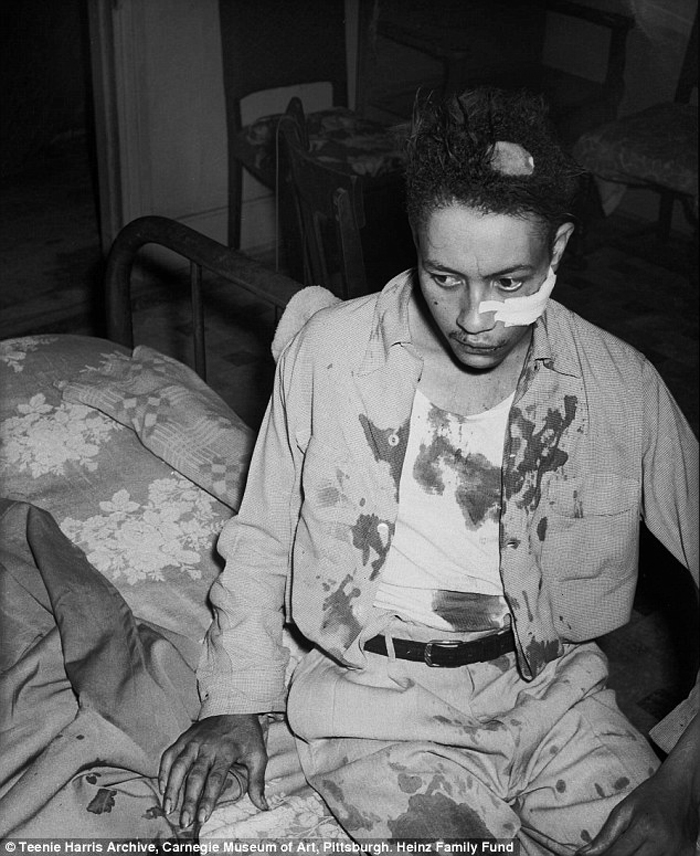
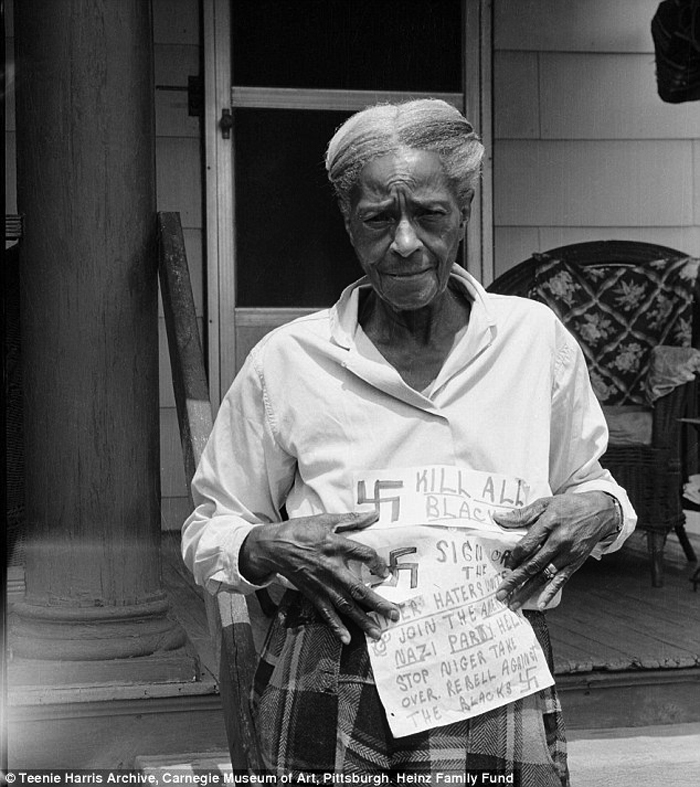


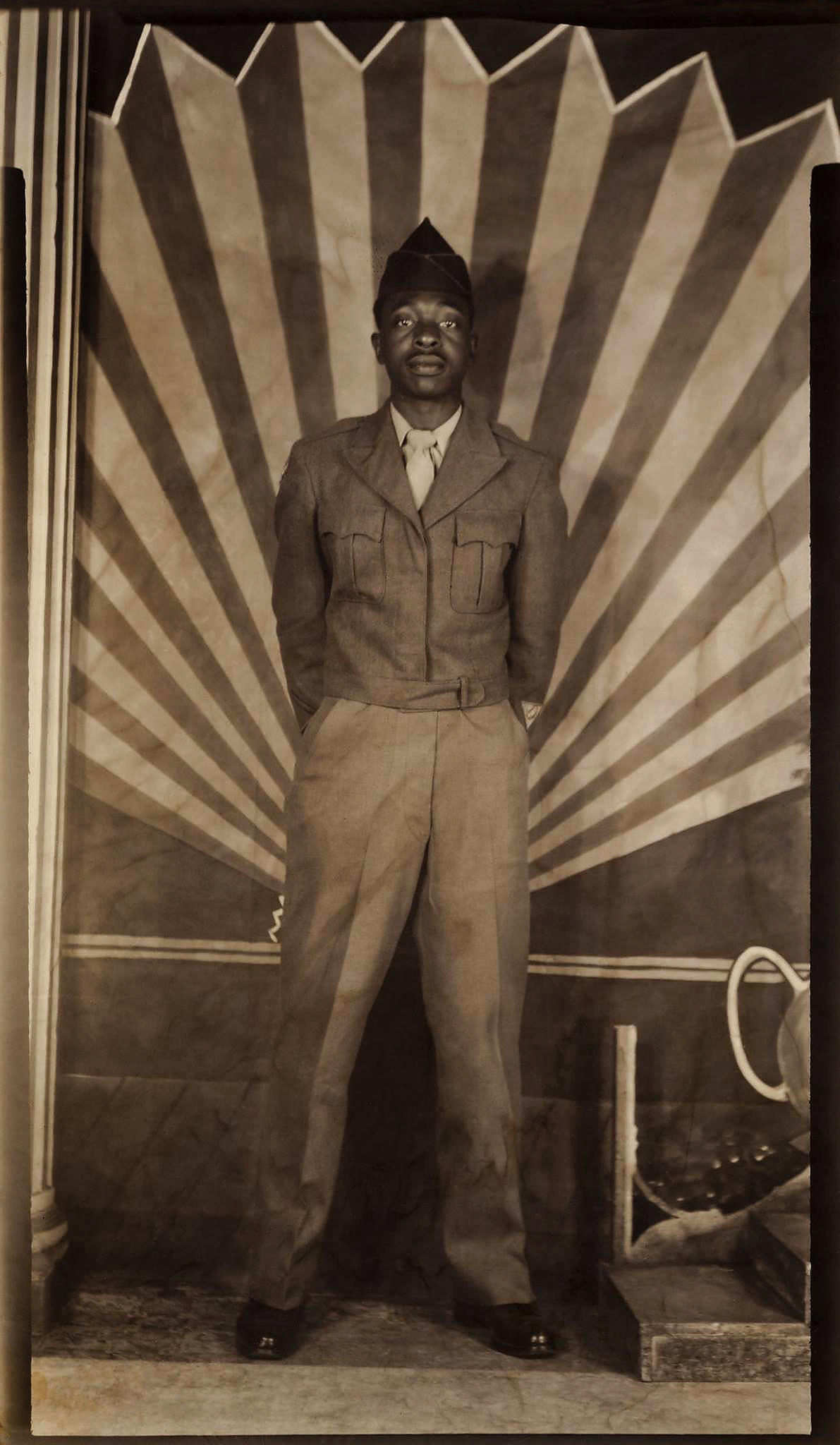


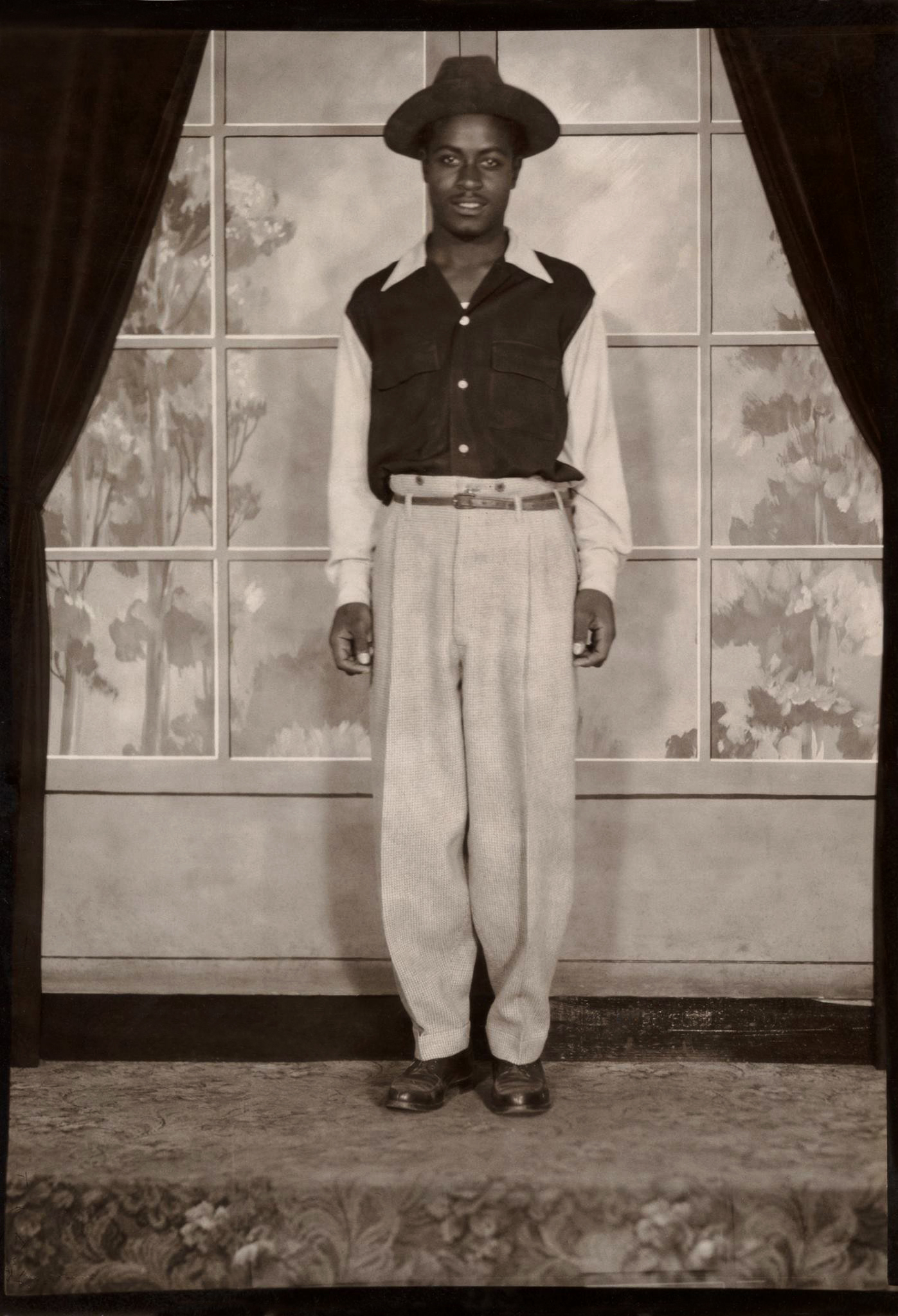
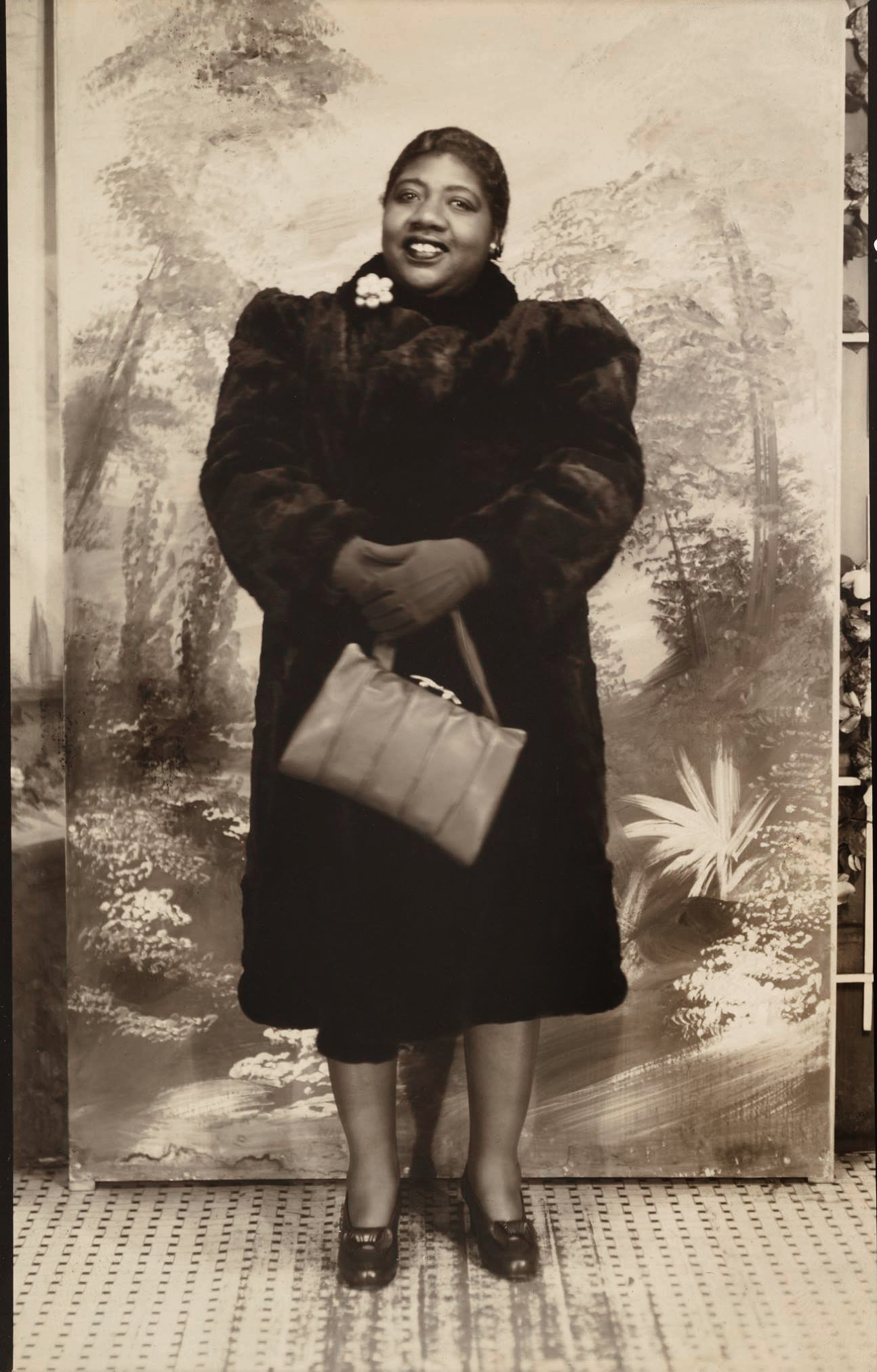

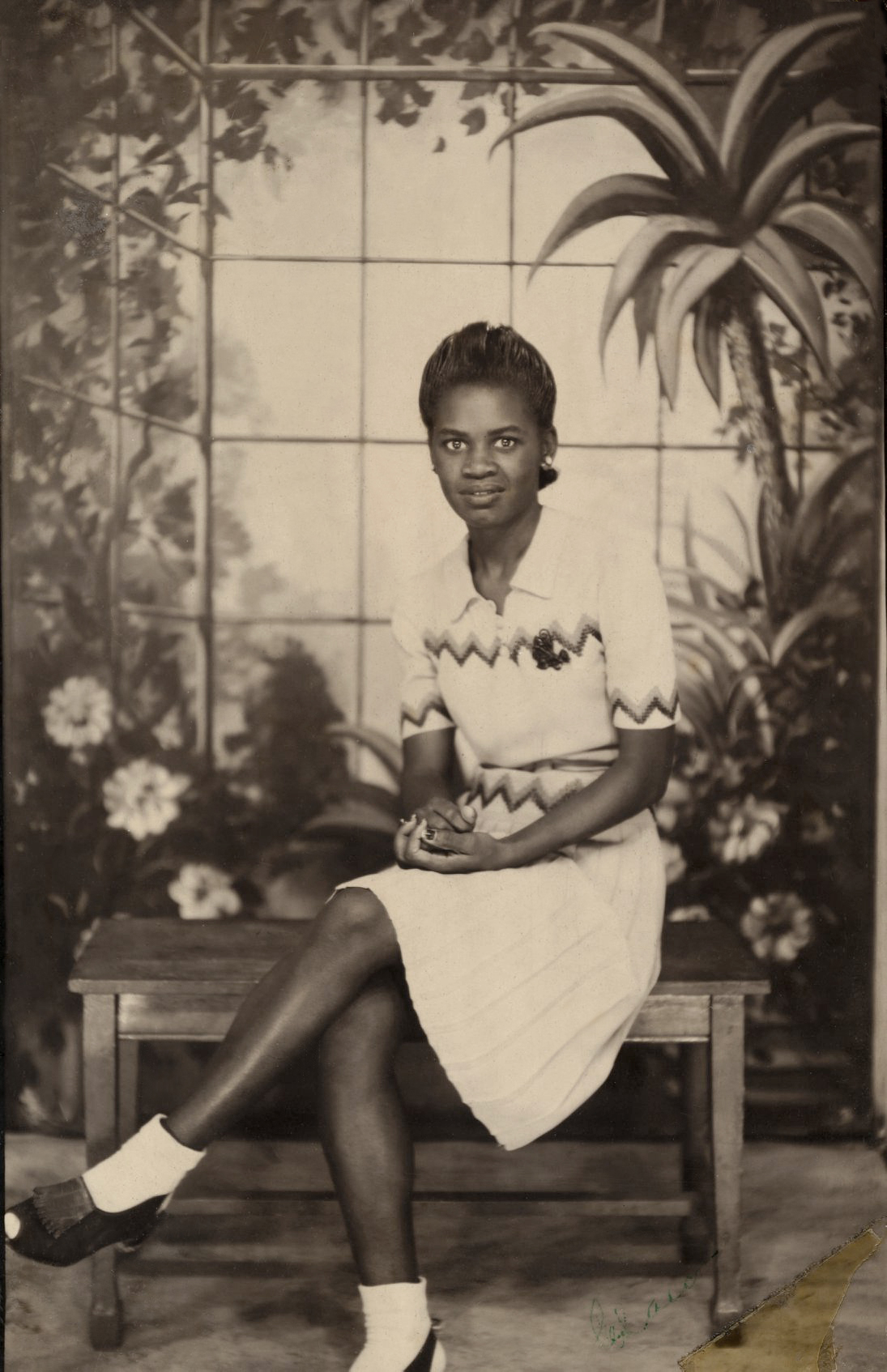
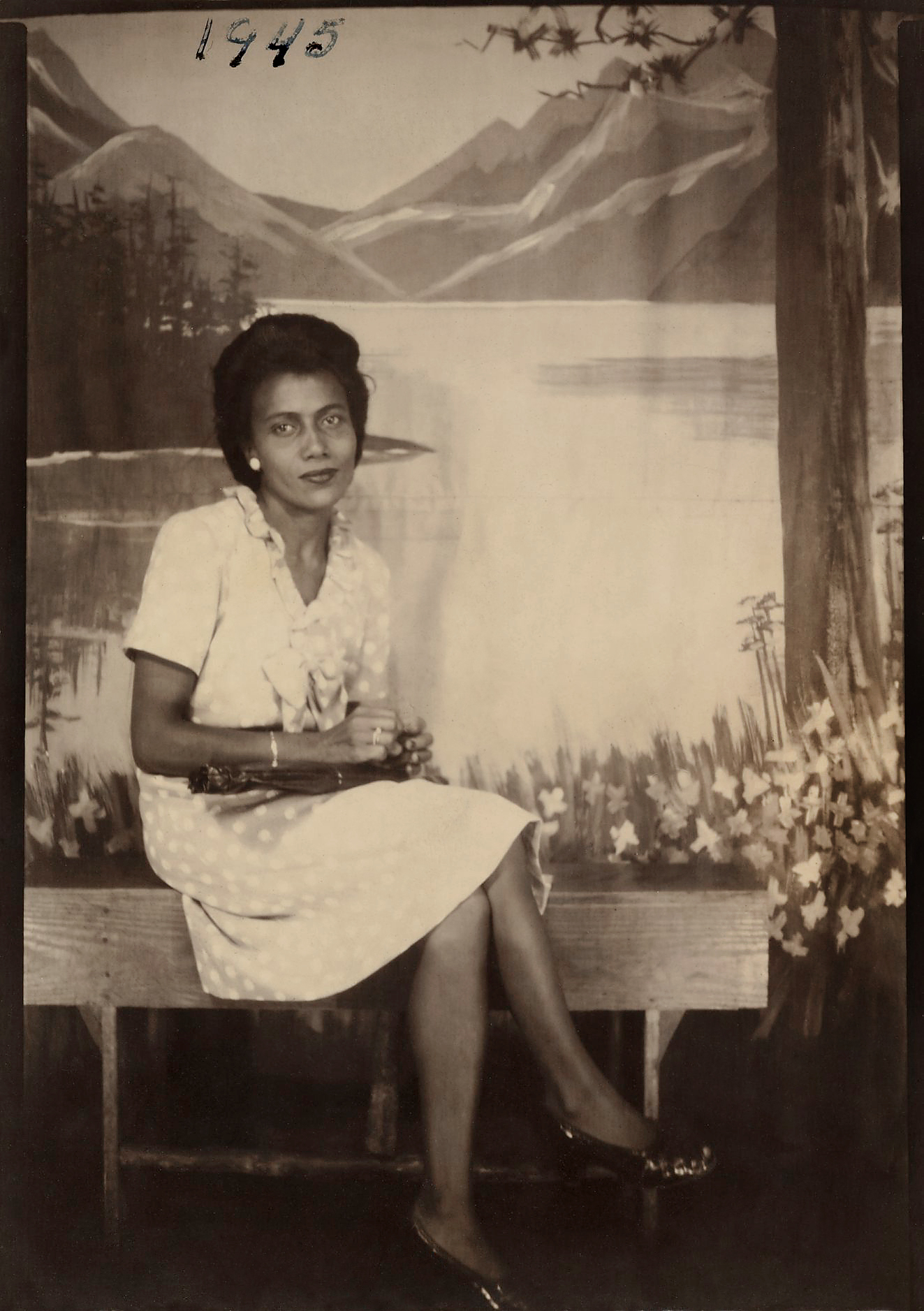
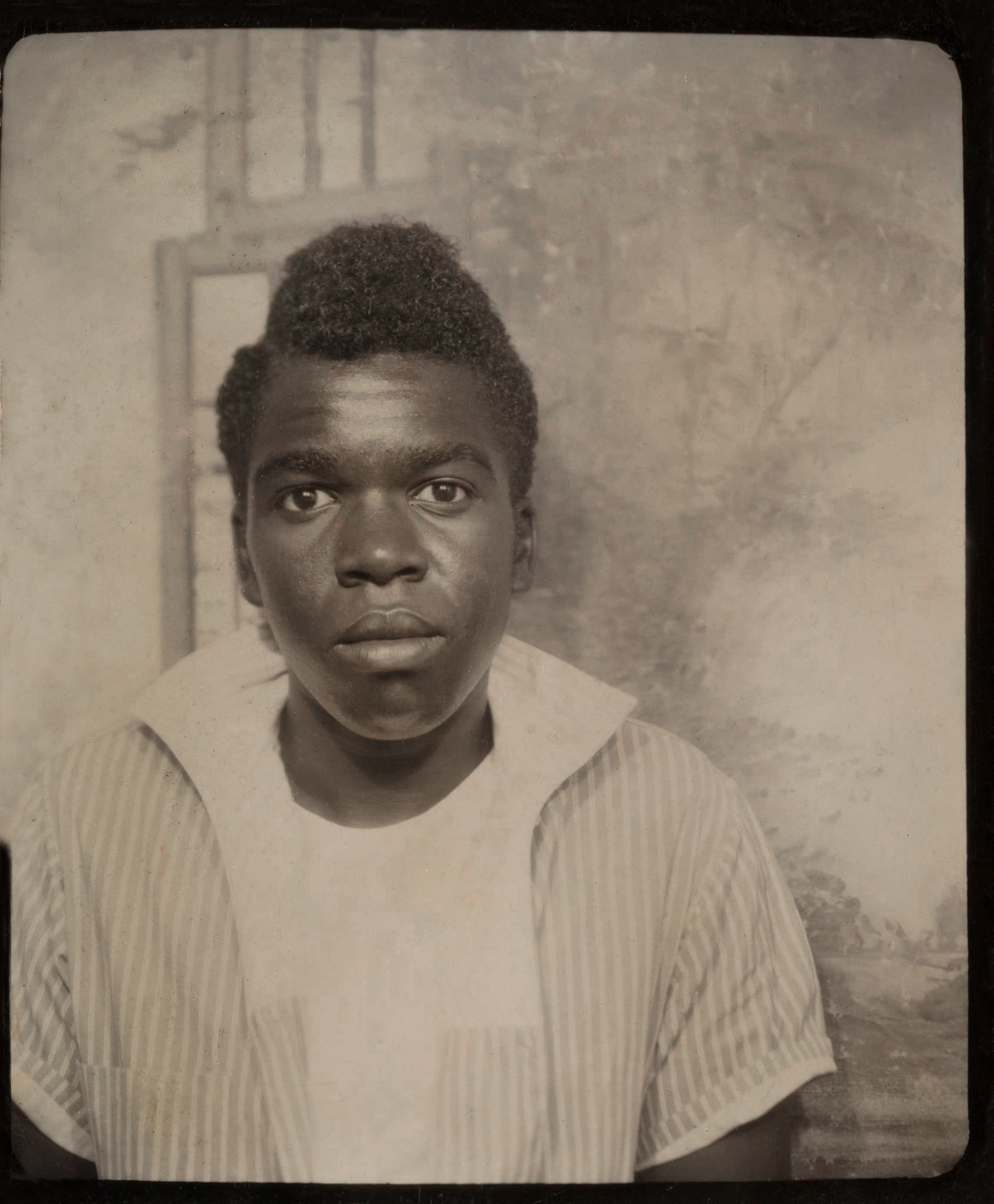
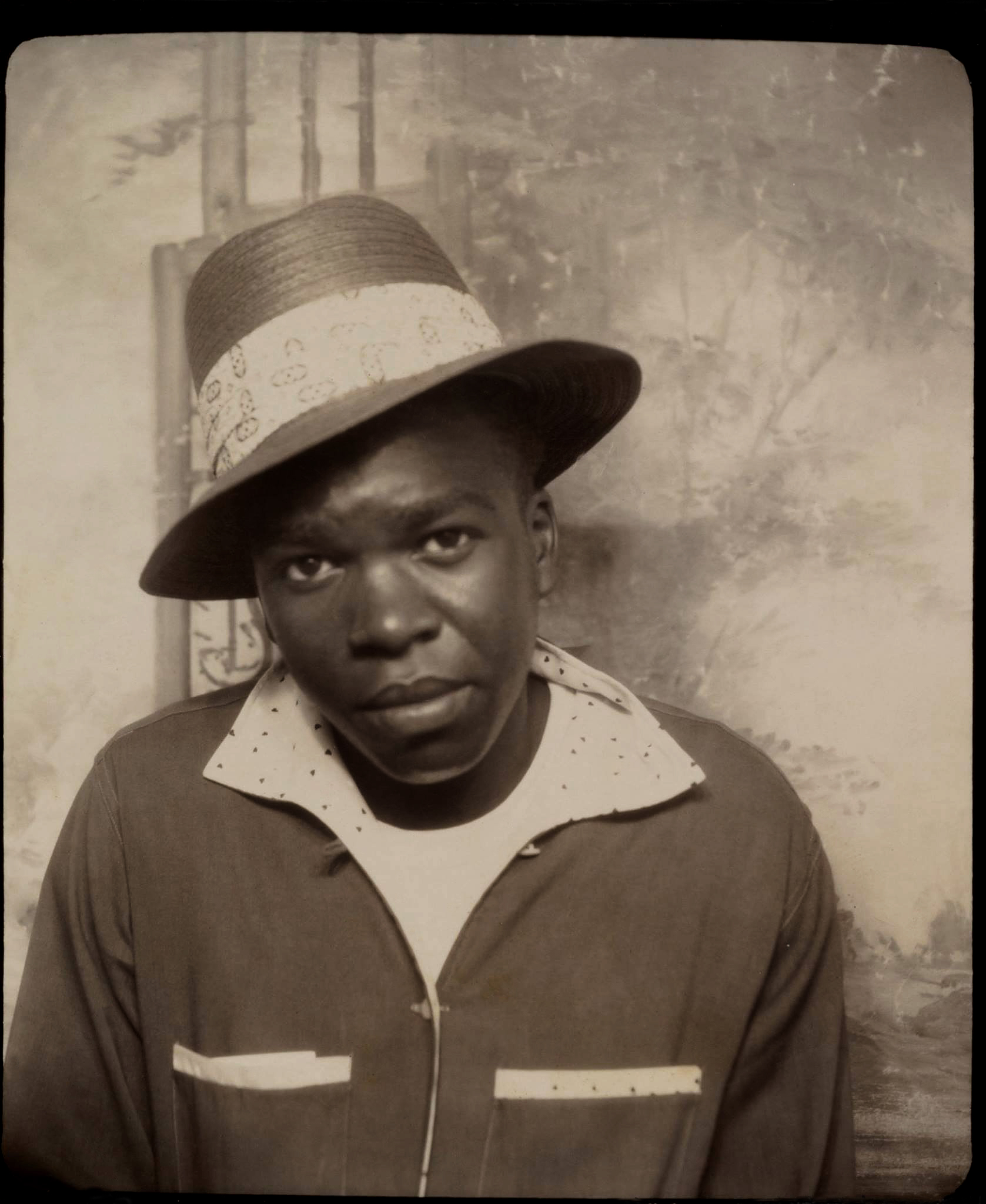
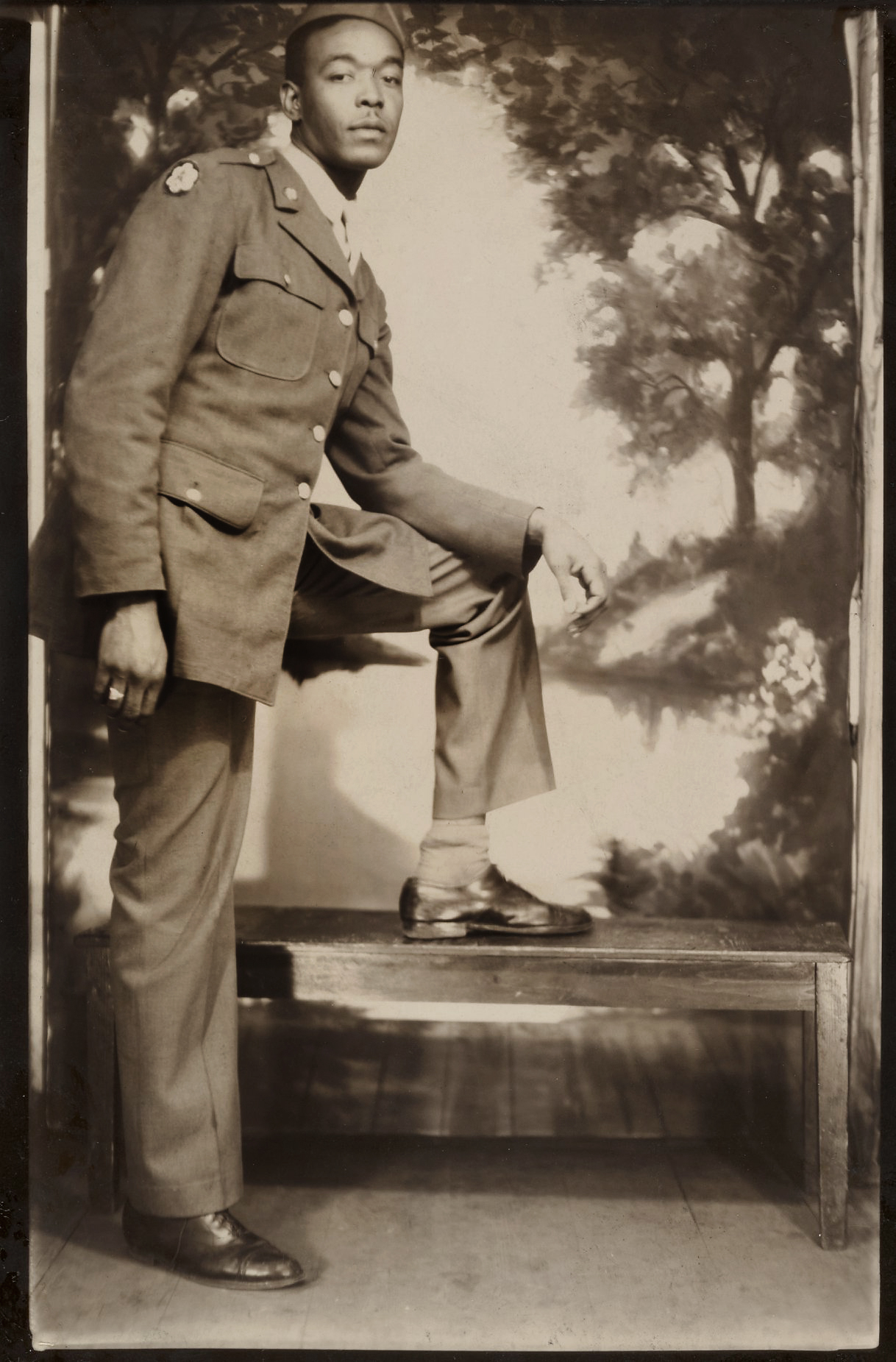
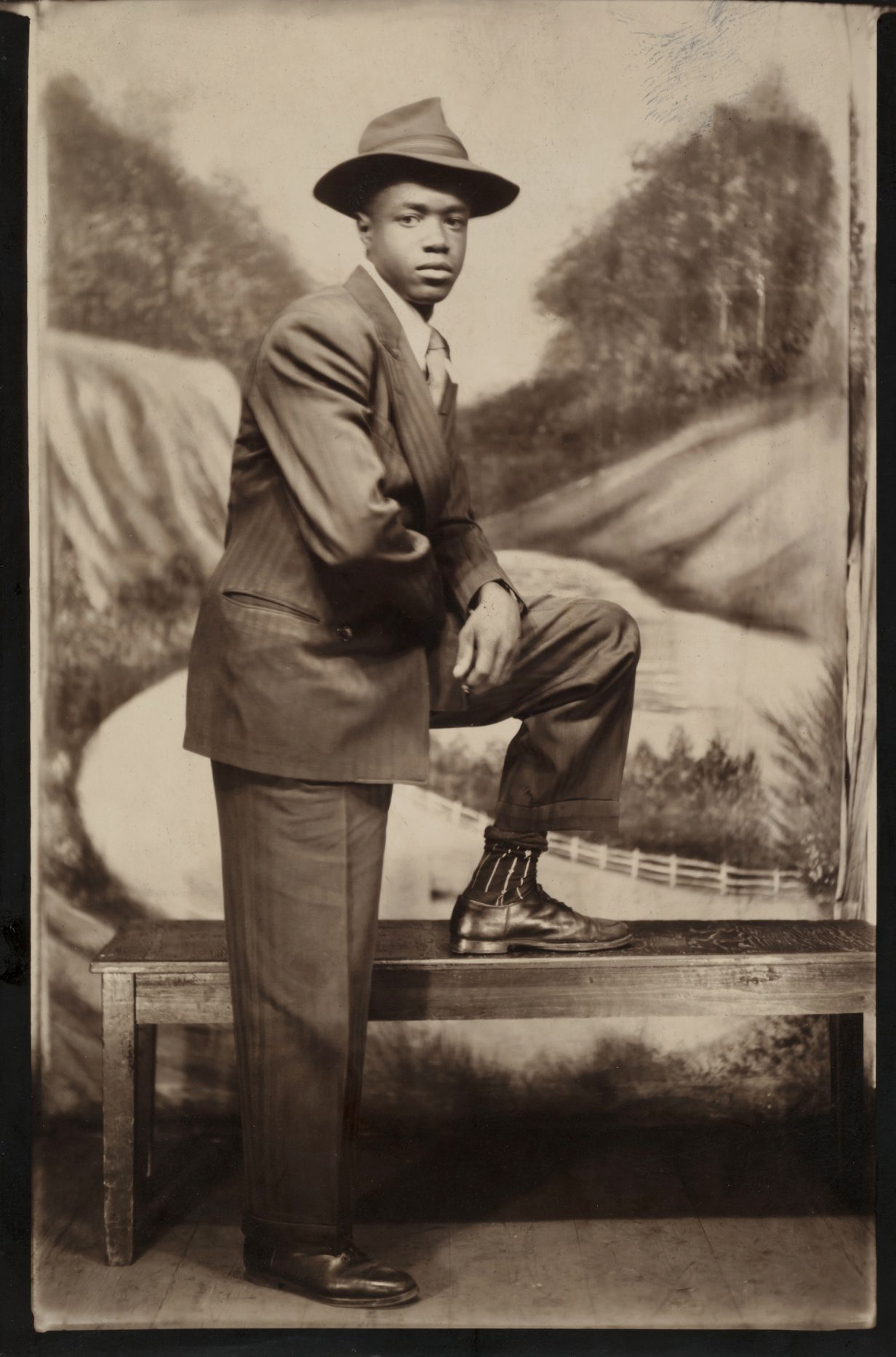

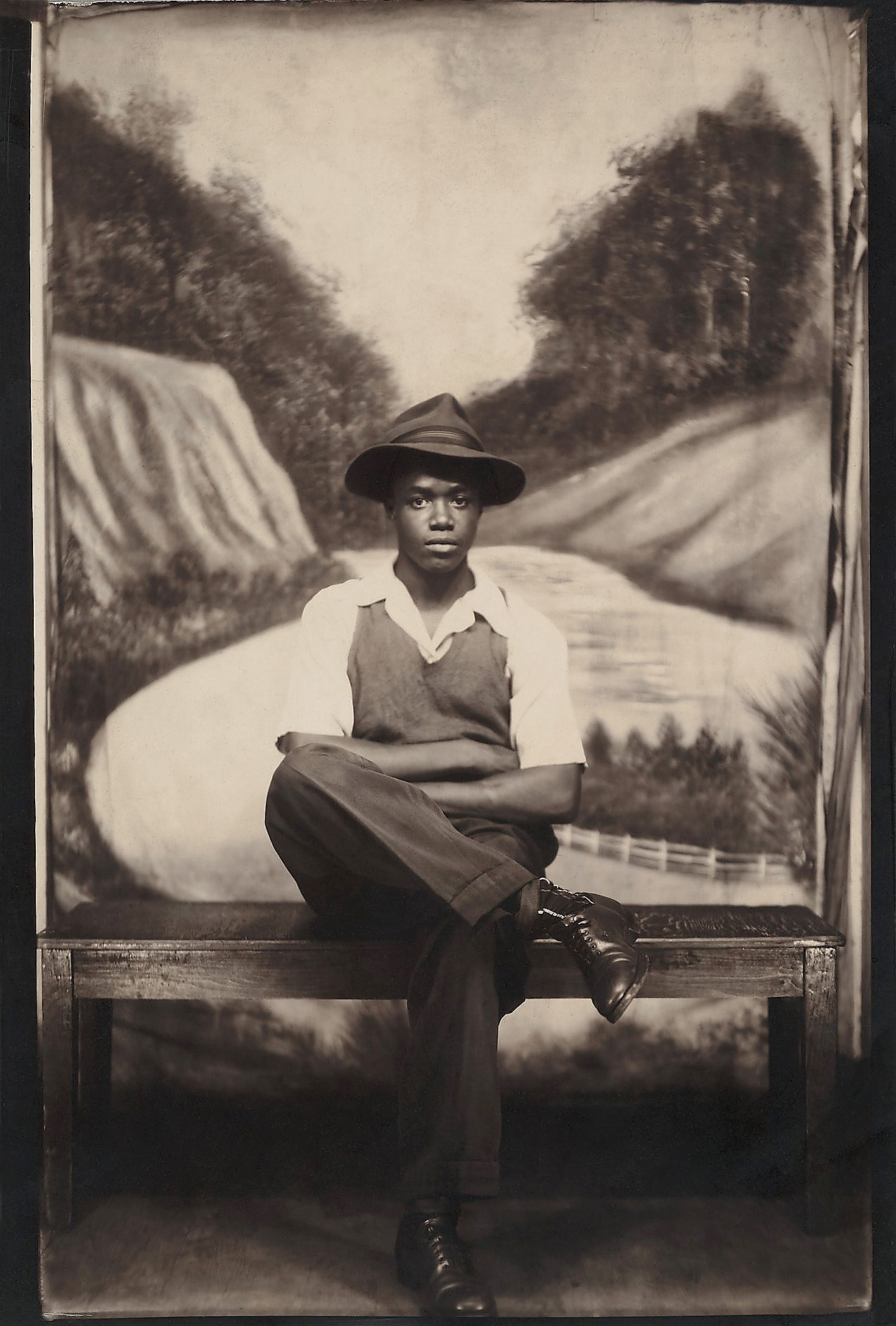
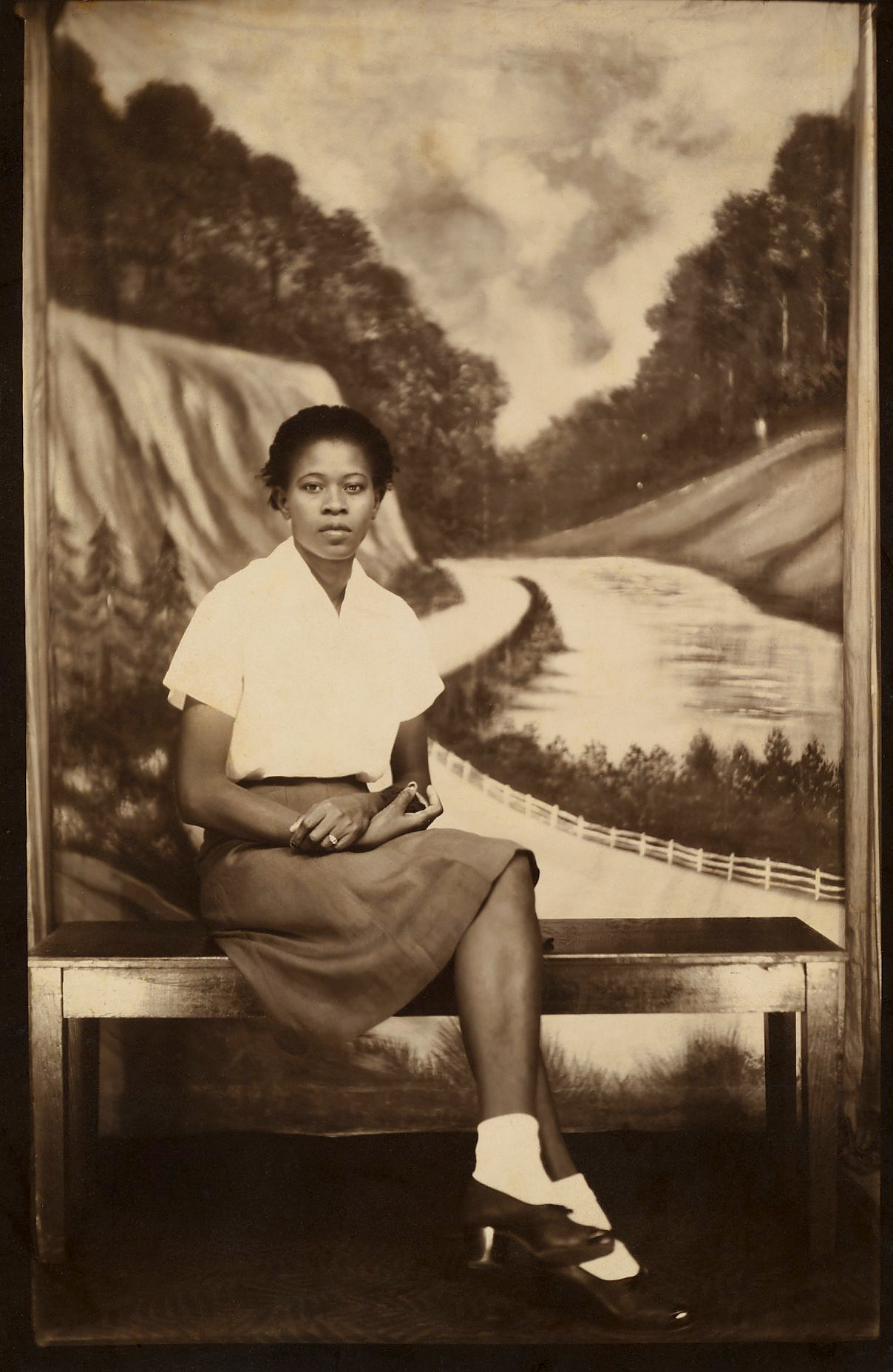
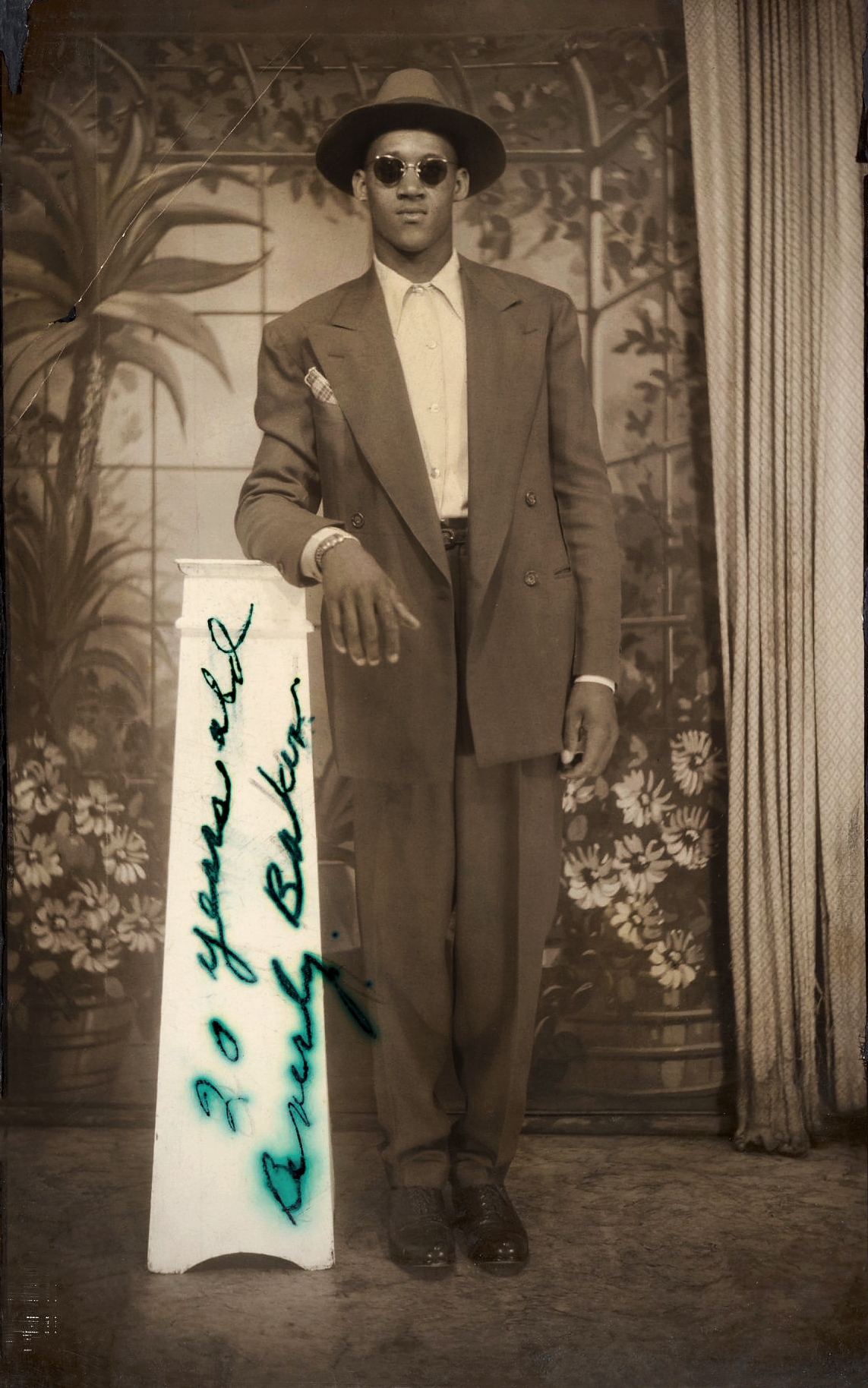
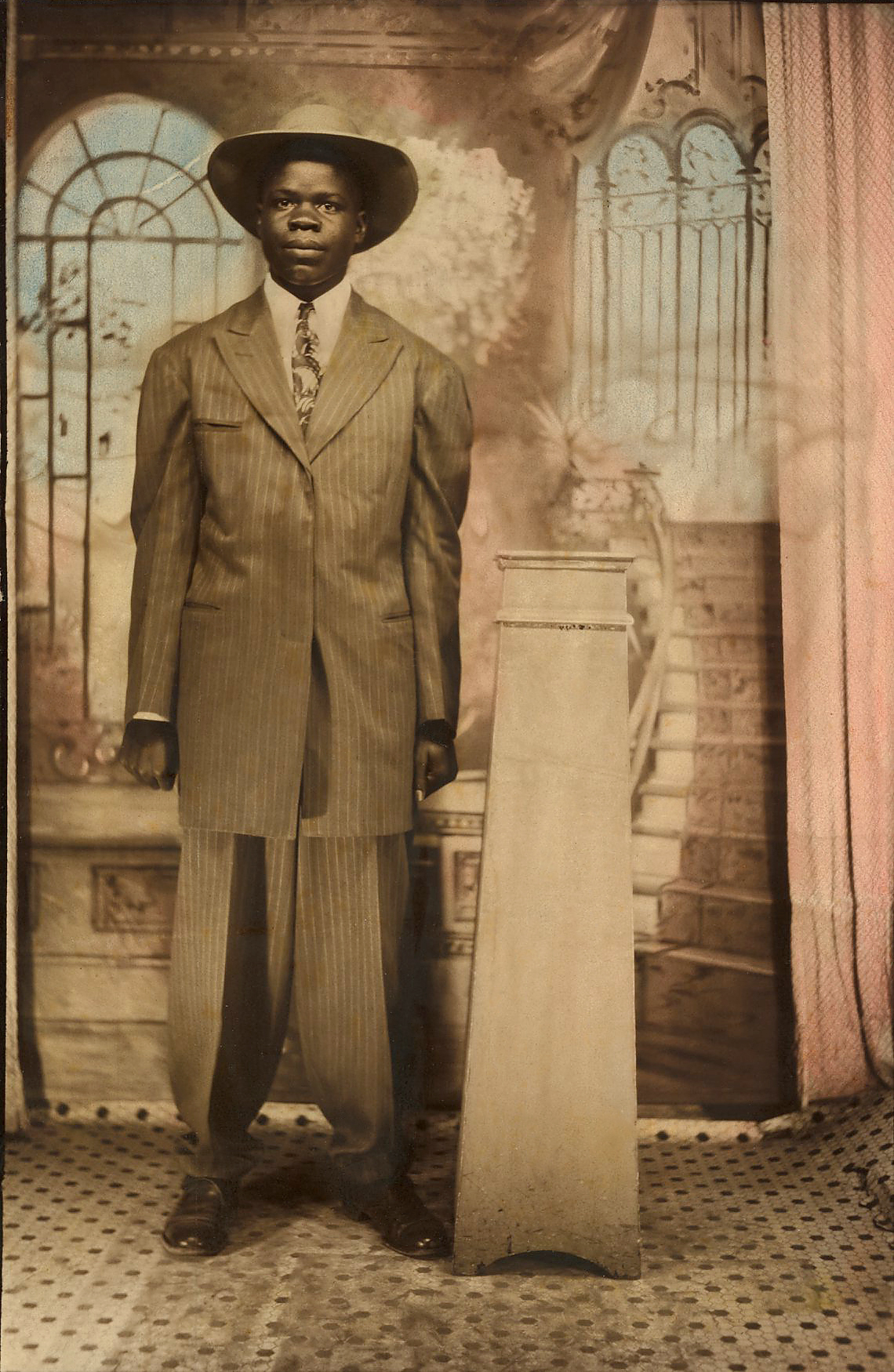
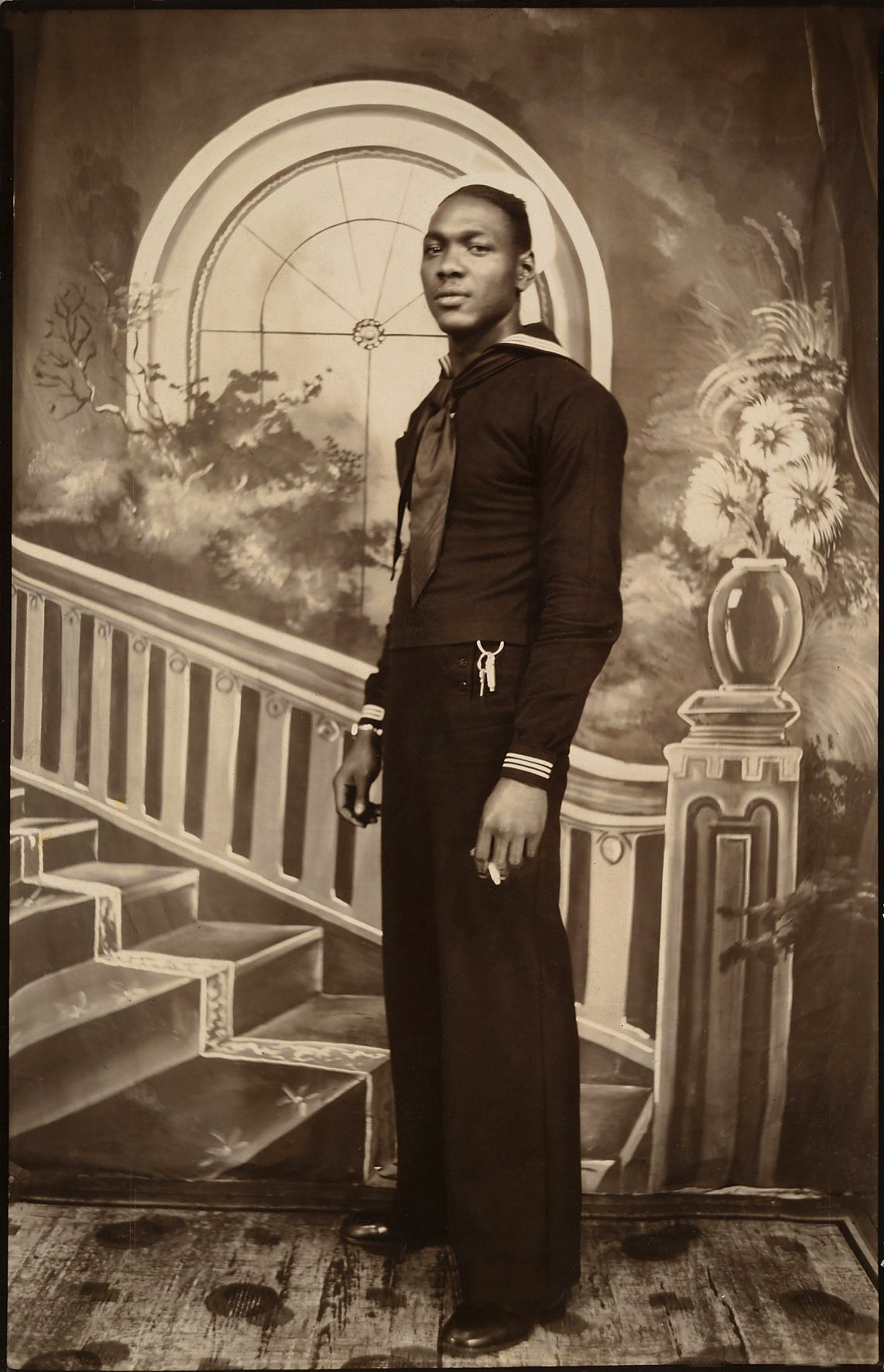
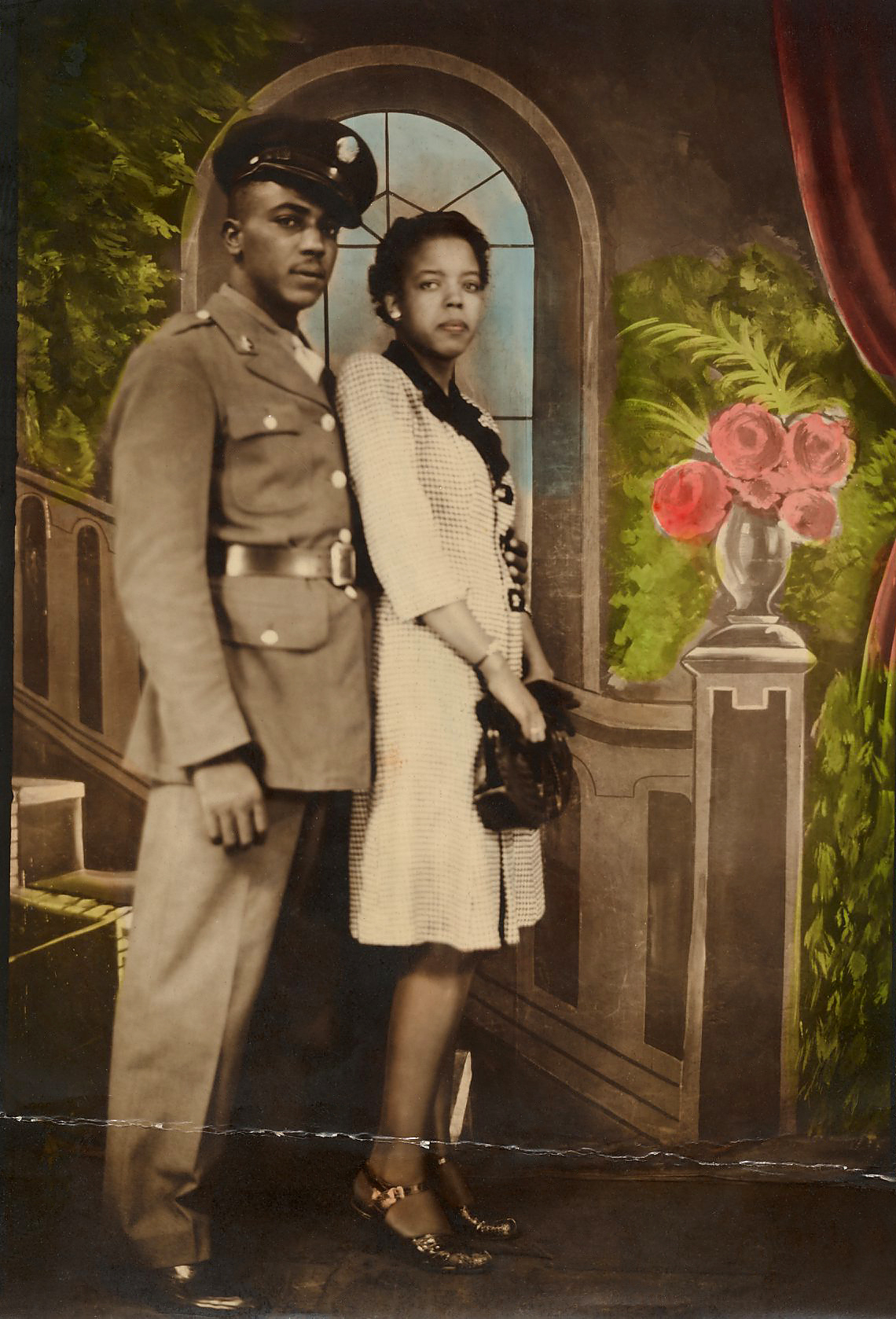
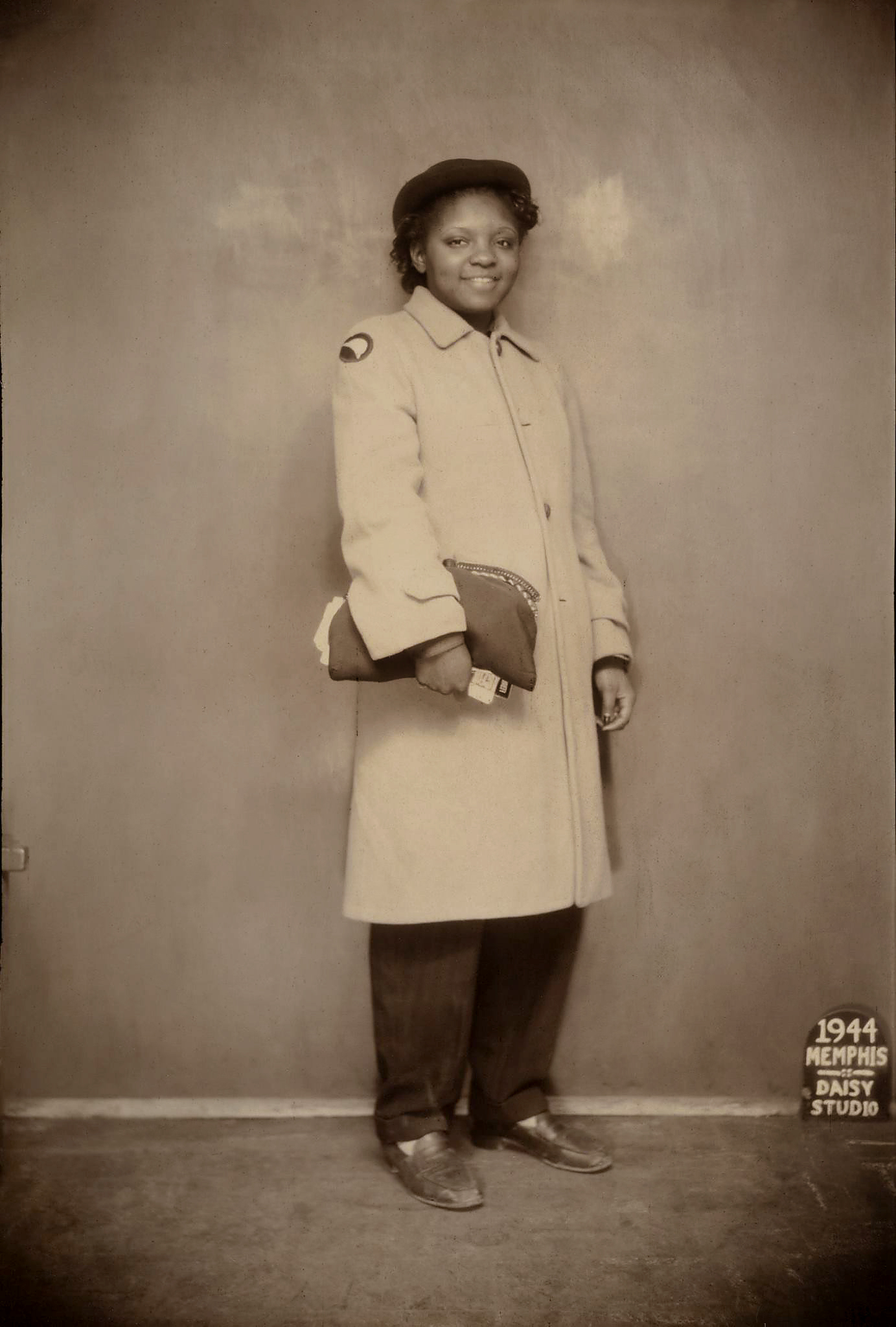
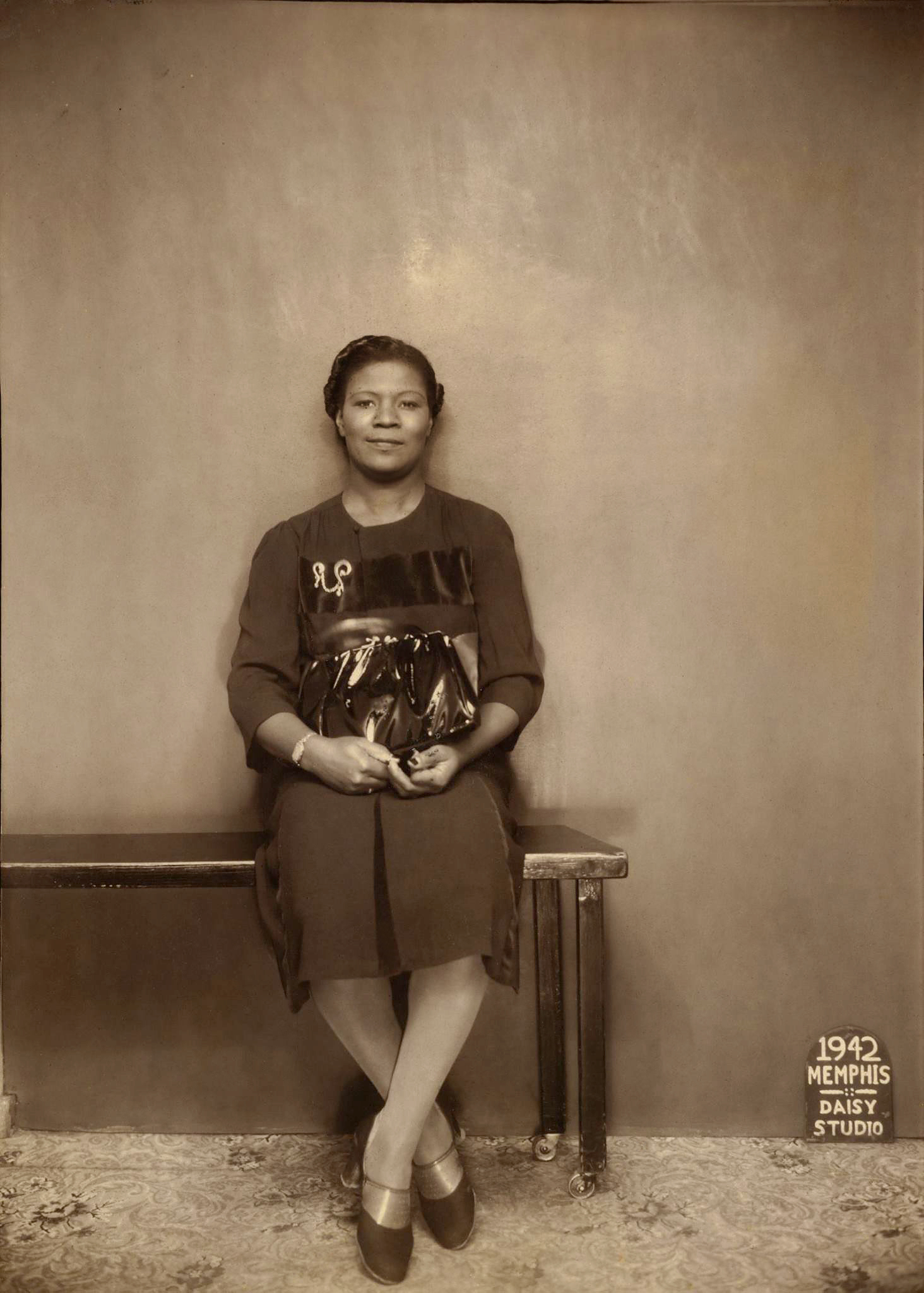
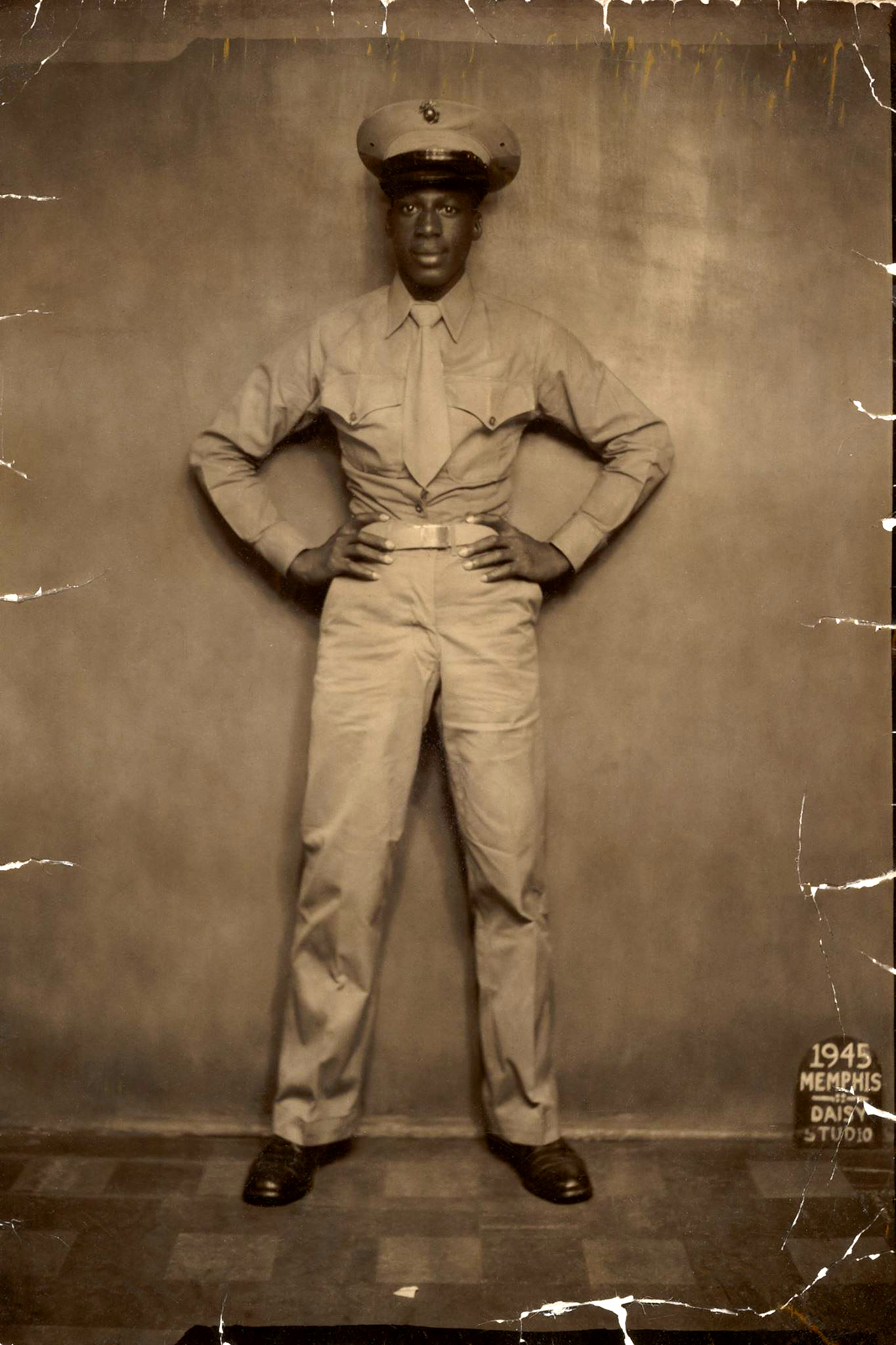
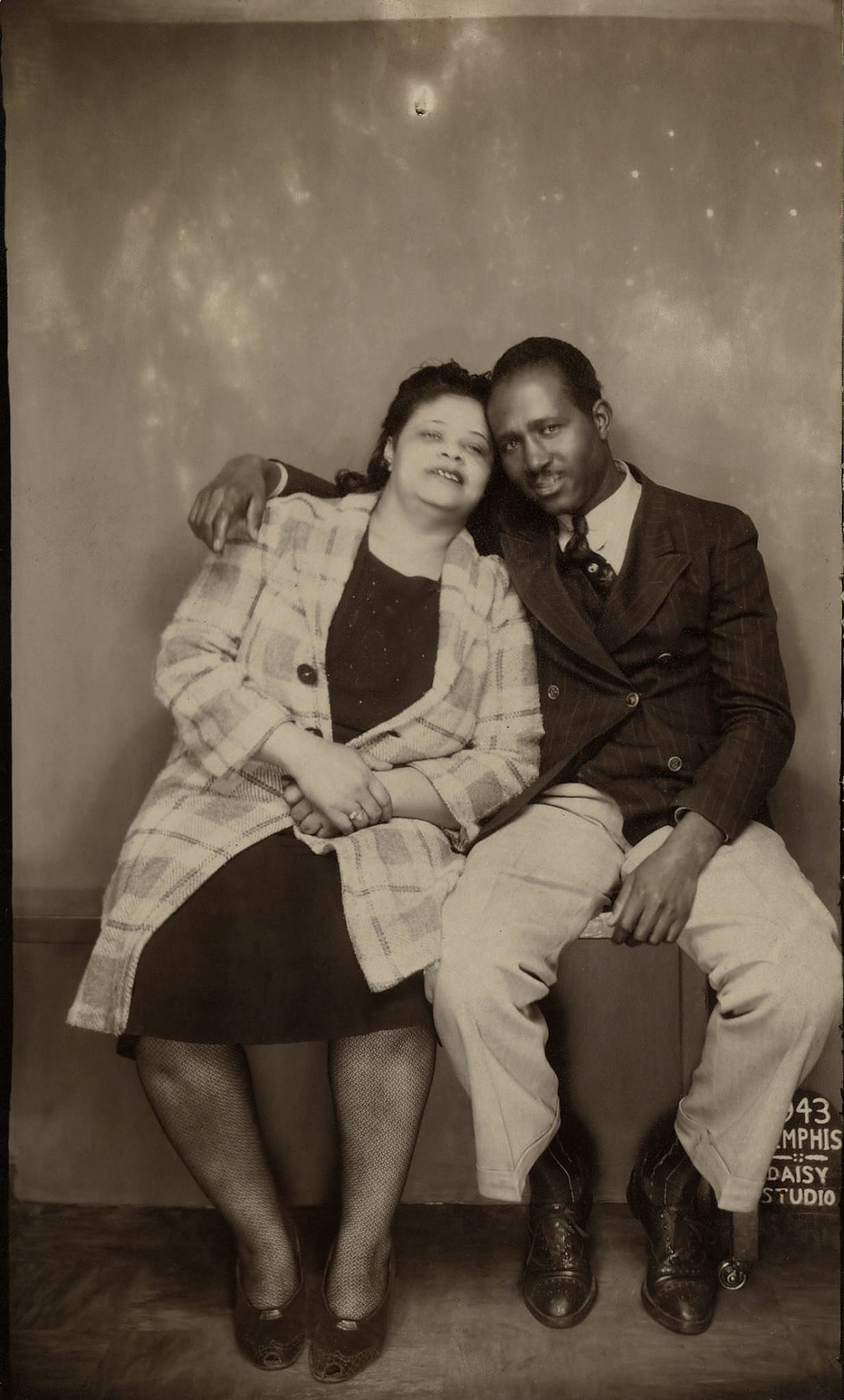
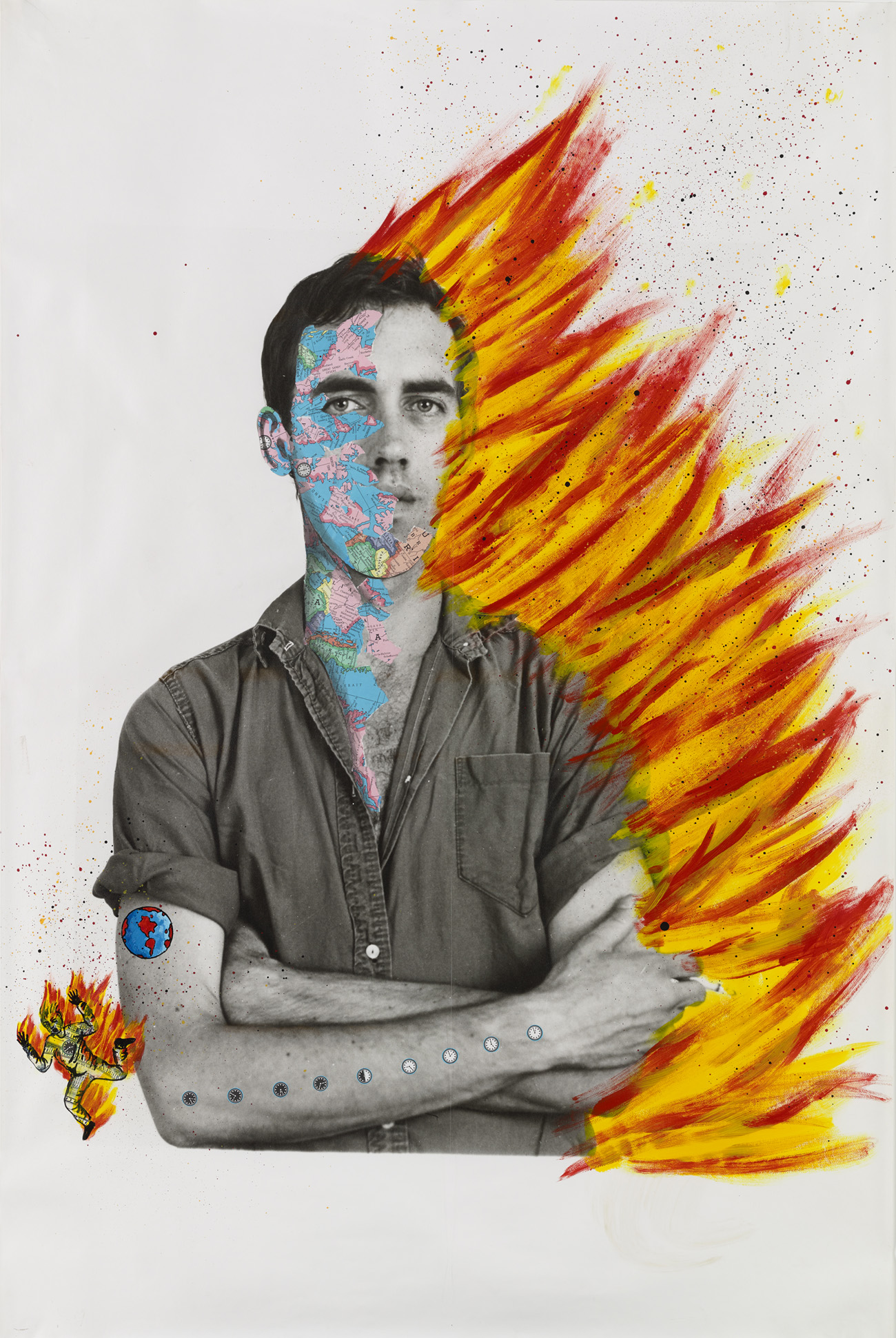
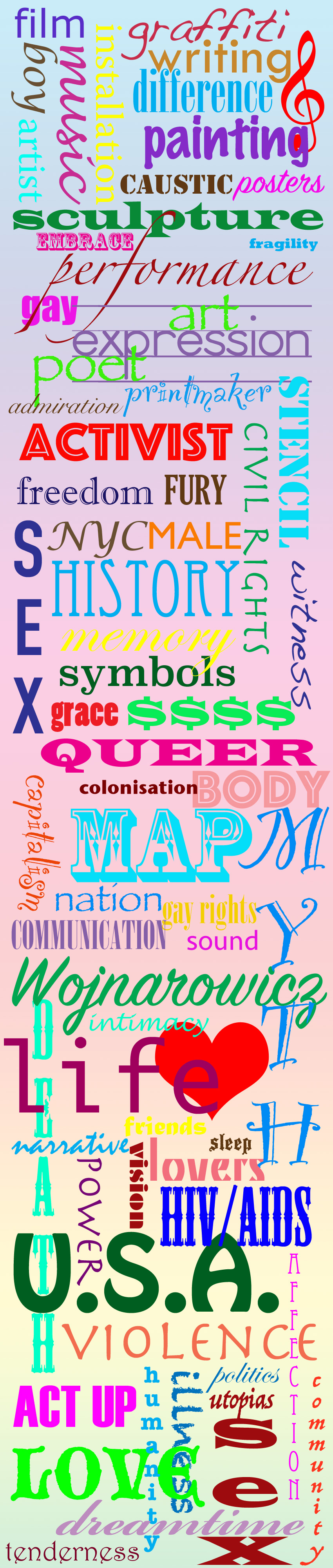


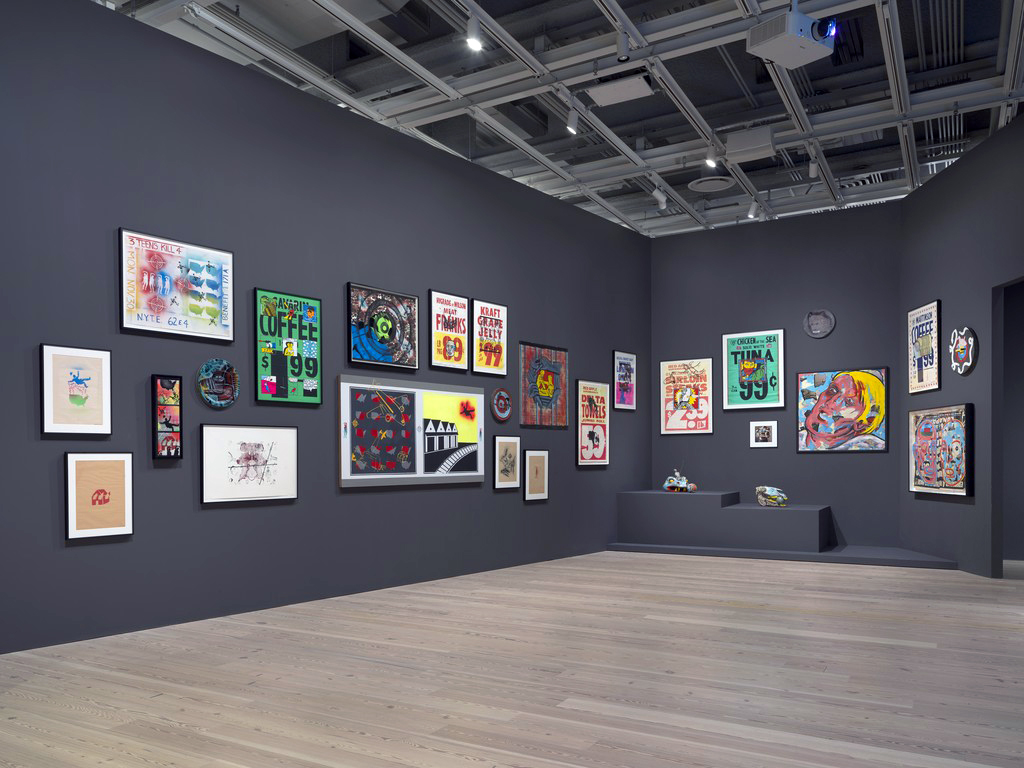


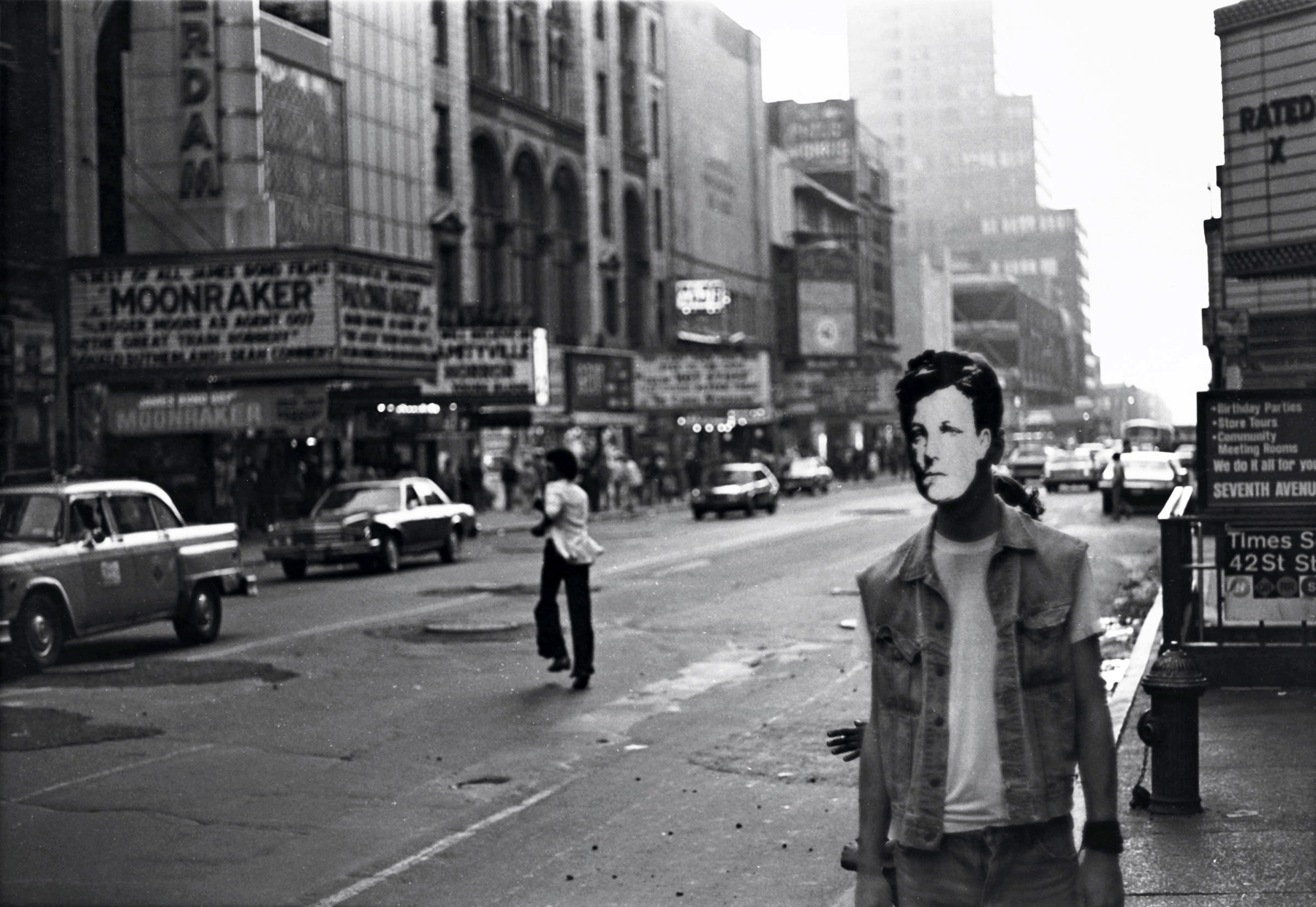

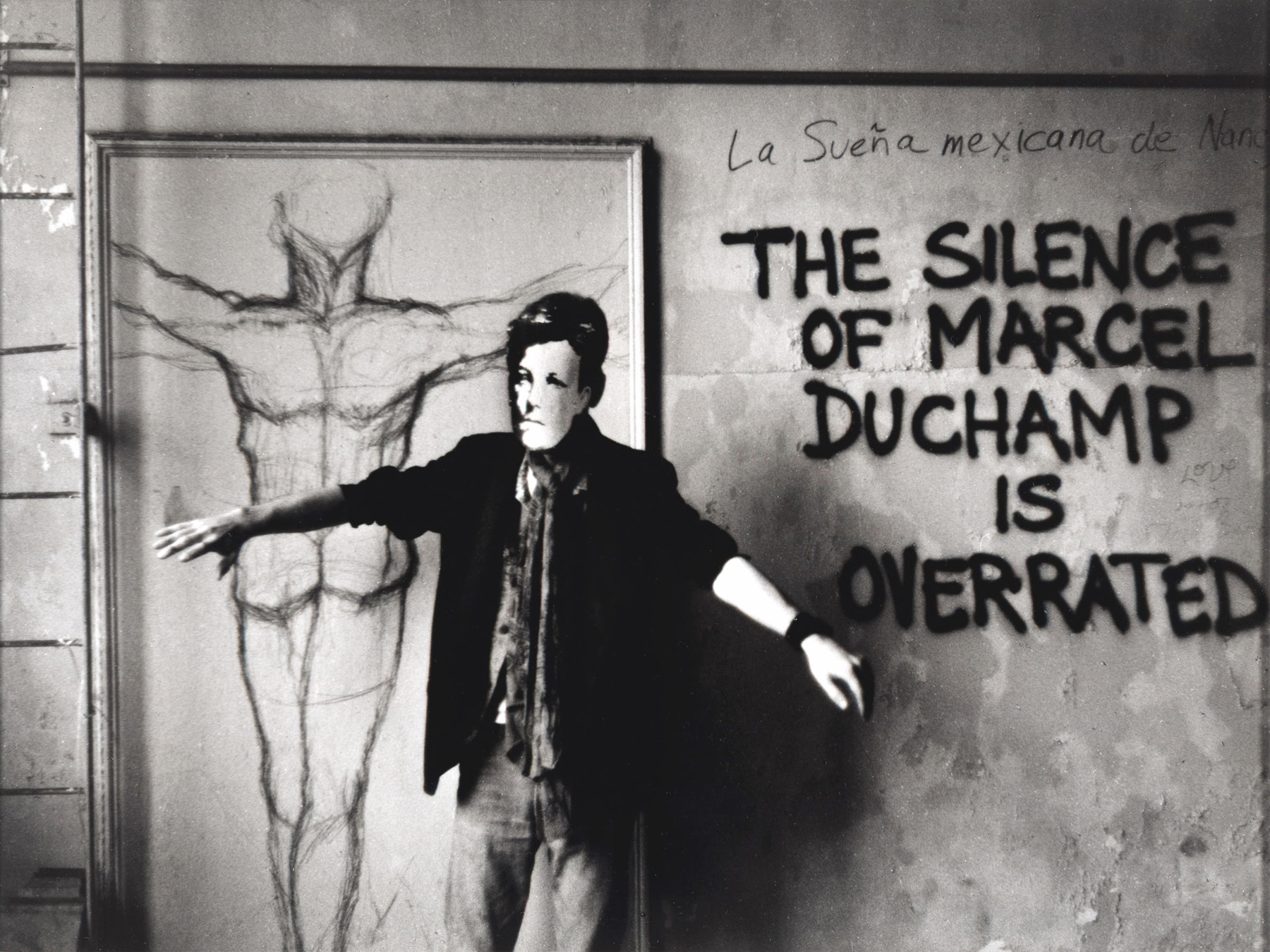
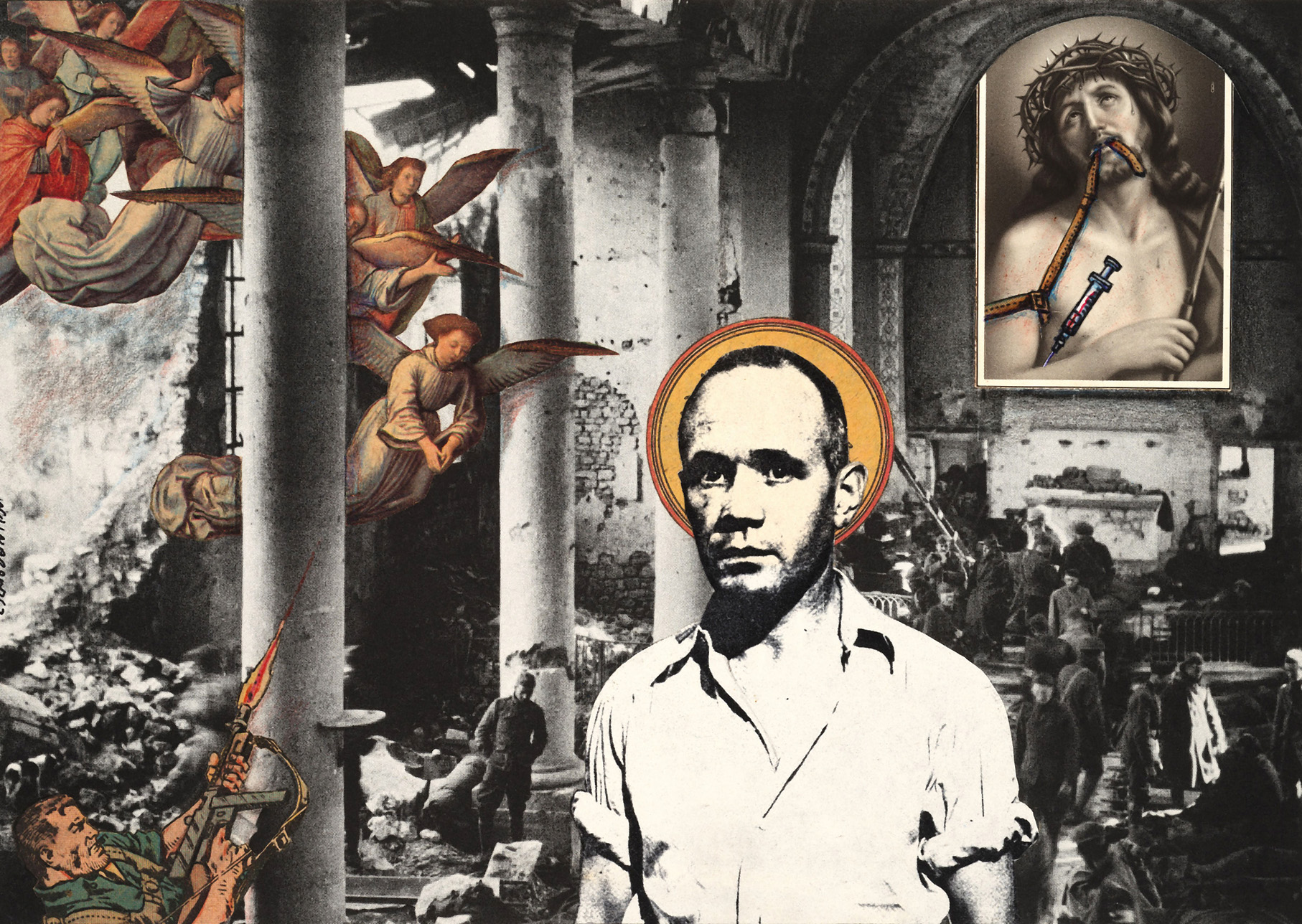
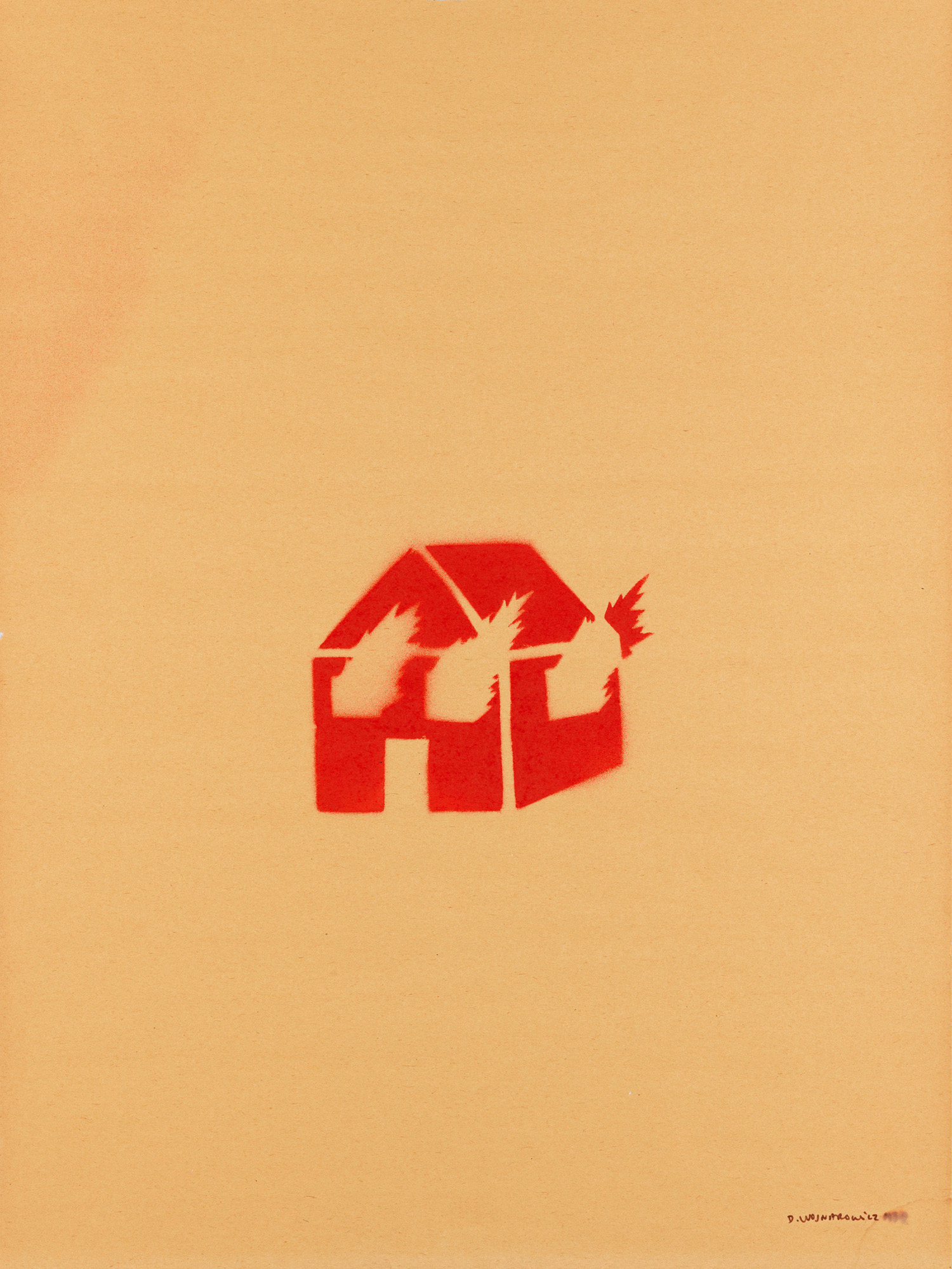
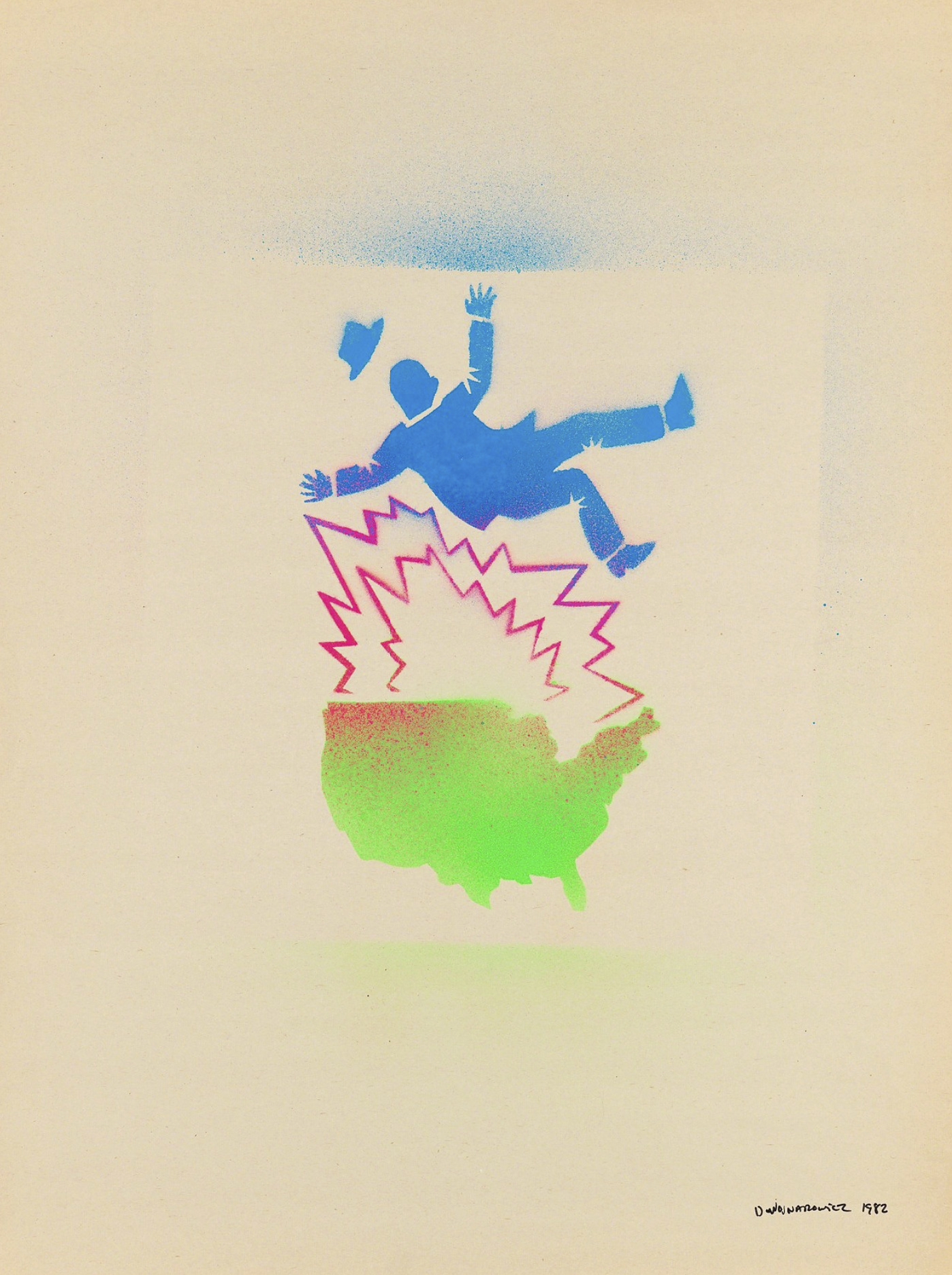
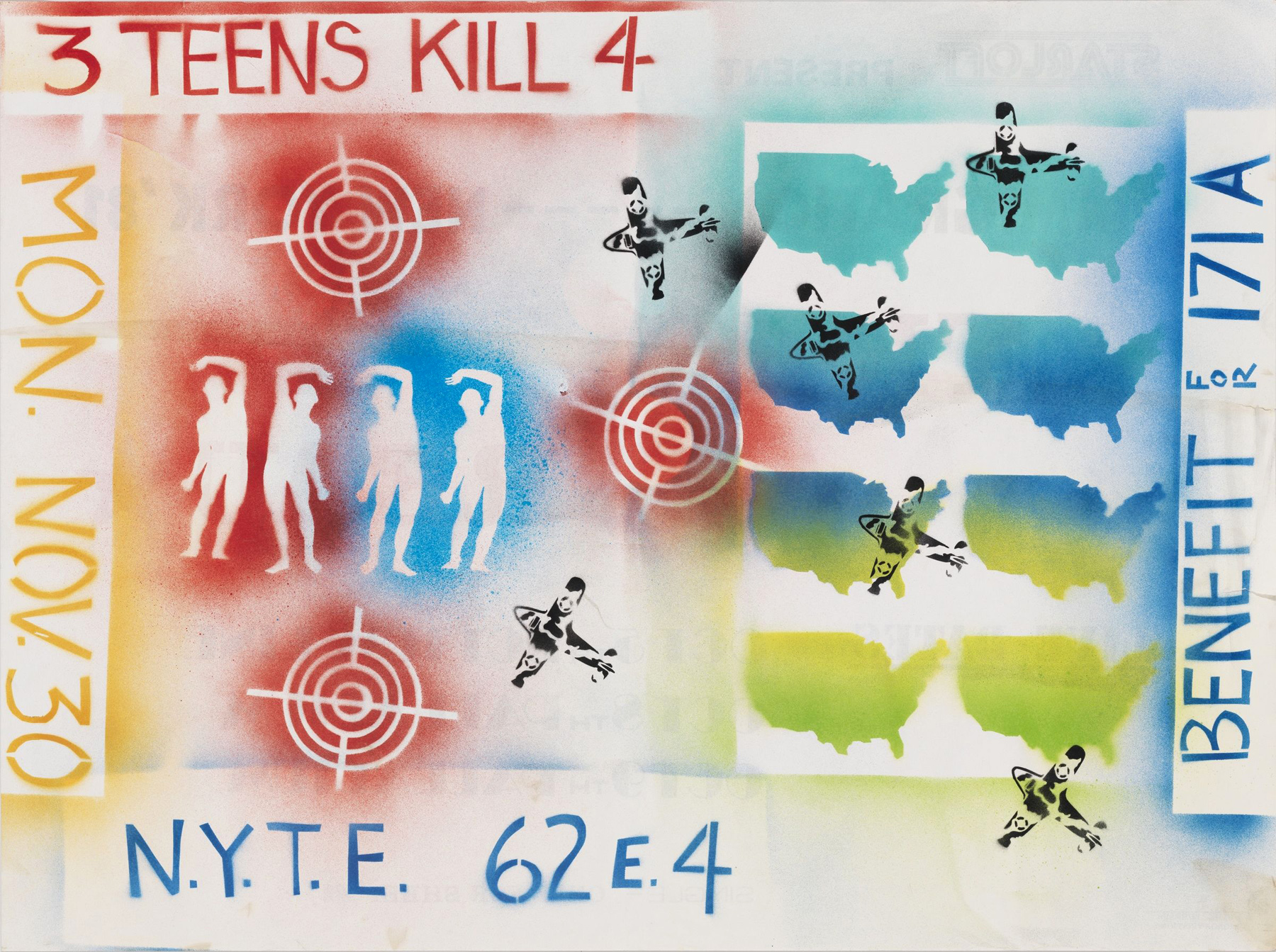


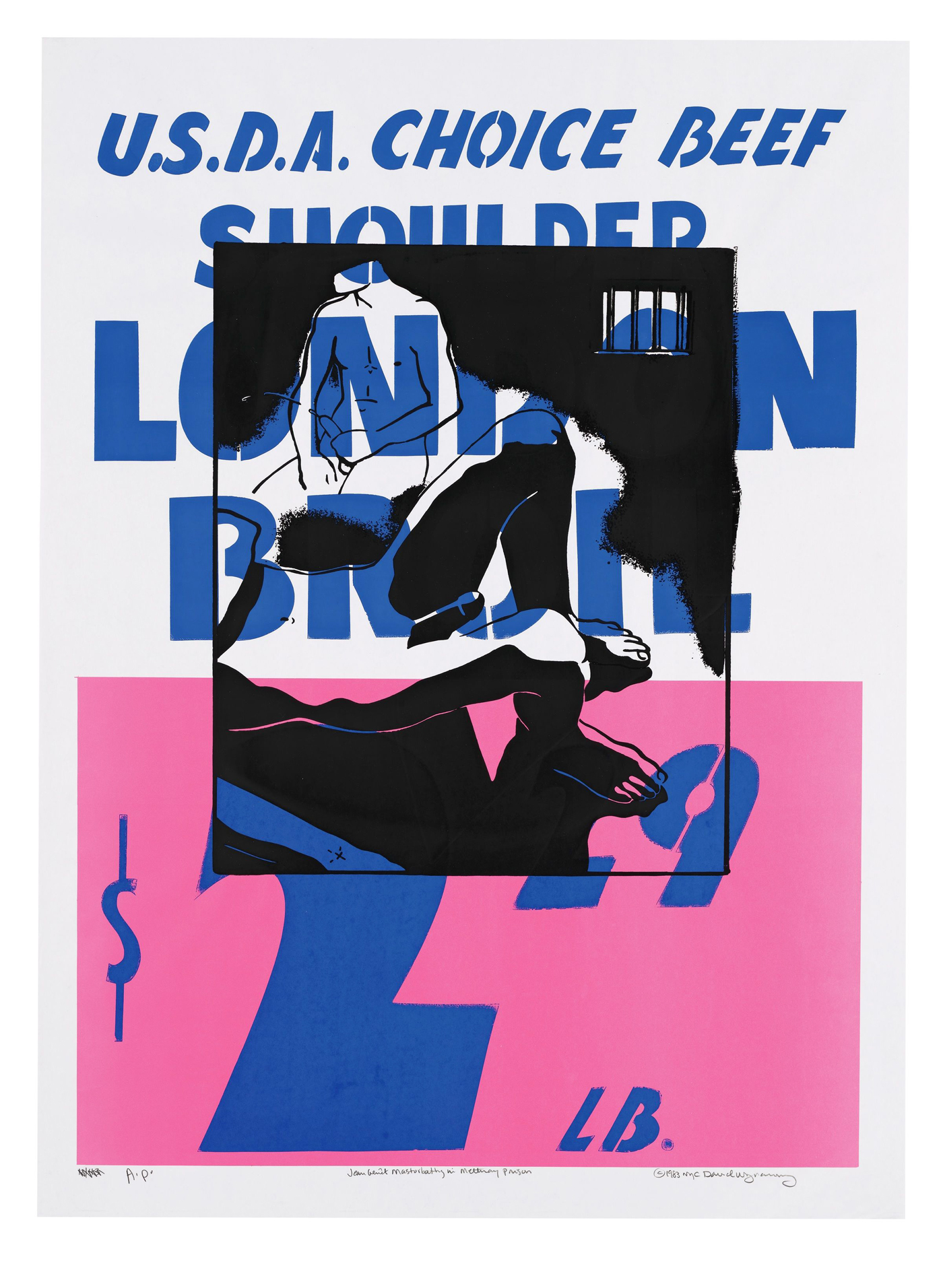
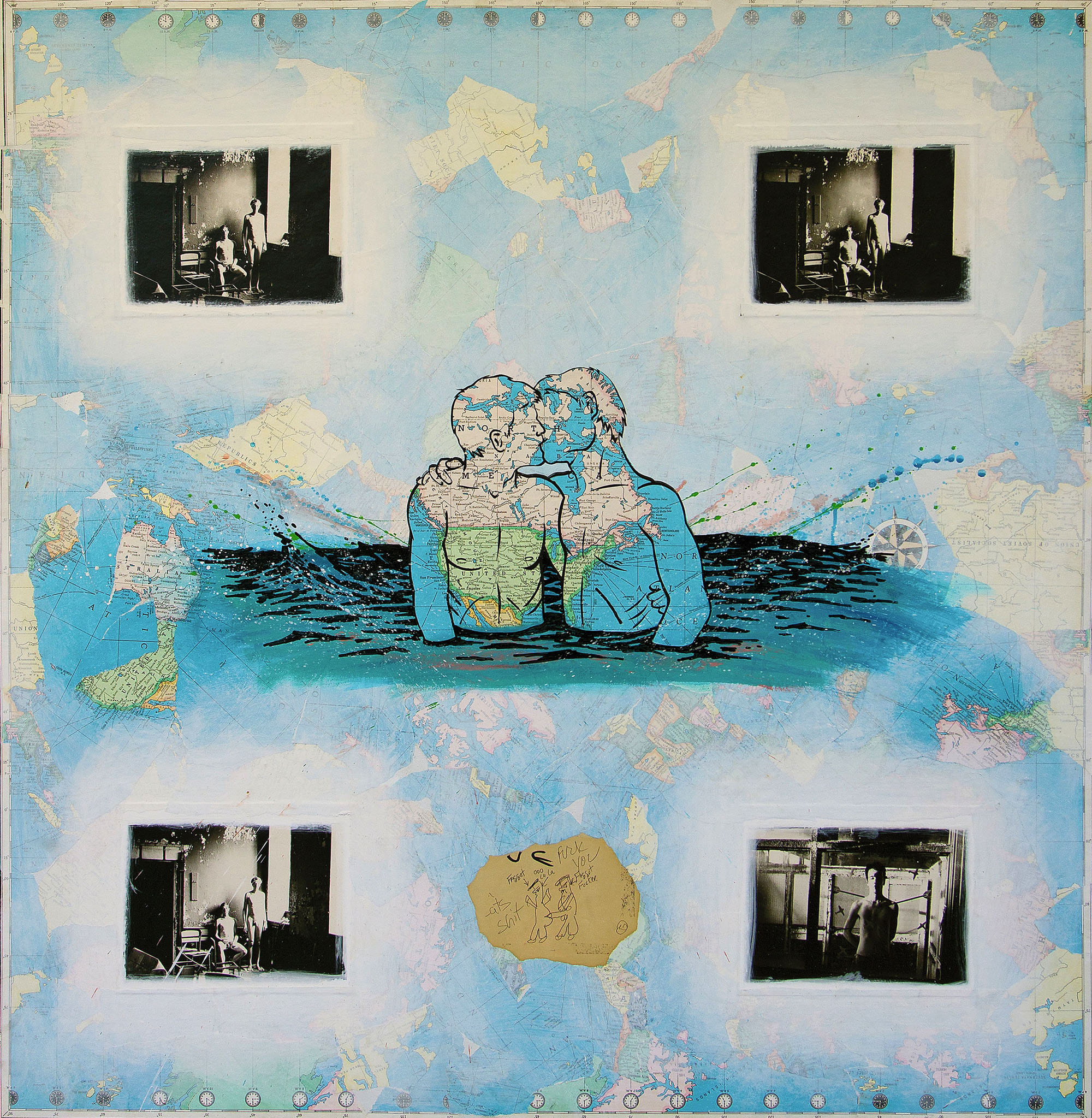
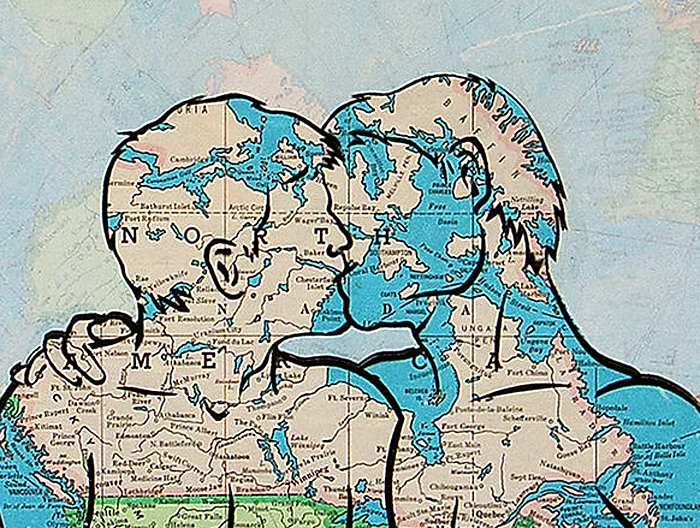
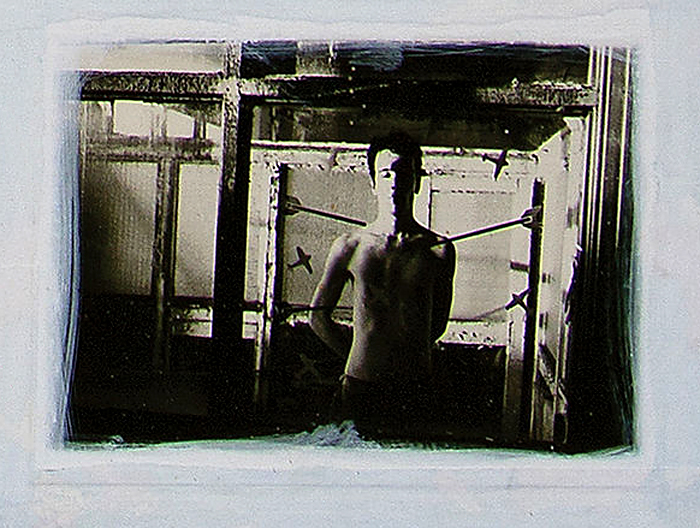
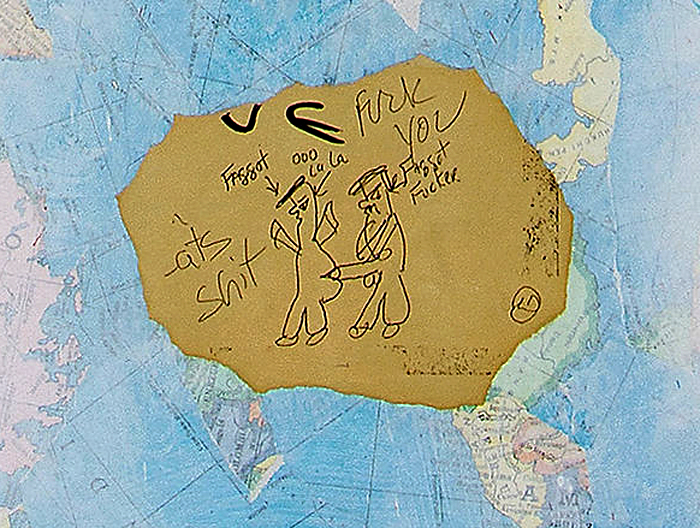
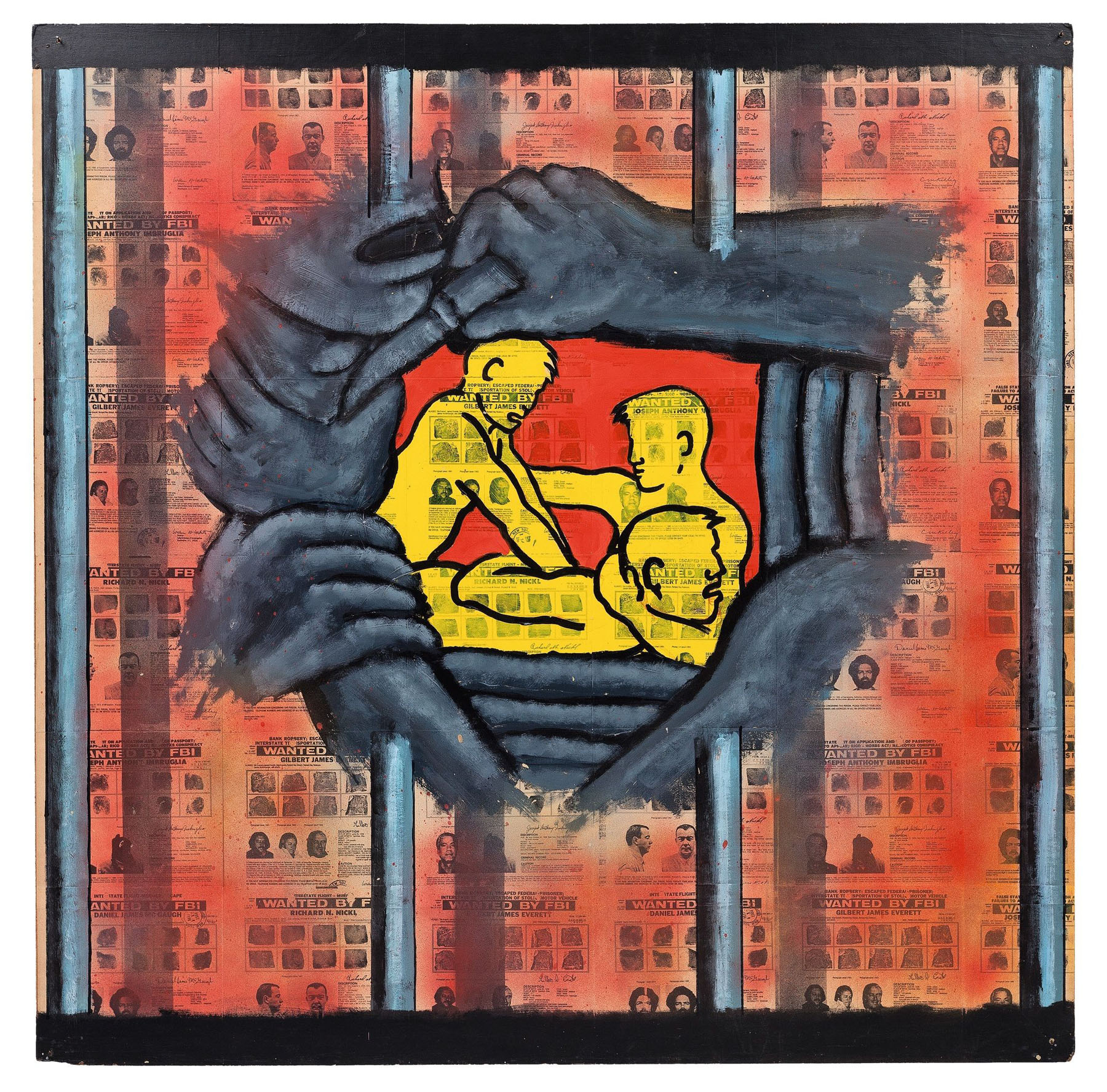

![Peter Hujar (American, 1934-1992) 'Canal Street Piers: Krazy Kat Comic on Wall [by David Wojnarowicz]' 1983](https://artblart.com/wp-content/uploads/2018/07/peter-hujar-canal-street-piers-krazy-kat-comic-on-wall-by-david-wojnarowicz-web.jpg "Peter Hujar (American, 1934-1992) 'Canal Street Piers: Krazy Kat Comic on Wall [by David Wojnarowicz]' 1983")


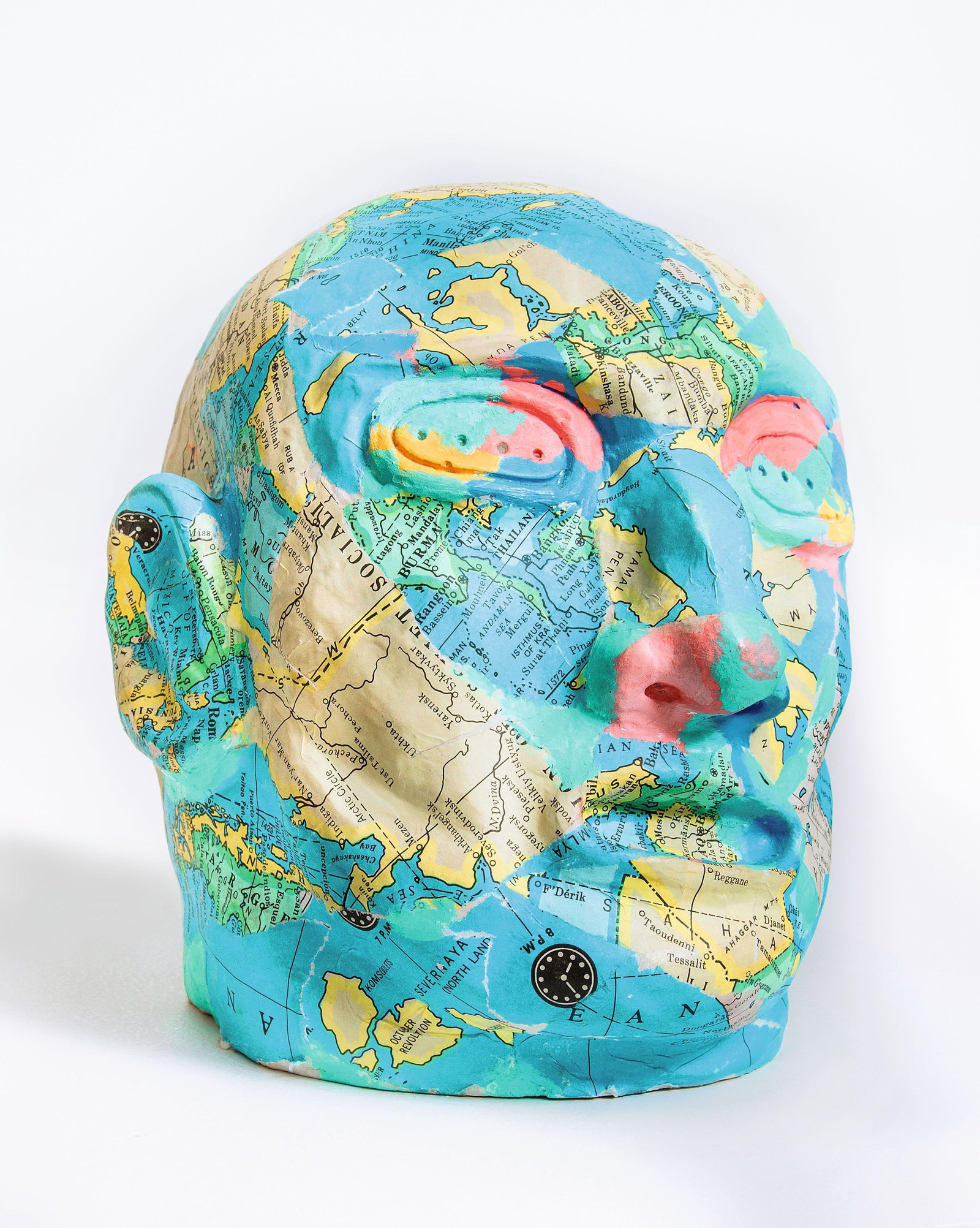
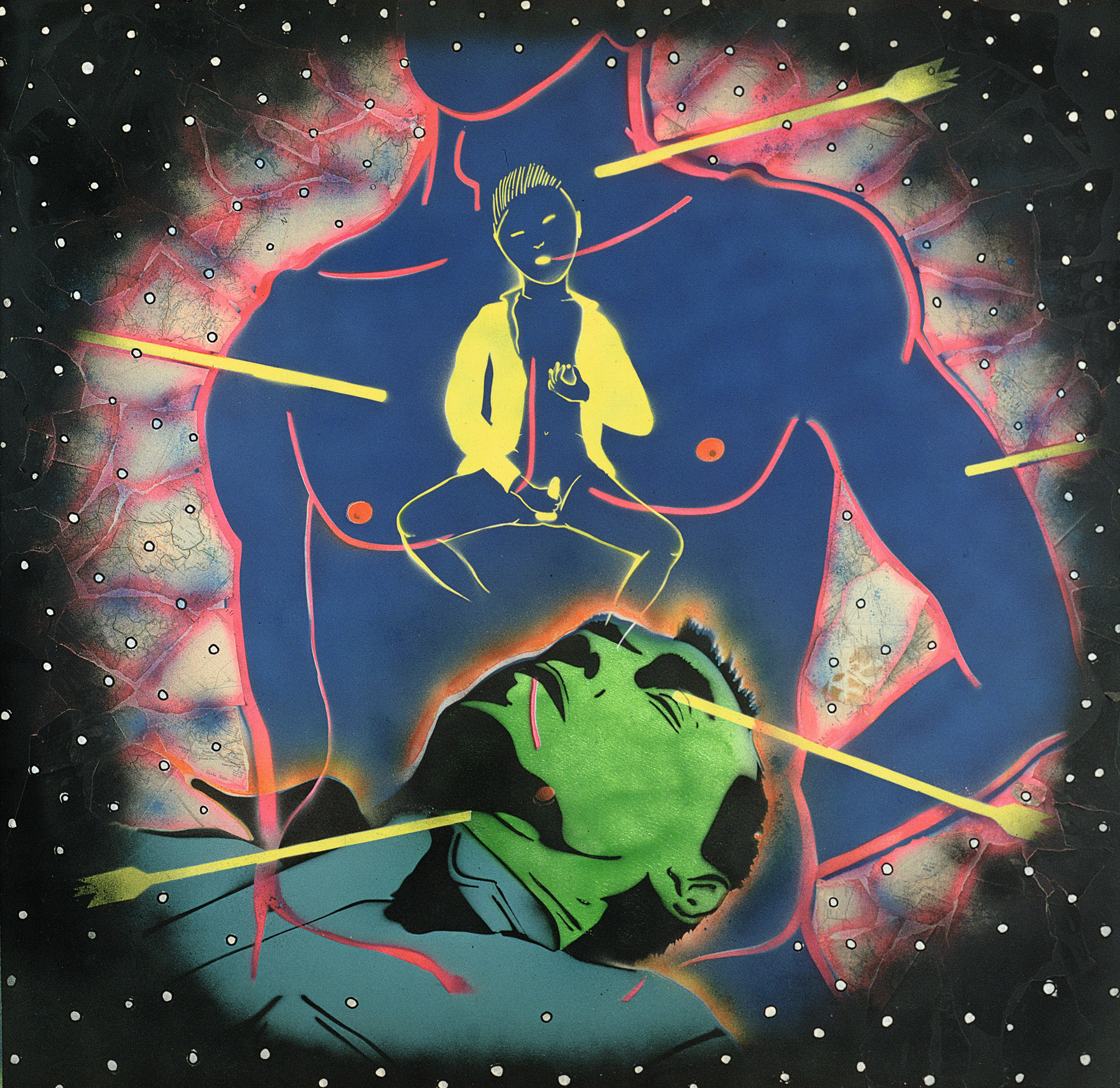
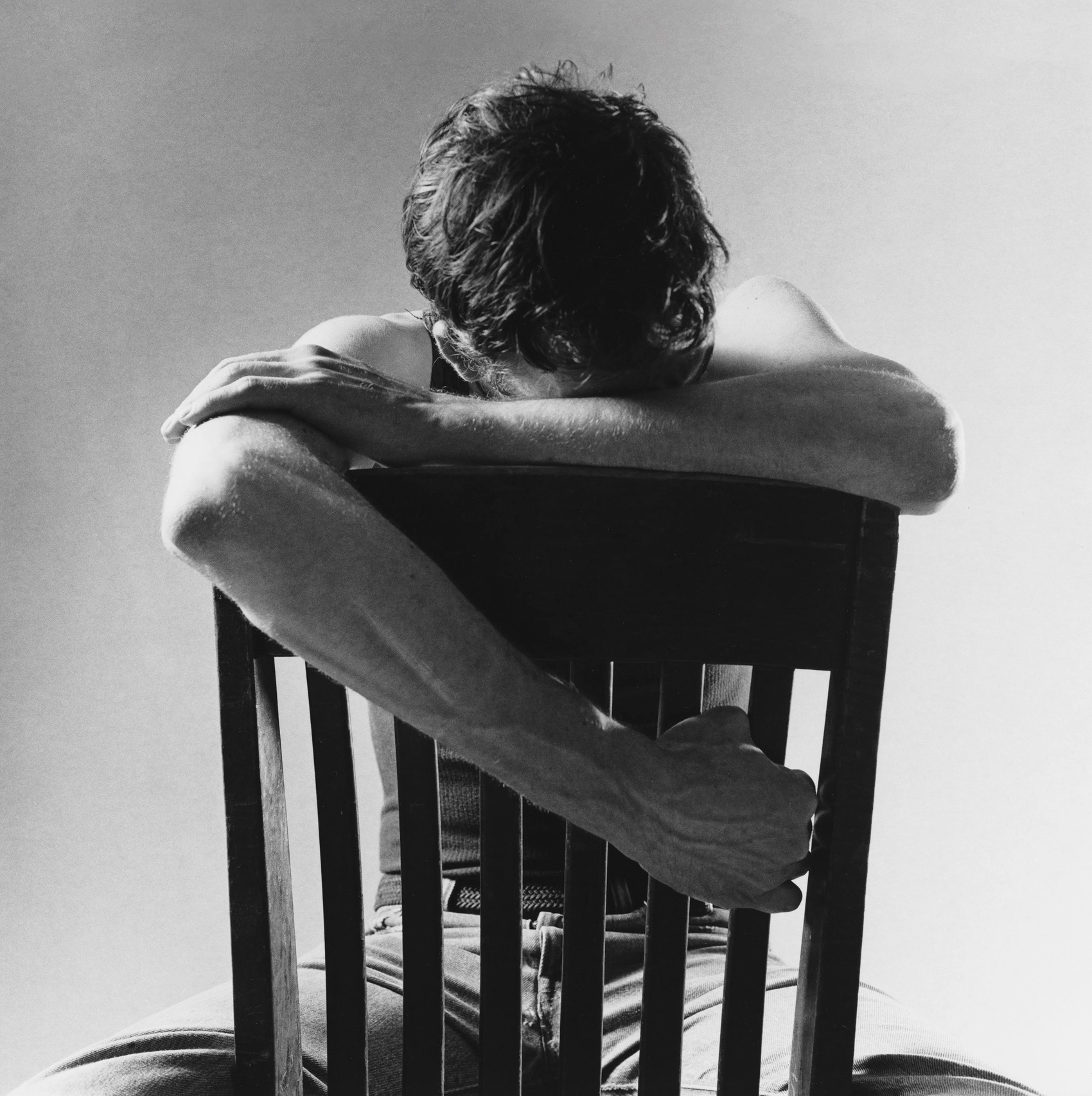

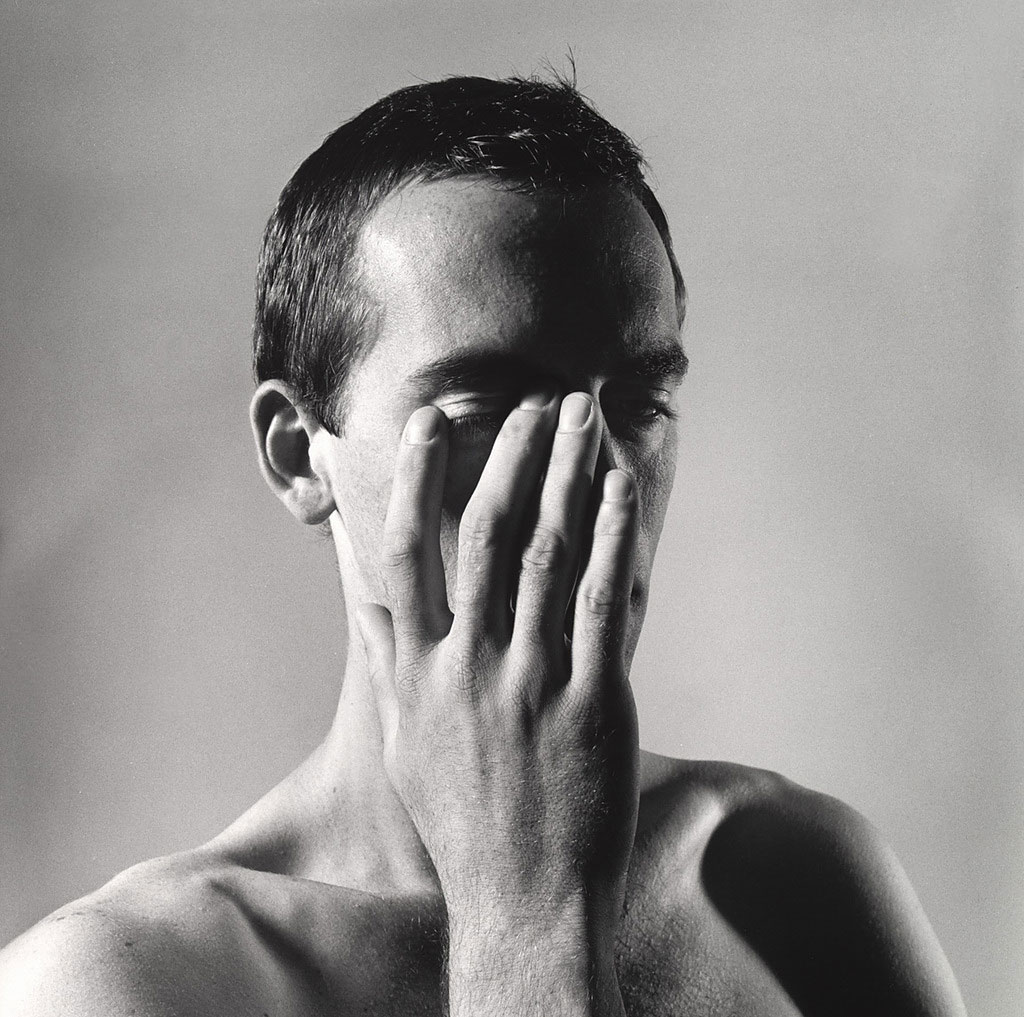

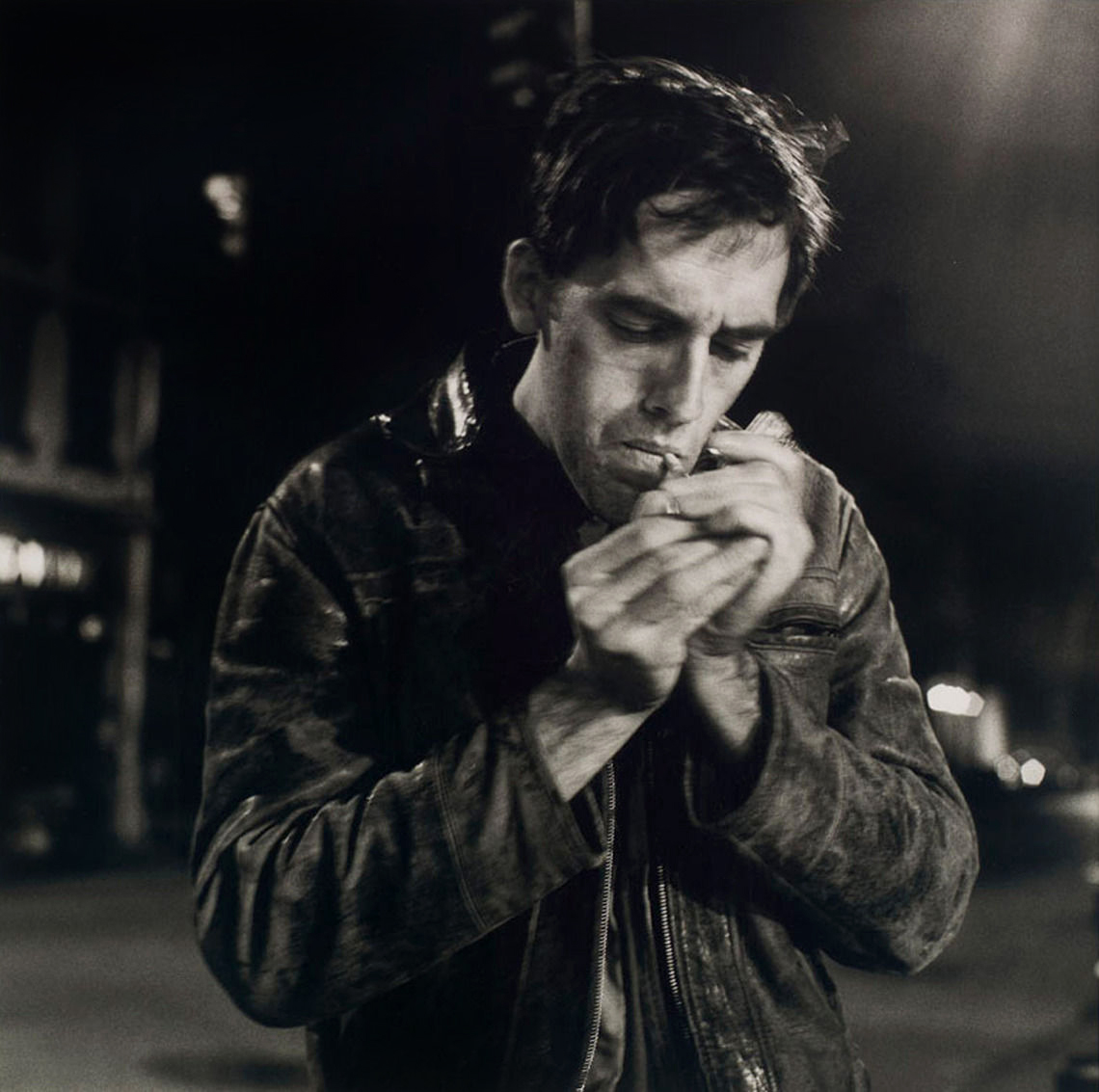

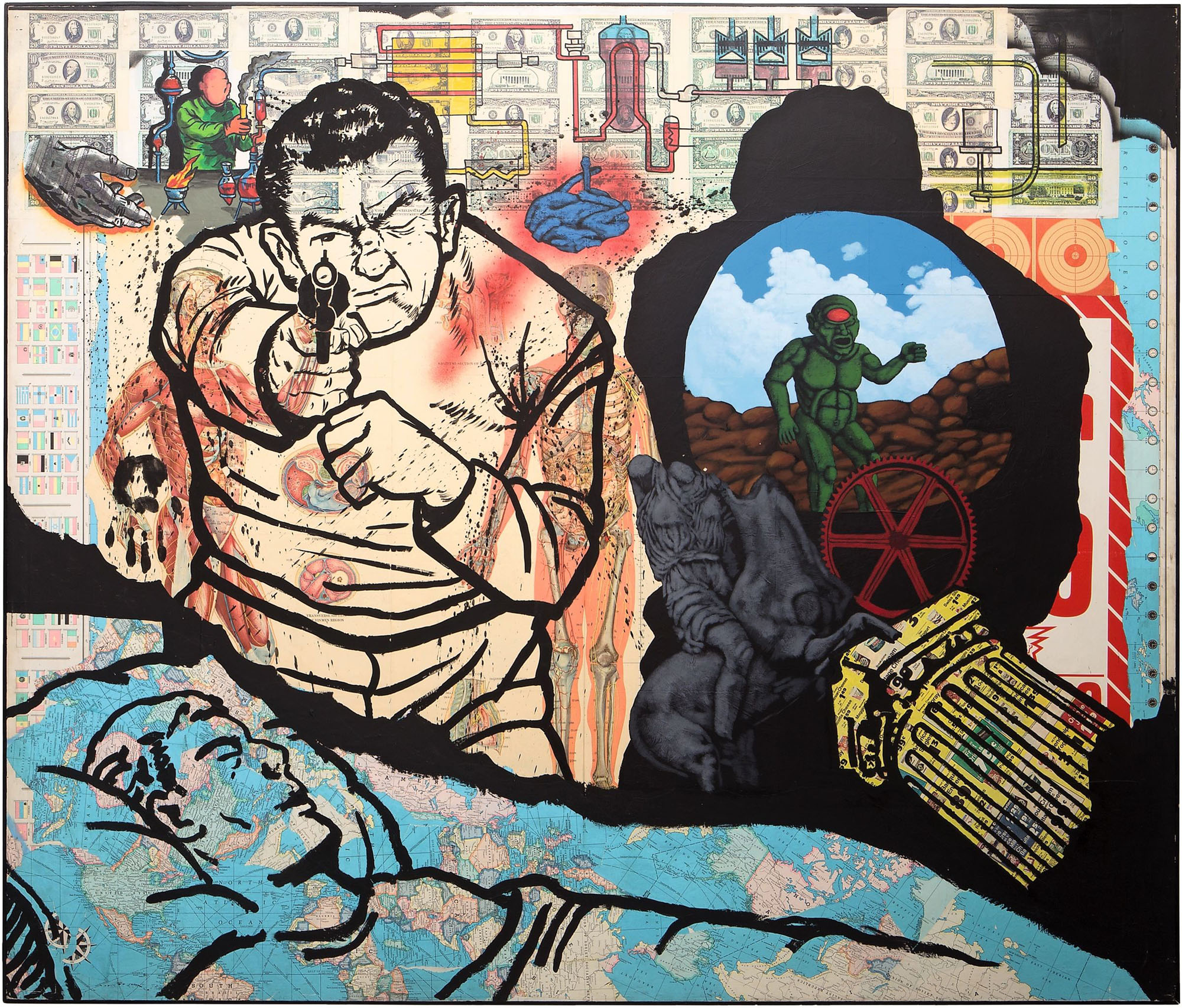
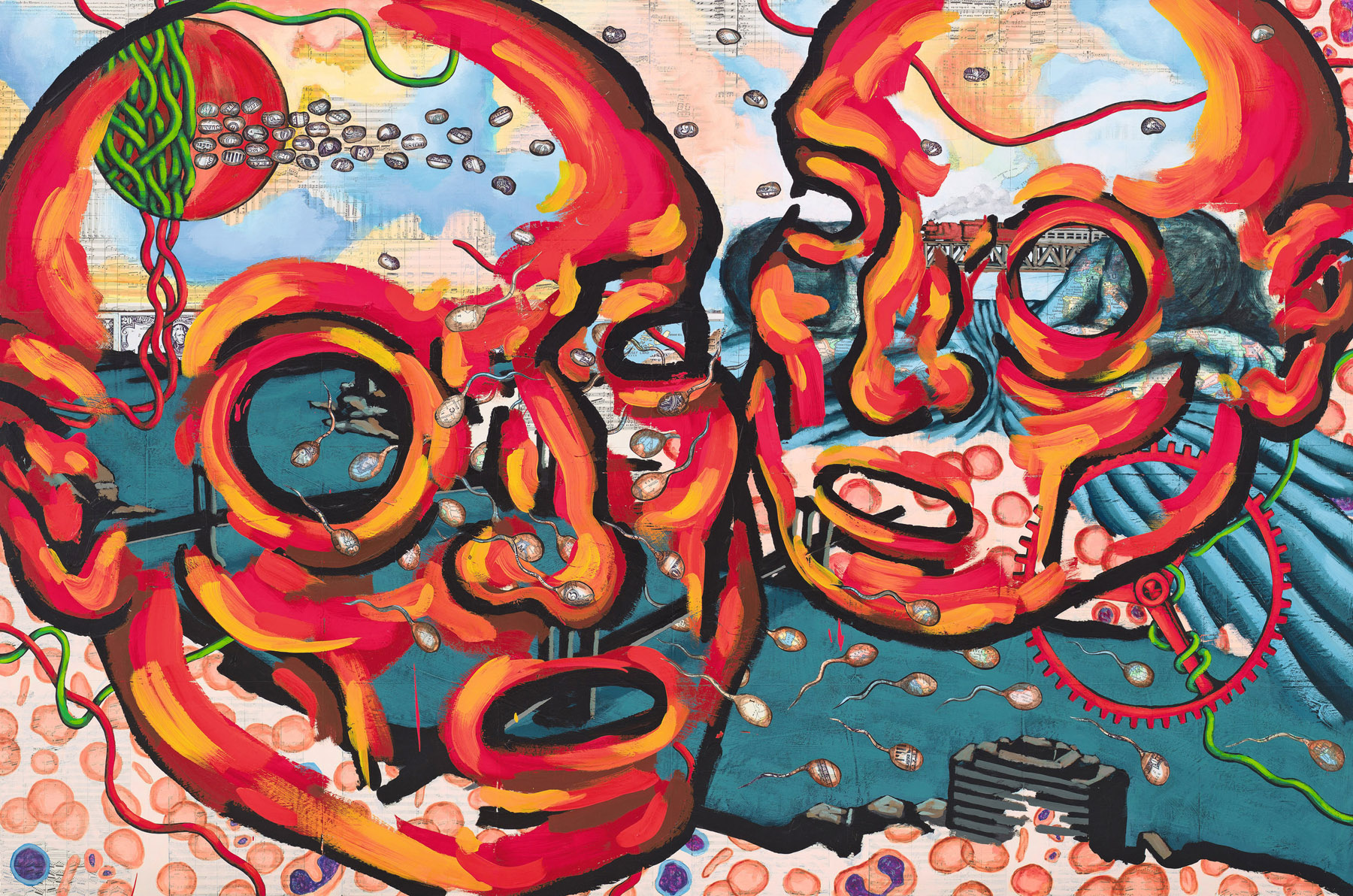
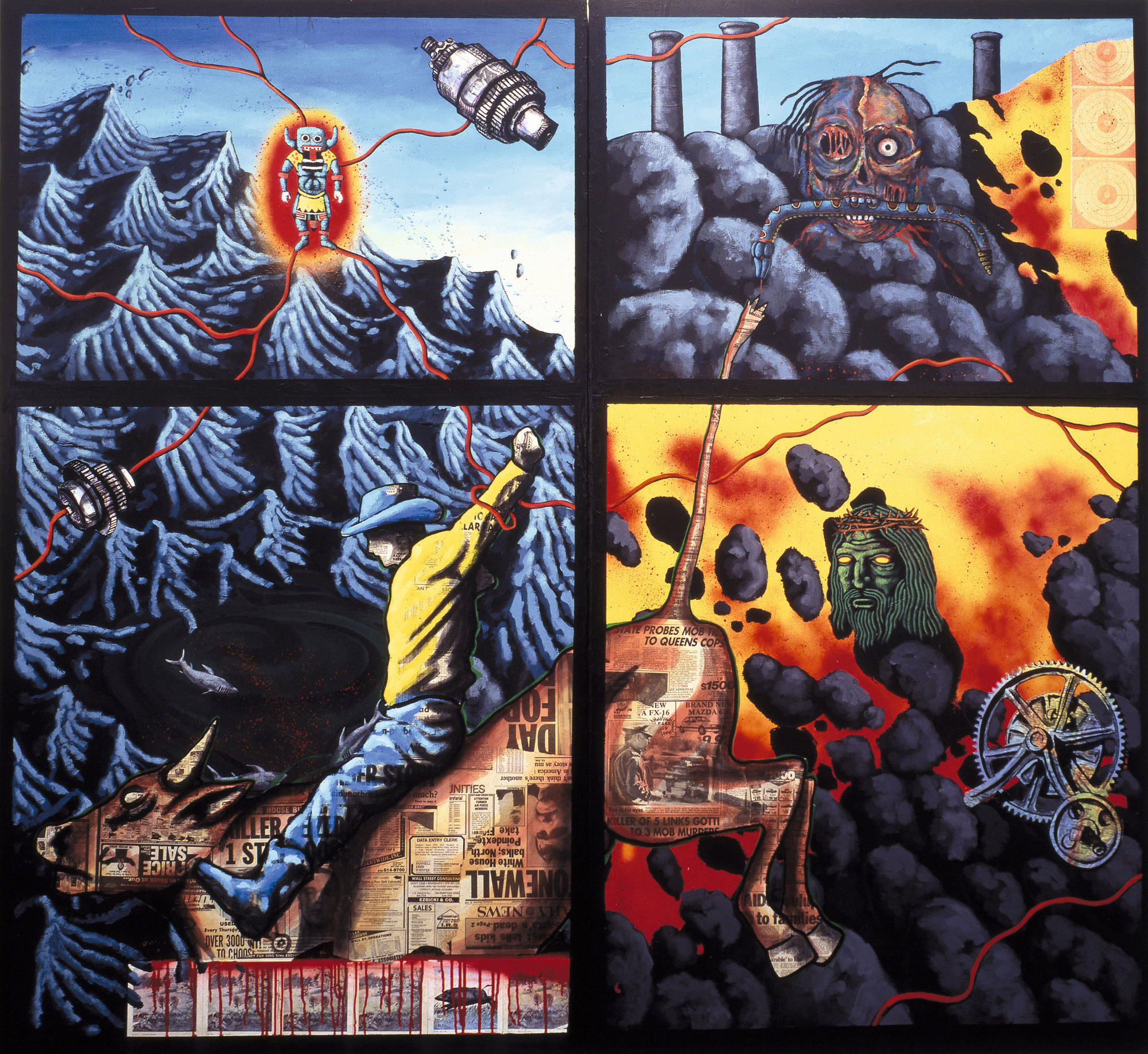


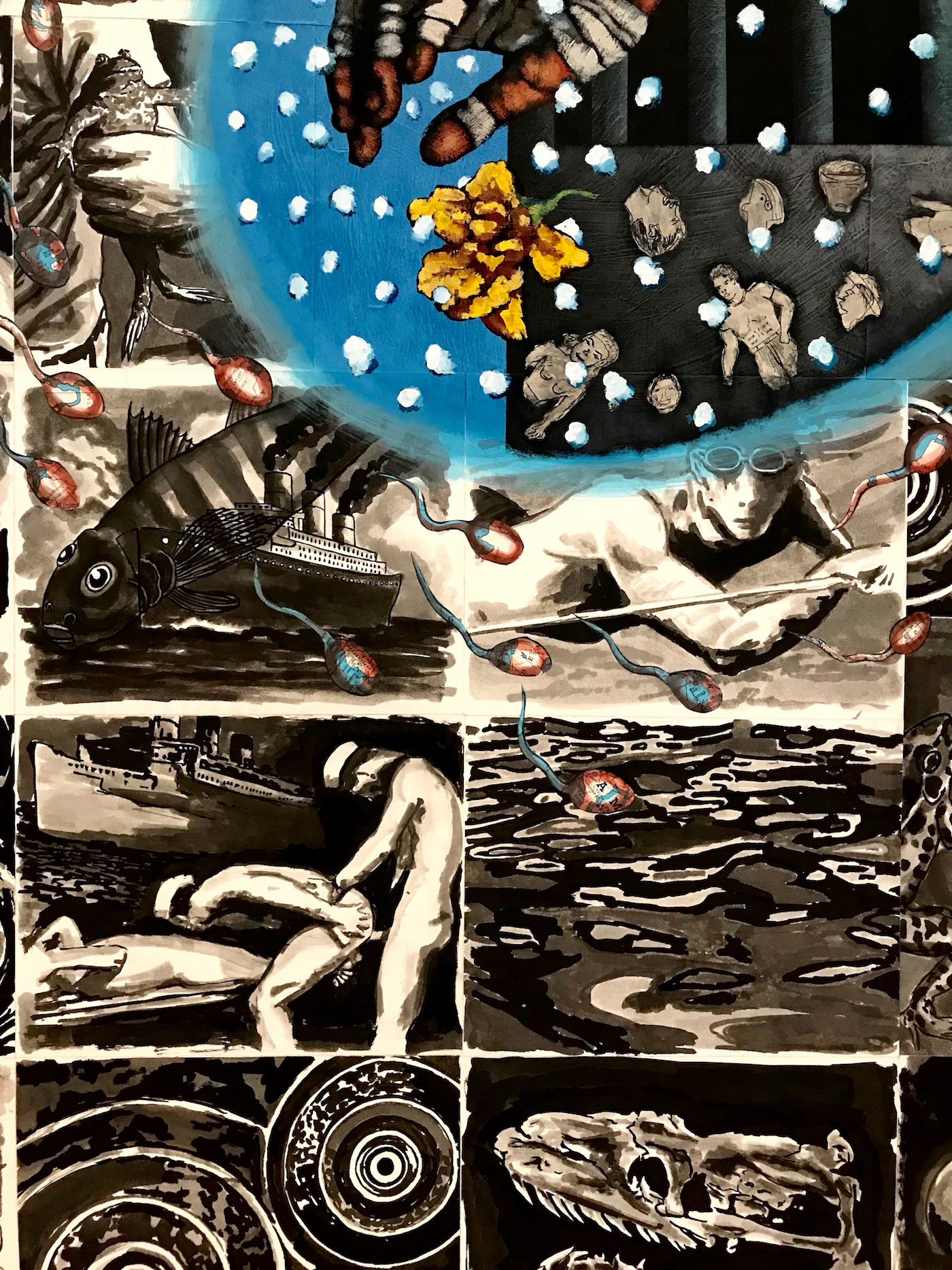
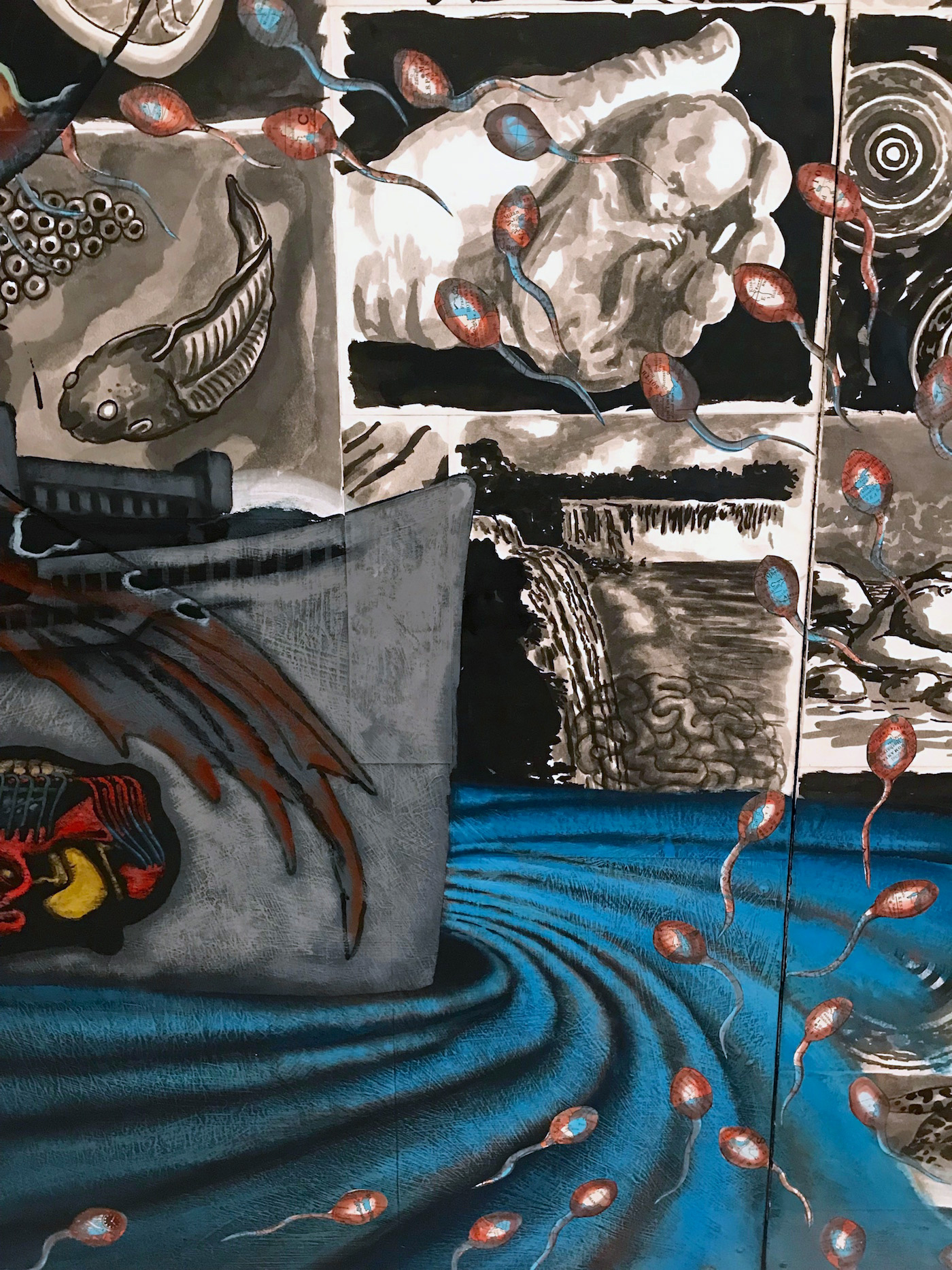

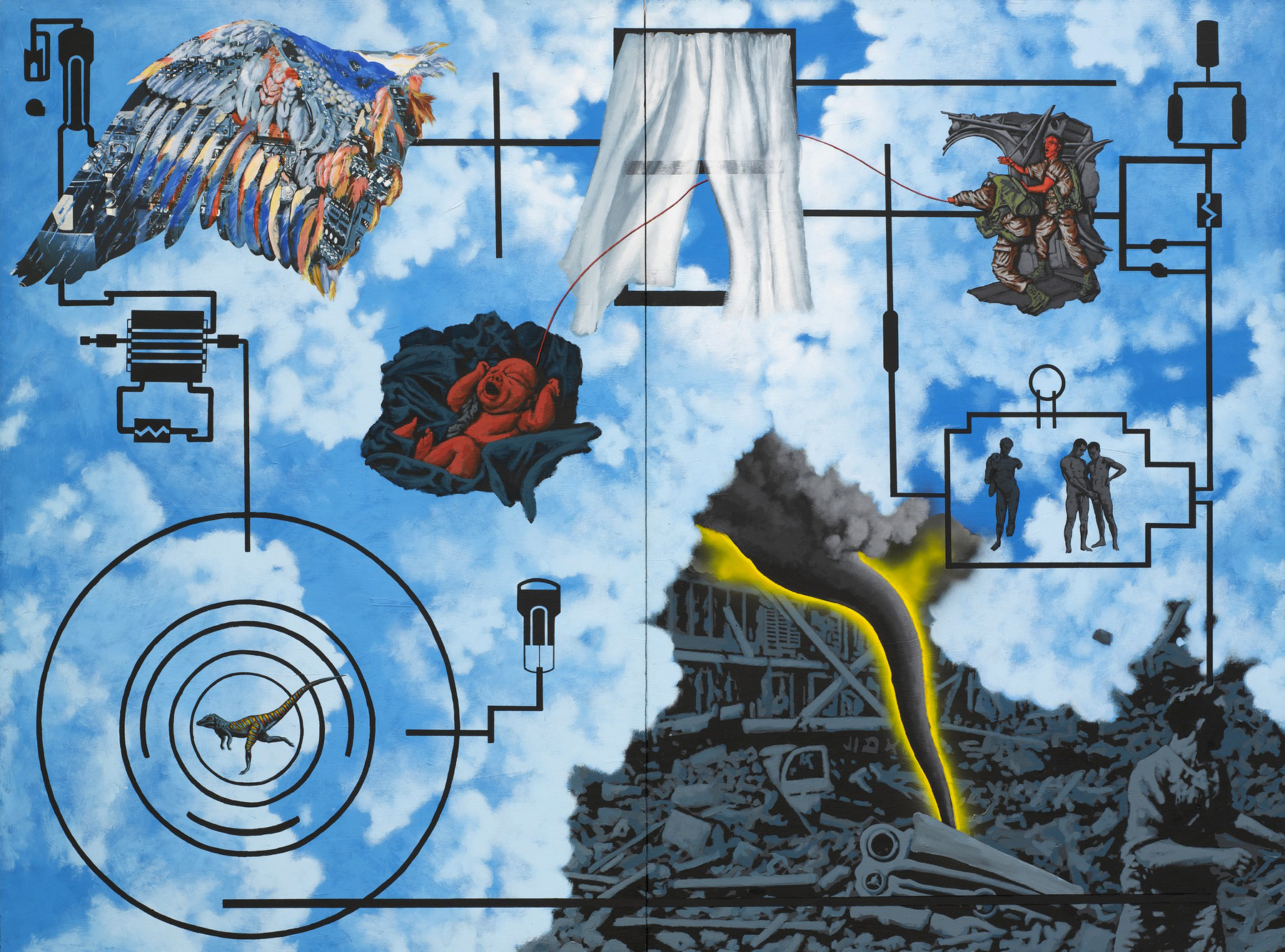

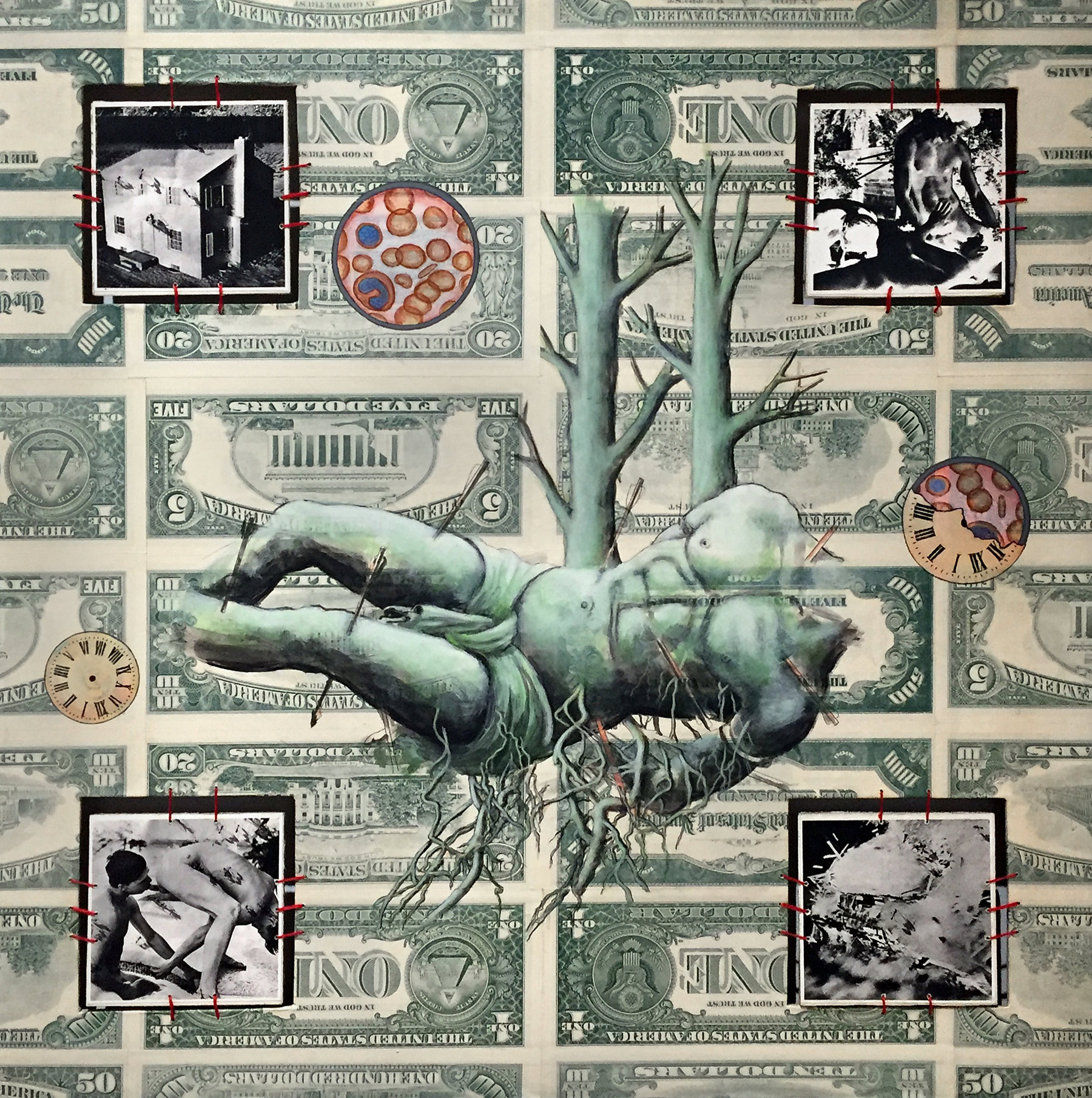
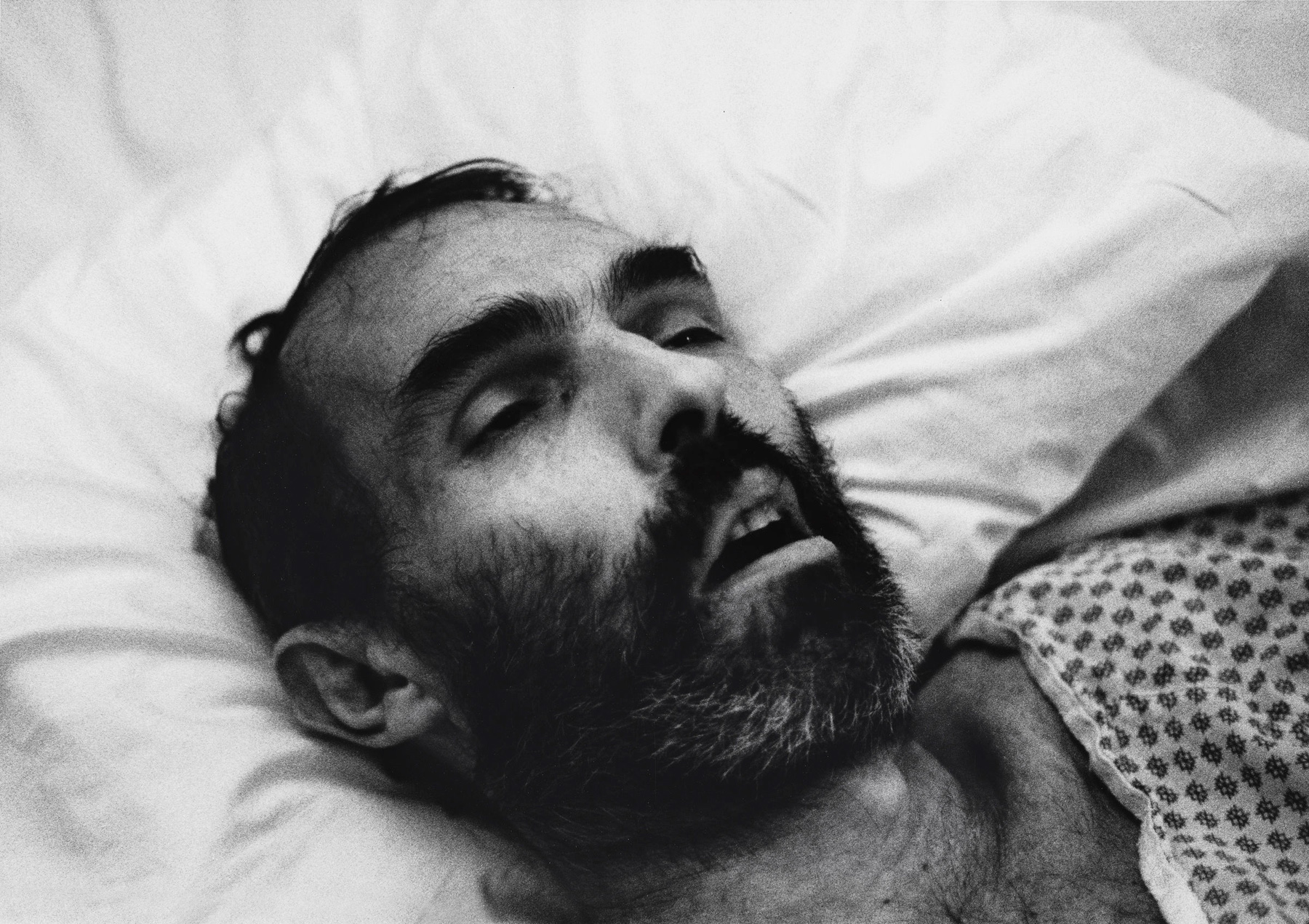
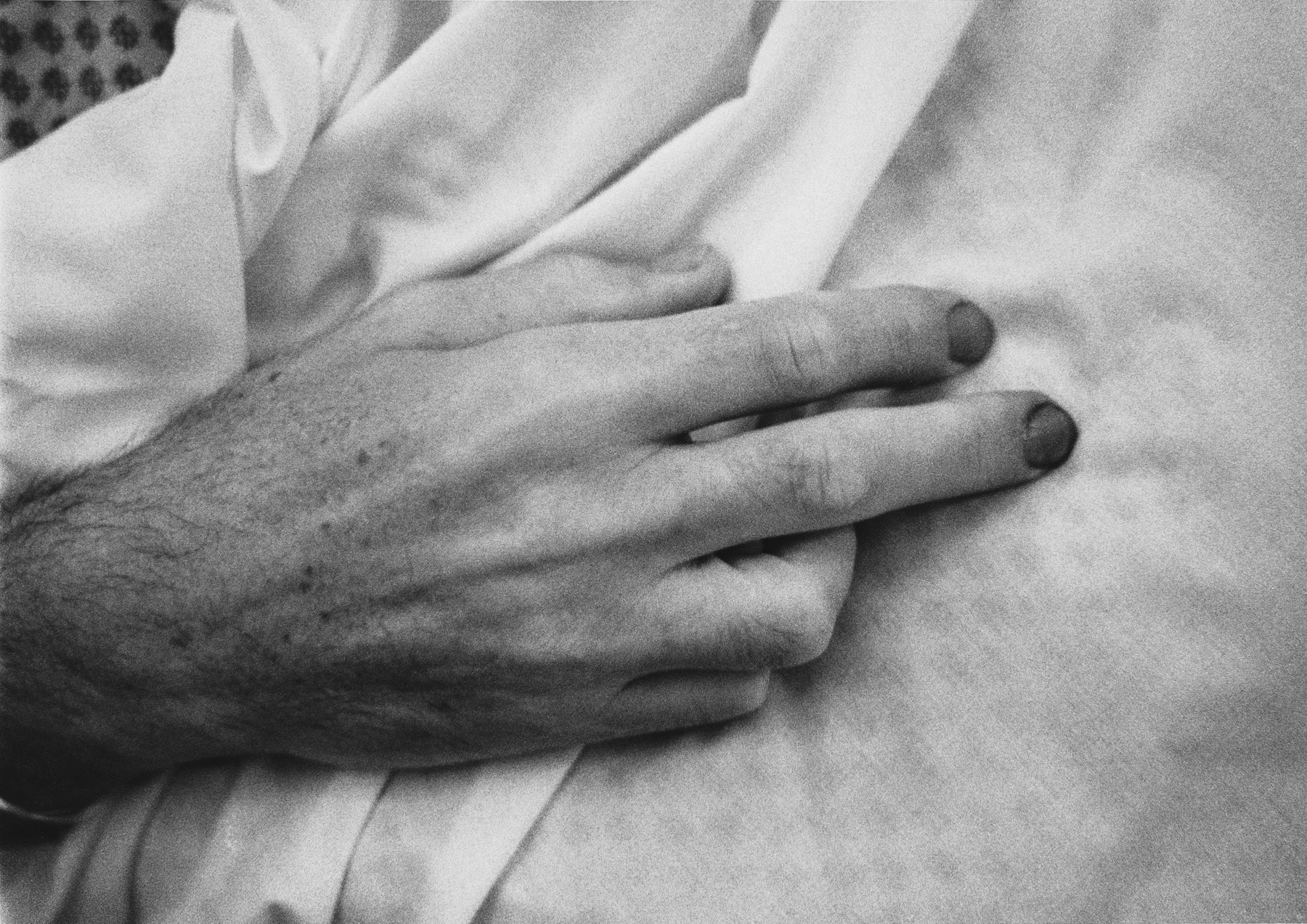
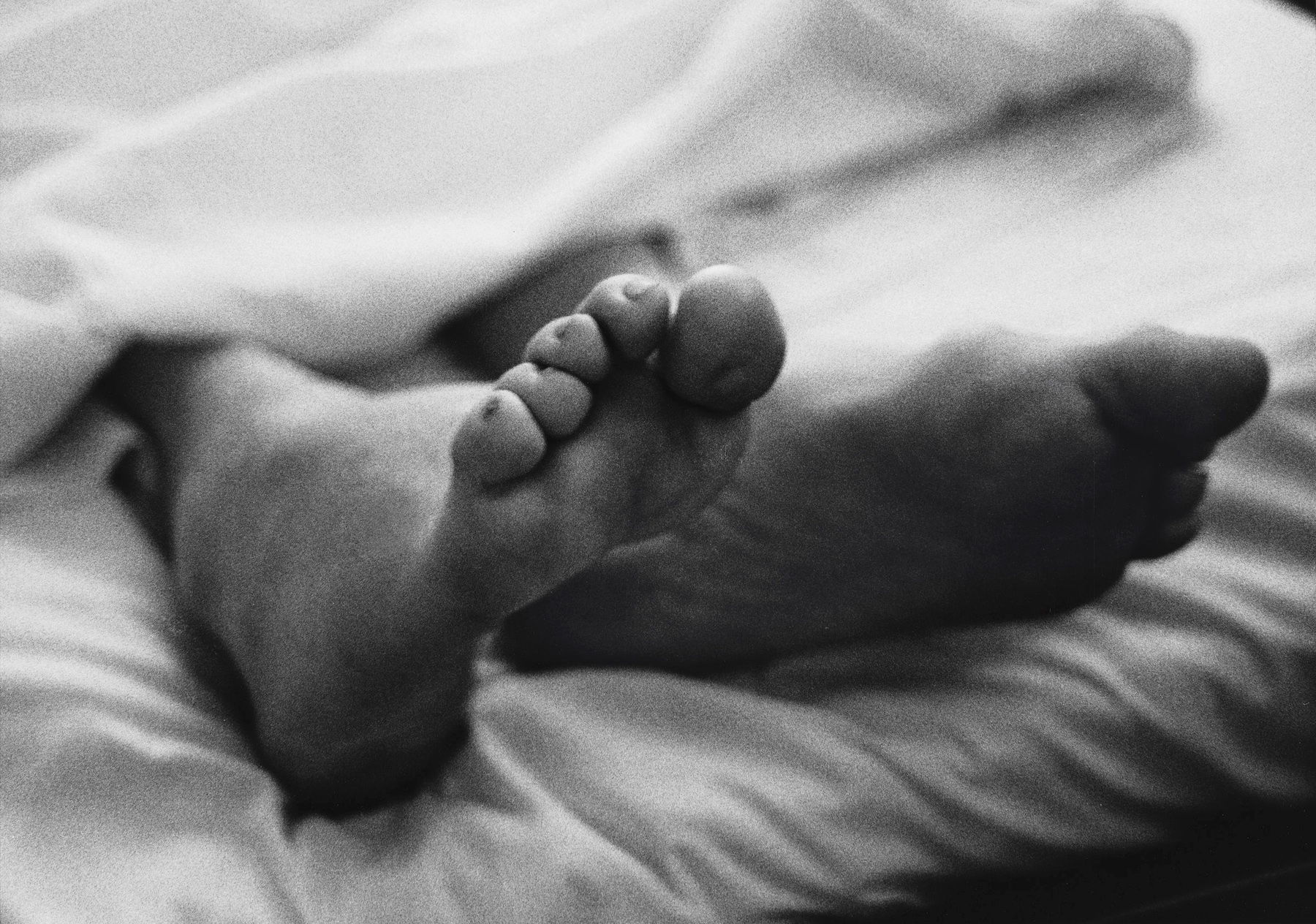
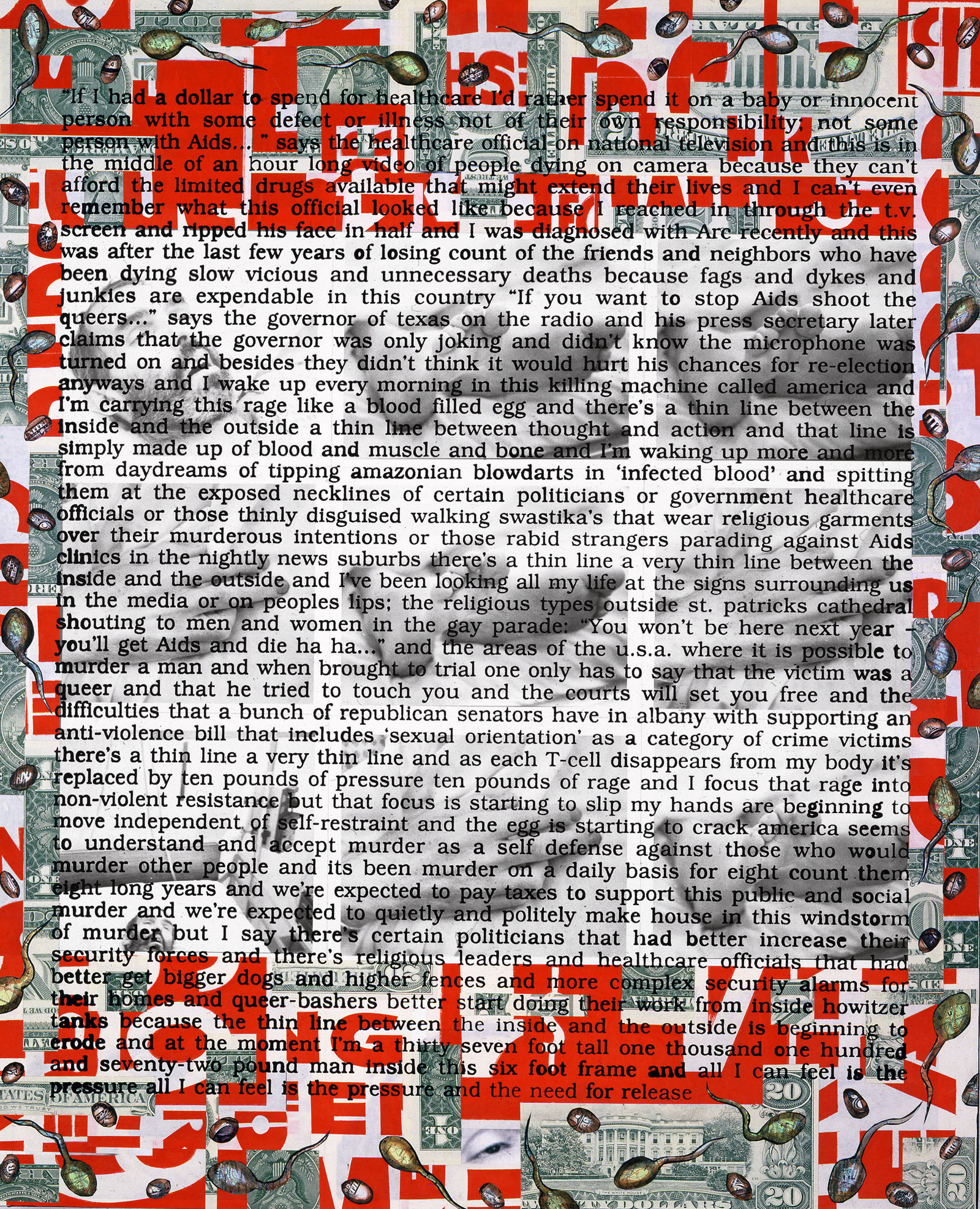
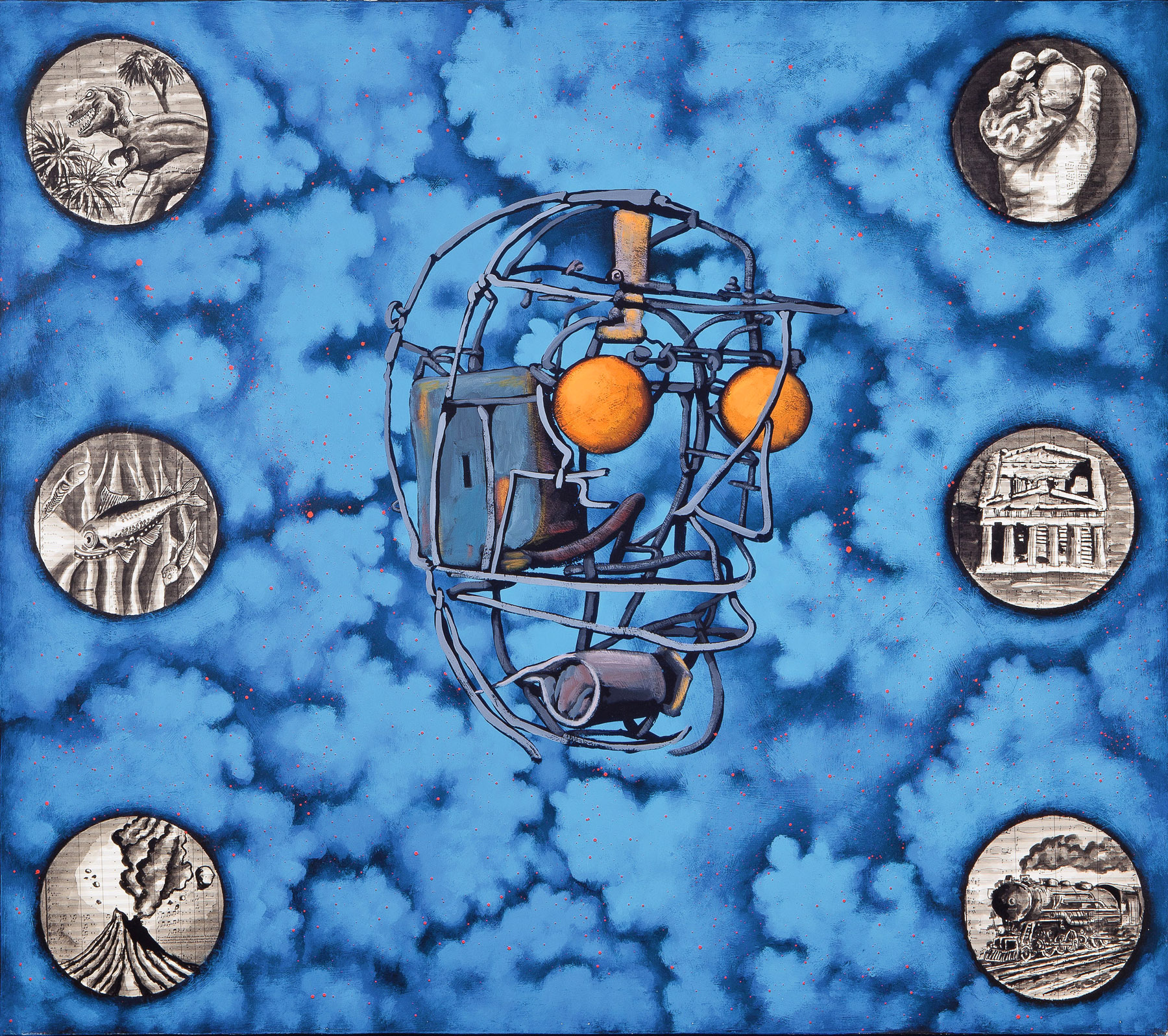

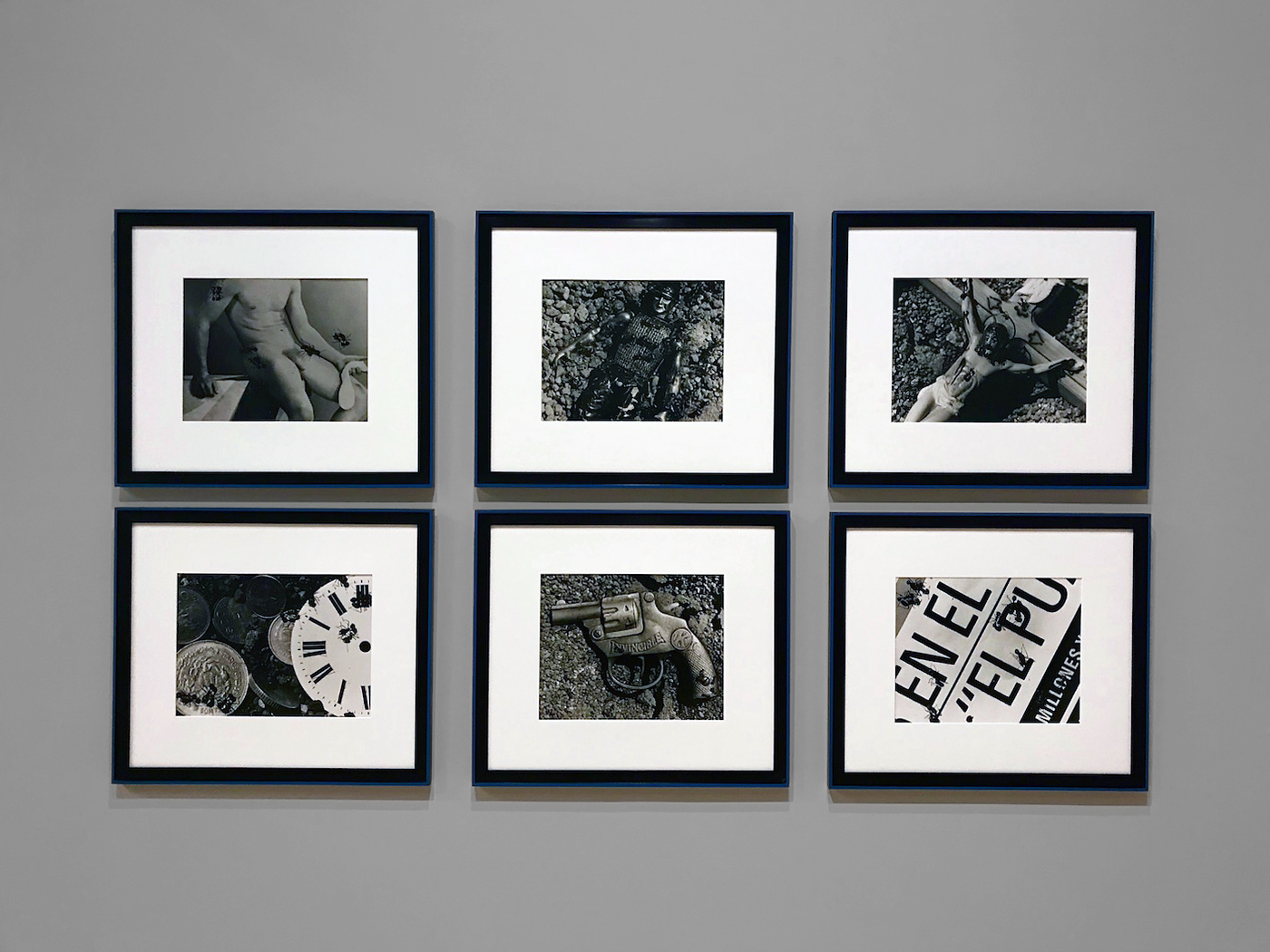
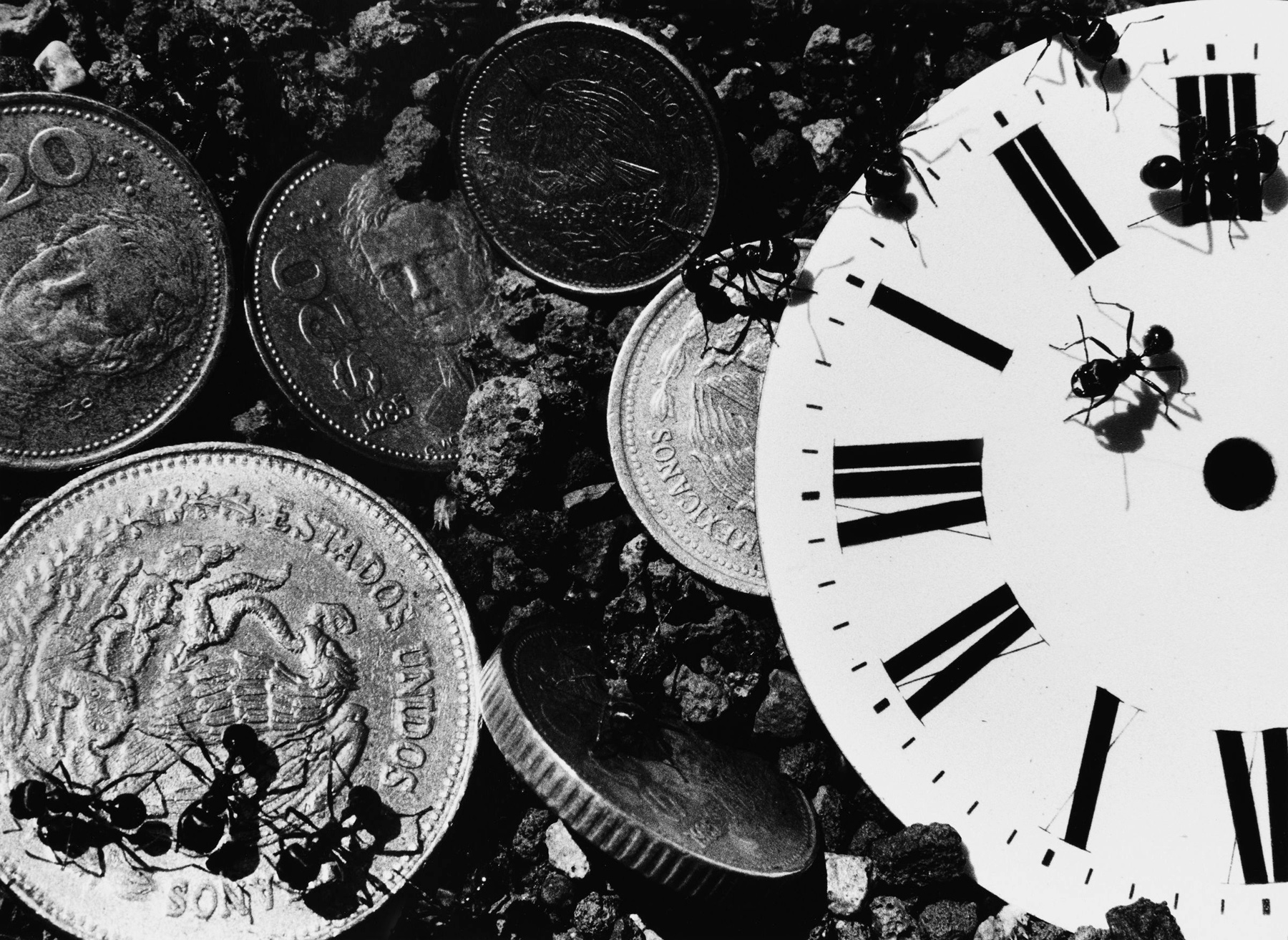

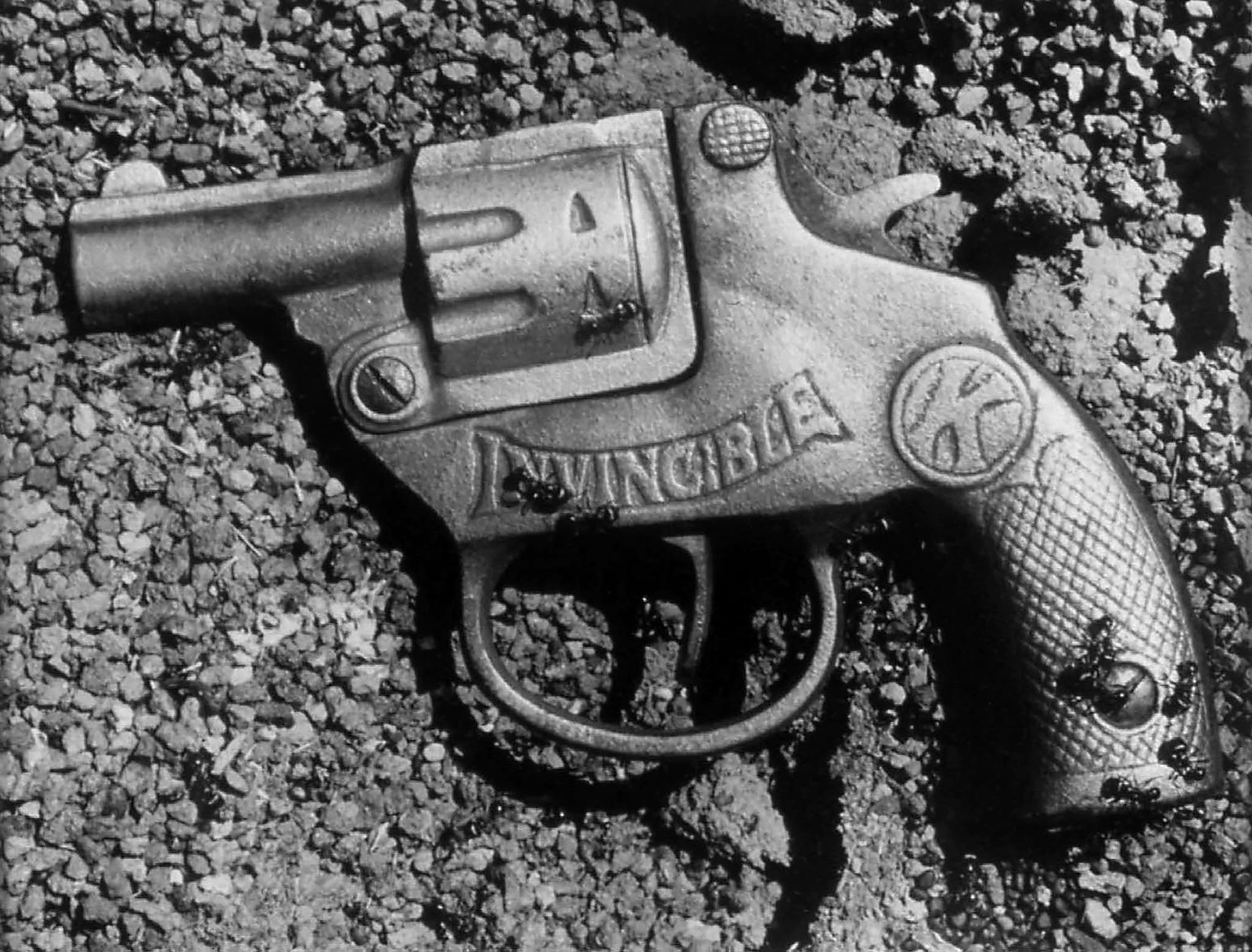
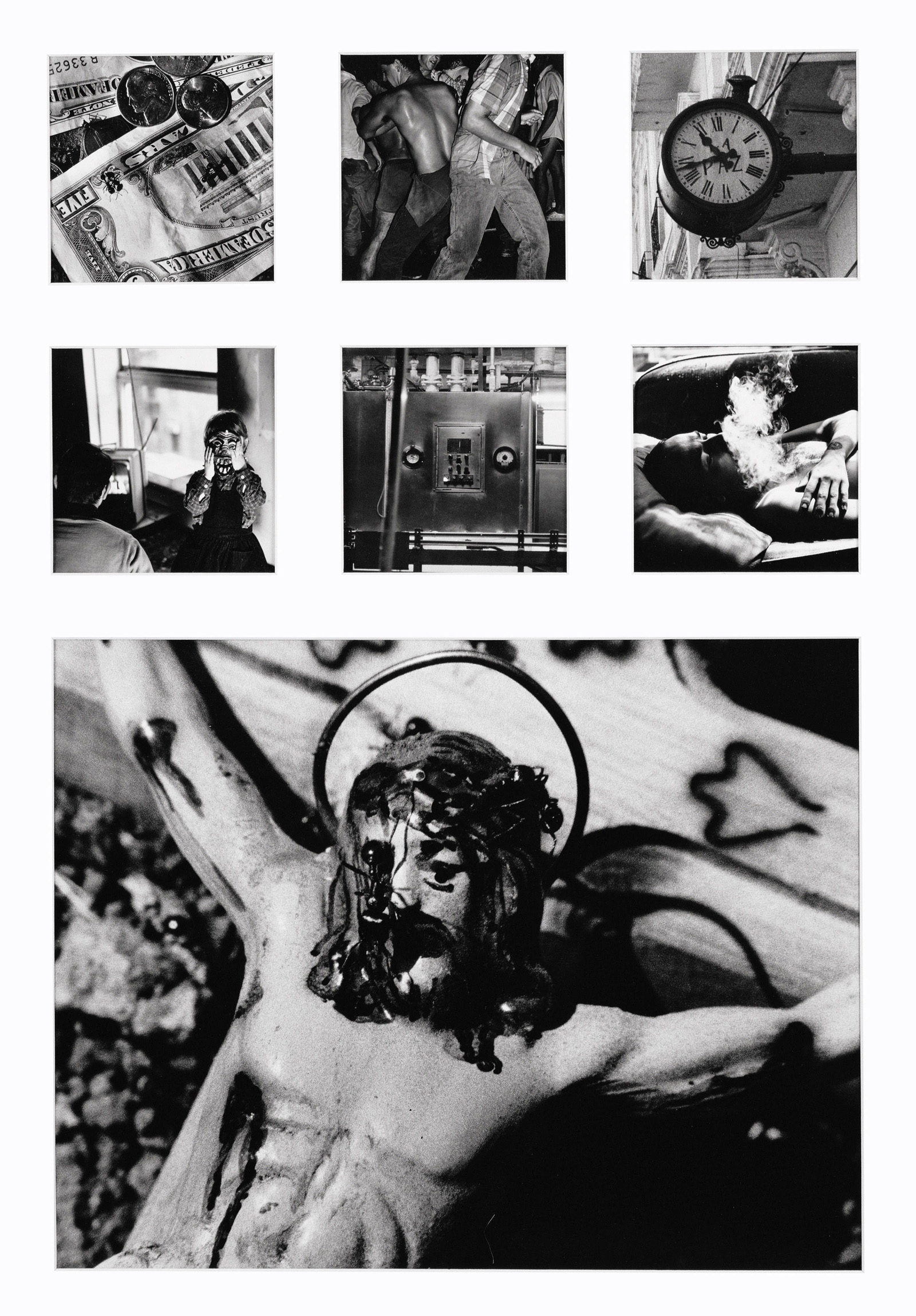


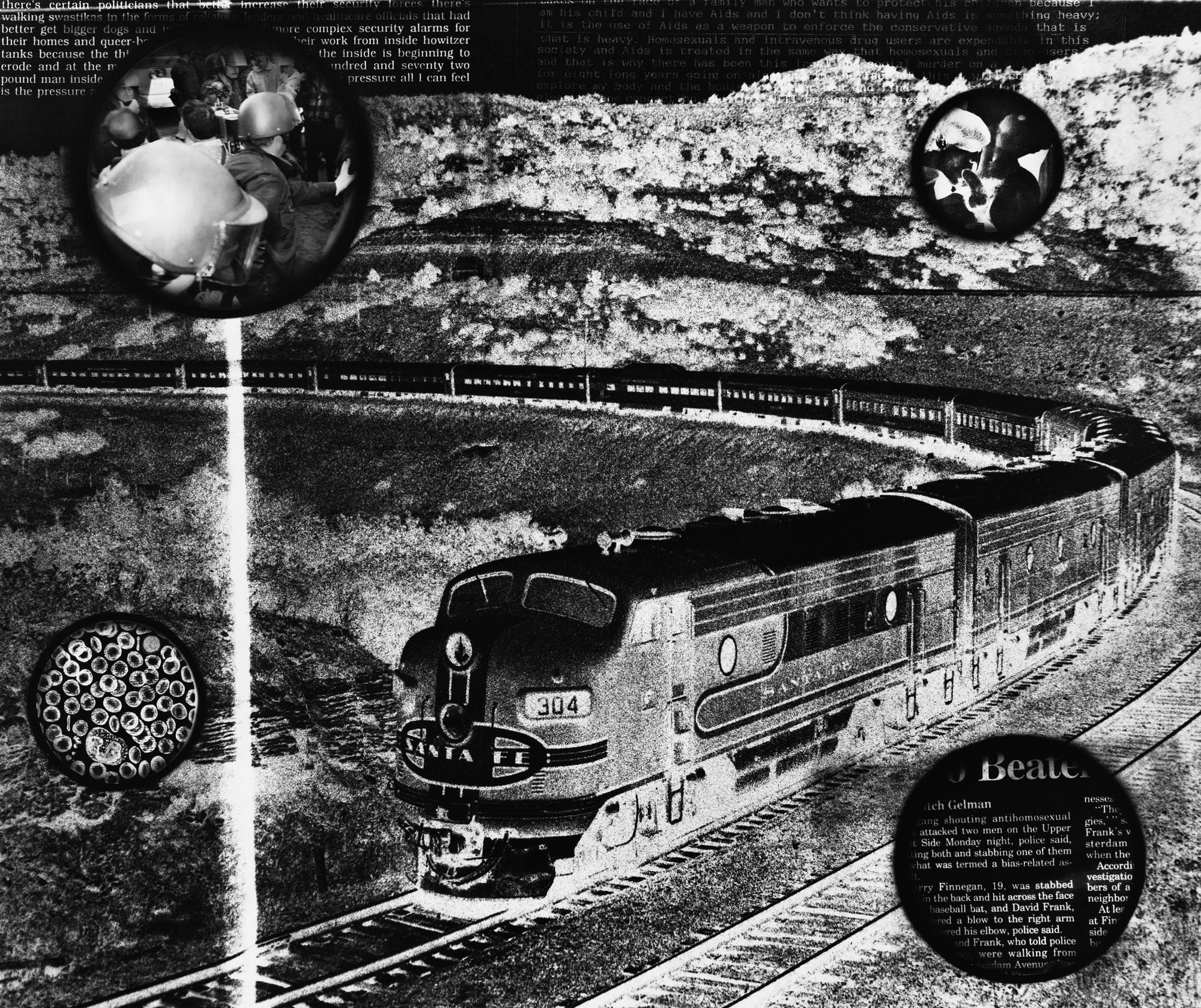


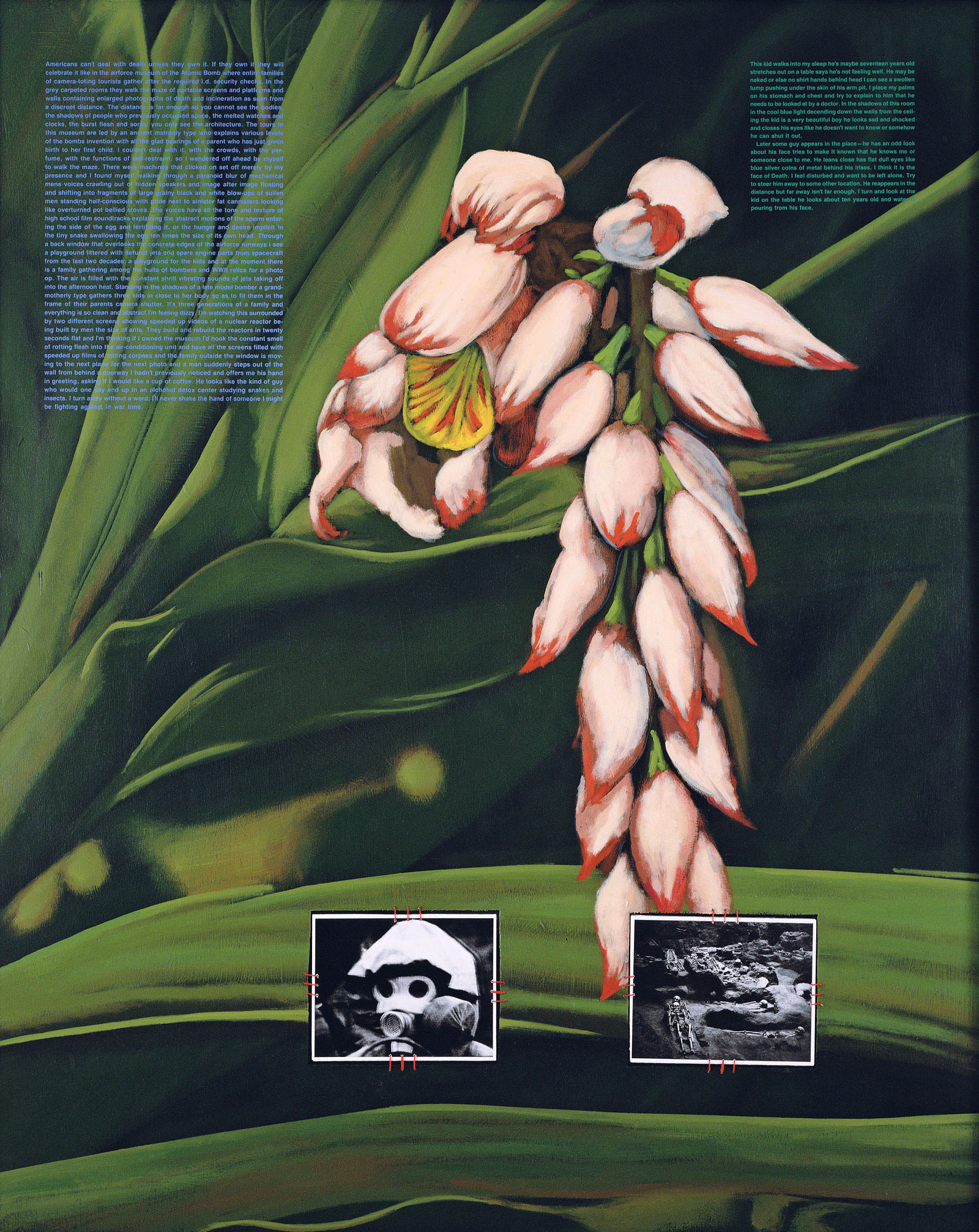
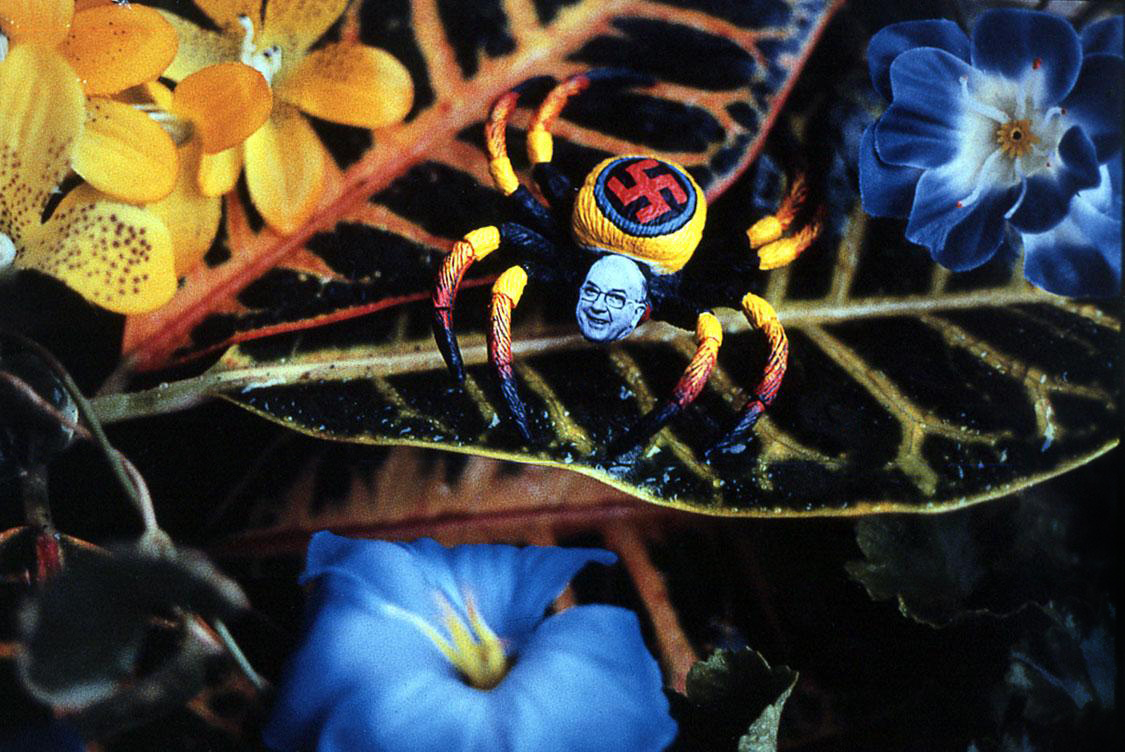

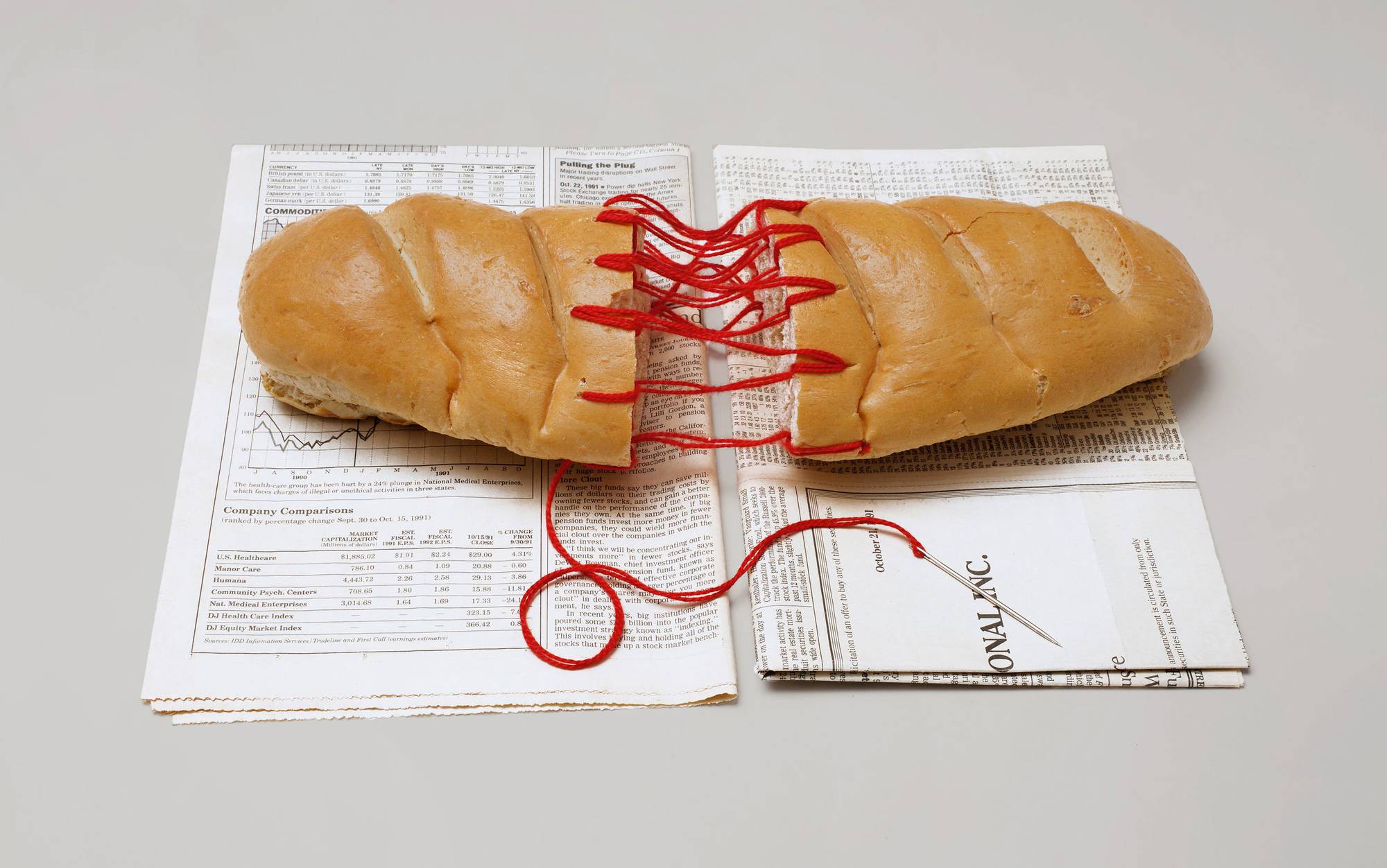


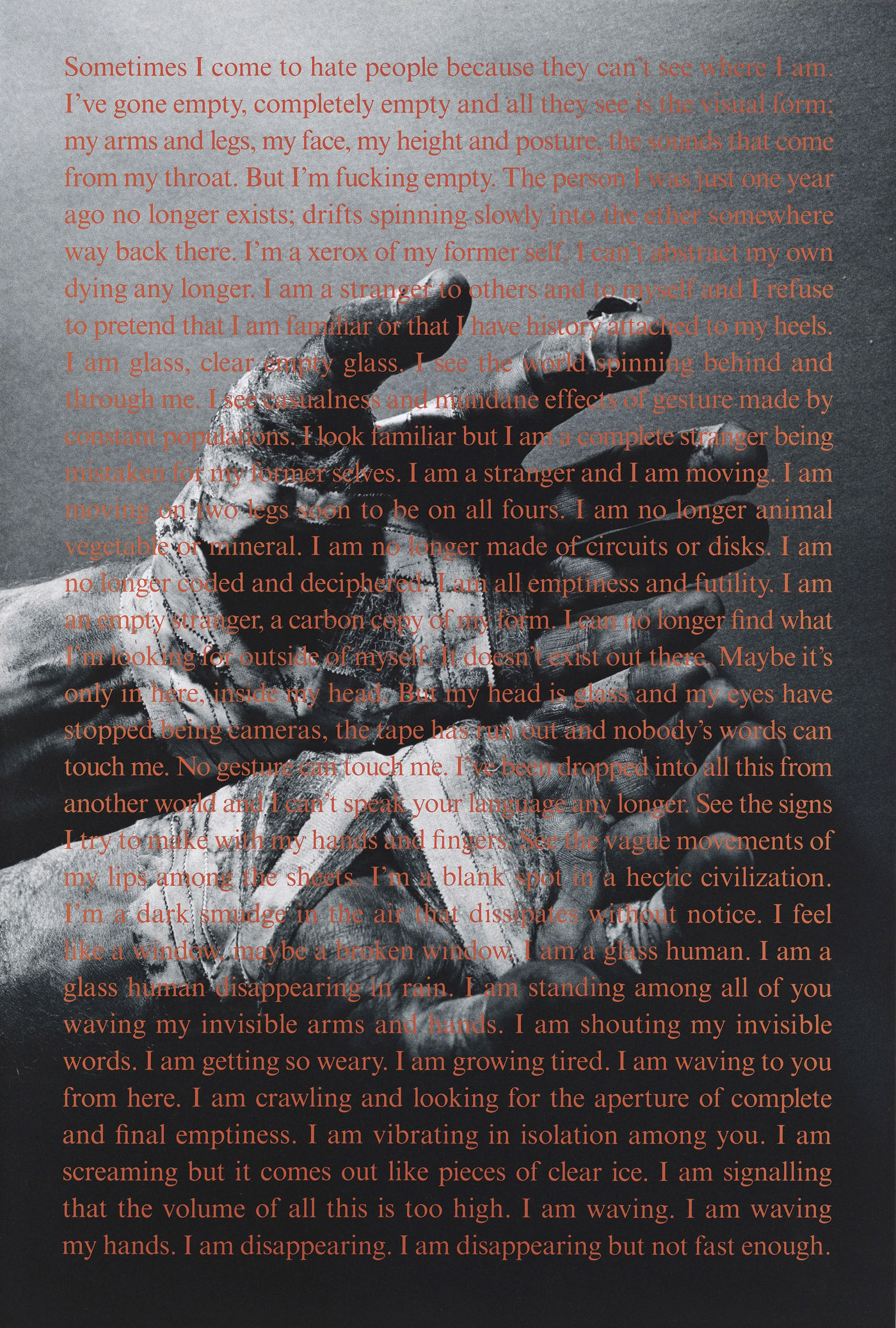
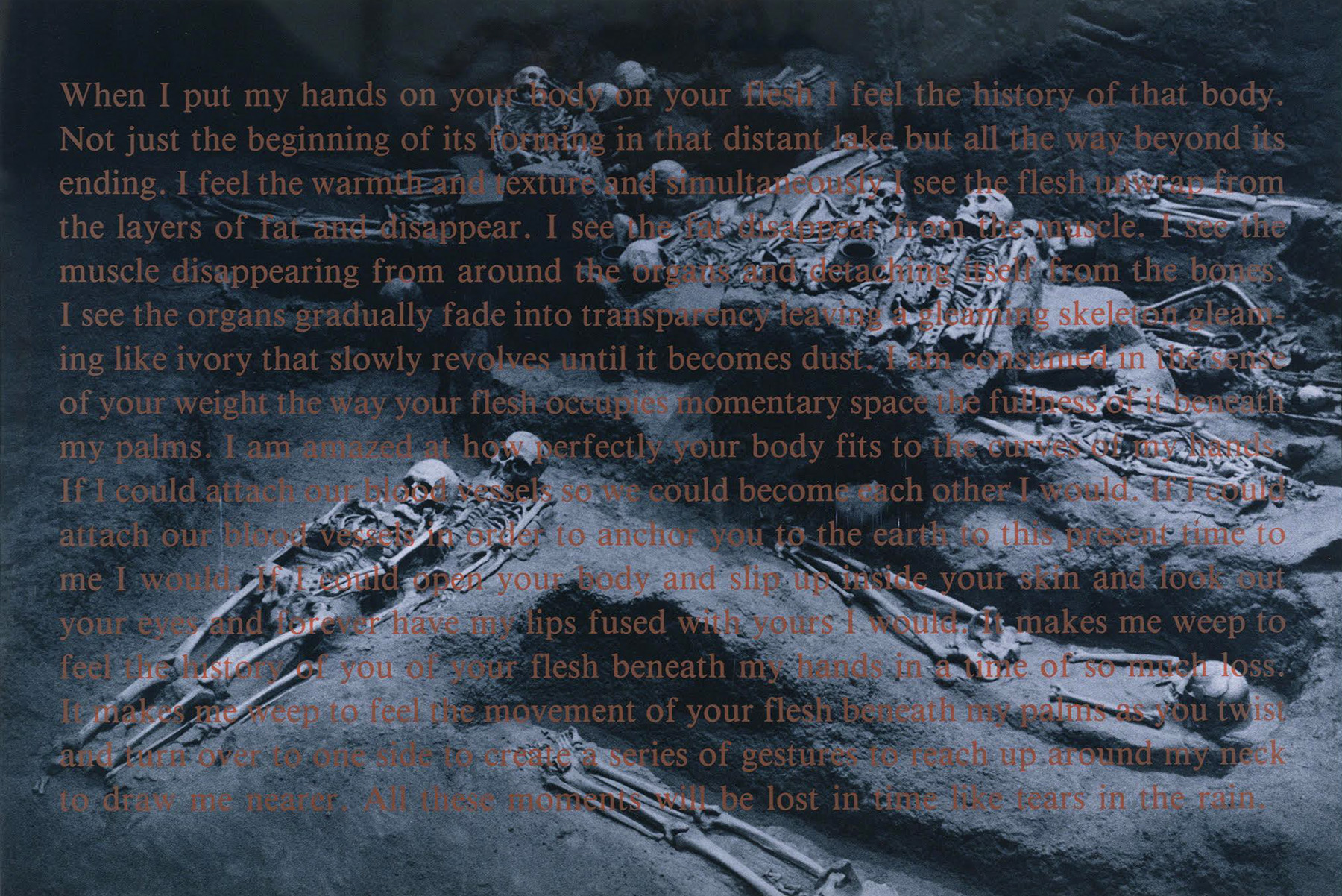
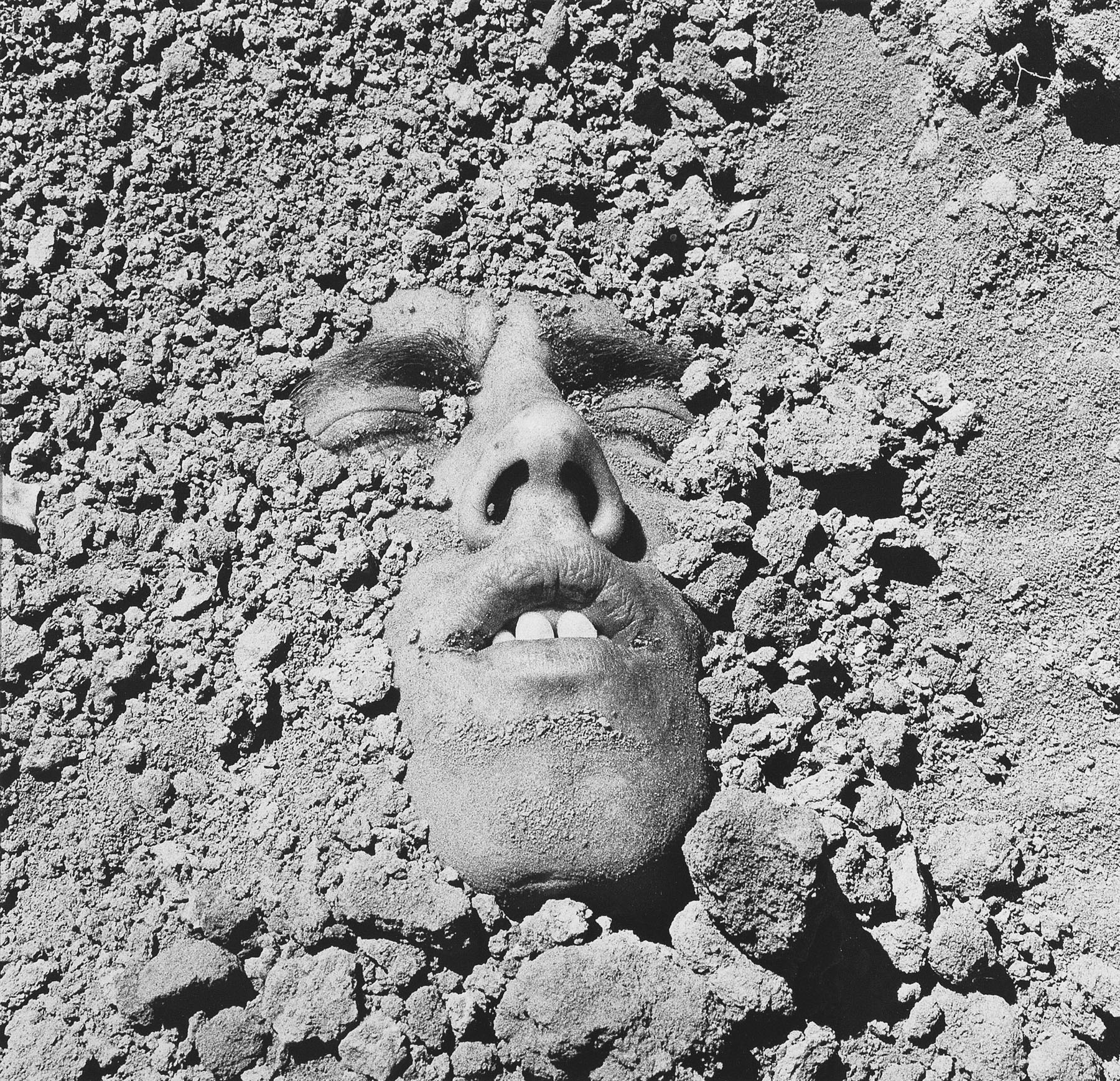
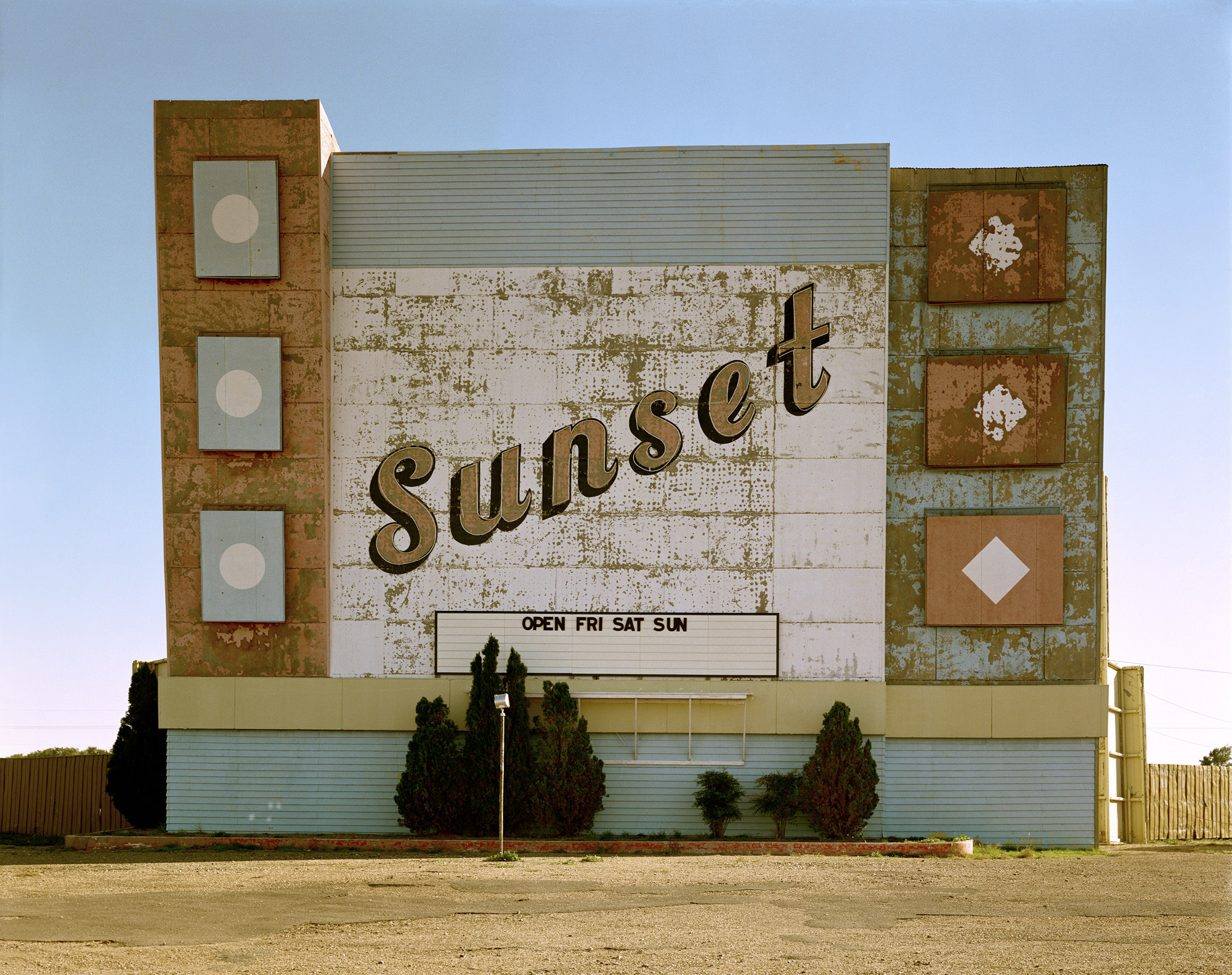

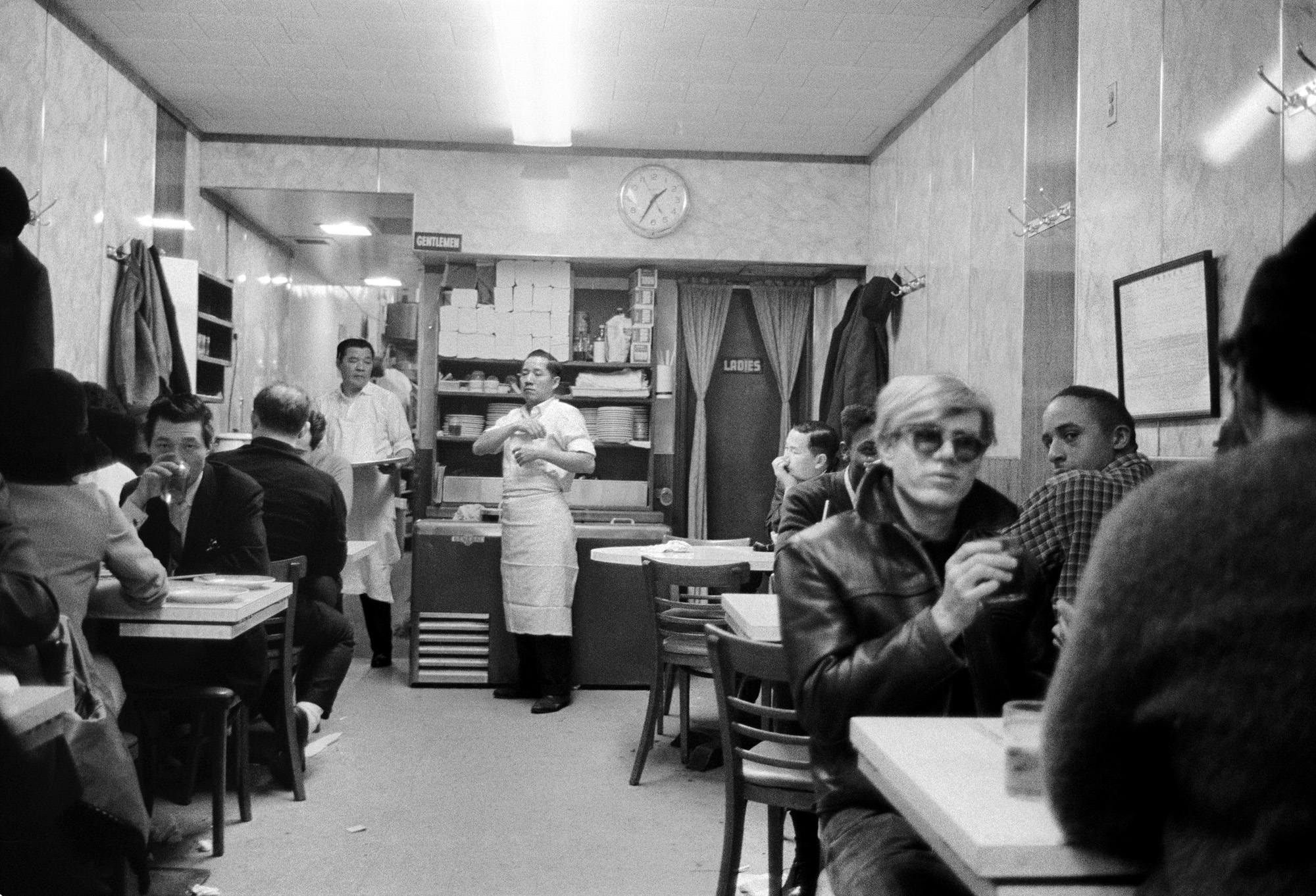
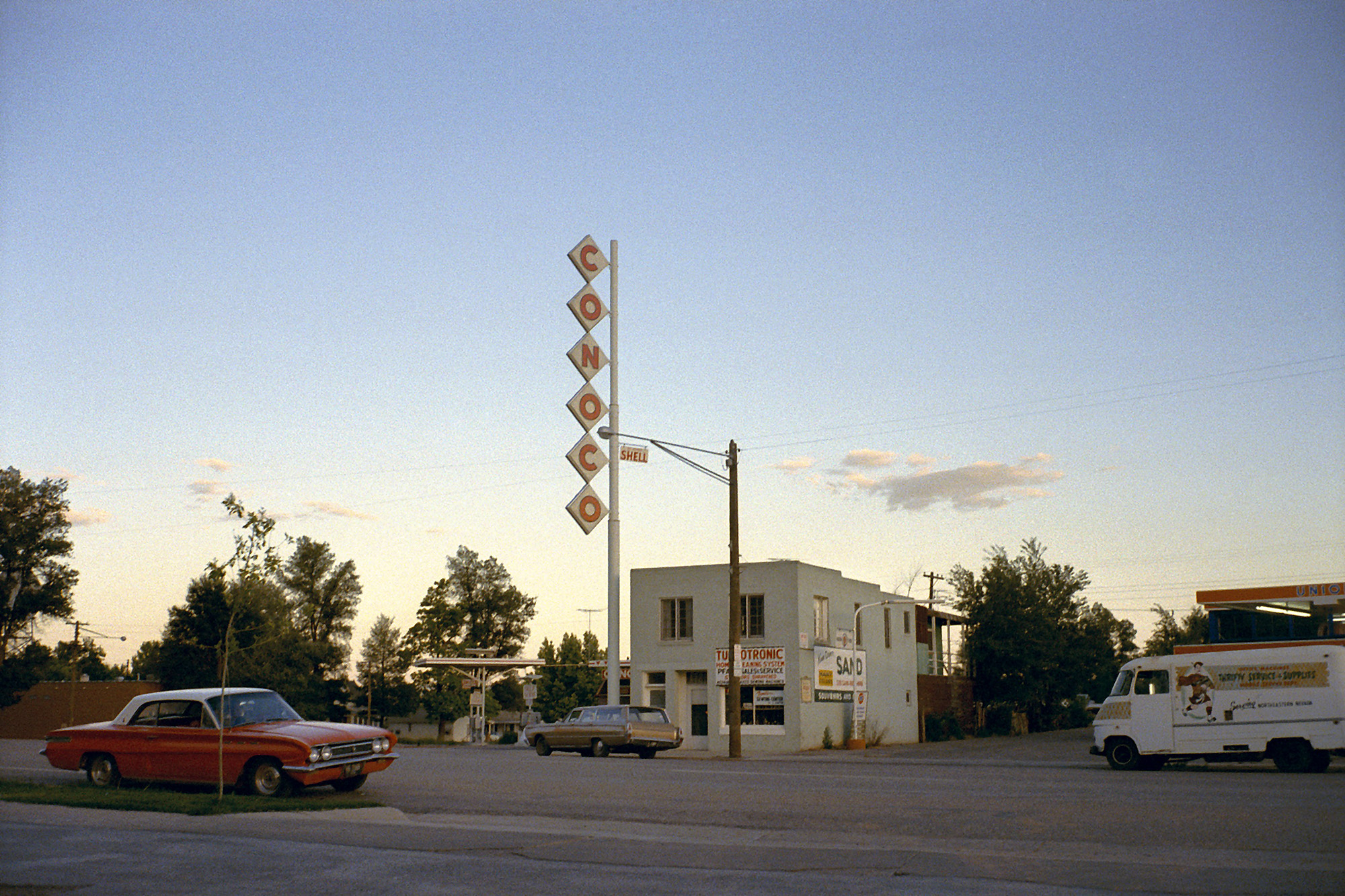
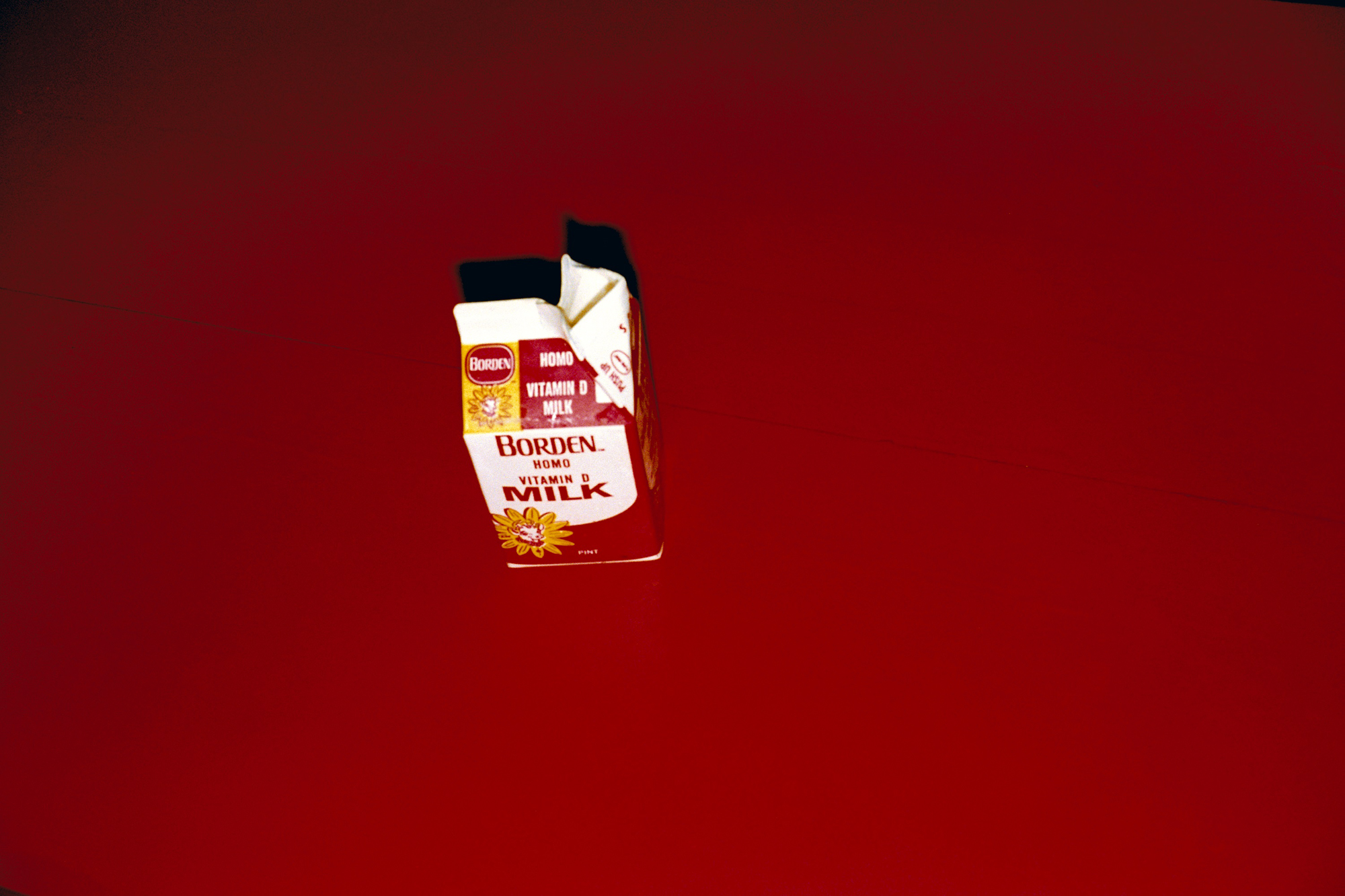

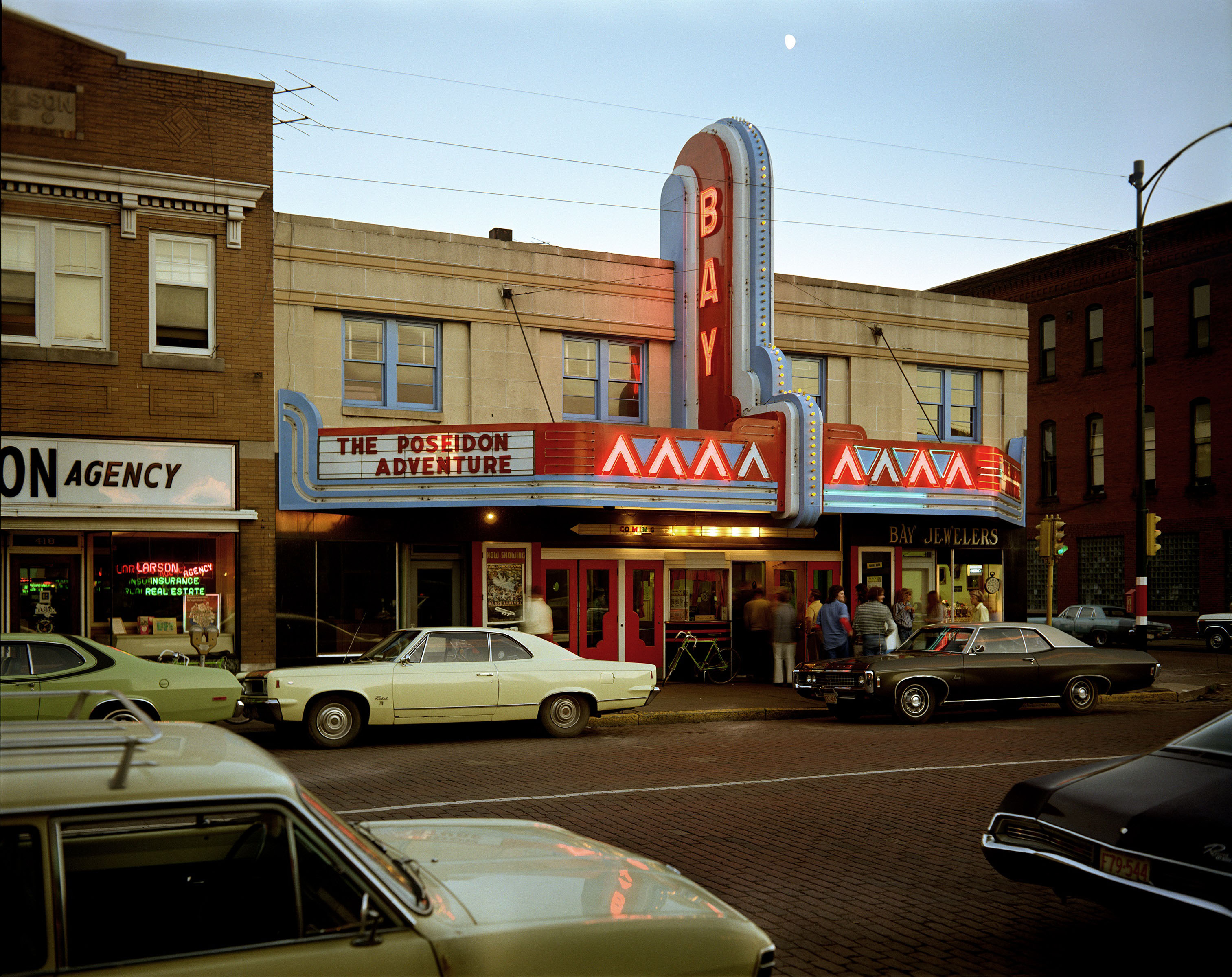


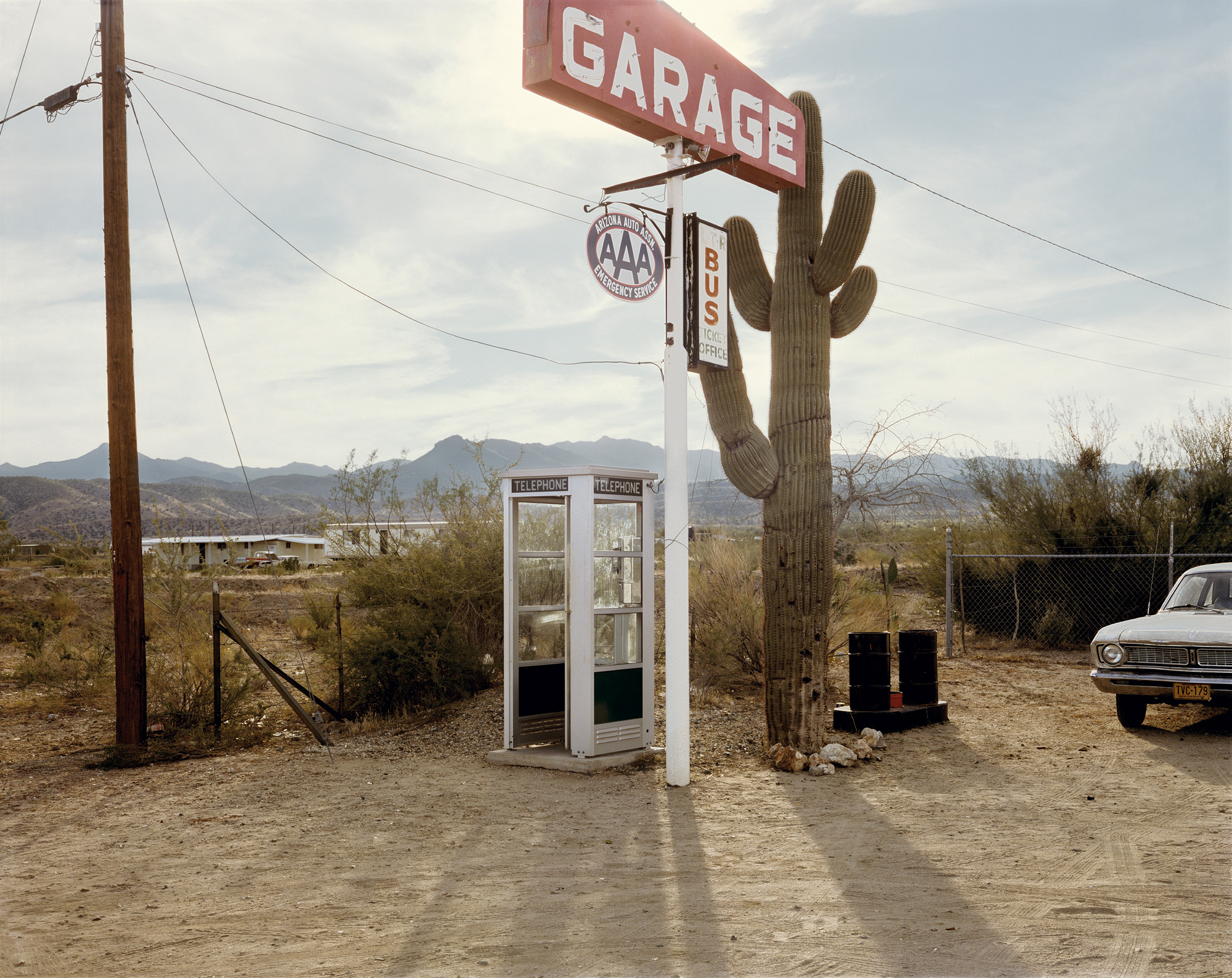


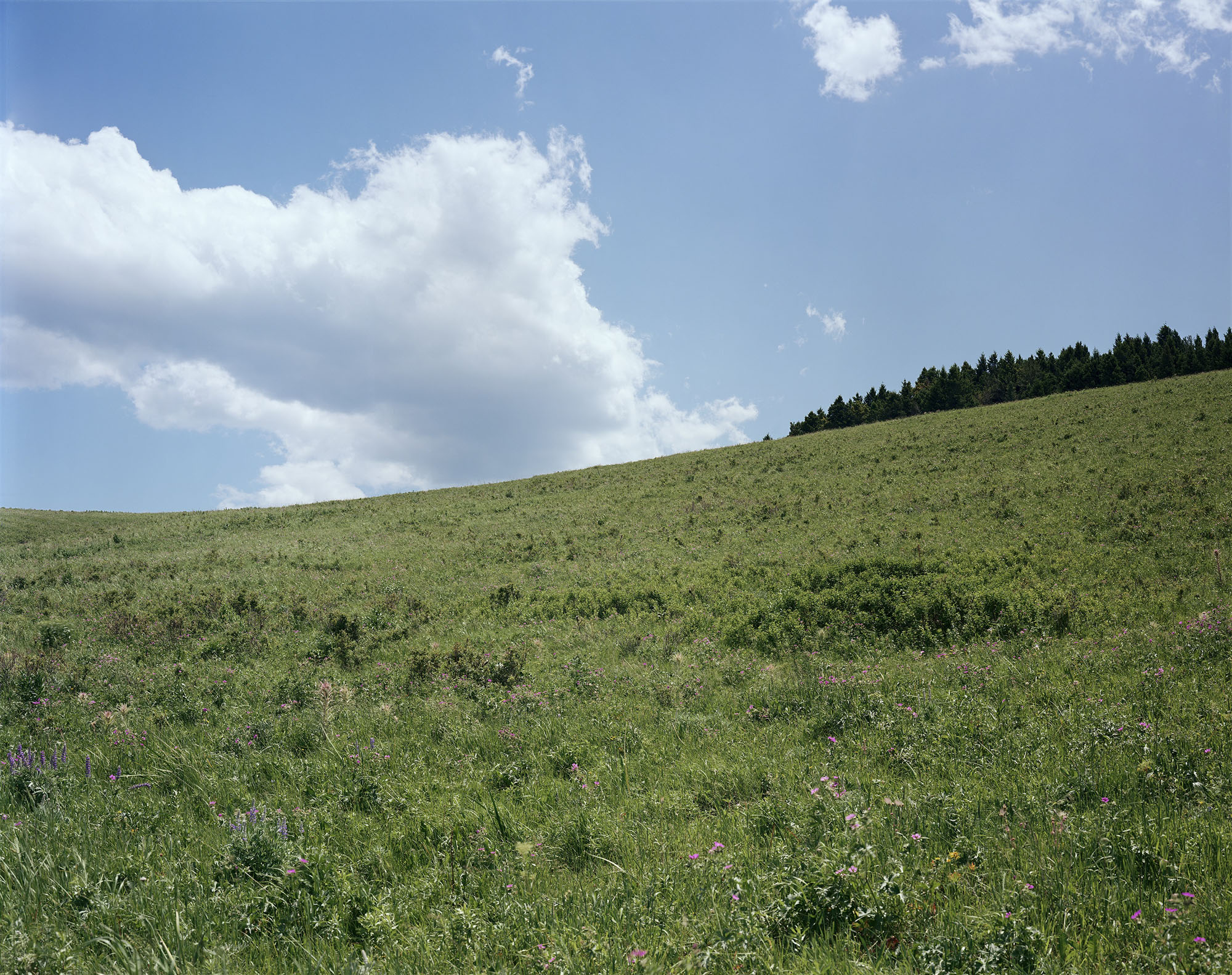


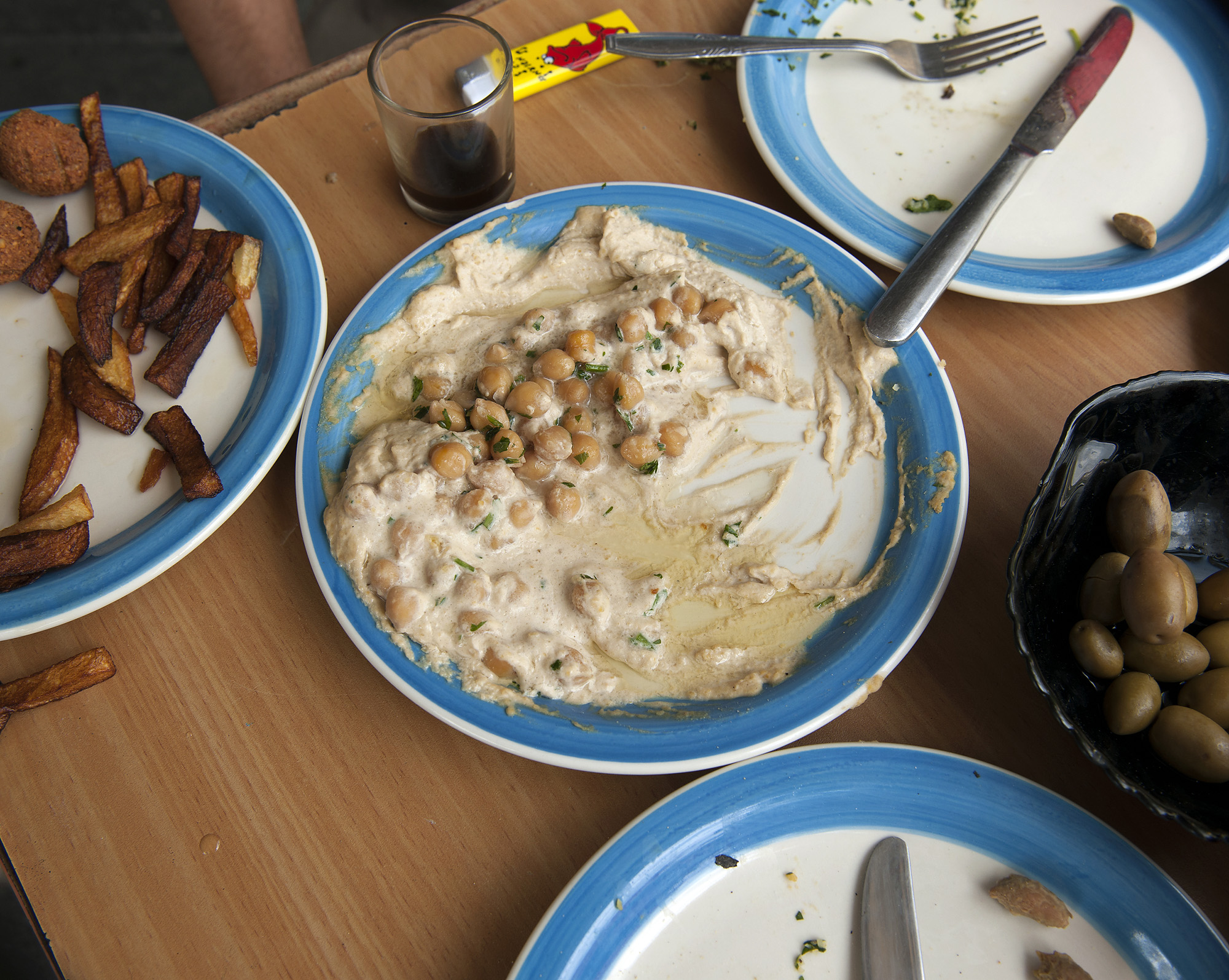

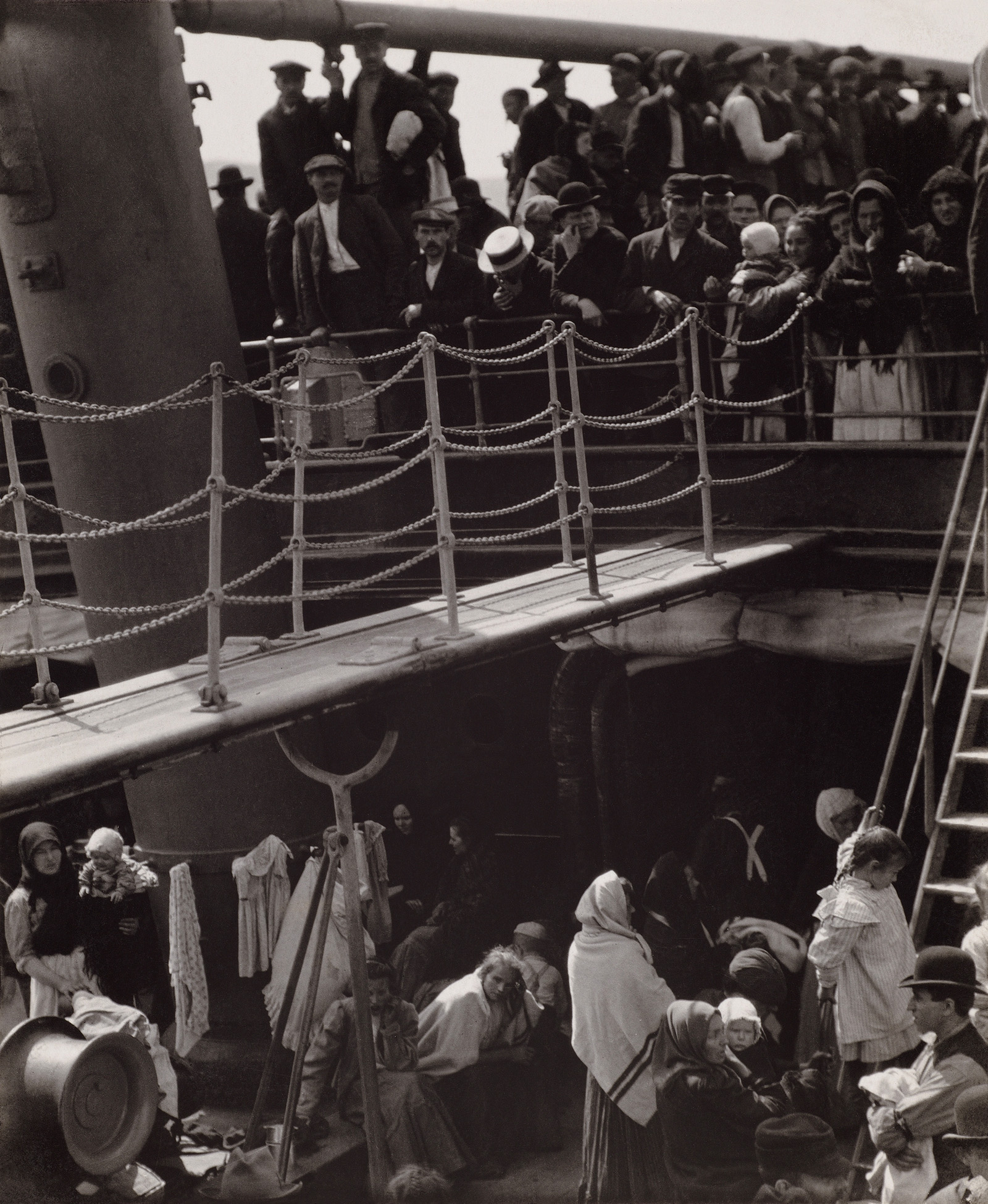
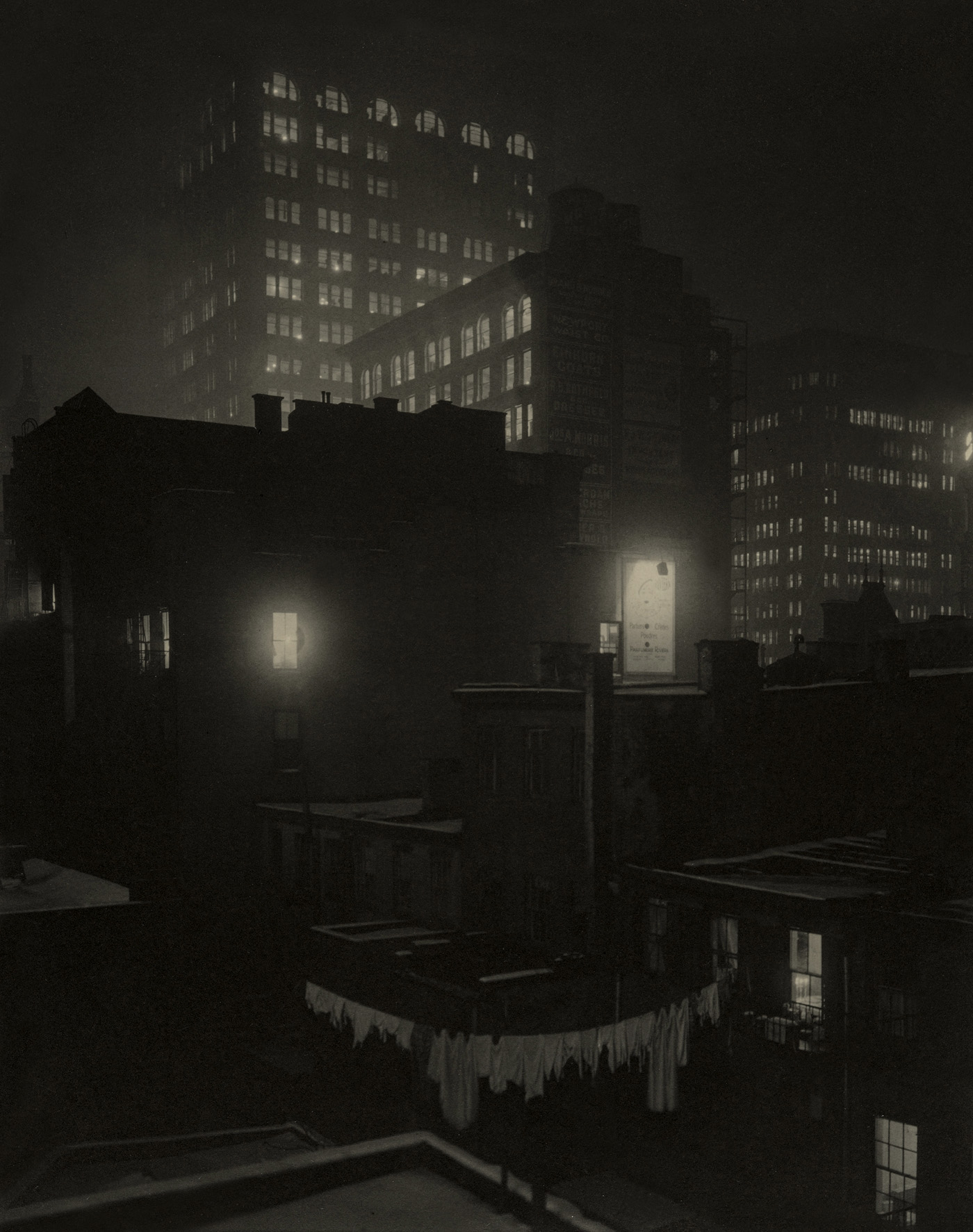
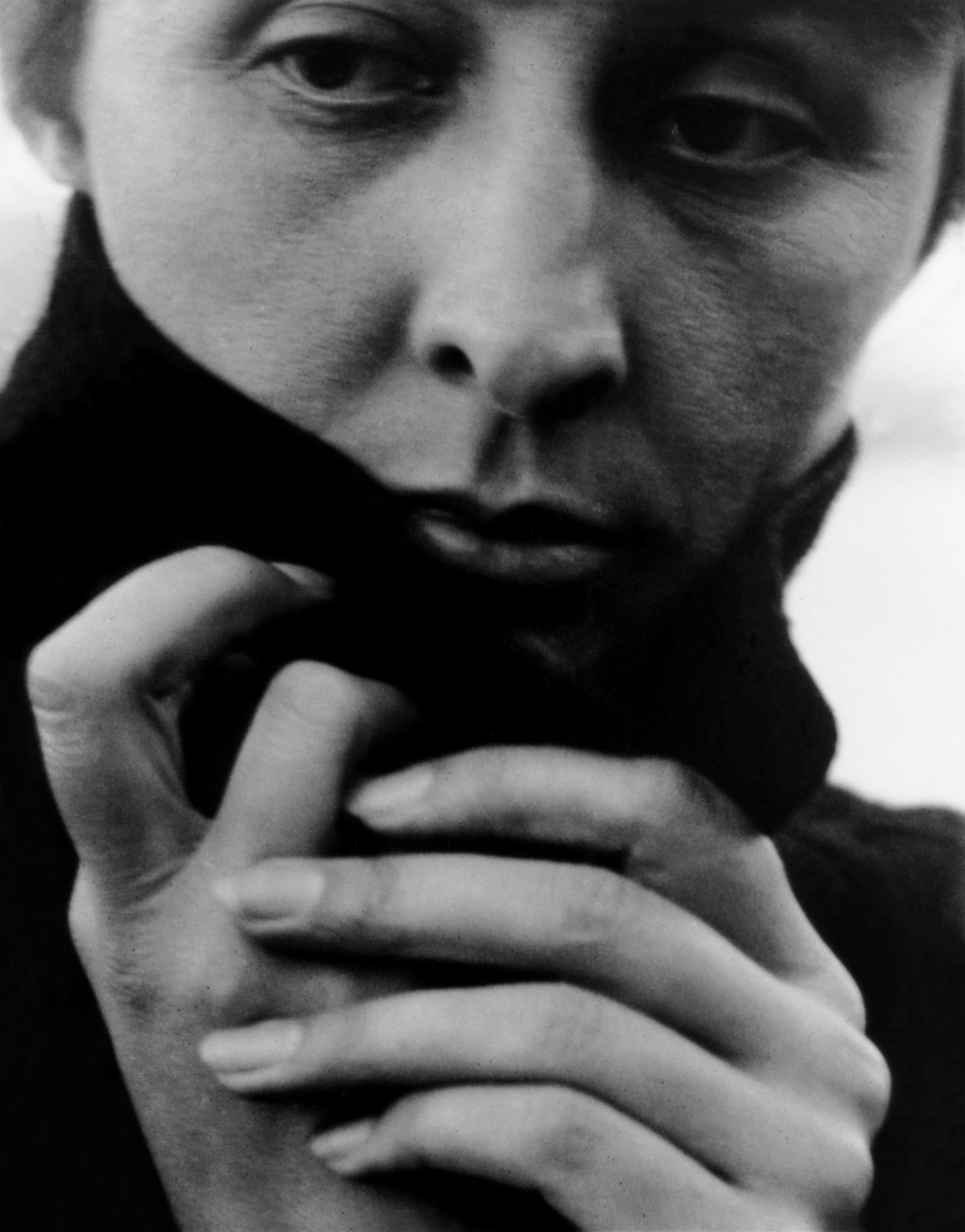
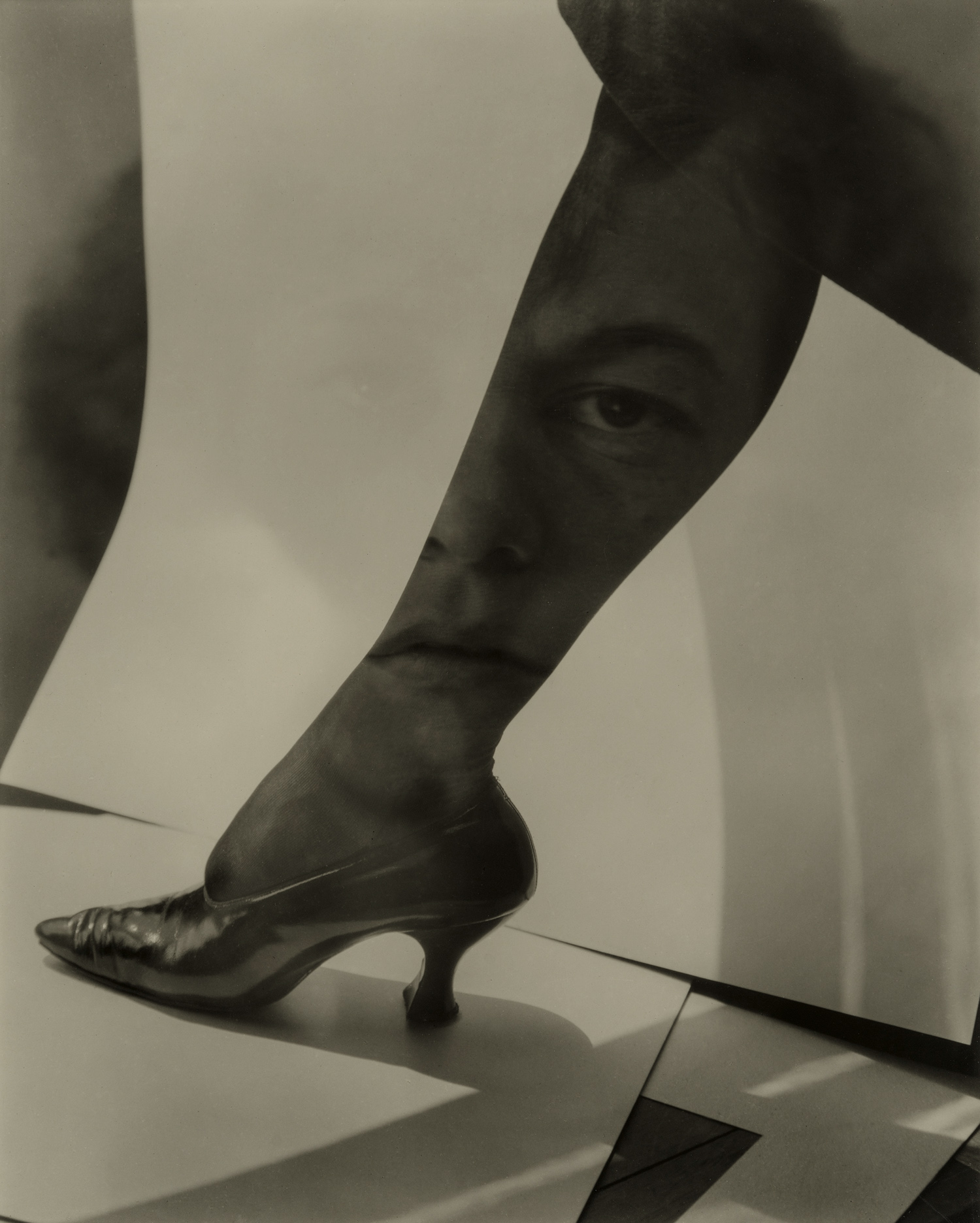


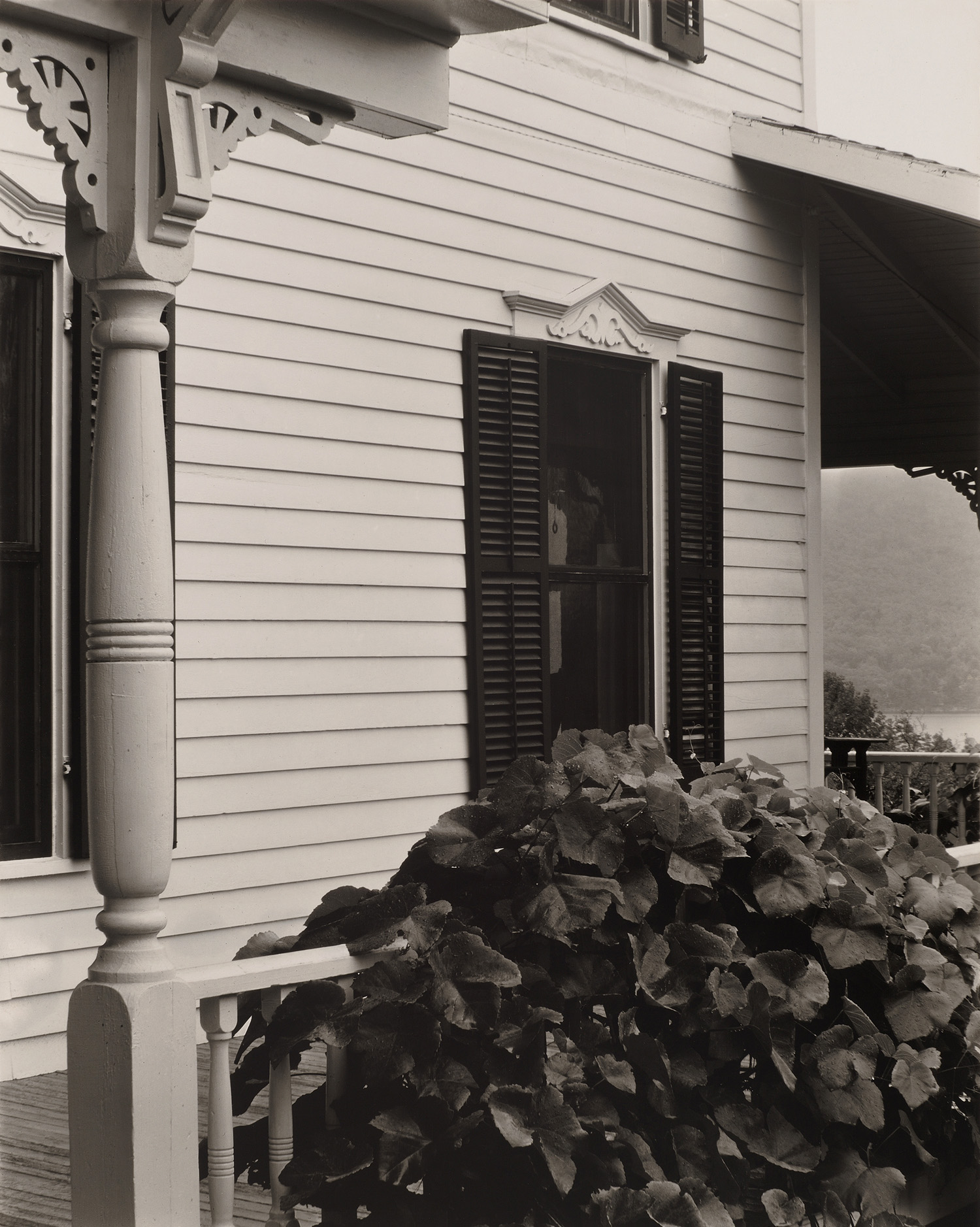
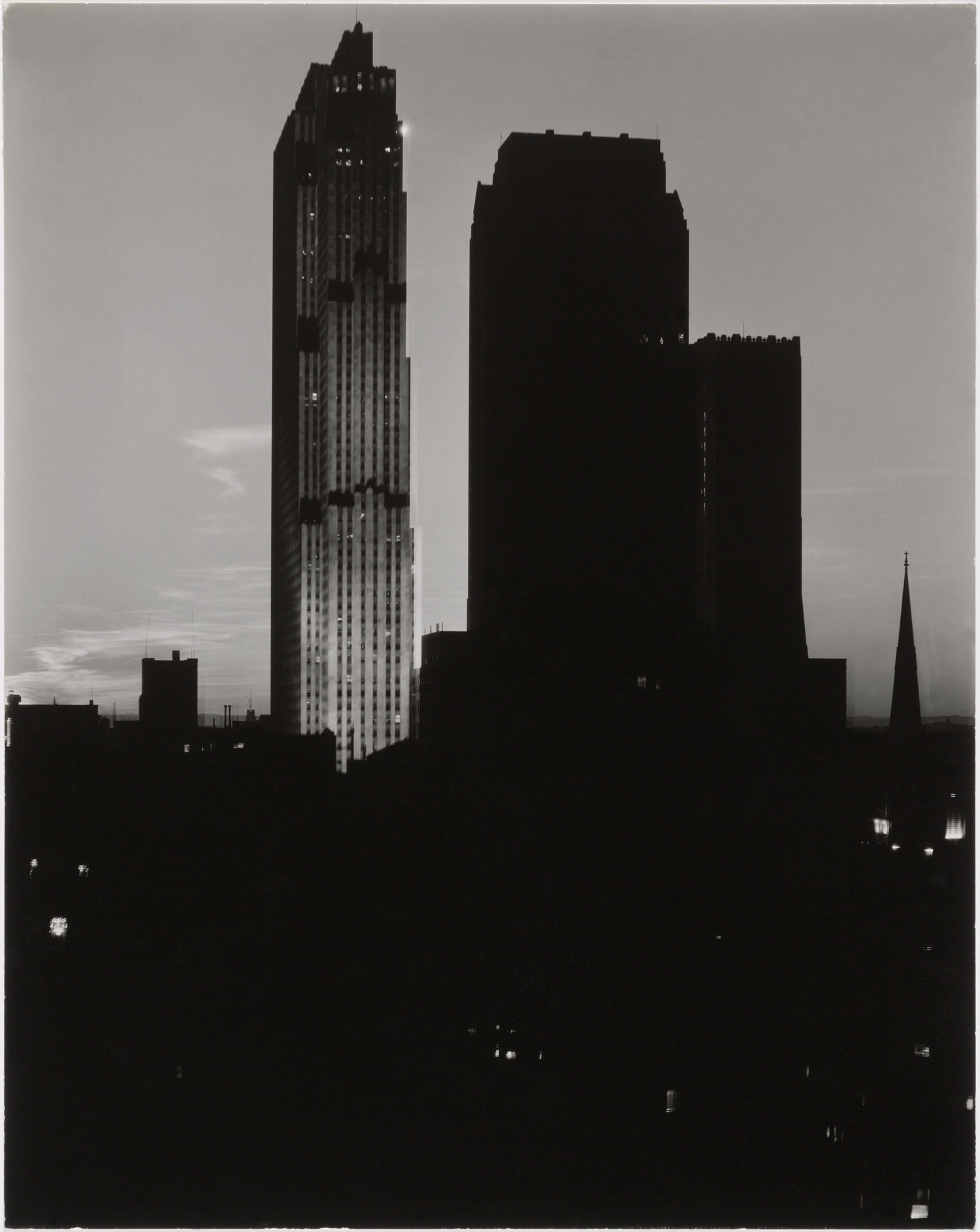
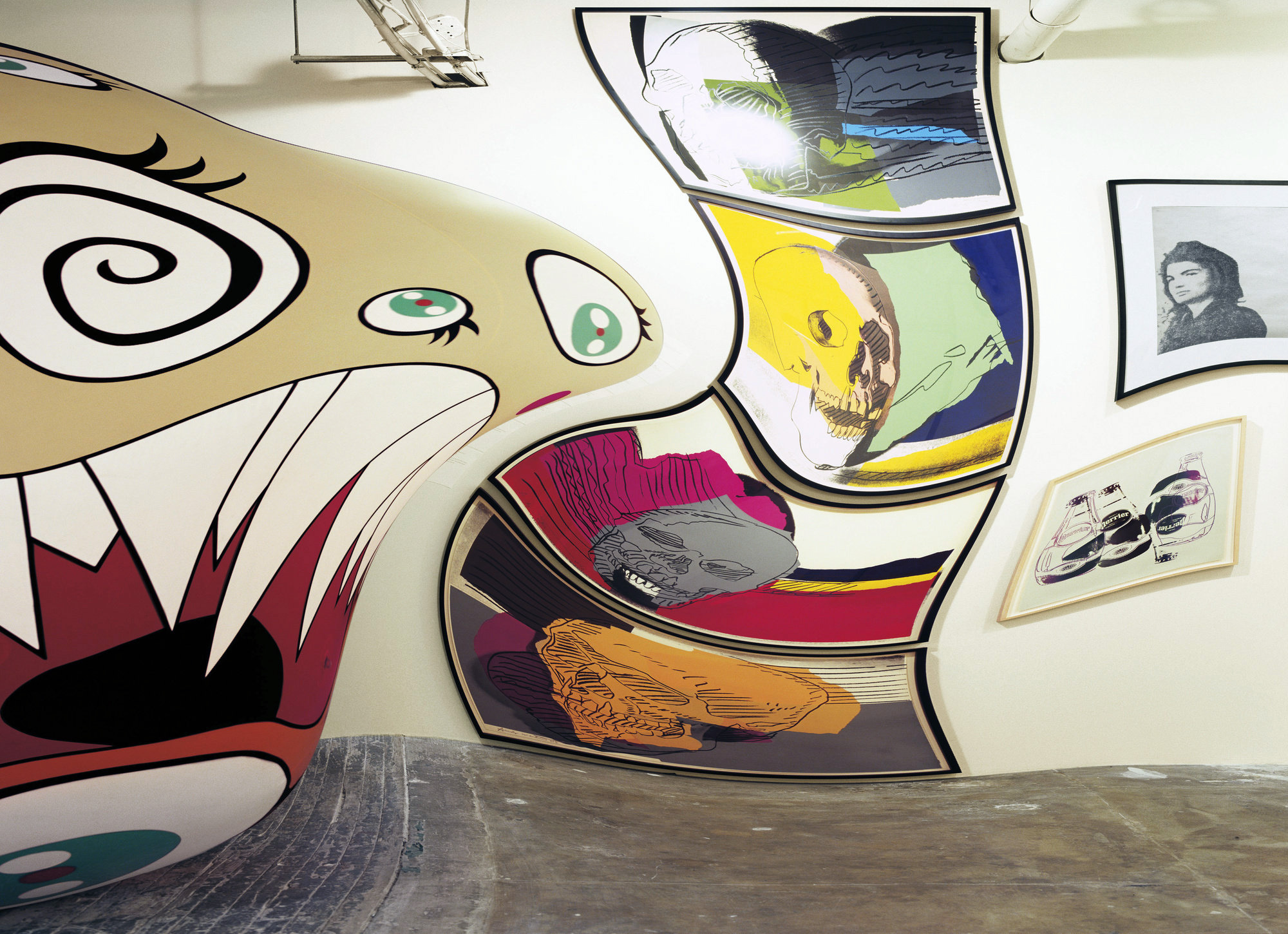

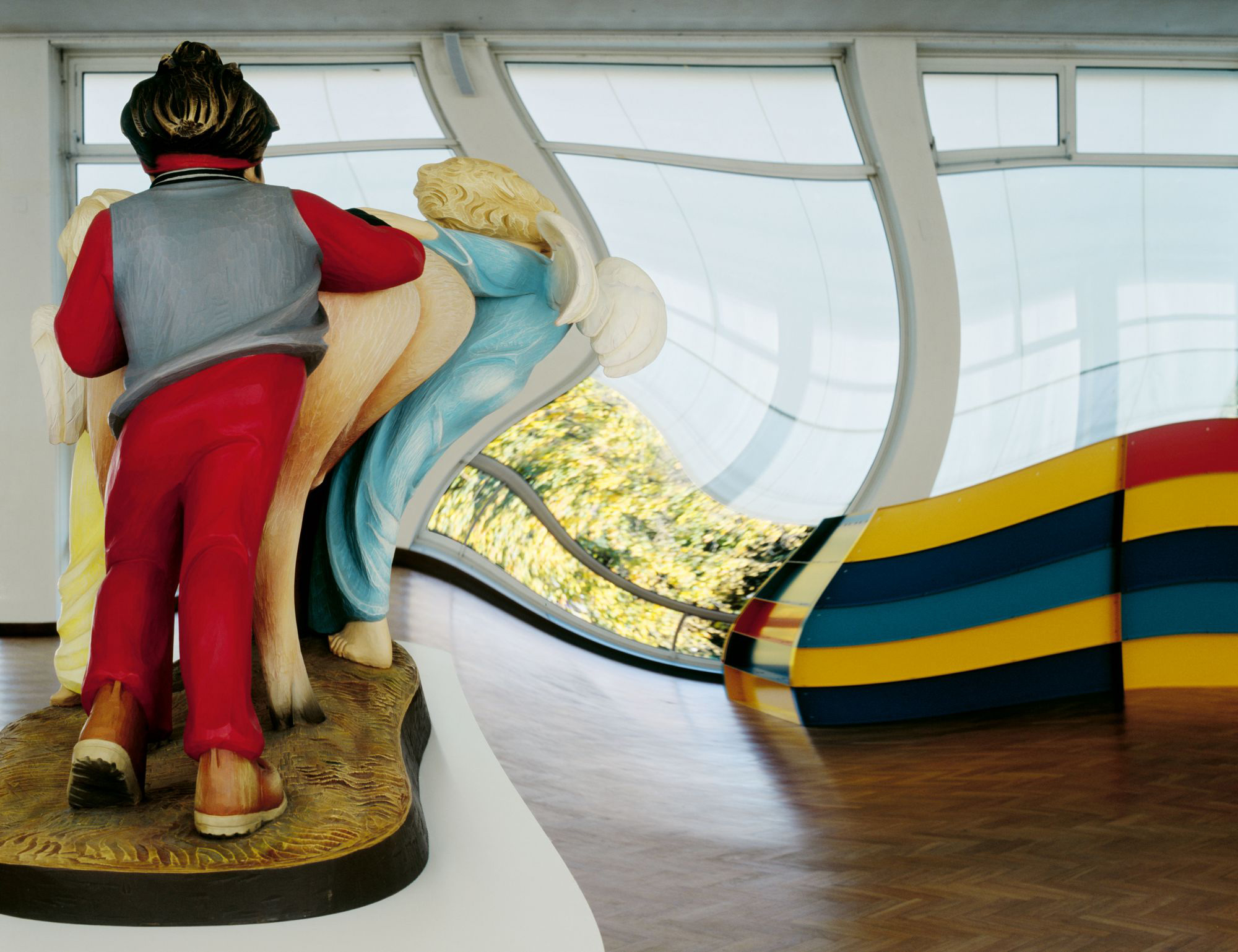
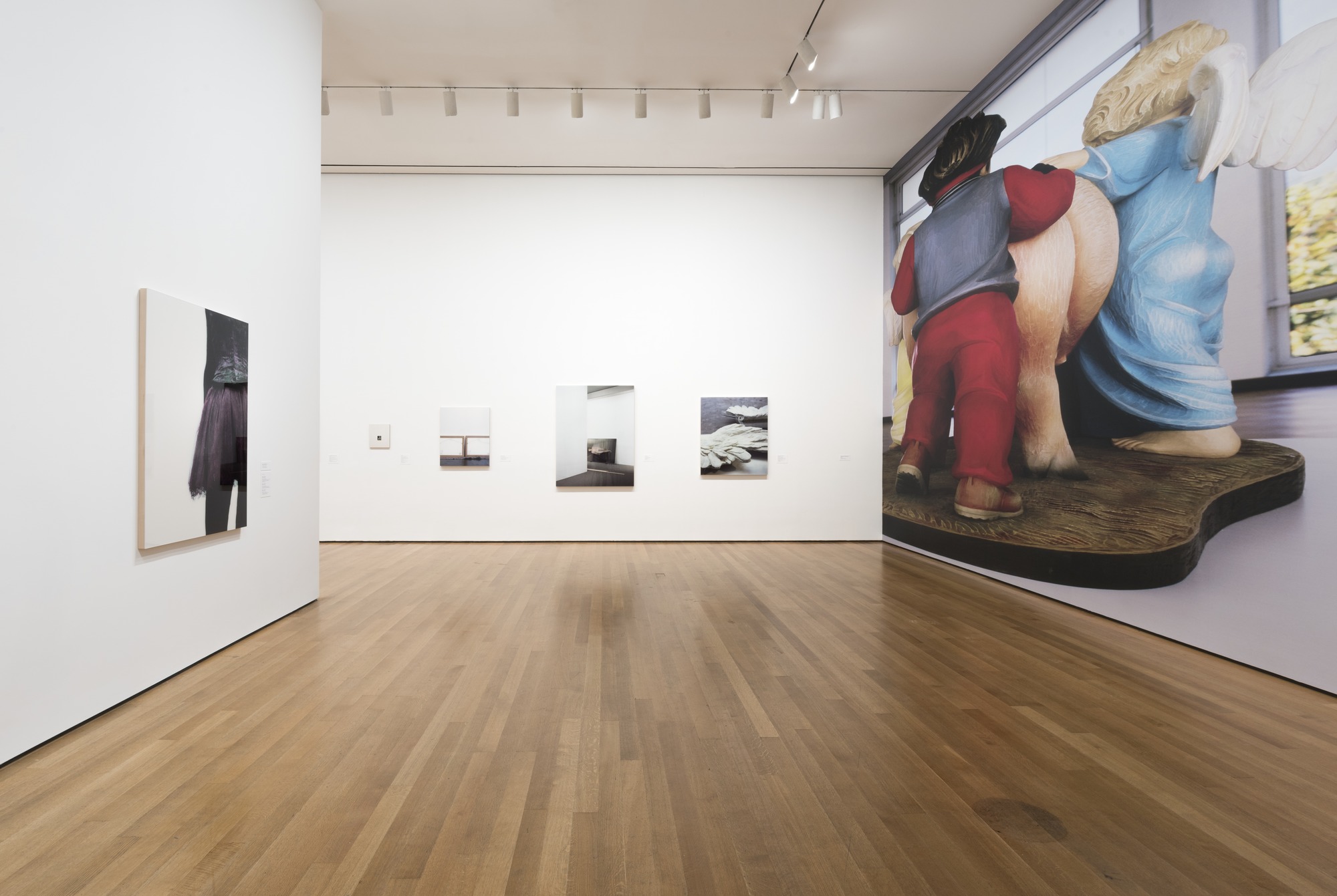
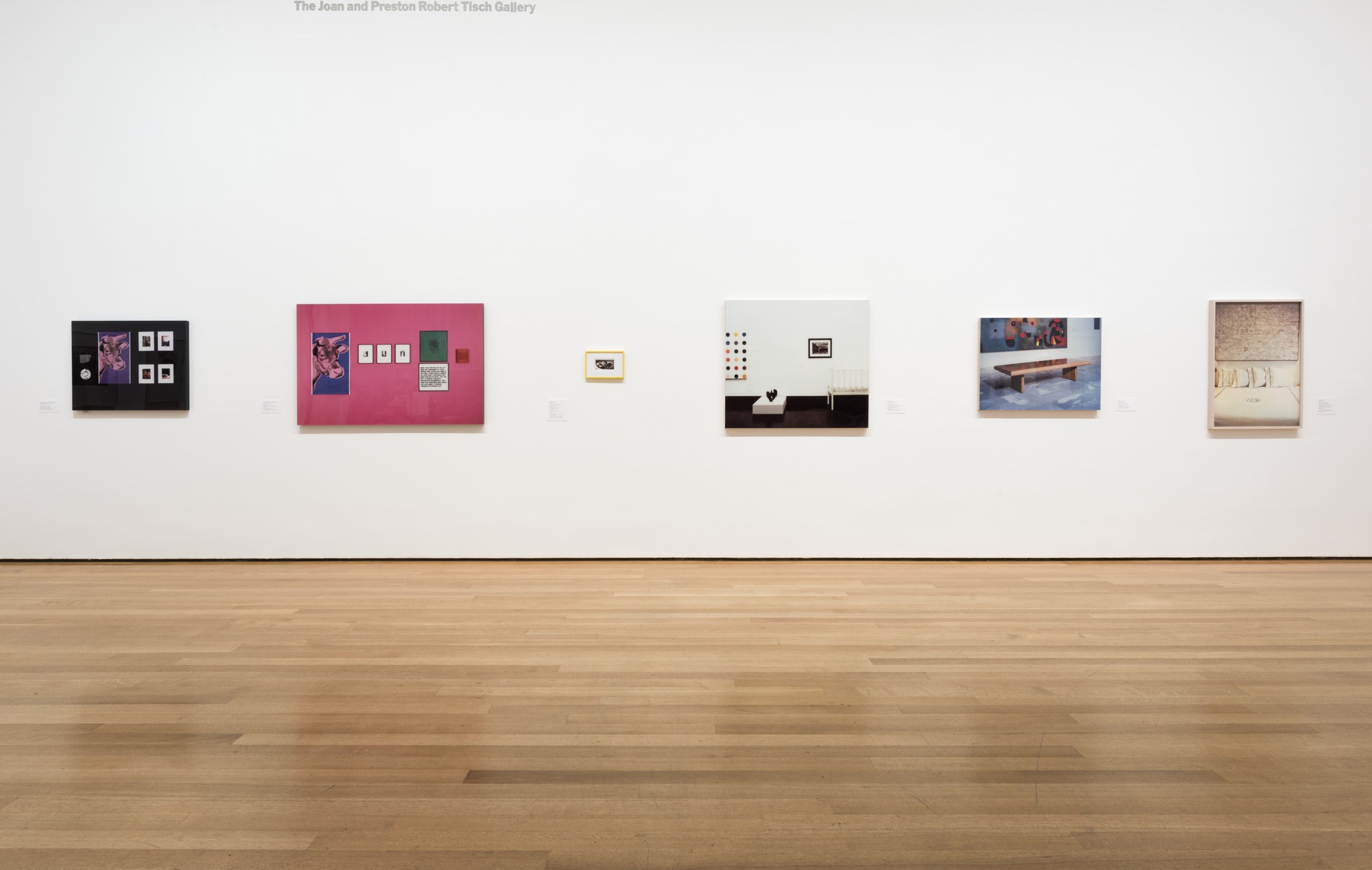
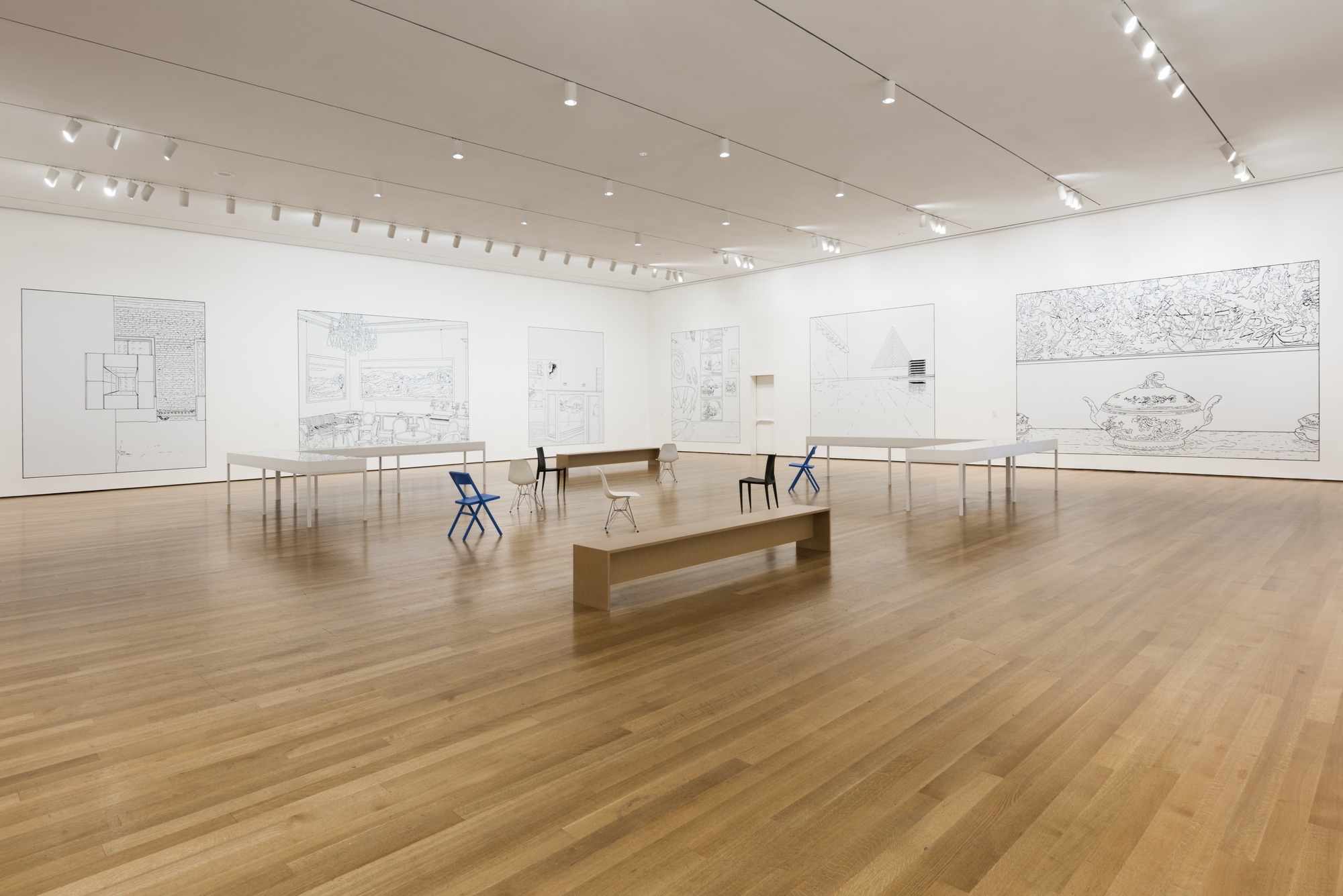
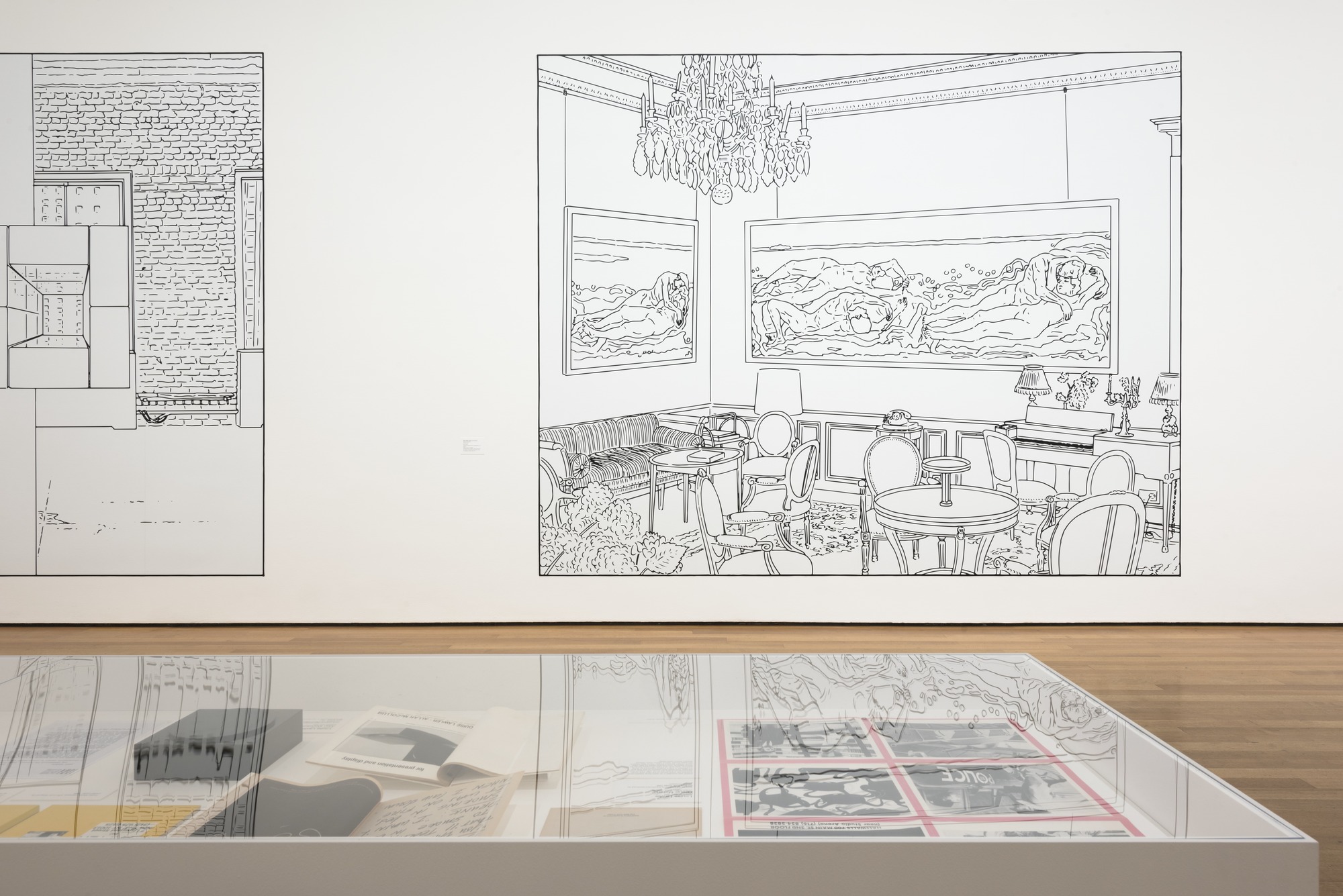
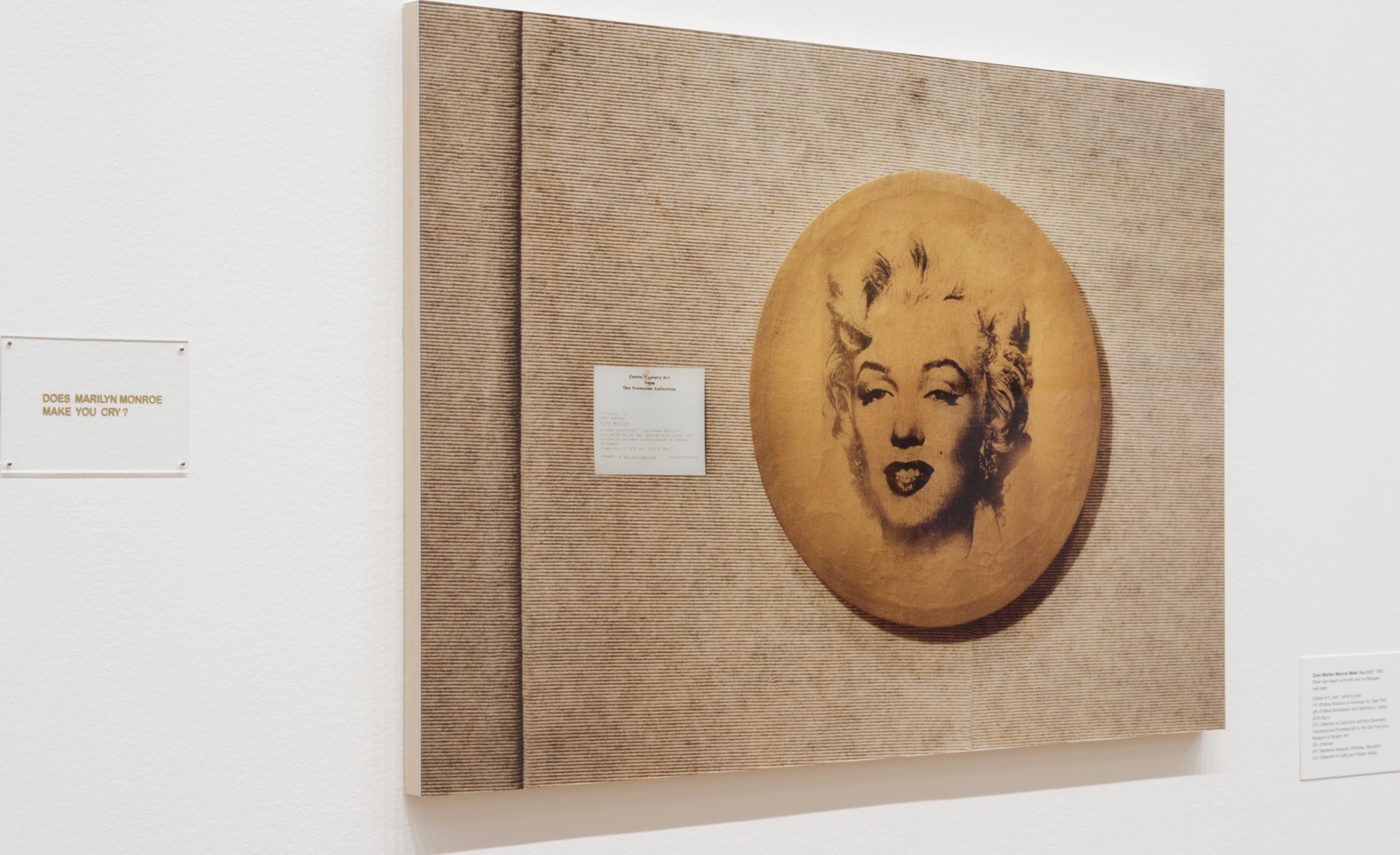
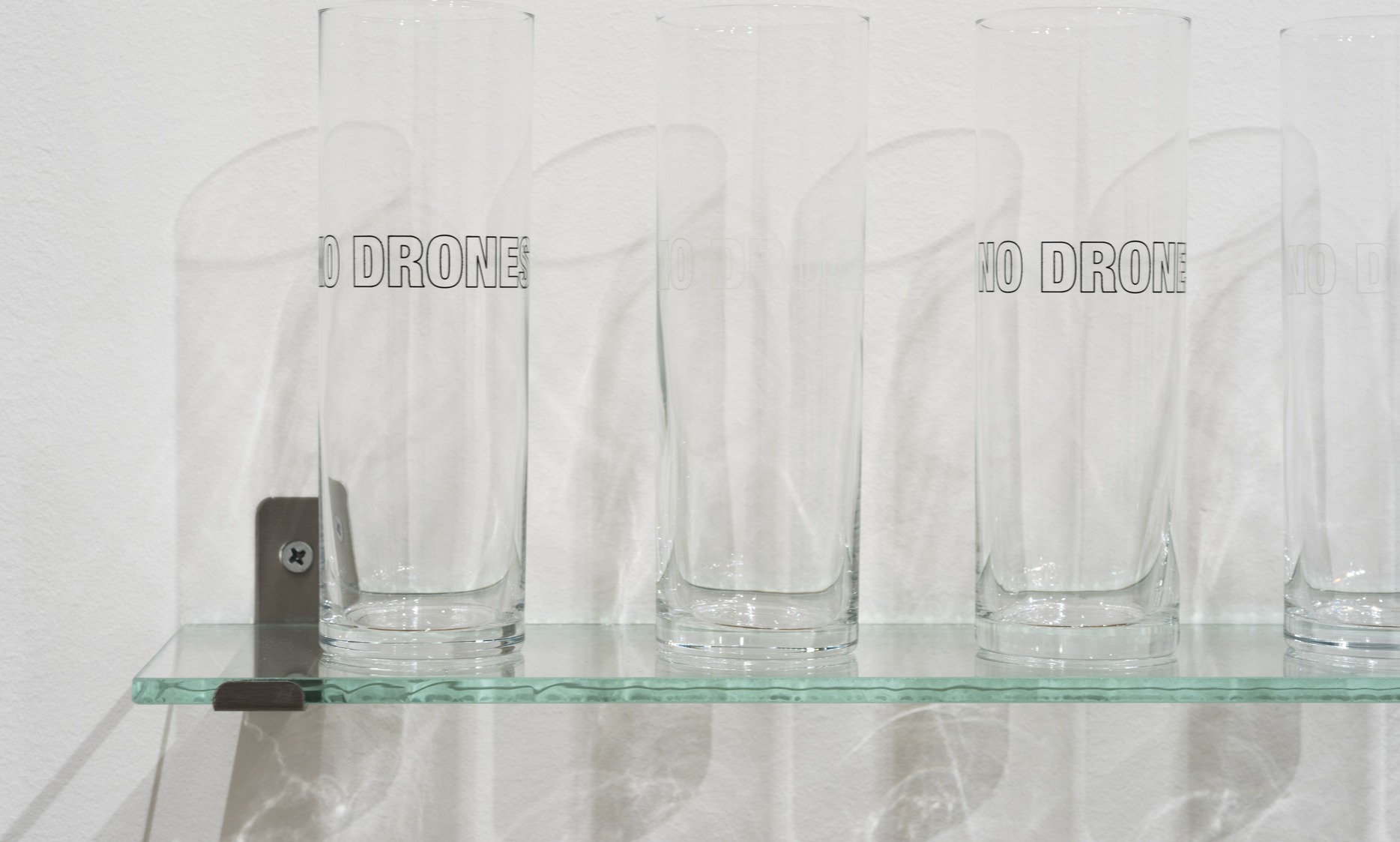
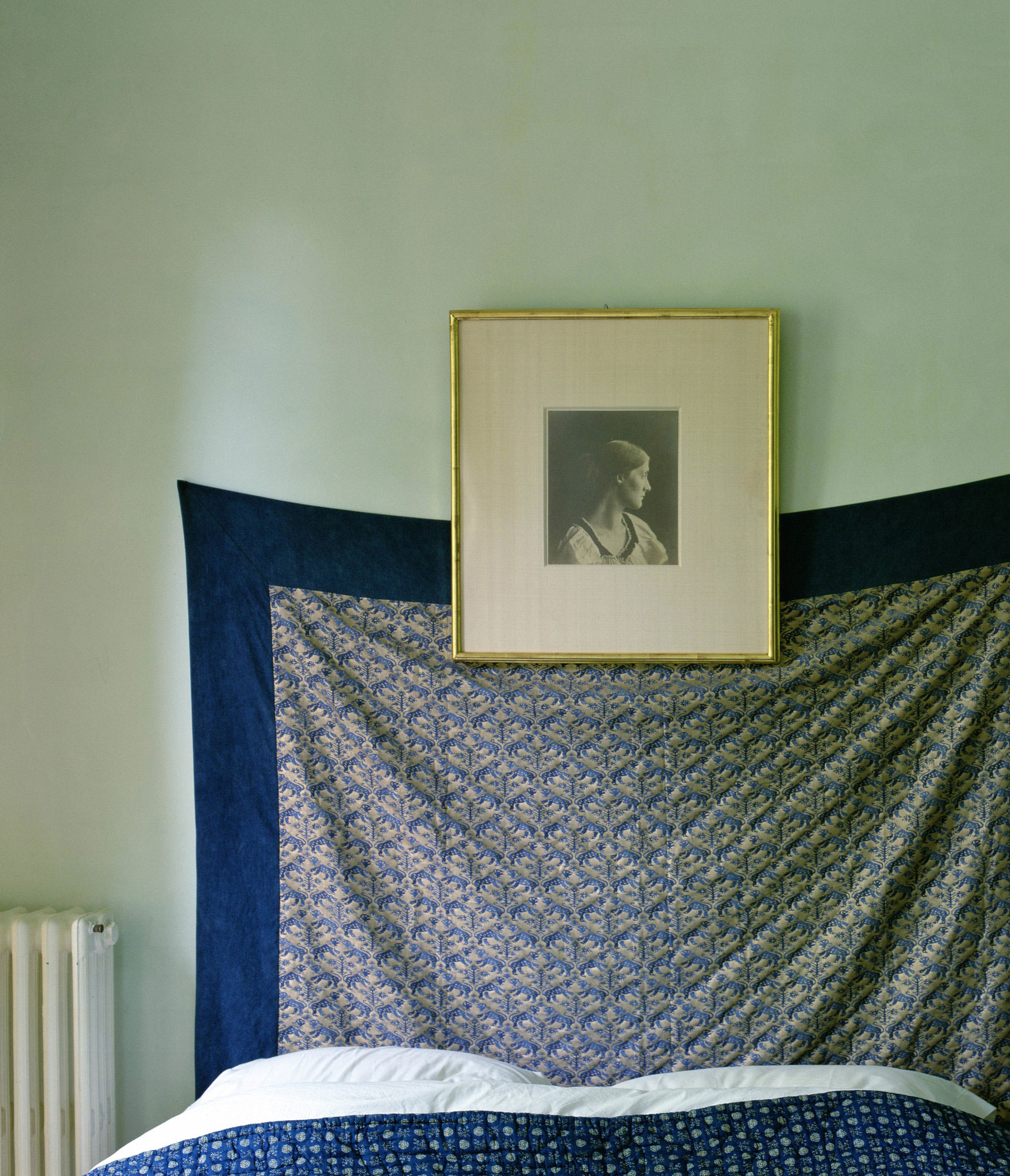

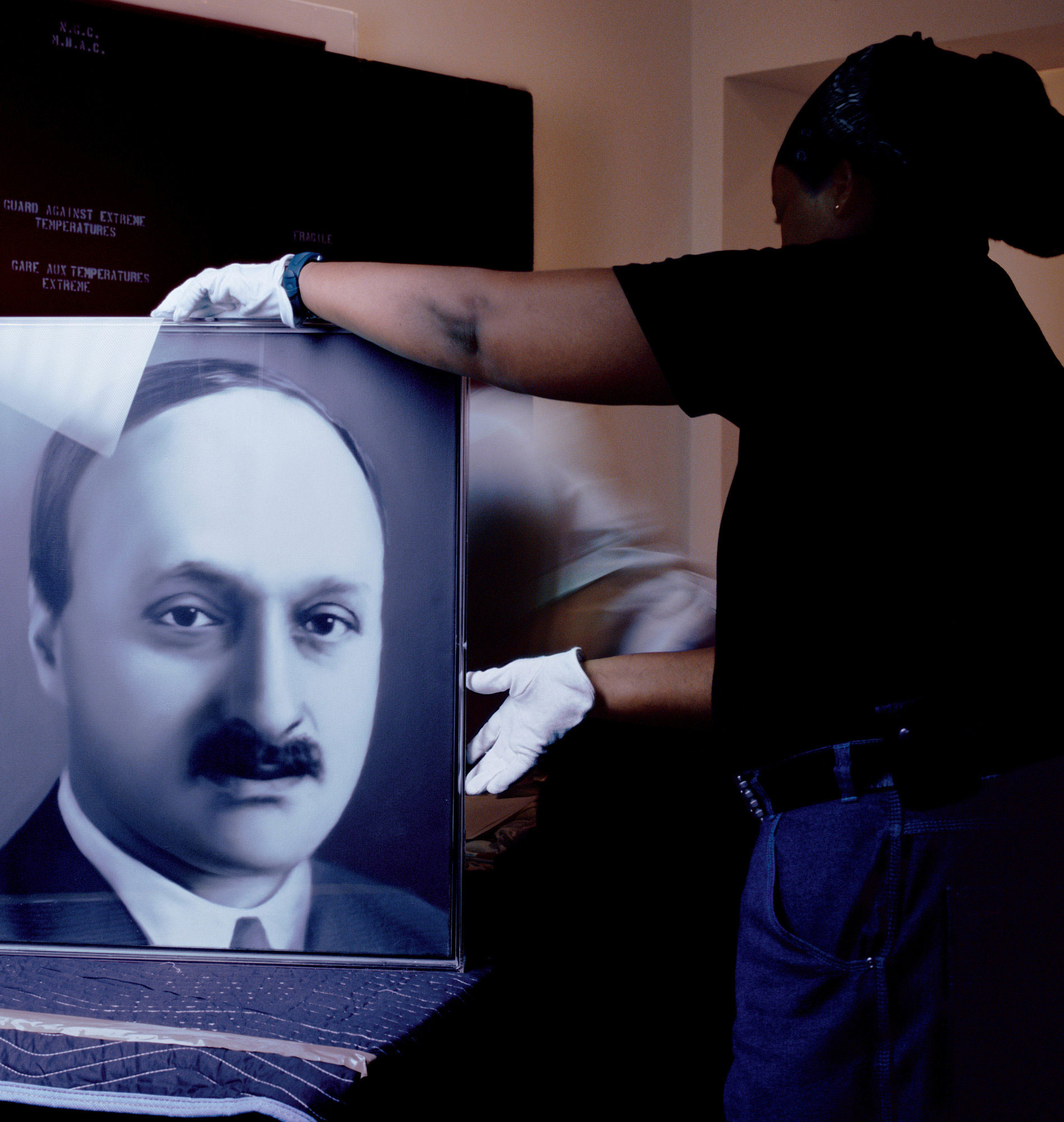

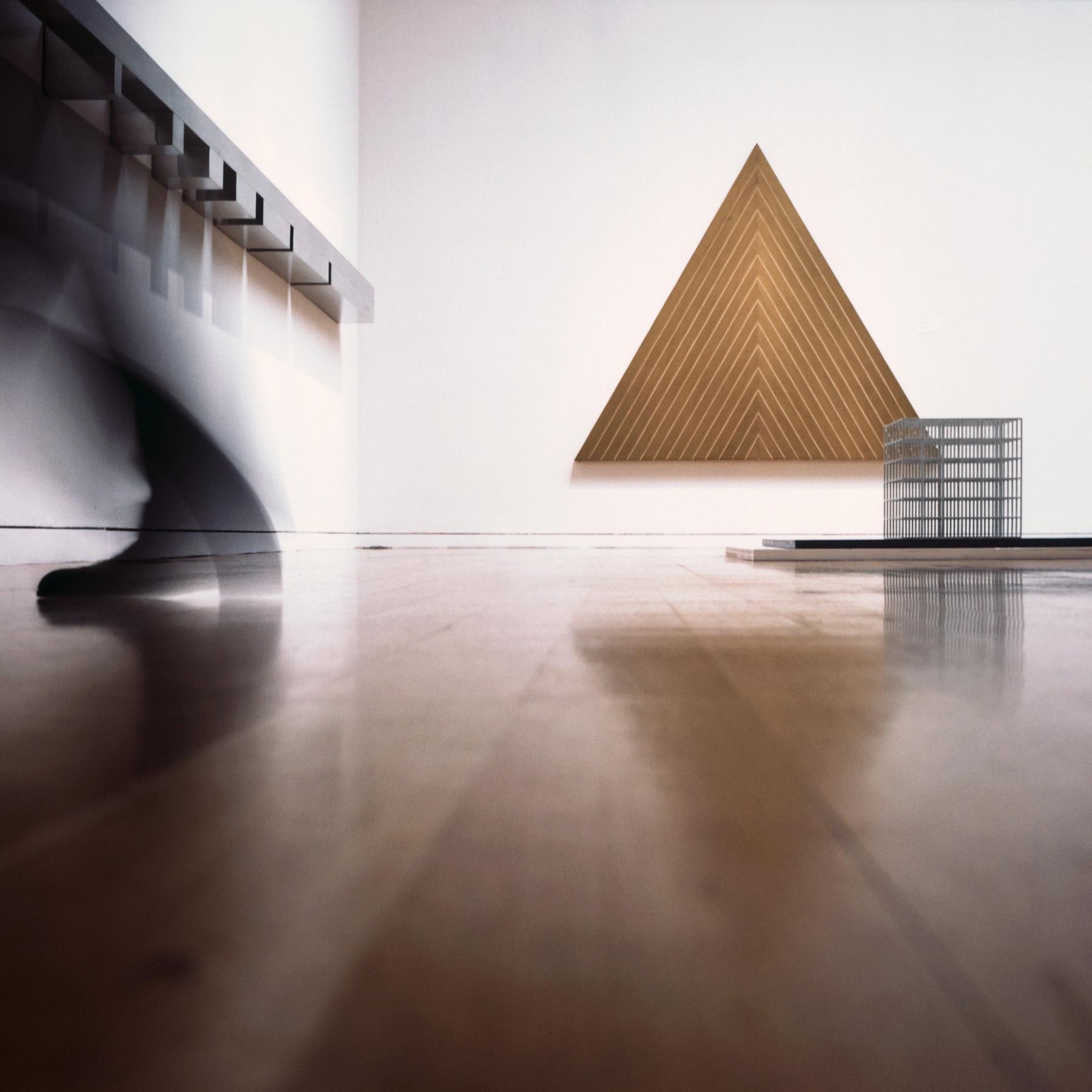

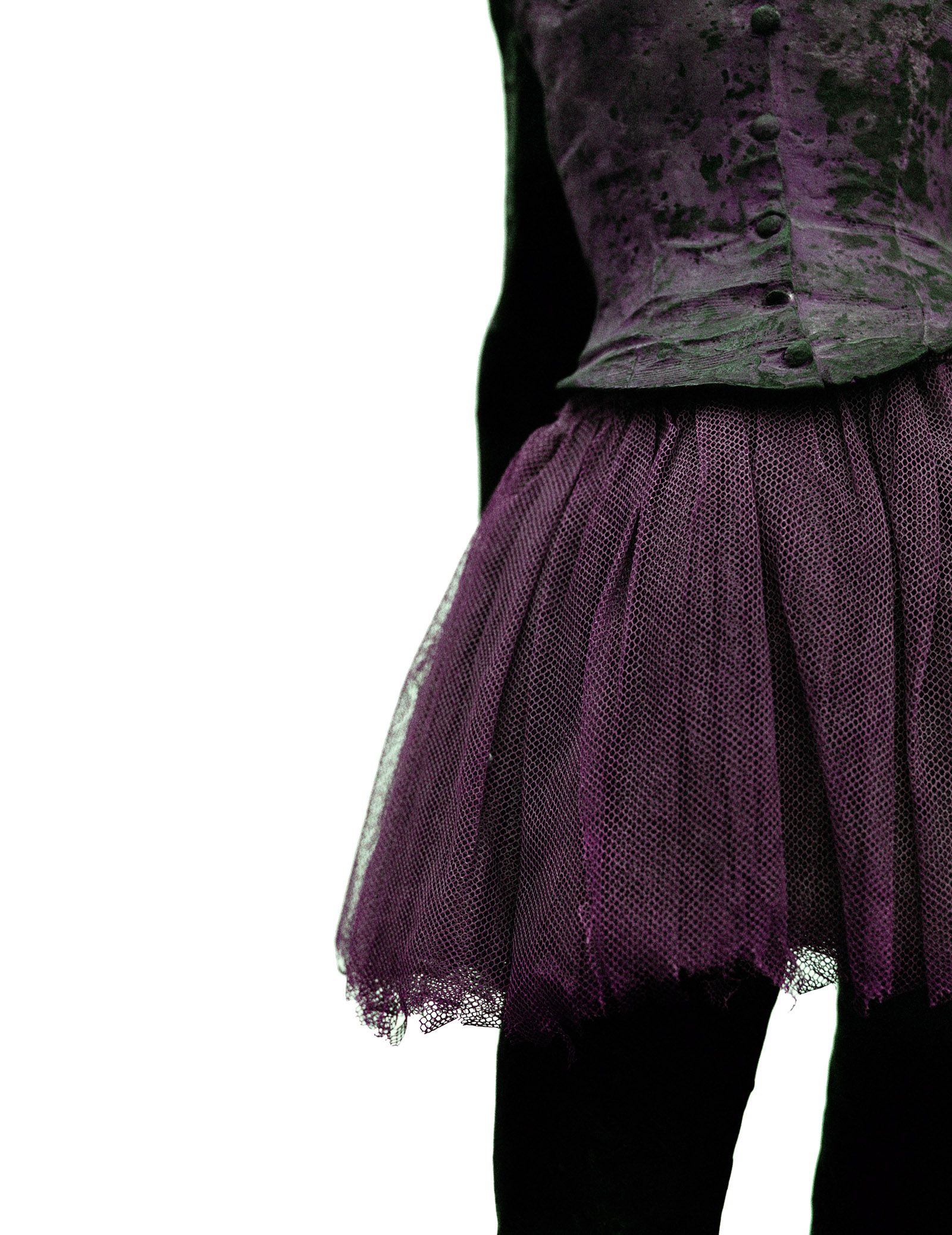




![Irving Penn (American, Plainfield, New Jersey 1917-2009 New York) 'Marchand de Concombres [Cucumber Seller]' 1950, printed 1976](https://artblart.com/wp-content/uploads/2017/07/penn-marchand-de-concombres-web1.jpg "Irving Penn (American, Plainfield, New Jersey 1917-2009 New York) 'Marchand de Concombres [Cucumber Seller]' 1950, printed 1976")





![Irving Penn (American, Plainfield, New Jersey 1917-2009 New York) 'Ballet Society, New York [Tanaquil Le Clercq with Corrado Cagli, Vittorio Rieti, and George Balanchine]' March 5, 1948, printed November 1976](https://artblart.com/wp-content/uploads/2017/05/penn-ballet-society-web.jpg "Irving Penn (American, Plainfield, New Jersey 1917-2009 New York) 'Ballet Society, New York [Tanaquil Le Clercq with Corrado Cagli, Vittorio Rieti, and George Balanchine]' March 5, 1948, printed November 1976")




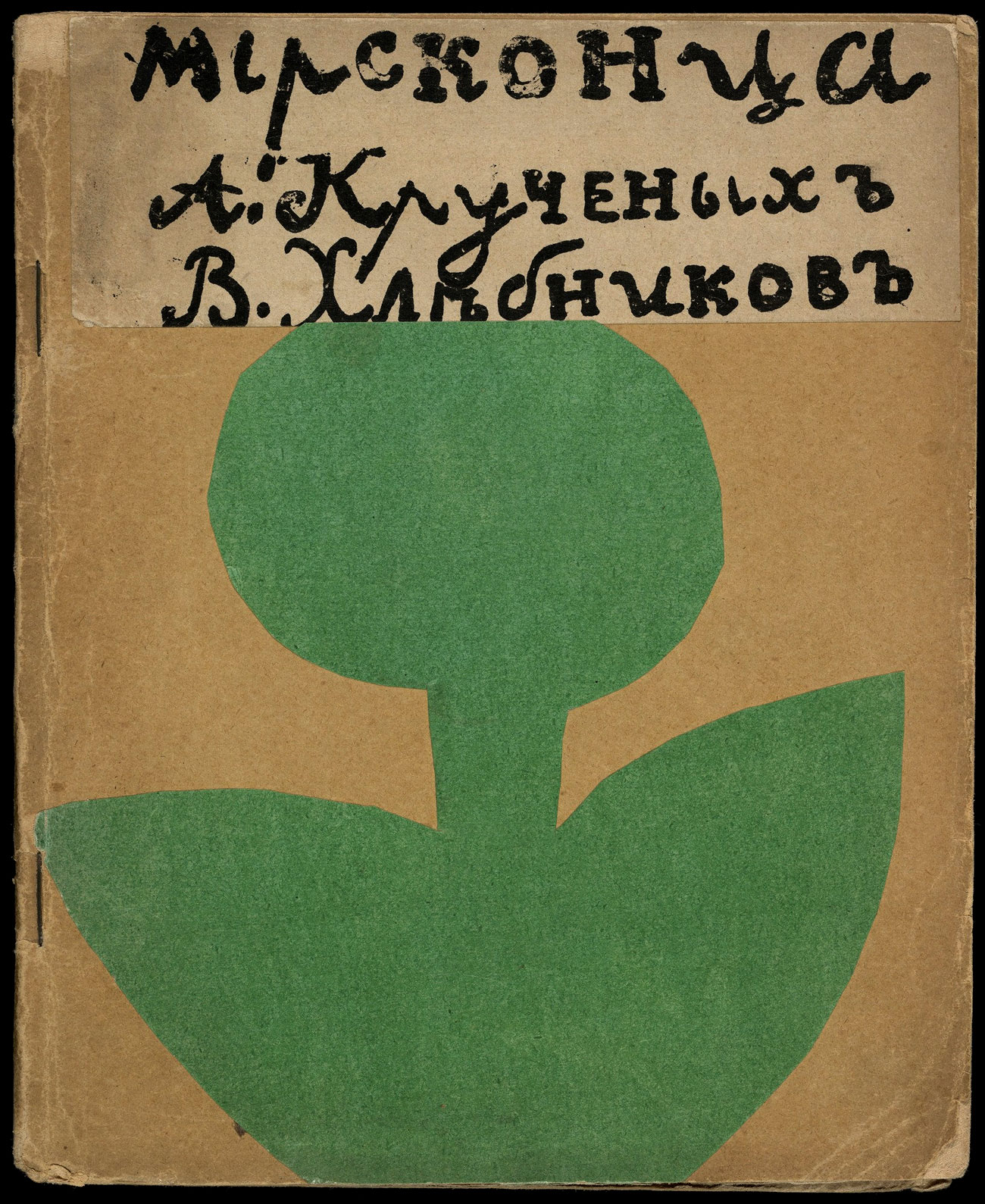


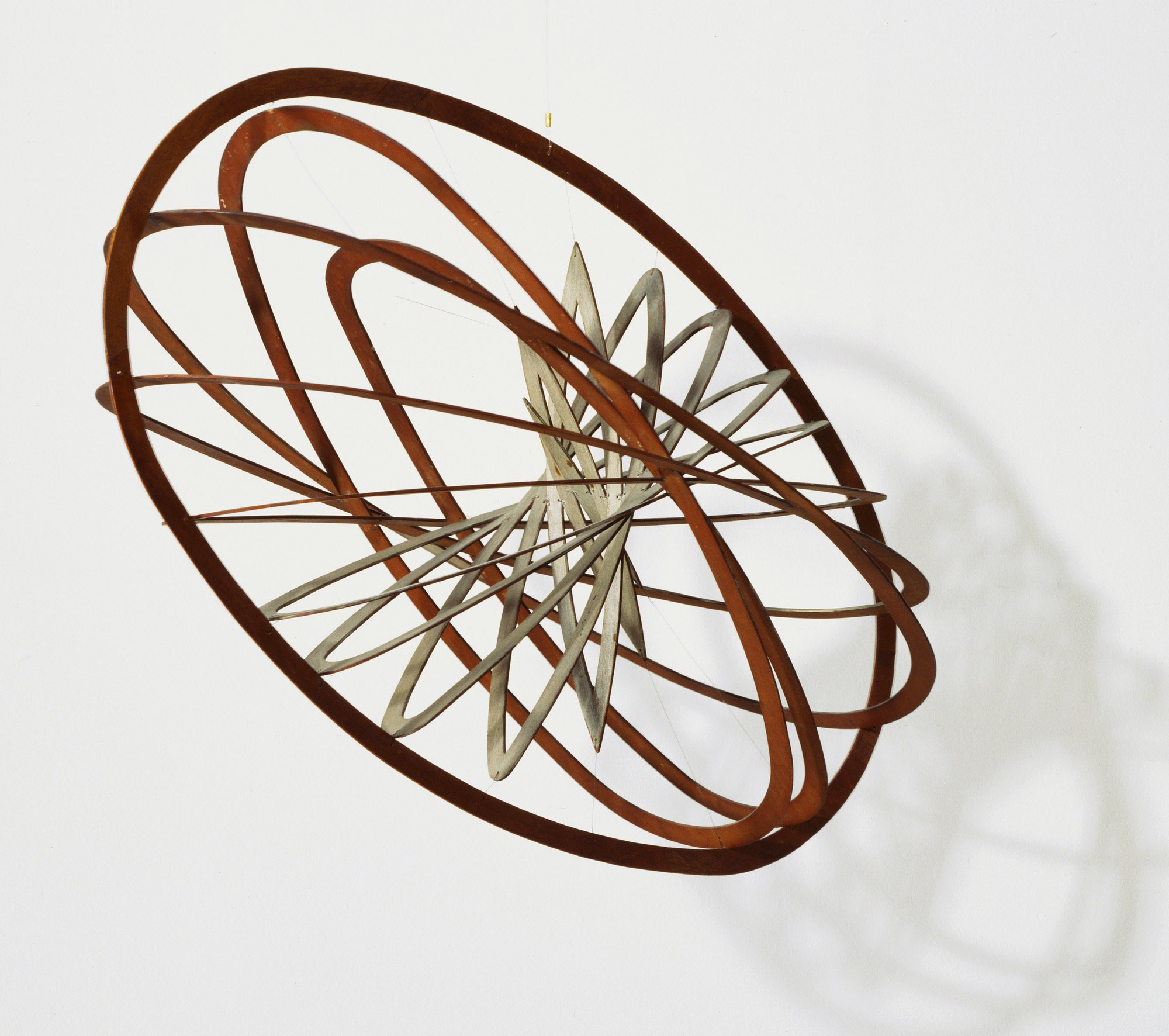
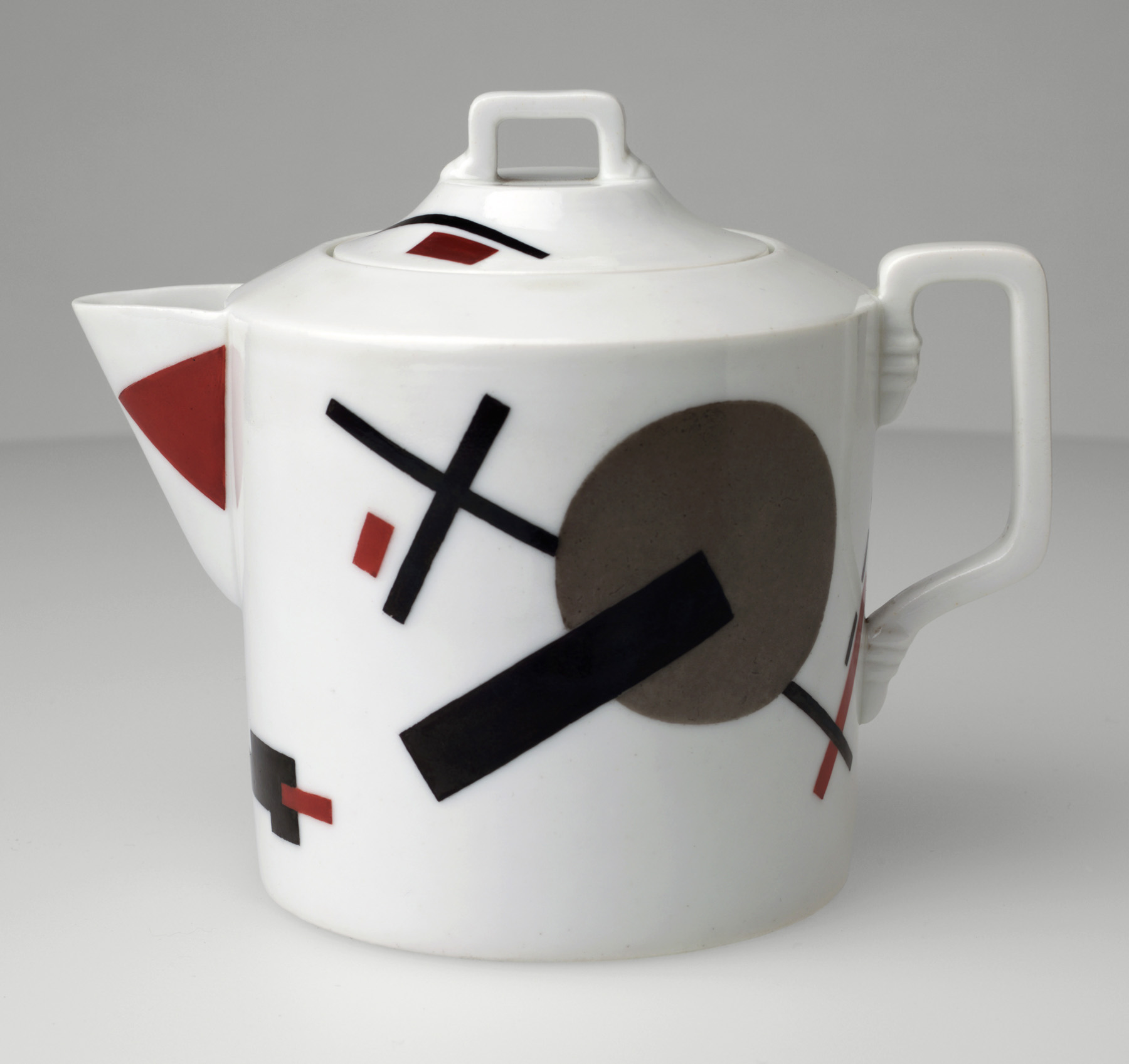
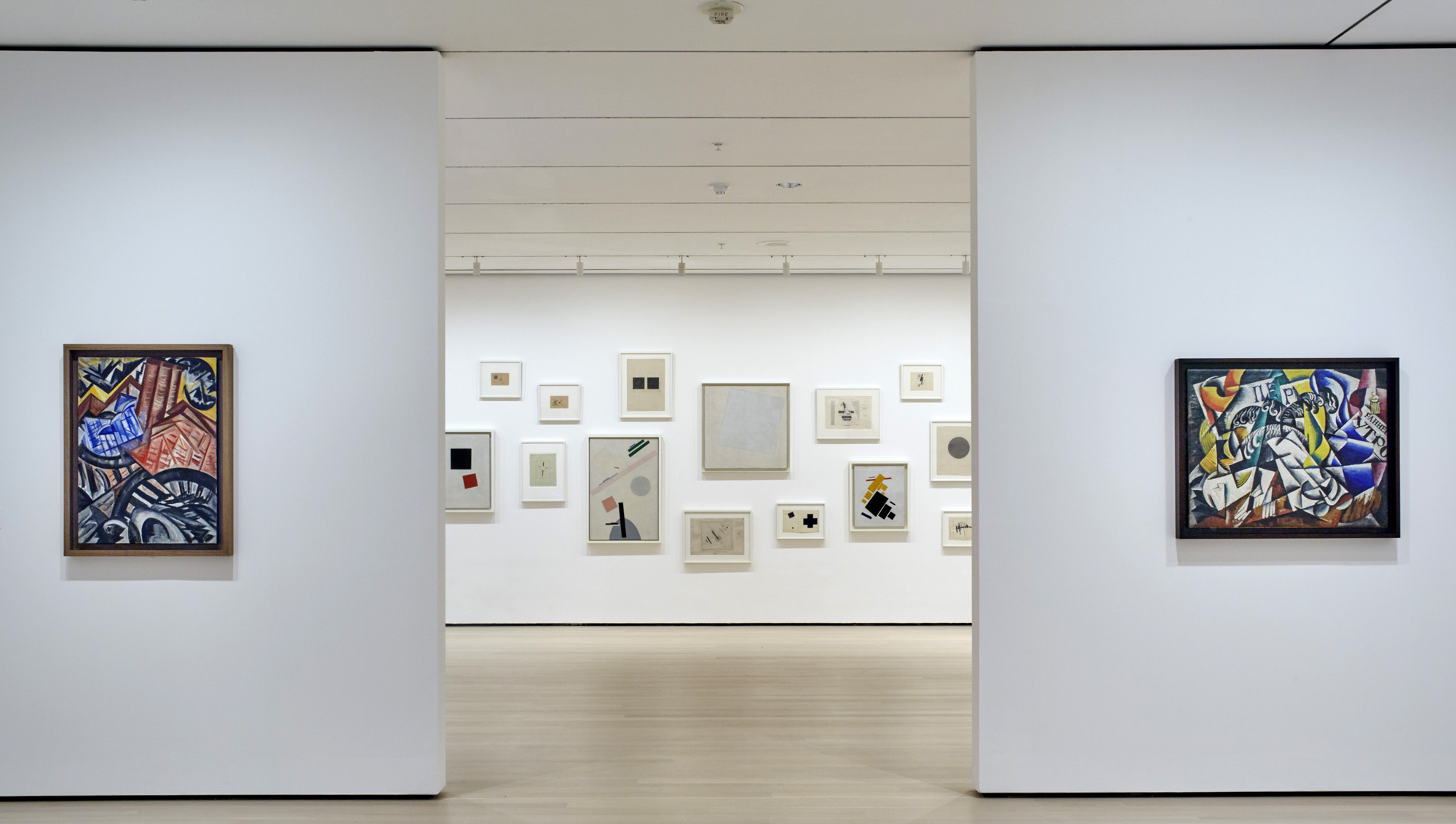







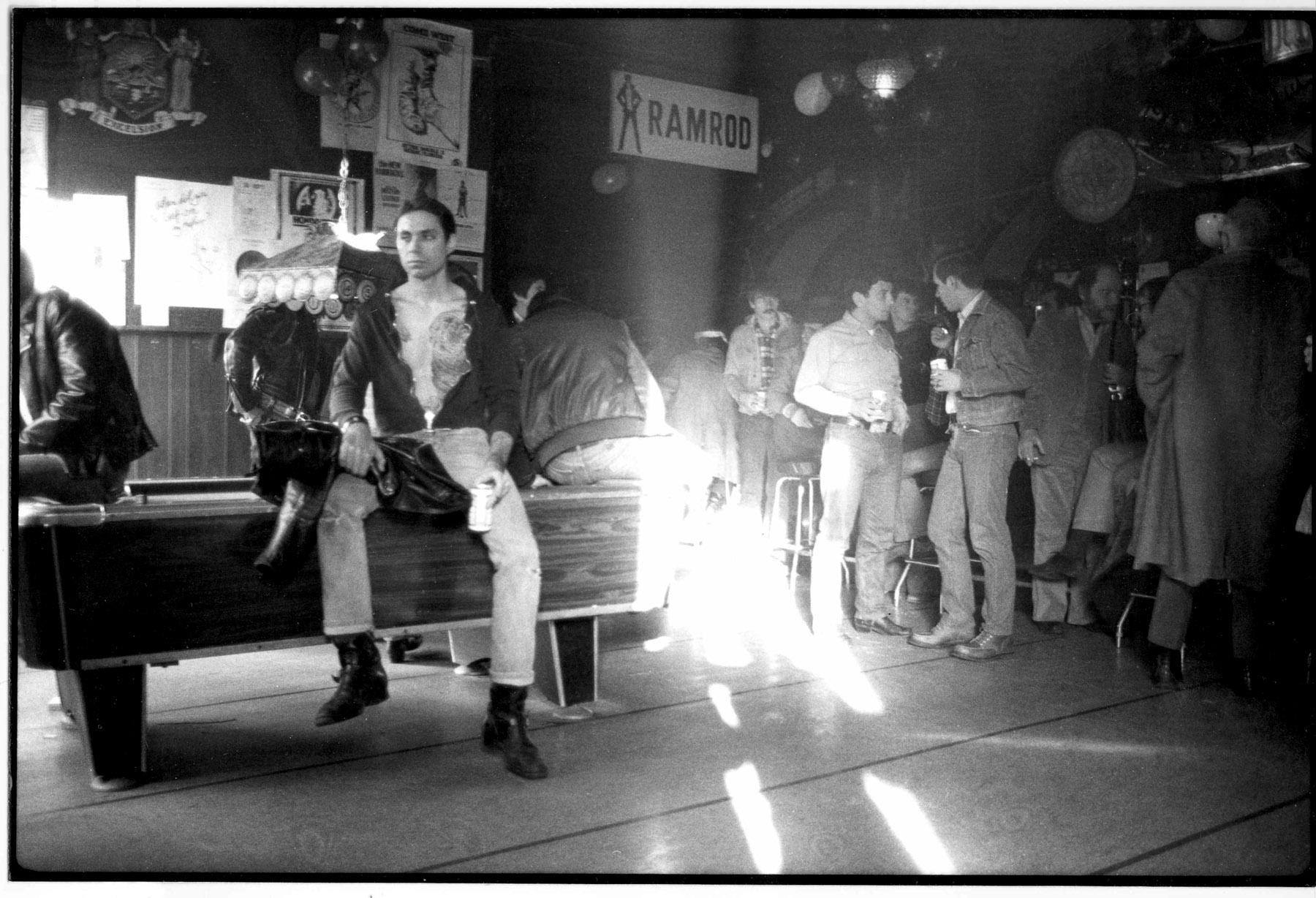
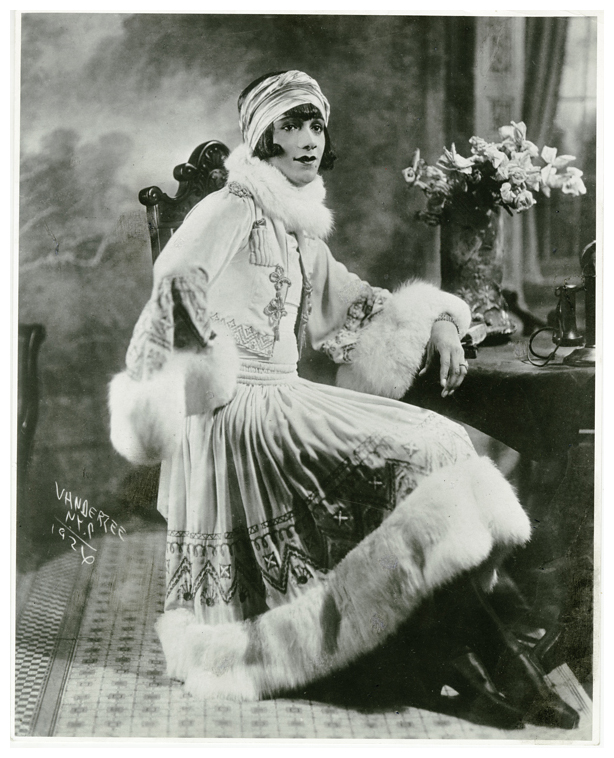


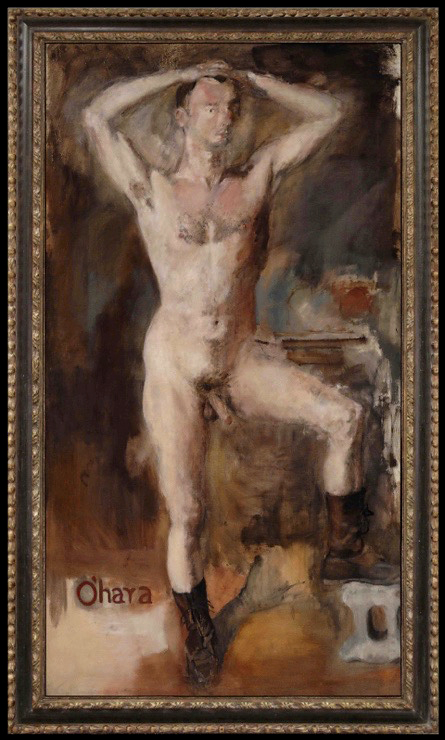


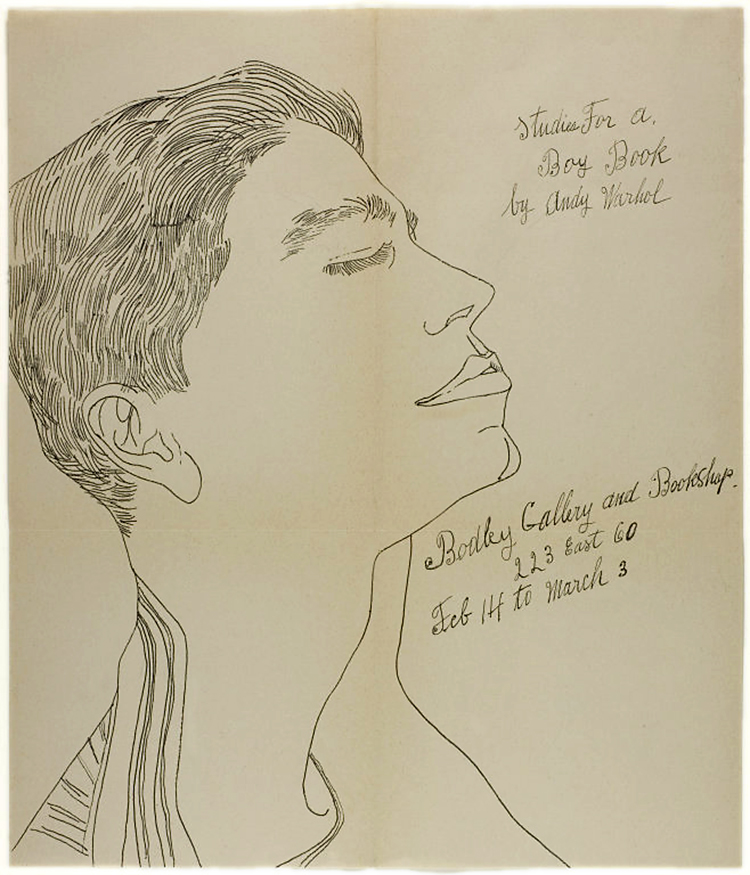




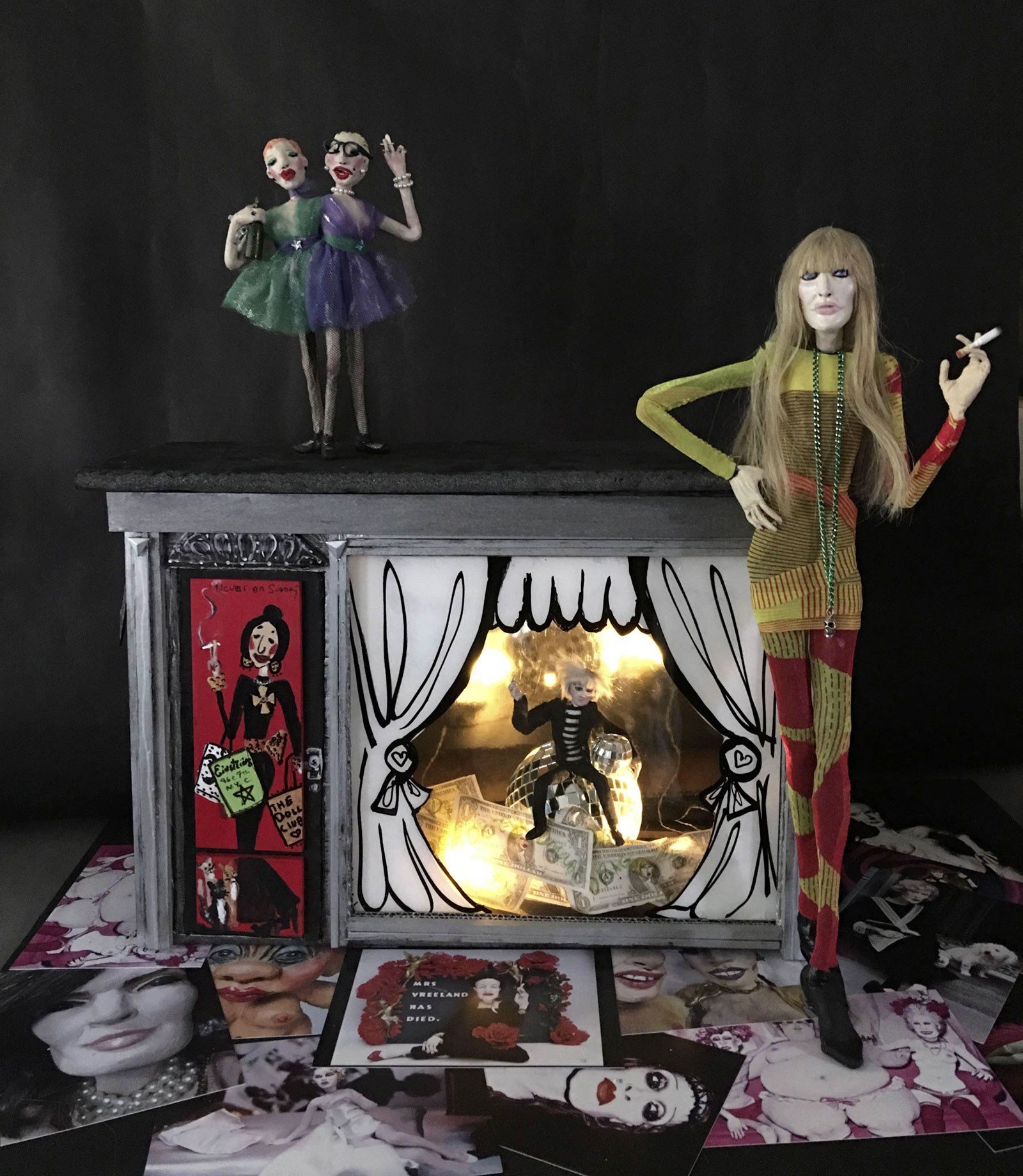


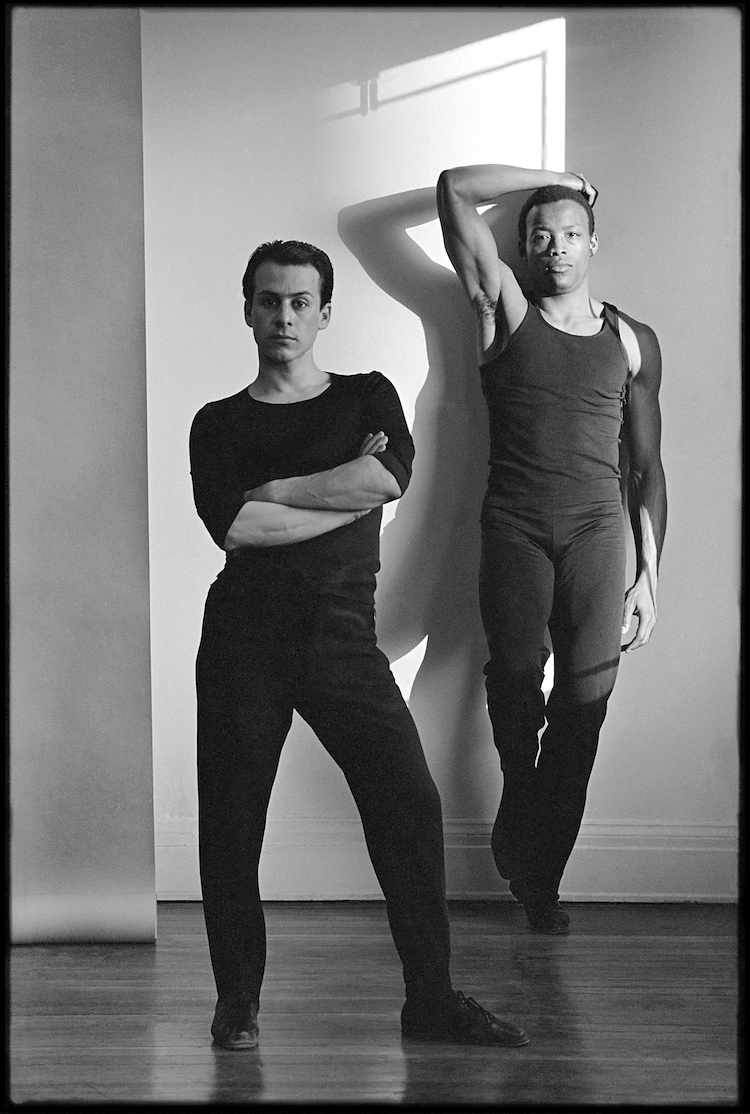

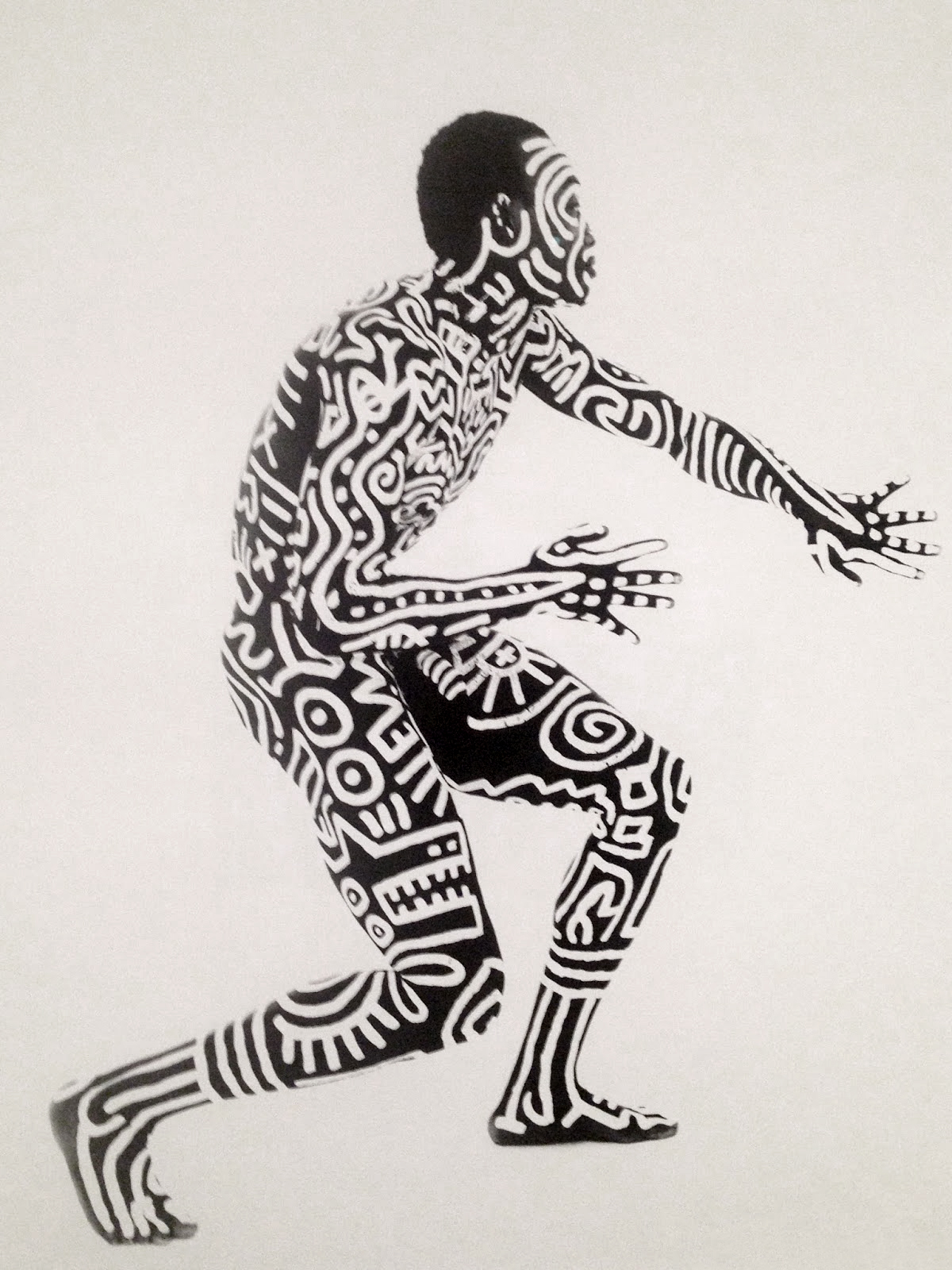




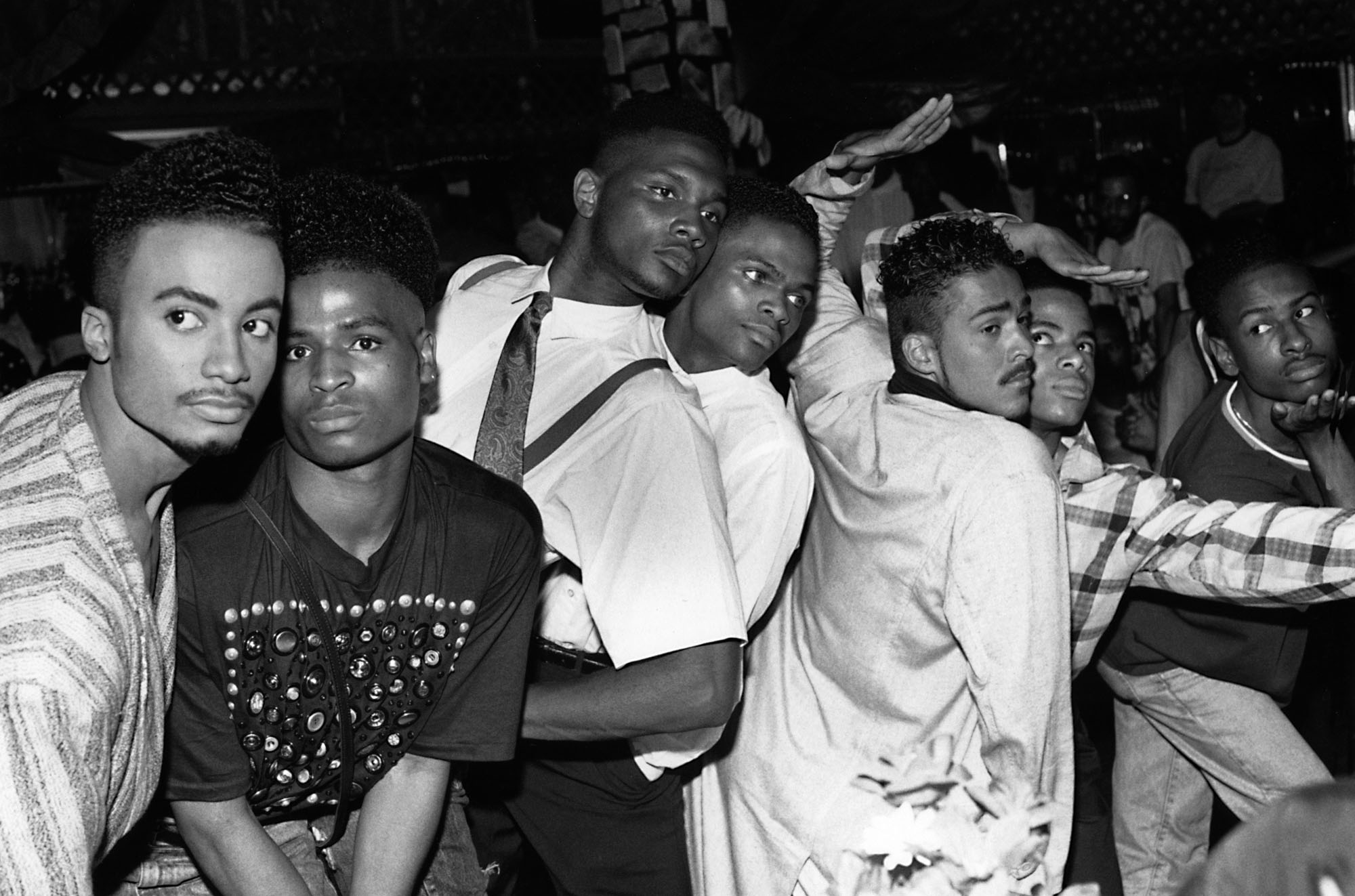

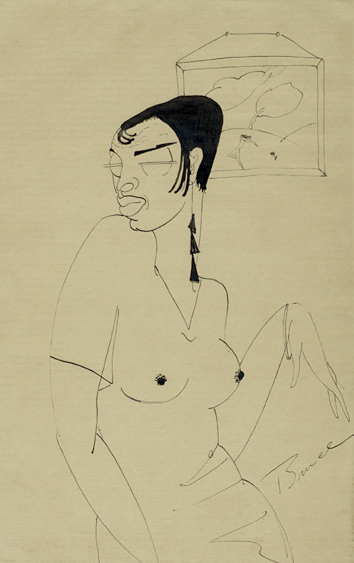
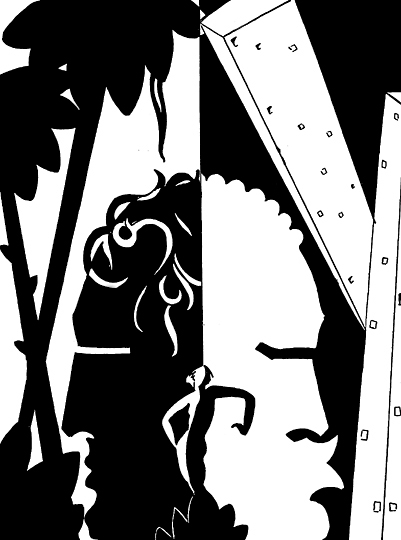


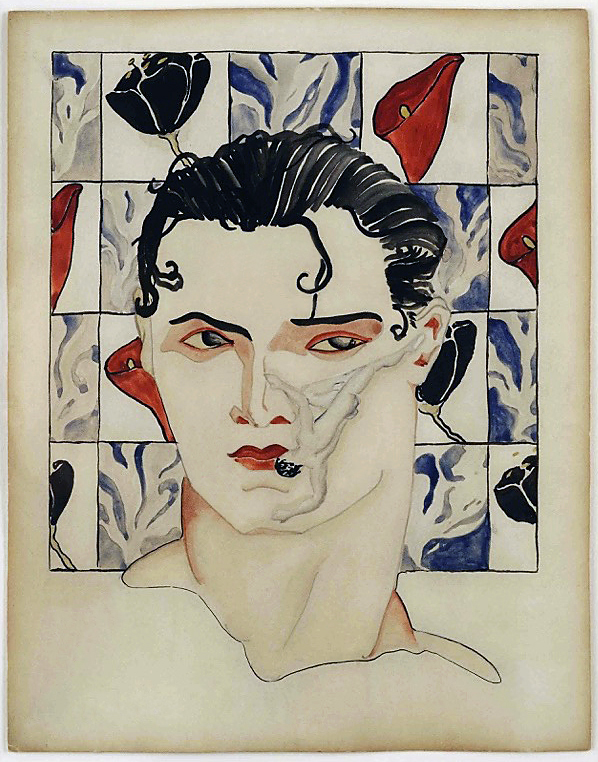


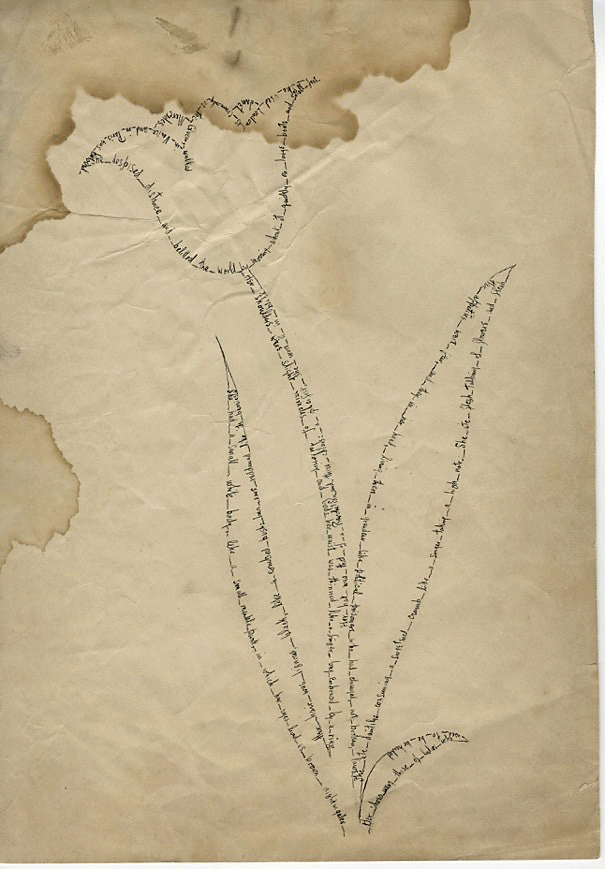
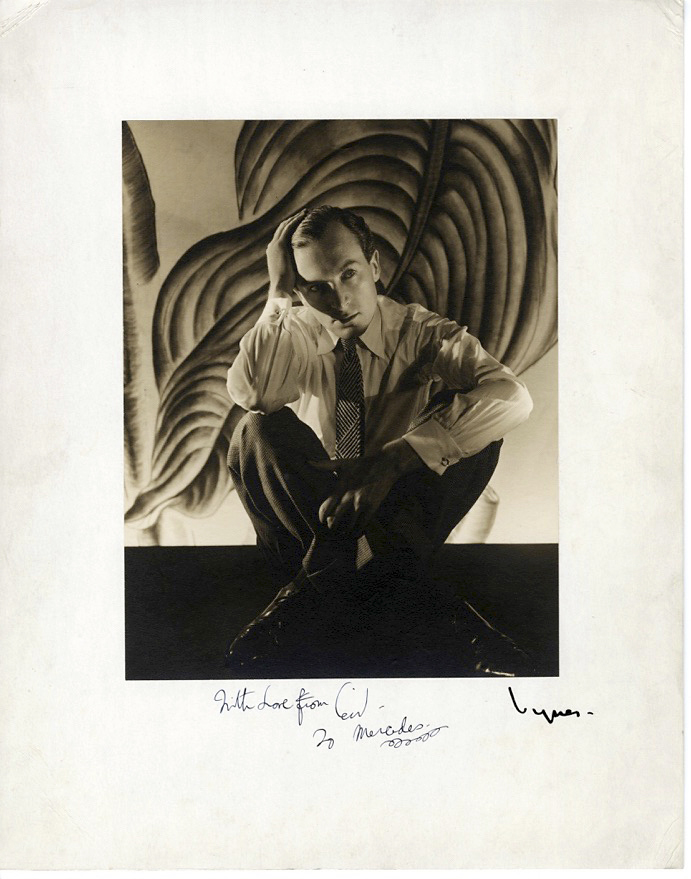
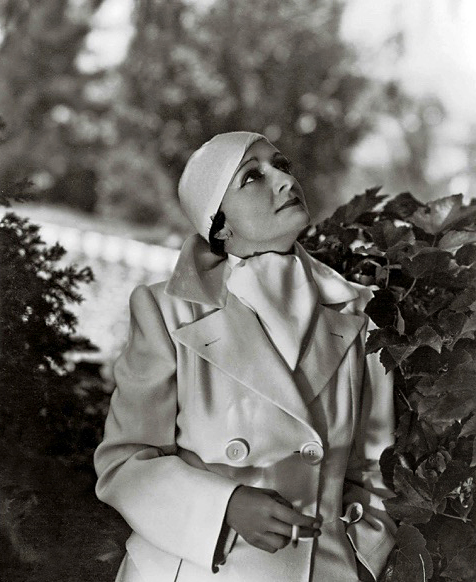


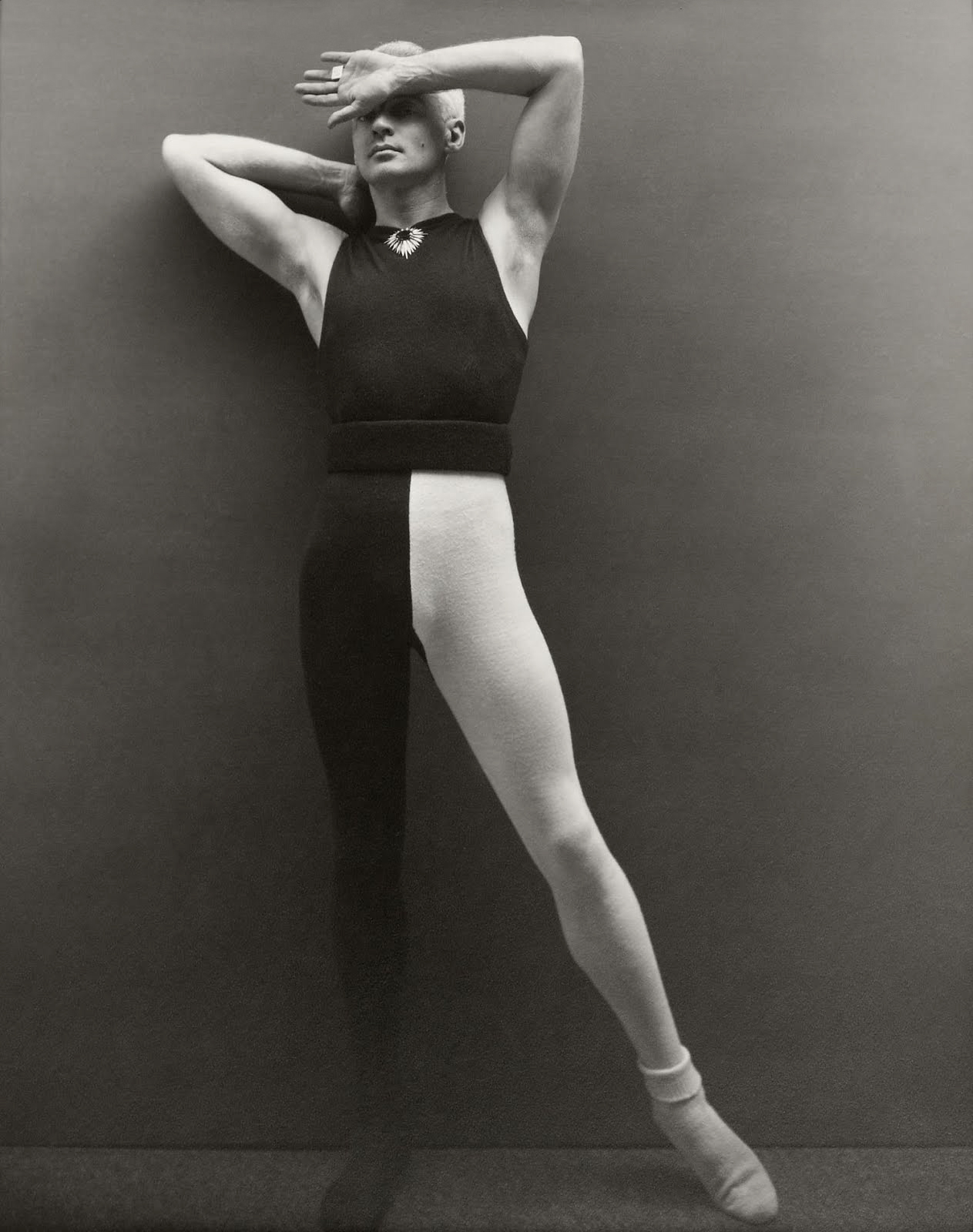





 Art Blart _ art and cultural memory archive
You must be logged in to post a comment.