My apologies that I haven’t been writing that much in recent postings, but I am still recovering from my hip replacement operation and the pain is still ongoing over 6 weeks after the operation. I’m a little exhausted to put it mildly…
With this sumptuous exhibition of photographs by Elliott Erwitt – in a beautiful palazzo with painted ceilings and classical sculptures with the walls painted a glorious colour of green – you get what is says on the tin: Erwitt’s iconic and humanist photographs of dogs, children and celebrities, “visual double-takes and finely tuned one-liners.”
That is all the media images consisted of, his famous photographs.
I know that the exhibition, and the artist’s reputation, rests on his “icons” but I just wish we could see past these to his other photographs, photographs of everyday people, captured in the midst of their ordinary lives; photographs that contain a little more gravitas, a little more depth of poignancy / spirit / energy, revealing small intimacies not readily seen and acknowledged.
That Erwitt is capable of such images can be see in photographs such as Italy, Venice, Gallerie dell’Accademia, 1965 (below), USA, New York City, 1969 (below) and that most gut wrenching, heart breaking of images, USA, Arlington, Virginia, Jacqueline Kennedy at John F. Kennedy’s funeral, November 25, 1963 (below) – where Erwitt reveals the grief of loss and finally touches the marrow of what it is to be human.
Dr Marcus Bunyan
Many thankx of the Palazzo Bonaparte for allowing me to publish the photographs and video in the posting. Please click on the photographs for a larger version of the image.
Elliott Erwitt. Icons at Palazzo Bonaparte, Rome, Italy
Installation walk through of the exhibition “Elliott Erwitt. Icons,” dedicated to the late master of visual irony and empathy, Elliott Erwitt. This major show offers an intimate look into the universe of one of contemporary photography’s most significant figures, whose work transformed everyday life into profound visual poetry.
Installation views of the exhibition Elliott Erwitt. Icons at Palazzo Bonaparte, Rome, Italy showing in the bottom image, the Erwitt’s photograph France, Paris, 1989
Installation view of the exhibition Elliott Erwitt. Icons at Palazzo Bonaparte, Rome, Italy showing at right Erwitt’s photograph USA, New York City, 1953
Installation view of the exhibition Elliott Erwitt. Icons at Palazzo Bonaparte, Rome, Italy showing at left, USA, Santa Monica, California, 1956 (below); at second left, USA, New York City, 1955 (below); at third left, USA, Louisiana, Shreveport, 1962; and at right, USSR, Bratsk, Siberia, 1967 (below)
Starting June 28th, 2025, Palazzo Bonaparte will open its doors to an extraordinary exhibition, “Elliott Erwitt. Icons,” dedicated to the late master of visual irony and empathy, Elliott Erwitt. This major show offers an intimate look into the universe of one of contemporary photography’s most significant figures, whose work transformed everyday life into profound visual poetry.
With over 80 celebrated photographs, “Elliott Erwitt. Icons” invites visitors to experience Erwitt’s distinctive style – irreverent, poetic, and deeply human. He possessed a remarkable ability to capture the lightness of the joy of living, becoming the most insightful and moving chronicler of the human comedy. His lens made us smile, reflect, and feel, turning fleeting moments into unforgettable images.
A Glimpse into Erwitt’s Vision
Erwitt, who passed away in November 2023 at the age of 95, was a master at transforming the ordinary into the extraordinary. His “Icons” are not just photographs; they are symbols of his unique perspective and our shared collective memory. As he once put it, “In the saddest and most wintry moments of life… suddenly the sight of something wonderful can change the aspect of things, your state of mind. The type of photography I like, the one where the instant is caught, is very similar to this break in the clouds. In a flash, a wonderful photo seems to come out of nowhere.”
This exhibition, curated by Biba Giacchetti, a leading international Erwitt expert, along with technical assistance from Gabriele Accornero, offers a comprehensive yet concise overview of his genius. From his anthropomorphic dogs to powerful world leaders, from iconic movie stars like Marilyn Monroe to intimate family moments, Erwitt’s gaze was both incisive and empathetic. He captured not only the irony of daily life but also its underlying complexity.
Beyond the Famous Faces
While the exhibition features renowned portraits of figures such as Che Guevara, Jack Kerouac, Marlene Dietrich, Fidel Castro, and Sophia Loren, it also highlights historical moments like the Nixon-Khrushchev dispute, Kennedy’s funeral, and the Frazier-Ali fight. Yet, Erwitt’s democratic approach to his medium shines through in his focus on everyday people, captured in the midst of their ordinary lives.
A significant portion of Erwitt’s work showcased his love for dogs, whose free-spirited nature he admired. Many photographs are taken from a dog’s-eye view, often revealing only the feet or legs of their owners. Erwitt ingeniously employed playful tactics, like sounding a horn or mimicking a bark, to elicit natural reactions from the animals, resulting in humorous and endearing compositions.
An Unmissable Summer Event
The “Elliott Erwitt. Icons” exhibition, running until September 21st, 2025, marks the opening of Palazzo Bonaparte’s summer exhibition season. Following the success of the recent Edvard Munch retrospective, this show pays homage to a globally beloved master of photography. Visitors will have the unique opportunity to journey through Erwitt’s surreal, romantic, and playful vision of the world, always capable of grasping the essence of things.
Press release from Palazzo Bonaparte
Installation views of the exhibition Elliott Erwitt. Icons at Palazzo Bonaparte, Rome, Italy showing in the bottom image from left to right, Italy, Venice, Gallerie dell’Accademia, 1965; France, Versailles, 1975; and Spain, Madrid, 1995 (below)
Installation view of the exhibition Elliott Erwitt. Icons at Palazzo Bonaparte, Rome, Italy showing at left, Erwitt’s photograph USA, New York City, 1969 (below)
“A 1969 scene in Amagansett, New York – a sober, soot-stained Victorian office block with a single storefront whose sign (“Tony’s of Worth Street”) is written in cheerful white paint – somehow combines the austerity of Atget with the irreverent glee of Weegee.”
From June 28 to September 21, 2025, Palazzo Bonaparte welcomes the most ironic and disarming gaze in twentieth-century photography: Elliott Erwitt. An exhibition that is much more than an exhibition: it is an invitation to observe the world with lightness, empathy, and wonder.
An unmissable event, which recounts – through over 80 iconic shots – the long and brilliant career of an artist capable of capturing the soul of the twentieth century and transforming ordinary moments into unforgettable images, with a profoundly human yet always surprising gaze.
On display in Rome are icons of an era, of a way of looking at the world with lightness and intelligence. “Icons” because each of Erwitt’s shots has become a symbol of his poetics and of our collective memory.
Erwitt is more than just a photographer: he is the poet of human comedy, the unerring witness to life’s small and large absurdities, which he recounts with disarming irony, subtle poetry, and timeless grace. His images – famous, unforgettable, often dazzling – manage to be simultaneously light and profound, intimate and universal. They are shots that make you smile, reflect, and move you.
Elliott Erwitt was – and is – a key figure in the visual culture of our time. His images, books, reportages, illustrations, and advertising campaigns have spanned the decades, appearing in international publications and influencing generations of photographers and artists. This exhibition is a journey through his work and an invitation to look at the world with new eyes: with lightness, empathy, and wonder.
A member since 1953 of the historic Magnum agency – founded by Henri Cartier-Bresson and Robert Capa, among others – Erwitt has chronicled the last sixty years of history and contemporary civilisation with journalistic flair, capturing the most dramatic yet humorous aspects of the life that has passed before his lens.
“In life’s saddest, wintry moments, when a cloud has enveloped you for weeks, suddenly the sight of something wonderful can change the face of things, your state of mind. The kind of photography I like, the one that captures the moment, is very similar to this break in the clouds. In a flash, a wonderful photo seems to come out of nowhere.”
With these words, Erwitt sums up the spirit and poetics with which he filters reality, representing it with his mastery, capturing its sometimes playful, sometimes irreverent, or almost surreal aspects, which make him an undisputed master of the human comedy.
Curated by Biba Giacchetti, one of Erwitt’s leading international experts, with technical assistance from Gabriele Accornero, Elliott Erwitt. Icons is a snapshot of history and customs, a concise and comprehensive journey through his genius and his perspective on the world, from his anthropomorphic dogs to the world’s powerful figures, from the great movie stars – Marilyn Monroe above all – to his children. But it is also a tribute to the man who, with a gentle and disenchanted gaze, was able to portray the world for what it is: tragicomic, tender, absurd, unique.
The exhibition features famous portraits of Marilyn Monroe, Che Guevara, Kerouac, Marlene Dietrich, Fidel Castro, Sophia Loren, Arnold Schwarzenegger, and photographs that have made history, such as the Nixon-Khrushchev quarrel, Kennedy’s funeral, and the great fight between Frazier and Ali. Other iconic photographs, beloved by the public for their romantic power, such as the California Kiss, include more intimate and private ones, such as the snapshot of his newborn firstborn, observed by her mother on the bed.
Above all, Erwitt casts an incisive yet empathetic gaze, revealing not only the irony of everyday life, but also its complexity.
With the same attitude, Erwitt reserves his attention for any other subject, pushing the democratic quality that is typical of his medium to the extreme. His imagery is populated predominantly by ordinary people, men and women, captured in the midst of the normality of their lives.
From portraits of famous people to more ironic and sometimes irreverent images, we move on to some self-portraits where Erwitt no longer leaves anything to chance or intuition, but constructs a self-other, where eccentricity for its own sake is metaphor and pure surreal fun.
Special attention is paid to dogs, whose irreverent, free-spirited attitude Erwitt appreciated, unfettered by the common rules that condition humans, is what Erwitt appreciated.
Many of his shots are “from the dog’s point of view,” allowing only the shoes or parts of their owners’ legs to appear in his compositions. Erwitt wanted these photographs to be comical, and for this reason he employed ingenious strategies, such as blowing a trumpet or emitting a kind of bark, to elicit the most natural reaction from the animals.
The exhibition – on view until September 21st – marks the opening of Palazzo Bonaparte’s summer exhibition season, following the recent resounding success of the Edvard Munch retrospective and paying tribute to one of the world’s most beloved masters of photography. Visitors will have the opportunity to retrace his vision of the world: surreal, romantic, playful, always capable of capturing the essence of things.
The exhibition, “Elliott Erwitt. Icons,” is produced and organised by Arthemisia, in collaboration with Orion57 and Bridgeconsultingpro. The exhibition’s main partner is the Fondazione Terzo Pilastro – Internazionale with Fondazione Cultura e Arte and Poema.
The exhibition’s special partner is Ricola, mobility partner Frecciarossa Treno Ufficiale, and technical sponsor Ferrari Trento.
Text translated from the Italian by Google Translate from the Palazzo Bonaparte website
Installation view of the exhibition Elliott Erwitt. Icons at Palazzo Bonaparte, Rome, Italy showing at right, Erwitt’s photograph USA, Pittsburgh, 1950 (below)
Installation view of the exhibition Elliott Erwitt. Icons at Palazzo Bonaparte, Rome, Italy showing at right, Erwitt’s photograph France, Honfleur, 1968
Installation view of the exhibition Elliott Erwitt. Icons at Palazzo Bonaparte, Rome, Italy showing from left to right, France, Honfleur, 1968; USA, New York City, 1977; and USA, New York City, 1955
Installation view of the exhibition Elliott Erwitt. Icons at Palazzo Bonaparte, Rome, Italy showing Erwitt’s photograph Ireland, Ballycotton, 1991
Installation view of the exhibition Elliott Erwitt. Icons at Palazzo Bonaparte, Rome, Italy showing Erwitt’s photograph USA, New York City, Marilyn Monroe (with hand), 1956
Installation view of the exhibition Elliott Erwitt. Icons at Palazzo Bonaparte, Rome, Italy showing at left, USA, New York City, 1953; and at right, USA, NewYork, 1956 (below)
Installation view of the exhibition Elliott Erwitt. Icons at Palazzo Bonaparte, Rome, Italy showing at left, USA, Los Angeles, 1960; and at right, USA, Arlington, Virginia, Jacqueline Kennedy at John F. Kennedy’s funeral, November 25, 1963 (below)
Note: wrong title and date underneath the photograph on the right-hand side
Elliott Erwitt was not just a photographer, but an unparalleled visual storyteller, capable of transforming the moment into history, the everyday into art, irony into poetry. His images evoke in the viewer emotions that move on different registers, from emotion to laughter, to the most spontaneous amusing. Having passed away in November 2023 at the age of 95, he left us an immense legacy: an archive of photographs that span eras, cultures, and feelings with a universal language, inviting us to look at the world with greater indulgence and wonder, always standing by our side in that profound lightness that he himself defined as “The Art of Observation.”
His lens captured iconic moments in history: the tense confrontation between Nixon and Khrushchev, Kennedy’s funeral, the legendary fight between Frazier and Ali. He portrayed legends of our imagination – Marilyn Monroe, Che Guevara, Marlene Dietrich – but he also captured moments of extraordinary intimacy and summarised universal feelings in a single shot: a stolen kiss in the rearview mirror, the gaze of a mother on her newborn baby, a dog lost in thought. Images that transcend time to become iconic.
What makes Erwitt unique is his ability to intertwine emotion and intelligence, making us laugh and moved, surprising us with his irony and his ability to grasp the profound meaning of existence. He has captured the absurd and the surreal with a sharp and light-hearted gaze, always finding in every scene a spark capable of making it memorable.
His anthropomorphic dogs, the protagonists of entire photographic series, are not just amusing images: they are mirrors of the human condition, ironic and melancholic at the same time, sometimes proud and surprising. His children, portrayed with the most authentic spontaneity, convey the wonder of discovery and freedom, still intact, expressing already defined personalities, still unconstrained. His self-portraits, where he pokes fun at himself, remind us that art – like life – should never take itself too seriously.
Elliott Erwitt was all of this: a master of photography, an interpreter of the human comedy, an artist who left an indelible mark on the history of the image. This exhibition is our homage to his vision of the world: a journey through irony, tenderness, depth, and lightness, just as his art has always been able to convey.
Welcome to the world of this great artist. My master.
Biba Giacchetti Exhibition curator
Text translated from the Italian by Google Translate
Installation view of the exhibition Elliott Erwitt. Icons at Palazzo Bonaparte, Rome, Italy showing Erwitt’s photograph USA, New York City, 1971 (Muhammad Ali vs Joe Frazier)
Installation view of the exhibition Elliott Erwitt. Icons at Palazzo Bonaparte, Rome, Italy showing at left, USA, Los Angeles, 1960; and at second left, USA, Arlington, Virginia, Jacqueline Kennedy at John F. Kennedy’s funeral, November 25, 1963; at third right, USSR, Moscow, 1959 (below); and at second right, Cuba, Havana, 1964 (below)
Installation view of the exhibition Elliott Erwitt. Icons at Palazzo Bonaparte, Rome, Italy showing Erwitt’s photograph USSR, Moscow, 1959 (below)
Installation view of the exhibition Elliott Erwitt. Icons at Palazzo Bonaparte, Rome, Italy showing Erwitt’s photograph Cuba, Havana, 1964 (Che Guevara)
Installation view of the exhibition Elliott Erwitt. Icons at Palazzo Bonaparte, Rome, Italy showing at left, England, Birmingham, 1991 (top); at third right, USA, New York City, 1946 (below); at second right, France, Paris, 1989 (below); and at right, USA, New York City, 2000 (below)
Installation view of the exhibition Elliott Erwitt. Icons at Palazzo Bonaparte, Rome, Italy showing Erwitt’s photograph USA, New York City, 1974 (below)
Installation view of the exhibition Elliott Erwitt. Icons at Palazzo Bonaparte, Rome, Italy showing Erwitt’s photograph USA, New York City, 1955 (below)
I seem to have a bit of a thing for film and photography at the moment!
More delicious film fascination, this time for the still camera. German Expressionism, film noir, science-fiction, horror, murder and mayhem – photographers using all manner of artistic techniques to get their message across. Now often found in fine art auction houses.
I love the heading “Intermediality and Self-Reflexivity” … “intermediate images” that unite aspects of both media (film and photography) and self-reflexive images that take on a life of their own, developing “a filmic work further in an independent manner, thereby allowing it to be regarded from new perspectives. Such stills often contain self-reflexive commentary on the work’s specifically “filmic” aspects.”
Sensitive, sensual, snapshot; stars and auteurism; murder and mayhem; avant-garde, beauty and sex – it has it all. Great stuff.
Dr Marcus Bunyan
PS. Look at the amazing colours in Horst von Harbou’s stills for Metropolis (1927) which were produced as transparent foils and elaborately coloured by hand. Never heard of such a thing before, coloured transparent foils.
Many thankx to the Albertina for allowing me to publish the photographs in the posting. Please click on the photographs for a larger version of the image.
Anonymous photographer La Passion de Jeanne d’Arc 1927 Karl Theodor Dreyer (Danish, 1889-1968) (director)
Carl Theodor Dreyer (3 February 1889 – 20 March 1968), commonly known as Carl Th. Dreyer, was a Danish film director. He is regarded by many critics and filmmakers as one of the greatest directors in cinema. His best known films include The Passion of Joan of Arc (1928), Vampyr (1932), Day of Wrath (1943), Ordet (1955), and Gertrud (1964) …
As a young man, Dreyer worked as a journalist, but he eventually joined the film industry as a writer of title cards for silent films and subsequently of screenplays. He was initially hired by Nordisk Film in 1913.
His first attempts at film direction had limited success, and he left Denmark to work in the French film industry. While living in France he met Jean Cocteau, Jean Hugo and other members of the French artistic scene and in 1928 he made his first classic film, The Passion of Joan of Arc. Working from the transcripts of Joan’s trial, he created a masterpiece of emotion that drew equally on realism and expressionism.
Who doesn’t know them: that picture from The Seven-Year Itch of a smiling Marilyn Monroe with her white dress blown upward by the air from a subway grate, or the photo of a conspiratorial James Stewart in Rear Window? Regardless of whether one has seen the actual movies, such images are familiar. It’s film stills like these that have burnt themselves into the collective memory and had a major impact on how their films are perceived.
Film stills embody visual traces of films as well as independent photographic images. Taken on set during production, they are based on an elaborate process in which film photographers re-stage film scenes for the still camera.
In the first-ever major exhibition devoted to this hybrid genre, the Albertina is showing 130 film stills taken between 1902 and 1975 in cooperation with the Austrian Film Museum. That was the period during which black-and-white film stills reached their highest level of technical and aesthetic quality, simultaneously covering a sweeping cross-section of various artistic movements from photographic and cinematic history such as Pictorialism and Expressionism. Employing pictures by Deborah Imogen Beer, Horst von Harbou, Pierluigi Praturlon, Karl Struss, and others, three aspects of this genre’s intermedial relationships are highlighted: the functions performed by film stills, the interfaces between photography and film with their breaks and couplings, and the additional artistic value of still photographs as such.
For the Media and the Press
The purpose of film stills is clearly defined: as material for the press and various types of advertising, they help to market films. And alongside their use in trailers, film journalism, and other marketing tools such as posters, film stills also represent a key ingredient of audience expectations pertaining to a film upon its release. Even so, it is the production of visually appealing images – rather than authentic reproduction of the film itself – that is important, here. In display windows and the media, still images visualise different aspects of a production ranging from key scenes to the actual filming work. This motivic variety corresponds to various film still categories: portrait photos of the actors and actresses taken by in-house studio photographers, as well as scene photos and making-of photos, are used in these contexts. And fed into numerous distribution processes, such photos also serve as models for posters, lobby cards, photo books, and press materials.
Intermediality and Self-Reflexivity
Film stills unite functional requirements with photographic and filmic intentions. And in fact, still photography is the only way in which to show visual traces of a production outside of the filmic event – the screening – itself. The challenges that photographers face in taking such shots lie in the difference between the media of moving (projected) film images and static (material) photography. In a complex and laborious process, they work on set to restage film scenes specifically for the still camera, thus transforming the film from a moving to a static medium.
The employment of various photographic strategies makes possible film stills’ “filmic” reception, with momentary photos that evoke a film’s dynamics being just as exemplary here as panoramic shots that require a longer look. Still photos thus repeat a film’s constituent elements, inscribing them onto a photographic medium in various ways and thus functioning as “intermediate images” that unite aspects of both media. They can be read not only as static views of a filmic reality, but also as independent types of photographic image. This quality is reinforced by the fact that stills frequently develop a filmic work further in an independent manner, thereby allowing it to be regarded from new perspectives. Such stills often contain self-reflexive commentary on the work’s specifically “filmic” aspects.
Film Stills at the Interface to Fine Art
Being situated between film and photography, many film stills also possess artistic qualities that are clearly photographic in nature. Here, composition plays a major role as it bears witness to a pictorial conception that differs from that of a filmic image. For while moving images are designed as horizontal arrangements, with the pictorial elements sequenced one after the other to effect their visual continuation, still photographers stage still photos according to the (static) central perspective governed by the camera’s vanishing point. This positions observers at that place which has been assigned them since the Renaissance – that is, looking straight down the picture’s central axis. Correspondingly, many stills exhibit reminiscences of the proscenium stage from traditional live theatre, favouring views that render scenes more immediate and thus more easily legible.
Photographers, in composing their images, often borrow iconographic and stylistic elements from various artistic movements: Expressionism, Art Nouveau, and Pictorialism are examples of these.
And in this way, still photographers depart from the original filmic work and realise their own pictorial ideas. Their photos thus refrain from “authentic” reproduction of a film’s various aspects, instead using these aspects to realise subjective artistic practices, thereby implying a reversal of the classic hierarchy between photography and film.
8½ (Italian title: Otto e mezzo) is a 1963 comedy-drama film directed by Federico Fellini. Co-scripted by Fellini, Tullio Pinelli, Ennio Flaiano, and Brunello Rondi, it stars Marcello Mastroianni as Guido Anselmi, a famous Italian film director. Shot in black-and-white by cinematographer Gianni di Venanzo, the film features a soundtrack by Nino Rota with costume and set designs by Piero Gherardi.
M (German: M – Eine Stadt sucht einen Mörder – “M – A city looks for a murderer”) is a 1931 German drama-thriller film directed by Fritz Lang and starring Peter Lorre. It was written by Lang and his wife Thea von Harbou and was the director’s first sound film. It concerns the manhunt for a serial killer of children, conducted by both the police and the criminal underworld. Now considered a classic, the film was deemed by Fritz Lang as his finest work.
Little Elsie Beckmann leaves school, bouncing a ball on her way home. She is approached by Hans Beckert, who is whistling “In the Hall of the Mountain King” by Edvard Grieg. He offers to buy her a balloon from a blind street-vendor [above] and walks and talks with her. Elsie’s place at the dinner table remains empty, her ball is shown rolling away across a patch of grass and her balloon is lost in the telephone lines overhead.
M – A City Searches for a Murderer (M – Eine Stadt sucht einen Mörder) 1931 – Public Domain Movies
M (German: M – Eine Stadt sucht einen Mörder, lit. M – A City Searches for a Murderer) is a 1931 German thriller film directed by Fritz Lang and starring Peter Lorre in his breakthrough role as Hans Beckert, a serial killer of children. An early example of a procedural drama, the film centers on the manhunt for Lorre’s character, conducted by both the police and the criminal underworld.
The film’s screenplay was written by Lang and his wife Thea von Harbou and was the director’s first sound film. It features many cinematic innovations, including the use of long, fluid tracking shots, and a musical leitmotif in the form of “In the Hall of the Mountain King” whistled by Lorre’s character. Now considered a timeless classic, the film was deemed by Lang to be his magnum opus. It is widely considered one of the greatest films of all time, and an indispensable influence on modern crime and thriller fiction.
Anonymous text from the YouTube website [Online] Cited 20/02/2017. No longer available online.
Unknown artist Poster for “M” 1931 Director: Fritz Lang (Austria, 1890-1976) Collection of La Cinémathèque française
Wall texts
Advertising pictures
Aimed at inviting the public to buy a ticket, film stills were used as advertising photographs in cinema lobbies and as press material for the media. Directors and production companies depended on them for promoting their movies, because the film as a projected moving image is immaterial and does not exist beyond the screen. Stills comprise various types of pictures that show different aspects of a movie’s production: scenes, portraits of its actresses and actors, as well as production photographs capturing its shooting.
The production of stills was based on a division of labor. In major production companies like those of Hollywood, still photographers were assigned to the companies’ advertising or publicity departments. Sometimes involving the director, these departments selected the photographs intended for publication. The promotion photographs for the movie palaces’ lobbies were published in sets of twenty to forty pictures each, which visualised characteristic aspects of the film. A wider selection of stills was used for the press. Picture editors adapted the photographs according to their purposes. We find instructions for the material’s reproduction and cropping marks indicating new image areas; retouches deleted undesired elements and changed the motif in line with the planned layout.
Anonymous photographer Still from The Night of the Hunter 1954 Silver gelatin print
The Night of the Hunter is a 1955 American film noir directed by Charles Laughton and starring Robert Mitchum, Shelley Winters and Lillian Gish. The screenplay by James Agee was based on the 1953 novel of the same name by Davis Grubb. The plot focuses on a corrupt reverend-turned-serial killer who attempts to charm an unsuspecting widow and steal $10,000 hidden by her executed husband.
The novel and film draw on the true story of Harry Powers, hanged in 1932 for the murder of two widows and three children in Clarksburg, West Virginia. The film’s lyrical and expressionistic style with its leaning on the silent era sets it apart from other Hollywood films of the 1940s and 1950s, and it has influenced later directors such as David Lynch, Martin Scorsese, Terrence Malick, Jim Jarmusch, Spike Lee, and the Coen brothers.
In 1992, The Night of the Hunter was deemed “culturally, historically, or aesthetically significant” by the United States Library of Congress and was selected for preservation in the National Film Registry. The influential film magazine Cahiers du cinéma selected The Night of the Hunter in 2008 as the second-best film of all time, behind Citizen Kane.
Anonymous photographer Still from the film Vertigo, Judy behind Madeleine 1957/1958 Director: Alfred Hitchcock (English, 1899-1980) Silver gelatin print
Regarded as the supreme discipline of still photography, the portraiture of stars was an integral part of the film industry’s elaborate promotion campaigns. Productions could be effectively marketed by using actresses and actors to project their image. With the emergence of the studio system, Hollywood perfected this business strategy from the 1920s on by employing specialised portrait photographers. These photographers worked in company-owned studios and – unlike set photographers who mostly remained anonymous – were known by name. Relying on sophisticated lighting and drastic retouching, they created the aesthetic of the glamour portrait. Don English perfectly translated the lighting as it had been exactly planned by Josef von Sternberg, the director, for his film in his portrait of Marlene Dietrich for Shanghai Express (1932). Generally, domestic production companies could not afford to run their own portrait studios and were thus unable to exercise any influence on photographic products from outside. This offered both the stars and the studios a certain degree of freedom when it came to the representation and interpretation of a certain look. The photograph taken of Hedy Kiesler (later Lamarr) in her role in Gustav Machatý’s Ecstasy (1933) by the renowned studio Manassé in Vienna is one of the rare portrait stills taken on the set at that time.
Don English (American, 1901-1964) Marlene Dietrich in Shanghai Express 1932 Director: Josef von Sternberg (American born Austria, 1894-1969) Silver gelatin print
Raymond Cauchetier(French, 1920-2021) Jean Paul Belmondo & Jean Seberg, Paris, 1959 1959 Still from the film Breathless Director: Jean-Luc Godard (French-Swiss, 1930-2022) Gelatin silver print
Breathless film poster 1960
Anonymous photographer Still from the film Breathless 1959 Director: Jean-Luc Godard (French-Swiss, 1930-2022) Gelatin silver print
Delphine Claire Beltiane Seyrig (10 April 1932 – 15 October 1990) was a Lebanese-born French stage and film actress, a film director and a feminist.
As a young woman, Seyrig studied acting at the Comédie de Saint-Étienne, training under Jean Dasté, and at Centre Dramatique de l’Est. She appeared briefly in small roles in the 1954 TV series Sherlock Holmes. In 1956, she returned to New York and studied at the Actors Studio. In 1958 she appeared in her first film, Pull My Daisy. In New York she met director Alain Resnais, who asked her to star in his film Last Year at Marienbad. Her performance brought her international recognition and she moved to Paris. Among her roles of this period is the older married woman in François Truffaut’s Baisers volés (1968).
During the 1960s and 1970s, Seyrig worked with directors including Truffaut, Luis Buñuel, Marguerite Duras, and Fred Zinnemann, as well as Resnais. She achieved recognition for both her stage and film work, and was named best actress at the Venice Film Festival for her role in Resnais’ Muriel ou Le temps d’un retour (1963). She played many diverse roles, and because she was fluent in French, English and German, she appeared in films in all three languages, including a number of Hollywood productions.
L’Année dernière à Marienbad (released in the US as Last Year at Marienbad and in the UK as Last Year in Marienbad) is a 1961 French-Italian film directed by Alain Resnais from a screenplay by Alain Robbe-Grillet.
Last Year at Marienbad is famous for its enigmatic narrative structure, in which truth and fiction are difficult to distinguish, and the temporal and spatial relationship of the events is open to question, even if it never quite ventures into surrealism. The film’s dreamlike nature has both fascinated and baffled viewers; many have hailed the work as a masterpiece, while others consider it incomprehensible.
At a social gathering at a château or baroque hotel, a man approaches a woman. He claims they met the year before at Marienbad and is convinced that she is waiting there for him. The woman insists they have never met. A second man, who may be the woman’s husband, repeatedly asserts his dominance over the first man, including beating him several times at a mathematical game (a version of Nim). Through ambiguous flashbacks and disorienting shifts of time and location, the film explores the relationships among the characters. Conversations and events are repeated in several places in the château and grounds, and there are numerous tracking shots of the château’s corridors, with ambiguous voiceovers. The characters are unnamed in the film; in the published screenplay, the woman is referred to as “A”, the first man is “X”, and the man who may be her husband is “M”.
L’Année dernière à Marienbad Japanese film poster 1961
Artistic pictures
Until the 1950s still photographers used large-format plate cameras, which projected an inverted image onto the focusing screen at the back of the body. These cameras produced technically brilliant pictures, yet were complicated to handle because of their size and comparatively long exposure times. The staging of stills had to be meticulously planned and was fundamentally different from the shooting of a film. While the film camera is geared to the story in motion and its visual continuation in the pictures to follow, actresses and actors posed for the photographer in tableaux-vivants-like arrangements using additional light. The resultant static and apparently artificial compositions mirroring the performative staging process are typical of this kind of photographs. Still photographers drew inspiration from works of art for their mise-en-scène. The anonymous photographer in charge of the stills for Henrik Galeen’s The Student of Prague (1926) quotes the Romantic painter Caspar David Friedrich’s works in his theatrical presentation of an atmospheric landscape. Horst von Harbou, who frequently worked with the director Fritz Lang, drew on Carl Otto Czeschka’s Jugendstil [Art Noveau] illustrations from 1908 for his stills accompanying the first part of Die Nibelungen (1924). Harbou translated ornamental motifs into two-dimensional pictures, as Czeschka had done before him. Presenting their pictures in exhibitions and providing fine-art prints, still photographers positioned their works as artistically independent achievements.
Anonymous photographer Werner Krauss in The Student of Prague 1926 Gelatin silver print Austrian Theatre Museum
Anonymous photographer Werner Krauss in The Student of Prague (detail) 1926 Gelatin silver print Austrian Theatre Museum
Intermediate pictures
The difficulty in capturing the scene of a movie in a still lies in the difference between the two media of (moving) film and (static) photograph. Still photographers employ intermedia strategies which facilitate a reading of the still in analogy to the experience of the film. Snapshots evoking the dynamics of the movie are as exemplary of this approach as are series of pictures rendering a sequence in the form of the movement’s individual phases captured at short intervals. Panorama pictures are also related to the film’s spatial and temporal dimensions, since a series of motifs resembling the chronological order of films successively “unwinds” in reading them. Informed by the interwar avant-garde, the photo montages for Walter Ruttmann’s experimental film Berlin – Symphony of a Great City (1927) show an extraordinary solution. They congenially transform the subjective modern filmic point of view by relating the motifs of the film to each other through illogical perspectives and proportions. Some of Horst von Harbou’s stills for Metropolis (1927) were produced as transparent foils and elaborately coloured by hand. Presented in backlight illumination, they established a self-reflexive reference to the cinema as films also reveal their ephemeral quality in their projection.
Berlin: Symphony of a Metropolis (German: Berlin: Die Sinfonie der Großstadt) is a 1927 German film directed by Walter Ruttmann, co-written by Carl Mayer and Karl Freund.
The film is an example of the city symphony film genre. A musical score for an orchestra to accompany the silent film was written by Edmund Meisel. As a “city symphony” film, it portrays the life of a city, mainly through visual impressions in a semi-documentary style, without the narrative content of more mainstream films, though the sequencing of events can imply a kind of loose theme or impression of the city’s daily life…
The film displays the filmmaker’s knowledge of Soviet montage theory. Some socialist political sympathies, or identification with the underclass can be inferred from a few of the edits in the film, though critics have suggested that either Ruttmann avoided a strong position, or else he pursued his aesthetic interests to the extent that they diminished the potential for political content. Ruttmann’s own description of the film suggests that his motives were predominantly aesthetic: “Since I began in the cinema, I had the idea of making something out of life, of creating a symphonic film out of the millions of energies that comprise the life of a big city.”
Some directors supported the production of stills that put characteristic aspects of their films into a new perspective. In his masterpiece Persona (1966) Ingmar Bergman reflects the support material of film by showing the film strip crack and burn up during the projection. This self-referentiality of the medium was visualised by adding perforations to the photographs so that they resembled film frames. The perforations only served to quote the film as a medium; the motifs were actually mounted in black frames afterwards. Elaborate montages not to be seen in the film were also produced for Alfred Hitchcock’s movies. Rear Window (1954) confronts us with a photographer who watches a man whom he suspects of having committed a murder with binoculars and through a long-focus lens. By mounting pictures of the persons in the lens whom Stewart watches from his window in the film, the still photographer emphasised the issue of voyeurism as a central subject of the movie. The Austrian silent movie director Erich von Stroheim used film stills for visualising contents of his films that were regarded as problematic. Because of their length and supposedly questionable sexual passages Stroheim’s movies were regularly cut down by censorship authorities and production companies. This is why stills continuing the movie were planned in advance. The sexual allusions in a scene of Foolish Wives (1922) in which Stroheim embodies a Don Juan figure about to indecently assault a sleeping woman, for example, manifested themselves in a still in which we see him kissing the sleeping woman’s foot.
Anonymous photographer Liv Ullman in Persona (detail) 1966 Director: Ingmar Bergman Silver gelatin print
Persona is a 1966 Swedish psychological drama film written and directed by Ingmar Bergman and starring Bibi Andersson and Liv Ullmann. Persona’s story revolves around a young nurse named Alma (Andersson) and her patient, a well-known stage actress named Elisabet Vogler (Ullmann), who has suddenly ceased to speak. The two move to a cottage, where Alma cares for and talks to Elisabet about intimate secrets, and becomes troubled distinguishing herself from her.
Bergman wrote the film with Ullmann and Andersson in mind for the lead parts, and some idea of exploring their identities, and shot the film in Stockholm and Fårö. Often categorised as a psychological horror, Persona deals with themes of duality, insanity, and personal identity…
Persona has lent itself to a variety of interpretations, with Professor Thomas Elsaesser remarking it “has been for film critics and scholars what climbing Everest is for mountaineers: the ultimate professional challenge. Besides Citizen Kane, it is probably the most written-about film in the canon.” Much of the focus has been on the resemblance of the characters, demonstrated in shots of overlapping faces, and the possibility that the two characters are one. If they are one person, there is a question if Alma is fantasising about the actress she admires, or if Elisabet is examining her psyche, or if the boy is trying to understand who his mother is. In a question of duality, Alma represents soul while Elisabet represents a stern goddess. Susan Sontag suggests that Persona is constructed as a series of variations on a theme of “doubling”. The subject of the film, Sontag proposes, is “violence of the spirit”.
Anonymous photographer Bibi Andersson and Liv Ullman in Persona (detail) 1966 Director: Ingmar Bergman (Swedish, 1918-2007) Silver gelatin print
Key pictures
Stills precede the presentation of a film, decisively informing the expectations held by the public at the time of its release. What is important for a movie’s later success (or failure) is presenting visually enticing pictures rather than conveying an authentic picture of the movie. The most famous example in this regard is Sam Shaw’s still showing a scene of Billy Wilder’s The Seven Year Itch (1955). Shaw highlighted the moment in which Marilyn Monroe stands on a subway grating far more pointedly than Wilder in the film, which neither shows the actress’s whole figure nor the dress billowing so clearly above her waist. The production company did its best for the promotion of the scene in the media: launching an elaborate publicity campaign, it fixed a special date for reporters and journalists to capture the sequence themselves. Such key images become characteristic signatures of a film with their dissemination by the media, sometimes inscribing themselves more deeply into the collective memory than the actual film scenes because of their iconic recognition value.
Anonymous photographer Werner Krauss, Conrad Veidt and Lil Dagover in The Cabinet of Dr. Caligari 1919 Director: Robert Wiene (German, 1873-1938) Gelatin silver print Austrian Theatre Museum
Anonymous photographer Werner Krauss, Conrad Veidt and Lil Dagover in The Cabinet of Dr. Caligari (detail) 1919 Director: Robert Wiene (German, 1873-1938) Gelatin silver print Austrian Theatre Museum
The Cabinet of Dr. Caligari (German: Das Cabinet des Dr. Caligari) is a 1920 German silent horror film, directed by Robert Wiene and written by Hans Janowitz and Carl Mayer. Considered the quintessential work of German Expressionist cinema, it tells the story of an insane hypnotist (Werner Krauss) who uses a somnambulist (Conrad Veidt) to commit murders. The film features a dark and twisted visual style, with sharp-pointed forms, oblique and curving lines, structures and landscapes that lean and twist in unusual angles, and shadows and streaks of light painted directly onto the sets…
The film presents themes on brutal and irrational authority; Dr. Caligari represents the German war government, and Cesare is symbolic of the common man conditioned, like soldiers, to kill. In his influential book From Caligari to Hitler, Siegfried Kracauer says the film reflects a subconscious need in German society for a tyrant, and it is an example of Germany’s obedience to authority and unwillingness to rebel against deranged authority. He says the film is a premonition of the rise of Adolf Hitler and the Nazi Party, and says the addition of the frame story turns an otherwise “revolutionary” film into a “conformist” one. Other themes of the film include the destabilised contrast between insanity and sanity, the subjective perception of reality, and the duality of human nature.
The European auteur cinema of the 1950s and 1960s produced films outside the rigid studio system that had been the rule until then. Formal means such as editing and montage were used in an experimental way, and handy cameras made the shooting process more spontaneous. The changes in the production of films went hand in hand with new conditions for still photographers. As the photographers did not belong to the staff of the companies’ promotion departments like their US colleagues, most of their names are known. Whereas Hollywood photographers relied on large-format plate cameras, small-format cameras were used in Europe during the shooting of the film or directly before or after it. This resulted in spontaneous snapshots alongside traditional tableau-like stills. In the wake of Henri Cartier-Bresson’s decisive moment, the constitutive act lay in the choice of the right moment. Still photographers such as Raymond Cauchetier and Angelo Novi had already tested this approach as photojournalists in reportages and documentaries before they started working on the set.
Pierluigi Praturlon (Italian, 1924-1999) Anita Ekberg as Sylvia in La Dolce Vita (The Sweet Life) 1959 Director: Federico Fellini (Italian, 1920-1993) Gelatin silver print Private Collection
La Dolce Vita (Italian for “the sweet life” or “the good life”) is a 1960 Italian comedy-drama film directed and co-written by Federico Fellini. The film follows Marcello Rubini, a journalist writing for gossip magazines, over seven days and nights on his journey through the “sweet life” of Rome in a fruitless search for love and happiness. La Dolce Vita won the Palme d’Or (Golden Palm) at the 1960 Cannes Film Festival and the Oscar for Best Costumes, and remains one of the most critically acclaimed films of all time.
Based on the most common interpretation of the storyline, the film can be divided into a prologue, seven major episodes interrupted by an intermezzo, and an epilogue. If the evenings of each episode were joined with the morning of the respective preceding episode together as a day, they would form seven consecutive days, which may not necessarily be the case.
Born in Berlin, Hans Natge began his career as a theatre photographer. In the 1920s, he turned to still photography. Taking pictures of Friedrich Wilhelm Murnau’s Faust (1926), he came to test a new photographic approach which he called “snapshot photography,” which was to revolutionise the tradition of static and artificial film stills. Using small-format cameras and doing without additional light, Natge photographed during the shooting of the film right next to the cameraman, which permitted him to produce spontaneous and dynamic pictures. As this form of still photography still resulted in blurred pictures and sometimes captured the actors to their disadvantage at that time, Natge also took conventional stills in the case of Faust.
Hans Natge (Germany, b. 1893) Still from the film Faust 1926 Director: Friedrich Wilhelm Murnau (German, 1888-1931) Gelatin silver print
This mega-exhibition has been a popular success for the National Gallery of Victoria, Melbourne, with over 300,000 visitors during its run. But does that make it an interesting, or even memorable, exhibition? Personally, I think this is an exhibition based on a curatorial concept, an interesting concept, that does not then lead to a memorable exhibition. I will explain why.
The idea behind the exhibition, to compare and contrast the work of Andy Warhol (one of the most influential artists of the twentieth century) and the work of Ai Weiewei (that denizen and superstar of contemporary art and free speech, in China and around the world) is sound but in reality, on actual viewing, the relationship between the ideas of both artists seems rather forced.
While the synergy of ideas between both artists is present – “a vocabulary which celebrates freedom of speech and, at the same time, the wisdom of pop culture” – evidenced through the symbology of popular culture and the specificity and uniqueness of the original, the installation of the work does neither of the artist’s work justice.
In this game of comparisons (where Andy Warhol’s photographs of New York sit opposite those of Ai Weiwei’s, where Andy Warhol’s portraits of Chairman Mao sit diagonally opposite Ai Weiwei’s) neither artist’s work can be contemplated as a whole… and it is Warhol’s work that comes out a poor second best in this artistic exchange.
Why?
Mainly because both artist’s are talking about completely different things from completely different eras and it is Ai who dominates the conversation. As Monica Tan observes in an article on the Guardian website, “In their art, Ai aggressively engages with politics and current affairs… while Warhol was forever occupied with consumerism, pop culture iconography and celebrity.”1
With regard to the work of Ai Weiwei there is the key word, aggressively. His brazen installations simply overwhelm the sophistication of the work of Andy Warhol, and this should never have happened, should never have been allowed to happen. The exhibition does not do Warhol’s work justice.
Ai Weiwei comments, “We’re dealing with different societies, Andy Warhol and I. We are involved with very different social and political circumstances. But we’re both trying to face out reality honestly and to give a better illustration of our time.”2
While the last sentence is true, facing out reality honestly does not mean that both mens work can be understood or compared in the same breath, which is what happens in this exhibition. For each artist’s work I felt there was no space to breathe in the whole eight galleries. The visitor needs at least three hours, and a couple of visits, to get through all of the work and at the end of it all you feel is rather exhausted and only a little enlightened.
After the forced curatorial concept of the whole exhibition, this is my second major criticism of the show: the unnecessary “noise” of the installation. Everything and the art kitchen sink (preferably teamed with an ancient Chinese sink with ceramic flowers growing out of it) has been thrown at the installation of the exhibition, not necessarily to its benefit.
Susan Sontag despairs of the “ambience of distraction” that pervades contemporary museums – less room to contemplate, more rooms for noise.
The NGV seems particularly adept at this distraction and this exhibition is just another example of the phenomenon. Room after room is filled to the brim with artefacts which are then placed on more noise – busy, repetitious wallpaper!
Andy Warhol’s silkscreen portraits of Mao (1972) are hung on his Mao Wallpaper (1974, reprint 2015), on the exterior of Ai Weiwei’s Letgo room (2015) meaning that you can’t really “read” the colours of the silkscreens properly as they are subsumed amongst this mass of wallpaper noise. A similar thing happens with Warhol’s Electric Chairs (1971) silkscreens and his Electric Chair (1967) painting which are hung on Warhol’s Washington Monument Wallpaper (1974, reprint 2015). This means that the luminosity of the colours of the silkscreens and painting completely loose their impact if you were viewing the works against a plain wall. They just blend into the gallery wall.
It’s as though the curators at the NGV are frightened of empty wall space, both in the number of objects in a room and the lack of negative space (plain coloured walls) behind the art works. And this is not a singular occurrence of this phenomenon at the NGV… the exhibition David McDiarmid: When This You See Remember Me featured this installation technique while the exhibition Masterpieces from the Hermitage: The Legacy of Catherine the Greatwas nearly ruined by garish wall colourings and patterned floors. Less is more.
Speaking of which, some of superstar of the contemporary art world Ai Weiwei’s work was, dare I say it, woeful. When he hits the mark, such as in bodies of work like the photographic series Study of Perspective (1995-2011, below), his incisive commentary on freedom and surveillance With Flowers(2013-2015) or his installation of S.A.C.R.E.D. Maquettes(2011), which depicts scenes from the detention cell where he was held without charge by the Chinese government for eighty-one days – he is masterful as an artist, in complete control of his visual and symbolic language.
But then you have pieces of work such as the dire Letgo (2015) (focusing on Australian activists, advocates and champions of human rights and freedom of speech) made of pseudo-LEGO which is just a hideous and ugly art work that has very few redeeming features. There also seems no logical reason to remake the famous photographic triptych Dropping a Han Dynasty Urn (1995, below) in children’s building bricks. To no particularly good effect, why is this statement, this re-imagining being made?
Similarly, when Ai remakes a pair of handcuffs in jade and wood, Handcuffs (2015), other than the historic qualities of the materials in relation to the history of China and issues of freedom of speech, where does the work actually take you? Not very far. Noise, noise and more noise, just a symptom and comment on our social media society.
The third major criticism of this exhibition and the most crucial to its failure to be a memorable exhibition: is its lack of TIME.
Lumping both Warhol and Ai Weiwei side by side, cheek by jowl, gives neither artist’s work the time to breathe and the viewer no time to contemplate, to IMAGINE, the relationship between the two artists. Two artist’s from different eras separated by time. Here, time (and space) is conflated as though the intervening period between them never existed. My idea was this: first, have the first four gallery rooms full of Warhol’s work so that you could understand the ambience of his colour and subtlety, yes subtlety, of his visual language. Then a dark passageway before emerging into four galleries of Ai Weiwei’s work. In this way, you could have understood each artist’s work independently of each other in a holistic way, and then made you own linkages between the two artist’s works… instead of, oh look, here’s Warhol’s photographs of NY and, oh, there’s Ai Weiwei’s photographs of NY!
This simplistic, popularist, comparative curatorial strategy never allows these major artists work room to breathe or the time and space to exist in the sphere and realm of each other. Warhol’s work is denuded by Ai’s aggressive, contemporary take on politics and freedom of speech. Warhol did not deserve that. A sense of TIME and SPACE is what this exhibition needed in its installation in order for the viewer to be able to fully contemplate and IMAGINE the relationship between the two artists. To trust the intelligence of the viewer to make the connections, not treat them as some number walking through the door. Less noise and more imagination.
2/ “Max Delany in conversation with Ai Weiwei,” in Gallery magazine, January-February 2016. National Gallery of Victoria, 2016, p. 29.
Many thankx to the National Gallery of Victoria for allowing me to publish the art work in the posting. Please click on the photographs for a larger version of the image.
“Marilyn Monroe, the electric chair, Mickey Mouse, Mao Zedong, wallpaper, disasters, comic books, the Empire State Building, dollar bills, Coca-Cola, Einstein – no one knows how many works he left behind; they are varied and miscellaneous, touching upon almost all the important personalities and things of his time, and encompassing almost any possible means of expression: design, painting, sculpture, installation, recordings, photography, video, texts, advertising … Andy Warhol’s creations have rebelled against traditional, commercial, consumerist, plebeian, capitalist and globalised art… no matter when or where he was he was always taking photographs and recording; he was several decades ahead of his time. …
Andy Warhol was a self-created product, and the transmission of that product was a characteristic of his identity, including all of his activities and his life itself. He was a complicated composite of interests and actions; he practiced the passions, desires, ambitions and imaginations of his era. He shaped a broad perception of the world, an experimental world, a popular world, and a non-traditional, anti-elitist world. This is the true significance of Andy Warhol that people aren’t willing to accept, and the reason that he is still not recognised as a true artist by everyone.”
Ai Weiwei. “Ai Weiwei: A tribute to Andy Warhol,” in Gallery magazine, January-February 2016. National Gallery of Victoria, 2016, pp. 31-32.
“Warhol is someone I think of as a unique treasure from the past century, which I call the ‘American Century’. His work has all the qualities of that time and reflects all its mythologies. Warhol’s value has always been underrated. He was many evades ahead of his time. I think, even today, he is still one of the most important figures in contemporary art.”
Ai Weiwei quoted in “Max Delany in conversation with Ai Weiwei,” in Gallery magazine, January-February 2016. National Gallery of Victoria, 2016, p. 27.
Gao Yuan Ai Weiwei 2012 Image courtesy Ai Weiwei Studio
This major international exhibition features two of the most significant artists of the twentieth and twenty-first centuries: Andy Warhol and Ai Weiwei.
Andy Warhol | Ai Weiwei, developed by the NGV and The Andy Warhol Museum, with the participation of Ai Weiwei, explores the significant influence of these two exemplary artists on modern art and contemporary life, focusing on the parallels, intersections and points of difference between the two artists’ practices. Surveying the scope of both artists’ careers, the exhibition at the NGV presents more than 300 works, including major new commissions, immersive installations and a wide representation of paintings, sculpture, film, photography, publishing and social media.
Presenting the work of both artists, the exhibition explores modern and contemporary art, life and cultural politics through the activities of two exemplary figures – one of whom represents twentieth century modernity and the ‘American century’; and the other contemporary life in the twenty-first century and what has been heralded as the ‘Chinese century’ to come.
Andy Warhol | Ai Weiwei premieres a suite of major new commissions from Ai Weiwei, including an installation from the Forever Bicycles series, composed from almost 1500 bicycles; a major five-metre-tall work from Ai’s Chandelier series of crystal and light; Blossom 2015, a spectacular installation in the form of a large bed of thousands of delicate, intricately designed white porcelain flowers; and a room-scale installation featuring portraits of Australian advocates for human rights and freedom of speech and information.
Text from the National Gallery of Victoria website
Ai Weiwei in conversation with Virginia Trioli
Icons and iconoclasm
Andy Warhol is among the most influential artists of the twentieth century. He was a leading figure in the development of Pop Art, and his influence extended to the worlds of film, music, television and popular culture. Warhol created some of the most defining iconography of the late twentieth century through his exploration of consumer society, fame and celebrity, media and advertising, politics and capital.
Ai Weiwei is a Chinese artist, social activist and one of today’s most renowned contemporary artists. His provocative work encompasses diverse fields, including visual art, architecture, curatorial practice, cultural criticism, social media and activism. Ai’s practice addresses some of the most critical global issues of the early twenty-first century, such as the relationship between tradition and modernity, the role of the individual and the state, questions of human rights and the value of freedom of expression.
In this gallery we are introduced to the artists through their engagement with self-portraiture and self-representation, and through some of their most iconic, performative and iconoclastic works. These works not only attest to both artists’ transformation of aesthetic value through artistic innovation and experimentation, but also reference their shared interest in cultural heritage and vernacular expression in the United States and China, respectively.
The source image for Warhol’s numerous portraits of Mao Zedong is the frontispiece to the Chairman’s famous Little Red Book of quotations. Mao’s image was in the media spotlight in 1972, the year US President Richard Nixon travelled to China, and his official portrait could be seen on the walls of homes, businesses and government buildings throughout the country. It was also extremely popular among literary and intellectual circles in the West. Warhol’s repetition of the image as pop-cultural icon underlines the cult of celebrity surrounding Mao, and the ways in which the proliferation of images in media and advertising promotes consumer desire and identification.
Text from exhibition wall panel
Cultural revolutions
Andy Warhol’s Mao paintings, based on a photograph of Mao Zedong taken from his famous Little Red Book of quotations (1964-1976), adopt the subject matter of totalitarian propaganda to create pop portraits of the communist leader. Created in 1972, the year US President Richard Nixon travelled to China – signalling a thawing of relations between the two nations after almost three decades of intense political rivalry – Warhol’s paintings address the cult of personality surrounding Mao. Warhol’s Mao paintings, prints and wallpaper highlight not only the status and influence of the Chinese leader at the height of the Cold War, but also the instrumental role the repetition of images played in establishing his fame.
In the aftermath of the Cultural Revolution, avant-garde artists in China embraced a wide range of aesthetic positions, including Pop and postmodern critiques of Socialist Realism, sometimes known as cynical realism, to recalibrate historical Chinese images and propaganda. These deadpan critiques of official state imagery are apparent in Ai Weiwei’s large-scale, hand-painted images of Mao produced in the mid 1980s in New York. Ai’s representations of Mao subject the communist leader to various distortions familiar from television signals and screens and painterly gestural abstraction.
This self-portrait was shot by Ai in an elevator while being taken into police custody in 2009. On the night before the trial of a fellow political activist in Chengdu Ai was preparing for, Chinese police officers forced their way into his hotel room around 3 am and arrested him. This candid, documentary-style snap plays on the tradition of the ‘selfie’ in contemporary social media, transforming the form into a political tool. Illumination is a defiant expression of personal autonomy.
Images of death and disaster were a recurrent theme for Warhol from the early 1960s onwards – a preoccupation fatefully realised at a personal level in 1968 when he was shot and seriously injured by the radical feminist writer Valerie Solanas. The gun in the painting is similar to the .22 pistol that Solanas used. While it may be read as autobiographical, Warhol’s Gun series can also be considered in the tradition of still life. It reflects on the ubiquity of violence in popular culture and the media, as well as the role of guns in US culture.
Andy Warhol’s and Ai Weiwei’s practices, like those of many artists, began with a strong interest in drawing. Following art school at the Carnegie Institute of Technology, Pittsburgh, Warhol relocated to New York and worked as a commercial illustrator throughout the 1950s. His professional success was largely due to a simple yet sophisticated style and his ability to create art quickly using the ‘blotted line’ technique – a signature style which combined drawing with very basic printmaking. One of his best known advertising campaigns in the 1950s was for I. Miller Shoes; other clients included book publishers, record companies and fashion magazines. These early drawings are of a more personal nature and reveal Warhol’s interest in themes explored in later paintings, screen-prints and films, such as beauty, celebrity, commodities and urban life.
Ai’s early drawings display the poetic sensibility of a young artist whose childhood was largely spent in western Xinjiang Province, a remote desert area where his father, the eminent poet and intellectual Ai Qing had been sent for manual labour and ‘re-education’ during the Cultural Revolution. Made in the late 1970s, when Ai became involved in burgeoning democracy movements and the avant-garde artists’ collective the Stars group, the drawings – while classical in appearance – are marked by an individualistic world view and artistic experimentation at odds with the officially sanctioned aesthetics of Socialist Realism.
Warhol’s paintings of Marilyn Monroe were made from a production still from the 1953 film Niagara, and are among his first photo-silkscreen works. Warhol recalls that he began using this process in August 1962: ‘When Marilyn Monroe happened to die that month, I got the idea to make silkscreens of her beautiful face – the first Marilyns’. The repetition of Monroe’s image can be read as a memorial for the deceased American icon as well as a reflection of the media’s insatiable appetite for celebrity and tragedy.
It is perhaps surprising, in view of his self-consciousness and fondness for the anonymity of silkscreen printing, that Warhol produced many self-portraits over a twenty-year period. In Self-Portrait No. 9 his gaunt, disembodied image floats against a starry black background, partially concealed by a fluorescent camouflage pattern – an eloquent reflection on the nature of fame and privacy in an age of mass media. Produced only months before Warhol’s death from surgical complications, this haunting self-portrait is sometimes interpreted as a postmodern death mask.
Nine months before his untimely death due to complications after gall bladder surgery, Warhol undertook a large series of iconic self-portrait paintings. Many viewers and critics alike regard these gaunt staring faces as memento mori, or reminders of human mortality. Each work centres on a levitating head surrounded by a halo of spiky hair. Monumental in scale, the works have a melancholic, haunting quality created in part by the use of dark tones and a dense black ground, and in part by variations across the series in the ghostlike negative photographic reproduction.
The first series of Warhol paintings on a silver background – the Electric Chairs and Tunafish Disasters of 1963 – suggest that the artist’s silver paintings are related to death. Even in the Liz paintings, which appear to highlight Elizabeth Taylor’s Hollywood career, there is an underlying theme of mortality. Warhol created this portrait when Taylor was at the height of stardom, but also very ill with pneumonia. He later recalled: ‘I started those a long time ago, when she was so sick and everyone said she was going to die. Now I’m doing them all over, putting bright colours on her lips and eyes’.
Warhol returned to the Statue of Liberty image many times during his career, repeatedly adapting the iconic form from different stylistic angles. In this work, Warhol focused on Lady Liberty’s face to produce a heroic celebrity portrait. The painting was created in 1986 – 100 years after the statue arrived in New York as a gift from France. The Fabis logo in the painting’s left corner is that of a French cookie company. Warhol played with all sorts of brands and logos in large-scale paintings of this period, often juxtaposing brands on top of images in contradictory and humorous ways.
The Study of Perspective series of photographs depicts Ai defiantly raising his middle finger to architectural monuments symbolic of state and cultural power. Measuring the distance between the artist and his subject, the composition of these works invokes the spatial relationship between the individual and the state while also echoing the unforgettable image of a lone demonstrator blocking the path of a military tank at Tiananmen Square in 1989.
Andy Warhol | Ai Weiwei at the NGV maps out where the two artists intersect. Works such as Ai’s neolithic urn defaced with a Coca-Cola logo seem to echo Warhol’s Campbell’s Soup Cans. But it would be reductive to call Ai “the Andy Warhol of 2015”. He says the show is interesting because it simultaneously highlights how close but also “so far away, so far apart” the artists are in their respective cultural backgrounds.
In their art, Ai aggressively engages with politics and current affairs (such as his moving roll call of the more than 5,000 students that died in the 2008 Sichuan earthquake) while Warhol was forever occupied with consumerism, pop culture iconography and celebrity.
A frisson is created by their respective portrayals of Mao Zedong hung in tandem. Ai says Warhol was a “very keen and very sensitive” artist, but portrayed the chairman as “no different to Marilyn Monroe or a Coca-Cola sign – purely a sign or signature of that time.”
The Chinese artist has a very different relationship to the ruthless political leader who he says was “very responsible” for damaging the nation, the destruction of so much Chinese tradition and so much personal, family crisis (Ai’s father, the notable poet Ai Qing, was exiled to Xinjiang as part of the late 1950s anti-rightist campaign).
In another room Warhol’s photographic impressions of China during a 1982 visit face Ai’s photos of his life in New York. Ai finds it strange Warhol visited the country since it was “every bit” the opposite of what he believed. “He said China was not beautiful because it didn’t have McDonald’s yet.”
AW: Contemporary art always changes its own form; it is always questioning its own condition. Social media is a way to connect and, for me as an artist, it is also a way to connect to reality and search for new expressions and ways to communicate. This has become essential because contemporary art is not a series but a practice. It is connected to our inherent human need to express our inner world, and to make that association possible with others. Social media is the best for this purpose.
MD: Warhol’s Polaroids and portrait paintings not only document his social milieu but also constitute a form of history painting. You recently embarked upon two major portrait projects, including Trace, 2014, and Letgo, 2015, focusing on Australian activists, advocates and champions of human rights and freedom of speech. Can you expand on the relationship between portraiture, celebrity, dissidence and political authority?
AW: These things differ a lot and they form different sections of human expression. As humans, our feelings relate to our desires, fears, anxieties or inner needs for justice and fairness. Above all, we have the idea of right or wrong, but we also make aesthetic judgements about proportion, light, colour, shape and sound. All these aspects have to work together to express ourselves.
Our values are not abstract. They are really about out wellbeing as humanity. We’re dealing with different societies, Andy Warhol and I. We are involved with very different social and political circumstances. But we’re both trying to face out reality honestly and to give a better illustration of our time.
Ai Weiwei quoted in “Max Delany in conversation with Ai Weiwei,” in Gallery magazine, January-February 2016. National Gallery of Victoria, 2016, p. 29.
A major international exhibition featuring two of the most significant artists of the twentieth and twenty-first centuries – Andy Warhol and Ai Weiwei – will open at the National Gallery of Victoria (NGV), Melbourne, in December 2015, and The Andy Warhol Museum, Pittsburgh, in June 2016.
Andy Warhol | Ai Weiwei, developed by the NGV and The Warhol, with the participation of Ai Weiwei, will explore the significant influence of these two exemplary artists on modern and contemporary life, focussing on the parallels, intersections and points of difference between the two artists’ practices. Surveying the scope of both artists’ careers, the exhibition at the NGV will present over 300 works, including major new commissions, immersive installations and a wide representation of paintings, sculpture, film, photography, publishing and social media.
Presenting the work of both artists’ in dialogue and correspondence, the exhibition will explore modern and contemporary art, life and cultural politics through the activities of two exemplary figures – one of whom represents twentieth century modernity and the ‘American century’; and the other contemporary life in the twenty-first century and what has been heralded as the ‘Chinese century’ to come.
Ai Weiwei commented, “I believe this is a very interesting and important exhibition and an honour for me to have the opportunity to be exhibited alongside Andy Warhol. This is a great privilege for me as an artist.”
Ai Weiwei lived in the United States from 1981 until 1993, where he experienced the works of Marcel Duchamp, Andy Warhol and Jasper Johns, among others. The Philosophy of Andy Warhol (From A to B & Back Again) was the first book that Ai Weiwei purchased in New York, and was a significant influence upon his conceptual approach. Ai Weiwei’s relationship to Warhol is explicitly apparent in a photographic self-portrait (taken in New York in 1987) in which Ai Weiwei poses in front of Warhol’s multiple self-portrait, adopting the same gesture.
Each artist is also recognised for his unique approach to notions of artistic value and studio production. Warhol’s Factory was legendary for its bringing together of artists and poets, film-makers and musicians, bohemians and intellectuals, drag queens, superstars and socialites, and for the serial-production of silkscreen paintings, films, television, music and publishing.
The studio of Ai Weiwei is renowned for its interdisciplinary approach, post-industrial modes of production, engagement with teams of assistants and collaborators, and strategic use of communications technology and social media. Both artists have been equally critical in redefining the role of ‘the artist’ – as impresario, cultural producer, activist, and brand – and both are known for their keen observation and documentation of contemporary society and everyday life.
Andy Warhol (born Pittsburgh 1928 – died New York 1987) was a leading protagonist in the development of Pop Art, and his influence extended beyond the world of fine art to music, film, television, celebrity and popular culture. Warhol created some of the most defining iconography of the late twentieth century, through his exploration of consumer society, fame and celebrity, media, advertising, politics and capital.
The NGV will present over 200 of Warhol’s most celebrated works including portraits, paintings and silkscreens such as Campbell’s Soup, Mao, Elvis, Three Marilyns, Flowers, Electric Chairs, Skulls and Myths series; early drawings and commercial illustrations from the 1950s; sculpture and installation, including Brillo Boxes 1964, Heinz Tomato Ketchup Boxes 1964, and Silver Clouds 1968; films such as Empire 1964, Blow job 1964, and Screen Tests 1965, among others from Warhol’s extensive filmography; music and publishing; alongside a selection of previously unseen work. The exhibition will also bring together a wide range of photography including over 500 Polaroids documenting Warhol’s friends, colleagues, artistic and social milieux.
Ai Weiwei (born Beijing 1957) is an artist and social activist who is among the most renowned contemporary artists practicing today. One of China’s most provocative artists, his work encompasses diverse fields including visual art, architecture, publishing and curatorial practice, cultural criticism, social media and activism. Ai Weiwei’s work addresses some of the most critical global issues of the early twenty-first century, including the relationship between tradition and modernity, the role of the individual and the state, questions of human rights, and the value of freedom of expression.
For the NGV exhibition, a suite of major commissions will be premiered, including a new installation from the Forever bicycles series and a new monumental work from his Chandelier series, among others. These will be presented alongside key works by Ai Weiwei from his early drawings in the 1970s, readymades of the 1980s, and painting, sculpture and photography of the 1990s and 2000s. New and recent installations, including new configurations of major works such as S.A.C.R.E.D. 2013 and Trace 2014, will sit alongside a wide range of photography, film and social media from over the past four decades. It will be the most comprehensive representation of the artist’s work in Australia to date.
Three major illustrated publications
The Andy Warhol | Ai Weiwei exhibition will be accompanied by a suite of three dynamic and visually-led publication formats: a deluxe collectors’ book in a presentation case, including an original limited-edition print by Ai Weiwei; a prestigious hardback edition; and sumptuous paperback volume. The major publications will explore the conceptual, formal, strategic and historical resonances between both artists’ work.
Press release from the National Gallery of Victoria
Andy Warhol’s expanded cinema and multimedia performance the Exploding Plastic Inevitable (EPI), featuring legendary rock group The Velvet Underground and Nico, debuted in April 1966 at The Dom, a Polish meeting hall in New York City. In the context of Warhol’s own practice, the EPI evolved from his work as a filmmaker, the social environment of his studio and earlier performances known as Andy Warhol, Up-Tight, in which members of Warhol’s entourage antagonistically confronted the audience while The Velvet Underground played onstage.
The EPI was a sensory assault – an immersive sound-and-light environment involving numerous collaborators. Warhol shot new footage that was projected simultaneously with older films as part of the show. Danny Williams helped orchestrate light effects, including strobes, spotlights and assorted coloured gels and mattes; Jackie Cassen created psychedelic slides; Gerard Malanga, Mary Woronov, and Ingrid Superstar staged dance routines with sadomasochistic theatrics; and The Velvet Underground performed their proto-punk songs and avant-garde rock improvisations at ear-splitting volume.
This evocation of the EPI is the result of detailed research by The Andy Warhol Museum into the original performances. It includes films that were projected during the shows, digitised copies of the slides, mattes that were used and live recordings of the Velvet Underground and Nico.
In Ai’s series of Coloured Vases, ongoing since 2006, Neolithic and Han dynasty urns are plunged into tubs of industrial paint to create an uneasy confrontation between tradition and modernity. In what might be considered an iconoclastic form of action painting, Ai gives ancient vessels a new glaze and painterly glow, appealing to new beginnings and cultural change through transformative acts of obliteration, renovation and renewal.
Warhol’s paintings of Campbell’s Soup Cans were first exhibited at the Ferus Gallery, Los Angeles, in 1962, and he returned to the subject repeatedly throughout his career. The works’ readymade commercial imagery, mechanical manufacture and serial production ran counter to prevailing artistic tendencies, offering a comment on notions of artistic originality, uniqueness and authenticity. The familiar red-and-white label of a Campbell’s Soup can was immediately recognisable to most Americans, regardless of their social or economic status, and eating Campbell’s Soup was a widely shared experience. This quintessential American product represented modern ideals: it was inexpensive, easily prepared and available in any supermarket.
First created in late 1963, Warhol’s Brillo Soap Pads Box recasts the Duchampian readymade through the lens of American popular culture. Warhol produced approximately 100 of these boxes for his exhibition at Stable Gallery, New York, in March 1964, where they were tightly packed and piled high in a display reminiscent of a grocery warehouse. Unlike Duchamp’s use of real objects as readymade works of art, Warhol’s Brillo Soap Pads Boxes are carefully painted and silkscreened to resemble everyday consumer items. For philosopher Arthur C. Danto, Warhol’s Brillo boxes marked the end of an art-historical epoch and represented a new model of how art could be produced, displayed and perceived.
The assembly and replication of readymade bicycles in Ai’s Forever Bicycles series, ongoing since 2003, promotes an intensely spectacular effect. ‘Forever’ is a popular brand of mass-produced bicycles manufactured in China since the 1940s and desired by Ai as a child. Composed from almost 1500 bicycles, this installation suggests both the individual and the multitude, with the collective energy of social progress signalled in the assemblage and perspectival rush of multiple forms.
Forever Bicycles disconnects the bicycles from their everyday function – reconfiguring them as an immense labyrinth-like network. The multi-tiered installation also achieves an architectural presence, much like a traditional arch or gateway to the exhibition.
Experimenting with decoration – one of modernist painting’s most controversial subjects – Warhol’s Flowers prints were exhibited in tight grids at his first show at Leo Castelli Gallery, New York City, in 1964. A subsequent series was exhibited in Paris, where more than 100 works were hung almost edge to edge, mimicking the decorative effect of wallpaper. The source photograph, taken by Patricia Caulfield, appeared in the June 1964 issue of Modern Photography magazine. Caulfield sued to maintain ownership of the image, and while the suit was settled out of court, the issues of authorship and copyright it raised remain relevant to contemporary art debates.
Text from exhibition wall panel
Flowers
Flowers in Western art history have symbolised love, death, sexuality, nobility, sleep and transience. In Chinese culture flowers also carry rich and auspicious symbolic meanings; from wealth and social status to beauty, reflection and enlightenment. The flower is a repeated motif in Andy Warhol’s work, from his earliest drawings and commercial illustrations to his Pop paintings and prints, first shown at the Leo Castelli Gallery, New York, in 1964. While the production of Warhol’s Flower paintings and silkscreens through the 1960s and early 1970s coincided with the burgeoning Flower Power movement, their bold plasticity, mechanical reproduction and seriality also suggested a more commercial undercurrent to the counterculture.
Flowers feature repeatedly in the work of Ai Weiwei, from his celebrated Sunflower Seeds, 2010, to a new installation, Blossom, 2015, composed of thousands of delicate white flowers created in the finest traditions of Chinese porcelain production. Along with poetic ideals of beauty, remembrance and renewal Ai directs the symbolism of flowers towards political ends in projects such as With Flowers, 2013-15, a daily act of placing fresh flowers in the basket of a bicycle outside Ai’s studio, for the benefit of surveillance cameras trained upon it. The act was a form of protest against the Chinese authorities’ confiscation of the artist’s passport and restriction of his right to travel freely.
Andy Warhol fanatically recorded his everyday life on audiotape, celluloid and photographic film. He moved effortlessly between underground, avant-garde and glamorous social circles and his photographs of the 1970s and 1980s provide an intimate insight into his social world. They also show his keen observation of the urban life, architecture, advertising, popular culture and personalities of his adopted New York City. When Warhol visited China in 1982, he turned his photographic gaze to the people and significant sites of a culture in transition.
Ai Weiwei lived in New York for a decade from 1983 onwards, and his New York Photographs document the young artist’s social context as part of the city’s Chinese artistic and intellectual diaspora community. The images also show his participation on the margins of the New York art world; his commitment to social activism; his involvement with influential poets, such as Allen Ginsberg; and his identification with the work of Marcel Duchamp, Jasper Johns and Warhol.
In one photograph, taken at the Museum of Modern Art in 1987 – the year of Warhol’s death – Ai, in his late twenties, identifies himself explicitly with Warhol by adopting a Warholian pose in front of the Pop artist’s multiple Self-Portrait of 1966.
This stark, singular image of an empty electric chair is one of Warhol’s most austere works. It is based on a 1953 death chamber photograph taken at New York’s notorious Sing Sing Prison, where the convicted Soviet spies Julius and Ethel Rosenberg had been executed in January 1953 at the height of the Cold War. Warhol used this image for all of his Electric Chair paintings and prints, varying the cropping and background colours. As Warhol noted: ‘You’d be surprised how many people want to hang an electric chair on their living-room wall. Specially if the background colour matches the drapes’.
The Electric Chairs series of prints from 1971 employ imagery first developed in Warhol’s paintings of 1967. The repeated single image derives from a photograph of the electric chair in New York’s Sing Sing Penitentiary released by the press service Wide World Photo on the day two Soviet spies were executed in 1953, at the height of the Cold War. Warhol’s treatment, using pastel decorator colours applied in a painterly manner, contrasts with the macabre scene devoid of human presence.
Ai’s major installation S.A.C.R.E.D., [is] a series of architecturally scaled dioramas depicting scenes from the detention cell where he was held without charge by the Chinese government for eighty-one days in 2011. The work consists of six parts to which its acronymic title refers: Supper, Accusers, Cleansing, Ritual, Entropy and Doubt. The maquettes serve as archaeological evidence of the denial of personal freedom and dignity that Ai and many other dissidents have experienced, and cast him in the dual roles of rebel and victim of oppression.
Text from exhibition wall panel
The individual and the state
The relationship between individual freedom and state power is a relevant subject for both Andy Warhol and Ai Weiwei. Warhol began exploring the electric chair as a motif in 1963, and the image remains a potent symbol of state disciplinary power. The artist’s celebrated Death and Disaster series – including representations of political assassinations, guns and knives, the hammer and sickle and most-wanted men – also explores the glamorisation of violence in the United States. These works, as well as the spectacular images of capital itself in Warhol’s Dollar Signs series, might be seen as a grand narrative of his time.
As an artist and human rights activist committed to freedom of expression, Ai Weiwei has been a longstanding advocate of individual acts of resistance against state, political or corporate power. Ai’s irrepressible impulse to defy the authority of the state is illustrated through his art and political activism. Vocal criticisms of Chinese government policy made by Ai on his blog led to its shutdown by authorities in 2009, and he was detained without charge for eighty-one days in 2011. Ai regained the right to travel only recently, in July 2015, when his passport was reinstated.
Warhol’s full-length portraits of Elvis Presley were first shown in 1963, accompanied by a series of portraits of film star Elizabeth Taylor. These large-scale screen-printed paintings show Warhol’s innovative painterly approach in the early 1960s. The image of popular American singer and actor Elvis Presley – derived from a publicity still for the film Flaming Star (1960) – captures him at the height of his acting career. The painting references the power and transience of fame while also highlighting violence in the cultural mythology of America.
You can tell a lot about a person from their self-portrait. In the case of Richard Avedon’s self-portrait (1969, below), we see a man in high key, white shirt positioned off centre against a slightly off-white background, the face possessing an almost innocuous, vapid affectation as though the person being captured by the lens has no presence, no being at all. The same could be said of much of Avedon’s photography. You can also tell a lot about an artist by looking at their early work. In the exhibition there is a photograph of James Baldwin, writer, Harlem, New York 1945, celebrated writer and close friend of the artist, which evidences Avedon’s mature portrait style: the frontal positioning of Afro-American Baldwin against a white background will be repeated by Avedon from the start to the end of his career. This trope, this hook has become the artist’s defining signature.
Spread across two floors of the exhibition spaces at The Ian Potter Museum of Art, the exhibition hangs well. The tonal black and white photographs in their white frames, hung above and below the line against the white gallery walls, promote a sense of serenity and minimalism to the work when viewed from afar. Up close, the photographs are clinical, clean, pin sharp and decidedly cold in attitude. Overall the selection of work in the exhibition is weak and the show does not promote the artist to best advantage. There are the usual fashion and portrait photographs, supplemented by street photographs, photographs at the beach and of mental asylums, and distorted photographs. While it is good to see a more diverse range of work from the artist to fill in his back story none of these alternate visions really work. Avedon was definitely not a street photographer (see Helen Levitt for comparison); he couldn’t photograph the mentally ill (see Diane Arbus’ last body of work in the book Diane Arbus: Untitled, 1995) and his distorted faces fail miserably in comparison to Weegee’s (Athur Fellig) fabulous distortions. These are poor images by any stretch of the imagination.
That being said there are some arresting individual images. There is a magical photograph of Truman Capote, writer, 1955 which works because of the attitude of the sitter; an outdoors image of Bob Dylan, musician, Central Park, New York, February 20, 1965 (below) in which the musician has this glorious presence when you stand in front of the image – emanating an almost metaphysical aura – due to the light, low depth of field and stance of the proponent. Also top notch is a portrait of the dancer Rudolf Nureyev, Paris, France, July 25, 1961, in which (for once), the slightly off-white background and the pallid colour of the dancer’s lithe body play off of each other, his placement allowing him to float in the contextless space of the image, his striking pose and the enormousness of his member drawing the eyes of the viewer. All combine to make a memorable, iconic image. Another stunning image is a portrait of the artist Pablo Picasso, artist, Beaulieu, France, April 16, 1958, where the artist’s large, round face fills the picture plane, his craggy features lit by strong side lighting, illuminating the whites of his eyes and just a couple of his eyebrow hairs. Magnificent. And then there are just two images (see below) from the artist’s seminal book In the American West. More on those later.
Other portraits and fashion photographs are less successful. A photograph of Twiggy, dress by Roberto Rojas, New York, April 1967 (below), high contrast, cropped close top and bottom, is a vapid portrait of the fashion/model. The image of Elizabeth Taylor, cock feathers by Anello of Emme, New York, July 1964 (below) is, as a good friend of mine said, a cruel photograph of the actress. I tend to agree, although another word, ‘bizarre’, also springs to mind. In some ways, his best known fashion photograph, Dovima with elephants, evening dress by Dior, Cirque d’Hiver, Paris, August 1955 (below) is a ripper of an image… until you observe the punctum, to which my eyes were drawn like a moth to a flame, the horrible shackles around the legs of the elephants.
Generally, the portraiture and fashion photographs are a disappointment. If, as Robert Nelson in The Age newspaper states, “Avedon’s portraiture is a search for authenticity in the age of the fake,”1 then Avedon fails on many levels. His deadpan portraits do not revive or refresh the life of the sitter. In my eyes their inflection, the subtle expression of the sitter, is not enough to sustain the line of inquiry. I asked the curator and a representative from the Avedon Foundation what they thought Avedon’s photographs were about and both immediately said, together, it was all about surfaces. “Bullshit” rejoined I, thinking of the portrait of Marilyn Monroe, actress, New York, May 6, 1957 (below), in which the photographer pressed the shutter again and again and again as the actress gallivanted around his studio being the vivacious Marilyn, only hours later, when the mask had dropped, to get the photograph that he and everyone else wanted, the vulnerable women. This, and only this image, was then selected to be printed for public consumption, the rest “archived, protected by the Avedon Foundation, never allowed off the negative or the contact sheet.”2 You don’t do that kind of thing, and take that much time, if you are only interested in surfaces.
On reflection perhaps both of us were right, because there is a paradox that lies at the heart of Avedon’s work. There is the surface vacuousness and plasticity of the celebrity / fashion portrait; then the desire of Avedon to be taken seriously as an artist, to transcend the fakeness of the world in which he lived and operated; and also his desire to always be in control of the process – evidenced by how people had to offer themselves up to the great man in order to have their portrait taken, with no control over the results. While Avedon sought to be in touch with the fragility of humanity – the man, woman and child inside – it was also something he was afraid of. Photography gave him control of the situation. In his constructed images, Avedon is both the creator and the observer and as an artist he is always in control. This control continues today, extending to the dictions of The Richard Avedon Foundation, which was set up by Avedon during his lifetime and under his tenants to solely promote his art after he passed away.
When you look into the eyes of the sitters in Avedon’s portraits, there always seems to be a dead, cold look in the eyes. Very rarely does he attempt to reveal the ambiguity of a face that resists artistic production (see Blake Stimson’s text below). And when he does it is only when he has pushed himself to do it (MM, BD). Was he afraid, was he scared that he might have been revealing too much of himself, that he would have “lost control”? If, as he said, there is finally nothing but the face – an autograph, the signature of the face – then getting their autograph was a way to escape his mundane family life through PERFORMANCE. Unfortunately, the performance that he usually evinces from the rich and famous, this “figuring” out of himself through others through control of that performance – is sometimes bland to the point of indifference. Hence my comment on his self-portrait that I mentioned at the start of this review. It would seem to me that Avedon could not face the complex truth, that he could bring himself, through his portraits, to be both inside and outside of a character at one and the same time… to be vulnerable, to be frightened, to loose control!
If he shines himself as a self-portrait onto others, in a quest or search for the human predicament, then his search is for his own frightened face. Only in the Western Project which formed the basis for his seminal book In the American West – only two of which are in the exhibition – does Avedon achieve a degree of insight, humanity and serenity that his other photographs lack and, perhaps, a degree of quietude within himself. Created after serious heart inflammations hindered Avedon’s health in 1974, he was commissioned in 1979 “by Mitchell A. Wilder (1913-1979), the director of the Amon Carter Museum to complete the “Western Project.” Wilder envisioned the project to portray Avedon’s take on the American West. It became a turning point in Avedon’s career when he focused on everyday working class subjects such as miners soiled in their work clothes, housewives, farmers and drifters on larger-than-life prints instead of a more traditional options with famous public figures… The project itself lasted five years concluding with an exhibition and a catalogue. It allowed Avedon and his crew to photograph 762 people and expose approximately 17,000 sheets of 8 x 10 Tri-X Pan film.”3
In his photographs of drifters, miners, beekeepers, oil rig workers, truckers, slaughterhouse workers, carneys and alike the figure is more frontally placed within the image space, pulled more towards the viewer. The images are about the body and the picture plane, about the minutiae of dress and existence and the presence and dignity of his subjects, more than any of his other work. In this work the control of the sitter works to the artist’s advantage (none of these people had ever had their portrait taken before and therefore had to be coached) and, for once, Avedon is not relying on the ego of celebrity of the transience of fashion but on the everyday attitudes of human beings. Through his portrayal of their ordinariness and individuality, he finally reveals his open, exposed self. The project was embedded with Avedon’s goal to discover new dimensions within himself… “from a Jewish photographer from out East who celebrated the lives of famous public figures to an ageing man at one of the last chapters of his life to discovering the inner-worlds, and untold stories of his Western rural subjects… The collection identified a story within his subjects of their innermost self, a connection Avedon admits would not have happened if his new sense of mortality through severe heart conditions and ageing hadn’t occurred.”4 Definitively, this is his best body of work. Finally he got there.
Printed on Agfa’s luscious Portriga Rapid, a double-weight, fibre-based gelatin silver paper which has a warm (brown) colouration for the shadow areas and lovely soft cream highlights, the prints in the exhibition are over six-feet high. The presence of Sandra Bennett, twelve year old, Rocky Ford, Colorado, August 23, 1980 – freckles highlighted by the light, folds of skin under the armpit – and Boyd Fortin, thirteen-year-old, Sweetwater, Texas, March 10, 1979 – visceral innards of the rattlesnake and the look in his eyes – are simply stunning. Both are beautiful prints. In the American West has often been criticised for its voyeuristic themes, for exploiting its subjects and for evoking condescending emotions from the audience such as pity while studying the portraits, but these magnificent photographs are not about that: they are about the exchange of trust between the photographer and a human being, about the dignity of that portrayal, and about the revelation of a “true-self” as much as possible through a photograph – the face of the sitter mirroring the face of the photographer.
While it is fantastic to see these images in Victoria, the first time any Avedon photographs have been seen in this state (well done The Ian Potter Museum of Art!), the exhibition could have been so much more if it had only been more focused on a particular outcome, instead of a patchy, broad brush approach in which everything has been included. I would have been SO happy to see the whole exhibition devoted to Avendon’s most notable and influential work (think Thomas Ruff portraits) – In the American West. The exhibition climaxes (if you like) with three huge, mural-scale portraits of Merce Cunningham (1993, printed 2002), Doon Arbus, writer, New York, 2002 and Harold Bloom, literary critic, New York City, October 28, 2001 (printed 2002), big-statement art that enlarges Avedon’s work to sit alongside other sizeable contemporary art works. Spanning floor to ceiling in the gallery space these overblown edifices, Avedon’s reaction to the ever expanding size of postmodern ‘gigantic’ photography, fall as flat as a tack. At this scale the images simply do not work. As Robert Nelson insightfully observes, “To turn Avedon’s portraiture into contemporary art is technically and commercially understandable, but from an artistic point of view, the conflation of familiarity to bombast seems to be faking it one time to many.”5
Finally we have to ask what do artists Andy Warhol, Keith Haring, Robert Mapplethorpe and Richard Avedon have in common? Well, they were all based in New York; they are all white, middle class, and reasonably affluent; they were either gay, Jewish or Catholic or a mixture of each; they all liked mixing with celebrities and fashion gurus; and they all have foundations set up in their honour. Only in New York. It seems a strange state of affairs to set up a foundation as an artist, purely to promote, sustain, expand, and protect the legacy and control of your art after you are gone. This is the ultimate in control, about controlling the image of the artist from the afterlife.
Foundations such as the Keith Haring Foundation do good work, undertaking outreach and philanthropic programs, making “grants to not-for-profit groups that engage in charitable and educational activities. In accordance with Keith’s wishes, the Foundation concentrates its giving in two areas: The support of organisations which provide educational opportunities to underprivileged children and the support of organisations which engage in education, prevention and care with respect to AIDS and HIV infection.”6 I asked the representative of The Richard Avedon Foundation what charitable or philanthropic work they did. They offer an internship program. That’s it. For an artist so obsessed with image and surfaces, for an artist that eventually found his way to a deeper level of understanding, it’s about time The Richard Avedon Foundation offered more back to the community than just an internship. Promotion and narcissism are one thing, engagement and openness entirely another.
Dr Marcus Bunyan
Word count: 2,335
Footnotes
1/ Robert Nelson. “Pin sharp portraits show us real life,” in The Age newspaper, Friday January 2, 2014, p. 22.
2/ Andrew Stephens. “Fame and falsehoods,” in Spectrum, The Age newspaper, Saturday November 29, 2014, p. 12.
3/ Anon. “Richard Avedon,” on the Wikipedia website [Online] Cited 01/03/2015
4/ Whitney, Helen. “Richard Avedon: Darkness and Light.” American Masters, Season 10, Episode 3, 1996 quoted in Anon. “Richard Avedon,” on the Wikipedia website [Online] Cited 01/03/2015.
5/ Robert Nelson op cit.,
6/ Anon. “About” on The Keith Haring Foundation website [Online] Cited 01/03/2015
American photographer Richard Avedon (1923-2004) produced portrait photographs that defined the twentieth century. Richard Avedon People explores his iconic portrait making practice, which was distinctive for its honesty, candour and frankness.
One of the world’s great photographers, Avedon is best known for transforming fashion photography from the late 1940s onwards. The full breadth of Avedon’s renowned work is revealed in this stunning exhibition of 80 black and white photographs dating from 1949 to 2002. Avedon’s instantly recognisable iconic portraits of artists, celebrities, and countercultural leaders feature alongside his less familiar portraiture works that capture ordinary New Yorkers going about their daily lives, and the people of America’s West. With uncompromising rawness and tenderness, Avedon’s photographs capture the character of individuals extraordinary in their uniqueness and united in their shared experience of humanity.
Richard Avedon People pays close attention to the dynamic relationship between the photographer and his sitters and focuses on Avedon’s portraits across social strata, particularly his interest in counter-culture. At the core of his artistic work was a profound concern with the emotional and social freedom of the individual in society. The exhibition reveals Avedon’s sensitivity of observation, empathy of identification and clear vision that characterise these portraits.
Text from The Ian Potter Museum of Art website
“There is no truth in photography. There is no truth about anyone’s person.”
“There is no such thing as inaccuracy in a photograph. All photographs are accurate. None of them is truth.”
“Sometimes I think all my pictures are just pictures of me. My concern is… the human predicament; only what I consider the human predicament may simply be my own.”
Richard Avedon
Installation photographs of the exhibition Richard Avedon People at The Ian Potter Museum of Art, Melbourne, February 2015 Photos: Marcus Bunyan
“Photography has had its place in the pas de deux between humanism and anti-humanism, of course, and with two complementary qualities of its own. In the main, we have thought for a long time now, it is photography’s capacity for technological reproduction that defines its greater meaning, both by indexing the world and through its expanded and accelerated means of semiosis. This emphasis on the proliferation of signs and indices has been part of our posthumanism, and it has turned us away consistently from readings that emphasise photography’s second, humanist quality, its capacity to produce recognition through the power of judgment and thus realise the experience of solidarity or common cause.
In keeping with the framing for this collection of writings, we might call the first of these two qualities photography’s ‘either / and’ impulse and the second its ‘either / or’. Where the first impulse draws its structuring ideal from deferring the moment of judgment as it moves laterally from one iteration to the next, one photograph to the next, the second develops its philosophical ground by seeing more than meets the eye in any given photograph or image as the basis of judgment. For example, this is how Kierkegaard described the experience of a ‘shadowgraph’ (or ‘an inward picture which does not become perceptible until I see it through the external’) in his Either/Or:
Sometimes when you have scrutinised a face long and persistently, you seem to discover a second face hidden behind the one you see. This is generally an unmistakable sign that this soul harbours an emigrant who has withdrawn from the world in order to watch over secret treasure, and the path for the investigator is indicated by the fact that one face lies beneath the other, as it were, from which he understands that he must attempt to penetrate within if he wishes to discover anything. The face, which ordinarily is the mirror of the soul, here takes on, though it be but for an instant, an ambiguity that resists artistic production. An exceptional eye is needed to see it, and trained powers of observation to follow this infallible index of a secret grief. … The present is forgotten, the external is broken through, the past is resurrected, grief breathes easily. The sorrowing soul finds relief, and sorrow’s sympathetic knight errant rejoices that he has found the object of his search; for we seek not the present, but sorrow whose nature is to pass by. In the present it manifests itself only for a fleeting instant, like the glimpse one may have of a man turning a corner and vanishing from sight. (Either/Or, Volume 1, 171, 173)
Roland Barthes was trying to describe a similar experience with his account of the punctum just as Walter Benjamin did with his figure of the angel of history: ‘His face is turned toward the past. Where we perceive a chain of events [in the same way we experience photography’s ‘either / and’ iteration of images], he sees one single catastrophe which keeps piling wreckage upon wreckage and hurls it in front of his feet’. As Kierkegaard, Barthes, and Benjamin suggest, the old humanist experience of struggle with the singular experience of on-going failure to realise its hallowed ideals only ever arose in photography or anywhere else fleetingly, but it is all but invisible to us now.”
Søren Kierkegaard.Either/Or, volume I, 1843, 171, 173 quoted in Blake Stimson. “What was Humanism?” on the Either/And website [Online] Cited 01/03/2015. No longer available online. Used under fair use conditions for the purposes of education and research.
Richard Avedon People celebrates the work of American photographer Richard Avedon (1923 to 2004), renowned for his achievements in the art of black and white portraiture. Avedon’s masterful work in this medium will be revealed in an in-depth overview of 80 photographs from 1949 to 2002, to be displayed at The Ian Potter Museum of Art, University of Melbourne from 6 December 2014 to 15 March 2015.
Known for his exquisitely simple compositions, Avedon’s images express the essence of his subjects in charming and disarming ways. His work is also a catalogue of the who’s who of twentieth-century American culture. In the show, instantly recognisable and influential artists, celebrities, and countercultural leaders including Bob Dylan, Truman Capote, Marilyn Monroe, Elizabeth Taylor, and Malcolm X, are presented alongside portraits of the unknown. Always accessible, they convey his profound concern with the emotional and social freedom of the individual.
Ian Potter Museum of Art Director, Kelly Gellatly said, “Richard Avedon was one of the world’s great photographers. He is known for transforming fashion photography from the late 1940s onwards, and his revealing portraits of celebrities, artists and political identities.
“People may be less familiar, however, with his portraiture works that capture ordinary New Yorkers going about their daily lives, and the people of America’s West,” Gellatly continued. “Richard Avedon People brings these lesser-known yet compelling portraits together with his always captivating iconic images. In doing so, the exhibition provides a rounded and truly inspiring insight into Avedon’s extraordinary practice.”
Avedon changed the face of fashion photography through his exploration of motion and emotion. From the outset, he was fascinated by photography’s capacity for suggesting the personality and evoking the life of his subjects. This is evidenced across the works in the exhibition, which span Avedon’s career from his influential fashion photography and minimalist portraiture of well-known identities, to his depictions of America’s working class.
Avedon’s practice entered the public imagination through his long association with seminal American publications. He commenced his career photographing for Harper’s Bazaar, followed by a 20-year partnership with Vogue. Later, he established strong collaborations with Egoiste and The New Yorker, becoming staff photographer for The New Yorker in 1992.
Richard Avedon People is the first solo exhibition of Avedon’s work to be displayed in Victoria following showings in Perth and Canberra. The exhibition was curated by the National Portrait Gallery’s Senior Curator, Dr Christopher Chapman, in partnership with the Richard Avedon Foundation over the course of two years. The Foundation was established by Avedon in his lifetime and encourages the study and appreciation of the artist’s photography through exhibitions, publications and outreach programs.
Dr Christopher Chapman
Dr Christopher Chapman is Senior Curator at the National Portrait Gallery where he has produced major exhibitions exploring diverse experiences of selfhood and identity. He joined the Gallery in 2008 and was promoted to Senior Curator in 2011. He works closely with the Gallery’s management team to drive collection and exhibition strategy. Working in the visual arts field since the late 1980s, Christopher has held curatorial roles at the National Gallery of Australia and the Art Gallery of South Australia. He has lectured in visual arts and culture for the Australian National University and his PhD thesis examined youth masculinity and themes of self-sacrifice in photography and film.
A National Portrait Gallery of Australia exhibition presented in partnership with the Richard Avedon Foundation, New York.
“Insights into the crossover of genres and the convergence of modern media gave Avedon’s work its extra combustive push. He got fame as someone who projected accents of notoriety and even scandal within a decorous field. By not going too far in exceeding known limits, he attained the highest rank at Vogue. In American popular culture, this was where Avedon mattered, and mattered a lot. But it was not enough.
In fact, Avedon’s increasingly parodistic magazine work often left – or maybe fed – an impression that its author was living beneath his creative means. In the more permanent form of his books, of which there have been five so far, he has visualised another career that would rise above fashion. Here Avedon demonstrates a link between what he hopes is social insight and artistic depth, choosing as a vehicle the straight portrait. Supremacy as a fashion photographer did not grant him status in his enterprise – quite the contrary – but it did provide him access to notable sitters. Their presence before his camera confirmed the mutual attraction of the well-connected.”
He “photographed a little bit of everything: animals, Paris, the homeless, underwater, nudes, advertising, fashion and, above all, celebrities portraits, from Ali, Einstein, Churchill, Hepburn, Warhol, Hitchcock and, of course, Marilyn Monroe.”
You could say that he was a versatile photographer, doing everything to pay the bills and anything to make interesting images. He never stopped experimenting with the image, but it is the “straight” portraits that I find are his strongest work. Not the “jump” photos, Monroe, or the surreal experiments withDalí, much as they delight, but the portraits of Hepburn, Einstein and Churchill for example.
Look at the photograph of Winston Churchill (1951, below). What a way to portray the great man. The bulk of the overcoat, the slope of the shoulders (evincing a certain weariness), the famous Homburg hat pulled down on the head, the leader staring into the tranquil landscape. But what makes the image is the seam down the back of the overcoat which speaks to history itself – the backbone of the country, the never say die spirit, stiff upper lip, the rock of the British empire which Nazism could not defeat – epitomising the British bulldog spirit. Cometh the hour, cometh the man. Solid. Immovable. What a glorious photograph to capture that essence.
Dr Marcus Bunyan
Many thankx to the Elysée Lausanne for allowing me to publish the photographs in the posting. Please click on the photographs for a larger version of the image.
“Shortly before World War I, the greatest sensation in Paris was the Russian Imperial Ballet under Serge Diaghilev. The divine Nijinsky and Pavlova were dancing for him, Stravinsky composed, Picasso, Bakst, and Chagall were painting scenery for him. To work for Diaghilev was the highest accolade for an artist. Jean Cocteau approached Diaghilev and asked: ‘What can I do for you?’ Diaghilev looked at him and answered: ‘Etonne-moi!’ (‘Astonish me!’) These two words can be considered as a motto, as a slogan for the development of the modern art which followed.”
Philippe Halsman
“Photography is a separate form of expression since it falls between two art forms… It’s not only trying to give us a visual impression of reality, like painting and graphic arts, but also to communicate and inform us the way writing does. No writer should be blamed for writing about subjects that exist only in his imagination. And no photographer should be blamed when, instead of capturing reality, he tries to show things that he has only seen in his imagination.”
“In my serious work I am striving for the essence of things and for goals which are possibly unobtainable. On the other hand, everything humorous has great attraction for me, and a childish streak leads me into all kinds of frivolous endeavour.”
Photographer Philippe Halsman had an exemplary career. Over a forty-year period, in Paris during the 1930s and in New York from 1940 on, he developed a broad range of activities (portraits, fashion, reportage, advertisements, personal projects, commissions from individuals and institutions). The Musée de l’Elysée presents the first study dedicated to his entire body of work, with a selection of over 300 pieces.
This project, produced in collaboration with the Philippe Halsman Archive, includes many exclusive unseen elements of the photographer’s work (contact sheets, annotated contact prints, preliminary proofs, original photomontages and mock-ups). The exhibition shows Philippe Halsman’s creative process and reveals a unique approach to photography: a means of expression to explore.
Born in 1906 in Riga, Latvia, Halsman studied engineering in Dresden before moving to Paris, where he opened a photographic studio in 1932. His years in Paris already heralded the approach he was to develop throughout his long career. A studio and reportage photographer, Halsman took inspiration from the contemporary art scene and participated in promoting it. Though he specialised in portraiture, he also branched out into advertising and publishing, which were thriving at the time. In 1940, the German invasion brought Halsman’s prosperous career to a halt, leading him to flee with his family to New York. Though initially unknown, he succeeded in establishing himself on the American market in under a year, and his studio soon became successful. Halsman stood out for his “psychological” approach to portraiture.
He distinguished himself in this area with his vast portrait gallery of celebrities (actors, industrialists, politicians, scientists, writers). Some of these images, such as Audrey Hepburn, Marilyn Monroe, Winston Churchill or Albert Einstein, became icons. He produced the largest number of covers (101) for Life magazine, the first weekly magazine to be illustrated only by photographs.
Halsman’s photography is characterised by a direct approach, masterful technique and a particular attention to detail. His work testifies to his constant research and his interest in all forms of technical and aesthetic experimentation, which he applied to a wide variety of subjects. For Halsman, photography was an excellent way of giving his imagination free reign. He was especially interested in mises en scène – in the form of single images or fictional series. He met Salvador Dalí in 1941 and the artist turned out to be the ideal accomplice. Their fruitful collaboration lasted 37 years. Philippe Halsman also introduced innovations through more personal creations such as the “photo-interview book” or ‘jumpology’.
Press release from the Musée de l’Elysée Lausanne website
In 1921, Philippe Halsman found his father’s old camera, and spoke of a “miracle” when he developed his first glass plates in the family’s bathroom sink. He was 15 years old, and this was the first encounter with photography of someone who was to become one of the leading photographers of the 20th century. This exhibition, produced by the Musée de l’Elysée in collaboration with the Philippe Halsman Archive, showcases the American photographer’s entire career for the first time, from his beginnings in Paris in the 1930s to the tremendous success of his New York studio between 1940 and 1970.
Halsman was able to go to Paris thanks to the support of French minister Paul Painlevé – whose son Jean, a scientific filmmaker, gave him one of the best cameras of the time upon his arrival. He remained in Paris for ten years, until 1940. Over that period, he collaborated with the magazines Vogue, Vu and Voilà and created portraits of numerous celebrities like Marc Chagall, Le Corbusier and André Malraux. He exhibited his work several times at the avant-garde Pléiade gallery, alongside photographers like Laure Albin Guillot, whose work was exhibited at Musée de l’Elysée in 2013.
Fleeing Nazism, he left Paris in 1940 and moved to New York. There, he worked for many American magazines including Life, which brought him into contact with the century’s top celebrities – Marilyn Monroe, Rita Hayworth, Duke Ellington, the Duke and Duchess of Windsor, Richard Nixon, Albert Einstein to name only a few. Halsman shot 101 covers for Life magazine. Far from restricting himself to photographing celebrities, throughout his whole life Halsman never stopped experimenting and pushing the limits of his medium. He collaborated with Salvador Dalí for over thirty years and invented ‘jumpology’, which consisted in photographing personalities in the middle of jumping, offering a more natural, spontaneous portrait of his subjects.
The exhibition Philippe Halsman, Astonish me!is divided into four sections illustrating memorable periods, collaborations and themes in the photographer’s work and life.
“When I arrived in America in 1940 I had to adapt to the American style, that is to say, produce photographs that were technically perfect, clear, precise and properly modelled by the light without being distorted. Once, to accentuate the coldness of a rainy landscape I added a blue gelatin to my transparent film. Wilson Hicks took this gelatin off saying: ‘You’re cheating, Philippe’. Any hint of artifice was considered dishonest.”
Philippe Halsman
Paris in the 1930s
Philippe Halsman was born in Riga, Latvia in 1906. When he was 22, his father died in a hiking accident in Austrian Tyrol, and Philippe Halsman was wrongly convicted of his murder in a highly anti-Semitic climate. He was freed thanks to his sister’s support; she organised the support of prominent European intellectuals, who endorsed his innocence.
He went to Paris, where he began his career as a photographer, quickly distinguishing himself through his portrait technique. He explored various genres, such as views of Paris, nudes and fashion. His work was exhibited three times at the La Pléiade gallery, a famous avant-garde gallery where artists like Man Ray, André Kertész and Brassaï presented their works.
Focus on La Pléiade gallery
Founded by publisher Jacques Schiffrin in the spring of 1931 and located in the heart of the Latin Quarter, this art gallery was one of the first to present photographic exhibitions, and it started specialising in this field in April 1933 under directorship of Rose Sévèk. Dedicated to contemporary photography, the program incorporated its new practices and applications. It was one of the places where New Photography was promoted in the form of solo, group or thematic exhibitions.
It was probably through his friend Jean Painlevé that Halsman entered in contact with La Pléiade gallery. He was given a first solo exhibition, Portraits and Nudes, which ran from March 28 to April 30, 1936. The following year, his name became associated with the New Vision movement in the context of two group exhibitions: Portraits of Writers (April 17 to May 14, 1937) which included Emmanuel Sougez, Rogi André, Roger Parry and others; La Parisienne de 1900… à 1937 (June 4-30, 1937), which included photographs by Florence Henri and Maurice Tabard. It was one of the last exhibitions at the gallery, which was sold a few months later in October, to Paul Magné.
Having initially been unable to flee wartime Paris, Halsman finally received an emergency visa in 1940 thanks to a letter from Albert Einstein to Eleanor Roosevelt, making it possible for him to join his family, who had left six months earlier.
“Of the group of starlets only Marilyn emerged. Still photographers discovered her natural talent for flirting with the camera lens, and her blond looks of instant availability made her America’s most popular pin-up girl. Marilyn felt that the lens was not just a glass eye, but the symbol of the eyes of millions of men. She knew how to woo this lens better than any actress I ever photographed.”
Philippe Halsman
Portraits
Champion of the direct approach, Philippe Halsman also experimented with a wide range of techniques in order to capture the essence of his subjects and express their individuality. Many portraits became iconic images such as his 101 Life magazine covers.
Focus on Marilyn Monroe
Philippe Halsman photographed Marilyn Monroe on several occasions between 1949 and 1959. This important corpus traces the actress’s career and reveals the photographer’s varied approach during this period. In the autumn of 1949, Halsman was sent to Hollywood by Life magazine to do a report on eight young models embarking on acting careers. Halsman photographed them in four scenes he imposed (the approach of a monster, embracing a lover, reacting to a funny story and drinking a favourite drink). He quickly noticed the talents of the young Marilyn Monroe.
This opinion was confirmed three years later when Life commissioned him to do a feature on the actress entitled “The Talk of Hollywood”. These shots, some in colour and some in black and white, illustrated the actresses’s everyday life and talents. She acted out a series of scenes, humorously presenting the different stages of the strategy she used when being interviewed for roles. Most importantly, Halsman created several emblematic images of the actress and helped promote her by giving her a chance to have her first Life magazine cover.
In 1954, Halsman welcomed Marilyn Monroe to his New York studio. Halsman’s photographs reflect the ‘sex symbol’ image she cultivated. However, he managed to shoot a more natural portrait of the actress by asking her to jump in the air. There was only a few images of this type because when Halsman explained his ‘jumpology’ concept, Marilyn Monroe, frightened by the idea of revealing her personality, refused to repeat the experiment.
It took five years before she agreed to go along with ‘jumpology’. Marilyn Monroe had become a star by the time Life magazine offered to feature her on its cover in 1959 to illustrate a major article on Philippe Halsman’s ‘jumpology’. She treated it as a request for a performance. Over the course of three hours, the actress jumped over 200 times in front of Halsman’s lens, in order to achieve the “perfect jump”.
Several times Halsman suggested to Marilyn Monroe that they continue this collaboration, but without success. The actress was then at a turning point in her life that was foreshadowing her decline. However, Halsman continued his photographic work on the actress by creating new images, or more precisely variations of portraits he had previously shot. These compositions – montages of prints cut out and rephotographed together expressing the idea of movement, or reworked images transposed in negative format are characteristic of Halsman’s approach in the 1960s. Ten years later, he created a portrait of Marilyn Monroe as Chairman Mao, as requested by Salvador Dalí during his guest editorship of the French edition of Vogue magazine (December 1971 – January 1972).
Halsman was often commissioned to photograph the contemporary art scene for magazines including dance, cinema and theatre. Collaborations with artists were important in Halsman’s career and inspired performances resulting in picture stories or striking individual images.
Focus on ‘Jumpology’
In 1950, Halsman invented ‘jumpology’, a new way of creating spontaneous, authentic portraits: “When you ask a person to jump, his attention is mostly directed toward the act of jumping and the mask falls so that the real person appears”. Over a period of ten years, Halsman created an extraordinary gallery of portraits of American society.
Containing over 170 portraits, Philippe Halsman’s Jump Book illustrated a new “psychological portrait” approach developed by Philippe Halsman in the 1950s. His method was systematic. During commissioned work, at the end of shooting sessions Halsman would ask his subjects if they would agree to take part in his personal project, and then the jumps were done on the spot. In this way he managed to photograph hundreds of jumps. Producing these shots was in fact simple: his equipment was limited to a Rolleiflex camera and an electronic flash, and as he pointed out, the only constraint was the height of the ceiling.
Although these portraits are characterised by their lightheartedness, Halsman viewed ‘jumpology’ as a new scientific tool for psychology. While the subject was concentrating on his jump, “the mask” fell, and it was this moment that the photographer needed to capture. Over the time that he was conducting this experiment, Halsman noticed the great diversity of the various participants’ postures, and discerned in these gestures – leg positions, arm positions, facial expressions and other details revealing signs of their character, expressed unwillingly.
The arrangement of the portraits in Philippe Halsman’s Jump Book illustrated these views. Halsman made a distinction in the form of two corpuses. First he presented influential personalities from different fields (political, industrial, scientific, theological, literary, etc…) resulting in a gallery of unexpected portraits that contrasted with their official image. For this project, Halsman also enjoyed the collaboration of actors, singers, dancers, etc… Conscious of the special character of their performances, Halsman assembled their images in a second part, categorised by discipline. This organisation was punctuated by various themes like American flamboyance, British reserve, and the eloquence of actresses’ legwork. The layout played with different photograph formats and assemblages.
Although it only presented well-known personalities, the publication nevertheless encouraged the democratisation of this practice: it ended with a photograph of Philippe Halsman jumping on a beach, with a caption asking: “How do you jump?”
“In the thirty years of our friendship I have made countless photographs showing the surrealist painter in the most incredible situations. Whenever I needed a striking or famous protagonist for one of my wild ideas, Dalí would graciously oblige. Whenever Dalí thought of a photograph so strange that it seemed impossible to produce, I tried to find a solution. ‘Can you make me look like Mona Lisa?… Can you make a man one half of whom would look like Dalí and the other half like Picasso?’ I could and I did.”
Philippe Halsman
Halsman/Dalí
One of Halsman’s favourite subjects was Salvador Dalí with whom he shared a unique collaboration that spanned 37 years. Their 47 sittings, combining Dalí’s talent for performance and Halsman’s technical skill and inventiveness, resulting in an impressive repertoire of “photographic ideas”.
Focus on Dalí’s Mustache
As Halsman explains, Dalí’s Mustache is the fruit of this marriage of the minds. They conceived this book entirely dedicated to Dalí’s moustache, and created over thirty portraits of the painter absurdly answering Halsman’s questions. In 1953 Halsman realised that Salvador Dalí’s expanding moustache gave him the “chance to fulfil one his most ambitious dreams yet and create an extraordinarily eccentric work”. Dalí was enormously fond of his own person and of his mustache in particular, which he saw as a symbol of the power of his imagination, and was immediately thrilled at the idea. To create a “picture book” containing an interview with Salvador Dalí, Halsman reused an editorial concept he had introduced five years earlier with French actor Fernandel: a question asked of the artist was printed on one page, and the answer appeared on the following page in the form of a captioned photograph.
For this project, it was no longer just a matter of photographic expression, but of genuine mise en scène, combining Dalí’s theatrical character with Halsman’s impressive inventiveness and technical skill. Halsman presented the book as a genuine collaboration between two artists, representing their mutual understanding.
Halsman photographed Dalí with his 4×5 camera and his electronic flash through many sessions over a period of two years. Most of the plates in the book are portraits of the artist posing in a variety of positions, playing with his moustache in various ways, accentuated by light and framing effects. Dalí was ready to go along with any whim to create the scenes: he styles his precious moustache with the help of Hungarian wax, and agrees to take part in incongruous mises en scène, pressing his head behind a round of cheese to put the ends of his moustache through its holes, or plunging his head into a water-filled aquarium, his mouth full of milk.
As for Halsman, he put a lot of his effort into the post-production work in order to give concrete expression to their ideas. It sometimes took a laborious process to achieve images like the Mona Lisa portrait, inner conflicts, surrealism or the essence of Dalí, which not only required work on the print or negative (cutting, enlargement, deformation, double exposure) but also a montage and a new shot to create a negative of the final image. For the portrait of the artist in the form of a “soft watch”, Halsman worked around one hundred hours. He photographed Dali close up, then tacked a wet print of the image onto the edge of a table and re-photographed it at an angle that matched the angle of the original painting. He then cut it out, made a collage, and re-photographed it again – creating an image of Dali’s melted face. For the photographer, it was a genuine technical challenge, which he seized with patience and success.
Exhibition dates: 6th October 2013 – 12th January 2014
Yasumasa Morimura (Japanese, b. 1951) To My Little Sister: for Cindy Sherman
1998
Ilfochrome print mounted on aluminium
55 x 31 inches
Private Collection, New York
Cindy Sherman, eat your actress out…
A fascinating, erudite analysis of the difference between Edouard Manet’s Olympia and Yasumasa Morimura’s Futago can be found on the seemingly anonymous Hoegen: Thoughts About Gender, Sex And Sexualityweb page (excerpt below). If you can find an author’s name it would be appreciated!
Dr Marcus Bunyan
Many thankx to The Andy Warhol Museum for allowing me to publish the photographs in the posting. Please click on the photographs for a larger version of the image.
Yasumasa Morimura (Japanese, b. 1951) Portrait (Futago)
1988
Colour photograph
82 3/4 x 118 inches
Carnegie Museum of Art, Pittsburgh; A.W. Mellon Acquisition Endowment Fund, 92.108
In Anne D’Alleva’s article concerning reception theory, she draws upon several scholars of art and literature to discuss the importance of not only the artist, but also of the viewer. She discusses the symbiotic relationship that must exist and the merits of the ideal viewer. The two artworks that she mentions to support her arguments are Edouard Manet’s Olympia and Ysumasa Morimura’s Futago. These two artworks are prime examples of works that establish an ideal viewer, or viewers, as well as a mirror stage. These two theories assist the art historian to go beyond the biography of the artist and question the relationship of the image and it’s audience.
Just as Wolfgang Iser believes there is an implied reader for literature, one must believe that there is an implied viewer of Edouard Manet’s Olympia and a different implied viewer for Yasumasa Morimura’s Futago (114). In the case of Manet’s Olympia, one might believe the ideal implied viewer is a white and wealthy man of the upper class. This ideal viewer would appreciate, or maybe question, the bold gaze of Olympia, and possibly even recognize her as the popular courtesan (116)…
The ideal viewer for Morimura’s photograph is not as easy to define. One might make the presumption that Morimura desires the same ideal viewer of Manet, so that they can simply see the work differently. Also, one could assume that he intended his painting to be viewed by Asian, upper class homosexuals who have seen Manet’s Olymia and want to connect on a more personal level. Either of these audiences may be ideal.
According to Ernest Kris, art “requires the participation of both artist and spectator.” (110) Therefore, there must be something that establishes a relationship of the ideal viewer and the photograph of Yasumasa Morimura. Since it is a photograph, and not a painting, there is a humanistic connection that is not present in Manet’s Olympia that ultimately assists the creation of an image-audience relationship. The gaze is not a representation of a gaze but the actual gaze of Morimura establishing a deeper relationship with the ideal viewer of the artist and subject. Since the ideal audience is harder to define for Morimura’s photograph, the establishing element of the relationship between the ideal viewer and the artwork are also hard to define. If the ideal viewer is exactly that of Manet’s: a white, wealthy, upper-class man, then the “shock factor” of the image is multiplied. The ideal viewer has just begun to accept this shocking image of a nude female daring to look at her viewer when Morimura decided to change the race, gender, and possibly the sexual orientation of the subject of the artwork. This assumption, however, provides that the viewer come with “pre-understanding” as described by Roman Ingarden (113); in this case, a memory of Manet’s Olympia. If one assumes that this image is meant for the common man, this relationship is established through the use of photography, the universal and common way to capture images. If one assumes the connection between the inclusive group of Asian, male, homosexuals, then the establishment of the relationship is directly associated with the subject and artist…
The reception theory of Ernest Gombrich states the importance of perception is clearly prevalent within these works (113). The artists have taken their own interpretations of these works, but one must value the fact that their ideal viewers can be similar and have similar perceptions. The differences of their individual perceptions provide for the differences between their viewers. However, the perception of the viewer, whether ideal or not, is the ultimate reflection of the artwork in the culture.
Clearly, the mirror stage is present in these two images. The viewer does not seem to view their self in the artwork directly, but they do feel a connection to the work. Morimura most definitely used Manet’s Olympia as a basis image for his Futago. Although some details are incongruous, the overall effect of Futago is a mirrored image of the whole self of Olympia. There are several differences in these paintings that one may attribute to race and gender that affect the dynamics of the mirror effect. Most obviously, Morimura, who was his own subject in his photographic rendition of Manet’s Olympia, is a man. This affects the mirror image of the body. He is leaner, has no curves and is more muscular. Also, his race affects skin color as well as the some of the details of the picture. He has clearly chosen a kimono to replace the intricate shawl, and a seated, waving cat to replace standing one – both of these depictions have significance in Asian culture (116). Cultural implications are evident.
Overall, these two images reflect Anne D’Avelia’s idea that that two similar artworks can have two different implied viewers. Also, they can mirror each other in certain respects, but diverge in others. These help reinforce D’Avelia notes that gender, expression, details, and race, all play roles in developing the image-audience relationship. They also reflect our class work exploring the troubling of gender norms and the gaze.
Anonymous. “Olympia vs. Futago,” in the article ‘Hoegen: Thoughts about Gender, Sex and Sexuality’ on the Fairfield University website [Online] Cited 19/01/2021
Yasumasa Morimura (Japanese, b. 1951) Doublonnage (Marcel)
1988
Colour photograph
59 x 47 1/4 inches
Private Collection, New York
Art History
Yasumasa Morimura’s reprisals of European masterpieces are, at once, acts of homage and parody. Painstakingly realised, his photographic reconstructions of paintings by Leonardo da Vinci, Johannes Vermeer, Rembrandt van Rijn and Edouard Manet, among others, bring compositional questions together with those pertaining to race, gender and sexuality. In doing so, they reveal both the aesthetics and the politics embedded in the art historical canon.
Actresses
This section of the exhibition focuses on Morimura’s restaging of scenes from award winning films featuring Marlene Dietrich, Audrey Hepburn, Liza Minnelli, Jodie Foster and many others. It is notable that the artist’s impersonations are not anonymous but well-known stars, archetypes of Hollywood’s leading ladies. As stated in their titles, each work is a self-portrait and together they propose a range of possibilities for the artist’s own identity. Morimura has stated, “My own self-definition includes this entire zone of possibilities. When I apply this way of thinking to making a self-portrait, it becomes what I call an ‘open self-portrait.’
Yasumasa Morimura (Japanese, b. 1951) M’s Self-portrait No.15
1995
Gelatin silver print
18 1/2 x 21 1/4 inches (framed)
Collection of the artist, on deposit at the Toyota Municipal Museum of Art
Yasumasa Morimura (Japanese, b. 1951) Self-portrait (Actress)/after Elizabeth Taylor 1
1996
Ilfochrome print mounted to plexiglass
47 1/4 x 37 1/4 inches
Courtesy of the artist and Luhring Augustine, New York
Yasumasa Morimura (Japanese, b. 1951) M’s self-portrait No. 56/B 9 (or “as Marilyn Monroe”)
1996
Gelatin silver print
Edition 6 of 10
11 3/4 x 14 inches
For more than three decades Japanese artist Yasumasa Morimura has forged an extraordinary body of work that reimagines the visual culture of the West, as well as that of his native Japan. Whether portraying Elizabeth Taylor, Mao Zedong or Andy Warhol, Morimura’s iconic images examine the practice of photography while also claiming a space for the self in historical narratives. The artist inserts himself as the subject(s) in all of his works. The exhibition, Yasumasa Morimura: Theater of the Self, is a retrospective of Morimura’s 30 year career covering his fascination with the self-portrait, celebrity, gay and transgendered life, art history, and popular culture align him closely with the work of Andy Warhol. Morimura has described himself as Warhol’s “conceptual son.”
Developed in close collaboration with the artist, the exhibition focuses on three important bodies of work: his celebrated “Art History” photographs in which he painstakingly restages European masterpieces; “Requiem” in which Morimura recreates iconic photographs relating to political and cultural life; and the “Actors” series in which he assumes the personae of Hollywood luminaries such as Marilyn Monroe, Elvis Presley and Audrey Hepburn.
Milton Fine Curator of Art, Nicholas Chambers states, “Including almost 100 images, many of which have never before been seen in the United States, Theater of the Self offers audiences an in-depth view of Morimura’s work. His pictures reveal a sophisticated form of engagement with the worlds of celebrity, art and the mass media that is at once celebration and critique, homage and parody, and has the effect of questioning the nature of the individual’s relationship to culture-at-large.””
Press release from The Warhol website
Requiem
The artworks comprising the Requiem Series are derived from photographic sources and depict prominent masculine figures in moments of triumph or transition. Substituting himself for ideologues, dictators and creative thinkers, Morimura reflects on what these figures represent for the broader culture and on the role of photography in celebrating, demonising or memorialising them.
Yasumasa Morimura (Japanese, b. 1951) A Requiem: Vietnam War 1968-1991
1991-2006
Gelatin silver print
Yasumasa Morimura (Japanese, b. 1951) A Requiem: Theater of Creativity / Andy Warhol in Motion
2010
Digital video, black and white, silent, 3:58 minutes
Collection of the artist
Yasumasa Morimura (Japanese, b. 1951) A Requiem: Mishima 1970
2006
Digital video, colour, sound, 7:42 minutes
Courtesy of the artist and Luhring Augustine, New York
Yasumasa Morimura (Japanese, b. 1951) A Requiem: Red Dream / Mao
2007
C- print mounted on alpolic
59 x 47 1/4 inches
Courtesy of the artist and Luhring Augustine, New York
Yasumasa Morimura (Japanese, b. 1951) A Requiem: Oswald, 1963
2006
Gelatin silver print
Courtesy of the artist and Luhring Augustine, New York
The Andy Warhol Museum
117 Sandusky Street
Pittsburgh, PA 15212-5890 Phone: 412.237.8300
I am so sick of museums and art galleries not allowing me to publish photographs that I collect freely available elsewhere on the web to illustrate their exhibitions.
1/ I am promoting the exhibition free for them to over 9,000 people over 3 days
2/ The images are freely available elsewhere on the web
3/ I am promoting artists so that the work is more widely known, and that can only be a positive for the artist (and the price of their art through greater recognition)
4/ The images are 72dpi jpg – what do they think, that people are going to rip them off. They are such low quality anyway who cares!
If artist’s are so precious about their work, even when someone is trying to promote it, then perhaps they should stop making art. Or perhaps it’s the archives and institutions, the patriarchies, that are just too protective of their precious mother-load.
This exhibition seems to have a finger in every gender pie without going hard core or in depth at anything. There seems to be no rhyme or reason, no catalogue to the exhibition (as far as I can ascertain), and no indication on how the exhibition is structured, even in the press release. How you would hope to cover such a broad topic in one exhibition is beyond me. That given, there are some fascinating photographs from the exhibition in this posting. My personal favourites in the posting are:
~ Donald York, Jr. standing beside his father’s wrecker, Millerton, New York by Mark Goodman (1974, below). Ah, the jouissance of youth (jouissance means enjoyment, in terms both of rights and property, and of sexual orgasm). Here “junior” is possessing the masculinity of his father’s truck while at the same time emphasising his youthful sexuality with short shorts, naked body, tilt of the hips, pose of the arm and slight cock of the head replete with hair falling over the eyes. There is a certain prepossession about this Donald York, a sexual knowing as he flirts with the camera. Beautiful image
~ Greta Garbo by Edward Steichen (1928, below). My god, how would you be as a photographer looking in the ground glass to see this visage staring back at you. Strength of character, vulnerability and eyes that seem to bore right through you. Face framed with black surmounted by pensive hands. A masterpiece
~ Ophelia Study No. 2 by Julia Margaret Cameron (1867, below). What an impression. Wistful, delicate, a ghostly slightly mad presence with hardly an existence but oh so memorable (Ophelia is a fictional character in the play Hamlet by William Shakespeare that suffers from “erotomania, a malady conceived in biological and emotional terms which is a type of delusion in which the affected person believes that another person, usually a stranger, high-status or famous person, is in love with him or her.”(Wikipedia)) Madness and sexuality. The divine Miss Julia does it again…
Dr Marcus Bunyan
Please click on the photographs for a larger version of the image.
Elias Goldensky (American born Russia, 1867-1943) Head and shoulders study
c. 1920
Gelatin silver print
Gift of 3M Company
Ex-collection of Louis Walton Sipley
Lewis W. Hine (American, 1874-1940) Greek Wrestling Club c. 1910
From the series Hull House, Chicago
Gelatin silver print
Transfer from Photo League Lewis Hine Memorial Committee; ex-collection of Corydon Hine
Victor Keppler (American, 1904-1987) First Hair Cut
1943
Gelatin silver print
Gift of the photographer
Unidentified Photographer Two women fencing
June 16, 1891
Tintype
Museum Collection
Lewis W. Hine (American, 1874-1940) The boys learn to cook c. 1935
From the series The Ethical Culture Schools NYC
Gelatin silver print
Transfer from Photo League Lewis Hine Memorial Committee
Ex-collection of Corydon Hine
In common use, the word gender may refer to biological sex, self-identity, perceived identity, or imposed identity. Gender can be both fluid and ambiguous. Many of the ways we express and identify gender are based on visual clues. George Eastman House is proud to present The Gender Show, an exhibition that explores ways gender has been presented in photographs, ranging from archetypal to non-traditional to subversive representations, with a special emphasis on the performances that photography can encourage or capture.
With a collection that spans over 170 years of photography, Eastman House is uniquely able to thoughtfully examine our changing cultural and social landscape, in which evolving ideas of gender are framed as photographic images. The Gender Show offers the opportunity to see important photographs from our collection in a new context. The Gender Show sets the stage for a lively discussion of both photographic and cultural conventions and can be enjoyed by a variety of audiences for both its subject matter and content. Those interested in material, visual, and popular culture; gender, identity, and equality; and photographic history will find this exhibition captivating.
George Eastman House’s exhibition The Gender Show will explore how photographs, from the mid-19th century to today, have portrayed gender – from archetypal to non-traditional to subversive representations – with a special emphasis on the performances that the act of photographing or being photographed can encourage or capture. The Gender Show, presenting over 200 works, draws primarily from the Eastman House collection, which spans more than 170 years, and also features contemporary art photographs and videos on loan from artists and private collectors. The exhibition will be on view from June 15 through October 13, 2013.
The Gender Show is the first major Eastman House exhibition organised under the direction of Dr. Bruce Barnes, who assumed the role of Ron and Donna Fielding Director last October. “This exhibition is an extraordinary survey of how photographers and their subjects have presented gender over the course of more than 150 years,” said Barnes. “George Eastman House is uniquely able to review the ever-changing cultural and social landscape through depictions of gender ranging from innocent assertion to elaborate masquerade.”
From the Eastman House collection are photographs by many of the biggest names in the history of the medium – including Julia Margaret Cameron, August Sander, Edward Steichen, Nickolas Muray, Brassaï, Robert Frank, Andy Warhol, Barbara Norfleet, Mary Ellen Mark, Cindy Sherman, and Chuck Samuels – as well as rarely seen vernacular photographs, in the form of cabinet cards depicting early vaudeville and music-hall stars. The exhibition will also present works by contemporary artists, including photographs by Janine Antoni, Rineke Dijkstra, Debbie Grossman, Catherine Opie, and Gillian Wearing, and videos by artists Jen DeNike, Kalup Linzy, and Martha Rosler.
“Since before Duchamp photographed Rrose Sélavy, his female alter-ego, artists have used photography to explore issues of identity, sex and gender,” said Barnes. “In recent decades, the artist’s identity and gender have been an increasingly prominent theme within photography. This exhibition offers a unique opportunity to see works by leading contemporary artists in the context of photographs from our world-class collection.”
Included in The Gender Show are tintypes and daguerreotypes by unknown artists; advertising images; self-portraits by artists, sometimes in disguise; and portraits of celebrities who in their time were a paragon of their own gender or of androgyny. Subjects include Sarah Bernhardt, Joan Crawford and Douglas Fairbanks Jr., Marlene Dietrich, Greta Garbo, Marilyn Monroe, Paul Newman, and Arnold Schwarzenegger. Additional famous subjects presented in the show include Frida Kahlo, Auguste Rodin, Franklin Roosevelt with Winston Churchill and Joseph Stalin, and Andy Warhol.
Press release from the George Eastman House website
B. J. Falk (American, 1853-1925) Verona Jarbeau
c. 1885
Albumen print
Museum Collection
Cabinet card of 19th century burlesque artist Verona Jarbeau. Comedienne Verona Jarbeau dressed in masculine costume, and carrying a big stick.
Lewis W. Hine (American, 1874-1940) Guiding a beam From the series Empire State building c. 1931
Gelatin silver print
Transfer from Photo League Lewis Hine Memorial Committee
Ex-collection of Corydon Hine
Debbie Grossman’s series My Pie Town reworks and re-imagines a body of images of Pie Town, New Mexico, originally photographed by Russell Lee for the United States Farm Security Administration in 1940. Using Photoshop to modify Lee’s pictures, Debbie Grossman has created an imaginary, parallel world – a Pie Town populated exclusively by women.
Exhibition dates at the MMA: 11th October 2012 – 27th January 2013
Unidentified American artist Two-Headed Man
c. 1855
Daguerreotype
The Nelson-Atkins Museum of Art, Kansas City, Missouri, Gift of Hallmark Cards, Inc.
What a fascinating subject. Having completed multiple exposure work under the black and white enlarger I can attest to how difficult it was to get a print correctly exposed. I was using multiple negatives, moving the piece of photographic paper and printing in grids. Trying to get the alignment right was quite a task but the outcomes were very satisfying. Of course today these skills have mainly been lost to be replaced by other technological skills within the blancmange that is Photoshop. Somehow it’s not the same. My admiration for an artist like Jerry Uelsmann will always remain undimmed for the undiluted joy, beauty and skill of their analogue imagery.
I will post different photographs in this exhibition from the National Gallery of Art hang when I receive them!
Many thankx to the The Metropolitan Museum of Art, New York for allowing me to publish the photographs in the posting. Please click on the photographs for a larger version of the image.
George Washington Wilson (Scottish, 1823-1893) Aberdeen Portraits No. 1
1857
Albumen silver print from glass negative
The Metropolitan Museum of Art, The Horace W. Goldsmith Foundation Fund, through Joyce and Robert Menschel, 2011
Henry Peach Robinson (English, 1830-1901) Fading Away
1858
Albumen silver print from glass negatives
The Royal Photographic Society Collection at the National Media Museum, Bradford, United Kingdom
Unidentified artist
De Torbechet, Allain & Cie (publisher) Man Juggling His Own Head
c. 1880
Albumen silver print from glass negative
Collection of Christophe Goeury
Maurice Guibert (French, 1856-1913) Henri de Toulouse-Lautrec as Artist and Model
c. 1900
Gelatin silver print
Philadelphia Museum of Art
F. Holland Day (American, 1864-1933) The Vision (Orpheus Scene)
1907
Platinum print
The Royal Photographic Society Collection at the National Media Museum, Bradford, United Kingdom
Unidentified American artist Man on Rooftop with Eleven Men in Formation on His Shoulders
c. 1930
Gelatin silver print
Collection of George Eastman House, International Museum of Photography and Film, Rochester
Unidentified American artist Dirigible Docked on Empire State Building, New York
1930
Gelatin silver print
The Metropolitan Museum of Art, Twentieth-Century Photography Fund, 2011
While digital photography and image-editing software have brought about an increased awareness of the degree to which camera images can be manipulated, the practice of doctoring photographs has existed since the medium was invented. Faking It: Manipulated Photography Before Photoshop at The Metropolitan Museum of Art is the first major exhibition devoted to the history of manipulated photography before the digital age. Featuring some 200 visually captivating photographs created between the 1840s and 1990s in the service of art, politics, news, entertainment, and commerce, the exhibition offers a provocative new perspective on the history of photography as it traces the medium’s complex and changing relationship to visual truth. The exhibition is made possible by Adobe Systems Incorporated. The photographs in the exhibition were altered using a variety of techniques, including multiple exposure (taking two or more pictures on a single negative), combination printing (producing a single print from elements of two or more negatives), photomontage, overpainting, and retouching on the negative or print. In every case, the meaning and content of the camera image was significantly transformed in the process of manipulation.
Faking It is divided into seven sections, each focusing on a different set of motivations for manipulating the camera image. “Picture Perfect” explores 19th-century photographers’ efforts to compensate for the new medium’s technical limitations – specifically, its inability to depict the world the way it looks to the naked eye. To augment photography’s monochrome palette, pigments were applied to portraits to make them more vivid and lifelike. Landscape photographers faced a different obstacle: the uneven sensitivity of early emulsions often resulted in blotchy, overexposed skies. To overcome this, many photographers, such as Gustave Le Gray and Carleton E. Watkins, created spectacular landscapes by printing two negatives on a single sheet of paper – one exposed for the land, the other for the sky. This section also explores the challenges involved in the creation of large group portraits, which were often cobbled together from dozens of photographs of individuals. For early art photographers, the ultimate creativity lay not in the act of taking a photograph but in the subsequent transformation of the camera image into a hand-crafted picture.
“Artifice in the Name of Art” begins in the 1850s with elaborate combination prints of narrative and allegorical subjects by Oscar Gustave Rejlander and Henry Peach Robinson. It continues with the revival of Pictorialism at the dawn of the twentieth century in the work of artist-photographers such as Edward Steichen, Anne W. Brigman, and F. Holland Day. “Politics and Persuasion” presents photographs that were manipulated for explicitly political or ideological ends. It begins with Ernest Eugene Appert’s faked photographs of the 1871 Paris Commune massacres, and continues with images used to foster patriotism, advance racial ideologies, and support or protest totalitarian regimes. Sequences of photographs published in Stalin-era Soviet Russia from which purged Party officials were erased demonstrate the chilling ease with which the historical record could be falsified. Also featured are composite portraits of criminals by Francis Galton and original paste-ups of John Heartfield’s anti-Nazi photomontages of the 1930s.
“Novelties and Amusements” brings together a broad variety of amateur and commercial photographs intended to astonish, amuse, and entertain. Here, we find popular images of figures holding their own severed heads or appearing doubled or tripled. Also included in this light-hearted section are ghostly images by the spirit photographer William Mumler, “tall-tale” postcards produced in Midwestern farming communities in the 1910s, trick photographs by amateurs, and Weegee’s experimental distortions of the 1940s. ”Pictures in Print” reveals the ways in which newspapers, magazines, and advertisers have altered, improved, and sometimes fabricated images in their entirety to depict events that never occurred – such as the docking of a zeppelin on the tip of the Empire State Building. Highlights include Erwin Blumenfeld’s famous “Doe Eye” Vogue cover from 1950 and Richard Avedon’s multiple portrait of Audrey Hepburn from 1967.
“Mind’s Eye” features works from the 1920s through 1940s by such artists as Herbert Bayer, Maurice Tabard, Dora Maar, Clarence John Laughlin, and Grete Stern, who have used photography to evoke subjective states of mind, conjuring dreamlike scenarios and surreal imaginary worlds. The final section, “Protoshop,” presents photographs from the second half of the 20th century by Yves Klein, John Baldessari, Duane Michals, Jerry Uelsmann, and other artists who have adapted earlier techniques of image manipulation – such as spirit photography or news photo retouching – to create works that self-consciously and often humorously question photography’s presumed objectivity.
Press release from The Metropolitan Museum of Art website
William Mortensen (American, 1897-1965) Obsession
c. 1930
Gelatin silver print
18.4 x 14.5cm
The Elisha Whittelsey Collection, The Elisha Whittelsey Fund, 1975
Maurice Tabard (French, 1897-1984) Room with Eye
1930
Gelatin silver print
The Metropolitan Museum of Art, The Elisha Whittelsey Collection, The Elisha Whittelsey Fund, 1962
Barbara Morgan (American, 1900-1992) Hearst over the People
1939
Collage of gelatin silver prints with applied media
The Nelson-Atkins Museum of Art, Kansas City, Missouri, Gift of Hallmark Cards, Inc.
Grete Stern (Argentinian born Germany, 1904-1999) Dream No. 1: Electrical Appliances for the Home
1948
Gelatin silver print
The Metropolitan Museum of Art, Twentieth-Century Photography Fund, 2012
Courtesy of Galería Jorge Mara – La Ruche, Buenos Aires
Weegee (Arthur Fellig) (American, 1899-1968) Judy Garland
1960
Silver gelatin photograph
Copyright Weegee/International Center of Photography/Getty Images
Weegee (Arthur Fellig) (American, 1899-1968) Draft Johnson for President
c. 1968
Gelatin silver print
International Center of Photography, Bequest of Wilma Wilcox, 1993
Copyright Weegee/International Center of Photography/Getty Images.
Richard Avedon (American, 1923-2004) Audrey Hepburn, New York, January 1967
1967
Collage of gelatin silver prints, with applied media, mylar overlay with applied media
Many thankx to the Harry Ransom Center for allowing me to publish the photographs in the posting. Please click on the photographs for a larger version of the image.
The archive of photographer Elliott Erwitt (b. 1928), which includes more than 50,000 signed photographic prints, will be housed at the Harry Ransom Center, a humanities research library and museum at The University of Texas at Austin. Spanning more than six decades of Erwitt’s career, the archive covers not only his work for magazine, industrial and advertising clients but also photographs that have emerged from personal interests. Collectors and philanthropists Caryl and Israel Englander have placed the archive at the Ransom Center for five years, making it accessible to researchers, scholars and students.
Born in Paris to Russian émigré parents, Erwitt spent his formative years in Milan and then immigrated to the United States, living in Los Angeles and ultimately New York. In 1948, Erwitt actively began his career and met photographers Robert Capa, Edward Steichen and Roy Stryker, all who would become mentors. In 1953, Erwitt was invited to join Magnum Photos by Capa, one of the founders of the photographic co-operative. Ten years later, Erwitt became president of the agency for three terms. A member of the Magnum organisation for more than 50 years, Erwitt’s archive will be held alongside the Magnum Photos collection at the Ransom Center. While many of Erwitt’s photographs capture the famous, from Richard Nixon arguing with Nikita Khrushchev in Moscow in 1959 to Jacqueline Kennedy at her husband’s funeral, other subjects include everyday people, places and even dogs, a longtime love of Erwitt’s.
“The work I care about is terribly simple,” said Erwitt in “Personal Exposures” (1988). “I observe, I try to entertain, but above all I want pictures that are emotion. Little else interests me in photography. Today, so much is being done by unemotional people, or at least it looks that way…I mean, work that’s fascinating and fun and clever and technically brilliant. But if it’s not personal, then it misses what interesting photography is about.”
Exhibitions of Erwitt’s work have been featured at institutions ranging from The Museum of Modern Art in New York to The Museum of Modern Art in Paris, and his work is represented in numerous major institutions.
“Whether capturing the everyday or the extraordinary, Erwitt’s work always has a wonderful element of accessibility,” said Ransom Center Director Thomas F. Staley. “Housing the collection here adds a new dimension to that access.”
In addition to providing access to the archive, the Ransom Center will promote interest in the collection through lectures, fellowships and exhibitions.”
Many thankx to Rose Dahlsen and the Tate Modern for allowing me to publish the photographs in the posting. Please click on the photographs for a larger version of the image.
Philip-Lorca diCorcia (American, b. 1951) Head #23 2001 From the Head series
Examining photography as an invasive act immediately confronts the complacency with which we accept these invasions, encourage them even in our curiosity, and though it falters in parts and overwhelms in others (this is a huge exhibition), EXPOSED successfully addresses a number of the social, cultural and psychologically motivating factors behind these kinds of images – why we take them and why we look at them. Critical to this engagement is the wall text at the beginning, which states that most of the hundreds of photographs on display were taken without the subject’s knowledge. It is a distinctly creepy start.
Philip-Lorcia diCorcia’s Head series perhaps best embodies this conundrum. Visually they are not terribly shocking or even necessarily interesting. Theatrical lighting catches the head of someone in a crowd and the effect is of a staged encounter. In fact, these people, denominated variously as Head #23 or Head #4, were photographed without their knowledge by a series of hidden cameras, the flash triggering as they walked by. Famously, one of diCorcia’s unwitting targets tried to take legal action against him but the landmark ruling defended the artist and his right to self-expression over any right the subject might have over their own image. It is difficult to know which is worse – to be censored or to be spied upon.
Benjamin Lowy (American, b. 1979) Iraq Perspective II 2003-2007
US soldiers go on a late night raid with Iraqi Sunni Concerned citizens leading the way and identifying potential AQi targets. Due to a high level of IEDs in the area the company size raiding party walked 5 kilometres to the target in complete darkness, raided the target houses, detained questionable suspects and walked 5 kilometres back to waiting humvees.
Sophie Calle (French, b. 1953) The Hotel, Room 47 (L’Hôtel, Chambre 47) 1981 2 works on paper, photographs and ink 2140 x 1420 mm Tate Presented by the Patrons of New Art through the Tate Gallery Foundation 1999
This is a two-part framed work comprising photographs and text. In the upper part, the title Room 47 is printed below a colour photograph of elegantly carved wooden twin head-boards behind a bed covered in rich brown satin. Below it, three columns of italic text are diary entries describing findings in the hotel room between Sunday 22 February 1981 and Tuesday 24. In the lower frame a grid of nine black and white photographs show things listed in the text above. This work is part of a project titled The Hotel, which the artist has defined:
“On Monday, February 16, 1981, I was hired as a temporary chambermaid for three weeks in a Venetian hotel. I was assigned twelve bedrooms on the fourth floor. In the course of my cleaning duties, I examined the personal belongings of the hotel guests and observed through details lives which remained unknown to me. On Friday, March 6, the job came to an end.” (Quoted in Calle, pp. 140-141.)
Each of the twelve rooms gave rise to a diptych of similar structure following the occupancy of one or more guests during the period of the artist’s employment at the hotel. Some rooms feature more than once as a second set of guests occupied them, giving rise to a total of twenty-one diptychs in the series. Calle’s descriptions of the hotel rooms and their contents combine factual documentation along with her personal response to the people whose lives she glimpsed by examining their belongings. Each text begins with the chambermaid / artist’s first entry into the room and a notation of which bed or beds have been slept in, with a description of the nightwear the guests have left. A list of objects usually follows, as the artist transcribes her activities in the room. Calle is unashamedly voyeuristic, reading diaries, letters, postcards and notes written or kept by the unknown guests, rummaging in suitcases, and looking into wardrobes and drawers. She sprays herself with their perfume and cologne, makes herself up using the contents of a vanity case, eats food left behind and salvages a pair of women’s shoes left in the bin. Outside the room, she listens at doors, recording the occupants’ conversations or any other sounds she may overhear, and even peers into a room when the floor-waiter opens the door to catch a glimpse of the unknown guests.
The absent occupants described in Room 47 are a family of four – two parents and two children – as revealed by their four pairs of slippers. Calle does not go through their suitcase, commenting: ‘I am already bored’. From their passports she discovers that the parents are a married couple from Geneva and she copies out four postcards one of them has written. Words on one of these hint at problems within the family.
Calle began her artistic projects in 1979 on returning to Paris after seven years’ travel abroad. Disorientated, she felt like a stranger in her own city, not knowing how to occupy her time. She started to follow random passers-by and spend her days as they did. Eventually she picked up the camera she had been experimenting with during her time abroad and photographed the strangers, writing diaristic notes of their movements. From this she has developed a particular way of working, collecting information about people who are absent and investigating her subjects like a detective. The Hotel follows directly from a project the artist undertook the previous year entitled Suite Venetienne 1980, which evolved from a chance encounter with a man she had been following in Paris. He told her he was going to Venice, so she followed him there in disguise, documenting her observations. After a year of planning and waiting, she returned to Venice in 1981 as a chambermaid.
The Hotel diptychs were produced in an edition of four in English and four in French. Tate’s copy of Room 47 (22 February) is the first in the English edition. Another version of Room 47 exists for the period 2-6 March.
Elizabeth Manchester June 2005
Text from the Tate website [Online] Cited 26/12/2019
Unknown photographer Bain News Service, publisher Mrs. Wm. Thaw, veiled, on street, White Plains, N.Y. 1909 From a glass negative Library of Congress Prints and Photographs Division Washington, D.C.
Tom Howard (American, 1894-1961) [Electrocution of Ruth Snyder, Sing Sing Prison, Ossining, New York] 1928 Gelatin silver print Collection SFMOMA, Accessions Committee Fund purchase
In 1925, Ruth Snyder, a housewife from Queens, New York, took a lover, Judd Gray, a corsetmaker from upstate. Already married to Albert Snyder, an arts editor at MotorBoating magazine, she hid the affair for nearly three years. But on March 12, 1927, she and Gray planned a murder. After taking out a forged insurance policy, the two killed Ruth’s husband and staged a burglary scene. It didn’t take long for law enforcement to connect the dots, and a few months later, Gray and Snyder found themselves charged with first degree murder. The court case was front page news and both Ruth and Judd found themselves constantly photographed for ever-evolving stories. Sing Sing, not one to change policy for press, reinstated that no photographers were to be present at the execution. But the public wanted to see.
The New York Daily News knew that the prison was familiar with many journalists from their staff, so they hired someone from out of town, Tom Howard, a then-unknown local photographer from the Chicago Tribune. Knowing he would never be allowed in with a camera, Howard strapped a single-use camera to his right ankle and wired a trigger release up his pant leg. Remarkably, he was allowed in. From across the room, Howard pointed his toe at the chair and took but one photo as Snyder took her last breaths.
The camera was rushed to the city and the film developed overnight. Editors and writers marveled at what was to be one of the most shocking photographs ever made: Snyder in the chair, the legs of the prison guard to the right. The image, shot on an angle, was cropped and published immediately with the headline: Dead!
The black-and-white image was shocking to the U.S. and international public alike. There sat a 32-year-old wife and mother, killed for killing. Her blurred figured seemed to evoke her struggle, as one can imagine her last, strained breaths. Never before had the press been able to attain such a startling image – one not made in a faraway war, one not taken of the aftermath of a crime scene, but one capturing the very moment between life and death here at home.
Erich Salomon (German Jewish, 1886-1944) Hague Conference (Second Hague Conference on Reparations, January 1930, in the early morning hours) 1930 Promised gift of Paul Sack to the Sack Photographic Trust of the San Francisco Museum of Modern Art
Henri Cartier Bresson (French, 1908-2004) Hyeres, France 1932 Gelatin silver print
Ben Shah (American, 1898-1969) Post Office, Crossville, Tennesse 1937 Gelatin silver print
Ben Shahn visible using his right-angled lens in the window reflection
Walker Evans (American, 1903-1975) Subway Passengers, New York 1938 Gelatin silver print
Walker Evans (American, 1903-1975) Subway Passengers, New York 1938-1941 Gelatin silver print
Weegee (Arthur H. Fellig) (American, 1899-1968) Their First Murder Before 1945 Gelatin silver print
“Brooklyn School Children see Gambler Murdered in Street Pupils were leaving P.S. 143, [Sixth Ave. and Roebling St.] in the Williamsburg section of Brooklyn, at 3:15 yesterday when Peter Mancuso, 22, described by police as a small time gambler, pulled up in a 1931 Ford at a traffic light a block from the school. Up to the car stepped a waiting gunman, who fired twice and escaped through the throng of children. Mancuso, shot through the head and heart, struggled to the board and collapsed dead on the pavement. Above are some of the spectators. The older woman is Mancuso’s aunt, who lives in the neighborhood, and the boy tugging at the hair of the girl in front of him is her son, hurrying away from her. Below is what they saw as a priest, flanked by an ambulance doctor and a detective, said the last rites of the Church over the body.” PM Daily, October 9, 1941, Vol. II, No. 82, p. 15
Lee Friedlander (American, b. 1934) New York City 1966 Gelatin silver print
Vito Acconci (Italian, 1940-2017) Following Piece 1969 Gelatin silver prints
Exposed offers a fascinating look at pictures made on the sly, without the explicit permission of the people depicted. With photographs from the late nineteenth century to present day, the pictures present a shocking, illuminating and witty perspective on iconic and taboo subjects.
Beginning with the idea of the ‘unseen photographer’, Exposed presents 250 works by celebrated artists and photographers including Brassaï’s erotic Secret Paris of the 1930s images; Weegee’s iconic photograph of Marilyn Monroe; and Nick Ut’s reportage image of children escaping napalm attacks in the Vietnam War. Sex and celebrity is an important part of the exhibition, presenting photographs of Liz Taylor and Richard Burton, Paris Hilton on her way to prison and the assassination of JFK. Other renowned photographers represented in the show include Guy Bourdin, Henri Cartier-Bresson, Philip Lorca DiCorcia, Walker Evans, Robert Frank, Nan Goldin, Lee Miller, Helmut Newton and Man Ray.
The UK is now the most surveyed country in the world. We have an obsession with voyeurism, privacy laws, freedom of media, and surveillance – images captured and relayed on camera phones, YouTube or reality TV.
Much of Exposed focuses on surveillance, including works by both amateur and press photographers, and images produced using automatic technology such as CCTV. The issues raised are particularly relevant in the current climate, with topical debates raging around the rights and desires of individuals, terrorism and the increasing availability and use of surveillance. Exposed confronts these issues and their implications head-on.
Text from the Tate Modern website [Online] Cited 21/09/2010 no longer available online
Kohei Yoshiyuki (Japan, b. 1946) Untitled 1971 From the series The Park Gelatin silver print
Kohei Yoshiyuki (Japan, b. 1946) Untitled 1971 From the series The Park Gelatin silver print
Sandra Phillips on Surveillance – Exposed at Tate Modern
SFMOMA’s Curator of Photography Sandra Phillips describes how contemporary artists like Sophie Calle and Benjamin Lowry have started to talk back to surveillance.
Ronald Edward Galella (January 10, 1931 – April 30, 2022) was an American photographer, known as a pioneer paparazzo. Dubbed “Paparazzo Extraordinaire” by Newsweek and “the Godfather of the U.S. paparazzi culture” by Time magazine and Vanity Fair, he is regarded by Harper’s Bazaar as “arguably the most controversial paparazzo of all time”. He photographed many celebrities out of the public eye and gained notice for his feuds with some of them, including Jacqueline Onassis and Marlon Brando. Despite the numerous controversies and claims of stalking, Galella’s work was praised and exhibited in art galleries worldwide.
The face in the paparazzi image above is actually The Face: Greta Garbo. One of the most famous and admired women in the world, Garbo became a New York recluse after retiring from films at the beginning of the 1940s. Sightings of her were rare, and this 1950s image captures the conflict between a movie star’s public persona and private life. Now older and with her face obscured, Garbo is unrecognisable, but once understood to be her it becomes a contrasting reference to all those images of her as an icon of beauty and stardom.


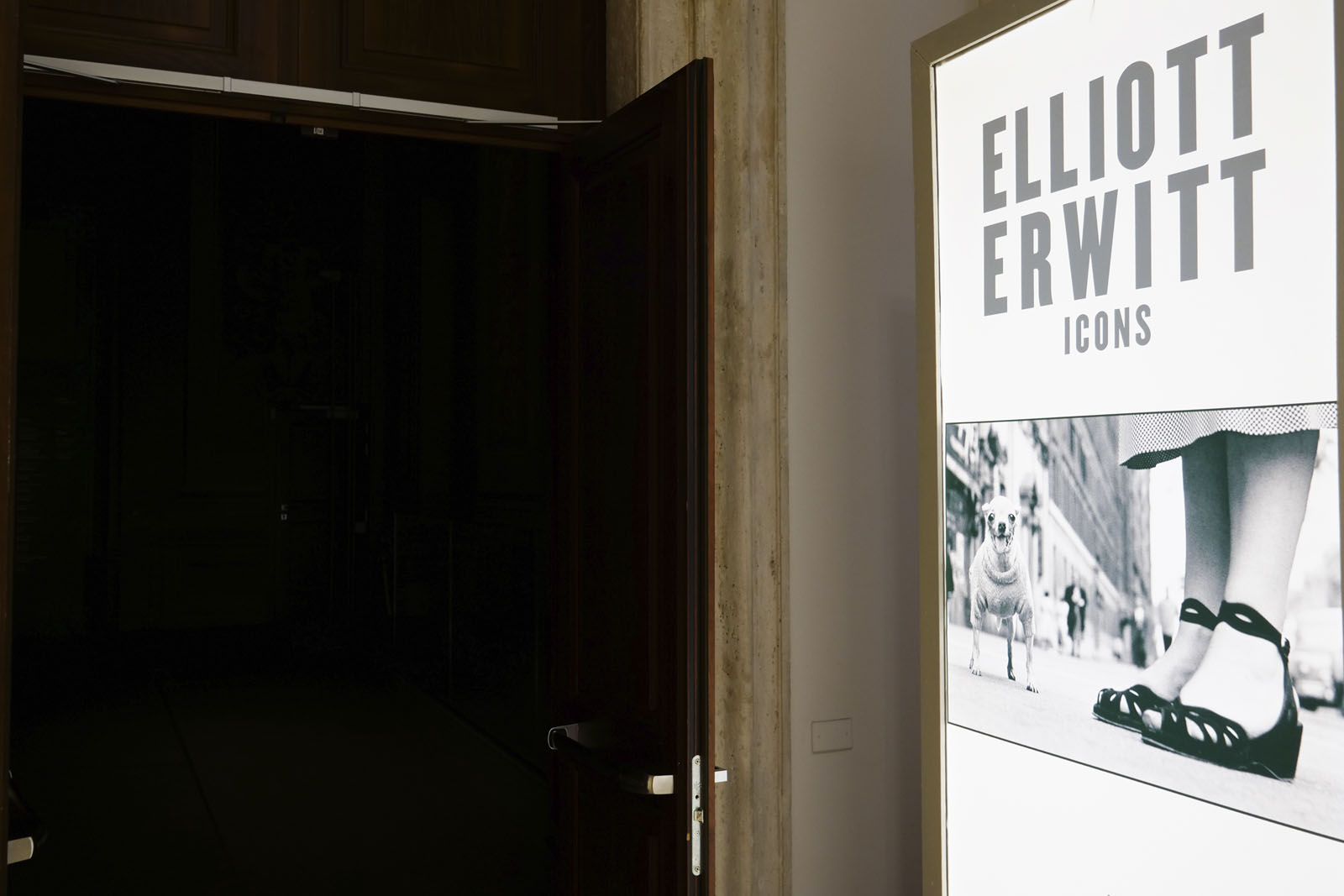
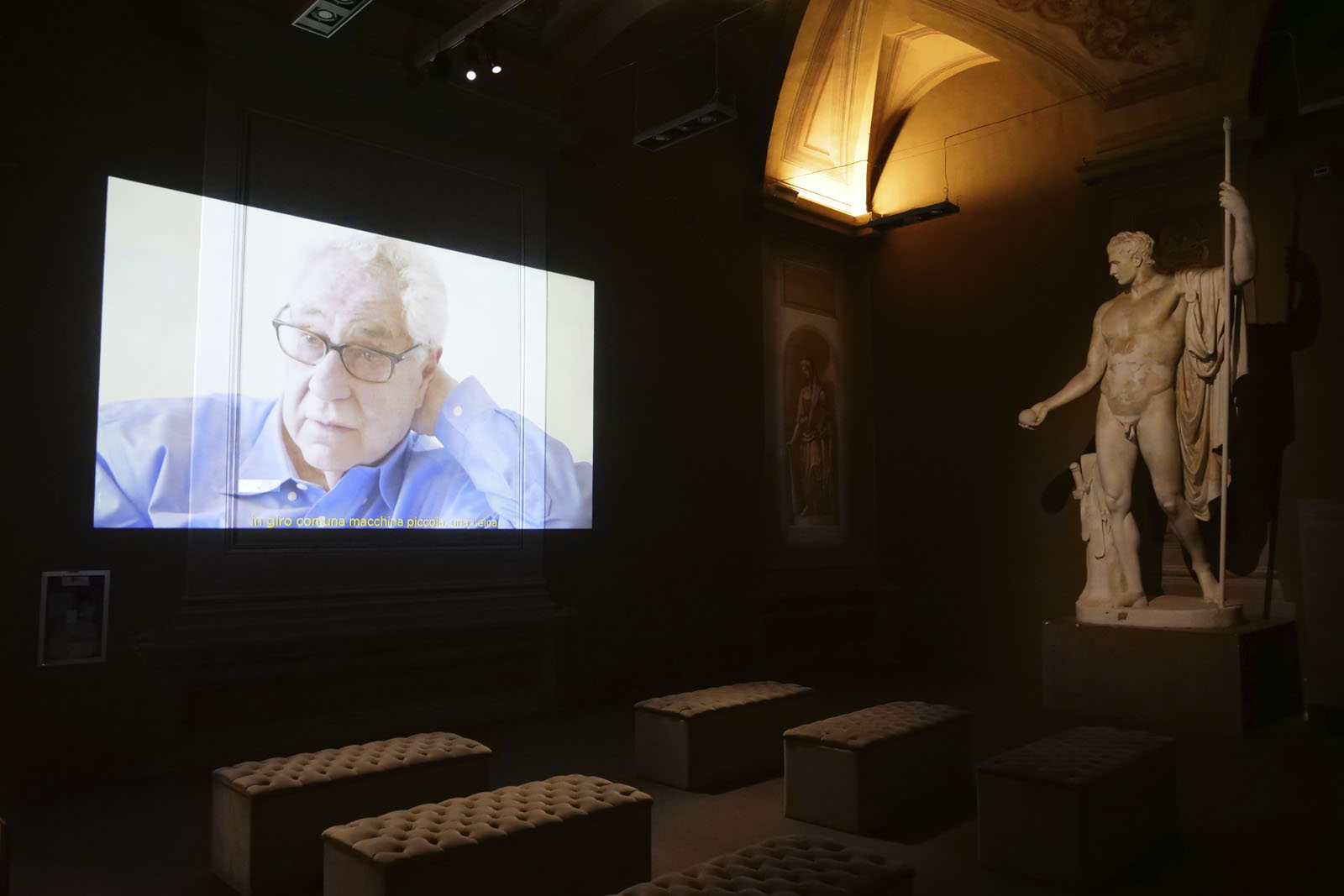
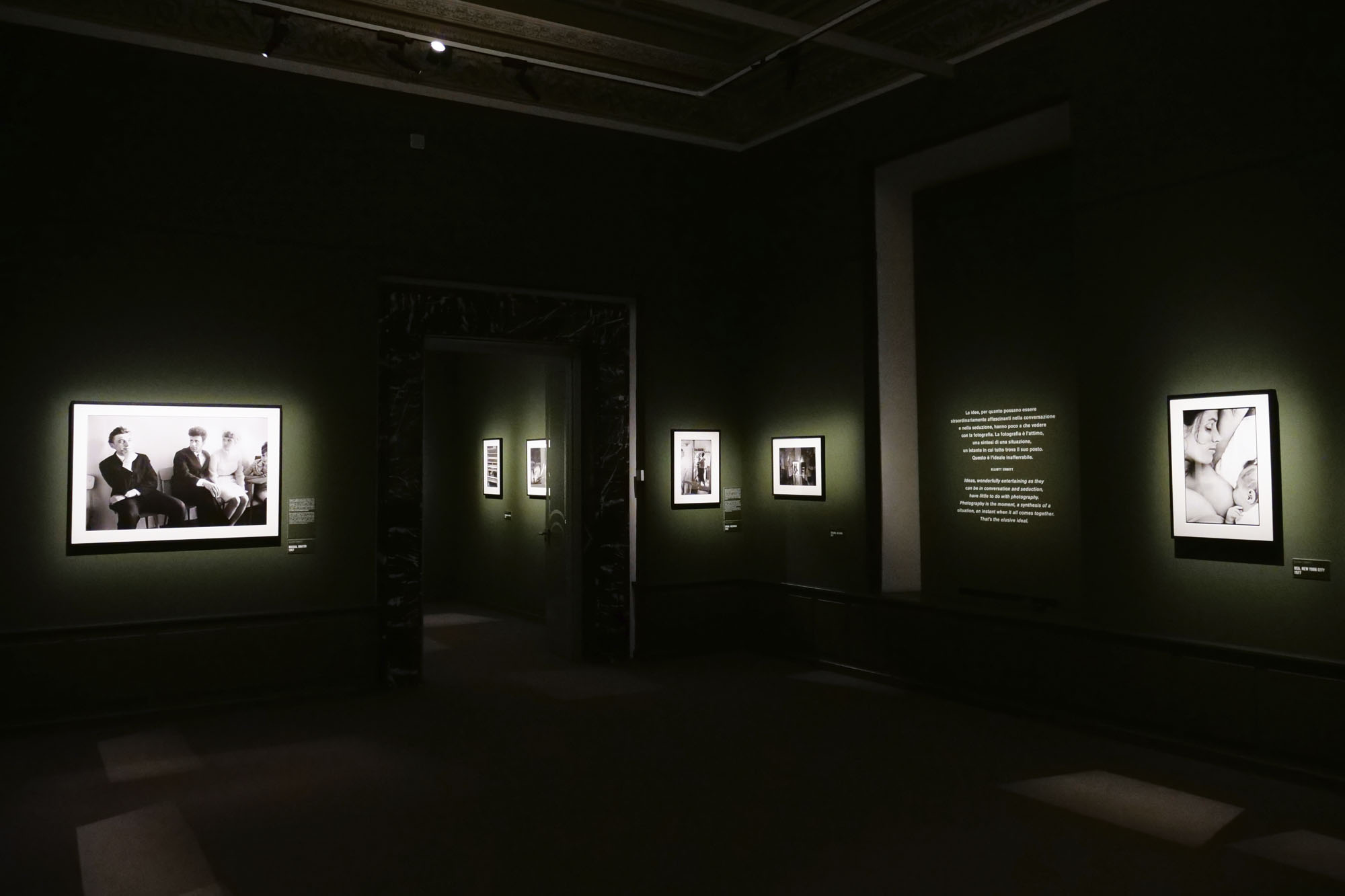
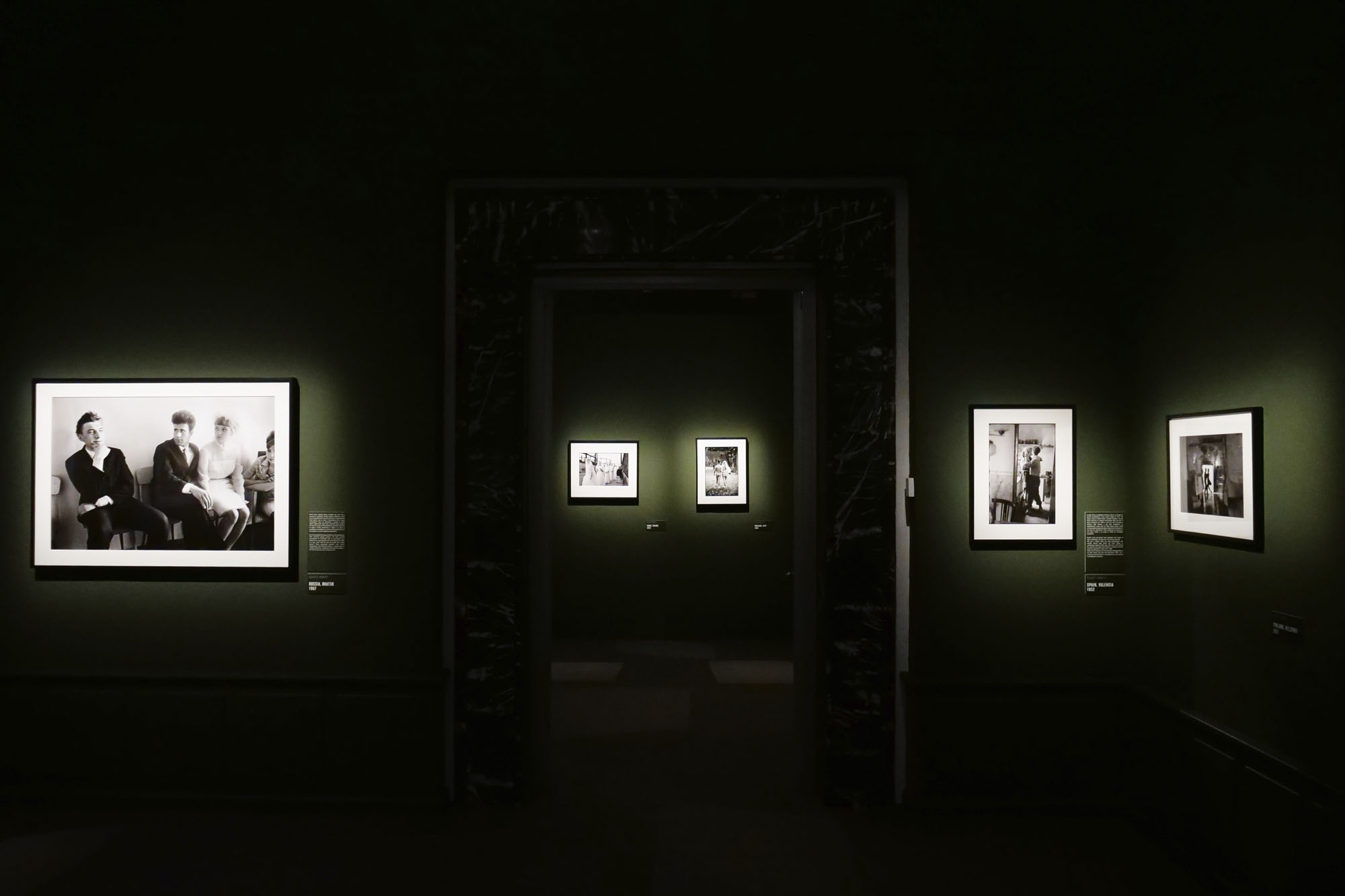
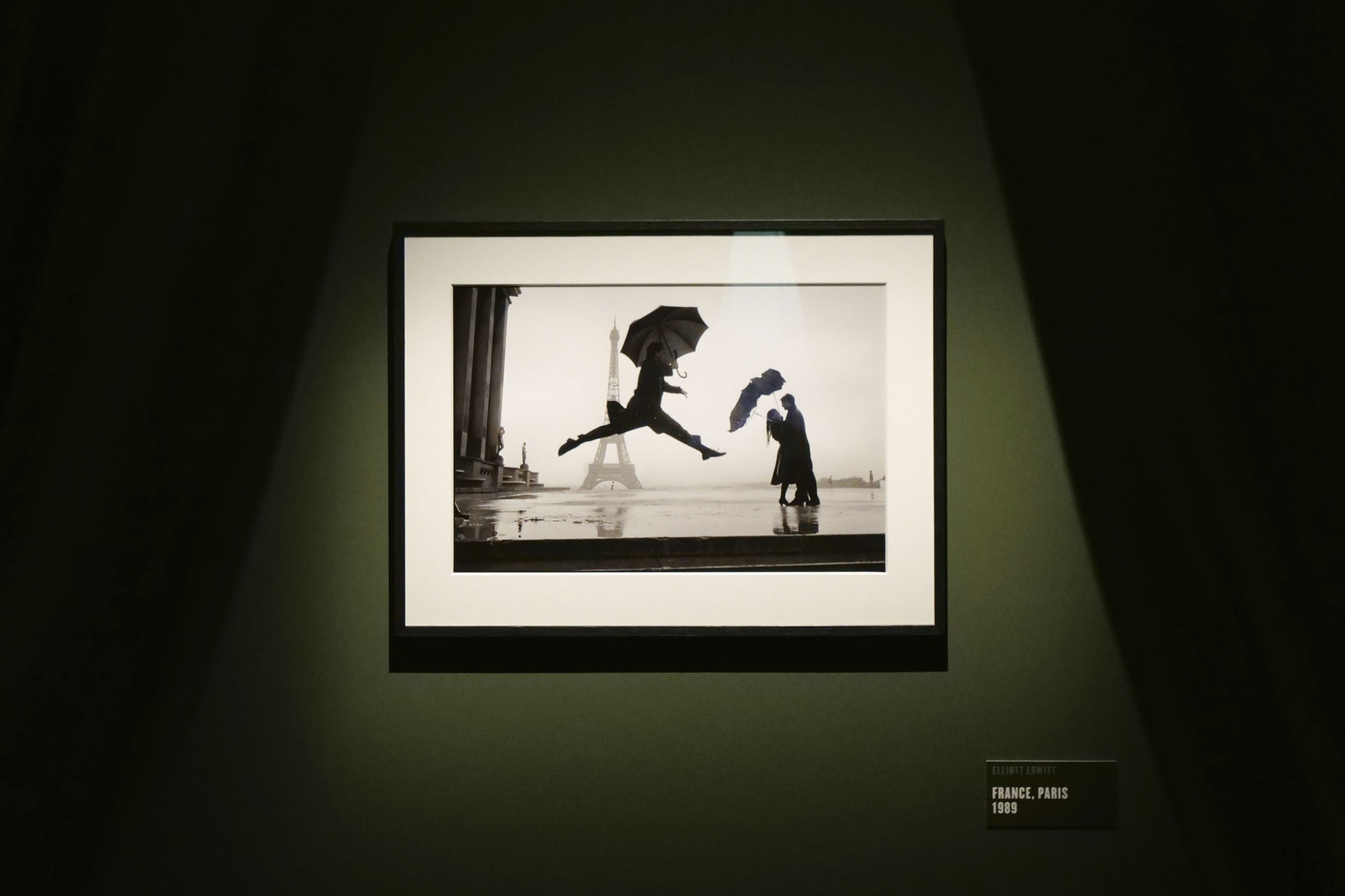
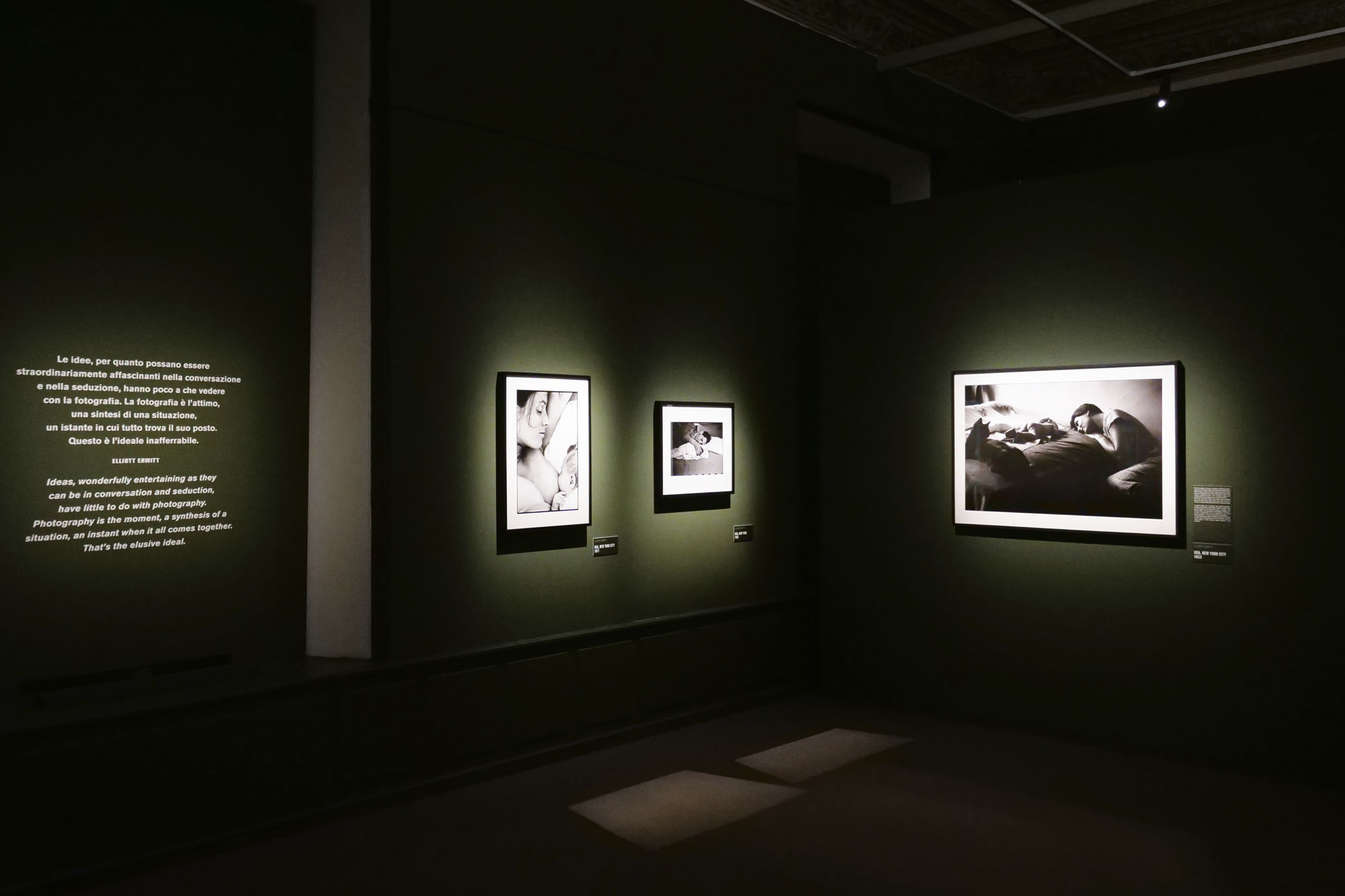
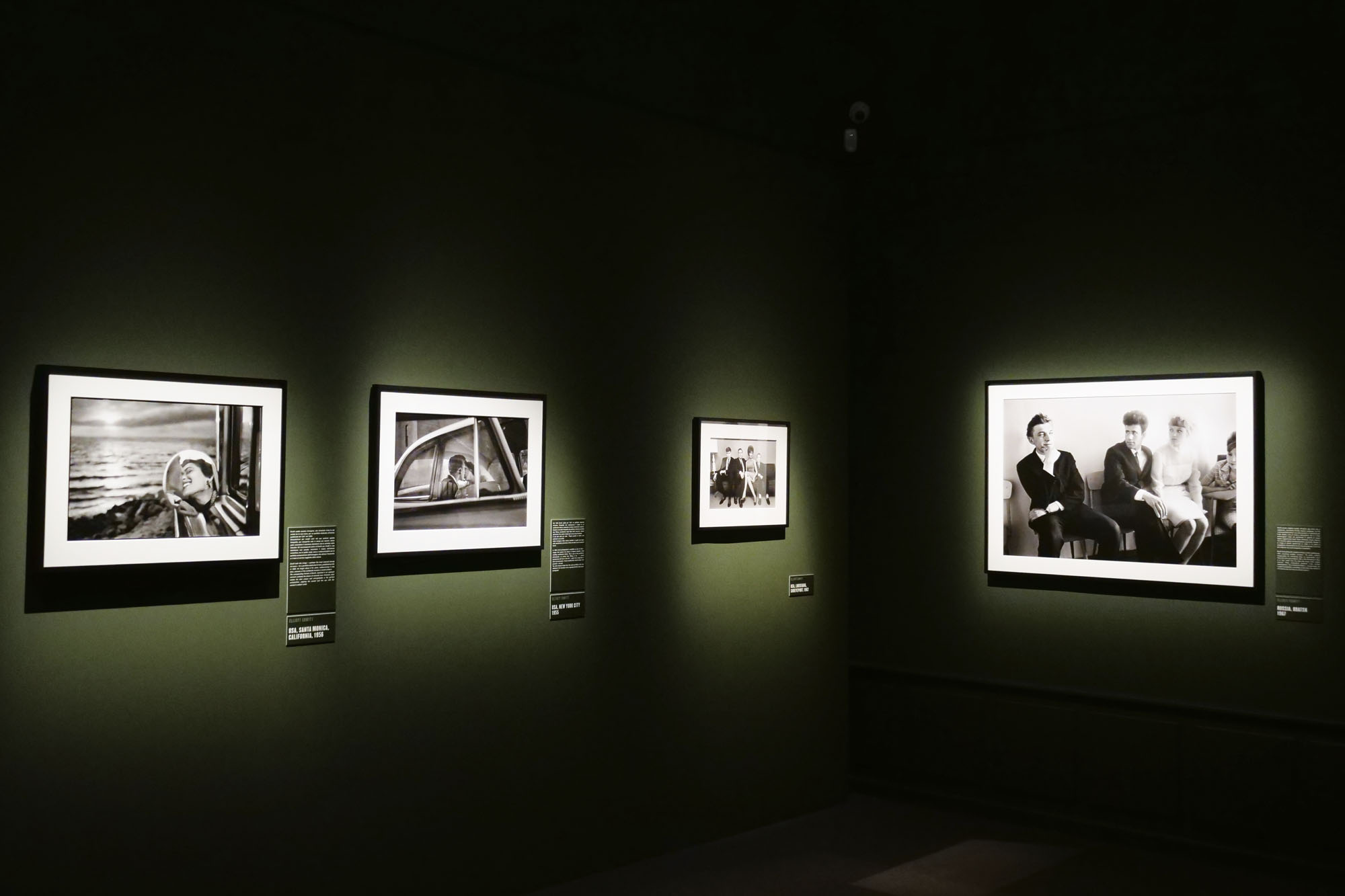

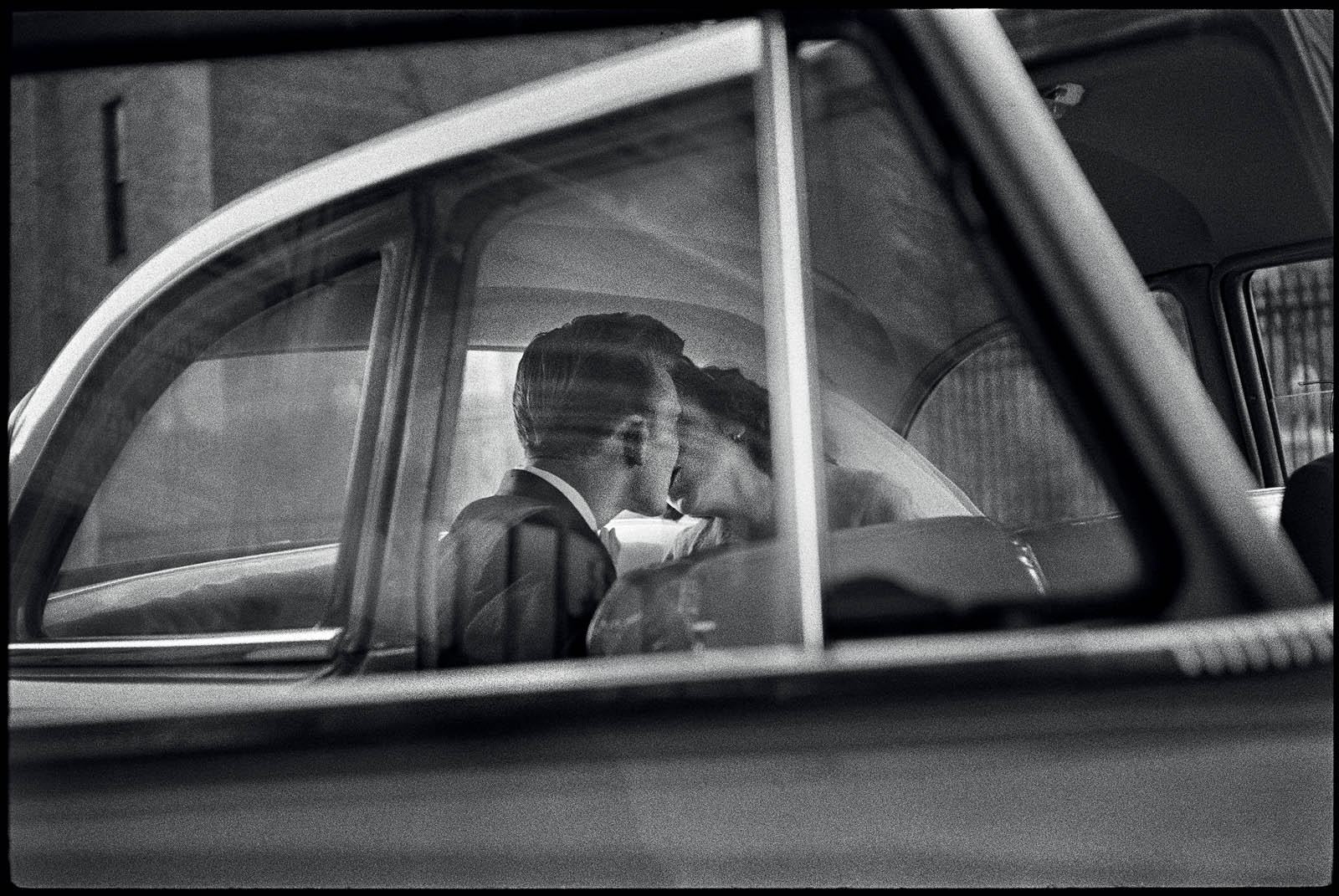
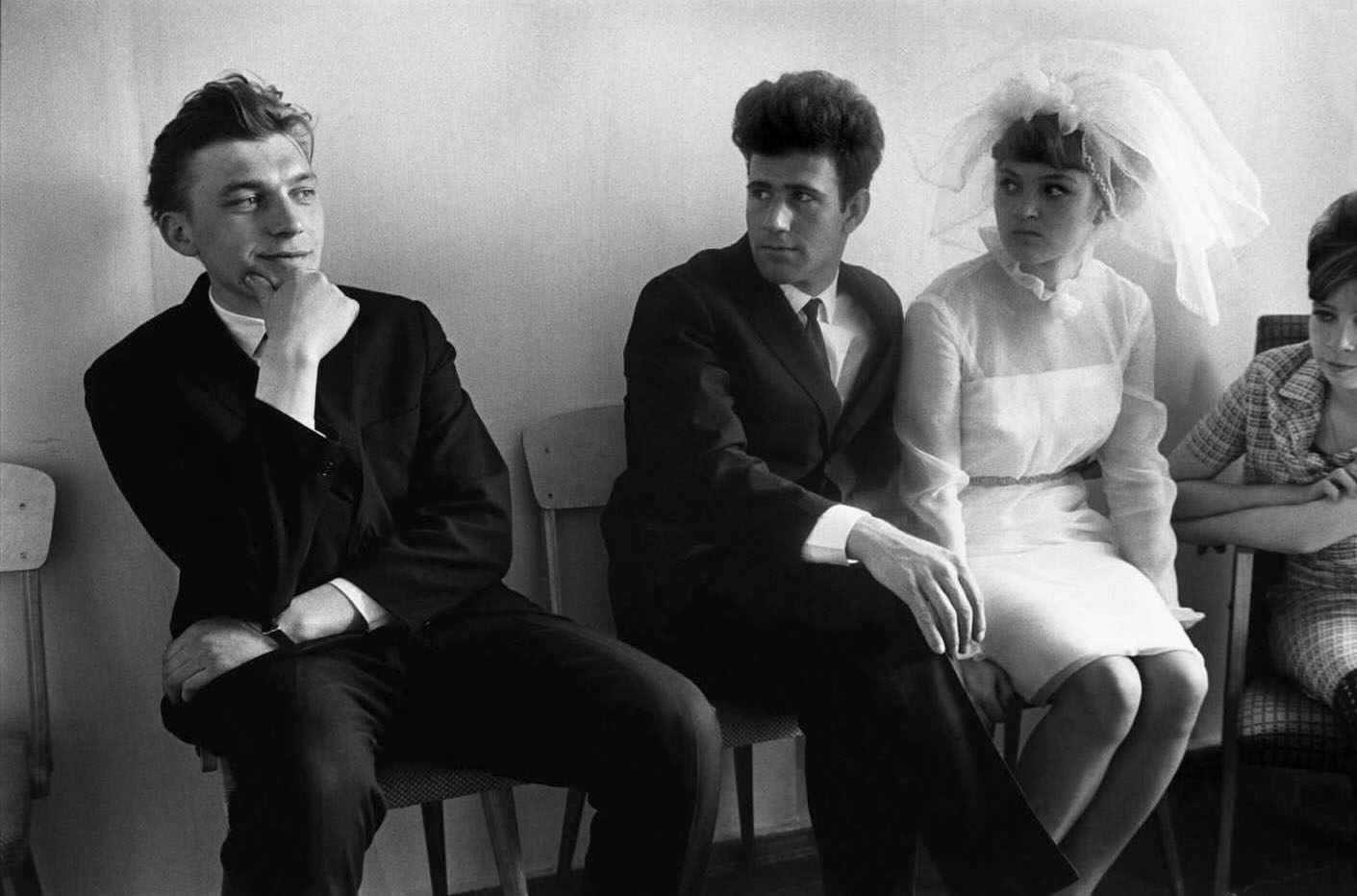
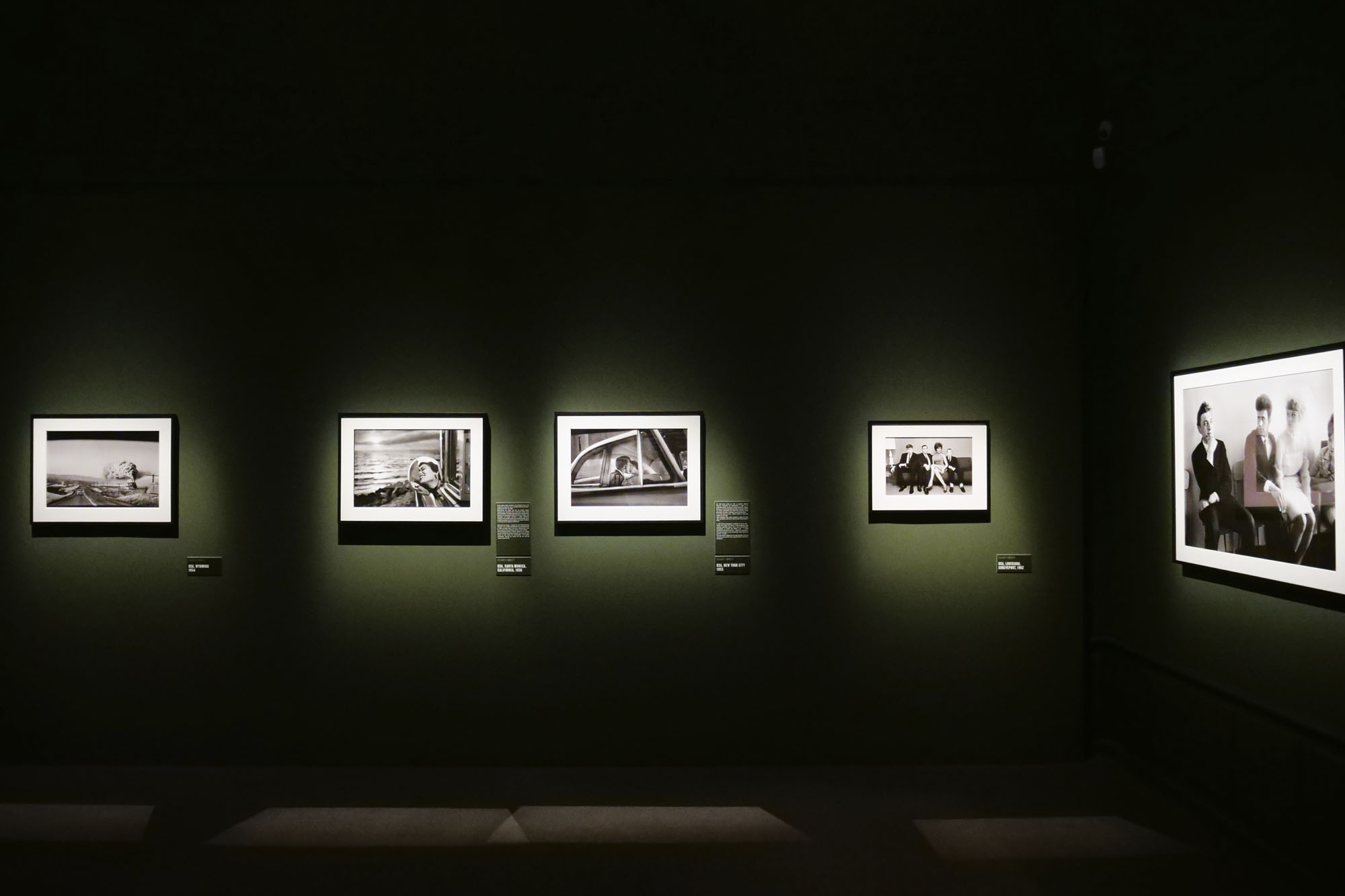
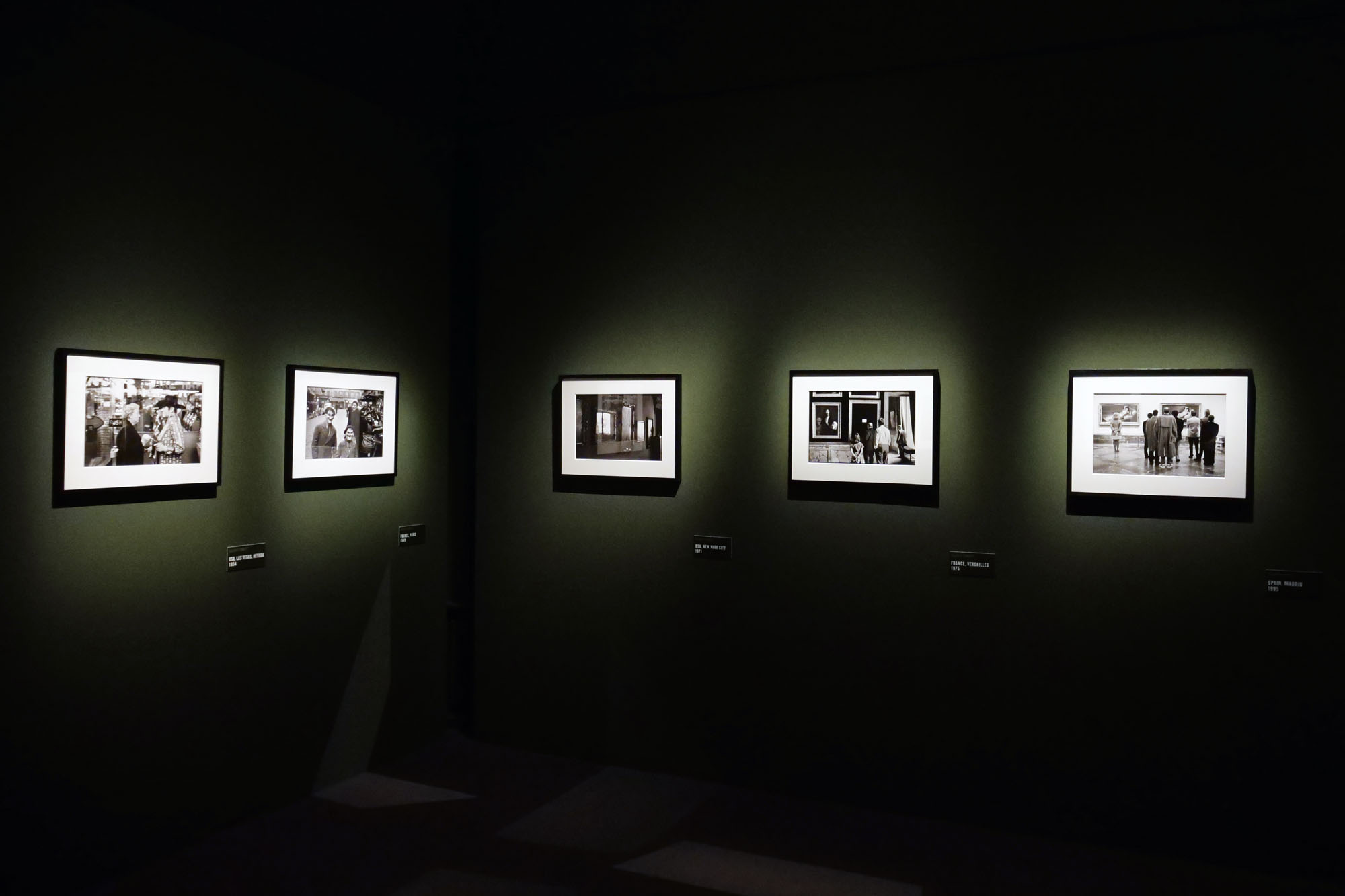
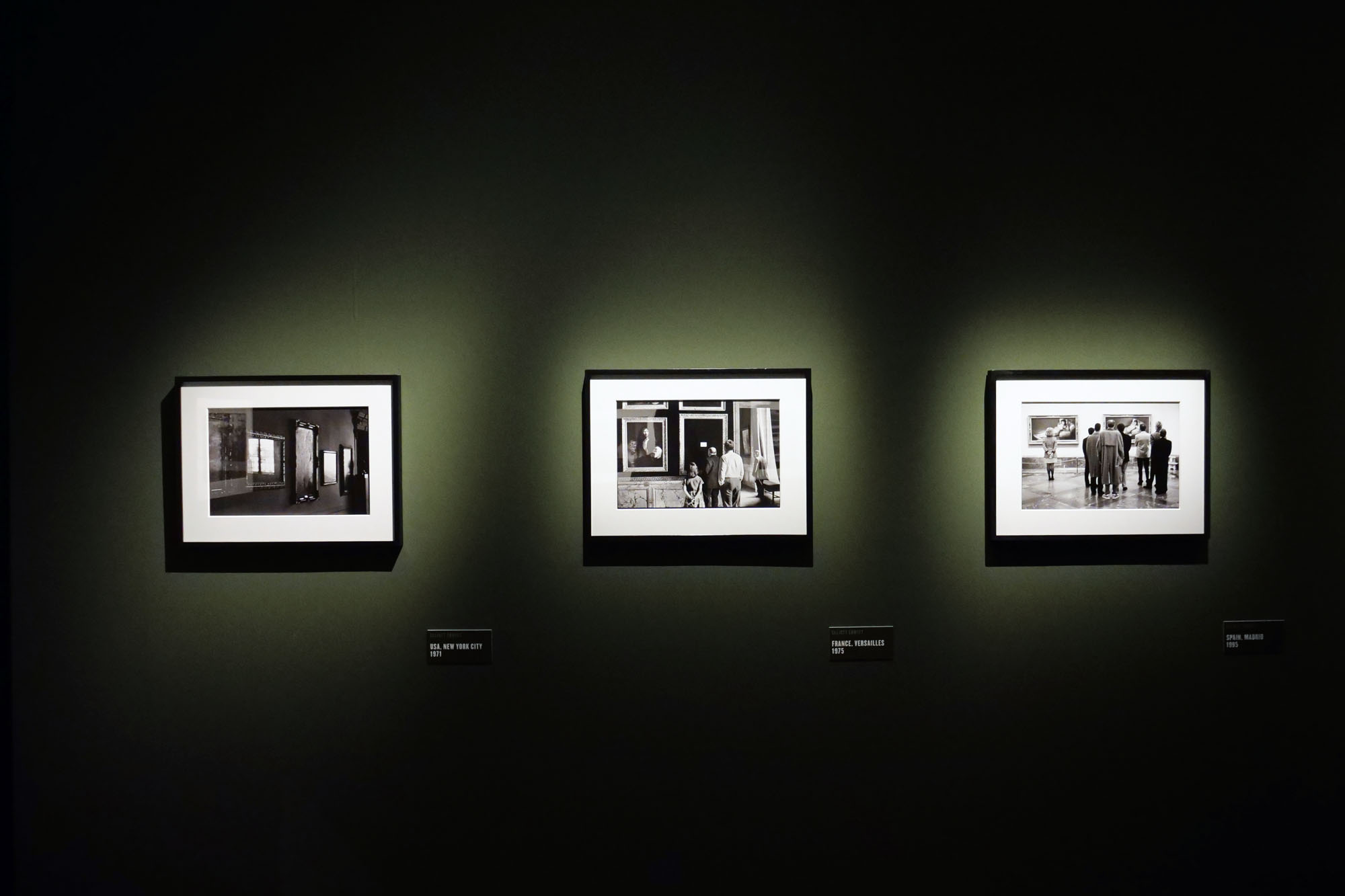
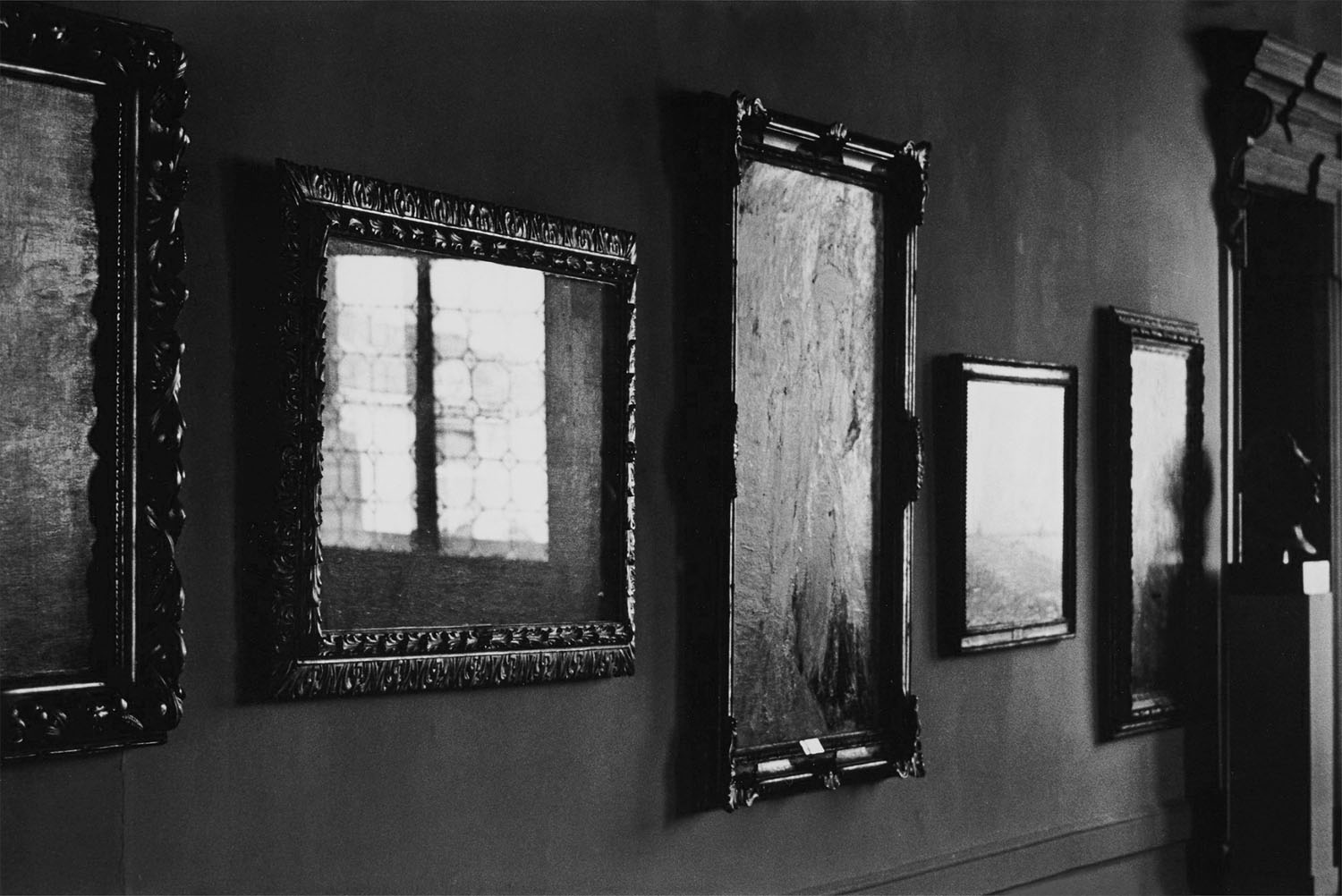
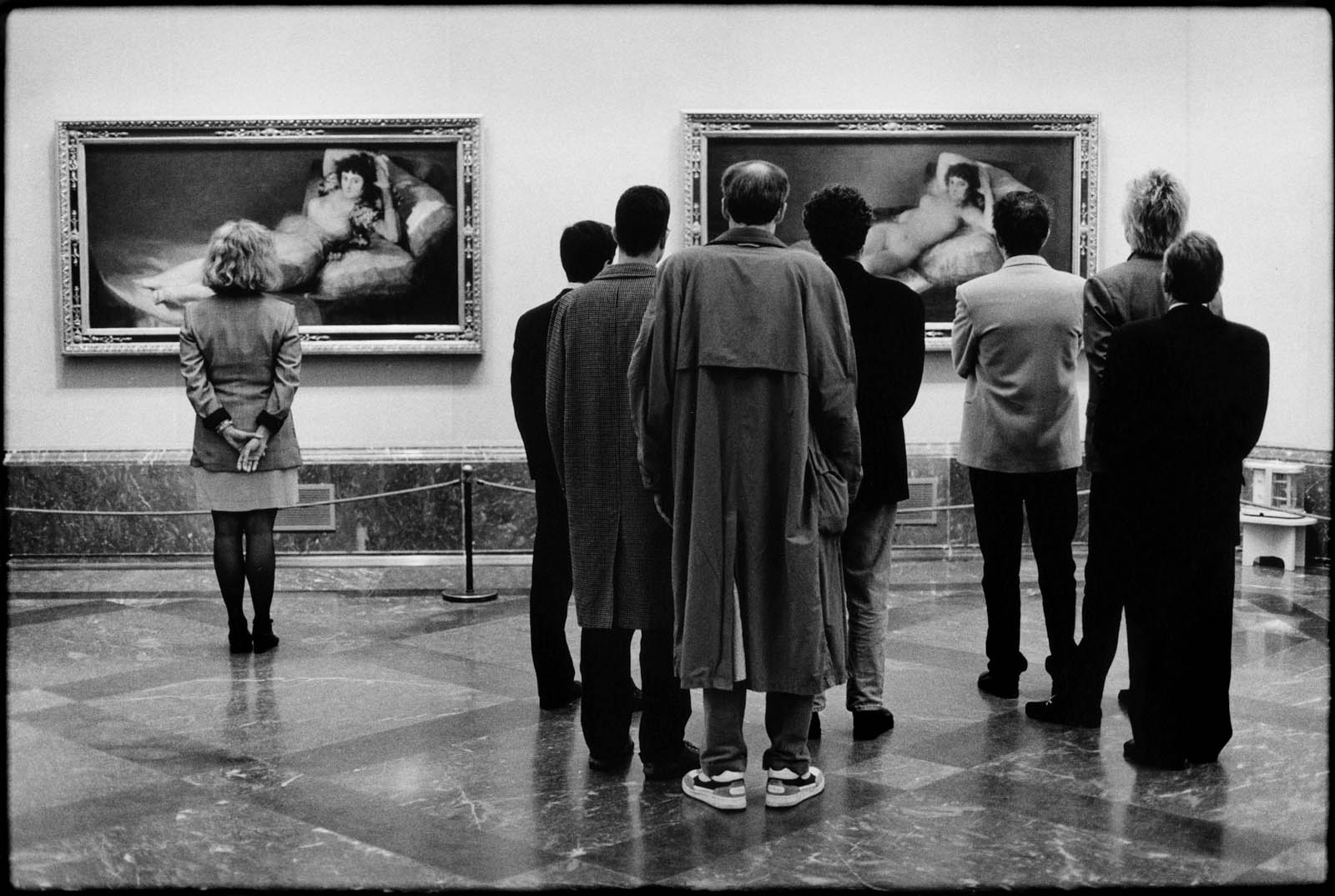
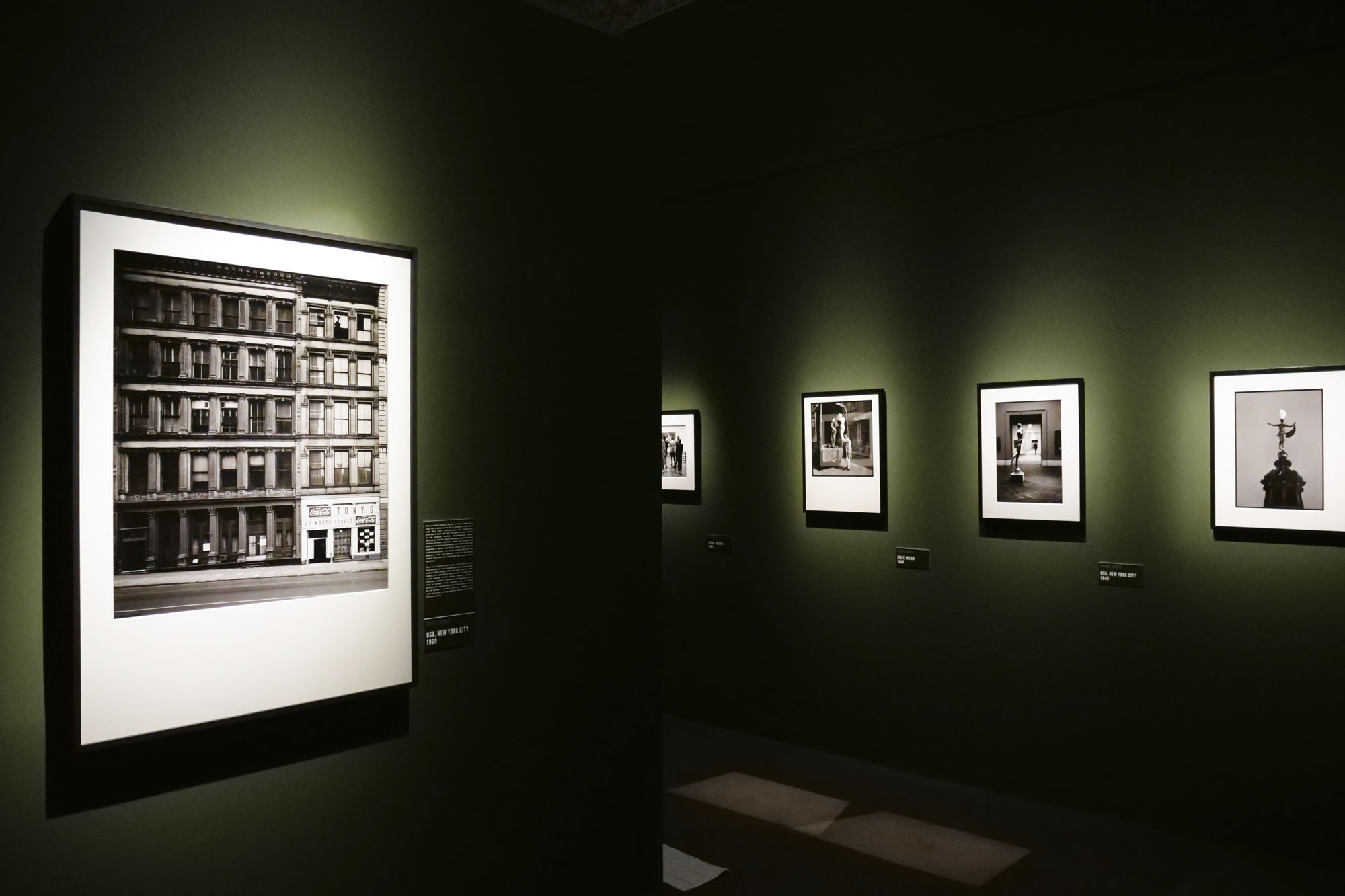
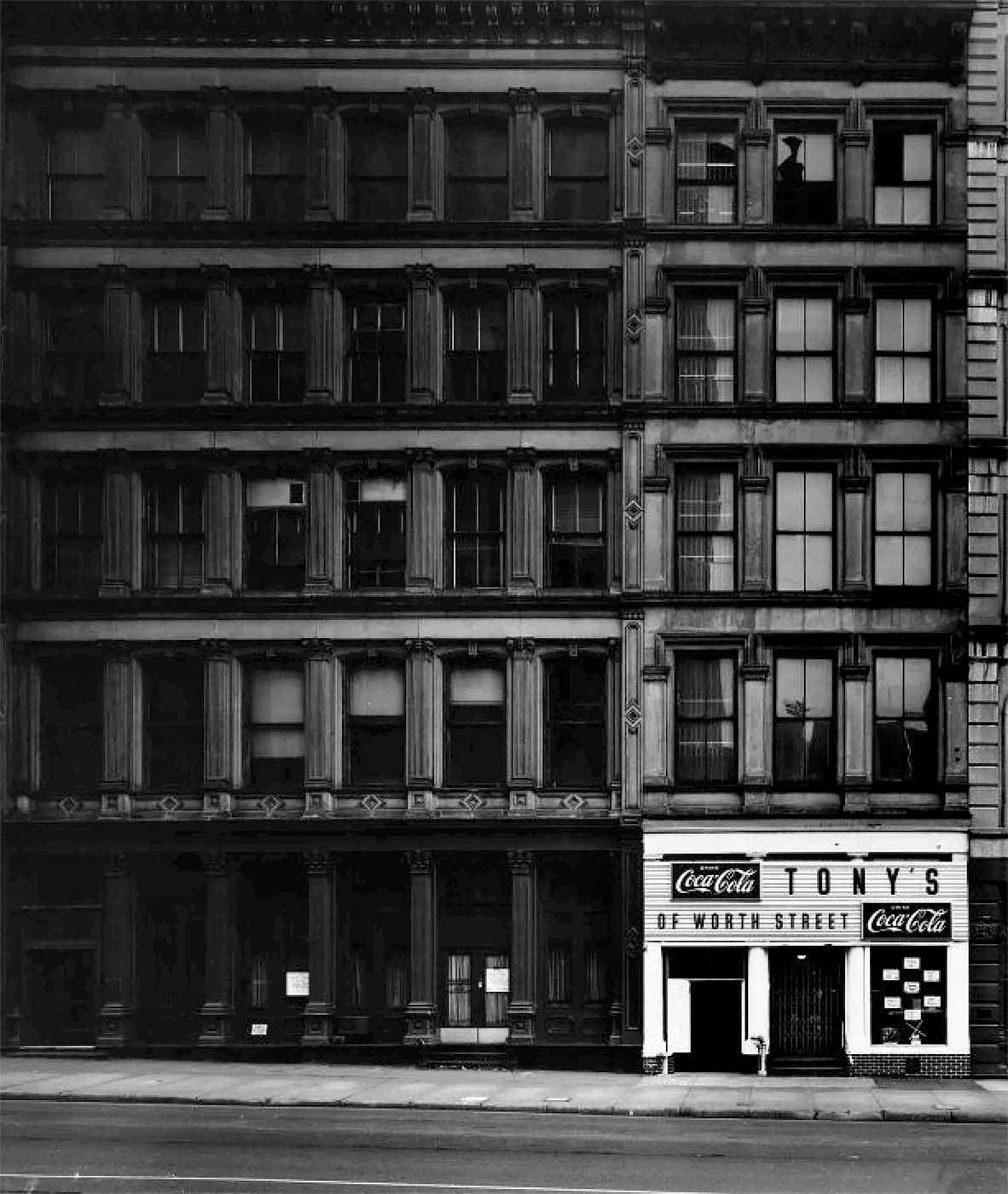
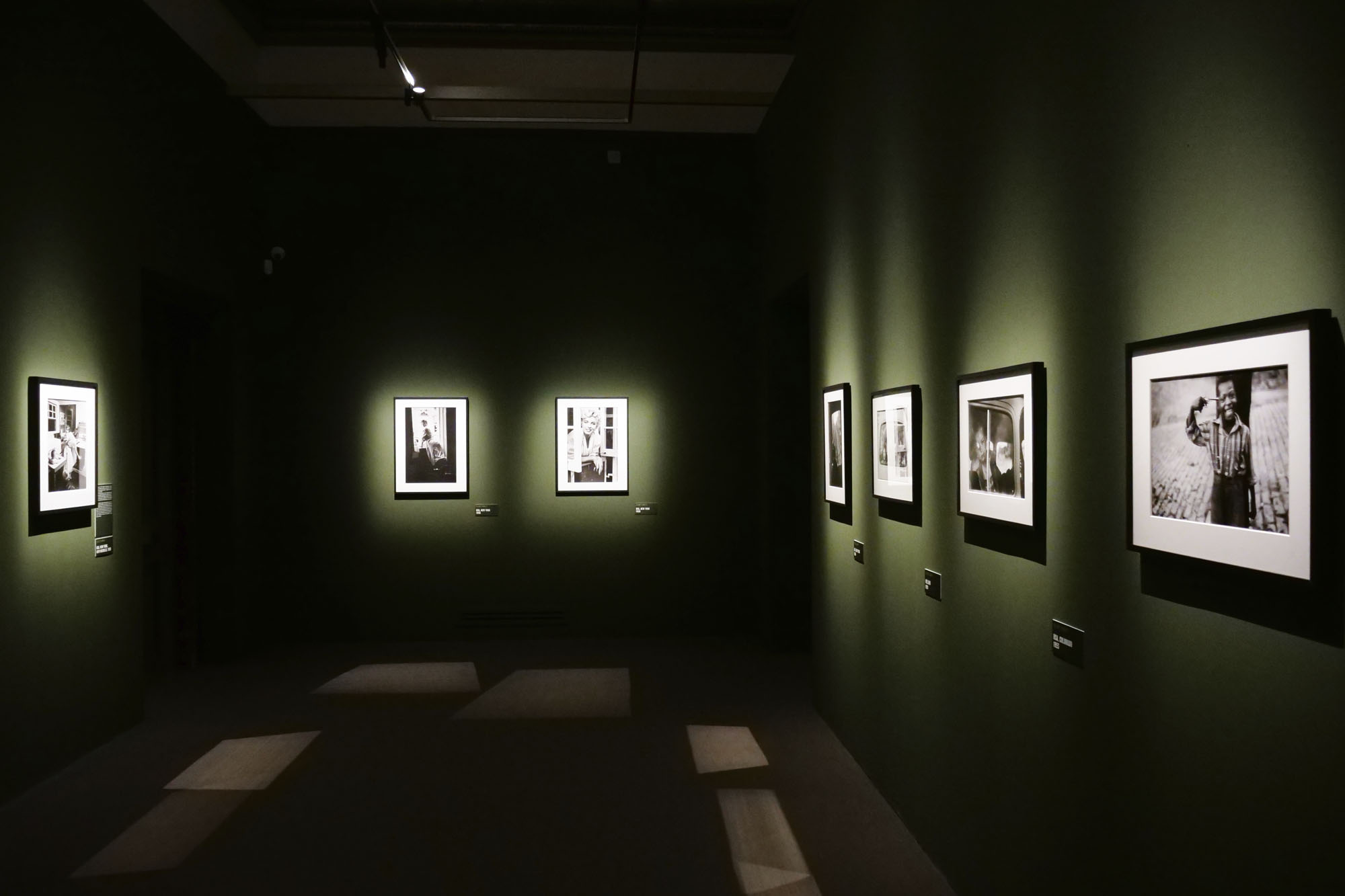
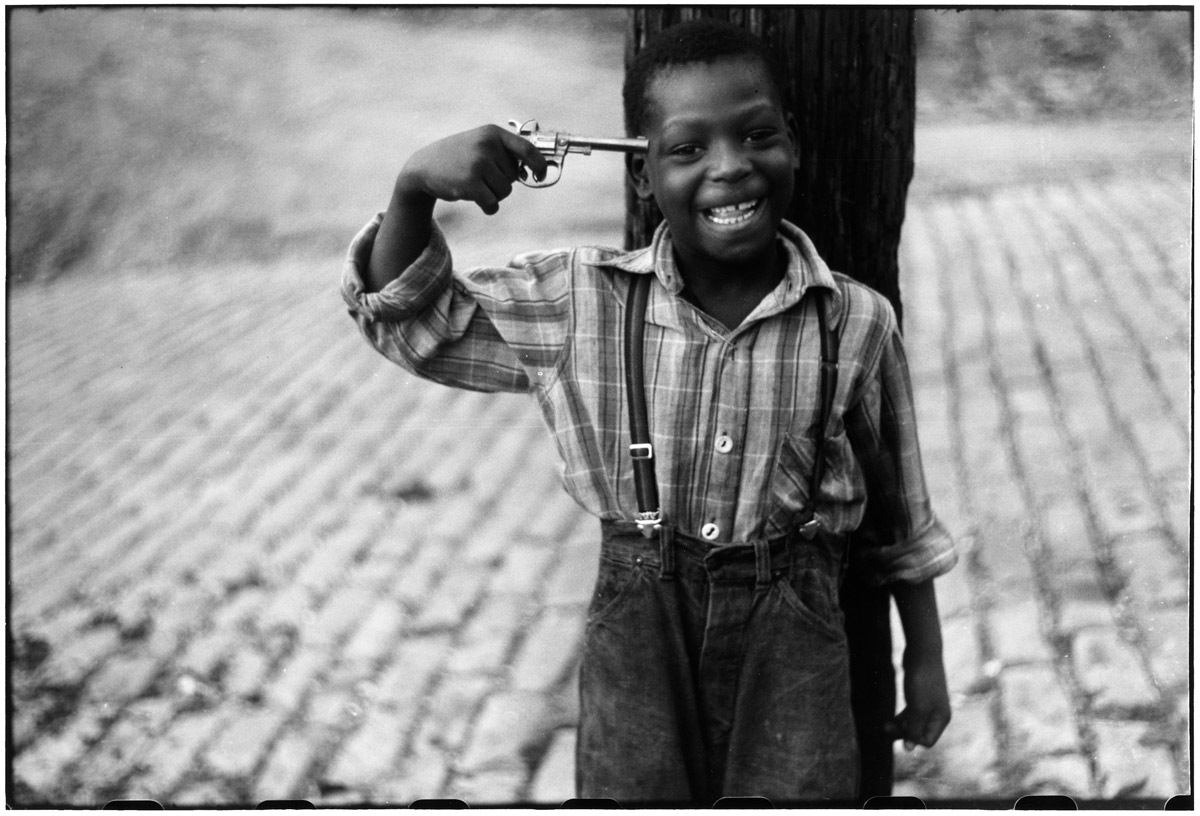
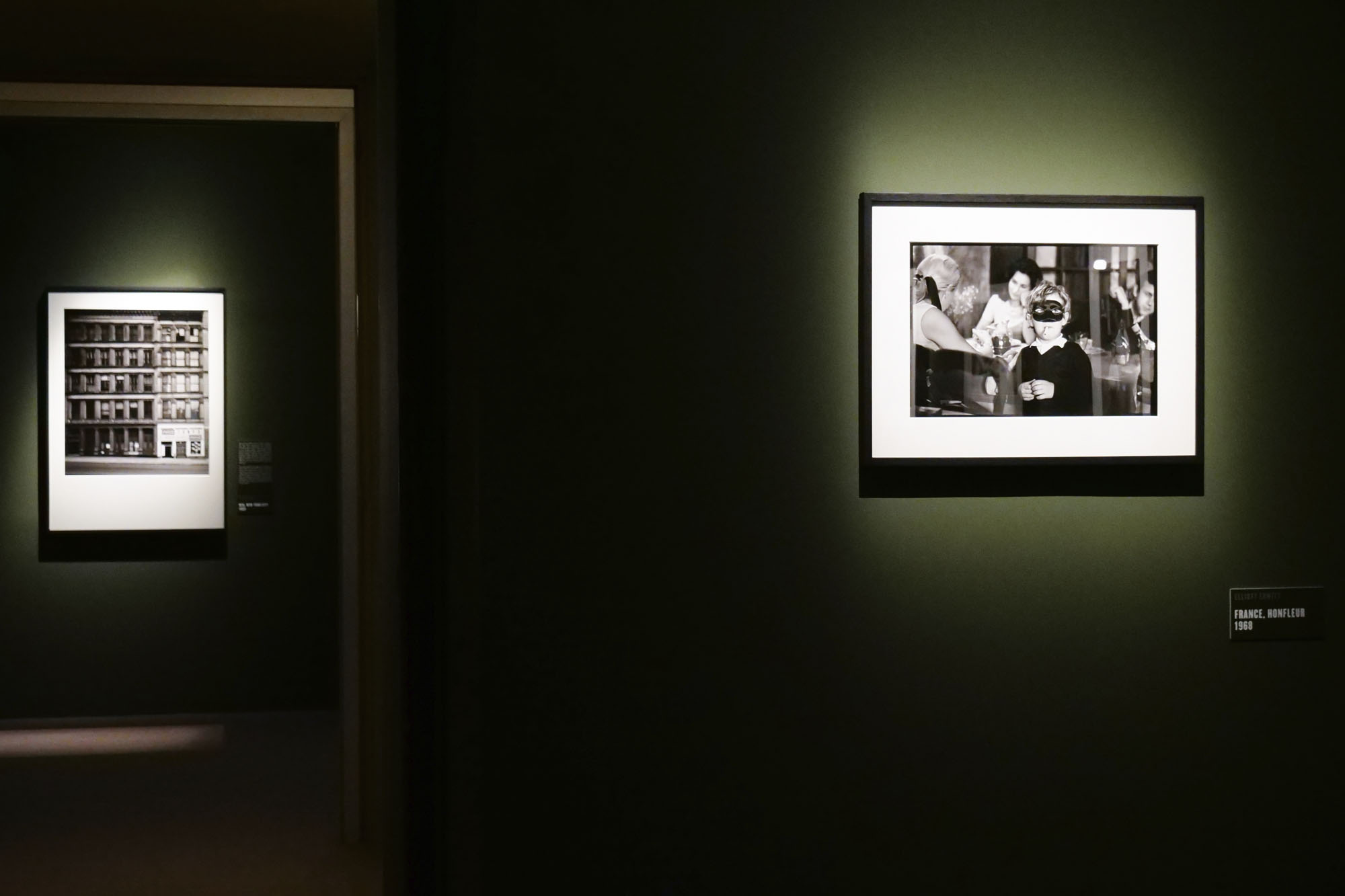
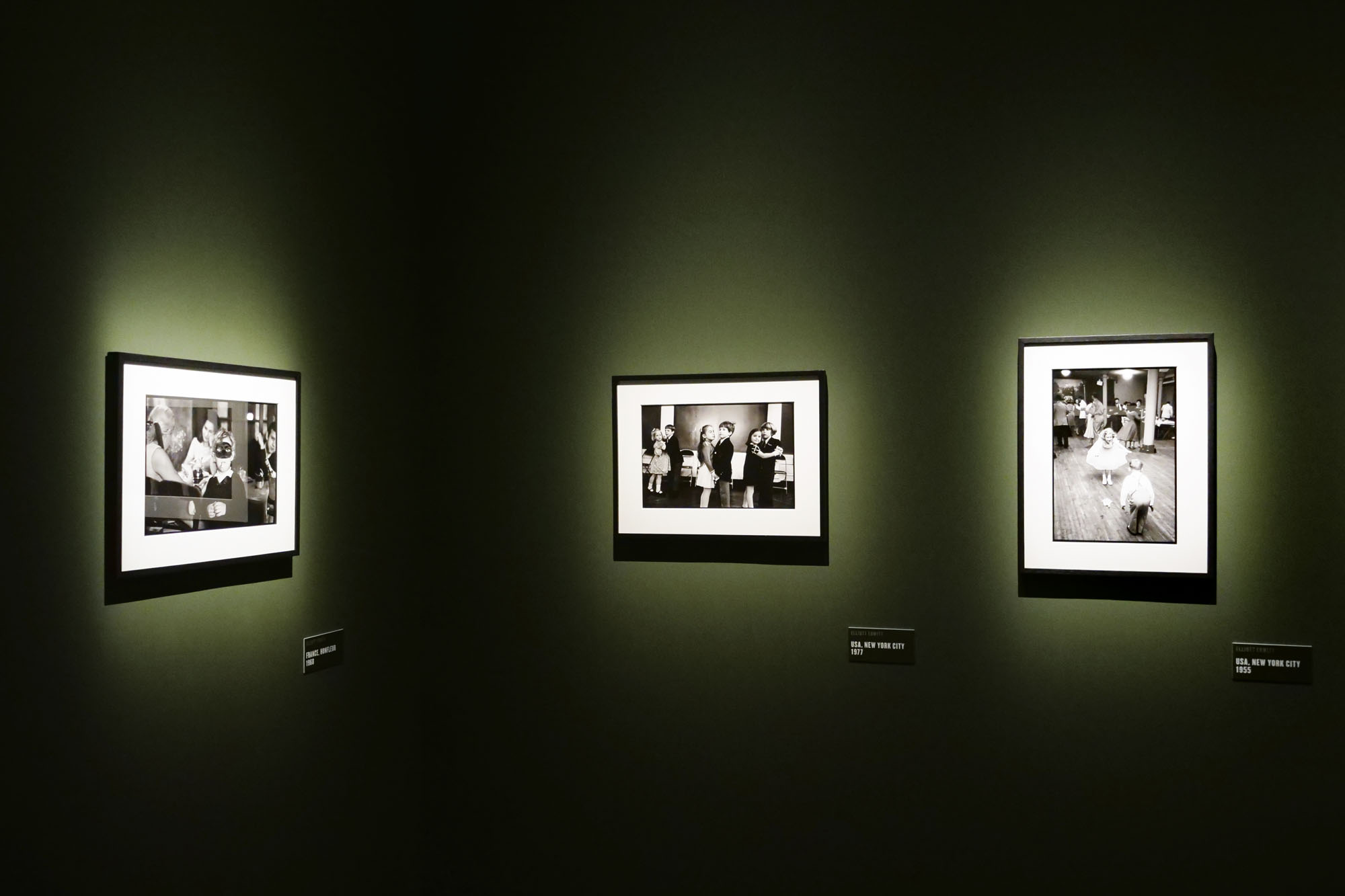
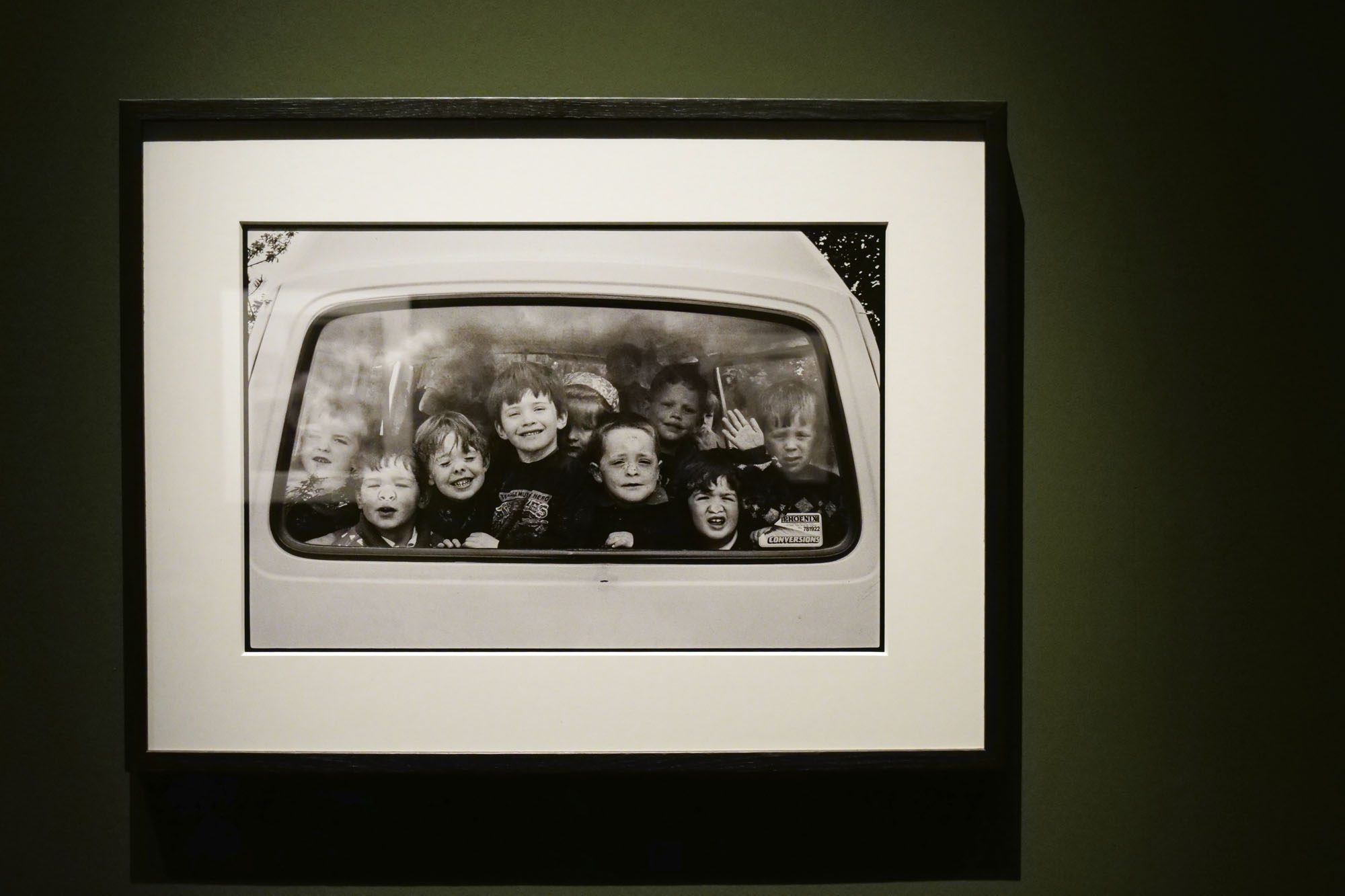
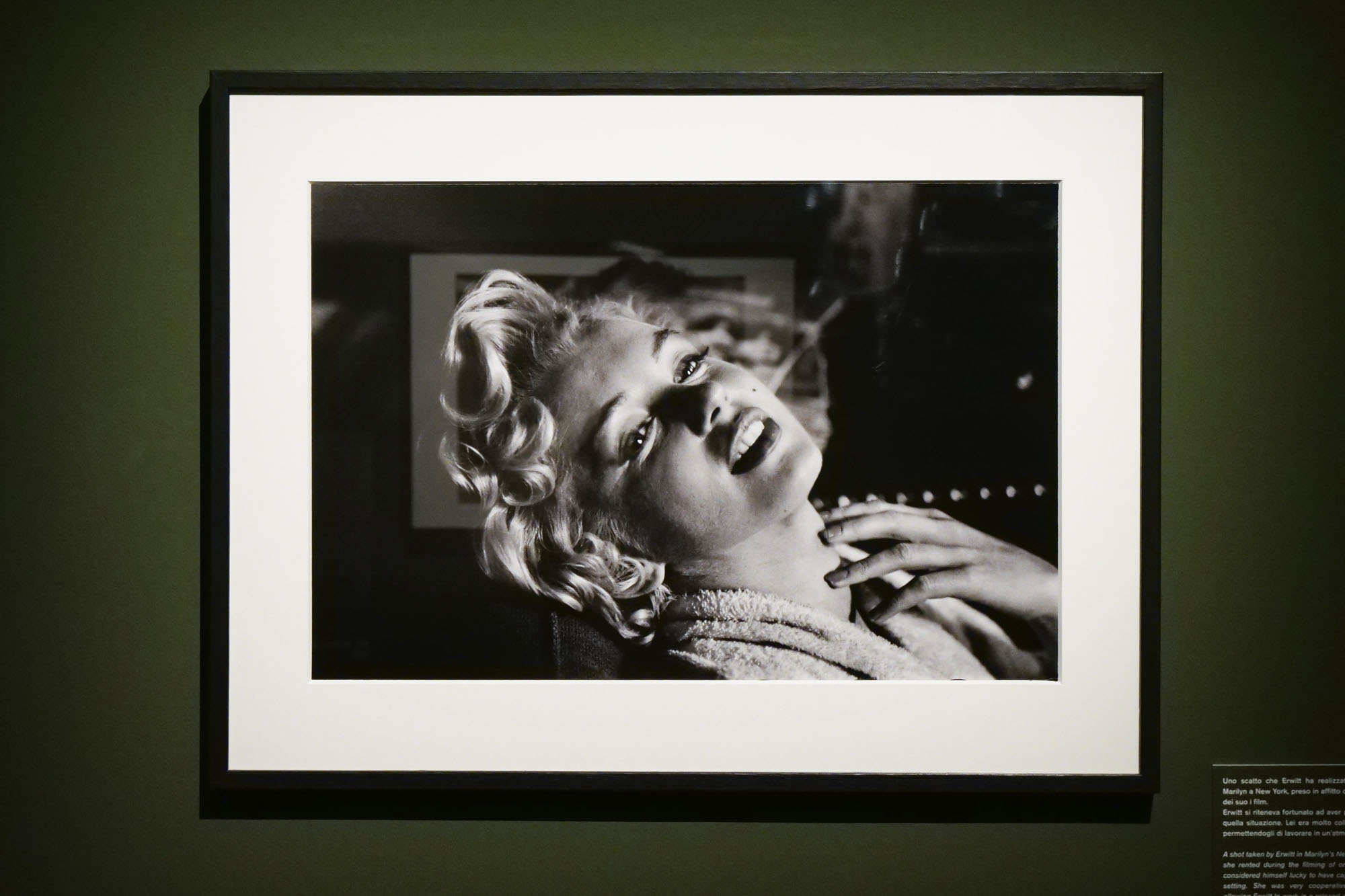
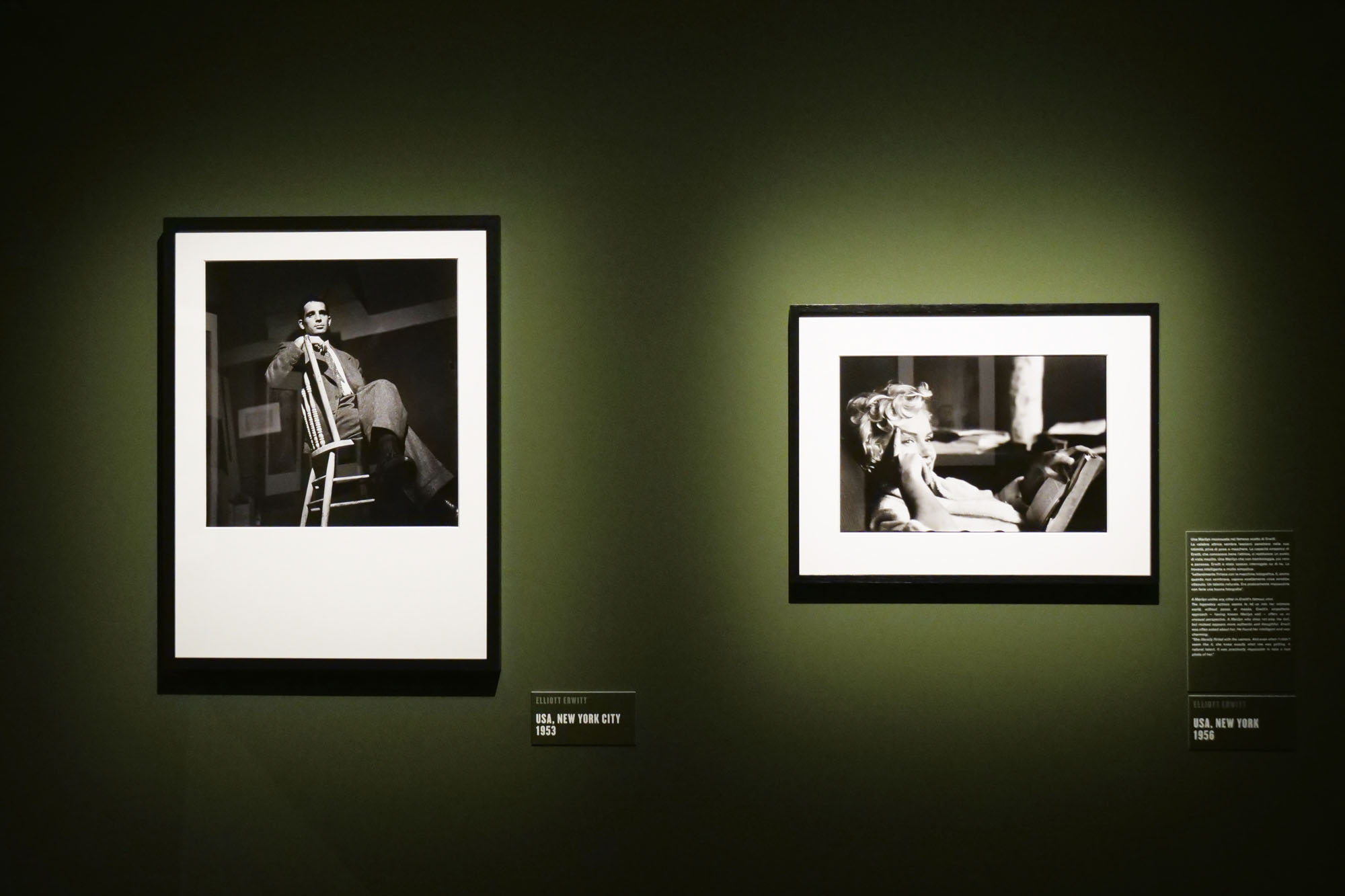
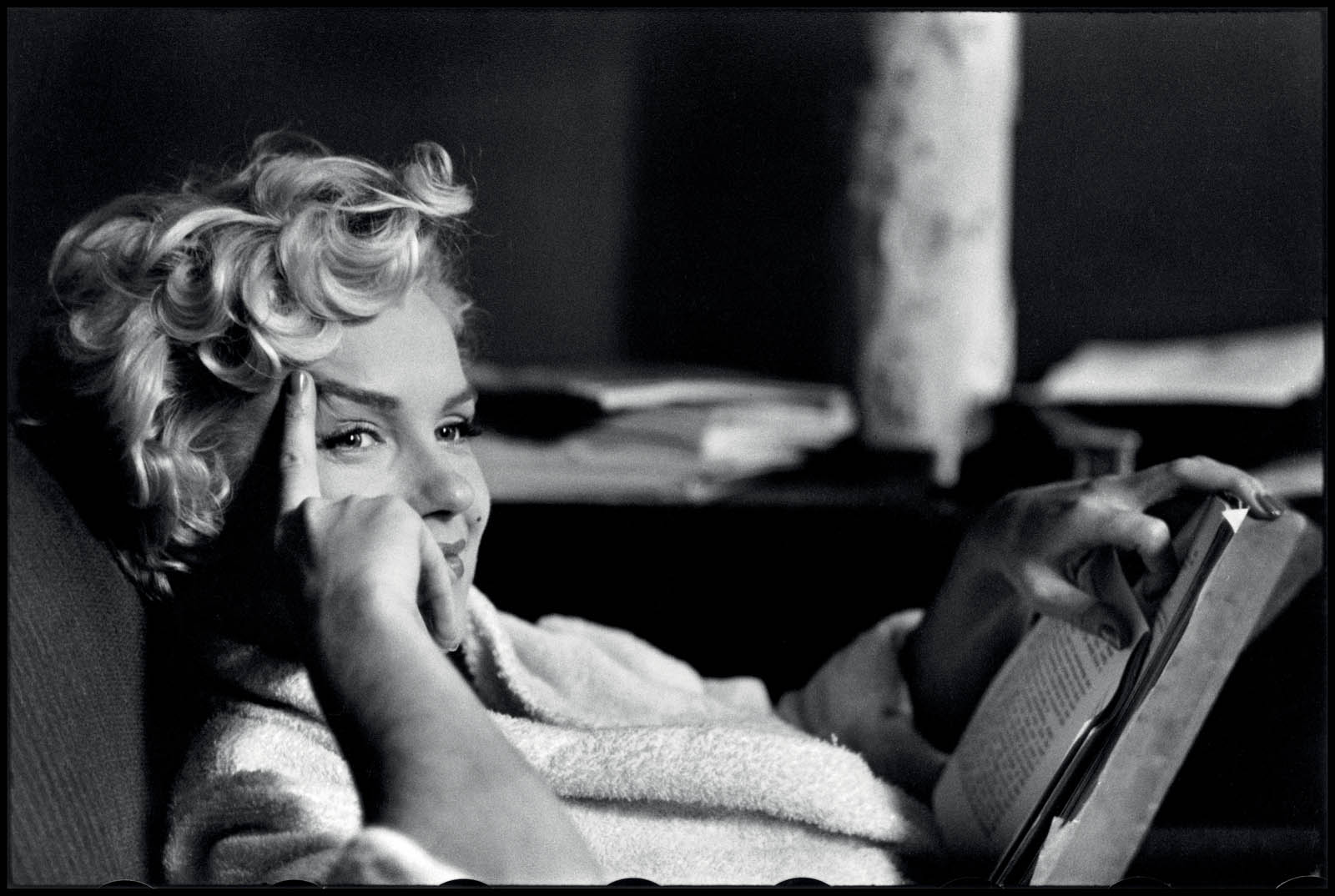
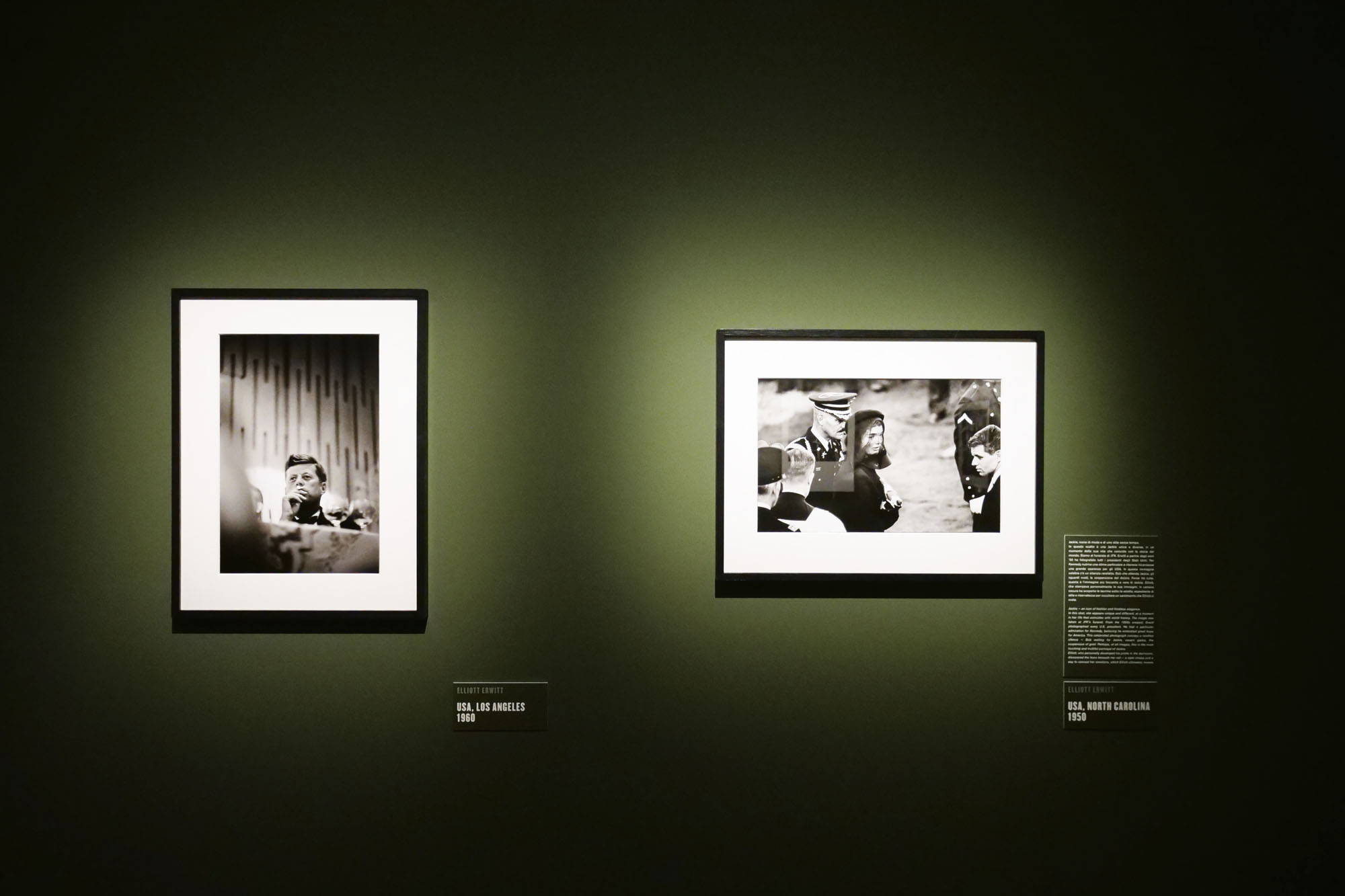
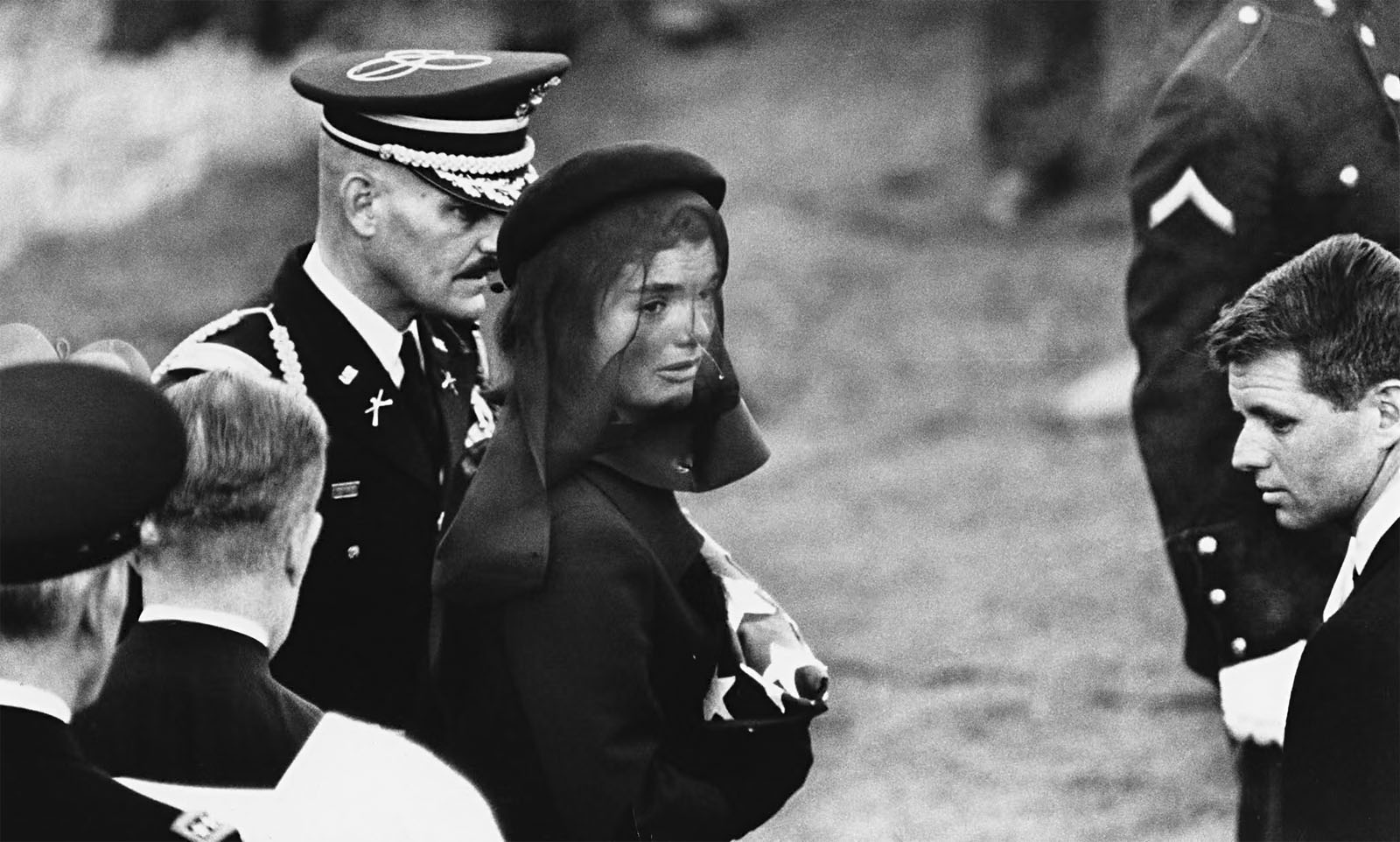
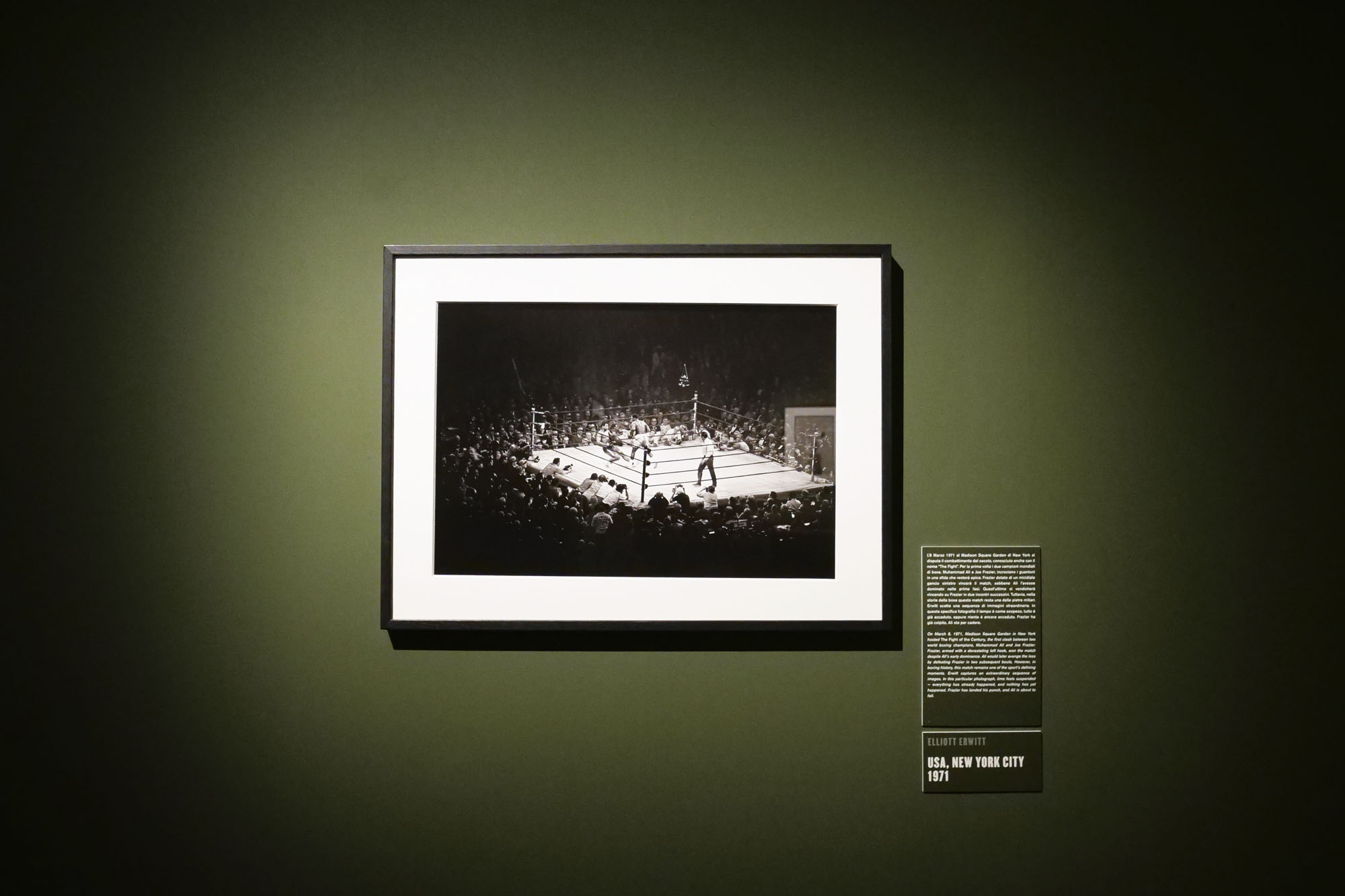
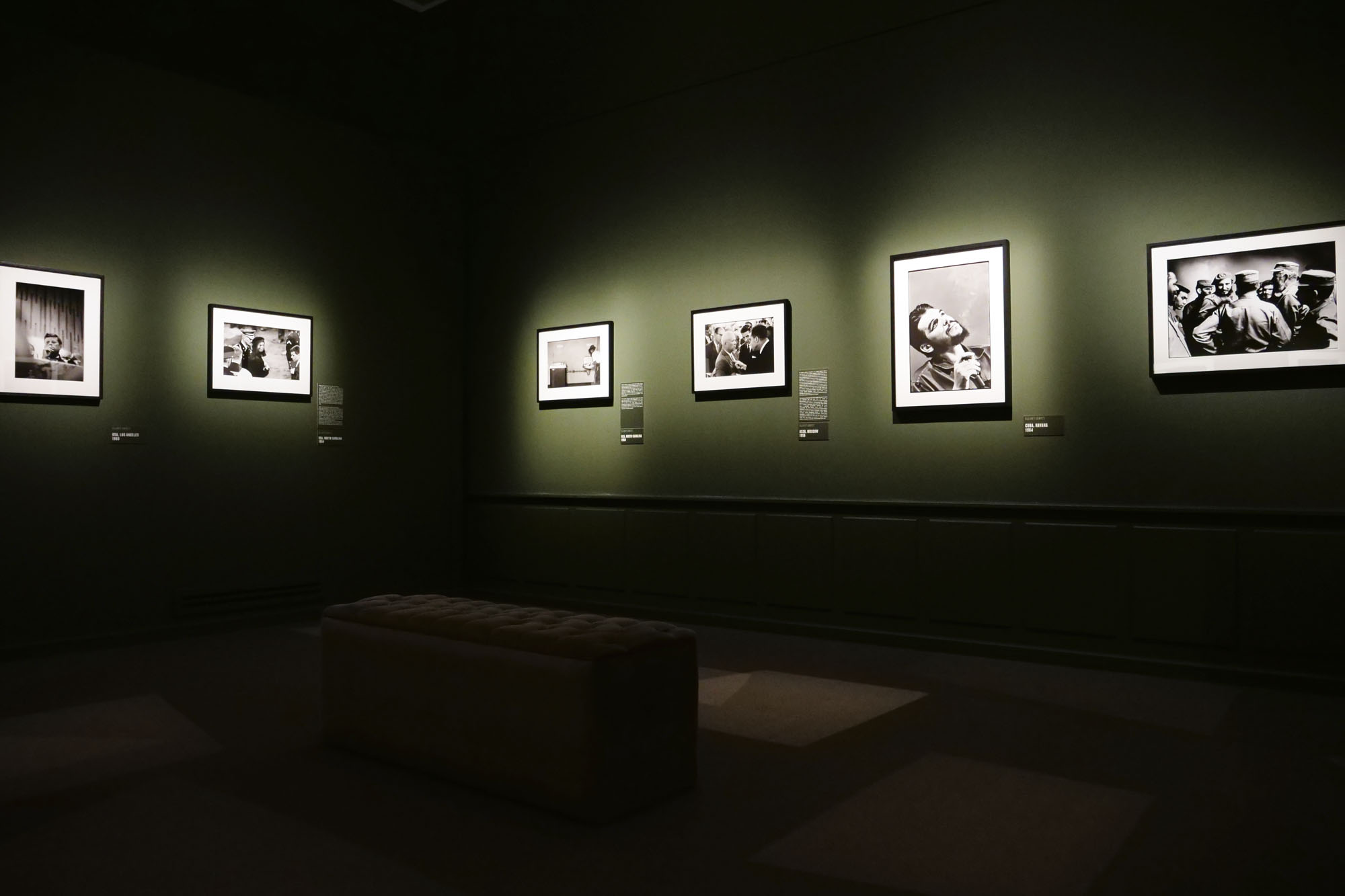

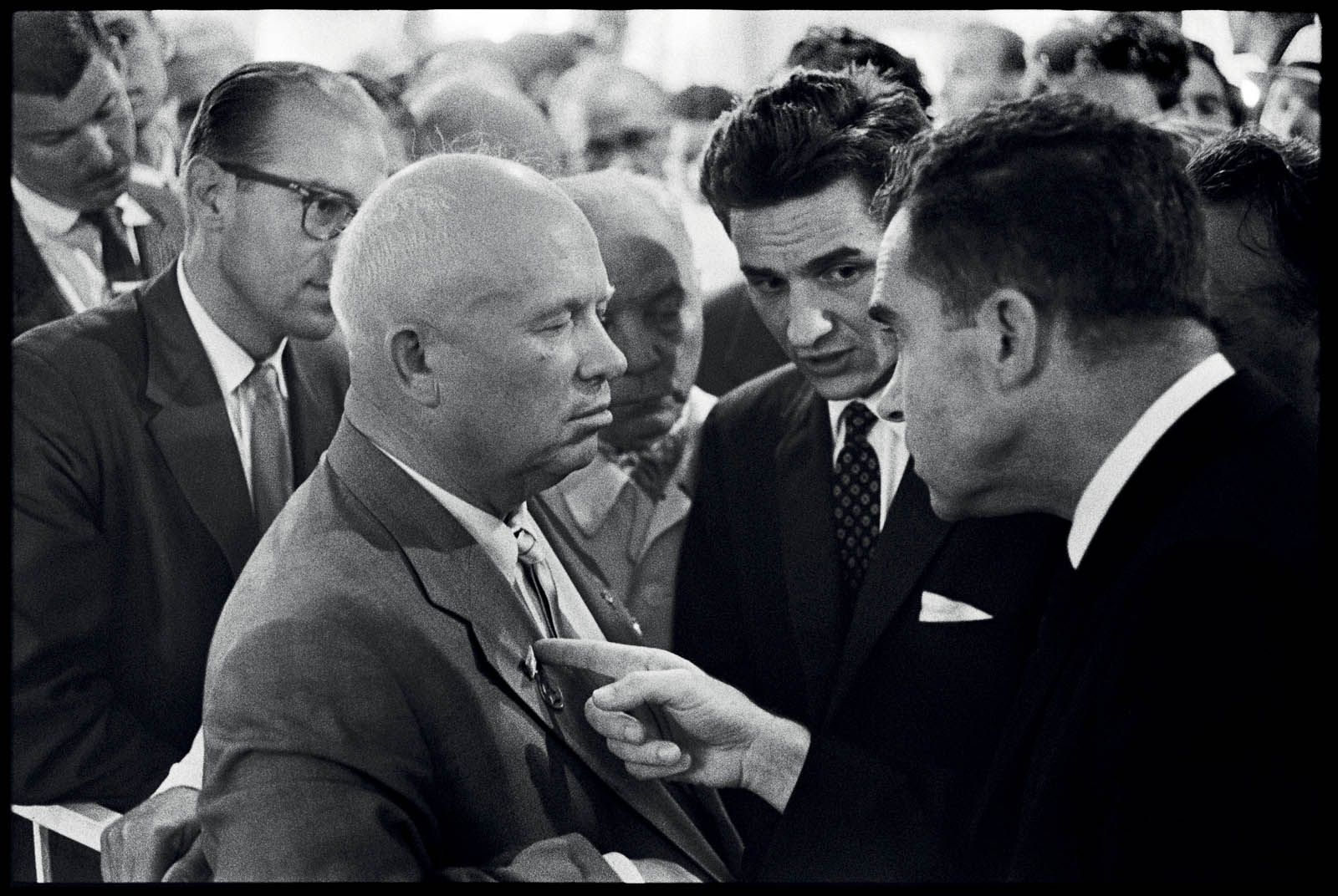
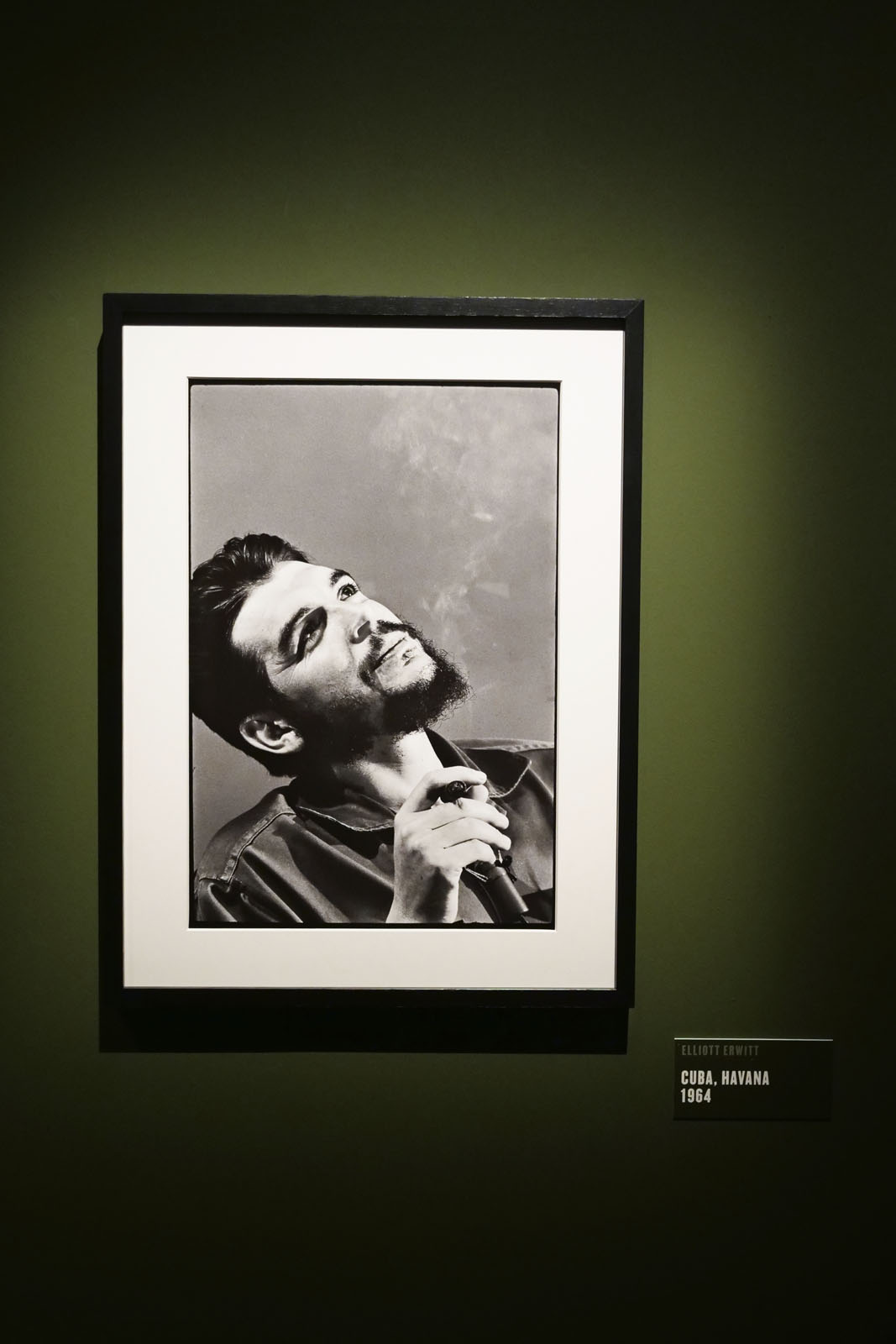
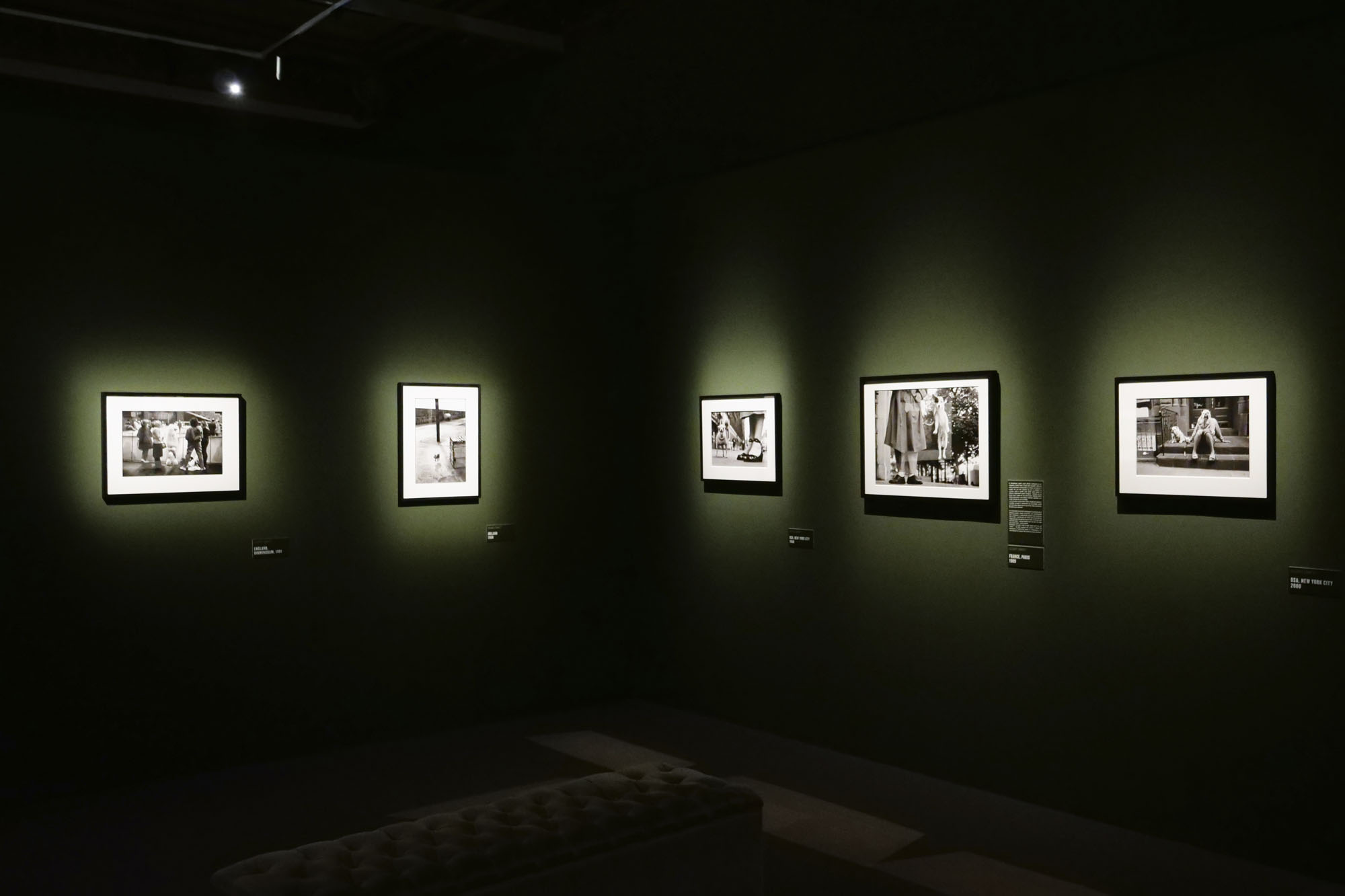
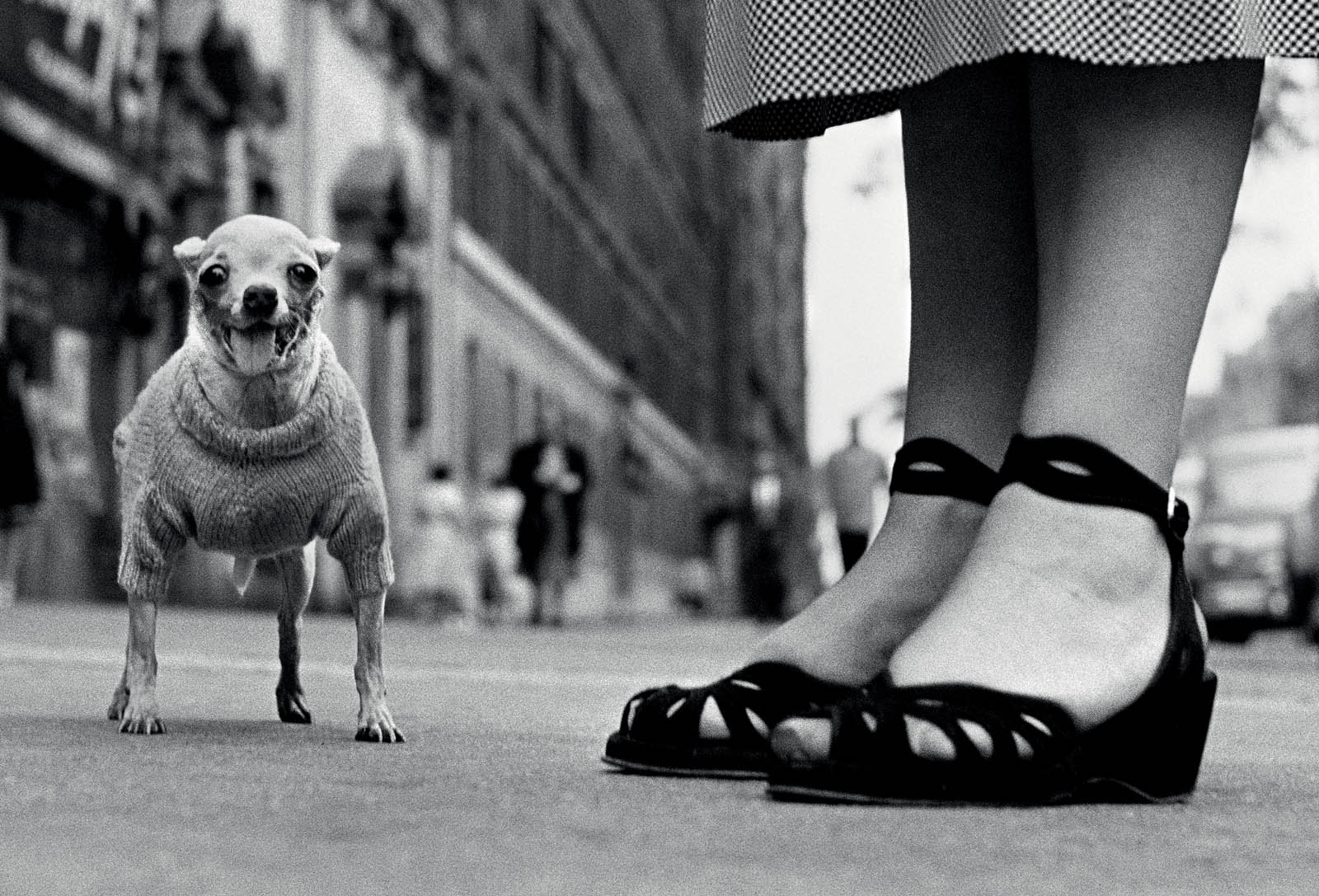
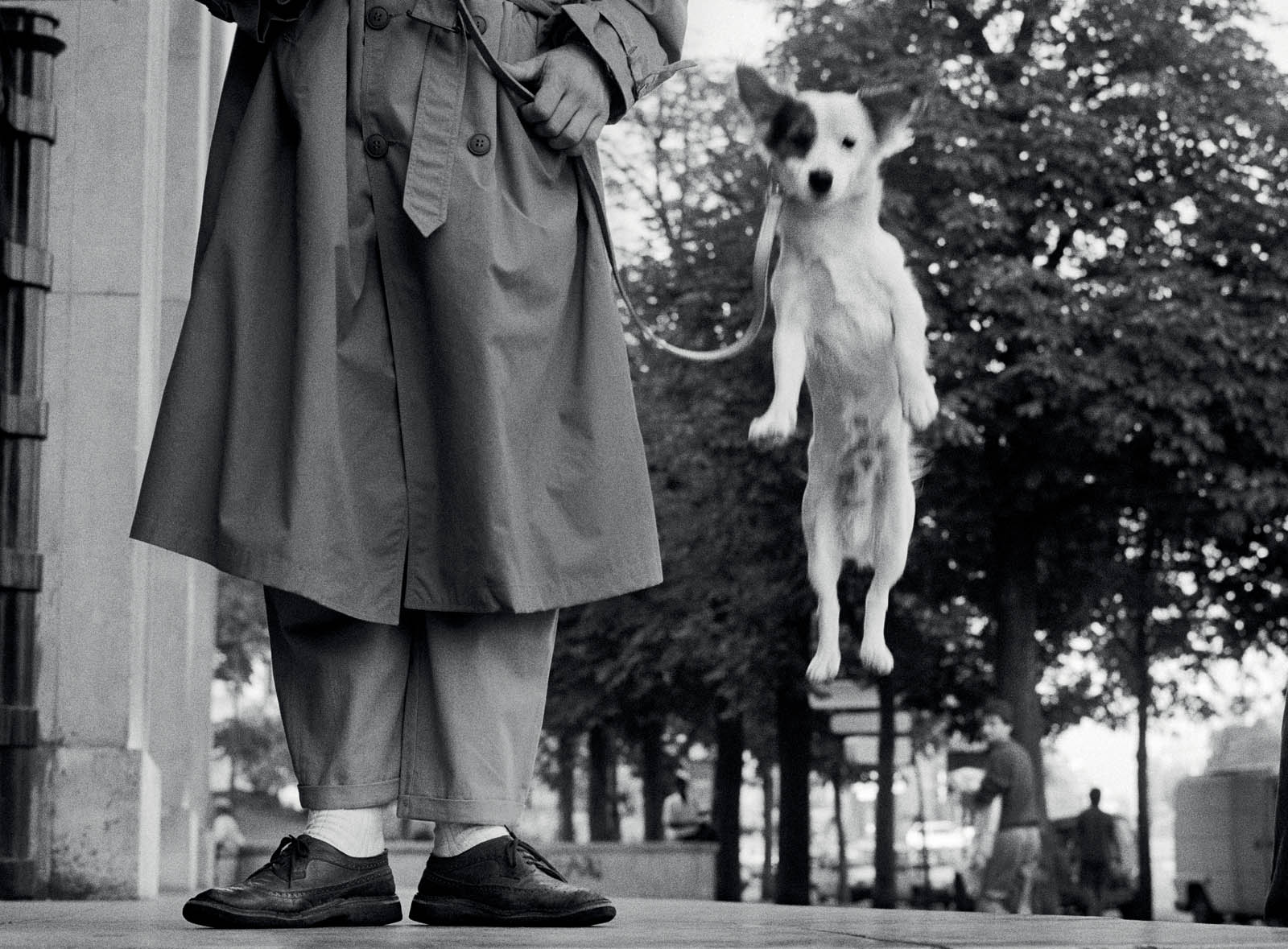
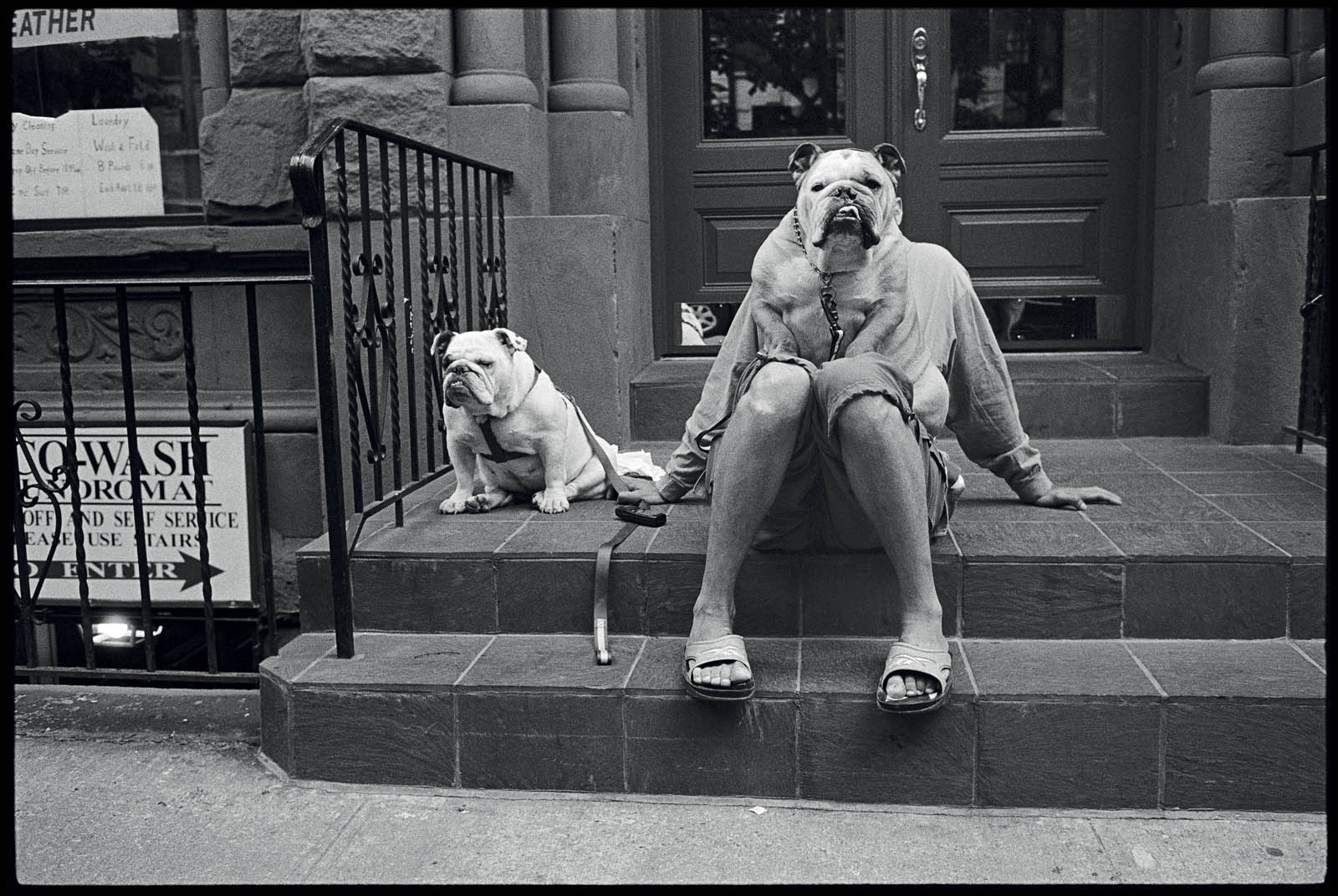
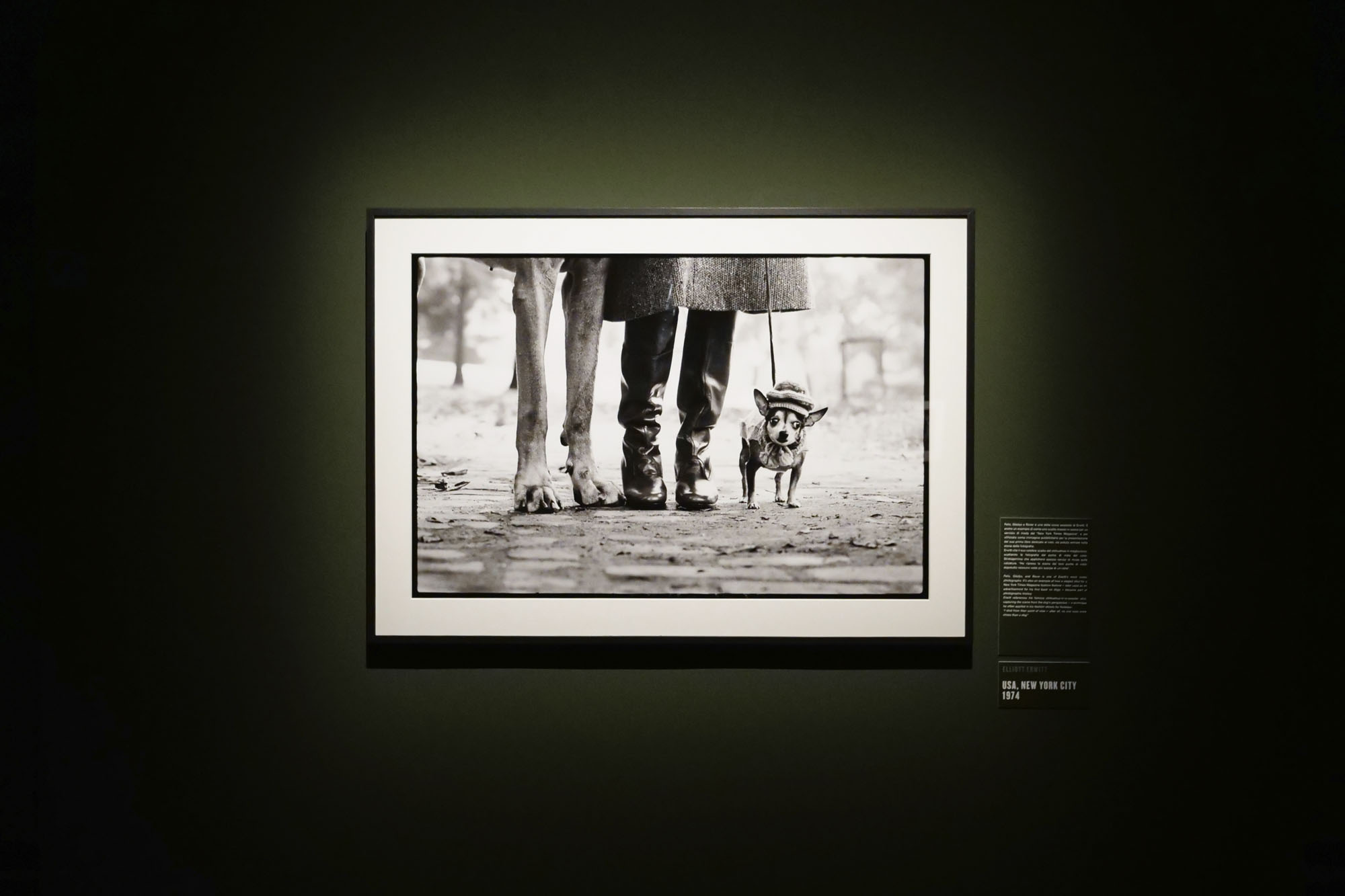
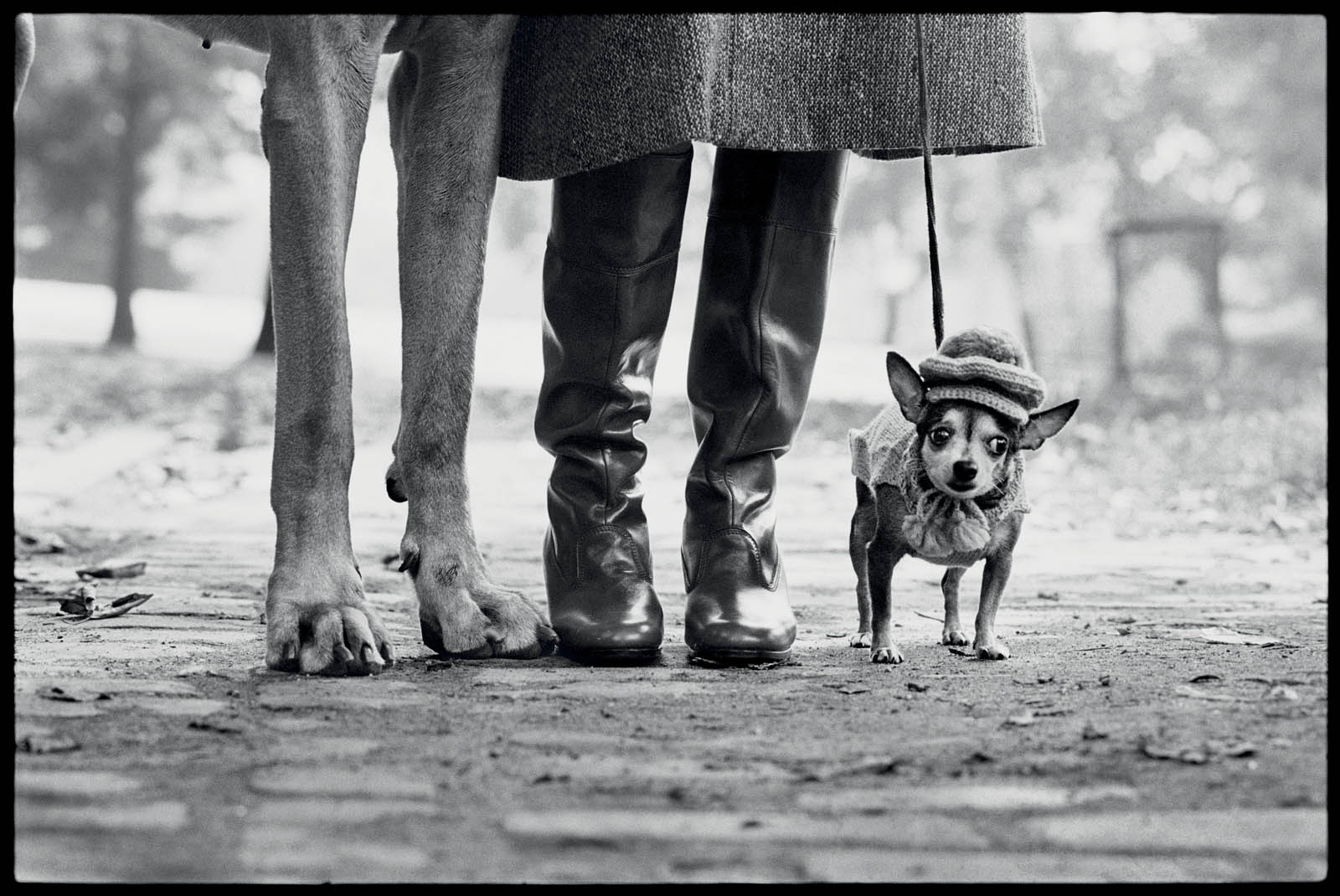
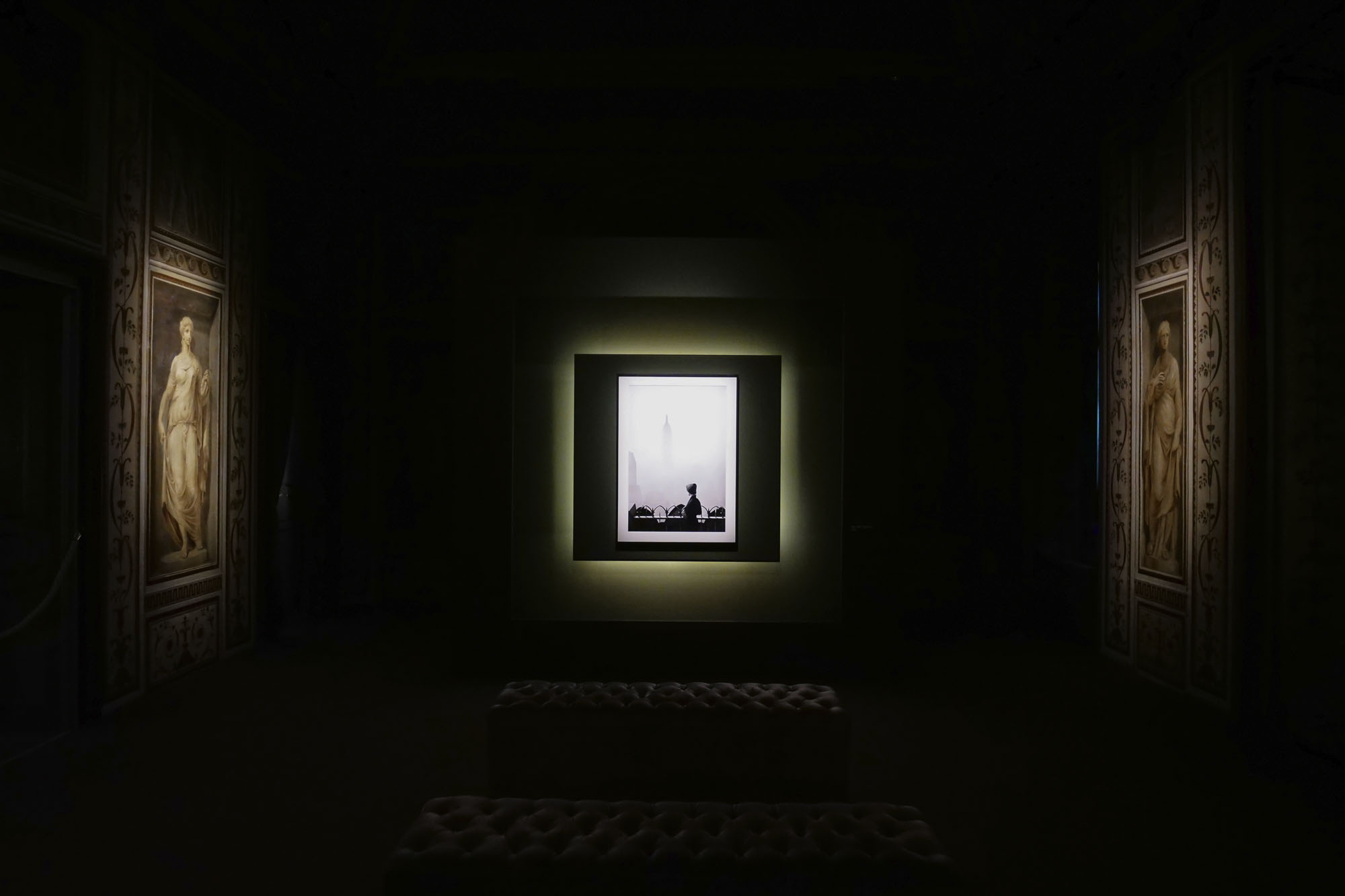
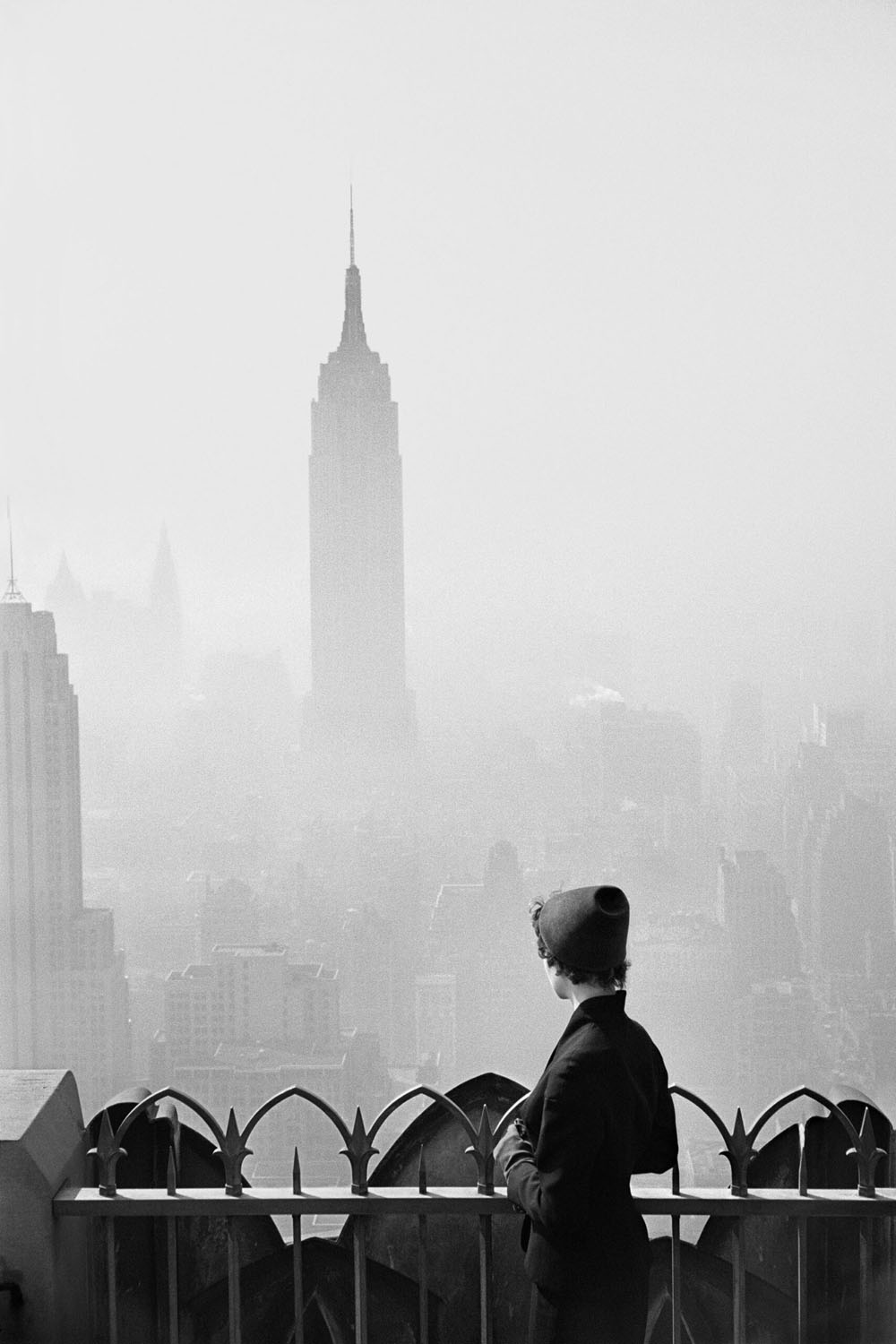
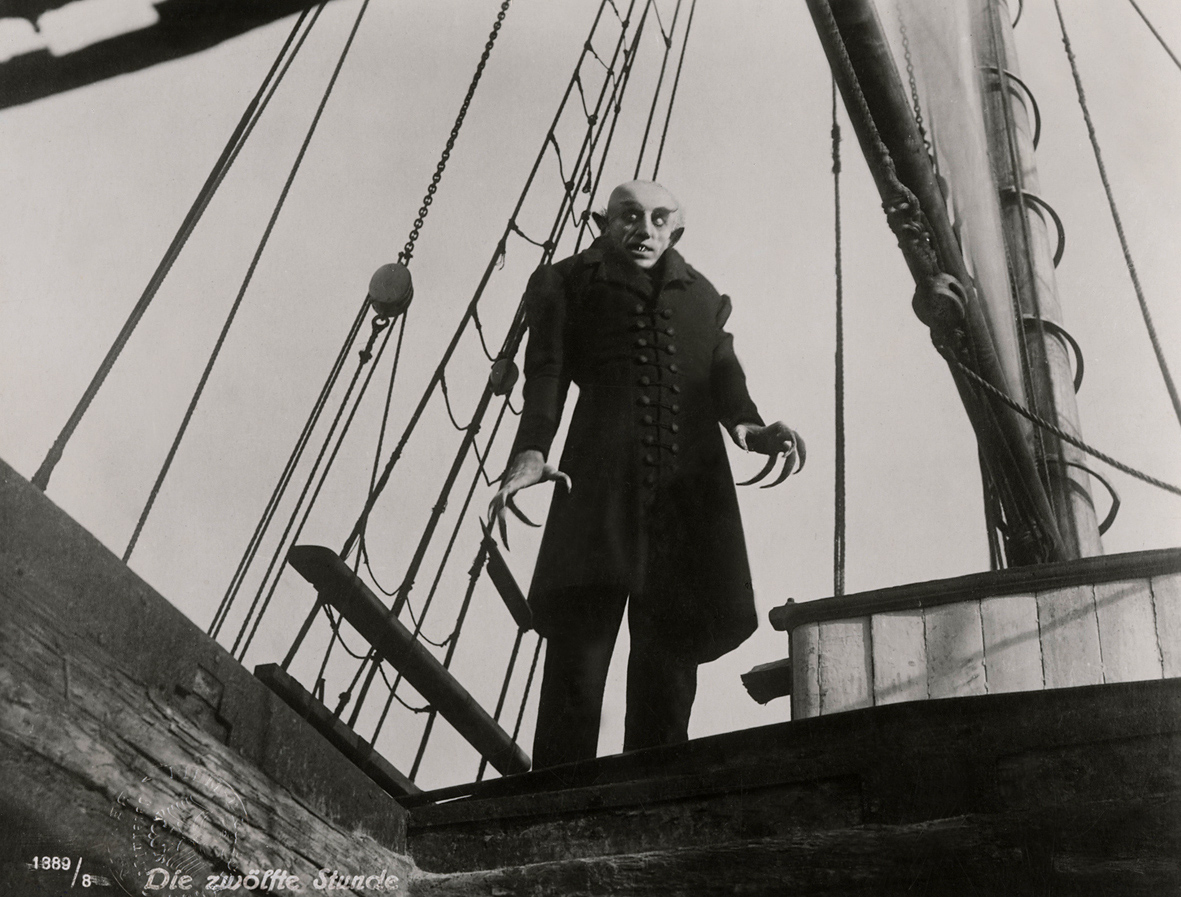


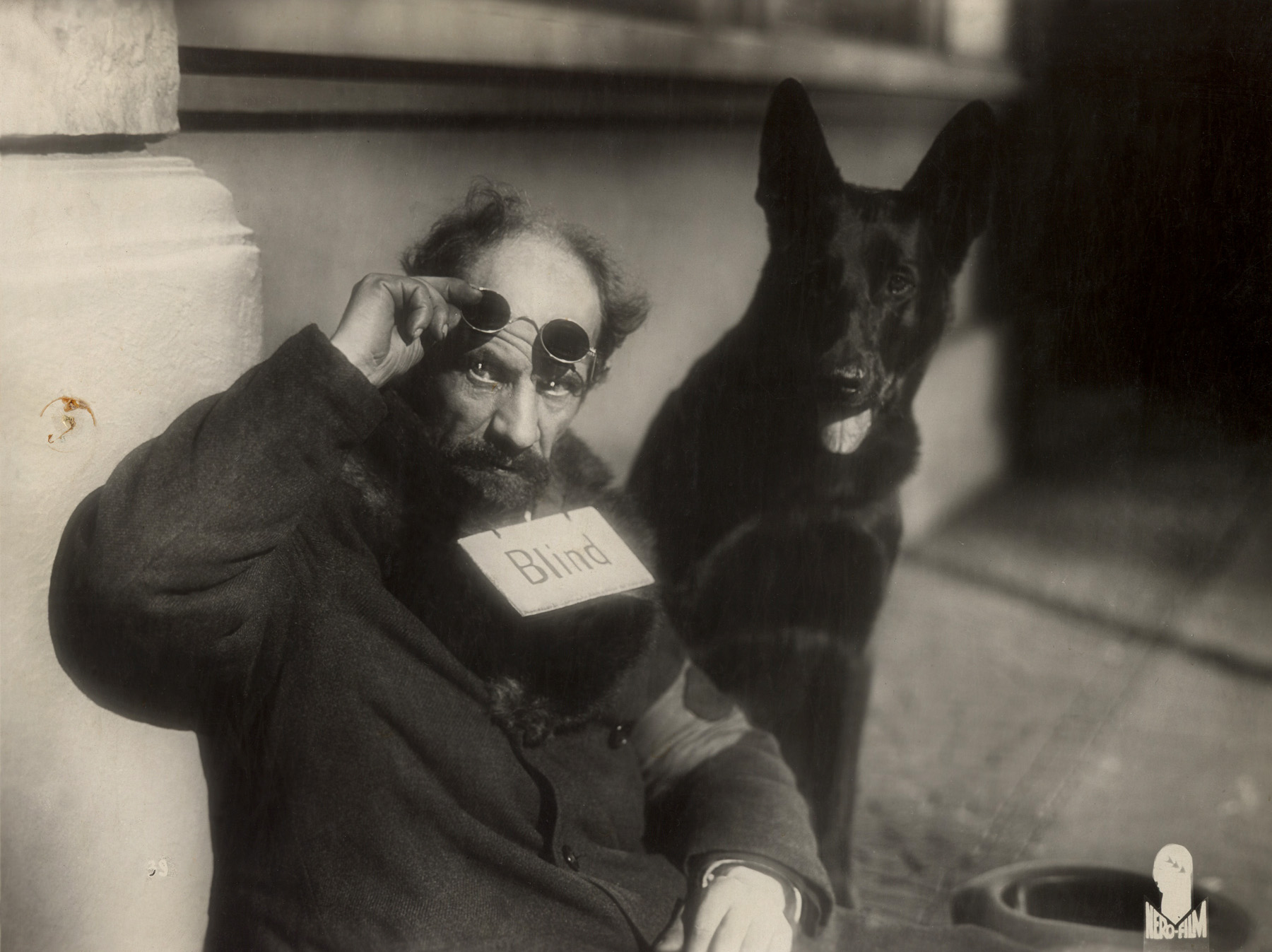
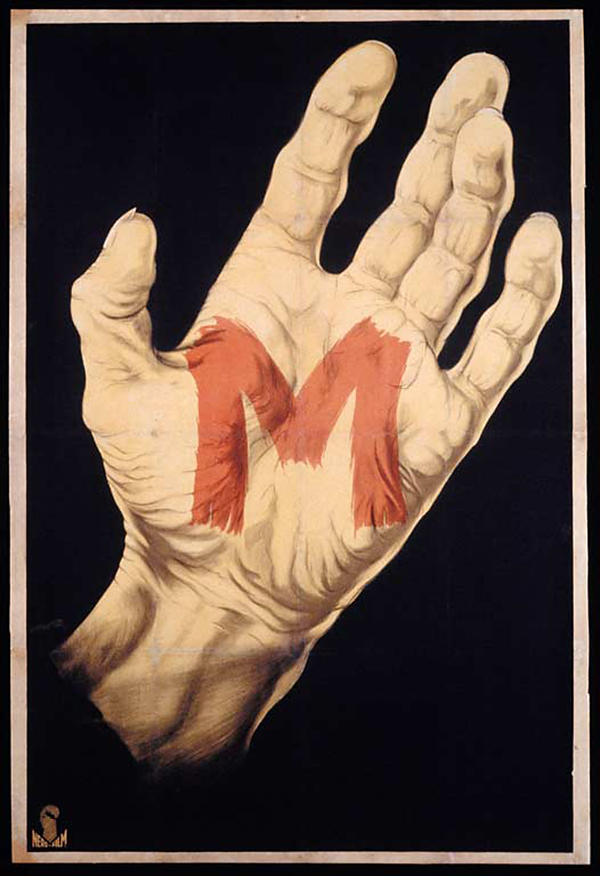
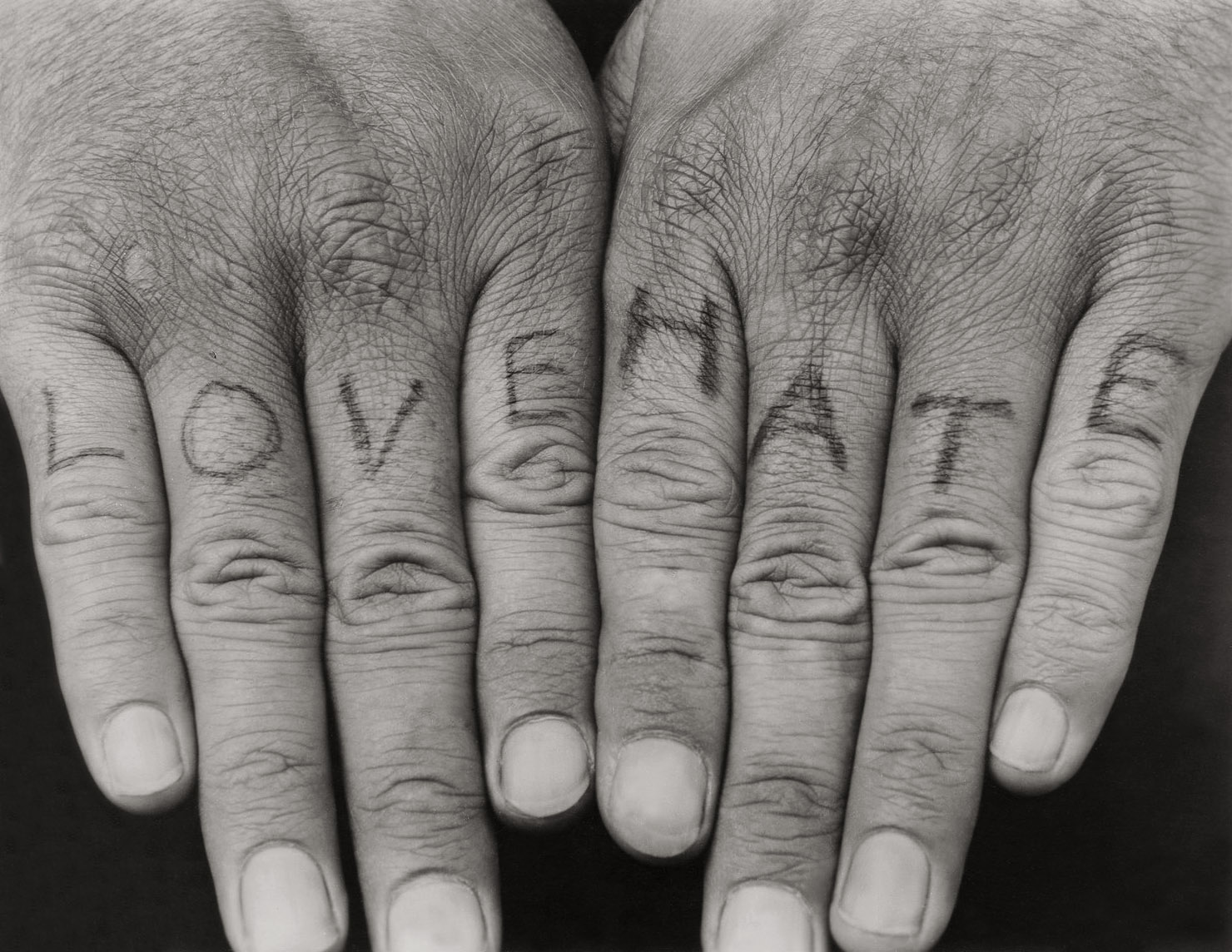


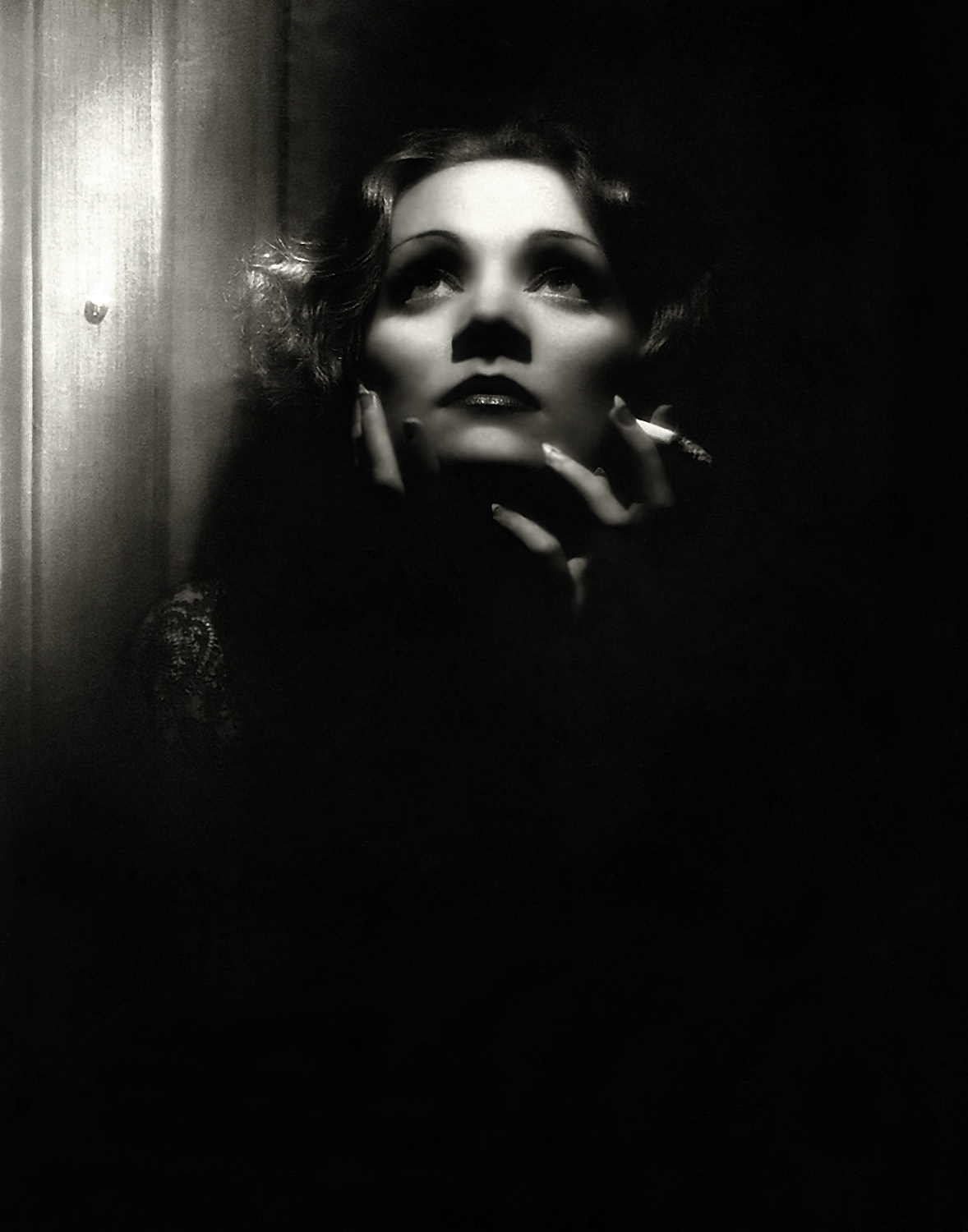


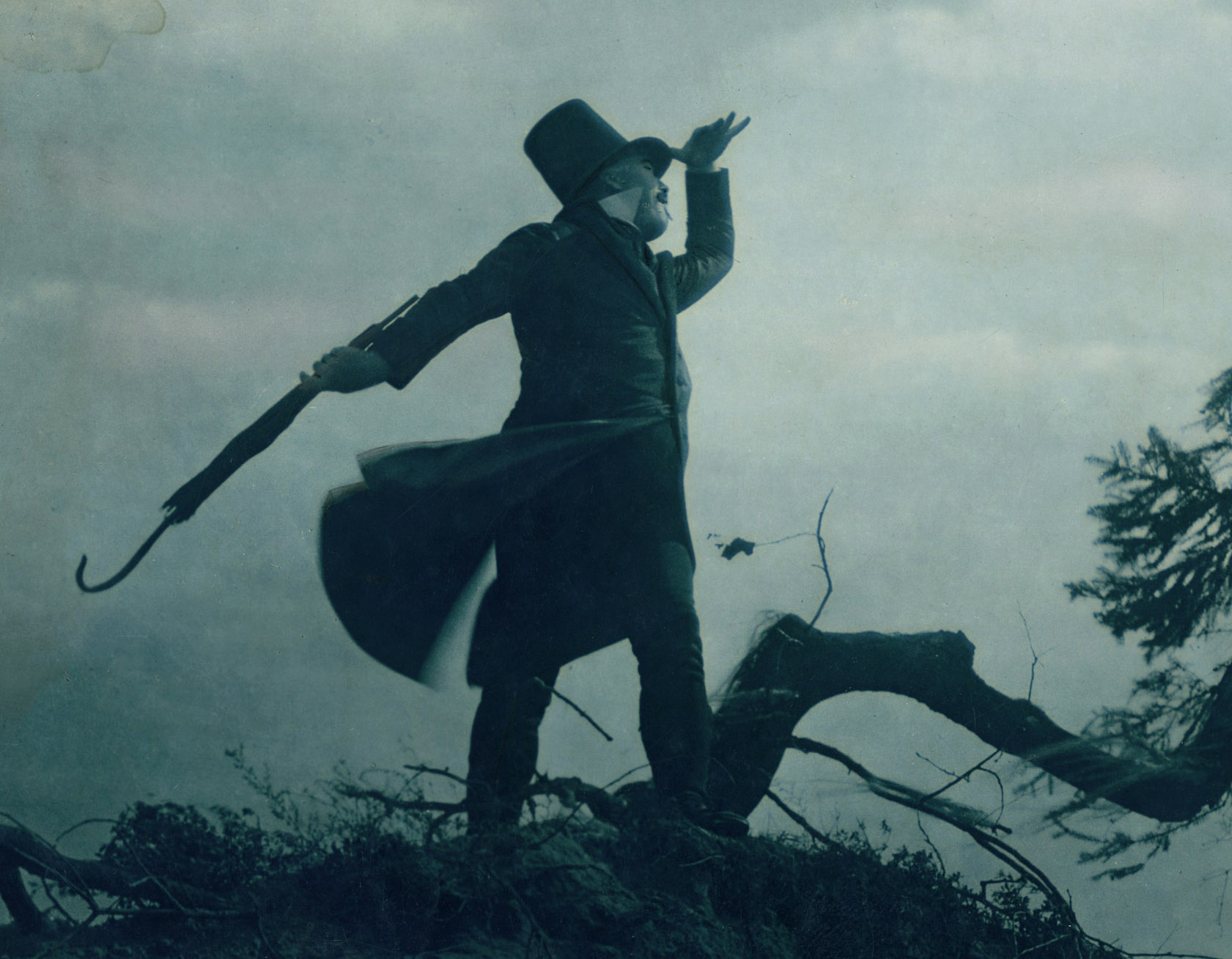


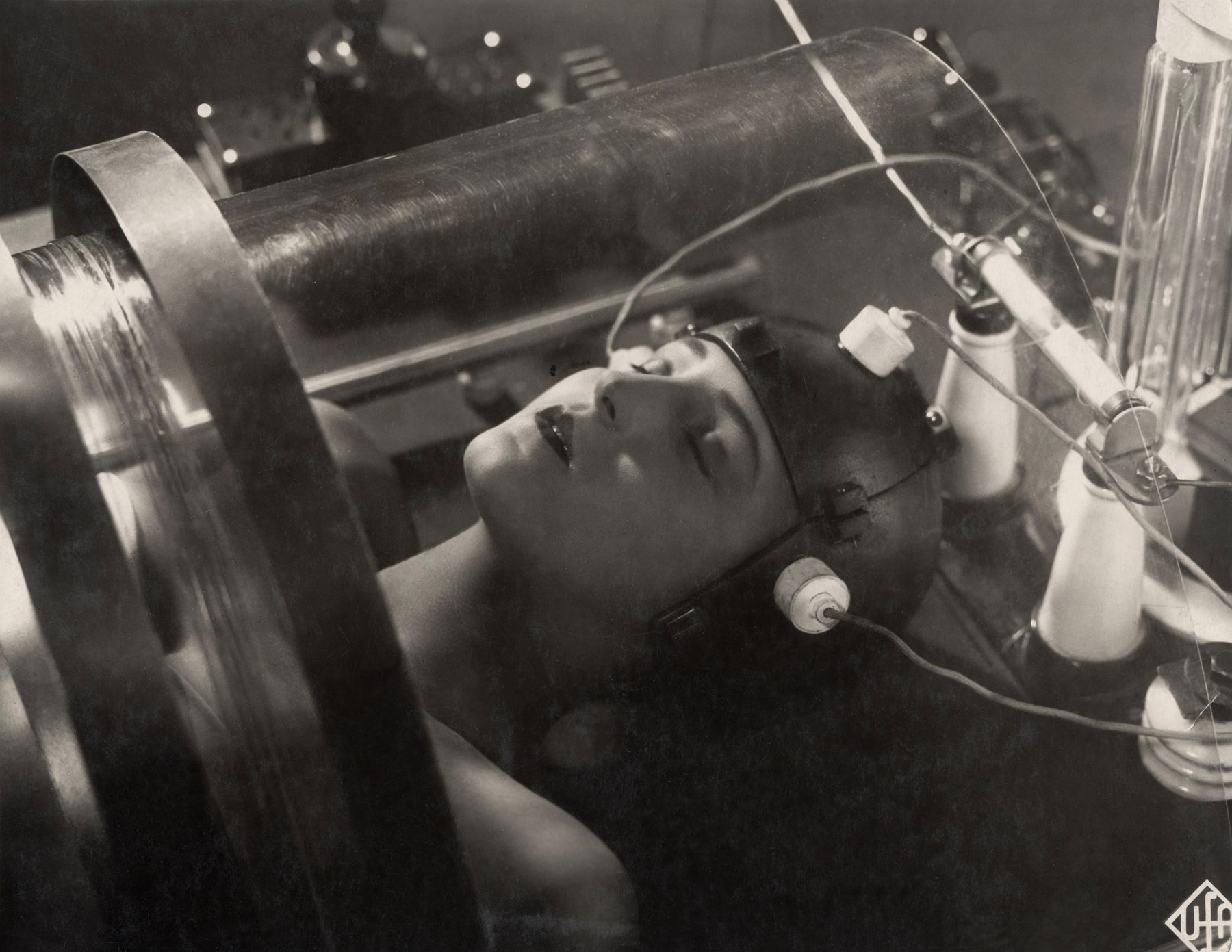


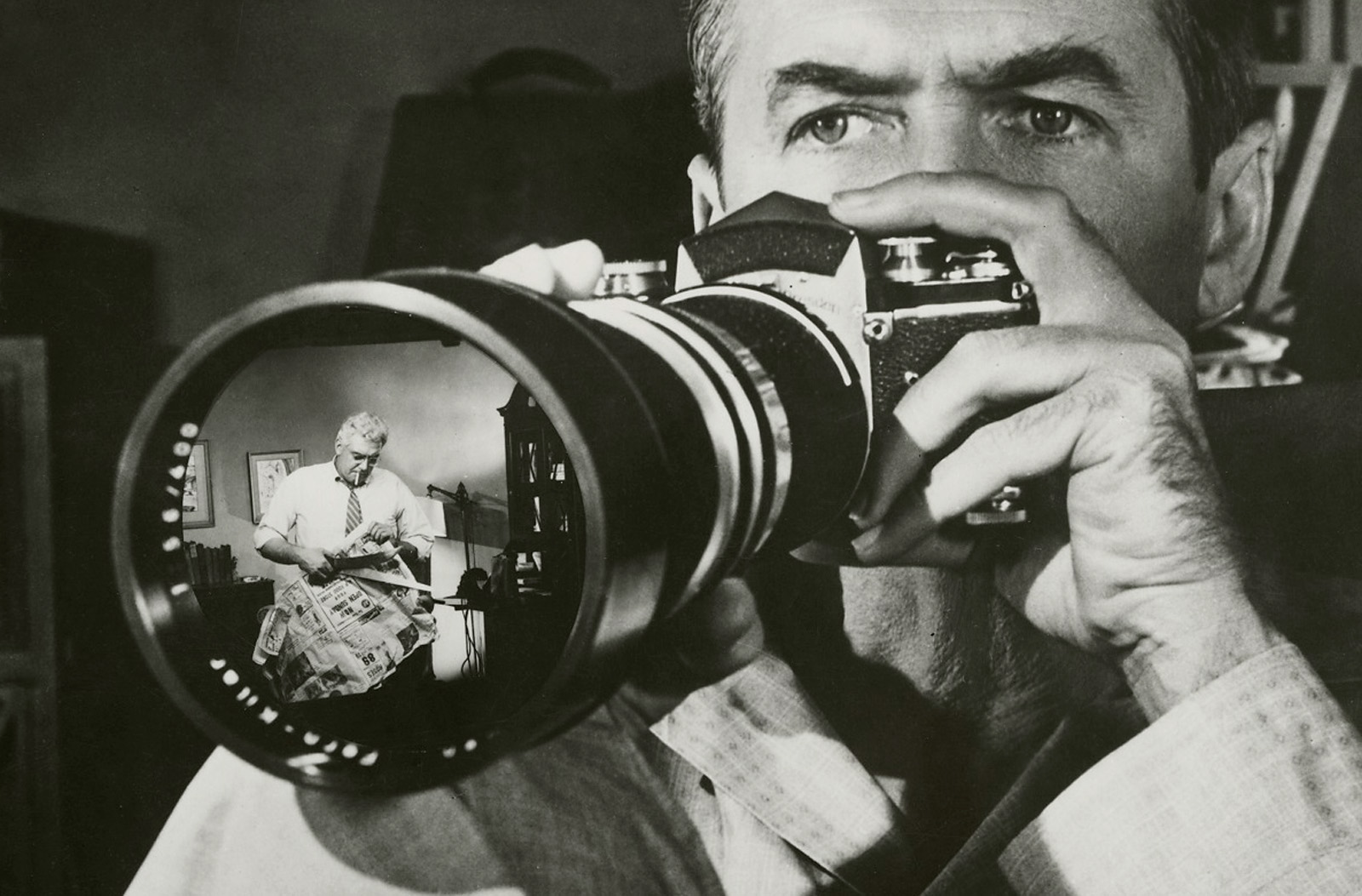


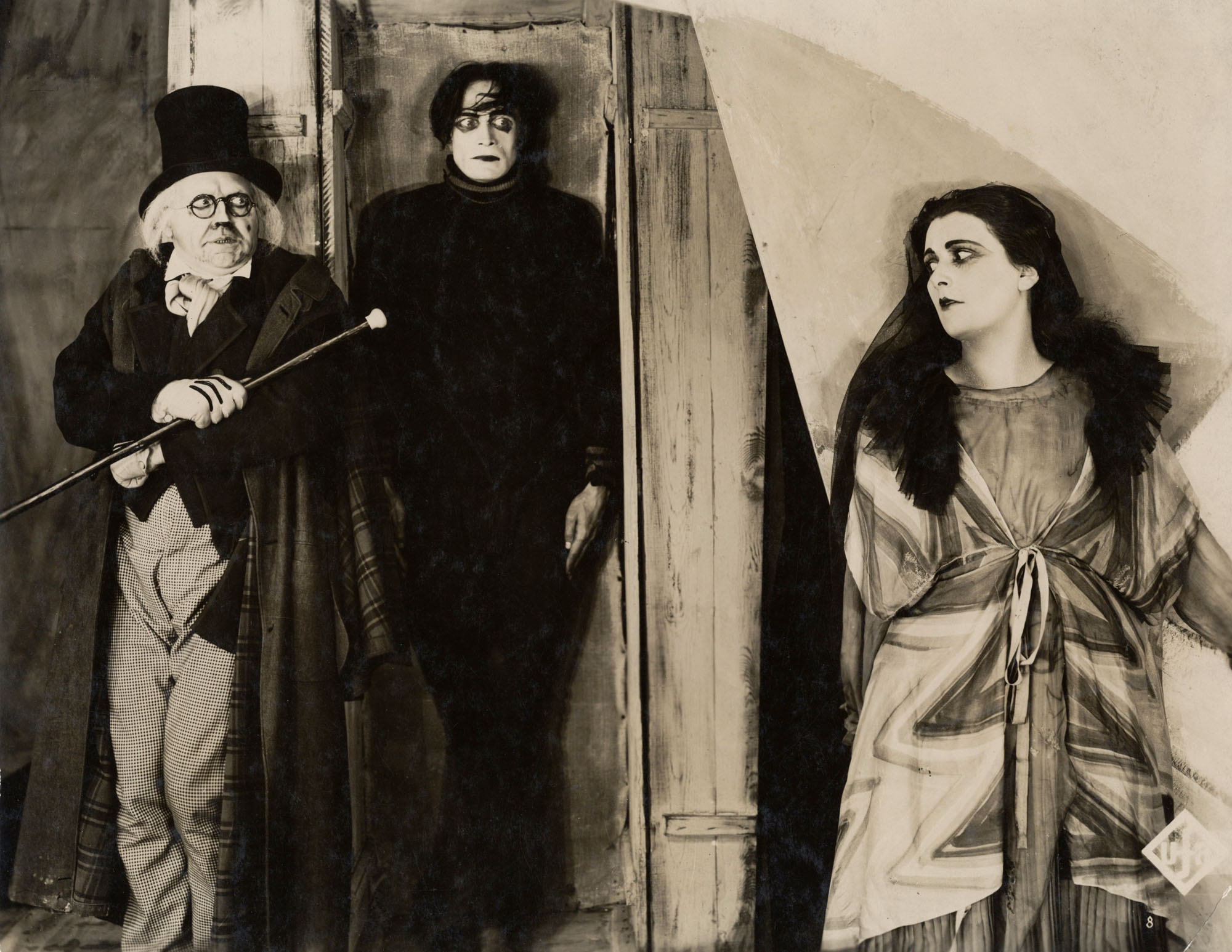
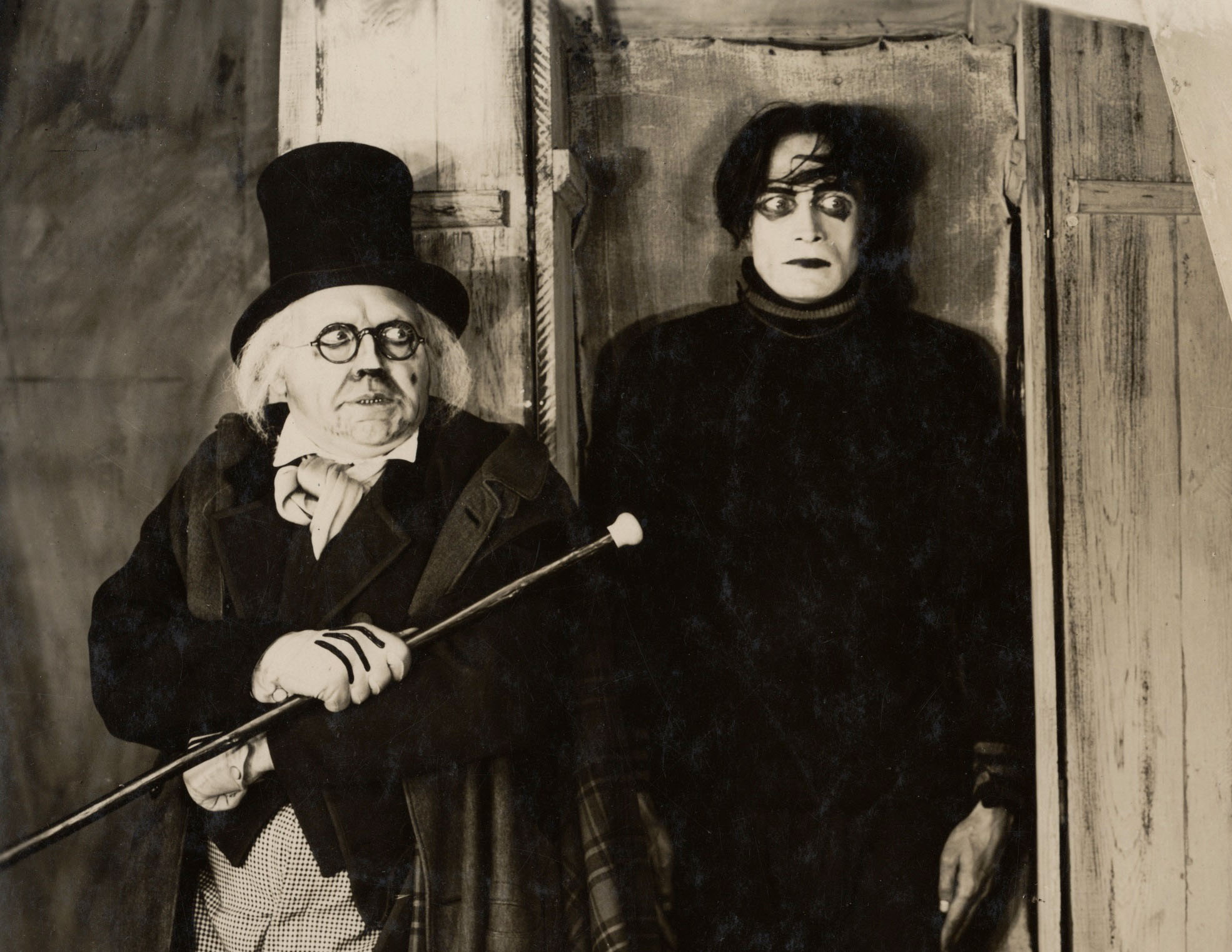

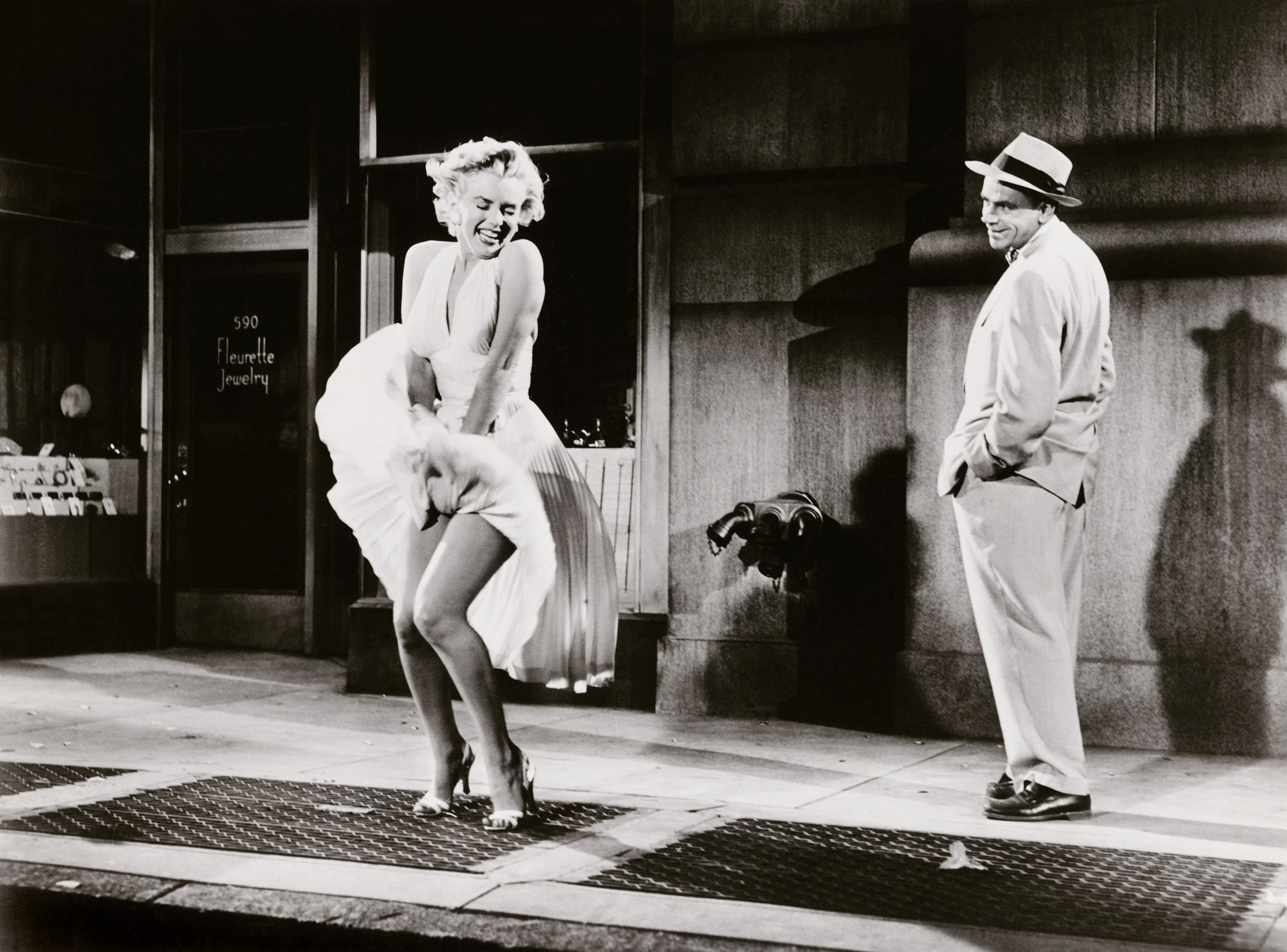


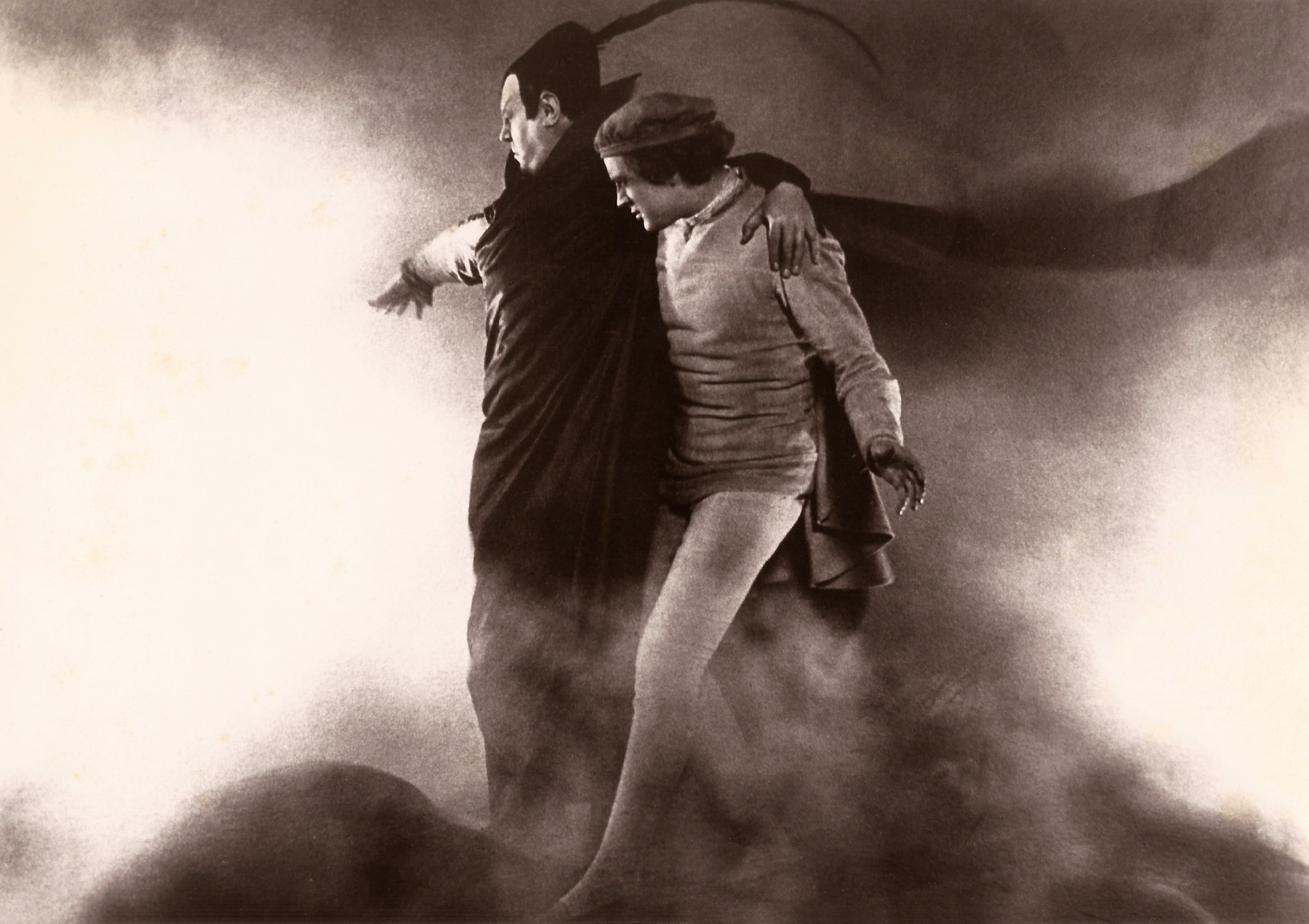
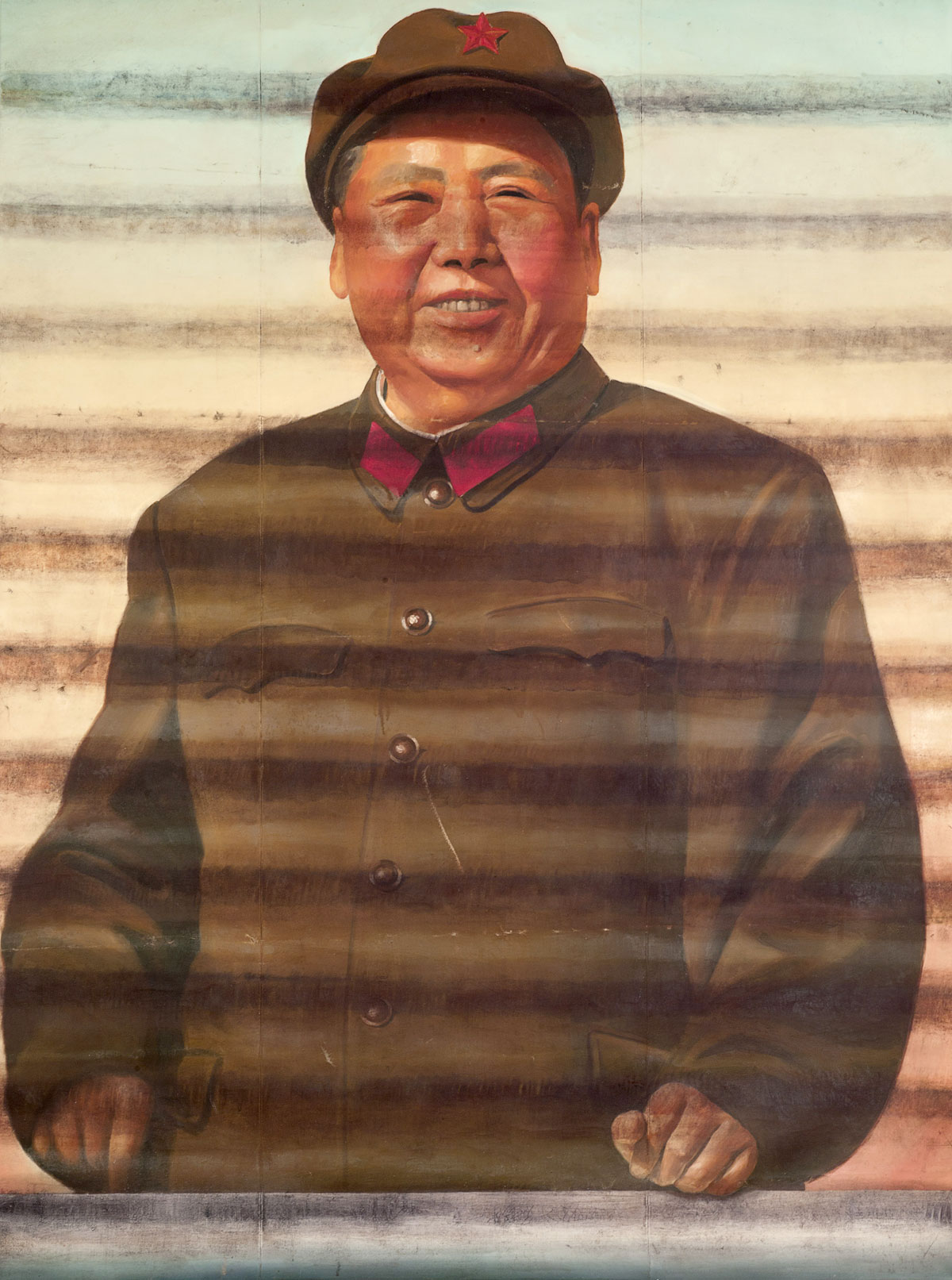
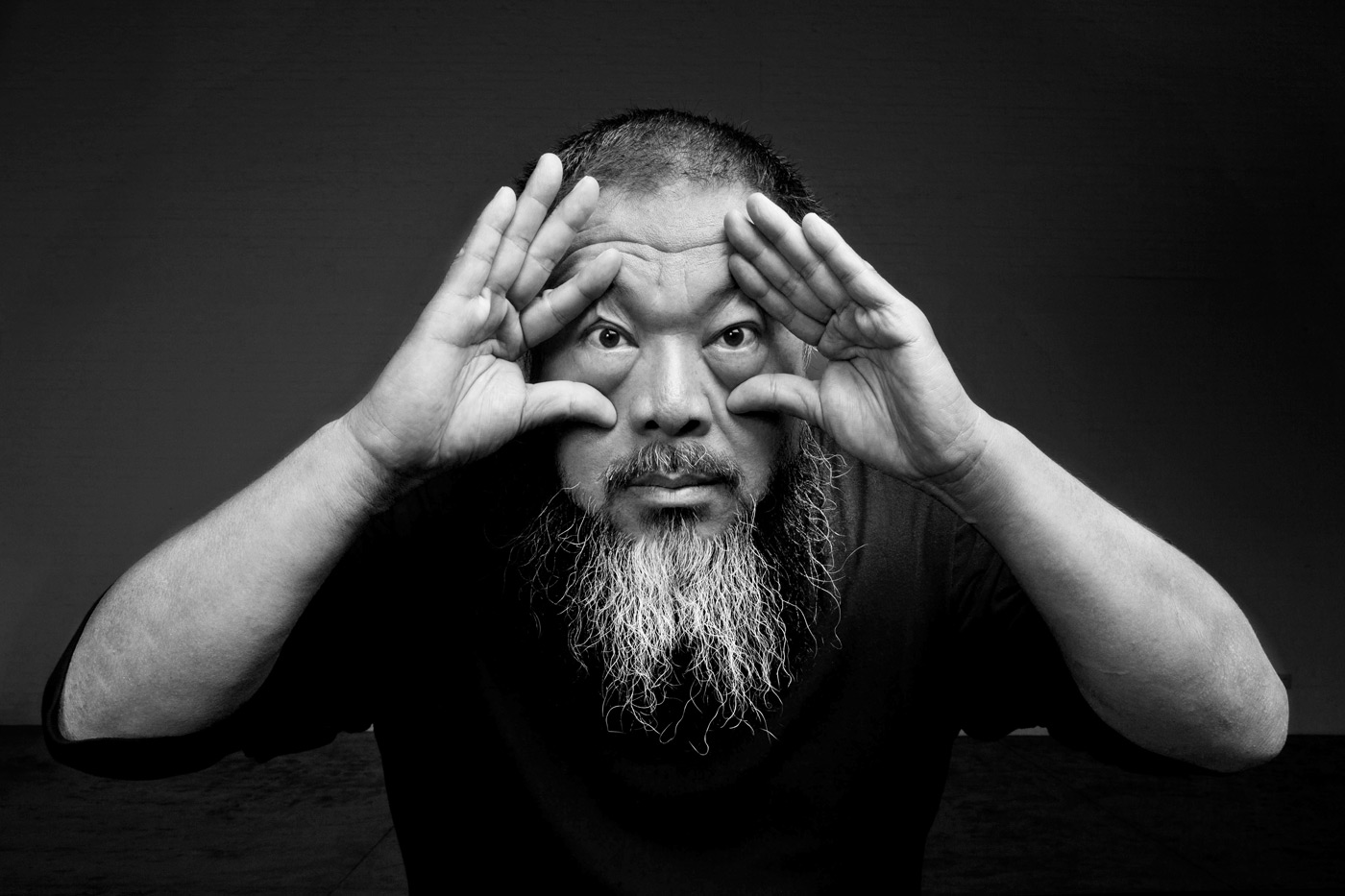
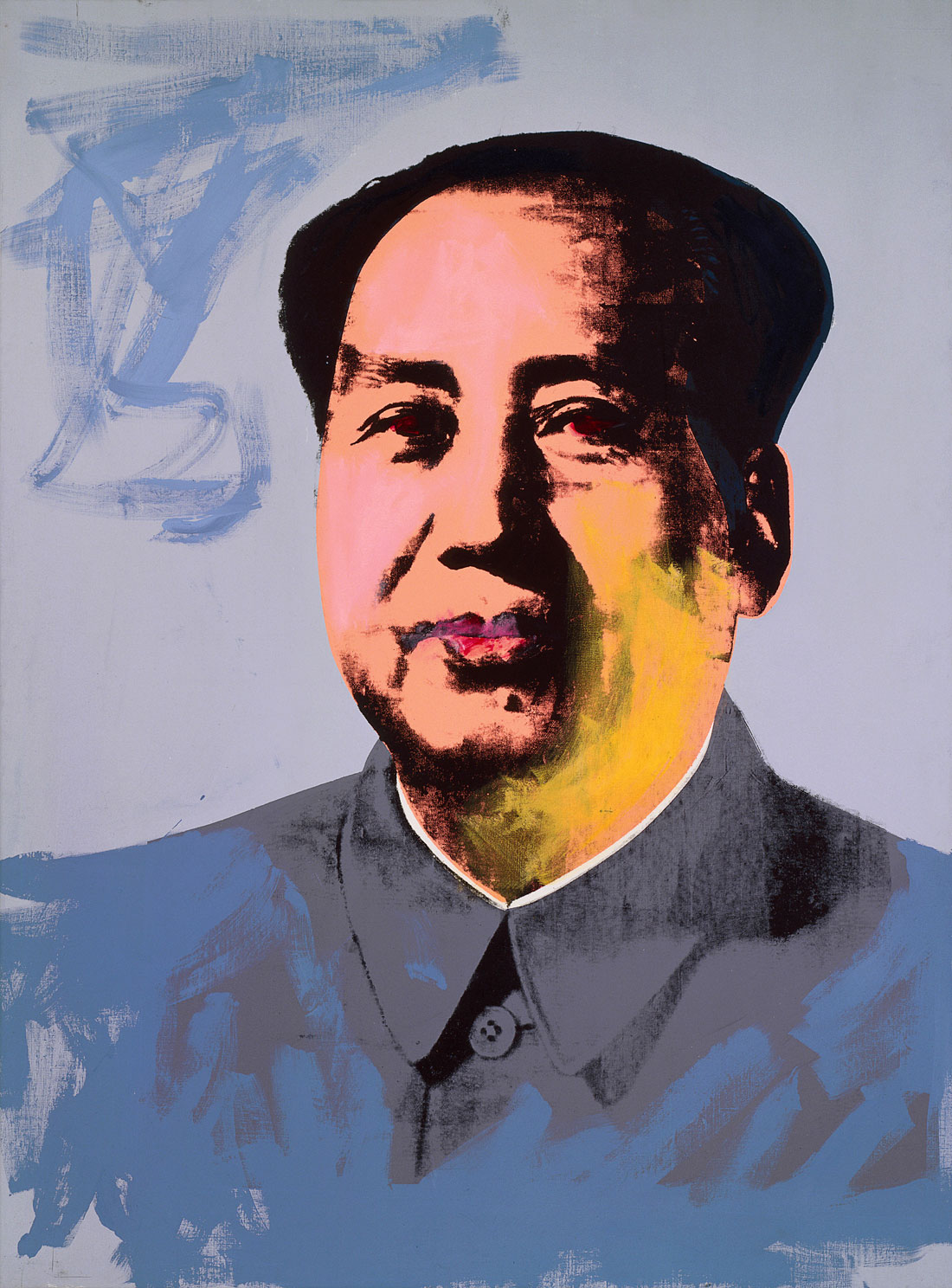
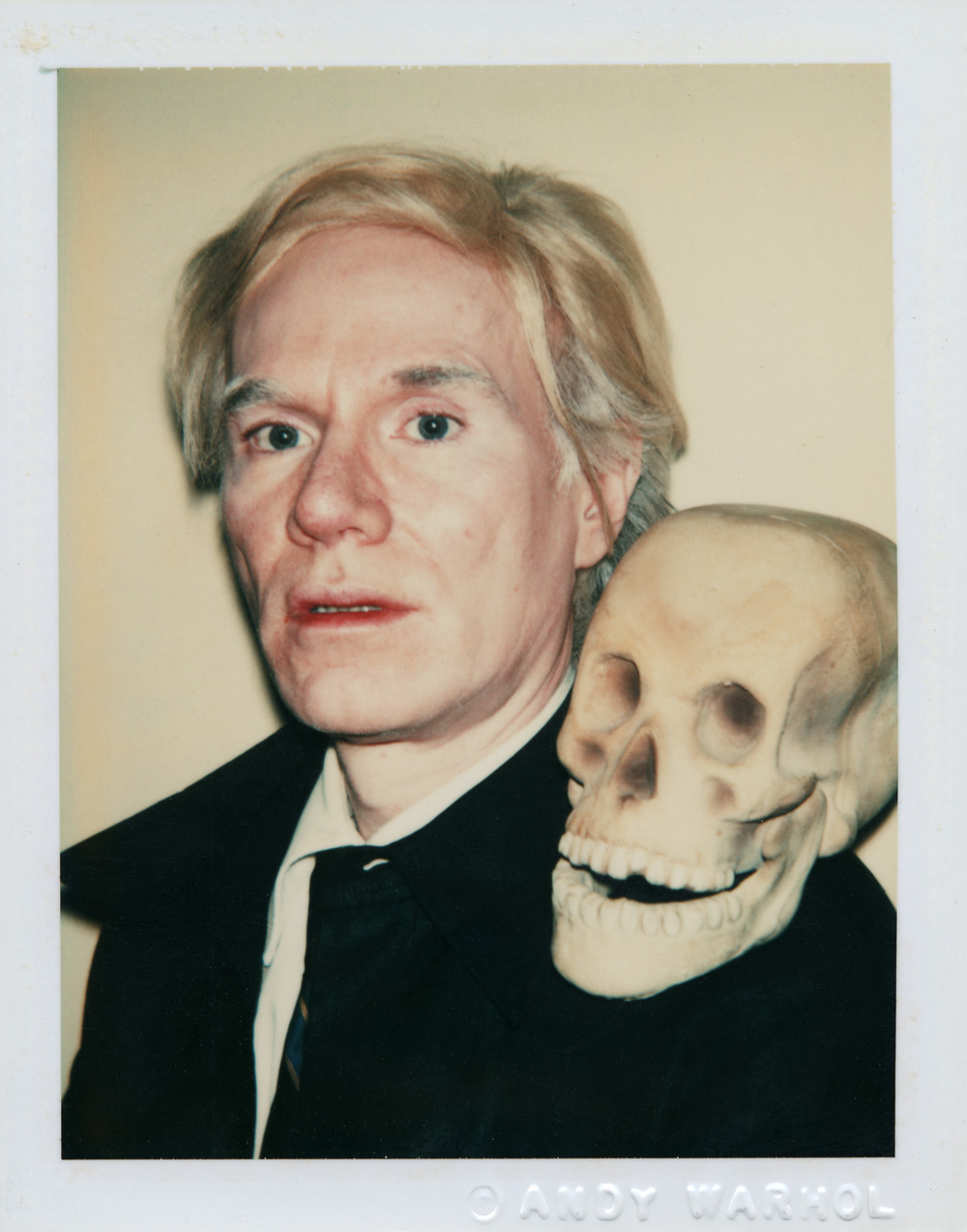
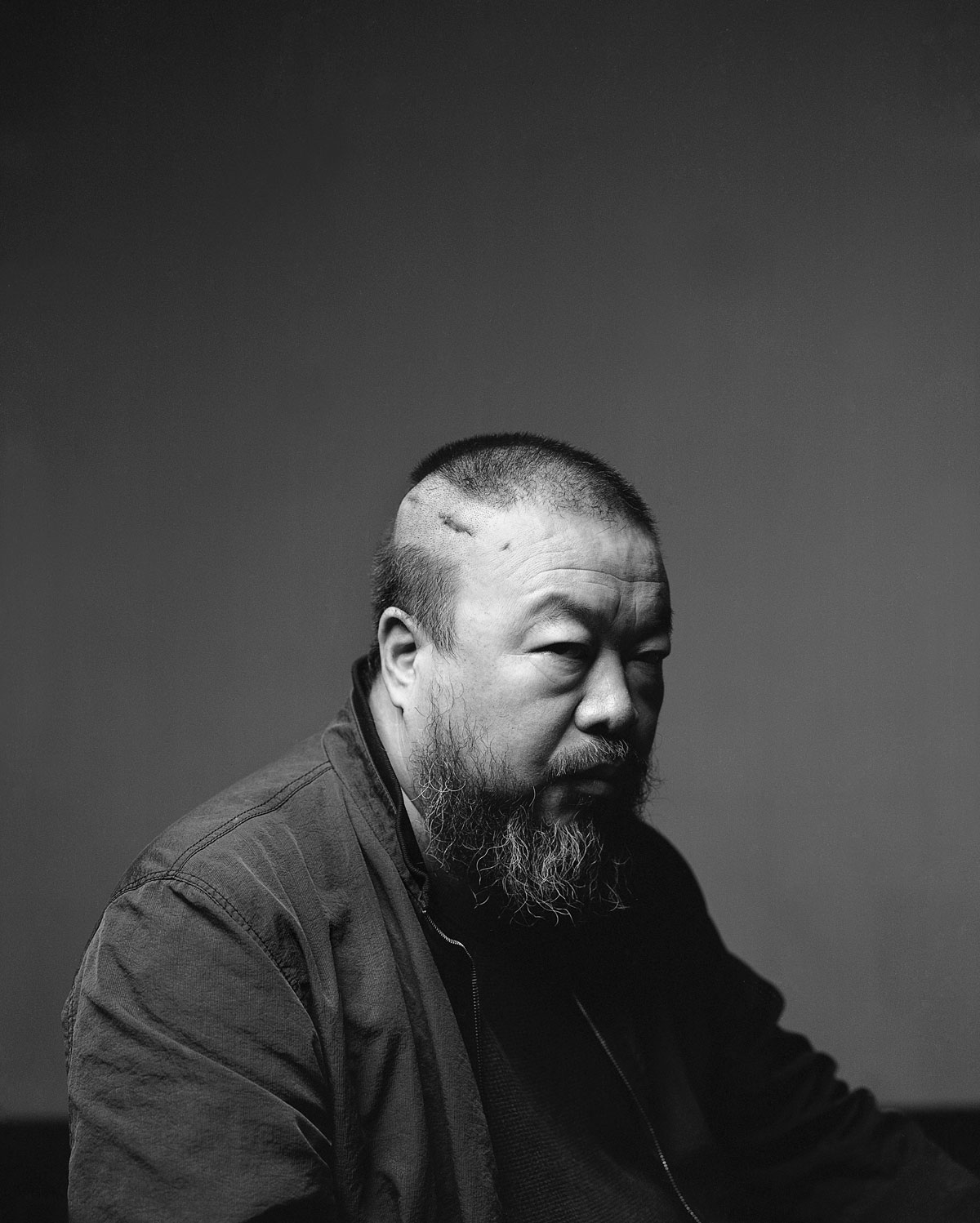
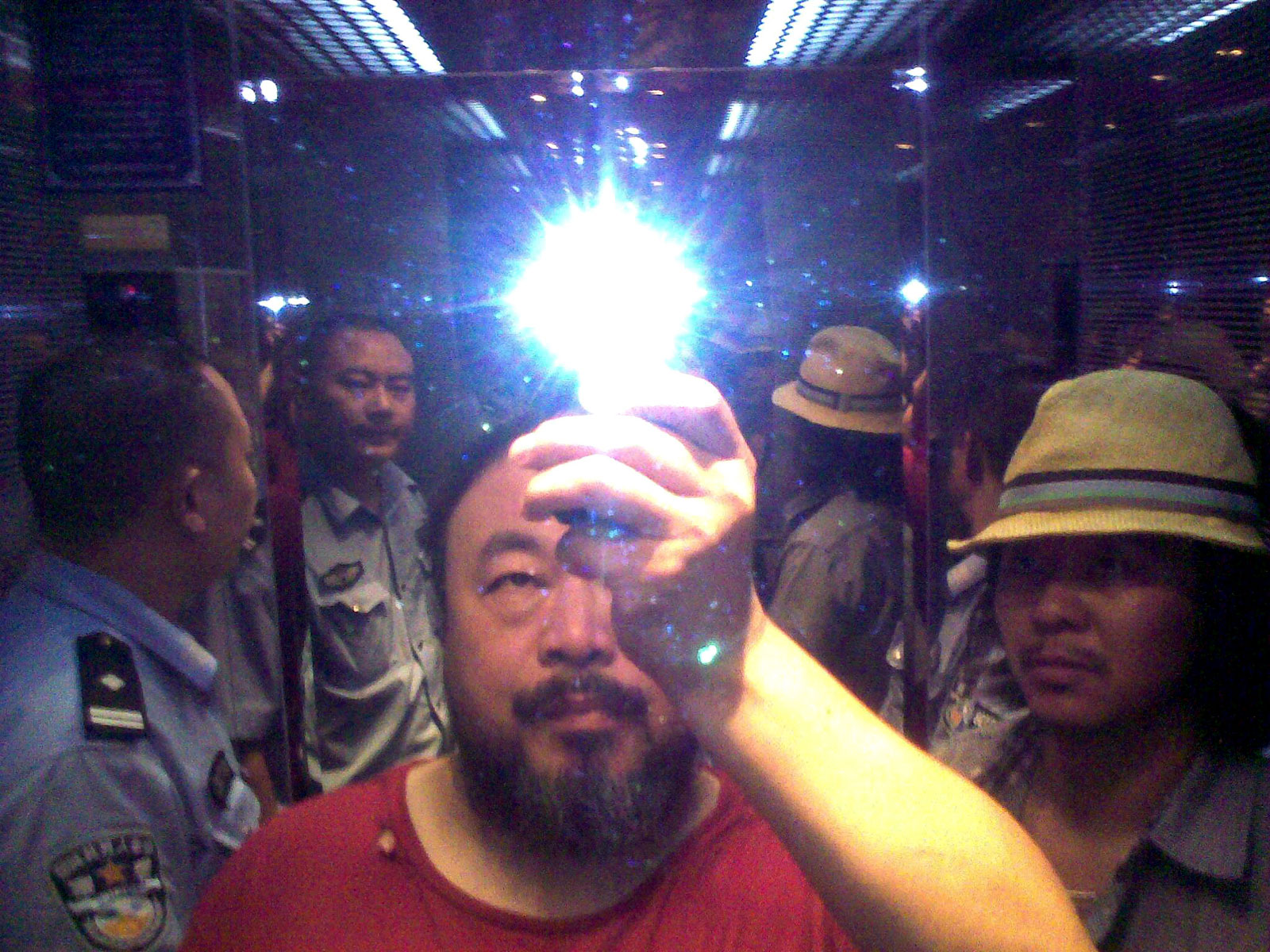

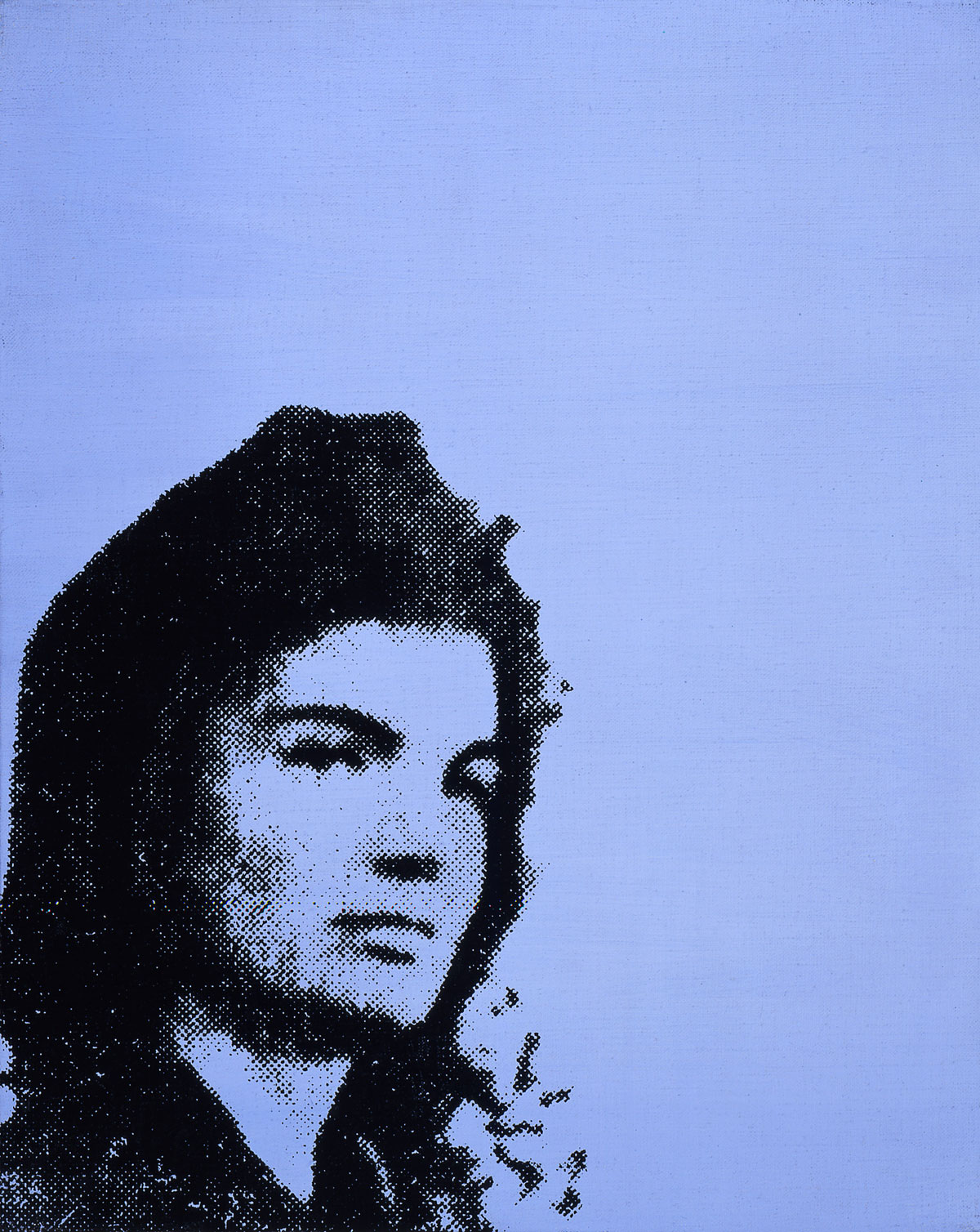
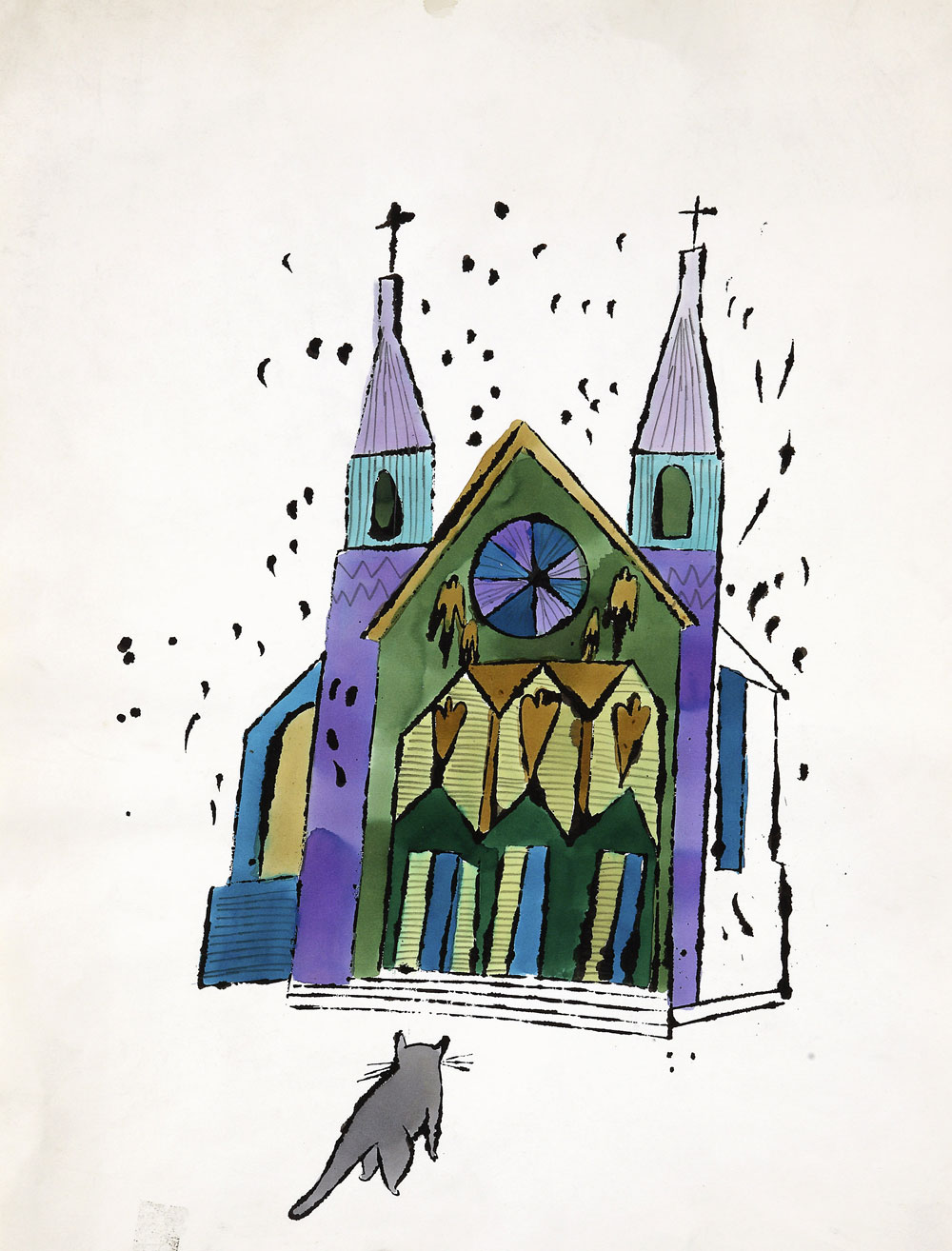
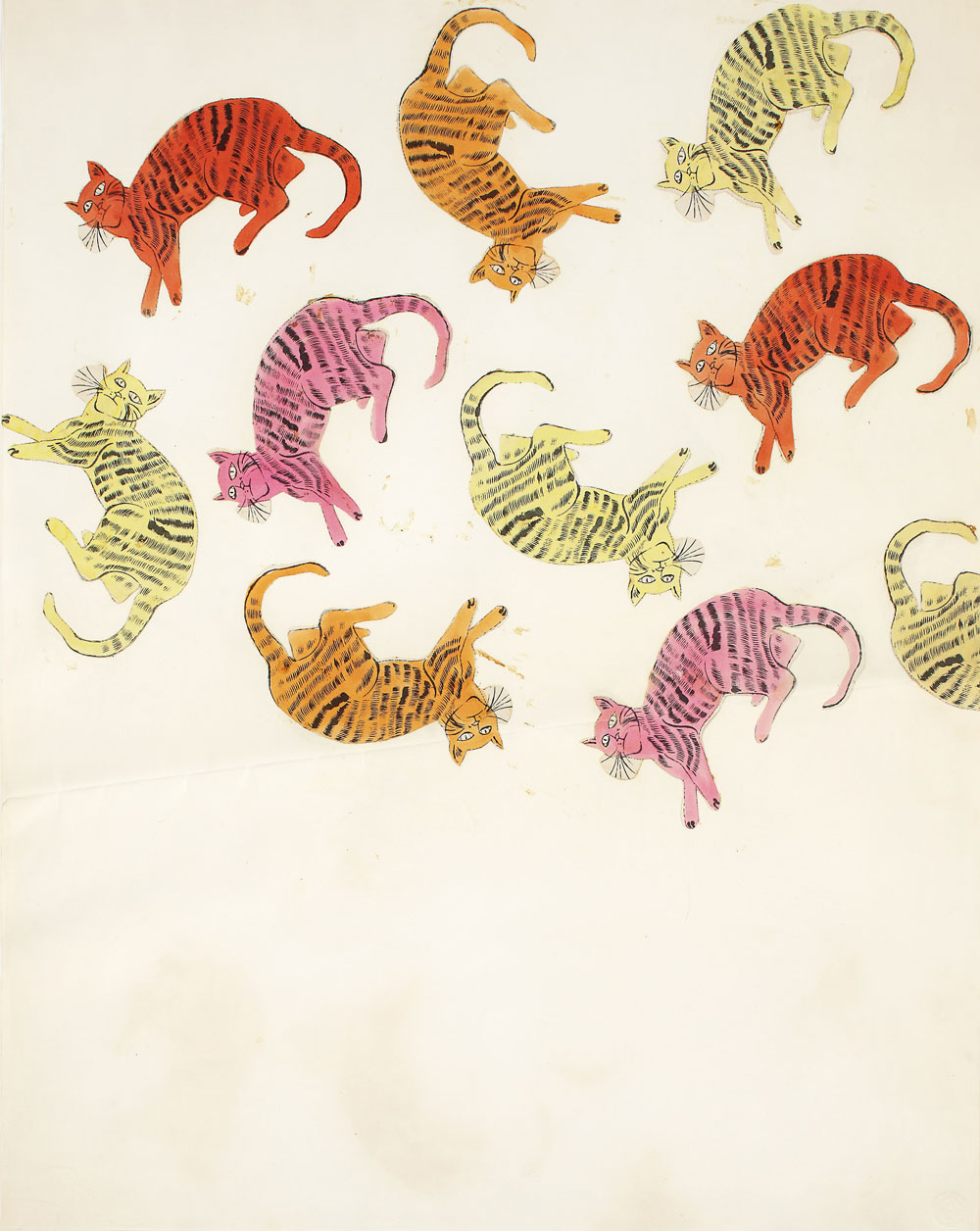
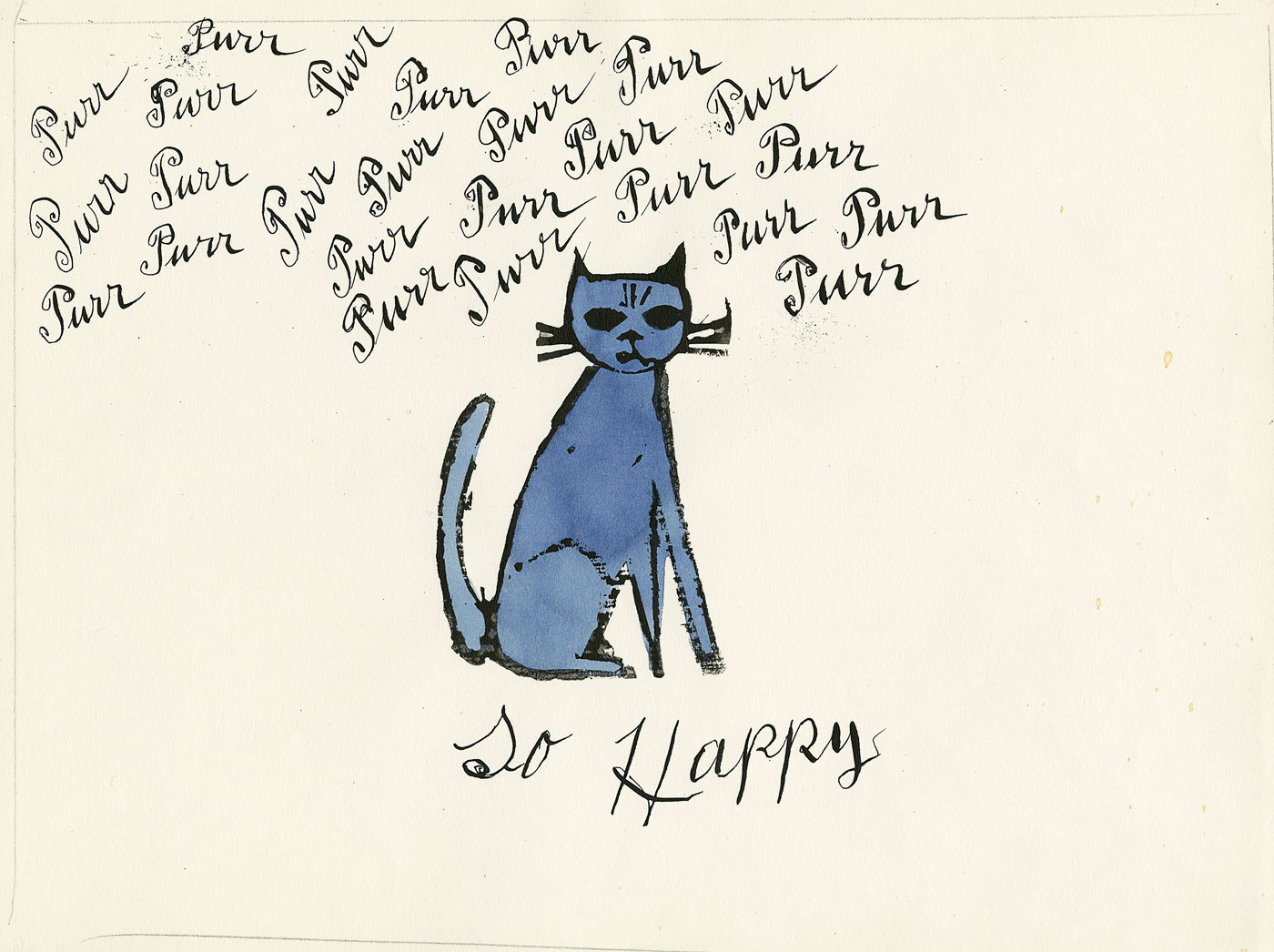

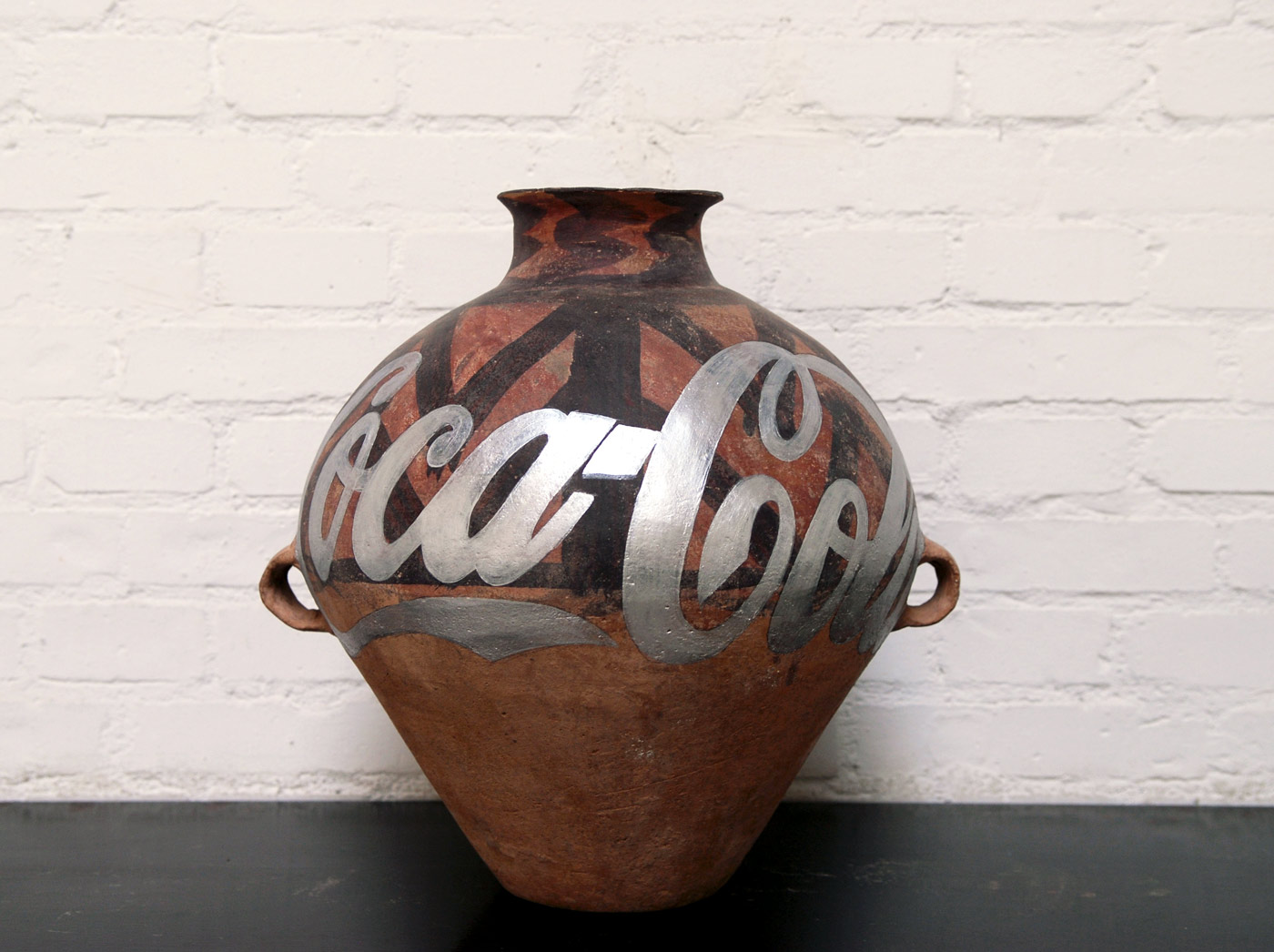
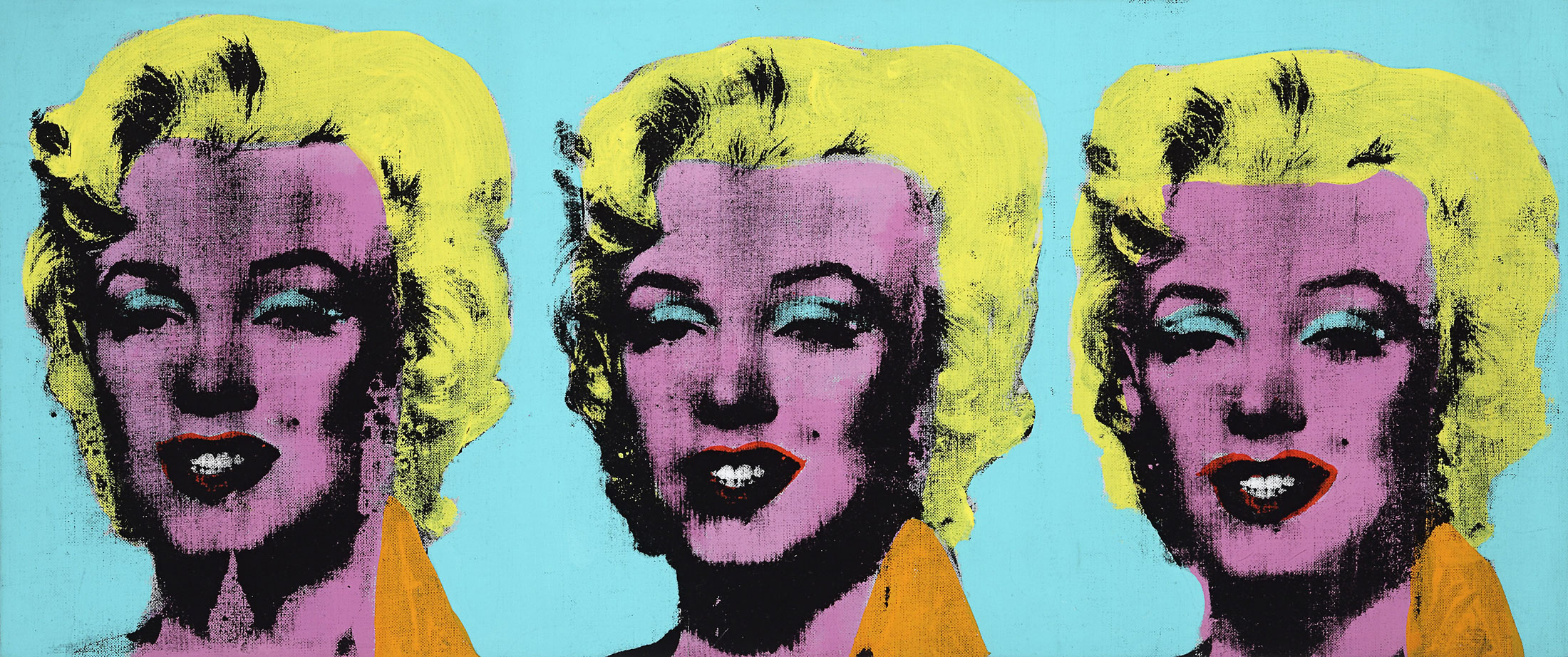
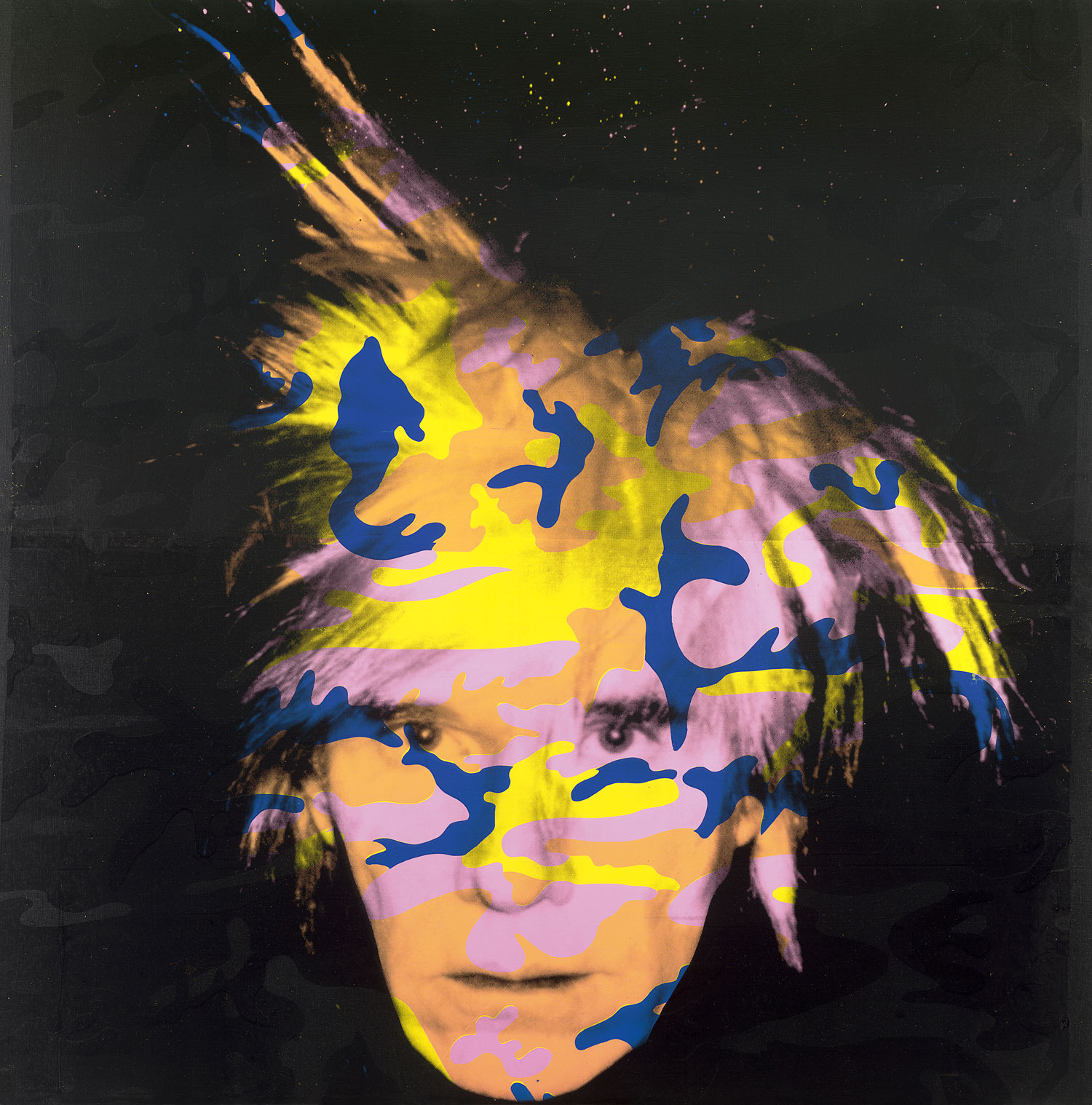
![Andy Warhol (American, 1928-1987) 'Silver Liz [Ferus Type]' 1963](https://artblart.com/wp-content/uploads/2016/03/exhi032777-web.jpg "Andy Warhol (American, 1928-1987) 'Silver Liz [Ferus Type]' 1963")
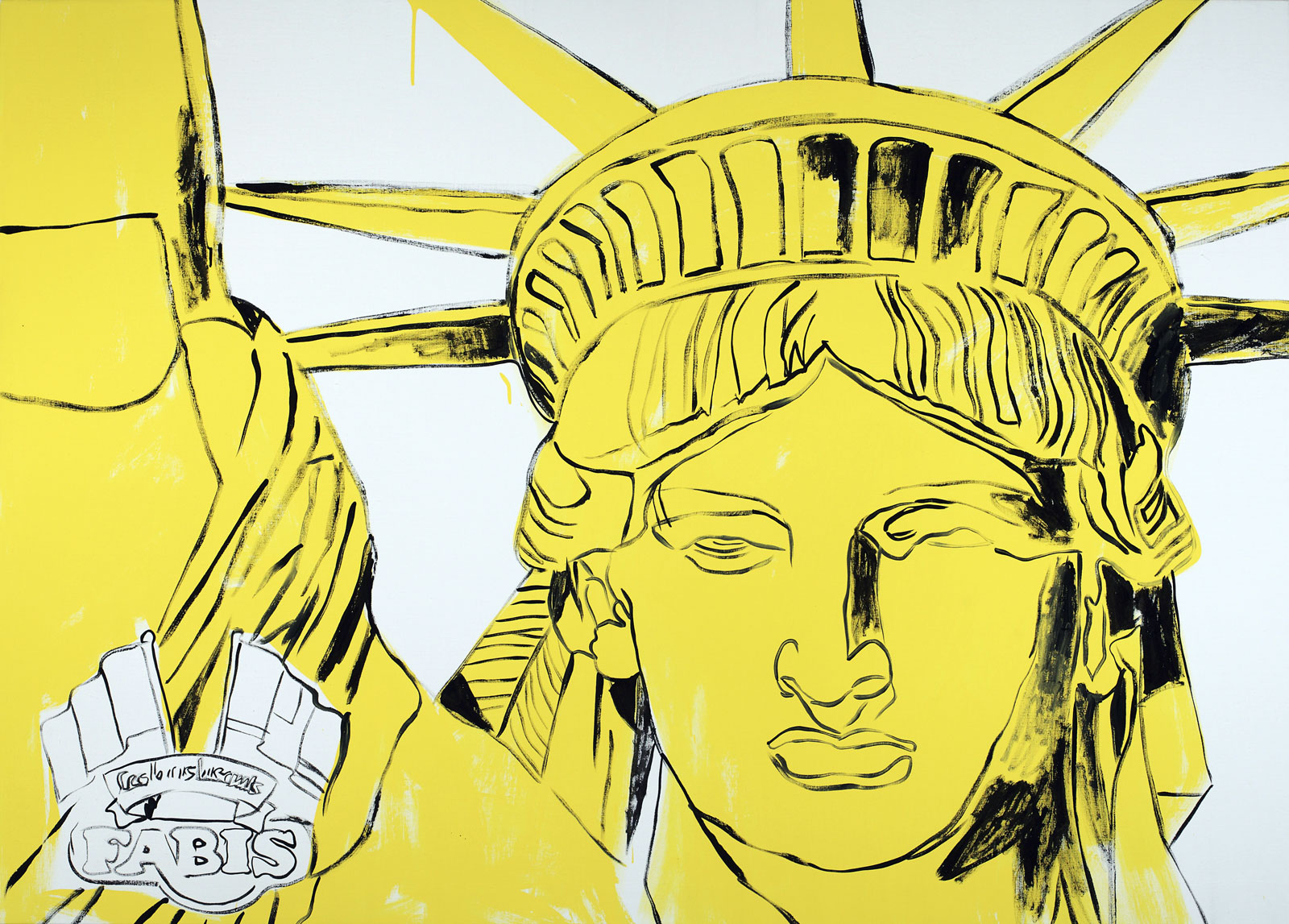
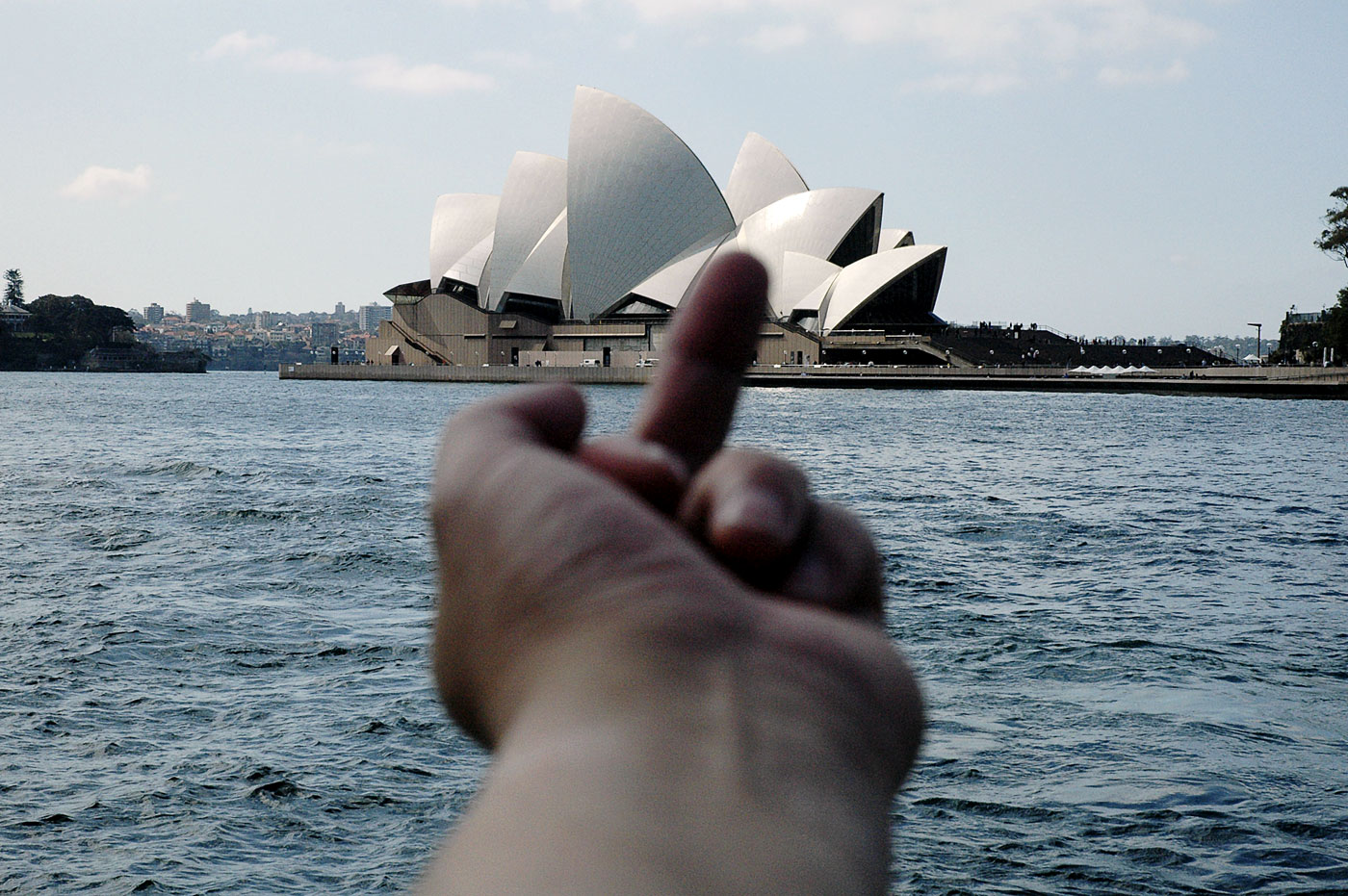


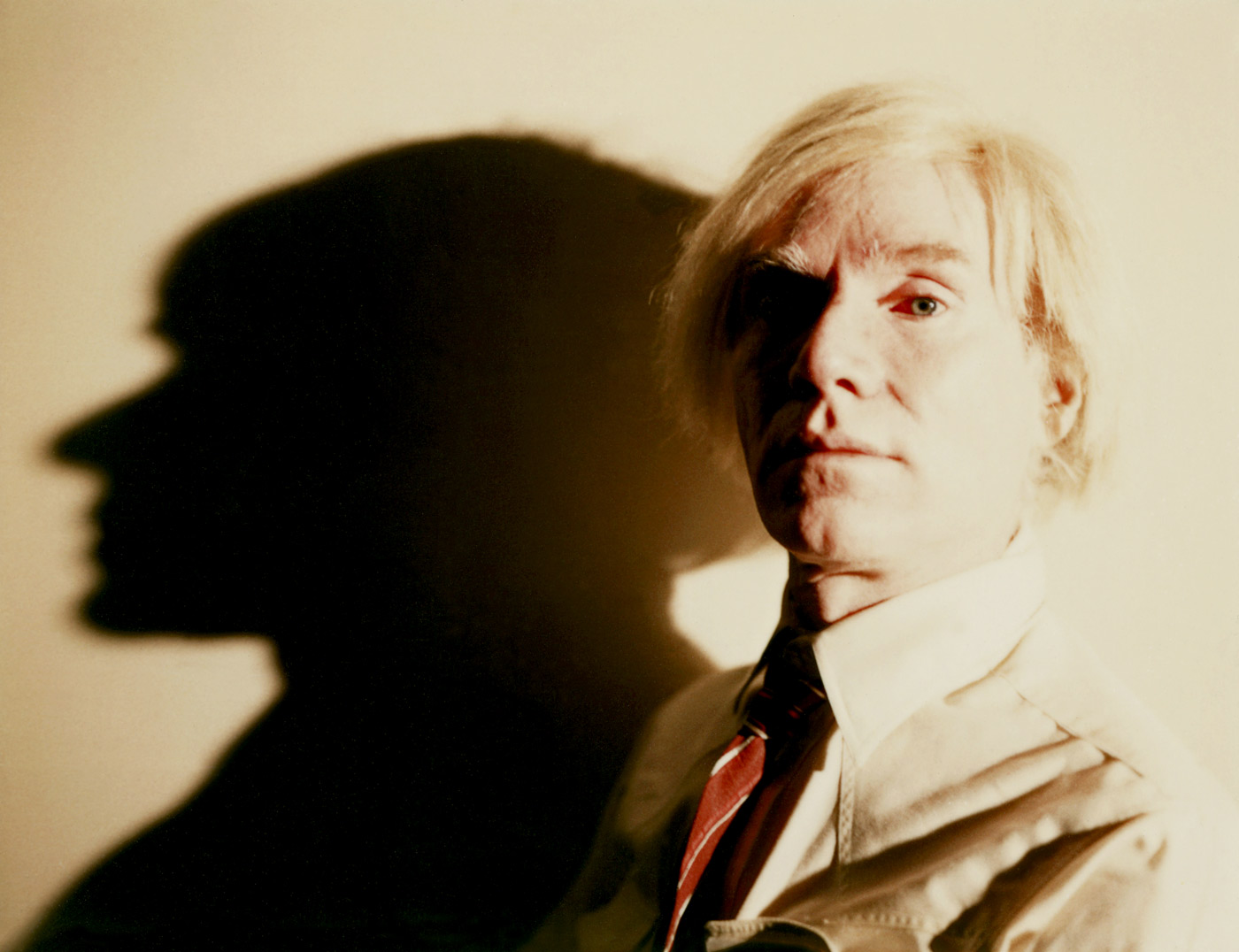
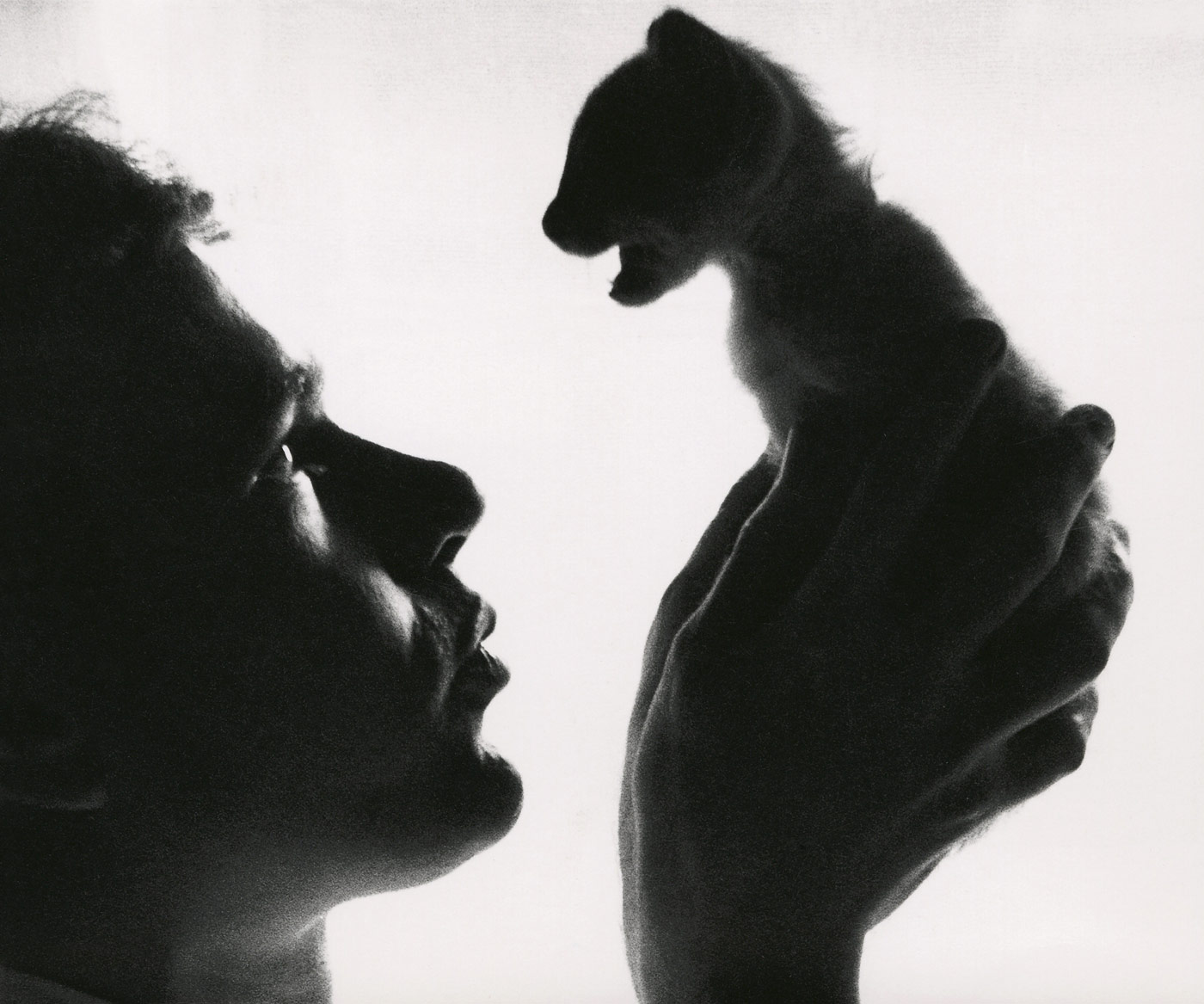
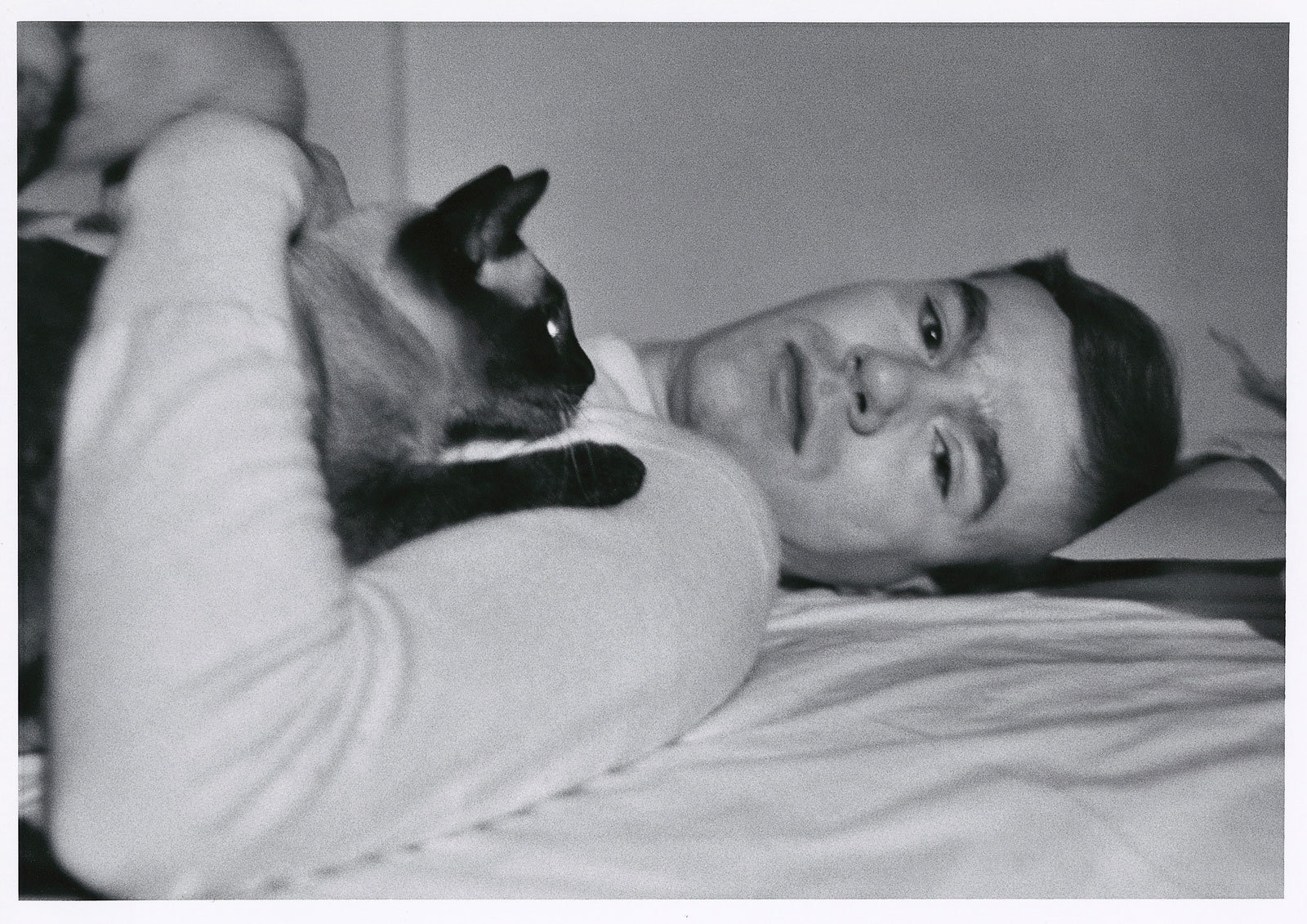
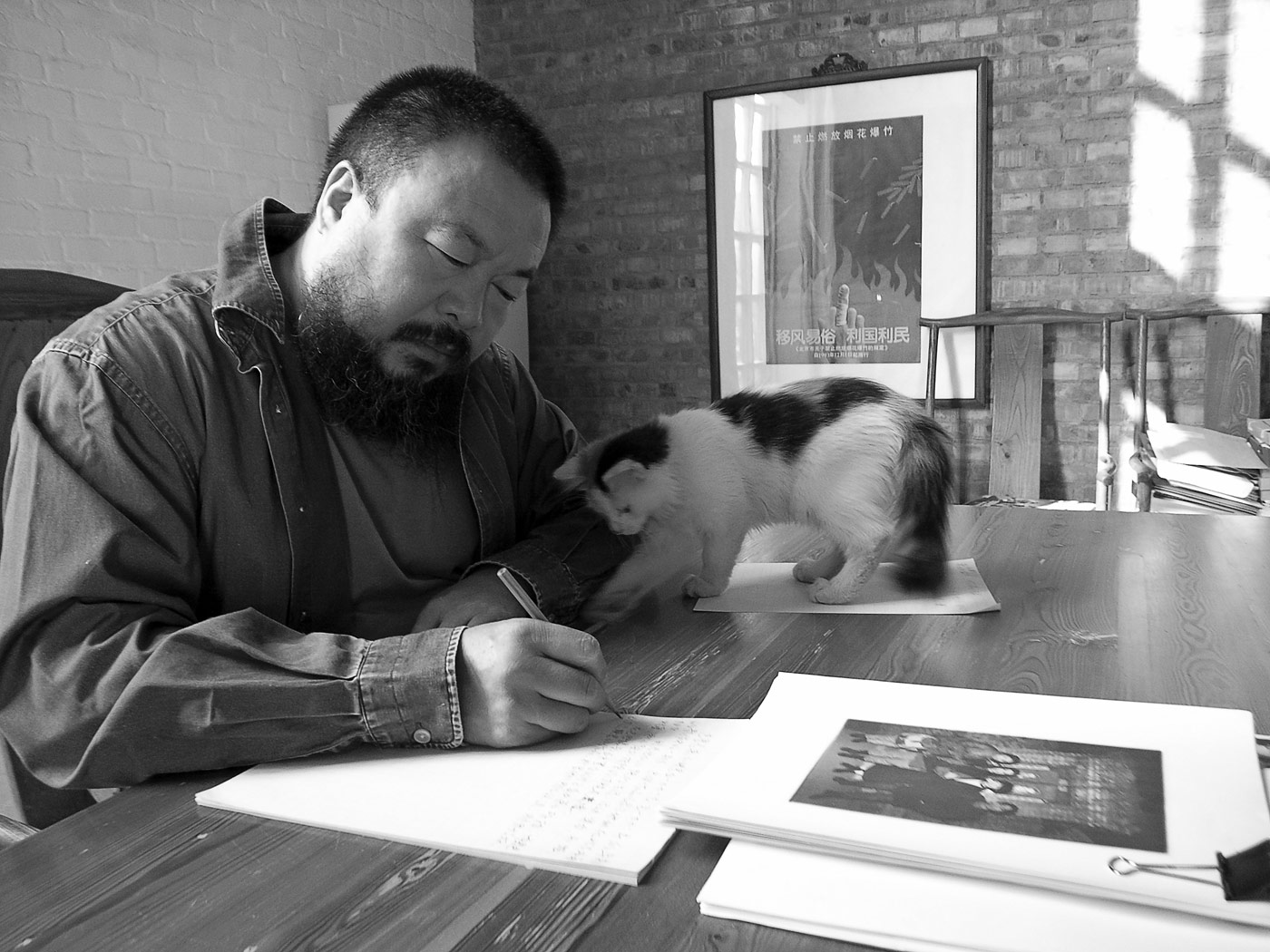
![Andy Warhol (American, 1928-1987) 'Screen Test: Edie Sedgwick [ST308]' 1965](https://artblart.com/wp-content/uploads/2016/03/exhi037605-web.jpg "Andy Warhol (American, 1928-1987) 'Screen Test: Edie Sedgwick [ST308]' 1965")
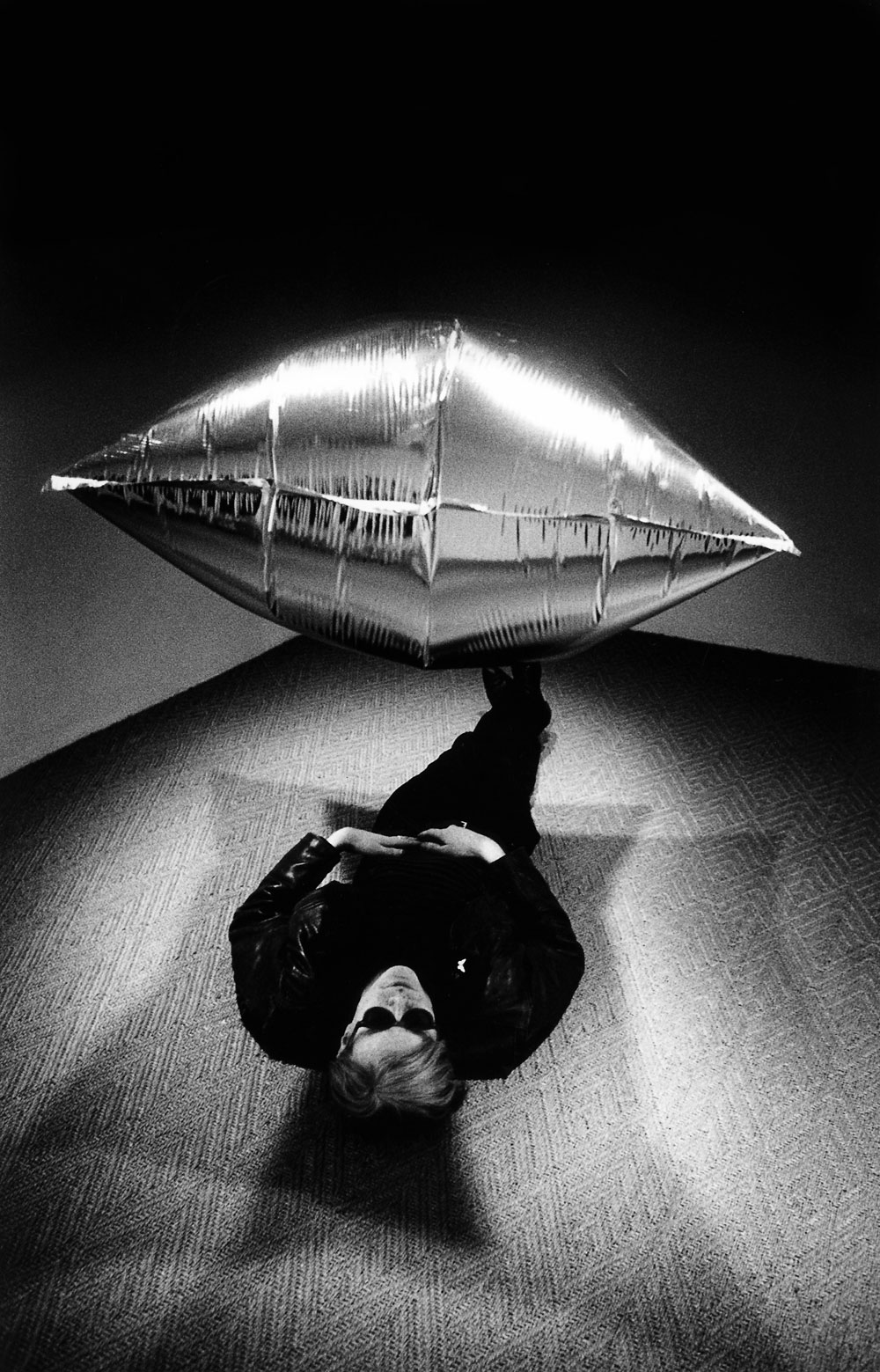
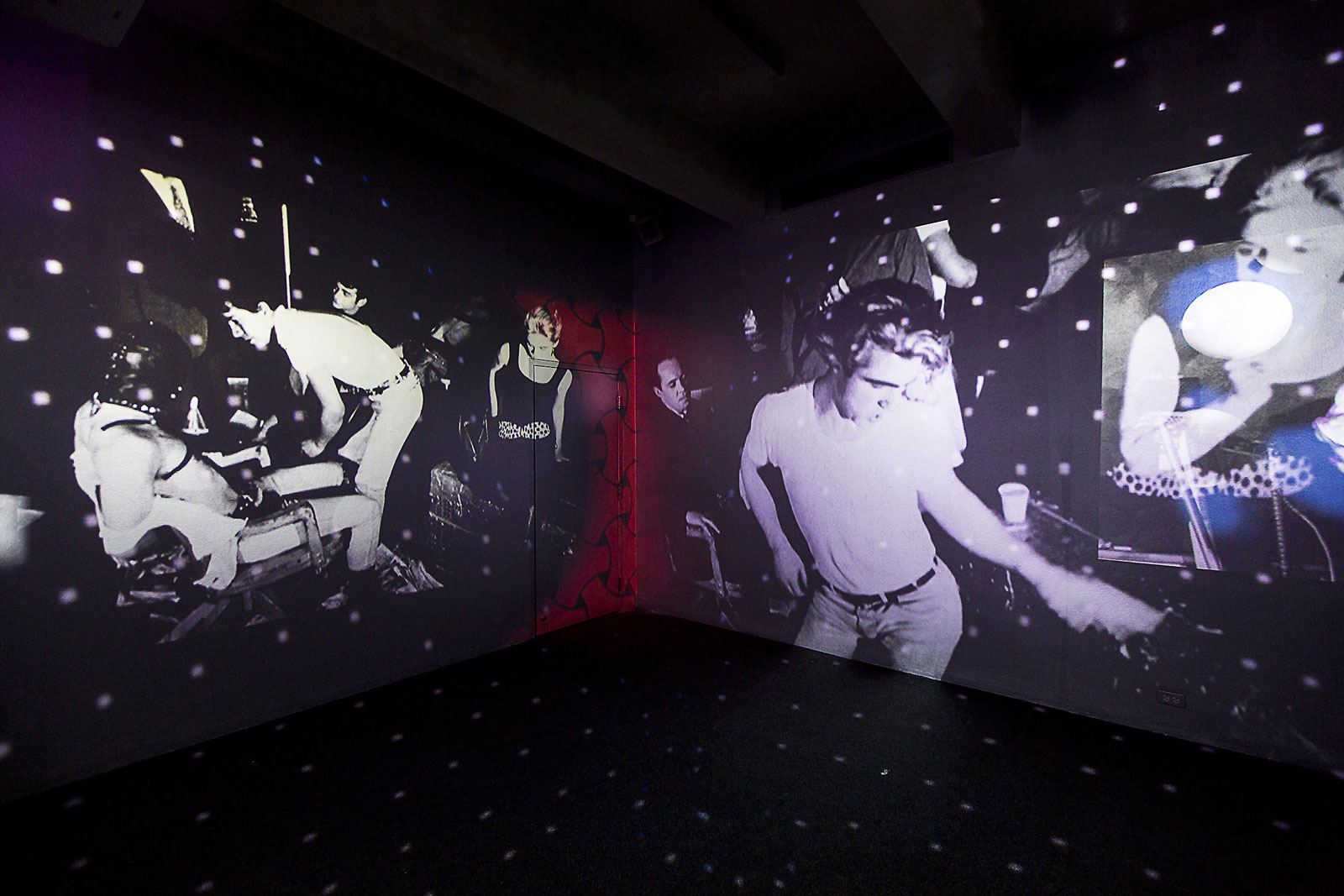
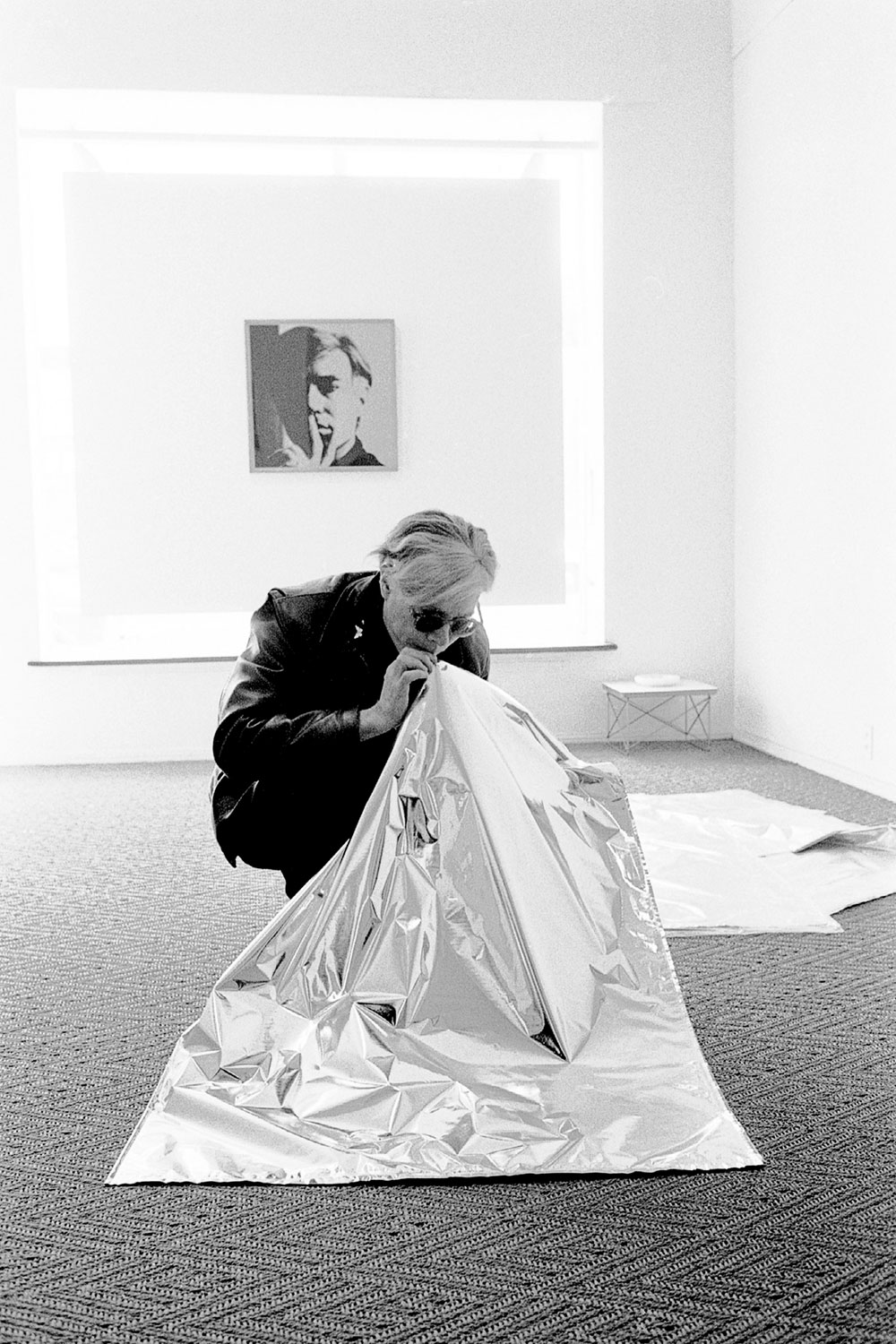

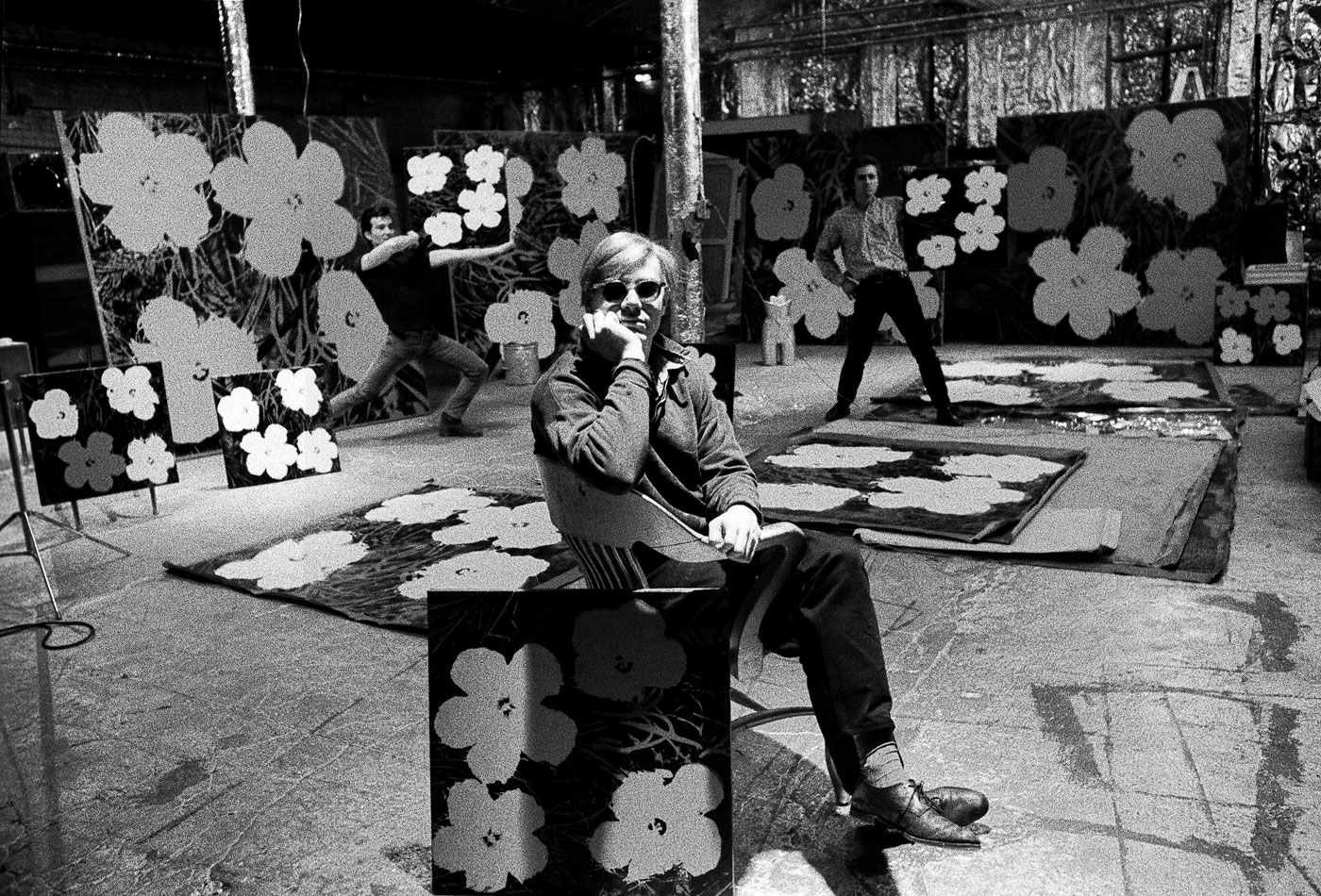
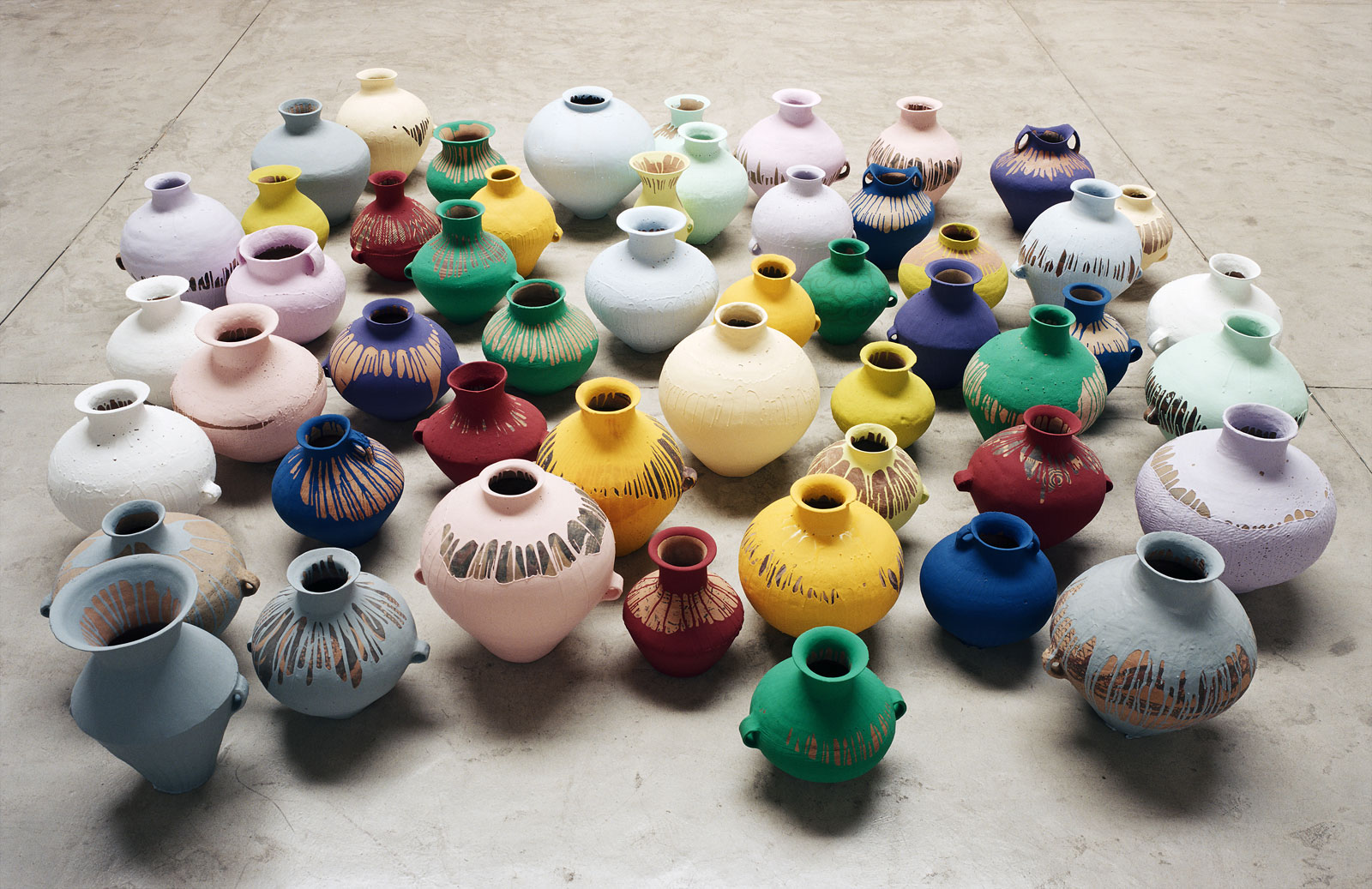
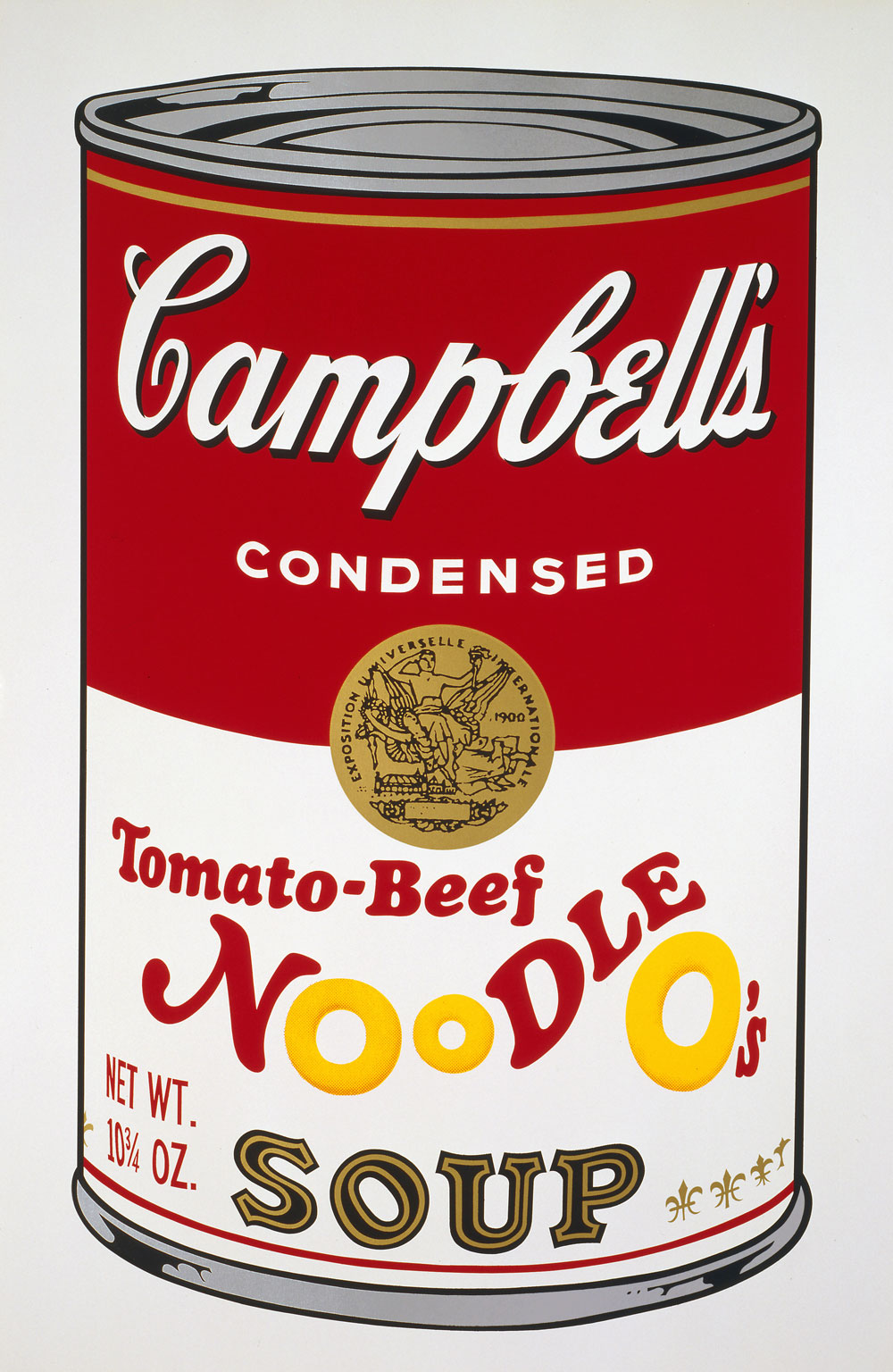
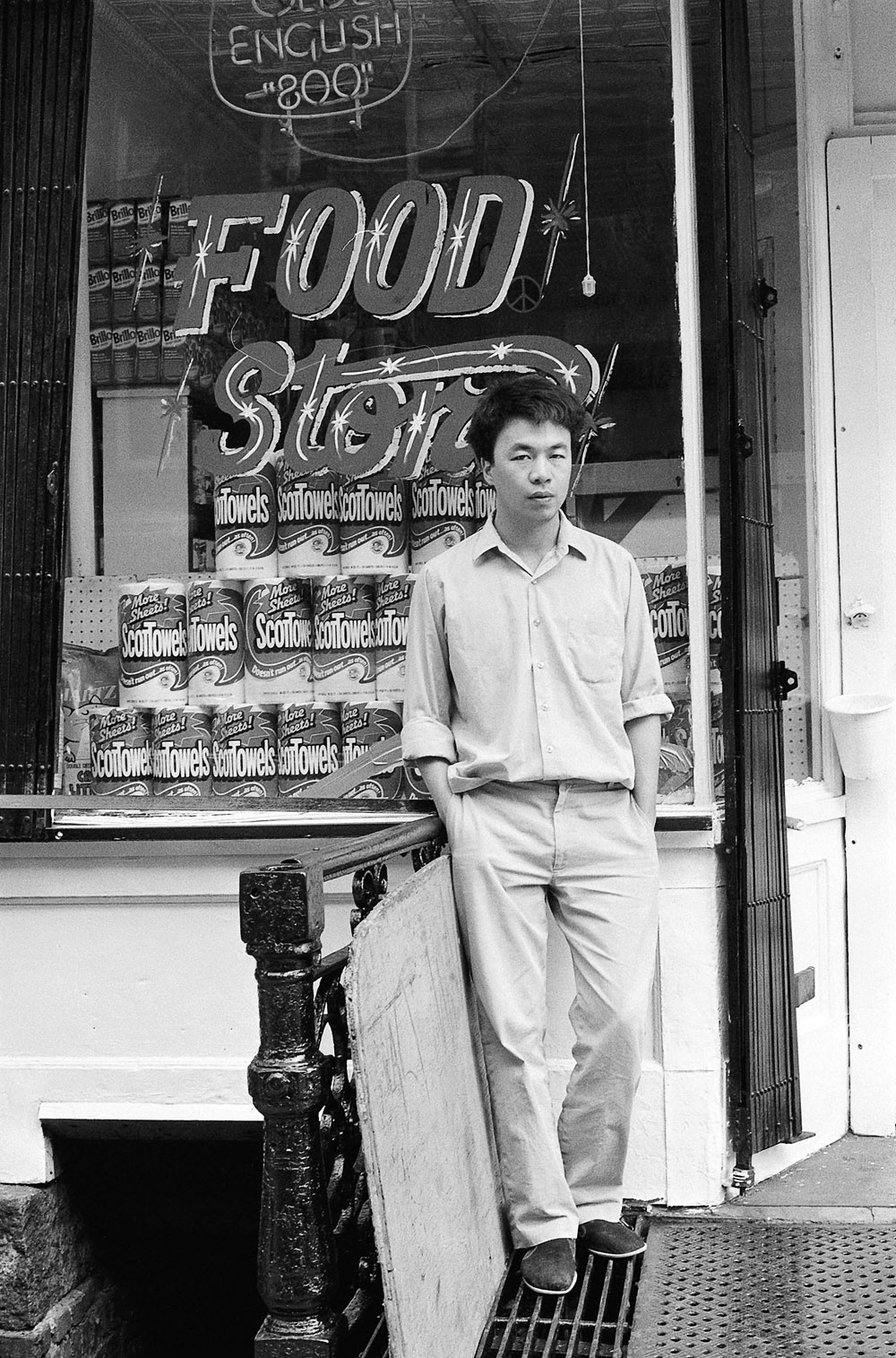
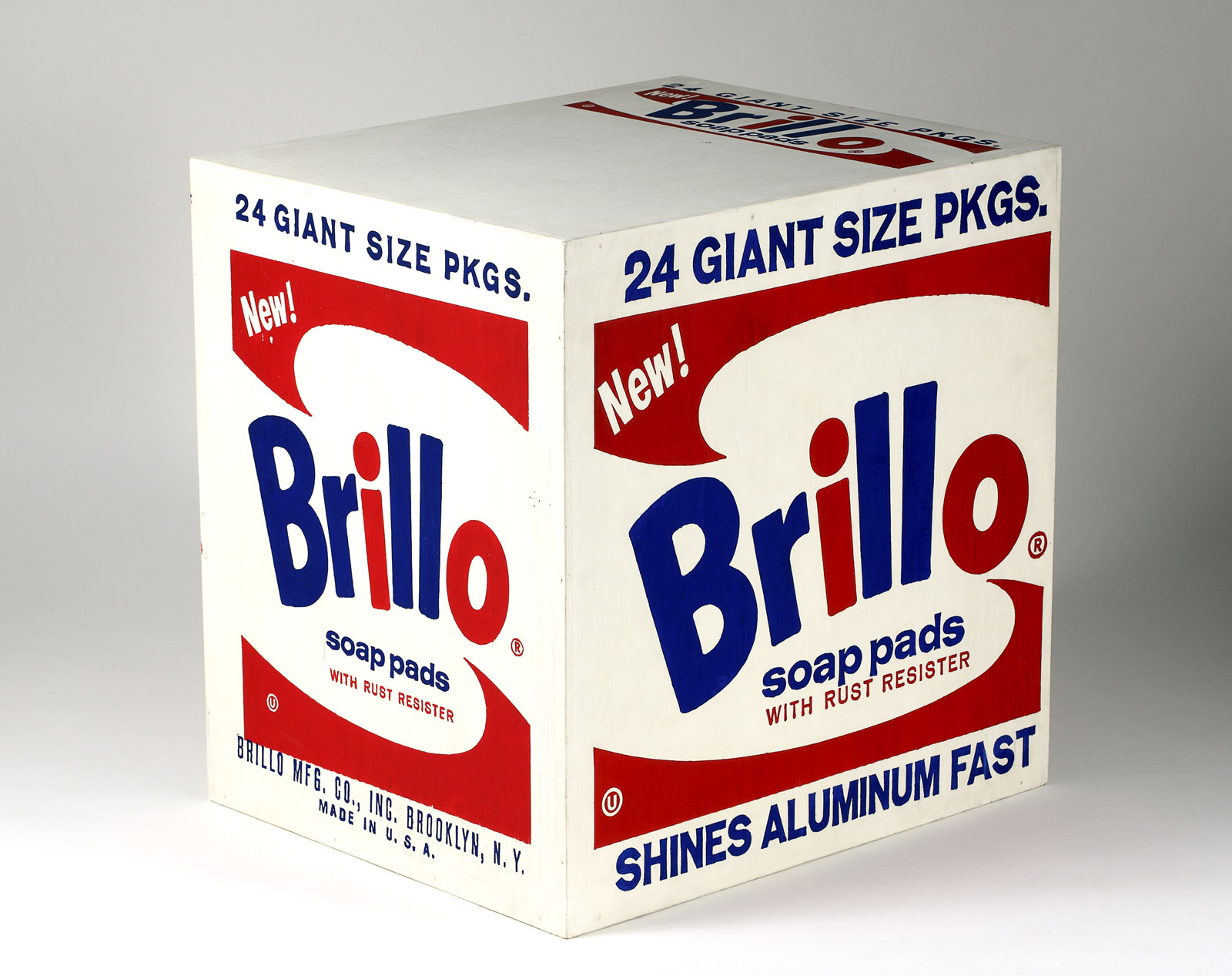
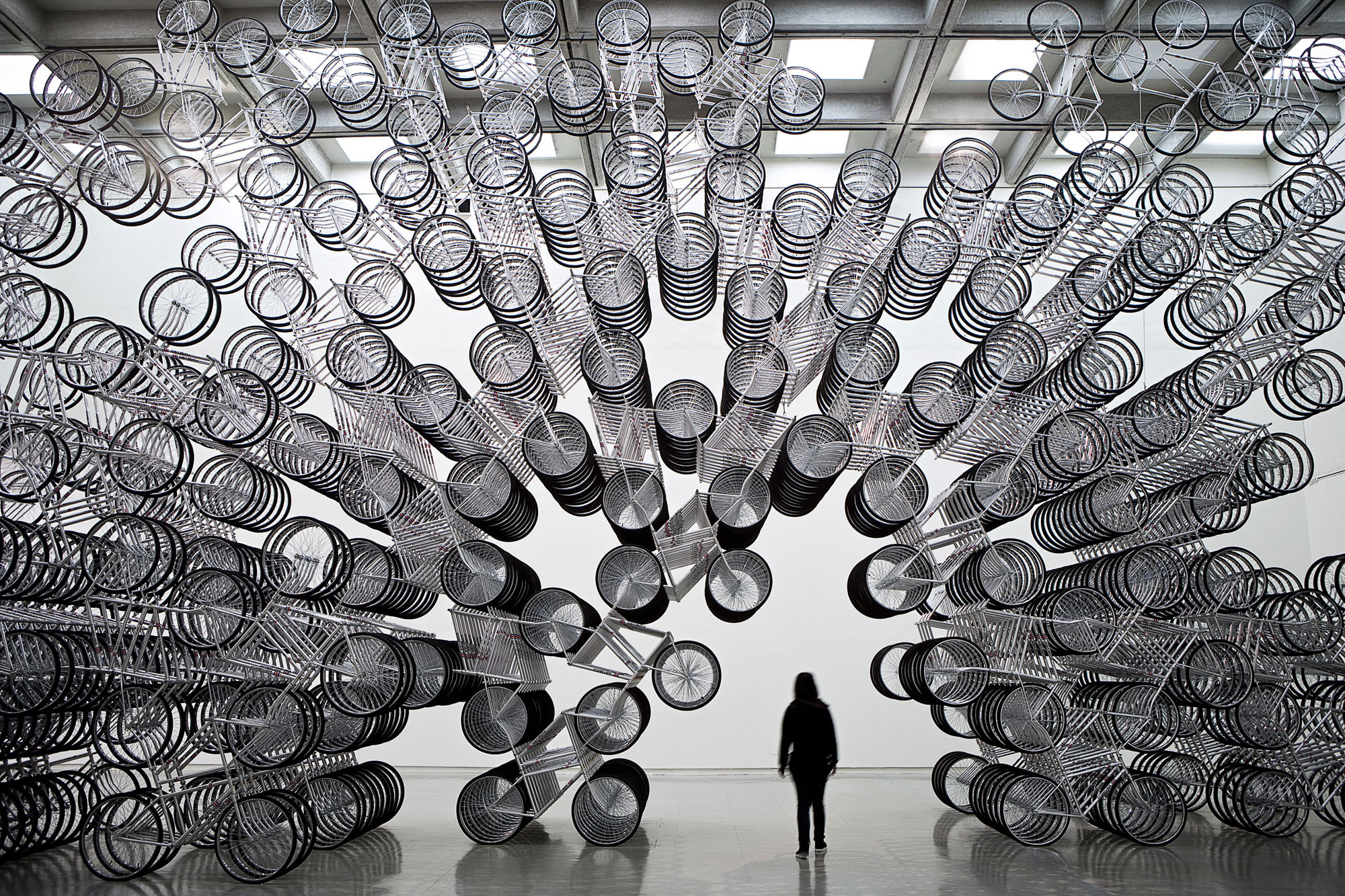
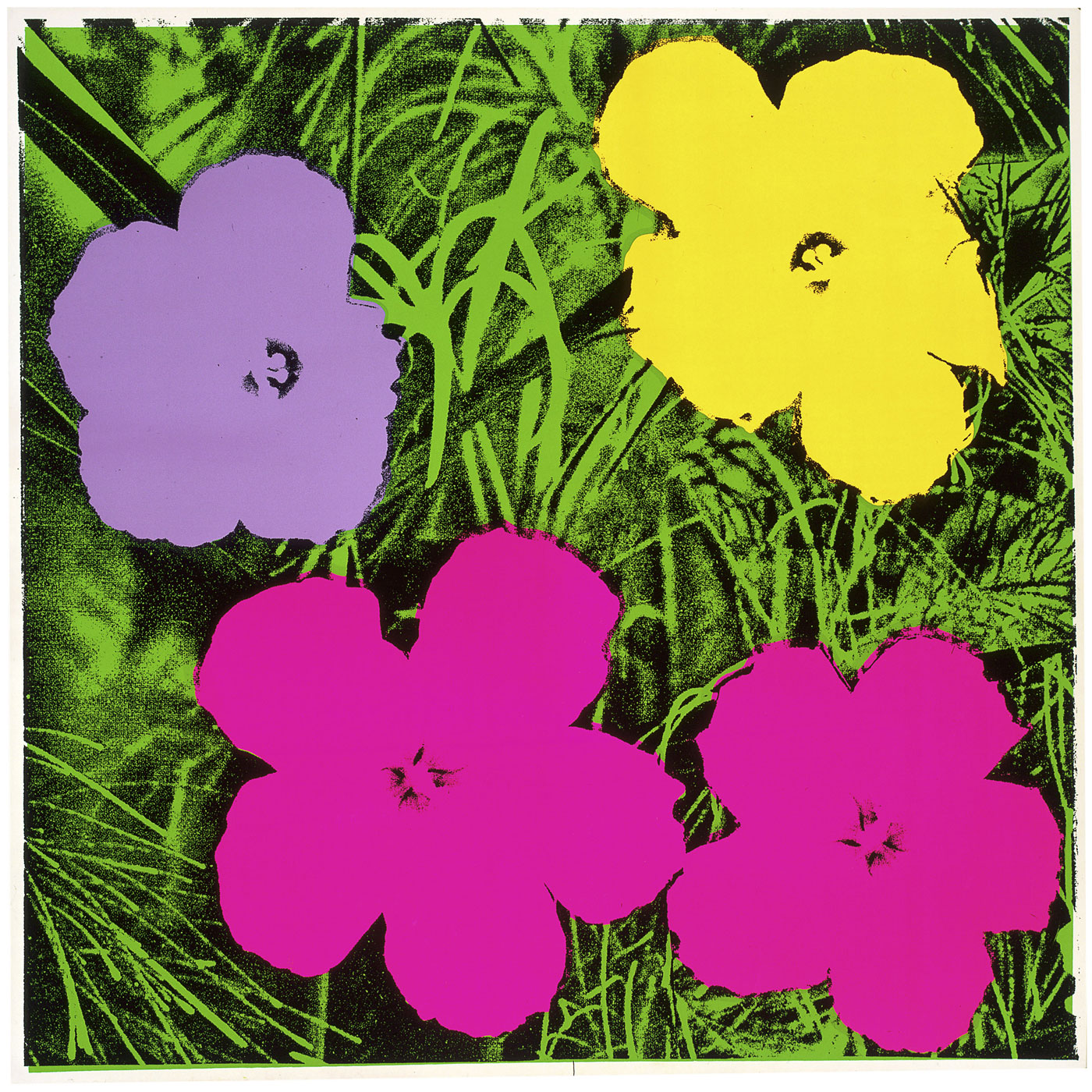
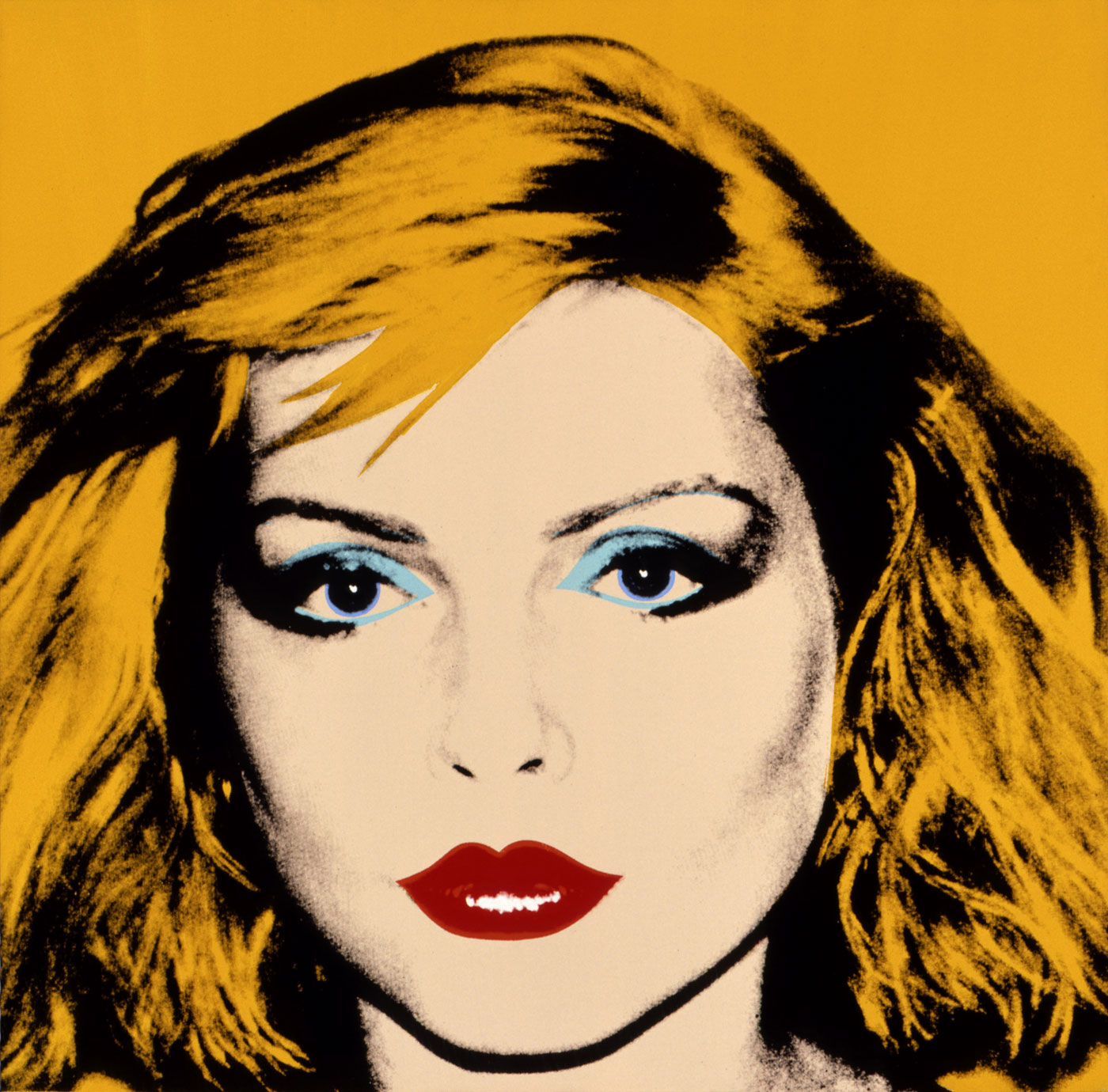
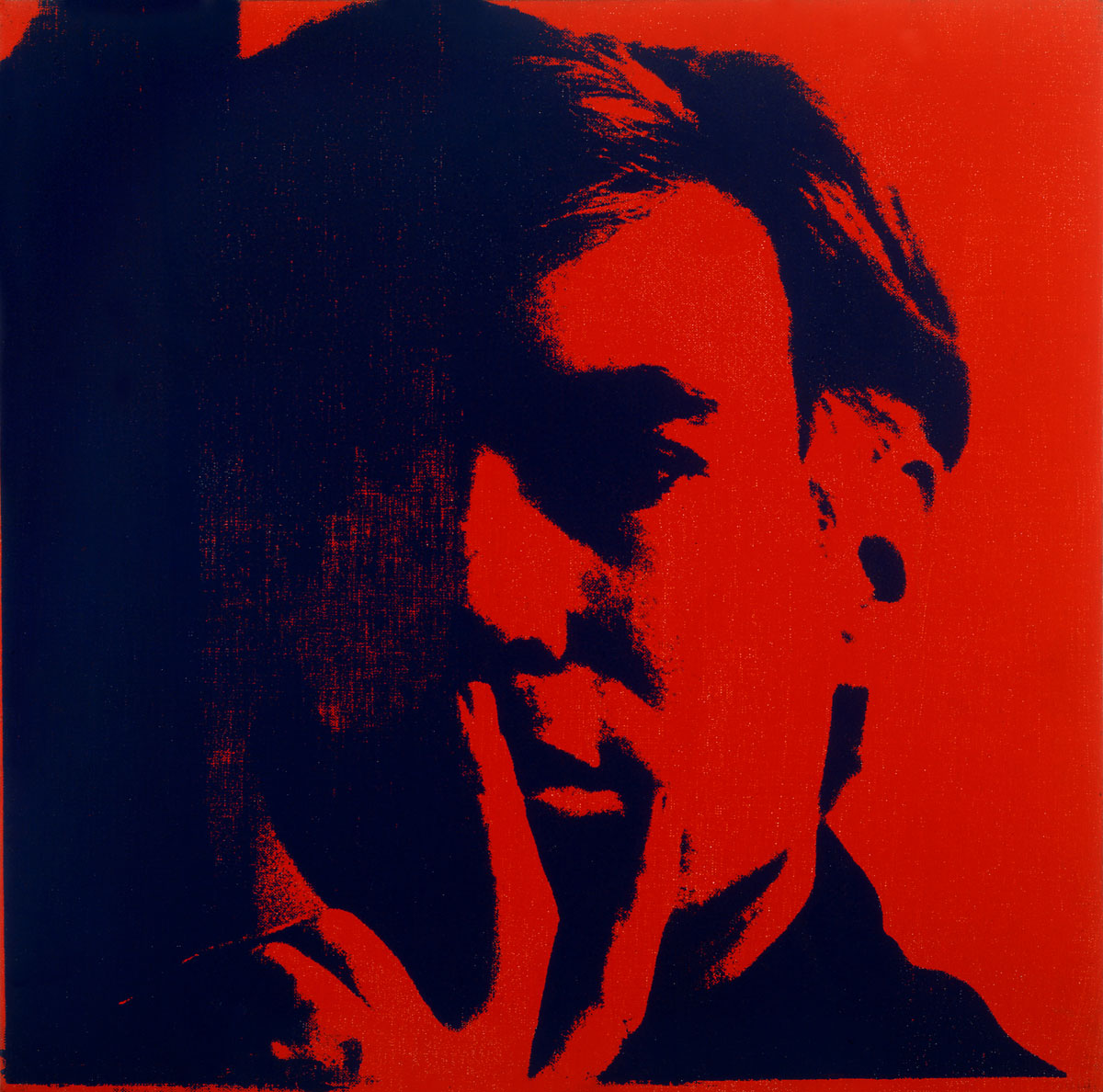

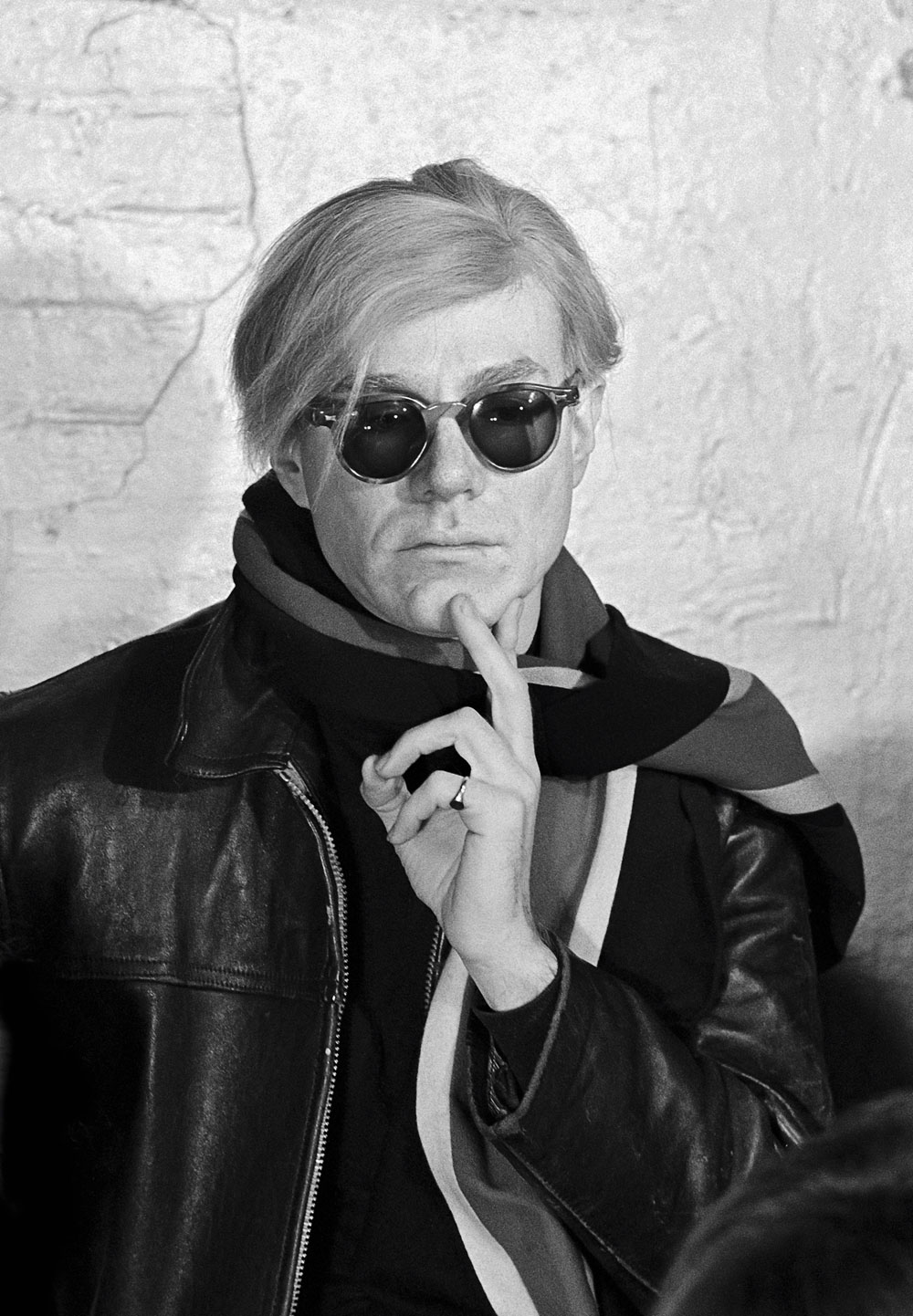
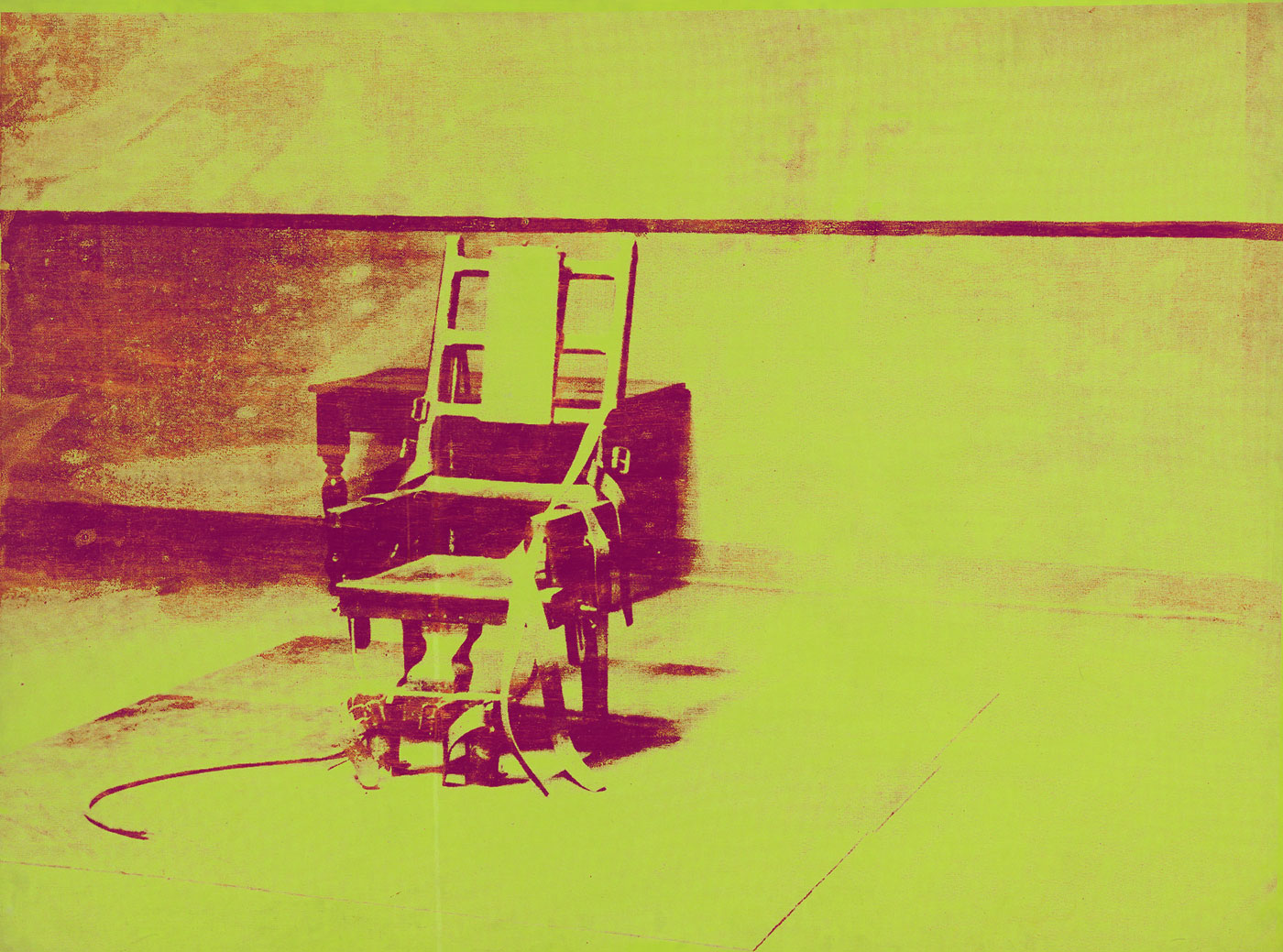
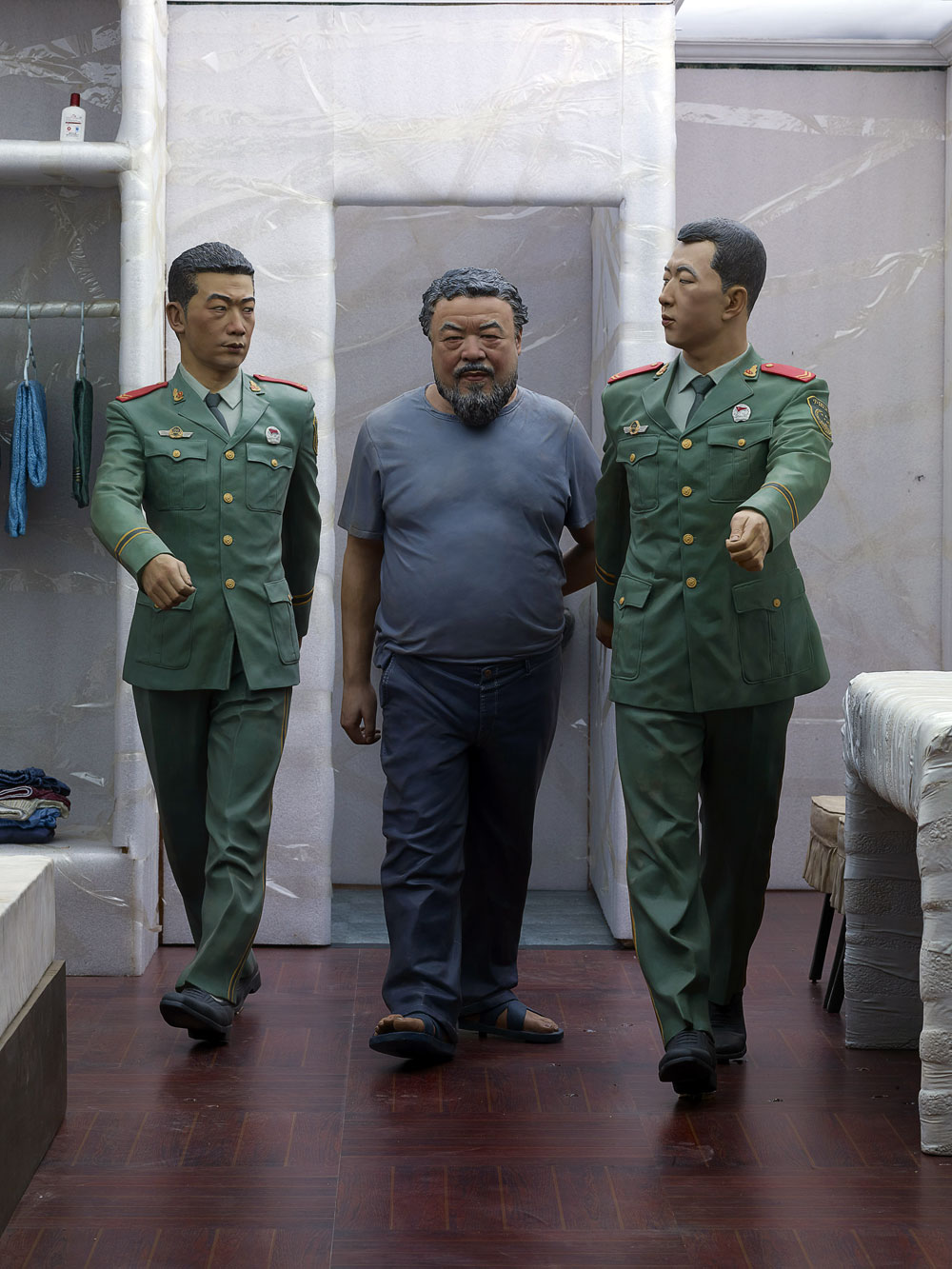
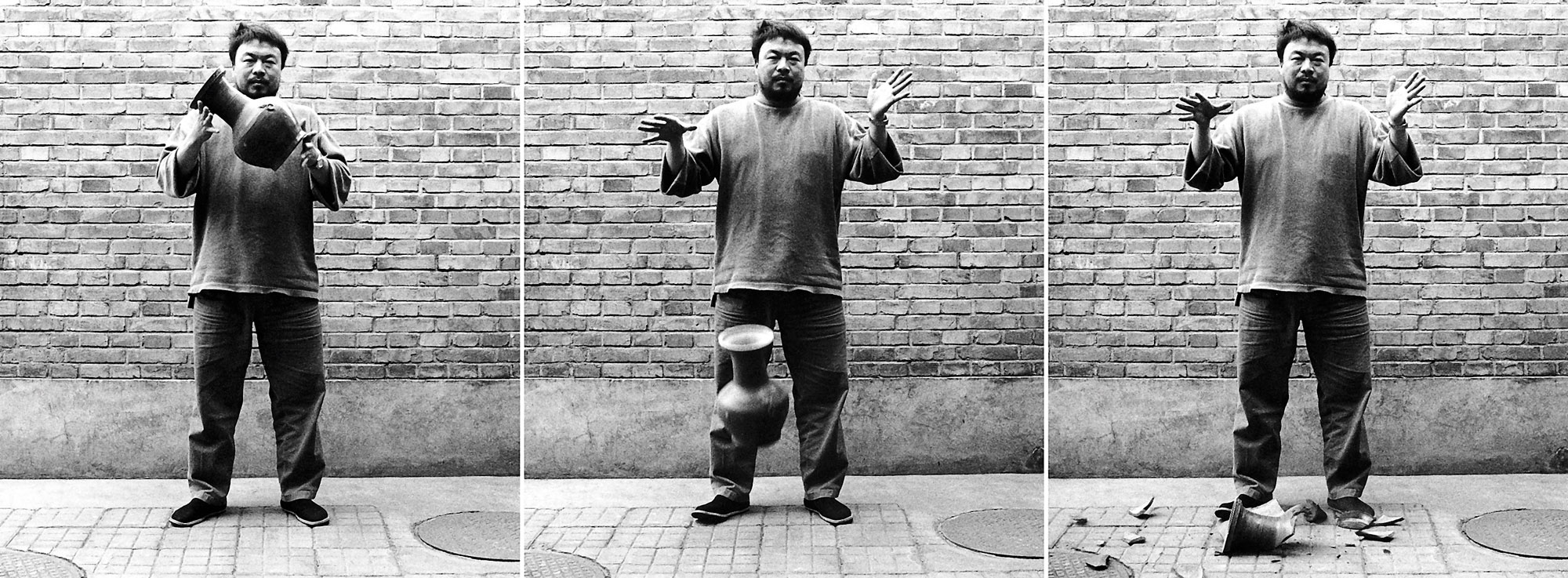
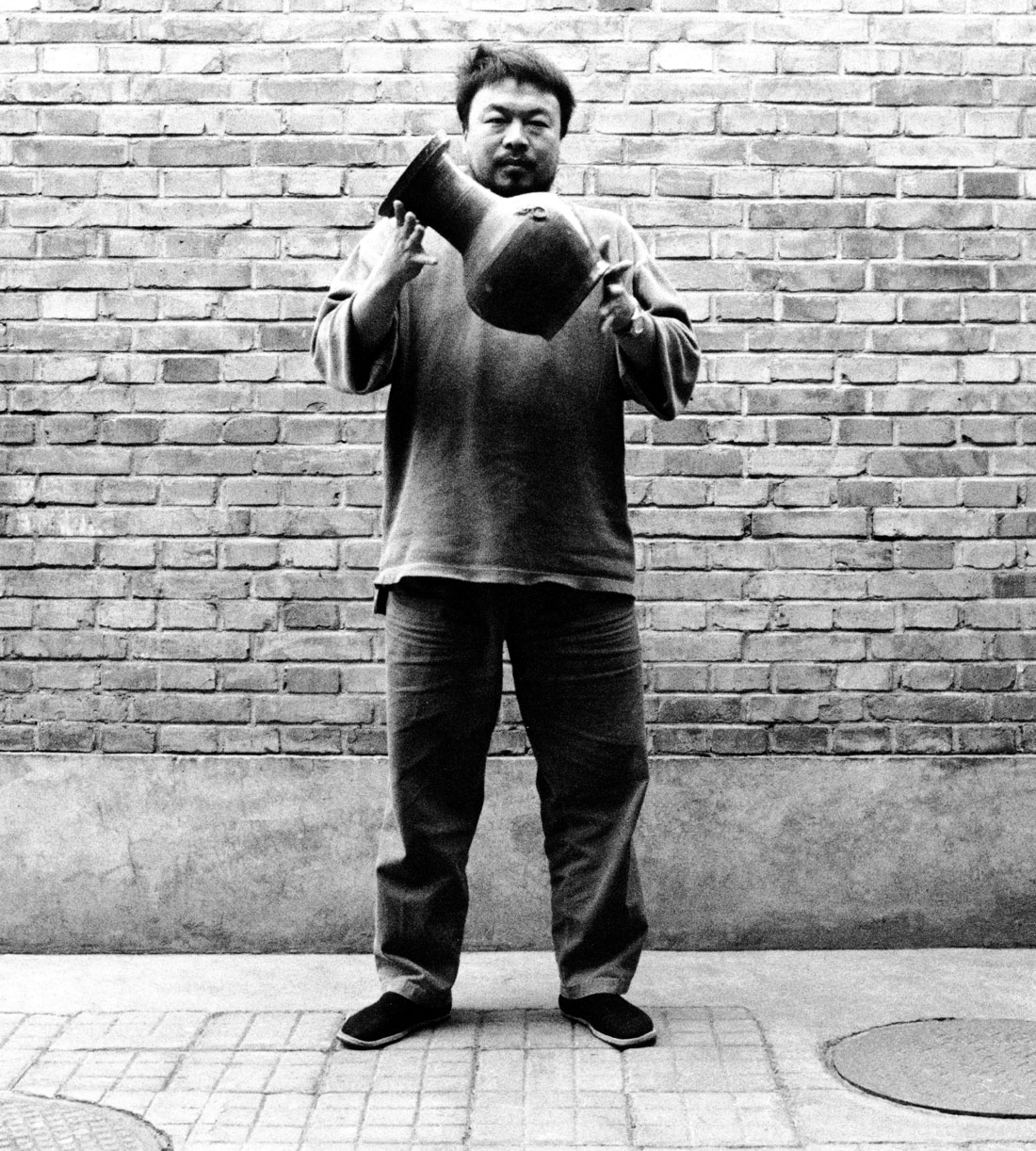
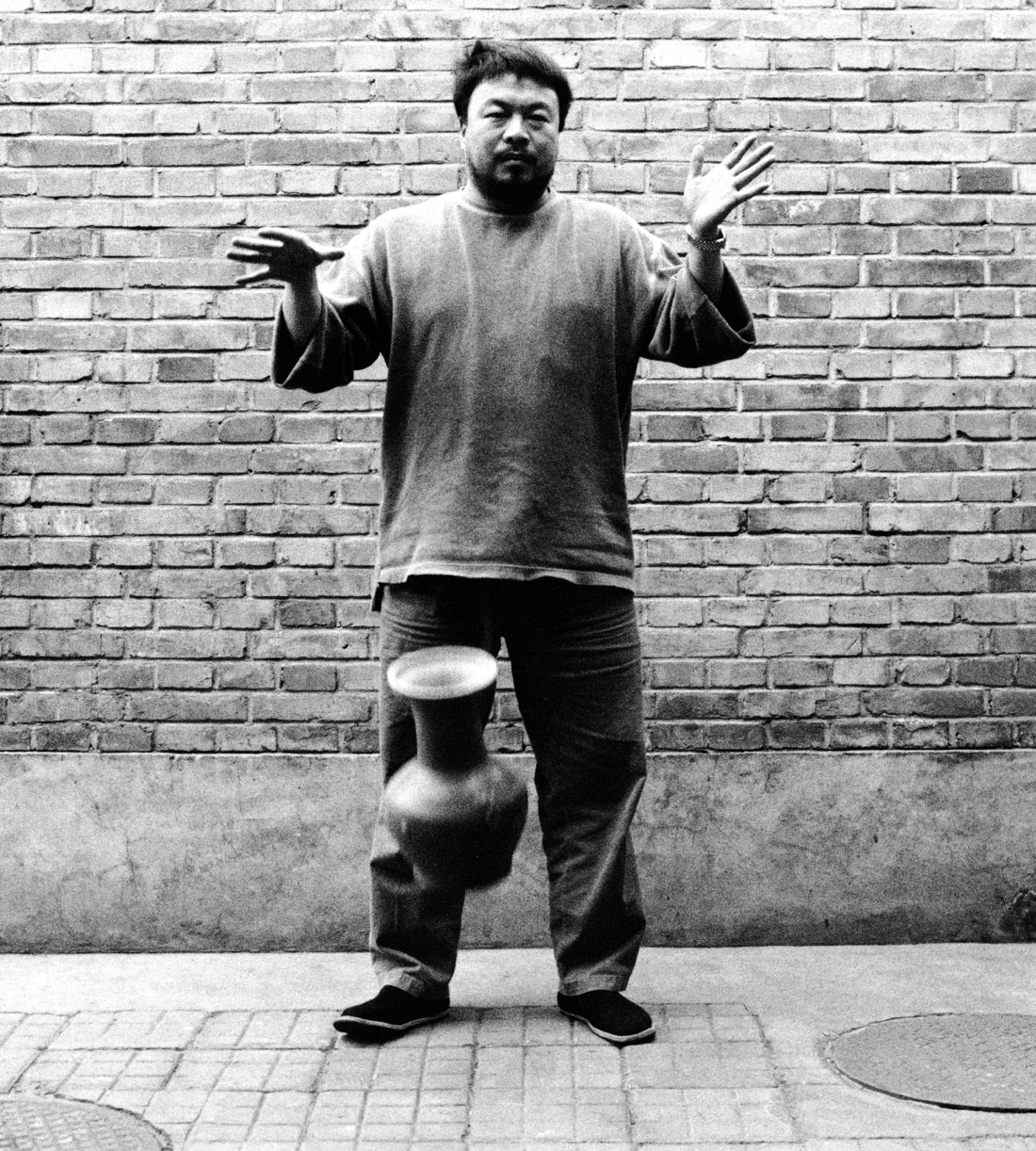
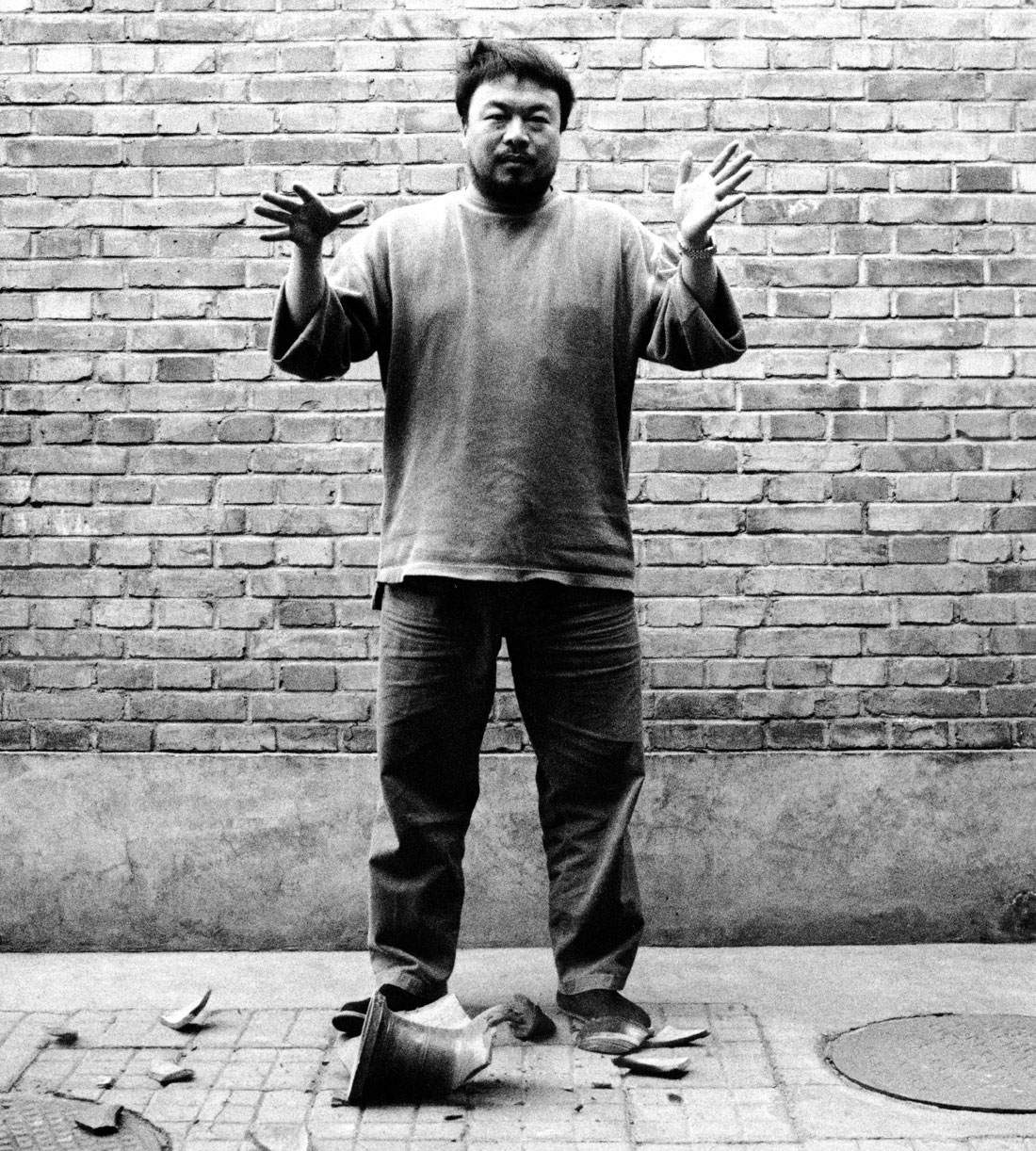
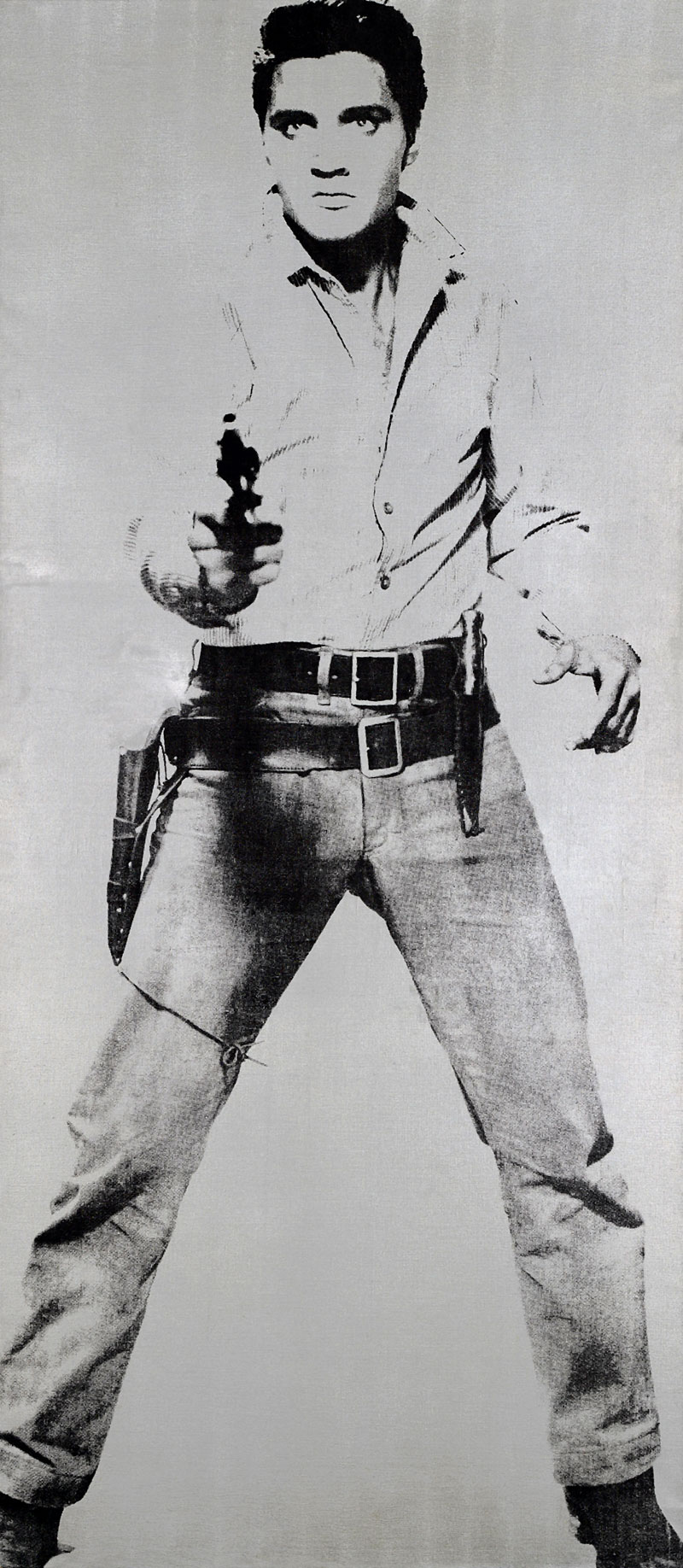
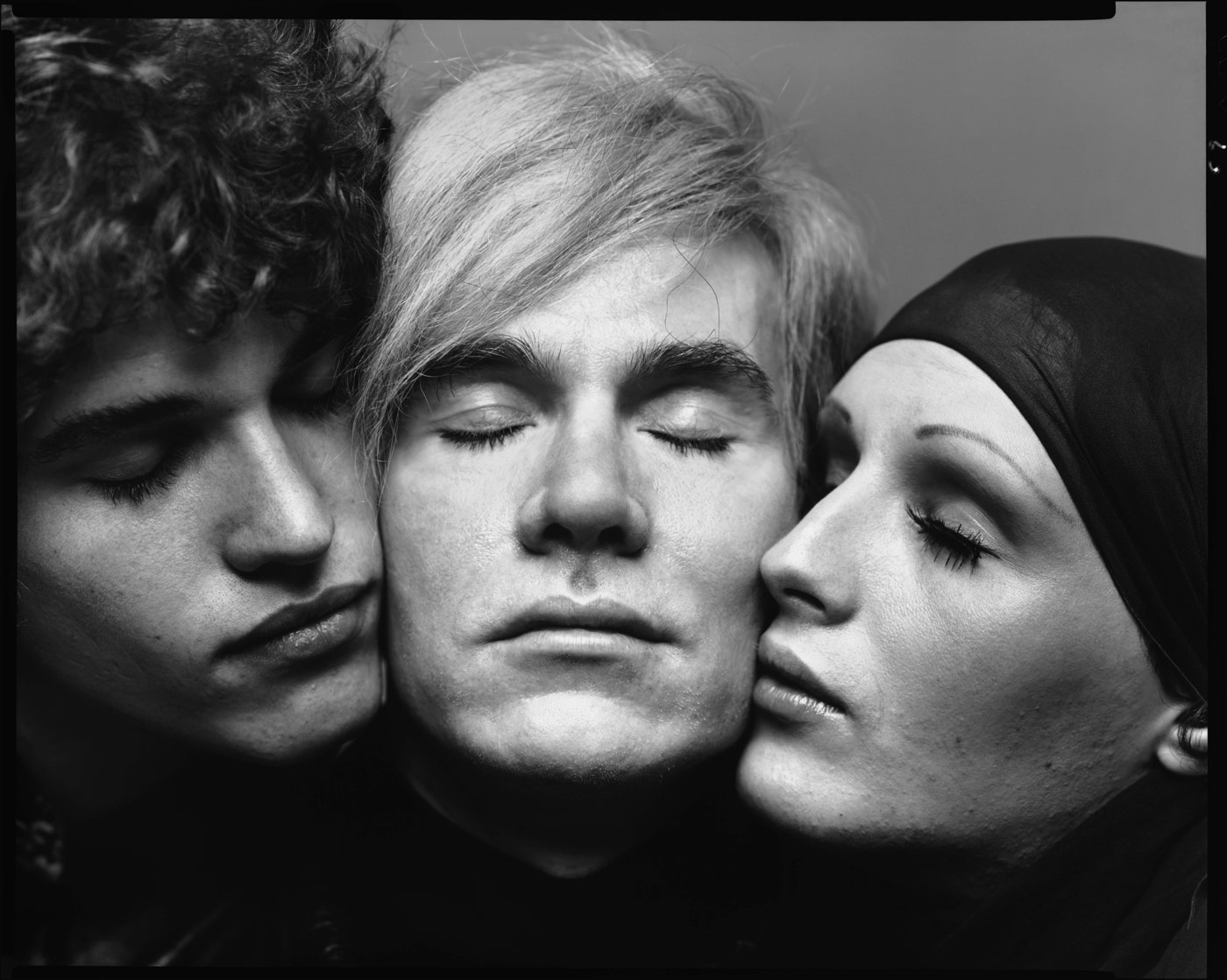


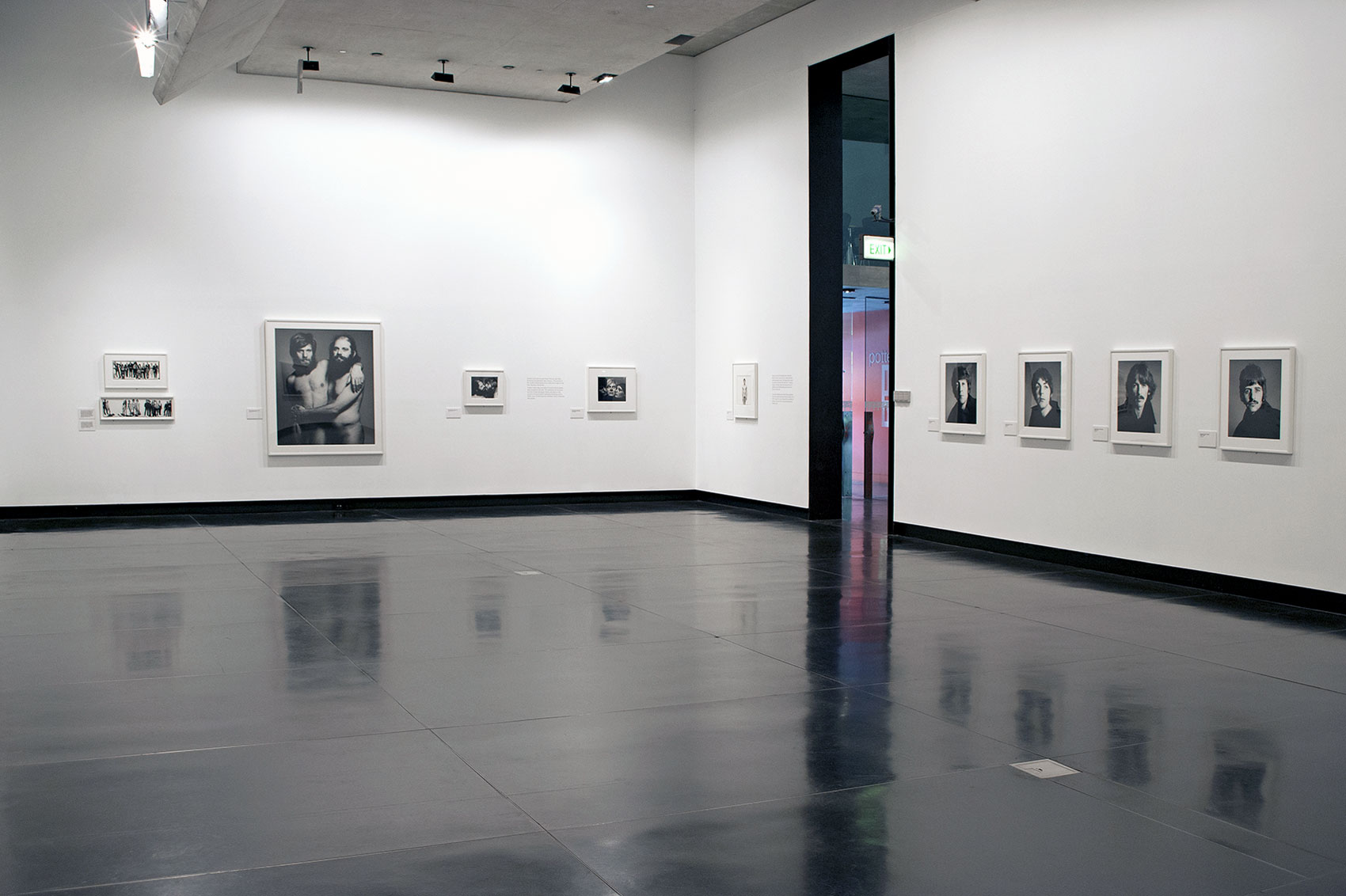


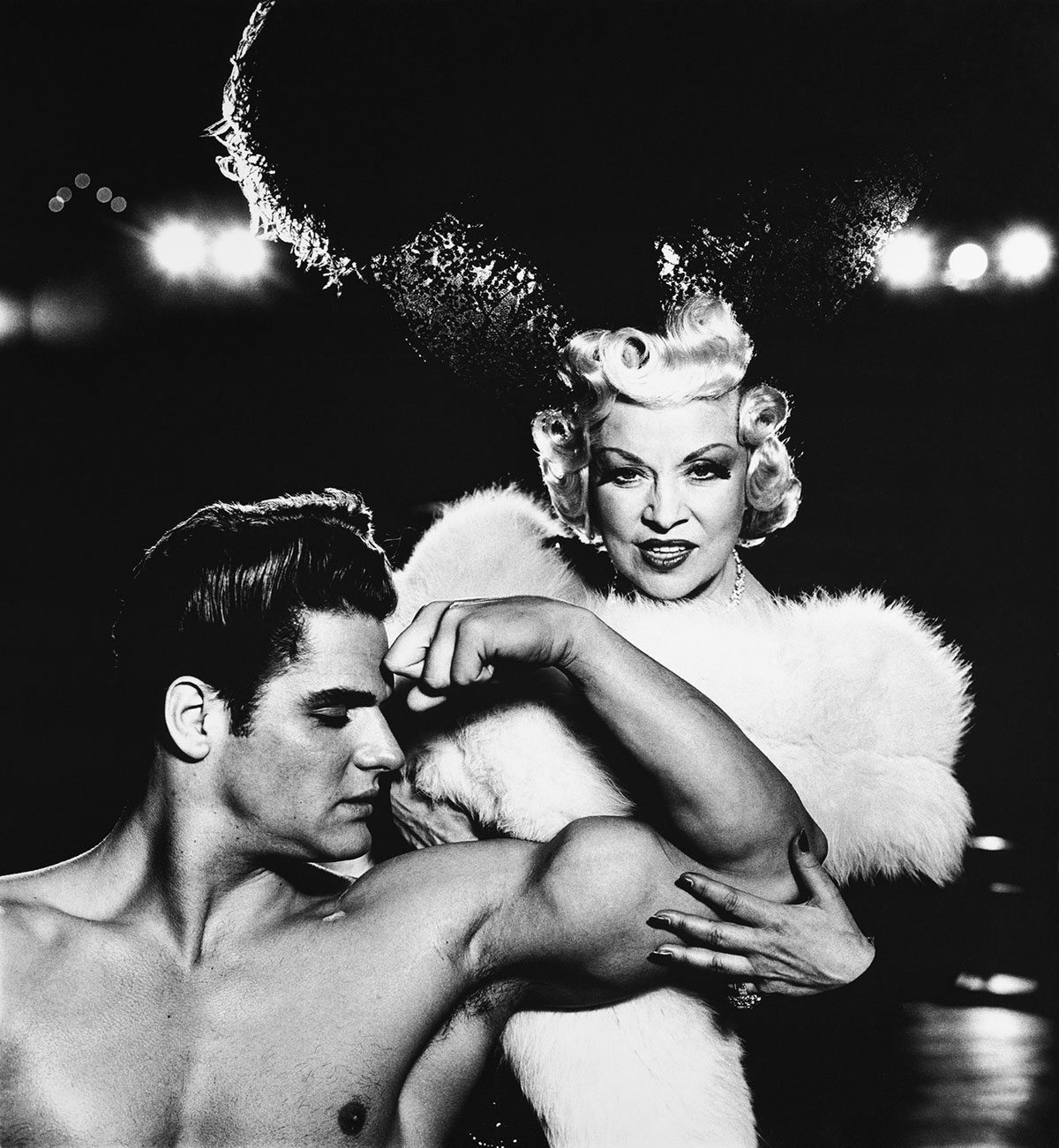

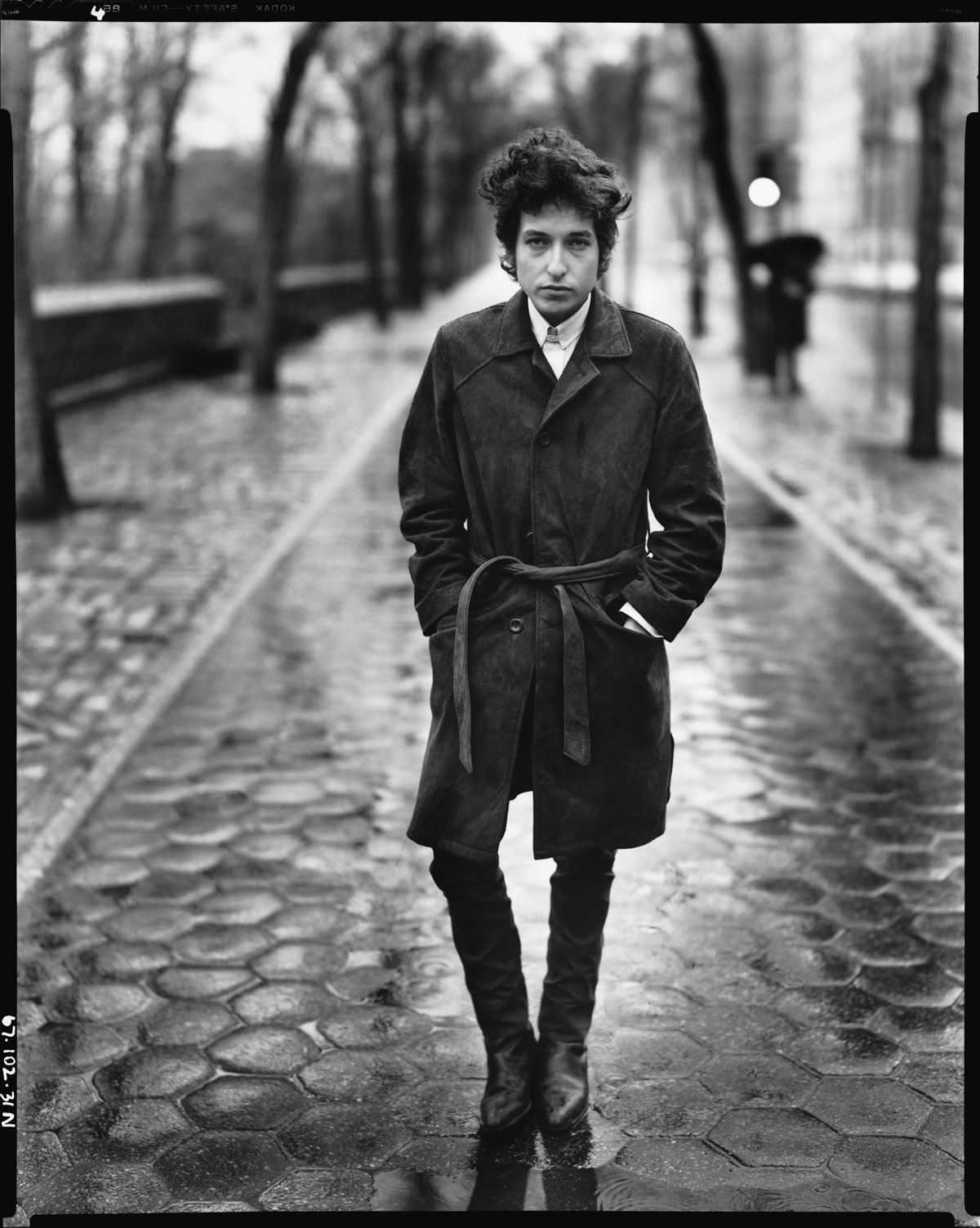
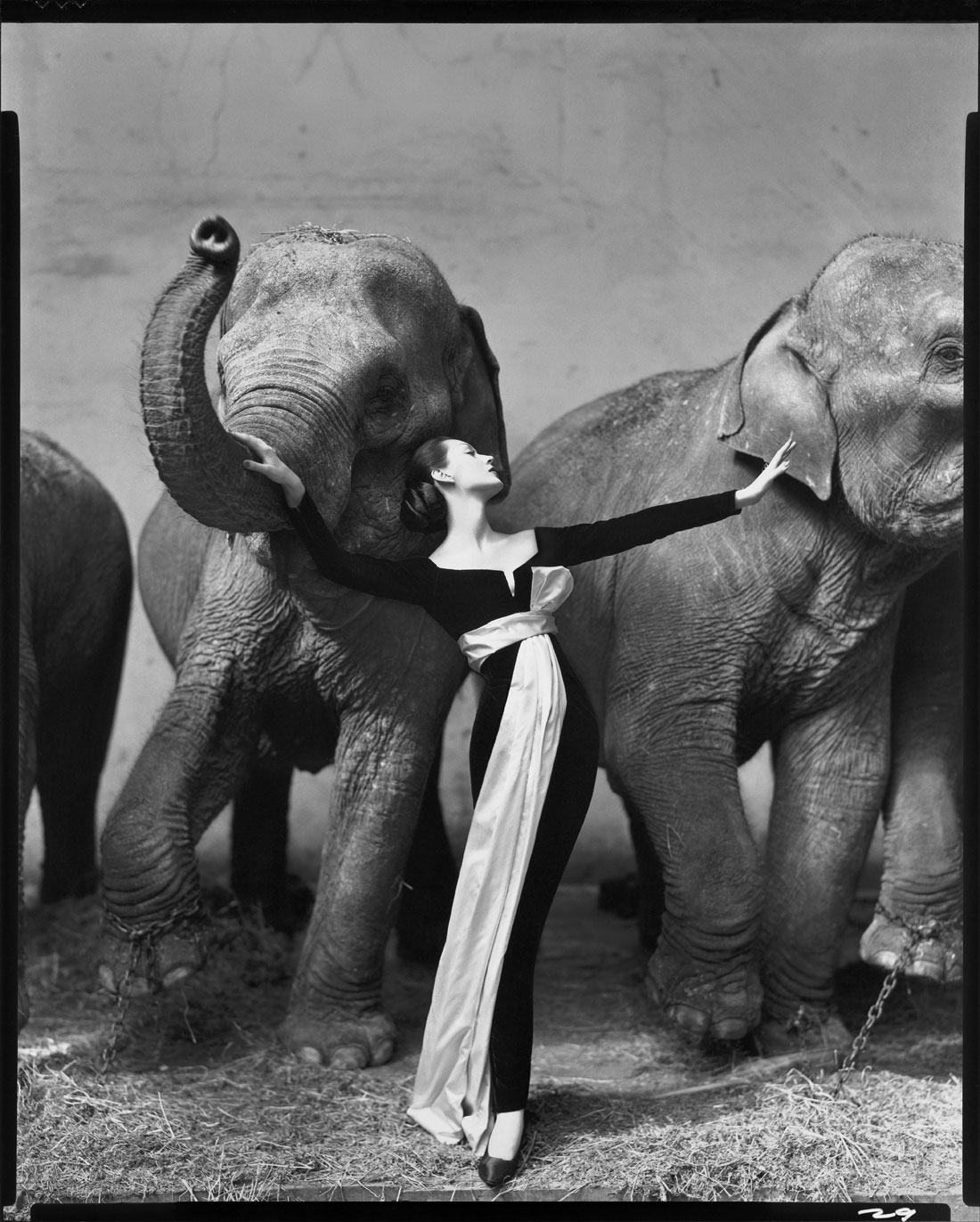
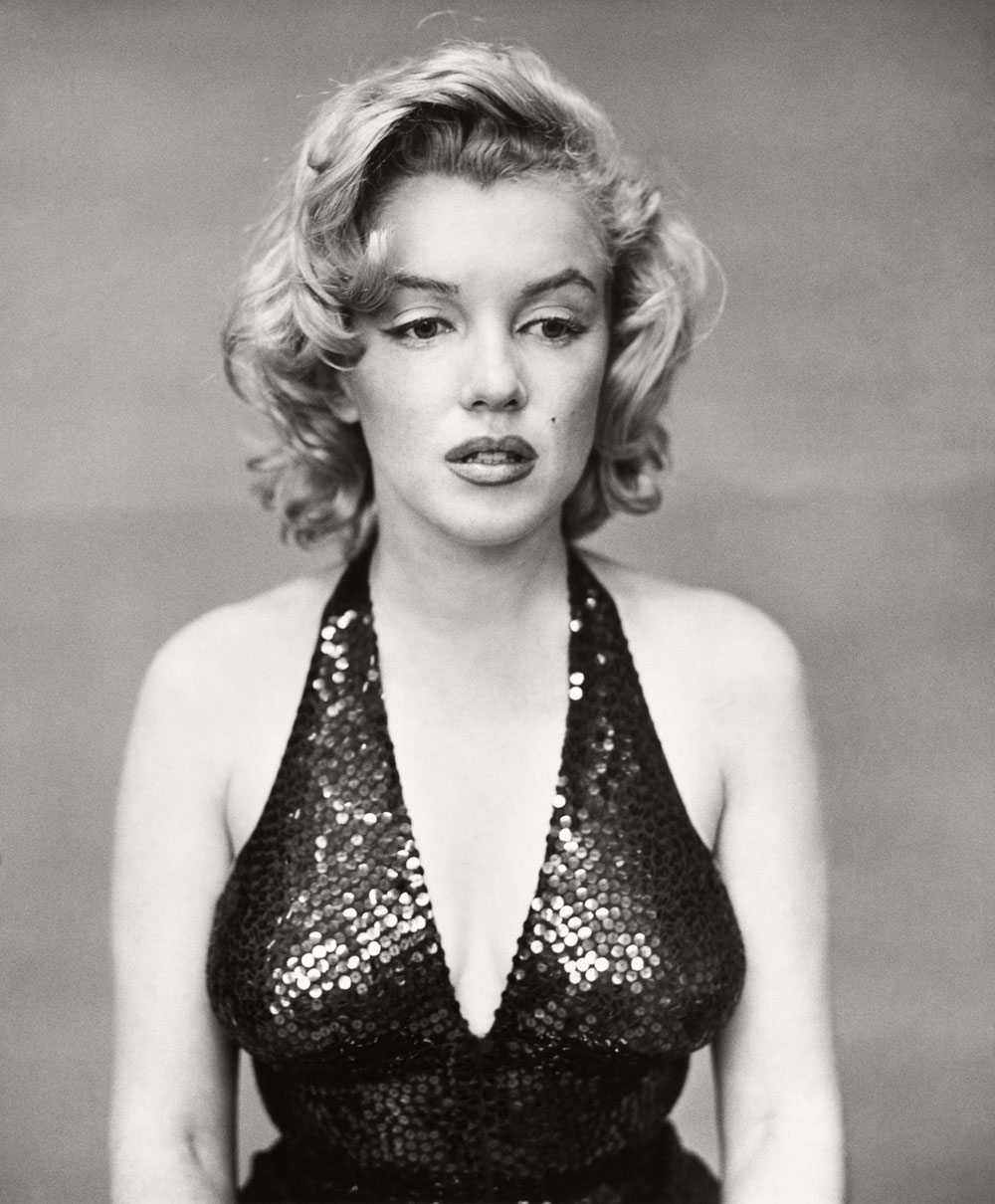
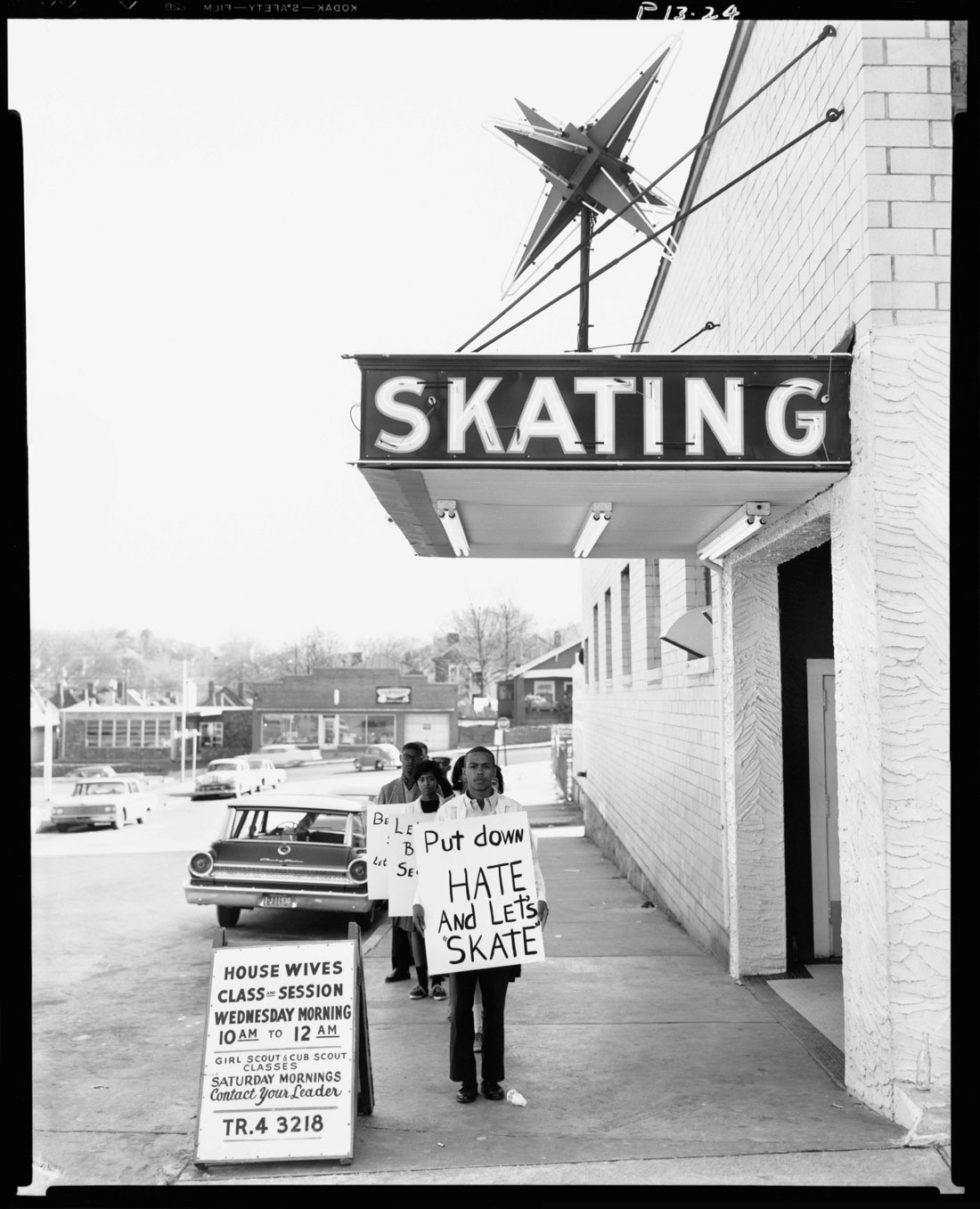










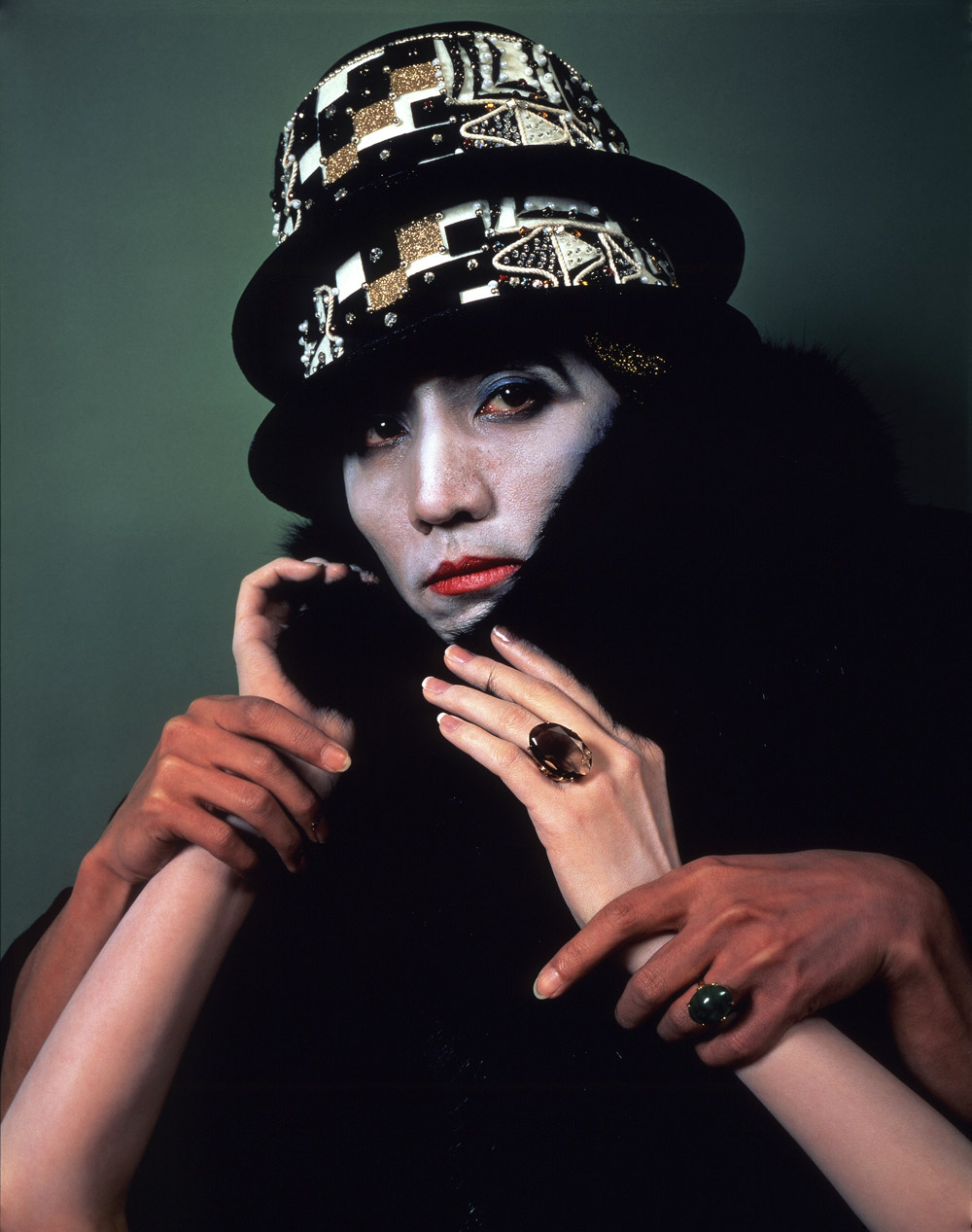
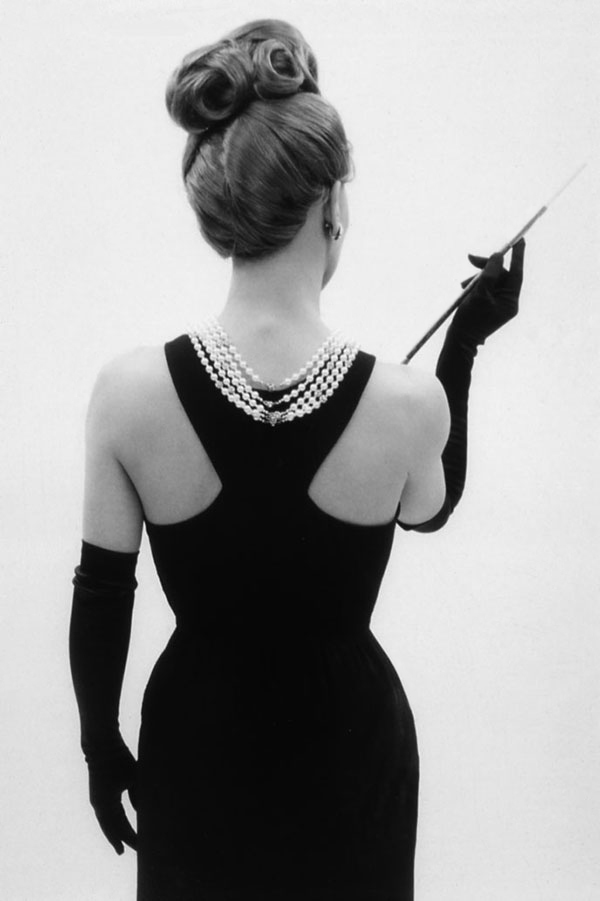
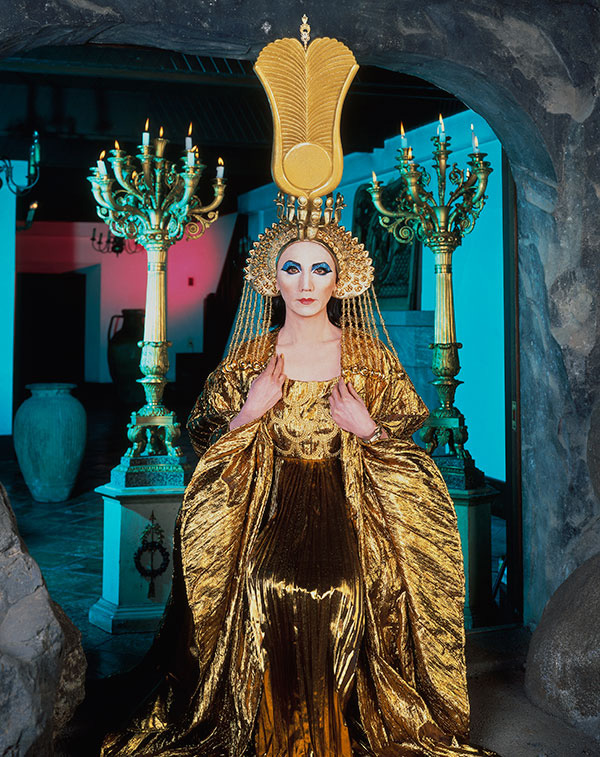
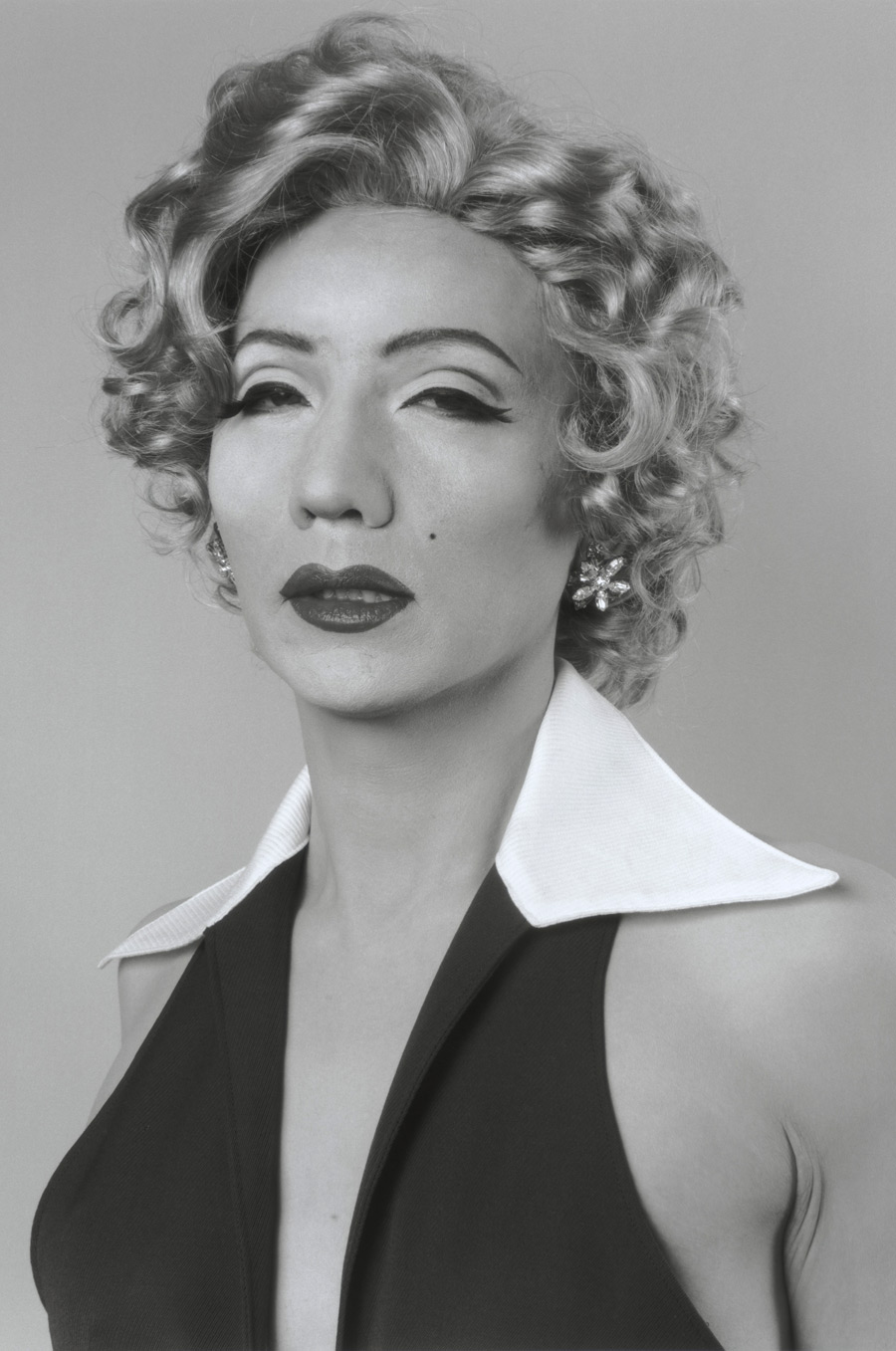
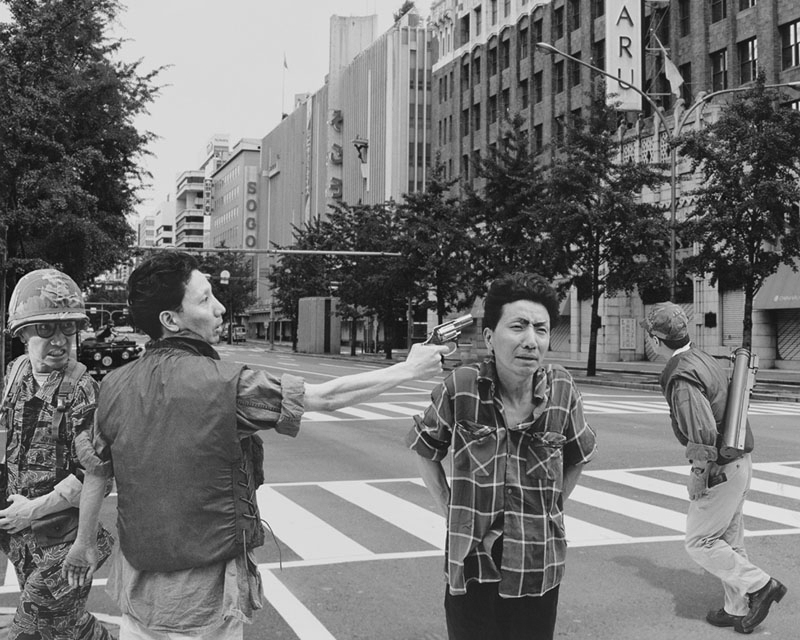
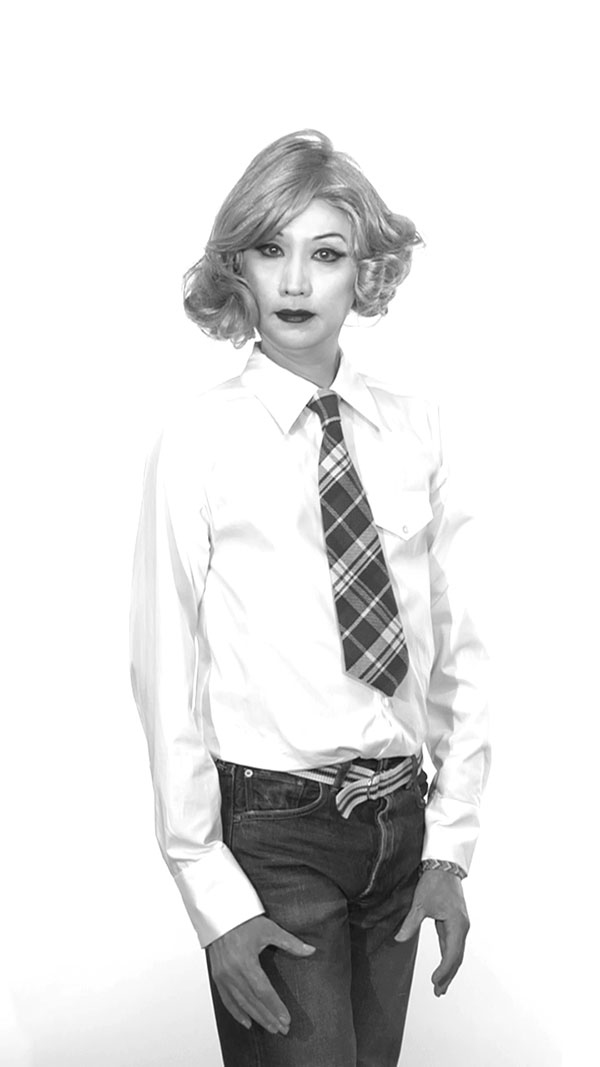
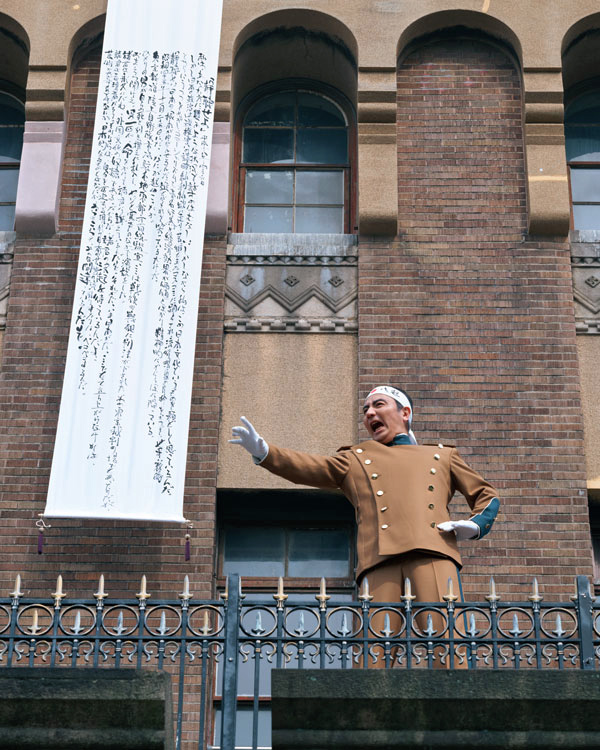
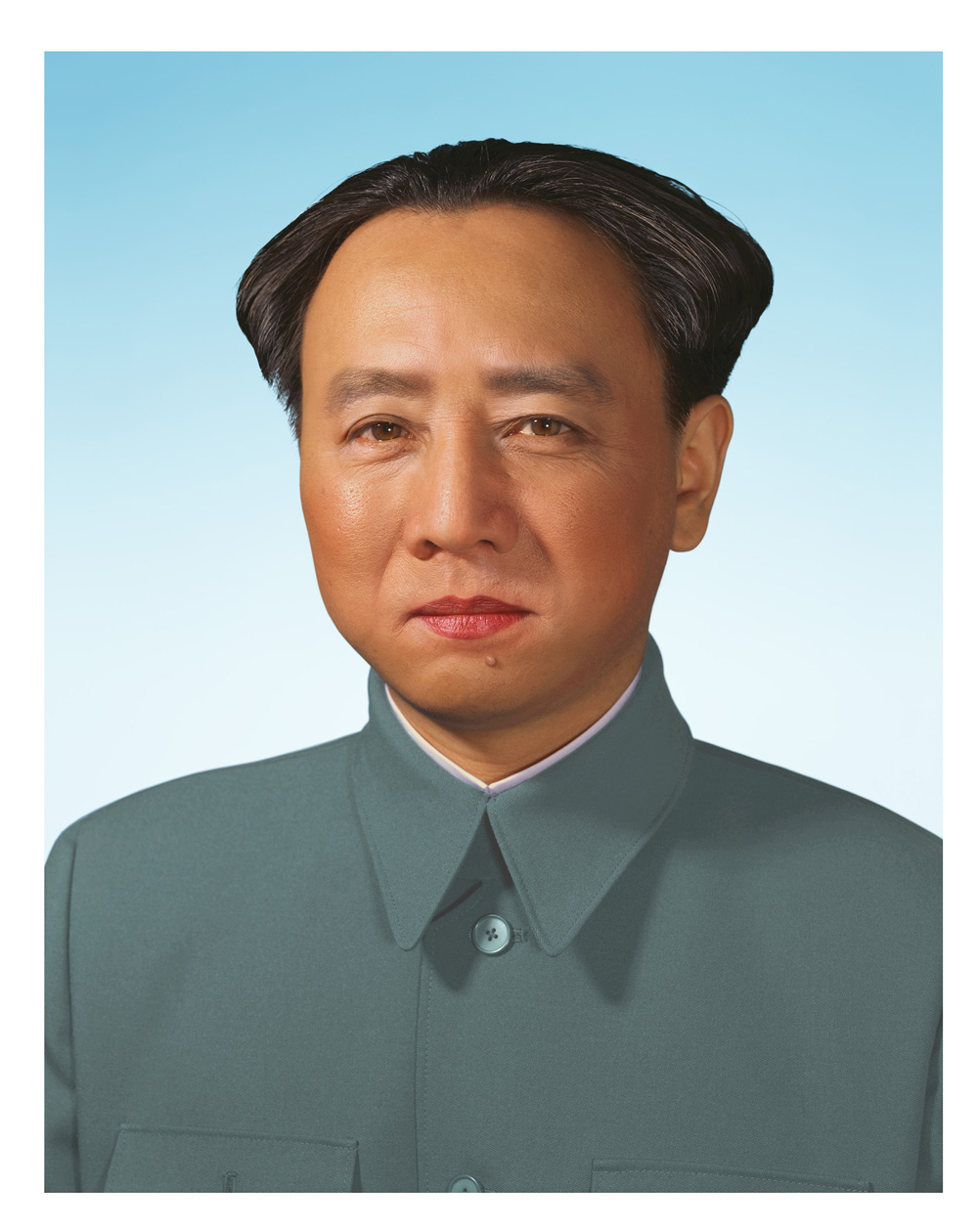
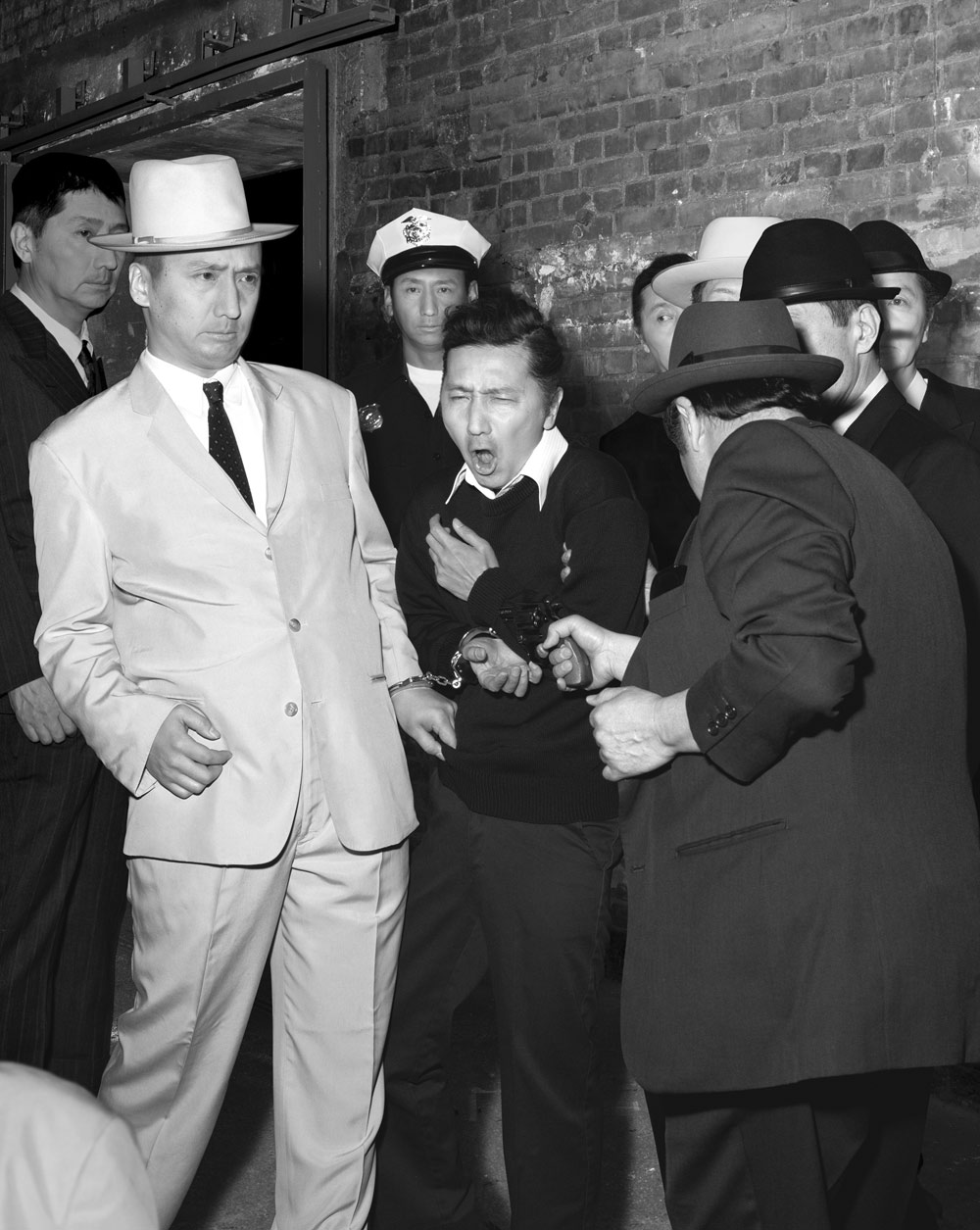
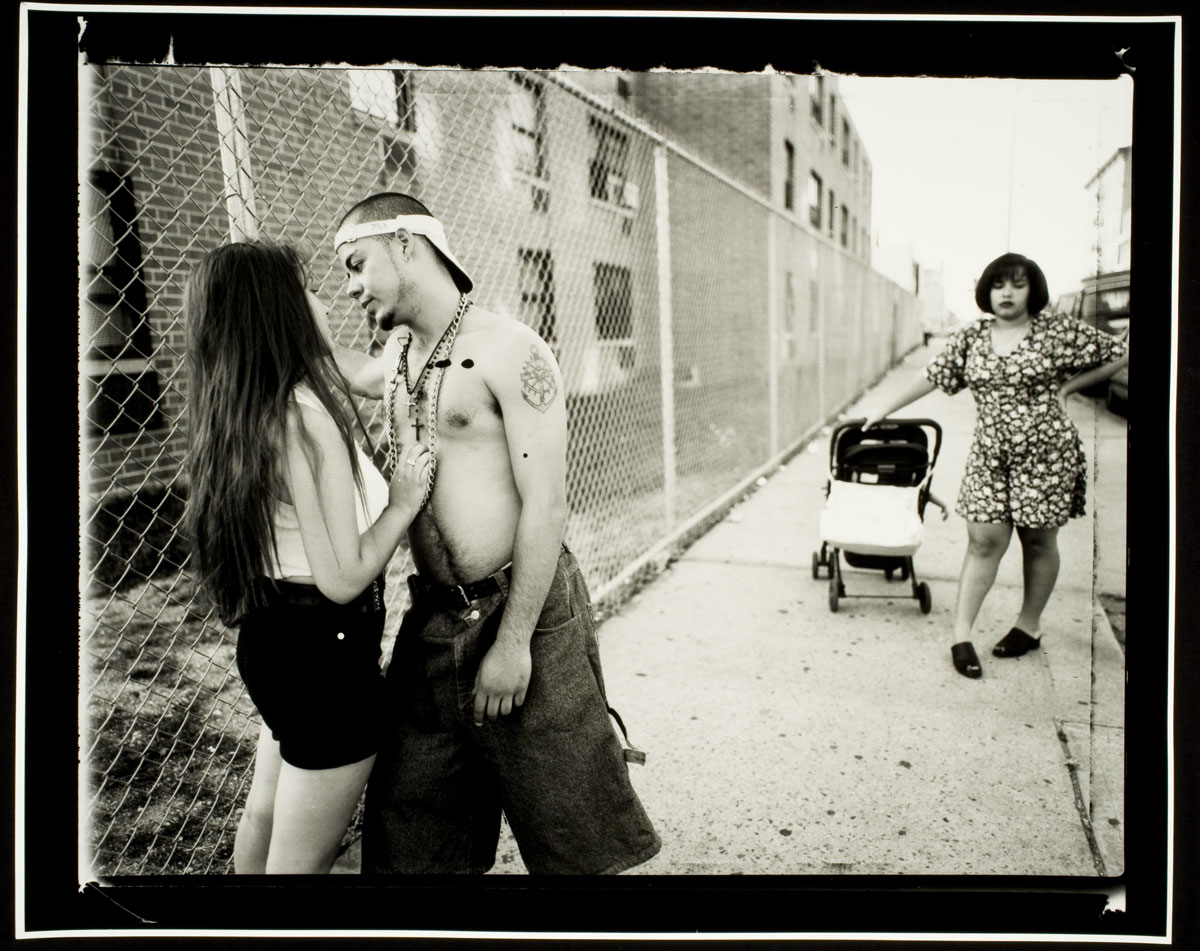

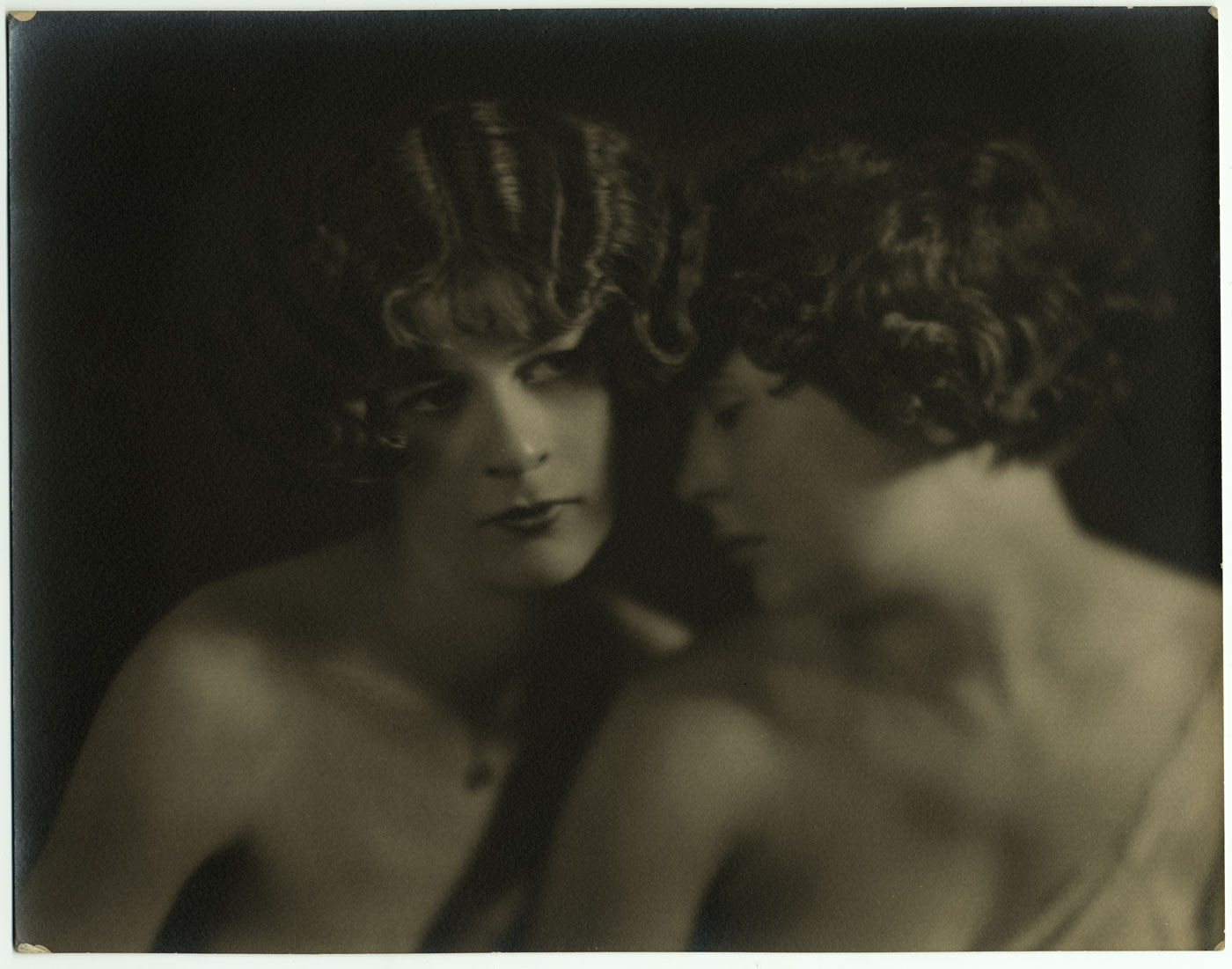


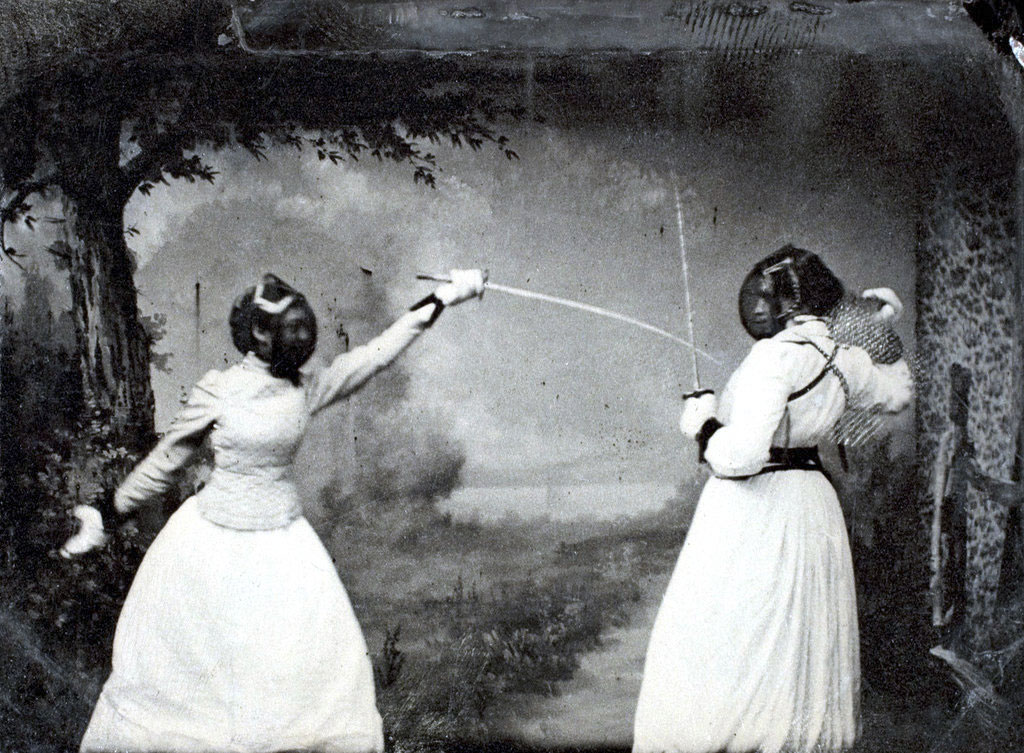


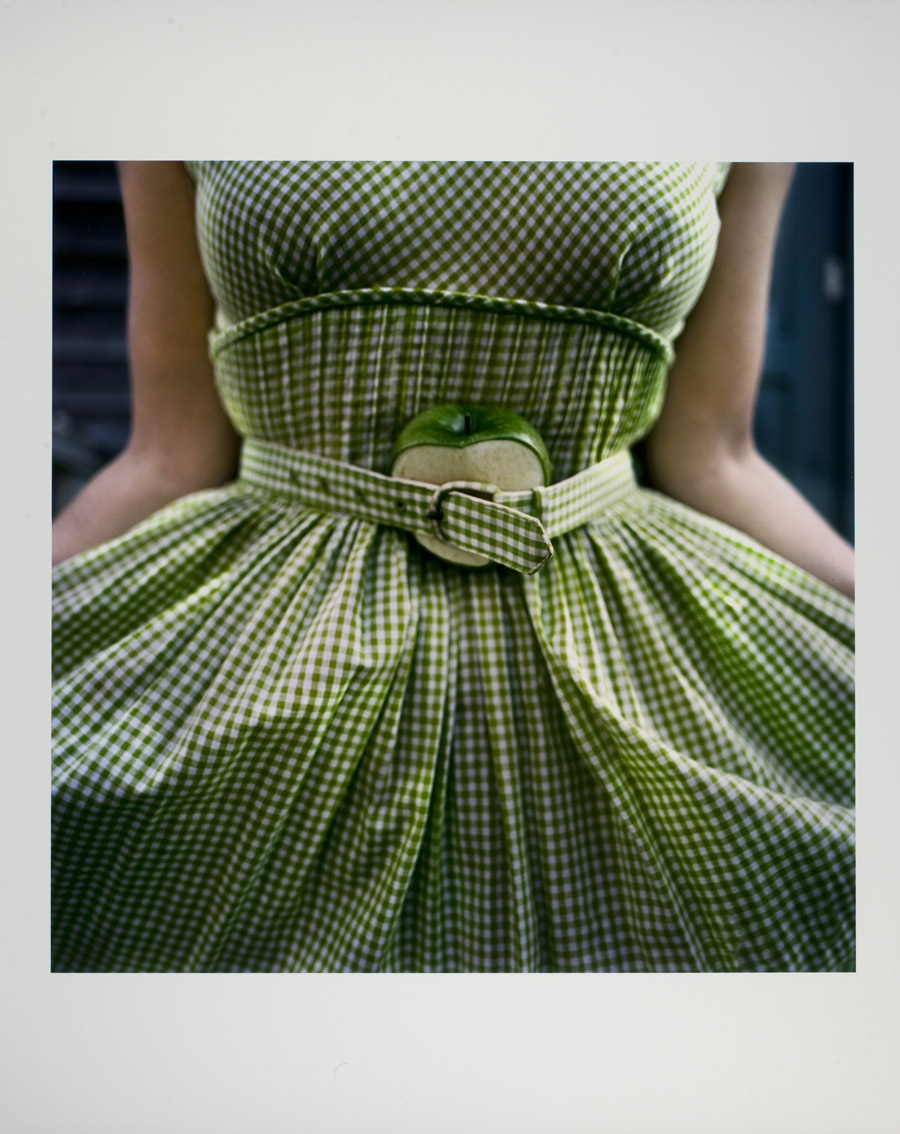
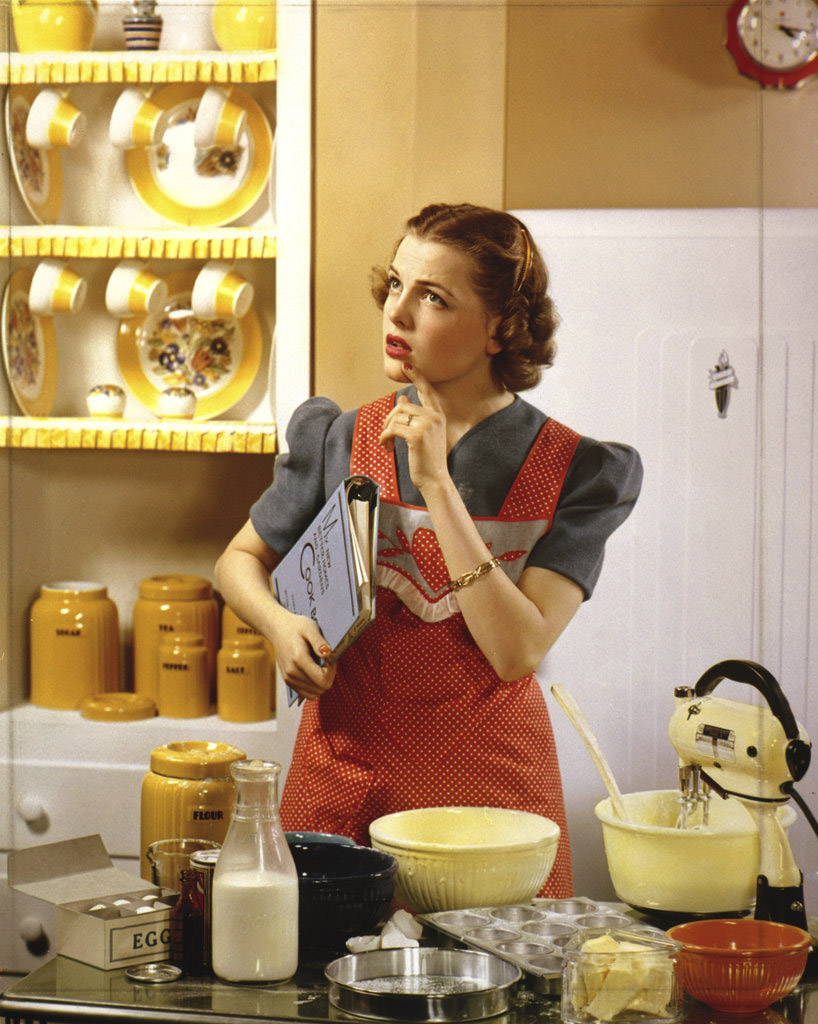


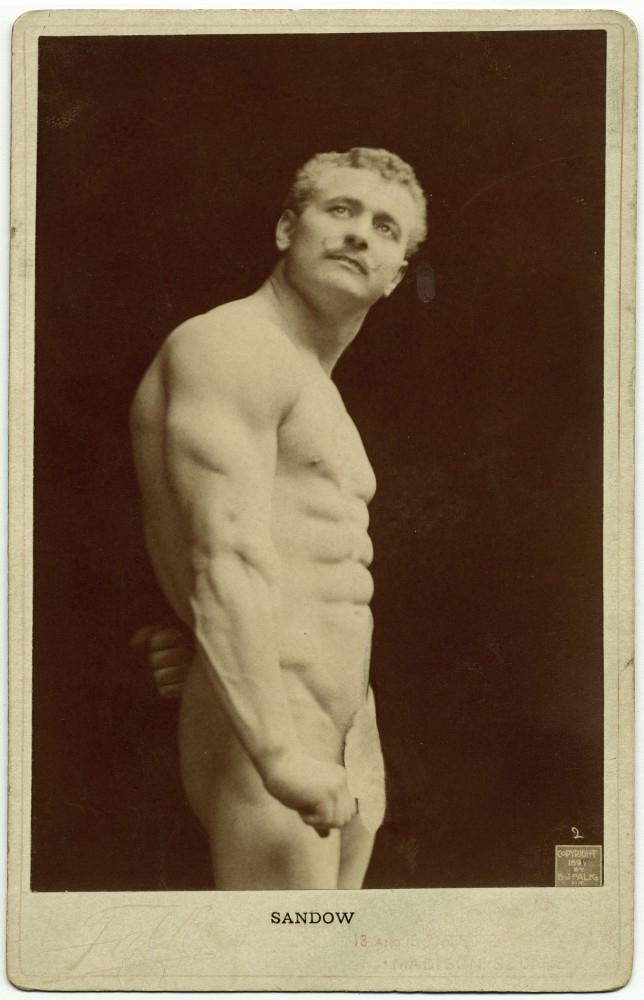

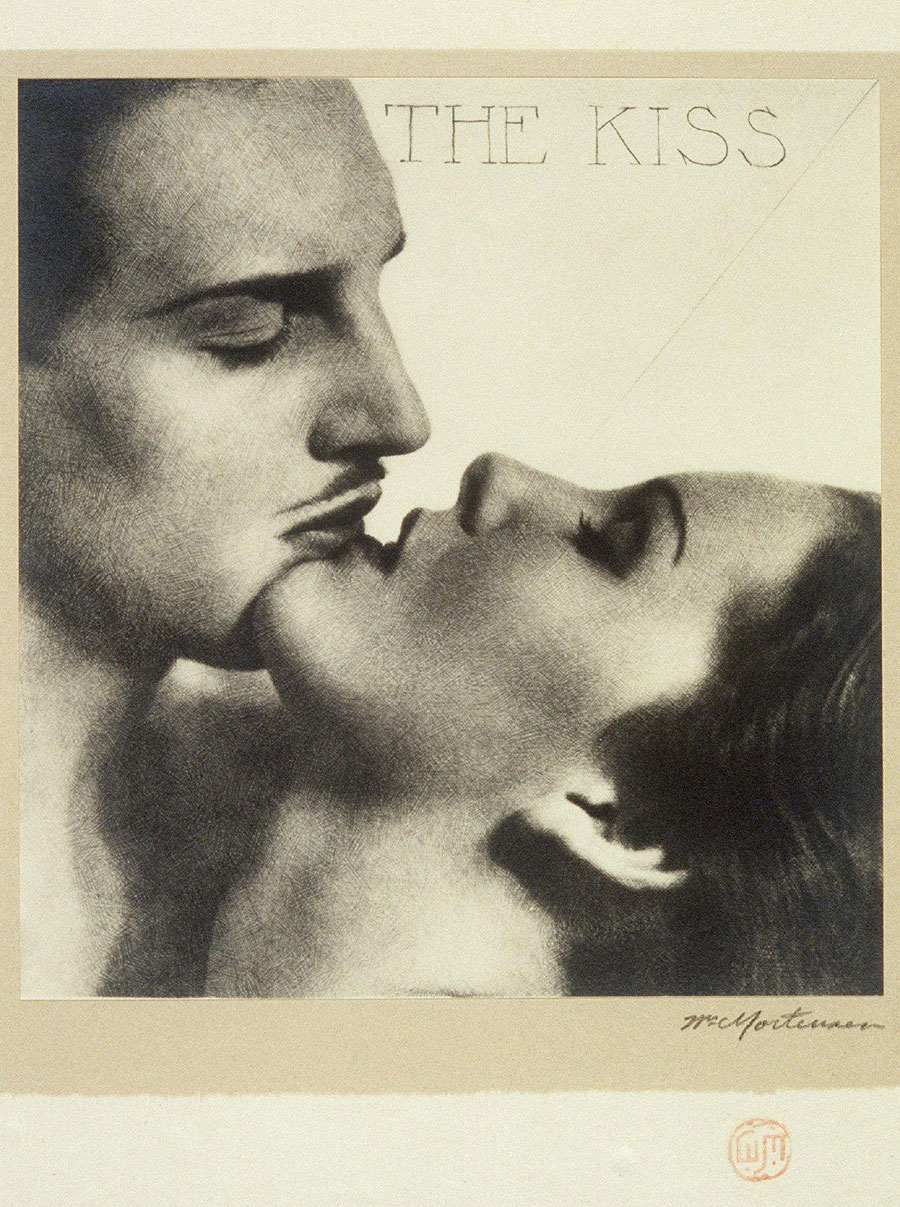


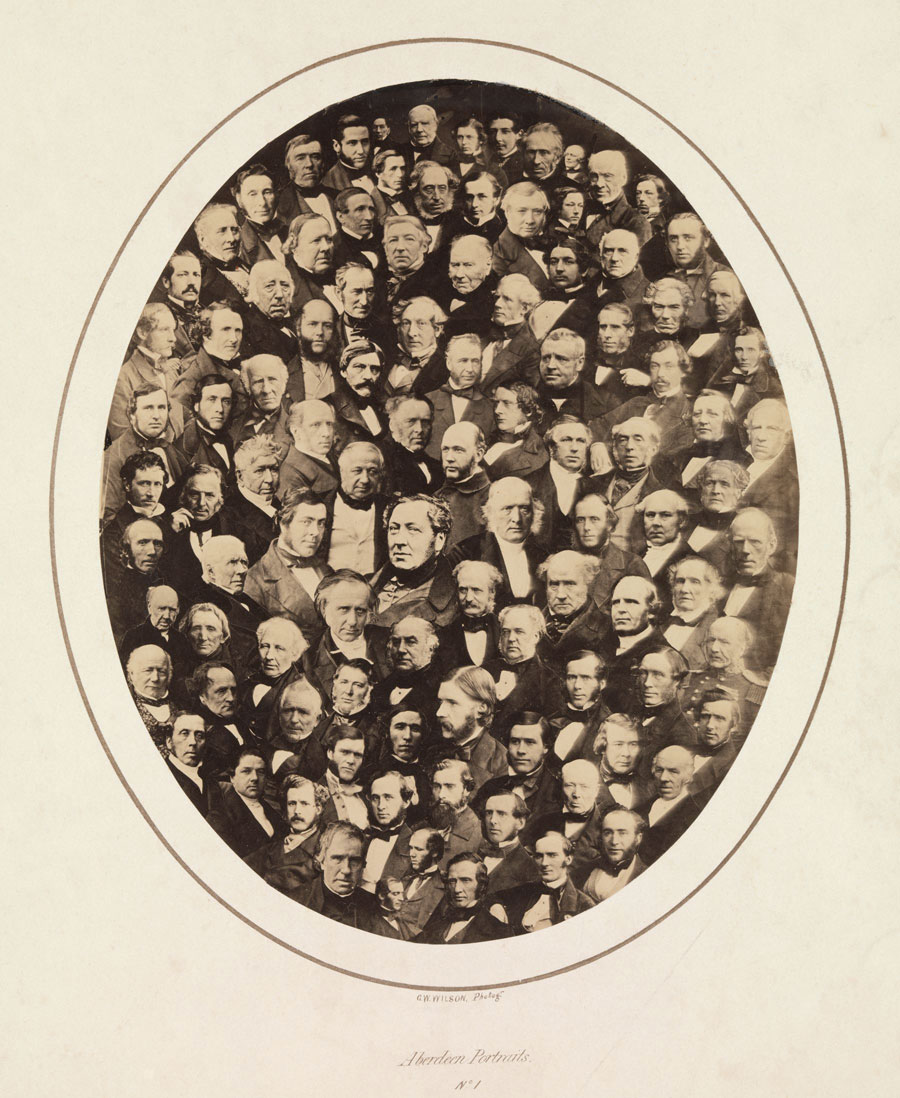

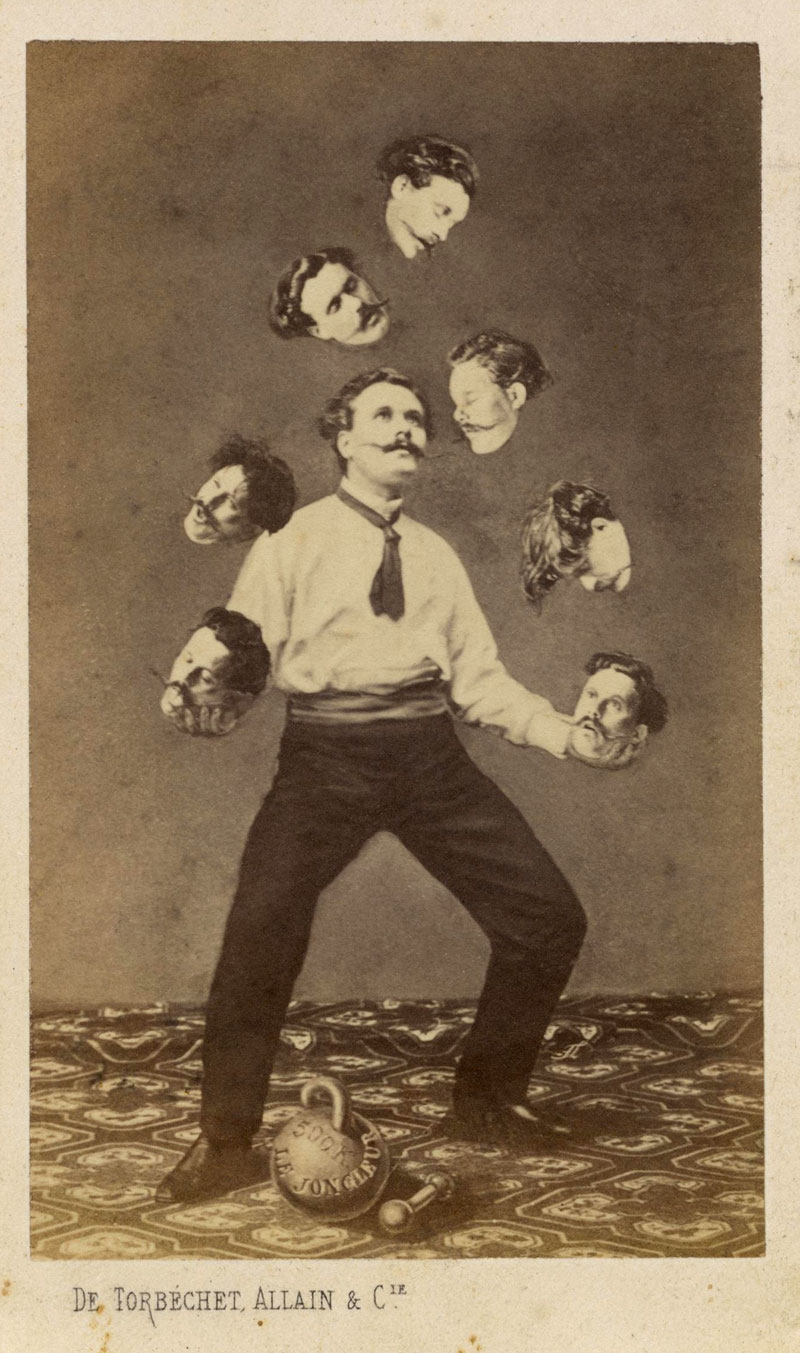
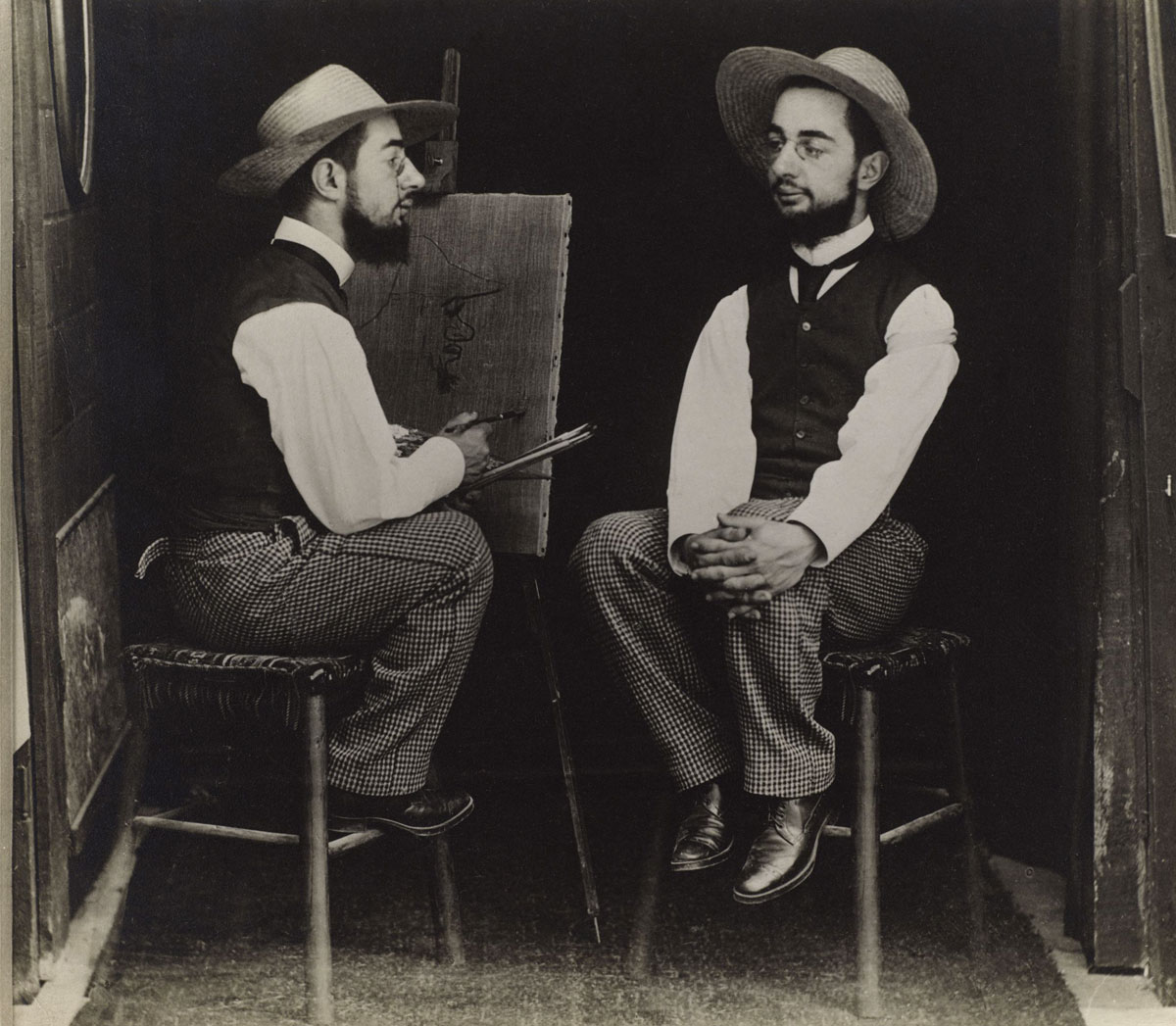


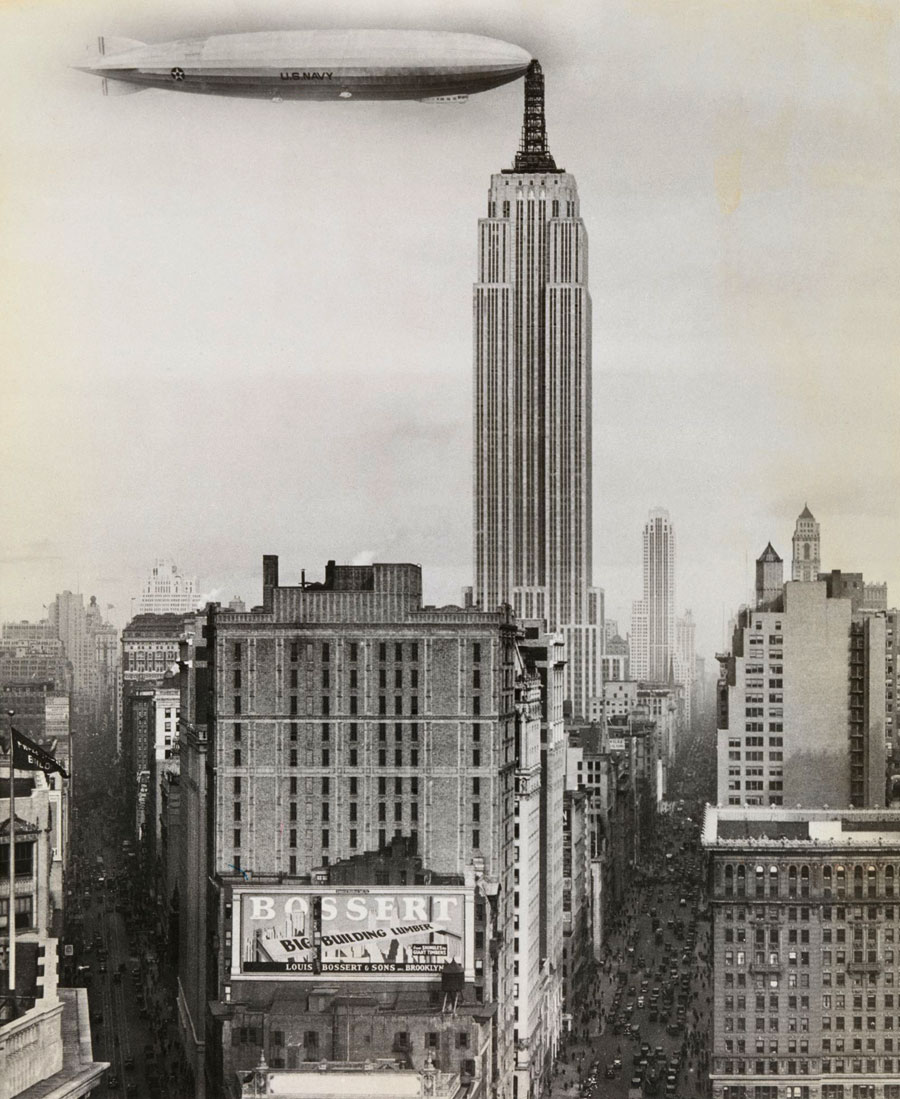
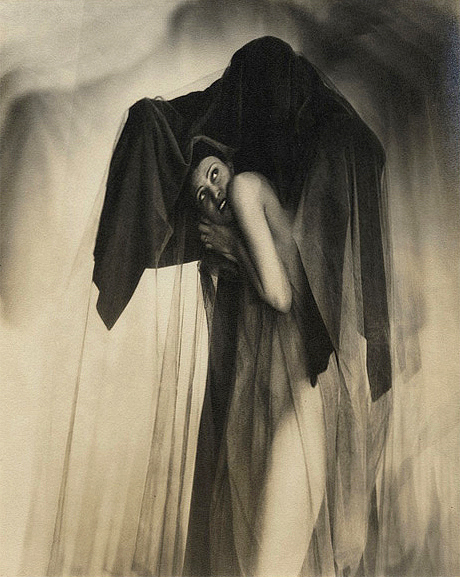

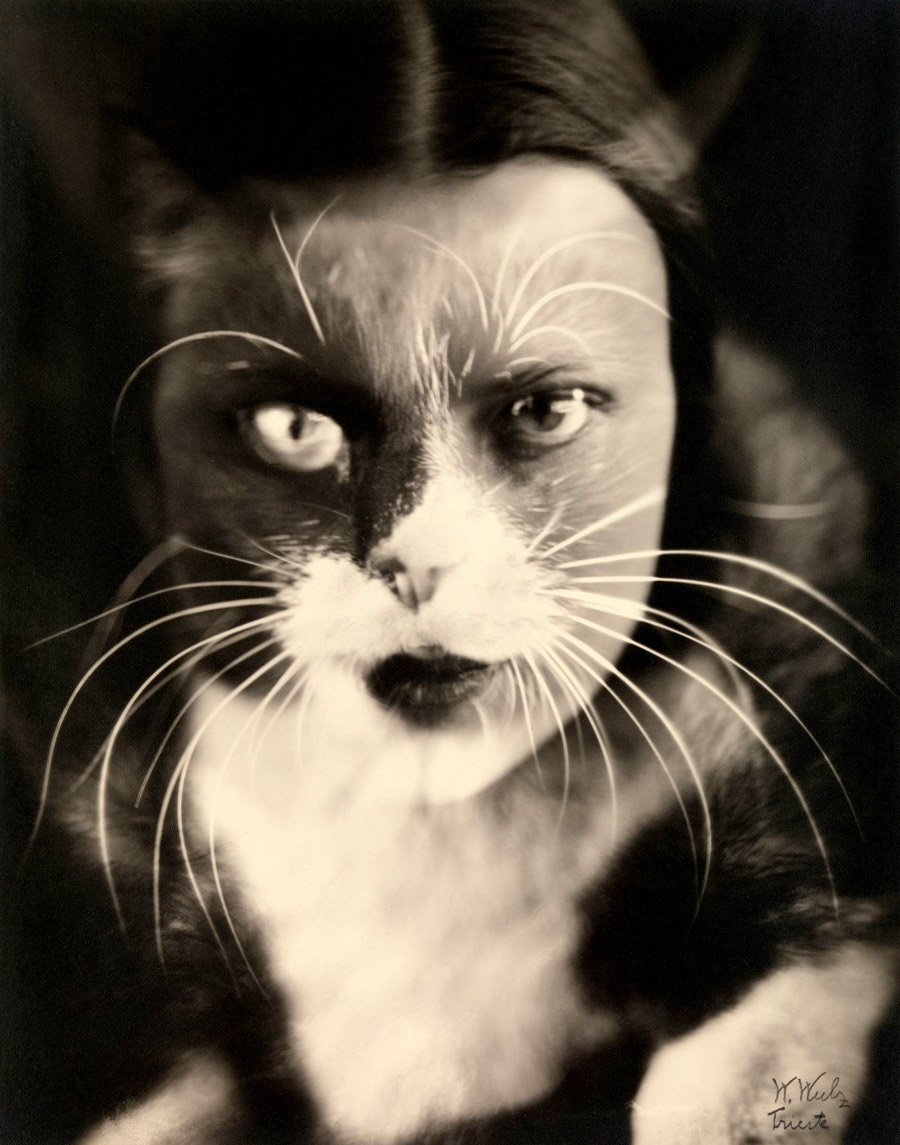
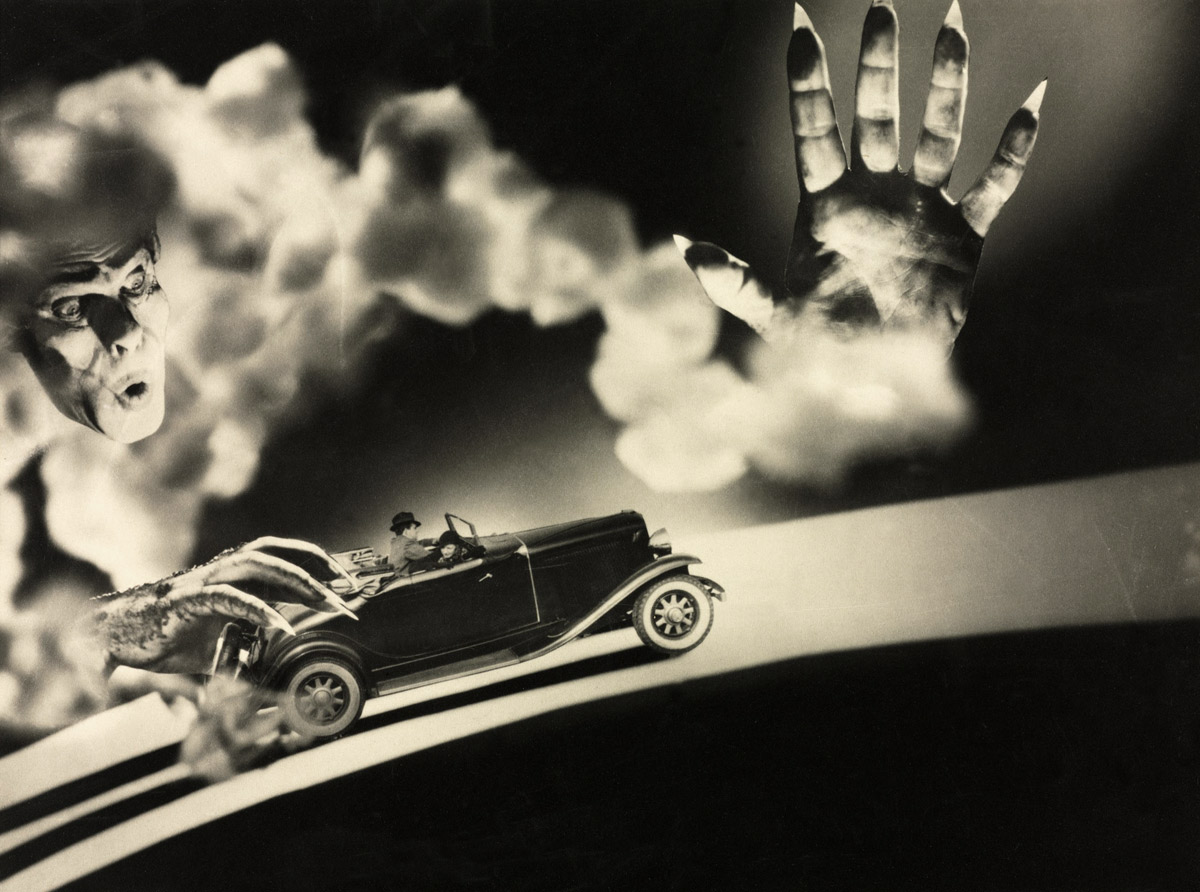
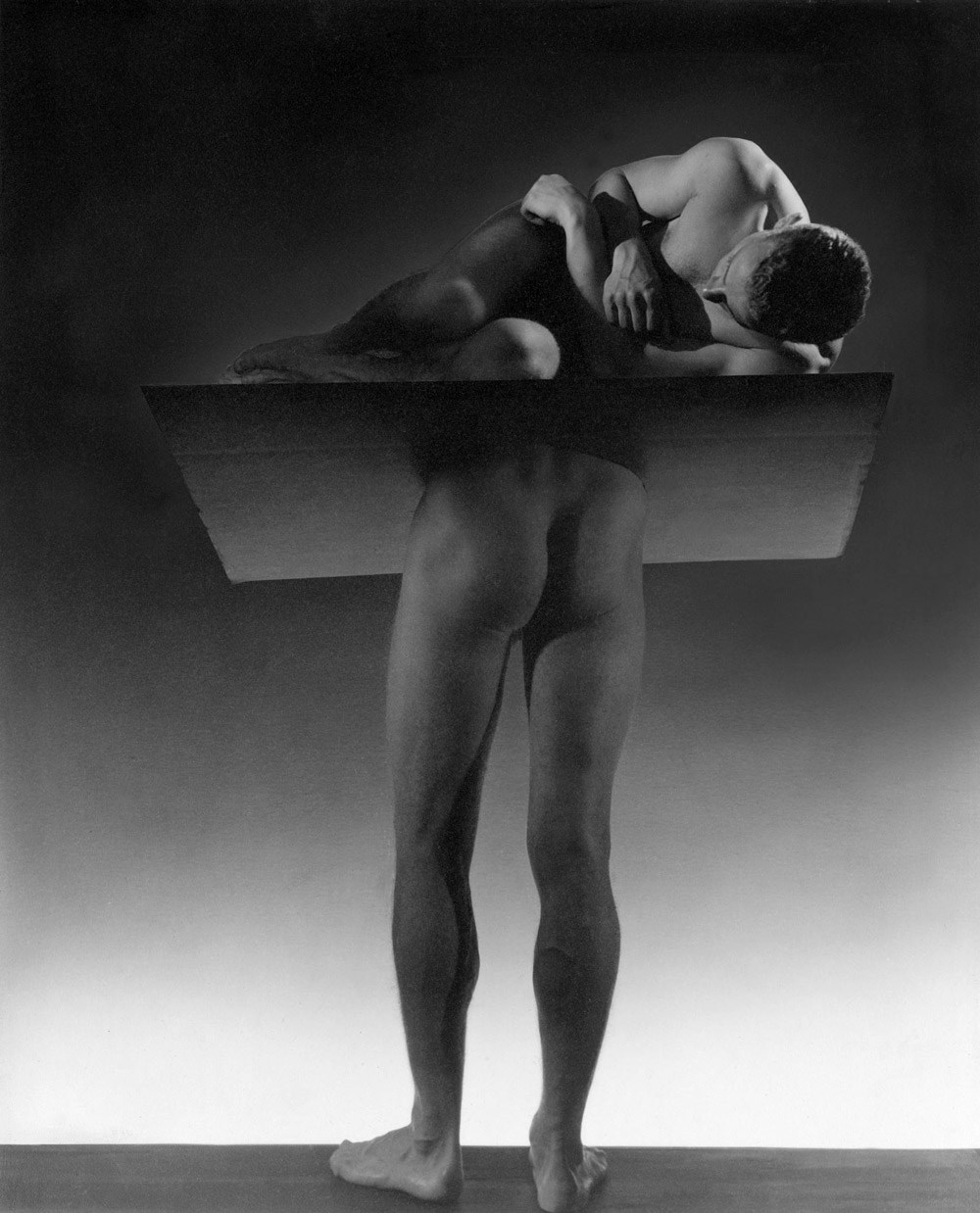
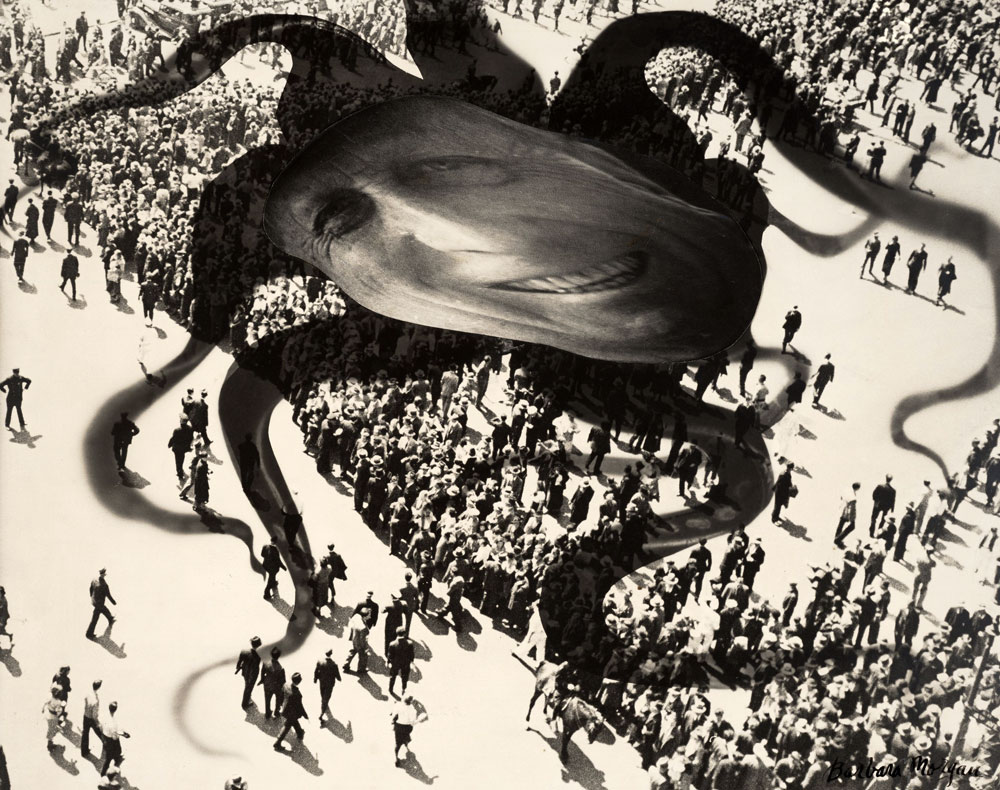


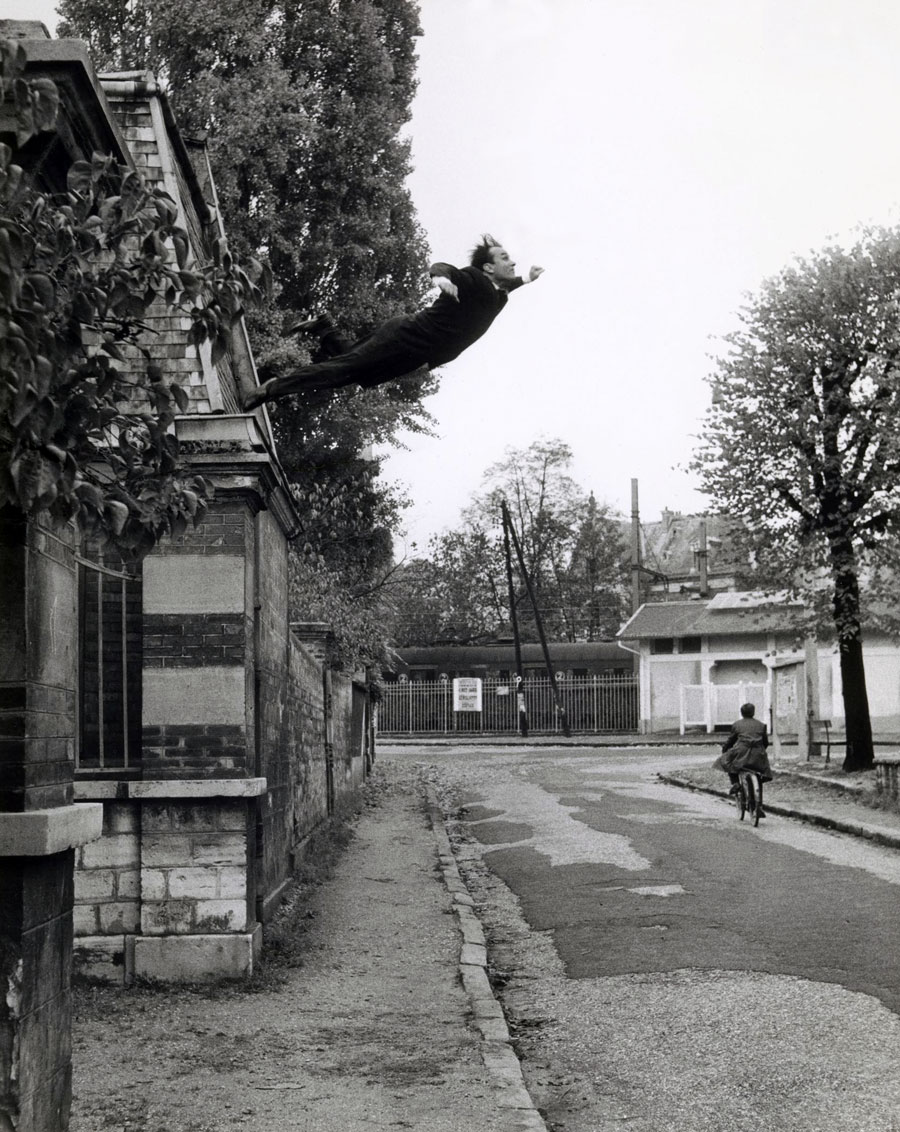


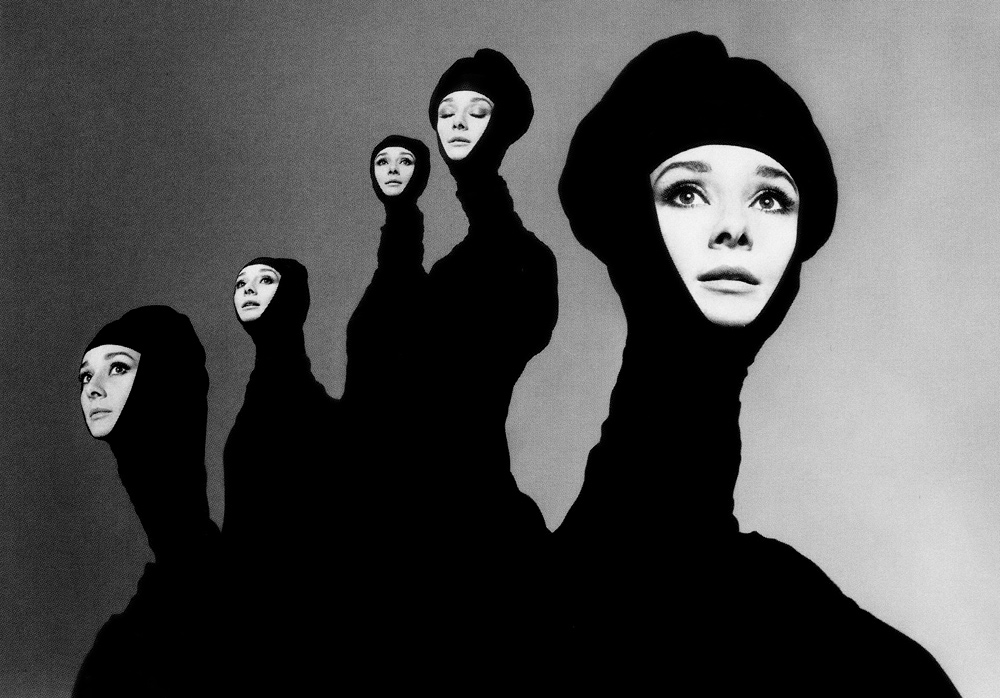

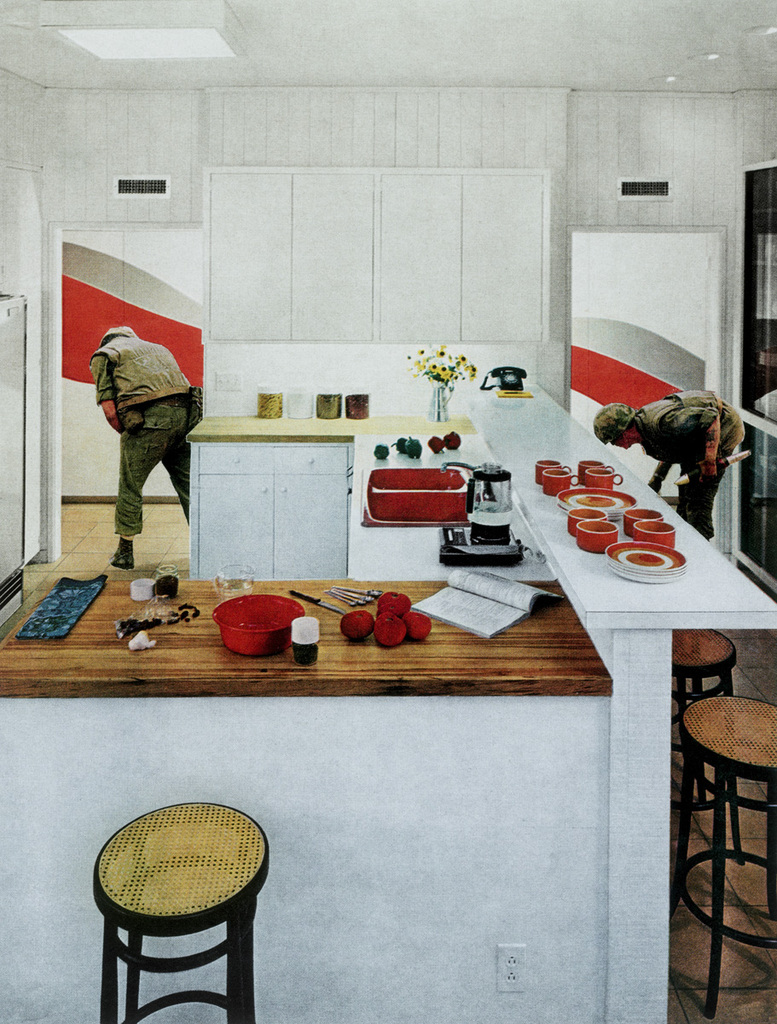


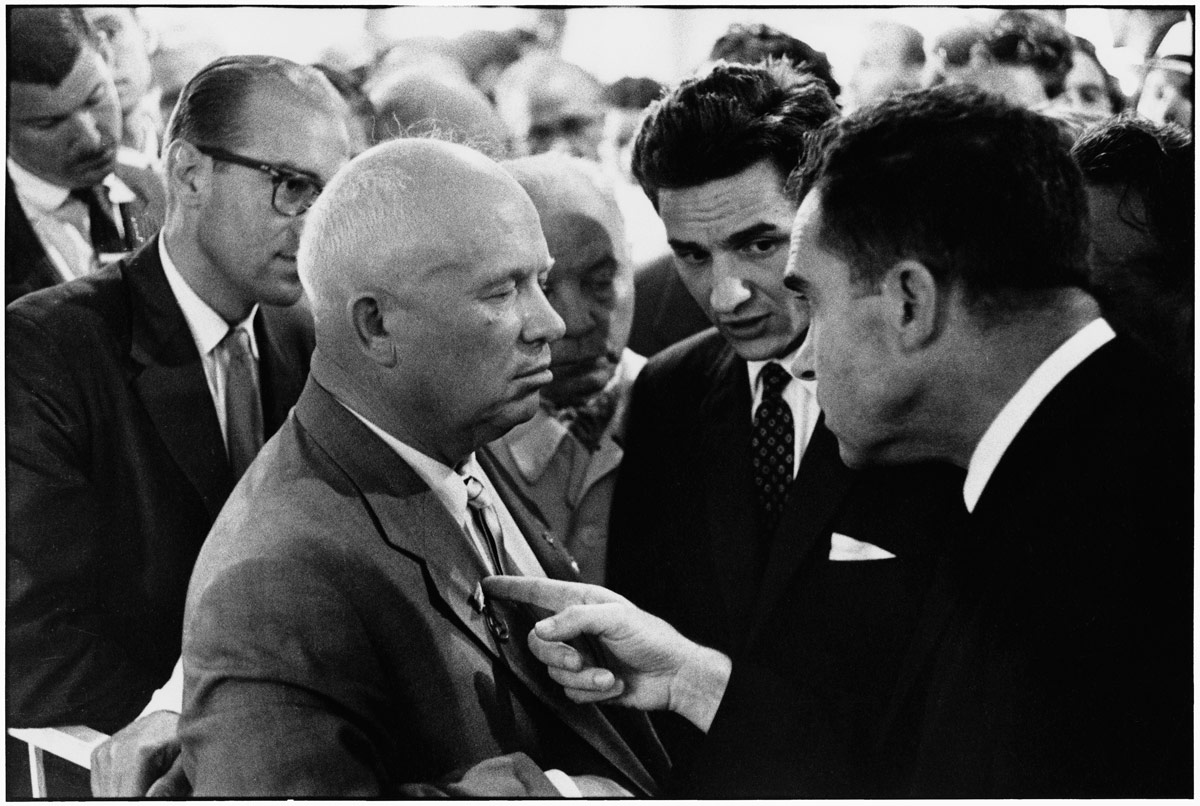

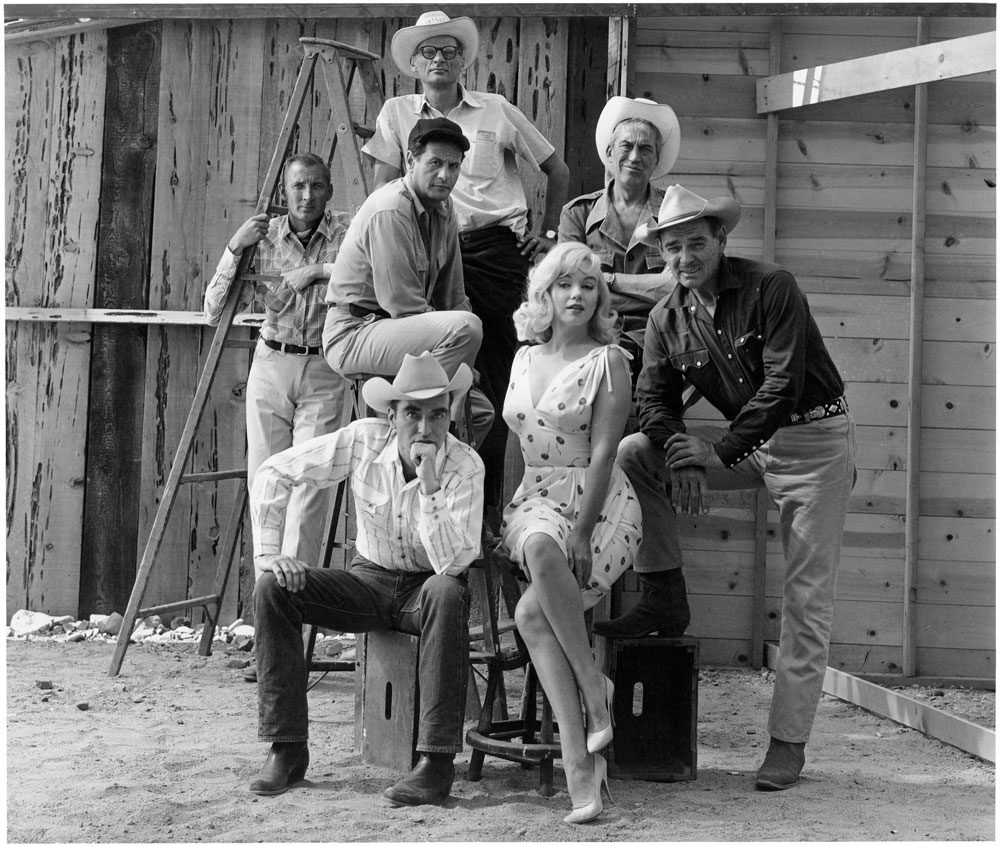
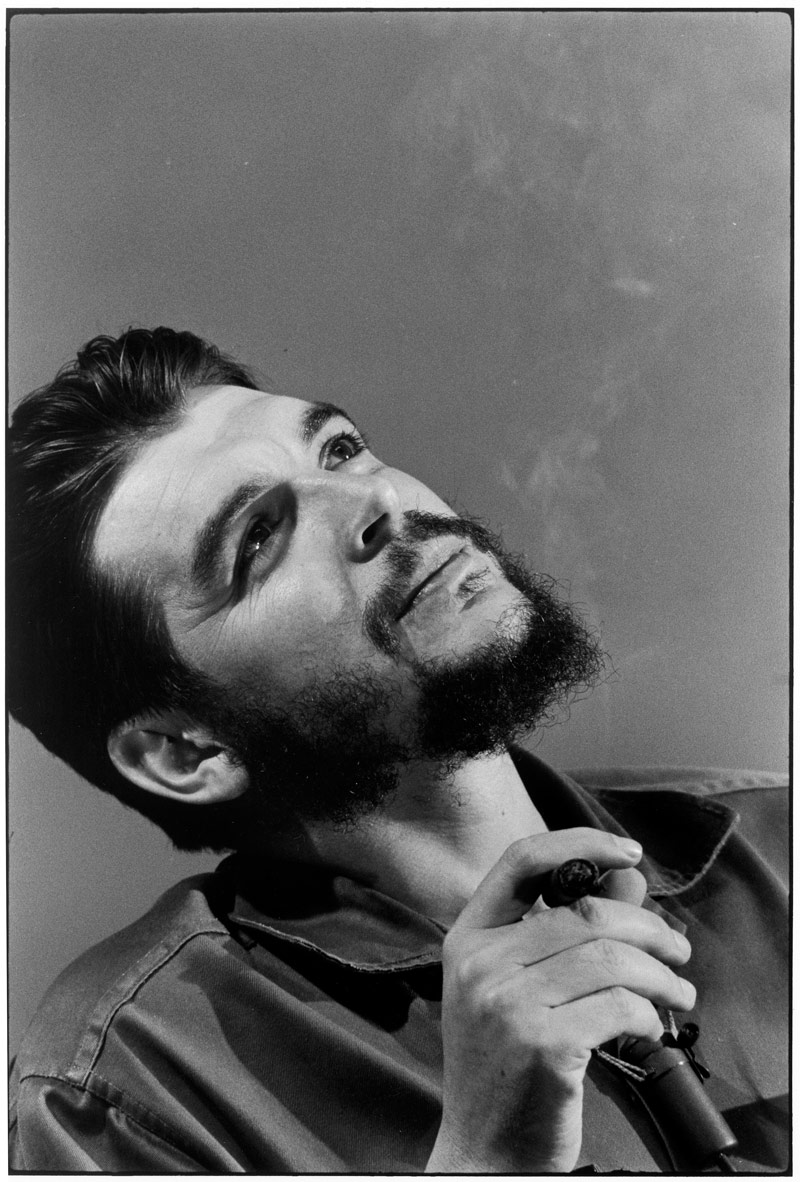
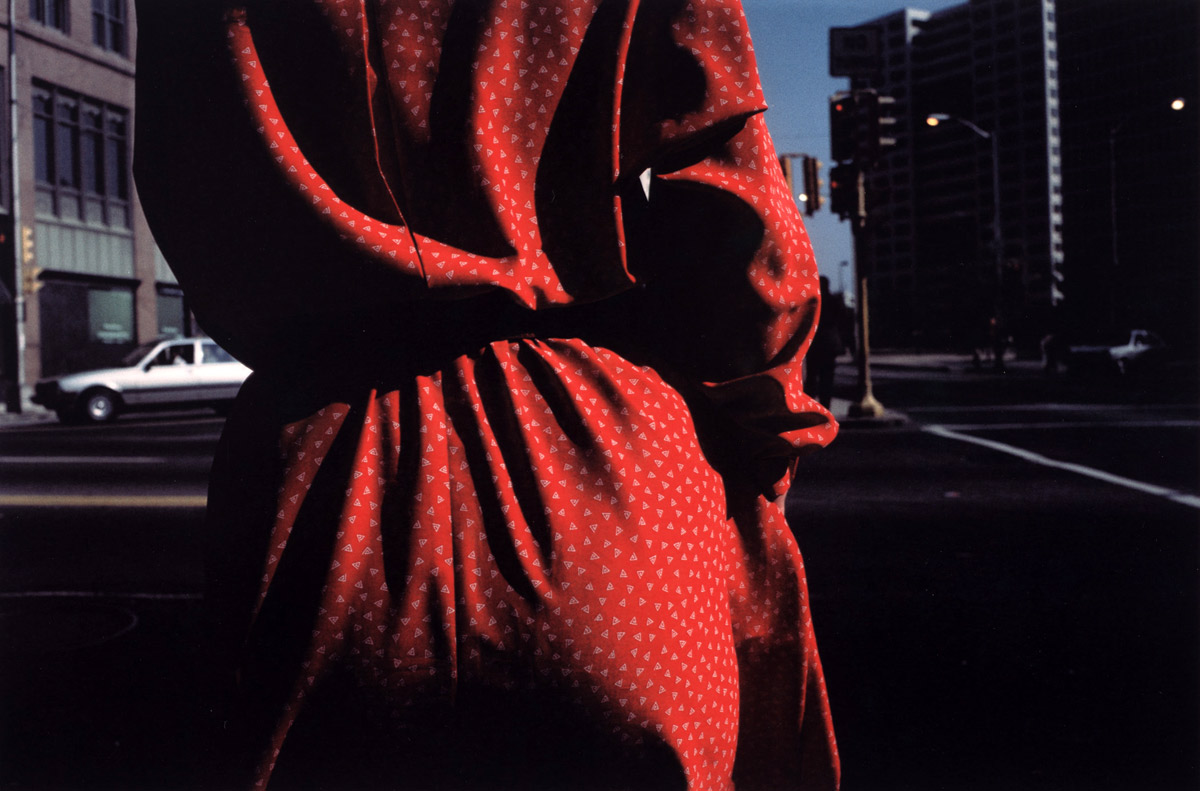


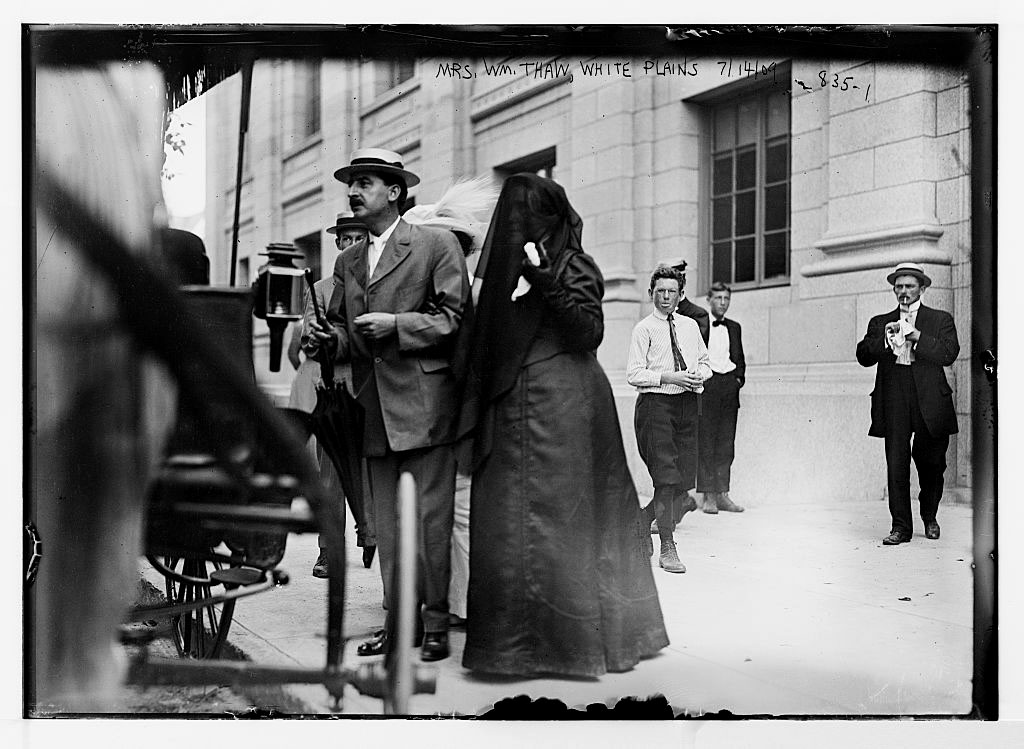
![Tom Howard (American, 1894 - 1961) '[Electrocution of Ruth Snyder, Sing Sing Prison, Ossining, New York]' 1928](https://artblart.com/wp-content/uploads/2016/07/electrocution-of-ruth-snyder-web.jpg "Tom Howard (American, 1894 - 1961) '[Electrocution of Ruth Snyder, Sing Sing Prison, Ossining, New York]' 1928")
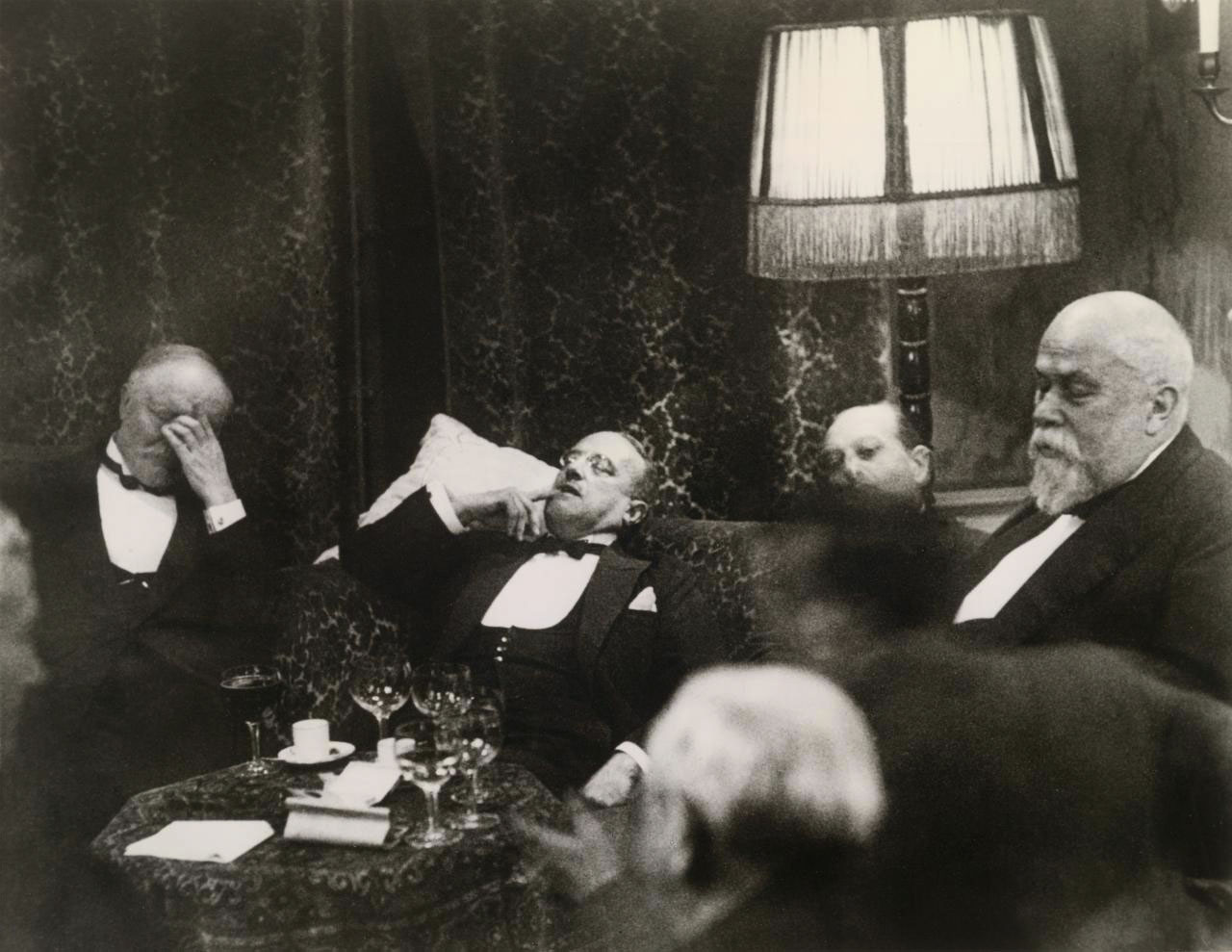
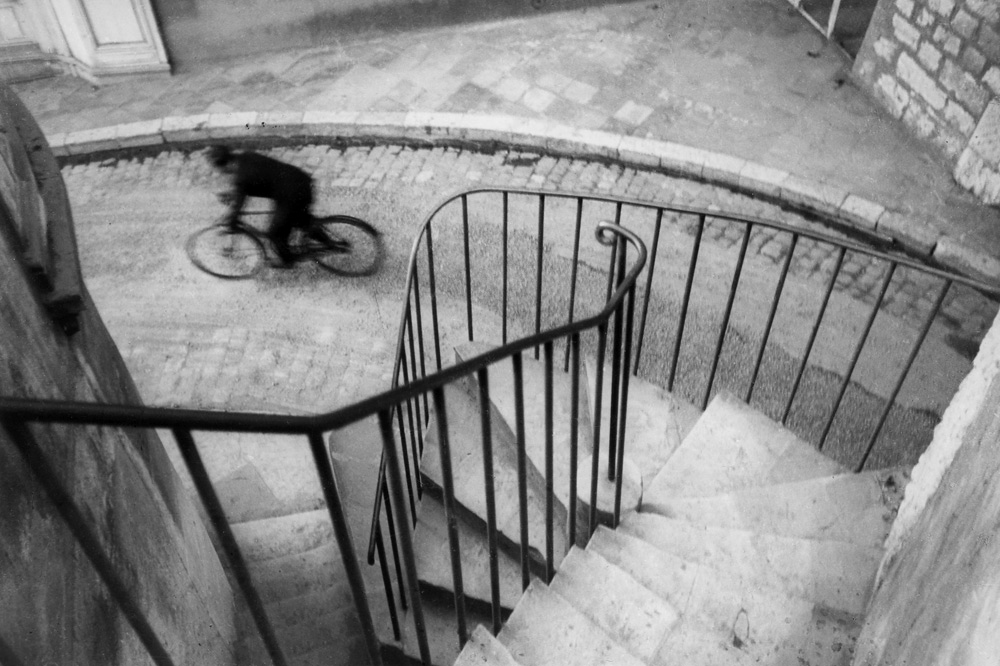
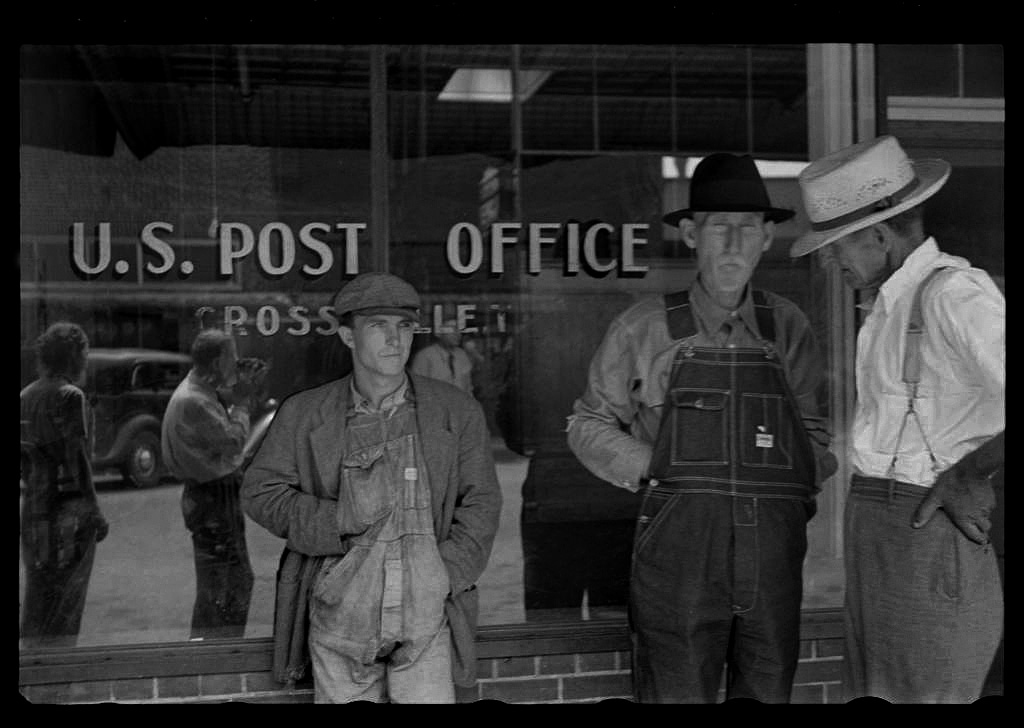
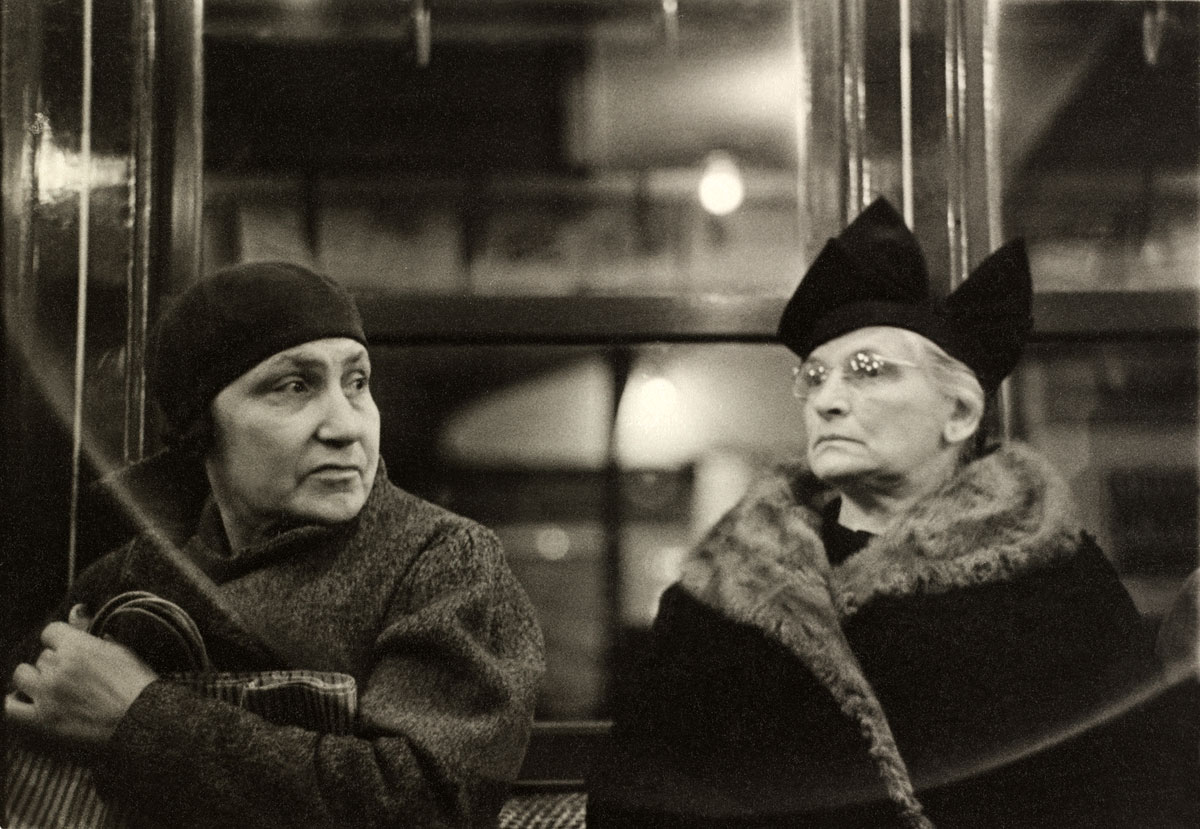


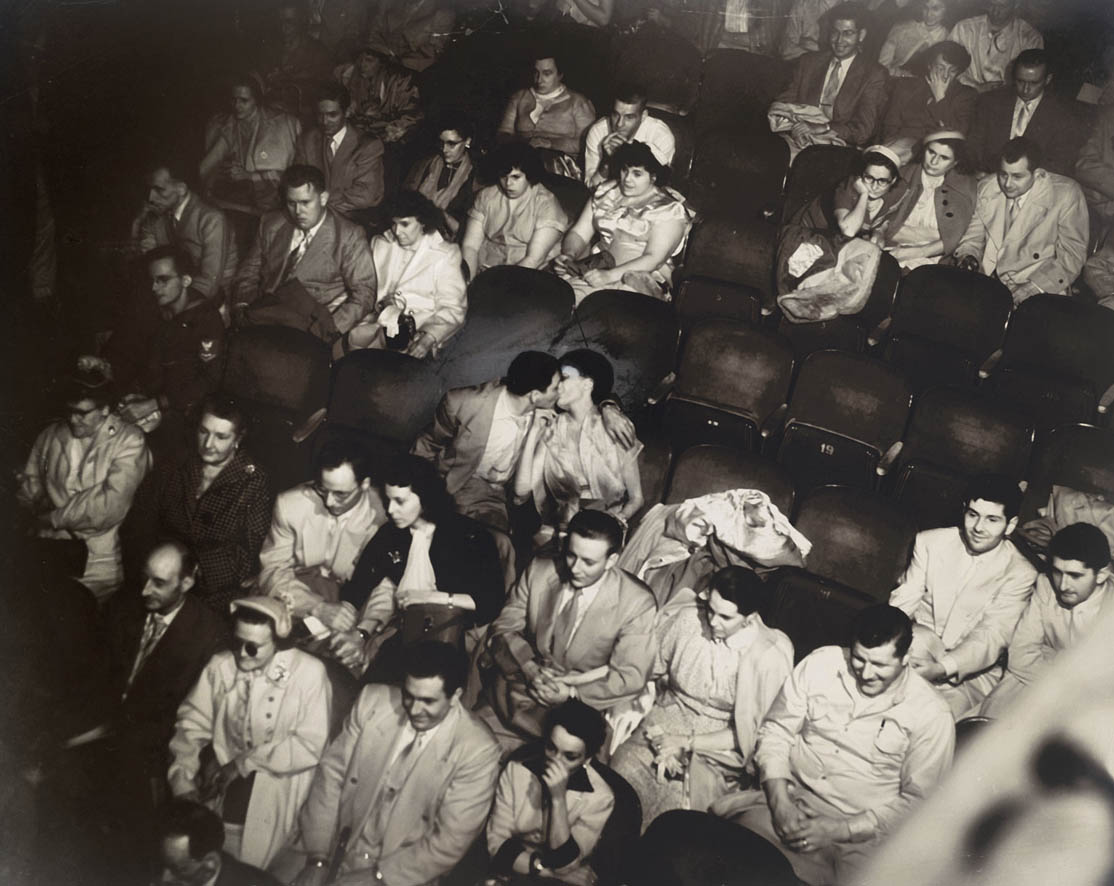
![Weegee (Arthur Fellig) (American, born Austria, 1899-1968) '[Lovers at the Movies, Times Square]' c. 1953](https://artblart.com/wp-content/uploads/2010/09/weegee-lovers-1953.jpg "Weegee (Arthur Fellig) (American, born Austria, 1899-1968) '[Lovers at the Movies, Times Square]' c. 1953")

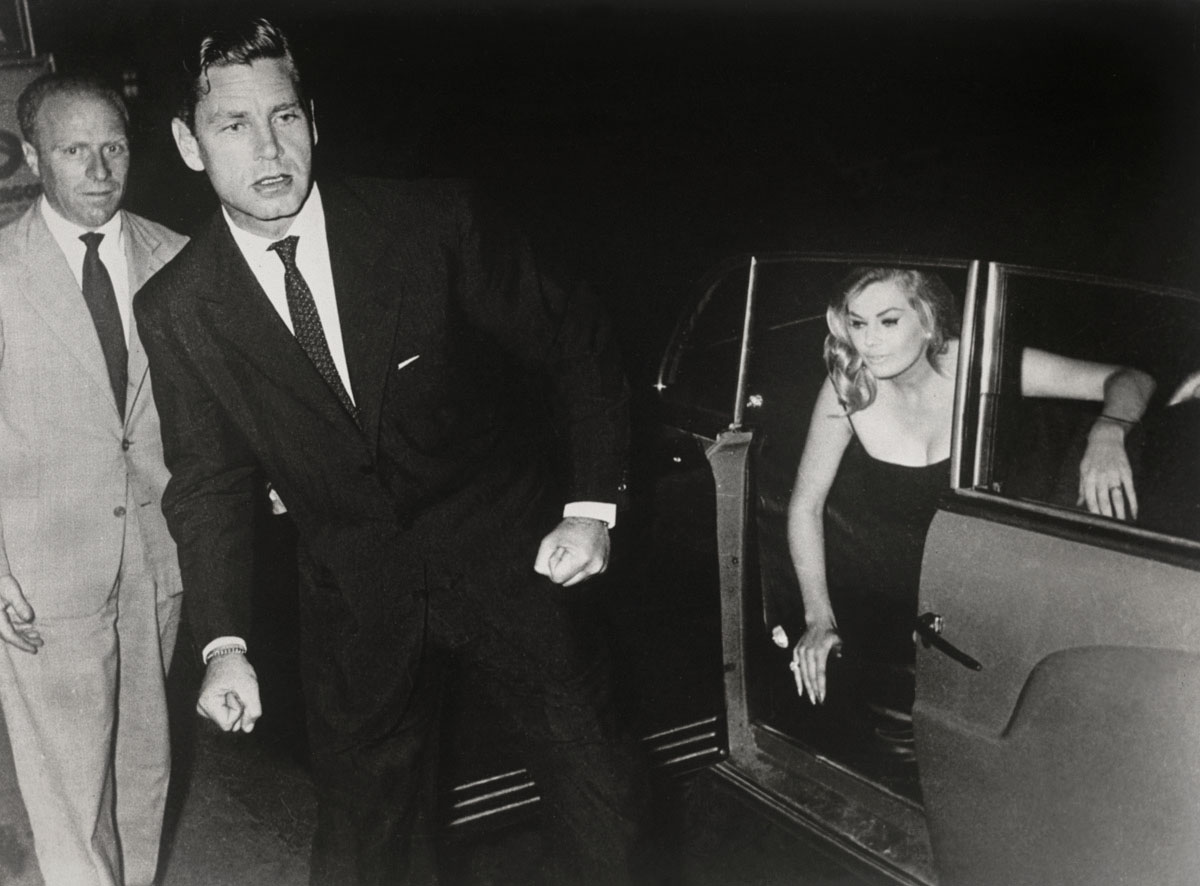
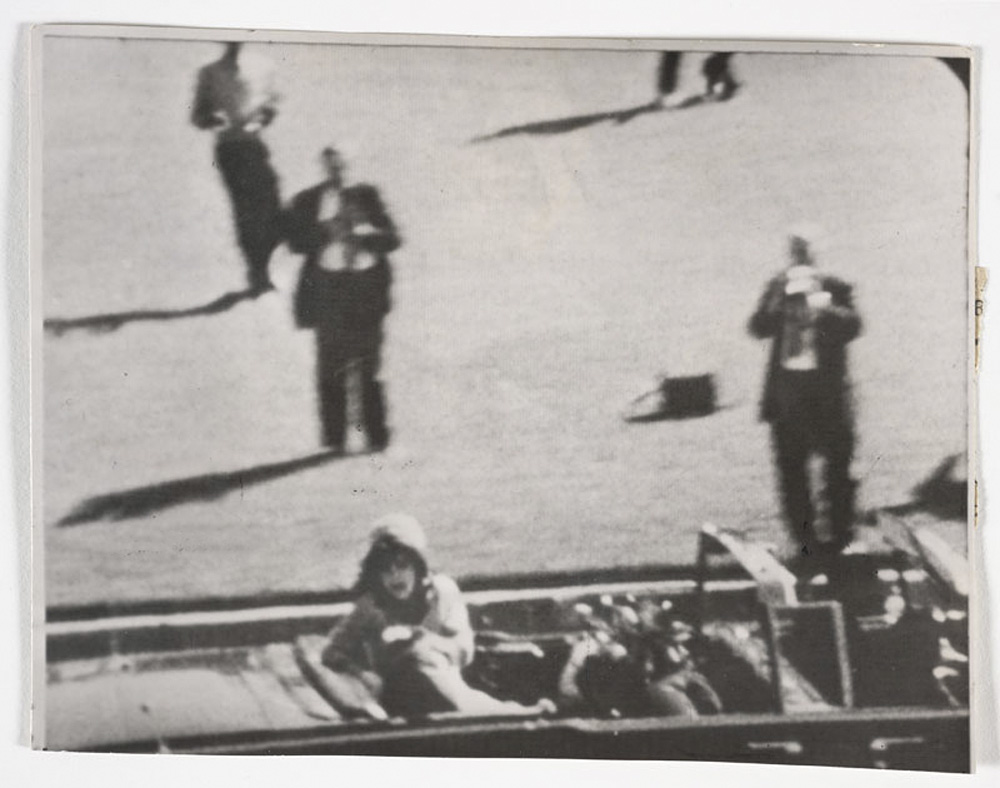


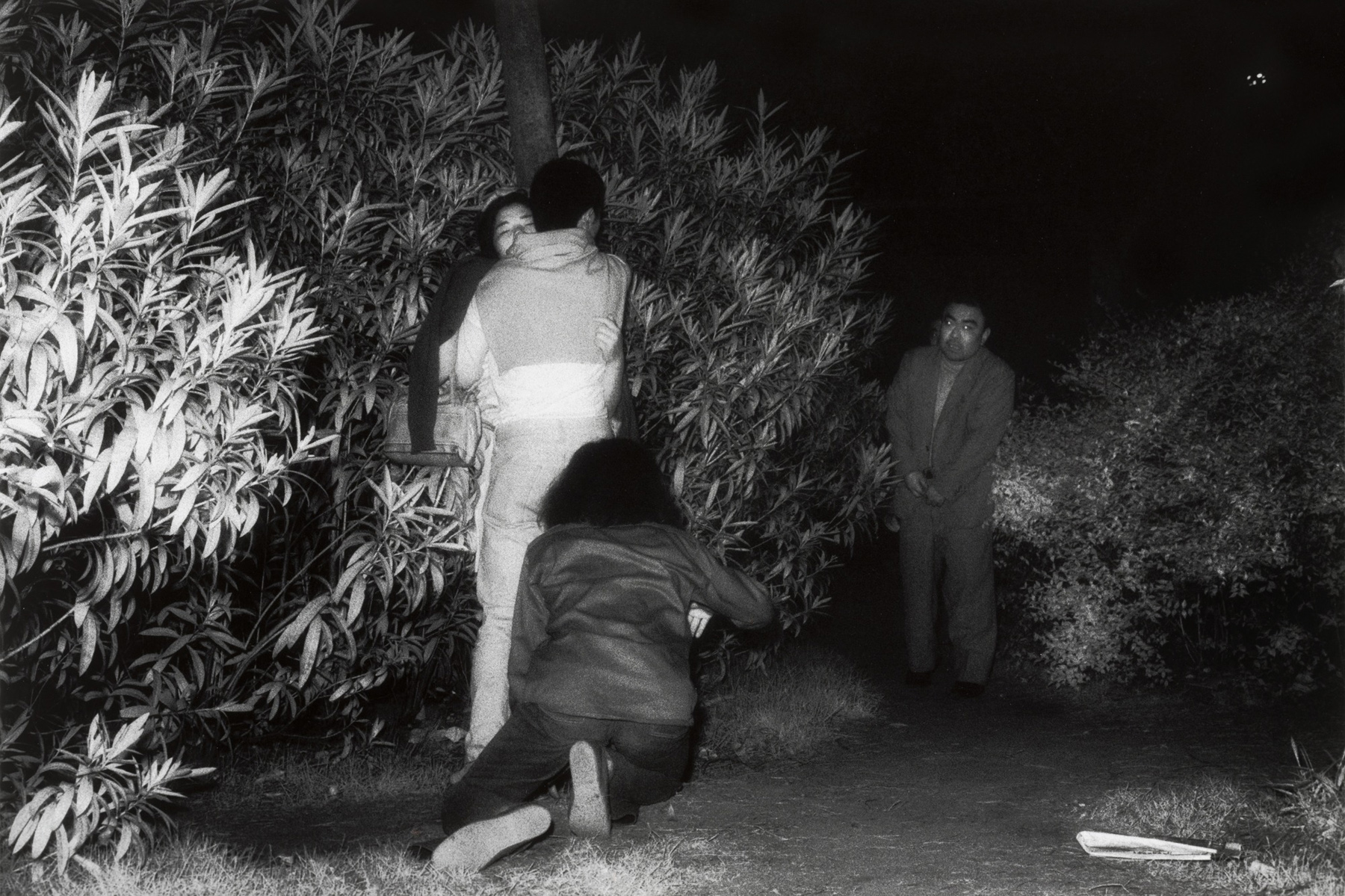

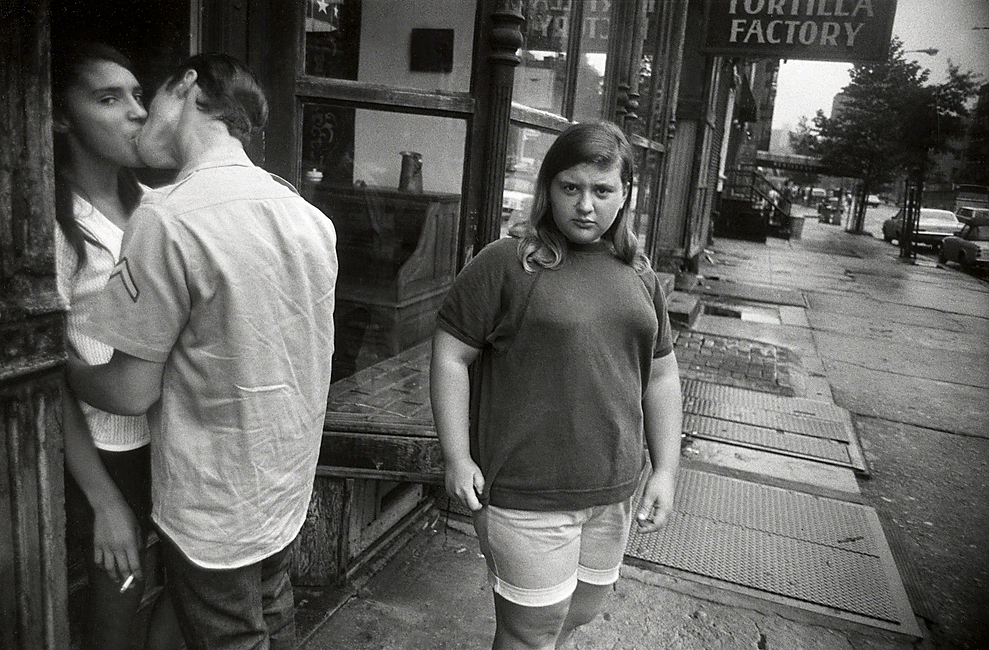


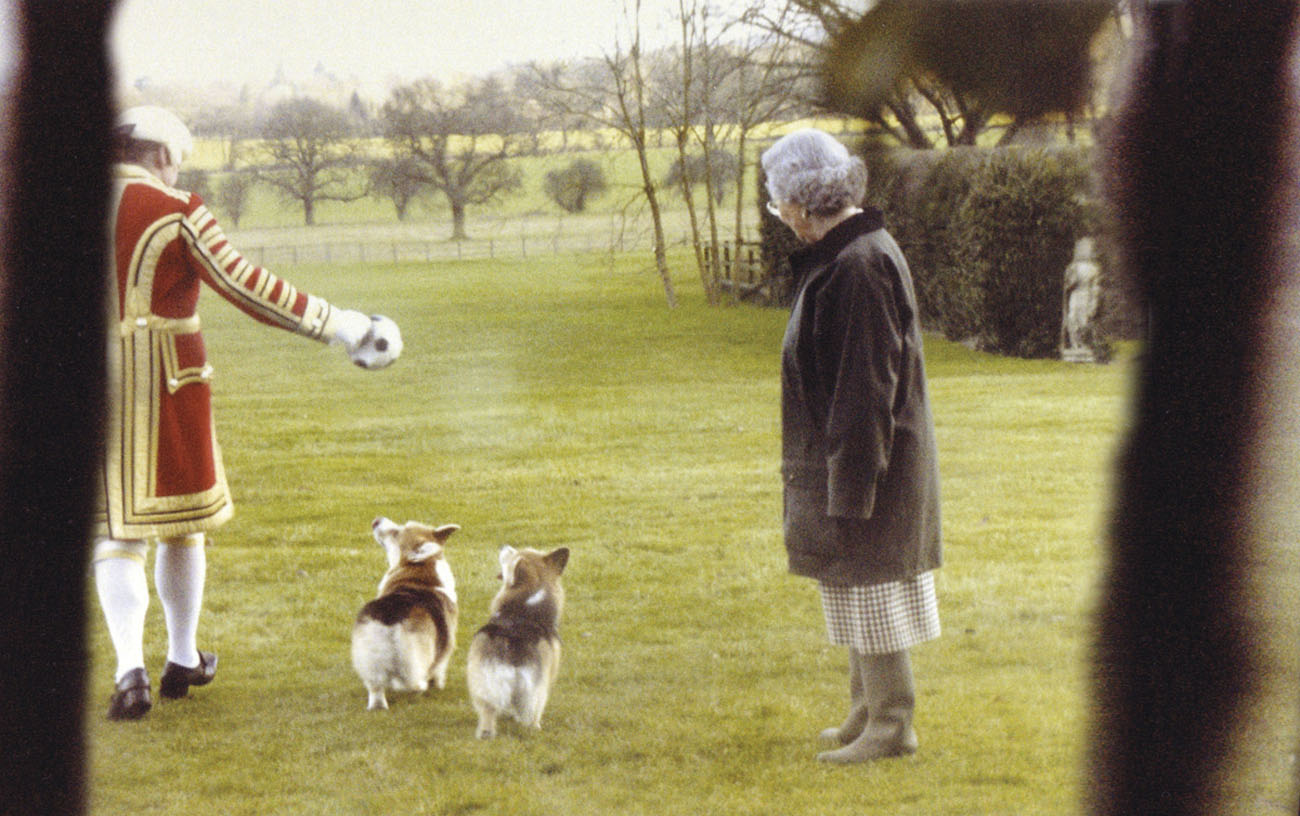
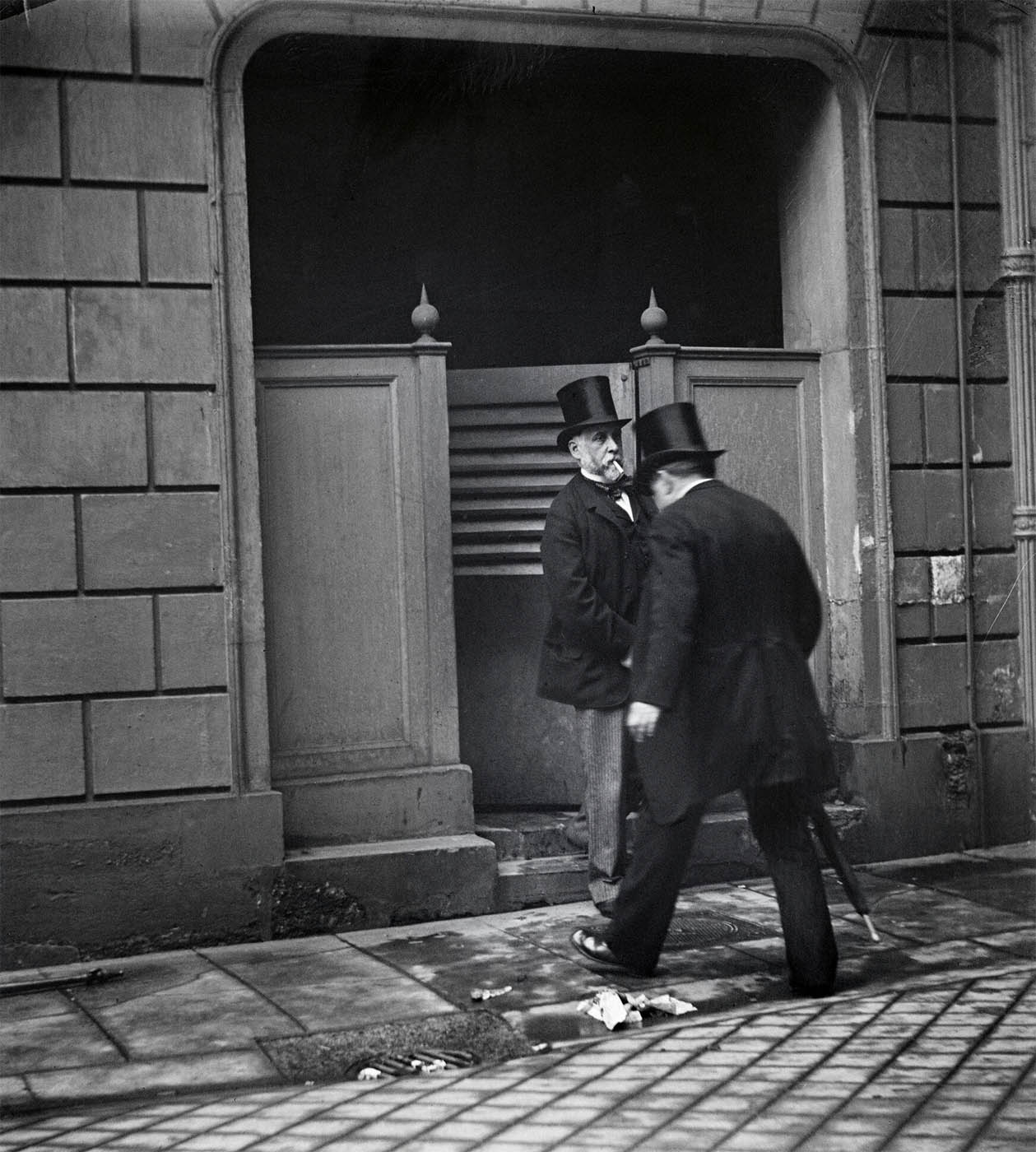
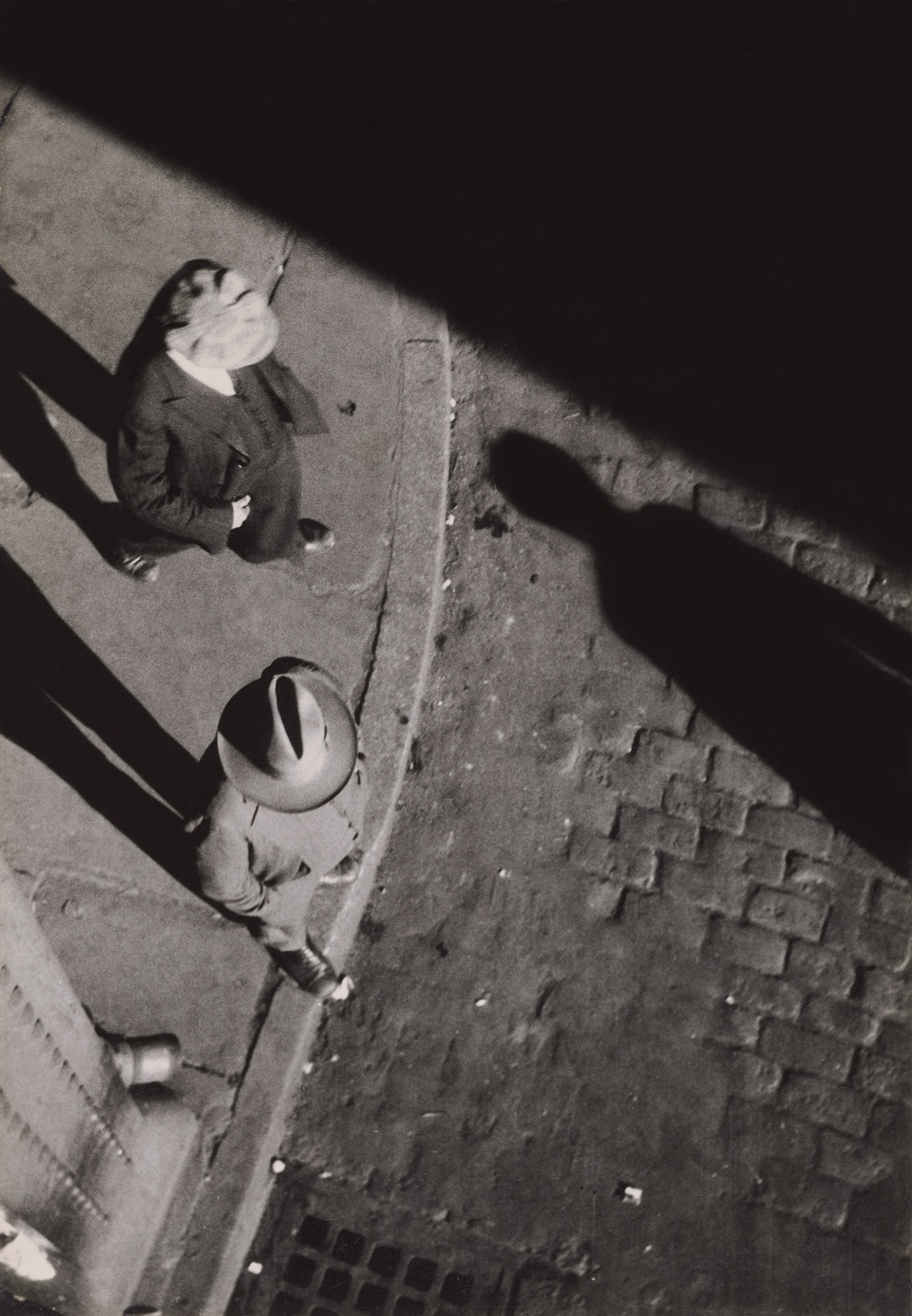
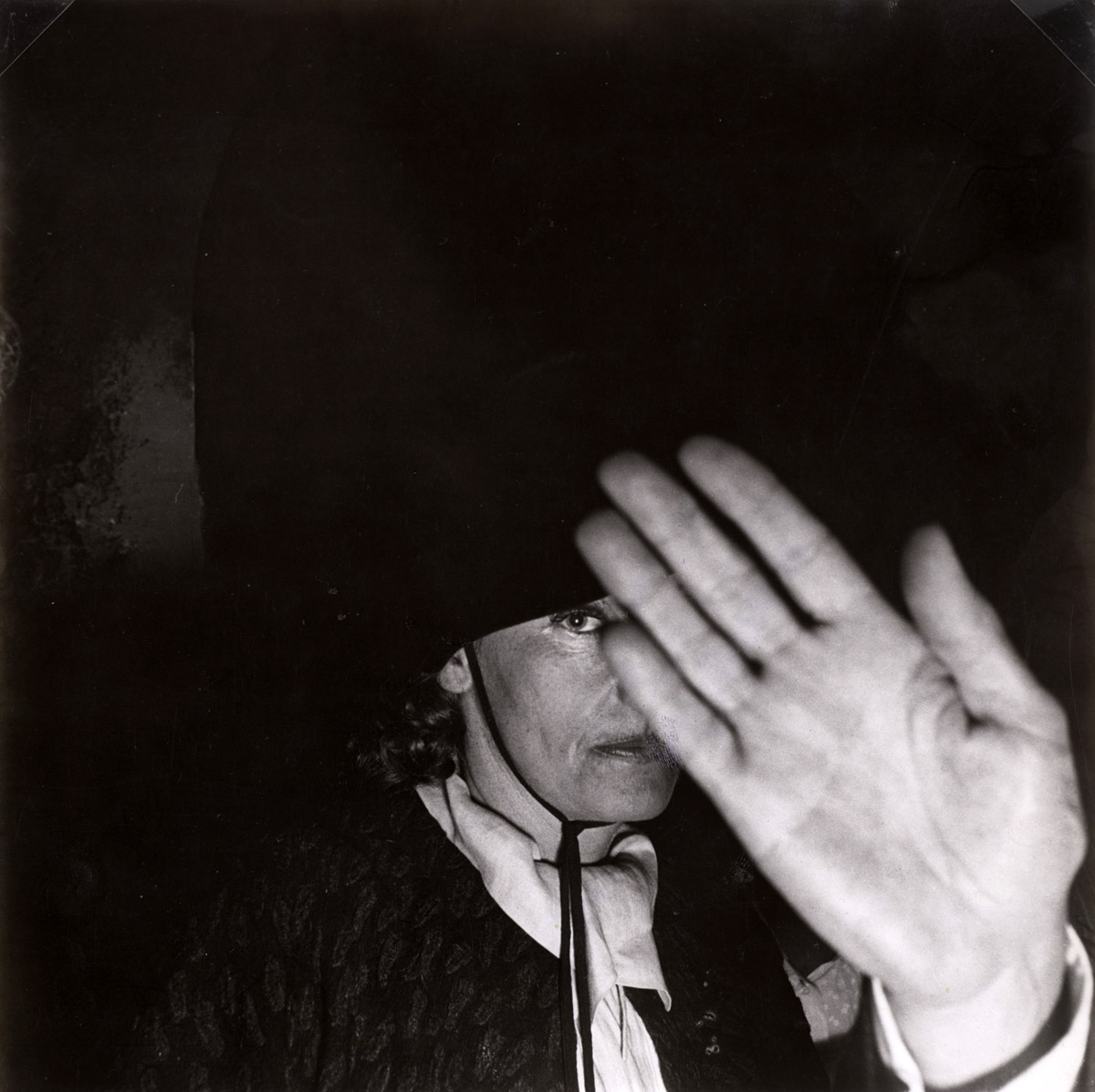
![Weegee (Arthur H. Fellig) (American, 1899-1968) '[Marilyn Monroe]' c. 1950s](https://artblart.com/wp-content/uploads/2010/09/weegee-marilyn-monroe.jpg "Weegee (Arthur H. Fellig) (American, 1899-1968) '[Marilyn Monroe]' c. 1950s")
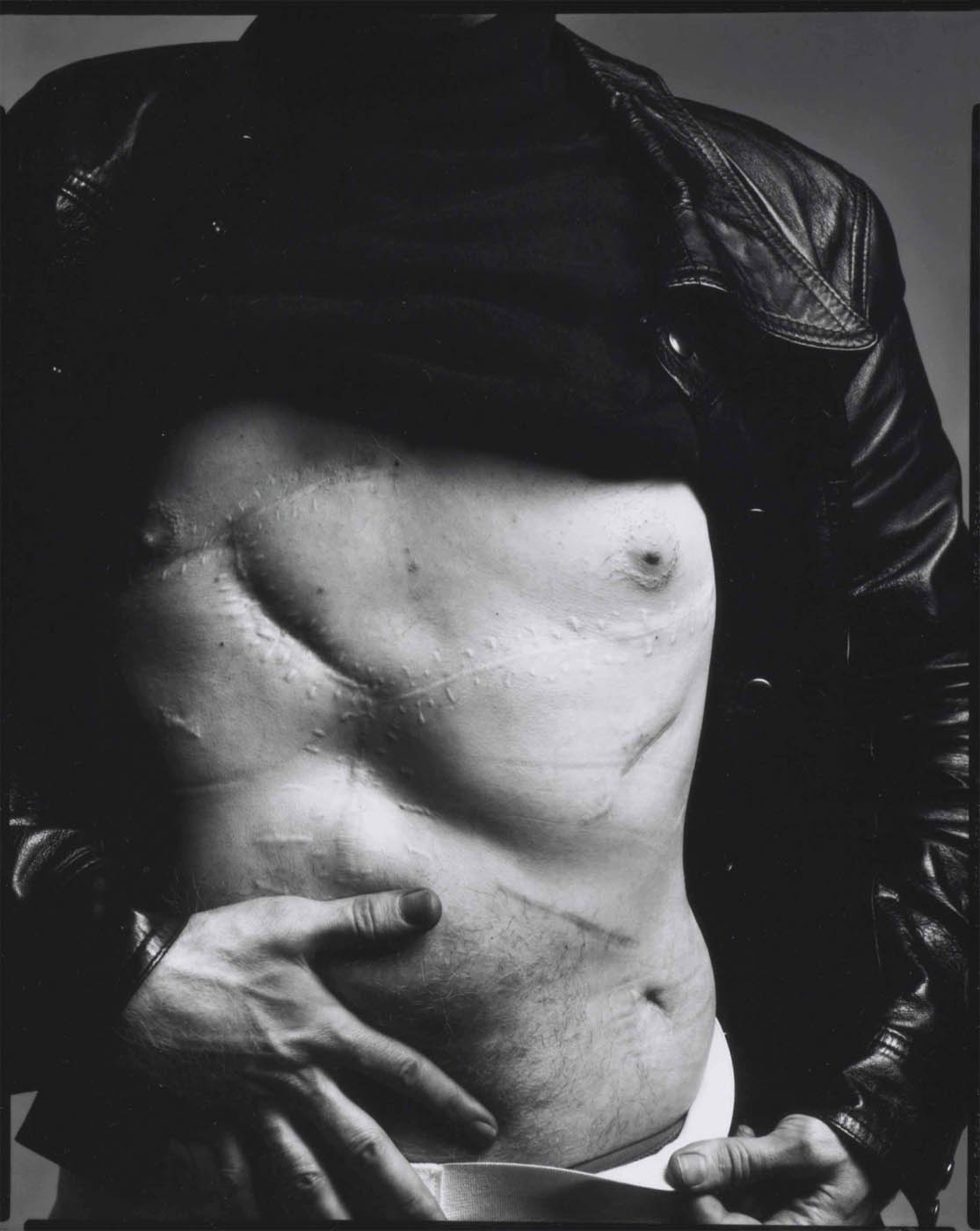

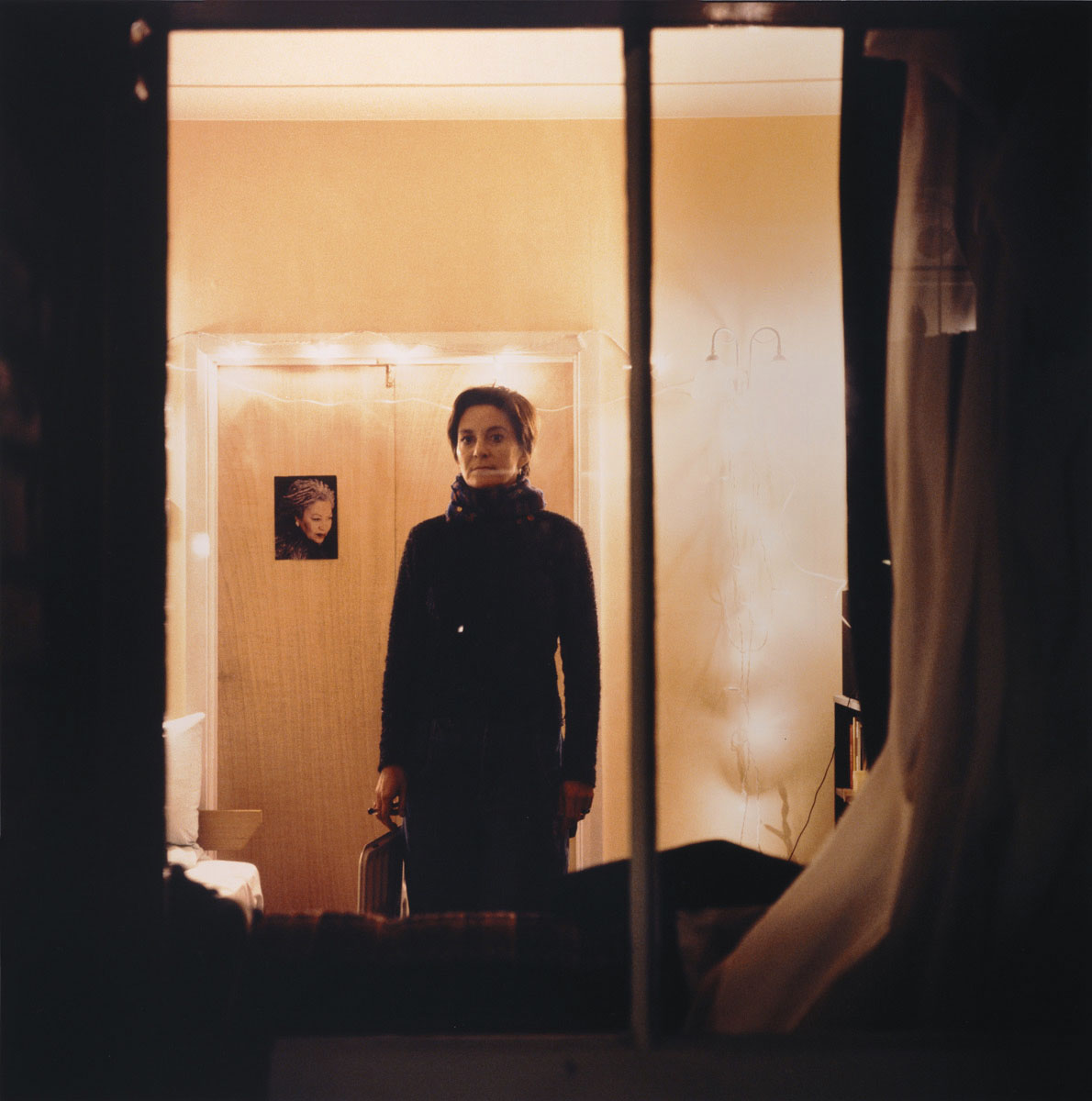
 Art Blart _ art and cultural memory archive
You must be logged in to post a comment.