Exhibition: ‘Peter Hujar: Speed of Life’ at Fundación MAPFRE, Barcelona

Exhibition dates: 27th January – 30th April, 2017

Curator: Joel Smith, “Richard L. Menschel Curator” and Director of the Department of Photography at the Morgan Library & Museum

Peter Hujar: Speed of Life has been organised by Fundación MAPFRE, Barcelona, and The Morgan Library & Museum, New York. The exhibition and its travelling schedule have been made possible by the Terra Foundation for American Art.


Peter Hujar (American, 1934-1987) 'Horse in West Virginia Mountains' 1969 from the exhibition 'Peter Hujar: Speed of Life' at Fundación MAPFRE, Barcelona, Jan - April, 2017


Peter Hujar (American, 1934-1987)
Horse in West Virginia Mountains
1969
Gelatina de plata
Colección de Richard y Ronay Menschel
© The Peter Hujar Archive, LLC. Cortesía Pace/MacGill Gallery, Nueva York, and Fraenkel Gallery, San Francisco


A love letter to Peter Hujar


You jumped so high

the boy on a raft

saluting the sky

absorbed in his craft


Of rhythm and eros

you offer no excess

just intimacy, connection

a timeless … transience


The line of skyscrapers, the lines of a thinker

the gaze of a baby, the eyes of a dreamer

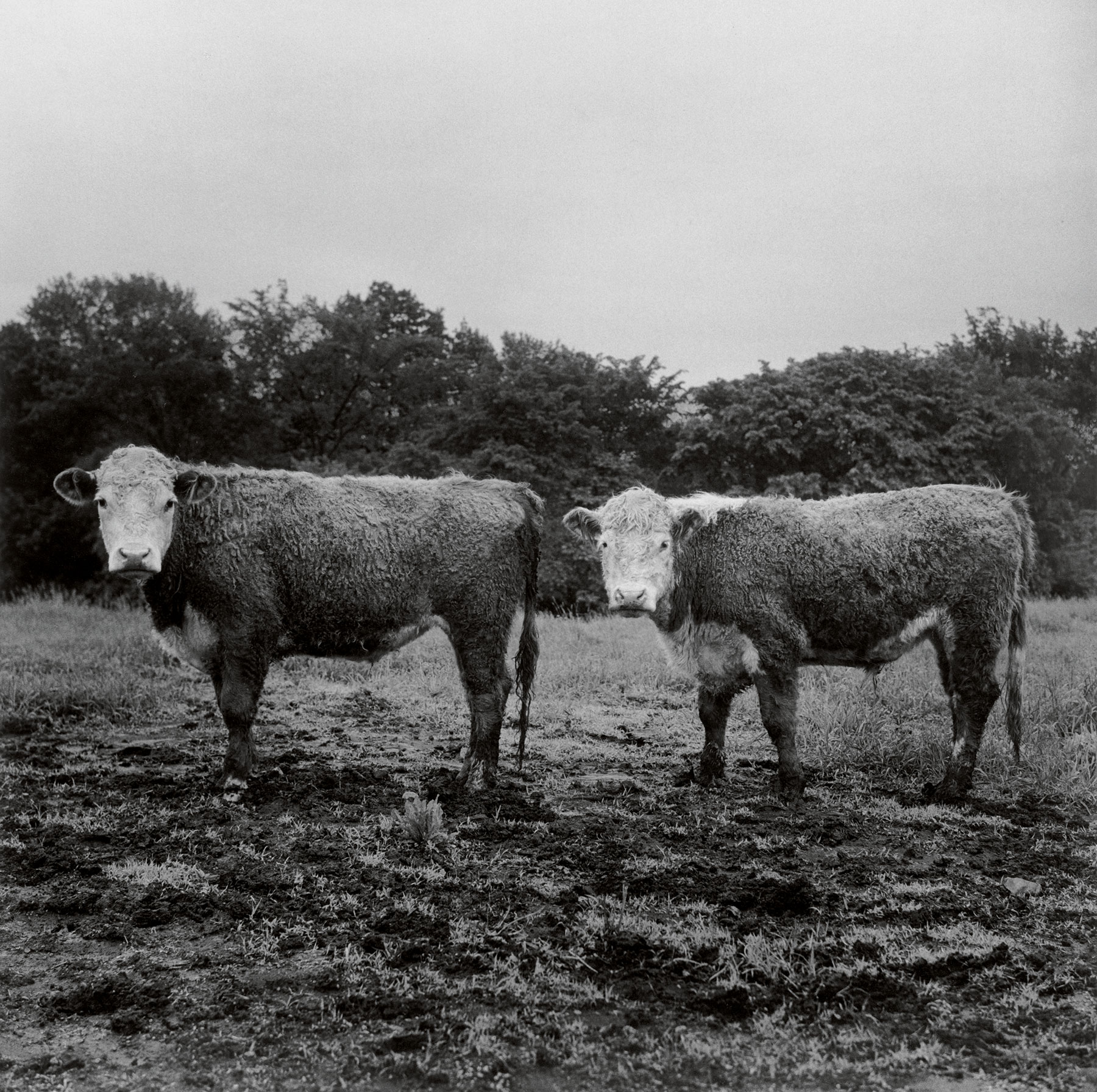
two cows look direct, as direct as can be

and chrysanthemums and roses lay death near thee


Contortions and compression

of time and space

the twist of a wrist, the surge of a river

a certain, poignant – tenderness


In love with photography

and the stories it tells

A troubled man

brought out of his shell


You left us too soon

you beautiful spirit

your portraits of life

loved, immortal – never finished


Dr Marcus Bunyan


Many thankx to Fundación MAPFRE for allowing me to publish the photographs in the posting. Please click on the photographs for a larger version of the image.

See more Peter Hujar images on The Guardian website.


I want you to talk about me in a low voice. When people talk about me, I want them to do it by whispering.


Peter Hujar


He was charismatic and complicated and, it turned out, deeply insecure, with a damaging family history he kept mostly to himself… Peter was, in a way, at his most moving when taking photographs. He was so absorbed by it. Peter was in many ways a very tortured man, and I felt like when he was taking photographs, he wasn’t. I had other friends who were photographers, but not like Peter. Peter was so profoundly absorbed and engaged by it. He was never not a photographer.


Vince Aletti


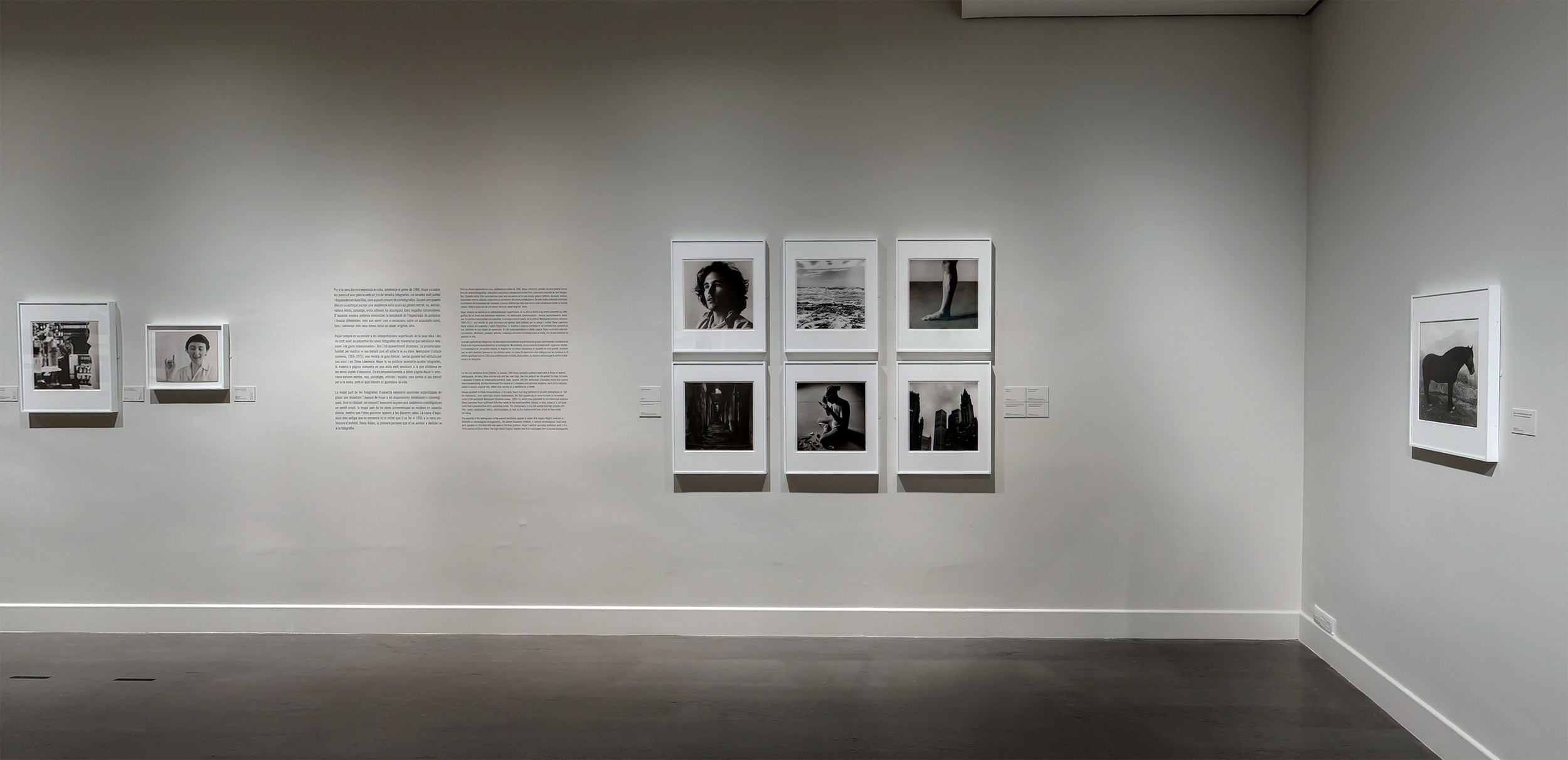
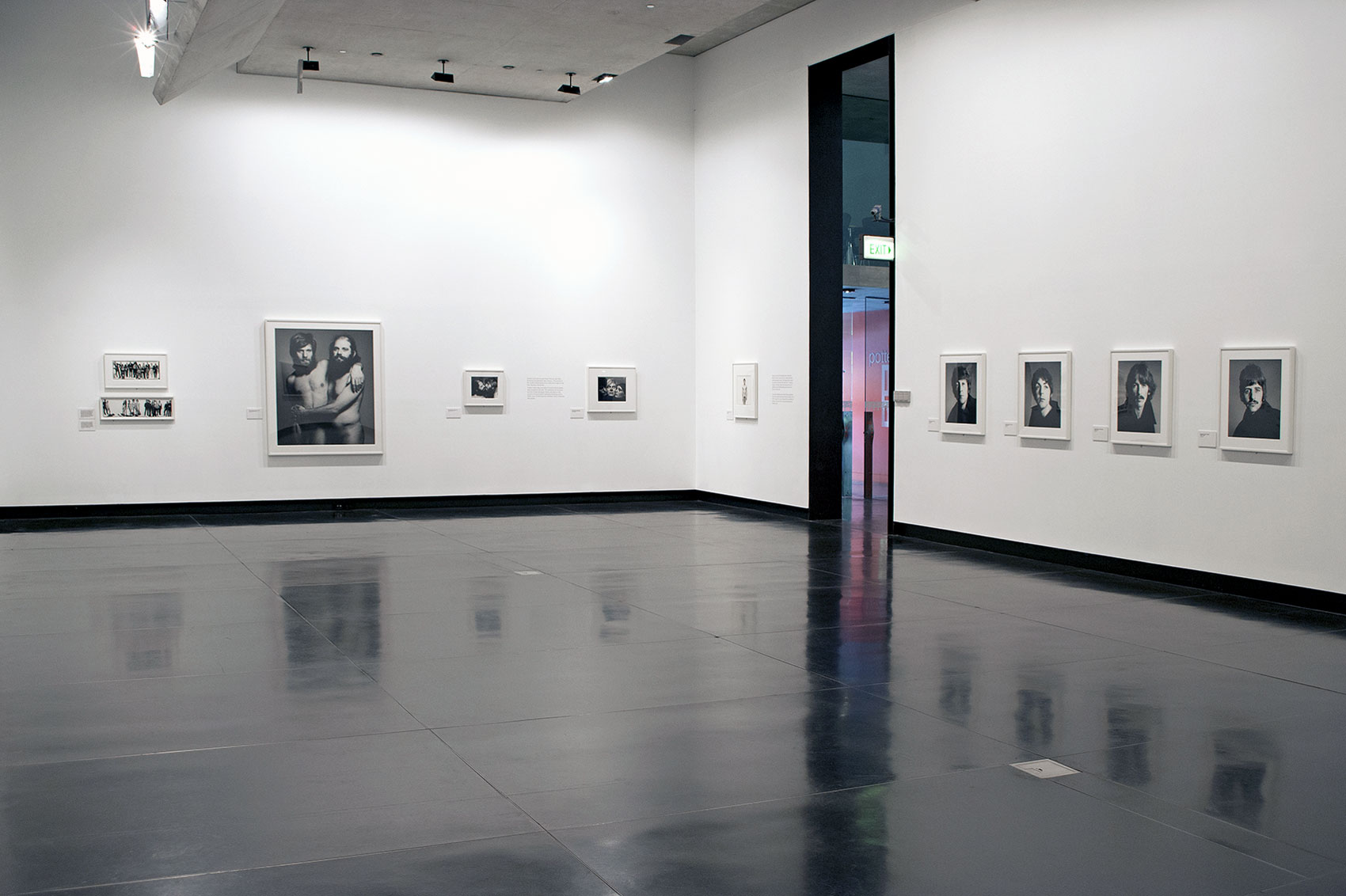
Installation view of 'Peter Hujar: Speed of Life' at Fundación MAPFRE, Barcelona

Installation view of 'Peter Hujar: Speed of Life' at Fundación MAPFRE, Barcelona

Installation view of 'Peter Hujar: Speed of Life' at Fundación MAPFRE, Barcelona

Installation view of 'Peter Hujar: Speed of Life' at Fundación MAPFRE, Barcelona

Installation view of 'Peter Hujar: Speed of Life' at Fundación MAPFRE, Barcelona

Installation view of 'Peter Hujar: Speed of Life' at Fundación MAPFRE, Barcelona

Installation view of 'Peter Hujar: Speed of Life' at Fundación MAPFRE, Barcelona

Installation view of 'Peter Hujar: Speed of Life' at Fundación MAPFRE, Barcelona

Installation view of 'Peter Hujar: Speed of Life' at Fundación MAPFRE, Barcelona

Installation view of 'Peter Hujar: Speed of Life' at Fundación MAPFRE, Barcelona

Installation view of 'Peter Hujar: Speed of Life' at Fundación MAPFRE, Barcelona


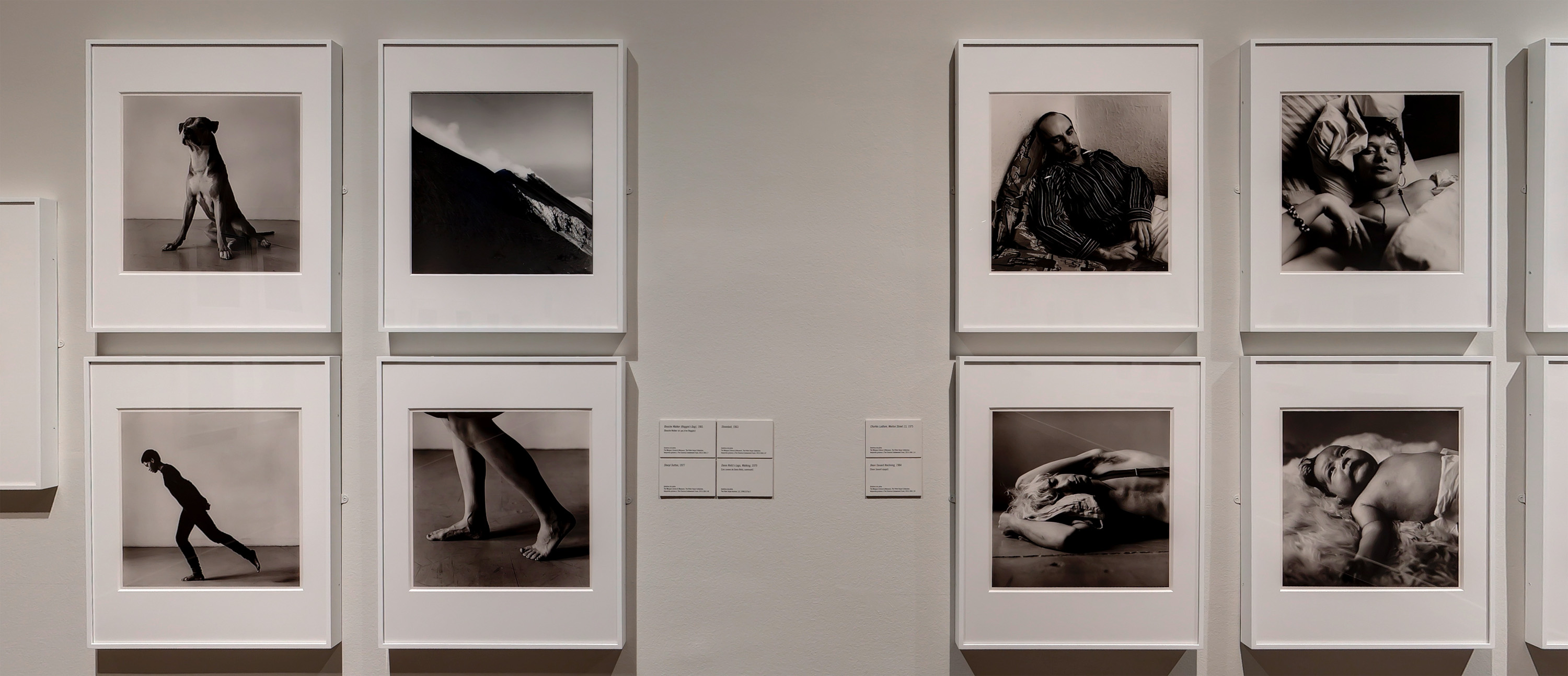
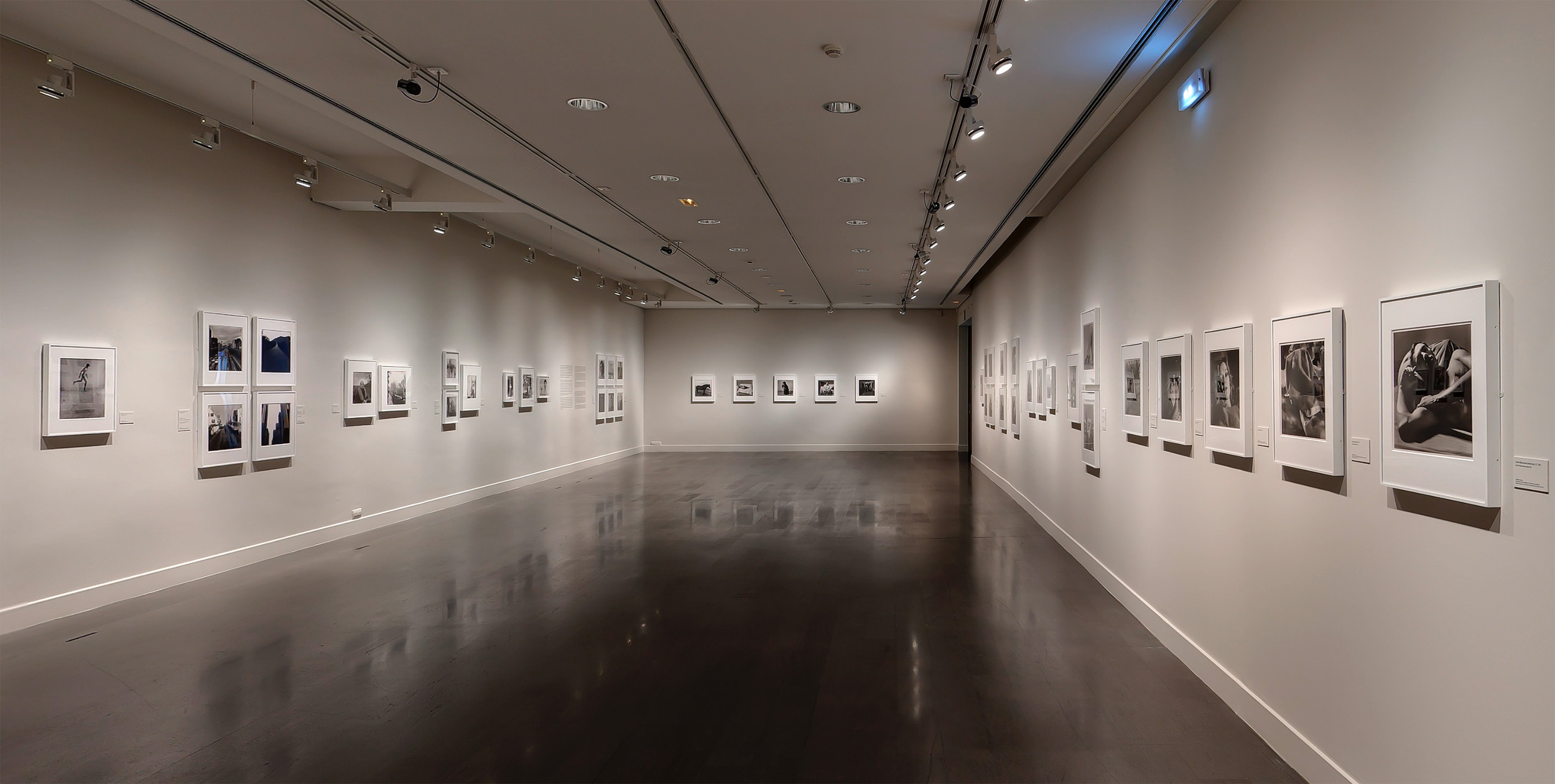
Installation views of Peter Hujar: Speed of Life at Fundación MAPFRE, Barcelona


Fundación MAPFRE is delighted to be presenting Peter Hujar: Speed of Life, a retrospective exhibition on the American photographer Peter Hujar. Offering the most detailed account of the artist’s work to date, from the 1950s to his death in New York in 1987, it will be on display between January 27 and April 30, 2017 at the Fundación MAPFRE’s Casa Garriga i Nogués exhibition space (Calle Diputació, 250) in Barcelona.

Hujar was a portraitist in everything he did. Regardless of the subject of the work – a lover, an underground theatre actor, a goose, the surface of the Hudson River, or the placid features of his own face – what moved and motivated him was the spark of encounter and exchange between artist and other. Hujar’s serene, meditative, square-format photographs confer gravity on the object of his attention, granting it an eternal moment’s pause within the rush of passing time.

Little recognised during his own lifetime, Hujar published only one book of photographs, Portraits in Life and Death, but his output is today recognised as distinctive. His portraits combine disclosure and secrecy, ferocity and peace. Hujar’s career involved both a quest for recognition in the world of fashion photography – the photographers he admired most were Irving Penn and Richard Avedon – and a more solitary, almost completely uncompensated body of work in which he depicted the creative and intellectual New York that he knew and admired.

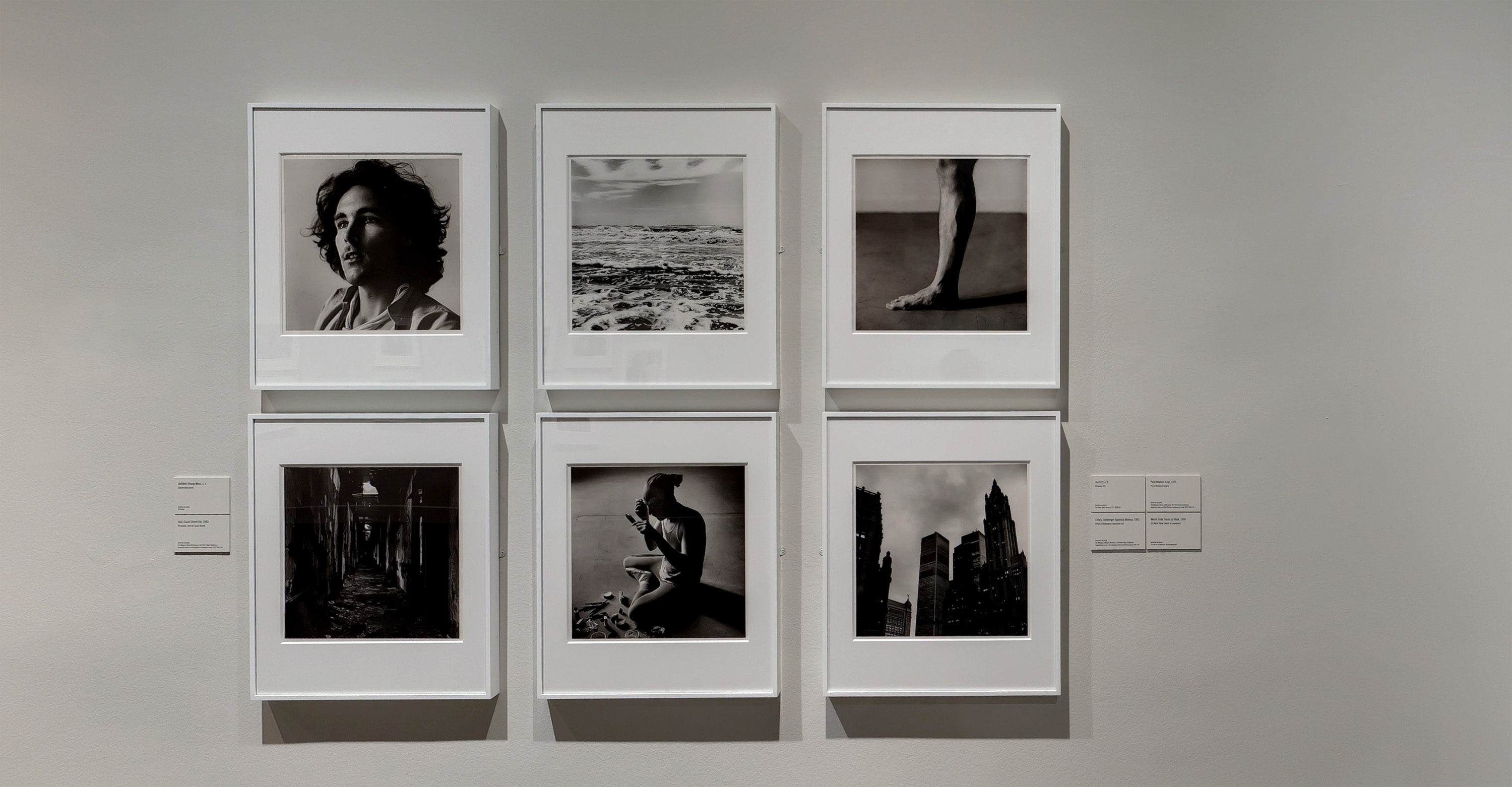
The present exhibition follows Peter Hujar’s method of presenting his work. Rather than show his photographs in isolation or in an linear or chronological arrangements, he preferred to present them in dynamic, surprising and sometimes disconcerting juxtapositions.

Press release from Fundación MAPFRE


Four keys

Peter Hujar’s work falls within the photographic tradition of portraiture: he was a portraitist in everything he did. Whatever the subject – a lover, an actor, a horse, the surface of the Hudson River, or the gentle features of his own face – what moved and motivated Hujar was the spark in the encounter and the exchange between the artist and his subject, establishing a direct relationship with whatever he portrayed thereby revealing its true nature.

One of the themes reflected in Hujar’s work is homosexuality. These were the years of the first Gay Liberation movements and the famous Stonewall riots. Hujar lived close to the Stonewall Inn, and his partner at the time, Jim Fouratt, came onto the scene the night of the police raid and founded the Gay Liberation Front. Hujar was not an activist, though he attended the group’s first meeting and contributed his well-known photograph which would become the image for the Gay Liberation Front Poster, 1970.

The route followed by the exhibition reflects the preferences of the artist, who systematically chose to present his photographs in vibrant, surprising and sometimes disturbing Most of the photographs are grouped into sets, some of which reflect the artist’s recurrent concerns, while others exemplify his interest in emphasising diversity and the internal contradictions in his work.

A distinguishing feature of his art is the invisibility of technique in his photographs and yet simultaneously his preoccupation with and care over it. Hujar produced his own copies and was also considered a good printer.

Text from the Fundación MAPFRE website


Peter Hujar (American, 1934-1987) 'La Marchesa Fioravanti' 1958 from the exhibition 'Peter Hujar: Speed of Life' at Fundación MAPFRE, Barcelona, Jan - April, 2017


Peter Hujar (American, 1934-1987)
La Marchesa Fioravanti
1958
Gelatina de plata
The Peter Hujar Archive
© The Peter Hujar Archive, LLC. Cortesía Pace/MacGill Gallery, Nueva York, and Fraenkel Gallery, San Francisco
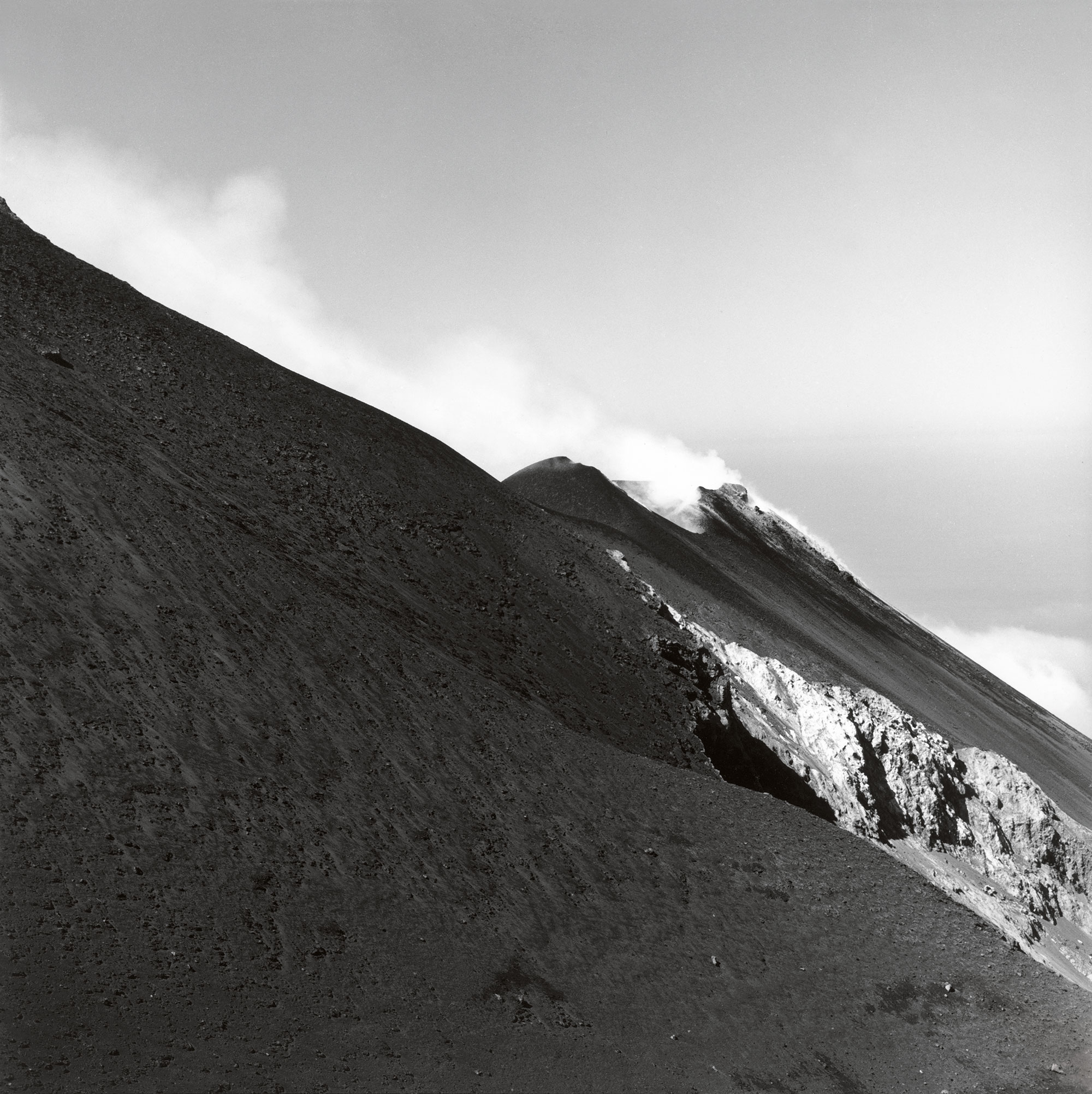
 

Peter Hujar (American, 1934-1987) 'Stromboli' 1963


Peter Hujar (American, 1934-1987)
Stromboli
1963
Gelatina de plata
The Morgan Library & Museum, The Peter Hujar Collection
Adquirida gracias a The Charina Endowment Fund
© The Peter Hujar Archive, LLC. Cortesía Pace/MacGill Gallery, Nueva York, and Fraenkel Gallery, San Francisco
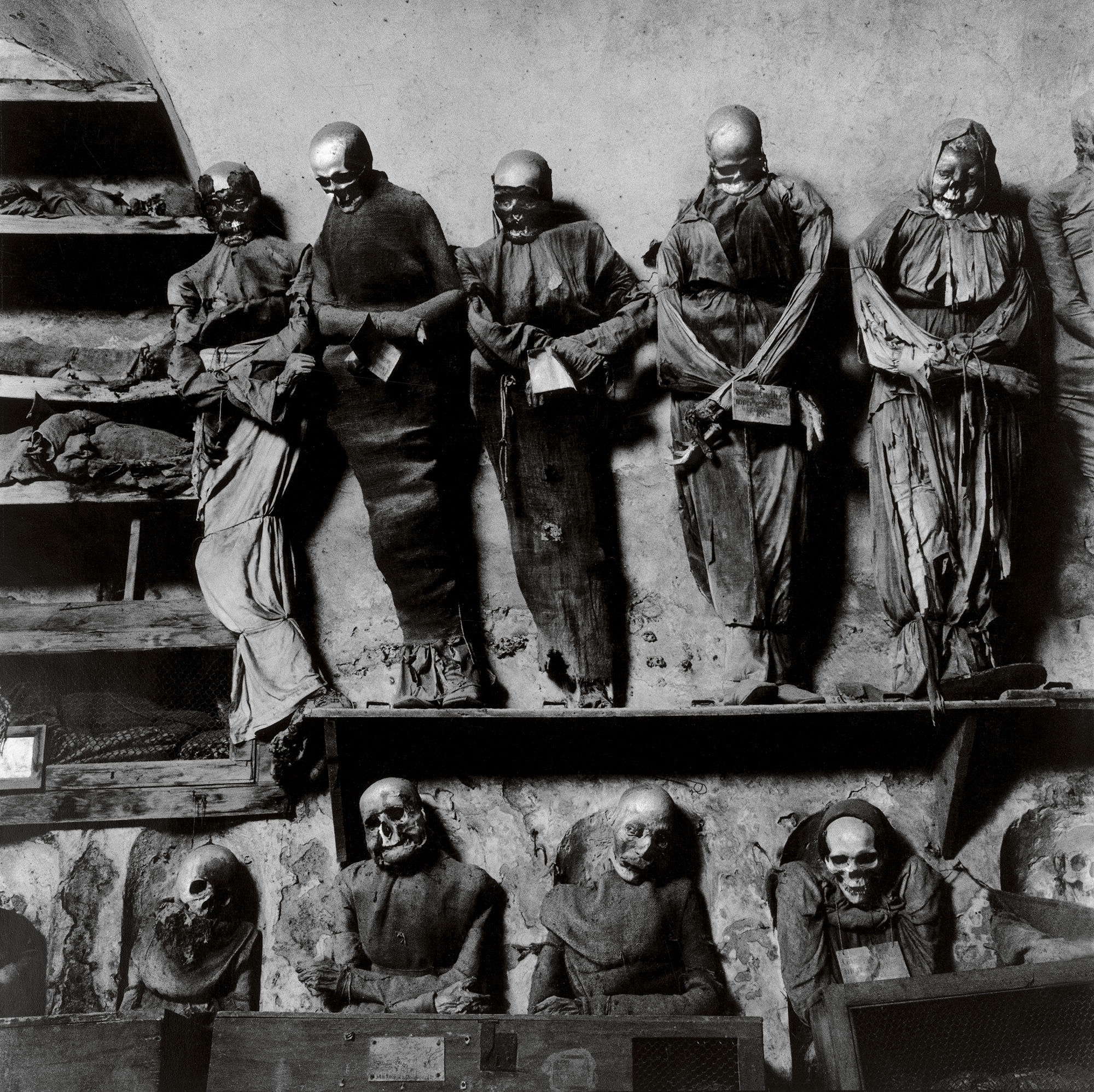
 

Peter Hujar (American, 1934-1987) 'Palermo Catacombs (11)' 1963


Peter Hujar (American, 1934-1987)
Palermo Catacombs (11)
1963
Gelatina de plata
Colección de Allen Adler and Frances Beatty Adler
© The Peter Hujar Archive, LLC. Cortesía Pace/MacGill Gallery, Nueva York, and Fraenkel Gallery, San Francisco


Peter Hujar (American, 1934-1987) 'St. Patrick's, Easter Sunday' 1976


Peter Hujar (American, 1934-1987)
St. Patrick’s, Easter Sunday
1976
Gelatina de plata
The Morgan Library & Museum, The Peter Hujar Collection
Adquirida gracias a The Charina Endowment Fund
© The Peter Hujar Archive, LLC. Cortesía Pace/MacGill Gallery, Nueva York, and Fraenkel Gallery, San Francisco


Artist biography

Peter Hujar was born in Trenton, New Jersey, in 1934 and grew up in the countryside with his Polish immigrant grandparents. When he was eleven his mother, a waitress, brought him to live with her in Manhattan.

Interested in photography from childhood, after graduating from high school in 1953 Hujar worked as an assistant in the studios of magazine professionals and aspired to work in fashion like his idols Lisette Model, Irving Penn, and Richard Avedon.

Between 1958 and 1963 Hujar lived mainly in Italy with two successive partners, artists Joseph Raffael and Paul Thek. After studying for a year at a filmmaking school in Rome he returned to Manhattan, where he moved in the circles of writer Susan Sontag and Andy Warhol’s Factory. From 1968 to 1972 he pursued a freelance career in fashion photography, publishing over a dozen features in Harper’s Bazaar and GQ before concluding that the hustle of magazine work “wasn’t right for me.”

In 1973 Hujar definitively renounced his professional aspirations for a life of creative poverty in New York’s East Village. Living in a loft above a theatre at Twelfth Street and Second Avenue, he took paying jobs only when necessary in order to focus on the work that truly motivated him. He photographed the artists he knew and respected, animals, the nude body, and New York as he knew it, a city then in serious economic decline. In his book Portraits in Life and Death (1976) he combined intimate studies of his rarefied downtown coterie (painters, performers, choreographers, and writers such as Sontag and William S. Burroughs) with portraits  of mummies in the Palermo Catacombs that he had made during a visit with Thek thirteen years earlier. His focus on mortality would intensify and find its purpose in the 1980s, when the AIDS epidemic ravaged gay populations in New York and worldwide.

Briefly a lover and subsequently a mentor to the young artist David Wojnarowicz, in his last seven years Hujar continued chronicling a creative downtown subculture that was fast becoming unsustainable in the context of the increasing power of money. His most frequent subject in these years was his neighbour and friend Ethyl Eichelberger, a drag performer whom he called “the greatest actor in America.” With Wojnarowicz, Hujar made expeditions to the depressed areas around New York, photographing industrial ruins in Queens, neighbourhoods of Newark, New Jersey, that had been destroyed in the riots of the late 1960s, and the abandoned Hudson River piers of lower Manhattan, sites of sexual exploits by night and guerilla art installations by day. Hujar died in New York on Thanksgiving Day, 1987, around eleven months after being diagnosed with AIDS.

Throughout his life Hujar stubbornly aligned himself with what he called the “All-In people”: artists committed to a creative course all their own, unconcerned with mass-market acclaim. At the same time he both disdained and bitterly wished for public recognition such as that achieved by his famous contemporaries Diane Arbus – eleven years his senior and respected by him – and Robert Mapplethorpe, who was twelve years younger and whom he considered a facile operator. During the thirty years since Hujar’s death the highly localised downtown public that knew his work has all but completely passed into history, while a vastly expanded photography audience around the world has become familiar with specific facets of his work, such as his indelible 1973 image Candy Darling on her Deathbed, and his soulful portraits of animals. In Peter Hujar: Speed of Life what comes to light is a broader assessment of his unique oeuvre, which was diverse and enduring. Many of the subjects populating this retrospective are familiar, even iconic faces of their era, but what can be seen more clearly today is the vision of the artist who unites them, himself a great and singular talent of the post-war decades in American art.
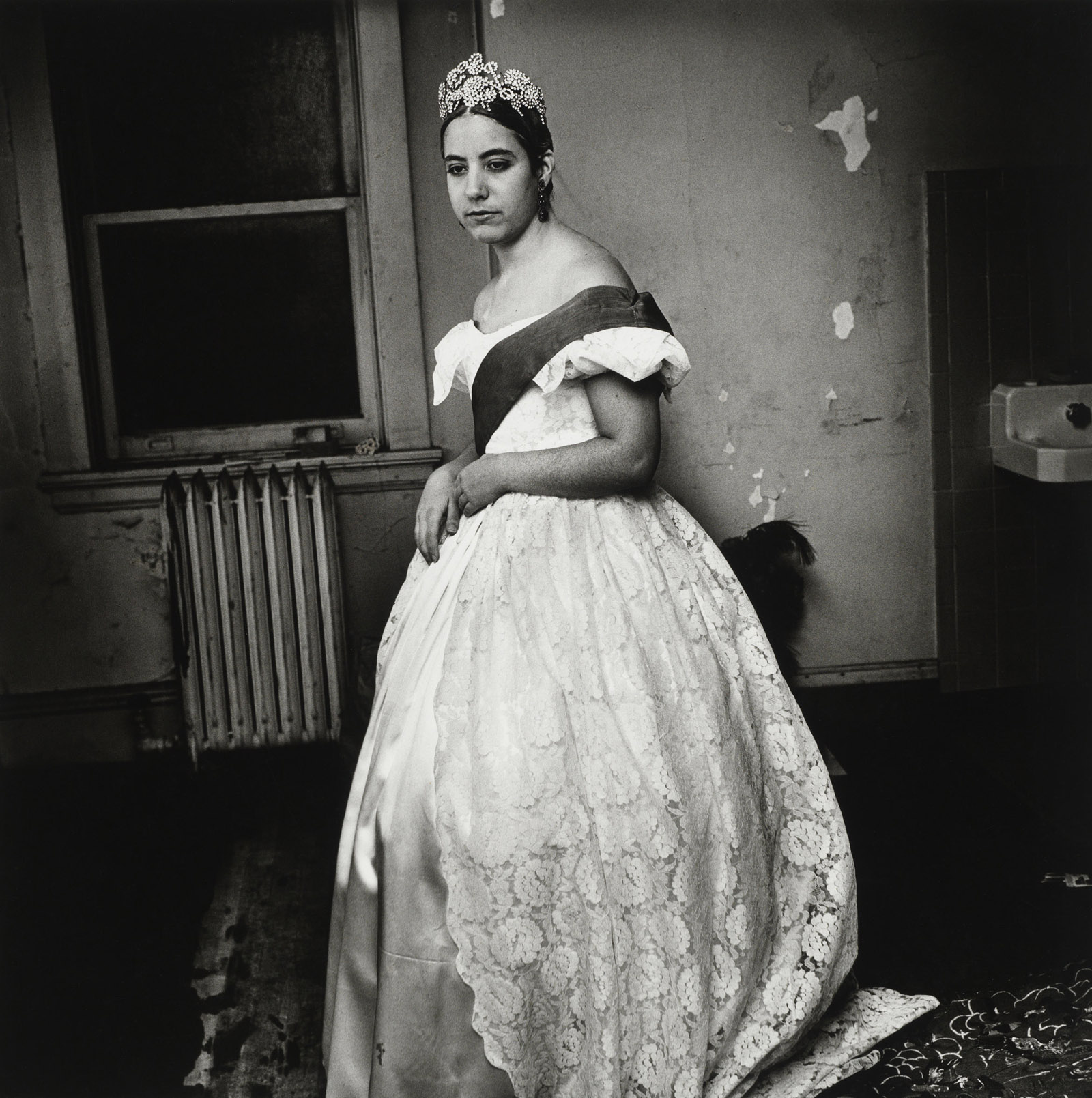
 

Peter Hujar (American, 1934-1987) 'Cindy Luba as Queen Victoria' 1973


Peter Hujar (American, 1934-1987)
Cindy Luba as Queen Victoria
1973
Gelatina de plata
The Morgan Library & Museum, The Peter Hujar Collection
© The Peter Hujar Archive, LLC. Cortesía Pace/MacGill Gallery, Nueva York, and Fraenkel Gallery, San Francisco


Peter Hujar (American, 1934-1987) 'David Warrilow (1)' 1985


Peter Hujar (American, 1934-1987)
David Warrilow (1)
1985
Gelatina de plata
The Morgan Library & Museum, The Peter Hujar Collection
© The Peter Hujar Archive, LLC. Cortesía Pace/MacGill Gallery, Nueva York, and Fraenkel Gallery, San Francisco
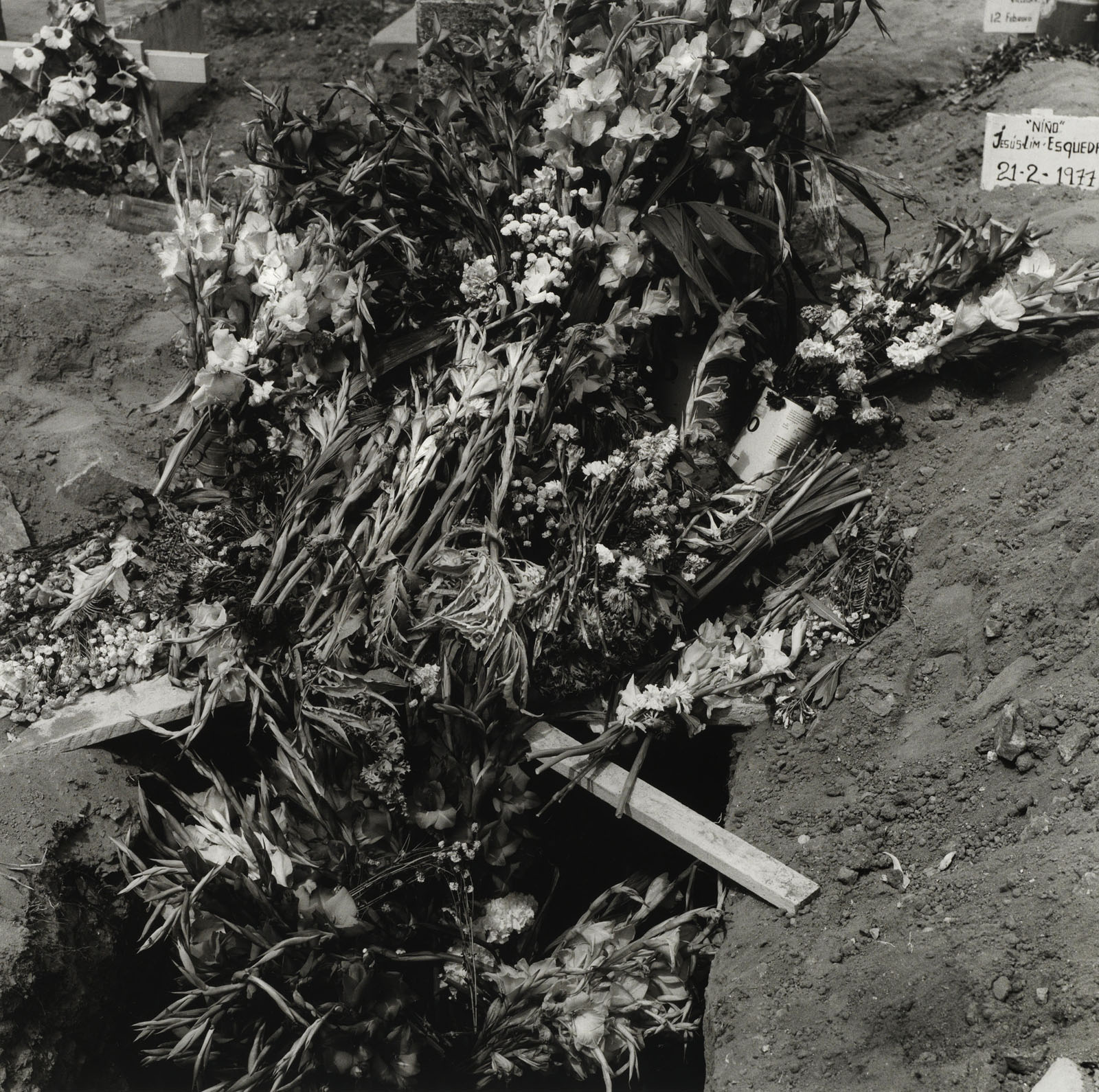
 

Peter Hujar (American, 1934-1987) 'Flowers for the Dead, Mazatlán, Mexico (2)' 1977


Peter Hujar (American, 1934-1987)
Flowers for the Dead, Mazatlán, Mexico (2)
1977
Gelatina de plata
The Morgan Library & Museum, The Peter Hujar Collection
© The Peter Hujar Archive, LLC. Cortesía Pace/MacGill Gallery, Nueva York, and Fraenkel Gallery, San Francisco


Peter Hujar (American, 1934-1987) 'Pascal Imbert Scarred Abdomen' 1980


Peter Hujar (American, 1934-1987)
Pascal Imbert Scarred Abdomen
1980
Gelatina de plata
The Morgan Library & Museum, The Peter Hujar Collection
© The Peter Hujar Archive, LLC. Cortesía Pace/MacGill Gallery, Nueva York, and Fraenkel Gallery, San Francisco
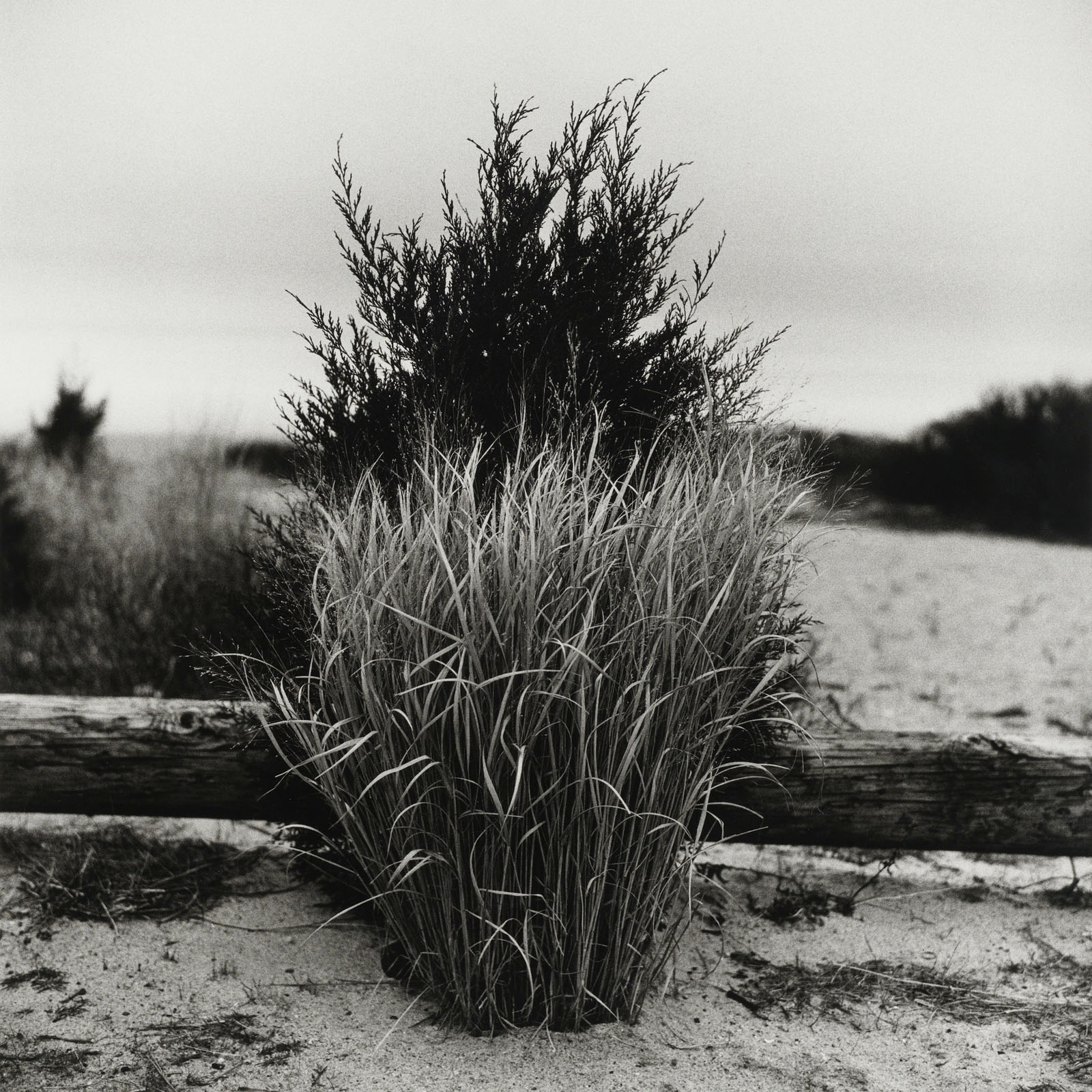
 

Peter Hujar (American, 1934-1987) 'Grass, Port Jefferson, New York' 1984


Peter Hujar (American, 1934-1987)
Grass, Port Jefferson, New York
1984
Gelatina de plata
The Morgan Library & Museum, The Peter Hujar Collection
© The Peter Hujar Archive, LLC. Cortesía Pace/MacGill Gallery, Nueva York, and Fraenkel Gallery, San Francisco


Peter Hujar (American, 1934-1987) 'Paul Hudson (Leg)' 1979


Peter Hujar (American, 1934-1987)
Paul Hudson (Leg)
1979
Gelatina de plata
The Morgan Library & Museum, The Peter Hujar Collection
© The Peter Hujar Archive, LLC. Cortesía Pace/MacGill Gallery, Nueva York, and Fraenkel Gallery, San Francisco


Peter Hujar (American, 1934-1987) 'Robyn Brentano (1)' 1975


Peter Hujar (American, 1934-1987)
Robyn Brentano (1)
1975
Gelatina de plata
The Morgan Library & Museum, The Peter Hujar Collection
© The Peter Hujar Archive, LLC. Cortesía Pace/MacGill Gallery, Nueva York, and Fraenkel Gallery, San Francisco


Structure of the exhibition

The exhibition includes 160 photographs that offer an exploration of the career of this American photographer, with works loaned from the collection of the Morgan Library & Museum and nine other collections. The result is the most detailed account of Peter Hujar’s work presented to date.

In its structure the exhibition takes account of Hujar’s preference for presenting his photographs in vivid, startling, and even puzzling juxtapositions. Although following a broadly chronological order, with formative work from the 1950s and 1960s concentrated in the first half and later photographs at the end, the visual and creative continuities that spanned the duration of Hujar’s artistic life are emphasised as the visitor follows the sequence of works.

Most of the photographs are presented in groups of three to eight images, some of which showcase enduring preoccupations of the artist while others exemplify his desire to stress the diversity and internal contradictions of his work.

Thus, for the final exhibition of his life, held at the Gracie Mansion Gallery in the East Village in January 1986, Hujar spent several days arranging seventy photographs into thirty-five tightly spaced vertical pairs, taking care not to let any single genre of image appear twice in a row. At the start of the present exhibition, a six-photograph grid pays homage to this method by presenting a checkerboard-format conversation between three images made in controlled indoor conditions and three exterior views. The subjects, in order, are: a man’s bare leg with the foot planted firmly on the studio floor; waves rolling in on an ocean beach; a portrait of an unidentified young man; the World Trade Center at sunset; Ethyl Eichelberger applying makeup before a performance; and a dark burned-out hallway in the ruins of the Canal Street pier.

The catalogue

The catalogue that accompanies the exhibition includes texts by its curator Joel Smith and by Philip Gefter and Steve Turtell, making it a reference work for a detailed knowledge of Peter Hujar’s work from the 1950s until his death in 1987.
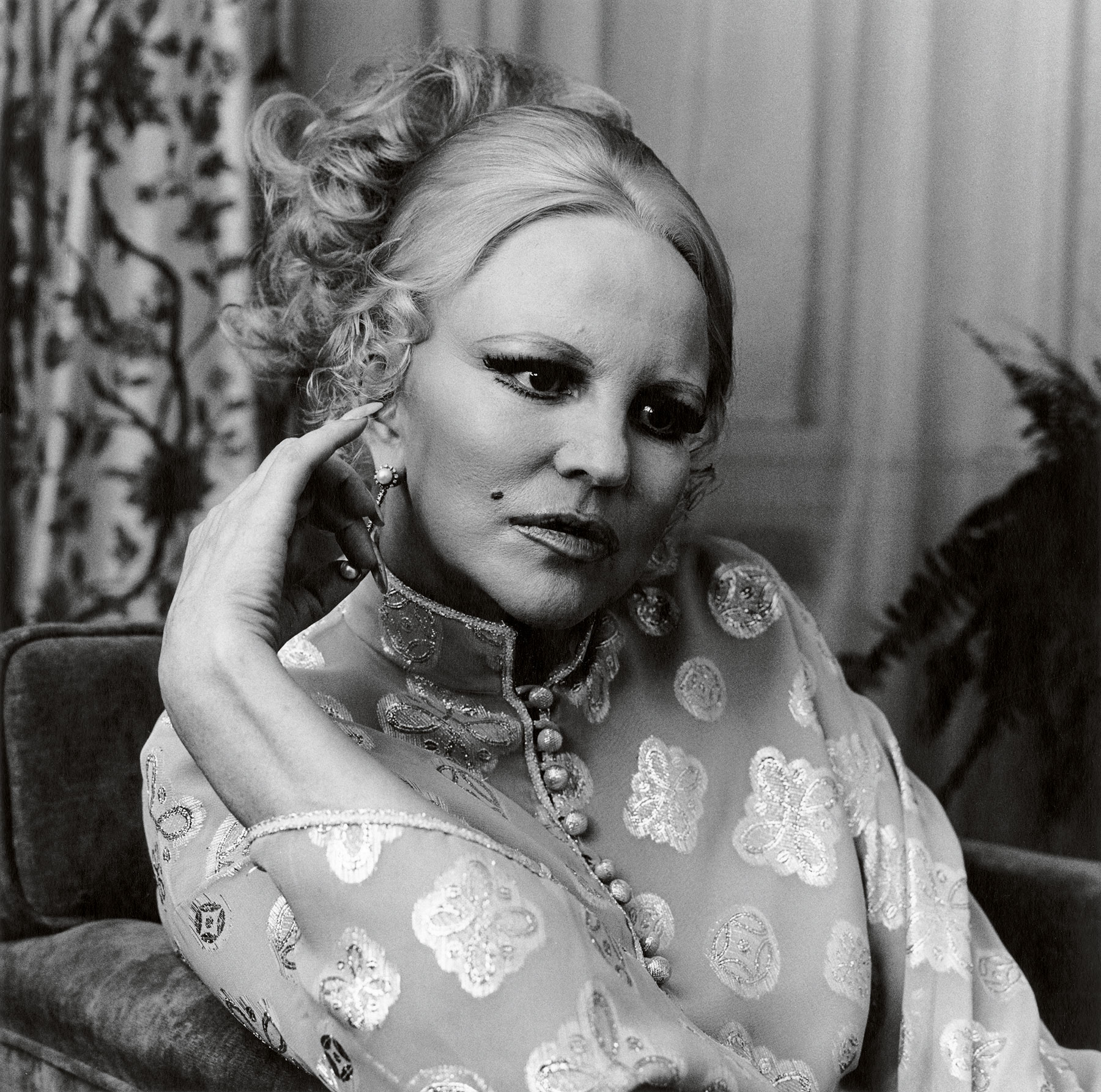
 

Peter Hujar (American, 1934-1987) 'Peggy Lee' 1974


Peter Hujar (American, 1934-1987)
Peggy Lee
1974
Gelatina de plata
The Peter Hujar Archive
© The Peter Hujar Archive, LLC. Cortesía Pace/MacGill Gallery, Nueva York, and Fraenkel Gallery, San Francisco


Peter Hujar (American, 1934-1987) 'Hudson River' 1975


Peter Hujar (American, 1934-1987)
Hudson River
1975
Gelatina de plata
The Morgan Library & Museum, The Peter Hujar Collection
Adquirida gracias a The Charina Endowment Fund
© The Peter Hujar Archive, LLC. Cortesía Pace/MacGill Gallery, Nueva York, and Fraenkel Gallery, San Francisco


Peter Hujar (American, 1934-1987) 'Mural at Piers' 1983


Peter Hujar (American, 1934-1987)
Mural at Piers
1983
Gelatina de plata
The Peter Hujar Archive
© The Peter Hujar Archive, LLC. Cortesía Pace/MacGill Gallery, Nueva York, and Fraenkel Gallery, San Francisco
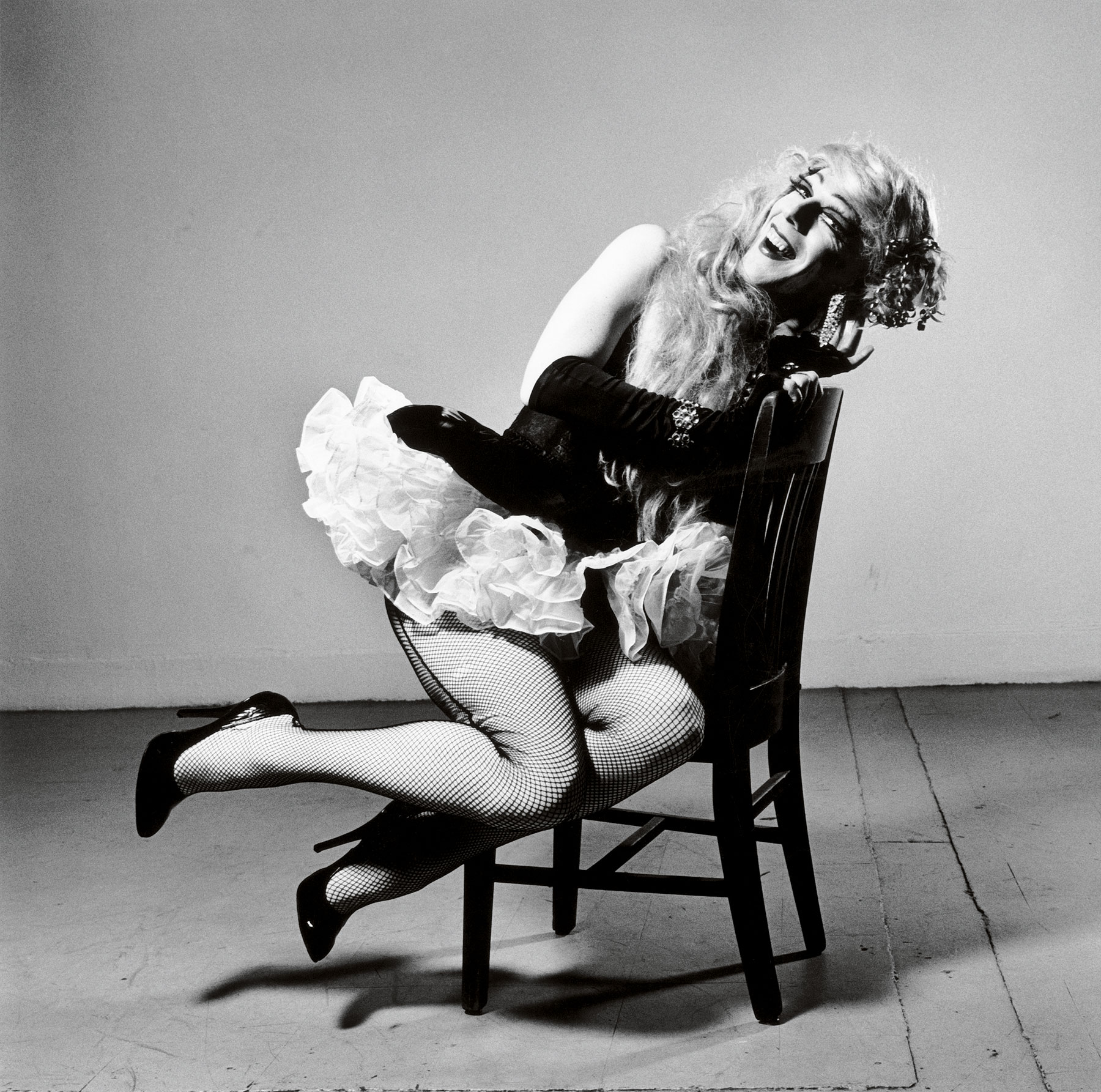
 

Peter Hujar (American, 1934-1987) 'Ethyl Eichelberger as Minnie the Maid' 1981


Peter Hujar (American, 1934-1987)
Ethyl Eichelberger as Minnie the Maid
1981
Gelatina de plata
The Morgan Library & Museum, The Peter Hujar Collection
Adquirida gracias a The Charina Endowment Fund
© The Peter Hujar Archive, LLC. Cortesía Pace/MacGill Gallery, Nueva York, and Fraenkel Gallery, San Francisco
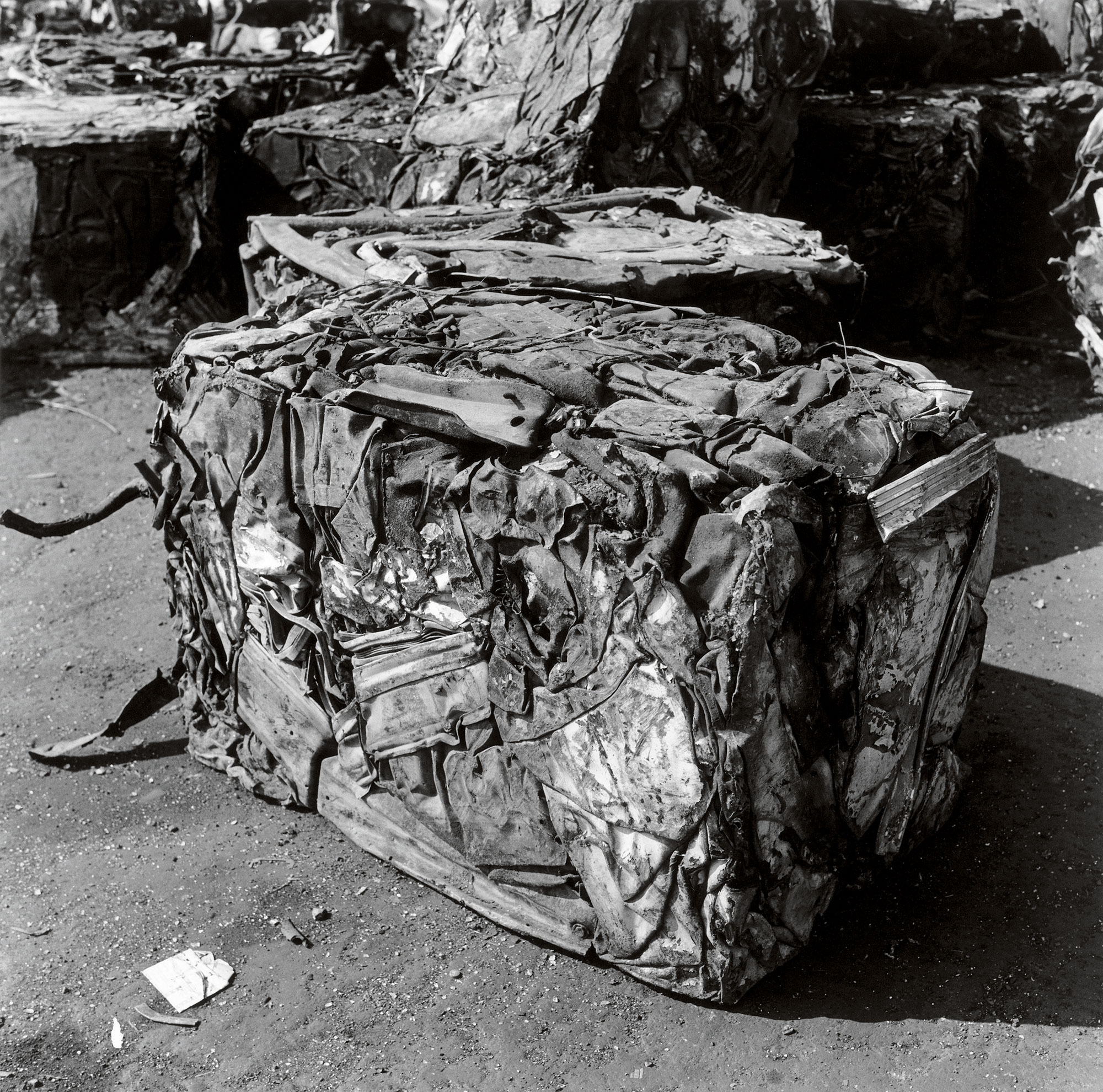
 

Peter Hujar (American, 1934-1987) 'Steel Ruins 13' 1976


Peter Hujar (American, 1934-1987)
Steel Ruins 13
1976
Gelatina de plata
The Morgan Library & Museum, The Peter Hujar Collection
Adquirida gracias a The Charina Endowment Fund
© The Peter Hujar Archive, LLC. Cortesía Pace/MacGill Gallery, Nueva York, and Fraenkel Gallery, San Francisco


Peter Hujar (American, 1934-1987) 'Gary in Contortion (1)' 1979


Peter Hujar (American, 1934-1987)
Gary in Contortion (1)
1979
Gelatina de plata
The Morgan Library & Museum, The Peter Hujar Collection
Adquirida gracias a The Charina Endowment Fund
© The Peter Hujar Archive, LLC. Cortesía Pace/MacGill Gallery, Nueva York, and Fraenkel Gallery, San Francisco


Peter Hujar (American, 1934-1987) 'Self-Portrait Jumping (1)' 1974


Peter Hujar (American, 1934-1987)
Self-Portrait Jumping (1)
1974
Gelatina de plata
The Morgan Library & Museum, The Peter Hujar Collection
Adquirida gracias a The Charina Endowment Fund
© The Peter Hujar Archive, LLC. Cortesía Pace/MacGill Gallery, Nueva York, and Fraenkel Gallery, San Francisco


Peter Hujar (American, 1934-1987) 'Candy Darling on Her Deathbed' 1973


Peter Hujar (American, 1934-1987)
Candy Darling on Her Deathbed
1973
Gelatina de plata
Colección de Richard and Ronay Menschel
© The Peter Hujar Archive, LLC. Cortesía Pace/MacGill Gallery, Nueva York, and Fraenkel Gallery, San Francisco


Peter Hujar (American, 1934-1987) 'Chloe Finch' 1981


Peter Hujar (American, 1934-1987)
Chloe Finch
1981
Gelatina de plata
The Morgan Library & Museum, The Peter Hujar Collection
Adquirida gracias a The Charina Endowment Fund
© The Peter Hujar Archive, LLC. Cortesía Pace/MacGill Gallery, Nueva York, and Fraenkel Gallery, San Francisco


Peter Hujar (American, 1934-1987) 'Butch and Buster' 1978


Peter Hujar (American, 1934-1987)
Butch and Buster
1978
Gelatina de Plata
Colección de John Erdman and Gary Schneider
© The Peter Hujar Archive, LLC. Cortesía Pace/MacGill Gallery, Nueva York, and Fraenkel Gallery, San Francisco


Peter Hujar (American, 1934-1987) 'David Wojnarowcz Reclining (2)' 1981


Peter Hujar (American, 1934-1987)
David Wojnarowcz Reclining (2)
1981
Gelatina de plata
The Morgan Library & Museum, The Peter Hujar Collection
Adquirida gracias a The Charina Endowment Fund
© The Peter Hujar Archive, LLC. Cortesía Pace/MacGill Gallery, Nueva York, and Fraenkel Gallery, San Francisco


Peter Hujar (American, 1934-1987) 'John McClellan' 1981


Peter Hujar (American, 1934-1987)
John McClellan
1981
Gelatina de plata
The Morgan Library & Museum, The Peter Hujar Collection
Adquirida gracias a The Charina Endowment Fund
© The Peter Hujar Archive, LLC. Cortesía Pace/MacGill Gallery, Nueva York, and Fraenkel Gallery, San Francisco
 

Peter Hujar (American, 1934-1987) 'Susan Sontag' 1975


Peter Hujar (American, 1934-1987)
Susan Sontag
1975
Gelatina de plata
The Morgan Library & Museum, The Peter Hujar Collection
Adquirida gracias a The Charina Endowment Fund
© The Peter Hujar Archive, LLC. Cortesía Pace/MacGill Gallery, Nueva York, and Fraenkel Gallery, San Francisco
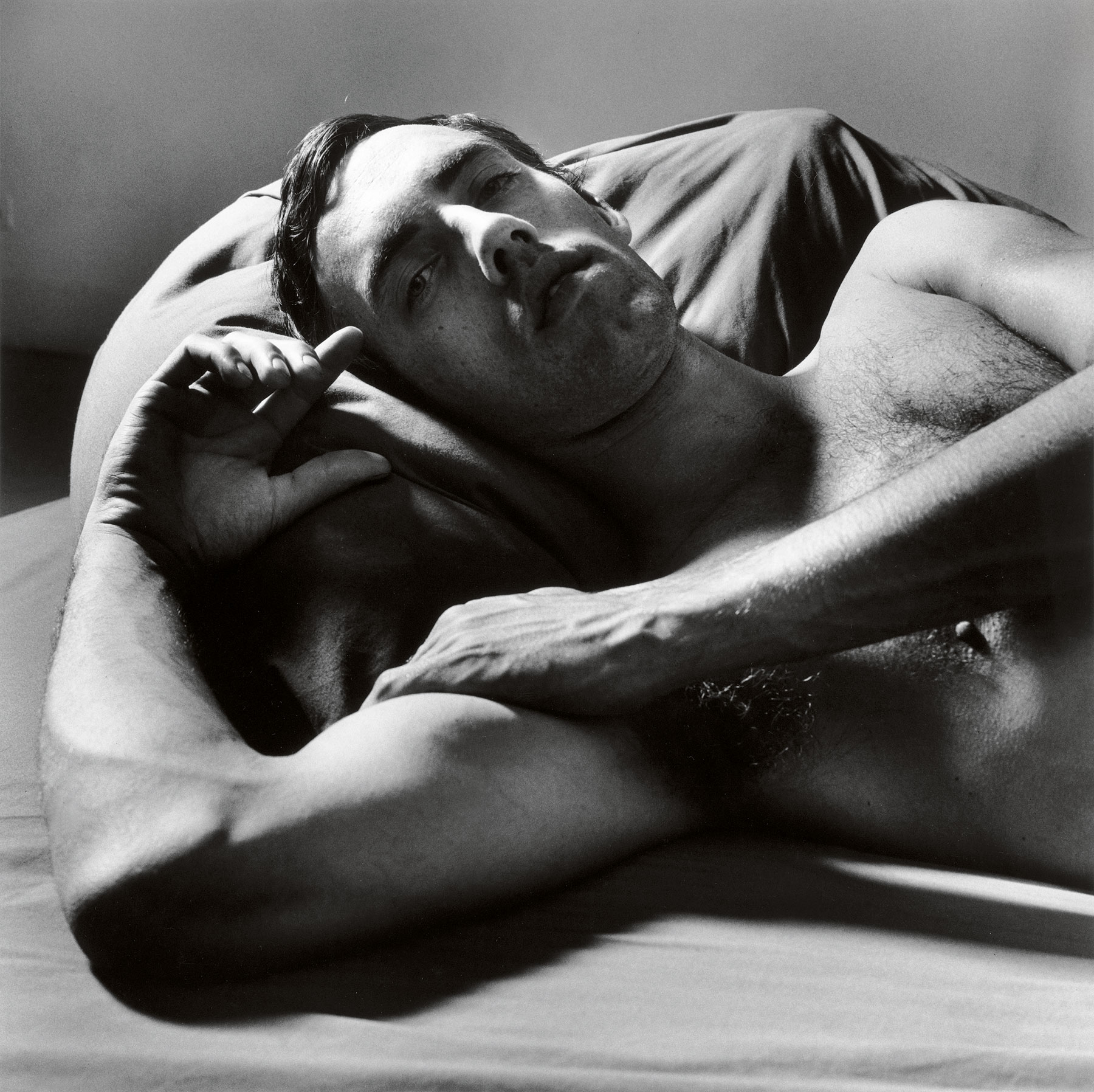
 

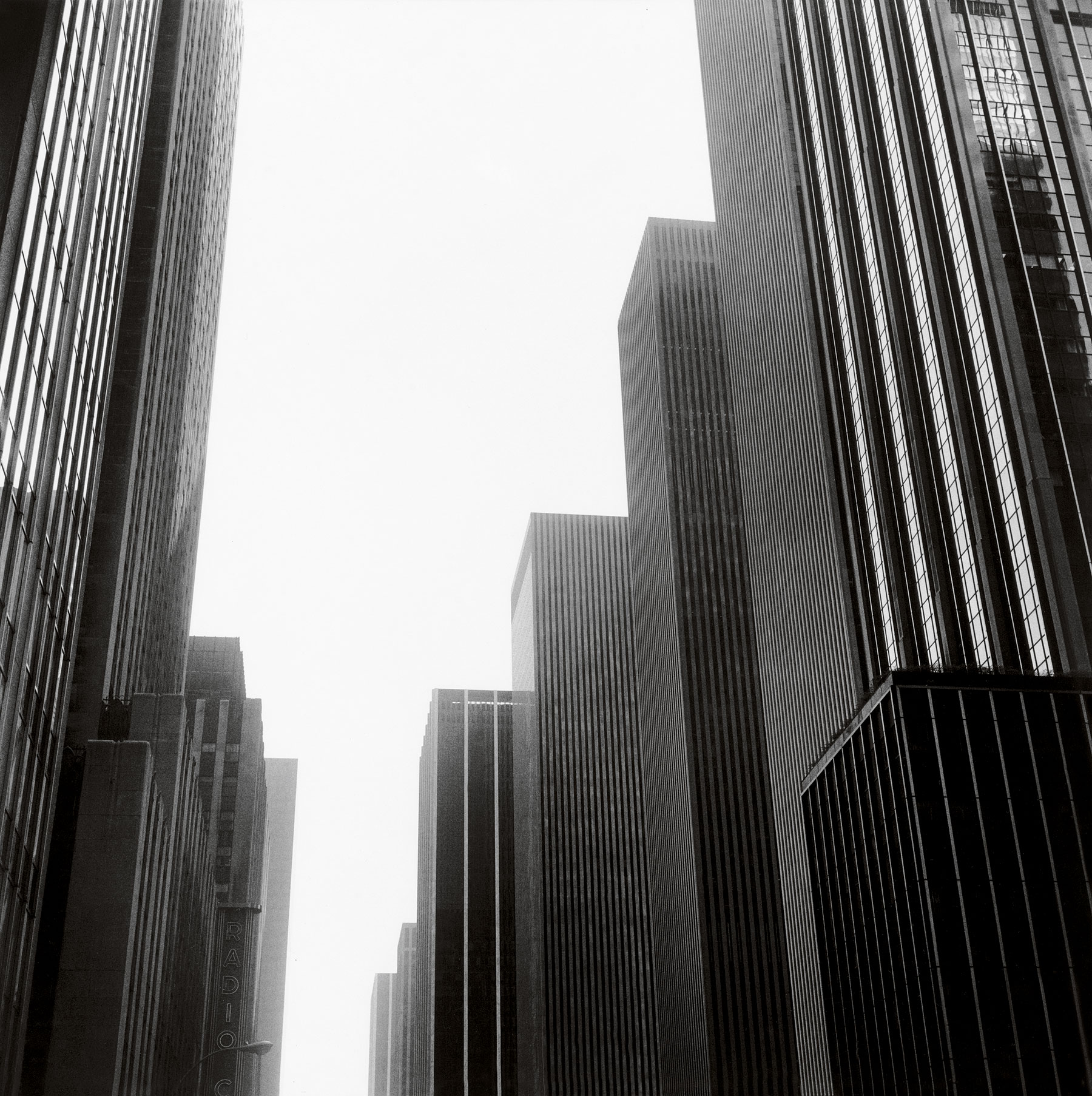
Peter Hujar (American, 1934-1987) 'New York: Sixth Avenue (1)' 1976


Peter Hujar (American, 1934-1987)
New York: Sixth Avenue (1)
1976
Gelatina de plata
The Morgan Library & Museum, The Peter Hujar Collection
Adquirida gracias a The Charina Endowment Fund
© The Peter Hujar Archive, LLC. Cortesía Pace/MacGill Gallery, Nueva York, and Fraenkel Gallery, San Francisco
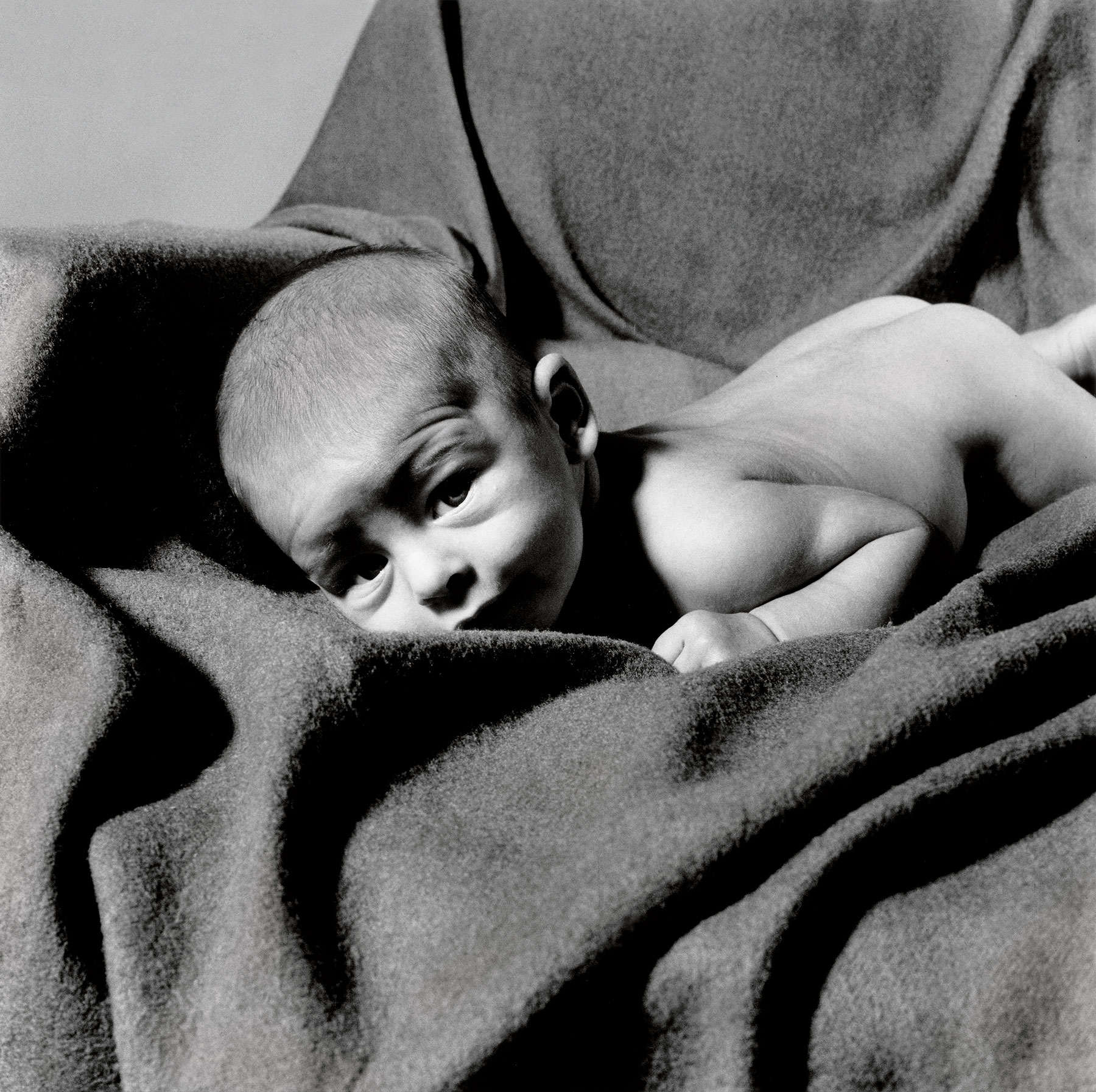
 

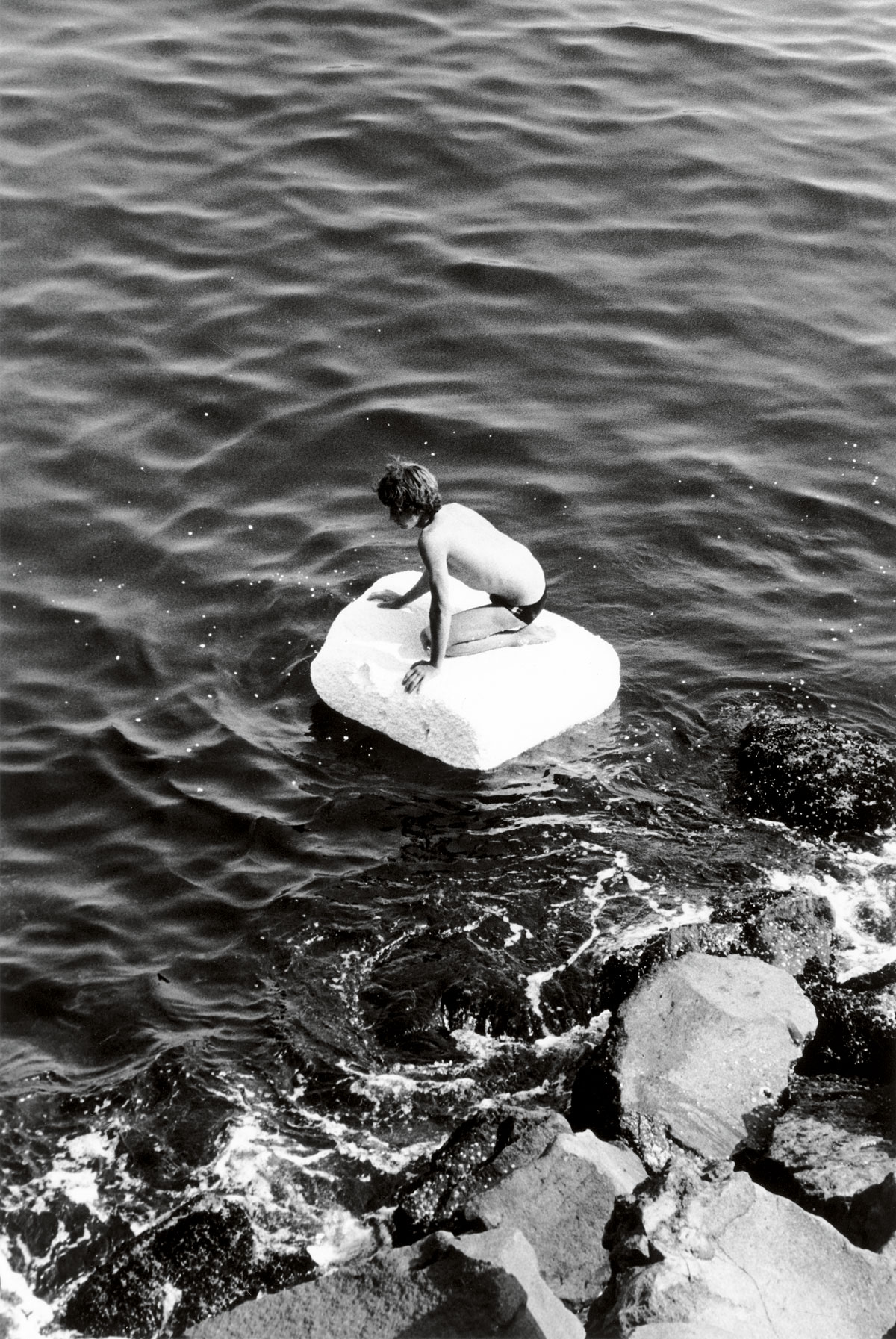
Peter Hujar (American, 1934-1987) 'Boy on Raft' 1978


Peter Hujar (American, 1934-1987)
Boy on Raft
1978
Gelatina de plata
The Morgan Library & Museum, The Peter Hujar Collection
© The Peter Hujar Archive, LLC. Cortesía Pace/MacGill Gallery, Nueva York, and Fraenkel Gallery, San Francisco


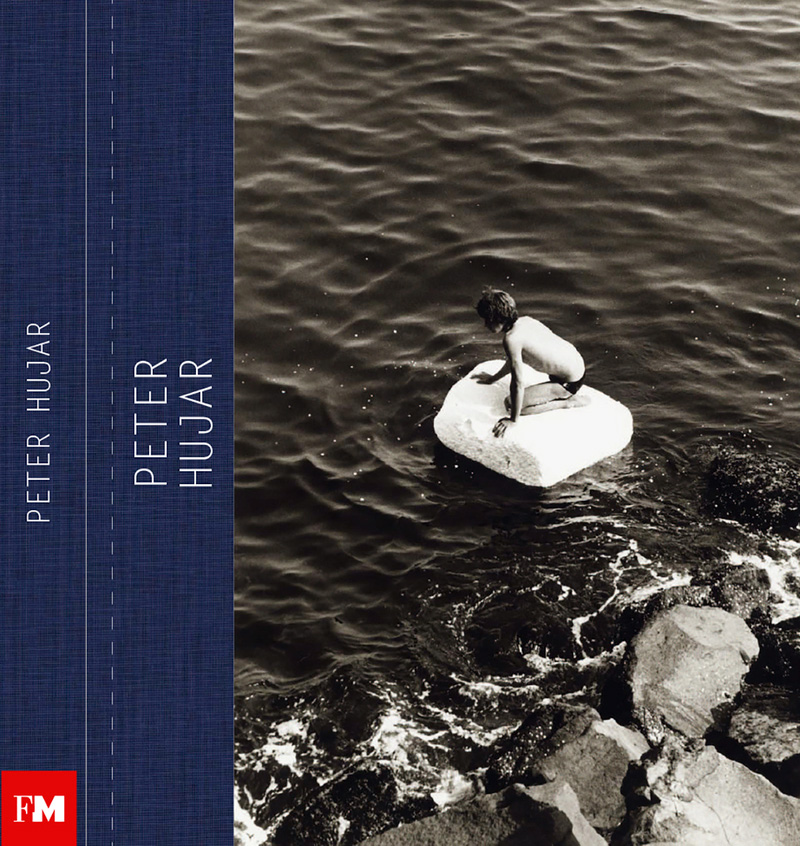
Cover of the catalogue for the exhibition 'Peter Hujar: Speed of Life' at Fundación MAPFRE, Barcelona featuring the Peter Hujar image 'Boy on Raft' (1978)


Cover of the catalogue for the exhibition Peter Hujar: Speed of Life at Fundación MAPFRE, Barcelona featuring the Peter Hujar image Boy on Raft (1978)


Fundación MAPFRE – Instituto de Cultura
Casa Garriga i Nogués exhibition space
Calle Diputació, 250
Barcelona

Opening hours:
Tuesday to Sundays (and holidays): 11am – 7pm
Closed Mondays
Fundación MAPFRE website

The Peter Hujar Archive

LIKE ART BLART ON FACEBOOK

Back to top

Exhibition: ‘The Camera Exposed’ at the Victoria and Albert Museum, London

Exhibition dates: 23rd July, 2016 – 5th March, 2017


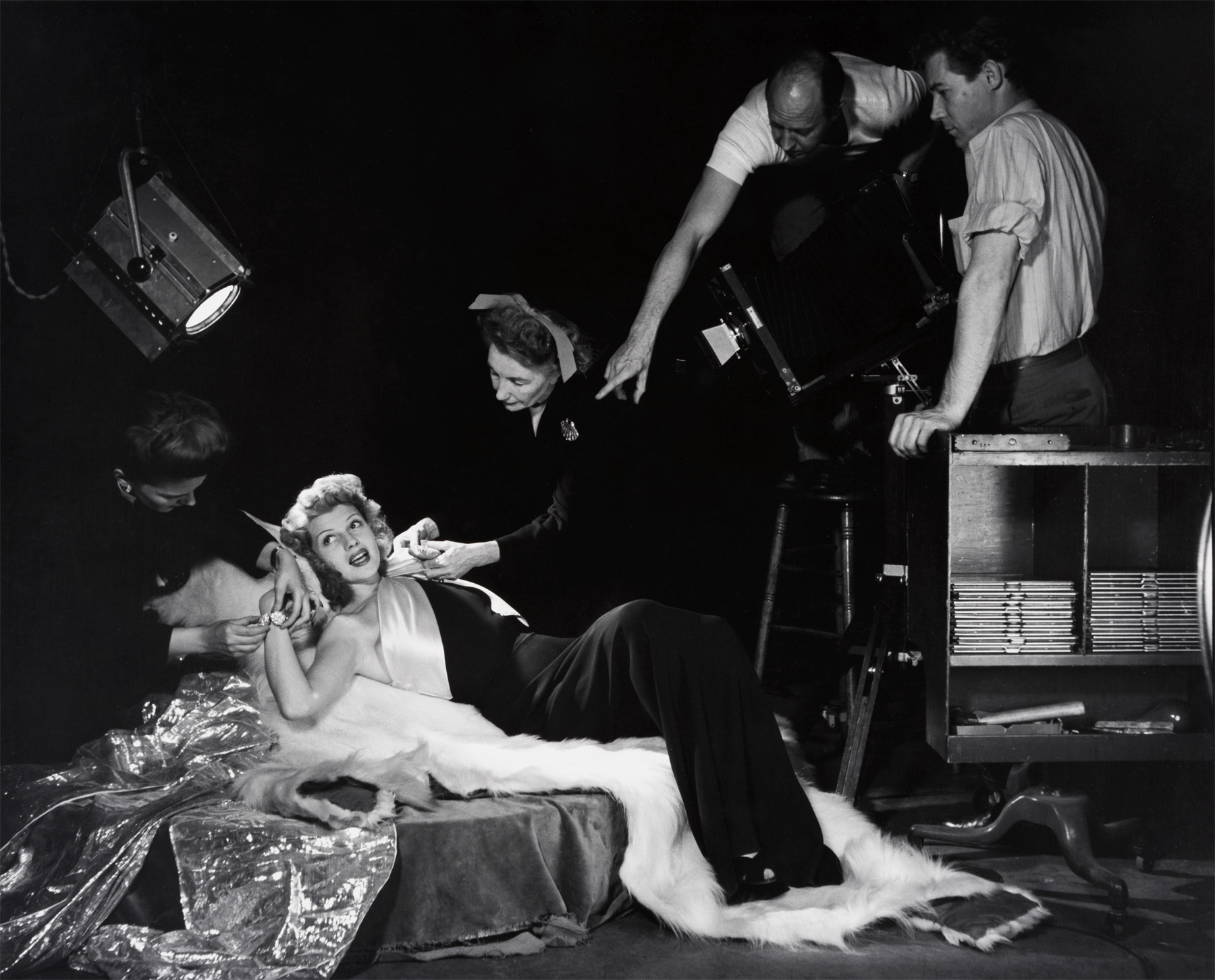
Philippe Halsman (American, 1906-1979) '"Rita Hayworth," Harper's Bazaar Studio' 1943 from the exhibition 'The Camera Exposed' at the Victoria and Albert Museum, London, July 2016 - March 2017


Philippe Halsman (American, 1906-1979)
“Rita Hayworth,” Harper’s Bazaar Studio
1943
© Philippe Halsman Archive


There’s not much to say about this exhibition from afar, except to observe it seems pretty standard fare, with no outstanding revelations or insights into the conditions of the camera’s “becoming” in photographic images or an exploration of the limits of the lens’ seeing. As the Centre for Contemporary Photography notes in their current exhibition, An elegy to apertures, “The camera receives and frames the world through the lens. This aperture is a threshold that demarcates the distinction between the scene and its photographic echo. It is both an entrance and a point of departure.”

So what happens to this threshold when we fuse the photographer’s eye with the “oculus artificialis” of the camera? When we examine the way apertures, shadows and ghosts haunt photographic images long after the shutter has closed? If, as the text for this exhibition states, “Voyeurism is a recurring motif in photography, as the practice often involves observing and recording others,” what does this voyeurism say about the recording of the self as subject and the camera together – the self actualised, self-reflexive selfie?

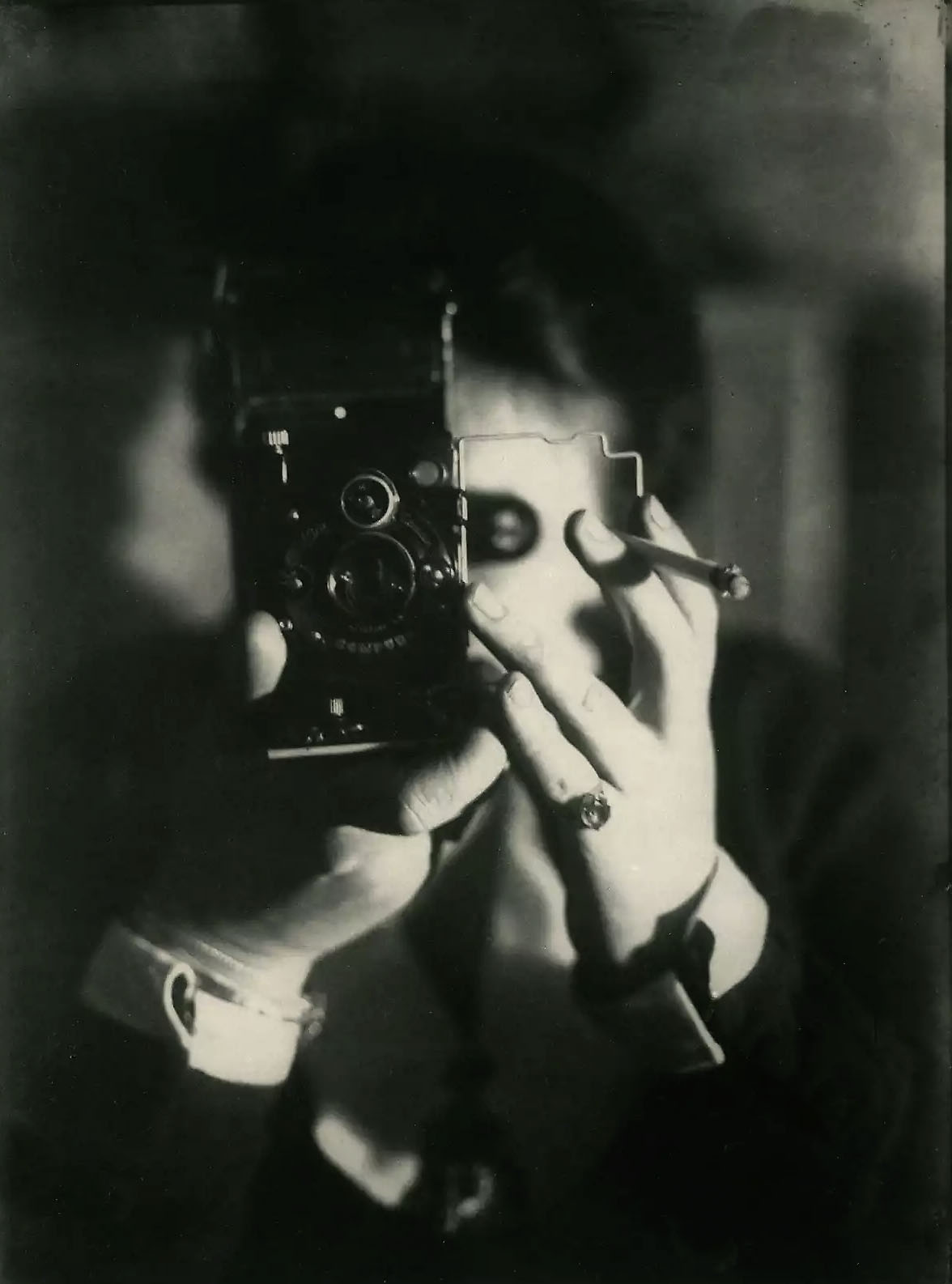
An insightful text on the Based on truth (and lies) website (December 17, 2011) observes of a 1925 self-portrait by photographer Germaine Krull (1897-1985) (below):

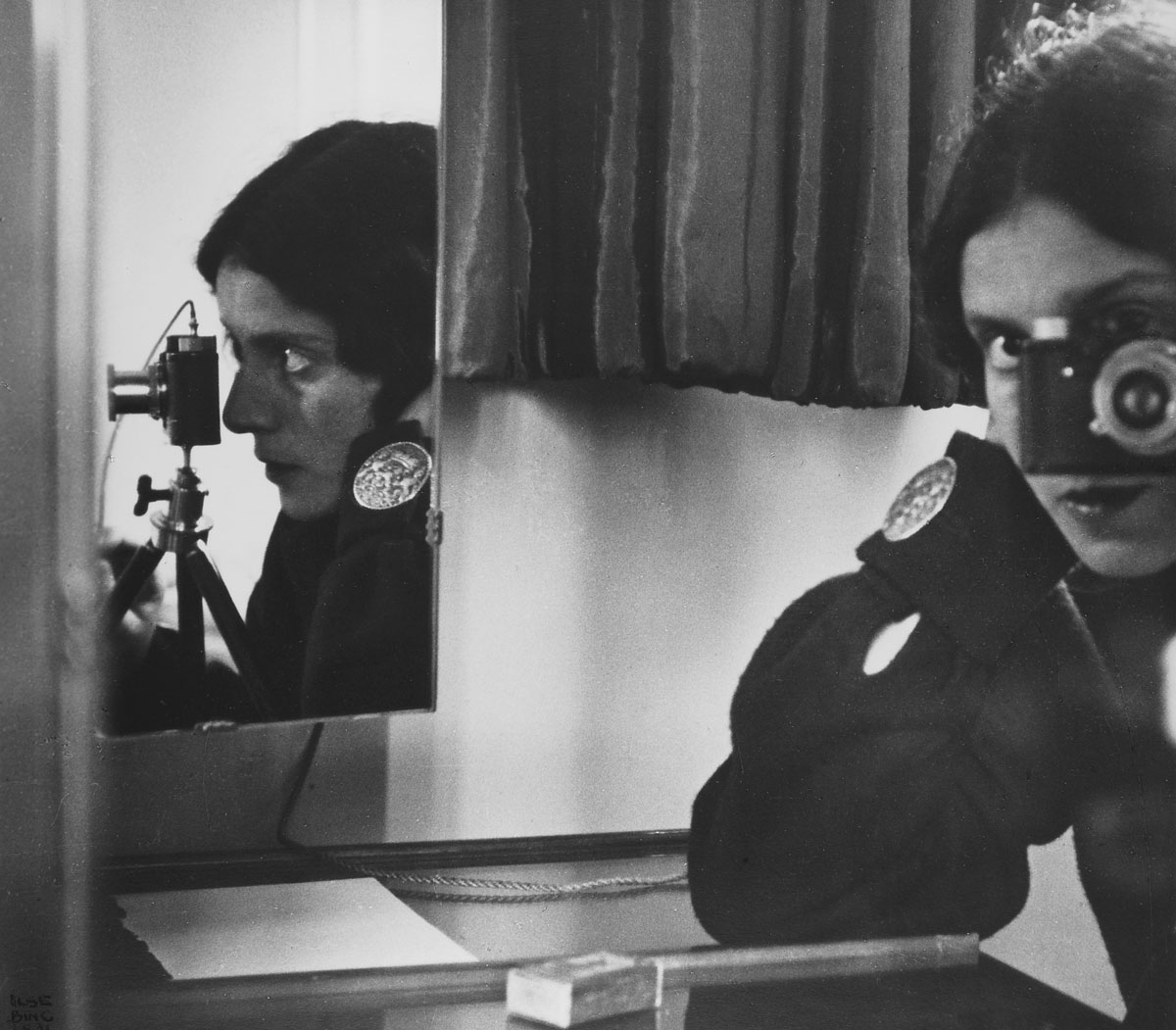
“In 1925, Germaine Krull photographed herself in a mirror with a hand-held camera which half-covered her face. The camera is focused on the foreground of the image, such that the lens and the two hands holding the camera are sharp, while the face behind the camera is blurred. This self-portrait has given rise to many a feminist or professionally critical interpretation, ranging from the female domestication “of the masculinity of technical apparatus” through to the analogy of the camera with a weapon used by the photographer to “reduce the person opposite her […] to an impotent object”. However, if we attempt to interpret the photograph not so much in a figurative sense as in a concrete, phenomenal sense, we arrive at a completely opposite conclusion. By selecting the depth of field in such a way that only the camera and the hands are sharp, Germaine Krull has isolated her act of photographing from her subjectivity and individuality as the photographer. It is the technical apparatus, the camera, which is the focal point of the image and behind which the photographer’s face is blurred beyond recognition. We may assume that this physiognomical retreat behind the camera is less a typical feminine gesture of shyness and reticence than the characteristically ideological approach of a modernist photographer. There is one critical point in Krull’s portrait of herself as a photographer which gives us good reason to make this assumption, namely the fusion of the photographer’s eye with the “oculus artificialis” of the camera. The notion that the camera lens could not only replace the human eye as a means of capturing the world visually but also improve upon its ability to penetrate reality to its invisible depths was paradigmatic of the new, basically positivist photographic aesthetic of the 1920s. It is an aesthetic defined by the Bauhaus theorist László Moholy-Nagy in his manifesto “Painting Photography Film” in 1925 and visualised by countless collages, posters and book covers of the 1920s and 1930s depicting the camera lens as a substitute for the human eye. Germaine Krull’s self-portrait wholly identifies with this new photographic aesthetic, too. Indeed, her influential work “Métal”, a photographic eulogy of modern technology published in 1928, is its embodiment.”1


The highlight for me is that always transcendent image by Judy Dater, Imogen and Twinka at Yosemite (1974, below). I would hope in the exhibition there would be images by Diane Arbus, Edward Weston, Vivian Maier, Man Ray, Rodchenko and others. But you never know.

Dr Marcus Bunyan

1/ sgtr. “Germaine Krull, Selbstporträt mit Ikarette, 1925,” on the Based on truth (and lies) website December 17, 2011 [Online] Cited 01/03/2023


Many thankx to the V&A for allowing me to publish the photographs in the posting. Please click on the photographs for a larger version of the image.


Germaine Krull (German, 1897-1985) 'Self-portrait' 1925


Germaine Krull (German, 1897-1985)
Self-portrait
1925
Gelatin silver print

This photograph is not in the exhibition. It is used under “fair use” conditions for the purposes of education and research.


In the age of the mobile phone, the camera as a stand-alone device is disappearing from sight. Yet generations of photographers have captured the tools of their trade, sometimes inadvertently as reflections or shadows, and sometimes as objects in their own right.

Throughout the history of photography the camera has often made an appearance in its own image, from the glint of Eugène Atget’s camera in a Parisian shop window from the 1900s, to the camera that serves as an eye in Calum Colvin’s 1980s photograph of a painted assemblage of objects.

Many images of cameras exploit the instrument’s anthropomorphic qualities. Held up to the face, as in Richard Sadler’s portrait of Weegee, it becomes a mask, the lens a mechanical eye. It conceals the photographer’s features yet reinforces his or her identity. Set on a tripod, it can take on human form, appearing like a body supported by legs, and can stand in for the photographer.

Photographs that include cameras often draw attention to the inherent voyeurism of the medium by turning the instrument towards the viewer. Such images confront the viewer’s gaze, returning it with the cool, mechanical look of the lens. The viewer cannot help but be aware not only of seeing, but of being seen.

Anonymous text. “The camera as star,” on the V&A website Nd [Online] Cited 24/11/2021


Lady Clementina Hawarden (Viscountess, British 1822-1865) 'Clementina Maude, 5 Princes Gardens; Photographic Study' c. 1862-1863 from the exhibition 'The Camera Exposed' at the Victoria and Albert Museum, London, July 2016 - March 2017


Lady Clementina Hawarden (Viscountess, British 1822-1865)
Clementina Maude, 5 Princes Gardens; Photographic Study
c. 1862-1863
Albumen print; Sepia photograph mounted on green card
21.6 x 23.2cm
© Victoria and Albert Museum, London


Lady Clementina Hawarden, a noted amateur photographer of the 1860s, frequently photographed her children. Here, her second-eldest daughter Clementina Maude poses next to a mirror, in  which a bulky camera is reflected. The camera  seems to stand in for the photographer, making  this a mother-daughter portrait of sorts.

This photograph gives a good idea of Lady Hawarden’s studio and the way she used it. It was situated on the second floor of her house at 5 Princes Gardens in the South Kensington area of London. Here her daughter Clementina poses beside a mirror. A movable screen has been placed behind it, across the opening into the next room. A side table at the left balances a desk at the right. The figure of the young girl is partially balanced and echoed by the camera reflected in the mirror and the embroidery resting on the table beside it.

Hawarden appears to have worked with seven different cameras. The one seen in the mirror is the largest. Possibly there is a slight suggestion of a hand in the act of removing and/or replacing the lens cap to begin and end the exposure.

Anonymous. “Clementina Maude, 5 Princes Gardens,” on the V&A website Nd [Online] Cited 01/03/2023


Lady Clementina Hawarden (Viscountess, British 1822-1865) 'Clementina Maude, 5 Princes Gardens; Photographic Study' c. 1862-1863 (detail)


Lady Clementina Hawarden (Viscountess, British 1822-1865)
Clementina Maude, 5 Princes Gardens; Photographic Study (detail)
c. 1862-1863
© Victoria and Albert Museum, London


Laelia Goehr (British born Russia, 1908-2002) 'Bill Brandt with his Kodak Wide-Angle Camera' 1945


Laelia Goehr (British born Russia, 1908-2002)
Bill Brandt with his Kodak Wide-Angle Camera
1945
© Alexander Goehr


Laelia Goehr (1908-2002), learned photography from Bill Brandt, who poses for this portrait with his newly-acquired Wide-Angle Kodak. This model was originally used by police to photograph crime scenes – the lens provides 110 degrees angle of view, equating approximately to a 14/15mm lens on a 35mm camera. Brandt experimented with it to produce his series Perspectives on Nudes, the same year as this portrait was taken. Brandt’s camera, which was made of mahogany and brass with removable bellows, was sold by Christie’s in 1997 for £3450.

Anonymous. “The camera as star: produced as part of The Camera Exposed, on the V&A website Nd [Online] Cited 01/03/2023


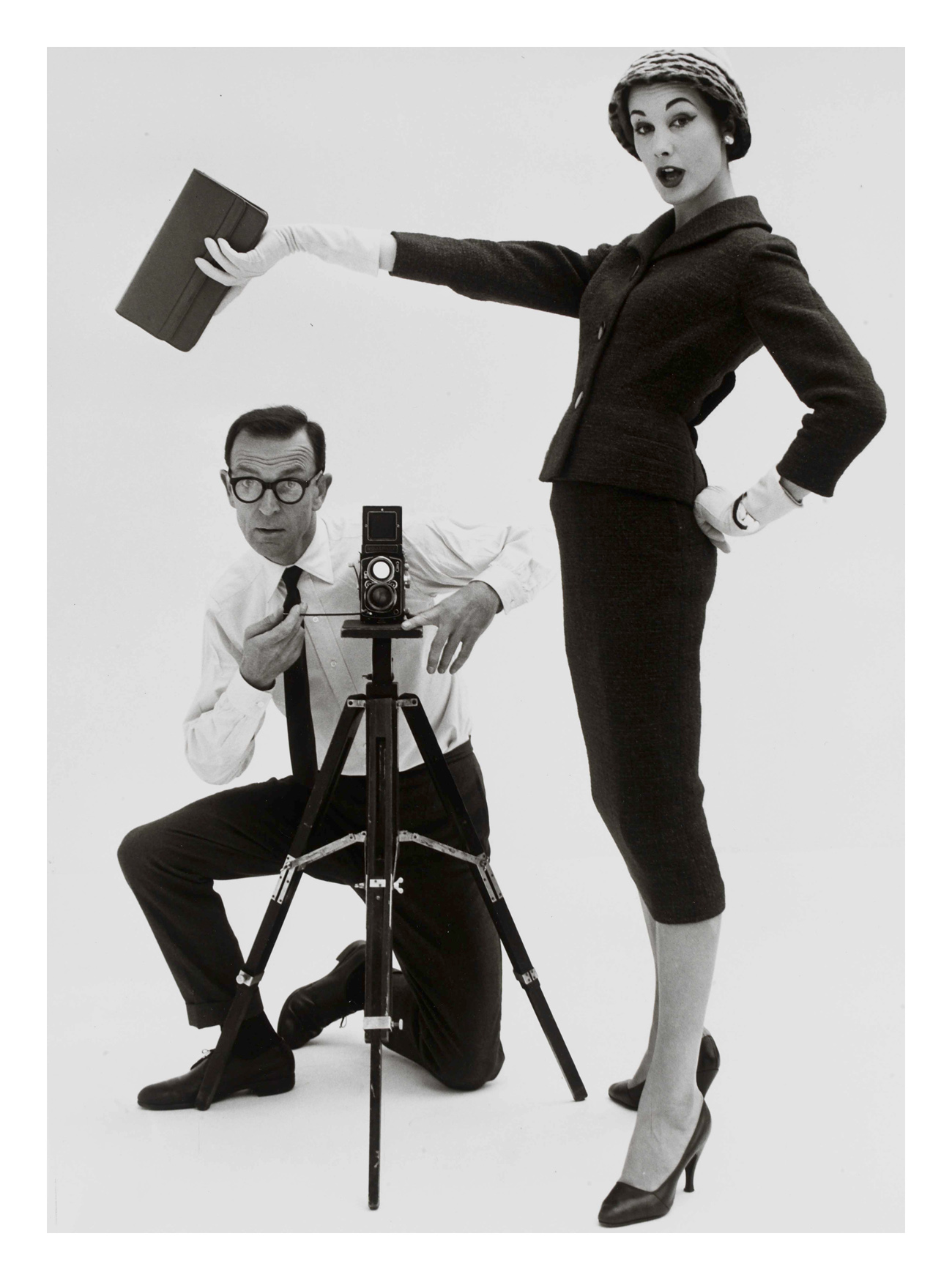
John French (English, 1907-1966) 'John French and Daphne Abrams in a tailored suit' 1957


John French (English, 1907-1966)
John French and Daphne Abrams in a tailored suit
1957, printed October 2009; print made by Jerry Jack
Gelatin silver print
27.8 x 38cm
Published in the TV Times, 1957
© Victoria and Albert Museum, London


French often left the actual release of the shutter to his assistants. On this occasion however, he inserted himself into the picture, kneeling behind a tripod-mounted Rolleiflex with the shutter release cable in his hand. His crouched, slightly rumpled presence gives a sense of behind-the scenes studio work and contrasts playfully with the polished elegance of the model beside him.


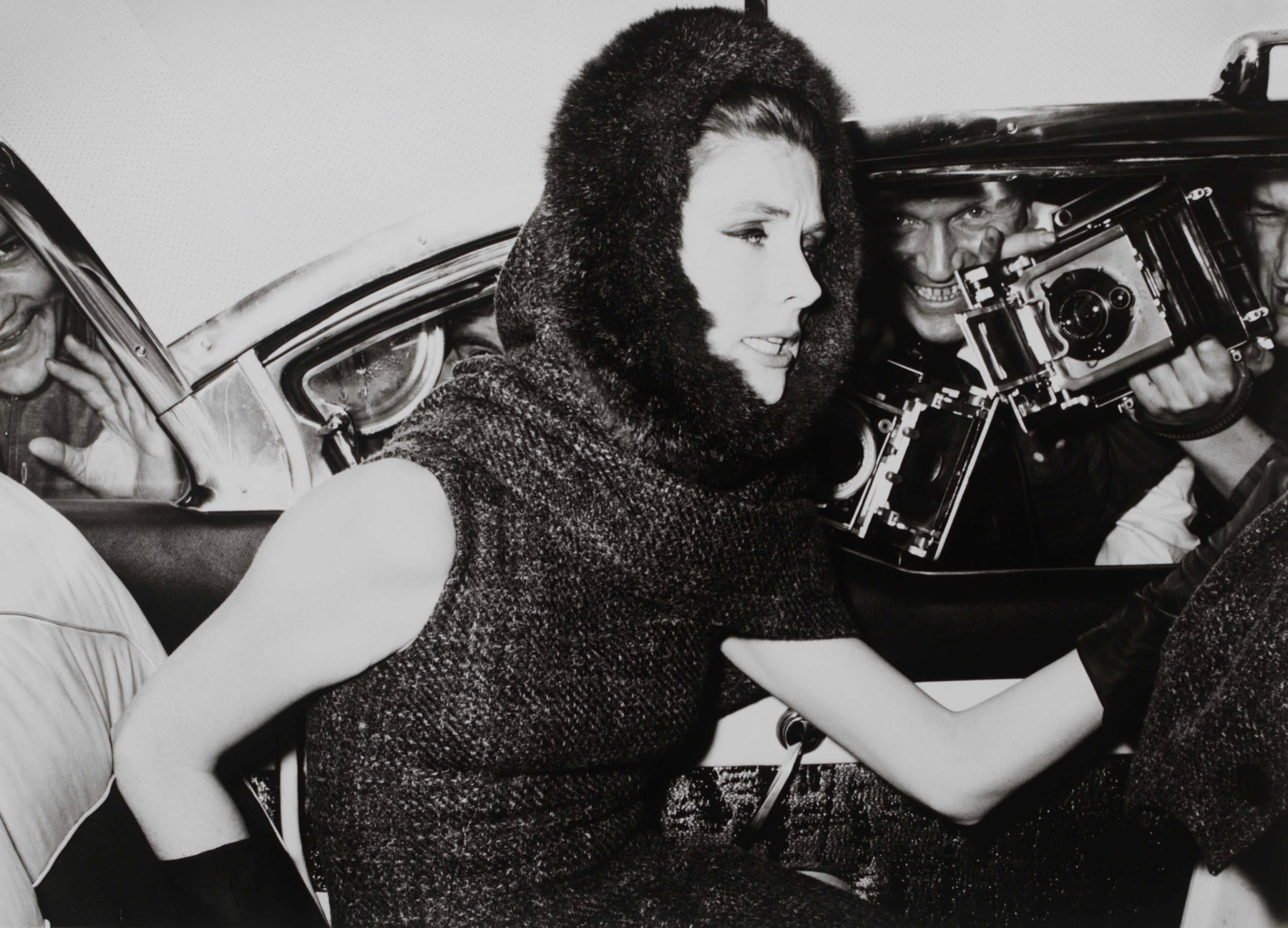
Richard Avedon (American, 1923-2004) 'Suzy Parker, dress by Nina Ricci, Champs-Elysée, Paris' 1962


Richard Avedon (American, 1923-2004)
Suzy Parker, dress by Nina Ricci, Champs-Elysée, Paris
1962
© Richard Avedon Foundation


Richard Sadler (British, 1927-2020) "Weegee the Famous" 1963


Richard Sadler (British, 1927-2020)
“Weegee the Famous”
1963
© Richard Sadler FRPS


Coventry-based portrait photographer Richard Sadler (b. 1927) photographed the self-proclaimed ‘Weegee the Famous’ in 1963. Weegee was a New York press photographer who gained his nickname – a phonetic spelling of Ouija, the fortune-telling board game – for his reputation for arriving at crime scenes before the police. His fame was international by the time this portrait was taken. Weegee’s visit to Coventry coincided with ‘Russian Camera Week’ at the city’s Owen Owen department store. The camera Weegee holds up to his eye here is the Zenit 3M, a newly-introduced Russian model made by the Krasnogorsk Mechanic Factory between 1962 and 1970.

A few years later Weegee made a comparable self-portrait in which the camera (this time a recent Nikon model) obscures his right eye.

Anonymous. “The camera as star: produced as part of The Camera Exposed, on the V&A website Nd [Online] Cited 01/03/2023


Photographer unknown. 'Camera on black cloth' Date unknown


Photographer unknown
Camera on black cloth
Date unknown
© Victoria and Albert Museum, London


The camera pictured here is a Super Ikonta C 521/2 camera, produced by the German company Zeiss Ikon from about 1936 to 1960. It has been carefully lit and arranged on a velvet cloth as if it were a still-life subject, by an unknown photographer.

Anonymous. “The camera as star: produced as part of The Camera Exposed, on the V&A website Nd [Online] Cited 01/03/2023


Tim Walker (British, b. 1970) 'Lily Cole with Giant Camera' 2004


Tim Walker (British, b. 1970)
Lily Cole with Giant Camera
2004
© Tim Walker


British fashion photographer Tim Walker (born 1970) has collaborated with the art director and set designer Simon Costin for over a decade, and Costin’s oversized props feature in many of Walker’s sparkling, magical scenes. Costin based the giant camera on Walker’s 35mm Pentax K1000. Walker found inspiration for this shoot in a 1924 fashion illustration by Vogue artist Benito. Benito depicted girls reading a magazine from which the models appear to be coming alive.

Anonymous. “The camera as star: produced as part of The Camera Exposed, on the V&A website Nd [Online] Cited 01/03/2023


Every photograph in this display features at least one camera. From formal portraits to casual snapshots, still-lifes to collages, they appear as reflections or shadows, and sometimes as objects in their own right. This summer the V&A displays of over 120 photographs that explore the camera as subject. People are taking more photographs today than ever before, but as they increasingly rely on smartphones, the traditional device is disappearing from sight.

The Camera Exposed showcases works by over 57 known artists as well as many unidentified amateur photographers. From formal portraits to casual snapshots, and from still-lifes to cityscapes, each work features at least one camera. Portraits of photographers such as Bill Brandt, Paul Strand and Weegee, posed with their cameras, are on display alongside self-portraits by Eve Arnold, Lee Friedlander and André Kertész, in which the camera appears as a reflection or a shadow. Other works depict cameras without their operators. In the earliest photograph included in the display, from 1853, Charles Thurston Thompson captures himself and his camera reflected in a Venetian mirror. The most recent works are a pair of 2014 photomontages by Simon Moretti, created by placing fragments of images on a scanner.

The display showcases several new acquisitions, including a recent gift of nine 20th-century photographs. Amongst these are a Christmas card by portrait photographer Philippe Halsman, an image of photojournalist W. Eugene Smith testing cameras and a self-portrait in the mirror by the French photojournalist Pierre Jahan. On display also is a recently donated collection of 50 20th-century snapshots of people holding cameras or in the act of taking photographs. These anonymous photographs attest to the broad social appeal of the camera.

Many of the photographs in the display highlight the anthropomorphic qualities of the camera. Held up to the face like a mask, as in Richard Sadler’s Weegee the Famous, the lens becomes an artificial eye. In Lady Hawarden’s portrait of her daughter, a mirror reflection of the camera on a tripod takes on a human form, a body supported by legs.

Cameras in photographs can also emphasise the inherent voyeurism of the medium. Judy Dater explores this theme in her well-known image of the fully clothed photographer Imogen Cunningham posed as if about to snap nude model Twinka Thiebaud. In other photographs on display, the camera confronts the viewer with its mechanical gaze, drawing attention to the experience not only of seeing, but of being seen.

Press release from the V&A


Charles Thurston Thompson (British, 1816-1868) 'Thompson Venetian mirror circa 1700' 1853


Charles Thurston Thompson (British, 1816-1868)
Venetian mirror circa 1700
1853
Albumen print from wet collodion-on-glass negative
22.8 x 16.3cm
© Victoria and Albert Museum, London


As early as 1853, Charles Thurston Thompson (1816-1868), the first official photographer to the South Kensington Museum (as the V&A was then called), recorded his reflection, along with that of his camera, in the glass of an ornate Venetian mirror. Loan objects such as the mirror were photographed so that photographic copies could be sold to designers, craftsmen and students, and also filed in the Museum’s library for study. By recording not only the frame’s intricate carvings but also his reflection and that of his box form camera and tripod, Thompson showed the very process by which he made the image. It gives us a vivid glimpse of a photographer at work outdoors in the early days of the Museum and the profession of Museum Photography.

Anonymous. “The camera as star: produced as part of The Camera Exposed, on the V&A website Nd [Online] Cited 01/03/2023


Eugène Atget (French, 1857-1927) 'Shopfront, Quai Bourbon, Paris, France' c. 1900


Eugène Atget (French, 1857-1927)
Shopfront, Quai Bourbon, Paris, France
c. 1900
Albumen print from gelatin dry plate negative
21 x 17.5cm
© Victoria and Albert Museum, London


The reflection of Eugène Atget’s (1857-1927) camera is an appealing detail in this photographic record of Parisian architecture from the turn of the century. Atget’s photographs had a primarily documentary role – this image was purchased by the V&A in 1903 as an illustration of Parisian ironwork. Yet it carries a strangeness which has fascinated 20th-century photographers. His photographs acquired artistic status in the mid-1920s when they were ‘discovered’ by artists associated with Surrealism.

Anonymous. “The camera as star: produced as part of The Camera Exposed, on the V&A website Nd [Online] Cited 01/03/2023


This photograph is an albumen print, contact printed by Atget from a 24 x 18 glass negative. The dark shapes of two clips which held the negative in place on the right edge of the image are visible. This image was one of many photographs bought by the V&A directly from Atget, in this case, in 1903. This photograph would have been bought as simply an illustration of ironwork in Paris.

The albumen process was almost never used by the early 1900s, so the image can be dated to the 19th century. The use of this developing process also supports the non-art status intended for the photograph. There is, however, an ambiguity in the reading of this image and most strongly in the reflection in the door of the street and Atget with his camera. This is one of a number of Atget images where it is possible to see why his photographs have fascinated 20th-century photographers; it carries, whether intended or not, a strangeness which invests the image with potential meaning beyond its primarily documentary role.

Anonymous. “Shopfront, Quai Bourbon, Paris, France,” on the V&A website Nd [Online] Cited 01/03/2023


Pierre Jahan (French, 1909-2003) 'Autoportrait à Velo ('Self-portrait on bike') ' 1935


Pierre Jahan (French, 1909-2003)
Autoportrait à Velo (‘Self-portrait on bike’)
June 1944
Gelatin silver print
© Victoria and Albert Museum, London


Here, Jahan seems to have paused while cycling through the streets of Paris to snap himself in a mirror. His dangling cigarette and precarious perch on the bicycle suggest spontaneity, but the design of his camera demanded a deliberate approach. A Reflex-Korelle, manufactured in Dresden, it usually required the operator to hold it at waist level and look down into the viewfinder.


Pierre Jahan (French, 1909-2003)

Pierre Jahan (9 September 1909 – 21 February 2003) was a French photographer who often worked in a Surrealist style.

Born in Amboise and introduced to photography by his family at a very early age, Jahan received his first professional commission when he moved to Paris in 1933, through a meeting with ad-man Raymond Gid. In 1936 he joined the Rectangle group of photographers. This group, founded by Emmanuel Sougez, among others, encouraged him in his career as a photographer.

During the Occupation, he worked for the magazine Images de France, making portraits of celebrity figures such as Colette, and he produced large series of pictures such as “La mort et les statues,” published in 1946 with a text by Jean Cocteau. They also co-published a book in which Cocteau’s poem “Plain Chant” is illustrated by photographed nudes (1947).

A passionate experimenter with a strong interest in Surrealism, Jahan produced many collages and photomontages, which he used freely for the many advertising commissions that came his way after the end of World War II.

A committed activist for photographers’ rights, he helped to found the French federation of art photographers (FAPC), of which he became vice-chairman. In 1949 he joined the professional photographers’ association Le Groupe des XV alongside Robert Doisneau, Willy Ronis, and others, to lobby for the conservation of France’s photographic heritage. He took part in their exhibitions and in those held by the Salon National de la Photographie.

Text from the Wikipedia website


Unknown photographer. 'Vernacular photograph' c. 1940s


Unknown photographer
Vernacular photograph
c. 1940s
Gelatin silver print
71mm x 98mm
© Victoria and Albert Museum, London


Vernacular portrait photograph of a woman in front of a fence, using a camera held at chest height. Photographer unknown, c. 1940s. Gelatin silver print, from the collection of Peter Cohen, given as part of a group of 50 photographs featuring cameras.


Elsbeth Juda (British born Germany, 1911-2014) 'Mediterranean Fortnight' 1953


Elsbeth Juda (British born Germany, 1911-2014)
Mediterranean Fortnight
1953
© Siobhan Davies


Elsbeth Juda (British born Germany, 1911-2014)

Elsbeth Juda (1911-2014) was a British fashion photographer who worked for more than 20 years as photographer and editor on The Ambassador magazine. This image was shot at an archaeological site in Cyprus for a story on British fashion abroad. The model appears to pose for a local tintype photographer with a homemade looking camera. Tintype, also called ferrotype, was an early photographic process which produced an underexposed negative using a thin metal plate. Tintype photography was around 100 years old when Juda took this shot.

Anonymous. “The camera as star: produced as part of The Camera Exposed, on the V&A website Nd [Online] Cited 01/03/2023


Elsbeth Ruth Juda (née Goldstein) and known professionally as Jay (2 May 1911 – 5 July 2014), was a British photographer most notable for her pioneering fashion photographs and work as associate editor and photographer for The Ambassador magazine between 1940 and 1965.

The Ambassador

Hans and Elsbeth Juda originally opened a London satellite office for the Dutch trade magazine International Textiles. After 1940, however, when Amsterdam came under control of the Germany army, the magazine proved too difficult to continue. In March 1946 the Judas changed the name of the publication to The Ambassador and changed its focus to British industry, trade and exports. The magazine was influential from its inception and encouraged by the British Government, who helped by ensuring a continual supply of paper during the war. Indeed, The Ambassador, The British Export Magazine became the voice of British manufacturing for export when the nation’s trade was struggling to emerge after 1945. It was published monthly in four languages (English, German, French and Portuguese), had subscribers in over ninety countries, and a circulation of 23,000 copies.

Juda’s husband, Hans, coined the official motto “Export or Die” for The Ambassador. Later, as the magazine became an essential marketing and press journal for a Britain desperate to reestablish itself as a global exporter in the post-war era, the phrase would become a mantra for the national manufacturing industry. Throughout their work during the 1940s, 1950s and 1960s, Juda and her husband became two of the United Kingdom’s greatest champions for export, constantly promoting every facet of British manufacturing, culture and the arts and, in the process, coming into close contact with a host of distinguished artists, writers, designers and photographers. The critic Robert Melville described Ambassador as “the most daring and enterprising trade journal ever conceived… no other magazine… has so consistently and brilliantly demonstrated the relevance of works of art to the problems of industrial design.”

Juda’s shoots for The Ambassador combined elements of fashion, modernism and trade. Her series of photos of the famed British model Barbara Goalen modelling Scottish textiles among the heavy machinery of working textile factory are especially representative of her unique visual aesthetics. Together they built a considerable art collection from the many artists that they came in contact with at The Ambassador. It is a much wider circle of friends, however, which would allow Jay to capture every facet of a reemerging post-war Britain through the lens of her camera. The magazine was bought by Thomson Publications in 1961 and continued to be published until 1972.

Text from the Wikipedia website


Armet Francis (British born Jamaica, b. 1945) 'Self-portrait in Mirror' 1964


Armet Francis (British born Jamaica, b. 1945)
Self-portrait in Mirror
1964
© Armet Francis


Armet Francis was born in Jamaica in 1945 and moved to London at the age of ten. His photographic career began in his mid-teens when he worked as an assistant for a West End photographic studio. His early photographs show him experimenting with the camera as a technical device and a tool for self-representation. The camera in this self-portrait is a Yashica-Mat LM twin lens reflex, an all-mechanical model introduced in 1958, with an inbuilt light meter. It records his identity as a professional photographer, while the surrounding scene offers an intimate glimpse into his personal life.

Anonymous. “The camera as star: produced as part of The Camera Exposed, on the V&A website Nd [Online] Cited 01/03/2023


Armet Francis is a Jamaican-born photographer and publisher who has lived in London since the 1950s. He has been documenting and chronicling the lives of people of the African diaspora for more than 40 years and his assignments have included work for The Times Magazine, The Sunday Times Supplement, BBC and Channel 4.

He has exhibited worldwide and his work is in collections including those of the Victoria & Albert Museum and the Museum of London. One of his best known photographs is 1964’s “Self Portrait in Mirror”.

Read a fuller biography on the Wikipedia website


Judy Dater (American, b. 1941) 'Imogen and Twinka at Yosemite' 1974


Judy Dater (American, b. 1941)
Imogen and Twinka at Yosemite
1974
© Judy Dater


Cameras in photographs can also emphasise the inherent voyeurism of the medium. Judy Dater explores this theme in her well-known image of the fully clothed photographer Imogen Cunningham posed as if about to snap nude model Twinka Thiebaud.

Dater met Imogen Cunningham, a prominent American photographer, in 1964. Cunningham acted as a mentor to Dater, and the two became close friends. This image is from Dater’s larger series addressing the theme of voyeurism, in particular the idea of someone clothed watching someone nude. Voyeurism is a recurring motif in photography, as the practice often involves observing and recording others.


Judy Dater (American, b. 1941)

Judith Rose Dater (née Lichtenfeld; June 21, 1941) is an American photographer and feminist. She is perhaps best known for her 1974 photograph, Imogen and Twinka at Yosemite, featuring an elderly Imogen Cunningham, one of America’s first woman photographers, encountering a nymph in the woods of Yosemite. The nymph is the model Twinka Thiebaud. The photo was published in Life magazine in its 1976 issue about the first 200 years of American women. Her photographs, such as her Self-Portraiture sequence, were also exhibited in the Getty Museum. …

Photography

Judy Dater uses photography as an instrument for challenging traditional conceptions of the female body. Her early work paralleled the emergence of the feminist movement and her work became strongly associated with it. At a time when female frontal nudity was considered risqué Dater pushed the boundaries by taking pictures of the naked female body. However, she did so in a way which did not objectify her subject which was in many cases, herself. Dater began taking photographs in the 1960s and she is still taking photographs today. Mark Johnstone, an Idaho resident whom Dater photographed in the early 80’s remarked that “During this time, she never got swayed by or indulged in trends, but moved with her own vision. She’s one of the few successful women in the art world, especially photography, who never depended on ongoing academic support to fuel and expand her artistic exploration.”

While her subject and message remained relatively constant throughout her career, Dater experimented with a variety of compositions as her career developed. Her photographs, and in particular, her portraits (which she specialises in) are taken in both black and white, and in colour. She has taken portraits in the Southwestern desert and also posed as female stereotypes in a more obvious display of activism. Her 1982 portrait “Ms. Clingfree” demonstrated the latter as Dater posed with an assortment of cleaning supplies.

She was influenced by the vital cultural intersection of photography and feminism, and the second wave of feminism which started in the 1960s and lasted up till the 1980s. In the 1980s, much has changed and the country as a whole became more conservative in areas of political life. The gains of the women’s movement began to slow, and many feminists became discouraged with the continuation of sexist attitudes and behaviour. Through her powerful photography and personal sense of style, Dater was able to surpass these conservative values and was able to effectively convey her views to her audience.

One of her famous photograph sequences taken in the 1980s, known as the Self-Portraiture sequence, exploited themes such as identity, feminism, and the human connection with nature. She effectively conveyed these themes and delivered, through her photography, the stories of women’s lives, relationships, and personal emotions. For example, in her photograph titled, My Hands, Death Valley, Dater presents the theme of feminism through the placement of the artist’s hands on the car’s glass window; her hands are crinkled, which is a sign of ageing. The theme of personal identity is explored in connection with the theme of feminism. The background is of the hazy Death Valley, the grounds are dry, her hands are weathered, and she’s trying to force open a car window. The theme of human’s connection with nature is exploited by taking the photograph in a natural landscape setting, and putting herself out there.

Read a fuller biography on the Wikipedia website


Victoria and Albert Museum
Cromwell Road
London
SW7 2RL
Phone: +44 (0)20 7942 2000

Opening hours:
Daily 10 – 17.45
Friday 10 – 22

V&A website

LIKE ART BLART ON FACEBOOK

Back to top

Exhibition: ‘Sabine Weiss’ at Jeu de Paume – Château de Tours

Exhibition dates: 18th June – 30th October, 2016

Curator: Virginie Chardin, independent curator


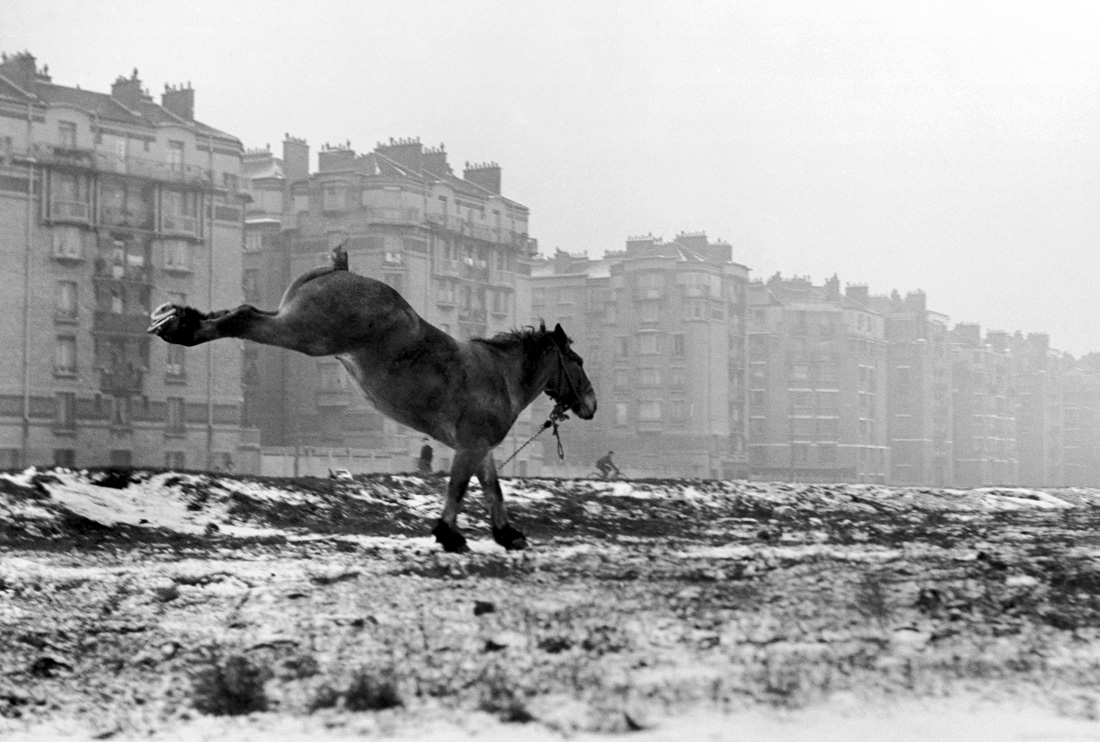
Sabine Weiss (Swiss-French, 1924-2021) 'Cheval, Porte de Vanves' Paris, 1952 from the exhibition 'Sabine Weiss' at Jeu de Paume – Château de Tours, June - Oct, 2016


Sabine Weiss (Swiss-French, 1924-2021)
Cheval, Porte de Vanves (Horse, Porte de Vanves)
Paris, 1952
Silver gelatin print
© Sabine Weiss


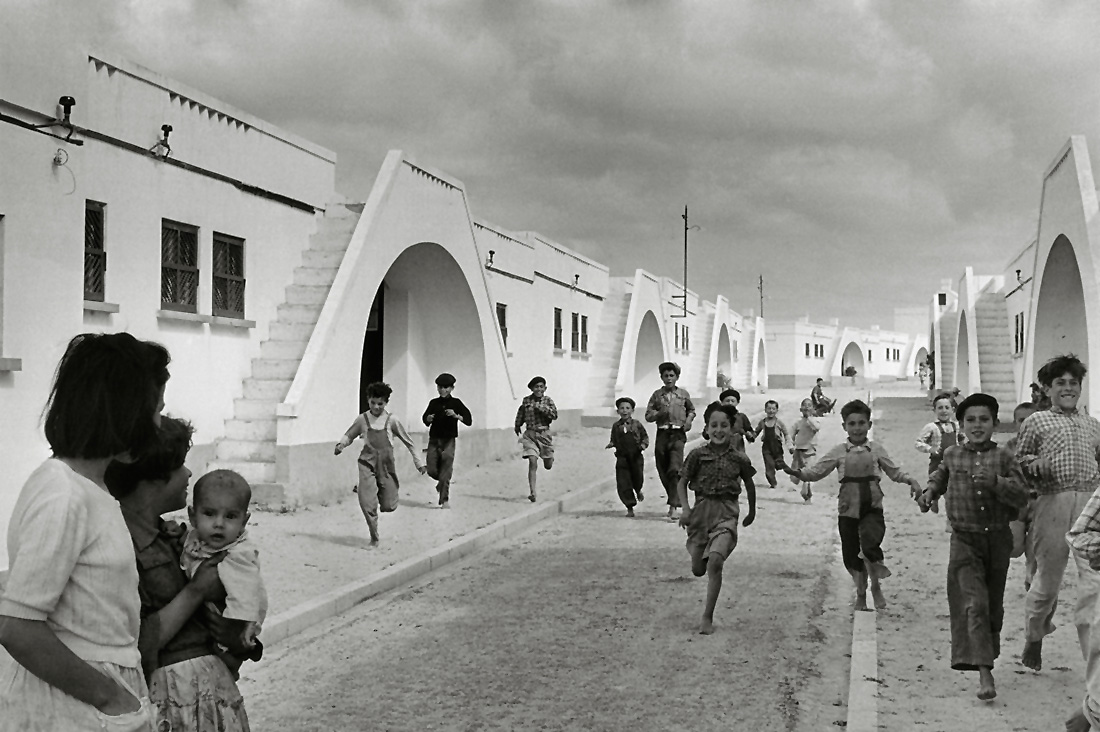
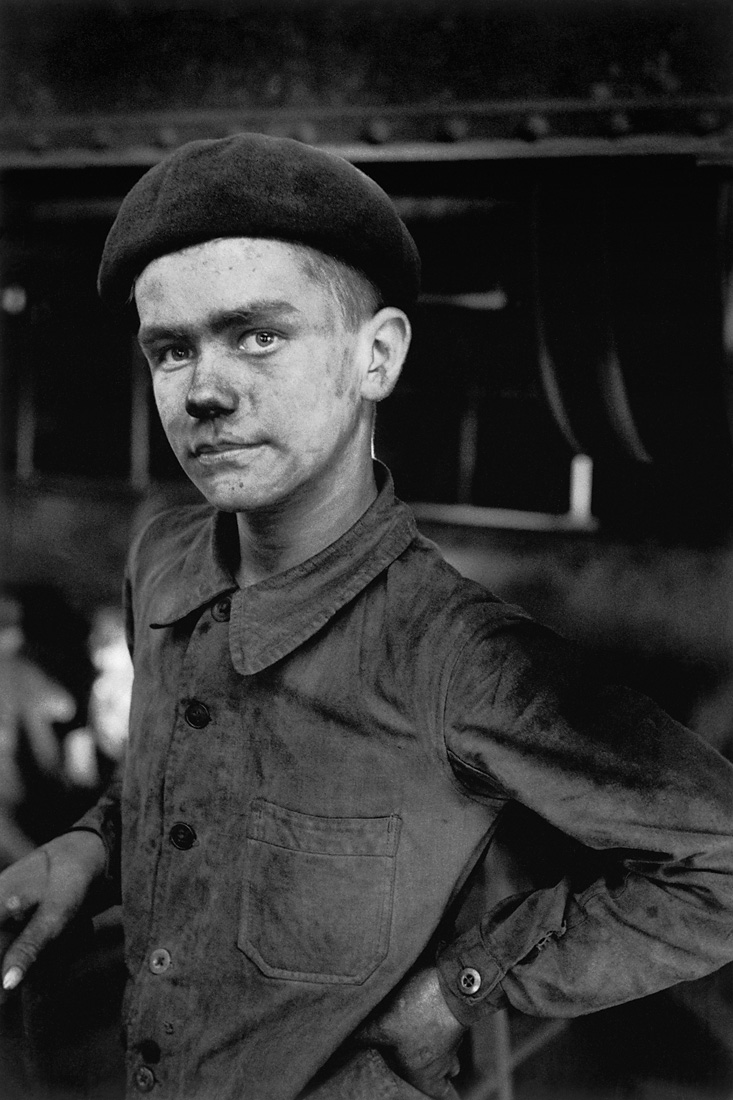
A photographer I knew very little about before assembling this posting. The undoubted influence of Henri Cartier-Bresson can be seen in many images (such as Vendeurs de pain, Athènes 1958 and Village moderne de pêcheurs 1954, both below), while other images are redolent of Josef Koudelka (Marriage gitan, 1953) and Paul Strand (Jeune mineur, 1955).

Weiss strikes one as a solid photographer in the humanist, Family of Man tradition who doesn’t push the boundaries of the medium or the genre, nor generate a recognisable signature style.

Dr Marcus Bunyan


Many thankx to Jeu de Paume for allowing me to publish the photographs in the posting. Please click on the photographs for a larger version of the image.


Sabine Weiss – Jeu de Paume Château de Tours

“Sabine Weiss”: exhibition at Jeu de Paume Château de Tours from 18 June 2016 until 30 October 2016.

Sabine Weiss is the last representative of the French humanist school of photography, which includes photographers like Robert Doisneau, Willy Ronis, Édouard Boubat, Brassaï and Izis.

Still active at over 90 years of age, she has accepted for the first time to present her personal archives, thereby providing a privileged insight into her life and career as a photographer. The exhibition at the Château de Tours will showcase just a few milestones from her long career. 

Through almost 130 prints, as well as numerous period documents – many of which are being shown for the first time – this exhibition provides visitors with an overview of the multiple facets of this prolific artist, for whom photography was first and foremost, a fascinating occupation.

Text from the Vimeo website


Sabine Weiss au Jeu de Paume, Château de Tours


Sabine Weiss (Swiss-French, 1924-2021) 'Vendeurs de pain' Athènes Grèce, 1958 from the exhibition 'Sabine Weiss' at Jeu de Paume – Château de Tours, June - Oct, 2016


Sabine Weiss (Swiss-French, 1924-2021)
Vendeurs de pain, Athènes (Sellers of bread, Athens)
Greece, 1958
Silver gelatin print
© Sabine Weiss


Sabine Weiss is the last representative of the French humanist school of photography, which includes photographers like Robert Doisneau, Willy Ronis, Édouard Boubat, Brassaï and Izis.

Still active at over 90 years of age, she has accepted for the first time to present her personal archives, thereby providing a privileged insight into her life and career as a photographer. The exhibition at the Château de Tours will showcase just a few milestones from her long career. Through almost 130 prints, as well as numerous period documents – many of which are being shown for the first time – this exhibition provides visitors with an overview of the multiple facets of this prolific artist, for whom photography was first and foremost, a fascinating occupation.


Sabine Weiss (Swiss-French, 1924-2021) 'Village moderne de pêcheurs, Olhão, Algarve' Portugal, 1954


Sabine Weiss (Swiss-French, 1924-2021)
Village moderne de pêcheurs, Olhão, Algarve (Modern fishing village, Olhão, Algarve)
Portugal, 1954
Silver gelatin print
© Sabine Weiss


Sabine Weiss (Swiss-French, 1924-2021) 'I Am A Horse, Spain' 1954


Sabine Weiss (Swiss-French, 1924-2021)
I Am A Horse, Spain
1954
Gelatin silver print
© Sabine Weiss


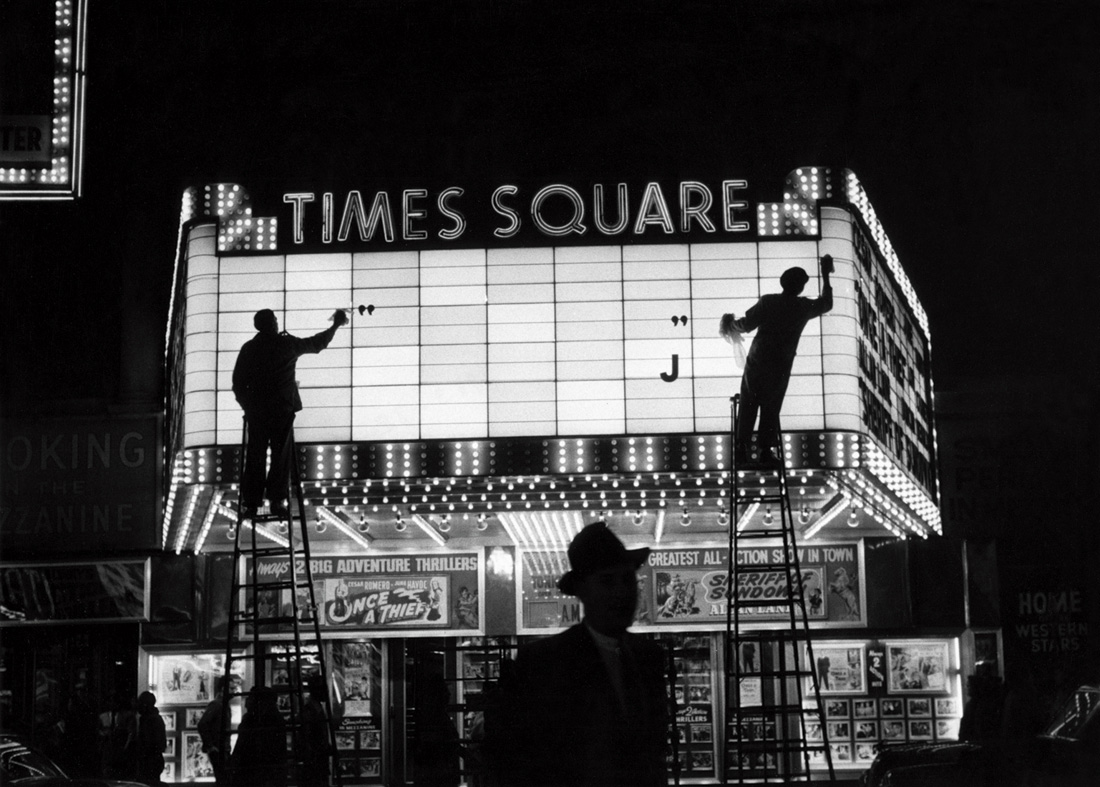
Sabine Weiss (Swiss-French, 1924-2021) 'Times Square, New York' États-Unis, 1955


Sabine Weiss (Swiss-French, 1924-2021)
Times Square, New York
United States, 1955
Silver gelatin print
© Sabine Weiss


Sabine Weiss (Swiss-French, 1924-2021) 'Feux de Bengale, Naples' Italie, 1955


Sabine Weiss (Swiss-French, 1924-2021)
Feux de Bengale, Naples (Fires of Bengal, Naples)
Italy, 1955
Silver gelatin print
© Sabine Weiss


Sabine Weiss (Swiss-French, 1924-2021) 'André Breton chez lui, 42, rue Fontaine' Paris, 1956


Sabine Weiss (Swiss-French, 1924-2021)
André Breton chez lui, 42, rue Fontaine (André Breton at home, 42 rue Fontaine)
Paris, 1956
Silver gelatin print
© Sabine Weiss


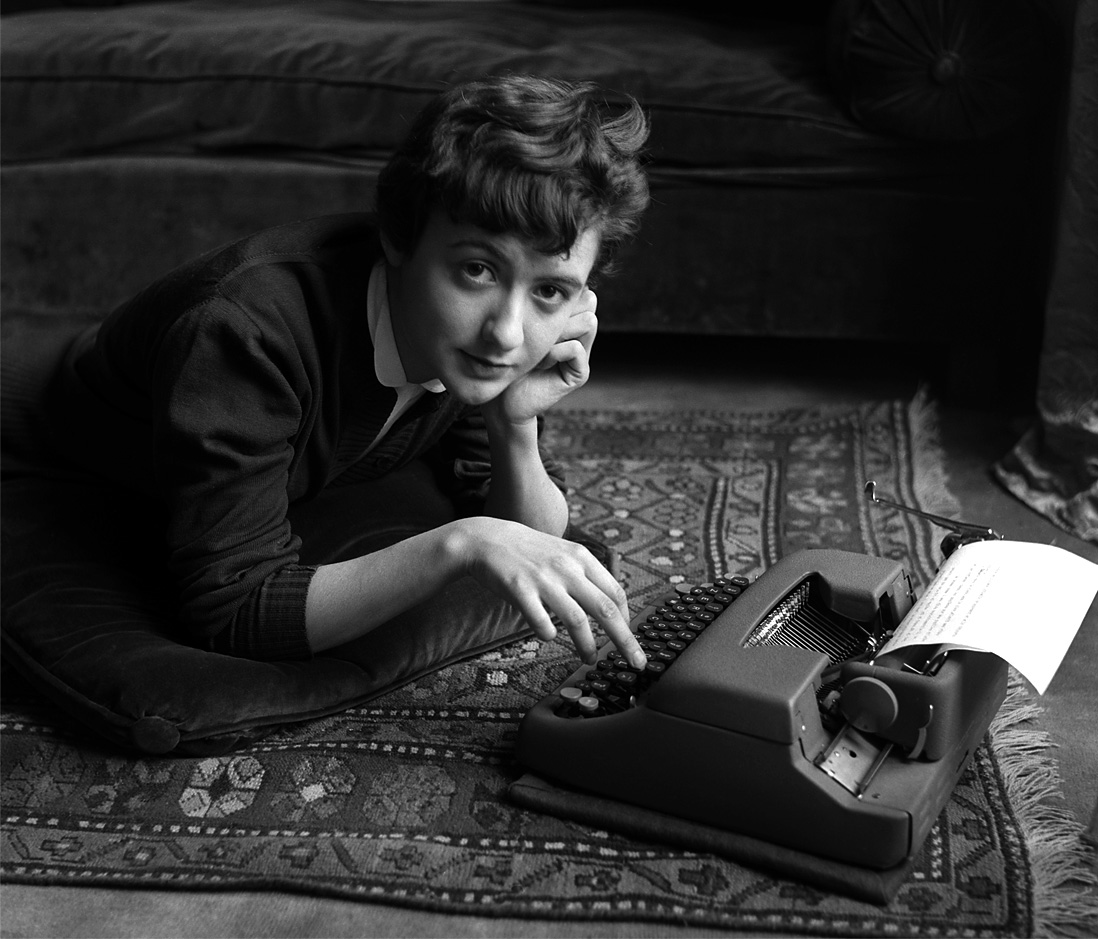
Sabine Weiss (Swiss-French, 1924-2021) 'Françoise Sagan chez elle, lors de la sortie de son premier roman Bonjour tristesse' Paris, 1954


Sabine Weiss (Swiss-French, 1924-2021)
Françoise Sagan chez elle, lors de la sortie de son premier roman Bonjour tristesse
(Françoise Sagan at home, with the release of his first novel Bonjour Tristesse)

Paris, 1954
Silver gelatin print
© Sabine Weiss


Sabine Weiss (Swiss-French, 1924-2021) 'Enfant perdu dans un grand magasin, New York' États-Unis, 1955


Sabine Weiss (Swiss-French, 1924-2021)
Enfant perdu dans un grand magasin, New York (Lost child in a department store, New York)
United States, 1955
Silver gelatin print
© Sabine Weiss


Sabine Weiss (Swiss-French, 1924-2021) 'Vieille dame et enfant' Guadeloupe 1990


Sabine Weiss (Swiss-French, 1924-2021)
Vieille dame et enfant, Guadeloupe (Old lady and child, Guadeloupe)
1990
Silver gelatin print
© Sabine Weiss


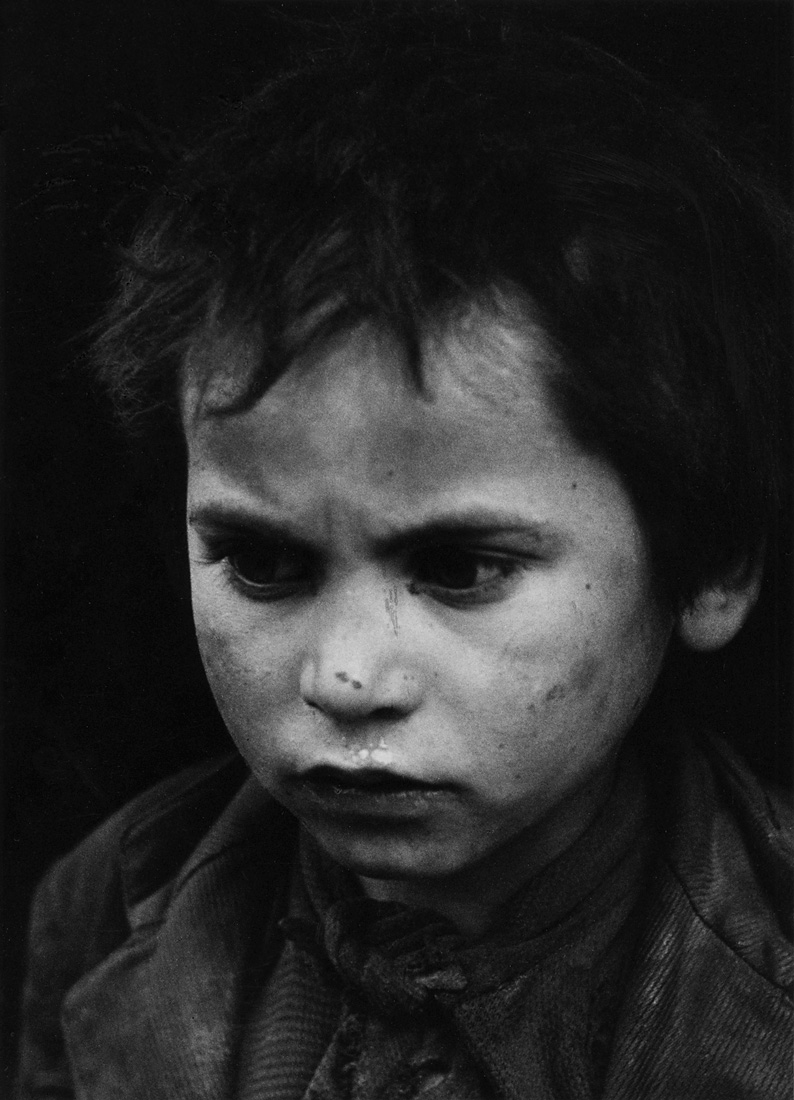
Sabine Weiss (Swiss-French, 1924-2021) 'La Petite Égyptienne' 1983


Sabine Weiss (Swiss-French, 1924-2021)
La Petite Égyptienne (Little Egyptian)
1983
Silver gelatin print
© Sabine Weiss


Sabine Weiss is the last representative of the French humanist school of photography, which includes photographers like Robert Doisneau, Willy Ronis, Édouard Boubat, Brassaï and Izis.

Still active at over 90 years of age, she has accepted for the first time to present her personal archives, thereby providing a privileged insight into her life and career as a photographer. The exhibition at the Château de Tours will showcase just a few milestones from her long career. Through almost 130 prints, as well as numerous period documents – many of which are being shown for the first time – this exhibition provides visitors with an overview of the multiple facets of this prolific artist, for whom photography was first and foremost, a fascinating occupation.

Née Weber in Switzerland in 1924, Sabine Weiss was drawn to photography from a very early age and did her apprenticeship at Paul Boissonnas’ studio, a dynasty of photographers practising in Geneva since the late nineteenth century. In 1946, she left Geneva for Paris and became the assistant of Willy Maywald, a German photographer living in the French capital, specialising in fashion photography and portraits. She married the American painter Hugh Weiss in 1950, and at this time embarked upon a career as an independent photographer. She moved into a small Parisian studio with her husband – where she continues to live today – and socialised in the artistic circles of the post-war period. This allowed her to photograph Georges Braque, Joan Miró, Alberto Giacometti, André Breton and Ossip Zadkine, and later numerous musicians, writers and actors.

Circa 1952, Sabine Weiss joined the Rapho Agency thanks to Robert Doisneau’s recommendation. Her personal work met with immediate critical acclaim in the United States with exhibitions at the Museum of Modern Art in New York, the Art Institute of Chicago, the Walker Art Institute in Minneapolis and the Limelight Gallery, New York. Three of her photographs were shown as part of the famous exhibition “The Family of Man”, organised by Edward Steichen in 1955, and Sabine obtained long-lasting contracts with The New York Times Magazine, Life, Newsweek, Vogue, Point de vue-Images du monde, Paris Match, Esquire, and Holiday. From that time and up until the 2000s, Sabine Weiss continued to work for the international illustrated press, as well as for numerous institutions and brands, seamlessly passing from reportage to fashion features, and from advertising to portraits of celebrities or social issues.

In the late 1970s, her work returned to the spotlight thanks to a growing revival of interest in so-called humanist photography on behalf of festivals and institutions. This interest encouraged Sabine to return to black and white photography. At over sixty years of age, she began a new body of personal work, punctuated by her travels in France, Egypt, India, Reunion Island, Bulgaria and Burma, and in which a more sentimental melody may be heard, centred on the pensive and solitary moments of human existence. At the same time, Sabine became the focus of a growing number of tributes, all of which has contributed to her reputation as an independent and dynamic photographer, with a great humanist sensibility and an eye for the detail of everyday life.

Virginie Chardin

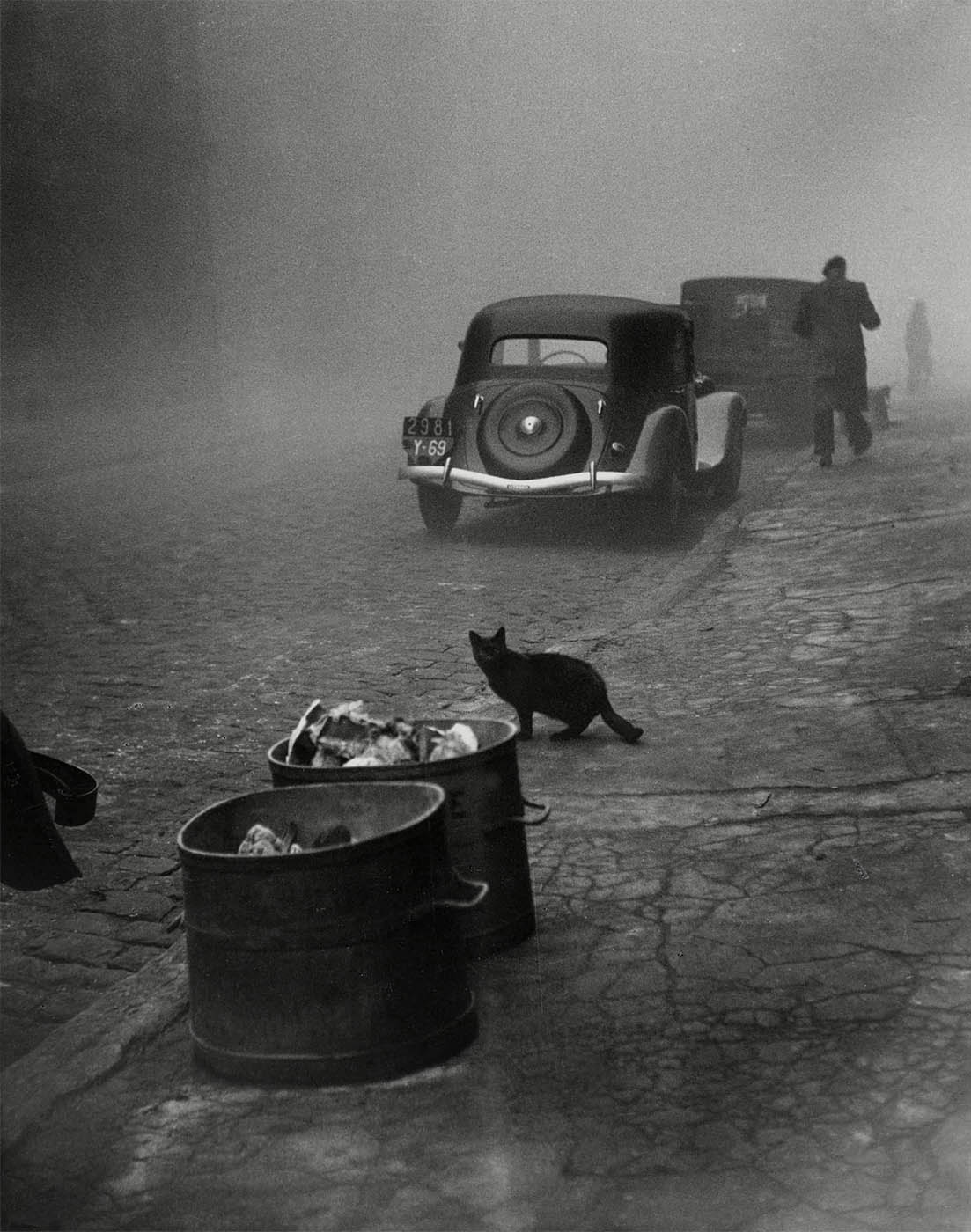
Sabine Weiss (Swiss-French, 1924-2021) 'Petit matin brumeux, Lyon, France' 1950

Sabine Weiss (Swiss-French, 1924-2021)
Petit matin brumeux, Lyon, France (Misty early morning, Lyon, France)
1950
Silver gelatin print
© Sabine Weiss


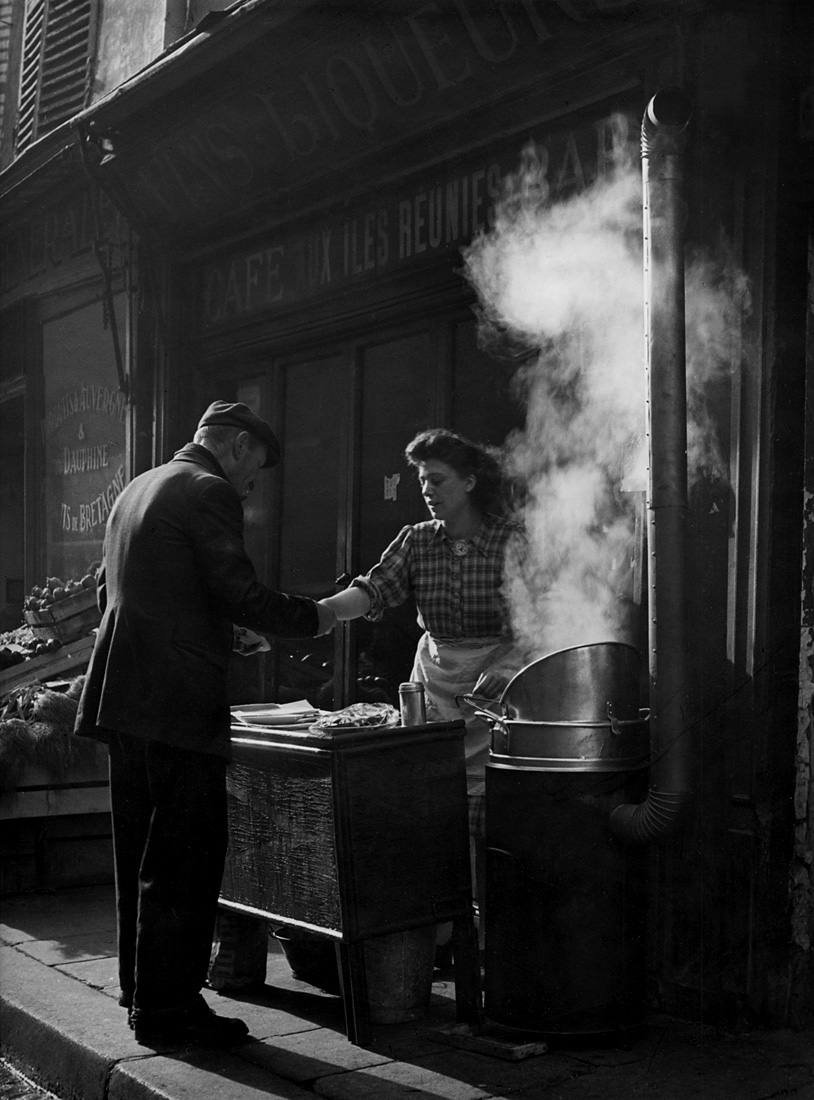
Sabine Weiss (Swiss-French, 1924-2021) 'Marchande de frites' Paris, 1952


Sabine Weiss (Swiss-French, 1924-2021)
Marchande de frites (French fries seller)
Paris, 1952
Silver gelatin print
© Sabine Weiss


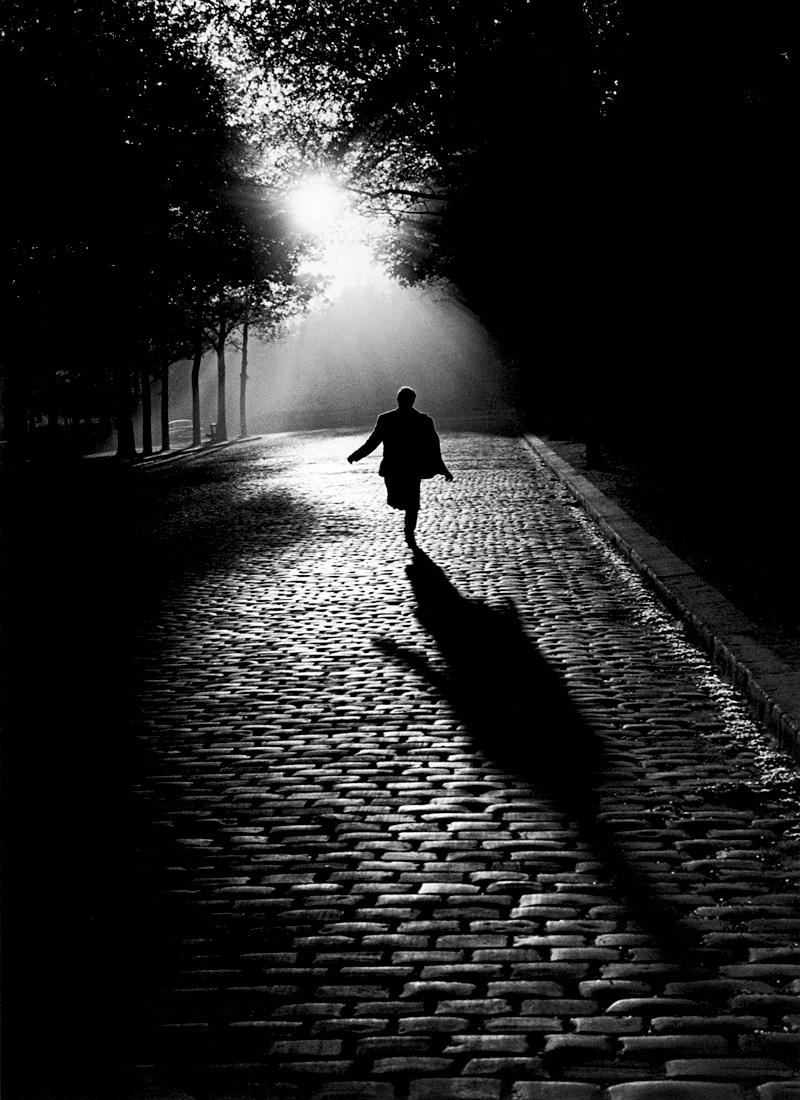
Sabine Weiss (Swiss-French, 1924-2021) 'L'homme qui court' Paris 1953


Sabine Weiss (Swiss-French, 1924-2021)
L’homme qui court, Paris (The man who runs, Paris)
1953
Silver gelatin print
© Sabine Weiss


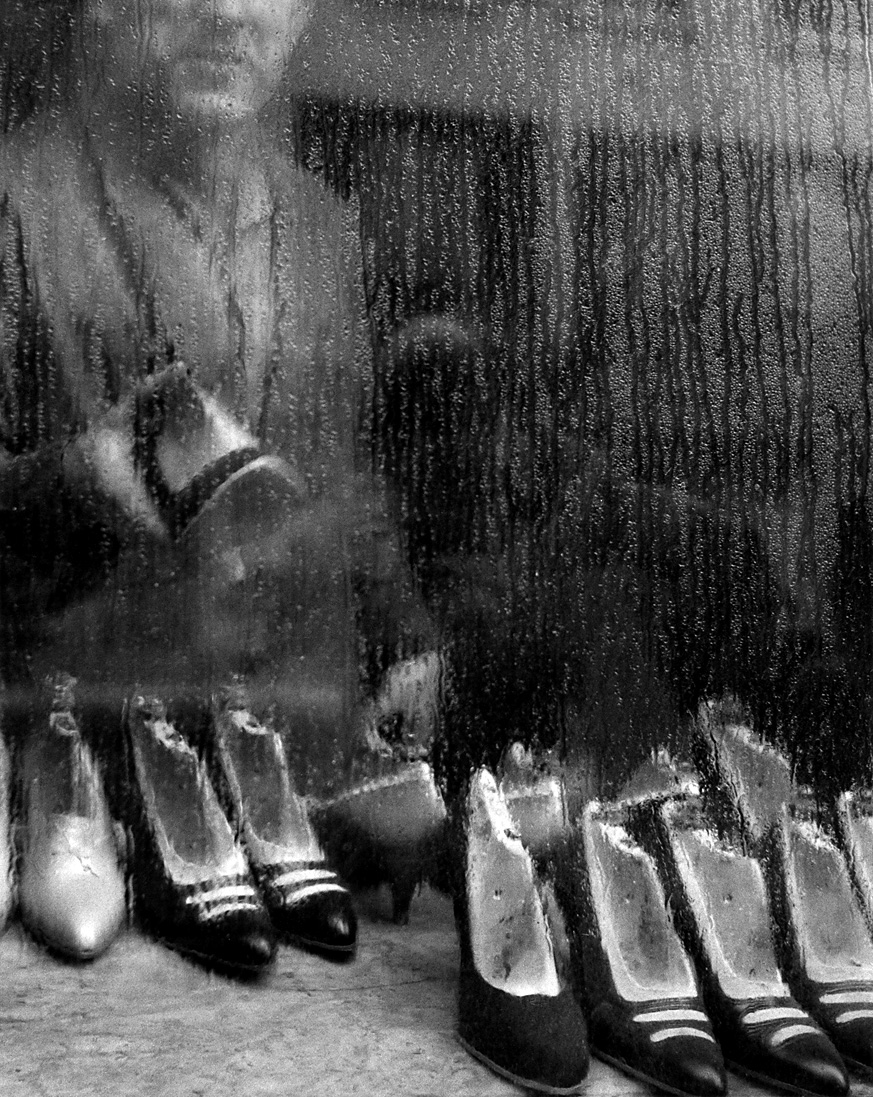
Sabine Weiss (Swiss-French, 1924-2021) 'Vitrine, Paris' 1955


Sabine Weiss (Swiss-French, 1924-2021)
Vitrine, Paris (Showcase, Paris)
1955
Silver gelatin print
© Sabine Weiss


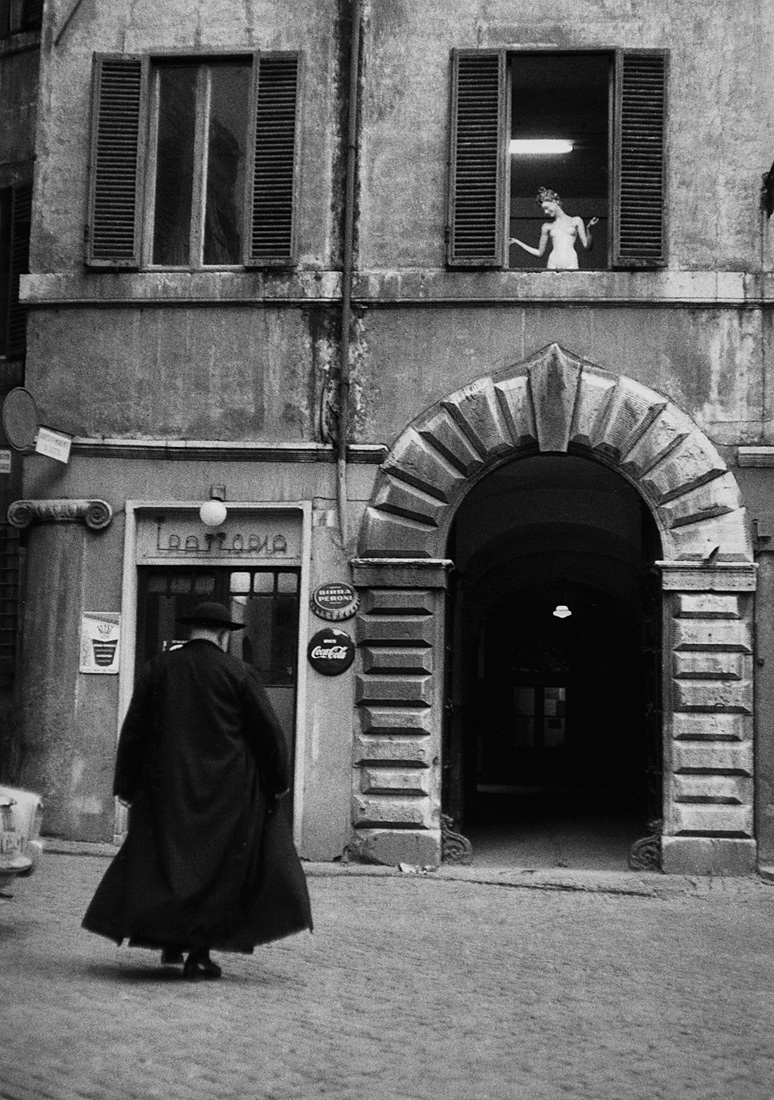
Sabine Weiss (Swiss-French, 1924-2021) 'Prêtre devant une trattoria, Rome' Italie, 1957


Sabine Weiss (Swiss-French, 1924-2021)
Prêtre devant une trattoria, Rome (Priest before a trattoria, Roma)
Italie, 1957
Silver gelatin print
© Sabine Weiss


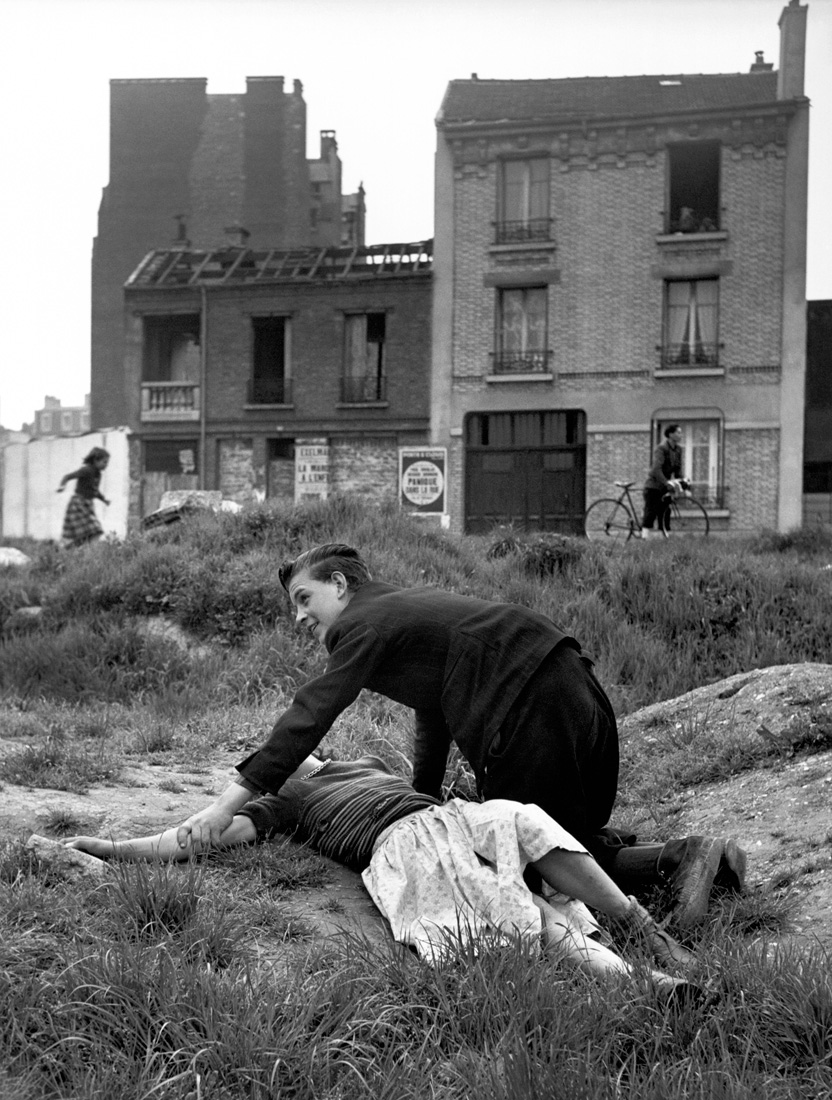
Sabine Weiss (Swiss-French, 1924-2021) 'Terrain vague, Porte de Saint-Cloud' Paris, 1950


Sabine Weiss (Swiss-French, 1924-2021)
Terrain vague, Porte de Saint-Cloud (Vacant Land, Porte de Saint-Cloud)
Paris, 1950
Silver gelatin print
© Sabine Weiss


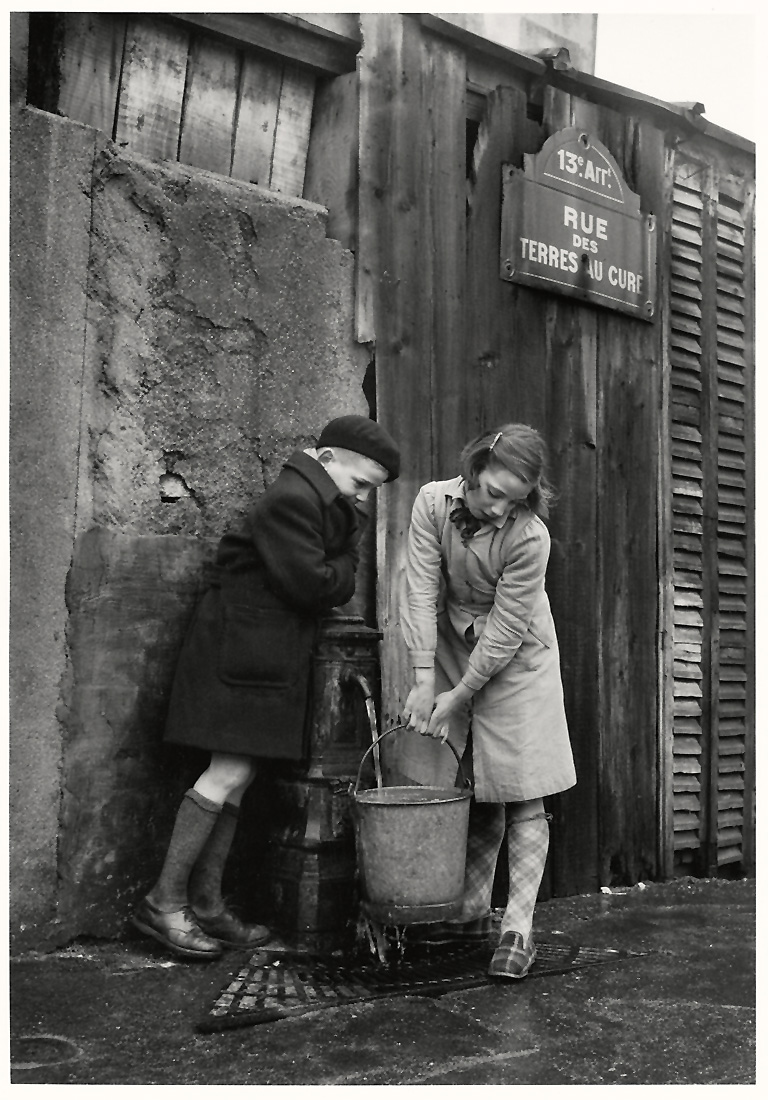
Sabine Weiss (Swiss-French, 1924-2021) 'Enfants prenant de l’eau à la fontaine, rue des Terres-au-Curé' Paris, 1954


Sabine Weiss (Swiss-French, 1924-2021)
Enfants prenant de l’eau à la fontaine, rue des Terres-au-Curé
(Children taking water from the fountain, rue des Terres au Curé)

Paris, 1954
Silver gelatin print
© Sabine Weiss


Sabine Weiss (Swiss-French, 1924-2021) 'Mariage gitan' Tarascon, 1953


Sabine Weiss (Swiss-French, 1924-2021)
Mariage gitan (Gypsy wedding)
Tarascon, 1953
Silver gelatin print
© Sabine Weiss


Sabine Weiss (Swiss-French, 1924-2021) 'Enfants jouant, rue Edmond-Flamand' [Children playing, rue Edmond-Flamand] Paris, 1952


Sabine Weiss (Swiss-French, 1924-2021)
Enfants jouant, rue Edmond-Flamand (Children playing, rue Edmond-Flamand)
Paris, 1952
Silver gelatin print
© Sabine Weiss


Sabine Weiss (Swiss-French, 1924-2021) 'Jeune mineur, Lens' 1955


Sabine Weiss (Swiss-French, 1924-2021)
Jeune mineur, Lens (Young minor, Lens)
1955
Silver gelatin print
© Sabine Weiss


Sabine Weiss (Swiss-French, 1924-2021) 'Mendiant, Tolède' Espagne, 1949


Sabine Weiss (Swiss-French, 1924-2021)
Mendiant, Tolède (Beggar, Toledo)
Espagne, 1949
Silver gelatin print
© Sabine Weiss


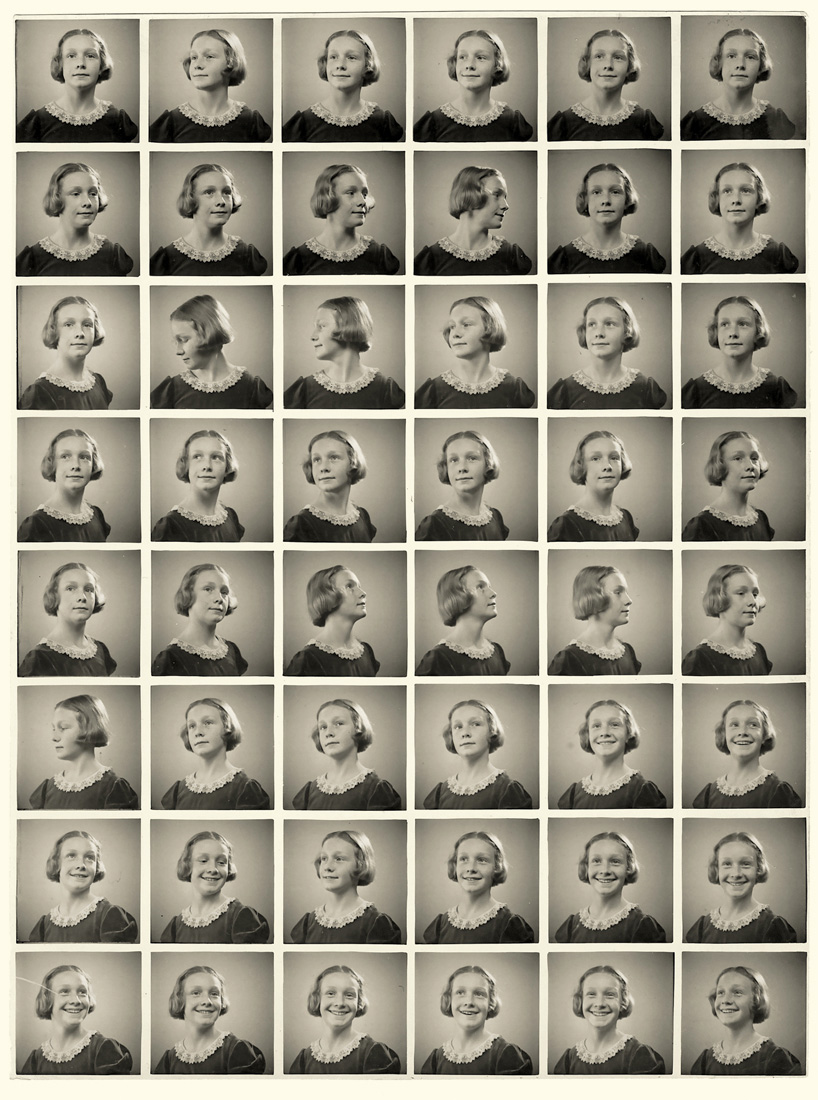
Sabine Weiss (Swiss-French, 1924-2021) 'Portraits multiples, procédé Polyfoto' Genève, 1937


Sabine Weiss (Swiss-French, 1924-2021)
Portraits multiples, procédé Polyfoto (multiple portraits, Polyfoto process)
Genève, 1937
Silver gelatin print
© Sabine Weiss


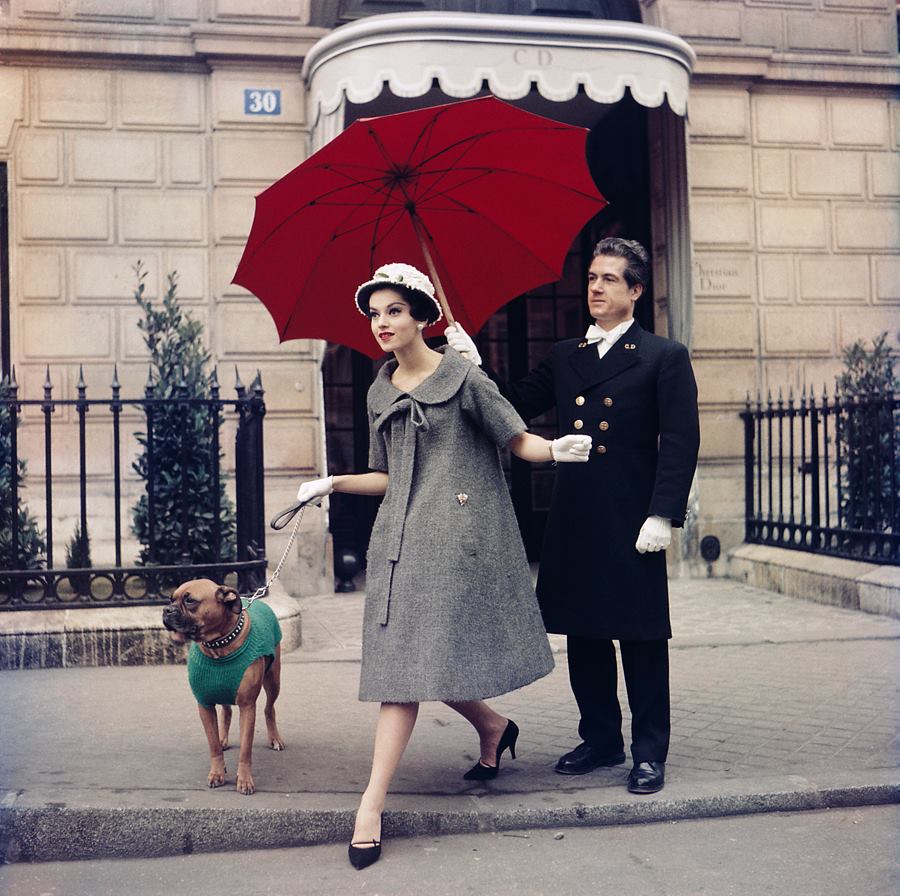
Sabine Weiss (Swiss-French, 1924-2021) 'Chez Dior, Paris' 1958


Sabine Weiss (Swiss-French, 1924-2021)
Chez Dior, Paris
1958
© Sabine Weiss


Sabine Weiss (Swiss-French, 1924-2021) 'Anna Karina pour la marque Korrigan' [Anna Karina for the brand Korrigan] 1958


Sabine Weiss (Swiss-French, 1924-2021)
Anna Karina pour la marque Korrigan (Anna Karina for the brand Korrigan)
1958
© Sabine Weiss


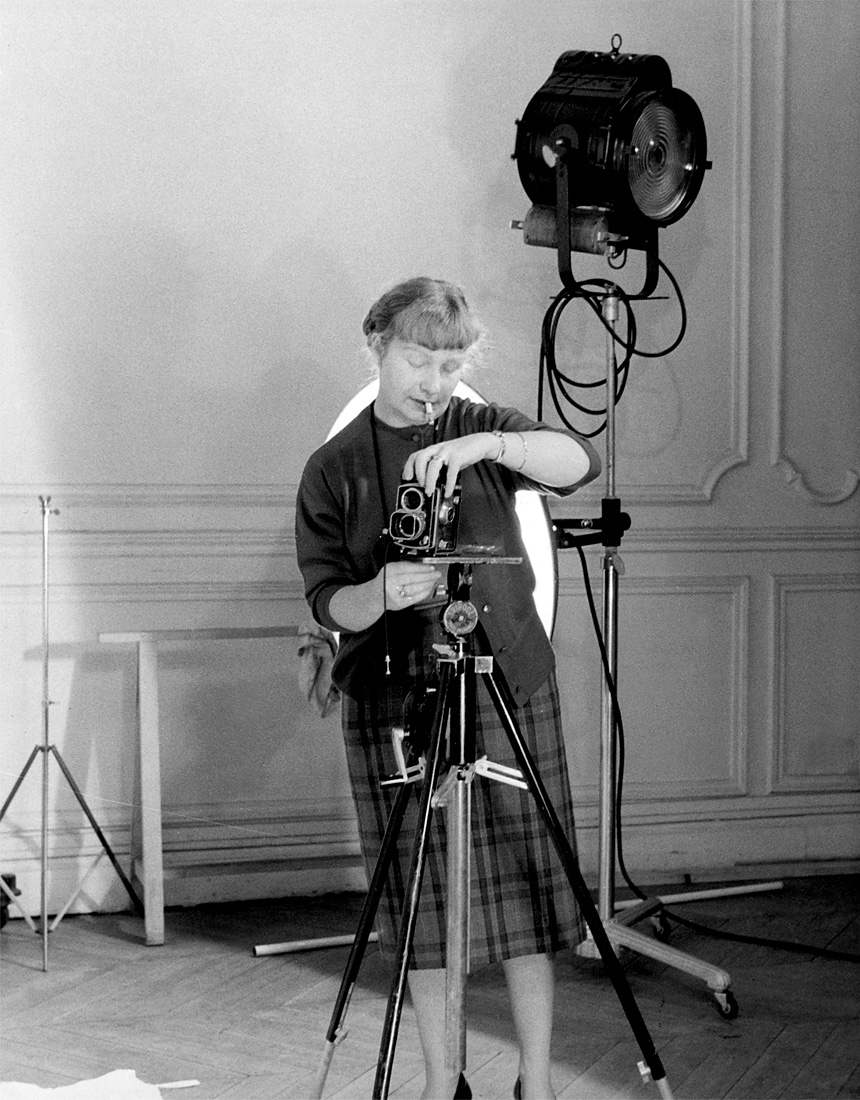
Studio Fllebé. 'Sabine Weiss chez Vogue' Paris 1956


Studio Fllebé
Sabine Weiss chez Vogue, Paris
1956
Silver gelatin print
© Studio Fllebé


Jeu de Paume – Château de Tours
25 avenue André Malraux
37000 Tours

Opening hours:
Tuesday to Sunday: 2pm – 6pm
Closed Mondays

Jeu de Paume – Château de Tours

LIKE ART BLART ON FACEBOOK

Back to top

Exhibition: ‘Capa in Color’ at Jeu de Paume – Château de Tours

Exhibition dates: 21st November 2015 – 29th May 2016

Curator: Cynthia Young, curator at Robert Capa archives


Robert Capa (American, 1913-1954) 'American crewmen stand in front of a B-17 bomber' England 1942


Robert Capa (American, 1913-1954)
American crewmen stand in front of a B-17 bomber that is being prepared to take off from a Royal Air Force base for a daylight bombing raid over occupied France. This B-17 was one of the first 300 to be brought overseas by the US Army Air Forces
England, 1942
International Center of Photography, New York
© Robert Capa/International Center of Photography/Magnum Photos


To be honest, Robert Capa was not the most natural colour photographer, especially when you compare him to the likes of Paul Outerbridge and Saul Leiter who were working at around the same time. Even the official text from Jeu de Paume that accompanies the exhibition is littered with descriptions like “uninspired”, “the color photographs lack focus”, or worse, “Fleur Cowles at Look and Len Spooner at Illustrated were disappointed with the color images.”

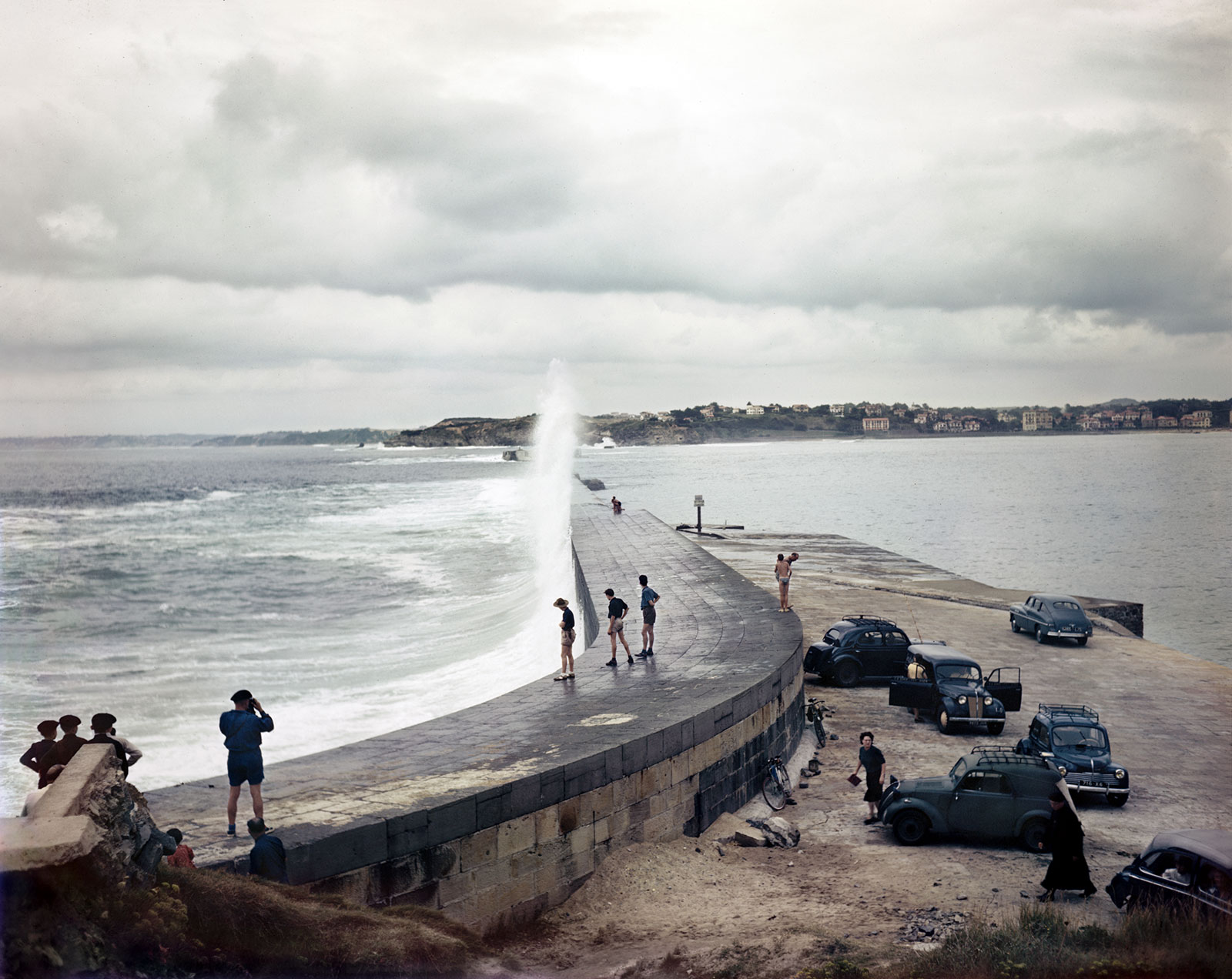
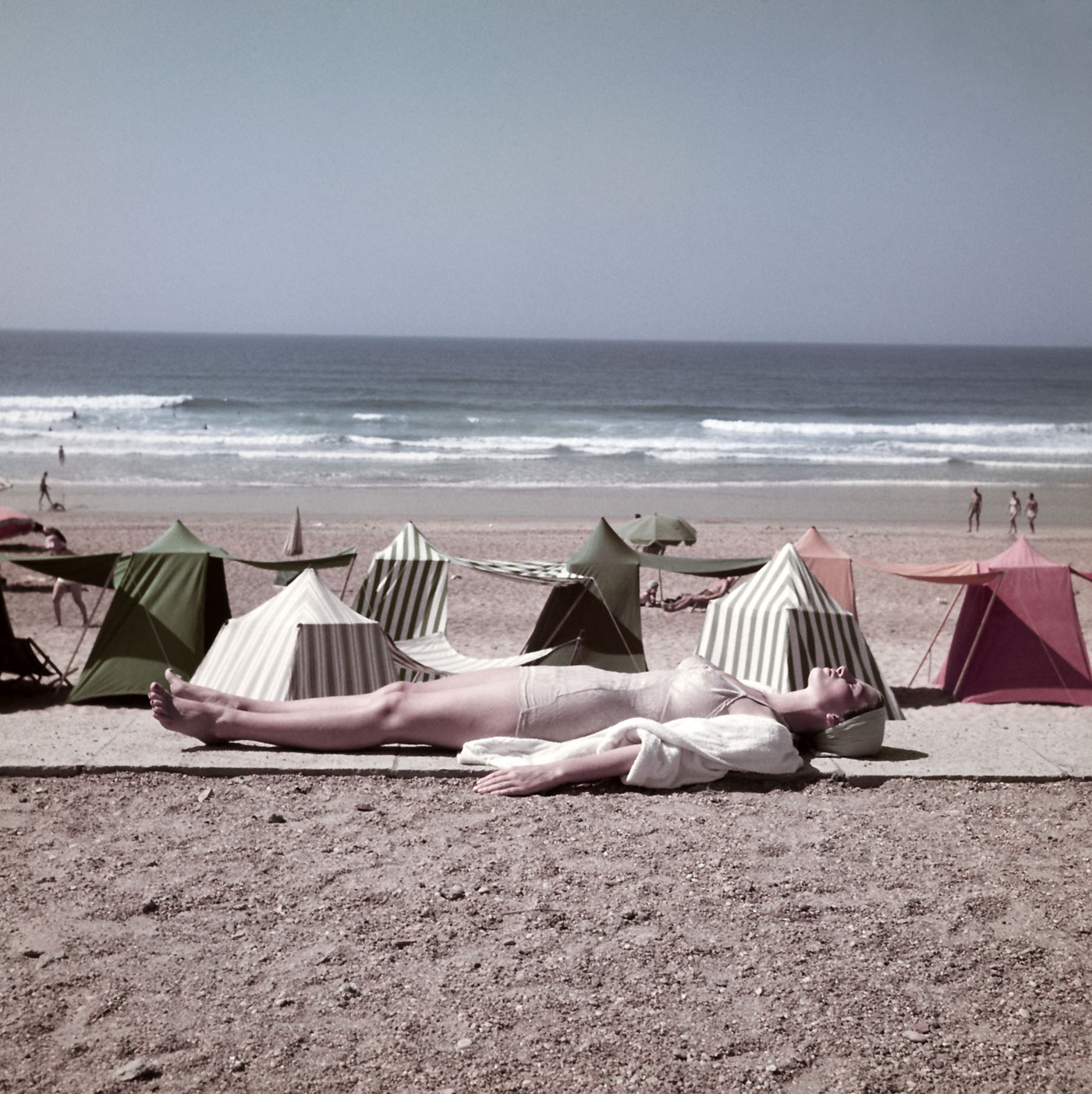
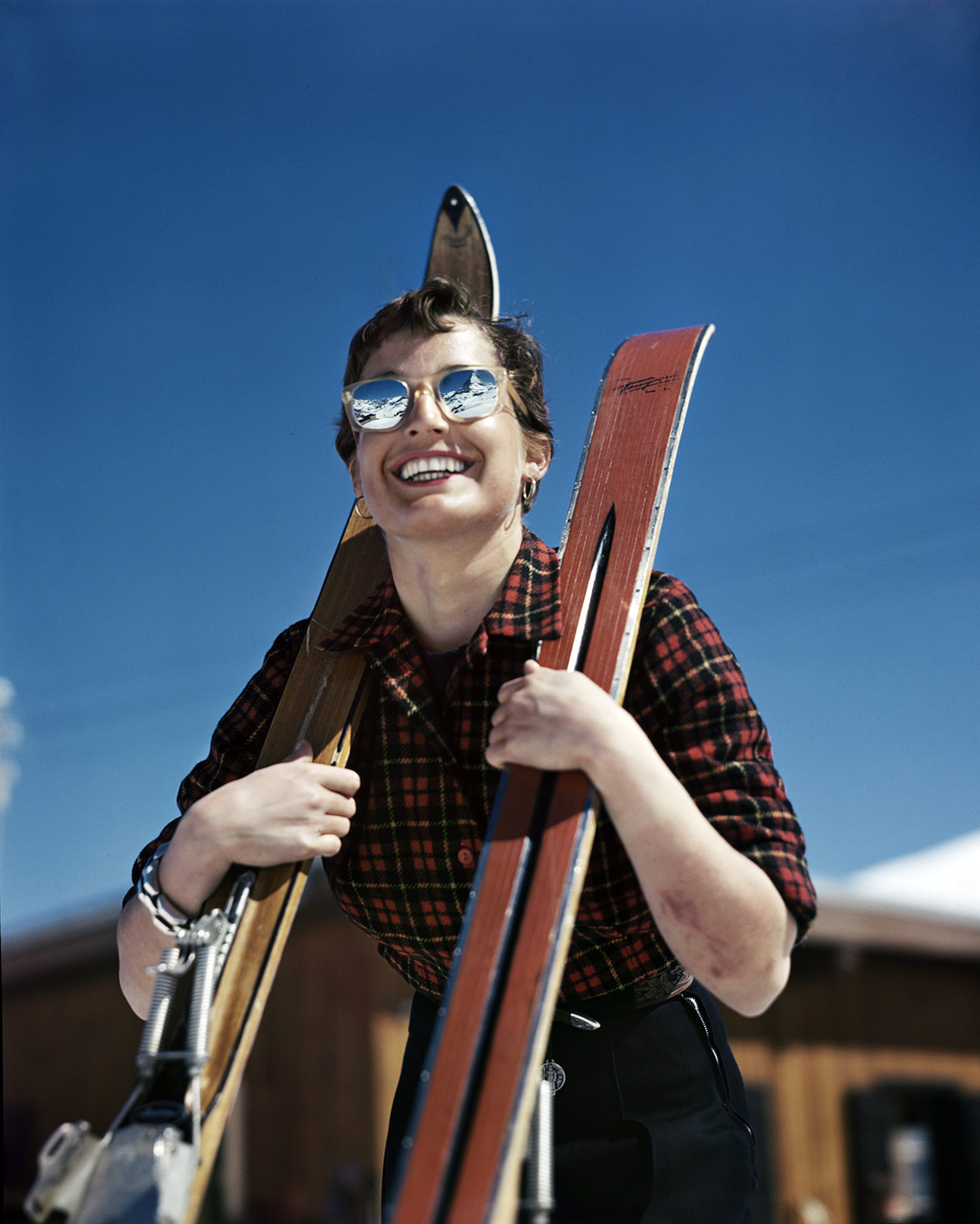
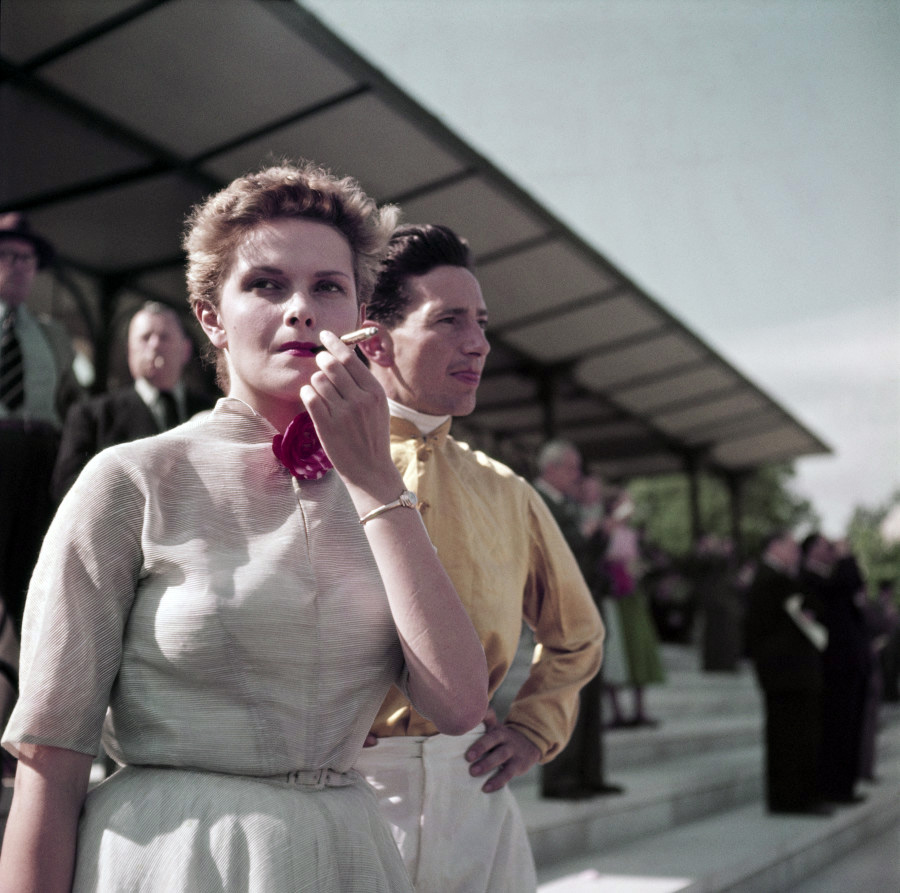
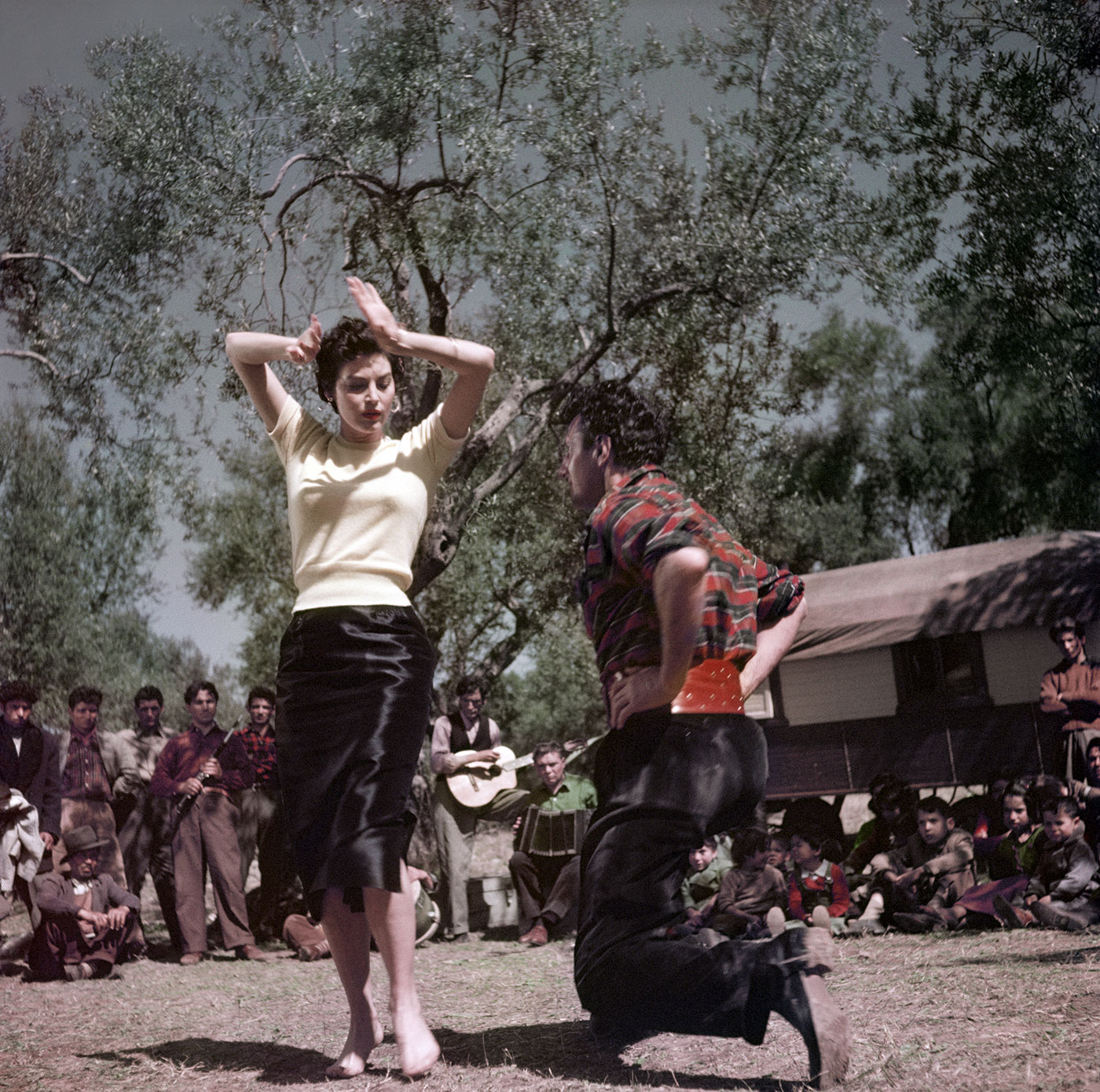
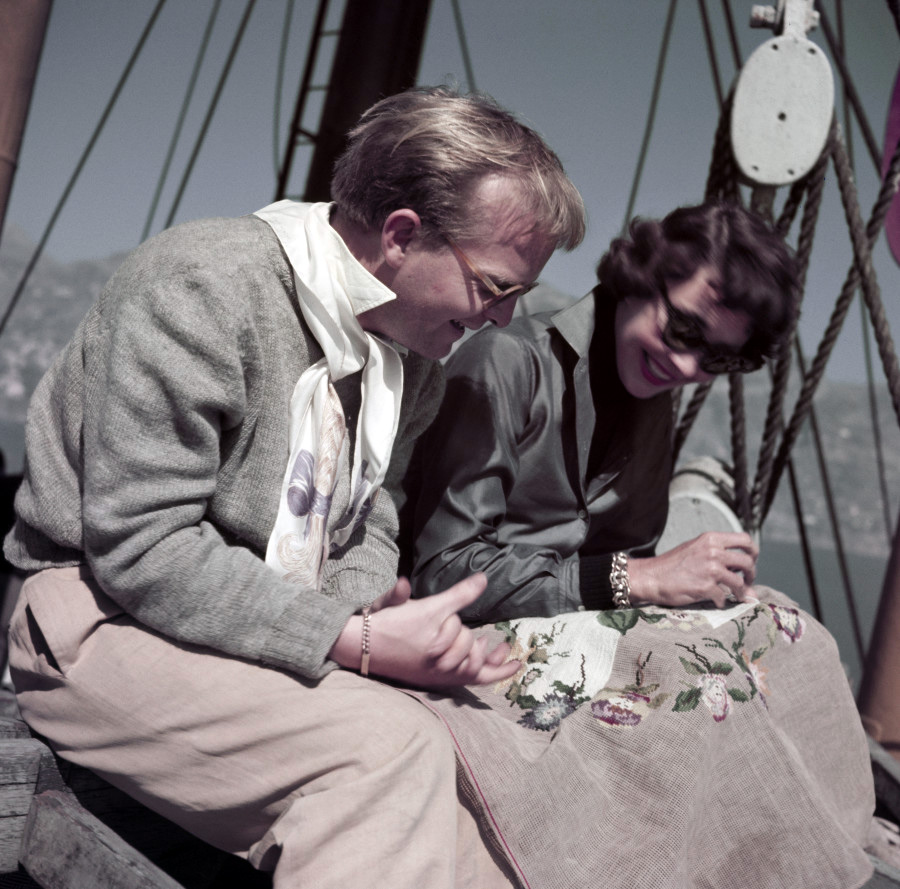
His work in this medium is what I would call “observational” colour photography. The images are best when the subject is intimate, human and ‘on set’, preferably using a limited palette with splashes of subdued colour – such as in the gorgeous Model wearing Dior on the banks of the Seine, Paris, France (1948), the delicate Woman on the beach, Biarritz, France (1951), and the simpatico duo of Humphrey Bogart and Peter Lorre on the set of ‘Beat the Devil’, Ravello, Italy (April 1953) and Truman Capote and Jennifer Jones on the set of ‘Beat the Devil’, Ravello, Italy (April 1953). The photographs of Ava Gardner on set are also cracking images for their vitality and overall balance, as is the almost monochromatic Gen X girl, Colette Laurent, at the Chantilly racetrack, France (1952). Other ensemble tableaux might as well have been shot in black and white, such as Spectators at the Longchamp Racecourse, Paris, France (c. 1952).

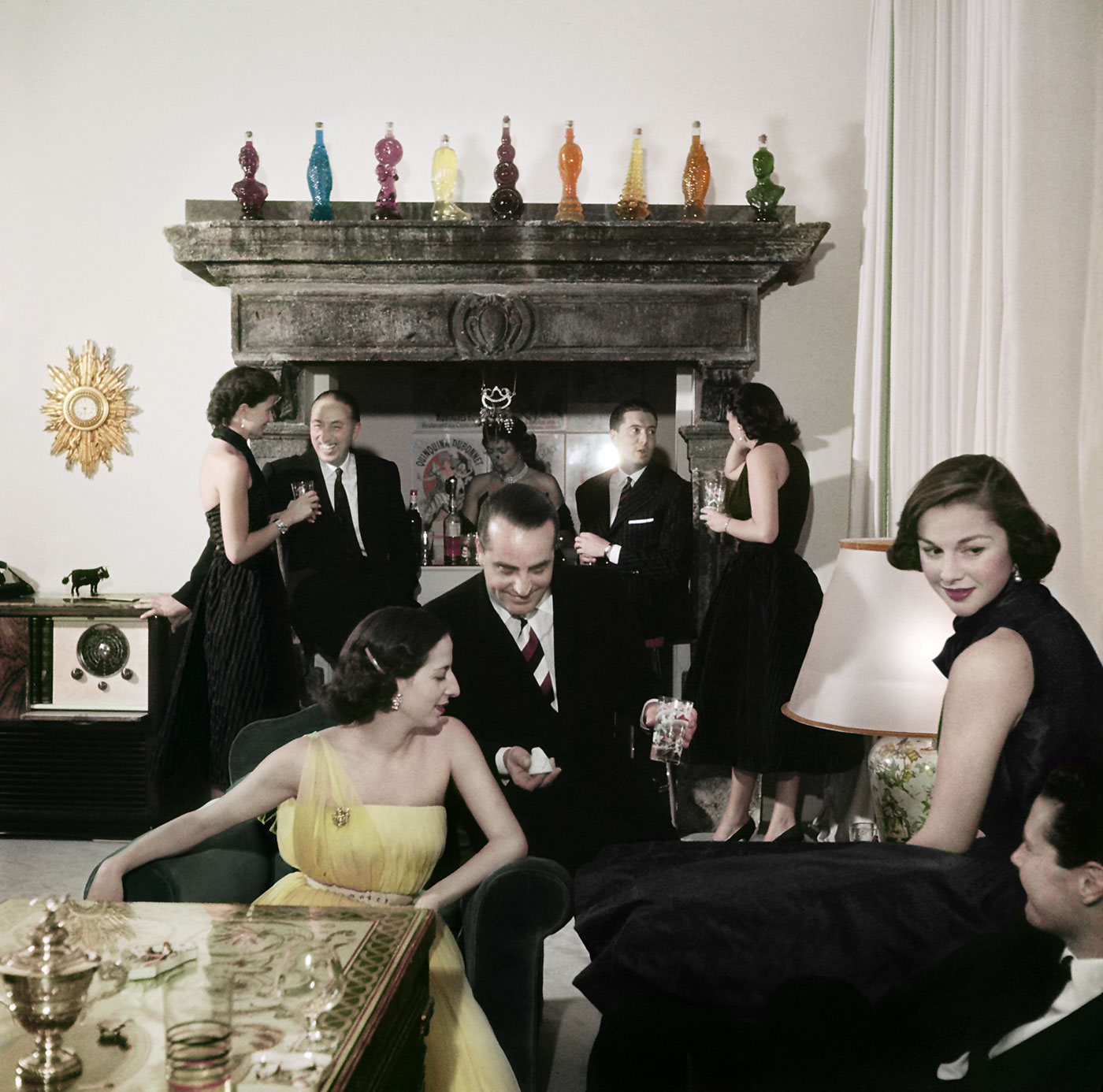
Capa too often resorts to one or two strong primary colours for effect, as in Capucine, French model and actress, on a balcony, Rome, Italy (August 1951), Rambaugh Family Circus, Indiana, USA (1949) or American Judith Stanton, Zermatt, Switzerland (1950). In the the former two images the composition doesn’t work with the colour; only in the latter does it become a vigorous and joyous structural element. Sometimes I think that Capa didn’t exactly know what to do with colour – Woman at an ice bar, Zürs, Austria (1949-1950) and Party, Rome, Italy (August 1951) are not very good at all – but here we must acknowledge an artist experimenting with a relatively new commercial medium, even as he seeks to sell these images to his clients.

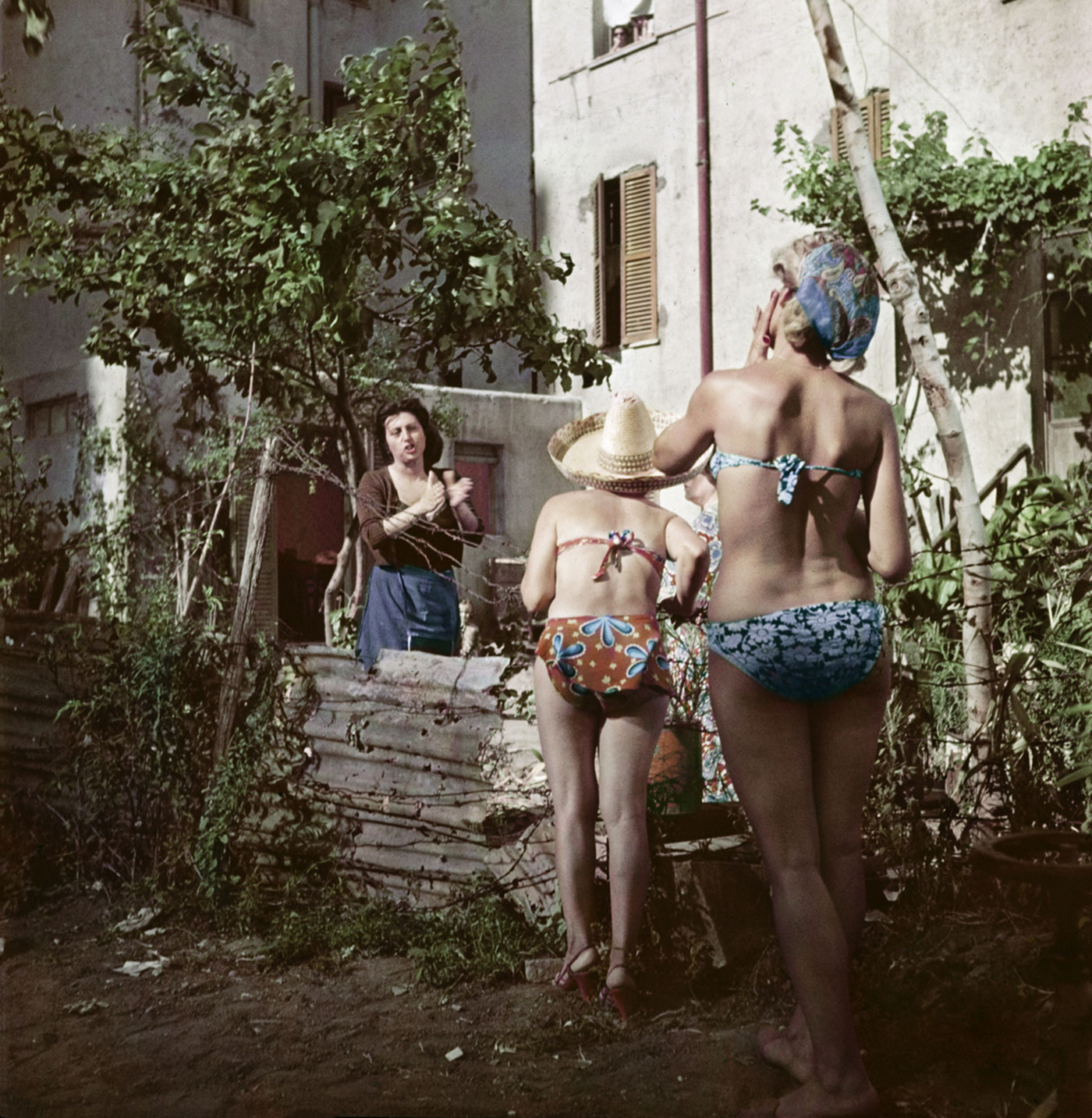
Capa in Color is at his best when he employs subtlety, constructing strong human compositions with nuanced placement of shades and hues. One of the most complex images in the posting is Anna Magnani on the set of Luchino Visconti’s ‘Bellissima’ (Rome, 1951-1952). Just look at this image: your eye plays over the surface, investigating every nook and cranny, every modular plane. The blue of the skirt, the brown of the top, the patterns of the two bikinis and the earthiness of tree and earth. I am reminded of the paintings of Paul Cézanne.

Dr Marcus Bunyan


Many thankx to Jeu de Paume for allowing me to publish the photographs in the posting. Please click on the photographs for a larger version of the image.


The first exhibition dedicated to Capa’s fourteen years of color photographs, Capa in Color has an ambition to evaluate and place these photographs in the timeline of his career and of their period. Capa in Color shows how color photography renewed his vision and how his work gained from a new sensibility after the war, by readapting his compositions in colour, but also to a public attracted to entertainment and to the discovery of new types of images.


Robert Capa et la couleur – Portrait filmé/videoportrait from Jeu de Paume / magazine on Vimeo.


Robert Capa (American, 1913-1954) 'Regata, Lofoten Island, Hankoe' Norway, 1951


Robert Capa (American, 1913-1954)
Regata, Lofoten Island, Hankoe
Norway, 1951
International Center of Photography, New York
© Robert Capa/International Center of Photography/Magnum Photos


Recently presented at the International Center of Photography and now available for travel, Capa in Color presents Robert Capa’s colour photographs to the European public for the first time. Although he is recognised almost exclusively as a master of black-and-white photography, Capa began working regularly with colour film in 1941 and used it until his death in 1954. While some of this work was published in the magazines of the day, the majority of these images have never been printed or seen in any form.

Capa in Color includes over 150 contemporary colour prints by Capa, as well as personal papers and tear sheets from the magazines in which the images originally appeared. Organised by Cynthia Young, curator of Capa Collections at ICP, the exhibition presents an unexpected aspect of Capa’s career that has been previously edited out of posthumous books and exhibitions, and show how he embraced colour photography and integrated it into his work as a photojournalist in the 1940s and 1950s.

Robert Capa’s (1913-1954) reputation as one of history’s most notable photojournalists is well established. Born Endre Ernö Friedmann in Budapest and naturalised as a U.S. citizen in 1946, he was deemed “The Greatest War Photographer in the World” by Picture Post in a late 1938 publication of his Spanish Civil War photographs. During World War II, he worked for such magazines as Collier’s and Life, extensively portraying preparation for war as well as its devastating aftermath. His best-known images symbolised for many the brutality and valour of war and changed the public perception of, and set new standards for, war photography.

July 27, 1938, while in China for eight months covering the Sino-Japanese war, Robert Capa wrote to a friend at his New York agency, “… send 12 rolls of Kodachrome with all instructions; … Send it “Via Clipper” because I have an idea for Life“. Although no colour film from China survives except for four prints published in the October 17, 1938, issue of Life, Capa was clearly interested in working with colour photography even before it was widely used by many other photojournalists.

In 1941, he photographed Ernest Hemingway at his home in Sun Valley, Idaho, in colour, and used colour for a story about crossing the Atlantic on a freighter with an Allied convoy, published in the Saturday Evening Post. While Capa is best known for the black-and-white images of D-Day, he also used colour film sporadically during World War II, most notably to photograph American troops and the French Camel Corps in Tunisia in 1943.

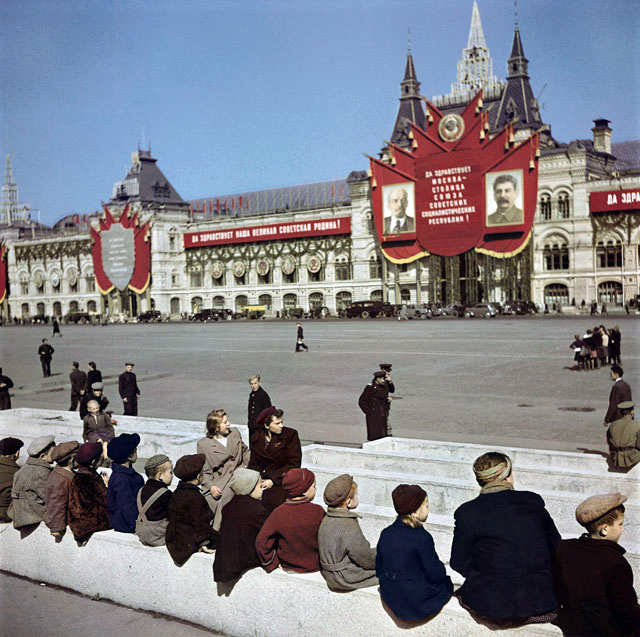
Capa’s use of colour film exploded in his postwar stories for magazines such as Holiday (USA ), Ladies’ Home Journal (USA ), Illustrated (UK), and Epoca (Italy). These photographs, which until now have been seen only in magazine spreads, brought the lives of ordinary and exotic people from around the world to American and European readers alike, and were markedly different from the war reportage that had dominated Capa’s early career. Capa’s technical ability coupled with his engagement with human emotion in his prewar black-and-white stories enabled him to move back and forth between black and white and colour film and integrate colour to complement the subjects he photographed. These early stories include photographs of Moscow’s Red Square from a 1947 trip to the USS R with writer John Steinbeck and refugees and the lives of new settlers in Israel in 1949-50. For the Generation X project, Capa traveled to Oslo and northern Norway, Essen, and Paris to capture the lives and dreams of youth born before the war.

Capa’s photographs also provided readers a glimpse into more glamorous lifestyles that depended on the allure and seduction of colour photography. In 1950, he covered fashionable ski resorts in the Swiss, Austrian, and French Alps, and the stylish French resorts of Biarritz and Deauville for the burgeoning travel market capitalised on by Holiday magazine. He even tried fashion photography by the banks of the Seine and on the Place Vendôme. Capa also photographed actors and directors on European film sets, including Ingrid Bergman in Roberto Rossellini’s Viaggio in Italia, Orson Welles in Black Rose, and John Huston’s Moulin Rouge. Additional portraiture in this period included striking images of Picasso, on the beach near Vallauris, France with his young son Claude.

Capa carried at least two cameras for all of his postwar stories: one with black-and-white film and one with colour, using a combination of 35mm and 4 x 5 Kodachrome and medium-format Ektachrome film, emphasising the importance of this new medium in his development as a photographer. He continued to work with colour until the end of his life, including in Indochina, where he was killed in May 1954. His colour photographs of Indochina presage the colour images that dominated the coverage from Vietnam in the 1960s.

Capa in Color is the first museum exhibition to explore Capa’s fourteen-year engagement with colour photography and to assess this work in relation to his career and period in which he worked. His talent with black-and-white composition was prodigious, and using colour film halfway through his career required a new discipline. Capa in Color explores how he started to see anew with colour film and how his work adapted to a new postwar sensibility. The new medium required him to readjust to colour compositions, but also to a postwar audience, interested in being entertained and transported to new places.

Press release from Jeu de Paume


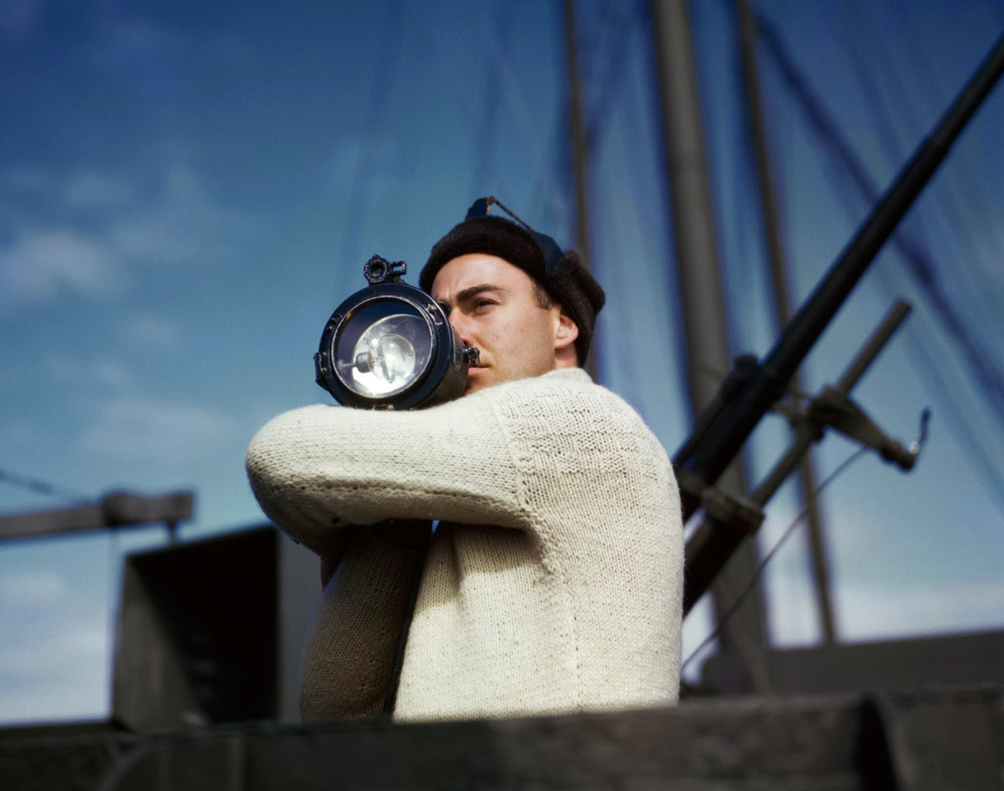
Robert Capa (American, 1913-1954) 'A crewman signals another ship of an Allied convoy across the Atlantic from the US to England' 1942


Robert Capa (American, 1913-1954)
A crewman signals another ship of an Allied convoy across the Atlantic from the US to England
1942
International Center of Photography, New York
© Robert Capa/International Center of Photography/Magnum Photos


It is surprising, even shocking to some, that famous photojournalist Robert Capa (born Budapest 1913, died Indochina 1954) photographed in colour, and not just occasionally, but regularly after 1941. His coloured work is essentially unknown. Capa is considered a master of black-and-white war photography, a man who documented some of the most important political events of Western Europe in the mid-twentieth century. His photographs of 1930s Paris, the Spanish Civil War, World War II, postwar Europe, and his last images in Indochina are known to us in black-and-white. None of the posthumous retrospective projects of his work have included colour, with a few rare exceptions..

Capa first experimented with colour in 1938, two years after Kodak developed Kodachrome, the first colour roll film. While in China covering the Sino-Japanese War, he wrote to a friend at his New York agency, Pix, “Please immediately send 12 rolls of Kodachrome with all instructions; whether special filters are needed, etc. – in short, all I should know. Send it ‘Via Clipper’, because I have an idea for Life“. Only four colour images from China were published, but Capa’s enthusiasm for colour was born. He photographed with colour film again in 1941 and for the next two years he fought hard to persuade editors to buy his colour images in addition to the black-and-white. After the war, the magazines were eager to include colour and his colour assignments increased. For the rest of his life, he almost always carried at least two cameras: one for black-and-white and one for colour film.


Robert Capa (American, 1913-1954) 'American Captain Jay F. Shelley stands in front of "The Goon," a B-17 bomber, before a raid over Italy, Tunisia, 1943' 1943


Robert Capa (American, 1913-1954)
American Captain Jay F. Shelley stands in front of “The Goon,” a B-17 bomber, before a raid over Italy, Tunisia, 1943
1943
International Center of Photography, New York
© Robert Capa/International Center of Photography/Magnum Photos


Jay F. Shelley, Sr., 88, of Yuma,formerly of Scottsdale, Arizona, entered Eternity on June 6, 2004. Jay was born May 16, 1916, in Long Beach, California. He was a decorated B-17 Bomber Pilot during WWII and flew 54 combat missions. He received a degree in business administration with a major in accounting from University of Montana. Jay worked as an accountant until 1979 when he retired with his wife to Scottsdale, Arizona. Capt. Jay F Shelley was assigned to the 301st BG 32nd Squadron.


Robert Capa (American, 1913-1954) 'Damaged plane hosed down with chemicals after landing on belly following a raid over Occupied France, England, July 1941' 1941


Robert Capa (American, 1913-1954)
Damaged plane hosed down with chemicals after landing on belly following a raid over Occupied France, England, July 1941
1941
International Center of Photography, New York
© Robert Capa/International Center of Photography/Magnum Photos


The plane is a Bristol Blenheim.


Robert Capa (American, 1913-1954) 'An American B-17 gunner awaits take off from a Royal Air Force base for a daylight bombing raid over occupied France' England, 1942


Robert Capa (American, 1913-1954)
An American B-17 gunner awaits take off from a Royal Air Force base for a daylight bombing raid over occupied France
England, 1942
International Center of Photography, New York
© Robert Capa/International Center of Photography/Magnum Photos


World War II

In 1941, Capa produced his first colour film story for the Saturday Evening Post, about crossing the Atlantic from New York on a convoy. Once in England, he was also able to sell these images to the English magazine Illustrated, because the two magazines did not have the same readerships.

He made the crossing again the next year, carrying a larger format camera that made bigger, more spectacular portraits of the ship’s crew. The turnaround time for Kodachrome film was several weeks. As Kodak maintained secrecy surrounding the formula, the undeveloped film had to go to a special Kodak processing plant and then returned to the photographer. It was not ideal for timely news. The magazines published few of Capa’s colour images from the UK, but he persisted in using it. In 1943, he entered the battlefields of World War II in North Africa, first traveling on a troop ship from England to Casablanca. His last colour images from the war were taken on a boat from Tunisia to Sicily in July 1943, where he debarked and moved up to Naples with America soldiers over the following months. It appears that for the rest of the war he did not use colour film, apparently discouraged by a combination of the slow shutter speed of the film, long processing times, and the uneven commitment to his colour images by the magazines.


Robert Capa (American, 1913-1954) 'Rambaugh Family Circus, Indiana, USA' 1949


Robert Capa (American, 1913-1954)
Rambaugh Family Circus, Indiana, USA
1949
International Center of Photography, New York
© Robert Capa/International Center of Photography/Magnum Photos


USA

Soon after his return from England, in the fall of 1941, Capa traveled to Sun Valley, Idaho, to do a story for life on his friends, the writers Ernest Hemingway and Martha Gellhorn, whom he had met during the Spanish Civil War. After World War II, Capa sought out new relationships with magazines and holiday became one of his most important supporters.

A glamorous travel magazine that featured New Yorker – caliber writers, Holiday was launched in 1946 by the Philadelphia-based Curtis Publishing Company, which also carried The Saturday Evening Post and Ladies’ Home Journal. Born in full colour, it was a peacetime publication catering to an ideal of American postwar prosperity. Holiday covered American cities, but immediately assigned stories on stylish international hot spots, places readers could dream of visiting with the advent in 1947 of nonstop transatlantic flights. In 1950, Holiday sent Capa to Indianapolis, and while his pictures of a nuclear family of five exploring the city are uninspired, he also photographed a family-run traveling circus. Despite Capa’s lukewarm attitude toward American culture, the colour images present a strong vision of American small-town life.


Robert Capa (American, 1913-1954) 'Young visitors waiting to see Lenin's Tomb at Red Square' Moscow 1947


Robert Capa (American, 1913-1954)
Young visitors waiting to see Lenin’s Tomb at Red Square
Moscow, 1947
International Center of Photography, New York
© Robert Capa/International Center of Photography/Magnum Photos


USSR

The year 1947 was a turning point in Capa’s life. He founded Magnum, the photographers cooperative agency he had dreamed of since 1938. The same year, he traveled to the Soviet Union, a trip that he had wanted to make in 1937 and then in 1941, both times unable to obtain a visa or magazine support for the trip.

He teamed up with writer John Steinbeck to report on the lives and opinions of ordinary Russians in opposition to Cold War rhetoric. Their adventures were published in the book A Russian Journal the following year and syndicated in newspapers and international picture magazines. Although the colour images were well represented in the magazines and on the cover of Illustrated for a special issue, Capa did not shoot much colour film in the Soviet Union, and no colour was included in A Russian Journal, except for the cover. Either he deemed only a few places worthy of the new medium format Ektachrome colour film that did not require special processing – chiefly Moscow and collective farms in the Ukraine and Georgia – or he had only a limited amount of film and used it sparingly. The images of Red Square take full advantage of colour film.


Robert Capa (American, 1913-1954) 'Pablo Picasso playing in the water with his son Claude, near Vallauris, France' 1948


Robert Capa (American, 1913-1954)
Pablo Picasso playing in the water with his son Claude, near Vallauris, France
1948
International Center of Photography, New York
© Robert Capa/International Center of Photography/Magnum Photos


Picasso

Some of Capa’s colour works were considerably less successful than his black-and-white photographs. This was the case with his 1948 feature on Picasso, originally sold to look as a story about the artist’s pottery, but as Capa failed to take pictures of the pottery, it became a story about Picasso and his family.

He instructed his Magnum colleague Maria Eisner: “Look gave me a definite assignment but no price so you have to insist on $200 pro black and white and $300 pro coloured page, and $250 for expenses. If they are not willing to pay a reasonable sum, you can withdraw, but Madame Fleurs Cowles was so positive on this matter and the pictures are so exclusive that I could be very surprise[d] if this doesn’t work”. Both Fleur Cowles at Look and Len Spooner at Illustrated were disappointed with the colour images, although delighted with the story, which included Capa’s now famous picture of Picasso holding a sun umbrella over his ravishing young artist girlfriend, Françoise Gilot, parading on the beach.

Hungary

In 1948, Holiday sent Capa to his native Budapest and commissioned him to write the accompanying article. Capa had been widely praised for the hilarious and self-deprecating 1947 book about his wartime exploits, slightly out of focus, so the editors were hardly taking risk by asking him to write a long article.

Holiday used four colour images in the November 1949 issue. Unlike the glamorous destinations the magazine usually covered or that Capa would later cover for them, the images and accompanying article, one of the strongest texts he wrote about a place, functioned more as a letter from Budapest. He observes with fascination and humour the clashing end of one empire with the start of another, bittersweet against the reality of what his childhood city had become. While he seemed to have had more colour film on this assignment than in Russia, it was expensive to buy and process, so he still conserved, and there are many more black-and-white negatives of similar scenes than in colour.

Morocco

Capa’s 1949 trip to Morocco was one of the few postwar stories he made concerning a political subject, but it was a complicated sell and failed as an international news story.

The assignment was muddled from the start, as it combined Moroccan politics, lead mines, and the filming of The Black Rose with Orson Welles. Paris Match first published some of the pictures in a piece about the annual tour of the country by the Moroccan leader Sultan Sidi Mohammed. Illustrated published a story with only black-and-white images about the strange effects of the Marshall Plan, in which as a French colony Morocco received American aid through France, although the French General was not recognised as the leader in charge by the U.S. State Department. Some of the best images are portraits of the Moroccan people.


Robert Capa (American, 1913-1954) 'Construction of the new settlements for workers, Neguev Desert, outside Be'er Sheva, Israel' 1949-1950


Robert Capa (American, 1913-1954)
Construction of the new settlements for workers, Neguev Desert, outside Be’er Sheva, Israel
1949-1950
International Center of Photography, New York
© Robert Capa/International Center of Photography/Magnum Photos


Robert Capa (American, 1913-1954) 'Former shop near Jaffa gate, Jerusalem, Israel' 1949


Robert Capa (American, 1913-1954)
Former shop near Jaffa gate, Jerusalem, Israel
1949
International Center of Photography, New York
© Robert Capa/International Center of Photography/Magnum Photos


Israel

Capa’s big geopolitical assignment of the late 1940s took him to Israel. He first traveled there in 1948 to cover the Arab-Israeli war, then returned in 1949, for Holiday and Illustrated, with writer Irwin Shaw.

He came back in 1950 to continue photographing the new nation in transition, focusing on the influx of refugees arriving from Europe and neighbouring Arab countries, the ongoing repair of the physical destruction, portraits of immigrants, agricultural work, kibbutzim, and various Jewish festivities. While there is only one colour image from the 1948 trip, of the Altalena ship burning in the water off the beach in Tel Aviv – a result of the conflict between extreme right-wing Irgunists and the Israeli government – by the time Capa arrived in 1949, he seemed to have all the colour film he needed. His Israel stories were picked up by all the major international picture news magazines, spurred by the 1950 publication Report on Israel, with text by Shaw and photos by Capa.


Robert Capa (American, 1913-1954) 'Jetty, Socoa, near Saint-Jean-de-Luz, France' August 1951


Robert Capa (American, 1913-1954)
Jetty, Socoa, near Saint-Jean-de-Luz, France
August 1951
International Center of Photography, New York
© Robert Capa/International Center of Photography/Magnum Photos


Robert Capa (American, 1913-1954) 'Woman on the beach, Biarritz, France' August 1951


Robert Capa (American, 1913-1954)
Woman on the beach, Biarritz, France
August 1951
International Center of Photography, New York
© Robert Capa/International Center of Photography/Magnum Photos


Deauville and Biarritz

Following the success of his skiing story, Capa proposed a piece on French seaside resorts. In the summer of 1950, he traveled to Deauville in Normandy, with its racetrack and casino, photographing only in black-and-white (all that appeared in Illustrated).

He knew he could do more with the story and pitched it to Holiday as a double feature with Biarritz, in Basque Country. A year later, he returned to Deauville with colour film to photograph the scene, capturing the mix of social classes at the horse races. He then traveled to Biarritz, covering the beach, nightlife, and traditional folklore. For this story, the black-and-white and colour images complement each other – the colour adding details to the black-and-white, which set the stage. The layout, not published until September 1953, balances the colour and black-and-white with Capa’s humorous, self-deprecating text about his time in each resort.


Robert Capa (American, 1913-1954) 'Capucine, French model and actress, on a balcony, Rome, Italy' August 1951


Robert Capa (American, 1913-1954)
Capucine, French model and actress, on a balcony, Rome, Italy
August 1951
International Center of Photography, New York
© Robert Capa/International Center of Photography/Magnum Photos


Capucine (6 January 1928 – 17 March 1990) was a French fashion model and actress known for her comedic roles in The Pink Panther (1963) and What’s New Pussycat? (1965). She appeared in 36 films and 17 television productions between 1948 and 1990. At age 17, while riding in a carriage in Paris, she was noticed by a commercial photographer. She became a fashion model, working for fashion houses Givenchy and Christian Dior. She adopted the name, “Capucine” (French for nasturtium). She met Audrey Hepburn while modelling for Givenchy in Paris. The two would remain close friends for the rest of Capucine’s life.

In 1957, film producer Charles K. Feldman spotted Capucine while she was modelling in New York City. Feldman brought her to Hollywood to learn English and study acting under Gregory Ratoff. She was signed to a contract with Columbia Pictures in 1958 and landed her first English-speaking role in the film Song Without End (1960) for which she was nominated for a Golden Globe Award. Over the next few years, Capucine made six more major motion pictures. They included North to Alaska (1960), a comedy, as a prostitute who becomes the love interest of John Wayne, and Walk on the Wild Side (1962), in which she portrayed a redeemed hooker, before moving to Switzerland in 1962.

Much of 1963’s hit film The Pink Panther was shot in Europe. A crime comedy that led to a number of sequels, the film starred David Niven and Peter Sellers along with Capucine. The risqué comedy What’s New Pussycat? (1965), which co-starred Sellers and Peter O’Toole, was filmed entirely in France. She continued making films in Europe until her death.

Text from the Wikipedia website


Robert Capa (American, 1913-1954) 'Party, Rome, Italy' August 1951


Robert Capa (American, 1913-1954)
Party, Rome, Italy
August 1951
International Center of Photography, New York
© Robert Capa/International Center of Photography/Magnum Photos


Rome

In his article on Norway for Holiday, Capa wrote: “I have revisited Budapest because i happen to have been born there, and because the place offered only a short season for revisiting. I even got to Moscow, which usually offers no revisiting at all. I kept on revisiting Paris because I used to live there before the war; London, because I lived there during the war; and Rome, because I was sorry that I had never lived there at all.”

Capa traveled to Rome for Holiday in 1951 and his pictures were published in April 1952, with a text authored by Alan Moorehead. A writer for The New Yorker at the time of the Rome assignment, Moorehead had been a correspondent for the Daily Express of London during World War II, and he and Capa had been together in North Africa, Sicily, and Normandy. Capa’s accompanying colour photographs pursued a glamorous city filled with beautiful people engaged in endless partying, reflecting a Rome removed from postwar destruction and entering the period of La Dolce Vita.


Robert Capa (American, 1913-1954) 'American Judith Stanton, Zermatt, Switzerland' 1950


Robert Capa (American, 1913-1954)
American Judith Stanton, Zermatt, Switzerland
1950
International Center of Photography, New York
© Robert Capa/International Center of Photography/Magnum Photos


Robert Capa (American, 1913-1954) 'Woman at an ice bar, Zürs, Austria' 1949-1950


Robert Capa (American, 1913-1954)
Woman at an ice bar, Zürs, Austria
1949-1950
International Center of Photography, New York
© Robert Capa/International Center of Photography/Magnum Photos


Skiing

Skiing was one of Capa’s favourite pastimes and he vacationed annually in Klosters, Switzerland, to relax and recuperate. In 1948, he and a Magnum colleague were trying to drum up a story on Megève, France, a popular ski resort for Parisians, on its “dual personality … simple peasant life and gay, café society set.”

Capa photographed in Zürs, Austria, in early 1949, for a Life story, although the magazine ultimately killed it. Holiday pulled in after Life dropped out and, in late 1949, signed on to a feature about the great skiing resorts of Austria, Switzerland, and France, which would become one of Capa’s most joyous and successful colour stories. In fact, it was arguably better in colour, which provided the additional elements of glitter and humour that black-and-white often missed. For two months, he traveled from the Austrian resorts of Kitzbühel, St. Anton, Zürs, and Lech, to the Swiss towns of Davos, Klosters, and Zermatt, then over the French border to Val d’Isère. In each place, he found a glamorous circle to depict: director Billy Wilder and writer Peter Viertel from Hollywood, young international ski champions, and current and ex-European royalty, including the Queen and Prince of Holland. Everyone was healthy and the mood festive. Capa found a relaxed, casual confidence in his subjects.


Robert Capa (American, 1913-1954) 'Spectators at the Longchamp Racecourse, Paris, France' c. 1952


Robert Capa (American, 1913-1954)
Spectators at the Longchamp Racecourse, Paris, France
c. 1952
International Center of Photography, New York
© Robert Capa/International Center of Photography/Magnum Photos


Robert Capa (American, 1913-1954) 'Model wearing Dior on the banks of the Seine, Paris, France' 1948


Robert Capa (American, 1913-1954)
Model wearing Dior on the banks of the Seine, Paris, France
1948
International Center of Photography, New York
© Robert Capa/International Center of Photography/Magnum Photos


Paris

Paris was Capa’s de facto home from 1933 to 1939 and then as his postwar base, usually in a back room of the elegant Hotel Lancaster off the Champs-Élysées, where he was friend with the owner.

Holiday‘s editor Ted Patrick commissioned Capa to provide photographs for a special issue on Paris in 1952, and Capa brought in other Magnum colleagues – Henri Cartier-Bresson, Chim, and the young Dennis Stock. The magazine included texts by Irwin Shaw, Paul Bowles, Ludwig Bemelmans, Art Buchwald, and Colette, among others, and is a romantic paean to the city, almost a stage set for romance, gastronomy, and history. Some of Capa’s best images from this story are the quirkiest ones and play with the contrasts that he seemed to revel in, between the young and old, human and animal, high-life and low-life, particularly at the horse races, about which he noted: “The sport of kings is also the sport of concierges”. For his photographs of plein air painters, Capa wrote: “Place du Tertre is a painter’s paradise. A few stops from Sacré Coeur we find an old gentleman in beard and beret looking like an American movie producer’s idea of the kind of French painter found in Montmartre”.


Robert Capa (American, 1913-1954) 'Gen X girl, Colette Laurent, at the Chantilly racetrack, France' 1952


Robert Capa (American, 1913-1954)
Gen X girl, Colette Laurent, at the Chantilly racetrack, France
1952
International Center of Photography, New York
© Robert Capa/International Center of Photography/Magnum Photos


Generation X

Capa developed Generation X, also known as Gen X, for Magnum on the mark of the half century in late 1949. McCall’s was originally behind the project, but had pulled out by 1951, when Capa insisted on injecting more political content.

Holiday filled the void and supported the project all the way to a three-part series published in early 1953. Capa observed, “it was one of those projects, of which many are born in the minds of people who have big ideas and little money. The funny thing about this project is that it was accomplished.” He assigned the photographers, including Chim, Cartier-Bresson, and Eve Arnold, to each create a portrait of a boy and/or girl in countries where they were already working or had worked. Each subject answered a detailed questionnaire about his or her life, family, personal beliefs, and goals. The project eventually included twenty-four individuals in fourteen countries on five continents. Capa photographed all his subjects – a French girl, a German boy, and Norwegian boy and girl – in colour and black-and-white, but only the Norwegian photos were published in colour. Capa’s biographer Richard Whelan suggested that Capa’s depiction of the French girl, Colette Laurent, was an oblique portrait of himself at the time: “Her life is superficial, artificial on the surface and holds none of the good things except the material ones.”


Robert Capa (American, 1913-1954) 'Ava Gardner on the set of 'The Barefoot Contessa', Tivoli, Italy' 1954


Robert Capa (American, 1913-1954)
Ava Gardner on the set of ‘The Barefoot Contessa’, Tivoli, Italy
1954
International Center of Photography, New York
© Robert Capa/International Center of Photography/Magnum Photos


Robert Capa (American, 1913-1954) 'Ava Gardner on the set of The Barefoot Contessa, Tivoli, Italy' 1954


Robert Capa (American, 1913-1954)
Ava Gardner on the set of ‘The Barefoot Contessa’, Tivoli, Italy
1954
International Center of Photography, New York
© Robert Capa/International Center of Photography/Magnum Photos


Robert Capa (American, 1913-1954) 'Humphrey Bogart and Peter Lorre on the set of Beat the Devil, Ravello, Italy' April 1953


Robert Capa (American, 1913-1954)
Humphrey Bogart and Peter Lorre on the set of ‘Beat the Devil’, Ravello, Italy
April 1953
International Center of Photography, New York
© Robert Capa/International Center of Photography/Magnum Photos


Robert Capa (American, 1913-1954) 'Truman Capote and Jennifer Jones on the set of Beat the Devil, Ravello, Italy' April 1953


Robert Capa (American, 1913-1954)
Truman Capote and Jennifer Jones on the set of ‘Beat the Devil’, Ravello, Italy
April 1953
International Center of Photography, New York
© Robert Capa/International Center of Photography/Magnum Photos


Robert Capa (American, 1913-1954) 'Jeffrey Hunter on the set of 'Single-Handed (Sailor of the King)'' Malta, 1952


Robert Capa (American, 1913-1954)
Jeffrey Hunter on the set of ‘Single-Handed (Sailor of the King)’
Malta, 1952
International Center of Photography, New York
© Robert Capa/International Center of Photography/Magnum Photos


Robert Capa (American, 1913-1954) 'John Huston at the café Les Deux Magots during the filming of 'Moulin Rouge'' Paris, 1952


Robert Capa (American, 1913-1954)
John Huston at the café Les Deux Magots during the filming of ‘Moulin Rouge’
Paris, 1952
International Center of Photography, New York
© Robert Capa/International Center of Photography/Magnum Photos


Robert Capa (American, 1913-1954) 'Anna Magnani on the set of Luchino Visconti's 'Bellissima'' Rome, 1951-1952


Robert Capa (American, 1913-1954)
Anna Magnani on the set of Luchino Visconti’s ‘Bellissima’
Rome, 1951-1952
International Center of Photography, New York
© Robert Capa/International Center of Photography/Magnum Photos


Robert Capa (American, 1913-1954) 'Ingrid Bergman and George Sanders on the set of 'Viaggio in Italia'' Naples, April 1953


Robert Capa (American, 1913-1954)
Ingrid Bergman and George Sanders on the set of ‘Viaggio in Italia’
Naples, April 1953
International Center of Photography, New York
© Robert Capa/International Center of Photography/Magnum Photos


On the set

Capa was friends with a number of movie stars and directors and incorporated them into his professional work. He met John Huston in Naples in 1944, while Huston was making films for the Army Signal Corps, and Ingrid Bergman in 1945 when she was filming in Paris, before beginning a one-year love affair.

As part of his 1948 trip to Morocco, he included a story on The Black Rose and its star Orson Welles. He photographed the set of Huston’s Beat the Devil, written by Truman Capote and filmed in the hillside town of Ravello, Italy. The cast visited the set of Viaggio in Italia in nearby Almalfi with Bergman, Roberto Rossellini, and George Sanders and Capa also dipped down to Paestum with his friend Martha Gellhorn, casting her as a caryatid in the ancient ruins. Capa covered another Huston film, Moulin Rouge, about the life of painter Toulouse Lautrec, shot in Paris and at Shepparton Studios near London. Capa’s colour portraits of the actors eschew traditional head shots and capture the varied pace and playful moments on the set.


Robert Capa (American, 1913-1954) 'Spectators along the procession route in Piccadilly Circus before the coronation of Queen Elizabeth II, London, England' February 6, 1953


Robert Capa (American, 1913-1954)
Spectators along the procession route in Piccadilly Circus before the coronation of Queen Elizabeth II, London, England
February 6, 1953
International Center of Photography, New York
© Robert Capa/International Center of Photography/Magnum Photos


London and Japan

In 1953, Capa traveled to London to cover the coronation of the young Elizabeth II with friends Humphrey Bogart and John Huston. His colour images of crowds waiting for the parade of guests before the coronation, for which he used 35mm Kodachrome, suggest a new interest in colour for colour’s sake.

In 1954, he received an invitation from Mainichi Press to travel to Japan for six weeks with Japanese cameras and an unrestricted amount of film to shoot what he liked in return for images they could publish. The trip was an easy one, but the colour photographs lack focus. He wandered around markets, documented foreign signs, watched people visiting temples and shrines, and photographed Children’s Day in Osaka, but they are little better than tourist snaps. Only a few images of a May Day workers’ celebration in Tokyo, in bright colours, show some engagement, reminiscent of his 1930s images of workers in France and Spain.


Robert Capa (American, 1913-1954) 'On the road from Namdinh to Thaibinh, Indochina (Vietnam)' May 1954


Robert Capa (American, 1913-1954)
On the road from Namdinh to Thaibinh, Indochina (Vietnam)
May 1954
International Center of Photography, New York
© Robert Capa/International Center of Photography/Magnum Photos


Robert Capa (American, 1913-1954) 'West of Namdinh, Indochina (Vietnam)' May 1954


Robert Capa (American, 1913-1954)
West of Namdinh, Indochina (Vietnam)
May 1954
International Center of Photography, New York
© Robert Capa/International Center of Photography/Magnum Photos


Indochina

In 1953, Capa expressed his readiness “to get back to real work, and soon. What and where I do not know, but the Deauville and Biarritz and motley movie period is over.”

In the same letter, he writes of his desire to go to “Indochina, or any other proposition which would get me back to reporting on my own type of territory”. While in Japan the next year, Capa received a cable from Life asking him to cover for their photographer in Indochina. The assignment was only for a few weeks and would bring in some needed money. He reached Hanoi on May 9 and on May 25, with Time reporter John Mecklin and Scripps-Howard correspondent John Lucas, left Mandihn with two cameras, a Contax with black-and-white film, and a Nikon with colour film. Their convoy traveled along a dirt road lined by rice paddies. Moving toward Thaibinh, Capa left the convoy and walked on by himself. He photographed the soldiers advancing through the fields, and as he climbed the dike along the road, he stepped on a land mine and was killed. While the colour images are some of the strongest war pictures he made, none were used in the press at the time, probably in part because of the extra time required to process the colour film.


Jeu de Paume – Château de Tours
25 avenue André Malraux
37000 Tours

Opening hours:
Tuesday to Sunday: 2pm – 6pm
Closed Mondays

Jeu de Paume – Château de Tours

LIKE ART BLART ON FACEBOOK

Back to top

Exhibition: ‘François Kollar. A Working Eye’ at Jeu de Paume, Paris

Exhibition dates: 9th February – 22nd May 2016

Curators: Matthieu Rivallin, collections officer, Médiathèque de l’architecture et du patrimoine, Paris, and Pia Viewing, curator – researcher at the Jeu de Paume, Paris.


François Kollar (French born Slovakia, 1904-1979) 'Nettoyage des lampes. Société des mines de Lens. Lens (Pas-de-Calais)' 1931-1934


François Kollar (French born Slovakia, 1904-1979)
Nettoyage des lampes. Société des mines de Lens. Lens (Pas-de-Calais)
Cleaning lamps. The mining company of Lens. Lens (Pas-de-Calais)
1931-1934
From the booklets La France travaille
Vintage silver gelatin photograph
18 x 24cm
Bibliothèque Forney. Ville de Paris
© François Kollar / Bibliothèque Forney / Roger-Viollet


François Kollar is a magnificent photographer. He produced strong images that possess few histrionics, even less ego. They simply just are.

People quoted in this posting comment that in his photographs “human measure is omnipresent”; that you never loose the sense of scale; that there are “frequent contrasts between near and far, the intimate and the monumental”; that his photographs are “an anthropological investigation into the behaviour, gestures and postures of people at work”; that “Men and women and their functions and roles in the production process are recurrent elements.”

All these statements are true.

Further, his images are sensitive, beautiful, show no traces of any social movements, and little sign of emotion. As Dominique Vautrin observes, “François Kollar is a photographer who resembles his images: somewhat mysterious, beautiful, and discreet…” And as the text from Jeu de Paume states, “He revealed himself to be a temperate photographer, somewhere between the barebones modernism of Bauhaus and a humanist approach to photography.” Other photographers who could fit into this playlist could be Bill Brandt in England, Walker Evans in America and Wolfgang Sievers in Australia.

But what a splendid description – a “temperate photographer”. Showing moderation and self-restraint… there is far too little of that in contemporary photography. A humanist with an avant-garde edge, a photographer whose vision was clear and consistent throughout his oeuvre, who could turn his hand to anything: advertising, fashion, avant-garde, double exposures, solarisation, photomontage, documentary reportage, surrealism, constructivism, modernism.

Joseph Nechvatal comments that Kollar’s work is poignant. This is an incorrect word to describe the work, for the photographs never evoke a keen sense of sadness or regret. They are of a different order altogether. Let me explain.

There is a wonderful stoicism about the people who Kollar chooses to photograph, who inhabit his world of work. The endurance of work without the display of feelings and without complaint. Labour is not represented in any glorified way, not as a noble undertaking, and certainly not heroic (although the worker can be represented as intimate and monumental). The workers are represented as an adjunct to the machine but not in a cyborg fashion. In his photographs there is a distinctness about the worker which sets the human apart from the machine, even as he is “deeply embedded within their functions and roles in the production process.” I don’t believe that people understand this separation, preferring instead to comment on the embedding of the human within machine processes. But something was bothering me when I looked at these images and I have pondered long and hard over how to interpret them. There was something I could not put my finger on and it is this…

In the work of Lewis Hine, the workers are in the present looking to the future. In the work of François Kollar there is no justification for the work it is just work… being there in the present. No ego, no elevation of experience or emotion, and the photographs are just so. Just being in the world. The thing itself. Nothing more, nothing less. It seems simple when you say it like that, but the concept is very complex – to allow the photograph to materialise from consciousness, as a sort of previsualisation of experience – of being a poor, working class immigrant (which Kollar was) picturing his own.

That he achieved such photographs “with his 5 x 7 large-format camera and cumbersome lighting equipment” is a testament to the dedication to his craft, to his work, and to his roots – a connection to the working man and woman. These are honest and forthright photographs of what most humans do for most of their life: work at a job they may not like – to pay the bills, to put food on the table. The lighting is superb, the compositions eloquent, the characters in his images unforgettable (Kollar particularly likes portraits of men shot from below with their arms folded) but it is the balance between the subjective and objective which is so finely honed in his work. The dispassionate nature of humans when at work is balanced by the aesthetics of the artist and the humanity of the individual.

Dr Marcus Bunyan


Many thankx to Jeu de Paume for allowing me to publish the photographs in the posting. Please click on the photographs for a larger version of the image. View an interesting video of the exhibition and the work of François Kollar on Vimeo.


This retrospective features an ensemble of 130 vintage prints, some of which are previously unseen, as well as others from the photographer’s family’s bequest to the state. It puts Kollar’s work in the spotlight and shows how he managed to lift the veil on the working world in the 20th century. As visitors discover the documentary, artistic and historical qualities of the material on show, they will be able to observe how individuals found their place in society by the means of their occupation and realise the profound changes that took place in industry between the 1930s and the 1960s.


François Kollar. Courtesy Jeu de Paume


François Kollar. Courtesy Jeu de Paume


“Without falling into hammy Socialist Realism style, Kollar rendered French working class heroes in beautiful, discreet, lush black-and-white tones. These images of the working person endow them with qualities of excellence, nobility, and respect, and evoked in me mixed sensations of hard materialistic capability and human tenderness. These images of men and women, such as “Nettoyage des lampes. Société des mines de Lens, Lens (Pas-de-Calais)” [1931-34, below], show people deeply embedded within their functions and roles in the production process. In that sense, they contrast with Dorothea Lange’s famous and beautiful Migrant Mother series and the uninhabited, rigorously stark industrial scenes photographed by Bernd and Hilla Becher…

Kollar’s distinctive aesthetic provides a strong, sweet spot amid the sour struggles for employment taking place today in economies shaped by histories of slavery, colonialism, union-busting, sexual exploitation, and corporate capitalism. His artistic style, one that colorlessly abstracts, unifies, and embeds the worker within his or her technological environment, broadens the social politics of employment beyond the heroic human. Rather, he depicts through his unifying, ashen tones the conjunction of laborer and machine. In these photographs, the human worker is bound up with non-human apparatuses in cyborg fashion, depicting a complex technological laborer who is no less real and worthy of our aesthetic delectation.”


Joseph Nechvatal. “A Photographer Who Captured Workers Without Romanticizing Them,” on the Hyperallergic website May 4, 2016 [Online] Cited 11/05/2016


François Kollar (French born Slovakia, 1904-1979) 'Porteur de rails. Arles' 1933


François Kollar (French born Slovakia, 1904-1979)
Porteur de rails. Arles
1933
Reproduction d’après négatif original sur plaque de verre
Print from the original glass plate negative
13 x 18cm
Bibliothèque Forney. Ville de Paris
© François Kollar / Bibliothèque Forney / Roger-Viollet


François Kollar (French born Slovakia, 1904-1979) 'Construction des grands paquebots, Rivetage de tôles d‘un pont de navire, chantier et ateliers de Saint-Nazaire à Penhoët' (Construction of large ships, riveting the sheets of a ships deck, site workshops of Saint Nazaire Penhoët) 1931-1932


François Kollar (French born Slovakia, 1904-1979)
Construction des grands paquebots, Rivetage de tôles d’un pont de navire, chantier et ateliers de Saint-Nazaire à Penhoët
Construction of large ships, riveting the sheets of a ships deck, site workshops of Saint Nazaire Penhoët
1931-1932
Vintage silver gelatin photograph
28.9 x 23.5cm
Donation François Kollar, Médiathèque de l’architecture et du patrimoine


François Kollar: “A Working Eye” from 09 February 2016 until 22 May 2016 at Jeu de Paume, Paris


François Kollar (French born Slovakia, 1904-1979) 'Dans le port, à bord. Super Ile de France: cisaillage au chalumeau oxhydrique' (In port, on board. Super Ile de France: cutting using the welding torch. Company building sites and workshops of Saint Nazaire Penhoët) 1931


François Kollar (French born Slovakia, 1904-1979)
Dans le port, à bord. Super Ile de France: cisaillage au chalumeau oxhydrique. Société des chantiers et ateliers de Saint-Nazaire à Penhoët
In port, on board. Super Ile de France: cutting using the welding torch. Company building sites and workshops of Saint Nazaire Penhoët

1931
Vintage silver gelatin photograph


François Kollar (French born Slovakia, 1904-1979) 'Dans le port, à bord. Champlain : grattage du pont' (In port, on board. Champlain: scraping the bridge. Company building sites and workshops of Saint Nazaire Penhoët) 1931


François Kollar (French born Slovakia, 1904-1979)
Dans le port, à bord. Champlain: grattage du pont. Société des chantiers et ateliers de Saint-Nazaire à Penhoët
In port, on board. Champlain: scraping the bridge. Company building sites and workshops of Saint Nazaire Penhoët

1931
Vintage silver gelatin photograph


François Kollar (French born Slovakia, 1904-1979) 'Dans le port, à bord. "Negre" soutier, Bordeaux (Gironde)' (In port, on board. "Negro" help, Bordeaux (Gironde)) 1931


François Kollar (French born Slovakia, 1904-1979)
Dans le port, à bord. “Negre” soutier, Bordeaux (Gironde)
In port, on board. “Negro” help, Bordeaux (Gironde)
1931
Vintage silver gelatin photograph


François Kollar was born in Szenc, Hungary in 1904 (now the Slovakian town of Senec) and died in Créteil, France in 1979. He was first employed on the railways in his native country and then worked as a lathe operator at Renault’s Boulogne-Billancourt factory, before becoming a professional photographer at the age of 24 after gaining solid experience as a studio manager at the Parisian printer’s, Draeger. His in-depth knowledge of the world of work, in sectors as diverse as advertising, fashion, industry, handicrafts and agriculture, allowed him to portray tools, materials and gestures with exceptional professional expertise.

This retrospective features an ensemble of 130 vintage prints, some of which are previously unseen, as well as others from the photographer’s family’s bequest to the state. It puts Kollar’s work in the spotlight and shows how he managed to lift the veil on the working world in the 20th century. As visitors discover the documentary, artistic and historical qualities of the material on show, they will be able to observe how individuals found their place in society by the means of their occupation and realise the profound changes that took place in industry between the 1930s and the 1960s.

In 1930 Kollar got married and set up his own studio in Paris. His wife, who was his first model, worked faithfully by his side throughout his life. He worked for advertising agencies and famous luxury brands and excelled in showcasing the qualities of his models, forms and fabrics thanks to his feeling for light and texture. François Kollar worked with several fashion magazines, notably Harper’s Bazaar for which, over the course of more than fifteen years, he produced many photographic series, particularly images shot on location. Whether he was photographing the period’s fashion celebrities (Coco Chanel, Elsa Schiaparelli, Pierre Balmain) or models and adverts for the major fashion houses (Hermès, Molyneux, Oméga, Christofle and Worth et Coty perfumes…), he experimented with a wide variety of modern photographic techniques, freely creating original compositions using backlighting, double exposures, overprinting and solarisation…

In 1930, after exhibiting at “Das Lichtbild”, an international photography exhibition in Munich alongside Florence Henri, André Kertész, Germaine Krull and Ergy Landau, François Kollar received a major commission from a publishing company, Horizons de France entitled La France travail (1931-1934) that would establish his reputation as one of the period’s greatest industrial reporters. During the war he refused to collaborate with the powers that be during the German occupation and left the public eye, moving with his wife and three children to the Poitou-Charentes region and only returning to photography in 1945 on his return to Paris. In the 1950s and 1960s, Kollar covered numerous industrial subjects in France and abroad.

Text from the Jeu de Paume website


François Kollar (French born Slovakia, 1904-1979) 'La Tour Eiffel' (The Eiffel Tower) 1930


François Kollar (French born Slovakia, 1904-1979)
La Tour Eiffel (The Eiffel Tower)
1930
Montage of a negative and interpositive, period photomontage
18 x 24cm
Donation François Kollar, Médiathèque de l’architecture et du patrimoine


François Kollar (French born Slovakia, 1904-1979) 'Aux sources de l'énergie. Enseignes lumineuses. Paris' (The sources of energy. Neon signs. Paris) 1931


François Kollar (French born Slovakia, 1904-1979)
Aux sources de l’énergie. Enseignes lumineuses. Paris
The sources of energy. Neon signs. Paris
1931
Vintage silver gelatin photograph
18 x 24cm
Bibliothèque Forney. Ville de Paris
© François Kollar / Bibliothèque Forney / Roger-Viollet


François Kollar (French born Slovakia, 1904-1979) 'Bouche du tunnel Sainte-Catherine, Sotteville-lés-Rouen' (St. Catherine tunnel mouth, Sotteville-lés-Rouen) 1931-1932


François Kollar (French born Slovakia, 1904-1979)
Bouche du tunnel Sainte-Catherine, Sotteville-lés-Rouen
St. Catherine tunnel mouth, Sotteville-lés-Rouen
1931-1932
Vintage silver gelatin photograph
Donation François Kollar, Médiathèque de l’architecture et du patrimoine


François Kollar (French born Slovakia, 1904-1979) 'Étude publicitaire pour Magic Phono, portrait de Marie Bell en photomontage' (Advertising study for Magic Photo, Marie Bell portrait photomontage) 1930


François Kollar (French born Slovakia, 1904-1979)
Étude publicitaire pour Magic Phono, portrait de Marie Bell en photomontage
Advertising study for Magic Photo, Marie Bell portrait photomontage

1930
Vintage silver gelatin photograph
Donation François Kollar, Médiathèque de l’architecture et du patrimoine


François Kollar (French born Slovakia, 1904-1979) 'Publicité pour machine à écrire Hermès' (Advertising for the Hermes typewriter) 1930


François Kollar (French born Slovakia, 1904-1979)
Publicité pour machine à écrire Hermès
Advertising for the Hermes typewriter
1930
Vintage silver gelatin photograph
30.1 x 23.7cm
Donation François Kollar, Médiathèque de l’architecture et du patrimoine


François Kollar (French born Slovakia, 1904-1979) 'Escalier chez Chanel' (Staircase at Chanel) 1937


François Kollar (French born Slovakia, 1904-1979)
Escalier chez Chanel
Staircase at Chanel

1937
Vintage silver gelatin photograph
Donation François Kollar, Médiathèque de l’architecture et du patrimoine


François Kollar (French born Slovakia, 1904-1979) 'Gabrielle Chanel' 1938


François Kollar (French born Slovakia, 1904-1979)
Gabrielle Chanel
1938
Silver gelatin photograph


François Kollar (French born Slovakia, 1904-1979) 'Le mannequin Muth, Balenciaga' (The model Muth, Balenciaga) 1930


François Kollar (French born Slovakia, 1904-1979)
Le mannequin Muth, Balenciaga
The model Muth, Balenciaga
1930
Vintage silver gelatin photograph
Donation François Kollar, Médiathèque de l’architecture et du patrimoine


François Kollar (French born Slovakia, 1904-1979) 'Haute couturière Elsa Schiaparelli in a window of her showroom at 21 Place Vendôme in Paris' 1938


François Kollar (French born Slovakia, 1904-1979)
Haute couturière Elsa Schiaparelli in a window of her showroom at 21 Place Vendôme in Paris
1938
Vintage silver gelatin photograph
Courtesy Jeu de Paume


The design of the three large exhibition halls, which sometimes suffers from inadequate lighting, is completed by numerous documents (leaflets, magazines, personal albums) and an extensive slide show. The rooms are color-coded: white, blue-grey, and light beige, corresponding to the curators’ pedagogical intention. The beige in the last room is particularly interesting because it nearly blends in with the wooden frames, thereby intensifying the magical black-and-white tones in François Kollar’s work.

In addition to the documentary dimension of his work, the power of this photographer lies in his evocation of a “journey”: hence the exhibition walls are brimming with gems such as Les enseignes lumineuses (“Illuminated signs”, above), La bouche du tunnel (“The entrance of the tunnel”, above), or La fabrique à papier (“Paper factory”), advertisements for Hermès or Chanel (above), and many other photographs which, I have no doubt, will resonate with the visitor.

François Kollar is a photographer who resembles his images: somewhat mysterious, beautiful, and discreet, such as his small picture of a river outside the city of Abidjan. A Working Eye which conveys the nobility of men who, one day, had to travel far from home to earn their living.

Dominique Vautrin. “Paris : Francois Kollar, A Working Eye,” on The Eye of Photography website February 18, 2016 [Online] Cited 12/05/2016.


François Kollar (French born Slovakia, 1904-1979) 'Alsthom: assemblage des volants alternateurs de Kembs. Société Alsthom. Belfort (Territoire de Belfort)' (Alsthom: assembly of alternator flywheels at Kembs. Société Alsthom. Belfort) 1931-1934


François Kollar (French born Slovakia, 1904-1979)
Alsthom: assemblage des volants alternateurs de Kembs. Société Alsthom. Belfort (Territoire de Belfort)
Alsthom: assembly of alternator flywheels at Kembs. Société Alsthom. Belfort
1931-1934
Reproduction d’après négatif original sur plaque de verre
Print from the original glass plate negative
13 x 18cm
Bibliothèque Forney. Ville de Paris
© François Kollar / Bibliothèque Forney / Roger-Viollet


François Kollar (French born Slovakia, 1904-1979) 'Automobiles Renault. D'une main l'ouvrier fait tomber le sable. Billancourt (Hauts-de-Seine)' (Renault automobiles. Using his hand the worker brings down the sand. Billancourt (Hauts-de-Seine)) 1931-1934


François Kollar (French born Slovakia, 1904-1979)
Automobiles Renault. D’une main l’ouvrier fait tomber le sable. Billancourt (Hauts-de-Seine)
Renault automobiles. Using his hand the worker brings down the sand. Billancourt (Hauts-de-Seine)
1931-1934
Reproduction d’après négatif original sur plaque de verre
Print from the original glass plate negative
13 x 18cm
Bibliothèque Forney. Ville de Paris
© François Kollar / Bibliothèque Forney / Roger-Viollet


François Kollar (French born Slovakia, 1904-1979) 'Untitled' 1931-1934


François Kollar (French born Slovakia, 1904-1979)
Untitled
1931-1934
Vintage silver gelatin photograph
Courtesy Jeu de Paume
© Photo Éric Simon


LA FRANCE TRAVAILLE, 1931-1934

François Kollar was commissioned by the publishers Horizons de France for a major documentary investigation into the world of work. He took a large number of photos, a part of which were published in a work that has since become famous: La France travaille. This ensemble comprises the main part of the exhibition. The photographer criss-crossed the whole of France, observing the country through the prism of work. Kollar delivered more than 2,000 images covering agricultural and industrial activity in twenty regions of France, including Paris and its suburbs. Horizons de France published La France travaille between 1932 and 1934 in the form of fifteen separate booklets, which are presented in the exhibition in relation to a selection of around sixty prints. The images are organised by theme. Each theme corresponds to a type of raw material used in industry: coal, iron, products of the sea, glass, textiles etc. Slideshows are used to underline the extent of this archive and the variety of photos it contains, as well as analysing it from a contemporary point of view.

The fifteen booklets that comprise La France Travaille constitute “an anthropological investigation into the behaviour, gestures and postures of people at work” (Jean-François Chevrier, ‘La France travaille: les vertus de l’illustration’, Jeu de Paume, Editions de La Martinière). These fifteen volumes touch on the revolutions taking place across the country – factories, hydroelectric installations etc – as well as the place of the workers in these infrastructures. Apart from the recognition that he had earned in the world of fashion and luxury products, it was through his work to fulfil this commission, the most important in France in the 1930s, that Kollar distinguished himself as a photographer and an ‘industrial reporter’.

Text from Jeu de Paume


François Kollar (French born Slovakia, 1904-1979) 'La trieuse reste coquette. Lens, Pas-de-Calais. Société des mines de Lens' (The sorter remains coquette. Lens, Pas-de-Calais. Mining company of Lens) 1931-1934


François Kollar (French born Slovakia, 1904-1979)
La trieuse reste coquette. Lens, Pas-de-Calais. Société des mines de Lens
The sorter remains coquette. Lens, Pas-de-Calais. Mining company of Lens
1931-1934
Reproduction d’après négatif original sur plaque de verre
Print from the original glass plate negative
13 x 18cm
Bibliothèque Forney. Ville de Paris
© François Kollar / Bibliothèque Forney / Roger-Viollet


François Kollar (French born Slovakia, 1904-1979) 'Untitled [mine worker]' 1931-1934


François Kollar (French born Slovakia, 1904-1979)
Untitled [mine worker]
1931-1934
Reproduction d’après négatif original sur plaque de verre
Print from the original glass plate negative
13 x 18cm
Bibliothèque Forney. Ville de Paris
© François Kollar / Bibliothèque Forney / Roger-Viollet


François Kollar (French born Slovakia, 1904-1979) 'Pêcheurs. Femme de pêcheurs, Sardinier Breton. Audiernes' (Fishermen. Woman fishing, sardine canner Breton. Audiernes) 1931


François Kollar (French born Slovakia, 1904-1979)
Pêcheurs. Femme de pêcheurs, Sardinier Breton. Audiernes
Fishermen. Woman fishing, sardine canner Breton. Audiernes

1931
Reproduction d’après négatif original sur plaque de verre
Print from the original glass plate negative
13 x 18cm
Courtesy Jeu de Paume
© Photo Éric Simon


From 1931 to 1934, just before the major protests led by the Popular Front, François Kollar (1904-1979) traveled across France meeting its working population. This wide-ranging survey of the working world, which featured 1400 illustrations, was published in 1934 in booklets entitled La France Travaille (France at Work). With his 5 x 7 large-format camera and cumbersome lighting equipment, this Slovak immigrant of humble origins convinced miners, winemakers, boatmen and railroad men to pose for him during their daily routines. The images from La France Travaille, negatives and positives, are preserved at the Bibliothèque Forney and distributed exclusively by the Agence Roger-Viollet.

Text from The Eye of Photography website


François Kollar (French born Slovakia, 1904-1979) 'Le bâtiment. Pose des ardoises. Paris. Entreprise Ch. Lavillauguet' (Building. Laying slate. Paris. Company Ch. Lavillaugouet) 1931


François Kollar (French born Slovakia, 1904-1979)
Le bâtiment. Pose des ardoises. Paris. Entreprise Ch. Lavillauguet
Building. Laying slate. Paris. Company Ch. Lavillaugouet

1931
Reproduction d’après négatif original sur plaque de verre
Print from the original glass plate negative
13 x 18cm
Bibliothèque Forney. Ville de Paris
© François Kollar / Bibliothèque Forney / Roger-Viollet


François Kollar (French born Slovakia, 1904-1979) 'Vignerons. Porteurs de bénatons. Bourgogne, Morey-Saint-Denis (Côte- d'Or)' (Winemakers. Carriers of grapes. Burgundy Morey-Saint-Denis (Côte- d'Or)) 1931


François Kollar (French born Slovakia, 1904-1979)
Vignerons. Porteurs de bénatons. Bourgogne, Morey-Saint-Denis (Côte- d’Or)
Winemakers. Carriers of grapes. Burgundy Morey-Saint-Denis (Côte- d’Or)

1931
Reproduction d’après négatif original sur plaque de verre
Print from the original glass plate negative
13 x 18cm
Bibliothèque Forney. Ville de Paris
© François Kollar / Bibliothèque Forney / Roger-Viollet


François Kollar’s body of work covers two major periods in photographic history and the history of the 20th century: the 1930s and the 1950s-1960s. This retrospective at the Jeu de Paume is part of a cycle of exhibitions devoted to the emblematic photographers of the period, such as Laure Albin Guillot, André Kertész, Claude Cahun and Germaine Krull. The exhibition gives pride of place to the photographer’s three children’s bequest of negatives, prints, magazines, press cuttings and advertising pamphlets that was accepted by the French state in 1987.

The exhibition is organised chronologically following the photographer’s life and career, starting with his experimentations in the 1930s (self-portraits and photomontages) with his wife and close collaborator, Fernande. Right from the start of his photographic work in the field of advertising and fashion, François Kollar asserted his talent with photo shoots for Oméga, Christofle, Hermès and Worth et Coty perfumes. For many years he worked with such magazines as Harper’s Bazaar, L’Illustration, VUVoilà, Le Figaro Illustré and Plaisir de France. Following his coverage of the transformation of the working world in the 1930s, during the 1950s and 60s industrial reports in French West Africa and in France set the tempo for the later years of his career.

Thanks to his experience as a manual worker in Renault, François Kollar’s photography demonstrates his awareness of the world of industry and industrial spaces. ‘Un ouvrier du regard’ bears witness to his high level of technical expertise, both in the studio and on location and his deep-seated interest for industrial trades. It highlights the wide variety of subjects photographed by François Kollar throughout his career, a variety that is mirrored in the techniques he used, as well as the evolutions in the working world as it transitioned from handicrafts and cottage industries to industrial production.

The central part of the exhibition is devoted to the high point of François Kollar’s career, La France travaille. This commission from the publishing company Horizons de France comprises some fifteen booklets produced between 1931 and 1934. The reports, indexed by sector – from agriculture to the steel industry, including the maritime industry and electricity production – were produced with the aim of showcasing France’s leading companies and the figure of the working man, contributing in this way to idealising the image of men and women at work. Taken as a whole, these reports constitute a unique chronicle in images of the world of work and French society from the beginning of the 1930s up until the 1960s. During this entire period, François Kollar endeavoured to photograph the mechanised world of serial production, standardisation and the rationalisation of production.

Through a play with light, transparency and chiaroscuro effects, as well as compositions that highlighted different textures, François Kollar managed to reveal a sensitive side to industrial landscapes. He revealed himself to be a temperate photographer, somewhere between the barebones modernism of Bauhaus and a humanist approach to photography. At the beginning of his career, François Kollar had immortalised dresses, jewellery and objets d’art for Harper‘s Bazaar in a manner that demonstrated his attention to the gesture and the ‘intelligence of the hand’. Kollar’s work is characterised by an approach that is simultaneously sensitive and distant: sensitive to shape and light in the situations in which objects and human bodies are portrayed; distant because of this lens between him and the general population. The camera’s lens distanced him from the ordinary men and women and their demands, which explains why his work shows no traces of any social movements, although they were frequent at the time (1929 and 1931-1936).

The retrospective provides the means to fully-apprehend the diversity of a photographer who was himself a ‘worker’ (ouvrier) at the service of his clients – whether advertising companies, clients from the world of fashion and the media, or industrialists – but who nevertheless managed to preserve a strong photographic identity and a unique view on his times. Throughout his body of work, François Kollar bears witness to the ideology of progress that drives the capitalist economy, whilst preserving his characteristic objectivity.

First part

The first part of the exhibition features Kollar’s experimental period including self-portraits taken in his Parisian studio, as well as his work for advertising firms and the fashion industry. This section is made up of photos that reflect the spirit of the modern world he lived in and bear witness to Kollar’s desire to develop an experimental and expressive style of photography through an almost playful approach to his models, objects, lighting and composition. Detailed documentary resources enable visitors to understand the context of his advertising work and the photos for the blossoming illustrated magazine sector, which were published in L’Illustration, Vu, Voilà, Art et Médecine and Plaisir de France, amongst others.

Second part

The central part of the exhibition, devoted to La France travaille (1931-1934), features vintage prints and slideshows, as well as archives and publications. This photographic commission constitutes a unique record of the world of work in the 1930s. Kollar photographed every sector of activity: industry, agriculture, aviation, handicrafts, as well as the automobile, maritime and railway industries. Men and women and their functions and roles in the production process are recurrent elements in François Kollar’s images. Published in the form of fifteen themed booklets, printed in photogravure by Editions Horizons de France, Kollar’s photographs were used to illustrate texts by popular authors from the period (Paul Valéry, Pierre Hamp, Lucien Favre…) dealing with the main professions in French industry.

Third part

The third part of the exhibition presents works by Kollar from the period following on from La France travaille, notably fashion photography and commissions for industrial reporting assignments. Thanks to his reputation as a talented advertising photographer, François Kollar was much in demand for portrait work and he notably photographed Coco Chanel, Elisa Schiaparelli and the Duchess of Windsor. Although his collaboration with Harper’s Bazaar came to an end in 1955, Kollar continued to enjoy a successful career in industrial photography. Amongst his numerous photographic series, the Jeu de Paume has chosen to show in particular the 1951 commission from the French State for a report on French West Africa (now Burkina Faso, Ivory Coast, Mali and Senegal), as well as a series of photos showing the workshops of the Union Aéromaritime de Transport. In this way, the exhibition highlights the transformations in the world of work during the 20th century and the place occupied by men and women at a time when the world was in a state of upheaval because of global conflicts, as well as in the midst of rebuilding itself.

Text from Jeu de Paume


François Kollar (French born Slovakia, 1904-1979) 'Untitled' 1930


François Kollar (French born Slovakia, 1904-1979)
Untitled
1930


François Kollar (French born Slovakia, 1904-1979) 'Untitled' 1930


François Kollar (French born Slovakia, 1904-1979)
Untitled
1930


François Kollar (French born Slovakia, 1904-1979) 'Ciel' 1931


François Kollar (French born Slovakia, 1904-1979)
Ciel (Sky)
1931
Courtesy Jeu de Paume
© Photo Éric Simon


François Kollar (French born Slovakia, 1904-1979) 'Fleur d'ail' (Garlic flower) 1930


François Kollar (French born Slovakia, 1904-1979)
Fleur d’ail (Garlic flower)
1930
Vintage silver gelatin photograph
29.4 x 22.6cm
Donation François Kollar, Médiathèque de l’architecture et du patrimoine


François Kollar (French born Slovakia, 1904-1979) 'Untitled' Nd


François Kollar (French born Slovakia, 1904-1979)
Untitled
Nd
Silver gelatin photograph
Courtesy Jeu de Paume
© Photo Éric Simon


François Kollar (French born Slovakia, 1904-1979) 'Untitled' Nd


François Kollar (French born Slovakia, 1904-1979)
Untitled
Nd
Silver gelatin photograph
Courtesy Jeu de Paume
© Photo Éric Simon


Portrait of François Kollar


Portrait of François Kollar


FRENCH WEST AFRICA (A.O.F.) COMMISSION ED BY THE FRENCH STATE, 1951

When France invested massively in the 1950s in the construction of infrastructures in French West Africa, Kollar went to document this milestone in the relationship between France and its colonies, notably today’s Burkina Faso, Ivory Coast, Mali and Senegal. His photos were published in the magazines of French West Africa to portray France’s initiatives in a positive light. Continuing to play his part in the ‘manufacture’ of consensual, positive images, Kollar continued his career by taking photos of men and women at work in factories, building roads or on ships plying their trade… “What François Kollar wants to portray is a sort of gradual disengagement of the colonial power, (…) but also how behind the ‘modernity’ (which is the subject of his remit) lies a form of tradition, rather as if he wanted to show how the two aspects are in contradiction with each other” (Pascal Blanchard, ‘Francois Kollar. Afrique 50. Dans l’oeil de la propagande’, Jeu de Paume, Editions de La Martinière).

Text from Jeu de Paume


INDUSTRIAL REPORTS 1950-1960

Back in Paris in 1945, François Kollar re-established his contacts and started receiving commissions from French industry once more. His photos powerfully document the relationship between the human body, the machine and the working environment. “In Kollar’s images, the human measure is omnipresent; one almost never loses the sense of scale […] with frequent contrasts between near and far, the intimate and the monumental”. (Jean-François Chevrier, ‘La France travaille: les vertus de l’illustration’, Jeu de Paume, Editions de La Martinière). Indeed the design of new industrial buildings took the question of ergonomics into account, which went hand-in-hand with the evolutions in the roles and tasks of factory workers. Amongst others, François Kollar worked for the Union Aéromaritime de Transport, (an airline that mainly served Africa, and French West Africa in particular, later to become UTA); the potash mines of Alsace; Moulinex; Christofle; and Poliet-et-Chausson. Kollar, who learnt how to use colour photography techniques early on, used this new medium for some of these reports.

Text from Jeu de Paume


François Kollar (French born Slovakia, 1904-1979) 'Chaussures Bata, Rufisque, Senegal' (Bata Shoes, Rufisque, Senegal) 1951


François Kollar (French born Slovakia, 1904-1979)
Chaussures Bata, Rufisque, Senegal
Bata Shoes, Rufisque, Senegal
1951
Vintage silver gelatin photograph
22.6 x 24.8cm
Donation François Kollar, Médiathèque de l’architecture et du patrimoine


François Kollar (French born Slovakia, 1904-1979) 'Poliet et Chausson, Gargenville' 1957-1958


François Kollar (French born Slovakia, 1904-1979)
Poliet et Chausson, Gargenville
1957-1958
Vintage silver gelatin photograph
29.7 x 21.6cm
Donation François Kollar, Médiathèque de l’architecture et du patrimoine


François Kollar (French born Slovakia, 1904-1979) Untitled [Emplacement de traverses, usine Cima, Croix]' [Replacement of sleepers, Cima factory, Croix] c. 1954


François Kollar (French born Slovakia, 1904-1979)
Untitled [Emplacement de traverses, usine Cima, Croix] [Replacement of sleepers, Cima factory, Croix]
c. 1954
Vintage silver gelatin photograph
29.7 x 21.6cm
Donation François Kollar, Médiathèque de l’architecture et du patrimoine


François Kollar (French born Slovakia, 1904-1979) 'Type de laiterie dans une ferme Normande' (Type of dairy farm in Normandy) 1950


François Kollar (French born Slovakia, 1904-1979)
Type de laiterie dans une ferme Normande
Type of dairy farm in Normandy
1950
Vintage silver gelatin photograph
15.5 x 11.5cm
Donation François Kollar, Médiathèque de l’architecture et du patrimoine


François Kollar (French born Slovakia, 1904-1979) 'Fabrication de corps de chauffe de chauffe-eau, usine Brandt, France' (Manufacturing water heater, heater factory Brandt, France) 1950


François Kollar (French born Slovakia, 1904-1979)
Fabrication de corps de chauffe de chauffe-eau, usine Brandt, France
Manufacturing water heater, heater factory Brandt, France
1950
Vintage silver gelatin photograph
13.6 x 8.9cm
Donation François Kollar, Médiathèque de l’architecture et du patrimoine


François Kollar (French born Slovakia, 1904-1979) 'Untitled [Fabrication des moulins à légumes, usine Moulinex, Alençon]' [Production of vegetable mills, Moulinex factory, Alençon] 1950


François Kollar (French born Slovakia, 1904-1979)
Untitled [Fabrication des moulins à légumes, usine Moulinex, Alençon] [Production of vegetable mills, Moulinex factory, Alençon]
1950
Vintage silver gelatin photograph
29.6 x 21.6cm
Donation François Kollar, Médiathèque de l’architecture et du patrimoine


François Kollar (French born Slovakia, 1904-1979) 'Untitled [Emboutissage des couverts, Christofle, France]' [Stamping cutlery, Christofle, France] 1957-1958


François Kollar (French born Slovakia, 1904-1979)
Untitled [Emboutissage des couverts, Christofle, France] [Stamping cutlery, Christofle, France]
1957-1958
Vintage silver gelatin photograph
30 x 21.6cm
Donation François Kollar, Médiathèque de l’architecture et du patrimoine


Other François Kollar photographs


François Kollar (French born Slovakia, 1904-1979) 'Untitled' 1931


François Kollar (French born Slovakia, 1904-1979)
Untitled
1931
Silver gelatin photograph


François Kollar (French born Slovakia, 1904-1979) 'Untitled' 1936


François Kollar (French born Slovakia, 1904-1979)
Untitled
1936
Silver gelatin photograph


François Kollar (French born Slovakia, 1904-1979) 'Construction' 1936


François Kollar (French born Slovakia, 1904-1979)
Construction
1936
Silver gelatin photograph


Jeu de Paume
1, Place de la Concorde
75008 Paris
métro Concorde
Phone: 01 47 03 12 50

Opening hours:
Tuesday: 11.00 – 21.00
Wednesday – Sunday: 11.00 – 19.00
Closed Monday

Jeu de Paume website

LIKE ART BLART ON FACEBOOK

Back to top

Exhibition: ‘Herb Ritts’ at the Museum of Fine Arts, Boston

Exhibition dates: 14th March – 8th November, 2015


Herb Ritts (American, 1952-2002) 'Stephanie, Cindy, Christy, Tatjana, Naomi, Hollywood' 1989


Herb Ritts (American, 1952-2002)
Stephanie, Cindy, Christy, Tatjana, Naomi, Hollywood, 1989
1989
Gelatin silver print
Museum of Fine Arts, Boston
Gift of Herb Ritts Foundation
© Herb Ritts Foundation
Photograph © Museum of Fine Arts, Boston


Another artist lost too soon to HIV/AIDS. At least we have these fine classics to remember him by. The portrait of Nelson Mandela is especially powerful – tightly cropped, the photographer portrays a man of immense strength and intensity through the hand and the finger, but above all the single eye which contains ageless wisdom.

Marcus


Many thankx to the Museum of Fine Arts Boston for allowing me to publish the photographs in the posting. Please click on the photographs for a larger version of the image.


Herb Ritts (American, 1952-2002) 'Sylvester Stallone and Brigitte Nielsen, Long Island' 1987


Herb Ritts (American, 1952-2002)
Sylvester Stallone and Brigitte Nielsen, Long Island
1987
Gelatin silver print
Museum of Fine Arts, Boston
Gift of Herb Ritts Foundation in honor of Malcolm Rogers
© Herb Ritts Foundation
Photograph © Museum of Fine Arts, Boston


Herb Ritts (American, 1952-2002) 'Madonna, Tokyo' 1987


Herb Ritts (American, 1952-2002)
Madonna, Tokyo
1987
Gelatin silver print
Museum of Fine Arts, Boston
Gift of Herb Ritts
© Herb Ritts Foundation
Photograph © Museum of Fine Arts, Boston


Herb Ritts (American, 1952-2002) 'Versace Veiled Dress, El Mirage' 1990


Herb Ritts (American, 1952-2002)
Versace Veiled Dress, El Mirage
1990
Gelatin silver print
Museum of Fine Arts, Boston
Gift of Herb Ritts
© Herb Ritts Foundation
Photograph © Museum of Fine Arts, Boston


Herb Ritts (American, 1952-2002) 'Versace Dress, Back View, El Mirage' 1990


Herb Ritts (American, 1952-2002)
Versace Dress, Back View, El Mirage
1990
Gelatin silver print
Museum of Fine Arts, Boston
Gift of Herb Ritts
© Herb Ritts Foundation
Photograph © Museum of Fine Arts, Boston


Herb Ritts (American, 1952-2002) 'Tatjana Veiled Head, Tight View, Joshua Tree' 1988


Herb Ritts (American, 1952-2002)
Tatjana Veiled Head, Tight View, Joshua Tree
1988
Gelatin silver print
Museum of Fine Arts, Boston
Gift of Herb Ritts
© Herb Ritts Foundation
Photograph © Museum of Fine Arts, Boston


Herb Ritts (American, 1952-2002) 'Backflip, Paradise Cove' 1987


Herb Ritts (American, 1952-2002)
Backflip, Paradise Cove
1987
Gelatin silver print
Museum of Fine Arts, Boston
Gift of Herb Ritts Foundation
© Herb Ritts Foundation
Photograph © Museum of Fine Arts, Boston


Herb Ritts (American, 1952-2002) 'Pants (Back View), Los Angeles' 1988


Herb Ritts (American, 1952-2002)
Pants (Back View), Los Angeles
1988
Gelatin silver print
Museum of Fine Arts, Boston
Gift of Herb Ritts Foundation
© Herb Ritts Foundation
Photograph © Museum of Fine Arts, Boston


Herb Ritts (American, 1952-2002) 'Richard Gere, San Bernardino' 1987


Herb Ritts (American, 1952-2002)
Richard Gere, San Bernardino
1978
Gelatin silver print
Museum of Fine Arts, Boston
Gift of Herb Ritts Foundation in honor of Malcolm Rogers
© Herb Ritts Foundation
Photograph © Museum of Fine Arts, Boston


The Museum of Fine Arts, Boston (MFA), flashes back to the ’90s this spring with an evocative exhibition dedicated to the photography of Herb Ritts (1952-2002). Known for his beautifully printed, formally bold and sensual black-and-white images of celebrities and supermodels such as Cindy Crawford and Naomi Campbell, his works often blurred the line between art and commerce. Throughout the ’90s, his photography was inescapable in popular culture – appearing everywhere from magazine covers to music videos and commercials. This exhibition revisits the artist, whose groundbreaking 1996 retrospective at the MFA, Herb Ritts: WORK, remains one of the most highly attended exhibitions in Museum history. Nearly 20 years later, the MFA is taking a second look at his career, which was cut short in 2002 with his death from complications related to AIDS. Along with a selection of music videos and commercials, the exhibition features 52 black-and-white photographs that celebrate the sculpted body and the variable beauty of the human face. Ritts’ expert use of natural light results in dramatic images full of high-contrast lights and darks, as well as softer effects, such as light reflecting off water. Of the works on view, 15 are from a recent gift from the Herb Ritts Foundation – acquired by the MFA in December in honor of Malcolm Rogers, Ann and Graham Gund Director at the MFA. This, and previous gifts from Ritts and the Foundation dating back to 2000, allow the Museum to tell the full story of Ritts’ career, and comprise the largest museum holdings of Ritts photographs in the world (248 in total). The exhibition is on view in the MFA gallery named in honour of a gift from the Ritts Foundation – the Museum’s first dedicated solely to photography – and the adjacent Clementine Brown Gallery…

The exhibition explores every aspect of the photographer’s career, and is divided into two sections: one dedicated to the human body and one dedicated to his photographs of celebrity personalities. His approach to the nude pushed the confines of convention. Ritts captured not only beautiful bodies, but also the environment and elements surrounding his set: the Pacific Ocean, desert landscapes, and mountains. Whether photographing a Versace dress, a basketball star, or interpreting classical sculpture through dried, cracked clay on skin – as in Tony with Black Face, Profile, Los Angeles (1986) – Ritts and his photography embody the era. The predominant aesthetic in Ritts’s images is one of strong lines, bold contours and striking shadows. Today, his work appears in museum exhibitions around the globe.

Preferring to shoot during the golden hours of the day – when the sun is at a low angle – Ritts created works that demonstrate not only an expert use of natural light, but the ability to immortalise the subjects in front of his camera. In addition to photography, he also directed 13 music videos and more than 50 commercials throughout his career.  Exploration of the human figure in its idealised form is a recurring theme in his video work, a selection of which is also included in the exhibition on three video screens. Lent by the Herb Ritts Foundation are videos of Madonna’s Cherish (1989), Chris Isaak’s Wicked Game (1991) and commercials dating from 1990-2002. A special MFA playlist on Spotify allows visitors to listen to music as they explore the gallery, and a case of archival materials includes a marked-up contact sheet and magazine spread that shed light on Ritts’ process.

During his career, Ritts forged strong connections with his subjects, many of whom became close friends. Throughout the exhibition visitors can find quotes from some of his sitters, including Cindy Crawford, who said of the artist: “There was something magical about when you stepped in front of his camera and what happened then. This give-and-take, and that’s what makes it fun. I’ve had the opportunity to work with Helmut Newton to Avedon to Penn but probably the images that are the most timeless of me, most of them, were shot by Herb and are some of my favourite images of myself.”

Crawford appears in one of Ritts’ most famous images, Stephanie, Cindy, Christy, Tatjana, Naomi, Hollywood (1989). Taken at the end of a long day photographing a fashion editorial assignment for Rolling Stone, the image also includes Stephanie Seymour, Tatjana Patitz, Naomi Campbell and Christy Turlington. Ritts also worked with Turlington on a Gianni Versace advertising campaign, which took them to the dry Mojave Desert lakebed known as El Mirage, where the vast open space gave him a sense of creative freedom. He used the gusts of a rising storm to coax a swath of fabric into an arch over the model’s head in Versace Dress, Back View, El Mirage (1990). Ritts’ photographs of celebrities and models appeared on magazine covers including Vanity Fair, Vogue, Interview, Playboy, TIME, Rolling Stone, and Allure.

Ritts had a particular affinity for photographing actors, musicians and cultural icons. The artist that he collaborated with most frequently was Madonna, whose whimsical Madonna, Tokyo (1987) was taken in her hotel when the Who’s That Girl World Tour opened in Japan. Generally, Ritts preferred to capture his subjects in spontaneous, playful moments such as these. “I think that with her, and with other people as well, the big word is trust,” Ritts said. “A person feels they can trust you because they know your reputation and what you’re about. Or they can feel it because over the years a tight relationship develops, as it did with Madonna. You work together and it clicks; you evolve.

Press release from the Museum of Fine Arts Boston website


Herb Ritts (American, 1952-2002) 'Michael Jordan, Chicago' 1993


Herb Ritts (American, 1952-2002)
Michael Jordan, Chicago
1993
Gelatin silver print
Museum of Fine Arts, Boston
Gift of Herb Ritts
© Herb Ritts Foundation
Photograph © Museum of Fine Arts, Boston


Herb Ritts (American, 1952-2002) 'Tony with Black Face, Profile, Los Angeles' 1986


Herb Ritts (American, 1952-2002)
Tony with Black Face, Profile, Los Angeles 
1986
Gelatin silver print
Museum of Fine Arts, Boston
Gift of Herb Ritts
© Herb Ritts Foundation
Photograph © Museum of Fine Arts, Boston


Herb Ritts (American, 1952-2002) 'Claudia Schiffer, Palmdale' 1992


Herb Ritts (American, 1952-2002)
Claudia Schiffer, Palmdale
1992
Gelatin silver print
Museum of Fine Arts, Boston
Gift of Herb Ritts Foundation
© Herb Ritts Foundation
Photograph © Museum of Fine Arts, Boston


Herb Ritts (American, 1952-2002) 'Christy Turlington, Hollywood' 1988


Herb Ritts (American, 1952-2002)
Christy Turlington, Hollywood
1988
Gelatin silver print
Museum of Fine Arts, Boston
Gift of Herb Ritts Foundation
© Herb Ritts Foundation
Photograph © Museum of Fine Arts, Boston


Herb Ritts (American, 1952-2002) 'Mick Jagger, London' 1987


Herb Ritts (American, 1952-2002)
Mick Jagger, London
1987
Gelatin silver print
Museum of Fine Arts, Boston
Gift of Herb Ritts Foundation
© Herb Ritts Foundation
Photograph © Museum of Fine Arts, Boston


Herb Ritts (American, 1952-2002) 'Wrapped Torso, Los Angeles' 1989


Herb Ritts (American, 1952-2002)
Wrapped Torso, Los Angeles 
1989
Platinum print
Museum of Fine Arts, Boston
Gift of Herb Ritts
© Herb Ritts Foundation
Photograph © Museum of Fine Arts, Boston


Herb Ritts (American, 1952-2002) 'Naomi Campbell, Face in Hand, Hollywood' 1990


Herb Ritts (American, 1952-2002)
Naomi Campbell, Face in Hand, Hollywood
1990
Gelatin silver print
Museum of Fine Arts, Boston
Gift of Herb Ritts Foundation in honor of Malcolm Rogers
© Herb Ritts Foundation
Photograph © Museum of Fine Arts, Boston


Herb Ritts (American, 1952-2002) 'Dizzy Gillespie, Paris' 1989


Herb Ritts (American, 1952-2002)
Dizzy Gillespie, Paris 
1989
Gelatin silver print
Museum of Fine Arts, Boston
Gift of Herb Ritts
© Herb Ritts Foundation
Photograph © Museum of Fine Arts, Boston


Herb Ritts (American, 1952-2002) 'Nelson Mandela, Johannesburg' 1994


Herb Ritts (American, 1952-2002)
Nelson Mandela, Johannesburg 
1994
Gelatin silver print
Museum of Fine Arts, Boston
Gift of Herb Ritts Foundation
© Herb Ritts Foundation
Photograph © Museum of Fine Arts, Boston


Herb Ritts (American, 1952-2002) 'Bruce Springsteen (Detail II), New York' 1992


Herb Ritts (American, 1952-2002)
Bruce Springsteen (Detail II), New York 
1992
Gelatin silver print
Museum of Fine Arts, Boston
Gift of Herb Ritts Foundation
© Herb Ritts Foundation
Photograph © Museum of Fine Arts, Boston


Museum of Fine Arts, Boston
Avenue of the Arts
465 Huntington Avenue
Boston, Massachusetts

Opening hours:
Wednesday – Sunday 10am – 5pm

Museum of Fine Arts, Boston website

LIKE ART BLART ON FACEBOOK

Back to top

Exhibition: ‘Lee Miller’ at the Albertina, Vienna

Exhibition dates: 8th May – 16th August 2015

Curator: Walter Moser


Lee Miller (American, 1907-1977) 'Floating Head (Mary Taylor), New York Studio, New York, USA' 1933


Lee Miller (American, 1907-1977)
Floating Head (Mary Taylor), New York Studio, New York, USA
1933
© Lee Miller Archives England 2015. All Rights Reserved


Leave artist’s alone

It takes some time to form an opinion as to the merit of Lee Miller’s work, given the amount of photographs available online, including the ones available on the Lee Miller Archives website. It is also difficult to separate the muse / socialite from the artist, the icon from the person.

Certainly there are unforgettable photographs, such as the haunting SS Guard in Canal, Dachau, Germany (1945, below). Once seen, never forgotten. But then there are the usual fashion photographs for Vogue that are no different from anyone else, a lot of pretty average social documentary photographs, some excellent and not so excellent portraits of friends and artists, and some surreal offerings that sometimes hit the mark.

Only so often do her photographs raise themselves above the mundane. This is not the fault of Lee Miller, but the fault of people claiming that someone is more than they are. The fault of people in control of her image. And that all comes down to money and power.

Instead of limiting access to her photographs, if her work was just left to breathe – just letting Lee Miller be nothing, in a Zen sense – just let the work be what it is, then she and the work might attain more credibility than it has at the moment. If Lee Miller was not set up as this icon, if she just is, then the work would be all the better for it. Icon and artist need to be separated. Let’s see more of the work freely available, for only then can we truly understand, believe.

Dr Marcus Bunyan


Many thankx to the Albertina for allowing me to publish the photographs in the posting. Please click on the photographs for a larger version of the image.


Lee Miller (1907-1977) is considered one of the most fascinating artists of the 20th century. In only 16 years, she produced a body of photographic work of a range that remains unparalleled, and that unites the most divergent genres. Miller’s oeuvre extends from surrealistic images to photography in the fields of fashion, travelling, portraiture and even war correspondence; the Albertina presents a survey of the work in its breadth and depth, with the aid of 100 selected pieces.

Lee Miller began her artistic career as a surrealist photographer in the Paris of 1929. She alienated motifs by using narrow image frames and applying experimental techniques like solarisation, so that it would be possible to see paradox reality. Travel photography, in which she translated the landscape into modernistic and ambiguous shapes, originated in Egypt in 1934.

As one of just a handful of female photojournalists, she began to photograph the disastrous consequences of the Second World War back in 1940. Lee Miller photographed the attack on London by the German Luftwaffe (“the Blitz”), as well as the eventual liberation of Paris. Her reporting led her to Vienna via Salzburg in 1945 where she photographed a cityscape destroyed by war, as well as the hardships in the children’s hospitals. In this exhibit, the focus is specifically placed on the vast bulk of this unpublished group of works.


Lee Miller | Surrealist Photography from Albertina Vienna.


Lee Miller | War Photography from Albertina Vienna.


Man Ray (American, 1890-1976) 'Portrait of Lee Miller, Paris, France' 1929


Man Ray (American, 1890-1976)
Portrait of Lee Miller, Paris, France
1929
© MAN RAY TRUST / ADAGP, Paris / Bildrecht Wien 2015
Courtesy Lee Miller Archives, England 2015. All rights reserved


Lee Miller (American, 1907-1977) 'Untitled (Exploding Hand), Paris, France' c. 1930


Lee Miller (American, 1907-1977)
Untitled (Exploding Hand), Paris, France
c. 1930
© Lee Miller Archives England 2015. All Rights Reserved


Lee Miller (American, 1907-1977) 'Self Portrait, New York Studio, New York, USA' 1932


Lee Miller (American, 1907-1977)
Self Portrait, New York Studio, New York, USA
1932
© Lee Miller Archives England 2015. All Rights Reserved


Lee Miller (American, 1907-1977) 'Paris' 1944


Lee Miller (American, 1907-1977)
Paris
1944
Silver gelatin print
© Lee Miller Archives England 2015. All Rights Reserved


Lee Miller (American, 1907-1977) 'Picnic, Ile Sainte Marguerite, France' 1937


Lee Miller (American, 1907-1977)
Picnic, Ile Sainte Marguerite, France [Man Ray second from right]
1937
© Lee Miller Archives England 2015. All Rights Reserved


Lee Miller (American, 1907-1977) 'Nude bent forward' 1930


Lee Miller (American, 1907-1977)
Nude bent forward
1930
© Lee Miller Archives England 2015. All Rights Reserved


Lee Miller exhibition text

Lee Miller 'Surrealism: Paris and New York, 1929-1934' exhibition text

Lee Miller 'Travels: Egypt. 1934-1939' and 'War: England and France, 1940-1944' exhibition text

Lee Miller 'Zero Hour: Germany and Austria, 1945' and 'After the war: Vienna 1945' exhibition text


Lee Miller exhibition texts


Lee Miller (American, 1907-1977) 'Fire Masks, London, England' 1941


Lee Miller (American, 1907-1977)
Fire Masks, London, England
1941
© Lee Miller Archives England 2015. All Rights Reserved


Lee Miller (American, 1907-1977) 'Irmgard Seefried, Opera Singer, Singing an Aria from Madame Butterfly, Vienna Opera House, Vienna, Austria' 1945


Lee Miller (American, 1907-1977)
Irmgard Seefried, Opera Singer, Singing an Aria from Madame Butterfly, Vienna Opera House, Vienna, Austria
1945
© Lee Miller Archives England 2015. All Rights Reserved


Irmgard Seefried (German, 1919-1988)

Irmgard Seefried (9 October 1919 – 24 November 1988) was a distinguished German soprano who sang opera, sacred music, and lieder.

One of the outstanding singers to emerge immediately after the Second World War, she was noted for her Mozart and Richard Strauss roles. But she also sang in other composers’ operas; the title role in Puccini’s Madama Butterfly, Marie in Alban Berg’s Wozzeck, Eva in Meistersinger, Blanche in Poulenc’s Dialogues des Carmélites, and the title role in Janáček’s Káťa Kabanová. She was also a noted lieder singer, and a number of her Salzburg Festival recitals were recorded. She left many recordings of oratorio and sacred music by Bach, Mozart, Haydn (including at least four different renditions of the Archangel Gabriel in Die Schöpfung), Brahms, Fauré, Beethoven, Dvořák, Verdi and Stravinsky.

Although she was a high soprano, she performed, and recorded, both the trouser roles of the Composer and Octavian in Richard Strauss’s Ariadne auf Naxos and Der Rosenkavalier, respectively. These roles are usually associated with weightier voices, and today are usually sung by mezzo-sopranos.

She often sang with Elisabeth Schwarzkopf, who said in interview that Seefried was naturally able to achieve results effortlessly which other singers, including Schwarzkopf herself, had to work hard to produce.

Text from the Wikipedia website


Lee Miller (American, 1907-1977) with David E. Scherman (American, 1916-1997) 'Lee Miller in Hitler's Bathtub, Munich, Germany' 1945


Lee Miller (American, 1907-1977) with David E. Scherman (American, 1916-1997)
Lee Miller in Hitler’s Bathtub, Munich, Germany
1945
© Lee Miller Archives England 2015. All Rights Reserved


Lee Miller (American, 1907-1977) 'Luxembourg' 1944


Lee Miller (American, 1907-1977)
Luxembourg
1944
© Lee Miller Archives England 2015. All Rights Reserved


Lee Miller (American, 1907-1977) 'SS Guard in Canal, Dachau, Germany' 1945


Lee Miller (American, 1907-1977)
SS Guard in Canal, Dachau, Germany
1945
© Lee Miller Archives England 2015. All Rights Reserved


Lee Miller (American, 1907-1977) 'Scharnhorst Boy, Vienna, Austria' 1945


Lee Miller (American, 1907-1977)
Scharnhorst Boy, Vienna, Austria
1945
© Lee Miller Archives England 2015. All Rights Reserved


Lee Miller (American, 1907-1977) 'The latest hat model, Vogue Studios, London, April 1942' 1942


Lee Miller (American, 1907-1977)
The latest hat model, Vogue Studios, London, April 1942
1942
© Lee Miller Archives England 2015. All Rights Reserved


Man Ray (American, 1890-1976) 'Solarised Portrait of Lee Miller' c. 1929


Man Ray (American, 1890-1976)
Solarised Portrait of Lee Miller
c. 1929
© MAN RAY TRUST / ADAGP, Paris / Bildrecht Wien 2015


Lee Miller (American, 1907-1977) 'Solarized Portrait of an unknown model' 1930


Lee Miller (American, 1907-1977)
Solarized Portrait of an unknown model
1930
© Lee Miller Archives England 2015. All Rights Reserved


Man Ray (American, 1890-1976) and Lee Miller (American, 1907-1977) 'Neck (Portrait of Lee Miller), Paris, France' c. 1930


Man Ray (American, 1890-1976) and Lee Miller (American, 1907-1977)
Neck (Portrait of Lee Miller), Paris, France
c. 1930
© Lee Miller Archives England 2015. All Rights Reserved
© MAN RAY TRUST / ADAGP, Paris / Bildrecht Wien 2015


Albertina
Albertinaplatz 1
1010 Vienna, Austria
Phone: +43 (0)1 534 83-0

Opening hours:
Daily 10am – 6pm

Albertina website

LIKE ART BLART ON FACEBOOK

Back to top

Review: ‘Richard Avedon People’ at The Ian Potter Museum of Art, Melbourne

Exhibition dates: 6th December 2014 – 15th March 2015

Curator: Dr Christopher Chapman


Richard Avedon (American, 1923-2004) 'Andy Warhol, artist, Candy Darling and Jay Johnson, actors, New York, August 20, 1969' 1969


Richard Avedon (American, 1923-2004)
Andy Warhol, artist, Candy Darling and Jay Johnson, actors, New York, August 20, 1969
1969
© The Richard Avedon Foundation


You can tell a lot about a person from their self-portrait. In the case of Richard Avedon’s self-portrait (1969, below), we see a man in high key, white shirt positioned off centre against a slightly off-white background, the face possessing an almost innocuous, vapid affectation as though the person being captured by the lens has no presence, no being at all. The same could be said of much of Avedon’s photography. You can also tell a lot about an artist by looking at their early work. In the exhibition there is a photograph of James Baldwin, writer, Harlem, New York 1945, celebrated writer and close friend of the artist, which evidences Avedon’s mature portrait style: the frontal positioning of Afro-American Baldwin against a white background will be repeated by Avedon from the start to the end of his career. This trope, this hook has become the artist’s defining signature.

Spread across two floors of the exhibition spaces at The Ian Potter Museum of Art, the exhibition hangs well. The tonal black and white photographs in their white frames, hung above and below the line against the white gallery walls, promote a sense of serenity and minimalism to the work when viewed from afar. Up close, the photographs are clinical, clean, pin sharp and decidedly cold in attitude. Overall the selection of work in the exhibition is weak and the show does not promote the artist to best advantage. There are the usual fashion and portrait photographs, supplemented by street photographs, photographs at the beach and of mental asylums, and distorted photographs. While it is good to see a more diverse range of work from the artist to fill in his back story none of these alternate visions really work. Avedon was definitely not a street photographer (see Helen Levitt for comparison); he couldn’t photograph the mentally ill (see Diane Arbus’ last body of work in the book Diane Arbus: Untitled, 1995) and his distorted faces fail miserably in comparison to Weegee’s (Athur Fellig) fabulous distortions. These are poor images by any stretch of the imagination.

That being said there are some arresting individual images. There is a magical photograph of Truman Capote, writer, 1955 which works because of the attitude of the sitter; an outdoors image of Bob Dylan, musician, Central Park, New York, February 20, 1965 (below) in which the musician has this glorious presence when you stand in front of the image – emanating an almost metaphysical aura – due to the light, low depth of field and stance of the proponent. Also top notch is a portrait of the dancer Rudolf Nureyev, Paris, France, July 25, 1961in which (for once), the slightly off-white background and the pallid colour of the dancer’s lithe body play off of each other, his placement allowing him to float in the contextless space of the image, his striking pose and the enormousness of his member drawing the eyes of the viewer. All combine to make a memorable, iconic image. Another stunning image is a portrait of the artist Pablo Picasso, artist, Beaulieu, France, April 16, 1958where the artist’s large, round face fills the picture plane, his craggy features lit by strong side lighting, illuminating the whites of his eyes and just a couple of his eyebrow hairs. Magnificent. And then there are just two images (see below) from the artist’s seminal book In the American West. More on those later. 

Other portraits and fashion photographs are less successful. A photograph of Twiggy, dress by Roberto Rojas, New York, April 1967 (below), high contrast, cropped close top and bottom, is a vapid portrait of the fashion/model. The image of Elizabeth Taylor, cock feathers by Anello of Emme, New York, July 1964 (below) is, as a good friend of mine said, a cruel photograph of the actress. I tend to agree, although another word, ‘bizarre’, also springs to mind. In some ways, his best known fashion photograph, Dovima with elephants, evening dress by Dior, Cirque d’Hiver, Paris, August 1955 (below) is a ripper of an image… until you observe the punctum, to which my eyes were drawn like a moth to a flame, the horrible shackles around the legs of the elephants.

Generally, the portraiture and fashion photographs are a disappointment. If, as Robert Nelson in The Age newspaper states, “Avedon’s portraiture is a search for authenticity in the age of the fake,”1 then Avedon fails on many levels. His deadpan portraits do not revive or refresh the life of the sitter. In my eyes their inflection, the subtle expression of the sitter, is not enough to sustain the line of inquiry. I asked the curator and a representative from the Avedon Foundation what they thought Avedon’s photographs were about and both immediately said, together, it was all about surfaces. “Bullshit” rejoined I, thinking of the portrait of Marilyn Monroe, actress, New York, May 6, 1957 (below), in which the photographer pressed the shutter again and again and again as the actress gallivanted around his studio being the vivacious Marilyn, only hours later, when the mask had dropped, to get the photograph that he and everyone else wanted, the vulnerable women. This, and only this image, was then selected to be printed for public consumption, the rest “archived, protected by the Avedon Foundation, never allowed off the negative or the contact sheet.”2 You don’t do that kind of thing, and take that much time, if you are only interested in surfaces.

On reflection perhaps both of us were right, because there is a paradox that lies at the heart of Avedon’s work. There is the surface vacuousness and plasticity of the celebrity / fashion portrait; then the desire of Avedon to be taken seriously as an artist, to transcend the fakeness of the world in which he lived and operated; and also his desire to always be in control of the process – evidenced by how people had to offer themselves up to the great man in order to have their portrait taken, with no control over the results. While Avedon sought to be in touch with the fragility of humanity – the man, woman and child inside – it was also something he was afraid of. Photography gave him control of the situation. In his constructed images, Avedon is both the creator and the observer and as an artist he is always in control. This control continues today, extending to the dictions of The Richard Avedon Foundation, which was set up by Avedon during his lifetime and under his tenants to solely promote his art after he passed away.

When you look into the eyes of the sitters in Avedon’s portraits, there always seems to be a dead, cold look in the eyes. Very rarely does he attempt to reveal the ambiguity of a face that resists artistic production (see Blake Stimson’s text below). And when he does it is only when he has pushed himself to do it (MM, BD). Was he afraid, was he scared that he might have been revealing too much of himself, that he would have “lost control”? If, as he said, there is finally nothing but the face – an autograph, the signature of the face – then getting their autograph was a way to escape his mundane family life through PERFORMANCE. Unfortunately, the performance that he usually evinces from the rich and famous, this “figuring” out of himself through others through control of that performance – is sometimes bland to the point of indifference. Hence my comment on his self-portrait that I mentioned at the start of this review. It would seem to me that Avedon could not face the complex truth, that he could bring himself, through his portraits, to be both inside and outside of a character at one and the same time… to be vulnerable, to be frightened, to loose control!

If he shines himself as a self-portrait onto others, in a quest or search for the human predicament, then his search is for his own frightened face. Only in the Western Project which formed the basis for his seminal book In the American West – only two of which are in the exhibition – does Avedon achieve a degree of insight, humanity and serenity that his other photographs lack and, perhaps, a degree of quietude within himself. Created after serious heart inflammations hindered Avedon’s health in 1974, he was commissioned in 1979 “by Mitchell A. Wilder (1913-1979), the director of the Amon Carter Museum to complete the “Western Project.” Wilder envisioned the project to portray Avedon’s take on the American West. It became a turning point in Avedon’s career when he focused on everyday working class subjects such as miners soiled in their work clothes, housewives, farmers and drifters on larger-than-life prints instead of a more traditional options with famous public figures… The project itself lasted five years concluding with an exhibition and a catalogue. It allowed Avedon and his crew to photograph 762 people and expose approximately 17,000 sheets of 8 x 10 Tri-X Pan film.”3

In his photographs of drifters, miners, beekeepers, oil rig workers, truckers, slaughterhouse workers, carneys and alike the figure is more frontally placed within the image space, pulled more towards the viewer. The images are about the body and the picture plane, about the minutiae of dress and existence and the presence and dignity of his subjects, more than any of his other work. In this work the control of the sitter works to the artist’s advantage (none of these people had ever had their portrait taken before and therefore had to be coached) and, for once, Avedon is not relying on the ego of celebrity of the transience of fashion but on the everyday attitudes of human beings. Through his portrayal of their ordinariness and individuality, he finally reveals his open, exposed self. The project was embedded with Avedon’s goal to discover new dimensions within himself… “from a Jewish photographer from out East who celebrated the lives of famous public figures to an ageing man at one of the last chapters of his life to discovering the inner-worlds, and untold stories of his Western rural subjects… The collection identified a story within his subjects of their innermost self, a connection Avedon admits would not have happened if his new sense of mortality through severe heart conditions and ageing hadn’t occurred.”4 Definitively, this is his best body of work. Finally he got there. 

Printed on Agfa’s luscious Portriga Rapid, a double-weight, fibre-based gelatin silver paper which has a warm (brown) colouration for the shadow areas and lovely soft cream highlights, the prints in the exhibition are over six-feet high. The presence of Sandra Bennett, twelve year old, Rocky Ford, Colorado, August 23, 1980 – freckles highlighted by the light, folds of skin under the armpit – and Boyd Fortin, thirteen-year-old, Sweetwater, Texas, March 10, 1979 – visceral innards of the rattlesnake and the look in his eyes – are simply stunning. Both are beautiful prints. In the American West has often been criticised for its voyeuristic themes, for exploiting its subjects and for evoking condescending emotions from the audience such as pity while studying the portraits, but these magnificent photographs are not about that: they are about the exchange of trust between the photographer and a human being, about the dignity of that portrayal, and about the revelation of a “true-self” as much as possible through a photograph – the face of the sitter mirroring the face of the photographer.

While it is fantastic to see these images in Victoria, the first time any Avedon photographs have been seen in this state (well done The Ian Potter Museum of Art!), the exhibition could have been so much more if it had only been more focused on a particular outcome, instead of a patchy, broad brush approach in which everything has been included. I would have been SO happy to see the whole exhibition devoted to Avendon’s most notable and influential work (think Thomas Ruff portraits) – In the American West. The exhibition climaxes (if you like) with three huge, mural-scale portraits of Merce Cunningham (1993, printed 2002), Doon Arbus, writer, New York, 2002 and Harold Bloom, literary critic, New York City, October 28, 2001 (printed 2002), big-statement art that enlarges Avedon’s work to sit alongside other sizeable contemporary art works. Spanning floor to ceiling in the gallery space these overblown edifices, Avedon’s reaction to the ever expanding size of postmodern ‘gigantic’ photography, fall as flat as a tack. At this scale the images simply do not work. As Robert Nelson insightfully observes, “To turn Avedon’s portraiture into contemporary art is technically and commercially understandable, but from an artistic point of view, the conflation of familiarity to bombast seems to be faking it one time to many.”5

Finally we have to ask what do artists Andy Warhol, Keith Haring, Robert Mapplethorpe and Richard Avedon have in common? Well, they were all based in New York; they are all white, middle class, and reasonably affluent; they were either gay, Jewish or Catholic or a mixture of each; they all liked mixing with celebrities and fashion gurus; and they all have foundations set up in their honour. Only in New York. It seems a strange state of affairs to set up a foundation as an artist, purely to promote, sustain, expand, and protect the legacy and control of your art after you are gone. This is the ultimate in control, about controlling the image of the artist from the afterlife.

Foundations such as the Keith Haring Foundation do good work, undertaking outreach and philanthropic programs, making “grants to not-for-profit groups that engage in charitable and educational activities. In accordance with Keith’s wishes, the Foundation concentrates its giving in two areas: The support of organisations which provide educational opportunities to underprivileged children and the support of organisations which engage in education, prevention and care with respect to AIDS and HIV infection.”6 I asked the representative of The Richard Avedon Foundation what charitable or philanthropic work they did. They offer an internship program. That’s it. For an artist so obsessed with image and surfaces, for an artist that eventually found his way to a deeper level of understanding, it’s about time The Richard Avedon Foundation offered more back to the community than just an internship. Promotion and narcissism are one thing, engagement and openness entirely another.

Dr Marcus Bunyan

Word count: 2,335


Footnotes

1/ Robert Nelson. “Pin sharp portraits show us real life,” in The Age newspaper, Friday January 2, 2014, p. 22.

2/ Andrew Stephens. “Fame and falsehoods,” in Spectrum, The Age newspaper, Saturday November 29, 2014, p. 12.

3/ Anon. “Richard Avedon,” on the Wikipedia website [Online] Cited 01/03/2015

4/ Whitney, Helen. “Richard Avedon: Darkness and Light.” American Masters, Season 10, Episode 3, 1996 quoted in Anon. “Richard Avedon,” on the Wikipedia website [Online] Cited 01/03/2015.

5/ Robert Nelson op cit.,

6/ Anon. “About” on The Keith Haring Foundation website [Online] Cited 01/03/2015


Many thankx to The Ian Potter Museum of Art for allowing me to publish the photographs in the posting. All installation photographs © Marcus Bunyan and The Ian Potter Museum of Art. Please click on the photographs for a larger version of the image.


American photographer Richard Avedon (1923-2004) produced portrait photographs that defined the twentieth century. Richard Avedon People explores his iconic portrait making practice, which was distinctive for its honesty, candour and frankness.

One of the world’s great photographers, Avedon is best known for transforming fashion photography from the late 1940s onwards. The full breadth of Avedon’s renowned work is revealed in this stunning exhibition of 80 black and white photographs dating from 1949 to 2002. Avedon’s instantly recognisable iconic portraits of artists, celebrities, and countercultural leaders feature alongside his less familiar portraiture works that capture ordinary New Yorkers going about their daily lives, and the people of America’s West. With uncompromising rawness and tenderness, Avedon’s photographs capture the character of individuals extraordinary in their uniqueness and united in their shared experience of humanity.

Richard Avedon People pays close attention to the dynamic relationship between the photographer and his sitters and focuses on Avedon’s portraits across social strata, particularly his interest in counter-culture. At the core of his artistic work was a profound concern with the emotional and social freedom of the individual in society. The exhibition reveals Avedon’s sensitivity of observation, empathy of identification and clear vision that characterise these portraits.

Text from The Ian Potter Museum of Art website


“There is no truth in photography. There is no truth about anyone’s person.”

“There is no such thing as inaccuracy in a photograph. All photographs are accurate. None of them is truth.”

“Sometimes I think all my pictures are just pictures of me. My concern is… the human predicament; only what I consider the human predicament may simply be my own.”

Richard Avedon


Installation photograph of the exhibition 'Richard Avedon People' at The Ian Potter Museum of Art, Melbourne, February 2015

Installation photograph of the exhibition 'Richard Avedon People' at The Ian Potter Museum of Art, Melbourne, February 2015

Installation photograph of the exhibition 'Richard Avedon People' at The Ian Potter Museum of Art, Melbourne, February 2015

Installation photograph of the exhibition 'Richard Avedon People' at The Ian Potter Museum of Art, Melbourne, February 2015


Installation photographs of the exhibition Richard Avedon People at The Ian Potter Museum of Art, Melbourne, February 2015
Photos: Marcus Bunyan


“Photography has had its place in the pas de deux between humanism and anti-humanism, of course, and with two complementary qualities of its own. In the main, we have thought for a long time now, it is photography’s capacity for technological reproduction that defines its greater meaning, both by indexing the world and through its expanded and accelerated means of semiosis. This emphasis on the proliferation of signs and indices has been part of our posthumanism, and it has turned us away consistently from readings that emphasise photography’s second, humanist quality, its capacity to produce recognition through the power of judgment and thus realise the experience of solidarity or common cause.

In keeping with the framing for this collection of writings, we might call the first of these two qualities photography’s ‘either / and’ impulse and the second its ‘either / or’. Where the first impulse draws its structuring ideal from deferring the moment of judgment as it moves laterally from one iteration to the next, one photograph to the next, the second develops its philosophical ground by seeing more than meets the eye in any given photograph or image as the basis of judgment. For example, this is how Kierkegaard described the experience of a ‘shadowgraph’ (or ‘an inward picture which does not become perceptible until I see it through the external’) in his Either/Or:

Sometimes when you have scrutinised a face long and persistently, you seem to discover a second face hidden behind the one you see. This is generally an unmistakable sign that this soul harbours an emigrant who has withdrawn from the world in order to watch over secret treasure, and the path for the investigator is indicated by the fact that one face lies beneath the other, as it were, from which he understands that he must attempt to penetrate within if he wishes to discover anything. The face, which ordinarily is the mirror of the soul, here takes on, though it be but for an instant, an ambiguity that resists artistic production. An exceptional eye is needed to see it, and trained powers of observation to follow this infallible index of a secret grief. … The present is forgotten, the external is broken through, the past is resurrected, grief breathes easily. The sorrowing soul finds relief, and sorrow’s sympathetic knight errant rejoices that he has found the object of his search; for we seek not the present, but sorrow whose nature is to pass by. In the present it manifests itself only for a fleeting instant, like the glimpse one may have of a man turning a corner and vanishing from sight. (Either/Or, Volume 1, 171, 173)


Roland Barthes was trying to describe a similar experience with his account of the punctum just as Walter Benjamin did with his figure of the angel of history: ‘His face is turned toward the past. Where we perceive a chain of events [in the same way we experience photography’s ‘either / and’ iteration of images], he sees one single catastrophe which keeps piling wreckage upon wreckage and hurls it in front of his feet’. As Kierkegaard, Barthes, and Benjamin suggest, the old humanist experience of struggle with the singular experience of on-going failure to realise its hallowed ideals only ever arose in photography or anywhere else fleetingly, but it is all but invisible to us now.”

Søren Kierkegaard. Either/Or, volume I, 1843, 171, 173 quoted in Blake Stimson. “What was Humanism?” on the Either/And website [Online] Cited 01/03/2015. No longer available online


Richard Avedon (American, 1923-2004) 'Marilyn Monroe and Arthur Miller, New York, May 8, 1957' 1957


Richard Avedon (American, 1923-2004)
Marilyn Monroe and Arthur Miller, New York, May 8, 1957
1957
© The Richard Avedon Foundation


Richard Avedon (American, 1923-2004) 'Mae West, actor, with Mr. America, New York' 1954


Richard Avedon (American, 1923-2004)
Mae West, actor, with Mr. America, New York
1954
© The Richard Avedon Foundation


Richard Avedon (American, 1923-2004) 'New York Life #5, Lower West Side, New York City, September 9, 1949' 1949


Richard Avedon (American, 1923-2004)
New York Life #5, Lower West Side, New York City, September 9, 1949
1949
© The Richard Avedon Foundation


Richard Avedon People celebrates the work of American photographer Richard Avedon (1923 to 2004), renowned for his achievements in the art of black and white portraiture. Avedon’s masterful work in this medium will be revealed in an in-depth overview of 80 photographs from 1949 to 2002, to be displayed at The Ian Potter Museum of Art, University of Melbourne from 6 December 2014 to 15 March 2015.

Known for his exquisitely simple compositions, Avedon’s images express the essence of his subjects in charming and disarming ways. His work is also a catalogue of the who’s who of twentieth-century American culture. In the show, instantly recognisable and influential artists, celebrities, and countercultural leaders including Bob Dylan, Truman Capote, Marilyn Monroe, Elizabeth Taylor, and Malcolm X, are presented alongside portraits of the unknown. Always accessible, they convey his profound concern with the emotional and social freedom of the individual.

Ian Potter Museum of Art Director, Kelly Gellatly said, “Richard Avedon was one of the world’s great photographers. He is known for transforming fashion photography from the late 1940s onwards, and his revealing portraits of celebrities, artists and political identities.

“People may be less familiar, however, with his portraiture works that capture ordinary New Yorkers going about their daily lives, and the people of America’s West,” Gellatly continued. “Richard Avedon People brings these lesser-known yet compelling portraits together with his always captivating iconic images. In doing so, the exhibition provides a rounded and truly inspiring insight into Avedon’s extraordinary practice.”

Avedon changed the face of fashion photography through his exploration of motion and emotion. From the outset, he was fascinated by photography’s capacity for suggesting the personality and evoking the life of his subjects. This is evidenced across the works in the exhibition, which span Avedon’s career from his influential fashion photography and minimalist portraiture of well-known identities, to his depictions of America’s working class.

Avedon’s practice entered the public imagination through his long association with seminal American publications. He commenced his career photographing for Harper’s Bazaar, followed by a 20-year partnership with Vogue. Later, he established strong collaborations with Egoiste and The New Yorker, becoming staff photographer for The New Yorker in 1992.

Richard Avedon People is the first solo exhibition of Avedon’s work to be displayed in Victoria following showings in Perth and Canberra. The exhibition was curated by the National Portrait Gallery’s Senior Curator, Dr Christopher Chapman, in partnership with the Richard Avedon Foundation over the course of two years. The Foundation was established by Avedon in his lifetime and encourages the study and appreciation of the artist’s photography through exhibitions, publications and outreach programs.

Dr Christopher Chapman

Dr Christopher Chapman is Senior Curator at the National Portrait Gallery where he has produced major exhibitions exploring diverse experiences of selfhood and identity. He joined the Gallery in 2008 and was promoted to Senior Curator in 2011. He works closely with the Gallery’s management team to drive collection and exhibition strategy. Working in the visual arts field since the late 1980s, Christopher has held curatorial roles at the National Gallery of Australia and the Art Gallery of South Australia. He has lectured in visual arts and culture for the Australian National University and his PhD thesis examined youth masculinity and themes of self-sacrifice in photography and film.

A National Portrait Gallery of Australia exhibition presented in partnership with the Richard Avedon Foundation, New York.

Press release from The Ian Potter Museum of Art


Richard Avedon (American, 1923-2004) 'Bob Dylan, musician, Central Park, New York, February 20, 1965' 1965


Richard Avedon (American, 1923-2004)
Bob Dylan, musician, Central Park, New York, February 20, 1965
1965
© The Richard Avedon Foundation


Richard Avedon (American, 1923-2004) 'Dovima with elephants, evening dress by Dior, Cirque d’Hiver, Paris, August 1955' 1955


Richard Avedon (American, 1923-2004)
Dovima with elephants, evening dress by Dior, Cirque d’Hiver, Paris, August 1955
1955
© The Richard Avedon Foundation


Richard Avedon (American, 1923-2004) 'Marilyn Monroe, actress, New York, May 6, 1957' 1957


Richard Avedon (American, 1923-2004)
Marilyn Monroe, actress, New York, May 6, 1957
1957
© The Richard Avedon Foundation


Richard Avedon (American, 1923-2004) 'Civil rights demonstration, Atlanta, Georgia' c. 1963


Richard Avedon (American, 1923-2004)
Civil rights demonstration, Atlanta, Georgia
c. 1963
© The Richard Avedon Foundation


Richard Avedon (American, 1923-2004) 'Self portrait, New York City, July 23, 1969' 1969


Richard Avedon (American, 1923-2004)
Self portrait, New York City, July 23, 1969
1969
© The Richard Avedon Foundation


Richard Avedon (American, 1923-2004) 'Michelangelo Antonioni, film director, with his wife Enrica, Rome, 1993' 1993


Richard Avedon (American, 1923-2004)
Michelangelo Antonioni, film director, with his wife Enrica, Rome, 1993
1993
© The Richard Avedon Foundation


“Insights into the crossover of genres and the convergence of modern media gave Avedon’s work its extra combustive push. He got fame as someone who projected accents of notoriety and even scandal within a decorous field. By not going too far in exceeding known limits, he attained the highest rank at Vogue. In American popular culture, this was where Avedon mattered, and mattered a lot. But it was not enough.

In fact, Avedon’s increasingly parodistic magazine work often left – or maybe fed – an impression that its author was living beneath his creative means. In the more permanent form of his books, of which there have been five so far, he has visualised another career that would rise above fashion. Here Avedon demonstrates a link between what he hopes is social insight and artistic depth, choosing as a vehicle the straight portrait. Supremacy as a fashion photographer did not grant him status in his enterprise – quite the contrary – but it did provide him access to notable sitters. Their presence before his camera confirmed the mutual attraction of the well-connected.”

Max Kozloff. “Richard Avedon’s “In the American West”,” on the ASX website, January 24, 2011 [Online] Cited 01/03/2015


Richard Avedon (American, 1923-2004) 'Elizabeth Taylor, cock feathers by Anello of Emme, New York, July 1964' 1964


Richard Avedon (American, 1923-2004)
Elizabeth Taylor, cock feathers by Anello of Emme, New York, July 1964
1964
© The Richard Avedon Foundation


Richard Avedon (American, 1923-2004) 'Twiggy, dress by Roberto Rojas, New York, April 1967' 1967


Richard Avedon (American, 1923-2004)
Twiggy, dress by Roberto Rojas, New York, April 1967
1967
© The Richard Avedon Foundation


Richard Avedon (American, 1923-2004) 'Boyd Fortin, thirteen-year-old, Sweetwater, Texas, March 10, 1979' 1979


Richard Avedon (American, 1923-2004)
Boyd Fortin, thirteen-year-old, Sweetwater, Texas, March 10, 1979
1979, printed 1984-1985
From the project the Western Project and the book In the American West
© The Richard Avedon Foundation


Richard Avedon (American, 1923-2004) 'Sandra Bennett, twelve year old, Rocky Ford, Colorado, August 23, 1980' 1980


Richard Avedon (American, 1923-2004)
Sandra Bennett, twelve year old, Rocky Ford, Colorado, August 23, 1980
1980, printed 1984-1985
From the project the Western Project and the book In the American West
© The Richard Avedon Foundation


The Ian Potter Museum of Art
The University of Melbourne,
Corner Swanston Street and Masson Road
Parkville, Victoria 3010

Opening hours: Tuesday – Saturday 11am – 5pm

The Ian Potter Museum of Art website

LIKE ART BLART ON FACEBOOK

Back to top

Exhibition: ‘Eyes Wide Open: 100 Years of Leica Photography’ at Deichtorhallen Hamburg

Exhibition dates: 24th October 2014 – 11th January 2015

Curator: Hans-Michael Koetzle


Oskar Barnack (Germany, 1879-1936) 'Wetzlar Eisenmarkt' 1913


Oskar Barnack (Germany, 1879-1936)
Wetzlar Eisenmarkt
1913
© Leica Camera AG


A photographic revolution. So much more than just photojournalism… and it has a nice sound as well.

“Indiscreet discretion” as the photographer F. C. Gundlach puts it.

There are some memorable photographs here.

Marcus


Many thankx to the Deichtorhallen Hamburg for allowing me to publish the photographs in the posting. Please click on the photographs for a larger version of the image.


Ernst Leitz (German, 1843-1920) 'New York II' 1914


Ernst Leitz (German, 1843-1920)
New York II
1914
© Leica Camera AG


Just a few months before the outbreak of the First World War, Ernst Leitz II travelled to the USA. While there, he was able to capture photos, using a second model of the “Liliput” camera developed by Oskar Barnack, which most certainly would be found in a history of street photography.


Oskar Barnack (Germany, 1879-1936) 'Flood in Wetzlar' 1920


Oskar Barnack (Germany, 1879-1936)
Flood in Wetzlar
1920
© Leica Camera AG


From around the time of 1914, Oskar Barnack must have carried a prototype camera with him, particularly during his travels – the camera first received the name Leica in 1925. Perhaps his most famous sequence of images, because it has been shown continually since, is the striking series of the floods in Wetzlar, Germany, in 1920


'Ur-Leica' 1914


Ur-Leica
1914
© Leica Camera AG


Oskar Barnack invents the Ur-Leica

Designed by Oskar Barnack, the first functional prototype of a new camera for 35 mm perforated cinema film stock was completed in March 1914. The camera consisted of a metal housing, had a retractable lens and a focal plane shutter, which is not overlapped, however. A bolt-on lens cap that was swivelled during film transport, prevented incidental light. For the first time film advance and shutter cocking were connected to a camera – double exposures were excluded. The camera has gone down in the history of photography under the name Ur-Leica.


Ilse Bing (German, 1899-1998) 'Self-portrait in Spiegeln' 1931


Ilse Bing (German, 1899-1998)
Self-portrait in Spiegeln
1931
© Leica Camera AG


Anton Stankowski (German, 1906-1998) 'Greeting, Zurich, Rüdenplatz' 1932


Anton Stankowski (German, 1906-1998)
Greeting, Zurich, Rüdenplatz
1932
© Stankowski-Stiftung


Henri Cartier-Bresson (French, 1908-2004) 'Behind the Gare Saint-Lazare, Paris' 1932


Henri Cartier-Bresson (French, 1908-2004)
Behind the Gare Saint-Lazare, Paris
1932
Gelatin silver print


Alexander Rodchenko (Russian, 1891-1956) 'Girl with Leica' 1934


Alexander Rodchenko (Russian, 1891-1956)
Girl with Leica
1934
Gelatin silver print


Jewgenija Lemberg, shown here, was a lover of the photographer Alexander Rodchenko for quite some time. In 1992, a print of this photo brought in a tremendous 115,000 British pounds at a Christie’s auction in London. Alexander Rodchenko was continually capturing Jewgenija Lemberg in new, surprising and bold poses – until her death in a train accident. 


Heinrich Heidersberger (German, 1906-2006) 'Laederstraede, Copenhagen' 1935


Heinrich Heidersberger (German, 1906-2006)
Laederstraede, Copenhagen
1935
Gelatin silver print
© Institut Heidersberger


Robert Capa (Hungarian-American, 1913-1954) 'Loyalist Militiaman at the Moment of Death, Cerro Muriano, September 5, 1936' 1936


Robert Capa (Hungarian-American, 1913-1954)
Loyalist Militiaman at the Moment of Death, Cerro Muriano, September 5, 1936
1936
Gelatin silver print


At the age of 23 and equipped with his Leica, Robert Capa embedded himself in the Spanish Civil War while on assignment for the French press. On 5 September 1936, he managed to capture the perhaps most well-known war photo of the 20th century. 


Henri Cartier-Bresson (French, 1908-2004) 'Sunday on the banks of the River Marne' Juvisy France 1938


Henri Cartier-Bresson (French, 1908-2004)
Sunday on the banks of the River Marne
Juvisy, France 1938
Gelatin silver print


This photo was taken two years after the large-scale strikes that ultimately led to a fundamental improvement in social conditions. Against this backdrop, the picnic in nature is also, above all, a political message – convincing in a formal, aesthetic way, and inherently consistent and suggestive at the same time.


Evgeny Khaldey (Russian, 1917-1997) 'The Flag of Victory' 1945


Evgeny Khaldey (Russian, 1917-1997)
The Flag of Victory
1945
Gelatin silver print
© Collection Ernst Volland and Heinz Krimmer, Leica Camera AG


Although this scene was staged, it loses none of its impact as an image and in no way hampers the resounding global response that it has achieved. The Red Army prevailed – there’s nothing more to convey in such a harmonious picture.


Alfred Eisenstaedt (American, born Germany 1898-1995) 'VJ Day, Times Square, NY, 14. August 1945' 1945


Alfred Eisenstaedt (American, born Germany 1898-1995)
VJ Day, Times Square, NY, 14. August 1945
1945
Gelatin silver print
© Alfred Eisenstaedt, 2014


This photo appeared on the cover of Life magazine and grew to become one of Alfred Eisenstaedt’s most well-known images. “People tell me,” he once said, “that when I am in heaven they will remember this picture.”


W. Eugene Smith (American, 1918-1978) 'Guardia Civil, Spain' 1950


W. Eugene Smith (American, 1918-1978)
Guardia Civil, Spain
1950
Gelatin silver print
25.1 x 32.1 cm


W. Eugene Smith’s image of Guardia Civil is also a symbol of an imperious, backward Spain under the rule of Franco. For two months, W. Eugene Smith went scouting for a village and photographed it with the residents’ consent. What he shows us is a strange world: rural, archaic, as if on another planet. 


Inge Morath (American born Austria, 1923-2002) 'London' 1950


Inge Morath (American born Austria, 1923-2002)
London
1950
Gelatin silver print


Inge Morath’s photo titled “London” is well spotted, clearly composed and yet complicated in its arrangement. It also tells of a structure of domination, of hierarchies and traditions which certainly were more stable in England than in other European countries. 


Franz Hubmann (Austrian, 1914-2007) 'Regular guest at the Café Hawelka, Vienna' 1956/1957


Franz Hubmann (Austrian, 1914-2007)
Regular guest at the Café Hawelka, Vienna
1956/1957
Gelatin silver print
© Franz Hubmann. Leica Camera AG


We shall never discover who the man is in this photo. Franz Hubmann, more or less while walking by the table, captured the guest gently balancing a cup with the tips of his fingers – viewed from above without the use of flash, without any hectic movement, and not at all staged.


Frank Horvat (French, 1928-2020) 'Givenchy Hat For Jardin des Modes, Paris' 1958


Frank Horvat (French, 1928-2020)
Givenchy Hat For Jardin des Modes, Paris
1958
Gelatin silver print
Abzug 1995 / Haus der Photographie / Sammlung F.C. Gundlach Hamburg


F.C. Gundlach (German, 1926-2021) 'Fashion reportage for 'Nino', Port of Hamburg' 1958


F.C. Gundlach (German, 1926-2021)
Fashion reportage for ‘Nino’, Port of Hamburg
1958
Gelatin silver print
© F.C. Gundlach


Hans Silvester (German, b. 1938) 'Steel frame assembly' about the end of the 1950s


Hans Silvester (German, b. 1938)
Steel frame assembly
about the end of the 1950s
Silver gelatin, vintage print
© Hans Silvester / Leica AG


100 Years of Leica Photography | Euromaxx


The exhibition EYES WIDE OPEN: 100 YEARS OF LEICA PHOTOGRAPHY illuminates across fourteen chapters various aspects of recent small-format photography, from journalistic strategies to documentary approaches and free artistic positions, spanning fourteen chapters. Among the artists whose work will be shown are Alexander Rodchenko, Henri Cartier-Bresson, Robert Capa, Christer Strömholm, Robert Frank, Bruce Davidson, William Klein, William Eggleston, René Burri, Thomas Hoepker and Bruce Gilden. Following its premiere in the House of Photography at the Deichtorhallen Hamburg, the exhibition will travel to Frankfurt, Berlin, Vienna and Munich.

Some 500 photographs, supplemented by documentary material, including journals, magazines, books, advertisements, brochures, camera prototypes and films, will recount the history of small-format photography from its beginnings to the present day. The exhibition, which is curated by Hans-Michael Koetzle, follows the course of technological change and photographic history.

According to an entry in the workshop records, by March 1914 at the latest, Oskar Barnack, who worked as an industrial designer at Ernst Leitz in Wetzlar, completed the first functional model of a small-format camera for 35mm cinema film. The introduction of the Leica (a combination of “Leitz” and “Camera”) which was delayed until 1925 due to the war, was not merely the invention of a new camera; the small, reliable and always-ready Leica, equipped with a high-performance lens specially engineered by Max Berek, marked a paradigm shift in photography. Not only did it offer amateur photographers, newcomers and emancipated women greater access to photography; the Leica, which could be easily carried in a coat pocket, also became a ubiquitous part of everyday life. The comparatively affordable small-format camera stimulated photographic experimentation and opened up new perspectives. In general, visual strategies for representing the world became more innovative, bold and dynamic. Without question, the Leica developed by Oskar Barnack and introduced by Ernst Leitz II in 1924 was something like photography’s answer to the phenomenological needs of a new, high-speed era.

The exhibition EYES WIDE OPEN: 100 YEARS OF LEICA PHOTOGRAPHY will attempt for the first time to offer a comprehensive overview of the change in photography brought about by the invention and introduction of the Leica. Rather than isolating the history of the camera or considering it for its own sake, it will examine the visual revolution sparked by the technological innovation of the Leica. The exhibition will take an art- and cultural-historical perspective in pursuit of the question of how the photographic gaze changed as a result of the Leica and the small-format picture, and what effects the miniaturisation of photography had on the work of amateurs, artists and photojournalists. Not least, it will also seek to determine what new subjects the camera addressed with its wide range of interchangeable lenses, and how these subjects were seen in a new light: a new way of perceiving the world through the Leica viewfinder.

Among the featured photographers are those who are internationally known for their work with Leica cameras as well as amateurs and artists who have not yet been widely associated with small-format photography, including Ilja Ehrenburg, Alfons Walde, Ben Shahn and George Grosz. Important loans, some of which have never been shown before, come from the factory archives of Leica Camera AG in Wetzlar, international collections and museums, as well as private lenders (Sammlung F. C. Gundlach, Sammlung Skrein, Sammlung WestLicht).

Press release from the Deichtorhallen Hamburg website


Robert Lebeck (German, 1929-2014) 'The stolen sword, Belgian Congo Leopoldville' 1960


Robert Lebeck (German, 1929-2014)
The stolen sword, Belgian Congo Leopoldville
1960
Gelatin silver print
© Robert Lebeck/ Leica Camera AG


When a young Congolese man grabs the king’s sword from the backseat of an open-top car on 29 June 1960, Robert Lebeck manages to capture the image of his life. The photo became a metaphor for the end of the descending dominance by Europeans on the African continent. 


Christer Strömholm (Swedish, 1918-2002) 'Nana, Place Blanche, Paris' 1961


Christer Strömholm (Swedish, 1918-2002)
Nana, Place Blanche, Paris
1961
Gelatin silver print
© Christer Strömholm/Strömholm Estate, 2014


Ulrich Mack (German, 1934-2024) 'Wild horses in Kenya' 1964


Ulrich Mack (German, 1934-2024)
Wild horses in Kenya
1964
Gelatin silver print
© Ulrich Mack, Hamburg / Leica Camera AG


Ulrich Mack travelled to Africa to discover the continent as a reporter – a continent that had been battered by warmongers and massacres. But all this changed: as if in a state of ecstasy, Ulrich Mack photographed a herd of wild horses, virtually throwing himself down under the animals


Claude Dityvon (French, 1937-2008) '"L'homme à la chaise", Bd St. Michel, 21 May 1968' 1968 [The main the chair]


Claude Dityvon (French, 1937-2008)
“L’homme à la chaise”, Bd St. Michel, 21 May 1968 [The man in the chair]
1968
Gelatin silver print
© Chris Dityvon, Paris


Fred Herzog (German, 1930-2019) 'Man with Bandage' 1968


Fred Herzog (German, 1930-2019)
Man with Bandage
1968
Courtesy of Equinox Gallery, Vancouver
© Fred Herzog, 2014


Lee Friedlander (American, b. 1934) 'Mount Rushmore, South Dakota' 1969


Lee Friedlander (American, b. 1934)
Mount Rushmore, South Dakota
1969
Gelatin silver print
Haus der Photographie / Sammlung F.C. Gundlach Hamburg


Nick Út (Vietnamese-American, b. 1951) / Associated Press. 'Napalm attack in Vietnam' 1972


Nick Út (Vietnamese-American, b. 1951) / Associated Press
Napalm attack in Vietnam
1972
Gelatin silver print
© Nick Út/AP/ Leica Camera AG


Elliott Erwitt (American, 1928-2023) 'Felix, Gladys and Rover' New York City, 1974


Elliott Erwitt (American, 1928-2023)
Felix, Gladys and Rover
New York City, 1974
Gelatin silver print


Elliott Erwitt’s passion focused on dogs – for him, they were the incarnation of human beings, with fur and a tail. His photo titled “New York City” was taken for a shoe manufacturer. 


René Burri (Swiss, 1933-2014) 'San-Cristobál' 1976


René Burri (Swiss, 1933-2014)
San-Cristobál
1976


Martine Franck (British-Belgian, 1938-2012) 'Swimming pool designed by Alain Capeilières' 1976


Martine Franck (British-Belgian, 1938-2012)
Swimming pool designed by Alain Capeilières
1976
Gelatin silver print


Wilfried Bauer (German, 1944-2005) From the series 'Hong Kong' 1985


Wilfried Bauer (German, 1944-2005)
From the series Hong Kong
1985
Gelatin silver print
Originally published in the Frankfurter Allgemeine Zeitung # 307, 17.01.1986
© Nachlass Wilfried Bauer/Stiftung F.C. Gundlach


Rudi Meisel (German, b. 1949) 'Leningrad' 1987


Rudi Meisel (German, b. 1949)
Leningrad
1987
Gelatin silver print


Jeff Mermelstein (American, b. 1957) 'Sidewalk' 1995


Jeff Mermelstein (American, b. 1957)
Sidewalk
1995
© Jeff Mermelstein


Michael von Graffenried (Swiss, b. 1957) From the series 'Night in Paradise', Thielle (Switzerland) 1998


Michael von Graffenried (Swiss, b. 1957)
From the series Night in Paradise, Thielle (Switzerland)
1998
Gelatin silver print
© Michael von Graffenried


Bruce Gilden (American, b. 1946) 'Untitled', from the series "GO" 2001


Bruce Gilden (American, b. 1946)
Untitled, from the series “GO”
2001
Gelatin silver print
© Bruce Gilden 2014/Magnum Photos


Bruce Gilden is an avid portrait photographer, without his photos ever appearing posed or staged. His image of humanity arises from the flow of life, the hectic everyday goings-on or – like in “Go” – the deep pit of violence, the Mafia and corruption. 


François Fontaine (French, b. 1968) 'Vertigo' from the 'Silenzio!' series 2012


François Fontaine (French, b. 1968)
Vertigo from the Silenzio! series
2012


Julia Baier (German, b. 1971) From the series 'Geschwebe' 2014


Julia Baier (German, b. 1971)
From the series Geschwebe
2014
Gelatin silver print
© Julia Baier


Deichtorhallen Hamburg
House of Photography
Deichtorstr. 1-2
D – 20095 Hamburg

Opening hours:
Tuesday – Sunday 11am – 6pm
Every first Thursday of the month 11am – 9pm

Deichtorhallen Hamburg website

LIKE ART BLART ON FACEBOOK

Back to top

Exhibition: ‘Horst: Photographer of Style’ at the Victoria & Albert Museum, London

Exhibition dates: 6th September 2014 – 4th January 2015

Curator: Susanna Brown, Curator of Photographs at the V&A


Installation image of 'Horst - Photographer of Style' at the V&A


Installation image of Horst – Photographer of Style at the V&A
© Victoria and Albert Museum, London


Steichen, Penn, Avedon, Newman – and then there is Horst, master of them all. Style, elegance, lighting, framing, colour but above all panache – the guts and talent to push it just that little bit further.

Marcus


Many thankx to the Victoria & Albert Museum for allowing me to publish the photographs in the posting. Please click on the photographs for a larger version of the image.


“Fashion is an expression of the times. Elegance is something else again.”


Horst, 1984


Installation image of 'Horst - Photographer of Style' at the V&A

Installation image of 'Horst - Photographer of Style' at the V&A

Installation image of 'Horst - Photographer of Style' at the V&A

Installation image of 'Horst - Photographer of Style' at the V&A

Installation image of 'Horst - Photographer of Style' at the V&A


Installation images of Horst – Photographer of Style at the V&A
© Victoria and Albert Museum, London


This autumn, the V&A will present the definitive retrospective exhibition of the work of master photographer Horst P. Horst (1906-1999) – one of the leading photographers of the 20th century. In his illustrious 60-year career, German-born Horst worked predominantly in Paris and New York and creatively traversed the worlds of photography, art, fashion, design, theatre and high society.

Horst: Photographer of Style will display 250 photographs, alongside haute couture garments, magazines, film footage and ephemera. The exhibition explores Horst’s collaborations and friendships with leading couturiers such as Coco Chanel and Elsa Schiaparelli in Paris; stars including Marlene Dietrich and Noël Coward; and artists and designers such as Salvador Dalí and Jean-Michel Frank. Highlights of the exhibition include photographs recently donated to the V&A by Gert Elfering, art collector and owner of the Horst Estate, previously unpublished vintage prints, and more than 90 Vogue covers by Horst.

The exhibition will also reveal lesser-known aspects of Horst’s work: nude studies, travel photographs from the Middle East and patterns created from natural forms. The creative process behind some of his most famous photographs, such as the Mainbocher Corset, will be revealed through the inclusion of original contact sheets, sketches and cameras. The many sources that influenced Horst – from ancient Classical art to Bauhaus ideals of modern design and Surrealism in 1930s Paris – will be explored.

Martin Roth, Director of the V&A said: “Horst was one of the greatest photographers of fashion and society and produced some of the most famous and evocative images of the 20th century. This exhibition will shine a light on all aspects of his long and distinguished career. Horst’s legacy and influence, which has been seen in work by artists, designers and performers including Herb Ritts, Robert Mapplethorpe, Bruce Weber and Madonna, continues today.”

Horst’s career straddled the opulence of pre-war Parisian haute couture and the rise of ready-to-wear in post-war New York and his style developed from lavish studio set-ups to a more austere approach in the latter half of the 20th century. The exhibition will begin in the 1930s with Horst’s move to Paris and his early experiments in the Vogue studio. Among his first models and muses were Lisa Fonssagrives, Helen Bennett and Lyla Zelensky. Vintage black and white photographs from the archive of Paris Vogue will be displayed alongside garments in shades of black, white, silver and gold by Parisian couturiers such as Chanel, Lanvin, Molyneux and Vionnet.

The exhibition will then focus on Horst’s Surreal-inspired studies and collaborations with Salvador Dalí and Elsa Schiaparelli. Fashion photographs will be shown with trompe l’oeil portraits and haunting still life. Horst excelled at portraiture and in the 1930s he captured some of Hollywood’s brightest stars: Rita Hayworth, Bette Davis, Vivien Leigh, Noël Coward, Ginger Rogers, Marlene Dietrich and Joan Crawford, to name a few.

Horst travelled widely throughout the 1940s and 1950s to Israel, Iran, Syria, Italy and Morocco. An escape from the world of fashion and city environs, his little-known travel photographs reveal a fascination for ancient cultures, landscapes and architecture. On display will be works taken in Iran such as the Persepolis Bull, Horst’s powerful image of a vast sculpture head amidst the ruins of a once magnificent palace, and images documenting the annual migration of the nomadic Qashqai clan.

Detailed studies of natural forms such as flowers, minerals, shells and butterfly wings from the project Patterns From Nature, will be shown alongside a series of kaleidoscopic collages made by arranging photographs in simple repeat; his intention was that these dynamic patterns could be used as designs for textiles, wallpaper, carpets, plastics and glass.

Horst was admired for his dramatic lighting and became one of the first photographers to perfect the new colour techniques of the 1930s. A short film of him at work in the Vogue studios during the 1940s will be shown with an introduction to his peers including Lee Miller, Cecil Beaton and Irving Penn. The advent of colour enabled a fresh approach and Horst went on to create more than 90 Vogue covers and countless pages in vivid colour. A selection of 25 large colour photographs, newly printed from the original transparencies from the Condé Nast Archive, will demonstrate Horst’s exceptional skill as a colourist. These prints feature Horst’s favourite models from the 1940s and 50s, such as Carmen Dell’Orefice, Muriel Maxwell and Dorian Leigh, and will be shown together with preparatory sketches, which have never previously been exhibited.

In the early 1950s, Horst created a series of male nudes for an exhibition in Paris for which the models were carefully posed and dramatically lit to accentuate their musculature. The series evokes the classical sculpture that Horst so admired throughout his career. During the 1960s and 1970s, Horst photographed some of the world’s most beautiful and luxurious homes for House and Garden and Vogue under the editorship of his friend Diana Vreeland. A three-sided projection and interactive screens will present these colourful studies. Among the most memorable are the Art Deco apartment of Karl Lagerfeld, the three lavish dwellings of Yves Saint Laurent and the Roman palazzo of artist Cy Twombly.

In the latter years of Horst’s life, his early aesthetic experienced a renaissance. The period also witnessed a flurry of new books, exhibitions, and television documentaries celebrating his work. Horst produced new, lavish prints in platinum-palladium for museums and the collector’s market, selecting emblematic works from every decade of his career, which will be showcased as the finale to the exhibition.

Press release from the V&A


Horst P. Horst (German-American, 1906-1999) 'Chanel, Vogue France' 1935


Horst P. Horst (German-American, 1906-1999)
Chanel, Vogue France
1935
© Condé Nast/Horst Estate


A fore-runner of the timeless look of Chanel, here in brown and white check rayon with collar, cuffs and lapels in white piquè that matches the buttoned top.


Horst P. Horst (German-American, 1906-1999) 'Hat and coat-dress by Bergdorf Goodman, modelled by Estrella Boissevain' 1938


Horst P. Horst (German-American, 1906-1999)
Hat and coat-dress by Bergdorf Goodman, modelled by Estrella Boissevain
1938
© Conde Nast / Horst Estate


Horst P. Horst (German-American, 1906-1999) 'Corset by Detolle for Mainbocher' 1939


Horst P. Horst (German-American, 1906-1999)
Corset by Detolle for Mainbocher
1939
© Conde Nast / Horst Estate


Horst P. Horst (German-American, 1906-1999) 'Lisa with Turban, New York' 1940


Horst P. Horst (German-American, 1906-1999)
Lisa with Turban, New York
1940
© Conde Nast / Horst Estate


Horst P. Horst (German-American, 1906-1999) 'Gertrude Stein at Balmain Fashion Show' 1946


Horst P. Horst (German-American, 1906-1999)
Gertrude Stein at Balmain Fashion Show
1946
© Conde Nast / Horst Estate


Horst P. Horst (German-American, 1906-1999) 'Birthday Gloves, New York' 1947


Horst P. Horst (German-American, 1906-1999)
Birthday Gloves, New York
1947
© Condé Nast/Horst Estate


Horst P. Horst (German-American, 1906-1999) 'Lillian Marcuson in Dior's belted two-piece suit in black rustic wool, called 'Milieu du Siècle'' 1949


Horst P. Horst (German-American, 1906-1999)
Lillian Marcuson in Dior’s belted two-piece suit in black rustic wool, called ‘Milieu du Siècle’
1949
© Condé Nast/Horst Estate


Horst P. Horst (German-American, 1906-1999) 'Nina de Voe' 1951


Horst P. Horst (German-American, 1906-1999)
Nina de Voe
1951
© Condé Nast/Horst Estate


Horst P. Horst (German-American, 1906-1999) 'Lillian Marcuson, New York' 1950


Horst P. Horst (German-American, 1906-1999)
Lillian Marcuson, New York
1950
© Condé Nast/Horst Estate


Horst P. Horst (German-American, 1906-1999) 'Outfit by Tina Leser' Vogue, April 1950


Horst P. Horst (German-American, 1906-1999)
Outfit by Tina Leser
Vogue, April 1950
© Condé Nast/Horst Estate


Horst P. Horst (German-American, 1906-1999) 'Bombay Bathing Fashion' 1950


Horst P. Horst (German-American, 1906-1999)
Bombay Bathing Fashion
1950
© Condé Nast/Horst Estate


Model (unidentified) and Dorian Leigh (r) in bathing suit and sleeveless shirt cover-up by Carolyn Schnurer 1951 Vogue


Haute Couture

When Horst joined Vogue in 1931, Paris was still the world’s undisputed centre of high fashion. Photography had begun to eclipse graphic illustration in fashion magazines and the publisher Condé Montrose Nast devoted large sums to improving the quality of image reproduction. He insisted that Vogue photographers work with a large format camera, which produced richly detailed negatives measuring ten by eight inches.

The creation of a Horst photograph was a collaborative process, involving the talents of the photographer and model, the art director, fashion editor, studio assistants and set technicians. The modelling profession was still in its infancy in the 1930s and many of those who posed under the hot studio lights were stylish friends of the magazine’s staff, often actresses or aristocrats.

By the mid 1930s, Horst had superseded his mentor George Hoyningen-Huene as Paris Vogue‘s primary photographer. His images frequently appeared in the French, British and American editions of the magazine. Many of the photographs on display in the exhibition are vintage prints from the company’s archive.


Horst P. Horst (German-American, 1906-1999) 'Dress by Hattie Carnegie' 1939


Horst P. Horst (German-American, 1906-1999)
Dress by Hattie Carnegie
1939
© Conde Nast / Horst Estate


Horst P. Horst (German-American, 1906-1999) 'Dress by Hattie Carnegie' 1939


Horst P. Horst (German-American, 1906-1999)
Dress by Hattie Carnegie
1939
© Conde Nast / Horst Estate


Horst P. Horst (German-American, 1906-1999) 'Muriel Maxwell, American Vogue' 1939


Horst P. Horst (German-American, 1906-1999)
Muriel Maxwell, American Vogue
1939
© Conde Nast / Horst Estate


Horst P. Horst (German-American, 1906-1999) 'Summer Fashions, American Vogue cover' 1941


Horst P. Horst (German-American, 1906-1999)
Summer Fashions, American Vogue cover
1941
© Conde Nast / Horst Estate


Horst P. Horst (German-American, 1906-1999) 'Dinner suit and headdress by Schiaparelli' 1947


Horst P. Horst (German-American, 1906-1999)
Dinner suit and headdress by Schiaparelli
1947
© Conde Nast / Horst Estate


Horst P. Horst (German-American, 1906-1999) 'Dinner suit and headdress by Schiaparelli' 1947 'Millicent Rogers in a Charles James gown and a gold necklace of her own design' Vogue, February 1, 1949


Horst P. Horst (German-American, 1906-1999)
Millicent Rogers in a Charles James gown and a gold necklace of her own design
Vogue,
February 1, 1949
© Conde Nast / Horst Estate


Horst in Colour from Victoria and Albert Museum


This film reveals the process of creating new colour prints for the exhibition Horst: Photographer of Style. Horst was quick to master new colour processes, introduced in the late 1930s, and he created hundreds of vibrant fashion photographs for Vogue.

The V&A team worked closely with specialists at the Condé Nast Archive and expert printer Ken Allen to select and print from Horst’s early transparencies, which date from the 1930s to the 1950s. The film includes insights into Horst’s dynamic approach from model Carmen Dell’Orefice and Vogue‘s International Editor at Large, Hamish Bowles.​


Fashion in Colour

The 1930s ushered in huge technical advancements in colour photography. Horst adapted quickly to a new visual vocabulary, creating some of Vogue‘s most dazzling colour images. In 1935 he photographed the Russian Princess Nadejda Sherbatow in a red velveteen jacket for the first of his many Vogue cover pictures.

The occupation of Paris transformed the world of fashion. The majority of French ateliers closed and many couturiers and buyers left the country. Remaining businesses struggled with extreme shortages of cloth and other supplies. The scarcity of French fashions in America, however, enabled American designers to come into their own.

Horst’s colour photographs are rarely exhibited because few vintage prints exist. Colour capture took place on a transparency which could be reproduced on the magazine page without the need to create a photographic print. The size of the new prints displayed in this room of the exhibition echoes the large scale of a group of Horst images printed in 1938 at the Condé Nast press.


Horst P. Horst (German-American, 1906-1999) 'Marlene Dietrich, New York' 1942


Horst P. Horst (German-American, 1906-1999)
Marlene Dietrich, New York
1942
© Conde Nast / Horst Estate


Horst P. Horst (German-American, 1906-1999) 'Gloria Vanderbilt age 17 wearing a dress by Howard Greer, New York' 1941


Horst P. Horst (German-American, 1906-1999)
Gloria Vanderbilt age 17 wearing a dress by Howard Greer, New York
1941
© Conde Nast / Horst Estate


At 17, in Beverly Hills wearing a tabletop dress by Howard Greer. Tabletop dresses looked good from the waist up when stars were photographed sitting in restaurants and nightclub


Stage and Screen

Horst’s portraits spanned a wide cross-section of subjects, from artists and writers to presidents and royalty. In the 1930s, he became aware of a new focus for his work. As he later noted in his book Salute to the Thirties (1971), glamorous Hollywood movie stars were imperceptibly assuming the place left vacant by Europe’s vanishing royal families. With the approach of the Second World War, the escapism offered by theatre and cinema gained in popularity. Horst began to photograph these new, classless celebrities, both in costume and as themselves.

The first well-known star Horst photographed was the English performer Gertrude Lawrence, then appearing in Ronald Jeans’ play Can the Leopard…? at the Theatre Royal, Haymarket. Horst’s first portrait of a Hollywood actress, Bette Davis, appeared in Vogue‘s sister magazine Vanity Fair in 1932.


Horst P. Horst (German-American, 1906-1999) 'Round the Clock, New York' 1987


Horst P. Horst (German-American, 1906-1999)
Round the Clock, New York
1987
© Conde Nast / Horst Estate


Platinum

The 1980s witnessed a flurry of new books, exhibitions and television documentaries about Horst. He produced new prints for museums and the collector’s market, selecting emblematic works from every decade of his career to be reprinted in platinum-palladium, sometimes with new titles. This was a complex and expensive technique, employing metals more expensive than gold. Failing eyesight finally forced him to stop working in 1992.

Horst’s platinum-palladium prints are treasured for their nuanced tones, surface quality and permanence. His style had experienced a renaissance in 1978 when Francine Crescent, French Vogue‘s editor in chief, had invited him to photograph the Paris collections. Horst’s work for her echoed his atmospheric, spot-lit studies of the 1930s. His use of the platinum process for creating new and reproducing early works ensured his mastery of light, mood and composition would be enjoyed by a new audience.


Horst P. Horst (German-American, 1906-1999) 'Male Nude #3' 1952, printed 1980s


Horst P. Horst (German-American, 1906-1999)
Male Nude #3
1952, printed 1980s
© Conde Nast / Horst Estate


Horst P. Horst (German-American, 1906-1999) 'Still Life' Nd


Horst P. Horst (German-American, 1906-1999)
Still Life
Nd
© Conde Nast / Horst Estate


Horst P. Horst (German-American, 1906-1999) 'Male Nude' 1952


Horst P. Horst (German-American, 1906-1999)
Male Nude
1952
© Conde Nast / Horst Estate


Male Nudes

In the early 1950s Horst produced a set of distinctive photographs unlike much of his previous output. These male figure studies were exhibited for the first time in Paris in 1953 and reprinted using the platinum-palladium process in the 1980s. The studies exemplify Horst’s sense of form. All emphasis is on the idealised human body, expressive light and shadow. Monumental and anonymous nudes resemble classical sculptures. As Mehemed Agha (1929-78), art director of American Vogue, commented:

“Horst takes the inert clay of human flesh and models it into the decorative shapes of his own devising. Every gesture of his models is planned, every line controlled and coordinated to the whole of the picture. Some gestures look natural and careless, because carefully rehearsed; the others, like Voltaire’s god, were invented by the artist because they did not exist.”


Horst P. Horst (German-American, 1906-1999) 'Salvador Dali's costumes for Leonid Massine's ballet 'Bacchanale'' 1939


Horst P. Horst (German-American, 1906-1999)
Salvador Dali’s costumes for Leonid Massine’s ballet Bacchanale
1939
© Conde Nast / Horst Estate


Horst P. Horst (German-American, 1906-1999) 'Lisa Fonssagrives hands, New York' 1941


Horst P. Horst (German-American, 1906-1999)
Lisa Fonssagrives hands, New York
1941
© Conde Nast / Horst Estate


Horst P. Horst (German-American, 1906-1999) 'Odalisque I' 1943


Horst P. Horst (German-American, 1906-1999)
Odalisque I
1943
© Conde Nast / Horst Estate


Horst P. Horst (German-American, 1906-1999) 'Bunny Hartley' Vogue, 1938


Horst P. Horst (German-American, 1906-1999)
Bunny Hartley
Vogue,
1938
© Conde Nast / Horst Estate


Horst P. Horst (German-American, 1906-1999) 'Lisa Fonssagrives "I Love You"' 1937


Horst P. Horst (German-American, 1906-1999)
Lisa Fonssagrives “I Love You”
1937
© Conde Nast / Horst Estate


Surrealism

The Surrealist art movement explored unique ways of interpreting the world, turning to dreams and the unconscious for inspiration. During the 1930s Surrealism escaped its radical avant-garde roots and transformed design, fashion, advertising, theatre and film. Horst’s photographs of this period feature mysterious, whimsical and surreal elements combined with his classical aesthetic. He created trompe l’oeil still life, photographed the surreal-infused dress designs of his friend Elsa Schiaparelli and collaborated with the artist Salvador Dalí. He shared with the Surrealists a fascination with the representation of the female body, often fragmenting and eroticising the human form in his images.

His most celebrated photograph of the era is Mainbocher Corset (1939). Decades after the photograph was made, Main Bocher himself expressed his admiration for Horst’s virtuosity, writing,

“Your photographs are sheer genius and delight my soul … each one is perfect by itself.”


Horst P. Horst (German-American, 1906-1999) 'Patterns from Nature Photographic Collage' 1945


Horst P. Horst (German-American, 1906-1999)
Patterns from Nature Photographic Collage
1945
© Conde Nast / Horst Estate


Patterns from Nature

Horst’s second book, Patterns from Nature (1946), and the photographs from which it originated, are a surprising diversion from the high glamour of his fashion and celebrity photographs. These close-up, black and white images of plants, shells and minerals were taken in New York’s Botanical Gardens, in the forests of New England, in Mexico, and along the Atlantic and Pacific coasts.

This personal project was partly inspired by photographs of plants by Karl Blossfeldt (1865-1932). Horst was struck by “their revelation of the similarity of vegetable forms to art forms like wrought iron and Gothic architecture.” Horst’s interest was also linked to the technical purity of ‘photographic seeing’, a philosophy associated with the New Objectivity movement of the 1920s and ’30s. Practitioners took natural forms out of their contexts and examined them with such close attention that they became unfamiliar and revelatory.


Horst P. Horst (German-American, 1906-1999) 'View of ruins at the palace of Persepolis, Persia' 1949


Horst P. Horst (German-American, 1906-1999)
View of ruins at the palace of Persepolis, Persia
1949
© Conde Nast / Horst Estate


Travel

In the summer of 1949, Horst journeyed to the Middle East with his partner Valentine Lawford, then political counsellor at the British Embassy in Tehran. They travelled by road from Beirut to Persepolis, where Horst was able to photograph parts of the ancient Persian city that had only recently been uncovered. Afterwards, Horst visited the newly established State of Israel on a photographic assignment for Vogue.

The trip left a strong impression on Horst and he returned in the spring of 1950. He spent a week with Lawford at the relatively remote south-eastern shore of the Caspian Sea, before documenting the annual migration of the Qashqa’i clan. Horst and Lawford were invited by Malik Mansur Khan Qashqa’i to spend ten days with his tribe as they travelled by camel and horse, in search of vegetation for their flocks.
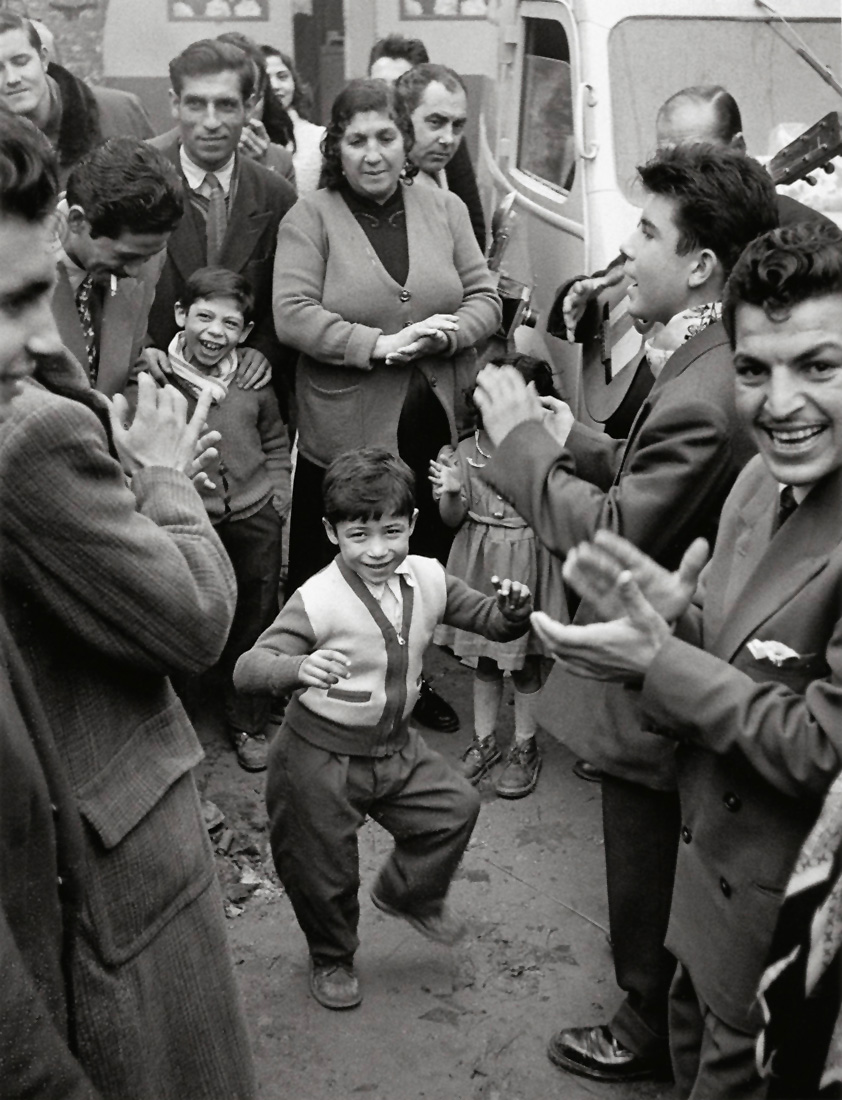
 

Horst P. Horst (German-American, 1906-1999) 'Yves Saint Laurent poses in the apartment's grand salon for a November 1971 'Vogue' photo spread' 1971


Horst P. Horst (German-American, 1906-1999)
Yves Saint Laurent poses in the apartment’s grand salon for a November 1971 ‘Vogue’ photo spread
1971
© Conde Nast / Horst Estate


Living in Style

In 1947 Horst acquired five acres of land in Oyster Bay Cove, Long Island, part of the estate once owned by the designer Louis Comfort Tiffany. On the land he described as ‘everything I had ever dreamed of’, Horst built a unique house and landscaped garden. British diplomat Valentine Lawford visited for the first time in 1947, with Noël Coward, Christopher Isherwood, and Greta Garbo. It was the beginning of a relationship with Horst that would last until Lawford’s death in 1991.

They welcomed many friends and visitors to Long Island, including the dynamic editor Diana Vreeland. She left Harper’s Bazaar for Vogue in 1962 and soon put the couple to work on Vogue‘s ‘Fashions in Living’ pages. The homes and tastes of everyone from Jackie Onassis to the Duke and Duchess of Windsor, Andy Warhol and Karl Lagerfeld featured in their articles. Horst’s creative chemistry with Vreeland brought him a new lease of life.


Roy Stevens (American, b. 1916) 'Horst directing fashion shoot with Lisa Fonssagrives' 15 May 1941


Roy Stevens (American, b. 1916)
Horst directing fashion shoot with Lisa Fonssagrives
15 May 1941
© Time & Life Pictures / Getty Images


In the Studio

During the 1940s Horst worked primarily in the Condé Nast studio on the 19th floor of the Graybar Building, an Art Deco skyscraper on Manhattan’s Lexington Avenue. The busy studio was well equipped with a variety of lights and props and Horst worked closely with talented art director Alexander Liberman. Like Horst, he had found refuge in the artistic circles of Paris and New York, and enjoyed a long career with Condé Nast.

By 1946 dressing the American woman had become one of the country’s largest industries, grossing over six billion dollars a year. The staff of Vogue expanded accordingly. In 1951 Horst found a studio of his own, the former penthouse apartment of artist Pavel Tchelitchew, with high ceilings and a spectacular view over the river. Horst developed a new approach to photography in response to the abundance of daylight and for a time his famous atmospheric shadows disappeared.


Victoria and Albert Museum
Cromwell Road, London SW7 2RL

Opening hours:
The V&A is open daily from 10.00 to 17.45 and until 22.00 on Fridays

Victoria and Albert Museum website

Horst: Photographer of Style web page

LIKE ART BLART ON FACEBOOK

Back to top