Exhibition: ‘Florence Henri. Compositions’ at the Pinakothek der Moderne, Munich

Exhibition dates: 21st March – 14th September 2014


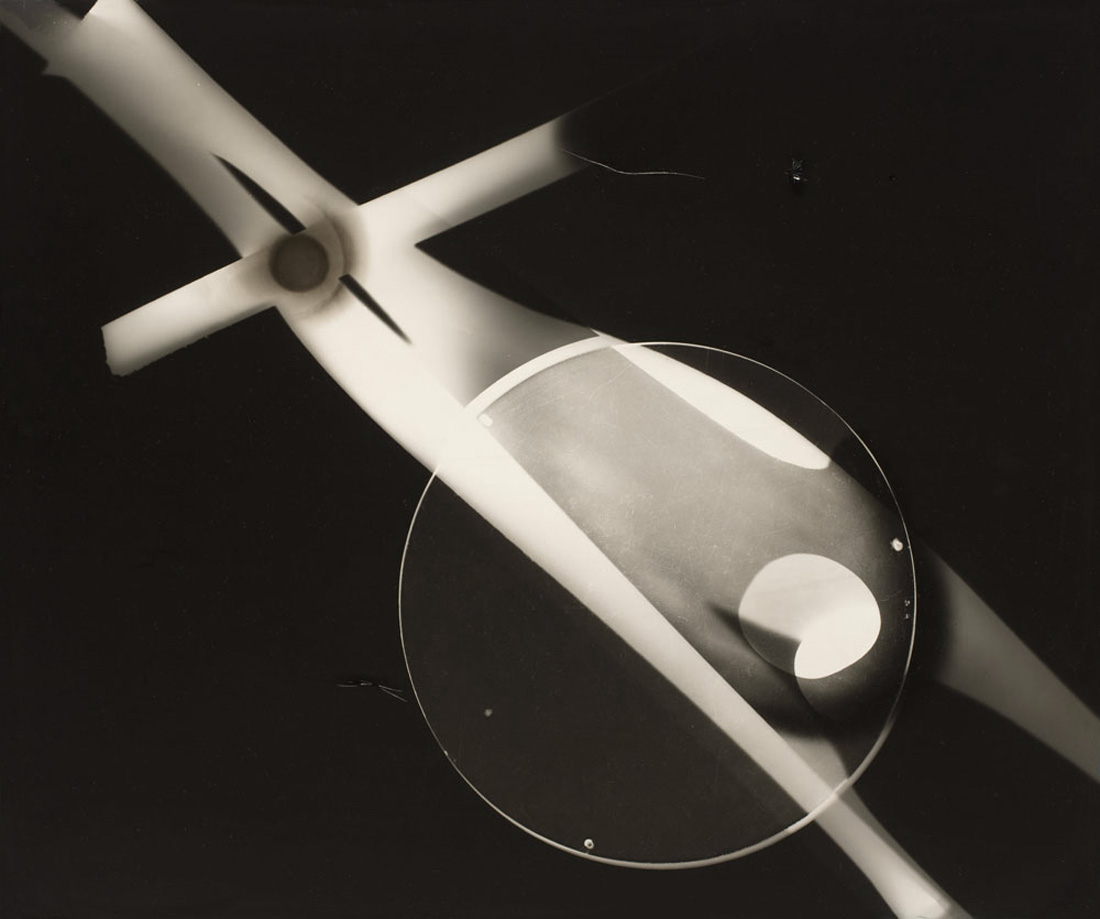
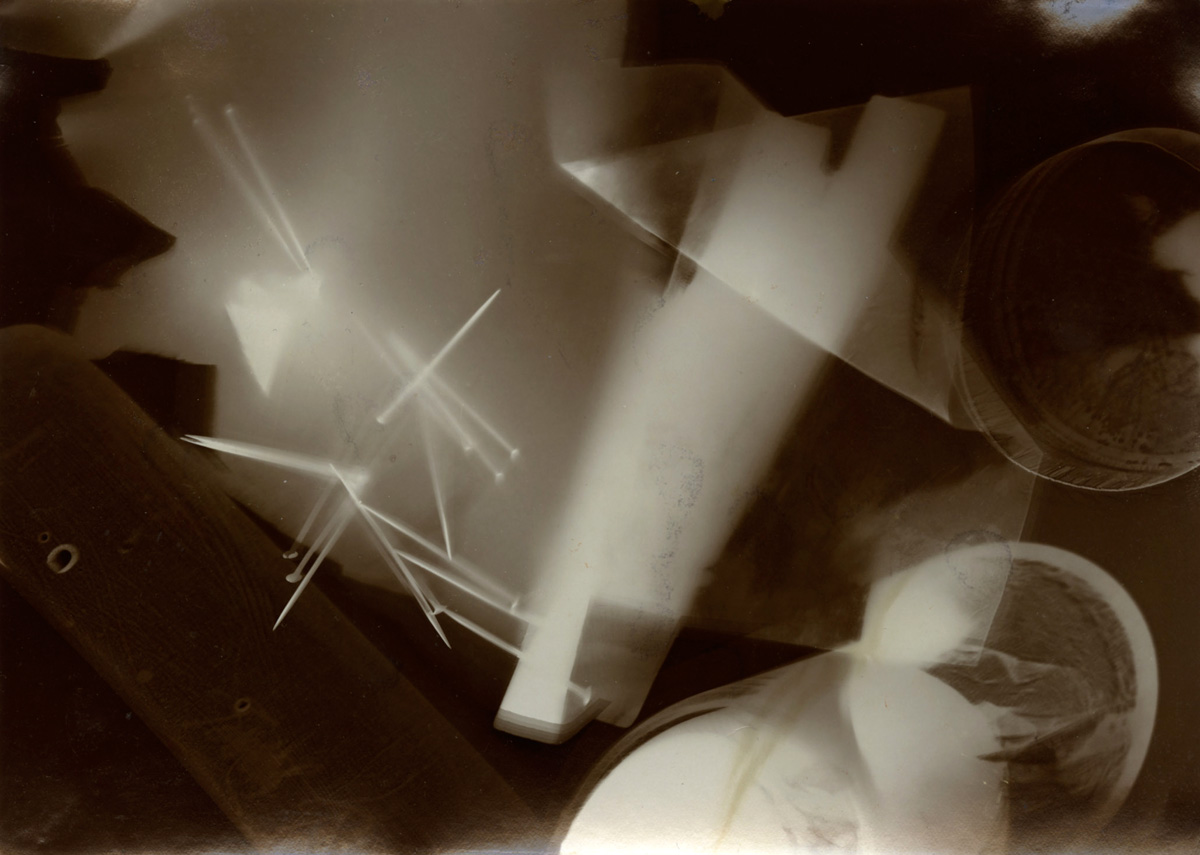
Florence Henri (French born America, 1893-1982) 'Composition' Nd


Florence Henri (French born America, 1893-1982)
Composition
Nd


When I started experimenting with a camera in the early 80s, my first experiments were with mirrors, shoes, tripod legs, cotton buds and reflections of myself in mirrors (with bright orange hair). I still have the commercially printed colour photos from the chemist lab!

Henri’s sophisticated, avante-garde, sculptural compositions have an almost ‘being there’ presence: a structured awareness of a way of looking at the world, a world in which the artist questions reality. She confronts the borders of an empirical reality (captured by a machine, the camera) through collage and mirrors, in order to take a leap of faith towards some form of transcendence of the real. Here she confronts the limitless freedom of creativity, of composition, to go beyond objectivity and science, to experience Existenz (Jaspers) – the realm of authentic being.*

These photographs are her experience of being in the world, of Henri observing the breath of being – the breath of herself, the breath of the objects and a meditation on those objects. There is a stillness here, an eloquence of construction and observation that goes beyond the mortal life of the thing itself. That is how these photographs seem to me to live in the world. I may be completely wrong, I probably am completely wrong – but that is how these images feel to me: a view, a perspective, the artist as prospector searching for a new way of authentically living in the world.

I really like them.

Dr Marcus Bunyan


*For his own existential philosophy, [Karl] Jaspers’ aim was to indirectly outline the metaphysical features of human Existenz – which means, what it’s like to experience being human in our full freedom – and to encourage every individual to realise his or her own authentic self-being by a subjective existential activity of thought which isn’t objectively describable.

“Existence in one sense refers to the sum total of reality, and in another sense, the elusive characteristic of being which differentiates real things from fictional ones.7 For Jasper, Existence as it pertains to Being is called Encompassing. It is the form of our awareness of being which underlies all our scientific and common-sense knowledge and which is given expression in the myths and rituals of religion. This awareness is not that of an object, but reflection on the subjective situation of being. Thus existence is about reflection upon the horizon of life, accepting the limitless possibilities in reality and also accepting that even though we can enlarge the extent of our knowledge, we can never escape the fact that it is fragmentary and has a limit.

He says:

“By reflecting upon that course (the limitless horizon of reality) we ask about being itself, which always seems to recede from us, in the very manifestation of all the appearances we encounter. This being we call the encompassing. But the encompassing is not the horizon of our knowledge at any particular moment. Rather, it is the source from which all new horizons emerge, without itself ever being visible even as a horizon.9″”


Jaspers Karl, Philosophy of Existence. (Philadelphia: University of Pennsylvanian Press, 1971), p. 18 quoted in Onyenuru Okechukwu. P. “The Theme of Existence in the Philosophy of Karl Jaspers,” No date, pp. 3-4 on the PhilPapers website [Online] Cited 16/06/2021.


Thankx to the Pinakothek der Moderne, Munich for allowing me to publish five of the photographs in the posting. The other images have all been sourced from the internet. Please click on the photographs for a larger version of the image.
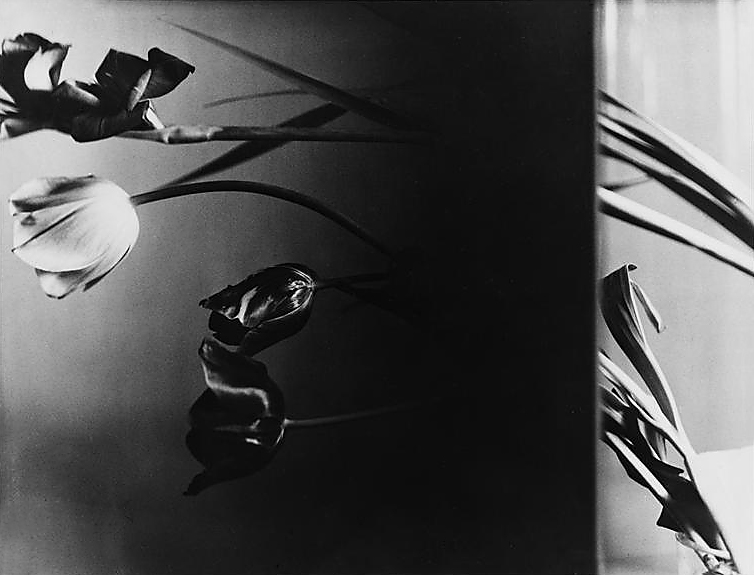


Florence Henri (French born America, 1893-1982) 'Composition' 1931


Florence Henri (French born America, 1893-1982)
Composition
1931


Florence Henri (French born America, 1893-1982 'Composition No 10' 1928


Florence Henri (French born America, 1893-1982)
Composition No 10
1928


Florence Henri (French born America, 1893-1982) 'Abstract Composition' 1928


Florence Henri (French born America, 1893-1982)
Abstract Composition
1928
Stiftung Ann und Jürgen Wilde, Pinakothek der Moderne, Munich


The photographs and photo-montages of Florence Henri (1893-1982) attest to her broad artistic education and an unusual openness for new currents in the art of the time.

The artist, who had studied the piano under Ferruccio Busoni in Rome and painting in Paris under Fernand Léger, in Berlin under Johann Walter-Kurau and in Munich under Hans Hofmann, spent a brief semester as a guest at the Bauhaus in Dessau in 1927. Although photography was not part of the curriculum at the Bauhaus at this time, lecturers such as László Moholy-Nagy and Georg Muche, as well as pupils including Walter Funkat and Edmund Collein experimented intensively with this medium. It was here that Florence Henri gained the inspiration to become a photographer herself.

That same year she returned to Paris, stopped painting and devoted herself thoroughly to photography. She created extensive series of still lifes and portrait and self-portrait compositions, in which the artist divided up the pictorial space using mirrors and reflective spheres, expanding it structurally. The fragmented images created this way point to the inspiration Florence Henri gained from Cubist and Constructivist pictorial concepts.

Through her experimental photography Florence Henri swiftly became a highly respected exponent of modern photography and participated in numerous international shows such as the trailblazing Werkbund exhibition ‘Film und Foto’ in 1929. After World War II, however, the artist no longer pursued her photographic interest with the same intensity as before, devoting herself instead almost exclusively to painting. This most certainly also contributed to her photographs largely falling into oblivion after 1945.

The emphasis in the exhibition Florence Henri. Compositions in the Pinakothek der Moderne has been placed on the artist’s compositions using mirrors and her photo-montages, It comprises some 65 photographs, including the portfolio published in 1974, as well as documents and historical publications from the holdings of the Ann and Jürgen Wilde Foundation. As such, Ann and Jürgen Wilde significantly contributed towards the rediscovery of this exceptional artist’s work. Her photographic oeuvre now has a permanent place within the art of the avant-garde.

Press release from the Pinakothek der Moderne website
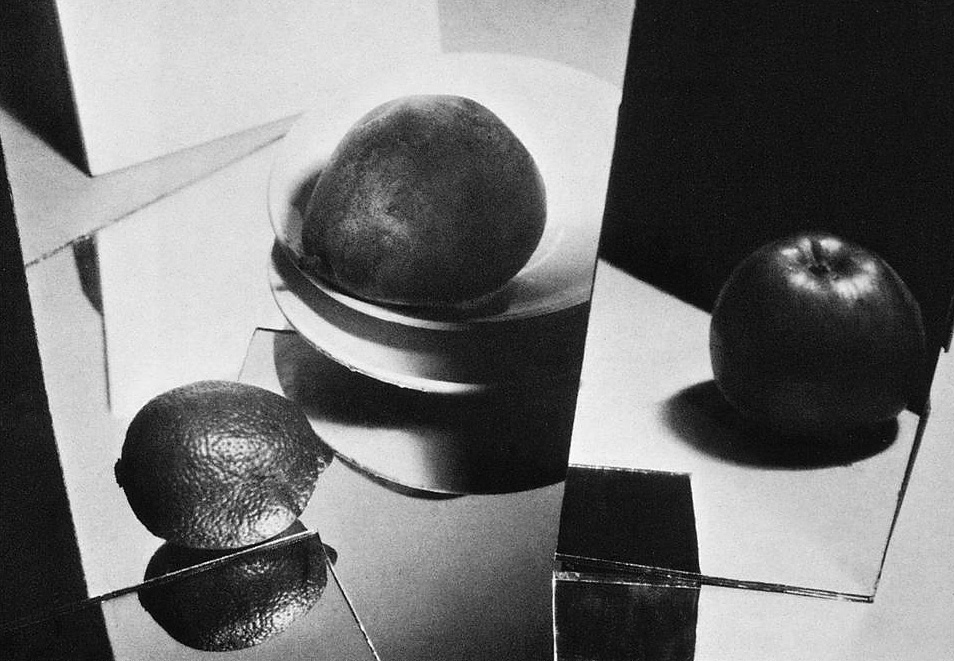
 

Florence Henri (French born America, 1893-1982) 'Still-Life Composition' 1929


Florence Henri (French born America, 1893-1982)
Still-Life Composition
1929


Florence Henri (French born America, 1893-1982) 'Abstract Composition' 1932


Florence Henri (French born America, 1893-1982)
Abstract Composition
1932


Florence Henri (French born America, 1893-1982) Still-life with Lemon and Pear' c. 1929


Florence Henri (French born America, 1893-1982)
Still-life with Lemon and Pear
c.1929


Florence Henri (French born America, 1893-1982) 'Little Boot' 1931


Florence Henri (French born America, 1893-1982)
Little Boot
1931


Florence Henri was born in New York on 28 June 1893; her father was French and her mother was German. Following her mother’s death in 1895, she and her father moved first to her mother’s family in Silesia; she later lived in Paris, Munich and Vienna and finally moved to the Isle of Wight in England in 1906. After her father’s death there three years later, Florence Henri lived in Rome with her aunt Anni and her husband, the Italian poet Gino Gori, who was in close touch with the Italian Futurists. She studied piano at the music conservatory in Rome.

During a visit to Berlin, Henri started to focus on painting, after meeting the art critic Carl Einstein and, through him, Herwarth Walden and other Berlin artists. In 1914, she enrolled at the Academy of Art in Berlin, and starting in 1922, trained in the studio of the painter Johannes Walter-Kurau. Before moving to Dessau, Henri studied painting with the Purists Fernand Léger and Amédée Ozenfant at the Académie Moderne in Paris. She arrived at the Bauhaus in Dessau in April 1927. She had already met the Bauhaus artists Georg Muche and László Moholy-Nagy and had developed a passion for Marcel Breuer’s tubular steel furniture. Up to July 1927, Henri attended the preliminary course directed by Moholy-Nagy, lived in the Hungarian artist’s house, and became a close friend of his first wife,Lucia Moholy, who encouraged her to take up photography. From the Moholy-Nagys, Henri learned the basic technical and visual principles of the medium, which she used in her initial photographic experiments after leaving Dessau. In early 1928, she abandoned painting altogether and from then on focused on photography, with which she established herself as a professional freelance photographer with her own studio in Paris – despite being self-taught.

Even during her first productive year as a photographer, László Moholy-Nagy published one of her unusual self-portraits, as well as a still life with balls, tyres, and a mirror, in i10. Internationale Revue. The first critical description of her photographic work, which Moholy-Nagy wrote to accompany the photos, recognises that her pictures represented an important expansion of the entire ‘problem of manual painting’, in which ‘reflections and spatial relationships, overlapping and penetrations are examined from a new perspectival angle’.

Mirrors become the most important feature in Henri’s first photographs. She used them both for most of her self-dramatisations and also for portraits of friends, as well as for commercial shots. She took part in the international exhibition entitled Das Lichtbild [The Photograph] in Munich in 1930, and the following year she presented her images of bobbins at a Foreign Advertising Photography exhibition in New York. The artistic quality of her photographs was compared with Man Ray, László Moholy-Nagy and Adolphe Baron de Mayer, as well as the with winner of the first prize at the exhibition, Herbert Bayer. Only three years after the new photographer had taken her first pictures, her self-portrait achieved the equal status with her male colleagues that she had been aiming for.

Up to the start of the Second World War, Henri established herself as a skilled photographer with her own photographic studio in Paris (starting in 1929). When the city was occupied by the Nazis, her photographic work declined noticeably. The photographic materials needed were difficult to obtain, and in any case Henri’s photographic style was forbidden under the Nazi occupation; she turned her attention again to painting. With only a few later exceptions, the peak of her unique photographic experiments and professional photographic work was in the period from 1927 to 1930.

Even in the 1950s, Henri’s photographs from the Thirties were being celebrated as icons of the avant-garde. Her photographic oeuvre was recognised during her lifetime in one-woman exhibitions and publications in various journals, including N-Z Wochenschau. She also produced photographs during this period, such as a series of pictures of the dancer Rosella Hightower. She died in Compiègne on 24 July 1982.

Text from the Florence Henri web page on the Bauhaus Online website [Online] Cited 06/07/2014. No longer available online


Florence Henri (French born America, 1893-1982) 'Parisian Window' 1929


Florence Henri (French born America, 1893-1982)
Parisian Window
1929


Florence Henri (French born America, 1893-1982) 'The Forum' 1934


Florence Henri (French born America, 1893-1982)
The Forum
1934


Florence Henri (French born USA, 1893-1982) 'Rome' 1933-1934


Florence Henri (French born USA, 1893-1982)
Rome
1933-1934


Florence Henri (French born America, 1893-1982) 'Abstract Composition' 1929


Florence Henri (French born America, 1893-1982)
Abstract Composition
1929


Florence Henri (French born America, 1893-1982) 'Self-portrait in a mirror' 1928


Florence Henri (French born America, 1893-1982)
Self-portrait in a mirror
1928


Florence Henri (French born America, 1893-1982) 'A Bunch of Grapes' c. 1934


Florence Henri (French born America, 1893-1982)
A Bunch of Grapes
c. 1934


Florence Henri (French born America, 1893-1982) 'Composition' 1932


Florence Henri (French born America, 1893-1982)
Composition
1932
Stiftung Ann und Jürgen Wilde, Pinakothek der Moderne, Munich


Florence Henri (French born America, 1893-1982) 'Untitled, USA' 1940


Florence Henri (French born America, 1893-1982)
Untitled, USA
1940


Florence Henri (French born America, 1893-1982) 'Paris Window' 1929


Florence Henri (French born America, 1893-1982)
Paris Window
1929
Stiftung Ann und Jürgen Wilde, Pinakothek der Moderne, Munich
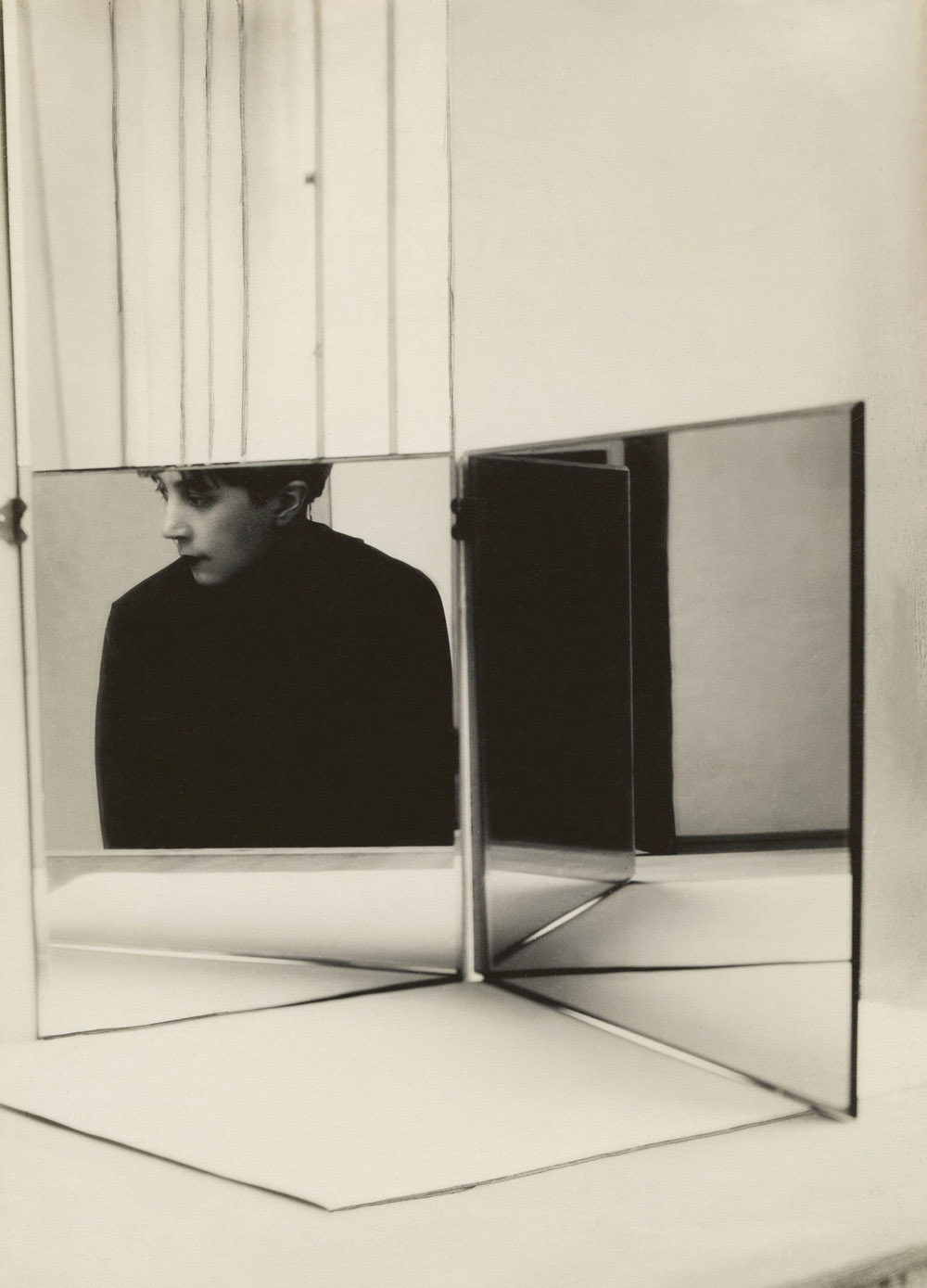
 

Florence Henri (French born America, 1893-1982) 'Portrait' 1928


Florence Henri (French born America, 1893-1982)
Portrait
1928
Stiftung Ann und Jürgen Wilde, Pinakothek der Moderne, Munich


Florence Henri (French born America, 1893-1982) 'Self Portrait' 1928


Florence Henri (French born America, 1893-1982)
Self Portrait
1928
Stiftung Ann und Jürgen Wilde, Pinakothek der Moderne, Munich


Pinakothek der Moderne
Barer Strasse 40
Munich

Opening hours:
Daily except Monday 10am – 6pm
Thursday 10am – 8pm

Pinakothek der Moderne website

LIKE ART BLART ON FACEBOOK

Back to top

Exhibition: ‘Knud Lonberg-Holm: The Invisible Architect’ at Ubu Gallery, New York Part 2

Exhibition dates: 6th May – 30th September 2014


Knud Lonberg-Holm (Danish, 1895-1972) 'Design for the Chicago Tribune Tower Competition' West elevation 1922


Knud Lonberg-Holm (Danish, 1895-1972)
Design for the Chicago Tribune Tower Competition
West elevation
1922
Vintage photograph mounted on board
9 1/8 x 3 5/8 inches (23.2 x 9.2cm)
The Knud Lonberg-Holm Archive from the Marc Dessauce Collection; Courtesy Ubu Gallery, New York


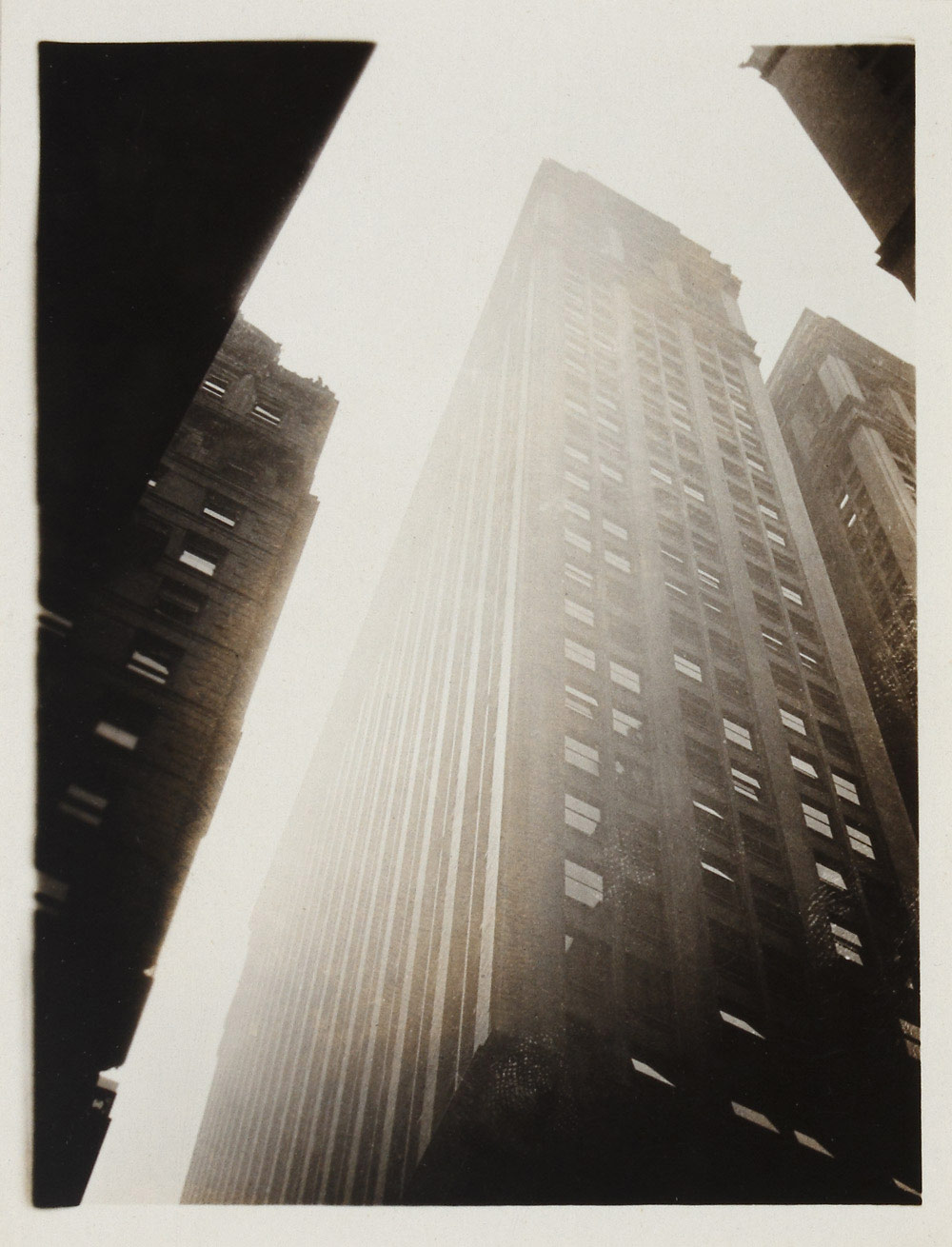
The second part of this posting about the work of architect Knud Lonberg-Holm. “Backside-views of buildings and fire escapes, rather than historicist ornamental facades, are presented in their “unselfconscious beauty” in opposition to traditional, pictorialist architectural photography.” You only have to look at the photographs of the city by Alfred Stieglitz or Berenice Abbott taken at around the same time to notice the difference – less romantic, more “modern” in their geometry and form.

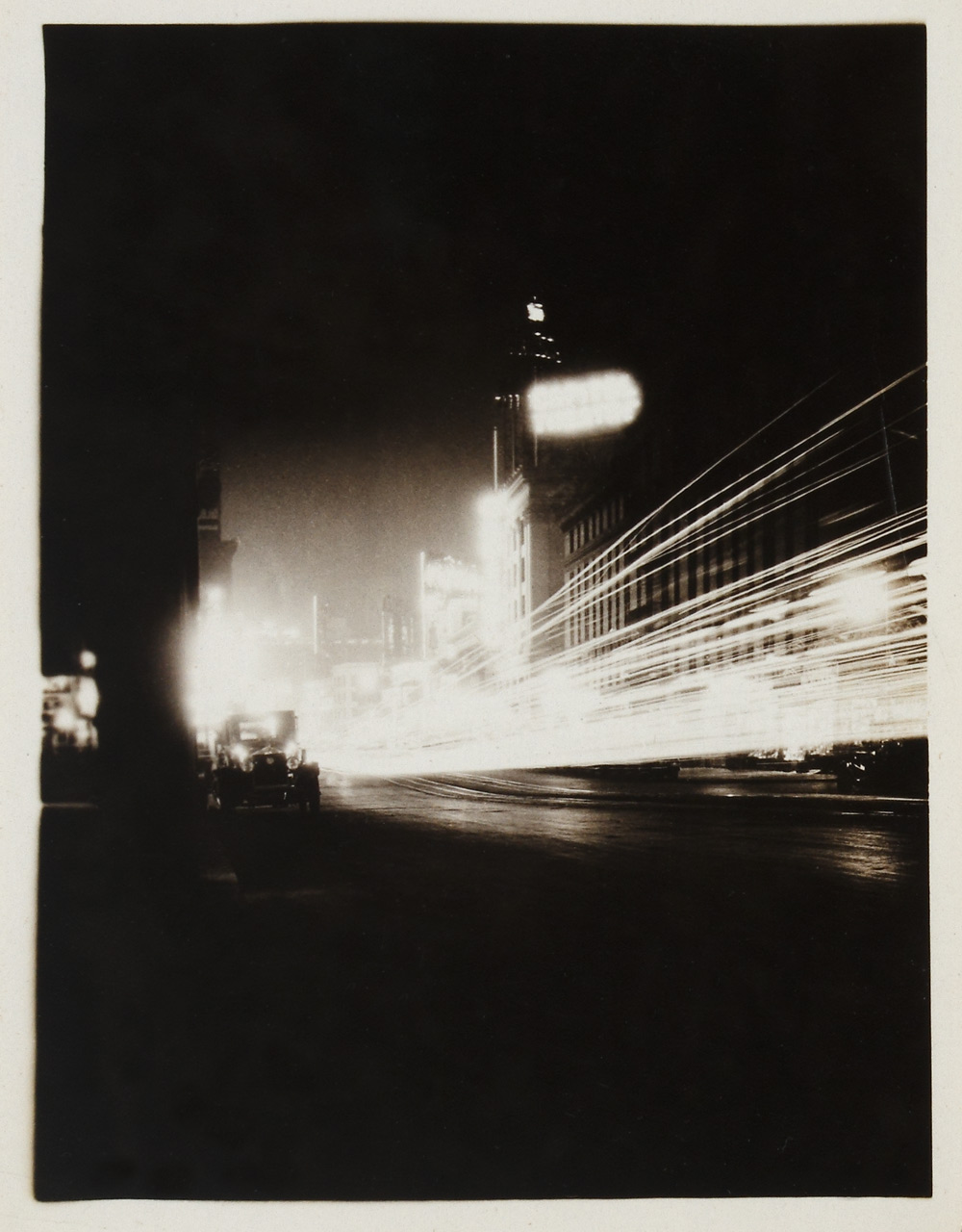
If it weren’t for the shock of seeing 1920s cars at the bottom of some of the images (for example, Detroit, Rear Façade of a Hotel, 1924 below) you could almost believe that they had been made 40 years later, around the time of Bernd and Hilla Becher. These photographs are monumental, industrial, but are tinged with humanity – the billboards, cars, people and advertising signs that hover at the bottom or in the deep shadows of the image. Then look at the tonality and atmosphere of the images, including the vibration of light in the two Dazzlescapes (New York, Madison Square and New York, Times Square, both 1923 below).

I don’t think I have ever seen a better collection of images of city architecture.

Dr Marcus Bunyan


Many thankx to Ubu Gallery for allowing me to publish the photographs in the posting. Please click on the photographs for a larger version of the image.


“I’ve always been annoyed by rummaging through the past; the future interests me much more.”


Knud Lonberg-Holm


Knud Lonberg-Holm (Danish, 1895-1972) 'Design for the Chicago Tribune Tower Competition' West view axonometric 1922


Knud Lonberg-Holm (Danish, 1895-1972)
Design for the Chicago Tribune Tower Competition
West view axonometric
1922
Vintage photograph mounted on board
8 7/8 x 4 5/8 inches (22.5 x 11.7cm)
The Knud Lonberg-Holm Archive from the Marc Dessauce Collection; Courtesy Ubu Gallery, New York


Knud Lonberg-Holm (Danish, 1895-1972) 'Equity Trust Building – Oblique View' 1923


Knud Lonberg-Holm (Danish, 1895-1972)
Equity Trust Building – Oblique View
1923
Reproduced in Erich Mendelsohn’s Amerika, p. 41
Vintage gelatin silver print
4 3/8 x 3 1/4 inches (11.1 x 8.3cm)
The Knud Lonberg-Holm Archive from the Marc Dessauce Collection; Courtesy Ubu Gallery, New York


Knud Lonberg-Holm (Danish, 1895-1972) 'Woolworth Building – Oblique View' 1923


Knud Lonberg-Holm (Danish, 1895-1972)
Woolworth Building – Oblique View
1923
Reproduced in Erich Mendelsohn’s Amerika, p. 40
Vintage gelatin silver print
4 1/4 x 3 1/4 inches (10.8 x 8.3cm)
The Knud Lonberg-Holm Archive from the Marc Dessauce Collection; Courtesy Ubu Gallery, New York


Knud Lonberg-Holm (Danish, 1895-1972) 'Design for the Chicago Tribune Tower Competition' Side elevation with Tribune sign visible 1922


Knud Lonberg-Holm (Danish, 1895-1972)
Design for the Chicago Tribune Tower Competition
Side elevation with Tribune sign visible
1922
Vintage photograph mounted on board
9 1/8 x 4 7/8 inches (23.2 x 12.4cm)
The Knud Lonberg-Holm Archive from the Marc Dessauce Collection; Courtesy Ubu Gallery, New York


Knud Lonberg-Holm (Danish, 1895-1972) 'Design for the Chicago Tribune Tower Competition' Preliminary side elevation 1922


Knud Lonberg-Holm (Danish, 1895-1972)
Design for the Chicago Tribune Tower Competition
Preliminary side elevation
1922
Photograph mounted on board
9 x 4 5/8 inches (22.9 x 11.7cm)
The Knud Lonberg-Holm Archive from the Marc Dessauce Collection; Courtesy Ubu Gallery, New York


Throughout the 1920s, he traveled to other American cities like Chicago and New York City, where, with a 35-millimetre handheld Leica, he took worm’s-eye views and extreme close-ups of skyscrapers, the back sides of buildings, fire escapes, billboards, and dazzling “lightscapes,” ignoring – for the most part – the facades of the buildings. Some of these images would appear, uncredited, in Erich Mendelsohn’s 1926 publication Amerika: Bilderbuch eines Architekten, the first book on the “International Style” in American architecture. (Only in an expanded, later edition from 1928 is Lonberg-Holm credited for 17 of the images.)

Soon the photographs cropped up in design and architecture journals in Holland, Germany, and Russia. “They received acclaim for being progressive and dynamic presentations of technology, commerce, and urbanisation,” says Adam Boxer, founder and owner of Ubu Gallery. “To expose Lonberg-Holm’s role as photographer means one can situate him in his deserved role – a pioneer of New Photography.” As a correspondent for the avant-garde, having his images and writings appear in radical European Modernist reviews – such as the Functionalist-Constructivist Swiss bulletin ABC Beitrage zum Bauen (Contributions on Building) and the Dutch i10 – were of crucial importance, since they circulated amongst members of the European vanguard. By the 1930s, however, Lonberg-Holm had given up architecture for marketing research, and his photographs, never signed or dated, no longer circulated. …

Lonberg-Holm also questioned how architecture was practiced and he pioneered the idea of the life cycle of a building. Decades before William McDonough discovered cradle-to-cradle thinking, Lonberg-Holm had been trying to put across the concept that all buildings, like all organisms, are subject to a life cycle, as predictable and as inevitable as the cycles in nature. “The building cycle involves research, design, construction, use, and elimination – and repeat,” wrote an editor in the January 1960 issue of Architectural Forum. “One of Lonberg-Holm’s chief contentions is that design that anticipates the cycle as a whole makes each succeeding step more rational and easier… Lonberg-Holm’s principle, ‘Anticipate remodelling in the initial design’, carries a corollary, which might be put this way, in keeping with the very important principle of design articulation: ‘Design each “system” in the building – the structural system, the heating or the air-conditioning system, the wiring, the plumbing, etc. – to be self-contained for easy assembly, with interconnections to other systems held to a minimum and made easy to alter’.

Extract from Paul Makovsky. “The Invisible Architect of Invisible Architecture,” on the Metropolis website [Online] Cited 18/07/2014. No longer available online.


Knud Lonberg-Holm (Danish, 1895-1972) 'Detroit' 1924


Knud Lonberg-Holm (Danish, 1895-1972)
Detroit
1924
Reproduced in Erich Mendelsohn’s Amerika, p. 67
Vintage gelatin silver print
4 1/4 x 3 1/4 inches (10.8 x 8.3cm)
The Knud Lonberg-Holm Archive from the Marc Dessauce Collection; Courtesy Ubu Gallery, New York


Knud Lonberg-Holm (Danish, 1895-1972) 'Detroit, Rear Areaway' 1924


Knud Lonberg-Holm (Danish, 1895-1972)
Detroit, Rear Areaway
1924
Reproduced in Erich Mendelsohn’s Amerika, p. 91
Vintage gelatin silver print
4 1/2 x 3 1/2 inches (11.4 x 8.9cm)
The Knud Lonberg-Holm Archive from the Marc Dessauce Collection; Courtesy Ubu Gallery, New York


During the 1920s, Lonberg-Holm traveled to American cities like Detroit, Chicago, and New York. With his 35-millimetre Leica camera, he took extreme close-ups of skyscrapers (such as this rear view Detroit Hotel, above), the back sides of buildings, fire escapes, billboards, and dazzling nighttime views.


Knud Lonberg-Holm (Danish, 1895-1972) 'Detroit' 1924


Knud Lonberg-Holm (Danish, 1895-1972)
Detroit
1924
variant cropping reproduced in Erich Mendelsohn’s Amerika, p. 21
Vintage gelatin silver print
4 3/8 x 3 3/8 inches (11.1 x 8.6cm)
The Knud Lonberg-Holm Archive from the Marc Dessauce Collection; Courtesy Ubu Gallery, New York


Knud Lonberg-Holm (Danish, 1895-1972) 'Detroit, Rear Façade of a Hotel' 1924


Knud Lonberg-Holm (Danish, 1895-1972)
Detroit, Rear Façade of a Hotel
1924
Reproduced in Erich Mendelsohn’s Amerika, p. 89
Vintage gelatin silver print
4 1/2 x 3 3/8 inches (11.4 x 8.6cm)
The Knud Lonberg-Holm Archive from the Marc Dessauce Collection; Courtesy Ubu Gallery, New York


Knud Lonberg-Holm (Danish, 1895-1972) 'Chicago, Skyscraper of the Second Period' c. prior to 1926


Knud Lonberg-Holm (Danish, 1895-1972)
Chicago, Skyscraper of the Second Period
c. prior to 1926
Reproduced in Erich Mendelsohn’s Amerika, p. 77 (right)
Vintage gelatin silver print
4 3/8 x 3 3/8 inches (11.1 x 8.6cm)
The Knud Lonberg-Holm Archive from the Marc Dessauce Collection; Courtesy Ubu Gallery, New York


Knud Lonberg-Holm (Danish, 1895-1972) 'Chicago, 2 Skyscrapers' c. prior to 1926


Knud Lonberg-Holm (Danish, 1895-1972)
Chicago, 2 Skyscrapers
c. prior to 1926
Reproduced in Erich Mendelsohn’s Amerika, p. 75
Vintage gelatin silver print
4 1/2 x 3 1/2 inches (11.4 x 8.9cm)
The Knud Lonberg-Holm Archive from the Marc Dessauce Collection; Courtesy Ubu Gallery, New York


Knud Lonberg-Holm: The Invisible Architect

“Lonberg-Holm was the first architect in my knowledge to talk about the ultimately invisible architecture. In 1929, when I first met him, he said the greatest architect in history would be the one who finally developed the capability to give humanity completely effective environmental control without any visible structure and machinery. Thus we have in our day an unsung Leonardo of the building industry, whose scientific foresight and design competence are largely responsible for the present world-around state of advancement of the building arts.”


Buckminster Fuller, 1968


The historical documents in this collection represent a hitherto unexplored aspect of the influence of European modernist architects – specifically, those who emigrated to the United States early and voluntarily, before the rise of fascism necessitated the wholesale evacuation of the European avant-garde. The seemingly disparate archive of photographs, drawings, diagrams and correspondence can be grouped around a unifying theme: the realisation of the avant-garde ambition of integration and control of architectural production through industrialisation; and around a central figure: the architect Knud Lonberg-Holm. The documents bear witness to a complex history that is not easily tracked elsewhere. This is due, in part, to the fact that they bridge two continents, and in part because they unveil processes of reform, such as the scientific conversion of the institutions of architectural practice and the transformation of the project, that were aimed at the most mundane level of building, not at exceptional structures. Moreover, the documents show this professional and anonymous destiny together in line with inversely artistic and revolutionary origins. Thus, the archive documents a phenomenon of cultural disappearance, bringing missing substance to the link between the Americanism of the European avant-garde and the history of modern architecture in the United States.

A native of Denmark, which he leaves in 1923 for the United States, Knud Lonberg-Holm (1895-1972) is the emblematic figure of this disappearance. Initially considered a “pioneer of modern architecture” by the anthropologists of the 1920s, and even held representative of “the space-time conception” by Henry Russell Hitchcock, his true contributions will be ever more unacknowledged as they become more fundamental. First of the modernist émigrés in the United States, he becomes the obliged correspondent for the European avant-garde, in particular for the De Stijl group and also the Berlin Constructivists, with whom he was closest. He was a contributor to both ABC and i10, a member of ASNOVA, a collaborator of Buckminster Fuller, and also the American delegate to CIAM with Richard Neutra. His experiments with photography in the early 1920s (diffused widely by J.J.P. Oud, Moholy-Nagy, Erich Mendelsohn, and others) were received with critical success in Europe and the USSR. This is due as much to the revolutionary use of extreme viewpoints from below and above, as to the renewal of the iconographic sources of modernism: the substitution of the imagery of the grain elevators and the “balancing of the masses,” for an aesthetic of structure and tension gleaned from the metallic skeletons of unfinished skyscrapers. In Lonberg-Holm, this aesthetic schism is accompanied by a renouncement of the project – a sort of Duchampian abandonment of the traditional identity of the architect, which intervenes at the moment he arrives in his work at a controlled resolution of the opposing influences of rationalism and neo-plasticism, for example in the McBride Residence project of 1926.

Lonberg-Holm’s institutional itinerary begins at the University of Michigan, Ann Arbor, in 1924-1925, where he introduces a basic design course similar to that of the Soviet Vkhutemas. Moving to New York in 1929, he enters the organisation of the F.W. Dodge publishing corporation, initially at the journal The Architectural Record, where he devises both content and format, and then as the head of the research department of Sweet’s Catalog Service, the indispensable architect’s handbook of building products. The reorganisation of Sweet’s Catalog, perhaps Lonberg-Holm’s most tangible contribution to modern architectural production in America, gives substance to his doctrinaire activity of the 1930s, concerned with urban obsolescence, cycles of production, and information theory. In collaboration with Czech designer Ladislav Sutnar, Sweet’s Catalog becomes a complete oeuvre of industrial and plastic organisation. Its critical and enduring importance in the process of architectural production makes it an implemented avant-garde project, at an appreciable scale, and testament to Lonberg-Holm’s heretofore-unacknowledged influence on the development of a truly modern American architecture.

Marc Dessauce, 2003


Marc Dessauce (1962-2004) was an architectural historian who lived and worked in NYC and Paris. His research, exhibitions, and writings focused on the foundations of both American and European avant-garde architecture in the twentieth century. Marc assembled this archive between 1986 and 1995 when he was a PhD candidate at Columbia University in the department of Art History. His book The Inflatable Moment: Pneumatics and Protest in ’68, was published by Princeton Architectural Press in 1999.


Knud Lonberg-Holm (Danish, 1895-1972) 'New York, Madison Square' 1923


Knud Lonberg-Holm (Danish, 1895-1972)
New York, Madison Square
1923
Reproduced in Erich Mendelsohn’s Amerika, p. 31
Vintage gelatin silver print
4 1/8 x 3 1/4 inches (10.5 x 8.3cm)
The Knud Lonberg-Holm Archive from the Marc Dessauce Collection; Courtesy Ubu Gallery, New York


Knud Lonberg-Holm (Danish, 1895-1972) 'New York, Times Square' 1923


Knud Lonberg-Holm (Danish, 1895-1972)
New York, Times Square
1923
Reproduced in Erich Mendelsohn’s Amerika, p. 6
Vintage gelatin silver print
4 1/4 x 3 3/8 inches (10.8 x 8.6cm)
The Knud Lonberg-Holm Archive from the Marc Dessauce Collection; Courtesy Ubu Gallery, New York


Amerika: Bilderbuch eines Architekten

Seventeen of Lonberg-Holm’s photographs appeared uncredited in Erich Mendelsohn’s 1926 book, a very influential volume on modern American architecture. Only in a later, expanded edition was Lonberg-Holm given credit. El Lissitzky was so impressed with Amerika that he said the volume “thrills us like a dramatic film. Before our eyes move pictures that are absolutely unique. In order to understand some of the photographs you must lift the book over your head and rotate it.”


Knud Lonberg-Holm (Danish, 1895-1972) 'Sweet's Display, Exposition des Techniques Américianes de l’Habitation et de l'Ubranisme (Information 1, 2, 3)' Paris, Grand Palais, June 14-July 21, 1946


Knud Lonberg-Holm (Danish, 1895-1972)
Sweet’s Display
Exposition des Techniques Américianes de l’Habitation et de l’Ubranisme
(Information 1, 2, 3)
Paris, Grand Palais, June 14-July 21, 1946
Vintage gelatin silver print
7 1/8 x 7 1/4 inches (18.1 x 18.4cm)
The Knud Lonberg-Holm Archive from the Marc Dessauce Collection; Courtesy Ubu Gallery, New York


Knud Lonberg-Holm (Danish, 1895-1972) 'Sweet's Display, Exposition des Techniques Américianes de l'Habitation et de l'Ubranisme (Biblioteque SS)' Paris, Grand Palais, June 14-July 21, 1946


Knud Lonberg-Holm (Danish, 1895-1972)
Sweet’s Display
Exposition des Techniques Américianes de l’Habitation et de l’Ubranisme
(Biblioteque SS)
Paris, Grand Palais, June 14-July 21, 1946
Vintage gelatin silver print
7 1/8 x 7 1/8 inches (18.1 x 18.1cm)
The Knud Lonberg-Holm Archive from the Marc Dessauce Collection; Courtesy Ubu Gallery, New York


A diagram from Development Index


A diagram from Development Index illustrating the interrelations of cultural and social factors, which Lonberg-Holm and Larson considered necessary to the practice of design. The index was a screening system intended to manage incoming and outgoing streams of data.

Larson and Knud Lonberg-Holm later collaborated on the idea of a “Development Index” – a systems-thinking approach and research tool that studied the interaction of human activity, environmental relations, and communications with the idea to improve the built environment. It was an attempt to manage information flow and, in a pre-Internet sort of way, provide relevant data through a centralised system, using what was then state-of-the-art media such as microfilm, microfiche, and electronics.


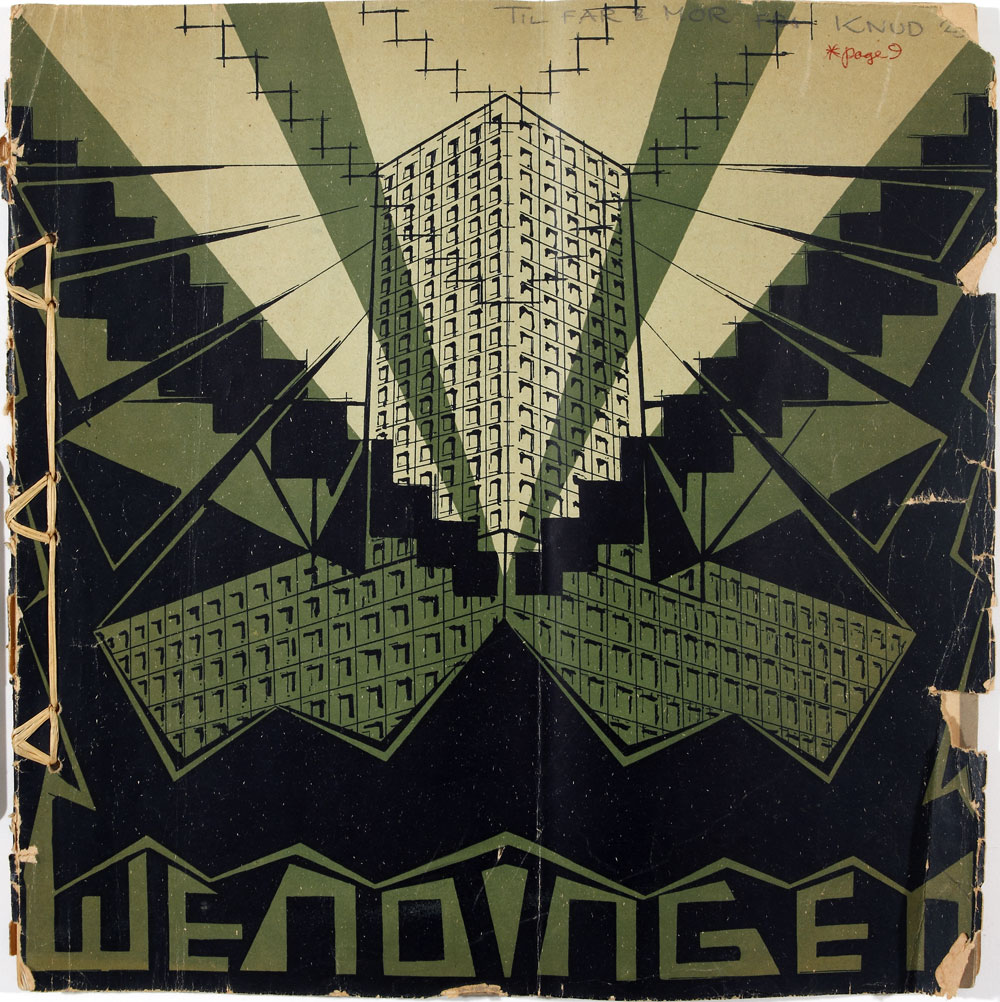
Wendingen. "Skyscraper as a solution of the Housing Problem" No. 3, 1923


Wendingen
“Skyscraper as a solution of the Housing Problem”
No. 3, 1923
Paperbound volume
12 7/8 x 13 inches (32.7 x 33cm)
The Knud Lonberg-Holm Archive from the Marc Dessauce Collection; Courtesy Ubu Gallery, New York


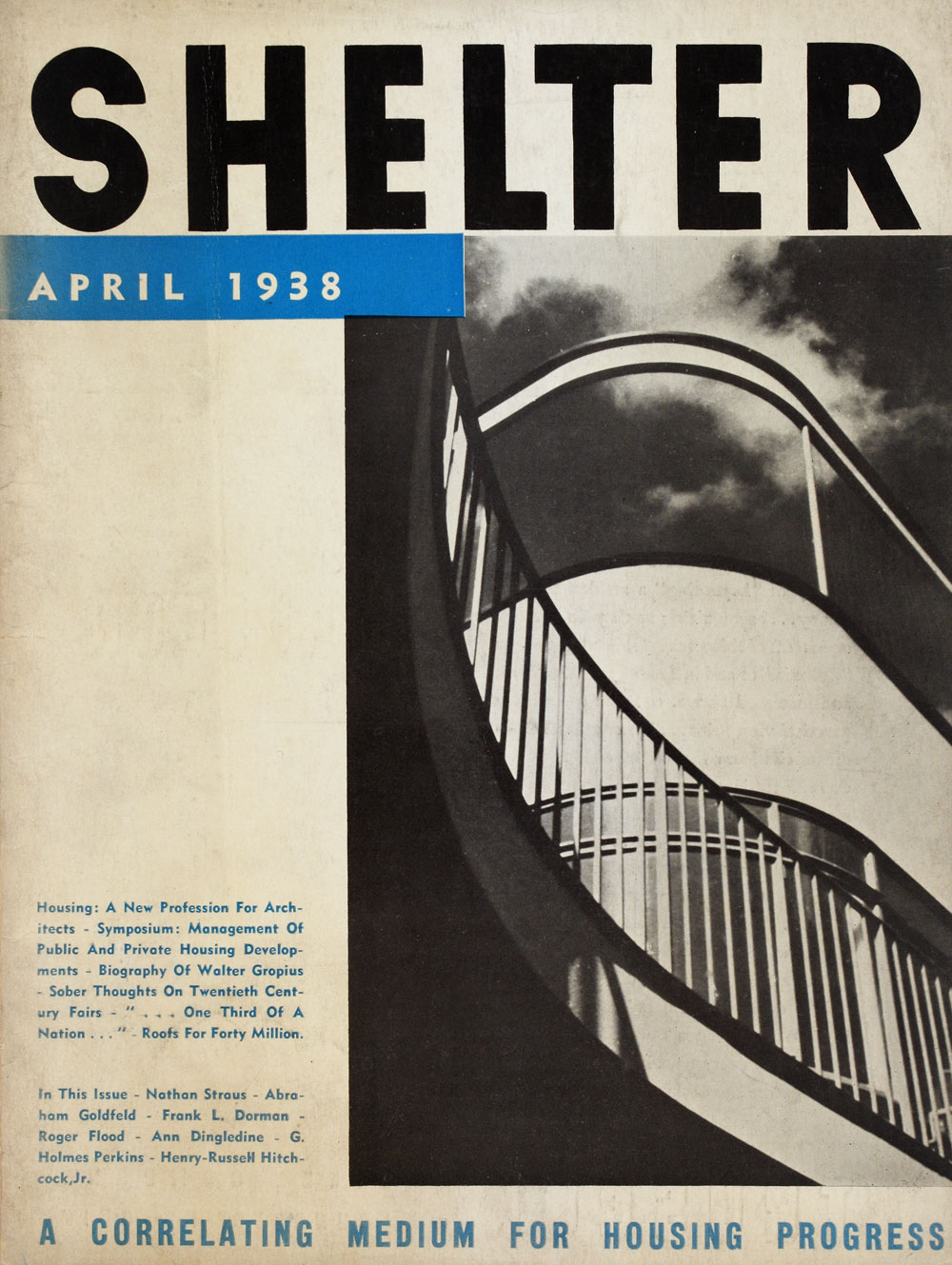
'Shelter' Cover design by Knud Lonberg-Holm April 1938


Shelter
Cover design by Knud Lonberg-Holm
April 1938
Magazine cover
11 x 9 inches (27.9 x 22.9cm)
The Knud Lonberg-Holm Archive from the Marc Dessauce Collection; Courtesy Ubu Gallery, New York


'Shelter now' Cover design by Knud Lonberg-Holm Vol. 2, No. 4, May 1932


Shelter now
Cover design by Knud Lonberg-Holm
Vol. 2, No. 4, May 1932
Magazine cover
12 x 9 inches (30.5 x 22.9cm)
The Knud Lonberg-Holm Archive from the Marc Dessauce Collection; Courtesy Ubu Gallery, New York


Knud Lonberg-Holm with Latislav Sutnar. 'Multi-Measure (MM) Metal Enclosures' catalog cover c. 1942-1944


Knud Lonberg-Holm with Latislav Sutnar
Multi-Measure (MM) Metal Enclosures
c. 1942-1944
Cover of catalog
11 x 8 1/2 inches (27.9 x 21.6cm)
The Knud Lonberg-Holm Archive from the Marc Dessauce Collection; Courtesy Ubu Gallery, New York


The cover of a catalog for Multi-Measure Metal Enclosures, Inc., designed with Ladislav Sutnar between 1942 and 1944. Lonberg-Holm collaborated with architect C. Theodore Larson at F.W. Dodge Corporation’s Sweet’s Catalog division to develop a systematic approach to organising the information needed by the building industry. When graphic designer Ladislav Sutnar later joined him, they radically altered the way business information was streamlined, designed, and packaged, becoming pioneers of “information design” along the way.


i10 "America, Reflections" (by Knud Lonberg-Holm) No. 15, October 20, 1928


i10
“America, Reflections” (by Knud Lonberg-Holm)
No. 15, October 20, 1928
Paperbound volume
11 3/4 x 8 1/4 inches (29.8 x 21cm)
The Knud Lonberg-Holm Archive from the Marc Dessauce Collection; Courtesy Ubu Gallery, New York


Lonberg-Holm’s 1928 essay on America for i10 – focused on the country’s obsession with time and efficiency – shows that the fields of communications, the car industry, elevators, railways, and the movie industry were more important to him. He wrote: “Time-study is a profession. And a highly paid profession. What the [Saint] Peters church was for the European Renaissance, Henry Ford’s assembly line is for America of today. The most perfect expression for a civilisation whose god is efficiency. Detroit is the Mecca of this civilisation. And the pilgrims come from all over the world to meditate before this always-moving line.”


Knud Lonberg-Holm (Danish, 1895-1972) 'Photograph of "Modern Architecture" at Fifth Avenue' c. 1923-1924


Knud Lonberg-Holm (Danish, 1895-1972)
Photograph of “Modern Architecture” at Fifth Avenue
c. 1923-1924
Vintage gelatin silver print
4 1/2 x 2 3/4 inches (11.4 x 7cm)
The Knud Lonberg-Holm Archive from the Marc Dessauce Collection; Courtesy Ubu Gallery, New York


Knud Lonberg-Holm (Danish, 1895-1972) 'Automobile Plant Detroit' 1931


Knud Lonberg-Holm (Danish, 1895-1972)
Automobile Plant
Detroit, 1931
Vintage gelatin silver print
5 1/4 x 4 1/4 inches (13.3 x 10.8cm)
Titled on verso
The Knud Lonberg-Holm Archive from the Marc Dessauce Collection; Courtesy Ubu Gallery, New York


Knud Lonberg-Holm (Danish, 1895-1972) 'Photograph of Longberg-Holm' c. 1923-1924


Knud Lonberg-Holm (Danish, 1895-1972)
Photograph of Longberg-Holm
c. 1923-1924
Vintage gelatin silver print
4 1/2 x 2 3/4 inches (11.4 x 7cm)
The Knud Lonberg-Holm Archive from the Marc Dessauce Collection; Courtesy Ubu Gallery, New York


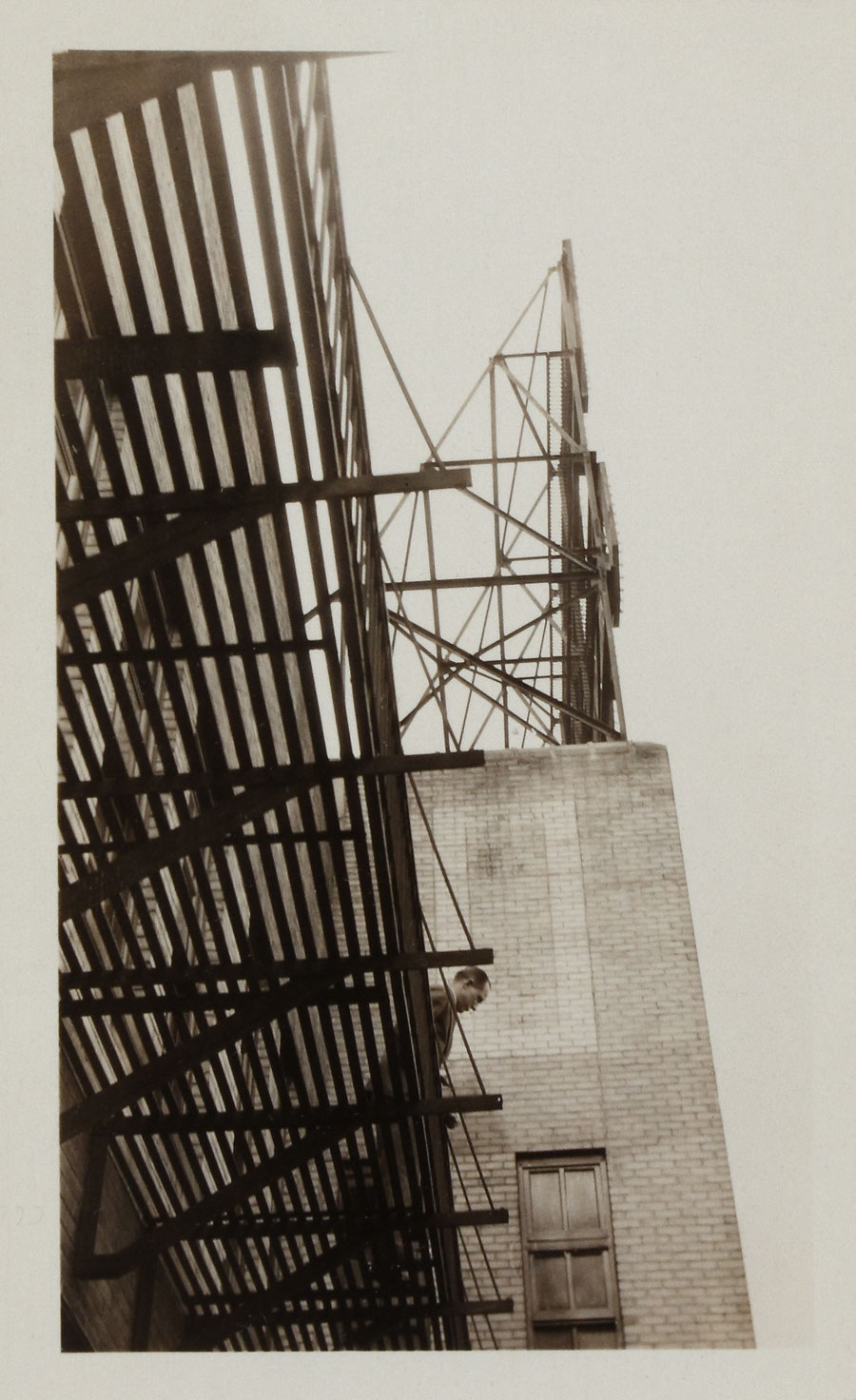
Knud Lonberg-Holm (Danish, 1895-1972) '48th Street/St. Nicholas Church scaffolding' c. 1923-1924


Knud Lonberg-Holm (Danish, 1895-1972)
48th Street/St. Nicholas Church scaffolding
c. 1923-1924
Vintage gelatin silver print
4 1/2 x 2 3/4 inches (11.4 x 7cm)
The Knud Lonberg-Holm Archive from the Marc Dessauce Collection; Courtesy Ubu Gallery, New York


Knud Lonberg-Holm (Danish, 1895-1972) 'Photograph of Antenna' c. 1923-1924


Knud Lonberg-Holm (Danish, 1895-1972)
Photograph of Antenna
c. 1923-1924
Vintage gelatin silver print
4 1/2 x 3 1/2 inches (11.4 x 8.9cm)
The Knud Lonberg-Holm Archive from the Marc Dessauce Collection; Courtesy Ubu Gallery, New York


Note from Iwao Yamawaki to Knud Lonberg-Holm Dessau, July 9, 1931


Note from Iwao Yamawaki to Knud Lonberg-Holm
Dessau, July 9, 1931
The Knud Lonberg-Holm Archive from the Marc Dessauce Collection; Courtesy Ubu Gallery, New York


Knud Lonberg-Holm (Danish, 1895-1972) and Iwao Yamawaki (Japanese, 1898-1987) (attributed) 'Knud & his wife Ethel outside of Bauhaus' 1931


Knud Lonberg-Holm (Danish, 1895-1972)
Iwao Yamawaki
(Japanese, 1898-1987) (attributed)
Knud & his wife Ethel outside of Bauhaus
1931
Vintage gelatin silver print
4 3/8 x 3 3/8 inches (11.1 x 8.6cm)
Dated & inscribed on verso
The Knud Lonberg-Holm Archive from the Marc Dessauce Collection; Courtesy Ubu Gallery, New York


This photo, attributed to the Japanese Bauhaus-trained photographer Iwao Yamawaki, shows Lonberg-Holm and his wife, Ethel (who later became an art director for J. Walter Thompson advertising agency), at the Bauhaus in 1931. A friend of Bauhaus instructors László Moholy-Nagy, Josef Albers, Hannes Meyer, Walter Gropius, and Mies van der Rohe, Lonberg-Holm taught the first foundational course based on the Bauhaus model at the University of Michigan in 1924.


Knud Lonberg-Holm (1895-1972), an overlooked but highly influential Modernist architect, photographer, and pioneer of information design


Knud Lonberg-Holm (1895-1972), an overlooked but highly influential Modernist architect, photographer, and pioneer of information design
The Knud Lonberg-Holm Archive from the Marc Dessauce Collection; Courtesy Ubu Gallery, New York


Ubu Gallery
416 East 59th Street
New York 10022
Phone: 212 753 4444

Opening hour:
Monday – Friday 11am – 6pm

Ubu Gallery website

LIKE ART BLART ON FACEBOOK

Back to top

Exhibition: ‘Knud Lonberg-Holm: The Invisible Architect’ at Ubu Gallery, New York Part 1

Exhibition dates: 6th May – 30th September 2014


Knud Lonberg-Holm (Danish, 1895-1972) 'The New – The Coming, Detroit, Streetcars' 1924


Knud Lonberg-Holm (Danish, 1895-1972)
The New – The Coming, Detroit, Streetcars
1924
Reproduced in Erich Mendelsohn’s Amerika, p. 73
Vintage gelatin silver print
3 1/4 x 4 1/4 inches (8.3 x 10.8cm)
The Knud Lonberg-Holm Archive from the Marc Dessauce Collection; Courtesy Ubu Gallery, New York


I am so excited by this monster two-part posting about the work of architect Knud Lonberg-Holm. Not only are his drawings and models incredible but his photographs of industry and skyscrapers, taken mainly between 1924-26, are a revelation. The textures and inky blackness of his Dazzlescapes and the New Photography images of skyscrapers (both in Part 2) mark these images as the greatest collection of photographs of skyscrapers that I have ever seen. More comment tomorrow but for now just look at the dark Gotham-esque photograph The New – The Coming, Detroit, Streetcars (1924, below). The streetcar reminds me of the armoured trains so popular during the inter-war years and during World War II. And what a title: The New – The Coming…

Dr Marcus Bunyan


Many thankx to Ubu Gallery for allowing me to publish the photographs in the posting. Please click on the photographs for a larger version of the image.


“Lonberg-Holm was the first architect in my knowledge ever to talk about the ultimately invisible architecture. In 1929, when I first met him, he said the greatest architect in history would be the one who finally developed the capability to give humanity completely effective environmental control without any visible structure and machinery.”


Buckminster Fuller


Knud Lonberg-Holm (Danish, 1895-1972) 'View from the roof' Detroit, 1924


Knud Lonberg-Holm (Danish, 1895-1972)
View from the roof
Detroit, 1924
Vintage gelatin silver print
2 3/4 x 4 1/2 inches (7 x 11.4cm) approx.
The Knud Lonberg-Holm Archive from the Marc Dessauce Collection; Courtesy Ubu Gallery, New York


Knud Lonberg-Holm (Danish, 1895-1972) 'Detroit' 1924


Knud Lonberg-Holm (Danish, 1895-1972)
Detroit
1924
reproduced in Erich Mendelsohn’s Amerika, p. 71 (top)
Vintage gelatin silver print
3 3/8 x 4 3/8 inches (8.6 x 11.1cm)
The Knud Lonberg-Holm Archive from the Marc Dessauce Collection; Courtesy Ubu Gallery, New York


Knud Lonberg-Holm (Danish, 1895-1972) 'Detroit, A New Street' 1924


Knud Lonberg-Holm (Danish, 1895-1972)
Detroit, A New Street
1924
reproduced in Erich Mendelsohn’s Amerika, p. 71 (bottom)
Vintage gelatin silver print
3 3/8 x 4 3/8 inches (8.6 x 11.1cm)
The Knud Lonberg-Holm Archive from the Marc Dessauce Collection; Courtesy Ubu Gallery, New York


Ubu Gallery is pleased to present Knud Lonberg-Holm: The Invisible Architect, a debut exhibition devoted to this overlooked, yet highly influential, 20th Century modernist. Never-before-seen photographs, architectural drawings, letters, graphic design, and ephemera from Lonberg-Holm’s remarkably diverse career will be on view through August 1, 2014. The exhibition, which consists of selections from the extensive archive assembled by architectural historian Marc Dessauce, will solidify the importance of this emblematic figure in early 20th Century cultural and architectural history. Metropolis Magazine, the national publication of architecture and design, will publish an article on Knud Lonberg-Holm to coincide with this groundbreaking exhibition.

Born in Denmark, Knud Lonberg-Holm (January 15, 1895 – January 2, 1972), was an architect, photographer, author, designer, researcher, and teacher. Lonberg-Holm’s early work in Denmark and Germany initially associated him with the Berlin Constructivist and Dutch De Stijl groups. An émigré to America in 1923, Lonberg-Holm was a fundamental correspondent with prominent European architects and their modernist counterparts in the U.S. The exhibition will feature a selection of letters to Lonberg-Holm from a pantheon of the European avant-garde including László Moholy-Nagy, Walter Gropius, Theo Van Doesburg, Buckminster Fuller, Hannes Meyer, J.J.P. Oud, El Lissitzky, and Richard Neutra.

From 1924–1925, Lonberg-Holm was a colleague of Eliel Saarinen at the University of Michigan at Ann Arbor, where he taught a course in basic design modeled on the famed Bauhaus Vorkurs, the first-ever introduced in U.S. design schools. An agent of inter-continental communication, his reports on the state of American architecture appeared abroad. Lonberg-Holm’s 1928 article, Amerika: Reflections, featured buildings on the University of Michigan campus and appeared in the Dutch avant-garde publication i10, which employed Moholy-Nagy as its photo editor. The article not only contributed to international discourse on the building industry, but also touched on the “time-space convention,” a subject Lonberg-Holm would explore throughout his career. This publication, among others, will be on display.

Lonberg-Holm’s interest in American industry is best viewed in his collection of photographs taken between 1924-1926. These works document his pioneering views of industry and technology in burgeoning, jazz-age New York, Detroit, and Chicago; they would appear later, un-credited, in Erich Mendelsohn’s seminal 1926 publication Amerika, the first book on the ‘International Style’ in American architecture. Thirteen vintage photographs reproduced in Amerika will be on exhibit, as well as additional early photographs depicting technological advancements, such as cable cars and radio antennae, American culture in mass crowds and billboards, and the commercial architecture of skyscrapers and factories. Backside-views of buildings and fire escapes, rather than historicist ornamental facades, are presented in their “unselfconscious beauty” in opposition to traditional, pictorialist architectural photography. The content of the works coupled with progressive view points, like worm’s eye perspectives and extreme close-ups, align them squarely within the then emerging ‘New Photography’. El Lissitzky wrote that the dynamic photos “grip us like a dramatic film.”1 Mendelsohn’s publication, featuring Lonberg-Holm’s dynamic photography, received immediate acclaim, domestically and abroad.

While still in Germany, Lonberg-Holm created a submission for the Chicago Tribune Tower competition of 1922. Although never officially submitted, the project was published widely in magazines and newspapers, alongside other prominent architects’ designs. From his office in the historically designed Donner Schloss in Altona, Germany, Lonberg-Holm envisioned a modern construction for Chicago that incorporated references to American mass culture, specifically the automobile. The West elevations on view show the Chicago Tribune sign, which includes circular signage reminiscent of headlights. The Side elevation exhibited clearly demonstrates how the printing plant function of the ground floors of the building, rendered in black, are visually distinct from the offices of the higher floors, rendered in white with black accents for visual continuity throughout the building. Lonberg-Holm’s proposed construction, whose outward visual design distinguished its internal functions, was reproduced in L’Architecture vivante, La Cite, Le Courbusier’s Almanach d’architecture in France and Walter Gropius’ Internationale Architektur in Munich; the Berliner Illustrirte Zeitung displayed his building next to that of Mies van der Rohe and a full spread devoted to the skyscraper, featuring Lonberg-Holm’s Chicago design adjacent to plans by Walter Gropius, Saarinen and van der Rohe, appeared in H. Th. Wijdeveld’s November / December 1923 issue of the innovative publication Wendingen.

The drawings Lonberg-Holm created during this first decade as an émigré are striking for their early use of European modernist, particularly Neo-plastic, influences. He was close with the DeStijl movement in Holland, and corresponded with both Theo van Doesburg and J.J.P. Oud, with whom he would continue to work within CIAM, the Congrès Internationaux d’Architecture Modern. Early renderings done by Lonberg-Holm in the U.S. demonstrate an affinity for DeStijl principles. His plans for the 1926 MacBride residence in Ann Arbor are dynamic and asymmetrical, with intersecting planes in simple primary colors. Surely the first American allusion to Gerrit Rietvel’s iconic 1924 Schröder House in Utrecht, Holland, the MacBride residence is one of the first ‘International Style’ modernist houses designed in the Western hemisphere.

Lonberg-Holm’s importance to and knowledge of European architectural trends resulted in an invitation by Jane Heap to participate in the 1927 landmark New York exhibition, Machine Age, which was heralded as “the first international exposition of architecture held in America.” This exhibition, held at the New York Scientific American Building, May 16-28, stressed the new mechanical world and its key player, the Engineer. Lonberg-Holm’s 1925 Detroit project, Radio Broadcasting Station, was featured. The New York’s review of the exhibition explicitly referenced Lonberg-Holm’s project, noting its “delicacy and exquisite technique of execution.”

Lonberg-Holm worked with the F.W. Dodge corporation for 30 years, first in the division responsible for The Architectural Record (1930-1932), and then as head of the research department of Sweet’s Catalog Service (1932-1960.) At The Architectural Record, Lonberg-Holm acted as research editor and wrote technical news, a precursor to his lifelong interest in data-driven analytics. During his New York based employment, Lonberg-Holm’s involvement with international architectural trends did not diminish. In addition to prolonged correspondence with the various directors of the Bauhaus, including Hannes Meyer, he and his wife Ethel would visit the Bauhaus at Dessau in 1931. In 1946, Lonberg-Holm was also ultimately a candidate to replace Moholy-Nagy as director of the Institute of Design in Chicago.

At the same time, Lonberg-Holm was involved in domestic architecture and building theory. Richard Neutra would reach out to Lonberg-Holm in 1928 for illustrations and photographs to include in his account of the modern architecture movement in the US; he would approach him again in 1932 to lecture on the West Coast. Lonberg-Holm and Neutra were the “American” representatives to CIAM. It was Lonberg-Holm who nominated Buckminster Fuller and Theodore Larson for membership into CIAM in 1932.

What little scholarship exists about Knud Lonberg-Holm briefly examines his nearly twenty-year relationship with the Czech pioneering graphic designer Ladislav Sutnar, with whom Lonberg-Holm worked at Sweet’s Catalog Service. From 1942 through 1960 at the research department of Sweet’s, the bible for all the building trades, Lonberg-Holm and Sutnar revolutionized the catalog by standardizing information techniques. They presented systemised communication through a simple, modern, and intelligible visual language that influenced all areas of architectural and graphic design. Together, Lonberg-Holm and Sutnar co-authored Catalog Design (1944), Designing Information (1947), and Catalog Design Progress (1950).

The vital roles and communication between city planning, architecture, and civil productivity where important to Lonberg-Holm and would be explored throughout his career. In A. Lawerence Kocher’s letter to Lonberg-Holm, the article “Architecture-or organized space” is referenced. This 1929 essay, published in Detroit, addressed the “building problem” in the US – the “an-organic structure of its cities” – and proposed “a new conception of city-planning based on a clearer understanding of the organic functions of a community.” Lonberg-Holm would be an important participant in the city planning survey of Detroit, one of CIAM’s analytical initiatives in 1932-1933. Field Patterns and Fields of Activity, a visual diagram further illustrating the interconnectivity of intelligence, welfare, production, and control in a community, graphically illustrates these early principles.

Collaboration was critical to Lonberg-Holm, who would work with Theodore Larson to improve information indexing and the production cycle. Field Patterns, as well as the visuals for Planning for Productivity (1940), were components of Lonberg-Holm’s collaboration with Theodore Larson. Lonberg-Holm sought to apply some of the theories set forth in Development Index. This collaborative project with Larson was published by the University of Michigan in 1953 and focused on the relationship between community, industry, and education, analytical theories that were proposed by Lonberg-Holm during the formation of the University’s Laboratory of Architectural Research. Lonberg-Holm’s 1949 visual diagram of the relationship between the university, the building industry, and the community, is on view, as well as the Sutnar-designed steps of Planning for Productivity. Lonberg-Holm had returned to the University as a guest lecturer and professor in the late 1940s and early 1950s. At the suggestion of Lonberg-Holm, Theordore Larson was among the new faculty hired at the University in 1948, along with Walter Sanders and William Muschenheim, whom Lonberg-Holm had worked with in the Detroit survey.

In 1949, Lonberg-Holm was issued a Dymaxion License and became a trustee to the Fuller Institute/Research Foundation; among the trustees are his contemporaries George Nelson and Charles Eames. Initially meeting Buckminster Fuller in c. 1929, he and Fuller would correspond throughout Lonberg-Holm’s life. Lonberg-Holm was a member of the Structural Studies Associates (SSA), a short-lived group of architects in the 1930s surrounding Fuller and his briefly published architectural magazine Shelter. A number of Shelter issues are on view, many of which have contributions by Lonberg-Holm; the cover of the May 1932 issue was designed by Lonberg-Holm. Planning for Productivity and Development Index were later data-driven projects that furthered the SSA’s and Fuller’s principles – that the evolution of science and technology would influence social progress and could be beneficial to the community only through research, analysis and macroapplication.

Arriving to the US a decade before his European contemporaries, Lonberg-Holm occupied a unique position as a cultural bridge, communicating between the US and Europe in a period when the state of art and architecture was radically changing. He exposed his students and colleagues to European protagonists of avant-garde architecture theory while enthusiastically exploring American industry and building. Exclusively through collaboration, Lonberg-Holm worked to modernise both architecture and design. Integral to Lonberg-Holm’s principles was that technology alone could not suffice as the sole perpetuator of architecture – advancements in building and new designs needed to promote human culture in an ever-evolving manner where new information was continuously integrated into design theory. Throughout his career, Lonberg-Holm embodied the antithesis of the stereotype architect, egocentric and insulated from the community in which his designs were to exist. From his beginnings at The Architectural Record to his final project, Plan for Europe 2000: Role of the Mass Media in Information and Communication, Lonberg-Holm held to the belief that a collective approach, with applied research, could form a generative knowledge base that could be cultivated for altruistic means.

Text from the Ubu Gallery website

1/ Beaumont Newhall, The History of Photography from 1839 to the Present, London, Seeker & Warburg, 1982, p. 1.


'Portrait of Knud Lonberg-Holm' New York, 1950s (prior to 1960)


Portrait of Knud Lonberg-Holm
New York, 1950s (prior to 1960)
Vintage gelatin silver print
6 7/8 x 10 inches (17.5 x 25.4cm)
The Knud Lonberg-Holm Archive from the Marc Dessauce Collection; Courtesy Ubu Gallery, New York


'Portrait of Knud Lonberg-Holm' New York, 1950s (prior to 1960)


Portrait of Knud Lonberg-Holm
New York, 1950s (prior to 1960)
Vintage gelatin silver print
7 7/8 x 9 1/2 inches (20 x 24.1cm)
The Knud Lonberg-Holm Archive from the Marc Dessauce Collection; Courtesy Ubu Gallery, New York


Knud Lonberg-Holm (Danish, 1895-1972) 'Le Corbusier at CIAM Conference' c. 1954-1964


Knud Lonberg-Holm (Danish, 1895-1972)
Le Corbusier at CIAM Conference
c. 1954-1964
Vintage gelatin silver print
5 5/8 x 8 3/8 inches (14.3 x 21.3cm)
The Knud Lonberg-Holm Archive from the Marc Dessauce Collection; Courtesy Ubu Gallery, New York


Knud Lonberg-Holm (Danish, 1895-1972) 'Buckminster Fuller, Lonberg-Holm and other' Bayside, New York Nd


Knud Lonberg-Holm (Danish, 1895-1972)
Buckminster Fuller, Lonberg-Holm and other
Bayside, New York
Nd
Vintage gelatin silver print
3 x 4 1/4 inches (7.6 x 10.8cm)
The Knud Lonberg-Holm Archive from the Marc Dessauce Collection; Courtesy Ubu Gallery, New York


Knud Lonberg-Holm (Danish, 1895-1972) 'Photograph of the Dymaxion Car' Bridgeport, Connecticut, July 21, 1933


Knud Lonberg-Holm (Danish, 1895-1972)
Photograph of the Dymaxion Car
Bridgeport, Connecticut, July 21, 1933
Vintage gelatin silver print
7 5/8 x 9 3/4 inches (19.4 x 24.8cm)
Stamped on verso
The Knud Lonberg-Holm Archive from the Marc Dessauce Collection; Courtesy Ubu Gallery, New York


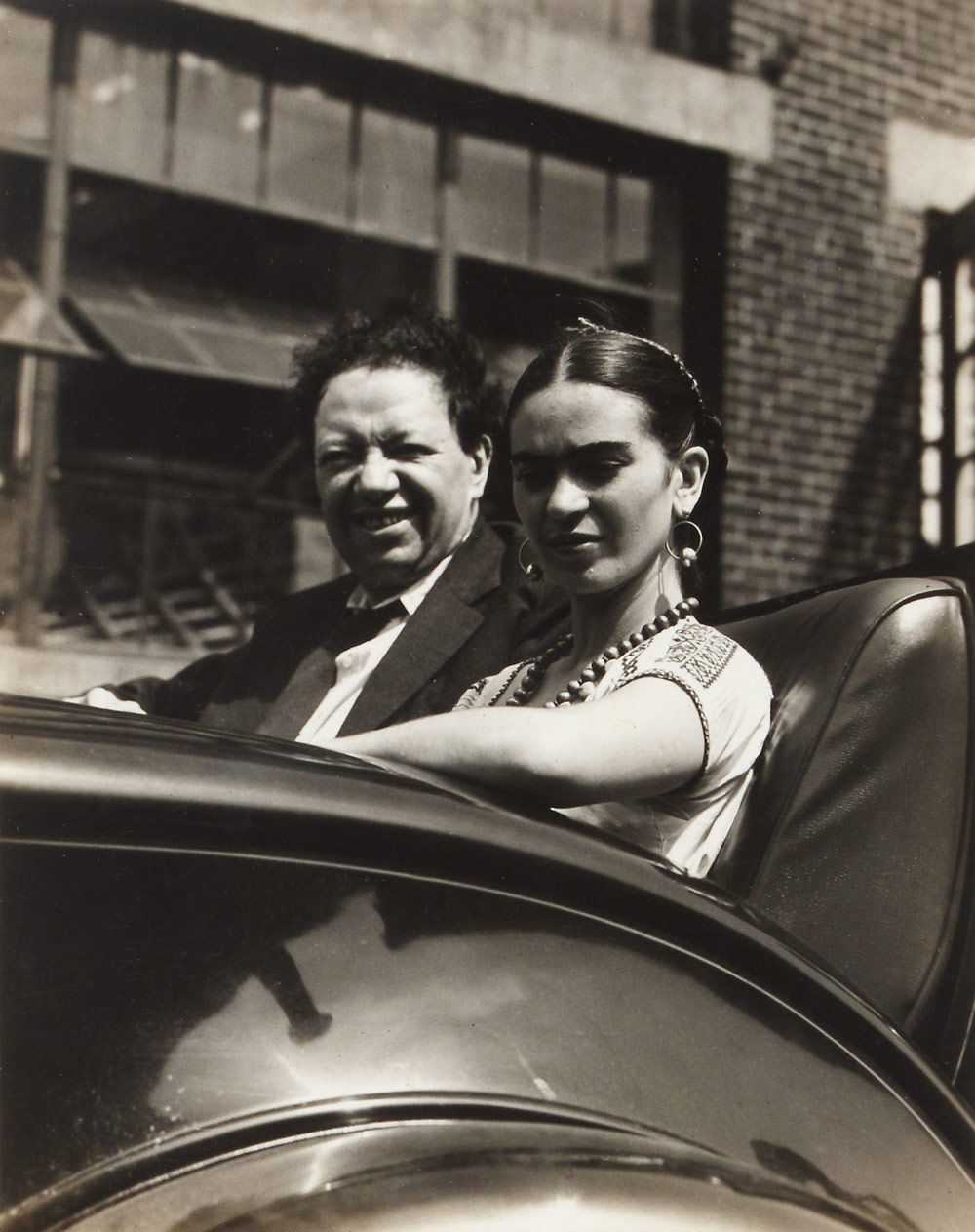
In July of 1933, the Dymaxion car was introduced in Bridgeport, Connecticut, where it caused a great stir. Lonberg-Holm can be seen holding the car door open while the artist Diego Rivera (who was in attendance with his wife and artist Frida Kahlo) looks on, coat on his arm.


Knud Lonberg-Holm (Danish, 1895-1972) 'Diego Rivera and Frida Kahlo' Bridgeport, Connecticut, July 21, 1933


Knud Lonberg-Holm (Danish, 1895-1972)
Diego Rivera and Frida Kahlo
Bridgeport, Connecticut, July 21, 1933
Vintage gelatin silver print
The Knud Lonberg-Holm Archive from the Marc Dessauce Collection; Courtesy Ubu Gallery, New York


Knud Lonberg-Holm (Danish, 1895-1972) 'Radio Broadcasting Station' Photograph of Model Detroit, 1925


Knud Lonberg-Holm (Danish, 1895-1972)
Radio Broadcasting Station
Photograph of Model
Detroit, 1925
Vintage gelatin silver print
4 7/8 x 6 7/8 inches (12.4 x 17.5cm)
The Knud Lonberg-Holm Archive from the Marc Dessauce Collection; Courtesy Ubu Gallery, New York


Knud Lonberg-Holm (Danish, 1895-1972) 'Radio Broadcasting Station' Photograph of Model Detroit, 1925


Knud Lonberg-Holm (Danish, 1895-1972)
Radio Broadcasting Station

Photograph of Model
Detroit, 1925
Vintage gelatin silver print
5 3/8 x 7 1/2 inches (13.7 x 19.1cm)
The Knud Lonberg-Holm Archive from the Marc Dessauce Collection; Courtesy Ubu Gallery, New York


Knud Lonberg-Holm (Danish, 1895-1972) 'Photograph of Chicago's new skyline North of Randolph Street All new since 1926 except Wrigley and Tribune buildings' May 1929


Knud Lonberg-Holm (Danish, 1895-1972)
Photograph of Chicago’s new skyline
North of Randolph Street
All new since 1926 except Wrigley and Tribune buildings
May 1929
Vintage gelatin silver print
2 1/4 x 4 1/2 inches (5.7 x 11.4cm)
Titled on verso
The Knud Lonberg-Holm Archive from the Marc Dessauce Collection; Courtesy Ubu Gallery, New York


Ubu Gallery
416 East 59th Street
New York 10022
Phone: 212 753 4444

Opening hours:
Monday – Friday 11am – 6pm

Ubu Gallery website

LIKE ART BLART ON FACEBOOK

Back to top

Exhibition: ‘Wols Photographer. The Guarded Look’ at Martin-Gropius-Bau, Berlin

Exhibition dates: 15th March – 22nd June 2014


Wols (German, 1913-1951) 'Untitled [Still life - dining table]' 1937


Wols (German, 1913-1951)
Untitled [Still life – dining table]
1937
© VG Bild-Kunst, Bonn 2014


Some familiar images that were also seen in the posting Wols’ Photography: Images Regained are complimented by 5 new ones. The two portraits of the artist Max Ernst are eerie (is that a suitable word for a portrait that is strong and unsettling?) and perceptive, Wols responsive to the status of his sitter as a pioneer of the Dada movement and Surrealism.

Dr Marcus Bunyan


Many thankx to the Martin-Gropius-Bau for allowing me to publish the photographs in the posting. Please click on the photographs for a larger version of the image.


Wols (German, 1913-1951) 'Nicole Bouban' Autumn 1932 - October 1933 / January 1935 to 1937


Wols (German, 1913-1951)
Nicole Bouban
Autumn 1932 – October 1933 / January 1935 to 1937
© Kunst, Bonn 2014


Art Informel

The term Art Informel was originated by the French critic Michel Tapié and popularized in his 1952 book Un Art autre (Another art). A Parisian counterpart of Abstract Expressionism, Art Informel emphasised intuition and spontaneity over the Cubist tradition that had dominated School of Paris painting. The resulting abstractions took a variety of forms. For instance, Pierre Soulages’s black-on-black paintings composed of slashing strokes of velvety paint suggest the nocturnal mood of Europe immediately after the war.


Wols (German, 1913-1951) 'Untitled [Pavilion de l'Elegance - Creating a home with Alix (Germaine Krebs)]' 1937


Wols (German, 1913-1951)
Untitled [Pavilion de l’Elegance – Creating a home with Alix (Germaine Krebs)]
1937
© VG Bild-Kunst, Bonn 2014


Germaine Émilie Krebs

Germaine Émilie Krebs (1903-1993), known as Alix Barton and later as “Madame Grès”, relaunched her design house under the name Grès in Paris in 1942. Prior to this, she worked as “Alix” or “Alix Grès” during the 1930s. Formally trained as a sculptress, she produced haute couture designs for an array of fashionable women, including the Duchess of Windsor, Marlene Dietrich, Greta Garbo, Jacqueline Kennedy, and Dolores del Río. Her signature was cut-outs on gowns that made exposed skin part of the design, yet still had a classical, sophisticated feel. She was renowned for being the last of the haute couture houses to establish a ready-to-wear line, which she called a “prostitution”.

The name Grès was a partial anagram of her husband’s first name and alias. He was Serge Czerefkov, a Russian painter, who left her soon after the house’s creation. Grès enjoyed years of critical successes but, after Grès herself sold the business in the 1980s to Yagi Tsucho, a Japanese company, it faltered. In 2012, the last Grès store in Paris was closed.

Text from Wikipedia website


Wols (German, 1913-1951) 'Untitled [Swiss Pavilion - Wire Figure]' 1937


Wols (German, 1913-1951)
Untitled [Swiss Pavilion – Wire Figure]
1937
© VG Bild-Kunst, Bonn 2014


Wolfgang Schulze, known as Wols, was born in Berlin in 1913. As a painter and graphic artist he is considered to have been an important trailblazer of Art Informel. For the first time the Martin-Gropius-Bau in Berlin is presenting the largely unknown photographic oeuvre of Wols. These works foreshadow his development in the direction of non-representational art.

Wols grew up in Dresden, where he had an early encounter with photography as a profession through his attendance at a course in the studio of the Dresden photographer Genja Jonas. In 1932, after a brief sojourn in the milieu of the Berlin Bauhaus – then in the process of breaking up – the young Wols set off for Paris to realise his artistic ambitions.

Soon he was involved with the local Surrealists and made the acquaintance of other personalities in the theatrical, literary and art scenes. In this period Wols was mainly active as a photographer. In 1937 his works were exhibited for the first time in the prestigious Parisian Galérie de la Pléiade, which established his reputation as a photographer. It was at this time that he adopted the pseudonym Wols. One of his commissions was to document the Pavillon de l’Elégance at the 1937 World Exhibition in Paris.

At the same time he produced striking multiple black-and-white portraits of personalities such as Max Ernst, Nicole Boubant or Roger Blin. Over the years Wols’ imagery became increasingly radical. The representational motifs gradually acquired a more abstract dimension and forced the viewer to see the objects represented in a new light. In particular, an extraordinary set of photograms confirms his interest in replacing representational motifs with non-representational ones. Transferred to painting, this trend would later make him a pioneer of Art Informel.

Immediately after the outbreak of the Second World War Wols spent over a year in various internment camps in the south of France. In this period he turned more to watercolours, most of which were lost while he was fleeing from the Nazis.

Living in straitened circumstances Wols fought a losing battle with alcoholism and poor health. In 1951, as a result of his weakened physical condition, he died of food poisoning in Paris at the early age of 38. After his death, Wols’ work was displayed at the first three documenta exhibitions in Kassel (1955, 1959, 1964) and, in 1958, at the Venice Biennale. On 27 May 2014 he would have been 101.

The show covers all of his photographic work, including multiple portraits of famous artists, actors and writers, photographs of the “Pavillon de l’Élégance”, numerous still lifes, and many hitherto unknown motifs. The exhibition has been curated by the Kupferstich-Kabinett, Staatliche Kunstsammlungen Dresden, where this unique collection will be kept and systematically catalogued.

Press release from Martin-Gropius-Bau website


Wols (German, 1913-1951) 'Max Ernst' Fall 1932 - October / January 1935 to 1936


Wols (German, 1913-1951)
Max Ernst
Fall 1932 – October / January 1935 to 1936
© VG Bild-Kunst, Bonn 2014


Wols (German, 1913-1951) 'Max Ernst' Fall 1932 - October / January 1935 to 1936


Wols (German, 1913-1951)
Max Ernst
Fall 1932 – October / January 1935 to 1936
© VG Bild-Kunst, Bonn 2014


Wols permanently settled in Paris in 1933, producing his first paintings but also working as a photographer. His photographic work of this period showed the clear influence of Surrealism. In 1936, he received official permission to live in Paris with the help of Fernand Léger; as an army deserter, Schulze had to report to the Paris police on a monthly basis. In 1937, the year in which he adopted his pseudonym WOLS, his photographs began to appear in fashion magazines such as Harper’s BazaarVogueFemina as well as Revue de l’art. Many of these photographs anticipate the displays at the Exposition Internationale du Surréalisme held in Paris in the following year, in which much use was made of mannequins.

At the outbreak of World War II Wols, as a German citizen, was interned for 14 months in the notorious Les Milles camp – together with some 3500 other artists and intellectuals. He was not released until late 1940. After his release Wols moved for two years to Cassis, near Marseille, where he struggled to earn a living. The occupation of Southern France by the Germans in 1942 forced him to flee to Dieulefit, near Montélimar, where he met the writer Henri-Pierre Roché, one of his earliest collectors. He spent most of the war trying to emigrate to the United States, an unsuccessful and costly enterprise that may have driven him to alcoholism.

After the war Wols returned to Paris where he met Jean-Paul Sartre, Tristan Tzara and Jean Paulhan. He started to paint in oils in 1946 at the suggestion of the dealer René Drouin, who showed 40 of his paintings at his gallery in 1947. The same year Wols began to work on a number of illustrations for books by Paulhan, Sartre, Franz Kafka and Antonin Artaud. He fell ill but lacked the money to go to hospital, and throughout 1948 he worked largely in bed on these illustrations. In 1949 he took part in the exhibition Huit oeuvres nouvelles at the Galerie Drouin, along with Jean Dubuffet, Roberto Matta, Henri Michaux and other artists with whom he had a stylistic affinity.

Undergoing treatment for alcoholism, he moved to the country at Champigny-sur-Marne in June 1951. His early death later that year from food poisoning helped foster the legendary reputation that grew up around him soon afterwards. His paintings helped pioneer Art informel and Tachism, which dominated European art during and after the 1950s as a European counterpart to American Abstract Expressionism. Influenced by the writings of the philosopher Lao Tzu throughout his life, Wols also wrote poems and aphorisms that expressed his aesthetic and philosophical ideas.”

Text from the Weimar blog 2010


Wols (German, 1913-1951) 'Untitled [Paris - Flea Market]' Autumn 1932 - October 1933 / January 1935 to 1936


Wols (German, 1913-1951)
Untitled [Paris – Flea Market]
Autumn 1932 – October 1933 / January 1935 to 1936
© VG Bild-Kunst, Bonn 2014


Wols (German, 1913-1951) 'Untitled [Paris - Palisade]' Fall 1932 - October 1933 / January 1935 - August 1939


Wols (German, 1913-1951)
Untitled [Paris – Palisade]
Fall 1932 – October 1933 / January 1935 – August 1939
© VG Bild-Kunst, Bonn 2014


Wols (German, 1913-1951) 'Untitled [Paris - Eiffel Tower]' 1937


Wols (German, 1913-1951)
Untitled [Paris – Eiffel Tower]
1937
© VG Bild-Kunst, Bonn 2014


Wols (German, 1913-1951) 'Untitled [Still Life - Grapefruit]' 1938 - August 1939


Wols (German, 1913-1951)
Untitled [Still Life – Grapefruit]
1938 – August 1939
© VG Bild-Kunst, Bonn 2014


Wols (German, 1913-1951) 'Self Portrait with Hat' 1937-1938


Wols (German, 1913-1951)
Self Portrait with Hat
1937-1938
© VG Bild-Kunst, Bonn 2014


Martin-Gropius-Bau Berlin
Niederkirchnerstraße 7
Corner Stresemannstr. 110
10963 Berlin
Phone: +49 (0)30 254 86-0

Opening hours:
Wednesday to Monday 10 – 20 hrs
Tuesday closed

Martin-Gropius-Bau website

LIKE ART BLART ON FACEBOOK

Back to top

Exhibition: ‘In Focus: Architecture’ at the J. Paul Getty Museum, Getty Center, Los Angeles

Exhibition dates: 15th October 2013 – 2nd March 2014


William Henry Fox Talbot (English, 1800-1877) 'Boulevard des Italiens, Paris' 1843


William Henry Fox Talbot (English, 1800-1877)
Boulevard des Italiens, Paris
1843
Salted paper print from a Calotype negative
16.8 x 17.3cm
The J. Paul Getty Museum, Los Angeles


Another gem of a photography exhibition from the Getty. These In Focus exhibitions are just a treasure: from Making a Scene, Still Life and The Sky to Los Angeles, Picturing the Landscape and now Architecture. All fabulous. To have a photography collection such as the Getty possesses, and to use it. To put on these fantastic exhibitions…

I like observing the transition between epochs (or, in more architectural terms, ‘spans’ of time), photographers and their styles. From the directness and frontality of Fox Talbot’s Boulevard des Italiens, Paris (1843, below) to the atmospheric ethereality of Atget’s angular The Panthéon (1924, below) taken just three years before he died; from the lambent light imbued in Frederick Evans’ architectural study of the attic at Kelmscott Manor (1896, below) to the blocked, colour, geometric facade of William Christenberry’s Red Building in Forest, Hale County, Alabama (1964, below).

I love architecture, I love photography. Put the two together and I am in heaven.

Dr Marcus Bunyan


Many thankx to the J. Paul Getty Museum for allowing me to publish the photographs in the posting. Please click on the photographs for a larger version of the image.


Eugéne Atget (French, 1857-1927) 'The Panthéon' 1924


Eugéne Atget (French, 1857-1927)
The Panthéon
1924
Gelatin silver chloride print on printing-out paper
Image: 17.8 x 22.6cm
The J. Paul Getty Museum, Los Angeles


Eugène Atget made this atmospheric study across the place Sainte-Geneviève toward the back of the Panthéon, a church boldly designed to combine the splendour of Greece with the lightness of Gothic churches. The church’s powerful colonnaded dome, Atget’s primary point of interest, hovers in the background, truncated by the building in the left foreground.

In order to make the fog-veiled Panthéon visible when printing this negative, Atget had to expose the paper for a long period of time. As a consequence of the long printing, the two buildings in the foreground are overexposed, appearing largely as black silhouettes. Together they frame the Panthéon, rendered entirely in muted greys. This photograph exceeds documentation to become more a study of mood and atmospheric conditions than of architecture.


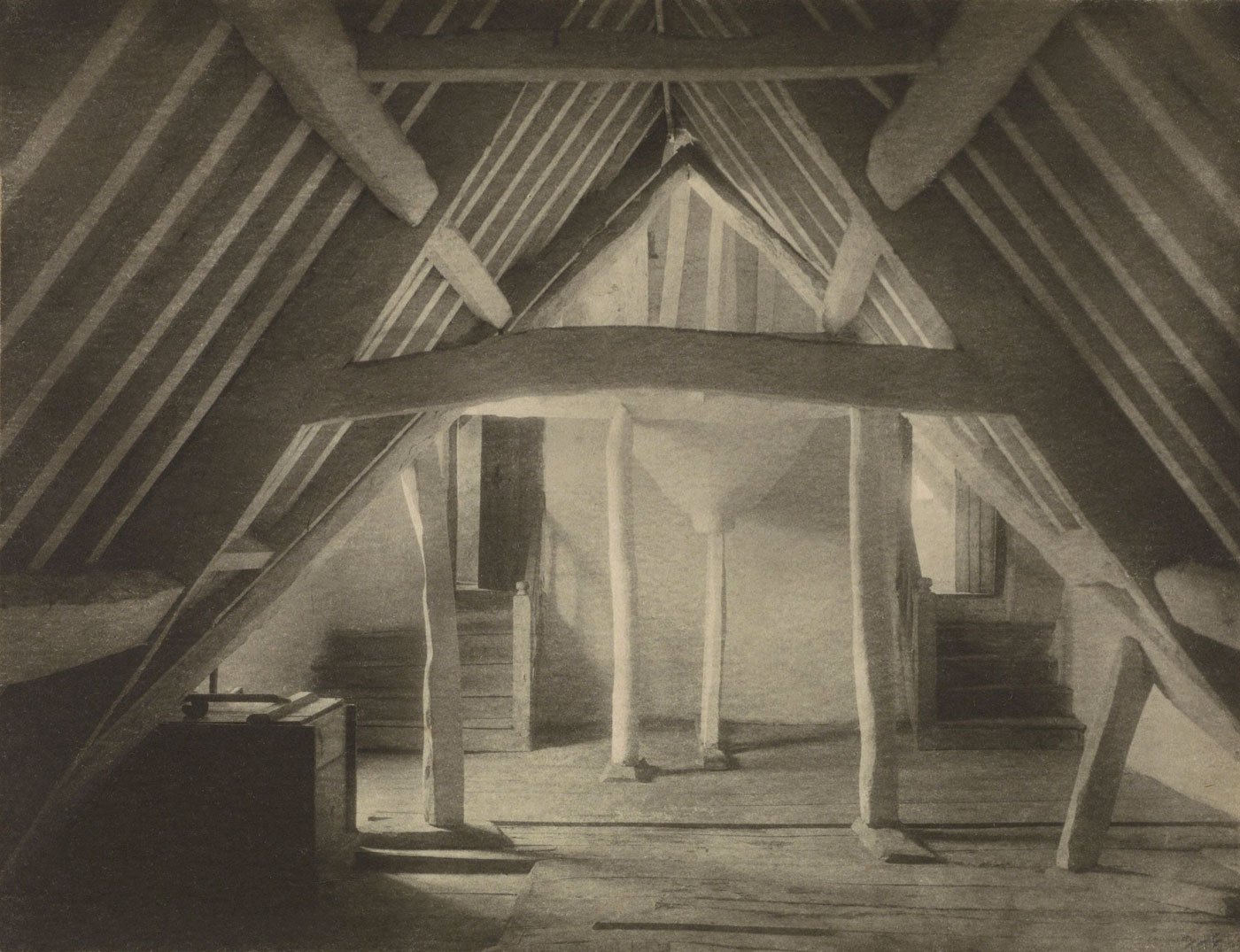
Frederick H. Evans (British, 1863-1943) 'Kelmscott Manor: In the Attics (No. 1)' 1896


Frederick H. Evans (British, 1863-1943)
Kelmscott Manor: In the Attics (No. 1)
1896
Platinum print
15.6 x 20.2cm
© Mrs Janet M. Stenner, sole granddaughter of Frederick H, Evans
The J. Paul Getty Museum, Los Angeles


Frederick Evans’s architectural study of the attic at Kelmscott Manor, a medieval house, part of which dates from 1280, is a visual geometry lesson. The composition is all angles and intersections, formed not only by the actual structure but also by the graphic definition of light within the space. Soft illumination bathes the area near the stairs, while the photograph’s foreground plunges into murky darkness. The sharp angles of intersecting planes are mediated by the rough-hewn craftsmanship of the beams and posts, almost sensuous in their sinewy imperfection and plainly wrought by hand. The platinum print medium favoured by Evans provides softened tonalities that further unify the triangles, squares, and diagonal lines of the dynamic composition.


William Christenberry (American, b. 1936) 'Red Building in Forest, Hale County, Alabama' 1964


William Christenberry (American, b. 1936)
Red Building in Forest, Hale County, Alabama
1964
44.5 x 55.9cm
© William Christenberry
The J. Paul Getty Museum, Los Angeles


William Christenberry began photographing this makeshift wooden structure in his native Alabama in 1974. Since that time, he has made nearly annual trips to document the facade of this isolated dwelling, located deep in the Talladega National Forest. Such vernacular structures were uncommon photographic subjects until Walker Evans, Ed Ruscha, William Eggleston, and other twentieth-century photographers elevated their stature. Like the edifices photographed by Eugène Atget, Bernd and HIlla Becher, and others, the buildings Christenberry recorded in the southern United States were often in disrepair and in danger of disappearing altogether.


Soon after its invention in 1839, photography surpassed drawing as the preferred artistic medium for recording and presenting architecture. Novel photographic techniques have kept pace with innovations in architecture, as both media continue to push artistic boundaries. In Focus: Architecture, on view October 15, 2013 – March 2, 2014 at the J. Paul Getty Museum, Getty Center, traces the long, interdependent relationship between architecture and photography through a selection of more than twenty works from the Museum’s permanent collection, including recently acquired photographs by Andreas Feininger, Ryuji Miyamoto, and Peter Wegner.

“Architectural photography was an integral part of the early days of the medium, with the construction of many of the world’s most important and magnificent structures documented from start to finish with the camera,” explains Timothy Potts, director of the J. Paul Getty Museum. “This exhibition demonstrates how architectural photography has grown from straightforward documentary style photographs in its early days to genre-bending works like those of Peter Wegner from 2009.”

Beginnings of Architectural Photography

Recognised for their accuracy and precision, photographs could render architectural details as never before and show the built environment during construction, after completion, or in ruin. Nineteenth-century photographers were eager to utilize the new medium to document historic sites and structures, as well as buildings that rose alongside them, or in their place. In 1859, Gustave Le Gray photographed the Mollien Pavilion, a structure that constituted part of the “New Louvre,” a museum expansion completed during the reign of Napoleon III. Le Gray’s picturesque composition highlighted the Pavilion’s ornamented façade and other intricate details that could inform the work of future architects. Louis-Auguste Bisson, a trained architect, worked with his brother Auguste-Rosalie to photograph grand architectural spaces such as Interior of Saint-Ouen Church in Rouen (1857). The Bisson brothers produced a monumental print, derived from a glass negative of the same size, to feature the nave of the structure in an interior view rarely depicted in 19th century photographs.

A burgeoning commercial market for tourist photographs emerged toward the end of the nineteenth century. Views of architectural landmarks and foreign ruins became popular souvenirs and tokens of the ancient world. Artists such as J.B. Greene, who ventured to exotic destinations, provided visions of historic sites in Egypt, while Louis-Émile Durandelle took a series of photographs that documented the construction of the Eiffel Tower in the years before it became a symbol of the modern era at the World’s Exposition of 1889. Durandelle’s frontal view of the structure underscored its perfect geometric form, and his photographs were the earliest of what became a popular motif for amateur and professional photographers. Other noted photographers of this period included Eugène Atget, who obsessively documented the streets and buildings of Paris before its modernisation, and Frederick H. Evans, who created poetic photographs of Romanesque and Gothic cathedrals.

The Rise of Modern Architectural Photography

As the commercial market for photographs expanded and technologies advanced, representations of architectural forms began to evolve as well. In the twentieth century, images of buildings developed in conjunction with the rise of avant-garde, experimental, documentary, and conceptual modes of photographic expression.

Andreas Feininger, who studied architecture in Weimar, followed what Bauhaus instructor László Moholy-Nagy called a “new vision” of photography as an autonomous artistic practice with its own laws of composition and lighting. In Portal in Greifswald (1928), Feininger created a negative print, or a photograph with reversed tonalities, resulting in a high contrast image that enhanced the mystery of the architectural subject and removed it from its ecclesiastical context.

“The experimental spirit that permeated photography in the first half of the twentieth century inspired new ways to look at architectural forms,” says Amanda Maddox, assistant curator of photographs at the J. Paul Getty Museum and curator of the exhibition. “As photographs could present buildings in abstracted, close-up, or fragmented views, they encouraged viewers to see the built environment around them as never before.”

At the same time the Bauhaus was influencing photographers throughout Europe, Walker Evans was at the forefront of vernacular photography in the United States, which elevated ordinary objects and events to photographic subjects. In keeping with this trend, architectural photography shifted its focus to ordinary domestic and functional buildings. Derelict and isolated dwellings feature prominently in the work of William Christenberry, whose photograph and “building construction” of Red Building in Forest, Hale County, Alabama (1994) will be on display in the exhibition.

Architecture as a photographic subject became more malleable at the end of the twentieth century, as artists continued to explore the symbolism and vitality of the modern cityscape. This transition is exemplified in Peter Wegner’s 32-part Building Made of Sky III (2009), in which the spaces between skyscrapers in New York, San Francisco and Chicago create buildings of their own. Wegner described the series as “the architecture of air, the space defined by the edges of everything else.” When presented as a grid, the works form a new, imaginary city.

Press release from the J. Paul Getty website


Gustave Le Gray (French, 1820 - 1884) 'Mollien Pavilion, the Louvre' 1859


Gustave Le Gray (French, 1820-1884)
Mollien Pavilion, the Louvre
1859
Albumen silver print
Image: 36.7 x 47.9cm
The J. Paul Getty Museum, Los Angeles


Standing opposite a newly built pavilion of the Louvre, Gustave Le Gray made this photograph when the sun’s position allowed him to best capture the details of the heavily ornamented facade, from the fluted columns on the ground level to the figurative group on the nearest gable. Paving stones lead the viewer’s eye directly to the corner of the pavilion, where the sunlit facade is further highlighted beside an area blanketed in shadow.

Though the extensive art collections of the Louvre had first been opened to the public in 1793, after the French Revolution, it was not until 1848 that the museum became the property of the state. Le Gray’s image shows the exuberance of the architecture undertaken shortly thereafter, during the reign of Napoléon III, when large sections of the building housed government offices.


Ryuji Miyamoto (Japanese, b. 1947) 'Kowloon Walled City' 1987


Ryuji Miyamoto (Japanese, b. 1947)
Kowloon Walled City
1987
Gelatin silver print
34.4 x 51.1cm
© Ryuji Miyamoto
The J. Paul Getty Museum, Los Angeles


Robert Adams (American, b. 1937) 'Longmont, Colorado' 1973


Robert Adams (American, b. 1937)
Longmont, Colorado
1973
Gelatin silver print
15.2 x 19.4cm
© Robert Adams
The J. Paul Getty Museum, Los Angeles


The long, interdependent relationship between photography and architecture is the subject of this survey drawn from the Getty Museum’s collection. Spanning the history of the medium, the exhibition features twenty-four works by such diverse practitioners as William Henry Fox Talbot, Eugène Atget, Walker Evans, Bernd and Hilla Becher, and Ryuji Miyamoto. Seen together, the varied photographic representations of secular and sacred structures on display reveal how the medium has impacted our understanding and perception of architecture.

In the nineteenth century, photography surpassed drawing as the preferred artistic medium for recording and presenting architecture. Recognised for their accuracy and precision, photographs could render architectural elements as never before. The intricate ornamented facade, the sprawling sunlit Napoléon Courtyard, and the classical design of the Louvre appear in magnificent detail in Gustave Le Gray’s picturesque image of the Mollien Pavilion, a structure completed in the 1850s during the reign of Napoléon III.

Photographers working in the nineteenth century documented historic structures on the verge of disappearance as well as contemporary buildings erected before their eyes. They also captured the built environment during construction, after completion, and in ruin. This photograph by Louis-Émile Durandelle shows the Eiffel Tower, the centrepiece of the 1889 World Exposition, in November 1888 when only its four columns, piers, and first two platforms were in place.

With the advancement of photographic technologies and the modernisation of the built environment around the turn of the twentieth century came innovative representations of architecture. Compositions and photographic processes began to reflect the avant-garde and modernist sensibilities of the time, and photographs of buildings, churches, homes, and other structures often showcased these developments. Andreas Feininger, who trained as an architect, utilised an experimental printing technique to depict gothic St. Nikolai cathedral in Greifswald in a nontraditional way.

Images of architecture by contemporary photographers Robert Adams, William Christenberry, and others working in the documentary tradition often underscore the temporality of buildings. Vernacular structures found in his native Alabama are among the subjects Christenberry has systematically recorded for the past six decades. By returning year-after-year to photograph the same places, such as the red building shown above, Christenberry chronicles the decay (and sometimes the ultimate disappearance) of stores, tenant houses, churches, juke joints, and other rural buildings.

Experimental and conceptual approaches toward the representation of architecture have been embraced by photographers. Peter Wegner used skyscrapers in New York, San Francisco, and Chicago as his framing devices to feature the spaces between high rises that form buildings of their own. By upending images of these canyons, he created buildings made of sky. When presented as a grid, they form a new, imaginary city.

Text from the J. Paul Getty website


Henri Le Secq (French, 1818 - 1882) 'Tour de Rois à Rheims' ('Tower of the Kings at Rheims Cathedral') 1851


Henri Le Secq (French, 1818-1882)
Tour de Rois à Rheims (Tower of the Kings at Rheims Cathedral)
1851
Salted paper print
35.1 x 25.9cm
The J. Paul Getty Museum, Los Angeles


Louis-Émille Durandelle (French, 1839 - 1917) 'The Eiffel Rower: State of Construction' 1888


Louis-Émille Durandelle (French, 1839-1917)
The Eiffel Rower: State of Construction
1888
Albumen silver print
43.2 x 34.6cm
The J. Paul Getty Museum, Los Angeles


The Centennial Exposition of 1889 was organised by the French government to commemorate the French Revolution. Bridge engineer Gustave Eiffel’s 984-foot (300-meter) tower of open-lattice wrought iron was selected in a competition to erect a memorial at the exposition. Twice as high as the dome of St. Peter’s in Rome or the Great Pyramid of Giza, nothing like it had ever been built before. This view was made about four months short of the tower’s completion. Louis-Émile Durandelle photographed the tower from a low vantage point to emphasise its monumentality. The massive building barely visible in the far distance is dwarfed under the tower’s arches. Incidentally, the tower’s innovative glass-cage elevators, engineered to ascend on a curve, were designed by the Otis Elevator Company of New York, the same company that designed the Getty Center’s diagonally ascending tram.


Andreas Feininger (American born France, 1906-1999) 'Portal in Greifswald' 1928


Andreas Feininger (American, born France, 1906-1999)
Portal in Greifswald
1928
Gelatin silver print
23.4 x 17.5cm
© Estate of Gertrud E. Feininger
The J. Paul Getty Museum, Los Angeles


William Eggleston (American, b. 1939) '(Untitled)' Negative about 1967-1974; print 1974


William Eggleston (American, b. 1939)
(Untitled)
Negative about 1967-1974; print 1974
Chromogenic print
Image: 22.2 x 15.2cm
© Eggleston Artistic Trust
The J. Paul Getty Museum, Los Angeles


The J. Paul Getty Museum
1200 Getty Center Drive
Los Angeles, California 90049

Opening hours:
Tues – Friday 10am – 5.30pm
Saturday 10am – 8pm
Sunday 10am – 5.30pm
Monday closed

The J. Paul Getty Museum website

LIKE ART BLART ON FACEBOOK

Back to top

Exhibition: ‘Evil Things. An Encyclopaedia of Bad Taste’ at Museum für Kunst und Gewerbe Hamburg

Exhibition dates: 16th May – 27th October 2013


'Mosque alarm clock in shape' Nd


Mosque alarm clock in shape
Nd
Devotionalienkitsch, fishing Seng
Collection Werkbundarchiv – Museum der Dinge, Berlin, acquired 2009
Photo: Armin Herrmann


I just love the categories that this museum has classified these objects into:

~ Devotional kitsch
~ Construction and artists dummies jokes
~ Whimsical material
~ Relief transpositions
~ Material surrogates
~ Inappropriate jewellery designs (for a rug depicting planes flying into the World Trade Centre towers!)
~ Inconveniences
~ Relief transpositions
~ Hunter kitsch
~ Jewellery and ornamental waste
~ Hooray kitsch
~ Construction dummy or far-fetched fantasy design
~ Tourist souvenir kitsch
~ Racist design
~ Bad or rotten material


There is a whole series of exhibitions that could be mounted, like stuffed animals, on any number of these categories. I particularly like “Material surrogates” which has endless possibilities and paradoxical connotations, as though, surrogates always have to be material and cannot be immaterial, of the spirit.

Dr Marcus Bunyan


Many thankx for the Museum für Kunst und Gewerbe Hamburg for allowing me to publish the art work in the posting. Please click on the images for a larger version of the art.


'Abdominal ashtray' 2009


Abdominal ashtray
2009
Construction and artists dummies jokes
Collection Werkbundarchiv – Museum der Dinge, Berlin
Photo: Armin Herrmann


'Ashtray horse's hoof' Nd


Ashtray horse’s hoof
Nd
Origin unknown
Whimsical material
Collection Werkbundarchiv – Museum der Dinge, Berlin
Photo: Armin Herrmann


Ottmar Hoerl (German, b. 1950) 'The Big Piece of Hare' 2003


Ottmar Hoerl (German, b. 1950)
The Big Piece of Hare
2003
Relief transpositions
Motive after a watercolour by Albrecht Dürer
Collection Werkbundarchiv – Museum der Dinge, Berlin
Photo: Armin Herrmann


'Celluloid hair clips, mimic the natural material horn' 1920


Celluloid hair clips, mimic the natural material horn
1920
Germany
Material surrogates
Collection Werkbundarchiv – Museum der Dinge, Berlin
Photo: Armin Herrmann


Installation view of the exhibition 'Evil Things. An Encyclopaedia of Bad Taste' at Museum für Kunst und Gewerbe Hamburg. Photos: Michaela Hille

Installation view of the exhibition 'Evil Things. An Encyclopaedia of Bad Taste' at Museum für Kunst und Gewerbe Hamburg. Photos: Michaela Hille


Exhibition views
Photos: Michaela Hille


What is taste? Who decides what is good or bad, beautiful or ugly? Corporations spend billions trying to find out which product will catch the spirit of the times. Scientists devote themselves to researching which regions of the brain are responsible for forming taste. And what do we do? We argue about taste, although, as is well known, there is no accounting for taste. The Museum für Kunst und Gewerbe Hamburg (MKG) is throwing itself into the argument about “good” and “bad” taste by showing the exhibition Evil Things: an Encylopaedia of Bad Taste developed by the Werkbundarchiv – Museum der Dinge, Berlin, which juxtaposes historical and contemporary approaches. On top of this, we invite visitors to take an active part in the debate on taste by setting up an exchange where they can swap items. The idea of the exhibition Evil Things was based on the pamphlet “Good and Bad Taste in the Arts and Crafts” published by the art historian Gustav E. Pazaurek in 1912. In it, he sets up a complex catalogue of criteria which also underlies his “Department of Lapses in Taste” in the Landesmuseum in Stuttgart. Pazaurek was a member of the Deutscher Werkbund, founded in 1907, which set off the debate on “good form” in design which still shows no sign of abating even today. The exhibition Evil Things presents some 60 objects from Pazaurek’s former “Chamber of Horrors” and confronts these with items of contemporary design. This provides an opportunity to review Pazaurek’s systematic canon and decide if it is still valid today. At the same time it postulates new categories which might be able to classify things as “good” or “bad” from the perspective of today’s world. In parallel to this, the MKG is showing a project by the Muthesius-Kunsthochschule Kiel entitled Name That Thing. Students focussed here on kitsch and produced projections, installations, objects, photography and texts on the theme, whereby they also had the Museum as an authority for forming taste squarely in their sights.”

Press release from the Museum für Kunst und Gewerbe Hamburg website


'Bocksbeutel bottle, covered with patriotic motifs and coins' c. 1915


Bocksbeutel bottle, covered with patriotic motifs and coins
c. 1915
Probably Austrian
Materialpimpeleien
Pazaurek Collection, Landesmuseum Württemberg, Stuttgart,
Photo: Hendrik Zwietasch, Landesmuseum fillies


'Hand-knotted rug with motif for 9/11' Nd


Hand-knotted rug with motif for 9/11
Nd
Inappropriate jewellery designs
Afghanistan
Donated by Achille Mauri, Milan
Collection Werkbundarchiv – Museum der Dinge, Berlin
Photo: Armin Herrmann


'Mobile Phone Holder' 2009


Mobile Phone Holder
2009
Agora Gift House AB, Sweden
Inappropriate jewellery motifs
Collection Werkbundarchiv – Museum der Dinge, Berlin
Photo: Armin Herrmann


Philippe Starck (French, b. 1949) 'Juicy Salif lemon squeezer' 1990


Philippe Starck (French, b. 1949)
Juicy Salif lemon squeezer
1990
Designed by Philippe Starck in 1990, Alessi, Italy
Inconveniences
Collection Werkbundarchiv – Museum der Dinge, Berlin
Photo: Armin Herrmann


Evil Things. An Encyclopaedia of Bad Taste

In 1909, Gustav E. Pazaurek opened a “Department of Lapses in Taste” in the Landesmuseum in Stuttgart with the goal of educating people in “good taste”. The exhibits on show there were without exception examples of art and craftwork intended to induce repugnance and to expose the “bad taste” of the objects. Pazaurek developed a comprehensive canon to classify things in his pamphlet “Good and Bad Taste in the Arts and Crafts”. In this, he invented drastic terminology such as “decorative brutality”, “violation of the material” or “functional lies”. But what is “evil” about an object? For Pazaurek, it lies first and foremost in its external appearance, materiality and construction. In his opinion, things have a strong influence on human beings, and are capable of altering the essence of their being. Pazaurek follows the notions of the Deutscher Werkbund here, according to which an appropriate domestic environment should aim not only at improving living standards, but also “improving” people and educating them to be responsible and thoughtful members of the community. The idea of educating people to have taste at the beginning of the 20th century, which also had proponents in the Bauhaus and in the Reform Movement, set itself up in opposition to the ostentatious pomposity and rabid inflation of decorative excrescences of the Wilhelminian period, which were perceived as being dishonest and superficial. Pazaurek’s “Bible of Taste” can also be seen in this context as an “anti-product catalogue”. The guidelines of the Deutscher Werkbund, to which architects, designers and academics subscribed, continued to exert an influence until well into the 1960s. The application of the historical criteria to contemporary products provides a wealth of material for discussion. On the one hand, it would probably be argued that such canons make no sense today while on the other, if we were asked to formulate criteria, we would consider quite different ones to be relevant – for instance, sustainability, fair trade, wildlife conservation etc.

Press release from the Museum für Kunst und Gewerbe Hamburg website


'Mineral water bottle in the form of Madonna' Nd


Mineral water bottle in the form of Madonna
Nd
Devotionalienkitsch, “lichen”
Collection Werkbundarchiv – Museum der Dinge, Berlin
Photo: Armin Herrmann


Madonna figure "Fatima" Nd


Madonna figure “Fatima”
Nd
Devotionalienkitsch, Portugal
collection Werkbundarchiv – Museum der Dinge, Berlin
Photo: Armin Herrmann


"The Scream" as a key chain, according to Edvard Munch's "The Scream" 1991


“The Scream” as a key chain, according to Edvard Munch’s “The Scream”
1991
Relief transpositions
Robert Fishbone, On The Wall Productions, Inc. USA, 1991
Collection Werkbundarchiv – Museum der Dinge, Berlin
Photo: Armin Herrmann


'Historicist clock' Second half of the 19th Century


Historicist clock
Second half of the 19th Century
Hunter kitsch
Collection Werkbundarchiv – Museum der Dinge, Berlin
Photo: Armin Herrmann


Moeko Ishida. 'Studded with Stones cell phone' 2009


Moeko Ishida
Studded with Stones cell phone
2009
Deco Loco
Jewellery and ornamental waste
Collection Werkbundarchiv – Museum der Dinge, Berlin
Photo: Armin Herrmann


'Obama children's sneakers' 2008


Obama children’s sneakers
2008
Draft, Keds, USA 2009
Hooray kitsch
Collection Werkbundarchiv – Museum der Dinge, Berlin
Photo: Armin Herrmann


'USB stick in the shape of a finger' 2009


USB stick in the shape of a finger
2009
China
Construction dummy or far-fetched fantasy design
Collection Werkbundarchiv – Museum der Dinge, Berlin
Photo: Armin Herrmann


'Salt and pepper shakers in the shape of a woman' 2009


Salt and pepper shakers in the shape of a woman
2009
Construction dummy or far-fetched fantasy design
Collection Werkbundarchiv – Museum der Dinge, Berlin


'Souvenir from Dessau in the form of acting as a salt shaker with view of the Dessau city hall' first quarter 20th Century


Souvenir from Dessau in the form of acting as a salt shaker with view of the Dessau city hall
first quarter 20th Century
Tourist souvenir kitsch
Pazaurek Collection, Landesmuseum Württemberg, Stuttgart


'Jewellery packaging Conguitos' 1998


Jewellery packaging Conguitos
1998
Conguitos – LACASA. SA, Zaragoza, Spain, 1998
Racist design
Collection Werkbundarchiv – Museum der Dinge, Berlin
Photo: Armin Herrmann


'Withdrawn from the market Teletubbies character that contains toxic plasticisers' 1998


Withdrawn from the market Teletubbies character that contains toxic plasticisers
1998
Hasbro, Inc., 1998
Bad or rotten material
Collection Werkbundarchiv – Museum der Dinge, Berlin
Photo: Armin Herrmann


Philippe Starck. Floor lamp 'Guns – Lounge Gun' 2005


Philippe Starck (French, b. 1949)
Floor lamp Guns – Lounge Gun
2005
Inappropriate jewellery designs
Flos, Italy, 2009
Collection Werkbundarchiv – Museum der Dinge, Berlin
Photo: Armin Herrmann


Portrait Professor Gustav E. Pazaurek, © Fotoarchiv Landesmuseum Württemberg


Portrait of Professor Gustav E. Pazaurek
© Fotoarchiv Landesmuseum Württemberg


Museum für Kunst und Gewerbe Hamburg
Steintorplatz, 20099 Hamburg

Opening hours:
Tuesday to Sunday 10am – 6pm
Thursday 10am – 9pm
Closed Mondays

Museum fur Kunst und Gewerbe Hamburg website

LIKE ART BLART ON FACEBOOK

Back to top

Exhibition: ‘Edith Tudor-Hart: In the Shadow of Tyranny’ at the Scottish National Portrait Gallery, Edinburgh

Exhibition dates: 2nd March – 26th May 2013


Edith Tudor-Hart (Austrian-British, 1908-1973) 'Untitled (Unemployed Workers' Demonstration, Vienna)' 1932


Edith Tudor-Hart (Austrian-British, 1908-1973)
Untitled (Unemployed Workers’ Demonstration, Vienna)
1932
Modern silver gelatine print from archival negative
30.3 x 30cm
Scottish National Portrait Gallery: Archive presented by Wolfgang Suschitzky 2004
© The Estate of Edith Tudor-Hart


Another photographer unknown to me, who “attempted to use the camera as a political weapon, aligning her practice with the wider worker photography movement” and produced “images that show a sophisticated realism, marked by their directness and capacity to communicate issues of inequality and deprivation.” In other words she was using photography to fight the good fight, producing photographs that interrogate issues of poverty, unemployment and slum housing.

But there is more to Tudor-Hart’s photographs than just social realism otherwise they would not hold us so. Beyond a perceptive understanding of light and the formal elements of the picture plane there is that ineffable something that a good photographer always has – the ability to transcend the scene, to capture the chance encounter – be it the look on a woman’s face, the ensemble of children preparing vegetables or the untitled man ‘In Total Darkness’ (with traces of Eugene Atget). The aesthetic of engagement, the ability of her photographs to speak directly to the viewer in a vital, dynamic way, also speaks to the life of the photographer: studied at the Bauhaus, an agent for the Communist party, I would have liked to have met this artist.

Dr Marcus Bunyan


Many thankx to the Scottish National Portrait Gallery for allowing me to publish the photographs in the posting. Please click on the photographs for a larger version of the image.


Edith Tudor-Hart (Austrian-British, 1908-1973) 'Demonstration, South Wales' 1935


Edith Tudor-Hart (Austrian-British, 1908-1973)
Demonstration, South Wales
1935
Printed 2004 from original negatives held in the Edith Tudor Hart Archive
Gelatin silver print
Framed: 50.80 x 40.64cm
© The Estate of Edith Tudor-Hart


Edith Tudor Hart was in South Wales in the 1930s following her husband’s appointment as a GP there. As communists they would have sympathised with the economic hardship of the miners in the Rhondda valley. During the industrial depression following the First World War, unemployment figures in the area soared. With the help of other unions, the National Unemployed Workers’ Movement (NUWM) organised Hunger Marches, which demanded more fair unemployment legislation. This photograph was taken during one such demonstration, with the photographer perched on a post opposite the crowd of men.

Text from the National Galleries of Scotland website


Edith Tudor-Hart (Austrian-British, 1908-1973) 'Members of the Social-Democratic Youth Movement Marching Past the Opera House, Opernring, Vienna' c. 1928


Edith Tudor-Hart (Austrian-British, 1908-1973)
Members of the Social-Democratic Youth Movement Marching Past the Opera House, Opernring, Vienna
c. 1928
Printed 2004 from original negatives held in the Edith Tudor Hart Archive
Gelatin silver print
28 x 30cm
Scottish National Portrait Gallery
© Copyright held jointly by Peter Suschitzky, Julia Donat & Misha Donat


This is a very dynamic image showing members of the Social-Democratic Youth Movement marching in Vienna. In the wake of the First World War, the Austrian political parties had a youthful membership – it is estimated that up to sixty per cent of the Viennese Social Democrats were under forty years of age. The limits of teenagers’ political engagement was a particular source of controversy, with many arguing that the youth movement should be more educational than political. Memoirs of the period reveal that political identification was often fluid. A common joke amongst young activists was that you went to bed a Social Democrat and woke up a Communist!

Text from the National Galleries of Scotland website


Edith Tudor-Hart (Austrian-British, 1908-1973) 'Untitled (Man Selling Fruit, Vienna)' c. 1930


Edith Tudor-Hart (Austrian-British, 1908-1973)
Untitled (Man Selling Fruit, Vienna)
c. 1930
Modern silver gelatine print from archival negative
30.3 x 30.1cm
Scottish National Portrait Gallery: Archive presented by Wolfgang Suschitzky 2004
© The Estate of Edith Tudor-Hart


Edith Tudor-Hart (Austrian-British, 1908-1973) 'Untitled (Caledonian Market, London)' c. 1931


Edith Tudor-Hart (Austrian-British, 1908-1973)
Untitled (Caledonian Market, London)
c. 1931
Modern silver gelatine print from archival negative
27.7 x 27.5cm
Scottish National Portrait Gallery: Archive presented by Wolfgang Suschitzky 2004
© The Estate of Edith Tudor-Hart


Edith Tudor-Hart (Austrian-British, 1908-1973) 'Ferris Wheel, Vienna' c. 1931


Edith Tudor-Hart (Austrian-British, 1908-1973)
Ferris Wheel, Vienna
c. 1931
Printed 2004 from original negatives held in the Edith Tudor Hart Archive
Gelatin silver print
29.3 x 29.2cm
Scottish National Portrait Gallery: Archive presented by Wolfgang Suschitzky 2004
© The Estate of Edith Tudor-Hart


Before marrying Edith Tudor Hart had studied photography at the Bauhaus in Dessau. The concerns of this school are obvious in the geometries and startling perspective of this image. Note the exaggerated size of the steel supports of the wheel and the minute figures of the people standing on the ground. The photographer’s eagerness to document the dynamism of urban life suggests she was aware of developments in Soviet avant-garde photography.

Text from the National Galleries of Scotland website


Edith Tudor-Hart (Austrian-British, 1908-1973) 'Karl-Marx-Hof, Vienna' c. 1932


Edith Tudor-Hart (Austrian-British, 1908-1973)
Karl-Marx-Hof, Vienna
c. 1932
Printed 2004 from original negatives held in the Edith Tudor Hart Archive
Gelatin silver print
30.2 x 30cm
Scottish National Portrait Gallery
© Copyright held jointly by Peter Suschitzky, Julia Donat & Misha Donat


The Karl-Marx-Hof was a fortress-like housing estate built by the Social Democrats between 1927 and 1930. A kilometre in length, its huge walls contained nearly 1400 apartments for Viennese workers. In her photograph of the building Tudor-Hart summons both its strength and sense of modernity. However, the permanence evoked by the architecture soon proved to be more apparent than real. In February 1934, during the short-lived Austrian civil war, the building was shelled by Austro-fascist forces. Out-gunned, and concerned about women and children still in their homes, the Karl-Marx-Hof’s defenders surrendered. The first mass movement against European fascism was easily defeated and the Austrian Social Democrats were driven into illegality and exile.

Text from the National Galleries of Scotland website


Edith Tudor-Hart (Austrian-British, 1908-1973) 'Family Group, Stepney, London' c. 1932


Edith Tudor-Hart (Austrian-British, 1908-1973)
Family Group, Stepney, London
c. 1932
Printed 2004 from original negatives held in the Edith Tudor Hart Archive
Gelatin silver print
Scottish National Portrait Gallery
© Copyright held jointly by Peter Suschitzky, Julia Donat & Misha Donat


Tudor-Hart worked extensively amongst working-class communities in East and North London, photographing children on the streets and families in their homes. She was part of a larger movement on the left concerned about the effect of widespread slum housing. However, Tudor-Hart’s imagery is rarely merely propaganda and her ability to connect with those she photographs – often women and children – is evident. This complex photograph explores the photographer’s relationship to her subjects. Shot deliberately through the window it emphasises her voyeurism, thus limiting the sentimental impact of the image.

Text from the National Galleries of Scotland website


Edith Tudor-Hart (Austrian-British, 1908-1973) 'Untitled (Ultraviolet Light Treatment, South London Hospital for Women and Children)' c. 1935


Edith Tudor-Hart (Austrian-British, 1908-1973)
Untitled (Ultraviolet Light Treatment, South London Hospital for Women and Children)
c. 1935
Modern silver gelatine print from archival negative
30.3 × 30cm
Scottish National Portrait Gallery: Archive presented by Wolfgang Suschitzky 2004


This photograph was taken for a booklet promoting the work of the South London Hospital for Women and Children, produced in collaboration with the German exile photographer, Grete Stern. It shows light treatment for children suffering from vitamin deficiencies, a standard cure at the time. The South London Hospital was founded in 1912 “to meet the growing demand of women for medical treatment by members of their own sex.” Tudor-Hart campaigned throughout her life for health reforms for women and children, part of a wider movement of women whose activity was vital to the formation of the National Health Service in 1948.

Text from the National Galleries of Scotland website


Edith Tudor-Hart (Austrian-British, 1908-1973) 'Untitled (Drying Room, Pit-head Baths, Ashington Colliery, Northumberland)' c. 1937


Edith Tudor-Hart (Austrian-British, 1908-1973)
Untitled (Drying Room, Pit-head Baths, Ashington Colliery, Northumberland)
c. 1937
Modern silver gelatine print from archival negative
30.3 x 30.1cm
Scottish National Portrait Gallery: Archive presented by Wolfgang Suschitzky 2004
© The Estate of Edith Tudor-Hart


The life and work of one of the most extraordinary photographers in Britain during the 1930s and 1940s is the subject of a major new exhibition at the Scottish National Portrait Gallery. Based on extensive new research, Edith Tudor-Hart: In the Shadow of Tyranny, is the first full presentation of the Austrian-born photographer’s work. The exhibition presents over 80 photographs, many of which have never been shown before, and includes film footage, Tudor-Hart’s scrapbook and a selection of her published stories in books and magazines.

During the 1930s, photography became implicated in the vital political and social questions of the era as never before. The enhanced technological capacities of the camera and faster printing processes offered left-wing political activists new techniques for popular mobilisation. The medium took on a sharper social purpose, breaking down the traditional divisions of culture through its quality of immediacy and capacity for self-representation.

Edith Tudor-Hart was a key exponent of this aesthetic of engagement, with images that show a sophisticated realism, marked by their directness and capacity to communicate issues of inequality and deprivation. In a turbulent decade, she attempted to use the camera as a political weapon, aligning her practice with the wider worker photography movement. Tudor-Hart’s photography dealt with many of the major social issues of the day, including poverty, unemployment and slum housing. Her imagery is a vital record of the politically-charged atmosphere of inter-war Vienna and Britain during the Great Slump of the 1930s. After 1945, Tudor-Hart concentrated on questions of child welfare, producing some of the most psychologically penetrating imagery of children of her era.

Tudor-Hart’s life story as a photographer is inextricably tied to the great political upheavals of the twentieth century. Born Edith Suschitzky in Vienna in 1908, she grew up in radical Jewish circles in a city ravaged by the impact of the First World War. Her childhood was dominated by social issues in a culture acutely aware of the impact of the Russian Revolution. After training as a Montessori teacher, she studied photography at the Bauhaus in Dessau and pursued a career as a photojournalist. However, her life was turned upside down in May 1933 when she was arrested whilst working as an agent for the Communist Party of Austria. She escaped long-term imprisonment by marrying an English doctor, Alexander Tudor-Hart, and was exiled to London shortly afterwards. Notoriously, Tudor-Hart continued to combine her practice as a photographer with low-level espionage for the Soviet Union and was pursued by the security services until her death in 1973.

Tudor-Hart’s photography introduced into Britain formal and narrative features that derived from her training on the Continent. Her method initiates a dialogue with those she photographs, very different from the more distancing imagery of the photojournalists. Along with thirty or so German-speaking exile photographers, many of Jewish origin, Tudor-Hart helped transform British photography. After the Second World War, rejected by Fleet Street and the British establishment, Tudor-Hart turned to documenting issues of child welfare. Her photographs were published in Picture Post and a range of other British magazines. By the late 1950s she had abandoned photography altogether.

Commenting on the exhibition, Director of the Scottish National Portrait Gallery, Christopher Baker, said, ‘We are really pleased to be staging this thrilling retrospective of Tudor-Hart’s photography. It combines stunning images with an intriguing life-story and illuminates a turbulent period in European history. Tudor-Hart was one of the great photographers of her era.’ Edith Tudor-Hart: In the Shadow of Tyranny is drawn largely from the photographer’s negative archive, which was donated to the National Galleries of Scotland by her family in 2004. The exhibition travels to the Wien Museum in September and will form the first complete presentation of her work in Austria.

Press release from the Scottish National Portrait Gallery


Edith Tudor-Hart (Austrian-British, 1908-1973) 'Untitled (Children Preparing Vegetables, North Stoneham Camp, Hampshire)' 1937


Edith Tudor-Hart (Austrian-British, 1908-1973)
Untitled (Children Preparing Vegetables, North Stoneham Camp, Hampshire)
1937
Modern silver gelatine print from archival negative
30.2 x 29.8cm
Scottish National Portrait Gallery: Archive presented by Wolfgang Suschitzky 2004
© The Estate of Edith Tudor-Hart


Edith Tudor-Hart (Austrian-British, 1908-1973) 'Untitled (Basque Refugee Children, North Stoneham Camp, Hampshire)' 1937


Edith Tudor-Hart (Austrian-British, 1908-1973)
Untitled (Basque Refugee Children, North Stoneham Camp, Hampshire)
1937
Modern silver gelatine print from archival negative
30.2 x 30cm
Scottish National Portrait Gallery: Archive presented by Wolfgang Suschitzky 2004
© The Estate of Edith Tudor-Hart


The children are giving the Spanish anti-fascist Republican salute.


Edith Tudor-Hart (Austrian-British, 1908-1973) 'Untitled (Child Staring into Bakery Window)' c. 1935


Edith Tudor-Hart (Austrian-British, 1908-1973)
Untitled (Child Staring into Bakery Window)
c. 1935
Modern silver gelatine print from archival negative
35.30 x 30.00cm
Scottish National Portrait Gallery: Archive presented by Wolfgang Suschitzky 2004
© The Estate of Edith Tudor-Hart


Edith Tudor-Hart (Austrian-British, 1908-1973) 'Untitled (In Total Darkness, London)' c. 1935


Edith Tudor-Hart (Austrian-British, 1908-1973)
Untitled (In Total Darkness, London)
c. 1935
Modern silver gelatine print from archival negative
27.70 x 27.50cm
Scottish National Portrait Gallery: Archive presented by Wolfgang Suschitzky 2004
© The Estate of Edith Tudor-Hart


Scottish National Portrait Gallery
1 Queen Street, Edinburgh EH2 1JD
Phone: +44 131 624 6200

Opening hours:
Daily 10am – 5pm

Scottish National Portrait Gallery website

LIKE ART BLART ON FACEBOOK

Back to top

Exhibition: ‘The Photographs of Ray K. Metzker and the Institute of Design’ at the J. Paul Getty Museum, Los Angeles

Exhibition dates: 25th September, 2012 – 24th February, 2013


Ray K. Metzker (American, 1931-2014) 'New Mexico' negative 1972; print 1987


Ray K. Metzker (American, 1931-2014)
New Mexico
Negative 1972; print 1987
Gelatin silver print
17.8 x 27.9cm (7 x 11 in.)
The Nelson-Atkins Museum of Art, Gift of the Hall Family Foundation
© Ray K. Metzker


It is a pleasure to able to post more of the tough, no nonsense photographs of Ray. K. Metzker. Atlantic City (1966, below) is an absolute beauty – from the shards of light raining down at exaggerated speed on the right hand wall, to the colour of the body, the colouration of the sole of the uplifted foot matching that of the bathers, the out flung arm, the single ray of light hitting the top of the head, to the march into endless darkness at left of image. Imagine actually seeing that image and then capturing it on film…

My personal favourite in the posting are the two photographs by Aaron Siskind. His monumental series, Pleasures and Terrors of Levitation, are photographs of divers leaping through the air captured from below to emphasise the abstract quality of their twisting shapes by isolating them against the sky:

“Highly formal, yet concerned with their subject as well as the idea they communicate, The Pleasures and Terrors of Levitation photographs depict the dark shapes of divers suspended mid-leap against a blank white sky. Shot with a hand-held twin-lens reflex camera at the edge of Lake Michigan in Chicago, the balance and conflict suggested by the series’ title is evident in the divers’ sublime contortions.” (Anonymous. “Aaron Siskind,” on the Museum of Contemporary Photography website 17/02/2013. No longer available online)

Such a simple idea, so well executed, the photographs become a single frame of Muybridge’s motion studies where the audience can imagine the rest of the sequence without seeing. Balance and conflict are in equilibrium and the pleasure and terror of jumping from the top board at the local swimming pool is caught in stasis, crystallised in a sublime field of existence under the gaze of the viewer.

Dr Marcus Bunyan


Many thankx to the J. Paul Getty Museum for allowing me to publish the photographs in the posting. Please click on the photographs for a larger version of the image.


Ray K. Metzker (American, 1931-2014) 'Valencia' 1961


Ray K. Metzker (American, 1931-2014)
Valencia
1961
Gelatin silver print
14.3 x 22.9cm (5 5/8 x 9 in.)
The Nelson-Atkins Museum of Art, Gift of the Hall Family Foundation
© Ray K. Metzker


Ray K. Metzker (American, 1931-2014) 'Atlantic City' negative, 1966; print, 2003


Ray K. Metzker (American, 1931-2014)
Atlantic City
negative, 1966; print, 2003
Gelatin silver print
20.3 x 20.3cm (8 x 8 in.)
The Nelson-Atkins Museum of Art, Gift of the Hall Family Foundation
© Ray K. Metzker


Ray K. Metzker (American, 1931-2014) 'Double Frame: Philadelphia' negative 1965; print 1972


Ray K. Metzker (American, 1931-2014)
Double Frame: Philadelphia
Negative 1965; print 1972
Gelatin silver print
21.6 x 9.8cm (8 1/2 x 3 7/8 in.)
The Nelson-Atkins Museum of Art, Gift of the Hall Family Foundation
© Ray K. Metzker


Ray K. Metzker (American, 1931-2014) 'Couplets: Atlantic City' negative 1969; print 1984


Ray K. Metzker (American, 1931-2014)
Couplets: Atlantic City
Negative 1969; print 1984
Gelatin silver print
22.9 x 15.6cm (9 x 6 1/8 in.)
The Nelson-Atkins Museum of Art, Gift of the Hall Family Foundation
© Ray K. Metzker


Ray K. Metzker (American, 1931-2014) 'City Whispers: Los Angeles' negative 1981; print 2006


Ray K. Metzker (American, 1931-2014)
City Whispers: Los Angeles
Negative 1981; print 2006
Gelatin silver print
26.8 x 41.4cm (10 9/16 x 16 5/16 in.)
The Nelson-Atkins Museum of Art, Gift of the Hall Family Foundation
© Ray K. Metzker


Ray K. Metzker (American, 1931-2014) 'City Whispers, Philadelphia' 1983


Ray K. Metzker (American, 1931-2014)
City Whispers, Philadelphia
1983
Gelatin silver print
24.5 x 24cm (9 5/8 x 9 7/16 in.)
The J. Paul Getty Museum, Los Angeles
© Ray K. Metzker


Metzker’s work is part of a revered tradition that emerged from the experimental approach of Chicago’s Institute of Design (ID), where he received his graduate degree in 1959. Inspired by instructors Harry Callahan and Aaron Siskind, Metzker fashioned an entirely personal synthesis of formal elegance, technical precision, and optical innovation. His composite works hold an important status in the history of creative photography: at the time of their making, they were unprecedented in ambition and perceptual complexity.

Metzker’s devotion to photographic seeing as a process of discovery is also deeply humanistic in its illumination of isolation and vulnerability. This exhibition offers a comprehensive overview of Metzker’s five-decade career, while also providing examples of work by instructors and fellow students at the Institute of Design in Chicago, where Metzker studied from 1956 to 1959. Learn more about Metzker’s diverse forays into photography as well as the ID and its profound influence.

Ray K. Metzker (American, 1931-2014) is one of the most dedicated and influential American photographers of the last half century. His photographs strike a distinctive balance between formal brilliance, optical innovation, and a deep human regard for the objective world. The Photographs of Ray K. Metzker and the Institute of Design, on view at the Getty Center September 25, 2012 – February 24, 2013, offers a comprehensive overview of Metzker’s five-decade career, while also providing examples of work by instructors and fellow students at the Institute of Design in Chicago, where Metzker studied from 1956 to 1959.

Organised in collaboration with Keith F. Davis, senior curator of photography at The Nelson-Atkins Museum of Art in Kansas City, Missouri, the exhibition is curated by Virginia Heckert, curator of photographs, and Arpad Kovacs, assistant curator of photographs, at the J. Paul Getty Museum. The exhibition features nearly 200 photographs, including approximately 80 from the holdings of The Nelson-Atkins Museum.

Ray K. Metzker

Dynamically composed, Metzker’s luminous black-and-white photographs feature subjects ranging from urban cityscapes to nature, all demonstrating the inventive potential of the photographic process. While a student at the ID, Metzker was mentored by renowned photographers Harry Callahan and Aaron Siskind. His curiosity led to experiments with high contrast, selective focus, and multiple images.

Metzker’s thesis project for the ID, a study of Chicago’s business district, or Loop, displayed many of these techniques. One image, a multiple exposure of commuters ascending a sun-bathed staircase, prefigures the novel Composites that he began to make in 1964. Whether documenting everyday life in an urban environment or exploring the natural landscapes, Metzker’s photographs often incorporate elements of abstraction. A longtime resident of Philadelphia, Metzker taught at the Philadelphia College of Art for many years. His frequent focus on Philadelphia and other cityscapes has yielded iconic images of automobiles, commuters, streets, sidewalks, and architectural facades.

“Metzker’s love of the photographic process has produced a rich body of work that suggests a vulnerability underlying the human condition,” explains Virginia Heckert, curator of photographs at the J. Paul Getty Museum. “With highlights and shadows pushed to extremes and multiple frames combined in innovative ways, his photographs create a graceful choreography of human interaction against urban settings.”

Metzker titles and groups his images based on their location or technique. The exhibition features Metzker’s most significant bodies of work, including Chicago (1956-59), Europe (1960-61), Early Philadelphia (1961-64), Double Frames and Couplets (1964-1969), Composites (1964-1984), Sand Creatures (1968-1977), Pictus Interruptus (1971-1980), City Whispers (1980-1983), Landscapes (1985-1996), and Late Philadelphia (1996-2009).

From the New Bauhaus to the Institute of Design

Revered for an energetic atmosphere of experimentation, the ID opened in the fall of 1937 under the name of the New Bauhaus. With the avant-garde artist and educator László Moholy-Nagy at the helm, the school was modelled after the German Bauhaus (1919-1933), which integrated principles of craft and technology into the study of art, architecture, and design. Photography quickly became an integral component of the curriculum.

Moholy-Nagy’s death in 1946 marked a pivotal moment in the school’s history. That year also saw the introduction of a new four-year photography program and the arrival of Harry Callahan, who was instrumental in hiring Aaron Siskind in 1951. The two became a formidable teaching duo and together created a graduate program that encouraged prolonged investigation of a single idea.

Callahan and Siskind served as Ray Metzker’s mentors during his graduate studies at the ID from 1956-59. Other key photography instructors at the ID included György Kepes, Nathan Lerner, Henry Holmes Smith, Arthur Siegel, Edmund Teske, Art Sinsabaugh, and Frederick Sommer. A selection from Metzker’s thesis project, along with those of fellow students Kenneth Josephson, Joseph Sterling, Joseph Jachna, and Charles Swedlund, was included in a 1961 issue of Aperture magazine devoted to the IDs graduate program in photography. Now a part of the Illinois Institute of Technology, the ID continues to educate students with the same innovative teaching philosophy that was a hallmark of the original Bauhaus.

Harry Callahan and Aaron Siskind

In 1946, the year of Moholy-Nagy’s death, the ID introduced a new four-year photography program and welcomed instructor Harry Callahan. Callahan was instrumental in hiring Aaron Siskind in 1951, and together they became a formidable teaching duo. Their work will be featured in two galleries within the exhibition, with a focus on photographs they created while at the ID.

Harry Callahan’s work benefitted greatly from the attitude of experimentation that was a hallmark of the ID, and his time at the school marked a particularly productive period in his own career. Architectural details, views of nature and intimate photographs of his wife, Eleanor and daughter, Barbara became subjects that defined his career. A central tenet of his teaching was to return to previously explored subjects, an approach that he himself practiced, as did Metzker.

Influenced by the Abstract Expressionist painters he befriended in the 1940s, Aaron Siskind’s work features abstracted textures and patterns excerpted from the real world. Often calligraphic in form, the urban facades, graffiti, stains, and debris he photographed capitalise on the flatness of the picture plane. In Pleasures and Terrors of Levitation, his studies of male divers against a blank sky experiments with the figure-ground relationship.

“Callahan and Siskind had vastly different visual styles and interests in subject matter” said Arpad Kovacs, assistant curator of photographs at the J. Paul Getty Museum. “However, both emphasised the expressive possibilities of the medium rather than the mechanics of producing a photograph. It was this shared interest in constantly challenging their students that came to define their influential presence at the ID.”

Also featured in the exhibition is work by a number of founding ID photography instructors and those who taught in the years Metzker attended the school, including György Kepes, Nathan Lerner, Henry Holmes Smith, Arthur Siegel, Edmund Teske, Art Sinsabaugh, and Frederick Sommer. Another gallery is dedicated to the work of ID students Kenneth Josephson, Joseph Sterling, Joseph Jachna, and Charles Swedlund, all of whom, together with Metzker, were featured in a 1961 issue of Aperture magazine that extolled the virtues of the ID’s photography program.”

Press release from the J. Paul Getty Museum website


Arthur Siegel (American, 1913-1978) 'State Street' 1949


Arthur Siegel (American, 1913-1978)
State Street
1949
Dye transfer print
21.9 x 26.4cm (8 5/8 x 10 3/8 in.)
The Nelson-Atkins Museum of Art, Gift of Hallmark Cards, Inc.,
© Estate of Arthur Siegel


Aaron Siskind (American, 1903-1991) 'Jerome, Arizona 21' 1949


Aaron Siskind (American, 1903-1991)
Jerome, Arizona 21
1949
Gelatin silver print
The J. Paul Getty Museum
© Aaron Siskind Foundation


Harry Callahan (American, 1912-1999) 'Eleanor, Chicago' 1952


Harry Callahan (American, 1912-1999)
Eleanor, Chicago
1952
Gelatin silver print
10.2 x 12.7cm (4 x 5 in.)
The J. Paul Getty Museum, Los Angeles
© Estate of Harry Callahan


Aaron Siskind (American, 1903-1991) 'Pleasures and Terrors of Levitation 25' 1957


Aaron Siskind (American, 1903-1991)
Pleasures and Terrors of Levitation 25
1957
Gelatin silver print
27.9 x 26.4cm (11 x 10 3/8 in.)
The J. Paul Getty Museum, Los Angeles
© Aaron Siskind Foundation


Aaron Siskind (American, 1903-1991) 'Pleasures and Terrors of Levitation 94' 1961


Aaron Siskind (American, 1903-1991)
Pleasures and Terrors of Levitation 94
1961
Gelatin silver print
27.9 x 26.1cm (11 x 10 1/4 in.)
The J. Paul Getty Museum, Los Angeles
© Aaron Siskind Foundation


Joseph Sterling (American, 1936-2010) 'Untitled' 1961


Joseph Sterling (American, 1936-2010)
Untitled
1961
Gelatin silver print
19.1 x 19.1cm (7 1/2 x 7 1/2 in.)
The Nelson-Atkins Museum of Art, Gift of Hallmark Cards, Inc.
Courtesy Stephen Daiter Gallery
© Deborah Sterling


Charles Swedlund (American, b. 1935) 'Buffalo, NY' about 1970


Charles Swedlund (American, b. 1935)
Buffalo, NY
about 1970
Gelatin silver print
18.7 x 15.9cm (7 3/8 x 6 1/4 in.)
The J. Paul Getty Museum, Los Angeles, Purchased in part with funds provided by an anonymous donor in memory of James N. Wood
© Charles Swedlund


The J. Paul Getty Museum
1200 Getty Center Drive
Los Angeles, California 90049

Opening hours:
Tuesday – Friday, Sunday 10am – 5.30pm
Saturday 10am – 8pm
Monday Closed

The J. Paul Getty Museum website

LIKE ART BLART ON FACEBOOK

Back to top

Exhibition: ‘Licht-Bilder (Light images). Fritz Winter and Abstract Photography’ at the Pinakothek der Moderne, Munich

Exhibition dates: 9th November 2012 – 17th February 2013


Fritz Winter (German, 1905-1976) 'K 35' 1934


Fritz Winter (German, 1905-1976)
K 35
1934
Oil on paper on canvas
110 x 75cm
Bayerische Staatsgemäldesammlungen Pinakothek der Moderne, München
© VG Bild-Kunst, Bonn 2012


The glorious paintings of Fritz Winter show a beautiful synergy with the abstract photographs. The relationship between painting and photography has always been a symbiotic one, a close mutualist relationship that has benefited both art forms. This is fully evidenced in this outstanding posting, where I have tried to sequence the artworks to reflect the nature of their individuality and their interdependence. Great blessings on the curators that assembled this exhibition: an inspired concept!

Dr Marcus Bunyan


Many thankx to the Pinakothek der Moderne, Munich for allowing me to publish the photographs in the posting. Please click on the photographs for a larger version of the image.


Alvin Langdon Coburn (American, 1882-1966) 'Vortograph' 1917 (1962)


Alvin Langdon Coburn (American, 1882-1966)
Vortograph
1917 (1962)
Gelatin silver print
30.6 x 25.5cm
George Eastman House, Rochester, New York
© Courtesy of George Eastman House, International Museum of Photography and Film


Francis Bruguière (American, 1879-1945) 'Abstract Study' c. 1926


Francis Bruguière (American, 1879-1945)
Abstract Study
c. 1926
Gelatin silver print
24.3 x 19.3cm
George Eastman House, Rochester, New York
© Courtesy of George Eastman House, International Museum of Photography and Film


Fritz Winter (German, 1905-1976) 'Einfallendes Licht II' 1935


Fritz Winter (German, 1905-1976)
Einfallendes Licht II (Incident Light II)
1935
Oil on paper on canvas
44.2 x 33.4cm
Konrad Knöpfel-Stiftung Fritz Winter im Kunstmuseum Stuttgart
© VG Bild-Kunst, Bonn 2012


Laszlo Moholy-Nagy (Hungarian, 1895-1946) 'Untitled (Photogram)' c. 1939-1941


Laszlo Moholy-Nagy (Hungarian, 1895-1946)
Untitled (Photogram)
c. 1939-1941
Gelatin Silver Print
40 x 47.8cm
George Eastman House, Rochester, New York
© Artists Rights Society (ARS), New York / VG Bild-Kunst, Bonn 2012 Museum Folkwang, Essen, Fotografische Sammlung
© VG Bild-Kunst, Bonn 2012


In his lesser ­known early work, the German painter Fritz Winter (1905-1976) made an obsessive analysis of the aesthetic aspects of light. As a Bauhaus student he was influenced by the international avant­-garde’s boundless euphoria for light between Expressionism and Constructivism. The light of large cities with headlights, cinemas and illuminated advertisements gave a new impulse to aesthetics; x-­rays, radioactivity and microphotography made it possible to perceive previously unknown sources of energy and natural phenomena.

In his pictures of light beams and crystals created in 1934-1936, Winter devoted himself with virtuosity to aspects such as the reflection, radiation and refraction of light. His virtually monochrome paintings incorporate crystal shapes and bundles of rays; they focus on the earth’s interior and the infinite expanse of the cosmos; they block the pictorial space with dark grids or lend it a glass-­like transparency.

For the first time, 25 Licht-­Bilder by Fritz Winter will be juxtaposed with an international selection of 40 of the earliest abstract photographs in history of art. In the 1910s to 1930s artists experimented with the most varied of photographic techniques to ascertain the genuine qualities of photography beyond the merely representative. The New Vision in photography and abstract painting become immediately obvious through the display of vintage prints and paintings side by side.

The exhibition combines 25 exceptional paintings by Fritz Winter from German museums and private collections as well as 40 international lenders of photographic works including Centre Pompidou, Paris, George Eastman House in Rochester, New York, Museum Folkwang, Essen, Museum für Kunst und Gewerbe, Hamburg, Neue Galerie Kassel, Kunsthalle Mannheim, Ann and Jürgen Wilde Foundation, Munich and Kunstmuseum Stuttgart.

Press release from the Pinakothek der Moderne website


Fritz Winter (German, 1905-1976) 'Stufungen [Gradations]' 1934


Fritz Winter (German, 1905-1976)
Stufungen (Gradations)
1934
Oil on paper on canvas
100.5 x 75.5cm
Konrad Knöpfel-Stiftung Fritz Winter im Kunstmuseum Stuttgart
© VG Bild-Kunst, Bonn 2012


Alfred Ehrhardt (German, 1901-1984) 'Adular, Maderanertal, Schweiz' 1938-39


Alfred Ehrhardt (German, 1901-1984)
Adular, Maderanertal, Schweiz
1938-1939
Gelatin silver print
49.5 x 30cm
Stiftung Ann und Jürgen Wilde, Pinakothek der Moderne, München
© Alfred Ehrhardt Stiftung
© Courtesy of George Eastman House, International Museum of Photography and Film


Fritz Winter (German, 1905-1976) 'Weiß in Schwarz [White in Black]' 1934


Fritz Winter (German, 1905-1976)
Weiß in Schwarz (White in Black)
1934
Oil on paper on canvas
100.5 x 75.5cm
Museumslandschaft Hessen Kassel, Neue Galerie
© VG Bild-Kunst, Bonn 2012


Fritz Winter (German, 1905-1976) 'Licht, A 1' 1934


Fritz Winter (German, 1905-1976)
Licht, A 1
1934
Oil on paper on canvas
59 x 45cm
Private Collection
© VG Bild-Kunst, Bonn 2012


Laszlo Moholy-Nagy (Hungarian, 1895-1946) 'Untitled (Photogram)' 1925


Laszlo Moholy-Nagy (Hungarian, 1895-1946)
Untitled (Photogram)
1925
Gelatin silver print
23.7 x 17.8cm
Museum Folkwang, Essen, Fotografische Sammlung
© VG Bild-Kunst, Bonn 2012 Museum Folkwang, Essen, Fotografische Sammlung
© VG Bild-Kunst, Bonn 2012


Alfred Ehrhardt (German, 1901-1984) 'Beryll, Minas Geraes, Brasilien' 1938-39


Alfred Ehrhardt (German, 1901-1984)
Beryll, Minas Geraes, Brasilien
1938/1939
Gelatin silver print
49.7 x 29.9cm
Stiftung Ann und Jürgen Wilde, Pinakothek der Moderne, München
© bpk, Alfred Ehrhardt Stiftung
© Courtesy of George Eastman House, International Museum of Photography and Film


Pinakothek Der Moderne
Barer Strasse 40
Munich

Opening hours:
Daily except Monday 10am – 6pm
Thursday 10am – 8pm
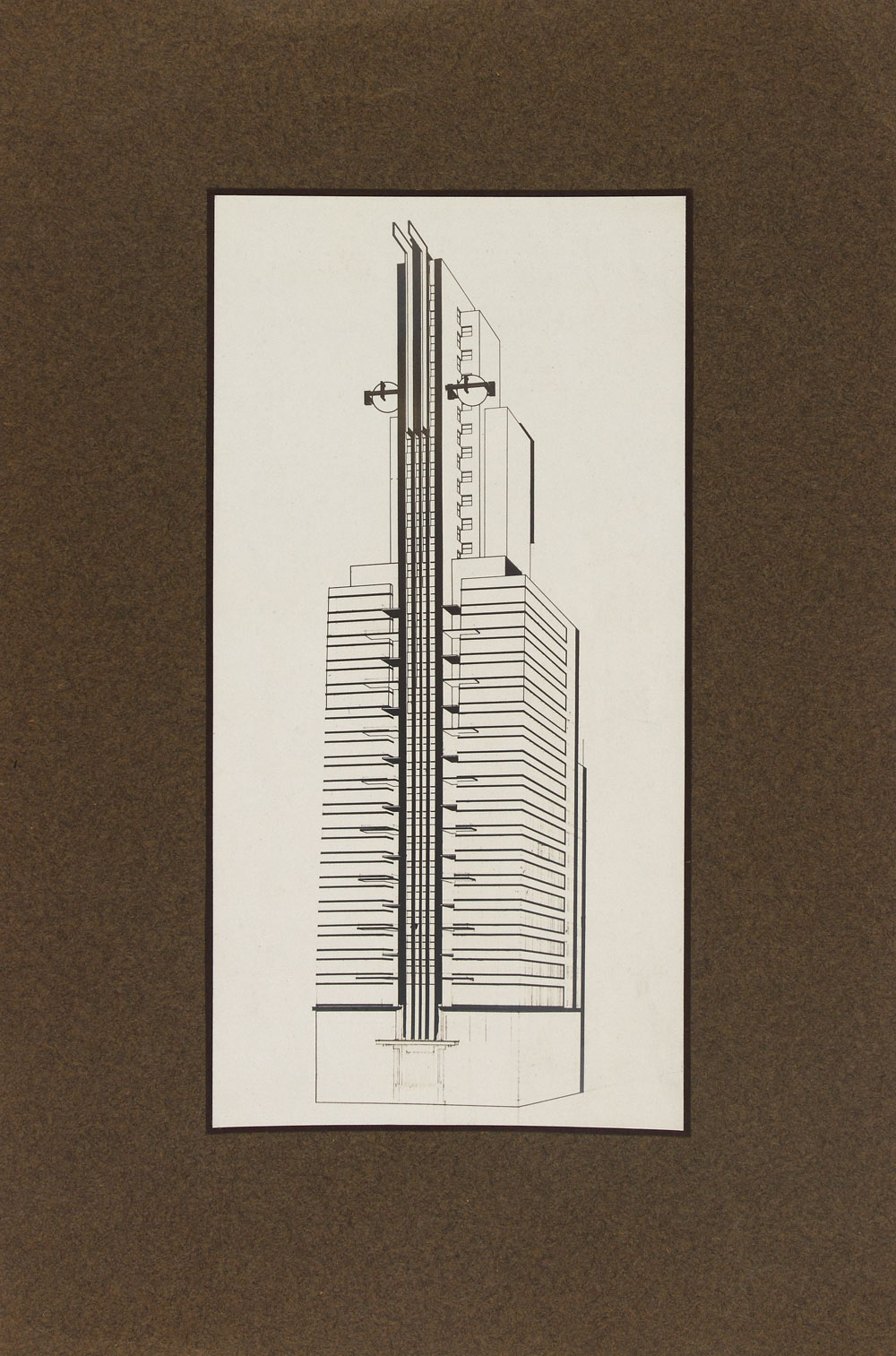
Pinakothek der Moderne website

LIKE ART BLART ON FACEBOOK

Back to top

Exhibition: ‘Painting in Photography. Strategies of Appropriation’ at the Städel Museum, Frankfurt

Exhibition dates: 27th June – 23rd September 2012


Installation view of the exhibition 'Painting in Photography. Strategies of Appropriation' at the Städel Museum, Frankfurt showing Victor Burgin's 'Office at Night (Red)' 1985


Installation view of the exhibition Painting in Photography. Strategies of Appropriation at the Städel Museum, Frankfurt showing Victor Burgin’s Office at Night (Red), 1985 (below)


“To understand the production of art at the end of tradition, which in our lifetime means art at the end of modernism, requires, as the postmodern debate has shown, a careful consideration of the idea of history and the notion of ending. Rather than just thinking ending as the arrival of the finality of a fixed chronological moment, it can also be thought as a slow and indecisive process of internal decomposition that leaves in place numerous deposits of us, in us and with us – all with a considerable and complex afterlife. In this context all figuration is prefigured. This is to say that the design element of the production of a work of art, the compositional, now exists prior to the management of form of, and on, the picture plane. Techniques of assemblage, like montage and collage – which not only juxtaposed different aesthetics but also different historical moments, were the precursors of what is now the general condition of production.”


“Art Byting the Dust” Tony Fry 1990 1


They said that photography would be the death of painting. It never happened. Recently they thought that digital photography would be the death of analogue photography. It hasn’t happened for there are people who care enough about analogue photography to keep it going, no matter what. As the quotation astutely observes, the digital age has changed the conditions of production updating the techniques of montage and collage for the 21st century. Now through assemblage the composition may be prefigured but that does not mean that there are not echoes, traces and deposits of other technologies, other processes that are not evidenced in contemporary photography.

As photography influenced painting when it first appeared and vice versa (photography went through a period known as Pictorialism where where it imitated Impressionist painting), this exhibition highlights the influence of painting on later photography. Whatever process it takes photography has always been about painting with light – through a pinhole, through a microscope, through a camera lens; using light directly onto photographic paper, using the light of the scanner or the computer screen. As Paul Virilio observes, no longer is there a horizon line but the horizon square of the computer screen, still a picture plane that evidences the history of art and life. Vestiges of time and technology are somehow always present not matter what medium an artist chooses. They always have a complex afterlife and afterimage.

Dr Marcus Bunyan

PS. I really don’t think it is a decomposition, more like a re/composition or reanimation.
PPS. Notice how Otto Steinert’s Luminogramm (1952, below), is eerily similar to some of Pierre Soulages paintings.


1/ Fry, Tony. “Art Byting the Dust,” in Hayward, Phillip. Culture, Technology and Creativity in the Late Twentieth Century. London: John Libbey and Company, 1990, pp. 169-170

Many thankx to the Städel Musuem for allowing me to publish the photographs in the posting. Please click on the photographs for a larger version of the image.


Victor Burgin (British, b. 1941) 'Office at Night (Red)' 1985


Victor Burgin (British, b. 1941)
Office at Night (Red)
1985


In a conceptual, analytical visual language, Burgin, who originally started out as a painter, refers to Edward Hopper’s painting “Office at Night” from 1940. It shows a New York office at night, in which the boss and secretary are still at work and alone. Burgin’s picture is part of a series about this depiction of a couple by Hopper (and the special role of the female motif in his work). Burgin’s picture consists of three panels, each of which uses a fictional register: letters (word), color (red is traditionally the color for lust and love) and photographic image (secretary).

Anonymous. “Victor Burgin” in the pdf “WONDERFULLY FEMININE! Interrogations of the feminine,” on the Kunst Stiftung DZ Bank website 2009 [Online] Cited 11/09/2024. Translated from the German by Google Translate


Installation view of the exhibition 'Painting in Photography. Strategies of Appropriation' at the Städel Museum, Frankfurt showing at left, Thomas Ruff's 'Substrat 10' (2002)


Installation view of the exhibition Painting in Photography. Strategies of Appropriation at the Städel Museum, Frankfurt showing at left, Thomas Ruff’s Substrat 10 (2002, below)


Thomas Ruff (German, b. 1958) 'Substrat 10' 2002


Thomas Ruff (German, b. 1958)
Substrat 10
2002
C-type print
186 x 238cm
DZ BANK Kunstsammlung
© VG Bild-Kunst, Bonn 2012


Installation view of the exhibition 'Painting in Photography. Strategies of Appropriation' at the Städel Museum, Frankfurt showing at centre, Wolfgang Tillmans 'Paper drop (window)' (2006)


Installation view of the exhibition Painting in Photography. Strategies of Appropriation at the Städel Museum, Frankfurt showing at centre, Wolfgang Tillmans Paper drop (window) (2006, below)


Wolfgang Tillmans (German, b. 1968) 'Paper drop (window)' 2006


Wolfgang Tillmans (German, b. 1968)
paper drop (window)
2006
C-type print in artists frame
145 x 200cm
Property of Städelscher Museums-Verein e.V.
© Courtesy Galerie Buchholz, Köln / Berlin
Städel Museum, Frankfurt am Main
Acquired in 2008 with funds from the Städelkomitee 21. Jahrhundert


Otto Steinert (German, 1915-1978) 'Ein-Fuß-Gänger' 1950


Otto Steinert (German, 1915-1978)
Ein-Fuß-Gänger
1950
Gelatin silver print
28.5 x 39cm
Courtesy Galerie Kicken Berlin
© Nachlass Otto Steinert, Museum Folkwang, Essen


Laszlo Moholy-Nagy (Hungarian, 1895-1946) 'Photogram' c. 1923-1925


Laszlo Moholy-Nagy (Hungarian, 1895-1946)
Photogram
c. 1923-1925
Unique photogram, toned printing-out paper
12.6 x 17.6cm
Courtesy Galerie Kicken Berlin
© Hattula Moholy-Nagy / VG Bild-Kunst, Bonn


Robert Rauschenberg (American, 1925-2008) '10-80-C-17 (NYC)' 1980


Robert Rauschenberg (American, 1925-2008)
10-80-C-17 (NYC)
1980
From the series: In + Out of City Limits: New York / Boston
Gelatin silver print on fibre-based paper
58 x 73cm
DZ BANK Kunstsammlung at the Städel Museum
© Estate of Robert Rauschenberg / VG Bild-Kunst, Bonn 2012


Hiroshi Sugimoto (Japanese, b. 1948) 'Sam Eric, Pennsylvania' 1978


Hiroshi Sugimoto (Japanese, b. 1948)
Sam Eric, Pennsylvania
1978
Gelatin silver print
42.5 x 54.5cm
Private collection, Frankfurt
© Hiroshi Sugimoto / Courtesy The Pace Gallery


Otto Steinert (German, 1915-1978) 'Luminogramm' 1952


Otto Steinert (German, 1915-1978)
Luminogramm
1952, printed c. 1952
Gelatin silver print
41.5 x 60cm
Courtesy Galerie Kicken Berlin
© Nachlass Otto Steinert, Museum Folkwang, Essen


From 27 June to 23 September 2012, the Städel Museum will show the exhibition “Painting in Photography. Strategies of Appropriation.” The comprehensive presentation will highlight the influence of painting on the imagery produced by contemporary photographic art. Based on the museum’s own collection and including important loans from the DZ Bank Kunstsammlung as well as international private collections and galleries, the exhibition at the Städel will centre on about 60 examples, among them major works by László Moholy-Nagy, Hiroshi Sugimoto, Wolfgang Tillmans, Thomas Ruff, Jeff Wall, and Amelie von Wulffen. Whereas the influence of the medium of photography on the “classic genres of art” has already been the subject of analysis in numerous exhibitions and publications, less attention has been paid to the impact of painting on contemporary photography to date. The show at the Städel explores the reflection of painting in the photographic image by pursuing various artistic strategies of appropriation which have one thing in common: they reject the general expectation held about photography that it will document reality in an authentic way.

The key significance of photography within contemporary art and its incorporation into the collection of the Städel Museum offer an occasion to fathom the relationship between painting and photography in an exhibition. While painting dealt with the use of photography in the mass media in the 1960s, today’s photographic art shows itself seriously concerned with the conditions of painting. Again and again, photography reflects, thematises, or represents the traditional pictorial medium, maintaining an ambivalent relationship between appropriation and detachment.

Numerous works presented in the Städel’s exhibition return to the painterly abstractions of the prewar and postwar avant-gardes, translate them into the medium of photography, and thus avoid a reproduction of reality. Early examples for the adaption of techniques of painting in photography are László Moholy-Nagy’s (1895-1946) photograms dating from the 1920s. For his photographs shot without a camera, the Hungarian artist and Bauhaus teacher arranged objects on a sensitised paper; these objects left concrete marks as supposedly abstract forms under the influence of direct sunlight. In Otto Steinert’s (1915-1978) non-representational light drawings or “luminigrams,” the photographer’s movement inscribed itself directly into the sensitised film. The pictures correlate with the gestural painting of Jackson Pollock’s Abstract Expressionism. A product of random operations during the exposure and development of the photographic paper, Wolfgang Tillmans’ (b. 1968) work “Freischwimmer 54” (2004) is equally far from representing the external world. It is the pictures’ fictitious depth, transparency, and dynamics that lend Thomas Ruff’s photographic series “Substrat” its extraordinary painterly quality recalling colour field paintings or Informel works. For his series “Seascapes” the Japanese artist Hiroshi Sugimoto (b. 1948) seems to have “emptied” the motif through a long exposure time: the sublime pictures of the surface of the sea and the sky – which either blur or are set off against each other – seem to transcend time and space.

In addition to the photographs mentioned, the exhibition “Painting in Photography” includes works by artists who directly draw on the history of painting in their choice of motifs. The mise-en-scène piece “Picture for Women” (1979) by the Canadian photo artist Jeff Wall (b. 1946), which relates to Édouard Manet’s famous painting “Un Bar aux Folies-Bergère” from 1882, may be cited as an example for this approach. The camera positioned in the centre of the picture reveals the mirrored scene and turns into the eye of the beholder. The fictitious landscape pictures by Beate Gütschow (b. 1970), which consist of digitally assembled fragments, recall ideal Arcadian sceneries of the seventeenth and eighteenth centuries. The photographs taken by Italian Luigi Ghirri (1943-1992) in the studio of Giorgio Morandi (1890-1964) “copy” Morandi’s still lifes by representing the real objects in the painter’s studio instead of his paintings.

Another appropriative strategy sees the artist actually becoming active as a painter, transforming either the object he has photographed or its photographic representation. Oliver Boberg’s, Richard Hamilton’s, Georges Rousse’s and Amelie von Wulffen’s works rank in this category. For her series “Stadtcollagen” (1998-1999) Amelie von Wulffen (b. 1966) assembled drawing, photography, and painting to arrive at the montage of a new reality. The artist’s recollections merge with imaginary spaces offering the viewer’s fantasy an opportunity for his or her own associations.

The exhibition also encompasses positions of photography for which painting is the object represented in the picture. The most prominent examples in this section come from Sherrie Levine (b. 1947) and Louise Lawler (b. 1947), both representatives of US Appropriation Art. From the late 1970s on, Levine and Lawler have photographically appropriated originals from art history. Levine uses reproductions of paintings from a catalogue published in the 1920s: she photographs them and makes lithographs of her pictures. Lawler photographs works of art in private rooms, museums, and galleries and thus rather elucidates the works’ art world context than the works as such.

Press release from the Städel Museum website


Sherrie Levine (American, b. 1947) 'After Edgar Degas' 1987 (detail)


Sherrie Levine (American, b. 1947)
After Edgar Degas (detail)
1987
5 lithographs on hand-made paper
69 x 56cm
DZ BANK Kunstsammlung im Städel Museum, Frankfurt
© Sherrie Levine / Courtesy Jablonka Galerie, Köln


Beate Gütschow (German, b. 1970) 'PN #1' 2000


Beate Gütschow (German, b. 1970)
PN #1
2000
C-Print, mounted on aluminium dibond
Acquired in 2013, property of Städelscher Museums-Verein e.V.
Städel Museum, Frankfurt am Main, Eigentum des Städelschen Museums-Vereins e.V.


… these images do not evoke a sense of the sublime. On closer inspection, not only is the virginity of nature lost forever, but the innocence of perception is also denied. The natural realms presented here are simply too beautiful to be true. The beauty, wildness, and potentially threatening aspects of nature have been skillfully merged into a decorative whole, as they were in landscape painting from the 17th through to the 19th century. Beate Gütschow’s photographic works reproduce traditional patterns of depiction, incorporating landscape elements that recall compositions by Nicolas Poussin (1594-1665), Jacob van Ruisdael (1628-1682), Claude Lorrain (1600-1682), John Constable (1776-1837), and Philipp Otto Runge (1777-1810). The subjects portrayed by these landscape painters were based on an idealised worldview, the construction of which reflected the dominant philosophical ethos of their time. The artists themselves, however, presented this ideal in a manner bordering on the absolute. …

Beate Gütschow photographs landscapes with a medium-format analog camera, then converts the images into digital files. From this archived material she then constructs new landscapes in Photoshop, basing their spatial arrangements and compositional structures on the principles of landscape painting. As part of this subsequent editing process, she adjusts the light and colours in the images, applying lighting techniques from the realm of painting to her photographs. Because Gütschow uses only the retouching tool and other traditional darkroom techniques offered by Photoshop, not its painting tools, the photographic surface is preserved and the joins between the component parts are not immediately visible. These digital tools make it possible to employ a painterly method without the resulting picture being a painting. The viewer is given the impression that this is a completely normal photograph. When, however, an ideal landscape is presented in the form of a photograph, it appears more unnatural than the painted version of the same view. In this way, Gütschow’s work explores concepts of representation, colour, and light – the formal attributes of painting and photography – as well as the distinctions between documentation and staging.

Extract from Gebbers, Anna-Catharina. “Larger than Life,” in Beate Gütschow: ZISLS. Heidelberg, 2016, pp. 8-17. Translated by Jacqueline Todd [Online] Cited 23/08/2022


Luigi Ghirri (Italian, 1943-1992) 'L'atelier de Giorgio Morandi, Bologne' 1989


Luigi Ghirri (Italian, 1943-1992)
L’atelier de Giorgio Morandi, Bologne
1989


Luigi Ghirri (5 January 1943 – 14 February 1992) was an Italian artist and photographer who gained a far-reaching reputation as a pioneer and master of contemporary photography, with particular reference to its relationship between fiction and reality.


Amelie von Wulffen (German, b. 1966) 'Untitled (City Collages, VIII)' 1998


Amelie von Wulffen (German, b. 1966)
Untitled (City Collages, VIII)
1998
Oil paint, photographs on paper
42 x 59.7cm
Acquired in 2009 with funds from the Städelkomitee 21. Jahrhundert, property of Städelscher Museums-Verein e.V.
Städel Museum, Frankfurt am Main, Eigentum des Städelschen Museums-Vereins e.V.


The starting point for Amelie von Wulffen’s city collages is the urban architecture which she has photographed herself. These photographs are affixed to a surface and then processed pictorially: the artist alienates the perspective, adds abstract patterns and confronts the scene with quirky objects. The painted forms and unreal connections intervene in the relationship to reality of the supposedly objective photograph. The combination of photograph and painting is accompanied by a reflection on the characteristics of the medium concerned. The photographic reproduction of a situation which has been experienced may adequately record the place but not necessarily the memory. With this in mind, the artist sees painting as a suitable medium to equip photography with an authentic means of expression. During the chemical process of photography, real objects are registered on the light-sensitive material, just as the mood of the place and the memory of the artist are translated into the painting process. With regard to form, Wulffen reveals a wealth of references to Constructivism, Surrealism and Dadaism.

Text from the Städel Museum website


Art after 1945: Amelie von Wulffen

In our “Art after 1945” series, artists introduce their artworks in the Städel collection. In this episode Amelie von Wulffen explains her series “Stadtcollagen”.


Jeff Wall (Canadian, b. 1946) 'Picture for Women' 1979


Jeff Wall (Canadian, b. 1946)
Picture for Women
1979
Cibachrome transparency in lightbox
204.5 × 142.5cm (80.5 in × 56.1 in)


Picture for Women is a photographic work by Canadian artist Jeff Wall. Produced in 1979, Picture for Women is a key early work in Wall’s career and exemplifies a number of conceptual, material and visual concerns found in his art throughout the 1980s and 1990s. An influential photographic work, Picture for Women is a response to Édouard Manet’s Un bar aux Folies Bergère and is a key photograph in the shift from small-scale black and white photographs to large-scale colour that took place in the 1980s in art photography and museum exhibitions. …

Picture for Women is a 142.5 by 204.5 cm Cibachrome transparency mounted on a lightbox. Along with The Destroyed Room (1978), Wall considers Picture for Women to be his first success in challenging photographic tradition. According to Tate Modern, this success allows Wall to reference “both popular culture (the illuminated signs of cinema and advertising hoardings) and the sense of scale he admires in classical painting. As three-dimensional objects, the lightboxes take on a sculptural presence, impacting on the viewer’s physical sense of orientation in relationship to the work.”

Text from the Wikipedia website


Louise Lawler (American, b. 1947) 'It Could Be Elvis' 1994


Louise Lawler (American, b. 1947)
It Could Be Elvis
1994
Cibachrome, varnished with shellac
74.5 x 91cm
DZ BANK Kunstsammlung at the Städel Museum
© Courtesy of the artist and Metro Pictures, New York


Oliver Boberg (German, b. 1965) 'Unterführung' [Underpass] 1997


Oliver Boberg (German, b. 1965)
Unterführung [Underpass]
1997
C-type print
75 x 84cm
DZ BANK Kunstsammlung
© Oliver Boberg / Courtesy L.A. Galerie – Lothar Albrecht, Frankfurt


Richard Hamilton (English, 1922-2011) 'Eight-Self-Portraits' 1994 (detail)


Richard Hamilton (English, 1922-2011)
Eight-Self-Portraits (detail)
1994
Thermal dye sublimation prints
40 x 35cm
DZ BANK Kunstsammlung
© VG Bild-Kunst, Bonn 2012


Wolfgang Tillmans (German, b. 1968) 'Freischwimmer 54' 2004


Wolfgang Tillmans (German, b. 1968)
Freischwimmer 54
2004
C-type in artists frame
237 x 181 x 6cm
Städel Museum, Frankfurt am Main
© Courtesy Galerie Buchholz, Köln / Berlin
Acquired in 2008 with funds from the Städelkomitee 21. Jahrhundert
Property of Städelscher Museums-Verein e.V.


Städel Museum
Schaumainkai 63
60596 Frankfurt

Opening hours:
Tuesday – Sunday 10am – 6pm
Closed Mondays

Städel Museum website

LIKE ART BLART ON FACEBOOK

Back to top