Curators: Ángeles Alonso Espinosa, anthropologist and curator at the Museo Amparo in Mexico, and José Antonio Rodríguez, historian of the image and freelance curator
I really love the work of artists such as Kati Horna and Florence Henri “with the production of collages and photomontages inspired by the avant-garde movements of the 1930s (the Bauhaus, Surrealism, German Neue Sachlichkeit, Russian Constructivism).”
Horna’s photographs have more of a political edge than that of Florence Henri, with her unique photographic reportage of the Spanish Civil War between 1937-39 and her Hitler series both having a strong social critique. Here is another politically aware artist who stood up for the cause, who recorded the “everyday life for the civilian population through a vision that was in empathy with the environment and the people.” Again, here is another who was lucky to survive the maelstrom of the Second World War, who would have certainly ended up dead if she and her Andalusian artist husband José Horna had not fled Paris in 1939 for their adopted country Mexico.
Dr Marcus Bunyan
PS I spent hours cleaning up the press images, there were in a really poor state, but the work was so worthwhile… they really sing now!
Many thankx to the Jeu de Paume for allowing me to publish the photographs in the posting. Please click on the photographs for a larger version of the image.
This summer, the Jeu de Paume, which is celebrating 10 years devoted to the image, will be inviting the public to discover Kati Horna (1912-2000), an avant-garde, humanist photographer, who was born in Hungary and exiled in Mexico, where she documented the local art scene.
In collaboration with the Museo Amparo in Puebla (Mexico), the Jeu de Paume is presenting the first retrospective of the work of photographer Kati Horna (Szilasbalhási, Hungary, 1912-Mexico, 2000), showing more than six decades of work in Hungary, France, Spain and Mexico. Kati Horna, a photographer whose adopted homeland was Mexico, was one of a generation of Hungarian photographers (including André Kertész, Robert Capa, Eva Besnyö, László Moholy-Nagy, Nicolás Muller, Brassaï, Rogi André, Ergy Landau and Martin Munkácsi) forced to flee their country due to the conflicts and social upheaval of the 1930s.
Cosmopolitan and avant-garde, Kati Horna was known above all for her images of the Spanish Civil War, produced at the request of the Spanish Republican government between 1937 and 1939. Her work is characterised by both its adherence to the principles of Surrealist photography and her very personal approach to photographic reportage.
This major retrospective helps to bring international recognition to this versatile, socially committed, humanist photographer, highlighting her unusual artistic creativity and her contribution to photojournalism. It offers a comprehensive overview of the work of this artist, who started out as a photographer in Hungary at the age of 21, in the context of the European avant-garde movements of the 1930s: Russian Constructivism, the Bauhaus school, Surrealism and German Neue Sachlichkeit. Her vast output, produced both in Europe and Mexico, her adopted country, is reflected in a selection of over 150 works – most of them vintage prints, the vast majority of them unpublished or little known.
In Mexico, Kati Horna formed a new family with the émigré artists Remedios Varo, Benjamin Péret, Emerico ‘Chiki’ Weisz, Edward James and, later on, Leonora Carrington. In parallel with her reportages, she took different series of photographs of visual stories, extraordinary creations featuring masks and dolls, motifs that began to appear in her work in the 1930s.
Kati Horna also became the great portraitist of the Mexican literary and artistic avant-garde; her visionary photographs captured the leading artists in Mexico during the 1960s, such as Alfonso Reyes, Germán Cueto, Remedios Varo, Pedro Friedeberg, Alejandro Jodorowsky, Mathias Goeritz and Leonora Carrington.
The exhibition is divided into five periods: her beginnings in Budapest, Berlin and Paris between 1933 and 1937; Spain and the Civil War from 1937 to 1939; Paris again in 1939; then Mexico. The exhibition also presents a number of documents, in particular the periodicals that she contributed to during her travels between Hungary, France, Spain and Mexico. The works come from the Archivo Privado de Fotografía y Gráfica Kati y José Horna, the Centro Documental de la Memoria Histórica de España, Salamanca, the Museo Amparo, Puebla, as well as private collections.
Afterwards I returned to Paris, and do you know why I didn’t die of hunger in Paris? Before I left, everyone mocked me, “there’s the photographer”, I was the photographer of eggs. I had this idea of being the first one to do things, not with figurines, but little stories with eggs, and it was that wonderful draughtsman who subsequently committed suicide who did the faces for me… The first was the romantic story of a carrot and a potato. The carrot declared its love to the potato. He always did the faces and I staged the scenes. I took the photos with my big camera with 4 x 5 negatives.
Kati Horna
Born in Hungary to a family of bankers of Jewish origin during a period of political and social instability, Kati Horna would always be deeply marked by the violence, injustice and danger around her. This situation helped to forge her ideological commitment, her perpetual search for freedom, her particular way of denouncing injustice, as well as her compassionate and human vision, like that of Lee Miller and her pictures of the Second World War. As was the case for her great childhood friend Robert Capa, to whom she would remain close throughout her life, photography became a fundamental means of expression.
At the age of 19 she left Budapest to live in Germany for a year, where she joined the Bertolt Brecht collective. She frequented photographer friends and compatriots Robert Capa and ‘Chiki’ Weisz, as well as other major figures in Hungarian photography, such as László Moholy-Nagy – who at the time was a teacher at the Bauhaus school – and Simon Guttman, founder of the Dephot agency (Deutscher Photodienst). On her return from Budapest, she enrolled in the studio of József Pécsi – the famous Hungarian photographer (1889-1956) – before leaving her birth country again, in 1933, to settle in Paris.
It was during this period of apprenticeship that her own aesthetic took shape, which marked her entire career, with the production of collages and photomontages inspired by the avant-garde movements of the 1930s (the Bauhaus, Surrealism, German Neue Sachlichkeit, Russian Constructivism). Paris was a cosmopolitan capital and Surrealism was at its height at the time. This movement heavily influenced Kati Horna’s style, both through its themes and its techniques, be it the narrative collage, superimposition or photomontage. Her photography was closely linked to the arts of the image, used as an illustrative technique and as a support for a poetics of the object. Her taste for stories and staged images are clearly evident. From 1933 she worked for the Lutetia-Press agency, for whom she did her first photo stories: Mercado de pulgas [Flea Market] (1933), which would not be published until 1986 in the Mexican periodical Foto Zoom, and Cafés de París (1934).
Photography, with its various possibilities, enables one to show, liberate and develop one’s own sensibility which can be expressed in graphic images.
And at the moment of pressing the shutter you had to keep the image, let your emotion, discovery and visual surprise flow, the moment had to be kept in your head. That’s what I call developing one’s visual memory.
Kati Horna
Between 1937 and 1939, Kati Horna covered the Spanish Civil War with great sensitivity. The Spanish Republican government asked her to produce images on the Civil War. Thus, between 1937 and 1939 she photographed the places where the major events of the war took place, in the Aragon province, in the country’s cities (Valencia, Madrid, Barcelona and Lerida), as well as a number of strategic villages in Republican Spain.
A collection of more than 270 negatives has survived from this period, today conserved in the Centro Documental de la Memoria Histórica de España, Salamanca. They bear witness to the reality of the conflict at the front as well as, and above all, everyday life for the civilian population through a vision that was in empathy with the environment and the people. Committed to the anarchist cause, she became the editor of the periodical Umbral, where she would meet her future husband, the Andalusian anarchist José Horna – and worked on the cultural periodical of the National Confederation of Labour, Libre-Studio. She also collaborated on the periodicals Tierra y Libertad, Tiempos Nuevos and Mujeres Libres, publications that are being exhibited for the first time. At the time, her work was distinguished by its photomontages, which have both a symbolic and metaphorical character.
I am in an existential crisis. Today everyone is running, today everyone is driving. My pictures? They were the product of a creative love, linked to my experiences and the way they were taken. I was never in a hurry.
S.nob was a joy… I don’t know why I enjoyed myself so much, but the facility that Salvador [Elizondo] and the team, and Juan [García Ponce] gave me, a great creativity came out of me.
Kati Horna
Kati Horna returned to Paris in 1939. Her husband, the Andalusian artist José Horna, enlisted in the Ebra division that covered the retreat of the Spanish civilians to France. In October, as soon as he reached Prats-de-Mollo, in the French Pyrenees, he was incarcerated in a camp for Spanish refugees. Kati Horna succeeded in getting him freed. They left for Paris where they were again harassed, obliging them to flee France for Mexico. Mexico would become her final homeland.
During her everyday life she came into contact with some of the extraordinary figures of Surrealism (Leonora Carrington, Remedios Varo, Benjamin Péret and Edward James) and the Panic movement (Alejandro Jodorowsky), as well as avant-garde Mexican artists, writers and architects (Mathias Goeritz, Germán Cueto, Pedro Friedeberg, Salvador Elizondo, Alfonso Reyes and Ricardo Legorreta).
Kati Horna established herself as a chronicler of the period, leaving for posterity a unique corpus. In Mexico, she worked as a reporter for periodicals such as Todo (1939), Nosotros (1944-1946), Mujeres (1958-1968), Mexico this Month (1958-1965), S.nob (1962) and Diseño (1968-1970). During the last 20 years of her life, she also taught photography at the Universidad Iberoamericana and the San Carlos Academy (Univesidad Nacional Autónoma de México), where she trained an entire generation of contemporary photographers.
Horna’s quotes come from the catalogue, co-published by the Jeu de Paume and the Museo Amparo
Exhibition dates: 21st March – 14th September, 2014
Curator: Ann and Jürgen Wilde Foundation
Florence Henri (French born America, 1893-1982) Composition Nd Gelatin silver print
When I started experimenting with a camera in the early 80s, my first experiments were with mirrors, shoes, tripod legs, cotton buds and reflections of myself in mirrors (with bright orange hair). I still have the commercially printed colour photos from the chemist lab!
Henri’s sophisticated, avante-garde, sculptural compositions have an almost ‘being there’ presence: a structured awareness and way of looking at the world, a world in which the artist questions reality. She confronts the borders of an empirical reality (captured by a machine, the camera) through collage and mirrors, in order to take a leap of faith towards some form of transcendence of the real. Here she confronts the limitless freedom of creativity, of composition, to go beyond objectivity and science, to experience Existenz (Jaspers) – the realm of authentic being.*
These photographs are her experience of being in the world, of Henri observing the breath of being – the breath of herself, the breath of the objects and a meditation on those objects. There is a stillness here, an eloquence of construction and observation that goes beyond the mortal life of the thing itself. That is how these photographs seem to me to live in the world. I may be completely wrong, I probably am completely wrong – but that is how these images feel to me: a view, a perspective, the artist as prospector searching for a new way of authentically living in the world.
I really like them.
Dr Marcus Bunyan
*For his own existential philosophy, [Karl] Jaspers’ aim was to indirectly outline the metaphysical features of human Existenz – which means, what it’s like to experience being human in our full freedom – and to encourage every individual to realise his or her own authentic self-being by a subjective existential activity of thought which isn’t objectively describable.
“Existence in one sense refers to the sum total of reality, and in another sense, the elusive characteristic of being which differentiates real things from fictional ones.7 For Jasper, Existence as it pertains to Being is called Encompassing. It is the form of our awareness of being which underlies all our scientific and common-sense knowledge and which is given expression in the myths and rituals of religion. This awareness is not that of an object, but reflection on the subjective situation of being. Thus existence is about reflection upon the horizon of life, accepting the limitless possibilities in reality and also accepting that even though we can enlarge the extent of our knowledge, we can never escape the fact that it is fragmentary and has a limit.
He says:
“By reflecting upon that course (the limitless horizon of reality) we ask about being itself, which always seems to recede from us, in the very manifestation of all the appearances we encounter. This being we call the encompassing. But the encompassing is not the horizon of our knowledge at any particular moment. Rather, it is the source from which all new horizons emerge, without itself ever being visible even as a horizon.9″”
Jaspers Karl, Philosophy of Existence. (Philadelphia: University of Pennsylvanian Press, 1971), p. 18 quoted in Onyenuru Okechukwu. P. “The Theme of Existence in the Philosophy of Karl Jaspers,” No date, pp. 3-4 on the PhilPapers website [Online] Cited 16/06/2021. Used under fair use conditions for the purposes of education and research
Thankx to the Pinakothek der Moderne, Munich for allowing me to publish five of the photographs in the posting. The other images have all been sourced from the internet. Please click on the photographs for a larger version of the image.
Florence Henri (French born America, 1893-1982) Composition 1931 Gelatin silver print
Florence Henri (French born America, 1893-1982) Composition No 10 1928 Gelatin silver print
Florence Henri (French born America, 1893-1982) Abstract Composition 1928 Gelatin silver print Stiftung Ann und Jürgen Wilde, Pinakothek der Moderne, Munich
The photographs and photo-montages of Florence Henri (1893-1982) attest to her broad artistic education and an unusual openness for new currents in the art of the time.
The artist, who had studied the piano under Ferruccio Busoni in Rome and painting in Paris under Fernand Léger, in Berlin under Johann Walter-Kurau and in Munich under Hans Hofmann, spent a brief semester as a guest at the Bauhaus in Dessau in 1927. Although photography was not part of the curriculum at the Bauhaus at this time, lecturers such as László Moholy-Nagy and Georg Muche, as well as pupils including Walter Funkat and Edmund Collein experimented intensively with this medium. It was here that Florence Henri gained the inspiration to become a photographer herself.
That same year she returned to Paris, stopped painting and devoted herself thoroughly to photography. She created extensive series of still lifes and portrait and self-portrait compositions, in which the artist divided up the pictorial space using mirrors and reflective spheres, expanding it structurally. The fragmented images created this way point to the inspiration Florence Henri gained from Cubist and Constructivist pictorial concepts.
Through her experimental photography Florence Henri swiftly became a highly respected exponent of modern photography and participated in numerous international shows such as the trailblazing Werkbund exhibition ‘Film und Foto’ in 1929. After World War II, however, the artist no longer pursued her photographic interest with the same intensity as before, devoting herself instead almost exclusively to painting. This most certainly also contributed to her photographs largely falling into oblivion after 1945.
The emphasis in the exhibition Florence Henri. Compositions in the Pinakothek der Moderne has been placed on the artist’s compositions using mirrors and her photo-montages, It comprises some 65 photographs, including the portfolio published in 1974, as well as documents and historical publications from the holdings of the Ann and Jürgen Wilde Foundation. As such, Ann and Jürgen Wilde significantly contributed towards the rediscovery of this exceptional artist’s work. Her photographic oeuvre now has a permanent place within the art of the avant-garde.
Press release from the Pinakothek der Moderne website
Florence Henri (French born America, 1893-1982) Still-Life Composition 1929 Gelatin silver print
Florence Henri (French born America, 1893-1982) Abstract Composition 1932 Gelatin silver print
Florence Henri (French born America, 1893-1982) Still-life with Lemon and Pear c. 1929 Gelatin silver print
Florence Henri (French born America, 1893-1982) Little Boot 1931 Gelatin silver print
Florence Henri was born in New York on 28 June 1893; her father was French and her mother was German. Following her mother’s death in 1895, she and her father moved first to her mother’s family in Silesia; she later lived in Paris, Munich and Vienna and finally moved to the Isle of Wight in England in 1906. After her father’s death there three years later, Florence Henri lived in Rome with her aunt Anni and her husband, the Italian poet Gino Gori, who was in close touch with the Italian Futurists. She studied piano at the music conservatory in Rome.
During a visit to Berlin, Henri started to focus on painting, after meeting the art critic Carl Einstein and, through him, Herwarth Walden and other Berlin artists. In 1914, she enrolled at the Academy of Art in Berlin, and starting in 1922, trained in the studio of the painter Johannes Walter-Kurau. Before moving to Dessau, Henri studied painting with the Purists Fernand Léger and Amédée Ozenfant at the Académie Moderne in Paris. She arrived at the Bauhaus in Dessau in April 1927. She had already met the Bauhaus artists Georg Muche and László Moholy-Nagy and had developed a passion for Marcel Breuer’s tubular steel furniture. Up to July 1927, Henri attended the preliminary course directed by Moholy-Nagy, lived in the Hungarian artist’s house, and became a close friend of his first wife,Lucia Moholy, who encouraged her to take up photography. From the Moholy-Nagys, Henri learned the basic technical and visual principles of the medium, which she used in her initial photographic experiments after leaving Dessau. In early 1928, she abandoned painting altogether and from then on focused on photography, with which she established herself as a professional freelance photographer with her own studio in Paris – despite being self-taught.
Even during her first productive year as a photographer, László Moholy-Nagy published one of her unusual self-portraits, as well as a still life with balls, tyres, and a mirror, in i10. Internationale Revue. The first critical description of her photographic work, which Moholy-Nagy wrote to accompany the photos, recognises that her pictures represented an important expansion of the entire ‘problem of manual painting’, in which ‘reflections and spatial relationships, overlapping and penetrations are examined from a new perspectival angle’.
Mirrors become the most important feature in Henri’s first photographs. She used them both for most of her self-dramatisations and also for portraits of friends, as well as for commercial shots. She took part in the international exhibition entitled Das Lichtbild [The Photograph] in Munich in 1930, and the following year she presented her images of bobbins at a Foreign Advertising Photography exhibition in New York. The artistic quality of her photographs was compared with Man Ray, László Moholy-Nagy and Adolphe Baron de Mayer, as well as the with winner of the first prize at the exhibition, Herbert Bayer. Only three years after the new photographer had taken her first pictures, her self-portrait achieved the equal status with her male colleagues that she had been aiming for.
Up to the start of the Second World War, Henri established herself as a skilled photographer with her own photographic studio in Paris (starting in 1929). When the city was occupied by the Nazis, her photographic work declined noticeably. The photographic materials needed were difficult to obtain, and in any case Henri’s photographic style was forbidden under the Nazi occupation; she turned her attention again to painting. With only a few later exceptions, the peak of her unique photographic experiments and professional photographic work was in the period from 1927 to 1930.
Even in the 1950s, Henri’s photographs from the Thirties were being celebrated as icons of the avant-garde. Her photographic oeuvre was recognised during her lifetime in one-woman exhibitions and publications in various journals, including N-Z Wochenschau. She also produced photographs during this period, such as a series of pictures of the dancer Rosella Hightower. She died in Compiègne on 24 July 1982.
Text from the Florence Henri web page on the Bauhaus Online website [Online] Cited 06/07/2014. No longer available online. Used under fair use for the purposes of education and research
Florence Henri (French born America, 1893-1982) Parisian Window 1929 Gelatin silver print
Florence Henri (French born America, 1893-1982) The Forum 1934 Gelatin silver print
Florence Henri (French born USA, 1893-1982) Rome 1933-1934 Gelatin silver print
Florence Henri (French born America, 1893-1982) Abstract Composition 1929 Gelatin silver print
Florence Henri (French born America, 1893-1982) Self-portrait in a mirror 1928 Gelatin silver print
Florence Henri (French born America, 1893-1982) A Bunch of Grapes c. 1934 Gelatin silver print
Florence Henri (French born America, 1893-1982) Composition 1932 Gelatin silver print Stiftung Ann und Jürgen Wilde, Pinakothek der Moderne, Munich
Florence Henri (French born America, 1893-1982) Untitled, USA 1940 Gelatin silver print
Florence Henri (French born America, 1893-1982) Paris Window 1929 Gelatin silver print Stiftung Ann und Jürgen Wilde, Pinakothek der Moderne, Munich
Florence Henri (French born America, 1893-1982) Portrait 1928 Gelatin silver print Stiftung Ann und Jürgen Wilde, Pinakothek der Moderne, Munich
Florence Henri (French born America, 1893-1982) Self Portrait 1928 Gelatin silver print Stiftung Ann und Jürgen Wilde, Pinakothek der Moderne, Munich
Picture this is what Walker Evans does in his unique, forthright way.
He shows you what he is seeing in a very straight forward way – directly, purposefully, in images where the artist seems to have no presence, no ego to impart.
As artist Chris Killip observes, “Walker Evans is serious and smart and purposeful. He is trying to show you very clearly what he is seeing. It is very unadorned, as if nobody had taken the photograph. He conveys what is in front of him as clearly as possible.”1
But further than this, Evans presents us with a photographic version of Tomas Tranströmer’s poems which were seen by his English admirers in terms of “deep image”, a vaguely Jungian concept which suggests that “poetry could state absolute truths if only the images poets evoked welled up from deep enough sources uncontaminated by history and the follies of reason.”2
Evans direct, plainspoken images picture reality whilst hovering above the void – flirting with the duality of narrative truth and metaphysical inquiry. Whether Evans was consciously aware of this elemental antinomy is unlikely. Nevertheless we can read it in his images, even if we cannot read it in his prosaic words. You only have to look at the jet-black trees on a rainy day in Main Street, Saratoga Springs, New York (1931, below), or the justly famous Sharecropper’s Family, Hale County, Alabama (March 1936, below).
The people in the photograph have been posed but there is an intimate relationship here between the artist and his subjects. It is a loving photograph, for Evans cares for the dignity of these people in their naked condition. The grandmother wary of the camera with clasped hands, the weary husband, stick thin with glazed eyes, the young girl child with sallow stare, and the pensive mother with sleeping baby staring directly into camera, all of them dirty and in rags. In this absolute reality there is a nobility to these people and there, buried in the image, a relationship to the metaphysical essence of what it is to be human – the pictures of children on the back wall with text I can’t quite make out; the glorious arrangement of feet that run along the bottom of the image in all different angles and positions, the mothers folded under her almost collapsing with the weight of her burden; and what is that black shape prostrate on the floor? A rag? death? No! A cat.
The blackest most thinnest small cat that you ever seen, lingering on the edge of starvation, hovering in the void of existence.
As Thomas Sleigh writes of his first meeting with Tomas Tranströmer as he stepped from a small plane onto the ground, “I don’t mind large planes or middle-sized planes (his English was slightly guttural, his intonations lilting in a mild brogue), but small planes – you feel too much of the air under you.”3
And so with Evans if you know where to look.
Dr Marcus Bunyan
PS. For a fascinating insight into how these photographs were hung in the 1938 exhibition at MoMA see installation views of “Walker Evans American Photographs” at the Museum of Modern Art, New York City, 1938 on the ASX website. Notice the smallness of the photographs, their different sizes, the juxtaposition of disparate images, some double or triple hung one above the other, some printed in the centre of white sheets of photographic paper, others displayed on dark walls. The image that I describe above, Sharecropper’s Family, Hale County, Alabama (March 1936) is shown in an installation photograph below. Notice how small the image is and what affect this size of image has on the viewer, its shear concentration and intensity.
A friend Christopher Young tells me, “The install was done by Evans himself the night before and very chaotically. I love the poetry of the 1938 opening in that he got to the front door and couldn’t enter the show. He instead circled the block a number of times before going home…” Sounds like my early exhibitions. I could be found next door in a cafe playing pinball, I couldn’t face the crowd!
Footnotes
1/ Interview with Chris Killip about his exhibition Work at Museo Nacional Centro de Arte Renia Sofia, October 2013 [Online] Cited 11/02/2021
2/ Sleigh, Tom. “Too Much of the Air: Tomas Tranströmer,” 2005, on the Poets.org website [Online] Cited 15/02/2014. No longer available online
3/ Ibid.,
Many thankx to The Museum of Modern Art for allowing me to publish the photographs in the posting. Please click on the photographs for a larger version of the image.
Walker Evans (American, 1903-1975) Church Organ and Pews, Alabama 1936 Gelatin silver print, printed 1970 7 9/16 x 9 1/8″ (19.2 x 23.2cm) Printer: James Dow Mr. and Mrs. John Spencer Fund
Walker Evans (American, 1903-1975) Sharecropper’s Family, Hale County, Alabama March 1936 Gelatin silver print 7 5/8 x 9 5/8″ (19.4 x 24.4cm) Gift of the Farm Security Administration
Walker Evans (American, 1903-1975) Sharecropper’s Family, Hale County, Alabama (detail) March 1936 Gelatin silver print 7 5/8 x 9 5/8″ (19.4 x 24.4cm) Gift of the Farm Security Administration
Walker Evans (American, 1903-1975) Sharecropper’s Family, Hale County, Alabama (detail) March 1936 Gelatin silver print 7 5/8 x 9 5/8″ (19.4 x 24.4cm) Gift of the Farm Security Administration
This installation celebrates the 75th anniversary of the first one-person photography exhibition in MoMA’s history, and the accompanying landmark publication, which established the potential of the photographer’s book as an indivisible work of art. Through these projects Walker Evans created a collective portrait of the eastern United States during a decade of profound transformation – one that coincided with the flood of everyday images, both still and moving, from an expanding mass culture, and the construction of a Modernist history of photography. As Lincoln Kirstein wrote in his essay for the book, “After looking at these pictures with all their clear, hideous and beautiful detail, their open insanity and pitiful grandeur, compare this vision of a continent as it is, not as it might be or as it was, with any other coherent vision that we have had since the war. What poet has said as much? What painter has shown as much? Only newspapers, the writers of popular music, the technicians of advertising and radio have in their blind energy accidentally, fortuitously, evoked for future historians such a powerful monument to our moment. And Evans’s work has, in addition, logic, continuity, climax, sense and perfection.”
Comprising approximately 60 prints from the Museum’s collection that were included in the 1938 exhibition or the accompanying publication, the current installation maintains the bipartite presentation of the originals; the first section portrays American society through images of its individuals and social environments, while the second consists of photographs of the relics that constitute expressions of an American cultural identity – the architecture of Main streets, factory towns, rural churches, and wooden houses. The pictures provide neither a coherent narrative nor a singular meaning, but rather create connections through the repetition and interplay of pictorial structures and subject matter. Its placement on the fourth floor of the Museum – between galleries featuring the paintings of Robert Rauschenberg, Jasper Johns, Jackson Pollock, and Andy Warhol – underscores the continuation of prewar avant-garde practices in America and the unique legacy of Evans’s explorations of signs and symbols, commercial culture, and the vernacular. Their profound impact on not only photography, but also film, literature, and the visual arts, reverberates today.
Text from The Museum of Modern Art website
Walker Evans (American, 1903-1975) American Legionnaire 1936 Gelatin silver print 5 3/4 x 5 1/8″ (14.6 x 13cm) Gift of the Farm Security Administration
Exhibition dates: 7th September, 2013 – 12th January 2014
Curator: Susanne Meyer-Büser
Many thankx to the Kunstsammlung Nordrhein-Westfalen for allowing me to publish the photographs in the posting. Please click on the photographs for a larger version of the image.
“These hesitations and resumptions, gropings and fumblings, sudden decisions and, most especially, marvellous swan-like nobility make Calder’s mobiles strange creatures, mid-way between matter and life.”
Jean-Paul Sartre, 1946
For the first time in 20 years, a German museum is presenting a major selection of works by the American sculptor Alexander Calder (1898-1976). With the exhibition Alexander Calder: Avant-Garde in Motion, the Kunstsammlung Nordrhein-Westfalen invites art lovers to reevaluate Calder as an astonishingly multifaceted member of the twentieth century avant-garde. Never before has the artistic oeuvre of this pioneer of Kineticism been presented in its surprising proximity and intimate interplay with the experimental film and music of its time. This approach highlights the intellectual universality of an artist whose mobiles are familiar worldwide today.
The focus of the exhibition at the K20 Grabbeplatz is the 1930s and 1940s, documenting Calder’s path toward abstraction and his lifelong friendships with members of the European avant-garde. On view in two exhibition halls are approximately 70 works, ranging from small-scale works in wood and sheet metal to the monumental steel stabile Le Tamanoir (1963), weighing 2300 kilograms, on loan from Rotterdam. A special architectural feature of this presentation is the long, accessible catwalk in the Kleehalle, which will offer visitors unexpected perspectives of the suspended mobiles.
For the Düsseldorf exhibition, Calder’s first solo show of abstract works at the Galerie Percier in Paris in 1931, has been partially documented as a crucial station on the path toward his singular formal language. His artistic friendships during his time in Paris are highlighted by important individual paintings by Piet Mondrian, Joan Miró, and Hans Arp that are found today in the collection of the Kunstsammlung Nordrhein-Westfalen. The impulse that initiated this major exhibition project was modest in proportions: in 2008, the sculpture Untitled, dating from 1936, was acquired by the Federal State of North-Rhine Westphalia, and hence and came into the possession of the Kunstsammlung. This work is among Calder’s relatively unknown “noise-mobiles,” which generate sound through the gentle pendular movement of a ball that hangs from a wire. A complex work, Untitled connects various phases of Calder’s career, pointing toward the beginning of the wire sculptures of the 1920s and also the “sonorous” mobiles of the later period, which are set in motion by air currents. The forms of the individual elements signal Calder’s turn toward abstraction, but also resemble the organic language typical of the works of Arp and Miró.
Like no other American artist, and in a way comparable only with his friend Man Ray, Calder was a consistent member of Parisian avant-garde circles between 1926 and 1933. He was recognised by the main representatives of a range of artistic tendencies, yet never allowed himself to be drawn into the rivalry between abstraction and Surrealism. During these years, Calder moved uninhibitedly between various orientations, positioning his work in the field of tension residing between Mondrian’s cool geometric compositional structures and the biomorphic, playful abstractions of Miró and Arp. The exhibition features in particular the abstract works Calder produced after a legendary and pivotal experience in Paris: in the fall of 1930, he visited Mondrian’s studio and was deeply impressed by the space’s total composition, in particular by the black-and-white structuring of a wall on which coloured rectangles were mounted for study purposes. In his autobiography, Calder characterises his visit to this environment as a “shock” that prompted him to reevaluate his artistic production to date.
During the ensuing weeks, he produced abstract paintings exclusively – a brief intermezzo. Subsequently, he developed his first nonobjective, spatial wire constructions. In the autumn of 1931, the influences of the preceding years found a more distinct expression in Calder’s art when he produced the first moving sculptures by a system of motors or cranks. Marcel Duchamp gave them the name “mobile,” a word that means both “motion” and “motive” in French. The mechanics were abandoned as Calder developed hanging kinetic sculptures, which are linked together by wires and joints and held in a state of equilibrium; through the principle of contingent and dynamic rotation, the individual parts continually form new and unanticipated constellations. As a counterpart to the mobiles, Calder developed immobile constructions, which Hans Arp dubbed “stabiles” in 1932.
Contributing to our understanding of Calder’s works are experimental films, likely seen by Calder during his time in Paris, in which movement and rotation are thematised in their most various facets. During the 1920s, many artists in Calder’s intimate circle were preoccupied with the medium of cinema and the moving image, for example Fernand Léger with Ballet Mechanique (1924), Marcel Duchamp with Anémic Cinéma (1926), and Man Ray with Le Retour à la Raison (1923). In the exhibition, these experimental films will be screened as part of the broader context of Calder’s studies of movement and space. Indispensable to a comprehensive presentation of Calder’s involvement in the historic avant-garde is a consideration of the experimental music of the time: Calder cultivated friendships with the composers Edgard Varèse, Virgil Thomson, and John Cage, among others. Calder was intensively preoccupied with contemporary music, which is also incorporated into the exhibition. And it seems likely that it also exerted an influence on the “noise-mobiles,” for which the randomness of sound events plays an important role.”
Alexander Calder: Avant-Garde in Motion is on show at the Kunstsammlung Nordrhein-Westfalen, in two large exhibition halls at the K20 Grabbeplatz in Düsseldorf. In the Klee Hall the visitor will experience Calder’s early sculptures – set against works by trend-setting fellow artists, such as Mondrian, Miró and Arp, as well as artistic and documentary films. In the high Grabbehall, by contrast, the large mobiles and stabiles will be exhibited to impressive effect by allowing the individual shapes to move freely. Here the visitor can experience how the artist makes playful use of space and proportions. At various points throughout the exhibition, Calder’s mobiles enter into a dialogue with experimental music dating from the 1920s onwards, ranging from compositions by Edgar Varèse to those of John Cage. This illustrates how Calder constantly sought inspiration from other branches of the arts and broadened his own horizons.
Press release from the Kunstsammlung Nordrhein-Westfalen website
A very interesting article, Covering their arts by John Elder (Sydney Morning Herald, October 13, 2013), examined the controversy over Bill Henson’s images of children sparked an age of censorship that is still spooking artists and galleries in Australia. At the end of the article Chris McAuliffe, ex-director of the Ian Potter Museum of Art, states that “There’s an assumption that the avant-garde tradition is a natural law as opposed to a constructed space.”
Almost everything (from the landscape to identity) is a constructed space, but that does not mean that the avant-garde cannot be deliberately transgressive, subversive, and break taboos. Artists should make art without fear nor favour, without looking over the shoulder worrying about the court of public opinion. McAuliffe’s statement may be logical but it certainly isn’t pro artist’s standing up to critique things that they see wrong in the world or expose different points of view that challenge traditional hegemonies.
While artists may not stand outside the law, if they believe in something strongly enough to challenge the status quo they must have the courage of their convictions… and just go for it.
The essay below, written in October 2010 and revised in September 2012 and published here for the first time, examines similar topics, investigating the use of photography as subversive image of reality. Download the full paper (2Mb pdf)
Transgressive Topographies, Subversive Photographies, Cultural Policies
Dr Marcus Bunyan
September 2012
Abstract
This research paper investigates the use of photography as subversive image of reality. The paper seeks to understand how photography has been used to destabilise notions of identity, body and place in order to upset normative mores and sensibilities. The paper asks what rules are in place to govern these transgressive potentialities in local, national and international arts policy and argues that prohibitions on the display of such transgressive acts are difficult to enforce.
Keywords
Topography, photography, mapping, transgression, identity, space, time, body, place, arts policy, culture, obscenity, blasphemy, defamation, nudity, shock art, transgressive art, law, censorship, free speech, morality, subversion, freedom of speech, Social Conservatism, taboo, Other.
“Through their power, institutions (such as the Arts Council of Australia) produce rituals of truth and we as artists can and must challenge this perceived truth through the use of transgressive texuality. This texuality “can become a mode of agential resistance capable of fragmenting and releasing the subject, and thereby producing a zone of invisibility where knowledge/power is no longer able ‘find its target’.”44
Only through resistance can transgressive art, including subversive photography, challenge the status quo of a conservative worldview.”
Dr Marcus Bunyan September 2012
Thomas J. Nevin (Australian, 1842-1923) Hugh Cowan, aged 62 yrs
1878
Detail of criminal register, Sheriff’s Office, Hobart Gaol to 1890, page 120, GD6719 TAHO
Used for literary criticism under fair use, fair dealing
Thomas J. Nevin produced large numbers of stereographs and cartes within his commercial practice, and prisoner ID photographs on government contract and in civil service. He was one of the first photographers to work with the police in Australia, along with Charles Nettleton (Victoria) and Frazer Crawford (South Australia). His Tasmanian prisoner vignettes (“mugshots”) are the earliest to survive in public collections.
Found guilty of wilful murder in early April 1878, Hugh Cowan’s sentence of death by hanging was commuted to life imprisonment. The negative was taken and printed in the oblong format in late April 1878, and was pasted to the prisoner’s revised criminal sheet after commutation, held at the Hobart Gaol, per notes appearing on the sheet. More information can be found on the “Two mugshots of convict Hugh COHEN or Cowen / Cowan 1878” page on the Thomas J. Nevin: Tasmanian Photographer blog, Wednesday, September 11, 2013.
Andre-Adolphe Eugene Disderi (French, 1819-1889) Communards in Their Coffins
c. 1871
Used for literary criticism under fair use, fair dealing
Francis Galton (British, 1822-1911) Composite portraits of Advanced Disease
1883
From Inquiries into Human Faculty and its Development 1883
Used for literary criticism under fair use, fair dealing
Anonymous photographer Crowds lined up to visit Entartete Kunst (Degenerate Art), Schulausstellungsgebaude, Hamburg
November – December 1938
Used for literary criticism under fair use, fair dealing
Anonymous photographer Entartete Kunst (Degenerate Art) exhibition
1936
Used for literary criticism under fair use, fair dealing
Introduction
“The artist is also the mainstay of a whole social milieu – called a “scene” – which allows him to exist and which he keeps alive. A very special ecosystem: agents, press attachés, art directors, marketing agents, critics, collectors, patrons, art gallery managers, cultural mediators, consumers… birds of prey sponge off artists in the joyous horror of showbiz. A scene with its codes, norms, outcasts, favourites, ministry, exploiters and exploited, profiteers and admirers. A scene which has the monopoly on good taste, exerting aesthetic terrorism upon all that which is not profitable, or upon all that which doesn’t come from a very specific mentality within which subversion must only be superficial, of course at the risk of subverting. A milieu which is named Culture. Each regime has its official art just as each regime has its Entartete Kuntz (‘Degenerate art’).”1
Throughout its history photography has been used to record and document the world that surrounds us, producing an image of a verifiable truth that visually maps identity, body and place. This is the topography of the essay title: literally, the photographic mapping of the world, whether it be the mapping of the Earth, the mapping of the body or the visualisation of identities as distinct from one person to another, one nation or ethnic group to another. At the very beginning of the history of photography the first photographs astounded viewers by showing the world that surrounded them. This ability of photography to map a visual truth was used in the mid-Victorian period by the law to document the faces of criminals (such as in the “mugshot” by Tasmanian photographer Thomas J. Nevin, above): “Photography became a modern tool of criminal investigation in the late nineteenth century, allowing police to identify repeat offenders,”2 and through the pseudo-science of physiognomy to identify born criminals solely from photographs of their faces (see the “composite” photograph Francis Galton, above), this topography used by the Nazis in their particular form of eugenics.3 In the Victorian era photography was also used by science to document medical conditions4 and by governments to document civil unrest (such as the death of the Communards in Paris, above).5
Paradoxically, photography always lies for the photograph only depicts one version of reality, one version of a truth depending on what the camera is pointed at, what it excludes, who is pointing the camera and for what reasons, the context of the event or person being photographed (which is fluid from moment to moment) and the place and reason for displaying the photograph. In other words all photographs are, by the very nature, transgressive because they have only one visual perspective, only one line of sight – they exclude as much as they document and this exclusion can be seen as a volition (a choice of the photographer) and a violation of a visual ordering of the world (in the sense of the taxonomy of the subject, an upsetting of the normal order or hierarchy of the subject).6 Of course this line of sight may be interpreted in many ways and photography problematises the notion of a definitive reading of the image due to different contexts and the “possibilities of dislocation in time and space.”7 As Brian Wallis has observed, “The notion of an autonomous image is a fiction”8 as the photograph can be displaced from its original context and assimilated into other contexts where they can be exploited to various ends. In a sense this is also a form of autonomy because a photograph can be assimilated into an infinite number of contexts. “This de and re-contextualisation is itself transgressive of any “integrity” the photograph itself may have as a contextualised artefact.”9 As John Schwartz has insightfully noted, “[Photographs] carry important social consequences and that the facts they transmit in visual form must be understood in social space and real time,”10 “facts” that are constructions of reality that are interpreted differently by each viewer in each context of viewing.
Early examples of the break down of the indexical nature of photography (the link between referent and photograph as a form of ‘truth’) – the subversion of the order of photography – are the Victorian photographs of children at the Dr Barnados’ homes (in this case to support the authority of an institution, not to undermine it as in the case of subverting cultural hegemony – see next section). “In the 1870s Dr. Barnardo had photographs taken that showed rough, dirty, and dishevelled children arriving at his homes, and then paired them with photographs of the same children bright as a new pin, happy and working in the homes afterwards. These photographs were used to sell the story of children saved from poverty and oppression and happy in the homes; they appeared on cards which were sold to raise money to support the work of these homes. Dr. Barnardo was taken to court when one such pair of photographs was found to be a fabrication, an ‘artistic fiction’.”11
Here the photographs offered one interpretation of the image (that of the happy child) that supports the authority of Dr Barnardo, the power of his institution in the pantheon of cultural forces. The power of truth that is vested in these photographs is validated because people know the key to interpret the coded ‘sign’ language, the semiotic language through which photographs, and indeed all images, speak. But these photographs only portray one supposed form of ‘truth’ as viewed from one perspective, not the many subjective and objective truths viewed from many positions. Conversely, two examples can be cited of the use of photography to undermine dominant hegemonic cultural power – one while being officially accepted because of references to classical Greek antiquity, the other seemingly innocuous photographic documentary reportage of the genetic makeup of the German people being rejected as subversive by the Nazis because it did not represent their view of what the idealised Aryan race should look like.
Baron von Gloeden’s photographs of nude Sicilian ephebes (males between boy and man) in the late 19th and early 20th century were legitimised by the use of classically inspired props such as statues, columns, vases and togas. “The photographs were collected by some people for their chaste and idyllic nature but for others, such as homosexual men, there is a subtext of latent homo-eroticism present in the positioning and presentation of the youthful male body. The imagery of the penis and the male rump can be seen as totally innocent, but to homosexual men desire can be aroused by the depiction of such erogenous zones within these photographs.”12 Such photographs were distributed through what was known as the “postcard trade” that reached its zenith between the years 1900-1925.13
August Sander’s 1929 photo-book Face of Our Time (part of a larger unpublished project to be called Menschen des 20. Jahrhunderts (People of the Twentieth Century) “included sixty portraits representing a broad cross-section of German classes, generations, and professions. Shot in an un-retouched documentary style and arranged by social groups, the portraits reflected Sander’s desire to categorise society according to social and professional types in an era when class, gender, and social boundaries had become increasingly indistinguishable.”14 Liberal critics such as Walter Benjamin and photographer Walker Evans hailed Sander as a master photographer and a documenter of human types but with the rise of National Socialism in the mid-1930s “the Reichskulturkammer ordered the destruction of Face of Our Time‘s printing plates and all remaining published copies. Various explanations for this action have been offered. Most cast Sander in the flattering role of an outspoken resistor to the regime … While it is certainly plausible that the book’s destruction was a kind of punishment for the photographer’s “subversive” activities, it is more likely that the members of the new regime disagreed with Sander’s inclusion of Jews, communists, and the unemployed.”15 After this time his work and personal life were greatly curtailed under the Nazi regime. In an excellent article by Rose-Carol Washton Long recently, the author argues that Sander’s ‘The Persecuted’ and ‘Political Prisoners’ portfolios from People of the Twentieth Century counter the characterisation that his work was politically neutral.16
Wilhelm von Gloeden (German, 1856-1931) Two Male Youths Holding Palm Fronds
c. 1885-1905
Albumen silver
233mm (9.17 in) x 175mm (6.89 in)
The J. Paul Getty Museum
This work is in the public domain
Wilhelm von Gloeden (German, 1856-1931) Bacchanal
c. 1890s
Catalogue number: 135 (or 74)
Gaetano Saglimbeni, Album Taormina, Flaccovio 2001, p. 18
This work is in the public domain
August Sander (German, 1876-1964) Unemployed Man in Winter Coat, Hat in Hand
1920
Silver gelatin photograph mounted on paper
Used for literary criticism under fair use, fair dealing
The conditions of photography leave open spaces of interpretation and transgression, in-between spaces that allow artists to subvert the normative mapping of reality. While the term ‘transgressive art’ may have only been coined in the 1980s it is my belief that photography has, to some extent, always been transgressive because of the conditions of photography: its contexts and half-truths. Photography has always opened up to artists the possibility of offering the viewer images open to interpretation, where the constructed personal narratives of the viewer are mediated through mappings of identity, body and place that challenge how the viewer sees the world and the belief systems that sustain that view. Here photography can subvert, can undertake a more surreptitious eroding of the basis of belief in the status quo. Photography can address the idea of subjective and objective truths, were there is never a single truth but many truths, many different perspectives and lines of sight, never one definitive ‘correct’ interpretation. As David Smail rightly notes of subjective and objective truths,
“Where objective knowing is passive, subjective knowing is active – rather than giving allegiance to a set of methodological rules which are designed to deliver up truth through some kind of automatic process [in this case the image], the subjective knower takes a personal risk in entering into the meaning of the phenomena to be known… Those who have some time for the validity of subjective experience but intellectual qualms about any kind of ‘truth’ which is not ‘objective’, are apt to solve their problem by appealing to some kind of relativity. For example, it might be felt that we all have our own versions of the truth about which we must tolerantly agree to differ. While in some ways this kind of approach represents an advance on the brute domination of ‘objective truth’, it in fact undercuts and betrays the reality of the world given to our subjectivity. Subjective truth has to be actively struggled for: we need the courage to differ until we can agree. Though the truth is not just a matter of personal perspective, neither is it fixed and certain, objectively ‘out there’ and independent of human knowing. ‘The truth’ changes according to, among other things, developments and alterations in our values and understandings… the ‘non-finality’ of truth is not to be confused with a simple relativity of ‘truths’.”17
The truth changes due to alterations of our values and understandings; “truth” is perhaps even constructed by our values and understandings. What an important statement this is with regard to the potential subversive nature of photography.
The Subversion of Cultural Hegemony: Cultural Policy, Photography and Problems of Interpretation
Some of the most common themes that transgressive art may address are the power of institutions (such as governments), the portrayal of sex as art (which may address the notion of when is pornography art and not obscenity),18 issues of faith, religion and belief, of nationalism, war, of death, of gender, of drug use, of culturally suppressed minorities, ‘Others’ that have been socially excluded (see definition of ‘Other’ above). Conversely, art that lies (another form of transgression) can be used to uphold institutions that wish to reinforce the perception of their social position through the verification of truth in reality. An example of this are photographs which purport to tell the ‘truth’ about an event but are in fact constructions of reality, emphasising the link between the referent and the photograph that is the basis of photography while subverting it (through faking it, through manipulation of the image) to the benefit of the ruling social class.19
Transgressive art that subverts cultural hegemony (the philosophical and sociological concept whereby a culturally-diverse society can be ruled or dominated by one of its social classes)20 by upsetting predominant cultural forces such as patriarchy,21 individualism (which promotes individual moral choice),22 family values,23 and resisting social norms24 (institutions, practices, beliefs) that impose universal (if sometimes hidden) public moral25 and ethical26 values, has, seemingly, free rein in terms of local and centralised art policy in Australia because the responsibility for the outcomes of transgression rests in the hands of the artists and the galleries that display this art. This is in itself a cultural policy statement, a statement by abrogation rather than action. The statement below on the Australia Council for the Arts website, the Australian Government’s arts funding and advisory body is, believe it or not, the only statement giving advice to artists about defamation and obscenity laws in Australia. The website then refers artists to the Arts Law Centre of Australia Online for more information, of which there is very little, about issues such as defamation, obscenity, blasphemy, sedition and the morals and ethics of producing and exhibiting art that challenges dominant cultural stereotypes, images and beliefs.
“Defamation and obscenity laws in Australia can be very tough and vary substantially from state to state. If you have any doubts discuss them with others and try and assess the level of risk involved. Unfortunately, these are highly subjective areas and obscenity laws are driven by current community standards that are constantly shifting. Defaming someone in Australia can be a very serious offence. Don’t think that just because your project is small it won’t be noticed. Sometimes controversy can bring a project to public attention. (Not that that’s necessarily a bad thing!) And just because your project is small, this does not protect you from potential prosecution in the courts. Although not advised, if you do take risks in these areas make sure your project team are all equally aware of them and all in favour of doing so.”27
While challenging the dominant paradigm (through the use of shock art28 for example) might raise the profile of the artist and gallery concerned, the risks can be high. Even when artistic work is seemingly innocuous (for example the media and family values furore over the work of Australian artist Bill Henson29 that eventually led the Australia Council for the Arts to issue protocols for working with children in art,)30 – forces opposed to the relaxing of social and political morals and ethics (such as governments, religious authorities and family groups) can ramp up public sentiment against provocative and, what is in their opinion, licentious art (art that lacks moral discipline) because they believe that it is art that is not “in the public interest” or is considered offensive to a “common sense of decency.” The ideology of social conservatism31 is ever present in our society but this ideology is never fixed and is forever changing; the same can be said of what is deemed to be transgressive as the above quotation by the Australia Council notes. For example George Platt Lynes photographs of homosexual men associating together taken in the 1940s were never shown in his lifetime in a gallery for fear of the moral backlash and the damage this would cause his career as a fashion photographer in America. Some of these photographs now reside in The Kinsey Institute (see my research into these images on my PhD website).32 Today these photographs would not even raise a whisper of condemnation such is their chaste imagery.33
.
During my research I have been unable to find a definition of the theoretical role of arts policy in dealing with transgression in art. Perhaps this is acceptable for surely the purpose of an arts policy is primarily to facilitate artistic activity of any variety, whether is be transgressive or not, as long as that artistic activity challenges people to look at the world in a new light. The various effects, or impacts, of the arts and artistic activities can include, “social impacts, social effects, value, benefits, participation, social cohesion, social capital, social exclusion or inclusion, community development, quality of life, and well-being. There are two main discernable approaches in this research. Some tackle the issues ‘top-down’, by exploring the social impacts of the arts, where ‘social’ means non-economic impacts, or impacts that relate to social policies. Others, and in the USA in particular, approach effects from the ‘bottom up’, by exploring individual motivations for and experiences of arts participation, and evaluating the impacts of particular arts programs.”34
Personally I believe that the purpose of a cultural arts policy is to promote open artistic inquiry into topics that challenge the notion of self and the formation of national and personal identity. Whether this inquiry fits in with the socio-political imperative of nation building or the economic rationalism of arts as a cultural industry and how censorship and free speech fit in with this economic modelling is an interesting topic for research. Berys Gaut questions what role, if any, “ought the state to play in the regulation and promotion of art? The spectre of censorship has cast a long shadow over the debate … And wherever charges of film’s and popular music’s ethically corrupting tendencies are heard, calls for censorship or self-restraint are generally not far behind. Such a position is in a way the converse side of the humanistic tradition’s espousal of state subsidies for art, because of art’s purported powers to enhance the enjoyment of life and promote the spread of civilisation.”35
In terms of art and ethics the immoralist approach, “has as its most enduring motivation the idea of art as transgression. It acknowledges that ethical merits or demerits of works do condition their aesthetic value.”36 Often the definition of the ethical merits or demerits of an artwork come down to the contextualisation of the work of art: who is looking and from what perspective. “When you look at the history of censorship, it becomes clear that what is regarded as obscene in one era is often regarded as culturally valuable in another. Whether something is pornography or art, in other words, depends a lot on who’s looking, and the cultural and historical viewing point from which they’re looking.”37
The ideal political system of arts policy is an arms length policy free from political interference; the reality may be something entirely different for bureaucracy may seek to control an artist’s freedom of expression through censorship and control of economic stimulus while preserving bureaucracy itself as a self-referential self-reproducing system:
“The balance of power between the different systems of rationalities in a given society in a given historical is decisive for which forms of rationality will be dominating. For example, the rationality of the economic market forces, the political media and bureaucracies, the intrinsic values of the aesthetic rationality and of the anthropological conceptualisation of culture are all different rationalities in play in the cultural field … in a broader sense cultural policy, however, is also about the clash of ideas, institutional struggles and power relations in the production, dissemination and reception of arts and symbolic meaning in society.
In democratic societies governed by law, cultural policy according to this argumentation is the outcome of the debate about which values (forms of recognition) are considered important for the individuals and collectives a given society. Is it the instrumental rationality of the economic and political medias or the communicative rationality of art and culture, which shall be dominating in society?”38
This is an ongoing debate. In the United States of America grants from the National Endowment for the Arts (NEA) to artists including Robert Mapplethorpe and Andres Serrano led to the culture wars of the 1990s. Their work was described as indecent and in 1998 the Supreme Court determined that the statute mandating the NEA to consider “general standards of decency and respect for the diverse beliefs and values of the American public” in awarding grants was constitutional.39 In Australia there was the furore over the presentation of the photograph “Piss Christ” by Andres Serrano at the National Gallery of Victoria in 1997 that led to it’s attack by a vandal and the closing of the exhibition of which it was a part, as well as other incidents of cultural vandalism.40 In consideration of these culture wars, it would be an interesting research project to analyse the grants received by artists from the Australia Council for the Arts and Arts Victoria, for example, to see how many artists receive grants for transgressive art projects. My belief would be that, while the ideal is for the “arms length” principle of art funding, very few transgressive art projects that challenge the norm of cultural sensibilities and mores in Australia would achieve a level of funding. Australia is at heart a very conservative country and arts funding policies, while not specifically stating this, still support the status quo and their self-referential position within this system of power and control.
George Platt Lynes (American, 1907-1955) Tex Smutley and Buddy Stanley [no title (two sleeping boys)]
1941
Gelatin silver photograph
19.2 x 24.4cm
Collection of the National Gallery of Australia
Used for literary criticism under fair use, fair dealing
George Platt Lynes (American, 1907-1955) Untitled
Date unknown (probably early 1950s)
Vintage gelatin silver print
9 x 7 1/2 in. (22.9 x 19.1cm)
Collection of Steven Kasher Gallery
Used for literary criticism under fair use, fair dealing
Mapplethorpe’s photos of gay and leather subcultures were at the center of a controversy over NEA funding at the end of the ’80s. Sen. Jesse Helms proposed banning grants for any work treating “homoerotic” or “sado-masochistic” themes. When Helms showed the photos to his colleagues, he asked “all the pages and all the ladies to leave the floor.”
“Policy in Australia aspires to achieve a high-level of consistency – if not to say universality – and so struggles with concepts as amorphous as mores, norms or sensibilities.”41 Hence there is no local or centralised public arts policy with regard to photography, or any art form, that transgresses and violates basic mores and sensibilities, usually associated with social conservatism. Implementing national guidelines for transgressive art would be impossible because of the number of artists producing work, the number of galleries showing that work, the number of exhibitions that take place every week throughout Australia (including artist and gallery online web presences) and the commensurate task of enforcing and policing such guidelines. These guidelines would also be impossible to establish due to a lack of agreement in the definition of what transgressive art is for the meaning of transgressive art, or any art for that matter, depends on who is looking, at what time and place, from what perspective and in what context. Photography opens up to artists the possibility of offering the viewer personal narratives and constructions of worlds that they have never seen before, transgressive text(ur)al mappings of identity, body and place that challenge how the viewer sees the world and the belief systems that sustain that view and that is at it should be. Art should challenge human beings to be more open, to see further up the road without the fear of a cultural arts policy or any institutional policy for that matter dictating what can or cannot be said.
Brain Long has suggested that arts policy is primarily to facilitate artistic activity and questions of public morality are best left to the legal system with its juries, judges, checks and balances42 but I believe that this position is only partially correct. I believe that it is not just the legal system but the hidden agendas of committees that decide grants and the hypocritical workings of the institutions that enforce a prejudiced world view that govern censorship and free speech in Australia. Freedom of expression in Australia is not just governed by the laws of defamation, obscenity and blasphemy that vary from state to state but by hidden disciplinary forces, systems of control that seek to create a reality of their own making.
“To reiterate the point, it should be clear that when Foucault examines power he is not just examining a negative force operating through a series of prohibitions… We must cease once and for all to describe the effects of power in negative terms – as exclusion, censorship, concealment, eradication. In fact,power produces. It produces reality. It produces domains of objects, institutions of language, rituals of truth.”43
Through their power, institutions (such as the Arts Council of Australia) produce rituals of truth and we as artists can and must challenge this perceived truth through the use of transgressive texuality. This texuality “can become a mode of agential resistance capable of fragmenting and releasing the subject, and thereby producing a zone of invisibility where knowledge/power is no longer able ‘find its target’.”44
Only through resistance can transgressive art, including subversive photography, challenge the status quo of a conservative worldview.
Dr Marcus Bunyan
September 2013
Word count: 3,933
Glossary of terms
Transgressive art refers to art forms that aim to transgress; ie. to outrage or violate basic mores and sensibilities. The term transgressive was first used by American filmmaker Nick Zedd and his Cinema of Transgression in 1985.45
Subversion refers to an attempt to overthrow the established order of a society, its structures of power, authority, exploitation, servitude, and hierarchy… The term has taken over from ‘sedition’ as the name for illicit rebellion, though the connotations of the two words are rather different, sedition suggesting overt attacks on institutions, subversion something much more surreptitious, such as eroding the basis of belief in the status quo or setting people against each other.46.
Blasphemy is irreverence toward holy personages, religious artefacts, customs, and beliefs.47 The Commonwealth of Australia does not recognise blasphemy as an offence although someone who is offended by someone else’s attitude toward religion or toward one religion can seek redress under legislation which prohibits hate speech.48.
Defamation – also called calumny, vilification, slander (for transitory statements), and libel (for written, broadcast, or otherwise published words) – is the communication of a statement that makes a claim, expressly stated or implied to be factual, that may give an individual, business, product, group, government, or nation a negative image. In common law jurisdictions, slander refers to a malicious, false and defamatory spoken statement or report, while libel refers to any other form of communication such as written words or images… Defamation laws may come into tension with freedom of speech, leading to censorship.49
An obscenity is any statement or act which strongly offends the prevalent morality of the time, is a profanity, or is otherwise taboo, indecent, abhorrent, or disgusting, or is especially inauspicious. The term is also applied to an object that incorporates such a statement or displays such an act. In a legal context, the term obscenity is most often used to describe expressions (words, images, actions) of an explicitly sexual nature.50
Freedom of speech is the freedom to speak freely without censorship or limitation, or both. The synonymous term freedom of expression is sometimes used to indicate not only freedom of verbal speech but any act of seeking, receiving and imparting information or ideas, regardless of the medium used. In practice, the right to freedom of speech is not absolute in any country and the right is commonly subject to limitations, such as on “hate speech”… Freedom of speech is understood as a multi-faceted right that includes not only the right to express, or disseminate, information and ideas, but three further distinct aspects:
~ the right to seek information and ideas
~ the right to receive information and ideas
~ the right to impart information and ideas51
Censorship is the suppression of speech or other communication which may be considered objectionable, harmful, sensitive, or inconvenient to the general body of people as determined by a government, media outlet, or other controlling body.
~ Moral censorship is the removal of materials that are obscene or otherwise considered morally questionable52
A taboo is a strong social prohibition (or ban) relating to any area of human activity or social custom that is sacred and forbidden based on moral judgment and sometimes even religious beliefs. Breaking the taboo is usually considered objectionable or abhorrent by society… Some taboo activities or customs are prohibited under law and transgressions may lead to severe penalties… Although critics and/or dissenters may oppose taboos, they are put into place to avoid disrespect to any given authority, be it legal, moral and/or religious.53
Topography as the study of place, distinguished… by focusing not on the physical shape of the surface, but on all details that distinguish a place. It includes both textual and graphic descriptions… New Topography, [is] a movement in photographic art in which the landscape is depicted complete with the alterations of humans54 … New Topographics: Photographs of a Man-Altered Landscape was an exhibition that epitomised a key moment in American landscape photography at the International Museum of Photography at the George Eastman House in January 1975.55
Morality is a sense of behavioural conduct that differentiates intentions, decisions, and actions between those that are good (or right) and bad (or wrong)… Morality has two principal meanings:
~ In its “descriptive” sense, morality refers to personal or cultural values, codes of conduct or social mores that distinguish between right and wrong in the human society. Describing morality in this way is not making a claim about what is objectively right or wrong, but only referring to what is considered right or wrong by people
~ In its “normative” sense, morality refers directly to what is right and wrong, regardless of what specific individuals think… It is often challenged by a moral skepticism, in which the unchanging existence of a rigid, universal, objective moral “truth” is rejected…”56
Other: A person’s definition of the ‘Other’ is part of what defines or even constitutes the self and other phenomena and cultural units. It has been used in social science to understand the processes by which societies and groups exclude ‘Others’ whom they want to subordinate or who do not fit into their society… Othering is imperative to national identities, where practices of admittance and segregation can form and sustain boundaries and national character. Othering helps distinguish between home and away, the uncertain or certain. It often involves the demonisation and dehumanisation of groups, which further justifies attempts to civilise and exploit these ‘inferior’ others.
De Beauvoir calls the Other the minority, the least favoured one and often a woman, when compared to a man… Edward Said applied the feminist notion of the Other to colonised peoples.57
Endnotes
1/ Anon. “Escapism has its price, The artist has his income,” on Non Fides website. [Online] Cited 28/09/2012. No longer available online
2/ Editors note in Lombroso, Cesare, Gibson, Mary and Rafter, Nicole Hahn. “Photographs of Born Criminals,” chapter in Criminal man. Durham: Duke University Press, 2006, p. 203
3/ See Maxwell, Anne. Picture Imperfect: Photography and Eugenics, 1870-1940. Sussex Academic Press, 2010
“The book looks at eugenics from the standpoint of its most significant cultural data – racial-type photography, investigating the techniques, media forms, and styles of photography used by eugenicists, and relating these to their racial theories and their social policies and goals. It demonstrates how the visual archive was crucially constitutive of eugenic racial science because it helped make many of its concepts appear both intuitive as well as scientifically legitimate.”
4/ See Mifflin, Jeffrey. “Visual Archives in Perspective: Enlarging on Historical Medical Photographs,” in The American Archivist Vol. 70, No. 1 Spring/Summer 2007, pp. 32-69 [Online] 17/09/2012.
5/ See Anon. “Andre Adolphe Eugene Disderi: Dead Communards,” on History of Art: History of Photography website [Online] Cited 17/09/2012. www.all-art.org/history658_photography13-8.html 6/ Anon. “Taxonomy,” on Wikipedia website. [Online] Cited 17/09/2012. en.wikipedia.org/wiki/Taxonomy 7/ Mifflin, Jeffrey p. 35
8/ Wallis, Brian. “Black Bodies, White Science,” in American Art 9 (Summer 1995), p. 40 quoted in Mifflin, Jeffrey p. 35. He goes on to explain that photographs that once circulated out of family albums, desk drawers, etc., have often been “displaced” to the “unifying context of the art museum.”
9/ Long, Brian. Notes on marking of short transgressive essay. 31/10/2010
10/ Schwartz, Joan M. “Negotiating the Visual Turn: New Perspectives on Images and Archives,” in American Archivist 67 (Spring/Summer 2004), p. 110 quoted in Mifflin, Jeffrey p. 35
11/ Bunyan, Marcus. “Science, Body and Photography,” in Bench Press chapter of Pressing the Flesh: Sex, Body Image and the Gay Male. Melbourne: RMIT University, 2001 [Online] Cited 17/09/2013. No longer available online
See also Tagg, John. The Burden of Representation: Essays on Photographies and Histories. Basingstoke: Macmillan, 1988, p. 85
12/ Bunyan, Marcus. “Baron von Gloeden,” in ‘Historical Pressings’ chapter of Pressing the Flesh: Sex, Body Image and the Gay Male. Melbourne: RMIT University, 2001 [Online] Cited 02/09/2012. 13/ Smalls, James. The homoerotic photography of Carl Van Vechten: public face, private thoughts. Philadeplhia: Temple University Press, 2006, p.32
14/ Rittelmann, Leesa. “Facing Off: Photography, Physiognomy, and National Identity in the Modern German Photobook,” in Radical History Review Issue 106 (Winter 2010), p. 148
15/ Ibid., p. 155
16/ Long, Rose-Carol Washton. “August Sander’s Portraits of Persecuted Jews,” on the Tate website, 4 April 2013 [Online] Cited 26/10/2013. https://www.tate.org.uk/research/tate-papers/19/august-sanders-portraits-of-persecuted-jews
17/ Smail, David. Illusion and Reality: The Meaning of Anxiety. London: J.M. Dent & Sons, 1984, pp. 152-153
18/ Manchester, Colin. “Obscenity, Pornography and Art,” on Media & Arts Law Review website [Online] Cited 21/09/2012.
19/ Hall, Alan. “Famous Hitler photograph declared a fake,” on The Age newspaper website. October 20th, 2010 [Online] Cited 21/09/2012. www.theage.com.au/world/famous-hitler-photograph-declared-a-fake-20101019-16sfv.html “A historian claims the Nazi Party doctored a photo to drum up support. Allan Hall reports from Berlin. It is one of the most iconic photographs of all time, the image that showed a monster-in-waiting clamouring with his countrymen for glory in the war meant to end all wars. Adolf Hitler waving his straw boater with the masses in Munich the day before Germany declared war on France in August 1914 is world famous… and now declared to be a fake.
A prominent historian in Germany says the Nazi Party doctored the image shortly before a pivotal election to show the Führer was a patriot. Gerd Krumeich, recognised as Germany’s greatest authority on World War I, says he has spent years studying the photo and has come to the conclusion that the man who took it – Heinrich Hoffmann – was also the man who doctored it. The photograph first appeared on the pages of the German Illustrated Observer on March 12, 1932 – the day before the crucial election of the German president.
“Adolf Hitler, the German patriot is seen in the middle of the crowd. He stands with blazing eyes – Adolf Hitler,” was the breathless caption. Professor Krumeich found different versions of Hitler as he appeared in the Odeonsplatz photo in the Hoffmann archive held by the Bavarian state. He told a German newspaper:
“The lock of hair over his forehead in some looked different. Furthermore, I searched in archives of the same rally and looked at numerous different photos from different angles at the spot where Hitler was supposed to have been. And I cannot find Hitler in any of them. It is my judgement that the photo is a falsification.”
Professor Krumeich’s doubt caused curators at the groundbreaking new exhibition in Berlin about the cult of Hitler to insert a notice by the photo saying they could not verify its authenticity.”
20/ Anon. “Cultural Hegemony,” on Wikipedia website. [Online] Cited 22/09/2012. en.wikipedia.org/wiki/Cultural_hegemony. See the work of Antonio Gramsci and his theory of cultural hegemony.
21/ Anon. “Patriarchy,” on Wikipedia website. [Online] Cited 22/09/2012. en.wikipedia.org/wiki/Patriarchy 22/ Anon. “Individualism,” on Wikipedia website. [Online] Cited 22/09/2012. en.wikipedia.org/wiki/Individualism 23/ Anon. “Family values,” on Wikipedia website. [Online] Cited 22/09/2012. en.wikipedia.org/wiki/Family_values “Family values are political and social beliefs that hold the nuclear family to be the essential ethical and moral unit of society.”
24/ Anon. “Norm (sociology),” on Wikipedia website. [Online] Cited 22/09/2012. en.wikipedia.org/wiki/Norm_(sociology)
“Social norms are the behaviours and cues within a society or group. This sociological term has been defined as “the rules that a group uses for appropriate and inappropriate values, beliefs, attitudes and behaviours. These rules may be explicit or implicit. Failure to follow the rules can result in severe punishments, including exclusion from the group.””
25/ See Anon. “Morality,” on Wikipedia website. [Online] Cited 22/09/2012. en.wikipedia.org/wiki/Morality 26/ See Anon. “Ethics,” on Wikipedia website. [Online] Cited 22/09/2012. en.wikipedia.org/wiki/Ethics 27/ Anon. “Part Four: More Legal Issues in Creative Projects,” in How2Where2. Australia Council for the Arts website [Online] Cited 17/09/2012.
28/ See Anon. “Shock art,” on Wikipedia website. [Online] Cited 22/09/2012. en.wikipedia.org/wiki/Shock_art 29/ Anon. “More harm in sport than nudes: Henson,” on 9 News website. Posted 02/08/2010. [Online] Cited 22/10/2010. No longer available.
See also AAP. “Stars back controversial photographer Bill Henson,” on News.com.au website. Posted 27/05/2008. [Online] Cited 22/09/2012. No longer available online. A good summary of the events can be found at the Slackbastard blog with attendant links to newspaper articles. Anon. “Bill Henson: Art or pornography?” on Slackbastard blog. Posted 25/08/2010. [Online] Cited 22/09/2012. slackbastard.anarchobase.com/?p=1174 More recently see Hunt, Nigel. “Bill Henson pulls controversial exhibition at Art Gallery after call from detective to Jay Weatherill,” on The Advertiser website September 18, 2013 [Online] Cited 22/10/2013. www.adelaidenow.com.au/entertainment/arts/bill-henson-pulls-controversial-exhibition-at-art-gallery-after-call-from-detective-to-jay-weatherill/news-story/e34f5e45bdd4b8d3aac9bc7cc0edf0b6 30/ Australia Council for the Arts. “Protocols for working with children in art,” on the Australia Council for the Arts website. [Online] Cited 22/09/2012. 31/ See Anon. “Social Conservatism,” on Wikipedia website. [Online] Cited 22/09/2012. en.wikipedia.org/wiki/Social_conservatism “Social conservatism is a political or moral ideology that believes government and/or society have a role in encouraging or enforcing what they consider traditional values or behaviours… Social conservatives in many countries generally: favor the pro-life position in the abortion controversy; oppose all forms of and wish to ban embryonic stem cell research; oppose both Eugenics (inheritable genetic modification) and human enhancement (Transhumanism) while supporting Bioconservatism; support a traditional definition of marriage as being one man and one woman; view the nuclear family model as society’s foundational unit; oppose expansion of civil marriage and child adoption rights to couples in same-sex relationships; promote public morality and traditional family values; oppose secularism and privatisation of religious belief; support the prohibition of drugs, prostitution, premarital sex, non-marital sex and euthanasia; and support the censorship of pornography and what they consider to be obscenity or indecency.”
32/ Bunyan, Marcus. “Research notes on George Platt Lynes Photographs from the Collection at the Kinsey Institute, Bloomington, Indiana,” in Pressing the Flesh: Sex, Body Image and the Gay Male. Melbourne: RMIT University, 2001 [Online] Cited 02/09/2012. No longer available online 33/ “It seems hard to believe now, in 2009, that many of these images were once considered vulgar and obscene, and a violation of common decency. Even more difficult to wrap our heads around is the fact that people went to jail for merely possessing them, rather than producing them. One thinks of the noted critic Newton Arvin, a professor at Smith College, and lover of Truman Capote’s, who was disgraced when a collection of relatively innocent physique photography was found in his apartment. Today he’d be on Charlie Rose talking about the joys of the art form. We’ve come a long way. But perhaps not far enough. I’m not able to post some of the more explicit images from this book here on my blog without risking its being banished to the adult section of Google’s blog services.” Peters, Brook. “Renaissance Men,” on An Open Book blog, June 19th 2009. [Online] Cited 05/11/2010. No longer available online
34/ International Federation of Arts Councils and Culture Agencies (IFACCA). “Statistical Indicators for Arts Policy,” on the IFACCA website, Sydney, 2005, p. 7 [Online] Cited 05/11/2010. No longer available
35/ Gaut, Berys. Art, emotion and ethics. Oxford: Oxford University Press, Chapter 1 The Long Debate, 2007, p. 7
36/ Ibid., p. 11
37/ Anon. “Is it art or is it porn?” in The Australian. February 23rd 2008 [Online] Cited 07/09/2012. 38/ Duelund, Peter. “The rationalities of cultural policy: Approach to a critical model of analysing cultural policy,” in Nordic Cultural Institute Papers 2005 [Online] Cited 05/09/2012.
39/ Johnson, Denise. “Politics,” on Slide Projector website [Online] Cited 05/11/2010. No longer available
40/ Gilchrist, Kate. “God does not live in Victoria,” on ‘Does Blasphemy Exist?’ web page of the Arts Law Centre of Australia Online website [Online] Cited 06/10/2010. No longer available
41/ Long, Brian. Notes on marking of short transgressive essay. 31/10/2010
42/ Long, Brian. Notes on marking of short transgressive essay. 31/10/2010
43/ Tagg, John. The Burden of Representation: Essays on Photographies and Histories. Basingstoke: Macmillan, 1988, p. 87
44/ Hayles, Katherine. How We Became Posthuman: Virtual Bodies in Cybernetics, Literature, and Informatics. Chicago: University of Chicago Press, 1999, pp. 30-33
45/ Anon. “Transgressive Art,” on Wikipedia website. [Online] Cited 11/09/2012. en.wikipedia.org/wiki/Transgressive_art 46/ Anon. “Subversion,” on Wikipedia website. [Online] Cited 11/09/2012. /en.wikipedia.org/wiki/Subversion 47/ Anon. “Blasphemy,” on Wikipedia website. [Online] Cited 11/09/2012. en.wikipedia.org/wiki/Blasphemy 48/ Anon. “Blasphemy law in Australia,” on Wikipedia website. [Online] Cited 11/09/2012. en.wikipedia.org/wiki/Blasphemy_law_in_Australia 49/ Anon. “Defamation,” on Wikipedia website. [Online] Cited 11/09/2012. en.wikipedia.org/wiki/Defamation 50/ Anon. “Obscenity,” on Wikipedia website. [Online] Cited 11/09/2012. en.wikipedia.org/wiki/Obscenity 51/ Anon. “Freedom of Speech,” on Wikipedia website. [Online] Cited 11/09/2012. en.wikipedia.org/wiki/Freedom_of_speech 52/ Anon. “Censorship,” on Wikipedia website. [Online] Cited 11/09/2012. en.wikipedia.org/wiki/Censorship 53/ Anon. “Taboo,” on Wikipedia website. [Online] Cited 11/09/2012. en.wikipedia.org/wiki/Taboo 54/ Anon. “Topography (disambiguation),” on Wikipedia website. [Online] Cited 11/09/2012. en.wikipedia.org/wiki/Topography_(disambiguation) 55/ Anon. “New Topographics,” on Wikipedia website. [Online] Cited 11/09/2012. en.wikipedia.org/wiki/New_Topography 56/ Anon. “Morality,” on Wikipedia website. [Online] Cited 11/09/2012. en.wikipedia.org/wiki/Morality 57/ Anon. “Other,” on Wikipedia website. [Online] Cited 11/09/2012. en.wikipedia.org/wiki/Other
PLEASE NOTE: THIS POSTING CONTAINS ART PHOTOGRAPHS OF MALE AND FEMALE NUDITY – IF YOU DO NOT LIKE PLEASE DO NOT LOOK, FAIR WARNING HAS BEEN GIVEN
Laure Albin Guillot (French, 1879-1962) Estampe pour F. Marquis chocolatier-confiseur, Paris (Print for F. Marquis chocolate maker, Paris)
Sans date (without date)
Collection particulière, Paris
The ravishing sensuality of the nudes make all the hours spent assembling this archive worthwhile!
Marcus
Many thankx to Jue de Paume for allowing me to publish the photographs in the posting. Please click on the photographs for a larger version of the image.
Laure Albin Guillot (French, 1879-1962) Étude publicitaire (Advertising study)
Sans date (without date)
Collection Musée Nicéphore Niépce, Ville de Chalon-sur-Saône
Laure Albin Guillot (French, 1879-1962) Publicité pour la pommade-vaccin Salantale (Advertisement for Salantale ointment vaccine)
1942
Bibliothèque nationale de France
Laure Albin Guillot (Paris, 1879-1962), a “resounding name that should become famous”, one could read just after World War II. Indeed, the French photographic scene in the middle of the century was particularly marked by the signature and aura of this artist, who during her lifetime was certainly the most exhibited and recognised, not only for her talent and virtuosity but also for her professional engagement.
Organised in four parts, the exhibition, Laure Albin Guillot: The Question of Classicism allows one to discover her art of portraiture and the nude, her active role in the advertising world, her printed work and, at last, a significant gathering of her “micrographies décoratives”, stupefying photographs of microscopic preparations that made her renown in 1931. The exhibition presented at the Jeu de Paume gathers a significant collection of 200 original prints and books by Laure Albin Guillot, as well as magazines and documents of the period from public and private collections, such as the Parisienne de Photographie, the Musée National d’Art Moderne, the Bibliothèque Nationale de France, the Musée Nicéphore Niépce (Chalon-sur-Saône) and the Musée Français de la Photographie (Bièvres).
A large number of the original prints and documents on show come from the collections of the Agence Roger-Viollet, which acquired Laure Albin Guillot’s studio stock in 1964. This archive, which now belongs to the City of Paris, recently became accessible after a long inventory process. Made up of 52,000 negatives and 20,000 prints, this source has made it possible to question the oeuvre and the place that the photographer really occupies in history. The photographer’s work could appear as a counter-current to the French artistic scene of the 1920s to 40s, whose modernity and avant-garde production attract our attention and appeal to current tastes. It is however this photography, incarnating classicism and a certain “French style” that was widely celebrated at the time.
If Laure Albin Guillot’s photography was undeniably in vogue between the wars, her personality remains an enigma. Paradoxically, very little research has been carried out into the work and career of this artist. Her first works were seen in the salons and publications of the early 1920s, but it was essentially during the 1930s and 40s that Laure Albin Guillot, artist, professional and institutional figure, dominated the photographic arena. As an independent photographer, she practised several genres, including portraiture, the nude, landscape, still life and, to a lesser degree, documentary photography. Technically unrivalled, she raised the practice to a certain elitism. A photographer of her epoch, she used the new means of distribution of the image to provide illustrations and advertising images for the press and publishing industry.
She was notably one of the first in France to consider the decorative use of photography through her formal research into the infinitely tiny. With photomicrography, which she renamed “micrographie”, Laure Albin Guillot thus offered new creative perspectives in the combination of art and science. Finally, as member of the Société des artistes décorateurs, the Société Française de Photographie, director of photographic archives for the Direction générale des Beaux-Arts (forerunner of the Ministry of Culture) and first curator of the Cinémathèque nationale, president of the Union Féminine des Carrières Libérales, she emerges as one of the most active personalities and most aware of the photographic and cultural stakes of the period.
Laure Albin Guillot (French, 1879-1962) Sans titre [women with crossed legs on a plinth] 1937
Collection musée Nicéphore Niépce, Ville de Chalon-sur-Saône
Jeu de Paume
1, Place de la Concorde
75008 Paris
métro Concorde Phone: 01 47 03 12 50
Opening hours:
Tuesday: 11am – 9pm
From Wednesday to Sunday: 11am – 7pm
Closed Monday
It is a pleasure to able to post more of the tough, no nonsense photographs of Ray. K. Metzker. Atlantic City (1966, below) is an absolute beauty – from the shards of light raining down at exaggerated speed on the right hand wall, to the colour of the body, the colouration of the sole of the uplifted foot matching that of the bathers, the out flung arm, the single ray of light hitting the top of the head, to the march into endless darkness at left of image. Imagine actually seeing that image and then capturing it on film…
My personal favourite in the posting are the two photographs by Aaron Siskind. His monumental series, Pleasures and Terrors of Levitation, are photographs of divers leaping through the air captured from below to emphasise the abstract quality of their twisting shapes by isolating them against the sky:
“Highly formal, yet concerned with their subject as well as the idea they communicate, The Pleasures and Terrors of Levitation photographs depict the dark shapes of divers suspended mid-leap against a blank white sky. Shot with a hand-held twin-lens reflex camera at the edge of Lake Michigan in Chicago, the balance and conflict suggested by the series’ title is evident in the divers’ sublime contortions.” (Anonymous. “Aaron Siskind,” on the Museum of Contemporary Photography website 17/02/2013. No longer available online)
Such a simple idea, so well executed, the photographs become a single frame of Muybridge’s motion studies where the audience can imagine the rest of the sequence without seeing. Balance and conflict are in equilibrium and the pleasure and terror of jumping from the top board at the local swimming pool is caught in stasis, crystallised in a sublime field of existence under the gaze of the viewer.
Dr Marcus Bunyan
Many thankx to the J. Paul Getty Museum for allowing me to publish the photographs in the posting. Please click on the photographs for a larger version of the image.
Metzker’s work is part of a revered tradition that emerged from the experimental approach of Chicago’s Institute of Design (ID), where he received his graduate degree in 1959. Inspired by instructors Harry Callahan and Aaron Siskind, Metzker fashioned an entirely personal synthesis of formal elegance, technical precision, and optical innovation. His composite works hold an important status in the history of creative photography: at the time of their making, they were unprecedented in ambition and perceptual complexity.
Metzker’s devotion to photographic seeing as a process of discovery is also deeply humanistic in its illumination of isolation and vulnerability. This exhibition offers a comprehensive overview of Metzker’s five-decade career, while also providing examples of work by instructors and fellow students at the Institute of Design in Chicago, where Metzker studied from 1956 to 1959. Learn more about Metzker’s diverse forays into photography as well as the ID and its profound influence.
Ray K. Metzker (American, 1931-2014) is one of the most dedicated and influential American photographers of the last half century. His photographs strike a distinctive balance between formal brilliance, optical innovation, and a deep human regard for the objective world. The Photographs of Ray K. Metzker and the Institute of Design, on view at the Getty Center September 25, 2012 – February 24, 2013, offers a comprehensive overview of Metzker’s five-decade career, while also providing examples of work by instructors and fellow students at the Institute of Design in Chicago, where Metzker studied from 1956 to 1959.
Organised in collaboration with Keith F. Davis, senior curator of photography at The Nelson-Atkins Museum of Art in Kansas City, Missouri, the exhibition is curated by Virginia Heckert, curator of photographs, and Arpad Kovacs, assistant curator of photographs, at the J. Paul Getty Museum. The exhibition features nearly 200 photographs, including approximately 80 from the holdings of The Nelson-Atkins Museum.
Ray K. Metzker
Dynamically composed, Metzker’s luminous black-and-white photographs feature subjects ranging from urban cityscapes to nature, all demonstrating the inventive potential of the photographic process. While a student at the ID, Metzker was mentored by renowned photographers Harry Callahan and Aaron Siskind. His curiosity led to experiments with high contrast, selective focus, and multiple images.
Metzker’s thesis project for the ID, a study of Chicago’s business district, or Loop, displayed many of these techniques. One image, a multiple exposure of commuters ascending a sun-bathed staircase, prefigures the novel Composites that he began to make in 1964. Whether documenting everyday life in an urban environment or exploring the natural landscapes, Metzker’s photographs often incorporate elements of abstraction. A longtime resident of Philadelphia, Metzker taught at the Philadelphia College of Art for many years. His frequent focus on Philadelphia and other cityscapes has yielded iconic images of automobiles, commuters, streets, sidewalks, and architectural facades.
“Metzker’s love of the photographic process has produced a rich body of work that suggests a vulnerability underlying the human condition,” explains Virginia Heckert, curator of photographs at the J. Paul Getty Museum. “With highlights and shadows pushed to extremes and multiple frames combined in innovative ways, his photographs create a graceful choreography of human interaction against urban settings.”
Metzker titles and groups his images based on their location or technique. The exhibition features Metzker’s most significant bodies of work, including Chicago (1956-59), Europe (1960-61), Early Philadelphia (1961-64), Double Frames and Couplets (1964-1969), Composites (1964-1984), Sand Creatures (1968-1977), Pictus Interruptus (1971-1980), City Whispers (1980-1983), Landscapes (1985-1996), and Late Philadelphia (1996-2009).
From the New Bauhaus to the Institute of Design
Revered for an energetic atmosphere of experimentation, the ID opened in the fall of 1937 under the name of the New Bauhaus. With the avant-garde artist and educator László Moholy-Nagy at the helm, the school was modelled after the German Bauhaus (1919-1933), which integrated principles of craft and technology into the study of art, architecture, and design. Photography quickly became an integral component of the curriculum.
Moholy-Nagy’s death in 1946 marked a pivotal moment in the school’s history. That year also saw the introduction of a new four-year photography program and the arrival of Harry Callahan, who was instrumental in hiring Aaron Siskind in 1951. The two became a formidable teaching duo and together created a graduate program that encouraged prolonged investigation of a single idea.
Callahan and Siskind served as Ray Metzker’s mentors during his graduate studies at the ID from 1956-59. Other key photography instructors at the ID included György Kepes, Nathan Lerner, Henry Holmes Smith, Arthur Siegel, Edmund Teske, Art Sinsabaugh, and Frederick Sommer. A selection from Metzker’s thesis project, along with those of fellow students Kenneth Josephson, Joseph Sterling, Joseph Jachna, and Charles Swedlund, was included in a 1961 issue of Aperture magazine devoted to the IDs graduate program in photography. Now a part of the Illinois Institute of Technology, the ID continues to educate students with the same innovative teaching philosophy that was a hallmark of the original Bauhaus.
Harry Callahan and Aaron Siskind
In 1946, the year of Moholy-Nagy’s death, the ID introduced a new four-year photography program and welcomed instructor Harry Callahan. Callahan was instrumental in hiring Aaron Siskind in 1951, and together they became a formidable teaching duo. Their work will be featured in two galleries within the exhibition, with a focus on photographs they created while at the ID.
Harry Callahan’s work benefitted greatly from the attitude of experimentation that was a hallmark of the ID, and his time at the school marked a particularly productive period in his own career. Architectural details, views of nature and intimate photographs of his wife, Eleanor and daughter, Barbara became subjects that defined his career. A central tenet of his teaching was to return to previously explored subjects, an approach that he himself practiced, as did Metzker.
Influenced by the Abstract Expressionist painters he befriended in the 1940s, Aaron Siskind’s work features abstracted textures and patterns excerpted from the real world. Often calligraphic in form, the urban facades, graffiti, stains, and debris he photographed capitalise on the flatness of the picture plane. In Pleasures and Terrors of Levitation, his studies of male divers against a blank sky experiments with the figure-ground relationship.
“Callahan and Siskind had vastly different visual styles and interests in subject matter” said Arpad Kovacs, assistant curator of photographs at the J. Paul Getty Museum. “However, both emphasised the expressive possibilities of the medium rather than the mechanics of producing a photograph. It was this shared interest in constantly challenging their students that came to define their influential presence at the ID.”
Also featured in the exhibition is work by a number of founding ID photography instructors and those who taught in the years Metzker attended the school, including György Kepes, Nathan Lerner, Henry Holmes Smith, Arthur Siegel, Edmund Teske, Art Sinsabaugh, and Frederick Sommer. Another gallery is dedicated to the work of ID students Kenneth Josephson, Joseph Sterling, Joseph Jachna, and Charles Swedlund, all of whom, together with Metzker, were featured in a 1961 issue of Aperture magazine that extolled the virtues of the ID’s photography program.”
Press release from the J. Paul Getty Museum website
One of the purposes of this archive is to bring relatively unknown artists into the spotlight. Eva Besnyö is one such artist. Leaving the repressive atmosphere of Hungary in 1930, Besnyö joined László Moholy-Nagy, Martin Munkácsi, György Kepes and Endre Friedmann (Robert Capa) in Berlin before, sensing the danger of National Socialism, she moved to the Netherlands in 1932. After the invasion of the Netherlands by Nazi Germany in 1940 Besnyö survived four long years in hiding before obtaining false papers in 1944 that allowed her to emerge into the open. She was Jewish.
Exploring elements of the New Vision and New Objectivity in her work, Besnyö explored “the different terrains that photography was opening up” through various bodies of work: “ranging from experimental to the photojournalistic, from street scenes to portraits, and from new architecture to the aftermath of the aerial bombardment of Rotterdam.” As John Yau observes in the quote at the top of the posting, “The various bodies of work make it difficult to characterise her… she seems to have no signature body of work, which is one of her abiding strengths. Just when you think you have gotten some sense of her, she slips through your fingers.”
Continuing the conversation from my recent review of the work of Pat Brassington (where I noted that curators and collectors alike try to pigeon hole artists into one particular style, mainly so that they can compartmentalise and order the work that they produce: such and such produces this kind of work – and that the work produced in this style is not necessarily their best), Besnyö can be seen to be a transmogrifying artist, one that experimented and investigated the same themes through different subject matter – hence no signature body of work. One of my friends observed that this kind of art making could be mistaken for a strange form of nihilism (in which nothing in the world has a real existence). It could be argued that the artist keeps changing subject matter, just dabbling really, pleasing herself with the images that she took, without committing to a particular style. Without seeing the 120 vintage prints it is hard to make a judgement.
From the work posted here it would seem that for Besnyö, observation and exploration of the lines of sight of life were the most critical guide to her art. In other words her shifting viewpoints create a multi-dimensional narrative that coalesces in a holistic journey that challenges our point of view in a changing world. As Victor Burgin notes in Thinking Photography, “The structure of presentation – point-of-view and frame – is intimately implicated in the reproduction of ideology (the ‘frame of mind’ of our ‘points-of-view’)” (1982, p. 146). The frame of mind of our points of view… this is what Eva’s work challenges, the reproduction of our own ideology. Her morphology (the philosophical study of forms and structures) challenges the cameras and our own point of view. As Paul Virilio observes,
“In calling his first photographs of his surroundings ‘points of view’, around 1820, their inventor, Nicéphore Nièpce came as close as possible to Littré’s rigorous definition: ‘The point of view is a collection of objects to which the eye is directed and on which it rests within a certain distance.'” (Virilio, Paul. The Vision Machine (trans. Julie Rose). Bloomington: Indiana University Press, 1994, p. 19.)
Besnyö changes the collection of objects to which the eye is directed as she also changes the distance and feeling of the objects upon which the eye rests. Notice how in most of the photographs the human subjects all have their back to the camera or are looking away from the instrument of objectification (or looking down into it). Even in the two self portraits Besnyö – formal in one with bobbed hair and skirt, wild in the other with a shock of tousled hair – she avoids the gaze of the camera. Like most of her subjects she remains hard to pin down. What Besnyö does so well (and why she isn’t just pleasing herself) is to construct a mythology of the city, a mythology of life which resonates through the ages. She creates a visual acoustics (if you like), a vibration of being that is commensurate with an understanding of the vulnerability of existence.
Dr Marcus Bunyan
Many thankx to Jeu de Paume for allowing me to publish the photographs in the posting. Please click on the photographs for a larger version of the image.
“Ranging from the experimental to the photojournalistic, from street scenes to portraits, and from new architecture to the aftermath of the aerial bombardment of Rotterdam, July 1940, Besnyö explored the different terrains that photography was opening up, while at the same time helping to define them. The various bodies of work make it difficult to characterise her… she seems to have no signature body of work, which is one of her abiding strengths. Just when you think you have gotten some sense of her, she slips through your fingers.”
Renger-Patzsch was associated with the Neue Sachlichkeit (New Objectivity), an attitude towards life and art that many Germans understood as distinctly American: the cult of the objective. Along with Regner-Patzsch, August Sander is another photographer associated with this tendency. (Karl Hubbuch, Otto Dix and Christian Schad are among the painters associated with it). The difference between the two photographers is that the human being is at the center of Sander’s work, while the world of things is at the center of Renger-Patcsch’s. Besnyö situates herself between the two, finding her own way.
The other influence on Besnyö was Låslø Moholy-Nagy’s New Vision, a term he coined to define his belief that photography enabled the viewer to see the world in ways the eyes could not. In 1930, at the age of 20, she moved to Berlin, rather than to Paris, where Hungarian photographers such as Andre Kertesz and Brassaï had gone. According to Besnyö, “The whole German side interested me. Paris was the Romantic, old-fashioned trend. The second reason was Gyørgy Kepes, who was a good friend of mine and had gone to Berlin as an assistant to Moholy.”
It was Gyørgy Kepes who said to Besnyö; “If you want to be a photographer, you must go to Berlin.” It was from this relationship and the circle around Moholy-Nagy that Besnyö learned of Russian Constructivism and began incorporating the diagonal into her photographs.
Eva Besnyö (1910-2003) is one of those women who found in photography not just a profession but also a form of liberation, and of those cosmopolitan avant-garde artists who chose Europe as their playing field for both play and work. Immediately after her photographic training in the studio of József Pécsi in Budapest, Eva Besnyö left the repressive, anti-progressive environment of her native Hungary for ever. Then aged 20, she decided, like her compatriots László Moholy-Nagy, Martin Munkácsi, György Kepes and Endre Friedmann (Robert Capa), to go to Berlin. As soon as she arrived in autumn 1930, she discovered there a dynamic photographic scene, open to experimentation and placed under the double sign of the New Vision and the New Objectivity, whose modern language would allow her to develop her personal style.
Of Jewish origins, Eva Besnyö, who foresaw the threat of National Socialism, moved to the Netherlands in 1932 where she met again her companion the film director John Fernhout. There she was welcomed into the circle of international artists around the painter Charley Toorop, and rapidly became known in Amsterdam, where she had her own photographic studio. A solo exhibition at the Kunstzaal van Lier in 1933 gained the attention notably of the Dutch followers of the “Neues Bauen” (New Building), whose architecture she recorded, in a highly personal manner, over a long period. The invasion of the Netherlands by Nazi Germany in 1940 marked a dramatic turning point in Eva Besnyö’s life. If she managed to come out of hiding in 1944, thanks to an invented genealogy, the traces of this experience would remain acute throughout the postwar decades. During the 1950s and 60s, her family life led her to abandon street photography for commissions. Finally, in the twilight of her career, the photographer militated in the Dolle Mina feminist movement, whose street actions she chronicled in the 1970s.
With more than 120 vintage prints, some modern prints and numerous documents, this first French retrospective devoted to Eva Besnyö aims to show the public the different facets of her work, which is situated between New Vision, New Objectivity and social documentary, at the crossroads between poetry and political activism.
With other eyes
In 1929, during her second year of apprenticeship to József Pécsi, portrait and advertising photographer in Budapest, Eva Besnyö received the book of photographs Die Welt ist schön (The World is Beautiful), published a few months earlier in Munich. Its author, Albert Renger-Patzsch, is the precursor of New Objectivity in photography. While pictorialism reigned in Hungary, Eva Besnyö discovered the world with other eyes: from up close and under unexpected angles. With these new models in mind and her Rolleiflex in hand, she strode along the banks of the Danube in search of subjects and daring viewpoints, showing concern for a precise, close-up description of the most diverse objects, as well as a taste for fragmentation and for the repetition of the motif in the frame.
As soon as she finished her studies, Eva Besnyö went to Berlin on the advice of the painter and photographer György Kepes – and against the wishes of her father who would have preferred that she chose Paris. The Berlin years, between 1930 and 1932, were for her those of a political and aesthetic awakening. Besides the influence of the revolutionary aesthetic of Russian cinema, she came under that of the New Vision, which took off with László Moholy-Nagy and his book PaintingPhotography Film (1925), using a whole stylistic grammar, advocating downward perspectives or low-angle shots, a taste for the isolated object and its repetition, as well as optical manipulations revealing an unknown, but very real, world. The activity of the town or the empty crossroads of Starnberger Straße, portraits and images of summer on the banks of Lake Wannsee count among Besnyö’s most successful compositions.
Worker and social photography
At the Marxist Workers’ School in Berlin, Eva Besnyö schooled her social and political conscience. In her circle of friends gathered around fellow Hungarian György Kepes, she discussed passionately the role of the workers’ movements. In Berlin, as earlier in Budapest, Eva Besnyö took her camera to the principal sites of trade and business, where she photographed labourers hard at work: dockers on the Spree, coalmen in the street, fitters perched on ladders; in the city centre, she followed the workers at Alexanderplatz, in around 1930 the largest construction site in Europe. In Hungary, where she returned from time to time from Berlin, she carried out an extraordinary documentary project on the people of Kiserdö, in the suburbs of Budapest. Blessed with a heightened political awareness, she had already understood by 1932 that, as a Jew, her future was not in this country, and left Berlin for Amsterdam.
New Vision and New Building
In 1933, the solo show devoted by the Kunstzaal van Lier to Eva Besnyö just one year after her arrival in Amsterdam aroused the enthusiasm of numerous architects – her principal clients in the years to come. Mostly members of the group de 8 in Amsterdam and the radical abstract collective Opbouw in Rotterdam, they discerned in her images, which emphasised the functional side of objects, their structure and their texture, a suitable approach for explaining their buildings.
Equipped with a Linhof 9 x 12 cm plate camera acquired especially for the purpose, Eva Besnyö went to building sites and photographed public and private buildings, notably the studios of the Dutch radio station AVRO at Hilversum, the Cineac cinema in Amsterdam and a summer house in Groet, in the north of the country. Become, in the 1930s, the preferred photographer of Dutch New Building, Eva Besnyö made most of her income at the time from architectural photography.
Bergen and Westkapelle
From Amsterdam, where from 1935 to 1939 she shared a studio at Keizersgracht 522 with the photographer Carel Blazer and the architect Alexander Bodon, Eva Besnyö went regularly to Bergen and Westkapelle, two villages where many artists gathered. In Bergen, north of Amsterdam, Charley Toorop, Expressionist painter and mother of the film director John Fernhout, whom Eva had married in 1933, held an artistic salon in the De Vlerken studio. It was at Westkapelle, a centuries-old village built on a polder in Zealand, that the family often spent their holidays. In this landscape shaped by the natural elements, Eva Besnyö returned to a free photographic practice, with views of vast beaches of white sand, of black silhouettes against a background of old windmills and cut-out shadows.
Rotterdam
In July 1940, Eva Besnyö photographed the old town of Rotterdam destroyed by German airforce bombing. Far from classic photo-journalism, these images of ruins and traces of devastation – from which, in retrospect, she distanced herself – are today silent, bare statements of the wounds and scars of history.
Dolle Mina
The Dolle Mina feminist movement gathered both men and women, mainly from the student protest movement. In the 1970s, Eva Besnyö militated actively within it, alongside sympathisers of all ages. In a second phase, she focused on photographic documentation of the movement’s actions and activities, taking responsibility for sending out images daily, like a press agency.
Text by Marion Beckers and Elisabeth Moortgat, curators of the exhibition
In 1930, when Eva Besnyö arrived in Berlin at the age of only twenty, a certificate of successful apprenticeship from a recognised Budapest photographic studio in her bag, she had made two momentous decisions already: to turn photography into her profession and to put fascist Hungary behind her forever.
Like her Hungarian colleagues Moholy-Nagy, Kepes and Munkacsi and – a little later – Capa, Besnyö experienced Berlin as a metropolis of deeply satisfying artistic experimentation and democratic ways of life. She had found work with the press photographer Dr. Peter Weller and roamed the city with her camera during the day, searching for motifs on construction sites, by Lake Wannsee, at the zoo or in the sports stadiums, and her photographs were published – albeit, as was customary at the time, under the name of the studio. Besnyö’s best-known photo originates from those years: the gypsy boy with a cello on his back – an image of the homeless tramp that has become familiar all over the world.
Eva Besnyö had a keen political sense, evidenced by the fact that she fled in good time from anti-Semitic, National Socialist persecution, leaving Berlin for Amsterdam in autumn 1932. Supported by the circle surrounding woman painter Charley Toorop, filmmaker Joris Ivens and designer Gerrit Rietveld, Besnyö – meanwhile married to cameraman John Fernhout – soon enjoyed public recognition as a photographer. An individual exhibition in the internationally respected Van Lier art gallery in 1933 made her reputation in the Netherlands practically overnight. Besnyö experienced a further breakthrough with her architectural photography only a few years later: translating the idea of functionalist “New Building” into a “New Seeing.” In the second half of the 30s, Besnyö demonstrated an intense commitment to cultural politics, eg. at the anti-Olympiad exhibition “D-O-O-D” (De Olympiade onder Diktatuur) in 1936; in the following year, 1937, she was curator of the international exhibition “foto ’37” in the Stedelijk Museum Amsterdam.
The invasion of German troops in May 1940 meant that as a Jew, Eva Besnyö was compelled to go into hiding underground. She was attracted to a world view shaped by humanism in the post-war years, and her photographs became stylistically decisive for neo-Realism and immensely suitable for the moralising exhibition, the “Family of Man” (1955). The mother of two children, she had experienced the classic female conflict between bringing up children and a profession career as a crucial and very personal test. Consequentially, Besnyö became an activist in the Dutch women’s movement “Dolle Mina” during the 70s, making a public commitment to equal rights and documenting demonstrations and street protests on camera.
This first retrospective exhibition, showing approximately 120 vintage prints, aims to introduce the public to the life and work of this emigrant and “Berliner by choice”, a convinced cosmopolitan and the “Grande Dame” of Dutch photography. “Like many other talents, that of Eva Besnyö was lost to Germany and its creative art as a direct consequence of the National Socialists’ racial mania.” (Karl Steinorth, DGPh, 1999)
This is pure indulgence. These paintings are so delicious I couldn’t resist a posting. Just imagine having ANY of them (especially the Hartigan, de Kooning or the Soulanges) on your wall at home… oh my!
Marcus
Many thankx to the Guggenheim Museum for allowing me to publish the pictures in the posting. Please click on the pictures to see a larger version of the image.
Art of Another Kind: International Abstraction and the Guggenheim, 1949-1960
Curators Tracey Bashkoff and Megan Fontanella discuss the initial apprehensions toward and eventual return to international exchange and experimentalism that defined the postwar art world.
In 1943 Alberto Burri, a doctor in the Italian army, was captured by the British and sat out the remainder of World War II in a Texas POW camp. He began to paint there, covering his stretchers with burlap when other materials were unavailable. Upon his return to Italy in 1946 Burri renounced his original profession and dedicated himself to making art.
Composition is one of his Sacchi (sacks), a group of collage constructions made from burlap bags mounted on stretchers, which the artist began making in 1949. One of Burri’s first series employing nontraditional mediums, the Sacchi were initially considered assaults against the established aesthetic canon. His use of the humble bags may be seen as a declaration of the inherent beauty of natural, ephemeral materials, in contradistinction to traditional “high” art mediums, which are respected for their ostentation and permanence. Early commentators suggested that the patchwork surfaces of the Sacchi metaphorically signified living flesh violated during warfare – the stitching was linked to the artist’s practice as a physician. Others suggested that the hardships of life in postwar Italy predicated the artist’s redeployment of the sacks in which relief supplies were sent to the country.
Yet Burri maintained that his use of materials was determined purely by the formal demands of his constructions. “If I don’t have one material, I use another. It is all the same,” he said in 1976. “I choose to use poor materials to prove that they could still be useful. The poorness of a medium is not a symbol: it is a device for painting.” The title Composition emphasises the artist’s professed concern with issues of construction, not metaphor. Underlying the work is a rigorous compositional structure that belies the mundane impermanence of his chosen mediums and points to art-historical influences. The Sacchi rely on lessons learned from the Cubist- and Dada-inspired constructions of Kurt Schwitters.
Despite Burri’s cool public stance, the Sacchi are examples of the Expressionism widely practiced in postwar Europe, where such work was called Art Informel (in the U.S. it was called Abstract Expressionism). Artists used powerfully rendered gestures and accommodated chance occurrences to express the existential angst characteristic of the period.
In the years after World War II, both Europe and America saw the rise of predominantly abstract painting concerned with materials and the expression of gesture and marking. New Yorkers dubbed the development in the United States Abstract Expressionism, while the French named the pan-European phenomenon of gestural painting Art Informel. A variety of the latter was Tachisme, from the French word tache, meaning blot or stain. Antoni Tàpies was among the artists to receive the label Tachiste because of the rich texture and pooled colour that seemed to occur accidentally on his canvases.
Tàpies reevaluated humble materials, things of the earth such as sand – which he used in Great Painting (Gran pintura, 1958) – and straw as well as the refuse of humanity such as string and bits of fabric. By calling attention to this seemingly inconsequential matter, he suggested that beauty can be found in unlikely places. Tàpies saw his works as objects of meditation that every viewer will interpret according to personal experience; he sought to inspire a contemplative reaction to reality through the integration of materials unexpected in fine art.
These images often resemble walls that have been scuffed and marred by human intervention and the passage of time. In Great Painting, an ocher skin appears to hang off the surface of the canvas; violence is suggested by the gouge and puncture marks in the dense stratum. These markings recall the scribbling of graffiti, perhaps referring to the public walls covered with slogans and images of protest that the artist saw as a youth in Catalonia – a region in Spain that experienced the harshest repression under dictator Francisco Franco. Tàpies called walls the “witnesses of the martyrdoms and inhuman sufferings inflicted on our people.”1 Great Painting suggests the artist’s poetic memorial to those who have perished and those who have endured.
Jennifer Blessing
1/ Antoni Tàpies, La pratique de l’art (Paris: Gallimard, 1974), p. 59.
After Kenzo Okada relocated from Tokyo to New York in 1950, his work came to represent a melding of Japanese traditions and American abstract trends. Rather than striving for pure abstraction, his work from the 1950s could be called “semi-abstract,” evoking the natural world through carefully composed form and a decidedly muted palette. These works are subtle, quiet, and poetic – more meditative in nature than the energetic gestural abstractions of some of his American-born counterparts. The composition of Decision (1956) is also organised to suggest natural topography. Blocky, softly defined shapes organically arrange the canvas into rough horizontal registers, creating a panoramic quality reminiscent of landscape painting. Meanwhile, small, irregular shapes hover and tumble rhythmically across the stable ground. Okada thus seeks a balance between heavy and delicate, tangible and abstract.
Kumi Sugaï lived and worked in Paris from 1952 until his death. Revered both in his native Japan and France, he used his early fascination with modern typography and his knowledge of East Asian calligraphy in his work. Combining and reinventing traditional aesthetics and contemporary forms, Sugaï reveals his syncretic approach to abstract painting in Shiro (June 1957). Here, his palette is restricted essentially to black, white, and blue, and the composition is at once spare and dynamic. The painting’s title is a reference to its central black form, the ideogram shiro, which means white. He has enlarged the character to occupy the entire composition and placed this abstract form on a white ground, both evoking and distorting its original calligraphic source.
A decisive shift in Giuseppe Capogrossi’s career took place in 1949, when he moved away from figurative, tonal painting and experimented with an abstract geometric style that led to the development of a vocabulary of irregular comb- or fork-shaped signs. With no allegorical, psychological, or symbolic meaning, these structural elements could be assembled and connected in countless variations. Intricate and insistent, Capogrossi’s signs determined the construction of the pictorial surface. Similar to mysterious lists or sequences, his paintings were immediate in their appeal yet remained hard to decode, a quality he shared with other Art Informel practitioners. These abstract comb-sign paintings, known simply as Surfaces (Superficies, 1949-1972), were first exhibited at the Galleria del secolo, Rome, in 1950. The comb sign dominated his oeuvre until the end of his career.
In his native Japan, Takeo Yamaguchi was a pioneer of modern abstract painting. This focus led him to spend time in France, where he was much influenced by the work of Cubist practitioners in Paris, until he returned to Japan in 1931. In the 1950s, Yamaguchi began executing works consisting of simple, geometric forms – largely yellow, ochre, or russet in color – painted on a black background. His thick pigments added texture to the monochromatic compositions, and as seen in Work – Yellow (Unstable Square [Fuantei shikaku], 1958), Yamaguchi’s abstract shapes increasingly dominated the canvas. It is noteworthy that the painting was prominently displayed on the ground floor of the Guggenheim’s rotunda during the 1959 inaugural exhibition, attesting to then-director James Johnson Sweeney’s keen interest in Yamaguchi’s work.
Pierre Soulages, a leading proponent of Tachisme (from the French word tache, meaning blot or stain), maintained that he decided to become a painter while inside the church of Sainte-Foy in Conques-en-Rouergue, near his birthplace in the South of France. The impressions of monumentality, stability, primitive force, and clearly organised volumes characteristic of the Romanesque style, as well as the mystery and sobriety of dark church interiors, were metaphorically transmitted in his mature style. Early on he was also drawn to the work of Claude Lorraine and Rembrandt van Rijn, whose rendering of light had an impact on his development. In 1938 he moved to Paris to prepare for the entrance exam to the École nationale supérieure des beaux-arts, but he soon abandoned his traditional studies at the school as a result of seeing exhibitions of the work of Paul Cézanne and Pablo Picasso and visiting the Louvre.
In his earliest work Soulages took leafless winter trees as his point of departure. Their essential, reduced network of branches – which Soulages regarded as abstract sculpture – provided him with an ideal vehicle for the exploration of structure and variation. During the German occupation of France, he met Sonia Delaunay, who introduced him to abstract art and set him on a new path. By the mid 1950s, Soulages had switched from a small brush, with which he had painted abstract calligraphic patterns, to palette knives, straightedges, and large house-painting brushes. These tools afforded him a greater range of motion in his wrist, allowing him to produce bold, dynamic strokes that resulted in a more gestural surface. Throughout his career, Soulages painted in a predominately black palette in order to explore the contrasts of light and shade, which endowed his paintings both an architectonic and a sculptural quality. In Painting, November 20, 1956 (Peinture, 20 novembre 1956, 1956), Soulages divided his canvas into three horizontal registers, articulating each with a repetition of slab-like black shapes that reveal a variety of red and brown nuances, as well as a certain luminosity.
Text from the Guggenheim website
From June 8 to September 12, 2012, the Solomon R. Guggenheim Museum presents Art of Another Kind: International Abstraction and the Guggenheim, 1949-1960. Comprising approximately 100 works by nearly 70 artists, the exhibition explores international trends in abstraction in the decade before the Guggenheim’s iconic Frank Lloyd Wright-designed building opened in October 1959, when vanguard artists working in the United States and Europe pioneered such influential art forms as Abstract Expressionism, Cobra, and Art Informel. In the 1950s, many countries ended their postwar isolationism and entered a phase of cultural openness and internationalism. The prominent French art critic Michel Tapié declared the existence of un art autre (art of another kind), a term embracing a mosaic of styles, but essentially signifying an avant-garde art that rejected a connection with any tradition or past idiom. With works by Karel Appel, Louise Bourgeois, Alberto Burri, Eduardo Chillida, Lucio Fontana, Grace Hartigan, Asger Jorn, Yves Klein, Willem de Kooning, Georges Mathieu, Isamu Noguchi, Kenzo Okada, Jackson Pollock, Pierre Soulages, Antoni Tàpies, Maria Helena Vieira da Silva, Takeo Yamaguchi, and Zao Wou-Ki, among others, the exhibition considers the artistic developments of the post-World War II period and draws greater attention to lesser-known artists in the museum?s collection alongside those long since canonised.
Abstract Expressionism encompasses a diverse range of postwar American painting that challenged the tradition of vertical easel painting. Beginning in the late 1940s, Pollock placed his canvases on the floor to pour, drip, and splatter paint onto them. This gestural act, with variations practiced by William Baziotes, De Kooning, Adolph Gottlieb, and others, was termed “Action painting” by American critic Harold Rosenberg, who considered it a product of the artist’s unconscious outpouring or the enactment of some personal drama. The New York school, as these artists were called due to the city’s postwar transformation into an international nexus for vanguard art, expanded in the 1950s with the unique contributions of such painters as James Brooks and Hartigan, as well as energetic collagist-assemblers Conrad Marca-Relli and Robert Rauschenberg. Other painters eliminated the gestural stroke altogether. Mark Rothko used large planes of colour, often to express universal human emotions and inspire a sense of awe for a secular world. Welder-sculptors such as Herbert Ferber and Theodore Roszak are also counted among the decade’s pioneering artists.
The postwar European avant-garde in many ways paralleled the expressive tendencies and untraditional methods of their transatlantic counterparts, though their cultural contexts differed. For artists in Spain, abstract art signified political liberation. Dissenting Italian artists correspondingly turned to abstraction against the renewed popularity of politicised realism. French artist Jean Dubuffet’s spontaneous approach, Art Brut (Raw art), retained figurative elements but radically opposed official culture, instead favouring the spontaneous and direct works of untrained individuals. His work influenced the Cobra group (1948-1951), which was founded by Appel, Jorn, and other artists from Copenhagen, Brussels, and Amsterdam. The Cobra artists preferred thickly painted surfaces that married realism to lively colour and expressive line in a new form of primitivism.
Eventually taking root in France, Germany, Italy, Japan, and Spain, Art Informel refers to the anti-geometric, anti-naturalistic, and nonfigurative formal preoccupations of many European avant-garde artists, and their pursuit of spontaneity, looseness of form, and the irrational. Art Informel is alternatively known by several French terms: Abstraction lyrique (Lyrical Abstraction), Art autre (Art of another kind), matiérisme (matter art), and Tachisme (from tache, meaning blot or stain). The movement includes the work of Burri and Tàpies, who employed unorthodox materials like burlap or sand and focused on the transformative qualities of matter. Asian émigré artists Kumi Sugaï and Zao were likewise central to the postwar École de Paris (School of Paris) and melded their native traditions with modern painting styles. By the end of the 1950s, artists such as Lucio Fontana, Klein, and Piero Manzoni were exploring scientific, objective, and interactive approaches, and introduced pure monochrome surfaces. Other abstractionists engaged viewers’ senses and explored dematerialisation, focusing on optical transformations as opposed to the art object itself, and investigating the effects of motion, light, and colour.
Through the presentation of these varied styles and innovative developments in the post-World War II years, Art of Another Kind especially highlights paintings and sculptures that entered the Guggenheim collection under James Johnson Sweeney, the museum’s second director (1952-1960). Following Solomon R. Guggenheim’s death in 1949 and the end of founding director and curator Hilla Rebay’s tenure in 1952, Sweeney championed emerging avant-garde artists and augmented the museum’s existing modern holdings with new works. Sweeney had stated, “I do not believe in the so-called ‘tastemakers,’ … but in what I would call ‘tastebreakers,’ the people who break open and enlarge our artistic frontiers.” His program of exhibitions and acquisitions considerably broadened the museum’s scope, and his vision included reconsidering the founding collection assembled by Solomon and Irene Guggenheim under Rebay’s guidance by uniting the abstract works by Vasily Kandinsky and other modernists with rarely seen representational works for a more complex perspective of the avant-garde in the first half of the twentieth century. Recently, the Guggenheim Museum highlighted his contributions to the institution in The Sweeney Decade: Acquisitions at the 1959 Inaugural, an exhibition featuring a selection of works that were first unveiled at the 1959 show in the museum’s new Wright building. On view in 2009 as part of the museum’s 50th-anniversary celebrations, The Sweeney Decade featured 24 paintings and sculptures from the 1950s collected under his leadership. Art of Another Kind offers a more comprehensive elaboration of his vision along with works that were added to the collection after his tenure.
Exhibition installation
While the exhibition explores individual styles, diversity within abstraction, and artists often working independently of established groups or affiliations, works are loosely organised according to artists’ locus of activity and stylistic trends: New York school; Art Brut and Cobra; School of Paris; Spanish and Italian Informalism; Kinetic art; and, finally, late 1950s experiments with matiérisme, performance-based painting, and the monochrome. Highlights within the installation include Outburst (Éclatement, 1956) by Judit Reigl, newly acquired in 2012, and Alexander Calder’s Red Lily Pads (Nénuphars rouges, 1956), suspended in the upper ramps and visible from the rotunda floor below. The exhibition also includes the work of 11 living artists.
Visitors will have the opportunity to browse through historic exhibition catalogues produced by the first full-time publications department established during Sweeney’s tenure. Designed by the Swiss-born typographer and designer Herbert Matter, catalogues from the era helped shape the museum’s visual identity and chronicle the development of the art championed by the Guggenheim under Sweeney in the 1950s. Selected books will be available in the museum at iPad stations and online at https://www.guggenheim.org/publications
Extensive content related to the exhibition will be available on the Guggenheim’s website, which features a selection of supporting materials from the museum’s archives, including letters between artists and director James Johnson Sweeney, invitations to exhibitions, and historic photos of Guggenheim exhibitions. In addition, 20 works and several exhibition themes will be explored through short texts. Multimedia content including video footage and interviews with the curators will be added to the site once the exhibition opens to the public.
In the decades following World War II, a new artistic vanguard emerged, particularly in New York, that introduced radical new directions in art. The war and its aftermath were at the underpinnings of the movement that became known as Abstract Expressionism. These artists, anxiously aware of human irrationality and vulnerability, expressed their concerns in an abstract art that chronicled the ardor and exigencies of modern life. Their heroic aspirations are most evident in Jackson Pollock’s innovative “drip” paintings that forever altered the course of American art.
Arriving in New York in 1930 from the West Coast, Pollock began working with figuration of both human and imaginary beings. Most of this imagery was connected to that of American Indian sand painting and the Mexican muralists he saw as a youth and that reemerged through psychoanalysis to treat his lifelong alcoholism. His first fully mature works – dating between 1942 and 1947 – use an idiosyncratic iconography he developed in part as a response to Surrealism, popular in New York with its numerous European exiles from World War II. Employing mythical subject matter, calligraphic markings, and a vibrant and distinctive colour palette, Pollock produced emotionally charged works that retain figurative subject matter yet emphasise abstract qualities. Arising from this confluence of abstraction and figuration are Pollock’s breakthrough works, commonly perceived as pure abstraction and made over the course of an explosive period between late 1947 and 1950 as represented by Untitled (Green Silver). At the time, he also broke free from the standard use of implements, usually abandoning their direct contact with the surface. Working from above the picture plane, he dripped and poured enamel paints on canvases and papers, a method that more precisely controlled the application of line. His preference for the technique of fluid paint spilling from the can or drizzling from the tips of sticks or trowels was heralded by critic Harold Rosenberg as “action painting.” These unconventional working methods and his own physical presence while creating these works have assumed epic proportions. In the last four years of his life – he died in an automobile accident on August 11, 1956 – he produced significantly fewer works, with each further refining his pouring method. Compositionally, they hark back to his earlier style through the reintroduction of figurative elements as in Ocean Greyness, which also addresses his allover abstract technique. Its dramatic, swirling forms set against a dark ground recall Pollock’s Eyes in the Heat (1946).
Emilio Vedova produced art in response to contemporary social upheavals, however his political position was contrary to that of his early modern counterparts, the Italian Futurists, who coalesced as a group in the years preceding World War I. While the Futurists romantically celebrated the aggressive energies inherent in societal conflict and technological advancement, Vedova’s feverish, violent canvases convey – in abstract terms – his horror and moral protestation in the face of man’s assault on his own kind.
Vedova expressed a political consciousness in his work for the first time during the late 1930s, when his works were inspired by the Spanish Civil War. His continuing commitment to social issues gave rise to series such as Cycle of Protest (Ciclo della protesta, 1956) and Image of Time (Immagine del tempo, 1946-1959). Although the motivation behind Image of Time (Barrier) (Sbarramento) is political, its formal preoccupations parallel those of the American Abstract Expressionists, namely Franz Kline. The drama of the angular, graphic slashes of black on white is heightened with accents of orange-red. Occupying a shallow space, pictorial elements are locked together in formal combat and emotional turmoil.
A key figure of the postwar art scene in Paris as well as a champion – and competitor – of the burgeoning movement of Abstract Expressionist painters in New York, Georges Mathieu practiced a mode of gestural abstraction that was decidedly calligraphic. His paintings were executed with controlled force, resulting in a matrix of lines bursting from a single point and thrusting outward in every direction, as seen in Painting (Peinture, 1952). The artist often squeezed paint directly from tubes onto the canvas and emphasised the necessity of rapid application in order to harness an intuitive expression. Mathieu also occasionally introduced a performative dimension to his painting in the 1950s, executing large canvases before audiences. This merger of painting and performance anticipated the work of Yves Klein and others in the late 1950s and 1960s.
The critical debate that surrounded Abstract Expressionism during the late 1940s was embodied in the work of Jackson Pollock. Clement Greenberg, a leading critic and Pollock’s champion, professed that each discrete art form should, above all else, aspire to a demonstration of its own intrinsic properties and not encroach on the domains of other art forms. A successful painting, he believed, affirmed its inherent two-dimensionality and aimed toward complete abstraction. At the same time, however, the critic Harold Rosenberg was extolling the subjective quality of art; fervent brushstrokes were construed as expressions of an artist’s inner self, and the abstract canvas became a gestural theater of private passions. Pollock’s art – from the early, Surrealist-inspired figurative canvases and those invoking “primitive” archetypes to the later labyrinthine webs of poured paint – elicited both readings. Pollock’s reluctance to discuss his subject matter and his emphasis on the immediacy of the visual image contributed to shifting and, ultimately, dialectic views of his work.
In 1951, at the height of the artist’s career, Vogue magazine published fashion photographs by Cecil Beaton of models posing in front of Pollock’s drip paintings. Although this commercial recognition signalled public acceptance – and was symptomatic of mass culture’s inevitable expropriation of the avant-garde – Pollock continuously questioned the direction and reception of his art. His ambivalence about abstract painting, marked by a fear of being considered merely a “decorative” artist, was exacerbated, and it was around this time that he reintroduced to his paintings the quasi-figurative elements that he had abandoned when concentrating on the poured canvases. Ocean Greyness, one of Pollock’s last great works, depicts several disembodied eyes hidden within the swirling coloured fragments that materialise from the dense, scumbled gray ground. “When you are painting out of your unconscious,” he claimed, “figures are bound to emerge.” Manifest in this painting is a dynamic tension between representation and abstraction that, finally, constitutes the core of Pollock’s multileveled oeuvre.
Although often cited as the originator of Action Painting, an abstract, purely formal and intuitive means of expression, Willem de Kooning most often worked from observable reality, primarily from figures and the landscape. From 1950 to 1955, de Kooning completed his famous Women series, integrating the human form with the aggressive paint application, bold colours, and sweeping strokes of Abstract Expressionism. These female “portraits” provoked not only with their vulgar carnality and garish colours, but also because of their embrace of figural representation, a choice deemed regressive by many of de Kooning’s Abstract Expressionist contemporaries, but one to which he consistently returned for many decades.
Composition serves as a bridge between the Women and de Kooning’s next series of work, classified by critic Thomas Hess as the Abstract Urban Landscapes (1955-1958). According to the artist, “the landscape is in the Woman and there is Woman in the landscapes.” Indeed, Composition reads as a Woman obfuscated by de Kooning’s agitated brushwork, clashing colours, and allover composition with no fixed viewpoint. Completed while the artist had a studio in downtown New York, Composition’s energised dashes of red, turquoise, and chrome yellow suggest the frenetic pace of city life, without representing any identifiable urban inhabitants or forms.
Painted 20 years later, after de Kooning moved to East Hampton, New York, seeking to work in greater peace and isolation, … Whose Name Was Writ in Water takes nature as its theme. Water was a favourite subject of the artist, and he devised a rapid, slippery technique of broad impasto strokes with frayed edges, speckled with drips, to convey its fluidity and breaking movement. The title, taken from an epigraph on Keats’s tomb, which de Kooning had seen on a trip to Rome in 1960, is, according to critic Harold Rosenberg, “the closest de Kooning can come to saluting overtly the impermanence of existence, and things in a state of disappearance.” Always aiming to reinforce the content of his work with his technique, de Kooning reworked his canvases over and over again, making each painting a composite of evanescent visual traces. The scrambled pictorial vocabulary and condensed space of the urban landscapes was gradually diffused in de Kooning’s later work. More open compositions, a less cluttered palette, and looser, liquid brushstrokes reveal a painter relieved of the nervous, claustrophobic atmosphere of city life and newly at peace with his rural surroundings.
Pierre Alechinsky was a central figure in Cobra, a European artists’ group that emphasised material and its spontaneous application. The abstract and concrete often merge in his work; in Vanish (Disparaître, 1959), Alechinsky focused on the appearance and disappearance of a female figure in the centre of the canvas. This emergent shape and the background coalesce into a vigorously brushed surface that is distinguished by thickly impastoed white pigment and a network of predominantly blue lines. There are still traces of the allover patterning that characterises the artist’s watercolours and earlier canvases such as The Ant Hill (La fourmilière, 1954). His work likewise exhibits a fluidity and vitality that points to the artist’s fascination with Japanese calligraphy, which he observed during his travels to Japan in 1955.
In Jean Dubuffet’s Matériologies series (1959-1960), of which The Substance of Stars (Substance d’astre, December 1959) is an example, form is subverted by an emphasis on materials, meant to stimulate mental responses and associations in the viewer. Far from being an abstraction in the usual sense, this and other such works suggest concern with topographical reality – the earth, water and sky, and the stars. These elements are not conveyed through descriptive images or through the use of materials identical with a natural substance, but through evocative effects of their artificial counterparts, here black, gray, and silver metal foil. Nature, although closely observed, is thus rendered through artifice, and reality conjured up through elaborate illusion.
Karel Appel, like Asger Jorn, was a member of the Cobra group, which emphasised material and its spontaneous application. Although the group was short-lived, its concerns have endured in his work. The single standing figures of humans or animals he developed during the 1950s are rendered in a deliberately awkward, naive way, with no attempt at modelling or perspectival illusionism. Thus, the crocodile in this painting is presented as a flat and immobile form, contoured with heavy black lines in the manner of a child’s drawing.
Appel’s paint handling activates a frenzy of rhythmic movement in The Crying Crocodile Tries to Catch the Sun (1956), despite the static monumentality of the subject. Drips and smears are interspersed with veritable stalactites of brilliant, unmodulated colour that buckle, ooze, slash, wither, and thread their way over the surface. The physicality of the impasto and its topographic variety allow it to reflect light and cast shadows dramatically, increasing the emotional intensity of violent colour contrasts. In 1956 Appel summarised the genesis of his work: “I never try to make a painting; it is a howl, it is naked, it is like a child, it is a caged tiger… My tube is like a rocket writing its own space.”1
Lucy Flint
1/ Karel Appel, quoted in Alfred Frankenstein, ed., Karel Appel (New York: Harry N. Abrams, 1980), p. 52.
Asger Jorn’s career began in 1936 when he ventured from Copenhagen to Paris with the goal of apprenticing under the legendary painter Vasily Kandinsky. On his arrival, however, Jorn promptly learned that Kandinsky did not operate his own academy. Instead, the young artist enrolled in Fernand Léger’s Académie contemporaine and worked with Le Corbusier on his Pavillon des temps nouveaux at the World Exhibition of 1937, experiencing firsthand the formal restraint and balance that characterised the art and architecture of Le Corbusier’s Purism – a movement dedicated to highly rationalised geometric forms.
But Jorn preferred methods rooted in spontaneity and would ultimately reject the techniques of his teachers in favour of a life of art, writing, and activism that amounted to an assault on rationality in all its guises – painterly, architectural, and social. In 1948 Jorn and others, including Karel Appel, founded Cobra, an international collection of like-minded experimental artists. Indebted to the style of Jorn’s friend Jean Dubuffet – whose Art Brut looked to traditions of art making commonly considered debased or vulgar by the art establishment – Cobra art combined Surrealist automatism with the materiality of gestural mark making. Many of Jorn’s early paintings exist on the boundary between abstraction and figuration, aligning his practice with that of American contemporaries including Willem de Kooning and Jackson Pollock.
In 1957 Jorn merged his anti-Bauhaus group, the Mouvement internationale pour un Bauhaus imaginiste (International movement for an imaginist Bauhaus, founded in 1954), with Guy Debord’s Lettrist International, to form the Internationale Situationiste (Situationist International, SI), a Marxist, activist group of writers, artists, and theorists who sought to destabilise societal practices and structures ranging from urban planning to the art establishment. Jorn continued to exhibit an anarchic spirit even after he left the SI in 1961. As an act of rebellion against the concept of art prizes, for instance, he refused to accept the Guggenheim Museum’s 1964 International Award for his painting Dead Drunk Danes (Døddrukne Danskere, 1960), stating in a telegram that he wanted no part of the museum’s “ridiculous game.”
During his SI period Jorn focused great effort on a series of “modification” paintings, which utilised other paintings as pre-existing supports on which to produce new images or marks, but he also continued to work within his Cobra aesthetic, making paintings such as A Soul for Sale (Ausverkauf einer Seele, 1958-59). In both its use of expressive brushwork and its collapsing of foreground and background, figuration and abstraction, A Soul for Sale articulates some of Jorn’s most significant interrogations of the precepts of geometric abstraction and rationalised art making. Barely discernible amid a field of gestural marks, the work’s central figure – demarcated by fragmented contour lines that seem to merge with the abstract ground even as they define the figure’s form – appears on the verge of disappearing. Jorn seems to deny his subject even as he represents it. In a similar fashion, rational strategies of delineating form or representing depth, seen in the contour drawing or in the crosshatching at the top right of the painting, are overcome by strikingly crude or naive methods of mark making, such as scattered soil or paint smudges – techniques Jorn first developed early on as a Cobra artist.
Text from the Guggenheim website
Yves Klein (French, 1928-1962) Large Blue Anthropometry (ANT 105) [La Grande Anthropométrie Bleue (ANT 105)]
c. 1960
Blue pigment and synthetic resin on paper on canvas
280 x 428cm
Guggenheim Museum Bilbao
Yves Klein’s first passion in life was judo. In 1952 he moved to Tokyo and studied at the Ko-do-kan Judo Institute, where he earned a black belt. When he returned to Paris in 1955 and discovered to his dismay that the Fédération Française de Judo did not extol him as a star, he shifted his attentions and pursued a secondary interest – a career in the arts. During the ensuing seven years Klein assembled a multifarious and critically complex body of work ranging from monochrome canvases and wall reliefs to paintings made with fire. He is renowned for his almost exclusive use of a strikingly resonant, powdery ultramarine pigment, which he patented under the name “International Klein Blue,” claiming that it represented the physical manifestation of cosmic energy that, otherwise invisible, floats freely in the air. In addition to monochrome paintings, Klein applied this pigment to sponges, which he attached to canvases as relief elements or positioned on wire stands to create biomorphic or anthropomorphic sculptures. First exhibited in Paris in 1959, the sponge sculptures – all essentially alike, yet ultimately all different – formed a forest of discrete objects surrounding the gallery visitors. About these works Klein explained, “Thanks to the sponges – raw living matter – I was going to be able to make portraits of the observers of my monochromes, who … after having voyaged in the blue of my pictures, return totally impregnated in sensibility, as are the sponges.”1
For his Anthropométries series, Klein famously used nude female models drenched in paint as “brushes.” His system of pressing bodies against the paper support (which was later mounted on canvas) rejected any illusion of a third dimension in the pictorial space. In these works, the subject, object, and medium become confused with one another to produce a trace of the body’s presence. Klein’s unconventional activities also included releasing thousands of blue balloons into the sky, and exhibiting an empty, white-walled room and then selling portions of the interior air, which he called “zones” of “immaterial pictorial sensibility.” His intentions remain perplexing thirty years after his sudden death. Whether Klein truly believed in the mystical capacity of the artist to capture cosmic particles in paint and to create aesthetic experiences out of thin air and then apportion them at whim is difficult to determine. The argument has also been made that he was essentially a parodist who mocked the metaphysical inclinations of many modern painters, while making a travesty of the art market.
Nancy Spector
1/ Yves Klein, “Remarques sur quelques oeuvres exposées chez Colette ‘Allendy’,” 1958, Klein archive, quoted in Nan Rosenthal, “Assisted Levitation: The Art of Yves Klein,” in Yves Klein 1928-1962: A Retrospective, exh. cat. (Houston: Institute for the Arts, Rice University, 1982), p. 111.
Text from the Guggenheim website
Solomon R. Guggenheim Museum
1071 5th Avenue (at 89th Street)
New York
Installation view of the exhibition Painting in Photography. Strategies of Appropriation at the Städel Museum, Frankfurt showing Victor Burgin’s Office at Night (Red), 1985 (below)
“To understand the production of art at the end of tradition, which in our lifetime means art at the end of modernism, requires, as the postmodern debate has shown, a careful consideration of the idea of history and the notion of ending. Rather than just thinking ending as the arrival of the finality of a fixed chronological moment, it can also be thought as a slow and indecisive process of internal decomposition that leaves in place numerous deposits of us, in us and with us – all with a considerable and complex afterlife. In this context all figuration is prefigured. This is to say that the design element of the production of a work of art, the compositional, now exists prior to the management of form of, and on, the picture plane. Techniques of assemblage, like montage and collage – which not only juxtaposed different aesthetics but also different historical moments, were the precursors of what is now the general condition of production.”
“Art Byting the Dust” Tony Fry 1990 1
They said that photography would be the death of painting. It never happened. Recently they thought that digital photography would be the death of analogue photography. It hasn’t happened for there are people who care enough about analogue photography to keep it going, no matter what. As the quotation astutely observes, the digital age has changed the conditions of production updating the techniques of montage and collage for the 21st century. Now through assemblage the composition may be prefigured but that does not mean that there are not echoes, traces and deposits of other technologies, other processes that are not evidenced in contemporary photography.
As photography influenced painting when it first appeared and vice versa (photography went through a period known as Pictorialism where where it imitated Impressionist painting), this exhibition highlights the influence of painting on later photography. Whatever process it takes photography has always been about painting with light – through a pinhole, through a microscope, through a camera lens; using light directly onto photographic paper, using the light of the scanner or the computer screen. As Paul Virilio observes, no longer is there a horizon line but the horizon square of the computer screen, still a picture plane that evidences the history of art and life. Vestiges of time and technology are somehow always present not matter what medium an artist chooses. They always have a complex afterlife and afterimage.
Dr Marcus Bunyan
PS. I really don’t think it is a decomposition, more like a re/composition or reanimation.
PPS. Notice how Otto Steinert’s Luminogramm (1952, below), is eerily similar to some of Pierre Soulages paintings.
1/ Fry, Tony. “Art Byting the Dust,” in Hayward, Phillip. Culture, Technology and Creativity in the Late Twentieth Century. London: John Libbey and Company, 1990, pp. 169-170
Many thankx to the Städel Musuem for allowing me to publish the photographs in the posting. Please click on the photographs for a larger version of the image.
Victor Burgin (British, b. 1941) Office at Night (Red)
1985
In a conceptual, analytical visual language, Burgin, who originally started out as a painter, refers to Edward Hopper’s painting “Office at Night” from 1940. It shows a New York office at night, in which the boss and secretary are still at work and alone. Burgin’s picture is part of a series about this depiction of a couple by Hopper (and the special role of the female motif in his work). Burgin’s picture consists of three panels, each of which uses a fictional register: letters (word), color (red is traditionally the color for lust and love) and photographic image (secretary).
Installation view of the exhibition Painting in Photography. Strategies of Appropriation at the Städel Museum, Frankfurt showing at left, Thomas Ruff’s Substrat 10 (2002, below)
Installation view of the exhibition Painting in Photography. Strategies of Appropriation at the Städel Museum, Frankfurt showing at centre, Wolfgang Tillmans Paper drop (window) (2006, below)
From 27 June to 23 September 2012, the Städel Museum will show the exhibition “Painting in Photography. Strategies of Appropriation.” The comprehensive presentation will highlight the influence of painting on the imagery produced by contemporary photographic art. Based on the museum’s own collection and including important loans from the DZ Bank Kunstsammlung as well as international private collections and galleries, the exhibition at the Städel will centre on about 60 examples, among them major works by László Moholy-Nagy, Hiroshi Sugimoto, Wolfgang Tillmans, Thomas Ruff, Jeff Wall, and Amelie von Wulffen. Whereas the influence of the medium of photography on the “classic genres of art” has already been the subject of analysis in numerous exhibitions and publications, less attention has been paid to the impact of painting on contemporary photography to date. The show at the Städel explores the reflection of painting in the photographic image by pursuing various artistic strategies of appropriation which have one thing in common: they reject the general expectation held about photography that it will document reality in an authentic way.
The key significance of photography within contemporary art and its incorporation into the collection of the Städel Museum offer an occasion to fathom the relationship between painting and photography in an exhibition. While painting dealt with the use of photography in the mass media in the 1960s, today’s photographic art shows itself seriously concerned with the conditions of painting. Again and again, photography reflects, thematises, or represents the traditional pictorial medium, maintaining an ambivalent relationship between appropriation and detachment.
Numerous works presented in the Städel’s exhibition return to the painterly abstractions of the prewar and postwar avant-gardes, translate them into the medium of photography, and thus avoid a reproduction of reality. Early examples for the adaption of techniques of painting in photography are László Moholy-Nagy’s (1895-1946) photograms dating from the 1920s. For his photographs shot without a camera, the Hungarian artist and Bauhaus teacher arranged objects on a sensitised paper; these objects left concrete marks as supposedly abstract forms under the influence of direct sunlight. In Otto Steinert’s (1915-1978) non-representational light drawings or “luminigrams,” the photographer’s movement inscribed itself directly into the sensitised film. The pictures correlate with the gestural painting of Jackson Pollock’s Abstract Expressionism. A product of random operations during the exposure and development of the photographic paper, Wolfgang Tillmans’ (b. 1968) work “Freischwimmer 54” (2004) is equally far from representing the external world. It is the pictures’ fictitious depth, transparency, and dynamics that lend Thomas Ruff’s photographic series “Substrat” its extraordinary painterly quality recalling colour field paintings or Informel works. For his series “Seascapes” the Japanese artist Hiroshi Sugimoto (b. 1948) seems to have “emptied” the motif through a long exposure time: the sublime pictures of the surface of the sea and the sky – which either blur or are set off against each other – seem to transcend time and space.
In addition to the photographs mentioned, the exhibition “Painting in Photography” includes works by artists who directly draw on the history of painting in their choice of motifs. The mise-en-scène piece “Picture for Women” (1979) by the Canadian photo artist Jeff Wall (b. 1946), which relates to Édouard Manet’s famous painting “Un Bar aux Folies-Bergère” from 1882, may be cited as an example for this approach. The camera positioned in the centre of the picture reveals the mirrored scene and turns into the eye of the beholder. The fictitious landscape pictures by Beate Gütschow (b. 1970), which consist of digitally assembled fragments, recall ideal Arcadian sceneries of the seventeenth and eighteenth centuries. The photographs taken by Italian Luigi Ghirri (1943-1992) in the studio of Giorgio Morandi (1890-1964) “copy” Morandi’s still lifes by representing the real objects in the painter’s studio instead of his paintings.
Another appropriative strategy sees the artist actually becoming active as a painter, transforming either the object he has photographed or its photographic representation. Oliver Boberg’s, Richard Hamilton’s, Georges Rousse’s and Amelie von Wulffen’s works rank in this category. For her series “Stadtcollagen” (1998-1999) Amelie von Wulffen (b. 1966) assembled drawing, photography, and painting to arrive at the montage of a new reality. The artist’s recollections merge with imaginary spaces offering the viewer’s fantasy an opportunity for his or her own associations.
The exhibition also encompasses positions of photography for which painting is the object represented in the picture. The most prominent examples in this section come from Sherrie Levine (b. 1947) and Louise Lawler (b. 1947), both representatives of US Appropriation Art. From the late 1970s on, Levine and Lawler have photographically appropriated originals from art history. Levine uses reproductions of paintings from a catalogue published in the 1920s: she photographs them and makes lithographs of her pictures. Lawler photographs works of art in private rooms, museums, and galleries and thus rather elucidates the works’ art world context than the works as such.
Beate Gütschow (German, b. 1970) PN #1
2000
C-Print, mounted on aluminium dibond
Acquired in 2013, property of Städelscher Museums-Verein e.V.
Städel Museum, Frankfurt am Main, Eigentum des Städelschen Museums-Vereins e.V.
… these images do not evoke a sense of the sublime. On closer inspection, not only is the virginity of nature lost forever, but the innocence of perception is also denied. The natural realms presented here are simply too beautiful to be true. The beauty, wildness, and potentially threatening aspects of nature have been skillfully merged into a decorative whole, as they were in landscape painting from the 17th through to the 19th century. Beate Gütschow’s photographic works reproduce traditional patterns of depiction, incorporating landscape elements that recall compositions by Nicolas Poussin (1594-1665), Jacob van Ruisdael (1628-1682), Claude Lorrain (1600-1682), John Constable (1776-1837), and Philipp Otto Runge (1777-1810). The subjects portrayed by these landscape painters were based on an idealised worldview, the construction of which reflected the dominant philosophical ethos of their time. The artists themselves, however, presented this ideal in a manner bordering on the absolute. …
Beate Gütschow photographs landscapes with a medium-format analog camera, then converts the images into digital files. From this archived material she then constructs new landscapes in Photoshop, basing their spatial arrangements and compositional structures on the principles of landscape painting. As part of this subsequent editing process, she adjusts the light and colours in the images, applying lighting techniques from the realm of painting to her photographs. Because Gütschow uses only the retouching tool and other traditional darkroom techniques offered by Photoshop, not its painting tools, the photographic surface is preserved and the joins between the component parts are not immediately visible. These digital tools make it possible to employ a painterly method without the resulting picture being a painting. The viewer is given the impression that this is a completely normal photograph. When, however, an ideal landscape is presented in the form of a photograph, it appears more unnatural than the painted version of the same view. In this way, Gütschow’s work explores concepts of representation, colour, and light – the formal attributes of painting and photography – as well as the distinctions between documentation and staging.
Extract from Gebbers, Anna-Catharina. “Larger than Life,” in Beate Gütschow: ZISLS. Heidelberg, 2016, pp. 8-17. Translated by Jacqueline Todd [Online] Cited 23/08/2022
Luigi Ghirri (Italian, 1943-1992) L’atelier de Giorgio Morandi, Bologne
1989
Luigi Ghirri (5 January 1943 – 14 February 1992) was an Italian artist and photographer who gained a far-reaching reputation as a pioneer and master of contemporary photography, with particular reference to its relationship between fiction and reality.
Amelie von Wulffen (German, b. 1966) Untitled (City Collages, VIII)
1998
Oil paint, photographs on paper
42 x 59.7cm
Acquired in 2009 with funds from the Städelkomitee 21. Jahrhundert, property of Städelscher Museums-Verein e.V.
Städel Museum, Frankfurt am Main, Eigentum des Städelschen Museums-Vereins e.V.
The starting point for Amelie von Wulffen’s city collages is the urban architecture which she has photographed herself. These photographs are affixed to a surface and then processed pictorially: the artist alienates the perspective, adds abstract patterns and confronts the scene with quirky objects. The painted forms and unreal connections intervene in the relationship to reality of the supposedly objective photograph. The combination of photograph and painting is accompanied by a reflection on the characteristics of the medium concerned. The photographic reproduction of a situation which has been experienced may adequately record the place but not necessarily the memory. With this in mind, the artist sees painting as a suitable medium to equip photography with an authentic means of expression. During the chemical process of photography, real objects are registered on the light-sensitive material, just as the mood of the place and the memory of the artist are translated into the painting process. With regard to form, Wulffen reveals a wealth of references to Constructivism, Surrealism and Dadaism.
In our “Art after 1945” series, artists introduce their artworks in the Städel collection. In this episode Amelie von Wulffen explains her series “Stadtcollagen”.
Jeff Wall (Canadian, b. 1946) Picture for Women
1979
Cibachrome transparency in lightbox
204.5 × 142.5cm (80.5 in × 56.1 in)
Picture for Women is a photographic work by Canadian artist Jeff Wall. Produced in 1979, Picture for Women is a key early work in Wall’s career and exemplifies a number of conceptual, material and visual concerns found in his art throughout the 1980s and 1990s. An influential photographic work, Picture for Women is a response to Édouard Manet’s Un bar aux Folies Bergère and is a key photograph in the shift from small-scale black and white photographs to large-scale colour that took place in the 1980s in art photography and museum exhibitions. …
Picture for Women is a 142.5 by 204.5 cm Cibachrome transparency mounted on a lightbox. Along with The Destroyed Room (1978), Wall considers Picture for Women to be his first success in challenging photographic tradition. According to Tate Modern, this success allows Wall to reference “both popular culture (the illuminated signs of cinema and advertising hoardings) and the sense of scale he admires in classical painting. As three-dimensional objects, the lightboxes take on a sculptural presence, impacting on the viewer’s physical sense of orientation in relationship to the work.”



![Kati Horna (Mexican born Hungary, 1912-2000) 'Invierno en el patio' [Winter in the Courtyard] Paris, 1939](https://artblart.com/wp-content/uploads/2014/09/invierno-en-el-patio-web.jpg "Kati Horna (Mexican born Hungary, 1912-2000) 'Invierno en el patio' [Winter in the Courtyard] Paris, 1939")


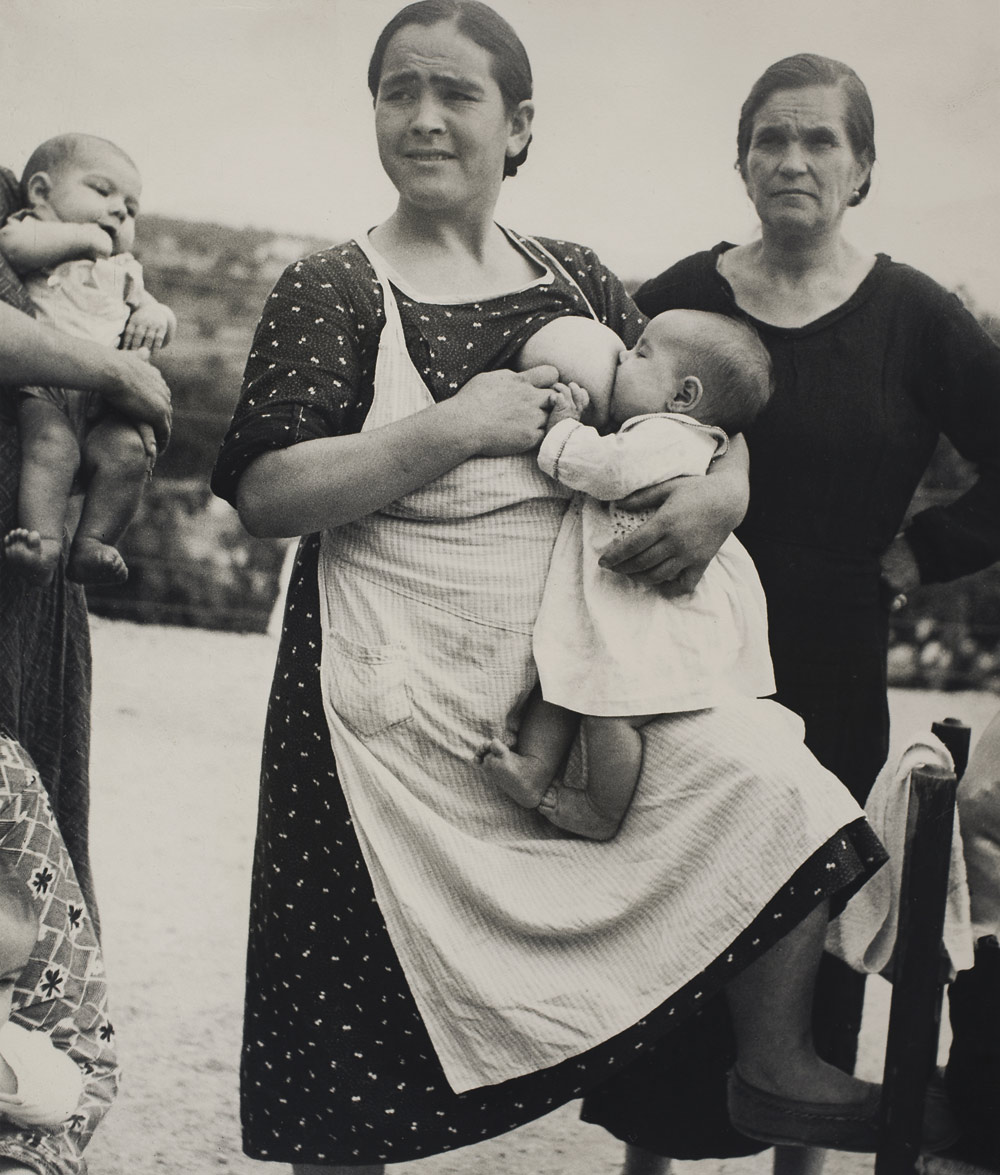
![Kati Horna (Mexican born Hungary, 1912-2000) 'Subida a la catedral [Ascending to the Cathedral], Spanish Civil War' Barcelona 1938](https://artblart.com/wp-content/uploads/2014/09/subida-a-la-catedral-web.jpg "Kati Horna (Mexican born Hungary, 1912-2000) 'Subida a la catedral [Ascending to the Cathedral], Spanish Civil War' Barcelona 1938")
![Kati Horna (Mexican born Hungary, 1912-2000) 'Los Paraguas, mitin de la CNT' [Umbrellas, Meeting of the CNT], Spanish Civil War Barcelona, 1937](https://artblart.com/wp-content/uploads/2014/09/los-paraguas-mitin-de-la-cnt-web.jpg "Kati Horna (Mexican born Hungary, 1912-2000) 'Los Paraguas, mitin de la CNT' [Umbrellas, Meeting of the CNT], Spanish Civil War Barcelona, 1937")
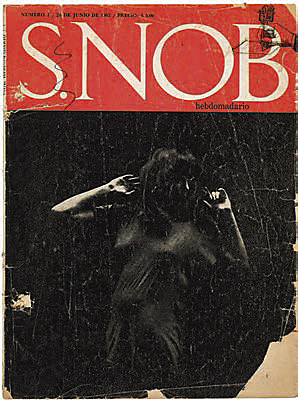
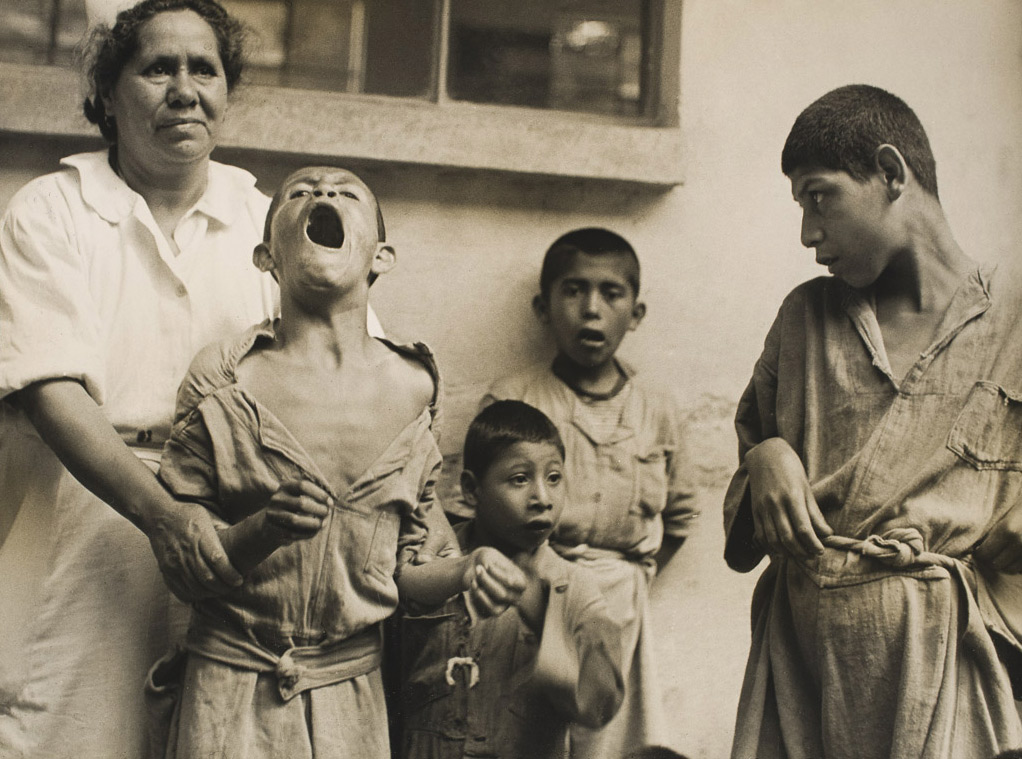
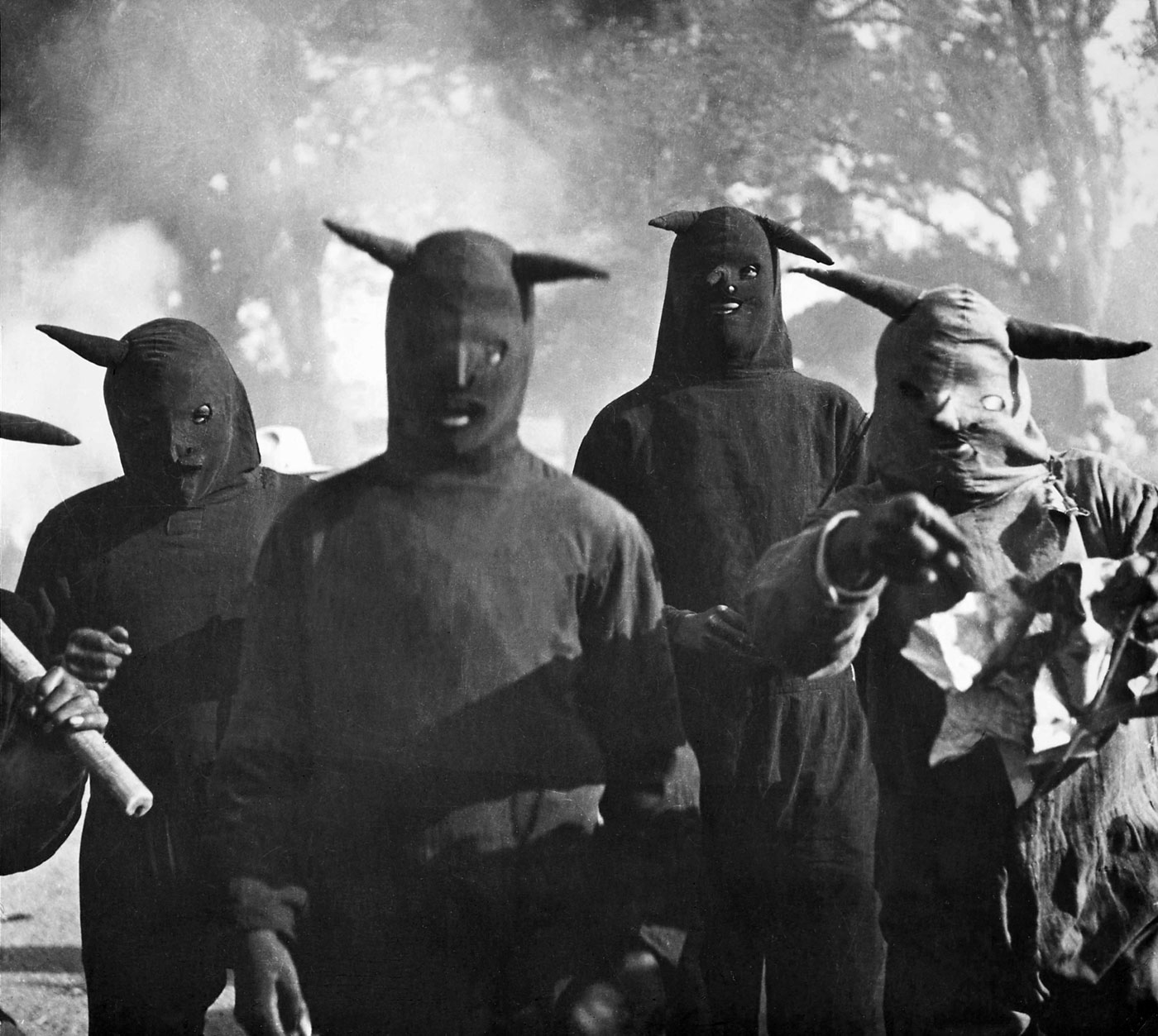
![Kati Horna (Mexican born Hungary, 1912-2000) 'Untitled, Oda a la necrofília series [Ode to Necrophilia]' Mexico 1962](https://artblart.com/wp-content/uploads/2014/09/necrophilia-web.jpg "Kati Horna (Mexican born Hungary, 1912-2000) 'Untitled, Oda a la necrofília series [Ode to Necrophilia]' Mexico 1962")
![Kati Horna (Mexican born Hungary, 1912-2000) 'El botellón' [The Bottle] Mexico, 1962](https://artblart.com/wp-content/uploads/2014/09/el-botellc3b3n-web.jpg "Kati Horna (Mexican born Hungary, 1912-2000) 'El botellón' [The Bottle] Mexico, 1962")

![Kati Horna (Mexican born Hungary, 1912-2000) 'Antonio Souza y su esposa Piti Saldivar' [Antonio Souza and his Wife Piti Saldivar] Mexico, 1959](https://artblart.com/wp-content/uploads/2014/09/souza-web.jpg "Kati Horna (Mexican born Hungary, 1912-2000) 'Antonio Souza y su esposa Piti Saldivar' [Antonio Souza and his Wife Piti Saldivar] Mexico, 1959")
![Kati Horna (Mexican born Hungary, 1912-2000) 'José Horna elaborando la maqueta de la casa de Edward James' [José Horna Working on the Maquette for Edward James's House] Mexico, 1960](https://artblart.com/wp-content/uploads/2014/09/josc3a9-horna-elaborando-web.jpg "Kati Horna (Mexican born Hungary, 1912-2000) 'José Horna elaborando la maqueta de la casa de Edward James' [José Horna Working on the Maquette for Edward James's House] Mexico, 1960")
![Kati Horna (Mexican born Hungary, 1912-2000) 'Mujer y máscara' [Woman with Mask] Mexico, 1963](https://artblart.com/wp-content/uploads/2014/09/woman-with-mask-web.jpg "Kati Horna (Mexican born Hungary, 1912-2000) 'Mujer y máscara' [Woman with Mask] Mexico, 1963")

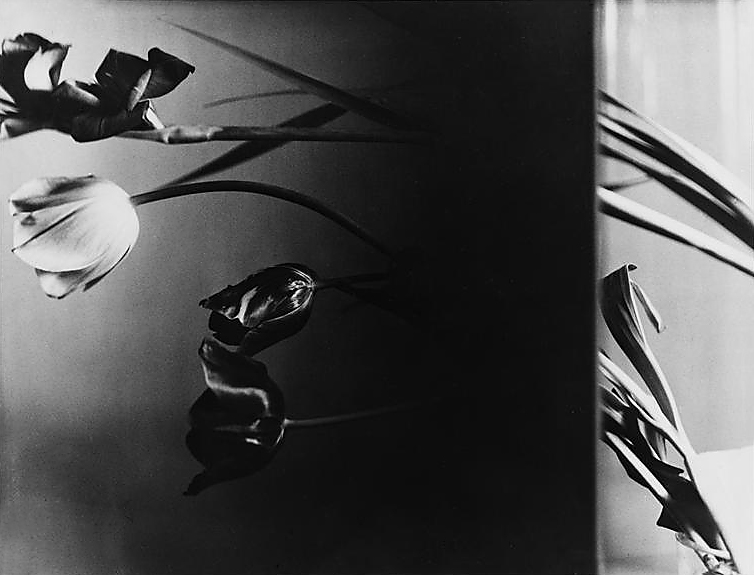


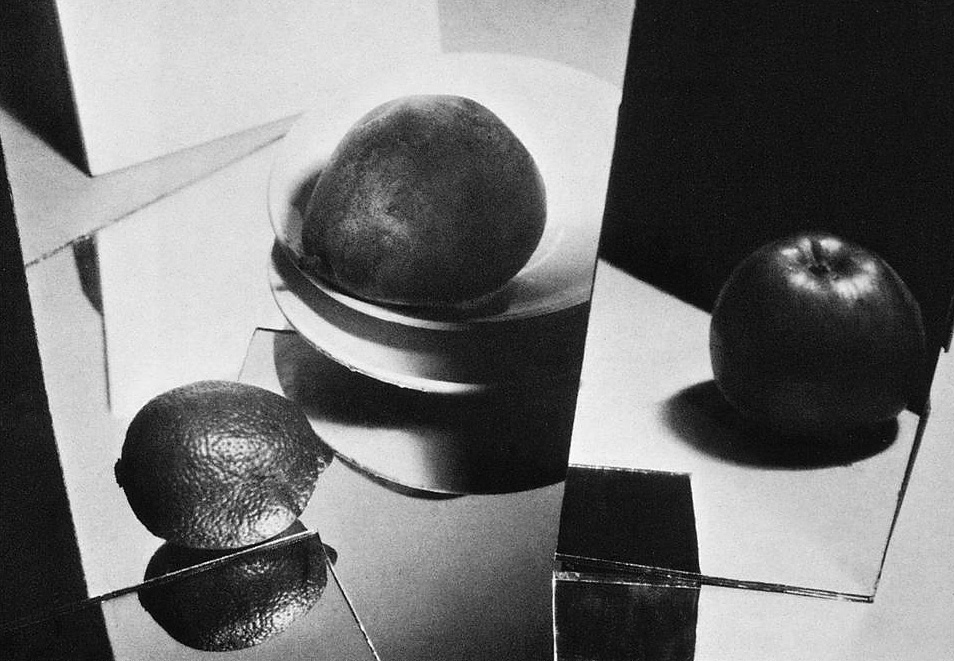


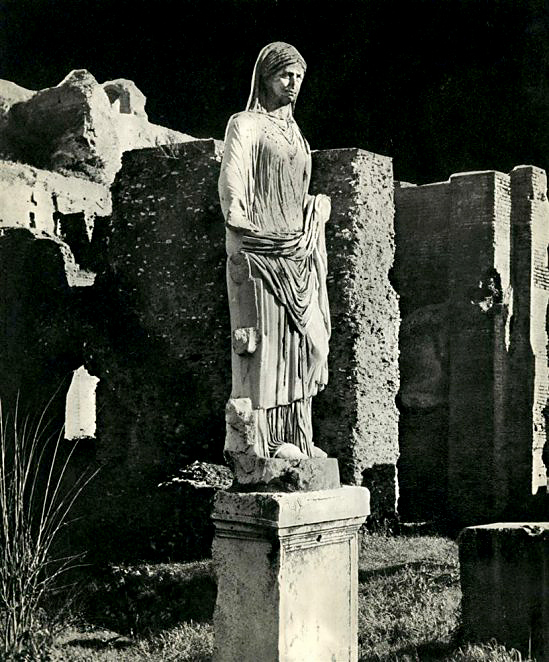


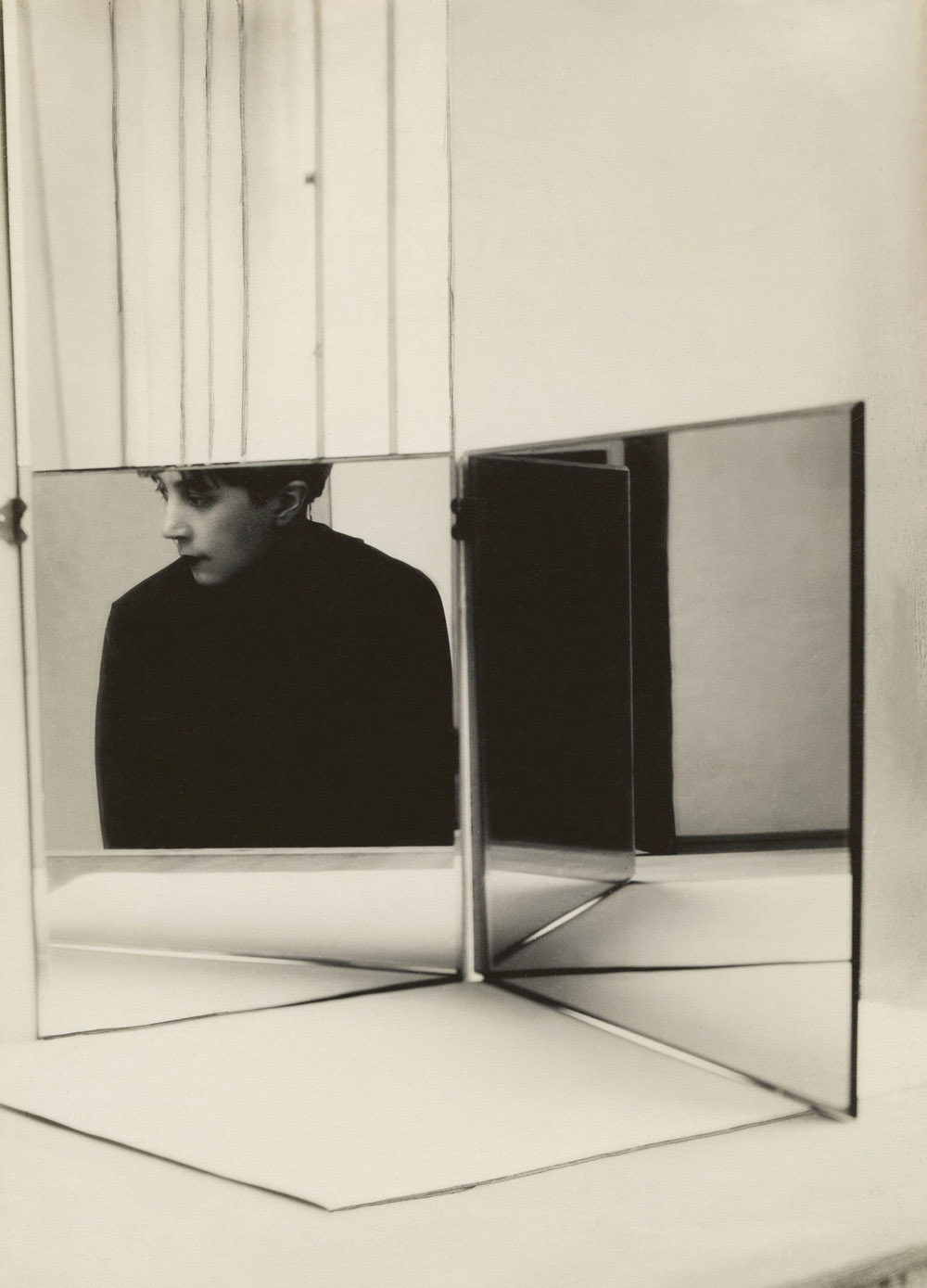


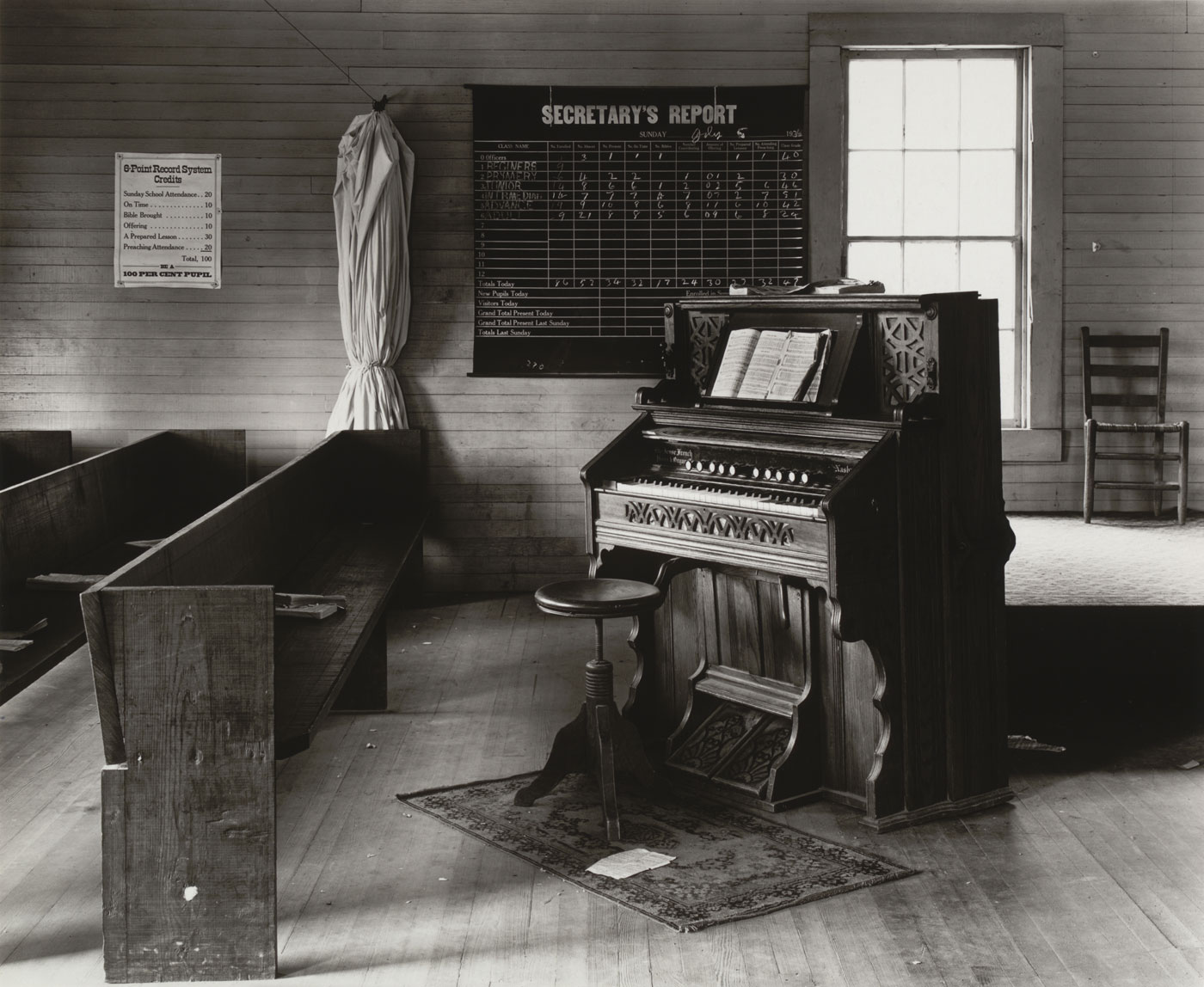
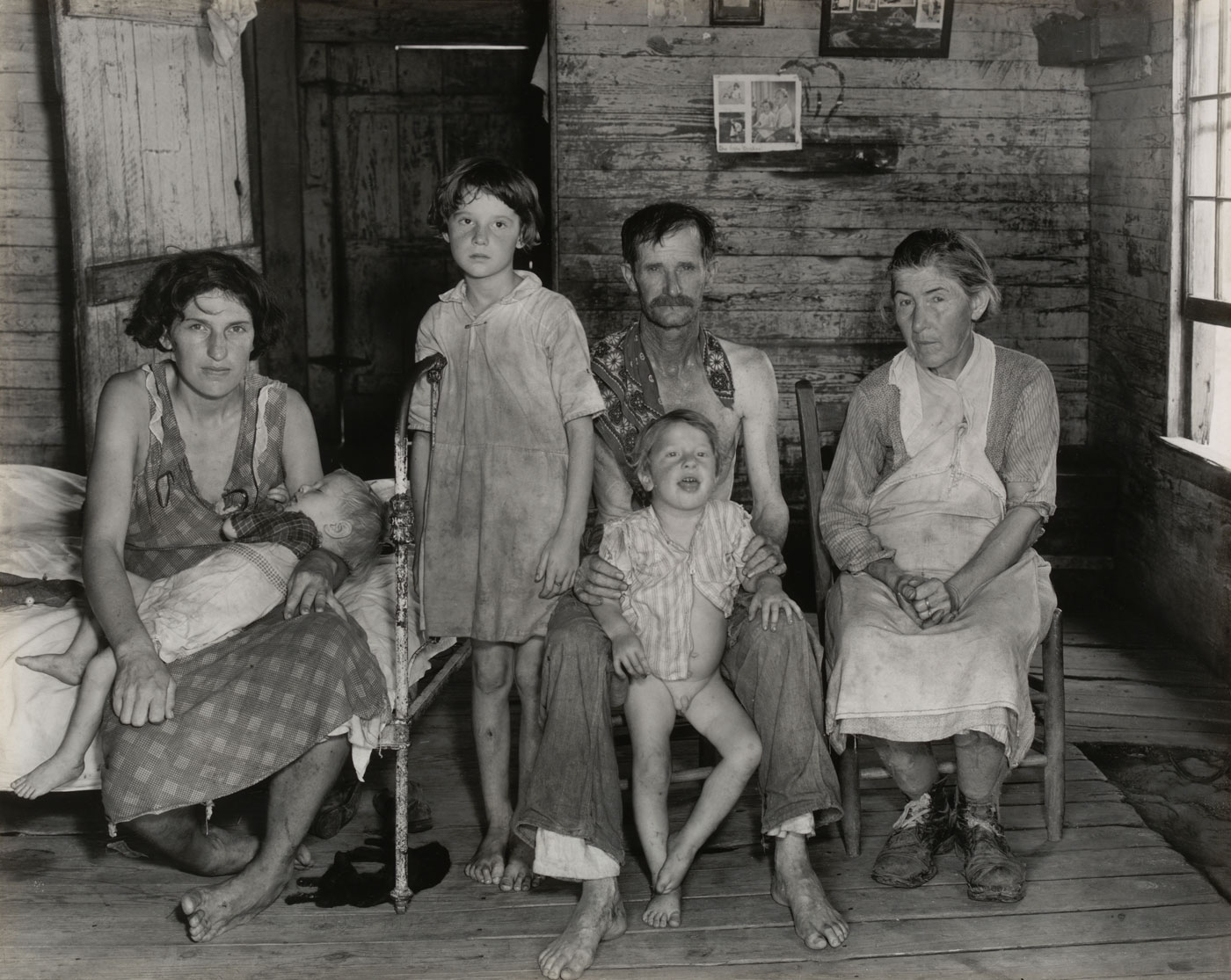
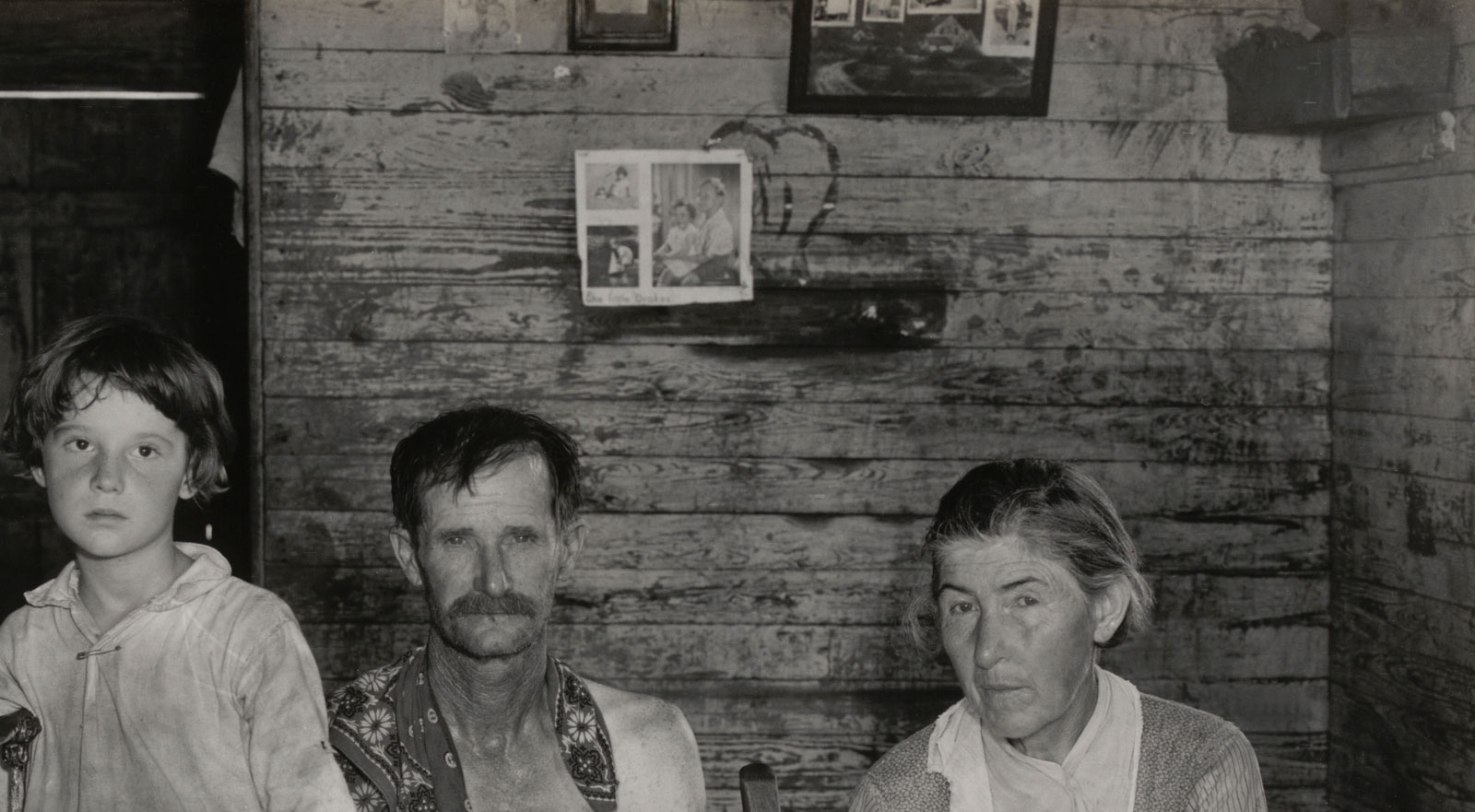
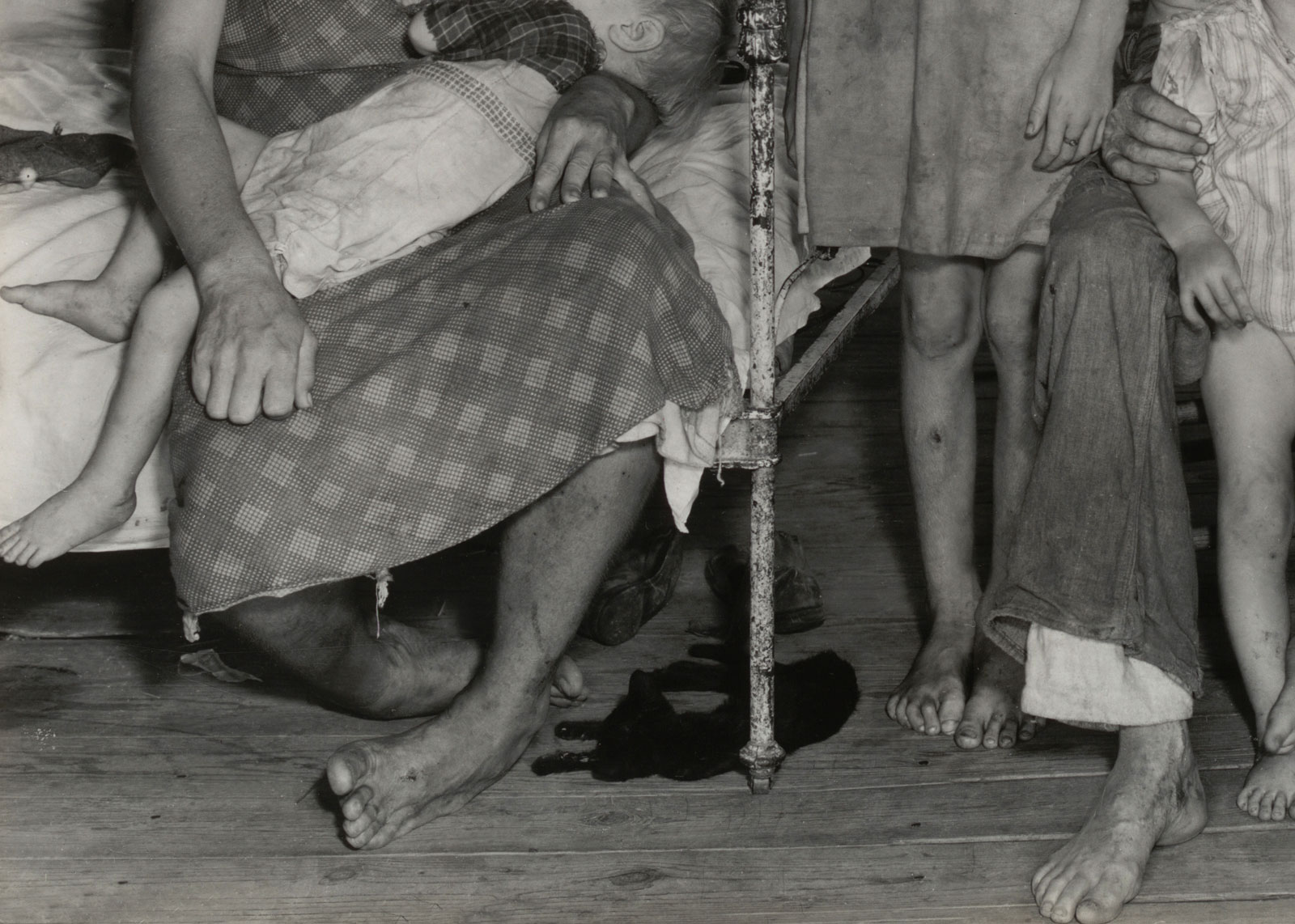

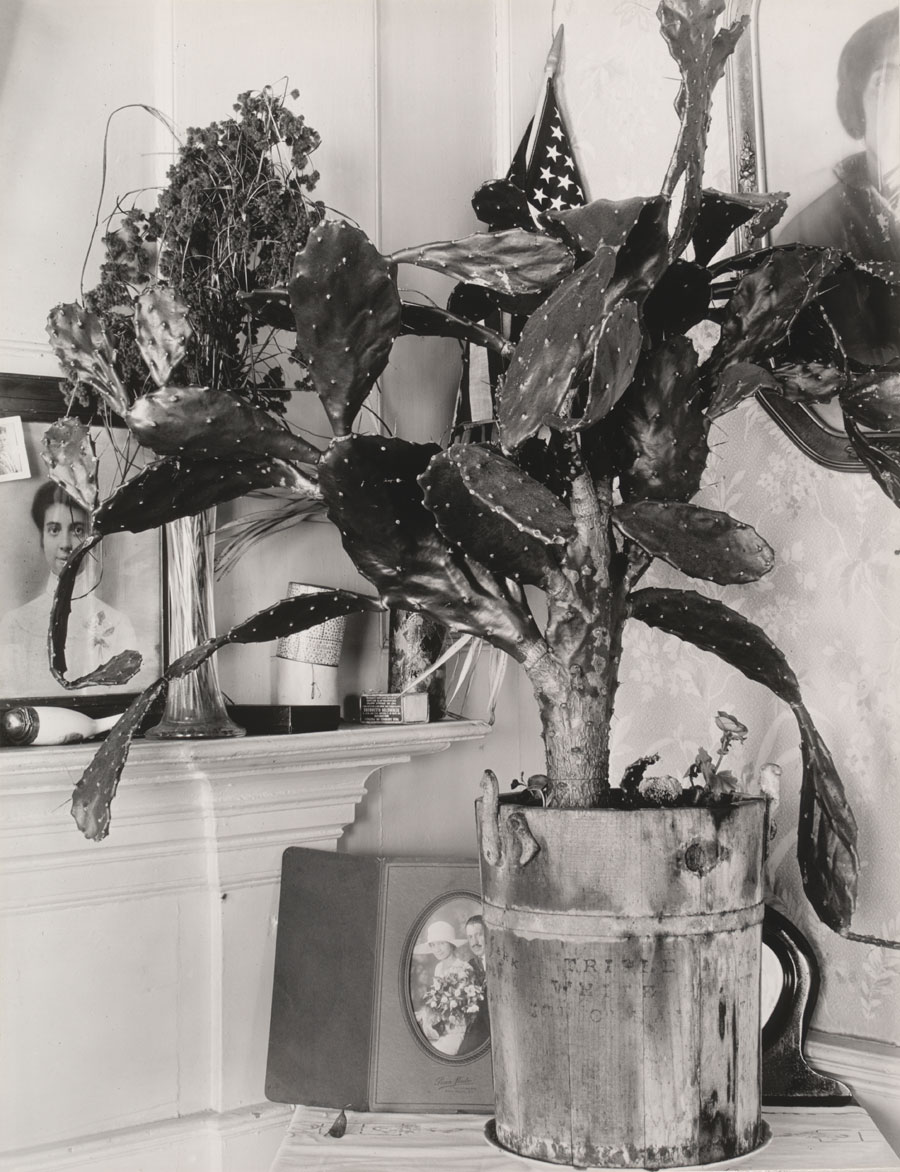


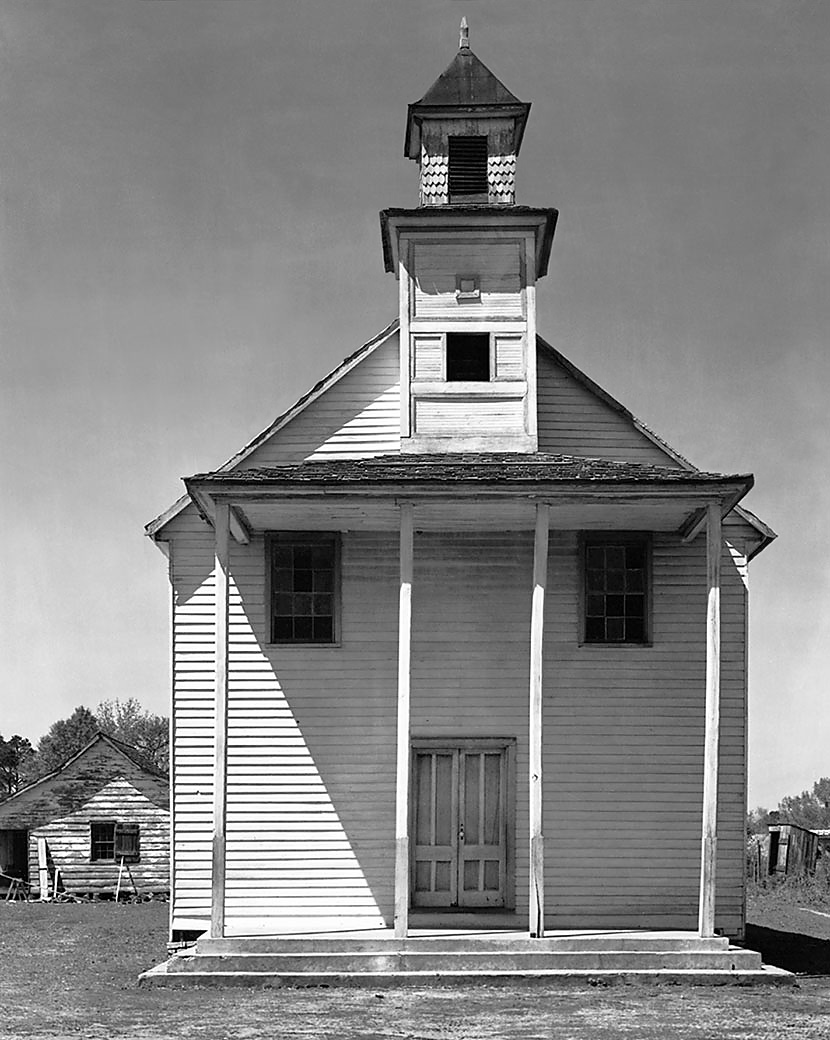
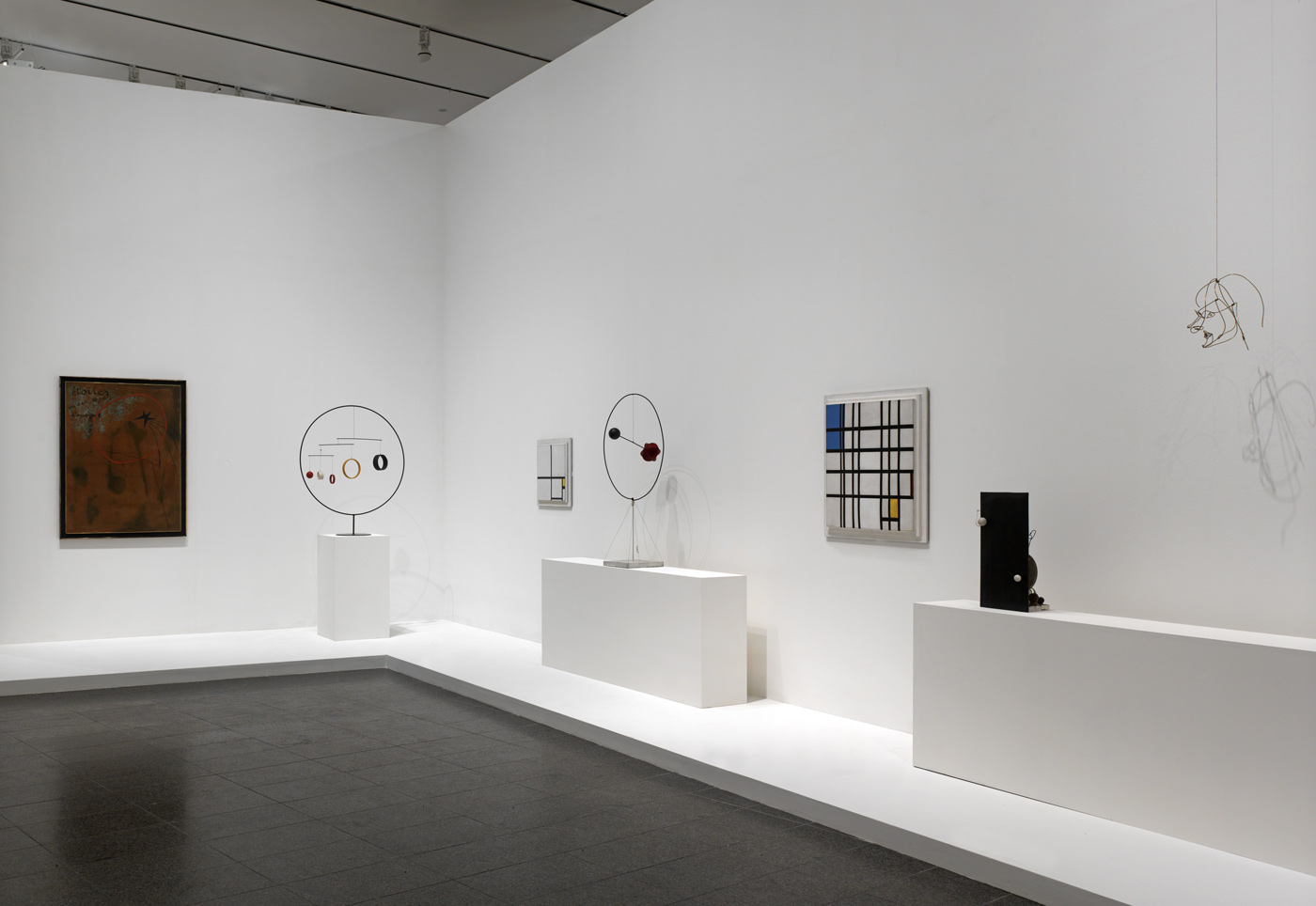
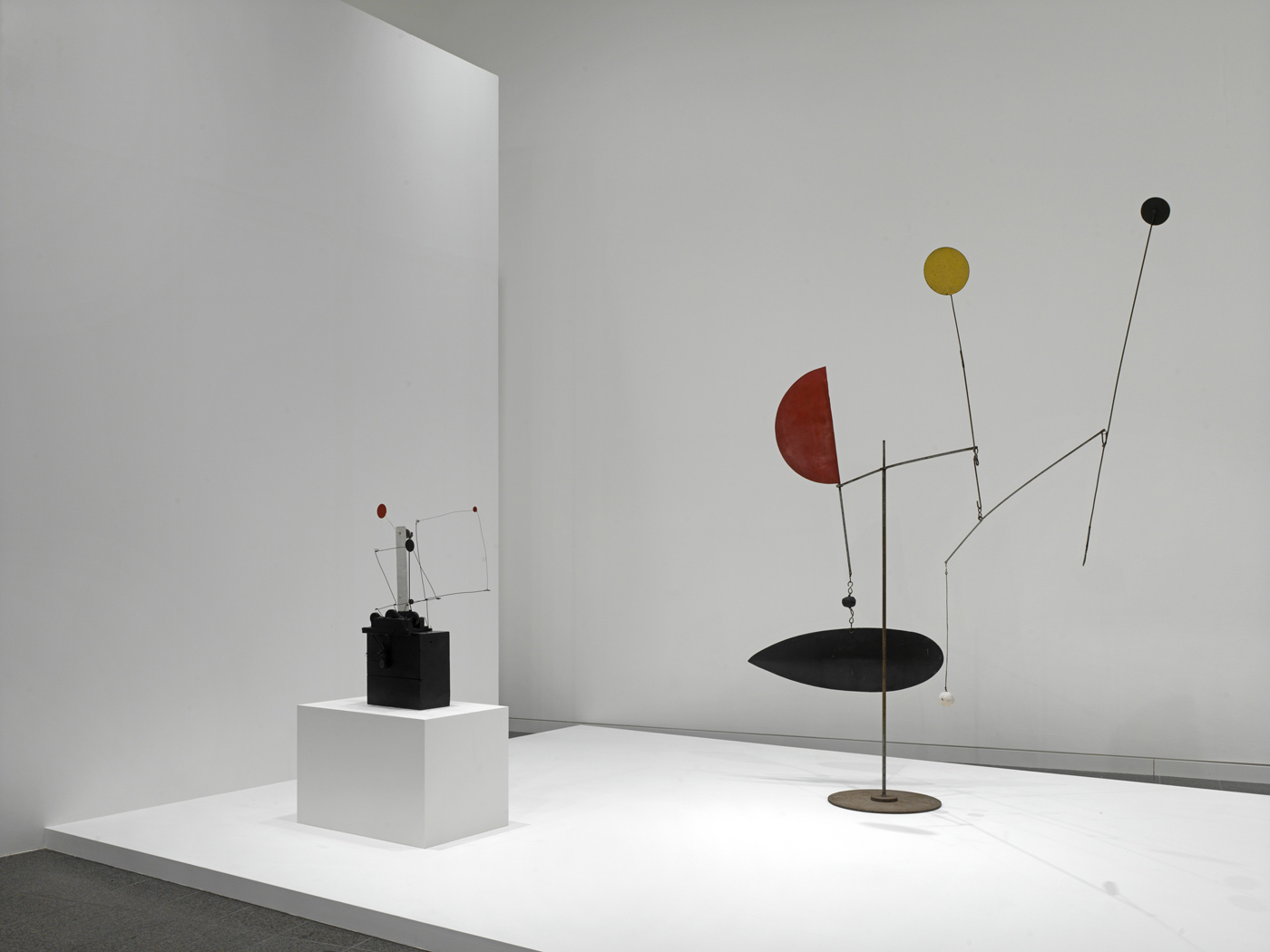
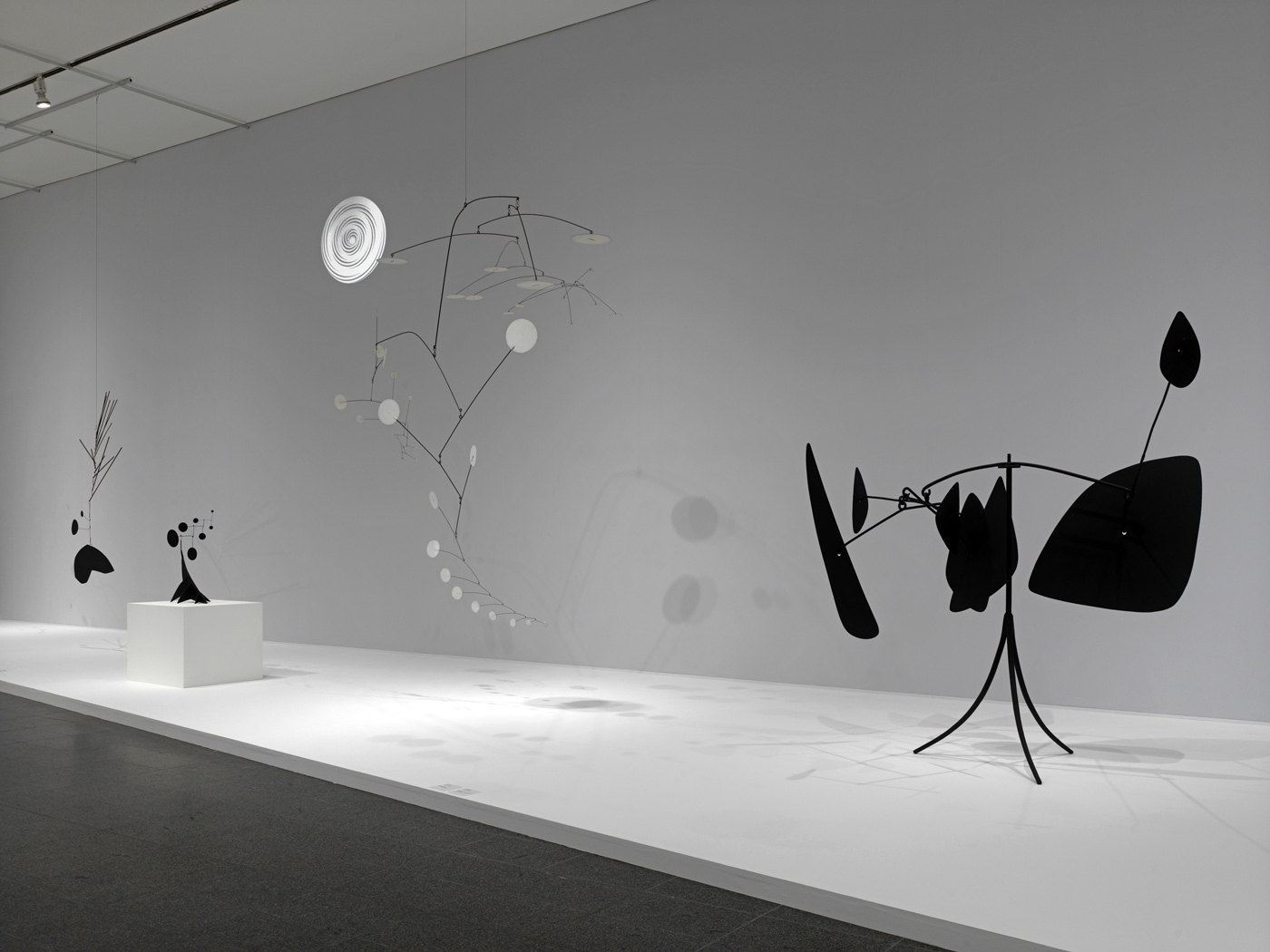
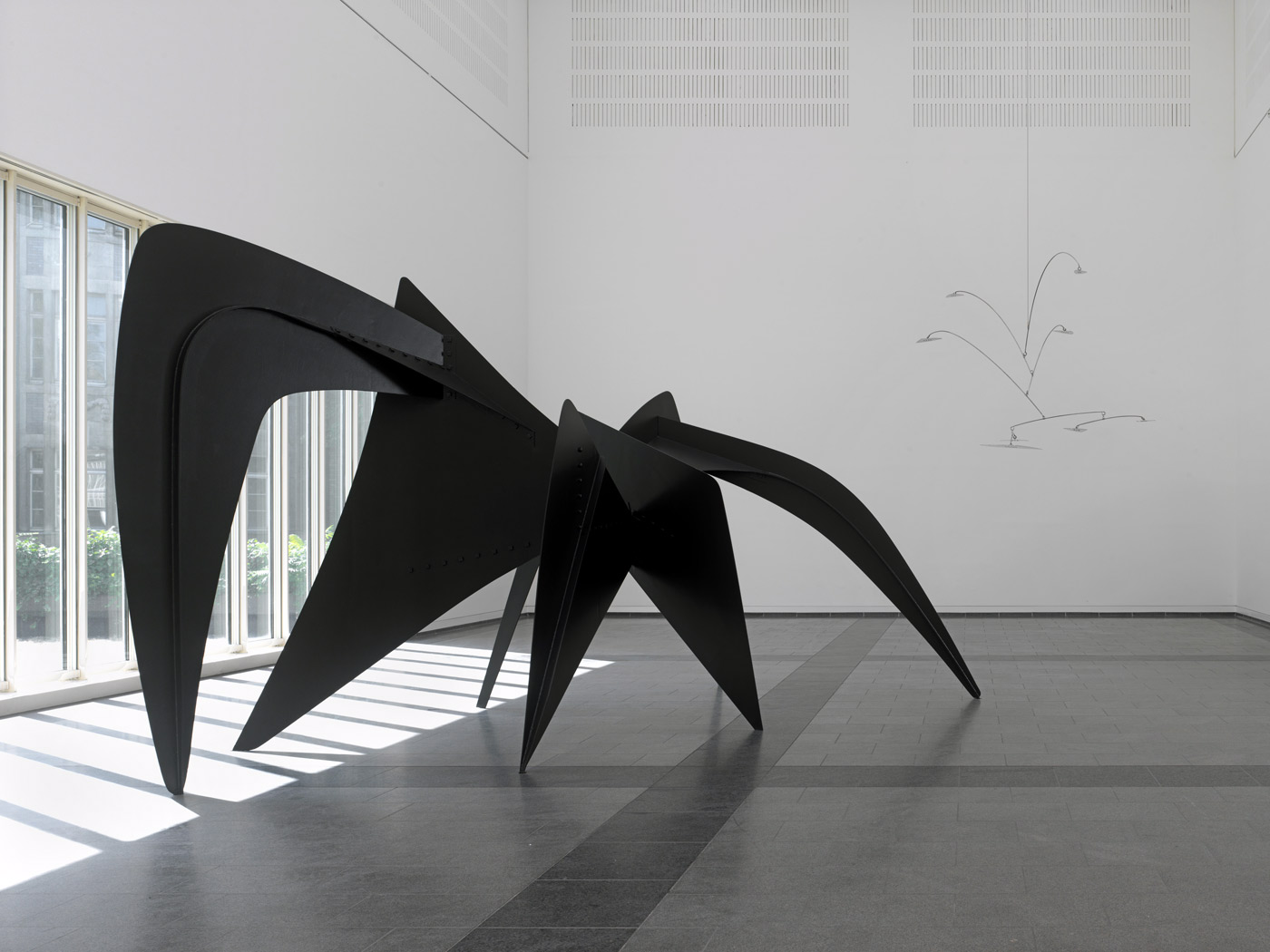


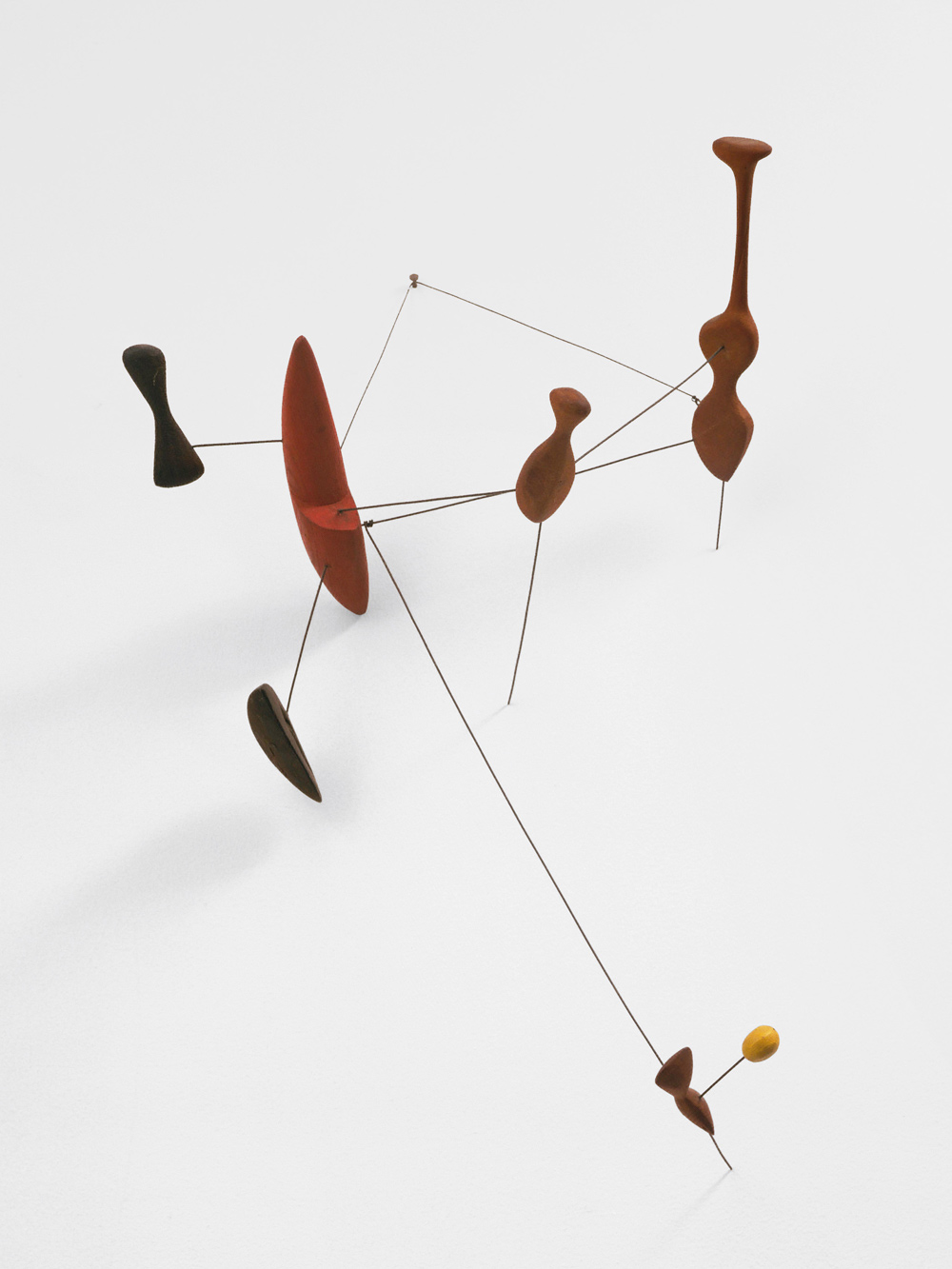
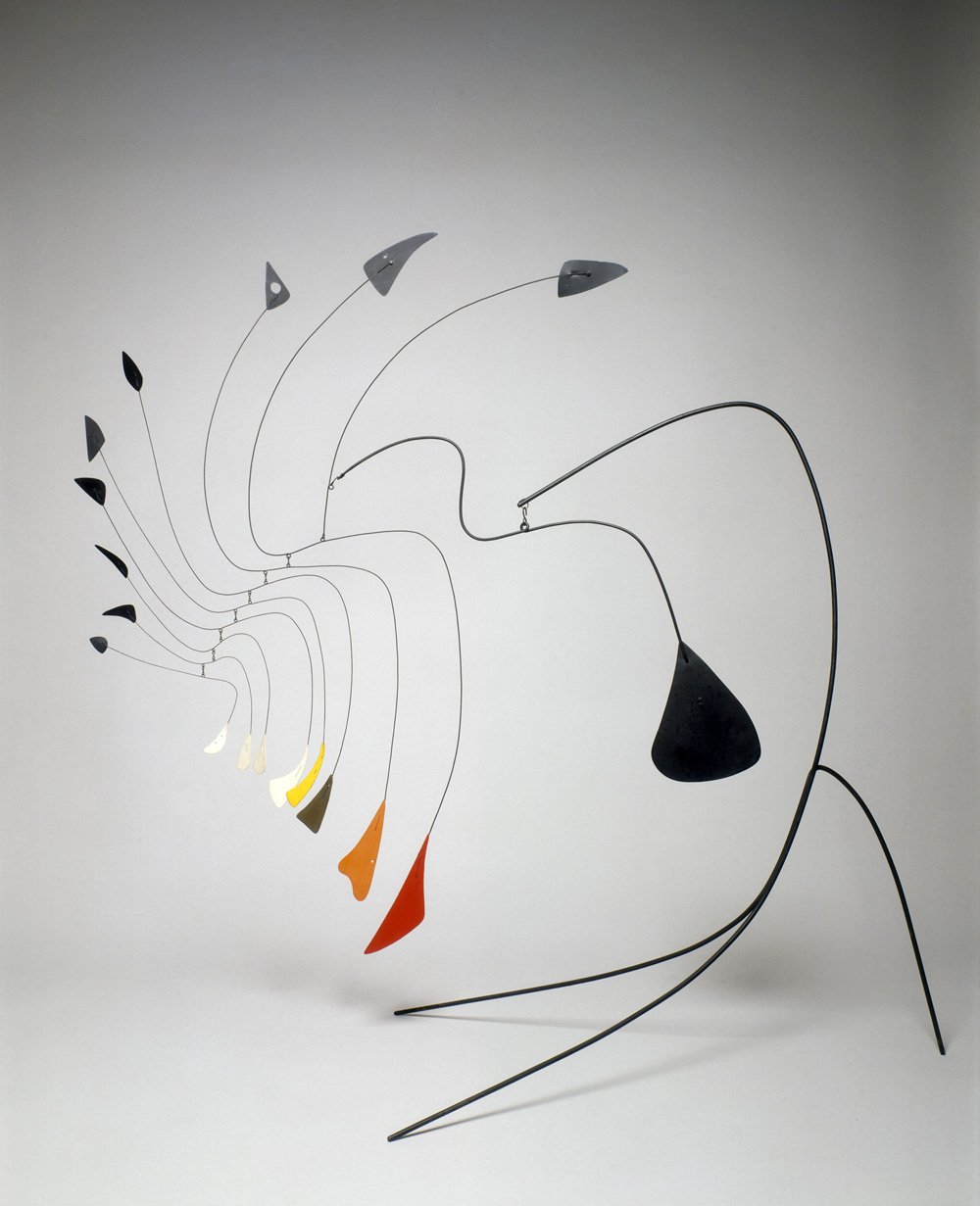

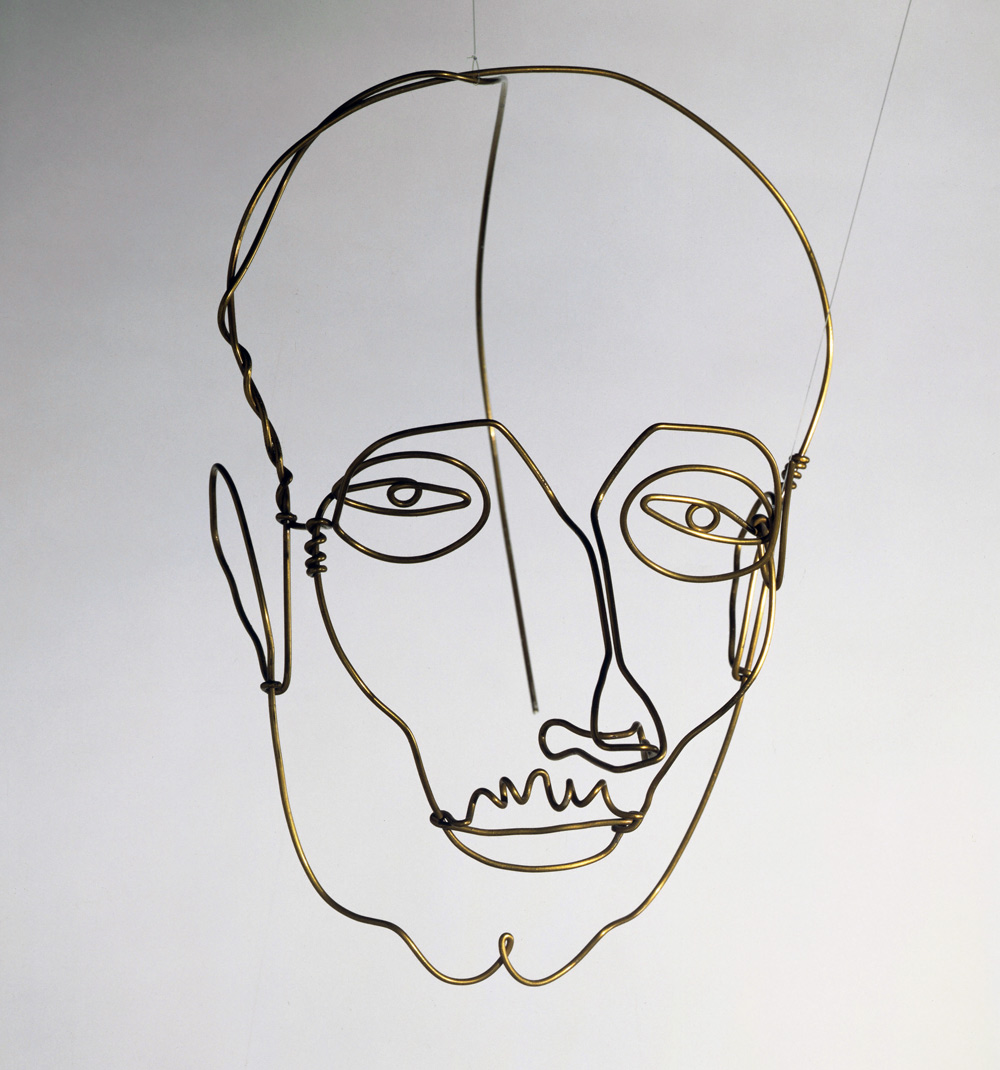

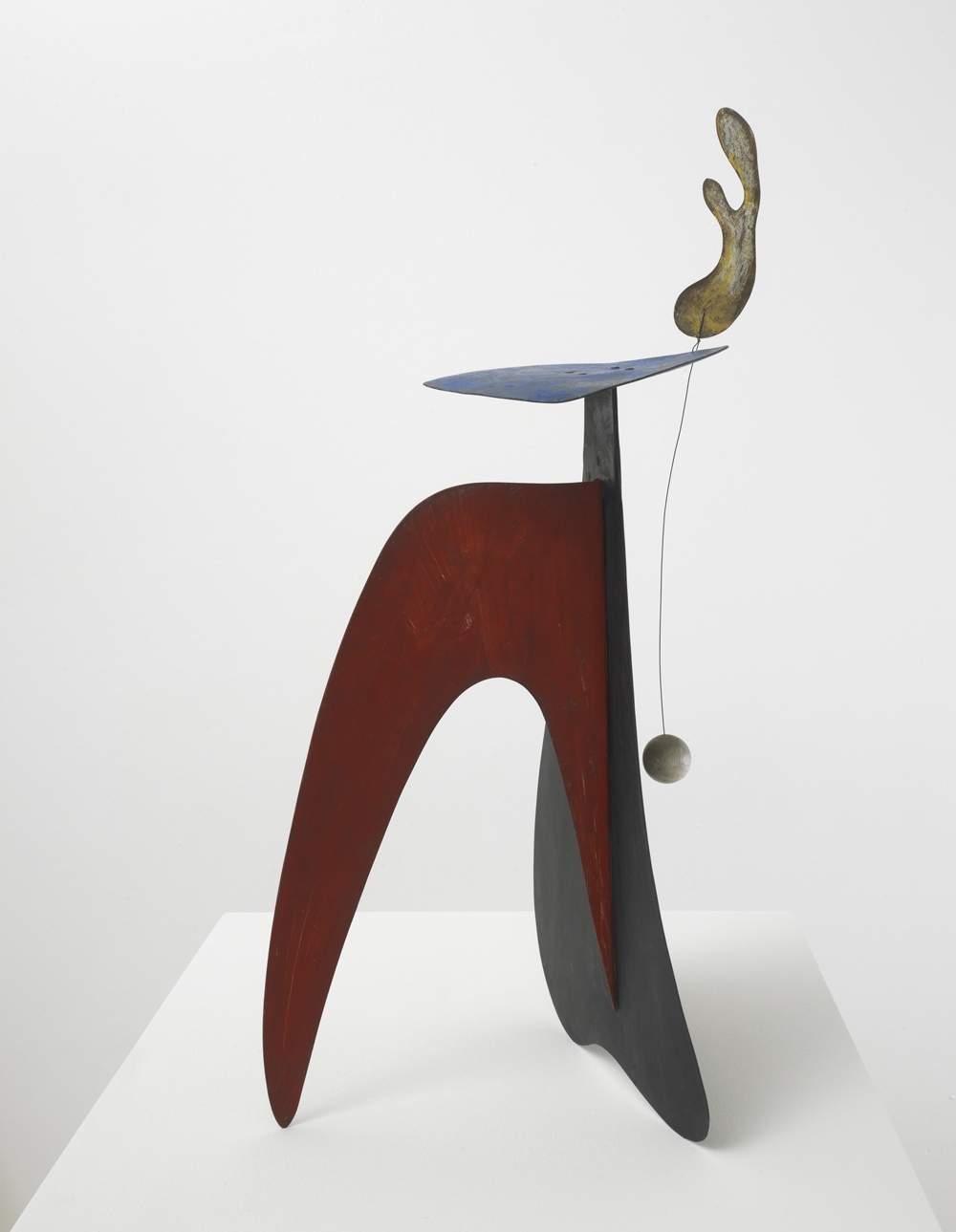


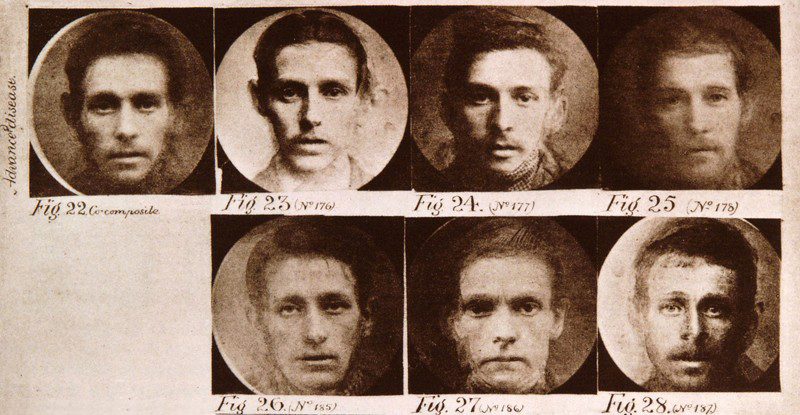


![August Sander (German, 1876-1964) 'Political Prisoner [Erich Sander]' 1943, printed 1990](https://artblart.com/wp-content/uploads/2013/10/august-sander-political-prisoner-erich-sander-1943-photograph-gelatin-silver-print-on-paper-b.jpg "August Sander (German, 1876-1964) 'Political Prisoner [Erich Sander]' 1943, printed 1990")
![George Platt Lynes (American, 1907-1955) 'Tex Smutley and Buddy Stanley [no title (two sleeping boys)]' 1941](https://artblart.com/wp-content/uploads/2013/10/george-platt-lynes-united-states-of-america-1907-e28093-1955-tex-smutley-and-buddy-stanley-no-title-two-sleeping-boys-1941-gelatin-silver-photograph-printed-image-19-2-h-x-24-4-w-cm.jpg "George Platt Lynes (American, 1907-1955) 'Tex Smutley and Buddy Stanley [no title (two sleeping boys)]' 1941")

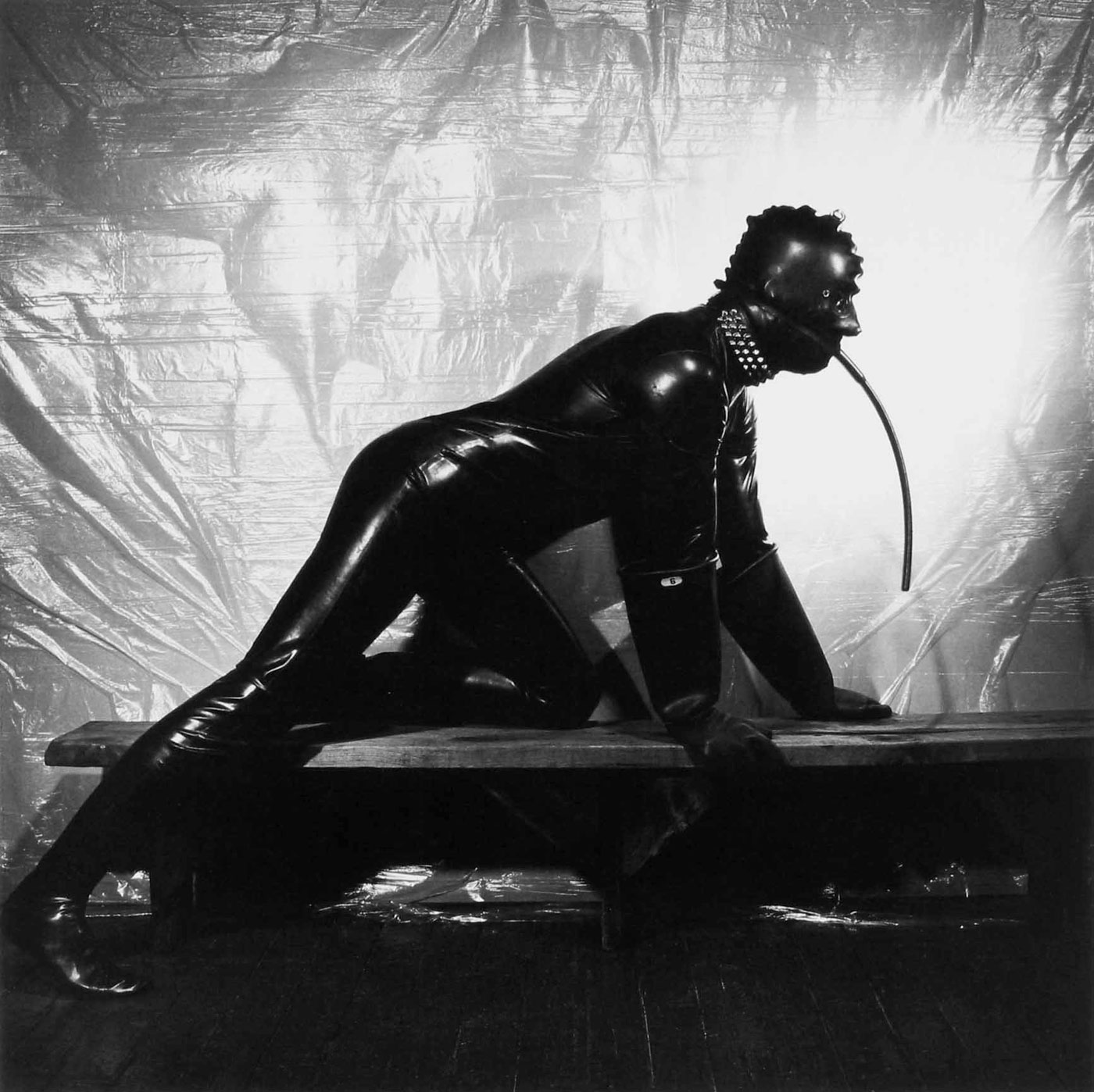


![Laure Albin Guillot (French, 1879-1962) 'Estampe pour F. Marquis chocolatier-confiseur, Paris [Print for F. Marquis chocolate maker, Paris]' sans date (without date)](https://artblart.com/wp-content/uploads/2013/04/albinguillot_13-web.jpg "Laure Albin Guillot (French, 1879-1962) 'Estampe pour F. Marquis chocolatier-confiseur, Paris [Print for F. Marquis chocolate maker, Paris]' sans date (without date)")
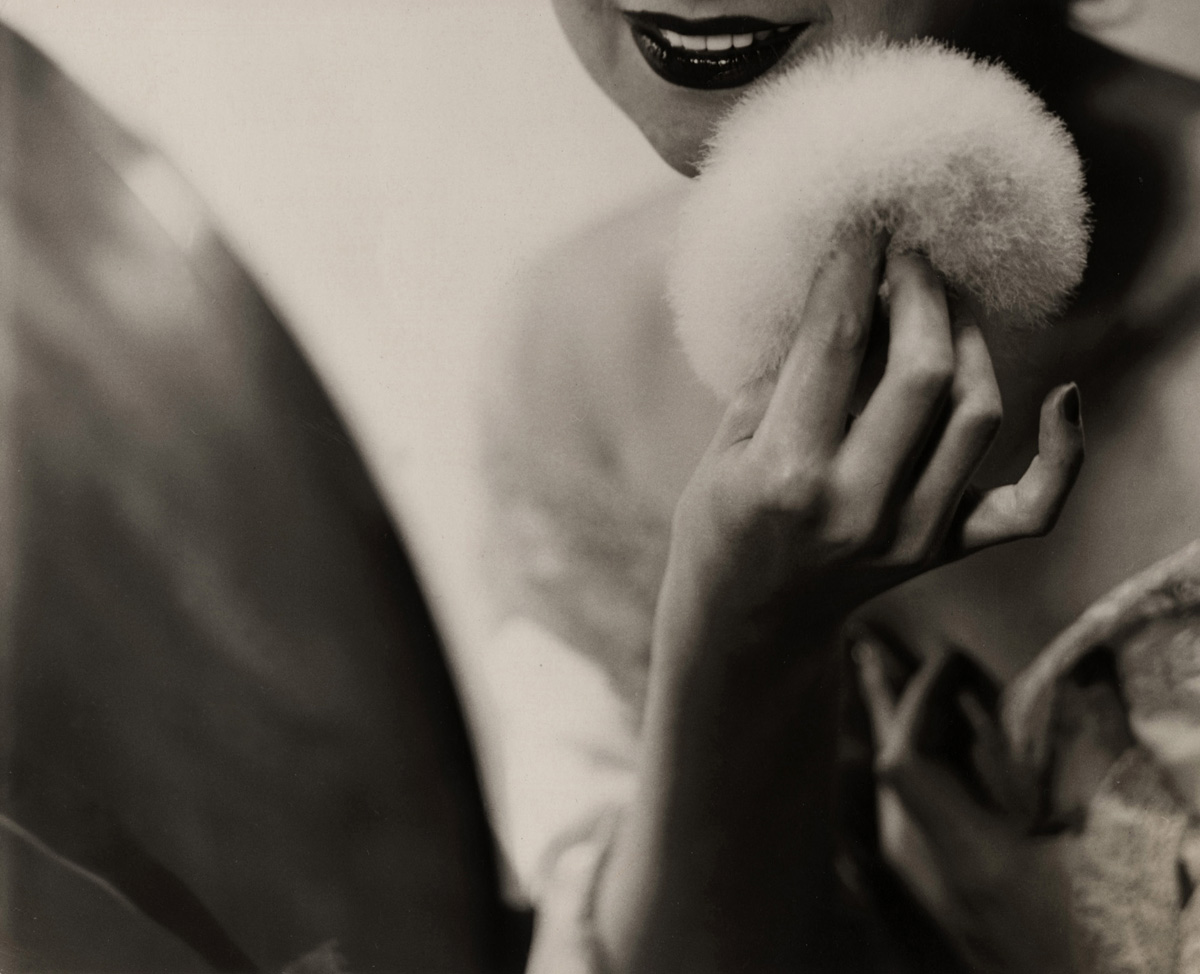
![Laure Albin Guillot (French, 1879-1962) 'Les tierces alternées, illustration pour les Préludes de Claude Debussy [The third alternative, illustration for Claude Debussy Preludes]' 1948](https://artblart.com/wp-content/uploads/2013/04/laure-albin-guillot-les-tierces-alternes-illustration-pour-les-prludes-de-claude-debussy-1948-web.jpg "Laure Albin Guillot (French, 1879-1962) 'Les tierces alternées, illustration pour les Préludes de Claude Debussy [The third alternative, illustration for Claude Debussy Preludes]' 1948")

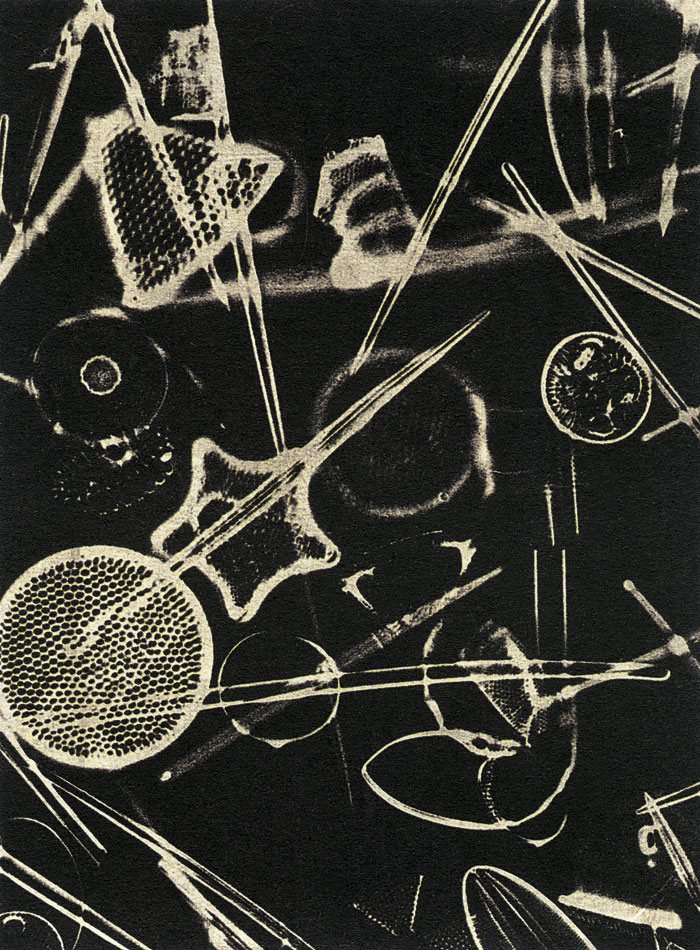


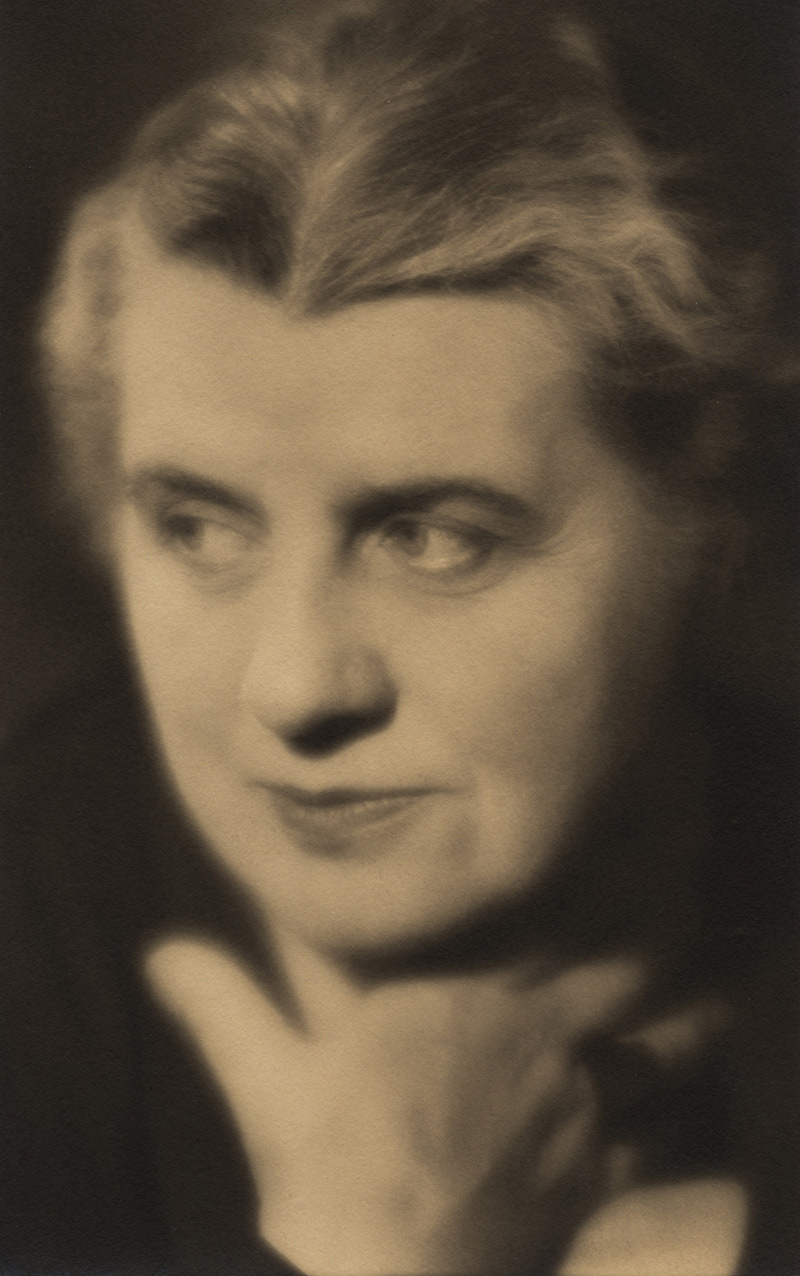


![Laure Albin Guillot (French, 1879-1962) 'Nudite de Jeune Femme [Nude of a Young Woman]' c. 1950](https://artblart.com/wp-content/uploads/2013/04/laure_albin-guillot_nudite_de_jeune_femme-web.jpg "Laure Albin Guillot (French, 1879-1962) 'Nudite de Jeune Femme [Nude of a Young Woman]' c. 1950")

![Laure Albin Guillot (French, 1879-1962) 'Sans titre [women with crossed legs on a plinth]' 1937](https://artblart.com/wp-content/uploads/2013/04/albinguillot_sanstitre-web.jpg "Laure Albin Guillot (French, 1879-1962) 'Sans titre [women with crossed legs on a plinth]' 1937")
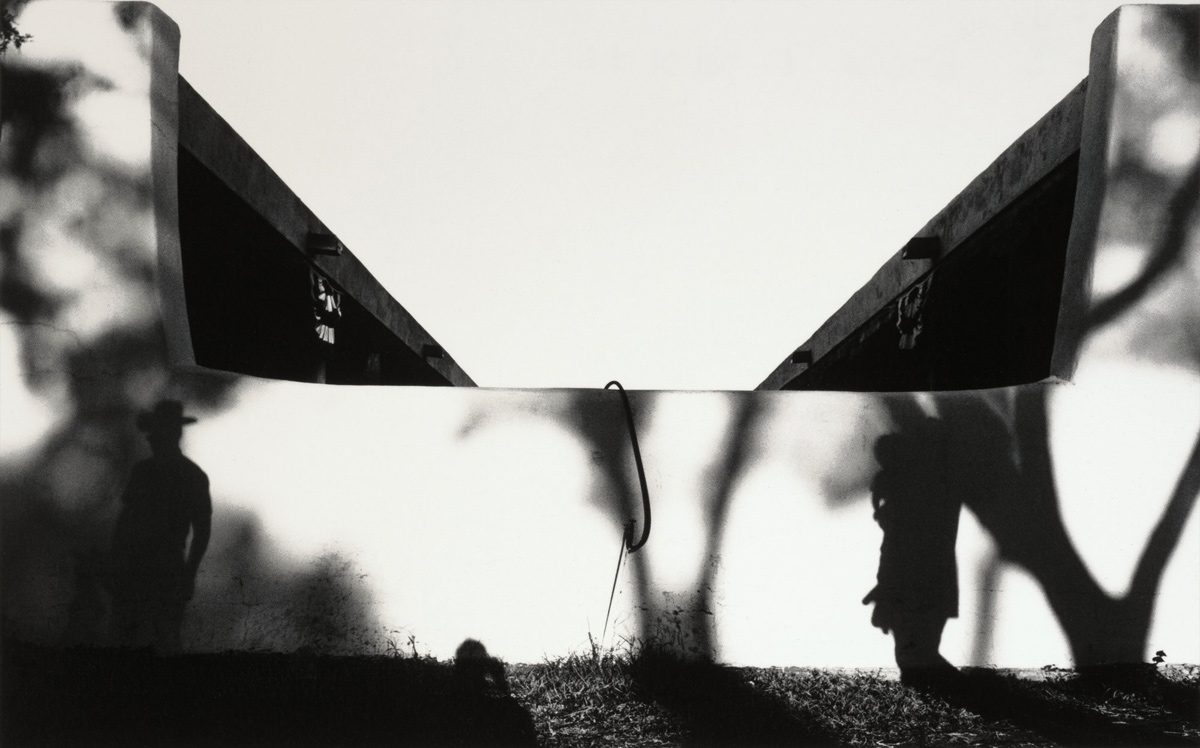
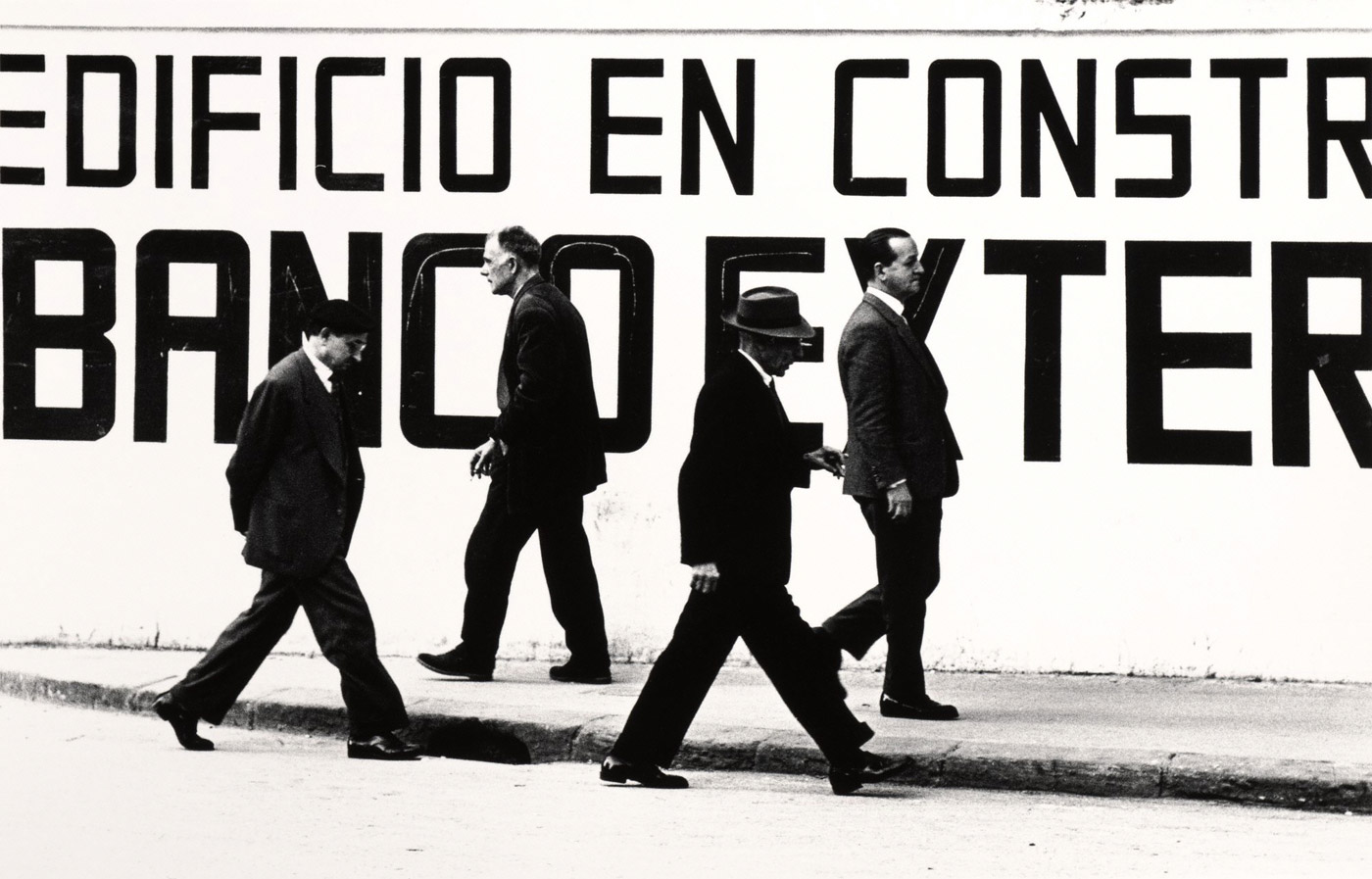
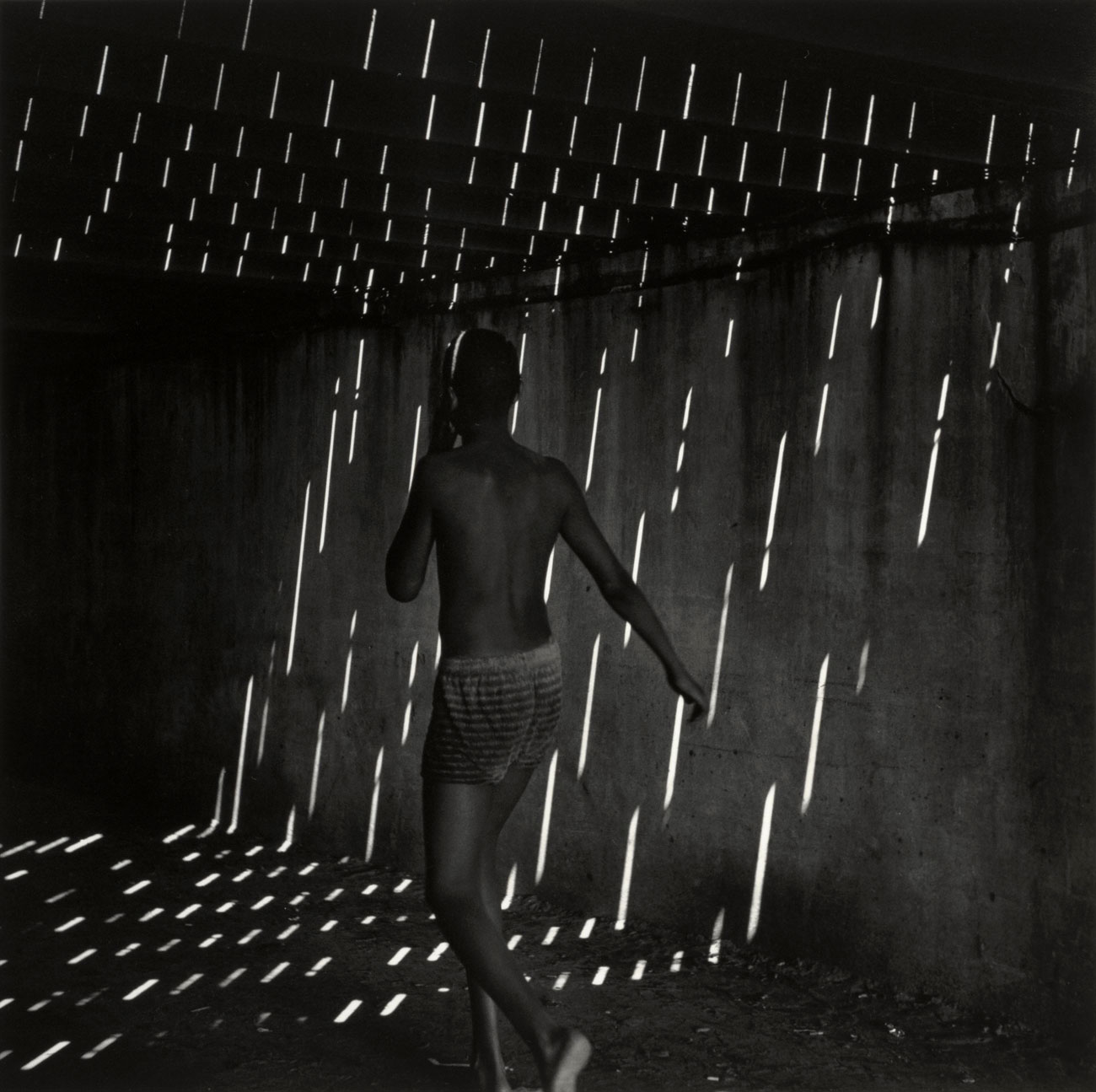
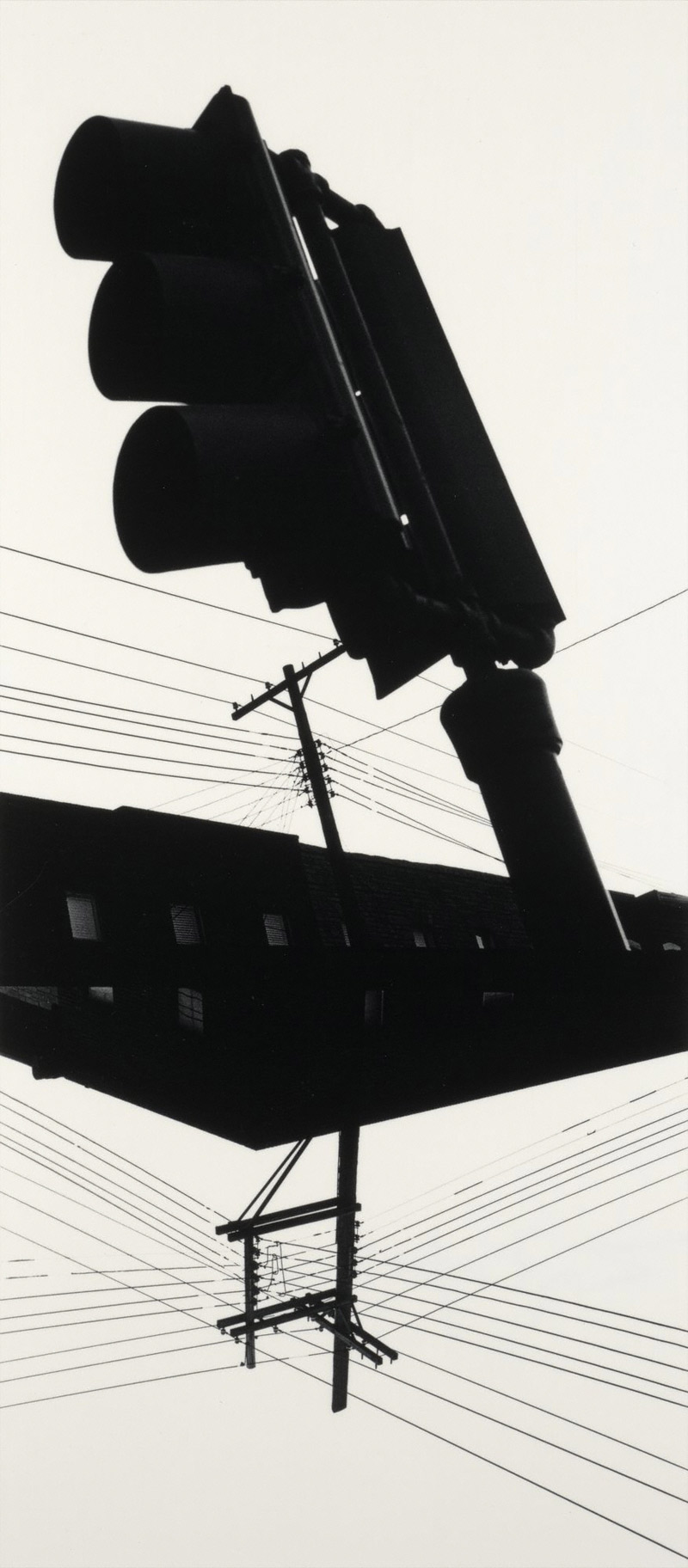
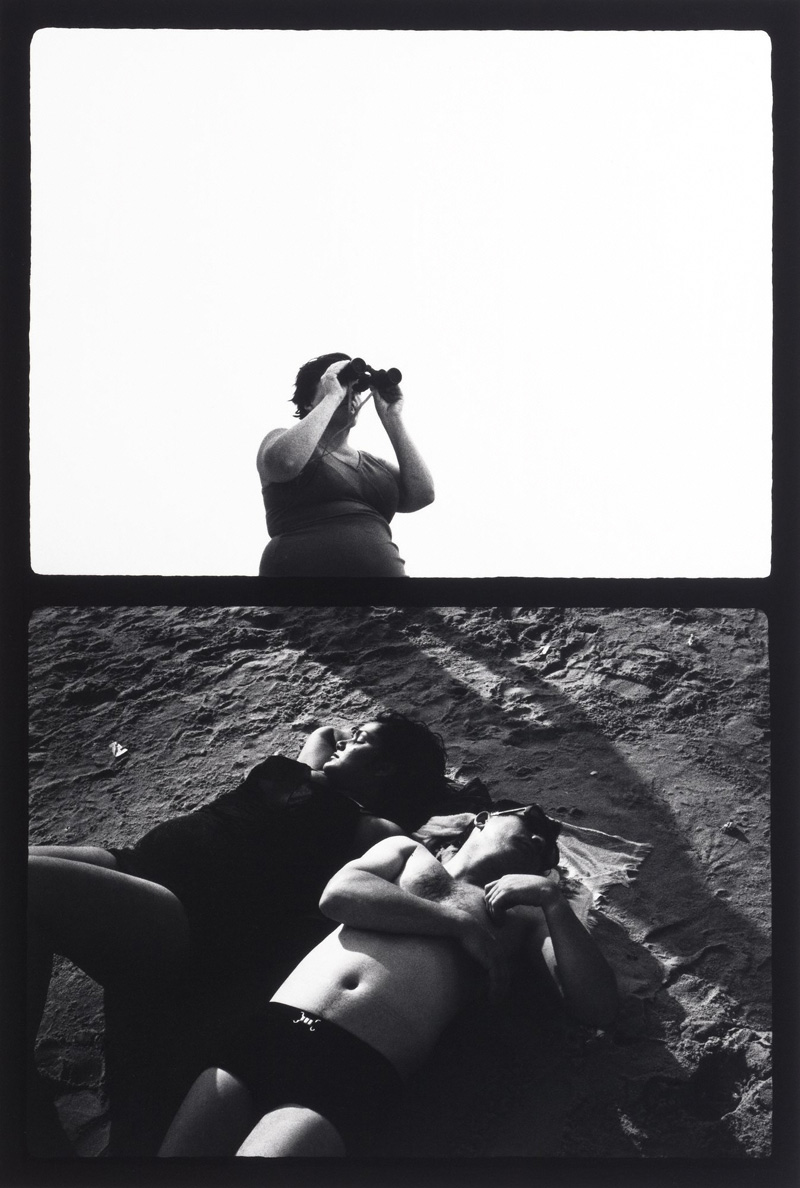
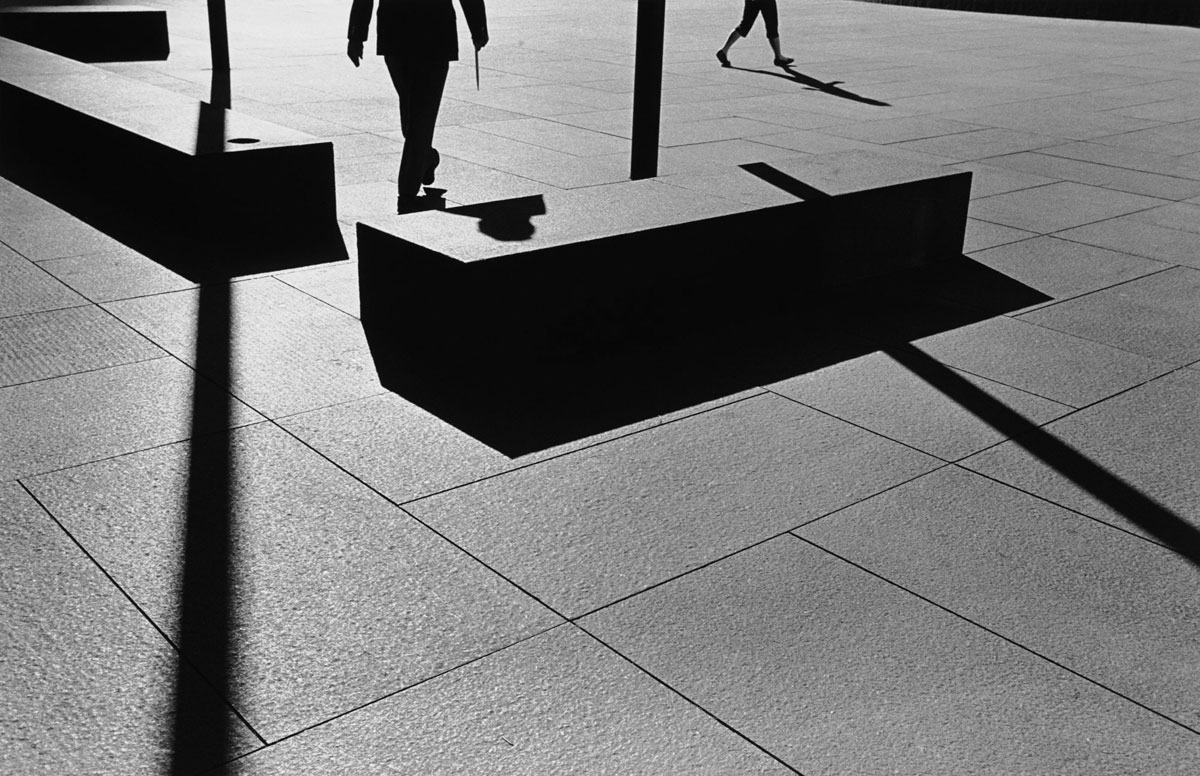
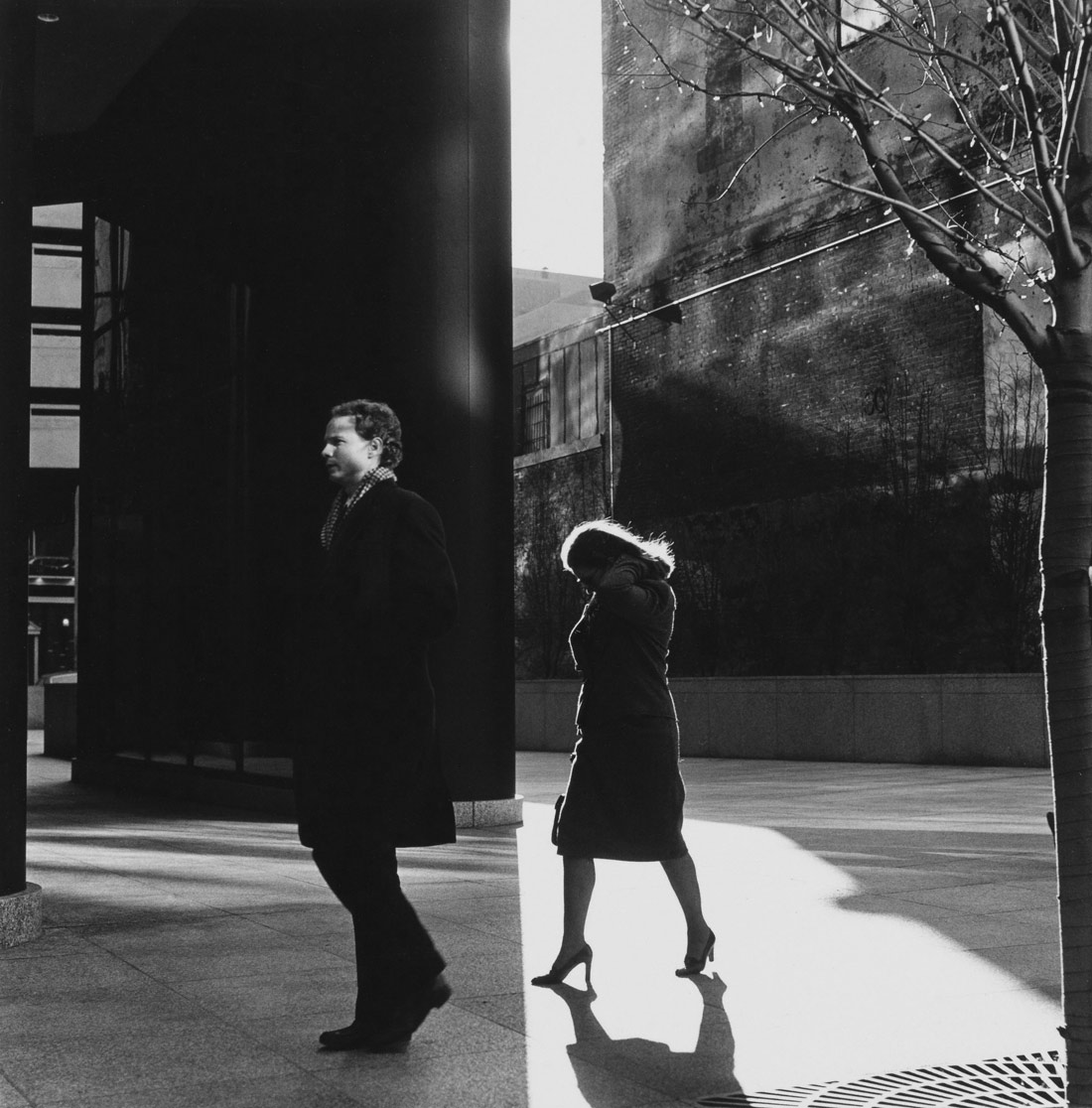
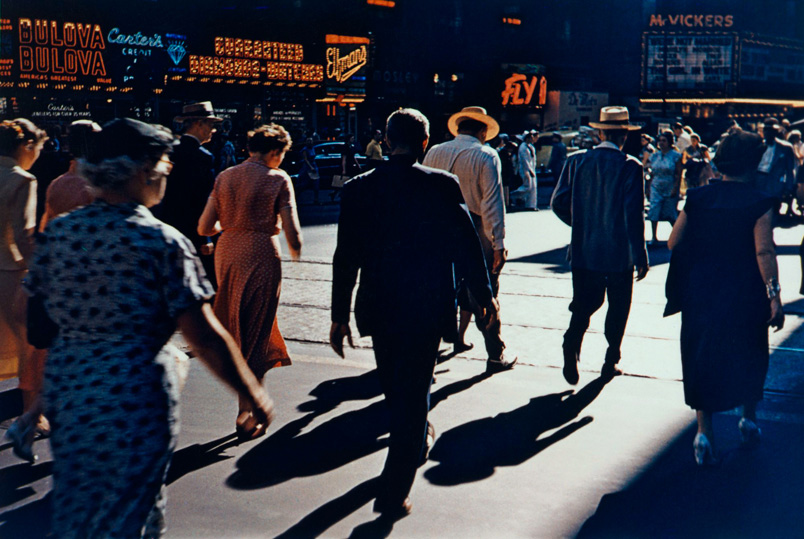

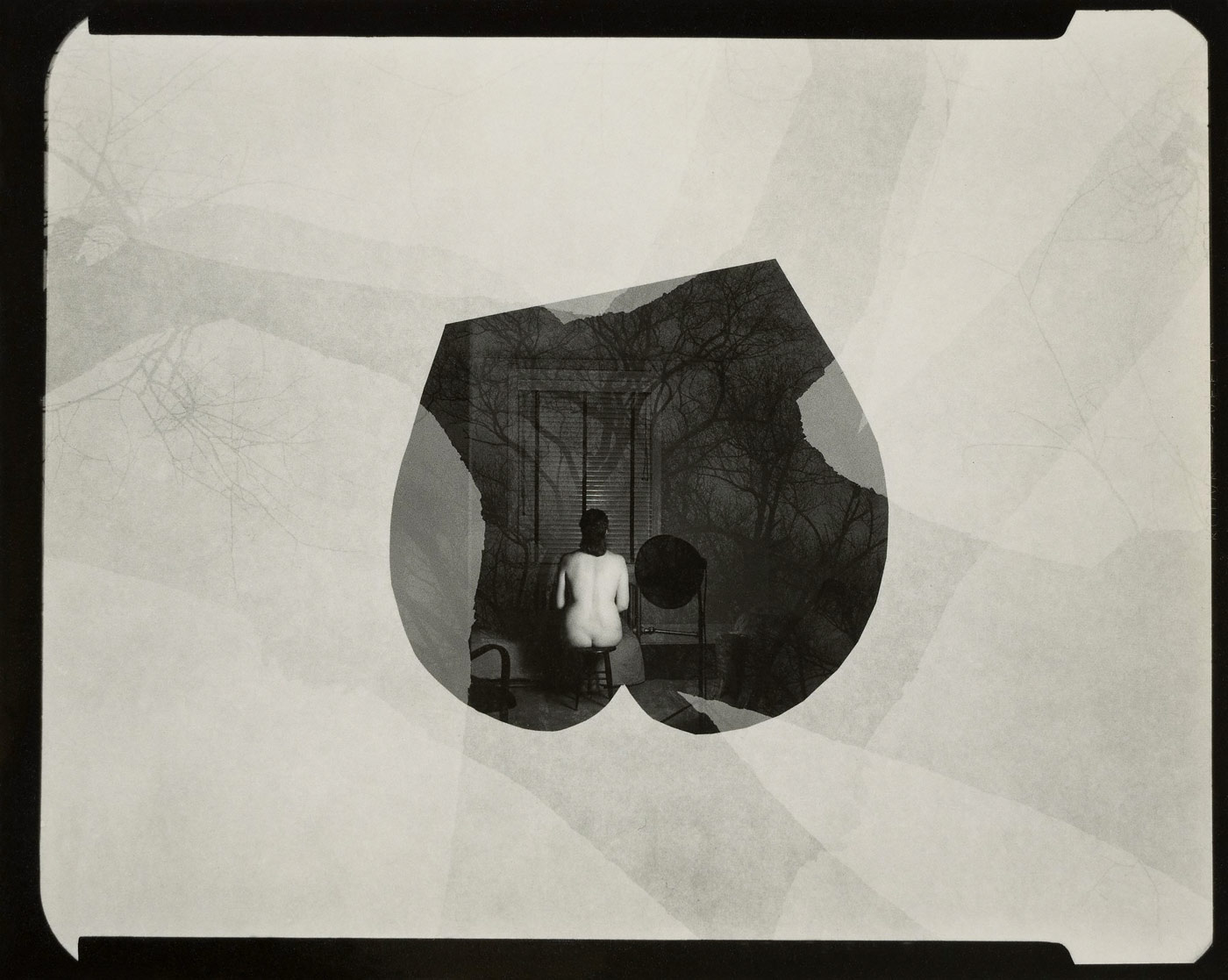
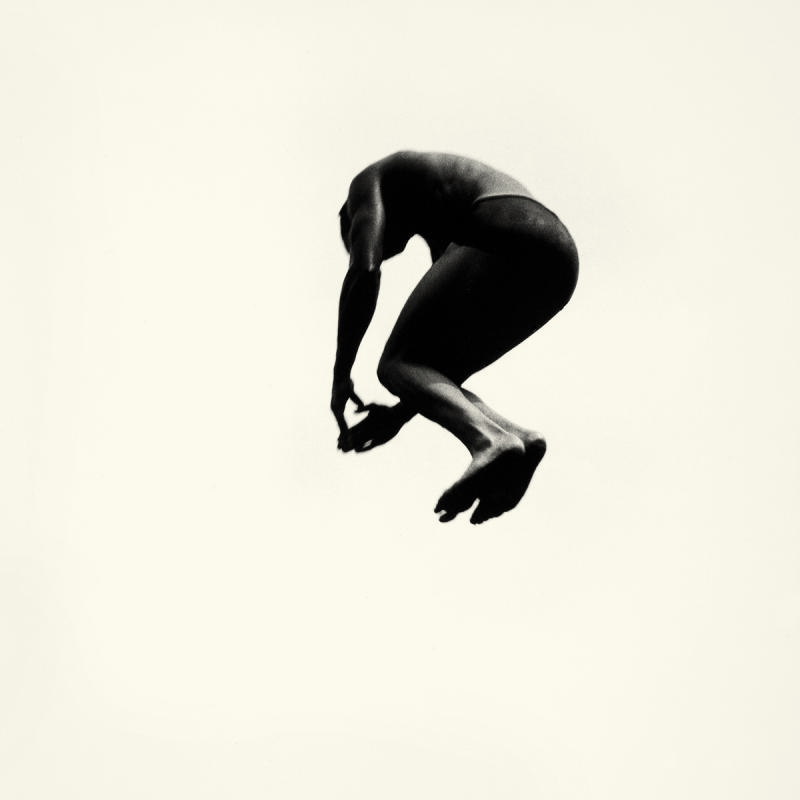
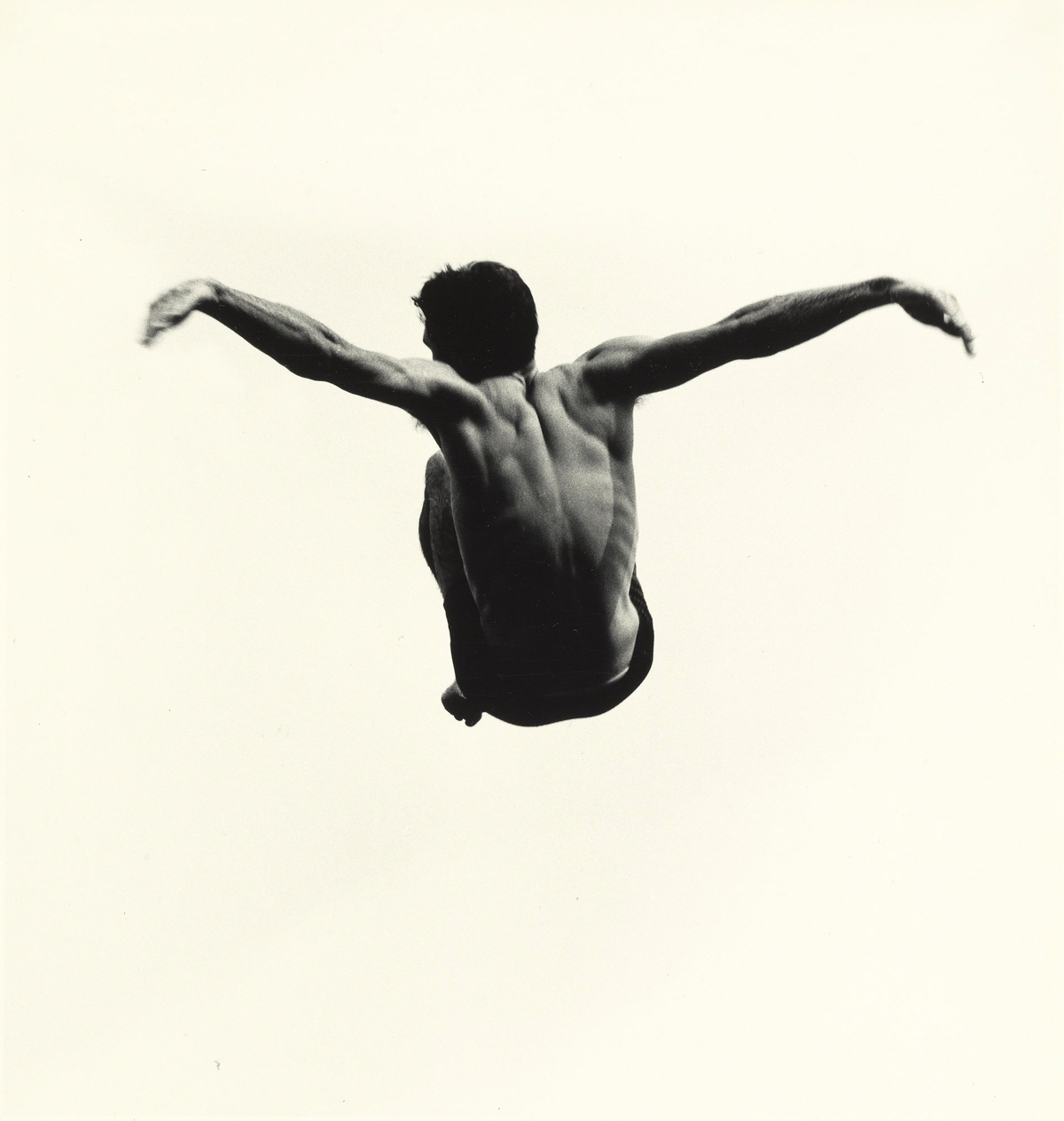

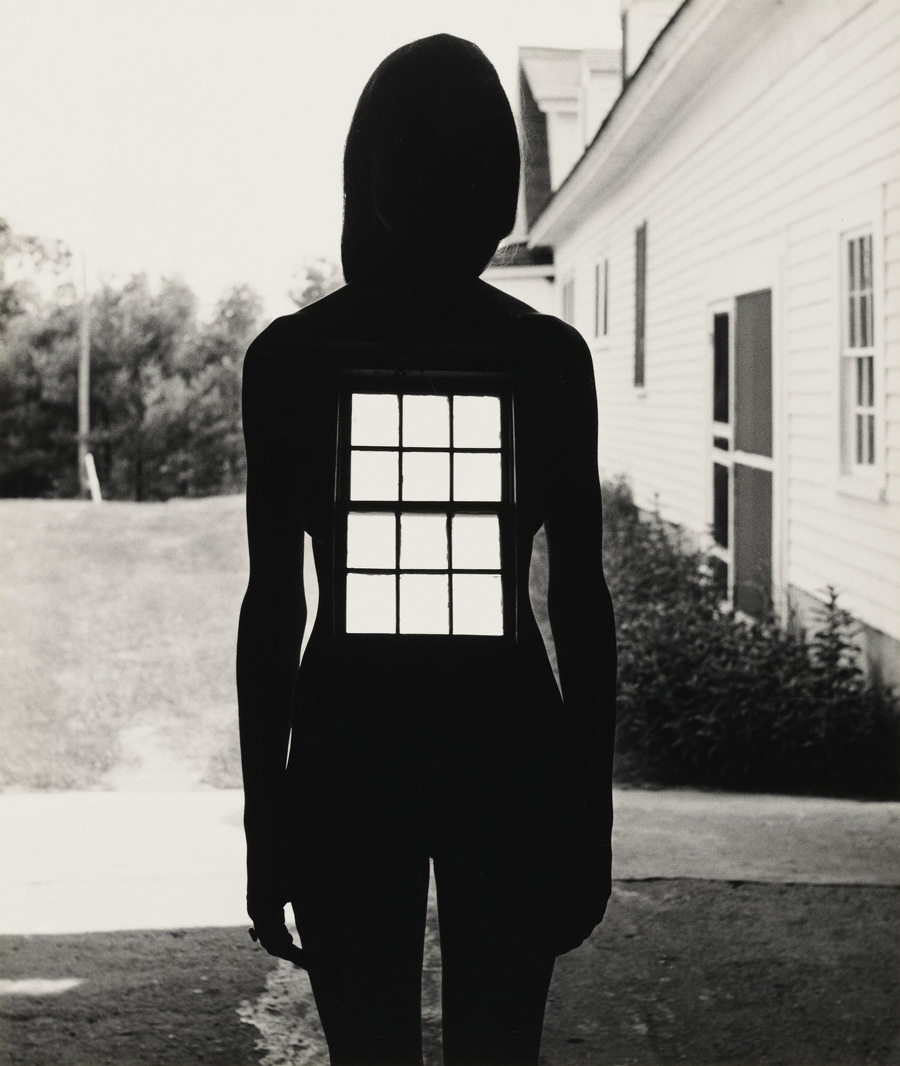


![Eva Besnyö (Dutch-Hungarian, 1910-2003) 'Untitled Untitled [boy with a violoncello, Balaton, Hungary]' 1931](https://artblart.com/wp-content/uploads/2012/09/eva_besnyo_gypsy_boy-web.jpg "Eva Besnyö (Dutch-Hungarian, 1910-2003) 'Untitled Untitled [boy with a violoncello, Balaton, Hungary]' 1931")

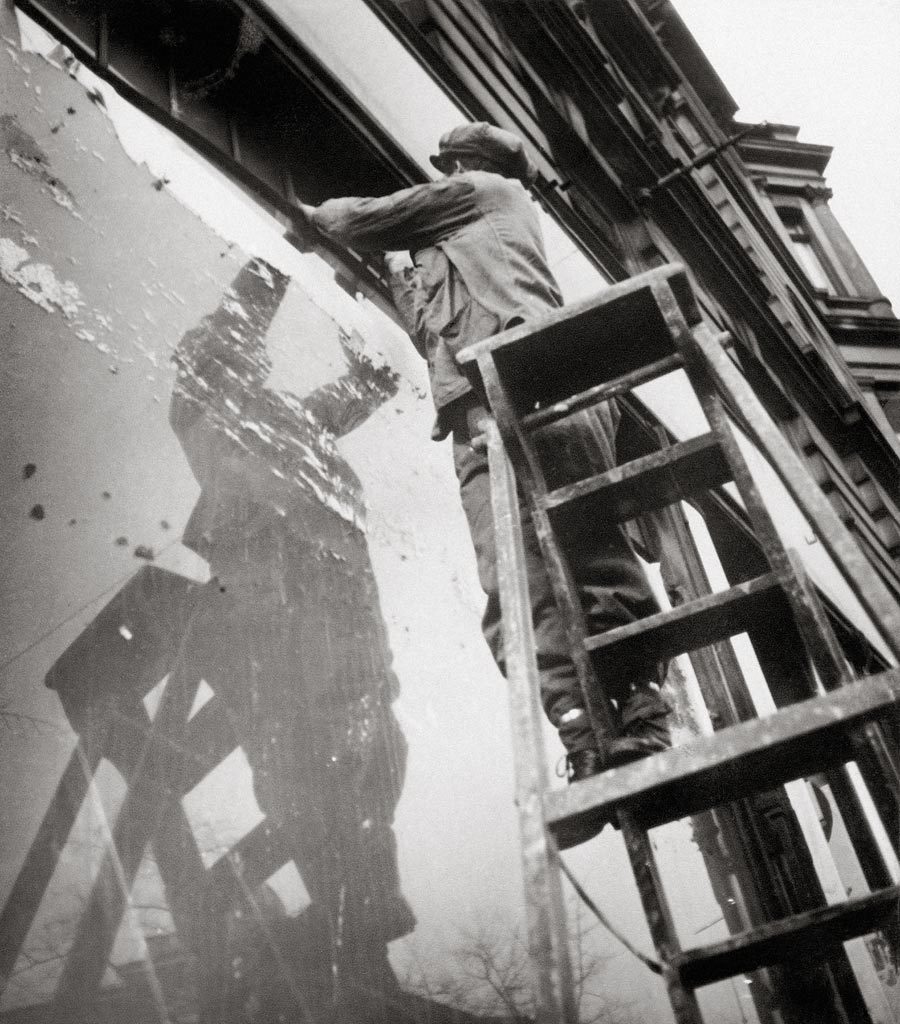
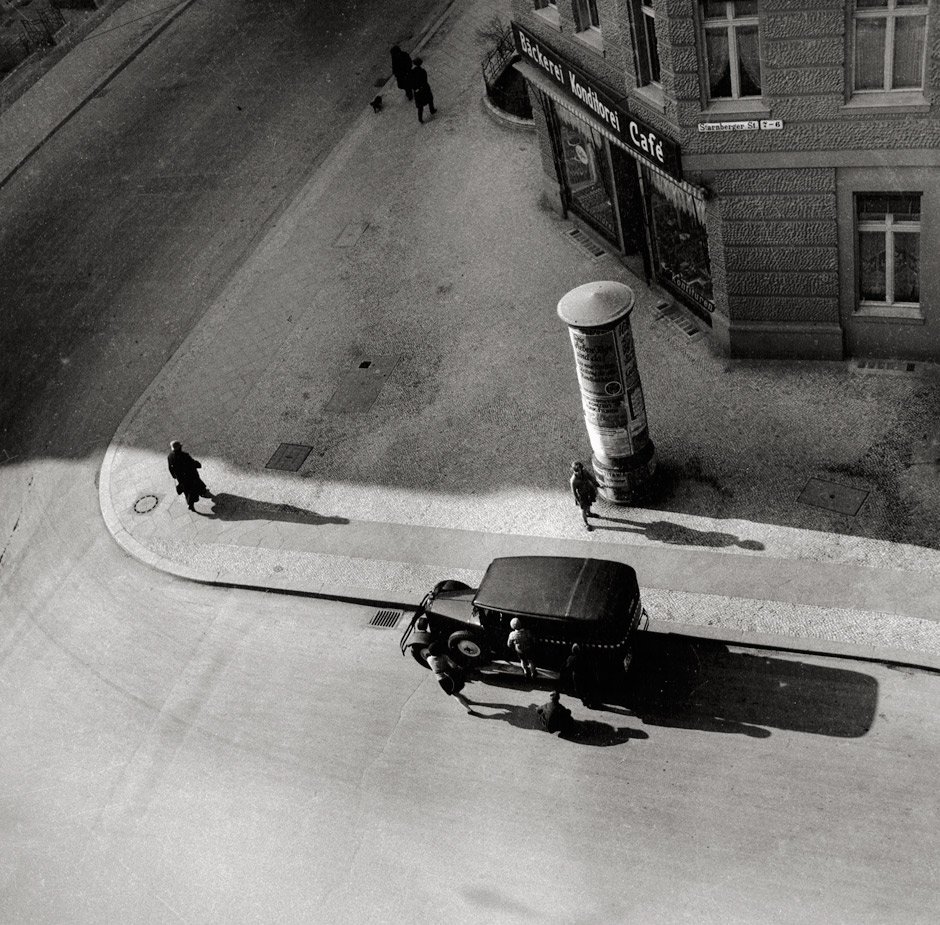
![Eva Besnyö (Dutch-Hungarian, 1910-2003) 'Untitled [Shadow play]' Hungary 1931](https://artblart.com/wp-content/uploads/2012/09/eva_besnyo_shadow_play-web.jpg "Eva Besnyö (Dutch-Hungarian, 1910-2003) 'Untitled [Shadow play]' Hungary 1931")
![Eva Besnyö (Dutch-Hungarian, 1910-2003) 'Untitled [dockers on the Spree]' Berlin, 1931](https://artblart.com/wp-content/uploads/2012/09/eva_besnyo_docks-web.jpg "Eva Besnyö (Dutch-Hungarian, 1910-2003) 'Untitled [dockers on the Spree]' Berlin, 1931")
![Eva Besnyö (Dutch-Hungarian, 1910-2003) 'Untitled [Vertigo #3]' Nd](https://artblart.com/wp-content/uploads/2012/09/photo_by_eva_besnyo_vertigo3-web.jpg "Eva Besnyö (Dutch-Hungarian, 1910-2003) 'Untitled [Vertigo #3]' Nd")

![Eva Besnyö (Dutch-Hungarian, 1910-2003) 'Untitled [Summer house in Groet, North Holland. Architects Merkelbach & Karsten]' 1934](https://artblart.com/wp-content/uploads/2012/09/eb18-web.jpg "Eva Besnyö (Dutch-Hungarian, 1910-2003) 'Untitled [Summer house in Groet, North Holland. Architects Merkelbach & Karsten]' 1934")
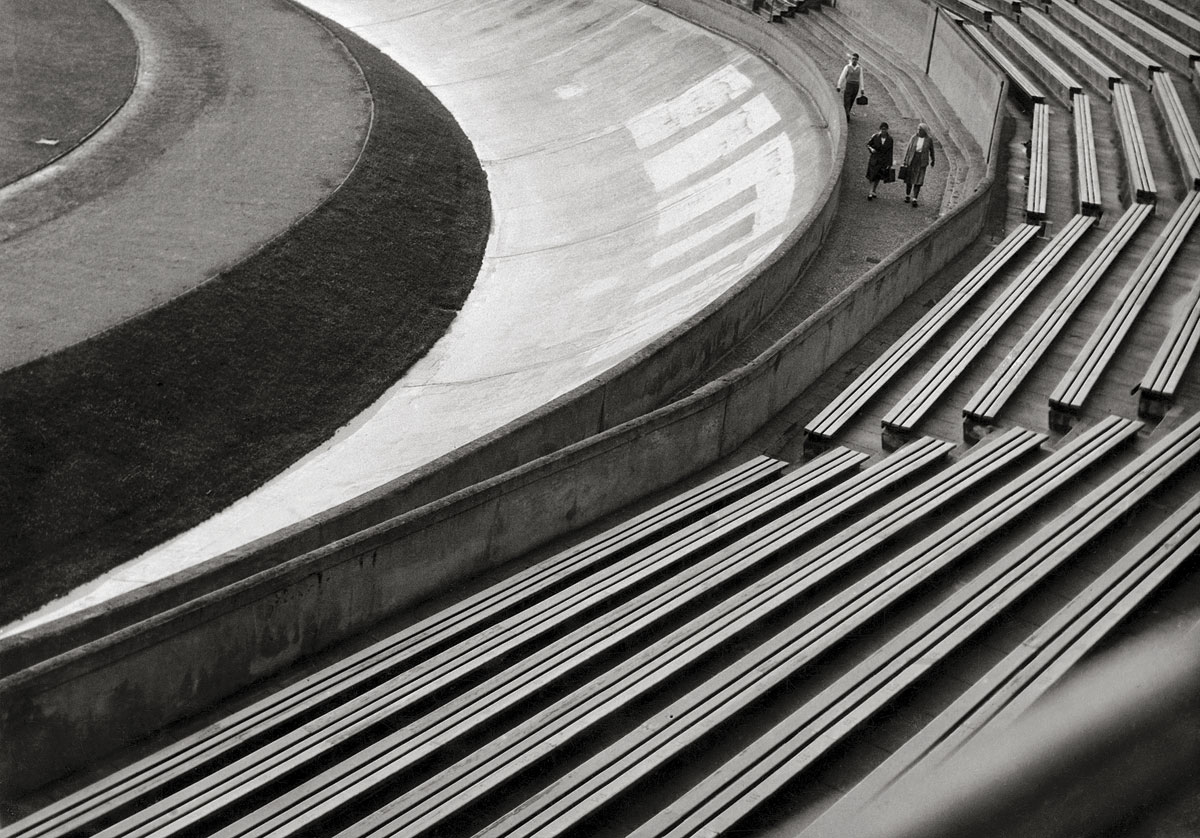
![Eva Besnyö (Dutch-Hungarian, 1910-2003) 'Untitled [Lieshout, The Netherlands]' 1954](https://artblart.com/wp-content/uploads/2012/09/eb15-web.jpg "Eva Besnyö (Dutch-Hungarian, 1910-2003) 'Untitled [Lieshout, The Netherlands]' 1954")
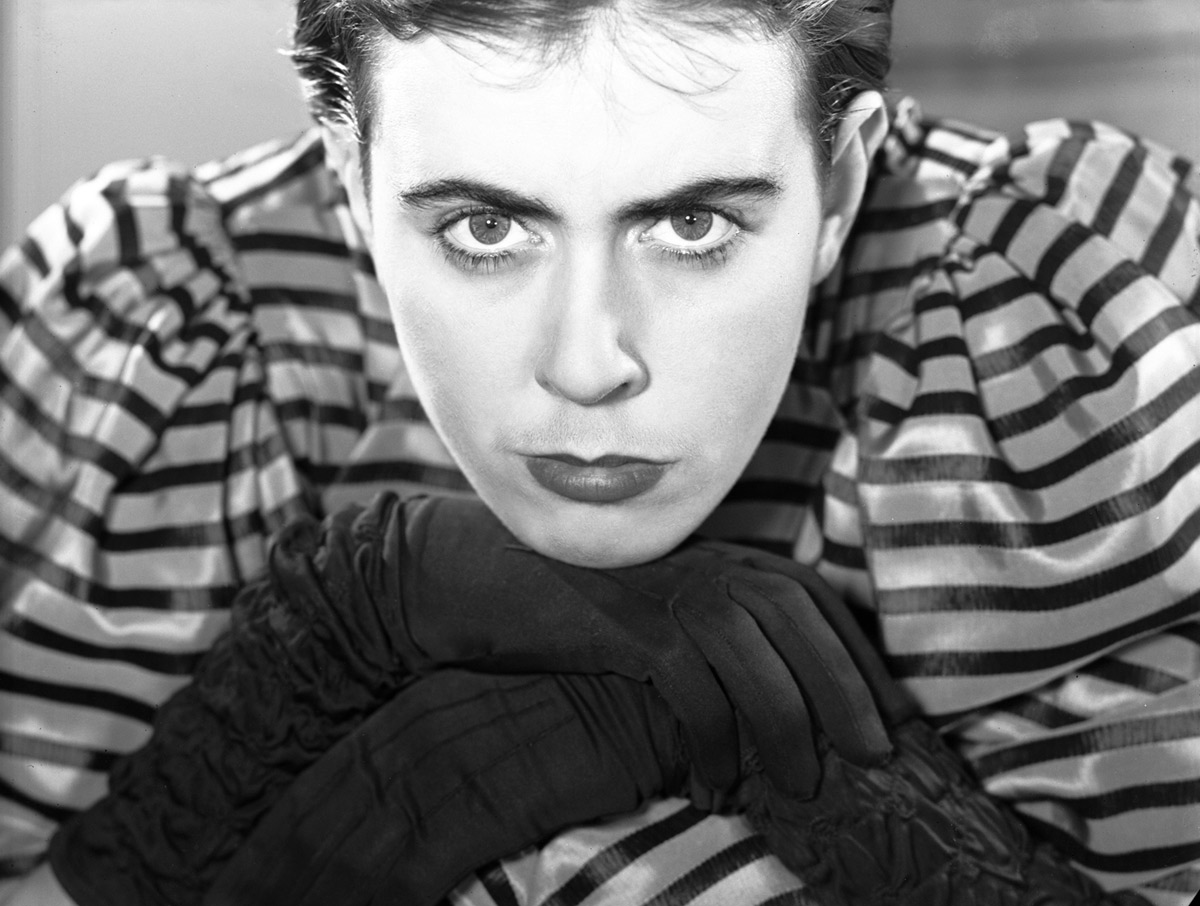
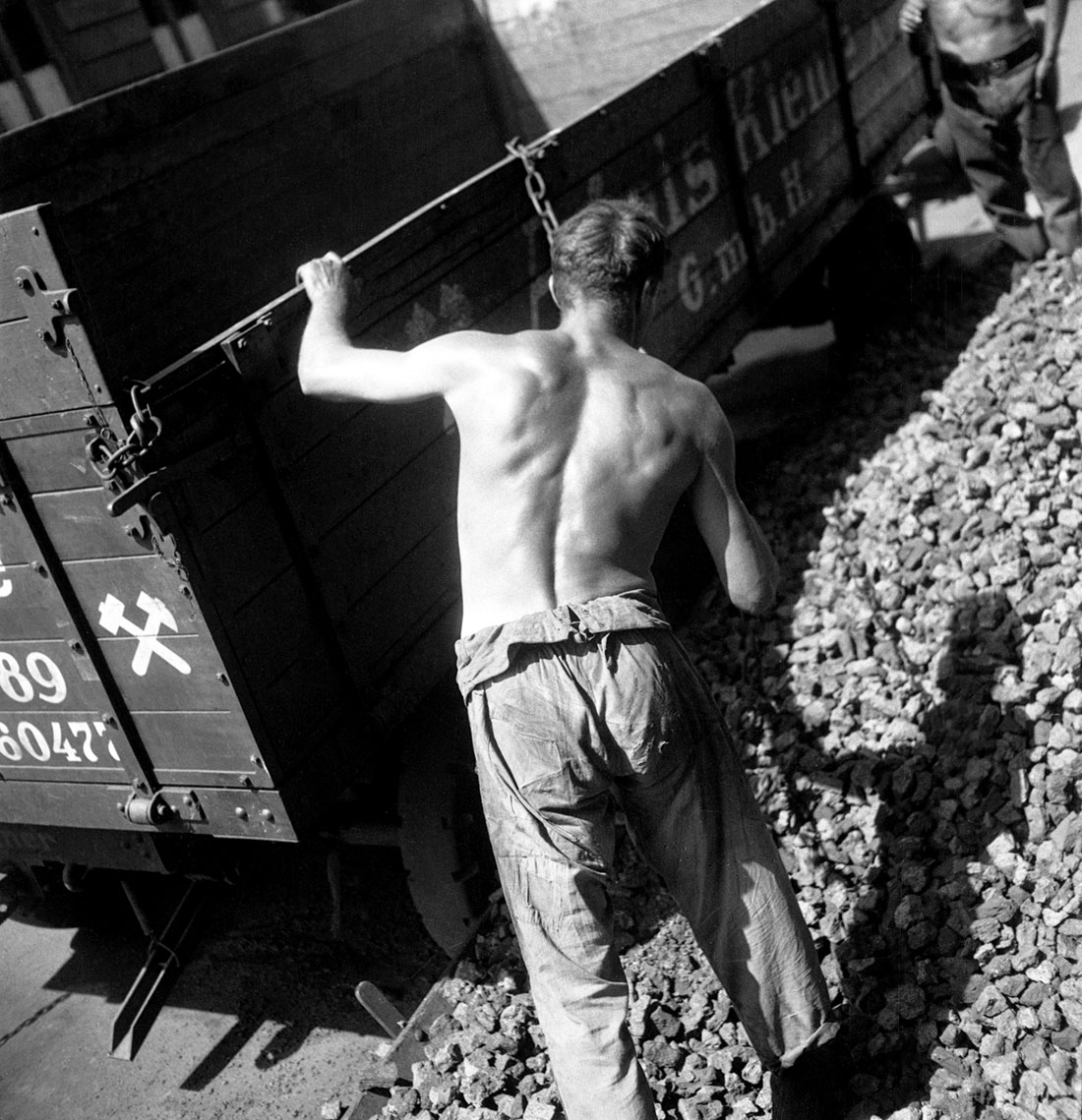
![Eva Besnyö (Dutch-Hungarian, 1910-2003) 'Untitled [John Fernout with Rolleiflex at the Baltic seaside]' 1932](https://artblart.com/wp-content/uploads/2012/09/eb02-web.jpg "Eva Besnyö (Dutch-Hungarian, 1910-2003) 'Untitled [John Fernout with Rolleiflex at the Baltic seaside]' 1932")
![Eva Besnyö (Dutch-Hungarian, 1910-2003) 'Untitled [Magda, Balaton, Hungary]' 1932](https://artblart.com/wp-content/uploads/2012/09/eb04-web.jpg "Eva Besnyö (Dutch-Hungarian, 1910-2003) 'Untitled [Magda, Balaton, Hungary]' 1932")
![Eva Besnyö (Dutch-Hungarian, 1910-2003) 'Untitled [The shadow of John Fernhout, Westkapelle, Zeeland, Netherlands]' 1933](https://artblart.com/wp-content/uploads/2012/09/eb13-web.jpg "Eva Besnyö (Dutch-Hungarian, 1910-2003) 'Untitled [The shadow of John Fernhout, Westkapelle, Zeeland, Netherlands]' 1933")



![Takeo Yamaguchi
(Japanese, 1902-1983)
'Work – Yellow (Unstable Square [Fuantei shikaku])' 1958](https://artblart.com/wp-content/uploads/2012/08/takeo-yamaguchi-web.jpg "Takeo Yamaguchi
(Japanese, 1902-1983)
'Work – Yellow (Unstable Square [Fuantei shikaku])' 1958")




![Yves Klein (French, 1928-1962) 'Large Blue Anthropometry (ANT 105) [La Grande Anthropométrie Bleue (ANT 105)]' c. 1960](https://artblart.com/wp-content/uploads/2012/09/klein-large-blue.jpg "Yves Klein (French, 1928-1962) 'Large Blue Anthropometry (ANT 105) [La Grande Anthropométrie Bleue (ANT 105)]' c. 1960")
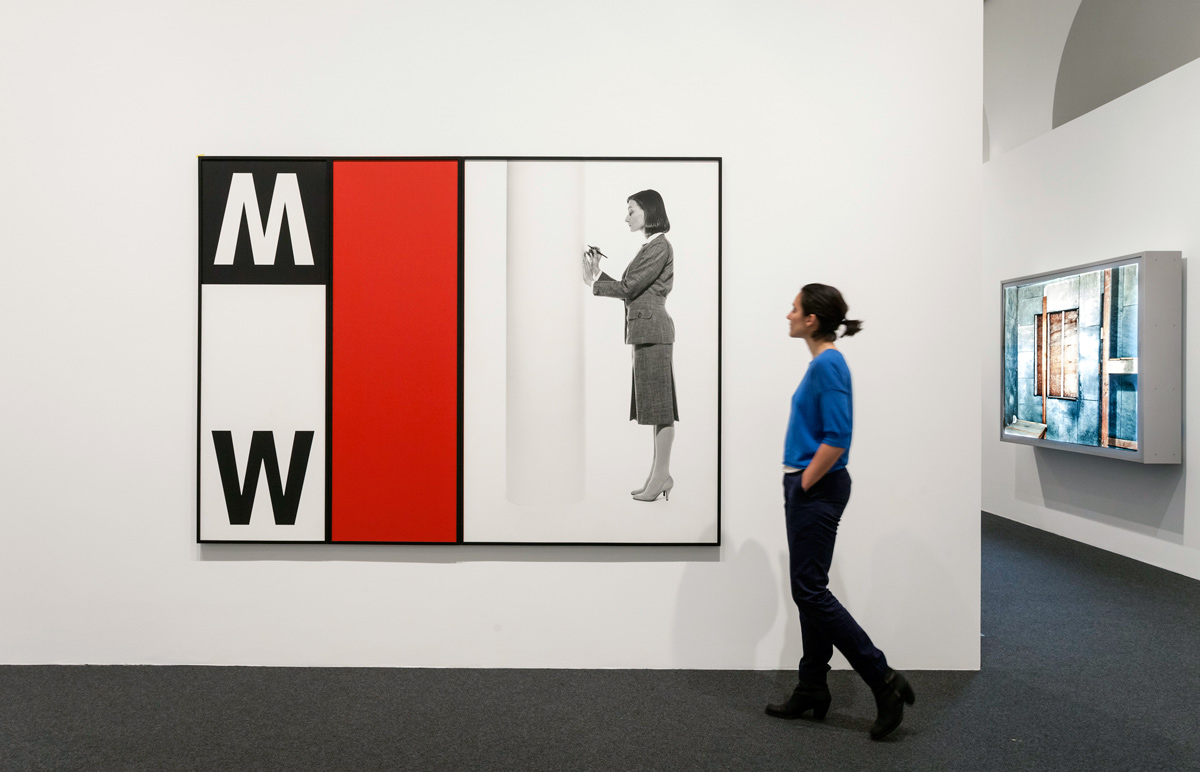

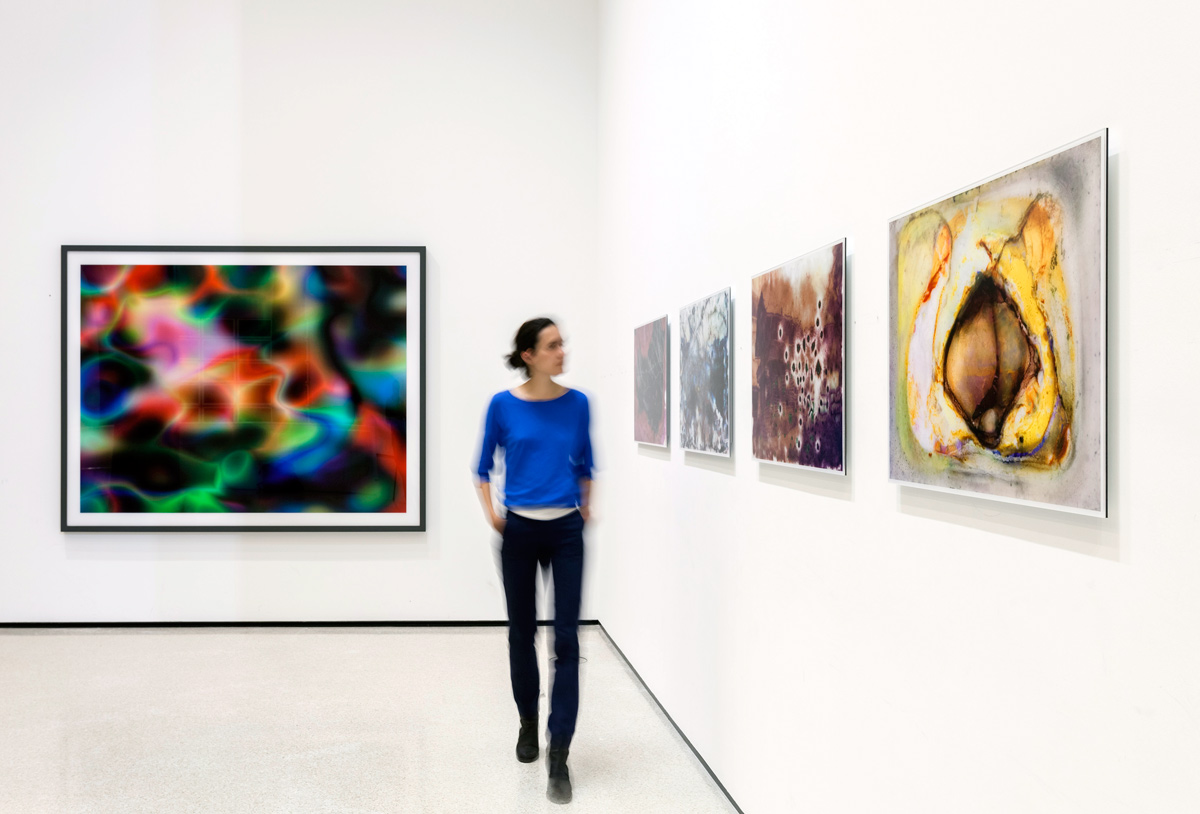

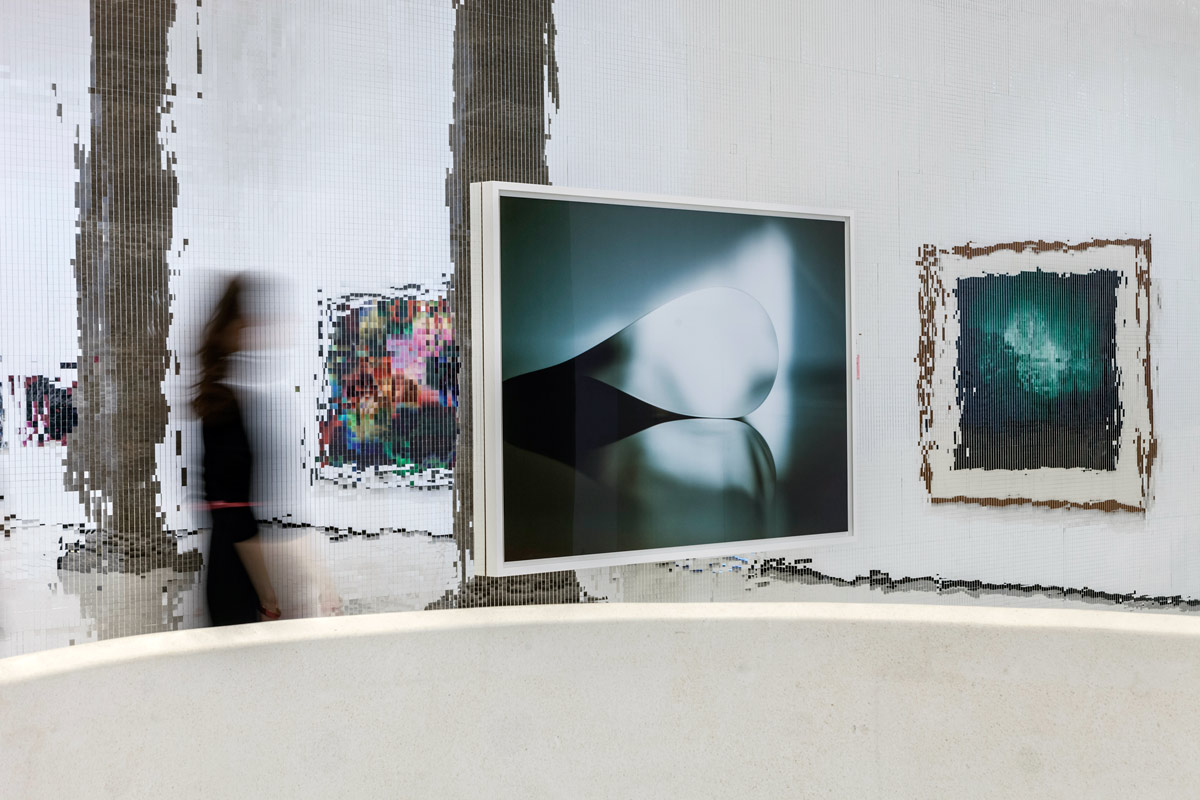

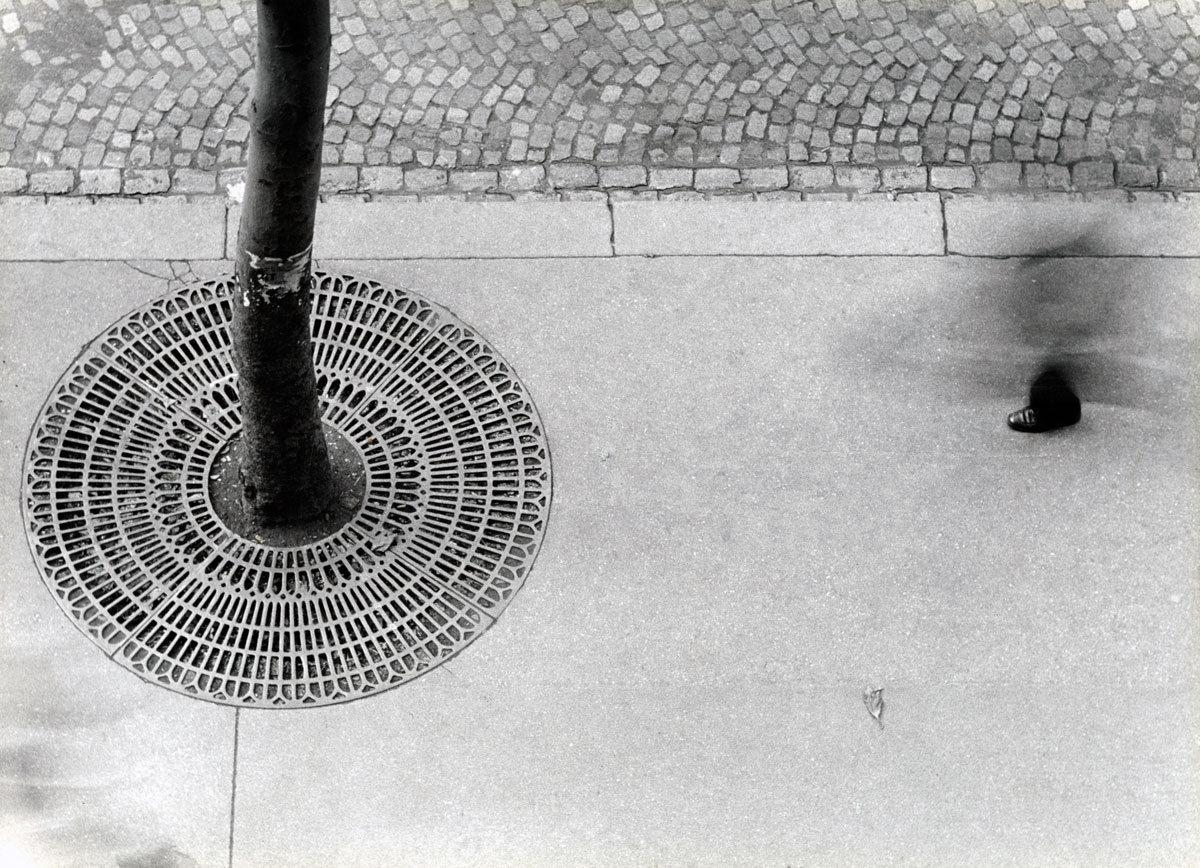
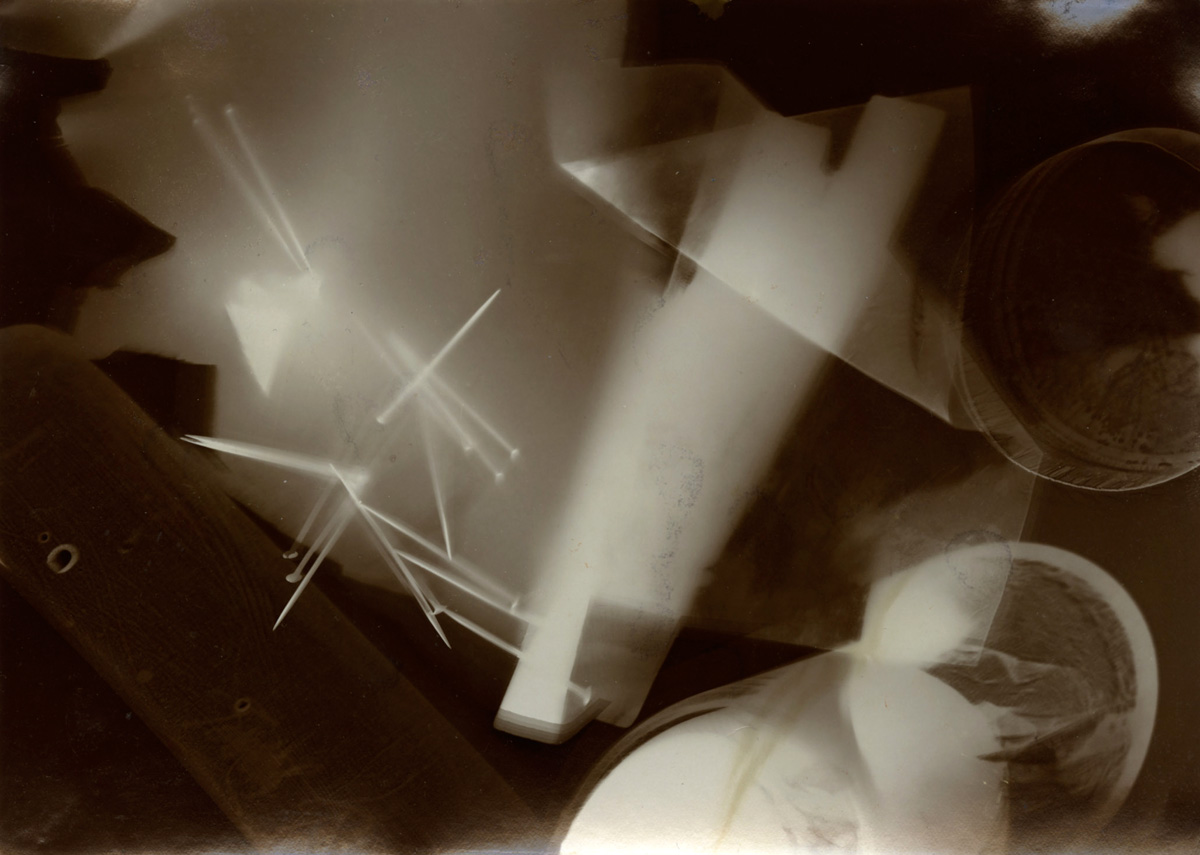


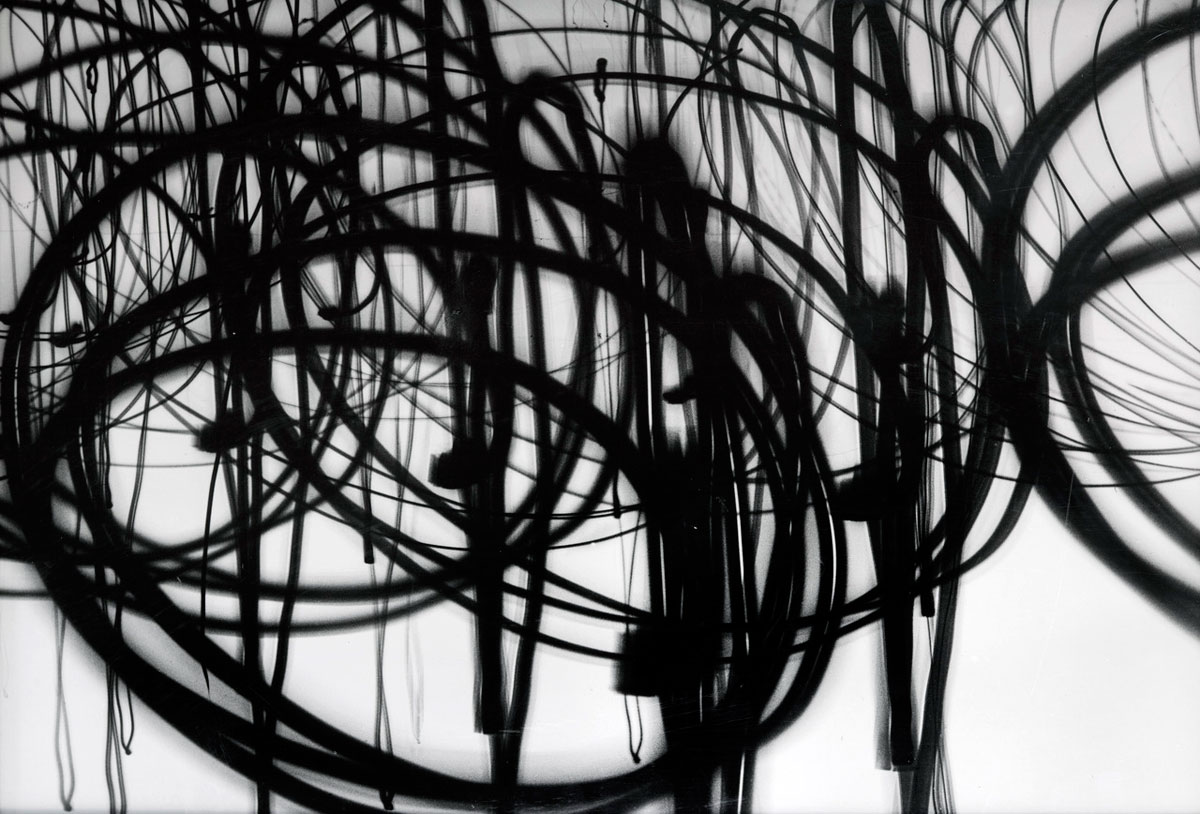
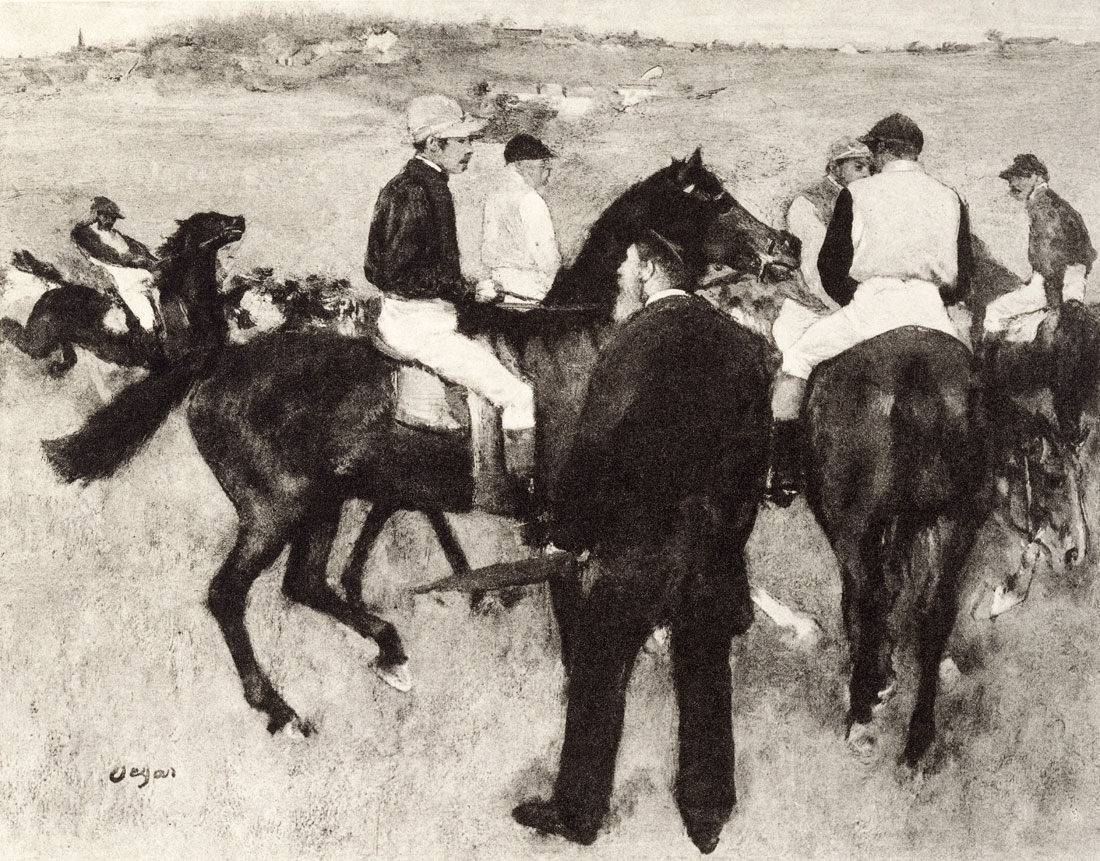

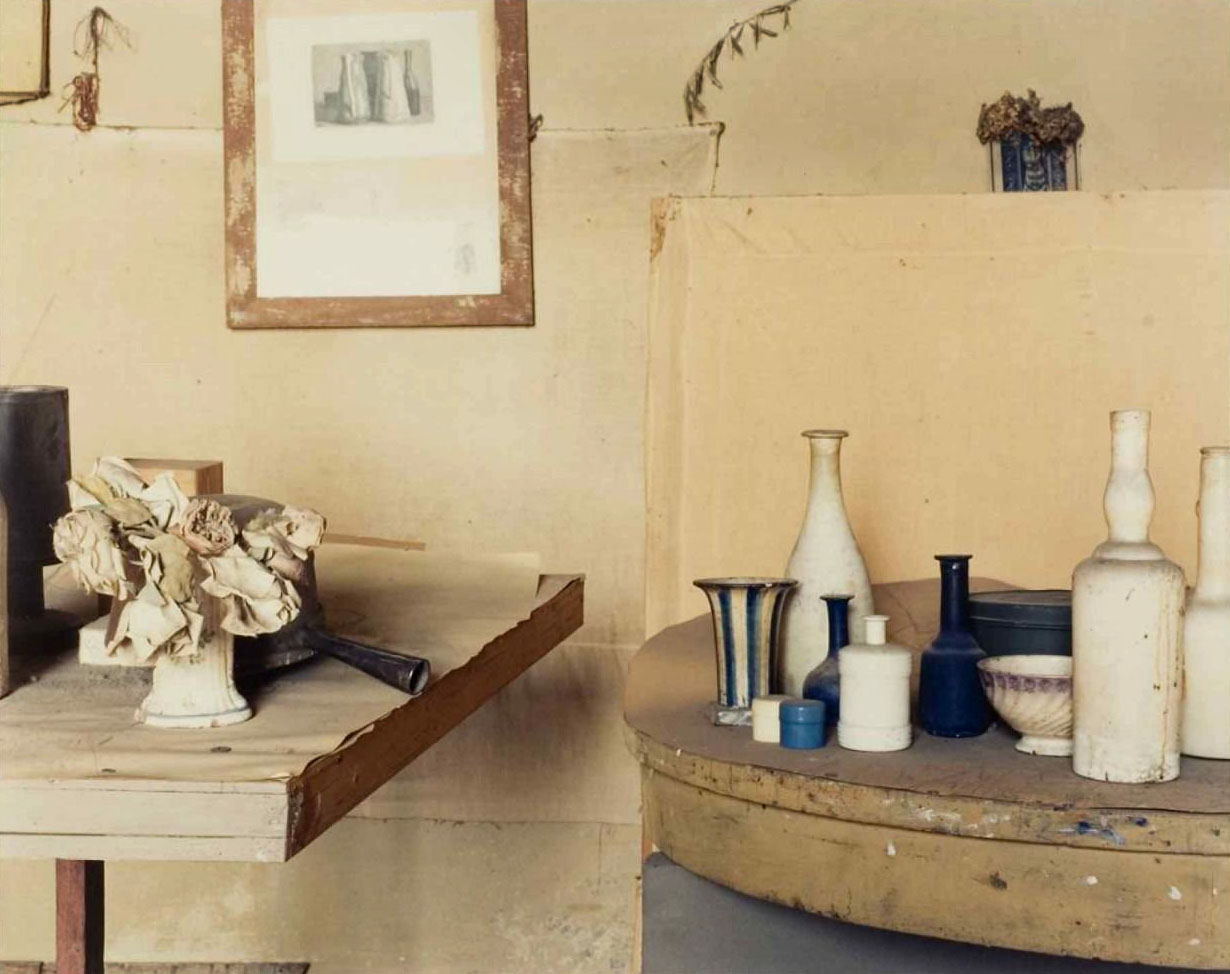


![Oliver Boberg (German, b. 1965) 'Unterführung' [Underpass] 1997](https://artblart.com/wp-content/uploads/2012/07/r_p_oliver-boberg-unterfuehrungdruckbar-web.jpg "Oliver Boberg (German, b. 1965) 'Unterführung' [Underpass] 1997")
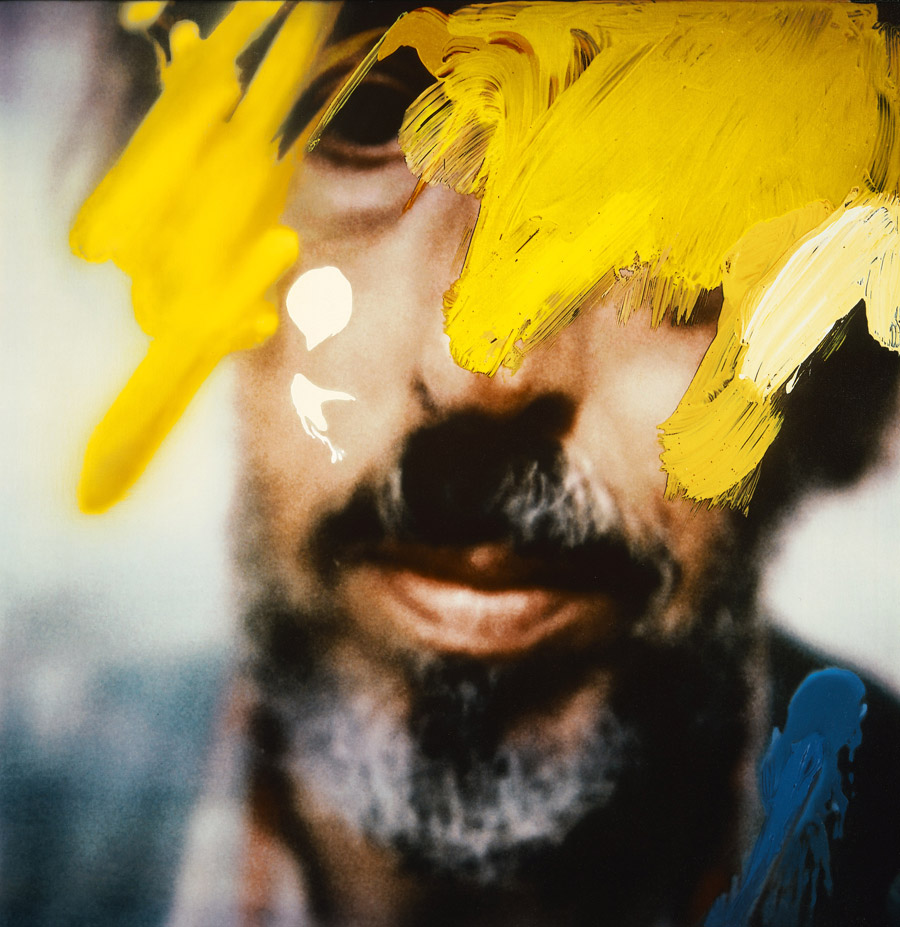

 Art Blart _ art and cultural memory archive
You must be logged in to post a comment.