Exhibition: ‘Portraits of Renown: Photography and the Cult of Celebrity’ at the J. Paul Getty Museum, Los Angeles

Exhibition dates: 3rd April – 26th August 2012
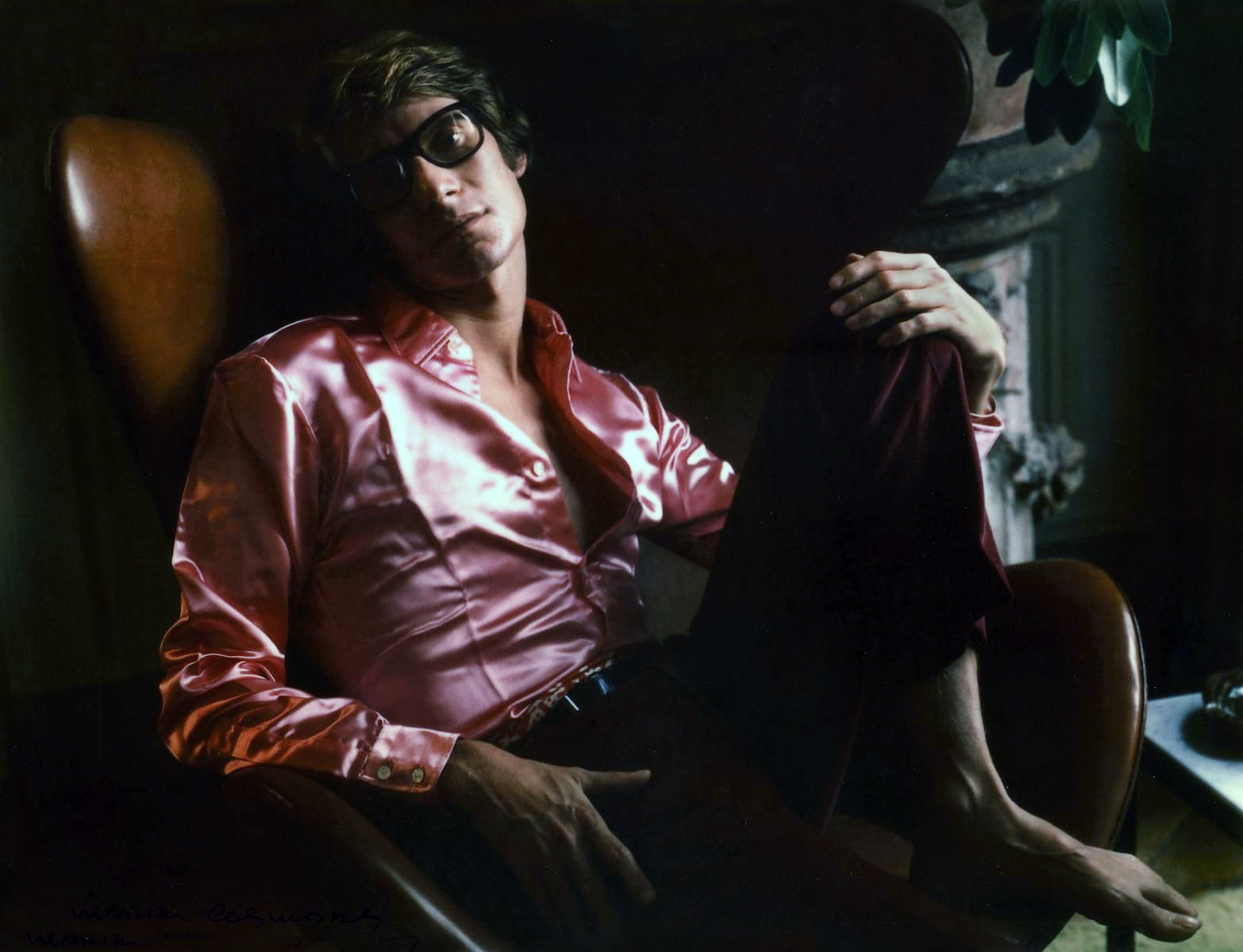
 

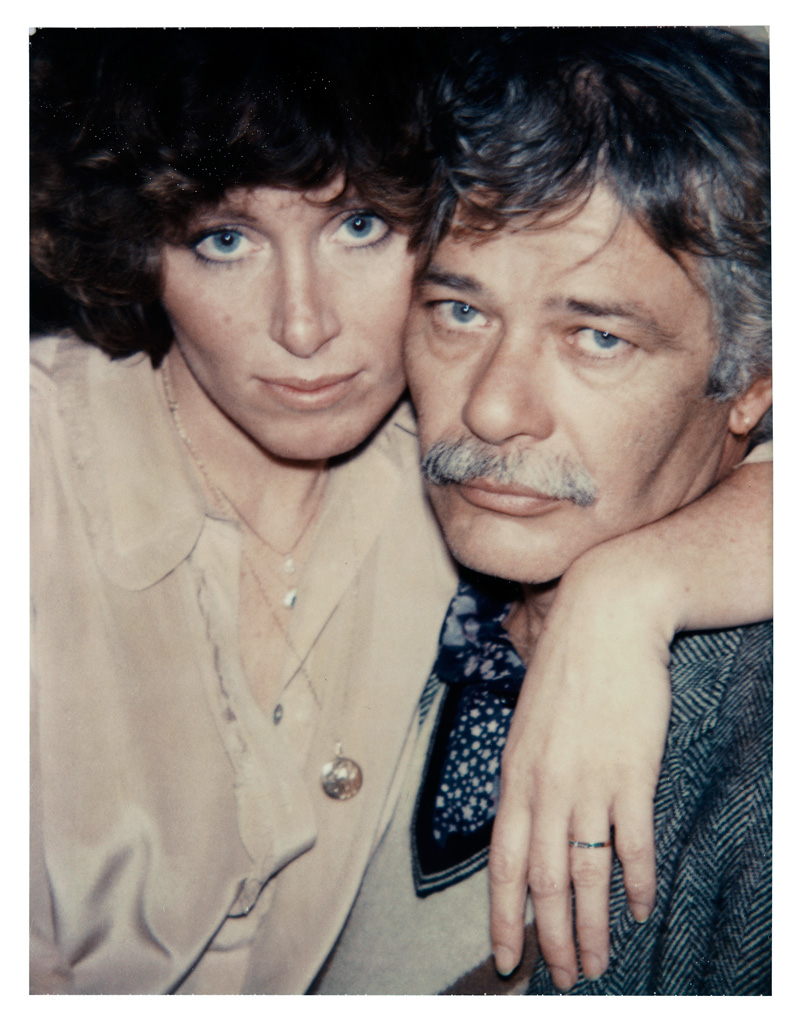
Marie Cosindas (American, 1925-2017) 'Yves Saint Laurent, Paris' 1968


Marie Cosindas (American, 1925-2017)
Yves Saint Laurent, Paris
1968
Dye colour diffusion [Polaroid ®] print
The J. Paul Getty Museum, Los Angeles
© Marie Cosindas


On the Nature of Photography


“To get from the tangible to the intangible (which mature artists in any medium claim as part of their task) a paradox of some kind has frequently been helpful. For the photographer to free himself of the tyranny of the visual facts upon which he is utterly dependent, a paradox is the only possible tool. And the talisman paradox for unique photography is to work “the mirror with a memory” as if it were a mirage, and the camera is a metamorphosing machine, and the photograph as if it were a metaphor… Once freed of the tyranny of surfaces and textures, substance and form [the photographer] can use the same to pursue poetic truth.”


Minor White quoted in Beaumont Hewhall (ed.,). The History of Photography. Boston: Little, Brown, and Co., 1982, p. 281


“Carol Jerrems and I taught at the same secondary school in the 1970’s. In a classroom that was unused at that time, I remember having my portrait taken by her. She held her Pentax to her eye. Carols’ portraits all seemed to have been made where the posing of her subjects was balanced by an incisive naturalness (for want of a better description). As a challenge to myself I tried to look “natural”, but kept in my consciousness that I was having my portrait taken. Minutes passed and neither she nor her camera moved at all.

Then the idea slipped from my mind for just a moment, and I was straightaway bought back by the sound of the shutter. What had changed in my face? – probably nothing, or 1 mm of muscle movement. Had she seen it through the shutter? Or something else – I don’t know.”


Australian artist Ian Lobb on being photographed by the late Carol Jerrems


There is always something that you can’t quite put your finger on in an outstanding portrait, some ineffable other that takes the portrait into another space entirely. I still haven’t worked it out but my thoughts are this: forget about the pose of the person. It would seem to me to be both a self conscious awareness by the sitter of the camera and yet at the same time a knowing transcendence of the visibility of the camera itself. In great portrait photography it is almost as though the conversation between the photographer and the person being photographed elides the camera entirely. Minor White, in his three great mantras, the Three Canons, observes:


Be still with yourself
Until the object of your attention
Affirms your presence

Let the Subject generate its own Composition

When the image mirrors the man
And the man mirrors the subject
Something might take over


Freed from the tyranny of the visual facts something else emerges.

Celebrities know only too well how to “work” the camera but the most profound portraits, even of celebrities, are in those moments when the photographer sees something else in the person being photographed, some unrecognised other that emerges from the shadows – a look, a twist of the head, the poignancy of the mouth, the vibrancy of the dancer Josephine Baker, the sturdiness of the gaze of Walt Whitman with hands in pockets, the presence of the hands (no, not the gaze!) of Picasso. I remember taking a black and white portrait of my partner Paul holding a wooden finial like a baby among some trees, a most beautiful, revealing photograph. He couldn’t bear to look at it, for it stripped him naked before the lens and showed a side of himself that he had never seen before: vulnerable, youthful, beautiful.

Why do great portrait photographers make so many great portraits? Why can’t this skill be shared or taught? Why can’t Herb Ritts (for example) make a portrait that goes beyond a caricature? Why is it that what can be taught is so banal that it has no value?

In photography, maybe we edit out what is expected and then it seems that photography does something that goes beyond language; it goes beyond function that can be described as a part of speech, metonym or metaphor. When this something else takes over I think it is truly “unrecognised” in the best portraits (and landscape / urban photographs) – and it is fantastic and wonderful.

This is my understanding, then, of perception and vision (when spirit takes over) – [which is] the ability to see this certain something in the mind (previsualisation) before seeing it through the viewfinder and to then be able to reveal it in the physicality of the print. It is a liminal moment in time and space.

I believe this is the reality of photography itself in its absolute essential form – and here I am deliberately forgetting about post-photography, post-modernism, modernism, pictorialism, ism, ism – getting down to why I really like photography:

the BEYOND visualisation of a world, the transcendence of time and space that leads, in great photographs, to a recognition of the discontinuous nature of life but in the end, to its ultimate persistence.

This is as close as I have got so far…

Dr Marcus Bunyan
August 2012


Many thankx to the J. Paul Getty Museum for allowing me to publish the photographs in the posting. Please click on the photograph for a larger version of the image.


Mariana Cook (American, b. 1955) 'Barack and Michelle Obama, Chicago' May 26, 1996


Mariana Cook (American, b. 1955)
Barack and Michelle Obama, Chicago
May 26, 1996
Selenium-toned gelatin silver print
The J. Paul Getty Museum, Los Angeles


Marie Cosindas (American, 1925-2017) 'Andy Warhol' 1966


Marie Cosindas (American, 1925-2017)
Andy Warhol
1966
Dye colour diffusion [Polaroid ®] print
11.4 x 8.9cm
The J. Paul Getty Museum, Los Angeles
© Marie Cosindas


Marie Cosindas (American, 1925-2017) 'Yves St Laurent' 1968


Marie Cosindas (American, 1925-2017)
Yves St Laurent
1968
Dye colour diffusion [Polaroid ®] print
11.4 x 8.9cm
The J. Paul Getty Museum, Los Angeles
© Marie Cosindas


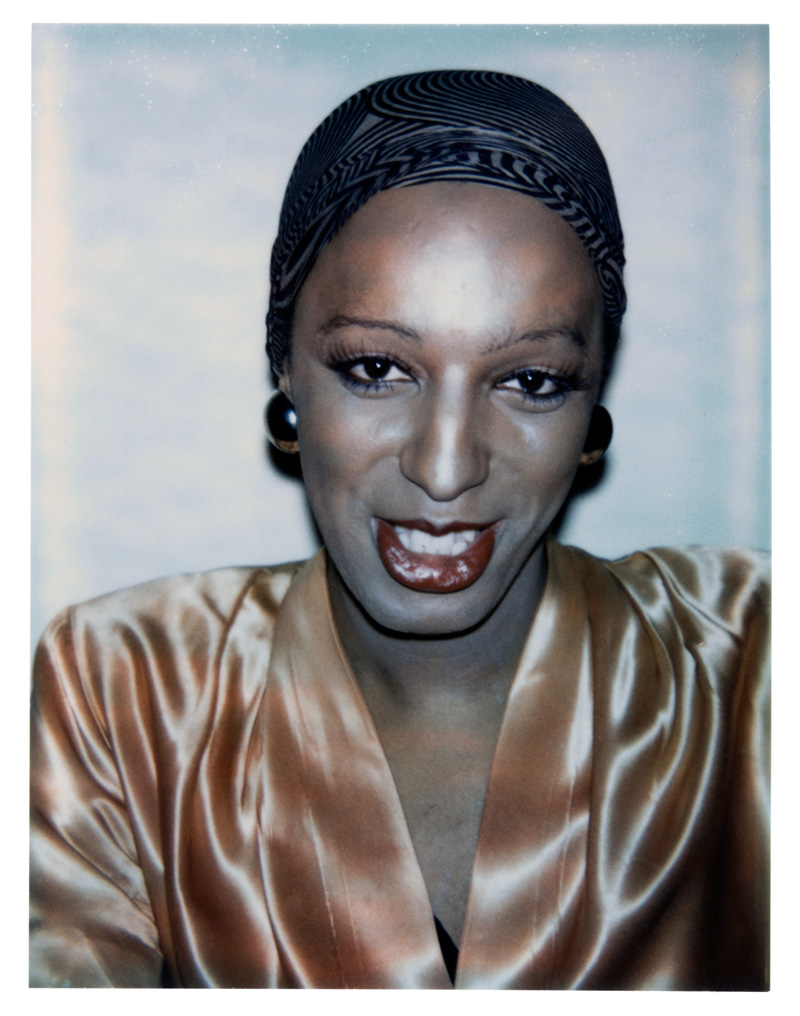
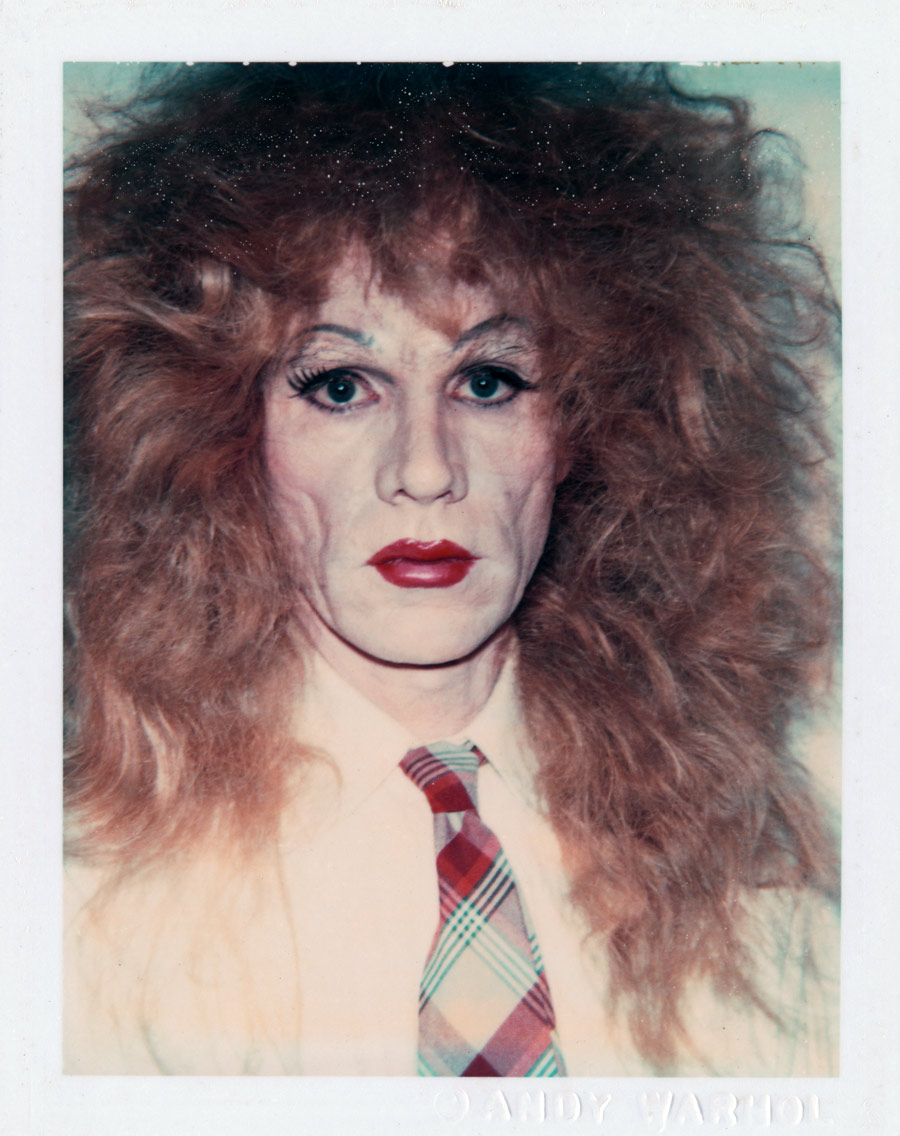
Andy Warhol (American, 1928-1987) 'Grace Jones' 1984


Andy Warhol (American, 1928-1987)
Grace Jones
1984
Polaroid Polacolor print
9.5 x 7.3cm
The J. Paul Getty Museum, Los Angeles
© 2011 The Andy Warhol Foundation for the Visual Arts / Artists Rights Society (ARS), New York


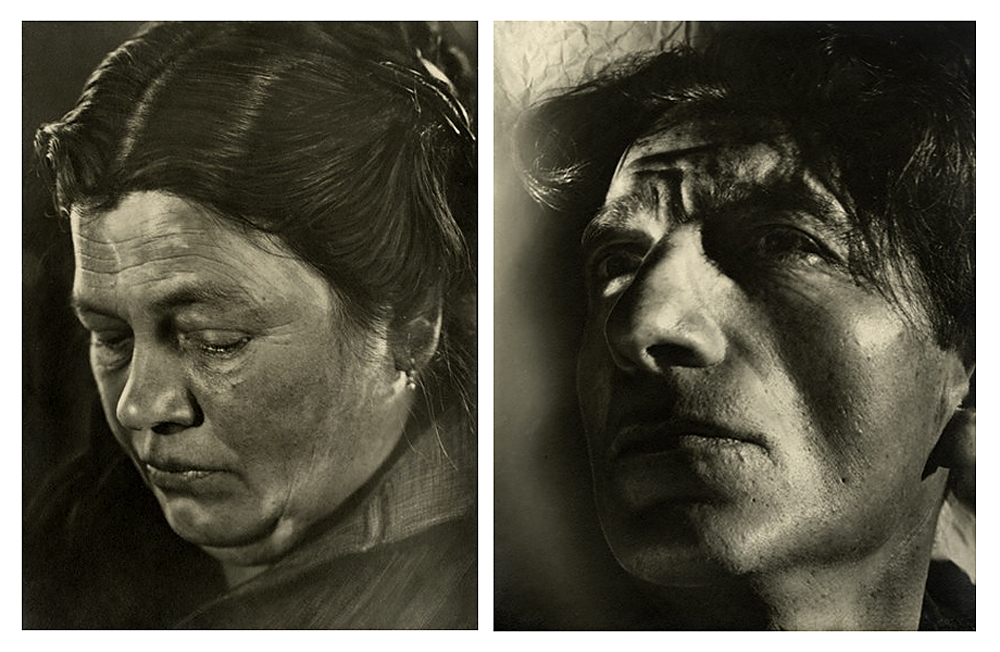
Edward Weston (American, 1889-1958) 'Igor Stravinsky' 1935


Edward Weston (American, 1889-1958)
Igor Stravinsky
1935
Gelatin silver print
The J. Paul Getty Museum, Los Angeles


Coy Watson Jr. (American, 1912-2009) 'Joe Louis – “The Brown Bomber”, Los Angeles, February 1935'


Coy Watson Jr. (American, 1912-2009)
Joe Louis – “The Brown Bomber”, Los Angeles, February 1935
1935
Gelatin silver print
The J. Paul Getty Museum, Los Angeles


Edward Steichen (American, 1879-1973) 'Gloria Swanson' 1924


Edward Steichen (American, 1879-1973)
Gloria Swanson
1924
Gelatin silver print
27.8 x 21.6cm (10 15/16 x 8 1/2 in.)
The J. Paul Getty Museum, Los Angeles
© Permission Joanna T. Steichen


Portraits of Renown surveys some of the visual strategies used by photographers to picture famous individuals from the 1840s to the year 2000. “This exhibition offers a brief visual history of famous people in photographs, drawn entirely from the Museum’s rich holdings in this genre,” says Paul Martineau, curator of the exhibition and associate curator of photographs at the J. Paul Getty Museum. “It also provides a broad historical context for the work in the concurrent exhibition Herb Ritts: L.A. Style, which includes a selection of Ritts’s best celebrity portraits.”

Photography’s remarkable propensity to shape identities has made it the leading vehicle for representing the famous. Soon after photography was invented in the 1830s, it was used to capture the likenesses and accomplishments of great men and women, gradually supplanting other forms of commemoration. In the twentieth century, the proliferation of photography and the transformative power of fame have helped to accelerate the desire for photographs of celebrities in magazines, newspapers, advertisements, and on the Internet. The exhibition is arranged chronologically to help make visible some of the overarching technical and stylistic developments in photography from the first decade of its invention to the end of the twentieth century.

A wide range of historical figures are portrayed in Portraits of Renown. A photograph by Alexander Gardner of President Lincoln documents his visit to the battlefield of Antietam during the Civil War. Captured by Nadar, a portrait of Alexander Dumas, best known for his novels The Count of Monte Cristo and The Three Musketeers, shows the author with an energetic expression, illustrating the lively personality that made his writing so popular. Baron Adolf De Meyer’s portrait of Josephine Baker, an American performer who became an international sensation at the Folies Bergère in Paris, showcases her comedic charm, a trait that proved central to her popularity as a performer. An iconic portrait of the silent screen actress, Gloria Swanson, created by Edward Steichen for Vanity Fair reveals both the intensity of its sitter and the skill of the artist. A picture of Pablo Picasso by his friend Man Ray portrays the master of Cubism with a penetrating gaze.

Yves St. Laurent, Andy Warhol, and Grace Jones are among the contemporary figures included in the exhibition. Fashion designer Yves St. Laurent was photographed by Marie Cosindas using instant color film by Polaroid. The photograph, made the year his first boutique in New York opened, graced the walls of the store for ten years. A Cosindas portrait of Andy Warhol shows the artist wearing dark sunglasses, which partially conceal his face. Warhol, who was fascinated by celebrity, delighted in posing public personalities like Grace Jones for his camera.

Press release from the J. Paul Getty Museum website


Man Ray (American, 1890-1976) 'Pablo Picasso' 1934


Man Ray (American, 1890-1976)
Pablo Picasso
1934
Gelatin silver print
25.2 x 20cm
The J. Paul Getty Museum, Los Angeles
© Man Ray Trust ARS-ADAGP


Berenice Abbott (American, 1898-1991) 'James Joyce' 1928


Berenice Abbott (American, 1898-1991)
James Joyce
1928
Gelatin silver print
The J. Paul Getty Museum, Los Angeles


Baron Adolf De Meyer (American born France, 1868-1946) 'Portrait of Josephine Baker' 1925


Baron Adolf De Meyer (American born France, 1868-1946)
Portrait of Josephine Baker
1925
Collotype print
39.1 x 39.7cm
The J. Paul Getty Museum, Los Angeles


In 1925 Josephine Baker, an American dancer from Saint Louis, Missouri, made her debut on the Paris stage in La Revue nègre (The Black Review) at the Théâtre des Champs-Elysées, wearing nothing more than a skirt of feathers and performing her danse sauvage (savage dance). She was an immediate sensation in Jazz-Age France, which celebrated her perceived exoticism, quite the opposite of the reception she had received dancing in American choruses. American expatriate novelist Ernest Hemingway called Baker “the most sensational woman anybody ever saw – or ever will.”

Baron Adolf de Meyer, a society and fashion photographer, took this playful portrait in the year of Baker’s debut. Given the highly sexual nature of her stage persona, this portrait is charming and almost innocent; Baker’s personality is suggested by her face rather than her famous body.

Text from the J. Paul Getty website


Edward Steichen (American, 1879-1973) 'John Barrymore as Hamlet' 1922


Edward Steichen (American, 1879-1973)
John Barrymore as Hamlet
1922
Gelatin silver print
The J. Paul Getty Museum, Los Angeles


Alfred Stieglitz (American, 1964-1946) 'Georgia O'Keeffe: A Portrait' 1918


Alfred Stieglitz (American, 1964-1946)
Georgia O’Keeffe: A Portrait
1918
Gelatin silver print
The J. Paul Getty Museum, Los Angeles


Arnold Genthe (American born Germany, 1869-1942) 'Anna Pavlowa' about 1915


Arnold Genthe (American born Germany, 1869-1942)
Anna Pavlowa
about 1915
Gelatin silver print
33.5 × 25.2cm (13 3/16 × 9 15/16 in.)
The J. Paul Getty Museum, Los Angeles


The Russian ballerina Anna Pavlowa (or Pavlova) so greatly admired Arnold Genthe’s work that she made the unusual decision to visit his studio, rather than have him come to her rehearsals. The resulting portrait of the prolific dancer, leaping in mid-air, is the only photograph to capture Pavlowa in free movement. Genthe regarded this print as one of the best dance photographs he ever made.

Text from the J. Paul Getty website


Alvin Langdon Coburn (British born United States, 1882-1966) 'Mark Twain (Samuel Langhorne Clemens)' Negative December 21, 1908; print 1913


Alvin Langdon Coburn (British born United States, 1882-1966)
Mark Twain (Samuel Langhorne Clemens)
Negative December 21, 1908; print 1913
Photogravure
20.6 × 14.8cm (8 1/8 × 5 13/16 in.)
The J. Paul Getty Museum, Los Angeles


Alfred Stieglitz (American, 1864-1946) '[Self-Portrait]' Negative 1907; print 1930


Alfred Stieglitz (American, 1864-1946)
[Self-Portrait]
Negative 1907; print 1930
Gelatin silver print
24.8 × 18.4cm (9 3/4 × 7 1/4 in.)
The J. Paul Getty Museum, Los Angeles
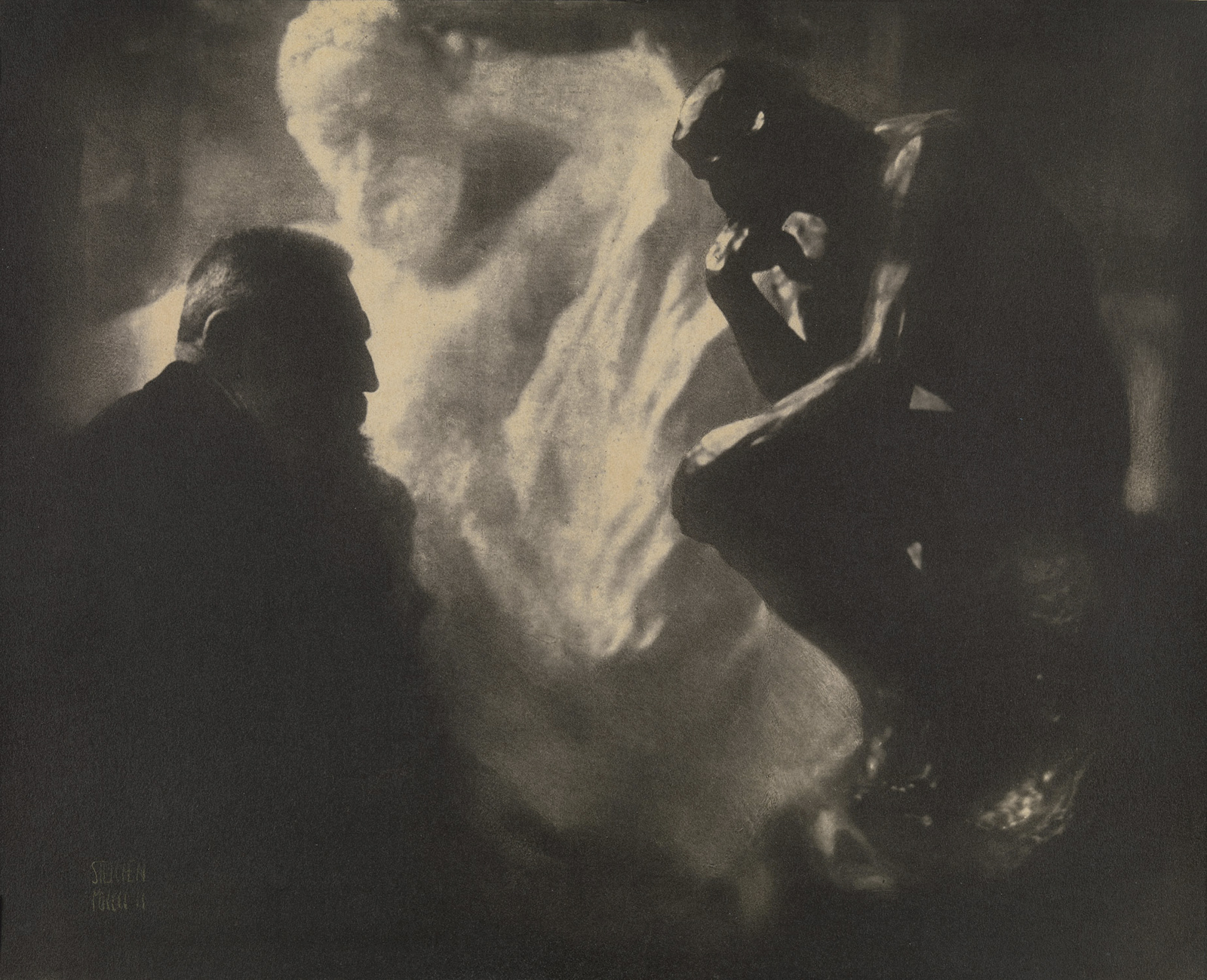
 

Edward Steichen (American 1879-1973) 'Rodin The Thinker' 1902


Edward Steichen (American, 1879-1973)
Rodin – Le Penseur (The Thinker)
1902
Gelatin-carbon print
The J. Paul Getty Museum, Los Angeles


Sarah Choate Sears (American, 1858-1935) '[Julia Ward Howe]' about 1890


Sarah Choate Sears (American, 1858-1935)
[Julia Ward Howe]
about 1890
Platinum print
23.5 × 18.6cm (9 1/4 × 7 5/16 in.)
The J. Paul Getty Museum, Los Angeles


Julia Ward Howe (May 27, 1819 – October 17, 1910) was an American poet and author, known for writing “The Battle Hymn of the Republic” and the original 1870 pacifist Mother’s Day Proclamation. She was also an advocate for abolitionism and a social activist, particularly for women’s suffrage.


Sarah Choate Sears (American, 1858-1935) 'John Singer Sargent' about 1890


Sarah Choate Sears (American, 1858-1935)
John Singer Sargent
about 1890
Gelatin silver print
The J. Paul Getty Museum, Los Angeles


Although John Singer Sargent was the most famous American portrait painter of his time, he apparently did not like to be photographed. The few photographs that exist show him at work, as he is here, sketching and puffing on a cigar. His friend Sarah Choate Sears, herself a painter of some note, drew many of her sitters for photographs from the same aristocratic milieu as Sargent did for his paintings.

Text from the J. Paul Getty website


Nadar [Gaspard Félix Tournachon] (French, 1820-1910) '[Sarah Bernhardt as the Empress Theodora in Sardou's "Theodora"]' Negative 1884; print and mount about 1889


Nadar (Gaspard Félix Tournachon) (French, 1820-1910)
[Sarah Bernhardt as the Empress Theodora in Sardou’s “Theodora”]
Negative 1884; print and mount about 1889
Albumen silver print
14.6 × 10.5 cm (5 3/4 × 4 1/8 in.)
The J. Paul Getty Museum, Los Angeles


J. Wood (American, active New York, New York 1870s-1880s) 'L.P. Federmeyer' 1879


J. Wood (American, active New York, New York 1870s-1880s)
L.P. Federmeyer
1879
Albumen silver print
14.8 × 10 cm (5 13/16 × 3 15/16 in.)
The J. Paul Getty Museum, Los Angeles
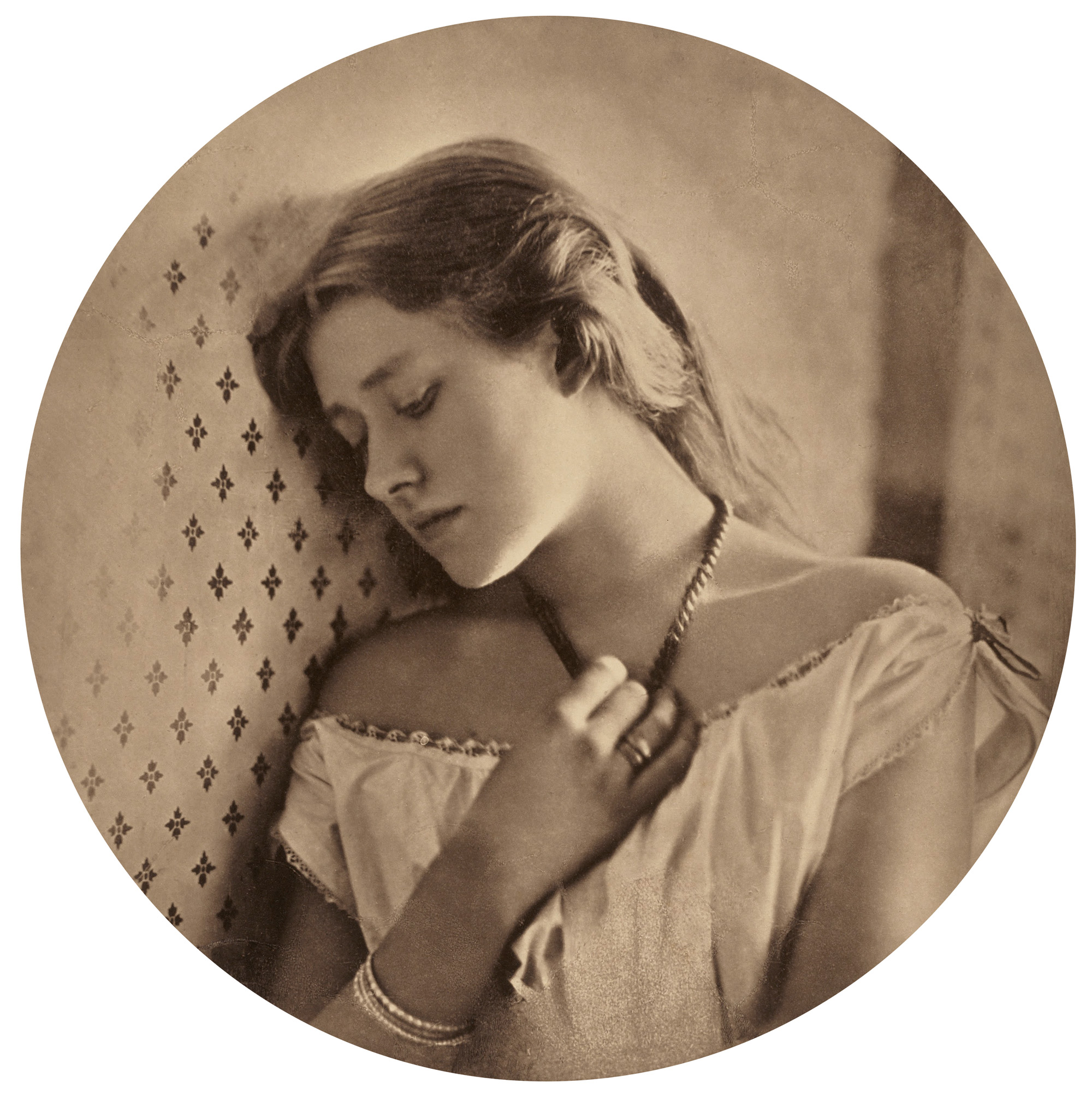
 

Julia Margaret Cameron (British born India, 1815-1879) 'Ellen Terry at Age Sixteen' 1864


Julia Margaret Cameron (British born India, 1815-1879)
Ellen Terry at Age Sixteen
Negative 1864; print about 1875
Carbon print
24.1cm (9 1/2 in.)
The J. Paul Getty Museum, Los Angeles


This image of Ellen Terry (1847-1928) is one of the few known photographs of a female celebrity by Julia Margaret Cameron. Terry, the popular child actress of the British stage, was sixteen years old when Cameron made this image. This photograph was most likely taken just after she married the eccentric painter, George Frederick Watts (1817-1904), who was thirty years her senior. They spent their honeymoon in the village of Freshwater on the Isle of Wight where Cameron resided.

Cameron’s portrait echoes Watt’s study of Terry titled Choosing (1864, National Portrait Gallery, London). As in the painting, Terry is shown in profile with her eyes closed, an ethereal beauty in a melancholic dream state. In this guise, Terry embodies the Pre-Raphaelite ideal of womanhood rather than appearing as the wild boisterous teenager she was known to be. The round (“tondo”) format of this photograph was popular among Pre-Raphaelite artists.

Cameron titled another print of this image Sadness (see 84.XZ.186.52), which may suggest the realisation of a mismatched marriage. Terry’s anxiety is plainly evident – she leans against an interior wall and tugs nervously at her necklace. The lighting is notably subdued, leaving her face shadowed in doubt. In The Story of My Life (1909), Terry recalls how demanding Watts was, calling upon her to sit for hours as a model and giving her strict orders not to speak in front of distinguished guests in his studio.

This particular version was printed eleven years after Cameron first made the portrait. In order to distribute this image commercially, the Autotype Company of London rephotographed the original negative after the damage had been repaired. The company then made new prints using the durable, non-fading carbon print process. Thus, this version is in reverse compared to Sadness. Terry’s enduring popularity is displayed by the numerous photographs taken of her over the years. Along with the two portraits by Cameron, the Getty owns three more of Terry by other photographers.

Adapted from Julian Cox. Julia Margaret Cameron, In Focus: Photographs from the J. Paul Getty Museum (Los Angeles: J. Paul Getty Museum, 1996), 12. ©1996 The J. Paul Getty Museum; with additions by Carolyn Peter, J. Paul Getty Museum, Department of Photographs, 2019.


Charles DeForest Fredricks (American, 1823-1894) '[Mlle Pepita]' 1863


Charles DeForest Fredricks (American, 1823-1894)
[Mlle Pepita]
1863
Albumen silver print
9 × 5.4cm (3 9/16 × 2 1/8 in.)
The J. Paul Getty Museum, Los Angeles


André Adolphe-Eugène Disdéri (French, 1819-1889) '[Rosa Bonheur]' 1861-1864


André Adolphe-Eugène Disdéri (French, 1819-1889)
[Rosa Bonheur]
1861-1864
Albumen silver print
8.4 × 5.2cm (3 5/16 × 2 1/16 in.)
The J. Paul Getty Museum, Los Angeles


Rosa Bonheur, born Marie-Rosalie Bonheur (16 March 1822 – 25 May 1899), was a French artist, mostly a painter of animals (animalière) but also a sculptor, in a realist style. Her best-known paintings are Ploughing in the Nivernais, first exhibited at the Paris Salon of 1848, and now at the Musée d’Orsay in Paris, and The Horse Fair (in French: Le marché aux chevaux), which was exhibited at the Salon of 1853 (finished in 1855) and is now in the Metropolitan Museum of Art, in New York City. Bonheur was widely considered to be the most famous female painter of the nineteenth century.

Text from the Wikipedia website


Mathew B. Brady (American, about 1823-1896) 'Walt Whitman' about 1870


Mathew B. Brady (American, about 1823-1896)
Walt Whitman
about 1870
Albumen silver print
14.6 x 10.3cm
The J. Paul Getty Museum, Los Angeles


Mathew B. Brady (American, about 1823-1896) 'Robert E. Lee' 1865


Mathew B. Brady (American, about 1823-1896)
Robert E. Lee
1865
Albumen silver print
The J. Paul Getty Museum, Los Angeles


John Robert Parsons (British, about 1826-1909) '[Portrait of Jane Morris (Mrs. William Morris)]' Negative July 1865; print after 1900


John Robert Parsons (British, about 1826-1909)
[Portrait of Jane Morris (Mrs. William Morris)]
Negative July 1865; print after 1900
Gelatin silver print
22.9 × 19.2cm (9 × 7 9/16 in.)
The J. Paul Getty Museum, Los Angeles


Nadar [Gaspard Félix Tournachon] (French, 1820-1910) 'George Sand (Amandine-Aurore-Lucile Dupin), Writer' c. 1865


Nadar (Gaspard Félix Tournachon) (French, 1820-1910)
George Sand (Amandine-Aurore-Lucile Dupin)
about 1865
Albumen silver print
The J. Paul Getty Museum, Los Angeles


Amandine-Aurore-Lucile Dudevant, née Dupin, took the pseudonym George Sand in 1832. She was a successful Romantic novelist and a close friend of Nadar, and during the 1860s he photographed her frequently. Her writing was celebrated for its frequent depiction of working-class or peasant heroes. She was also a woman as renowned for her romantic liaisons as her writing; here she allowed Nadar to photograph her, devoid of coquettish charms but nevertheless a commanding presence.

This portrait is a riot of textural surfaces. The sumptuous satin of Sand’s gown and silken texture of her hair have a rich tactile presence. Her shimmering skirt melts into the velvet-draped support on which she leans, creating a visual triangle with the careful centre part of her wavy hair. The portrait details the exquisite laces, beads, and buttons of her gown, but her face, the apex of the triangle, is out of focus. Sand was apparently unable to remain perfectly still throughout the exposure, and the slight blurring of her facial features erases the unforgiving details that the years had drawn upon her.

Text from the J. Paul Getty website


Alexander Gardner (American born Scotland, 1821-1882) 'President Lincoln, United States Headquarters, Army of the Potomac, near Antietam, October 4, 1862'


Alexander Gardner (American born Scotland, 1821-1882)
President Lincoln, United States Headquarters, Army of the Potomac, near Antietam, October 4, 1862
1862
Albumen silver print
21.9 x 19.7cm (8 5/8 x 7 3/4 in.)
The J. Paul Getty Museum, Los Angeles


Twenty-six thousand soldiers were killed or wounded in the Battle of Antietam on September 17, 1862, after which Confederate General Robert E. Lee was forced to retreat to Virginia. Just two weeks after the victory, President and Commander-in-Chief Abraham Lincoln conferred with General McClernand and Allan Pinkerton, Chief of the nascent Secret Service, who had organised espionage missions behind Confederate lines.

Lincoln stands tall, front and centre in his stovepipe hat, his erect and commanding posture emphasised by the tent pole that seems to be an extension of his spine. The other men stand slightly apart in deference to their leader, in postures of allegiance with their hands covering their hearts. The reclining figure of the man at left and the shirt hanging from the tree are a reminder that, although this is a formally posed picture, Lincoln’s presence did not halt the camp’s activity, and no attempts were made to isolate him from the ordinary circumstances surrounding the continuing military conflict.

Text from the J. Paul Getty website


Alexander Gardner (American born Scotland, 1821-1882) 'President Lincoln, United States Headquarters, Army of the Potomac, near Antietam, October 4, 1862' (detail)


Alexander Gardner (American born Scotland, 1821-1882)
President Lincoln, United States Headquarters, Army of the Potomac, near Antietam, October 4, 1862 (detail)
1862
Albumen silver print
21.9 x 19.7cm (8 5/8 x 7 3/4 in.)
The J. Paul Getty Museum, Los Angeles


Pierre Louis Pierson (French, 1822-1913) 'Napoleon III and the Prince Imperial' about 1859


Pierre Louis Pierson (French, 1822-1913)
Napoleon III and the Prince Imperial
about 1859
Albumen silver print from a wet collodion glass negative
21 × 16cm (8 1/4 × 6 5/16 in.)
The J. Paul Getty Museum, Los Angeles


The Prince Imperial, son of Napoleon III, sits strapped securely into a seat on his horse’s back, a model subject for the camera. An attendant at the left steadies the horse so that the little prince remains picture-perfect in the centre of the backdrop erected for the photograph. The horse stands upon a rug that serves as a formalising element, making the scene appear more regal. The Emperor Napoleon III himself stands off to the right in perfect profile, supervising the scene with his dog and forming a framing mirror-image of the horse and attendant on the other side.

Pierre-Louis Pierson placed his camera far enough back from the Prince to capture the entire scene and all the players, but this was not the version sold as a popular carte-de-visite. The carte-de-visite image was cropped so that only the Prince upon his horse was visible.

Text from the J. Paul Getty website


Nadar [Gaspard Félix Tournachon] (French, 1820-1910) 'Alexander Dumas [père] (1802-1870) / Alexandre Dumas' 1855


Nadar (Gaspard Félix Tournachon) (French, 1820-1910)
Alexander Dumas [père] (1802-1870) / Alexandre Dumas
1855
Salted paper print
Image (rounded corners): 23.5 x 18.7cm (9 1/4 x 7 3/8 in.)
The J. Paul Getty Museum, Los Angeles
Public domain


The writer Alexander Dumas was Nadar’s boyhood idol. Nadar’s father had published Dumas’s first novel and play, and a portrait of Dumas hung in young Nadar’s room. The son of a French revolutionary general and a black mother, Dumas arrived in Paris from the provinces in 1823, poor and barely educated. Working as a clerk, he educated himself in French history and began to write. In 1829 he met with his first success; with credits including The Three Musketeers and The Count of Monte Cristo, published in 1844 and 1845, respectively, his fame and popularity were assured.

Nadar was the first photographer to use photography to enhance the sitter’s reputation. Given Dumas’s popularity, this mounted edition print, signed and dedicated by him, was likely intended for sale.

Dumas is represented as a lively, vibrant man. The self-restraint of his crossed hands, resting on a chair that disappears into the shadows, seems like an attempt to contain an undercurrent of boundless energy that threatened to ruin the necessary stillness of the pose and appears to have found an outlet through Dumas’s hair. Around the time of this sitting, the prolific Dumas and Nadar were planning to collaborate on a theatrical spectacle, which was ultimately never staged.

Text from the J. Paul Getty website


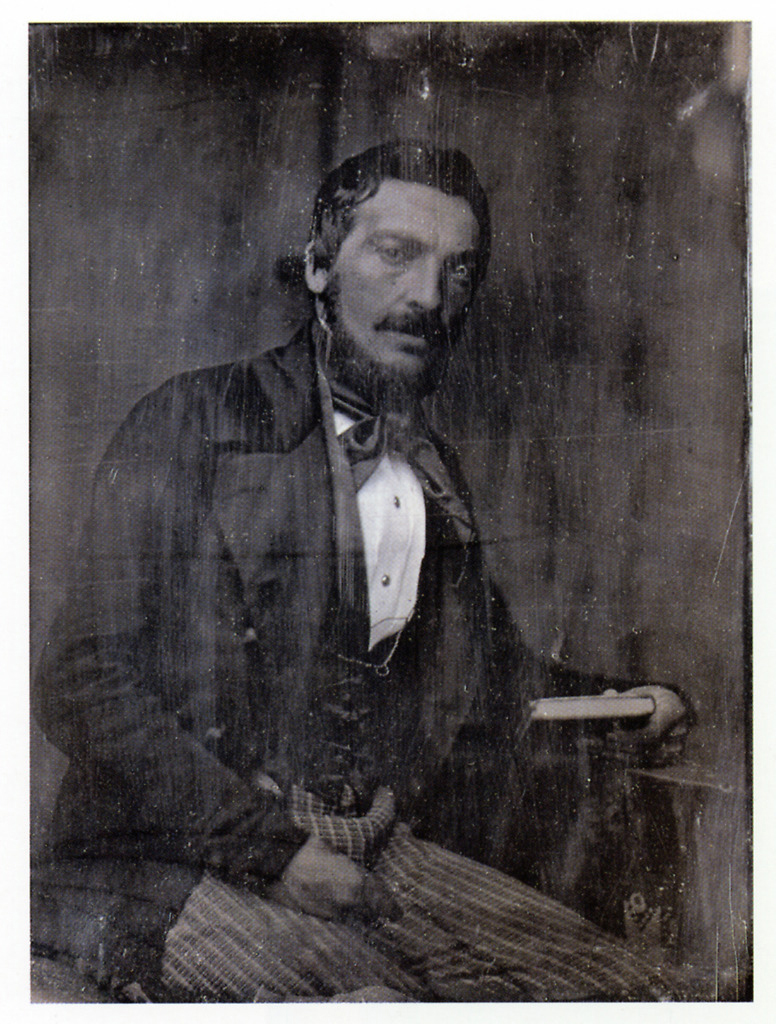
Unknown maker (American) 'Portrait of Edgar Allan Poe' late May - early June 1849


Unknown maker (American)
Portrait of Edgar Allan Poe
1849
Daguerreotype
The J. Paul Getty Museum, Los Angeles
Public domain


“A noticeable man clad in black, the fashion of the times, close-buttoned, erect, forward looking, something separate in his bearing … a beautifully poetic face.” ~ Basil L. Gildersleeve to Mary E. Phillips, 1915 (his childhood recollection of Poe)


Many of Edgar Allan Poe’s contemporaries described him as he appears in this portrait: a darkly handsome and intelligent man who possessed an unorthodox personality. Despite being acknowledged as one of America’s greatest writers of poetry and short stories, Poe’s life remains shrouded in mystery, with conflicting accounts about poverty, alcoholism, drug use, and the circumstances of his death in 1849. Like his life, Poe’s poems and short stories are infused with a sense of tragedy and mystery. Among his best-known works are: The RavenAnnabel Lee, and The Fall of the House of Usher.

This daguerreotype was made several months before Poe’s death at age 40. After his wife died two years earlier in 1847, Poe turned to two women for support and companionship. He met Annie Richmond at a poetry lecture that he gave when visiting Lowell, Massachusetts. Although she was married, they developed a deep, mutual affection. Richmond is thought to have arranged and paid for this portrait sitting. Poe is so forcibly portrayed that historians have described his appearance as disheveled, brooding, exhausted, haunted, and melancholic.

For reasons that are not entirely clear, relatively few daguerreotypes of notable poets, novelists, or painters have survived from the 1840s, and some of the best we have are by unknown makers. The art of the daguerreotype was one in which the sitter’s face usually took priority over the maker’s name, and many daguerreotypists failed to sign their works. This is the case with the Getty’s portrait of Poe.

Adapted from getty.edu, Interpretive Content Department, 2009; and Weston Naef, The J. Paul Getty Museum Handbook of the Photographs Collection (Los Angeles: J. Paul Getty Museum, 1995), 35. © 1995 The J. Paul Getty Museum.


Charles Richard Meade (American, 1826-1858) 'Portrait of Louis-Jacques-Mandé Daguerre' 1848


Charles Richard Meade (American, 1826-1858)
Portrait of Louis-Jacques-Mandé Daguerre
1848
Daguerreotype, hand-coloured
The J. Paul Getty Museum, Los Angeles
Public domain


By New Year’s Day of 1840 – little more than one year after William Henry Fox Talbot had first displayed his photogenic drawings in London and just four to five months after the first daguerreotypes had been exhibited in Paris at the Palais d’Orsay in conjunction with a series of public demonstrations of the process – Daguerre’s instruction manual had been translated into at least four languages and printed in at least twenty-one editions. In this way, his well-kept secret formula and list of materials quickly spread to the Americas and to provincial locations all over Europe. Photography became a gold rush-like phenomenon, with as much fiction attached to it as fact.

Nowhere was the daguerreotype more enthusiastically accepted than in the United States. Charles R. Meade was the proprietor of a prominent New York photographic portrait studio. He made a pilgrimage to France in 1848 to meet the founder of his profession and while there became one of the very few people to use the daguerreotype process to photograph the inventor himself.

A daguerreotype was (and is) created by coating a highly polished silver plated sheet of copper with light sensitive chemicals such as chloride of iodine. The plate is then exposed to light in the back of a camera obscura. When first removed from the camera, the image is not immediately visible. The plate must be exposed to mercury vapours to “bring out” the image. The image is then “fixed” (or “made permanent on the plate”) by washing it in a bath of hyposulfite of soda. Finally it is washed in distilled water. Each daguerreotype is a unique image; multiple prints cannot be made from the metal plate.

Adapted from Weston Naef, The J. Paul Getty Museum Handbook of the Photographs Collection (Los Angeles: J. Paul Getty Museum, 1995), 33, © 1995 The J. Paul Getty Museum; with additions by Carolyn Peter, J. Paul Getty Museum, Department of Photographs, 2019.


The J. Paul Getty Museum
1200 Getty Center Drive
Los Angeles, California 90049

Opening hours:
Daily 10am – 5pm

The J. Paul Getty Museum website

LIKE ART BLART ON FACEBOOK

Back to top

Exhibition: ‘Behind the Curtain – The Aesthetics of the Photobooth’ at the Musée de l’Elysée, Lausanne

Exhibition dates: February – 20th May 2012

Artists:
 Jean-Michel Alberola, Louis Aragon, Marie-Berthe Aurenche, Richard Avedon, Alain Baczynsky, Jared Bark, Marc Bellini, Jacques-André Boiffard, André Breton, Hansjürg Buchmeier, Anita Cruz-Eberhard, Sabine Delafon, Anne Deleporte, Paul Eluard, Max Ernst, Michael Fent, Michel Folco, Valentine Fournier, Lee Friedlander, Näkki Goranin, Jeff Grostern, Susan Hiller, Dick Jewell , Svetlana Khachaturova, Jürgen Klauke, Jacques-Henri Lartigue, Naomi Leibowitz, Leon Levinstein, Annette Messager, Willy Michel, Daniel Minnick, Suzanne Muzard, Raynal Pellicer, Mathieu Pernot, Steven Pippin, Jacques Prévert, Raymond Queneau, Arnulf Rainer, Timm Rautert, Bruno Richard, Gerhard Richter, Thomas Ruff, Michel Salsmann, Tomoko Sawada, Joachim Schmid, Cindy Sherman, Lorna Simpson, Dimitri Soulas, Yves Tanguy, Amanda Tetrault, Roland Topor, Franco Vaccari, Andy Warhol, Gillian Wearing, Jan Wenzel, David Wojnarowicz and the group Fluxus.


Franco Vaccari. '(Exhibition in real time: leave a photographic sign of your passage on these walls)' 1972 (detail)


Franco Vaccari (Italian, b. 1936)
Esposizione in tempo reale num. 4: Lascia su queste pareti una traccia fotografica del tuo passaggio (Exhibition in real time: leave a photographic sign of your passage on these walls) (detail)
1972
Collage of photobooths mounted on cardboard, gelatin silver prints
45.5 x 58.5cm
© Franco Vaccari, property of the Artist


This is one exhibition I wish I could really see in person. Such a fascinating subject!

The images are timeless, contextless and quite beguiling. The exhibition questions the aesthetics of the photobooth through six major themes: The Booth, Automatism, The Strip, Who Am I?, Who Are You?, Who Are We?. In Melbourne there are still two black and white photobooths outside the Elizabeth Street exit of Flinders Street railway station, standing there like silent sentinels of a bygone age. I remember when I was younger queueing to have my photograph taken, for student cards and for my first passport. You needed two nearly identical black and white shoulder up portraits, no smiling, no glasses on. Now you just go to the chemist for your colour renditions. The magic and the fun has gone.

The whole performance has the illusion of the cinematic. You queue to get in, drawing back the curtain and closing it behind you, as they close the doors of the cinema. The privacy of the booth, not in darkness but behind a curtain that shields your face from prying eyes but leaves the lower half of your body exposed. Behind where you will be sitting another curtain – drawn or open? What background do you want? You adjust the seat up and down so that your face is at the correct level with the mark on the screen, enter your money and wait. The red light comes on, you (com)pose yourself and a couple of seconds later: flash! Your eyes try to recover in time for the next red light: flash!

Time seems to slow down and almost stop between the flashes of light. The experience of your performance before the screen possesses such a visceral, tense, gut feel but also a disembodied feeling. I never know how I am going to look on the cinematic film strip, not at 24 frames a second, but at 4 frames per minute. What happens to the time in between? Standing outside the booth waiting for a strip of paper with your impression on it, not knowing what the images are going to be like, whether the development of the image in such a short space of time has worked correctly – and the smell of the chemicals on the paper as you handle the still wet strip. Magic…

Dr Marcus Bunyan


Many thankx to the Musée de l’Elysée for allowing me to publish the photographs in the posting. Please click on the photographs for a larger version of the image.


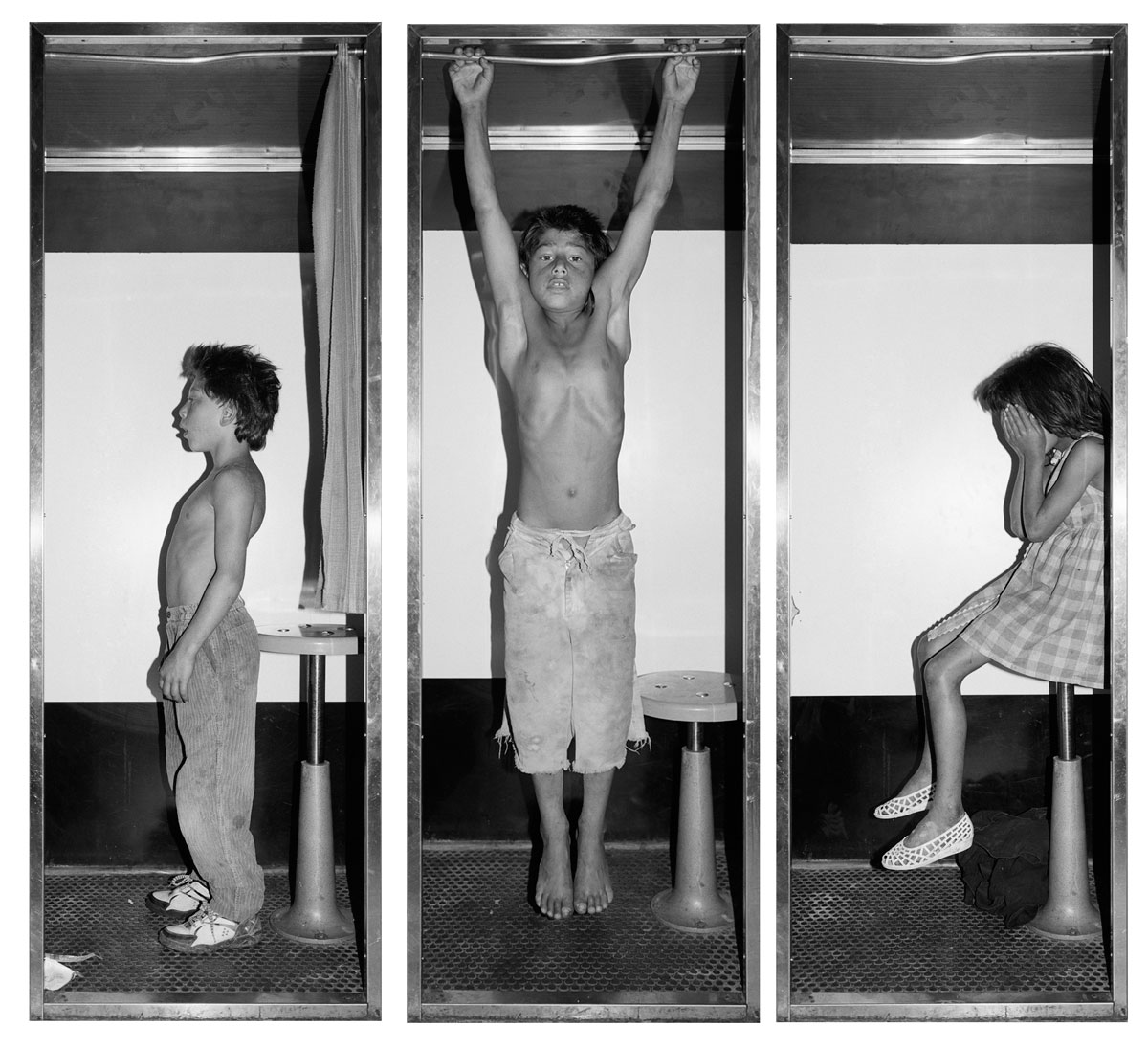
Mathieu Pernot (French, b. 1970) 'Jonathan, Mickael, Priscilla, Photobooth' 1996


Mathieu Pernot (French, b. 1970)
Jonathan, Mickael, Priscilla, cabine du photomaton (Jonathan, Mickael, Priscilla, Photobooth)
1996
Three gelatin silver prints
540 x 195cm
© Mathieu Pernot / collection Musée de l’Élysée, Lausanne


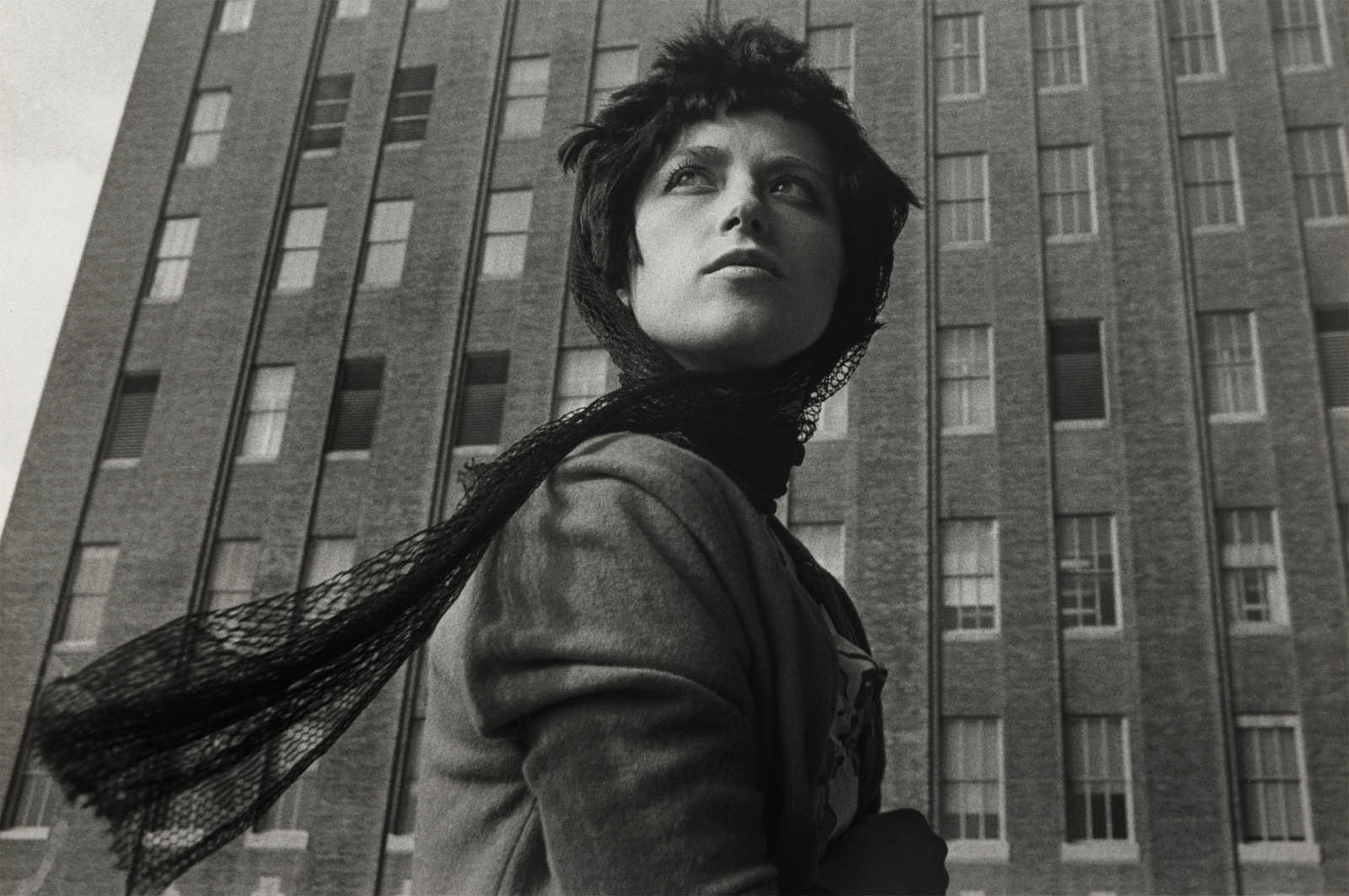
Cindy Sherman (American, b. 1954) 'Untitled' 1975


Cindy Sherman (American, b. 1954)
Untitled
1975
Gelatin silver print
30.5 x 20.4cm
© Courtesy of the Artist, Metro Pictures, collection Musée de l’Elysée, Lausanne


Gillian Wearing (English, b. 1963) 'Self Portrait at 17 Years Old' 2003


Gillian Wearing (English, b. 1963)
Self Portrait at 17 Years Old
2003
Framed C-type print
115.5 x 92cm
Collection of Contemporary Art Fundació ‘La Caixa’, Barcelone
© Gillian Wearing, courtesy Maureen Paley, London


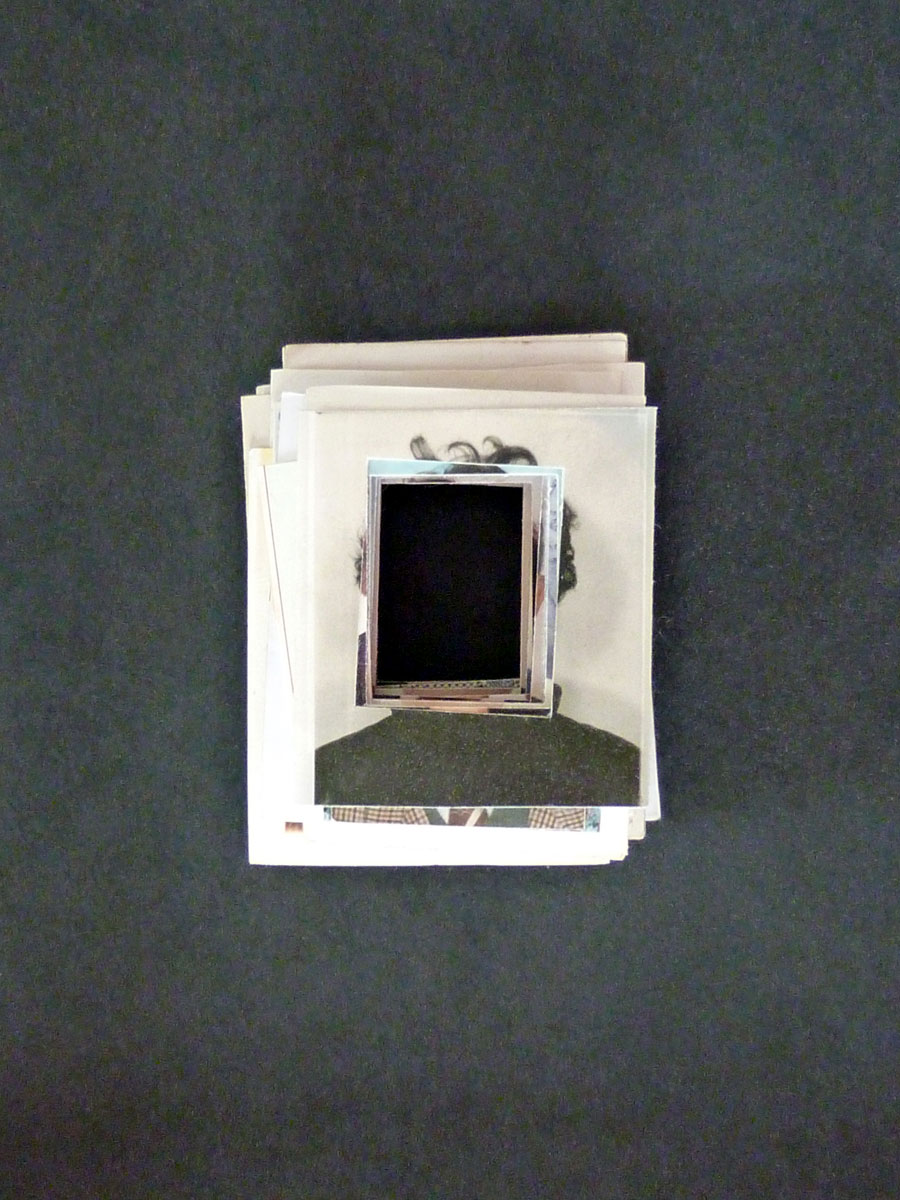
Anne Deleporte (French, b. 1960) 'I.D. Stack #6' 1992


Anne Deleporte (French, b. 1960)
I.D. Stack #6
1992
Stack of photobooth portraits, gelatin silver and chromogenic prints
6 x 5 x 3cm
© Anne Deleporte


When the first photobooths were set up in Paris in 1928, the Surrealists used them heavily and compulsively. In a few minutes, and for a small price, the machine offered them, through a portrait, an experience similar to automatic writing. Since then, generations of artists have been fascinated by the concept of the photobooth. From Andy Warhol to Arnulf Rainer, Thomas Ruff, Cindy Sherman and Gillian Wearing, many used it to play with their identity, tell stories, or simply create worlds.

Behind the Curtain – the Aesthetics of the Photobooth, an exhibition created by the Musée de l’Elysée, is the first to focus on the aesthetics of the photobooth. It is divided into six major themes: the booth, the automated process, the strip, who am I ?, who are you?, who are we? Provider of standardised legal portraits, it is the ideal tool for introspection and reflection on others, whether individually or in groups. By bringing together over 600 pieces made on different media (photographs, paintings, lithographs and videos ) from sixty international artists, the exhibition reveals the influence of the photobooth within the artistic community, from its inception to the present day.

The exhibition questions the aesthetics of the photobooth through six major themes.

The Booth

An isolated space, closed in as if it were some sort of modern confessional, the photobooth is an invitation to the most intimate revelations. Generally located in public spaces-subway station, department store or train station-it also offers an extraordinary observation point onto the urban hustle and bustle. It is a world in between the intimate and the public, the inside and the outside, the debarred and the open.

Automatism

From the Surrealists to the most contemporary artists, all have been fascinated by the automatism of the photobooth. The machine does the work. The author vanishes behind the almighty technology. Malfunction can occur at times. The result is a form of poetry of the automatism made visible in its faults, failures or blunders.

The Strip

As a series of juxtaposed images, the strip recreates spatial or temporal continuities. It reconstructs improbable spaces: a closer look shows that, in fact, the adjacent image is the following image. Through this succession of images, the photobooth holds, as if folded into it, the principle of the cinema. Putting images side by side is already telling a story.

Who am I?

Identity is embodied within the space of the photobooth. It is a space for self-staging, where social, ethnic, sexual, community or any other identity can be strengthened or undone. One can pretend to ascertain one’s naked identity through the mirror of the photobooth, or on the contrary, by pulling faces or in disguise, to establish metamorphoses of the self. The photobooth is the ideal introspective tool.

Who are you?

The photobooth is not only a place suitable for self-reflection, it is also a place in which the other can be questioned, in particular through the legal identification system that delivers what is commonly referred to as ‘ID’. In devoting oneself to the compulsive and bulimic collecting of photobooth strips, one can also get lost in the faces of others.

Who are we?

While it allows us to reflect upon our own identity, or other people’s, the photobooth is also an opportunity to ponder about the nature of the couple, or the group. Inside the booth, some build their image through the mirror of the other, or of others; they pose in pairs or more, thus asserting their affiliation to a social entity. The photobooth reinforces our gregarious instinct; it embodies collective identity.

With works by Jacques-Henri Lartigue, Willy Michel, Lorna Simpson, Amanda Tetrault and the collection of albums of purikuras (see photograph below: in Japan, the name purikuras refers to a photo sticker booth or the product of such a photo booth. The name is a shortened form of the registered trademark Purinto Kurabu (プリント倶楽部). The term derives from the English print club. Jointly developed by Atlus and Sega, the first purikura machines were sold in July 1995).

Press release from the Musée de l’Elysée website


Anonymous. 'Collection of albums of purikuras' 1995-2010


Anonymous
Collection of albums of purikuras
1995-2010
Collection of digital images printed on stickers mounted in booklets
Various sizes from 9 x 12.8cm to 11.9 x 14.5cm
© Kenji Hirasawa (art collector)


Andy Warhol (American, 1928-1987) 'Frances Lewis' 1966


Andy Warhol (American, 1928-1987)
Frances Lewis
1966
Acrylic and silkscreen on linen, 12 panels
162.5 x 167.6cm
© Collection The Sydney and Frances Lewis Foundation / 2011
The Andy Warhol Foundation for the Visual Arts, Inc. / Artists Rights Society ( ARS ), New York


Jan Wenzel (German, b. 1972) 'Vohang (Curtain)' 2009


Jan Wenzel (German, b. 1972)
Vohang (Curtain)
2009
From the series Instant History
Montage of four photobooth prints, chromogenic prints
41.7 x 31.7cm
© Jan Wenzel / Kleinschmidt Fine Photographs


Yves Tanguy (French, 1900-1955) 'Selfportrait in a Photobooth' c. 1929


Yves Tanguy (French, 1900-1955)
Selfportrait in a Photobooth
c. 1929
Gelatin silver print
20.5 x 3.8cm
© Collection Musée de l’Elysée, Lausanne / 2011, ProLitteris, Zurich


Anonymous. 'Walter and I at the BIG SLIDE' c. 1970


Anonymous
Walter and I at the BIG SLIDE
c. 1970
Gelatin silver print
c. 20.5 x 3.8cm
© Collection Näkki Goranin


Arnulf Rainer (Austrian, b. 1929) 'No title (Automatenportraits)' August 1969

Arnulf Rainer (Austrian, b. 1929) 'No title (Automatenportraits)' August 1969

Arnulf Rainer (Austrian, b. 1929) 'No title (Automatenportraits)' August 1969


Arnulf Rainer (Austrian, b. 1929)
No title (Automatenportraits)
August 1969
Courtesy Galerie m Bochum
© Arnulf Rainer


Alain Baczynsky (Belgian, b. 1953) 'Regardez, il va peut-être se passer quelque chose …' 1979-1981


Alain Baczynsky (Belgian, b. 1953)
Regardez, il va peut-être se passer quelque chose… (Look, maybe it will be something going on…)
1979-1981
© Collection Centre Pompidou, dist. RMN


Susan Hiller (American-born artist who lived in London, 1940-2019) 'Midnight, Euston' 1983


Susan Hiller (American-born artist who lived in London, 1940-2019)
Midnight, Euston
1983
© Susann Hiller; Arts Council Collection, Southbank Centre, London


Jan Wenzel (German, b. 1972) 'Bastler II' 2000


Jan Wenzel (German, b. 1972)
Bastler II
2000
© Jan Wenzel & Kleinschmidt Fine Photographs


Musée de l’Elysée
18, avenue de l’Elysée CH
1014 Lausanne
Phone: + 41 21 316 99 11

Opening hours
Wednesday – Monday 10am – 6pm
Closed Tuesdays

Musée de l’Elysée website

LIKE ART BLART ON FACEBOOK

Back to top

Exhibition: ‘Andy Warhol: Polaroids / MATRIX 240’ at Berkeley Art Museum and Pacific Film Archive, University of California

Exhibition dates: 27th January – 20th May 2012

PLEASE NOTE: This posting contains nude photographs. If you do not like please do not look!


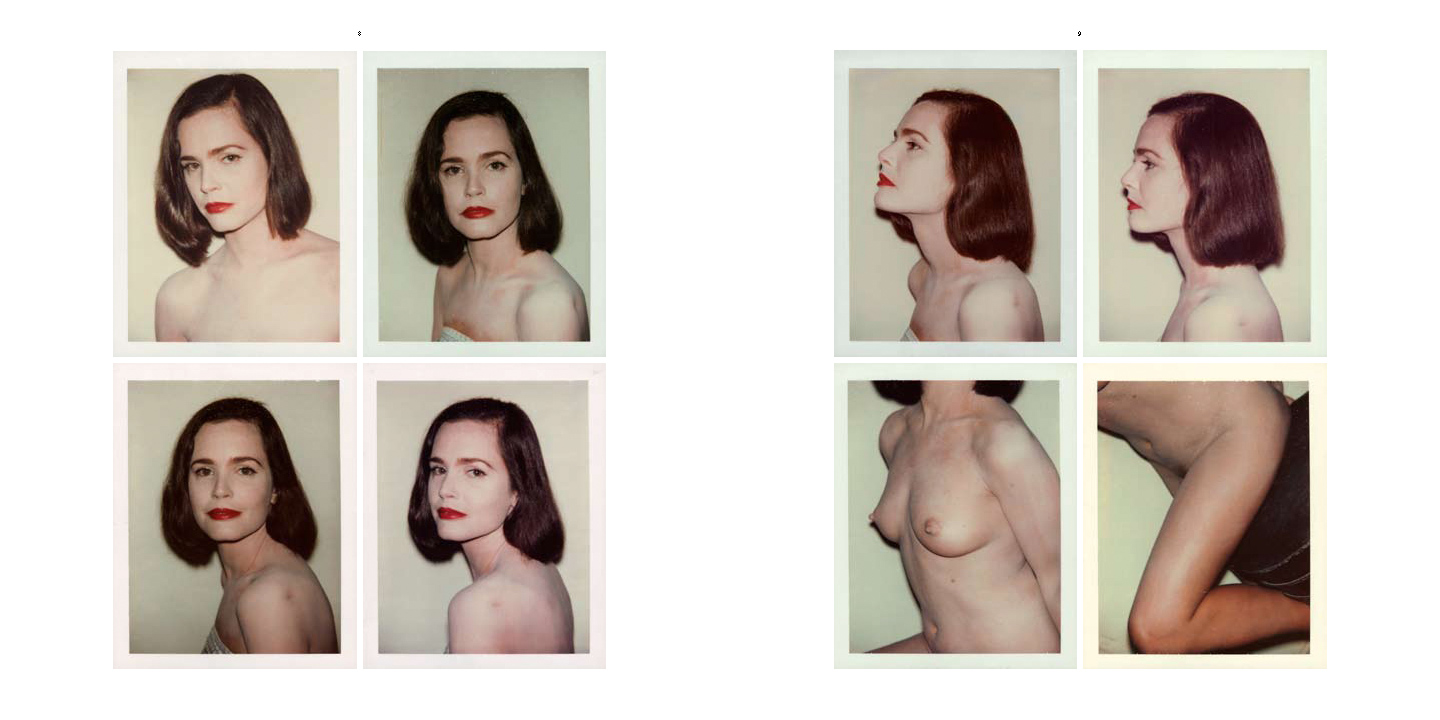
Andy Warhol (American, 1928-1987) 'Untitled' Pages 8 and 9 of The Andy Warhol Photographic Legacy Program, Vol. III


Andy Warhol (American, 1928-1987)
Untitled
Pages 8 and 9 of The Andy Warhol Photographic Legacy Program, Vol. III
of The Andy Warhol Foundation for the Visual Arts Twenty-Year Report, 1987–2007


ONE PERSON has found one of the images below offensive; so just for them please note that his posting has a PENIS and A-RRRRRR-SE rating. For all others, enjoy another spectacular Andy posting!

Marcus


Many thankx to BAM/PFA for allowing me to publish the photographs in the posting. Please click on the photographs for a larger version of the image (especially the two images directly below). View the complete The Andy Warhol Photographic Legacy Program Vol. III as a pdf (3.7Mb pdf)


“I’ve never met a person I couldn’t call a beauty.”


Andy Warhol


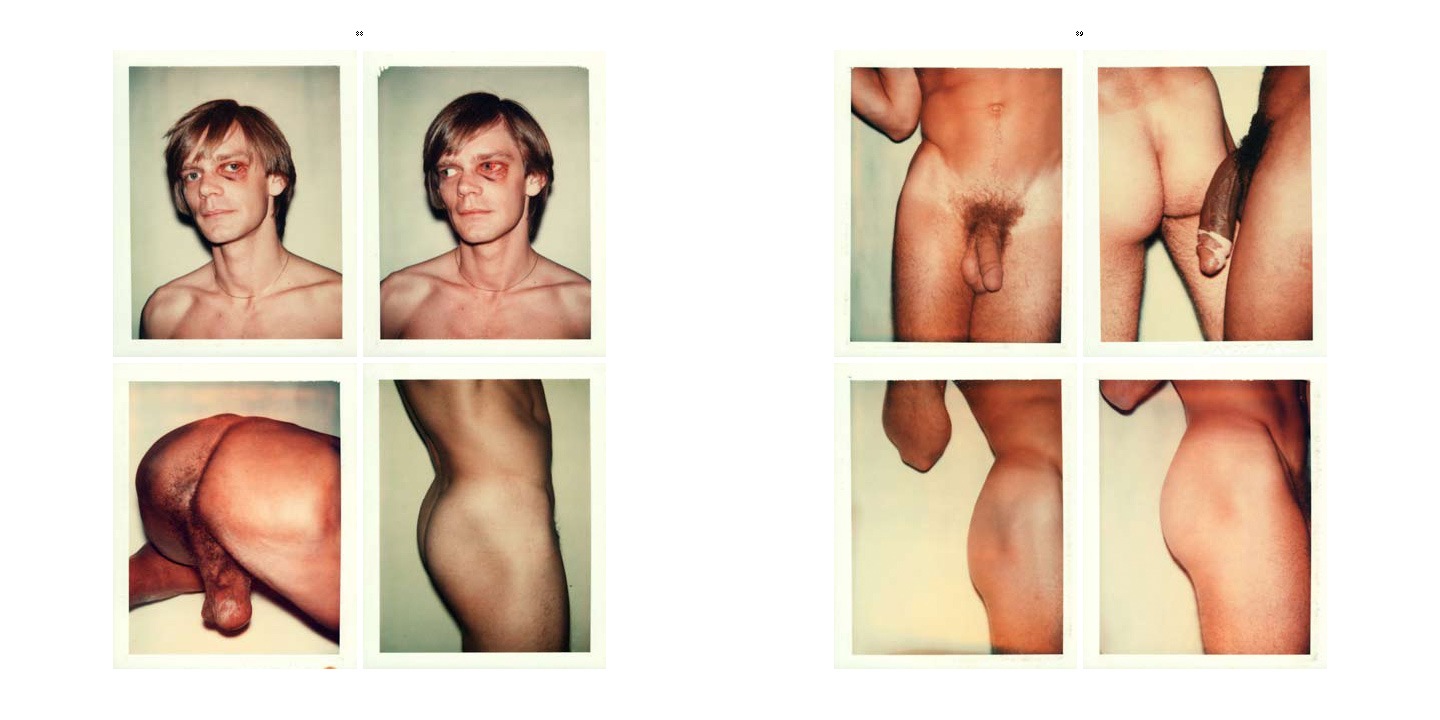
Andy Warhol (American, 1928-1987) 'Untitled' Pages 38 and 39 of The Andy Warhol Photographic Legacy Program, Vol. III


Andy Warhol (American, 1928-1987)
Untitled
Pages 38 and 39 of The Andy Warhol Photographic Legacy Program, Vol. III
of The Andy Warhol Foundation for the Visual Arts Twenty-Year Report, 1987–2007


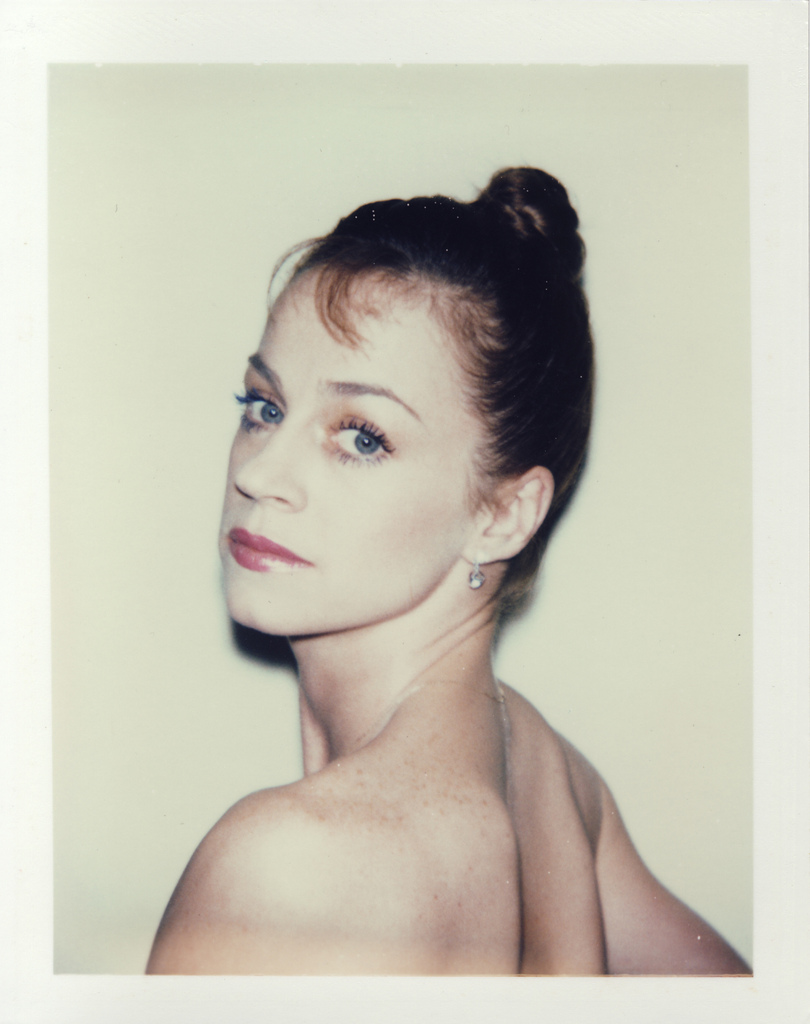
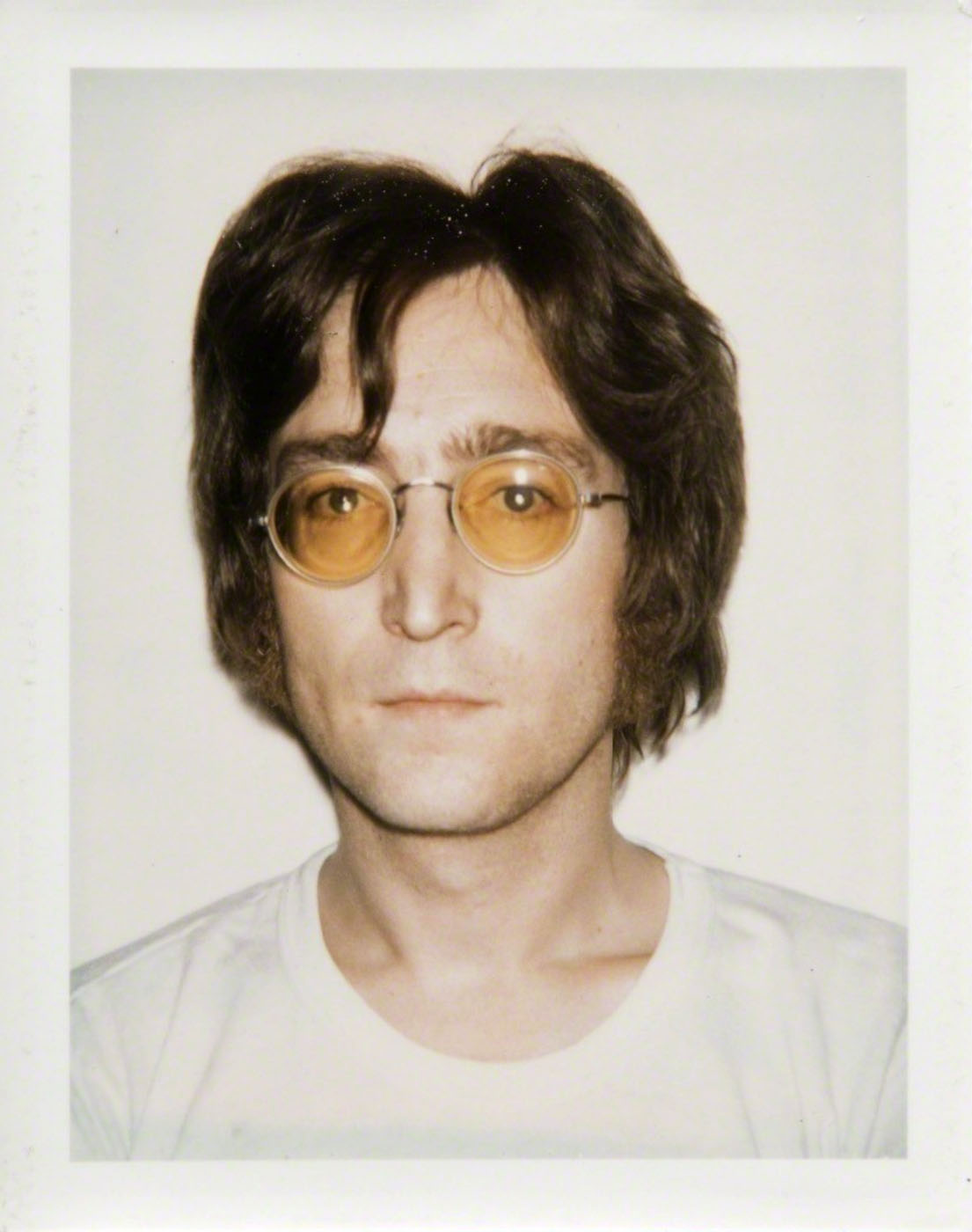
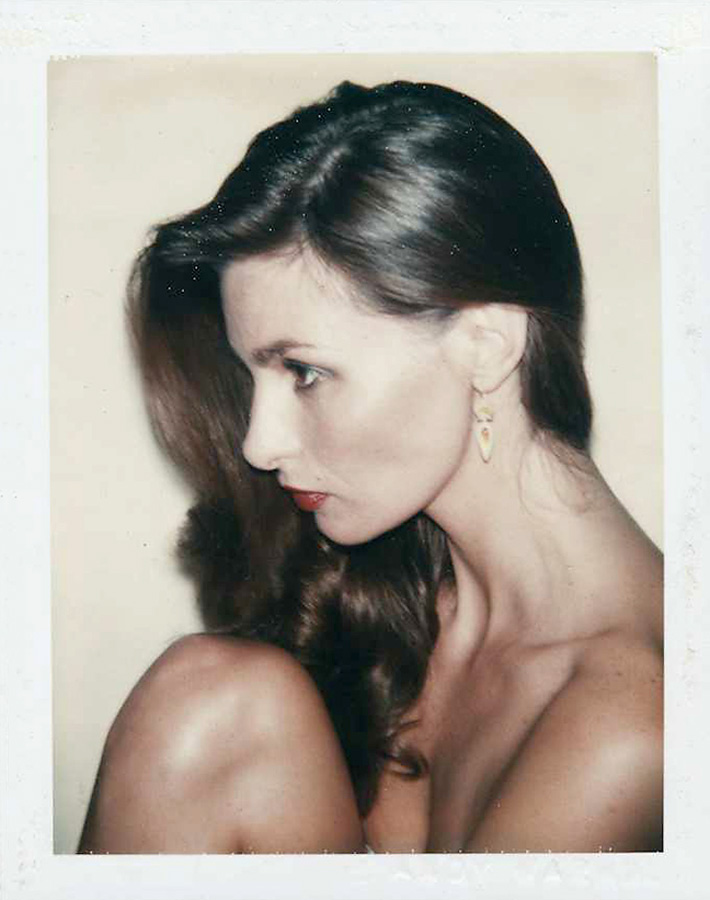
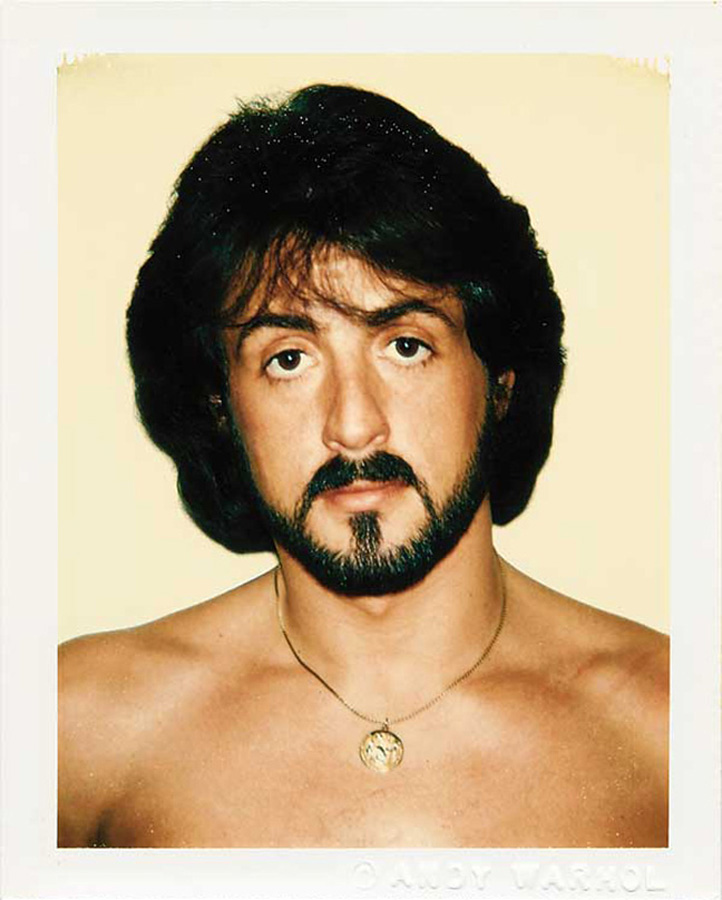
The University of California, Berkeley Art Museum and Pacific Film Archive presents Andy Warhol: Polaroids / MATRIX 240. The exhibition features a selection of Warhol’s Polaroid portraits drawn from an extraordinary gift of The Andy Warhol Foundation for the Visual Arts to the museum. From 1970 to 1987, Warhol, armed with his Polaroid Big Shot camera, captured a wide range of individuals – the royalty, rock stars, executives, artists, patrons of the arts, and athletes who epitomised seventies and eighties high society, but also as many unknown subjects. From January 27 through May 20, 2012, BAM/PFA will feature a group of approximately forty of these photographs, including portraits of Caroline, Princess of Monaco; Diane von Furstenberg; and O.J. Simpson.

Famous for his contributions to Pop Art, Warhol used photography as a central part of his art-making process. Before turning to fine art, Warhol worked in advertising and commercial art, experiences that informed his approach to portraiture. In 1962, he debuted his first silkscreen paintings of celebrities, serialising pictures he pulled from magazines and press photos. In addition to using found images, Warhol eventually incorporated his own photography into his practice. In 1969 he launched inter/View magazine, which featured his photos of celebrities. By the 1970s and 1980s, portrait commissions were a major source of his income, and many of his Polaroids would serve as the basis for these works.

While each of the images in Andy Warhol: Polaroids is unique, the consistency of composition, poses, and plain white backdrop equalises the superstars and lesser-known subjects. To Warhol, they were all beautiful people. But even within this uniform staging, we see the artist finding numerous ways to create memorable, varied, and iconic compositions. Though these photos may be small in size, together the Warhol Polaroids provide a glimpse into the artistic process of one of the twentieth century’s most important artists.

From 1970 to 1987 Andy Warhol took scores of Polaroid and black-and-white photographs, the vast majority of which were never seen by the public. These images often served as the basis for his commissioned portraits, silk-screen paintings, drawings, and prints. In 2007, to commemorate its twentieth anniversary, the Andy Warhol Foundation for the Visual Arts launched the Andy Warhol Photographic Legacy Program. Designed to give a broad public greater access to Warhol’s photographs, the program donated over 28,500 of Warhol’s original Polaroids and gelatin silver prints to more than 180 college and university museums and galleries across the country. Each institution received a curated selection of over one hundred Polaroids and fifty black-and-white prints.

The number of images he took at each session varied as greatly as the figures he photographed. Repetition, a recurring motif in Warhol’s paintings, plays both a conceptual and practical role in his photography. By making several Polaroids, he had more material from which to work. By shooting at length, more about the sitter was exposed. Seen all together, the Polaroids destabilise the iconic status that a Warhol image assumes when displayed singly. On its own, a Polaroid image is fully identified with the artwork that ultimately grew out of it; the face depicted becomes a kind of signifier for larger cultural concepts of beauty, power, and worth.

Text adapted from “Andy Warhol’s Photographic Legacy,” in The Andy Warhol Photographic Legacy Program, Vol. III of The Andy Warhol Foundation for the Visual Arts Twenty-Year Report, 1987-2007 (New York: The Andy Warhol Foundation for the Visual Arts, Inc, 2007), 4-5.

View the complete Vol. III as a pdf (3.7Mb pdf)

Text and press release from the BAM/PFA website


Andy Warhol (American, 1928-1987) 'Billy Squier' 1982


Andy Warhol (American, 1928-1987)
Billy Squier
1982
Polacolor 2
4 1/4 x 3 3/8 in
Gift of the The Andy Warhol Center for the Visual Arts
© The Andy Warhol Center for the Visual Arts


Andy Warhol (American, 1928-1987) 'Daryl Lillie' 11/1978


Andy Warhol (American, 1928-1987)
Daryl Lillie
11/1978
Polacolor 2
4 14 x 3 3/8 in
© The Andy Warhol Center for the Visual Arts


Andy Warhol (American, 1928-1987) 'Heather Watts' after June 1986


Andy Warhol (American, 1928-1987)
Heather Watts
after June 1986
Polacolor ER
4 1/4 x 3 3/8 in
© The Andy Warhol Center for the Visual Arts


From 1970 to 1987 Andy Warhol took thousands of Polaroid pictures, the vast majority of which were never seen by the public. These images often served as the basis for his commissioned portraits, silkscreen paintings, drawings, and prints. Warhol captured a wide range of individuals with his Polaroid Big Shot camera. The royalty, rock stars, industrialists, artists, patrons of the arts, and athletes who epitomised 1970s and 1980s high society, as well as unknown sitters, are represented with a sense of dignity and verve. Warhol was interested in a new definition of “Society” that emerged in this period. In the introduction to the 1979 publication Andy Warhol’s Exposures, the artist wrote:

“Now it doesn’t matter if you came over on the Mayflower, so long as you can get into Studio 54. Anyone rich, powerful, beautiful, or famous can get into Society. If you’re a few of those things you can really get to the top.”1

Warhol’s images not only documented, but participated in, the creation of this new social world, satisfying both the need of his subjects to be seen and the desire of the viewer to gain access to this milieu through the act of looking. Warhol worked in advertising and commercial art before turning to fine art, experiences that informed his approach to portraiture. In 1962, he debuted his first silk-screen paintings of celebrities, serialising pictures appropriated from magazines or press photos of the time. In addition to employing found images, Warhol eventually incorporated photography into his practice and, in 1969, started a magazine (originally called inter/VIEW) that often featured his own photographs of celebrities. By the 1970s and 1980s, portrait commissions became a main source of his income.

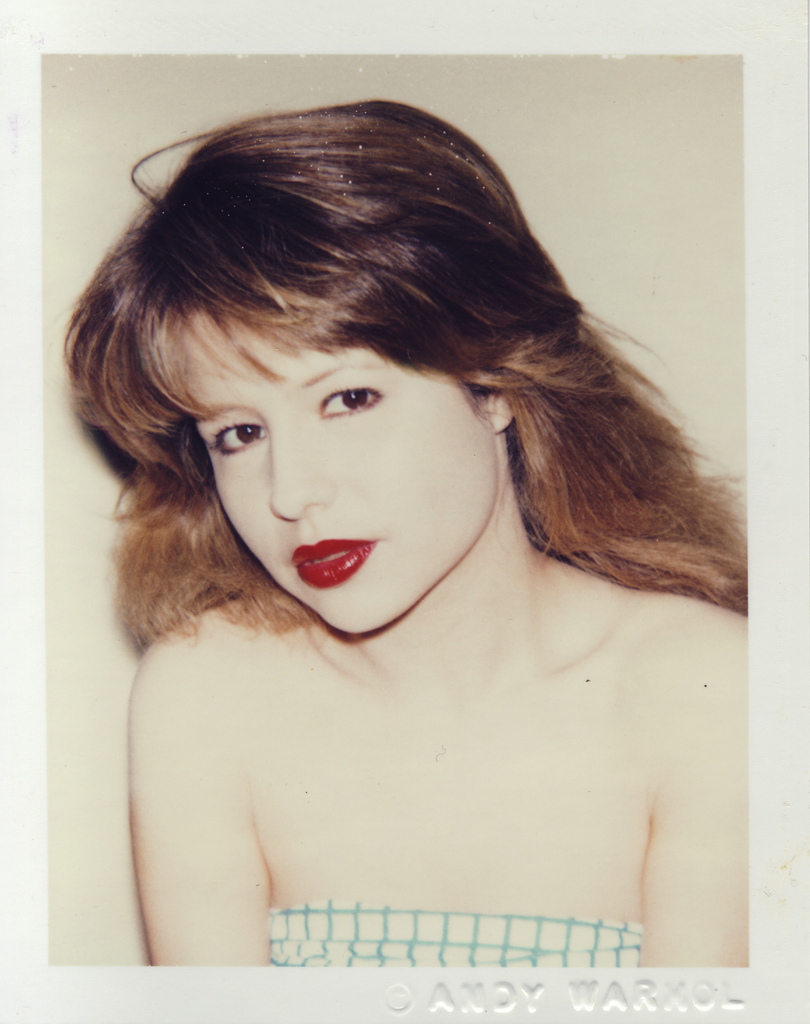
Warhol’s Polaroids are strikingly intimate, an effect achieved in part by his personal relationship with the sitters and in part by formal aspects of the images. The artist often provided a luncheon in advance of the photo session, establishing a bond with his subject and a tone for the shoot. In the resulting Polaroids, the sitter is in direct eye contact with Warhol and the camera. The strong sense of immediacy created by the sitter’s open gaze is enhanced by the tight compositions in which the subject, pressed up close to the picture plane, is isolated from any context. A feeling of vulnerability appears in some of the portraits (as suggested by the bared shoulders of Unidentified woman (blond with bangs), for example), indicating a willingness to be exposed as well as the seductive nature of the artist and the photo shoot itself. The closeness forged between photographer and sitter and captured by the camera offers an illusion of sharing these private moments and of entering into Warhol’s circle of beautiful people and their glamorous lives.

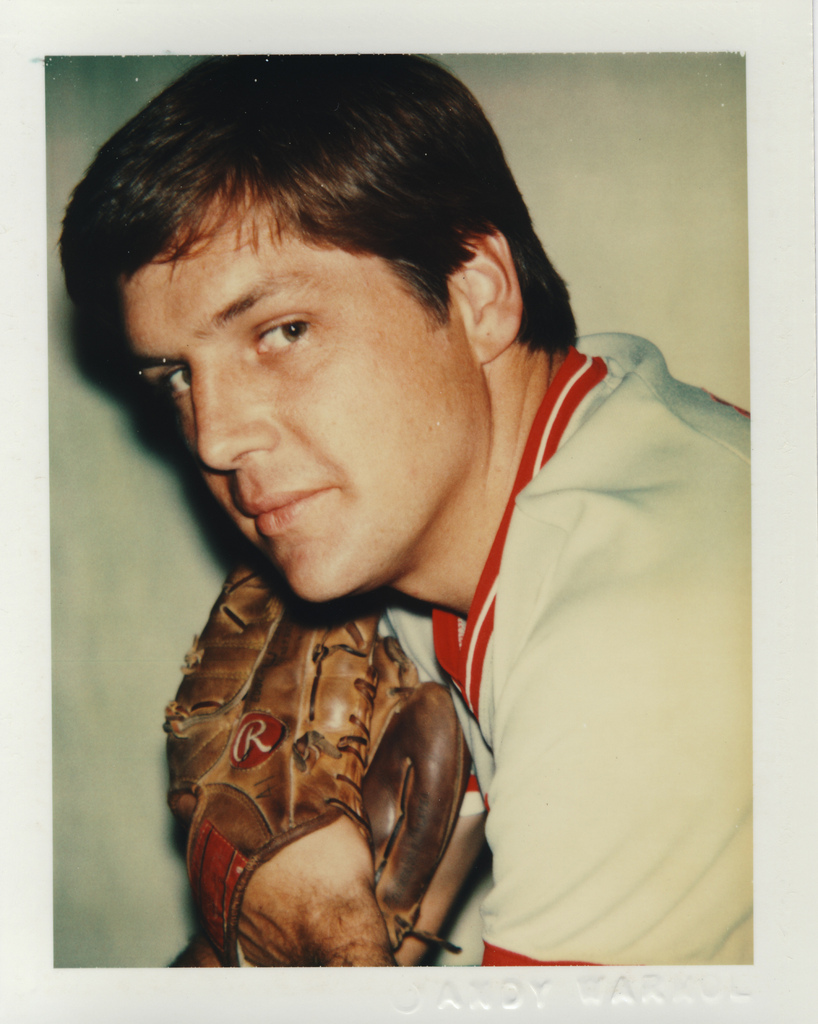
While each image is unique, the consistency of composition, poses, and plain white backdrop equalises the celebrities and the unknown subjects of Warhol’s Polaroids. After all, to Warhol, they were all beautiful people. Polaroids of individuals who are not immediately recognisable pique our curiosity. Who is the enigmatic Frau Buch? Like many of Warhol’s subjects, she is photographed with a prop. The small dog that she hugs may not identify her, but it suggests a dimension of her personality. In other Polaroids, Warhol used props as identifying elements like the attributes in Renaissance portraiture – major-league baseball pitcher Tom Seaver is shown with his mitt and NFL legend O.J. Simpson clutches a football. The teddy bear in the arms of the subject of Unidentified girl (blue t-shirt with teddy bear) represents an aspect childhood that everyone can relate to, although the girl is actually a scion of the new high society: Jade, the daughter of Mick and Bianca Jagger.

Warhol’s Polaroids were designed to be source material for his canvases. He would direct the sitter in a series of poses, which gave the artist ample material from which to create the subsequent silkscreen portraits. Subjects such as fashion designer Diane Von Furstenberg and patron of the arts Daryl Lillie are photographed wearing thick white makeup, black eyeliner, and bright red lipstick that evoke the stage or a high-fashion photo shoot; however, the makeup also served to flatten the images for a smooth effect in the screen-print transfer. The Polaroid Big Shot’s strong flash overexposes many images and increases the contrast, an effect Warhol deployed in the subsequent silkscreens; the flash also seems to catch each sitter – celebrities and unknowns alike – in the sudden glare of a paparazzo’s camera.

Warhol’s Polaroids borrow from paparazzi and high-fashion photography and at the same time elevate an inexpensive, everyday medium to the realm of high art. Warhol embossed his name in capital letters in the lower right-hand border of most of the Polaroids, marking them as a painter would sign a canvas. For Warhol, coming from the world of advertising, this was also a kind of branding. He wrote of Jade Jagger: “She never calls me Andy always Andywarhol, as if it were one word – or a brand name, which I wish it were.”2 Warhol’s portraits confuse the boundaries of advertising and art, high and low, celebrity portraiture and the depiction of everyday people, and even photography and painting. His subjects are perpetually illuminated by the afterimage of a flashbulb, their faces immortalised by Warhol’s style

Fabian Leyva-Barragan, Curatorial Intern
Stephanie Cannizzo, Assistant Curator


1/ Warhol, Andy and Colacello, Bob . Andy Warhol’s Exposures (New York: Andy Warhol Books / Grosset & Dunlop, Inc., 1979), p. 19

2/ Ibid., pp. 28-29


Andy Warhol (American, 1928-1987) 'John Lennon' 1971


Andy Warhol (American, 1928-1987)
John Lennon
1971
Polacolor ER
4 1/4 x 3 3/8 in
Gift of the The Andy Warhol Center for the Visual Arts
© The Andy Warhol Center for the Visual Arts


Andy Warhol (American, 1928-1987) 'Apollonia Von Ravenstein' c. 1979


Andy Warhol (American, 1928-1987)
Apollonia Von Ravenstein
c. 1979
Polacolor ER
4 1/4 x 3 3/8 in
Gift of the The Andy Warhol Center for the Visual Arts
© The Andy Warhol Center for the Visual Arts


Andy Warhol (American, 1928-1987) 'Sylvester Stallone' 2/1980


Andy Warhol (American, 1928-1987)
Sylvester Stallone
2/1980
Polacolor ER
4 1/4 x 3 3/8 in
Gift of the The Andy Warhol Center for the Visual Arts
© The Andy Warhol Center for the Visual Arts


Andy Warhol (American, 1928-1987) 'Pia Zadora' 1983


Andy Warhol (American, 1928-1987)
Pia Zadora
1983
Polacolor ER
4 1/4 x 3 3/8 in
Gift of the The Andy Warhol Center for the Visual Arts
© The Andy Warhol Center for the Visual Arts


Andy Warhol (American, 1928-1987) 'Tom Seaver' 1977


Andy Warhol (American, 1928-1987)
Tom Seaver
1977
Polacolor Type 108
4 14 x 3 3/8 in
Gift of the The Andy Warhol Center for the Visual Arts
© The Andy Warhol Center for the Visual Arts


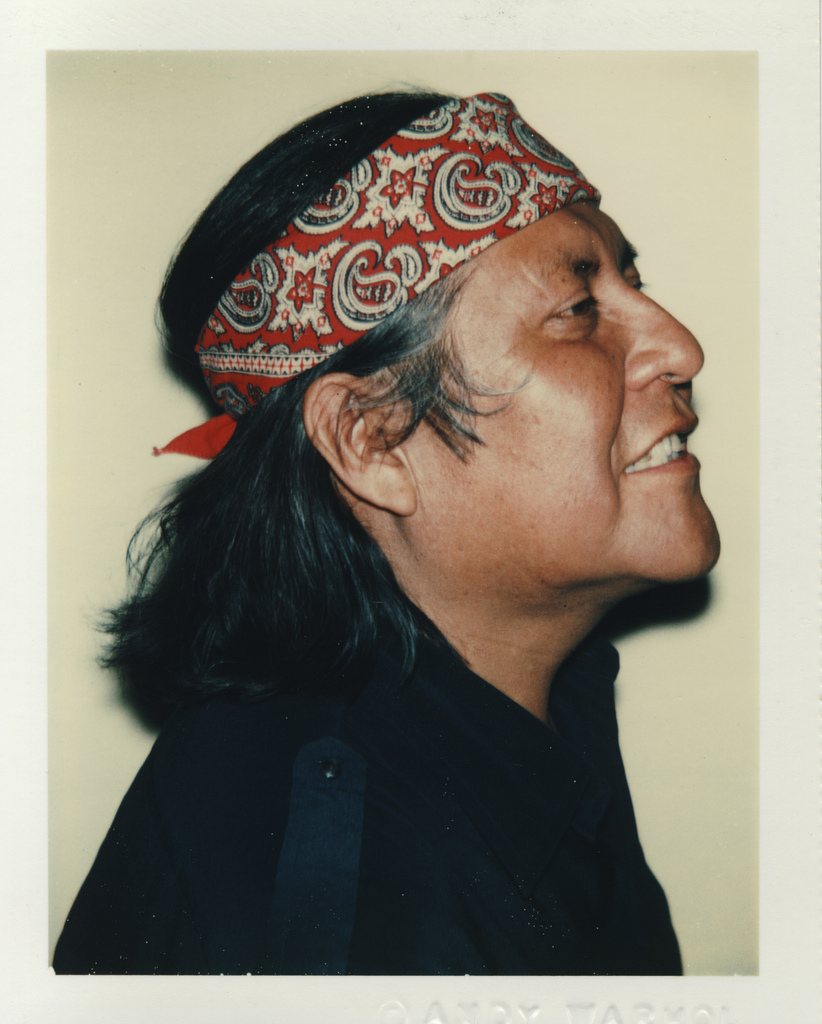
Andy Warhol (American, 1928-1987) 'R.C. Gorman' 1979


Andy Warhol (American, 1928-1987)
R.C. Gorman
1979
Polacolor Type 108
4 1/4 x 3 3/8 in
© The Andy Warhol Center for the Visual Arts


Berkeley Art Museum and Pacific Film Archive

BAMPFA is located at 2155 Center Street
between Oxford Street and Shattuck Avenue, in downtown Berkeley
Phone: (510) 642-0808

Opening hours:
Wednesday – Sunday, 11am – 7pm
Closed Mondays and Tuesdays

Berkeley Art Museum and Pacific Film Archive website

LIKE ART BLART ON FACEBOOK

Back to top

Exhibition: ‘Warhol and Cars: American Icons’ at The Andy Warhol Museum, Pittsburgh

Exhibition dates: 5th February – 13th May 2012


Many thankx to The Warhol Museum for allowing me to publish the photographs of the art in the posting. Please click on the photographs for a larger version of the image.


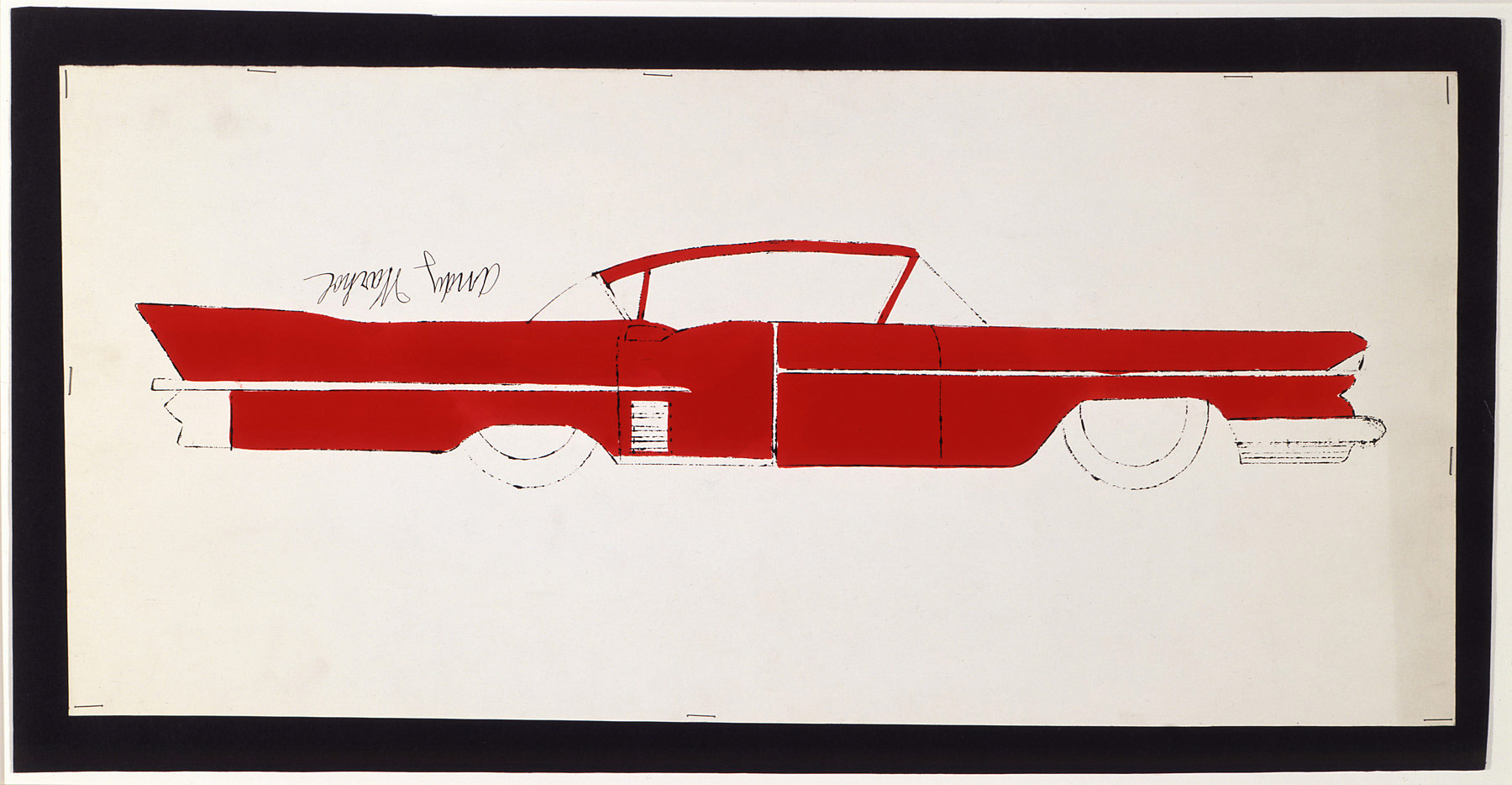
Andy Warhol (American, 1928-1987) 'Car' 1950s


Andy Warhol (American, 1928-1987)
Car (1958 Cadillac Coupe DeVille)
c. 1958
Ink and Dr. Martin’s Aniline dye on Strathmore paper
13 1/4 x 25 5/8 in (33.7 x 65.1cm)
The Andy Warhol Museum, Pittsburgh; Founding Collection, Contribution The Andy Warhol Foundation for the VisualArts, Inc.,
© 2010 The Andy Warhol Foundation for the Visual Arts / Artists Rights Society (ARS), New York


I think of myself as an American artist; I like it here. I think it’s so great. I feel I represent the U.S. in my art but I’m not a social critic: I just paint those objects in my paintings because those are the things I know best… I’ve heard it said that my paintings are as much a part of the fashionable world as clothes and cars.


Andy Warhol, 1966


Andy Warhol (American, 1928-1987) 'Female Fashion Figure' 1950s


Andy Warhol (American, 1928-1987)
Female Fashion Figure (with 1959 Plymouth Sport Fury Convertible)
c. 1959
Ink and Dr. Martin’s Aniline dye on Strathmore paper
20 1/8 x 24 7/8 in (51.1 x 63.2cm)
The Andy Warhol Museum, Pittsburgh; Founding Collection, Contribution The Andy Warhol, Foundation for the Visual Arts, Inc.,
© 2010 The Andy Warhol Foundation for the Visual Arts / Artists Rights Society (ARS), New York


Andy Warhol (American, 1928-1987) '5 Deaths' 1963


Andy Warhol (American, 1928-1987)
5 Deaths
1963
Acrylic and silkscreen ink on canvas
20 1/8 x 30 in (51.1 x 76.2cm)
The Andy Warhol Museum, Pittsburgh; Founding Collection, Contribution The Andy Warhol Foundation for the Visual Arts, Inc.,
© 2010 The Andy Warhol Foundation for the Visual Arts / Artists Rights Society (ARS), New York.


Andy Warhol (American, 1928-1987) 'BMW M1 Art Race Car' 1979


Andy Warhol (American, 1928-1987)
BMW M1 Art Race Car
1979


Andy Warhol (American, 1928-1987) 'BMW M1 Art Race Car' 1979 (detail)


Andy Warhol (American, 1928-1987)
BMW M1 Art Race Car (detail)
1979


Warhol and Cars: American Icons is the first exhibition to examine Warhol’s enduring fascination with automotive vehicles as products of American consumer society. This exhibition features more than forty drawings, paintings, photographs, and related archival material spanning from 1946 to 1986. As one of the most iconic and influential artists of the 20th century, Andy Warhol has helped to define America. His signature images of such American products and celebrities as Campbell’s soup cans, Coca-Cola bottles, Marilyn Monroe, and Elizabeth Taylor have become instantly recognisable. The majority of the work in the exhibition is from The Andy Warhol Museum’s collection.

The exhibition, organised by the Montclair Art Museum in New Jersey, traces the development of Warhol’s work with cars throughout his career. Warhol and Cars highlights include drawing created in the 1940s; works on paper of the 1950s, as well as paintings and prints from the 60s, 70s and 80s. The exhibition is organised chronologically and thematically, tracing the development of Warhol’s work with cars throughout his career. Exhibition highlights include a rare, spontaneous drawing of the 1940s featuring a produce truck operated by Warhol’s brother Paul; works on paper of the 1950s, dating from the era of Warhol’s commercial magazine illustration; and paintings and prints from his important and poignant Car Crash series.

A key work is Twelve Cadillacs, part of a group of nine Warhol car paintings published in the November 1962 issue of Harper’s Bazaar, which commissioned Warhol to make a visual commentary on the phenomenon of the iconic American motor car. The repetition and grid organisation became a central feature of Warhol’s work. For the first time, Twelve Cadillacs will be juxtaposed with potential source images, as well as the related Seven Cadillacs and the hand-painted Lincoln Continental, both of which were also part of the Harper’s Bazaar commission. Also on view will be a related drawing and car model of Cadillacs from the Jean S. and Frederic A. Sharf Collection of American Automobile Art.

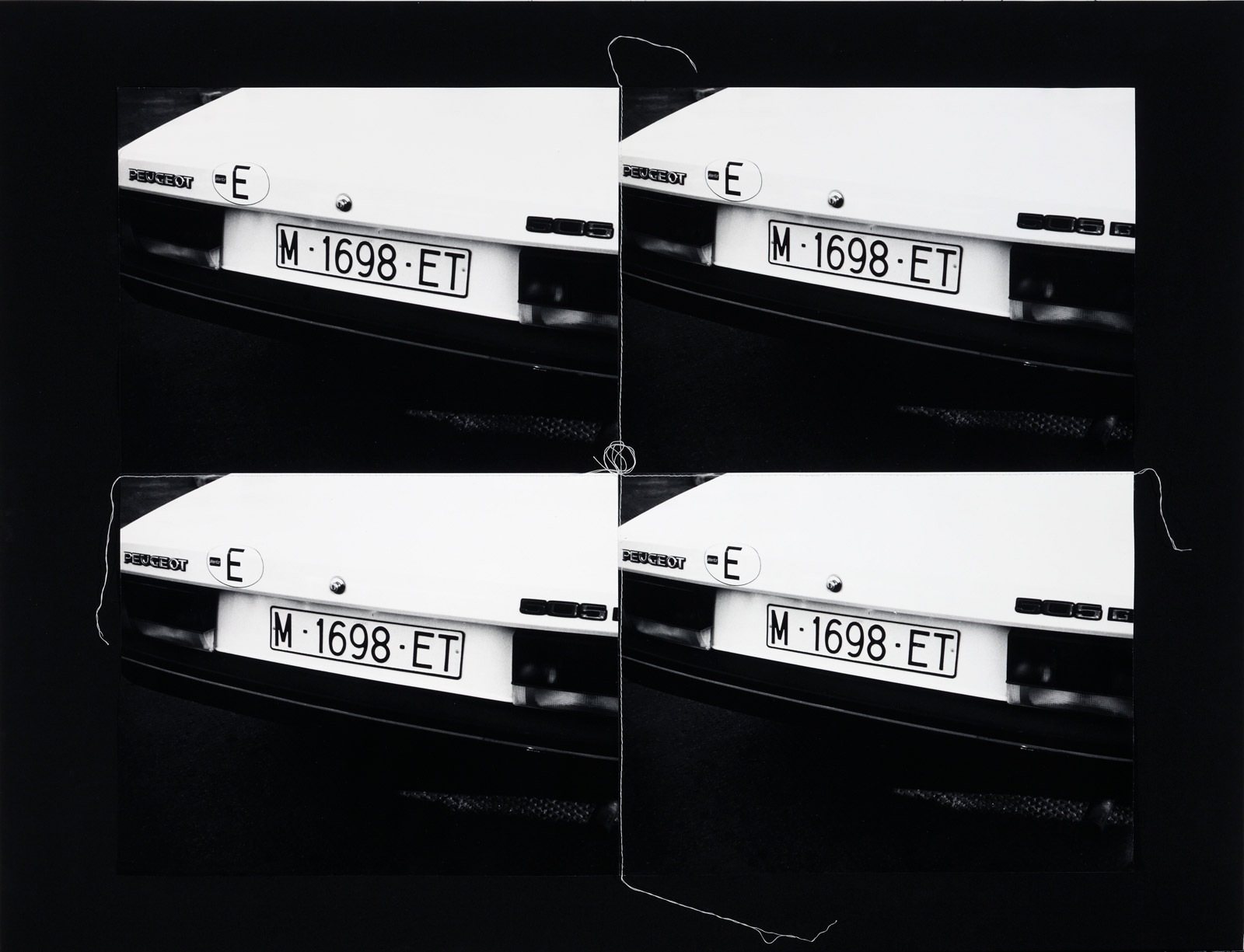
Warhol’s continued engagement with the theme of the automobile is seen in prints and paintings of the 1970s and 1980s based on Volkswagen advertisements, as well as in multiple photographs of European and American cars sewn together with thread into a format evocative of Warhol’s characteristic assembly-line aesthetic. An original BMW M-1 racing car that was hand-painted by Warhol will be on display in the entrance gallery. A film of Warhol painting a BMW in 1979 as part of the BMW Art Race Car Projects introduced by French race car driver Herve Poulin will be on view during the exhibition. The car is part of the BMW Museum’s collection in Munich and was last displayed in the United States at Grand Central Terminal in New York City in 2009.

Press release from The Warhol Museum website


Andy Warhol (American, 1928-87) '1978 BMW 320i Art Car Maquette' 1978


Andy Warhol (American, 1928-1987)
1978 BMW 320i Art Car Maquette
1978


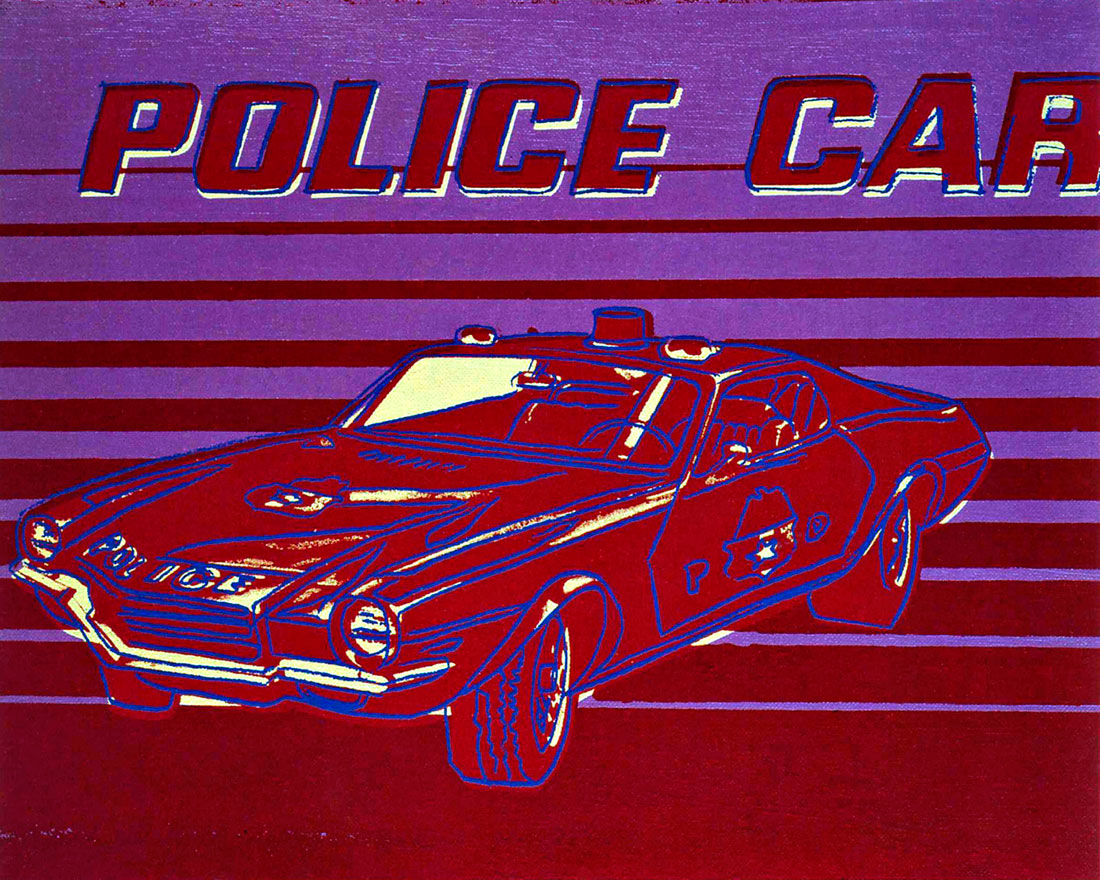
Andy Warhol (American, 1928-1987) 'Police Car' 1983


Andy Warhol (American, 1928-1987)
Police Car
1983
From the series Paintings for Children
Synthetic polymer and silkscreen inks on canvas
The Andy Warhol Museum, Pittsburgh; Founding Collection, Contribution The Andy Warhol Foundation for the Visual Arts, Inc.,
© 2010 The Andy Warhol Foundation for the Visual Arts / Artists Rights Society (ARS), New York.


Andy Warhol (American, 1928-1987) 'European License Plate, 1976-1986' 1986


Andy Warhol (American, 1928-1987)
European License Plate, 1976-1986
1986
© AWF


Andy Warhol (American, 1928-1987) 'Truck' 1985


Andy Warhol (American, 1928-1987)
Truck
1985
© AWF


Andy Warhol (American, 1928-1987) 'Seven Cadillacs' 1962


Andy Warhol (American, 1928-1987)
Seven Cadillacs
1962
Silkscreen ink on linen
56 x 19 in (142.2 x 48.3cm)
The Andy Warhol Museum, Pittsburgh; Founding Collection, Contribution The Andy Warhol Foundation for the Visual Arts, Inc.,
© 2010 The Andy Warhol Foundation for the Visual Arts / Artists Rights Society (ARS), New York.


The Andy Warhol Museum
117 Sandusky Street
Pittsburgh, PA 15212-5890
Phone: 412-237-8300

Opening hours:
Thursday – Monday 10am – 5pm
Tuesday closed

Andy Warhol Museum website

LIKE ART BLART ON FACEBOOK

Back to top

Exhibition: ‘Ladies and Gentlemen: The Camera as a Mirror’ at the Moderna Museet, Malmö, Sweden

Exhibition dates: 18th February 2012 – 22nd April 2012

Curator: Magnus af Petersens

Many thankx to the Moderna Museet for allowing me to publish the photographs in the posting. Please click on the photographs for a larger version of the image.


Cindy Sherman (American, b. 1954) 'Untitled Film Still #56' 1980


Cindy Sherman (American, b. 1954)
Untitled Film Still #56
1980
© Cindy Sherman. Courtesy of the Artist and Metro Pictures


Tracey Moffatt (Australian, b. 1960) 'Something More #1' 1997


Tracey Moffatt (Australian, b. 1960)
Something More #1
1997
Cibachrome print
© Tracey Moffatt/BUS 2012


Samuel Fosso (Cameroon, b. 1962) 'Sans titre. De la série Années 70' 1970-1980


Samuel Fosso (Cameroon, b. 1962)
Sans titre. De la série Années 70
1970-1980
Gelatin silver print
© Samuel Fosso, Courtesy JM Patras/Paris


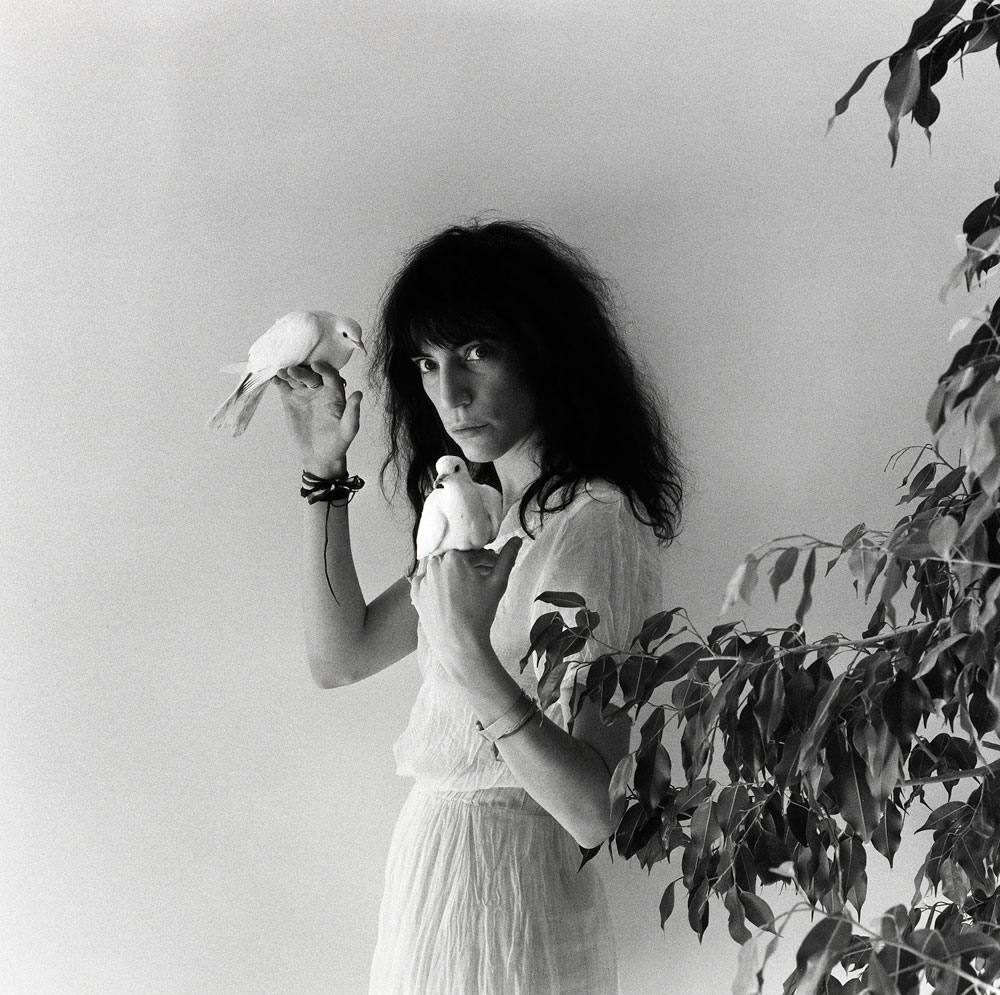
Robert Mapplethorpe (American, 1946-1989) 'Patti Smith' 1979


Robert Mapplethorpe (American, 1946-1989)
Patti Smith
1979
Gelatin silver print
© Robert Mapplethorpe Foundation


Robert Mapplethorpe (American, 1946-1989) 'Self Portrait' 1980


Robert Mapplethorpe (American, 1946-1989)
Self Portrait
1980
Gelatin silver print
© Robert Mapplethorpe Foundation


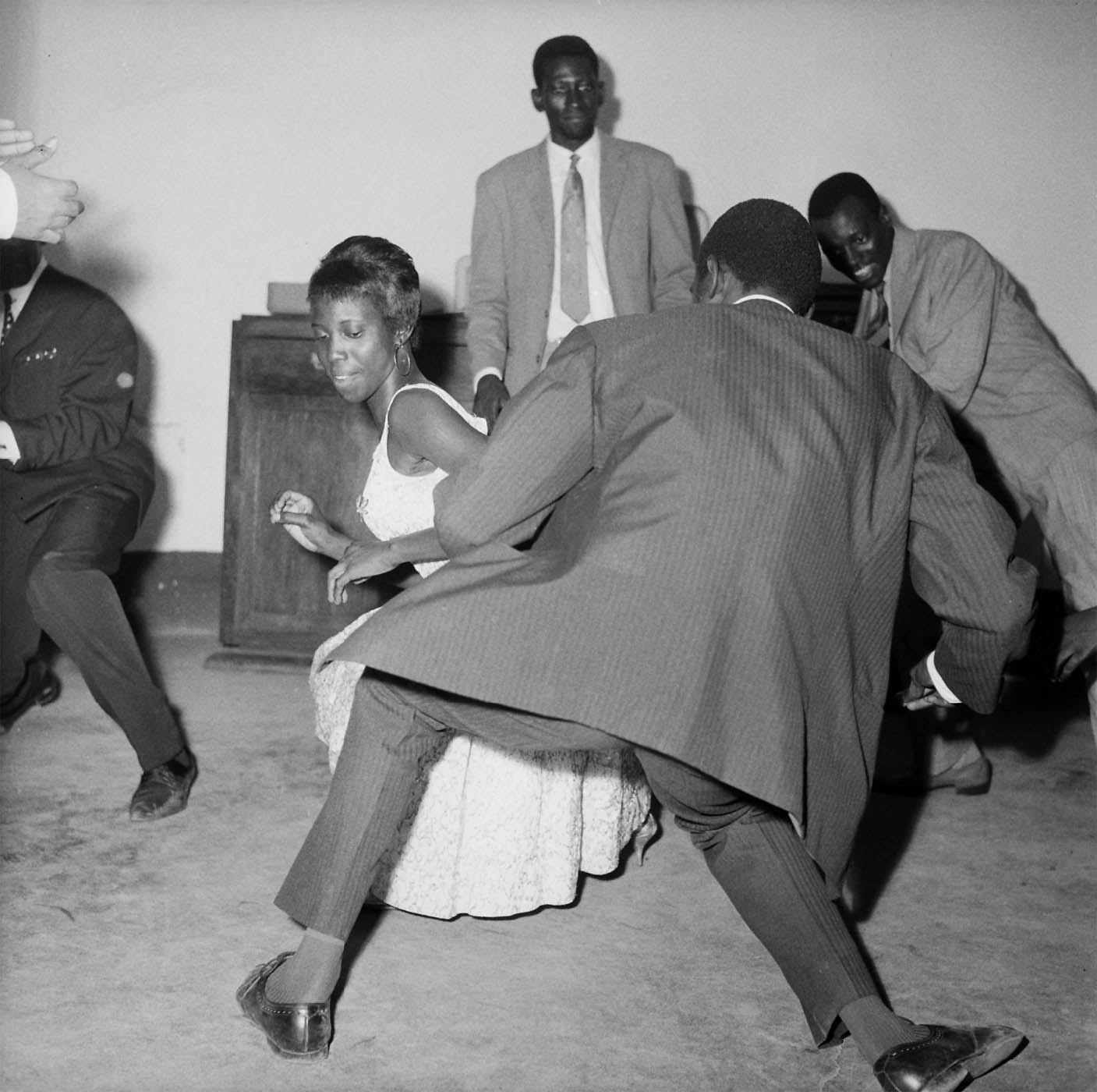
Malick Sidibé (Malian, 1936-2016) 'Danser le Twist' (Dance the Twist) 1965 


Malick Sidibé (Malian, 1936-2016)
Danser le Twist (Dance the Twist)
1965
Gelatin silver print


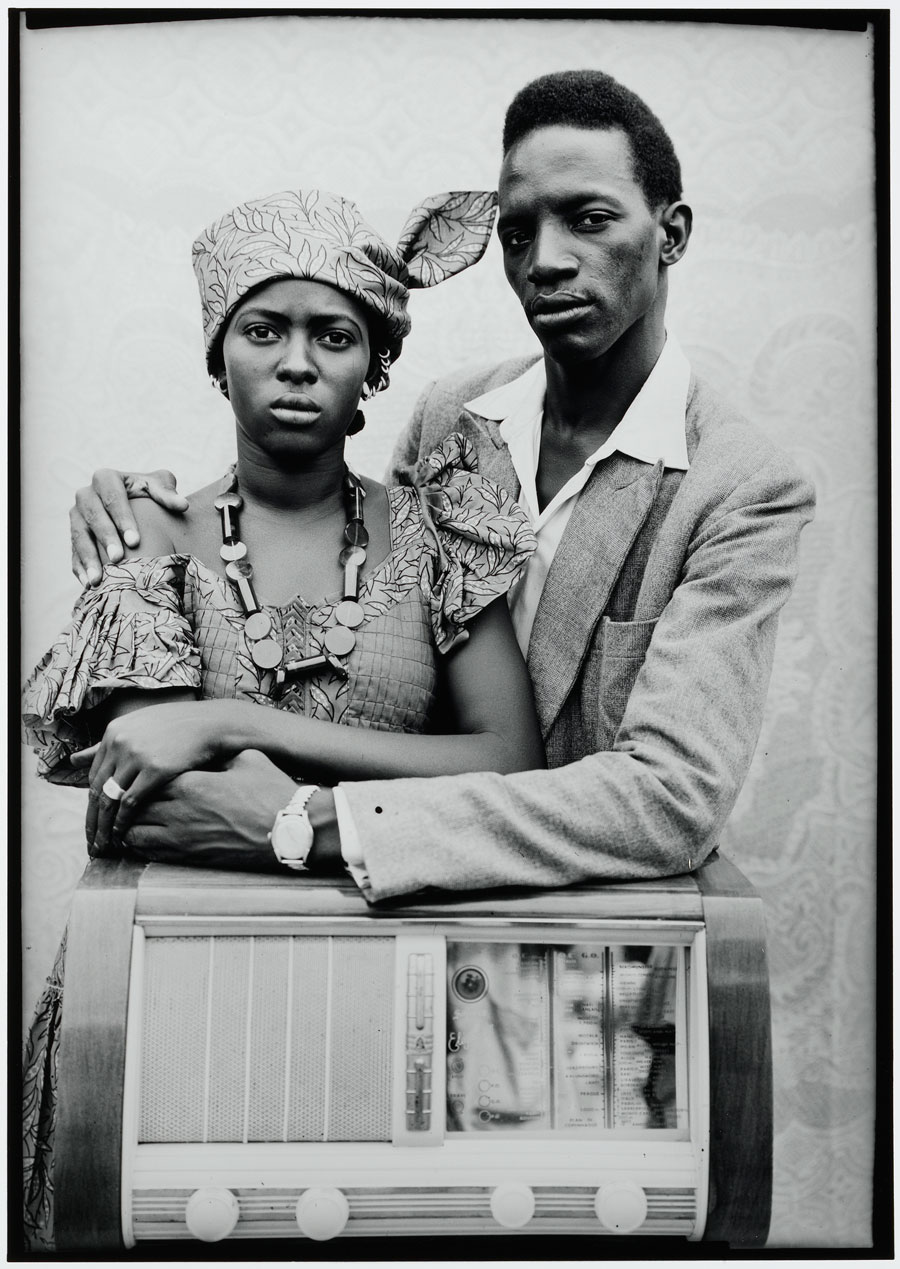
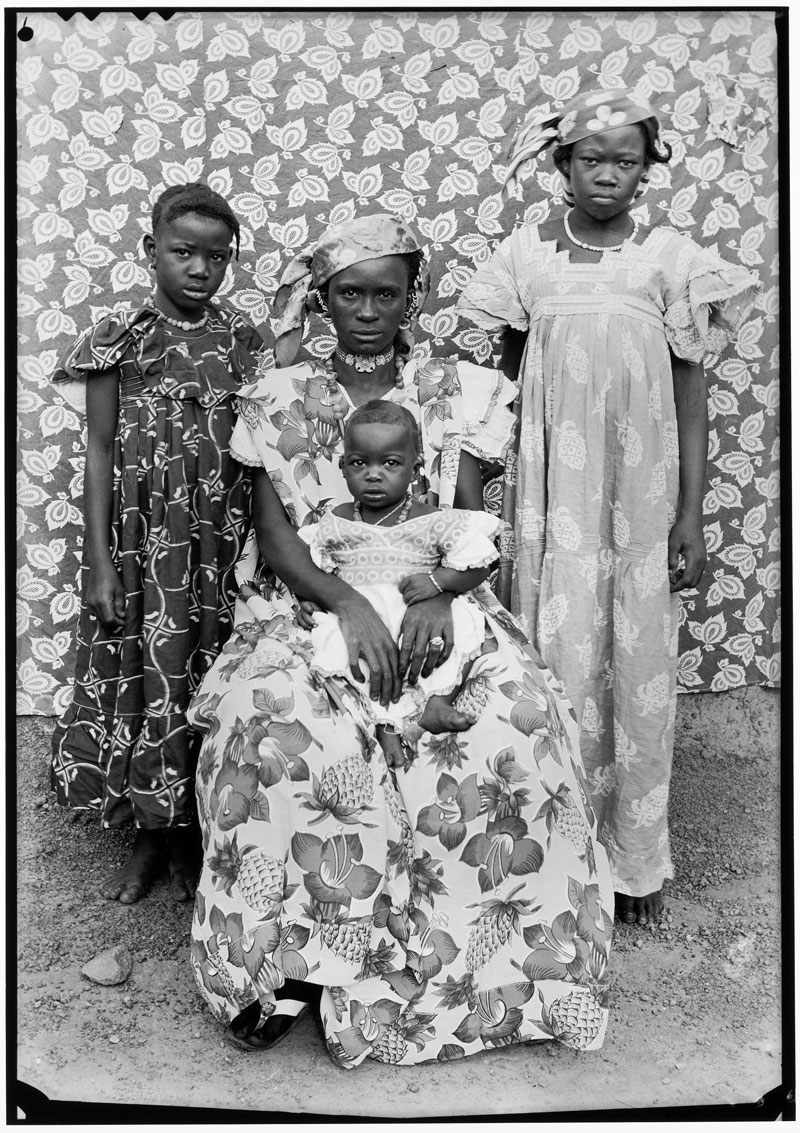
Seydou Keïta (Mali, 1921-2001) 'Untitled #419' 1950-1952


Seydou Keïta (Mali, 1921-2001)
Untitled #419
1950-1952
Gelatin silver print
© Seydou Keïta / SKPEAC


Seydou Keïta (Mali, 1921-2001) 'Untitled #420' 1950-1952


Seydou Keïta (Mali, 1921-2001)
Untitled #420
1950-1952
© Seydou Keïta / SKPEAC


This spring we will be showing more than forty photographs from the period 1950-90 taken by leading artists such as Andy Warhol, Cindy Sherman, Robert Mapplethorpe, Samuel Fosso, Tracey Moffatt, and Elina Brotherus. The exhibition focuses on the art of portrait photography and how the artist in his or her studio creates images that depict people not just as they actually are, but also as they would like to appear.

Moderna Museet’s collection of photography is among the foremost in Europe, it includes some of the most prominent figures in the history of photography. Andy Warhol, Cindy Sherman, and Robert Mapplethorpe are all big names in photography, artists whose work often revolves around concepts of identity, sexuality, and performativity. The photography studio is a place for masquerades and manipulations, a stage where various identities and roles can be tested. It therefore problematises the idea that a portrait is meant to convey some truth about the subject’s inner life. How do we distinguish a staged scene from reality? Is it even possible to make such a distinction? How free are we to form our own identity? If it’s a matter of choosing a role, what roles are available to us?

Andy Warhol’s Polaroid pictures, whose title, Ladies and Gentlemen, has also provided the name for the exhibition, are examples of his interest in – or rather his obsession with – celebrities. From industrial magnates to movie stars, from rock musicians to the “superstar” friends who hung out around the Factory, his fabled studio. In the world of pop art and popular culture, surface is everything. Robert Mapplethorpe’s photographs are instead classically composed – stylised and aesthetically formed. In the controlled environment and lighting of the photo studio, he strives not for realism but for beauty. Here role-play becomes a part of the picture’s constructed character.

In Cindy Sherman’s suite of images called Untitled Film Stills (1977-1980), she plays with film clichés. The scenes and characters in her photographs seem familiar, but in fact it’s always Sherman herself we see in the leading role. Using the camera as a mirror, she takes on and explores various roles. It’s a game of trying on identities that is familiar to teenagers in particular the world over, a game we play in an attempt to find ourselves, or rather to construct an individual identity. One of the many ways in which Sherman’s pictures have been interpreted is as a feminist critique of the limited number of roles available to women.

This exhibition also presents several works by Seydou Keïta, Malick Sidibé, and Samuel Fosso, studio photographers who work primarily with portrait photography. Keïta’s studio was next-door to a movie theater in Bamako, the capitol city of Mali. Sidibé takes pictures not just in his studio but also at weddings and other parties. His photographs from Bamako in the 1960s reflect the great hope that came with liberation from French colonial power. Fosso opened his studio in Bangui, in the Central African Republic, when he was still a teenager. He is best known for a series of self-portraits in which he dons a variety of outfits to assume different roles.

Press release from the Moderna Museet website


Elina Brotherus (Finnish, b. 1972) 'Honeymoon' 1997 (detail)


Elina Brotherus (Finnish, b. 1972)
Honeymoon (detail)
1997
© Elina Brotherus


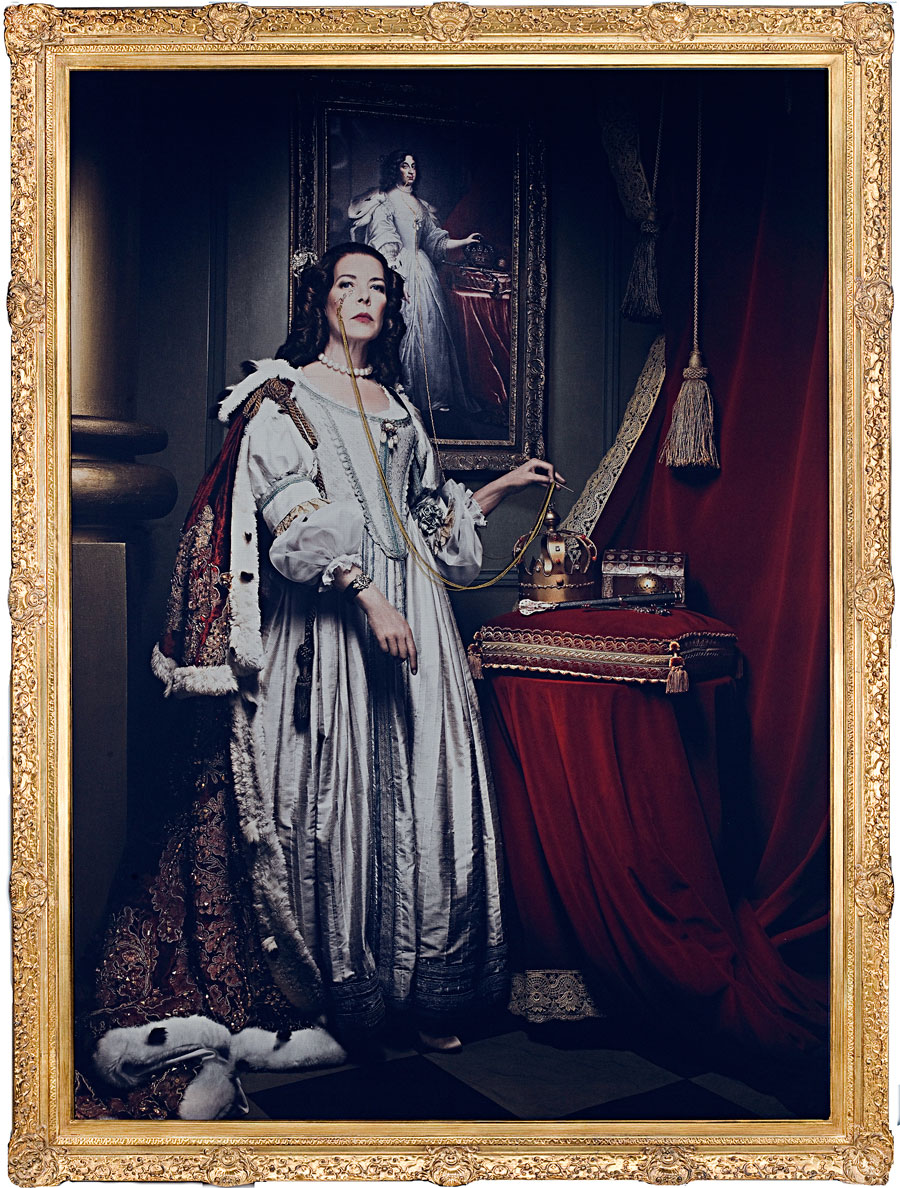
Francesco Vezzoli (Italian, b. 1971) 'Portrait of H.R.H The Princess of Hanover (Before & After Salvador Dalí)' 2009


Francesco Vezzoli (Italian, b. 1971)
Portrait of H.R.H The Princess of Hanover (Before & After Salvador Dalí)
2009
© Francesco Vezzoli/BUS 2012


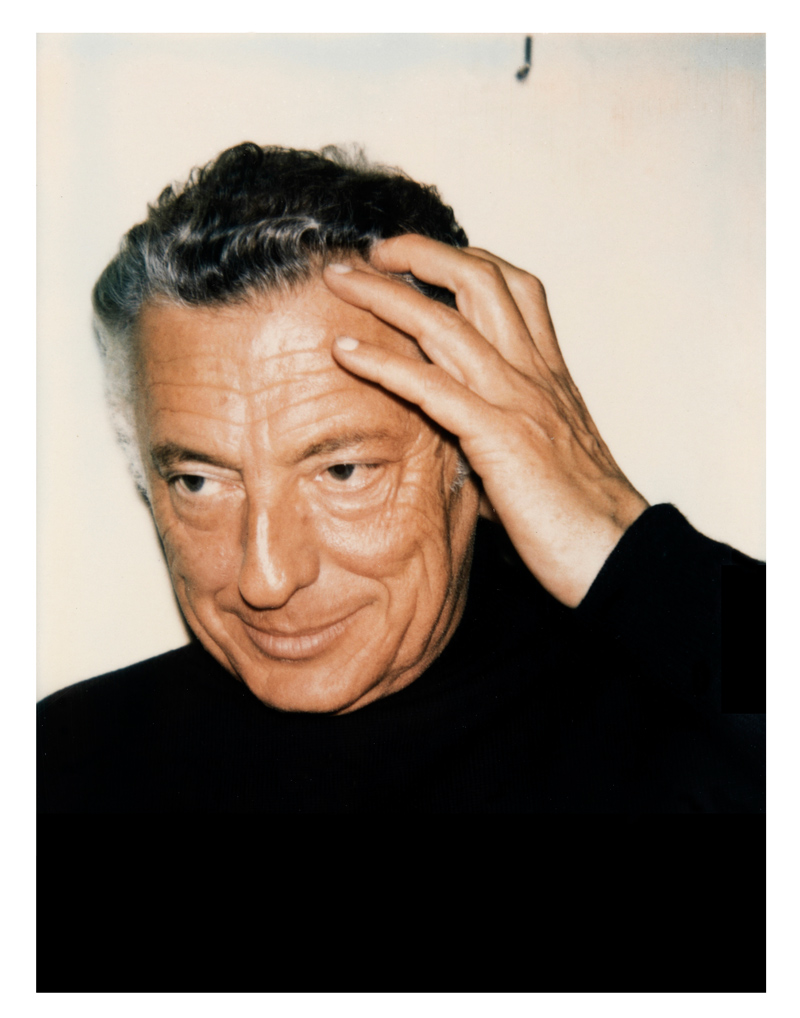
Andy Warhol (American, 1928-1987) 'Gianni Agnelli' 1972


Andy Warhol (American, 1928-1987)
Gianni Agnelli
1972
© Andy Warhol/BUS 2012


Andy Warhol (American, 1928-1987) 'John Chamberlain and Lorraine' 1978


Andy Warhol (American, 1928-1987)
John Chamberlain and Lorraine
1978
© Andy Warhol/BUS2012


Andy Warhol (American, 1928-1987) 'Ladies and Gentlemen (Wilhelmina Ross)' 1974


Andy Warhol (American, 1928-1987)
Ladies and Gentlemen (Wilhelmina Ross)
1974
© Andy Warhol/BUS 2012


Cindy Sherman. 'Untitled' 2008


Cindy Sherman (American, b. 1954)
Untitled
2008
© Cindy Sherman. Courtesy the Artist and Metro Pictures


Moderna Museet Malmö
Gasverksgatan 22 in Malmö

Moderna Museet Malmö is located in the city centre of Malmö. Ten minutes walk from the Central station, five minutes walk from Gustav Adolfs torg and Stortorget.

Opening hours:
Tuesday – Sunday 11 – 17
Mondays closed

Moderna Museet Malmö website

LIKE ART BLART ON FACEBOOK

Back to top

Exhibition: ‘Light Years: Conceptual Art and the Photograph, 1964-1977’ at the Art Institute of Chicago

Exhibition dates: 13th December 2011 – 11th March 2012


Many thankx to the Art Institute of Chicago for allowing me to publish the photographs in the posting. Please click on the photographs for a larger version of the image.


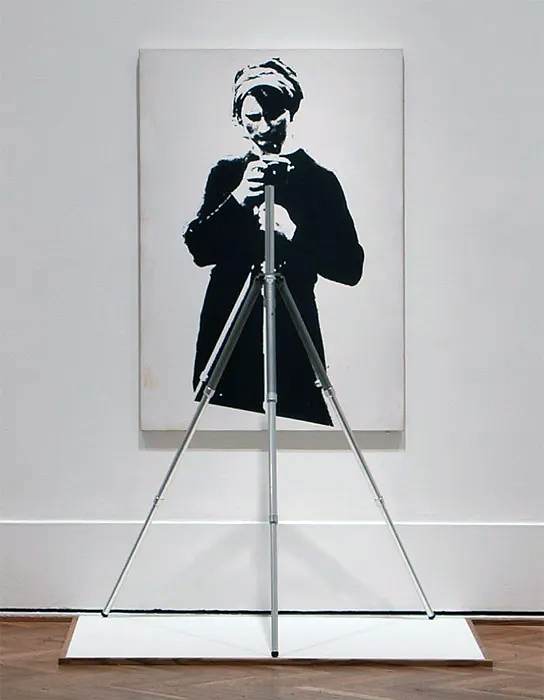
Marcel Broodthaers (Belgian, 1924-1976) 'Portrait of Maria Gilissen with Tripod' 1967


Marcel Broodthaers (Belgian, 1924-1976)
Portrait of Maria Gilissen with Tripod
1967
Gelatin silver emulsion on canvas with tripod
Approx. 66 x 43 x 24 inches


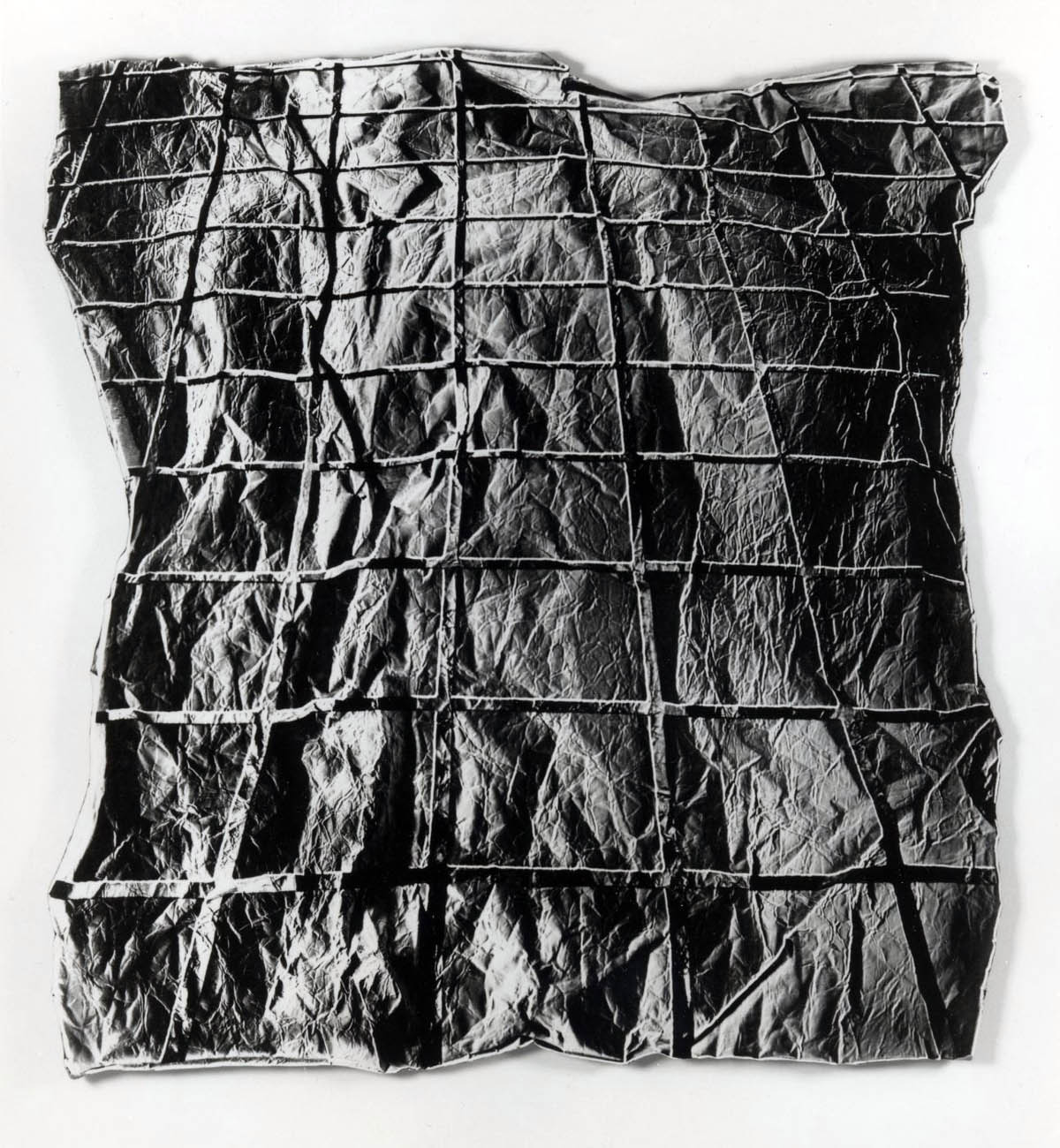
Mel Bochner (American, b. 1940) 'Surface Dis/Tension' 1968


Mel Bochner (American, b. 1940)
Surface Dis/Tension
1968
Gelatin silver print on aluminum mount
48 x 46″


John Baldessari (American, born 1931). 'The California Map Project Part I: California', 1969, exhibition copy 2011


John Baldessari (American, 1931-2020)
The California Map Project Part I: California
1969, exhibition copy 2011
Twelve inkjet prints of images and a typewritten sheet
Each image, 20.3 x 25.4cm (8 x 10 in); sheet, 21.6 x 27.9cm (8 1/2 x 11 in)
Courtesy of the artist and Marian Goodman Gallery, New York and Paris
© John Baldessari


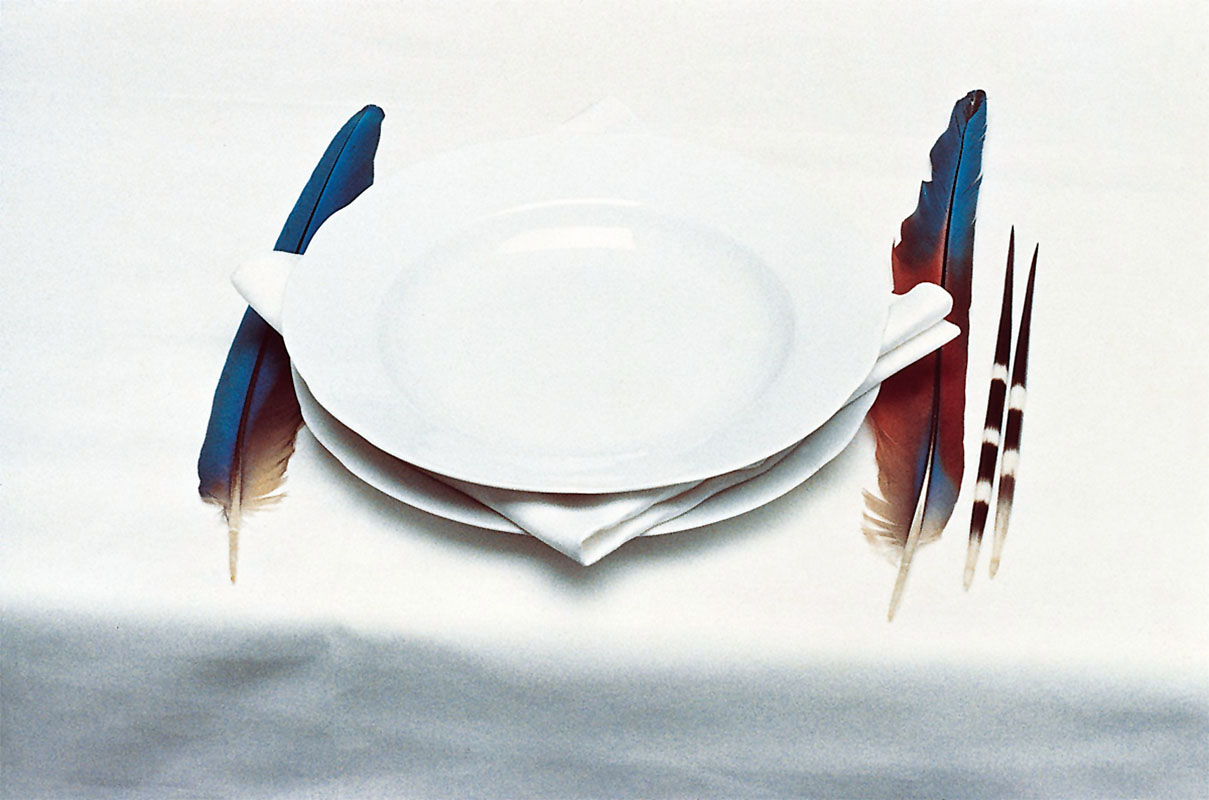
Lothar Baumgarten (German, 1944-2018) 'The Origin of Table Manners' 1971


Lothar Baumgarten (German, 1944-2018)
The Origin of Table Manners
1971
Chromogenic print
45 x 57.5cm
Collection Sanders, Amsterdam


One of Baumgarten’s early works, The Origin of Table Manners is a wry illustration of the way in which colonial conquerors conflated Western notions of civility with notions of the civilised as part of their alibi for domination. Inspired by a text of the same name by the structuralist anthropologist Claude Levi-Strauss, the work consists of a table draped in a crisp, white tablecloth and set with fine china, with porcupine quills and the feathers of large birds standing in for silverware. When it was first shown, it was installed in a tony French restaurant near Baumgarten’s Paris gallery.

Chris Wiley. “Exhibition Review – Lothar Baumgarten at Marian Goodman Gallery” Nd on the Daylight Books website [Online] Cited 07/11/2024


Eleanor Antin (American, born 1935) '100 Boots' 1971-73


Eleanor Antin (American, b. 1935)
100 Boots
1971-1973
Fifty-one photolithographic postcards
Each 11.1 x 17.8cm (4 3/8 x 7 in)
The Art Institute of Chicago, Margaret Fisher Endowment
Courtesy Ronald Fedlman Fine Arts, New York, NY
© Eleanore Antin


Eleanor Antin (American, born 1935) '100 Boots' 1971-1973


Eleanor Antin (American, b. 1935)
100 Boots
1971-1973
Fifty-one photolithographic postcards
Each 11.1 x 17.8cm (4 3/8 x 7 in)
The Art Institute of Chicago, Margaret Fisher Endowment
Courtesy Ronald Fedlman Fine Arts, New York, NY
© Eleanore Antin


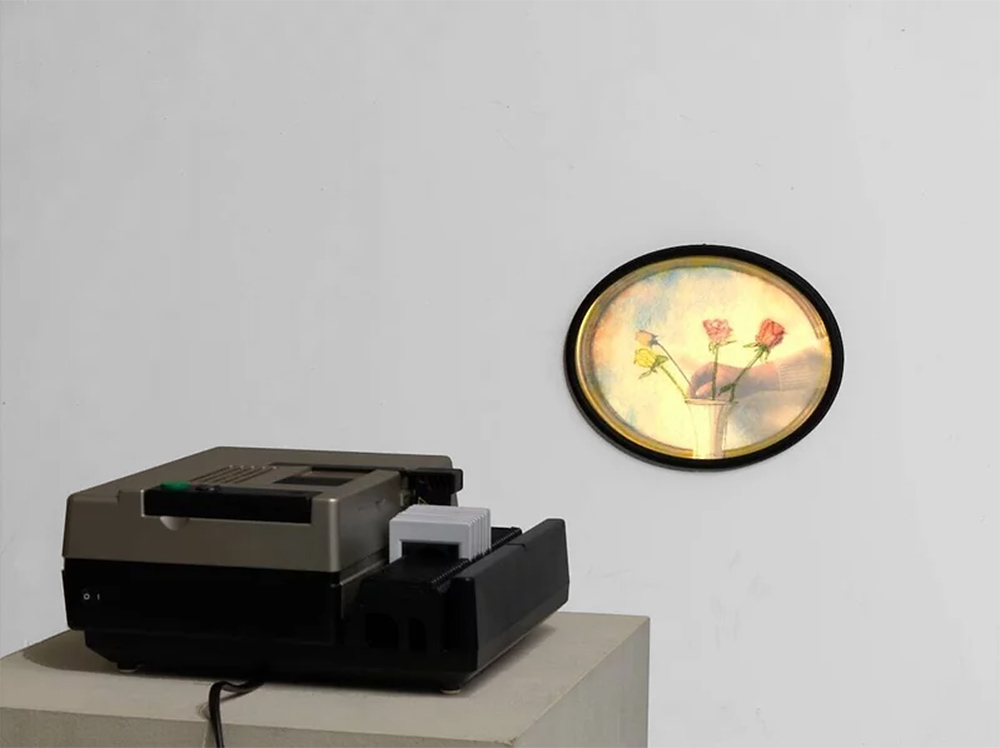
Ger van Elk (Dutch, b. 1941) 'The Rose more Beautiful than Art, but Difficult, therefore Art is Splendid' 1972


Ger van Elk (Dutch, b. 1941)
The Rose more Beautiful than Art, but Difficult, therefore Art is Splendid
1972
Slide projection, elven chromogenic slides projected onto watercolour in wooden frame
9 4/5 × 12 2/5 in | 25 × 31.5cm
Courtesy of the artist


John Baldessari (American, b. 1931) 'Throwing Three Balls in the Air to Get a Straight Line (Best of Thirty-Six Attempts)' 1973


John Baldessari (American, 1931-2020)
Throwing Three Balls in the Air to Get a Straight Line (Best of Thirty-Six Attempts)
1973
Portfolio of fourteen photolithographs
Each 24.7 x 32.7cm (9 11/16 x 12 7/8 in)
Museum of Contemporary Photography at Columbia College Chicago
© John Baldessari


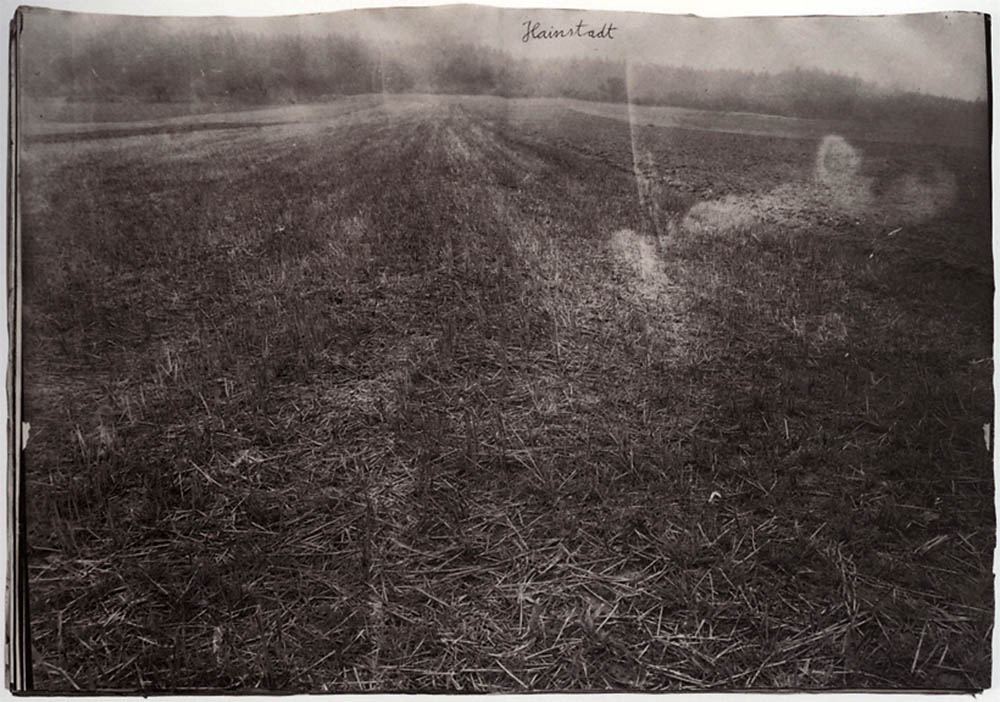
Anselm Kiefer (German, b. 1945) 'Ausbrennen des Landkreises Buchen' (The Burning of the Rural District of Buchen) 1974


Anselm Kiefer (German, b. 1945)
Ausbrennen des Landkreises Buchen (The Burning of the Rural District of Buchen)
1974
Bound gelatin silver prints with ferric oxide and oil on woodchip paper
62 x 45cm
Hall colleciton


The 1960s and 1970s are recognised as the defining era of the Conceptual Art movement, a period in which centuries held assumptions about the nature of art itself were questioned and dissolved. Until now, the pivotal role that photography played in this movement has never been fully examined. The Art Institute of Chicago has organised the first major survey of influential artists of this period who used photography in ways that went far beyond its traditional definitions as a medium – and succeeded thereby in breaking down the boundaries of all mediums in contemporary art. Light Years: Conceptual Art and the Photograph, 1964-1977  on view December 13, 2011 through March 11, 2012 – is the first exhibition to explore how artists of this era used photography as a hybrid image field that navigated among painting and sculpture, film, and book arts as well as between fine art and the mass media. More than 140 works by 57 artists will fill the Art Institute’s Regenstein Hall in this major exhibition that will be seen only in Chicago.

Bringing to the fore work from the Italian group Arte Povera as well as artists from Eastern Europe who are rarely shown in the United States, Light Years also includes many pieces that have not been on public display in decades by such major artists as Mel Bochner, Tony Conrad, Michael Heizer, Gordon Matta-Clark, and Emilio Prini. To open the exhibition, the Art Institute has arranged a special outdoor screening of Andy Warhol’s Empire, an eight-hour film of the Empire State Building. In a first for the United States, Warhol’s Empire will be projected from the Modern Wing’s third floor to be seen on the exterior of the Aon Center on Friday, December 9.

The acceptance of photography as fine art was an evolutionary process. Early 20th-century avant-garde movements such as Dada, Surrealism, and Constructivism articulated a new set of standards for art in which photography played a major role. By the 1930s, modernist photography found a small but influential niche in museum exhibitions and the art market, and vernacular forms such as photojournalism and amateur snapshots became a source of artistic inspiration. Engagement with mass media, exemplified in Pop Art, became prominent in the 1950s. Yet only with the advent of Conceptual Art did artists with training in painting, sculpture, and the graphic arts begin to make and exhibit their own photographs or photographic works as fine art.

Some Conceptual artists, such as Bruce Nauman, Ed Ruscha, and Valie Export took up photography seriously only for a few key months or years; others, like Eleanor Antin, John Baldessari, Jan Dibbets, and Annette Messager have worked in photography their entire careers. Photography showed the way forward from Minimal Art, Pop Art, and other movements in painting and sculpture. But it came with its own set of questions that these artists addressed with tremendous innovation. Questions of perspective, sequence, scale, and captioning which have a rich history in photography, were answered in entirely new ways and made into central concerns for art in general.

Photography in these artists’ hands was the antithesis of a separate and definable “medium.” It became instead “unfixed”: photobooks, photolithographs, photo canvases, photo grids, slide and film pieces, and even single prints all counted as valid creative forms. The variety of work showcased in Light Years is crucial to conveying the greatest contribution of the Conceptual era: to turn contemporary art into a field without a medium.

Light Years showcases a great number of works that have not been seen together – or at all – since the years around 1970. Victor Burgin’s Photopath, a life-size print of a 60-foot stretch of flooring placed directly on top of the floor that it records, has not been shown in more than 20 years and never in the United States. Likewise being shown for the first time in the U.S. are pieces by Italian artists Gilberto Zorio, Emilio Prini, Giulio Paolini, and others associated with the classic postwar movement Arte Povera. Paolini’s early photo-canvas Young Man Looking At Lorenzo Lotto (1967), an icon of European conceptualism, has only rarely been shown at all after entering a private collection in the early 1970s. Mel Bochner’s Surface Dis/Tension: Blowup (1969) has not been seen since its presentation at Marian Goodman Gallery in the now legendary 1970 exhibition Artists and Photographs, from which no visual documentation survives. Equally rare and important early works by Laurie Anderson, Marcel Broodthaers, Francesco Clemente, Tony Conrad, Gilbert & George, Dan Graham, Michael Heizer, and many others make the show a revelation for those interested in key figures of new art in the 1960s and ’70s. A special emphasis is placed on artists from Hungary, a centre for photoconceptual activity that has long been overlooked in Western Europe and the United States.

Press release from the Art Institute of Chicago


Alighiero Boetti (Italian, 1940-1994) 'AW:AB =L:MD (Andy Warhol: Alighiero Boetti = Leonardo: Marcel Duchamp)' 1967


Alighiero Boetti (Italian, 1940-1994)
AW:AB =L:MD (Andy Warhol: Alighiero Boetti = Leonardo: Marcel Duchamp)
1967
Silk screen print with graphite on paper
58.8 x 58.8cm (23 5/16 x 23 5/16 in)
Colombo Collection, Milan
© Artists Rights Society (ARS)


Alighiero Boetti (Italian, 1940-1994) 'Twins (Gemelli)' September 1968


Alighiero Boetti (Italian, 1940-1994)
Twins (Gemelli)
September 1968
Gelatin silver postcard
15.2 x 11.2cm (6 x 4 3/8 in)
Private Collection
© Artists Rights Society (ARS)


Bruce Nauman (American, b. 1941) 'Light Trap for Henry Moore No. 1' 1967


Bruce Nauman (American, b. 1941)
Light Trap for Henry Moore No. 1
1967
Gelatin silver print
157.5 x 105.7cm (62 x 41 5/8 in)
Glenstone
© Artists Rights Society (ARS).


Dennis Oppenheim (American, 1938-2011) 'Stage 1 and 2. Reading Position for 2nd Degree Burn Long Island. N.Y. Material... Solar Energy. Skin Exposure Time. 5 Hours June 1970' 1970


Dennis Oppenheim (American, 1938-2011)
Stage 1 and 2. Reading Position for 2nd Degree Burn Long Island. N.Y. Material… Solar Energy.  Skin Exposure Time. 5 Hours June 1970
1970
Two chromogenic photographic prints, plastic labelling tape, mounted together on green board with graphite annotations
Overall: 81 x 66cm (31 7/8 x 26 in)
Top photo: 20.1 x 25.8cm
Bottom photo: 20.2 x 25.5cm
Image/text area: 41.8 x 25.8cm
Dorothy and Herbert Vogel Collection
© Dennis Oppenheim Estate


The Art Institute of Chicago
111 South Michigan Avenue
Chicago, Illinois 60603-6404
Phone: (312) 443-3600

Opening hours:
Thursday – Monday 11am – 5pm
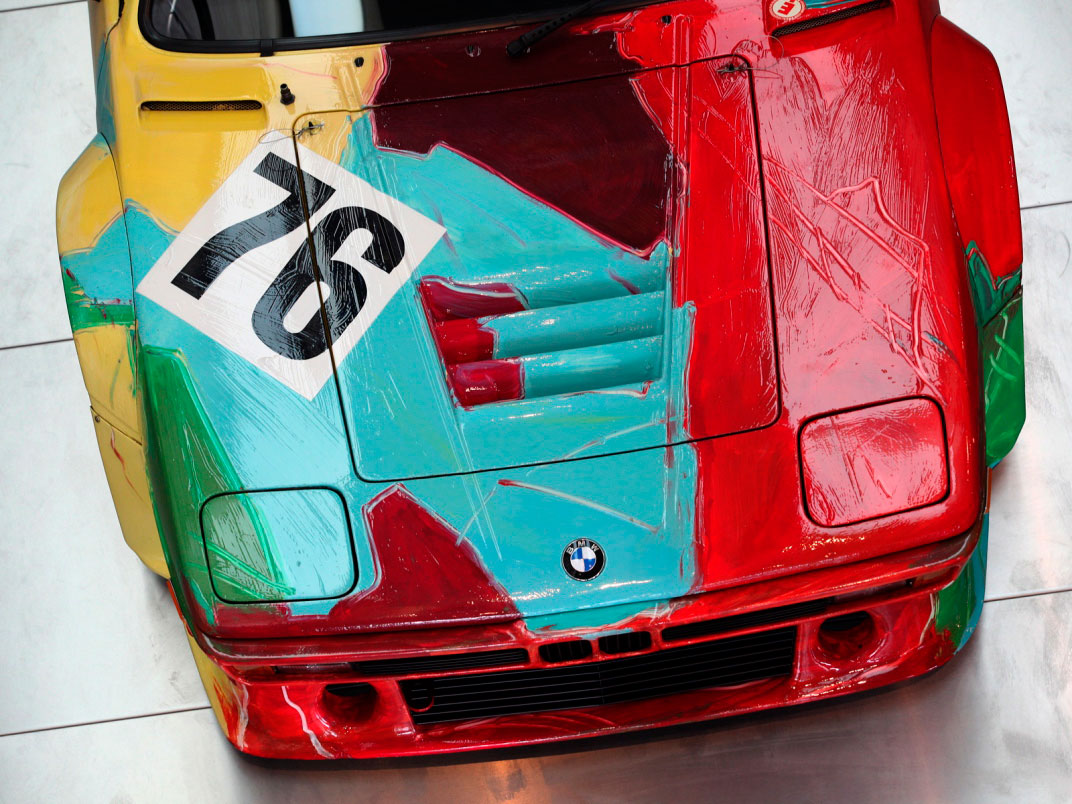
Closed Tuesdays and Wednesdays

The Art Institute of Chicago website

LIKE ART BLART ON FACEBOOK

Back to top

Exhibition, Films, Events and Symposia: ‘Jack Smith: A Feast for Open Eyes’ at the Institute of Contemporary Arts (ICA), London

Dates: 7th – 18th September 2011


Jack Smith (American, 1932-1989) 'Untitled' c. 1958-1962/2011


Jack Smith (American, 1932-1989)
Untitled
c. 1958-1962/2011
Analog C-print hand printed from original colour negative on Fuji Crystal Archive paper
14 x 11 inches (35.6 x 27.9cm)
Copyright Estate of Jack Smith
Courtesy Gladstone Gallery, New York and Brussels


His photographic works are rare and remain largely unknown according to Wikipedia. They shouldn’t be.

Dr Marcus Bunyan


Many thankx to the ICA for allowing me to publish the photographs in the posting. Please click on the photographs for a larger version of the image.


Jack Smith: A Feast for Open Eyes

‘The only true underground filmmaker’ – John Waters

ICA director Gregor Muir introduces the work of Jack Smith in this two week season. Jack Smith: A Feast for Open Eyes is on from 7 – 18 September 2011


Jack Smith (American, 1932-1989) 'Untitled' 1982


Jack Smith (American, 1932-1989)
Untitled
1982
Mixed media on paper
6 1/8 x 8 7/8 inches (15.6 x 22.5cm)
Copyright Estate of Jack Smith
Courtesy Gladstone Gallery, New York and Brussels


Jack Smith (American, 1932-1989) 'Untitled' c. 1958-1962/2011


Jack Smith (American, 1932-1989)
Untitled
c. 1958-1962/2011
Black and white gelatin silver print
10 x 8 inches (25.4 x 20.3cm)
Copyright Estate of Jack Smith
Courtesy Gladstone Gallery, New York and Brussels


“Jack Smith (November 14, 1932 in Columbus, Ohio – September 25, 1989 in New York City) was an American filmmaker, actor, and pioneer of underground cinema. He is generally acclaimed as a founding father of American performance art, and has been critically recognised as a master photographer, though his photographic works are rare and remain largely unknown.

Smith was one of the first proponents of the aesthetics which came to be known as ‘camp’ and ‘trash’, using no-budget means of production (e.g. using discarded colour reversal film stock) to create a visual cosmos heavily influenced by Hollywood kitsch, orientalism and with Flaming Creatures created drag culture as it is currently known. Smith was heavily involved with John Vaccaro, founder of The Playhouse of The Ridiculous, whose disregard for conventional theater practice deeply influenced Smith’s ideas about performance art. In turn, Vaccaro was deeply influenced by Smith’s aesthetics. It was Vaccaro who introduced Smith to glitter and in 1966 and 1967, Smith created costumes for Vaccaro’s Playhouse of The Ridiculous. Smith’s style influenced the film work of Andy Warhol as well as the early work of John Waters. While all three were part of the 1960s gay arts movement, Vaccaro and Smith refuted the idea that their sexual orientation was responsible for their art.

After his last film, No President (1967), Smith created performance and experimental theatre work until his death on September 25, 1989 from AIDS-related pneumonia.”

Text from the Wikipedia entry


Jack Smith (American, 1932-1989) 'Untitled' c. 1958-1962/2011


Jack Smith (American, 1932-1989)
Untitled
c. 1958-1962/2011
Analog C-print hand printed from original colour negative on Fuji Crystal Archive paper
14 x 11 inches (35.6 x 27.9cm)
Copyright Estate of Jack Smith
Courtesy Gladstone Gallery, New York and Brussels


Legendary American artist, filmmaker and actor Jack Smith (1932-1989), described by Andy Warhol as the only person he would ever copy and by John Waters as “the only true underground filmmaker”, is celebrated at the Institute of Contemporary Arts (ICA) in film, performance and debate with a retrospective of Smith’s work from 7 to 18 September 2011.

Working in New York from the 1950s until his death in 1989, Smith unequivocally resisted and upturned accepted conventions, whether artistic, moral or legal. Irreverent in tone and delirious in effect, Smith’s films, such as the notorious Flaming Creatures (1963), are both wildly camp and subtly polemical. Smith is best known for his contributions to underground cinema but his influence extends across performance art, photography and experimental theatre.

A Feast for Open Eyes: Jack Smith maps out the breadth of Smith’s practice, from his collaborative film productions to his individual writings, and looks at his legacy in the UK drawing upon a generation of New York artists with whom Smith was closely involved, including Jonas Mekas and Penny Arcade, and younger artists and filmmakers whom he influenced. John Zorn, a long-term Smith collaborator selects records to accompany an installation of slides documenting Smith’s work, as he used to in collaboration with Smith in the 1970s and 80s.

The retrospective opens with a screening of Flaming Creatures introduced by Chris Dercon, Director of Tate Modern, who was a close friend of Smith’s. The film is followed by the screening of an interview, recorded exclusively for the ICA this summer, with Jonas Mekas, a founder member of Anthology Film Archives who faced obscenity charges for defending Flaming Creatures in the 1960s. The presentation is introduced by Dominic Johnson, author of the forthcoming monograph Glorious Catastrophe: Jack Smith, Performance and Visual Culture (Manchester University Press) and co-curator of A Feast for Open Eyes.

Press release from the ICA website


Jack Smith (American, 1932-1989) 'Untitled' c. 1978


Jack Smith (American, 1932-1989)
Untitled
c. 1978
Mixed media on paper
13 x 20 3/4 inches (33 x 52.7cm)
Copyright Estate of Jack Smith
Courtesy Gladstone Gallery, New York and Brussels


Jack Smith (American, 1932-1989) 'Untitled' c. 1958-1962/2011


Jack Smith (American, 1932-1989)
Untitled
c. 1958-1962/2011
Analog C-print hand printed from original colour negative on Fuji Crystal Archive paper
14 x 11 inches (35.6 x 27.9cm)
Copyright Estate of Jack Smith
Courtesy Gladstone Gallery, New York and Brussels


Jack Smith (American, 1932-1989) 'Untitled' c. 1958-1962/2011


Jack Smith (American, 1932-1989)
Untitled
c. 1958-1962/2011
Black and white gelatin silver print
10 x 8 inches (25.4 x 20.3cm)
Copyright Estate of Jack Smith
Courtesy Gladstone Gallery, New York and Brussels


Jack Smith (American, 1932-1989) 'Untitled' c. 1958-1962/2011


Jack Smith (American, 1932-1989)
Untitled
c. 1958-1962/2011
Black and white gelatin silver print
10 x 8 inches (25.4 x 20.3cm)
Copyright Estate of Jack Smith
Courtesy Gladstone Gallery, New York and Brussels


Jack Smith (American, 1932-1989) 'Untitled' c. 1958-1962


Jack Smith (American, 1932-1989)
Untitled
c. 1958-1962
Color negative
2 1/4 x 2 1/4 inches 
(5.7 x 5.7cm)
Copyright Estate of Jack Smith
Courtesy Gladstone Gallery, New York and Brussels


Institute of Contemporary Arts
The Mall,
London,
SW1Y 5AH

Opening hours:
Tuesday – Sunday 12 – 9pm
Closed Mondays

ICA website

LIKE ART BLART ON FACEBOOK

Back to top

Exhibition: ‘Series of Portraits. A century of photographs’ at Museum für Kunst und Gewerbe, Hamburg
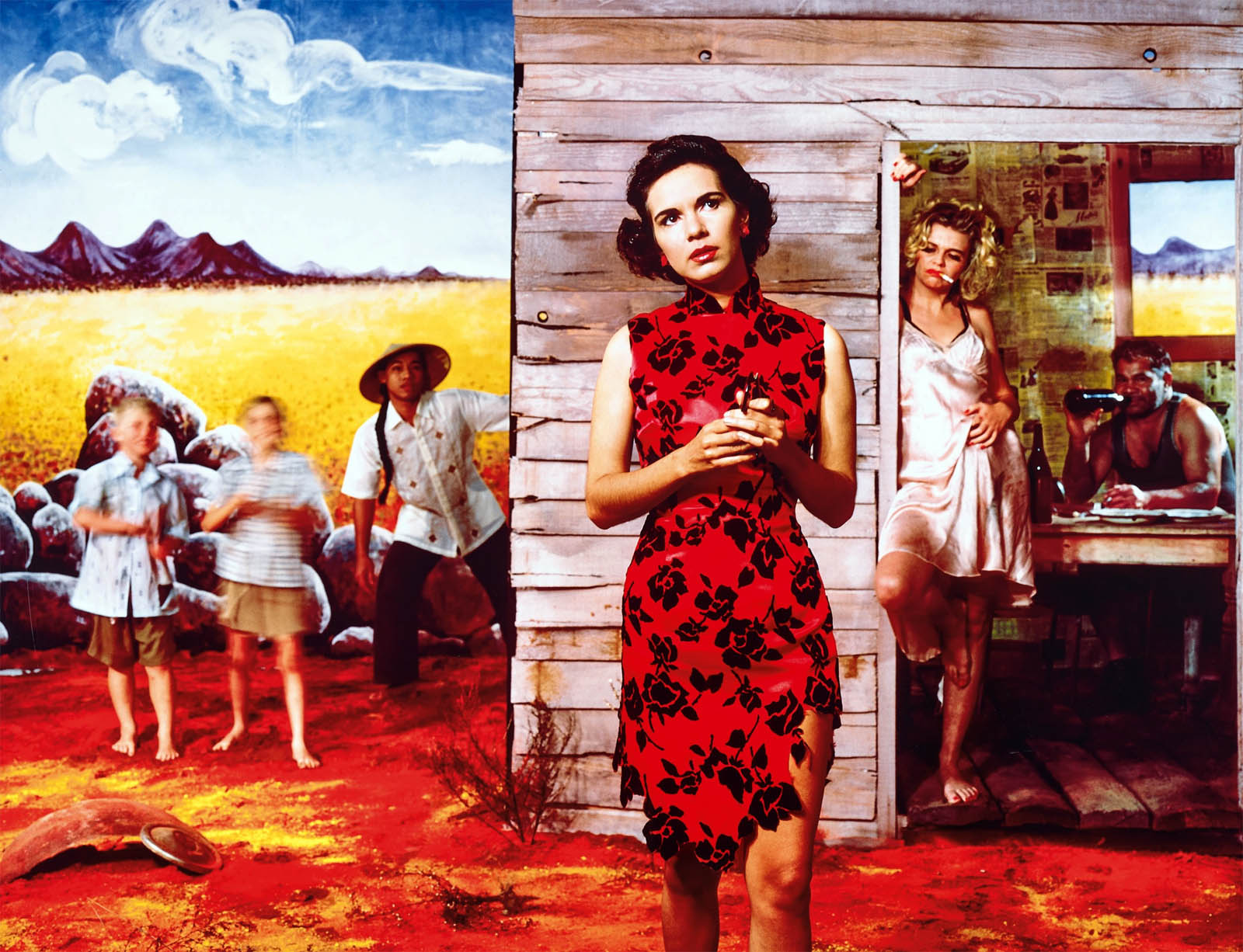
Exhibition dates: 1st April – 17th July 2011


Many thankx to Michaela Hille for her help and to Museum für Kunst und Gewerbe, Hamburg for allowing me to publish the photographs in the posting. Please click on the photographs to view a larger version of the image.


Hermann Biow (German, 1804-1850) 'Heinrich Jakob Venedey' 1848


Hermann Biow (German, 1804-1850)
Heinrich Jakob Venedey
1848
Daguerreotype
20.8 x 15.4cm
Museum für Kunst und Gewerbe, Hamburg


Hermann Biow was an important German daguerreotypist in the early days of photography. Biow became known through his portrait photography during his lifetime. He portrayed politicians, celebrities and wealthy citizens, including Franz Liszt, Alexander von Humboldt and Friedrich Wilhelm IV. He is also known for his parliamentarian portraits of the first German National Assembly in the Paulskirche in Frankfurt in 1848/1849. Today Biow is primarily seen as the founder of German documentary photography.

A daguerreotype of Heinrich Jakob Venedey from 1848 made by Hermann Biow in Frankfurt. Venedey (1805-1871) was a member of the German National Assembly in Frankfurt’s Paulskirche in 1848/1849 as a deputy for Hessen-Homburg. The lawyer belonged to the factions Deutscher Hof and Westendhall of the National Assembly.

Text translated by Google Translate from the German Wikipedia website


Hermann Biow (German, 1804-1850) 'Heinrich Joseph Gerhard Compes' 1848


Hermann Biow (German, 1804-1850)
Heinrich Joseph Gerhard Compes
1848
Daguerreotype
20.4 x 14.8cm
Museum für Kunst und Gewerbe, Hamburg


A daguerreotype of Heinrich Joseph Gerhard Compes (that’s Gerhard Compes) from 1848 by Hermann Biow in Frankfurt. Compes was a member of the German National Assembly in Frankfurt’s Paulskirche in 1848/1849 as a deputy for the 19th province of Rhineland (Siegburg). The Cologne lawyer belonged to the Württemberger Hof faction of the National Assembly.

Text translated by Google Translate from the German Wikipedia website


August Sander (German, 1876-1964) [Farmer, Westerwald (Bauer, Westerwald)] 1910


August Sander (German, 1876-1964)
[Farmer, Westerwald (Bauer, Westerwald)]
1910
Gelatin silver print
© Photograph. Samml./SK Stiftung Kultur – A. Sander Archiv, Köln/VG Bild-Kunst, Bonn 2011
Foto: Jorg Arend/Harald Dubau/Maria Thrun, Museum fur Kunst und Gewerbe Hamburg
Museum fur Kunst und Gewerbe Hamburg


The first section of People of the Twentieth Century is dedicated to the farmer. It begins with a Stammappe, or portfolio of archetypes. Usually three-quarter-length portraits, the photographs depict old farming men, women, and couples seated in their homes or against a natural backdrop. Each is captioned to suggest the fundamental role played by the individual in a balanced society. Sander referred to this farmer as the “earthbound man.” Other archetypes include the “philosopher,” the “fighter or revolutionary,” and the “sage.” All had female counterparts, while couples were labeled as “propriety and harmony.”

Identifying this figure as the “earthbound man,” Sander forged an implicit reference to the soil as a source of livelihood. The farmer’s hands grasp the cane, which keeps him upright and connected to the earth.

Text from the J. Paul Getty Museum website [Online] Cited 04/02/2020


August Sander (German, 1876-1964) 'Jungbauern' (Young Farmers) 1914


August Sander (German, 1876-1964)
Jungbauern, Westerwald, 1914
1914, printed 1962
Gelatin silver print
28.5 x 21.9cm
© Photograph. Samml./SK Stiftung Kultur – A. Sander Archiv, Köln/VG Bild-Kunst, Bonn 2011
Foto: Jorg Arend/Harald Dubau/Maria Thrun, Museum fur Kunst und Gewerbe Hamburg
Museum fur Kunst und Gewerbe Hamburg


August Sander (German, 1876-1964) 'Notar, Köln, 1924' 1924


August Sander (German, 1876-1964)
Notar, Köln, 1924
1924, printed 1962
Gelatin silver print
29.1 x 20.5cm
© Photograph. Samml./SK Stiftung Kultur – A. Sander Archiv, Köln/VG Bild-Kunst, Bonn 2011
Foto: Jorg Arend/Harald Dubau/Maria Thrun, Museum fur Kunst und Gewerbe Hamburg
Museum fur Kunst und Gewerbe Hamburg


Helmar Lerski (Swiss, 1871-1956) 'Old Working Woman from Germany' (left) and 'Beggar from Saxony' (right) both 1928-1931


Helmar Lerski (Swiss, 1871-1956)
Old Working Woman from Germany (left)
1928-1931
Gelatin silver print

Helmar Lerski (Swiss, 1871-1956)
Beggar from Saxony (right)
1928-1931
Gelatin silver print


The portraits in Lerski’s Everyday Heads show unemployed workers whom the photographer met at a Berlin job centre where he hired them to sit for him. Old Working Woman from Germany 1928-1931 is a close-up shot of a woman’s face, eyes down and mouth shut as though she is quietly contemplating something outside of the picture’s frame (left, above). It is impossible to tell whether this meditative look, a common feature of his portraits, was suggested by Lerski but it is evident that he was in control of nearly every aspect of his pictures. An experienced movie cameraman, he used artificial light reflected by mirrors and screens to give his models an aura and monumentality that people would be familiar with from expressionist feature films. Oblique angles, in line with modernist sensibilities, helped to reinforce the impression of grandeur. He also cropped the images and introduced extra screens so as to eliminate the space around his models heads, and any details from what remained of the background. This also served on occasions to compromise the integrity of the subject’s face though, in other cases, he preferred to blur the contours of the face using strong shadows, as can be seen in Beggar from Saxony 1928-1931 (right, above). The results produced a general notion of everyday people rather than an endorsement of individuality as praised in traditional portraiture. Like Sander and Retzlaff, Lerski only gave the individuals’ professions in the captions, and was keen not to exemplify their class affiliation or social rank. The pictures provide no information about either, focusing instead on the face. In this way Lerski enhanced the common human dignity normally ignored in ‘everyday’ faces, and more especially in those humiliated by unemployment during the post-1929 economic crisis.

Wolfgang Brückle. “Face-Off in Weimar Culture: The Physiognomic Paradigm, Competing Portrait Anthologies, and August Sander’s Face of Our Time,” in Tate Papers No.19 Spring 2013 [Online] Cited 04/20/2020


Heinrich Riebesehl (German, 1938-2010) 'Menschen im Fahrstuhl (People in the elevator)' 1969


Heinrich Riebesehl (German, 1938-2010)
Menschen im Fahrstuhl (People in the elevator)
1969
Gelatin silver print


Heinrich Riebesehl (German, 1938-2010) 'Menschen im Fahrstuhl (People in the elevator)' 1969


Heinrich Riebesehl (German, 1938-2010)
Menschen im Fahrstuhl (People in the elevator)
1969
Gelatin silver print


The exhibition comprises 400 exhibits and reflects on important artistic positions in photographic portraiture. During the eventful 20th century portrait photography continually redefines itself, between dissolution of the traditional concept of the subject in the masses and the pursuit of individuality and identity – culturally, socially and in terms of gender. Portraiture is one of the traditional genres in art and was one of the driving forces behind the invention of photography in the 19th century. The image of the human being is subject to constant change, which is also reflected in photography. In postmodern society mass media create ever-changing ideals according to various requirements in tune with a quick succession of trends. Art photography responds to the changes and reflects the development sometimes with spectacular results while it questions the medium of photography itself. The exhibition presents 35 carefully chosen international artists, who through history have opened up a dialogue among themselves; they are referencing each other’s work, and are received and interpreted in ever new contexts. On show are works by Diane Arbus, Hans-Peter Feldmann, Lee Friedlander, Nan Goldin, Roni Horn, Jurgen Klauke, Annie Leibovitz, Helmar Lerski, Irving Penn, Judith Joy Ross, Thomas Ruff, August Sander, Cindy Sherman, Andy Warhol and others. An exhibition in cooperation with the Sammlung Niedersächsische Sparkassenstiftung on the occasion of the 5th Photography Triennial in Hamburg.

“The PORTRAIT-PHOTOGRAPH is a closed field of forces. Four image-repertoires intersect here, oppose and distort each other. In front of the lens, I am at the same time: the one I think I am, the one I want others to think I am, the one the photographer thinks I am, and the one he makes use of to exhibit his art.” (Roland Barthes, Camera Lucida, London, 1984, p. 13). The photographic portrait does indeed combine contrary interests. The relationship between photographer and sitter is crucial. The third factor is the viewer, who is already being considered during the process of photographing. In the knowledge of the particular psychological situation resulting from the presence of a camera, Richard Avedon laconically stated: A photographic portrait is a picture of someone who knows he is being photographed.” The sitters’ reactions to the camera differ, depending on how experienced they are. Fact is: It is not possible to not communicate, as Paul Watzlawick’s research on communication shows. People demean themselves, even if they withdraw or turn away.

The confrontation climaxes in the principle of frontality, which remains valid today although it is constantly being tried and questioned. The project Serial Portraits invites the visitor on a journey through time starting from the beginnings with Hermann Biow’s (1804-1850) daguerreotypes, David Octavius Hill’s (1802-1870) and Robert Adamson’s (1821-1848) talbotypes up to the digital present with Michael Najjar’s (b. 1966) cyborgs, and wondering whether classical portraiture has come to its end.

The beginning includes a model case, where due to the long exposure necessary the models do not live out of the moment but into the moment, as Walter Benjamin said (Little History of Photography, 1931). Thirty-Minute Dialogue by Kyungwoo Chun (b. 1969) from 2000 is examining the synthesis of expression, which is necessitated by the models’ keeping still for so long. An exposure time of half an hour allows the work to penetrate the depths of the pictorial space.

The creativity of the 1920s and the New Vision inspires a “visual vocabulary” appropriate for modernity. Its different forms can be seen in the individual responses of photographers such as August Sander (1876-1964). Being a typical studio photographer, he works on a typology of “man of the 20th century”, beginning with the agricultural type, his Stammappe (engl.: Germinal Portfolio) being a memorial to the latter. Helmar Lerski (1871-1956) takes a different stance; having originally worked in film, he is photographing his Everyday Heads in extreme close-ups. Making use of effective lighting in his studio, he invites unknown sitters from the street and fashions characteristic heads.

Sander’s oeuvre represents a turning point for comparative vision as a genuine principle in series. Considering photography of the 1920s and questioning the photographer’s position as well as the medium itself, author-photography in the 1970s is developing a new idea of documentary. Thomas Ruff (b. 1958) is testing the limits, when he presupposes that photography can merely reflect the surface of things. Bernhard Fuchs is adding a personal touch when he is seeking out the places of his own past. The great portrait photographer Irving Penn is cornering his celebrities in a corner of his studio and allows them to find their place, according to their inclinations and abilities to self-represent.

Diane Arbus (1923-1971) is holding a one-sided dialog, certainly not giving equal weight to the photographer’s interests and that of her models. While the frontality signals the conventionally due deference, the complex composition of her pictures is dominated by the superior gaze directed at the supposedly others, the freaks of bourgeois society. Until now Arbus is misinterpreted as a documentary photographer. It is being ignored that photography inevitably presents a specific view of reality and that the viewer’s position has been carefully constructed within the picture.

Only pictures that have been taken without the awareness of those represented document a found situation at the same time as they present a monologue. Heinrich Riebesehl (1938-2010) chose this method for his series Menschen im Fahrstuhl (engl.: People in an Elevator), which he completed in just one day. In a moment of pause people can reflect and are not forced to react to being observed. In his pictures the photographer respects their individuality without judging social differences.

Examples for comparability as principle in a series can be found early on. Hermann Biow’s (1804-1850) daguerreotypes as unique copies of the members of parliament in the Paulskirche in Frankfurt from 1848/1849 were later reproduced as lithographs and distributed in portfolios. These politicians were the direct successors to the galleries of ancestral portraits in stately homes, whereby the new medium was democratic. Rudolph Duhrkoop’s Hamburgische Männer und Frauen amAnfang des XX. Jahrhunderts (engl.: Men and Women of Hamburg in the Early XXth Century) represent the citizens in this tradition.

Since 1975 Nicholas Nixon (b. 1974) is extending the series The Brown Sisters every year. His study is observing changes, while Hans-Peter Feldmann (b. 1941) is representing a century through 101 average people in his sequence 100 Jahre (engl.: 100 Years). It is fascinating, how the uniqueness of each person even if they remain anonymous is transported in the photographic portrait. Judith Joy Ross’ (b. 1946) series Protesting the U. S. War in Iraq documents a seriousness in the sitters’ faces, the political dimension of which can only be fully grasped with the information on the context. As with every photograph the title or accompanying text is part of the message.

Press release from the Museum für Kunst und Gewerbe, Hamburg website


Andy Warhol (American, 1928-1987) 'Self-Portrait in Drag (Platinum Pageboy Wig)' 1981


Andy Warhol (American, 1928-1987)
Self-Portrait in Drag (Platinum Pageboy Wig)
1981
Foto: Christoph Irrgang, Hamburg
© 2011 The Andy Warhol Foundation for the Visual Arts, Inc./Artists Rights Society (ARS), New York
Hamburger Kunsthalle


Andy Warhol (American, 1928-1987) 'Self-Portrait in Drag' 1981


Andy Warhol (American, 1928-1987)
Self-Portrait in Drag
1981
Foto: Christoph Irrgang, Hamburg
© 2011 The Andy Warhol Foundation for the Visual Arts, Inc./Artists Rights Society (ARS), New York
Hamburger Kunsthalle


Andy Warhol (American, 1928-1987) 'Self-Portrait in Drag (Long Reddish-Brown Wig and Plaid Tie)' 1981/82


Andy Warhol (American, 1928-1987)
Self-Portrait in Drag (Long Reddish-Brown Wig and Plaid Tie)
1981/1982
Foto: Christoph Irrgang, Hamburg
© 2011 The Andy Warhol Foundation for the Visual Arts, Inc. / Artists Rights Society (ARS), New York
Hamburger Kunsthalle


Thomas Ruff (German, b. 1958) 'Portrait (T. Ruff)' 1983


Thomas Ruff (German, b. 1958)
Portrait (T. Ruff)
1983
Colour Print
24 x 18cm
Thomas Ruff/VG Bild-Kunst, Bonn 2011
Niedersachsische Sparkassenstiftung, Hannover


Thomas Ruff (German, b. 1958) 'Portrait (C. Bernhard)' 1985


Thomas Ruff (German, b. 1958)
Portrait (C. Bernhard)
1985
Colour Print
24 x 18cm
© Thomas Ruff/VG Bild-Kunst, Bonn 2011
Niedersachsische Sparkassenstiftung, Hannover


Nan Goldin (American, b. 1953) 'All by Myself' 1993-1996 (detail)


Nan Goldin (American, b. 1953)
All by Myself (detail)
1993-1996
Project installation with 89 colour slides and programmed soundtrack, running time: 5 min. 33 sec
© Nan Goldin/Courtesy Matthew Marks Gallery, New York
Foto: Christoph Irrgang, Hamburg
Hamburger Kunsthalle, Dauerleihgabe F. und W. Stiftung fur zeitgenossische Kunst in der Hamburger Kunsthalle


Nan Goldin (American, b. 1953) 'All by Myself' 1993-1996 (detail)


Nan Goldin (American, b. 1953)
All by Myself (detail)
1993-1996
Project installation with 89 colour slides and programmed soundtrack, running time: 5 min. 33 sec
© Nan Goldin/Courtesy Matthew Marks Gallery, New York
Foto: Christoph Irrgang, Hamburg
Hamburger Kunsthalle, Dauerleihgabe F. und W. Stiftung fur zeitgenossische Kunst in der Hamburger Kunsthalle


Rineke Dijkstra (Dutch, b. 1959) 'Montemor, Portugal, May 1, 1994' 1994


Rineke Dijkstra (Dutch, b. 1959)
Montemor, Portugal, May 1, 1994
1994
C-Print
35.2 x 27.8 cm
© Rineke Dijkstra
Foto/Photo: Jorg Arend/Harald Dubau/Maria Thrun, Museum fur Kunst und Gewerbe Hamburg
Haus der Photographie/Sammlung F. C. Gundlach, Hamburg


Michael Schmidt (German, 1945-2014) From the 81-part series 'Women' 1997-1999


Michael Schmidt (German, 1945-2014)
Aus der 81-teiligen serie Frauen
From the 81-part series Women
1997-1999
Gelatin silver print
44.1 x 29.9cm
© Michael Schmidt
Niedersachsische Sparkassenstiftung, Hannover


Michael Najjar (German, b. 1966) 'Stephan_2.0' from the 'nexus project part I' 1999


Michael Najjar (German, b. 1966)
Stephan_2.0 from the nexus project part I
1999
Hybrid photography, archival pigment print, aludibond, diasec
140 x 100cm / 56 x 40 in, edition of 6


Nexus Project

The series “nexus project part I” investigates the implications of the future enhancement of the human brain with miniaturised computer chips, infiltrated in the neuronal structures of the human organism.

Such a development will give birth to a new form of life – the cyborg, a hybrid compound of human and machine. A new set of questions are raised concerning issues of difference and identification between biologically correct beings and technically or genetically enhanced humans.

This development brings with it a host of new concerns: What impact will neuro-implants have on human consciousness? How will society cope with this kind of being, and what implications will they have for our social and cultural interaction?

“nexus project part I” consists of eight photographic portraits. These have undergone a digital modification of the iris, which gives the portrait faces an intimidating, almost inhuman look whilst at the same time it exerts a strong direct fascination on the viewer.

The highly charged poles of tensions and cross-tensions between fascination and intimidation also shape the para-meters in which the future development of human being to hybrid organism will take place.

Text from the Michael Najjar website [Online] Cited 04/02/2020


Kyungwoo Chun (Korean, b. 1969) 'Thirty-Minute Dialogue #1' 2000


Kyungwoo Chun (Korean, b. 1969)
Thirty-Minute Dialogue #1
2000
Gelatin silver print
40 x 50cm
© Kyungwoo Chun


Roni Horn (American, b. 1955) 'Portrait of an Image (with Isabelle Huppert)' 2005


Roni Horn (American, b. 1955)
Portrait of an Image (with Isabelle Huppert)
2005
50 Fotografien (Version 1)
Colour Print
38.1 x 31.8cm
© Courtesy the artist and Hauser & Wirth


Judith Joy Ross (American, b. 1946) 'Jane C. Keller, Protesting the U.S. War in Iraq, Williamsport, Pennsylvania' from the series 'Protest the War' 2006


Judith Joy Ross (American, b. 1946)
Jane C. Keller, Protesting the U.S. War in Iraq, Williamsport, Pennsylvania, from the series Protest the War
2006
Gelatin silver print


Judith Joy Ross (American, b. 1946) 'Lynn Estomin, Protesting the U.S. War in Iraq, Williamsport, Pennsylvania' from the series 'Protest the War' 2006


Judith Joy Ross (American, b. 1946)
Lynn Estomin, Protesting the U.S. War in Iraq, Williamsport, Pennsylvania, from the series Protest the War
2006
Gelatin silver print


Nicholas Nixon (American, b. 1947) 'The Brown Sisters, East Greenwich, R.I.' 1980


Nicholas Nixon (American, b. 1947)
The Brown Sisters, East Greenwich, R.I.
1980
Gelatin silver print


Nicholas Nixon (American, b. 1947) 'The Brown Sisters, Boston' 2012


Nicholas Nixon (American, b. 1947)
The Brown Sisters, Boston
2012
Gelatin silver print


Museum für Kunst und Gewerbe Hamburg
Steintorplatz, 20099 Hamburg

Opening hours:
Tuesday – Sunday 10am – 6pm
Thursday until 9 pm
Closed Mondays

Museum fur Kunst und Gewerbe Hamburg website

LIKE ART BLART ON FACEBOOK

Back to top

Exhibition: ‘Haunted: Contemporary Photography / Video / Performance’ at Solomon R. Guggenheim Museum, New York

Exhibition dates: 26th March – 6th September, 2010


Looks like a great exhibition – wish I was there to see it!


Many thankx to Claire Laporte and the Solomon R. Guggenheim Museum for allowing me to publish the photographs in the posting. Please click on the photographs for a larger version of the image.


Adam Helms (American, b. 1974) 'Untitled Portrait (Santa Fe Trail)' 2007 from the exhibition 'Haunted: Contemporary Photography / Video / Performance' Guggenheim Museum, March - Sept, 2010


Adam Helms (American, b. 1974)
Untitled Portrait (Santa Fe Trail)
2007
Double-sided screenprint on paper vellum edition 2/2
101.3 x 65.7cm
Solomon R. Guggenheim Museum, New York, Purchased with funds contributed by the Photography Committee 2007.131


Idris Khan (British, b. 1978) 'Homage to Bernd Becher' 2007 from the exhibition 'Haunted: Contemporary Photography / Video / Performance' Guggenheim Museum, March - Sept, 2010


Idris Khan (British, b. 1978)
Homage to Bernd Becher
2007
Bromide print edition 1/6
49.8 x 39.7cm
Solomon R. Guggenheim Museum, New York, Purchased with funds contributed by the Photography Committee


Bernd Becher (German, 1931-2007) and Hilla Becher (German, 1934-2015) 'Water Towers' 1980 from the exhibition 'Haunted: Contemporary Photography / Video / Performance' Guggenheim Museum, March - Sept, 2010


Bernd Becher (German, 1931-2007) and Hilla Becher (German, 1934-2015)
Water Towers
1980
Nine gelatin silver prints
155.6 x 125.1cm
Solomon R. Guggenheim Museum, New York, Purchased with funds contributed by Mr. and Mrs. Donald Jonas


Andy Warhol (American, 1928-1987) 'Orange Disaster #5' 1963


Andy Warhol (American, 1928-1987)
Orange Disaster #5
1963
Acrylic and silkscreen enamel on canvas
269.2 x 207cm
Solomon R. Guggenheim Museum, New York, Gift, Harry N. Abrams Family Collection 74.2118


Joan Jonas (American, b. 1936) 'Mirror Piece I' 1969


Joan Jonas (American, b. 1936)
Mirror Piece I
1969
Chromogenic print
101 x 55.6cm
Solomon R. Guggenheim Museum, New York, Purchased with funds contributed by the Photography Committee


Zhang Huan (Chinese, b. 1965) '12 Square Meters' 1994


Zhang Huan (Chinese, b. 1965)
12 Square Meters
1994
Chromogenic print A.P. 3/5, edition of 15
149.9 x 99.7cm
Solomon R. Guggenheim Museum, New York, Purchased with funds contributed by Manuel de Santaren and Jennifer and David Stockman


Much of contemporary photography and video seems haunted by the past, by the history of art, by apparitions that are reanimated in reproductive mediums, live performance, and the virtual world. By using dated, passé, or quasi-extinct stylistic devices, subject matter, and technologies, such art embodies a longing for an otherwise unrecuperable past.

From March 26 to September 6, 2010, the Solomon R. Guggenheim Museum presents Haunted: Contemporary Photography / Video / Performance, an exhibition that documents this obsession, examining myriad ways photographic imagery is incorporated into recent practice. Drawn largely from the Guggenheim’s extensive photography and video collections, Haunted features some 100 works by nearly 60 artists, including many recent acquisitions that will be on view at the museum for the first time. The exhibition is installed throughout the rotunda and its spiralling ramps, with two additional galleries on view from June 4 to September 1, featuring works by two pairs of artists to complete Haunted’s presentation.

The works in Haunted: Contemporary Photography / Video / Performance range from individual photographs and photographic series to sculptures and paintings that incorporate photographic elements; projected videos; films; performances; and site-specific installations, including a new sound work created by Susan Philips for the museum’s rotunda. While the show traces the extensive incorporation of photography into contemporary art since the 1960s, a significant part of the exhibition will be dedicated to work created since 2001 by younger artists.

Haunted is organised around a series of formal and conceptual threads that weave themselves through the artworks on view:

Appropriation and the Archive

In the early 1960s, Robert Rauschenberg and Andy Warhol began to incorporate photographic images into their paintings, establishing a new mode of visual production that relied not on the then-dominant tradition of gestural abstraction but rather on mechanical processes such as screenprinting. In so doing, they challenged the notion of art as the expression of a singular, heroic author, recasting their works as repositories for autobiographical, cultural, and historical information. This archival impulse revolutionised art production over the ensuing decades, paving the way for a conceptually driven use of photography as a means of absorbing the world at large into a new aesthetic realm. Since then, a number of artists, including Bernd and Hilla Becher, Sarah Charlesworth, Douglas Gordon, Luis Jacob, Sherrie Levine, Richard Prince, Cindy Sherman, and Sara VanDerBeek, have pursued this archival impulse, amassing fragments of reality either by creating new photographs or by appropriating existing ones.


Cindy Sherman (American, b. 1954)
'Untitled Film Still #58' 1980


Cindy Sherman (American, b. 1954)
Untitled Film Still #58
1980
Gelatin silver print
20.3 x 25.4cm
Solomon R. Guggenheim Museum, Gift, Ginny Williams


“I’ve always played with make-up to transform myself, but everything, including the lighting, was self taught. I just learned things as I needed to use them. I absorbed my ideas for the women in these photos from every cultural source that I’ve ever had access to, including film, TV, advertisements, magazines, as well as any adult role models from my youth.”1

Cindy Sherman (b. 1954, Glen Ridge, N.J.) emerged onto the New York art scene in the early 1980s as part of a new generation of artists concerned with the codes of representation in a media-saturated era. Along with many artists working in the 1980s, Sherman explored photography as a way to reveal and examine the cultural constructions we designate as truth. Confronting the belief that photographs are truthful documents, Sherman’s fictional narratives suggested that photographs, like all forms of representation, are ideologically motivated. She is aware that the camera is not a neutral device but rather a tool that frames a particular viewpoint.

Sherman’s reputation was established early on with her Untitled Film Stills, a series of 69 black-and-white photographs that she began making in 1977, when she was twenty-three. In this series, the artist depicted herself dressed in the various melodramatic guises of clichéd B-movie heroines presented in 8 x 10 publicity stills from the 1950s and 1960s. In photograph after photograph, Sherman both acts in and documents her own productions. Although Sherman is both model and photographer, these images are not autobiographical. Rather, they memorialise absence and leave us searching for a narrative and clues to what may exist beyond the frame of the camera.

By the time Sherman made the Untitled Film Stills, black-and-white photography was already recognised as belonging to the past, and the styles she replicated were taken not from her own generation but from that of her mother’s. Sherman used wigs and makeup as well as vintage clothing to create a range of female characters. She sets her photos in a variety of locations, including rural landscapes, cities, and her own apartment. Although many of the pictures are taken by Sherman herself using an extended shutter release, for others she required help, sometimes enlisting friends and family. The characters she created include an ingénue finding her way in the big city, a party girl, a housewife, a woman in distress, a dancer, and an actress. In 1980 she completed the series and has said that she stopped when she ran out of clichés to depict. Unlike the media images they refer to, Sherman’s stills have a deliberate artifice that is heightened by the often-visible camera cord, slightly eccentric props, unusual camera angles, and by the fact that each image includes the artist rather than a recognisable actress or model. Sherman remains an important figure, with works in major collections around the globe, and continues to create striking, imaginative art.

Text from the Teacher’s Guide to the exhibition

1/ Cindy Sherman, quoted in Monique Beudert and Sean Rainbird, eds., Contemporary Art: The Janet Wolfson de Botton Gift, p. 99.


Landscape, Architecture, and the Passage of Time

Historically, one of photography’s primary functions has been to document sites where significant, often traumatic events have taken place. During the Civil War, which erupted not long after the medium was invented, a new generation of reporters sought to photograph battles, but due to the long exposure times required by early cameras, they could only capture the aftermath of the conflicts. These landscapes, strewn with the dead, now seem doubly arresting, for they capture past spaces where something has already occurred. Their state of anteriority, witnessed at such an early stage in the medium’s development, speaks to the very nature of a photograph, which possesses physical and chemical bonds to a past that disappears as soon as it is taken. As viewers, we are left with only traces from which we hope to reconstruct the absent occurrences in the fields, forests, homes, and offices depicted in the works in the exhibition. With this condition in mind, many artists, among them James Casebere, Spencer Finch, Ori Gersht, Roni Horn, Luisa Lambri, An-My Lê, Sally Mann, and Hiroshi Sugimoto, have turned to empty spaces in landscape and architecture, creating poetic reflections on time’s inexorable passing and insisting on the importance of remembrance and memorialisation.


Christian Boltanski (French, 1944-2021) 'Autel de Lycée Chases' 1986-1987


Christian Boltanski (French, 1944-2021)
Autel de Lycée Chases
1986-1987
Six photographs, six desk lamps, and twenty-two tin boxes
170.2 x 214.6 x 24.1cm
Rubell Family Collection, Miami
© 2010 Artists Rights Society (ARS), New York/ADAGP, Paris


“A good work of art can never be read in one way. My work is full of contradictions. An artwork is open – it is the spectators looking at the work who make the piece, using their own background. A lamp in my work might make you think of a police interrogation, but it’s also religious, like a candle. At the same time it alludes to a precious painting, with a single light shining on it. There are many way of looking at the work. It has to be ‘unfocused’ somehow so that everyone can recognize something of their own self when viewing it.”1

The power of photography to recall the past has inspired many contemporary artists to use photographs to revisit the experience of historical events. In so doing, artists reconsider the photograph itself as an object imbued with history. They became aware that using the medium of photography would lend the elements of specificity and truth to their work.

Since the late 1960s, Christian Boltanski (b. 1944, Paris) has worked with photographs collected from ordinary and often ephemeral sources, endowing the commonplace with significance. Rather than taking original photographs to use in his installations, he often finds and rephotographs everyday documents – passport photographs, school portraits, newspaper pictures, and family albums – to memorialise everyday people. Boltanski seeks to create an art that is indistinguishable from life and has said, “The fascinating moment for me is when the spectator hasn’t registered the art connection, and the longer I can delay this association the better.”2 By appropriating mementos of other people’s lives and placing them in an art context, Boltanski explores the power of photography to transcend individual identity and to function instead as a witness to collective rituals and shared cultural memories.

In Boltanski’s 1986-1987 work Autel de Lycée Chases (which means “Altar to the Chases High School”) enlarged photographs of children are hung over a platform constructed from stacked tin biscuit boxes, which are rusted as if they have been ravaged by time. The black-and-white photographs look like artefacts from another era. An electric light illuminates each face while at the same time obscuring it. The arrangement gives no way to identify or connect the unnamed individuals.

The photos used in Autel de Lycée Chases were taken from a real-world source, the school photograph of the graduating class of 1931 from a Viennese high school for Jewish students. These students were coming of age in a world dominated by war and persecution, and it is likely that many perished over the next decade.

At once personal and universal in reference, Boltanski’s work serves as a monument to the dead, hinting at the Holocaust without naming it. Within this haunting environment, Boltanski intermingles emotion and history, sentimentality and profundity.

Text from the Teacher’s Guide to the exhibition

1/ Christian Boltanski, “Tamar Garb in conversation with Christian Boltanski,” in Christian Boltanski (London: Phaidon Press, 1997), p. 24.
2/ “Christian Boltanski: Lessons of Darkness”


Documentation and Reiteration

Since at least the early 1970s, photographic documentation, including film and video, has served as an important complement to the art of live performance, often setting the conditions by which performances are staged and sometimes obviating the need for a live audience altogether. Through an ironic reversal, artworks that revolved around singular moments in time have often come to rely on the permanence of images to transmit their meaning and sometimes even the very fact of their existence. For many artists, these documents take on the function of relics-objects whose meaning is deeply bound to an experience that is always already lost in the past. Works by artists such as Marina Abramović, Christian Boltanski, Sophie Calle, Tacita Dean, Joan Jonas, Christian Marclay, Robert Mapplethorpe, Ana Mendieta, and Gina Pane examine various aesthetic approaches inspired by the reiterative power of the photograph. Using photography not only to restage their own (and others’) performances but to revisit the bodily experience of past events, these artists have reconsidered the document itself as an object embedded in time, closely attending to its material specificity in their works.


James Casebere (American, b. 1953) 'Garage' 2003


James Casebere (American, b. 1953)
Garage
2003
Chromogenic print, face-mounted to acrylic
181.6 x 223.5cm
Solomon R. Guggenheim Museum, New York
Anonymous gift


“Black and white had more to do with memory and the past. Color was too much about the present, I associated it with color TV, which was not a part of my past. I wanted the images to be related to a sense of history, let’s say, whether personal or social. And I think black and white adds a certain level of abstraction.”1

Since the mid-1970s James Casebere (b. 1953, Lansing, Michigan) has been carefully constructing architectural models and photographing them, yielding images somewhere between realism and obvious fabrication. His photographs are stripped of color and detail to evoke a sense of emotional place rather than the physicality of a place’s forms. Casebere is interested in the memories and feelings that are brought to mind by the architectural spaces he represents. The resulting works are dramatic, surreal, and remarkably true to life, embracing qualities of photography, architecture, and sculpture.

His tabletop models imitate the appearance of architectural institutions (home, school, library, prison) or common sites (tunnel, corridor, archway), representing the structures that occupy our everyday world. These models, made from such featureless materials as Foamcore, museum board, plaster, and Styrofoam, remain empty of detail and human figures. It is only when Casebere casts light on their bland surfaces and spartan interiors that the models are transformed. By eliminating the details, and taking advantage of dramatic lighting effects and the camera’s ability to flatten space, Casebere is able to transform familiar domestic spaces to find the extraordinary in the everyday. He asks viewers to rely on their memory to fill in the gaps and to create a context in which to understand his images.

Casebere stages his photographs to construct realities inspired by contemporary American visual culture that blur the line between fiction and fact. In this way, his images suggest psychologically charged spaces and have an otherworldly quality. The notion that these may be actual places seems plausible, but the lack of human presence leads us to wonder what has happened here. The viewer may imagine a human story within the abandoned spaces. Without people or colour, the photographs are about our own associations with these spaces and what they may represent.

Text from the Teacher’s Guide to the exhibition

1/ Roberto Juarez, “James Casebere,” Bomb 77 (Fall 2001)


Trauma and the Uncanny

When Andy Warhol created his silkscreen paintings of Marilyn Monroe in the wake of her death, he touched on the darker side of a burgeoning media culture that, during the Vietnam War, became an integral part of everyday life. Today, with vastly expanded channels for the propagation of images, events as varied as the terrorist attack on the World Trade Center and the deaths of celebrities such as Princess Diana and Michael Jackson have the ability to become traumatic on a global scale. Many artists, including Adam Helms, Nate Lowman, Adam McEwen, Cady Noland, and Anri Sala, have reexamined the strategy of image appropriation Warhol pioneered, attending closely to the ways political conflict can take on global significance. At the same time, photography has altered, or as some theorists argue, completely reconfigured our sense of personal memory. From birth to death, all aspects of our lives are reconstituted as images alongside our own experience of them. This repetition, which is mirrored in the very technology of the photographic medium, effectively produces an alternate reality in representation that, especially when coping with traumatic events, can take on the force of the uncanny. Artists such as Stan Douglas, Anthony Goicolea, Sarah Anne Johnson, Jeff Wall, and Gillian Wearing exploit this effect, constructing fictional scenarios in which the pains and pleasures of personal experience return with eerie and foreboding qualities.

Press release from the Solomon R. Guggenheim Museum website [Online] Cited 22/08/2010 no longer available online


Gillian Wearing (British, b. 1963) 'Self-Portrait at Three Years Old' 2004


Gillian Wearing (British, b. 1963)
Self-Portrait at Three Years Old
2004
Chromogenic print
182 x 122cm
Solomon R. Guggenheim Museum, New York
Purchased with funds contributed by the International Directors Council and Executive Committee Members: Ruth Baum, Edythe Broad, Elaine Terner Cooper, Dimitris Daskalopoulos, Harry David, Gail May Engelberg, Shirley Fiterman, Nicki Harris, Dakis Joannou, Rachel Lehmann, Linda Macklowe, Peter Norton, Tonino Perna, Elizabeth Richebourg Rea, Mortim


“I taught myself to use a camera – it’s not very difficult to use a camera, but I never bothered looking at any textbooks on how to make a picture. I had a much more casual relation to it. For me at the time it was much more about the process rather than the results.”1

Photography has not only profoundly impacted our understanding of historical events, it has also changed the way we remember our personal histories. Beginning at birth, all aspects of our lives are recorded as images alongside our own experiences of them. These parallel recording devices, the camera and personal memory, produce alternate realities that may sometimes be synchronised but at other times are askew.

Gillian Wearing (b. 1963, Birmingham, England) uses masks as a central theme in her videos and photographs. The masks, which range from literal disguises to voice dubbing, conceal the identities of her subjects and free them to reveal intimate secrets. For her 2003 series of photographs Album, Wearing used this strategy to create an autobiographical work. Donning silicon prosthetics, she carefully reconstructed old family snapshots, transforming herself into her mother, father, uncle, and brother as young adults or adolescents. In one of the works, Wearing recreated her own self-portrait as a teenager – and in fact the artist considers all the photographs in this series as self-portraits. She explains: “I was interested in the idea of being genetically connected to someone but being very different. There is something of me, literally, in all those people – we are connected, but we are each very different.”2

To make the Album series, Wearing collaborated with a talented team (some of whom have worked for Madame Tussaud’s wax works) who sculpted, cast, painted, and applied hair to create the masks, wigs, and body suits used in these photographs. The elaborate disguises the artist wears, when combined with the snapshot “realism” of the original images on which they are based, create an eerie fascination that serves to reveal aspects of her identity rather than conceal it.

Self-Portrait at Three Years Old (2004) carries this role-playing further back in time. Confronting the viewer with her adult gaze through the eyeholes of the toddler’s mask, Wearing plays on the rift between interior and exterior and raises a multitude of provocative questions about identity, memory, and the truthfulness of the photographic medium. Wearing says, “What I love about photographs is that they give you a lot and also they withhold a lot.”3

Text from the Teacher’s Guide to the exhibition

1/ “Gillian Wearing,” interview by Leo Edelstein, Journal of Contemporary Art
2/ Quoted in Jennifer Bayles, “Acquisitions: Gillian Wearing,” Albright-Knox Art Gallery, Buffalo, NY (accessed January 25, 2010)
3/ Sebastian Smee, “Gillian Wearing: The art of the matter,” The Independent (London), October 18, 2003


Sophie Calle (French, b. 1953) 'Father Mother (The Graves, #17)' 1990


Sophie Calle (French, b. 1953)
Father Mother (The Graves, #17)
1990
Two gelatin silver prints in artist’s frames edition 2/2
181.0 x 111.1cm each
Solomon R. Guggenheim Museum, New York, Gift, The Bohen Foundation


Ana Mendieta (Cuban American, 1948-1985) 'Untitled (Silueta Series)' 1978


Ana Mendieta (Cuban American, 1948-1985)
Untitled (Silueta series)
1978
Gelatin silver print
20.3 x 25.4cm
Solomon R. Guggenheim Museum, New York, Purchased with funds contributed by the Photography Committee


Anne Collier (American, b. 1970) 'Crying' 2005


Anne Collier (American, b. 1970)
Crying
2005
Chromogenic print edition 1/5
99.1 x 134 x 0.6cm
Solomon R. Guggenheim Museum, New York, Purchased with funds contributed by Mr. and Mrs. Aaron M. Tighe


Miranda Lichtenstein (American, b. 1969) 'Floater' 2004


Miranda Lichtenstein (American, b. 1969)
Floater
2004
Chromogenic print edition 5/5
104.1 x 127cm
Solomon R. Guggenheim Museum, New York, Purchased with funds contributed by the Photography Committee


Sarah Anne Johnson (Canadian, b. 1976) 'Morning Meeting (from Tree Planting)' 2003


Sarah Anne Johnson (Canadian, b. 1976)
Morning Meeting (from Tree Planting)
2003
Chromogenic print edition
73.7 x 79.7cm
Solomon R. Guggenheim Museum, New York, Purchased with funds contributed by Pamela and Arthur Sanders; the Harriett Ames
Charitable Trust; Henry Buhl; the Heather and Tony Podesta Collection; Ann and Mel Schaffer; Shelley Harrison; and the Photography Committee


Sally Mann (American, b. 1951) 'Virginia' from the 'Mother Land' series 1992


Sally Mann (American, b. 1951)
Virginia from the Mother Land series
1992
Gelatin silver print
76.2 x 96.5cm
Solomon R. Guggenheim Museum, New York, Gift, The Bohen Foundation


Solomon R. Guggenheim Museum
1071 5th Avenue (at 89th Street)
New York

Opening hours:
Sunday – Monday, 11am – 6pm
Closed Tuesday
Wednesday – Friday 11am – 6pm
Saturday 11am – 8pm

Solomon R. Guggenheim Museum website

LIKE ART BLART ON FACEBOOK

Back to top

Exhibition: ‘A Few Frames: Photography and the Contact Sheet’ at Whitney Museum of American Art, New York

Exhibition dates: 25th September, 2009 – 3rd January, 2010


David Wojnarowicz (American, 1954-1992) 'Untitled' 1988


David Wojnarowicz (American, 1954-1992)
Untitled
1988
Synthetic polymer on two chromogenic prints
11 x 13 1/4 in. (27.9 x 33.7cm)
Whitney Museum of American Art, New York
Purchase with funds from the Photography Committee
Courtesy of The Estate of David Wojnarowicz and P.P.O.W. Gallery, New York, NY


I gently massaged more photographs of the work in the exhibition from the Whitney press office after initially only being able to download one press image! Many thankx to the Whitney for supplying more images.

As the press release mentions them by name, presumably there will be some of the Robert Frank contact sheets which you can see at the posting Looking In: Robert Frank’s The Americans and the water towers of Bernd and Hilla Becher two photographs of which can be seen at the posting Notes on a conversation with Mari Funaki.

In case you don’t know the work of artist David Wojnarowicz he was a gay man who died of HIV/AIDS aged 37 in 1992: I believe he was one of the most talented and subversive artists of his generation and his powerful images of identity, sexuality, power and death remain seared in my memory. Unfortunately there are not many good images to be found online but there is an excellent Aperture book, Aperture 137 Fall 1994 (David Wojnarowicz: Brush Fires in the Social Landscape) available from Amazon.

Dr Marcus Bunyan


Many thankx to the Whitney Museum of American Art for allowing me to publish the photographs in the posting. Please click on the photographs in the posting for a larger version of the image.


Rachel Harrison (American, b. 1966) 'Contact Sheet (should home windows...)' 1996


Rachel Harrison (American, b. 1966)
Contact Sheet (should home windows…)
1996
Chromogenic print on fibreboard
20 x 16 in.
Collection of the artist 
courtesy Greene Naftali, New York
© 2009 Rachel Harrison


In this selection of works drawn principally from the Whitney’s permanent collection, the repetitive image of the proof sheet is the leitmotif in a variety of works spanning the range of the museum’s photography collection, including the works of Paul McCarthy, Robert Frank, Ed Ruscha, and Andy Warhol. The exhibition is co-curated by Elisabeth Sussman, Whitney Curator and Sondra Gilman Curator of Photography, and Tina Kukielski, Senior Curatorial Assistant. A Few Frames opens on September 25, 2009 in the Sondra Gilman Gallery and runs through January 3, 2010.

Decisions about which photograph to exhibit or print are frequently the end result of an editing process in which the artist views all of the exposures he or she has made on a contact sheet – a photographic proof showing strips or series of film negatives – and then selects individual frames to print or enlarge. Repetition, seriality, and sequencing – inherited from the contact sheet – are evident in all of the works on view. As co-curator Tina Kukielski notes, “this presentation includes a variety of photographs that build on the formal, thematic, and technical logic of the editing process.”

The exhibition includes photo-based works from sixteen featured artists in the Whitney’s collection. The work of David Wojnarowicz and Paul McCarthy present the contact sheet as a work of art, while those of artists such as Andy Warhol, Harold Edgerton, and Robert Frank play with its repeating forms. Other works call to mind the format of the contact sheet, such as Bernd and Hilla Becher’s typological study of industrial water towers and Silvia Kolbowski’s grid of appropriated images of female fashion models.

Works by contemporary artists such as Rachel Harrison and Collier Schorr in their continued interest in the contact sheet, despite perhaps growing trends toward digital photography, reveal the residual and sustained effects of this process.

Press release from the Whitney Museum of American Art website [Online] Cited 01/11/2009 no longer available online


Collier Schorr (American, b. 1963) 'Day Dream (Sky)' 2007


Collier Schorr (American, b. 1963)
Day Dream (Sky)
2007
Collage
48 x 43 in. (121.9 x 109.2cm)
Courtesy 303 Gallery, New York


Andy Warhol (American, 1928-1987) 'Untitled (Cyclist)' 
c. 1976


Andy Warhol (American, 1928-1987)
Untitled (Cyclist)
c. 1976
Four gelatin silver prints stitched with thread
27 3/8 x 21 5/8 in. (69.5 x 54.9cm) overall
Unique Whitney Museum of American Art, New York
Gift of The Andy Warhol Foundation for the Visual Arts and purchase with funds from the Photography Committee
© 2009 The Andy Warhol Foundation for the Visual Arts, Inc. /Artists Rights Society (ARS), New York


Ellen Gallagher (American, b. 1965) 'Bouffant Pride' 2003


Ellen Gallagher (American, b. 1965)
Bouffant Pride
2003
Layered photogravure, cut-outs, collage, acrylic, plasticine, and toy eyes
Overall: 13 1/2 × 10 1/2 × 3/16in. (34.3 × 26.7 × 0.5cm)
Sheet: 13 1/2 × 10 1/2in. (34.3 × 26.7cm)
Whitney Museum of American Art, New York; purchase, with funds from the Print Committee


Duane Michals (American, b. 1932) 'Things are Queer' 1973

Duane Michals (American, b. 1932) 'Things are Queer' 1973

Duane Michals (American, b. 1932) 'Things are Queer' 1973

Duane Michals (American, b. 1932) 'Things are Queer' 1973

Duane Michals (American, b. 1932) 'Things are Queer' 1973

Duane Michals (American, b. 1932) 'Things are Queer' 1973

Duane Michals (American, b. 1932) 'Things are Queer' 1973

Duane Michals (American, b. 1932) 'Things are Queer' 1973

Duane Michals (American, b. 1932) 'Things are Queer' 1973


Duane Michals (American, b. 1932)
Things are Queer
1973
Nine silver gelatin prints
Whitney Museum of American Art, New York; gift of David Kezur


Edward Ruscha (American, b. 1937)
'[A Few Palm Trees Contact Sheet]'
1971


Edward Ruscha (American, b. 1937)
[A Few Palm Trees Contact Sheet]
1971
Gelatin silver print, tracing paper and crayon
Sheet: 10 × 8 1/16in. (25.4 × 20.5cm)
Overall (overlay): 9 3/4 × 8 3/16in. (24.8 × 20.8cm)
Whitney Museum of American Art, New York
Purchase, with funds from The Leonard and Evelyn Lauder Foundation, and Diane and Thomas Tuft
© Ed Ruscha


Edward Ruscha (American, b. 1937)
'[A Few Palm Trees Contact Sheet]'
1971


Edward Ruscha (American, b. 1937)
[A Few Palm Trees Contact Sheet]
1971
Gelatin silver print, tracing paper and crayon
Sheet: 10 × 8 1/16in. (25.4 × 20.5cm)
Overall (overlay): 9 3/4 × 8 3/16in. (24.8 × 20.8cm)
Whitney Museum of American Art, New York
Purchase, with funds from The Leonard and Evelyn Lauder Foundation, and Diane and Thomas Tuft
© Ed Ruscha


Edward Ruscha (American, b. 1937) 'Mock Up #19 (South West Corner of Graciosa Drive and Beachwood Drive)' 1971


Edward Ruscha (American, b. 1937)
Mock Up #19 (South West Corner of Graciosa Drive and Beachwood Drive)
1971
Gelatin silver print, tracing paper, pigment, pencil, and ink on board,
Image: 7 × 5in. (17.8 × 12.7cm)
Overall (overlay): 8 1/8 × 5 1/2in. (20.6 × 14cm)
Mount (board): 11 × 8in. (27.9 × 20.3cm)
Whitney Museum of American Art, New York
Purchase, with funds from The Leonard and Evelyn Lauder Foundation, and Diane and Thomas Tuft
© Ed Ruscha


Robert Frank (Swiss-American, 1924-2019) 'Mabou Winter Footage' 1977


Robert Frank (Swiss-American, 1924-2019)
Mabou Winter Footage
1977
Gelatin silver print
23 11/16 × 14 3/4″ (60.1 × 37.5cm)


Whitney Museum of American Art
945 Madison Avenue at 75th Street
New York, NY 10021
General Information: (212) 570-3600

Opening Hours:
Sunday – Monday, Wednesday – Thursday 10.30am – 6pm
Friday and Saturday 10.30am – 10pm
Closed Tuesday

Whitney Museum of American Art website

LIKE ART BLART ON FACEBOOK

Back to top