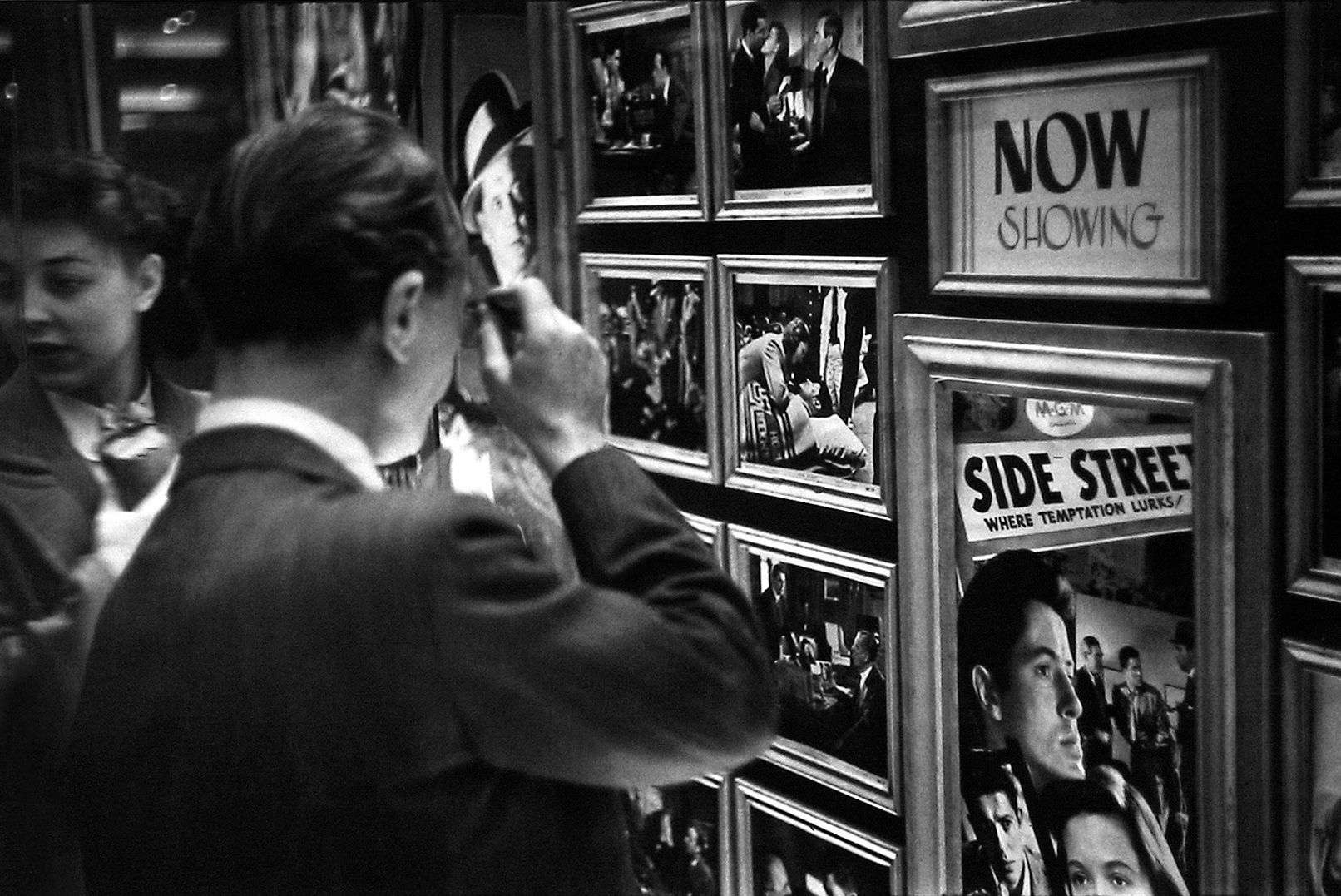
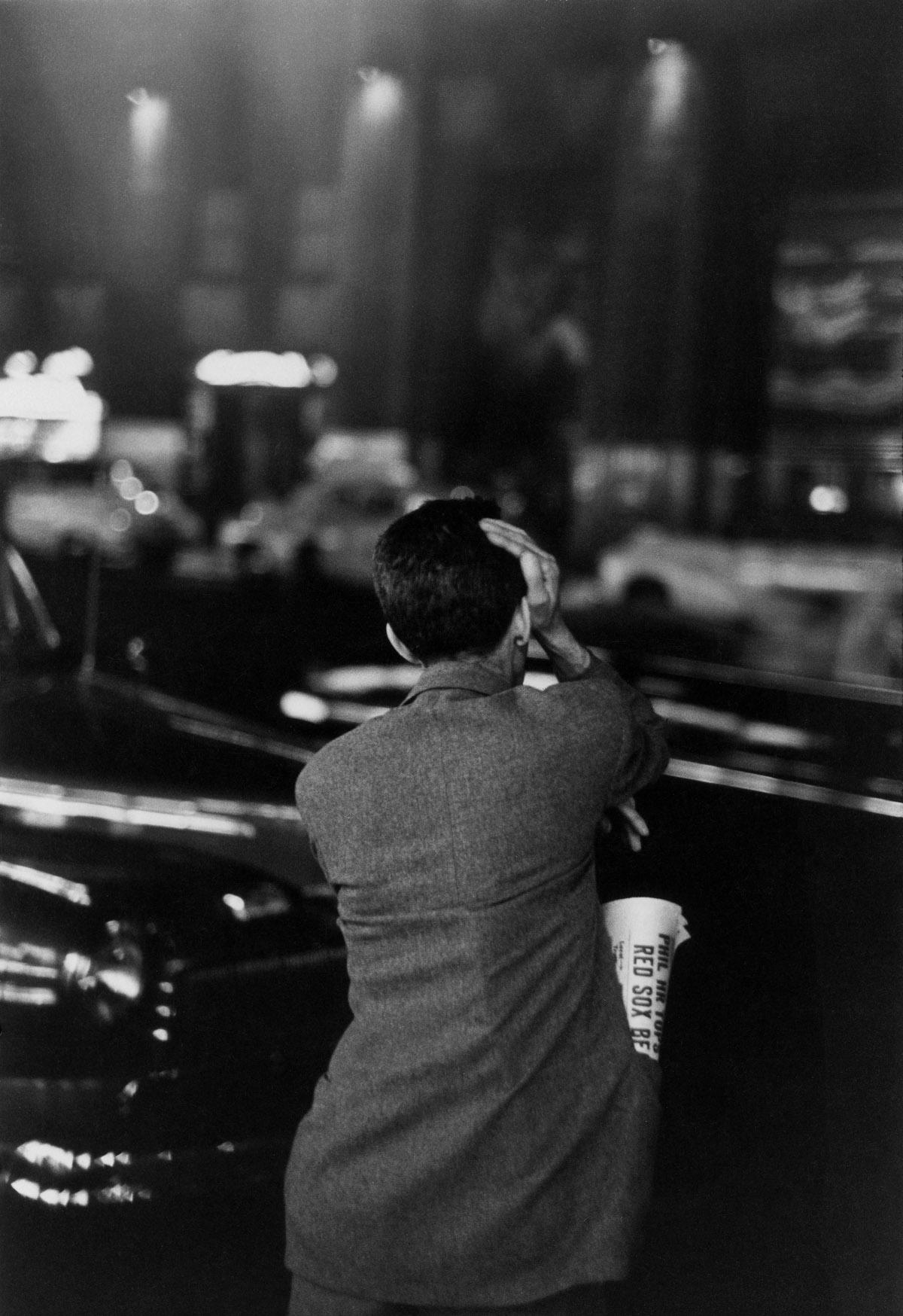
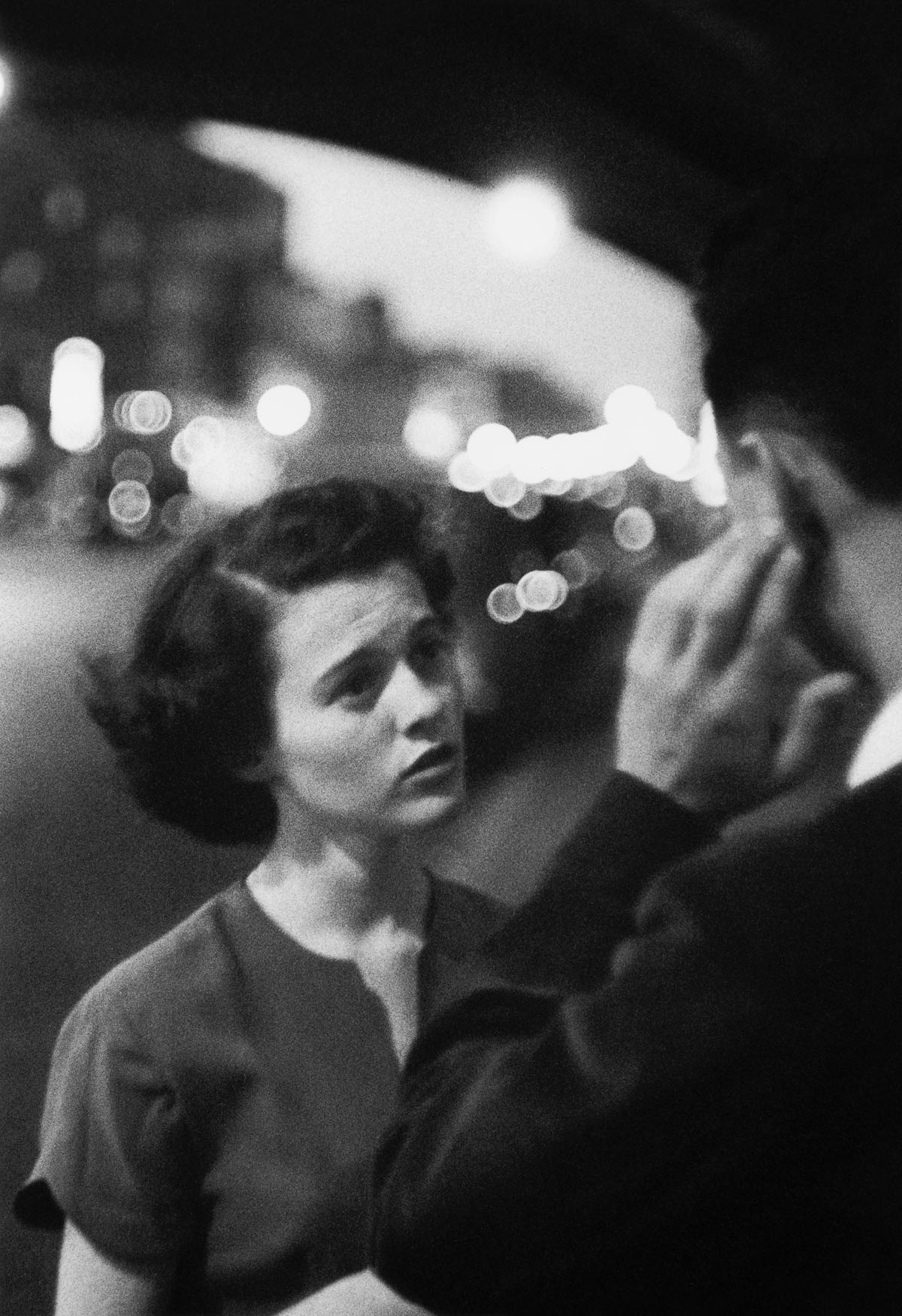
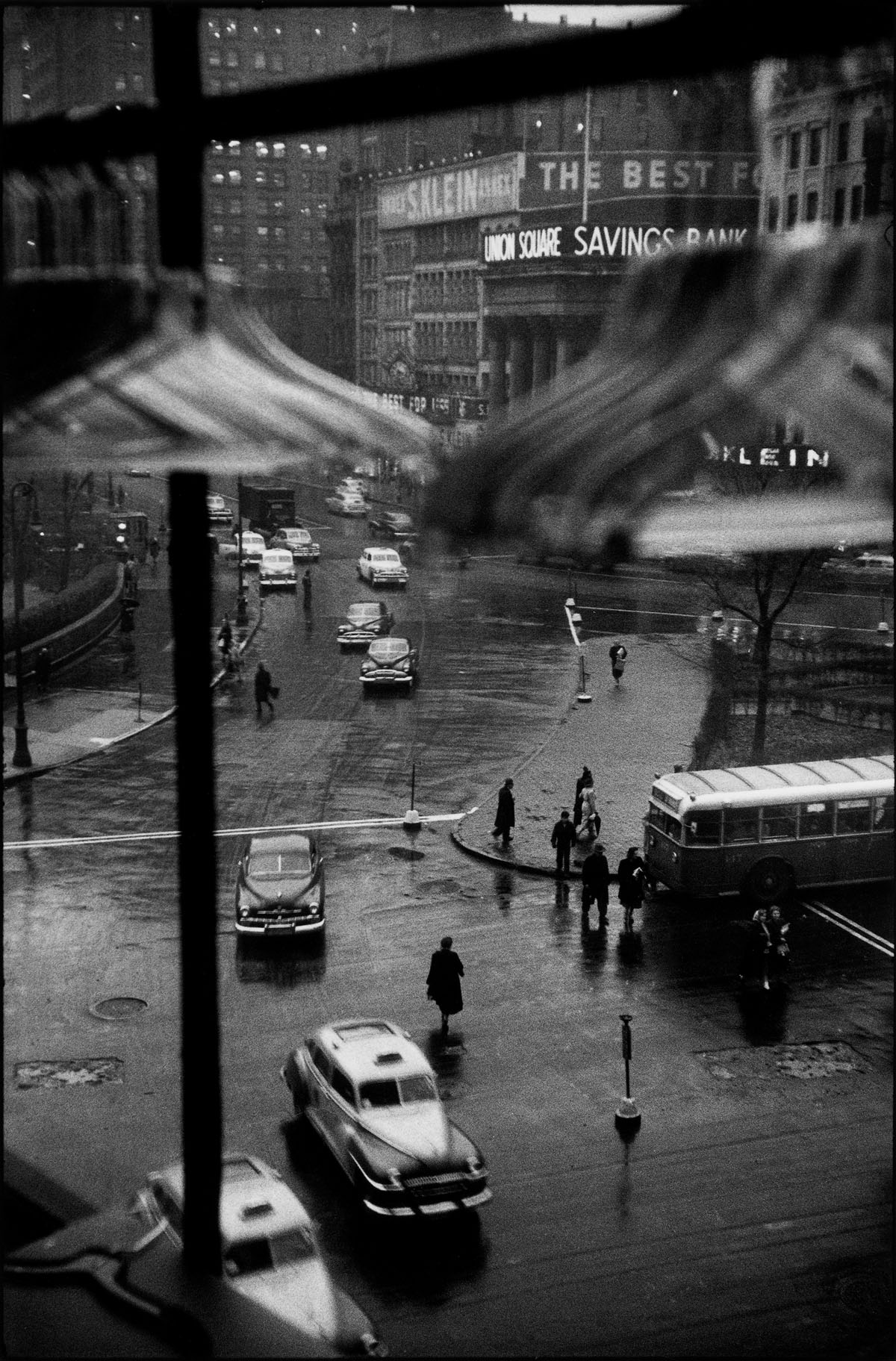
Exhibition: ‘Intersections: Photographs and Videos from the National Gallery of Art and the Corcoran Gallery of Art’ at the National Gallery of Art, Washington

Exhibition dates: 29th May, 2016 – 2nd January, 2017

Curators: Sarah Greenough, senior curator, department of photographs, and Philip Brookman, consulting curator, department of photographs, both National Gallery of Art, are the exhibition curators.


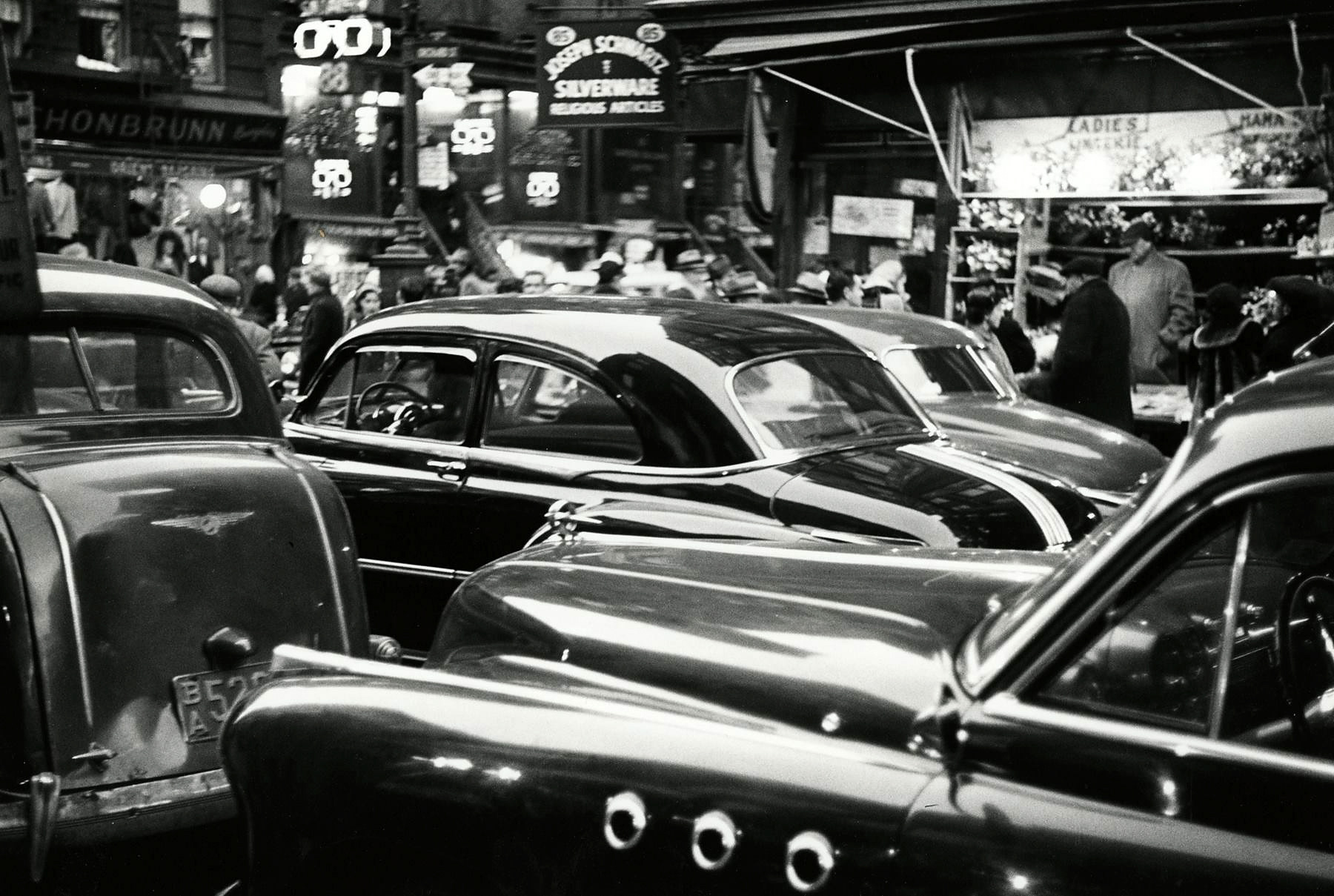
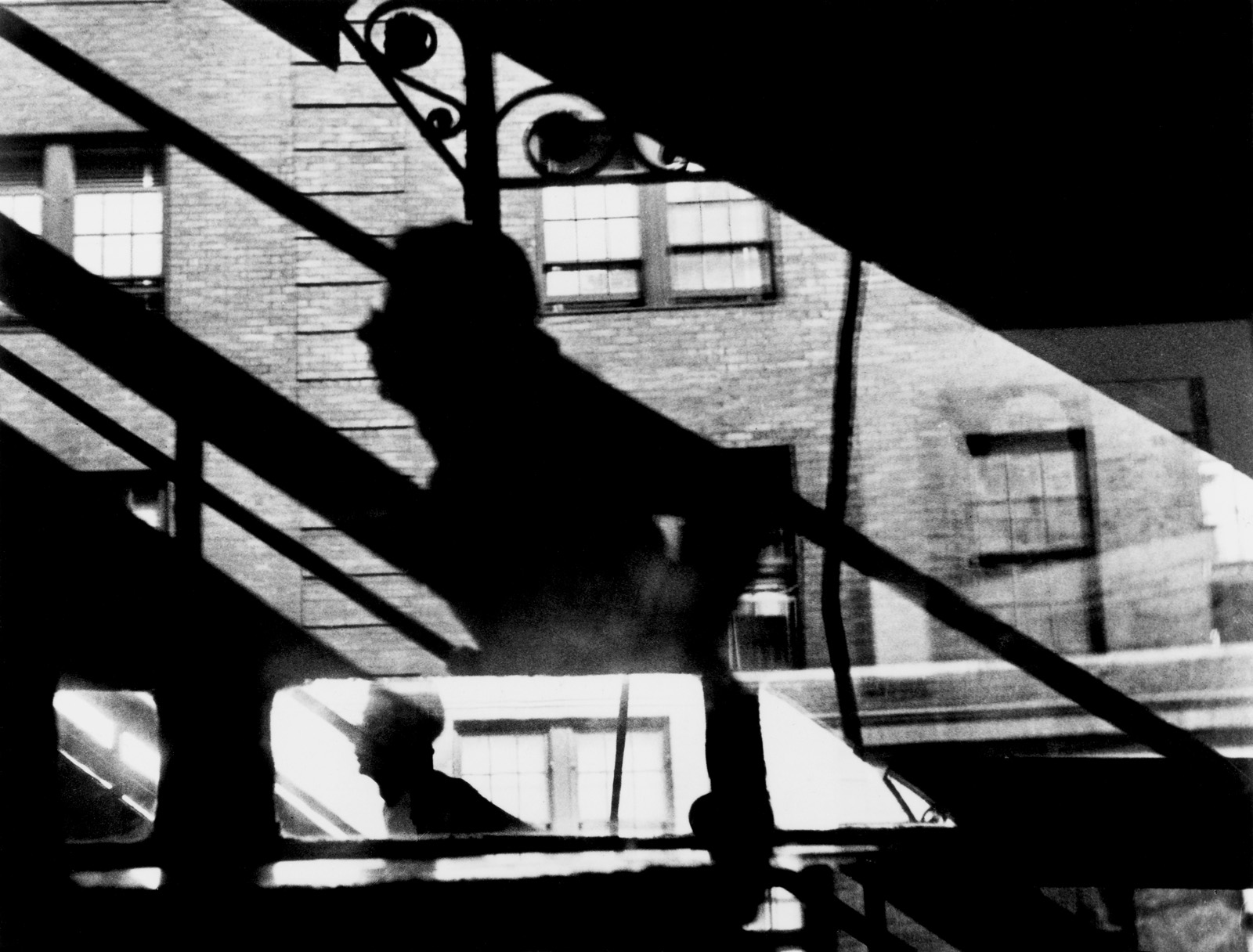
Louis Stettner (American, 1922-2016) 'Times Square, New York City' 1952-1954 from the exhibition Exhibition: 'Intersections: Photographs and Videos from the National Gallery of Art and the Corcoran Gallery of Art' at the National Gallery of Art, Washington, May 2016 - Jan 2017


Louis Stettner (American, 1922-2016)
Times Square, New York City
1952-1954
Gelatin silver print
Sheet (trimmed to image): 42.1 x 27.5cm (16 9/16 x 10 13/16 in.)
National Gallery of Art, Washington, Patrons’ Permanent Fund


The last posting of a fruitful year for Art Blart. I wish all the readers of Art Blart a happy and safe New Year!

The exhibition is organised around five themes – movement, sequence, narrative, studio, and identity – found in the work of Muybridge and Stieglitz, themes then developed in the work of other artists. While there is some interesting work in the posting, the conceptual rationale and stand alone nature of the themes and the work within them is a curatorial ordering of ideas that, in reality, cannot be contained within any one boundary, the single point of view.

Movement can be contained in sequences; narrative can be unfolded in a sequence (as in the work of Duane Michals); narrative and identity have a complex association which can also be told through studio work (eg. Gregory Crewdson), etc… What does Roger Mayne’s Goalie, Street Football, Brindley Road (1956, below) not have to do with identity, the young lad with his dirty hands, playing in his socks, in a poverty stricken area of London; why has Hiroshi Sugimoto’s Oscar Wilde (1999, below) been included in the studio section when it has much more to do with the construction of identity through photography – “Triply removing his portrait from reality – from Oscar Wilde himself to a portrait photograph to a wax sculpture and back to a photograph” – which confounds our expectations of the nature of photography. Photography is nefariously unstable in its depiction of an always, constructed reality, through representation(s) which reject simple causality.

To isolate and embolden the centre is to disclaim and disavow the periphery, work which crosses boundaries, is multifaceted and multitudinous; work which forms a nexus for networks of association beyond borders, beyond de/lineation – the line from here to there. The self-contained themes within this exhibition are purely illusory.

Dr Marcus Bunyan


Many thankx to the National Gallery of Art for allowing me to publish the photographs in the posting. Please click on the photographs for a larger version of the image.


“We can no longer accept that the identity of a man can be adequately established by preserving and fixing what he looks like from a single viewpoint in one place.”


John Berger. “No More Portraits,” in New Society August 1967


“Intersections: Photographs and Videos from the National Gallery of Art and the Corcoran Gallery of Art explores the connections between the two newly joined photography collections. On view from May 29, 2016, through January 2, 2017, the exhibition is organised around themes found in the work of the two pioneers of each collection: Eadweard Muybridge (1830-1904) and Alfred Stieglitz (1864-1946). Inspired by these two seminal artists, Intersections brings together more than 100 highlights of the recently merged collections by a range of artists from the 1840s to today.

Just as the nearly 700 photographs from Muybridge’s groundbreaking publication Animal Locomotion, acquired by the Corcoran Gallery of Art in 1887, became the foundation for the institution’s early interest in photography, the Key Set of more than 1,600 works by Stieglitz, donated by Georgia O’Keeffe and the Alfred Stieglitz Estate, launched the photography collection at the National Gallery of Art in 1949.”

Press release from the National Gallery of Art


Exhibition highlights

The exhibition is organised around five themes – movement, sequence, narrative, studio, and identity – found in the work of Muybridge and Stieglitz.

Movement

Works by Muybridge, who is best known for creating photographic technologies to stop and record motion, anchor the opening section devoted to movement. Photographs by Berenice Abbott and Harold Eugene Edgerton, which study how objects move through space, are included, as are works by Roger Mayne, Alexey Brodovitch, and other who employed the camera to isolate an instant from the flux of time.

Wall text

Intersections wall text


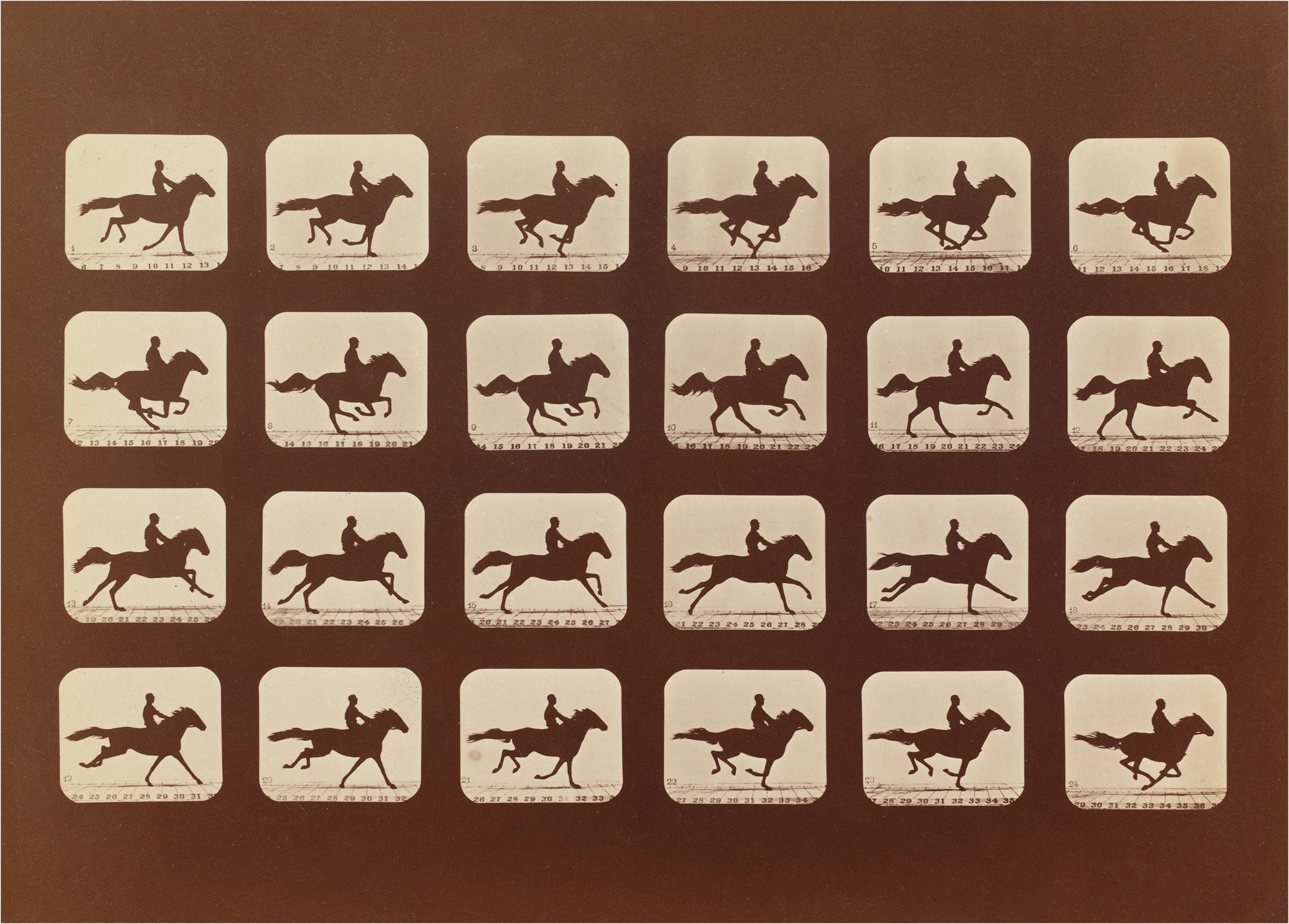
Eadweard Muybridge (English, 1830-1904) 'Horses. Running. Phyrne L. No. 40, from The Attitudes of Animals in Motion' 1879 from the National Gallery of Art and the Corcoran Gallery of Art' at the National Gallery of Art, Washington, May 2016 - Jan 2017


Eadweard Muybridge (English, 1830-1904)
Horses. Running. Phyrne L. No. 40, from The Attitudes of Animals in Motion
1879
Albumen print
Image: 16 x 22.4cm (6 5/16 x 8 13/16 in.)
Sheet: 25.7 x 32.4cm (10 1/8 x 12 3/4 in.)
National Gallery of Art, Washington, Gift of Mary and Dan Solomon


In order to analyse the movement of racehorses, farm animals, and acrobats, Muybridge pioneered new and innovative ways to stop motion with photography. In 1878, he started making pictures at railroad magnate Leland Stanford’s horse farm in Palo Alto, California, where he developed an electronic shutter that enabled exposures as fast as one-thousandth of a second. In this print from Muybridge’s 1881 album The Attitudes of Animals in Motion, Stanford’s prized racehorse Phryne L is shown running in a sequential grid of pictures made by 24 different cameras with electromagnetic shutters tripped by wires as the animal ran across the track. These pictures are now considered a critical step in the development of cinema.
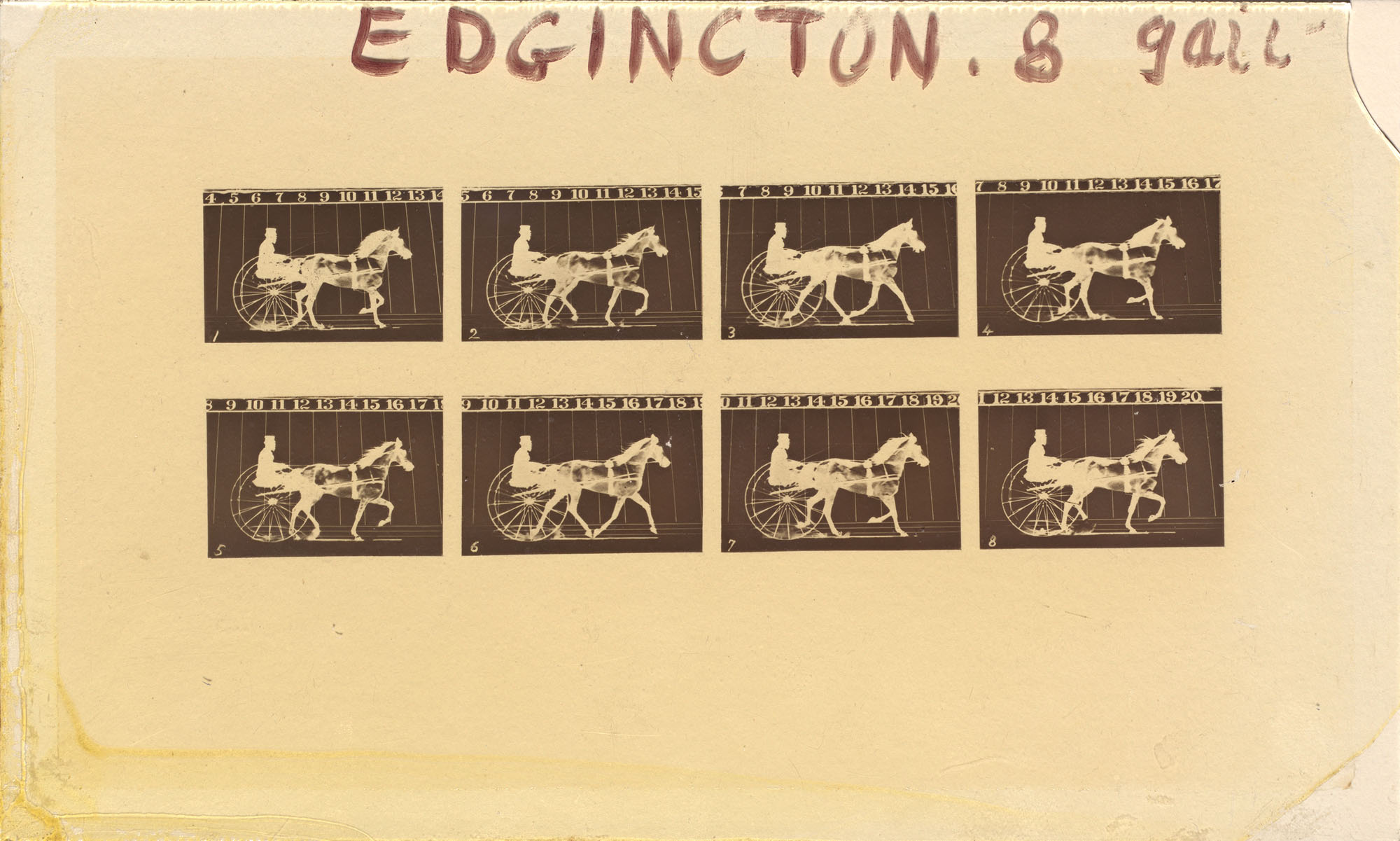
 

Eadweard Muybridge (English, 1830-1904) 'Internegative for Horses. Trotting. Abe Edgington. No. 28, from The Attitudes of Animals in Motion' 1878


Eadweard Muybridge (English, 1830-1904)
Internegative for Horses. Trotting. Abe Edgington. No. 28, from The Attitudes of Animals in Motion
1878
Collodion negative
Overall (glass plate): 15.3 x 25.4cm (6 x 10 in.)
National Gallery of Art, Washington, Gift of Mary and Dan Solomon and Patrons’ Permanent Fund


This glass negative shows the sequence of Leland Stanford’s horse Abe Edgington trotting across a racetrack in Palo Alto, California – a revolutionary record of the changes in the horse’s gait in about one second. Muybridge composed the negative from photographs made by eight different cameras lined up to capture the horse’s movements. Used to print the whole sequence together onto albumen paper, this internegative served as an intermediary step in the production of Muybridge’s 1881 album The Attitudes of Animals in Motion.
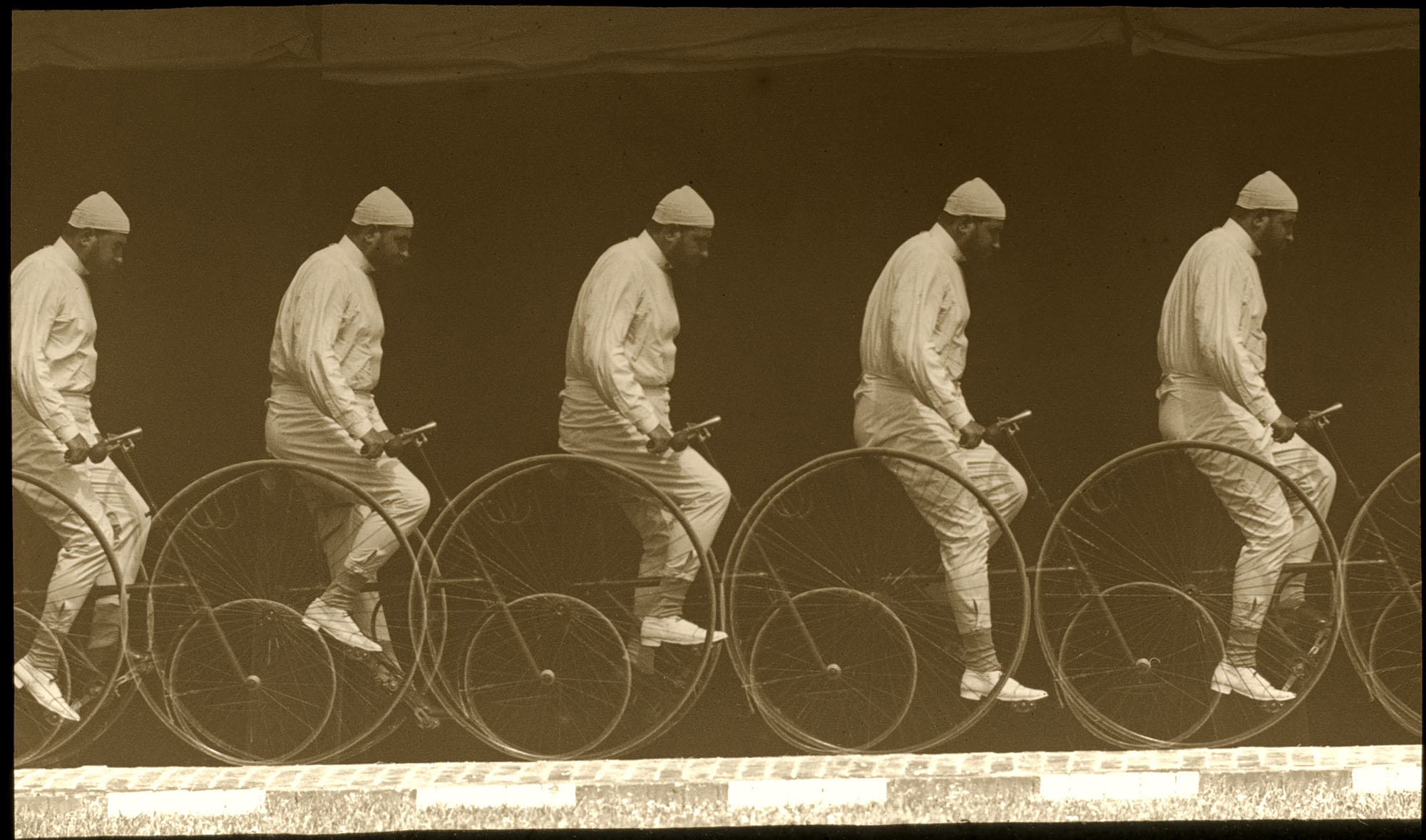
 

Étienne Jules Marey (French, 1830-1904) 'Chronophotograph of a Man on a Bicycle' c. 1885-1890


Étienne Jules Marey (French, 1830-1904)
Chronophotograph of a Man on a Bicycle
c. 1885-1890
Glass lantern slide
Image: 4 x 7.5cm (1 9/16 x 2 15/16 in.)
Plate: 8.8 x 10.2cm (3 7/16 x 4 in.)
National Gallery of Art, Washington, Gift of Mary and David Robinson


A scientist and physiologist, Marey became fascinated with movement in the 1870s. Unlike Muybridge, who had already made separate pictures of animals in motion, Marey developed in 1882 a means to record several phases of movement onto one photographic plate using a rotating shutter with slots cut into it. He called this process “chronophotography,” meaning photography of time. His photographs, which he published in books and showed in lantern slide presentations, influenced 20th-century cubist, futurist, and Dada artists who examined the interdependence of time and space.
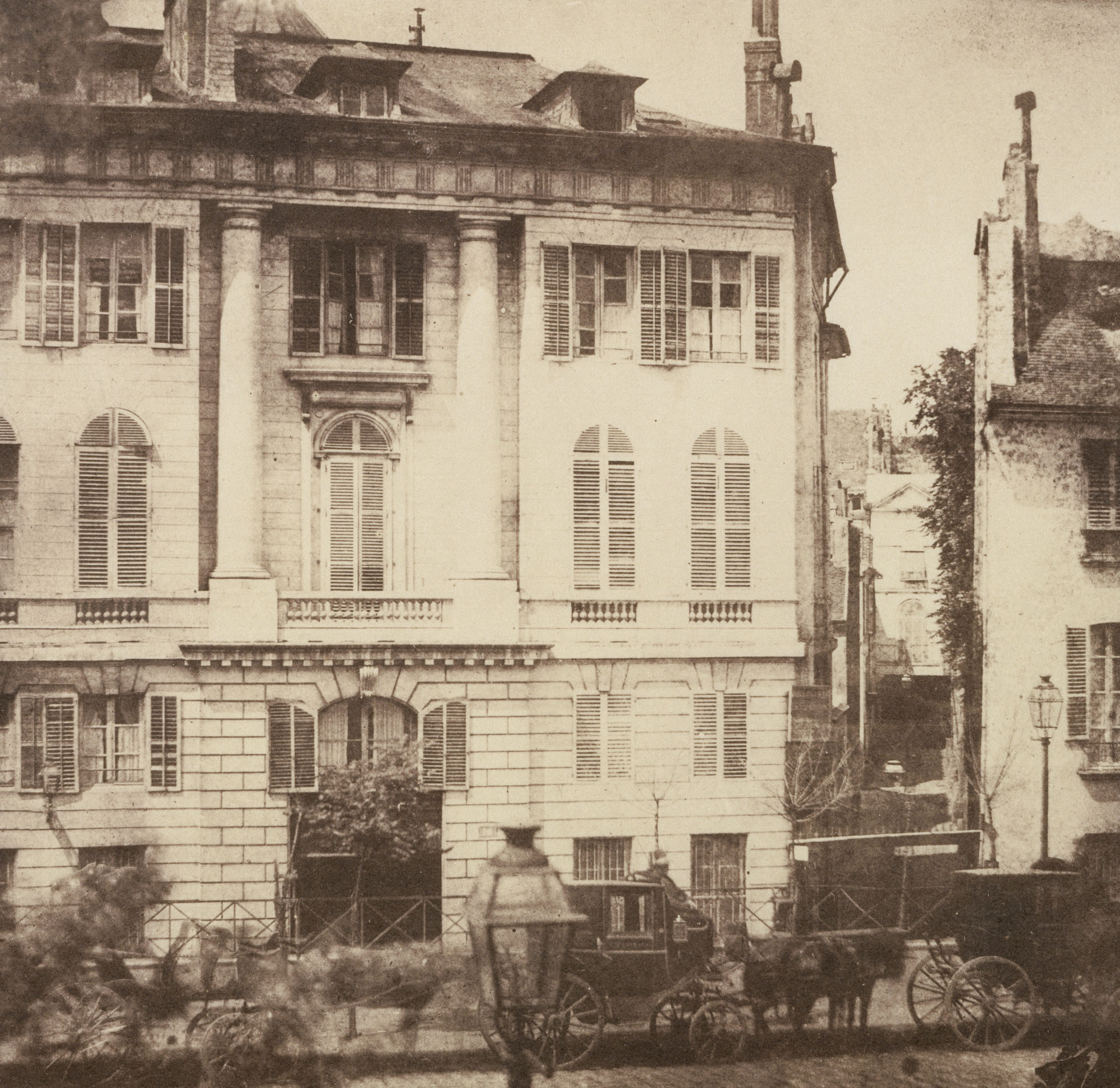
 

William Henry Fox Talbot (English, 1800-1877) 'The Boulevards of Paris' 1843


William Henry Fox Talbot (English, 1800-1877)
The Boulevards of Paris
1843
Salted paper print
Image: 16.6 × 17.1cm (6 9/16 × 6 3/4 in.)
Sheet: 19 × 23.2cm (7 1/2 × 9 1/8 in.)
National Gallery of Art, Washington, New Century Fund


As soon as Talbot announced his invention of photography in 1839, he realised that its ability to freeze time enabled him to present the visual spectacle of the world in an entirely new way. By capturing something as mundane as a fleeting moment on a busy street, he could transform life into art, creating a picture that could be savoured long after the event had transpired.


David Octavius Hill (Scottish, 1802-1870) and Robert Adamson (Scottish, 1821-1848) 'Colinton Manse and weir, with part of the old mill on the right' 1843-1847


David Octavius Hill (Scottish, 1802-1870) and Robert Adamson (Scottish, 1821-1848)
Colinton Manse and weir, with part of the old mill on the right
1843-1847
Salted paper print
Image: 20.7 x 14.6cm (8 1/8 x 5 3/4 in.)
National Gallery of Art, Washington, Paul Mellon Fund


In 1843, only four years after Talbot announced his negative / positive process of photography, painter David Octavius Hill teamed up with engineer Robert Adamson. Working in Scotland, they created important early portraits of the local populace and photographed Scottish architecture, rustic landscapes, and city scenes. Today a suburb southwest of Edinburgh, 19th-century Colinton was a mill town beside a river known as the Water of Leith. Because of the long exposure time required to make this photograph, the water rushing over a small dam appears as a glassy blur.


Thomas Annan (Scottish, 1829-1887) 'Old Vennel, Off High Street' 1868-1871


Thomas Annan (Scottish, 1829-1887)
Old Vennel, Off High Street
1868-1871
Carbon print
Image: 26.9 x 22.3cm (10 9/16 x 8 3/4 in.)
Sheet: 50.8 x 37.9cm (20 x 14 15/16 in.)
National Gallery of Art, Washington, Patrons’ Permanent Fund


In 1868, Glasgow’s City Improvements Trust hired Annan to photograph the “old closes and streets of Glasgow” before the city’s tenements were demolished. Annan’s pictures constitute one of the first commissioned photographic records of living conditions in urban slums. The collodion process Annan used to make his large, glass negatives required a long exposure time. In the dim light of this narrow passage, it was impossible for the photographer to stop the motion of the restless children, who appear as ghostly blurs moving barefoot across the cobblestones.
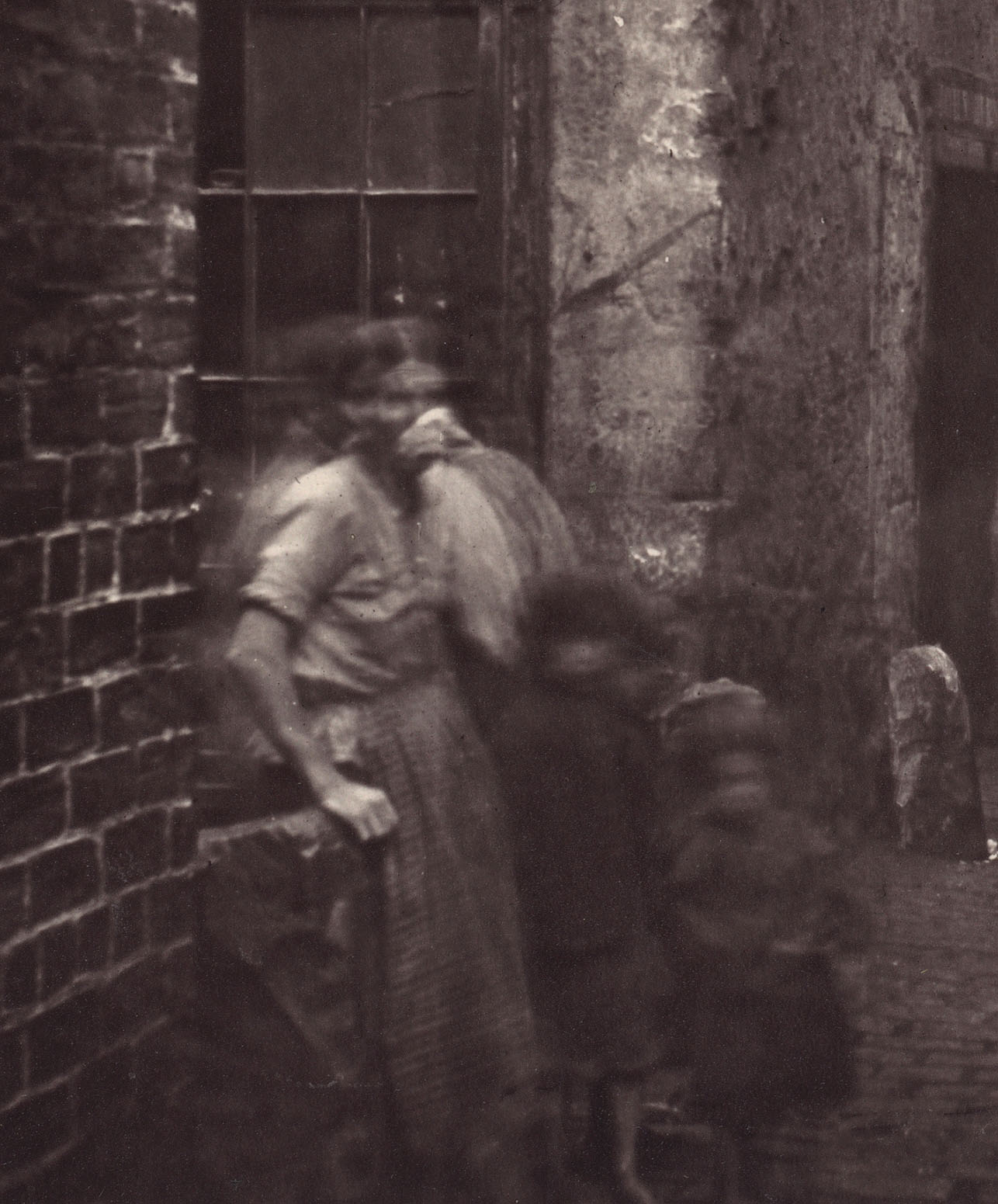
 

Thomas Annan (Scottish, 1829-1887) 'Old Vennel, Off High Street' 1868-1871 (detail)


Thomas Annan (Scottish, 1829-1887)
Old Vennel, Off High Street (detail)
1868-1871
Carbon print
Image: 26.9 x 22.3cm (10 9/16 x 8 3/4 in.)
Sheet: 50.8 x 37.9cm (20 x 14 15/16 in.)
National Gallery of Art, Washington, Patrons’ Permanent Fund
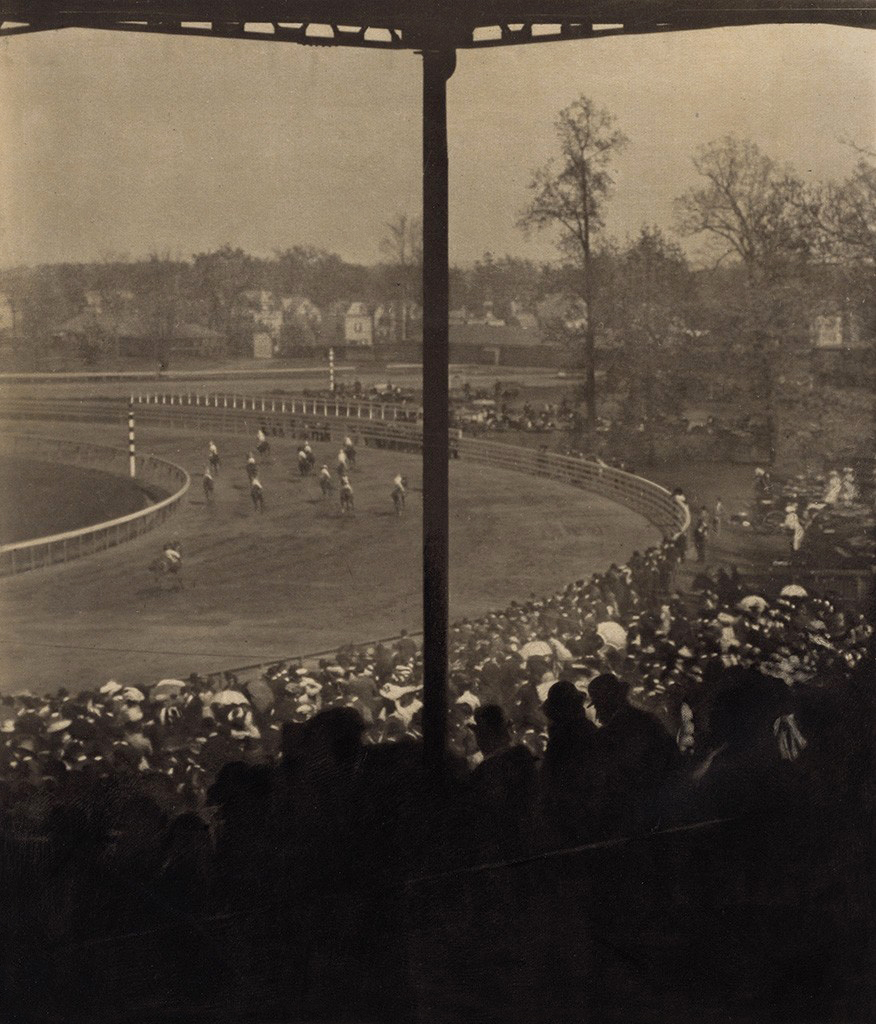
 

Alfred Stieglitz (American, 1864-1946) 'Going to the Post, Morris Park' 1904


Alfred Stieglitz (American, 1864-1946)
Going to the Post, Morris Park
1904
Photogravure
Image: 30.8 x 26.4cm (12 1/8 x 10 3/8 in.)
Sheet: 38.5 x 30.3cm (15 3/16 x 11 15/16 in.)
National Gallery of Art, Washington, Alfred Stieglitz Collection


In the 1880s and 1890s, improvements in photographic processes enabled manufacturers to produce small, handheld cameras that did not need to be mounted on tripods. Faster film and shutter speeds also allowed practitioners to capture rapidly moving objects. Stieglitz was one of the first fine art photographers to exploit the aesthetic potential of these new cameras and films. Around the turn of the century, he made many photographs of rapidly moving trains, horse-drawn carriages, and racetracks that capture the pace of the increasingly modern city.


Harold Eugene Edgerton (American, 1903-1990) 'Wes Fesler Kicking a Football' 1934


Harold Eugene Edgerton (American, 1903-1990)
Wes Fesler Kicking a Football
1934
Gelatin silver print
Image: 11 1/2 x 9 5/8 in.
Sheet: 13 15/16 x 11 in.
National Gallery of Art, Washington, Corcoran Collection (Museum Purchase with the aid of funds from the National Endowment for the Arts, Washington, D.C., a Federal Agency, and The Polaroid Corporation)


A professor of electrical engineering at the Massachusetts Institute of Technology, Edgerton in the early 1930s invited the stroboscope, a tube filled with gas that produced high-intensity bursts of light at regular and very brief intervals. He used it to illuminate objects in motion so that they could be captured by a camera. At first he was hired by industrial clients to reveal flaws in their production of materials, but by the mid-1930s he began to photography everyday events… Edgerton captured phenomena moving too fast for the naked eye to see, and revealed the beauty of people and objects in motion.
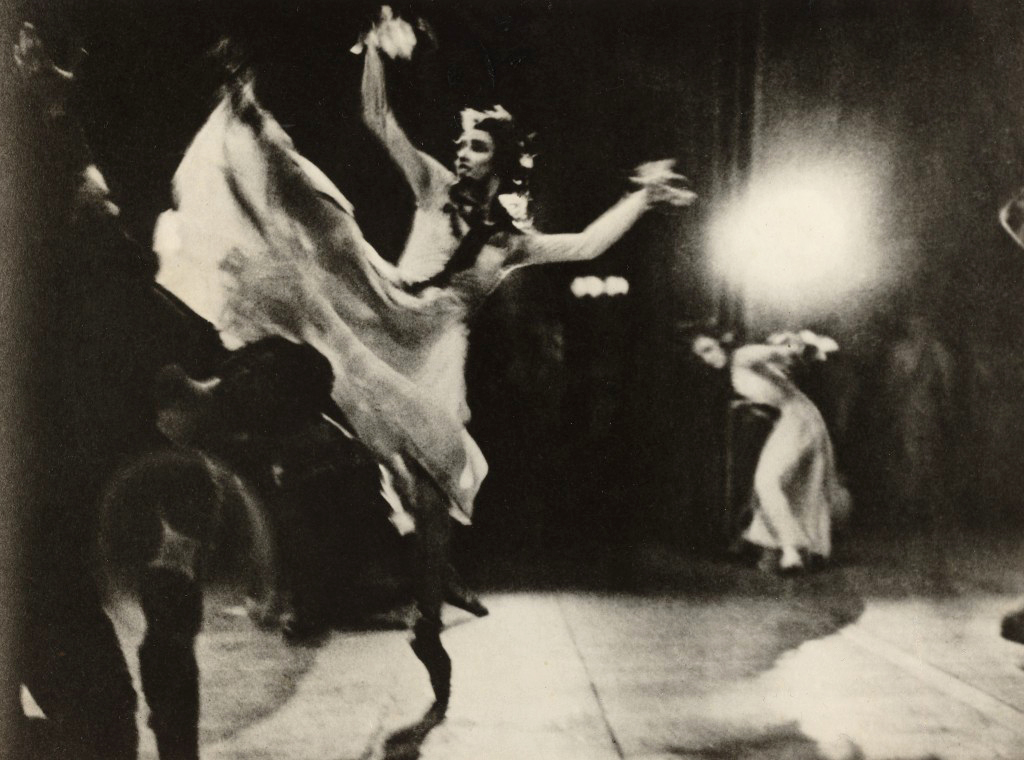
 

Alexey Brodovitch (American born Russia, 1898-1971) 'Untitled from "Ballet" series' 1938


Alexey Brodovitch (American born Russia, 1898-1971)
Untitled from “Ballet” series
1938
Gelatin silver print
Overall: 20.4 x 27.5cm (8 1/16 x 10 13/16 in.)
National Gallery of Art, Washington, Diana and Mallory Walker Fund


A graphic artist, Russian-born Brodovitch moved to the United States from Paris in 1930. Known for his innovative use of photographs, illustrations, and type on the printed page, he became art director for Harper’s Bazaar in 1934, and photographed the Ballets Russes de Monte Carlo during their American tours from 1935 to 1939. Using a small-format, 35 mm camera, Brodovitch worked in the backstage shadows and glaring light of the theatre to produce a series of rough, grainy pictures that convey the drama and action of the performance. This photograph employs figures in motion, a narrow field of focus, and high-contrast effects to express the stylised movements of Léonide Massine’s 1938 choreography for Beethoven’s Seventh Symphony.
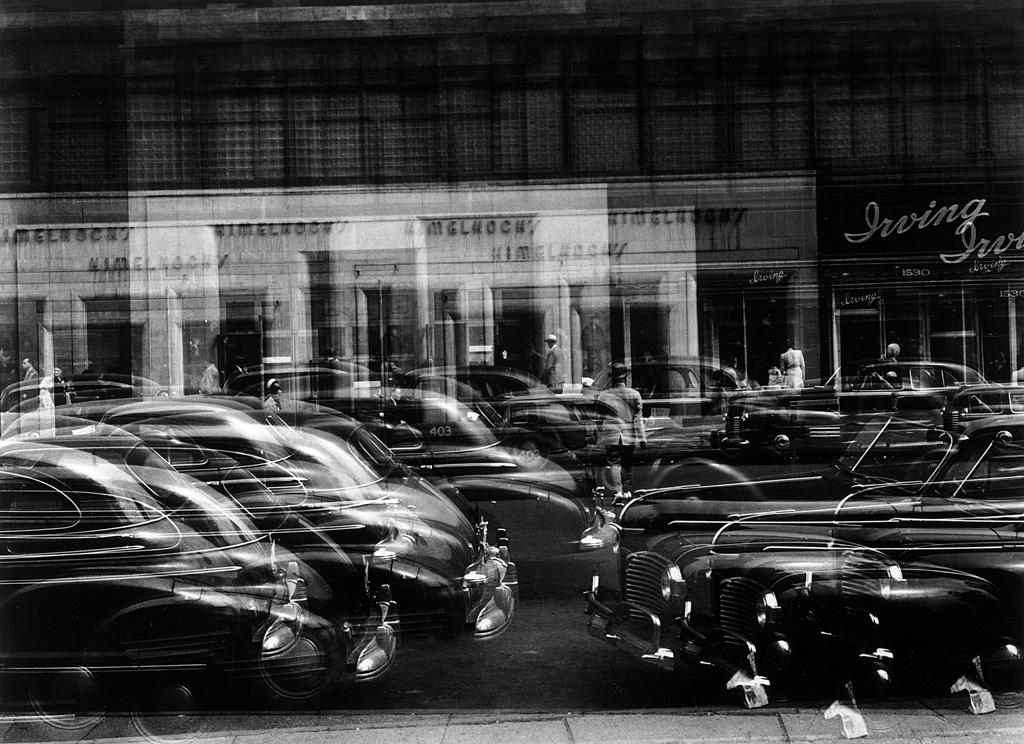
 

Harry Callahan (American, 1912-1999) 'Detroit' 1943


Harry Callahan (American, 1912-1999)
Detroit
c. 1943
Dye imbibition print, printed c. 1980
Overall (image): 18 x 26.7cm (7 1/16 x 10 1/2 in.)
Sheet: 27.31 x 36.83cm (10 3/4 x 14 1/2 in.)
National Gallery of Art, Washington, Gift of the Callahan Family
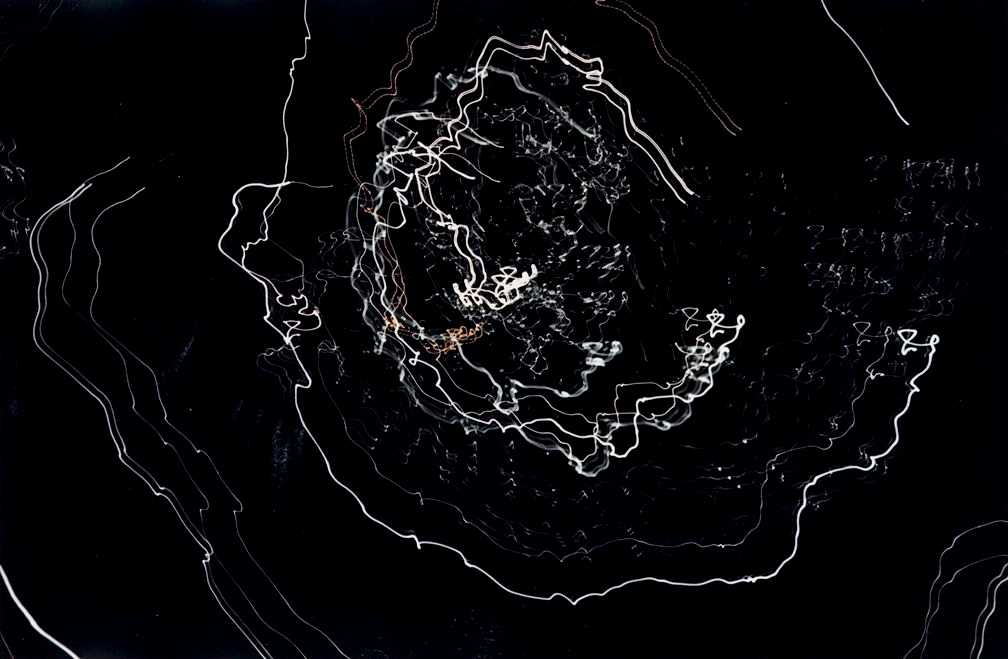
 

Harry Callahan (American, 1912-1999) 'Camera Movement on Neon Lights at Night' 1946


Harry Callahan (American, 1912-1999)
Camera Movement on Neon Lights at Night
1946
Dye imbibition print, printed 1979
Image: 8 3/4 x 13 5/8 in.
Sheet: 10 3/8 x 13 15/16 in.
National Gallery of Art, Washington, Corcoran Collection (Gift of Richard W. and Susan R. Gessner)
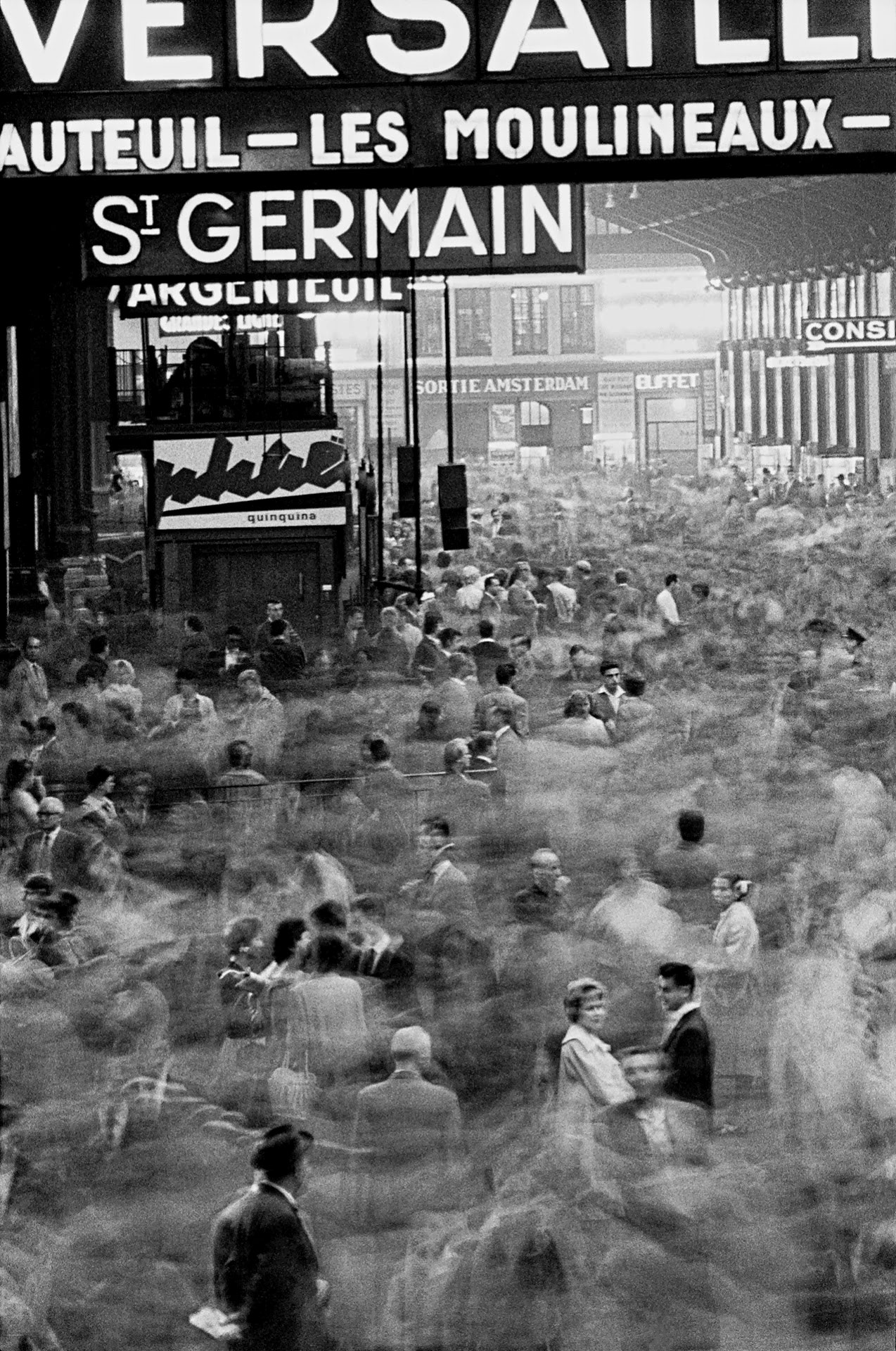
 

Frank Horvat (Italian, 1928-2020) 'Paris, Gare Saint-Lazare' 1959


Frank Horvat (Italian, 1928-2020)
Paris, Gare Saint-Lazare
1959
Gelatin silver print
Overall: 39.3 x 26.2cm (15 1/2 x 10 5/16 in.)
National Gallery of Art, Washington, Patrons’ Permanent Fund


Gare Saint-Lazare is one of the principal railway stations in Paris. Because of its industrial appearance, steaming locomotives, and teeming crowds, it was a frequent subject for 19th-century French painters – including Claude Monet, Édouard Manet, and Gustave Caillebotte – who used it to express the vitality of modern life. 20th-century artists such as Horvat also depicted it to address the pace and anonymity that defined their time. Using a telephoto lens and long exposure, he captured the rushing movement of travellers scattered beneath giant destination signs.
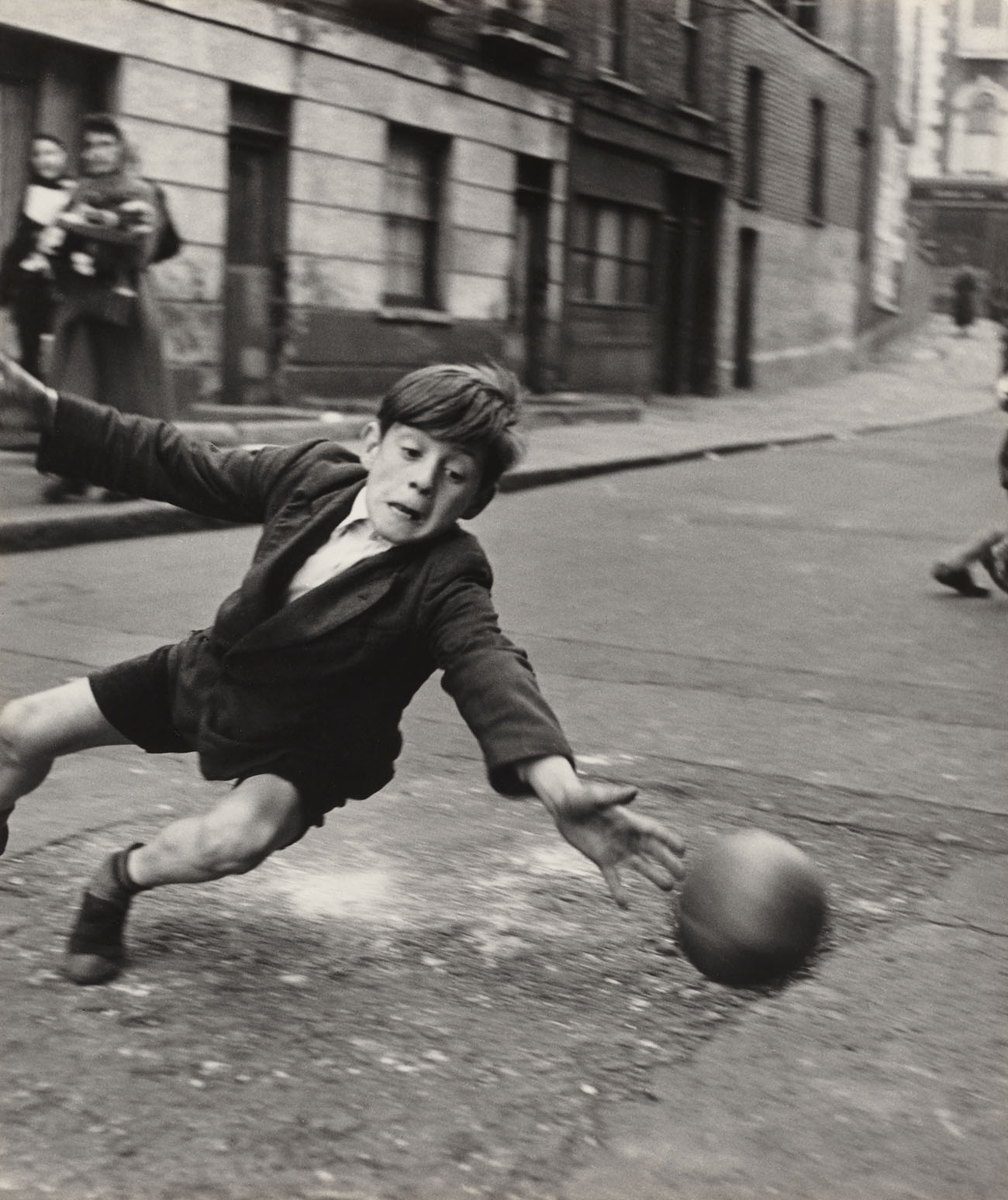
 

Roger Mayne (English, 1929-2014) 'Goalie, Street Football, Brindley Road' 1956


Roger Mayne (English, 1929-2014)
Goalie, Street Football, Brindley Road
1956
Gelatin silver print
Image: 34.7 × 29.1cm (13 11/16 × 11 7/16 in.)
National Gallery of Art, Washington, Patrons’ Permanent Fund


From 1956 to 1961, Mayne photographed London’s North Kensington neighbourhood to record its emergence from the devastation and poverty caused by World War II. This dramatic photograph of a young goalie lunging for the ball during an after-school soccer game relies on the camera’s ability to freeze the fast-paced and unpredictable action. Because the boy’s daring lunge is forever suspended in time, we will never know its outcome.
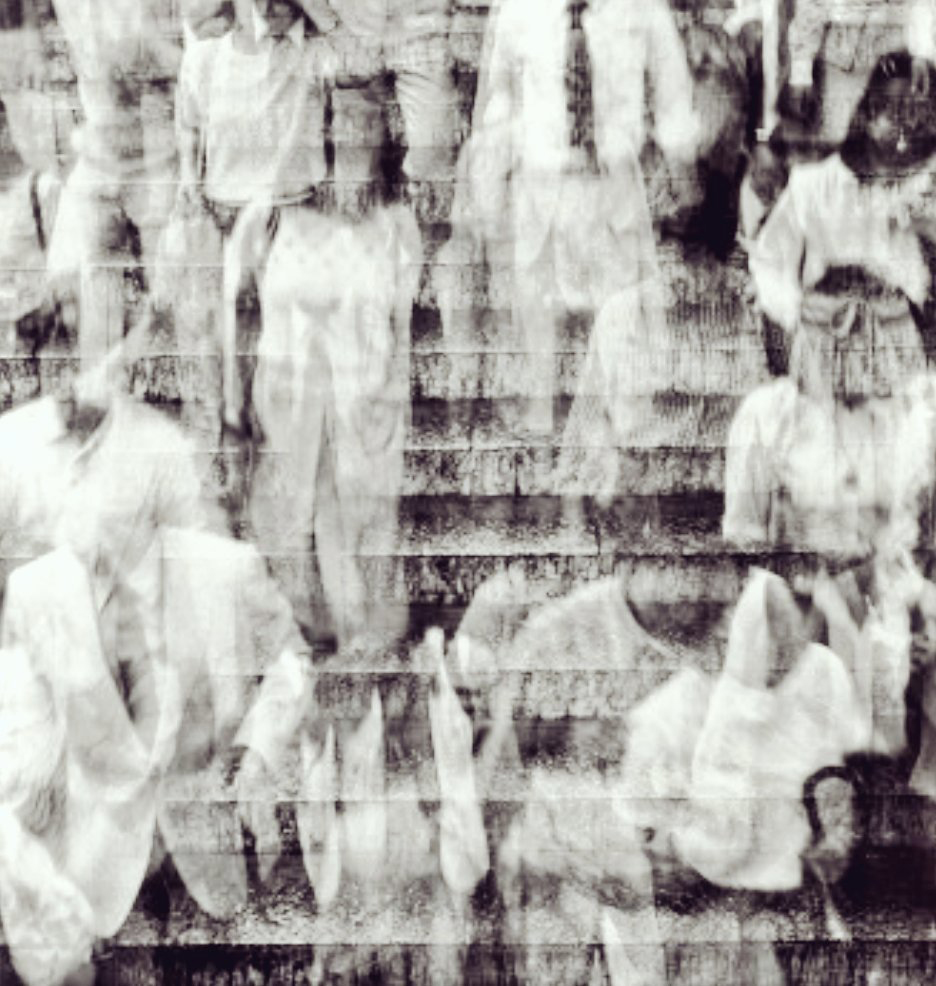
 

Shōmei Tōmatsu (Japanese, 1930-2012) 'Rush Hour, Tokyo' 1981 (detail)


Shōmei Tōmatsu (Japanese, 1930-2012)
Rush Hour, Tokyo (detail)
1981
Gelatin silver print
Sheet: 11 5/16 x 9 7/16 in. (28.73 x 23.97 cm)
National Gallery of Art, Washington, Corcoran Collection (Gift of Michael D. Abrams)


Best known for his expressive documentation of World War II’s impact on Japanese culture, Tomatsu was one of Japan’s most creative and influential photographers. Starting in the early 1960s, he documented the country’s dramatic economic, political, and cultural transformation. This photograph – a long exposure made with his camera mounted on a tripod – conveys the chaotic rush of commuters on their way through downtown Tokyo. Tomatsu used this graphic description of movement, which distorts the faceless bodies of commuters dashing down a flight of stairs, to symbolise the dehumanising nature of work in the fast-paced city of the early 1980s.


Sequence

Muybridge set up banks of cameras and used electronic shutters triggered in sequence to analyse the motion of people and animals. Like a storyteller, he sometimes adjusted the order of images for visual and sequential impact. Other photographers have also investigated the medium’s capacity to record change over time, express variations on a theme, or connect seemingly disparate pictures. In the early 1920s, Stieglitz began to create poetic sequences of cloud photographs meant to evoke distinct emotional experiences. These works (later known as Equivalents) influenced Ansel Adams and Minor White – both artists created specific sequences to evoke the rhythms of nature or the poetry of time passing.

Wall text

Intersections wall text


Alfred Stieglitz (American, 1864-1946) 'From My Window at An American Place, Southwest' March 1932


Alfred Stieglitz (American, 1864-1946)
From My Window at An American Place, Southwest
March 1932
Gelatin silver print
Sheet (trimmed to image): 23.8 x 18.4cm (9 3/8 x 7 1/4 in.)
National Gallery of Art, Washington, Alfred Stieglitz Collection


Alfred Stieglitz (American, 1864-1946) 'From My Window at An American Place, Southwest' April 1932


Alfred Stieglitz (American, 1864-1946)
From My Window at An American Place, Southwest
April 1932
Gelatin silver print
Sheet (trimmed to image): 23.8 x 18.8cm (9 3/8 x 7 3/8 in.)
National Gallery of Art, Washington, Alfred Stieglitz Collection
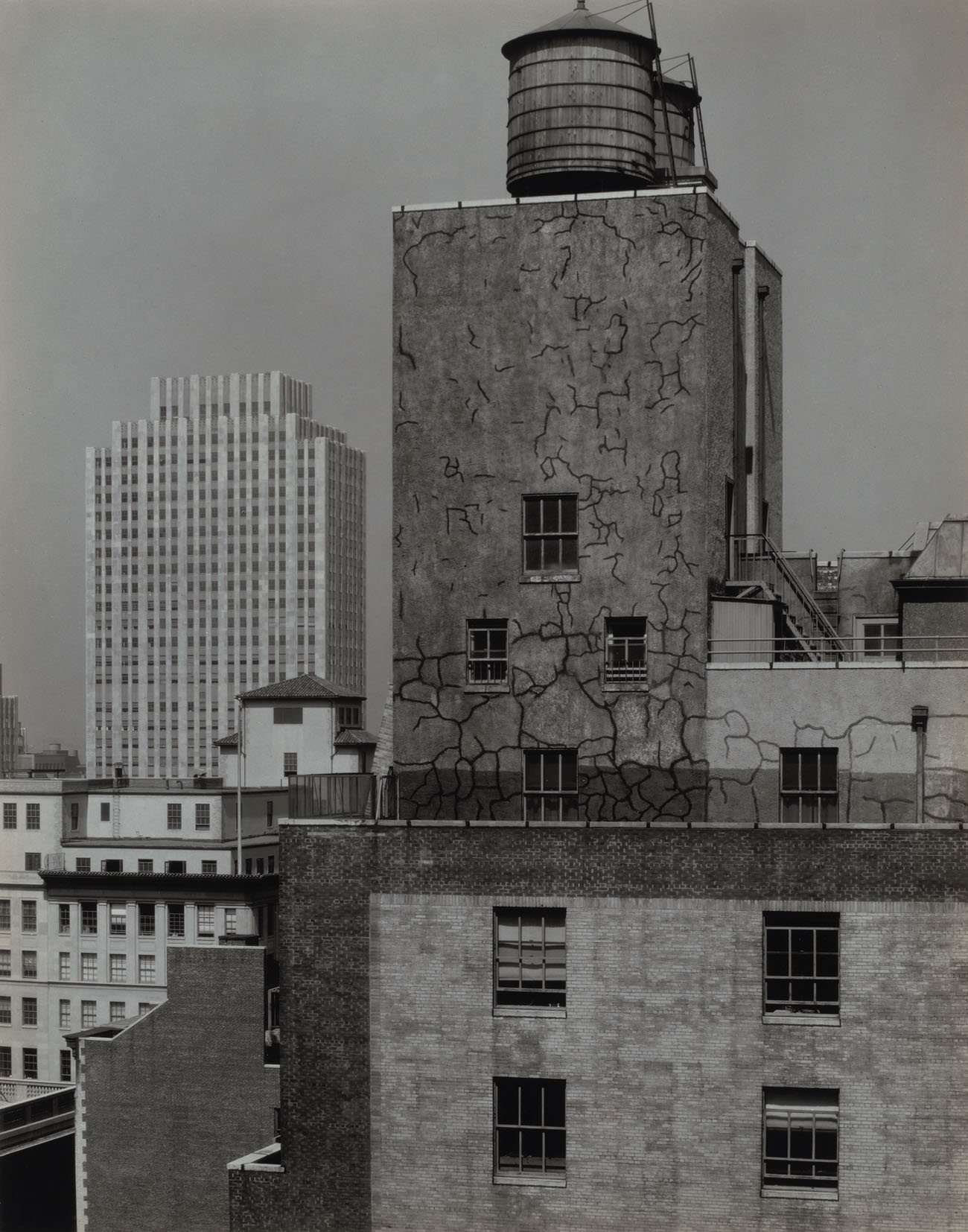
 

Alfred Stieglitz (American, 1864-1946) 'Water Tower and Radio City, New York' 1933


Alfred Stieglitz (American, 1864-1946)
Water Tower and Radio City, New York
1933
Gelatin silver print
Sheet: 23.7 x 18.6cm (9 5/16 x 7 5/16 in.)
National Gallery of Art, Washington, Alfred Stieglitz Collection


Whenever Stieglitz exhibited his photographs of New York City made in the late 1920s and early 1930s, he grouped them into series that record views from the windows of his gallery, An American Place, or his apartment at the Shelton Hotel, showing the gradual growth of the buildings under construction in the background. Although he delighted in the formal beauty of the visual spectacle, he lamented that these buildings, planned in the exuberance of the late 1920s, continued to be built in the depths of the Depression, while “artists starved,” as he said at the time, and museums were “threatened with closure.”
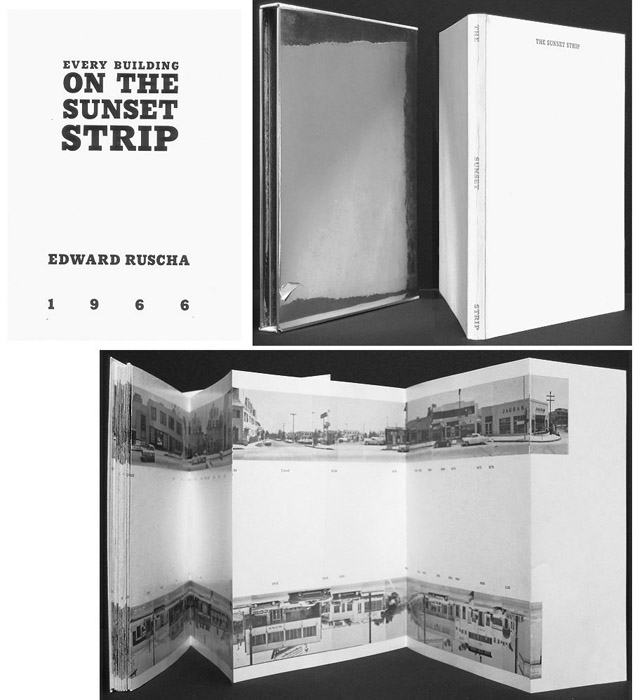
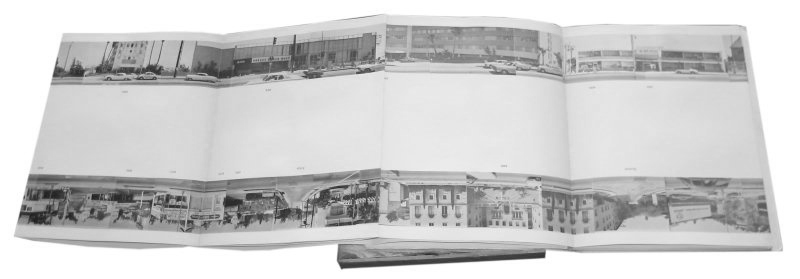
 

Ed Ruscha (American, b. 1937) 'Every Building on Sunset Strip' 1966

Ed Ruscha (American, b. 1937) 'Every Building on Sunset Strip' 1966

Ed Ruscha (American, b. 1937) 'Every Building on Sunset Strip' 1966


Ed Ruscha (American, b. 1937)
Every Building on the Sunset Strip
1966
Offset lithography book: 7 x 5 3/4 in. (17.78 x 14.61cm)
Unfolded (open flat): 7 x 276 in.
National Gallery of Art, Washington, Corcoran Collection (Gift of Philip Brookman and Amy Brookman)
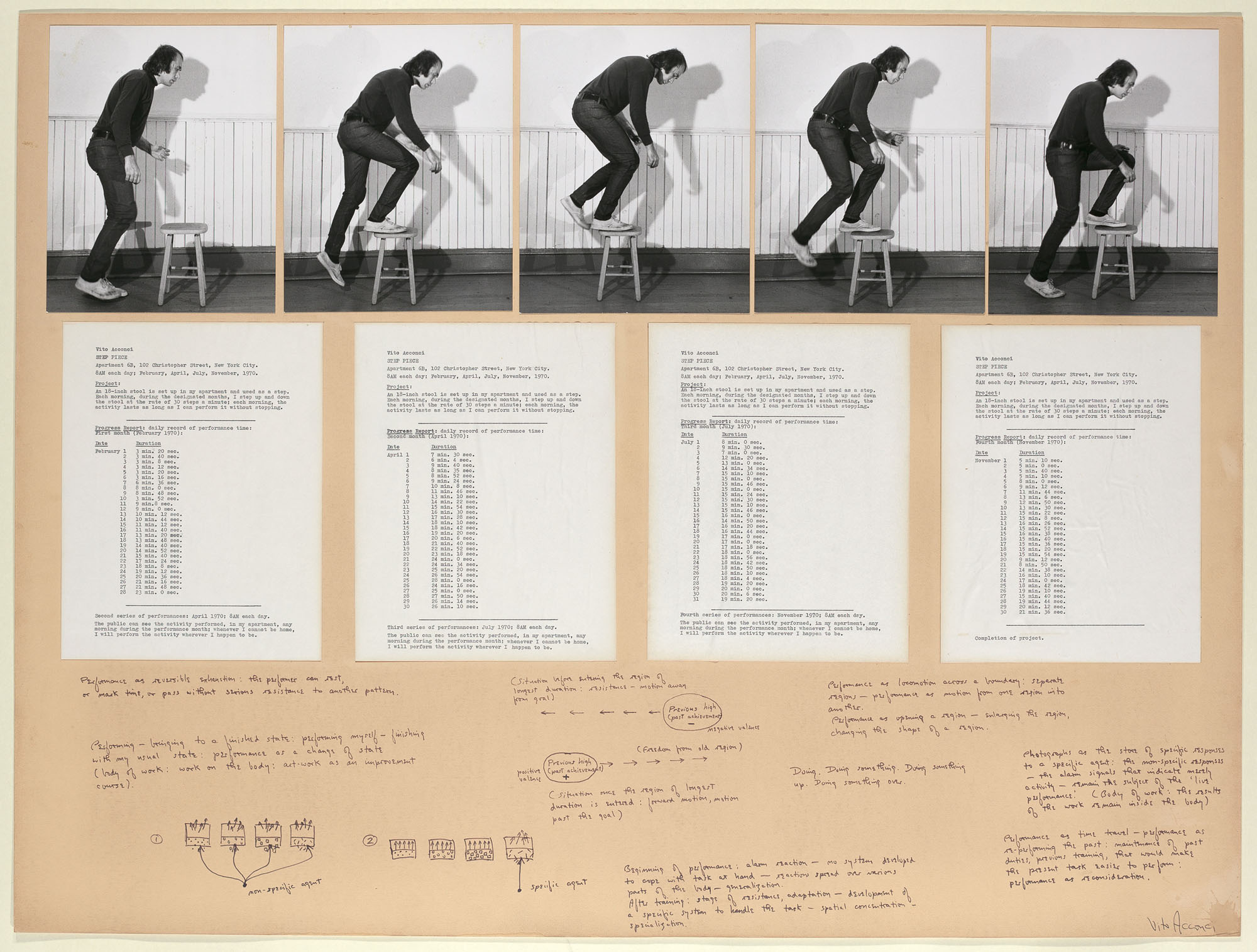
 

Vito Acconci (American, 1940-2017) 'Step Piece' 1970


Vito Acconci (American, 1940-2017)
Step Piece
1970
Five gelatin silver prints and four sheets of type-written paper, mounted on board with annotations in black ink
Sheet: 76.2 x 101.6cm (30 x 40 in.)
National Gallery of Art, Washington, Dorothy and Herbert Vogel Collection


Acconci’s Step Piece is made up of equal parts photography, drawing, performance, and quantitative analysis. It documents a test of endurance: stepping on and off a stool for as long as possible every day. This performance-based conceptual work is rooted in the idea that the body itself can be a medium for making art. To record his activity, Acconci made a series of five photographs spanning one complete action. Like the background grid in many of Muybridge’s motion studies, vertical panels in Acconci’s studio help delineate the space. His handwritten notes and sketches suggest the patterns of order and chaos associated with the performance, while typewritten sheets, which record his daily progress, were given to people who were invited to observe.


Narrative

The exhibition also explores the narrative possibilities of photography found in the interplay of image and text in the work of Robert Frank, Larry Sultan, and Jim Goldberg; the emotional drama of personal crisis in Nan Goldin’s image grids; or the expansion of photographic description into experimental video and film by Victor Burgin and Judy Fiskin.

Wall text

Intersections wall text


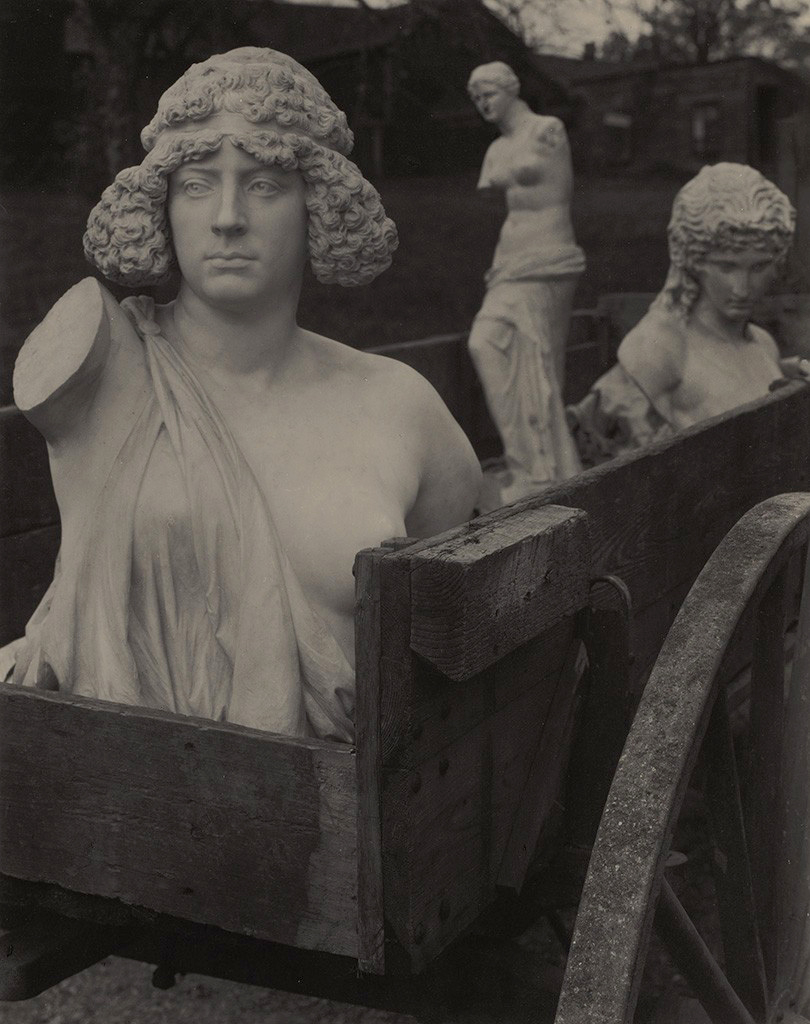
Alfred Stieglitz (American, 1864-1946) 'Judith Being Carted from Oaklawn to the Hill. The Way Art Moves' 1920


Alfred Stieglitz (American, 1864-1946)
Judith Being Carted from Oaklawn to the Hill. The Way Art Moves
1920
Gelatin silver print
Image: 24.1 x 18.8cm (9 1/2 x 7 3/8 in.)
Sheet: 25.2 x 20.1cm (9 15/16 x 7 15/16 in.)
National Gallery of Art, Washington, Alfred Stieglitz Collection


In 1920, Stieglitz’s family sold their Victorian summerhouse on the shore of Lake George, New York, and moved to a farmhouse on a hill above it. This photograph shows three sculptures his father had collected – two 19th-century replicas of ancient statues and a circa 1880 bust by Moses Ezekiel depicting the Old Testament heroine Judith – as they were being moved in a wooden cart from one house to another. Stieglitz titled it The Way Art Moves, wryly commenting on the low status of art in American society. With her masculine face and bared breast, Judith was much maligned by Georgia O’Keeffe and other younger family members. In a playful summer prank, they later buried her somewhere near the farmhouse, where she remained lost, despite many subsequent efforts by the perpetrators themselves to find her.
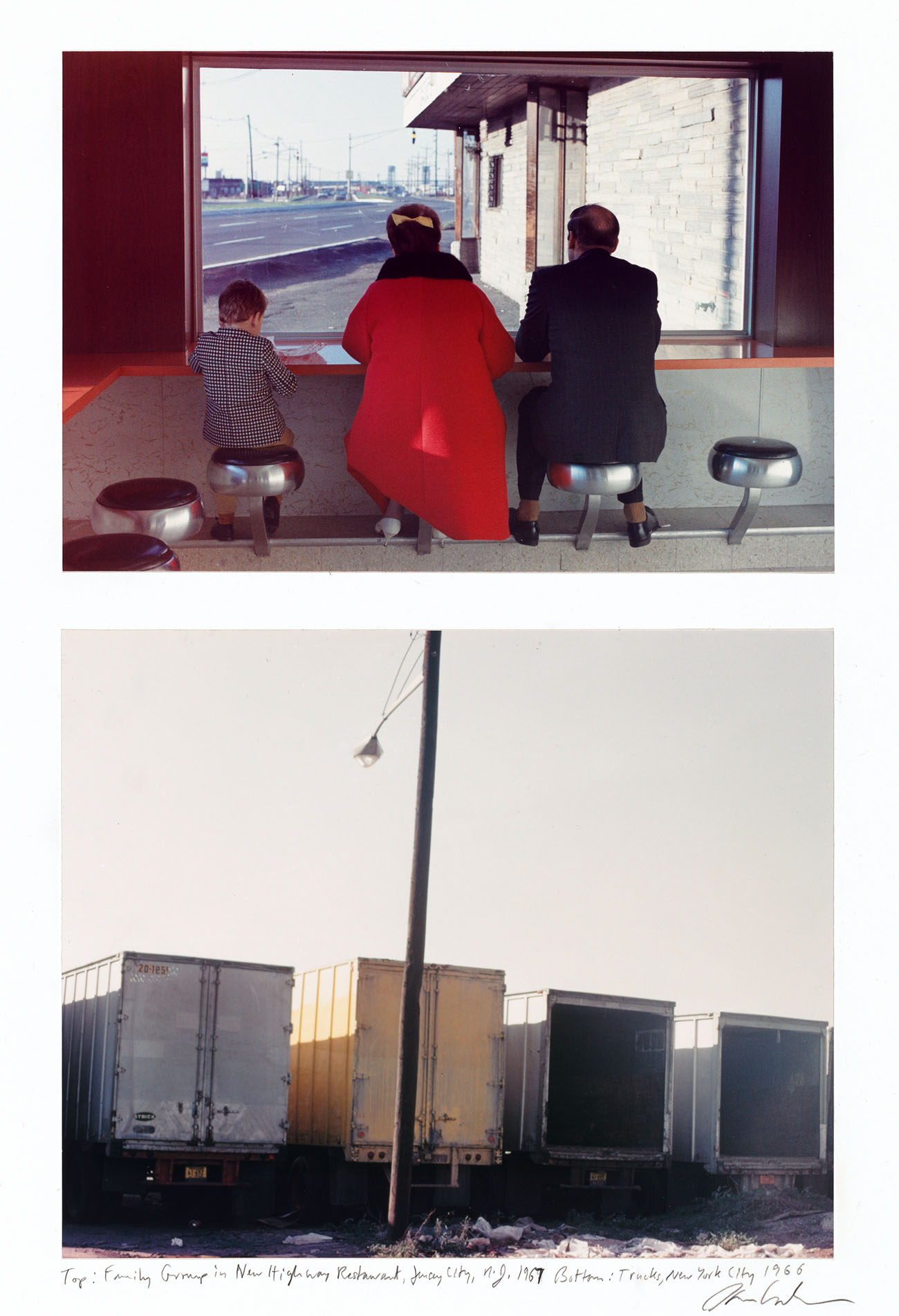
 

Dan Graham (American, 1942-2022) 'Homes for America' 1966-1967


Dan Graham (American, 1942-2022)
Homes for America
1966-1967
Two chromogenic prints
Image (top): 23 x 34cm (9 1/16 x 13 3/8 in.)
Image (bottom): 27.8 x 34cm (10 15/16 x 13 3/8 in.)
Mount: 101 x 75cm (39 3/4 x 29 1/2 in.)
Framed: 102 x 76.2 x 2.8cm (40 3/16 x 30 x 1 1/8 in.)
National Gallery of Art, Washington, Glenstone in honour of Eileen and Michael Cohen


Beginning in the mid-1960s, conceptual artist Dan Graham created several works of art for magazine pages and slide shows. When Homes for America was designed for Arts magazine in 1966, his accompanying text critiqued the mass production of cookie-cutter homes, while his photographs – made with an inexpensive Kodak Instamatic camera – described a suburban world of offices, houses, restaurants, highways, and truck stops. With their haphazard composition and amateur technique, Graham’s pictures ironically scrutinised the aesthetics of America’s postwar housing and inspired other conceptual artists to incorporate photographs into their work. Together, these two photographs link a middle-class family at the opening of a Jersey City highway restaurant with the soulless industrial landscape seen through the window.
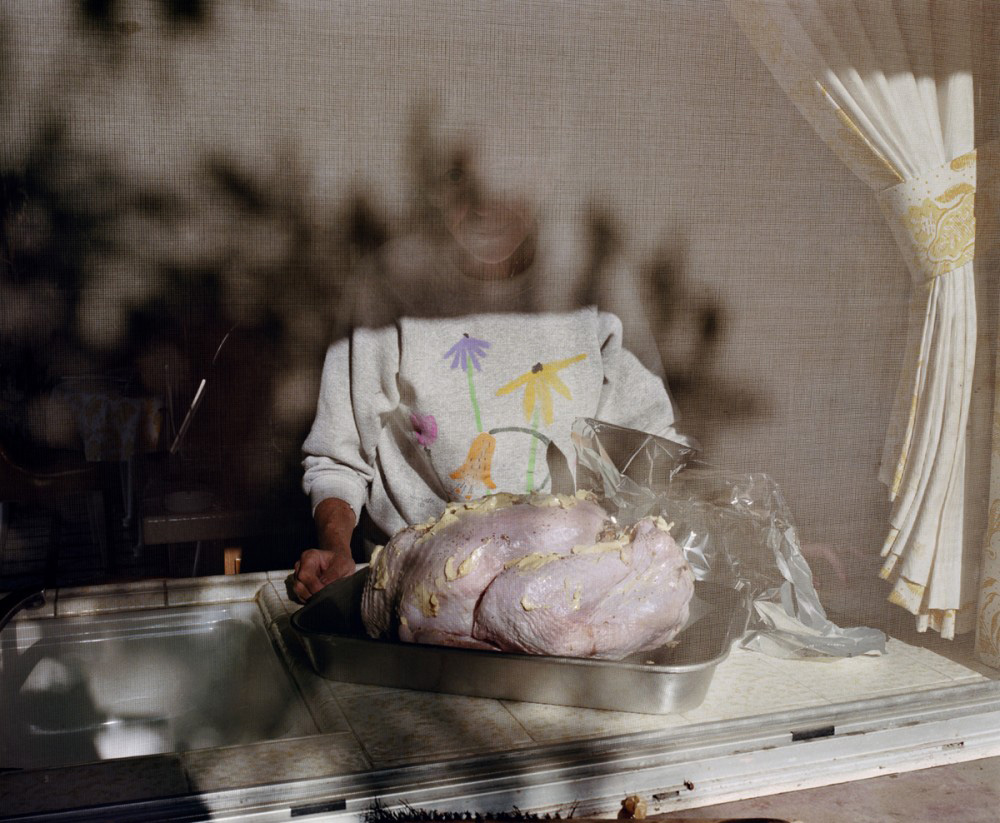
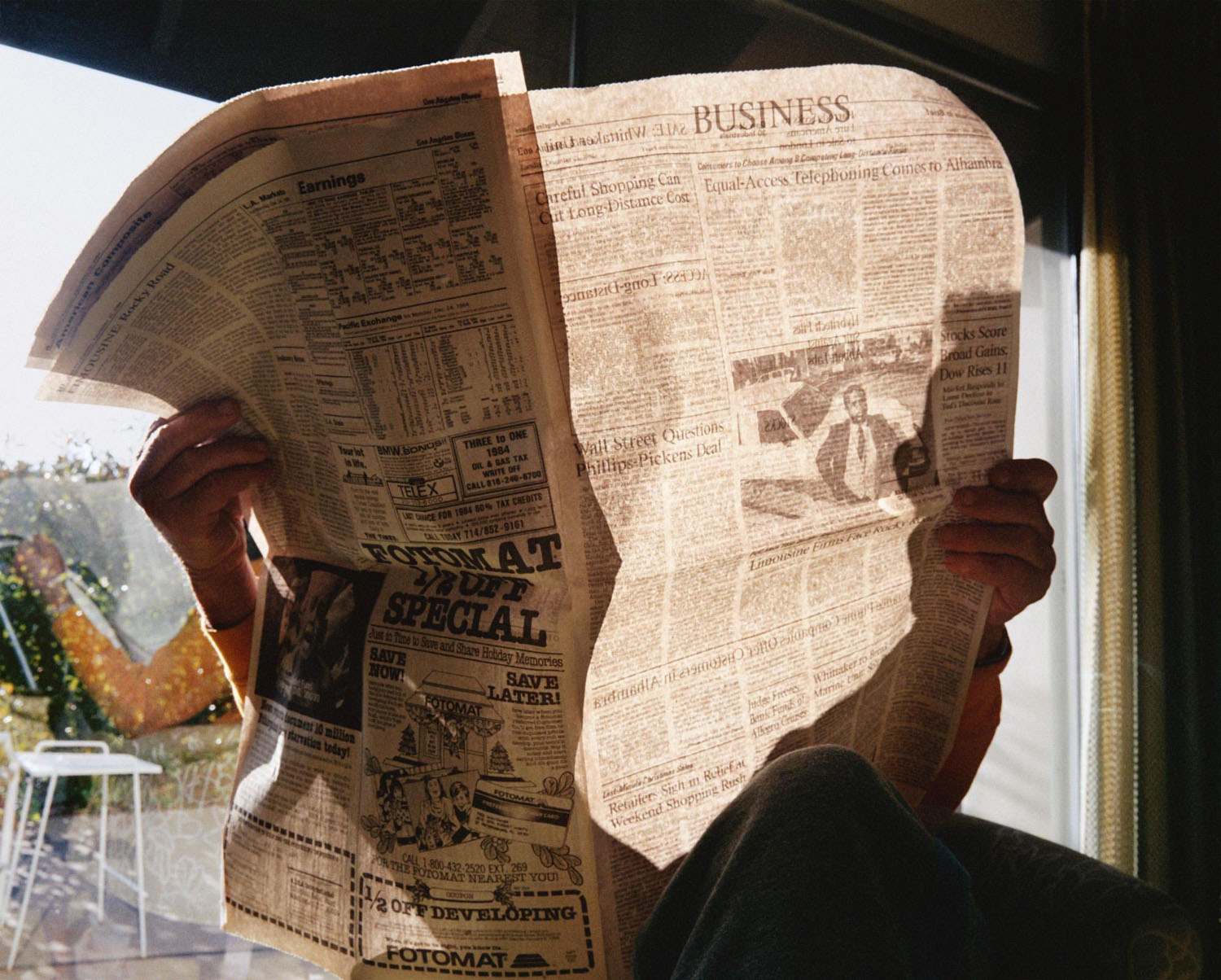
 

Larry Sultan (American, 1946-2009) 'Thanksgiving Turkey' 1985

Larry Sultan (American, 1946-2009) 'Business Page' from the series 'Pictures from Home' 1985


Larry Sultan (American, 1946-2009)
Thanksgiving Turkey/Newspaper (detail)
1985-1992
Two plexiglass panels with screen printing
Framed (Thanksgiving Turkey): 76 × 91cm (29 15/16 × 35 13/16 in.)
Framed (Newspaper): 76 × 91cm (29 15/16 × 35 13/16 in.)
Other (2 text panels): 50.8 × 76.2cm (20 × 30 in.)
Overall: 30 x 117 in.
National Gallery of Art, Washington, Corcoran Collection (Gift of the FRIENDS of the Corcoran Gallery of Art)


From 1983 to 1992, Sultan photographed his parents in retirement at their Southern California house. His innovative book, Pictures from Home, combines his photographs and text with family album snapshots and stills from home movies, mining the family’s memories and archives to create a universal narrative about the American dream of work, home, and family. Thanksgiving Turkey/Newspaper juxtaposes photographs of his mother and father, each with their face hidden and with adjacent texts where they complain about each other’s shortcomings. “I realise that beyond the rolls of film and the few good pictures … is the wish to take photography literally,” Sultan wrote. “To stop time. I want my parents to live forever.”
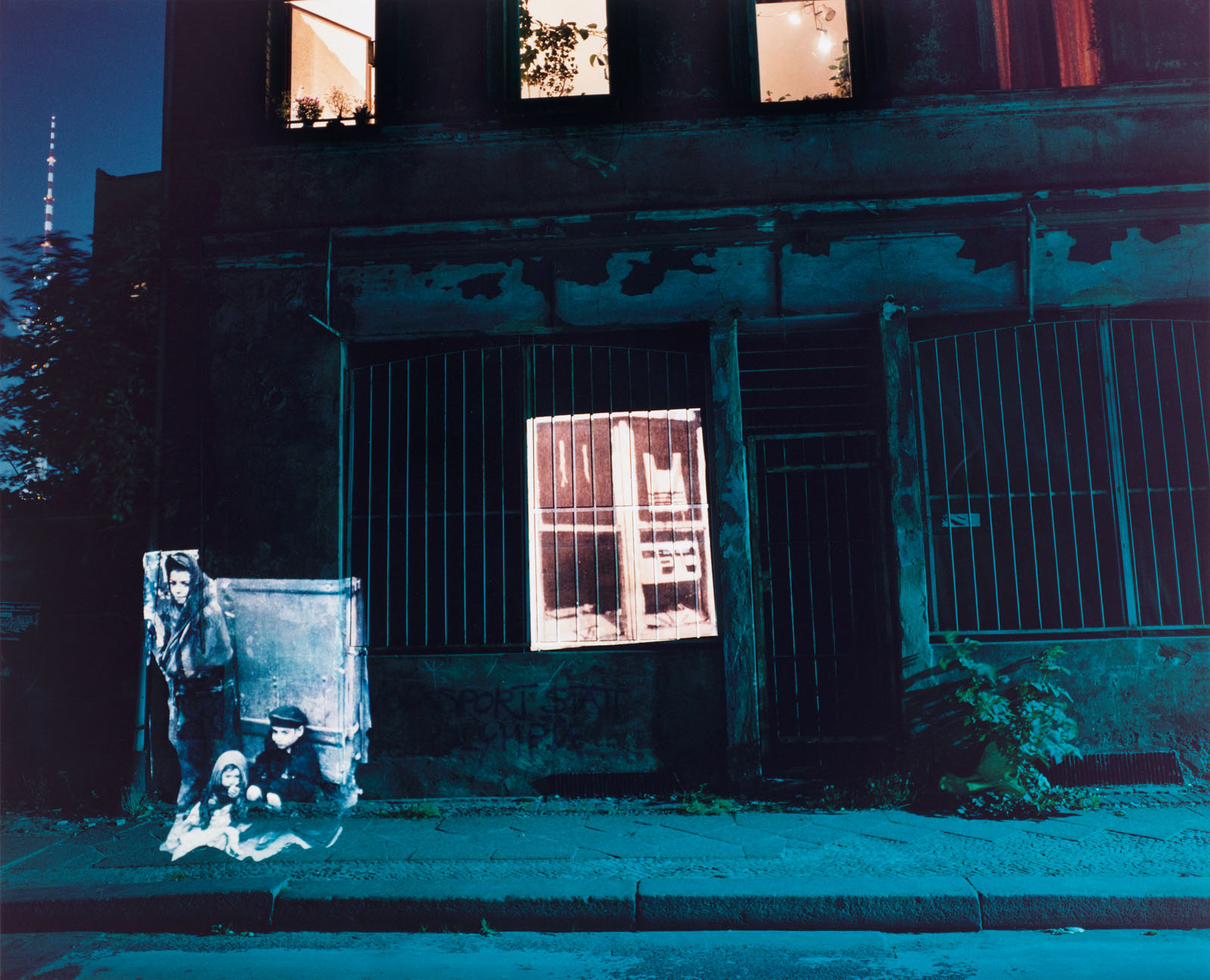
 

Shimon Attie (American, b. 1957) 'Mulackstrasse 32: Slide Projections of Former Jewish Residents and Hebrew Reading Room, 1932, Berlin' 1992


Shimon Attie (American, b. 1957)
Mulackstrasse 32: Slide Projections of Former Jewish Residents and Hebrew Reading Room, 1932, Berlin
1992
Chromogenic print
Unframed: 20 x 24 in. (50.8 x 60.96cm)
National Gallery of Art, Washington, Corcoran Collection (Gift of Julia J. Norrell in honor of Hilary Allard and Lauren Harry)


Attie projected historical photographs made in 1932 onto the sides of a building at Mulackstrasse 32, the site of a Hebrew reading room in a Jewish neighbourhood in Berlin during the 1930s. Fusing pictures made before Jews were removed from their homes and killed during World War II with photographs of the same dark, empty street made in 1992, Attie has created a haunting picture of wartime loss.
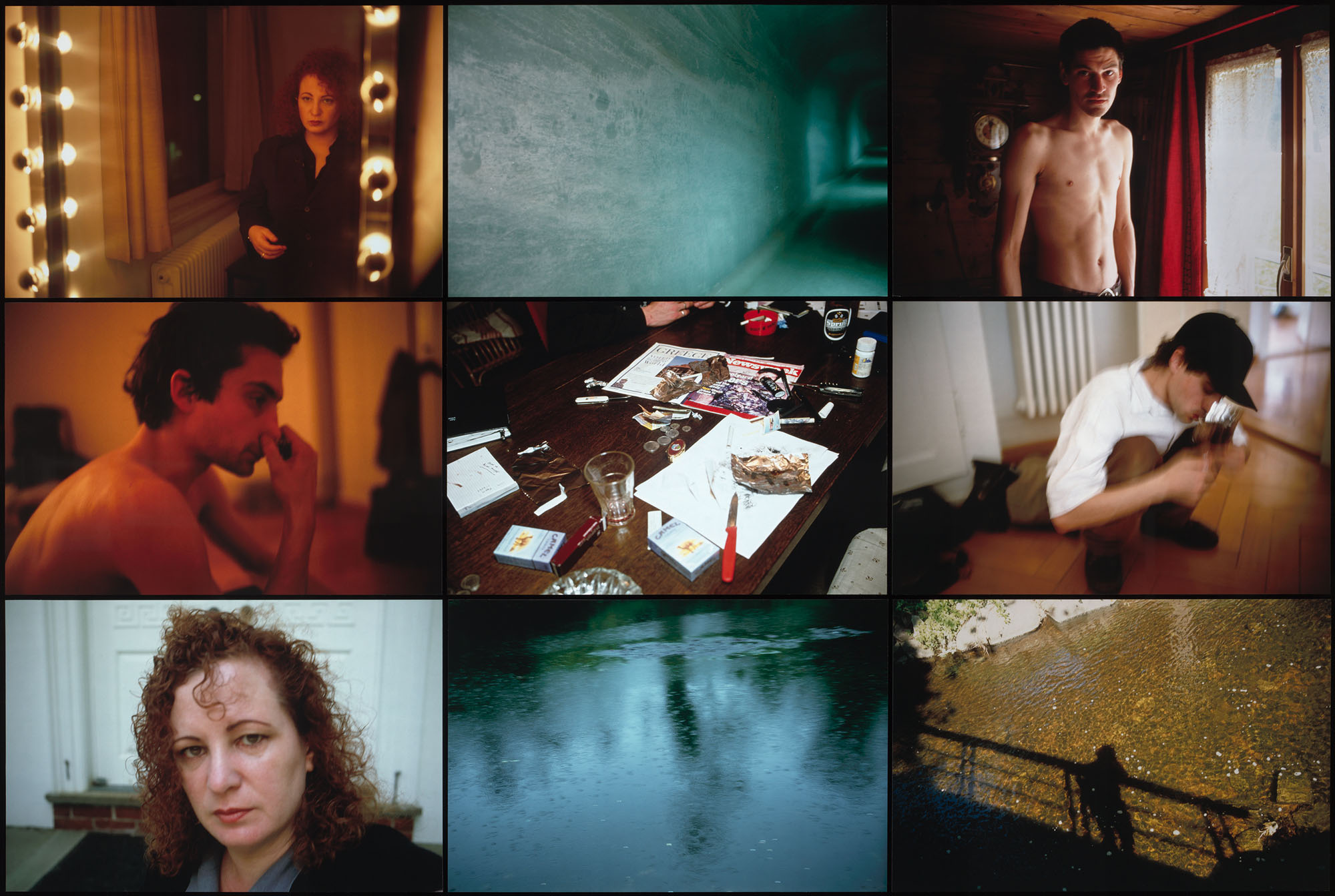
 

Nan Goldin (American, b. 1953) 'Relapse/Detox Grid' 1998-2000


Nan Goldin (American, b. 1953)
Relapse/Detox Grid
1998-2000
Nine silver dye bleach prints
Overall: 42 1/2 x 62 1/8 in. (107.95 x 157.8cm)
National Gallery of Art, Washington, Corcoran Collection (Museum Purchase with funds donated by the FRIENDS of the Corcoran Gallery of Art)


Goldin has unsparingly chronicled her own community of friends by photographing their struggles, hopes, and dreams through years of camaraderie, abuse, addiction, illness, loss, and redemption. Relapse/Detox Grid presents nine colourful yet plaintive pictures in a slide show-like narrative, offering glimpses of a life rooted in struggle, along with Goldin’s own recovery at a detox center, seen in the bottom row.
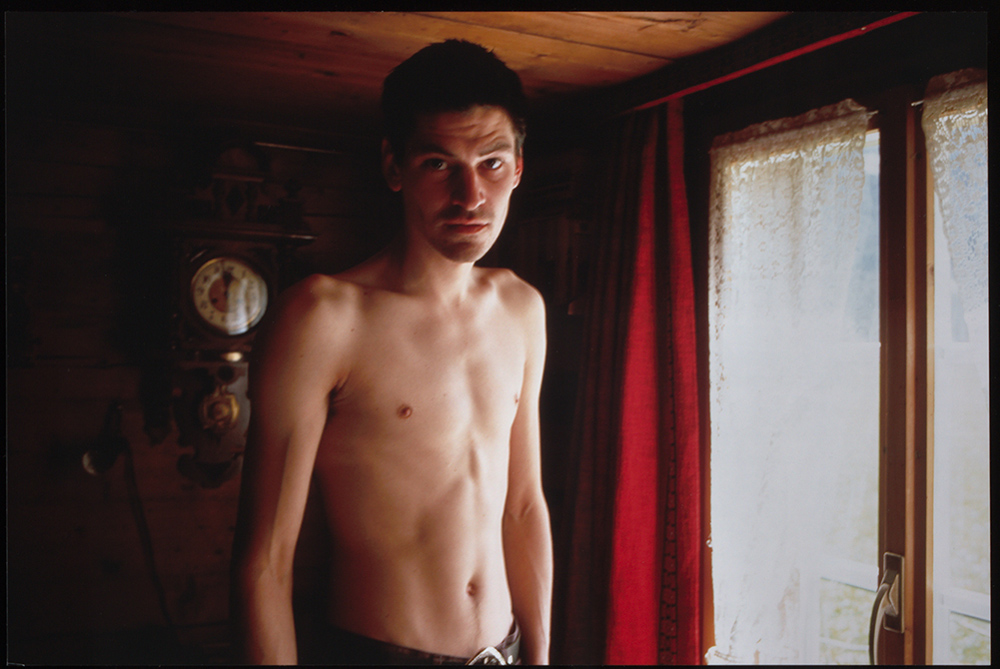
 

Nan Goldin (American, b. 1953) 'Relapse/Detox Grid' 1998-2000 (detail)


Nan Goldin (American, b. 1953)
Relapse/Detox Grid (detail)
1998-2000
Nine silver dye bleach prints
Overall: 42 1/2 x 62 1/8 in. (107.95 x 157.8cm)
National Gallery of Art, Washington, Corcoran Collection (Museum Purchase with funds donated by the FRIENDS of the Corcoran Gallery of Art)
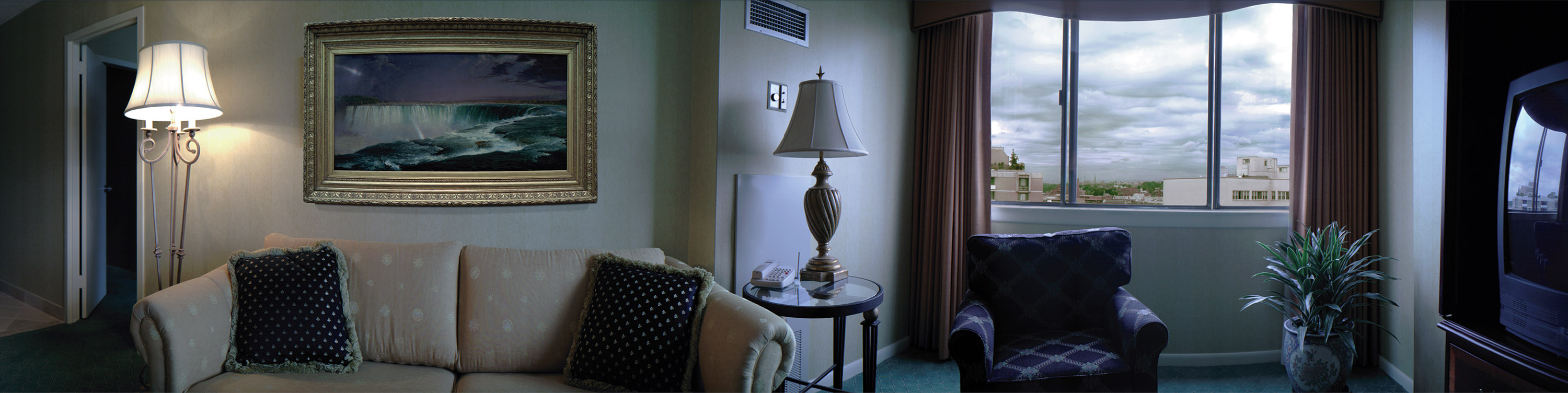
 

Victor Burgin (British, b. 1941) 'Watergate' 2000


Victor Burgin (British, b. 1941)
Watergate
2000
Video with sound, 9:58 minutes
National Gallery of Art, Washington, Corcoran Collection (Museum Purchase, with funds from the bequest of Betty Battle to the Women’s Committee of the Corcoran Gallery of Art)


An early advocate of conceptual art, Burgin is an artist and writer whose work spans photographs, text, and video. Watergate shows how the meaning of art can change depending on the context in which it is seen. Burgin animated digital, 160-degree panoramic photographs of nineteenth-century American art hanging in the Corcoran Gallery of Art and in a hotel room. While the camera circles the gallery, an actor reads from Jean-Paul Satre’s Being and Nothingness, which questions the relationship between presence and absence. Then a dreamlike pan around a hotel room overlooking the nearby Watergate complex mysteriously reveals Niagara, the Corcoran’s 1859 landscape by Frederic Church, having on the wall. In 1859, Niagara Falls was seen as a symbol of the glory and promise of the American nation, yet when Church’s painting is placed in the context of the Watergate, an icon of the scandal that led to Richard Nixon’s resignation, it assumes a different meaning and suggests an ominous sense of disillusionment.


Studio

Intersections also examines the studio as a locus of creativity, from Stieglitz’s photographs of his gallery, 291, and James Van Der Zee’s commercial studio portraits, to the manipulated images of Wallace Berman, Robert Heinecken, and Martha Rosler. Works by Laurie Simmons, David Levinthal, and Vik Muniz also highlight the postmodern strategy of staging images created in the studio.

Wall text
Intersections wall text


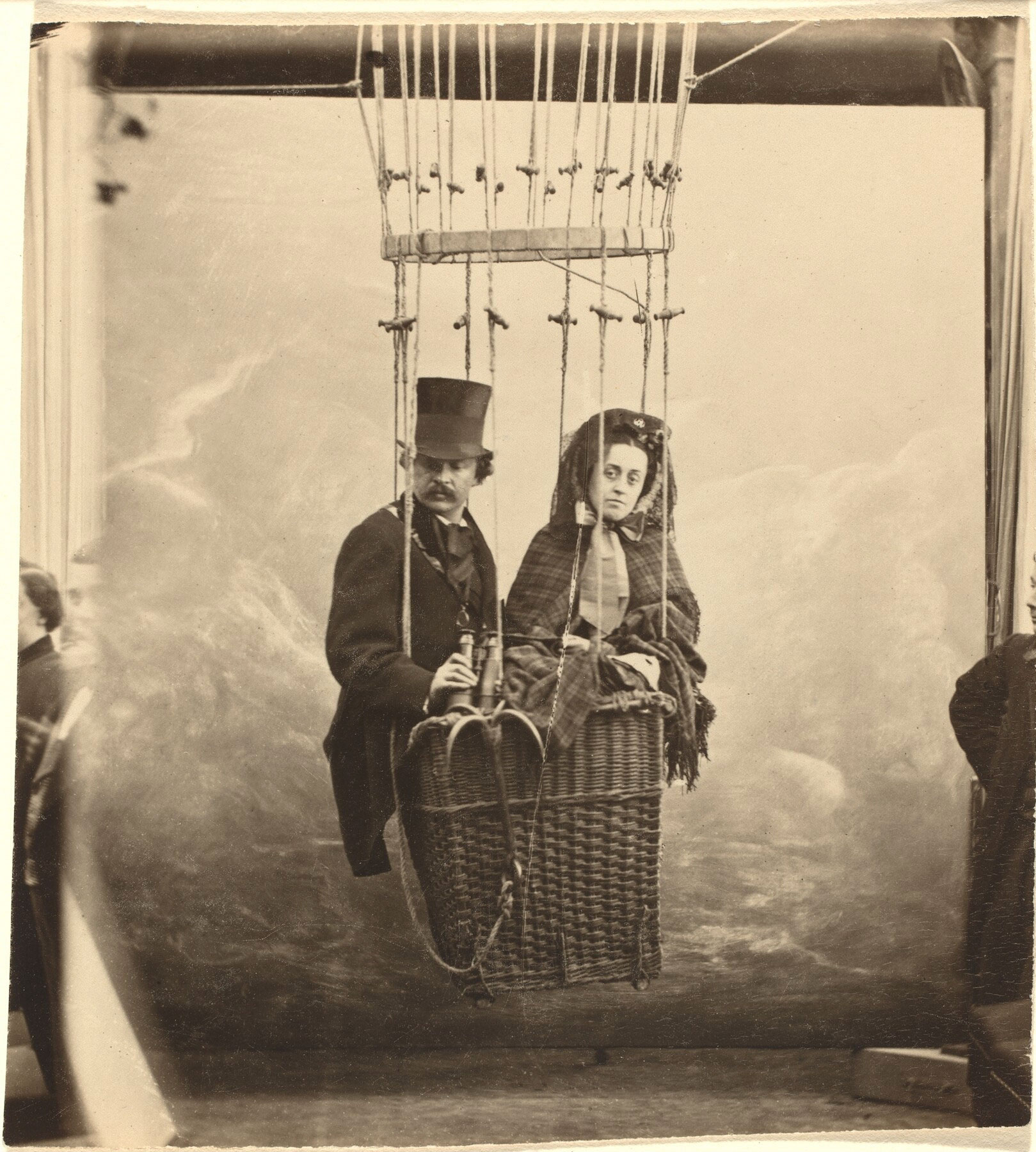
Nadar (Gaspard-Félix Tournachon) (French, 1820-1910) 'Self-Portrait with Wife Ernestine in a Balloon Gondola' c. 1865


Nadar (Gaspard-Félix Tournachon) (French, 1820-1910)
Self-Portrait with Wife Ernestine in a Balloon Gondola
c. 1865
Gelatin silver print, printed c. 1890
8.6 × 7.7cm (3 3/8 × 3 1/16 in.)
National Gallery of Art, Washington, Horace W. Goldsmith Foundation through Robert and Joyce Menschel


Nadar (a pseudonym for Gaspard-Félix Tournachon) was not only a celebrated portrait photographer, but also a journalist, caricaturist, and early proponent of manned flight. In 1863, he commissioned a prominent balloonist to build an enormous balloon 196 feet high, which he named The Giant. The ascents he made from 1863 to 1867 were widely covered in the press and celebrated by the cartoonist Honoré Daumier, who depicted Nadar soaring above Paris, its buildings festooned with signs for photography studios. Nadar made and sold small prints like this self-portrait to promote his ballooning ventures. The obviously artificial construction of this picture – Nadar and his wife sit in a basket far too small for a real ascent and are posed in front of a painted backdrop – and its untrimmed edges showing assistants at either side make it less of the self-aggrandising statement that Nadar wished and more of an amusing behind-the-scenes look at studio practice.


Alfred Stieglitz (American, 1864-1946) 'Self-portrait' 1907, printed 1930


Alfred Stieglitz (American, 1864-1946)
Self-Portrait
probably 1911
Platinum print
Image: 24.2 x 19.3cm (9 1/2 x 7 5/8 in.)
Sheet: 25.3 x 20.3cm (9 15/16 x 8 in.)
National Gallery of Art, Washington, Alfred Stieglitz Collection


Unlike many other photographers, Stieglitz made few self-portraits. He created this one shortly before he embarked on a series of portraits of the artists who frequented his New York gallery, 291. Focusing only on his face and leaving all else in shadow, he presents himself not as an artist at work or play, but as a charismatic leader who would guide American art and culture into the 20th century.
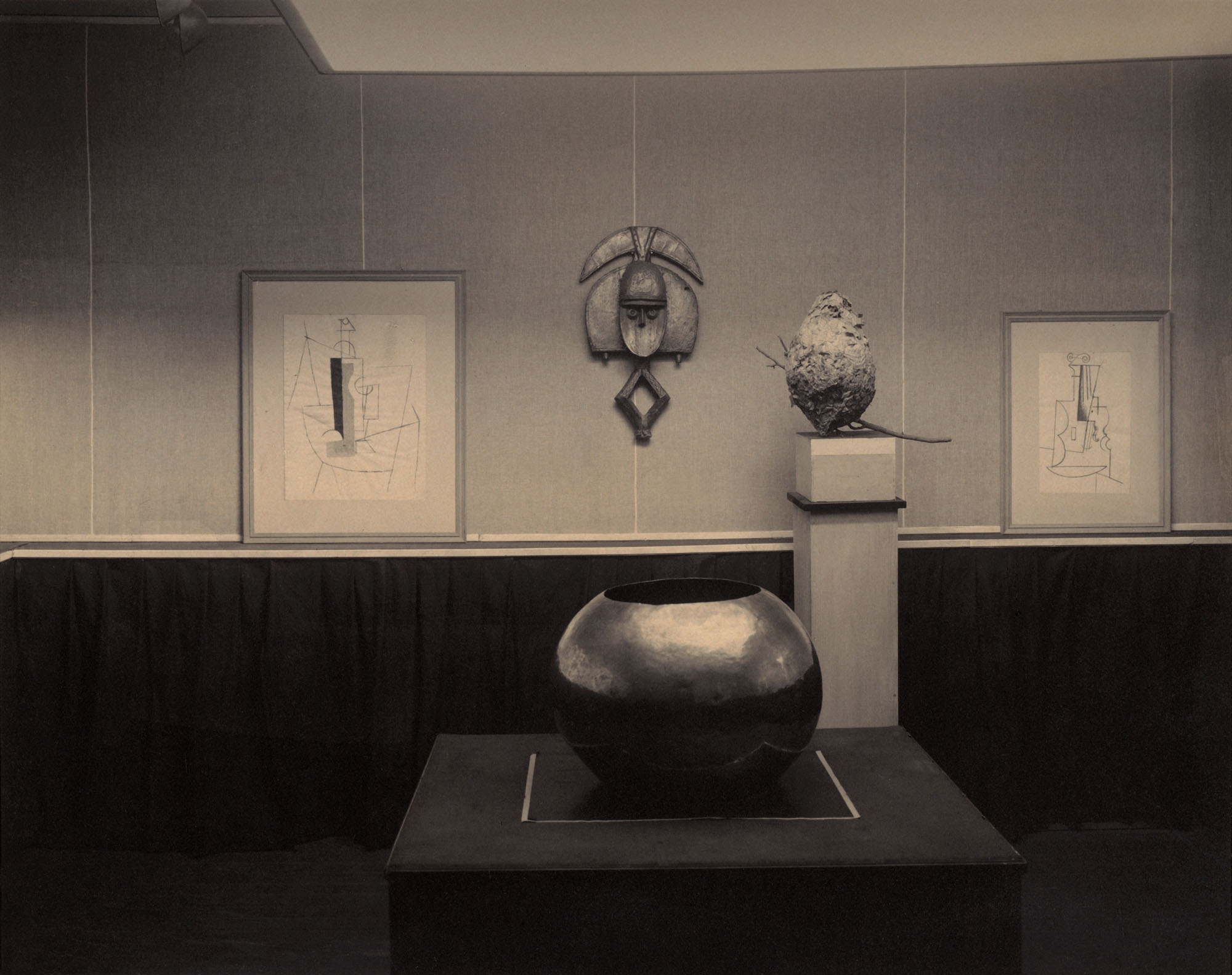
 

Alfred Stieglitz (American, 1864-1946) '291 – Picasso-Braque Exhibition' 1915


Alfred Stieglitz (American, 1864-1946)
291 – Picasso-Braque Exhibition
1915
Platinum print
Image: 18.5 x 23.6 cm (7 5/16 x 9 5/16 in.)
Sheet: 20.1 x 25.3 cm (7 15/16 x 9 15/16 in.)
National Gallery of Art, Washington, Alfred Stieglitz Collection


291 was Stieglitz’s legendary gallery in New York City (its name derived from its address on Fifth Avenue), where he introduced modern European and American art and photography to the American public. He also used 291 as a studio, frequently photographing friends and colleagues there, as well as the views from its windows. This picture records what Stieglitz called a “demonstration” – a short display of no more than a few days designed to prompt a focused discussion. Including two works by Picasso, an African mask from the Kota people, a wasps’ nest, and 291’s signature brass bowl, the photograph calls into question the relationship between nature and culture, Western and African art.
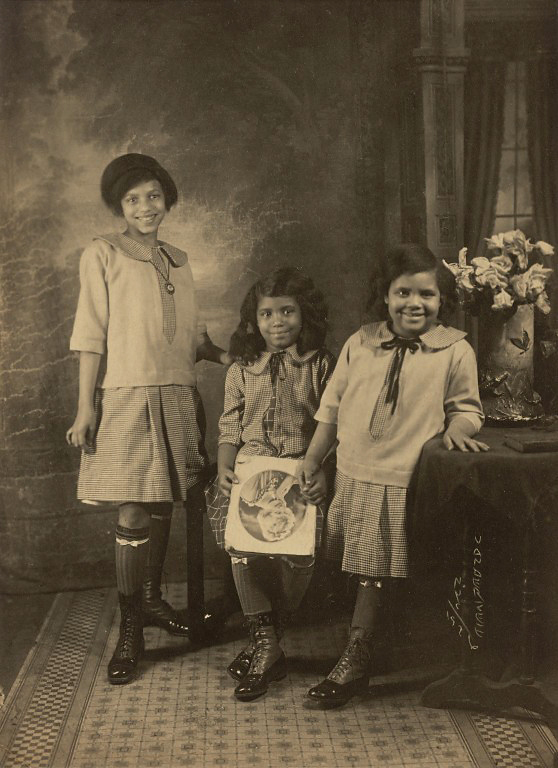
 

James Van Der Zee (American, 1886-1983) 'Sisters' 1926


James Van Der Zee (American, 1886-1983)
Sisters
1926
Gelatin silver print
Sheet (trimmed to image): 17.6 x 12.5cm (6 15/16 x 4 15/16 in.)
National Gallery of Art, Washington, Horace W. Goldsmith Foundation through Robert and Joyce Menschel


James Van Der Zee was a prolific studio photographer in Harlem during a period known as the Harlem Renaissance, from the end of World War I to the middle of the 1930s. He photographed many of Harlem’s celebrities, middle-class residents, and community organisations, establishing a visual archive that remains one of the best records of the era. He stands out for his playful use of props and retouching, thereby personalising each picture and enhancing the sitter’s appearance. In this portrait of three sisters, clasped hands show the tender bond of the two youngest, one of whom holds a celebrity portrait, revealing her enthusiasm for popular culture.
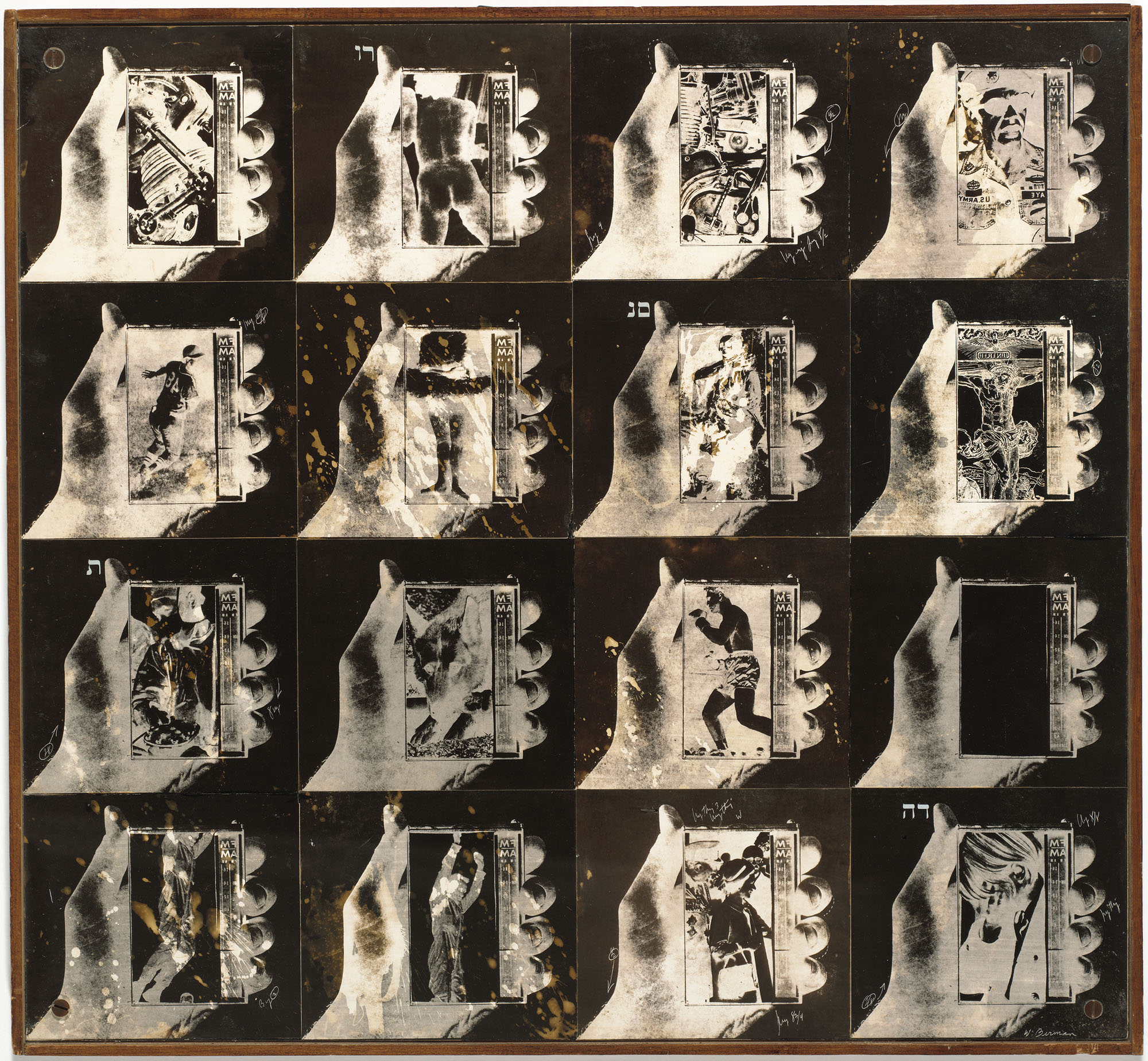
 

Wallace Berman (American, 1926-1976) 'Silence Series #7' 1965-1968


Wallace Berman (American, 1926-1976)
Silence Series #7
1965-1968
Verifax (wet process photocopy) collage
Actual: 24 1/2 x 26 1/2 in. (62.23 x 67.31cm)
National Gallery of Art, Washington, Corcoran Collection (Museum Purchase, William A. Clark Fund)


An influential artist of California’s Beat Generation during the 1950s and 1960s, Berman was a visionary thinker and publisher of the underground magazine Semina. His mysterious and playful juxtapositions of divers objects, images, and texts were often inspired by Dada and surrealist art. Silence Series #7 presents a cinematic sequence of his trademark transistor radios, each displaying military, religious, or mechanical images along with those of athletes and cultural icons, such as Andy Warhol. Appropriated from mass media, reversed in tone, and printed backward using an early version of a photocopy machine, these found images, pieced together and recopied as photomontages, replace then ew transmitted through the radios. Beat poet Robert Duncan once called Berman’s Verify collages a “series of magic ‘TV’ lantern shows.”
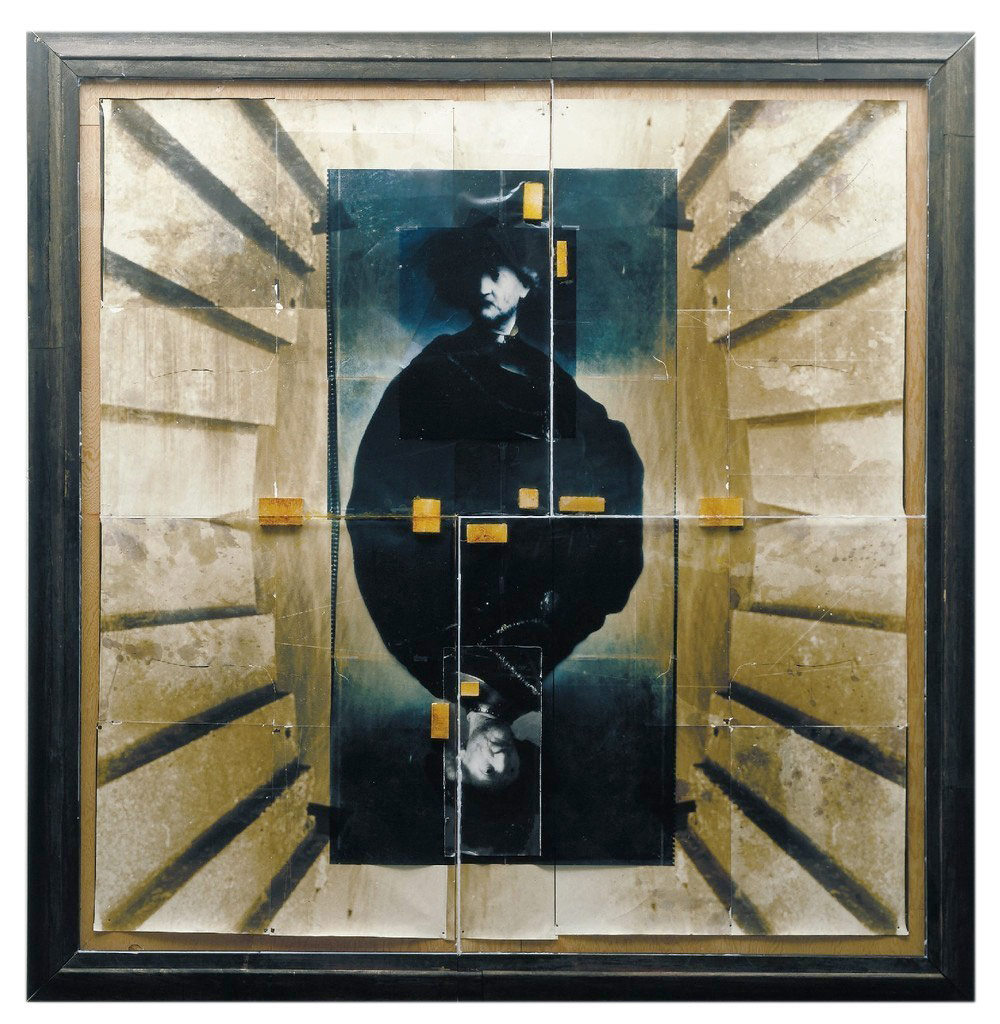
 

Doug and Mike Starn (American) 'Double Rembrandt with Steps' 1987-1991


Doug and Mike Starn (American)
Double Rembrandt (with steps)
1987-1991
Gelatin silver prints, ortho film, tape, wood, plexiglass, glue and silicone
2 interlocking parts:
Part 1 overall: 26 1/2 x 13 7/8 in.
Part  2 overall: 26 3/8 x 13 3/4 in.
Overall: 26 1/2 x 27 3/4 in.
National Gallery of Art, Washington, Gift of Susan and Peter MacGill


Doug and Mike Starn, identical twins who have worked collaboratively since they were thirteen, have a reputation for creating unorthodox works. Using take, wood, and glue, the brothers assembles sheets of photographic film and paper to create a dynamic composition that includes an appropriated image of Rembrandt van Rijn’s Old Man with a Gold Chain (1631). Double Rembrandt (with steps) challenges the authority of the austere fine art print, as well as the aura of the original painting, while playfully invoking the twins’ own double identity.
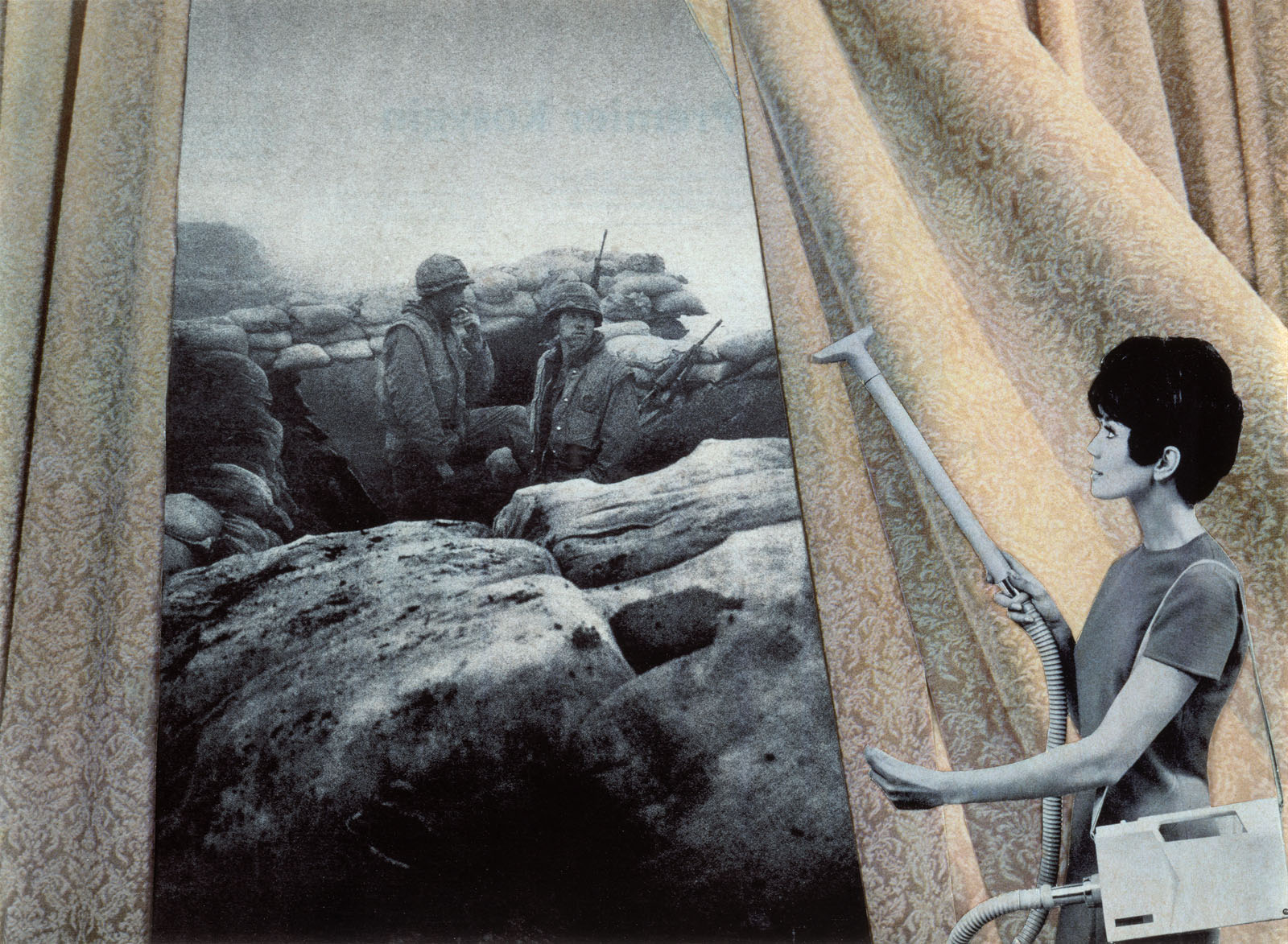
 

Martha Rosler (American, b. 1943) 'Cleaning the Drapes', from the series, 'House Beautiful: Bringing the War Home' 1967-1972


Martha Rosler (American, b. 1943)
Cleaning the Drapes, from the series, House Beautiful: Bringing the War Home
1967-1972
Inkjet print, printed 2007
Framed: 53.5 × 63.3cm (21 1/16 × 24 15/16 in.)
National Gallery of Art, Washington, Gift of the Collectors Committee and the Pepita Milmore Memorial Fund


A painter, photographer, video artist, feminist, activist writer, and teacher, Martha Rosler made this photomontage while she was a graduate student in the late 1960s and early 1970s. Frustrated by the portrayal of the Vietnam War on television and in other media, she wrote: “The images were always very far away and of a place we couldn’t imagine.” To bring “the war home,” as she announced in her title, she cut out images from Life magazine and House Beautiful to make powerfully layered collages that contrast American middle-class life with the realities of the war. She selected colour pictures of the idealised American life rich in the trappings of consumer society, and used black-and-white pictures of troops in Vietnam to heighten the contrast between here and there, while also calling attention to stereotypical views of men and women.


Sally Mann (American, b. 1951) 'Self-Portrait' 1974


Sally Mann (American, b. 1951)
Self-Portrait
1974
Gelatin silver print
Image: 17 × 14.9cm (6 11/16 × 5 7/8 in.)
Sheet: 35 × 27.2cm (13 3/4 × 10 11/16 in.)
National Gallery of Art, Washington, Corcoran Collection (Gift of Olga Hirshhorn)


Sally Mann, who is best known for the pictures of her children she made in the 1980s and 1990s, began to photograph when she was a teenager. In this rare, early, and intimate self-portrait, the artist is reflected in a mirror, clasping her loose shirt as she stands in a friend’s bathroom. Her thoughtful, expectant expression, coupled with her finger pointing directly at the lens of the large view camera that towers above her, foreshadows the commanding presence photography would have in her life.
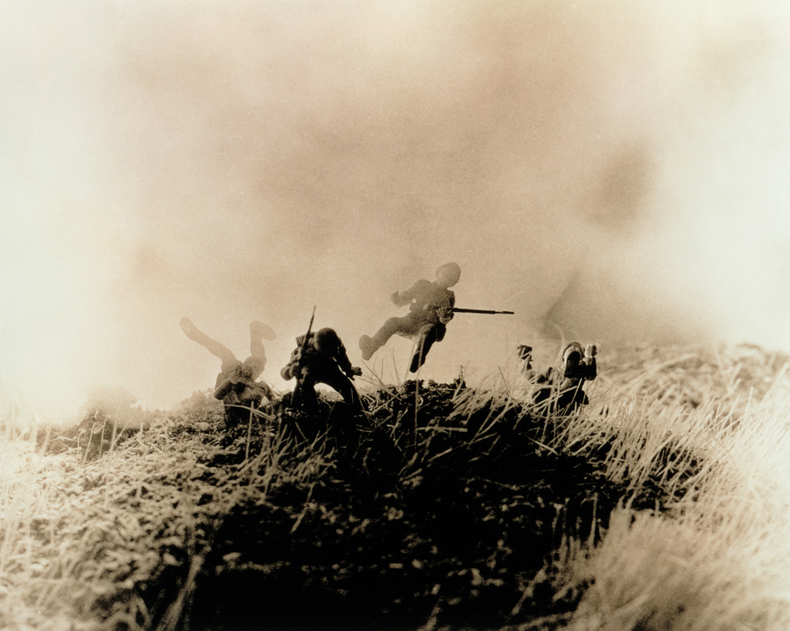
 

David Levinthal (American, b. 1949) 'Untitled (from the series Hitler Moves East)' 1975


David Levinthal (American, b. 1949)
Untitled (from the series Hitler Moves East)
1975
Gelatin silver print
Sheet: 15 15/16 x 20 in. (40.48 x 50.8cm)
Image: 10 9/16 x 13 7/16 in. (26.83 x 34.13cm)
National Gallery of Art, Washington, Corcoran Collection (Gift of the artist)


Levinthal’s series of photographs Hitler Moves East was made not during World War II, but in 1975, when the news media was saturated with images of the end of America’s involvement in the Vietnam War. In this series, he appropriates the grainy look of photojournalism and uses toy soldiers and fabricated environments to stage scenes from Germany’s brutal campaign on the Eastern Front during World War II. His pictures are often based on scenes found in television and movies, further distancing them from the actual events. A small stick was used to prop up the falling soldier and the explosion was made with puffs of flour. Hitler Moves East casts doubt on the implied authenticity of photojournalism and calls attention to the power of the media to define public understanding of events.


Hiroshi Sugimoto (Japanese, b. 1948) 'Oscar Wilde' 1999


Hiroshi Sugimoto (Japanese, b. 1948)
Oscar Wilde
1999
Gelatin silver print
Image: 148.59 × 119.6cm (58 1/2 × 47 1/16 in.)
Framed: 182.25 × 152.4cm (71 3/4 × 60 in.)
National Gallery of Art, Washington, Corcoran Collection (Gift of The Heather and Tony Podesta Collection)


Hiroshi Sugimoto (Japanese, b. 1948) 'Oscar Wilde' 1999 (detail)


Hiroshi Sugimoto (Japanese, b. 1948)
Oscar Wilde (detail)
1999
Gelatin silver print
Image: 148.59 × 119.6cm (58 1/2 × 47 1/16 in.)
Framed: 182.25 × 152.4cm (71 3/4 × 60 in.)
National Gallery of Art, Washington, Corcoran Collection (Gift of The Heather and Tony Podesta Collection)


While most traditional portrait photographers worked in studios, Sugimoto upended this practice in a series of pictures he made at Madame Tussaud’s wax museums in London and Amsterdam, where lifelike wax figures, based on paintings or photographs, as is the case with Oscar Wilde, are displayed in staged vignettes. By isolating the figure from its setting, posing it in a three-quarter-length view, illuminating it to convey the impression of a carefully lit studio portrait, and making his final print almost six feet tall, Sugimoto renders the artificial as real. Triply removing his portrait from reality – from Oscar Wilde himself to a portrait photograph to a wax sculpture and back to a photograph – Sugimoto collapses time and confounds our expectations of the nature of photography.


Vik Muniz (Brazilian, b. 1961) 'Alfred Stieglitz (from the series Pictures of Ink)' 2000


Vik Muniz (Brazilian, b. 1961)
Alfred Stieglitz (from the series Pictures of Ink)
2000
Silver dye bleach print
Image: 152.4 × 121.92cm (60 × 48 in.)
Framed: 161.29 × 130.81 × 5.08cm (63 1/2 × 51 1/2 × 2 in.)
National Gallery of Art, Washington, Corcoran Collection (Museum Purchase with funds provided by the FRIENDS of the Corcoran Gallery of Art)


Muniz has spent his career remaking works of art by artists as varied as Botticelli and Warhol using unusual materials – sugar, diamonds, and even junk. He has been especially interested in Stieglitz and has re-created his photographs using chocolate syrup and cotton. Here, he refashioned Stieglitz’s celebrated self-portrait using wet ink and mimicking the dot matrix of a halftone reproduction. He then photographed his drawing and greatly enlarged it so that the dot matrix itself becomes as important as the picture it replicates.


Identity

Historic and contemporary works by August Sander, Diane Arbus, Lorna Simpson, and Hank Willis Thomas, among others, make up the final section, which explores the role of photography in the construction of identity.”

Wall text

Intersections wall text


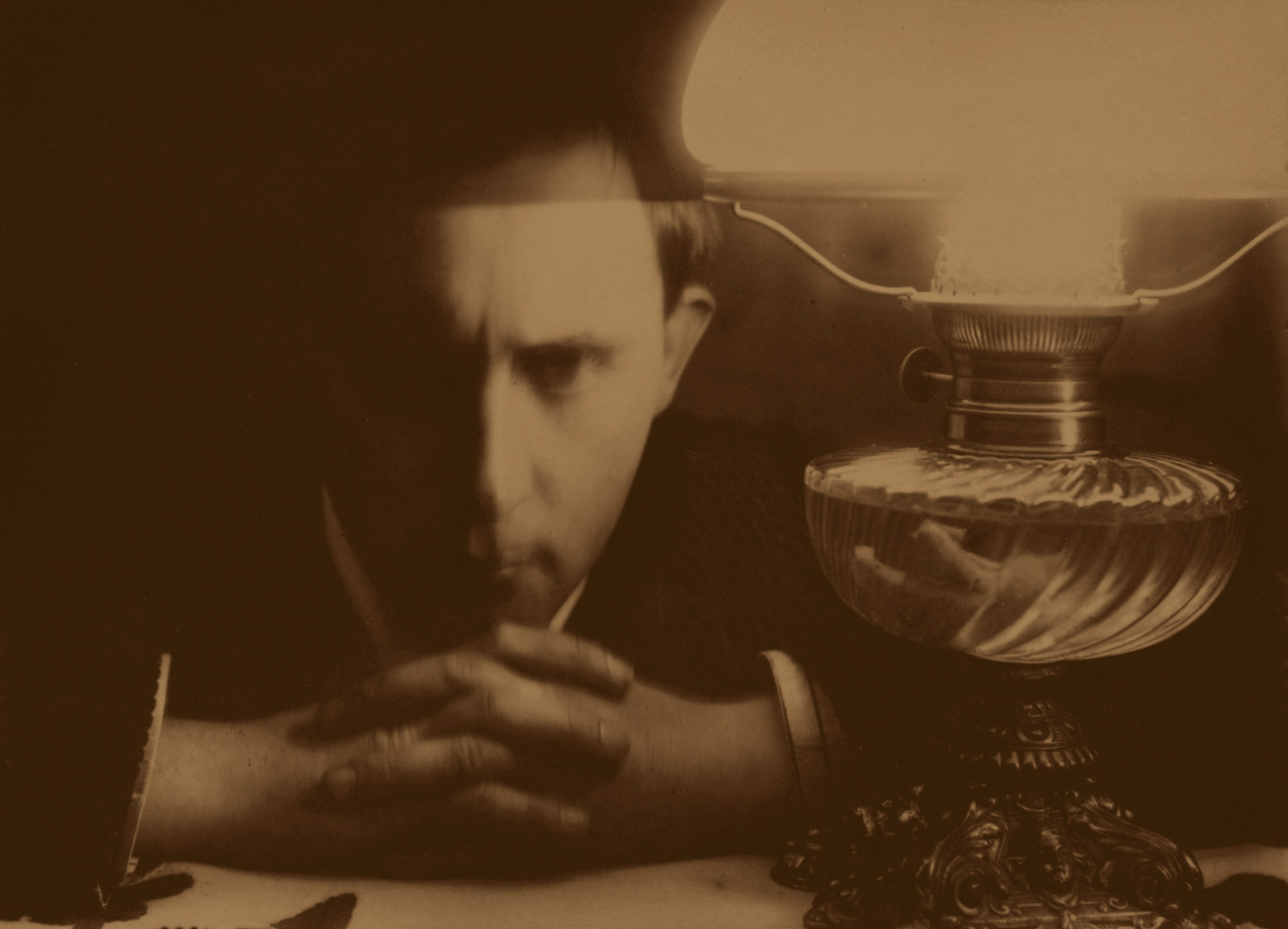
Witkacy (Stanislaw Ignacy Witkiewicz) (Polish, 1885-1939) 'Self-Portrait (Collapse by the Lamp/Kolaps przy lampie)' c. 1913


Witkacy (Stanislaw Ignacy Witkiewicz) (Polish, 1885-1939)
Self-Portrait (Collapse by the Lamp/Kolaps przy lampie)
c. 1913
Gelatin silver print
12.86 x 17.78cm (5 1/16 x 7 in.)
National Gallery of Art, Washington, Foto Fund and Robert Menschel and the Vital Projects Fund


A writer, painter, and philosopher, Witkiewicz began to photograph while he was a teenager. From 1911 to 1914, while undergoing psychoanalysis and involved in two tumultuous relationships (one ending when his pregnant fiancée killed herself in 1914), he made a series of startling self-portraits. Close-up, confrontational, and searching, they are pictures in which the artist seems to seek understanding of himself by scrutinising his visage.


August Sander (German, 1876-1964) 'The Bricklayer' 1929


August Sander (German, 1876-1964)
The Bricklayer
1929, printed c. 1950
Gelatin silver print
Sheet (trimmed to image): 50.4 x 37.5cm (19 13/16 x 14 3/4 in.)
National Gallery of Art, Washington, Gift of Gerhard and Christine Sander, in honour of the 50th Anniversary of the National Gallery of Art


In 1911, Sander began a massive project to document “people of the twentieth century.” Identifying them by their professions, not their names, he aimed to create a typological record of citizens of the Weimar Republic. He photographed people from all walks of life – from bakers, bankers, and businessmen to soldiers, students, and tradesmen, as well as gypsies, the unemployed, and the homeless. The Nazis banned his project in the 1930s because his pictures did not conform to the ideal Aryan type. Although he stopped working after World War II, he made this rare enlargement of a bricklayer for an exhibition of his photographs in the early 1950s.


Walker Evans (American, 1903-1975) 'Photographer's Display Window, Birmingham, Alabama' 1936


Walker Evans (American, 1903-1975)
Photographer’s Display Window, Birmingham, Alabama
1936
Gelatin silver print
Image: 24.1 x 19.3cm (9 1/2 x 7 5/8 in.)
Sheet: 25.2 x 20.3cm (9 15/16 x 8 in.)
National Gallery of Art, Washington, Gift of Mr. and Mrs. Harry H. Lunn, Jr. in honor of Jacob Kainen and in Honor of the 50th Anniversary of the National Gallery of Art
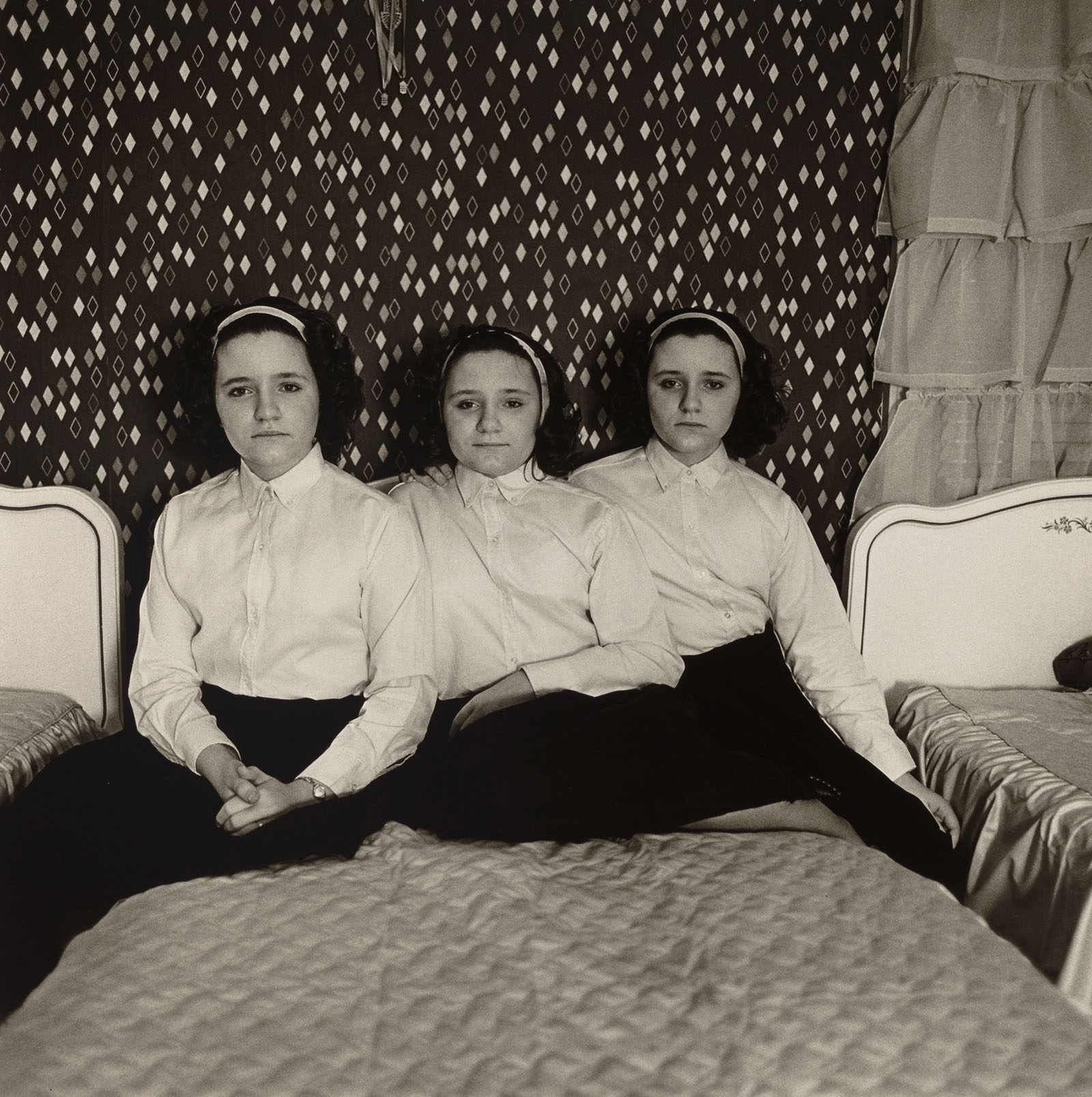
 

Diane Arbus (American, 1923-1971) 'Triplets in their Bedroom, N.J.,' 1963


Diane Arbus (American, 1923-1971)
Triplets in their Bedroom, N.J.,
1963
Gelatin silver print
Image: 37.7 x 37.8cm (14 13/16 x 14 7/8 in.)
Sheet: 50.4 x 40.4cm (19 13/16 x 15 7/8 in.)
National Gallery of Art, Washington, R. K. Mellon Family Foundation


Celebrated for her portraits of people traditionally on the margins of society – dwarfs and giants – as well as those on the inside – society matrons and crying babies – Arbus was fascinated with the relationship between appearance and identity. Many of her subjects, such as these triplets, face the camera, tacitly aware of their collaboration in her art. Rendering the familiar strange and the strange familiar, her carefully composed pictures compel us to look at the world in new ways. “We’ve all got an identity,” she said. “You can’t avoid it. It’s what’s left when you take away everything else.”
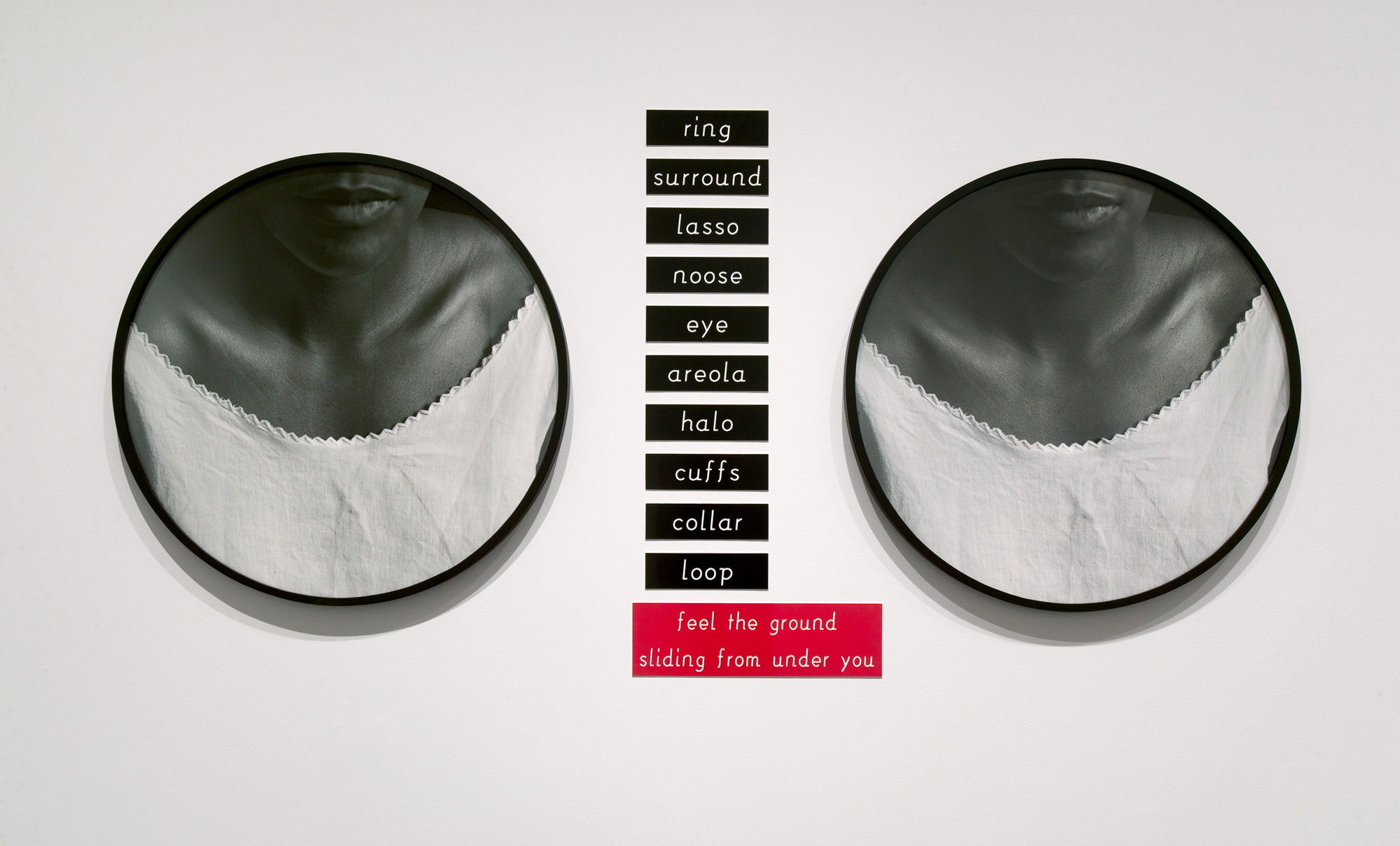
 

Lorna Simpson (American, b. 1960) 'Untitled (Two Necklines)' 1989


Lorna Simpson (American, b. 1960)
Untitled (Two Necklines)
1989
Two gelatin silver prints with 11 plastic plaques
Overall: 101.6 x 254 cm (40 x 100 in.)
National Gallery of Art, Washington, Gift of the Collectors Committee


From the mid-1980s to the present, Simpson has created provocative works that question stereotypes of gender, identity, history, and culture, often by combining photographs and words. Two Necklines shows two circular and identical photographs of an African American woman’s mouth, chin, neck, and collarbone, as well as the bodice of her simple shift. Set in between are black plaques, each inscribed with a single word: “ring, surround, lasso, noose, eye, areola, halo, cuffs, collar, loop.” The words connote things that bind and conjure a sense of menace, yet when placed between the two calm, elegant photographs, their meaning is at first uncertain. But when we read the red plaque inscribed “feel the ground sliding from under you” and note the location of the word “noose” adjacent to the two necklines, we realise that Simpson is quietly but chillingly referring to the act of lynching.
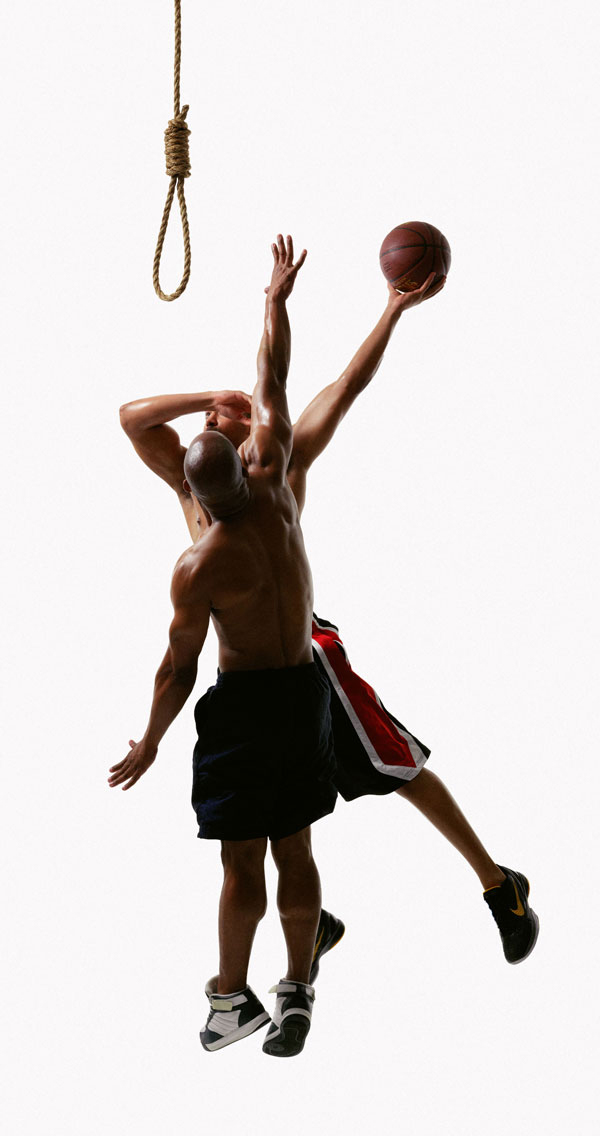
 

Hank Willis Thomas (American, b. 1976) 'And One' 2011


Hank Willis Thomas (American, b. 1976)
And One
2011
Digital chromogenic print
Framed: 248.29 × 125.73 × 6.35cm (97 3/4 × 49 1/2 × 2 1/2 in.)
National Gallery of Art, Washington, Corcoran Collection (Gift of the artist and Jack Shainman Gallery, New York)


And One is from Thomas’s Strange Fruit series, which explores the concepts of spectacle and display as they relate to modern African American identity. Popularised by singer Billie Holiday, the series title Strange Fruit comes from a poem by Abel Meeropol, who wrote the infamous words “Black bodies swinging in the southern breeze; Strange fruit hanging from the poplar trees” after seeing a photograph of a lynching in 1936. In And One, a contemporary African American artist reflects on how black bodies have been represented in two different contexts: lynching and professional sports. Thomas ponders the connections between these disparate forms through his dramatic photograph of two basketball players frozen in midair, one dunking a ball through a hanging noose.


National Gallery of Art
National Mall between 3rd and 7th Streets
Constitution Avenue NW, Washington

Opening hours:
Daily 10.00am – 5.00pm
National Gallery of Art website

LIKE ART BLART ON FACEBOOK

Back to top

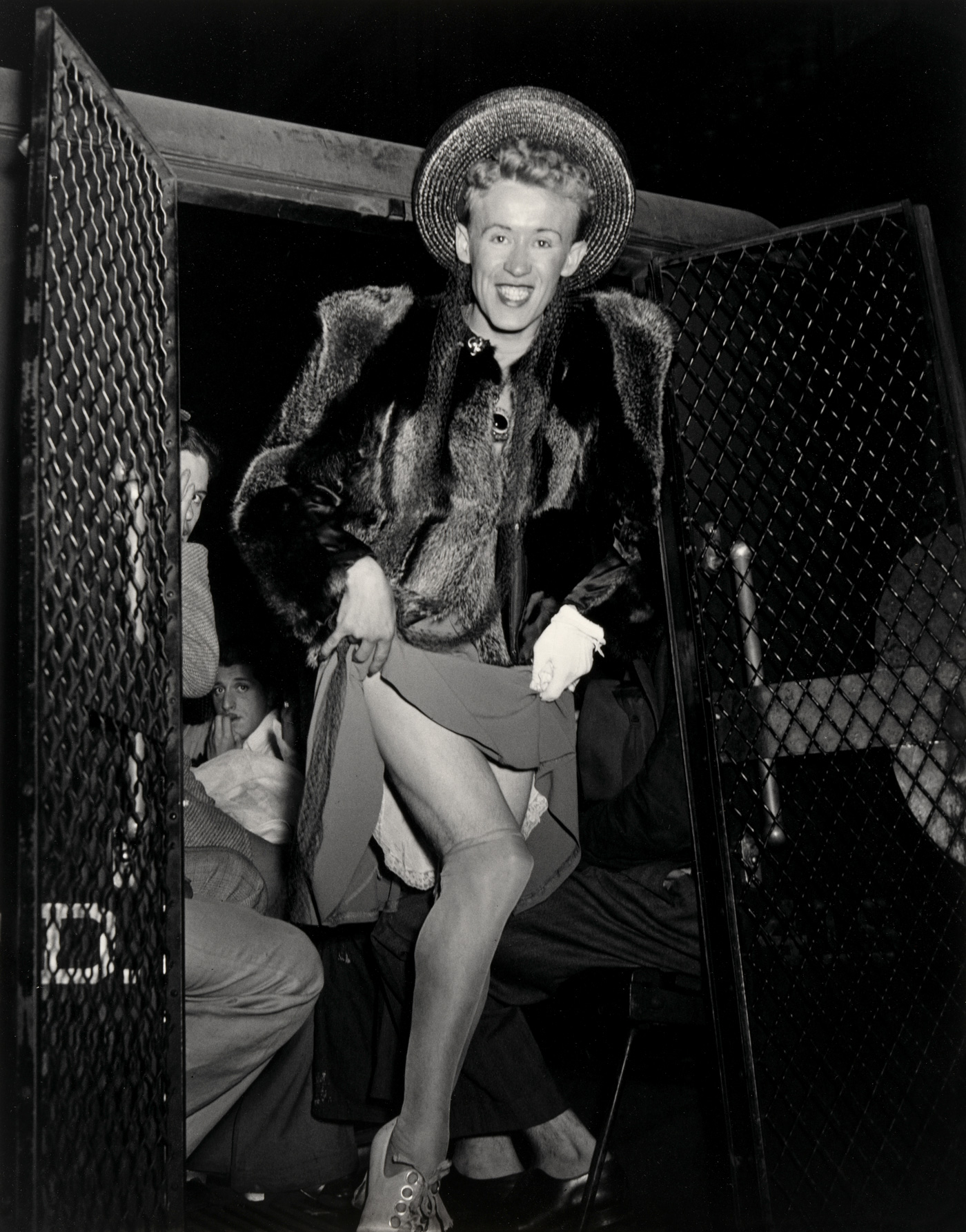
Photograph: ‘Weegee (Arthur Fellig) – Gay Deceiver’ c. 1939

December 2016


Weegee (Arthur Fellig) (American, 1899-1968) 'Gay Deceiver' c. 1939


Weegee (Arthur Fellig) (American, 1899-1968)
Gay Deceiver
c. 1939
Gelatin silver print
13 x 10 1/4″ (33 x 26cm)
The Museum of Modern Art, New York
Promised gift of Robert B. Menschel
© 2016 Weegee/ICP/Getty Images


I just couldn’t resist a one photo posting – a rarity on Art Blart – because this is ABSOLUTELY FABULOUS!

Weggee, flash, a dazzling smile and a lovely pair of stockings … what more could ask for.

Happy Christmas!

Marcus

From an upcoming posting on the exhibition The Shape of Things: Photographs from Robert B. Menschel at the Museum of Modern Art, New York October 29, 2016 – May 7, 2017.


LIKE ART BLART ON FACEBOOK

Back to top

Exhibition: ‘Teller on Mapplethorpe’ at Alison Jacques Gallery, London

Exhibition dates: 18th November, 2016 – 7th January, 2017

Curator: Juergen Teller

PLEASE NOTE: SINCE THIS POSTING, I ACKNOWLEDGE THAT THE ALISON JACQUES GALLERY, LONDON HAS UPDATED THEIR WEBSITE TO INCLUDE A MORE REPRESENTATIVE SELECTION OF MAPPLETHORPE’S IMAGES – INCLUDING SOME OF MAPPLETHORPE’S PHOTOGRAPHIC INVESTIGATION INTO THE SEXUAL BODY AND MORE WORKS FROM THE EXHIBITION – IN ALL THEIR GLORY! PLEASE SEE THE IMAGES ON THEIR WEBSITE AND REMEMBER, IF YOU DON’T LIKE, DON’T LOOK.


Robert Mapplethorpe (American, 1946-1989) 'Pods' 1985 from the exhibition 'Teller on Mapplethorpe' at Alison Jacques Gallery, London, Nov 2016 - Jan 2017


Robert Mapplethorpe (American, 1946-1989)
Pods
1985
© Robert Mapplethorpe Foundation
Used by permission Courtesy Alison Jacques Gallery, London


Nothing SALACIOUS

to see here


According to a tartly written denigration of Mapplethorpe in particular and more generally of photography as art by Guardian critic Jonathan Jones, “Cocks abound. Huge ones. Right at the centre of the main room, just so you don’t miss this basic Mapplethorpian theme, is a giant blow up of a man whose penis would be impressive even in a much smaller print. “Hey, don’t you get it?” Teller in effect is yelling. “This guy was all about cocks!””


Cocks. Cocks. Cocks. Cocks. Cocks. Cocks. Cocks. Cocks. Cocks. Cocks. Cocks.


There, I’ve said it… because I can’t show it.


I’d really LOVE to refute this man’s drivel about Mapplethorpe’s work: “Teller succeeds brilliantly in making Mapplethorpe raw and immediate. Yet he also exposes him as very silly. For if Mapplethorpe was just wildly and naughtily picturing everything in life, willy nilly (but mostly willy), why the heavy monochrome aesthetic?”

But I can’t.

Why not?

Because of the

un/solicitous

(caring in a discriminatory way, as though to protect an image or reputation)

and

innocuous


set of press images that I can officially use to illustrate such a daring and radical rethinking of Mapplethorpe’s work by Juergen Teller.

Not the fault of the gallery at all, they have been marvellous sending me the images.


But they were authorised by The Robert Mapplethorpe Foundation for press sharing.

And there’s the rub.

LIKE RUBBING TWO COCKS TOGETHER.

The paradox of Mapplethorpe’s work: erect genitalia, orifices and violent sex acts teamed with corn, kittens and frogs can be seen in the flesh – but oh, NO!

We can’t have them being seen online

Cocks forbidden


How can you then judge, from a distance, what the effect of Teller’s pairings are; what delightful nuances of meaning are elicited, are illicit, in those very pairings, if we can’t see them? We can’t. Jones observes that, “Teller strips away that respectability and restores the shock to Robert Mapplethorpe … [revealing] hilarious double entendres in the way Mapplethorpe photographed nature.”

How can we understand the exhibition and the shock of these images … and then critique negative reviews like Jones’ if The Robert Mapplethorpe Foundation continues the sanitisation of his work online.

No comment is possible.

Dr Marcus Bunyan


Many thankx to Alison Jacques Gallery for allowing me to publish the photographs in the posting. Please click on the photographs for a larger version of the image.


“Every picture is so strongly composed, and you feel that he really wanted to make that photograph. Not everything is erotic, but he has an interest in life, people, animals and landscapes, and his interest always comes through. I think life is what life is. It has day and night, sunny and grey, and he sees similar characteristics in different things. He cared enormously about how things looked. It all has this same intensity. Within all of that there’s a lot of sensitivity and romanticism in his work too, and a lot of clarity.”


Juergen Teller


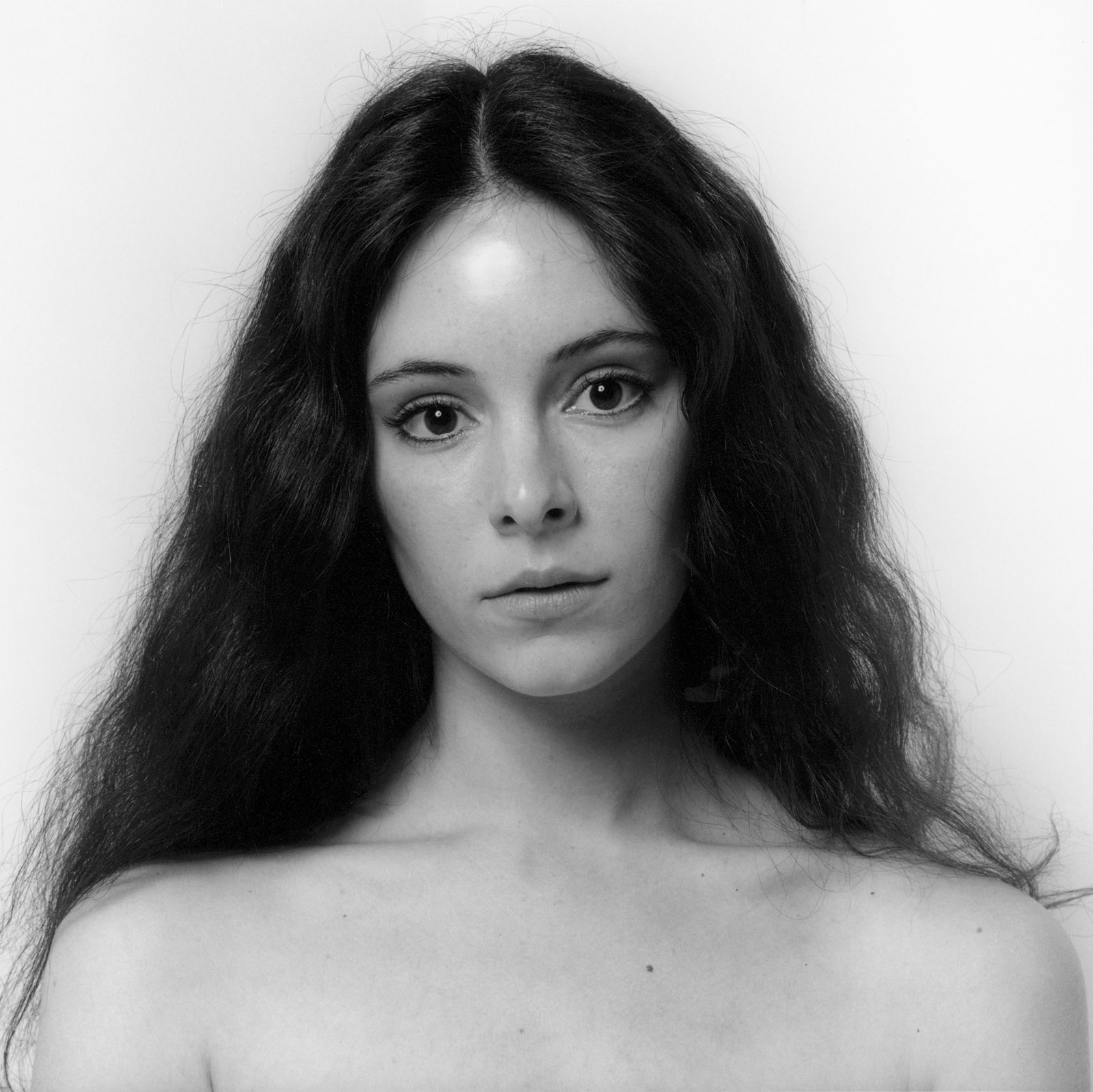
Robert Mapplethorpe (American, 1946-1989) 'Madeline Stowe' 1982 from the exhibition 'Teller on Mapplethorpe' at Alison Jacques Gallery, London, Nov 2016 - Jan 2017


Robert Mapplethorpe (American, 1946-1989)
Madeline Stowe
1982
© Robert Mapplethorpe Foundation. Used by permission
Courtesy Alison Jacques Gallery, London


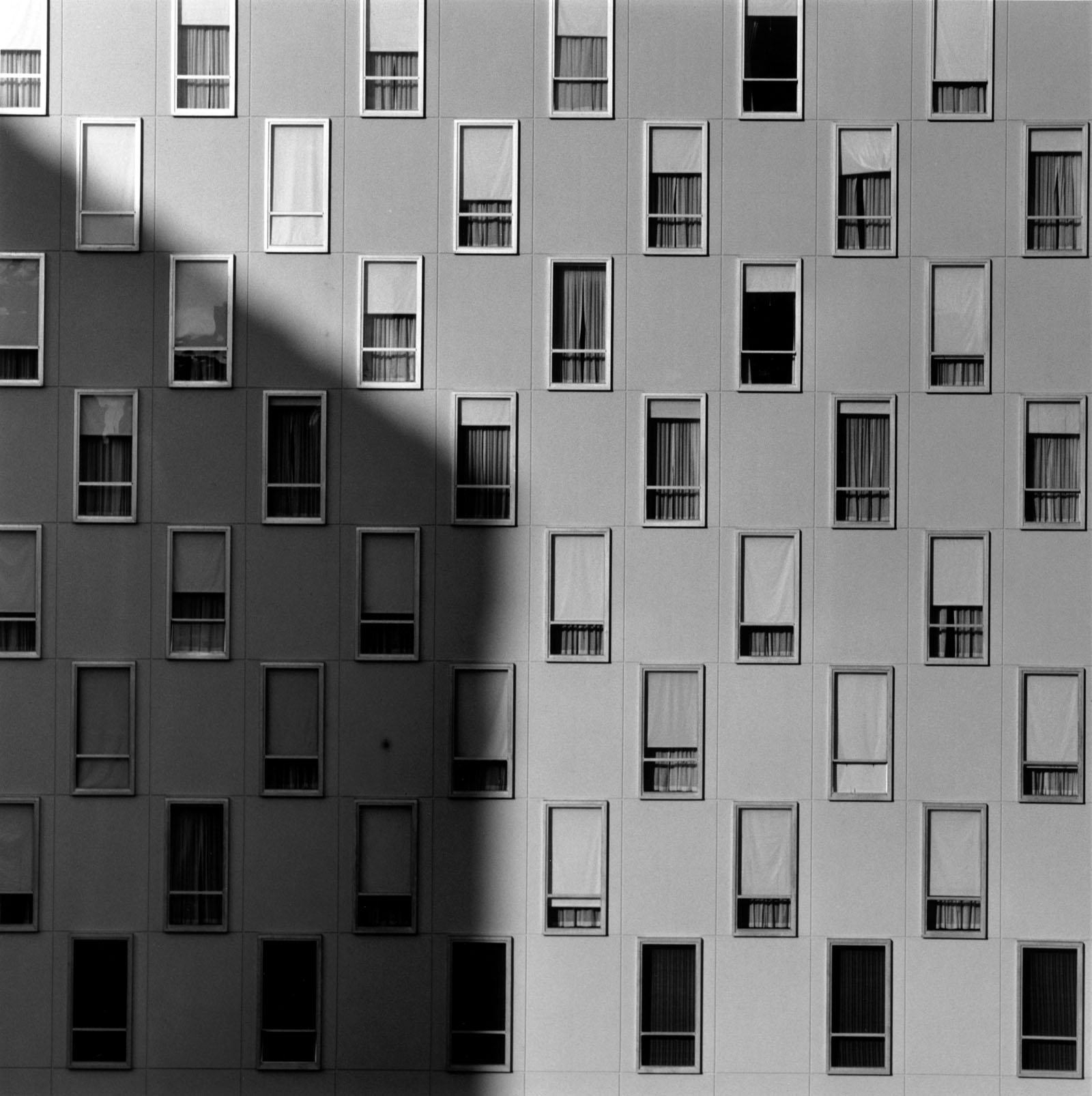
Robert Mapplethorpe (American, 1946-1989) 'Apartment Window' 1977


Robert Mapplethorpe (American, 1946-1989)
Apartment Window
1977
© Robert Mapplethorpe Foundation
Used by permission Courtesy Alison Jacques Gallery, London


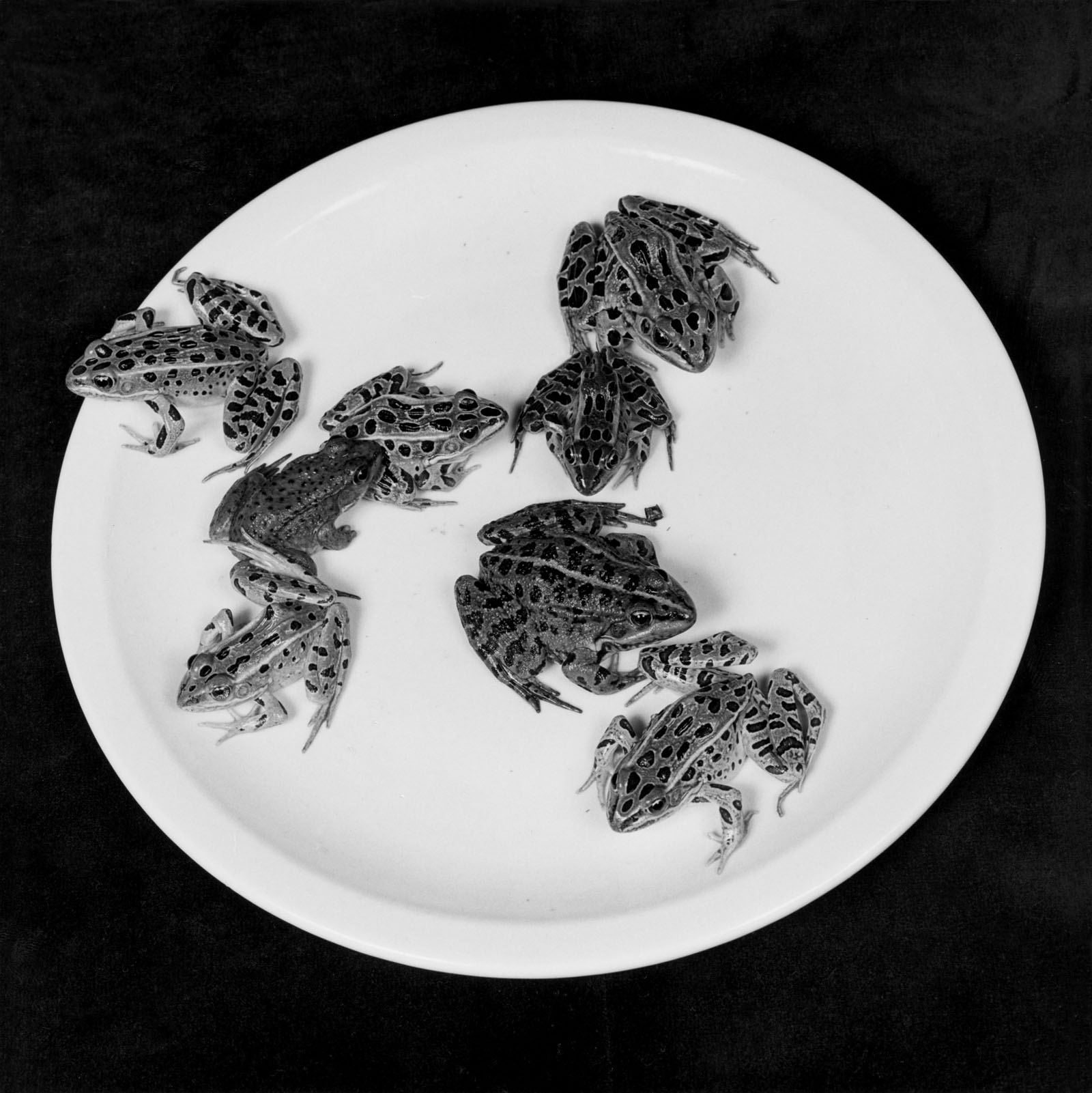
Robert Mapplethorpe (American, 1946-1989) 'Frogs' 1984


Robert Mapplethorpe (American, 1946-1989)
Frogs
1984
© Robert Mapplethorpe Foundation
Used by permission Courtesy Alison Jacques Gallery, London


To coincide with what would have been the 70th birthday of the iconic American photographer Robert Mapplethorpe, Alison Jacques has invited acclaimed UK-based, German-born photographer Juergen Teller to curate an exhibition of Mapplethorpe’s work. Teller worked in collaboration with The Robert Mapplethorpe Foundation in New York to make his selection.

Considered one of the most important photographers of the 20th century, Robert Mapplethorpe is currently the subject of a major touring retrospective The Perfect Medium, which opened at the J. Paul Getty Museum and Los Angeles County Museum of Art (LACMA), Los Angeles in 2016. The exhibition is currently on view at the Montreal Museum of Fine Arts, Canada (until 22 January 2017) and will travel to the Art Gallery of New South Wales, Sydney, Australia (October 2017 – February 2018). Mapplethorpe is also the subject of a recently released, Emmy nominated, HBO documentary Look at the Pictures (2016).

Juergen Teller is one of a few artists who, since Mapplethorpe, has been able to operate successfully both in the art world and the world of commercial fashion photography. Alison Jacques, who has represented Robert Mapplethorpe in the UK since 1999, said: “Provocative and subversive, making images which are the antithesis of conventional fashion photography, Juergen Teller was the only choice to curate this special exhibition of Robert’s work. There are obvious parallels between these two artists and I believe Juergen’s eye will bring a new reading of Robert’s work.”

With the permission of The Robert Mapplethorpe Foundation, Teller has enlarged two images, each over 4 metres in scale, which, pasted directly onto the gallery’s walls will provide a backdrop to the entire show. One wall will show Mapplethorpe’s first partner David Croland wearing a gag and the other features the model Marty Gibson from Mapplethorpe’s later work posing nude on a beach. Teller’s selection of 48 images exposes works within Mapplethorpe’s archive that have rarely been exhibited before and span Mapplethorpe’s entire career, ranging from the unique Polaroids of the early 1970s to his iconic medium of silver gelatin photographs from the mid-70s through to the late 80s.

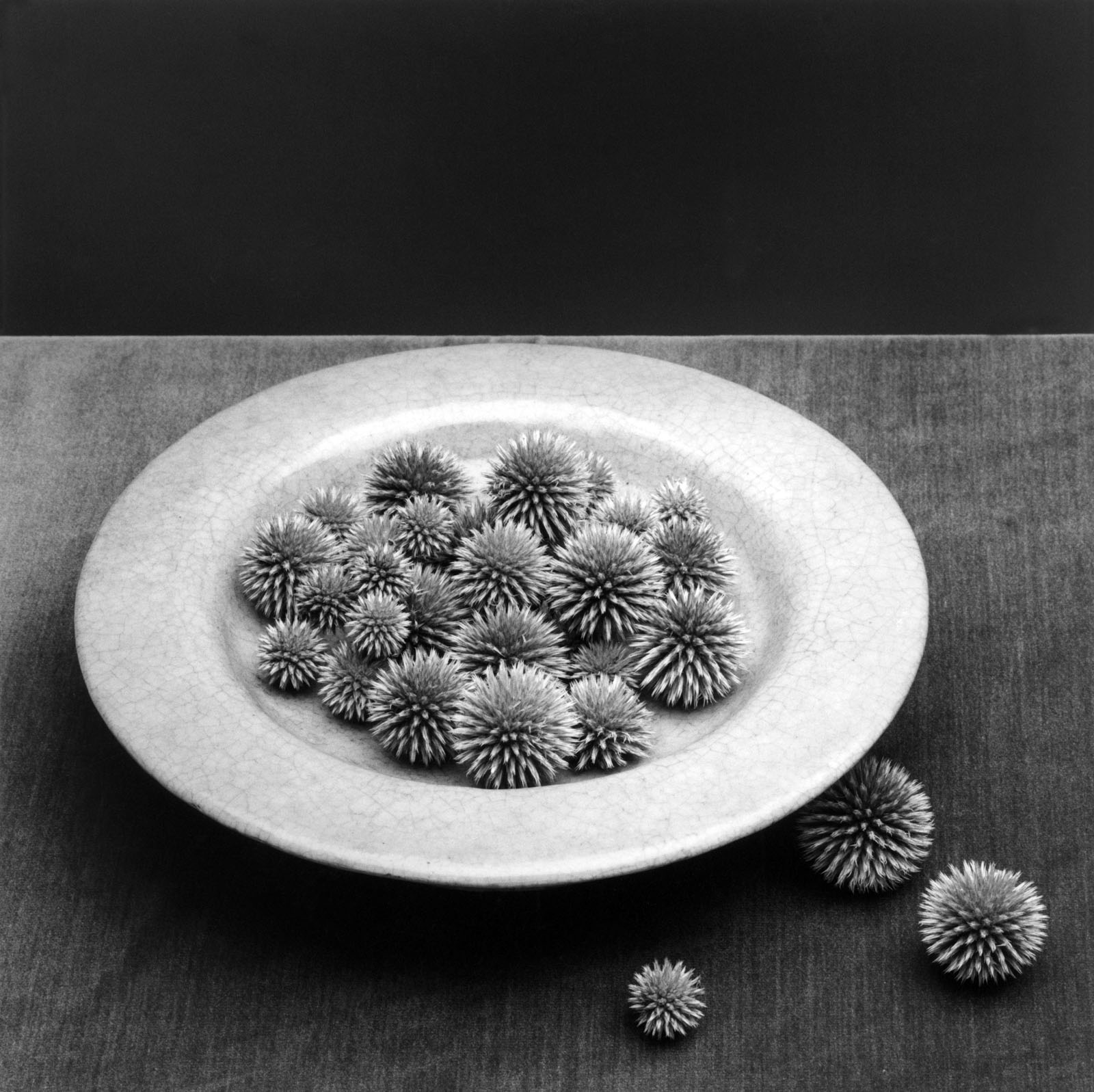
Still life features as a prominent theme with unusual subjects including a spoon full of coffee, a set of antique silverware, two coconuts, a television set, and prickly unopened seedpods on a plate. Teller has also chosen a number of images depicting animals, a subject matter that Mapplethorpe is not famously associated with, including a hanging bat, plate of frogs, reclining dog, kitten on a sofa, and horses. Human subjects include some of Mapplethorpe’s key female muses such as Lisa Lyon, but also lesser-known personalities including Cookie Mueller, Lisa Marie Smith and Susan Sarandon’s daughter, Eva Amurri, as a small child. Well-known people in Mapplethorpe’s life are represented including Patti Smith, David Croland and Sam Wagstaff. Teller has also responded to his own German heritage and selected lesser-known portraits of German figures of the time, such as Hans Gert and the photojournalist Gisele Freund. The image of Gert was the first that Tom Baril worked on for Mapplethorpe from his Bond Street Darkroom. Baril continued to be Mapplethorpe’s exclusive printer for over 15 years.

Sexually-explicit images also feature in the exhibition but by interrelating these to a more romantic view of Mapplethorpe’s work, Teller has brought out the essential mission of Mapplethorpe’s work: a life-long quest for perfection of form whatever the subject matter may be.

Short biographies

Robert Mapplethorpe (b. New York, USA, 1946; d. Boston, USA, 1989) mounted over 50 solo exhibitions during his lifetime, including numerous museum shows in the USA, Europe and Japan. Since his death he has continued to be the subject of major institutional exhibitions. In recent years the Tate, in conjunction with other UK museums, acquired 64 works by Mapplethorpe through the Artists Rooms Art Fund and The d’Offay Donation, which culminated in an exhibition at Tate Modern in 2014.

Juergen Teller (b. 1964, Erlangen, Germany) moved to London in 1986, two years after graduating from Munich’s Bayerische Staatslehranstalt für Photographie. Since the late 1980s, his photographic works have gained critical acclaim and been featured in an array of influential international publications such as Vogue, W Magazine, I-D and Purple. With his unique photographic sensibility, Teller manages to strike a rare balance between creativity and commercialism, blurring the boundaries of art and advertising, and creating world-class images for collaborators such as Marc Jacobs, Céline, Yves Saint Laurent and Vivienne Westwood. Teller’s solo exhibition Woo! at the ICA in London in 2013 was the most well-attended exhibition in the ICA’s history, and in 2016 he had a major solo museum exhibition in Germany, Enjoy Your Life at Kunsthalle Bonn.

Press release from Alison Jacques Gallery


Robert Mapplethorpe (American, 1946-1989) 'Arthur Diovanni' 1982


Robert Mapplethorpe (American, 1946-1989)
Arthur Diovanni
1982
© Robert Mapplethorpe Foundation
Used by permission Courtesy Alison Jacques Gallery, London


Robert Mapplethorpe (American, 1946-1989) 'Cookie Mueller' 1978


Robert Mapplethorpe (American, 1946-1989)
Cookie Mueller
1978
© Robert Mapplethorpe Foundation
Used by permission Courtesy Alison Jacques Gallery, London


Robert Mapplethorpe (American, 1946-1989) 'Paris Fashion Dovanna' 1984


Robert Mapplethorpe (American, 1946-1989)
Paris Fashion Dovanna
1984
© Robert Mapplethorpe Foundation
Used by permission Courtesy Alison Jacques Gallery, London


Robert Mapplethorpe (American, 1946-1989) 'Tattoo Artists' Son' 1984


Robert Mapplethorpe (American, 1946-1989)
Tattoo Artists’ Son
1984
© Robert Mapplethorpe Foundation
Used by permission Courtesy Alison Jacques Gallery, London


Robert Mapplethorpe (American, 1946-1989) 'Michael Reed' 1987


Robert Mapplethorpe (American, 1946-1989)
Michael Reed
1987
© Robert Mapplethorpe Foundation
Used by permission Courtesy Alison Jacques Gallery, London


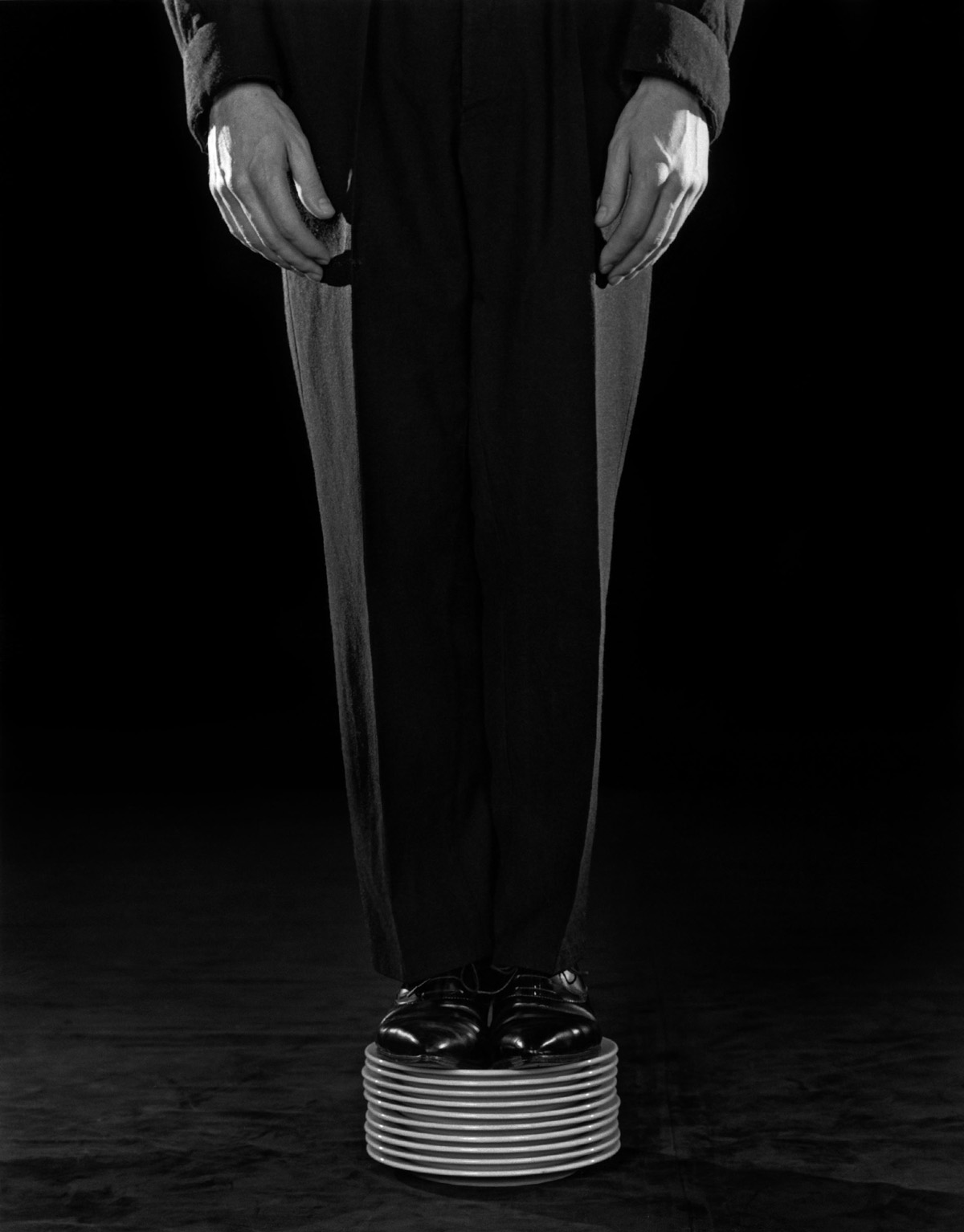
Robert Mapplethorpe (American, 1946-1989) 'Shoes on Plates' 1984


Robert Mapplethorpe (American, 1946-1989)
Shoes on Plates
1984
© Robert Mapplethorpe Foundation
Used by permission Courtesy Alison Jacques Gallery, London


Alison Jacques Gallery
Orwell House, 16-18 Berners Street
London W1T 3LN
Phone: +44 (0)20 7631 4720

Opening hours:
Tuesday – Saturday 11am – 6pm
Closed Sunday and Monday

Alison Jacques Gallery website

LIKE ART BLART ON FACEBOOK

Back to top

Exhibition: ‘Louis Faurer’ at the Fondation Henri Cartier-Bresson, Paris

Exhibition dates: 9th September – 18th December, 2016

Curator: The exhibition has been curated and organised by Agnès Sire, director of the Fondation Henri Cartier-Bresson in association with the Estate of Louis Faurer in New York, Howard Greenberg Gallery in New York and Deborah Bell Photographs.


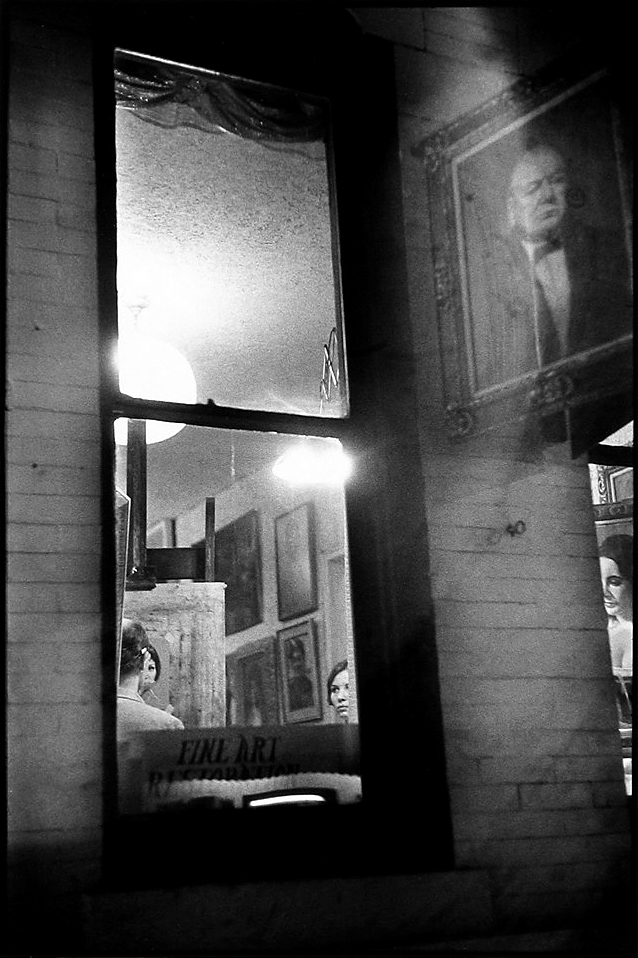
Louis Faurer (American, 1916-2001) 'Accident, New York' 1952 from the exhibition 'Louis Faurer' at the Fondation Henri Cartier-Bresson, Paris, Sept - Dec, 2016
 

Louis Faurer (American, 1916-2001)
Accident, New York
1952
Gelatin silver print
© Louis Faurer Estate, Courtesy Deborah Bell


Life, love and loneliness in the big smoke.

Champions and accidents.

Home of the brave, land of the fractured and destitute.

Unemployed and Looking.

Both * eyes * removed
Wounded

I AM TOTALLY BLIND.

Dr Marcus Bunyan


Many thankx to the Fondation Henri Cartier-Bresson for allowing me to publish the photographs in the posting. Please click on the photographs for a larger version of the image.


“However, with shocking suddenness in 1976 I came to believe that American photography of the moment of mid-century belonged to Louis Faurer.”


Walter Hopps


“I have an intense desire to record life as I see it, as I feel it. As long as I’m amazed and astonished, as long as I feel that events, messages, expressions and movements are all shot through with the miraculous, I’ll feel filled with the certainty I need to keep going. When that day comes, my doubts will vanish.”


Louis Faurer


Louis Faurer (American, 1916-2001) 'Champion, New York' 1950 from the exhibition 'Louis Faurer' at the Fondation Henri Cartier-Bresson, Paris, Sept - Dec, 2016


Louis Faurer (American, 1916-2001)
Champion, New York
1950
Gelatin silver print
© Louis Faurer Estate, Courtesy Howard Greenberg Gallery


Louis Faurer (American, 1916-2001) 'Orchard Street, New York' 1947


Louis Faurer (American, 1916-2001)
Orchard Street, New York
1947
Gelatin silver print
© Louis Faurer Estate


Louis Faurer (American, 1916-2001) 'New York' 1949


Louis Faurer (American, 1916-2001)
New York
1949
Gelatin silver print
© Louis Faurer Estate, Courtesy Howard Greenberg Gallery


Louis Faurer (American, 1916-2001) 'Untitled, New York' 1949


Louis Faurer (American, 1916-2001)
Untitled, New York
1949
Gelatin silver print
© Louis Faurer Estate


Louis Faurer (American, 1916-2001) '"Win, Place, and Show", 3rd Avenue El at 53rd Street, New York, New York' c. 1946-1948


Louis Faurer (American, 1916-2001)
“Win, Place, and Show”, 3rd Avenue El at 53rd Street, New York, New York
c. 1946-1948
Gelatin silver print
© Louis Faurer Estate


Louis Faurer (American, 1916-2001) 'Market Street, Philadelphia' 1944


Louis Faurer (American, 1916-2001)
Market Street, Philadelphia
1944
Gelatin silver print
© Louis Faurer Estate


Louis Faurer (American, 1916-2001) 'Untitled, New York' c. 1948-1950


Louis Faurer (American, 1916-2001)
Untitled, New York
c. 1948-1950
Gelatin silver print
© Louis Faurer Estate


Louis Faurer (American, 1916-2001) '42nd Street, New York' c. 1949


Louis Faurer (American, 1916-2001)
42nd Street, New York
c. 1949
Gelatin silver print
© Louis Faurer Estate


Louis Faurer (American, 1916-2001) 'Staten Island Ferry, New York' 1946


Louis Faurer (American, 1916-2001)
Staten Island Ferry, New York
1946
Gelatin silver print
© Louis Faurer Estate, Courtesy Deborah Bell


From September 9 to December 18, 2016, The Fondation Henri Cartier-Bresson dedicates an exhibition to the American photographer, Louis Faurer. This show is the occasion to discover this artist who has not been the subject of an exhibition in France since 1992. A native of Philadelphia, Louis Faurer moved to New York after the War, as if irresistibly pulled into the life of Times Square, where he homed in, objectively and pitilessly, on loneliness in the crowd. Reporting held little interest for him, and journalism even less; he was drawn – as the captions to his photographs sometimes indicate – to the poetic side: the fragility of things and the unconscious revelation. He carried out much-admired commissions for leading magazines including Flair, Junior Bazaar, Glamour and Mademoiselle. This gave rise to an unfeigned self-contempt and a paradoxical inner division only humour could counter. These assignments earned a living and helped him pursue a more personal work in New York streets.

Profoundly honest, he refused the excessiveness (or obscenity) of violent scenes that might humiliate his subjects, and deliberately projected himself into the people he photographed; and if he often recognised himself in them, this was the whole point. Sometimes he encountered his double, or even appeared in shot as a reflection. Each of his images was “a challenge to silence and indifference” – theirs and his own.

After studying drawing and being noticed by the Disney Studios at the age of thirteen, Louis Faurer started his professional path by creating advertising posters and sketching caricatures in the seaside of Atlantic City. At the age of 21, he bought his first camera and won first prize for “Photo of the Week” in a contest sponsored by the Philadelphia Evening Public Ledger. Market Street would then be the scene of his first shots. In 1947, he left for New York, as Lilian Bassman, art director for Junior Bazaar, hired him as a photographer. He met Robert Frank who was to become a close friend and with who he would share a studio for a while.

In 1968, he abandoned New York, the scene of his most successful work, for personal and financial reasons. Faurer worked briefly in England, and then in Paris where he struggled doing fashion work, with occasional assignments from Elle and French Vogue. Shortly after Faurer returned to New York in 1974 at the age of 58, he found that photography was being embraced by the art world and was soon to become a commodity in the international art market. The art dealer, Harry Lunn brought his work to public attention through an exhibition at Marlborough Gallery in 1997 and resurrected his career, his contribution then began to be acknowledged. In 1984, a car in New York streets hit Faurer, his wounds prevented him to pursue his career as a photographer. He passed away in Manhattan on March 2, 2001.

Deeply concerned with what he saw, he shares his doubts with us as he chooses anonymous figures spotted amid the ordinariness of the sidewalk: figures pulled out of the ambient melancholy, the film noir, the pervasive distress that seem to have been his personal lot. A remarkably gifted printer, Faurer experimented with blur, overlaid negatives and the marked graininess resulting from his fondness for the nocturnal. His touchiness meant frequent problems with clients and people like the numerous photographers who tried to lend a helping hand; among the latter was William Eggleston, who had discerned the unique depth of Faurer’s work. The issue the elegant Japanese photography quarterly déjà vu devoted to him in 1994 speaks of a rediscovery and a style ahead of its time, and quotes Nan Goldin: “Some people believe again that photography can be honest”.

In 1948, Edward Steichen, Head of the Department of Photography of the MoMA, supported Faurer and included him in In and Out of Focus. Steichen wrote: “Louis Faurer, a new comer in the field of documentary reporting, is a lyricist with a camera, a seeker and finder of magic in some of the highways and byways of life.” Afterwards, Steichen presented Faurer photographs in a few other exhibitions and in particular The Family of Man, in 1955. During his lifetime, Faurer did not have the wherewithal to edit his photographs into a book.

Press release from Fondation Henri Cartier-Bresson


Louis Faurer (American, 1916-2001) 'Market Street, Philadelphia' 1937


Louis Faurer (American, 1916-2001)
Market Street, Philadelphia
1937
Gelatin silver print
© Louis Faurer Estate


Louis Faurer (American, 1916-2001) 'Unemployed and Looking at Rockefeller Center, New York' 1947


Louis Faurer (American, 1916-2001)
Unemployed and Looking at Rockefeller Center, New York
1947
Gelatin silver print
© Louis Faurer Estate


Louis Faurer (American, 1916-2001) 'Eddie, New York' 1948


Louis Faurer (American, 1916-2001)
Eddie, New York
1948
Gelatin silver print
© Louis Faurer Estate


Louis Faurer (American, 1916-2001) 'Deaf Mute, New York' 1950


Louis Faurer (American, 1916-2001)
Deaf Mute, New York
1950
Gelatin silver print
© Louis Faurer Estate


Louis Faurer (American, 1916-2001) 'Union Square from Ohrbach’s Window, New York' c. 1948-1950


Louis Faurer (American, 1916-2001)
Union Square from Ohrbach’s Window, New York
c. 1948-1950
Gelatin silver print
© Louis Faurer Estate, Courtesy Howard Greenberg Gallery


Narrative of my career

My earliest experience in art occurred at the Benjamin Rush Public school in Phila., Penna. Miss Duncan, who seemed to float on a rose petal scent, having requested that numbers be written on paper with lead pencil, was shocked when my sheet yielded a drawing of a locomotive. My next surprise, at the age of 13 arrived in the mail. I had submitted my drawings to Walt Disney and he proposed considering me for a position, although he couldn’t guarantee it, if I travelled to California. It seemed unreachable and so I didn’t go.

After graduating the South Phila. High School for Boys, I enrolled in a Commercial Lettering School. After months of hand trembling, I looked at my first sign, it read “FRESH FISH”. From 1934 to 1937 I sketched caricatures on the beach at Atlantic City, N.J. My interest in photography began in 1937. It was greatly intensified when I was awarded first prize in the Philadelphia Evening Public Ledger for the photo of the week contest. Soon, the Farm Security Administration’s early books became my bible. I was especially taken by Walker Evans’ photography. The world of Harper’s Bazaar also fascinated me.

Later, in New York, I was to meet Robert Frank at the Bazaar Studio. Since I was a commuter, he invited me to stay at his loft together with nine cats. He had recently arrived from Switzerland and was alone. New York enchanted and amazed me. Everywhere a new discovery awaited me. Rejection slips from U.S. Camera were transformed into reproduced pages. My work was being accepted, often it seemed unreal. I showed my photographs to Walker Evans. A handsome brass tea kettle in his tiny room in the offices at FORTUNE projected his stability and eloquence. “You wouldn’t photograph fat women, would you?” he asked me. Later he warned me, “don’t become contaminated.” My need to continue photographing was solved by photography for commerce. I worked for periodicals which included Harper’s Bazaar.

1946 to 1951 were important years. I photographed almost daily and the hypnotic dusk light led me to Times Square. Several nights of photographing in that area and developing and printing in Robert Frank’s dark room became a way of life. He would say, “whatta town”, “whatta town”. I was represented in Edward Steichen’s IN AND OUT OF FOCUS exhibit. Then, work, work, and more work. “Boy,” he boomed, “go out and photograph and put the prints on my desk.” This command was synchronised with a pound of his fist on the glass top desk. I thought it miraculous, that the glass did not shatter.

I tasted and accepted the offerings of the 50s and 60s. LIFE, COWLES PUBLICATIONS, HEARST and CONDE NAST, enabled me to continue with my personal photography efforts. Often I would carry a 16mm motion picture camera as I would a Leica and photograph in the New York streets. The results were never shown commercially. The negative has been stored.

In 1968, I needed new places, new faces and change. I tried Europe. I returned in the mid-seventies and was overwhelmed by the change that had occurred here. I took to photographing the new New York with an enthusiasm almost equal to the beginning. After the Lunn purchase, the gallery world. I was brought again to the drawing I first experienced, and as an unexpected bonus, the photographer had become an artist! 1978 found me the recipient of the National Endowment for the Arts Grant and the Creative Public Service Grant for photography. The latter is known as (CAPS). My eyes search for people who are grateful for life, people who forgive and whose doubts have been removed, who understand the truth, whose enduring spirit is bathed by such piercing white light as to provide their present and future hope.*

Louis Faurer


* Reproduced, with editorial revisions, from the artist’s original text. Text published at the occasion of the exhibition Louis Faurer – Photographs from Philadelphia and New York 1937-1973 presented from March 10 to April 23, 1981 at the Art Gallery of University of Maryland. Extracts from the book Louis Faurer published by Steidl, September 2016


Louis Faurer (American, 1916-2001) 'Somewhere in West Village, New York' 1948


Louis Faurer (American, 1916-2001)
Somewhere in West Village, New York
1948
Gelatin silver print
© Louis Faurer estate


Louis Faurer (American, 1916-2001) 'Untitled, Philadelphia' Date unknown


Louis Faurer (American, 1916-2001)
Untitled, Philadelphia
Date unknown
Gelatin silver print
© Louis Faurer estate


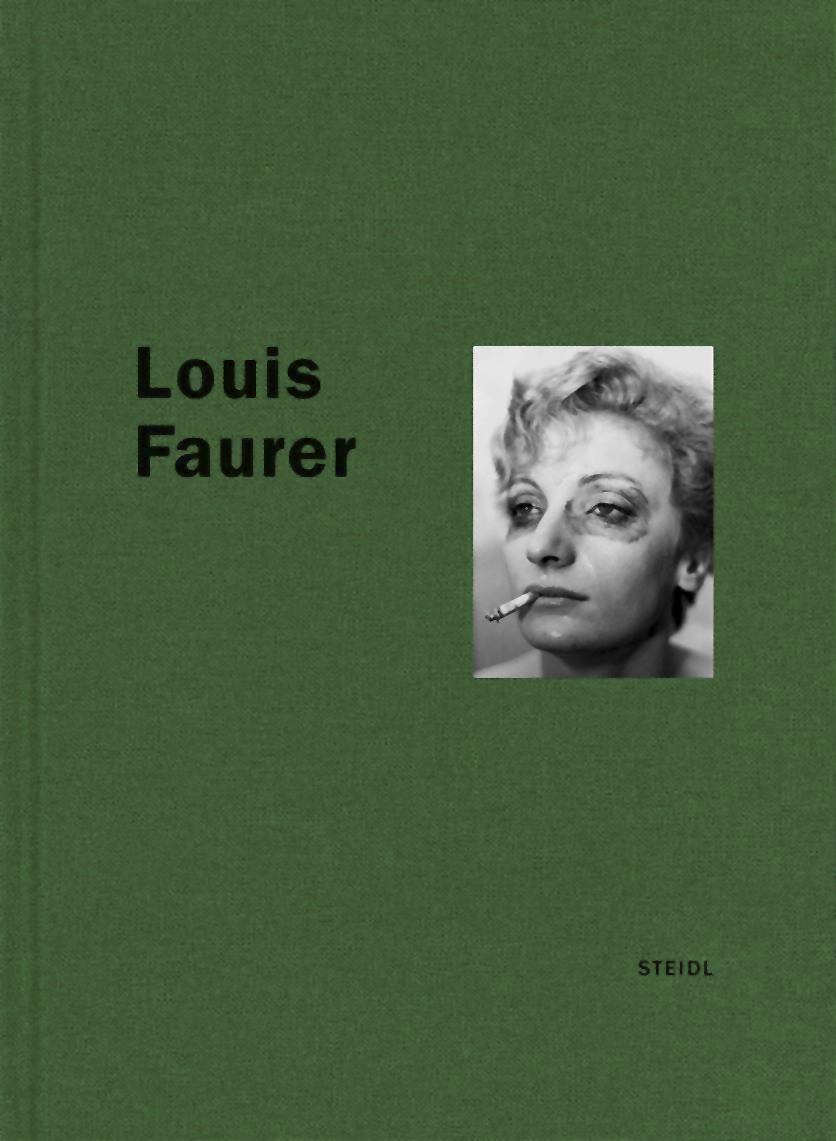
'Louis Faurer' Steidl Verlag


Louis Faurer
Steidl Verlag

Foreword: Agnès Sire. Essay: Susan Kismaric
Original texts: Louis Faurer and Walter Hopps

208 pages
24 x 17.6cm
100 illustrations
ISBN: 978-3-95829-241-3
September 2016


Extracts from the book

New York City has been the major center of the Faurer’s work, and that city’s life at mid-century, his great subject. The city is totally Faurer’s natural habitat. He can be at home, at one, with people on its streets, in its rooms. However serene or edgy his encounters, one senses Faurer (if at all) as being the same as the people in his photographs. And since these people are extremely varied, it is a transcendent vision that allows the photographer to be so many “others.” Faurer’s at-oneness with his subjects contrasts with both the mode of working and the results of Evans and Frank. They have proved to be great and wide-ranging explorers and finders of their images. Faurer made only one important trip: from Philadelphia (where he made his first, early brilliant photographs) to New York, where he stayed, and where in the course of things his vision consumed, whether ordinary or odd, the all of it.

Walter Hopps


Louis Faurer was a “photographer’s photographer”, one whose work was not known to a broad audience, or appreciated by the art world, but was loved by photographers. They saw in his pictures a purity of seeing, akin to what Faurer saw in the work of Walker Evans, the “poetic use of facts”. Faurer distinguished himself within this way of working through his instinct and his uncanny eye for people who radiate a rare and convincing sense of privacy, an inner life. They are people who would be true in any time and place,who are emblematic of human struggle.

For whatever reasons, Faurer did not have the wherewithal to edit his photographs into a book, the most visible and long-lasting expression of a photographer’s work. Yet his pictures are indelible. Their content presages a major shift in subject matter within the rubric of “documentary” American photography that was to come to fruition almost two decades later. In 1967 John Szarkowski identified this radical change when he wrote in his wall text for New Documents, an exhibition at the Museum of Modern Art, about the work of Diane Arbus, Lee Friedlander, and Garry Winogrand: “… In the past decade, a new generation of photographers has directed the documentary approach toward more personal ends. Their aim has been not to reform life, but to know it”.

Susan Kismaric


Louis Faurer (American, 1916-2001) 'Viva, New York' 1962


Louis Faurer (American, 1916-2001)
Viva, New York
1962
Gelatin silver print
© Louis Faurer Estate, Courtesy Christophe Lunn


Fondation Henri Cartier-Bresson
79 rue des Archives
75003 Paris

Opening hours:
Tuesday – Sunday
11am – 7pm
Closed on Mondays

Fondation Henri Cartier-Bresson website

LIKE ART BLART ON FACEBOOK

Back to top

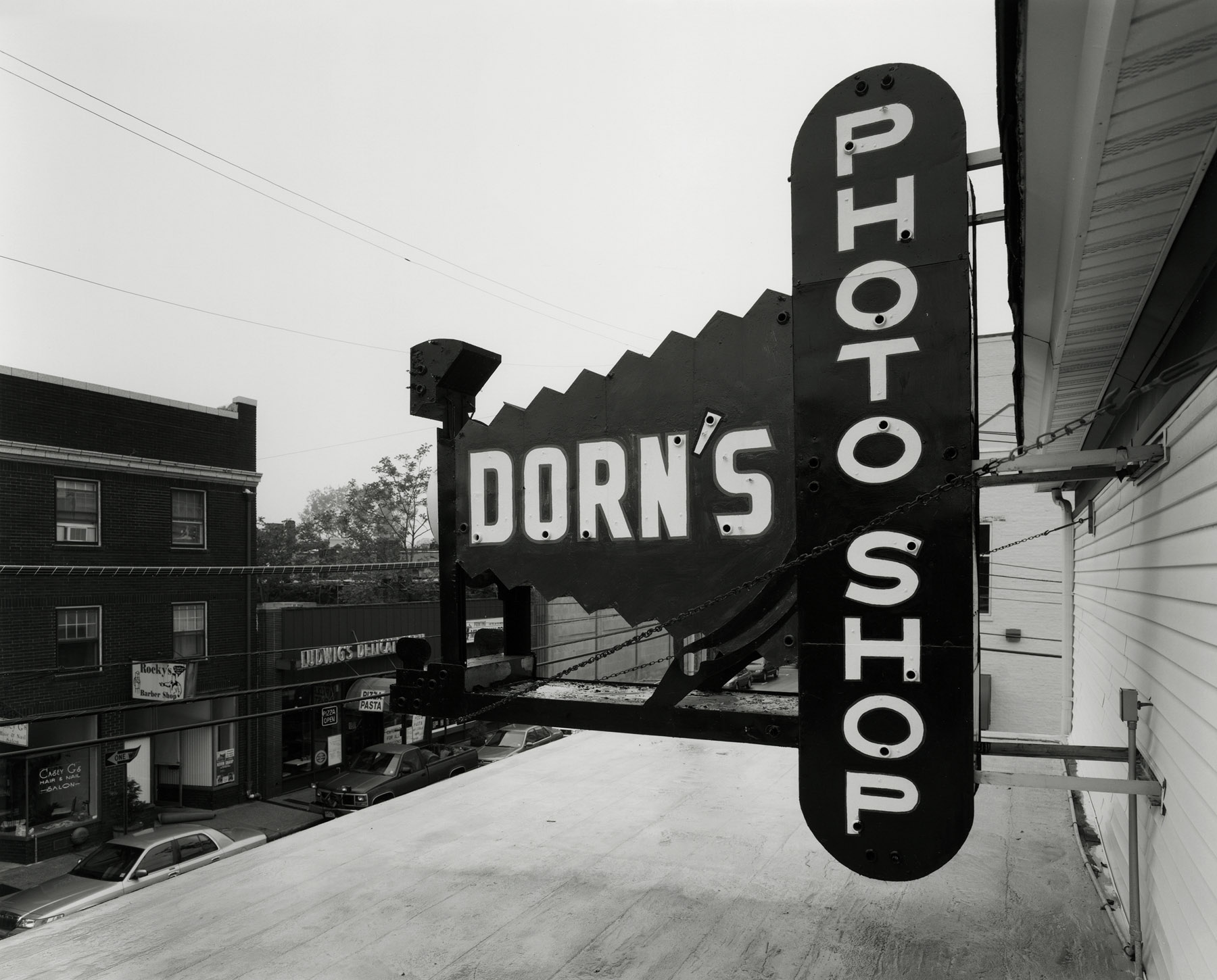
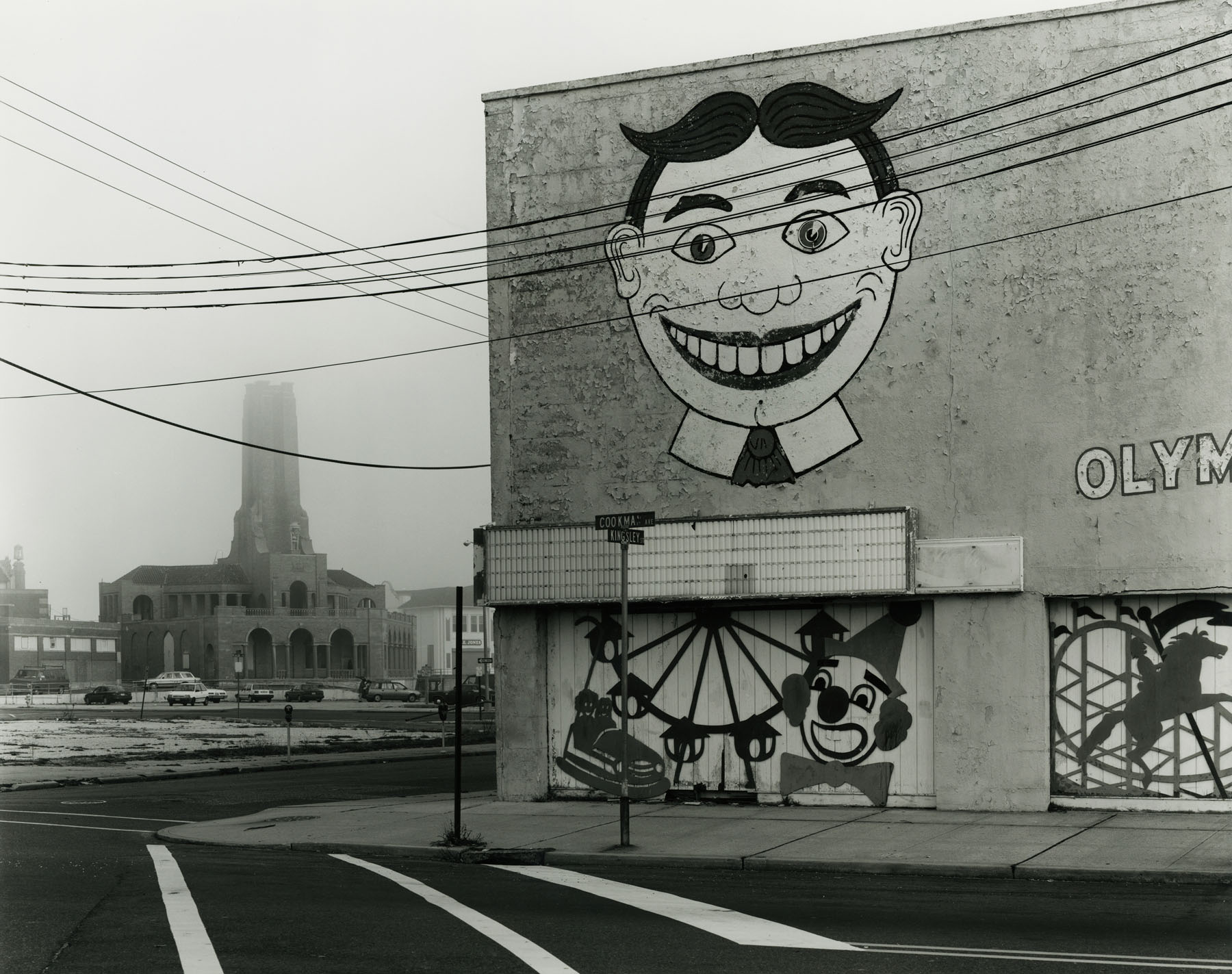
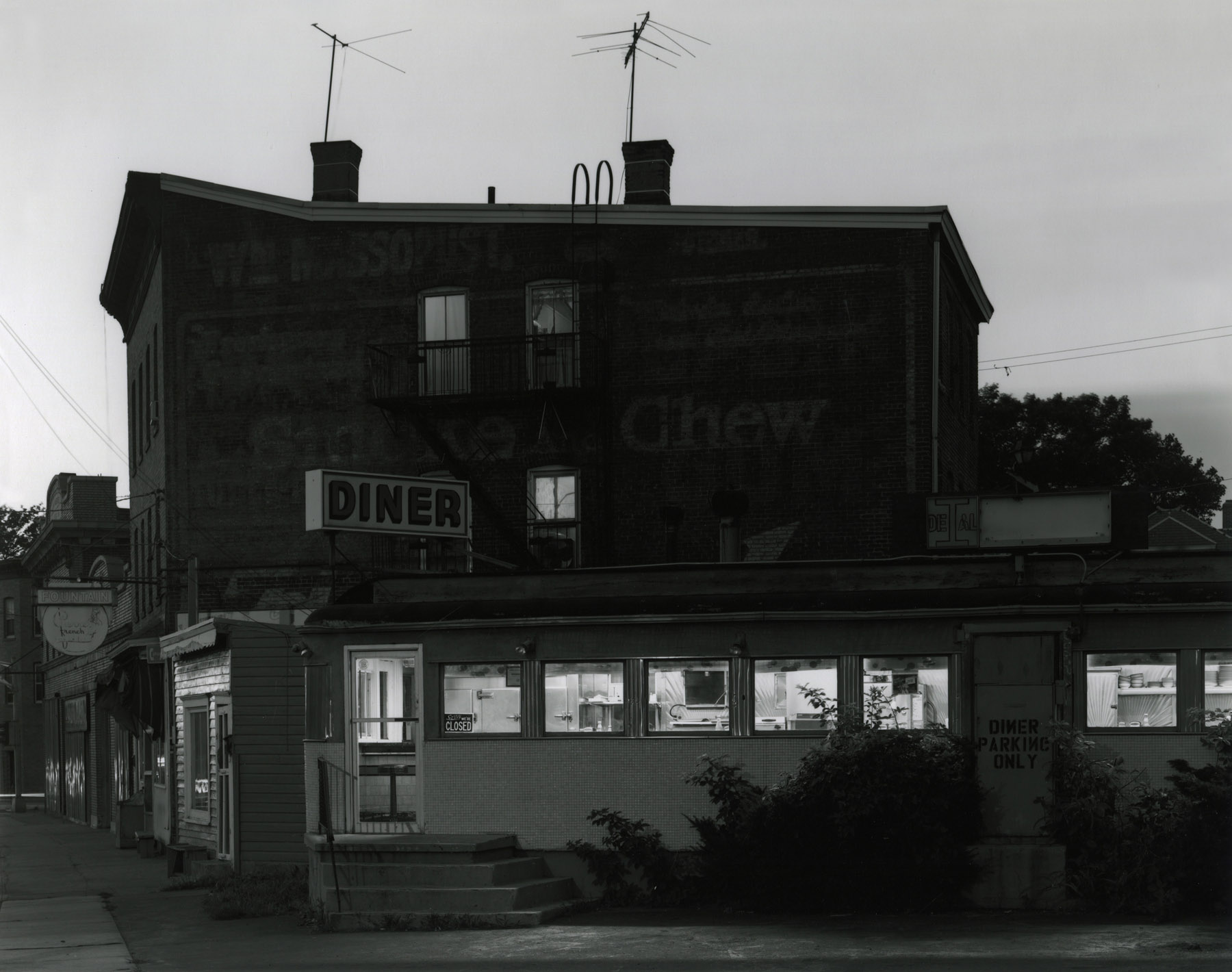
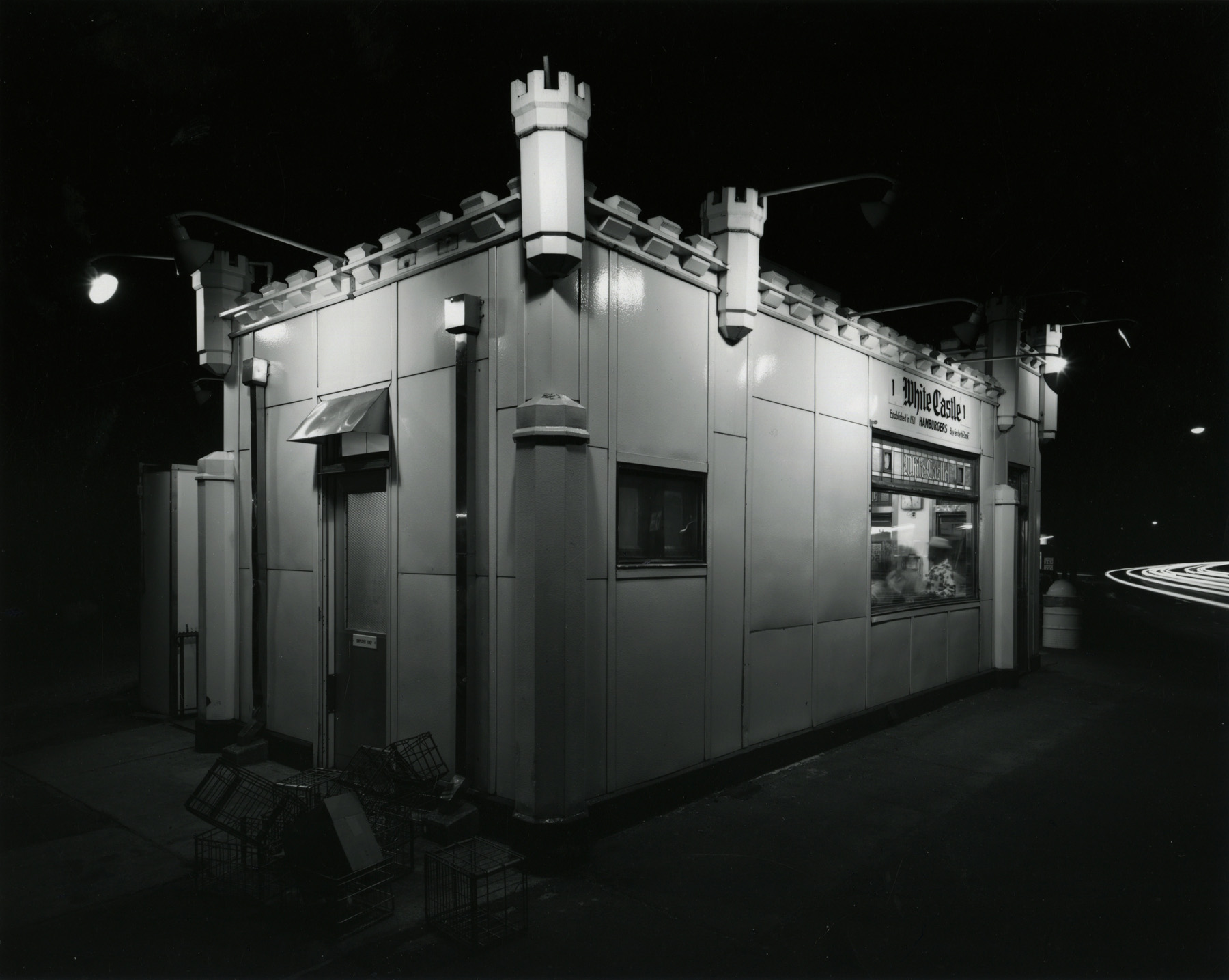
Exhibition: ‘George Tice: Urban Landscapes’ at the Joseph Bellows Gallery, La Jolla, California

Exhibition dates: 10th September – 28th October, 2016


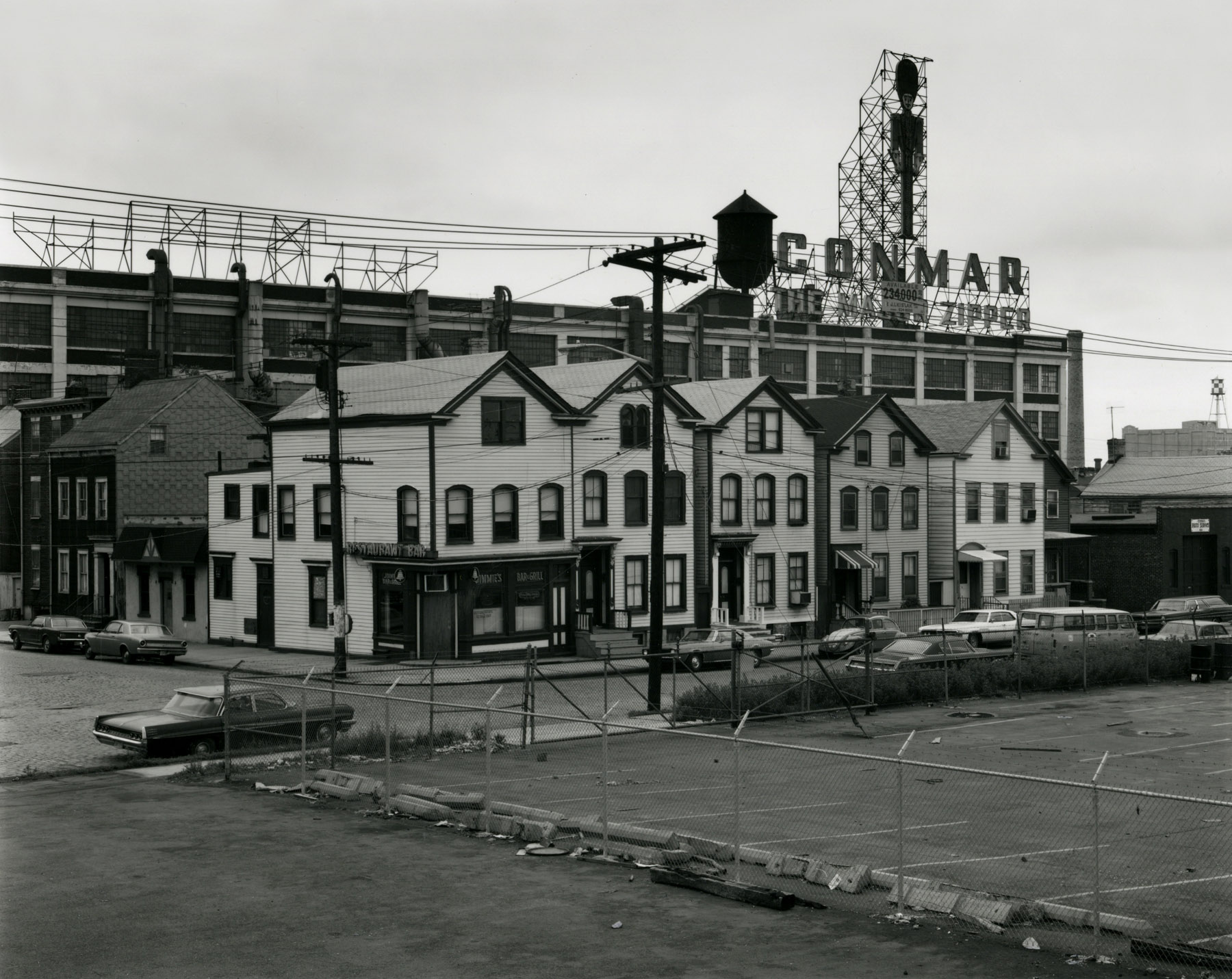
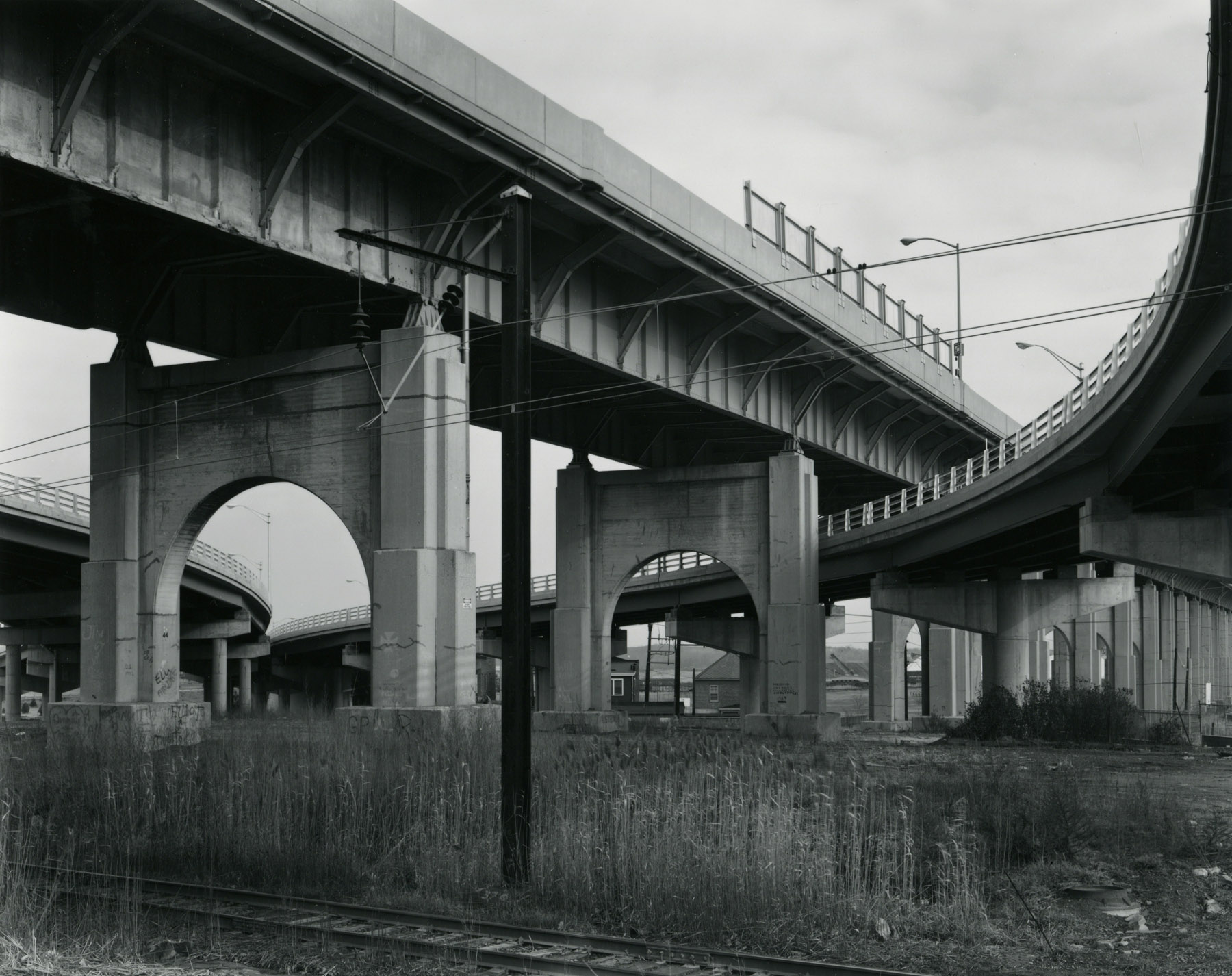
George Tice (American, b. 1938) 'Jimmy's Bar and Grill and Conmar Zipper Company, Newark, NJ, 1973' 1973 from the exhibition 'George Tice: Urban Landscapes' at the Joseph Bellows Gallery, La Jolla, California, Sept - Oct, 2016
 

George Tice (American, b. 1938)
Jimmy’s Bar and Grill and Conmar Zipper Company, Newark, NJ, 1973
1973
Silver gelatin print


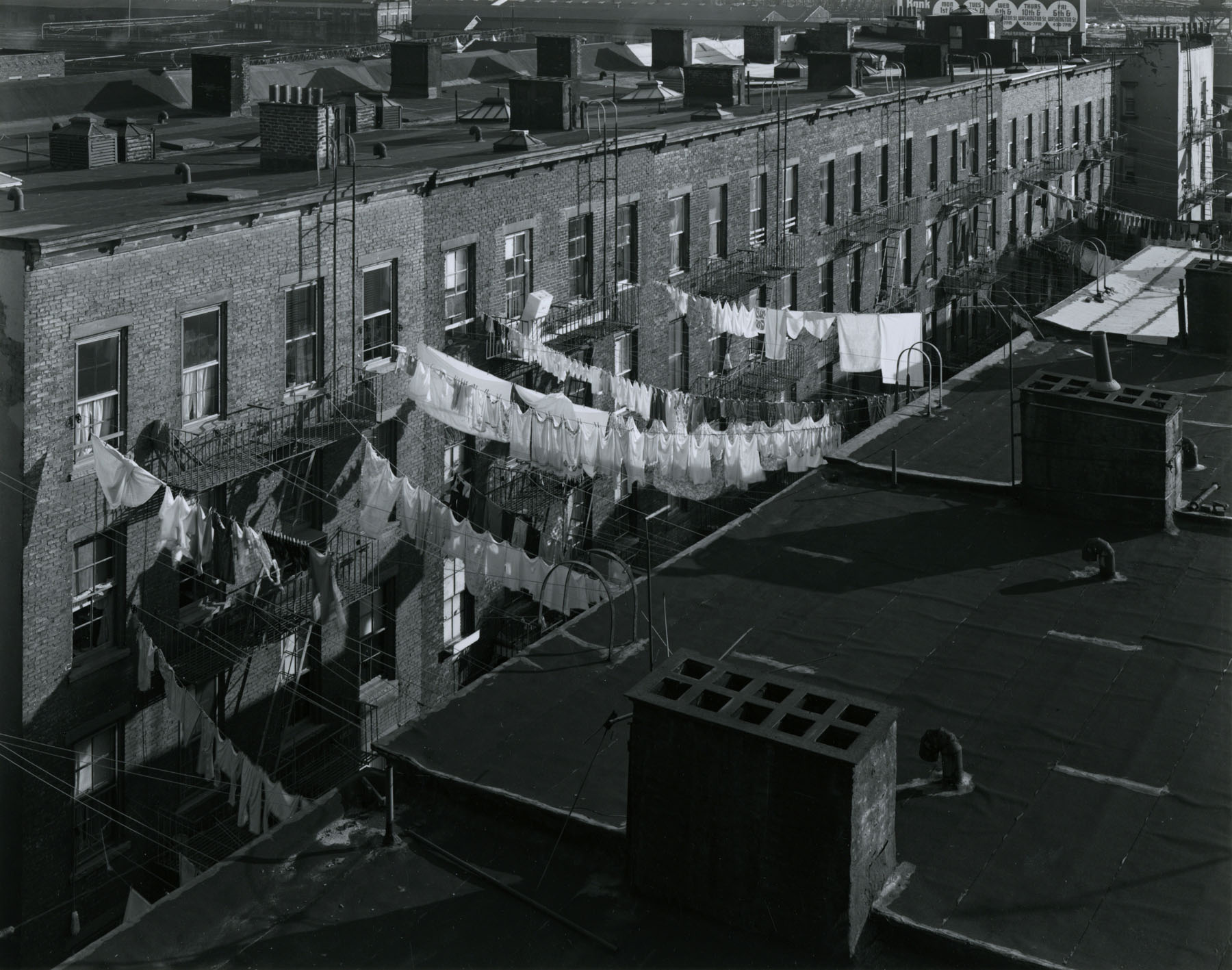
An American iconography

George Tice is a master photographer and an exceptional artist. Using a large format 8 x 10 camera this craftsman has created a “deeply-penetrating” photographic record of the American urban landscape, mainly based around the city of New Jersey where he has lived for most of his life.

Tice’s ongoing epic visual poem is at its strongest in his early period, from 1973-74. While his later 1990s work is qualified by simplified imagery and semiotic statements (for example Dorn’s Photoshop, Red Bank, NJ, 1999 and Lakewood Manor Motel, Lakewood, NJ, 1998, below) it is this early work that produces “attentive and quotidian descriptions of the everyday structures and places that define the American cultural landscape.” There seems to be a greater personal investment in these earlier images. Tice’s recognition of subject matter that mere mortals pass by is translated into beautiful, serene, tonal and dare I say, sensual images, that belie the complexity of their previsualisation. You only have to look at two images, Houses and Water Towers, Moorestown, NJ, 1973 and Hudson’s Fish Market, Atlantic City, NJ, 1973 (below) to understand that these photographs are visually complex, slightly surreal, affectionate images of places he personally knows so well. They possess a totally different feeling from the conceptual photography of the German school of Bernd and Hilla Becher. As Sanford Schwartz in The New York Times, on December 3, 1972 noted: “Tice’s pictures… show a remarkable blend of intimacy, affection and clear-sightedness.”

The almost tragic, objective renditions of a post-industrial landscape evidence a poetic intensity that has deep roots in the history of photography. Vivien Raynor, writing in The New York Times, said, “Finding precedents for Mr. Tice’s photography is easier than defining the personal qualities that make it so special. As others have remarked, his tranquil towns, usually deserted, could sometimes be those of Walker Evans updated; his industrial views are not unrelated to Charles Sheeler’s, and, for good measure, the stillness and silence of his compositions link him to Atget, the first great urban reporter.” Tice builds upon the lineage of other great artists but then, as any good artist should, he forges his own path, not reliant on the signature of others. As he himself observes, “… if you learn to see what photography is through one person’s eyes you become fixed in that one way of seeing.”

When I first started taking photographs in 1990, my heroes were Atget, Strand, Evans and Minor White. Looking at art, and looking at photographers, trained my eye. But as an artist, looking at the world is the most valuable education that you can have, for eventually you have to forge your own style, not copy someone else … and the signature that you create becomes your own. You know it’s a Mapplethorpe, just as you know it’s an Evans, or a Tice. Each piece of handwriting is unique. Nobody can teach that and it only comes with time and experience. As Paul Strand said, it takes 10 years to become an artist, 10 years to learn your craft, 10 years to drop ego away and find your own style. This is what the work of George Tice speaks to. He approaches the world with a clear mind, focused on a objective narrative that flips! exposing us (like his film), to a subjective, visceral charm all of his own making.

Dr Marcus Bunyan


Many thankx to the Joseph Bellows Gallery for allowing me to publish the photographs in the posting. Please click on the photographs for a larger version of the image.


“As I progressed further with my project, it became obvious that it was really unimportant where I chose to photograph. The particular place simply provided an excuse to produce work… you can only see what you are ready to see – what mirrors your mind at that particular time.”

“Documenting the place is principally what I do. The bulk of my photographs are of New Jersey. It may have been a subject series, like ice or aquatic plants, that could have been anywhere, but it was done in New Jersey. Most of my pictures are about place. I would say the Urban Landscape work is what is most distinctive about me.”


George Tice


George Tice (American, b. 1938) 'Houses and Water Towers, Moorestown, NJ, 1973' 1973 from the exhibition 'George Tice: Urban Landscapes' at the Joseph Bellows Gallery, La Jolla, California, Sept - Oct, 2016


George Tice (American, b. 1938)
Houses and Water Towers, Moorestown, NJ, 1973
1973
Silver gelatin print


George Tice (American, b. 1938) 'Hudson's Fish Market, Atlantic City, NJ, 1973' 1973


George Tice (American, b. 1938)
Hudson’s Fish Market, Atlantic City, NJ, 1973
1973
Silver gelatin print


George Tice (American, b. 1938) 'Dorn's Photoshop, Red Bank, NJ, 1999' 1999


George Tice (American, b. 1938)
Dorn’s Photoshop, Red Bank, NJ, 1999
1999
Silver gelatin print


George Tice (American, b. 1938) 'Lexington Avenue, Passaic, NJ, 1973' 1973


George Tice (American, b. 1938)
Lexington Avenue, Passaic, NJ, 1973
1973
Silver gelatin print


George Tice (American, b. 1938) 'Palace Funhouse, Asbury Park, 1995' 1995


George Tice (American, b. 1938)
Palace Funhouse, Asbury Park, 1995
1995
Silver gelatin print


George Tice (American, b. 1938) 'Railroad Bridge, High Bridge, NJ, 1974' 1974


George Tice (American, b. 1938)
Railroad Bridge, High Bridge, NJ, 1974
1974
Silver gelatin print


George Tice (American, b. 1938) 'Route #440 Overpass, Perth Amboy, 1973' 1973


George Tice (American, b. 1938)
Route #440 Overpass, Perth Amboy, 1973
1973
Silver gelatin print


Joseph Bellows Gallery is pleased to announce an exhibition of photographs by one of the medium’s master photographers, George Tice. George Tice: Urban Landscapes will open with a book signing and reception with the artist on Saturday September, 10th from 6-8pm. The exhibition will continue through October 28th, 2016.

The exhibition will present a remarkable selection of forty exceptionally rare vintage 8 x 10 inch gelatin silver contact prints from the early period (1973-1974), of Tice’s ongoing epic visual poem of his native state of New Jersey. These unique vintage prints will be punctuated with larger photographs of some of artist’s most revered and significant images, as well as selections of more recent work from his extended New Jersey portrait.

Renowned for their attentive and quotidian descriptions of the everyday structures and places that define the American cultural landscape, Tice’s exquisitely printed photographs catalog a rich and layered journey that is both personal and universal. In the photographs that comprise Urban Landscapes, Tice defines a sense of America within a tradition rooted in the work of other American masters, namely Edward Hopper and Walker Evans. Tice’s photographs of New Jersey in the early to mid 1970’s describe a particular time and place; however, as the artist states, “It takes the passage of time before an image of a commonplace subject can be assessed. The great difficulty of what I attempt is seeing beyond the moment; the everydayness of life gets in the way of the eternal.” Now, with decades past, Tice’s observations have become even more poignant depictions, everlasting a specific era and landscape, as the artist intended.

As well as being one of the 20th Century’s most prominent photographers, Tice is revered as a master printer, having printed limited-edition portfolios of some of his favourite photographers, among them Edward Steichen, Edward Weston and Frederick H. Evans, as well as other important photographers including Francis Bruguiere, Ralph Steiner and Lewis Hine.

Press release from the Joseph Bellows Gallery


George Tice (American, b. 1938) 'Tenement Rooftops, Hoboken, NJ, 1974' 1974


George Tice (American, b. 1938)
Tenement Rooftops, Hoboken, NJ, 1974
1974
Silver gelatin print


George Tice (American, b. 1938) 'Steve's Diner, Route 130, North Brunswick, 1974' 1974


George Tice (American, b. 1938)
Steve’s Diner, Route 130, North Brunswick, 1974
1974
Silver gelatin print


George Tice (American, b. 1938) 'Ideal Diner, Perth Amboy, NJ, 1980' 1980


George Tice (American, b. 1938)
Ideal Diner, Perth Amboy, NJ, 1980
1980
Silver gelatin print


George Tice (American, b. 1938) 'White Castle, Route #1, Rahway, NJ, 1973' 1973


George Tice (American, b. 1938)
White Castle, Route #1, Rahway, NJ, 1973
1973
Silver gelatin print


George Tice (American, b. 1938) 'Strand Theater, Keyport, NJ, 1973' 1973


George Tice (American, b. 1938)
Strand Theater, Keyport, NJ, 1973
1973
Silver gelatin print


George Tice (American, b. 1938) 'Industrial Landscape, Kearny, NJ, 1973' 1973


George Tice (American, b. 1938)
Industrial Landscape, Kearny, NJ, 1973
1973
Silver gelatin print


George Tice in conversation with Paul Caponigro

JPC You had said, “After a time you don’t want to have any photographic influences. It’s okay to be influenced by writers, poets, people in other fields but not okay by other photographers.”

GT You don’t want to be like anyone else. Like all those people who were influenced by Ansel Adams. I don’t think any of them will do better than he did.

JPC Not until they find their own voice. It’s impossible to successfully imitate someone else’s voice.

GT Right. And the natural landscape of the west, that’s not going to be better in the future, as the population increases and much of the wilderness gets erased. Timothy O’Sullivan probably had a better chance at it than Ansel Adams did. But you don’t want anyone to be too great an influence, like an apprenticeship. If I was to begin photography, study it, I wouldn’t want one teacher. I think one teacher is too great an influence. I’d rather have an education based on workshops. You draw some knowledge through every one of them. But if you learn to see what photography is through one person’s eyes you become fixed in that one way of seeing.

George Tice Conversations on the John Paul Caponigro “Illuminating Creativity” web page 07/01/1997 [Online] Cited 09/10/2016


George Tice (American, b. 1938) 'Jahos Brothers Clothing Store, Trenton, NJ, 1973' 1973


George Tice (American, b. 1938)
Jahos Brothers Clothing Store, Trenton, NJ, 1973
1973
Silver gelatin print


George Tice (American, b. 1938) 'Minnie's Go-Go, Route 130, Merchantville, 1975' 1975


George Tice (American, b. 1938)
Minnie’s Go-Go, Route 130, Merchantville, 1975
1975
Silver gelatin print


George Tice (American, b. 1938) 'Lakewood Manor Motel, Lakewood, NJ, 1998' 1998


George Tice (American, b. 1938)
Lakewood Manor Motel, Lakewood, NJ, 1998
1998
Silver gelatin print


George Tice (American, b. 1938) 'Esso Station and Tenement House, Hoboken, NJ, 1972' 1972


George Tice (American, b. 1938)
Esso Station and Tenement House, Hoboken, NJ, 1972
1972
Silver gelatin print


George Tice (American, b. 1938) 'Telephone Booth, 3 am, Railway, NJ, 1974' 1974


George Tice (American, b. 1938)
Telephone Booth, 3 am, Railway, NJ, 1974
1974
Silver gelatin print


Joseph Bellows Gallery
7661 Girrard Avenue
La Jolla, California
Phone: 858 456 5620

Opening hours:
Tuesday – Saturday 11am – 5pm and by appointment

Joseph Bellows Gallery website

LIKE ART BLART ON FACEBOOK

Back to top

Exhibition: ‘Sojourner Truth, Photography, and the Fight Against Slavery’ at The University of California, Berkeley Art Museum and Pacific Film Archive (BAMPFA), Berkeley

Exhibition dates: 27th July – 23rd October, 2016

Curators: Darcy Grimaldo Grigsby, Richard and Rhoda Goldman Distinguished Professor in the Arts and Humanities at UC Berkeley


Alexander Gardner (American born Scotland, 1821-1882) 'A group of Contrabands at Haxall's Mill, Richmond, Virginia, on June 9, 1865' 1865 (detail)


Alexander Gardner (American born Scotland, 1821-1882)
A group of Contrabands at Haxall’s Mill, Richmond, Virginia, on June 9, 1865 (detail)
1865
Stereo view


‘I Sell the Shadow to Support the Substance’

Former New York slave Sojourner Truth (which literally means “itinerant preacher”) strategically deployed photography as a form of political activism. This deployment is part of a long tradition of photography being used in the African American struggle for political change, from before the Civil War to the Civil Rights Movement.

Standing six feet tall and speaking with a thick Dutch accent (due to her having been born of slave parents owned by a wealthy Dutch patroon in Ulster County, New York) Sojourner Truth (c. 1797-1883), the name she adopted on June 1, 1843, devoted her life to women’s rights and the abolition of slavery. Driven by a deep religious conviction she was a evangelist, feminist and abolitionist who possessed enormous charisma – “Harriet Beecher Stowe attested to Truth’s personal magnetism, saying that she had never “been conversant with anyone who had more of that silent and subtle power which we call personal presence than this woman.” “During the Reconstruction period (1865-1877) after the American Civil War, “Truth barely supported herself by selling a narrative of her life as well as her “shadows,” photographs of herself.” (Sojourner Truth, Black History)

What is interesting, as author Nell Irvin Painter observes in the accompanying video in this posting, is how Truth controlled the dissemination of her own image – her shadow – as a means of self promotion. As the press release states, “Truth could not read or write, but she had her statements repeatedly published in the press, enthusiastically embraced new technologies such as photography, and went to court three times to claim her legal rights. Uniquely among portrait sitters, she had her photographic cartes de visite copyrighted in her own name and added the caption ‘I Sell the Shadow to Support the Substance’. Sojourner Truth, foregrounding her self-selected proper name, her agency, and her possession of self.” As the exhibition brochure observes, “Sojourner Truth’s very terms, “substance” and “shadow,” were economic as well as photographic metaphors in the fierce debates about money: shadow was aligned with the abolition of slavery, substance with proslavery and anti-black sentiment. Sojourner Truth knew this opposition very well.” Her speech, authorship, and recourse to law coexist with her image.

Her possession of self is intimately tied to the photographic depiction of her bodily form. She sells the photograph to support the body and, as her agency, the images become a form of self-actualisation. In this sense the image that she controls becomes her holistic body, for she never displays her injured hand or the scars on her back that she were inflicted on her during slavery. These photographs are how she would like to see herself, how she portrays and promotes herself to others and for this reason they are amazing documents to study. What a human being, to have that perspicacious nature – from Latin perspicax, perspicac- ‘seeing clearly’ – to clearly see her place in the world and to clearly understand how to project her image into the world using new technologies such as photography. For someone who could not read or write this clear seeing in the use of photography at such an early time in the history of photography is almost incomparable.

Dr Marcus Bunyan


Many thankx to the Berkeley Art Museum and Pacific Film Archive for allowing me to publish the photographs in the posting. Please click on the photographs for a larger version of the image.


Truth is powerful and it prevails.

I am not going to die, I’m going home like a shooting star.

Religion without humanity is very poor human stuff.

If women want any rights more than they’s got, why don’t they just take them, and not be talking about it.

It is the mind that makes the body.


Sojourner Truth


Cicely Tyson performs Sojourner Truth’s “Ain’t I a Woman?”, originally delivered extemporaneously in 1851 at the Ohio Women’s Rights Convention.


Unknown photographer. 'Carte de visite of Sojourner Truth with a photograph of her grandson, James Caldwell, on her lap' 1863 from the exhibition 'Sojourner Truth, Photography, and the Fight Against Slavery' at The University of California, Berkeley Art Museum and Pacific Film Archive (BAMPFA), Berkeley, July - Oct, 2016


Unknown photographer (American)
Carte de visite of Sojourner Truth with a photograph of her grandson, James Caldwell, on her lap
1863
Albumen print mounted on cardboard
4 x 2 1/2 in.
UC Berkeley Art Museum and Pacific Film Archive, gift of Darcy Grimaldo Grigsby


On July 4, 1863, in the National Anti-Slavery Standard, Truth announced her grandson’s enlistment in the famous 54th Massachusetts Regiment, the first all-black volunteer infantry. “Her faith is strong that God’s hand is in this war, and that it will end in the destruction of slavery, which day she hopes to live to see. The enlisting of the coloured people she considers the most hopeful feature of the war.”

Truth was very proud of her grandson James Caldwell, whom she described as “a tall, able-bodied lad” determined to redeem white people from God’s curse and to save the nation. Truth also expressed her frustration that she herself could not lead “the coloured troops”; instead she “can only send you her shadow.” Even at this early date, Sojourner Truth conceived of her “shadows” as the means to raise money. The article ends: “We are sure that many of our readers will thank us for informing them that Sojourner will send her photograph by mail to any one who will write her enclosing 50 cents and a 3-cent stamp. Letters to be directed to Battle Creek, Michigan.”

Sojourner Truth believed in paper and words: the paper currency created by the Federal government to support the war; the newspapers in which she had her letters published; the cartes de visite that she sold to support herself, labeled and copyrighted; the stamps that could send her paper photographs across the country to supporters; the tax stamps that the government required again to raise funds on behalf of the Union cause.

Text from the exhibition brochure


Sojourner Truth Quotes, Speech, Biography, Education, Facts, History

Sojourner Truth (/soʊˈdʒɜːrnər ˈtruːθ/; born Isabella (“Bell”) Baumfree; c. 1797 – November 26, 1883) was an African-American abolitionist and women’s rights activist. Truth was born into slavery in Swartekill, Ulster County, New York, but escaped with her infant daughter to freedom in 1826. After going to court to recover her son, in 1828 she became the first black woman to win such a case against a white man.

She gave herself the name Sojourner Truth in 1843. Her best-known speech was delivered extemporaneously, in 1851, at the Ohio Women’s Rights Convention in Akron, Ohio. The speech became widely known during the Civil War by the title “Ain’t I a Woman?,” a variation of the original speech re-written by someone else using a stereotypical Southern dialect; whereas Sojourner Truth was from New York and grew up speaking Dutch as her first language. During the Civil War, Truth helped recruit black troops for the Union Army; after the war, she tried unsuccessfully to secure land grants from the federal government for former slaves.

In 2014, Truth was included in Smithsonian magazine’s list of the “100 Most Significant Americans of All Time”.

Text from the YouTube website


Synopsis

Born in New York circa 1797, Sojourner Truth was the self-given name, from 1843 onward, of Isabella Baumfree, an African-American abolitionist and women’s rights activist. Truth was born into slavery in Swartekill, New York, but escaped with her infant daughter to freedom in 1826. Her best-known speech on racial inequalities, “Ain’t I a Woman?” was delivered extemporaneously in 1851 at the Ohio Women’s Rights Convention.

Born into slavery

Born Isabella Baumfree circa 1797, Sojourner Truth was one of as many as 12 children born to James and Elizabeth Baumfree in the town of Swartekill, in Ulster County, New York. Truth’s date of birth was not recorded, as was typical of children born into slavery, but historians estimate that she was likely born around 1797. Her father, James Baumfree, was a slave captured in modern-day Ghana; Elizabeth Baumfree, also known as Mau-Mau Bet, was the daughter of slaves from Guinea. The Baumfree family was owned by Colonel Hardenbergh, and lived at the colonel’s estate in Esopus, New York, 95 miles north of New York City. The area had once been under Dutch control, and both the Baumfrees and the Hardenbaughs spoke Dutch in their daily lives.

After the colonel’s death, ownership of the Baumfrees passed to his son, Charles. The Baumfrees were separated after the death of Charles Hardenbergh in 1806. The 9-year-old Truth, known as “Belle” at the time, was sold at an auction with a flock of sheep for $100. Her new owner was a man named John Neely, whom Truth remembered as harsh and violent. She would be sold twice more over the following two years, finally coming to reside on the property of John Dumont at West Park, New York. It was during these years that Truth learned to speak English for the first time…

Fighting for abolition and women’s rights

On June 1, 1843, Isabella Baumfree changed her name to Sojourner Truth, devoting her life to Methodism and the abolition of slavery. In 1844, she joined the Northampton Association of Education and Industry in Northampton, Massachusetts. Founded by abolitionists, the organisation supported a broad reform agenda including women’s rights and pacifism. Members lived together on 500 acres as a self-sufficient community. Truth met a number of leading abolitionists at Northampton, including William Lloyd Garrison, Frederick Douglass and David Ruggles.

Although the Northampton community disbanded in 1846, Sojourner Truth’s career as an activist and reformer was just beginning…

Advocacy during the Civil War

Sojourner Truth put her reputation to work during the Civil War, helping to recruit black troops for the Union Army. She encouraged her grandson, James Caldwell, to enlist in the 54th Massachusetts Regiment. In 1864, Truth was called to Washington, D.C., to contribute to the National Freedman’s Relief Association. On at least one occasion, Truth met and spoke with President Abraham Lincoln about her beliefs and her experience.

True to her broad reform ideals, Truth continued to agitate for change even after Lincoln’s Emancipation Proclamation. In 1865, Truth attempted to force the desegregation of streetcars in Washington by riding in cars designated for whites. A major project of her later life was the movement to secure land grants from the federal government for former slaves. She argued that ownership of private property, and particularly land, would give African Americans self-sufficiency and free them from a kind of indentured servitude to wealthy landowners. Although Truth pursued this goal forcefully for many years, she was unable to sway Congress.

Death and legacy

Sojourner Truth died at her home in Battle Creek, Michigan, on November 26, 1883. She is buried alongside her family at Battle Creek’s Oak Hill Cemetery. Until old age intervened, Truth continued to speak passionately on the subjects of women’s rights, universal suffrage and prison reform. She was also an outspoken opponent of capital punishment, testifying before the Michigan state legislature against the practice. She also championed prison reform in Michigan and across the country. While always controversial, Truth was embraced by a community of reformers including Amy Post, Wendell Phillips, William Lloyd Garrison, Lucretia Mott and Susan B. Anthony – friends with whom she collaborated until the end of her life.

Truth is remembered as one of the foremost leaders of the abolition movement and an early advocate of women’s rights. Although she began her career as an abolitionist, the reform causes she sponsored were broad and varied, including prison reform, property rights and universal suffrage. Abolition was one of the few causes that Truth was able to see realized in her lifetime. Her fear that abolitionism would falter before achieving equality for women proved prophetic.

Text from “Sojourner Truth Biography: Civil Rights Activist, Women’s Rights Activist (c. 1797-1883),” on Biography.com website [Online] Cited 28/09/2016. No longer available online


Unknown photographer. 'Captioned carte de visite of Sojourner Truth' (front) 1864 from the exhibition 'Sojourner Truth, Photography, and the Fight Against Slavery' at The University of California, Berkeley Art Museum and Pacific Film Archive (BAMPFA), Berkeley, July - Oct, 2016


Unknown photographer (American)
Captioned carte de visite of Sojourner Truth (front)
1864
Albumen print mounted on cardboard
4 x 2 1/2 in.
UC Berkeley Art Museum and Pacific Film Archive, gift of Darcy Grimaldo Grigsby


In 1864 Truth began to inscribe her cartes de visite with a caption, her name, and a copyright: “I Sell the Shadow to Support the Substance. SOJOURNER TRUTH.” Truth’s use of the first-person present tense “I sell” declares her ownership of her image: to sell it, she must own it. Most significantly, by using this caption Sojourner Truth knowingly aligned her photographs with paper money.

Sojourner Truth’s very terms, “substance” and “shadow,” were economic as well as photographic metaphors in the fierce debates about money: shadow was aligned with the abolition of slavery, substance with proslavery and anti-black sentiment. Sojourner Truth knew this opposition very well. She was making cheap paper notes, printed and reproduced in multiples, featuring her portrait. She had invented her own kind of paper currency, and for the same reasons as the government: in order to produce wealth dependent on a consensus that representation produces material results, to make money where there was none, and to do so partly in order to abolish slavery.

During the Civil War, a ferocious debate raged about whether paper could represent value like coin. Paper greenbacks – the first federally issued banknotes in American history – were attacked by those who believed that money was not a representation but a “substance.” Hard money advocates (naively) believed that gold was value, not its representation… Like paper bills, cartes de visite functioned during these years as currency and as clandestine political tokens.

The photographs of Sojourner Truth register only her appearance, not her commanding presence. They are shadows, and some are more elusive and mute than others. Yet the printed words – name, caption, and copyright – remain forthright: her speech, authorship, and recourse to law coexist with her image. Those printed words force us to acknowledge the illiterate woman’s authorship, as well as her eloquence, her agency, and her legal claim to property, even as we value these humble objects. [The image above and verso below] is one of two known cartes de visite of Sojourner Truth that bear not only the caption, name, and copyright, but also a tax stamp that dates the photograph to 1864. Tax stamps were created to raise money for the Union cause, although they were attached to only a very small percentage of purchased photographs.

In all her seated portraits, Truth carefully chose the items she held in her lap: initially, the photograph of her heroic missing grandson and thereafter, her knitting. We must take her choices seriously. During the Civil War knitting acquired new patriotic connotations. No longer merely a feminine domestic art, knitting had become a public duty; newspapers published pleas for sewing and knitting societies to devote themselves to serving the cause.

During the Civil War, Truth was determined to teach her skills to the emancipated slaves, often Southern field hands, living in Freedmen’s Villages. A Union officer reported that Truth would say, “Be clean, be clean, for cleanliness is a part of godliness.” He paraphrased Truth’s beliefs: “[T]hey must learn to be independent – learn industry and economy – and above all strive to show people that they could be something. She urged them to embrace for their children all opportunities of education and advancement. In fact, she talked to them as a white person could not, for they would have been offended with such plain truths from any other source […] She goes into their cabins with her knitting in her hand, and while she talks with them she knits. Few of them know how to knit, and but few know how to make a loaf of bread, or anything of the kind. She wants to teach the old people how to knit, for they have no employment, and they will be much happier if usefully employed.”

Truth associated knitting with industry and advancement, not gentility. With real savvy, she informally introduced the craft to freed slaves by demonstrating the skill, not just telling her audience to learn it. The many cartes de visite that feature her knitting sustain this demonstration.

Text from the exhibition brochure


Unknown photographer. 'Captioned carte de visite of Sojourner Truth' (back) 1864


Unknown photographer (American)
Captioned carte de visite of Sojourner Truth (back)
1864
Albumen print mounted on cardboard
4 x 2 1/2 in.
UC Berkeley Art Museum and Pacific Film Archive, gift of Darcy Grimaldo Grigsby


Unknown photographer (American) 'Captioned carte de visite of Sojourner Truth' c. 1864-1865


Unknown photographer (American)
Captioned carte de visite of Sojourner Truth
c. 1864-65
Albumen print mounted on cardboard
4 x 2 1/2 in.
UC Berkeley Art Museum and Pacific Film Archive, gift of Darcy Grimaldo Grigsby


The University of California, Berkeley Art Museum and Pacific Film Archive (BAMPFA) presents , on view July 27 through October 23, 2016. The exhibition features a large selection of photographic cartes de visite of the famed former slave, as well as other Civil War era photographs and Federal currency, none of which have been exhibited before.

The exhibition is organised by Darcy Grimaldo Grigsby, Richard and Rhoda Goldman Distinguished Professor in the Arts and Humanities at UC Berkeley and author of “Enduring Truths. Sojourner’s Shadows and Substance” (University of Chicago Press, 2015), the first book to explore how Truth used her image, the press, the postal service, and copyright laws to support her activism and herself. Many of the photographs included in the exhibition were a recent gift from Professor Grigsby to BAMPFA.

Runaway slave Sojourner Truth gained renown in the nineteenth century as an abolitionist, feminist, and orator. This exhibition showcases the photographic carte de visite portraits of Truth that she sold at lectures and by mail as a way of making a living. First invented by French photographer André-Adolphe-Eugène Disdéri in 1854, cartes de visite are similar in size to the calling cards that preceded them, approximately two-and one-half by four inches, and consist of albumen photographs made from glass negatives glued onto cardboard mounts. By the end of the 1850s, the craze for the relatively inexpensive cartes de visite had reached the United States. Americans who could never have afforded a portrait could now have their likeness memorialised. Combined with the emergence of the new US postal system, these cards appealed to a vast nation of dispersed peoples.

Truth could not read or write, but she had her statements repeatedly published in the press, enthusiastically embraced new technologies such as photography, and went to court three times to claim her legal rights. Uniquely among portrait sitters, she had her photographic cartes de visite copyrighted in her own name and added the caption ‘I Sell the Shadow to Support the Substance’. Sojourner Truth, foregrounding her self-selected proper name, her agency, and her possession of self.

This exhibition places Truth’s cartes de visite in context by reconstructing the flood of paper federal banknotes, photographs, letters, autographs, stamps, prints, and newspapers that created political communities across the immense distances of the nation during the Civil War. Like the federal government that resorted to the printing of paper currency to finance the war against slavery, Truth was improvising new ways of turning paper into value in order to finance her activism as an abolitionist and advocate of women’s rights.

Sojourner Truth, Photography, and the Fight Against Slavery is organised by Darcy Grimaldo Grigsby, Richard and Rhoda Goldman Distinguished Professor in the Arts and Humanities at UC Berkeley, with the assistance of UC Berkeley undergraduate Ryan Serpa. The photographs included in the exhibition were a recent gift from Professor Grigsby to BAMPFA.

Press release from the Berkeley Art Museum and Pacific Film Archive


W. Arren (American, photographer/publisher?) 'Carte de visite of Frederick Douglass' c. 1879


W. Arren (American, photographer/publisher?)
Carte de visite of Frederick Douglass
c. 1879
Albumen print mounted on cardboard
4 x 2 1/2 in.
Courtesy Darcy Grimaldo Grigsby


Frederick Douglass (American, c. 1818 – 1895)

Frederick Douglass (born Frederick Augustus Washington Bailey, c. February 1818 – February 20, 1895) was an African-American social reformer, abolitionist, orator, writer, and statesman. After escaping from slavery in Maryland, he became a national leader of the abolitionist movement from Massachusetts and New York, gaining note for his dazzling oratory and incisive antislavery writings. In his time he was described by abolitionists as a living counter-example to slaveholders’ arguments that slaves lacked the intellectual capacity to function as independent American citizens. Northerners at the time found it hard to believe that such a great orator had once been a slave.

Douglass wrote several autobiographies. He described his experiences as a slave in his 1845 autobiography, Narrative of the Life of Frederick Douglass, an American Slave, which became a bestseller, and was influential in promoting the cause of abolition, as was his second book, My Bondage and My Freedom (1855). After the Civil War, Douglass remained an active campaigner against slavery and wrote his last autobiography, Life and Times of Frederick Douglass. First published in 1881 and revised in 1892, three years before his death, it covered events during and after the Civil War. Douglass also actively supported women’s suffrage, and held several public offices. Without his approval, Douglass became the first African American nominated for Vice President of the United States as the running mate and Vice Presidential nominee of Victoria Woodhull, on the Equal Rights Party ticket.

Douglass was a firm believer in the equality of all peoples, whether black, female, Native American, or recent immigrant. He was also a believer in dialogue and in making alliances across racial and ideological divides, and in the liberal values of the American Constitution. When radical abolitionists under the motto “No Union With Slaveholders”, criticised Douglass’ willingness to dialogue with slave owners, he famously replied: “I would unite with anybody to do right and with nobody to do wrong.”

Text from the Wikipedia website


Frederick Douglass was also a runaway slave and eloquent abolitionist. Douglass and Truth both believed in the liberatory power of modernisation and both were confident that the new medium of photography would contribute to their society’s redefinition of the status of black men and women. Of all modern inventions, photography, Douglass argued, would have the most far-reaching impact. He devoted two public lectures to photography, in 1861 and 1865, arguing that self-possession requires recognition from others. Douglass had 160 portraits made between 1841 and 1895. Like most sitters and unlike Truth, Douglass allowed the photographer’s name to be printed at the bottom of this carte de visite instead of his own.

Text from the exhibition brochure


Unknown photographer (American) 'Carte de visite of John Sharper' c. 1863


Unknown photographer (American)
Carte de visite of John Sharper
c. 1863
Albumen print mounted on cardboard
4 x 2 1/2 in.
UC Berkeley Art Museum and Pacific Film Archive, gift of Darcy Grimaldo Grigsby


John N. Sharper, a printer by trade, enlisted in the 14th Rhode Island Heavy Artillery Regiment (Colored) at Providence, Rhode Island on October 30, 1863. He was listed as being 5-foot8, of “dark complexion,” with black hair and black eyes. He was born in New York State about 1841. He signed his own enlistment papers. The 14th Rhode Island was later re-designated the 11th U.S. Colored Artillery.

Sharper was born at Herkimer, New York (west of Albany) on May 24, 1841. In 1860, at age 18, he was still living in Herkimer with his parents, Samuel and Jane, and working as a printer’s apprentice. Sharper’s unit was assigned to the Department of the Gulf, where its elements were stationed in New Orleans, Port Hudson, Brashear City (now Morgan City), Louisiana and Fort Esperanza on Matagorda Island, Texas. In the winter of 1864-65 Sharper was detached from his unit to work at post headquarters as a printer. Sharper was discharged for disability at New Orleans on September 11, 1865 for phthisis pulmonalis, another term for consumption or tuberculosis. He died on April 5, 1866, and is buried at Oak Hill Cemetery in Herkimer.

His parents, Samuel and Jane, applied for a pension on as dependents of his. There is a page on Ancestry that shows Sharper married to an Esther Thomas (c. 1846 to c. 1929), but cites no documentation.

AndyHall. “Private John N. Sharper, 11th U.S. Colored Artillery,” on the Civil War Talk website May 31, 2014 [Online] Cited 01/10/2016


The Bureau of United States Colored Troops was established as a separate office within the War Department on May 22, 1863. Maj. Charles W. Foster was appointed the bureau chief, with the title assistant adjutant general. African-descent regiments organised before the new bureau was established were not the first regiments mustered into the Bureau of United States Colored Troops. Most would retain their state designation until 1864, when they would be designated United States Colored Troops. In June 1863, the first regiment was officially mustered into the Bureau of United States Colored Troops. Organised in Washington, D.C., the regiment was designated the 1st United States Colored Infantry.

Text from the Civil War Trust website


According to government archives, by the end of the Civil War some 179,000 black men had served in the US Army (constituting 10% of the Union Army) and 19,000 had served in the US Navy. 40,000 died during the war, often from infection and disease. When Sojourner Truth made the photograph in which she displays a framed portrait of her grandson, who had just joined the first all-black regiment, she offered an alternative to images, such as Nast’s, that mocked and emasculated the black men and boys who fought to end slavery. Photographic portraits made counter arguments, showing us alert and serious black men, even boys, who were determined to fix their likenesses as soldiers willing to lose their lives to win the war against slavery.

Portraits can socially elevate but painted portraits were not affordable for the majority of Americans. Nineteenth-century photography, especially cartes de visite and tintypes, brought portraiture within the reach of many more people. African Americans seized the opportunity to have their “likeness” made. Tintypes also made it possible to adorn sitters with precious gold jewellery applied as strokes of paint. Glistening paint ornamented sitters with sparkling accessories – gold rings, necklaces, buttons, military belt buckles – and fancy ornamental enclosures framed persons as worthy.

Text from the exhibition brochure


Unknown photographer (American) 'Carte de visite of amputee on chair' late-19th century


Unknown photographer (American)
Carte de visite of amputee on chair
late-19th century
Albumen print mounted on cardboard
4 x 2 1/2 in.
UC Berkeley Art Museum and Pacific Film Archive, gift of Darcy Grimaldo Grigsby


J. W. Black (American, photographer) 'Captioned carte de visite of Fannie Virginia Casseopia Lawrence' 1863


J. W. Black (American, photographer)
Captioned carte de visite of Fannie Virginia Casseopia Lawrence
1863


Several extensive series of cartes de visite were made of rescued slave children, especially those who appeared to be white like this child, Fannie Virginia Casseopia Lawrence.

In the cartes de visite of the “redeemed slave child” Fannie Virginia Casseopia Lawrence, captions make claims to possession of the child and her portrait, claims problematically resembling slavery. If Sojourner Truth boldly filed a copyright in her own name, the 1863 copyright on these photographs is in the name of the child’s “redeemer,” Catherine S. Lawrence, who gave the fair-skinned little girl her surname (and also had her baptised by Harriet Beecher Stowe’s brother, Henry Ward Beecher). Catherine Lawrence had Fannie photographed at least a dozen times in a wide range of costumes and settings. Although most cartes show her lavishly dressed, one unusual example shows the little girl barefoot, as if in transition from her status as poor slave to affluent and “passing” adoptee. Like the word “redeem” itself, this carte de visite combines Christian, economic, and legal claims. Its extremely unusual copyright betrays the financial transaction that redefined the “redeemed” slave child as adoptee.

Text from the exhibition brochure


Unknown photographer (American) 'Captioned carte de visite of Frank, Frederick, and Alice' 1865


Unknown photographer (American)
Captioned carte de visite of Frank, Frederick, and Alice
1865


On back: “The CHILDREN OF THE BATTLE FIELD. This is a copy of the Ferrotype found in the hands of Sergeant Humiston of the 154th N.Y. Volunteers as he lay dead on the Battle Field of Gettysburg. The copies are sold in furtherance of the National Sabbath School effort to found in Pennsylvania an Asylum for dependent Orphans of Soldiers; in memorial of our Perpetuated Union. Wenderoth, Taylor & Brown, 912-914 Chestnut Street, Philadelphia. This picture is private property, and can not be copied without wronging the Soldier’s Orphans for whom it is published. Philadelphia, Sept. 23, 1865. J. Frances Bourns.

As the text on the back of this card makes clear, this portrait of beloved offspring had initially been found without names on the body of an unidentified fallen soldier. The photograph was reproduced and circulated as a carte de visite in order to determine the soldier’s identity. This early form of mass communication ultimately worked and his family was found. Subsequently, new cartes de visite included the children’s names, Frank, Frederick, and Alice, and were circulated in order to raise money on behalf of a school for orphans.

Text from the exhibition brochure


Unknown photographer (American) 'Portrait of a Marshall Bachelder and Cornelia (Weatherby) Bachelder' c. 1865


Unknown photographer (American)
Portrait of a Marshall Bachelder and Cornelia (Weatherby) Bachelder
c. 1865
Tintype with hand-colouring
6 1/2 x 8 3/8 in.
Courtesy Darcy Grimaldo Grigsby


“Marshall Bachelder was born in Holly, Orleans, NY state, August 31, 1835, and died July 30, 1921. He came to Michigan at the age of 17 with his parents and settled on a farm in Greenbush township, Clinton County. He enlisted in the 8th Michigan Infantry in 1861 and served until the end of the war. He was married to Cornelia Weatherby in 1864, who survives him.” (as of 1921).


Cartes de visite were multiples and allowed sitters to share their portraits with others, sometimes sending them by mail. By contrast, tintypes were unique images like daguerreotypes, but far less expensive. This haunting hand-coloured tintype portrait of a couple contrasts a remarkably vivid young woman with a pale ghost-like soldier whose body, hair, and eyes have been drawn in. Whether his image was radically retouched in order to dress him in uniform is unclear from the photograph itself. Tintypes were made by creating a direct positive on a thin sheet of metal covered with a dark lacquer or enamel – they were unique direct images (no negatives were used).

Text from the exhibition brochure


Unknown photographer (American) 'The Innocent Cause of the War' (stereo view detail) c. 1865


Unknown photographer (American)
The Innocent Cause of the War (stereo view detail)
c. 1865
Courtesy of Darcy Grimaldo Grigsby
Stereo view


A Union soldier looks at a young black boy in tattered clothing leaning on a pole at left. The caption turns the boy into “the innocent cause” for which the Civil War was fought. Stereo views were two photographs made from slightly separated lenses, reproducing the two-and-one-half-inch distance between our eyes; when seen through a viewer, they suggest three-dimensional space. Fairly inexpensive, they were very popular from the Civil War era through the early twentieth century. Stereo views were collected by individuals, and they also served as educational tools in schools and libraries.

Text from the exhibition brochure


Unknown photographer (American) 'Carte de visite (Donation Cake)' late-19th century


Unknown photographer (American)
Carte de visite (Donation Cake)
late-19th century
Albumen print mounted on cardboard
4 x 2 1/2 in.
Courtesy Darcy Grimaldo Grigsby


Little is known about this Civil War carte de visite except that it commemorates fundraising, a bake sale from one hundred and fifty years ago.


Sayre and Chase (American) 'Pro-Union carte de visite commemorating the 76th Ohio Volunteer Infantry and Generals Charles Robert Woods and William Burnham Woods' c. 1865


Sayre and Chase (Newark, Ohio)
Pro-Union carte de visite commemorating the 76th Ohio Volunteer Infantry and Generals Charles Robert Woods and William Burnham Woods
c. 1865
Albumen print mounted on cardboard
4 x 2 1/2 in.
UC Berkeley Art Museum and Pacific Film Archive, gift of Darcy Grimaldo Grigsby


Most cartes de visite were portraits but some represented the war, depicting landscapes, battle sites, military prisons, and still lifes. This carte, made by Sayre and Chase of Newark, Ohio, displays the scarred battle flag of the 76th Ohio Volunteer Infantry as well as a sword, scabbard, and officer’s sash hanging from a line perfunctorily stretched across the studio. Leaning against the floorboards are two large, framed albumen photographs of Union generals, Charles Robert Woods (at right), who organised the 76th Ohio, and his brother William Burnham Woods. Both survived the war, and astonishingly both became Supreme Court justices. Within this scene, the framed photographic portraits are not cartes de visite but larger prints deemed worthy of frames, not merely inclusion in an album. Photography’s registration of “what has been” (its indexicality) serves as a form of evidence: here scarred inanimate objects testify to the violence of war and connote both courage and suffering.

Text from the exhibition brochure


The 76th Regiment, Ohio Volunteer Infantry (or 76th OVI) was an infantry regiment of the Union Army during the American Civil War. The regiment served in the Western Theater, primarily as part of the XV Corps in the Army of the Tennessee.

During its term of service, the 76th Regiment Ohio Volunteer Infantry participated in forty-four battles. While 270 men, including five officers, died from disease or accidents, an additional ninety-one men, including nine officers, received mortal wounds. Beyond these deaths, another 241 men suffered battlefield wounds but survived.

Charles Robert Woods (February 19, 1827 – February 26, 1885) was a career United States Army officer and a Union general during the American Civil War. He is noted for commanding the relief troops that first attempted to resupply Fort Sumter prior to the start of the conflict, and served with distinction during the war.

William Burnham Woods (August 3, 1824 – May 14, 1887) was a United States Circuit Judge and an Associate Justice of the United States Supreme Court as well as an Ohio politician and soldier in the Civil War.


J.P. Soule (American, photographer) John Sowle (publisher) 'Captioned carte de visite (Emancipation)' c. 1863


J.P. Soule (American, photographer)
John Sowle (publisher)
Captioned carte de visite (Emancipation)
c. 1863
Albumen print mounted on cardboard
4 x 2 1/2 in.
UC Berkeley Art Museum and Pacific Film Archive, gift of Darcy Grimaldo Grigsby


The women abolitionists of Indiana who selected the costume Truth wears in the adjacent photograph (no. 5) may have been inspired by pictures of female personifications carrying flags. For example, this carte de visite, entitled Emancipation, personifies the nation as a white woman who wraps an immense flag around two kneeling slaves.


The printing press

During the Civil War, the printing press itself came to stand for the Republican cause. The printing of money was even represented in a number of cartes de visite. Rightly paranoid that his paper reproduction could be mistaken for a counterfeit bill despite its smaller size, the printer of the “Twenty-Dollar Bill” fills the card’s back with text establishing its credentials as an authorised – and copyrighted – “souvenir.”

In The Northern Star, four photographically reproduced, wrinkled one-dollar bills and one two-dollar bill rotate around the mirroring heads of Salmon Chase – Secretary of the Treasury, Republican, and abolitionist – and Abraham Lincoln. Between the two men’s heads at the centre of the card is a barely comprehensible poem that ends with the line: “And Chase the money makes you know.” In the spatial configuration of the image, Chase is the Northern Star, the moneymaker, yet the inverse is true as well: the money makes you know Chase. Each one-dollar bill spinning around the central axis features his profile portrait. By contrast The Southern Cross mocks the Confederacy for its lack of “change” to “meet their bills.”

Sojourner Truth was making a form of paper currency and her cheap paper notes, printed and reproduced in multiples, featured her portrait. This was no insignificant achievement. Like Chase she had put her face on paper that stood for economic value; like Chase she was publicising her self and her politics with her portrait. Truth had invented her own kind of paper money and for the same reasons as the Republican government: in order to produce wealth dependent on a consensus that representation produces material results, to make money where there was none, and to do so partly in order to abolish slavery.

Text from the exhibition brochure


Unknown photographer (American) 'Captioned carte de visite (Learning is Wealth. Wilson, Charley, Rebecca & Rosa, Slaves from New Orleans)' c. 1864


Unknown photographer (American)
Captioned carte de visite (Learning is Wealth. Wilson, Charley, Rebecca & Rosa, Slaves from New Orleans)
c. 1864
Albumen print mounted on cardboard
4 x 2 1/2 in.
Courtesy Darcy Grimaldo Grigsby


Part of the fundraising series devoted to the freed slaves of New Orleans, this carte de visite poses the formerly enslaved adult Wilson Chinn reading to Charley, Rebecca, and Rosa, freed children. Especially poignant is another paler, most likely later version, in which the caption is misspelled as ‘Lerning is Wealth’. Wealth, the caption proposes, derives from literacy, not slavery. Other cartes de visite of Wilson Chinn emphasize his abuse under slavery, displaying menacing chains at his feet and branded letters on his forehead, his former owner’s initials: “V. B. M.” The letters on Chinn’s forehead turn him into surface on which is inscribed the literacy of others. In this carte Wilson’s head is turned so we do not see that the man who reads from a book is likewise inscribed as a text; none of the children look to the alternative printing on his forehead.


Berkeley Art Museum and Pacific Film Archive

BAMPFA is located at 2155 Center Street
between Oxford Street and Shattuck Avenue, in downtown Berkeley
Phone: (510) 642-0808

Opening hours:
Wednesday – Sunday 11am – 7pm
Closed Monday and Tuesday

Berkeley Art Museum and Pacific Film Archive website

LIKE ART BLART ON FACEBOOK

Back to top

Exhibition: ‘Danny Lyon: Message to the Future’ at the Whitney Museum of American Art, New York

Exhibition dates: 17th June – 25th September, 2016

Curator: Julian Cox


Danny Lyon (American, b. 1942) 'Self-portrait, Chicago' 1965/1995  from the exhibition 'Danny Lyon: Message to the Future' at the Whitney Museum of American Art, New York, June - Sept, 2016


Danny Lyon (American, b. 1942)
Self-portrait, Chicago
1965/1995
Gelatin silver print montage
Image: 31.2 x 27.8cm (12 1/4 x 10 15/16 in.)
Mount: 50.8 x 40.6cm (20 x 16 in.)
Collection of the artist


This man is a living legend. What a strong body of socially conscious work he has produced over a long period of time. Each series proposes further insight into the human condition – and adds ‘value’ to series that have gone before. It is a though the artist possesses the intuition for a good story and the imagination to photograph it to best advantage, building the story over multiple encounters and contexts to form a thematic whole.

In a press release for a currently showing parallel exhibition titled Journey at Edwynn Houk Gallery the text states, “Continuing in the tradition of Walker Evans and Robert Frank, Lyon forged a new style of realistic photography, described as “New Journalism,” where the photographer immerses himself in his subject’s world.” This reference to immersion is reinforced by the second quotation below, where “the power of Lyon’s work has often derived from his willingness of immerse himself entirely in the cultures and communities he documents.”

While the observation is correct that the artist immerses himself in the cultures and communities he documents, this is different to the tradition of Robert Frank and to a lesser extent, Walker Evans. Frank was a Swiss man who imaged his impressions of America on a road trip across the country. His “photographs were notable for their distanced view of both high and low strata of American society” which pictured the culture as both alienating and strange, “skeptical of contemporary values and evocative of ubiquitous loneliness”. This is why The Americans had so much power and caused so much consternation when it was first released in 1959 in America, for it held up a mirror to an insular society, one not used to looking at itself especially from the position of an “outsider” – where the tone of the book was perceived as derogatory to national ideals – and it didn’t like what it saw. The American Walker Evans was also an outsider photographing outsiders, journeying through disparate towns and communities documenting his impressions how I can I say, subjectively with an objective focus, at one and the same time. He never immersed himself in the culture but was an active observer and documenter, never an insider.

Lyon was one of the first “embedded” social documentary photographers of the American street photography movement of the 1960s who had the free will and the social conscience to tell it like it is. His self-proclaimed “advocacy journalism” is much more than just advocacy / journalism. It is a vitality of being, of spirit, an inquiry of the mind that allows the artist to get close, both physically and emotionally, to the problems of others through becoming one with them – and then to picture that so that others can see their story, so that he can “change history and preserve humanity.” But, we must acknowledge, that humanity is mainly (good looking) males: outlaw motorcycle clubs, mainly male prisons, mainly male civil rights, tattoo shops, and male Uptown, Chicago. Women are seemingly reduced to bit-players at best, singular portraits or standing in the background at funerals. This is a man’s world and you better not forget it…

Having said that, can you imagine living the life, spending four years as a member of the Chicago Outlaw Motorcycle Club. How exhilarating, how enmeshed with the culture you would become – the people, the travel, the ups and downs, the life, the danger – and then when you get photographs like Funny Sonny Packing with Zipco, Milwaukee (1966, below) with the manic look in Funny Sonny’s eyes, how your heart would sing. If I had to nominate one image that is for me the epitome of America in the 1960s it would be this: Crossing the Ohio River, Louisville (1966, below): all Easy Rider (an 1969 American road movie) encapsulated in one image. The structure and modernism / of the two bridges frames / the speeding / wicked bike / helmet lodged over the headlight; the man / wearing a skull and crossbones emblazoned jacket / helmet-less / head turned / behind / hair flying in the wind / not looking where / he is going / as though his destiny: unknown.

Danny Lyon IS one of the great artists working in photography today. He is a rebel with his own cause. Through his vital and engaging images his message to the future is this: everyone has their own story, their own trials and tribulations, each deserving of empathy, compassion, and non-judgemental acceptance. Prejudice has no voice here, a lesson never more pertinent than for America today as it decides who to elect – a woman who has fought every inch of the way or a narcissistic megalomaniac who preaches hate to minorities.

Dr Marcus Bunyan


Many thankx to the Whitney Museum of American Art for allowing me to publish the photographs in the posting. Please click on the photographs for a larger version of the image.


“Closeness, both physical and emotional, is a recurring theme throughout the 175 works in “Message to the Future,” Lyon’s Whitney Museum retrospective, a quietly brilliant affair curated with panache by Julian Cox. (Later this year, the show will travel to the Fine Arts Museums in San Francisco, which organized it; Elisabeth Sussman oversaw the Whitney installation.) We see here a photographer who was witness to a changing America and, occasionally, other places in the world. Since the early ’60s, Lyon has been infiltrating outsider groups – talking to and photographing bikers, Texas prison inmates, and hippies, and learning from them by becoming close with them. It’s as if Lyon has no sense of personal space. That, as this revelatory show proves, is his greatest attribute…

Lyon is a deft stylist who cares deeply about his subjects, to the point of exchanging letters with them for years after taking their pictures. What results is something more intimate, more political, and, in some ways, better than traditional photojournalism – a fuller portrait of America since the ’60s.”


Alex Greenberger. “Close Encounters: The Danny Lyon Retrospective at the Whitney Museum Is Quietly Brilliant,” on the ARTnews website August 17, 2016 [Online] Cited 16/02/2023


“Self-taught, and driven by his twin passions for social change and the medium of photography, the power of Lyon’s work has often derived from his willingness of immerse himself entirely in the cultures and communities he documents. This was evident early on in his series ‘Bikeriders’ (1968; reissued in 2003 by Chronicle Books), which evolved from four years spent as a member of the Chicago Outlaw Motorcycle Club. And ‘Conversations with the Dead’ derived from his close study of the Texas prison system; it also revealed Lyon’s novel and distinctive approach to the photobook, which often sees him splicing images with texts drawn from various sources, including interviews, letters, and even fiction.”


Text from the Edwynn Houk Gallery website [Online] Cited 21/09/2016. No longer available online


Danny Lyon (American, b. 1942) 'Self-Portrait, New Orleans 1964' 1964 'Danny Lyon: Message to the Future' at the Whitney Museum of American Art, New York


Danny Lyon (American, b. 1942)
Self-Portrait, New Orleans, 1964
1964
Gelatin silver print
18.2 x 12.2cm (7 3/16 x 4 13/16 in.)
Collection of the artist


In his 1981 book, “Danny Lyon: Pictures From the New World,” he wrote of starting out in the early ’60s. “Photography then seemed new and exciting, and all America, which I regarded with mystery and reverence, lay before me.”

That sense of newness and excitement fills the show. What we’re discovering now, Lyon was discovering then – not just seeing or observing, but discovering, with the sense of revelation that brings. Mystery and reverence are here, too, but complicatedly. Framing them – debating with them? – are the clarity of precision the camera affords and a skepticism born of a forthrightly ’60s sensibility. Several photographs of the Occupy movement attest to how vigorous that sensibility remains…

He was working as a documentarian but not a photojournalist. That’s an important distinction. These images are implicitly polemical – inevitably polemical, too. Rarely in our nation’s history has the distinction between what’s right and what’s wrong been as clear cut. Yet then as now, people matter more to Lyon than any ideological stance. Outsiders attract Lyon and populate the show: civil rights demonstrators, transgender people (in Galveston, Texas, of all places), lower Manhattan demolition crews, inmates, undocumented workers, Indians, Appalachian whites transplanted to Chicago, motorcycle gangs…

Enclosure and entrapment are not for Lyon – nor, for that matter, is the absence of people (a very rare condition in his work). A larger restlessness in Lyon’s career reflects the energy so often evident within the frame – within the frame being another form of enclosure and entrapment. The South, Chicago, lower Manhattan, Texas, New Mexico, China, Haiti, Latin America share space in the show. Even so, sense of place doesn’t signify as much for Lyon as a sense of a place’s inhabitants. More likely he’d say that the two are indistinguishable. Looking at his pictures, you can see why he’d think so.”

Mark Feeney. “Outsiders fill compelling Danny Lyon photography show,” on the Boston Globe website 8th July 2016 [Online] Cited 10/09/2016


Danny Lyon (American, b. 1942) 'Arrest of Eddie Brown, Albany, Georgia' 1962


Danny Lyon (American, b. 1942)
Arrest of Eddie Brown, Albany, Georgia
1962
Gelatin silver print
Image: 22 x 31.7cm (8 5/8 x 12 1/2 in.)
Sheet: 27.9 x 35.6cm (11 x 14 in.)
Collection of the artist


Eddie Brown former gang leader and movement activist is arrested.

“The first sit-in arrests I see and photograph are those of Eddie Brown, a former Albany gang leader, and a visitor from the North. Both have volunteered to be arrested for the photographs. The picture of Eddie Brown, calmly being carried off by the Albany police, is widely distributed as the image of the classic non-violent arrest, Georgia.”

~ Danny Lyon


“Eddie Charles Brown, Jr., a great-souled human being committed to fighting the oppression of all people from Mississippi to South Africa, died at his home on November 23, 2011. In political circles, Ed was respected for his enduring commitment to our people. As a consequence of his tireless devotion to, and success in advancing the culture and economic progress of poor black folk, Ed Brown was widely recognised as among the most, incorruptible, responsible, resourceful and effective of the activist leaders of the Movement. As his SNCC colleagues said of him, “More than most, Ed’s life embodies and exemplifies to a remarkable degree, the principle of undying love for our people both here and in the Motherland.” …

A native of Louisiana, Ed was born on August 19, 1941, in New Orleans and raised in Baton Rouge to Thelma Warren and Eddie Charles Brown, Sr. Ed’s historical efforts to fight segregation and all forms of oppression as well as to empower Black people started in 1960 as a young student at Louisiana’s Southern University. He and 16 other classmates confronted the University and staged a sit-in protesting the racial segregation prevalent in Louisiana at the time. After he and the others were arrested, expelled and banned from enrolling in any university in Louisiana Ed began the ongoing struggle for justice, which would define his entire life. This expulsion led Ed to Howard University in Washington, D.C. in 1961, where he landed on the front line of the Civil Rights Movement. Ed was an active member of the Nonviolent Action Group, the SNCC affiliate at Howard.

As a leader and field secretary for the Student Nonviolent Coordinating Committee (SNCC) he fought to win constitutional rights for Blacks and all disenfranchised people. Ed always proclaimed that he was “fighting fire with a feather,” but he knew he would prevail because he often said, ironically, he was protected by “asbestos gloves.””

Anonymous. “In Memoriam: Eddie Charles Brown, Jr.,” on the SNCC Legacy Project website Nd [ONline] Cited 04/04/2024


The most comprehensive retrospective of the work of American photographer, filmmaker, and writer Danny Lyon in twenty-five years debuts at the Whitney on June 17, 2016. The first major photography exhibition to be presented in the Museum’s downtown home, Danny Lyon: Message to the Future is organised by the Fine Arts Museums of San Francisco, where it will make its West Coast debut at the de Young Museum on November 5, 2016. The exhibition assembles approximately 175 photographs and is the first to assess the artist’s achievements as a filmmaker. The presentation also includes a rare look at works from Lyon’s archives, including vintage prints, unseen 16mm film footage made inside Texas prisons, and his personal photo albums. A leading figure in the American street photography movement of the 1960s, Lyon has distinguished himself by the personal intimacy he establishes with his subjects and the inventiveness of his practice.

Photographer, filmmaker, and writer Danny Lyon (b. 1942) has over the past five decades presented a charged alternative to the sanitised vision of American life presented in the mass media. Throughout, he has rejected the standard detached humanism of the traditional documentary approach in favour of a more immersive, complicated involvement with his subjects. “You put a camera in my hand,” he has explained, “I want to get close to people. Not just physically close, emotionally close, all of it.” In the process he has made several iconic bodies of work, which have not only pictured recent history but helped to shape it.

Lyon committed intensively to photography from the beginning. In 1962, while still a student at the University of Chicago, he hitchhiked to the segregated South to make a photographic record of the civil rights movement. He went on to photograph biker subcultures, explore the lives of the incarcerated, and document the architectural transformation of Lower Manhattan. He has travelled to Latin America and China, and has lived for years in New Mexico; the work he has made throughout these journeys demonstrates his respect for the people he photographs on the social and cultural margins.

Message to the Future, shaped in collaboration with the artist, incorporates seldom-exhibited materials from Lyon’s archive, including rare vintage prints, previously unseen 16mm film footage made inside the Texas prisons, his personal photo albums, and related documents and ephemera. In his roles as a photographer, filmmaker, and writer, Lyon has reinvented the expectations for how the still photographic image can be woven together with journalism, books, films, and collage to present a diverse record of social customs and human behaviour. His work, which he continues to make today, reveals a restless idealist, digging deep into his own life and those of his subjects to uncover the political in the personal and the personal in the political.

Text from the Whitney Museum of American Art


Civil rights

In the summer of 1962, Lyon hitchhiked to Cairo, Illinois, to witness demonstrations and a speech by John Lewis, chairman of the Student Nonviolent Coordinating Committee (SNCC), one of the most important organisations driving the civil rights movement of the early 1960s. Inspired to see the making of history firsthand, Lyon then headed to the South to participate in and photograph the civil rights movement. There, SNCC executive director James Forman recruited Lyon to be the organisation’s first official photographer, based out of its Atlanta headquarters. Traveling throughout the South with SNCC, Lyon documented sit-ins, marches, funerals, and violent clashes with the police, often developing his negatives quickly in makeshift darkrooms.

Lyon’s photographs were used in political posters, brochures, and leaflets produced by SNCC to raise money and recruit workers to the movement. Julian Bond, the communications director of SNCC, wrote of Lyon’s pictures, “They put faces on the movement, put courage in the fearful, shone light on darkness, and helped make the movement move.”


Danny Lyon (American, b. 1942) 'Student Nonviolent Coordinating Committee (SNCC) Sit-In, Atlanta' 1963


Danny Lyon (American, b. 1942)
Student Nonviolent Coordinating Committee (SNCC) Sit-In, Atlanta
1963
Gelatin silver print
Image: 16.1 x 24cm (6 3/8 x 9 1/2 in.)
Sheet: 20.3 x 25.4cm (8 x 10 in.)
Collection of the artist


Danny Lyon (American, b. 1942) 'The Leesburg Stockade, Leesburg, Georgia' 1963


Danny Lyon (American, b. 1942)
The Leesburg Stockade, Leesburg, Georgia
1963
Gelatin silver print
Image: 17.5 x 26cm (6 7/8 x 10 3/16 in.)
Sheet: 27.9 x 35.6cm (11 x 14 in.)
Collection of the artist


Danny Lyon (American, b. 1942) 'Abernathy, Shuttlesworth (SCLC), King and Wilkinson (NAACP)' 1963


Danny Lyon (American, b. 1942)
Abernathy, Shuttlesworth (SCLC), King and Wilkinson (NAACP)
1963
Gelatin silver print


Danny Lyon (American, b. 1942) 'Voting Rights Demonstration, Organized by the Student Nonviolent Coordinating Committee (SNCC), Selma, Alabama' October 7, 1963


Danny Lyon (American, b. 1942)
Voting Rights Demonstration, Organized by the Student Nonviolent Coordinating Committee (SNCC), Selma, Alabama
October 7, 1963
Gelatin silver print
Image: 18.3 x 26.8cm (7 3/16 x 10 9/16 in.)
Sheet: 27.8 x 35.4cm (10 15/16 x 13 15/16 in.)
Whitney Museum of American Art, New York; purchase with funds from the Photography Committee


Danny Lyon (American, b. 1942) 'Sheriff Jim Clark Arresting Demonstrators, Selma, Alabama' October 7, 1963


Danny Lyon (American, b. 1942)
Sheriff Jim Clark Arresting Demonstrators, Selma, Alabama
October 7, 1963
Gelatin silver print
Image: 18.4 x 27cm (7 1/4 x 10 5/8 in.)
Sheet: 27.8 x 35.4cm (10 15/16 x 13 15/16 in.)
Whitney Museum of American Art, New York; purchased with funds from the Photography Committee


Danny Lyon (American, b. 1942) 'Stokely Carmichael, Confrontation with National Guard, Cambridge, Maryland' 1964


Danny Lyon (American, b. 1942)
Stokely Carmichael, Confrontation with National Guard, Cambridge, Maryland
1964
Gelatin silver print
Image: 16.5 x 22.2cm (6 1/2 x 8 3/4 in.)
Sheet: 20.3 x 25.4cm (8 x 10 in.)
Collection of the High Museum of Art, Atlanta; purchase with funds from Joan N. Whitcomb


Danny Lyon (American, b. 1942) 'Woman Holds Off a Mob, Atlanta' 1963


Danny Lyon (American, b. 1942)
Woman Holds Off a Mob, Atlanta
1963
Gelatin silver print


Danny Lyon (American, b. 1942) 'Bob Dylan behind the SNCC office, Greenwood, Mississippi' 1963


Danny Lyon (American, b. 1942)
Bob Dylan behind the SNCC office, Greenwood, Mississippi
1963
Gelatin silver print


Danny Lyon (American, b. 1942) 'Arrest of Taylor Washington, Atlanta' 1963


Danny Lyon (American, b. 1942)
Arrest of Taylor Washington, Atlanta
1963
Gelatin silver print
24 x 16cm (9 7/16 x 6 1/4 in.)
Collection of the artist


Atlanta, Georgia. High school student Taylor Washington is arrested at Lebs Delicatessen. His eighth arrest.

“One of Taylor Washington’s numerous arrests is immortalised as he yells while passing before me. The photograph became the cover of SNCC’s photo book, The Movement, and was reproduced in the former Soviet Union in Pravda, captioned “Police Brutality USA.””

~ Danny Lyon


The Civil Rights movement of the 1960’s was a widespread effort to end racial segregation and discrimination against African Americans. News coverage of sit-ins and freedom rides dominated the cultural and political landscape of the United States. At this time Danny Lyon was in his early 20s and an undergraduate student at the University of Chicago. After meeting John Lewis, the chairman of the Student Nonviolent Coordinating Committee’s (SNCC’s) in Cairo, Illinois, Lyon then traveled to Mississippi, to cover voter registrations, and soon he was present at almost all of the major SNCC events during the movement. Lyon served as SNCC’s photographer from 1962 to 1964 and later documented his experiences in his book Memories of the Southern Civil Rights Movement.

Text from the Minneapolis Institute of Art Collection website


Danny Lyon (American, b. 1942) 'The March on Washington' August 28, 1963


Danny Lyon (American, b. 1942)
The March on Washington
August 28, 1963
Gelatin silver print
29.8 x 20.8cm (11 3/4 x 8 3/16 in.)
Museum of Modern Art, New York; Gift of Anne Ehrenkranz


Galveston


Danny Lyon (American, b. 1942) 'Pumpkin and Roberta, Galveston, Texas' 1967


Danny Lyon (American, b. 1942)
Pumpkin and Roberta, Galveston, Texas
1967
Gelatin silver print
Image: 23.8 x 16.1cm (6 3/8 x 9 3/8 in.)
Sheet: 20.3 x 25.4cm (8 x 10 in.)
Collection of the artist


Prisons

In 1967, Lyon applied to the Texas Department of Corrections for access to the state prisons. Dr. George Beto, then director of the prisons, granted Lyon the right to move freely among the various prison units, which he photographed and filmed extensively over a fourteen-month period. The result is a searing record of the Texas penal system and, symbolically, of incarceration everywhere.

Lyon’s aim was to “make a picture of imprisonment as distressing as I knew it to be in reality.” This meant riding out to the fields to follow prisoners toiling in the sun, as well as visiting the Wynne Treatment Centre, which housed primarily convicts with mental disabilities. He befriended many of the prisoners, listening to their stories and finding the humanity in their experiences, and still maintains contact with some of them.


Danny Lyon (American, b. 1942) 'Weight Lifters, Ramsey Unit, Texas' 1968


Danny Lyon (American, b. 1942)
Weight Lifters, Ramsey Unit, Texas
1968
Gelatin silver print
Image: 22.4 x 33.2cm (8 7/8 x 13 1/16 in.)
Sheet: 27.7 x 35.6cm (11 x 14 in.)
Collection of the artist


Danny Lyon (American, b. 1942) 'New Arrivals from Corpus Christi, The Walls, Texas' 1968


Danny Lyon (American, b. 1942)
New Arrivals from Corpus Christi, The Walls, Texas
1968
Gelatin silver print
Image: 21.4 x 32cm (8 7/16 x 12 5/8 in.)
Sheet: 27.9 x 35.6cm (11 x 14 in.)
Collection of the artist


Danny Lyon (American, b. 1942) 'Contents of Arriving Prisoner’s Wallet, Diagnostic Unit, The Walls, Huntsville, Texas' 1968


Danny Lyon (American, b. 1942)
Contents of Arriving Prisoner’s Wallet, Diagnostic Unit, The Walls, Huntsville, Texas
1968
Gelatin silver print
Image: 24.3 x 17.5cm (9 9/16 x 6 3/4 in.)
Sheet: 25.4 x 20.3cm (10 x 8 in.)
Collection of the artist


Danny Lyon (American, b. 1942) 'Six-Wing Cell Block, Ramsey Unit, Texas' 1968


Danny Lyon (American, b. 1942)
Six-Wing Cell Block, Ramsey Unit, Texas
1968
Gelatin silver print
Image: 16 x 24cm (6 5/16 x 9 7/16 in.)
Sheet: 20.3 x 25.4cm (8 x 10 in.)
Collection of the artist


Danny Lyon (American, b. 1942) 'Charlie Lowe, Ellis Unit, Texas' 1968


Danny Lyon (American, b. 1942)
Charlie Lowe, Ellis Unit, Texas
1968
Gelatin silver print
Image: 16.2 x 23.8cm (6 3/8 x 9 3/8 in.)
Sheet: 20.3 x 25.4cm (8 x 10 in.)
Collection of the artist


Danny Lyon (American, b. 1942) 'Shakedown, Ellis Unit, Texas' 1968


Danny Lyon (American, b. 1942)
Shakedown, Ellis Unit, Texas
1968
Gelatin silver print
21.6 x 31.3cm (8 1/2 x 12 1/4 in.)
Museum of Modern Art, New York; purchase


Danny Lyon (American, b. 1942) 'Shakedown, Ramsey Unit, Texas' 1968


Danny Lyon (American, b. 1942)
Shakedown, Ramsey Unit, Texas
1968
Gelatin silver print
Image: 17 x 24.2cm (6 5/8 x 9 9/16 in.)
Sheet: 20.3 x 25.4cm (8 x 10 in.)
Collection of the artist


Danny Lyon (American, b. 1942) 'Convict With a Bag of Cotton, Texas' 1968


Danny Lyon (American, b. 1942)
Convict With a Bag of Cotton, Texas
1968
Gelatin silver print


Danny Lyon (American, b. 1942) 'Two Inmates, Goree Unit, Texas' 1968


Danny Lyon (American, b. 1942)
Two Inmates, Goree Unit, Texas
1968
Gelatin silver print
Image: 16.8 x 24cm (6 5/8 x 9 91/6 in.)
Sheet: 20.3 x 25.4cm (8 x 10 in.)
Collection of the artist


The destruction of Lower Manhattan

In late 1966 and into the summer of 1967, starting from his loft at the corner of Beekman and William Streets near City Hall Park, Lyon documented the demolition of some sixty acres of predominantly nineteenth-century buildings below Canal Street in lower Manhattan. With funding from the New York State Council on the Arts, he photographed most of the buildings that would be torn down to make way for the World Trade Center. Lyon recalled later: “I wanted to inhabit [the buildings] with feelings and give them and their demise a meaning.”

Moving from the outside of the buildings to their deserted interiors, Lyon also took pictures of the workers involved in the demolition. The photographs, together with Lyon’s journal entries, became a book, published by Macmillan in 1969 and dedicated to his close friend, sculptor Mark di Suvero. The volume’s significance lies in part in its depiction of a city – and, more broadly, a culture – cannibalising its own architectural history for the sake of development.


Danny Lyon (American, b. 1942) 'View South from 100 Gold Street, New York' 1967


Danny Lyon (American, b. 1942)
View South from 100 Gold Street, New York
1967
Gelatin silver print
18.3 x 18.2cm (7 1/4 x 7 3/16 in.)
Collection of Melissa Schiff Soros and Robert Soros


Danny Lyon (American, b. 1942) 'Self-Portrait in Susquehanna Hotel, Third-Floor Room with Grass, New York' 1967


Danny Lyon (American, b. 1942)
Self-Portrait in Susquehanna Hotel, Third-Floor Room with Grass, New York
1967
Gelatin silver print
18.2 x 18.2cm (7 3/16 x 7 3/16 in.)
Collection of Melissa Schiff Soros and Robert Soros


Danny Lyon (American, b. 1942) 'Ruins of 100 Gold Street, New York' 1967


Danny Lyon (American, b. 1942)
Ruins of 100 Gold Street, New York
1967
Gelatin silver print
23.6 x 23.4cm (9 5/16 x 10 7/16 in.)
Collection of Melissa Schiff Soros and Robert Soros


The Bikeriders

Lyon purchased his first motorcycle – a 1953 Triumph TR6 – in 1962, after spending weekends watching college friend and motorcycle racer Frank Jenner compete at informal dirt track races across the Midwest. When he returned to Chicago in 1965 after leaving SNCC, Lyon joined the hard-riding, hard-drinking Chicago Outlaws Motorcycle Club and began making photographs with a goal to “record and glorify the life of the American bike rider.” With clubs like the Hells Angels making headlines for their criminal and vigilante activities at the time, bike riders were simultaneously feared for their anarchism and romanticised for their independence.

Riding with the Outlaws, Lyon attempted to capture their way of life from the inside out. Their unapologetic pursuit of freedom and libertine pleasures compelled him to get close to them as people. Lyon’s images are intimate and familiar, whether taken during rides or at clubhouse meetings. He also used a tape recorder to document the bikers speaking for themselves, unobtrusively capturing their collective voice. The resulting photographs were gathered into the now classic book of the same name, published in 1968, combining his pictures with an edited transcription of the interviews.


Danny Lyon (American, b. 1942) 'Racer, Schererville, Indiana' 1965


Danny Lyon (American, b. 1942)
Racer, Schererville, Indiana
1965
Gelatin silver print
13.9 x 20.3cm (5 1/2 x 8 in.)
Silverman Museum Collection


Danny Lyon (American, b. 1942) 'Crossing the Ohio River, Louisville' 1966


Danny Lyon (American, b. 1942)
Crossing the Ohio River, Louisville
1966
Gelatin silver print
20.3 x 31.8cm (8 x 12 1/2 in.)
Silverman Museum Collection


Danny Lyon (American, b. 1942) 'Route 12, Wisconsin' 1963


Danny Lyon (American, b. 1942)
Route 12, Wisconsin
1963
Gelatin silver print
15.6 x 23.8cm (6 1/8 x 9 1/8 in.)
Silverman Museum Collection


Danny Lyon (American, b. 1942) 'Sparky and Cowboy, Schererville, Indiana' 1965


Danny Lyon (American, b. 1942)
Sparky and Cowboy, Schererville, Indiana
1965
Gelatin silver print
Image: 16.1 x 23.9cm (6 3/8 x 9 3/8 in.)
Sheet: 20.3 x 25.4cm (8 x 10 in.)
Collection of the artist


Danny Lyon (American, b. 1942) 'Untitled (Close Up of Cal on the Road)' 1966


Danny Lyon (American, b. 1942)
Untitled (Close Up of Cal on the Road)
1966
Gelatin silver print


Danny Lyon (American, b. 1942) 'Renegade's funeral, Detroit' 1966


Danny Lyon (American, b. 1942)
Renegade’s funeral, Detroit
1966
Gelatin silver print


Danny Lyon (American, b. 1942) 'Funny Sonny Packing with Zipco, Milwaukee' 1966


Danny Lyon (American, b. 1942)
Funny Sonny Packing with Zipco, Milwaukee
1966
Gelatin silver print


Danny Lyon (American, b. 1942) 'Kathy, Chicago' 1965 (printed 1966)


Danny Lyon (American, b. 1942)
Kathy, Chicago
1965 (printed 1966)
Gelatin silver print
25.8 x 25.5cm (10 1/8 x 10 1/16 in.)
Collection of the artist


Danny Lyon (American, b. 1942) 'Cal on the Springfield Run, Illinois' 1966 (printed 2003)


Danny Lyon (American, b. 1942)
Cal on the Springfield Run, Illinois
1966 (printed 2003)
Cibachrome print
Image: 22.8 x 32.5cm (9 x 13 1/4 in.)
Sheet: 27.9 x 35.6cm (11 x 14 in.)
Collection of the artist


Danny Lyon (American, b. 1942) 'Cowboy, Rogue's Picnic, Chicago' 1966


Danny Lyon (American, b. 1942)
Cowboy, Rogue’s Picnic, Chicago
1966
Gelatin silver print
Image: 23.5 x 15.9cm (9 1/4 x 6 1/4 in.)
Mount: 50.8 x 40.6cm (20 x 16 in.)
Collection of the artist


Danny Lyon (American, b. 1942) 'Benny, Grand and Division, Chicago' 1965


Danny Lyon (American, b. 1942)
Benny, Grand and Division, Chicago
1965
Gelatin silver print
24.5 x 17.2cm (9 5/8 x 6 3/4 in.)
Collection of the artist


New Mexico and the West

Lyon headed west from New York in 1969. Tired of the hectic pace of the big city and in search of new surroundings, he settled in Sandoval County, New Mexico. He developed a great admiration for the region’s close knit communities of Native Americans and Chicanos. Lyon’s photographs and, increasingly, his films reflected his growing understanding of the cross-cultural flow between these disparate groups and how they interacted with the geography of the Southwest.

With the help of his good friend, a migrant labourer named Eduardo Rivera Marquez, Lyon built a traditional adobe home for his family in Bernalillo, in the Rio Grande Valley just north of Albuquerque. As Lyon’s family grew, his children also became a frequent subject, often depicted against the dramatic Western landscape. Though Lyon moved back to New York in 1980, New Mexico would remain a centre of gravity for the artist, who returned every summer with his family to photograph and make films.


Danny Lyon (American, b. 1942) 'Eddie, New Mexico' 1972


Danny Lyon (American, b. 1942)
Eddie, New Mexico
1972
Gelatin silver print
Image: 23 x 34.5cm (9 x 13 5/8 in.)
Sheet: 27.9 x 35.6cm (11 x 14 in.)
Collection of the artist


Danny Lyon (American, b. 1942) 'Navajo Boy, Gallup, New Mexico' 1971


Danny Lyon (American, b. 1942)
Navajo Boy, Gallup, New Mexico
1971
Gelatin silver print
Image: 23.3 x 33.8cm (9 1/8 x 13 5/16 in.)
Sheet: 27.9 x 35.6cm (11 x 14 in.)
Collection of the artist


Danny Lyon (American, b. 1942) 'Maricopa County, Arizona' 1977


Danny Lyon (American, b. 1942)
Maricopa County, Arizona
1977
Gelatin silver print
Image: 22.8 x 33.5cm (9 x 13 3/16 in.)
Sheet: 27.9 x 35.6cm (11 x 14 in.)
Collection of the artist


Danny Lyon (American, b. 1942) 'Stephanie, Sandoval County, New Mexico' 1969/1975


Danny Lyon (American, b. 1942)
Stephanie, Sandoval County, New Mexico
1969/1975
Gelatin silver print (decorated)
Image: 16.7 x 25cm (6 9/16 x 9 3/4 in.)
Sheet: 27.9 x 35.6cm (11 x 14 in.)
Collection of the artist


Danny Lyon (American, b. 1942) 'El Paso, Texas' 1975 (printed 2015)


Danny Lyon (American, b. 1942)
El Paso, Texas
1975 (printed 2015)
Pigmented inkjet print
Image: 27.9 x 40.6cm (11 x 16 in.)
Sheet: 33 x 45.7cm (13 x 18 in.)
Collection of the artist


Danny Lyon (American, b. 1942) 'El Paso, Texas' 1975


Danny Lyon (American, b. 1942)
El Paso, Texas
1975


Films and montages

Lyon started making 16mm films in earnest in the 1970s, focusing on marginalised communities and injustice as he had in his photographs. His subjects included Colombian street kids in Los Niños Abandonados (1975) and undocumented workers from Mexico in El Mojado (1974) and El Otro Lado (1978). Lyon has explained that after leaving the Texas prisons he struggled to move forward, feeling that there were “no more worlds to conquer” in creating photography books. Filmmaking became the means by which he could continue to make sense of the beauty and inequality he saw in the world around him.

Lyon did not give up photography completely, however. He turned to assembling family albums and creating collaged works that he describes as montages, referencing the filmmaking practice of juxtaposing disparate images to form a continuous whole. Lyon’s montages combine multiple images and materials sourced from his archives. Initially meant as vehicles for reflection and, in the case of the albums, as family heirlooms, these deeply personal works bridge past generations of his family with his present.


Danny Lyon (American, b. 1942)
Los Niños Abandonados
1975


Danny Lyon (American, b. 1942)
El Mojado
1974
New Mexico, colour, 14 minutes [The Wetback]
English and Spanish with subtitles
A portrait of a hard-working undocumented labourer from Mexico produced by J.J. Meeker


Danny Lyon (American, b. 1942)
El Otro Lado
1978
Mexico and Arizona, colour, 60 minutes [The Other Side]
Spanish with English subtitles
An honest film infused with poignant beauty, without political rhetoric


Danny Lyon (American, b. 1942)
Dear Mark
1981, New York and France, colour and b&w, 15 minutes
A comedy in which the artist’s voice has been replaced by Gene Autry’s
Lyon’s homage to his friend, sculptor Mark di Suvero, from footage shot in 1965 and 1975.


Danny Lyon (American, b. 1942)
Soc Sci 127
1969
Houston, color and b&w, 21 minutes
A comedy – Danny Lyon’s first film with the late great Bill Sanders and his “painless” tattoo shop.


Danny Lyon (American, b. 1942)
Willie
1985
New Mexico, color, b&w, 82 minutes
Willie is a realistic film made in Bernalillo, home of Willie Jaramillo and filmmakers Danny and Nancy Weiss Lyon
Defiantly individual and implacable in the face of authority, Willie is repeatedly thrown into jail for relatively minor offences. The filmmakers gain access to jail cells, day rooms, lunatic wards, and the worst cellblock in the penitentiary where Willie is locked up next to his childhood friend and convicted murderer, Michael Guzman.


Knoxville


Danny Lyon (American, b. 1942) 'Knoxville' 1967


Danny Lyon (American, b. 1942)
Knoxville
1967
Gelatin silver print


Danny Lyon (American, b. 1942) 'Knoxville, Tennessee' 1967


Danny Lyon (American, b. 1942)
Knoxville, Tennessee
1967
Gelatin silver print


Danny Lyon (American, b. 1942) 'Leslie, Downtown Knoxville' 1967


Danny Lyon (American, b. 1942)
Leslie, Downtown Knoxville
1967
Gelatin silver print
Image: 28.7 x 19.1cm (11 1/4 x 7 1/2 in.)
Mount: 56.2 x 45.7cm (22 1/8 x 18 in.)
Art Institute of Chicago; gift of Mr. Danny Lyon


Tattoo


Danny Lyon (American, b. 1942) 'Bill Sanders, Tattoo Artist, Houston, Texas' 1968


Danny Lyon (American, b. 1942)
Bill Sanders, Tattoo Artist, Houston, Texas
1968
Gelatin silver print
Image: 20.7 x 20.7cm (8 3/16 x 8 3/16 in.)
Sheet: 35.6 x 27.9cm (14 x 11 in.)
Collection of the artist


Chicago


Danny Lyon (American, b. 1942) 'Two youths in Uptown, Chicago, Illinois, a neighborhood of poor white southerners' 1974


Danny Lyon (American, b. 1942)
Two youths in Uptown, Chicago, Illinois, a neighborhood of poor white southerners
1974


Danny Lyon (American, b. 1942) 'Children at an apartment entrance' 1965


Danny Lyon (American, b. 1942)
Children at an apartment entrance
1965
From series Uptown, Chicago
Gelatin silver print


Danny Lyon (American, b. 1942) 'Kathy, Uptown, Chicago' 1965


Danny Lyon (American, b. 1942)
Kathy, Uptown, Chicago
1965
Gelatin silver print
Image: 24.1 x 23.9cm (9 1/2 x 9 3/8 in.)
Sheet: 35.6 x 27.9cm (14 x 11 in.)
Collection of the artist


Danny Lyon (American, b. 1942) 'Uptown, Chicago' 1965


Danny Lyon (American, b. 1942)
Uptown, Chicago
1965
Gelatin silver print
Image: 16.4 x 16.4cm (6 1/2 x 6 1/2 in.)
Mount: 50.8 x 40.6cm (20 x 16 in.)
Collection of the artist


New York


Danny Lyon (American, b. 1942) 'Subway, New York' 1966 (printed 2015)


Danny Lyon (American, b. 1942)
Subway, New York
1966 (printed 2015)
Pigmented inkjet print
Image: 23.7 x 24.1cm (9 5/16 x 9 1/2 in.)
Sheet: 28.8 x 29.2cm (11 5/16 x 11 1/2 in.)
Collection of the artist


Danny Lyon (American, b. 1942) 'Self-Portrait in Mary Frank’s Bathroom, New York' 1969


Danny Lyon (American, b. 1942)
Self-Portrait in Mary Frank’s Bathroom, New York
1969
Gelatin silver print
Image: 15.6 x 23.5cm (6 1/8 x 9 1/4 in.)
Sheet: 20.3 x 25.2cm (8 x 9 15/16 in.)
Whitney Museum of American Art, New York; purchase with funds from Joanna Leonhardt Casullo, Niko Elmaleh, Lauren DePalo, Julia Macklowe, and Fern Kaye Tessler


Danny Lyon (American, b. 1942) 'John Lennon and Danny Seymour, The Bowery, New York' 1969 (printed c. 2005)


Danny Lyon (American, b. 1942)
John Lennon and Danny Seymour, The Bowery, New York
1969 (printed c. 2005)
Gelatin silver print, printed later
Image: 22.3 x 33.3cm (8 13/16 x 13 1/8 in.)
Sheet: 27.6 x 35.4cm (11 x 14 in.)
Collection of the artist


Danny Lyon (American, b. 1942) 'Mark di Suvero and Danny Lyon, Hyde Park, Chicago' 1965


Danny Lyon (American, b. 1942)
Mark di Suvero and Danny Lyon, Hyde Park, Chicago
1965
Gelatin silver print
Image: 23.9 x 16.2cm (9 3/8 x 6 3/8 in.)
Sheet: 25.4 x 20.3cm (10 x 8 in.)
Collection of the artist


Colombia


Danny Lyon (American, b. 1942) 'Mary, Santa Marta, Colombia' 1972


Danny Lyon (American, b. 1942)
Mary, Santa Marta, Colombia
1972
Gelatin silver print
Image: 17.1 x 25.3cm (6 3/4 x 10 in.)
Sheet: 27.9 x 35.6cm (11 x 14 in.)
Collection of the artist


Danny Lyon (American, b. 1942) 'Tesca, Cartagena, Colombia' 1966 (printed 2008)


Danny Lyon (American, b. 1942)
Tesca, Cartagena, Colombia
1966 (printed 2008)
Cibachrome print
Image: 25.7 x 25.7cm (10 1/8 x 10 1/8 in.)
Sheet: 35.6 x 27.9cm (14 x 11 in.)
Collection of the artist


The most comprehensive retrospective of the work of American photographer, filmmaker, and writer Danny Lyon in twenty-five years debuted at the Whitney on June 17, 2016. The first major photography exhibition to be presented in the Museum’s downtown home, Danny Lyon: Message to the Future is organised by the Fine Arts Museums of San Francisco, where it will make its West Coast debut at the de Young Museum on November 5, 2016.

The exhibition assembles approximately 175 photographs and is the first to assess the artist’s achievements as a filmmaker as well as a photographer. The presentation also includes many objects that have seldom or never been exhibited before and offers a rare look at works from Lyon’s archives, including vintage prints, unseen 16mm film footage made inside Texas prisons, and his personal photo albums.

A leading figure in the American street photography movement of the 1960s, Lyon has distinguished himself by the personal intimacy he establishes with his subjects and the inventiveness of his practice. With his ability to find beauty in the starkest reality, Lyon has presented a charged alternative to the vision of American life presented in the mass media. Throughout, he has rejected the traditional documentary approach in favour of a more immersive, complicated involvement with his subjects. “You put a camera in my hand,” he has explained, “I want to get close to people. Not just physically close, emotionally close, all of it.” In the process he has made several iconic bodies of work, which have not only pictured recent history, but helped to shape it.

“We are delighted to partner with the Fine Arts Museums of San Francisco on Danny Lyon: Message to the Future,” stated Adam D. Weinberg, the Alice Pratt Brown Director of the Whitney Museum of American Art. “Since the early 1960s, Lyon’s photographs and films have upturned conventional notions of American life. The Whitney has long championed Lyon’s work and we are thrilled to present this retrospective, which encompasses more than half a century of important work.”

In 1962, while still a student at the University of Chicago, Lyon hitchhiked to the segregated South to make a photographic record of the Civil Rights movement. His other projects have included photographing biker subcultures, exploring the lives of individuals in prison, and documenting the architectural transformation of Lower Manhattan. Lyon has lived for years in New Mexico, and his commitment to personal adventure has taken him to Mexico and other countries in Latin America, China, and the less-traveled parts of the American West.

“Danny Lyon is one of the great artists working in photography today,” said Julian Cox, Founding Curator of Photography for the Fine Arts Museums of San Francisco and Chief Curator at the de Young Museum. “Lyon’s dedication to his art and his conviction to produce work underpinned by strong ethical and ideological motivations sets him apart from many of his peers.

Press release from the Whitney Museum of American Art


Ongoing activism

Lyon’s first encounter with Latin America was through a trip to Colombia in February 1966, during which he photographed extensively in and around Cartagena. In the 1970s and 1980s, Lyon’s self-described “advocacy journalism” took him to Bolivia, where he captured the hard lives of rural miners; Mexico, where he photographed undocumented workers moving back and forth across the U.S. – Mexico border; back to Colombia, where he made the film Los Niños Abandonados, chronicling the lives of street children; and to Haiti, where he witnessed firsthand the violent revolution overthrowing Jean-Claude Duvalier’s dictatorship.

More recently, Lyon made six trips between 2005 and 2009 to Shanxi province in northeast China. Aided by a guide, he photographed the people living in this highly polluted coal-producing region. As in his work in the civil rights movement and the Texas prisons, Lyon’s photographs from his travels are examples of his advocacy journalism, part of his effort to “change history and preserve humanity.”


Danny Lyon (American, b. 1942) 'Boulevard Jean-Jacques Dessalines, Port-au-Prince, Haiti' February 7, 1986


Danny Lyon (American, b. 1942)
Boulevard Jean-Jacques Dessalines, Port-au-Prince, Haiti
February 7, 1986
Gelatin silver print
Image: 21.3 x 32.1cm (8 3/8 x 12 5/8 in.)
Sheet: 27.9 x 35.6cm (11 x 14 in.)
Collection of the artist


Occupy


Danny Lyon (American, b. 1942) 'Occupy Demonstration on Broadway, Los Angeles' 2011


Danny Lyon (American, b. 1942)
Occupy Demonstration on Broadway, Los Angeles
2011
Inkjet print
Image: 24.5 x 32.9cm (9 5/8 x 12 15/16 in.)
Sheet: 32.7 x 40cm (13 x 15 3/4 in.)
Collection of the artist


Danny Lyon (American, b. 1942) 'Occupy Oakland, City Hall, Oakland' 2011


Danny Lyon (American, b. 1942)
Occupy Oakland, City Hall, Oakland
2011
Pigmented inkjet print
Image: 24.6 x 33cm (9 3/4 x 13 in.)
Sheet: 27.3 x 38cm (10 3/4 x 15 in.)
Collection of the artist


Whitney Museum of American Art
99 Gansevoort Street
New York, NY 10014
Phone: (212) 570-3600

Opening hours:
Wednesday – Monday: 10.30am – 6pm
Tuesdays: Closed

Whitney Museum of American Art website

LIKE ART BLART ON FACEBOOK

Back to top

Exhibition: ‘Robert Mapplethorpe: The Perfect Medium’ at the Los Angeles County Museum of Art (LACMA)

Exhibition dates: 20th March – 31st July, 2016

Curator: Britt Salvesen, Curator and Head of the Wallis Annenberg Photography Department and the Department of Prints and Drawings at LACMA


Robert Mapplethorpe (American, 1946-1989) 'Self-portrait' c. 1970 from the exhibition 'Robert Mapplethorpe: The Perfect Medium' at the Los Angeles County Museum of Art (LACMA), March - July, 2016


Robert Mapplethorpe (American, 1946-1989)
Self-portrait
c. 1970
Paint, canvas, and stickers on fiver-based gelatin silver print
6/5/16 x 9 1/4 in. (16 x 23.5cm)
Gift of The Robert Mapplethorpe Foundation to the J. Paul Getty Trust and the Los Angeles County Museum of Art
© Robert Mapplethorpe Foundation


Robert Mapplethorpe is a formalist.

Apollonian and Dionysian ideals are two sides of the same coin.

Dr Marcus Bunyan


Many thankx to the Los Angeles County Museum of Art for allowing me to publish the photographs in the posting. Please click on the photographs for a larger version of the image.


An extract from one of my earliest piece’s of research and writing (1996)

“In the work of the American photographer Robert Mapplethorpe, we can see the formalised classical aesthetic of beauty combined with content which many people are repelled by (pornography, sexuality, violence, power) creating work which is both Apollonian and Dionysian.14 Peoples’ disgust at the content of some of Mapplethorpe’s images is an Apollonian response, an aesthetic judgement, a backing away from a connection to ‘nature’, meaning ‘that which is born’. Mapplethorpe said, “I’ve done everything I show in my photographs,”15 revealing a connection to an inner self, regardless of whether he intended to shock. Those seeking suppression of Mapplethorpe’s photographs, mainly conservative elements of society, cite the denigration of moral values as the main reason for their attacks. However Mapplethorpe’s S&M photographs sought to re-present the identity of a small subculture of the gay community that exists within the general community and by naming this subculture he sought to document and validate its existence. The photograph can and does lie but here was the ‘truth’ of these Dionysian experiences, which conservative bigots could not deny – that they exist.

In the NEA/Cincinnati Contemporary Arts Center controversy surrounding Mapplethorpe16 his work was defended on aesthetic grounds, not on the grounds of homoerotic content, of freedom of expression or artistic freedom. The classical Apollonian form of his images was emphasised. As one juror put it, “Going in, I would never have said the pictures have artistic value. Learning as we did about art, I and everyone else thought they did have some value. We are learning about something ugly and harsh in society.”17 Ugly and harsh. To some people in the world S&M scenes are perfectly natural and beautiful and can lead to the most transcendent experience that a human being can ever have in their life. Who is to decide for the individual his or her freedom to choose?

This Apollonian fear of the Dionysian ‘Other’, the emotional chaotic self, was found to involve fear of that which is potentially the ‘same as’ – two sides of the same coin. This fear of ‘the same’, or of the proximity of the same, or of the threat of the same, can lead to violence, homophobia, racism and bigotry. Mapping out sexual identities’ toleration of difference, which is ‘the same as’, recognises that there are many different ways of being, and many truths in the world.”


Extract from Marcus Bunyan. “The defining of Apollonian and Dionysian ideals in images of the male body,” (1996 Master of Arts exegesis) published September 2012 on Art Blart.


Footnotes

14/ Danto, Arthur C. Mapplethorpe – Playing With The Edge. Essay. London: Jonathon Cape, 1992, p. 331

15/ Interview with Robert Mapplethorpe quoted in Cooper, Emmanuel. The Sexual Perspective. London: Routledge, 1986, p. 286

16/ Ellenzweig, p. 205, Footnote 1

17/ Cembalest, Robin. “The Obscenity Trial: How They Voted To Acquit,” in Art News December 1990 89 (10), p. 141 quoted in Ellenzweig, Allan. The Homoerotic Photograph. New York: Columbia University, 1992, p. 208


Robert Mapplethorpe (American, 1946-1989) 'Leatherman #1' 1970 from the exhibition 'Robert Mapplethorpe: The Perfect Medium' at the Los Angeles County Museum of Art (LACMA), March - July, 2016


Robert Mapplethorpe (American, 1946-1989)
Leatherman #1
1970
9 7/16 x 6 3/4 in. (23.97 x 17.15cm)
Jointly acquired by the J. Paul Getty Trust and the Los Angeles County Museum of Art; partial gift of The Robert Mapplethorpe Foundation; partial purchase with funds provided by the J. Paul Getty Trust and the David Geffen Foundation
© Robert Mapplethorpe Foundation


Robert Mapplethorpe (American, 1946-1989) 'Candy Darling' 1972


Robert Mapplethorpe (American, 1946-1989)
Candy Darling
1972
Dye diffusion transfer print, cardboard
3/34 x 2 7/8 in. (9.6 x 7.3cm)
Gift of The Robert Mapplethorpe Foundation to the J. Paul Getty Trust and the Los Angeles County Museum of Art
© Robert Mapplethorpe Foundation


Robert Mapplethorpe (American, 1946-1989) 'Untitled (Nancy Nortia/Dugan)' c. 1974


Robert Mapplethorpe (American, 1946-1989)
Untitled (Nancy Nortia/Dugan)
c. 1974
4 1/2 x 5 1/8 in. (11.4 x 13cm)
Gift of The Robert Mapplethorpe Foundation to the J. Paul Getty Trust and the Los Angeles County Museum of Art
© Robert Mapplethorpe Foundation


Robert Mapplethorpe (American, 1946-1989) 'Nick' 1977


Robert Mapplethorpe (American, 1946-1989)
Nick
1977
Gelatin silver print
14 x 14 1/16 in. (35.56 x 35.72cm)
Promised Gift of The Robert Mapplethorpe Foundation to the J. Paul Getty Trust and the Los Angeles County Museum of Art
© Robert Mapplethorpe Foundation


Robert Mapplethorpe (American, 1946-1989) 'Self-portrait' 1980


Robert Mapplethorpe (American, 1946-1989)
Self-portrait
1980
13 3/4 x 13 3/4 in. (34.93 x 34.93cm)
Promised Gift of The Robert Mapplethorpe Foundation to the J. Paul Getty Trust and the Los Angeles County Museum of Art
© Robert Mapplethorpe Foundation


The Los Angeles County Museum of Art (LACMA) presents Robert Mapplethorpe: The Perfect Medium, a major retrospective examining the work and career of one of the most influential visual artists of the 20th century. Robert Mapplethorpe: The Perfect Medium is co-organised by LACMA and the J. Paul Getty Museum. In a historic collaboration, the two institutions will trace the artist’s working methods and materials, presenting the improvisational, experimental aspects of his practice alongside the refined perfection of his prints. The works on display provide new context for understanding the key genres that Mapplethorpe pursued: portraiture, the nude, and still life. His personal connections to sitters, his ability to manage a successful studio, and his ambition to elevate photography to the status of contemporary art will be demonstrated through rarely seen correspondence, books, and other ephemera, including those from the artist’s archive held by the Getty Research Institute.

LACMA’s presentation (March 20 – July 31, 2016) focuses on Mapplethorpe’s working methods, sources, and creative processes – the experimental and performative aspects of his work – while the J. Paul Getty Museum (March 15 – July 31, 2016) highlights the artist’s disciplined studio practice, figure studies, and legacy. Between the two museums, more than 300 works by Mapplethorpe will be on view, making this one of the largest-ever presentations of his work. The objects on view in Robert Mapplethorpe: The Perfect Medium are drawn almost entirely from the landmark joint acquisition of art and archival materials made in 2011 by the J. Paul Getty Trust and LACMA from The Robert Mapplethorpe Foundation.

“4 years ago LACMA and the Getty came together to jointly acquire the art and archives of Robert Mapplethorpe,” said Michael Govan, LACMA CEO and Wallis Annenberg Director. “It has been an exciting collaboration ever since, as our researchers, conservators, and curators have all spent time with this trove of Mapplethorpe’s art. Now, we are glad to present this large-scale joint exhibition to Los Angeles and the world.”

“Through this historic collaboration, the LACMA and J. Paul Getty Museum exhibitions offer a new perspective on this influential artist,” said Britt Salvesen, curator and head of the Wallis Annenberg Photography department. “Robert Mapplethorpe: The Perfect Medium reveals the rich resources of the Mapplethorpe archive, which provides a broader context for the iconic images that brought him fame. Mapplethorpe’s refined style challenged viewers to consider his portraits, flowers, and sexually explicit images as equal expressions of a personal vision. His drive to capture the perfect moment is the core of his art.”

Following its Los Angeles debut, Robert Mapplethorpe: The Perfect Medium will travel internationally beginning with the Montreal Museum of Fine Arts in Canada (September 10, 2016 – January 15, 2017), the Art Gallery of New South Wales, Sydney, Australia, (October 28, 2017 – February 4, 2018), and another international venue. This will be the first major traveling retrospective in North America since the landmark exhibition The Perfect Moment, organized in 1988 by the Institute of Contemporary Art in Philadelphia.

The exhibition is accompanied by a fully illustrated book, Robert Mapplethorpe: The Photographs, co-published by LACMA and the J. Paul Getty Museum. A comprehensive guide to the artist’s work and career, this publication will feature an introduction by co-curators Britt Salvesen and Paul Martineau, five scholarly essays, an illustrated chronology, and a selected exhibition history and bibliography.

Exhibition organisation

The LACMA presentation is organised in five thematic sections. The first gallery establishes Mapplethorpe in the milieu of 1970s and 1980s urban gay culture, depicting himself and his models openly declaring their sexuality through clothing, body adornment, and gesture. The second gallery highlights the work Mapplethorpe created in the late 1960s and early 1970s before he took up photography in earnest. As a student of graphic design at the Pratt Institute, he demonstrated an early facility for draftsmanship and a penchant for geometric composition. He designed jewellery and temporary assemblages using items of clothing. Inspired by Andy Warhol, Jasper Johns, and Robert Rauschenberg, he also experimented with collages and constructions, often incorporating Catholic iconography and appropriated imagery from homosexual periodicals.

Mapplethorpe borrowed a Polaroid camera from a friend in 1970 and, over the course of the next year, honed his vision as a photographer. These early unique images, installed in the third gallery, reveal his observational acuity and his ability to be in the moment. Mapplethorpe was one of his own best subjects, as his many self-portraits attest, and he was open about being a participant in the scenarios he depicted. The fourth gallery focuses on Mapplethorpe’s engagement with the leather and bondage community, his appropriation of pornographic source material, and his exploration of the African American male nude. Additionally, this gallery features ephemera relating to Mapplethorpe’s first breakout exhibitions in New York, including a joint exhibition at The Kitchen and Holly Solomon Gallery in 1977. The fifth gallery presents work from the mid-1980s, when Mapplethorpe was running a successful studio and producing many commissioned portraits. Among his favourite subjects were the artists, musicians, and other performers he first encountered in the downtown art scene in the ’70s. He commented that photography was “the perfect medium for the 70s and 80s, when everything was fast. If I were to make something that took two weeks to do, I’d lose my enthusiasm. It would become an act of labor and the love would be gone.”

Exhibition highlights

Self-portrait (1980)

Mapplethorpe’s turn to photography in the early 1970s coincided with his embrace of New York’s leather subculture, and, throughout the decade, he explored the potential of both forms of expression simultaneously. His 1980 self-portrait as a surly, smoking leatherman captures the hyper masculine posturing that was concomitant with the choice of leather as a fashion statement and as a sexual fetish. Staring defiantly into the camera, Mapplethorpe declares his participation in the leather community. At the same time, the photograph expresses the playful and performative aspects of his studio practice. An element of dress-up and theater is evident in much of his portraiture. This self-portrait shows the artist posing in the role of an archetypal tough-guy – a greaser complete with popped collar, a lit cigarette dangling from his lip, and hair styled into a pompadour.

Patti Smith (1978)

Mapplethorpe was studying art at the Pratt Institute, in Brooklyn, when he met Patti Smith in spring 1967. Mapplethorpe and Smith spent the next decade in close proximity, inspiring one another’s artistic aspirations. Mapplethorpe chose photography as his medium in the early 1970s, whereas Smith gravitated toward poetry and music, and the two collaborated in a number of portrait sessions. Here, Smith poses in the act of cutting her hair, a gesture of defiance. As she explained in a 1975 interview, she didn’t “want to walk around New York looking like a folk-singer. I like rock ‘n’ roll. So I got hundreds of pictures of Keith Richards, and I hung them up and then just took scissors and chopped away until I had a real Rolling Stones haircut.” Mapplethorpe captured Smith’s androgynous style, composing the photograph to emphasise contrasts of black and white in Smith’s features and wardrobe, in the background, and even in the cat.

Lisa Lyon (1982)

Mapplethorpe met Lisa Lyon at a party in 1979, and he would go on to produce nearly 200 photographs of her over the next several years. The first woman to win the International Federation of Body Builders female competition, Lyon had an androgynous, muscular physique that appealed to Mapplethorpe’s interest in the sculptural body. “I’d never seen anybody that looked like that before,” he said. “Once she took her clothes off it was like seeing something from another planet.” The pinnacle of their collaboration came with the release of the book Lady (1983), a series of portraits of Lyon. In this portrait, Mapplethorpe captures Lyon in her work-out attire, a nod to her role as an early advocate for fitness and weight training, which came to be a defining feature of early and mid-1980s American culture.

Complementary exhibition

The LACMA exhibition will also be accompanied by the installation Physical: Sex and the Body in the 1980s, which will feature roughly 30 works from the museum’s permanent collection. Placing Mapplethorpe’s work in dialogue with his contemporaries, the installation examines the cultural and artistic upheavals of a pivotal decade in the history of American art and society. Featured artists include Bruce Weber, Kiki Smith, Sarah Charlesworth, Laura Aguilar, and Marina Abramovic, among others. Physical: Sex and the Body is curated by Ryan Linkof, assistant curator of the Wallis Annenberg Photography department.

Press release from the Los Angeles County Museum of Art


Robert Mapplethorpe (American, 1946-1989) 'Parrot Tulips' 1988


Robert Mapplethorpe (American, 1946-1989)
Parrot Tulips
1988
Dye imbibition print
20 11/16 x 26 in. (52.55 x 66.04cm)
Jointly acquired by the J. Paul Getty Trust and the Los Angeles County Museum of Art; partial gift of The Robert Mapplethorpe Foundation; partial purchase with funds provided by the J. Paul Getty Trust and the David Geffen Foundation
© Robert Mapplethorpe Foundation


Robert Mapplethorpe (American, 1946-1989) 'Joe, N.Y.C.' 1978


Robert Mapplethorpe (American, 1946-1989)
Joe, N.Y.C.
1978
Gelatin silver print
7 11/16 x 7 5/8 in.
Jointly acquired by the J. Paul Getty Trust and the Los Angeles County Museum of Art; partial gift of The Robert Mapplethorpe Foundation; partial purchase with funds provided by the J. Paul Getty Trust and the David Geffen Foundation
© Robert Mapplethorpe Foundation


Robert Mapplethorpe (American, 1946-1989) 'Patti Smith' 1978


Robert Mapplethorpe (American, 1946-1989)
Patti Smith
1978
Gelatin silver print
13 7/8 x 13 3/4 in. (35.24 x 34.93cm)
Jointly acquired by the J. Paul Getty Trust and the Los Angeles County Museum of Art; partial gift of The Robert Mapplethorpe Foundation; partial purchase with funds provided by the J. Paul Getty Trust and the David Geffen Foundation
© Robert Mapplethorpe Foundation


Robert Mapplethorpe (American, 1946-1989) 'Keso Dekker' 1979


Robert Mapplethorpe (American, 1946-1989)
Keso Dekker
1979
Gelatin silver print
14 x 13 13/16 in. (35.56 x 35.08cm)
Promised Gift of The Robert Mapplethorpe Foundation to the J. Paul Getty Trust and the Los Angeles County Museum of Art
© Robert Mapplethorpe Foundation


Keso Dekker, Dutch-born visual artist (b. 1946), has designed sets and costumes for over 500 theatre productions, with some 70 directors and choreographers across Europe and the United States. Initially a painter, designer of private and public spaces and museum exhibitions, he also taught, published and wrote for television and organised exhibitions – always on the subjects of design, fashion, dance and the visual arts, plus their histories.


Robert Mapplethorpe (American, 1946-1989) 'Tim Scott' 1980


Robert Mapplethorpe (American, 1946-1989)
Tim Scott
1980
Gelatin silver print
13 15/16 x 14 in. (35.4 x 35.56cm)
Promised Gift of The Robert Mapplethorpe Foundation to the J. Paul Getty Trust and the Los Angeles County Museum of Art
© Robert Mapplethorpe Foundation


Robert Mapplethorpe (American, 1946-1989) 'Phillip Prioleau' 1980


Robert Mapplethorpe (American, 1946-1989)
Phillip Prioleau
1980
Gelatin silver print
13 13/16 x 13 13/16 in. (35.08 x 35.08cm)
Promised Gift of The Robert Mapplethorpe Foundation to the J. Paul Getty Trust and the Los Angeles County Museum of Art
© Robert Mapplethorpe Foundation


Robert Mapplethorpe (American, 1946-1989) 'Lisa Lyon' 1982


Robert Mapplethorpe (American, 1946-1989)
Lisa Lyon
1982
Gelatin silver print
15 3/16 x 16 3/16 in. (38.58 x 38.58cm)
Promised Gift of The Robert Mapplethorpe Foundation to the J. Paul Getty Trust and the Los Angeles County Museum of Art
© Robert Mapplethorpe Foundation


Robert Mapplethorpe (American, 1946-1989) 'Brian Ridley and Lyle Heeter' 1979


Robert Mapplethorpe (American, 1946-1989)
Brian Ridley and Lyle Heeter
1979
Gelatin silver print
14 x 14 in. (35.56 x 25.56cm)
Promised Gift of The Robert Mapplethorpe Foundation to the J. Paul Getty Trust and the Los Angeles County Museum of Art
© Robert Mapplethorpe Foundation


Robert Mapplethorpe (American, 1946-1989) 'Kathy Acker' 1983


Robert Mapplethorpe (American, 1946-1989)
Kathy Acker
1983
Gelatin silver print
Promised Gift of The Robert Mapplethorpe Foundation to the J. Paul Getty Trust and the Los Angeles County Museum of Art
© Robert Mapplethorpe Foundation


Kathy Acker (1947-1997) was an American experimental novelist, poet, playwright, essayist, critic, performance artist, and postmodernist writer, known for her idiosyncratic and transgressive writing that dealt with complex themes such as childhood trauma, sexuality, language, identity, and rebellion.


Robert Mapplethorpe (American, 1946-1989) 'Ken Moody' 1985


Robert Mapplethorpe (American, 1946-1989)
Ken Moody
1985
© Robert Mapplethorpe Foundation


Robert Mapplethorpe (American, 1946-1989) 'Larry and Bobby Kissing' 1979


Robert Mapplethorpe (American, 1946-1989)
Larry and Bobby Kissing
1979
Gelatin silver print
17 13/16 x 13 11/16 in. (45.24 x 34.77cm)
Promised Gift of The Robert Mapplethorpe Foundation to the J. Paul Getty Trust and the Los Angeles County Museum of Art
© Robert Mapplethorpe Foundation


Robert Mapplethorpe (American, 1946-1989) 'Melody Danielson' 1987


Robert Mapplethorpe (American, 1946-1989)
Melody Danielson
1987
Gelatin silver print
23 3/16 x 19 5/16 in. ( 58.9 x 49.05cm)
Promised Gift of The Robert Mapplethorpe Foundation to the J. Paul Getty Trust and the Los Angeles County Museum of Art
© Robert Mapplethorpe Foundation


Robert Mapplethorpe (American, 1946-1989) 'Poppy' 1988


Robert Mapplethorpe (American, 1946-1989)
Poppy
1988
Dye imbibition print
19 13/16 x 18 11/16 in. (50.32 x 47.47cm)
Jointly acquired by the J. Paul Getty Trust and the Los Angeles County Museum of Art; partial gift of The Robert Mapplethorpe Foundation; partial purchase with funds provided by the J. Paul Getty Trust and the David Geffen Foundation
© Robert Mapplethorpe Foundation


Robert Mapplethorpe (American, 1946-1989) 'Lucinda's Hand' 1985


Robert Mapplethorpe (American, 1946-1989)
Lucinda’s Hand
1985
Gelatin silver print
19 3/16 x 15 1/4 in. (48.74 x 38.74cm)
Promised Gift of The Robert Mapplethorpe Foundation to the J. Paul Getty Trust and the Los Angeles County Museum of Art
© Robert Mapplethorpe Foundation


Robert Mapplethorpe (American, 1946-1989) 'Two Men Dancing' 1984


Robert Mapplethorpe (American, 1946-1989)
Two Men Dancing
1984
Gelatin silver print
19 1/8 x 15 3/16 in. (72.4 x 59.7cm)
Promised Gift of The Robert Mapplethorpe Foundation to the J. Paul Getty Trust and the Los Angeles County Museum of Art
© Robert Mapplethorpe Foundation


Los Angeles County Museum of Art (LACMA)
5905 Wilshire Boulevard (at Fairfax Avenue)
Los Angeles, CA, 90036
Phone: 323 857 6000

Opening hours:
Thursday – Tuesday 10am – 6pm
Closed Wednesday

LACMA website

LIKE ART BLART ON FACEBOOK

Back to top

Exhibition: ‘Robert Mapplethorpe: The Perfect Medium’ at the J. Paul Getty Museum, Los Angeles

Exhibition dates: 15th March – 31st July, 2016

Curator: Paul Martineau, associate curator of photographs at the J. Paul Getty Museum


Robert Mapplethorpe (American, 1946-1989) 'Self-portrait of Robert Mapplethorpe with trip cable in hand' 1974  from the exhibition 'Robert Mapplethorpe: The Perfect Medium' at the J. Paul Getty Museum, Los Angeles, March - July, 2016


Robert Mapplethorpe (American, 1946-1989)
Self-portrait of Robert Mapplethorpe with trip cable in hand
1974
Gelatin silver print
Sheet (each): 9.3 x 11.6cm (3 11/16 x 4 9/16 in.)
Gift of The Robert Mapplethorpe Foundation to the J. Paul Getty Trust and the Los Angeles County Museum of Art
© Robert Mapplethorpe Foundation


The Perfect Moment, The Perfect Medium and … Mapplethorpe, that seminal exhibition for Australia that I saw at the Museum of Contemporary Art (MCA) in Sydney in 1995.

The technical brilliance, ravishing platinum prints (even though he never printed them himself), formalism, beauty, sensuality and, dare I say it –  morality of his work fair bowled me over. His was an eye with a innate sensibility: “a quick sense of the right and wrong, in all human actions. And other objects considered in every view of morality and taste.”

I have never forgotten that exhibition, yet until recently there was hardly a sentence online about Mapplethorpe at the MCA. Now, thankfully, there are a some installation photographs and four paragraphs of text up on the MCA website.

The lack of information about this exhibition was one of the driving forces behind the setting up of Art Blart. Museums spend inordinate amounts of money putting on these exhibitions and after they are finished and the art work packed up, the catalogue shelved in a bookcase, that’s it. I wanted this website to be a form of cultural memory where I could record the exhibition objects, installation photos and my thoughts about them so that they could live on, online.

I had great fun sequencing these images from the Getty (part of a double exhibition with the Los Angeles County Museum of Art (LACMA) second posting to follow): self-portraits in chronological order; portraits of the body as flesh and stone spliced by sculptural grapes; Lily and Lisa Lyon’s leg; the cross-over between tulips and white curtain; the sinuousness of Poppy and fabric of Lisa Lyon’s gown; Hermes / Moody / Sherman; and the blindness of all three men – the perfect Ken Moody, the darker (in both psychological and bodily sense) Ajitto, and the roughest, Jim, Sausalito.

I doubt that Mapplethorpe would have ever have sequenced them thus, but I hope it gives insight and a different perspective into his work.

Dr Marcus Bunyan


Many thankx to the J. Paul Getty Museum for allowing me to publish the photographs in the posting. Please click on the photographs for a larger version of the image.


“I don’t understand the way my pictures are. It’s all about the relationship I have with the subject that’s unique to me. Taking a picture and sexuality are parallels. They’re both unknowns. And that’s what excites me most.”


Robert Mapplethorpe


Robert Mapplethorpe (American, 1946-1989) 'Self-Portrait' 1975 from the exhibition 'Robert Mapplethorpe: The Perfect Medium' at the J. Paul Getty Museum, Los Angeles, March - July, 2016


Robert Mapplethorpe (American, 1946-1989)
Self-Portrait
1975
Gelatin silver print
35.4 x 35.7cm (13 15/16 x 14 1/16 in.)
Jointly acquired by the J. Paul Getty Trust and the Los Angeles County Museum of Art, with funds provided by the J. Paul Getty Trust and the David Geffen Foundation
© Robert Mapplethorpe Foundation


Robert Mapplethorpe (American, 1946-1989) 'Self-Portrait' 1980


Robert Mapplethorpe (American, 1946-1989)
Self-Portrait
1980
Gelatin silver print
35.6 x 35.6cm (14 x 14 in.)
Jointly acquired by the J. Paul Getty Trust and the Los Angeles County Museum of Art; partial gift of The Robert Mapplethorpe Foundation; partial purchase with funds provided by the J. Paul Getty Trust and the David Geffen Foundation
© Robert Mapplethorpe Foundation


Robert Mapplethorpe (American, 1946-1989) 'Self-Portrait' 1985


Robert Mapplethorpe (American, 1946-1989)
Self-Portrait
1985
Gelatin silver print
38.7 x 38.6cm (15 1/4 x 15 3/16 in.)
Jointly acquired by the J. Paul Getty Trust and the Los Angeles County Museum of Art, with funds provided by the J. Paul Getty Trust and the David Geffen Foundation
© Robert Mapplethorpe Foundation


Robert Mapplethorpe (American, 1946-1989) 'Self-Portrait' 1988


Robert Mapplethorpe (American, 1946-1989)
Self-Portrait
1988
Platinum print
58.7 x 48.3cm (23 1/8 x 19 in.)
Jointly acquired by the J. Paul Getty Trust and the Los Angeles County Museum of Art; partial gift of The Robert Mapplethorpe Foundation; partial purchase with funds provided by the J. Paul Getty Trust and the David Geffen Foundation
© Robert Mapplethorpe Foundation


Robert Mapplethorpe (American, 1946-1989) 'Sam Wagstaff' 1977


Robert Mapplethorpe (American, 1946-1989)
Sam Wagstaff
1977
Gelatin silver print
35.2 x 35.3cm (13 7/8 x 13 7/8 in.)
Promised Gift of The Robert Mapplethorpe Foundation to the J. Paul Getty Trust and the Los Angeles County Museum of Art
© Robert Mapplethorpe Foundation


Robert Mapplethorpe (American, 1946-1989) 'Andy Warhol' 1983


Robert Mapplethorpe (American, 1946-1989)
Andy Warhol
1983
Gelatin silver print
39.1 x 38.5cm (15 3/8 x 15 3/16 in.)
Promised Gift of The Robert Mapplethorpe Foundation to the J. Paul Getty Trust and the Los Angeles County Museum of Art
© Robert Mapplethorpe Foundation


Robert Mapplethorpe (American, 1946-1989) 'Wrestler' 1988


Robert Mapplethorpe (American, 1946-1989)
Wrestler
1988
Gelatin silver print
49 x 49cm (19 5/16 x 19 5/16 in.)
Jointly acquired by the J. Paul Getty Trust and the Los Angeles County Museum of Art; partial gift of The Robert Mapplethorpe Foundation; partial purchase with funds provided by the J. Paul Getty Trust and the David Geffen Foundation
© Robert Mapplethorpe Foundation


Robert Mapplethorpe (American, 1946-1989) 'Derrick Cross' 1983


Robert Mapplethorpe (American, 1946-1989)
Derrick Cross
1983
Gelatin silver print
48.5 x 38.2cm (19 1/8 x 15 1/16 in.)
Promised Gift of The Robert Mapplethorpe Foundation to the J. Paul Getty Trust and the Los Angeles County Museum of Art
© Robert Mapplethorpe Foundation


Robert Mapplethorpe (American, 1946-1989) 'Grapes' 1985


Robert Mapplethorpe (American, 1946-1989)
Grapes
1985
Gelatin silver print
38.5 x 38cm (15 3/16 x 14 15/16 in.)
Jointly acquired by the J. Paul Getty Trust and the Los Angeles County Museum of Art, with funds provided by the J. Paul Getty Trust and the David Geffen Foundation
© Robert Mapplethorpe Foundation


Robert Mapplethorpe (American, 1946-1989) 'Lydia Cheng' 1987


Robert Mapplethorpe (American, 1946-1989)
Lydia Cheng
1987
Gelatin silver print
59 x 49.1cm (23 1/4 x 19 5/16 in.)
Promised Gift of The Robert Mapplethorpe Foundation to the J. Paul Getty Trust and the Los Angeles County Museum of Art
© Robert Mapplethorpe Foundation


Robert Mapplethorpe (American, 1946-1989) 'Melody (Shoe)' 1987


Robert Mapplethorpe (American, 1946-1989)
Melody (Shoe)
1987
Gelatin silver print
48.9 x 49.2cm (19 1/4 x 19 3/8 in.)
Gift of The Robert Mapplethorpe Foundation to the J. Paul Getty Trust and the Los Angeles County Museum of Art
© Robert Mapplethorpe Foundation


Since his death in 1989, Robert Mapplethorpe (American, 1946-1989) has become recognised as one of the most significant artists of the late 20th century. He is best known for his perfectly composed photographs that explore gender, race, and sexuality, which became hallmarks of the period and exerted a powerful influence on his contemporaries. The J. Paul Getty Museum will present one half of Robert Mapplethorpe: The Perfect Medium, a major retrospective exhibition of Mapplethorpe’s work, on view March 15-July 31, 2016 at the Getty Center. The Los Angeles County Museum of Art (LACMA) will host the other half of the exhibition March 20-July 31, 2016. The two exhibitions are drawn from the landmark joint acquisition and gift of art and archival materials made in 2011 by the J. Paul Getty Trust and LACMA from the Robert Mapplethorpe Foundation.

“The historic acquisition of Mapplethorpe’s art and archival materials in 2011 has enabled our institutions’ curators and other scholars to study and assess Mapplethorpe’s achievement in greater depth than ever before,” says Timothy Potts, director of the J. Paul Getty Museum. “The rich photographic holdings in the Getty Museum and LACMA, together with the artist’s archive housed at the Getty Research Institute, make Los Angeles an essential destination for anyone with a serious interest in the late 20th-century photography scene in New York. These exhibitions will provide the most comprehensive and intimate survey of Mapplethorpe’s work ever seen.”

The Getty’s exhibition features the full range of Mapplethorpe’s photographs from his portraits, self-portraits, and figure studies to his floral still lifes. It includes some of Mapplethorpe’s best-known images alongside work that has been seldom exhibited. Key themes include Mapplethorpe’s studio practice, the controversy provoked by the inclusion of his sexually explicit pictures in the 1988-90 retrospective exhibition The Perfect Moment, and the legacy he left behind after his death from AIDS-related complications in 1989.

The exhibition begins with a survey of some of Mapplethorpe’s most familiar portraits, including those of his long-time benefactor and lover Samuel J. Wagstaff Jr., poet-musician Patti Smith, and fashion designer Carolina Herrera, among others. It also includes a number of intimate self-portraits, images of artists, and a rarely exhibited series of portraits of the eleven dealers who dominated the downtown New York City art scene during the late 1970s.

Mapplethorpe searched for well-proportioned models and underscored their powerful physical presence through obsessive attention to detail, the precision of their statuesque poses, and sophisticated lighting. This interest becomes evident in examples of the sculptural bodies he enlisted as subjects through the years. In particular, Mapplethorpe was attracted to the colour of black skin (he liked to refer to it as “bronze”), and the exhibition includes a number of photographs of African-American models such as Ajitto and Thomas, whom he frequently used to evoke classical themes.

Mapplethorpe’s Ken and Lydia and Tyler (1985) suggests the ancient trope of the Three Graces through three models of different racial backgrounds, while select photographs of model Lydia Cheng were further idealised through the application of a shimmering bronze powder on her skin.

One of Mapplethorpe’s frequent subjects was Lisa Lyon, a bodybuilding champion who considered herself a performance artist or sculptor whose body was her medium. After meeting Lyon at a party in 1979, Mapplethorpe and his new model embarked on a six-year collaboration that resulted in 184 editioned portraits. A selection of these images in the exhibition shows her dressed, undressed, and in various guises, ranging from ingénue to dominatrix. In his art Mapplethorpe was a perfectionist who preferred to make photographs in the highly controlled environment of his New York City studio loft. His style was predominately directorial – during a shoot he used short verbal commands and gestures to communicate the poses he wanted his models to strike. Afterwards, he would spend hours reviewing his contact sheets and hired master printer Tom Baril to make finely crafted gelatin silver prints.

“Mapplethorpe was more sophisticated than most people realise,” says Paul Martineau, associate curator of photographs at the J. Paul Getty Museum and curator of the exhibition. “He was an artist who understood the value of his own intuition and eye, who taught himself the history of photography, how to network, how to run a studio, and how to keep the public interested in him.”

The exhibition includes a selection of Mapplethorpe’s floral still lifes, which further demonstrate his skill in the studio. In these photographs he imbued orchids, calla lilies, poppies, and irises with an erotic charge through carefully orchestrated compositions and meticulous lighting. The Getty’s installation also features Mapplethorpe’s X Portfolio, which depicts the gay s&m community of which he was not just an observer, but a participant. It comprises 13 photographs of sex acts that Mapplethorpe staged for the camera with particular attention to the harmonious arrangement of forms. The careful selection, sizing, sequencing, and packaging of these prints in a luxurious portfolio case wrapped in black silk help to blur the line between fine art and pornography.

The exhibition directly addresses Robert Mapplethorpe: The Perfect Moment, a retrospective exhibition that opened in 1988 at the Institute of Contemporary Art at the University of Pennsylvania in Philadelphia before beginning an eight-venue tour. After the exhibition caught the attention of conservative politicians, it was canceled at the Corcoran Gallery of Art in Washington, D.C., two weeks before its scheduled opening. When it was later shown at the Contemporary Arts Center in Cincinnati, director Dennis Barrie was arrested and charged with pandering obscenity – a charge of which he was acquitted. The exhibition also traveled to the Washington Project for the Arts (WPA), where it had record-breaking attendance. The Getty exhibition documents the media uproar surrounding The Perfect Moment through items that include a 1989 cover of ArtForum International featuring a protest that took place outside the Corcoran, exhibition catalogues that include images that were considered “obscene,” by some and Mapplethorpe’s photograph of an American flag.

“When planning this exhibition, I wanted the focus to be on Mapplethorpe’s work and not on the sensationalism that accompanied The Perfect Moment. I’ve included it in a small way because that exhibition not only represents a highpoint in Mapplethorpe’s career, but the controversy it engendered puts his sex pictures in a historical context,” says Paul Martineau. “I’m afraid that the first thing that comes to people’s minds when they think of Mapplethorpe is that controversy. There is so much more to discover about Mapplethorpe and his work than that. He continues to have an enormous impact on the photographic scene.”

The exhibition also emphasises the care that Mapplethorpe took to craft his legacy. After being diagnosed with AIDS in 1986, Mapplethorpe continued to work more ardently than ever. In 1988 he established the Robert Mapplethorpe Foundation to steward his own work into the future, provide support for photography at the institutional level, and help fund AIDS research. A 1988 self-portrait on view shows Mapplethorpe’s face revealing signs of illness, his hand gripping a skull-topped cane, a symbol of his impending death. The simple composition and brutal honesty combine to make this photograph one of his most visually and psychologically powerful images.

The two complementary presentations at the Getty and LACMA highlight different aspects of the artist’s complex personality. LACMA’s exhibition underscores the artist’s relationship to New York’s underground, as well as his experimentation with a variety of media. Following its Los Angeles debut, the exhibition will go on an international tour, traveling to the Montreal Museum of Fine Arts in Montreal, Canada (8/29/16 – 1/22/17), the Art Gallery of New South Wales in Sydney, Australia (10/28/17 – 2/4/18), and another international venue. The Getty and LACMA will be the exhibition’s sole U.S. venues, and the exhibitions will be combined and toured as one for the international locations. The LACMA exhibition is curated by Britt Salvesen, Department Head and Curator, Wallis Annenberg Photography Department and the Department of Prints and Drawings at LACMA.

Two books will be published in conjunction with the Mapplethorpe exhibition: Robert Mapplethorpe: The Photographs by Paul Martineau and Britt Salvesen with an essay by Eugenia Parry and an introduction by Weston Naef, and Robert Mapplethorpe: The Archive by Frances Terpak and Michelle Brunnick, with essays by Patti Smith and Jonathan Weinberg.

Press release from the J. Paul Getty Museum


Robert Mapplethorpe (American, 1946-1989) 'Orchid' 1987


Robert Mapplethorpe (American, 1946-1989)
Orchid
1987
Gelatin silver print
49.1 x 49.2cm (19 5/16 x 19 3/8 in.)
Gift of The Robert Mapplethorpe Foundation to the J. Paul Getty Trust and the Los Angeles County Museum of Art
© Robert Mapplethorpe Foundation


Robert Mapplethorpe (American, 1946-1989) 'Calla Lily' 1988


Robert Mapplethorpe (American, 1946-1989)
Calla Lily
1988
Gelatin silver print
49 x 49cm (19 5/16 x 19 5/16 in.)
Jointly acquired by the J. Paul Getty Trust and the Los Angeles County Museum of Art; partial gift of The Robert Mapplethorpe Foundation; partial purchase with funds provided by the J. Paul Getty Trust and the David Geffen Foundation
© Robert Mapplethorpe Foundation


Robert Mapplethorpe (American, 1946-1989) 'Lisa Lyon' 1981


Robert Mapplethorpe (American, 1946-1989)
Lisa Lyon
1981
Gelatin silver print
45.1 x 35cm (17 3/4 x 13 3/4 in.)
Promised Gift of The Robert Mapplethorpe Foundation to the J. Paul Getty Trust and the Los Angeles County Museum of Art
© Robert Mapplethorpe Foundation


Robert Mapplethorpe (American, 1946-1989) 'Tulips' 1988


Robert Mapplethorpe (American, 1946-1989)
Tulips
1988
Gelatin silver print
49.1 x 49cm (19 5/16 x 19 5/16 in.)
Gift of The Robert Mapplethorpe Foundation to the J. Paul Getty Trust and the Los Angeles County Museum of Art
© Robert Mapplethorpe Foundation


Robert Mapplethorpe (American, 1946-1989) 'Phillip Prioleau' 1982


Robert Mapplethorpe (American, 1946-1989)
Phillip Prioleau
1982
Gelatin silver print
38.8 x 38.8cm (15 1/4 x 15 1/4 in.)
Promised Gift of The Robert Mapplethorpe Foundation to the J. Paul Getty Trust and the Los Angeles County Museum of Art
© Robert Mapplethorpe Foundation


Robert Mapplethorpe (American, 1946-1989) 'Tulips' 1978


Robert Mapplethorpe (American, 1946-1989)
Tulips
1978
Gelatin silver print
35.4 x 35.4cm (13 15/16 x 13 15/16 in.)
Jointly acquired by the J. Paul Getty Trust and the Los Angeles County Museum of Art, with funds provided by the J. Paul Getty Trust and the David Geffen Foundation
© Robert Mapplethorpe Foundation


Robert Mapplethorpe (American, 1946-1989) 'Flower Arrangement' 1986


Robert Mapplethorpe (American, 1946-1989)
Flower Arrangement
1986
Gelatin silver print
49 x 49cm (19 5/16 x 19 5/16 in.)
Promised Gift of The Robert Mapplethorpe Foundation to the J. Paul Getty Trust and the Los Angeles County Museum of Art
© Robert Mapplethorpe Foundation


Robert Mapplethorpe (American, 1946-1989) 'Flower With Knife' 1985


Robert Mapplethorpe (American, 1946-1989)
Flower With Knife
1985
Platinum print
49.2 x 49.5cm (19 3/8 x 19 1/2 in.)
Jointly acquired by the J. Paul Getty Trust and the Los Angeles County Museum of Art, with funds provided by the J. Paul Getty Trust and the David Geffen Foundation
© Robert Mapplethorpe Foundation


Robert Mapplethorpe (American, 1946-1989) 'Poppy' 1988


Robert Mapplethorpe (American, 1946-1989)
Poppy
1988
Gelatin silver print
49.1 x 49.2cm (19 5/16 x 19 3/8 in.)
Promised Gift of The Robert Mapplethorpe Foundation to the J. Paul Getty Trust and the Los Angeles County Museum of Art
© Robert Mapplethorpe Foundation


Robert Mapplethorpe (American, 1946-1989) 'Lisa Lyon' 1982


Robert Mapplethorpe (American, 1946-1989)
Lisa Lyon
1982
Gelatin silver print
38.4 x 38.4cm (15 1/8 x 15 1/8 in.)
Promised Gift of The Robert Mapplethorpe Foundation to the J. Paul Getty Trust and the Los Angeles County Museum of Art
© Robert Mapplethorpe Foundation


Robert Mapplethorpe (American, 1946-1989) 'Lisa Lyon' 1982


Robert Mapplethorpe (American, 1946-1989)
Lisa Lyon
1982
Gelatin silver print
40 x 38.5cm (15 3/4 x 15 3/16 in.)
Promised Gift of The Robert Mapplethorpe Foundation to the J. Paul Getty Trust and the Los Angeles County Museum of Art
© Robert Mapplethorpe Foundation


Robert Mapplethorpe (American, 1946-1989) 'Calla Lily' 1986


Robert Mapplethorpe (American, 1946-1989)
Calla Lily
1986
Gelatin silver print
48.6 x 48.6cm (19 1/8 x 19 1/8 in.)
Promised Gift of The Robert Mapplethorpe Foundation to the J. Paul Getty Trust and the Los Angeles County Museum of Art
© Robert Mapplethorpe Foundation


Robert Mapplethorpe (American, 1946-1989) 'Thomas' 1987


Robert Mapplethorpe (American, 1946-1989)
Thomas
1987
Gelatin silver print
48.8 x 48.8cm (19 3/16 x 19 3/16 in.)
Jointly acquired by the J. Paul Getty Trust and the Los Angeles County Museum of Art, with funds provided by the J. Paul Getty Trust and the David Geffen Foundation
© Robert Mapplethorpe Foundation


Robert Mapplethorpe (American, 1946-1989) 'Ken and Lydia and Tyler' 1985


Robert Mapplethorpe (American, 1946-1989)
Ken and Lydia and Tyler
1985
Gelatin silver print
38.4 x 38.2cm (15 1/8 x 15 1/16 in.)
Jointly acquired by the J. Paul Getty Trust and the Los Angeles County Museum of Art, with funds provided by the J. Paul Getty Trust and the David Geffen Foundation
© Robert Mapplethorpe Foundation


Robert Mapplethorpe (American, 1946-1989) 'Ken Moody and Robert Sherman' 1984


Robert Mapplethorpe (American, 1946-1989)
Ken Moody and Robert Sherman
1984
Platinum print
49.4 x 50.2cm (19 7/16 x 19 3/4 in.)
Jointly acquired by the J. Paul Getty Trust and the Los Angeles County Museum of Art, with funds provided by the J. Paul Getty Trust and the David Geffen Foundation
© Robert Mapplethorpe Foundation


Robert Mapplethorpe (American, 1946-1989) 'Hermes' 1988


Robert Mapplethorpe (American, 1946-1989)
Hermes
1988
Gelatin silver print
49 x 49cm (19 5/16 x 19 5/16 in.)
Jointly acquired by the J. Paul Getty Trust and the Los Angeles County Museum of Art; partial gift of The Robert Mapplethorpe Foundation; partial purchase with funds provided by the J. Paul Getty Trust and the David Geffen Foundation
© Robert Mapplethorpe Foundation


Robert Mapplethorpe (American, 1946-1989) 'Ken Moody' 1983


Robert Mapplethorpe (American, 1946-1989)
Ken Moody
1983
Gelatin silver print
38.5 x 38.7cm (15 3/16 x 15 1/4 in.)
Jointly acquired by the J. Paul Getty Trust and the Los Angeles County Museum of Art, with funds provided by the J. Paul Getty Trust and the David Geffen Foundation
© Robert Mapplethorpe Foundation


Robert Mapplethorpe (American, 1946-1989) 'Ajitto' 1981


Robert Mapplethorpe (American, 1946-1989)
Ajitto
1981
Gelatin silver print
45.4 x 35.5cm (17 7/8 x 14 in.)
Jointly acquired by the J. Paul Getty Trust and the Los Angeles County Museum of Art, with funds provided by the J. Paul Getty Trust and the David Geffen Foundation
© Robert Mapplethorpe Foundation


Robert Mapplethorpe (American, 1946-1989) 'Jim, Sausalito' 1977


Robert Mapplethorpe (American, 1946-1989)
Jim, Sausalito
1977
from The X Portfolio
Selenium toned gelatin silver print mounted on black board
19.5 x 19.5cm (7 11/16 x 7 11/16 in.)
Jointly acquired by the J. Paul Getty Trust and the Los Angeles County Museum of Art; partial gift of The Robert Mapplethorpe Foundation; partial purchase with funds provided by the J. Paul Getty Trust and the David Geffen Foundation
© Robert Mapplethorpe Foundation


Robert Mapplethorpe (American, 1946-1989) 'Patrice, N.Y.C.' 1977


Robert Mapplethorpe (American, 1946-1989)
Patrice, N.Y.C.
1977
from The X Portfolio
Selenium toned gelatin silver print mounted on black board
19.5 x 19.5cm (7 11/16 x 7 11/16 in.)
Jointly acquired by the J. Paul Getty Trust and the Los Angeles County Museum of Art; partial gift of The Robert Mapplethorpe Foundation; partial purchase with funds provided by the J. Paul Getty Trust and the David Geffen Foundation
Robert Mapplethorpe Foundation


The J. Paul Getty Museum
1200 Getty Center Drive
Los Angeles, California 90049

Opening hours:
Daily 10am – 5pm

The J. Paul Getty Museum website

LIKE ART BLART ON FACEBOOK

Back to top