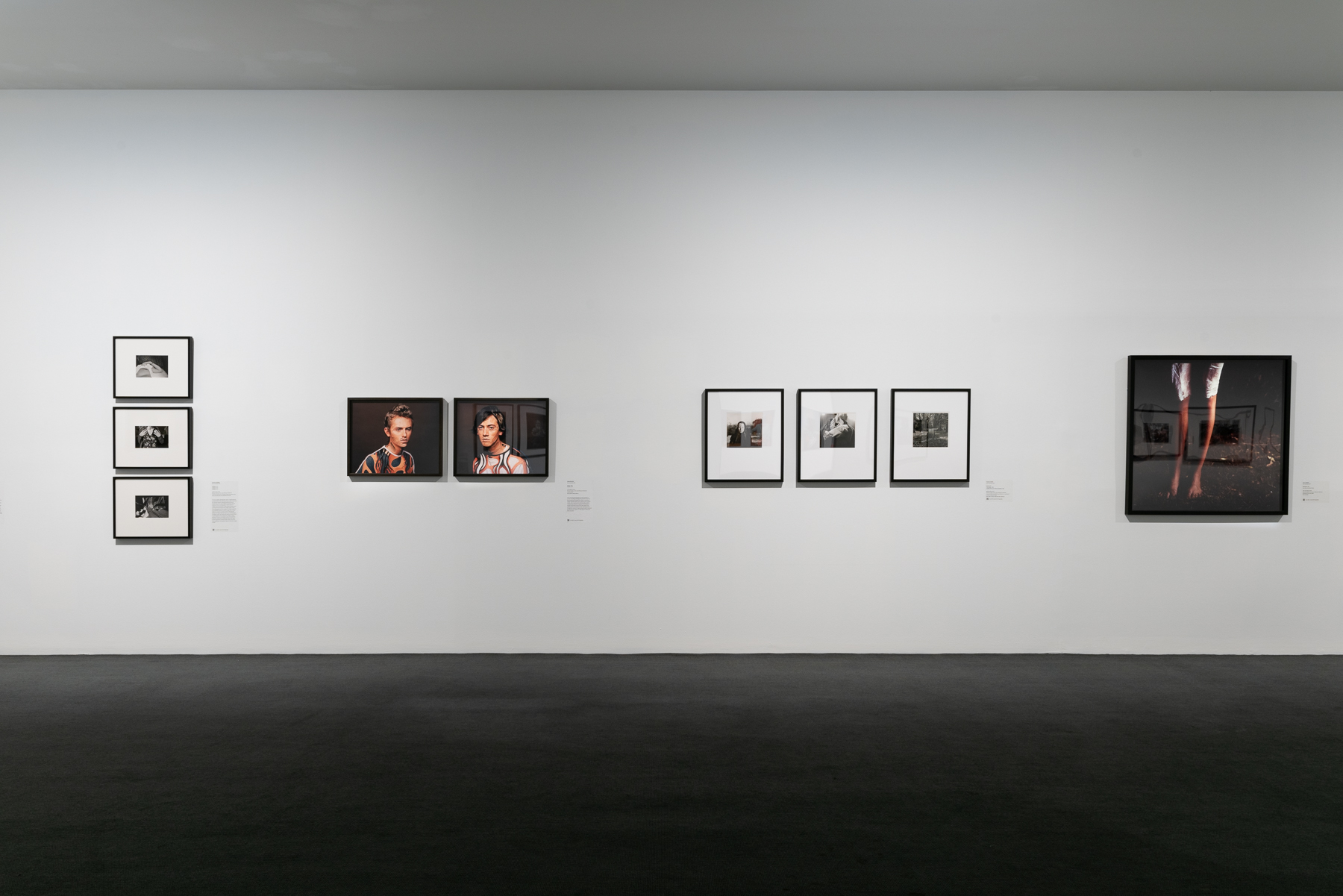
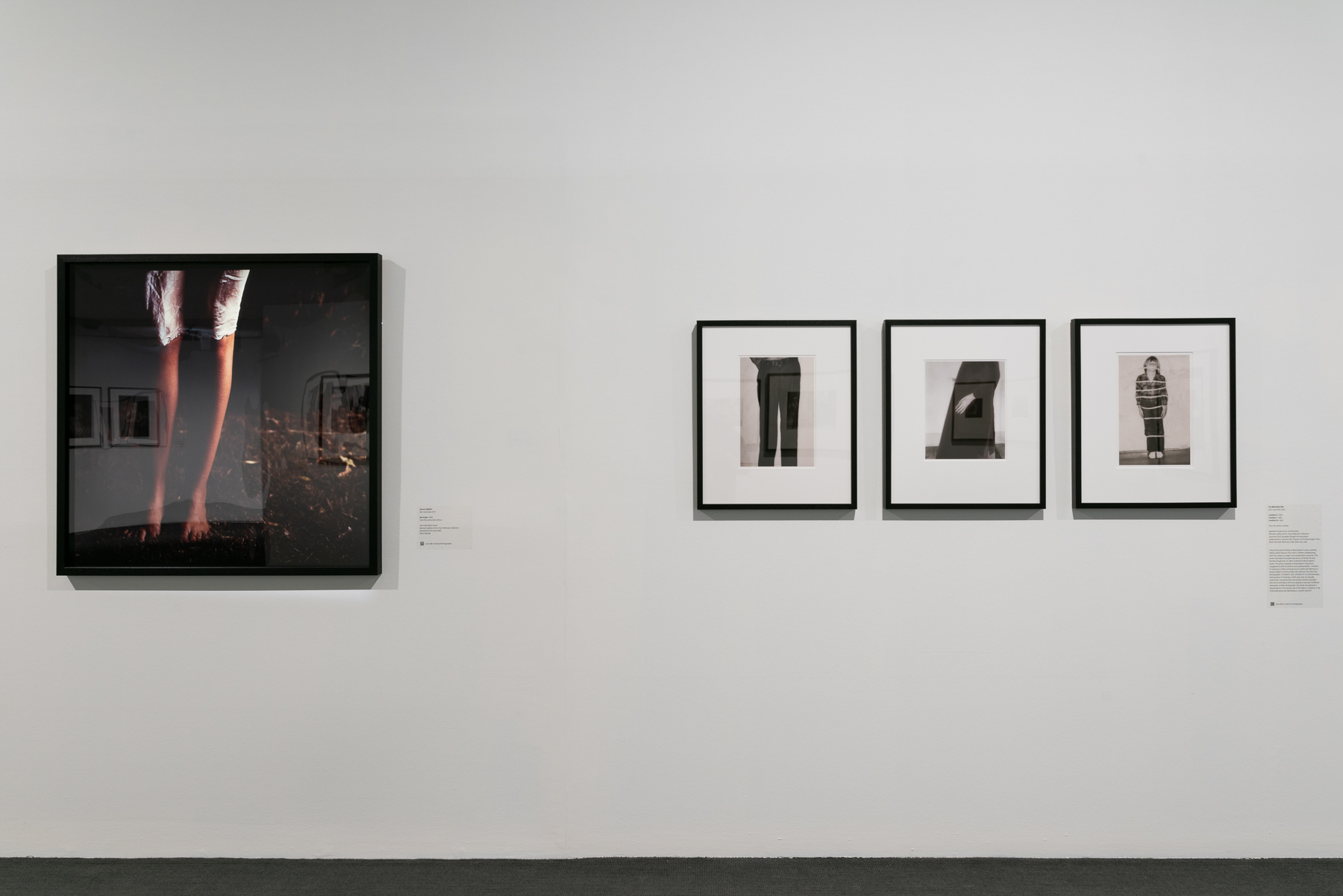
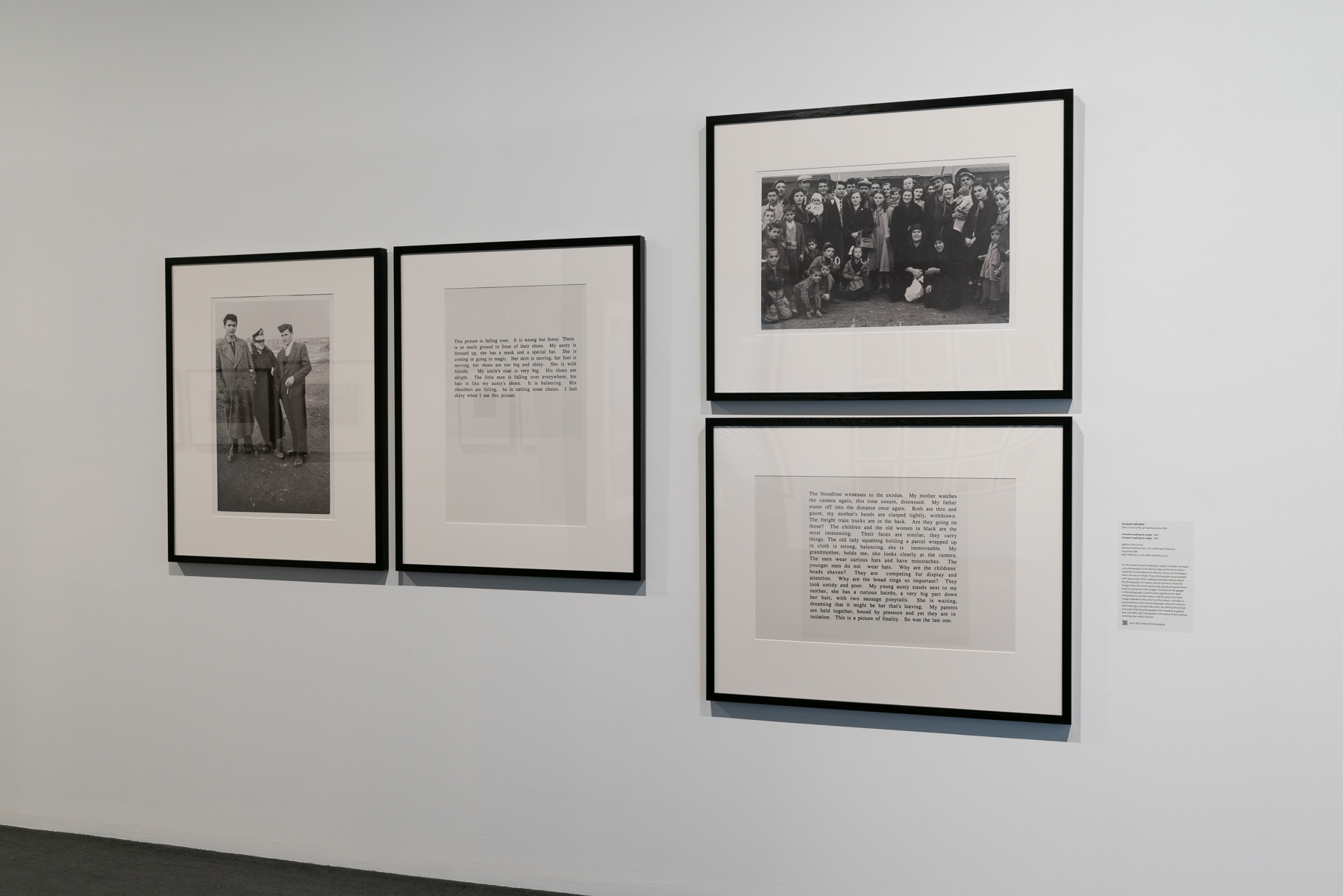
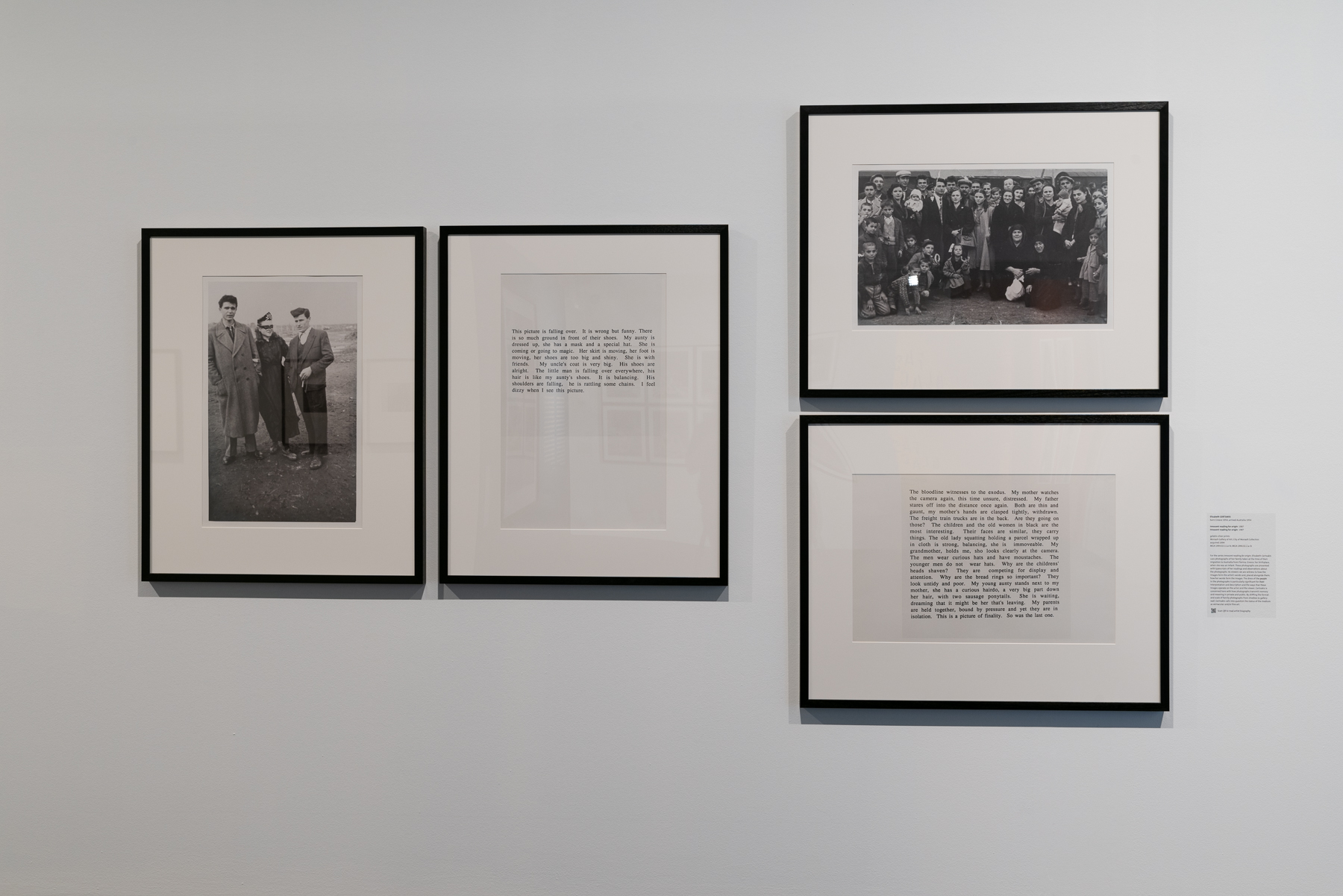
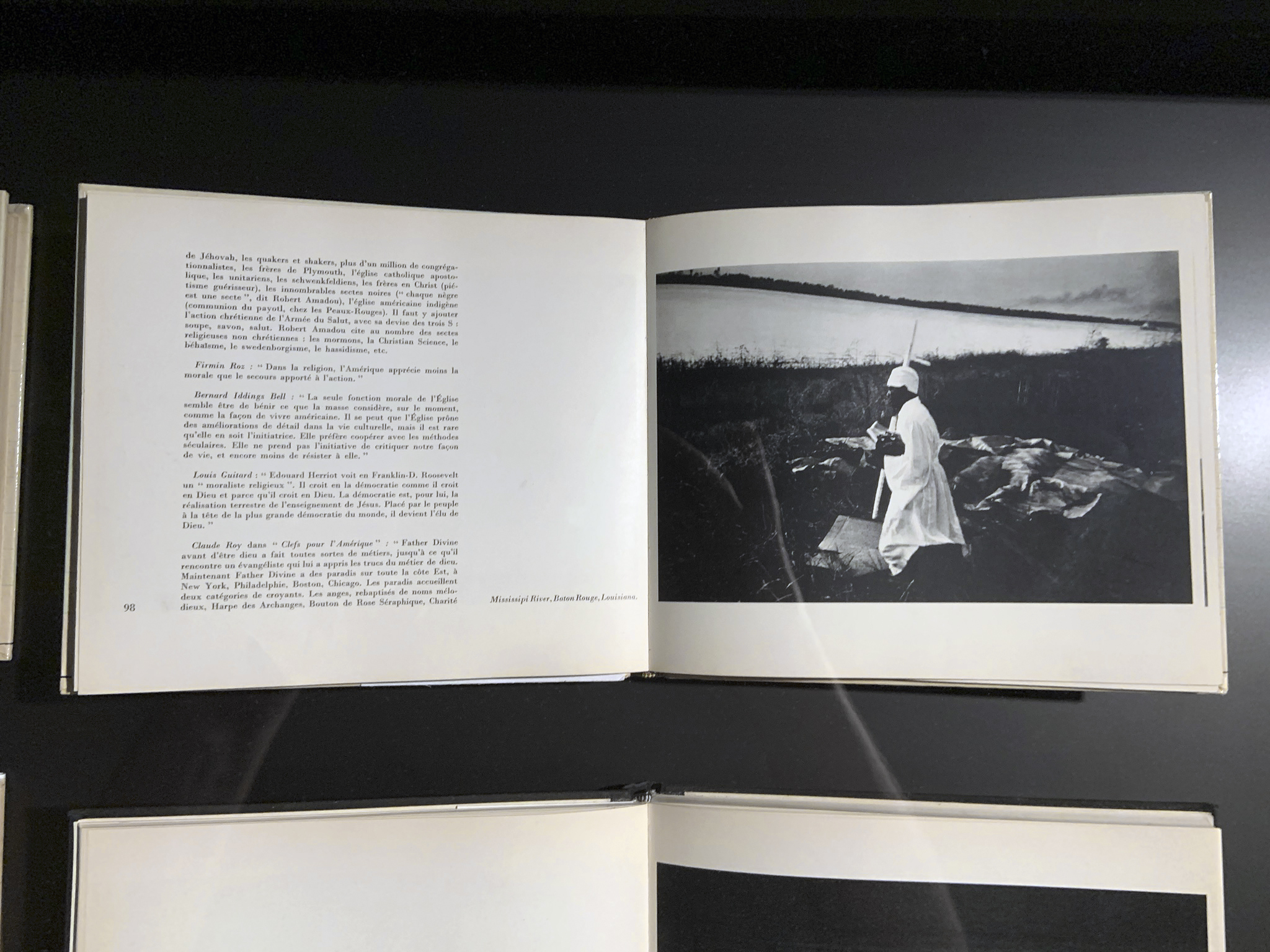
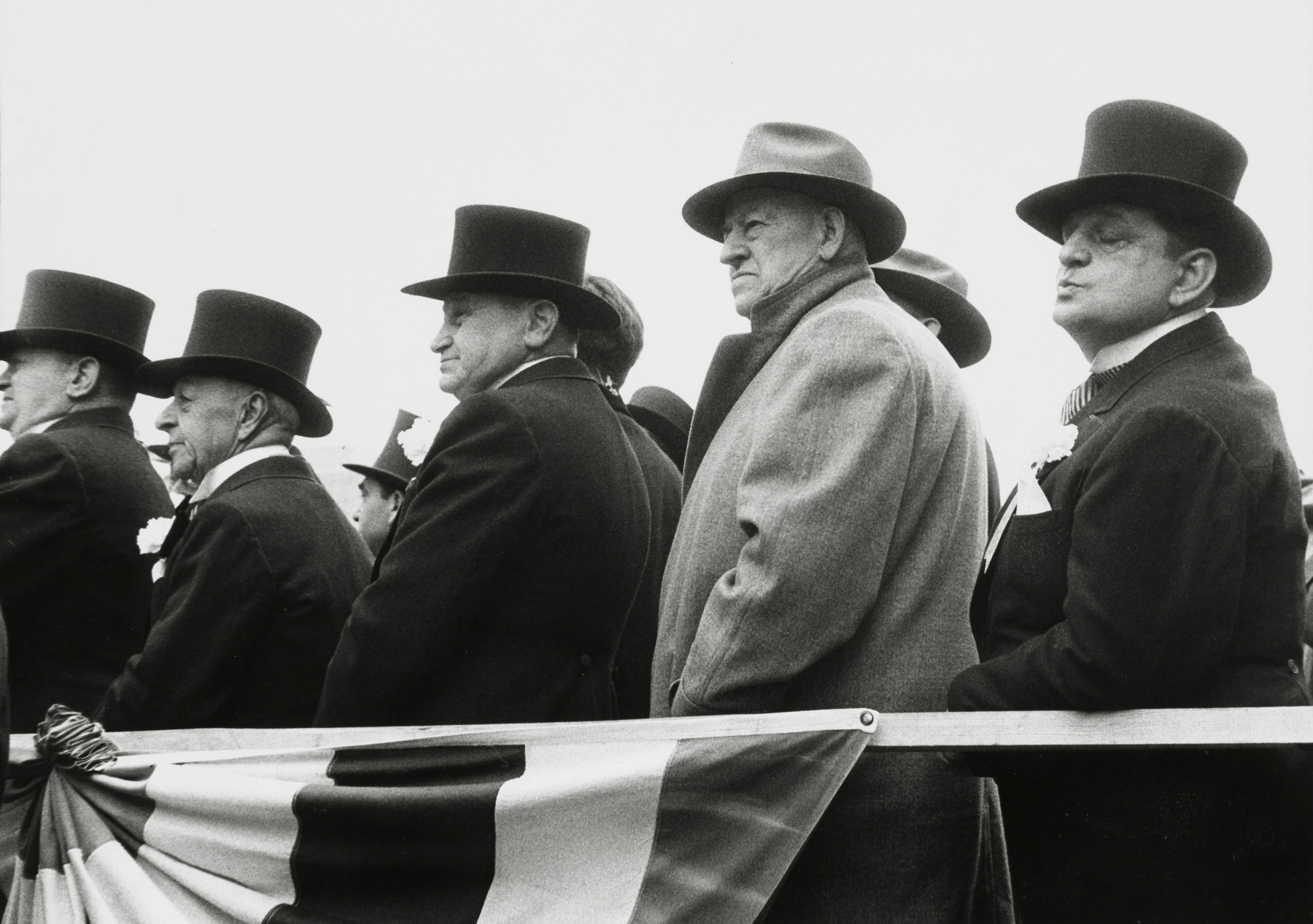
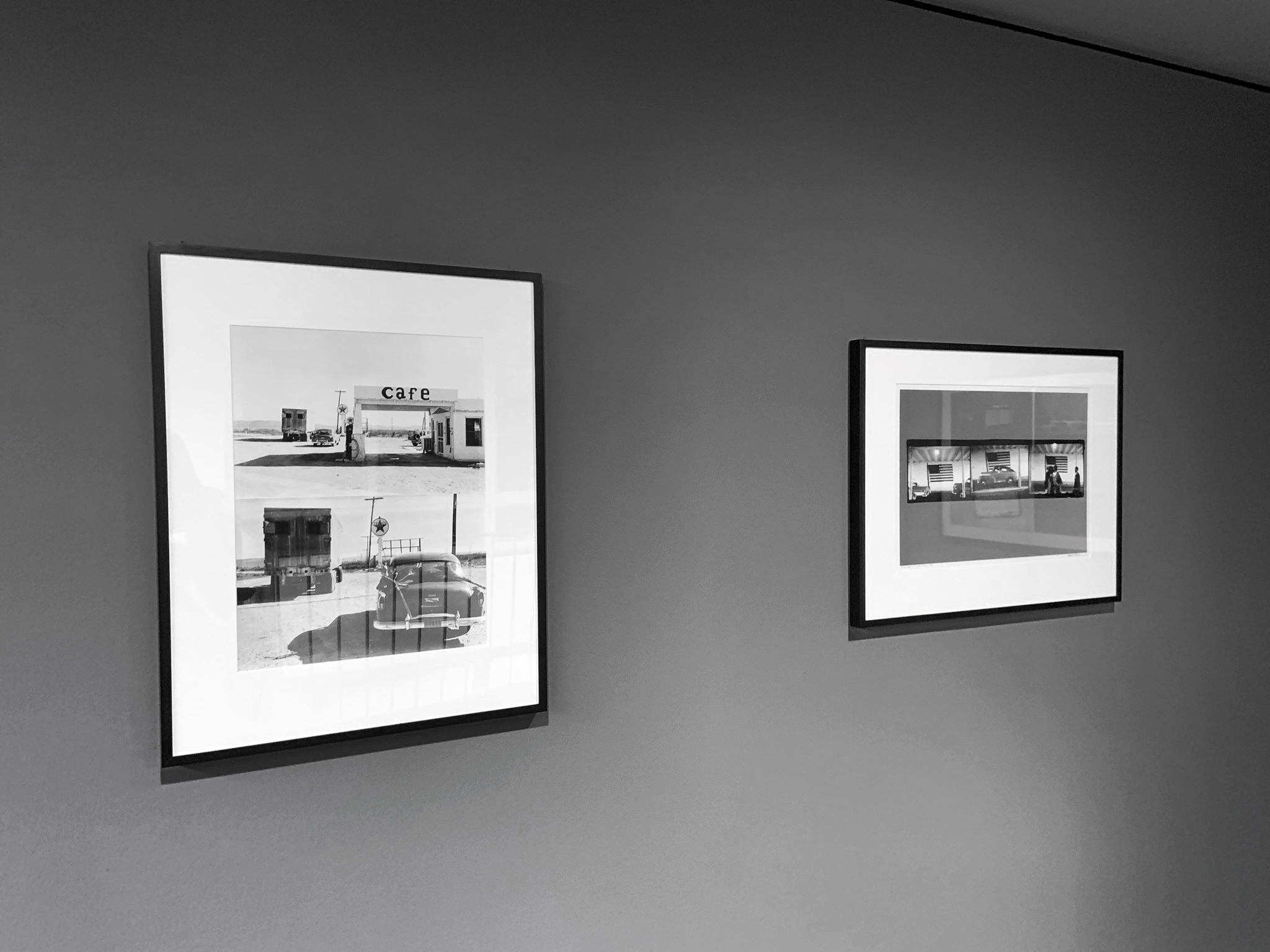
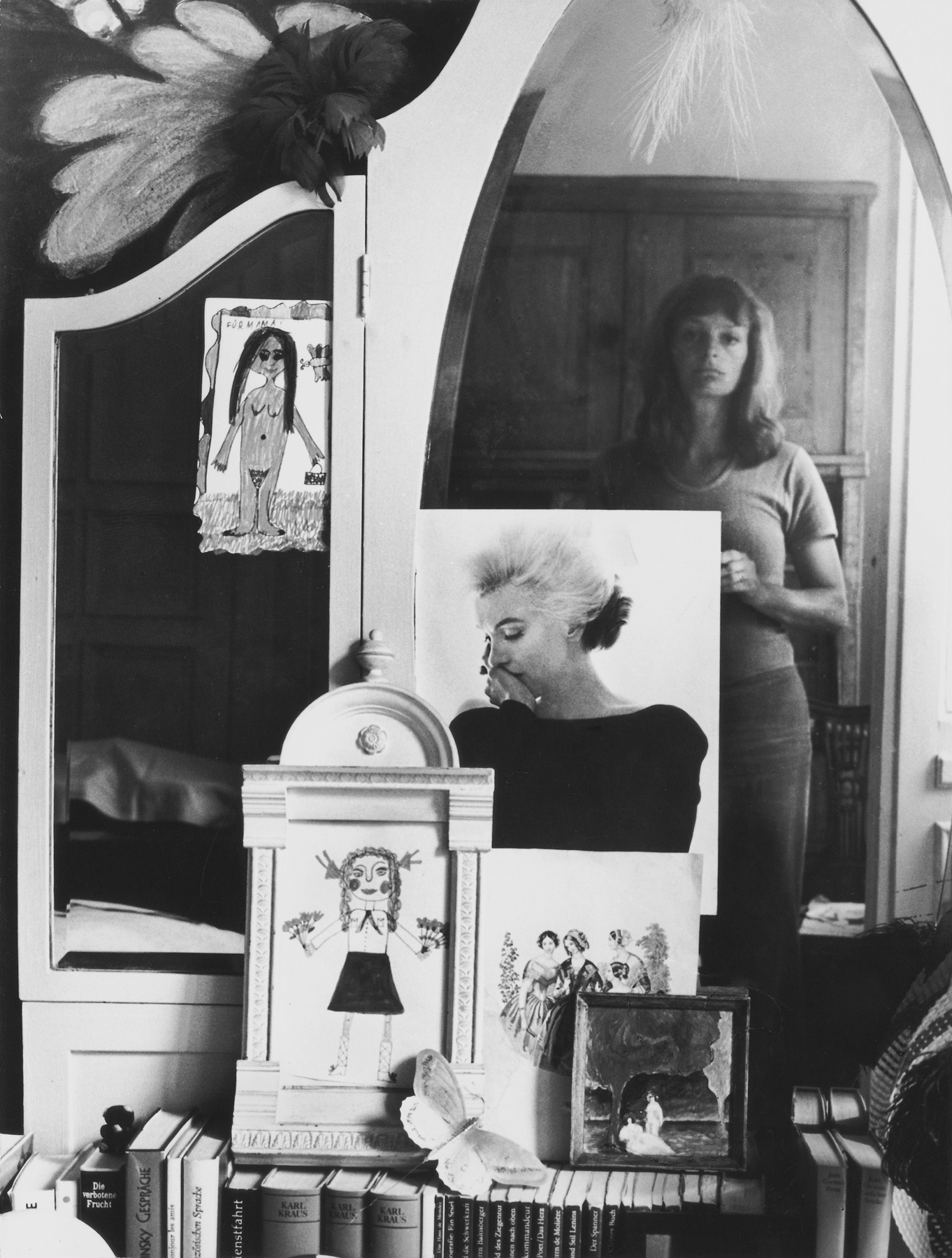
European photographic research tour exhibition: ‘The Photojournalist Robert Capa II’ at the Robert Capa Contemporary Photography Center, Budapest

Permanet exhibition
Visited September 2019 posted November 2019

First gallery


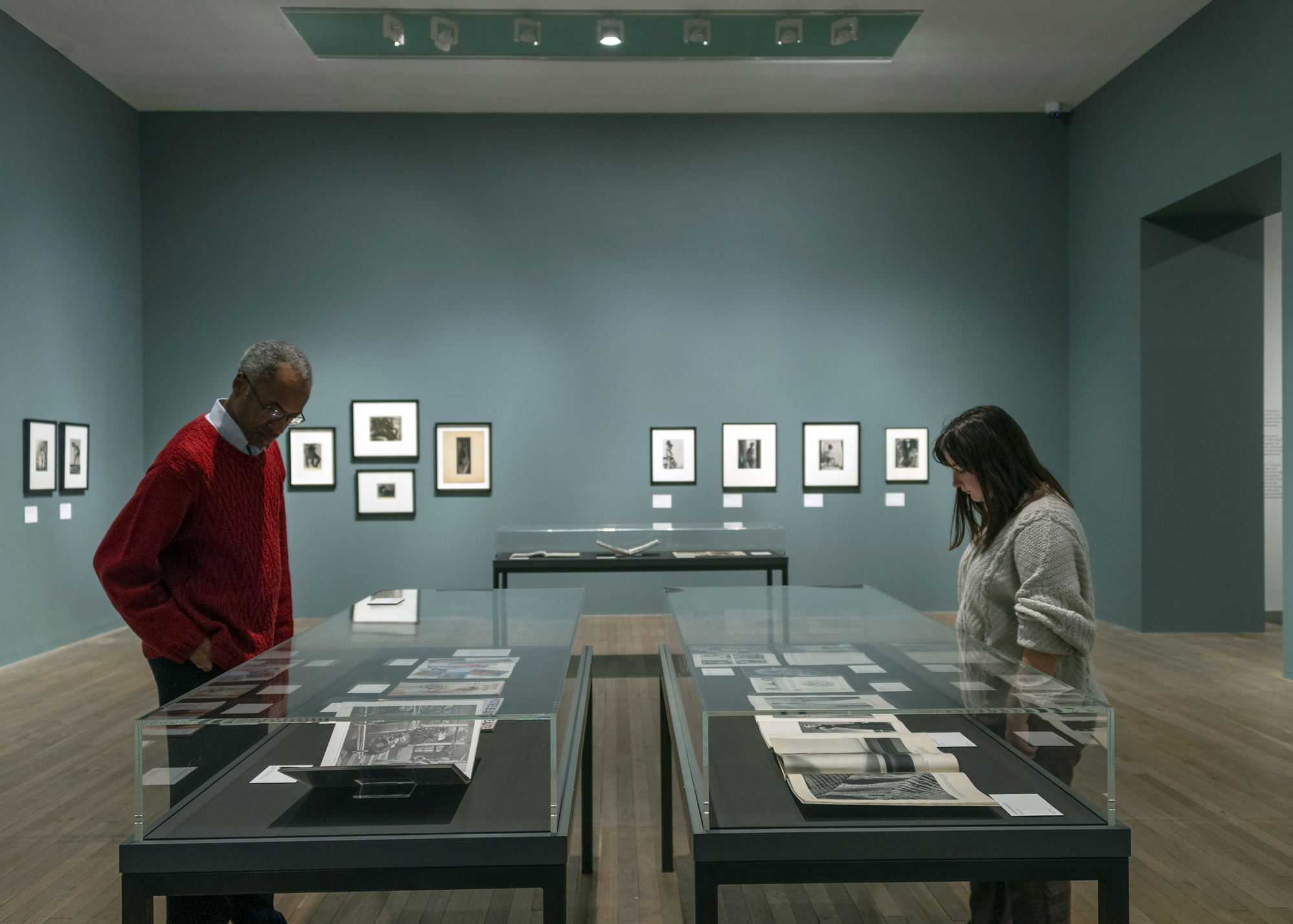
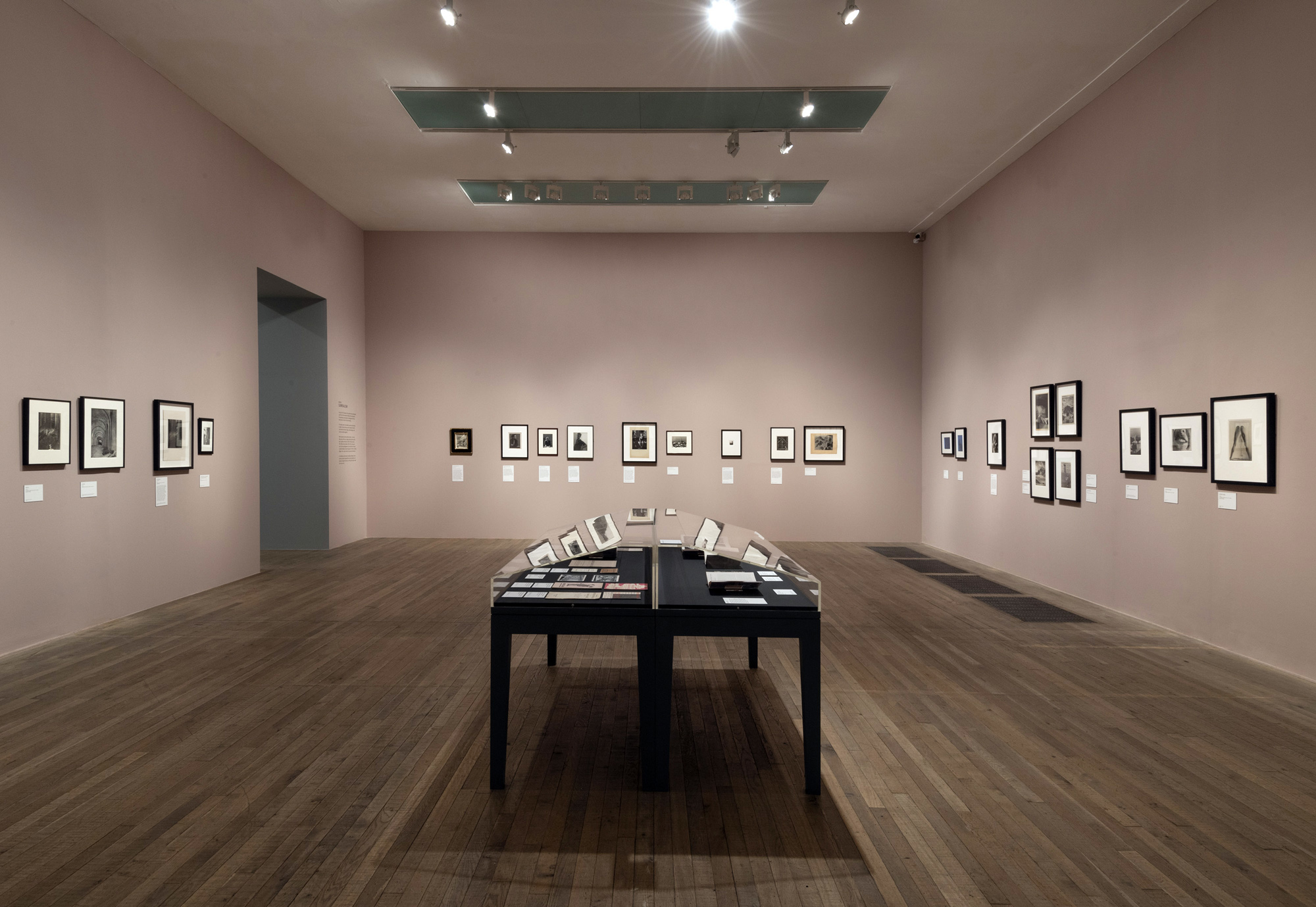
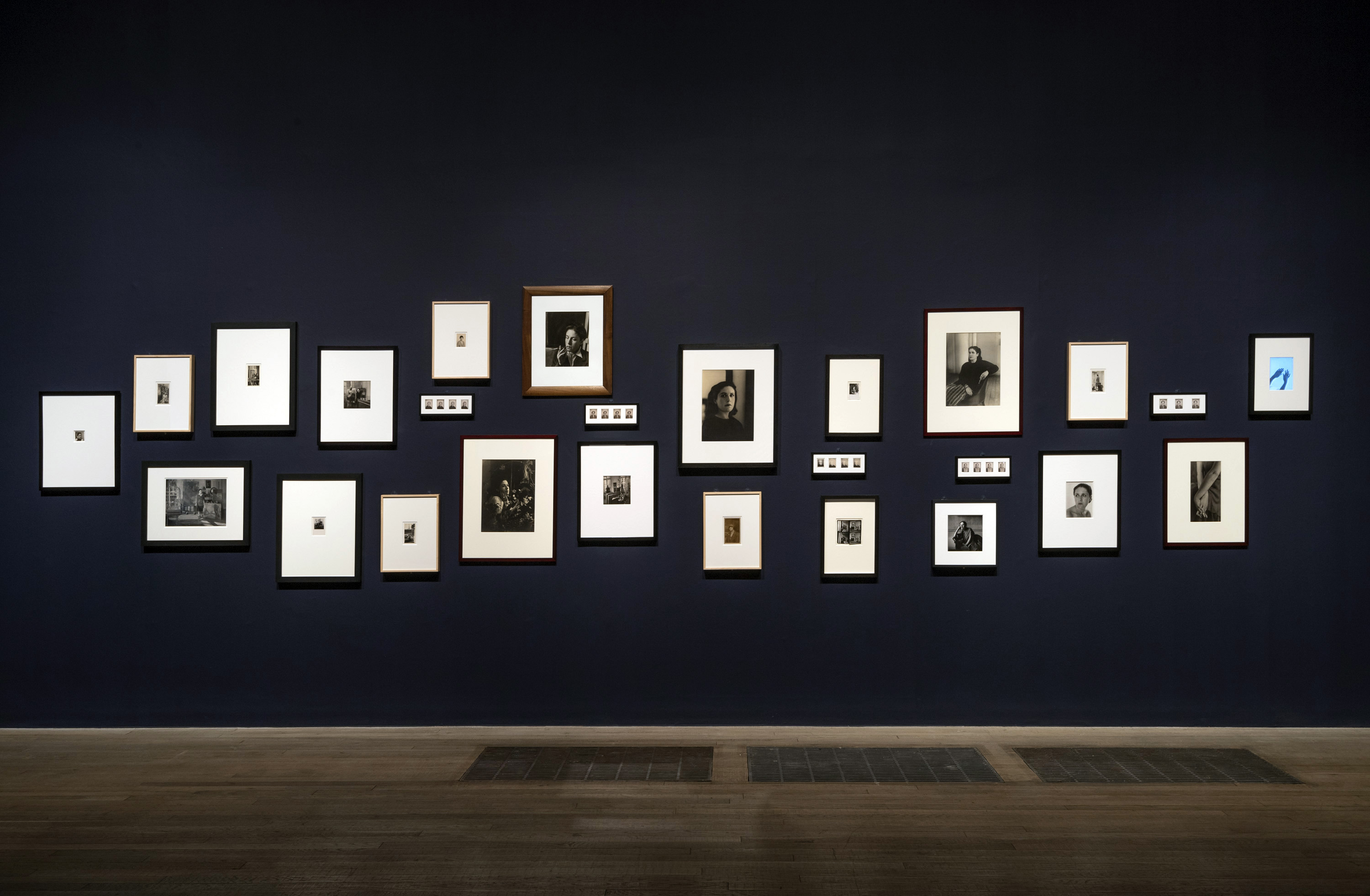
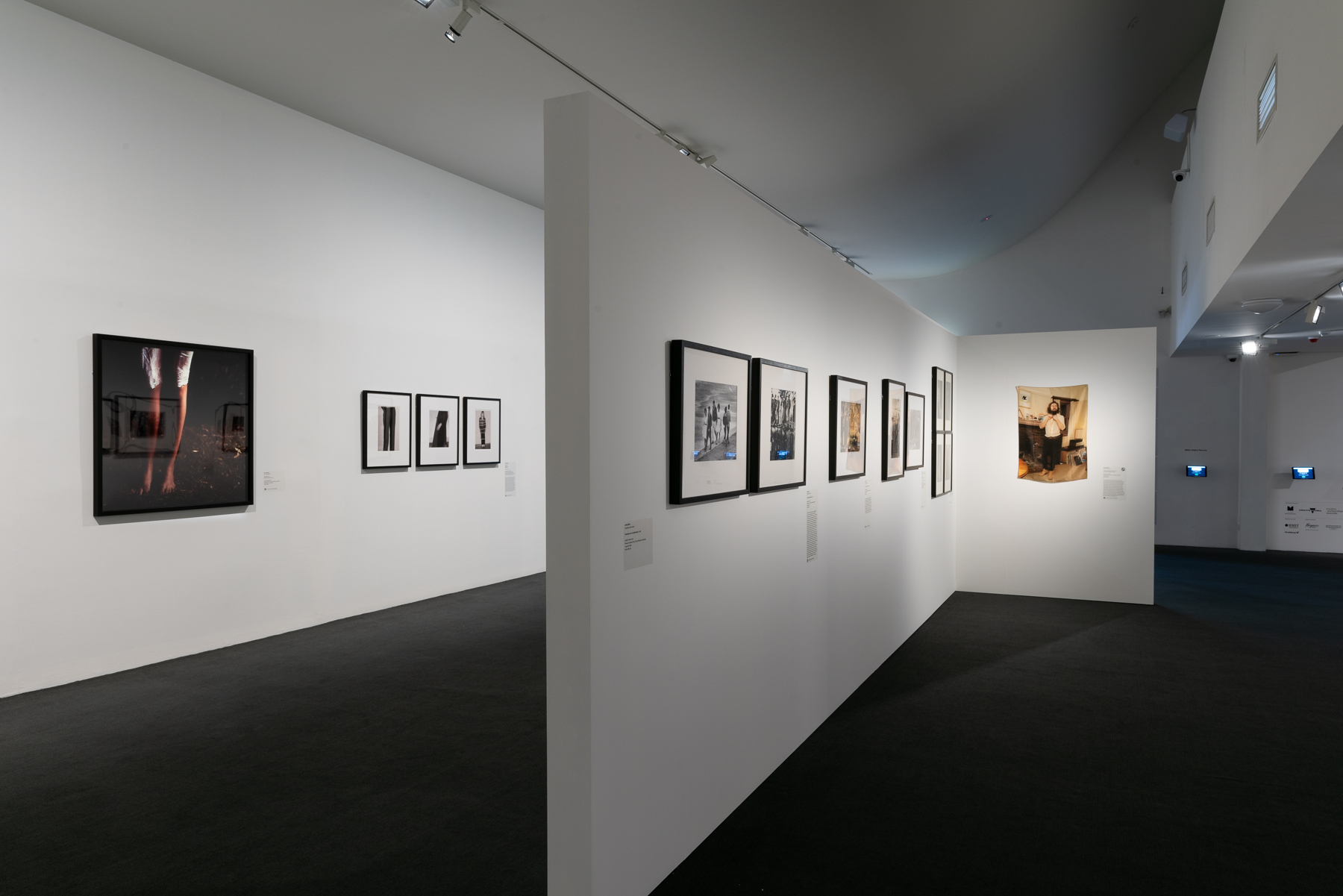
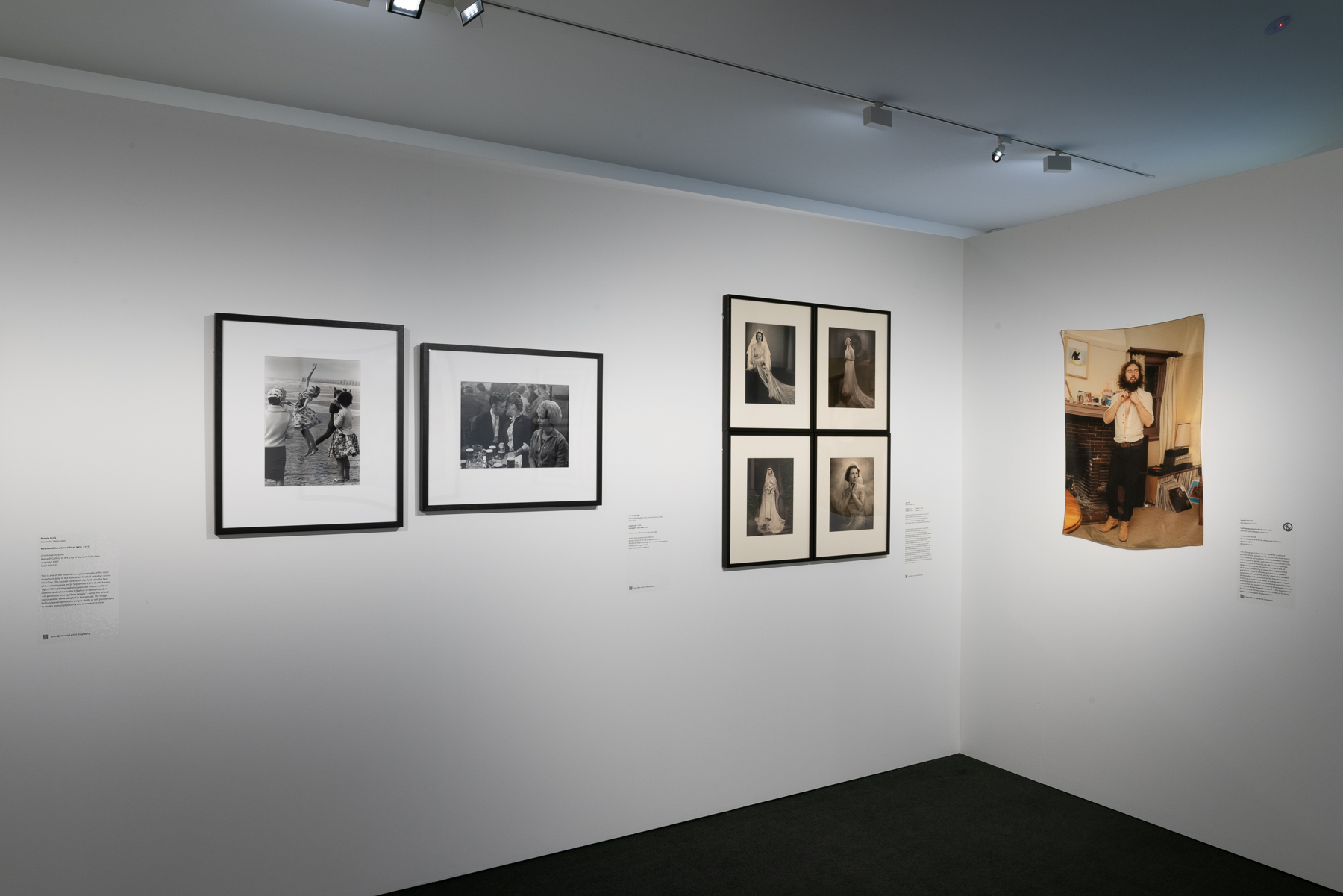
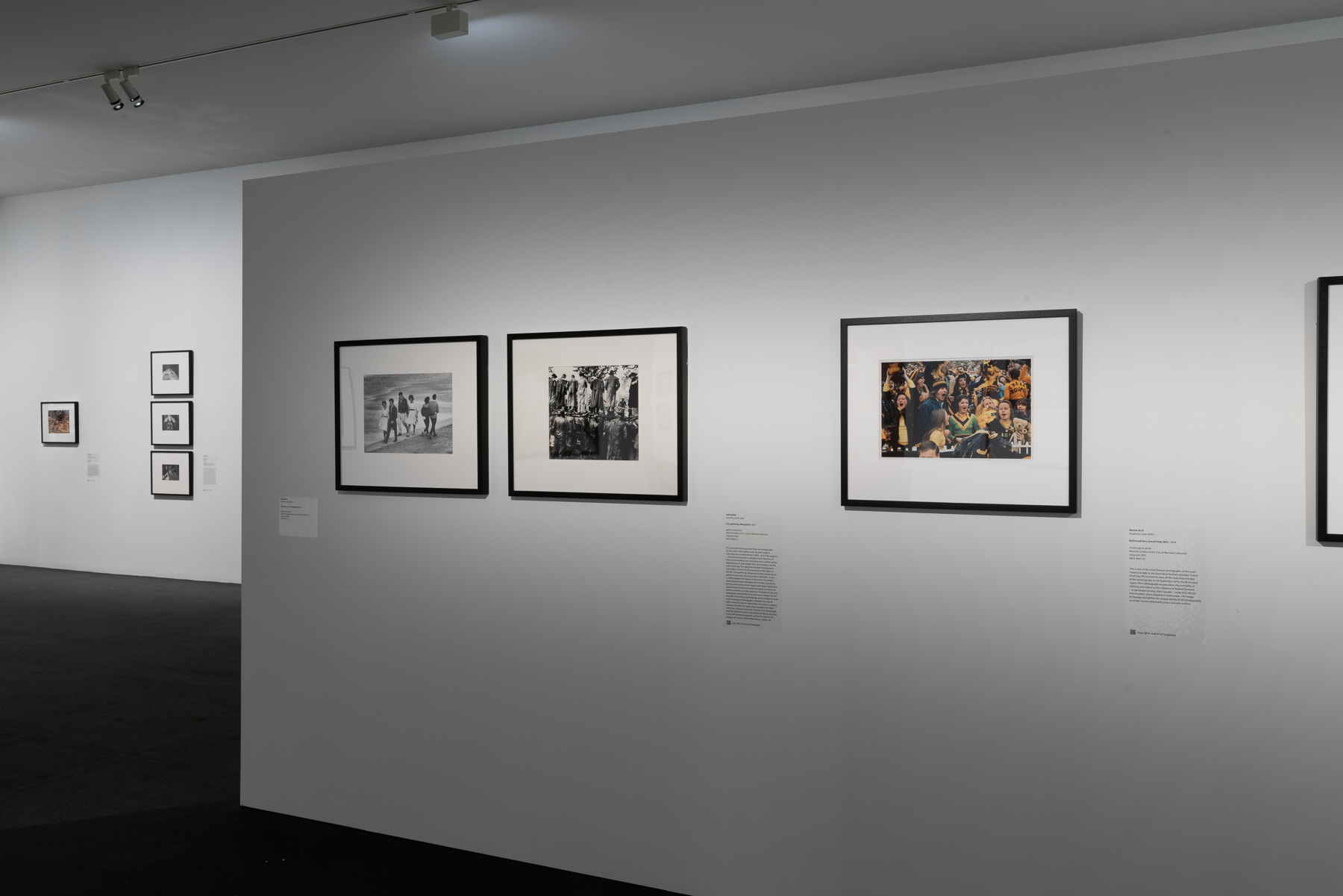
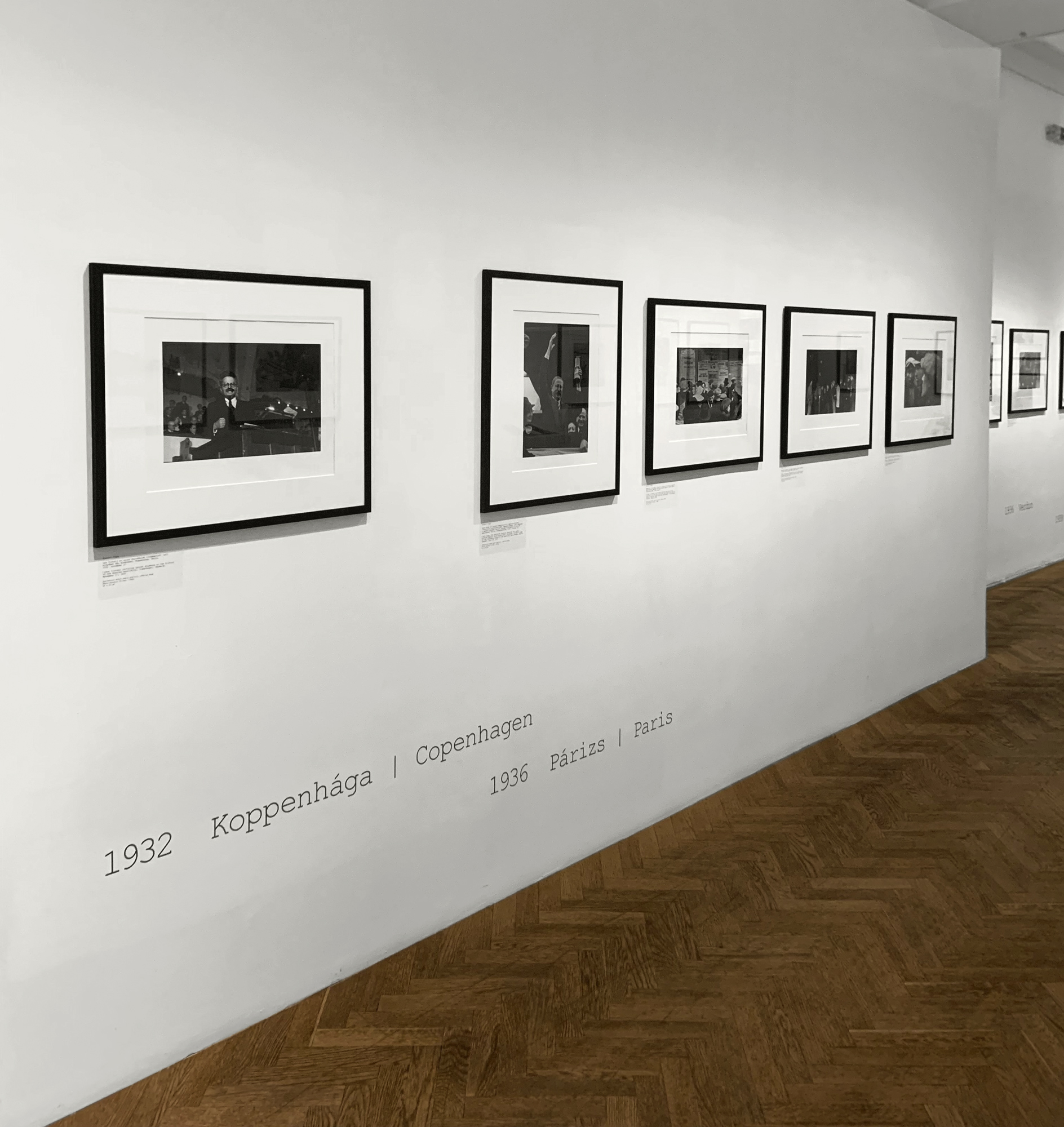
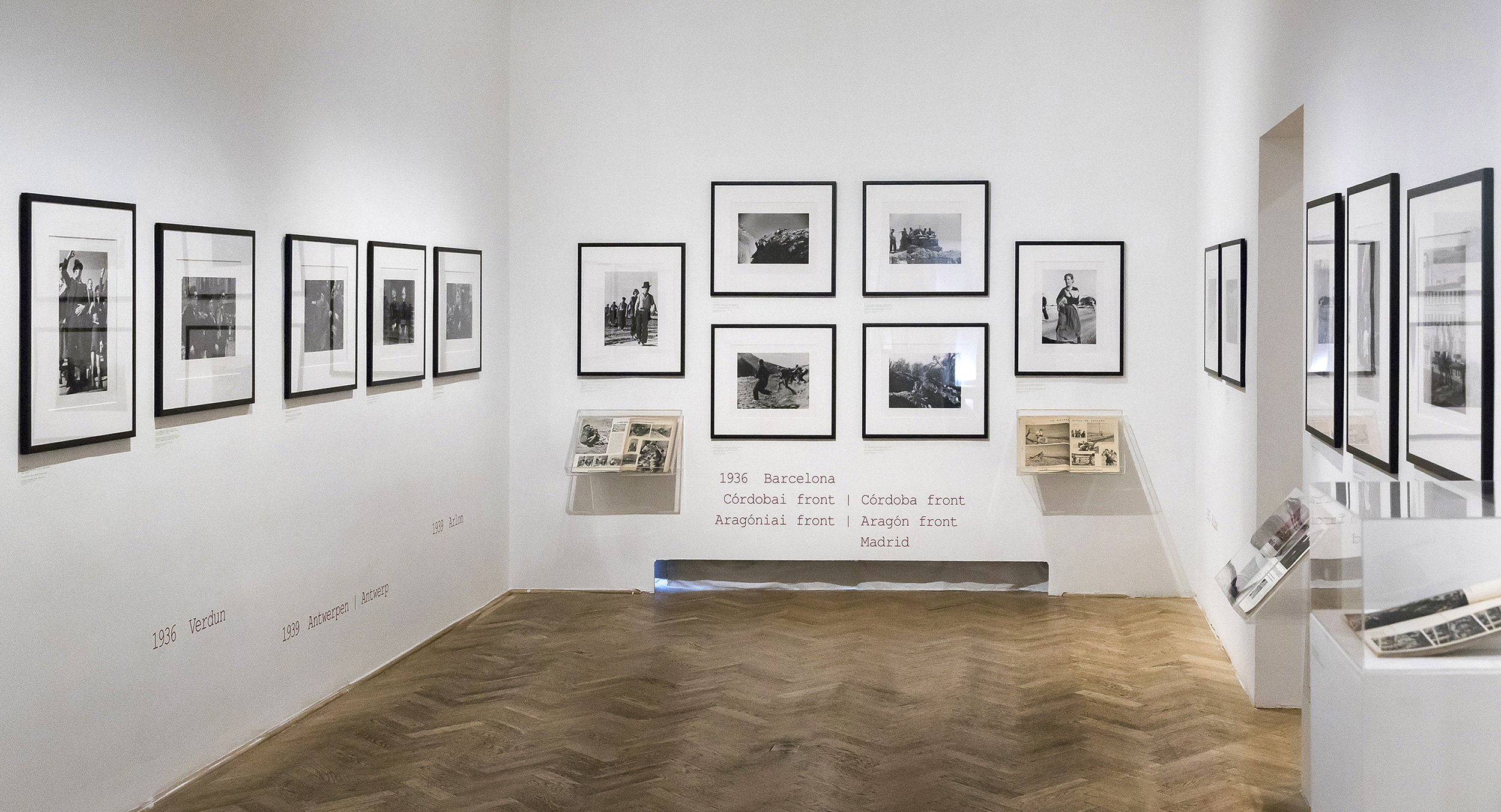
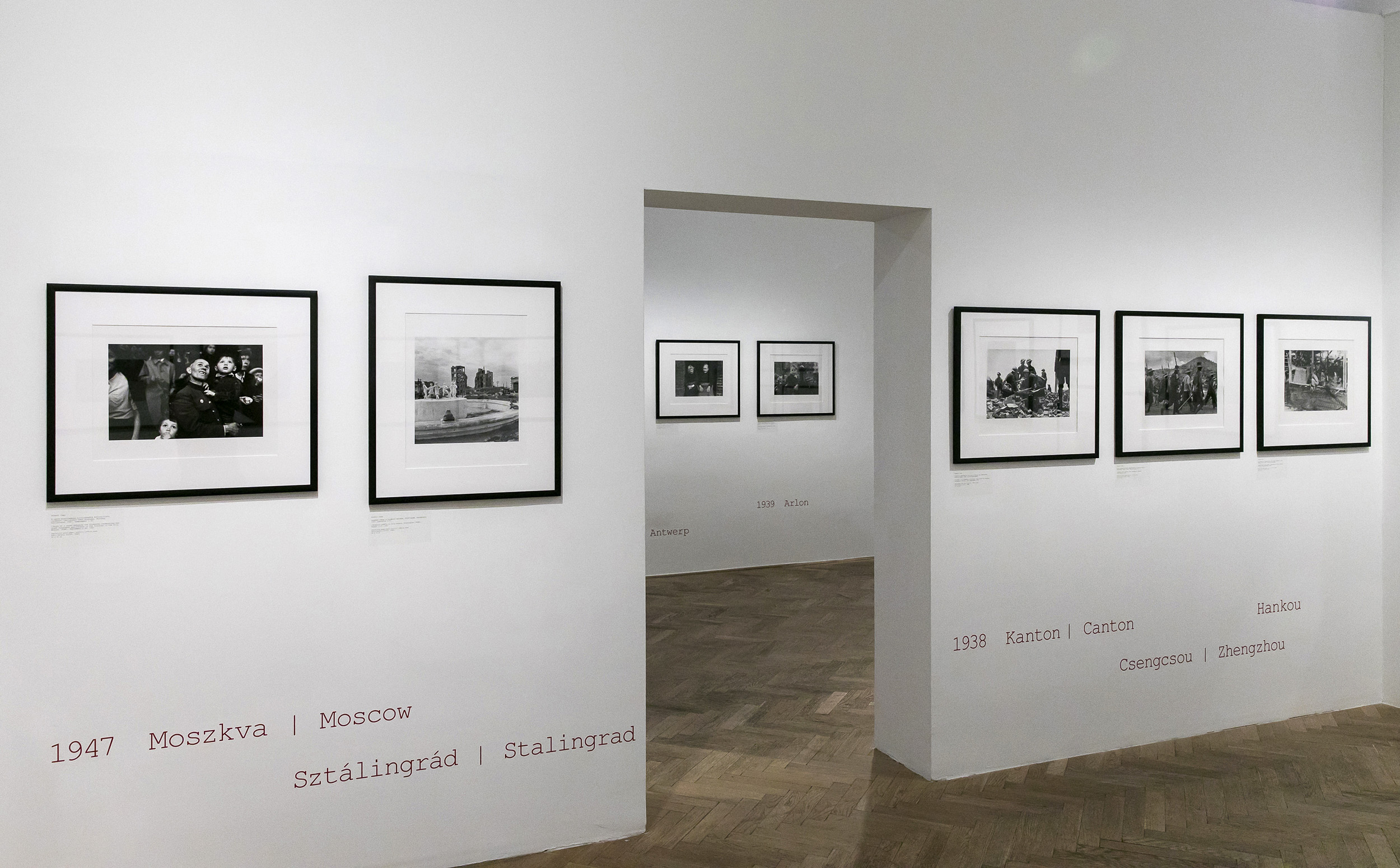
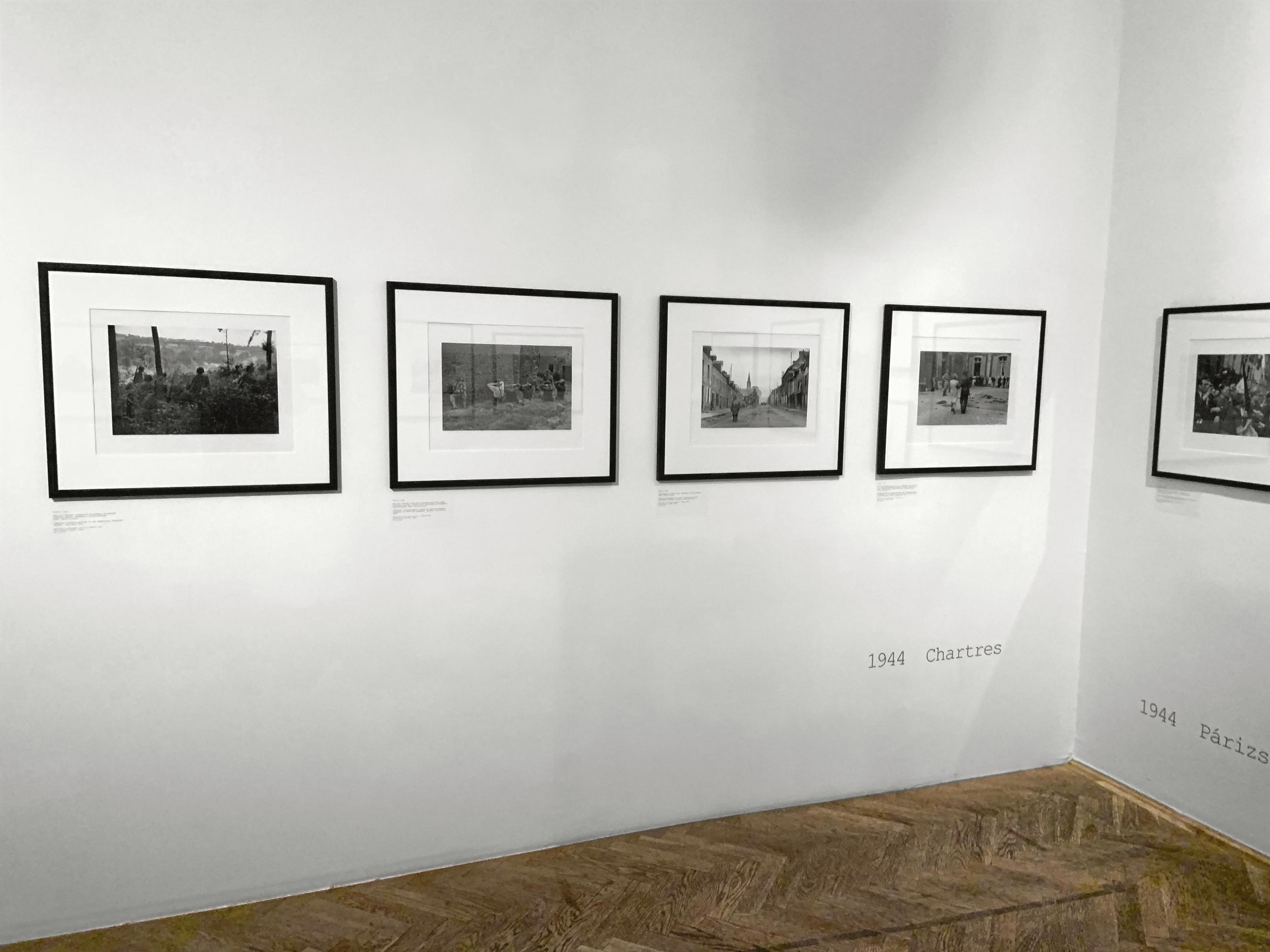
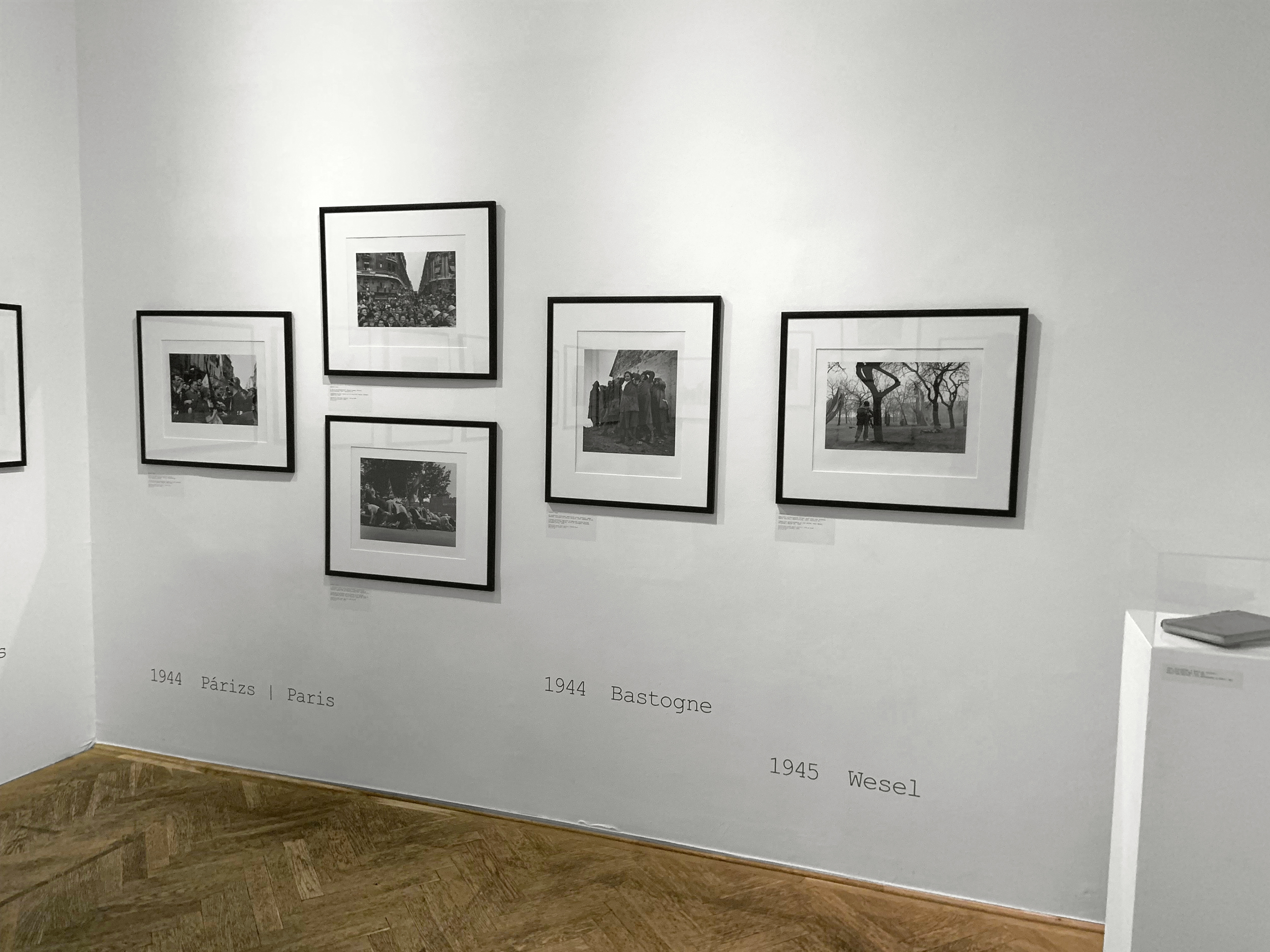
Installation view of the exhibition 'The Photojournalist Robert Capa II' at the Robert Capa Contemporary Photography Center, Budapest


Installation view of the exhibition The Photojournalist Robert Capa II at the Robert Capa Contemporary Photography Center, Budapest
Photo: Marcus Bunyan


I didn’t have time on my European photographic research tour to post about this exhibition at the Robert Capa Contemporary Photography Center, Budapest.

Let me say right off bat, that I’m not a great fan of Capa’s work and the larger, 1990s non-vintage prints presented in this exhibition were unimpressive.

I admire Capa’s courage in order to get the shot (“If your photographs aren’t good enough, you’re not close enough”), but his photographs leave me cold. I can’t quite put my finger on it, but his objectivity, his reportage, is just that. Looking back 80 years later, we must remember how raw, how radical and confronting these photographs would have been when viewed in Life magazine and Picture Post at the time: authentic representations of war and death straight from the front. But in terms of the image, what you see is what you get. The framing is not particularly good, the angles are pretty conventional and front on, the occurrences direct and focused. The immediacy of the image, that is their strength.

For me they don’t leave a lasting impression, never have done. Yes, the D-Day landings because he was there; The death of a Loyalist militiaman because it is so famous; the shaving of the women collaborators heads because they are so vile … but you wonder, does his greatness come from the fact that, time and time again, he got the job done and produced the goods (as in a saleable image). That and the reality that he was a great self promoter: labelled the ‘Greatest War Photographer in the World’ by Picture Post in 1938. But was he a good image maker?

They are what they are. That’s really all you can say.

Dr Marcus Bunyan


Many thankx to the Robert Capa Contemporary Photography Center for allowing me to publish the photographs in the posting. Please click on the photographs for a larger version of the image. All installation images © Dr Marcus Bunyan


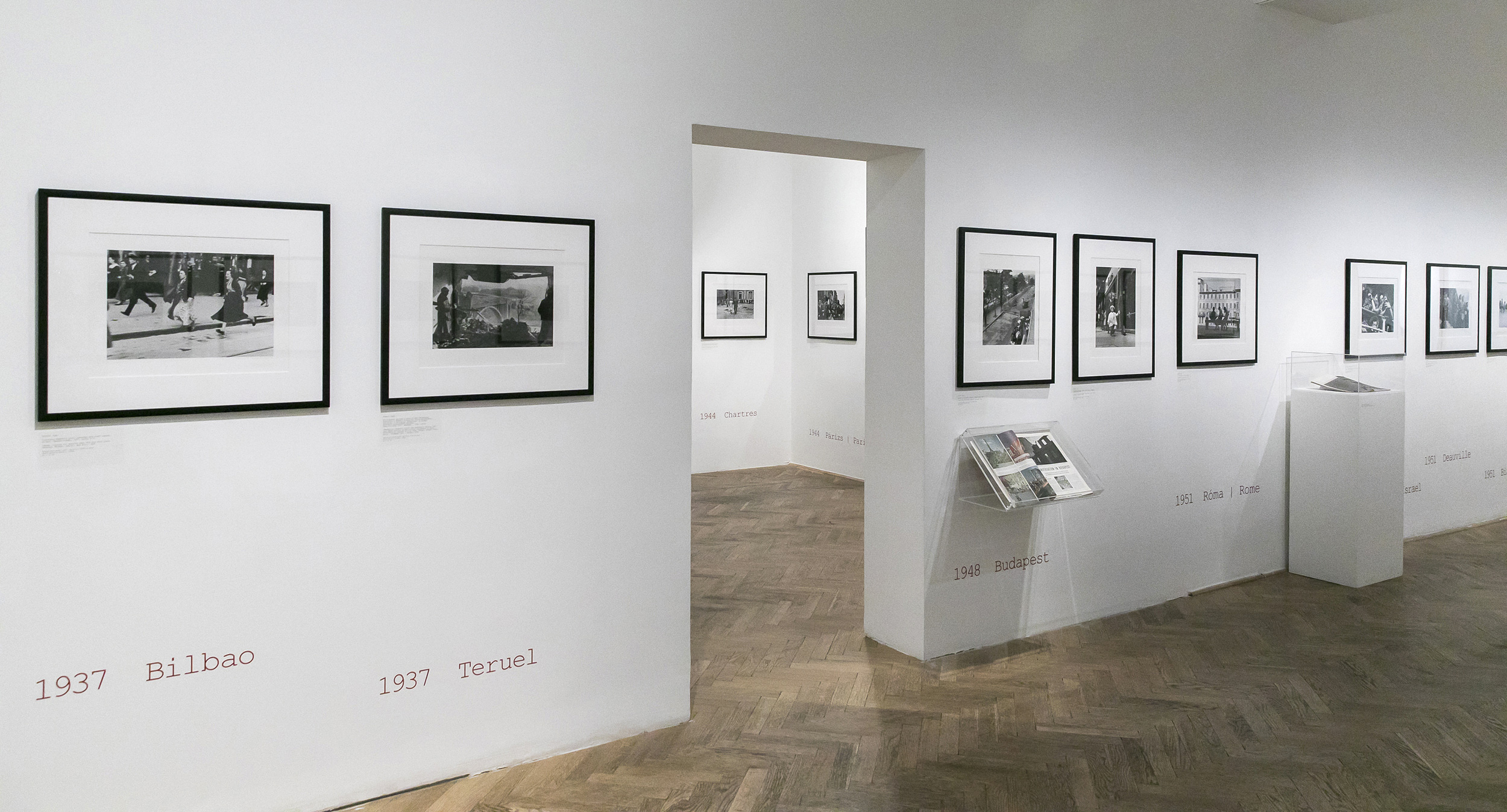
Installation view of the exhibition 'The Photojournalist Robert Capa II' at the Robert Capa Contemporary Photography Center, Budapest

Installation view of the exhibition 'The Photojournalist Robert Capa II' at the Robert Capa Contemporary Photography Center, Budapest

Installation view of the exhibition 'The Photojournalist Robert Capa II' at the Robert Capa Contemporary Photography Center, Budapest

Installation view of the exhibition 'The Photojournalist Robert Capa II' at the Robert Capa Contemporary Photography Center, Budapest

Installation view of the exhibition 'The Photojournalist Robert Capa II' at the Robert Capa Contemporary Photography Center, Budapest

Installation view of the exhibition 'The Photojournalist Robert Capa II' at the Robert Capa Contemporary Photography Center, Budapest


Installation views of the exhibition The Photojournalist Robert Capa II at the Robert Capa Contemporary Photography Center, Budapest
Photos: Marcus Bunyan


"La Guerre Civile en Espagne," in 'Vu Magazine' No. 445 September 23, 1936

"La Guerre Civile en Espagne," in 'Vu Magazine' No. 445 September 23, 1936 (detail)


“La Guerre Civile en Espagne,’ in Vu Magazine No. 445 September 23, 1936

Caption: “Le jarret vif, la poitrine au vent, fusil au poing, il dévalaient la pente couverte d’un chaume raide… Soudain l’essor est brisé, une balle a siffle – une balle fratricide – et leur sang est bu par la terre natale … “

“His step quick, his chest to the wind, his rifle in his hand, he hurtled down the steep slope. Suddenly the boom was broken, a bullet whistled – a fratricidal bullet – and their blood is drunk by the homeland … “

The caption as published in LIFE magazine: “Robert Capa’s camera catches a Spanish soldier the instant he is dropped by a bullet through the head in front of Cordoba.”

Installation views of the exhibition The Photojournalist Robert Capa II at the Robert Capa Contemporary Photography Center, Budapest
Photos: Marcus Bunyan


Robert Capa (American-Hungarian, 1913-1954) 'September 5, 1936. The death of a Loyalist militiaman' 1936


Robert Capa (American-Hungarian, 1913-1954)
September 5, 1936. The death of a Loyalist militaman
1936
Gelatin silver print


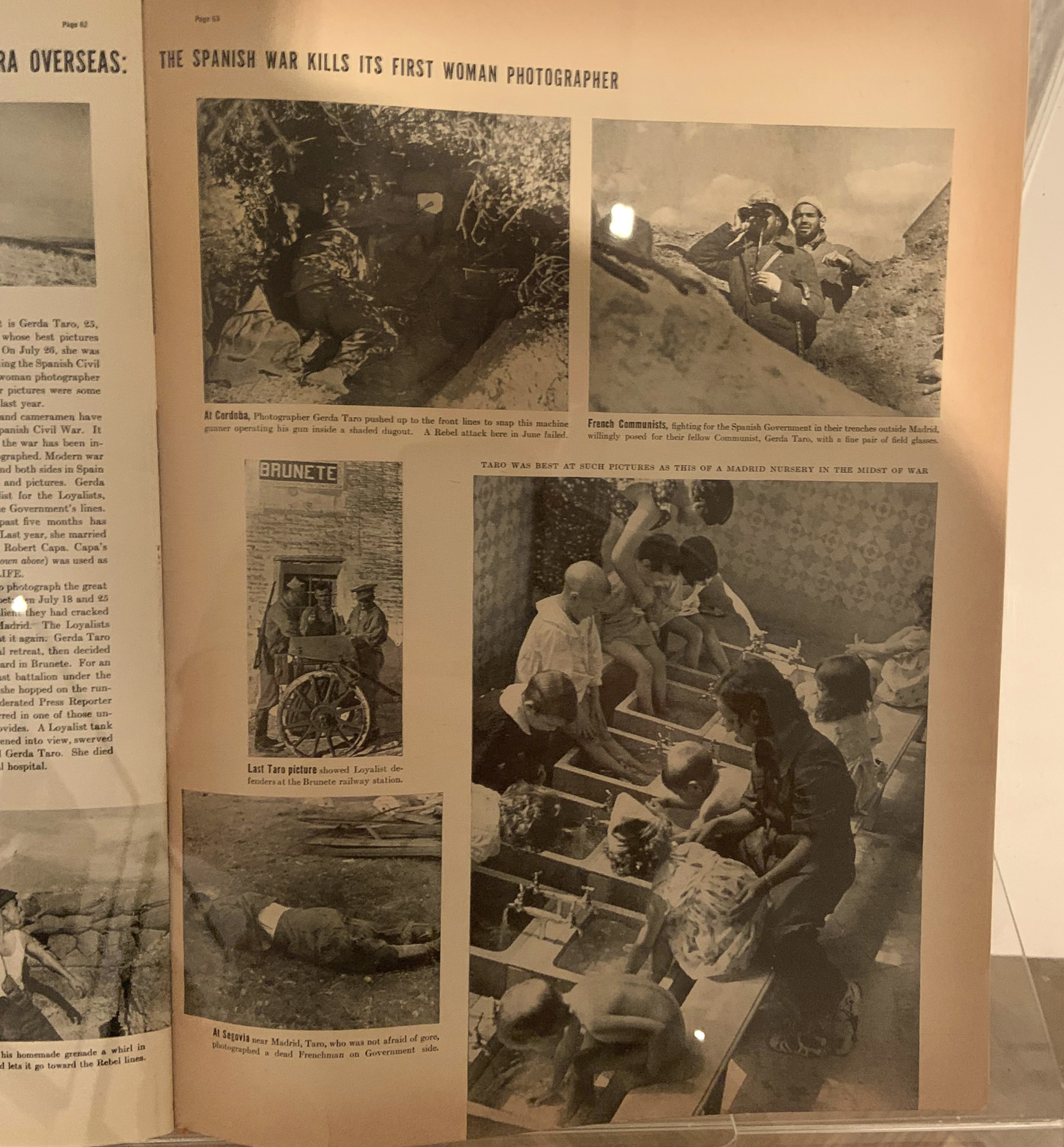
"The Spanish War Kills Its First Woman Photographer," in 'LIFE' magazine (Gerda Taro, July 1937)


“The Spanish War Kills Its First Woman Photographer,” in LIFE magazine (Gerda Taro, July 1937)
Photo: Marcus Bunyan


Gerda Taro (1910-1937)

Gerta Pohorylle (1 August 1910 – 26 July 1937), known professionally as Gerda Taro, was a German Jewish war photographer active during the Spanish Civil War. She is regarded as the first woman photojournalist to have died while covering the frontline in a war.

Taro was the companion and professional partner of photographer Robert Capa. The name “Robert Capa” was originally an alias that Taro and Capa (born Endre Friedmann) shared, an invention meant to mitigate the increasing political intolerance in Europe and to attract the lucrative American market. A significant amount of what is credited as Robert Capa’s early work was actually made by Taro.

Coverage of the Spanish Civil War

When the Spanish Civil War broke out in 1936, Taro travelled to Barcelona, Spain, to cover the events with Capa and David “Chim” Seymour. Taro acquired the nickname of La pequeña rubia (“The little blonde”). They covered the war together in northeastern Aragon and in the southern Córdoba province. Always together under the common and using the bogus signature of Robert Capa, they succeeded in publishing through important publications (the Swiss Zürcher Illustrierte, the French Vu). Their early war photographs are distinguishable since Taro used a Rollei camera which rendered squared photographs while Capa produced rectangular pictures using a Contax camera[citation needed] or a Leica camera. However, for some time in 1937 they each produced similar 35 mm pictures under the label of Capa&Taro.

Subsequently, Taro attained some independence. She refused Capa’s marriage proposal. Also, she became publicly related to the circle of anti-fascist European and intellectuals (such as Ernest Hemingway and George Orwell) who crusaded particularly for the Spanish Republic. fr:Ce Soir, a communist newspaper of France, signed her for publishing Taro’s works only. Then, she began to commercialise her production under the Photo Taro label. Regards, Life, Illustrated London News and Volks-Illustrierte (the exile edition of Arbeiter-Illustrierte-Zeitung) were amongst the publications that used her work.

Reporting the Valencia bombing alone, Taro obtained the photographs which are her most celebrated. Also, in July 1937, Taro’s photographs were in demand by the international press when, alone, she was covering the Brunete region near Madrid for Ce Soir. Although the Nationalist propaganda claimed that the region was under its control, the Republican forces had in fact forced that faction out. Taro’s photographs were the only testimony of the actual situation.

Text from the Wikipedia website


“So nobody will forget your unconditional struggle for a better world” (epitaph in French and Catalan on her tomb in Père Lachaise Cemetery, Paris)


"The Spanish War Kills Its First Woman Photographer," in 'LIFE' magazine (Gerda Taro, July 1937) (detail)

"The Spanish War Kills Its First Woman Photographer," in 'LIFE' magazine (Gerda Taro, July 1937) (detail))


“The Spanish War Kills Its First Woman Photographer,” in LIFE Magazine (Gerda Taro, July 1937)
Photos: Marcus Bunyan


Robert Capa

(Endre Ernő Friedmann)
22 October 1913, Budapest, Hungary – 25 May 1954, Thái Bình, Vietnam

He never avoided challenges – he brought his restless, adventurous spirit and toughness from Hungary. He hardly had anything else in his luggage when he left his native country in 1931. He made photo-history with his war reportage on the Spanish Civil War, WWII, China, and Vietnam. His stories and, in particular, his slogan – “if your photographs aren’t good enough, you’re not close enough” – made him a legendary person. But he made a mistake in Thái Bình. He went too close.

His brother wrote about him: “He lived a lot and suffered a lot during his short life. He was born poor and died poor. He bequeathed us the chronicle of his unique career along with the visual proof of his conviction: not only can mankind endure a lot but it is able to win every now and then.”

His parents – Júlia Berkovits and Dezső Friedmann – were tailors, who ran a prosperous show-room in Budapest. Their first child was László, followed by Endre and five years later by Kornél. After a Lutheran elementary school, Robert Capa went to study at Madách Secondary School. Inspierd by Lajos Kassák, he became interested in journalism in 1929, one year before his matriculation. After 1930, he was a photographer.

He was a good friend of Suzanne Szász, i.e. Székely Zsuzsa, already in Budapest. He lived at the same house as Éva Besnyő, who was his first childhood love.

He was shortly imprisoned because of his leftist connections and his participation in a leftist demonstration on 1 September 1930. In prison, he learnt the methods of the infamous investigator Péter Hain, who beat him so hard that he lost consciousness. He was released through his parents’ connections and he almost immediately left the country.

According to one of the legends, he only had a stick of salami in his luggage when he left. His train ticket to Vienna was paid by the Jewish Community of Pest, from there he went on to Prague through Brno and somehow he eventually arrived in Berlin. He left in July 1931 and it took him two or three weeks to get to the German capital. He studied journalism at the German Political College (Deutsche Hochschule für Politik). Since his parents were becoming poor and were not able to support him, he went to work as a photo lab assistant at the photo agency Dephot (Deutscher Photodienst). In the beginning, almost everybody spoke Hungarian at Dephot. No wonder since it was founded by Simon Guttmann and its financial manager was László Fekete, known as Ladislaus Glück at that time.

There were László Czigány (Taci) and György Markos among his fellow-workers and friends. He received his first camera at this time, a Voigtländer 6×9 from György Kepes. Later he got a Leica from Guttmann to carry out smaller assignments.

In 1932, he was sent by Guttmann to make the report which made him famous: he took the photo of Leon Trotsky at the Socialist Congress in Copenhagen. He was the only one to succeed in taking a photo of Trotsky, since photography was strictly forbidden at the meeting. The photo was published by Weltspiegel on a full page.

He was assisted in adapting himself to the foreign city and culture by his friends from Budapest, György Kepes and Éva Besnyő. They often invited him for dinner at their home, actively contributing to his subsistence besides his spiritual development. (At this time he stealthily ate the everyday roast-meat chop of his landlady’s dachshund.) He had to leave Berlin in 1933, which became more and more dangerous for left-wing Jewish intellectual immigrants. He went to Vienna and from there to Budapest by boat. He went to court schoolgirls at Lajos Pécsi’s studio in Dorottya Street almost everyday with his friends from the Munka-kör (Work Circle), among them Lajos Kassák. He worked for photographer Ferenc Veres in Budapest, taking photos of Budapest for touristic leaflets and publications. But he did not do it just howsoever! He did it by the metre. The photographer bought the exposed and developed Leica-films by 26 frames, i.e. by the metre from Endre Friedmann. We do not know what happened to these pictures or those he made in 1933 at the World Scout Jamboree in Gödöllő. Some of them were certainly taken to Paris, where a photographer friend of his tried to sell them to French photo agencies – without any success.

He moved to Paris in September 1933, still not as Capa, but neither as Bandi Friedmann any more; he tried to sell his photos under his new name André Friedman – with little success. He was starving more often than eating well. The young Hungarian with many names yet being actually an unknown photographer was helped by André Kertész with work, connections, his friendship and – knowing Capa – certainly with some money, too. (Later – already in America – he designed Capa’s book titled Death in the Making (Így készül a halál) from Gerda Taro’s and Capa’s photos taken in Spain.) He came into contact with Gisèle Freund, Hans Namuth and Chim at this time. Soon after he made friends with Henri Cartier-Bresson.

His first photo report was published in 1934 in Vu Magazine. He changed his name to Capa around this time almost together with his girlfriend Gerda Pohorylle, whose name became Gerda Taro. Foreign literature wrongly put together the name of Robert Capa from those of Robert Taylor and Frank Capra, but, to our knowledge, he was called Cápa (shark) because of his big mouth and pushy behaviour already at secondary school in Budapest. All he did abroad was to make it sound English by dropping the accent. The change of his name was also motivated by financial interests, since Gerda was able to sell the photos of a successful American photographer at a price three times higher than those of André. His appearance was also significantly transformed together with the change of his name. He had his long hair cut and he began to wear well-ironed suits, believing that it would be the seal of his success. However, it was difficult for him to work up the change of his name and the radical transformation of his appearance mentally.

He went to record the Spanish Civil War in 1936/37 together with Gerda Taro (whom he taught photography), assigned by Regards, a leftist French weekly magazine. And why should he not have received accreditation when his commissioner, Regards had a Hungarian editor, Pál Aranyossy writing under the name of Falus? Dezső Hoffmann was also working here at this time. Gerda died during an air-raid, but Spain became the springboard to world-wide fame for Capa since his photo titled “The Falling Soldier” irrevocably became a classic.

He worked in London, Paris and returned to Spain to take photos at the fall of Barcelona. He was everywhere where the sky was resounding. Besides the weekly magazine Regards, his photos were also published in LIFE. A countless number of his photos were published by Stefan Lorant in his journals, in Weekly Illustrated and in Picture Post. Lorant coined the slogan “The Greatest War Photographer in the World: Robert Capa,” which accompanied him all through his life.

He spent six months in China with film director Joris Ivens and cameraman John Fernhout during the Japanese occupation. He learnt English from the Dutch in the middle of China and he taught them songs of Hungarian highwaymen in exchange. By the way, Fernhout was Éva Besnyő’s first husband, whom she met earlier in the Spanish Civil War.

Capa returned to Paris, then went back to Spain again to take the series of photos published on 11 pages in Picture Post, two pages in LIFE and five pages in Regards.

After his father died in Budapest, he had nothing else binding him to Europe, so he moved to the United States in 1939 following his mother and his younger brother. Not only his photography, but also the typical Hungarian “lecho” (lecsó) dish cooked by Júlia Friedmann became a legend in the larger group of their friends. He preserved his Hungarian bonds: in his writing “Why have I left home?” he wrote about the conspiracy with his secondary schoolmates under the pillars of the Chain Bridge in Budapest. At the time, he mostly made reportage for LIFE, for example about the presidential elections in Mexico, where he met Kati Deutsch again, a former pupil of Hungarian photographer Lajos Pécsi.

He authored a book in 1941 together with writer Diana Forbes-Robertson about the air battle of London, entitled The Battle of Waterloo Road. After Hungary’s declaration of war, for being a citizen of an enemy state, he was not allowed to leave a ten-mile range of New York and he was also forbidden to take photos. However, in a rather short time, as perhaps the only alien enemy, he achieved to be accredited by the U. S. Army. He only had these personal documents at that time: U. S. residence permit, a Hungarian passport and letters of assignment from various journals. It did not pose an unsolvable problem to him, since he already succeeded in crossing international borders with an expired passport and a nicely decorated Hungarian restaurant menu – and with his big talk – already ten years earlier.

He took photos in England, North Africa, Sicily and in other parts of Italy. He landed with the first American troops on D-Day. He covered the last German offensive in Belgium and took photos about the fall of Leipzig. In the last day of the war he was asked by the Paris correspondent of the American Army’s radio to read an appeal in Hungarian on the air to persuade the population of besieged Budapest to turn against the Germans. Capa accepted to do it; however, by this time his Hungarian had become so rusty that he had to give it up in disgrace. After this incident, his friends were teasing him unmercifully about being a fake Hungarian. At this time Hemingway’s saying became a classic: “Capa speaks seven languages, but all of them poorly.”

At the end of the war, he was about to have a business-card printed with the title “Robert Capa, war photographer, unemployed.” Being aware of the course of world history since that time and Capa’s life story, he could hardly have distributed a lot of these cards. He received U. S. citizenship after the war, officially under the name of Robert Capa.

He went to the Soviet Union in 1947 with John Steinbeck, who wrote about him: “Capa was able to see and use what he had discovered. He was able to show the whole population’s hatred on a child’s face… Capa’s work is the proof of his great heart and his exuberant compassion… I frequently travelled and worked with Capa. He may have had much closer friends but nobody liked him as much as I did. He liked to seem to be easy and carefree in his work. But he was not. His photos are not accidental.”

In the same year, he founded Magnum in New York with Henri Cartier-Bresson, David Seymour, George Rodger, Maria Eisner, William Vandivert and his wife. Organising the agency, getting clients and making money took much of his time. He wrote to Maria Eisner around 1950: “I enjoy so much to be able to take photos again that I think I will get into to the habit.” After his death, Magnum was taken on and managed by his younger brother, Kornél Friedmann – or as he is better known: Cornell Capa.

In 1947, Robert Capa went to Turkey with a 16 mm film camera. A little bit later he covered the birth of the State of Israel. In Tel Aviv he met a lot of Hungarian acquaintances and then, guided by Paul Goldmann, a photographer of Hungarian origins, he took pictures of the heroic defence at the Kibbutz Negba in the Negev Desert. He also recorded the immigrant Hungarian battalion fighting for the liberation of Jerusalem.

In 1948, he spent six weeks in Hungary, taking photos of the war-torn country with the more and more evident signs of communist influence. At this time reconstruction works were implemented under the first three-year plan. He was accompanied by György Markos, his friend in Berlin and then in Paris. He took photos at the Ganz Shipyard, he recorded the first rice harvest in Békés County and the city of Budapest reviving from the ruins. “The day before I left, I went to get my exit visa. The sergeant who handled foreigners studied my passport very thoroughly. After stamping my exit visa, he asked me which school I went to. I told him the name of my secondary school in Budapest and he promptly listed my teachers and found out the year of my matriculation. He attended the same school, which he finished two years later than me. He gave back my passport and said: “If you had been born two years later with your talent, you either would not be alive today or you would be a secretary of a minister. This way, however, you are only a troubled Western liberal. This is historical materialism.”” This story, entitled “Conversation in Budapest” was published a year later in Holiday Magazine.

Until 1952, he mostly reported about his travels on assignment by Holiday Magazine, often writing the articles as well. Although he never grew rich, he was always full of ideas hiding opportunities to make a lot of money. Once he said: “I will never make millions. You make millions if you have one good idea. When you have twenty a day, you have to share them.” He was proud of his shrewdness that he attributed to being Hungarian. He reversed the well-known slogan from Hollywood, quoted earlier. In his version he said: “It is not enough to have talent, you also have to be Hungarian.”

In 1954, he was sent to Indochina by LIFE to cover the French colonies. On 25 May, he stepped on a land-mine and died. He was honoured with a posthumous Croix de Guerre by General René Cogny.

Capa’s memory has not faded – neither in Hungary, nor abroad. This is, not the least, due to his younger brother who, after the deaths of Capa, Bischof and Chim, felt that he did not have a more important task in his life than ensuring eternal life for these geniuses of photography. His zeal is attested by several exhibitions and books. His work was not without success: almost thirty years after Capa’s death, one of the best Hungarian writers, Ferenc Karinthy wrote about the photographer in his book The End of the World (Vége a világnak). Also András Simor wrote a poem as an homage to the photographer and to the soldier he made immortal. Film director Miklós Jancsó wrote an essay for the fortieth anniversary of Thái Bình. And above all: there is no photographic history or textbook without mentioning both of their names with Robert Capa on the top.

Károly Kincses (2005) “Robert Capa,” on the Robert Capa Contemporary Photography Center website [Online] Cited 03/11/2019


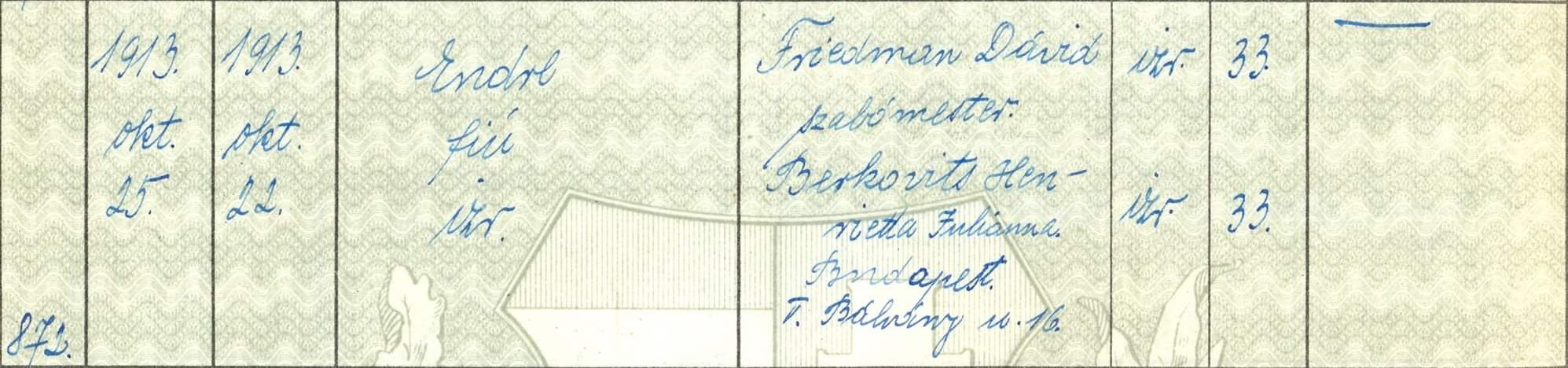
Please note: according to Capa’s birth entry his fathers name was Dávid Friedman (one n) and he was named Endre Ernő Friedman (one n). According to my friend György Németh whom this information came from, he later used his name with two N. As György says, it’s a bit of a mess as he used all kind of spelling throughout his life. Thank you György!


Robert Capa's birth entry


Robert Capa’s birth entry


Second gallery


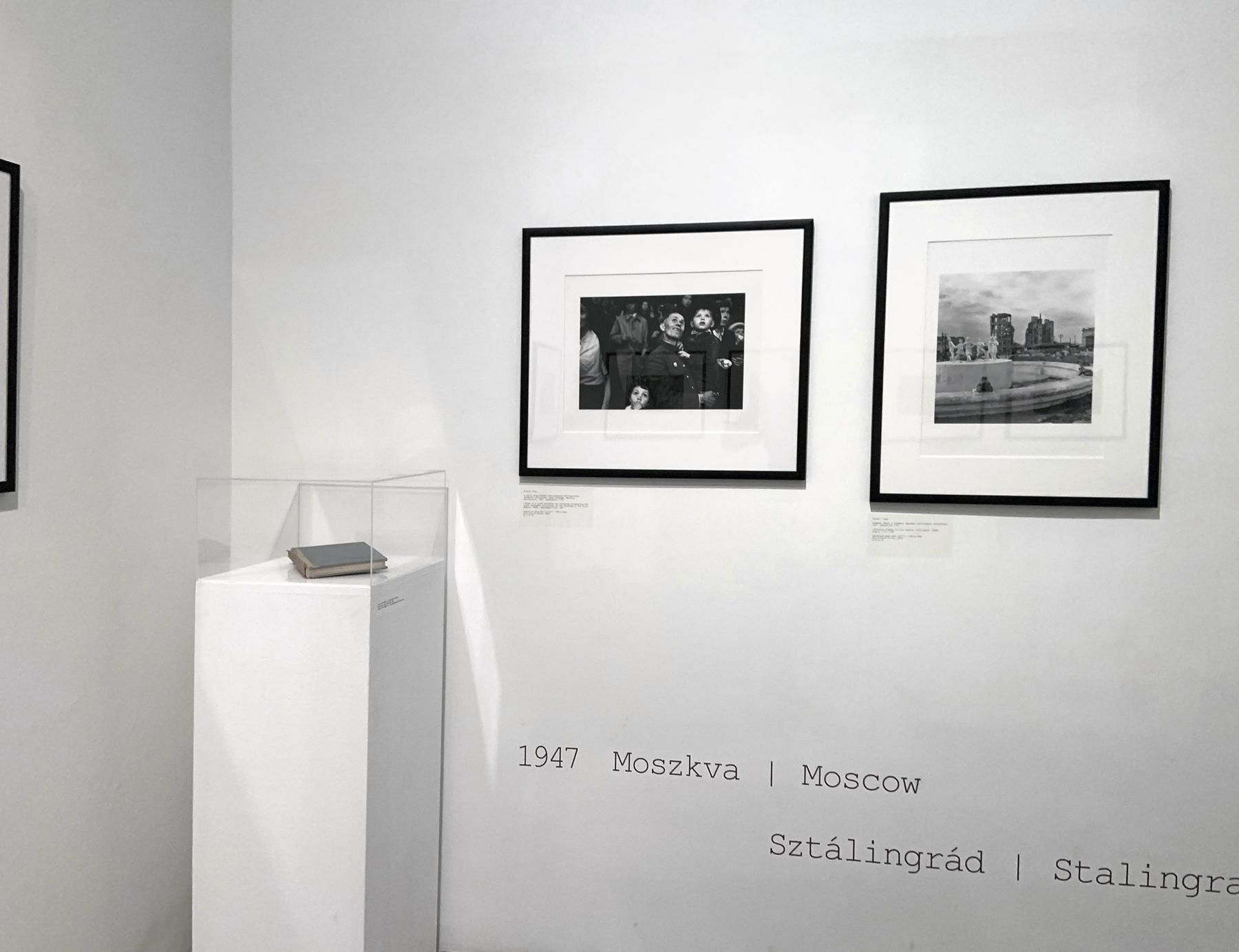
Installation view of the exhibition 'The Photojournalist Robert Capa II' at the Robert Capa Contemporary Photography Center, Budapest


Installation view of the exhibition The Photojournalist Robert Capa II at the Robert Capa Contemporary Photography Center, Budapest
Photo: Marcus Bunyan


Robert Capa (American-Hungarian, 1913-1954) 'Fountain rubble in city square, Stalingrad, USSR' August 1-31, 1947 (installation view)


Robert Capa (American-Hungarian, 1913-1954)
Fountain rubble in city square, Stalingrad, USSR (installation view)
August 1-31, 1947
Gelatin silver print, printed 1990s
50 x 40cm
Photo: Marcus Bunyan


Robert Capa (American-Hungarian, 1913-1954) 'Student civil-defense volunteers assisting the wounded, Guangzhou, China' July-September 1938 (installation view)


Robert Capa (American-Hungarian, 1913-1954)
Student civil-defense volunteers assisting the wounded, Guangzhou, China (installation view)
July-September 1938
Gelatin silver print, printed 1990s
40 x 50cm
Photo: Marcus Bunyan


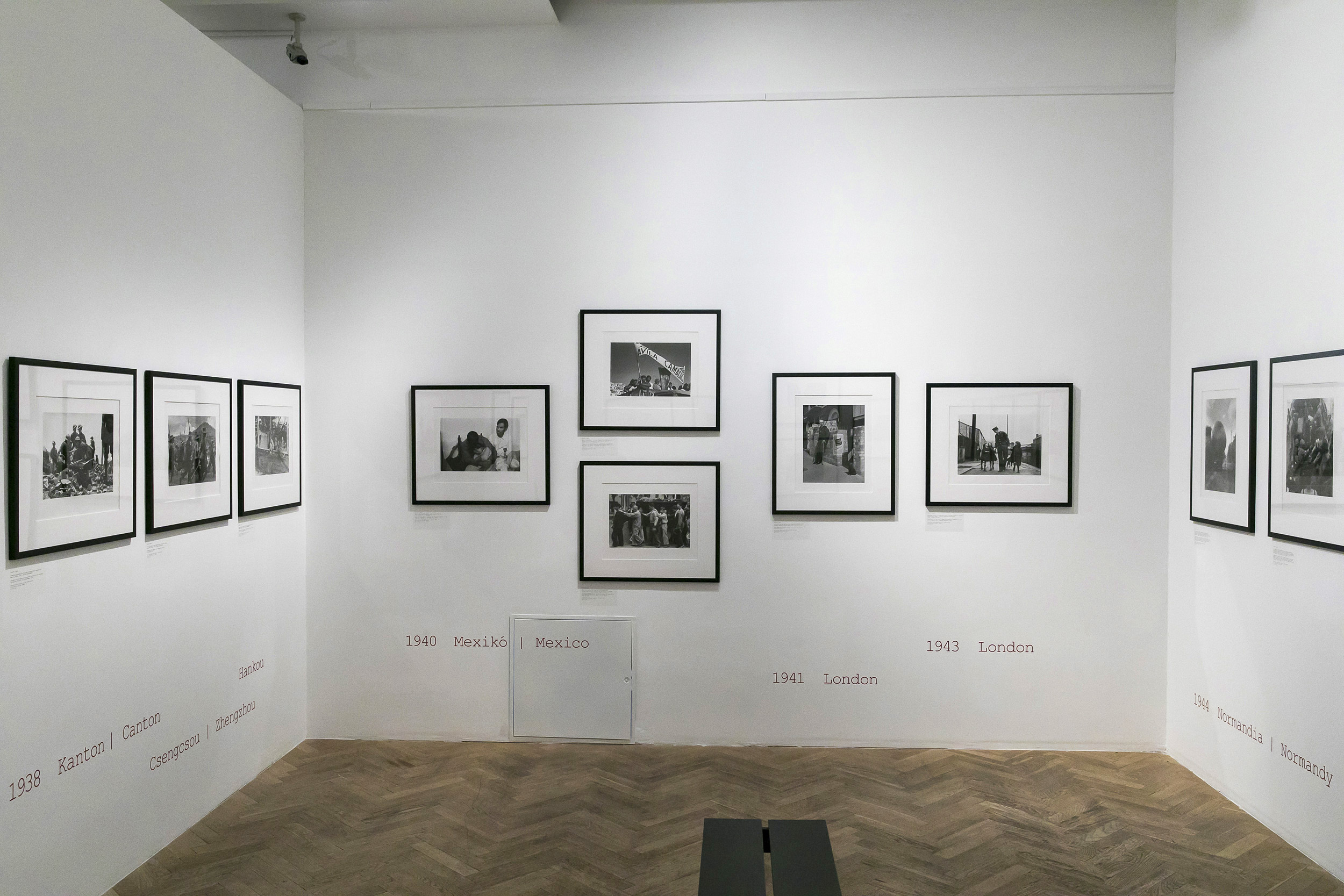
Installation view of the exhibition 'The Photojournalist Robert Capa II' at the Robert Capa Contemporary Photography Center, Budapest

Installation view of the exhibition 'The Photojournalist Robert Capa II' at the Robert Capa Contemporary Photography Center, Budapest

Installation view of the exhibition 'The Photojournalist Robert Capa II' at the Robert Capa Contemporary Photography Center, Budapest

Installation view of the exhibition 'The Photojournalist Robert Capa II' at the Robert Capa Contemporary Photography Center, Budapest

Installation view of the exhibition 'The Photojournalist Robert Capa II' at the Robert Capa Contemporary Photography Center, Budapest


Installation views of the exhibition The Photojournalist Robert Capa II at the Robert Capa Contemporary Photography Center, Budapest
Photos: Marcus Bunyan


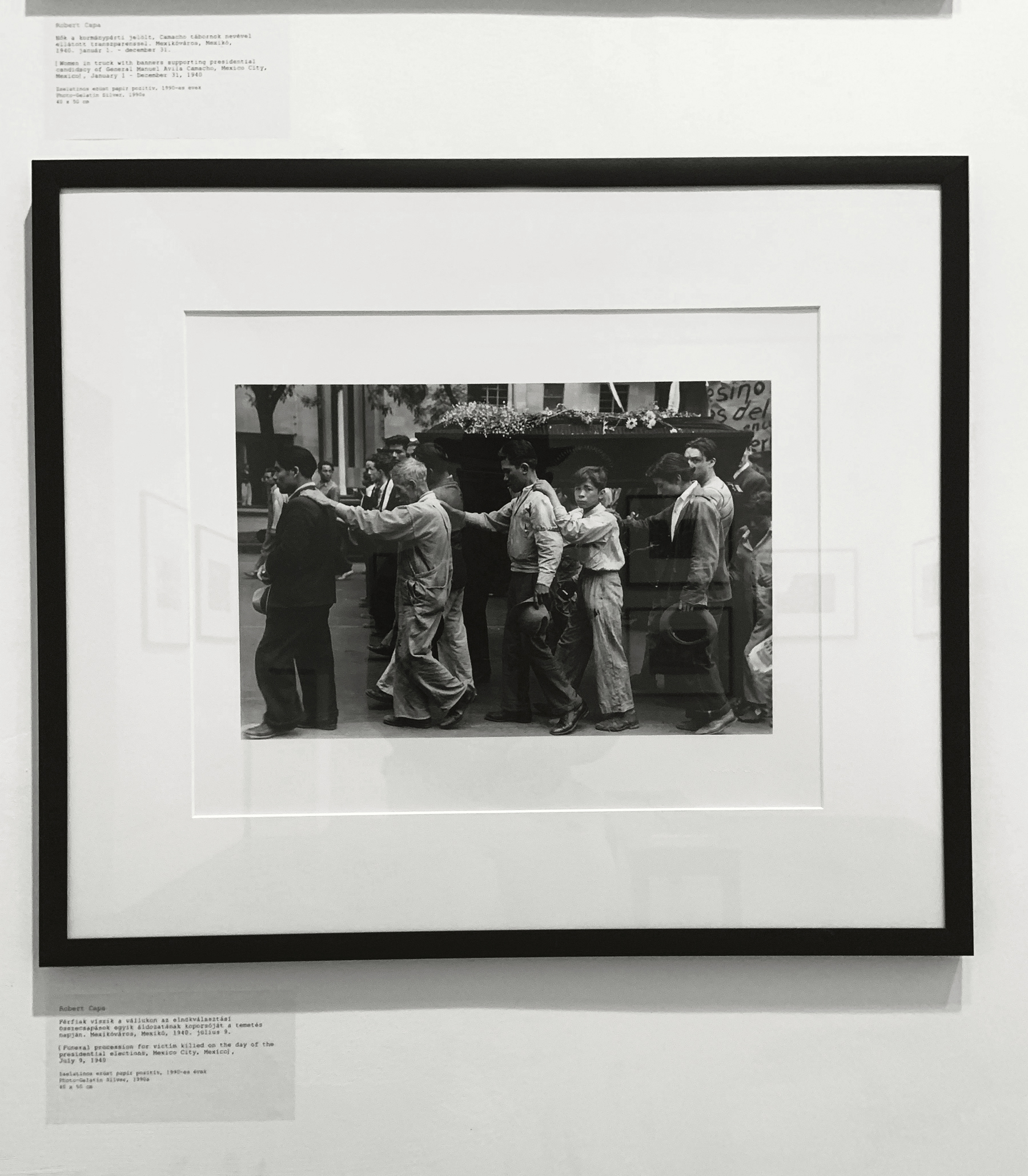
Robert Capa (American-Hungarian, 1913-1954) 'Funeral procession for victim killed on the day of the presidential elections, Mexico City, Mexico' July 9, 1940 (installation view)


Robert Capa (American-Hungarian, 1913-1954)
Funeral procession for victim killed on the day of the presidential elections, Mexico City, Mexico (installation view)
July 9, 1940
Gelatin silver print, printed 1990s
40 x 50cm
Photo: Marcus Bunyan


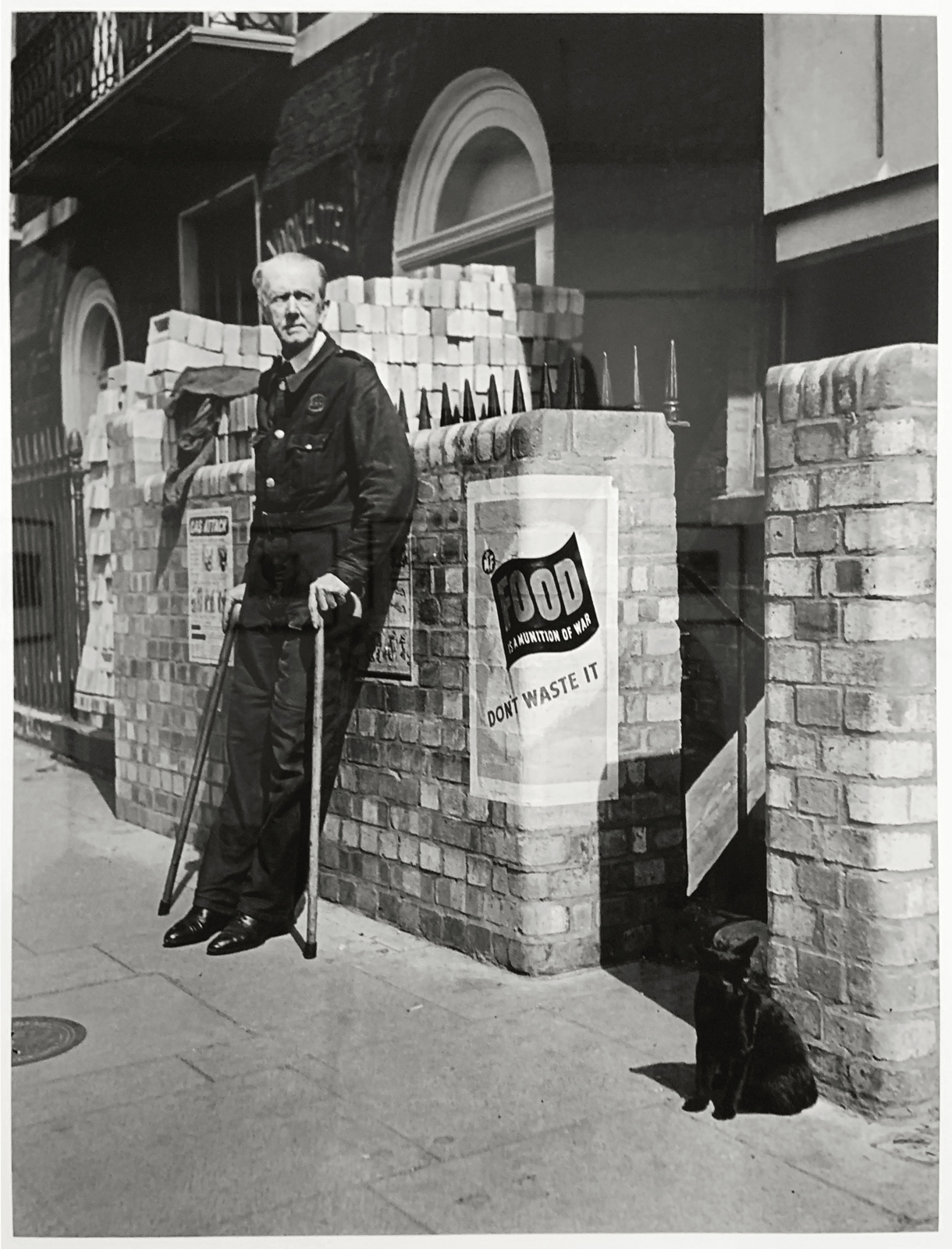
Robert Capa (American-Hungarian, 1913-1954) 'Man and cat outside an air-raid shelter, London, UK' June-July 1941


Robert Capa (American-Hungarian, 1913-1954)
Man and cat outside an air-raid shelter, London, UK
June-July 1941
Gelatin silver print, printed 1990s
40 x 50cm


Installation view of the exhibition 'The Photojournalist Robert Capa II' at the Robert Capa Contemporary Photography Center, Budapest

Installation view of the exhibition 'The Photojournalist Robert Capa II' at the Robert Capa Contemporary Photography Center, Budapest


Installation views of the exhibition The Photojournalist Robert Capa II at the Robert Capa Contemporary Photography Center, Budapest
Photos: Marcus Bunyan


Robert Capa (American-Hungarian, 1913-1954) 'Medical transport craft for men wounded in the first wave of American troops landing on D-Day, off Omaha Beach, near Colelville-sur-Mer, Omaha Beach, Normandy, France' June 6, 1944 (installation view)


Robert Capa (American-Hungarian, 1913-1954)
Medical transport craft for men wounded in the first wave of American troops landing on D-Day, off Omaha Beach, near Colelville-sur-Mer, Omaha Beach, Normandy, France (installation view)
June 6, 1944
Gelatin silver print, printed 1990s
50 x 40cm
Photo: Marcus Bunyan


Robert Capa (American-Hungarian, 1913-1954) 'German soldiers captured by American forces burying some of the men killed during the D-Day landings, near Colelville-sur-Mer, Omaha Beach, Normandy, France' June 1944


Robert Capa (American-Hungarian, 1913-1954)
German soldiers captured by American forces burying some of the men killed during the D-Day landings, near Colelville-sur-Mer, Omaha Beach, Normandy, France
June 1944
Gelatin silver print, printed 1990s
50 x 40cm


Robert Capa (American-Hungarian, 1913-1954) 'American soldiers guard a group of captured Germans, southwest of Saint-Lð, Normandy, France' July 26-30, 1944


Robert Capa (American-Hungarian, 1913-1954)
American soldiers guard a group of captured Germans, southwest of Saint-Lð, Normandy, France
July 26-30, 1944
Gelatin silver print, printed 1990s
40 x 50cm


Robert Capa (American-Hungarian, 1913-1954) 'Cow in the middle of a street lined with ruined buildings, Normandy, France' June-July 1944 (installation view)


Robert Capa (American-Hungarian, 1913-1954)
Cow in the middle of a street lined with ruined buildings, Normandy, France (installation view)
June-July 1944
Gelatin silver print, printed 1990s
40 x 50cm
Photo: Marcus Bunyan


Robert Capa (American-Hungarian, 1913-1954) 'Soldiers leading a French woman who had collaborated with the Germans to the Préfecture de Police to have her head shaved, Chartres, France' August 18, 1944 (installation view)


Robert Capa (American-Hungarian, 1913-1954)
Soldiers leading a French woman who had collaborated with the Germans to the Préfecture de Police to have her head shaved, Chartres, France (installation view)
August 18, 1944
Gelatin silver print, printed 1990s
40 x 50cm
Photo: Marcus Bunyan


Installation view of the exhibition 'The Photojournalist Robert Capa II' at the Robert Capa Contemporary Photography Center, Budapest

Installation view of the exhibition 'The Photojournalist Robert Capa II' at the Robert Capa Contemporary Photography Center, Budapest

Installation view of the exhibition 'The Photojournalist Robert Capa II' at the Robert Capa Contemporary Photography Center, Budapest


Installation view of the exhibition The Photojournalist Robert Capa II at the Robert Capa Contemporary Photography Center, Budapest
Photos: Marcus Bunyan


Robert Capa (American-Hungarian, 1913-1954) 'German soldiers captured by American forces during the Battle of the Bulge, south of Bastogne, Belgium' December 23-26, 1944 (installation view)


Robert Capa (American-Hungarian, 1913-1954)
German soldiers captured by American forces during the Battle of the Bulge, south of Bastogne, Belgium (installation view)
December 23-26, 1944
Gelatin silver print, printed 1990s
50 x 40cm
Photo: Marcus Bunyan


Robert Capa Contemporary Photography Center, Budapest
8 Nagymező Street, 1065 Budapest, Hungary
Phone: +36 1 413 1310

Opening hours:
Tuesday – Friday: 1pm – 6pm
Saturday – Sunday: 10am – 6pm

Robert Capa Contemporary Photography Center, Budapest website

LIKE ART BLACK ON FACEBOOK

Back to top

Exhibition: ‘Gordon Parks: The Flávio Story’ at the J. Paul Getty Museum, Getty Center, Los Angeles

Exhibition dates: 9th July – 10th November, 2019

Curators: Amanda Maddox, associate curator of photographs at the J. Paul Getty Museum and Paul Roth, director of the Ryerson Image Centre


Gordon Parks (American, 1912-2006) 'Flavio' 1978


Gordon Parks (American, 1912-2006)
Flavio
1978
Paper Closed: 21.6 × 15.1cm (8 1/2 × 5 15/16 in.)
Collection of the Ryerson Image Centre
© The Gordon Parks Foundation


Playing God can be a tricky business


“Playing God can be a tricky business”

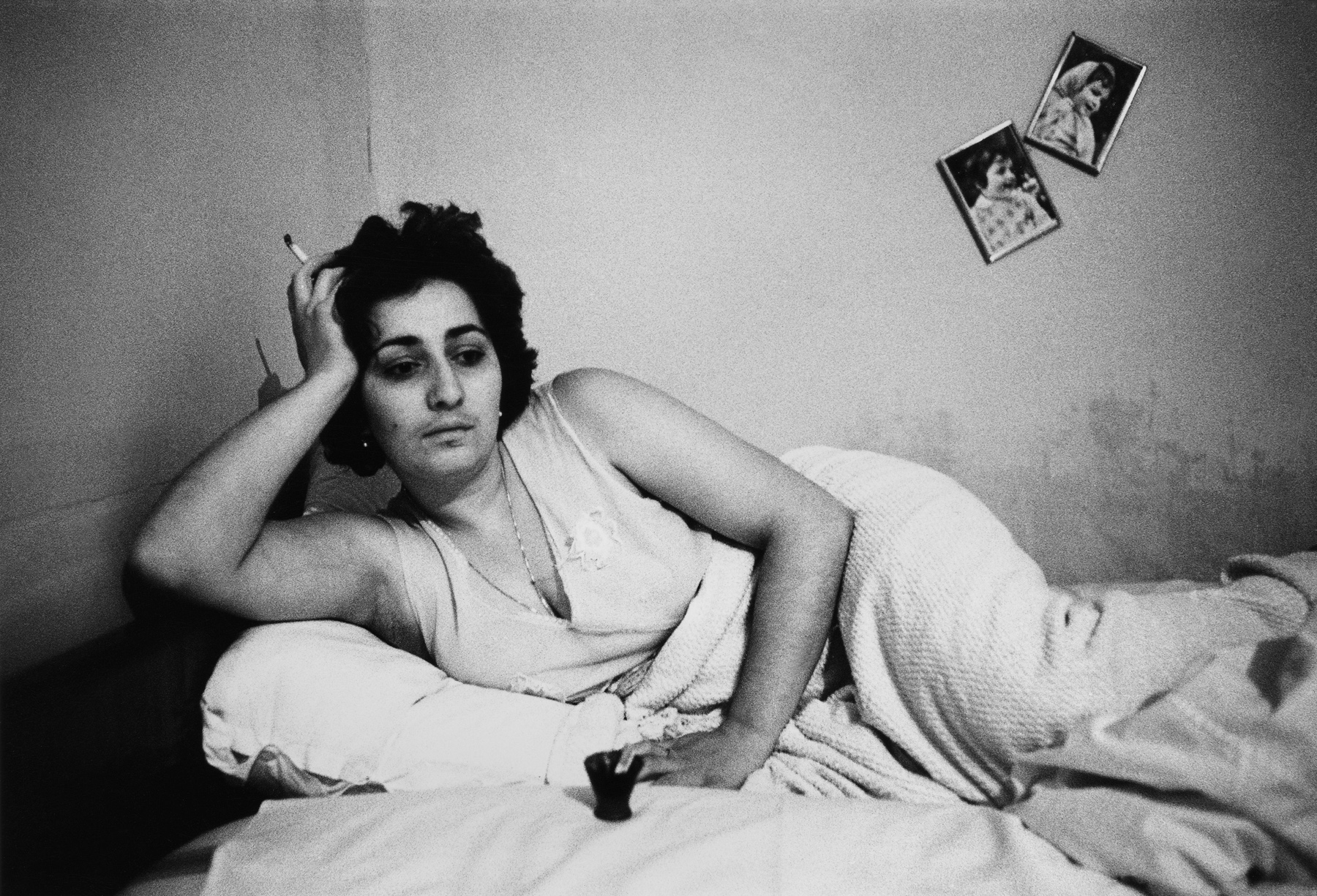
There are some heartbreaking images (in particular by French/Brazilian photographer Henri Ballot), but in Parks photographs we never seem to hear Flavio’s voice – just his representation through the image. Despite Parks coming from a similar background of poverty and disenfranchisement and wanting the best for the boy, one can only wonder about the psychological effects of showing him the promised land and then having it all taken away.

The only time we come close to hearing Flavio’s wishes and his voice is in a snippet: “In spite of his wish to remain in the United States, Flávio was sent back to Brazil in 1963. Now 70 years old, he has never returned to the United States.”

Dr Marcus Bunyan


Many thankx to the J. Paul Getty Museum for allowing me to publish the photographs in the posting. Please click on the photographs for a larger version of the image.


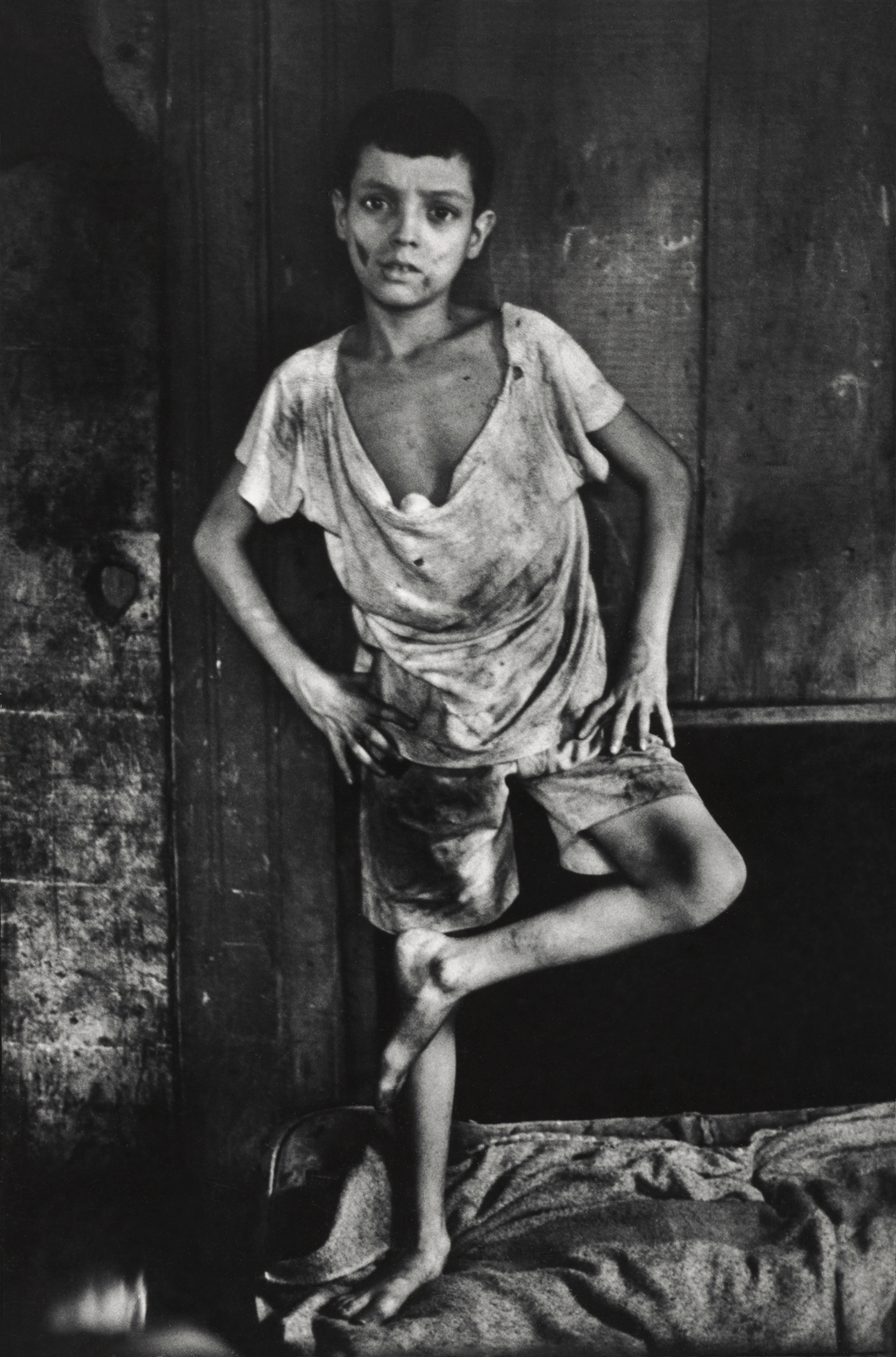
On assignment to document poverty in Brazil for Life magazine, American photographer Gordon Parks encountered one of the most important subjects of his career: Flávio da Silva. Parks featured the resourceful, ailing boy from an impoverished Rio favela (Portuguese for shantytown) and his family in the heart-rending 1961 photo essay “Freedom’s Fearful Foe.” It resulted in donations from Life readers but sparked controversy in Brazil. This exhibition explores the celebrated photo essay, tracing the extraordinary chain of events it triggered and Parks’ representation of Flávio over several decades.


Gordon Parks (American, 1912-2006) 'Untitled (Flávio da Silva), Rio de Janeiro, Brazil' 1961 from the exhibition Exhibition: 'Gordon Parks: The Flávio Story' at the J. Paul Getty Museum, Getty Center, Los Angeles, July - Nov, 2019


Gordon Parks (American, 1912-2006)
Untitled (Flávio da Silva), Rio de Janeiro, Brazil
1961
Gelatin silver print
Image (approx.): 35.6 × 27.9cm (14 × 11 in.)
The Gordon Parks Foundation
© The Gordon Parks Foundation


Gordon Parks (American, 1912-2006) 'Family's Day Begins, Rio de Janeiro, Brazil' Negative 1961, printed later from the exhibition Exhibition: 'Gordon Parks: The Flávio Story' at the J. Paul Getty Museum, Getty Center, Los Angeles, July - Nov, 2019


Gordon Parks (American, 1912-2006)
Family’s Day Begins, Rio de Janeiro, Brazil
Negative 1961, printed later
Gelatin silver print
Image: 27.3 × 35.6cm (10 3/4 × 14 in.)
The J. Paul Getty Museum, Los Angeles, Purchased with funds provided by the Photographs Council
© The Gordon Parks Foundation


Gordon Parks (American, 1912-2006) 'Untitled (The da Silva Children Climbing the Hillside), Rio de Janeiro, Brazil' 1961 from the exhibition Exhibition: 'Gordon Parks: The Flávio Story' at the J. Paul Getty Museum, Getty Center, Los Angeles, July - Nov, 2019


Gordon Parks (American, 1912-2006)
Untitled (The da Silva Children Climbing the Hillside), Rio de Janeiro, Brazil
1961
Gelatin silver print
Image: 33.7 × 23.2cm (13 1/4 × 9 1/8 in.)
The J. Paul Getty Museum, Los Angeles, Purchased in part with funds provided by the Photographs Council, Trish and Jan de Bont, Daniel Greenberg and Susan Steinhauser, Manfred Heiting, Lyle and Lisi Poncher, and Devon Susholtz and Stephen Purvis
© The Gordon Parks Foundation


Gordon Parks (American, 1912-2006) 'Mário da Silva, Crying after Being Bitten by Dog, Rio de Janeiro, Brazil' Negative 1961, printed later


Gordon Parks (American, 1912-2006)
Mário da Silva, Crying after Being Bitten by Dog, Rio de Janeiro, Brazil
Negative 1961, printed later
Gelatin silver print
Image: 20 × 13.3cm (7 7/8 × 5 1/4 in.)
The J. Paul Getty Museum, Los Angeles, Purchased with funds provided by the Photographs Council
© The Gordon Parks Foundation


Gordon Parks (American, 1912-2006) 'Catacumba Favela, Rio de Janeiro, Brazil' Negative 1961, printed later


Gordon Parks (American, 1912-2006)
Catacumba Favela, Rio de Janeiro, Brazil
Negative 1961, printed later
Gelatin silver print
Image: 17.9 × 18.7cm (7 1/16 × 7 3/8 in.)
The J. Paul Getty Museum, Los Angeles, Purchased with funds provided by the Photographs Council
© The Gordon Parks Foundation


Gordon Parks (American, 1912-2006) 'Flávio da Silva, Rio de Janeiro, Brazil' 1961


Gordon Parks (American, 1912-2006)
Flávio da Silva, Rio de Janeiro, Brazil
1961
Gelatin silver print
Image: 33.7 × 22.2cm (13 1/4 × 8 3/4 in.)
The J. Paul Getty Museum, Los Angeles, Purchased with funds provided by the Photographs Council
© The Gordon Parks Foundation


Gordon Parks (American, 1912-2006) 'Isabel da Silva, Rio de Janeiro, Brazil' Negative 1961, printed later


Gordon Parks (American, 1912-2006)
Isabel da Silva, Rio de Janeiro, Brazil
Negative 1961, printed later
Gelatin silver print
Image: 32.7 × 22.2cm (12 7/8 × 8 3/4 in.)
The J. Paul Getty Museum, Los Angeles, Purchased with funds provided by the Photographs Council
© The Gordon Parks Foundation


Gordon Parks (American, 1912-2006) 'Abia and Isabel da Silva, Rio de Janeiro, Brazil' Negative 1961, printed later


Gordon Parks (American, 1912-2006)
Abia and Isabel da Silva, Rio de Janeiro, Brazil
Negative 1961, printed later
Gelatin silver print
Image: 23 × 29.9cm (9 1/16 × 11 3/4 in.)
The J. Paul Getty Museum, Los Angeles, Purchased with funds provided by the Photographs Council
© The Gordon Parks Foundation


Gordon Parks (American, 1912-2006) 'Untitled (Nair da Silva, Holding Zacarias), Rio de Janeiro, Brazil' Negative 1961, printed later


Gordon Parks (American, 1912-2006)
Untitled (Nair da Silva, Holding Zacarias), Rio de Janeiro, Brazil
Negative 1961, printed later
Gelatin silver print
Image: 30.5 × 22.9cm (12 × 9 in.)
The J. Paul Getty Museum, Los Angeles, Purchased with funds provided by the Photographs Council
© The Gordon Parks Foundation


Paulo Muniz (Brazilian, 1918-1994) 'Untitled (Gordon Parks and Flávio da Silva at Airport, Soon to Fly to United States), Rio de Janeiro, Brazil' Negative July 5, 1961, printed later


Paulo Muniz (Brazilian, 1918-1994)
Untitled (Gordon Parks and Flávio da Silva at Airport, Soon to Fly to United States), Rio de Janeiro, Brazil
Negative July 5, 1961, printed later
Gelatin silver print
Framed: 72.9 × 57.6cm (28 11/16 × 22 11/16 in.)
The Gordon Parks Foundation Courtesy of the artist’s estate/IMS


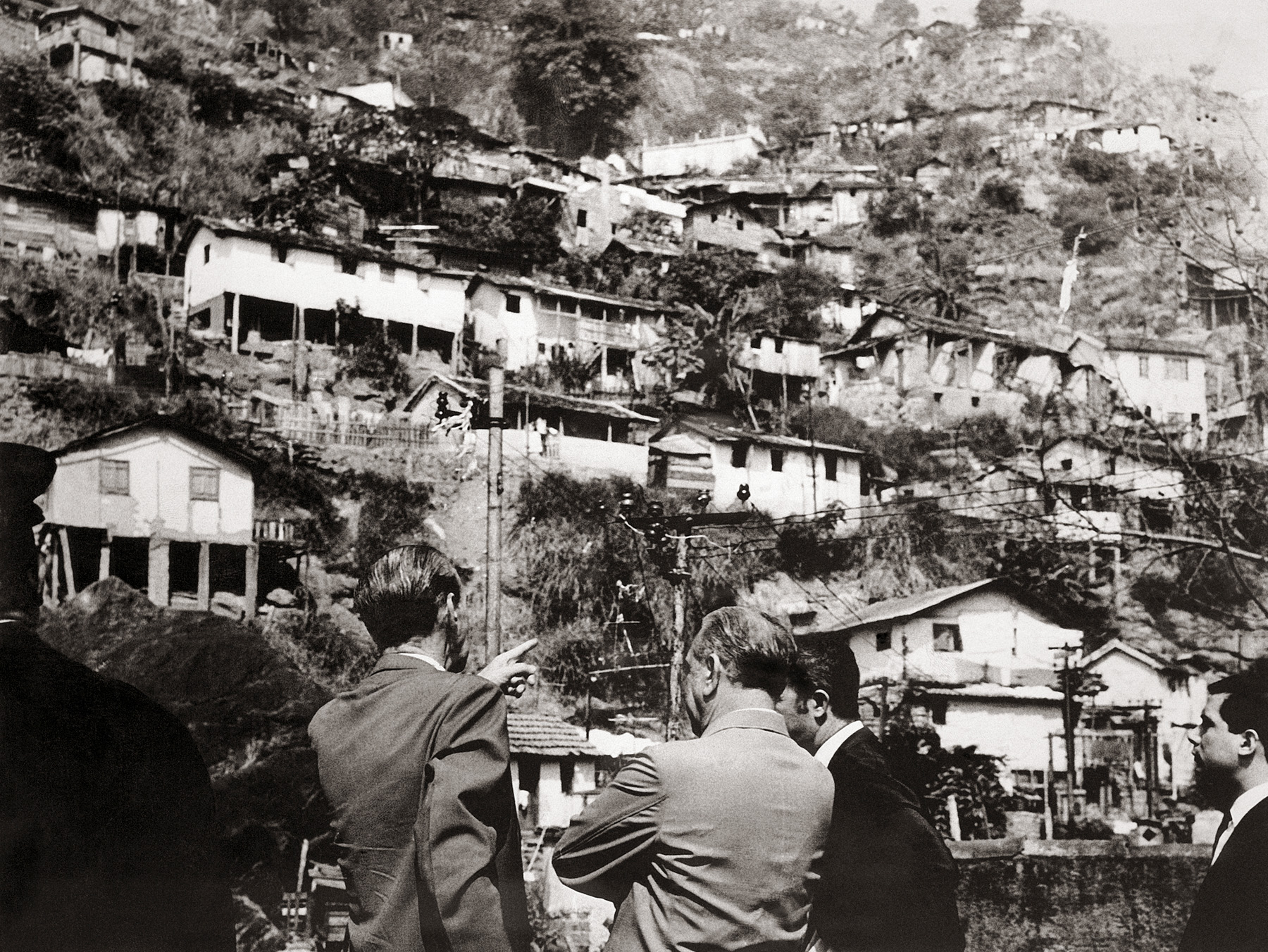
Unknown maker. 'Untitled (Four Officials Inspect Catacumba Favela)' August 7, 1967


Unknown maker
Untitled (Four Officials Inspect Catacumba Favela)
August 7, 1967
Gelatin silver print
Image: 18.1 × 24cm (7 1/8 × 9 7/16 in.)
Diários Associados Collection-Rio de Janiero/Instituto Moreira Salles


Unknown maker. 'Untitled (Removal of Residents' Possessions, Catacumba Hill, Avenida Epitácio Pessoa)' October 15, 1970


Unknown maker
Untitled (Removal of Residents’ Possessions, Catacumba Hill, Avenida Epitácio Pessoa)
October 15, 1970
Gelatin silver print
Image: 24.1 × 18cm (9 1/2 × 7 1/16 in.)
Diários Associados Collection-Rio de Janiero/Instituto Moreira Salles


José Gonçalves (American, b. 1927) 'Flávio Catches His First Fish, Denver, Colorado' Negative about 1962, print about 1977


José Gonçalves (American, b. 1927)
Flávio Catches His First Fish, Denver, Colorado
Negative about 1962, print about 1977
Gelatin silver print
Sheet: 25.4 × 20.3cm (10 × 8 in.)
The Gordon Parks Foundation
© José Gonçalves


José Gonçalves (American, b. 1927) 'Untitled (Snapshot of Flávio da Silva and the Gonçalves Family)' Negative 1961-63; printed 1976


José Gonçalves (American, b. 1927)
Untitled (Snapshot of Flávio da Silva and the Gonçalves Family)
Negative 1961-1963; printed 1976
Chromogenic print
Sheet: 12.7 × 8.9cm (5 × 3 1/2 in.)
The Gordon Parks Foundation
© José Gonçalves


José Gonçalves (American, b. 1927) 'Untitled (Snapshot of Flávio da Silva and the Gonçalves Family)' Negative 1961-63; printed 1976


José Gonçalves (American, b. 1927)
Untitled (Snapshot of Flávio da Silva and the Gonçalves Family)
Negative 1961-1963; printed 1976
Chromogenic print
Sheet: 8.9 × 12.4cm (3 1/2 × 4 7/8 in.)
The Gordon Parks Foundation
© José Gonçalves


José Gonçalves (American, b. 1927) 'Flávio Waves Goodbye to the Gonçalves Family from the Train That Will Take Him to New York, Denver, Colorado' Negative July 27, 1963, print about 1977


José Gonçalves (American, b. 1927)
Flávio Waves Goodbye to the Gonçalves Family from the Train That Will Take Him to New York, Denver, Colorado
Negative July 27, 1963, print about 1977
Gelatin silver print
Sheet: 20.3 × 25.4cm (8 × 10 in.)
The Gordon Parks Foundation
© José Gonçalves


The J. Paul Getty Museum announced today an exhibition of photographs by celebrated artist Gordon Parks (American, 1912-2006). On view July 9-November 10, 2019 at the J. Paul Getty Museum, Getty Center, Gordon Parks: The Flávio Story explores one of the most important photo essays Parks produced for Life magazine and traces how its publication prompted an extraordinary sequence of events over several decades. The exhibition is co-organised by the Getty and the Ryerson Image Centre in Toronto, Canada in partnership with Instituto Moreira Salles, Brazil, and The Gordon Parks Foundation, New York.

“Gordon Parks’ photographs chronicling social justice, civil rights, and the African-American experience in the United States are both a vital historical document and a compelling body of artistic work,” says Timothy Potts, director of the J. Paul Getty Museum. “And, of all his varied projects, Parks considered the photographs of Flávio among his most important achievements. The great impact that it had, and still has today, can only be appreciated by presenting these photographs in their full socio-political context, which is what this exhibition does for the first time.”

An accomplished filmmaker, composer, writer and poet, Parks is best remembered for his prolific career as a photographer. He became the first African-American photographer on staff at Life magazine, where he covered subjects ranging from fashion to social injustice. In 1961 the magazine sent him to Brazil with a specific assignment: to document poverty in Rio de Janeiro for a special series on Latin America. Told to photograph the hardworking father of a large, impoverished household, Parks all but disregarded these instructions and turned his attention instead to one resident in particular – an industrious, severely asthmatic twelve-year-old boy named Flávio da Silva who lived in Catacumba, one of Rio’s working class neighbourhoods known as favelas.

Over the course of several weeks Parks photographed Flávio as he performed household chores and entertained his seven brothers and sisters – daily activities that were often interrupted by debilitating asthma attacks. Having himself grown up in abject poverty in Kansas, Parks felt deep sympathy for his subject and forged an emotional bond with him. Ultimately Parks advocated for a comprehensive photo essay dedicated to Flávio’s story in the pages of Life; editors responded by publishing a twelve-page piece, titled “Freedom’s Fearful Foe: Poverty,” in June 1961. The exhibition will include images from this spread, as well as outtakes from the assignment.

Within days of its publication in the magazine, Flávio’s story emerged as a blockbuster. Moved by Parks’ heartbreaking coverage, Life‘s readers wrote thousands of letters and spontaneously donated money to support the da Silva family and the revitalisation of the favela. Upon seeing the images, the president of the Children’s Asthma Research Institute and Hospital (CARIH) in Denver, Colorado offered to treat Flávio as a patient, free of charge. In July 1961, Life sent Parks back to Rio as part of the magazine’s follow-up efforts. After helping to move the da Silva family from Catacumba, Parks accompanied Flávio from Rio to the United States. For the next two years Flávio lived and received treatment at CARIH but spent most weekends with a Portugeuse-speaking host family who introduced him to various aspects of American culture.

Anticipating a compelling story about Flávio’s medical progress and experience in the U.S., Life assigned a local photographer, Hikaru “Carl” Iwasaki, to document the boy’s arrival in Denver, admission to the hospital, and acclimation at school. A selection of these images will be on view in the exhibition, including some that Life never published, alongside snapshots made by Flávio’s host father in Denver, José Gonçalves. In spite of his wish to remain in the United States, Flávio was sent back to Brazil in 1963. Now 70 years old, he has never returned to the United States.

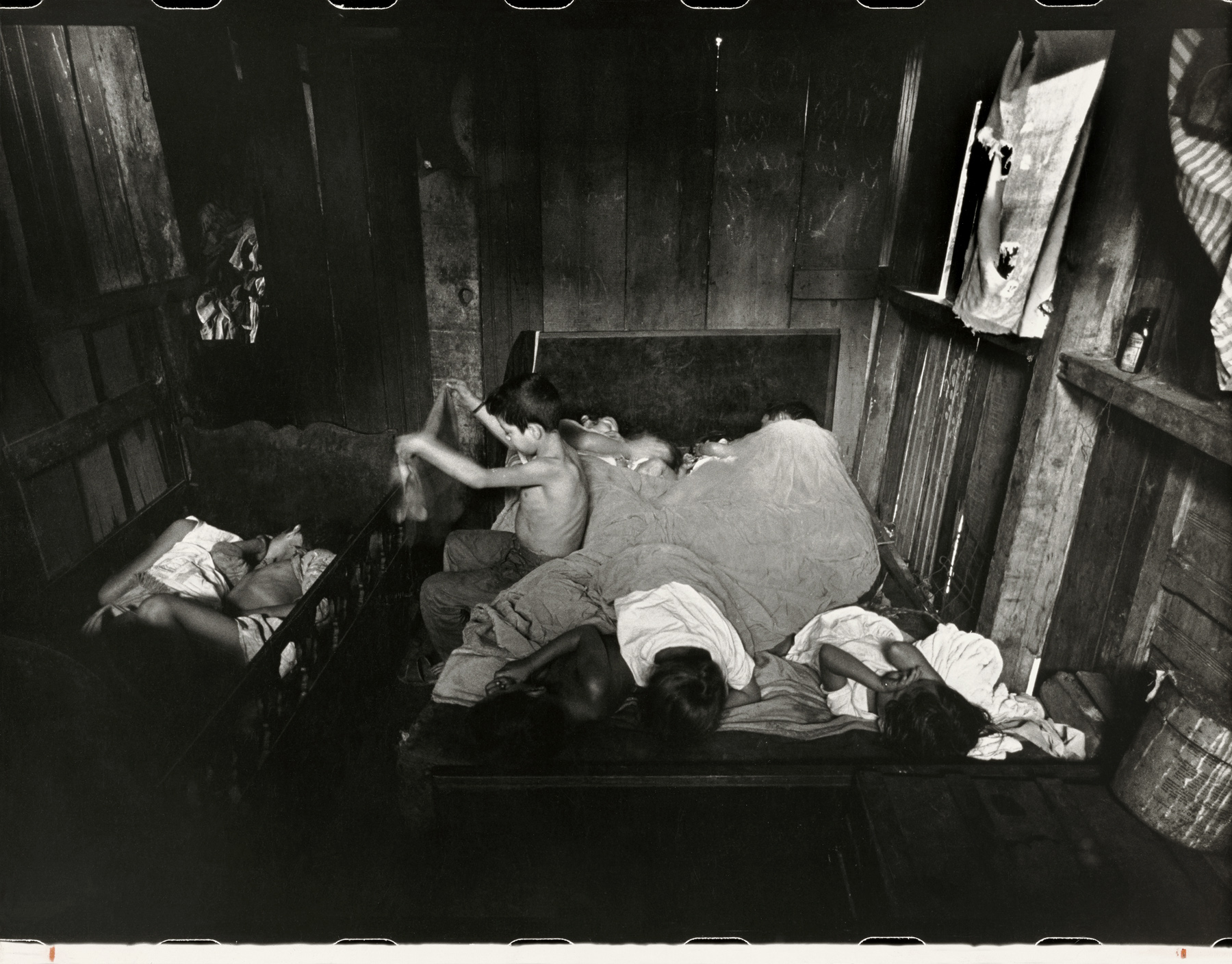
When published in 1961, “Freedom’s Fearful Foe: Poverty” was also met with criticism, particularly within the Brazilian press. Outraged and determined to retaliate against Life‘s negative portrayal of the Catacumba favela and its residents, the Brazilian magazine O Cruzeiro sent staff photographer Henri Ballot to report on poverty in New York, where Life was headquartered. While exploring the Lower East Side in Manhattan, Ballot documented an immigrant family from Puerto Rico – Felix and Esther Gonzalez and their children – who lived in a derelict one-bedroom apartment. Arguing that poverty was equally endemic in the United States, O Cruzeiro published Ballot’s photographs in October 1961 in the photo essay “Nôvo recorde americano: Miséria” (New American Record: Misery). Photographs from this story, as well as from an investigative exposé on Parks’ reportage also published in O Cruzeiro in 1961, will be on view in the exhibition.

Over the years Parks periodically returned to Flávio as a subject. In 1976 he published Flávio, which recounted and updated the story through words and pictures. In the book’s introduction, Parks provided insight into his own conflicted engagement with certain photographic assignments that focused on people like the da Silva family, acknowledging that he “was perhaps playing God” by digging “deeper and deeper into the privacy of these lives, hoping … to reshape their destinies into something much better.” Following this admission, Parks returned to Brazil only once in the 1990s; it marked the last time Parks and Flávio saw each other prior to Parks’ death in 2006.

“Parks regarded poverty as ‘the most savage of all human afflictions,’ in no small part because he was born into destitution,” says Amanda Maddox, co-curator of the exhibition and an associate curator at the Getty Museum. “As a photographer he consciously wielded his camera as a weapon – his chosen term – in an attempt to combat economic and racial inequality. Viewed in this context, his documentation of Flávio da Silva – for Life and beyond – reveals the complexity of his empathetic approach and the inherent difficulties of representing someone else’s personal story – a story that resonated with many people over many years – in any form.”

In addition to more than 100 photographs, the exhibition will also include original issues of Life that featured Flávio’s story, previously unseen ephemera related to Flávio’s time in Denver, and private memos, correspondence, and records held by Life and Parks.

Gordon Parks: The Flávio Story is on view July 9-November 10, 2019 at the J. Paul Getty Museum, Getty Center. The exhibition is co-curated by Amanda Maddox, associate curator of photographs at the J. Paul Getty Museum, and Paul Roth, director of the Ryerson Image Centre. An accompanying book is available, published by Steidl Verlag, with essays by Maddox and Roth, as well as Sergio Burgi, curator at Instituto Moreira Salles; Beatriz Jaguaribe, professor of comparative communications, School of Communications, Universidade Federal do Rio de Janeiro; and Maria Alice Rezende de Carvalho, professor of sociology, Catholic University of Rio de Janeiro.

Press release from the J. Paul Getty Museum Cited 27/10/2019


Henri Ballot (French / Brazilian, 1921-1997) 'Ely-Samuel Gonzalez on His Bed, Manhattan, New York' 1961


Henri Ballot (French / Brazilian, 1921-1997)
Ely-Samuel Gonzalez on His Bed, Manhattan, New York
1961
Gelatin silver print
Image: 23.5 × 15.8cm (9 1/4 × 6 1/4 in.)
Henri Ballot/Instituto Moreira Salles Collection


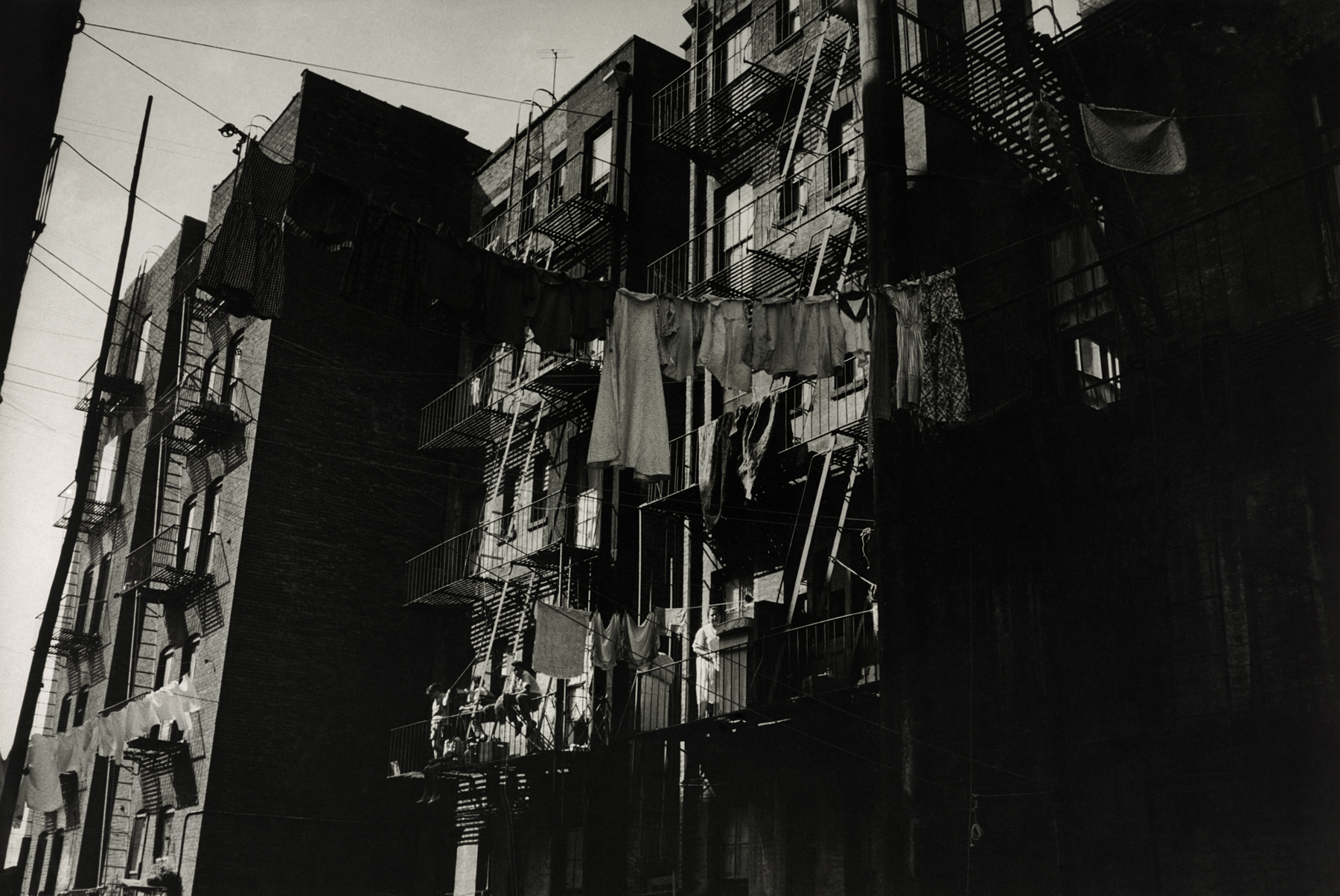
Henri Ballot (French/Brazilian, 1921-1997) 'Apartment Building Where the Gonzalez Family lives, Manhattan, New York' 1961


Henri Ballot (French/Brazilian, 1921-1997)
Apartment Building Where the Gonzalez Family lives, Manhattan, New York
1961
Gelatin silver print
Image: 16 × 23.9cm (6 5/16 × 9 7/16 in.)
Henri Ballot/Instituto Moreira Salles Collection


Henri Ballot (French/Brazilian, 1921-1997) 'Child Playing Surrounded by Trash, Manhattan, New York' 1961


Henri Ballot (French/Brazilian, 1921-1997)
Child Playing Surrounded by Trash, Manhattan, New York
1961
Gelatin silver print
Image: 16 × 24cm (6 5/16 × 9 7/16 in.)
Henri Ballot/Instituto Moreira Salles Collection


Henri Ballot (French/Brazilian, 1921-1997) 'Bedroom in the Gonzalez Family Apartment, Manhattan, New York' 1961


Henri Ballot (French/Brazilian, 1921-1997)
Bedroom in the Gonzalez Family Apartment, Manhattan, New York
1961
Gelatin silver print
Image: 18.3 × 24cm (7 3/16 × 9 7/16 in.)
Henri Ballot/Instituto Moreira Salles Collection


Henri Ballot (French/Brazilian, 1921-1997) 'Child Crying at the Window, Manhattan, New York' 1961


Henri Ballot (French/Brazilian, 1921-1997)
Child Crying at the Window, Manhattan, New York
1961
Gelatin silver print
Image: 24.2 × 18cm (9 1/2 × 7 1/16 in.)
Henri Ballot/Instituto Moreira Salles Collection


Henri Ballot (French/Brazilian, 1921-1997) 'Photographer Henri Ballot with Ely-Samuel (on the Left) and His Brothers, Manhattan, New York' 1961


Henri Ballot (French/Brazilian, 1921-1997)
Photographer Henri Ballot with Ely-Samuel (on the Left) and His Brothers, Manhattan, New York
1961
Gelatin silver print
Image: 17.8 × 24.4cm (7 × 9 5/8 in.)
Henri Ballot/Instituto Moreira Salles Collection


Henri Ballot (French/Brazilian, 1921-1997) 'Maria Penha da Silva, Flávio's Grandmother, and Her Other Grandchildren, Reading 'Life', Guadalupe, Rio de Janeiro, Brazil' 1961


Henri Ballot (French/Brazilian, 1921-1997)
Maria Penha da Silva, Flávio’s Grandmother, and Her Other Grandchildren, Reading ‘Life’, Guadalupe, Rio de Janeiro, Brazil
1961
Gelatin silver print
Image: 16 × 24cm (6 5/16 × 9 7/16 in.)
Henri Ballot/Instituto Moreira Salles Collection


Henri Ballot (French/Brazilian, 1921-1997) 'Aracy, a Neighbour of the da Silva Family, Pointing out Where the Photographs for Gordon Parks's Reportage Were Taken in the da Silvas' Former Home, Catacumba Hill, Rio de Janeiro, Brazil' 1961


Henri Ballot (French/Brazilian, 1921-1997)
Aracy, a Neighbour of the da Silva Family, Pointing out Where the Photographs for Gordon Parks’s Reportage Were Taken in the da Silvas’ Former Home, Catacumba Hill, Rio de Janeiro, Brazil
1961
Gelatin silver print
Image: 23.8 × 15.9cm (9 3/8 × 6 1/4 in.)
Henri Ballot/Instituto Moreira Salles Collection


Gordon Parks (American, 1912-2006) 'Untitled (The da Silva Family), Rio de Janeiro, Brazil' Negative 1976, printed later


Gordon Parks (American, 1912-2006)
Untitled (The da Silva Family), Rio de Janeiro, Brazil
Negative 1976, printed later
Gelatin silver print
Image: 22.9 × 34cm (9 × 13 3/8 in.)
The J. Paul Getty Museum, Los Angeles, Purchased with funds provided by the Photographs Council
© The Gordon Parks Foundation


Gordon Parks (American, 1912-2006) 'Untitled (Flávio da Silva), Rio de Janeiro, Brazil' Negative 1976, printed later


Gordon Parks (American, 1912-2006)
Untitled (Flávio da Silva), Rio de Janeiro, Brazil
Negative 1976, printed later
Gelatin silver print
Image: 34.3 × 23.5cm (13 1/2 × 9 1/4 in.)
The J. Paul Getty Museum, Los Angeles, Purchased with funds provided by the Photographs Council
© The Gordon Parks Foundation


Gordon Parks (American, 1912-2006) 'Untitled (Flávio da Silva), Rio de Janeiro, Brazil' 1976


Gordon Parks (American, 1912-2006)
Untitled (Flávio da Silva), Rio de Janeiro, Brazil
1976
Gelatin silver print
Sheet: 35.6 × 27.9cm (14 × 11 in.)
The Gordon Parks Foundation
© The Gordon Parks Foundation


Gordon Parks (American, 1912-2006) 'Flávio da Silva Looking at Gordon Parks's Book 'Moments Without Proper Names', Rio de Janeiro, Brazil' 1976


Gordon Parks (American, 1912-2006)
Flávio da Silva Looking at Gordon Parks’s Book ‘Moments Without Proper Names’, Rio de Janeiro, Brazil
1976
Gelatin silver print
Sheet: 35.6 × 27.9cm (14 × 11 in.)
The Gordon Parks Foundation
© The Gordon Parks Foundation


Gordon Parks (American, 1912-2006) 'Untitled (Flávio and Cleuza da Silva), Rio de Janeiro, Brazil' 1976


Gordon Parks (American, 1912-2006)
Untitled (Flávio and Cleuza da Silva), Rio de Janeiro, Brazil
1976
Gelatin silver print
Sheet: 35.6 × 27.9cm (14 × 11 in.)
The Gordon Parks Foundation
© The Gordon Parks Foundation


Gordon Parks (American, 1912-2006) 'Untitled (Flávio da Silva), Rio de Janeiro, Brazil' 1999


Gordon Parks (American, 1912-2006)
Untitled (Flávio da Silva), Rio de Janeiro, Brazil
1999
Gelatin silver print
Image: 20.3 × 25.4cm (8 × 10 in.)
The Gordon Parks Foundation
© The Gordon Parks Foundation


Gordon Parks (American, 1912-2006) 'Untitled (Flávio da Silva), Rio de Janeiro, Brazil' 1999


Gordon Parks (American, 1912-2006)
Untitled (Flávio da Silva), Rio de Janeiro, Brazil
1999
Gelatin silver print
Sheet: 25.4 × 20.3cm (10 × 8 in.)
The Gordon Parks Foundation
© The Gordon Parks Foundation


The J. Paul Getty Museum
1200 Getty Center Drive
Los Angeles, California 90049

Opening hours:
Tuesday – Friday, Sunday 10am – 5.30pm
Saturday 10am – 8pm
Monday Closed

The J. Paul Getty Museum website

LIKE ART BLACK ON FACEBOOK

Back to top

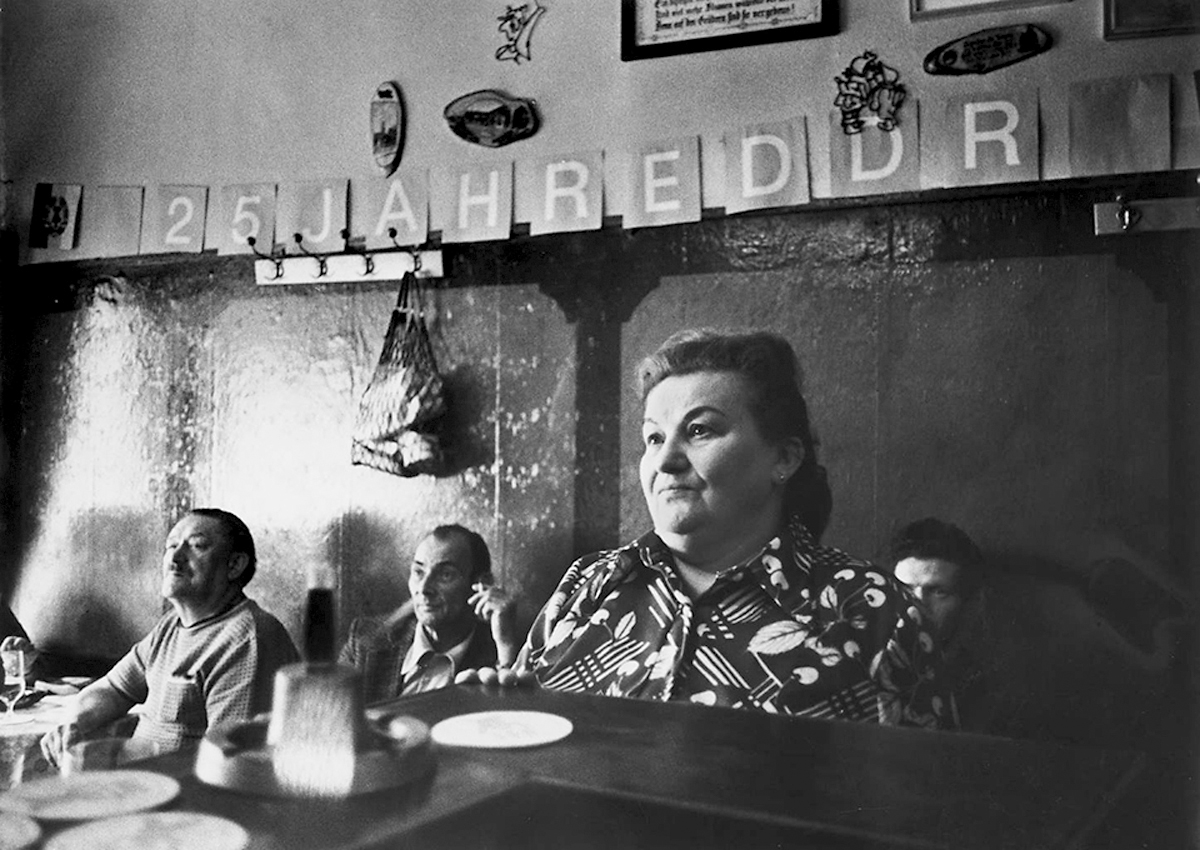
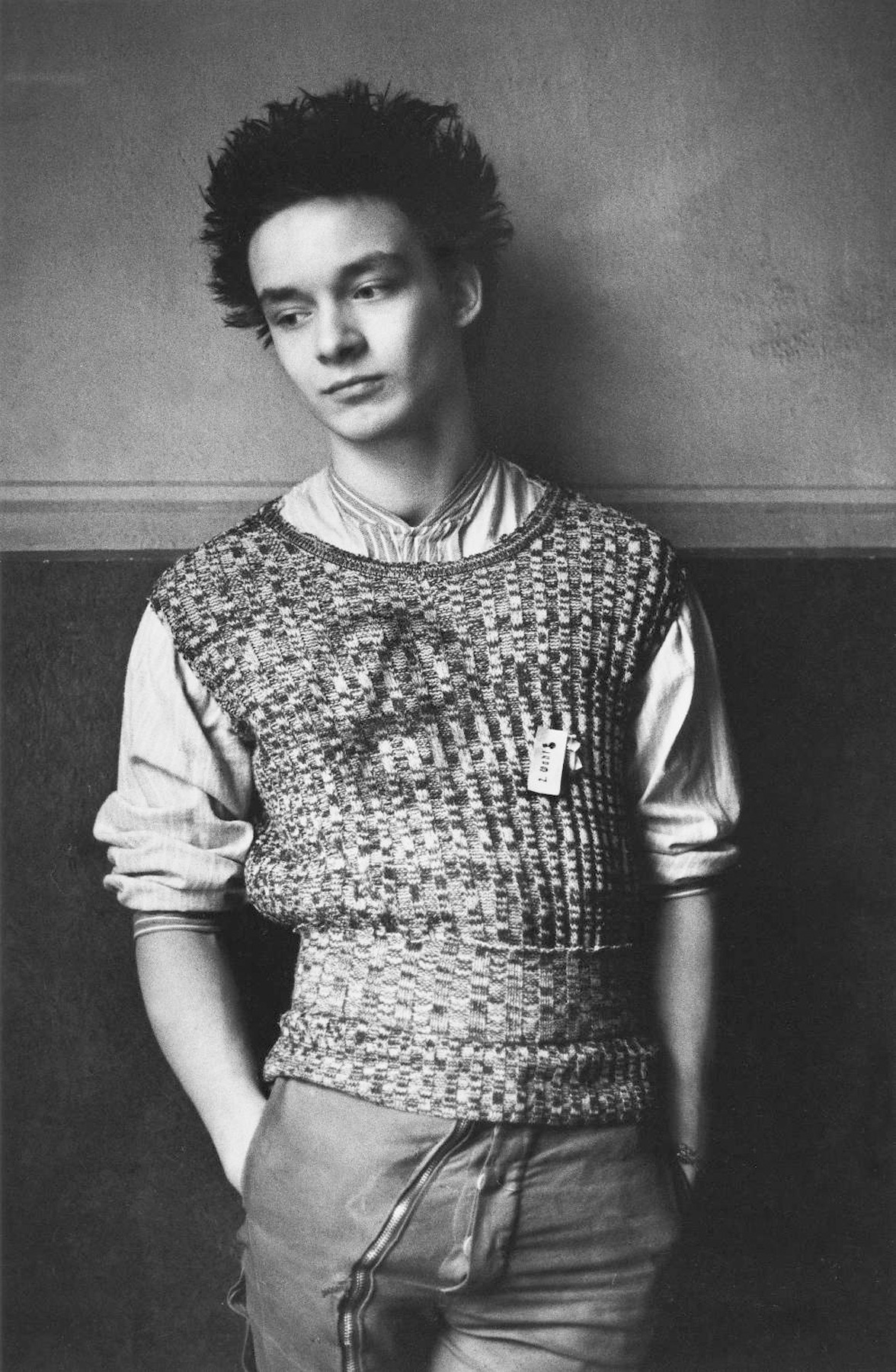
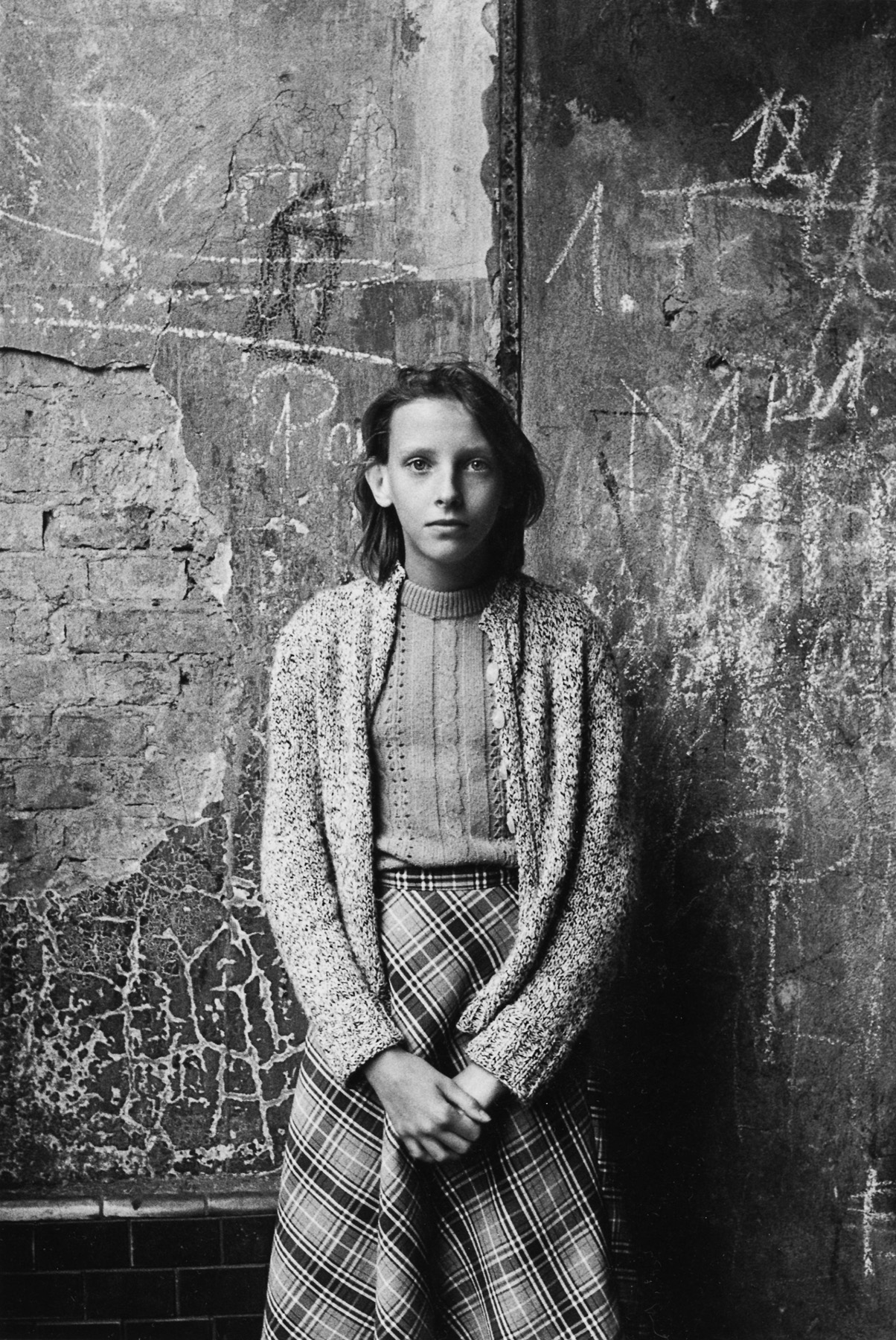
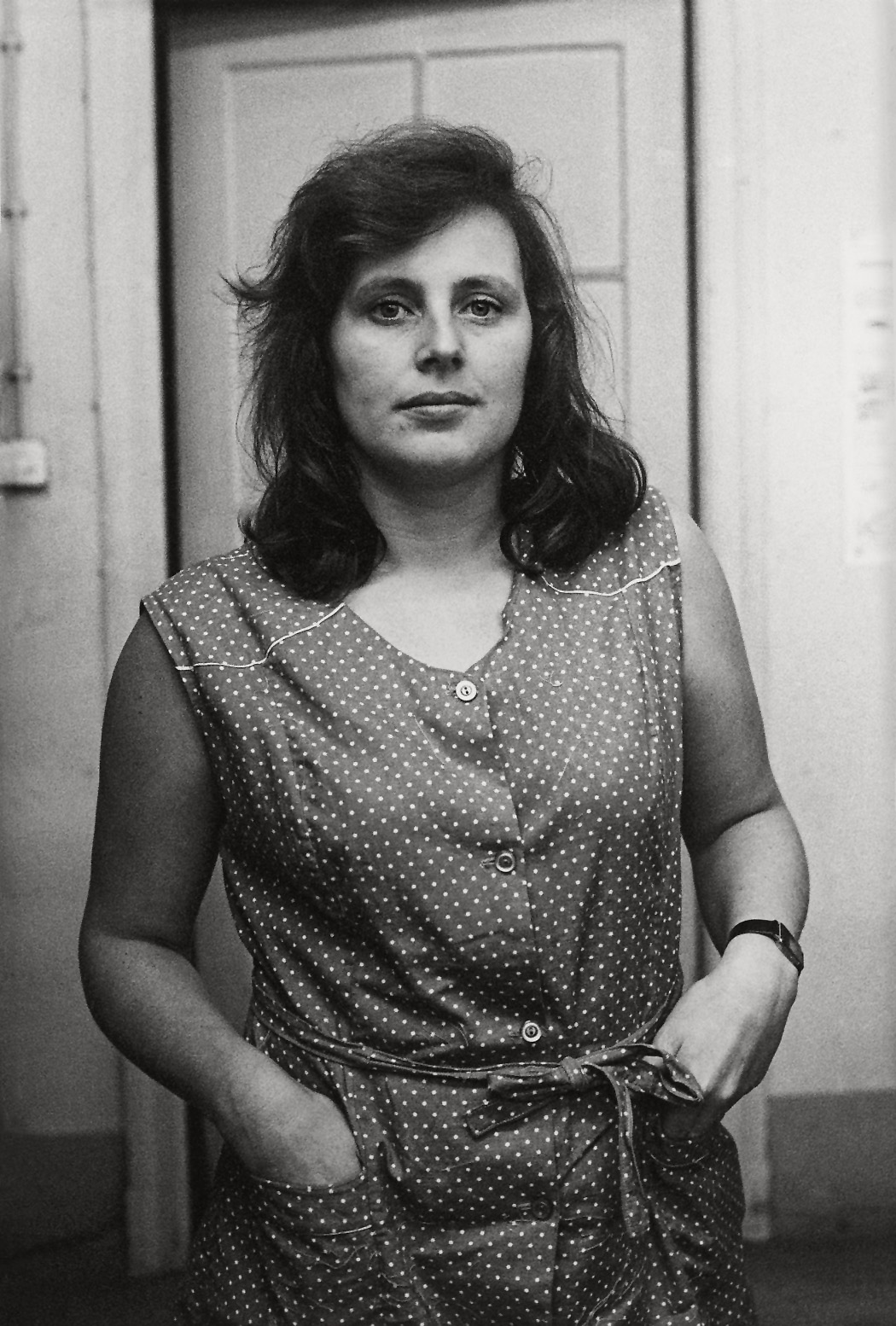
Exhibition: ‘Wolfgang Schulz and the Photography Scene around 1980’ at the Museum für Kunst und Gewerbe Hamburg

Exhibition dates: 14th June – 24th November, 2019

Featured photographers: Wolfgang Schulz, Hans Christian Adam, Dörte Eißfeldt, Verena von Gagern, André Gelpke, Dagmar Hartig, Andreas Horlitz, Reinhard Matz, Angela Neuke, Heinrich Riebesehl, Wilhelm Schürmann, Holger Stumpf, Petra Wittmar, and Miron Zownir


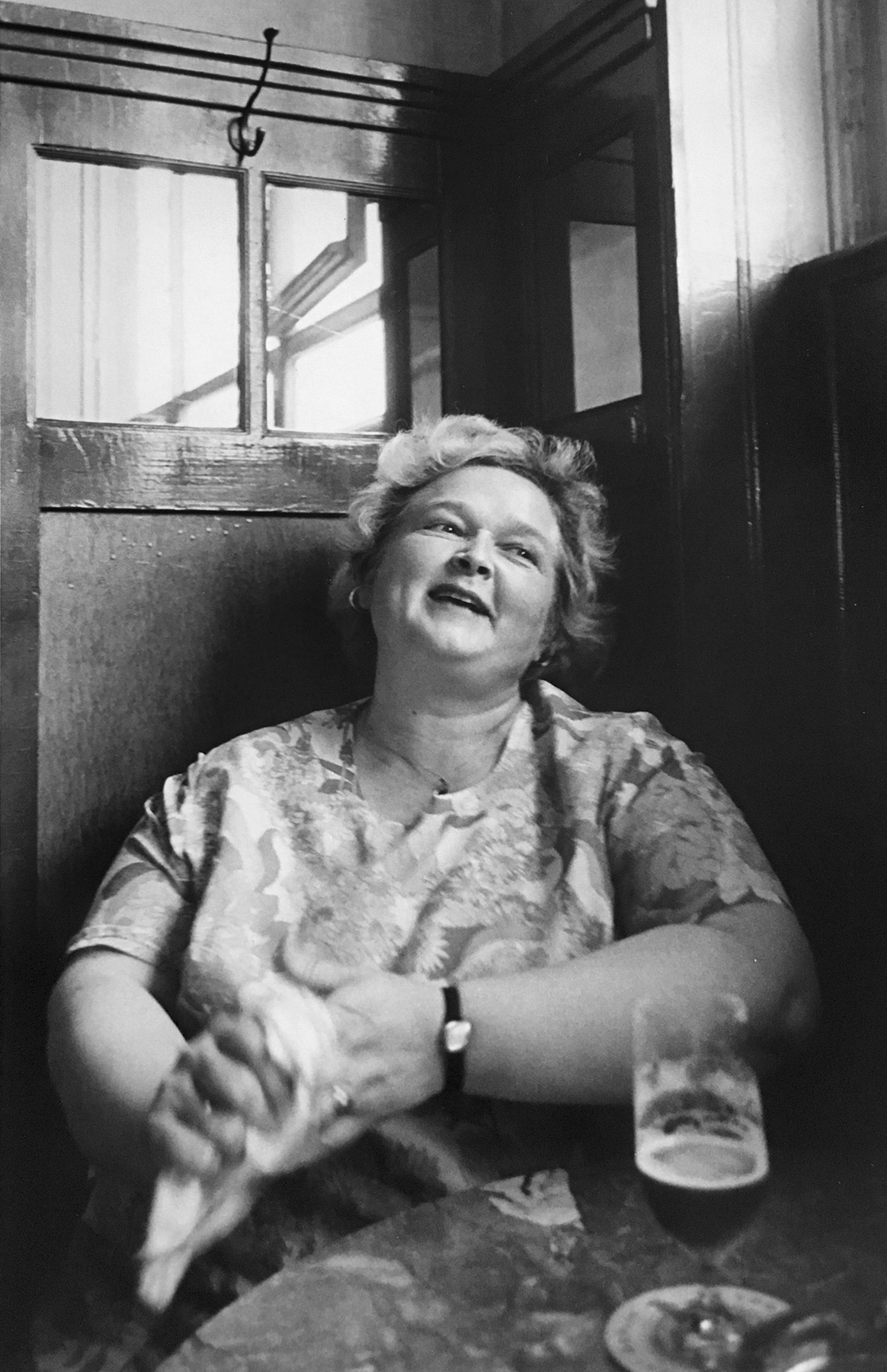
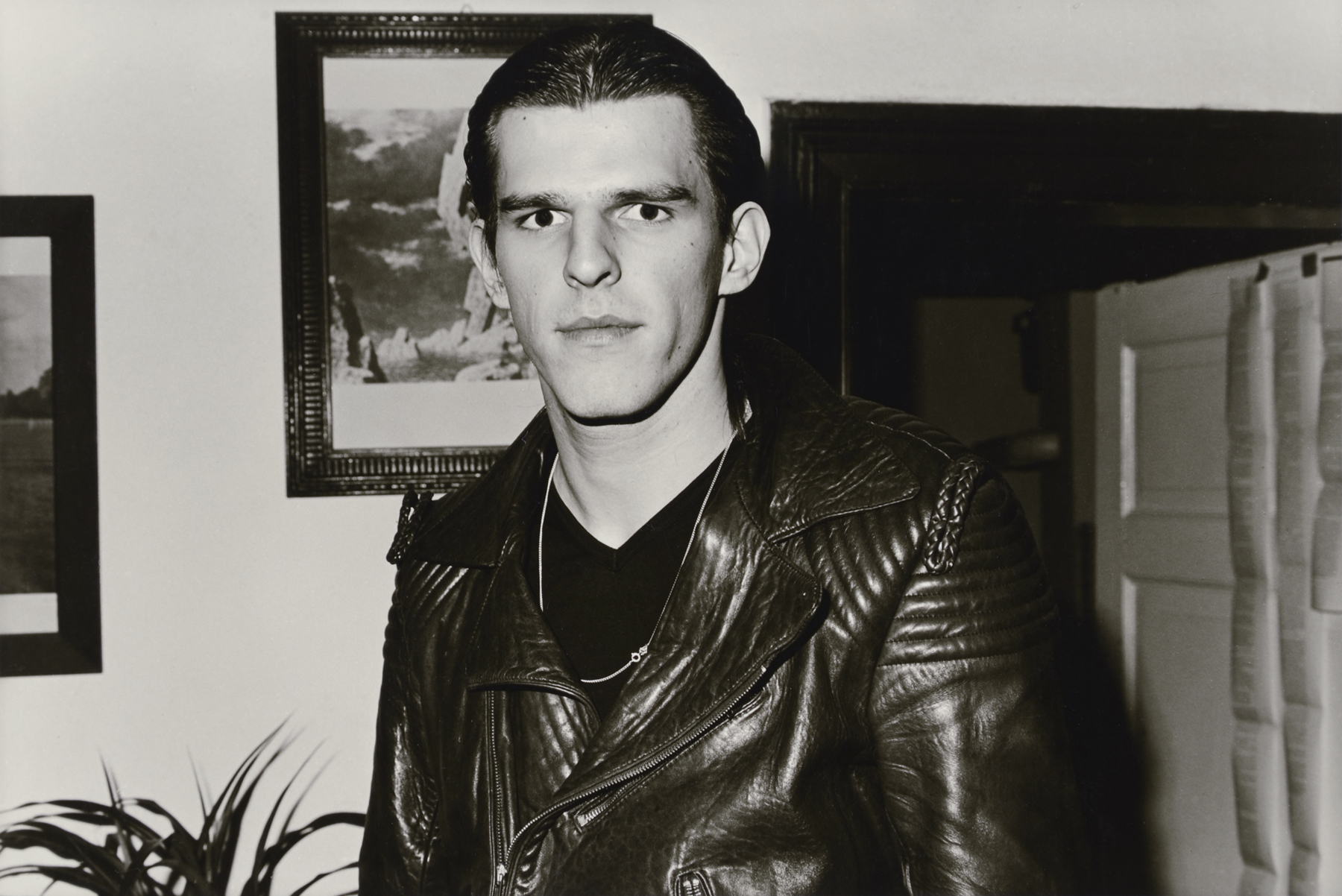
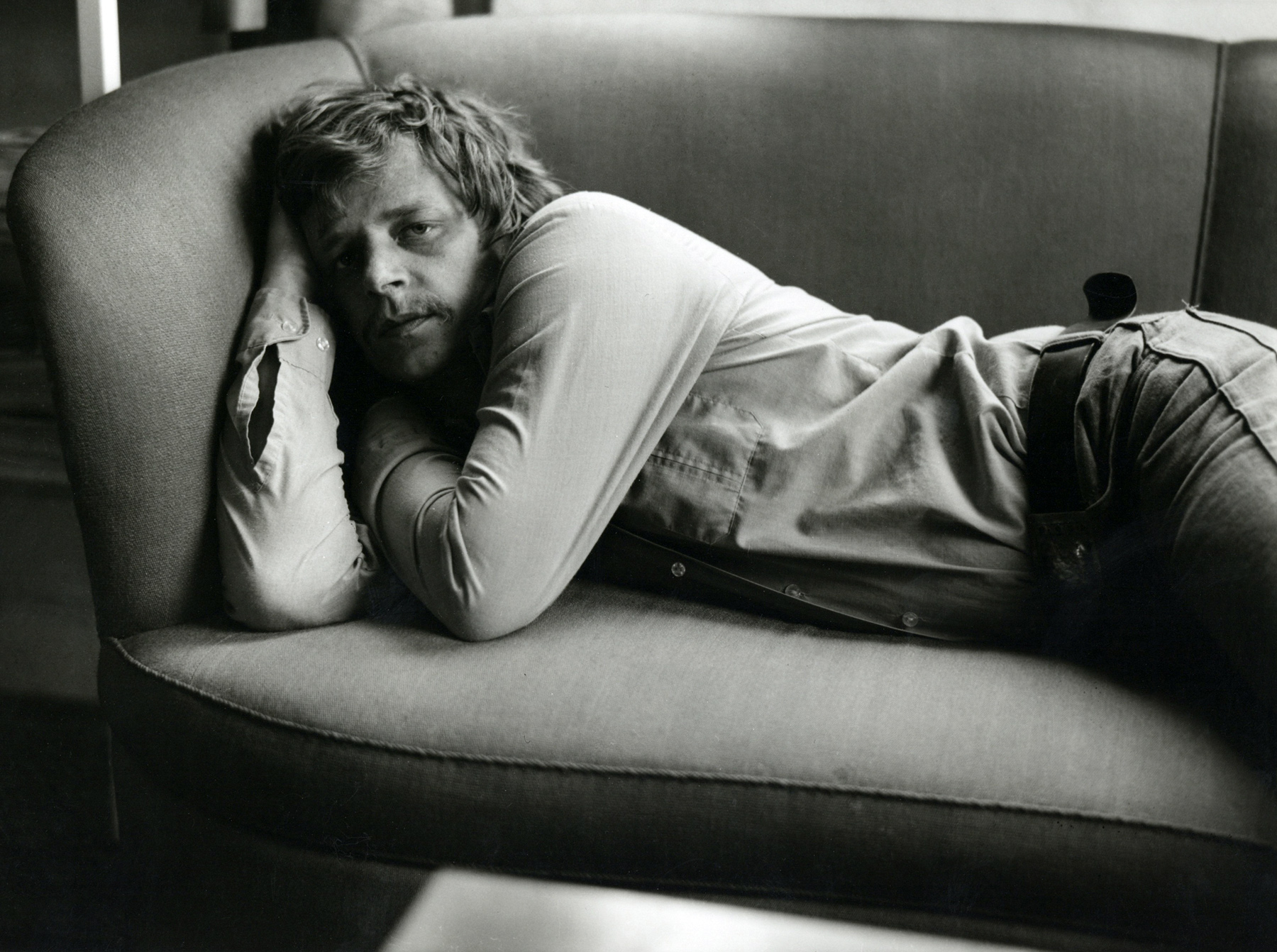
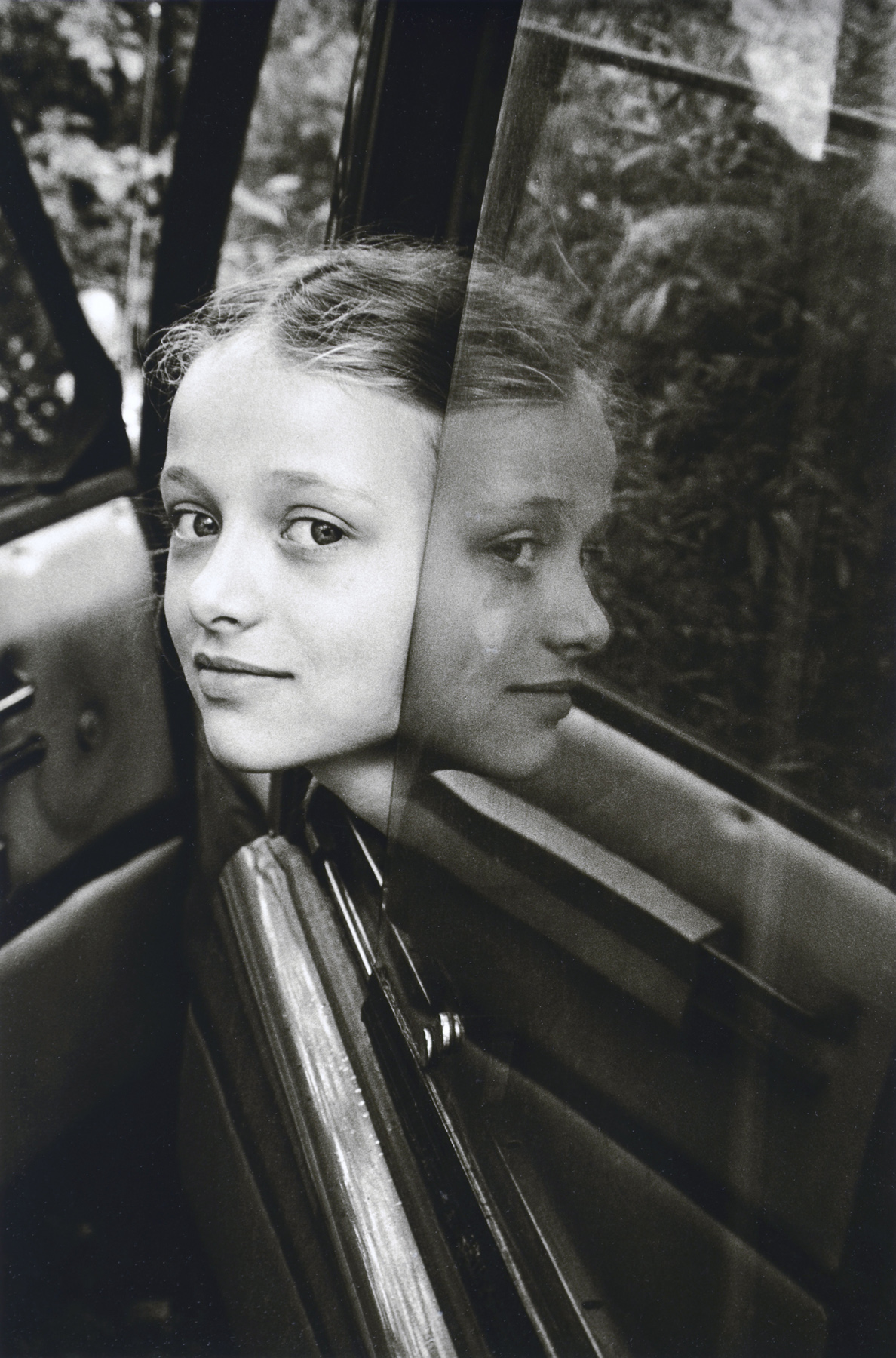
Wolfgang Schulz (German, 1944-2020) 'Michael' 1980


Wolfgang Schulz (German, 1944-2020)
Michael
1980
Silbergelatine | Gelatin silver paper
24 x 30cm
Privatsammlung | private collection
© Wolfgang Schulz


I love this gritty, inventive, subversive German photography from the late 1970s – early 1980s. Challenge me. Take me bleak places. Tell it like it is, baby…

Marcus


Many thankx to the Museum für Kunst und Gewerbe Hamburg for allowing me to publish the photographs in the posting. Please click on the photographs for a larger version of the image.


Wolfgang Schulz (German, 1944-2020) 'Selbstportrait' | 'Self-Portrait, Riesweiler' 1978


Wolfgang Schulz (German, 1944-2020)
Selbstportrait | Self-Portrait, Riesweiler
1978
Silbergelatine | Gelatin silver paper
24 x 30cm
Privatsammlung | private collection
© Wolfgang Schulz


Wolfgang Schulz (German, 1944-2020) 'Ohne Titel' | 'Untitled' um | c. 1980


Wolfgang Schulz (German, 1944-2020)
Ohne Titel | Untitled
um | c. 1980
Silbergelatine | Gelatin silver paper
24 x 30cm
Privatsammlung | private collection
© Wolfgang Schulz


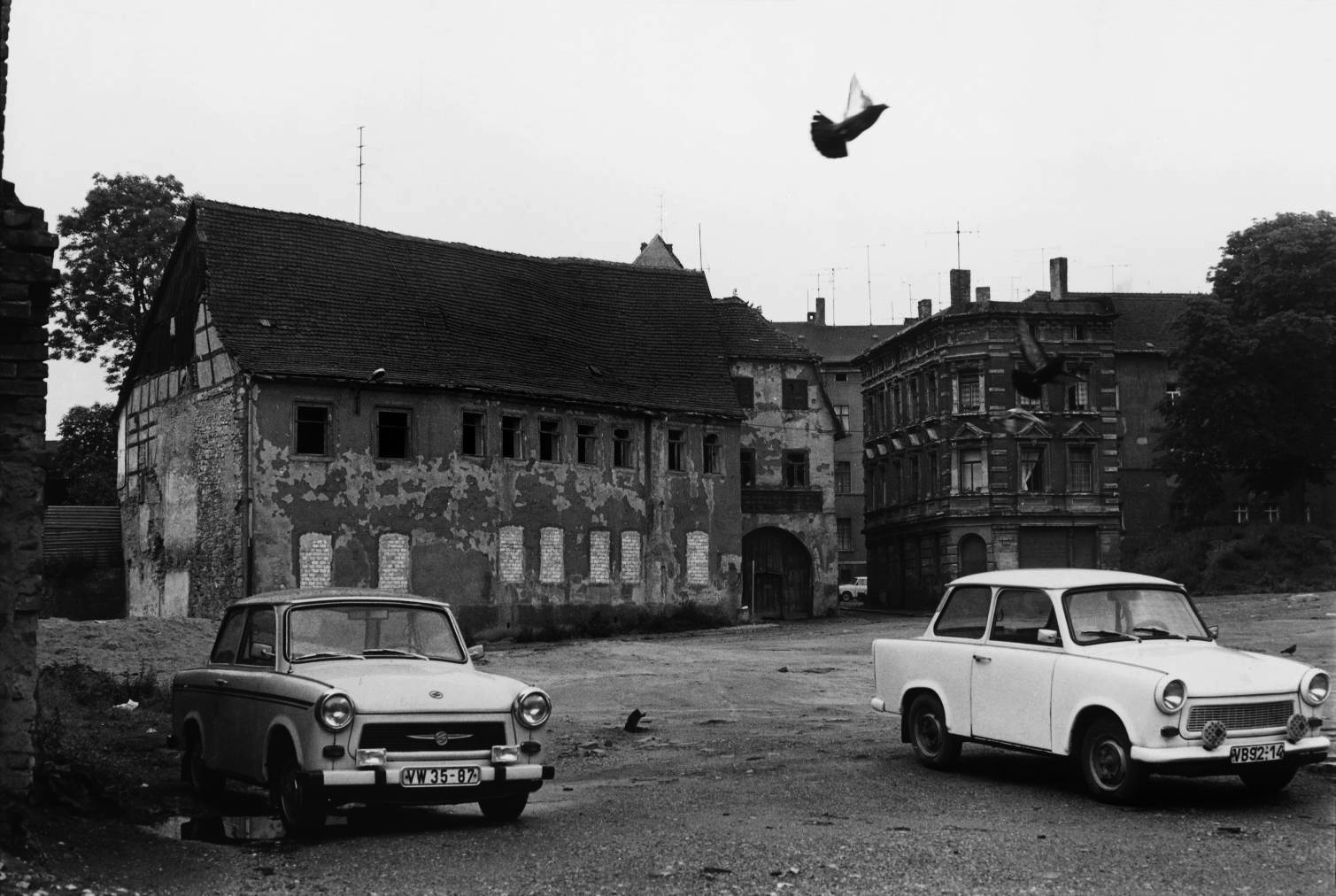
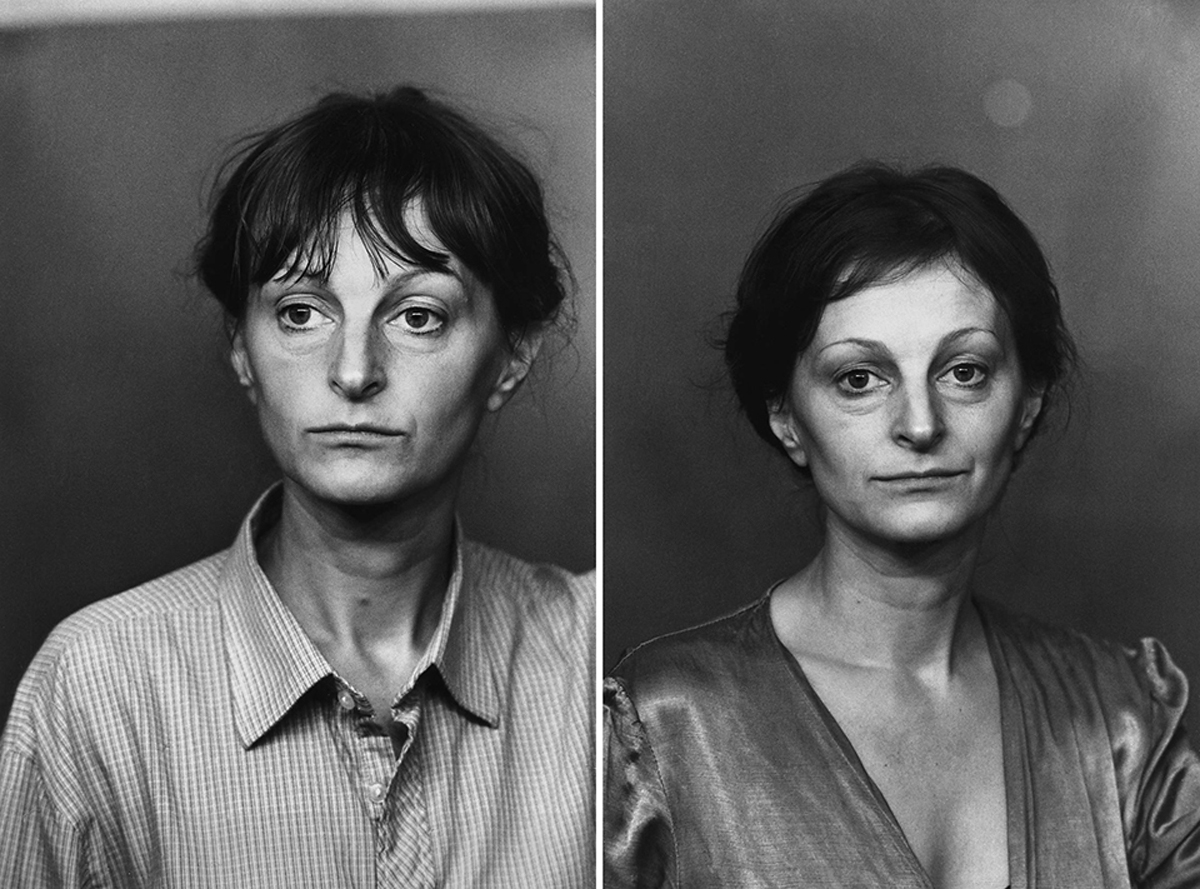
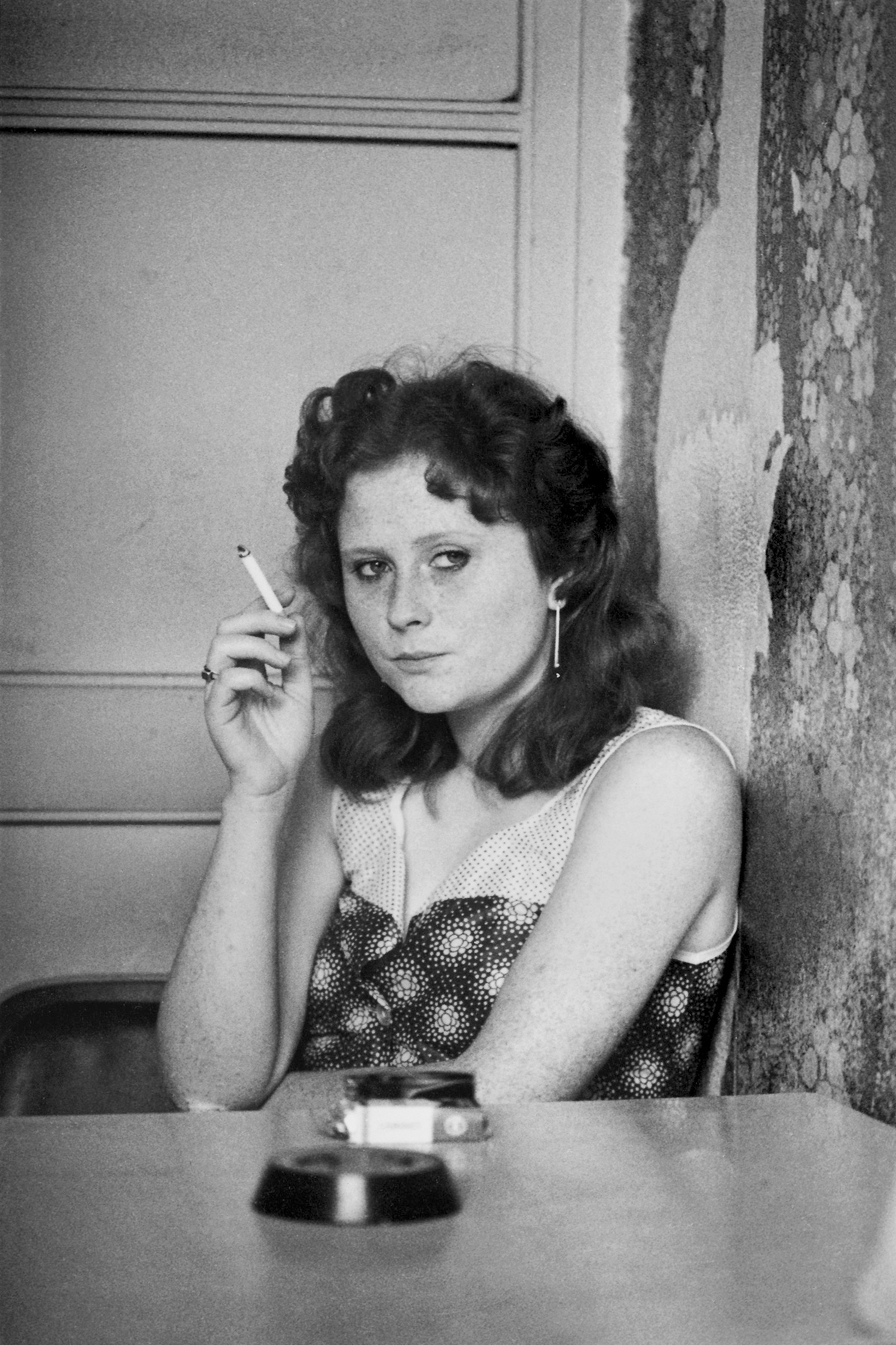
As part of its exhibition series Reconsidering Photography, the Museum für Kunst und Gewerbe Hamburg is undertaking a survey of the German photography scene around the year 1980. The springboard for the examination is the journal Fotografie. Zeitschrift internationaler Fotokunst, published by Wolfgang Schulz (b. 1944) between 1977 and 1985. On the occasion of the exhibition, MKG is inviting photography experts Reinhard Matz (Cologne), Steffen Siegel (Folkwang University Essen), and Bernd Stiegler (University of Konstanz) to relate their research project on the 1980s to the historical photographs in the MKG collection. The aim of the collaboration is to create a historical archaeology of German photography around 1980 based on the example of the journal Fotografie and its protagonists. The exhibition will show some 150 photos by Wolfgang Schulz, Hans Christian Adam, Dörte Eißfeldt, Verena von Gagern, André Gelpke, Dagmar Hartig, Andreas Horlitz, Reinhard Matz, Angela Neuke, Heinrich Riebesehl, Wilhelm Schürmann, Holger Stumpf, Petra Wittmar, and Miron Zownir, together with the journal itself, accompanied by a series of interviews conducted with contemporary witnesses expressly for the exhibition.

Something remarkable happened in the field of photography between 1975 and 1985: important galleries were established and photography increasingly became a coveted item on the art market. Suddenly, collecting and exhibiting photographs in museums was no longer the exception. Photography really stepped into the limelight in style at the so-called Mediendocumenta in 1977. Basic academic reference books were published and a large number of journals were founded. These include both periodicals that since that time have dominated the scholarly discourse, such as History of Photography and Fotogeschichte, as well as magazines designed for the broader public with an interest in photography, including Camera Austria, European Photography, Volksfoto, and Fotokritik.

Among this second group was a journal that was published between 1977 and 1985 with a total of 40 issues, for which its editor, Wolfgang Schulz, who had studied physics and then taught himself photography, chose a name that was as concise as it was ambitious: Fotografie. Zeitschrift internationaler Fotokunst (later Fotografie: Kultur jetzt). Today, this journal seems to have been almost completely forgotten. And yet the achievements of the editor and the contributing authors and photographers surely deserve a closer look. The mix of images and texts they came up with is an important resource for exploring a photography scene that, around 1980, was working hard to establish the medium as an independent art form. At the same time, the 40 issues of Fotografie exude the charm of the open-ended and were shaped by the personal predilections of their editor. An in-depth study of the journal lets us return to the origins of recent photographic history in Germany, which today – surprisingly enough – seem largely to have been buried in the dust of the past.

The exhibition is divided into four sections. It pays tribute to the photographic work of Wolfgang Schulz from the period around 1980, presents works by photographers that for the most part found their way into the MKG collection during that era, displays all 40 issues of the journal Fotografie (unfurling an impressive creative panorama), and lets contemporary witnesses have their say in video interviews as a kind of “oral history.”

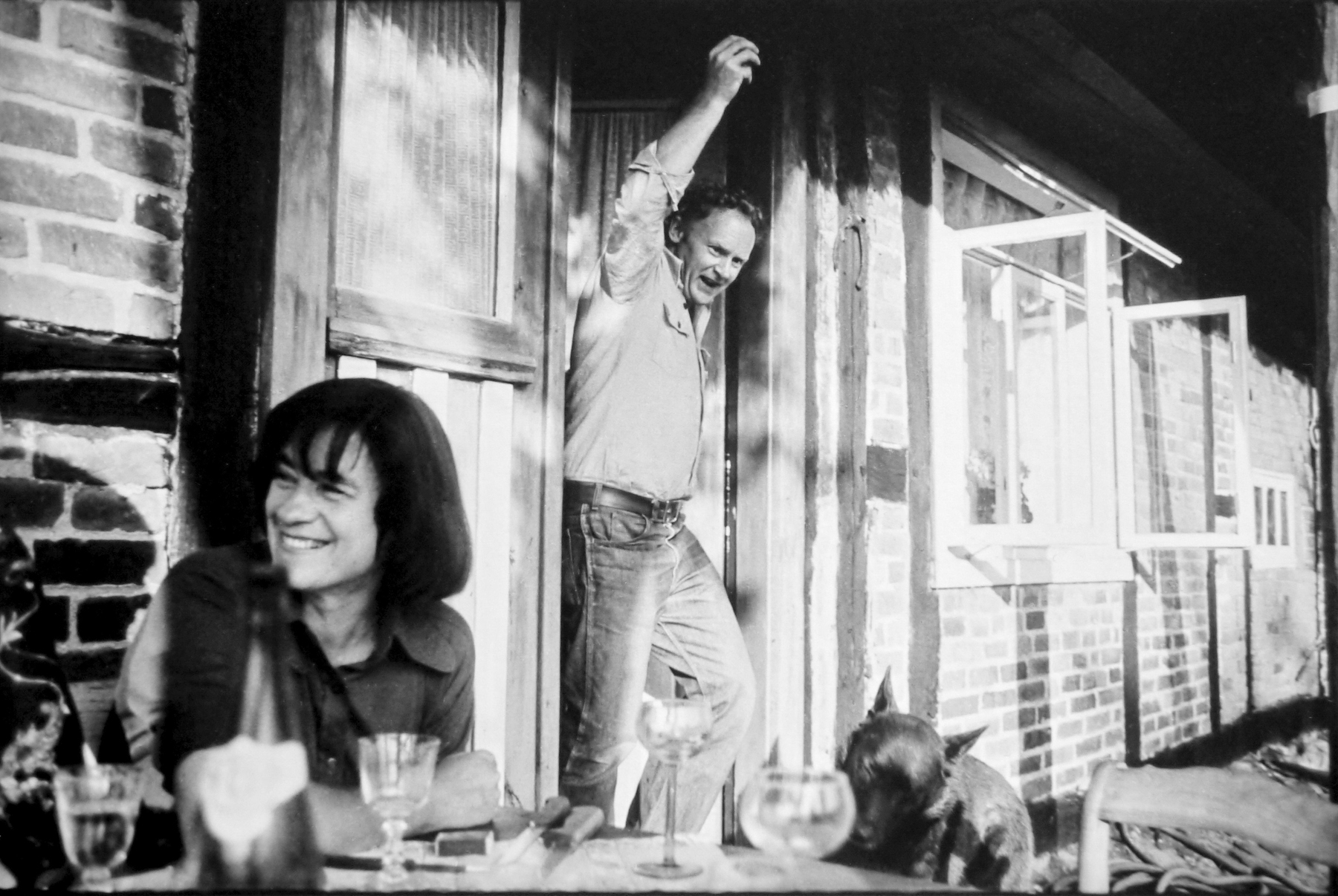
Wolfgang Schulz was not merely one of the first journal editors to set himself the task of presenting “a complete overview of contemporary photography with a focus on German photography” but also a notable photographer in his own right. In his photography, as in his editorial work, Schulz tried to evade established norms, while also trying his hand at different styles and subjects. In his Ireland pictures, for example, he followed the narrative tradition of pictorial reportage but simultaneously created a strictly documentary-seeming typology of barns and their various manifestations. With a series of shots of undergrowth, he turned his attention to the unspectacular, and he also portrayed the protagonists on the photography scene who crossed his threshold. For the first time ever, the exhibition is showing his photographic works from the period around 1980.

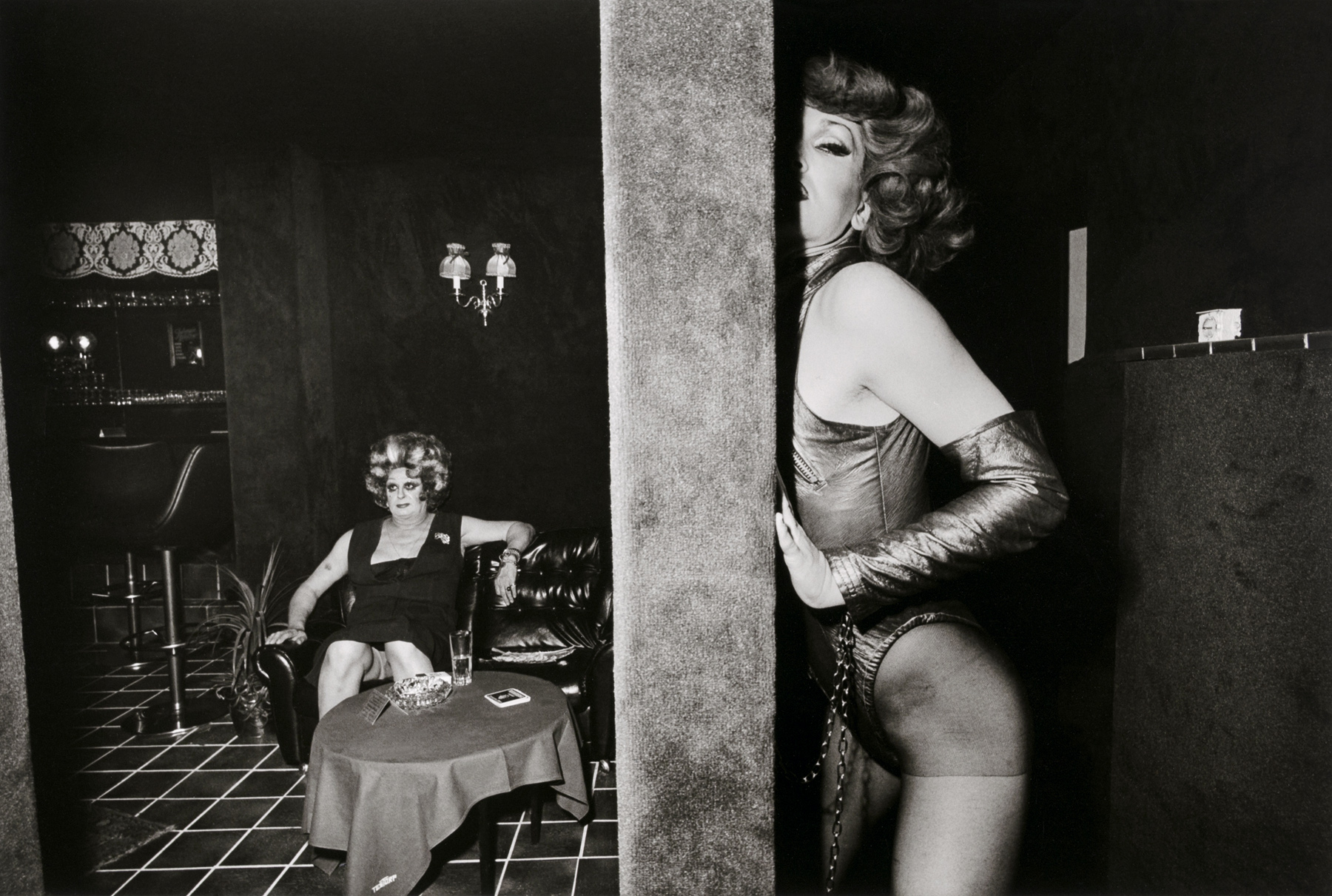
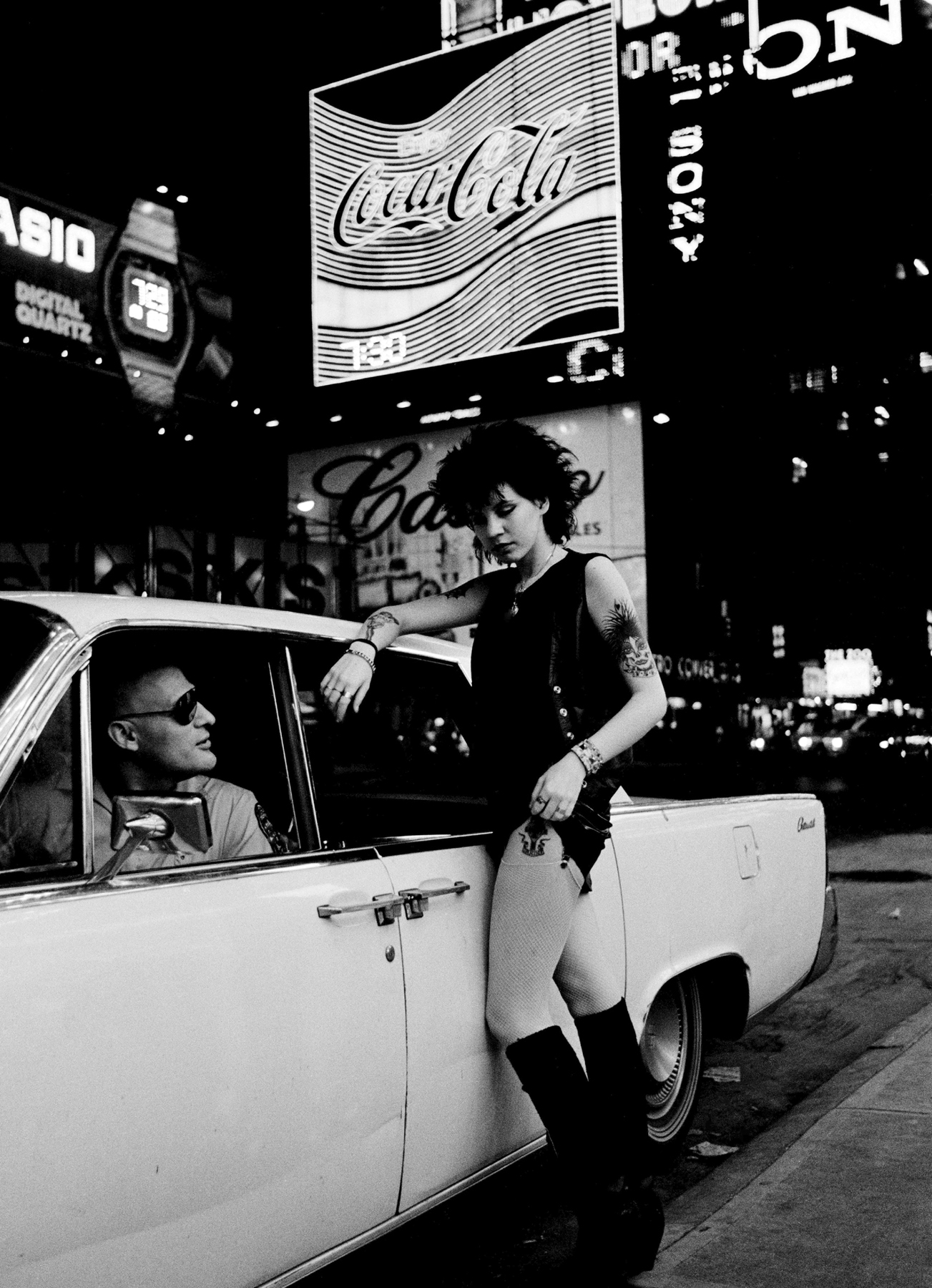
The images in the MKG collection give an idea of the broad scope covered by art photography in the 1980s. The selection is based on the photo spreads published in Fotografie and thus undoubtedly reveals the preferences of its editor, who seems to have been interested neither in the circle around Bernd and Hilla Becher nor in Michael Schmidt, and who deliberately set out to provoke his readers. Heinrich Riebesehl (1938-2010) explored the North German landscape in his documentary series Agrarlandschaften (Agricultural Landscapes). In a similarly factual style, Wilhelm Schürmann (b. 1946) devoted himself to a highly subjective theme: his childhood surroundings on Steinhammerstrasse in Dortmund. These images are supplemented by his photographs of urban landscapes and residential architecture. Riebesehl and Schürmann both sought their motifs in the realities of life in West Germany that confronted them everywhere they looked. André Gelpke (b. 1947) for his part explored Hamburg’s St. Pauli entertainment district for an independent series he called Sex Theater. He conveys here his view of erotic theatre as a mirror of society that tellingly reveals the audience’s double standards. Wolfgang Schulz also printed Miron Zownir’s pictures of New York’s underground SM, queer, and transsexual scene. These photo spreads reflect the editor’s interest in non-establishment subcultures and in people living on the margins of society.

The photography scene around 1980 was predominantly male: of 147 portfolios published in Fotografie, only 24 presented female photographers. One of the privileged few, Dörte Eißfeldt (b. 1950), combined in her work Große Liebe (True Love, 1980) photographic montage techniques with the serial principle, creating in the darkroom photograms with motifs from her own daily life. Her approach might be dubbed “poetic photography,” the term used by photographer Verena von Gagern (b. 1946) to describe the “representation of private realities.” Von Gagern made pictures in the late 1970s within the “emotional realm” of her own family, among them the image Barbara (1978). Petra Wittmar (b. 1955) pursued by contrast a stricter documentary concept. In her series Spielplätze (Playgrounds, 1979), she takes a critical look at the dreary world of the modern metropolis.

Press release from the Museum für Kunst und Gewerbe Hamburg


André Gelpke (German, b. 1947) 'Pulverfaß' | 'Powder Keg III' 1978


André Gelpke (German, b. 1947)
Pulverfaß | Powder Keg III
1978
Silbergelatinepapier | Gelatin silver paper
22 x 32.8cm
Museum für Kunst und Gewerbe Hamburg
© André Gelpke


Miron Zownir (German-Ukrainian, b. 1953) 'New York' 1983


Miron Zownir (German-Ukrainian, b. 1953)
New York
1983
Silbergelatinepapier | Gelatin silver paper
23.2 x 15.4cm
© Miron Zownir


Verena von Gagern (German, b. 1946) 'Barbara' 1978


Verena von Gagern (German, b. 1946)
Barbara
1978
Silbergelatinepapier | Gelatin silver paper
29 x 19.8cm
Museum für Kunst und Gewerbe Hamburg
© Verena von Gagern


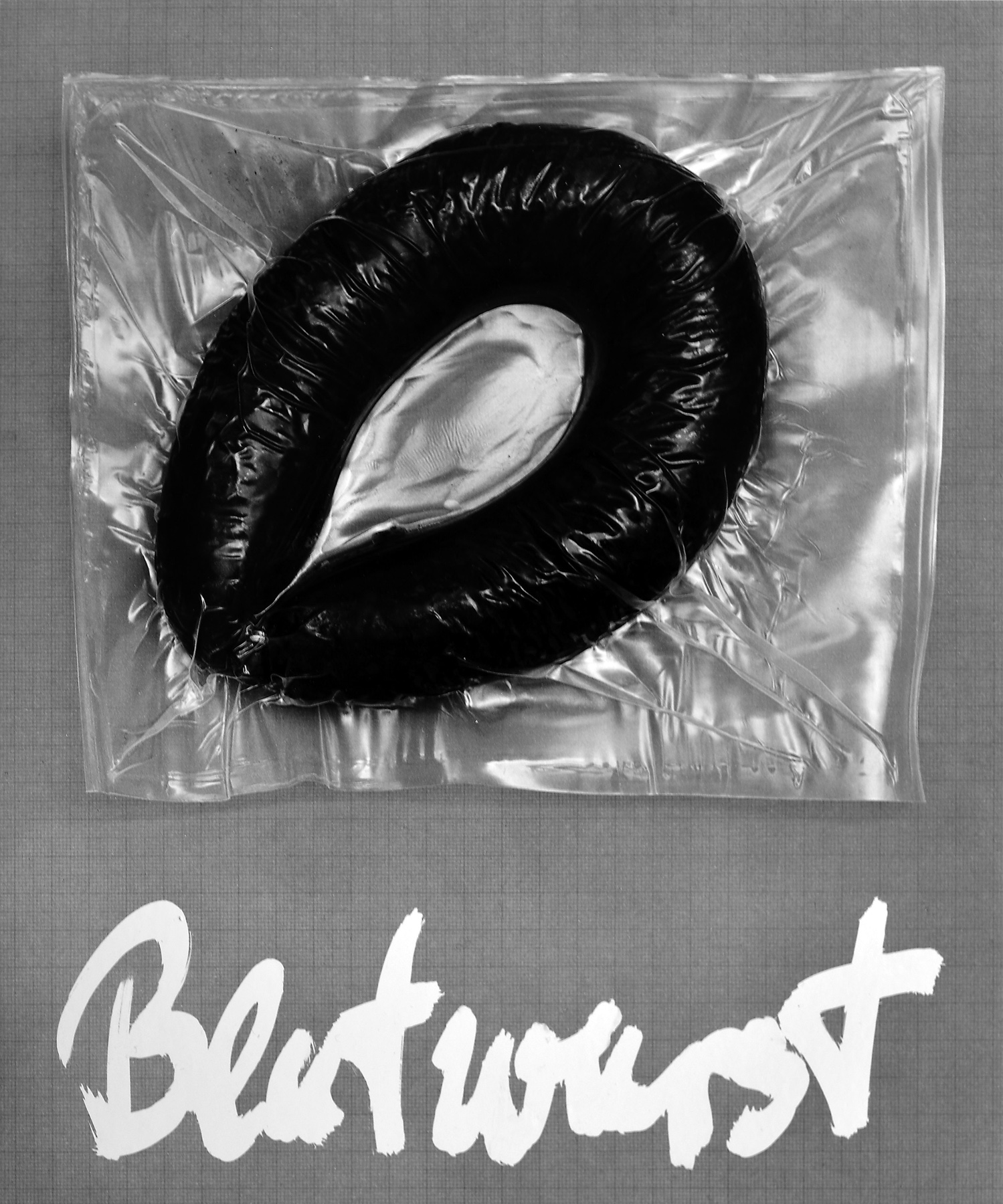
Reinhard Matz (German, b. 1952) 'Blutwurst' | 'Blood Sausage' 1981


Reinhard Matz (German, b. 1952)
Blutwurst | Blood Sausage
1981
Aus der neunteiligen Serie Wurst | from the nine-part series Wurst
Silbergelatinepapier | Gelatin silver paper
22.5 x 27cm
© Reinhard Matz, Köln


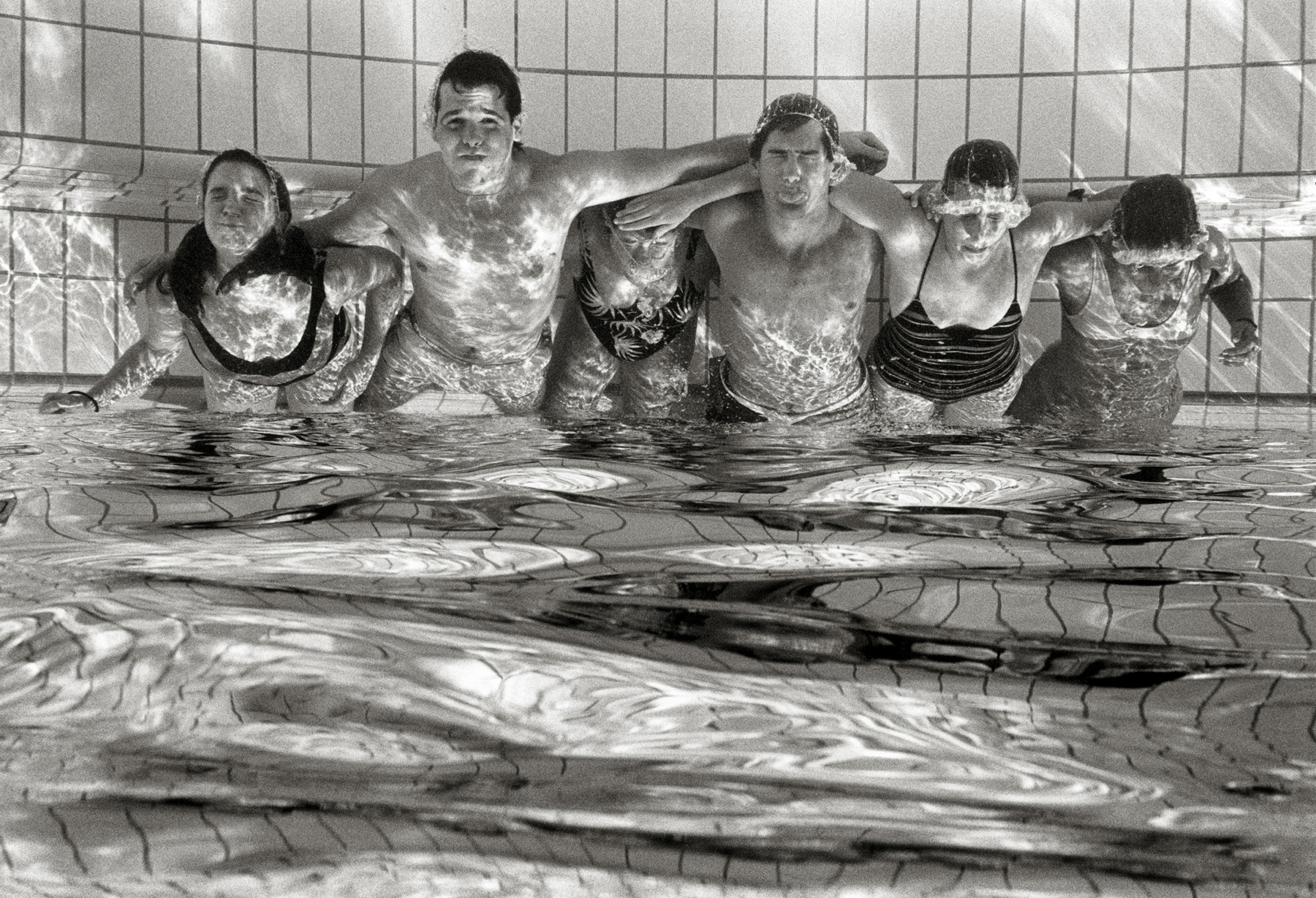
Hans-Christian Adam (German, b. 1948) 'Unterwasser-Gruppenportrait' | 'Underwater Group Portrait' 1985


Hans-Christian Adam (German, b. 1948)
Unterwasser-Gruppenportrait | Underwater Group Portrait (Salzburg College Photo Students)
Vigaun bei | near Hallein, Salzburg, 1985
Silbergelatinepapier | Gelatin silver paper
19.2 x 26.5cm
© Hans Christian Adam


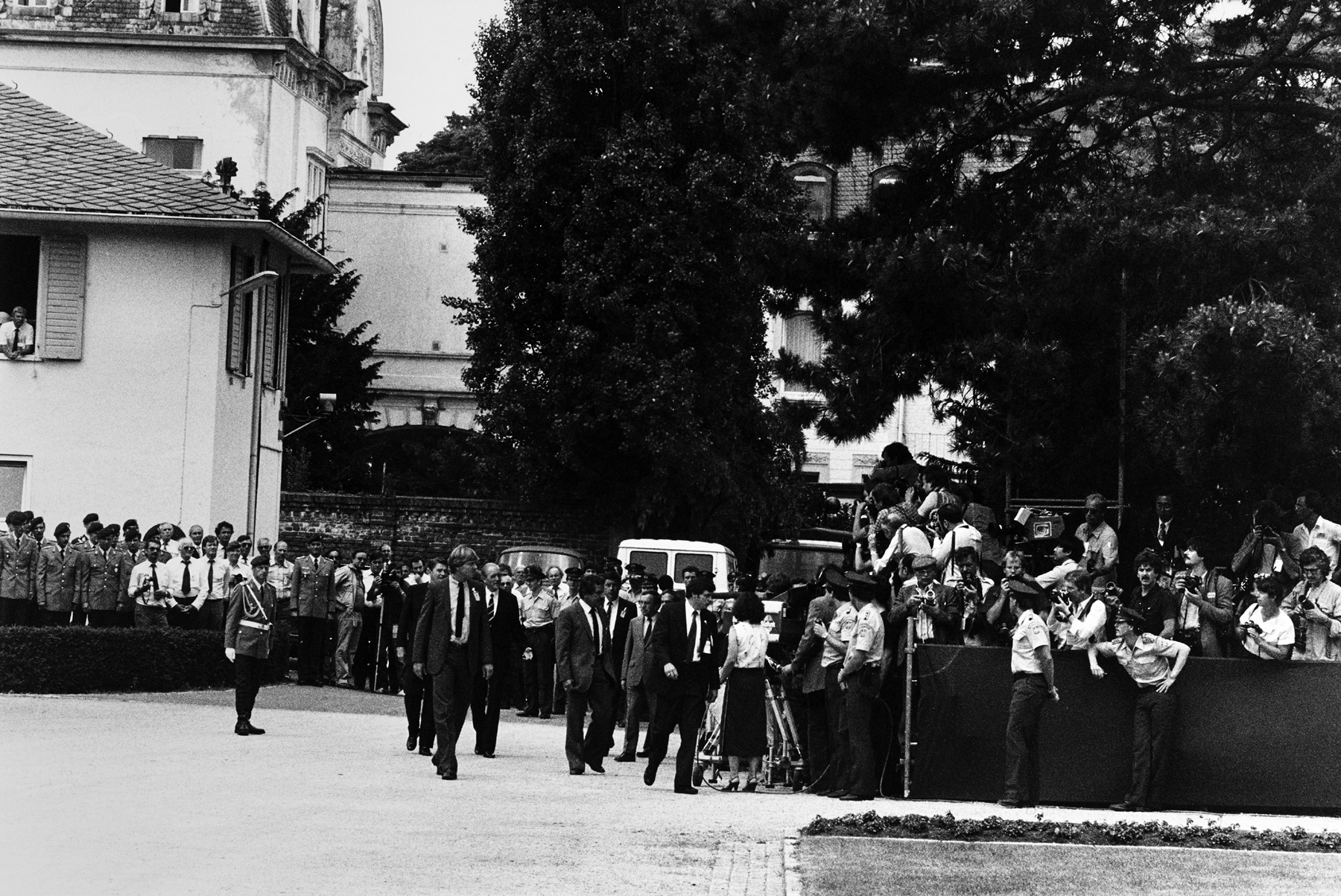
Angela Neuke (German, 1943-1997) 'US President Ronald Reagan visiting Germany for the NATO Ministerial Conference in Bonn on June 9 and 10, 1982'


Angela Neuke (German, 1943-1997)
Deutschlandbesuch von US-Präsident Ronald Reagan in Zusammenhang mit der NATO-Ministerkonferenz am 9. und 10. Juni 1982 in Bonn, 1982 | US President Ronald Reagan visiting Germany for the NATO Ministerial Conference in Bonn on June 9 and 10, 1982
Silbergelatinepapier | Gelatin silver paper
18,6 x 28cm
LVR Landesmuseum Bonn
© L. Lutz, 2019


Andreas Horlitz (German, 1955-2016) aus der Serie | from the series "Essen, Frühling 1981" 1981


Andreas Horlitz (German, 1955-2016)
Aus der Serie | from the series Essen, Frühling 1981
1981
C-Prints
40.3 x 59.4cm + 13.9 x 59.4cm
Museum Folkwang, Essen
© VG Bild-Kunst, Bonn 2019


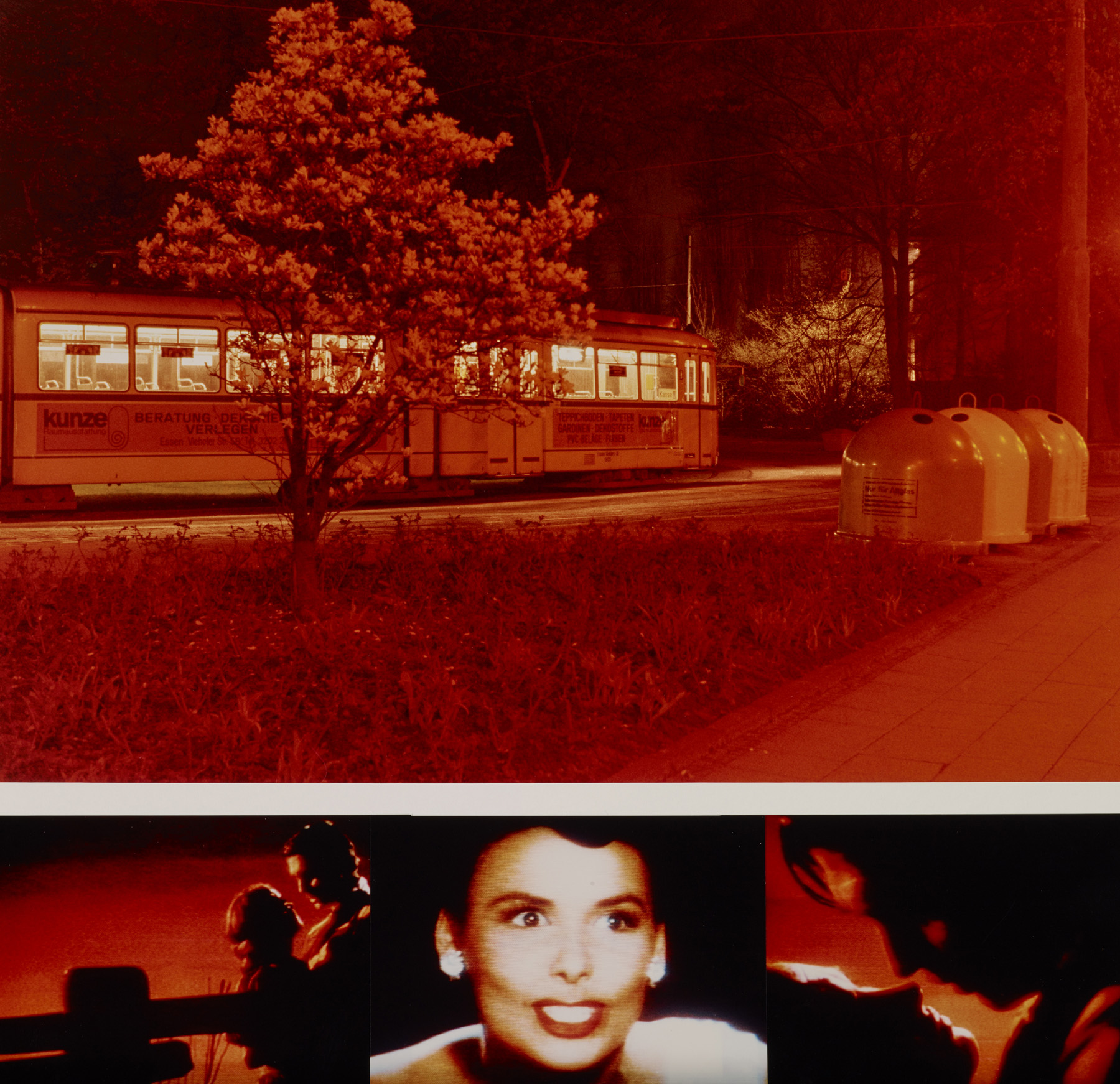
Dagmar Hartig (German, b. 1952) 'Ohne Titel' | 'Untitled' 1981


Dagmar Hartig (German, b. 1952)
Ohne Titel | Untitled
1981
Aus der Serie | from the series Plastic World
C-Print
20.3 x 30.2cm
© VG Bild-Kunst, Bonn 2019


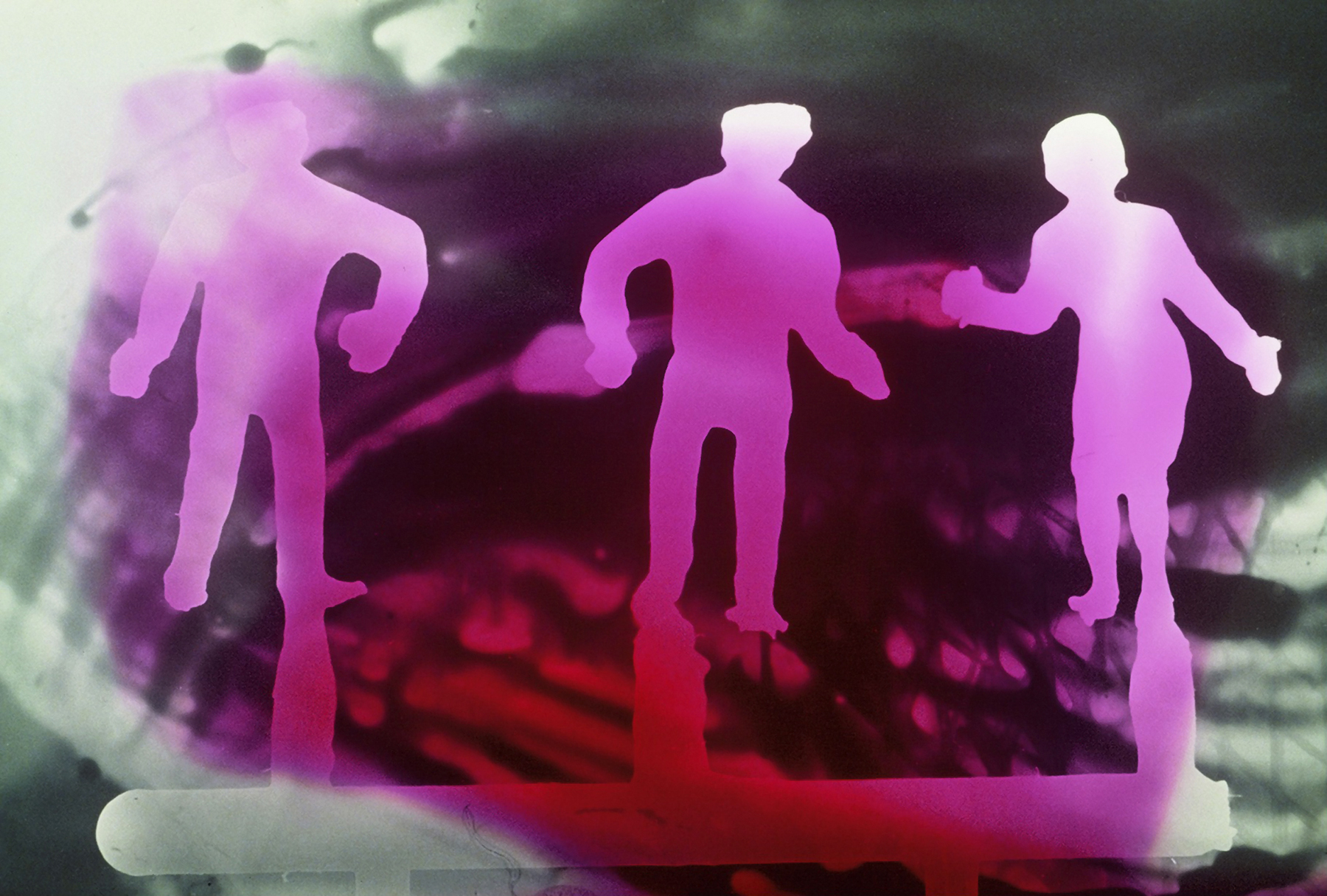
Dörte Eißfeldt (German, b. 1950) Aus | from "Dunkelrücken" 1986


Dörte Eißfeldt (German, b. 1950)
Aus | from Dunkelrücken
1986
Dia-Installation mit 170 Kleinbilddias und Tonspur | Slide installation with 170 35mm slides and soundtrack
© Dörte Eißfeldt


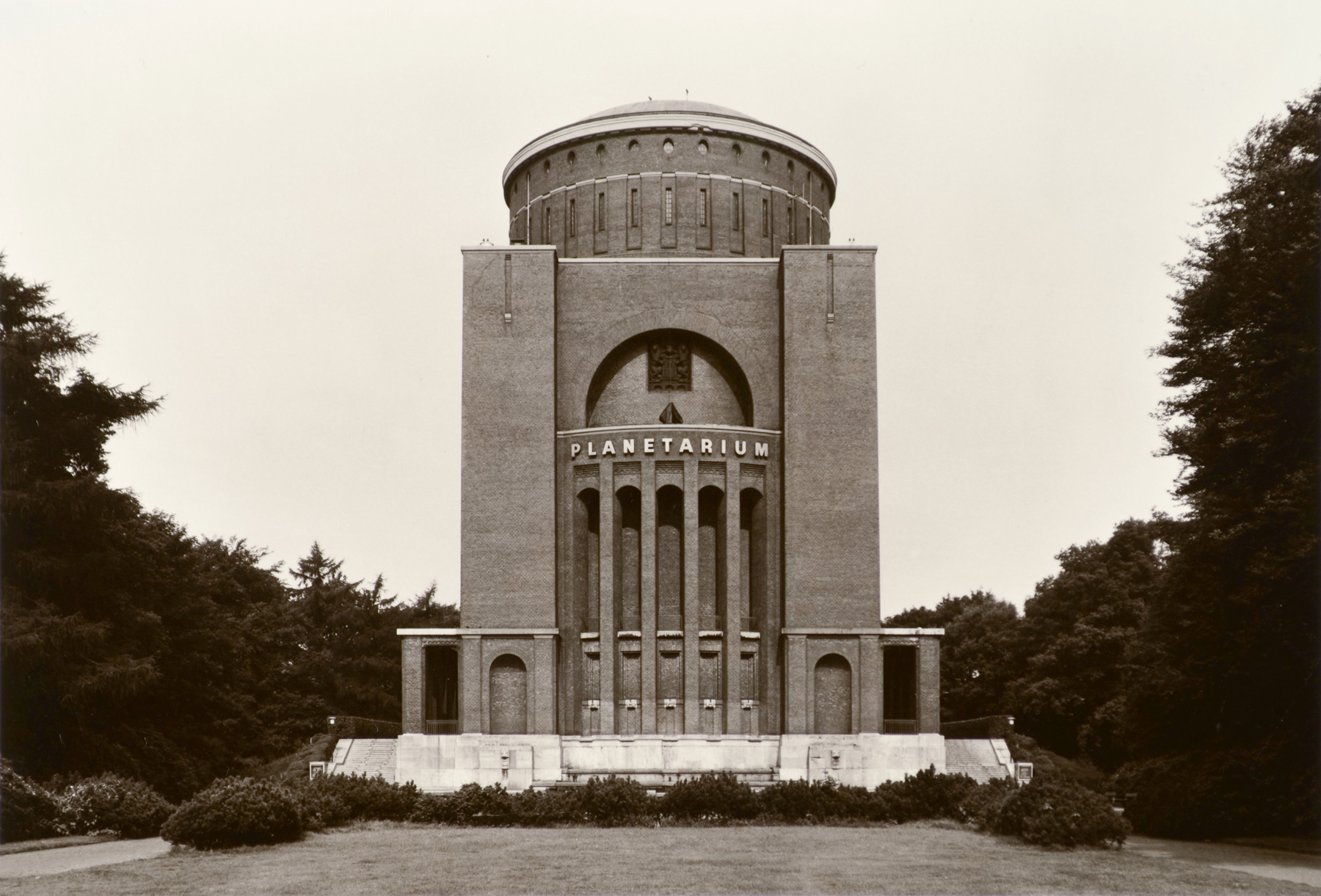
Holger Stumpf (German, b. 1953) 'Planetarium, Stadtpark' | 'city park Hamburg' 1979


Holger Stumpf (German, b. 1953)
Planetarium, Stadtpark | city park Hamburg
1979
Silbergelatinepapier | Gelatin silver paper
16 x 23.5cm
Museum für Kunst und Gewerbe Hamburg
© Holger Stumpf


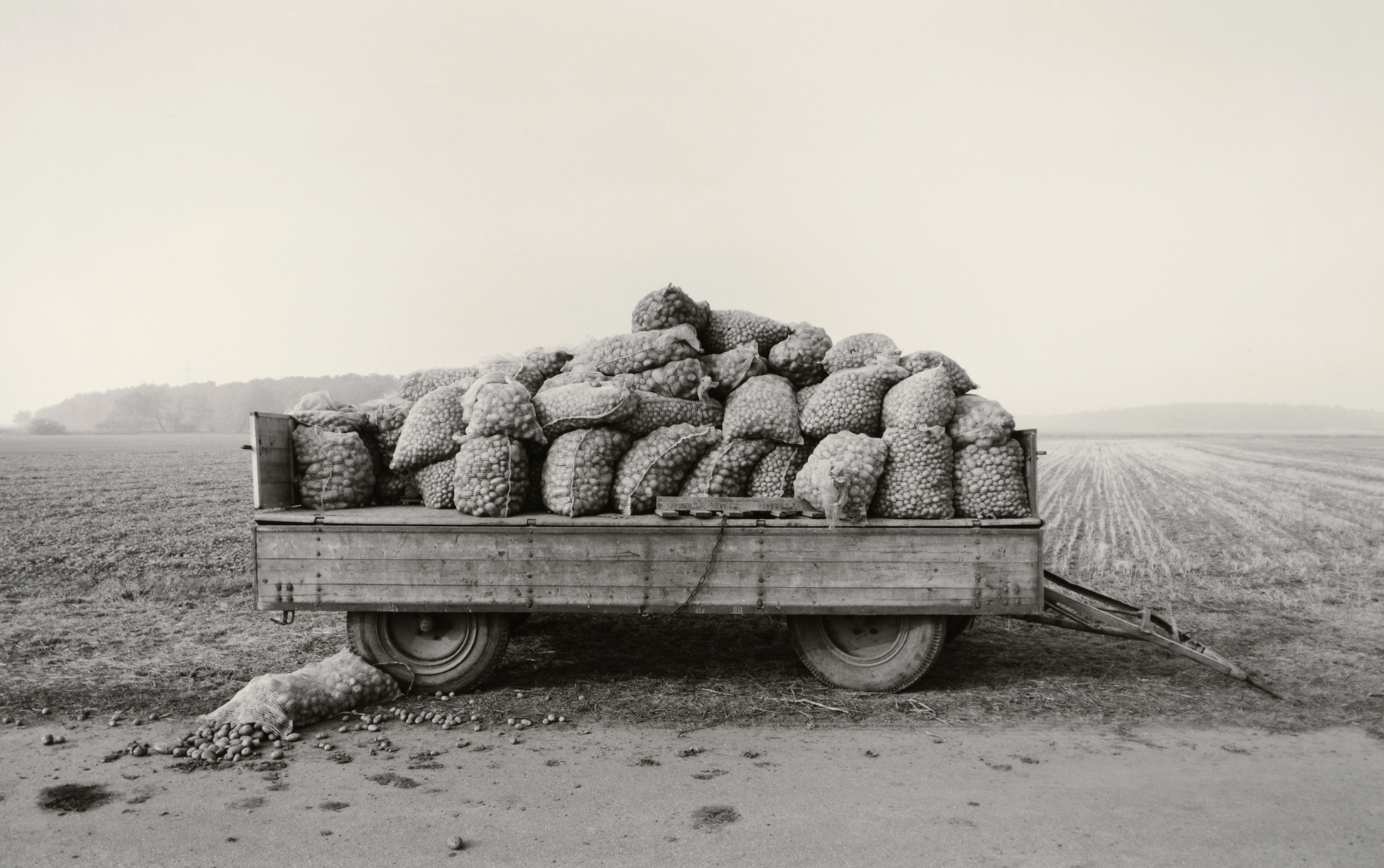
Heinrich Riebesehl (German, 1938-2010) 'Schillerslage (Hannover), Okt. 78' 1978


Heinrich Riebesehl (German, 1938-2010)
Schillerslage (Hannover), Okt. 78
1978
Aus der Serie Agrarlandschaften | from the series Agricultural landscapes
Silbergelatinepapier | Gelatin silver paper
22.6 x 35.9cm
Museum für Kunst und Gewerbe Hamburg
© VG Bild-Kunst, Bonn 2019


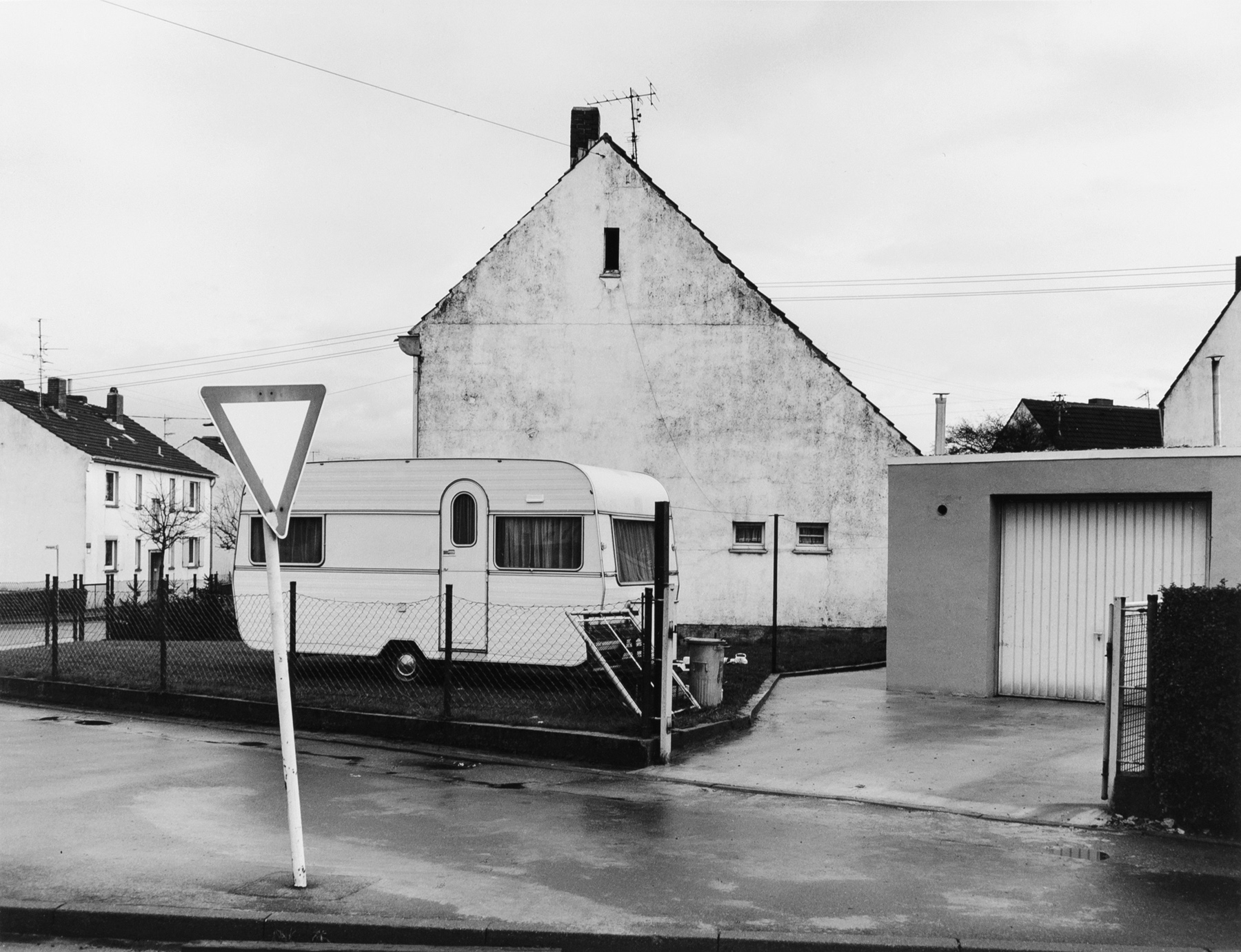
Wilhelm Schürmann (German, b. 1946) 'Kohlscheid' 1978


Wilhelm Schürmann (German, b. 1946)
Kohlscheid
1978
Silbergelatinepapier | Gelatin silver paper
21.4 x 28cm
Museum für Kunst und Gewerbe Hamburg
© Wilhelm Schürmann, Herzogenrath


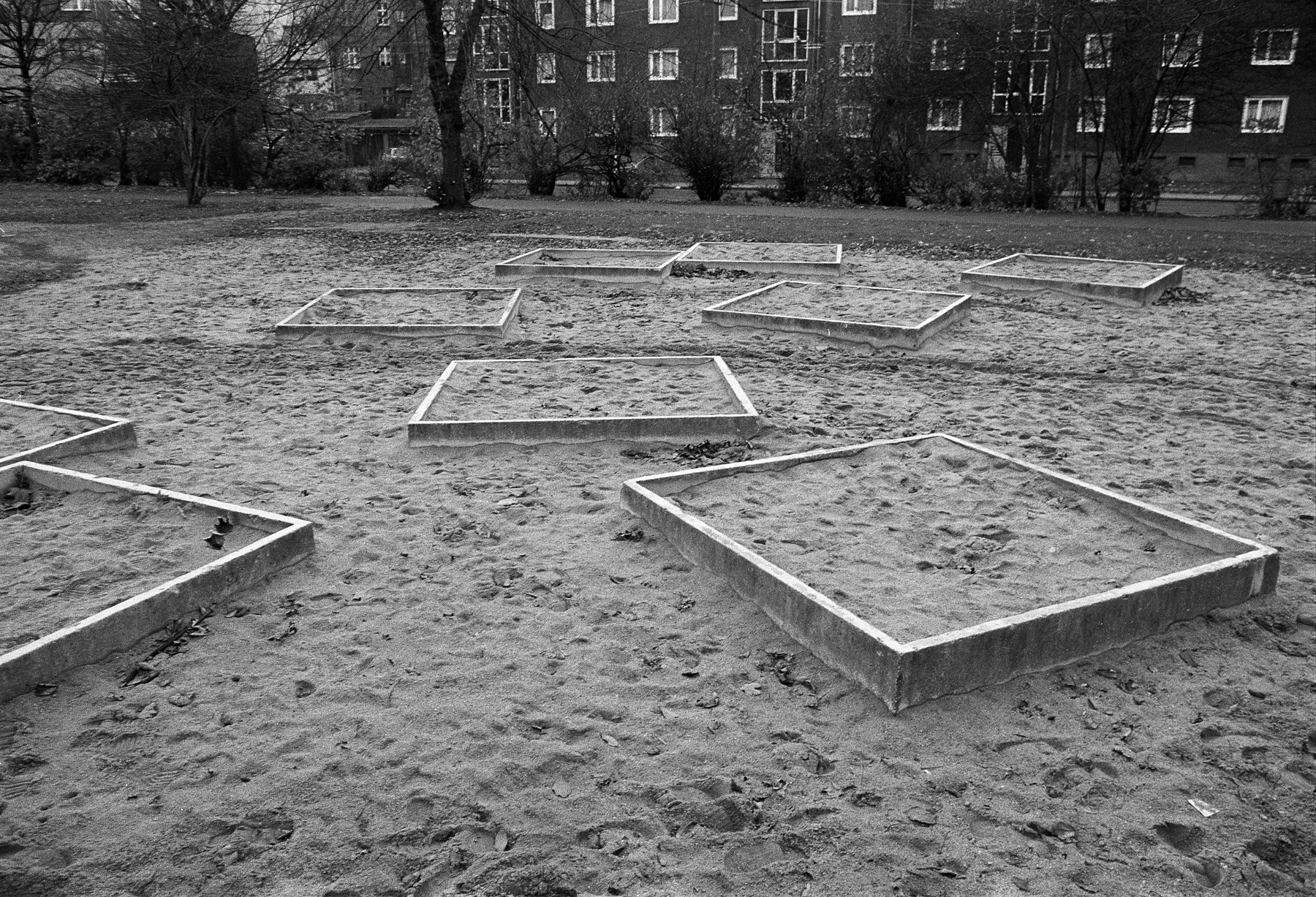
Petra Wittmar (German, b. 1955) Aus der Serie | from the series "Spielplätze" 1979


Petra Wittmar (German, b. 1955)
Aus der Serie Spielplätze | from the series Playgrounds
1979
Silbergelatinepapier | Gelatin silver paper
17 x 26cm
© Petra Wittmar


Museum für Kunst und Gewerbe Hamburg
Steintorplatz, 20099 Hamburg

Opening hours:
Tuesday to Sunday 10am – 6pm
Thursday 10am – 9pm
Closed Mondays

Museum fur Kunst und Gewerbe Hamburg website

LIKE ART BLART ON FACEBOOK

Back to top

Exhibition: ‘Once. Again. Photographs in Series’ at the J. Paul Getty Museum, Getty Center, Los Angeles

Exhibition dates: 9th July – 10th November, 2019

Curator: Mazie Harris


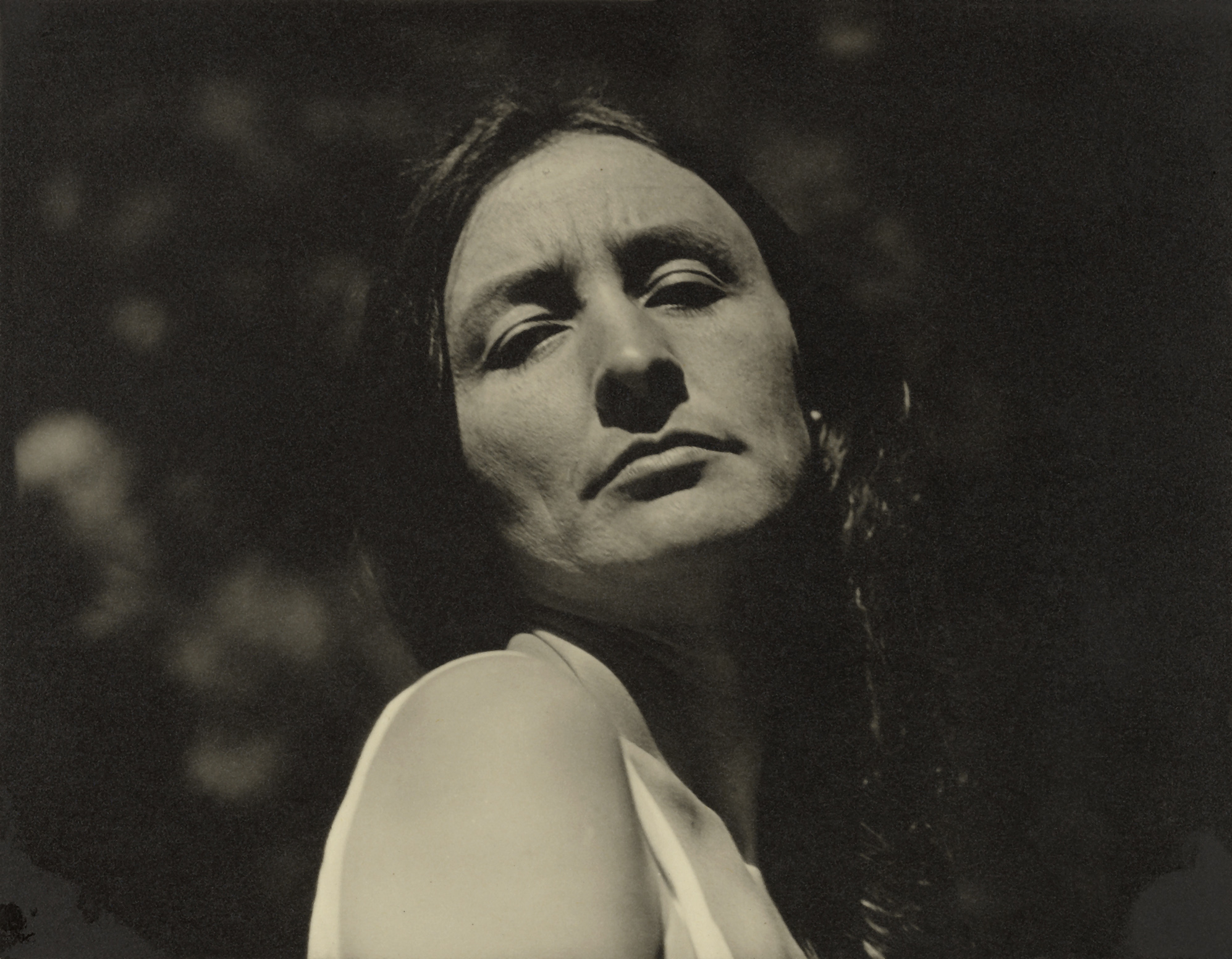
Alfred Stieglitz (American, 1864-1946) 'Georgia O'Keeffe: A Portrait' 1918 from the exhibition 'Once. Again. Photographs in Series' at the J. Paul Getty Museum, Getty Center, Los Angeles, July - Nov, 2019


Alfred Stieglitz (American, 1864-1946)
Georgia O’Keeffe: A Portrait
1918
Gelatin silver print
Image: 11.4 × 8.6cm (4 1/2 × 3 3/8 in.)
The J. Paul Getty Museum, Los Angeles


Some fabulous photographs in series in this posting, which document transformations in landscapes or intimate portraits of people at different times in their lives… and some challenging ones as well. My favourite photographs in series are not represented: Duane Michals narrative fairytales; Cindy Sherman’s Untitled Film Stills; and Nicholas Nixon’s The Brown Sisters.

Dr Marcus Bunyan


Many thanks to the J. Paul Getty Museum for allowing me to publish the photographs in the posting. Please click on the photographs for a larger version of the image.


Photographers often record change through images in series, registering transformations in the world around them. Artists featured in the exhibition photographed faces and places over minutes, months, or years. Historical and contemporary photographs prompt reflection on the ways the passage of time impacts how we see people and spaces.


Alfred Stieglitz (American, 1864-1946) 'Georgia O'Keeffe: A Portrait' 1923


Alfred Stieglitz (American, 1864-1946)
Georgia O’Keeffe: A Portrait
1923
Gelatin silver print
Image: 8.9 × 11.7cm (3 1/2 × 4 5/8 in.)
The J. Paul Getty Museum, Los Angeles


Alfred Stieglitz (American, 1864-1946) 'Georgia O'Keeffe: A Portrait' 1933


Alfred Stieglitz (American, 1864-1946)
Georgia O’Keeffe: A Portrait
1933
Gelatin silver print
Image: 8.9 × 11.4cm (3 1/2 × 4 1/2 in.)
The J. Paul Getty Museum, Los Angeles


Artists have long used cameras to record change, documenting transformations in landscapes or intimate portraits of people at different times in their lives. Once. Again. Photographs in Series, on view July 9 – November 10, 2019 at the J. Paul Getty Museum, Getty Center, features historical and contemporary artists who have revisited people and places to make extended photographic series, prompting reflection on the impact of the passage of time – on photographers as well as their subjects.

The exhibition, drawn primarily from the collection of the Getty Museum, takes its cue from artist Gordon Parks’ trips to Brazil over several decades to document the life of Flávio da Silva. Parks’ photographs are on view in Gordon Parks: The Flávio Story, installed in the adjacent galleries of the Center for Photographs.

Photographing friends and family is a familiar pastime for many, and the exhibition includes the work of several artists who made masterful portraits of loved ones over the course of many years. Alfred Stieglitz photographed artist Georgia O’Keeffe frequently during their tumultuous 30 year relationship, and the photographs on view expose shifts in their rapport as well as changes in Stieglitz’s photographic style over time. Series by Harry Callahan of his wife Eleanor, Paul Strand of his wife, artist Rebecca Salsbury, and Julia Margaret Cameron of her niece Julia Jackson similarly offer fascinating reflections on the changes in relationships over time.

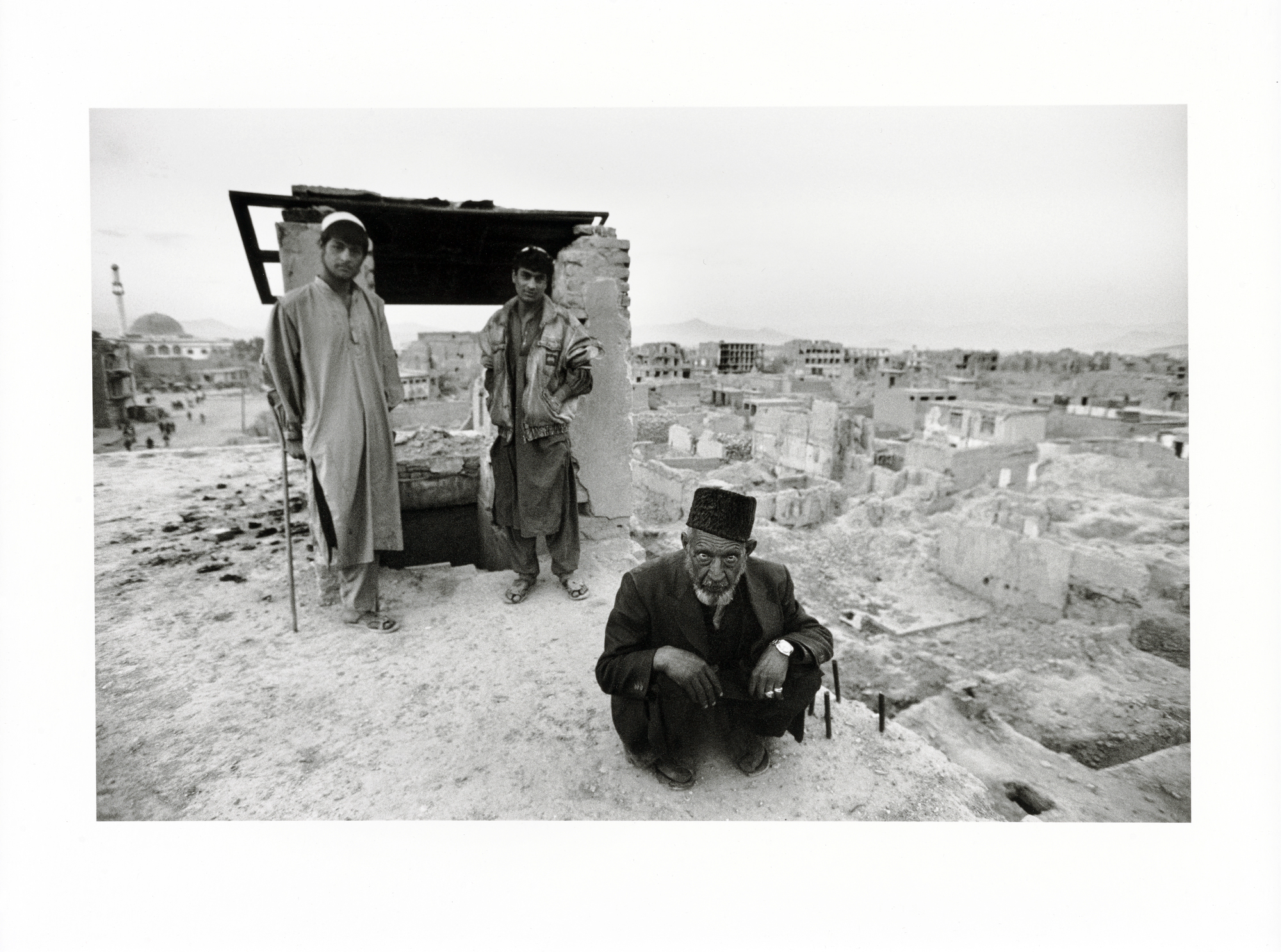
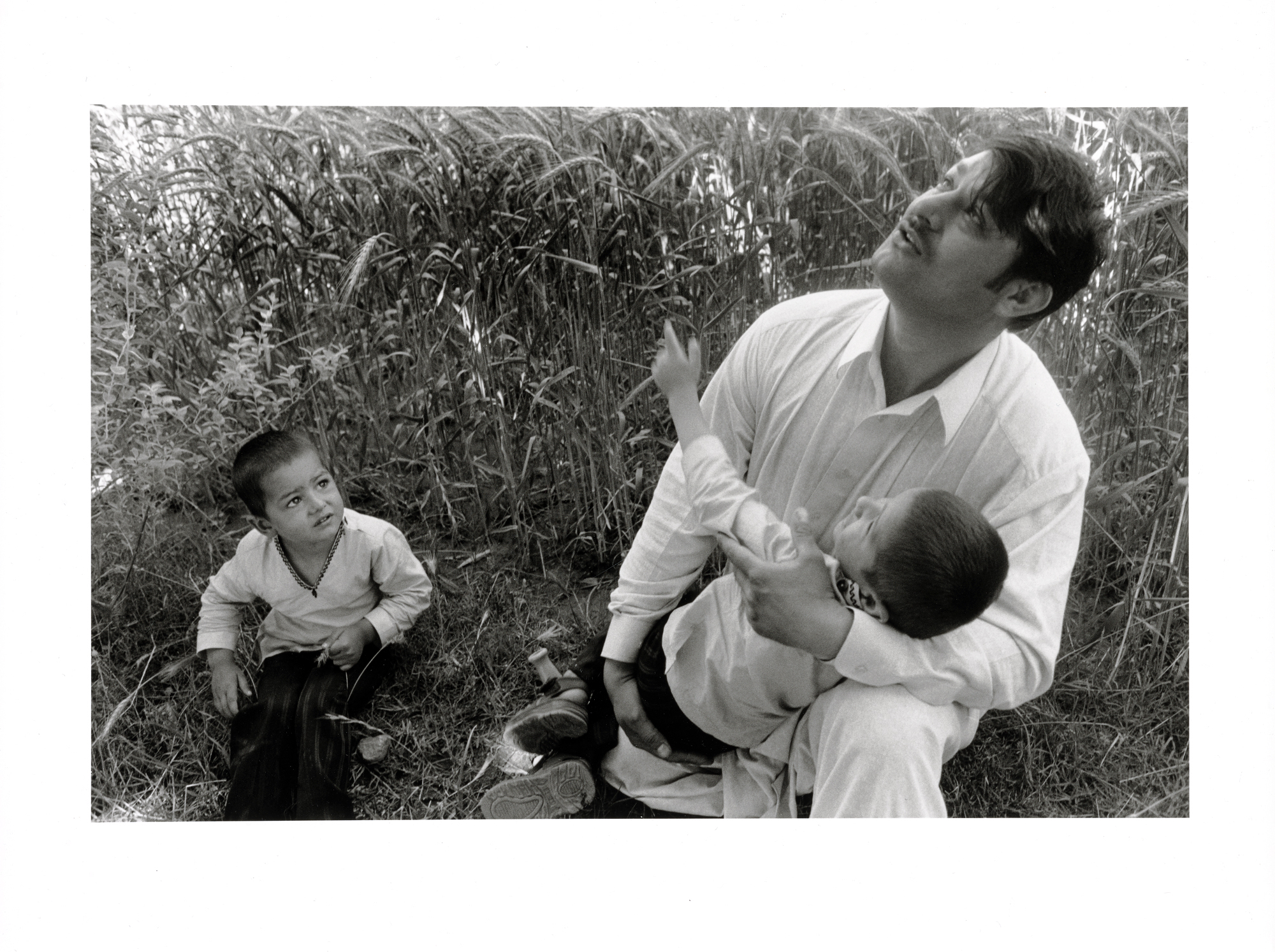
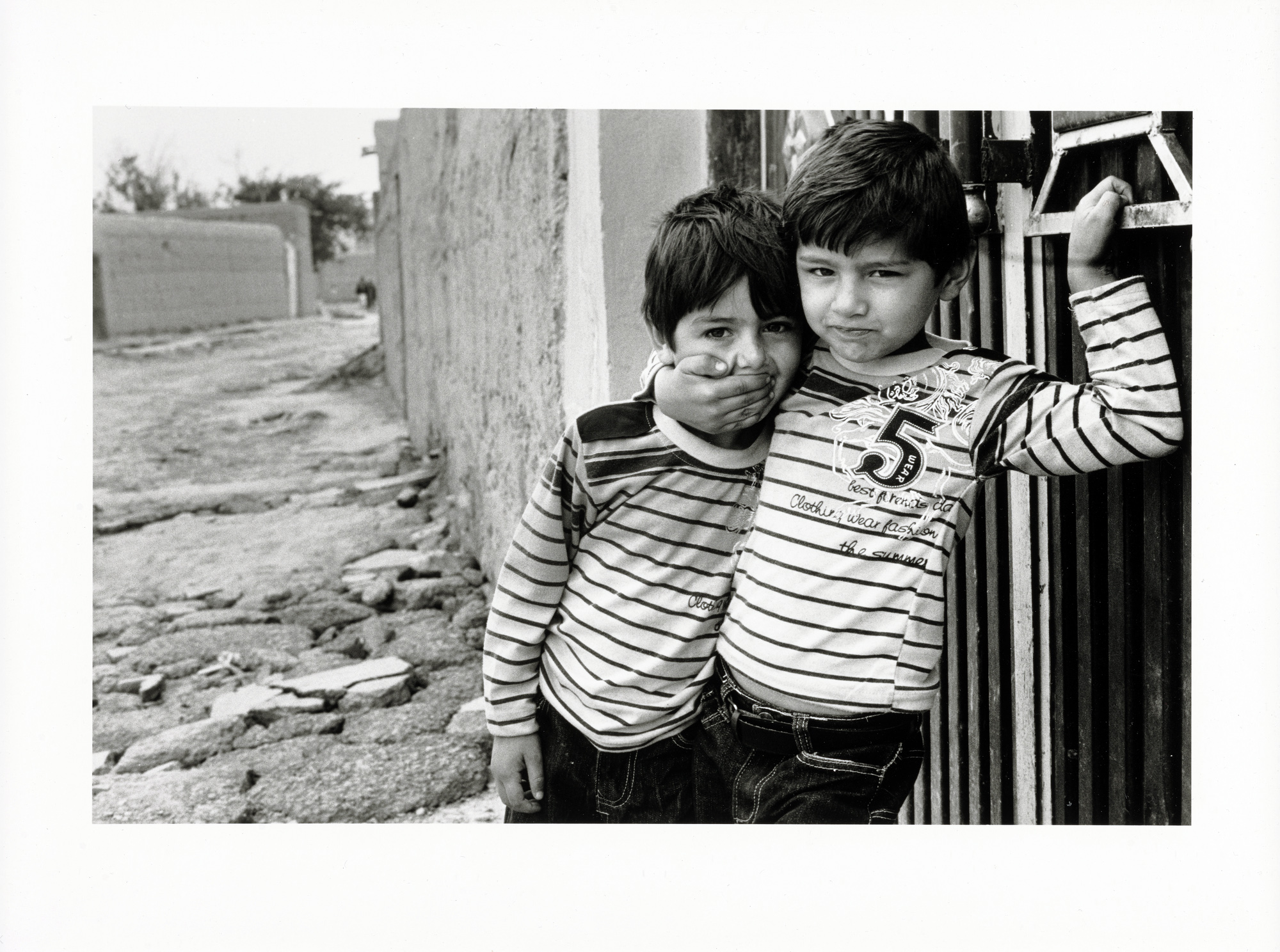
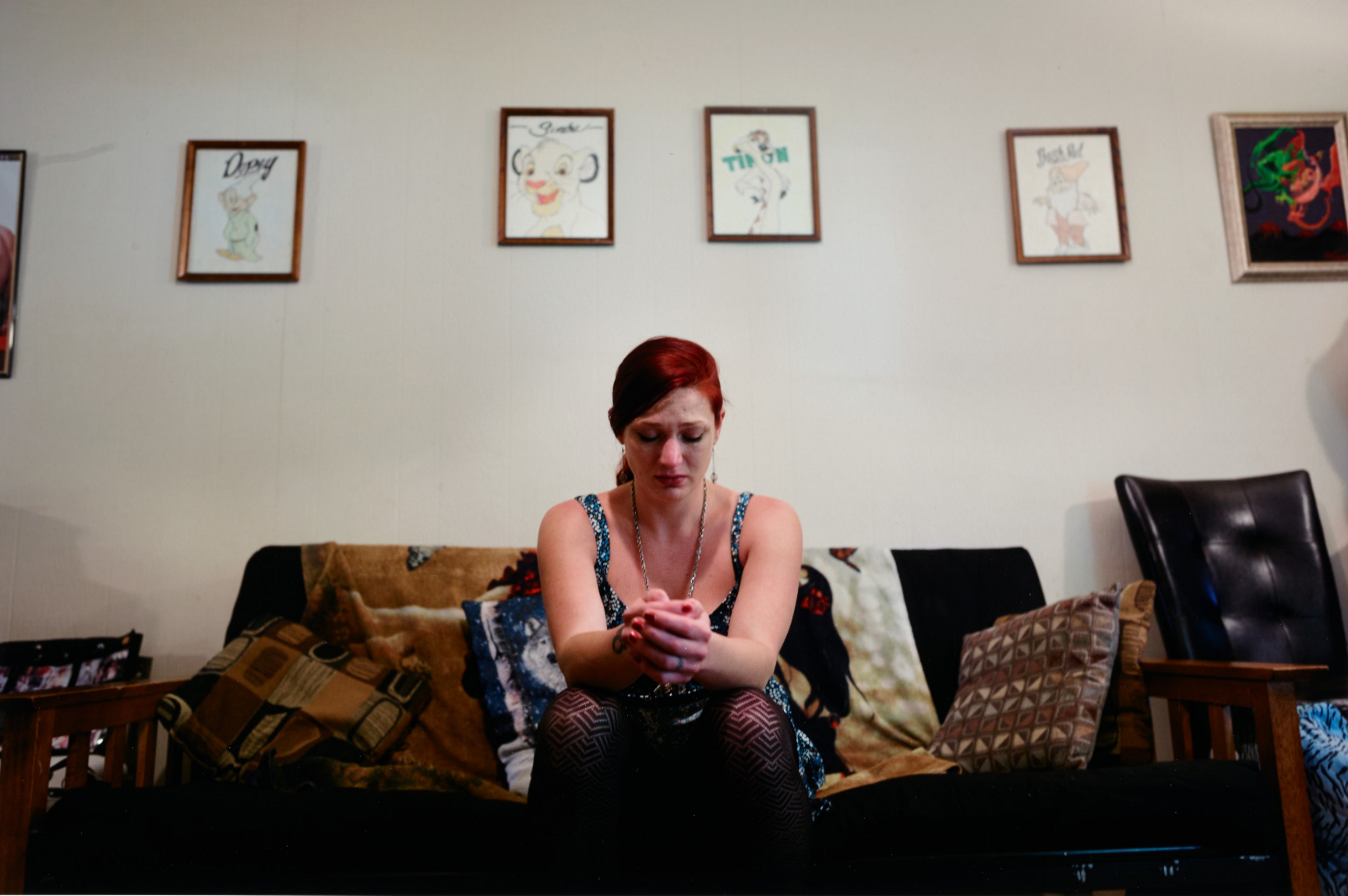
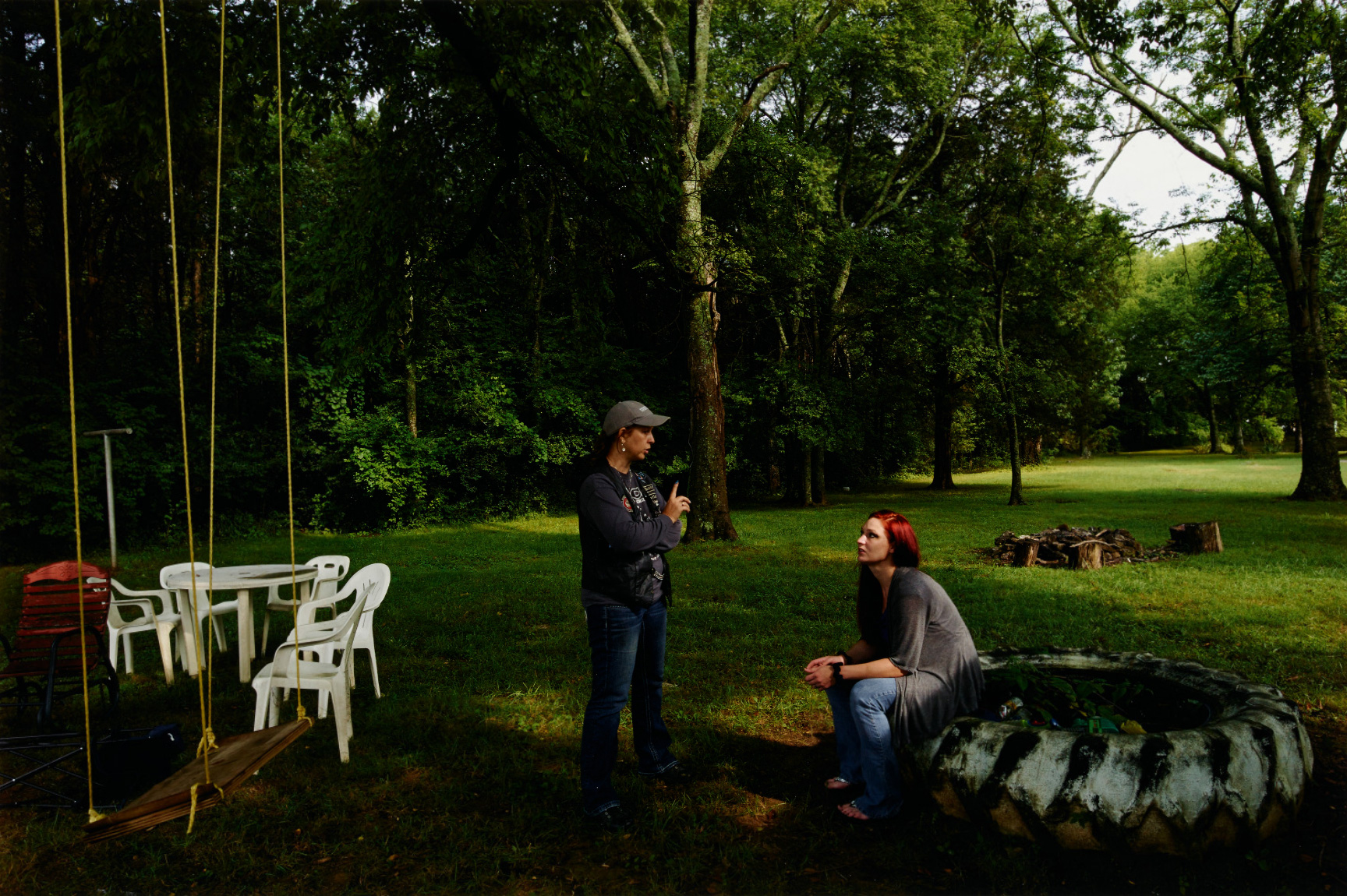
The exhibition also includes compelling contemporary portraits, including photojournalist Seamus Murphy’s record of the physical and emotional toll inflicted upon a family living in Afghanistan under rule of the Taliban, and Donna Ferrato’s documentation of a woman who fled an abusive relationship. Both series register the struggles as well as triumphs.

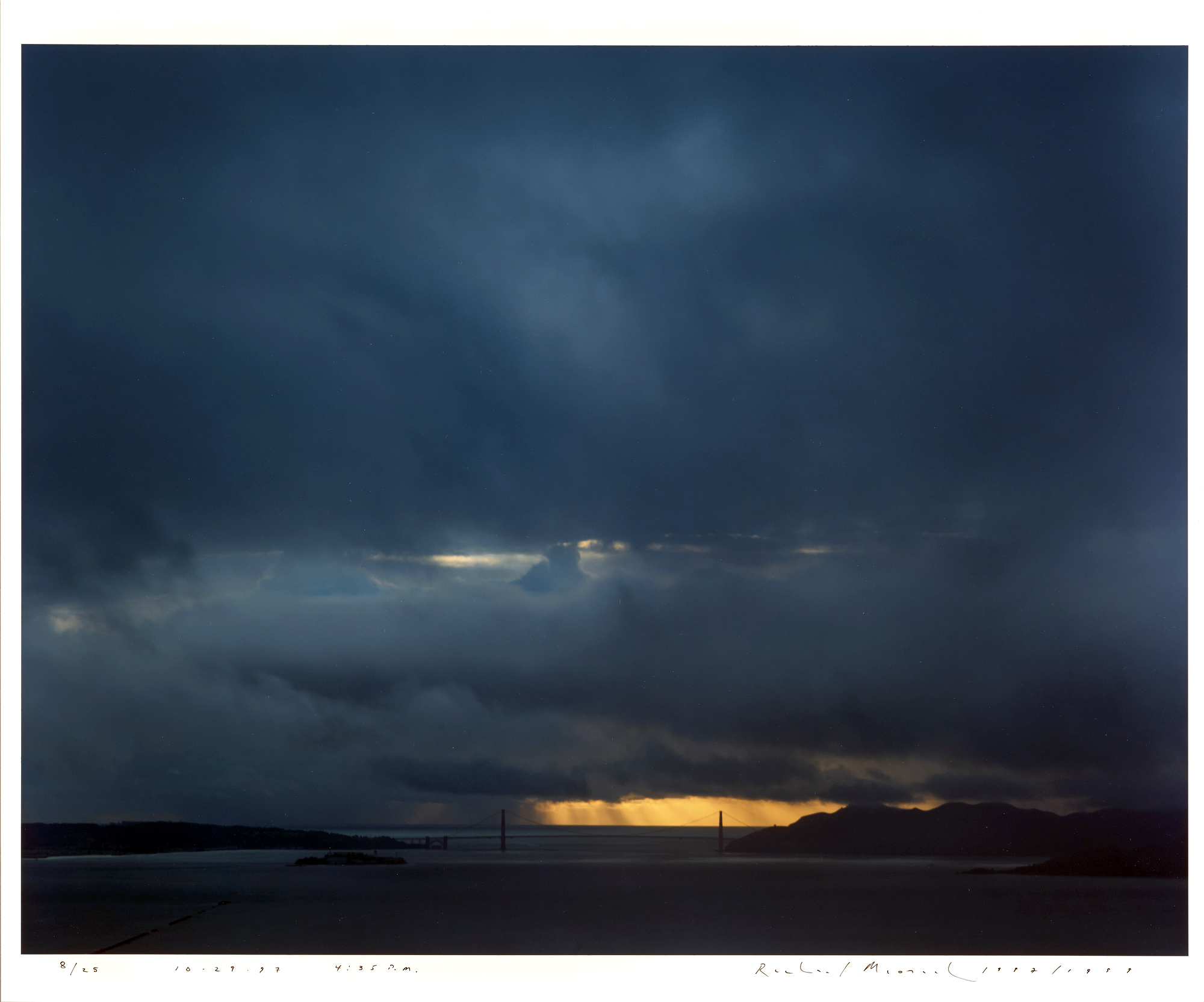
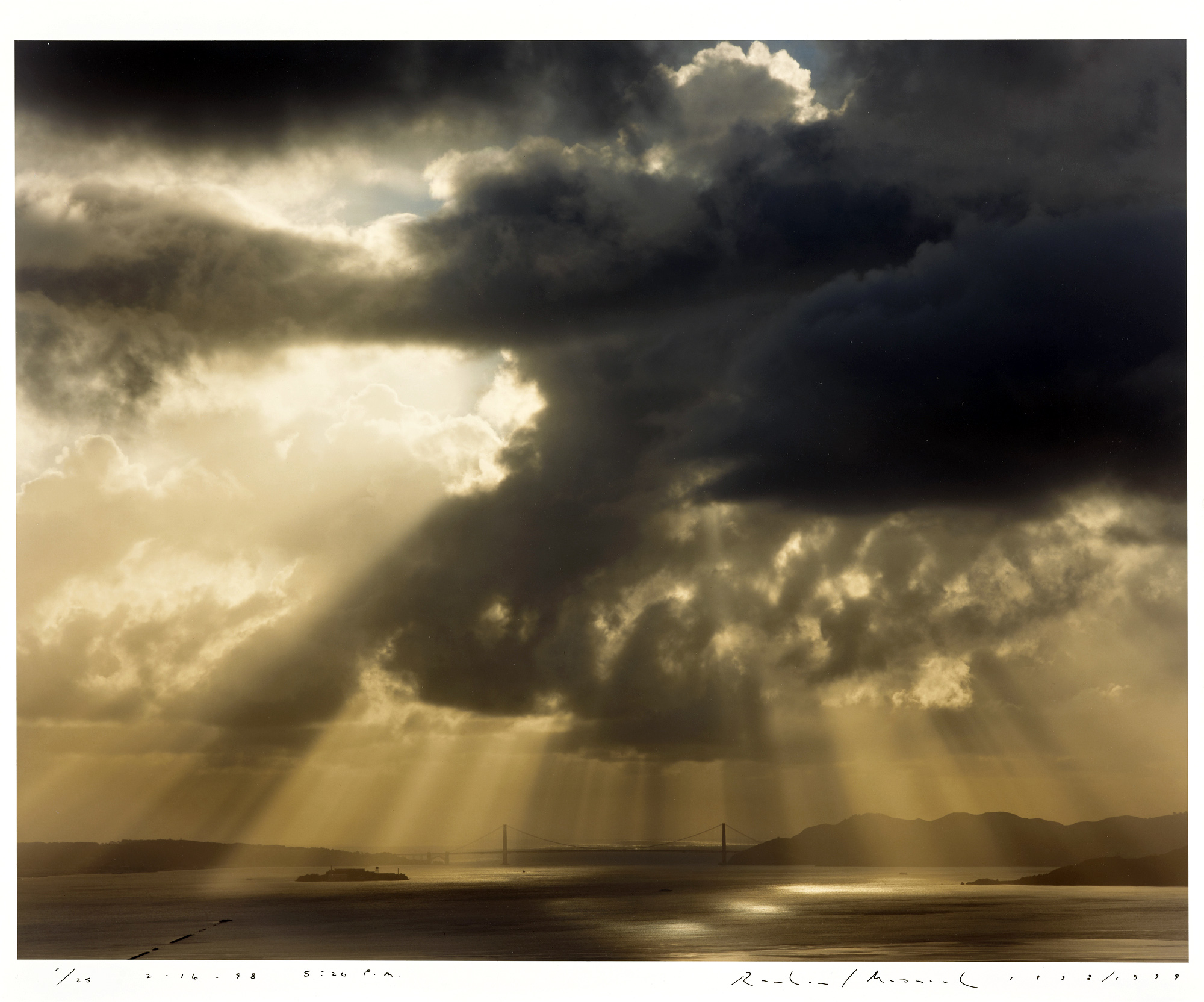
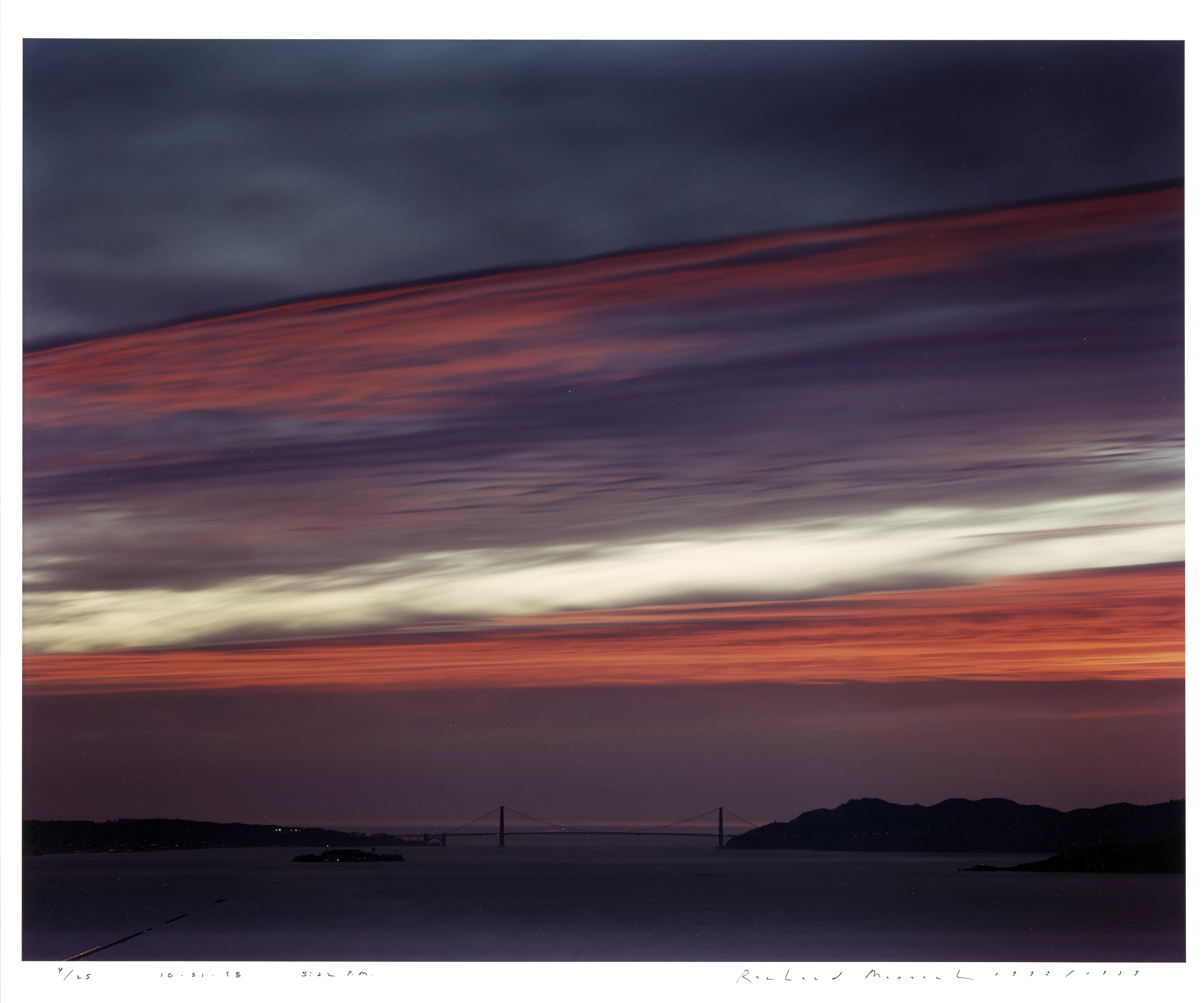
A number of artists in the exhibition document seasonal and man-made changes in the landscape. In a 1953 series by William A. Garnett, aerial photography is used to capture a walnut grove before and after the trees were felled to make way for a housing development. The startling perspective of Garnett’s images came to play an important role in the burgeoning environmental movement. Richard Misrach used his move to a new home in the hills above Berkeley, California, as an opportunity to take hundreds of photographs of the astonishing range of colours and atmospheric conditions surrounding the Golden Gate Bridge at sunset each evening. Several of his richly saturated sunset images are featured in the exhibition. Works by Roni Horn, Jem Southam, and Josef Sudek also trace changes in the natural world, to both political and poetic effect.

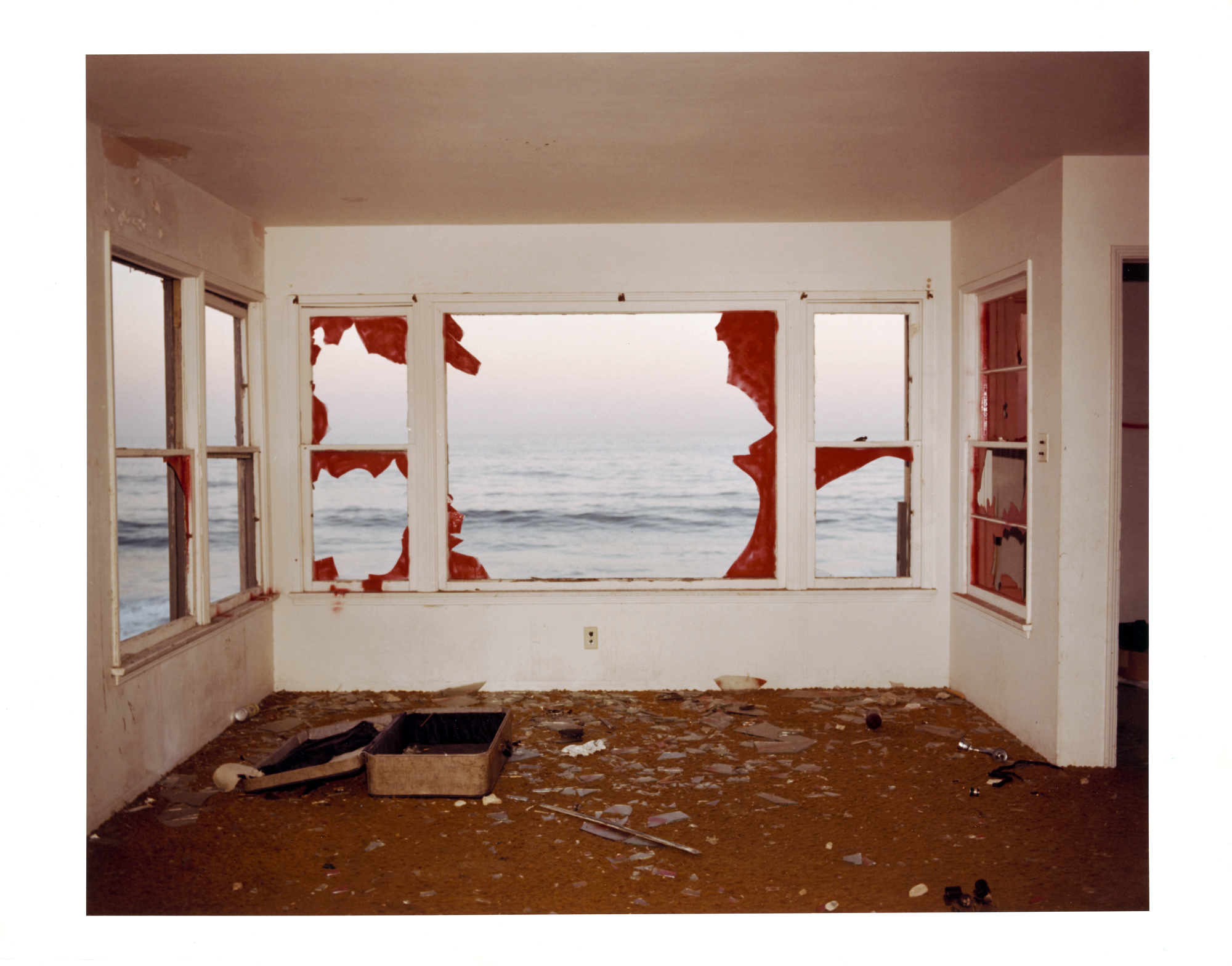
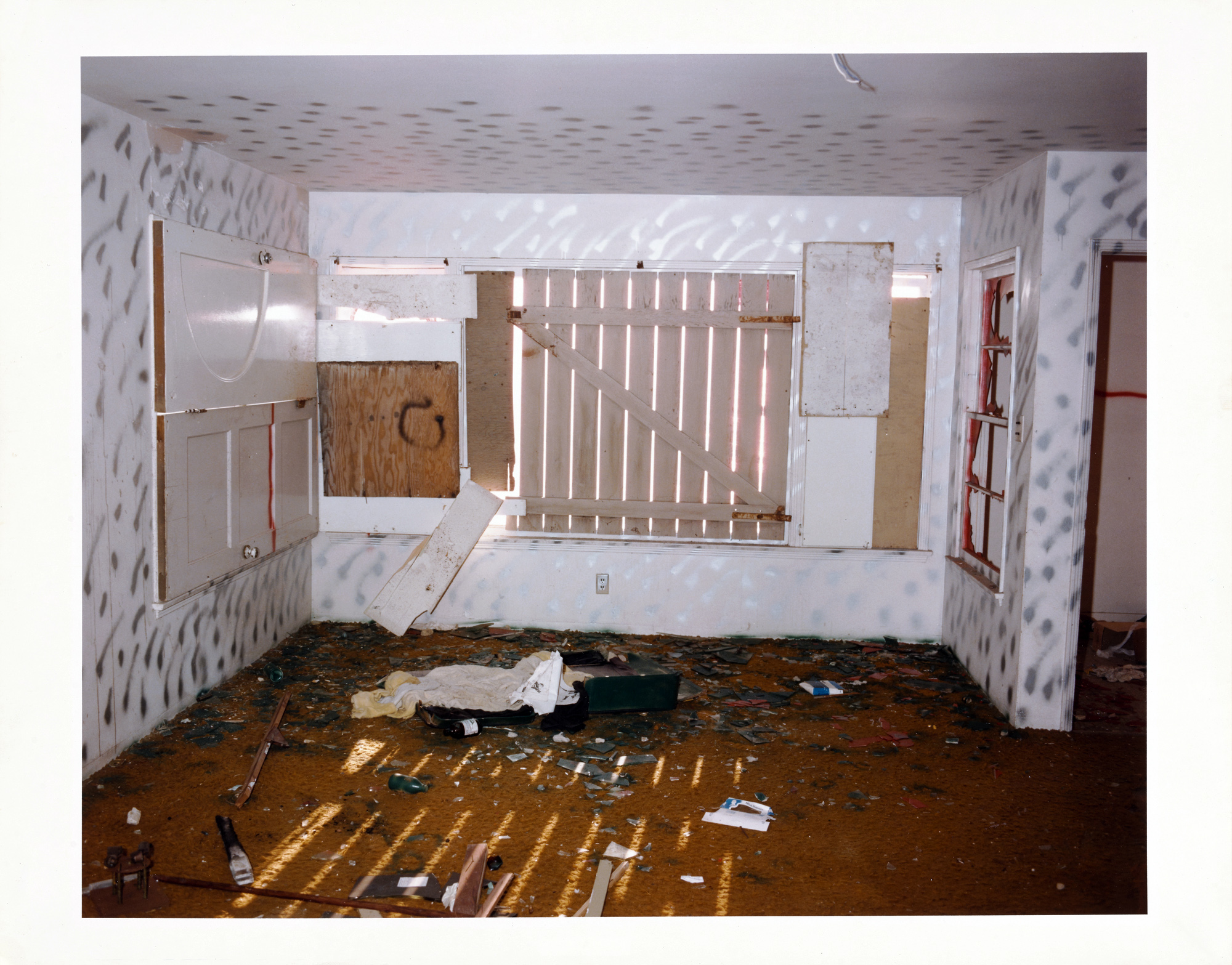
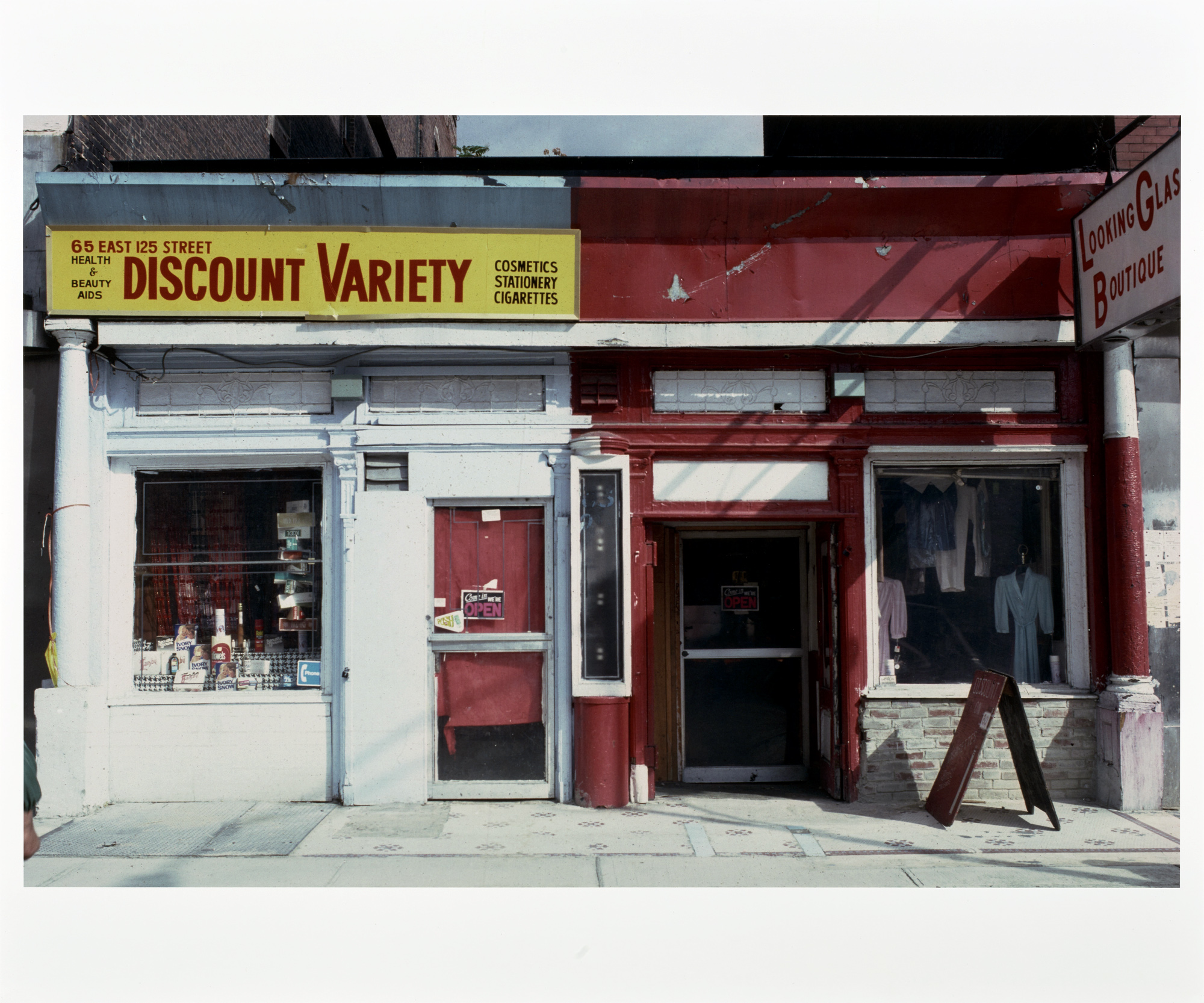
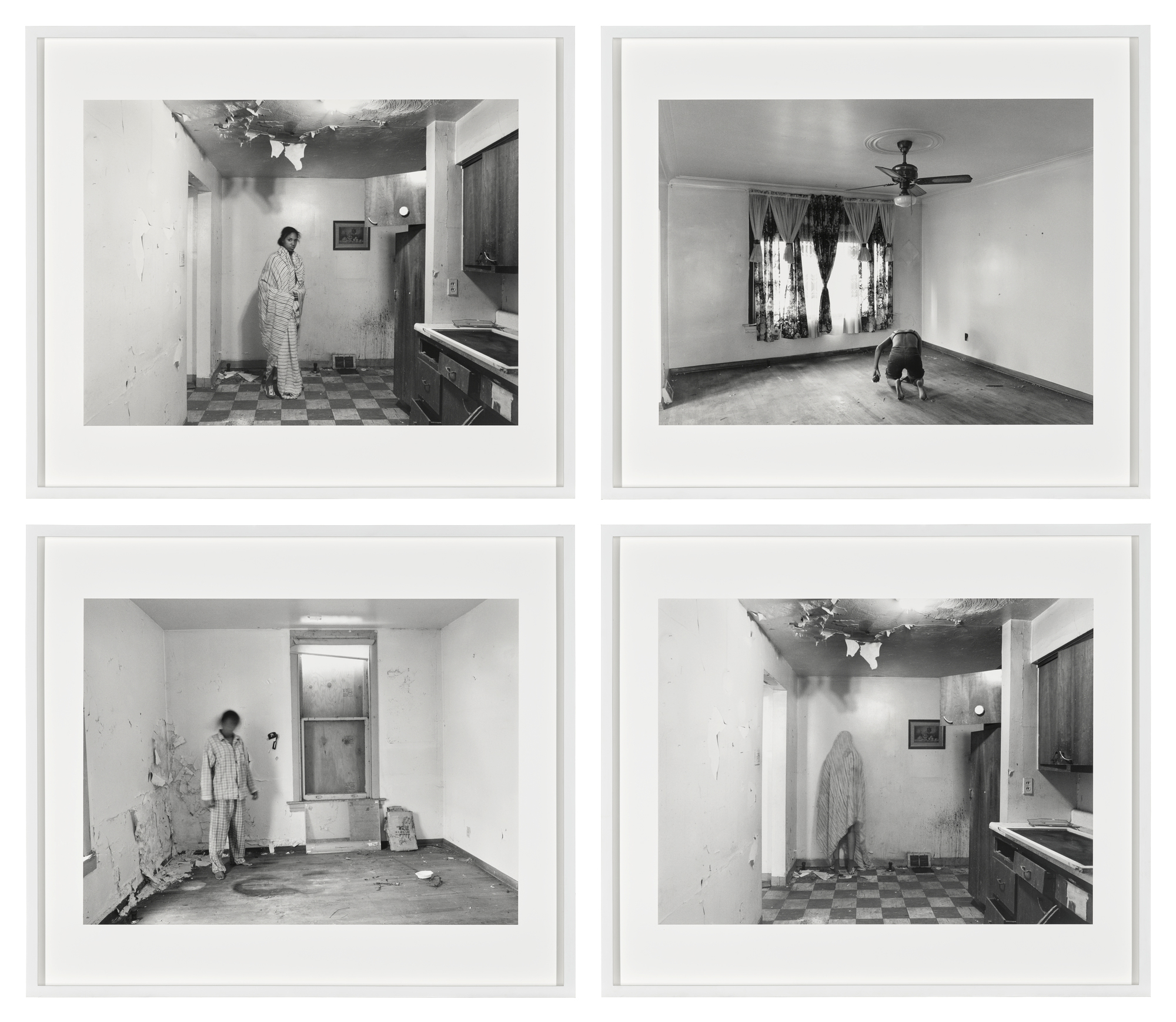
Transformations in the built environment also reveal the profound effects of the passage of time. LaToya Ruby Frazier documented the painful process of clearing the rooms of her family home in a series of self-portraits in which she cloaked herself in the familiar belongings of her loved ones. In order to spotlight socioeconomic changes in American neighbourhoods, Camilo José Vergara photographed the dramatic transformation of a single Harlem storefront over 40 years, as it changed hands, changed facades, and split into two establishments. Other artists in the exhibition, including John Divola and William Christenberry, chronicle the disintegration of architecture over time, creating evocative meditations on deterioration.

“‘Once again’ is a phrase repeated in a poem by William Wordsworth,” says Mazie Harris, assistant curator of photographs at the Getty Museum and curator of the exhibition. “He was fascinated by the powerful feeling that arises when revisiting a familiar place. He’s experiencing his surroundings in real time and yet is constantly aware of his memories of being there before. The photographers in this exhibition conjure that same sensation. They offer us the opportunity to see people and places afresh, even as we track the powerful changes wrought by time.”

Once. Again. Photographs in Series, is on view July 9-November 10, 2019 at the J. Paul Getty Museum, Getty Center. The exhibition is curated by Mazie Harris, assistant curator of photographs at the Getty Museum.

Press release from the J. Paul Getty Museum website [Online] Cited 11/08/2019


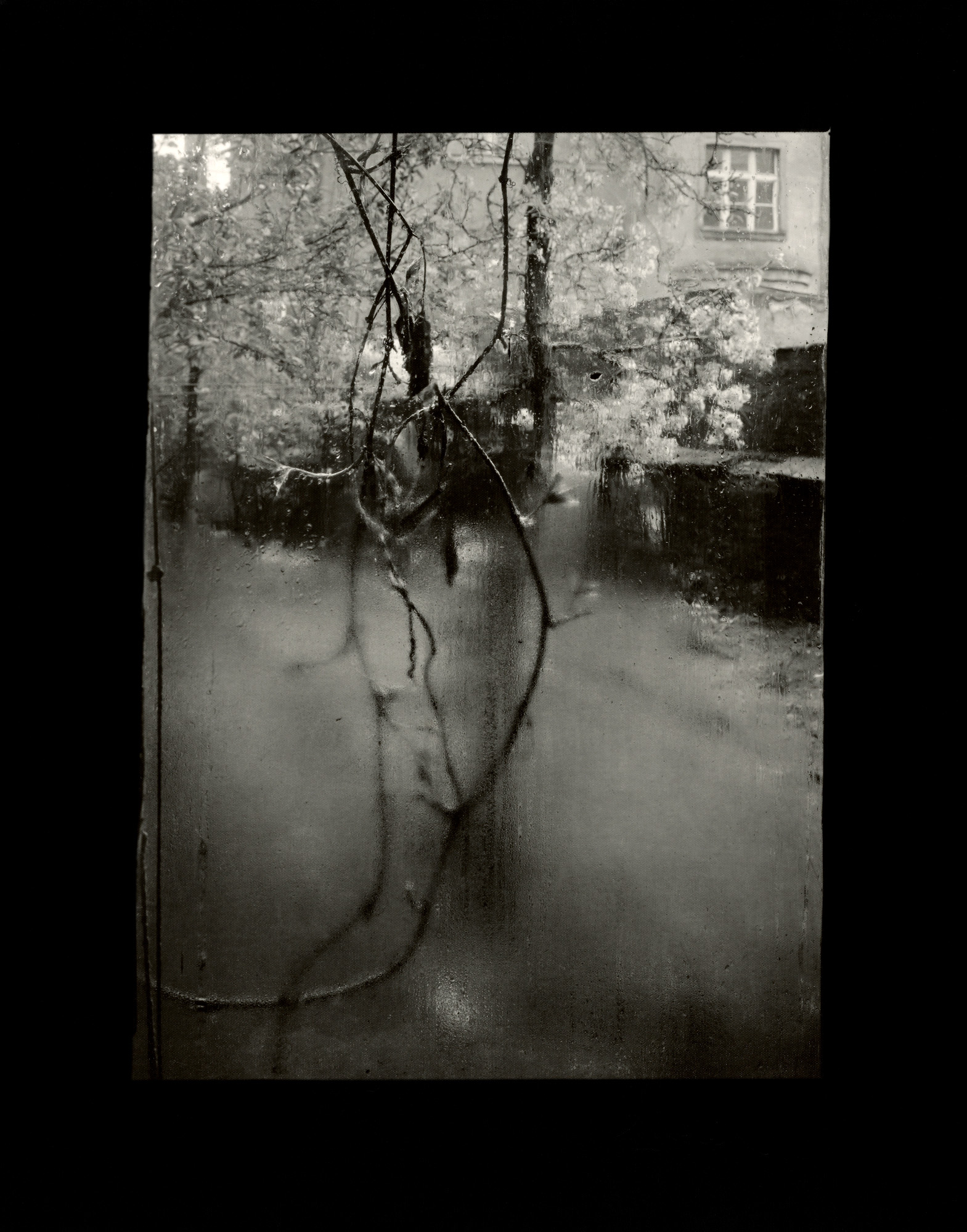
Josef Sudek (Czech, 1896-1976) 'The Window of My Studio' 1940-1954


Josef Sudek (Czech, 1896-1976)
The Window of My Studio
1940-1954
Gelatin silver print
Image: 22.1 × 14.1cm (8 11/16 × 5 9/16 in.)
The J. Paul Getty Museum, Los Angeles
© I&G Fárová Heirs


Josef Sudek (Czech, 1896-1976) 'The Window of My Studio' 1940-1954


Josef Sudek (Czech, 1896-1976)
The Window of My Studio
1940-1954
Gelatin silver print
Image: 17.1 × 10.3cm (6 3/4 × 4 1/16 in.)
The J. Paul Getty Museum, Los Angeles
© I&G Fárová Heirs


Josef Sudek (Czech, 1896-1976) 'The Window of My Studio' 1940-1954


Josef Sudek (Czech, 1896-1976)
The Window of My Studio
1940-1954
Gelatin silver print
Image: 23.5 × 16.5cm (9 1/4 × 6 1/2 in.)
The J. Paul Getty Museum, Los Angeles
© I&G Fárová Heirs


William A. Garnett (American, 1916-2006) 'Walnut Grove Standing' March 21, 1953


William A. Garnett (American, 1916-2006)
Walnut Grove Standing
March 21, 1953
Gelatin silver print
Image: 34.3 × 26.7cm (13 1/2 × 10 1/2 in.)
The J. Paul Getty Museum, Los Angeles
© Estate of William A. Garnett


William A. Garnett (American, 1916-2006) 'Walnut Grove Bulldozed' March 21, 1953


William A. Garnett (American, 1916-2006)
Walnut Grove Bulldozed
March 21, 1953
Gelatin silver print
Image: 26.5 × 34.3cm (10 7/16 × 13 1/2 in.)
The J. Paul Getty Museum, Los Angeles
© Estate of William A. Garnett


William A. Garnett (American, 1916-2006) 'Walnut Grove Uprooted by Bulldozers' March 22, 1953


William A. Garnett (American, 1916-2006)
Walnut Grove Uprooted by Bulldozers
March 22, 1953
Gelatin silver print
Image (trimmed to mount): 34.1 × 26.5cm (13 7/16 × 10 7/16 in.)
The J. Paul Getty Museum, Los Angeles
© Estate of William A. Garnett


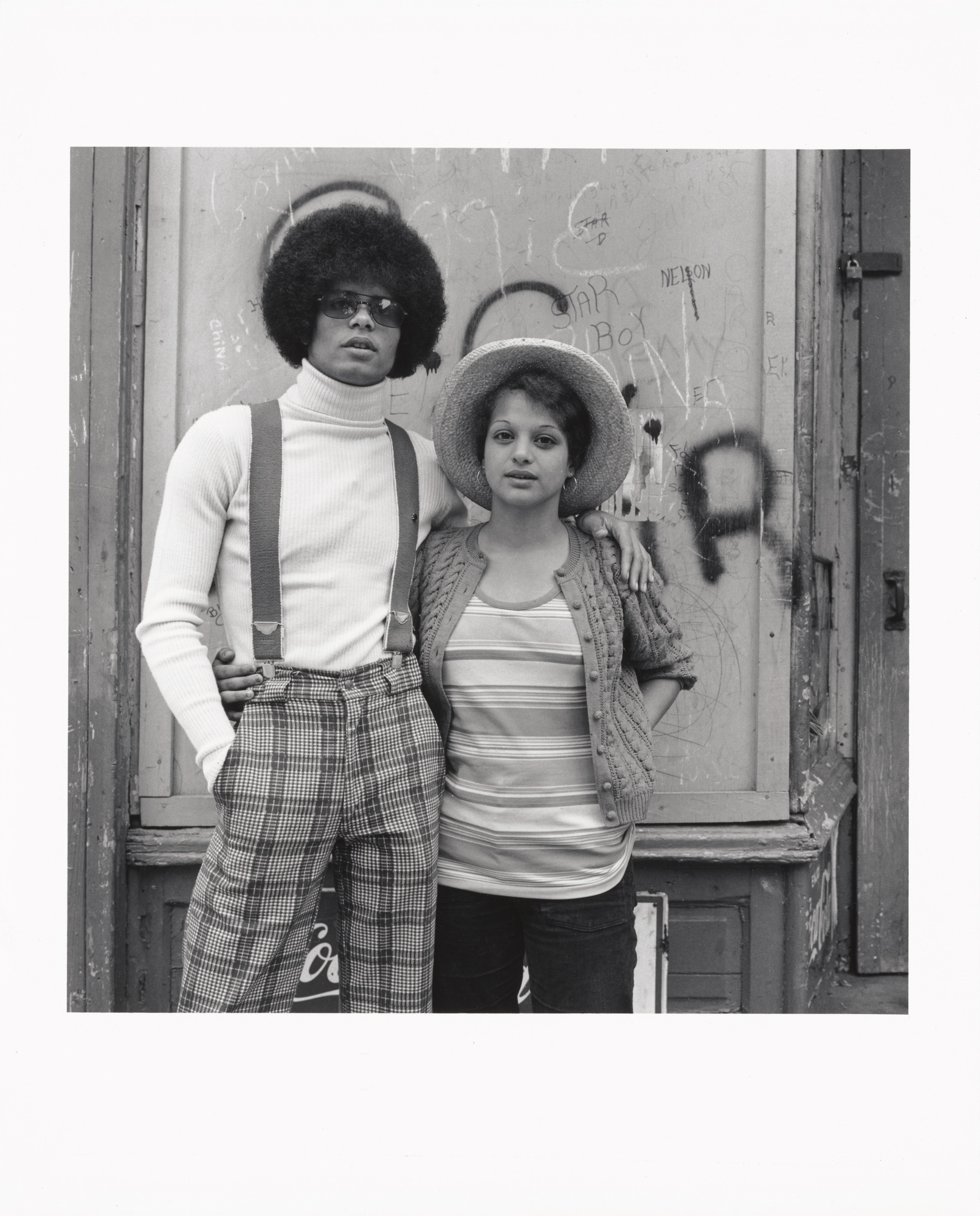
Milton Rogovin (American, 1909-2011) 'Michael and Pam' 1973


Milton Rogovin (American, 1909-2011)
Michael and Pam
1973
Gelatin silver print
Image: 17.9 × 17.4cm (7 1/16 × 6 7/8 in.)
The J. Paul Getty Museum, Los Angeles
© Milton Rogovin


Milton Rogovin (American, 1909-2011) 'Michael and Pam' 1973


Milton Rogovin (American, 1909-2011)
Michael and Pam
1973
Gelatin silver print
Image: 17.9 × 17.4cm (7 1/16 × 6 7/8 in.)
The J. Paul Getty Museum, Los Angeles
© Milton Rogovin


Milton Rogovin (American, 1909-2011) 'Michael and Pam' 1973


Milton Rogovin (American, 1909-2011)
Michael and Pam
1973
Gelatin silver print
Image: 17.9 × 17.4cm (7 1/16 × 6 7/8 in.)
The J. Paul Getty Museum, Los Angeles
© Milton Rogovin


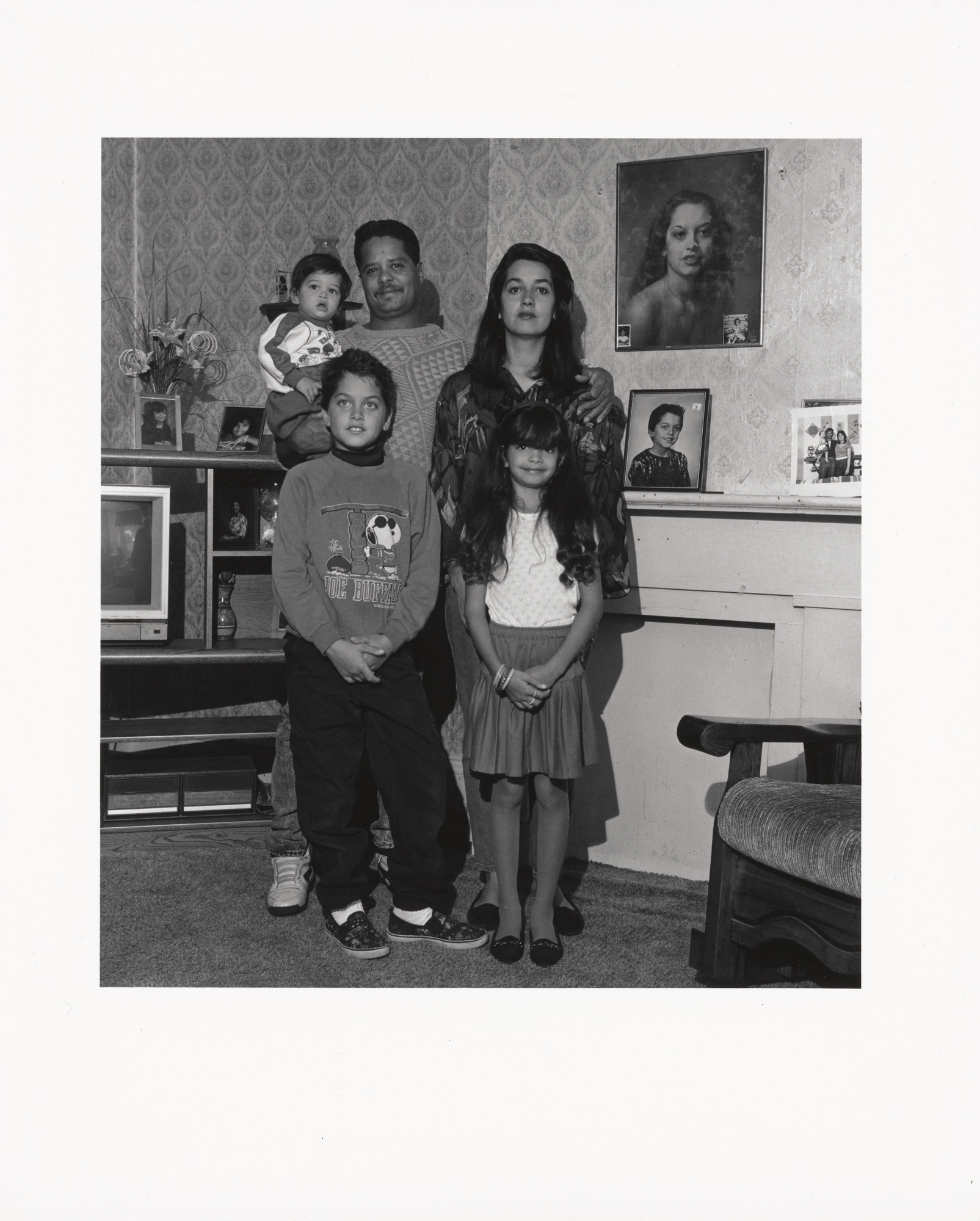
Milton Rogovin (American, 1909-2011) 'Yvonne and Daughter Sonya' 1974


Milton Rogovin (American, 1909-2011)
Yvonne and Daughter Sonya
1974
Gelatin silver print
Image: 18 × 17.3cm (7 1/16 × 6 13/16 in.)
The J. Paul Getty Museum, Los Angeles
© Milton Rogovin


Milton Rogovin (American, 1909-2011) 'Yvonne and Daughter Sonya' 1974


Milton Rogovin (American, 1909-2011)
Yvonne and Daughter Sonya
1974
Gelatin silver print
Image: 17.2 × 17.2cm (6 3/4 × 6 3/4 in.)
The J. Paul Getty Museum, Los Angeles
© Milton Rogovin


Milton Rogovin (American, 1909-2011) 'Yvonne and Daughter Sonya' 1974


Milton Rogovin (American, 1909-2011)
Yvonne and Daughter Sonya
1974
Gelatin silver print
Image: 18.1 × 16.8cm (7 1/8 × 6 5/8 in.)
The J. Paul Getty Museum, Los Angeles
© Milton Rogovin


John Divola (American, born 1949) 'Zuma' 1977


John Divola (American, b. 1949)
Zuma
1977
Chromogenic print
Image: 24.7 × 30.4cm (9 3/4 × 11 15/16 in.)
The J. Paul Getty Museum, Los Angeles
Gift of the Wilson Centre for Photography
© John Divola


John Divola (American, born 1949) 'Zuma' 1977


John Divola (American, b. 1949)
Zuma
1977
Chromogenic print
Image: 24.8 × 30.6cm (9 3/4 × 12 1/16 in.)
The J. Paul Getty Museum, Los Angeles
Gift of the Wilson Centre for Photography
© John Divola


John Divola (American, born 1949) 'Zuma' 1977


John Divola (American, b. 1949)
Zuma
1977
Chromogenic print
Image: 24.7 × 30.5cm (9 3/4 × 12 in.)
The J. Paul Getty Museum, Los Angeles
Gift of the Wilson Centre for Photography
© John Divola


John Divola (American, born 1949) 'Zuma' 1977


John Divola (American, b. 1949)
Zuma
1977
Chromogenic print
Image: 24.8 × 30.6cm (9 3/4 × 12 1/16 in.)
The J. Paul Getty Museum, Los Angeles
Gift of the Wilson Centre for Photography
© John Divola


Camilo José Vergara (American, born Chile, 1944) '65 East 125th Street, Harlem' December 1977


Camilo José Vergara (American born Chile, b. 1944)
65 East 125th Street, Harlem
December 1977
Chromogenic print
Image: 38.7 × 58.4cm (15 1/4 × 23 in.)
The J. Paul Getty Museum, Los Angeles
Gift of Bruce Berman and Lea Russo
© Camilo José Vergara


Camilo José Vergara (American, born Chile, 1944) '65 East 125th Street, Harlem' October 1980


Camilo José Vergara (American born Chile, b. 1944)
65 East 125th Street, Harlem
October 1980
Chromogenic print
Image: 37.8 × 58.5cm (14 7/8 × 23 1/16 in.)
The J. Paul Getty Museum, Los Angeles
Gift of Bruce Berman and Lea Russo
© Camilo José Vergara


Camilo José Vergara (American, born Chile, 1944) '65 East 125th Street, Harlem' October 1981


Camilo José Vergara (American born Chile, b. 1944)
65 East 125th Street, Harlem
October 1981
Chromogenic print
Image: 38.7 × 58.4cm (15 1/4 × 23 in.)
The J. Paul Getty Museum, Los Angeles
Gift of Bruce Berman and Lea Russo
© Camilo José Vergara


Seamus Murphy (Irish, b. 1959) 'Kabul: November 1994' 1994, print 2015


Seamus Murphy (Irish, b. 1959)
Kabul: November 1994
1994, print 2015
Gelatin silver print
Image: 22.6 × 34.2cm (8 7/8 × 13 7/16 in.)
The J. Paul Getty Museum, Los Angeles
Gift of David Knaus
© Seamus Murphy


Seamus Murphy (Irish, b. 1959) 'Ba Deli Family, Kabul: November 1996' 1996, print 2015


Seamus Murphy (Irish, b. 1959)
Ba Deli Family, Kabul: November 1996
1996, print 2015
Gelatin silver print
Image: 22.4 × 34.5cm (8 13/16 × 13 9/16 in.)
The J. Paul Getty Museum, Los Angeles
Gift of David Knaus
© Seamus Murphy


Seamus Murphy (Irish, b. 1959) 'Gulbahar, Kapisa Province: June 2003' 2003, print 2015


Seamus Murphy (Irish, b. 1959)
Gulbahar, Kapisa Province: June 2003
2003, print 2015
Gelatin silver print
Image: 34.6 × 22.6cm (13 5/8 × 8 7/8 in.)
The J. Paul Getty Museum, Los Angeles
Gift of David Knaus
© Seamus Murphy


Seamus Murphy (Irish, b. 1959) 'Gulbahar, Kapisa Province: May 2009' 2009, print 2015


Seamus Murphy (Irish, b. 1959)
Gulbahar, Kapisa Province: May 2009
2009, print 2015
Gelatin silver print
Image: 22.5 × 34.4cm (8 7/8 × 13 9/16 in.)
The J. Paul Getty Museum, Los Angeles
Gift of David Knaus
© Seamus Murphy


Seamus Murphy (Irish, b. 1959) 'Kabul: July 2010' 2010, print 2015


Seamus Murphy (Irish, b. 1959)
Kabul: July 2010
2010, print 2015
Gelatin silver print
Image: 22.6 × 34.7cm (8 7/8 × 13 11/16 in.)
The J. Paul Getty Museum, Los Angeles
Gift of David Knaus
© Seamus Murphy


Seamus Murphy (Irish, b. 1959) 'Kabul: July 2010' 2010, print 2015


Seamus Murphy (Irish, b. 1959)
Kabul: July 2010
2010, print 2015
Gelatin silver print
Image: 22.6 × 34.7cm (8 7/8 × 13 11/16 in.)
The J. Paul Getty Museum, Los Angeles
Gift of David Knaus
© Seamus Murphy


Richard Misrach (American, b. 1949) '10.29.97, 4:35 PM' 1997, print 1999


Richard Misrach (American, b. 1949)
10.29.97, 4:35 PM
1997, print 1999
Chromogenic print
Image: 45.8 × 59cm (18 1/16 × 23 1/4 in.)
The J. Paul Getty Museum, Los Angeles
Gift of Daniel Greenberg and Susan Steinhauser
© Richard Misrach, courtesy Fraenkel Gallery, San Francisco, Pace/ MacGill Gallery, New York and Marc Selwyn Fine Art, Los Angeles


Richard Misrach (American, b. 1949) '2.21.98, 4:45 PM' 1998, print 2016


Richard Misrach (American, b. 1949)
2.21.98, 4:45 PM
1998, print 2016
Chromogenic print
Image: 152.4 × 188cm (60 × 74 in.)
The J. Paul Getty Museum, Los Angeles
Gift of Sharyn and Bruce Charnas
© Richard Misrach, courtesy Fraenkel Gallery, San Francisco, Pace/MacGill Gallery, New York and Marc Selwyn Fine Art, Los Angeles


Richard Misrach (American, b. 1949) '2.16.98, 5:20 PM' 1998, print 1999


Richard Misrach (American, b. 1949)
2.16.98, 5:20 PM
1998, print 1999
Chromogenic print
Image: 46.2 × 58.9cm (18 3/16 × 23 3/16 in.)
The J. Paul Getty Museum, Los Angeles
Gift of Daniel Greenberg and Susan Steinhauser
© Richard Misrach, courtesy Fraenkel Gallery, San Francisco, Pace/ MacGill Gallery, New York and Marc Selwyn Fine Art, Los Angeles


Richard Misrach (American, b. 1949) '10.31.98, 5:22 PM' 1998, print 1999


Richard Misrach (American, b. 1949)
10.31.98, 5:22 PM
1998, print 1999
Chromogenic print
Image: 46.3 × 58.9cm (18 1/4 × 23 3/16 in.)
The J. Paul Getty Museum, Los Angeles
Gift of Daniel Greenberg and Susan Steinhauser
© Richard Misrach, courtesy Fraenkel Gallery, San Francisco, Pace/ MacGill Gallery, New York and Marc Selwyn Fine Art, Los Angeles


LaToya Ruby Frazier (American, b. 1982) 'Four photographs' 2010


LaToya Ruby Frazier (American, b. 1982)
Clockwise from top left: Wrapped in Gramps’ Blanket, 2010; In Grandma Ruby’s Velour Bottoms, 2010; Covered in Gramps’ Blanket, 2010; In Gramps’ Pajamas, 2010
Gelatin silver prints
Image (each): 43.5 × 58.4cm (17 1/8 × 23 in.)
The J. Paul Getty Museum, Los Angeles
Purchased with funds provided by the Photographs Council
© LaToya Ruby Frazier


Jem Southam (British, b. 1950) 'December 1996'


Jem Southam (British, b. 1950)
December 1996
1996
Chromogenic print
68.6 × 85.7cm (27 × 33 3/4 in.)
Gift of The Michael G. and C. Jane Wilson 2007 Trust
© Jem Southam


Jem Southam (British, b. 1950) 'March 1998'


Jem Southam (British, b. 1950)
March 1998
1998
Chromogenic print
68.6 × 85.7cm (27 × 33 3/4 in.)
Gift of The Michael G. and C. Jane Wilson 2007 Trust
© Jem Southam


Jem Southam (British, b. 1950) 'January 2000'


Jem Southam (British, b. 1950)
January 2000
2000
Chromogenic print
68.6 × 85.7cm (27 × 33 3/4 in.)
Gift of The Michael G. and C. Jane Wilson 2007 Trust
© Jem Southam


Donna Ferrato (American, b. 1949) 'Sarah Augusta' 2012


Donna Ferrato (American, b. 1949)
Sarah Augusta
2012
Pigment print
28.6 × 50.8cm (11 1/4 × 20 in.)
Gift of The Kevin & Delia Willsey Collection
© Donna Ferrato


Donna Ferrato (American, b. 1949) 'Sarah Augusta Learning Self Defense' 2013


Donna Ferrato (American, b. 1949)
Sarah Augusta Learning Self Defense
2013
Pigment print
33.9 × 50.9cm (13 3/8 × 20 1/16 in.)
Gift of The Kevin & Delia Willsey Collection
© Donna Ferrato


Donna Ferrato (American, b. 1949) 'Sarah after a Court Hearing' 2014


Donna Ferrato (American, b. 1949)
Sarah after a Court Hearing
2014
Pigment print
33.9 × 50.8cm (13 3/8 × 20 in.)
Gift of The Kevin & Delia Willsey Collection
© Donna Ferrato


Donna Ferrato (American, b. 1949) 'Sarah and a member of B.A.C.A. discussing a strategy to protect the boys' 2014


Donna Ferrato (American, b. 1949)
Sarah and a member of B.A.C.A. discussing a strategy to protect the boys
2014
Pigment print
33.9 × 50.8cm (13 3/8 × 20 in.)
Gift of The Kevin & Delia Willsey Collection
© Donna Ferrato


Donna Ferrato (American, b. 1949) 'Sarah' 2013


Donna Ferrato (American, b. 1949)
Sarah
2013
Pigment print
50.8 x 33.9cm (20 in. x 13 3/8)
Gift of The Kevin & Delia Willsey Collection
© Donna Ferrato


The J. Paul Getty Museum
1200 Getty Center Drive
Los Angeles, California 90049

Opening hours:
Daily 10am – 5.30pm

The J. Paul Getty Museum website

LIKE ART BLACK ON FACEBOOK

Back to top

Vale Robert Frank ‘The American’

September 2019


Robert Frank (American-Swiss, 1924-2019) 'Parade – Hoboken, New Jersey' 1955


Robert Frank (American-Swiss, 1924-2019)
Parade – Hoboken, New Jersey
1955
Gelatin silver print


The flags will be all askew.
The jukeboxes will be playing.
And the light will never falter from his incandescent images.

Vale.

Dr Marcus Bunyan


Please click on the photographs for a larger version of the image.


Robert Frank (American-Swiss, 1924-2019) 'Bar, New York City' 1955-1956


Robert Frank (American-Swiss, 1924-2019)
Bar, New York City
1955-1956
Gelatin silver print


LIKE ART BLART ON FACEBOOK

Back to top

Exhibition: ‘Among Others: Photography and the Group’ at The Morgan Library & Museum, New York

Exhibition dates: 31st May – 18th August, 2019

Curator: Joel Smith, the Morgan’s Richard L. Menschel Curator and Department Head


Bob Adelman (American, 1930-2016) 'People Wall, World's Fair, New York' 1965 from the exhibition 'Among Others: Photography and the Group' at The Morgan Library & Museum, New York, May - August, 2019


Bob Adelman (American, 1930-2016)
People Wall, World’s Fair, New York
1965
Gelatin silver print
The Morgan Library & Museum
Purchased as the gift of Nancy and Burton Staniar
© Bob Adelman Estate


Love Mike Mandel’s classic Baseball-Photographer Trading Cards (1975, below)

Some of my favourite group photographs:

Nicholas Nixon’s The Brown Sisters

Edward J. Kelty’s Circus photographs

Crowds at Weegee’s crime scene photographs and his Coney Island (c. 1939)

Cindy Shermans’s early Film stills

Dr Marcus Bunyan


Many thankx to the The Morgan Library & Museum for allowing me to publish the photographs in the posting. Please click on the photographs for a larger version of the image.


Photographer Unidentified. 'Untitled (women in aprons pose among trees)' 1913 from the exhibition 'Among Others: Photography and the Group' at The Morgan Library & Museum, New York, May - August, 2019


Photographer Unidentified
Untitled (women in aprons pose among trees)
1913
Commercially processed gelatin silver print; postcard
The Morgan Library & Museum
Gift of Peter J. Cohen


Photographer Unidentified. 'Untitled (women in aprons pose among trees)' 1913 (detail)


Photographer Unidentified
Untitled (women in aprons pose among trees) (detail)
1913
Commercially processed gelatin silver print; postcard
The Morgan Library & Museum
Gift of Peter J. Cohen


Myers Cope Co. Atlantic City. 'Photo-multigraph of unidentified girl (Woman in trick photo-booth)' c. 1920s


Myers Cope Co. Atlantic City
Photo-multigraph of unidentified girl (Woman in trick photo-booth)
c. 1920s
Gelatin silver print with postcard back
The Morgan Library & Museum
Gift of Peter J. Cohen


Studio Retrato-Escultura Victor. 'Fotoescultura' with eight subjects c. 1940s


Studio Retrato-Escultura Victor
Fotoescultura with eight subjects
c. 1940s
Carved, painted, and assembled wood with hand-coloured gelatin silver prints
The Morgan Library & Museum
Purchased as the gift of Richard and Ronay Menschel


Photographer Unidentified. 'Group at the Main Building, Moscow State University' after 1953


Photographer Unidentified
Group at the Main Building, Moscow State University
after 1953
Gelatin silver print and mixed media
The Morgan Library & Museum
Purchased as the gift of Peter J. Cohen


Photographer Unidentified (American) 'Untitled (seventeen women in swimsuits hold magazines up on a low stage on a lawn)' 20th century (c. 1950s)


Photographer Unidentified (American)
Untitled (seventeen women in swimsuits hold magazines up on a low stage on a lawn)
20th century (c. 1950s)
Commercially processed gelatin silver print
The Morgan Library & Museum
Gift of Peter J. Cohen


Robert Frank (Swiss-American, 1924-2019) 'Trolley – New Orleans' 1955


Robert Frank (Swiss-American, 1924-2019)
Trolley – New Orleans
1955
Gelatin silver print
The Morgan Library & Museum


Harry M. Callahan (American, 1912-1999) 'Collage, Chicago' 1957


Harry M. Callahan (American, 1912-1999)
Collage, Chicago
1957
Gelatin silver print
The Morgan Library & Museum
Gift of Richard and Ronay Menschel
© The Estate of Harry Callahan; courtesy Pace/MacGill Gallery, New York


Art Kane (American, 1925-1995) 'Harlem' 1958


Art Kane (American, 1925-1995)
Harlem
1958
In “The Golden Age of Jazz,” Esquire, January 1959
The Morgan Library & Museum
Purchased on funds given by Peter J. Cohen, Ronald R. Kass, and Elaine Goldman
Photograph by Art Kane for Esquire, a publication of the Hearst Communications, Inc.,
Art Kane Courtesy © The Art Kane Archive


Jean-Pierre Ducatez (French, b. 1941) 'Beatle Lips: George Harrison, John Lennon, Paul McCartney, Ringo Starr' 1965

Jean-Pierre Ducatez (French, b. 1941) 'Beatle Lips: George Harrison, John Lennon, Paul McCartney, Ringo Starr' 1965

Jean-Pierre Ducatez (French, b. 1941) 'Beatle Lips: George Harrison, John Lennon, Paul McCartney, Ringo Starr' 1965

Jean-Pierre Ducatez (French, b. 1941) 'Beatle Lips: George Harrison, John Lennon, Paul McCartney, Ringo Starr' 1965


Jean-Pierre Ducatez (French, b. 1941)
Beatle Lips: George Harrison, John Lennon, Paul McCartney, Ringo Starr
1965
Gelatin silver prints
The Morgan Library & Museum
Purchased as the gift of Allen Adler
© Jean-Pierre Ducatez


Susan Meiselas (American, b. 1948) 'The dressing room, Fryeburg, Maine, USA, 1975' 1975


Susan Meiselas (American, b. 1948)
The dressing room, Fryeburg, Maine, USA, 1975 (Before the show)
1975
From the series Carnival Strippers
Gelatin silver print
The Morgan Library & Museum, Purchased on the Charina Endowment Fund
© Susan Meiselas/Magnum Photos


Amy Arbus (American, b. 1954) 'The Clash, NYC' 1981


Amy Arbus (American, b. 1954)
The Clash, NYC
1981
Gelatin silver print
The Morgan Library & Museum
Gift of Amy Arbus
© Amy Arbus


Danny Lyon (American, b. 1942) 'Haitian women praying in the market, HAITI, March 1986' 1986


Danny Lyon (American, b. 1942)
Haitian women praying in the market, HAITI, March 1986
1986
The Morgan Library & Museum
Purchased as the gift of Ronald R. Kass
© Danny Lyon/Magnum Photos


The Morgan Library & Museum presents a new exhibition about photography’s unique capacity to represent the bonds that unite people. From posed group portraits and candid street scenes to collages, constructions, and serial imagery, photographers have used many methods to place people in a shared frame of reference. Opening May 31, 2019, Among Others: Photography and the Group brings together more than sixty exceptional works spanning the 1860s to the present to explore the complexity of a type of image that is often taken for granted. Drawn primarily from the Morgan’s collection, the works in the exhibition include images by Amy Arbus, Eve Arnold, Robert Frank, Peter Hujar, and August Sander.

Among Others presents the seemingly endless possibilities of the group photograph, placing historically important portraits alongside records of significant cultural moments and experiments that helped reinvent the genre. In representations of the group, artist, subjects, and circumstances come together to create an image that might call to mind a loving family, a chance encounter among strangers, an embodiment of the democratic spirit, or a photographer’s ability to read and respond to a crowd. The photographs in the exhibition come in many formats: not just exhibition prints, snapshots, and posters, but also photo books, painted wooden sculpture, collages, baseball cards, and even a wastepaper basket featuring Richard M. Nixon. In their range and ingenuity, the works pose questions about family, diversity, democracy, representation, and the varieties of visual delight.

One section of the exhibition features candid scenes from public life, such as Robert Frank’s Trolley, New Orleans (1955), seen in a large-scale print the artist made around the time it graced the cover of his landmark book, The Americans (1959). Also on view are photographs of collective actions that came to define significant cultural moments, such as Eve Arnold’s 1960 photograph of a training school for Black sit-ins and Danny Lyon’s image of Haitian women praying in the month after the collapse of the corrupt regime of Jean-Claude Duvalier.

Photographers took a wide range of approaches to representing the group beyond the arranged sittings of families or civic organisations. Bob Adelman’s People Wall, World’s Fair, New York exploits the way IBM’s 1965 attraction cast a spotlight on the social and ethnic diversity of fair attendees. For a 1970 recruitment poster for the Gay Liberation Front, Peter Hujar asked the group’s members to run exuberantly toward him on the street, enacting their slogan, “Come Out!!” Camera artists have often embedded themselves in the action they portray, as Susan Meiselas did when mingling with carnival strippers, first to capture them behind the scenes and then to photograph their audience from a performer’s perspective.

When the subjects are beloved celebrities, the portrait seals a relationship of shared admiration between maker and viewer. In 1965, press photographer Jean-Pierre Ducatez made four images that zeroed in on the lips of each of the Beatles, creating likenesses that appealed directly to dedicated fans. In 1981, Amy Arbus happened to snap a photo of a photogenic group hanging out near Times Square, and only later learned they were members of the Clash and their entourage.

The exhibition features items of “pop photographica” that play radically with the conventions of camera representation. In these pieces, individual portraits are mixed and matched to suit the purposes of board games, collectibles such as cigarette cards, and even psychological tests.

“The Morgan’s photography collection has grown and evolved in many directions since its founding in 2012, always with a dual emphasis on the camera’s creative possibilities and its role in shaping modern sensibilities,” said Colin B. Bailey, Director. “We are excited to present this wide-ranging selection of works, most of which are recent acquisitions and have never been exhibited before at the Morgan.”

Joel Smith, the Morgan’s Richard L. Menschel Curator and Department Head, said, “The group is a subject we’re so accustomed to seeing in photographs, it’s easy to forget that the conventions around it had to be invented, and that they shape our picture of reality. This exhibition invites viewers to explore the many ways images have defined – since long before the selfie – how it looks to belong to a group and what it means to be represented.”

Press release from The Morgan Library & Museum [Online] Cited 21/07/2019


Powell & Co. 'Anti-Slavery Constitutional Amendment Picture' 1865


Powell & Co.
Anti-Slavery Constitutional Amendment Picture
1865
Albumen print
The Morgan Library & Museum
Purchased on the Charina Endowment Fund


Powell & Co. 'Anti-Slavery Constitutional Amendment Picture' 1865 (detail)


Powell & Co.
Anti-Slavery Constitutional Amendment Picture (detail)
1865
Albumen print
The Morgan Library & Museum
Purchased on the Charina Endowment Fund


Eugene Omar Goldbeck (American, 1892-1986) 'Indoctrination Division, Air Training Command, Lackland Air Base, San Antonio, Texas, July 19, 1947' 1947


Eugene Omar Goldbeck (American, 1892-1986)
Indoctrination Division, Air Training Command, Lackland Air Base, San Antonio, Texas, July 19, 1947
1947
Gelatin silver print
The Morgan Library & Museum
Purchased on funds given by members of the Photography Collectors Committee


Eugene Omar Goldbeck (American, 1892-1986) 'Indoctrination Division, Air Training Command, Lackland Air Base, San Antonio, Texas, July 19, 1947' 1947 (detail)


Eugene Omar Goldbeck (American, 1892-1986)
Indoctrination Division, Air Training Command, Lackland Air Base, San Antonio, Texas, July 19, 1947 (detail)
1947
Gelatin silver print
The Morgan Library & Museum
Purchased on funds given by members of the Photography Collectors Committee


Photographer Unidentified (American) 'Untitled (human pyramid: fifty-six boys in white uniforms arranged in eight levels in a gymnasium)' 20th century


Photographer Unidentified (American)
Untitled (human pyramid: fifty-six boys in white uniforms arranged in eight levels in a gymnasium)
20th century
Commercially processed gelatin silver print
The Morgan Library & Museum
Gift of Peter J. Cohen


Photographer Unidentified (American) 'Untitled (human pyramid: fifty-six boys in white uniforms arranged in eight levels in a gymnasium)' 20th century (detail)


Photographer Unidentified (American)
Untitled (human pyramid: fifty-six boys in white uniforms arranged in eight levels in a gymnasium) (detail)
20th century
Commercially processed gelatin silver print
The Morgan Library & Museum
Gift of Peter J. Cohen


Eve Arnold (American, 1912-2012) 'A training school for Black sit-ins. They are harassed but taught not to hit back when harassed by Whites, Virginia, USA' 1960


Eve Arnold (American, 1912-2012)
A training school for Black sit-ins. They are harassed but taught not to hit back when harassed by Whites, Virginia, USA
1960
From the series Non-Violence
Gelatin silver print
The Morgan Library & Museum
Purchased on the Photography Collectors Committee Fund
© Eve Arnold/Magnum Photos


Peter Hujar (American, 1934-1987) 'Contact sheet: Gay Liberation Front poster image shoot' 1969 or 1970


Peter Hujar (American, 1934-1987)
Contact sheet: Gay Liberation Front poster image shoot
1969 or 1970
Gelatin silver print
The Morgan Library & Museum, Peter Hujar Collection
Purchased on the Charina Endowment Fund
© Peter Hujar Archive, LLC
Courtesy Pace/MacGill Gallery, New York and Fraenkel Gallery, San Francisco


Peter Hujar (American, 1934-1987) 'Contact sheet: Gay Liberation Front poster image shoot' (detail) 1969 or 1970


Peter Hujar (American, 1934-1987)
Contact sheet: Gay Liberation Front poster image shoot (detail)
1969 or 1970
Gelatin silver print
The Morgan Library & Museum, Peter Hujar Collection
Purchased on the Charina Endowment Fund
© Peter Hujar Archive, LLC
Courtesy Pace/MacGill Gallery, New York and Fraenkel Gallery, San Francisco


Peter Hujar (American, 1934-1987) 'Contact sheet: Gay Liberation Front poster image shoot' (detail) 1969 or 1970


Peter Hujar (American, 1934-1987)
Contact sheet: Gay Liberation Front poster image shoot (detail)
1969 or 1970
Gelatin silver print
The Morgan Library & Museum, Peter Hujar Collection
Purchased on the Charina Endowment Fund
© Peter Hujar Archive, LLC
Courtesy Pace/MacGill Gallery, New York and Fraenkel Gallery, San Francisco


Mike Mandel (American, b. 1950) 'Baseball-Photographer Trading Cards' (front and verso) 1975

Mike Mandel (American, b. 1950) 'Baseball-Photographer Trading Cards' (front and verso) 1975


Mike Mandel (American, b. 1950)
Baseball-Photographer Trading Cards (front and verso)
1975
Photo-offset lithography on cards
The Morgan Library & Museum
Purchased as the gift of Jane P. Watkins
© Mike Mandel
Courtesy the artist and Robert Mann Gallery, New York


Mike Mandel (American, b. 1950) 'Imogen Cunningham Baseball-Photographer Trading Card' 1975


Mike Mandel (American, b. 1950)
Imogen Cunningham Baseball-Photographer Trading Card
1975
Photo-offset lithography on card
The Morgan Library & Museum
Purchased as the gift of Jane P. Watkins
© Mike Mandel
Courtesy the artist and Robert Mann Gallery, New York


Mike Mandel (American, b. 1950) 'Duane Michals Baseball-Photographer Trading Card' 1975


Mike Mandel (American, b. 1950)
Duane Michals Baseball-Photographer Trading Card
1975
Photo-offset lithography on card
The Morgan Library & Museum
Purchased as the gift of Jane P. Watkins
© Mike Mandel
Courtesy the artist and Robert Mann Gallery, New York


The Morgan Library & Museum
225 Madison Avenue at 36th Street, New York, NY
Phone: (212) 685-0008

Opening hours:
Tuesday, Wednesday, Thursday, Saturday, and Sunday 10.30am – 5pm
Friday from 10.30am – 7pm
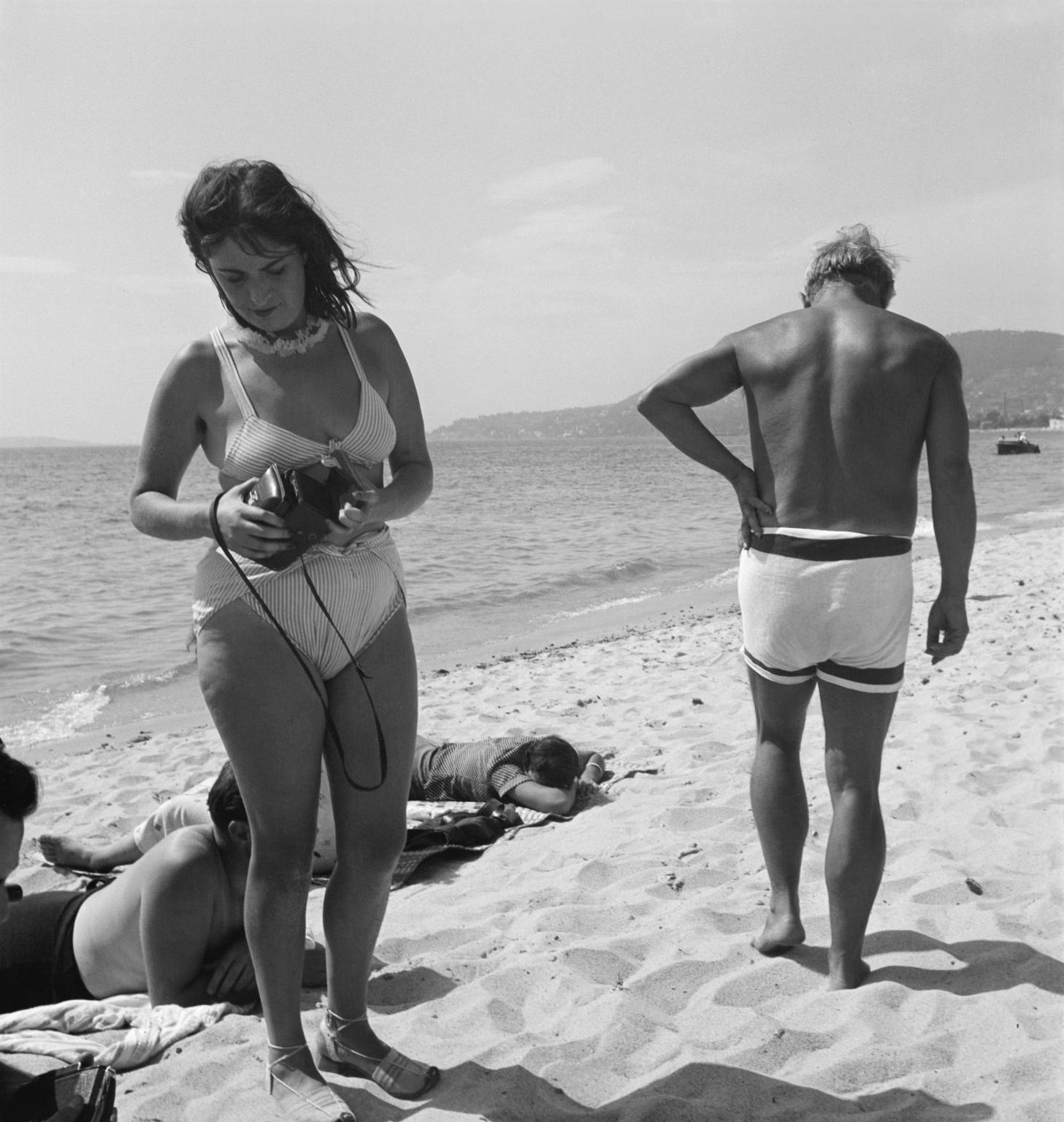
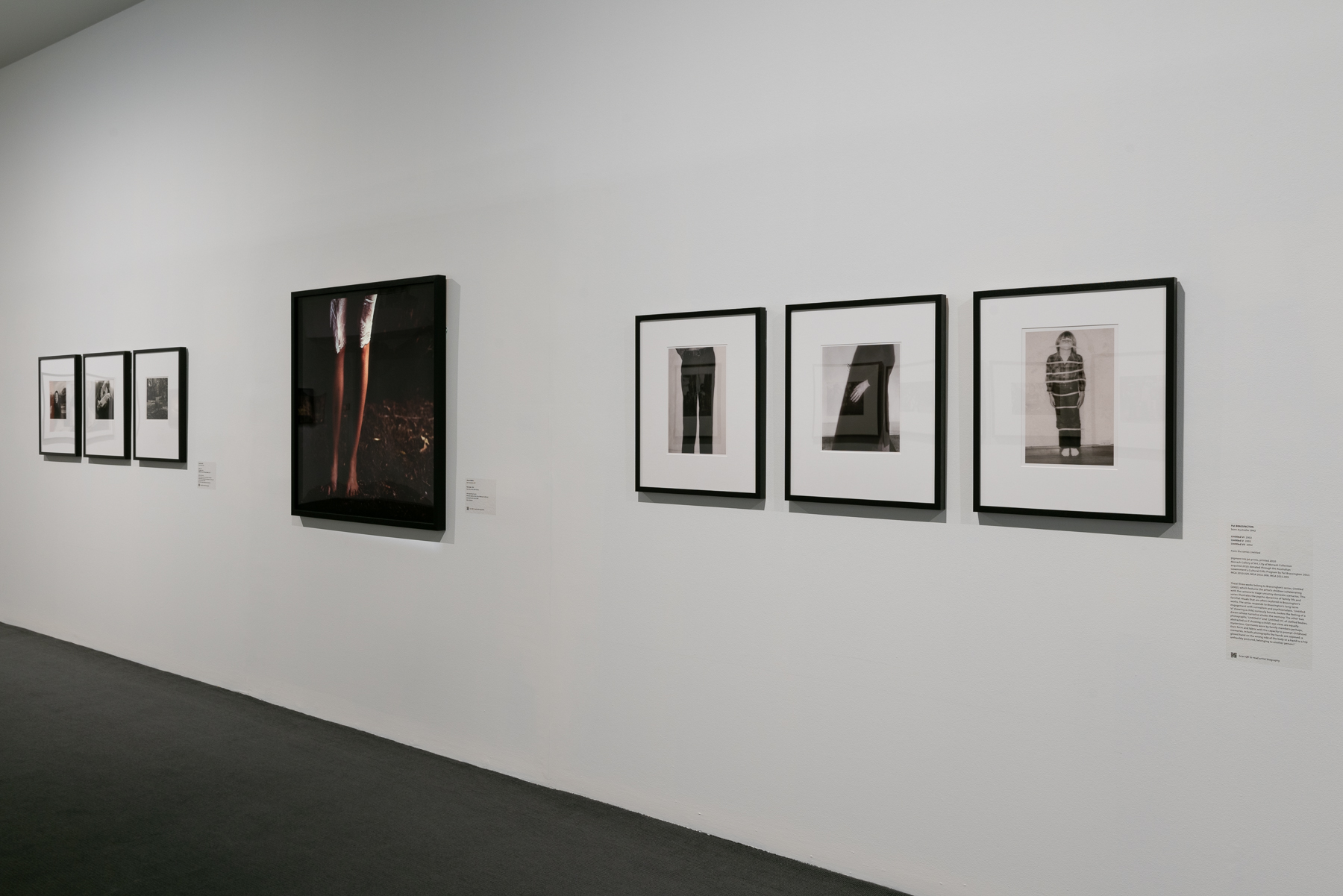
The Morgan Library & Museum website

LIKE ART BLART ON FACEBOOK

Back to top

Review: ‘Why Take Pictures?’ at the Centre for Contemporary Photography, Fitzroy, Melbourne

Exhibition dates: 15th June – 11th August, 2019

Artists: Alan Constable, Lyndal Irons, Glenn Sloggett, Michelle Tran, David Wadelton

Curator: Madé Spencer-Castle


Lyndal Irons (Australian) 'Backstage before Parade of Champions' 2015 from the exhibition 'Why Take Pictures?' at the Centre for Contemporary Photography, Fitzroy, Melbourne, June - August, 2019


Lyndal Irons (Australian)
Backstage before Parade of Champions
2015
From the series Physie
Courtesy of the artist


Picturing themselves

This is another strong exhibition at the Centre for Contemporary Photography, Melbourne, principally due to the integrity of the work and not the investigation of the theme for the exhibition, why take pictures?

I have always loved Alan Constable’s tactile cameras every since I first saw them. Constable is legally blind. He holds photographs of old cameras up to his eyes, a couple of inches away, and scans the images, committing them to memory. He then creates these most wonderful evocations of a seeing machine, almost as though he is transferring his in/sight into these in/operable, beautifully glazed structures. He twists two dimensional, photographic reality into these lumpy, misshapen sculptures, evocations of his memory and imagination. I have three of these cameras in my own collection. I treasure them.

Glen Sloggett’s works is, well… Glen Slogett’s work. What I mean by the statement is that you can always recognise his photographs through his signature as an artist. There is a delicious irony and dark humour present in his work… the cat / dead. The rose / a brothel. The scree of concrete / solidified. Slogett’s insightfulness into our existential condition is evidenced through his unique view of the world, pictured in thought provoking photographs. Nothing is quite as it seems. He has a fantastic eye and aesthetic. I remember the image Cheaper and Deeper (1996) from a book I saw many years ago and it so resonated with me. Just the sensibility of looking at these spaces and contexts. He pokes around in the strangeness of the world and reflects what he sees back to us: life hidden in plain sight, revealed in all its intricacies, in all its mundanity and glory. I really like his work.

Another artist I have a great affection for is David Wadelton. Again, the signature of his work is striking. You know it’s a Wadelton image. What I admire about his work is the persistence of his vision. His intellectual vision, his photographic vision. He sets out on a project and he puts his whole mind and soul into the work, documenting the shifting and changing spaces and places of Melbourne’s suburbs since 1975. What a great eye! The black and white objective newsagents, all Becher frontality, with this seeming emotional detachment when in fact each image is so emotionally charged – through the signage, and through the knowledge that these newsagents are disappearing from our city landscape. And then the colour, some might say kitsch, Suburban Baroque living rooms which picture “mid-century suburban interiors of the formerly working-class northern areas that were the destination of choice for many post-war immigrants from Europe.” Here a different technique, photographed at an angle, off to one side, from above, sometimes central, letting the spaces and colours speak for themselves. Now vanishing, these habitats redolent with pathos and longing for the motherland.

And then Lyndal Irons, an artist whose work I have never seen before. Again, beautifully composed images, the use of a limited colour palette and rouge highlights in Grooming Routine being particularly effective. There is something unnerving about the entire scenario – the fake tans, the too bright lipstick, the fervent admiration, the ecstatic posing… the winners having their photograph taken with their trophies while off to the side others watch (enviously?); the lines of young competitors and a photograph with the instructions: ‘Ideas For Photo Poses’ and ‘Make Sure The Photographer Can See your Number’. The whole charade reminds me of the hideous child beauty pageants in the good ol’ US of A. I would have liked to have seen more photographs from this body of work.

Where the exhibition fails is in its investigation into the theme, why take pictures? The exhibition does not interrogate with any rigour, in fact does not really scratch the surface of why we humans are so obsessed with taking photographs. Through the few lines of text that accompanies the exhibition (below), it offers a few titbits as way of remediation, a few possible ideas to cling to so as to answer the question: perhaps desire, perhaps obsession, curiosity, nostalgia and information. It then throws the photographic work of these artists at us as an answer, but what we are actually looking at is just representation, the outcome of the desire to picture, not an examination of the act itself. What the exhibition really needed was a thoroughly insightful text that examined our impulse to take pictures.

Here is a controversial statement. Every photograph is a self-portrait. What do I mean by this?

When we think back to the cave paintings of the Neolithic period, human beings picture the world around them by painting in colour on the rock that is earth. They picture themselves in that scene by painting what they know of the world around them. Through their imagination and creativity they place themselves in the scene – physically as hunters in the scene, and metaphorically through their relationship to the animals that they know and the objects that they carve, pictured on the cave walls. Theirs is a conscious decision to picture themselves as an infinite presence.

The same with photographs. Every time we press the shutter of a camera, it is a conscious decision to picture our relationship with the world. Through our will (to power), though our imagination and our desire, we place ourselves metaphorically (and physically when actually appear in the photograph) in every photograph. We stand behind the camera but imagine ourselves in that environment, have placed ourselves there to take the photograph. Every photograph is a self-portrait, one that establishes our relationship to the world, our identity, our values, who we are and how we react in each and every context.

These photographs are not memories at the time of their taking, although they make be taken under an impulse to memorialise. They will become memories, as when looking at old photo albums. They are not simply documents either, a recording of this time and place, because there is always the personal, the subjective relationship to the objective. Look at David Wadelton’s photographs of living rooms. Why was he present in all of these spaces? Just to observe, to document, to capture? No… he was their, to imagine, to create, to place himself at the scene, in the scene. Human beings make conscious choices to take photographs for all different kinds of reasons. But the one reason that is never mentioned is that, in reality, they are always picturing themselves.

Dr Marcus Bunyan


Many thankx to the Centre for Contemporary Photography for allowing me to publish the photographs in the posting. Please click on the photographs to view a larger version of the image.


Installation view of the exhibition 'Why Make Pictures?' at the Centre for Contemporary Photography, Melbourne

Installation view of the exhibition 'Why Make Pictures?' at the Centre for Contemporary Photography, Melbourne

Installation view of the exhibition 'Why Make Pictures?' at the Centre for Contemporary Photography, Melbourne

Installation view of the exhibition 'Why Make Pictures?' at the Centre for Contemporary Photography, Melbourne

Installation view of the exhibition 'Why Make Pictures?' at the Centre for Contemporary Photography, Melbourne


Installation views of the exhibition Why Make Pictures? at the Centre for Contemporary Photography, Melbourne
Photographs: J. Forsyth


Why Take Pictures? returns to one of the fundamental questions in photography, to consider our desire-drive and obsession with taking photographs, the apparatus of the camera and diverse approaches of looking through, or at, the lens. Featuring work by Alan Constable (VIC), Michelle Tran (VIC), Lyndal Irons (NSW), Glenn Sloggett (VIC) and David Wadelton (VIC), Why Take Pictures? considers the divergent motivations and compulsions as to why we take images in the first place.

We all take pictures, leaving every one of us with an extensive collection of images, historically as physical artefacts, but now stored within our digital devices. These collections become vessels of information and nostalgia, desire and curiosity. Why Takes Pictures? interrogates how and why we build up these storehouses of images, as considered through the lens of five exceptional artists.

Traversing documentary, commercial, political and highly personal modes, Why Take Pictures? presents a broad cross-section of different approaches to making photographs. Whether documenting social environments in states of change, examining the discarded or overlooked, prying at the strange behaviour of humans; or through examining the obsession with the camera itself, the artists in Why Take Pictures? are driven to continue to take photographs, like an itch that can’t be scratched.

Press release from the Centre for Contemporary Photography 21/09/2019


Biographies

Alan Constable is a multi-disciplinary artist whose practice spans drawing, painting and ceramics. His ceramic sculptures, which he began developing in 2007, reflects his life-long fascination with old cameras, which started at the age of eight when he would make replicas from cardboard cereal boxes. Constable’s finger impressions can be seen clearly on the clay surface, leaving the mark of the maker as a lasting imprint. Constable has been a regular studio artist at Arts Project Australia since 1991. Alongside selection in group exhibitions throughout Australia (including the Museum of Old and New Art in 2017), Constable has presented in a number of solo exhibitions including Andrew Baker Art Dealer, Brisbane; Darren Knight Gallery, Sydney; South Willard (curated by Ricky Swallow), Los Angeles; Stills Gallery, Sydney; and Helen Gory Galerie, Melbourne. Alan Constable is represented by Arts Projects Australia, Melbourne; Darren Knight Gallery, Sydney; and DUTTON, New York.

Hand-built from slabs of clay, Alan Constable’s charing sculptural cameras and optical devices … evoke and absolute obsession with the photographic apparatus. Legally blind, Constable creates his work through appropriating photographs from old books and magazines, holding the images close to his face and committing them to memory. Through recall, Constable reinterprets these images, transforming them from high-precision consumer objects, to tactile sculptures imbued with vitality, personality and warmth. Elegantly clunky, anthropomorphic and on the edge of the surreal, Constable’s compelling works all have ‘fictional’ apertures or viewfinders that can be physically seen through. Asking us to consider the functionality of vision, Constable’s ceramics have a human touch and sensibility that connects us directly to the devices we often consider merely utilitarian.


Alan Constable (Australian, b. 1956) 'Not titled' 2018 from the exhibition 'Why Take Pictures?' at the Centre for Contemporary Photography, Fitzroy, Melbourne, June - August, 2019


Alan Constable (Australian, b. 1956)
Not titled
2018
Earthenware and glaze
9 x 19 x 8cm
Courtesy of the artist
Alan Constable is represented by Arts Project Australia, Melbourne; Darren Knight, Sydney; Dutton, New York
Image copyright the artist, courtesy Arts Projects Australia
Photo: Andrew Barcham


Alan Constable (Australian, b. 1956) 'Not titled' 2019


Alan Constable (Australian, b. 1956)
Not titled
2019
Earthenware and glaze
Courtesy of the artist
Alan Constable is represented by Arts Project Australia, Melbourne; Darren Knight, Sydney; Dutton, New York
Image copyright the artist, courtesy Arts Projects Australia
Photo: Andrew Barcham


Alan Constable (Australian, b. 1956) 'Not titled' 2019


Alan Constable (Australian, b. 1956)
Not titled
2018
Earthenware and glaze
Courtesy of the artist
Alan Constable is represented by Arts Project Australia, Melbourne; Darren Knight, Sydney; Dutton, New York
Image copyright the artist, courtesy Arts Projects Australia
Photo: Andrew Barcham


Lyndal Irons (Australian) 'Mermaid Beach' 2015


Lyndal Irons (Australian)
Mermaid Beach
2015
From the series Physie
Archival inkjet print
37 x 55cm
Courtesy the artist


Lyndal Irons is a Sydney-based photographer and writer focused on local reportage, who is interested in seeking out parts of Australian society that are familiar and accessible, yet not often closely encountered. By recording social histories and building legacies using photographs and words, her work encourages curiosity and a deeper connection to daily life. Irons has presented solo exhibitions at the State Library of New South Wales (2015), the Australian Centre for Photography (2014), and Elizabeth Street Gallery (2014). Lyndal has been a finalist in the National Photographic Portrait Prize (2017), the Bowness Prize (2015) and the Olive Cotton Award for Portraiture (2015). Lyndal Irons’ Physie series documents one of Australia’s oldest sporting institutions: physical culture (physie) and calisthenics.


Lyndal Irons (Australian) 'Fans' 2015


Lyndal Irons (Australian)
Fans
2015
From the series Physie
Archival inkjet print
37 x 55cm
Courtesy the artist


Lyndal Irons (Australian) 'Grooming Routine' 2015


Lyndal Irons (Australian)
Grooming Routine
2015
From the series Physie
Archival inkjet print
37 x 55cm
Courtesy the artist


Lyndal Irons (Australian) 'Junior National Repecharge' 2015


Lyndal Irons (Australian)
Junior National Repecharge
2015
From the series Physie
Archival inkjet print
37 x 55cm
Courtesy the artist


Lyndal Irons (Australian) 'Ideas for Photo Poses' 2015


Lyndal Irons (Australian)
Ideas for Photo Poses
2015
From the series Physie
Archival inkjet print
37 x 55cm
Courtesy the artist


Glenn Sloggett (Australian, b. 1964) 'Pawn shop' 2018


Glenn Sloggett (Australian, b. 1964)
Pawn shop
2018
C-type print
120 x 100cm
Courtesy the artist


Glenn Sloggett has been exhibiting since the mid-90s. He won the prestigious Josephine Ulrick & Win Schubert Photography Award in 2008, and the inaugural John and Margaret Baker Memorial Fellowship for an Emerging Artist in 2001. He has held numerous solo exhibitions, including Cheaper and Deeper, a national touring show organised by the Australian Centre for Photography (2007). Sloggett’s work was featured on the ABC program The Art Life, and has been included in significant survey exhibitions of Australian art, including Australian Vernacular Photography, Art Gallery of New South Wales (2014); Melbourne Now, National Gallery of Victoria (2013-2014); internationally touring Photographica Australis (2002–2004); and nationally touring New Australiana, Australian Centre for Photography (2001). His work is held in numerous private and public collections including the Art Gallery of New South Wales, the National Gallery of Victoria and Monash Gallery of Art.

Interested in failure as a mechanism, Glenn Sloggett’s series of medium format photograph made with his twin-lens Rolleiflex could almost have been taken on a single walk around the neighbourhood on a strange, sunlit day. Wryly infused with dark humour and intermittent text punctuations such as “ICE IS A BAD THING” and “DO NOT LEAVE CHILDREN IN CARS”, Sloggett ask us to look beneath the surface of his documentary-style images. Why are people leaving their children in their cars? What precarious situation has driven someone to graffiti “is a bad thing” on this sign?

Sloggett’s work is at times bleak, and at others sublime. Looking closely, a cat that appears to be peacefully sunbaking has sunken eyes, an innocuous rose bush was taken in a brothel carpark. dumped concrete on the sidewalk looks like it has been churned up from a Friday night on the town.


Glenn Sloggett (Australian, b. 1964) 'Industrial dumping' 2019


Glenn Sloggett (Australian, b. 1964)
Industrial dumping
2019
C-type print
120 x 100cm
Courtesy the artist


Glenn Sloggett (Australian, b. 1964) 'Dead cat' 2019


Glenn Sloggett (Australian, b. 1964)
Dead cat
2019
C-type print
120 x 100cm
Courtesy the artist


Glenn Sloggett (Australian, b. 1964) 'Brothel car park' 2019


Glenn Sloggett (Australian, b. 1964)
Brothel car park
2019
C-type print
120 x 100 cm
Courtesy the artist


Michelle Tran (Australian, b. 1985) 'Sachi' 2019


Michelle Tran (Australian, b. 1985)
Sachi
2019
Archival inkjet print
79 x 54cm
Courtesy the artist and Hart & Co., Melbourne


Michelle Tran is a fashion and portrait photographer, born and raised in Melbourne by Vietnamese refugee parents. She began her photographic studies at the Victorian College of the Arts with an exploration into cultural identity through portraiture. Commercially, she has applied her interest in people to fashion, creating an approach that is both delicate and candid. Making a connection with her subjects, Michelle puts people at ease in front of the camera. Her portfolio includes portraits of celebrities such as Kendrick Lamar and Christian Louboutin, while her fashion and advertising work spans across brands including Adidas, MECCA, Amazon, Moroccan Oil, L’Oréal and Myer. Michelle lives in Melbourne with her partner, daughter and two rabbits. Michelle Tran is represented by Hart & Co., Melbourne.


Michelle Tran (Australian, b. 1985) 'Madison Shauna' 2019


Michelle Tran (Australian, b. 1985)
Madison Shauna
2019
Archival inkjet print
79 x 54cm
Courtesy the artist and Hart & Co., Melbourne


Michelle Tran (Australian, b. 1985) 'Sachi In Shadow' 2019


Michelle Tran (Australian, b. 1985)
Sachi In Shadow
2019
Archival inkjet print
79 x 54cm
Courtesy the artist and Hart & Co., Melbourne


Installation view of the exhibition 'Why Make Pictures?' at the Centre for Contemporary Photography, Melbourne

Installation view of the exhibition 'Why Make Pictures?' at the Centre for Contemporary Photography, Melbourne

Installation view of the exhibition 'Why Make Pictures?' at the Centre for Contemporary Photography, Melbourne

Installation view of the exhibition 'Why Make Pictures?' at the Centre for Contemporary Photography, Melbourne

Installation view of the exhibition 'Why Make Pictures?' at the Centre for Contemporary Photography, Melbourne


Installation views of the exhibition Why Make Pictures? at the Centre for Contemporary Photography, Melbourne showing the work of David Wadelton and his series Living Rooms (top), Milk Bars (middle) and Small business (bottom)


David Wadelton is a Melbourne-based painter and photographer who has documented the changing face of Melbourne’s Northern suburbs since 1975. Wadelton has held over 20 solo exhibitions, including three career surveys: Pictorial Knowledge, Geelong Art Gallery (1998); Icons Of Suburbia, McClelland Gallery, Langwarrin (2011) and The Northcote Hysterical Society, Bundoora Homestead Gallery (2015). Wadelton’s work has been included in Vision In Disbelief, 4th Biennale of Sydney (1982); Australian Culture Now, National Gallery of Victoria (2004); Far-Famed City of Melbourne, Ian Potter Museum of Art (2013); Melbourne Now, National Gallery of Victoria (2014); Crossing paths with Vivian Maier, Centre for Contemporary Photography (2014); The Documentary Take, Centre for Contemporary Photography (2016); Romancing the Skull, Ballarat Art Gallery (2017) and Beyond boundaries – Discoveries in contemporary photography, Aperture Gallery, New York (2019).


David Wadelton (Australian, b. 1955) 'Coburg' 2018


David Wadelton (Australian, b. 1955)
Coburg
2018
From the series Living Rooms
Courtesy the artist


David Wadelton (Australian, b. 1955) 'Reservoir' 2017-2019


David Wadelton (Australian, b. 1955)
Reservoir
2017-2019
From the series Living Rooms
Courtesy the artist


David Wadelton (Australian, b. 1955) 'Pascoe Vale South' 2018


David Wadelton (Australian, b. 1955)
Pascoe Vale South
2018
From the series Living Rooms
Courtesy the artist


David Wadelton (Australian, b. 1955) 'Reservoir' 2017


David Wadelton (Australian, b. 1955)
Reservoir
2017
From the series Living Rooms
Courtesy the artist


David Wadelton (Australian, b. 1955) 'Reservoir' 2017


David Wadelton (Australian, b. 1955)
Reservoir
2017
From the series Living Rooms
Courtesy the artist


David Wadelton (Australian, b. 1955) 'Glenferrie Road, Hawthorn' 2018


David Wadelton (Australian, b. 1955)
Glenferrie Road, Hawthorn
2018
From the series Newsagents
Courtesy the artist


David Wadelton (Australian, b. 1955) 'Broadway, Reservoir' 2019


David Wadelton (Australian, b. 1955)
Broadway, Reservoir
2019
From the series Newsagents
Courtesy the artist


David Wadelton (Australian, b. 1955) 'Watsonia Road Watsonia' 2016


David Wadelton (Australian, b. 1955)
Watsonia Road, Watsonia
2016
From the series Newsagents
Courtesy the artist


Centre for Contemporary Photography

No permanent exhibition space at the moment

Centre for Contemporary Photography website

LIKE ART BLART ON FACEBOOK

Back to top

Exhibition: ‘Under the Mexican Sky: A Revolution in Modern Photography’ at the Palmer Museum of Art, Pennsylvania State University

Exhibition dates: 1st June – 28th July, 2019


Edward Weston (American, 1886-1958) 'Dr. Federico Marín, Jean Charlot, and Tina Modotti' 1925 from the exhibition 'Under the Mexican Sky: A Revolution in Modern Photography' at the Palmer Museum of Art, Pennsylvania State University, June - July, 2019


Edward Weston (American, 1886-1958)
Dr. Federico Marín, Jean Charlot, and Tina Modotti
1925
Vintage gelatin silver print
7 1/2 x 9 1/4 inches


Shown with Modotti are Federico Marín, who was Diego Rivera’s brother-in-law and physician, and Jean Charlot, who is here seen making a sketch on Tina’s back.


If there is one period and two countries that I love more than anything else in the history of medium, it is the avant-garde photography of the interwar years in France and the photography of Mexico in the 1920s and 1930s.

American, French and Italian photographers were drawn like bees to a honey pot to the blossoming artistic scene in Mexico City and the country in general. They soaked up the unique Mexican culture, its atmosphere of work, religion, beauty, death, poverty, and sensuality its churches, religious icons, sculptures, festivals, pottery, and people the land, the mountains and the inhabitants all photographed in this dazzling light. They photographed in an “international modernism” style (the supposed revolution in modern photography named in the title), expatriate photographers in a hospitable but impoverished land. But this was not their land, for this was not their country.

While Strand “modified his 5 × 7 Graflex camera, adding a special prism extension that enabled him to clandestinely shoot a subject at a 90° angle from the front of his camera”, surreptitiously making portraits as he had done in his New York subway portraits; while Weston documents the murals of Mexican culture at a distance, the clay pots as an abstract composition, and the traditional art and craft Tehuana dress as idealised icon; while Modotti comes closer with her political statements and constructed still life; it is only the Mexican artist Manuel Álvarez Bravo that steals my heart.

His work exudes the spirit of the country through its sensitivity and connection to the earth from which he was born. The light and form in Bravo La Siesta de los Peregrinos; the light and form in Retrato de lo Eterno. I have studied his work quite thoroughly. He is the blessed one. Through his music, he captures the light and life of Mexico, the spirit of the eternal, “the sunlight [as] a discreet veil that turns the shadows into velvet.” His work is the art of the People.

Dr Marcus Bunyan


Hands in the Water of the Mind

The water of the mind     has filled with forms.
Come, come closer now,    elusive as
an anemone or a jellyfish     a criminal, a saint;

dip your hand in and pull    from the tormented water
angles and profiles,         an incessant music,

the murmur of the sky,     the mouth of the earth,
the crown of the breeze,     the rings of fire,

the bodies of the lynxes,     the wings of the bat,
the glasses and the pillow,     the brightness of hunger.

David Huerta


Many thankx to the Palmer Museum of Art for allowing me to publish the photographs in the posting. Please click on the photographs for a larger version of the image.


In the aftermath of the Mexican Revolution (1910-1920), expatriate photographers flocked to the blossoming artistic scene in Mexico City. Los Angelino Edward Weston reinvented his approach to the medium during three years there in the 1920s. In exploring the development of international modernism into the next decades, this exhibition features rare photographs by Italian Tina Modotti, New Yorkers Helen Levitt and Paul Strand, French master Henri Cartier-Bresson, and Mexico’s own Manuel Álvarez Bravo.


“For six months I worked at still photographs of Mexico, made about sixty platinum prints, completed and mounted them. Among other things I made a series of photographs in the churches, of the Christs and Madonnas, carved out of wood by the Indians. They are among the most extraordinary sculptures I have seen anywhere, and have apparently gone relatively unnoticed. These figures so alive with the intensity of the faith of those who made them. That is what interested me, the faith, even if it is not mine; a form of faith, to be sure, that is passing, that has to go. But the world needs a faith equally intense in something else, something more realistic, as I see it. Hence my impulse to photograph these things, and I think the photographs are pretty swell.”


Paul Strand


“At first the brilliance of technique is commented on. Laymen say: What reality! How three-dimensional. Photographers say: What texture! What a scale of values! What print quality! This is a first reaction and the least significant one. All this virtuosity is at the service of what Strand has to express, the felt idea behind the photograph.”


Leo Hurwitz


“Popular Art is the art of the People. A popular painter is an artisan who, as in the Middle Ages, remains anonymous. His work needs no advertisement, as it is done for the people around him. The more pretentious artist craves to become famous, and it is characteristic of his work that it is bought for the name rather than for the work a name that is built up by propaganda. Before the Conquest all art was of the people, and popular art has never ceased to exist in Mexico.”


Manuel Álvarez Bravo


Charles Betts Waite (American, 1861-1927) 'The Iguana' 1901 from the exhibition 'Under the Mexican Sky: A Revolution in Modern Photography' at the Palmer Museum of Art, Pennsylvania State University, June - July, 2019


Charles Betts Waite (American, 1861-1927)
The Iguana
1901
Vintage gelatin silver print
5 x 7 7/8 inches


In this playful study, the shadows dominate: the bowl of vittles atop the man’s shadow suggest a sombrero shielding a sleeping man’s face during an afternoon siesta.

[Waite] traveled to Mexico City and in May 1897 established a photography studio there, during the Porfirio Díaz government. He became part of Porfirian society, taking photographs of many in the ruler’s circle. He was among a group of expatriate photographers (such as Winfield Scott and fellow San Diegans Ralph Carmichael and Percy S. Cox) working in Mexico in the first decade of the 20th century. Waite traveled throughout Mexico, exploring archaeological sites and the countryside.

[Waite’s life] corresponds with that of adventurers, brave explorers with romantic spirits and materialistic outlooks, who toured the hitherto unknown world, discovering their riches and inventing paradises.” ~ Francisco Montellano, author of C. B. Waite, fotógrafo


His works were published in books, travel magazines, and on post cards, having contracted with the Sonora News Company. He also worked for several Mexican newspapers, and he documented United States scientific expeditions in Mexico. The images often included scenic Mexican images and the country’s native residents. Many of Waite’s photographs depict railroads, parks, archaeological sites, and business enterprises.

Text from the Wikipedia website


Tina Modotti (Italian, 1896-1942) 'Experiment in Related Form' 1924


Tina Modotti (Italian, 1896-1942)
Experiment in Related Form
1924
Vintage gelatin silver print
7 3/8 x 9 3/8 inches


This is one of only two known photomontages by Modotti, in which a single image of six wine glasses is enlarged and cropped and then superimposed onto itself.


Edward Weston (American, 1886-1958) 'Ollas de Oaxaca' 1926


Edward Weston (American, 1886-1958)
Ollas de Oaxaca
1926
Vintage palladium print
8 x 10 inches


An olla is a clay pot or jar. Weston wrote that his first thought of Oaxaca “is always of the market, and the market means first of all loza crockery! I bought and bought dishes, jars, jugettes, of the dull black or grey-black ware, and of the deep green glaze ware… Very well do these people reproduce, make use of the essential quality of the material, splendidly do they observe and utilise to advantage the very essence of a form. A race of born sculptors!”


Edward Weston (American, 1886-1958) 'Detail of stone frieze, ruins of Mitla, Oaxaca' 1926


Edward Weston (American, 1886-1958)
Detail of stone frieze, ruins of Mitla, Oaxaca
1926
Vintage gelatin silver print
7 1/2 x 9 1/2 inches


“I was fascinated by the stone mosaics at Mitla, for besides a variation on the Greek fret, there was a unique pattern oblique lines of dynamic force flashes of stone lightning, which remain my strongest memory.” ~ Edward Weston, The Daybooks, vol. I.


Edward Weston (American, 1886-1958) 'Stone lions in relief, Oaxaca' 1926


Edward Weston (American, 1886-1958)
Stone lions in relief, Oaxaca
1926
Vintage gelatin silver print
7 1/2 x 9 1/2 inches


Edward Weston (American, 1886-1958) 'Two clay pitchers' 1926


Edward Weston (American, 1886-1958)
Two clay pitchers
1926
Vintage gelatin silver print
7 1/2 x 9 1/4 inches


These studies of pre-Columbian and folk-art statuary and pottery, done for Anita Brenner’s Idols Behind Altars project, taught Weston the art of the table-top still life. As such, they were the direct precursor to the iconic shells, peppers, and cabbages that occupied him immediately upon his return to Los Angeles in December 1926.


Edward Weston (American, 1886-1958) 'Tarascan Pottery, Michoacán' 1926


Edward Weston (American, 1886-1958)
Tarascan Pottery, Michoacán
1926
Vintage gelatin silver print
7 1/2 x 8 1/4 inches


The Tarascan people flourished from 1100 A.D. to 1530 A.D. After the Spanish Conquest, missionaries organised the Tarascan empire into a series of craft-oriented villages. Their artistic traditions survive today in the Lake Pátzcuaro region.


Tina Modotti (Italian, 1896-1942) 'Jean Charlot' 1923


Tina Modotti (Italian, 1896-1942)
Jean Charlot
1923
Vintage gelatin silver print
9 1/2 x 7 1/2 inches


Anita Brenner and Tina Modotti remained friendly rivals in Mexico City’s close-knit artistic expatriate community throughout the 1920s. Their intertwined social life revolved around the French-Mexican painter Jean Charlot, who had been a principal assistant to Rivera. Charlot was Weston’s closest friend in Mexico as well as Brenner’s paramour and professional collaborator. In a diary entry in 1927, Brenner made a three-column table captioned “Actively Friends; Actively Enemies; and Actively Both.” Modotti’s name appears in the third column.

This sensitive Modotti portrait is inscribed by Charlot to Brenner, “You are bad tempered / I am worst tempered / Does that explain the sweet / Hours we passed together”


Tina Modotti (Italian, 1896-1942) 'Elisa Kneeling' 1924


Tina Modotti (Italian, 1896-1942)
Elisa Kneeling
1924
Vintage palladium print
8 7/8 x 6 5/8 inches


The power of Modotti’s portrait of her young chambermaid is due to the contrast between her beatific face and her coiled hands, which suggest a lifetime of hard manual labor.


Edward Weston (American, 1886-1958) 'Anita ("Pear-Shaped Nude")' 1925


Edward Weston (American, 1886-1958)
Anita (“Pear-Shaped Nude”)
1925
Vintage gelatin silver print
8 5/8 x 7 3/8 inches


“I was shaving when A[nita] came, hardly expecting her on such a gloomy, drizzling day. I made excuses, having no desire, no ‘inspiration’ to work … but she took no hints, undressing while I reluctantly prepared my camera… And then appeared to me the most exquisite lines, forms, volumes and I accepted, working easily, rapidly, surely…

Reviewing the new prints, I am seldom so happy as I am with the pear-like nude of A[nita]. I turn to it again and again. I could hug the print in sheer joy. It is one of my most perfect photographs.” ~ Edward Weston, The Daybooks, vol. I


Edward Weston (American, 1886-1958) 'Excusado' 1926


Edward Weston (American, 1886-1958)
Excusado
1926
Gelatin silver print, 1930s
10 x 8 inches


“‘Form follows function.’ Who said this I don’t know, but the writer spoke well! I have been photographing our toilet, that glossy enamelled receptacle of extraordinary beauty. It might be suspicioned that I am in a cynical mood to approach such subject matter… My excitement was absolute aesthetic response to form… I was thrilled! here was every sensuous curve of the ‘human form divine’ but minus imperfections.” ~ Edward Weston, The Daybooks, vol. I

Weston was particularly amused when his chambermaid placed a bouquet of flowers in the bowl, in a well-meaning effort to create a more fitting subject for her employer’s lens.


Edward Weston (American, 1886-1958) 'Casa de Vecindad' 1926


Edward Weston (American, 1886-1958)
Casa de Vecindad
1926
Vintage gelatin silver print
7 3/8 x 9 1/2 inches


A casa de vecindad or “neighborhood house” was a community home or tenement. This one had once been “a fine old convent,” wrote Weston. “The light was made perfect by the collective noise of cats and dogs, children laughing and crying, women gabbling and vendors calling.”


Edward Weston (American, 1886-1958) 'Arches, Oaxaca' 1926


Edward Weston (American, 1886-1958)
Arches, Oaxaca
1926
Vintage gelatin silver print
9 1/2 x 7 1/2 inches


Edward Weston (American, 1886-1958) 'Guadalajara, Barranca de los Oblatos: Rocky Trail' 1925


Edward Weston (American, 1886-1958)
Guadalajara, Barranca de los Oblatos: Rocky Trail
1925
Vintage palladium print
10 x 8 inches


Mexico City in the 1920s-30s was the scene of one of the great artistic flowerings of the twentieth century. Like Paris in the aftermath of World War I, Mexico City after the decade-long Mexican Revolution served as a magnet for international artists and photographers. Foremost among the expatriate photographers was the Los Angelino, Edward Weston, who embedded himself in the artistic milieu surrounding the muralist painters Rivera, Orozco, and Siqueiros. Weston reinvented his approach to picture-making during his three years in Mexico, 1923-26. The soft-focus painterliness that had characterised his studio portraiture in the ‘teens melted away under the brilliant Mexican sun, to be replaced by crystalline landscapes as well as evocative still life that prefigured his later shells and peppers. Meanwhile his paramour and protégée, the Italian silent film star Tina Modotti, created photographs that would place her in the pantheon of great photographers of the era. This exhibition features rare vintage Mexican masterworks by both Weston and Modotti from the 1920s, as well as stellar photographs from the 1930s by the New Yorker Paul Strand, the Frenchman Henri Cartier-Bresson, and by Mexico’s own self-taught master of the camera, Manuel Álvarez Bravo.

Already in the first two decades of the 20th century, immigrant photographers had played an outsize role in Mexican photography. German-born Hugo Brehme published picturesque views of Mexican life and landscape in local and international tourist magazines, including National Geographic. Brehme’s fellow German émigré, Carl Wilhelm (Guillermo) Kahlo, meticulously photographed Mexico’s colonial architecture; his daughter Frida would marry Diego Rivera and become a legendary painter and personality. A third talented immigrant photographer was the Californian C.B. Waite, who moved to Mexico City in 1897 and opened a photo studio. At their best, as in The Iguana from 1901, seen here, Waite’s genre studies prefigure by a quarter century the exotic Surrealism that would characterise the work of Modotti, Álvarez Bravo, and Cartier-Bresson.

In 1923, C.B. Waite left Mexico and retired to Glendale, California, a suburb of Los Angeles. Coincidentally, within a few months, Glendale’s leading photographer, Edward Weston, would make that same journey in the opposite direction. Weston sought to escape from the personal and professional distractions that he felt were deterring him from an aesthetic breakthrough. His love affair with Tina Modotti made him realise that he would never be a conventional husband. In August, 1923, Weston left the port of Los Angeles and sailed to Mexico on the S.S. Colima, accompanied by Modotti, who agreed to run his studio in exchange for photography lessons.

The Weston-Modotti home in Mexico City became a gathering place for writers, painters and photographers. This was the time of the Mexican Renaissance, a cultural movement that celebrated the country’s modern artists as well as its popular and indigenous arts. Under the presidency of Álvaro Obregón, the education minister José Vasconcelos sponsored an ambitious program of progressive public art, most notably the mural movement which was led by Diego Rivera, who was in all ways a larger-than-life character.

While Weston never second-guessed his decision to give up the steady income from studio portraiture, he and Tina faced constant money problems during their three years together in Mexico. Financial salvation came in the unlikely guise of a brash 19-year-old anthropology student, Anita Brenner. Born to a mercantile family with roots in both Texas and Mexico, Brenner befriended Weston and Modotti in Mexico City and hired them to furnish 400 photographs for her book, Idols Behind Altars. This was to be the first serious art-historical treatise on pre-Columbian art, Spanish Colonial architecture, and contemporary Mexican folk art. Weston and Modotti rose to the task with gusto, criss-crossing southern Mexico from Oaxaca to Guadalajara in search of prime examples of these genres.

Weston was first introduced to pulquerías, or working-class bars, by Diego Rivera, who was writing an article on pulquería mural painting for Mexican Folkways magazine. Weston was impressed by the vitality of these anonymous murals, writing:

“The aspiring young painters of Mexico should study the unaspiring paintings popular themes popular art which adorn the humble pulquería… brave matadores at the kill white veiled ladies, pensive beside moonlit waters an exquisitely tender group of Indians … and all the pictured thoughts, nearest and dearest to the heart of the people.”


When Modotti left Mexico in 1930, she gifted her large-format view cameras to her close friend and protégé, Manuel Álvarez Bravo. With a seven-decade career, he is considered Mexico’s greatest photographer. “I was born in the city of Mexico, behind the Cathedral, in the place where the temples of the ancient Mexican gods must have been built, February fourth, 1902,” he wrote, invoking the magical realism that infuses his most iconic photographs. As a teenager he studied painting at the Academia San Carlos, the same art school that Rivera and Orozco had attended. “Interested since always in art, I committed the common error of believing that photography would be the easiest,” he confessed. In addition to Modotti, another important early mentor was the painter Rufino Tamayo, who counselled Álvarez Bravo against the “surface nationalism” of political art, such as that of Rivera, Orozco, or indeed Modotti herself: “Art is a way of expression that has to be understood by everybody, everywhere. It grows out of the earth, the texture of our lives and our experiences.” Tamayo’s words became Álvarez Bravo’s touchstones.

In 1934, Álvarez Bravo befriended the young painter-turned-photographer Henri Cartier-Bresson, who had come to Mexico to spend the year photographing in the brilliant natural light not often found in his native Paris. At a technical level their approach to photography diverged: Álvarez Bravo, like Weston and Modotti, favoured traditional large-format view cameras, while Cartier-Bresson, the progenitor of the “decisive moment,” was an early proponent of the hand-held 35mm Leica camera. Yet their common interest in capturing the “accidental theater of the street” outweighed these differences. “Cartier-Bresson and I did not photograph together but we walked the same streets and photographed many of the same things,” Álvarez Bravo recalled. They exhibited together in 1935 in a show entitled Documentary and Anti-Graphic Photographs, first at the Palacio de Bellas Artes in Mexico City and then at the Julien Levy Gallery in New York. This seminal exhibit was the first time that “street photography” had been placed in a serious fine art setting. Reviewing that show, poet Langston Hughes wrote: “In a photograph by Cartier-Bresson, as in modern music, there is a clash of sunlight and shadow, while in Bravo, the sunlight is a discreet veil that turns the shadows into velvet.”

Text from the Palmer Museum of Art


Edward Weston (American, 1886-1958) 'Los Changos Vaciladores (Playful Monkeys), pulquería mural' 1926


Edward Weston (American, 1886-1958)
Los Changos Vaciladores (Playful Monkeys), pulquería mural
1926
Vintage gelatin silver print
7 1/2 x 9 1/2 inches


Edward Weston (American, 1886-1958) 'Charrito, pulquería mural' 1926


Edward Weston (American, 1886-1958)
Charrito, pulquería mural
1926
Vintage gelatin silver print
7 1/2 x 9 1/2 inches


Edward Weston (American, 1886-1958) 'Two children with pulquería mural' 1926


Edward Weston (American, 1886-1958)
Two children with pulquería mural
1926
Vintage gelatin silver print
9 3/8 x 6 3/4 inches


Edward Weston (American, 1886-1958) 'Ceiling of the Church of Santiago, Tupátaro' 1926


Edward Weston (American, 1886-1958)
Ceiling of the Church of Santiago, Tupátaro
1926
Vintage gelatin silver print
7 1/2 x 9 1/2 inches


“Few had seen this church of Tupátaro, far from tourist tracks. The ceiling was entirely lacquered, even the beams a notable achievement in colour, design and craftsmanship. That was a hard day of work. Exposures were prolonged to even fifteen minutes with additional flash light, the while I must remain quite still upon a rickety balcony for fear of jarring the camera, which was real torture with more fleas biting and crawling than I ever knew could jump from a few square feet of space.” ~ Edward Weston, The Daybooks, vol. I


Edward Weston (American, 1886-1958) 'Tin roofs, Mexico' 1926


Brett Weston (American, 1911-1993)
Tin roofs, Mexico
1926
Vintage gelatin silver print
7 1/8 x 9 1/2 inches


Edward Weston’s son Brett joined him in his final year in Mexico. Brett was himself a child prodigy photographer, as evidenced by this sensitively balanced and exquisitely printed abstract masterwork, taken when he was fourteen years old.

Theodore Brett Weston (December 16, 1911, Los Angeles – January 22, 1993, Hawaii) was an American photographer. Van Deren Coke described Brett Weston as the “child genius of American photography.” He was the second of the four sons of photographer Edward Weston and Flora Chandler.

Weston began taking photographs in 1925, while living in Mexico with Tina Modotti and his father. He began showing his photographs with Edward Weston in 1927, was featured at the international exhibition at Film und Foto in Germany at age 17, and mounted his first one-man museum retrospective at age 21 at the De Young Museum in San Francisco in January, 1932.

Weston’s earliest images from the 1920s reflect his intuitive sophisticated sense of abstraction. He often flattened the plane, engaging in layered space, an artistic style more commonly seen among the Abstract Expressionists and more modern painters like David Hockney than other photographers. He began photographing the dunes at Oceano, California, in the early 1930s. This eventually became a favourite location of his father Edward and later shared with Brett’s third wife Dody Weston Thompson. Brett preferred the high gloss papers and ensuing sharp clarity of the gelatin silver photographic materials of the f64 Group rather than the platinum matte photographic papers common in the 1920s and encouraged Edward Weston to explore the new silver papers in his own work. Brett Weston was credited by photography historian Beaumont Newhall as the first photographer to make negative space the subject of a photograph. Donald Ross, a photographer close to both Westons, said that Brett never came after anyone. He was a true photographic equal and colleague to his father and “one should not be considered without the other.”

“Brett and I are always seeing the same kinds of things to do we have the same kind of vision. Brett didn’t like this; naturally enough, he felt that even when he had done the thing first, the public would not know and he would be blamed for imitating me.” Edward Weston Daybooks May 24, 1930.

Text from the Wikipedia website


Edward Weston (American, 1886-1958) 'Rosa Covarrubias in Tehuana dress' 1926


Edward Weston (American, 1886-1958)
Rosa Covarrubias in Tehuana dress
1926
Vintage gelatin silver print
9 3/8 x 7 1/2 inches


Rosa and Miguel Covarrubias were early promoters of traditional Mexican art and craft; their extensive collection now resides at San Francisco’s Mexican Museum. This striking portrait of Rosa in traditional Zapotec dress was appropriated by Diego Rivera for his painting Tehuana Woman, 1929.

Born in Los Angeles, Rosa Rolanda was a dancer with the Marion Morgan dance troupe and the Ziegfeld Follies. She married the Mexican artist Miguel Covarrubias, who was the leading caricaturist of the jazz age. While Rosa and Miguel were accompanying Edward and Tina on one of their trips for Anita Brenner, they taught Rosa the basics of photography. Later, Man Ray would teach her his technique of cameraless photograms. With such tutelage, it is no surprise that Rosa became a gifted photographer in her own right.


Edward Weston (American, 1886-1958) 'Rosa Covarrubias' 1926


Edward Weston (American, 1886-1958)
Rosa Covarrubias
1926
Vintage gelatin silver print
9 x 6 3/4 inches


Edward Weston (American, 1886-1958) 'Palma Bendita' 1926


Edward Weston (American, 1886-1958)
Palma Bendita
1926
Vintage gelatin silver print
9 1/2 x 7 3/8 inches


The branches of the palma bendita, or “blessed palm,” were believed to have been strewn on the road before Christ during his entry into Jerusalem and are blessed on Palm Sunday, an important Mexican holiday.


Tina Modotti (Italian, 1896-1942) 'Campesinos (Workers' Parade)' 1926


Tina Modotti (Italian, 1896-1942)
Campesinos (Workers’ Parade)
1926
Vintage palladium print
8 3/8 x 7 1/2 inches


Modotti’s iconic Campesinos has the same formal structure circular forms filling the picture frame as Weston’s Olla Pots of Oaxaca made the same year. But Modotti’s picture adds a political dimension that Weston would by nature recoil from. Modotti’s increasingly fervent politicisation contributed to the dissolution of her relationship with Weston, who was fundamentally apolitical. Weston returned to Los Angeles at the end of 1926; Modotti would remain in Mexico another four years.


Tina Modotti (Italian, 1896-1942) 'Bandolier, Corn, Sickle' 1927


Tina Modotti (Italian, 1896-1942)
Bandolier, Corn, Sickle
1927
Vintage gelatin silver print
8 3/4 x 7 1/2 inches


This politically-charged still life, and its companion piece Bandolier, Corn and Guitar, were made the year Modotti formally joined Mexico’s Communist Party. At the time she was modelling for Diego Rivera, a fellow traveler. Modotti’s likeness appears in several of Rivera’s most famous Revolutionary murals; she would also be blamed for the break-up of his marriage to Lupe Marín.


Tina Modotti (Italian, 1896-1942) 'Bandolier, Corn and Guitar' 1927


Tina Modotti (Italian, 1896-1942)
Bandolier, Corn and Guitar
1927
Vintage gelatin silver print
9 1/2 x 7 1/2 inches


Tina Modotti (Italian, 1896-1942) 'Women of Tehuantepec' 1929


Tina Modotti (Italian, 1896-1942)
Women of Tehuantepec
1929
Vintage gelatin silver print
9 x 7 1/4 inches


This is one of Modotti’s final masterworks. The following year she would be expelled from Mexico for sedition, due to her work on behalf of the Communist Party. She settled in Russia, giving up photography for relief work with International Red Aid. When the Spanish Civil War erupted in 1936, she joined the fray. She returned to Mexico under a pseudonym in 1939, and died of a heart attack three years later, at age 45, her life the stuff of legend.


Manuel Álvarez Bravo (Mexican, 1902-2002) 'La Siesta de los Peregrinos' (the siesta of the migrants) 1930s


Manuel Álvarez Bravo (Mexican, 1902-2002)
La Siesta de los Peregrinos (the siesta of the migrants)
1930s
Vintage gelatin silver print
6 7/8 x 9 3/8 inches


Manuel Álvarez Bravo (February 4, 1902 – October 19, 2002) was a Mexican artistic photographer and one of the most important figures in 20th century Latin American photography. He was born and raised in Mexico City. While he took art classes at the Academy of San Carlos, his photography is self-taught. His career spanned from the late 1920s to the 1990s with its artistic peak between the 1920s and 1950s. His hallmark as a photographer was to capture images of the ordinary but in ironic or Surrealistic ways. His early work was based on European influences, but he was soon influenced by the Mexican muralism movement and the general cultural and political push at the time to redefine Mexican identity. He rejected the picturesque, employing elements to avoid stereotyping. He had numerous exhibitions of his work, worked in the Mexican cinema and established Fondo Editorial de la Plástica Mexicana publishing house. He won numerous awards for his work, mostly after 1970. …

Álvarez Bravo’s photography career spanned from the late 1920s to the 1990s. It formed in the decades after the Mexican Revolution (1920s to 1950s) when there was significant creative output in the country, much of it sponsored by the government wanting to promote a new Mexican identity based on both modernity and the country’s indigenous past.

Although he was photographing in the late 1920s, he became a freelance photographer full-time in 1930, quitting his government job. That same year, Tina Modotti was deported from Mexico for political activities and she left Alvarez Bravo her camera and her job at Mexican Folkways magazine. For this publication, Alvarez Bravo began photographing the work of the Mexican muralists and other painters. During the rest of the 1930s, he established his career. He met photographer Paul Strand in 1933 on the set of the film “Redes”, and worked with him briefly. In 1938, he met French Surrealist artist André Breton, who promoted Alvaréz Bravo’s work in France, exhibiting it there. Later, Breton asked for a photograph for the cover of catalog for an exhibition in Mexico. Alvarez Bravo created “La buena fama durmiendo” (The good reputation sleeping), which Mexican censors rejected due to nudity. The photograph would be reproduced many times after that however.

Alvarez Bravo trained most of the next generation of photographers including Nacho López, Héctor García and Graciela Iturbide. From 1938 to 1939, he taught photography at the Escuela Central de Artes Plásticas, now the National School of Arts (UNAM). In the latter half of the 1960s he taught at the Centro Universitario de Estudios Cinematográficos.

Text from the Wikipedia website


Manuel Álvarez Bravo (Mexican, 1902-2002) 'Retrato de lo Eterno' (Portrait of the Eternal) 1935


Manuel Álvarez Bravo (Mexican, 1902-2002)
Retrato de lo Eterno (Portrait of the Eternal)
1935
Vintage gelatin silver print
9 1/2 x 7 3/8 inches


Henri Cartier-Bresson (French, 1908-2004) 'The Spider of Love, Mexico City' 1934


Henri Cartier-Bresson (French, 1908-2004)
The Spider of Love, Mexico City
1934
Gelatin silver print c. 1960
6 1/2 x 9 3/4 inches


“I was very lucky. I had only to push the door open. It was so voluptuous, so sensual. I couldn’t see their faces. It was miraculous physical love in all its fullness. Tonio grabbed a lamp, and I took several shots. There was nothing obscene about it. I could never have got them to pose a matter of decency.” ~ Cartier-Bresson


Henri Cartier-Bresson (French, 1908-2004) 'Calle Cuauhtemoctzin (two prostitutes), Mexico City' 1934


Henri Cartier-Bresson (French, 1908-2004)
Calle Cuauhtemoctzin (two prostitutes), Mexico City
1934
Gelatin silver print c. 1960
9 1/8 x 13 3/4 inches


Manuel Álvarez Bravo (Mexican, 1902-2002) 'Niña con Leña' (Girl with Firewood) 1930s


Manuel Álvarez Bravo (Mexican, 1902-2002)
Niña con Leña (Girl with Firewood)
1930s
Vintage gelatin silver print
7 x 9 5/8 inches


Helen Levitt’s photographs of Mexico City, taken in 1941, are a notable exception to her otherwise exclusive focus on New York City during her long career (1930s through 1970s). But the principal subject matter of Levitt’s work was the same in both metropolises: the lives of children in working-class neighbourhoods. In this evocative image, the children’s play is undeterred by their poverty, which is evidenced by their bare feet, the dirt road, and the dilapidated buildings. Levitt studied with the noted photographer Walker Evans; her work was also influenced by the other artists in the present exhibition: like Cartier-Bresson, she favoured the hand-held Leica camera; like Paul Strand, she used a secret sideways lens that enabled her to photograph surreptitiously.

Levitt printed her Mexican photographs only after returning to New York, where they added to her blossoming reputation. Her first one-woman show at the Museum of Modern Art included sixteen photographs from Mexico, including a variant of this image (below).


Helen Levitt (American, 1913-2009) 'Mexico City' 1941


Helen Levitt (American, 1913-2009)
Mexico City
1941
Vintage gelatin silver print
7 1/4 x 9 5/8 inches


Henri Cartier-Bresson (French, 1908-2004) 'Mexico' 1963


Henri Cartier-Bresson (French, 1908-2004)
Mexico
1963
Vintage gelatin silver print
9 3/4 x 6 1/2 inches


Paul Strand (American, 1890-1976)

Paul Strand achieved early recognition as a protégé of Alfred Stieglitz, the New York photographer and gallerist. In 1917 Stieglitz devoted the final two issues of his Camera Work magazine to Strand’s high modernist photography, which was heavily influenced by avant garde artists such as Paul Cezanne and Pablo Picasso. Stieglitz praised Strand’s work as “brutally direct” and “devoid of all flim-flam.”

By 1932, when Strand drove his Model A Ford from Taos to Mexico, his style had evolved dramatically. Abstraction had given way to humanism, reflecting the influence of his high school photography teacher, the eminent social documentarian Lewis Hine. Strand was now concerned with how people lived, and especially with those aspects of life that “make a place what it is.” Mexico was a logical destination for Strand, whose political concern for the common man intersected with the proletarian goals of the Mexican Revolution.

Over the next several months Strand photographed people and places in rural small towns across southern Mexico, from Michoacán in the West to Oaxaca in the East, unconsciously retracing Edward Weston and Tina Modotti’s footsteps from the 1920s. Strand’s work in Mexico set the tone for the photographic journeys to out-of-the-way destinations in Europe and Africa that would occupy the rest of his long career.

For these Mexican portraits, Strand modified his 5 x 7 Graflex camera, adding a special prism extension that enabled him to clandestinely shoot a subject at a 90° angle from the front of his camera. The subjects of these portraits, absorbedly watching the Yankee photographer at work, were unaware that he was actually aiming his camera at them. Strand had pioneered this technique as a young photographer on the streets of New York.

Strand originally printed his Mexican photographs as platinum prints. The prints shown here are hand-pulled photogravures created for a 1940 portfolio Photographs of Mexico. In his introduction to the portfolio, Strand describes the prints as “a step forward in the art of reproduction processes,” attributing their quality to the production team’s combined two centuries of experience.


Paul Strand (American, 1890-1976) 'Near Saltillo' 1932


Paul Strand (American, 1890-1976)
Near Saltillo
1932
Vintage photogravure
5 x 6 3/8 inches


“When you leave the Texas border for about 70 miles flat desert, it could still be Texas. Then suddenly appear the mountains of the North around Monterrey and Saltillo amazing mountains. They are a continuation of the American spur our Rockies I suppose but how different utterly fantastic shapes, like mountains in fairy books. And I never saw the forms within each individual mountain defined come right at you as those in the North.” ~ Paul Strand to painter John Marin


Paul Strand (American, 1890-1976) 'Gateway – Hidalgo' 1933


Paul Strand (American, 1890-1976)
Gateway – Hidalgo
1933
Vintage photogravure
10 1/8 x 8 inches


“What have come to be known as ‘Strand clouds’ heavy, lowering shapes holding rain and threat of storm appear in a great many of his photographs. A friend of Strand’s remembers him cursing under his breath whenever fluffy, cottony cloud formations, which he referred to as ‘Johnson & Johnson,’ took over the sky; they never appear in his prints.” ~ Calvin Tomkins


Paul Strand (American, 1890-1976) 'Boy – Hidalgo' 1933


Paul Strand (American, 1890-1976)
Boy – Hidalgo
1933
Vintage photogravure
6 3/8 x 5 inches


Paul Strand (American, 1890-1976) 'Man with Hoe – Los Remedios' 1933


Paul Strand (American, 1890-1976)
Man with Hoe – Los Remedios
1933
Vintage photogravure
6 1/4 x 5 inches


Paul Strand (American, 1890-1976) 'Plaza – State of Puebla' 1933


Paul Strand (American, 1890-1976)
Plaza – State of Puebla
1933
Vintage photogravure
5 x 6 3/8 inches


Paul Strand (American, 1890-1976) 'Church, Cuapiaxtla' 1933


Paul Strand (American, 1890-1976)
Church, Cuapiaxtla
1933
Vintage photogravure
6 3/8 x 5 inches


Paul Strand (American, 1890-1976) 'Man – Tenancingo' 1933 


Paul Strand (American, 1890-1976)
Man – Tenancingo
1933
Vintage photogravure
6 1/2 x 5 1/8 inches


Paul Strand (American, 1890-1976) 'Girl and Child – Toluca' 1933


Paul Strand (American, 1890-1976)
Girl and Child – Toluca
1933
Vintage photogravure
6 1/2 x 5 1/8 inches


Paul Strand (American, 1890-1976) 'Boy – Uruapan' 1933


Paul Strand (American, 1890-1976)
Boy – Uruapan
1933
Vintage photogravure
10 1/8 x 8 1/8 inches


Paul Strand (American, 1890-1976) 'Cristo – Oaxaca' 1933


Paul Strand (American, 1890-1976)
Cristo – Oaxaca
1933
Vintage photogravure
10 x 8 inches


Paul Strand (American, 1890-1976) 'Cristo with Thorns – Huexotla' 1933


Paul Strand (American, 1890-1976)
Cristo with Thorns – Huexotla
1933
Vintage photogravure
10 1/4 x 8 1/8 inches


Paul Strand (American, 1890-1976) 'Cristo – Tlacochoaya – Oaxaca' 1933


Paul Strand (American, 1890-1976)
Cristo – Tlacochoaya – Oaxaca
1933
Vintage photogravure
10 1/4 x 8 inches


Paul Strand (American, 1890-1976) 'Virgin – San Felipe – Oaxaca' 1933


Paul Strand (American, 1890-1976)
Virgin – San Felipe – Oaxaca
1933
Vintage photogravure
10 1/4 x 8 1/8 inches


Palmer Museum of Art
The Pennsylvania State University
Curtin Road
University Park, PA 16802

Opening hours:
Temporarily closed until June 2024

Palmer Museum of Art website

LIKE ART BLART ON FACEBOOK

Back to top

Exhibition: ‘Every Past Is My Past’ (photographs from the Fortepan digital photo archives) at the Hungarian National Gallery (MNG), Budapest

Exhibition dates: 16th April – 25th August 2019

Curator of the exhibition: István Virágvölgyi
Co-curator: Miklós Tamási
Curatorial assistant: Mária Madár

The catalog is a richly illustrated catalog in Hungarian and English.


Unknown photographer. 'Untitled' 1948 from the exhibition 'Every Past Is My Past' (photographs from the Fortepan digital photo archives) at the Hungarian National Gallery (MNG), Budapest, April - August, 2019


Unknown photographer
Untitled
1948
Fortepan / Capital of Budapest Archives


In seeking to understand the past, present and future of a people and a country, the importance of analysing the pictures stored within a historical photographic archive cannot be underestimated. The photographs in an archive such as the Hungarian Fortepan digital photo archive are a form of cultural memory, a collective consciousness, in pictures, of the numerous lifelines of the people of that country, its history, it triumphs, its trials and tribulations. Jean-Paul Sartre observes, “Time … is everywhere a self-transcendence and a referring of the before to the after and of the after to the before…” Photographs do this very well, as the future beyond the click of the shutter, becomes past time; that very time is then transcended back into present time, the past into the present embracing the future, when someone looks at an “old” photograph. The old is young again.

The Fortepan digital photo archive usually de/pics anonymous people taken by unknown photographers in sometimes known, sometimes unknown settings. It represents “Hungary’s 20th century history, the images focusing on the lives of ordinary people and their experiences, as conveyed by private photographers.” These vernacular photographs act as a tabula rasa,1 a touchstone for hidden stories and histories. The prima materia, the base material of chaos, forms a clean slate (tabula rasa) on which is written the order of the image. Out of light emerges darkness, the inversion that is the negative, which is then made positive again during printing. The etching of light onto the negative builds up a story first seen in the mind’s eye – that knowledge then decoded (or not) through experience and perception: how do you interpret a photograph? What language does it speak? Do you understand what it is saying? The before to the after and the after to the before…

And then we see. Images of happy human beings hanging from a crossbar; a young boy with amputation looking quizzically at the camera while a doctor and nurses pose stiffly, sullenly; and the horrors of war and an uprising that failed. The bits and pieces of lives and people and places and things and events and wars and death and youth and happiness and fun. A palimpsest. The past presently emerging, the present being constantly overwritten, the future embedded in the past. We are but a speck, an infinitesimal speck in the cosmos, not even a micron of a grain of sand in the fluidity of space/time.

“Even our experience of time and space, argues Jameson, has been transformed under postmodernism. Time has collapsed into a perpetual present, in which everything from the past has been severed from its historical context in order to circulate anew in the present, devoid of its original meanings but contributing to the cluttered texture of our commodified surroundings. The result, he writes, is historical amnesia, a lack of knowledge about the past that, in its pathological form, resembles the schizophrenic’s inability to remember anything and consequent inability to sustain a coherent identity.”2

What the photographs of the Fortepan archive let us achieve is to compile an incomplete, an in/coherent but valid identity from a certain perspective (and that is very important). As with any system of classification, it all depends who is looking and from what point of view. They also let us meditate on our brief existence in order to say, we were/are/will be here. And it mattered.

I look forward to hopefully meeting my friends Tamás Németh and Miklós Tamási when I am in Budapest soon.

Dr Marcus Bunyan


1/ Tabula rasa is the theory that individuals are born without built-in mental content and that therefore all knowledge comes from experience or perception.

2/ Jameson, Frederic. Postmodernism, or, The Cultural Logic of Late Capitalism. Duke University Press, Durham, N.C., 1991, p. 419 quoted in Springer, Claudia. Electronic Eros: Bodies and Desire in the Postindustrial Age. Austin: University of Texas Press, 1996, p. 40


Many thankx to the Hungarian National Gallery, Tamás Németh, Ákos Szepessy and the Fortepan digital photo archives for allowing me to publish the photographs in the posting. Please click on the photographs for a larger version of the image.


“Time … is everywhere a self-transcendence and a referring of the before to the after and of the after to the before … If time is considered by itself, it immediately dissolves into an absolute multiplicity of instants which considered separately lose all temporal nature and are reduced pure and simply to the total a-temporality of the this.”


Satre, Jean-Paul. Being and Nothingness. (trans. Hazel Barnes). London: Methuen, 1966, p. 215.


“Fortepan is a collective effort at “codebreaking” the assembled scanned negatives, to decipher what is there before us in the image. Fortepan has become a public resource of the Hungarian audio-visual culture.”

“In a word, Fortepan perhaps helps to make the 20th century, with all its turns and twists, a little more understandable, bearable and emotionally fathomable.”


Miklós Tamási, Founder of Fortepan


“The archive is one that is free, high resolution, and operates based on Creative Commons 3. This means that it can be used free of charge even for commercial purposes. Even in such cases, people don’t owe us anything.”


András Török, Cultural Manager of Fortepan


FORTEPAN ADOMANYOZÓK, FELHASZNÁLÓK


Unknown photographer. 'Untitled (amputation)' 1916 from the exhibition 'Every Past Is My Past' (photographs from the Fortepan digital photo archives) at the Hungarian National Gallery (MNG), Budapest, April - August, 2019


Unknown photographer
Untitled (amputation)
1916
Fortepan / Capital of Budapest Archives


Unknown photographer. 'Hungary, Slovakia, Esztergom the Castle Hill and the Basilica from the Maria-Valeria Bridge' 1900


Unknown photographer
Hungary, Slovakia, Esztergom the Castle Hill and the Basilica from the Maria-Valeria Bridge
1900
Fortepan / Capital of Budapest Archives


Unknown photographer. 'Hungary, Balaton, Siofok' 1920


Unknown photographer
Hungary, Balaton, Siofok
1920
Fortepan / Capital of Budapest Archives


Unknown photographer. 'Hungary, Rácalmás opposite the Catholic Church (demolished in 1969)' 1920


Unknown photographer
Hungary, Rácalmás opposite the Catholic Church (demolished in 1969)
1920
Fortepan / Capital of Budapest Archives


Unknown photographer. 'Hungary, Budapest III., Óbuda Óbuda Shipyard, Danube branch next to Hajógyári Island, BL floating crane and two DDSG barge' 1920


Unknown photographer
Hungary, Budapest III., Óbuda Óbuda Shipyard, Danube branch next to Hajógyári Island, BL floating crane and two DDSG barge
1920
Fortepan / Capital of Budapest Archives


From the material of the popular Fortepan digital photo archive, a selection of more than three hundred pieces at the Hungarian National Gallery is presented. The exhibited pictures are closely related to Hungary’s 20th century history. The age in which they were made is manifested in many different ways in these images, but the emphasis is on the view and life events of the average person through the private photographs that provide the backbone of the collection.

Representing Hungary’s 20th century history, the images focus on the lives of ordinary people and their experiences, as conveyed by private photographers.

The founders of the collection, two high school classmates Miklós Tamási and Ákos Szepessy, began to collect the photographs in the digital Fortepan archives back in the 1980s. They launched an online site with 5,000 digitised images in 2010. Today the collection numbers 110,000 photos.

Each photograph in the exhibition tells a story. In some cases these stories can be reconstructed, but in most others the people in the pictures are no longer known, and neither are the circumstances in which the photo was taken, allowing visitors to use their imagination and invent their own stories linked to the images.


Unknown photographer. 'Untitled (woman and boy)' 1935


Unknown photographer
Untitled (woman and boy)
1935
Fortepan / Capital of Budapest Archives


Unknown photographer. 'Romania, Transylvania, Strait of Békés' 1935


Unknown photographer
Romania, Transylvania, Strait of Békés
1935
Fortepan / Capital of Budapest Archives


Unknown photographer. 'Slovakia, Three Revuca highway between Veľký Šturec pass and village, opposite Čierny Kameň' 1935


Unknown photographer
Slovakia, Three Revuca highway between Veľký Šturec pass and village, opposite Čierny Kameň
1935
Fortepan / Capital of Budapest Archives


Unknown photographer. 'Hungary, Szentes St. Imre street, opposite number 5' 1936


Unknown photographer
Hungary, Szentes St. Imre street, opposite number 5
1936
Fortepan / Capital of Budapest Archives


Unknown photographer. 'Hungary, Budapest VIII. Tavaszmező utca 1, Gartner Károly, writer of sipotei Golgotha' 1942


Unknown photographer
Hungary, Budapest VIII. Tavaszmező utca 1, Gartner Károly, writer of sipotei Golgotha
1942
Fortepan / Capital of Budapest Archives


Gartner Károly (author) Gyula Komjáti (graphics). A Sipotei Golgotha: Romániai Rabmagyarok Története (A Sipotei Golgotha: The history of the Romanian prisoners of Hungarians). G. Z. Hartrampf I, 1932

The name of Șipotele, even for those interested in history, is mostly unknown. One of the most inhumane prisoners of war prisons in the First World War was established near this Romanian settlement, and most of the prisoners were Hungarian. Șipotele was located near the Romanian-Russian border at the time, eight kilometres from the Prut River and 40 kilometers south of lași.


Gartner Károly. 'A Sipotei Golgotha: Romániai Rabmagyarok Története' 1932 book cover


Gartner Károly (Hungarian born Transylvania, 1908-1972) (author)
Gyula Komjáti (Hungarian, 1894-1958) (graphics)
G. Z. Hartrampf I (publisher)
A Sipotei Golgotha: Romániai Rabmagyarok Története
Golgotha ​​Sipotei: The history of the Romanian prisoners of Hungarians
1932
Book cover


Gartner Károly (1908-1972) was born in Transylvania and married Irén Weigand, an officer of the Waterworks in Székesfehérvár, in 1936. Károly Gartner was mentioned in his thirties and forties as a result of his reminiscences of Golgotha, which depicts the death of fourteen thousand Hungarian prisoners of war from the experiences of the First World War. Together with his wife he also wrote a Hungarian song titled Cherry Blossom, was former director of the Phoenix Chocolate Shop, was the national director of the Bethlen István National Unity Party, and from 1938 he was the head of the Municipal Food Plant in Budapest.

Gyula Komjáti (1894-1958) was a Hungarian graphic artist, painter and teacher. He studied at Olgyai Viktors at the College of Fine Arts in Budapest. He was captured in World War I; it has become known through the graphics and etchings of the Sipotei prison camp. In 1926 he won the Ernst Prize and the Zichy Prize. Between 1927 and 1929 he spent a longer time in London with a state scholarship. He also captured World War II in drawings. From 1953 he was a teacher at the Budapest School of Fine Arts and Applied Arts.


Gyula Komjáti (Hungarian, 1894-1958) 'Csendélet Sipotén' 1917


Gyula Komjáti (Hungarian, 1894-1958)
Csendélet Sipotén
1917
Drawing for the book Golgotha Sipotei


Unknown photographer. 'Untitled' 1942


Unknown photographer
Untitled
1942
Fortepan / Capital of Budapest Archives


Unknown photographer. 'Hungary, Budapest XIV., City Park, Budapest International Fair showing captured Soviet I-15 Csajka fighter wreck' 1942


Unknown photographer
Hungary, Budapest XIV., City Park, Budapest International Fair showing captured Soviet I-15 Csajka fighter wreck
1942
Fortepan / Capital of Budapest Archives


Polikarpov I-15

The Polikarpov I-15 (Russian: И-15) was a Soviet biplane fighter aircraft of the 1930s. Nicknamed Chaika (Russian: Чайка, “Seagull”) because of its gulled upper wings, it was operated in large numbers by the Soviet Air Force, and together with the Polikarpov I-16 monoplane, was one of the standard fighters of the Spanish Republicans during the Spanish Civil War, where it was called Chato (snub-nose).

More than 1,000 I-15bis fighters were still in Soviet use during the German invasion when the biplane was employed in the ground attack role. By late 1942, all I-15s and I-15bis’ were relegated to second line duties.

Text from the Wikipedia website


Kogo. 'Polikarpov I-15bis 'Bort 19' (Aviarestoration)' 2005


Kogo
Polikarpov I-15bis ‘Bort 19’ (Aviarestoration)
2005
CC 2.0


Unknown photographer. 'Untitled' 1943


Unknown photographer
Untitled
1943
Fortepan / Capital of Budapest Archives


More than 110,000 photographs of Fortepan’s digital collection were collected by two high school classmates, Miklós Tamási and Ákos Szepessy in the 1980s. After the regular, but possibly collecting, amateur photos and negatives appearing on the out of stock markets, they launched their Internet site in 2010 with the publication of 5,000 digitised photos. Soon, many private individuals and public institutions have joined the donating circle of 600 people, whose images are expanding monthly with the archive.

The two most important features of Fortepan’s archive (named after the most popular amateur film by amateur photographers of the former Vác Forte) are free and common. Shared because it is made up of our pictures and is about our world. Shared because it is based on volunteers. Shared because anyone can help identify individual locations and people. Free because it is freely available to anyone without any restrictions, and images can be used without royalty.

It belongs to all the photos in the exhibition, it was a story. In the fortunate case, this story can be recalled, but in most cases it is no longer known what the individuals in the photos are, the history of the individual images – so the visitor’s imagination is left to see the story behind the photo.  Today’s background stories provide an insight into the misery of the world champion, who is modelled on the figure on the back of the old twenty-pound banknote, or the rescue of a burnt photo archive. In addition to this, the exhibition is strongly summoned by the ruined Budapest destroyed during World War II; visitors can walk through an imaginary capital street with pictures taken over decades and in different places, placed in the position of Fortepan editors and picking pictures of a legacy; or read into the many readers’ letters written to Fortepan.

In the exhibition, as well as in a large, common family photo album, along the paths of human life, photographs taken before the 1990s are followed by a total of about 200 pieces. For the first time in this exhibition, the main characters are children, then young people, adults and finally the elderly. In addition, we present more than 150 photos, of which sixteen well-described stories are drawn. Including the 2 World War II fronts – as a war correspondent saw; the idyll of rural life with the eyes of a photographic painter; barely photographed history of the Hungarian Holocaust; life in Transylvania during the dictatorship of the 1980s or everyday life of a First World War Prisoner in Siberia. The pictures of Budapest, destroyed by war, or youth sports with the defence content of the Cold War years form a separate story. But there is more unity in the last years of the Austro-Hungarian Monarchy, pictures of the Stalin statue in 1956, photographs of the rebellious youth of the 1970s and 1980s, or banned photos of commuters from 1964. The sixteen stories, with their associated photos and their complementary items, appear in a separate installation at the exhibition.

In our centuries-old common history, the exhibition updates our memory of the memories that are directly and directly linked to us, just as Zsuzsa Rakovszky puts it in his poem Fortepan: “Every past is my past”.

Text from the Hungarian National Gallery website [Online] Cited 29/06/2019


Installation view of the exhibition 'Every Past Is My Past' at the Hungarian National Gallery (MNG), Budapest

Installation view of the exhibition 'Every Past Is My Past' at the Hungarian National Gallery (MNG), Budapest

Installation view of the exhibition 'Every Past Is My Past' at the Hungarian National Gallery (MNG), Budapest

Installation view of the exhibition 'Every Past Is My Past' at the Hungarian National Gallery (MNG), Budapest

Installation view of the exhibition 'Every Past Is My Past' at the Hungarian National Gallery (MNG), Budapest

Installation view of the exhibition 'Every Past Is My Past' at the Hungarian National Gallery (MNG), Budapest

Installation view of the exhibition 'Every Past Is My Past' at the Hungarian National Gallery (MNG), Budapest

Installation view of the exhibition 'Every Past Is My Past' at the Hungarian National Gallery (MNG), Budapest

Installation view of the exhibition 'Every Past Is My Past' at the Hungarian National Gallery (MNG), Budapest

Installation view of the exhibition 'Every Past Is My Past' at the Hungarian National Gallery (MNG), Budapest

Installation view of the exhibition 'Every Past Is My Past' at the Hungarian National Gallery (MNG), Budapest

Installation view of the exhibition 'Every Past Is My Past' at the Hungarian National Gallery (MNG), Budapest

Installation view of the exhibition 'Every Past Is My Past' at the Hungarian National Gallery (MNG), Budapest

Installation view of the exhibition 'Every Past Is My Past' at the Hungarian National Gallery (MNG), Budapest

Installation view of the exhibition 'Every Past Is My Past' at the Hungarian National Gallery (MNG), Budapest

Installation view of the exhibition 'Every Past Is My Past' at the Hungarian National Gallery (MNG), Budapest

Installation view of the exhibition 'Every Past Is My Past' at the Hungarian National Gallery (MNG), Budapest

Installation view of the exhibition 'Every Past Is My Past' at the Hungarian National Gallery (MNG), Budapest

Installation view of the exhibition 'Every Past Is My Past' at the Hungarian National Gallery (MNG), Budapest

Installation view of the exhibition 'Every Past Is My Past' at the Hungarian National Gallery (MNG), Budapest

Installation view of the exhibition 'Every Past Is My Past' at the Hungarian National Gallery (MNG), Budapest

Installation view of the exhibition 'Every Past Is My Past' at the Hungarian National Gallery (MNG), Budapest

Installation view of the exhibition 'Every Past Is My Past' at the Hungarian National Gallery (MNG), Budapest

Installation view of the exhibition 'Every Past Is My Past' at the Hungarian National Gallery (MNG), Budapest


Installation views of the exhibition Every Past Is My Past at the Hungarian National Gallery (MNG), Budapest


About Fortepan

Fortepan is a copyright-free and community-based photo archive with over 100,000 photographs available for anyone to browse and download in high-resolution, free of charge. The images are free to share with the appropriate credit given as FORTEPAN / NAME OF DONOR. Please do provide the full credit at all times as it is a tribute to the selfless contribution of the donor.

This website was launched in 2010 by Ákos Szepessy and Miklós Tamási and it initially contained photographs found randomly in the streets of Budapest. The archive has expanded since then through donations from families, amateur and professional photographers, along with public collections. The images on the website are selected by editors. The descriptions attached to the images are compiled and edited by volunteers, utilising information contributed at the Fortepan Forum. We gladly offer to process your photographs and negatives as well, you can contact us at fortepan@gmail.com.

Fortepan’s collaborators are: László Gál, Luca Jávor, László Lajtai, Pál Négyesi, Tamás Németh, András Pálfi, Zsolt Pálinkás, Gábor Péter, Dávid Sándor, Gyula Simon, Miklós Tamási, András Török, János Varga, János F. Varga. Fortepan’s work is supported by Arcanum, Blinken OSA Archivum, Archive of Modern Conflict and Forum Hungaricum Nonprofit Kft. Administrative management is provided by Summa Artium Nonprofit Kft.

Text from the Fortepan website


Unknown photographer. 'Hungary, Uzsa (at that time part of the Lesenceistvánd settlement), Liget utca' 1950


Unknown photographer
Hungary, Uzsa (at that time part of the Lesenceistvánd settlement), Liget utca
1950
Fortepan / Capital of Budapest Archives


Unknown photographer. 'Hungary on 8126 from Söréd and Csákberény towards Csákberény. To the right is the Bodajk-Gánt railway' 1950s


Unknown photographer
Hungary on 8126 from Söréd and Csákberény towards Csákberény. To the right is the Bodajk-Gánt railway
1950s
Fortepan / Capital of Budapest Archives


Unknown photographer. 'Hungary, Budapest VII. Elizabeth (Lenin) road from New York Palace to Blaha Lujza Square' 1956


Unknown photographer
Hungary, Budapest VII. Elizabeth (Lenin) road from New York Palace to Blaha Lujza Square
1956
Fortepan / Capital of Budapest Archives


Unknown photographer. 'Hungary, Budapest V. South of Kossuth Lajos Square, underground construction area' 1956


Unknown photographer
Hungary, Budapest V. South of Kossuth Lajos Square, underground construction area
1956
Fortepan / Capital of Budapest Archives


Unknown photographer. 'Hungary, Budapest VIII. II. Pope John Paul (Republic) Square, main entrance of the Erkel Theater' 1956


Unknown photographer
Hungary, Budapest VIII. II. Pope John Paul (Republic) Square, main entrance of the Erkel Theater
1956
Fortepan / Capital of Budapest Archives


Unknown photographer. 'Untitled' 1957


Unknown photographer
Untitled
1957
Fortepan / Capital of Budapest Archives


Unknown photographer. 'Untitled' 1957


Unknown photographer
Untitled
1957
Fortepan / Capital of Budapest Archives


Unknown photographer. 'Untitled' 1957


Unknown photographer
Untitled
1957
Fortepan / Capital of Budapest Archives


Unknown photographer. 'Untitled' 1969


Unknown photographer
Untitled
1969
Fortepan / Capital of Budapest Archives


Unknown photographer. 'Untitled' 1969


Unknown photographer
Untitled
1969
Fortepan / Capital of Budapest Archives


Installation view of the exhibition 'Every Past Is My Past' at the Hungarian National Gallery (MNG), Budapest

Installation view of the exhibition 'Every Past Is My Past' at the Hungarian National Gallery (MNG), Budapest

Installation view of the exhibition 'Every Past Is My Past' at the Hungarian National Gallery (MNG), Budapest

Installation view of the exhibition 'Every Past Is My Past' at the Hungarian National Gallery (MNG), Budapest

Installation view of the exhibition 'Every Past Is My Past' at the Hungarian National Gallery (MNG), Budapest

Installation view of the exhibition 'Every Past Is My Past' at the Hungarian National Gallery (MNG), Budapest

Installation view of the exhibition 'Every Past Is My Past' at the Hungarian National Gallery (MNG), Budapest

Installation view of the exhibition 'Every Past Is My Past' at the Hungarian National Gallery (MNG), Budapest

Installation view of the exhibition 'Every Past Is My Past' at the Hungarian National Gallery (MNG), Budapest


Installation views of the exhibition Every Past Is My Past at the Hungarian National Gallery (MNG), Budapest


Hungarian National Gallery
1014 Budapest, Szent György Square 2
Central Telephone: +361 201 9082

Opening hours
Tuesday to Sunday 10.00 to 18.00
Monday closed

Fortepan website

Hungarian National Gallery website

LIKE ART BLART ON FACEBOOK

Back to top

Photographs: Herbert Ponting Chinese stereocards

June 2019


Herbert Ponting (British, 1870-1935) (photographer) The Universal Photo Art Co (C.H. Graves) (publisher) 'At the barber's, Peking, China' 1902


Herbert Ponting (British, 1870-1935) (photographer)
The Universal Photo Art Co., (C.H. Graves) (publisher)
At the barber’s, Peking, China
c. 1902
Albumen print on card


Fabulous, early Herbert Ponting social documentary stereoviews. I have never seen these before.

The placement of figures and the formal construction of the pictorial plane – strong diagonals and verticals, near to far, vanishing point – make for beautifully balanced, tensioned and dynamic images.

Marcus


Please click on the photographs for a larger version of the image.


Herbert Ponting (British, 1870-1935) (photographer) The Universal Photo Art Co (C.H. Graves) (publisher) 'A Chinese strawberry garden. Proprietor and coolie. China' c. 1902


Herbert Ponting (British, 1870-1935) (photographer)
The Universal Photo Art Co., (C.H. Graves) (publisher)
A Chinese strawberry garden. Proprietor and coolie. China
c. 1902
Albumen print on card


Herbert Ponting (British, 1870-1935) (photographer) The Universal Photo Art Co (C.H. Graves) (publisher) 'En Route to the Great Wall of China. Entrance to the city of Nankow' c. 1902


Herbert Ponting (British, 1870-1935) (photographer)
The Universal Photo Art Co., (C.H. Graves) (publisher)
En Route to the Great Wall of China. Entrance to the city of Nankow
c. 1902
Albumen print on card


Herbert Ponting (British, 1870-1935) (photographer) Underwood & Underwood (publisher) 'Where China's Great Wall begins its 1,250 mile course - from Shan-hai-ewan (N.) to Liao Hsi Mountains' 1904


Herbert Ponting (British, 1870-1935) (photographer)
Underwood & Underwood (publisher)
Where China’s Great Wall begins its 1,250 mile course – from Shan-hai-ewan (N.) to Liao Hsi Mountains
1904
Albumen print on card


Herbert Ponting (British, 1870-1935)

Herbert George Ponting, FRGS (21 March 1870 – 7 February 1935) was a professional photographer. He is best known as the expedition photographer and cinematographer for Robert Falcon Scott’s Terra Nova Expedition to the Ross Sea and South Pole (1910-1913). In this role, he captured some of the most enduring images of the Heroic Age of Antarctic Exploration. …

Early life

Ponting was born in Salisbury, Wiltshire in the south of England, on 21 March 1870. His father was a successful banker, Francis Ponting, and his mother was Mary Sydenham. From the age of eighteen Herbert was employed at a local bank branch in Liverpool, where he stayed for four years. That time was long enough to convince him that he did not wish to follow in the profession of his father, and attracted to stories of the American West, he moved to California where he worked in mining and then bought a fruit ranch in the 1890s. In 1895 he married a California woman, Mary Biddle Elliott; their daughter Mildred, was born in Auburn, California in January 1897.

Ponting sold his fruit farm in 1898 and, with his wife and daughter, returned to Britain to stay with his family. When they returned to the USA he turned his long-standing hobby of photography in his next career. Following a chance meeting with a professional photographer in California, to whom he had given advice about the locality and showed his own photos, he entered his pictures in competitions and won awards; he also sent some of his stereoscopic photographs to companies who published them. His work was also selected for the first San Francisco Salon; at that time he was living in Sausalito, north of San Francisco. He took stereoviews of and reported on the Russo-Japanese war of 1904-1905, and afterwards continued to travel around Asia, working in Burma, Korea, Java, China and India taking stereoviews and working as a freelance photographer for English-speaking periodicals. Improvements in the printing press had made it possible, for the first time, for mass-market magazines to print and publish photographic illustrations.

After spending much of 1901-1906 travelling around photographing in Asia, Ponting returned to Europe, where he continued to take stereoviews (including in Switzerland and Spain) and wrote illustrated articles for magazines including Country Life, the Graphic, the Illustrated London News, Pearson’s, and the Strand Magazine. In the Strand, Ponting’s work appeared side by side with the Sherlock Holmes stories of Arthur Conan Doyle, one of Ponting’s contemporaries.

Ponting expanded his photographs of Japan into a 1910 book, In Lotus-land Japan. He took extensive photographs in Spain. He was elected a Fellow of the Royal Geographical Society (FRGS). His flair for journalism and ability to shape his photographic illustrations into a narrative led to his being signed as expedition photographer aboard the Terra Nova, the first time a professional photographer was included on an Antarctic expedition.

Text from the Wikipedia website


Herbert Ponting (British, 1870-1935) (photographer) The "Perfec" Stereograph. H.C. White Co., (publisher) 'The-Tien-ning-ssu Pagoda, near Peking, China' 1907


Herbert Ponting (British, 1870-1935) (photographer)
The “Perfec” Stereograph. H.C. White Co., (publisher)
The-Tien-ning-ssu Pagoda, near Peking, China
1907
Albumen print on card


Herbert Ponting (British, 1870-1935) (photographer) The "Perfec" Stereograph. H.C. White Co., (publisher) 'Peking, the capital of China, looking east from a balcony of the Drum Tower' 1907


Herbert Ponting (British, 1870-1935) (photographer)
The “Perfec” Stereograph. H.C. White Co., (publisher)
Peking, the capital of China, looking east from a balcony of the Drum Tower
1907
Albumen print on card


William Cooper (British, 1878-1945) 'Drum Tower, Peking' 1910


William Cooper (British, 1878-1945)
Drum Tower, Peking
1910
Gelatin silver print
University of Bristol – Historical Photographs of China
Creative Commons 3.0


Beijing’s Bell and Drum Towers are situated on a small square north of the Forbidden City. The towers, which were used for telling time until 1924, were built in 1272 during the reign of Kublai Khan and were rebuilt after two fires during the Ming and Qing dynasties. The Bell and Drum Towers are quintessential landmarks of historic Beijing.


William Boyd Cooper (1878-1945)

William Boyd Cooper (1878-1945) was born in Belfast, Northern Ireland. Around 1911, he was appointed Professor of Commerce at Peking University, where he lectured in English and French. Cooper joined the North China British Volunteer Corps. On 12 February 1917, he was commissioned as a Second Lieutenant in the Chinese Labour Corps (CLC). He served in France with the CLC and rose to be a captain, relinquishing his Commission in 1919. William Cooper and his family returned from China and settled in Wimbledon, London. The William Cooper Collection is held in Special Collections, University of Bristol Library (Special Collections ref DM2823). 336 images.

Anonymous text. “Cooper, William Collection,” on the Historical Photographs of China website Nd [Online] Cited 04/06/2023


Herbert Ponting (British, 1870-1935) (photographer) The "Perfec" Stereograph. H.C. White Co., (publisher) 'A Tea seller in the streets of Moukden, Manchuria' c. 1906


Herbert Ponting (British, 1870-1935) (photographer)
The “Perfec” Stereograph. H.C. White Co., (publisher)
A Tea seller in the streets of Moukden, Manchuria
c. 1906
Albumen print on card


Herbert Ponting (British, 1870-1935) (photographer) 'A poppy field in Manchuria, natives extracting fluid from which opium is made' c. 1902-1907


Herbert Ponting (British, 1870-1935) (photographer)
The “Perfec” Stereograph. H.C. White Co., (publisher)
A poppy field in Manchuria, natives extracting fluid from which opium is made
c. 1902-1907
Albumen print on card


Herbert Ponting (British, 1870-1935) (photographer) 'The Old Bell Tower in the heart of Mukden, Manchuria' 1905


Herbert Ponting (1870-1935) (photographer)
The “Perfec” Stereograph. H.C. White Co., (publisher)
The Old Bell Tower in the heart of Mukden, Manchuria
1905
Albumen print on card


Herbert Ponting (British, 1870-1935) (photographer) 'Along the Great Wall of China (originally 1700 miles long), looking east up to a watch tower' 1907


Herbert Ponting (British, 1870-1935) (photographer)
The “Perfec” Stereograph. H.C. White Co., (publisher)
Along the Great Wall of China (originally 1700 miles long), looking east up to a watch tower
1907
Albumen print on card


Herbert Ponting (British, 1870-1935) (photographer) 'Scene on Ha-ta-Men St., one of the principal thoroughfares of Peking, China' 1907


Herbert Ponting (British, 1870-1935) (photographer)
The “Perfec” Stereograph. H.C. White Co., (publisher)
Scene on Ha-ta-Men St., one of the principal thoroughfares of Peking, China
1907
Albumen print on card


LIKE ART BLART ON FACEBOOK

Back to top