Exhibition: ‘A World of Bonds: Frederick Sommer’s Photography and Friendships’ at the National Gallery of Art, Washington

Exhibition dates: 16th June – 4th August 2013
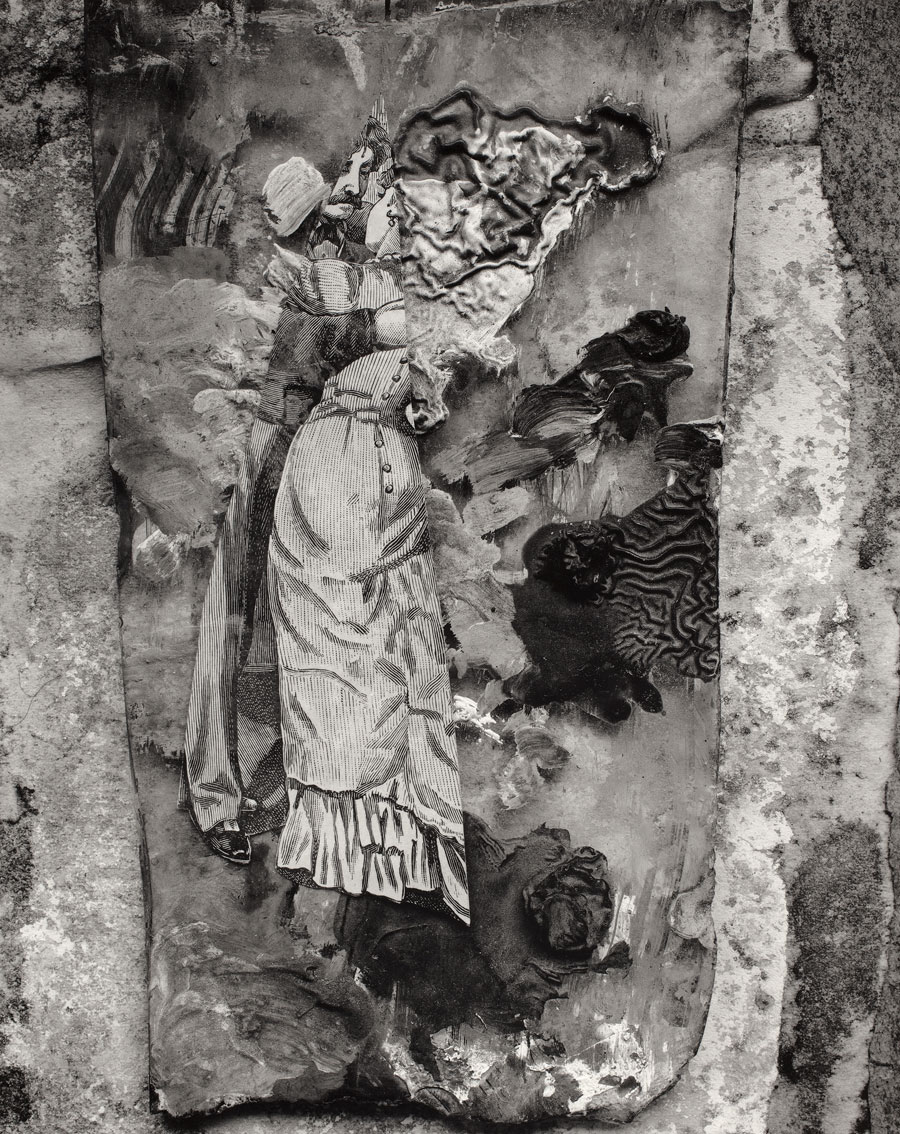
 

Frederick Sommer (American, 1905-1999) 'Moon Culmination' 1951


Frederick Sommer (American, 1905-1999)
Moon Culmination
1951
gelatin silver print
24.2 x 19.2cm (9 1/2 x 7 9/16 in.)
Gift of Frederick Sommer


Frederick Sommer is not as well known as others in the famous quintet (the others being Ansel Adams, Edward Weston, Minor White and Paul Strand). He is the (slightly) forgotten master. But for those that know his work, Frederick Sommer is the photographer’s photographer.

There is a visual and intellectual alchemy transmitted through his work. It is as if he was a magician, producing images out of thin air: paper cuts, smoke on glass, collage, found objects, rites, passages, cleavages, heroes, occultism (Paracelsus was a Renaissance physician, botanist, alchemist, astrologer, and general occultist). From the few photographs I have seen in the flesh his prints, like his thinking, have a volume to them that few other photographers can match. Here I must cede to the knowledge of my friend and photographer Ian Lobb who visited Sommer at his home in Prescott, Arizona.


“You will notice with FS prints that the only date given is the date of the negative. This is not unusual of course, but one of FS strengths is being interested in returning to a negative and print it with enthusiasm after looking at other versions for a very long time.

Another strength is a really simple strong way of working – according to Les Walkling, FS had a block of wood the same size as an 8 x 10 contact print. By placing the print on this base as he spotted, the print was always raised above his work environment and the chance of an accident was reduced. So simple – so elegant. I see this state of mind repeated – eg when he was out photographing with Siskind and he found a pile of X-rays and said that this was his work for the day.

Caponigro and Sommer are the ones that make their technical skill communicate in very unique ways. By chronology, Sommer is the first one who found that something beyond the f/64 Group vocabulary could be said. Whereas Edward Weston and Paul Strand are working at about 3/10 for their prints, Sommer is working at 9/10. He doesn’t always get there in every print but when he succeeds the results are beyond what any other classical photographer ever achieved in the physical presence of the photograph.

Venus, Jupiter and Mars was the first extended viewing of Sommer that arrived here (in Australia). It would have been at the Printed Image (bookshop) in 1981.”

Ian Lobb


Many thankx to the National Gallery of Art for allowing me to publish the photographs in the posting. Please click on the photographs for a larger version of the image.
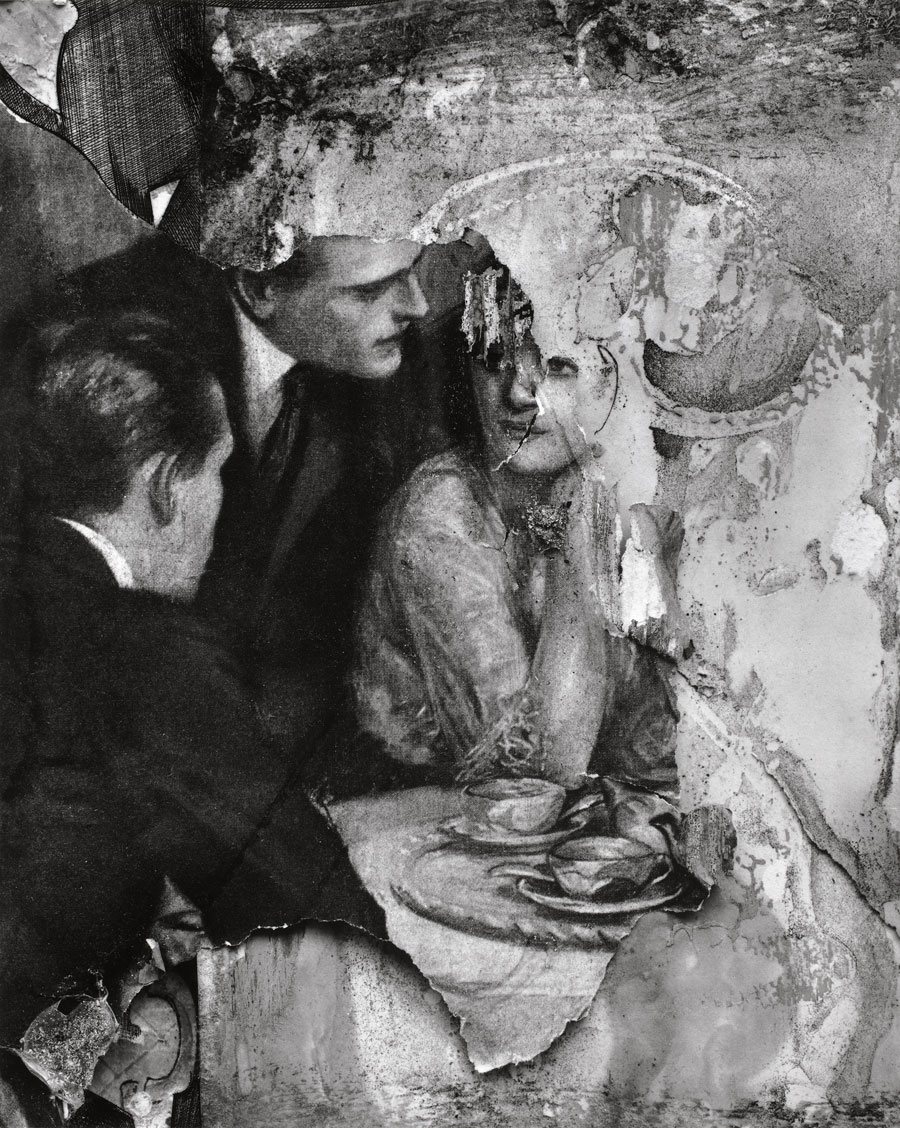


Frederick Sommer (American, 1905-1999) 'Venus, Jupiter and Mars' 1949


Frederick Sommer (American, 1905-1999)
Venus, Jupiter and Mars
1949
Gelatin silver print
23.8 x 19.1cm (9 3/8 x 7 1/2 in.)
National Gallery of Art, Washington, Gift of Frederick Sommer
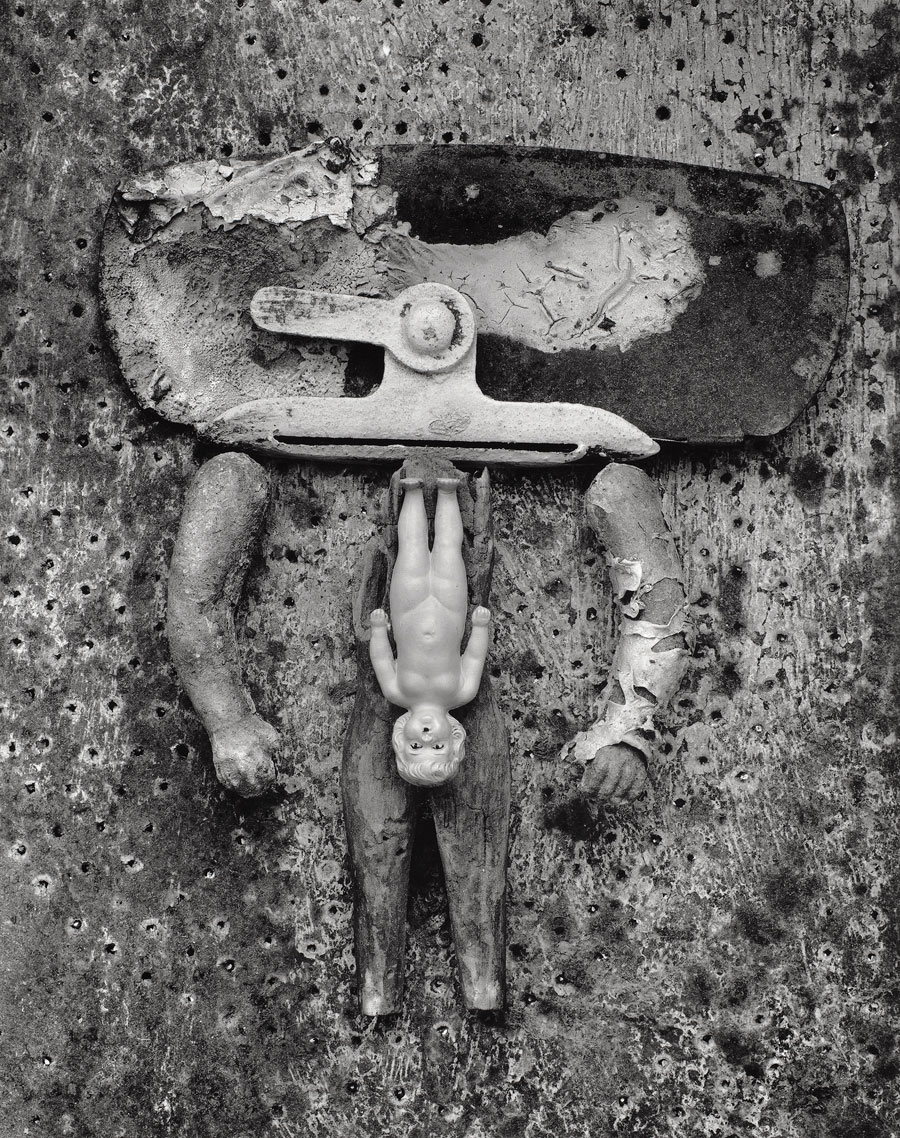
 

Frederick Sommer (American, 1905-1999) 'Valise d'Adam' 1949


Frederick Sommer (American, 1905-1999)
Valise d’Adam
1949
Gelatin silver print
23.9 x 18.9cm (9 7/16 x 7 7/16 in.)
National Gallery of Art, Washington, Gift of Frederick Sommer


Against a backdrop of rusting metal, Frederick Sommer arranged a grouping of found objects. A clipboard clamp represents a head and shoulders while dirty, cracking doll’s arms and legs provide more literal context, defining the object as a human body. Within that fragmented body, Sommer places a complete doll with its head pointed downward, as if ready to be born. The photograph’s French title, Valise d’Adam, or as Sommer translated it, Adam’s Traveling Case, is a sly reference to the idea that man travels through woman into the world, and perhaps, woman even carries man through life.
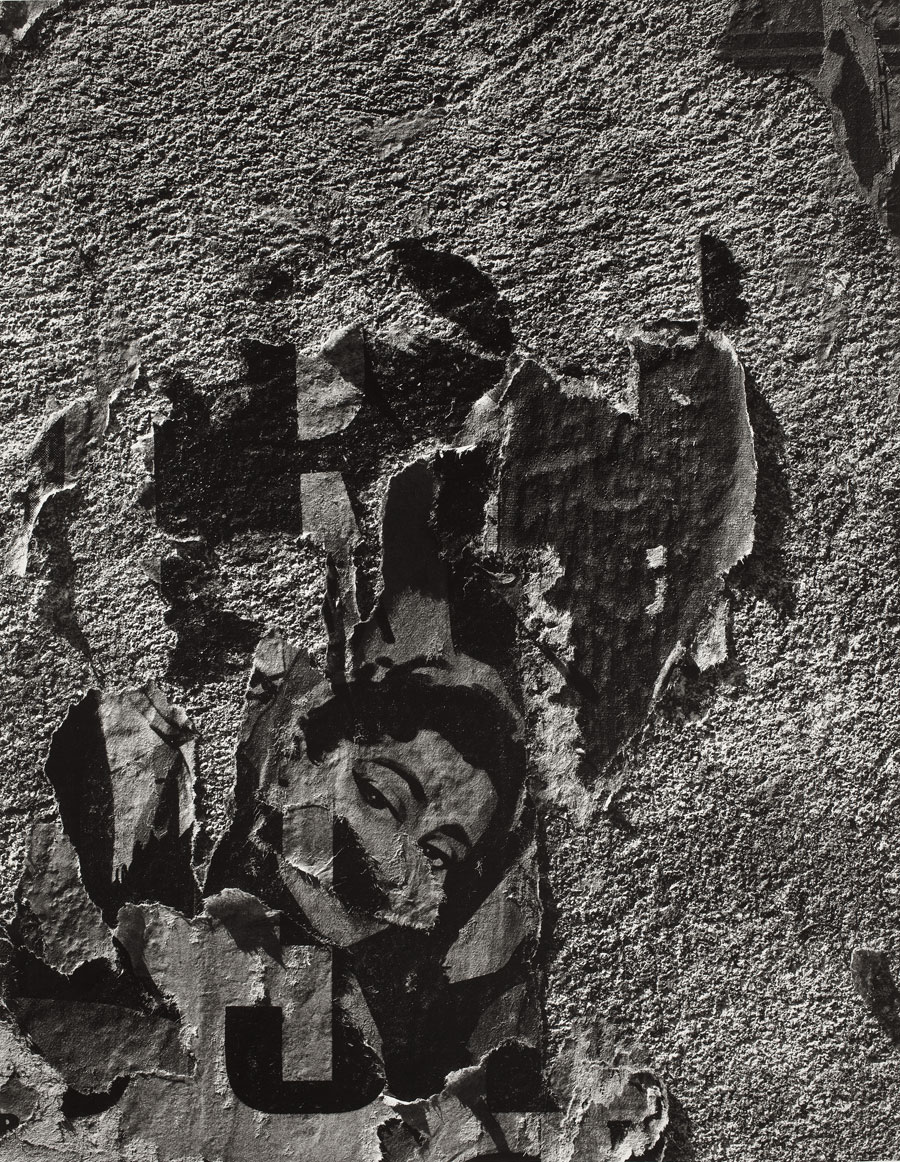
 

Frederick Sommer (American, 1905-1999) 'Manzanillo, Mexico' 1955


Aaron Siskind (American, 1903-1991)
Manzanillo, Mexico
1955
Gelatin silver print
35.6 x 27.8cm (14 x 10 15/16 in.)
National Gallery of Art, Washington, René Huyghe Collection
Image courtesy of the Aaron Siskind Foundation
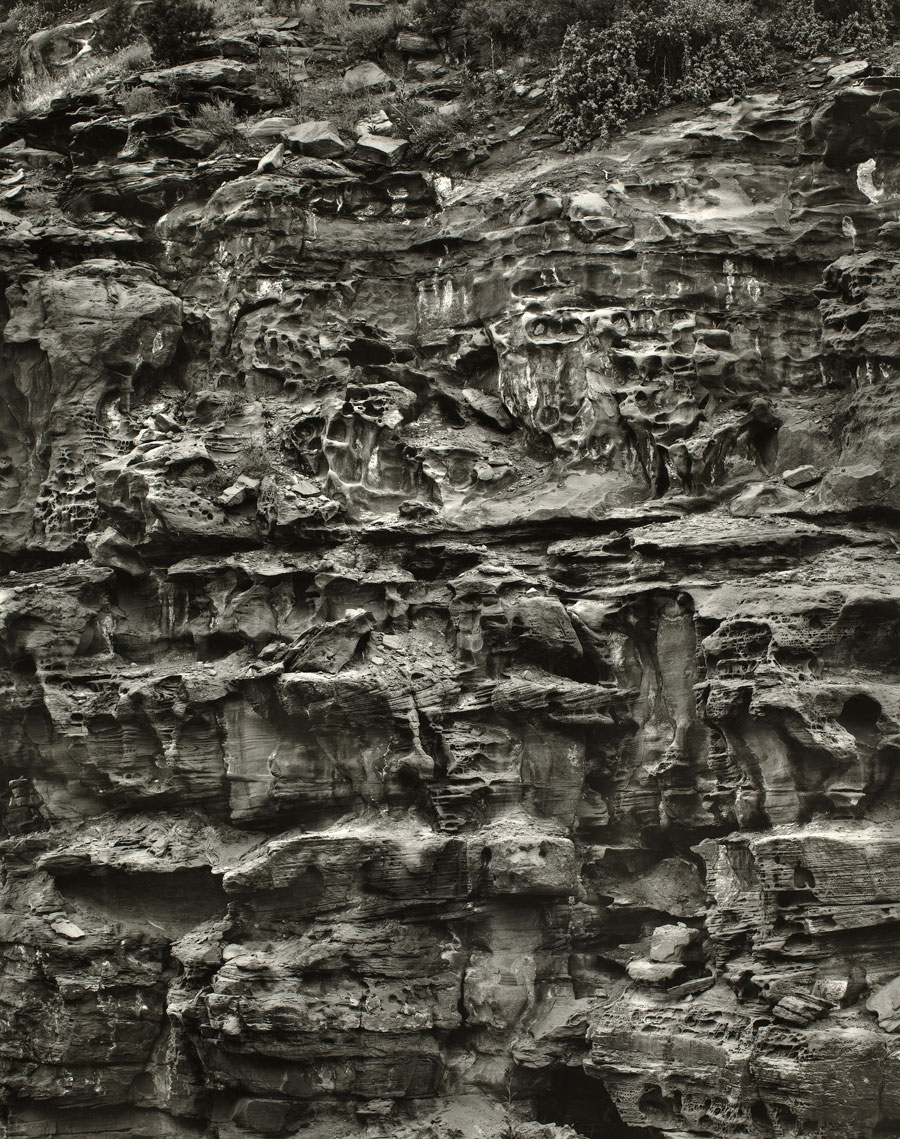
 

Frederick Sommer (American, 1905-1999) 'Untitled' 1947


Frederick Sommer (American, 1905-1999)
Untitled
1947
Gelatin silver print
24.2 x 19.1cm (9 1/2 x 7 1/2 in.)
National Gallery of Art, Washington, Gift of Frederick Sommer
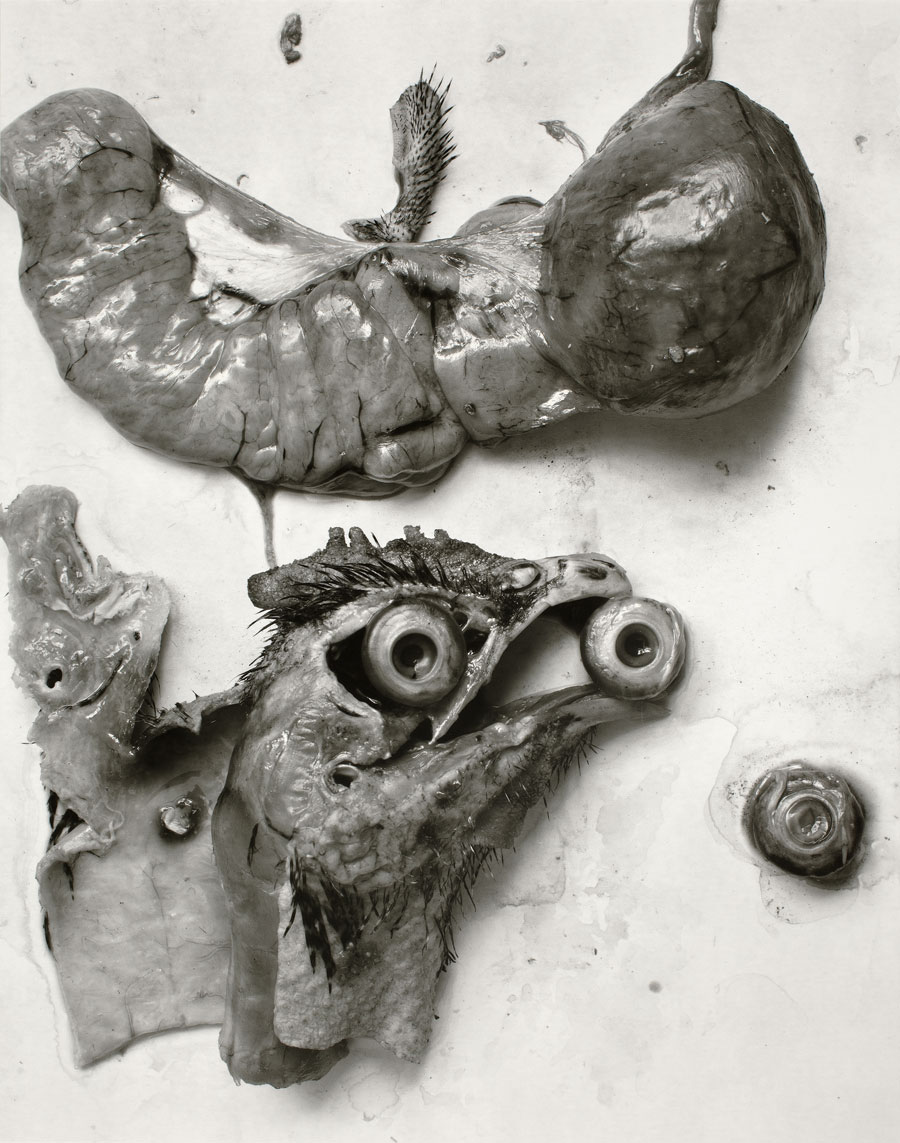
 

Frederick Sommer (American, 1905-1999) 'The Anatomy of a Chicken' 1939


Frederick Sommer (American, 1905-1999)
The Anatomy of a Chicken
1939
Gelatin silver print mounted on paperboard
24.1 x 19cm (9 1/2 x 7 1/2 in.)
National Gallery of Art, Washington, Gift of Frederick Sommer
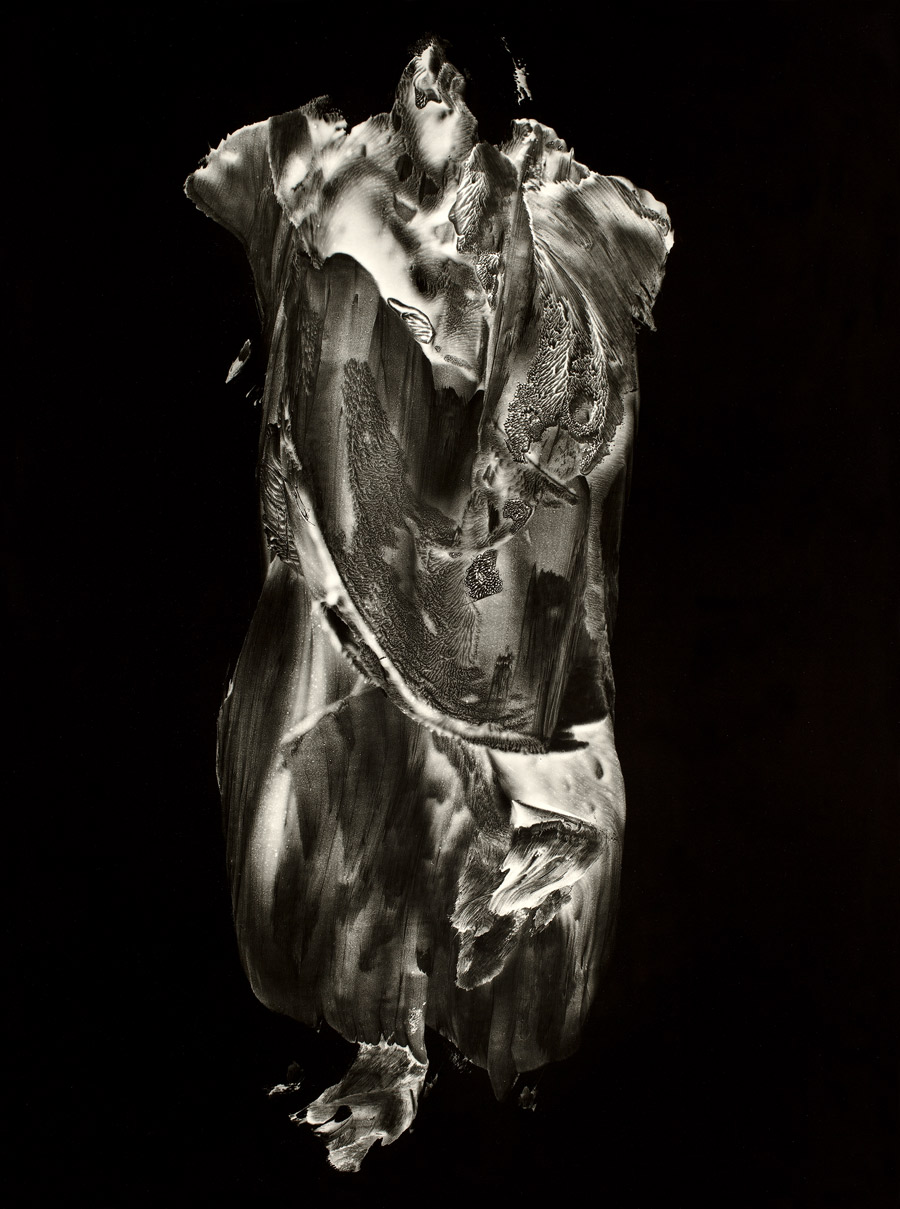
 

Frederick Sommer (American, 1905-1999) 'Paracelsus' 1957


Frederick Sommer (American, 1905-1999)
Paracelsus
1957
Gelatin silver print
34.3 x 25.6cm (13 1/2 x 10 1/16 in.)
National Gallery of Art, Washington, Gift of Frederick Sommer


Paracelsus (1493/1494 – 24 September 1541), born Theophrastus von Hohenheim (full name Philippus Aureolus Theophrastus Bombastus von Hohenheim), was a Swiss physician, alchemist, lay theologian, and philosopher of the German Renaissance.

He was a pioneer in several aspects of the “medical revolution” of the Renaissance, emphasising the value of observation in combination with received wisdom. He is credited as the “father of toxicology”. Paracelsus also had a substantial impact as a prophet or diviner, his “Prognostications” being studied by Rosicrucians in the 1600s. Paracelsianism is the early modern medical movement inspired by the study of his works.

Text from the Wikipedia website
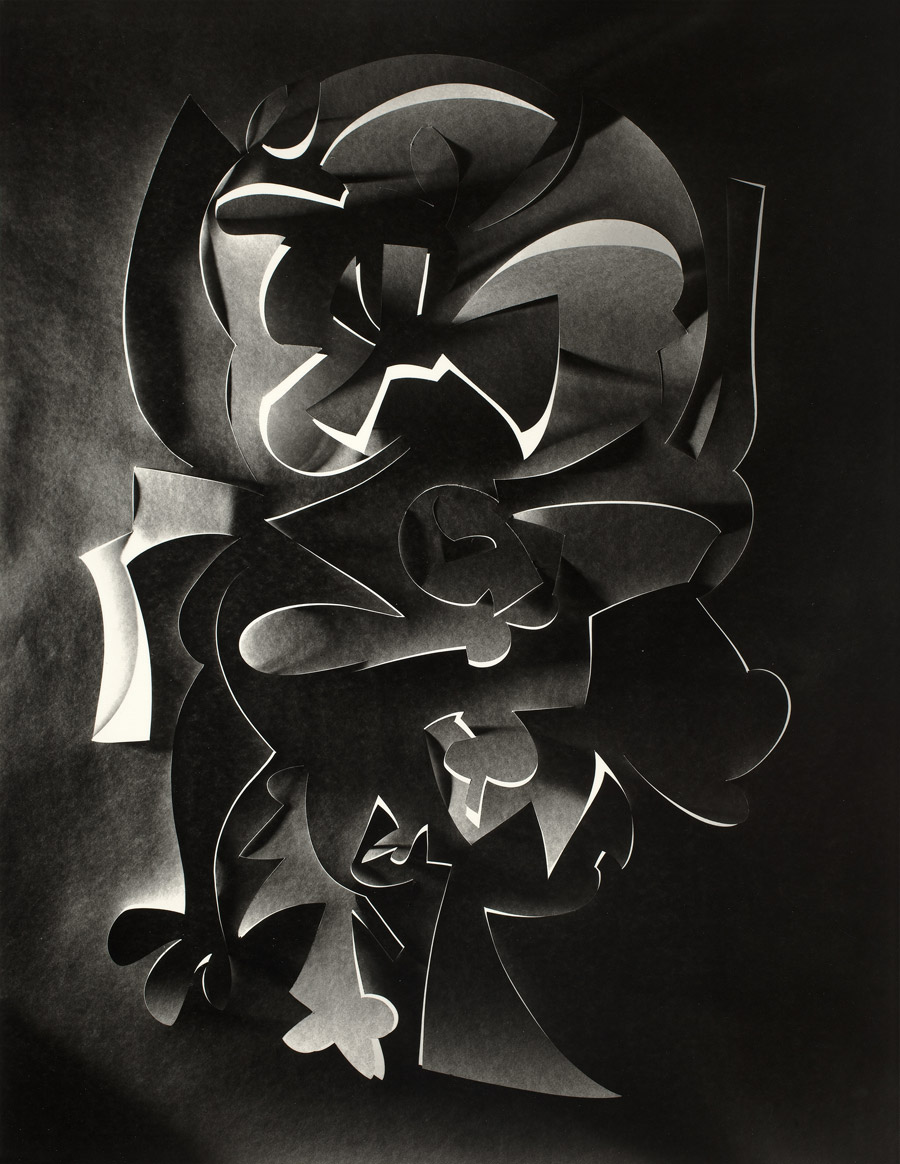
 

Frederick Sommer (American, 1905-1999) 'Cut Paper' 1980


Frederick Sommer (American, 1905-1999)
Cut Paper
1980
gelatin silver print
24.2 x 18.7cm (9 1/2 x 7 3/8 in.)
National Gallery of Art, Washington, Gift of Frederick Sommer


The National Gallery of Art explores the continuities in Frederick Sommer’s varied body of work and demonstrates the influence of his friendships with fellow artists in the exhibition A World of Bonds: Frederick Sommer’s Photography and Friendships, on view in the East Building from June 16 to August 4, 2013. Drawn from the Gallery’s significant holdings, which include a major 1995 gift from the artist himself, the exhibition showcases 27 works by Sommer, Edward Weston, Max Ernst, Man Ray, Aaron Siskind, and Charles Sheeler, including three pieces on loan from other museums and private collections.

“The Gallery is privileged to display this influential body of work, which illuminates Frederick Sommer’s interactions with his fellow artists,” said Earl A. Powell III, director, National Gallery of Art. “In addition to photographs drawn from our permanent collection, we are grateful to the lenders who have assisted us in revealing the continuities in Sommer’s broad range of work, as well as The Robert Mapplethorpe Foundation for its generous support.”

About the exhibition

The exhibition showcases the beauty and diversity of Sommer’s striking images and places them in the context of his formative friendships with such prominent contemporaries as Edward Weston, Max Ernst, Man Ray, Charles Sheeler, and Aaron Siskind.

As an artist, Frederick Sommer notoriously defies classification. Over the span of more than 60 years, he created paintings, drawings, and photographs, as well as collages, musical scores, poetry, and theoretical texts. Today, Sommer is best known for his photography, the medium in which he produced his most inventive visual experiments and which best suited the breadth of his visual interests. These ranged from disorienting desert landscapes to surrealistic arrangements of found objects, and to abstractions that brought together drawing and photography.

“All rare things should be lent away / and I have borrowed very freely,” Sommer wrote of his art. He also asserted that “the world is not a world of cleavages, it is a world of bonds.” This exhibition examines both claims, offering a glimpse into the ways in which Sommer shared ideas with his contemporaries while simultaneously creating a body of work uniquely his own.

About the artist

Just as he defied the bounds of medium and genre, Sommer, who lived in the small town of Prescott, Arizona, also never fully belonged to any artistic group or movement. His work reflects both wide-ranging personal interests and a broad scope of artistic affinities with artists as divergent as the surrealists and the members of the f/64 group of West Coast photographers.

Sommer’s circle of close artist-friends and mentors helps explain his idiosyncratic sensibilities. This circle included the photographer Edward Weston, whose precise attention to the details of the natural world inspired Sommer’s turn to photography. Equally important to Sommer, however, was his friendship with Max Ernst, the surrealist whose automatic painting techniques and uncanny imagery encouraged Sommer to reconfigure familiar objects into strange new creations. Aaron Siskind was yet another close friend and peer with whom Sommer shared a fascination with the abstract textures of everyday materials. Other artists represented in the exhibition who influenced Sommer’s approach to photographing assemblages and his exploration of photographic abstraction include Man Ray and Charles Sheeler.

Text from the National Gallery of Art website
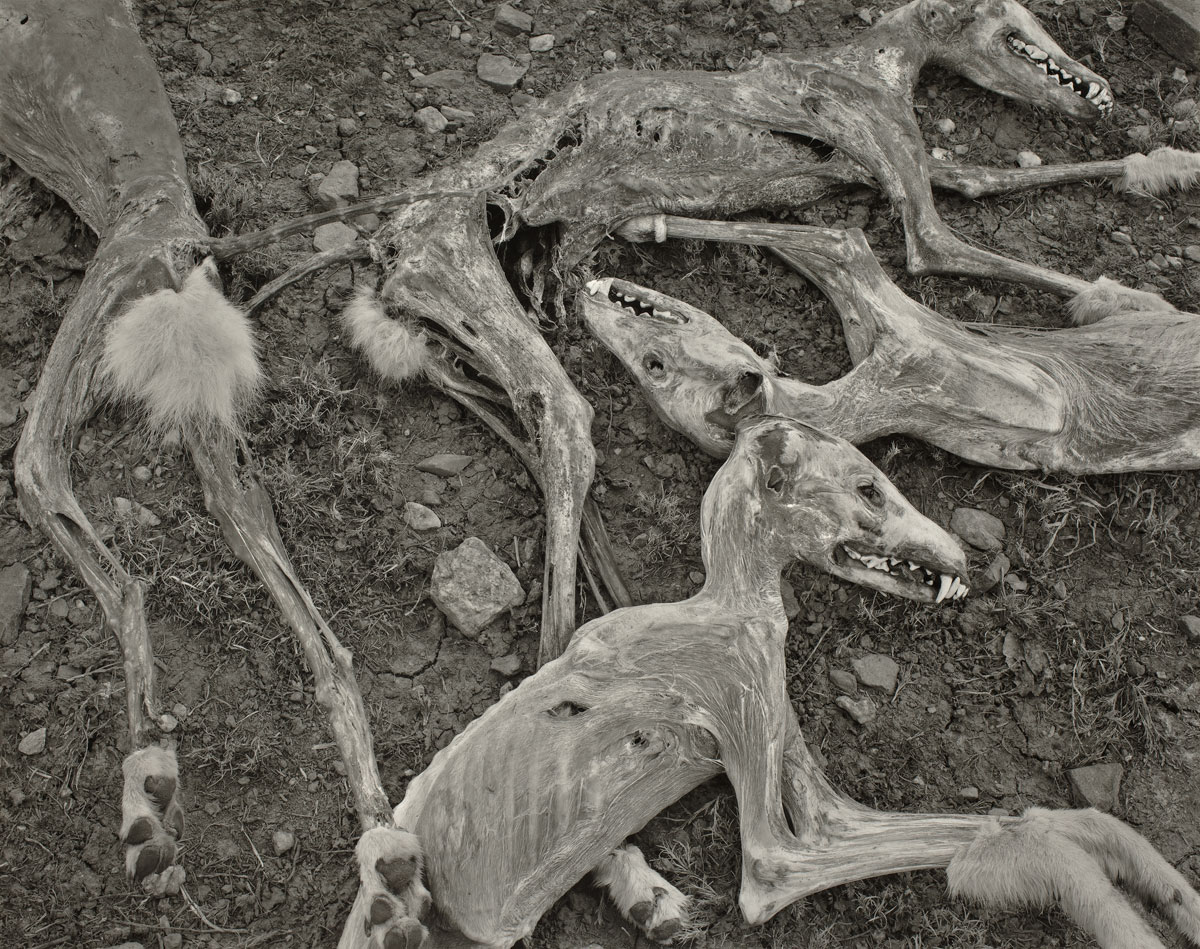
 

Frederick Sommer (American, 1905-1999) 'Coyotes' 1945


Frederick Sommer (American, 1905-1999)
Coyotes
1945
Gelatin silver print mounted on paperboard
19 x 24.2cm (7 1/2 x 9 1/2 in.)
National Gallery of Art, Washington, Gift of Frederick Sommer
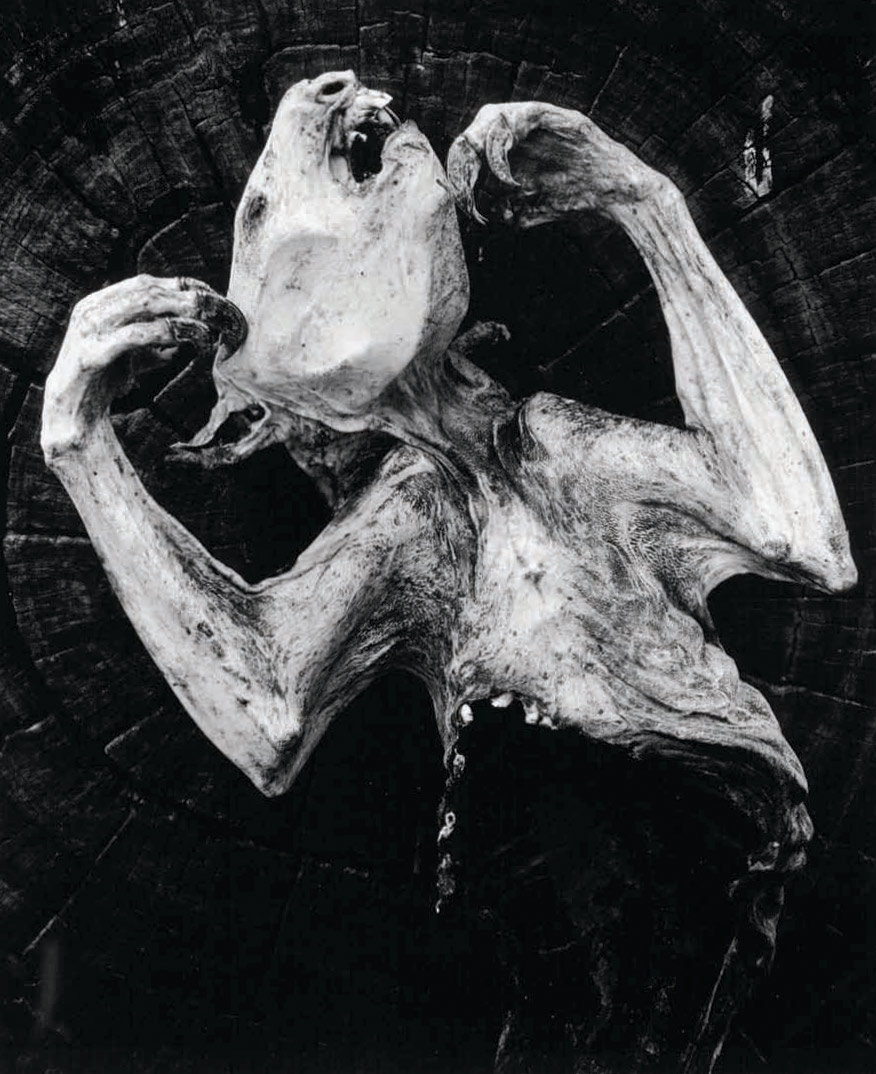
 

Frederick Sommer (American, 1905-1999) 'Man tracks #9R' from the 'Mantracks' series 1978-83


John Cato (Australian, 1926-2011)
Man tracks #9R
from the Mantracks series 1978-83
Gelatin silver photograph
42.9 x 35.2cm
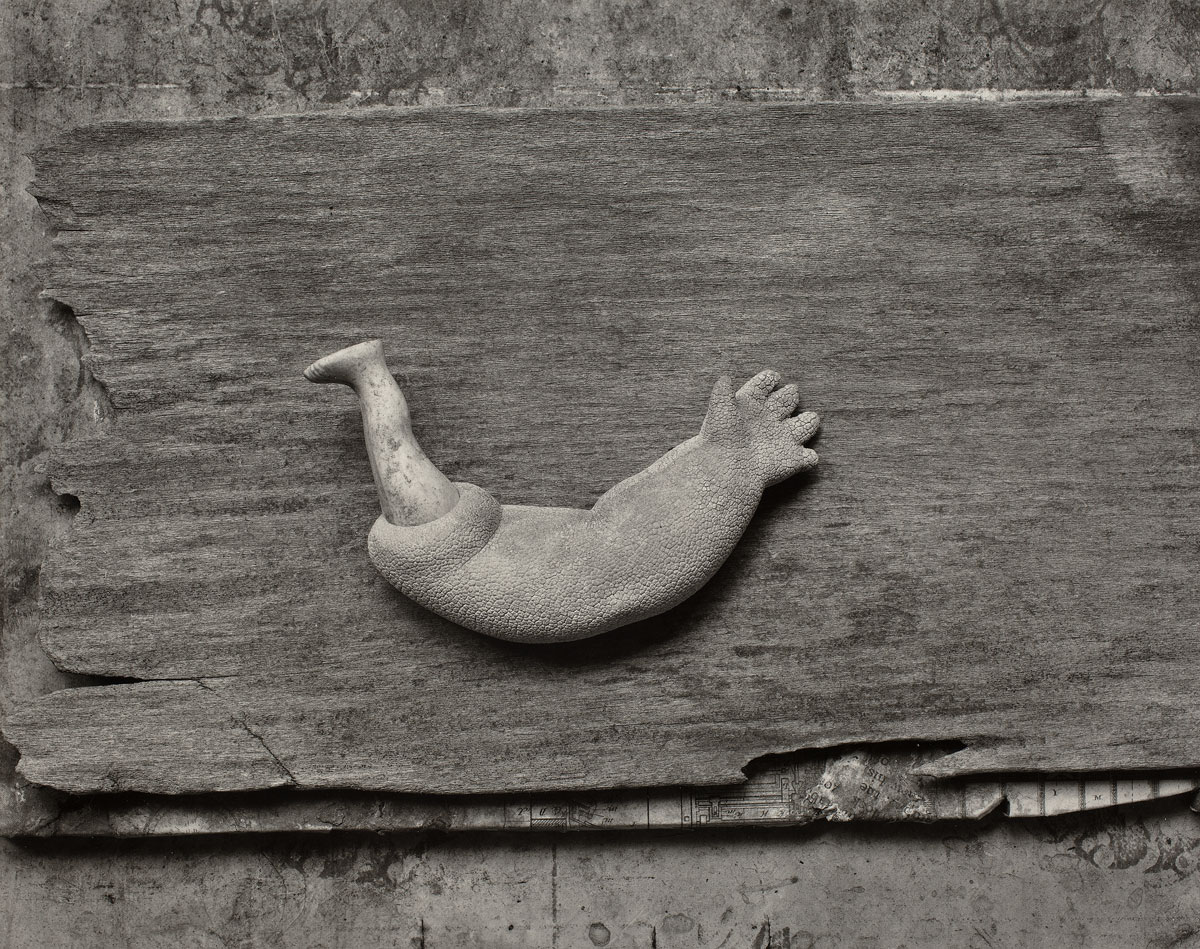
 

Frederick Sommer (American, 1905-1999) 'Ondine' 1950


Frederick Sommer (American, 1905-1999)
Ondine
1950
Gelatin silver print mounted on paperboard
19.2 x 24.3cm (7 9/16 x 9 9/16 in.)
National Gallery of Art, Washington, Gift of Frederick Sommer


The nymph Ondine was an immortal water spirit who became human after falling in love for a man, marrying him, and having a baby. In one of the versions of the tale, when she caught her husband sleeping with another woman, she cursed him to remain awake in order to control his own breathing.
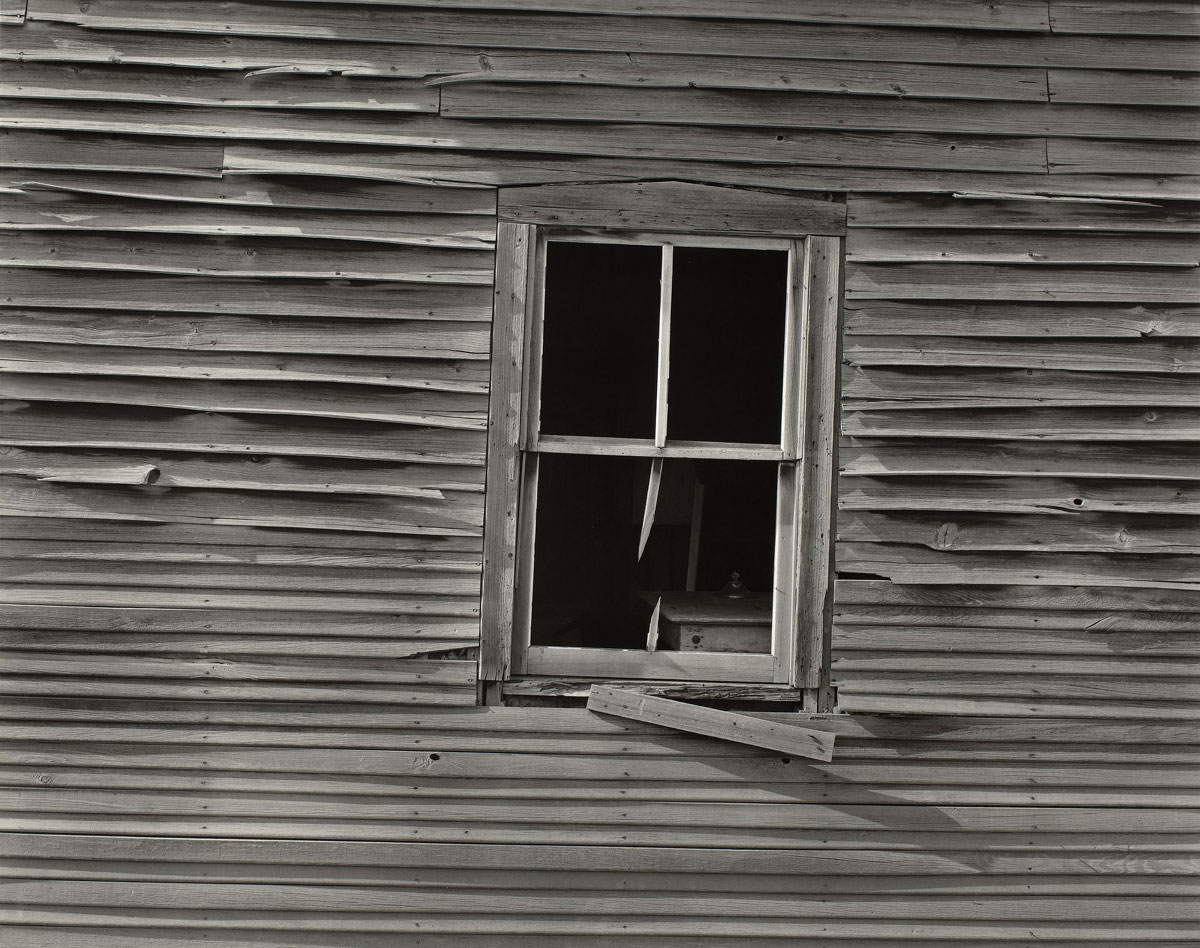
 

Frederick Sommer (American, 1905-1999) 'Taylor, Arizona' 1945


Frederick Sommer (American, 1905-1999)
Taylor, Arizona
1945
Gelatin silver print
19.2 x 24.2cm (7 9/16 x 9 1/2 in.)
National Gallery of Art, Washington, Gift of Frederick Sommer
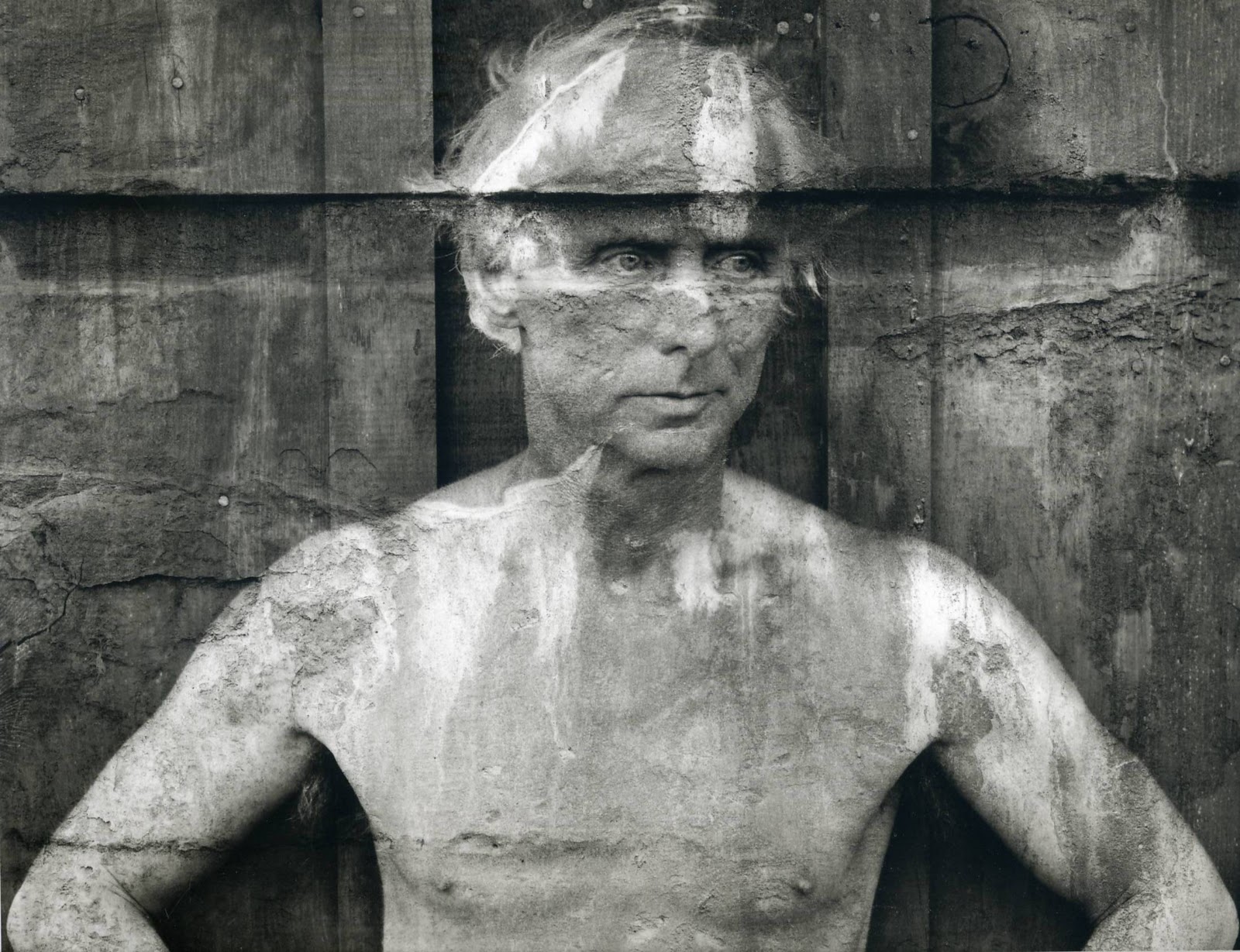
 

Frederick Sommer (American, 1905-1999) 'Max Ernst' 1946


Frederick Sommer (American, 1905-1999)
Max Ernst
1946
Gelatin silver print
19.05 x 24.13cm (7 1/2 x 9 1/2 in.)
Collection of Susan and Peter MacGill
Frederick & Frances Sommer Foundation
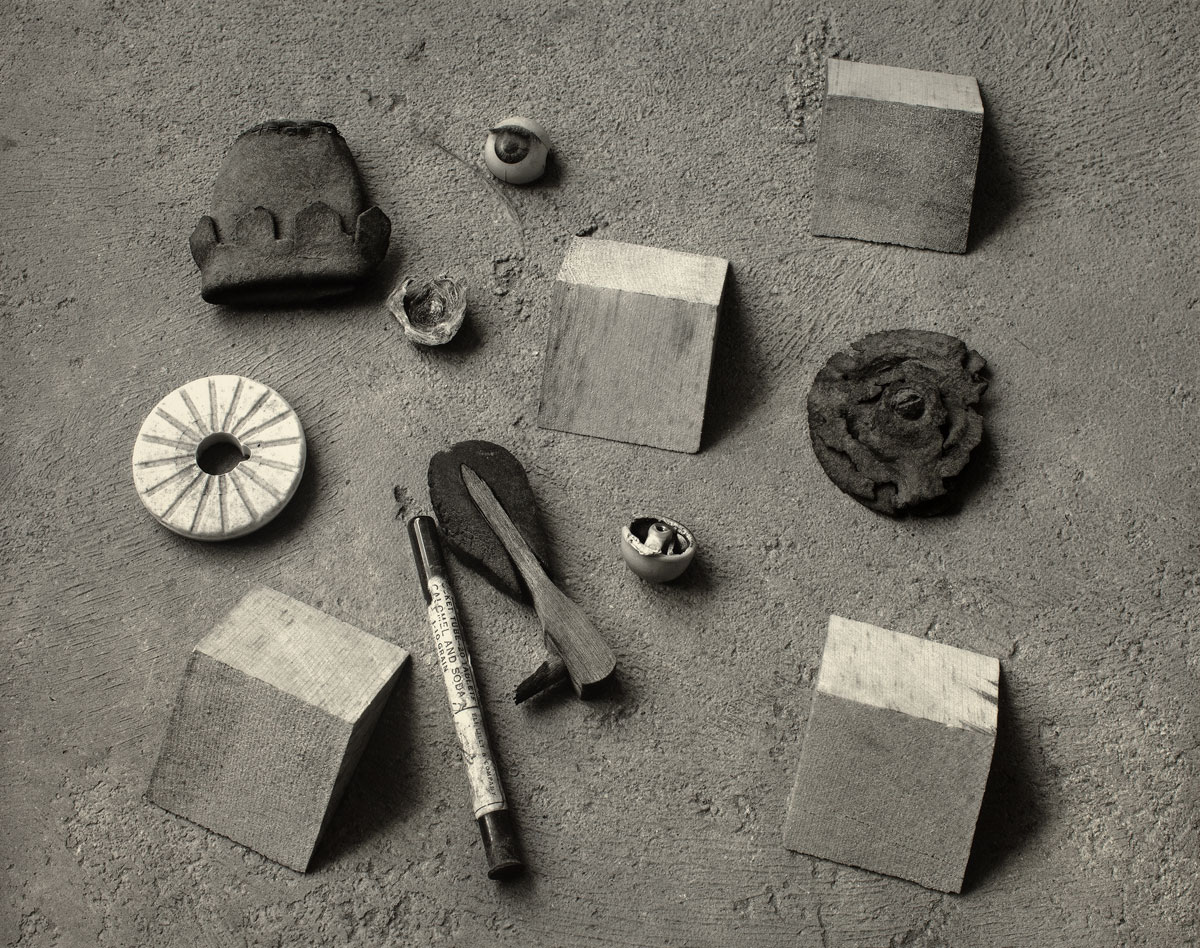
 

Frederick Sommer (American, 1905-1999) 'Untitled' 1947


Frederick Sommer (American, 1905-1999)
Untitled
1947
Gelatin silver print
19 x 24cm (7 1/2 x 9 7/16 in.)
National Gallery of Art, Washington, Gift of Frederick Sommer
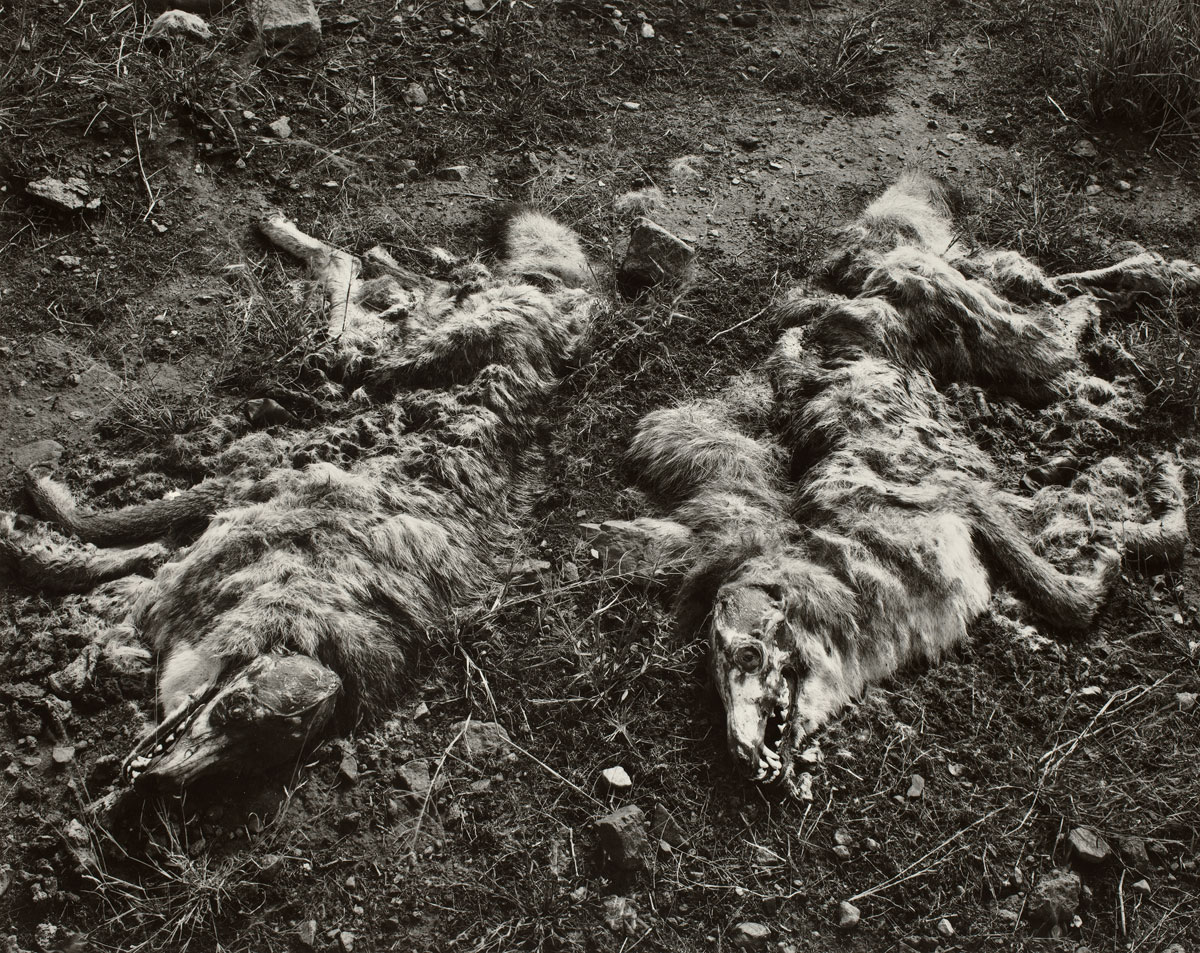
 

Frederick Sommer (American, 1905-1999) 'Coyotes' 1941


Frederick Sommer (American, 1905-1999)
Coyotes
1941
Gelatin silver print
19.1 x 24.1cm (7 1/2 x 9 1/2 in.)
National Gallery of Art, Washington, Gift of Frederick Sommer
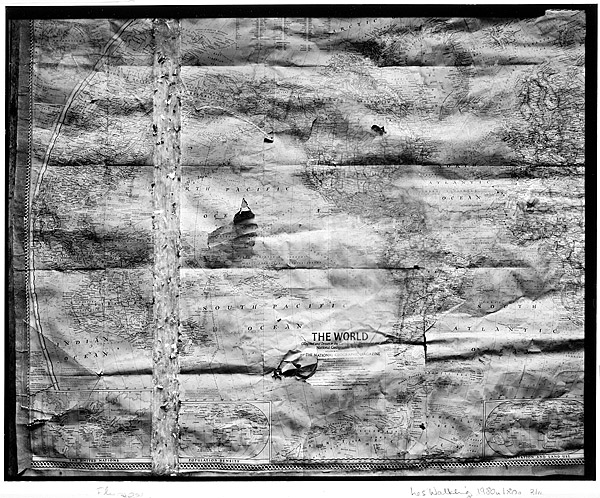
 

Les Walkling (Australia, b. 1953) 'Flypaper' 1980


Les Walkling (Australia, b. 1953)
Flypaper
1980
Gelatin silver photograph
19.1 x 24.3cm
Gift of the Philip Morris Arts Grant 1982
© Les Walkling
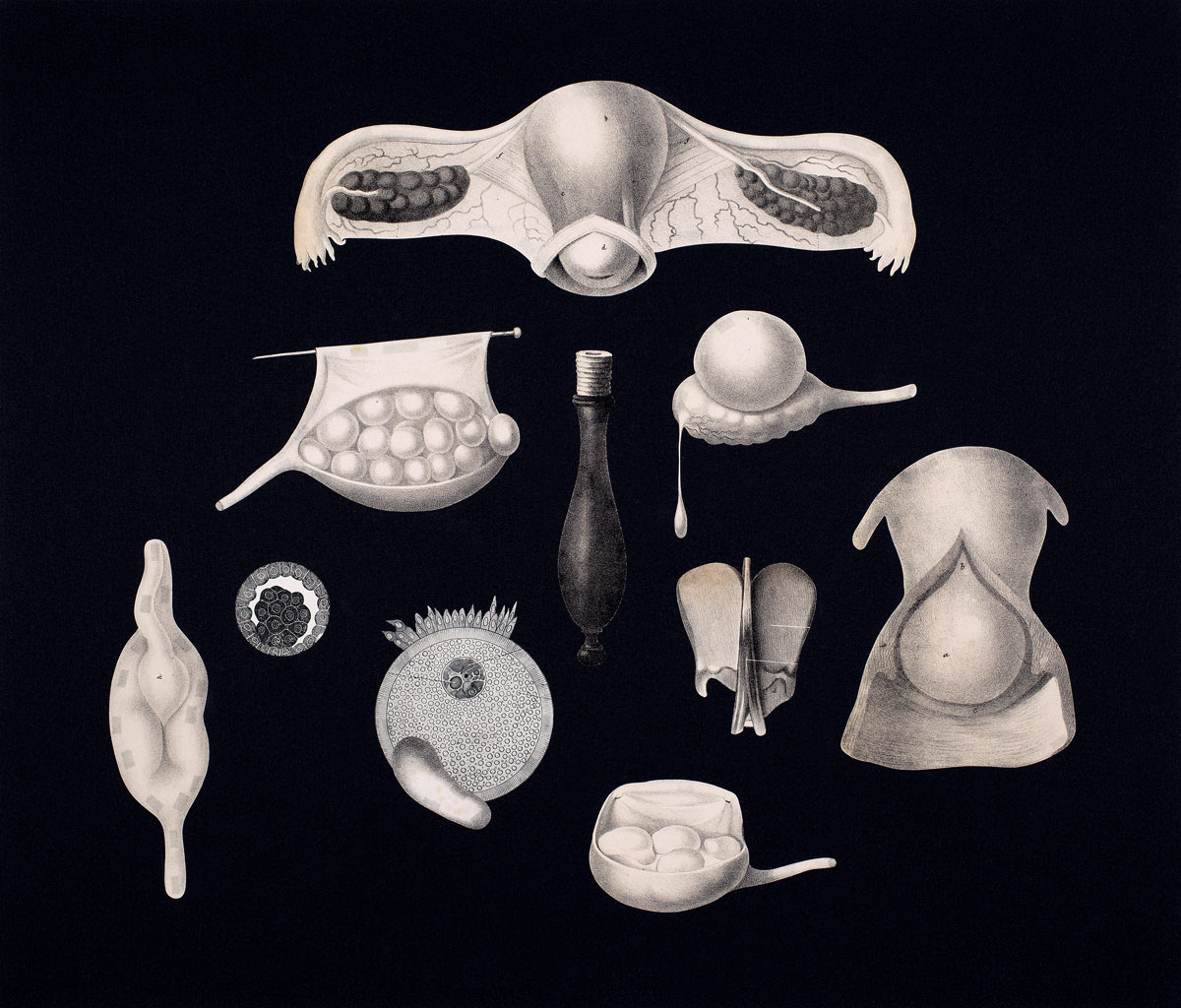
 

Frederick Sommer (American, 1905-1999) 'Lacryma' 1992


Frederick Sommer (American, 1905-1999)
Lacryma
1992
Collage of photomechanical reproductions of lithographic, relief and intaglio prints on
heavyweight wove paper
36 x 42.4cm (14 3/16 x 16 11/16 in.)
National Gallery of Art, Washington, Gift of Frederick Sommer


Lacryma, alternative form of lacrima – a tear (drop of liquid from crying)
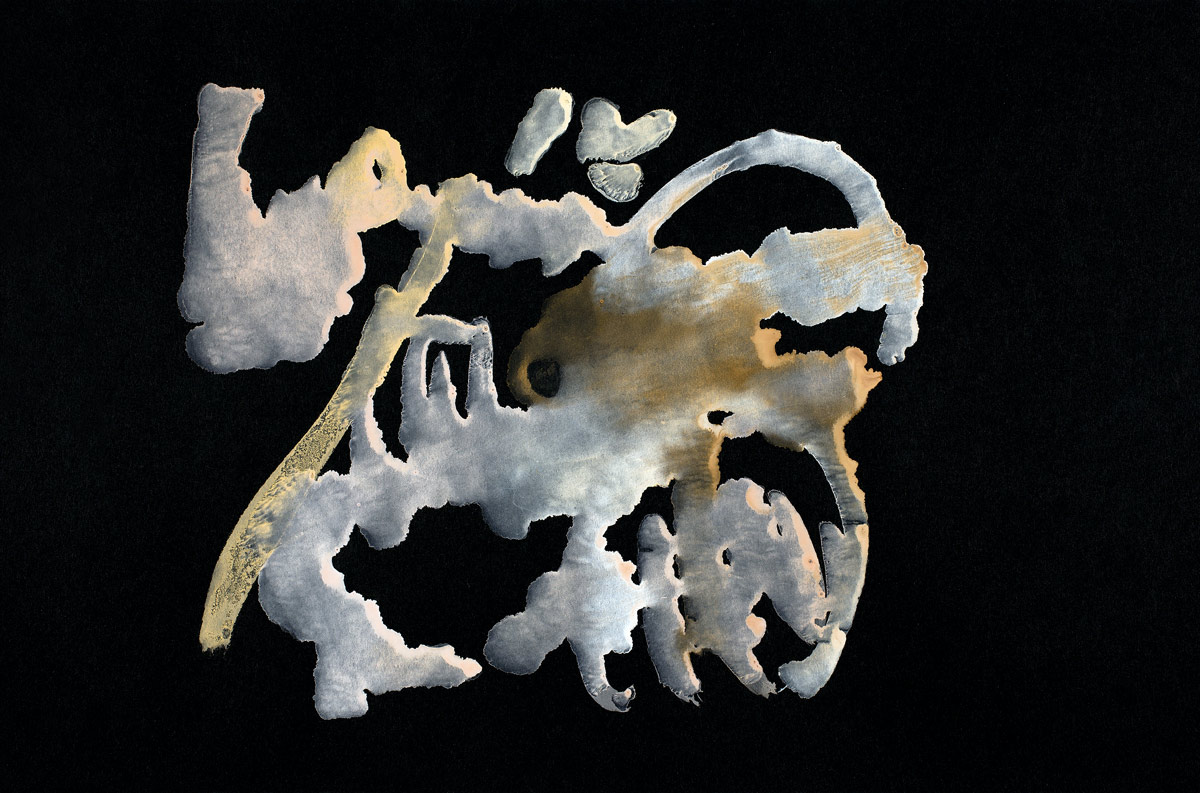
 

Frederick Sommer (American, 1905-1999) 'Drawing' 1948


Frederick Sommer (American, 1905-1999)
Drawing
1948
Tempera on black wove paper
30.4 x 46.9cm (11 15/16 x 18 7/16 in.)
National Gallery of Art, Washington, Gift of Frederick Sommer
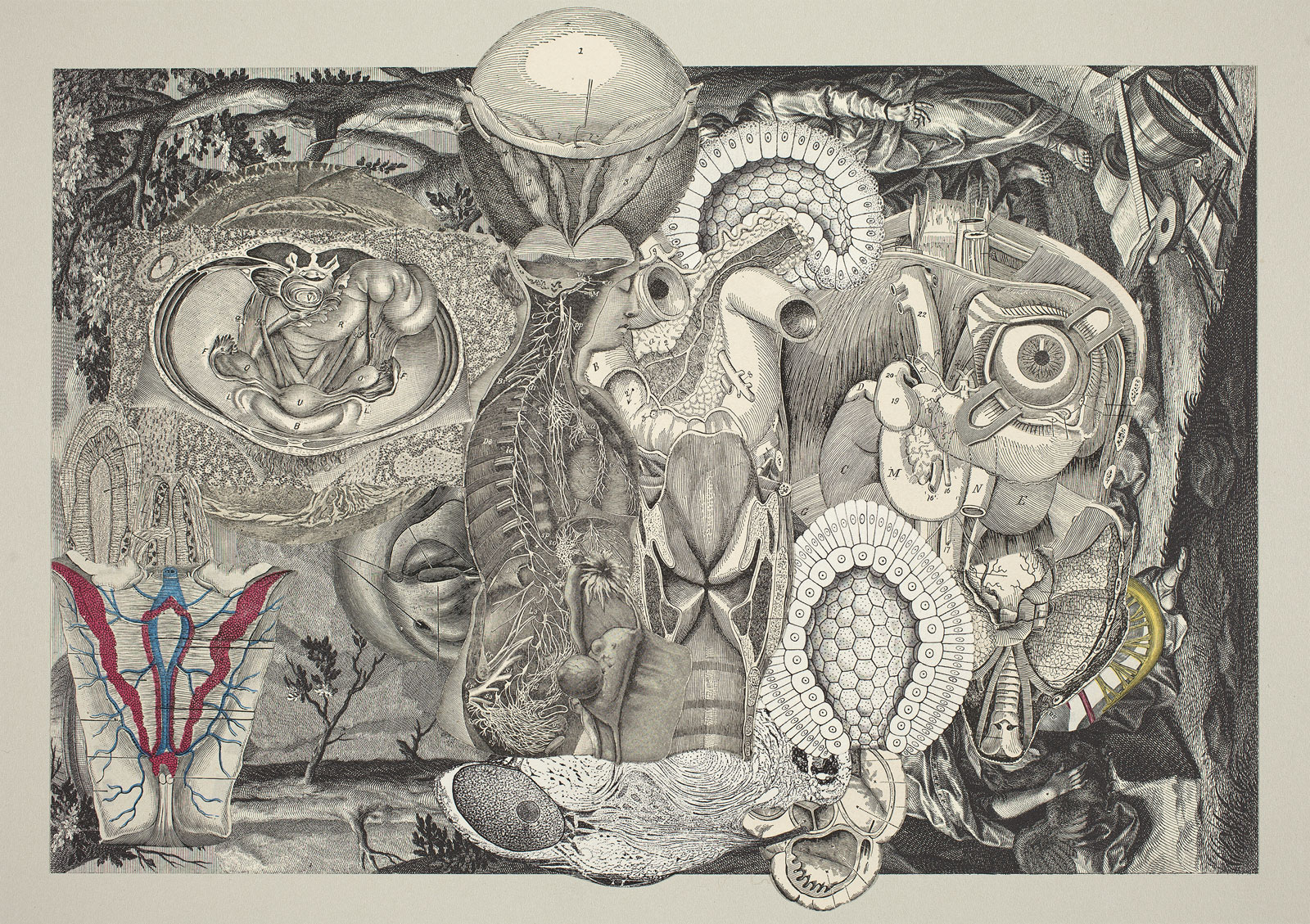
 

Frederick Sommer (American, 1905-1999) 'The Queen of Sheba' 1992


Frederick Sommer (American, 1905-1999)
The Queen of Sheba
1992
Collage of photomechanical reproductions of relief and intaglio prints on heavyweight wove
paper
21.8 x 31.8cm (8 9/16 x 12 1/2 in.)
National Gallery of Art, Washington, Gift of Frederick Sommer
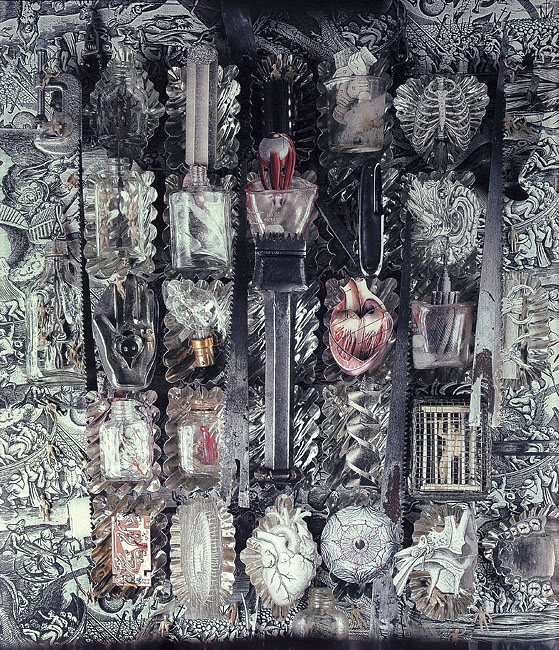
 

Fiona Hall (Australian, b. 1953) 'Envy, Seven Deadly Sins' 1985


Fiona Hall (Australian, b. 1953)
Envy, Seven Deadly Sins
1985
Polaroid photograph
61 × 50.8cm
© Fiona Hall


National Gallery of Art
National Mall between 3rd and 7th Streets
Constitution Avenue NW, Washington

Opening hours:
Daily 10.00am – 5.00pm
National Gallery of Art website

Frederick Sommer website

LIKE ART BLART ON FACEBOOK

Back to top

Review: ‘Anne Ferran: Box of Birds’ at Stills Gallery, Sydney

Exhibition dates: 26th June – 27th July 2013


Anne Ferran (Australian, b. 1949) 'Agitated thrush' 2013


Anne Ferran (Australian, b. 1949)
Agitated thrush
2013
From Box of Birds series
Pigment print
72 x 48cm
Editions of 5 + 2AP


tar·ant·ism [tar-uhn-tiz-uhm]
noun
a mania characterised by an uncontrollable impulse to dance, especially as prevalent in southern Italy from the 15th to the 17th century, popularly attributed to the bite of the tarantula.


I have never been a great fan of Anne Ferran’s exhumations. Her digging into the ground of history and restoring, reviving (after neglect or a period of forgetting) traces of life and bringing them into light (through photography) – bringing them back to light – has resulted in images that are paradoxically pretty, lifeless. For example, photographs of patches of grass in Lost to Worlds (2008) are given great import as contemporary evidence of the site of a female convict prison, near the small village of Ross, Tasmania as Ferran, “continues to play with the invisibility of this specific history, using large-scale photographs to show what little remains today, and to collectively reflect on the difficulty of grasping a ruined and fragmented past.”

And… so… what else?

These photographs really mean very little, another example of an artist picking at the scab of history to what end, what purpose, other than to dig up deleted histories that are past their use by date. Move on, move on, nothing to see here!

And there is literally nothing to see, except patches of grass that are given import by the contextualisation of the artist, the “look at this, I think it is important because I have seen it, because I have researched it, because I am an artist, because I am aware” – when the interrogation actually means very little. It is like the prevalence of contemporary photographs of empty, abandoned spaces – abandoned petrol stations, hospitals, insane asylums – that are supposed to impart great poetry and narrative to the spaces. Ruin porn as Dan Rule termed it recently.

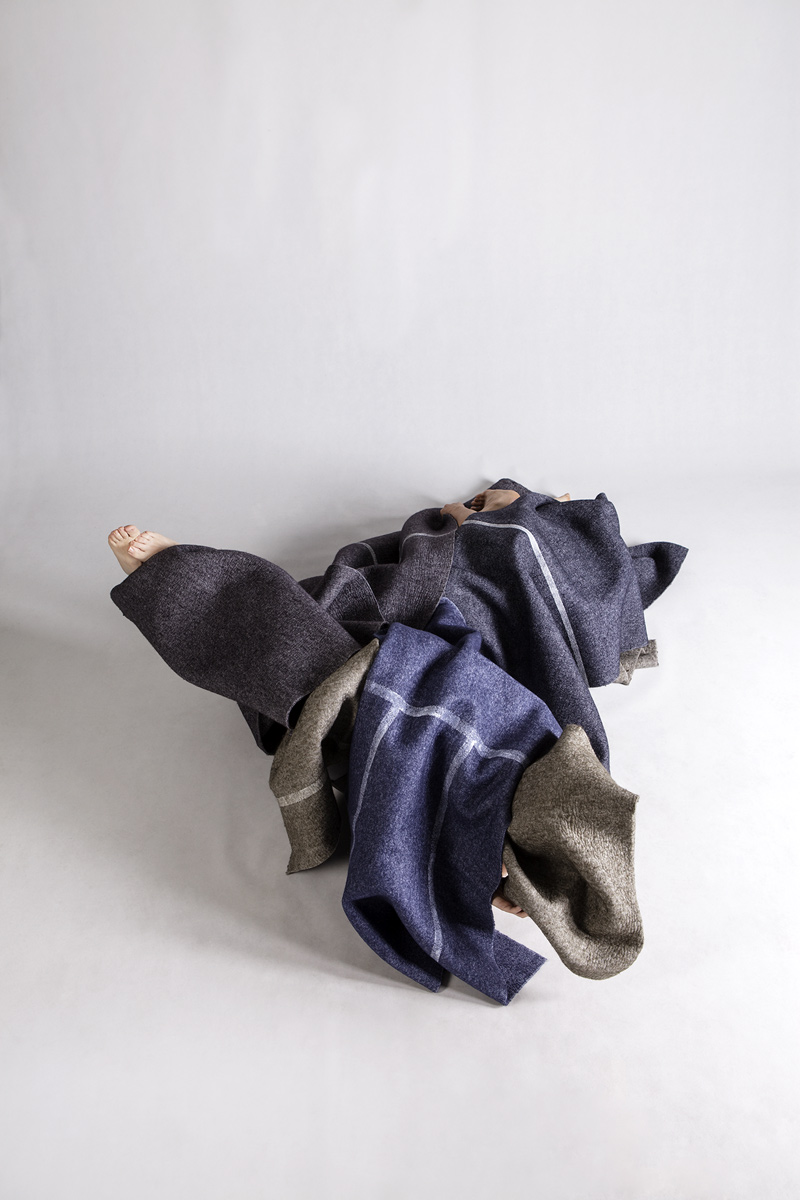
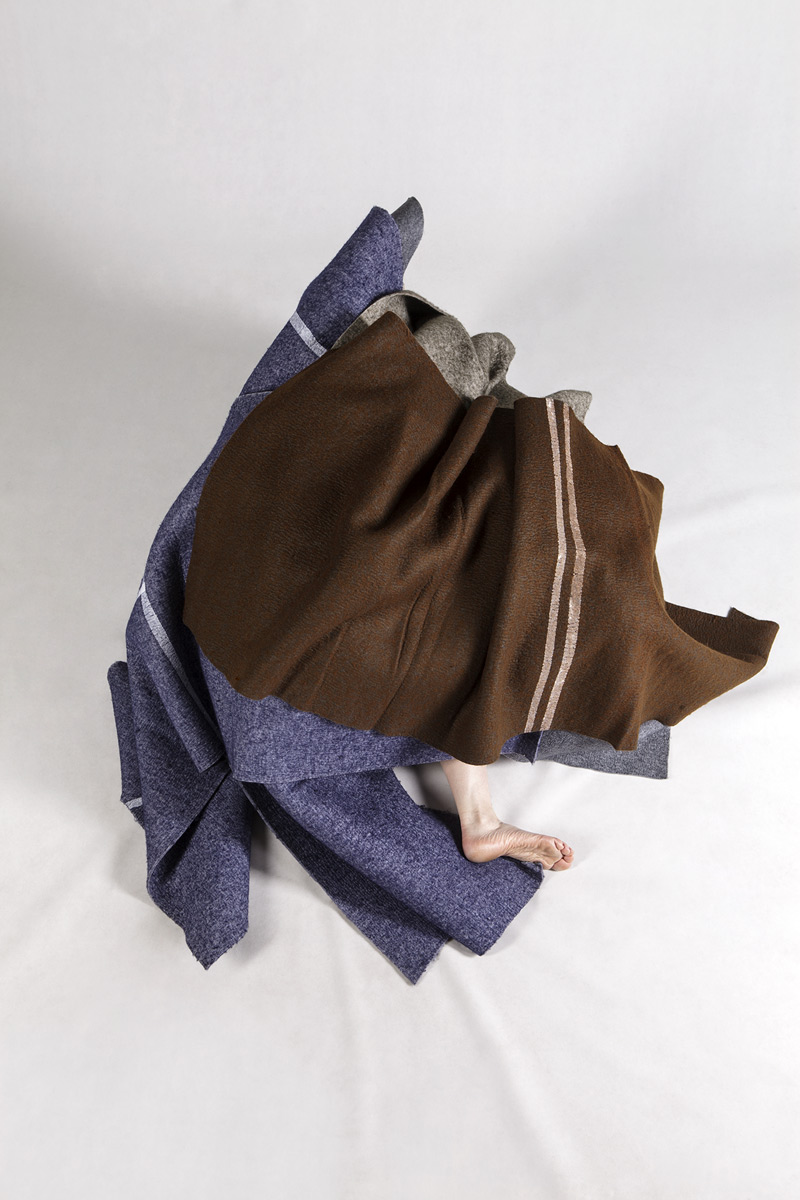
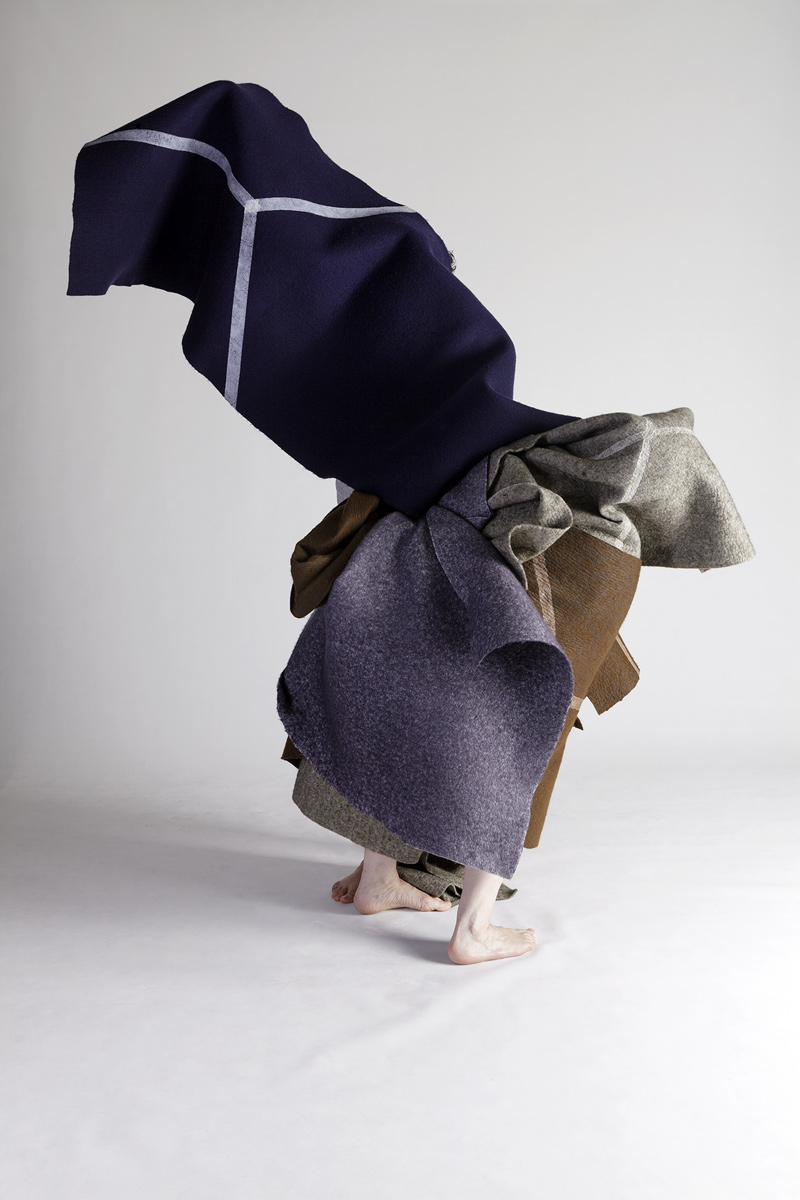
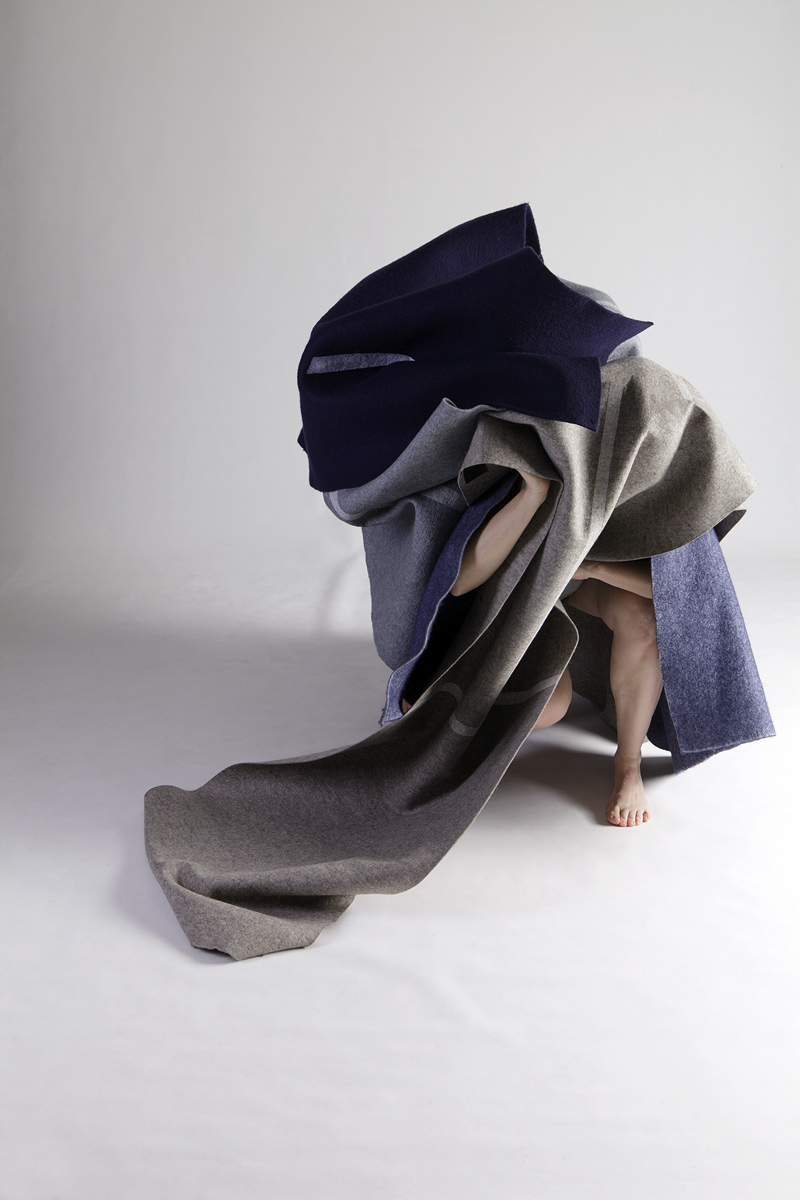
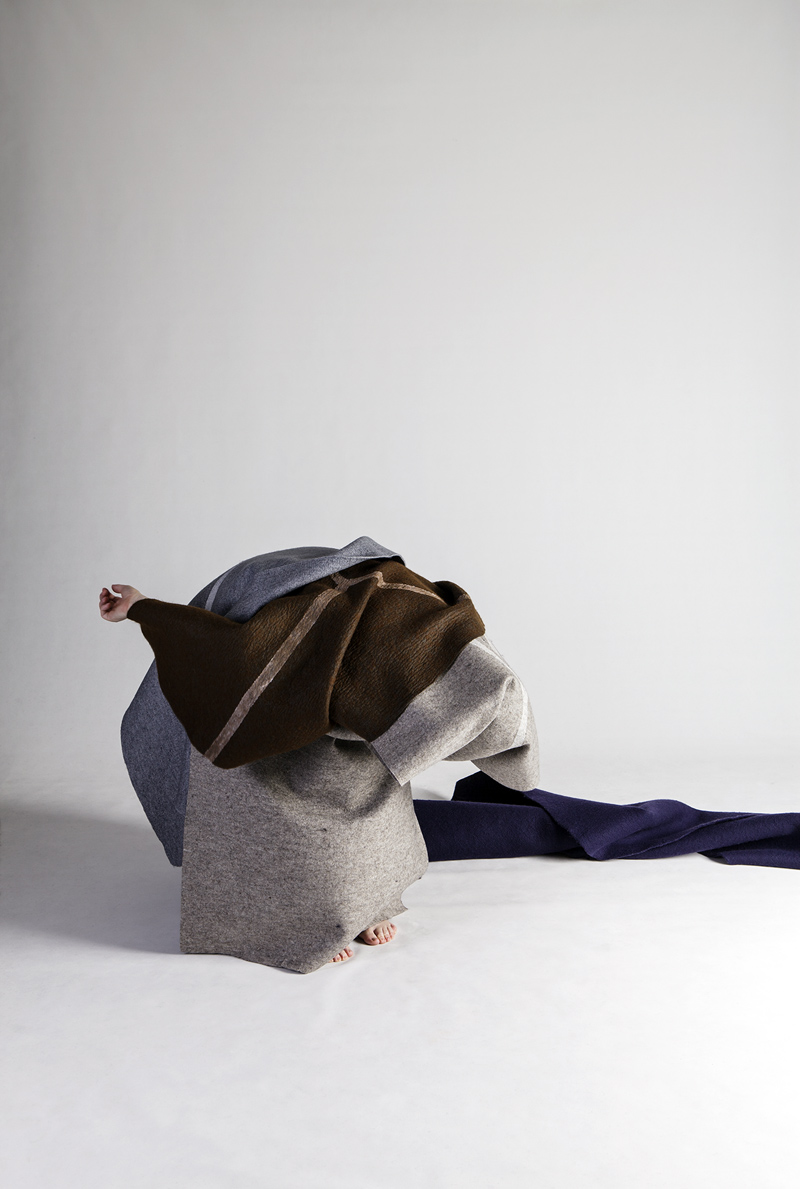
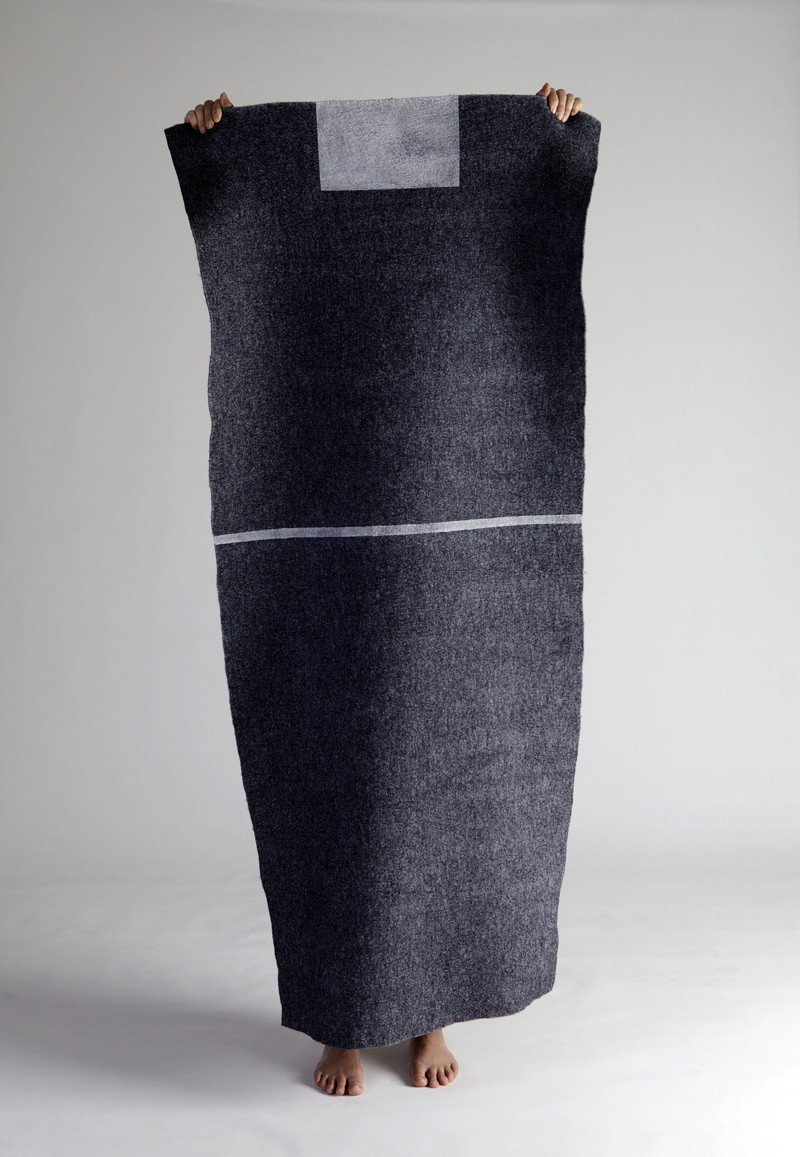
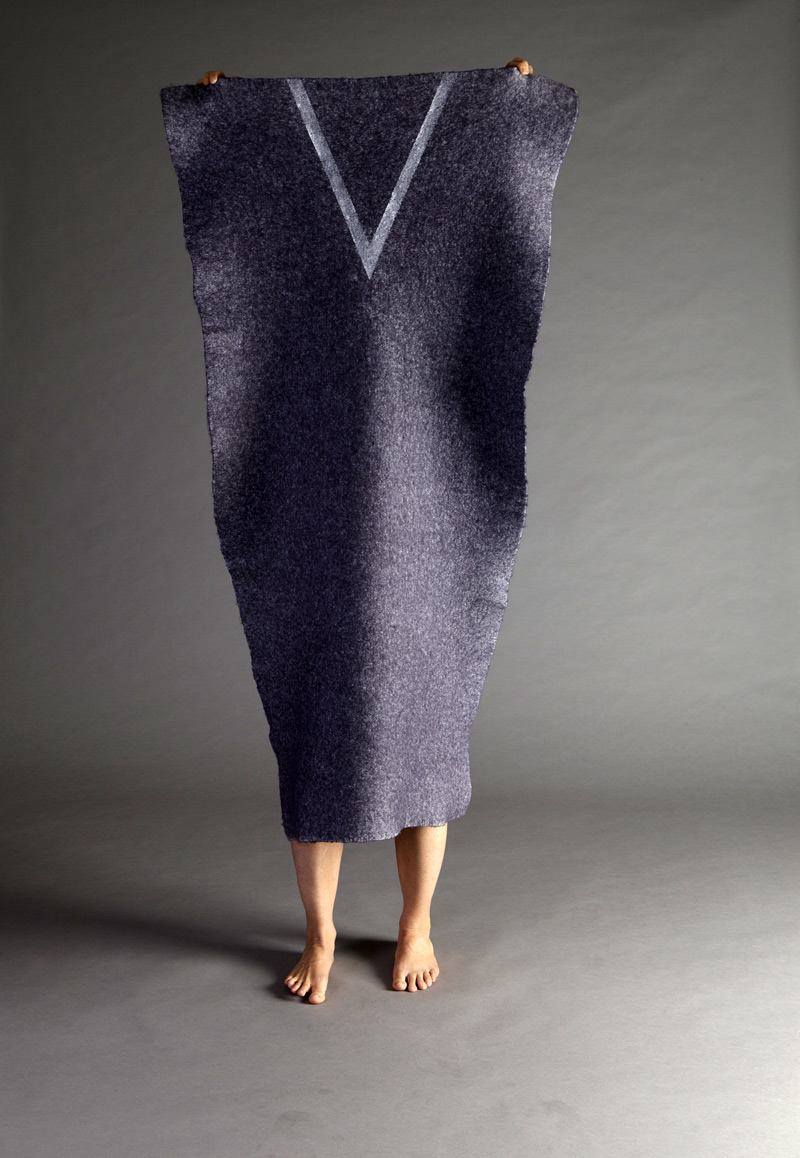
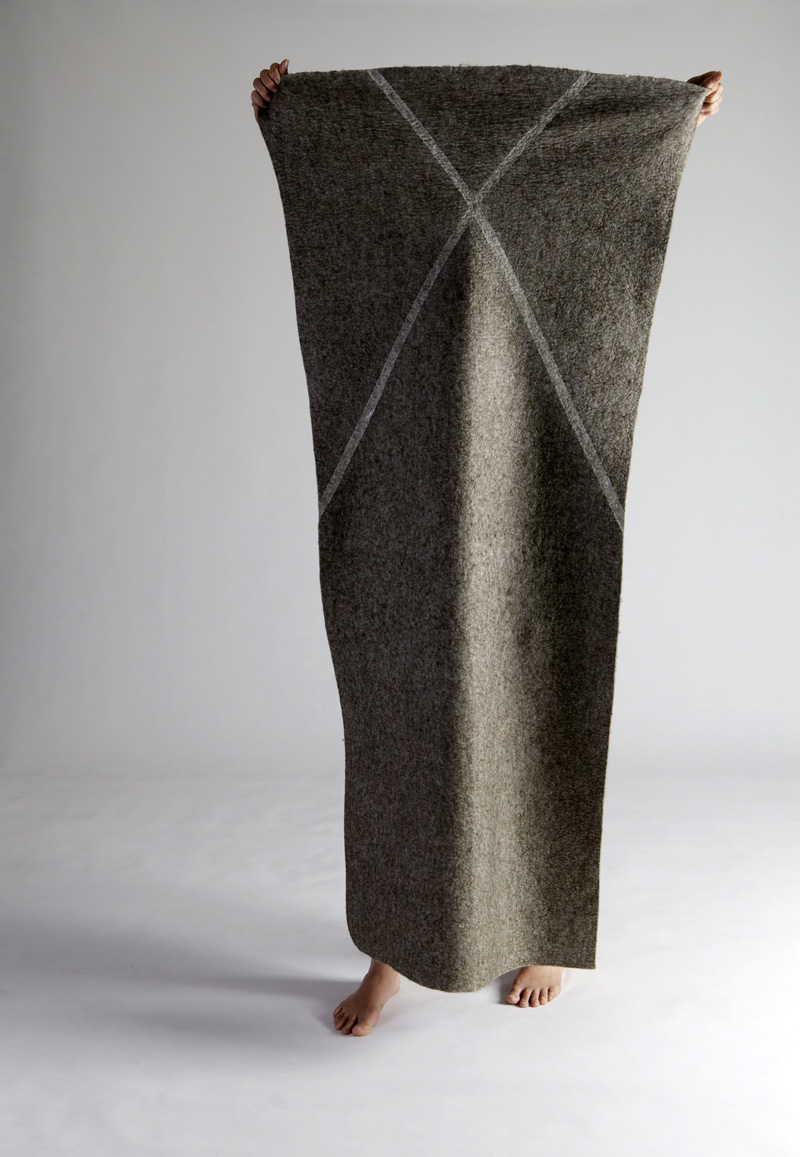
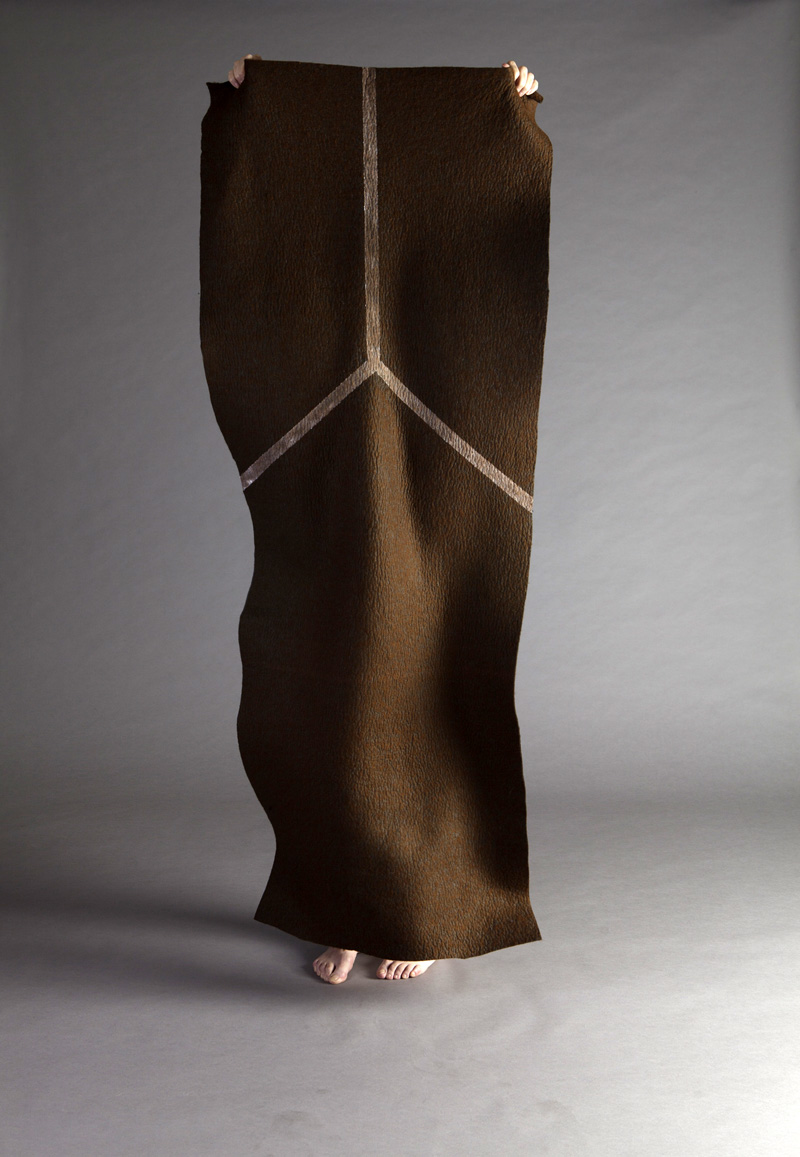
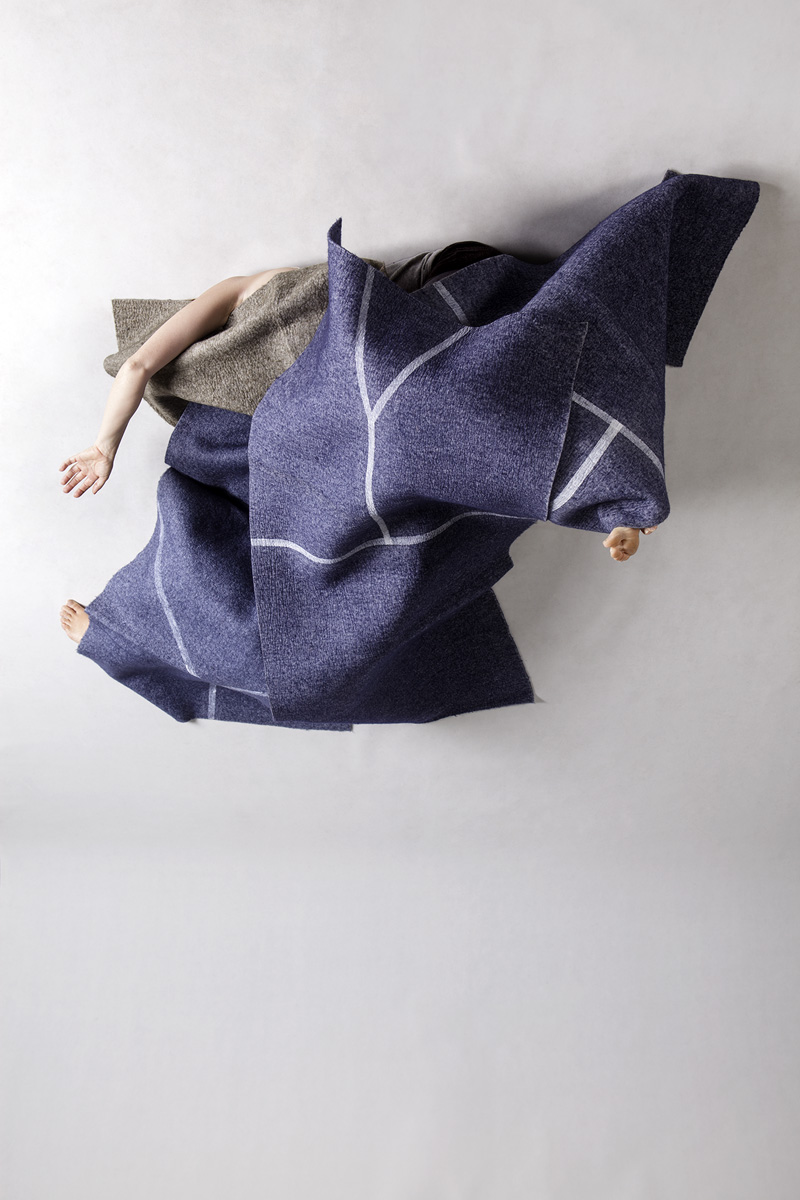
Thankfully, these latest photographs are of a different taxonomic order. They are vital, alive, full of swirling tarantism that beautifully expresses the trapped energy that Ferran saw in a 1940s photographic archive of 38 unidentified women who were patients of a Sydney psychiatric hospital. In their formalist abstraction the artist has perfectly captured the unquiet spirit of the women and – here is the crux of the matter for me – these photographs allow me to go further into the subject, they take me to a different place and don’t just leave me on the surface of the image / history. They speak to me, they n/trance in multiple ways like little of Ferran’s work has done before for I feel this work, this hidden narrative, in the artist’s performative shaping of reality. Suddenly these women, trapped in a space (of the photograph, of the archive) and place (of the hospital), can spread their wings and anonymously shake their feathers (their spirit) with declamatory enthusiasm. As an artist friend of mine Julie Clarke observed, “I was captured by the amount of folds in the fabric Ferran has used. Her emphasis on ‘felt’ as felt emotion and the feeling associated with those almost absent bodies is intriguing.” And how that felt emotion relates to the work of Joseph Beuys and his use of felt as insulation, warmth and a kind of comfort, here represented in institutional form (I am reminded by the markings on the felt of the arrows of prison garments).

As the text for the exhibition states, “This new series marks a significant shift in approach, as Ferran harnesses photography and performance in an endeavour to manifest the archive’s continuing power in the present. Ferran’s performers conceal their identities behind lengths and swathes of painted felt, in some cases creating strange and outlandish figures in a disorder of material, bodies and space.”

It is a welcome shift in approach. Ferran’s mental, material dis/order produces significantly more memorable images than what has “passed” before, imaging as they do a conflation of past, present and future rather than relying on the death of the historical archive evidenced in the deathly photograph.

Dr Marcus Bunyan


Many thankx to Stills Gallery for allowing me to publish the photographs in the posting. Please click on the photographs for a larger version of the image.


Anne Ferran (Australian, b. 1949) 'Clamorous shrike' 2013


Anne Ferran (Australian, b. 1949)
Clamorous shrike
2013
From Box of Birds series
Pigment print
72 x 48cm
Editions of 5 + 2AP


Anne Ferran (Australian, b. 1949) 'Conspicuous kite' 2013


Anne Ferran (Australian, b. 1949)
Conspicuous kite
2013
From Box of Birds series
Pigment print
72 x 48cm
Editions of 5 + 2AP


Anne Ferran (Australian, b. 1949) 'Night whistler' 2013


Anne Ferran (Australian, b. 1949)
Night whistler
2013
From Box of Birds series
Pigment print
72 x 48cm
Editions of 5 + 2AP


Anne Ferran (Australian, b. 1949) 'Pale-headed flycatcher' 2013


Anne Ferran (Australian, b. 1949)
Pale-headed flycatcher
2013
From Box of Birds series
Pigment print
72 x 48cm
Editions of 5 + 2AP


Anne Ferran (Australian, b. 1949) 'Slender-throated warbler' 2013


Anne Ferran (Australian, b. 1949)
Slender-throated warbler
2013
From Box of Birds series
Pigment print
72 x 48cm
Editions of 5 + 2AP


Anne Ferran (Australian, b. 1949) 'Stonebird' 2013


Anne Ferran (Australian, b. 1949)
Stonebird
2013
From Box of Birds series
Pigment print
72 x 48cm
Editions of 5 + 2AP


Anne Ferran (Australian, b. 1949) 'Tricoloured sylph' 2013


Anne Ferran (Australian, b. 1949)
Tricoloured sylph
2013
From Box of Birds series
Pigment print
72 x 48cm
Editions of 5 + 2AP


Anne Ferran (Australian, b. 1949) 'Feathered Emissary' 2013


Anne Ferran (Australian, b. 1949)
Feathered Emissary
2013
From Box of Birds series
Pigment print
60 x 80cm
Editions of 5 + 2AP


Over the past 20 years Anne Ferran has worked with the residues of Australia and New Zealand’s colonial histories, probing them for gaps and silences. She has been especially drawn to the lives of anonymous women and children, seeking to shed light on their presence, and absence, in museum collections, photographic archives and historic sites. It is characteristic of Ferran’s images that the subject is not what is seen but rather what haunts it, something only partially visible. Intellectually and emotionally engaging, her photographs have explored episodes of incarceration in prisons, asylums, hospitals and nurseries, giving voice to the spectres of the lost and unseen.

Box of Birds returns to the subject matter of her previous works INSULA and 1-38: 1940s photographs of 38 unidentified women who were patients of a Sydney psychiatric hospital. In a significant shift of approach, rather than exhuming traces of the past, Ferran harnesses photography and performance in an endeavour to manifest its continuing power in the present.

Ferran’s process alternated between the considered and the uncontrollable. Female performers were instructed to hold pieces of felt up to her camera, the 38 lengths of dyed and painted fabric recalling the crumpled clothes worn by the women in the original photographic archive. Other images were wholly improvised, the performers creating strange and outlandish figures out of a disorder of material, bodies and space.

In a deliberate departure from the 1940s archive, Ferran’s performers conceal their identities behind lengths and swathes of fabric, raising ethical questions about photography’s role in recognition, representation and expression.

All the work in Box of Birds aims to elicit the energy Ferran saw trapped in those 1940s photographs, their unquiet spirit.

Press release from the Stills Gallery website


Anne Ferran (Australian, b. 1949) 'Chorus No.1' 2013


Anne Ferran (Australian, b. 1949)
Chorus No.1
2013
From Box of Birds series
38 Pigment prints
60 x 42cm each
Editions of 5 + 2AP


Anne Ferran (Australian, b. 1949) 'Chorus No.2' 2013


Anne Ferran (Australian, b. 1949)
Chorus No.2
2013
From Box of Birds series
38 Pigment prints
60 x 42cm each
Editions of 5 + 2AP


Anne Ferran (Australian, b. 1949) 'Chorus No.3' 2013


Anne Ferran (Australian, b. 1949)
Chorus No.3
2013
From Box of Birds series
38 Pigment prints
60 x 42cm each
Editions of 5 + 2AP


Anne Ferran (Australian, b. 1949) 'Chorus No.4' 2013


Anne Ferran (Australian, b. 1949)
Chorus No.4
2013
From Box of Birds series
38 Pigment prints
60 x 42cm each
Editions of 5 + 2AP


Anne Ferran (Australian, b. 1949) 'Chorus No.5' 2013


Anne Ferran (Australian, b. 1949)
Chorus No.5
2013
From Box of Birds series
38 Pigment prints
60 x 42cm each
Editions of 5 + 2AP


Stills Gallery

This gallery has now closed.

Stills Gallery website

LIKE ART BLART ON FACEBOOK

Back to top

Exhibition: ‘Joan Ross: Touching Other People’s Shopping’ at Bett Gallery, Hobart

Exhibition dates: 7th June – 28th June 2013


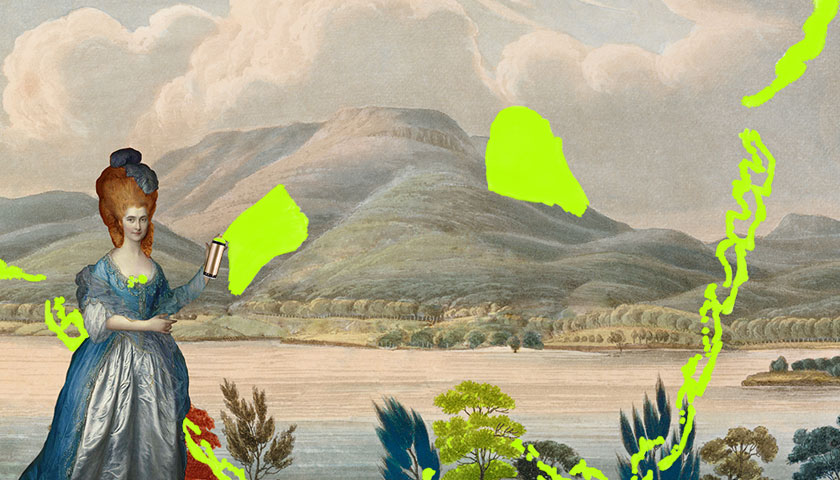
Joan Ross (Australian, b. 1961) 'Mine' 2013


Joan Ross (Australian, b. 1961)
Mine
2013
hand painted pigment print on cotton rag paper
40 x 60cm
edition of 3


The claiming of things
The touching of things
The digging of land
The tagging of place
The taking over of the world

Tag and capture.
Tag and capture.
Shop, dig, spray, destroy.


An ironic critique of the pastoral, neo/colonial world, tagged and captured in the 21st century.

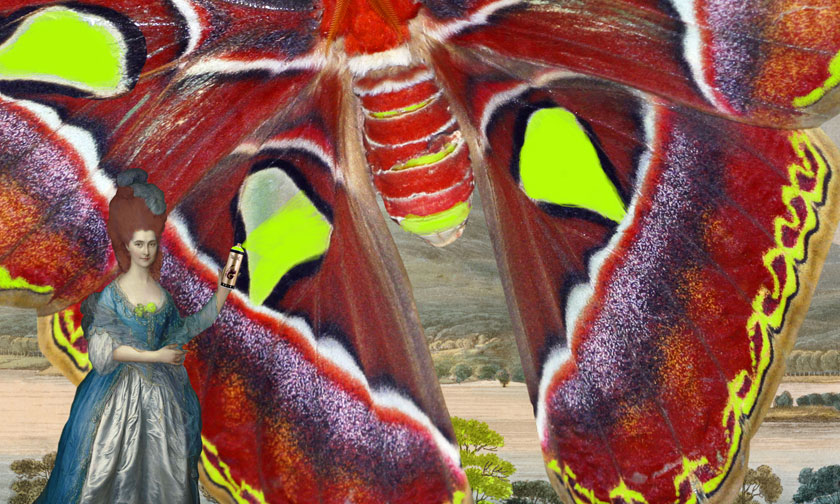
Excellent work. The construction, sensibility and humour of the videos is outstanding. I also responded to the two works Tag and capture and Shopping for butterfly (both 2013, below).

Dr Marcus Bunyan


Many thankx to Bett Gallery for allowing me to publish the photographs and videos in the posting. Please click on the photographs for a larger version of the image.


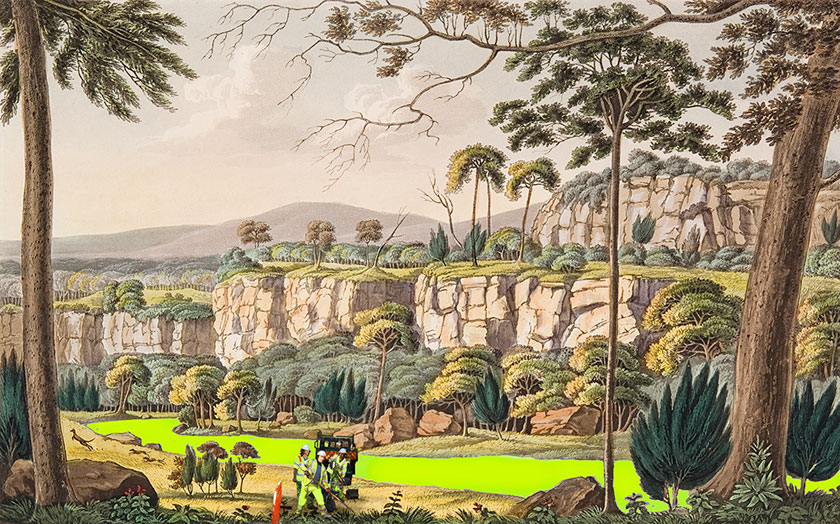
Joan Ross (Australian, b. 1961) 'I dig your land' 2013


Joan Ross (Australian, b. 1961)
I dig your land
2013
hand painted pigment print on cotton rag paper
31 x 50cm
Edition of 3


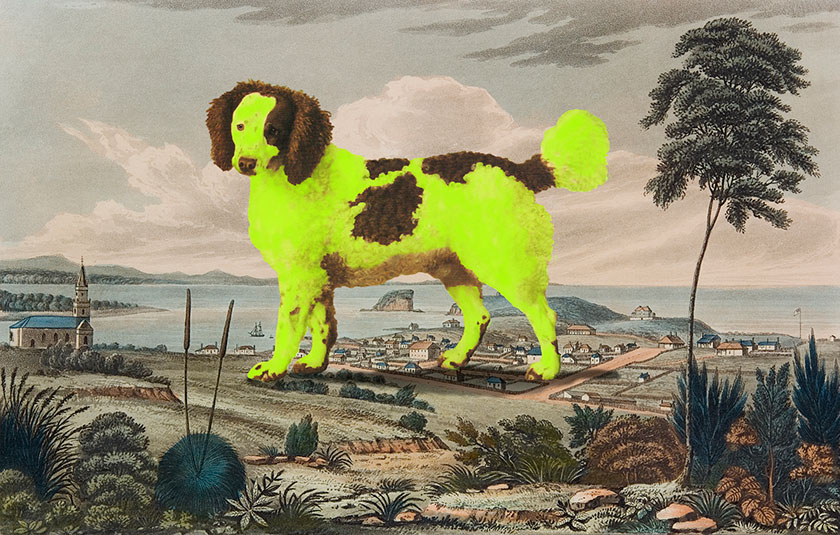
Joan Ross (Australian, b. 1961) 'Lassie come home' 2013


Joan Ross (Australian, b. 1961)
Lassie come home
2013
hand painted pigment print on cotton rag paper
32 x 50cm
Edition of 3


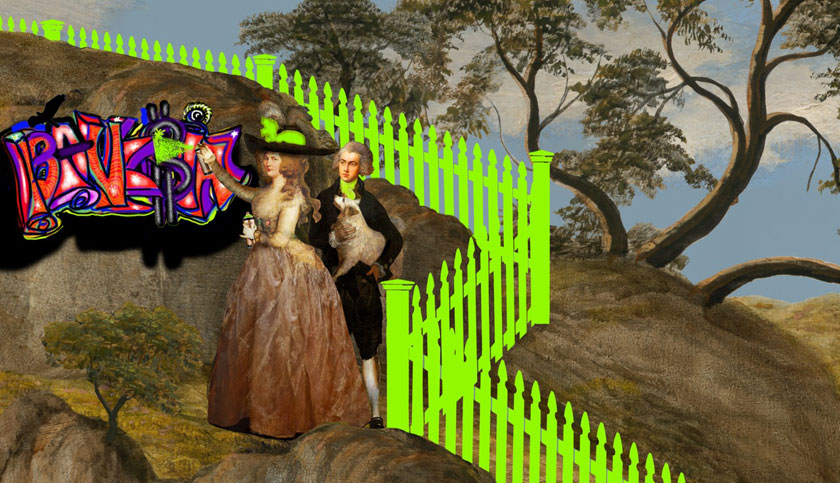
Joan Ross (Australian, b. 1961) 'Tagging' 2013


Joan Ross (Australian, b. 1961)
Tagging
2013
hand painted pigment print on cotton rag paper
33.5 x 60cm
Edition of 3


Joan Ross (Australian, b. 1961) 'Shopping for butterfly' 2013


Joan Ross (Australian, b. 1961)
Shopping for butterfly
2013
hand painted pigment print on cotton rag paper
51.5 x 50cm
Edition of 3


Joan Ross (Australian, b. 1961) 'Tag and capture' 2013


Joan Ross (Australian, b. 1961)
Tag and capture
2013
hand painted pigment print on cotton rag paper
50 x 47cm
Edition of 3


Joan Ross (Australian, b. 1961) 'The naming of things' 2013


Joan Ross (Australian, b. 1961)
The naming of things
2013
hand painted pigment print on cotton rag paper
40 x 70cm
Edition of 3


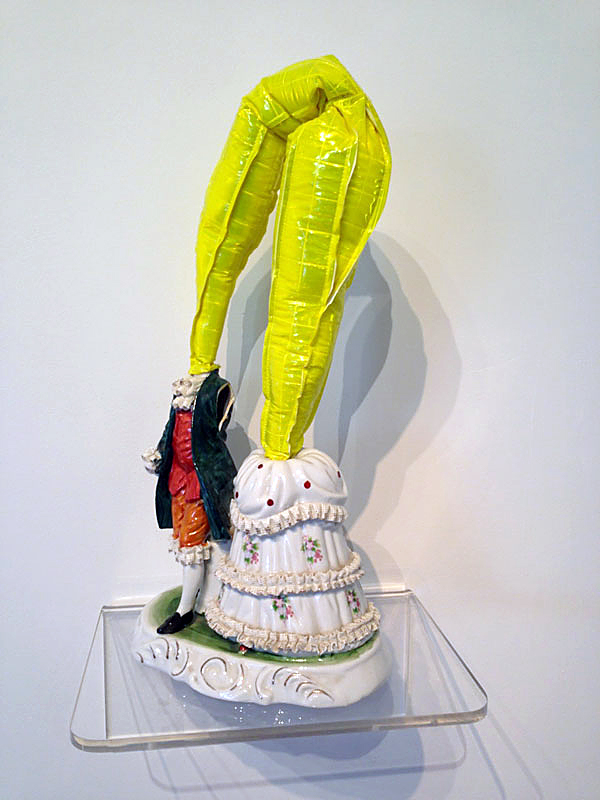
Joan Ross (Australian, b. 1961) 'Together we can take over the world' 2012


Joan Ross (Australian, b. 1961)
Together we can take over the world
2012
found ceramic and fluorescent reflector tape
50 x 24 x 20cm


Bett Galllery
369 Elizabeth Street
North Hobart Tasmania 7000
Australia
Phone: +61 (0) 3 6231 6511

Opening hours:
Monday – Friday 10am – 5.30pm
Saturday 10am – 4pm
Closed Sundays & public holidays

Bett Gallery website

LIKE ART BLART ON FACEBOOK

Back to top

Exhibition: ‘Sentinels’ by David Wood at Gasworks Arts Park, Albert Park

Exhibition dates: 29th May – 16th June 2013


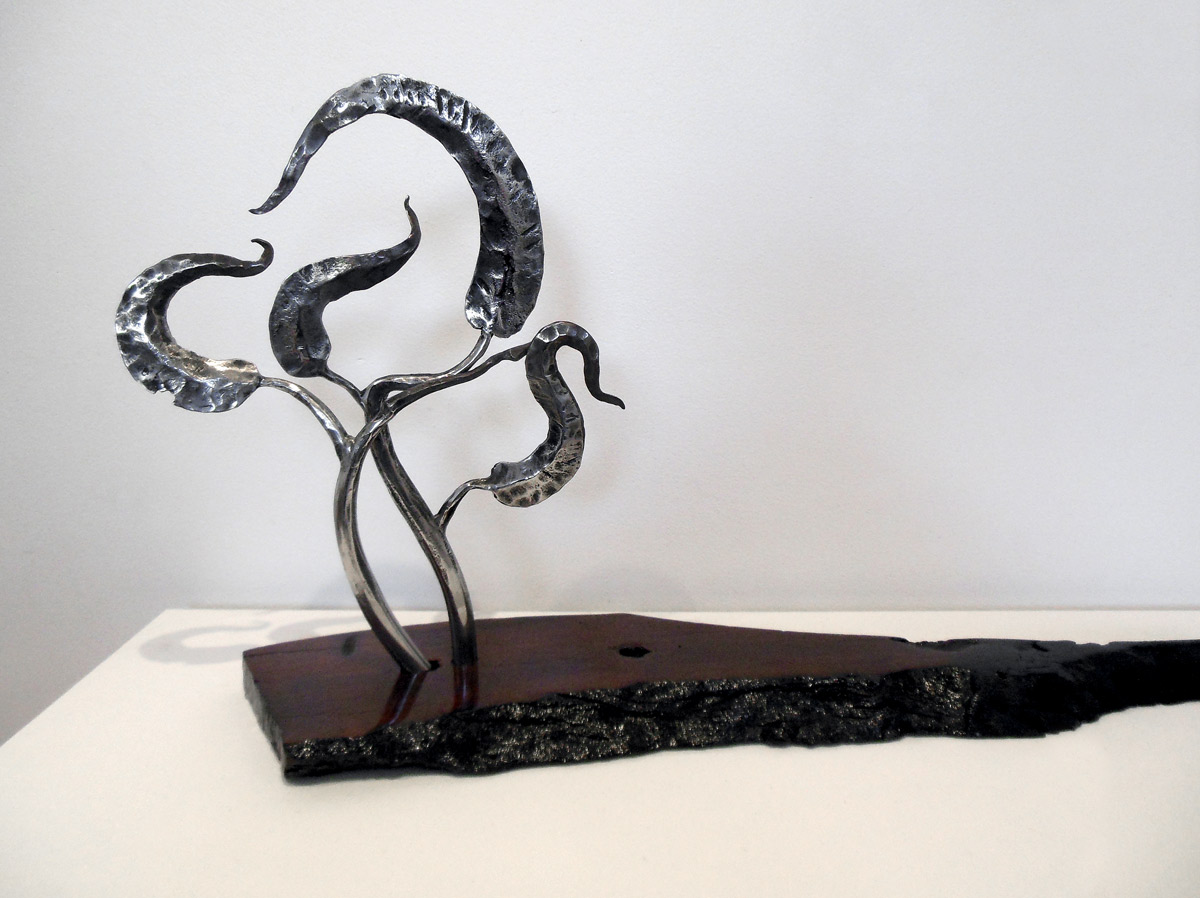
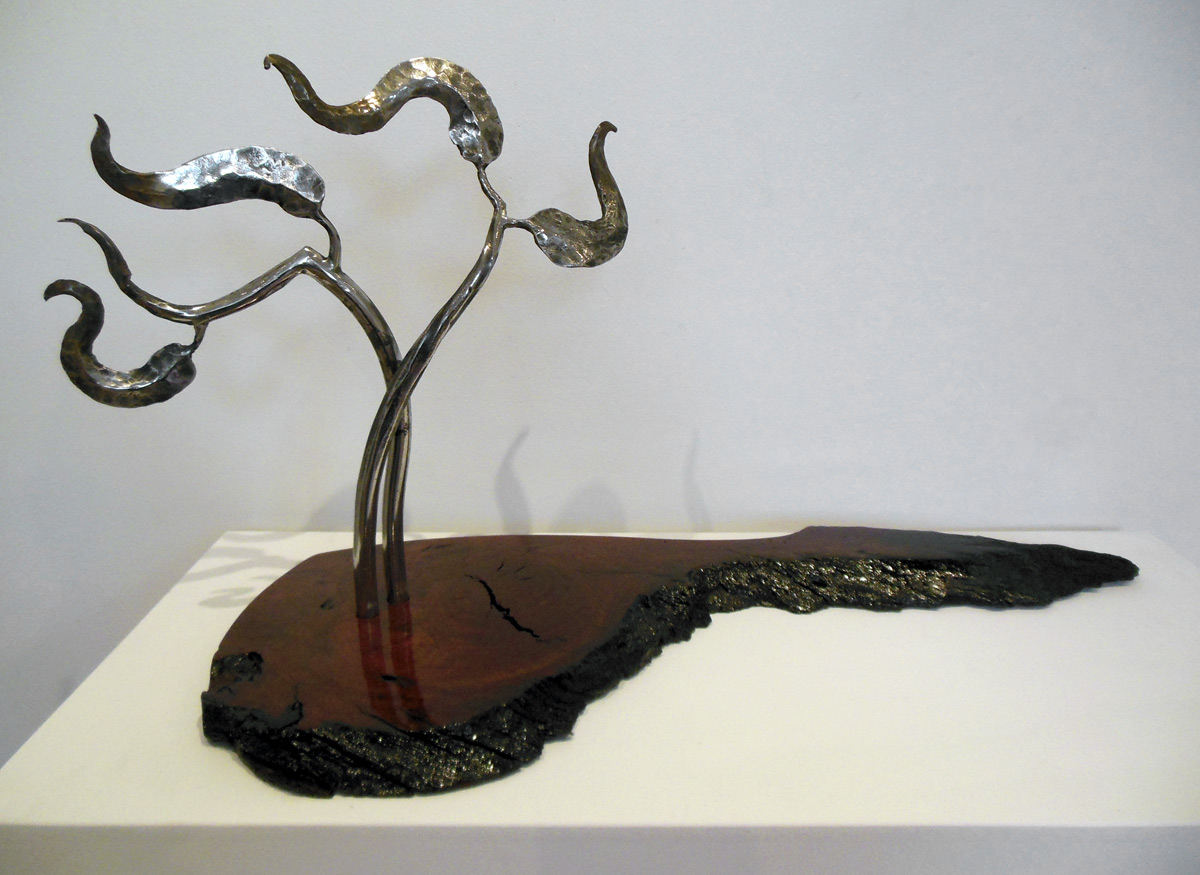
David Wood (Australian) 'Ghost Gum Three' 2013
 

David Wood (Australian)
Ghost Gum Three
2013
Stainless steel and red gum
76 x 310 x 44cm
Photo: Marcus Bunyan


A solid first solo exhibition from my friend David Wood at Gasworks Arts Park. Conceptually the show needed a little tightening but technically the work is outstanding (as you would expect from the owner of Bent Metal and one of Melbourne’s best blacksmiths) and aesthetically pleasing. I particularly liked the topographic remapping of both Port Phillip Bay and St Kilda Junction.

Anyone who knows Melbourne intimately would recognise the ramps and walkways that bisect the interior of the junction even in their abstract form, especially the tram ramp ascending from Dandenong Road to St Kilda Road. I also admired the Nardoo sentinels, which are to be made at full size for a public park in Berwick later in the year.

Dr Marcus Bunyan


Many thankx to Woody for allowing me to publish the photographs in the posting. Please click on the photographs for a larger version of the image.


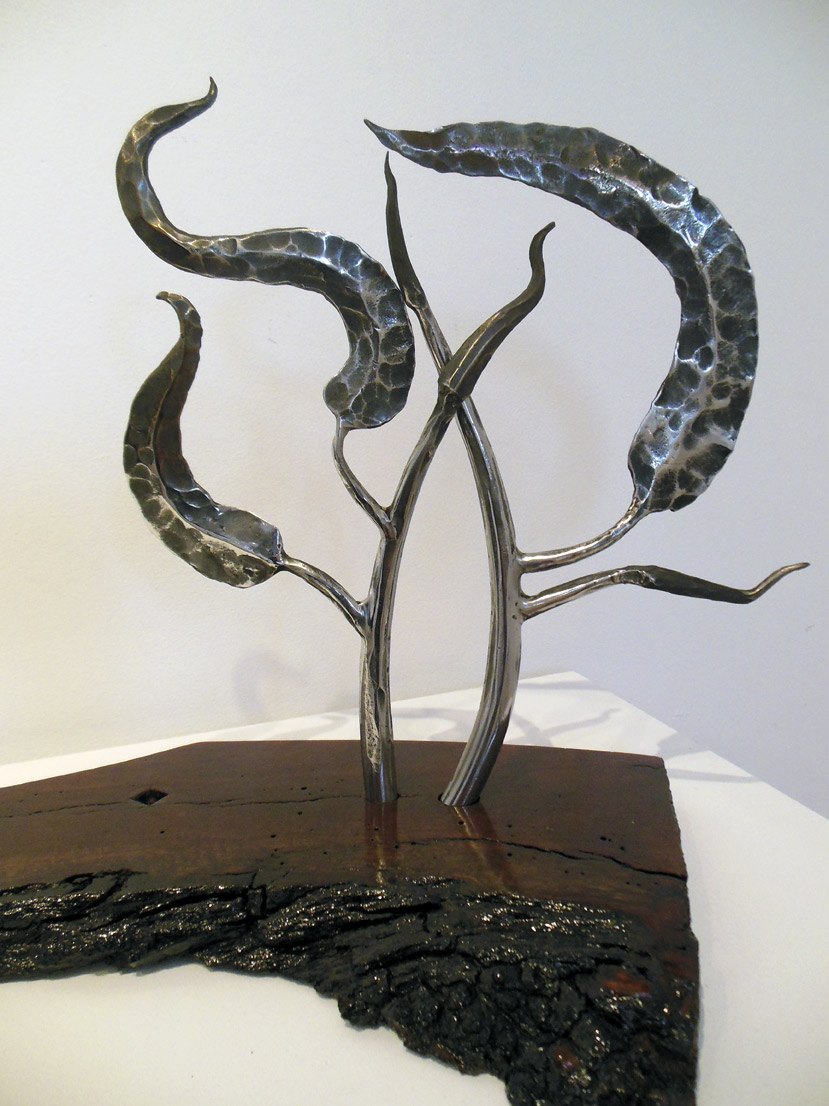
David Wood (Australian) 'Ghost Gum One' 2013


David Wood (Australian)
Ghost Gum One
2013
Stainless steel and red gum
72 x 170 x 39cm
Photo: Marcus Bunyan


David Wood (Australian) 'Ghost Gum Two' 2013


David Wood (Australian)
Ghost Gum Two
2013
Stainless steel and red gum
78 x 24 x 36cm
Photo: Marcus Bunyan


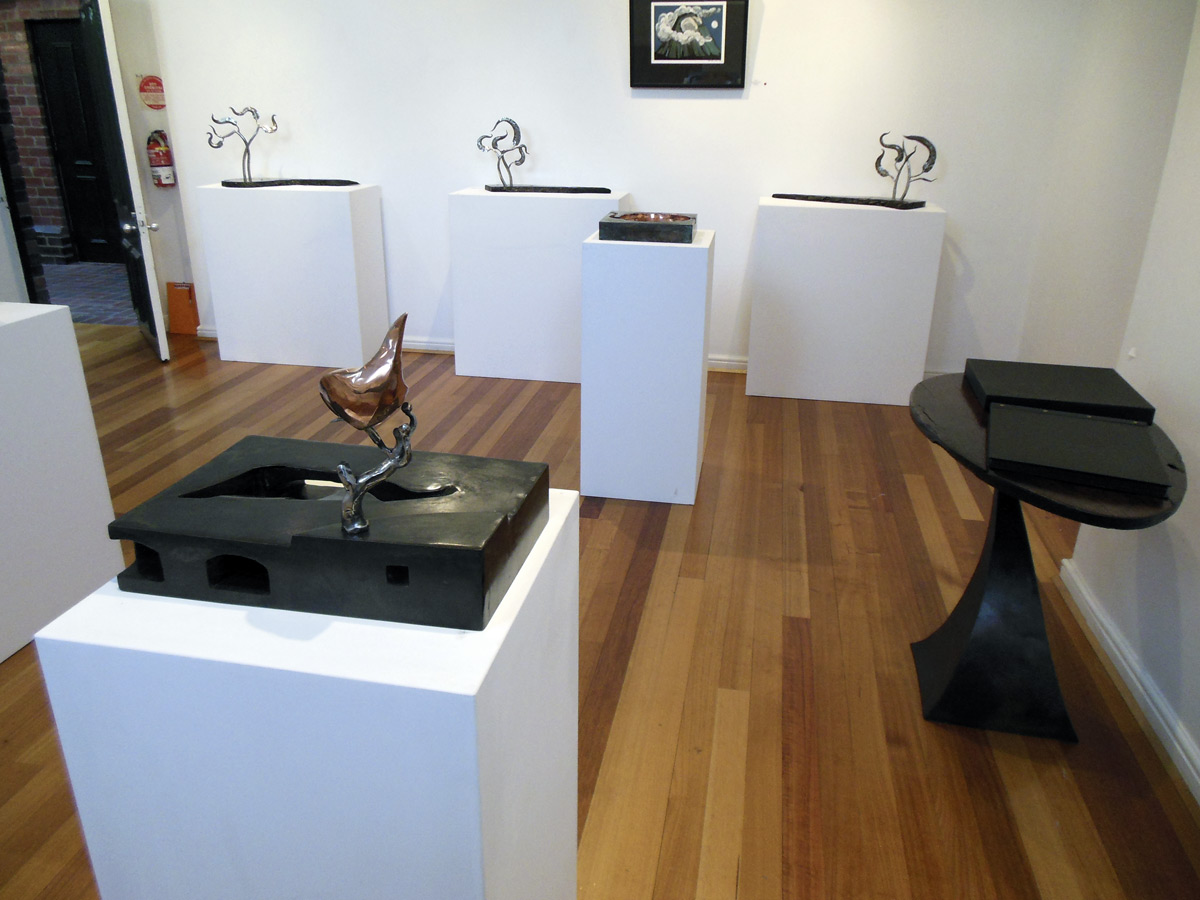
Installation view of the exhibition 'Sentinels' by David Wood at Gasworks Art Park


Installation view of the exhibition Sentinels by David Wood at Gasworks Art Park
Photo: Marcus Bunyan


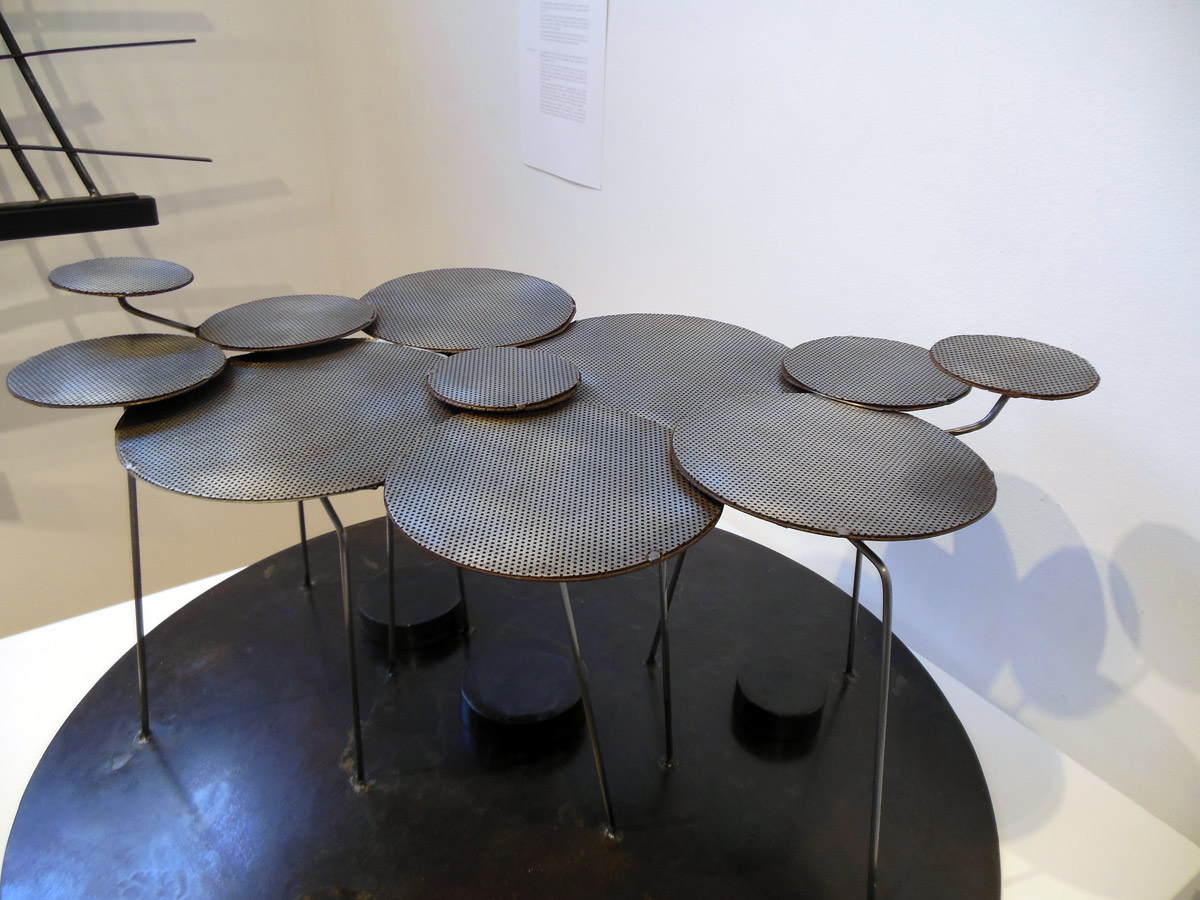
My work has two main driving forces – a desire to explore and continue a blacksmithing inheritance and investigating place and how we interact with the physical world. I am interested in how landmarks within landscape can shape, reflect and define our Nation’s ethos and their place as sentinels within our history.

I use traditional forging techniques and prefer to leave hammer marks and traces of process exposed, as testament, on the finished sculpture. The medium itself represents an industry crucial to our economy but detrimental to our landscape.

This current group of work, inspired by the burning of two ghost gums in the Northern Territory is a personal muse on Australian culture. The burning of the ghost gums made famous by Albert Namatjira was a terrible act of vandalism. Small silvery ghostly gum trees stand upon burnt timber bases intended to evoke images of landscape and cultural practice, both ancient and current. Forged vessels take inspiration from the ghost gums’ colour and form.

The pieces are abstract representations in metals and timber of trees, mountain ranges and land formations. Mountain ranges are used to survey our cities and towns. They collect our water and are harvested for their riches. Once they were homes to spiritual beings.

I was born at the base of mount Baw Baw and have created homage. This mountain for me is a keeper of secrets. As an adult I live upon the shores of Port Phillip Bay, a quiet sleeping giant. St Kilda junction is a lyrical gesture to paths crossing and the corroboree tree that still watches over this site.

Bought together, the sculptures encapsulate a personal sense of belonging to a place. They also endeavour to explore greater cultural notions of ownership.

Artist statement by David Wood


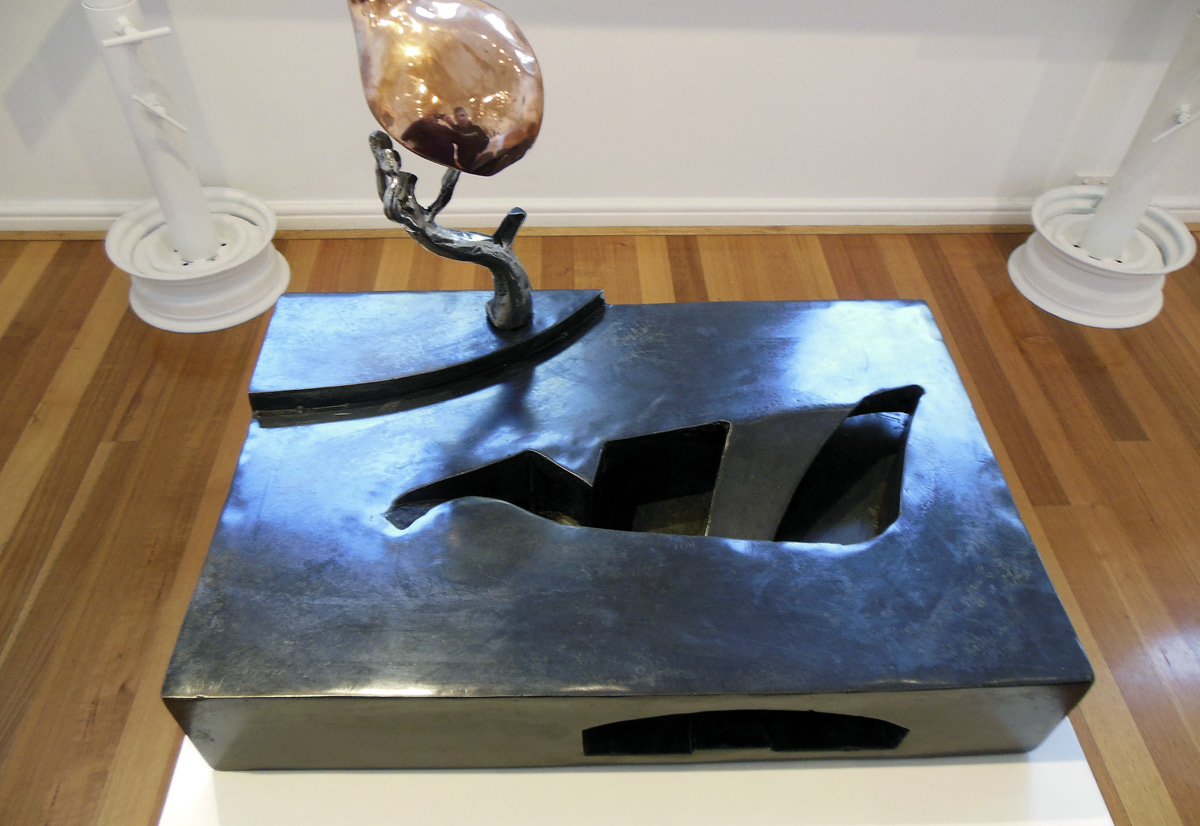
David Wood (Australian) 'Port Phillip Bay' 2013


David Wood (Australian)
Port Phillip Bay
2013
Copper
33 x 33 x 70cm
Photo: Marcus Bunyan


David Wood (Australian) 'St Kilda Junction' 2013


David Wood (Australian)
St Kilda Junction
2013
Stainless steel, mild steel and copper
27 x 40 x 32cm
Photo: Marcus Bunyan


David Wood (Australian) 'St Kilda Junction' 2013 (detail)


David Wood (Australian)
St Kilda Junction (detail)
2013
Stainless steel, mild steel and copper
27 x 40 x 32cm
Photo: Marcus Bunyan


David Wood (Australian) 'Nardoo sentinels' 2013 (detail)

David Wood (Australian) 'Nardoo sentinels' 2013 (detail)


David Wood (Australian)
Nardoo sentinels (detail)
2013
Mild steel
Photos: Marcus Bunyan


Nardoo sentinels

Inspired by classical structures within great gardens, in particular the Temple of the Winds in the Royal Melbourne Botanic Gardens, this functional sculpture reflects the transparency of our native landscape, significant in shaping our cultural ethos. Mirroring a cluster of trees with their canopy hovering above, it defines its space and surrounds. This group of sentinels stand together to offer protection from the elements.

The singular motif takes the form of nardoo, a native water and food plant. Its finishes mimicking its natural colours and hues. Intended to be a water collector, the shelter is engineered to allow rainwater to drain through its canopy and channel down its stems. Visibility of water flow adds a kinetic dimension to the sculpture. Commissioned exclusively by Pask Development Group, via Tract Landscape Architects, this rotunda is a central feature for a public park. It will stand proud later this year.


David Wood (Australian) 'Nardoo sentinels' (left) and 'Reed Rotunda' (right) 2013


David Wood (Australian)
Nardoo sentinels (left) and Reed Rotunda (right)
2013
Mild steel
Photo: Marcus Bunyan


David Wood (Australian) 'Reed rotunda' 2013


David Wood (Australian)
Reed rotunda
2013
Mild steel
70 x 70 x 46cm
Photo: Marcus Bunyan


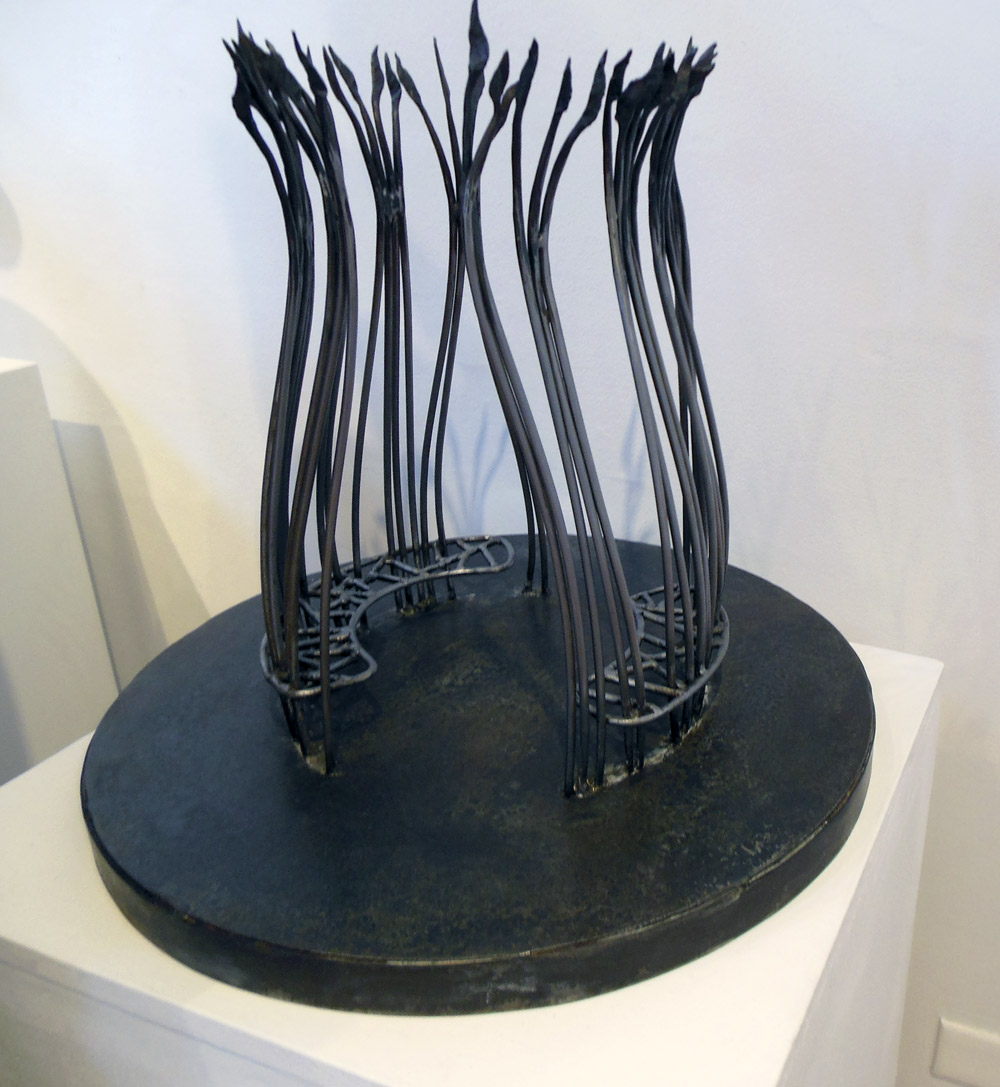
Reed rotunda

The design derives a motif from the natural growth of the Phragmite Australis reeds, a wetland plant indigenous to our continent home.

The common reed is known to everyone and surrounds us. It plays an integral role in conservation as habitat and a guardian for wildlife. A natural purifier, removing toxins from our creeks and wetlands. A reed standing alone may be insignificant, but when congregating on mass, it becomes a formidable force in both structure and function. An organic organism that frames and protects the landscape, moves and changes colour with the seasons, rides the wind and plays with light and shade.

Often overlooked as a feature of landscape or viewed as slightly raggedy, this piece invites visitors to celebrate these reeds as something beautiful and to use them as a metaphor for community, refuge and purification of the spirit and soul.


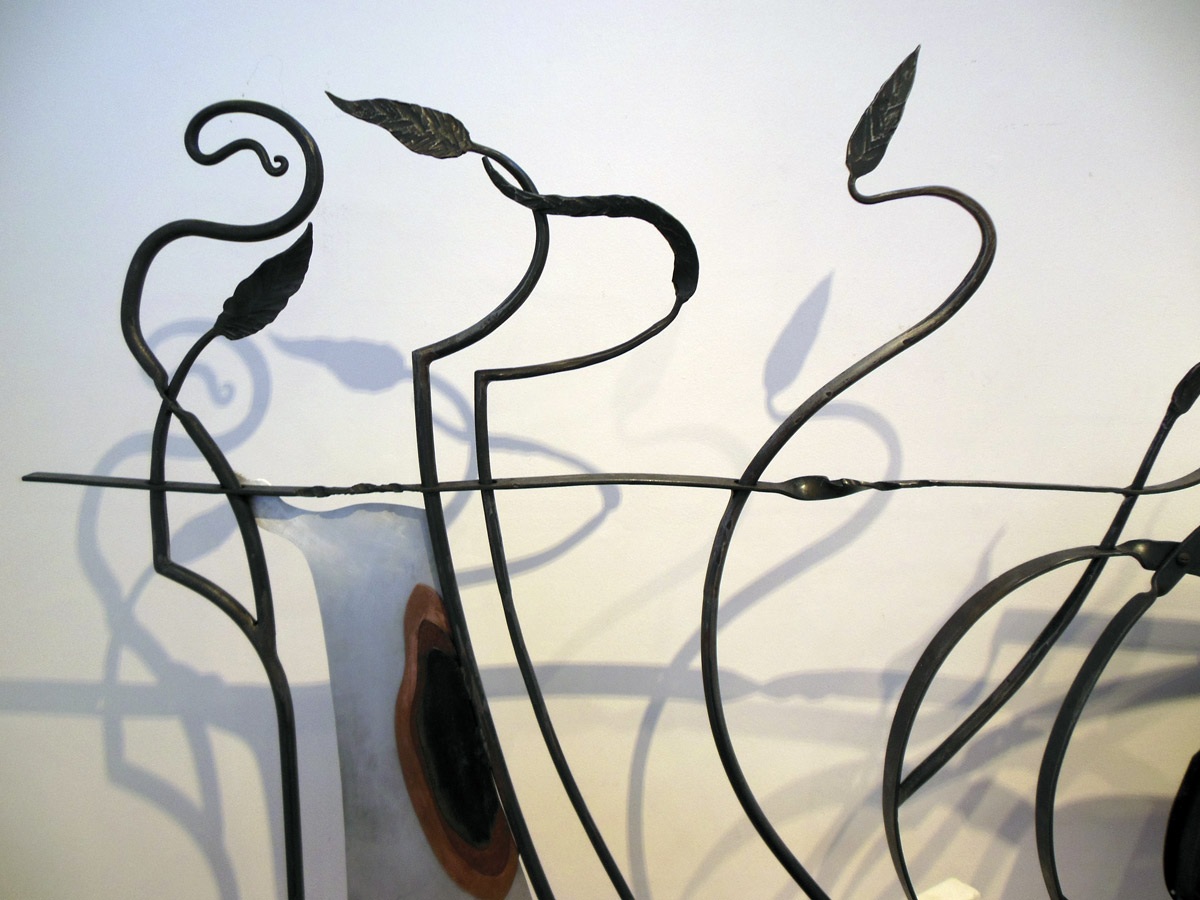
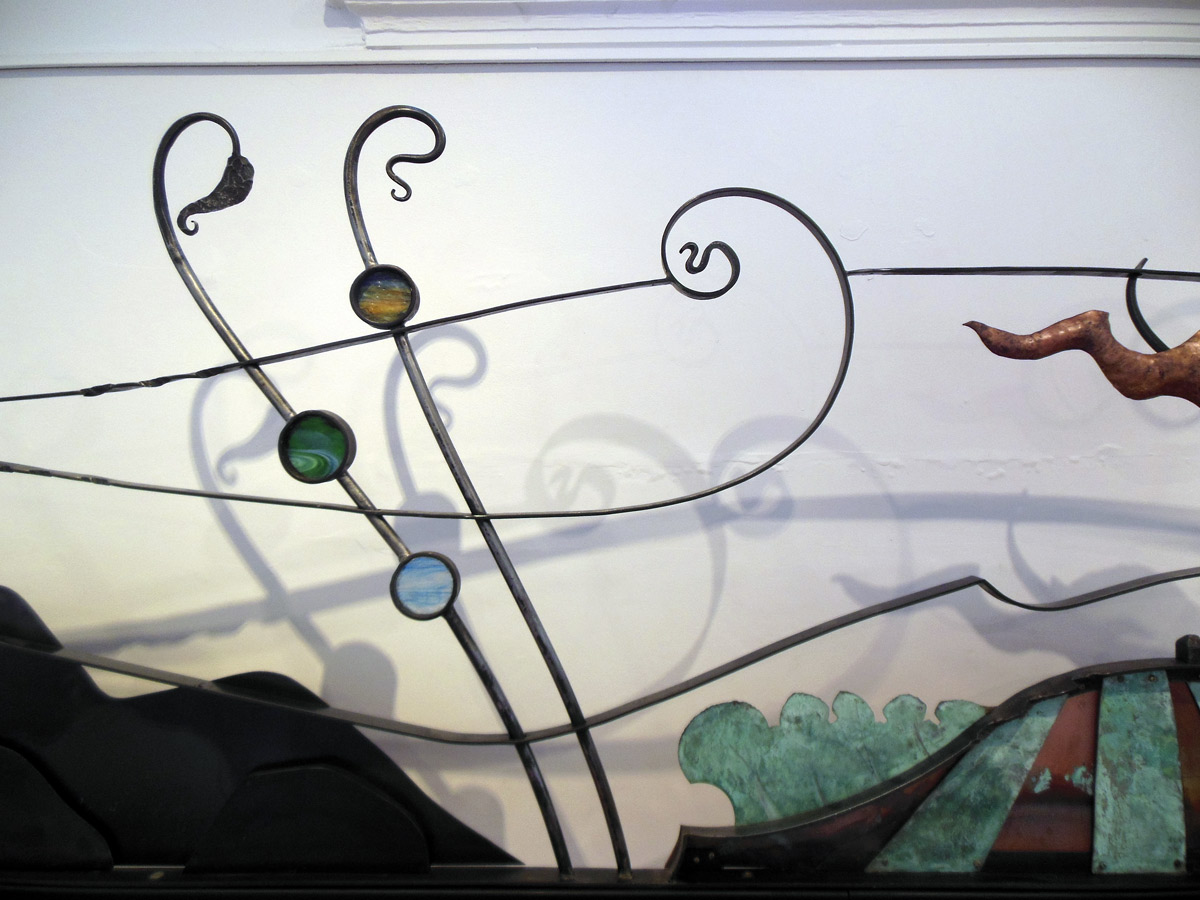
David Wood (Australian) 'Baw Baw wall feature' 2013 (detail)

David Wood (Australian) 'Baw Baw wall feature' 2013 (detail)


David Wood (Australian)
Baw Baw wall feature (detail)
2013
Mild steel, stainless steel, copper, brass, aluminium and glass
6200 x 500 x 70cm
Photos: Marcus Bunyan


Gasworks Arts Park
21 Graham Street
Albert Park VIC 3206
Phone: (03) 8606 4200

Gallery hours: 10am – 4pm each day

Gasworks Arts Park website

LIKE ART BLART ON FACEBOOK

Back to top

Exhibition: ‘Alan Constable: Ten Cameras’ at South Willard, Los Angeles

Exhibition dates: 4th May – 2nd June 2013

Curator: Ricky Swallow


Wow it really happened! Congratulations to Alan Constable, Sim Lutin and Melissa Petty from Arts Project Australia and to Ricky Swallow for curating.


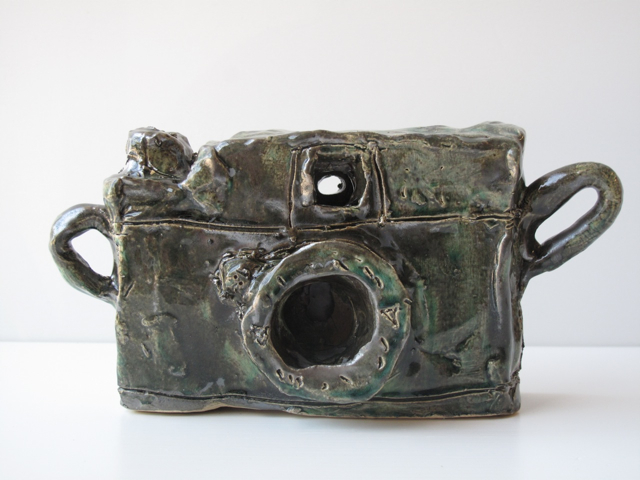
Alan Constable (Australian, b. 1956) 'Red NEK SLR' 2011


Alan Constable (Australian, b. 1956)
Red NEK SLR
2011
Ceramic
5.5 x 12.25 x 4.75 inches
© Alan Constable


“How would a comb that cannot untangle hair look? You can make the object dangerous, humorous, useless, sinister.”


Christina Ramberg


Alan Constable’s cameras are real ‘things’; they command constant attention from their audience and from their lucky owners. The resemblance of these sculptures to cameras is a starting point more than an end point, in the same way a swelling foot as painted by Phillip Guston behaves unlike any sensible foot, or a collage of a doorway by James Castle exceeds the expectation its structural simplicity presents.

Constable’s sculpture makes malleable mischief of both the form and function of the camera. In his hands it becomes an anthropomorphic character with endless variations and possibility. Specific types are modelled in clay from magazine advertisements with apt abbreviation and gesture, then glazed and fired in solid, sometimes soupy colours that further activate their surfaces and transform their sober dispositions.

The glazed surfaces are embellished with details so specific and beautiful they necessitate a tactile engagement with the object. As ‘things’ they still buzz with the handling and energy Constable employs in their making. Dials formed separately and thumbed into position, viewfinder windows cut directly through surfaces together with an oversized scale give Constable’s cameras the feeling of buildings or vessels. Scribed lines articulate both panels and seams, skewed inscriptions indicate model and make: all this information registers with efficiency to produce compelling objects.

The basic slab built walls forming the camera’s body also conceal one of the most interesting elements about these sculptures – internal chambers and walls have been built during the early stages of the works. Such entombed detail points towards Constable’s dedication to conceive and map a complete object, a total exploration of his subject based on unique invention and interpretation.”

Ricky Swallow, April 2013


South Willard is pleased to present Alan Constable: Ten Cameras as its next Shop Exhibit. Curated by Ricky Swallow in collaboration with Arts Project Australia, this is the first solo presentation of Constable’s ceramic sculptures in the United States. Now in his late 50’s, Constable has been producing his art at Arts Project studio’s in Melbourne since 1987, and has exhibited his camera sculptures in both gallery and institutional exhibitions to critical praise over the past 7 years.

Constable is also participating in Outsiderism curated by Alex Baker at Fleisher Ollman gallery in Philadelphia this month.

Ricky wishes to thank Alex Baker for his introduction to Alan’s work, and Sim Luttin and Melissa Petty at Arts Project Australia for their generous assistance.


Alan Constable (Australian, b. 1956) 'Orange AKI SLR' 2011


Alan Constable (Australian, b. 1956)
Orange AKI SLR
2011
Ceramic
6 x 10 x 4 inches
© Alan Constable


Alan Constable (Australian, b. 1956) 'Green SLR' 2011


Alan Constable (Australian, b. 1956)
Green SLR
2011
Ceramic
7.75 x 9 x 3 inches
© Alan Constable


South Willard

Arts Project Australia website

LIKE ART BLART ON FACEBOOK

Back to top

Exhibition: ‘Yang Fudong: “Estranged Paradise. Works 1993-2013″‘ at Kunsthalle Zürich

Exhibition dates: 6th April – 26th May 2013

PLEASE NOTE: THIS POSTING CONTAINS ART PHOTOGRAPHS OF FEMALE NUDITY – IF YOU DO NOT LIKE PLEASE DO NOT LOOK, FAIR WARNING HAS BEEN GIVEN


Many thankx to the Kunsthalle Zürich for allowing me to publish the photographs in the posting. Please click on the photographs for a larger version of the image.


Yang Fudong. Close to the Sea & The Revival of the Snake – Pechino

Yang Fudong’s videos must number without doubt among the most talismanic works in the history of Chinese independent cinema. On Artribune Television, “Art inChina” presents “Close to the Sea & The Revival of the Snake”, Yang Fudong’s first one-man show in Beijing, featured at ShanghART Gallery & ARTMIA Gallery.


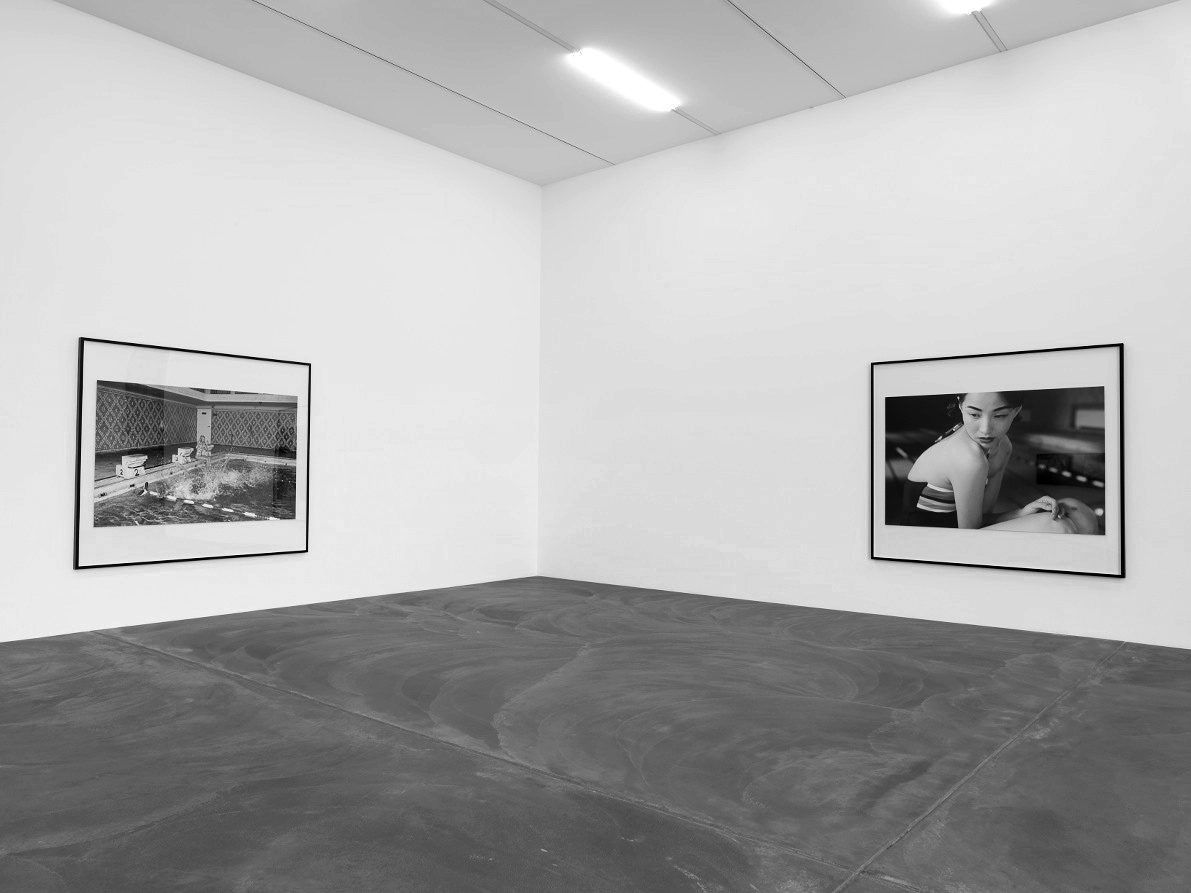
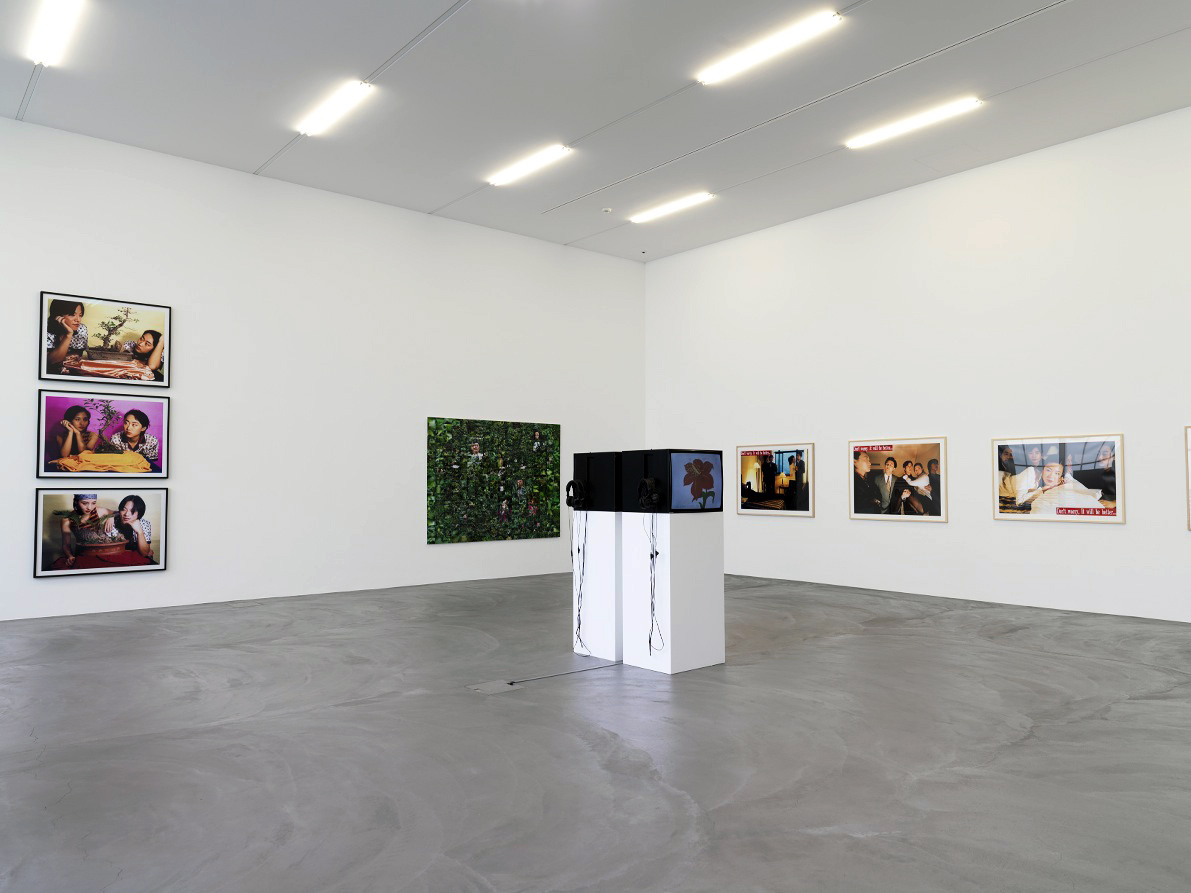
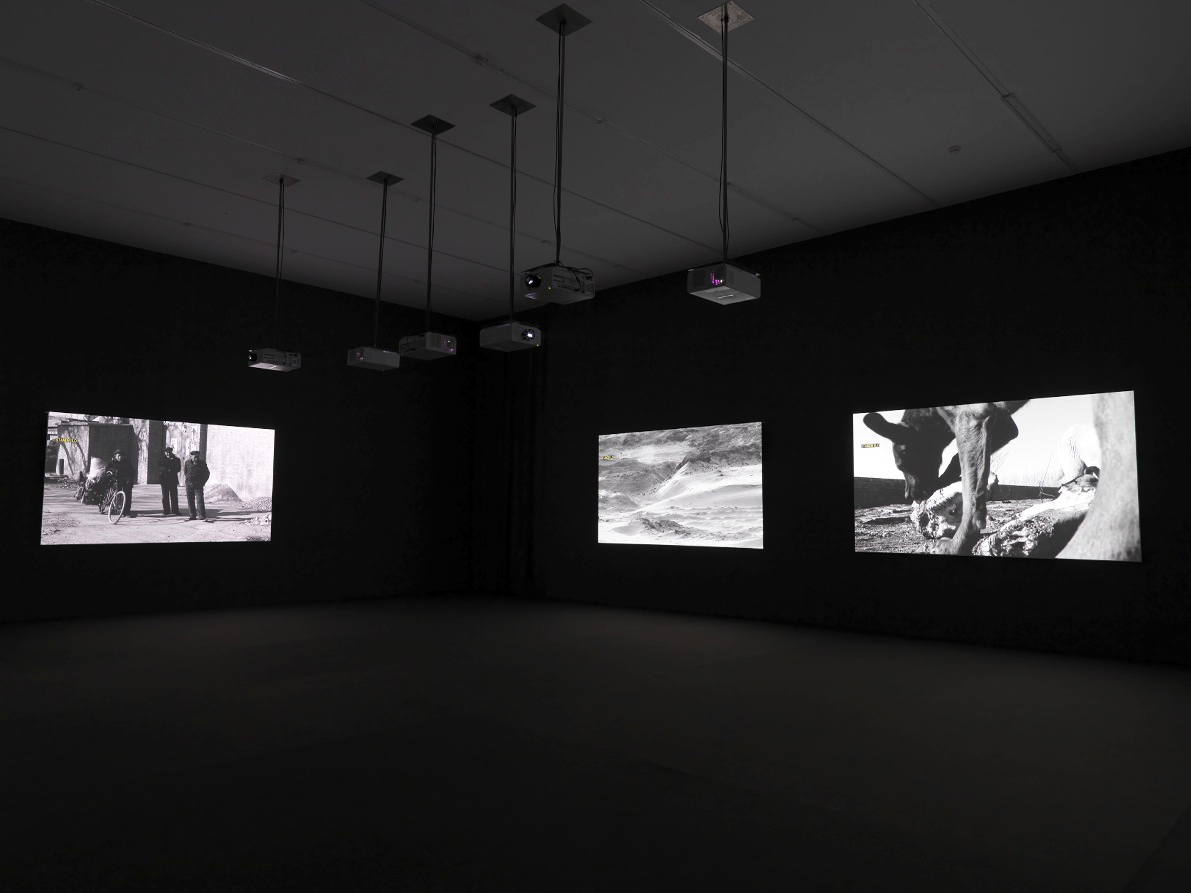
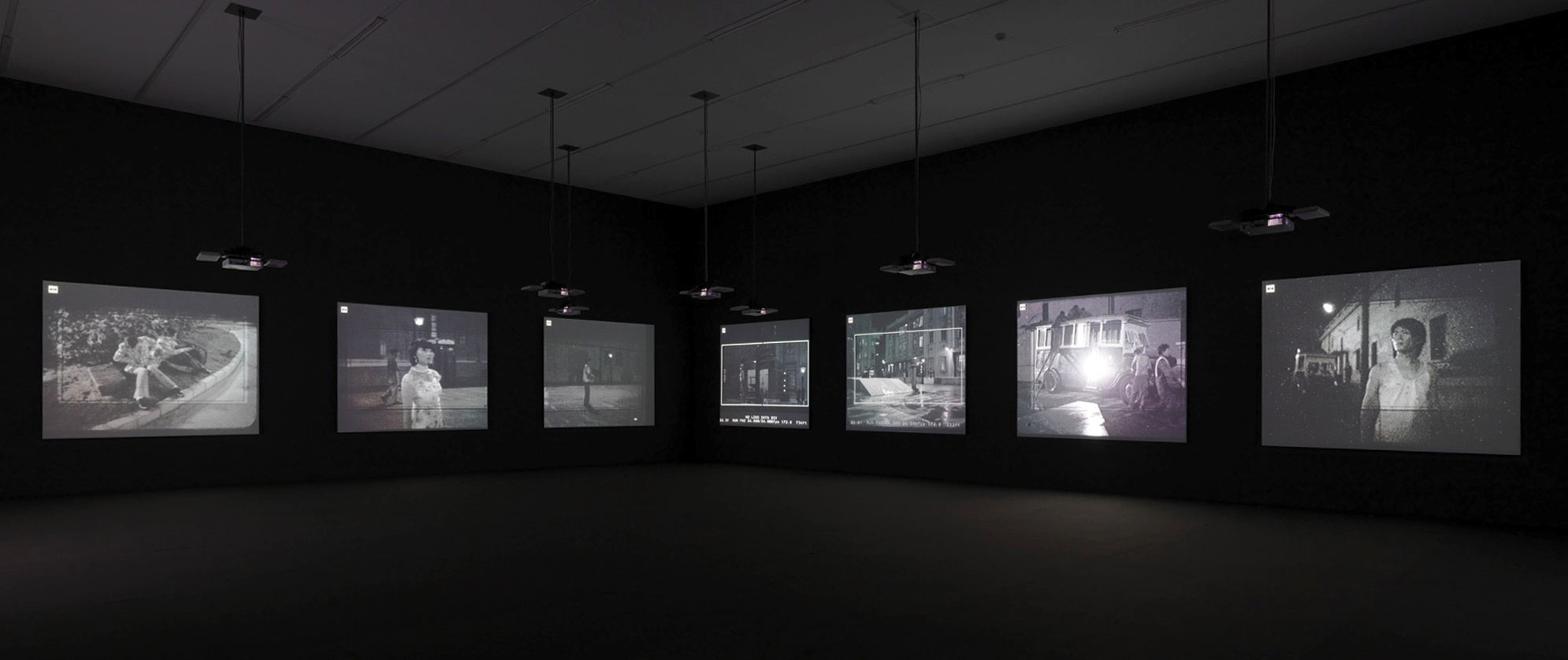
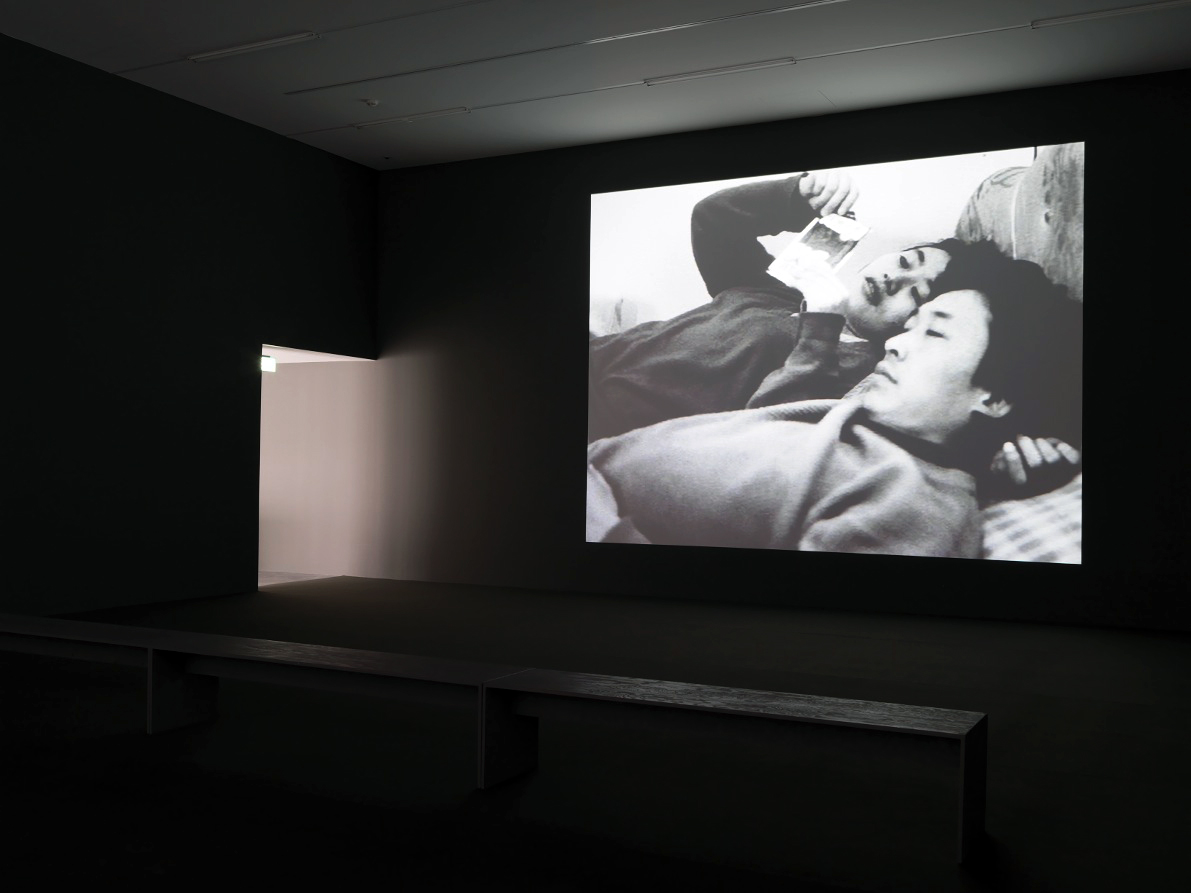
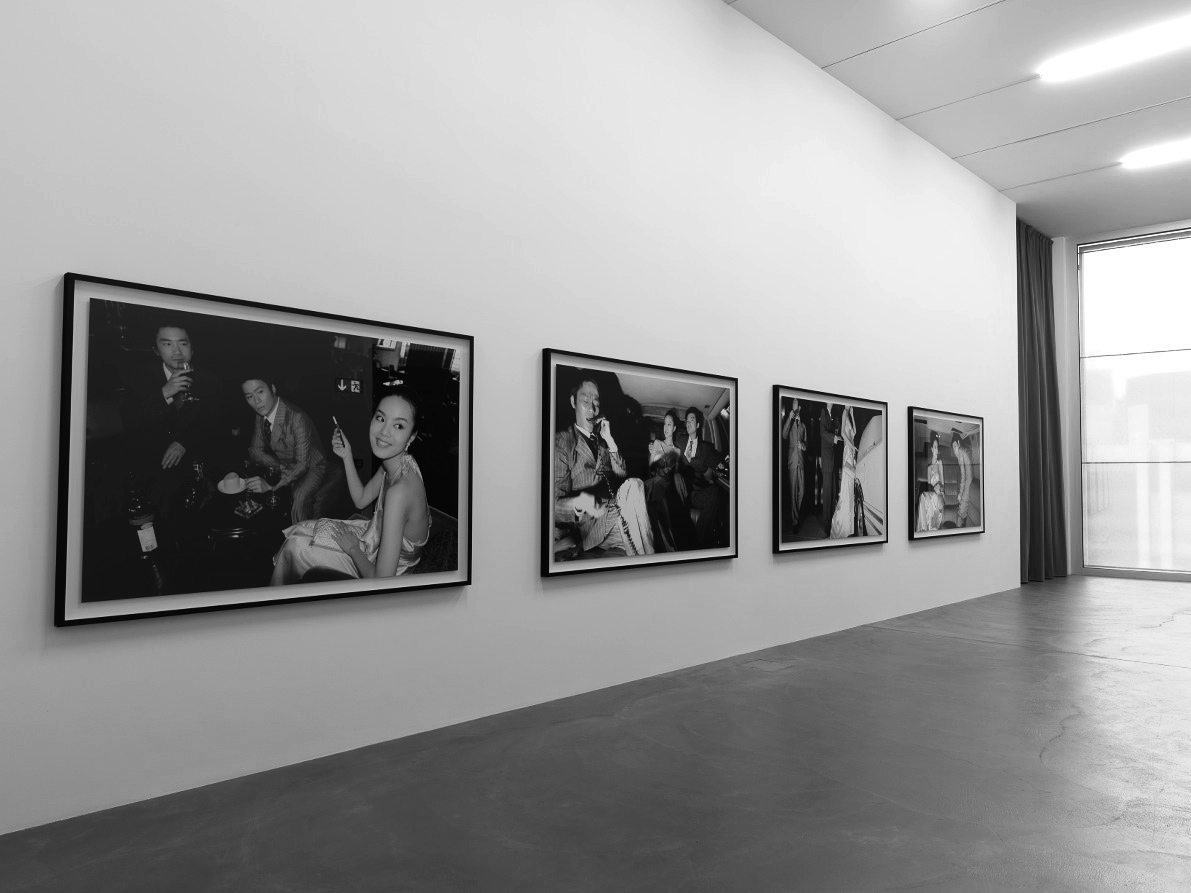
Installation view of 'Yang Fudong: "Estranged Paradise. Works 1993-2013",' at Kunsthalle Zürich, 2013

Installation view of 'Yang Fudong: "Estranged Paradise. Works 1993-2013",' at Kunsthalle Zürich, 2013

Installation view of 'Yang Fudong: "Estranged Paradise. Works 1993-2013",' at Kunsthalle Zürich, 2013

Installation view of 'Yang Fudong: "Estranged Paradise. Works 1993-2013",' at Kunsthalle Zürich, 2013

Installation view of 'Yang Fudong: "Estranged Paradise. Works 1993-2013",' at Kunsthalle Zürich, 2013

Installation view of 'Yang Fudong: "Estranged Paradise. Works 1993-2013",' at Kunsthalle Zürich, 2013


Installation views of Yang Fudong: “Estranged Paradise. Works 1993-2013”, Kunsthalle Zürich, 2013
© Stefan Altenburger Photography Zurich


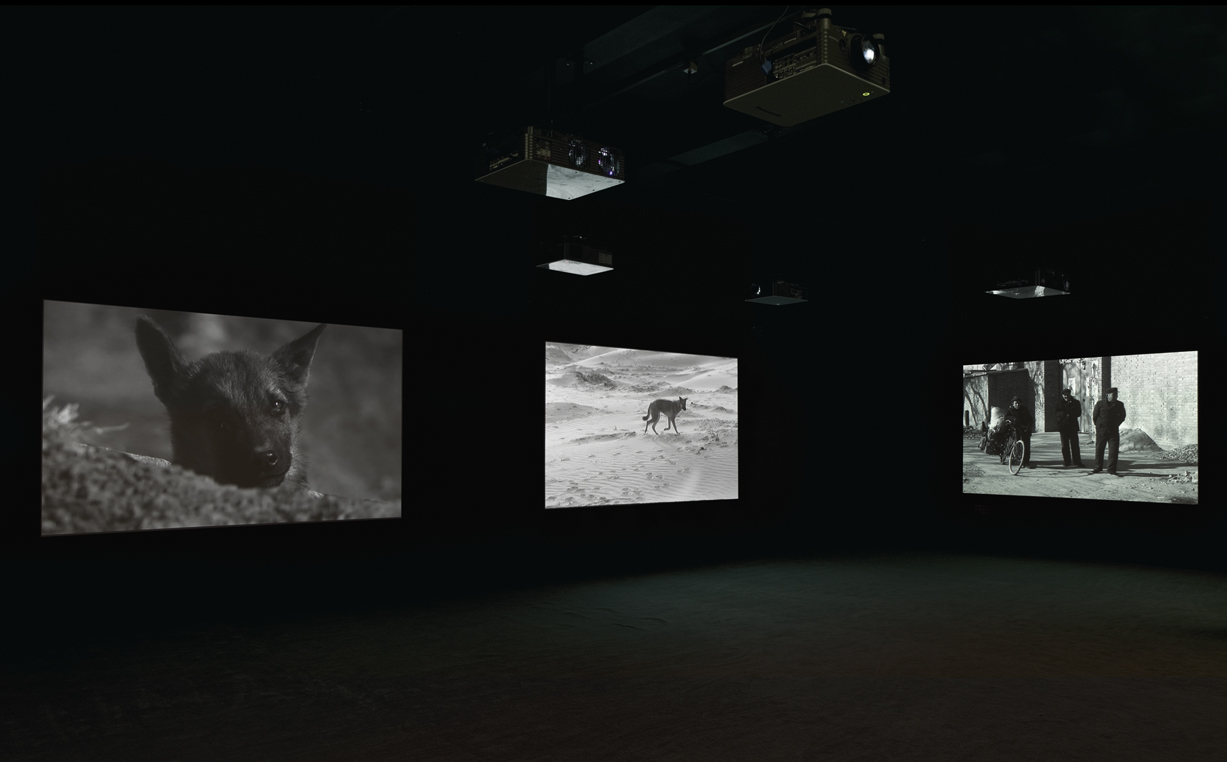
Yang Fudong (Chinese, b. 1971) 'East of Que Village' 2007 (installation view)


Yang Fudong (Chinese, b. 1971)
East of Que Village (installation view)
2007
Six channel video installation, b&w, with sound
20 minutes 50 seconds
Installation view Marian Goodman Gallery, New York, 2009
Courtesy of the artist; Marian Goodman Gallery, New York / Paris; ShanghART gallery, Shanghai


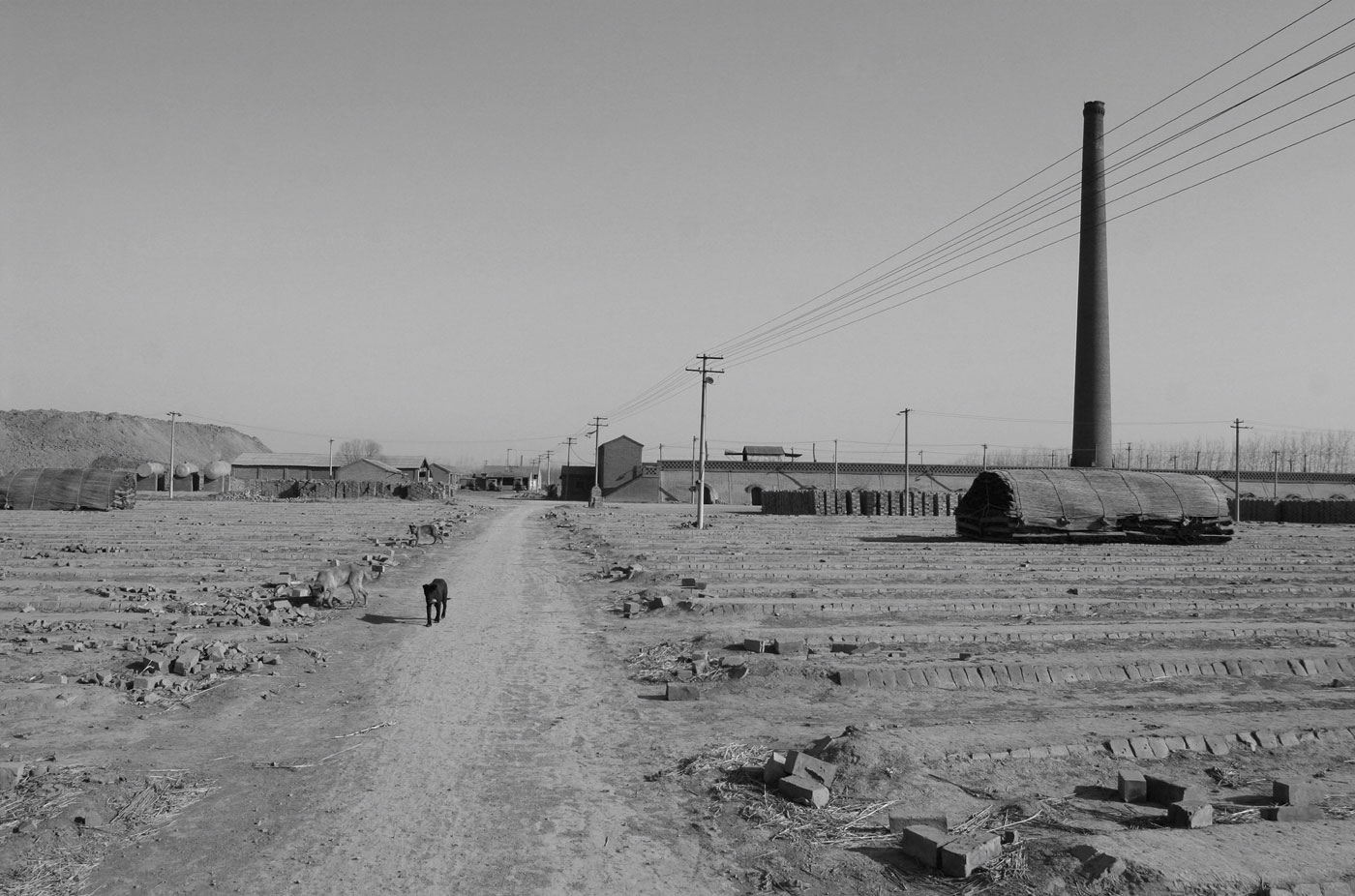
Yang Fudong (Chinese, b. 1971) 'East of Que Village' 2007 (still)


Yang Fudong (Chinese, b. 1971)
East of Que Village (still)
2007
Six channel video installation, b&w, with sound
20 minutes 50 seconds
Courtesy of the artist, Marian Goodman Gallery, New York / Paris, ShanghART gallery, Shanghai


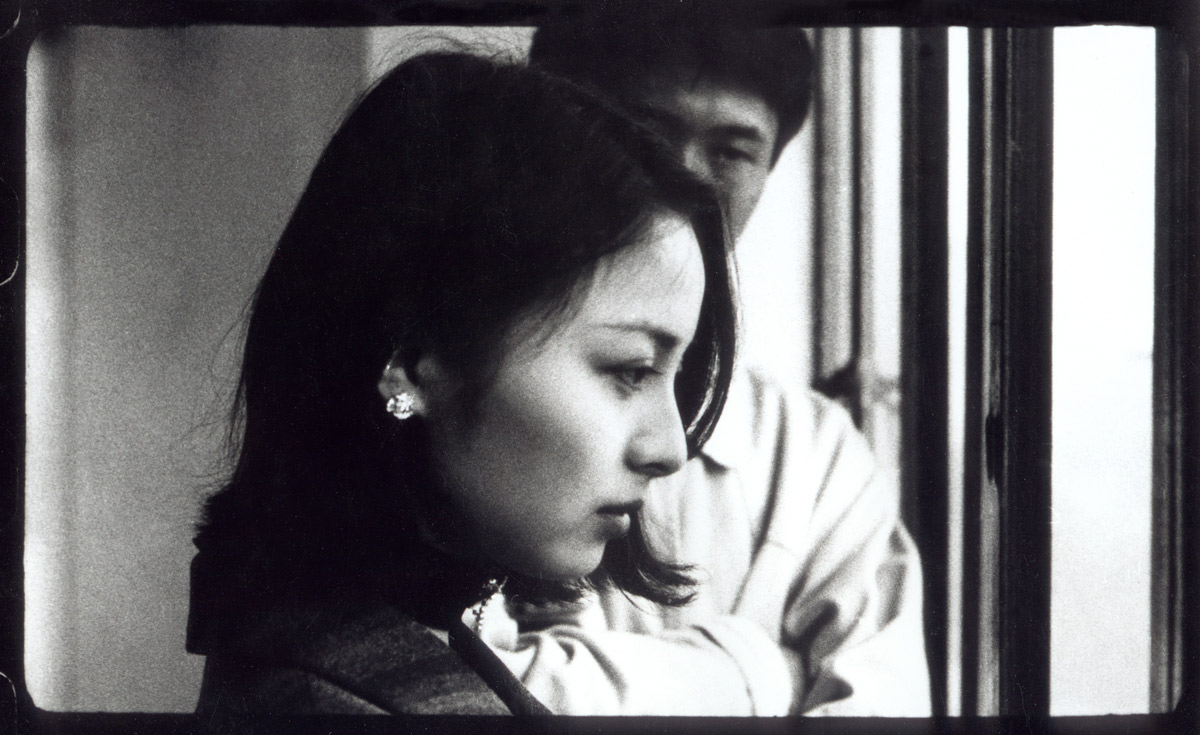
Yang Fudong (born 1971 in Beijing, lives and works in Shanghai) is one of the most important figures of China’s contemporary art scene and independent cinema movement. His films and photographic work, often rooted in traditional Chinese painting, examine tensions between urban and rural, history and the present, worldliness and intellectualism. Their a-temporal and dreamlike quality, long and suspended sequences, dividing narratives, as well as multiple relationships and story lines reflect the conundrums of idealism and ideology of a new generation. At the same time, the works address the ideals and anxieties of young people who are struggling to find their place in the fast-paced changes of present-day China. Estranged Paradise. Works 1993-2013, curated by Beatrix Ruf and Philippe Pirotte, is Yang Fudong’s first major institutional survey exhibition in Europe, presenting film, installation as well as photography from the late 1990s until today, highlighting the formal aspects of the construction of cinema in the artist’s oeuvre and its resonance in Film Noir aesthetics. Following the exhibition in Zurich, the show will travel to the UC Berkeley Art Museum and Pacific Film Archive (21 August – 1 December 2013).

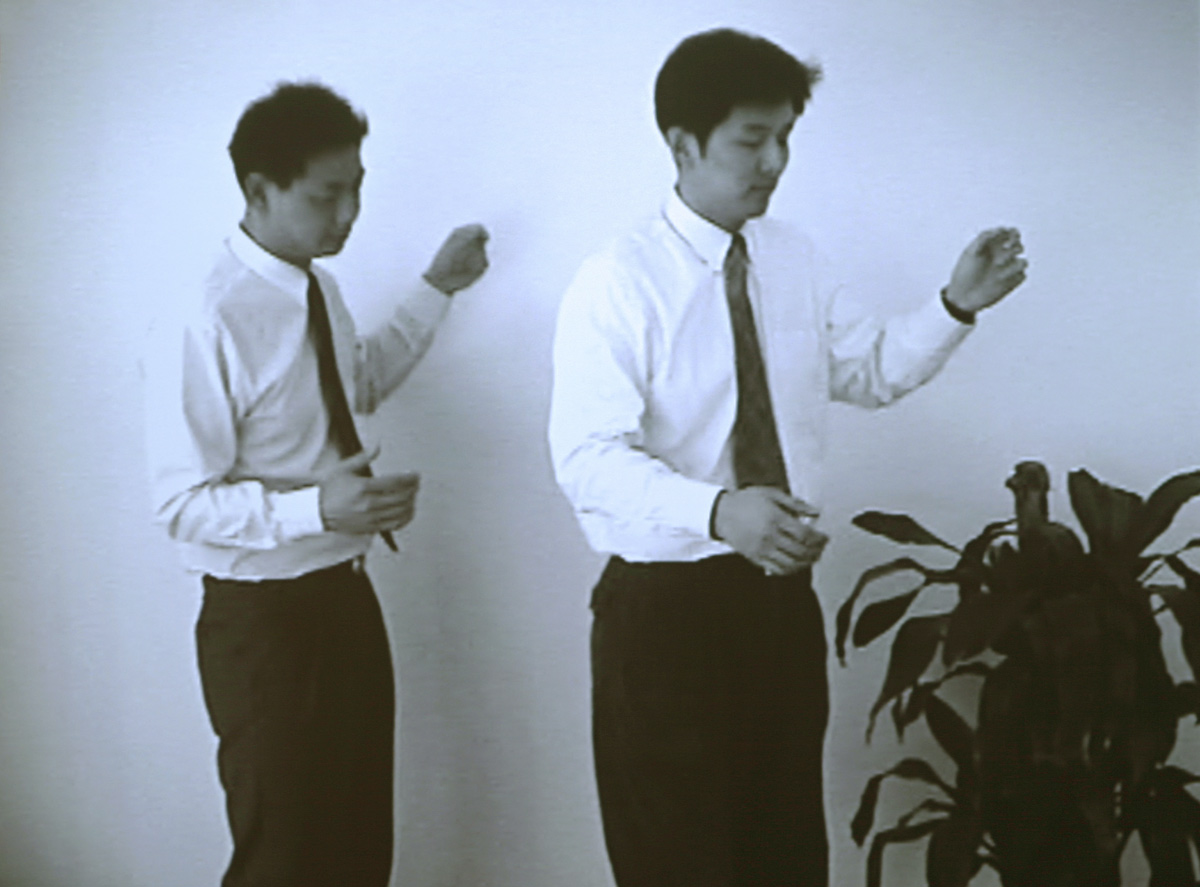
Yang came to the attention of the Western art world in 2002, when he premiered his film An Estranged Paradise (1997-2002) at Documenta XI. Beginning with a meditation on the composition of space in Chinese painting, the film traces the spiritual instability of Zhuzi, a young intellectual in the legendary city of Hangzhou. The film reflects the artist’s fascination with international cinema, referencing such works as Jim Jarmusch’s Stranger Than Paradise (1984) and Jean-Luc Godard’s À bout de souffle (1960), as well as Shanghai films from the 1920s and 1930s, a place and time in which China was strongly influenced by the West. Using camera, lighting and cinematic space to outline the landscape of Chinese modernity, Yang reveals his love of black and white cinematography. Likewise, the contradictions and discontents raised by a progressive modernity as characteristic themes of Film Noir play a significant role in the artist’s work: an invocation of the past and anxiety about the future, and tensions between indifference and engagement, remembrance and forgetting. Films that embody Film Noir concepts include the single channel videos Backyard – Hey, Sun is Rising! (2001), in which four men engage in a series of simultaneous but isolated rituals: smoking, massage, military exercises in a park; City Light (2000), which functions as a noir detective story with elements of slapstick; Honey (2003) then again, a stylistic reference to spy films and all their clichés, invokes ambiguity of seduction and deceit as the earmark of espionage, but also a sense of heightened anxiety and alienation, reflecting paranoia, possibly a metaphor for an ambivalent situation in contemporary China. More recently, since Yang doesn’t direct his actors anymore, they seem to inhabit plot-less noirs, reflecting the genre more in stylistic ways, as low-key lighting, exaggerated contrasts, a dramatically shadowed lighting, an eroticist style and a psychologically expressive approach to visual composition, or mise-en-sène.

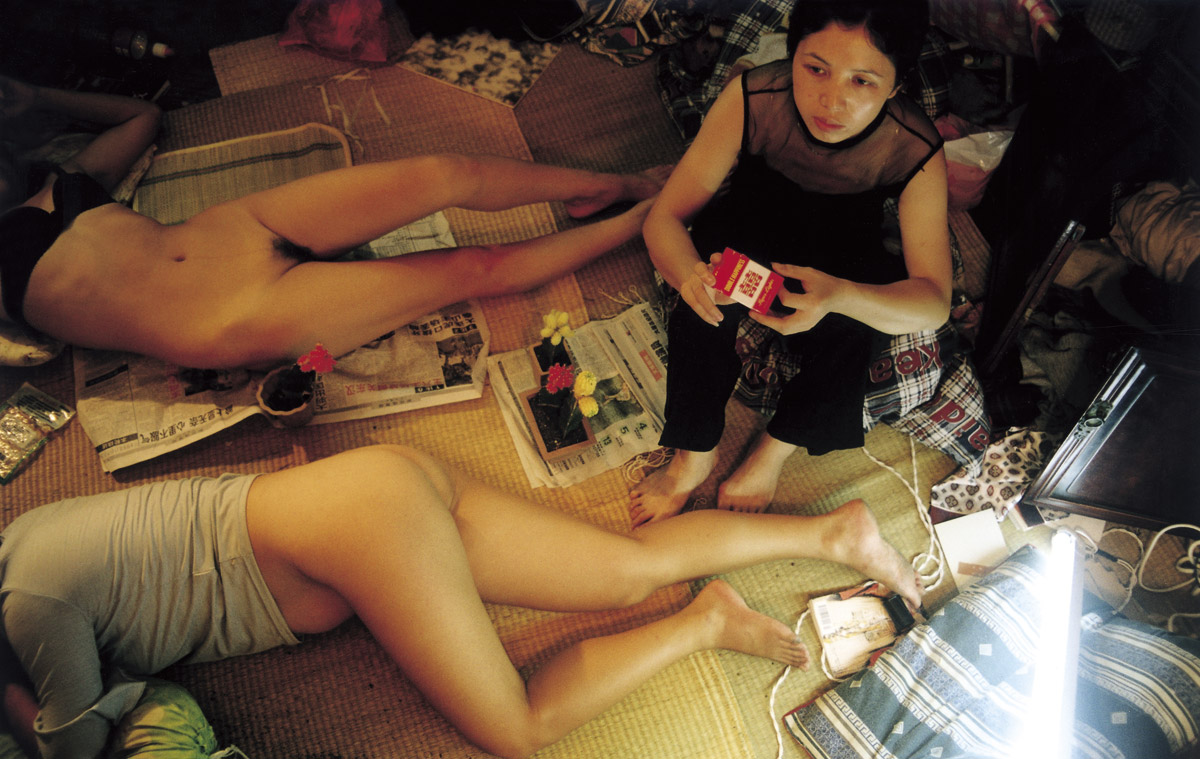
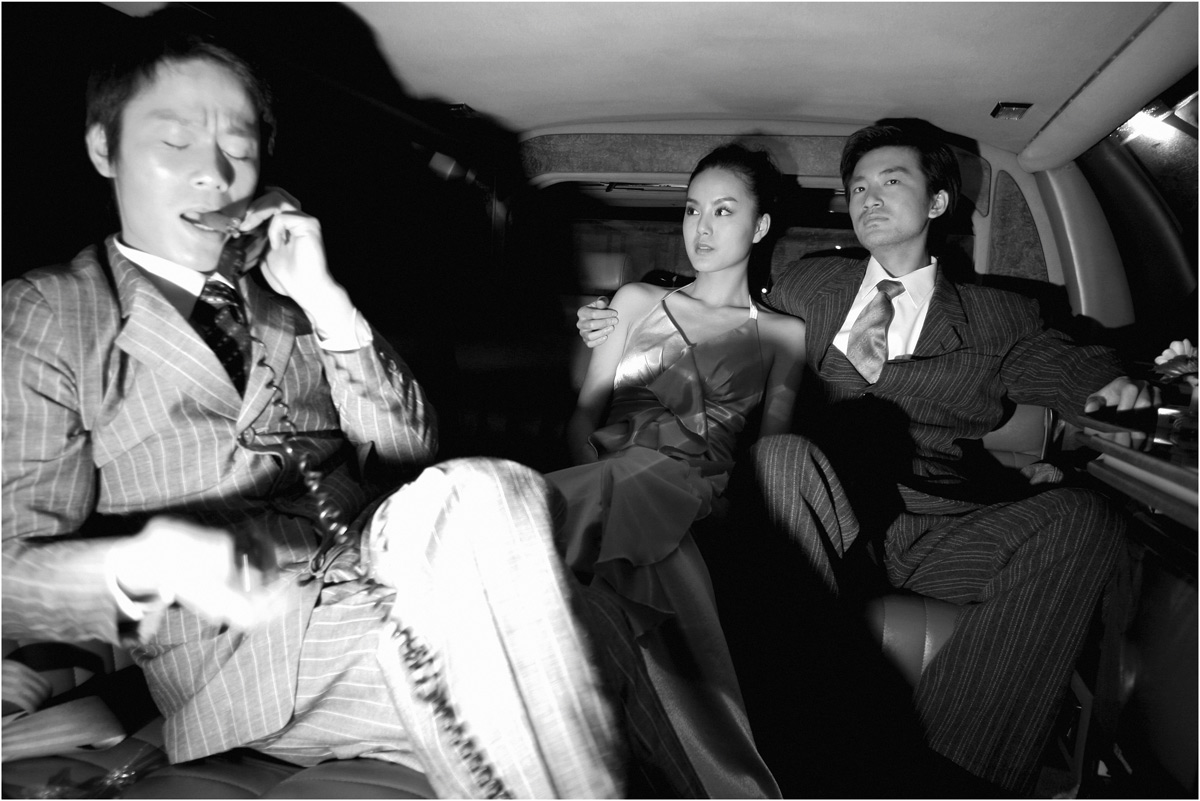
The protagonists of Yang’s works are mostly his contemporaries, young people between the ages of twenty and forty, who have spent most of their lives in a society in transformation. The ideals and anxieties of a new generation, the dignity of the individual in a rapidly developing society still in the process of adjusting to the material conditions of the constantly changing times, are recurring themes. This is most obvious in photographic series like Don’t worry, it will be better (2000) or Mrs. Huang at M last night (2006), both depict a fancy lady and her courtiers, in a hotel room or at a night out, seemingly enjoying the trophies of their material success. The sly glances of the protagonists, leave the audience in a state of uncertainty regarding the actual events and the storyline.

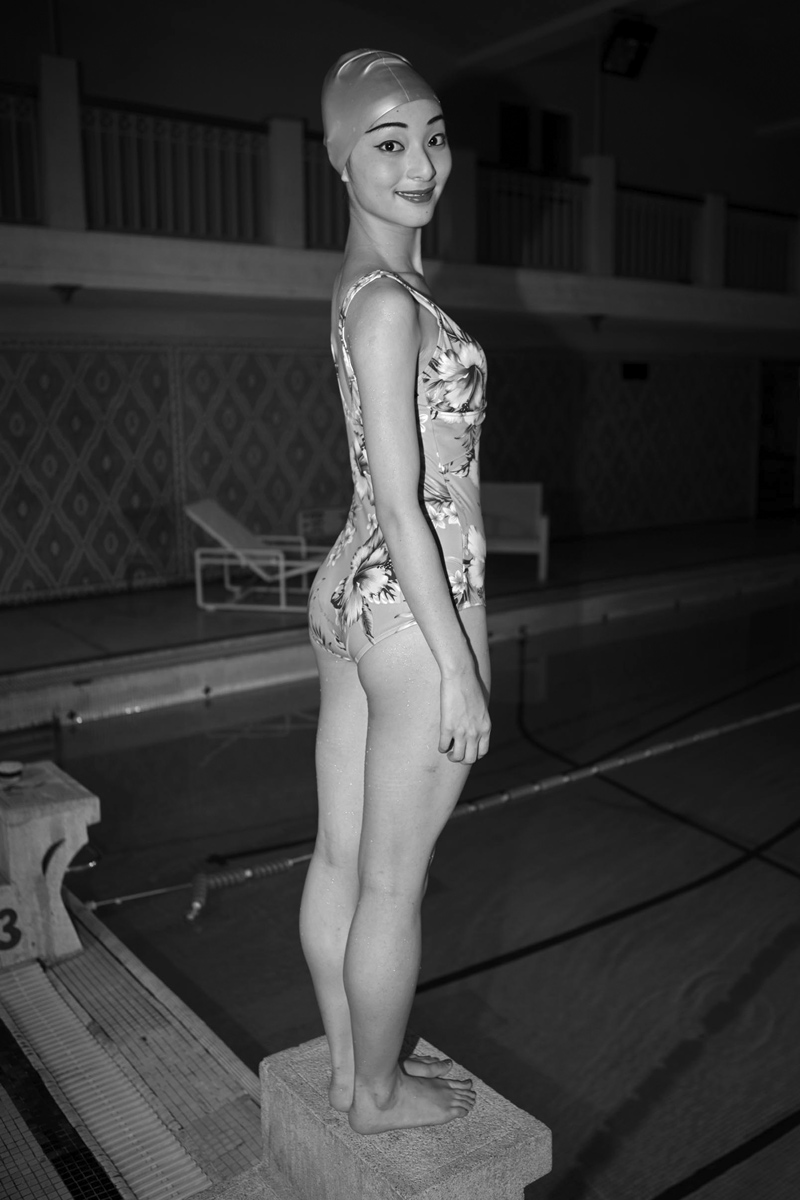
In other works some scenes and settings visually recall the literati paintings of ancient China, made by artists and intellectuals pursuing spiritual freedom living in seclusion. The Evergreen Nature of Romantic Stories (2000), a series of photographs in which young men and women stare at miniature landscapes (constructed landscapes mimicking natural scenery of rocks, hills and rivers), relocates the importance of reflection in traditional Chinese gardens as a metaphor for personal orientation and identity, in the domesticity of modern apartments. In the early video-installation Tonight Moon (2000), men in swimsuits and men in costumes mingle in an Eastern botanical garden. Multiple story lines develop and diverge on small monitors and a large screen, conveying a sense of ambiguity. International Hotel (2010), the recent series of black and white photographs of attractive women in bathing suits dipping into a pool at an Art Deco Hotel, invokes the sentimental and touches upon questions about feminine interiority, imbued with melancholy connotations taking the form of moderation and accommodation.

With the film installation East of Que Village (2007), Yang diverges from the urbanity of his other work, delivering a highly personal film that focuses on the sense of isolation and loss increasingly present in China’s contemporary society as communities are scattered, traditional rural villages dissolved, and the fight for survival takes precedence. The imagery is of a desolate and hostile landscape, the host to a group of wild dogs fighting a merciless life-and-death struggle for survival, with only a sporadic presence of human life and social values.

More and more in recent works, Yang shifts his attention toward a reflection on film production. The Fifth Night (Rehearsal) (2010) is an alternative edition of his seven-screen video installation The Fifth Night (with each screen running ten minutes and thirty-seven seconds, the exact length of a reel of film), including four full takes as well as an earlier rehearsal. The artist used different lenses for each camera, but films everything at the same moment. Yang calls this type of installation a “spatial film” or “multiple views” film, and he compares the technique to a contemporary form of the Chinese hand scroll. We see the itinerant youths who often occupy his films, with their pensive, inhibited expressions. Each screen features one solitary “absolute” protagonist; together they compose a series of distinct and mutually unbeknownst worlds. One screen’s lead character, in turn, becomes another’s extra. The sets and props are Yang’s most elaborate to date, with stages, spiral staircases, and alleyways merging into one. The enclosed courtyard in which the piece was shot comes to resemble a maze, pushing the concept of the narrative spatial possibilities of cinema. This bold experiment, which takes an open, outdoor space as an interior, breaks down a boundary that runs throughout Yang’s other films, which have been shot entirely inside or entirely outside. The “rehearsal” version captures the video output from seven monitors that were connected to seven film cameras and ends in “failure”, as one witnesses that one of the cameras breaks, leaving only six channels, assuming the notion that film is both a medium and a site. Additionally, there are three screens of photo documentation and a documentary. Yang coined it a “preview film” because of its raw-image quality, which included viewfinder frames, contradicting the very slick and refined results of the known version. In this instance, Yang transcended his traditional working process of shooting-editing-screening, and pushed further his theory that “anything which has been filmed can be shown. I found that what attracts me the most, and becomes my material, is the process of filmmaking itself.”

Press release from the Kunsthalle Zürich website


Yang Fudong (Chinese, b. 1971) 'Shenjia alley. Fairy (1)' 2000


Yang Fudong (Chinese, b. 1971)
Shenjia alley. Fairy (1)
2000
C-print
96 x 150cm
Courtesy of the artist; Marian Goodman Gallery, New York / Paris; ShanghART gallery, Shanghai


Yang Fudong (Chinese, b. 1971) 'Mrs. Huang at M last Night (8)' 2006


Yang Fudong (Chinese, b. 1971)
Mrs. Huang at M last Night (8)
2006
C-print, b&w
120 x 180cm
Courtesy of the artist; Marian Goodman Gallery, New York / Paris; ShanghART gallery, Shanghai


Yang Fudong (Chinese, b. 1971) 'An Estranged Paradise (mo sheng tian tang)' 1997-2002 (still)


Yang Fudong (Chinese, b. 1971)
An Estranged Paradise (mo sheng tian tang) (still)
1997-2002
Five-channel video (35 mm b&w film transferred to DVD), music by Jin Wang
76 minutes
Courtesy of the artist, Marian Goodman Gallery, New York / Paris, ShanghART gallery, Shanghai


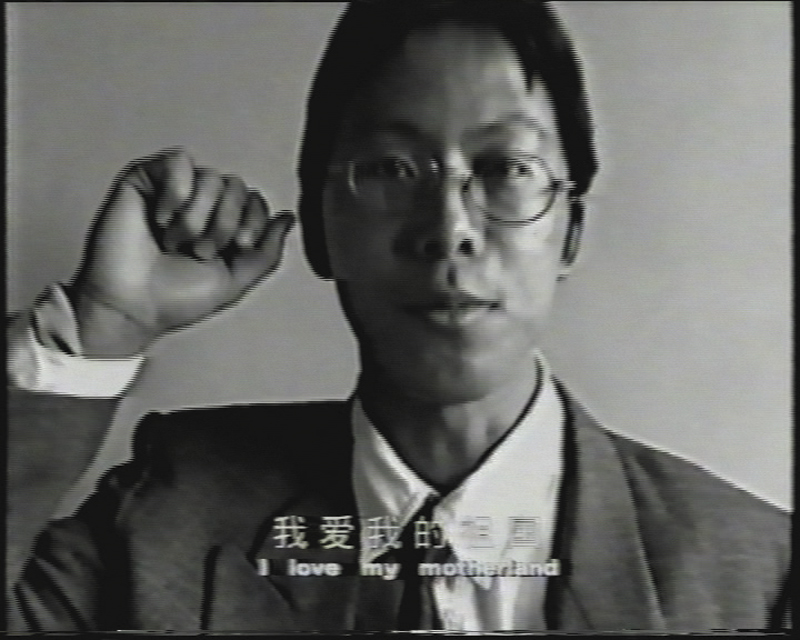
Yang Fudong (Chinese, b. 1971) 'I love my motherland (wo ai wo de zhu guo)' 1999 (still)


Yang Fudong (Chinese, b. 1971)
I love my motherland (wo ai wo de zhu guo) (still)
1999
5-channel b&w video-installation
12 minutes
Courtesy of the artist; Marian Goodman Gallery, New York / Paris; ShanghART gallery, Shanghai


Yang Fudong (Chinese, b. 1971) 'City Light (Cheng shi Zhi guang)' 2000 (still)


Yang Fudong (Chinese, b. 1971)
City Light (Cheng shi Zhi guang) (still)
2000
Single-channel video, colour, with sound
6 minutes
Courtesy of the artist, Marian Goodman Gallery, New York / Paris, ShanghART gallery, Shanghai


Yang Fudong (Chinese, b. 1971) 'International Hotel (1)' 2010


Yang Fudong (Chinese, b. 1971)
International Hotel (1)
2010
Inkjet print, b&w
180 x 120cm
Courtesy of the artist; Marian Goodman Gallery, New York / Paris; ShanghART gallery, Shanghai


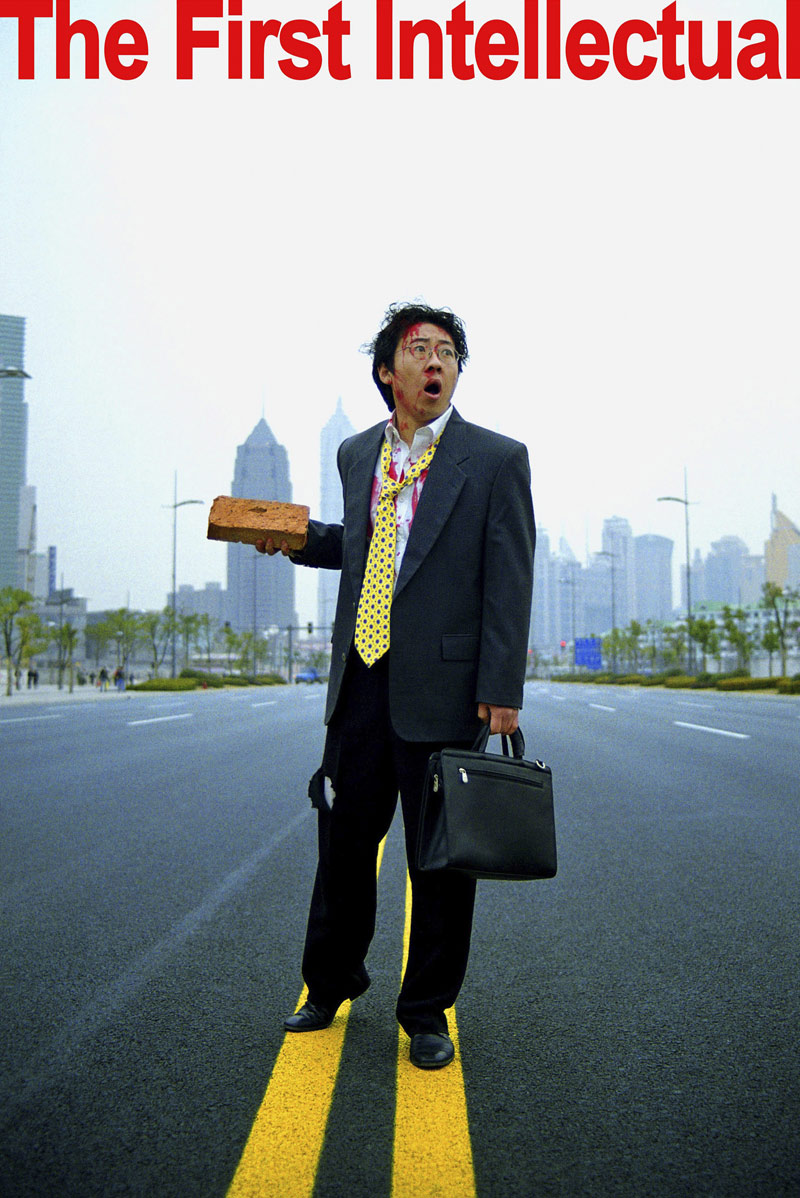
Yang Fudong (Chinese, b. 1971) 'The First Intellectual' 2000


Yang Fudong (Chinese, b. 1971)
The First Intellectual
2000
C-print
193 x 127cm
Courtesy of the artist, Marian Goodman Gallery, New York / Paris, ShanghART gallery, Shanghai


Kunsthalle Zürich
Limmatstrasse 270
CH-8005 Zürich
Phone: +41 (0) 44 272 15 15

Opening hours:
Tuesday – Sunday 11am – 6pm
Monday closed

Kunsthalle Zürich website

LIKE ART BLART ON FACEBOOK

Back to top

Exhibition: ‘Concrete – Photography and Architecture’ at Fotomuseum Winterthur, Zurich

Exhibition dates: 2nd March – 20th May 2013


Anonymous photographer.
 'Hardstrasse with Hardbrücke in construction' 1972


Anonymous photographer
Hardstrasse with Hardbrücke in construction
1972
Gelatin silver print
8.8 x 12.6cm
Baugeschichtliches Archiv der Stadt Zürich


When creating this archive, so much of my time is spent cleaning up clearly inadequate media images, an example of which can be seen below. I have become very adept at this process and my thoughts are this: would you want to be the artist whose work is displayed to the public in a remarkably decomposed manner, one not up to a standard of any artist who cares about their prints and reputation? I certainly would not. It is a wonder to me that museums and galleries spend thousands of dollars staging exhibitions and producing costly catalogues and yet cannot spend a tiny proportion of time, money and care on their media images to promote artist and said exhibition. I had to spend a lot of time on over half of these images to bring them up to presentable standard.

Having said that, there are some cracking photographs in this posting. The Sugimoto is sublime, Walker Evans so muscular, Lucien Hervé a masterpiece of light and texture, and Moriz Nähr a symphony of light and tone, to name but a few. I hope you enjoy all the effort it takes to bring these images to you.

Dr Marcus Bunyan


Many thankx to the Fotomuseum Winterthur, Zurich for allowing me to publish the photographs in the posting. Please click on the photographs for a larger version of the image.


Michael Wesely (German, b. 1963)
 'Canadian Embassy, Leipziger Platz, Berlin (5.2.2003 – 28.4.2005)' 
C-print


Michael Wesely (German, b. 1963)
Canadian Embassy, Leipziger Platz, Berlin (5.2.2003 – 28.4.2005)

C-print
125 x 175cm
Galerie Fahnemann, Berlin
© Michael Wesely/Courtesy Galerie Fahnemann


Michael Wesely (born 1963 in Munich) is a German art photographer who is best known for his photos of cities, buildings, landscapes, and still lives of flowers taken with a special ultra-long exposure technique. …

Wesely’s works deal with the subject of time and the change that takes place over time. Due to the extremely long exposure and the special bulb he uses, those elements that move the least dominate his images, while those moving will later be seen as transparent figures or the outlines of newly erect buildings overlapping. The pictures “reveal the passage of time by showing the changing skyline, the skeletons of cranes. the rise of new buildings, and the disappearance of others. Beams of sunlight, the residue of the ever-changing positions (tithe earth and sun, are also evident, like a palimpsest of seasons”. Everything that ever happened on the scene during exposure (during weeks, months, or even up to two or three years) will be seen in one single picture. Wesely’s photographs have been described as a metaphor on the change of Berlin after 1989 because “at once strikingly energetic and ghostly and uninhabited. This formal paradox aptly describes Berlin, which had only been unified for ten years at the time the images were taken. In that way, the photographs offer a larger commentary on time’s passage.”

Text from the Wikipedia website


William Henry Fox Talbot (English, 1800-1877) 'The Bridge of Sighs, St. John’s College, 
Cambridge' 1845


William Henry Fox Talbot (English, 1800-1877)
The Bridge of Sighs, St. John’s College, 
Cambridge
1845
Salt print from calotype negative
16.4 x 20.6cm
Museum Folkwang Essen


Charles Marville (French, 1813-1879) '24, Rue Bièvre, Paris' 1865-1869


Charles Marville (French, 1813-1879)
24, Rue Bièvre, Paris
1865-1869
Albumin print
27.4 x 36.6cm
Collection Thomas Walther


Lucien Hervé (Hungarian, 1910-2007) 'Le Corbusier: Façade of the Secretariat Building, Chandigarh, 1961' 1961


Lucien Hervé (Hungarian, 1910-2007)
Le Corbusier: Façade of the Secretariat Building, Chandigarh, 1961
1961
Gelatin silver print
25.5 x 25.4cm
Canadian Centre for Architecture, Montréal
© Estate Lucien Hervé


Lucien Hervé is considered to be one of the great architectural photographers of the 20th century. He collaborated with Le Corbusier from 1949 until the architect’s death in 1965, developing a great rapport. Le Corbusier even once pronounced Hervé to have ‘the soul of an architect.’ In 1949, Hervé travelled from Paris to Marseille to see Le Corbusier’s recently designed housing complex, Unité d’Habitation. Awed by the groundbreaking modern design, Hervé took 650 photographs of it in a single day and it was from then onwards they worked closely with one another.

Through light and shadow, he defined the dialogue between substance and form. By delineating a strong contrast between the light and shadows in his subject as well as placing emphasis on building details, Hervé was able to communicate the depth of a room, the surface of a wall, or the strength of a building’s framework.

Born 1910 in Hungary, Hervé (born László Elkán) moved to Paris at the age of 19 and earned French citizenship in 1938. During World War II, he was captured by the Germans, escaped and became a member of the French Resistance under the name of Lucien Hervé, which he kept thereafter. After the war he left politics behind to write for art journals. It was one of his editors, in fact, who suggested he visit Unité d’Habitation. Hervé began experimenting with photography, over or underexposing images and often severely cropping them to attain unusual compositions following the work of avant-garde artists such as Piet Mondrian, László Moholy-Nagy, and Alexander Rodchenko.

Text from the Michael Hoppen Gallery website


F. C. Gundlach (German, 1926-2021) '"Op Art" bathing suit by Sinz, Vouliagmeni/Greece' 1966


F. C. Gundlach (German, 1926-2021)
“Op Art” bathing suit by Sinz, Vouliagmeni/Greece
1966
Gelatin silver print
50 x 50cm
F.C. Gundlach, Hamburg
© F.C. Gundlach


Laurence Bonvin (Swiss, b. 1967)
 'Blikkiesdorp, Cape Town, South Africa' 2009


Laurence Bonvin (Swiss, b. 1967)
Blikkiesdorp, Cape Town, South Africa
2009
Inkjet print
40 x 50cm
Courtesy the artist
© Laurence Bonvin


Laurence Bonvin (born 1967 in Sierre) is a Swiss photographer and director living between Berlin, Valais and Lisbon. Her documentary approach has for many years focused on the phenomena of transformation in urban and natural environments.


Architectures and cities are both volumes and images alike. We experience them directly, physically and sensually, as well as through pictures. Pictures speak a language of their own. They offer a discourse that is quite unlike the physical experience of architecture. They transform volume into surface; distil matter into forms and signs – rarely, if ever, leaving it as it is. That is probably why so many architects try to get involved in determining the image of their buildings. Concrete – Photography and Architecture seeks to approach the singular and complex relationship between architecture and photography in light-hearted, narrative and dialectical ways. The exhibition explores issues of history and ideology, as well as the specifics of form and material, in the photographic image.

The visual appeal of destroyed or dilapidated buildings is also addressed, as are their powerful demonstrations of power and exclusivity, fragility and beauty. To what extent does photography influence not only the way architecture is perceived, but also the way it is designed? How does an image bring architecture to life, and at what point does it become uncanny? How do settlements develop into cities? Or, in sociological terms: how do work and life interconnect differently in, say, Zurich and Winterthur, as opposed to, say, Calcutta? And how do skyscrapers and living spaces translate into the flat, two-dimensional world of photography?

Concrete – Photography and Architecture is not, however, chronologically arranged. Instead, it is based on compelling positions, counterpositions and thematic fields that connect various concrete, fundamental and historical aspects. Alongside everyday buildings and prestigious architecture, structured by horizontal and vertical axes, alongside homes and houses, utopian fantasies, design and reality, an important aspect of the exhibition is the compelling appeal of architectural decay due to the passage of time, through both natural and deliberate destruction. It is almost as though photography were providing a moral reminder even such magnificence and presence, whether hewn in stone or cast in concrete, has its weaknesses too.

Architecture has always been an important platform for the frequently heated discussion of ideas and views, zeitgeist and weltanschauung, everyday life and aesthetics. Architecture is the bold materialisation of private and public visions, functionality and avant-garde art alike. It is, as Slavoj Žižek puts it, ideology in stone. Photography and architecture both play an undisputed role in our everyday lives. They confront us on a daily basis, often without our even noticing, and they influence how we think, act and live in subliminal and lasting ways. Concrete – Photography and Architecture provides visual answers to the question of what it is that makes up the intimate yet complex relationship between architecture and photography, architect and photographer.

The exhibition presents more than 400 photographs and groups of works from the 19th, 20th and 21st centuries, including William Henry Fox Talbot, Domenico Bresolin and Charles Marville as well as Germaine Krull, Lucia Moholy and Julius Shulman, and spanning an arc to contemporary works by Georg Aerni, Iwan Baan, Luisa Lambri and Hiroshi Sugimoto. Projects such as the long-term observations of Schlieren photography or Wolfgang Scheppe’s Migropolis show how the art of photography is playing an increasingly important role as an instrument of research and knowledge. The exhibition is accompanied by a lavishly illustrated book published by Scheidegger & Spiess, with some 300 colour and black-and-white pictures, essays by Jochen Becker, Johannes Binotto, Verena Huber Nievergelt, Michael Jakob, Nicoletta Leonardi, Lorenzo Rocha, Caspar Schärer, Aveek Sen and Urs Stahel as well as a conversation with Annette Gigon, Meret Ernst and Armin Linke.

Press release from the Fotomuseum Winterthur website


Guido Guidi. '#1176 01 29 1997 3:30PM Looking Southeast' From 'Carlo Scarpa's Tomba Brion' 
1997


Guido Guidi (Italian, b. 1941)
#1176 01 29 1997 3:30PM Looking Southeast
From Carlo Scarpa’s Tomba Brion
1997
C print
19.5 x 24.6cm
Courtesy the artist
© Guido Guidi


Guido Guidi (born January 1, 1941) is an Italian photographer. His work, spanning over more than 40 years, has focused in particular on rural and suburban geographies in Italy and Europe. He photographs places that are normally overlooked. His published works include In Between Cities, Guardando a Est, A New Map of Italy and Veramente.

Guidi began experimenting in the late 1960s with pseudo-documentary images that interrogated photography’s objectivity. Influenced by neorealist film and conceptual art, in the 1970s he began investigating Italy’s man-altered landscape. Working in marginal and decayed spaces with an 8×10 large format camera, he creates dense sequences intended as meditations on the meaning of landscape, photography, and seeing. Later he investigated the life and death of modernist architecture, with projects on Scarpa, van der Rohe, and Le Corbusier. Photography for Guidi is something autobiographical. It is synonymous with inhabiting, and the camera is the instrument that allows him to observe, appropriate and collect what lies beyond his doorstep.

“Guidi was a leading voice in the resurgence of Italian photography of the 1970s and 1980s”. “Since then, working mostly in colour with a large-format camera, he has patiently returned to the same places – his native Romagna and the area around Venice – documenting the shift from a rural to a post-industrial landscape.”

Text from the Wikipedia website


Tobias Zielony (German, b. 1973)
 'Le Vele di Scampia' 2009


Tobias Zielony (German, b. 1973)
Le Vele di Scampia
2009
Blu Ray photoanimation
8.57 min
Courtesy Koch Oberhuber Wolff, Berlin
© Tobias Zielony/ KOW


Hiroshi Sugimoto (Japanese, b. 1948) 'Seagram Building, New York City' 1997


Hiroshi Sugimoto (Japanese, b. 1948)
Seagram Building, New York City
1997
Gelatin silver print
58.4 x 47cm
Canadian Centre for Architecture, Montreal
© Hiroshi Sugimoto/Courtesy of Gallery Koyanagi Tokyo


Aage Strüwing (Danish, 1913-1989) 'Arne Jacobsen: Rødovre Town Hall' 1955


Aage Strüwing (Danish, 1913-1989)
Arne Jacobsen: Rødovre Town Hall
1955
Gelatin silver print
23.7 x 17cm
EPFL Archives de la construction moderne, Lausanne
© Estate Strüwing


Moriz Nähr (Austrian, 1859-1945) 
'Stiegenhaus im Haus Stonborough-Wittgenstein' 1928 (composite cleaned)


Moriz Nähr (Austrian, 1859-1945)

Stiegenhaus im Haus Stonborough-Wittgenstein [Staircase in the house Stonborough-Wittgenstein] (composite cleaned)
1928


Moriz Nähr (Austrian, 1859-1945) '
Stiegenhaus im Haus Stonborough-Wittgenstein' 1928


Moriz Nähr (Austrian, 1859-1945)

Stiegenhaus im Haus Stonborough-Wittgenstein (Staircase in the house Stonborough-Wittgenstein)
1928
Silbergelatine Abzug
13.8 x 8.9cm
Albertina, Wien
© Estate Moriz Nähr


Moriz Nähr (1859-1945) is one of the most important innovators of photography in “Vienna around 1900”. His photographic oeuvre is mentioned today in the same breath as that of the famous Parisian photographer Eugène Atget. Nähr enjoyed a life-long artist’s friendship with Gustav Klimt and was connected with the artist through a special network of eminent personalities from the arts, culture and philosophy. Numerous portrait photographs of Klimt emphatically document the two artists’ bond. Klimt was also inspired by Nähr’s photographic motifs, as illustrated by the conformities in the photographer’s pictures and Klimt’s painting Beech Forest I created in 1902. The legends surrounding Moriz Nähr are based on the one hand on his close ties with Gustav Klimt and the Vienna Secession and on the other hand on his connections with the family of Ludwig Wittgenstein and the imperial Habsburg family, especially with the heir to the throne Archduke Franz Ferdinand, who appointed him court photographer in 1908. Owing to his work as a freelance photographer as well as to his various commissions, he has left behind a multi-faceted oeuvre comprising not only landscape-, architecture-, and portrait photography but also street photography (Scenes from the Naschmarkt, 1918) as well as photographs documenting exhibitions (Vienna Secession).

Anonymous. “Moriz Nähr: Photographer of Viennese Modernism,” on the Leopold Museum website 2018 [Online] Cited 14/07/2024


Haus Wittgenstein, also known as the Stonborough House and the Wittgenstein House) is a house in the modernist style designed and built on the Kundmanngasse, Vienna, by the Austrian architect Paul Engelmannand the Austrian philosopher Ludwig Wittgenstein.

In November 1925, Wittgenstein’s sister Margaret Stonborough-Wittgenstein commissioned Engelmann to design and build a large townhouse. Margaret also invited her brother to help with the design in part to distract him from an incident that had happened while he had been a primary school teacher: he had hit a boy for getting an answer wrong and the boy had collapsed. The architect was Paul Engelmann, someone Wittgenstein had come to know while training to be an Artillery Officer in Olmutz. Engelmann designed a spare modernist house after the style of Adolf Loos: three rectangular blocks. Wittgenstein showed a great interest in the project and in Engelmann’s plans and poured himself into the project for over two years. He focused on the windows, doors, door knobs, and radiators, demanding that every detail be exactly as he specified, to the point where everyone involved in the project was exhausted. One of the architects, Jacques Groag, wrote in a letter: “I come home very depressed with a headache after a day of the worst quarrels, disputes, vexations, and this happens often. Mostly between me and Wittgenstein.” When the house was nearly finished he had a ceiling raised 30mm so the room had the exact proportions he wanted.

Waugh writes that Margaret eventually refused to pay for the changes Wittgenstein kept demanding, so he bought himself a lottery ticket in the hope of paying for things that way. It took him a year to design the door handles, and another to design the radiators. Each window was covered by a metal screen that weighed 150 kg, moved by a pulley Wittgenstein designed. Bernhard Leitner, author of The Architecture of Ludwig Wittgenstein, said of it that there is barely anything comparable in the history of interior design: “It is as ingenious as it is expensive. A metal curtain that could be lowered into the floor.”

The house was finished by December 1928, and the family gathered there that Christmas to celebrate its completion. Describing the work, Ludwig’s eldest sister, Hermine, wrote: “Even though I admired the house very much, I always knew that I neither wanted to, nor could, live in it myself. It seemed indeed to be much more a dwelling for the gods than for a small mortal like me”. Paul Wittgenstein, Ludwig’s brother, disliked it, and when Margaret’s nephew came to sell it, he reportedly did so on the grounds that she had never liked it either. Wittgenstein himself found the house too austere, saying it had good manners, but no primordial life or health. He nevertheless seemed committed to the idea of becoming an architect: the Vienna City Directory listed him as “Dr Ludwig Wittgenstein, occupation: architect” between 1933 and 1938.

After World War II, the house became a barracks and stables for Russian soldiers. It was owned by Thomas Stonborough, son of Margaret until 1968 when it was sold to a developer for demolition. For two years after this the house was under threat of demolition. The Vienna Landmark Commission saved it – after a campaign by Bernhard Leitner – and made it a national monument in 1971, and since 1975 it has housed the cultural department of the Bulgarian Embassy.

Text from the Wikipedia website


Lala Aufsberg (German, 1907-1976) 'Cathedral of Light' c. 1937


Lala Aufsberg (German, 1907-1976)
Cathedral of Light
c. 1937
Gelatin silver print
24 x 18cm
Town Archive Nuremberg
© Photo Marburg


Lala Aufsberg (actually, Ida Louise Aufsberg, born 26 February 1907 in Sonthofen, May 18, 1976) was a well-known art photographer. After attending primary school and six years of school for Higher daughters in Immenstadt she began training for the 1932 photo dealer in Oberstdorf. After completion of the training Lala Aufsberg moved to Nuremberg, where she worked in the photographers’ studios of Seitz and Rosemary. In 1931 she joined the photo club of friends of photography in Nuremberg.

From April 1938 Lala Aufsberg attended the State School of Applied Arts and Crafts in Weimar, Department Lichtbildnerei at Walter Hege. In July 1938, she passed the exam for the master photographer’s craft, and in the same year returned to Sonthofen and opened a photographic studio. In the years 1937 and 1938 she documented the Nazi Party rallies in Nuremberg (see above photograph). She received her first artistic job in the years 1941-1942, in which she photographed the murals in churches and monasteries in Carinthia and Styria. Owned by the University of Marburg “German documentation center for art history” – Bildarchiv Foto Marburg (listed in UNESCO Archives Portal) acquired 1976/1977 and 1996, the Lala-Aufsberg archive with about 46,000 art history, black and white negatives in sizes 6 x 6 and 9 x 12 and 103,000 photos.


Walker Evans (American, 1903-1975) 
'Chrysler Building under construction, New York' 1929


Walker Evans (American, 1903-1975)

Chrysler Building under construction, New York
1929
Gelatin silver print
16.8 x 8.3cm
Canadian Centre for Architecture, Montréal
© Walker Evans Archive, The Metropolitan Museum of Art


Fotomuseum Winterthur
Grüzenstrasse 44 + 45
CH-8400
Winterthur (Zürich)

Opening hours:
Tuesday to Sunday 11am – 6pm
Wednesday 11am – 8pm
Closed on Mondays

Fotomuseum Winterthur website

LIKE ART BLART ON FACEBOOK

Back to top

Exhibition: ‘Arnold Newman: Masterclass’ at the Harry Ransom Center, The University of Texas at Austin

Exhibition dates: 12th February – 12th May 2013


Many thankx to the Harry Ransom Center for allowing me to publish the photographs in the posting. Please click on the photographs for a larger version of the image.


Arnold Newman Masterclass


Installation view of the exhibition 'Arnold Newman: Masterclass' at the Harry Ransom Center, The University of Texas at Austin

Installation view of the exhibition 'Arnold Newman: Masterclass' at the Harry Ransom Center, The University of Texas at Austin


Installation views of Arnold Newman: Masterclass at the Harry Ransom Center, The University of Texas at Austin
Photos by Pete Smith
Images courtesy of Harry Ransom Center


Arnold Newman (American, 1918-2006) 'Dr. Edwin H. Land with group of Polaroid Employees, Polaroid warehouse in Needham, Mass.,' 1977


Arnold Newman (American, 1918-2006)
Dr. Edwin H. Land with group of Polaroid Employees, Polaroid warehouse in Needham, Mass.,
1977
Gelatin silver print
© 1977 Arnold Newman / Getty Images


Arnold Newman (American, 1918-2006) 'Truman Capote, writer, New York' 1977


Arnold Newman (American, 1918-2006)
Truman Capote, writer, New York
1977
Gelatin silver print
© Arnold Newman / Getty Images


“The thing is, with Penn or Avedon, they control totally the situation in the studio, and I’m always taking a chance, wherever I go.”


“What’s the truth in a portrait? Who do you believe? Sometimes you cannot determine this in just one picture… The only way to determine whether you believe it or not is to look at my other pictures.”


“Form, feeling … structure and detail … technique and sensibility: it must all come together.”


Arnold Newman


Arnold Newman: Masterclass, the first posthumous retrospective of Arnold Newman (1918-2006), explores the career of one of the finest portrait photographers of the 20th century. The Harry Ransom Center, which holds the Arnold Newman archive, hosts the exhibition’s first U.S. showing February 12 – May 12, 2013.

The show, curated by FEP’s William Ewing, highlights 200 framed vintage prints covering Newman’s career, selected from the Arnold and Augusta Newman Foundation and the collections of major American museums and private collectors. Twenty-eight photographs from the Ransom Center’s Newman archive are featured in the exhibition.

“This retrospective is a real occasion for a reappraisal,” said Todd Brandow, founding director of FEP. “Newman was a great teacher, and he loved sharing his knowledge. It was these ‘lessons’ that led us to the concept of ‘Masterclass,’ the idea that, even posthumously, Newman could go on teaching all of us – whether connoisseurs or neophytes – a great deal.”

A bold modernist with a superb sense of compositional geometry, Newman, called the father of ‘environmental portraiture,’ is known for a crisp, spare style that placed his subjects in the context of their work environments. The exhibition includes work prints, prints with crop marks, rough prints with printing instructions and variants that reveal Newman’s process and attention to detail. “For me the professional studio is a sterile world,” said Newman in a 1991 interview. “I need to get out: Be with people where they’re at home. I can’t photograph ‘the soul,’ but I can show and tell you something fundamental about them.”

“Newman was never comfortable with the environmental term, and the backgrounds of Newman’s portraits would never be secondary aspects of his compositions,” said Ewing. “He had a masterful command of both sitter and setting.”

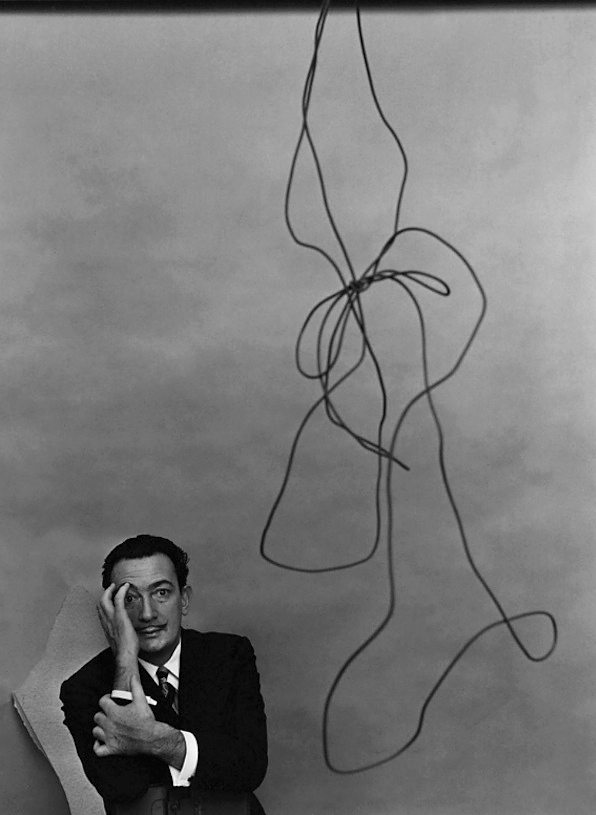
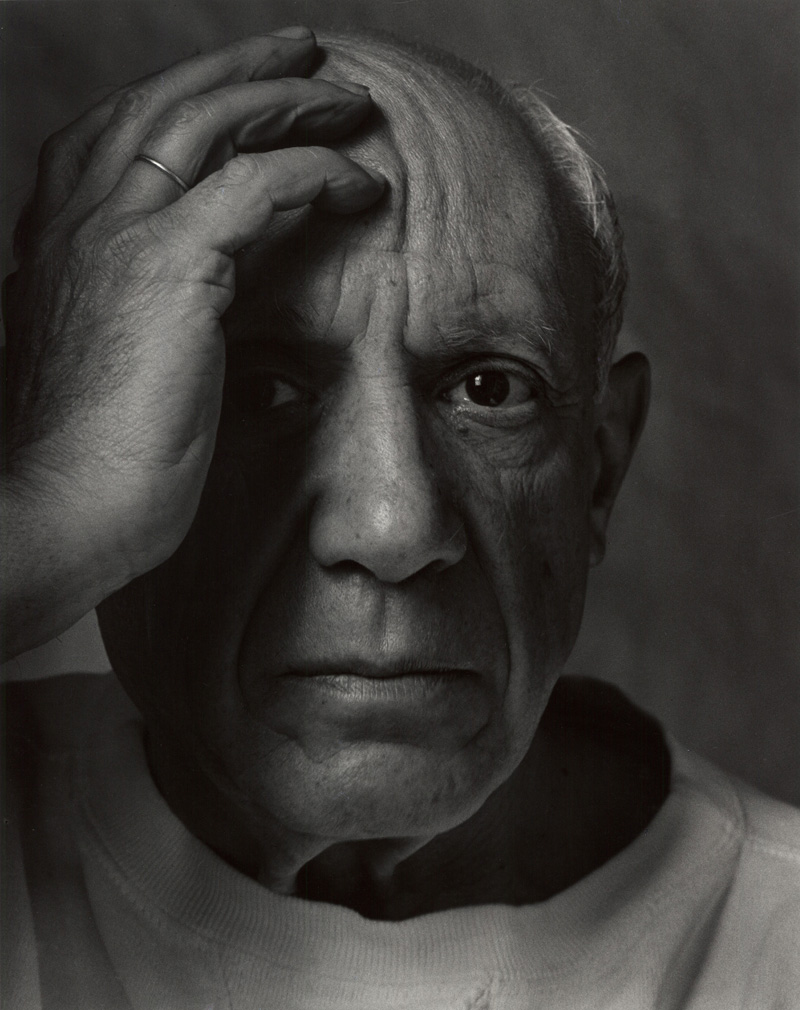
His subjects included world leaders, authors, artists, musicians and scientists – Pablo Picasso in his studio; Igor Stravinsky sitting at the piano; Truman Capote lounging on his sofa; and Otto Frank, father of Anne Frank, in the attic where his family hid from the Nazis for more than two years.

The exhibition takes stock of the entire range of Newman’s photographic art, showing many fine prints for the first time. The exhibition also includes Newman’s lesser-known and rarely exhibited still lifes, architectural studies, cityscapes and earliest portraits. While at the Ransom Center, the exhibition will be supplemented with holdings from the Center’s Newman archive, which contains all of Newman’s negatives, slides and colour transparencies, all of his original contact sheets and more than 2,000 prints, including examples of colour and collage work. The collection also includes Newman’s original sittings books, correspondence and business files, early sketchbooks and photographic albums.

Press release from the Harry Ransom Center website


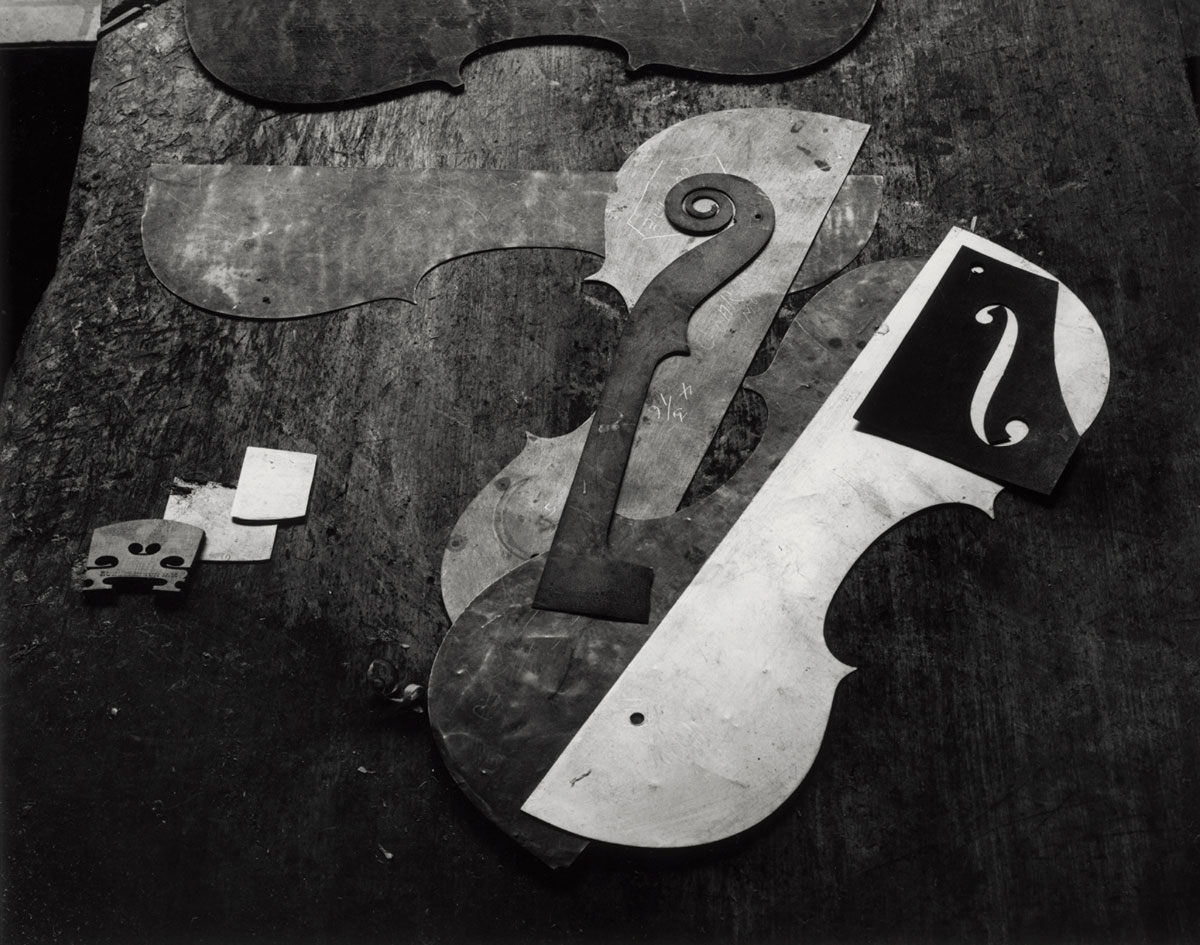
Arnold Newman (American, 1918-2006) 'Violin shop : patterns on table, Philadelphia, Pennsylvania' 1941


Arnold Newman (American, 1918-2006)
Violin shop: patterns on table, Philadelphia, Pennsylvania
1941
Gelatin silver print
© 1941 Arnold Newman / Getty Images


Arnold Newman (American, 1918-2006) 'Igor Stravinsky' 1945


Arnold Newman (American, 1918-2006)
Igor Stravinsky
1945
Contact sheet of four negatives with Newman’s marks and cropping lines
Image courtesy of Harry Ransom Center


Cropping was also a practice Newman valued highly. His edges were determined with minute precision. Trained as a painter, Newman never had doubts about the virtues of cropping. His famed Stravinsky portrait would not have a fraction of its power without the stringent crop. As for printing, Newman was equally meticulous. He trusted few assistants, and those he did trust found that he would not accept a final print unless it was flawless in execution. (Wall text)

“Oh, people set up these nonsensical rules and regulations. You can’t crop, you can’t dodge your print, etc, etc., … But the great photographers that these people admire all did that!”

Wall text from the exhibition


Arnold Newman (American, 1918-2006) 'Twyla Tharp, dancer and filmmaker, New York' 1987


Arnold Newman (American, 1918-2006)
Twyla Tharp, dancer and filmmaker, New York
1987
Gelatin silver print
© Arnold Newman / Getty Images


Sensibilities

Many of Newman’s photographs show confident people, posing proudly before their accomplishments, directly engaging the viewer. But many betray a certain réticence – fragility, a hint of vulnerability, or doubt. Newman was aware that a successful artist’s career was not all roses – thorns were encountered along the path. He also regarded the act of portraiture was necessarily collaborative, or transactional; each side had their own kind of power – the sitter could resist the control of the photographer, the photographer could expose the sitter in an unflattering light. A successful portrait had to negotiate this psychological uncertainty. Sometimes Newman wanted to show supreme confidence as the mark of the man; at other times he wanted to show chinks in the armour.

“You show a certain kind of empathy with the subject – I don’t want to use the word ‘sympathy’, but you sort of let them know you’re on their side.”

Wall text from the exhibition


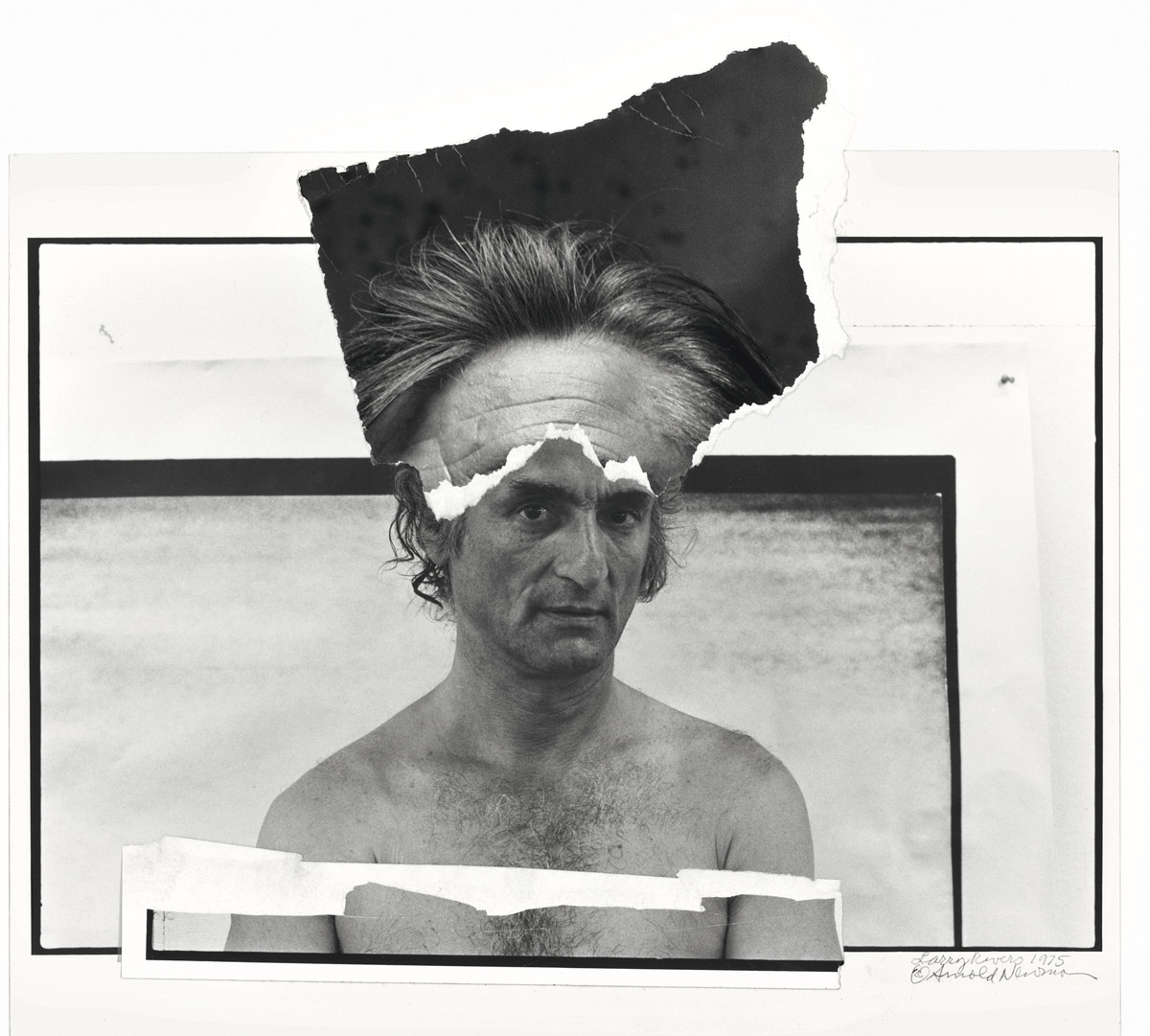
Arnold Newman (American, 1918-2006) 'Larry Rivers, painter, South Hampton, New York' 1975


Arnold Newman (American, 1918-2006)
Larry Rivers, painter, South Hampton, New York
1975
Gelatin silver print
© 1975 Arnold Newman / Getty Images


During the second half of the 20th Century, there was no portrait photographer as productive, creative and successful as Arnold Newman. For almost seven decades Newman applied himself to his art and craft, never for a moment losing his zest for experimentation. His work was published in the most influential magazines of the day, and he was much interviewed, much quoted, and much respected. Several major solo exhibitions paid homage to his achievements during his lifetime, and his work can be found in many of the world’s most prestigious photography collections. No historical overview of portraiture would be complete without one or two Newman masterpieces, nor could any general history of the medium safely leave out his superb Stravinsky, Mondrian or Graham.

Surprisingly, many of Newman’s superb portraits have never been shown or published. This, his first posthumous retrospective, features a wide variety of such photographs. Moreover, it includes cityscapes, documentary photographs and still lifes that have rarely if even been exhibited. Even people already familiar with Newman’s work will find scores of unexpected images, rivalling the work the ‘icons’ they admire. Newman was never happy with the label, often applied, of ‘father of environmental portraiture’. He argued that his portraits were much more than simple records showing artists posing in their studios; there was a symbolic aspect too, and an emotional / psychological element, both fundamental to his approach. He asked critics to ignore all labels, and judge his portraits simply as they would any photographs.

Newman was also a great teacher, and he loved to share his knowledge and skills with aspiring photographers. As with all great artists, the pictures he made seem effortless, natural, but in fact they were the result of careful prior planning. Newman applied the same rigour to selecting the best of his ‘takes’, cropping them precisely, and then printing them with supreme skill. Highly self-critical, he admitted: “I was always my own worst art director.”

With Masterclass, we have endeavoured to give viewers some insights into Newman’s approach. Work prints, prints with crop marks, rough prints with printing instructions, and variants reveal Newman’s great attention to detail and careful consideration of every aspect of the photographic art.

William A. Ewing
Curator


Arnold Newman (American, 1918-2006) 'Salvador Dalí, painter, New York' 1951


Arnold Newman (American, 1918-2006)
Salvador Dalí, painter, New York
1951
Gelatin silver print
© Arnold Newman / Getty Images


Signatures

One of Newman’s favourite strategies was to place the sitters in front of his or her own work. They seem to be saying: ‘Here is my work. This is what I do’. Architects pose beside buildings and models, a test pilot beside his jet, a photographer in front of his prints, a furniture designer in his chair, scientists in front of their equations… At first glance, the pictures appear natural, giving the impression that Newman had surprised his subjects at work, but in fact the set-ups were meticulous.

In the hands of a lesser talent, such a technique could have developed into a routine uniformity, but Newman’s curiosity and genuine interest in his subjects’ work guaranteed a freshness to his portraiture, year after year. To maintain freshness, Newman advised aspiring portrait photographers to do what he did: read up about the subject beforehand, know what he or she has achieved. You will then quickly spot which elements in the environment will be useful.

Wall text from the exhibition


Arnold Newman (American, 1918-2006) 'Notes on Artist's' [sic] series c. 1942


Arnold Newman (American, 1918-2006)
Notes on Artist’s [sic] series
c. 1942
Image courtesy of Harry Ransom Center


Newman writes about his encounters with artists in New York City, describing his first meeting with Alfred Stieglitz.


Arnold Newman (American, 1918-2006) 'Alfred Stieglitz in his An American Place Gallery, 1944' 1944


Arnold Newman (American, 1918-2006)
Alfred Stieglitz in his An American Place Gallery, 1944
1944
Contact print
Image courtesy of Harry Ransom Center


Lumens

Newman preferred natural light, with ‘all its delightful, infinite varieties, indoors and out’. However, he felt that restricting oneself only to natural light had become a religion for many photographers, and artificial light was a taboo. Newman was pragmatic: if there wasn’t enough light to take the picture, he argued, it should be augmented; if it wasn’t the ‘right’ kind of light for the interpretation he desired, artificial lighting should be added. It was never a question of either/or. Newman often used spots and reflectors, but felt that strobes should be used only when absolutely necessary. Lighting effects in a Newman portrait are often subtle and sometimes dramatic. But they are always appropriate, and never excessive.

Wall text from the exhibition


Arnold Newman (American, 1918-2006) 'Pablo Picasso, painter, sculptor and printmaker, Vallauris, France' 1954


Arnold Newman (American, 1918-2006)
Pablo Picasso, painter, sculptor and printmaker, Vallauris, France
1954
Gelatin silver print
© Arnold Newman / Getty Images


Choices

Newman might take 10, 20, 30 and in special cases even more than 50 individual photographs of a sitter, making minor adjustments each time. Sometimes the differences between the frames would be minuscule, though highly significant. We see this in two frames of Picasso: in Frame 54 (note that this one was used in several publications in error), we see that the artist seems distracted – his eyes are not focused, while his mouth is pinched, and his hand is placed awkwardly. In Frame 57, all these deficiencies have been corrected.

Wall text from the exhibition


Arnold Newman (American, 1918-2006) 'Piet Mondrian, painter, New York' 1942


Arnold Newman (American, 1918-2006)
Piet Mondrian, painter, New York
1942
Gelatin silver print
© Arnold Newman / Getty Images


Habitats

Newman never liked to work in a studio, preferring to see where and how his subjects worked and lived. Dance studios, home libraries, classrooms, offices, living rooms, gardens, the street, and even, on occasion, a vast urban panorama were settings he employed. Particularly close to painters in spirit, he was stimulated by the raw materials, the paintings or sculptures in progress, and even the general clutter he found in their studios. He liked the challenge of having to make quick decisions based on what he saw around him, and argued that this spontaneous approach was much harder – and riskier – than working in his own studio, where everything was familiar and tested. By focusing on a sitter’s habitat, Newman felt that he was providing more than a striking likeness – he was revealing personality and character not through physiognomy (the principle of classic portraiture) but through the things artists gathered around them.

“For me the professional studio is a sterile world. I need to get out; be with people where they’re at home. I can’t photograph ‘the soul’ but I can show tell you something fundamental about them.”

Wall text from the exhibition


Arnold Newman (American, 1918-2006) 'Alexander Calder, sculptor, New York' 1943


Arnold Newman (American, 1918-2006)
Alexander Calder, sculptor, New York
1943
Gelatin silver print
© Arnold Newman / Getty Images


Arnold Newman (American, 1918-2006) 'Palm Beach, Florida' 1986


Arnold Newman (American, 1918-2006)
Palm Beach, Florida
1986
Gelatin silver print
© 1986 Arnold Newman / Getty Images


Geometries

From his earliest days with the camera, Newman loved the geometry of space – with or without people. He never tired of photographing architecture that appealed to him. The linear and the curvilinear; contrasting blocks of black and white; ovals, triangles rectangles, strong diagonals… it was never just a question of making a pleasing background – like a kind of geometrically-patterned wallpaper – but rather the creation of a harmonious, dynamic whole in which the sitter was an integral part. It was Newman’s consummate skill that prevented the sitter from being merely an adjunct to the design.

“Successful portraiture is like a three-legged stool. Kick out one leg and the whole thing collapses. In other words, visual ideas combined with technological control combined with personal interpretation equals photography. Each must hold it’s own.”

Wall text from the exhibition


The Harry Ransom Center
21st and Guadalupe Streets
Austin, Texas 78712
Phone: 512-471-8944

Exhibition galleries opening hours:
Tuesday – Friday 10am – 5pm
Saturday and Sunday Noon – 5pm
Closed Mondays

Library Reading/Viewing Rooms opening hours:
Monday – Saturday 9am – 5pm
Closed Sundays

Harry Ransom Center website

LIKE ART BLART ON FACEBOOK

Back to top

Exhibition and Art Award: ‘Art For Kids’ Sake’ Ballarat

Opening: May 4th, 2013


Dr Marcus Bunyan with 'The Argument' by Jackie Gorring


Dr Marcus Bunyan with The Argument by Jackie Gorring


I journeyed up to Ballarat with my friend and fellow photographer Andrew Follows and his guide dog Eamon to judge the Arts for Kids’ Sake art award today. Art For Kids’ Sake is an inclusive art exhibition and art award to raise funds and awareness for the Daylesford Dharma School. As the first school in Australia to offer an education on Buddhist principles, the school provides an alternative academic curriculum informed by mindfulness, care for the environment and conflict resolution.

We had a great time with Kim Percy from Ballarat based graphic design firm designscope who were offering the major prize of $2,500 dollars worth of design services for web or print. I went to University with Kim many years ago studying at RMIT for my Bachelor of Arts and she was our wonderful guide and host for the day. Below are the three winners in the sections ‘Most resolved’ (major prize), ‘Most spiritual’ and ‘Best environmental’. The work The Argument, an etching by artist Jackie Gorring was complex, mysterious, beautifully executed and resolved and touched close to home, coming as I do from a dysfunctional family where violence was never far from the surface. Let’s hope with the prize of design work by Kim’s company she can finally get a website to display her work online. Flowers by Amanda Holloway were made while sitting in front of the television. Three layers of hand cut, recycled paper with buttons at the centre were exquisitely executed. The time and patience to do this work – and they were selling in the exhibition for $2 each! Just beautiful. Finally the painting Macaw by Gav Barbey was visually arresting in how the intricately painted face of the macaw dissolved into this wondrous flight of fancy that was its plumage – totally enlightening.

A great day was had by all – thank you Kim for inviting Andrew and I to come up. Next time in Ballarat I will be opening the John Cato exhibition at the Ballarat International Foto Biennale and meeting Colombian artist Erika Diettes for whose exhibition Shrouds (Sudarios) I am writing the catalogue essay.

Dr Marcus Bunyan


Dr Marcus Bunyan looking at 'Flowers' by Amanda Holloway


Dr Marcus Bunyan looking at Flowers by Amanda Holloway


Gav Barbey. 'Macaw' Nd (detail)


Gav Barbey
Macaw (detail)
Nd


B1 Ballarat Art
14 Camp St, Ballarat

LIKE ART BLART ON FACEBOOK

Back to top

Review: ‘Shrouds’ by Mike Reid at the Colour Factory Gallery, Fitzroy, Melbourne

Exhibition dates: 8th March – 30th March 2013


Mike Reid (Australian) 'Santa Monica, Los Angeles, USA' Nd


Mike Reid (Australian)
Santa Monica, Los Angeles, USA
Nd


“Any discovery changing the nature, or the destination of an object or phenomenon constitutes a Surrealist achievement. Already the automats are multiplying and dreaming… realism prunes trees, Surrealism prunes life.”


J-A. Boiffard, Paul Ellard and Roger Vitrac, in La Revolution Surréaliste, December 1924, p. 2, quoted in Arturo Schwarz, Man Ray: the rigour of imagination, Thames & Hudson, London, 1977, p. 161.


This is a strong exhibition of documentary photography by Mike Reid at the Colour Factory Gallery. Interesting idea; well seen formal photographs; good use of colour (brown, blue, silver, red and green shrouds); nice sized prints appropriate to the subject matter; and an excellent self published book to accompany the exhibition. This is just what it is – a solid exhibition of documentary photography.

Unfortunately the artist cannot leave it there. In his almost unintelligible artist statement (below), he tries to lever the concept of resurrection onto the work, meandering from Horus and Osiris through The Shroud of Turin, to Jewish Tachrichim (burial shrouds) and onto the commerce of Billabong and the politics of the burqa linking, very tenuously, the covering of Islamic women with the idea of these cars being “old bombs.”

Here I take issue with Reid’s conceptualisation of the word “shroud” vis a vis his photographs of covered cars. One of the definitions of shroud is “A cloth used to wrap a body for burial” but the more pertinent use of the word in relation to this work is “To shut off from sight; something that conceals, protects, or screens” from the Middle English schrud, garment. These are not abandoned, lifeless vehicles awaiting resurrection but loved vehicles that have been protected from the elements by their owners, wrapped and cocooned jewels that are in a state of hibernation. If they were unwanted they would have been abandoned by their owners to the elements, not protected beneath a concealing garment in a state of metamorphosis. The shrouding of the car acts like a Surrealist canvas, hinting at the structure underneath (the Cadillac, the Volkswagen, the Morris Minor) but allowing the viewer to discover the changing nature of the object.

All that was needed to accompany the exhibition and the book was something like the quotation at the top of the posting. Leave the rest up to the strength of the work and the viewer. They have the intelligence and imagination to work out what is going on without all the proselytising that only reveals the artist’s ultimate disconnection from the source. In other words, less is more. Nothing more, nothing less.

Dr Marcus Bunyan


Many thankx to the Colour Factory Gallery for allowing me to publish the photographs in the posting. Please click on the photographs for a larger version of the image.


Mike Reid (Australian) 'Toorak, Victoria' Nd


Mike Reid (Australian)
Toorak, Victoria
Nd


Mike Reid (Australian) 'South Fremantle, Western Australia' Nd


Mike Reid (Australian)
South Fremantle, Western Australia
Nd


Mike Reid (Australian) 'Richmond, Victoria' Nd


Mike Reid (Australian)
Richmond, Victoria
Nd


Shrouds, by Mike Reed is a collection of photographs of covered cars. His love of gleaning was inherited from his ‘rag and bone’ father who amassed a metal detritus found on the bicycle route home from the factory where he worked. This assortment was stockpiled in his father’s rusted sheds, which appeared like an ‘Aladdin’s cave’ to a youthful Mike.

“The car was draped with a plastic sheet in the back blocks of Surfers Paradise whilst seeking to photograph decay in the landscape… You start with one and then see another then… over time, the medley plays into a collection… patterns precipitate or idiosyncrasies evolve from within…This is the joy of “seeing”.”

“Within my category of covered cars I began to view these still loved but lifeless vehicles, as if a resurrection was about to take place… for the heavenly roads of restoration or hell.”

Mike equates the car covers to the burial garments adorning the dead in preparation for resurrection. Mike cites the ‘wrapping’ of objects found in the work of artists’ Christo, Jean Claude, Man Ray and Magritte as inspiration. This incredible accumulation of images spans over two decades and 6 countries. A small selection has been chosen for this exhibition and a larger range appears in his book to be launched at the opening of Shrouds.

Press release from the Colour Factory Gallery website


Mike Reid (Australian) 'Richmond, Victoria' Nd


Mike Reid (Australian)
Richmond, Victoria
Nd


Mike Reid (Australian) 'Macleod, Victoria' Nd


Mike Reid (Australian)
Macleod, Victoria
Nd


Shrouds

The resurrection of the dead is a fundamental and central doctrine of Judaism, Christianity, and Islam. Many religious critics have alleged that even Christ’s resurrection was borrowed from the accounts of Osiris, God of the underworld, and the best-known deity in all of ancient Egyptian history. As a life-death-rebirth deity, Horus, the Sun God, and Osiris became a reflection of the annual cycle of crop harvesting as well as reflecting people’s desires for a successful afterlife. The Masons, Illuminati, Priory De Sion, clandestine government groups, and others believed that on December 22, 2012, Osiris would be resurrected. Nothing happened on that world shattering day but Spam and candle sales most certainly went through the roof. Thus in preparation to meet thy maker, a shroud, burial sheet or winding-cloth, usually cotton or linen but with no pockets, is wrapped around a body after it has been ceremonially washed and readied for burial.

Certainly the most controversial and famous burial garment is the Shroud of Turin. It is now stored in the Cathedral of St. John the Baptist in Turin, Northern Italy after the crusaders stole it and bought it first to France around 1204.

Many believe this 4.3 by 1.1m linen cloth of a rare herringbone weave covered the beaten and crucified body of Jesus of Nazareth when He was laid in a tomb prior to His resurrection. Is it really the cloth that wrapped His bloodstained body, or is it simply a medieval hoax? This has lead to intense scrutiny by forensic experts, scientists, chemists, immunologists, pathologists, believers, historians, and writers regarding the where, when, and how the bloodstain image on the shroud was created. C-14 Carbon dating carried out in 1988, dated the cloth between 1260 and 1390.

In Jewish religious traditions the Tachrichim (burial shrouds) are traditional simple white burial garments, containing no pockets, usually made from 100% pure linen.A shroud or sometimes a prayer shawl for a man, in which Jews are dressed by the Chevra Kadisha for burial after undergoing a taharah (purification ceremony). Burying the departed in a garment is considered a testimony of faith in the resurrection of the body (commentary of Shach). This is a fundamental principle of faith, one of the thirteen principles, which the Rambam enumerates as being essential to Jewish belief. More to the point today we have an insurrection, while not yet violent against the wearing of another kind of covering… the niqab or the burqa. European governments are escalating the introduction of laws on the basis that the face covering, along with ski masks and bikies helmets, encourages female subjugation, lack of communication, non-safety, isolation, female abuse, oppression of freedom and non-conformity to the western culture. In fact the Koran only dictates to modesty in dress. May I say it that Billabong could improve sales with the launch of a ‘Tri-Kini’ on the beaches next summer.

Meanwhile… “The 2012 ban in France is officially the second country in Europe, after Belgium, to introduce a full ban on a garment which immigration minister Eric Besson has called a “walking coffin.””1 Indeed Australian Liberal Cory Bernadi said, “The burqa is no longer simply the symbol of female repression and Islamic culture, it is now emerging as a disguise of bandits and n’er do wells.”2 More so now the government and police authorities in the Netherlands, a usually very tolerant nation, have become anxious regarding security worries that a terrorist could use one for concealment. Well my shrouded cars could be the same, as most do conceal “old bombs.”

The inspiration for my rag tag assortment evolved from the artistes Christo and Jeanne-Claude who have wrapped, covered whole buildings, bridges and landscapes. Other favourites of mine, Man Ray and Rene Magritte have objects and humans covered as well, specifically Magrittes’ Las Amants 1 & II (The Lovers)3 1928. A plastic explanation is that “love is blind” and that the mantles are symbolic to the idea that a devoted lover would identify his soul mate in any form, immortal love. Another interpretation of Magrittes’ shrouds is that the paintings symbolise his mothers’ death. Magritte, when only 14, discovered her lifeless body which was naked apart from her nightdress that had swathed up around her face.

I started recording these morphological images over 20 years ago. The first was draped with a plastic sheet in a paddock in the back blocks of Surfers Paradise while meandering aimlessly, seeking decay in the landscape.

With my wandering and collecting shots I realised I have inherited the trait from my father. In his latter years my father became a rag and bone man in order to supplement the low family income. A bicycle route from his employment at Laminex factory to home lay through the local hard rubbish dump. Copper wire, lead, iron, even an aerial practice bomb, military helmets, a stockless revolver and rifle, rusted tools… festooned from his bike and festooned from his gladstone bag. Two rusting sheds contained somewhat the ever-growing metal waste for selling or keeping… an Aladdins’ cave to a young boy, everyday re-discovering lifes’ discards care of the Dendy Street tip.

Within my category of covered cars I began to view these still loved but lifeless vehicles, as if a resurrection was about to take place… for the heavenly roads of restoration or hell… (a scrap yard)

Mike Reed, 2013


1/ The Telegraph, April 11 , 2011, “Peter Allen In Paris”
2/ Cory Bernadi, SMH, May 6, 2011
3/ “Las Amants” 1 is in the NGA collection, Canberra, NGA


Mike Reid (Australian) 'Brunswick East, Victoria' Nd


Mike Reid (Australian)
Brunswick East, Victoria
Nd


Mike Reid (Australian) 'Fairfield, Victoria' Nd


Mike Reid (Australian)
Fairfield, Victoria
Nd


Man Ray (American, 1890-1976) 'L'Enigme d'Isidore Ducasse' 1920, remade 1972


Man Ray (American, 1890-1976)
L’Enigme d’Isidore Ducasse
1920, remade 1972
Sewing machine, wool and string
355 x 605 x 335 mm


Mike Reid (Australian) 'Athens, Greece' Nd


Mike Reid (Australian)
Athens, Greece
Nd


Colour Factory Gallery
409-429 Gore Street
Fitzroy, Victoria 3056
Phone: +61 3 9419 8756

Opening hours:
Closed for refurbishment

Mike Reed Photography website

Colour Factory Gallery website

LIKE ART BLART ON FACEBOOK

Back to top