Curator: the gallery in collaboration with the artists
Many thankx to the C/O Berlin Gallery for allowing me to publish the photographs in the posting. Please click on the photographs for a larger version of the image.
Pierre et Gilles (French, Pierre Commoy b. 1950 and Gilles Blanchard, b. 1953) Mercury 2001
“It’s hard to think of contemporary culture without the influence of Pierre et Gilles, from advertising to fashion photography, music video, and film. This is truly global art.”
Jeff Koons
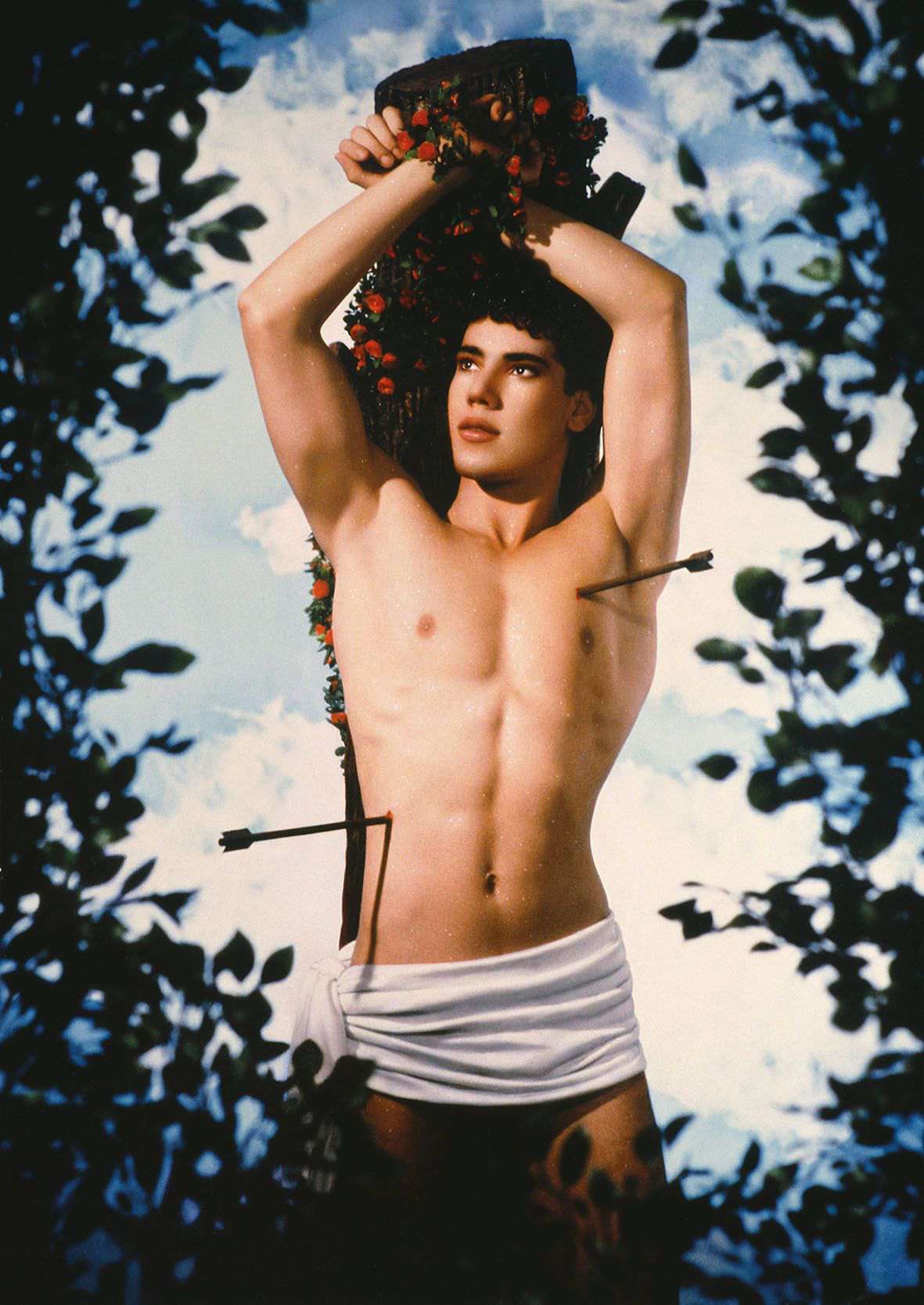
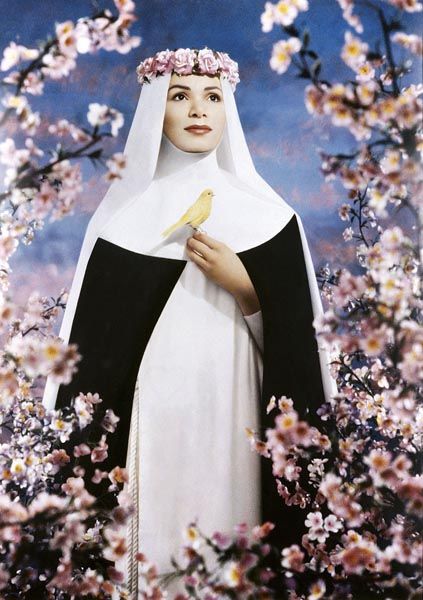
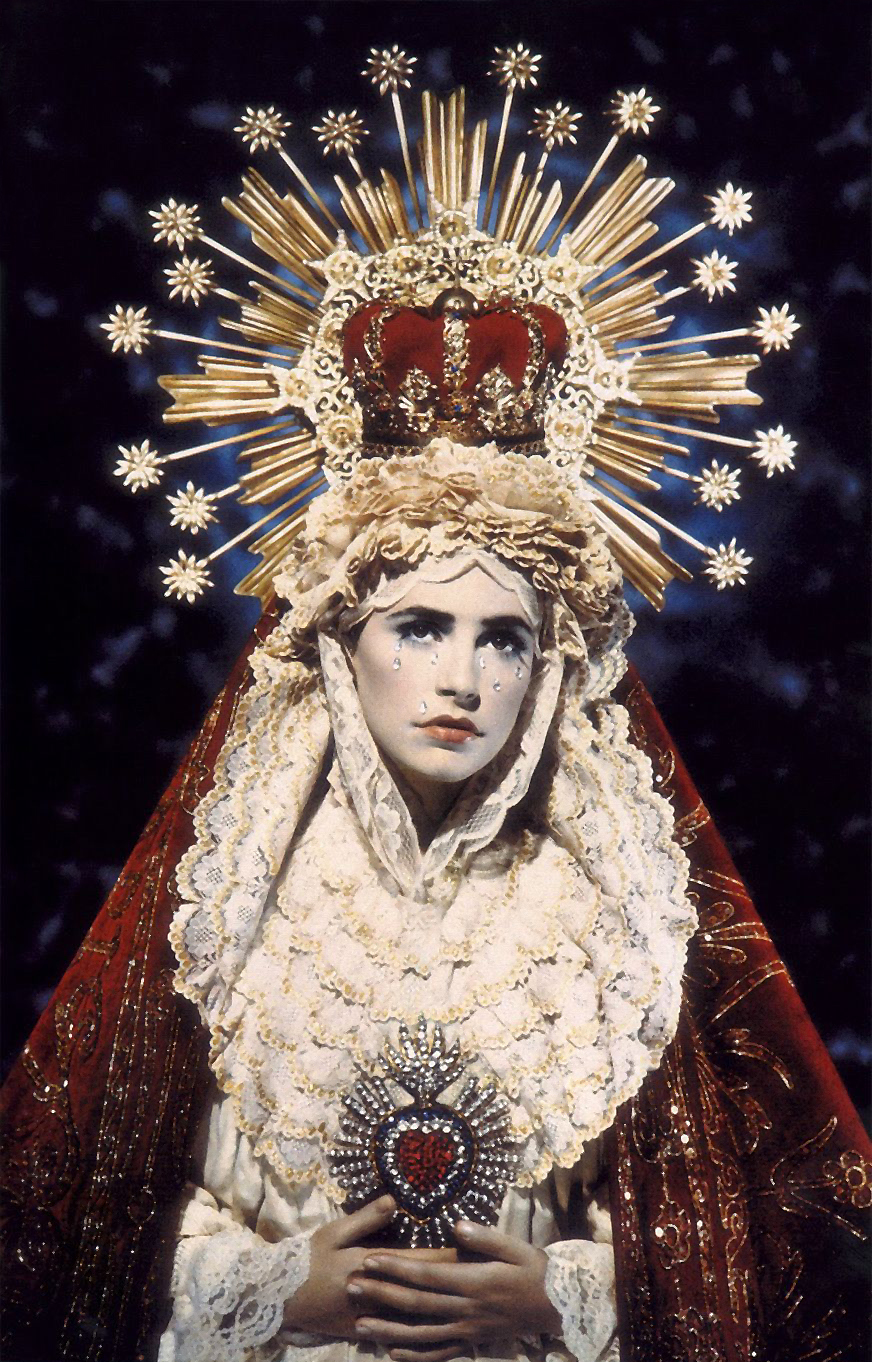
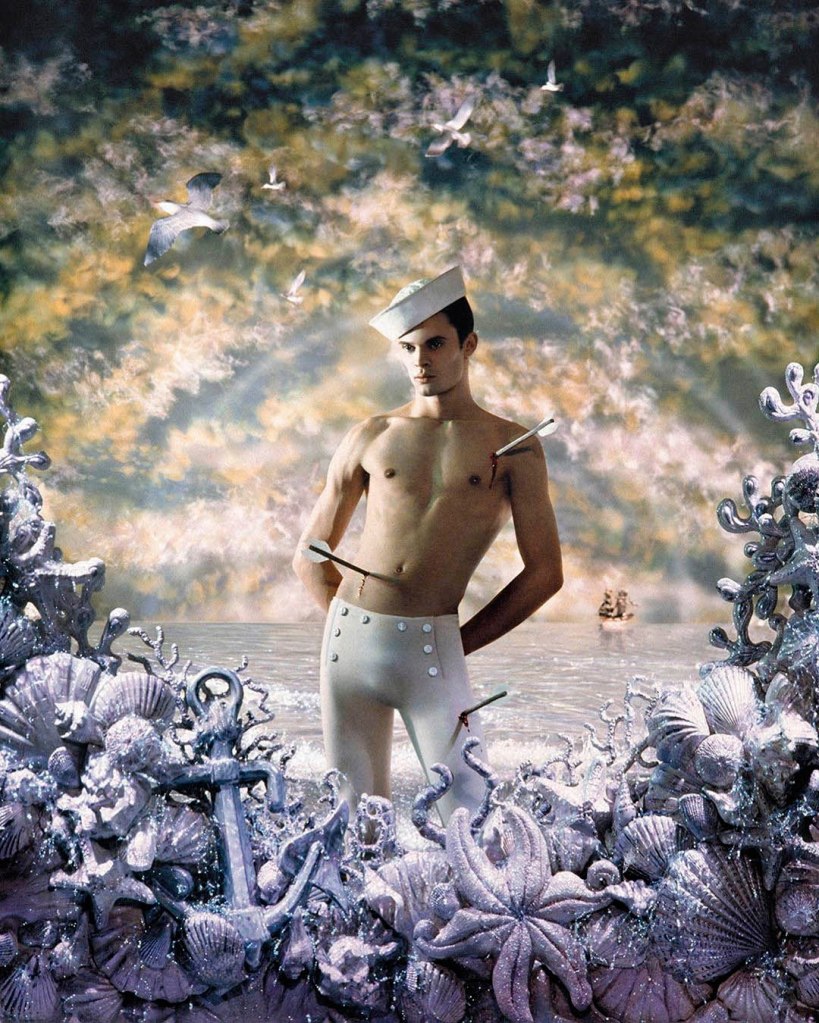
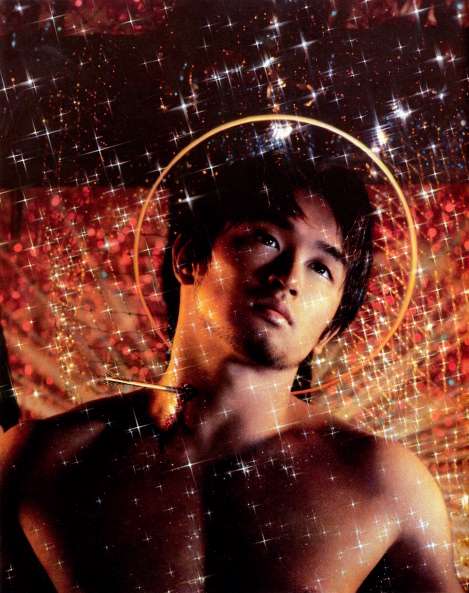
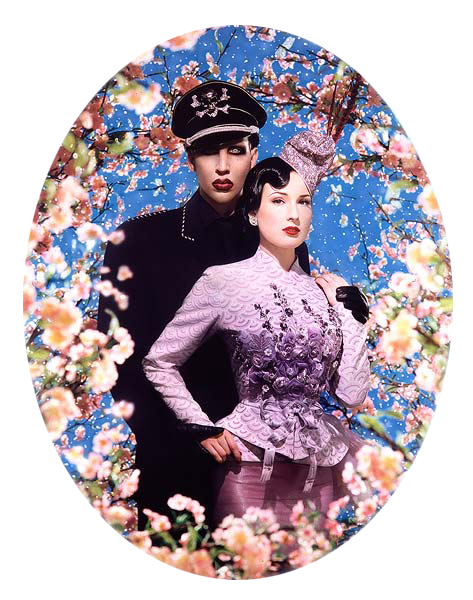
The cosmos of the worldwide renowned French artist duo is a vivid, colourful world poised between baroque sumptuousness and earthly limbo. Pierre et Gilles create unique hand-painted photographic portraits of film icons, sailors and princes, saints and sinners, of mythological figures and unknowns alike. Pierre et Gilles pursue their own, stunningly unique vision of an enchanted world spanning fairytale paradises and abyssal depths, quoting from popular visual languages and history of art. Again and again, they re-envision their personal dream of reality anew in consummate aesthetic perfection.
Pierre et Gilles are among the most influential artists of our time. In their complex, multilayered images, they quote from art history, transgress traditional moral codes, and experiment adeptly with social clichés. Their painterly photographic masterpieces exert an intense visual power that leaves the viewer spellbound.
Over the last thirty years, Pierre et Gilles have created photographic portraits of numerous celebrities including Marc Almond, Mirelle Mathieu, Catherine Deneuve, Serge Gainsbourg, Iggy Pop, Jean-Paul Gaultier, Nina Hagen, Madonna, and Paloma Picasso. They work almost exclusively in an opulently furnished studio, where their subjects are costumed lavishly and placed before three-dimensional backgrounds. Pierre photographs the model, and Gilles retouches and hand-colours the print. The reproducible portrait is rendered unique through painting, which highlights each detail with carefully selected materials and accessories.
As only venue in Germany, C/O Berlin presents the exhibition as the first of Pierre et Gilles in fifteen years. The show comprised a total of 80 unique large-format works – from their early photographies of the 1970s to the brand new pictures that were never shown in public before.”
Text from the C/O Berlin website [Online] Cited 20/08/2009. No longer available online. Used under fair use conditions for the purposes of education and research
Pierre et Gilles (French, Pierre Commoy b. 1950 and Gilles Blanchard, b. 1953) St. Sebastian 1987
Pierre et Gilles (French, Pierre Commoy b. 1950 and Gilles Blanchard, b. 1953) Neptune 1988
Pierre et Gilles (French, Pierre Commoy b. 1950 and Gilles Blanchard, b. 1953) Saint Rose De Lima 1989
Pierre et Gilles (French, Pierre Commoy b. 1950 and Gilles Blanchard, b. 1953) Le Petit Communiste Christophe (The Little Communist Christophe) 1990
Pierre et Gilles (French, Pierre Commoy b. 1950 and Gilles Blanchard, b. 1953) Legend (Madonna) 1990
Pierre et Gilles (French, Pierre Commoy b. 1950 and Gilles Blanchard, b. 1953) La Madone au coeur blessé (Madonna with a wounded heart) 1991
Pierre et Gilles (French, Pierre Commoy b. 1950 and Gilles Blanchard, b. 1953) St. Sebastian of the Sea 1994
Pierre et Gilles (French, Pierre Commoy b. 1950 and Gilles Blanchard, b. 1953) The Martyrdom of St Sebastian 1996
Pierre et Gilles (French, Pierre Commoy b. 1950 and Gilles Blanchard, b. 1953) Extase (Arielle Dombasle) 2002
Pierre et Gilles (French, Pierre Commoy b. 1950 and Gilles Blanchard, b. 1953) Le Grand Amour (Marilyn Manson and Dita von Teese) 2004
C/O Berlin Postfuhramt Oranienburger Straße 35/36 10117 Berlin
Exhibition dates: 20th August – 5th September, 2009
Little Treasures Toby Richardson, Will Nolan, CJ Taylor and Steve Wilson
Clay Cameras Alan Constable
Alan Constable (Australian, b. 1956) Not titled (ALE SLR) 2008 Ceramic Photo: Marcus Bunyan
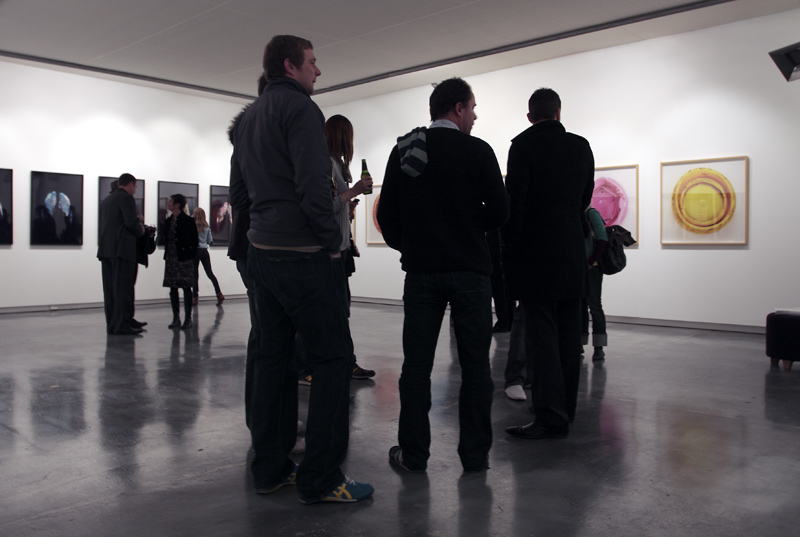
A small crowd was in attendance for the opening of two new exhibitions at Helen Gory Galerie (due to two auctions, one at Sotheby’s and the other at Deutscher-Menzies). Despite this the crowd was appreciative of the beautifully printed and well presented work.
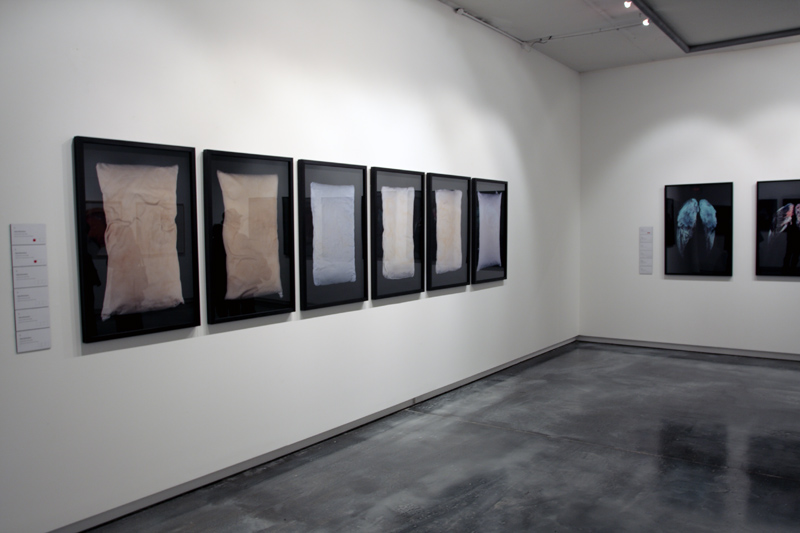
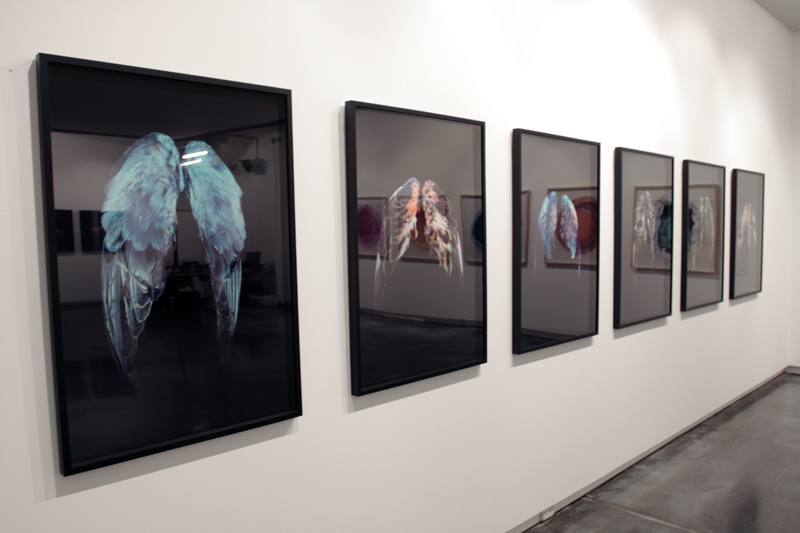
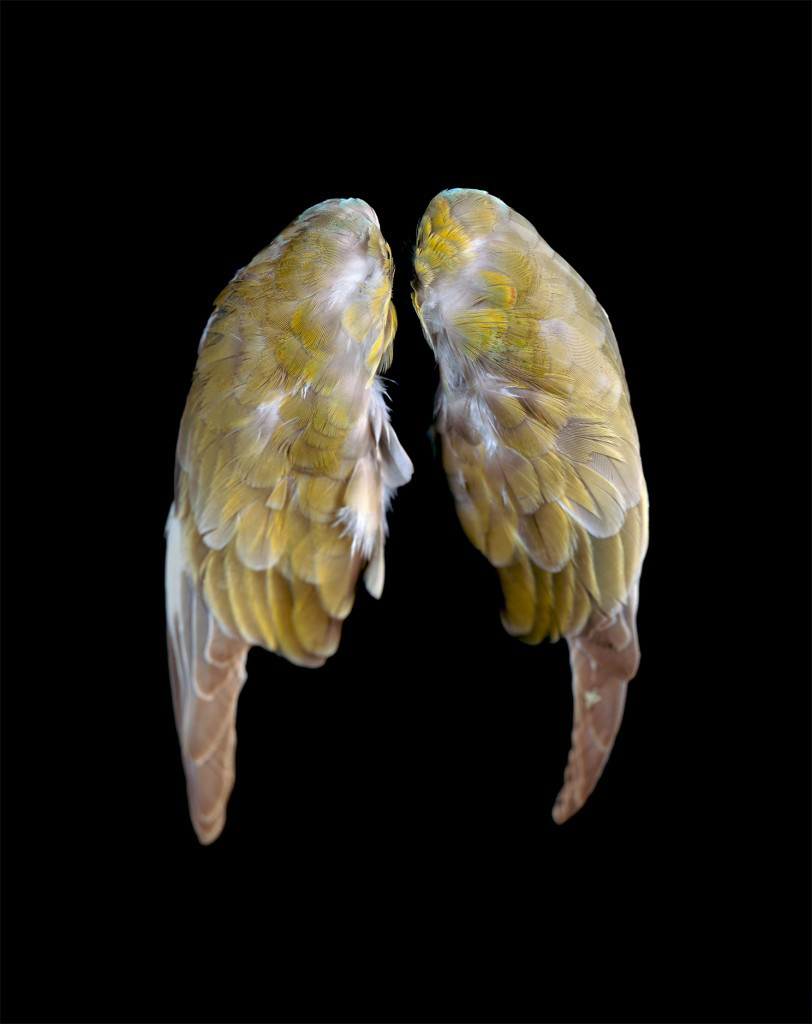
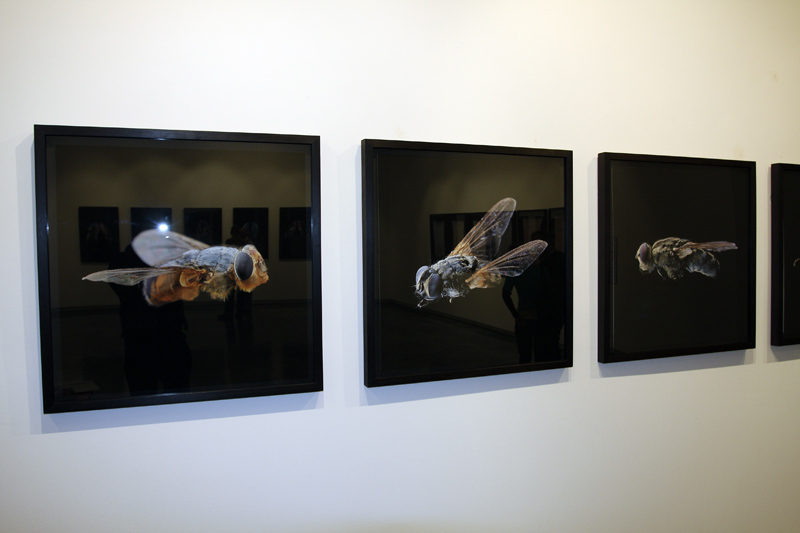
In the main exhibition Little Treasures four photographers show various bodies of work. Toby Richardson’s stained pillows (Portrait of the artist) from the years 1986-2003 were effective in their muted tones and ‘thickened’ spatio-temporal identity. CJ Taylor’s winged detritus from the taxidermist were haunting in their mutilated beauty. Steve Wilson’s sometimes legless flies were startling in their precision, attitude/altitude and, as someone noted, they looked like jet fighters!
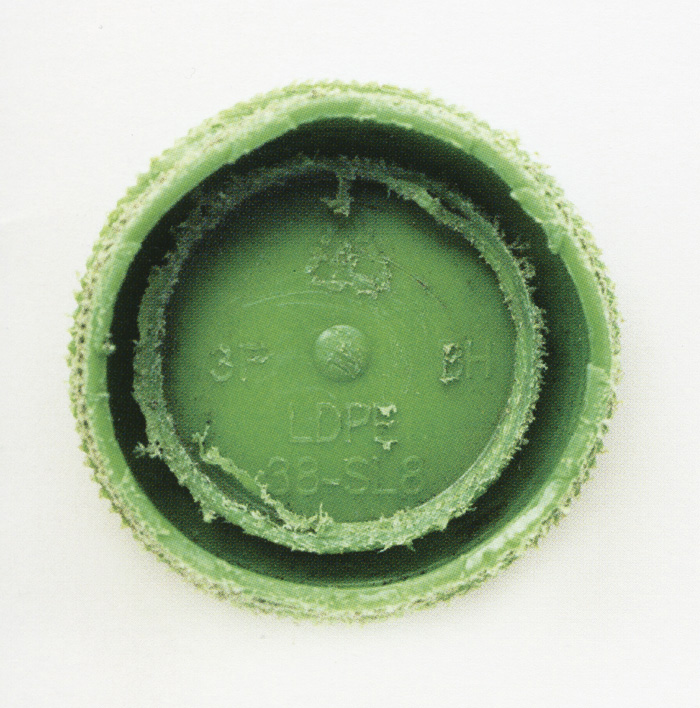
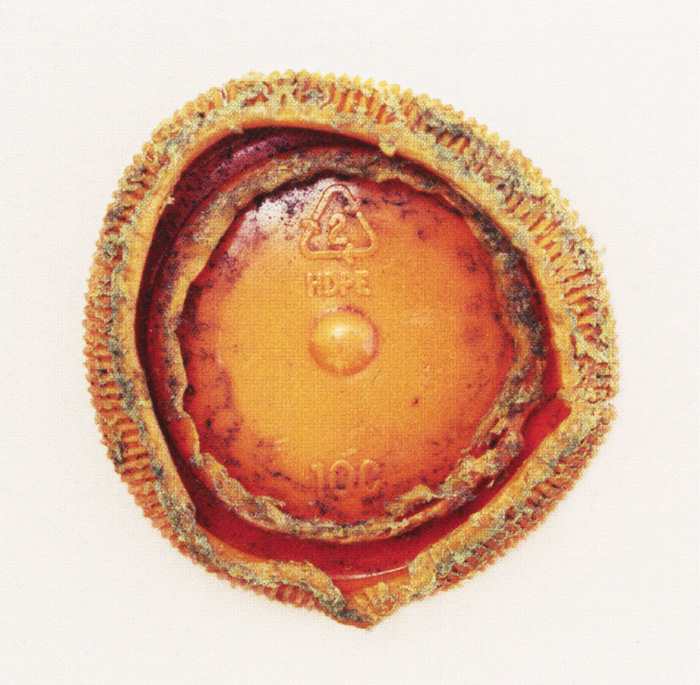
Finally my favourite of this quartet were the recyco-pop iridescent bottle tops of Will Nolan – “these objects remain enigmatic, resonating with a sense of mystery, hidden thoughts and unknown histories.” (Lauren Tomczak, catalogue text).
Some good work then in this take on found, then lost and found again treasure trove, work that retrieves and sustains traces of life, history and memory in the arcana of discarded and dissected objects.
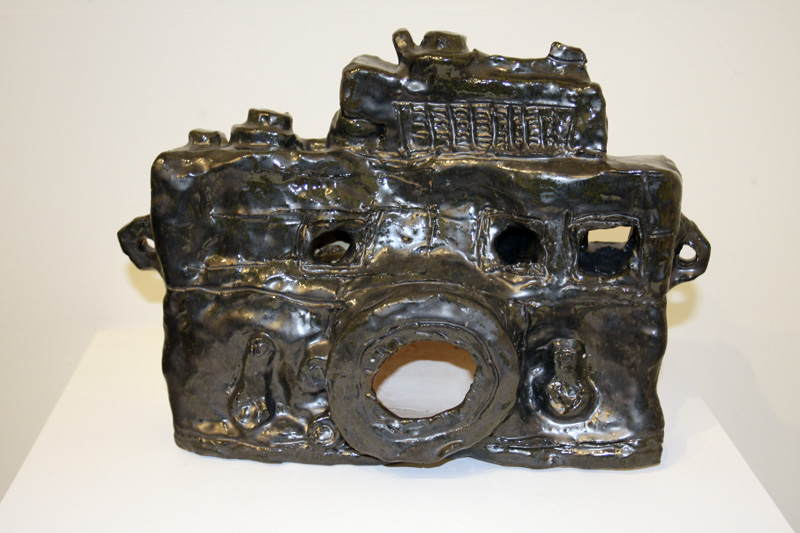
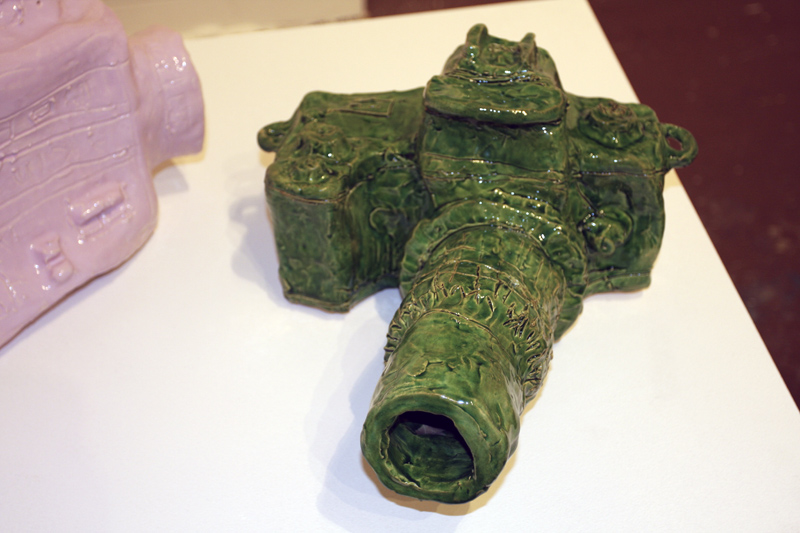
The hit of the night for me was the work of Alan Constable, his “objects that see”. I found his clay cameras intoxicating – I wanted to own one (always a good sign).
I loved the exaggerated form and colours, the playfulness of the creativity on display. Being a photographer I went around trying to work out the different makes of these lumpy, scratched and highly glazed cameras without looking at the exhibition handout.
For a very reasonable price you could own one of these seductive (that’s the right word) viewfinders and they were selling like hot cakes!
Dr Marcus Bunyan
Many thankx to Helen Gory Galerie for allowing me to publish the photographs in the posting. Please click on the photographs for a larger version of the image.
Little Treasures
“Wings, pillows, flies and bottle tops are blown up vastly in stunning large scale prints that take the viewer through the looking glass into another universe, their brilliant colour and rich detail revealing unexpected beauty and delight in these forgotten things. Unmanipulated and finely printed, these images are the product of each artist’s technical mastery and inquisitive eye finding beauty in the cast off and delight in the ignored.” (Jemima Kemp, 2009)
Installation view of Little Treasures showing Toby Richardson’s Portrait of the Artist series (2009, left) Photo: Marcus Bunyan
Installation view of Little Treasures showing the work of CJ Taylor (2009, left) and Will Nolan’s Bottle Top series (2009, right) Photos: Marcus Bunyan
Installation view of Little Treasures showing the work of CJ Taylor (2009) Photo: Marcus Bunyan
CJ Taylor (Australian, b. 1951) Blue, turquoise yellow green 2009 Acrylic glass pigment print 110 x 79cm
CJ Taylor (Australian, b. 1951) Blue, Blue, Grey 2009 Acrylic glass pigment print 110 x 79cm
Installation view of Little Treasures showing Will Nolan’s Bottle Top series (2009) Photo: Marcus Bunyan
Will Nolan (Australian) Bottle top #10 2009
Will Nolan (Australian) Bottle top #1 2009
Installation view of Little Treasures showing Steve Wilson’s Fly series (2009) Photo: Marcus Bunyan
Clay Cameras
“From the box brownie to disposables, VHS to SLR, these works explore Alan Constable’s fascination with cameras. Unlike the streamlined design of the originals, Constable’s cameras appear soft, organic and malleable.”
Alan Constable (Australian, b. 1956) Not titled (pearlescent gold/black Leica) 2008 Ceramic Photo: Marcus Bunyan
Installation view of Clay Cameras by Alan Constable Photo: Marcus Bunyan
Alan Constable (Australian, b. 1956) Not titled (Hasselblad) 2008 Ceramic Photo: Marcus Bunyan
Alan Constable (Australian, b. 1956) Not titled (Digital with zoom lens) 2009 Ceramic Photo: Marcus Bunyan
Curator: organised by the Fundação de Serralves (Museu de Arte Contemporânea, Porto, Portugal) and curated by Ulrich Loock. Its presentation at the New Museum was organised by Richard Flood, the New Museum’s Chief Curator.
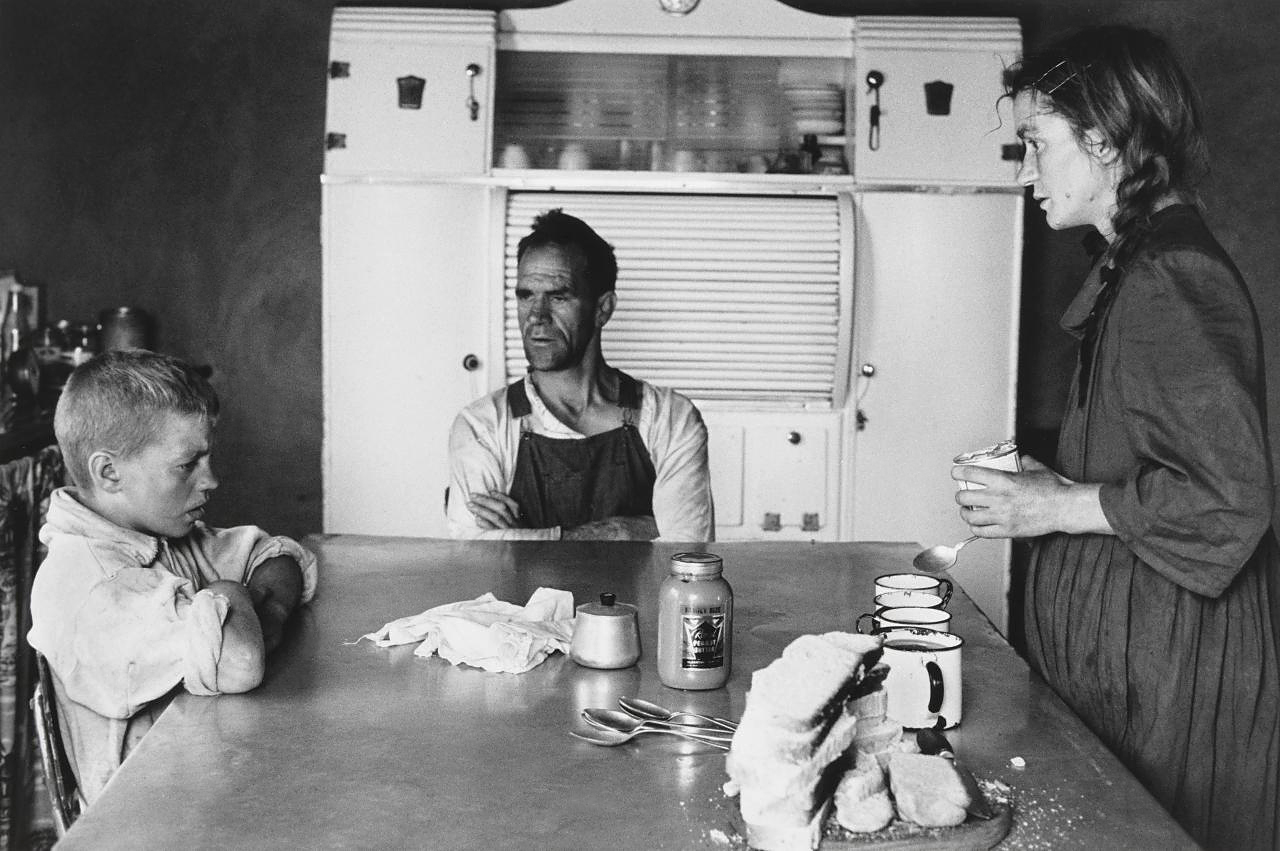
David Goldblatt (South African, 1930-2018) Family at Lunch, Wheatlands Plots, Randfontein, September 1962 1962 Gelatin silver print
One of the greats.
Dr Marcus Bunyan
Many thankx to the New Museum for allowing me to publish the photographs in the posting. Please click on the photographs for a larger version of the image.
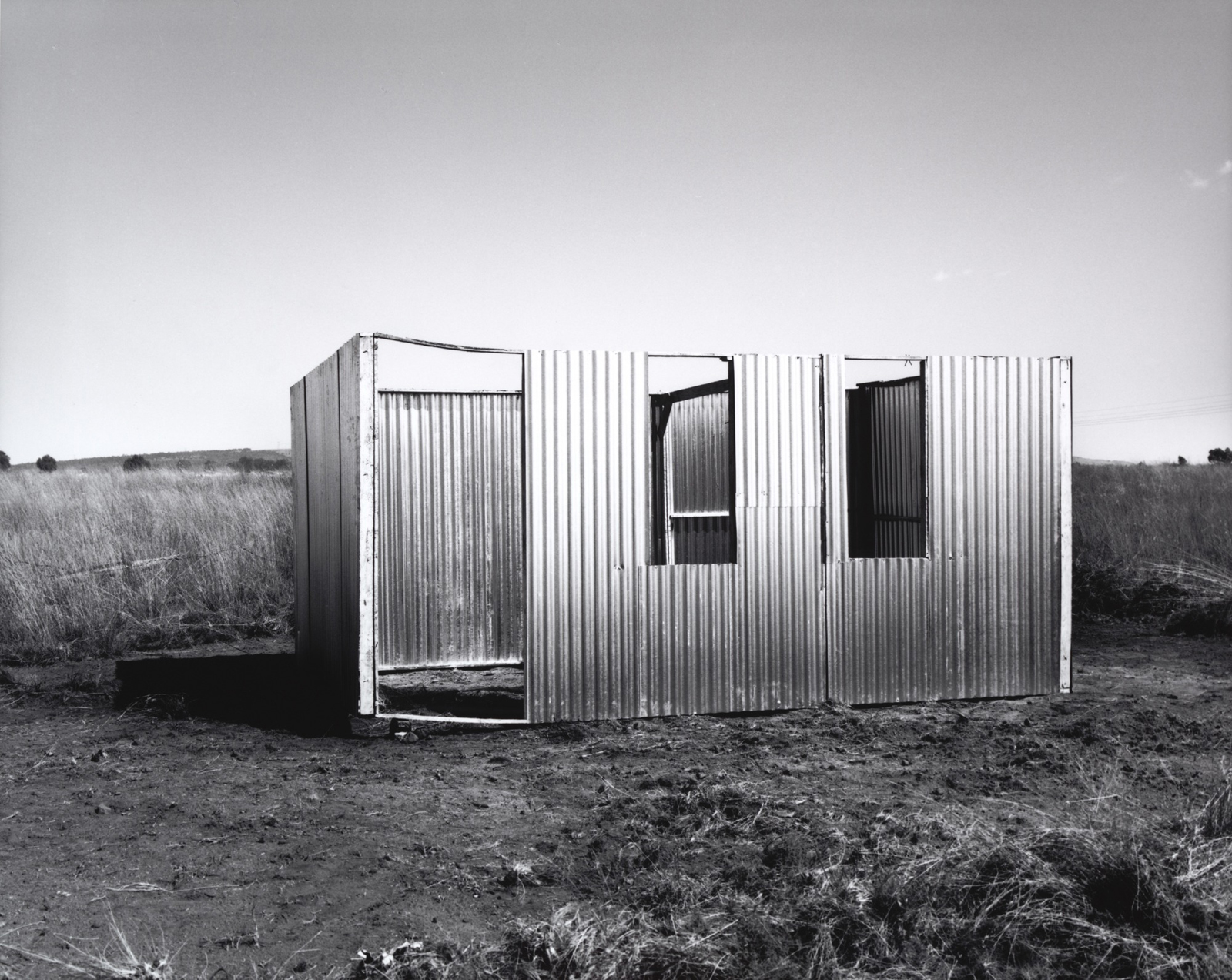
David Goldblatt (South African, 1930-2018) A new shack under construction, Lenasia Extension 9, Gauteng 1990 Gelatin silver print
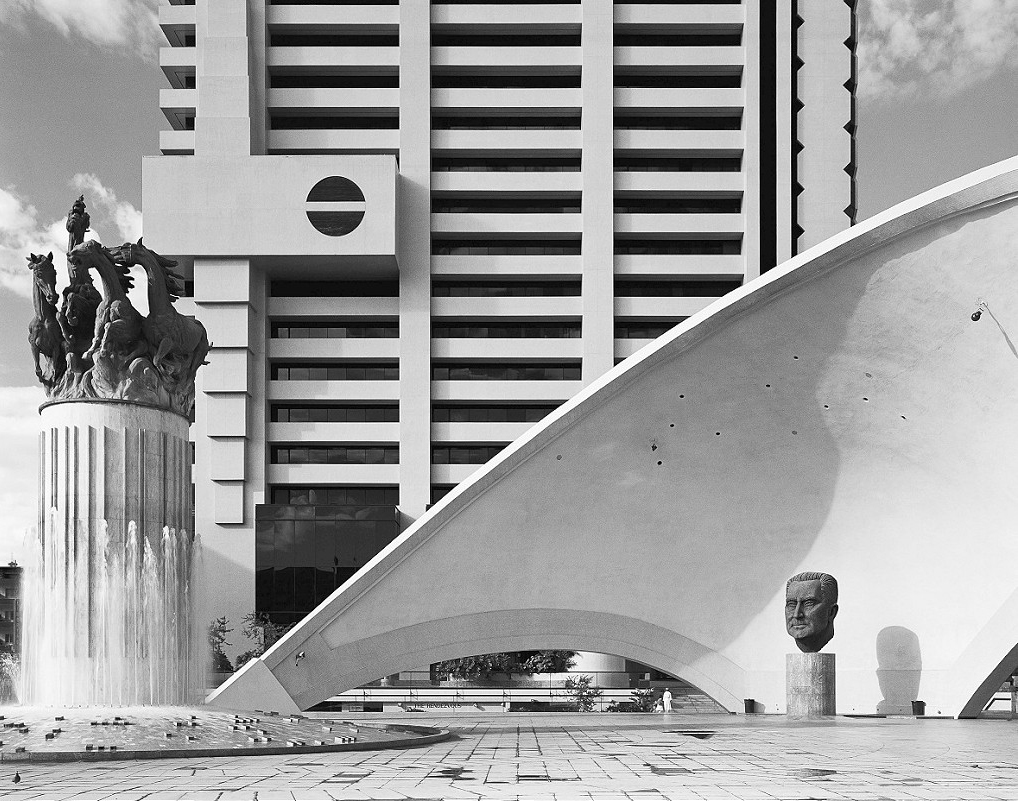
David Goldblatt (South African, 1930-2018) Monuments celebrating the Republic of South Africa (left and JG Strijdom, former prime minister (right), with the headquarters of Volkskas Bank, Pretoria. 25 April 1982 1982 Black and while photograph on matte paper Courtesy the artist and Goodman Gallery, Johannesburg
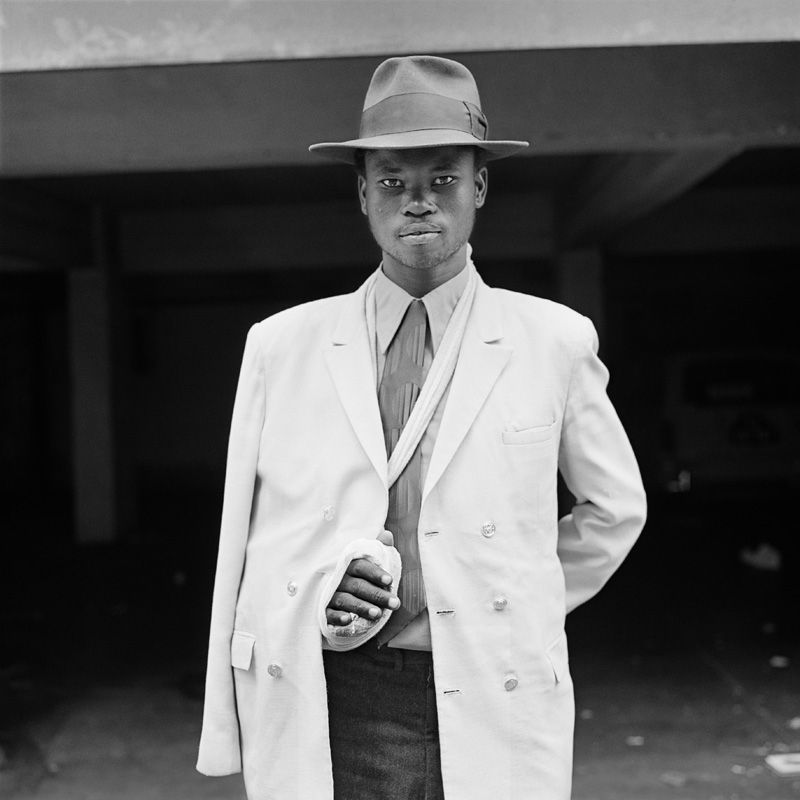
David Goldblatt (South African, 1930-2018) Man with an injured arm. Hillbrow, Johannesburg, June, 1972 1972 Black and while photograph on matte paper Courtesy the artist and Goodman Gallery, Johannesburg
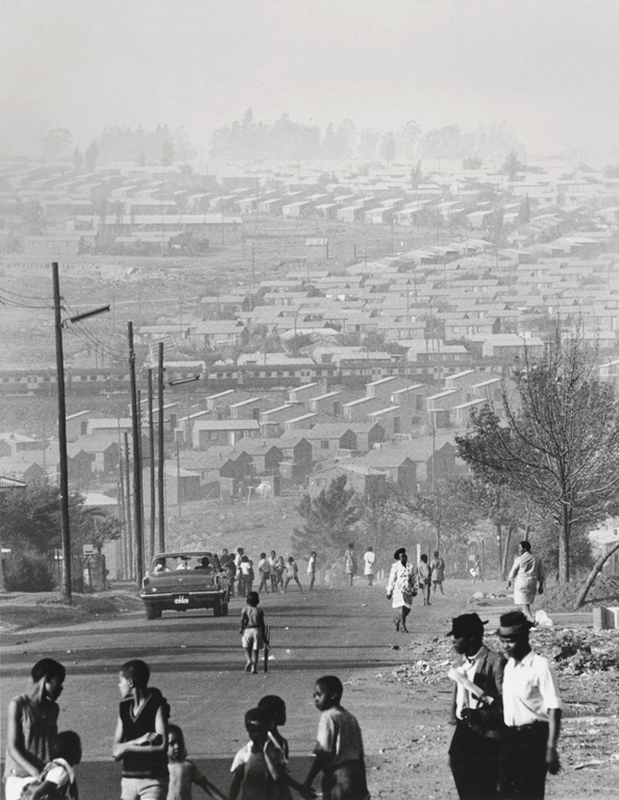
David Goldblatt (South African, 1930-2018) Mofolo South, Soweto, September 1972 1972 Gelatin silver print
Over the last fifty years, David Goldblatt has documented the complexities and contradictions of South African society. His photographs capture the social and moral value systems that governed the tumultuous history of his country’s segregationist policies and continue to influence its changing political landscape. Goldblatt began photographing professionally in the early 1960s, focusing on the effects of the National Party’s legislation of apartheid. The son of Jewish Lithuanian parents who fled to South Africa to escape religious persecution, Goldblatt was forced into a peculiar situation, being at once a white man in a racially segregated society and a member of a religious minority with a sense of otherness. He used the camera to capture the true face of apartheid as his way of coping with horrifying realities and making his voice heard. Goldblatt did not try to capture iconic images, nor did he use the camera as a tool to entice revolution through propaganda. Instead, he reveals a much more complex portrait, including the intricacies and banalities of daily life in all aspects of society. Whether showing the plight of black communities, the culture of the Afrikaner nationalists, the comfort of white suburbanites, or the architectural landscape, Goldblatt’s photographs are an intimate portrayal of a culture plagued by injustice.
In Goldblatt’s images we can see a universal sense of people’s aspirations, making do with their abnormal situation in as normal a way as possible. People go about their daily lives, trying to preserve a sense of decency amid terrible hardship. Goldblatt points out a connection between people (including himself) and the environment, and how the environment reflects the ideologies that built it. His photographs convey a sense of vulnerability as well as dignity. Goldblatt is very much a part of the culture that he is analysing. Unlike the tradition of many documentary photographers who capture the “decisive moment,” Goldblatt’s interest lies in the routine existence of a particular time in history.
Goldblatt continues to explore the consciousness of South African society today. He looks at the condition of race relations after the end of apartheid while also tackling other contemporary issues, such as the influence of the AIDS epidemic and the excesses of consumption. For his “Intersections Intersected” series, Goldblatt looks at the relationship between the past and present by pairing his older black-and-white images with his more recent colour work. Here we may notice photography’s unique association with time: how things were, how things are, and also that the effects of apartheid run deep. It will take much more time to heal the wounds of a society that was divided for so long. Yet, there is a possibility for hope, recognition of how much has changed politically in the time between the two images, and a potential optimism for the future. Goldblatt’s work is a dynamic and multilayered view of life in South Africa, and he continues to reveal that society’s progress and incongruities.”
Joseph Gergel, Curatorial Fellow
Text from the New Museum website [Online] Cited 15/08/2009. No longer available online. Used under fair use conditions for the purposes of education and research
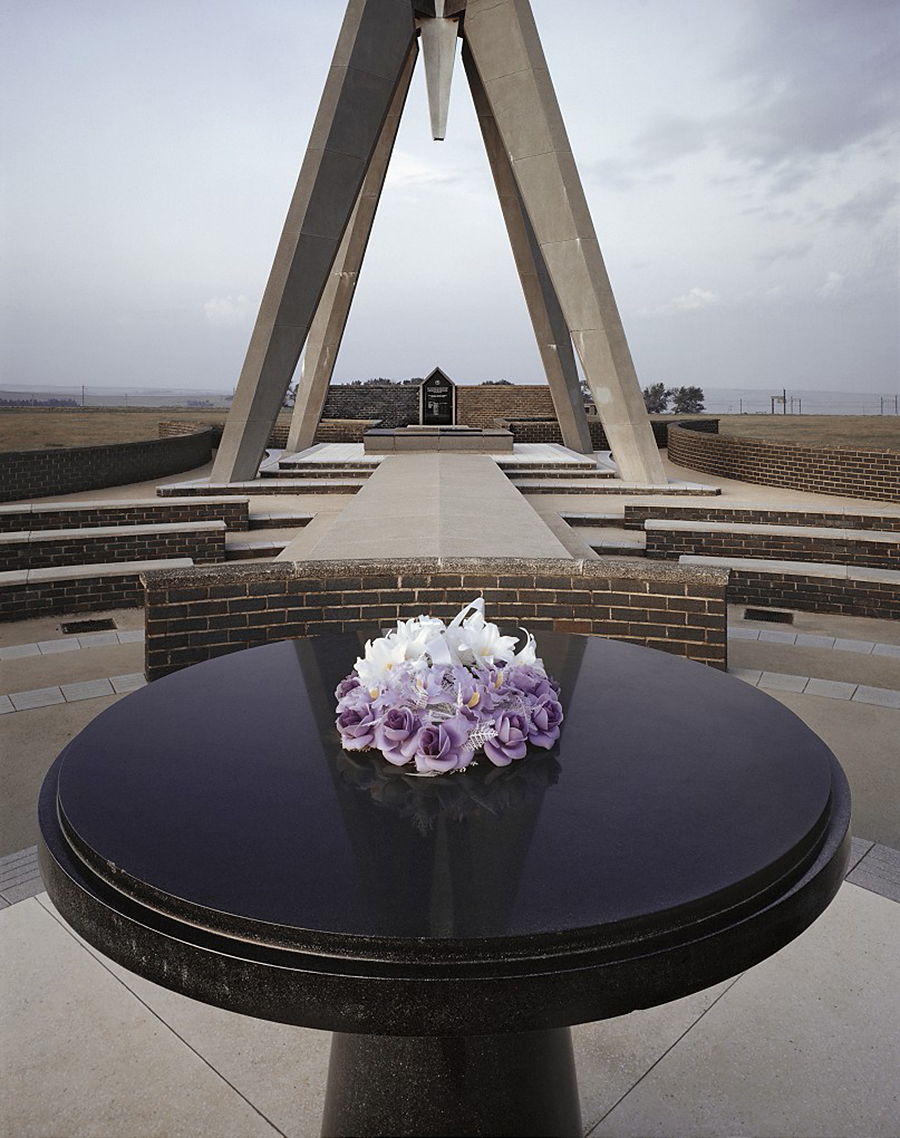
David Goldblatt (South African, 1930-2018) Wreath at the Berg-en-Dal Monument which commemorates the courage – and the sarcophagus which holds the bones – of 60 men of the South African Republic Police, who died here 27 August 1900 in a critical battle of the Anglo-Boer War. Dalmanutha, Mpumalanga. December 1983. 1983 Courtesy the artist and Goodman Gallery, Johannesburg
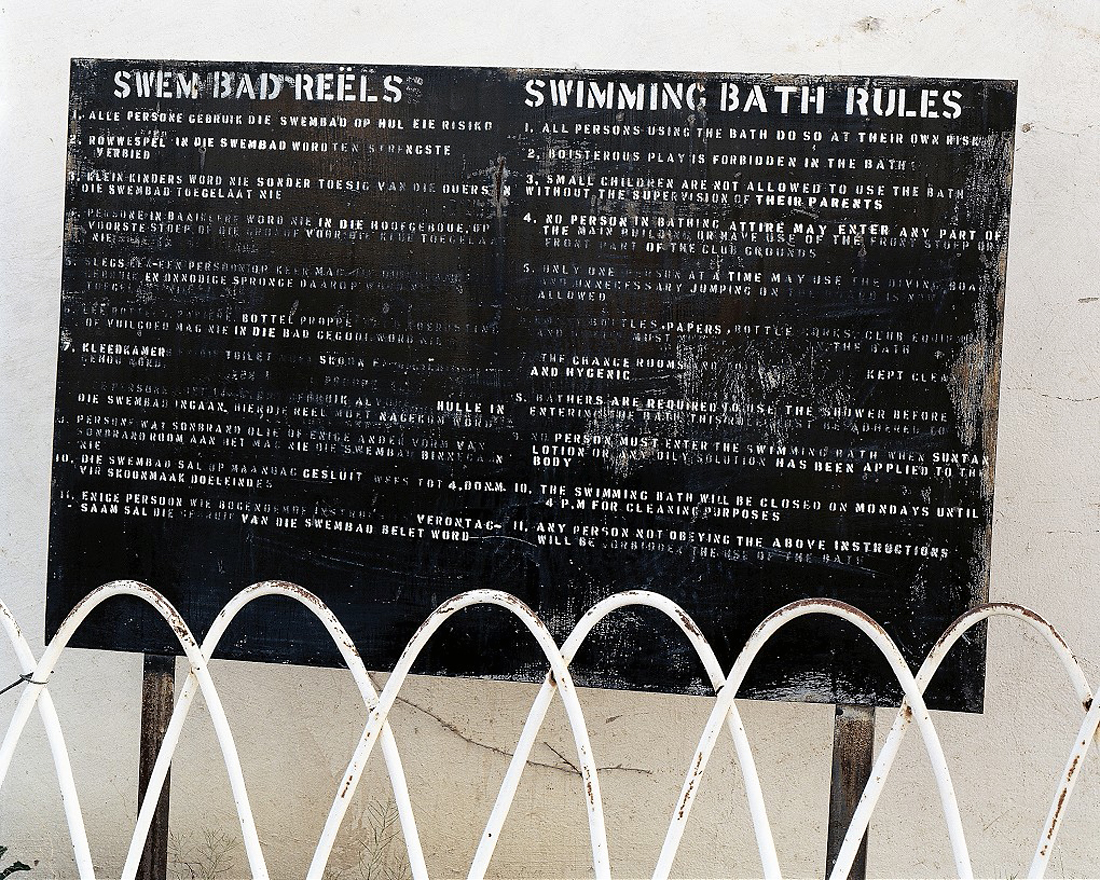
David Goldblatt (South African, 1930-2018) The swimming bath rules at the rec, Cape Blue Asbestos Mine, Koegas, Northern Cape 2002
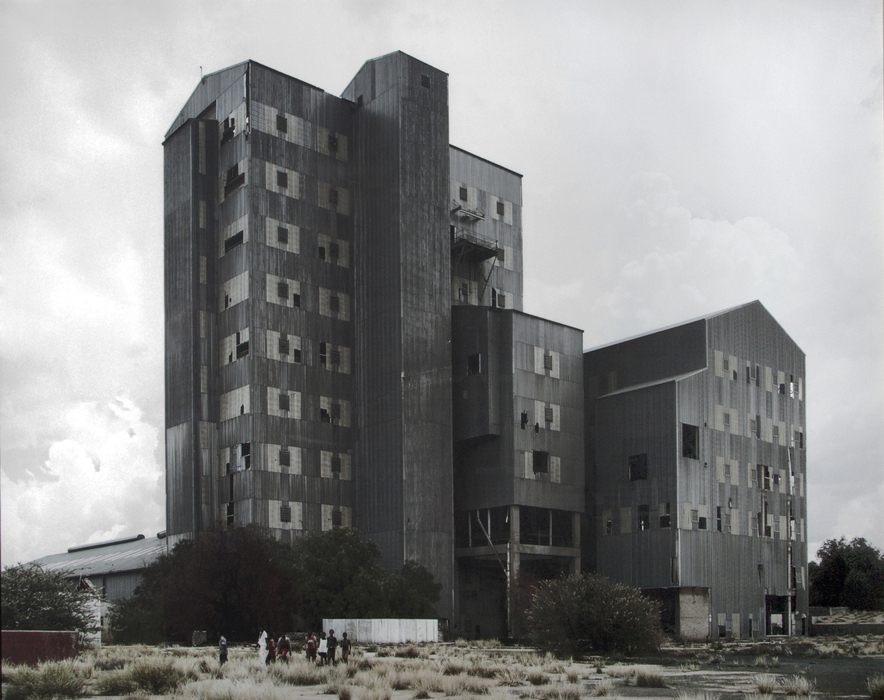
David Goldblatt (South African, 1930-2018) The mill, Pomfret Asbestos Mine, Pomfret, North-West Province, 20 December 2002 2002
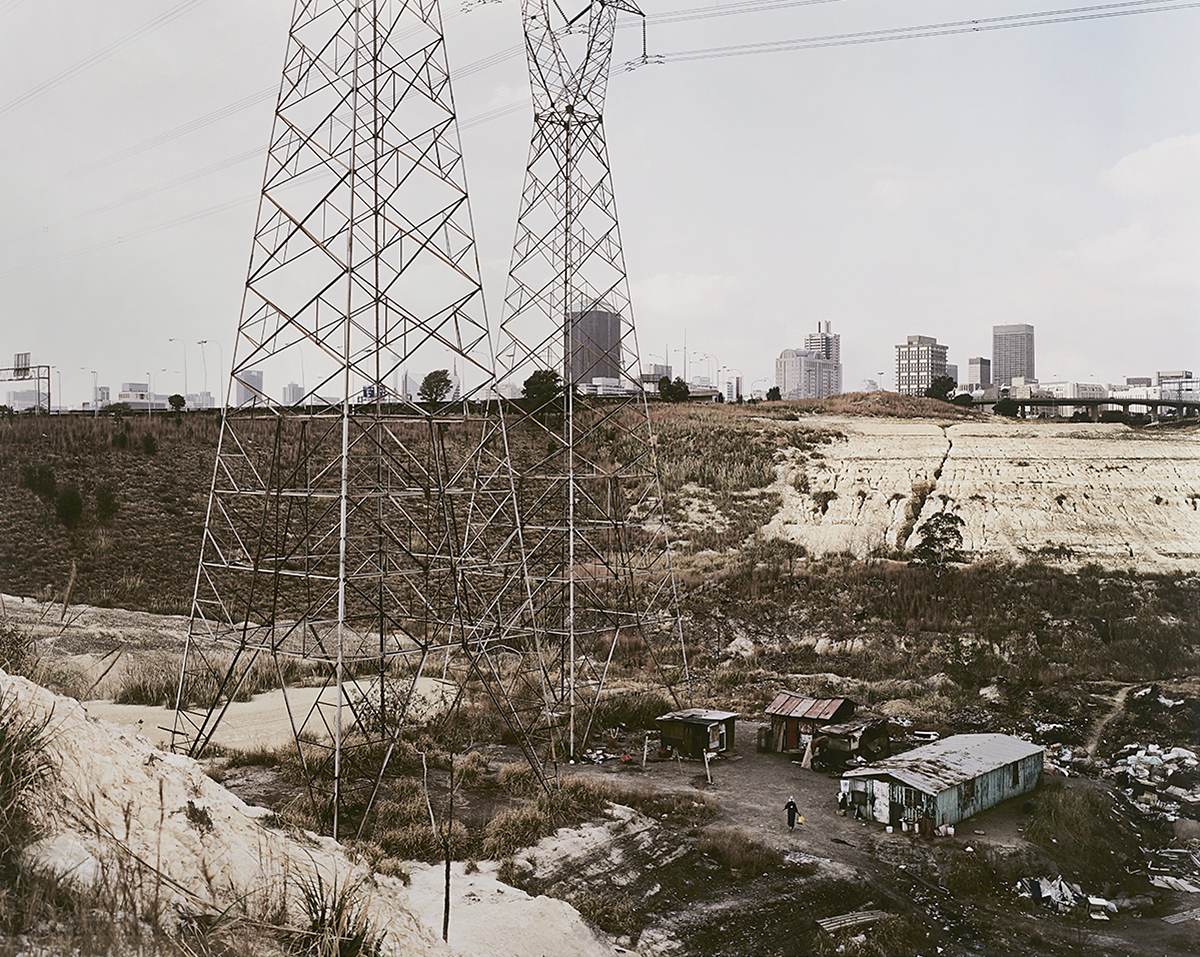
David Goldblatt (South African, 1930-2018) Johannesburg from the Southwest 2003
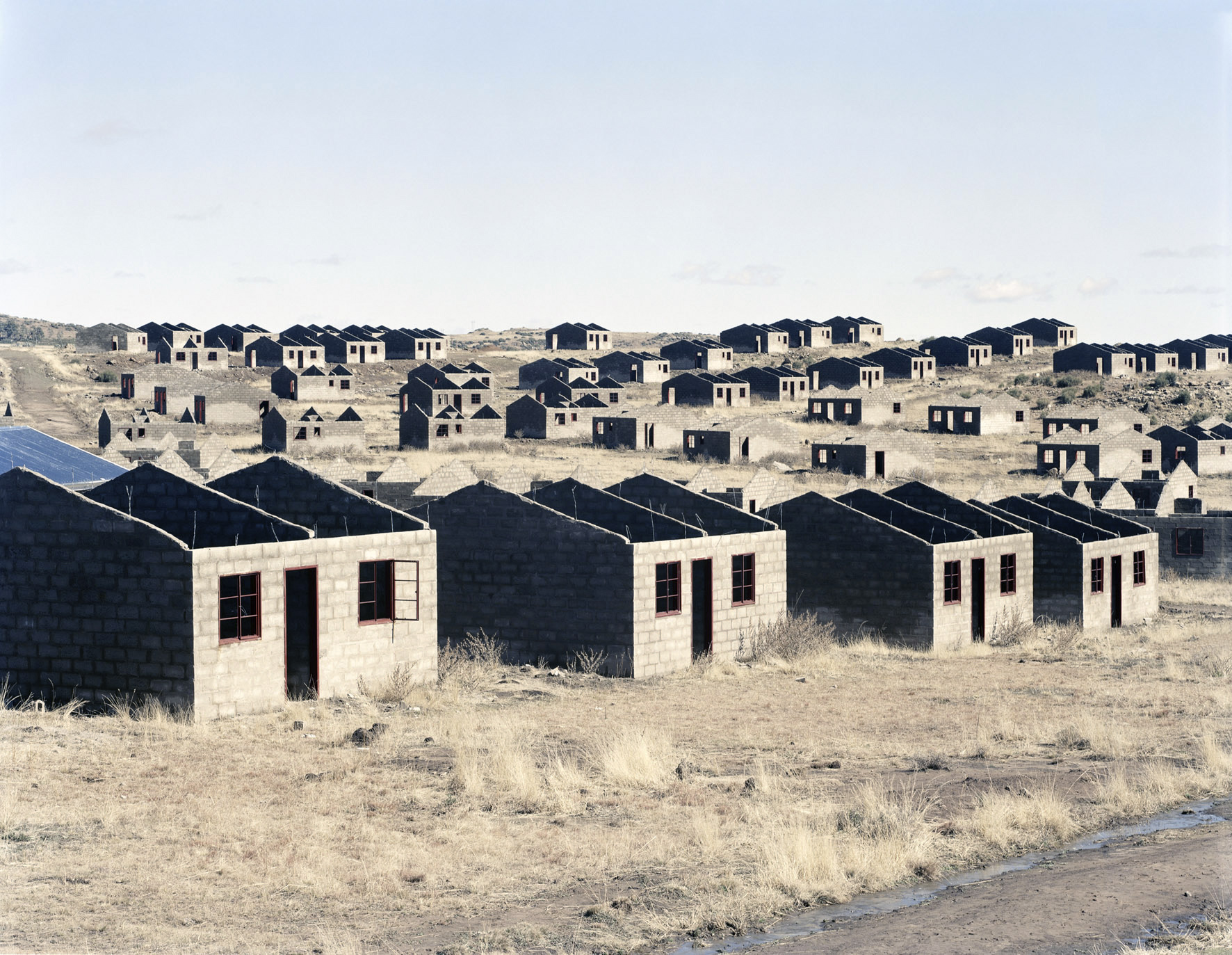
David Goldblatt (South African, 1930-2018) Incomplete houses, part of a stalled municipal development of 1000 houses. Lady Grey, Eastern Cape, 5 August 2006 2006
New Museum 235 Bowery New York, NY 10002 212.219.1222
Many thankx to Modernism for allowing me to publish the photographs in the posting. Please click on the photographs for a larger version of the image.
Dr Marcus Bunyan
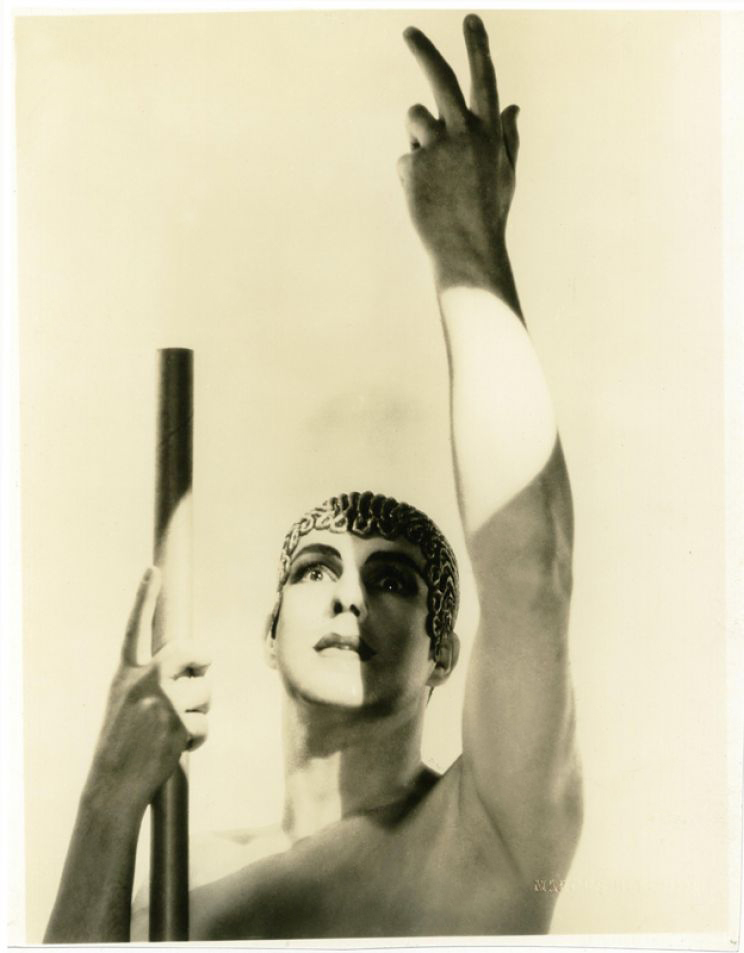
Anonymous photographer The Dancer, Ted Shawn, Boston Dance Theater 1929 Vintage gelatin silver print 9 5/8 x 7 1/4″
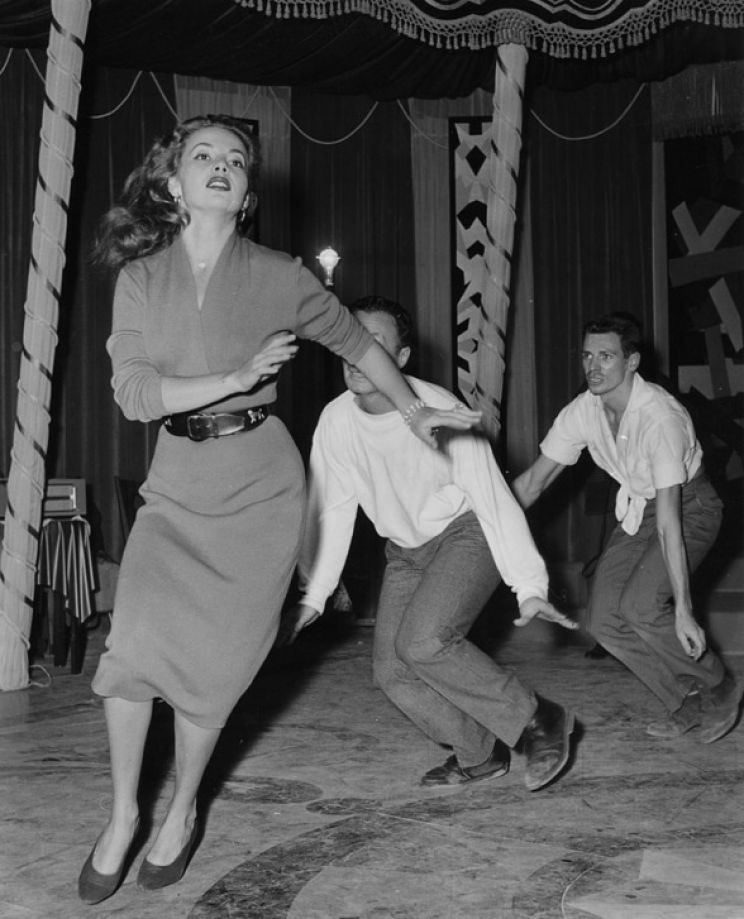
Gérard Decaux (French, active c. 1950s-1960s) Abbe Lane Rome, c. 1955 Vintage gelatin silver print 10 1/4 x 8 1/2″
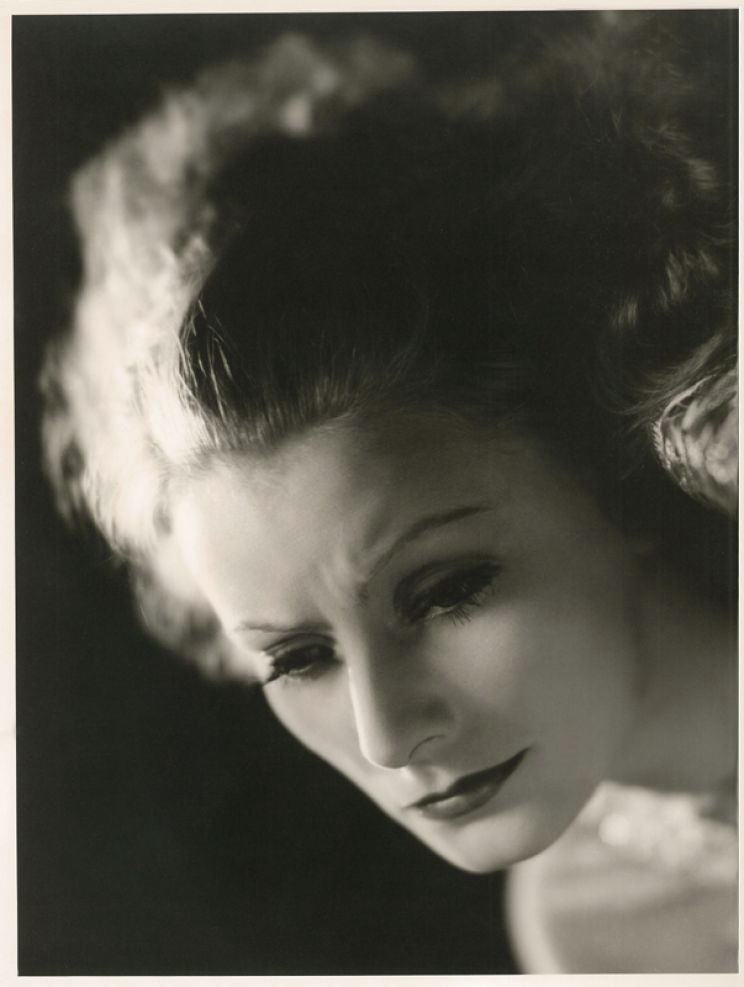
Clarence Sinclair Bull (American, 1896-1979) Greta Garbo c. 1935 Gelatin silver print, printed later 14 x 11″
Clarence Sinclair Bull was born in Sun River, Montana in 1896. His career began when Samuel Goldwyn hired him in the 1920 to photograph publicity stills of the MGM stars. He is most famous for his photographs of Greta Garbo taken during the years of 1926-1941. Bull’s first portrait of Garbo was a costume study for Flesh and the Devil, in September 1926.
Bull was able to study with the great Western painter, Charles Marion Russell. He also served as an assistant cameraman in 1918. Bull was skilled in the areas of lighting, retouching, and printing. He was most commonly credited as “C.S. Bull.” Bull died on June 8, 1979 in Los Angeles, California, aged 83.
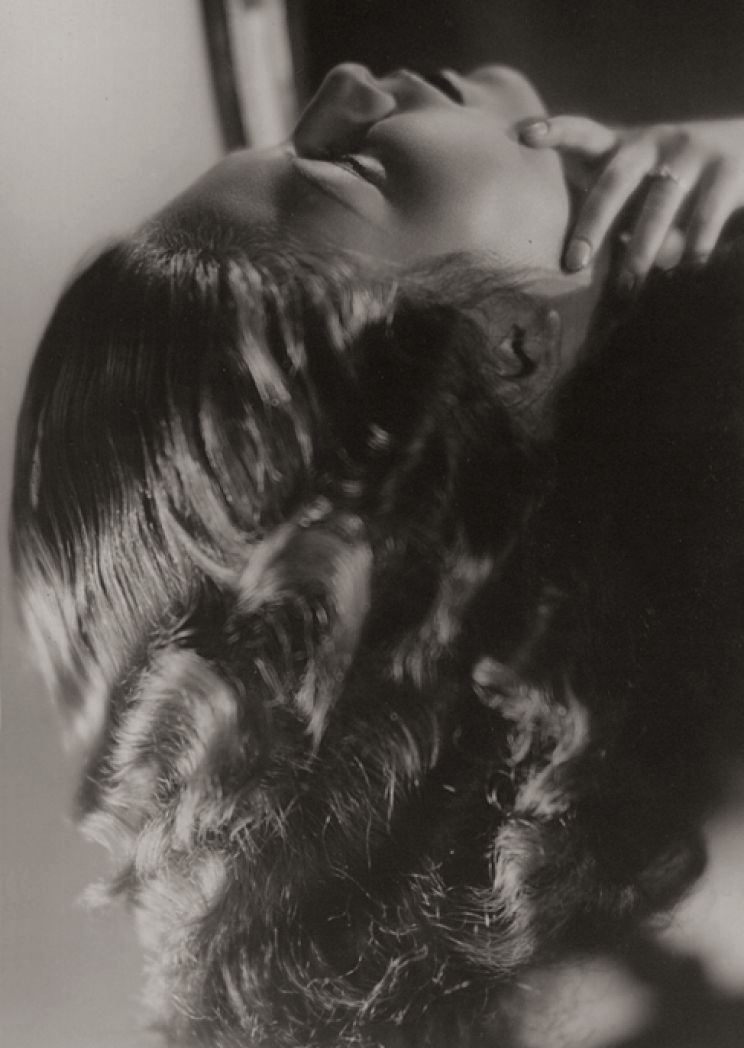
Laure Albin Guillot (French, 1879-1962) La Flamme (Woman’s Head) c. 1935 Vintage gelatin silver print 6 3/8 x 4 3/8″
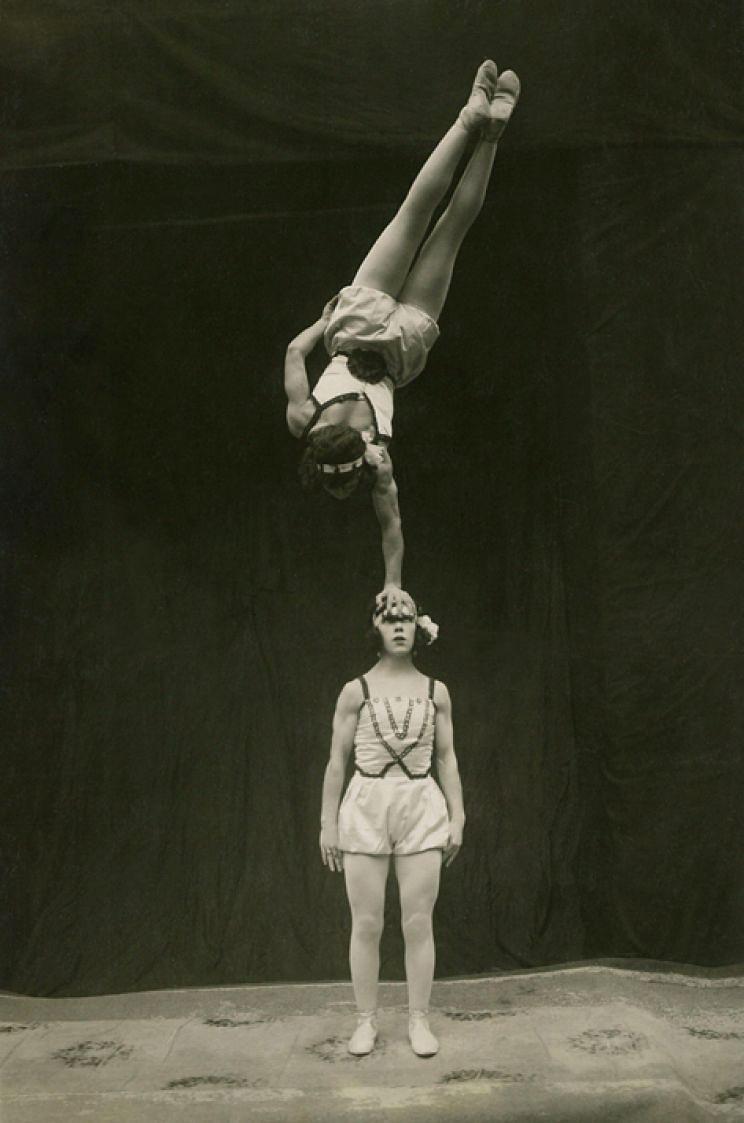
Anonymous photographer Acrobats c. 1920 Vintage gelatin silver print 8 5/8 x 5 5/8″
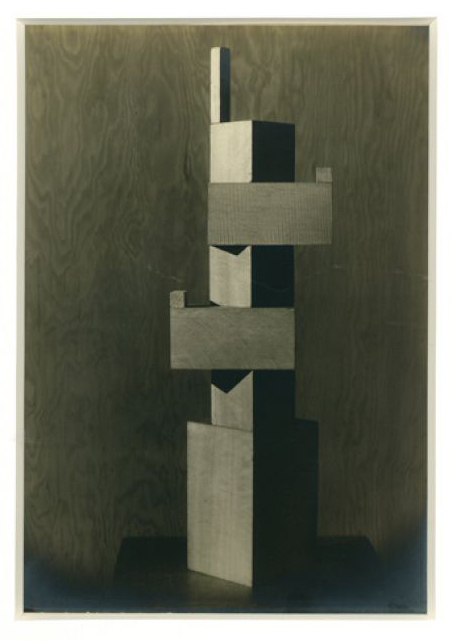
Pierre Nobel Still Life c. 1935 Vintage gelatin silver print mounted on paper 9 1/4 x 6 3/4″
Charles Jones (English, 1866-1959) Plum, Laxton Early Red c. 1910 Vintage gelatin silver print from a glass plate negative 6 x 4 1/4″
Modernism presents a wonderful and intriguing selection of photographs from the private collection of Robert Flynn Johnson. Robert Flynn Johnson is emeritus faculty in the Printmaking department. He is the curator in charge of the Achenbach Foundation for Graphic Arts at the Fine Arts Museums of San Francisco, a position he has held since 1975.
This exhibition coincides with the publication of his second book on vernacular photography, The Face in the Lens: Anonymous Photographs (University of California Press).
“When I am asked what it takes to become an accomplished collector, it is not the qualities of knowledge, judgment or that elusive term “taste” that comes to mind. Instead, it is the ability to be curious that is the crucial element in the makeup of a true collector – the ability to ask questions, to learn, and to get answers regarding works of art that catch your eye and move your emotions,” Robert Flynn Johnson said.
He added, “For more than thirty-five years I have followed my curiosity in passionately seeking out photographs that have stirred my imagination. Some of them have been by great artistic masters of the medium, while others have been anonymous photographic orphans that have nothing going for them but the image itself. Both types of photographs are included in this exhibition.”
“I have made a varied, and some may say eccentric, selection of images. From a heart-stopping snapshot of acrobats posed in a three-man handstand perched on the ledge of the 108th floor of the Empire State building, to a tender portrait of Marilyn Monroe and Joe DiMaggio that captures the instant before their lips meet in their first kiss as a married couple, They these pictures are a true reflection of my collecting philosophy that is attracted to profound, beautiful, humorous, and absurd aspects of life and art.”
“Nevertheless, I hope they these works convey some of the visual surprise and delight to you that I felt when I first saw each and every one of them.”
Oscar Wilde once said that the only person that liked all art equally was an auctioneer! I do not expect viewers to appreciate all the photographs in this exhibition, but through my visual curiosity in collecting them over time, I did, and that is why they are here together today.
Text from Artdaily.org website
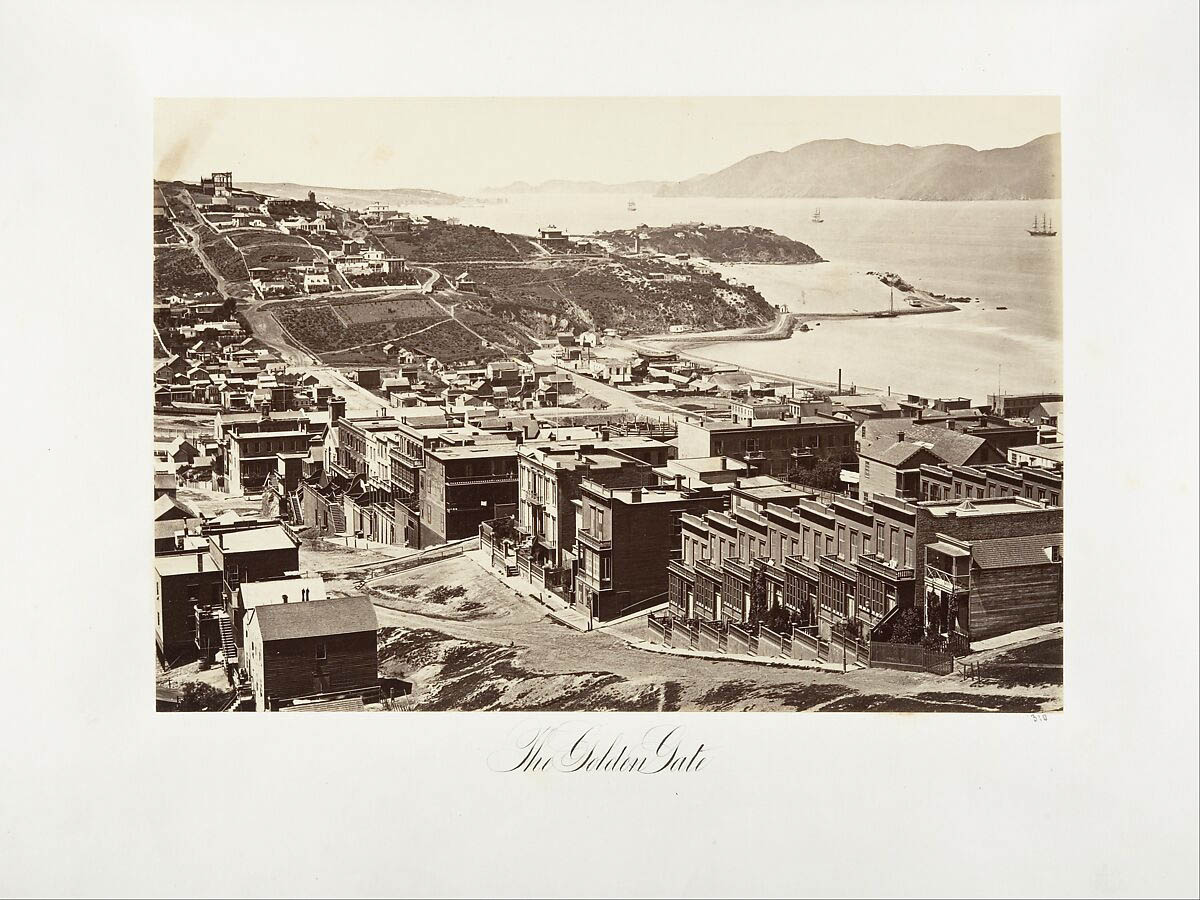
Carelton Watkins (American, 1829-1916) San Francisco c. 1868 Vintage albumen print 8 x 12 1/8″
Mammoth-plate photograph of San Francisco taken from the top of Telegraph Hill showing the Golden Gate in the background.
Eugène Atget (French, 1857-1927) Landscape, Environs of Paris (Étang, Ville-d’Avray) 1917 vintage albumen print 7 x 9 1/4″
Anonymous photographer (Czechoslovakia) Train c. 1930 Vintage gelatin silver print 9 1/4 x 11 5/8″
Anonymous photographer (United Kingdom) Train c. 1930 Vintage gelatin silver print 9 1/2 x 11 1/2″
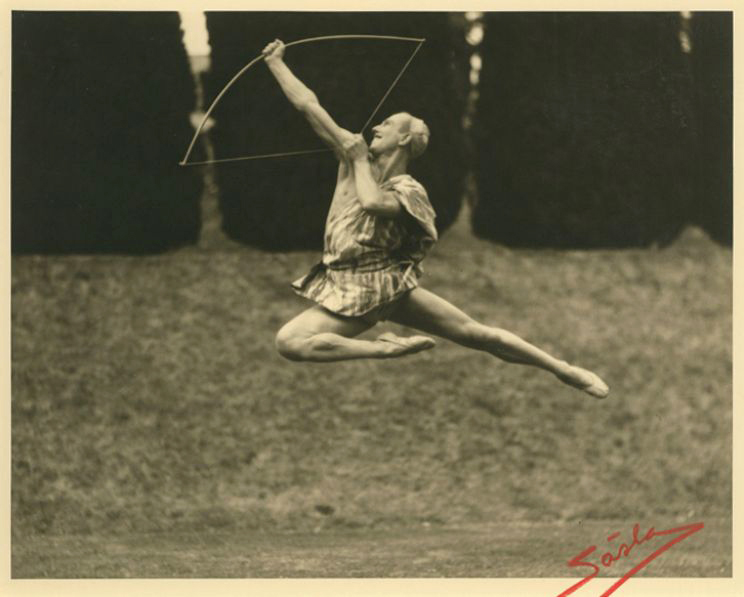
Sasha Archer Leaping Through the Air c. 1930 Vintage gelatin silver print 7 3/8 x 9 3/8″
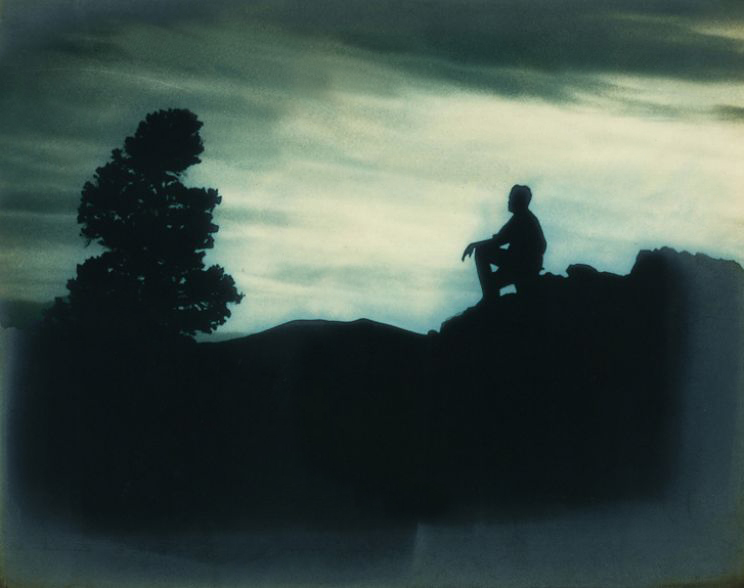
Leopold Hugo (American born Poland, 1866-1933) Craters of the Moon, Idaho 1920 Tinted vintage gelatin silver print 7 3/8 x 9 3/8″
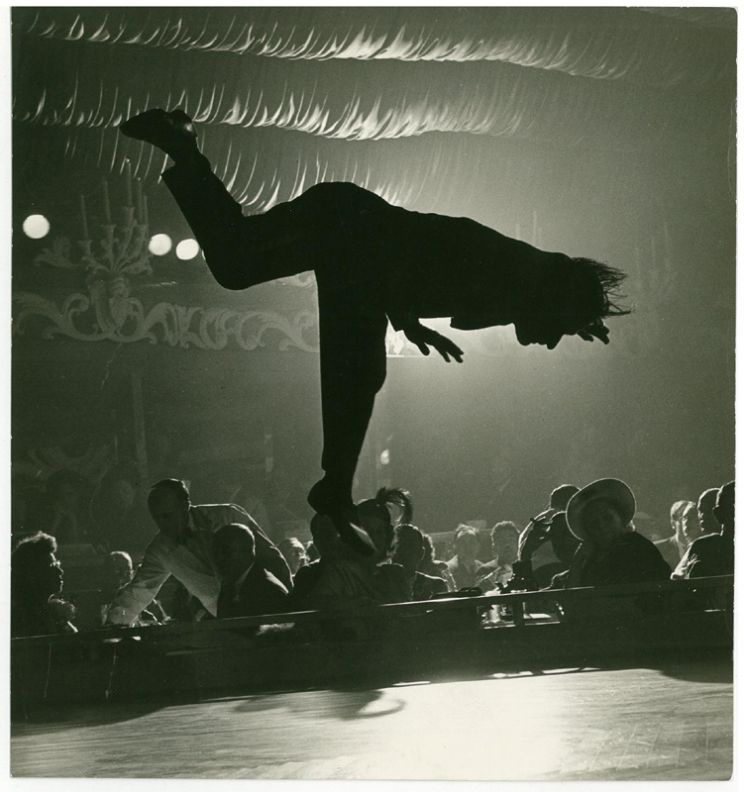
Anonymous photographer Acrobat Piroska at the Latin Quarter (Published in ‘Life Magazine’) c. 1945 Vintage gelatin silver print 9 5/8 x 9″
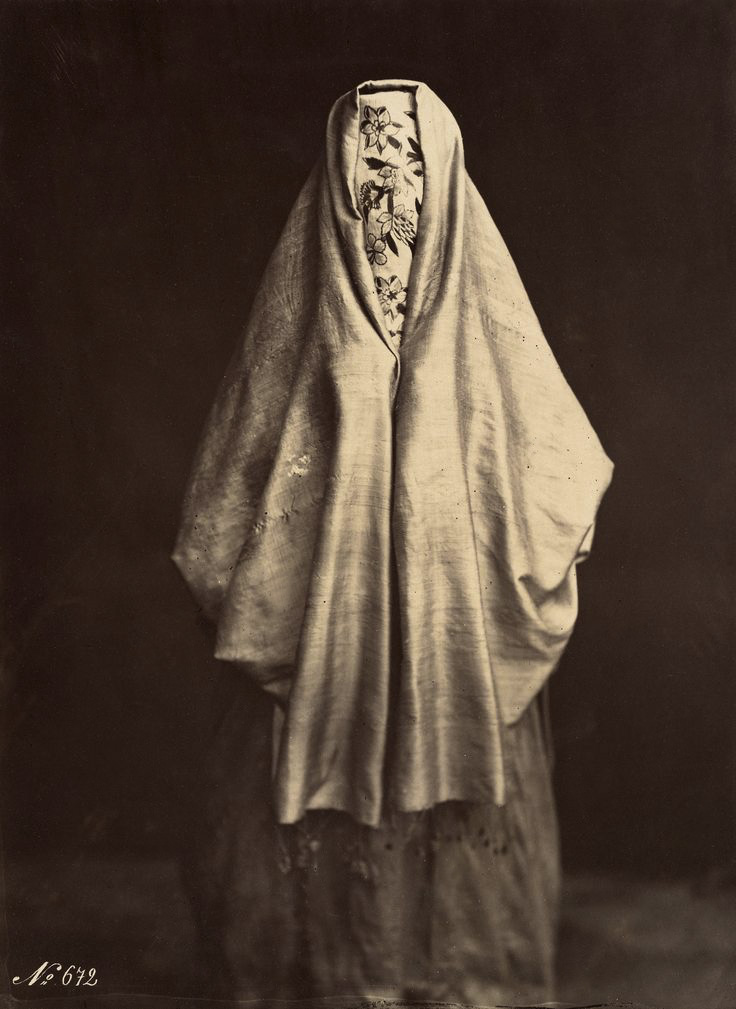
Felix Bonfils (French, 1831-1885) Woman in Burka c. 1870 vintage albumen print 8 3/4 x 6 5/8″
Modernism 724 Ellis Street San Francisco, CA 94109
Artists: Laurenz Berges, Albrecht Fuchs, Karin Geiger, Claus Goedicke, Uschi Huber, Matthias Koch, Wiebke Loeper, Nicola Meitzner, Peter Piller, Heidi Specker.
An exhibition of the Institut für Auslandsbeziehungen e. V. (ifa/Institute for Foreign Cultural Relations), Stuttgart, Germany and presented in cooperation with the Goethe-Institut Australien.
I was looking forward to this exhibition and so on a cold and very windy winter’s day I ventured out on the drive to the Monash Gallery of Art in Wheelers Hill expecting to be challenged by a new generation of German photographers. I was to be sorely disappointed. This show, with the exception of excellent work by Andreas Koch and good work by Laurenz Berges, epitomises all that I find woeful about contemporary photography.
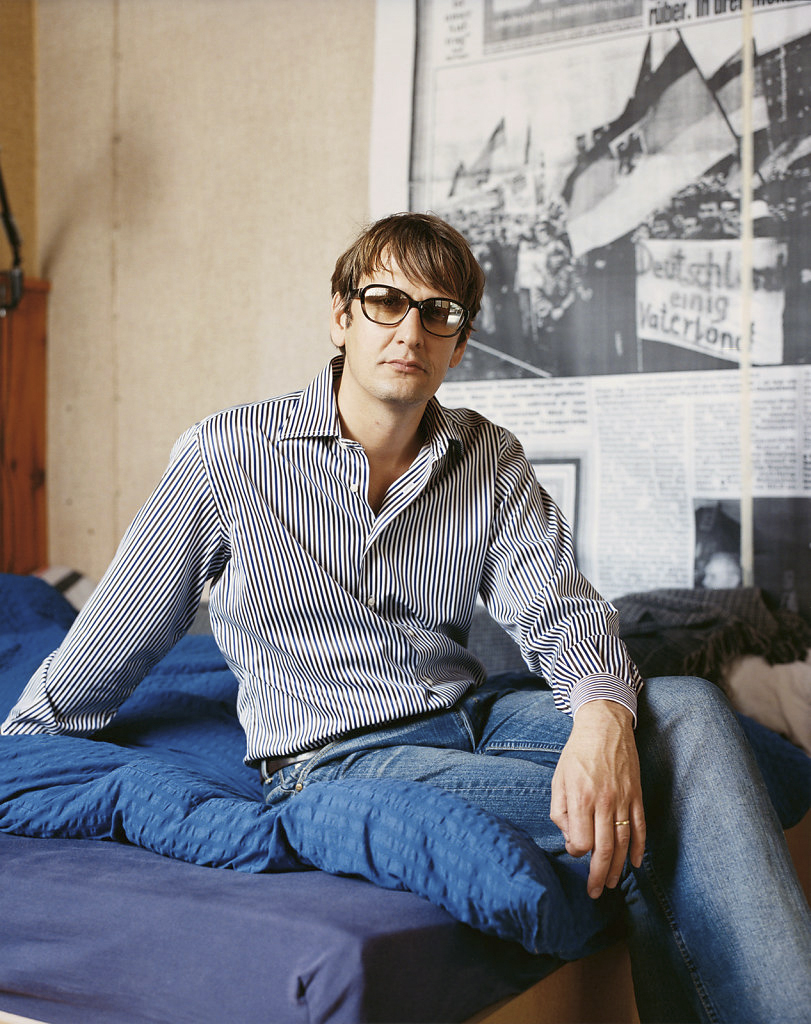
There is a lack of life and vigour to the work, no sense of enjoyment in taking photographs of the world. The narratives are shallow and vacuous inducing a deep somnambulism in the viewer that is compounded by the silent, deeply carpeted gallery making the experience one of entering a mausoleum (this is a great space that needs to be a contemporary space!).
How many times have I seen photographs of empty spaces that supposedly impart some deep inner meaning? How many times do I need to see ‘deadpan’ portrait photographs that are again supposed to impart rich psychological meaning? I have seen too many already. (See how a great artist like Tacita Dean achieves does impart rich psychological meaning to startling effect in her film Darmstädter Werkblock 2007)
Conceptually the work is barren. Technically the proficiency of some of the work is almost non-existent. If this standard of work were put up for assessment in a university course it would fail miserably.
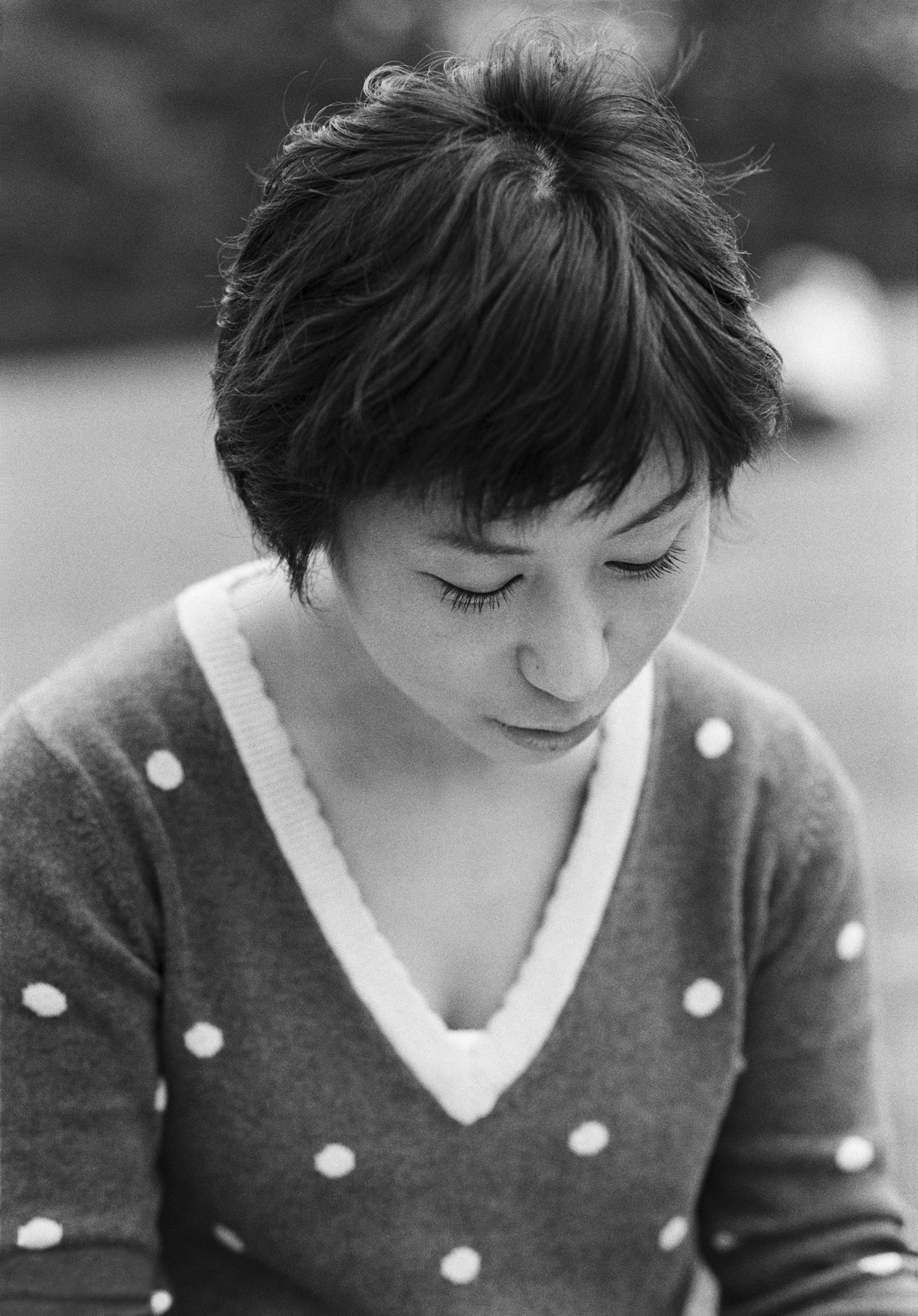
For example, Nicola Meitzner’s work Forward Motion (2006) is a collection of vertical portraits (of the same person in different poses) and streetscapes of Tokyo – poor-quality prints mounted in unattractive silver aluminium frames. They are forgettable. If an artist were to study the work of, say, Manuel Alvarez Bravo, then one might gain some insight into how to photograph the city and the people that live in it in a way that elicits a response from the viewer to the photo-poetry that is placed before them.
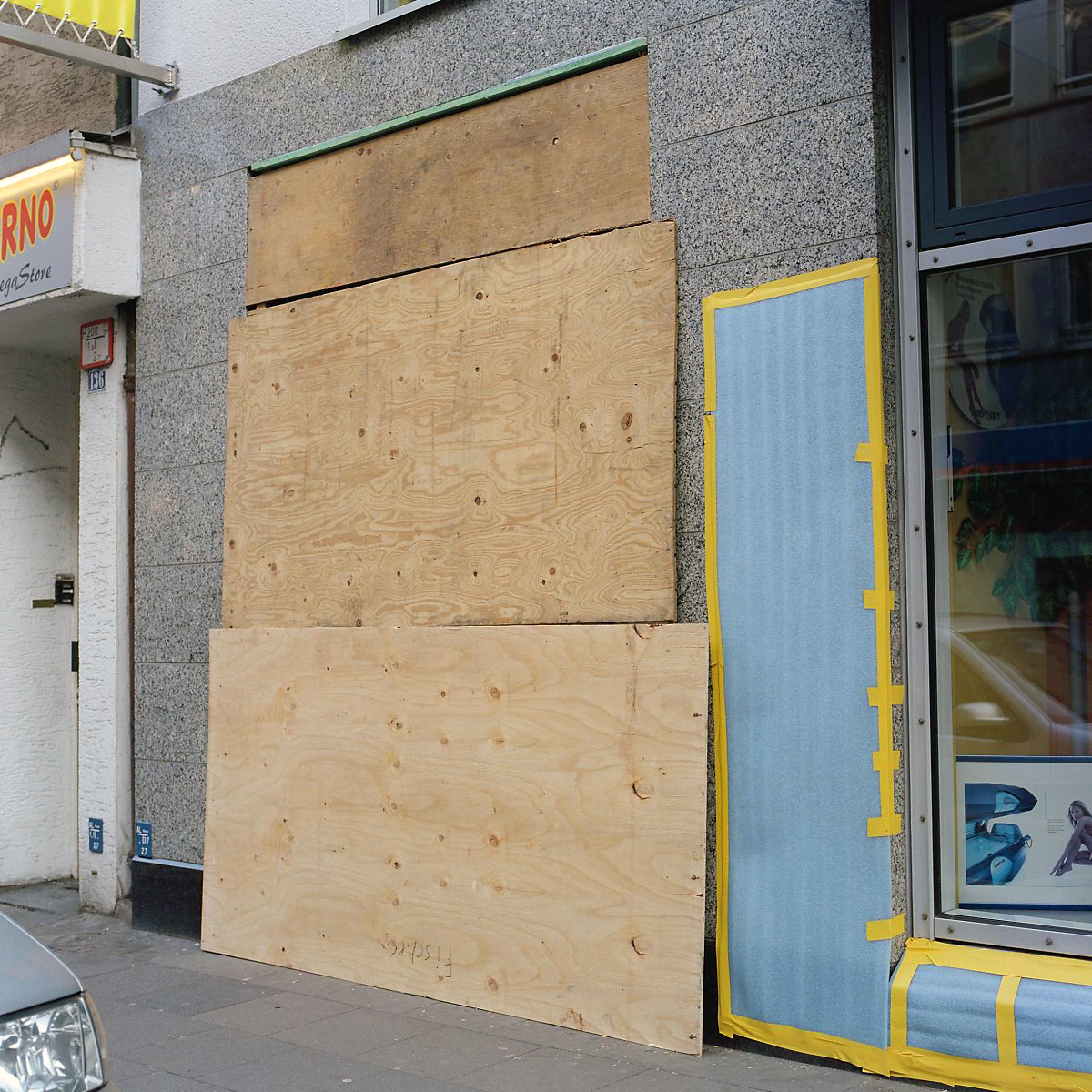
Uschi Huber’s photographs of boarded up shop fronts, while a nice conceptual idea, are again lacking in technical proficiency and are nothing we haven’t seen many times before while Peter Piller’s ten print-media type pigment prints of girls at a shooting range with rifles do not bare comment on both a conceptual and technical level. Similarly, Wiebke Loeper’s colour photographs of the city of Wismar – houses, roads, water, oat fields, people peering into shop windows – sent to friends living in Melbourne to show them the desolation and rebuilding of the city are seriously year 12 work.
The two redeeming artists are Laurenz Berges and Andreas Koch.
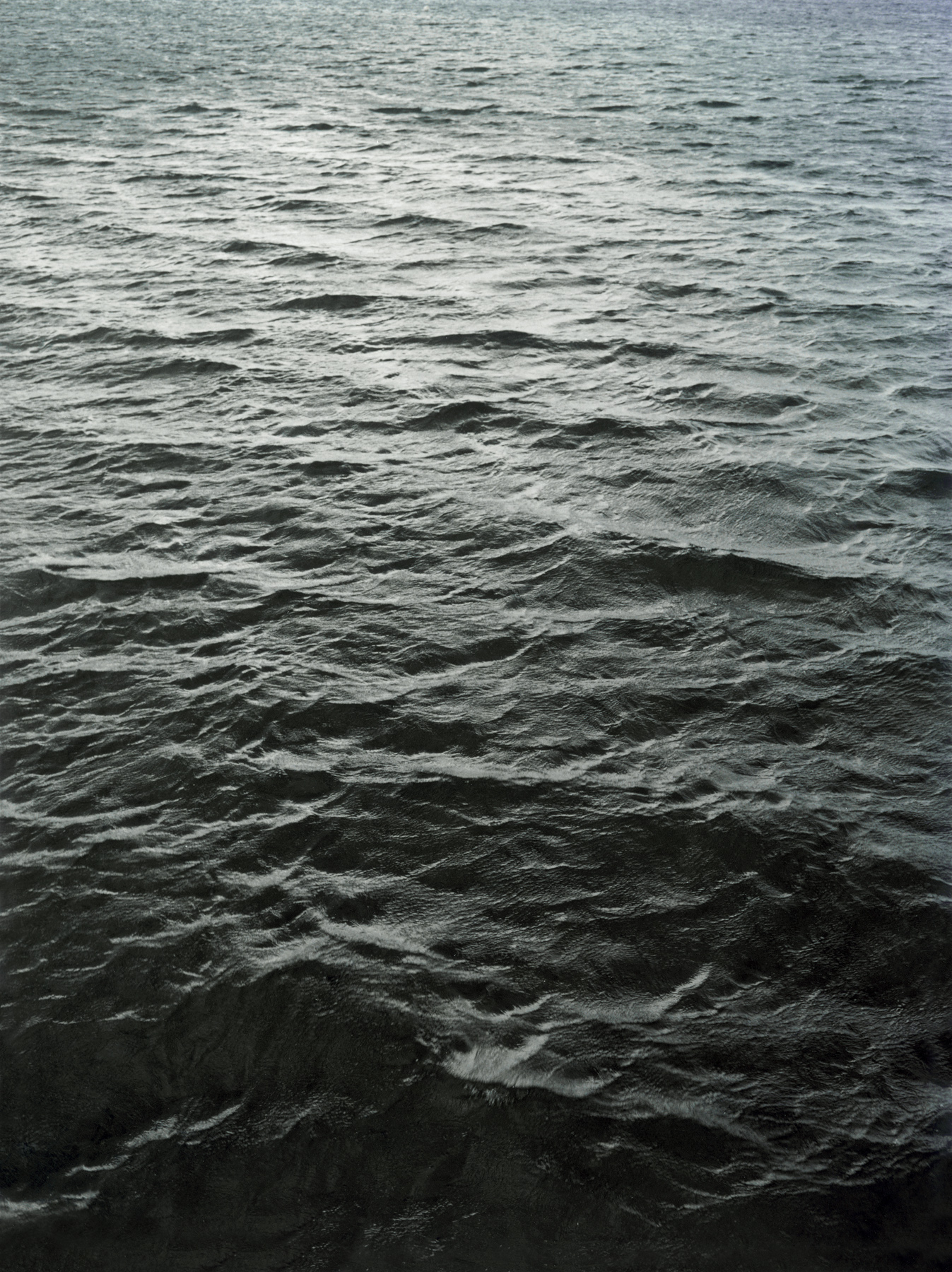
Berges four large type C colour photographs of an empty house and the surrounds as seen through a window are intimately detailed visions of human absence from the built environment: the huts, piles of wood chips, barren trees, the feathers on the floor of one print, the cigarette butts on the floor of another, the marks on the wall in blue and red add to a sense of abandonment and alienation from the environment – traces of human experience, identity and memory etched into the photographic medium.
As the text on the Institut für Auslandsbeziehungen (IFA) website observes,
“Laurenz Berges is a chronicler of absence. His minimalist photographs point to the earlier use of spaces, only fragments of which are shown, whose inhabitants have put them to other, new uses. Berges depicts the traces of this change in austere images that, due to their reduction, tell their stories indirectly and almost involuntarily. These are stories about the existential significance certain spaces have for our identity, and also about their transitoriness and their loss.”1
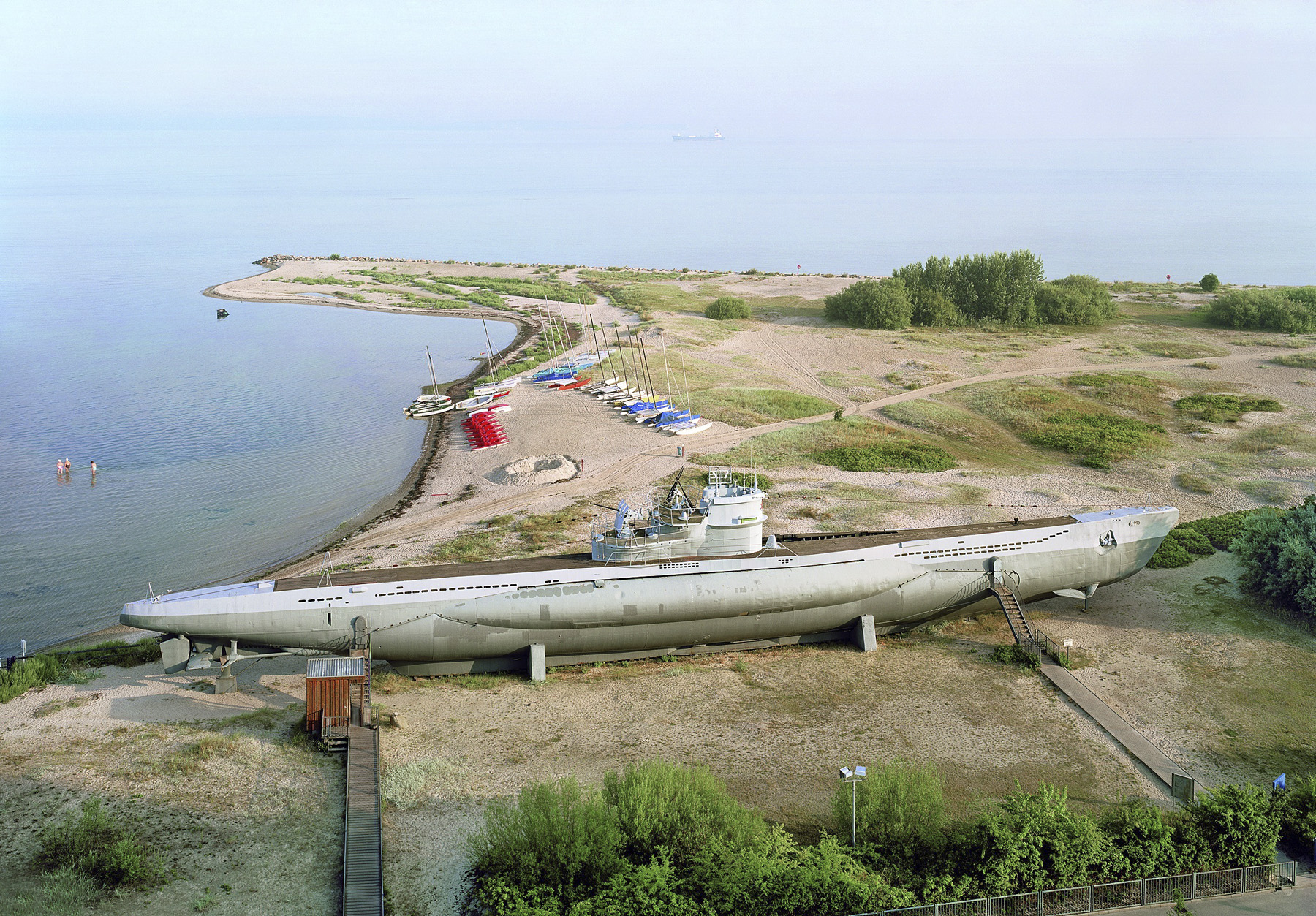
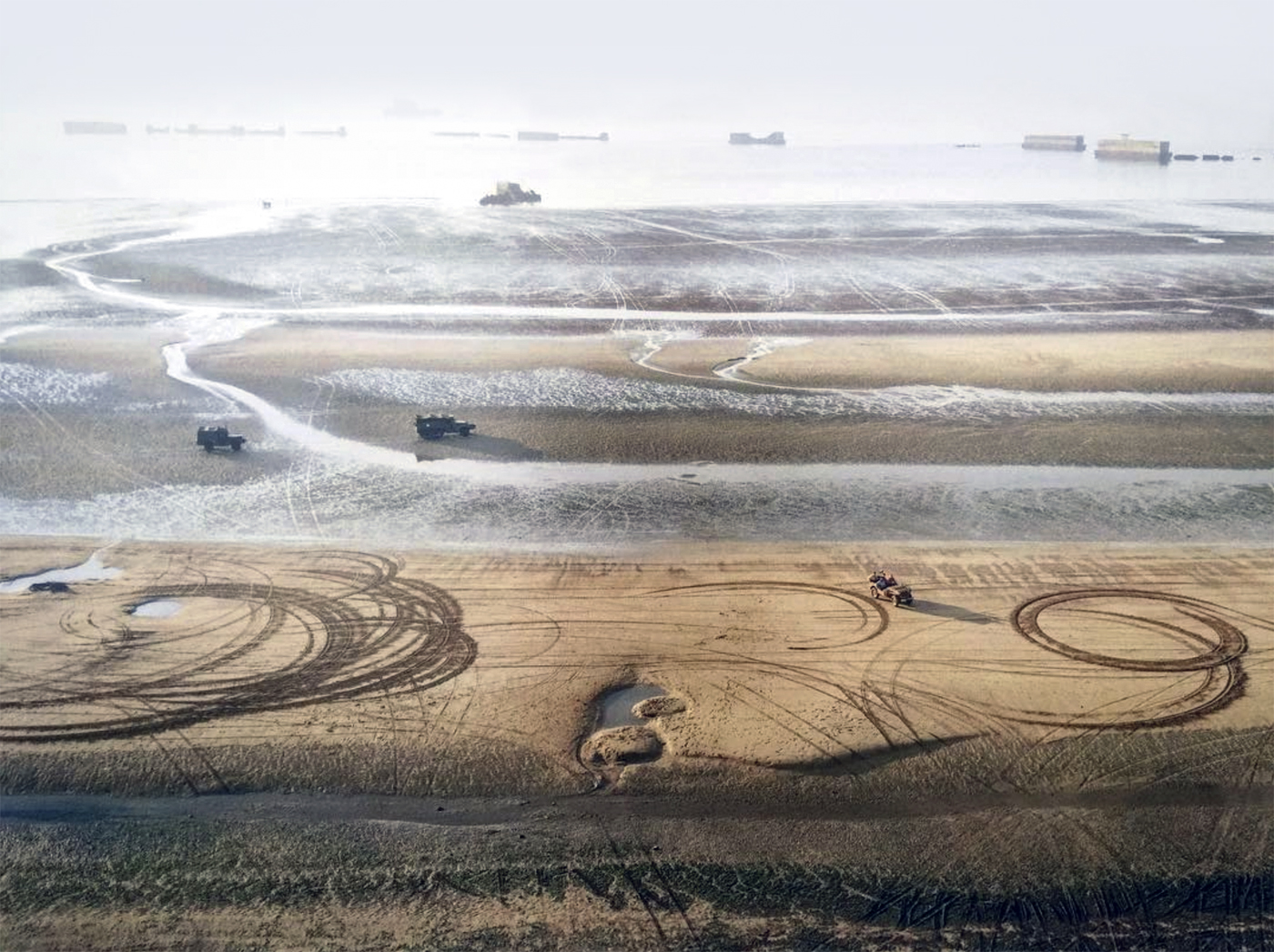
The star of the show was the work of Matthias Koch. His five large aqua-mounted type C prints from the series Sites of German History (2006) are both technically and conceptually superb, full of delicious ironies and humour. Using an aerial aesthetic (apparently by climbing the ladder of a fire engine that he owns) Koch looks down on the landscape and through his images formulates new ways of seeing national symbols (even though many of them are not in Germany). His re-presentation of spatial inter-relations and objects embedded in their rural and urban surroundings are both simple yet layered and complex.
Unfortunately I have only two photographs (above and below) to show you of his work. None other was available but the images gives you an idea of his raison d’être. The specimen of U-995, built in Kiel in 1944, is presented as a trapped and mounted animal, preserved for our delectation and inspection with gangways and stairs to view the innards. Little hobby craft lie on a beach behind while people paddle in the shallows, a ship barely seen in the distance out at sea. The fact that this U-boat was once used to destroy such a ship, the irony of the proposition, is not lost on the viewer.
Other images in the series include a photograph of the derelict runway of the Heinkel factory as seen from above, the overgrown concrete slabs cracked and lifting, the edges filled with grass, the distant view dissolving into mist and nothingness. The photograph Harbour, Allied landing near Normandy, 1944 (2006, below) shows an American jeep and half-track of the period on the beach of the Allied landing in Normandy, tyre tracks swirling in the sand while in the distance the concrete block remains of the Mulberry harbour used in 1944 still litter the coastline. How many men, both German and American, died on this beach all those years ago? In another tour de force, Atlantic Defence Wall near Cherbourg. Bunker construction built 1940 (2006), concrete bunkers dot the landscape with the beach and sea beyond as people sunbathe on the grass amongst the ruined bunkers, probably oblivious to the context of their surroundings. Koch is a master of the re-presentation of the context of memory, history and place.
Overall this exhibition is a great disappointment. I find it hard to believe that the exhibition has been curated by the same man who curated the recent Andreas Gursky exhibition at the National Gallery of Victoria. The choice of work and the presentation of technically poor prints is not up to standard. I also find it difficult to reconcile some of the reviews I have read of this exhibition with the actual work itself.
Thank goodness for the photographs of Matthias Koch for he alone made the journey into outer Melbourne a worthwhile journey into the memory of the soul.
Dr Marcus Bunyan
1/ Anonymous. “Presentation/representation: Laurenz Berges,” on the Institut für Auslandsbeziehungen (IFA) website [Online] Cited 08/08/2009 no longer available online
Many thankx to Monash Gallery of Art for allowing me to publish the photographs in the posting. Please click on the photographs for a larger version of the image.
This international touring exhibition was developed by the Institut für Auslandsbeziehungen (ifa) in Germany and is presented in cooperation with the Goethe-Institut Australien.
MGA is hosting the important international exhibition ‘presentation / representation: photography from Germany’, which brings to Melbourne the work of ten of Germany’s best contemporary photographers.
presentation/representation is curated by Thomas Weski (curator of Andreas Gursky recently seen at the National Gallery of Victoria), and covers the work of the generation of German photographers that has followed the now-legendary Kunstakademie Düsseldorf generation of Gursky, Thomas Ruff, Thomas Struth and Candida Höfer. For the artists in presentation/representation, including Matthias Koch, Laurenz Berges and Heidi Specker, photography is a medium that has its own language and characteristics, and their work collectively explores the limits of the medium.
Shaune Lakin, Director of the MGA states “MGA is thrilled to present ‘presentation / representation’ and to bring to the people of Melbourne such an important survey of contemporary German photography. As well as providing a comprehensive survey of German practice, the exhibition will complement the experience of those who saw Weski’s wonderful Gursky exhibition at NGV. We are also delighted to host participating artist Matthias Koch.”
Koch will be presenting a series of public programs including an artist talk, student tutorial and a field trip exploring the industrial suburban sites close to the gallery. “With his critical interest in landscape, architecture and history, Koch will provide some wonderful insights into our local landscape for participants in these programs,” notes Dr Lakin.
MGA’s Education and public programs coordinator Stephanie Richter says: “This is a great opportunity for students and Melbourne audiences to meet one of Germany’s most celebrated contemporary photographers and to participate in the busy schedule of talks, tutorials and field trips with Matthias.”
Press release from Monash Gallery of Art website [Online] Cited 05/08/2019. No longer available online. Used under fair use conditions for the purposes of education and research
Curator: The specific curator credited for the touring project/exhibition context included Craig Richards (photography curator at the Whyte Museum of the Canadian Rockies), with the body of work and accompanying publication featuring essays by critics and writers such as Helen Ennis, Michael Mitchell, Ric Spencer, and Alasdair Foster.
A travelling exhibition from the Western Australian Museum.
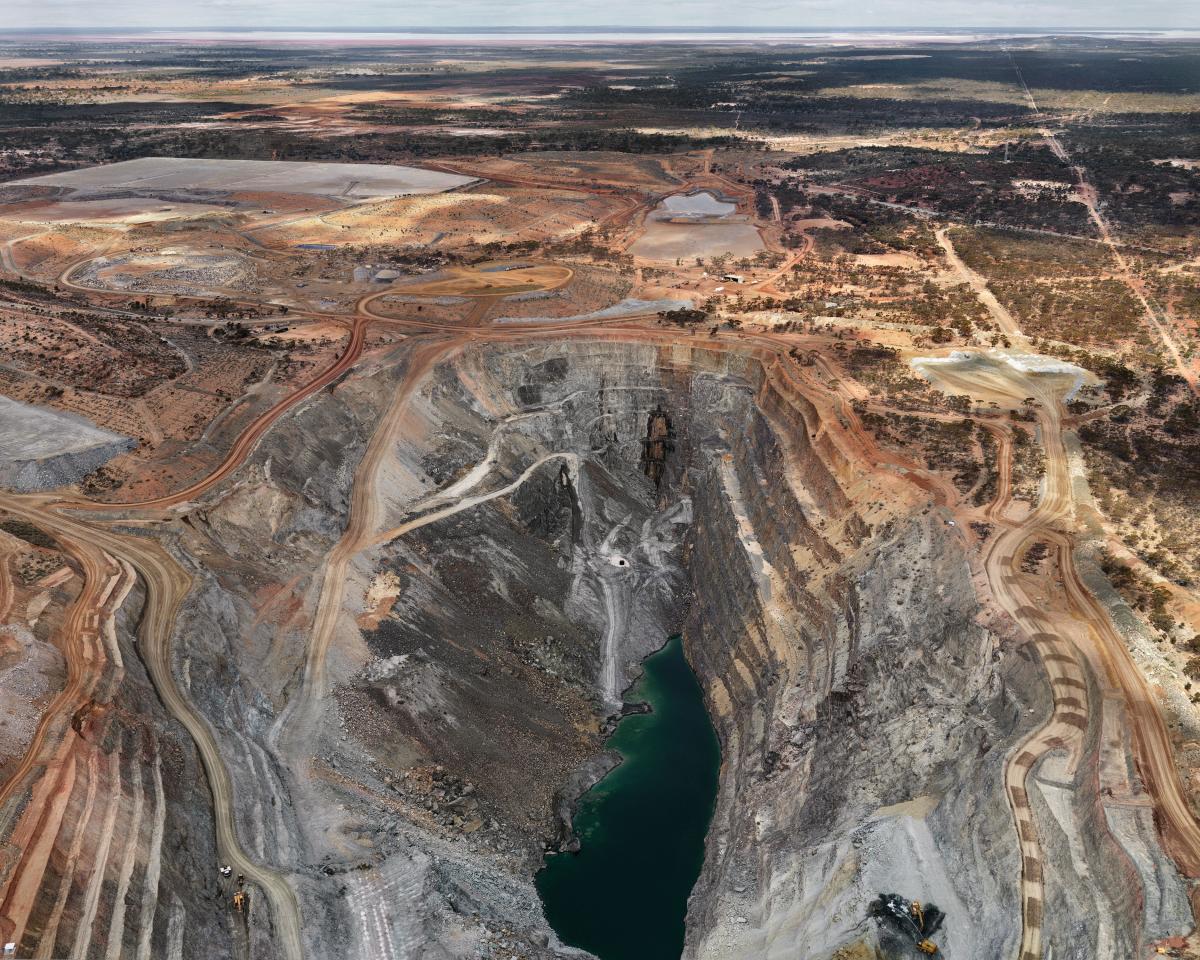
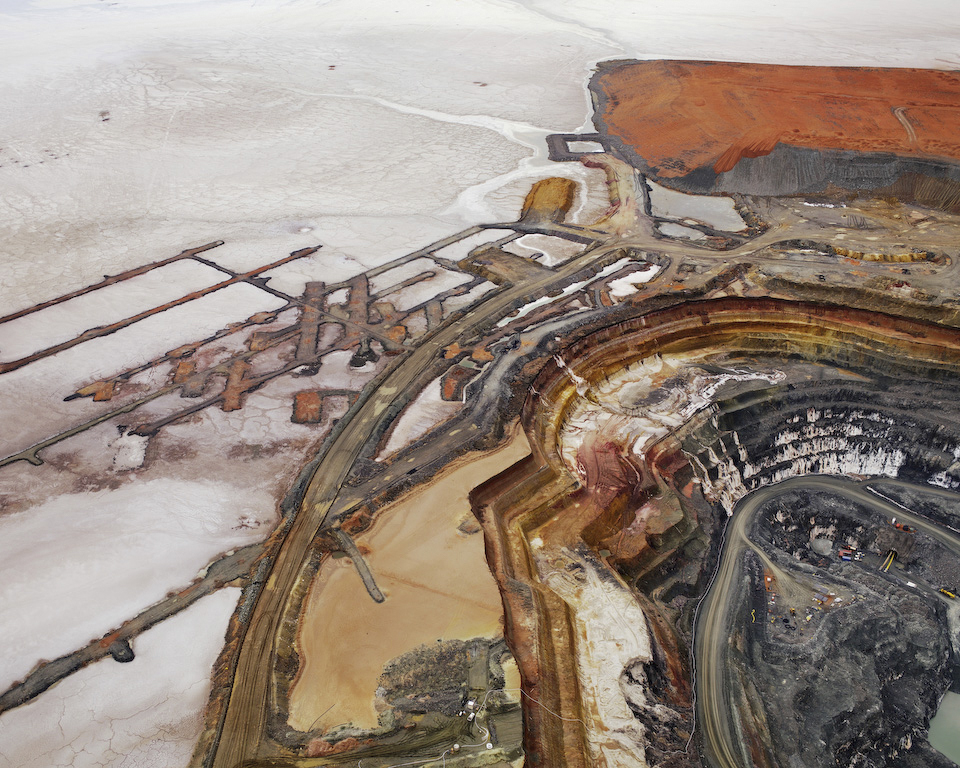
Edward Burtynsky (Canadian, b. 1955) Jubilee Operations #1, Kalgoorlie, Western Australia 2007 Digital chromogenic colour photographic print 1560mm x 1260mm Western Australian Museum
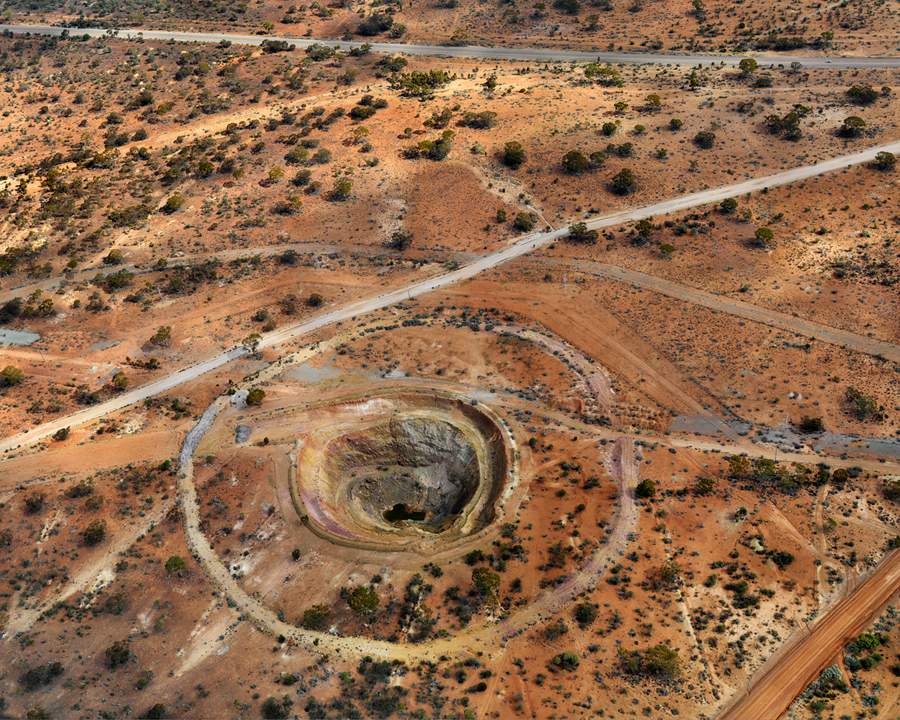
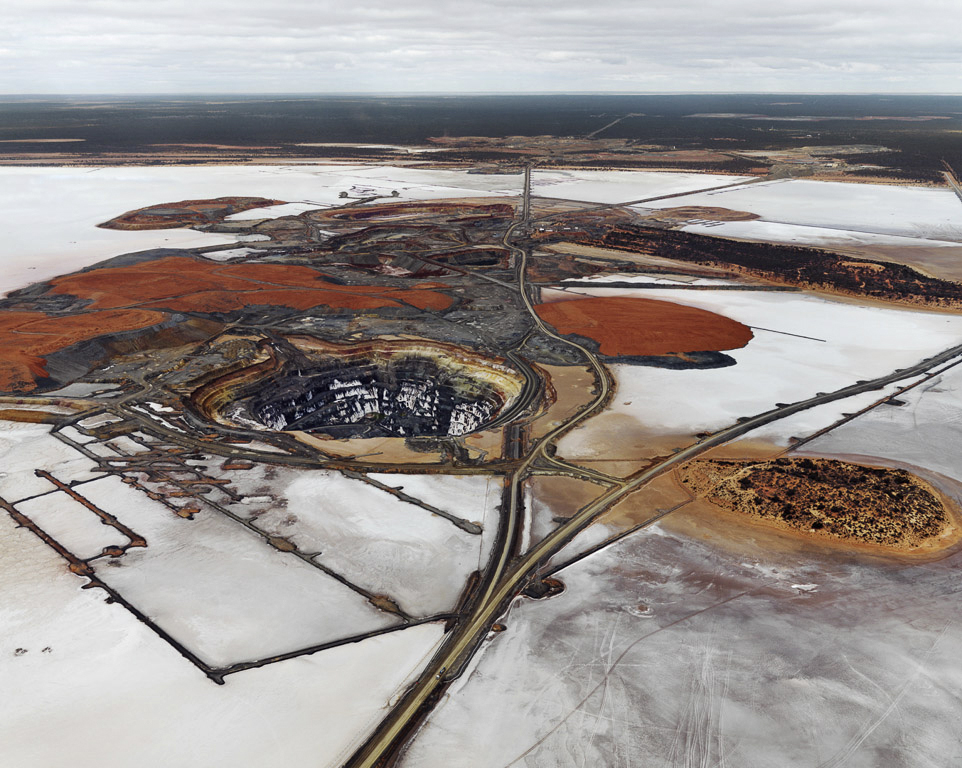
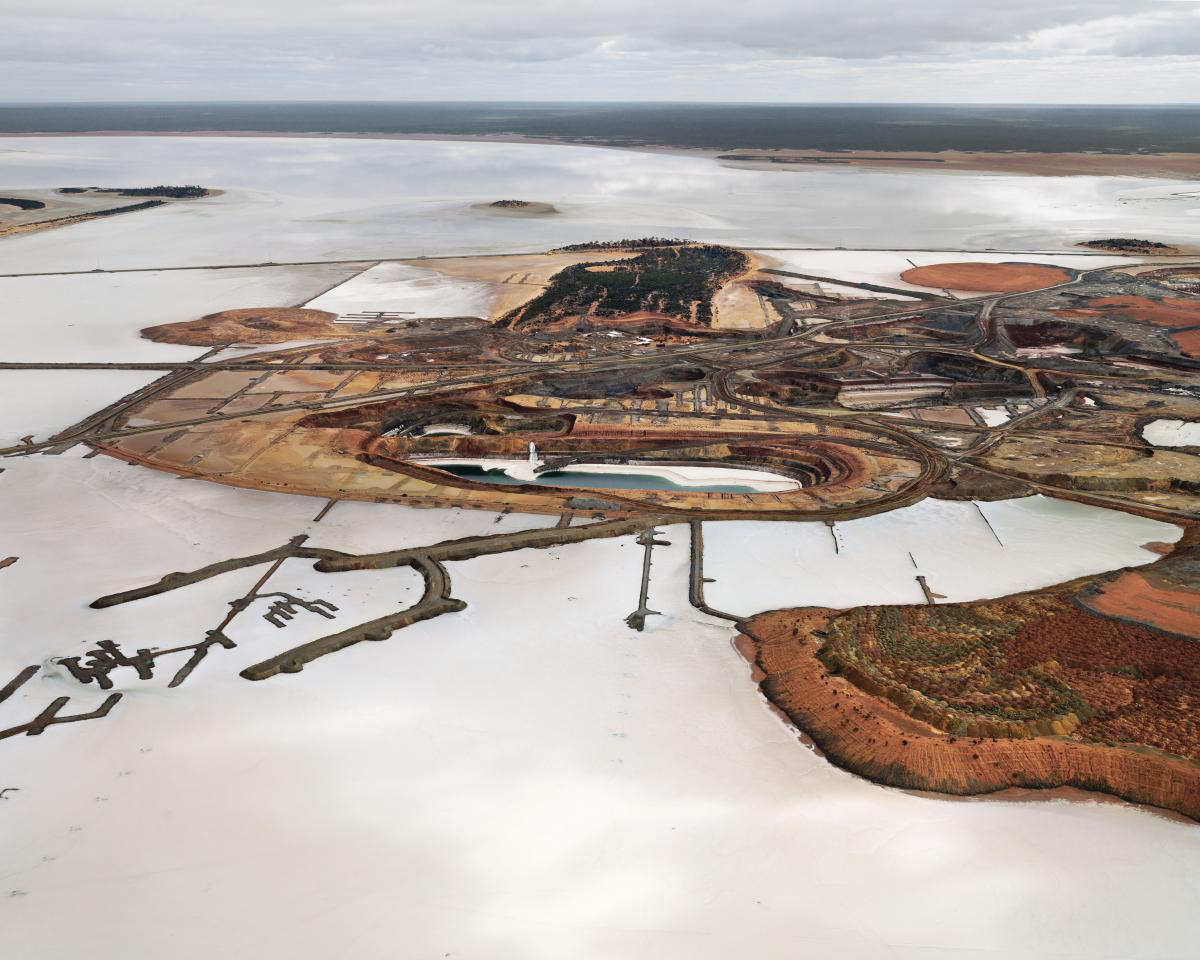
All of these incredible, environmental aerial photographs – beauty, texture, pattern, fabric, scars, desecration, destruction, de / construction – are works in the exhibition.
The effects of the Anthropocene era are in full swing.
I will be glad when I am not here to see the fateful outcome of all of this: the death of most of the animals, and the sickness of the planet.
Dr Marcus Bunyan
Many thankx to the Australian Centre for Photography for allowing me to publish the photographs in the posting. Please click on the photographs for a larger version of the image.
Edward Burtynsky (Canadian, b. 1955) Otter Juan Coronet Mine #1, Kalgoorlie, Western Australia 2007 Digital chromogenic colour photographic print 1560mm x 1260mm Western Australian Museum
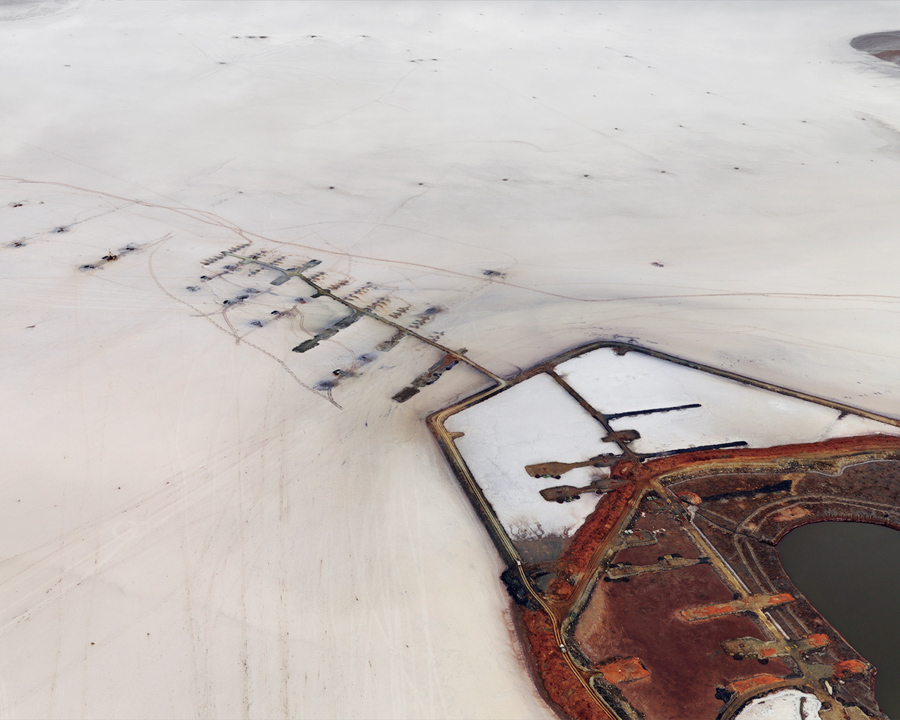
Edward Burtynsky (Canadian, b. 1955) Silver Lake Operations #1, Lake Lefroy, Western Australia 2007 Digital chromogenic colour photographic print 1560mm x 1260mm Western Australian Museum
Edward Burtynsky (Canadian, b. 1955) Silver Lake Operations #2, Lake Lefroy, Western Australia 2007 Digital chromogenic colour photographic print 1560mm x 1260mm Western Australian Museum
Edward Burtynsky (Canadian, b. 1955) Silver Lake Operations #3, Lake Lefroy, Western Australia 2007 Digital chromogenic colour photographic print 1560mm x 1260mm Western Australian Museum
Edward Burtynsky (Canadian, b. 1955) Silver Lake Operations #5, Lake Lefroy, Western Australia 2007 Digital chromogenic colour photographic print 1560mm x 1260mm Western Australian Museum
Edward Burtynsky (Canadian, b. 1955) Silver Lake Operations #11, Lake Lefroy, Western Australia 2007 Digital chromogenic colour photographic print 1560mm x 1260mm Western Australian Museum
Edward Burtynsky (Canadian, b. 1955) Silver Lake Operations #12, Lake Lefroy, Western Australia 2007 Digital chromogenic colour photographic print 1560mm x 1260mm Western Australian Museum
Edward Burtynsky (Canadian, b. 1955) Silver Lake Operations #14, Lake Lefroy, Western Australia 2007 Digital chromogenic colour photographic print 1560mm x 1260mm Western Australian Museum
Edward Burtynsky (Canadian, b. 1955) Silver Lake Operations #15, Lake Lefroy, Western Australia 2007 Digital chromogenic colour photographic print 1560mm x 1260mm Western Australian Museum
Edward Burtynsky (Canadian, b. 1955) Silver Lake Operations #16, Lake Lefroy, Western Australia 2007 Digital chromogenic colour photographic print 1560mm x 1260mm Western Australian Museum
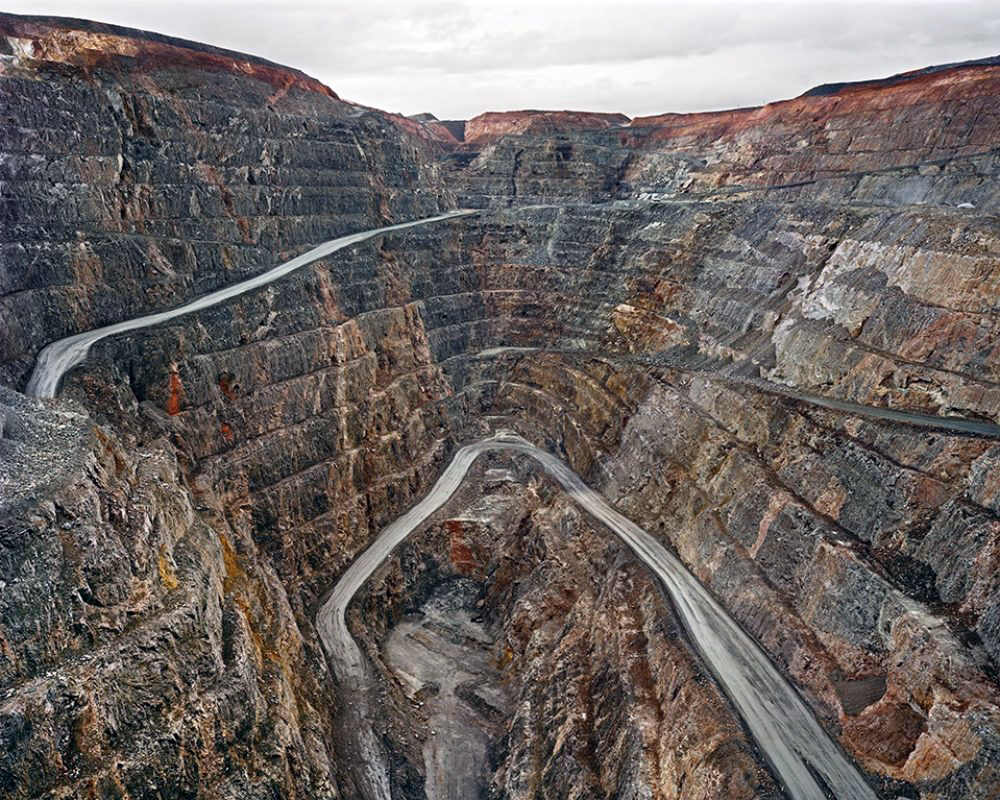
Edward Burtynsky is one of the world’s leading contemporary landscape photographers. His ‘manufactured landscapes’ have included stark images of recycling yards, mine tailings, quarries and refineries. This series of images, taken in the eastern goldfields and the Pilbara of Western Australia, continues Edward Burtynsky’s examination of natural landscapes modified by mankind in the pursuit of the raw materials required for our modern society.
“Our dependence on nature to provide the materials for our consumption and our concern for the health of our planet sets us into an uneasy contradiction. For me, these images function as reflecting pools of our times.” ~ Edward Burtynsky
Australian Minescapes is a new body of work by Burtynsky, commissioned for the FotoFreo 2008 Festival. For this exhibition a selection of images from his Shipyard images from China and Ship Breaking images from Bangladesh will be presented alongside his Australian Minescapes images.
Text from the Australian Centre for Photography website [Online] Cited 01/08/2009. No longer available online. Used under fair use conditions for the purposes of education an research
Edward Burtynsky (Canadian, b. 1955) Super Pit #1, Kalgoorlie, Western Australia 2007 Digital chromogenic colour photographic print 1560mm x 1260mm Western Australian Museum
Edward Burtynsky (Canadian, b. 1955) Super Pit #4, Kalgoorlie, Western Australia 2007 Digital chromogenic colour photographic print 1560mm x 1260mm Western Australian Museum
Edward Burtynsky (Canadian, b. 1955) Tailings #1 Kalgoorlie, Western Australia 2007 Digital chromogenic colour photographic print 1560mm x 1260mm Western Australian Museum
Exhibition dates: 21st June – 27th September, 2009
Curator: Anna Juliar, curatorial assistant at the Bruce Museum
Many thankx to the Bruce Museum and Mike Horyczun (Director of Public Relations) for allowing me to publish the wonderful photographs below.
Dr Marcus Bunyan
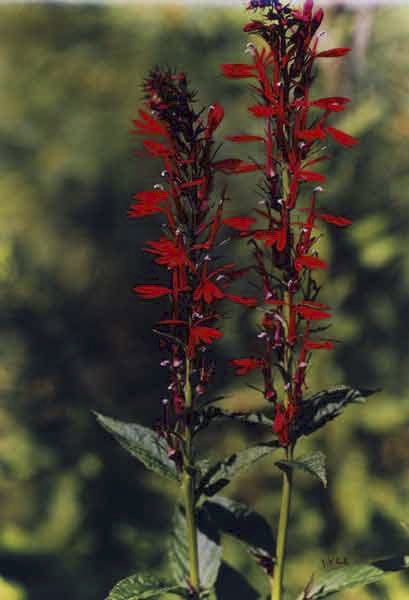
Jeannette Klute (American, 1918-2009) Cardinal Flower Nd (early-mid 1950s) Dye transfer photograph 20 1/4 x 16 1/4 in. Bruce Museum collection Gift of George Stephanopoulos
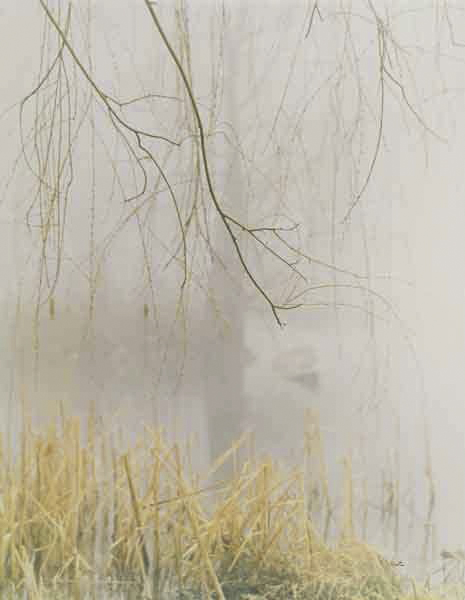
Jeannette Klute (American, 1918-2009) Misty Willow Nd (early-mid 1950s) Dye transfer photograph 20 1/4 x 16 1/4 in. Bruce Museum collection Gift of George Stephanopoulos
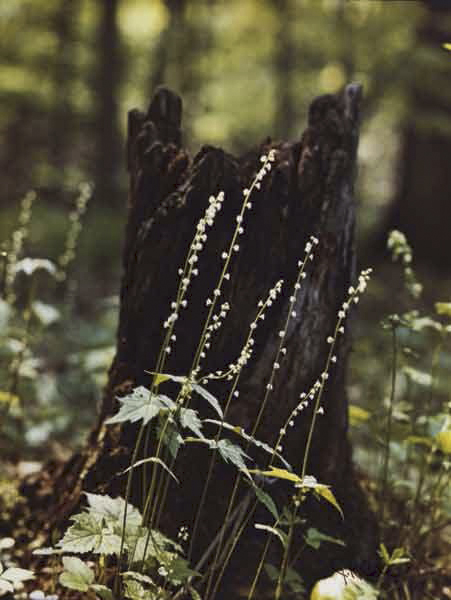
Jeannette Klute (American, 1918-2009) Miterwort Nd (early-mid 1950s) Dye transfer photograph 14 1/8 x 11 1/4 in. Bruce Museum collection Gift of George and Alexandra Stephanopoulos
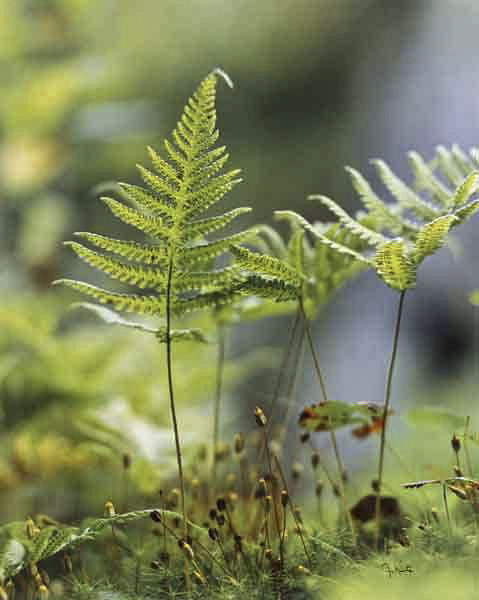
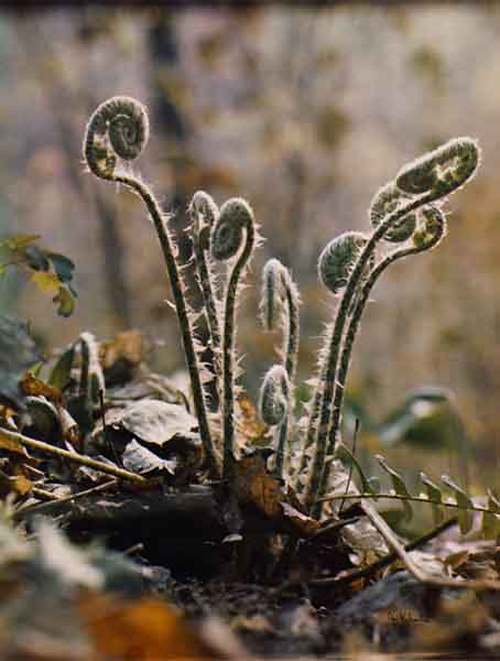
Jeannette Klute (American, 1918-2009) Beech Fern Nd (early-mid 1950s) Dye transfer photograph 20 1/4 x 16 1/4 in. Bruce Museum collection Gift of George Stephanopoulos
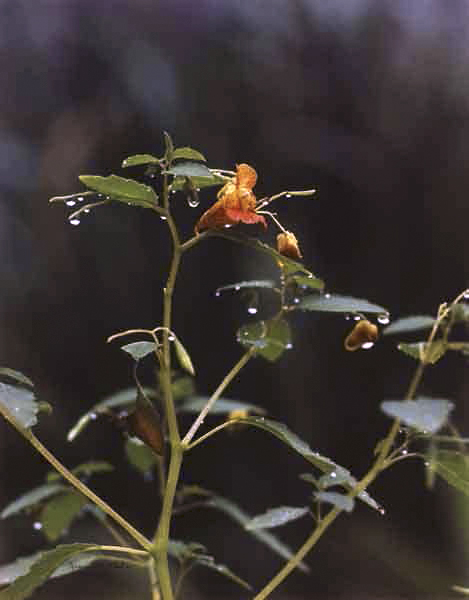
Jeannette Klute (American, 1918-2009) Jewel Weed Nd (early-mid 1950s) Dye transfer photograph 20 1/4 x 16 1/4 in. Bruce Museum collection Gift of George Stephanopoulos
Jeannette Klute (American, 1918-2009) Christmas Fern Nd (early-mid 1950s) Dye transfer photograph 12 1/2 x 9 1/2 in. Bruce Museum collection Gift of George Thomsen
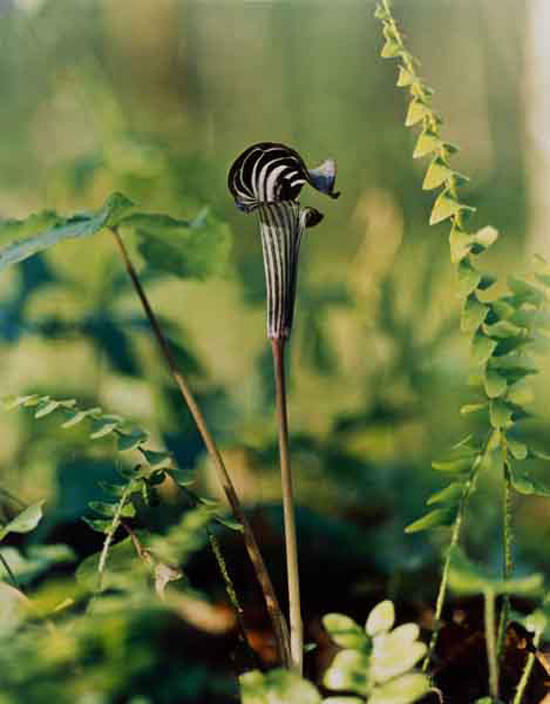
Jeannette Klute (American, 1918-2009) Jack in the Pulpit (Arisaema triphyllum) Nd (early-mid 1950s) Dye transfer photograph 20 1/4 x 16 1/4 in. Bruce Museum collection Gift of George and Alexandra Stephanopoulos
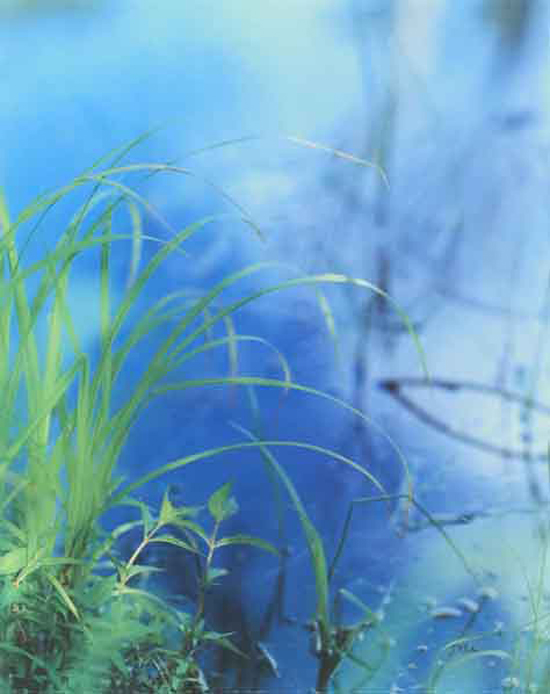
Jeannette Klute (American, 1918-2009) Green Grasses – blue Nd (early-mid 1950s) Dye transfer photograph 20 1/4 x 16 1/4 in. Bruce Museum collection Gift of Richard and Elena Pollack
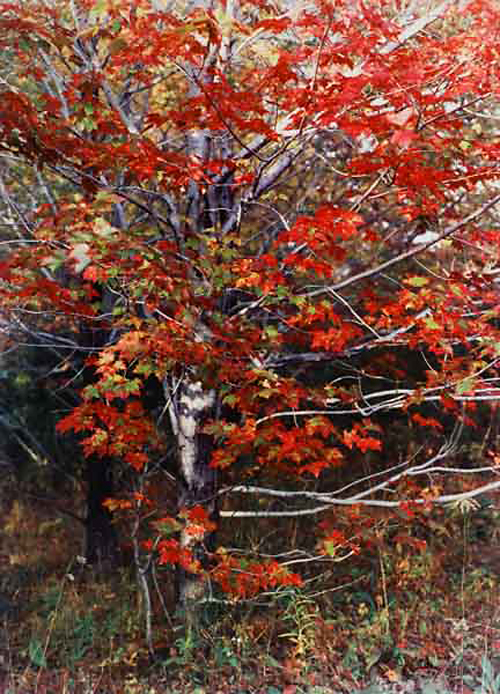
The exhibition features 24 colour photographs by Jeannette Klute (1918-2009) drawn from more than fifty of her prints held in the Bruce Museum’s permanent collection. Ranging from landscapes to intimate “woodland portraits” of orchids, ferns, and trees, Jeannette Klute’s photographs of New England are vibrant compositions produced through the labour intensive dye transfer process.
Trained at the Rochester Institute of Technology through the Works Progress Administration during the Depression, Jeanette Klute worked extensively on perfecting the dye transfer process, a laborious photographic technique that allowed for rich colours in exceptionally permanent prints. Klute tested and refined this process at the Eastman Kodak Company in Rochester, NY, beginning her career as photographic illustrator to physicist Ralph M. Evans and ascending to research photographer in charge of the Visual Research Studio of the Color Control Division.
Klute’s photography merged environmental consciousness with cutting edge technology. Using only natural light and leaving a minimal impact on the environment, she spent many years investigating colour and demonstrating the capabilities of dye transfer by photographing nature. Her work resulted in some of the finest examples of colour printing and all of its capabilities.
“My purpose has been to somehow express the feeling one experiences being out of doors,” Ms. Klute wrote for her Woodland Portraits exhibition. “I am concerned with the delight to the senses as much as with the intellectual. The woods are mystical and enchanting to me as well as spiritual.”
Jeanette Klute’s work was featured in Edward Steichen’s 1950 exhibition All Color Photography at the Museum of Modern Art, and her large one-woman shows were circulated internationally by the Smithsonian Institution and Kodak International. She was also invited to submit work for the San Francisco Museum of Art’s landmark exhibition Women of Photography: An Historical Survey in 1975.
Text from the Bruce Museum website
Jeannette Klute (American, 1918-2009) Maple Tree – red leaves Nd (early-mid 1950s) Dye transfer photograph 20 1/4 x 16 1/4 in. Bruce Museum collection Gift of LeGrand Belnap
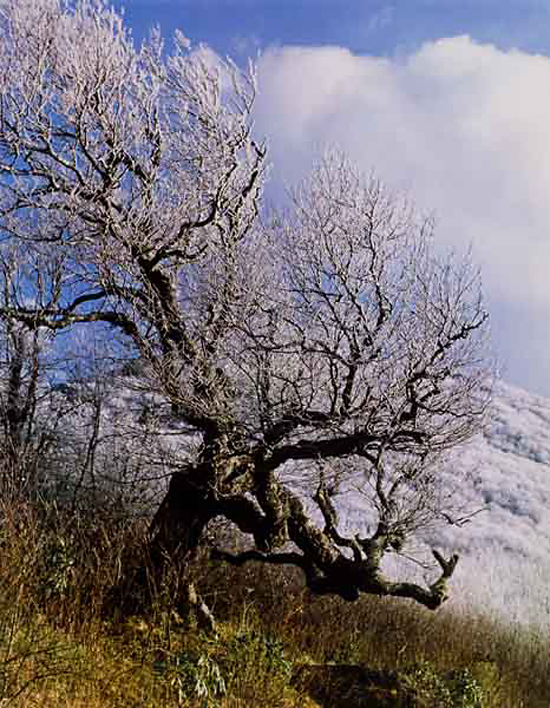
Jeannette Klute (American, 1918-2009) Frosted Tree Nd (early-mid 1950s) Dye transfer photograph 20 1/4 x 16 1/4 in. Bruce Museum collection Gift of Richard and Elena Pollack
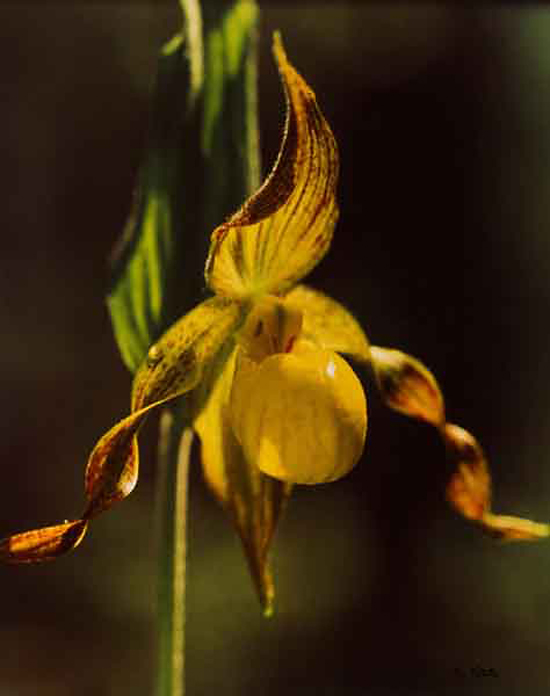
Jeannette Klute (American, 1918-2009) Yellow Lady’s Slipper Nd (early-mid 1950s) Dye transfer photograph 20 1/4 x 16 1/4 in. Bruce Museum collection Gift of LeGrand Belnap
“The first month they were sending people out for job interviews, but not me,” she recalled in a speech at the Rochester Institute of Technology in 1984. “I asked how come? The head of the department said, ‘Oh, there are no jobs for women in photography.’ My world fell apart.”
Ms. Klute took it upon herself to go out for interviews, and every week on her day off, she walked to the offices of Eastman Kodak Co. to ask for a job. For a long time, she never made it past the personnel office. Then, one day, in the pouring rain, decked in her finest navy blue suit, she stalked to the offices and was sent straight to the sixth floor for an interview.
“The man took a look at me with the rain dripping off my hat and said, ‘If you want a job that bad, you’ve got it,'” she recalled. “There was a celebration in the neighbourhood that night.” …
“She was really like my college education,” said Barbara Erbland, who assisted Ms. Klute in the lab at Kodak for many years. “She taught me everything – about light, colour, about people … how to live well.” … “Her lab consisted of all women,” she said. “I think it was by intention. She believed women had brains. We worked very well together.” …
Lugging a 4-by-5 Graflex single-lens reflex camera wherever they went, Erbland ventured into swamps and tide pools… “She taught me you don’t make do, you make things happen,” said Erbland. “You’re not a victim.”
Back in Rochester, the two sought out swamps and woodland for Ms. Klute to take her photographs – or, as she put it, to “make pictures.”
PHOTO GALLERY: In memory of Jeannette Klute, a ‘Renaissance woman’, by Philip Anselmo, August 2009
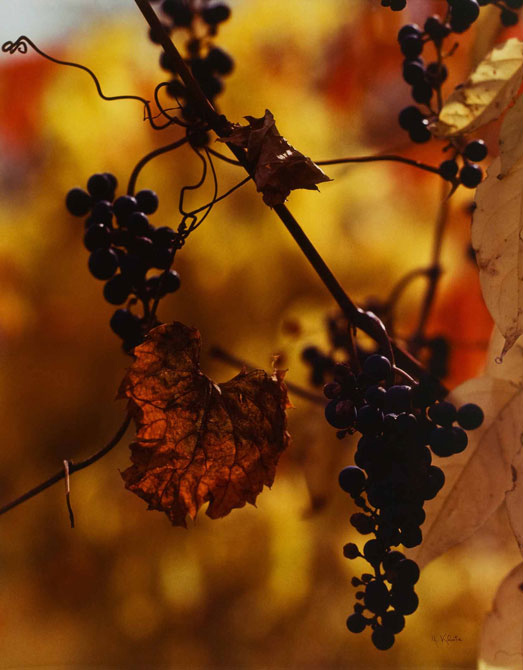
Jeannette Klute (American, 1918-2009) Grape Leaves Nd (early-mid 1950s) Dye transfer photograph 20 1/4 x 16 1/4 in. Bruce Museum collection Gift of George Stephanopoulos
Bruce Museum One Museum Drive Greenwich, CT 06830
Opening hours: Tuesday – Sunday 10am – 5pm Last admission 4.30pm Closed Monday and major holidays
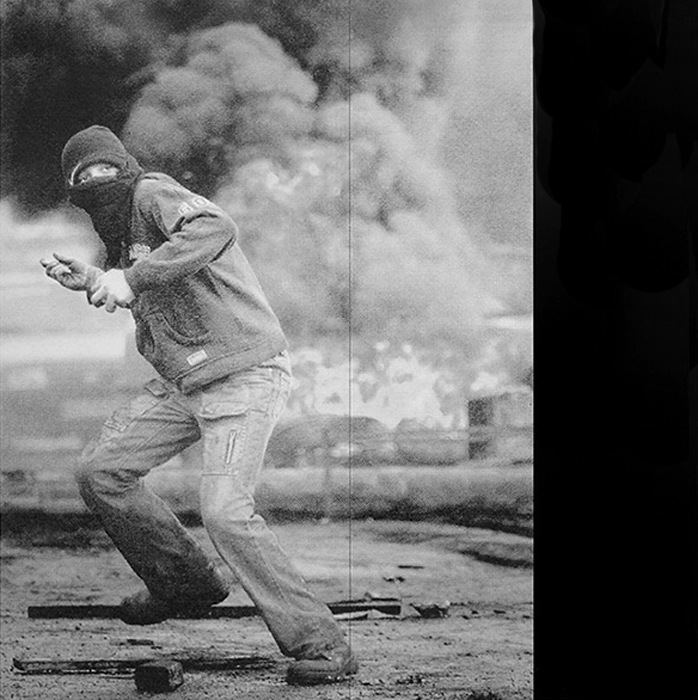
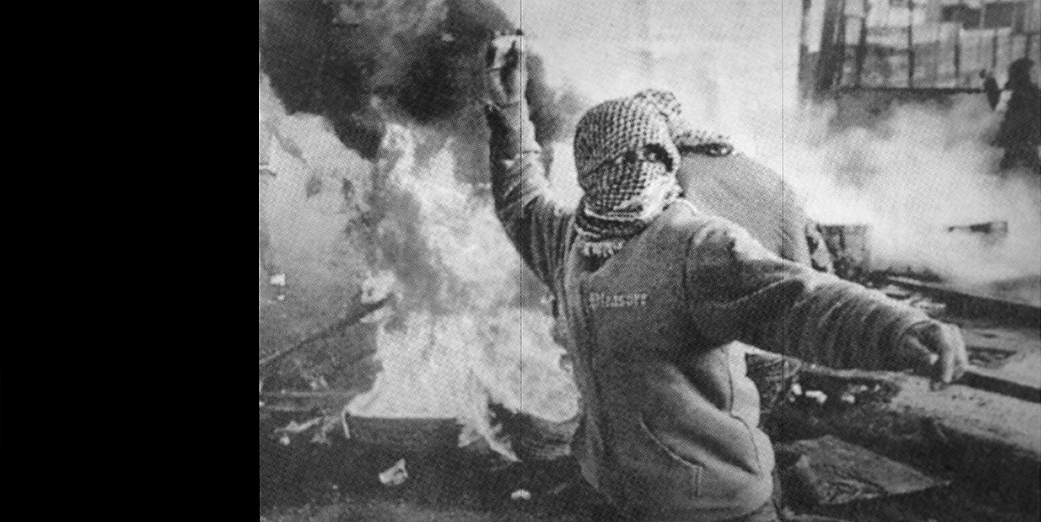
Marco Fusinato (Australian, b. 1964) Double Infinitive 3 2009
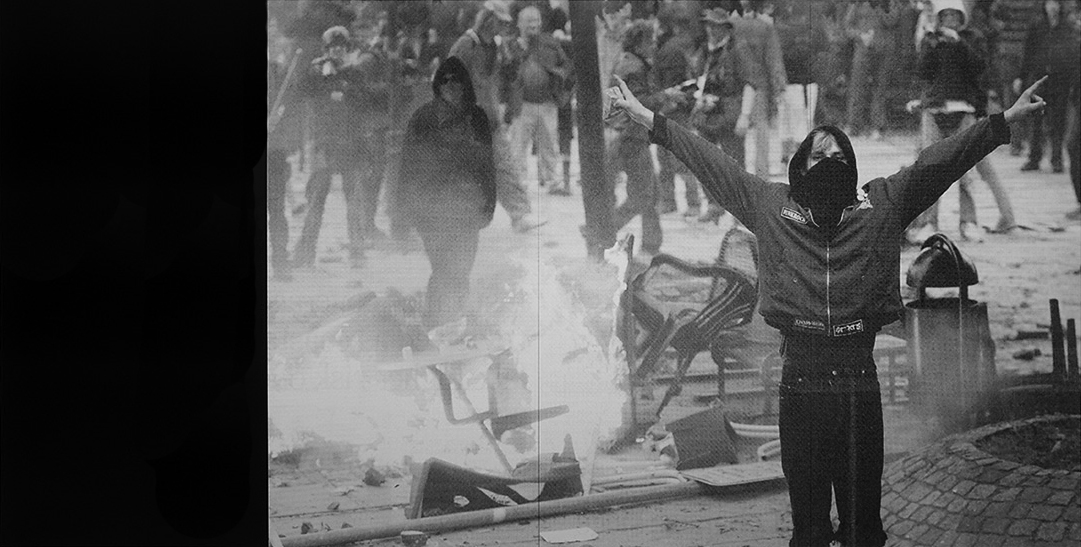
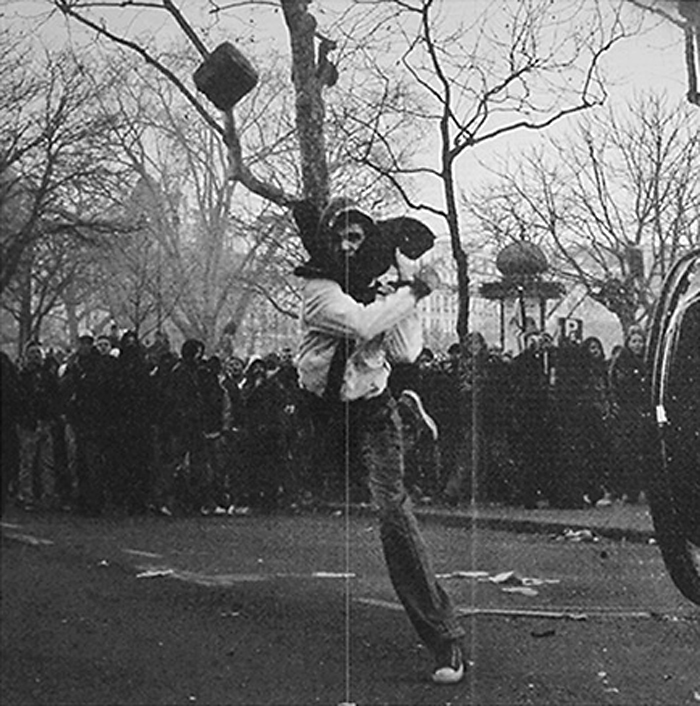
Double Infinitives by Marco Fusinato at Anna Schwartz Gallery, Melbourne is an excellent exhibition of large UV ink on aluminium images sourced by Fusinato from the print media.
The images are made up of a dot pattern familiar to those who have examined photographs in the print media closely. Larger and smaller clusters of dots form the light and shade of the image. As you move closer to the works they dissolve into blocks of dots and become and optical illusion like Op Art from the 1960s. Fusinato contrasts this dot structure with the inclusion of flat panels of black ink to the left and right hand side of the images. The section lines that run through the images (for they are not one single image but made up of panels) also adds to the optical nature of the work as the lines cut the conflagrations, literally stitching the seams/scenes together.
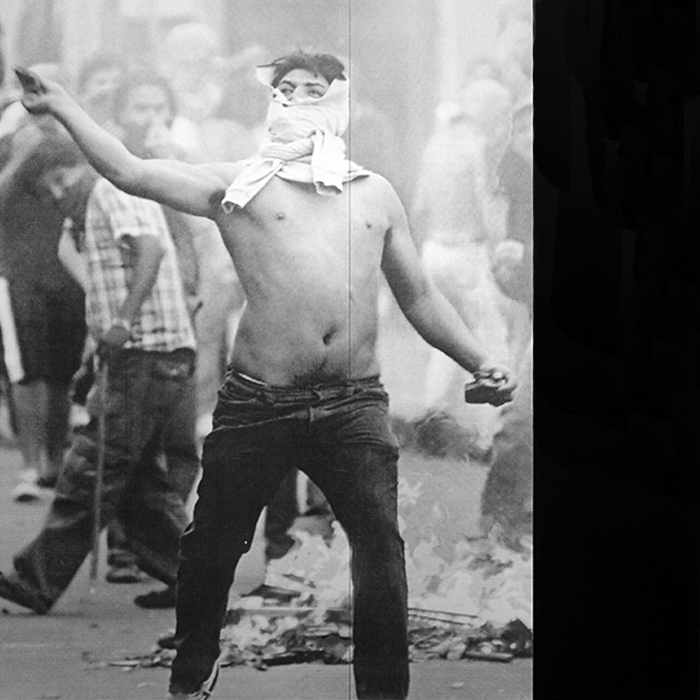
Each image contains an individual holding a rock enclosed in the milieu and detritus of a riot; the figures are grounded in the earth and surrounded by fire but in their obscurity, in the veiling of their eyes, the figures seem present but absent at one and the same time. They become ghosts of the fire.
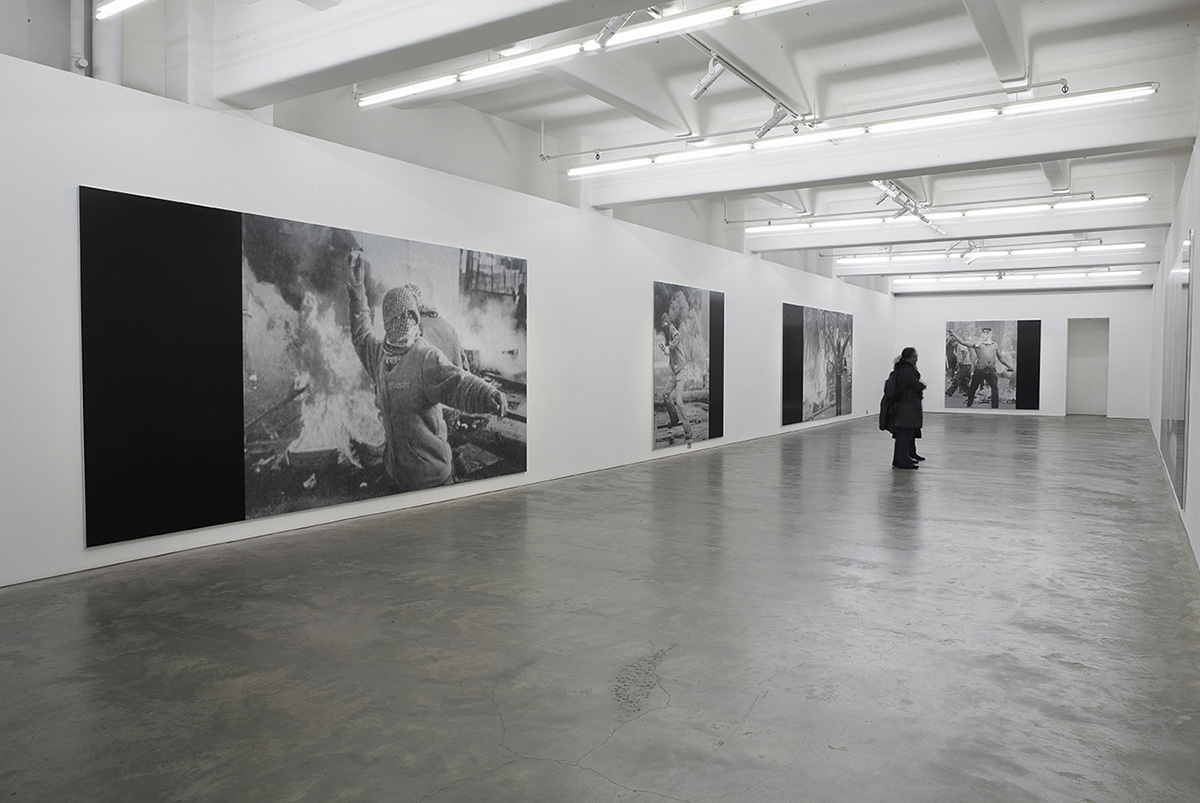
Fire consumes the bodies. The almost cut out presence of the figures, their hands clutching, throwing, saluting become mute. Here the experience of the sound, colour and movement of an actual riot is silenced in the flatness and smoothness of the images. The images possess the intensity of a newspaper reality ‘blown up’ to a huge scale by Fusinato (see the installation photograph below to get an idea of the effect). The punctum of the riot, that prick of consciousness that Barthes so liked, is translated into a silenced studium of the aluminium surface; an aural history (the sound) / oral history (the telling of the story) trapped in the structure of silence.
There is a double jeopardy – the dissolution of the image into dots and the disintegration of the body into fire. In one of the images the upraised arm and hand of one of the rioters holds a rock with what appears to be a figure on it, surrounded by fire. To me the arm turned into one of the burning Twin Towers with smoke and fire pouring from it (see the first photograph in the installation photograph below).
My only concern about the images were the black panels, perhaps too obvious a tool for the purpose the artist intended. Maybe the needed some small texture, like a moire pattern to reference the contours of a map and continue the topographical and optical theme. Perhaps they just needed to be smaller or occasionally placed as thin strips down the actual image itself but these are small quibbles. Overall this is an fantastic exhibition that I enjoyed immensely. The images are literally ripped from the matrix of time and space and become the dot dot dot of the addendum. What Fusinato does so excellently is to make us pause and stare, to recognise the flatness of these figures and the quietness of violence that surrounds us.
Music – Noise – Silence Flatness – Advertising – Earth – Fire Rock – Space – Memory
Dr Marcus Bunyan
Many thankx to Anna Schwartz Gallery for allowing me to publish the photographs in the posting. Please click on the photographs for a larger version of the image.
Marco Fusinato (Australian, b. 1964) Double infinitive 1 2009
Marco Fusinato (Australian, b. 1964) Double Infinitive 4 2009
A selection of images from the print media of the decisive moment in a riot in which a protagonist brandishes a rock against a backdrop of fire. Each image is from a different part of the world, from the early twenty-first century, and is blown up to history-painting scale using the latest commercial print technologies.
Text by Marco Fusinato on his website
Installation of Marco Fusinato Double Infinitives exhibition at Anna Schwartz Gallery, Melbourne
Double Infinitives
“Unheard music is better than heard.”
Greek proverb of late antiquity
“That music be heard is not essential – what it sounds like may not be what it is.”
Charles Ives, Essays Before a Sonata
“The proposition of Jacques Attali’s Noise is different. He says that while noise is a deadly weapon, silence is death.”
David Rattray, “How I Became One of the Invisible,” Semiotext(e), 1992.
The explosive communal act of rioting is most commonly delivered to an audience suspended in the stillness and silence of a photographic image. Noise is not removed in this process, it is almost amplified: the sound and action that deliver this singularly captured moment into existence are infinite, as all things remain while they are imagined, before they are anchored down by express articulation.
Photographic representation can easily be accused of subverting the truth of events, not because what is seen in the image has not transpired, but because static images leave so much space around them for multiple narratives to be constructed. The still image is totally contingent on the consciousness that confronts it. By contrast, the near-totality of videos can give too much away …
Sourced by Fusinato from print media published in the last few years, these images of rioting all contain an individual clutching a rock, bathed in the refractory glow of a nearby fire. The image has become prototypical, so much so that it lacks the sensation of spontaneity requisite to produce a riot. (Apropos to this predictability, Fusinato would check global newspapers after every forum or conference of global financial authorities, often finding the image he was looking for).
Double Infinitives is a succinct allegory for the reluctance to compromise comfort overpowering radical impulses. Conversations suggest this is a conflict frequently experienced by artists. Deprived of a volatile political reality, we experience radicalism through images that act as small ruptures, reminders that the world we live in might be more severely charged than our individual experiences allow. Fusinato’s works flatten these images of volatility onto a smooth slate: they are similar and radiate with the vexed beauty of sameness. A riot is a mad and brutal spectacle, a theatre that is often documented as if it were a play. Hugely expanded in scale and rendered in the suffused gloss of advertising, the real possibility of violence that these works infer deepens the layers of the fiction rather than comprising an indicator of human concern. Those things with which we come into such gentle contact that their thorns barely prick …
Liv Barrett June 2009
Text from the Anna Schwartz Gallery website [Online] Cited 10/07/2009. No longer available online. Used under fair use conditions for the purposes of education and research
Marco Fusinato (Australian, b. 1964) Double Iinfinitive 2 2009
Marco Fusinato (Australian, b. 1964) Double Iinfinitive 2 (detail) 2009
Marco Fusinato (Australian, b. 1964) Double Iinfinitive 5 2009
Anna Schwartz Gallery 185 Flinders Lane Melbourne, Victoria 3000
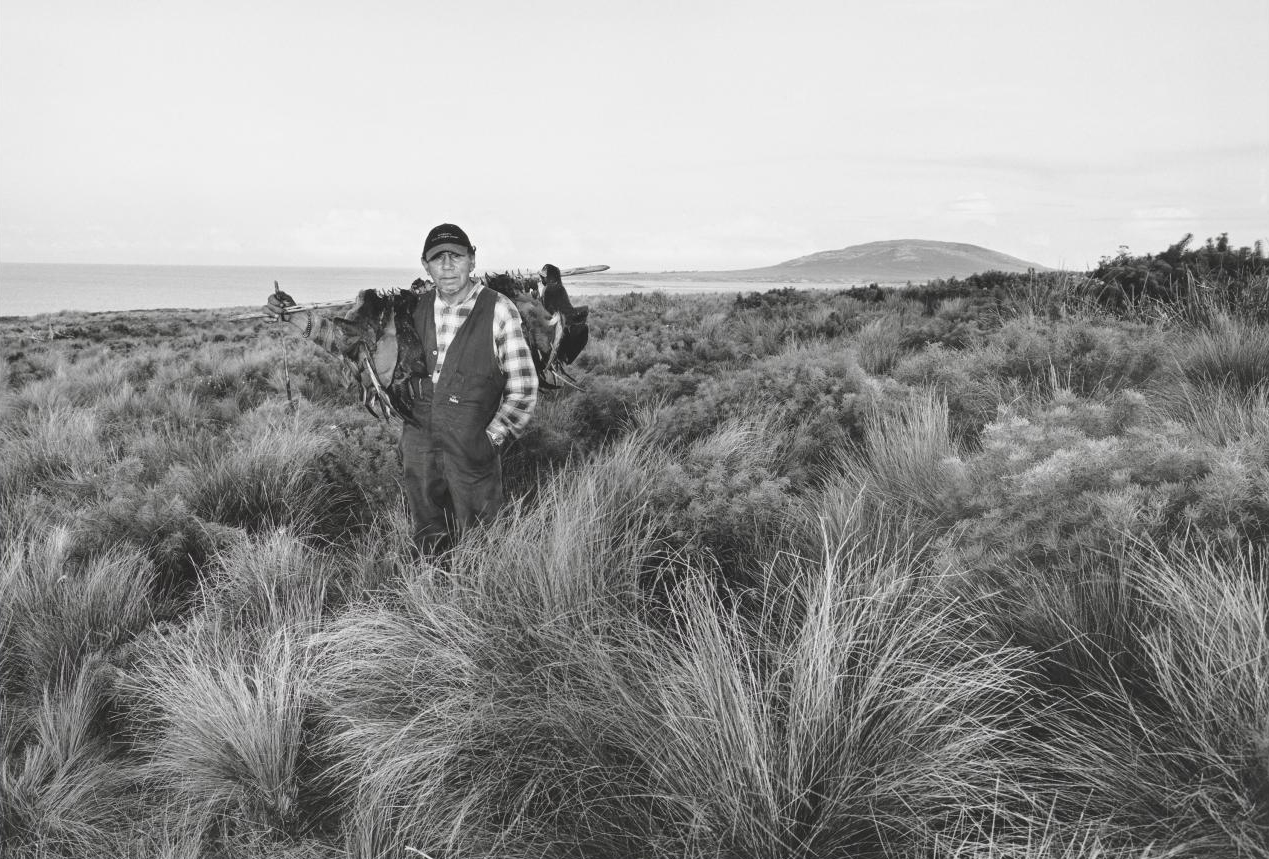
I can remember coming here as a boy in old wooden boats to be taught by my grandparents and my parents. I’ll be 57 this year and I have missed only one year when my daughter Leanne was born. Mutton birding is my life. To me it’s a gathering of our fellas where we sit and yarn, we remember and we honour all of those birders who have gone before us. Sometimes I just stand and look out across these beautiful islands remembering my people and I know I’m home. It makes me proud to be a strong Tasmanian black man. This is something that they can never take away from me.
This winter the Museum of Contemporary Art presents a major survey of photographic works by documentary photographer Ricky Maynard, encompassing more than two decades of the artist’s practice.
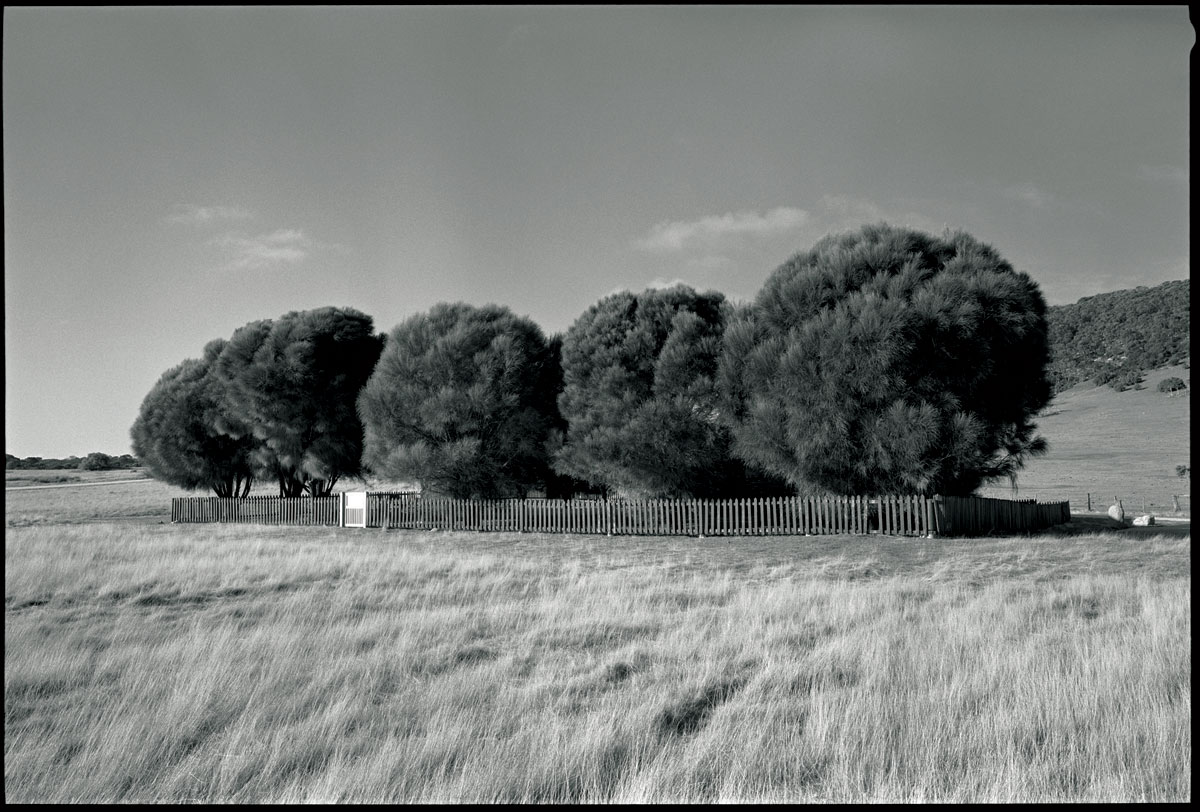
Portrait of a Distant Land features more than 60 evocative and captivating photographic works, drawn from six bodies of work, which document the lives and culture of Maynard’s people, the Ben Lomond and Cape Portland peoples of Tasmania.
The exhibition is curated by MCA Aboriginal and Torres Strait Islander Programs Keith Munro and is presented at the MCA from 4 June until 23 August 2009. Born in Launceston, Tasmania in 1953 Maynard is a self taught documentary photographer now based on Flinders Island in the Bass Strait between Tasmania and mainland Australia.
Maynard first came to prominence in the late 1980s with a photographic essay about Aboriginal mutton bird farmers and he has continued to document physical and social landscapes which form a visual record and representation of Aboriginal and Torres Strait Islander people in Australia.
“For me, photographs have always been personal and I hope to convey the intimacy of a diary. Photography has the ability to tell stories about the world and how the photograph has power to frame a culture,” said Maynard, describing his practice.
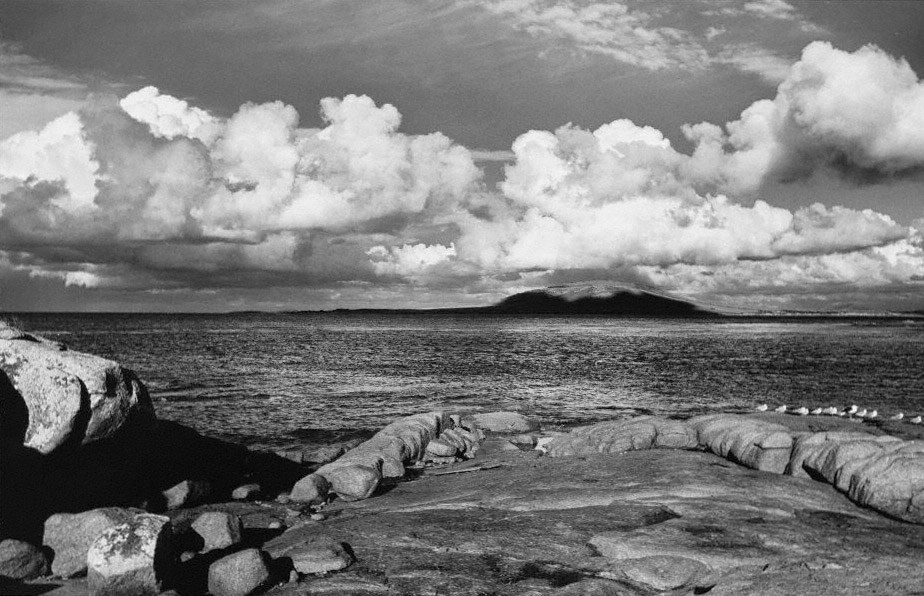
The works presented in Portrait of a Distant Land survey a broad range of themes and issues facing Aboriginal and Torres Strait Islander people today. It includes photographs which document sites significant to Maynard’s people: ranging from serenely beautiful landscapes which follow the song lines, tribal movements and historical displacement routes of his ancestors, to the confrontational and emotionally-charged images of Indigenous people incarcerated in the South Australian prison system.
The six photographic series by Maynard which are featured in the exhibition are The Moonbird People (1985-1988), No More Than What You See (1993), Urban Diary (1997), In The Footsteps of Others (2003), Returning To Places That Name Us (2000) and Portrait of a Distant Land (2005- ). Together these works create a form of visual diary of multiple landscapes derived from collective oral histories of Maynard’s people.”
Press release from the MCA website [Online] Cited 05/07/2009. No longer available online. Used under fair use conditions for the purposes of education and research
The owner of an enviable collection of antique cameras, Maynard is a lifelong student of the history of photography, particularly of the great American social reformers Jacob Riis, Lewis Hines, Dorothea Lange and Walker Evans. He is interested in the power of the uninflected image – of sheer veracity – as an agent of record and change. Maynard’s images cut through the layers of rhetoric and ideology that inevitably couch black history (particularly Tasmanian history) to present images of experience itself. ‘To know the meaning of a culture you must recognise the limits and meaning of your own,’ the artist explains. ‘You can see its facts but not its meaning. We share meaning by living it.’ Maynard’s photographs are, he says, about ‘leaving proof’ – about ‘… life in passing and in complicated times’.
The word ‘Wik’ has come to denote a historic decision of the High Court of Australia rather than the name of the Indigenous peoples from the western Cape York Peninsula in northern Queensland. In his intimate portraits of elders from these communities, Maynard aims to unpick this abstraction. Etched on each face is the complexity of an unspoken life story, delineated, one imagines, by hardship, perseverance and the burden – and wealth – of an extraordinary living memory. As he wrote in his artist’s statement for the exhibition Returning to Places that Name Us in 2001, ‘… I wanted a presence and portraits that spoke, and through this process to present an idea, rather than preach messages’. In this series, Maynard achieves his aim of capturing meanings that no other medium could convey.
Hannah Fink in ‘Tradition today: Indigenous art in Australia’, Art Gallery of New South Wales, Sydney, 2004
Maynard is a lifelong student of the history of photography, particularly of the great American social reformers Jacob Riis, Lewis Hines, Dorothea Lange and Walker Evans. Maynard’s images cut through the layers of rhetoric and ideology that inevitably couch black history (particularly Tasmanian history) to present images of experience itself. His visual histories question ownership; he claims that ‘the contest remains over who will image and own this history… we must define history, define whose history it is, and define its purpose as well as the tools used for the telling it’.
In Portrait of a distant land Maynard addresses the emotional connection between history and place. He uses documentary style landscapes to illustrate group portraits of Aboriginal peoples’ experiences throughout Tasmania. Each work combines several specific historical events, creating a narrative of shared experience – for example The Mission relies on historical records of a small boy whom Europeans christened after both his parents died in the Risdon massacre. This work highlights the disparity between written, oral and visual histories, as Maynard attempts to create ‘a combination of a very specific oral history as well as an attempt to show a different way of looking at history in general’.
Text from the Art Gallery of New South Wales website [Online] Cited 14/03/2019. Used under fair use conditions for the purposes of education and research
Museum of Contemporary Art (MCA) 140 George Street The Rocks, Sydney, Australia
Exhibition dates: 16th June – 18th September, 2009
Curators: the artists themselves (Gilbert & George), in collaboration with gallery founder Matthias Arndt
Artist duo George (left) and Gilbert (right) pose in front of their work “The Church of England” in Berlin, Germany
That pair of agent provocateurs are at it again!
Marcus
Many thankx to Arndt & Partner for allowing me to publish the photographs in the posting. Please click on the photographs for a larger version of the image.
Gilbert & George (Gilbert Prousch, English born Italy, b. 1943) (George Passmore, English, b. 1942) DATING 2008 Mixed media
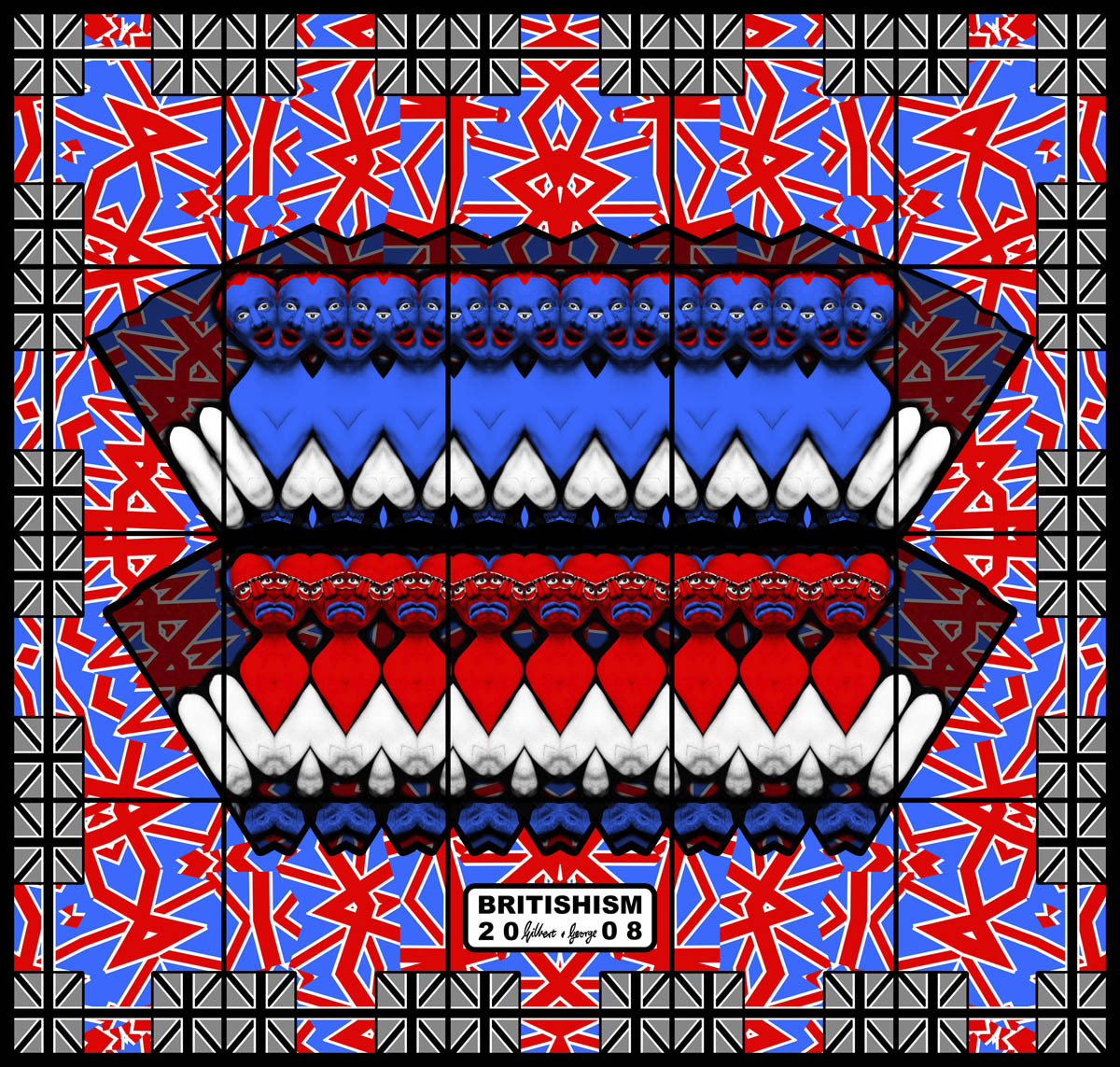
Gilbert & George (Gilbert Prousch, English born Italy, b. 1943) (George Passmore, English, b. 1942) BRITISHISM 2008 Mixed media
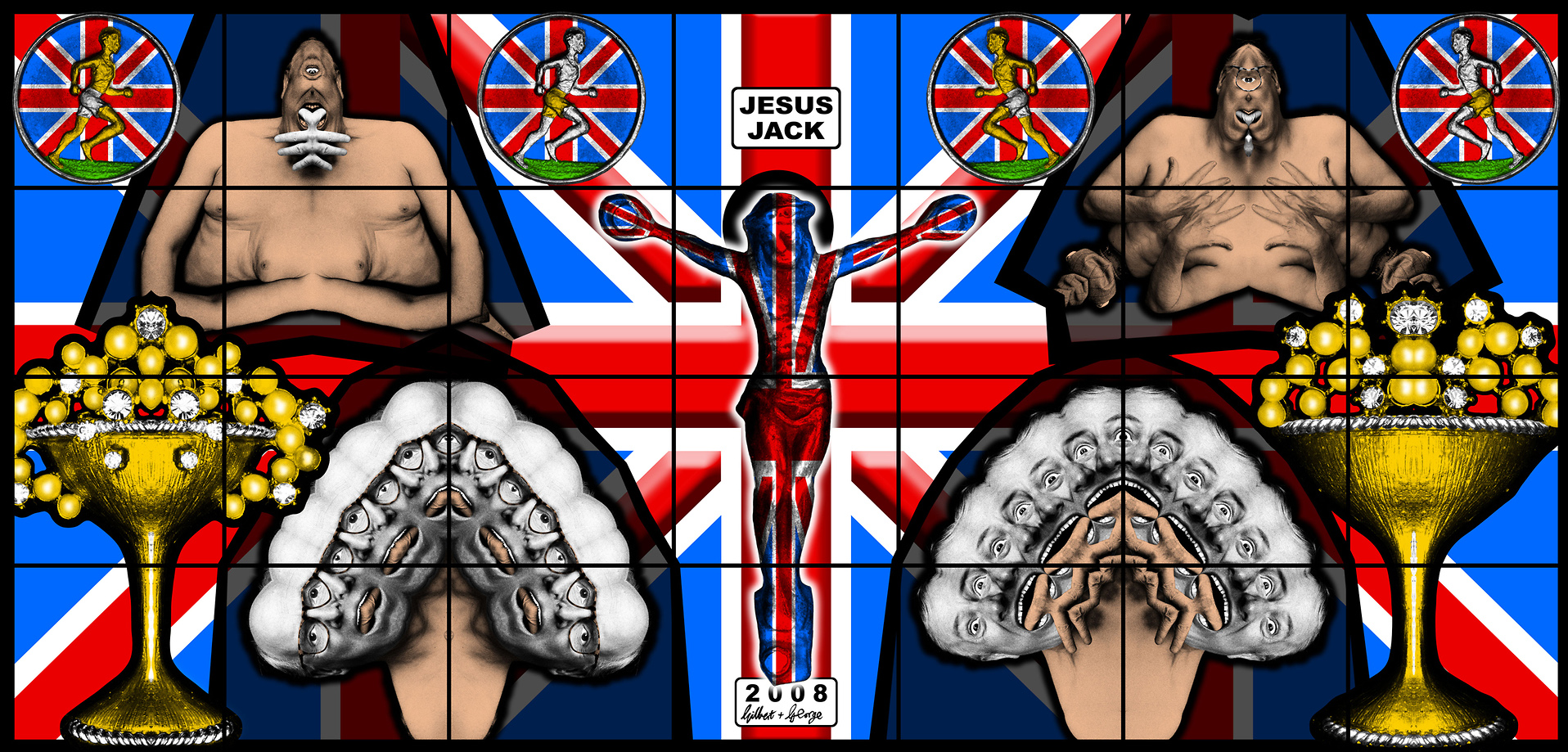
Gilbert & George (Gilbert Prousch, English born Italy, b. 1943) (George Passmore, English, b. 1942) JESUS JACK 2008 Mixed media
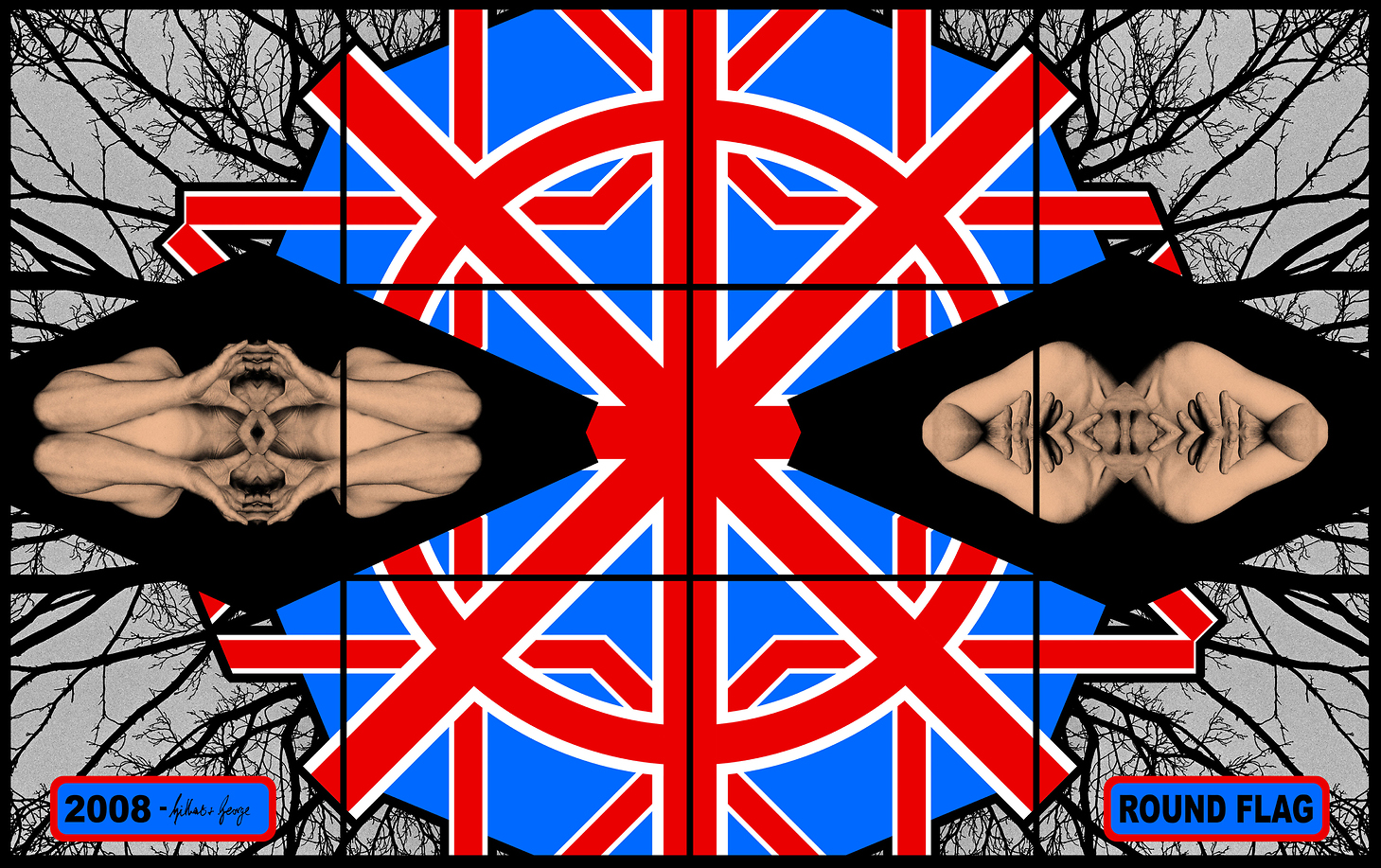
Gilbert & George (Gilbert Prousch, English born Italy, b. 1943) (George Passmore, English, b. 1942) ROUND FLAG 2008 Mixed media
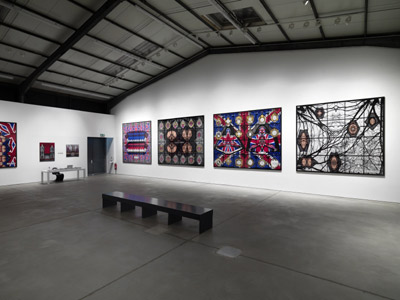
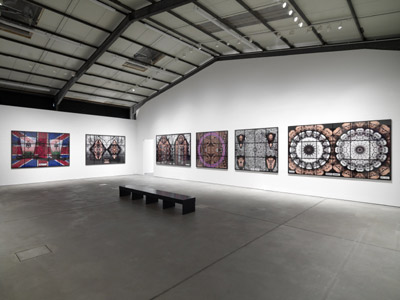
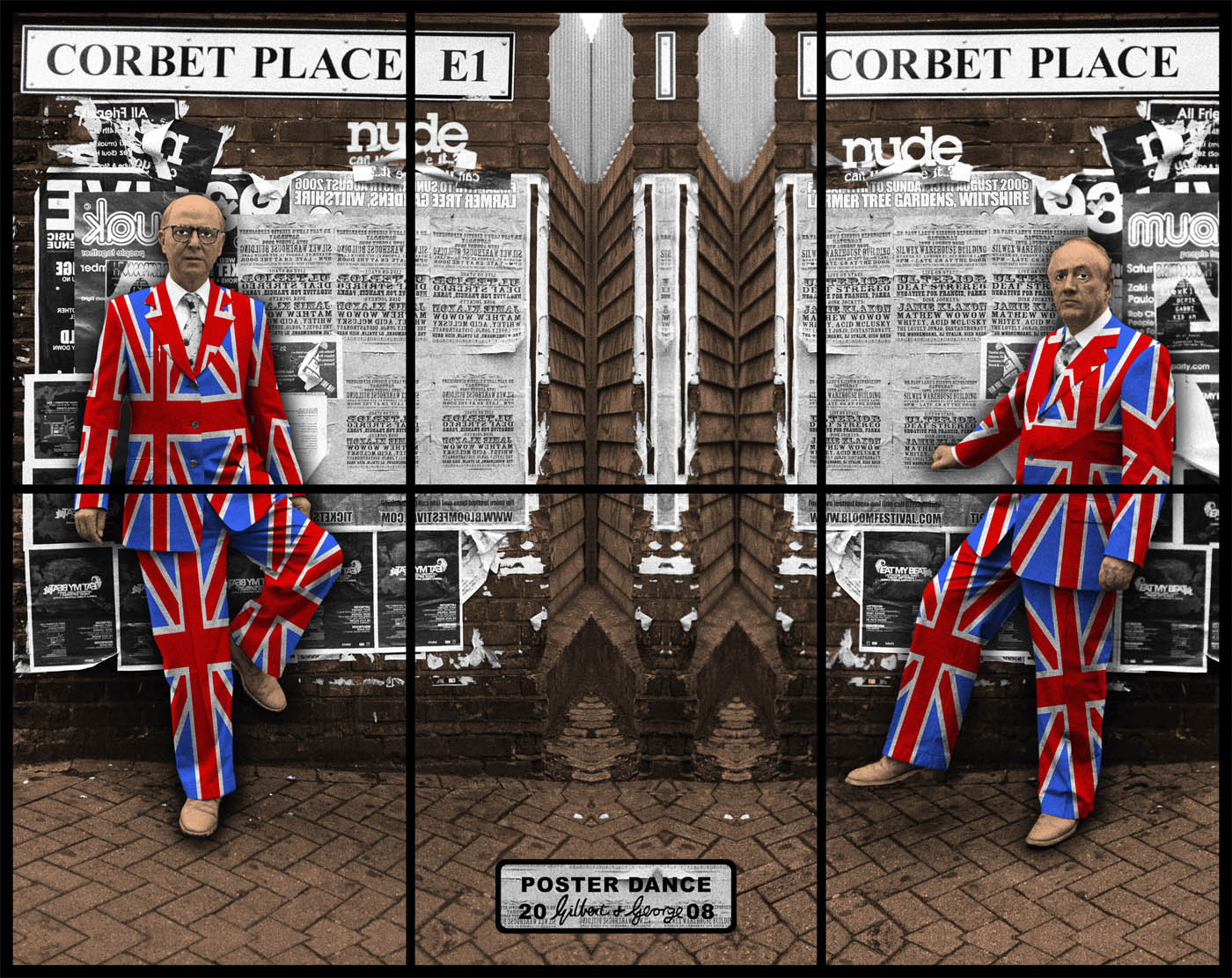
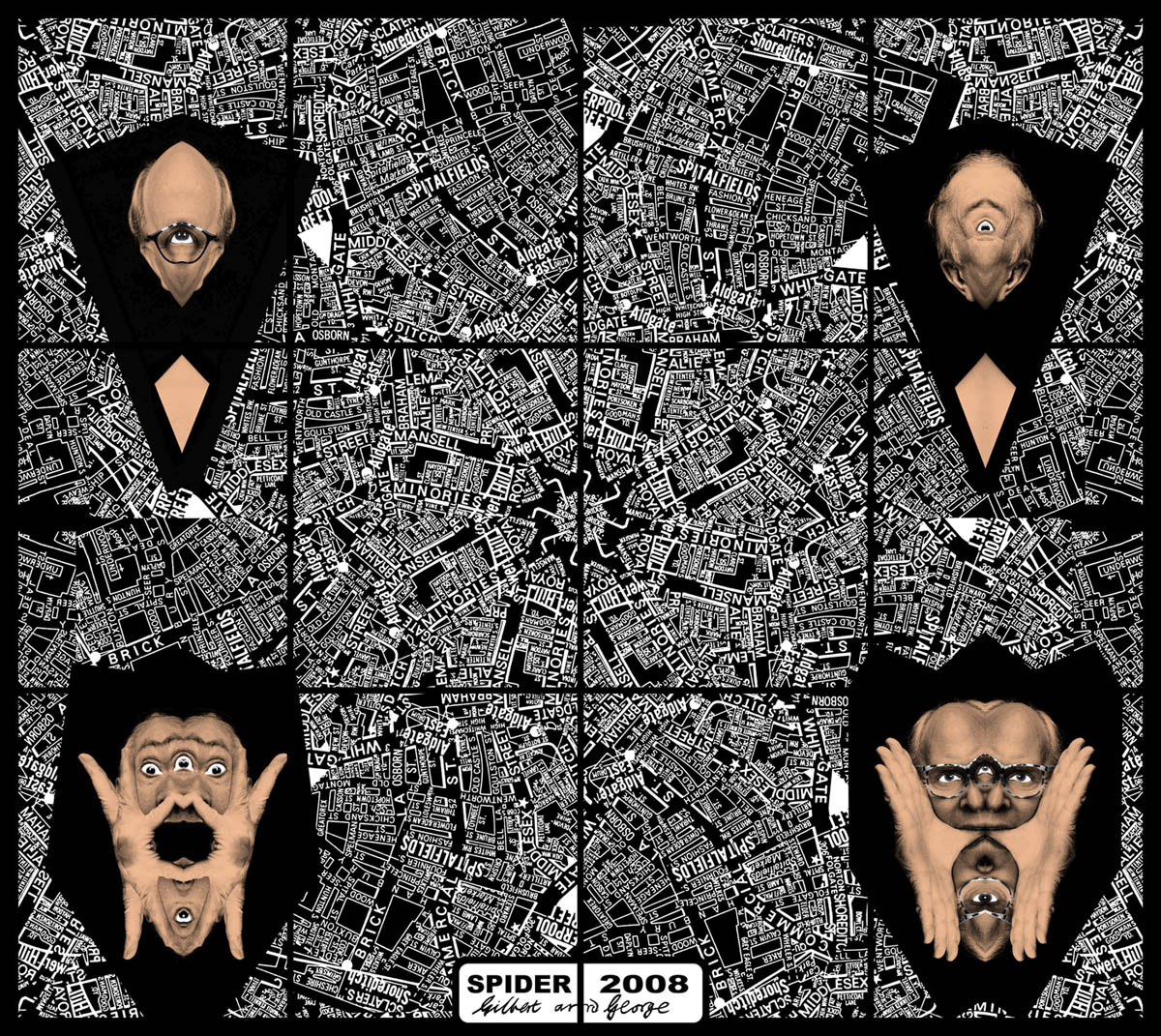
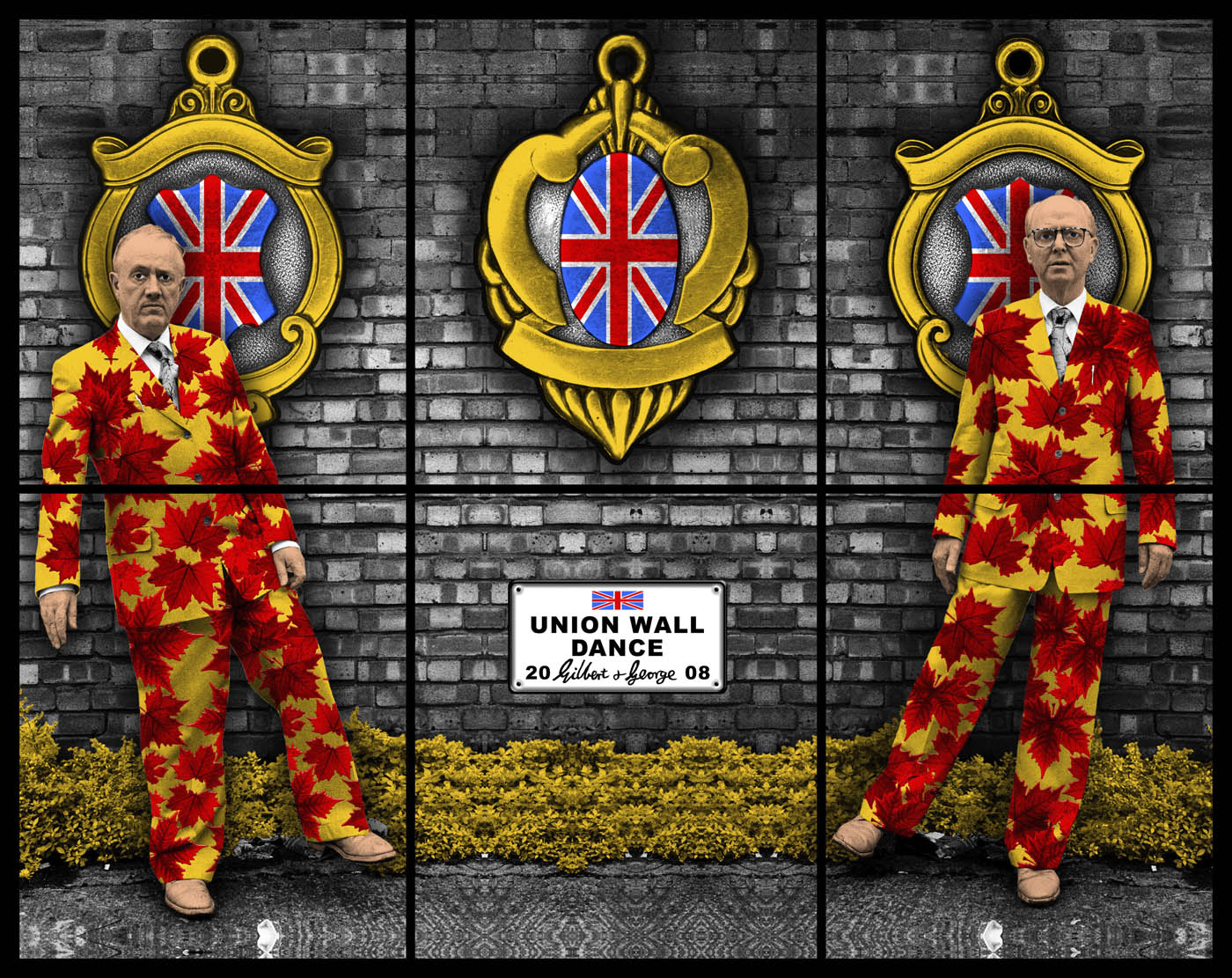
As the international tour of the last Gilbert & George retrospective (2007-2009) did not include Berlin, Arndt & Partner are now presenting a solo exhibition of the celebrity artist duo in its gallery rooms behind the Hamburger Bahnhof. It is the first Gilbert & George solo show in Berlin for 14 years. The exhibition features a selection of 20 large-scale pieces from the Jack Freak Pictures, the largest Gilbert & George group of pictures to date. The thrust of the content is given by the colours and shapes of the Union Jack flag that dominate the bulk of the pictures as well as the recurring motive of medals, emblems and trees. In the Jack Freak Pictures the artist duo explores aspects of nationhood and of the sentient individual in the nets of society. In his essay published in the catalogue accompanying the exhibition the British writer Michael Bracewell describes these pictures as “the most iconic, philosophically astute and visually violent works that Gilbert & George have ever created …”
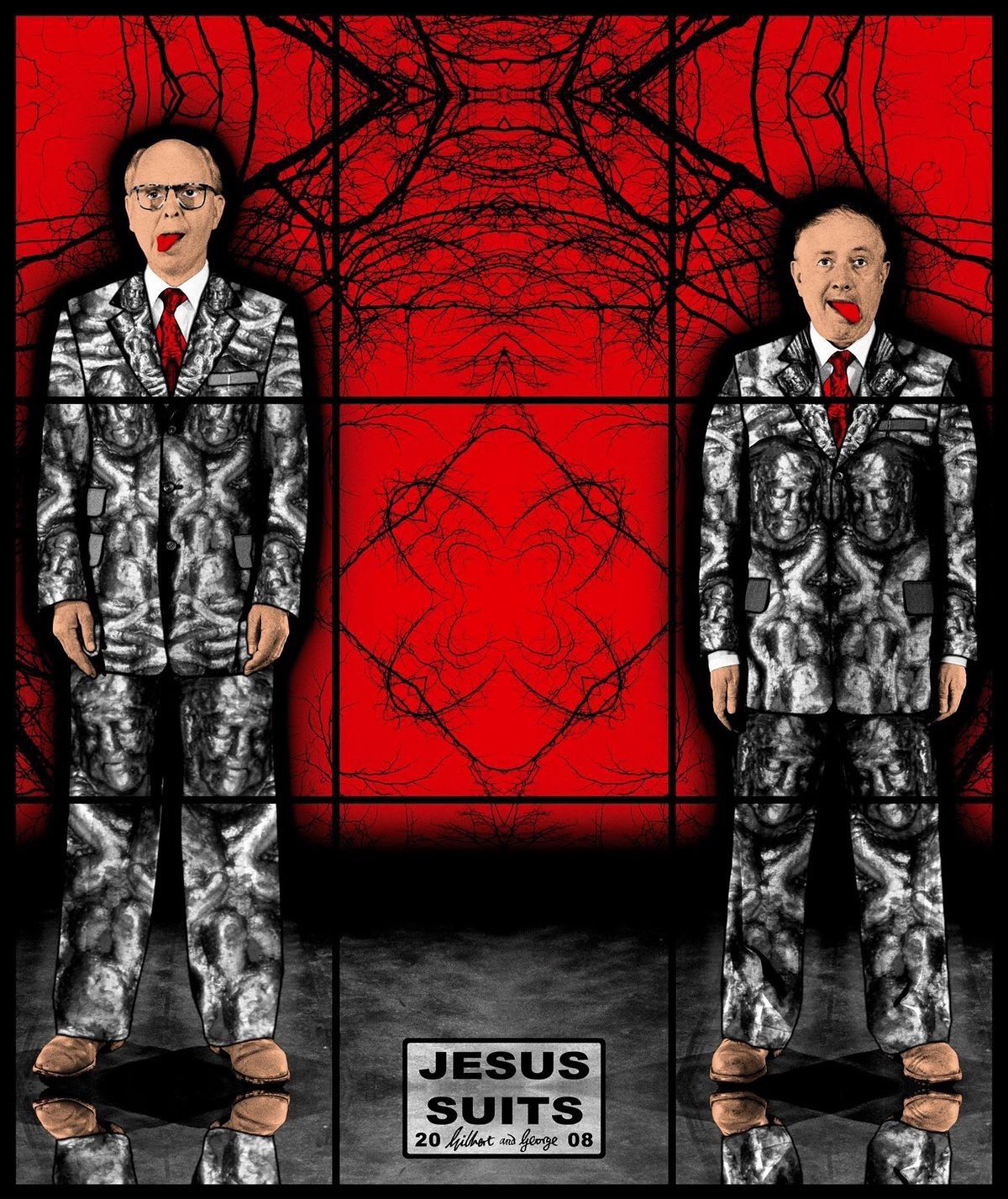
Gilbert & George, who met as students of sculpture at St. Martin’s School of Art in London 42 years ago, embarked on a joint artistic career that was to encompass a wide range of media from drawing to video and their trademark pictures. Further, the pair revolutionised the concept of sculpture by presenting themselves as “living sculptures” dressed in the quintessentially British tailored suit, shirt and tie. But it was their monumental trademark pictures composed of a grid like array of smaller images which they began to create in the early 70s that first brought them international fame. Figures, cityscapes, symbols, plants, bodily fluids, excrements and text interlock in pictorial messages as visually powerful as their content is provocative. The pictures, which started out in black and white and later assumed increasingly luminous, bold colours, generally also depict portraits of the artists themselves and seize on taboo subjects like sexuality, race, religion and national identity with a brash and fearless candour.
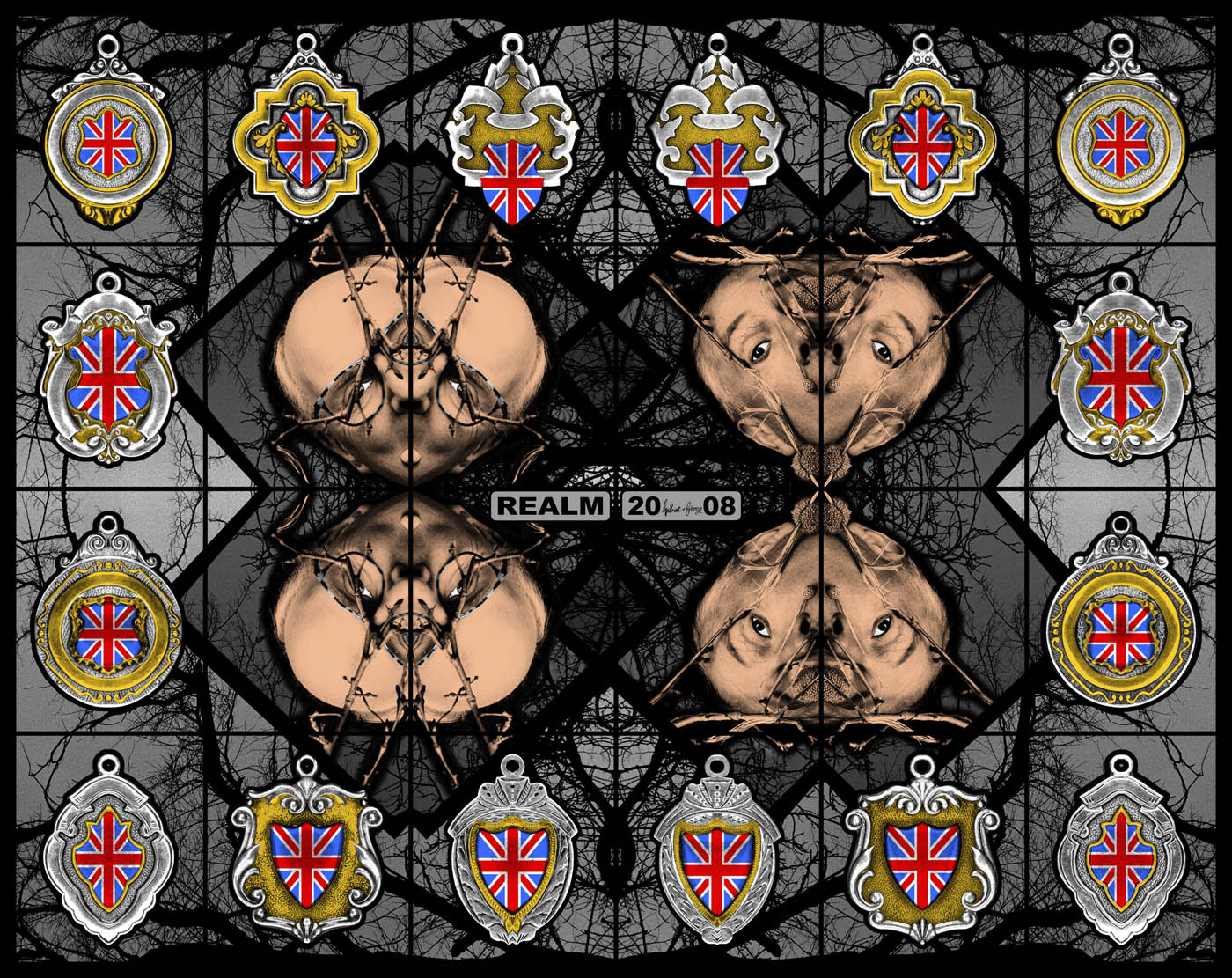
The Jack Freak Pictures again feature the bodies and/or faces of the artists. In these compositions, their bodies function as stylised representatives of the individual in society, whose relationship to social norms and categories, to national, religious and sexual identification processes is relentlessly explored and commented upon. Departing from their earlier oeuvre, some of their new pictures split the raw images into much smaller fragments before merging them into new forms. The result is a fascinating kaleidoscopic mix of the monstrously grotesque with an intricate ornamental structure reminiscent of sacred art. In ever new variations, Gilbert & George order the signs and fragments of social life they find in their neighbourhood – the multicultural East End of London – where solidarity and friendship are as visible as intolerance and marginalisation.
Press release from the Arndt & Partner website [Online] Cited 04/07/2009. No longer available online. Used under fair use conditions for the purposes of education and research
Gilbert & George installation photographs of their exhibition Jack Freak Pictures at Arndt & Partner, Berlin
Gilbert & George (Gilbert Prousch, English born Italy, b. 1943) (George Passmore, English, b. 1942) JESUS SUITS 2008 Mixed media
Gilbert & George (Gilbert Prousch, English born Italy, b. 1943) (George Passmore, English, b. 1942) CHURCH OF ENGLAND 2008 Mixed media
Gilbert & George (Gilbert Prousch, English born Italy, b. 1943) (George Passmore, English, b. 1942) POSTER DANCE 2008 Mixed media
Gilbert & George (Gilbert Prousch, English born Italy, b. 1943) (George Passmore, English, b. 1942) REALM 2008 Mixed media
Gilbert & George (Gilbert Prousch, English born Italy, b. 1943) (George Passmore, English, b. 1942) SPIDER 2008 Mixed media
Gilbert & George (Gilbert Prousch, English born Italy, b. 1943) (George Passmore, English, b. 1942) UNION WALL DANCE 2008 Mixed media















![Laurenz Berges (German, b. 1966) 'Garzweiler' [surface mine] 2003 from the exhibition 'presentation/representation: photography from Germany' at the Monash Gallery of Art, Melbourne, July - August, 2009](https://artblart.com/wp-content/uploads/2009/08/laurenz-berges-garzweiler-web-1.jpg "Laurenz Berges (German, b. 1966) 'Garzweiler' [surface mine] 2003 from the exhibition 'presentation/representation: photography from Germany' at the Monash Gallery of Art, Melbourne, July - August, 2009")
















You must be logged in to post a comment.