Exhibition: ’68. Pop and Protest’ at the Museum für Kunst und Gewerbe Hamburg (MKG)

Exhibition dates: 18th October, 2018 – 17th March, 2019

Artists: Eero Aarnio | Jefferson Airplane | Michelangelo Antonioni | Richard Avedon | Günter Beltzig | Wolf Biermann | Big Brother and the Holding Company | Roman Brodmann | Pierre Cardin | Joe Colombo | Gerd Conradt | André Courrèges | Harun Farocki | Rainer Werner Fassbinder | Peter Handke | Haus-Rucker-Co | Jimi Hendrix | Helmut Herbst | Dennis Hopper | Theo Gallehr | Rudi Gernreich | Jean-Luc Godard | Gerhard von Graevenitz | F.C. Gundlach | Jasper Johns | Günther Kieser | Alexander Kluge | Yves Saint Laurent | Scott McKenzie | Egon Monk | Werner Nekes & Dore O. | Verner Panton | D.A. Pennebaker | Gaetano Pesce | Rosa von Praunheim | Paco Rabanne | Otis Redding | Kurt Rosenthal | Helke Sander | Ettore Sottsass | The Mamas & the Papas | The Who | Thomas Struck | Bernd Upnmoor | Roger Vadim | Valie Export | Agnès Varda | Wolf Vostell | Andy Warhol | Peter Weiss | Hans-Jürgen Wendt | Charles Wilp et al.


Ronald Traeger (American, 1936-1968) ‘Twiggy’ June 1966

Animation of Ronald Traeger’s photographs of Twiggy taken in June 1966 from the exhibition 68. Pop and Protest at the Museum für Kunst und Gewerbe Hamburg (MKG) 18th October 2018 – 17th March 2019


1968: the year that changed the world through radical action

From a posting about one revolutionary year in the 20th century (1918/19), we move 50 years in time to a another revolutionary year in that century: 1968.

I had wanted to do a posting on this exhibition and the 1968: Changing Times exhibition at the National Library of Australia (1st March 2018 – 12th August 2018) to compare and contrast what was happening in Australia and around the world in this most revolutionary year. But the six crappy press images that the National Library of Australia supplied were not worthy of a posting. Australian galleries in general and those in Canberra more particularly (I’m talking about you National Gallery of Australia!), really need to lift their game supplying media images. They are way behind the times in terms of understanding the importance of good media images to independent writers and critics.

In Australia, Prime Minister Harold Holt disappeared in the surf at Cheviot Beach, Victoria, presumed drowned in December 1967. A new prime minister, John Gorton, was sworn in in January 1968. Australians were dying in greater numbers in Vietnam; Aboriginal land rights issues vexed the Australian cabinet; and the White Australia policy of Old Australia, soon to be swept away in 1973, was still in full force. “Billy Snedden, the Minister for Immigration, said that Australians, and certainly the government, did not want a multiracial society. Sir Horace Petty, the Victorian Agent-General in London, explained that ‘the trouble comes when a black man marries a white woman. No one worries if a white man is silly enough to marry a black woman’.” (Text from the National Archives of Australia website [Online] Cited 01/03/2019. No longer available online)

Around the world, 1968 seemed to be the year where all the stars aligned in terms of protest against hegemonic masculinity, racism, war and social inequality.

1/ The assassinations of Martin Luther King Jr (civil rights movement) and Robert F. Kennedy (engagement with youth, social change, civil rights) shocked the world. Race riots rock America including the Orangeburg massacre, and riots in Baltimore, Washington, New York City, Chicago, Detroit, Louisville, Pittsburgh and Miami. U.S. President Lyndon B. Johnson signs the Civil Rights Act of 1968

2/ The frustrations of youth boiled over in the Paris student riots of 1968 (protests against capitalism, consumerism, American imperialism and traditional institutions, values and order), leading to a “volatile period of civil unrest in France during May 1968 was punctuated by demonstrations and major general strikes as well as the occupation of universities and factories across France”

3/ The Chinese Cultural Revolution of 1968 called for revolutionary committees to be established to help preserve the ideological purity of the Chinese Revolution

4/ Muhammad Ali toured American student campuses giving hundreds of anti-Vietnam war speeches; protestors massed outside the White House at all hours. Eventually 4 students were killed at the Kent State Shootings by the U.S. National Guard during a demonstration on 4 May 1970

5/ A Viet Cong officer named Nguyễn Văn Lém is executed by Nguyễn Ngọc Loan, a South Vietnamese National Police Chief. The event is photographed by Eddie Adams (Saigon Execution (General Nguyen Ngoc Loan executing a Viet Cong prisoner in Saigon). The photo makes headlines around the world, eventually winning the 1969 Pulitzer Prize, and sways U.S. public opinion against the war

6/ The Polish 1968 political crisis, also known in Poland as March 1968 or March events pertains to a series of major student, intellectual and other protests against the government of the Polish People’s Republic. Student protests also start in Belgrade, Yugoslavia

7/ The Prague Spring was a period of political liberalisation and mass protest in Czechoslovakia as a Communist state after World War II. It began on 5 January 1968, when reformist Alexander Dubček was elected First Secretary of the Communist Party of Czechoslovakia (KSČ), and continued until 21 August 1968, when the Soviet Union and other members of the Warsaw Pact invaded the country to suppress the reforms during the Warsaw Pact invasion of Czechoslovakia

8/ In the following year, the Stonewall riots took place, a series of spontaneous, violent demonstrations by members of the gay (LGBT) community against a police raid that took place in the early morning hours of June 28, 1969, at the Stonewall Inn in the Greenwich Village neighbourhood of Manhattan, New York City. They are widely considered to constitute the most important event leading to the gay liberation movement and the modern fight for LGBT rights in the United States, the official starting point of gay liberation, a movement that had been building momentum since the 1950s

(R)evolution was in the air.

Dr Marcus Bunyan


Many thankx to Museum für Kunst und Gewerbe Hamburg for allowing me to publish the photographs in the posting. Please click on the photographs for a larger version of the image.


Paris Riots (1968)
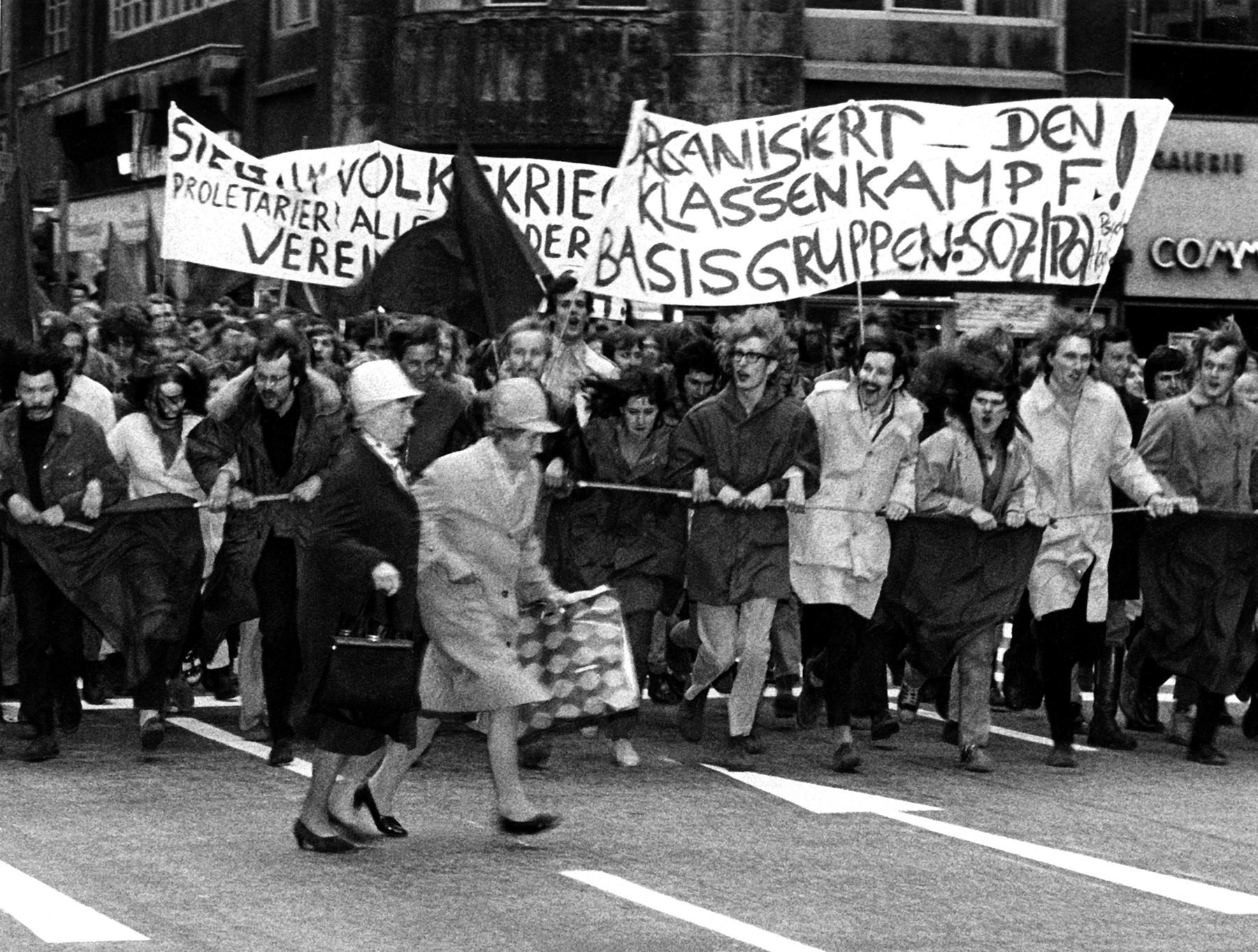
 

Günter Zint (German, b. 1941) 'Berlin, 1968 (Class struggle demonstration APO)' from the exhibition '68. Pop and Protest' at the Museum für Kunst und Gewerbe Hamburg (MKG), Oct 2018 - March 2019


Günter Zint (German, b. 1941)
Berlin, 1968 (Class struggle demonstration APO)
Silver gelatin print
© Panfoto, Hamburg
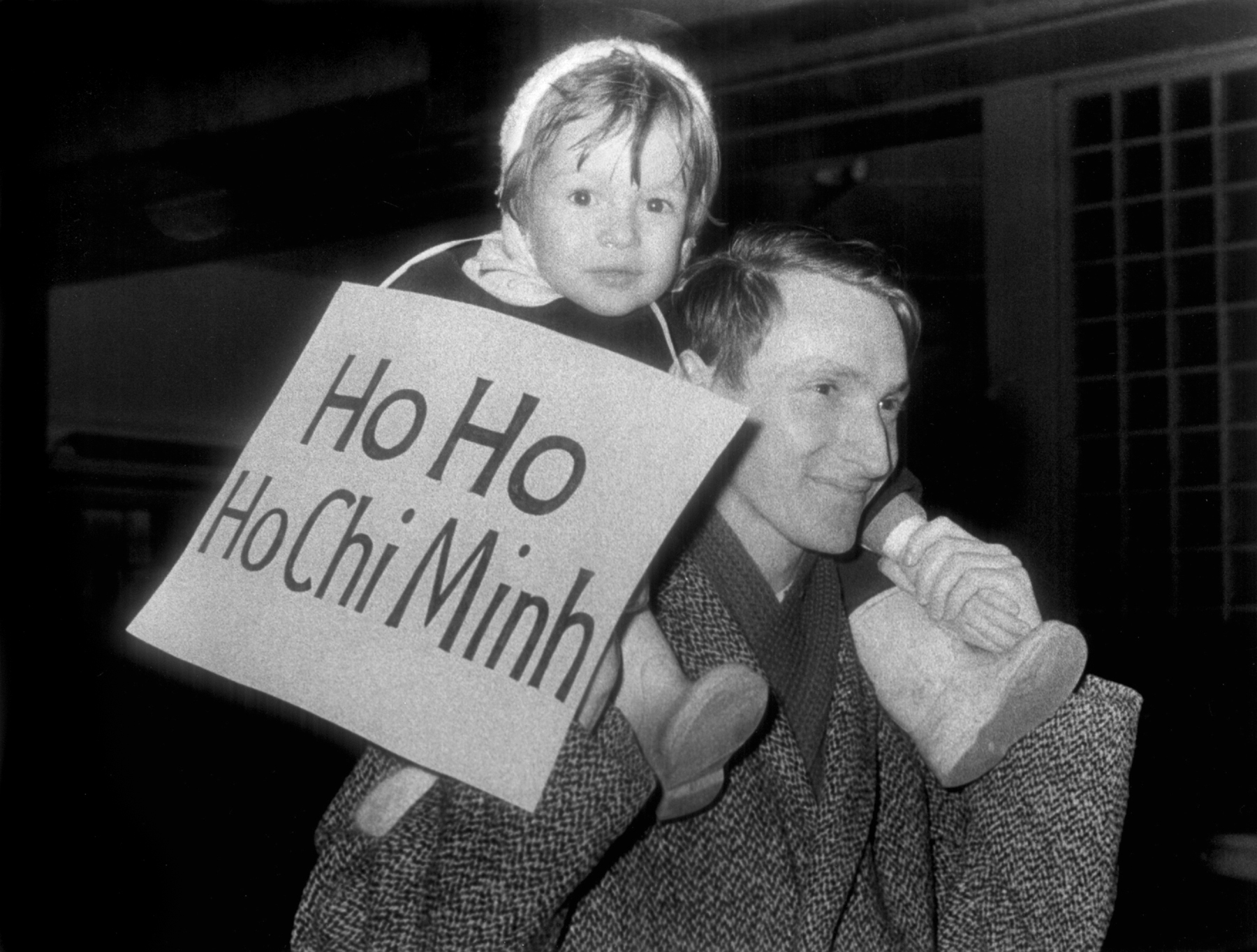
 

Günter Zint (German, 1941) 'Hamburg, 1968'


Günter Zint (German, b. 1941)
Hamburg, 1968
Silver gelatin print
© Panfoto, Hamburg
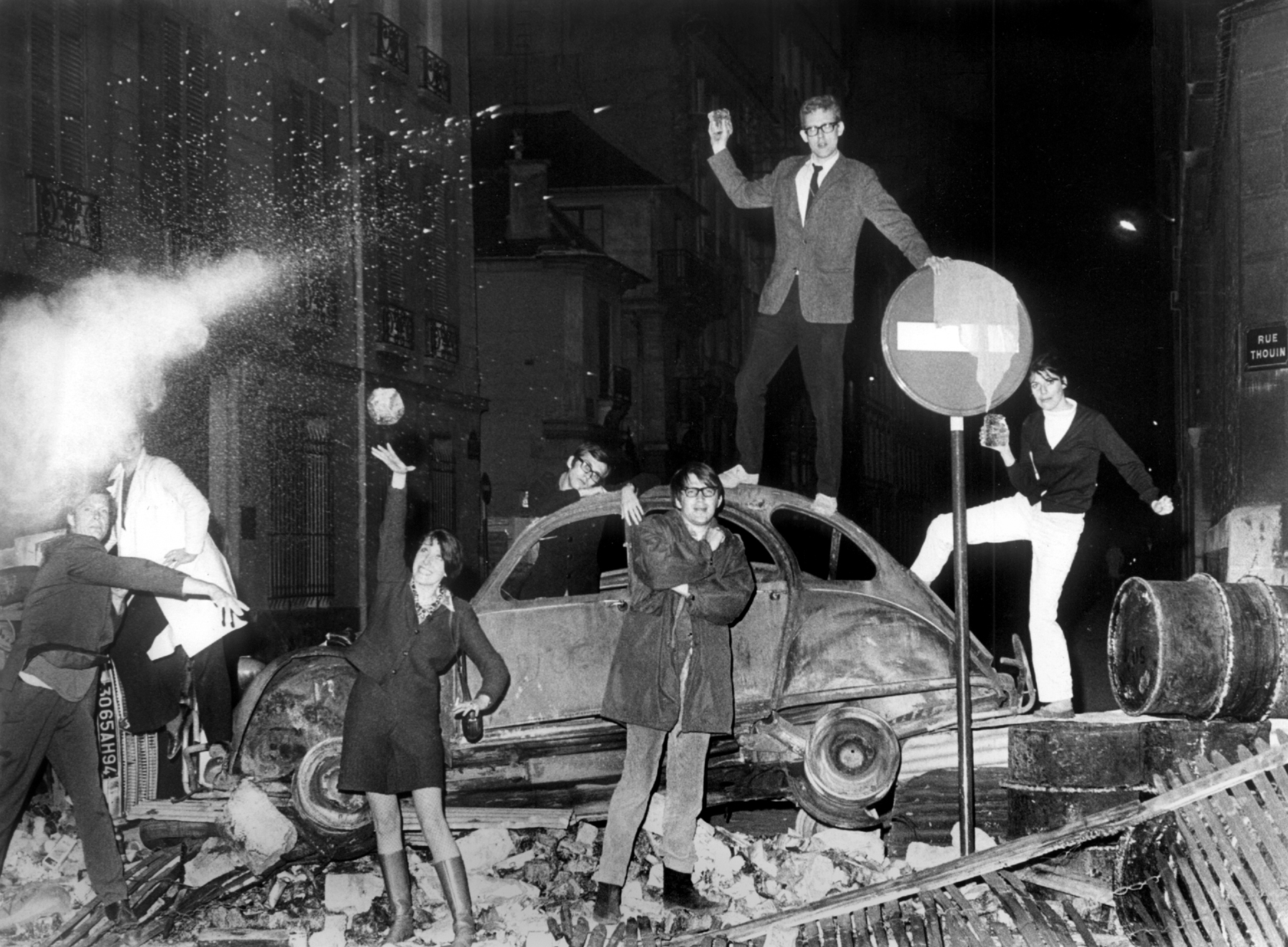
 

Günter Zint (German, 1941) 'Paris, 1968 (Horst Wolf on car)'


Günter Zint (German, b. 1941)
Paris, 1968 (Horst Wolf on car)
Silver gelatin print
© Panfoto, Hamburg
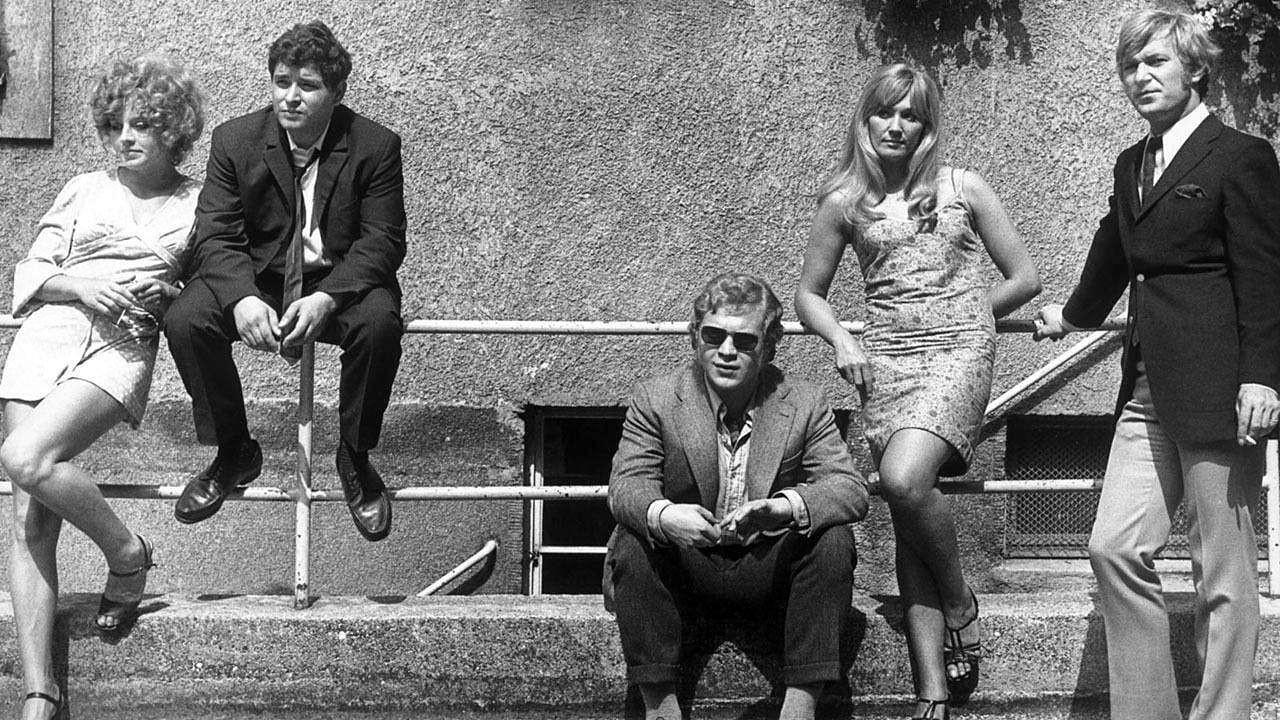
 

Rainer Werner Fassbinder (West German, 1945-1982) 'Katzelmacher' 1969 (still) from the exhibition '68. Pop and Protest' at the Museum für Kunst und Gewerbe Hamburg (MKG), Oct 2018 - March 2019


Rainer Werner Fassbinder (West German, 1945-1982)
Katzelmacher (film still)
1969
Scene with Hanna Schygulla, Hans Hirschmüller, Rudolf Waldemar Brem, Lilith Ungerer and Hannes Gromball
Black and white film, 88 min.
© RWFF Fotoarchiv


Katzelmacher is a 1969 West German film directed by Rainer Werner Fassbinder. The film centres on an aimless group of friends whose lives are shaken up by the arrival of an immigrant Greek worker, Jorgos (played by Fassbinder himself, in an uncredited role).

In this unflinching German drama by Rainer Werner Fassbinder, a group of young slackers, including the couple Erich (Hans Hirschmuller) and Marie (Hanna Schygulla), spend most of their time hanging out in front of a Munich apartment building. When a Greek immigrant named Jorgos (played by Fassbinder), moves in, however, their aimless lives are shaken up. Soon new tensions arise both within the group and with Jorgos, particularly when Marie threatens to leave Erich for the outsider.


Katzelmacher | A Greek from Greece | 1969 | Dir. R. W. Fassbinder

Katzelmacher is a 1969 West German film directed by Rainer Werner Fassbinder. The film centres on an aimless group of friends whose lives are shaken up by the arrival of an immigrant Greek worker, Jorgos played by Fassbinder himself, in an uncredited role.

Rainer Werner Fassbinder directs and stars in this film, impersonating Jorgos, a Greek man who immigrated to a small German town to work. However, when he arrives, he is faced with the local residents, who find his status as a foreigner strange, as well as his communist conviction. Jorgos tries to please his new neighbours, thereby arousing the interest of some women in the city and achieving relative success with the beauties. Consequently, he provokes more hostile behaviour in the men of the city. Greeted and reviled in Germany upon its release, Katzelmacher helped the controversial Fassbinder gain international prominence with a strong, provocative and controversial film.

What is a “Katzelmacher”?

“Katzelmacher” is a Bavarian slang term, meaning vaguely “troublemaker,” though a monograph from New York’s Museum of Modern Art insists on a more literal meaning: “cat-screwer”.


The exhibition 68. Pop and Protest brings together all the defining pictures, movies, texts and sounds of this era forming a complex atmospheric picture. The Museum für Kunst und Gewerbe Hamburg (MKG) will display about 200 objects including music installations, fashion, movies, photos, posters, design objects, historical documents and spatial ensembles such as Verner Panton’s Spiegel canteen, which show what moved and motivated people in 1968 – in Hamburg, Germany and the rest of the world: awareness of their own rights, and the possibility to advocate their opinions publically through protest and revolt.

The year 1968 is shaken by dramatic events which lead to protests, and promote revolutionary ideas. At the same time, a global cultural revolution is initiated that imaginatively revolts against conservative authoritarian structures, propagates sexual freedom, and demands equality for all people. Various avant-garde forms of expression in all artistic departments are the non-violent weapons of the time: progressive music, unconventional styles, bold designs, contentious theatre, and socio-critical cinema d’auteur.

Furthermore, there is an unprecedented desire for critical discourse, public discussion, and civil disobedience. A common thread is hope; hope that the world will turn into a fairer place, that society will get more just, and that people will become better; hope that political suppression will stop, that borders will be overcome, walls will get torn down, and that sexuality will be non-exploitative.

It is more important than ever to once again consolidate these ideas of freedom and self-determination in our collective memory. Current events show that central aspects of a free and democratic way of life are at stake (again): individual development of the self, fundamental rights such as freedom of speech and freedom of the press, democratic participation, and first and foremost open-mindedness towards what and whom we don’t know.

Text from the Museum für Kunst und Gewerbe Hamburg [Online] Cited 11/02/2019
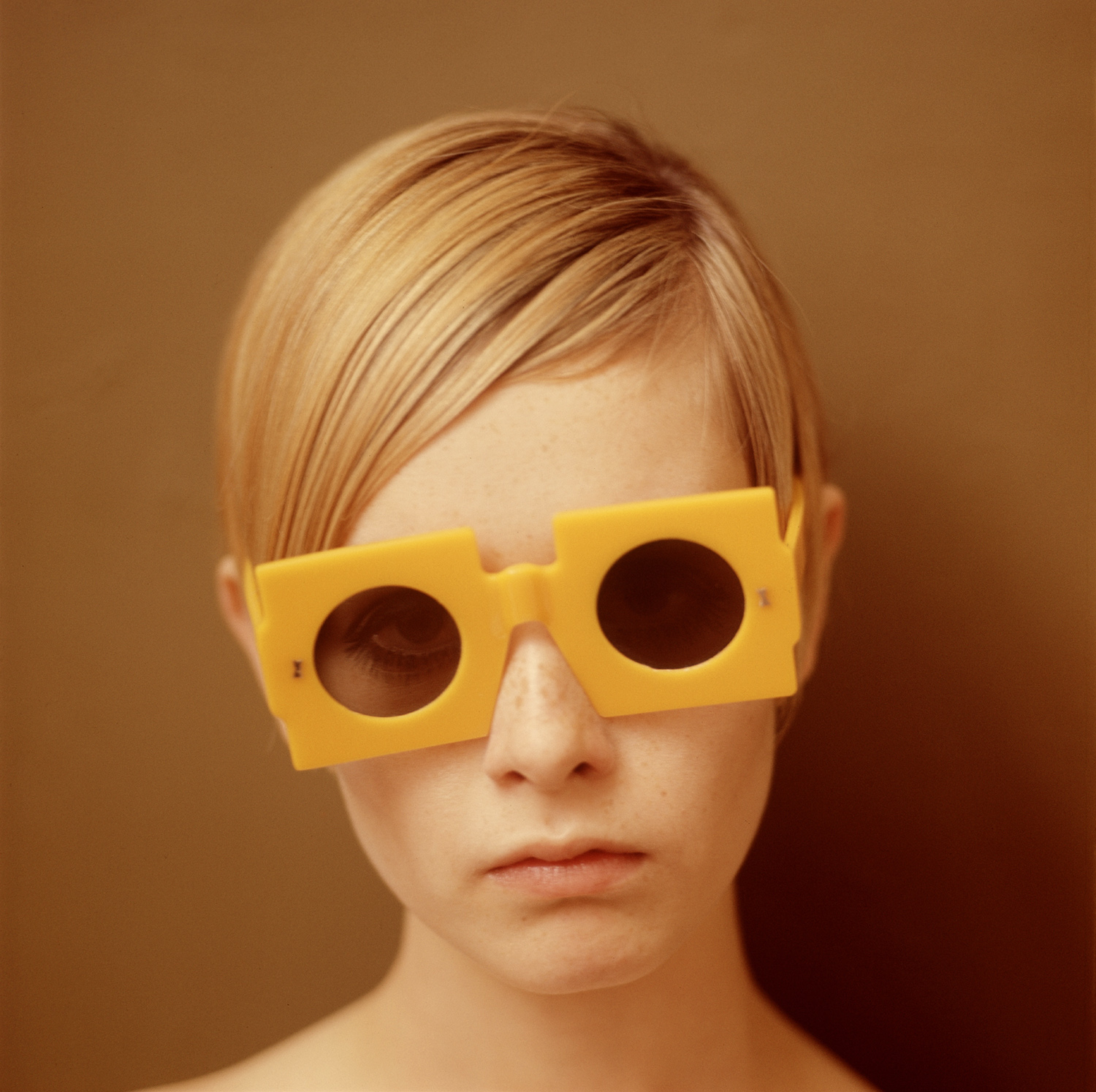
 

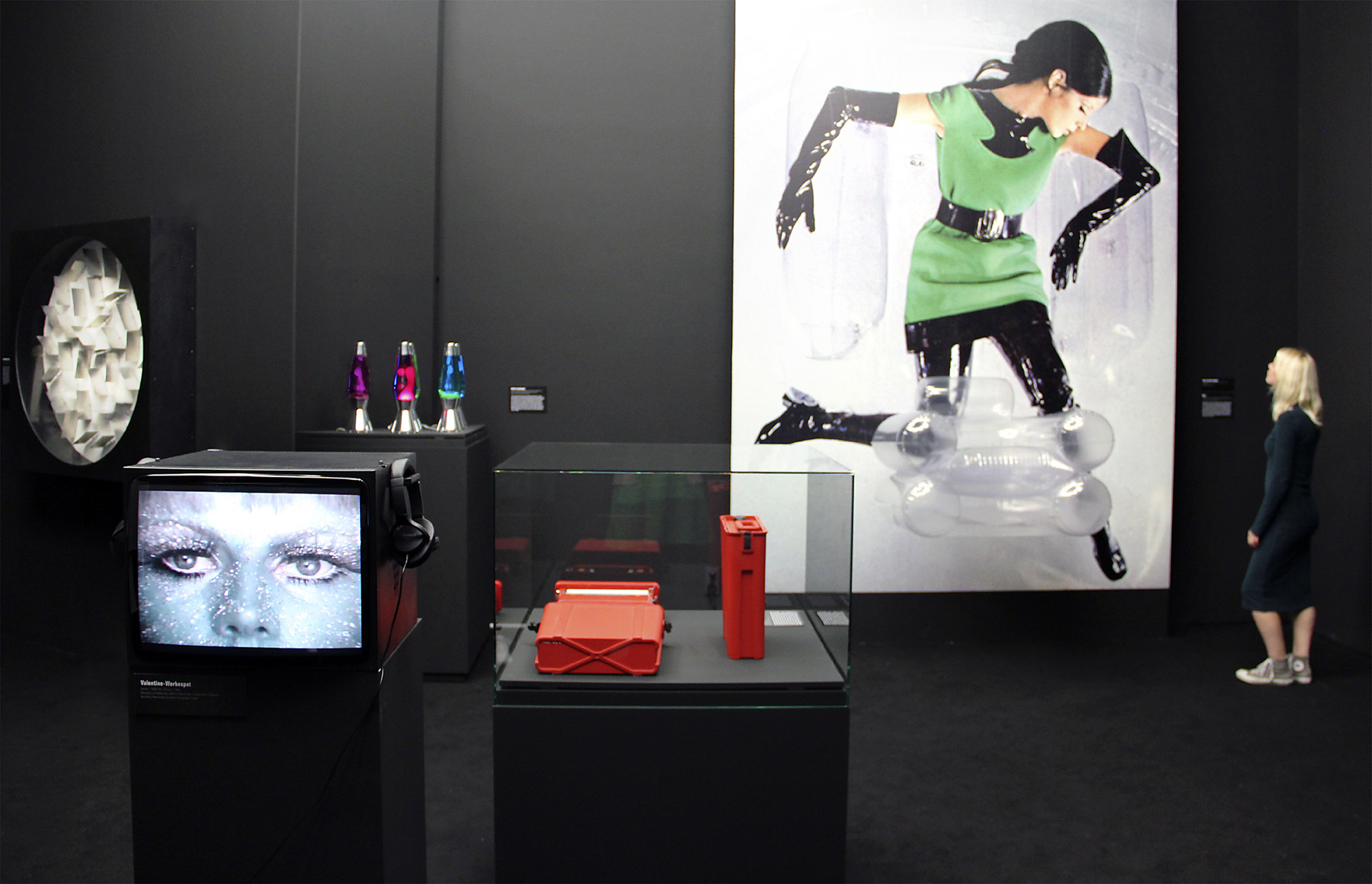
Ronald Traeger (American, 1936-1968) 'Twiggy' June 1966 from the exhibition '68. Pop and Protest' at the Museum für Kunst und Gewerbe Hamburg (MKG), Oct 2018 - March 2019


Ronald Traeger (American, 1936-1968)
Twiggy
June 1966
© Tessa Traeger


Fashion as a statement

When maladjusted outfits become consumer society, materialism and conventionality are put to the test. After short time, the looks can be found in the department stores: the protest mode is moving from subculture to mainstream. In haute couture, designs are related to the changing society set, in which gender assignments stumble and a relaxed handling of physicality and sexuality is propagated.
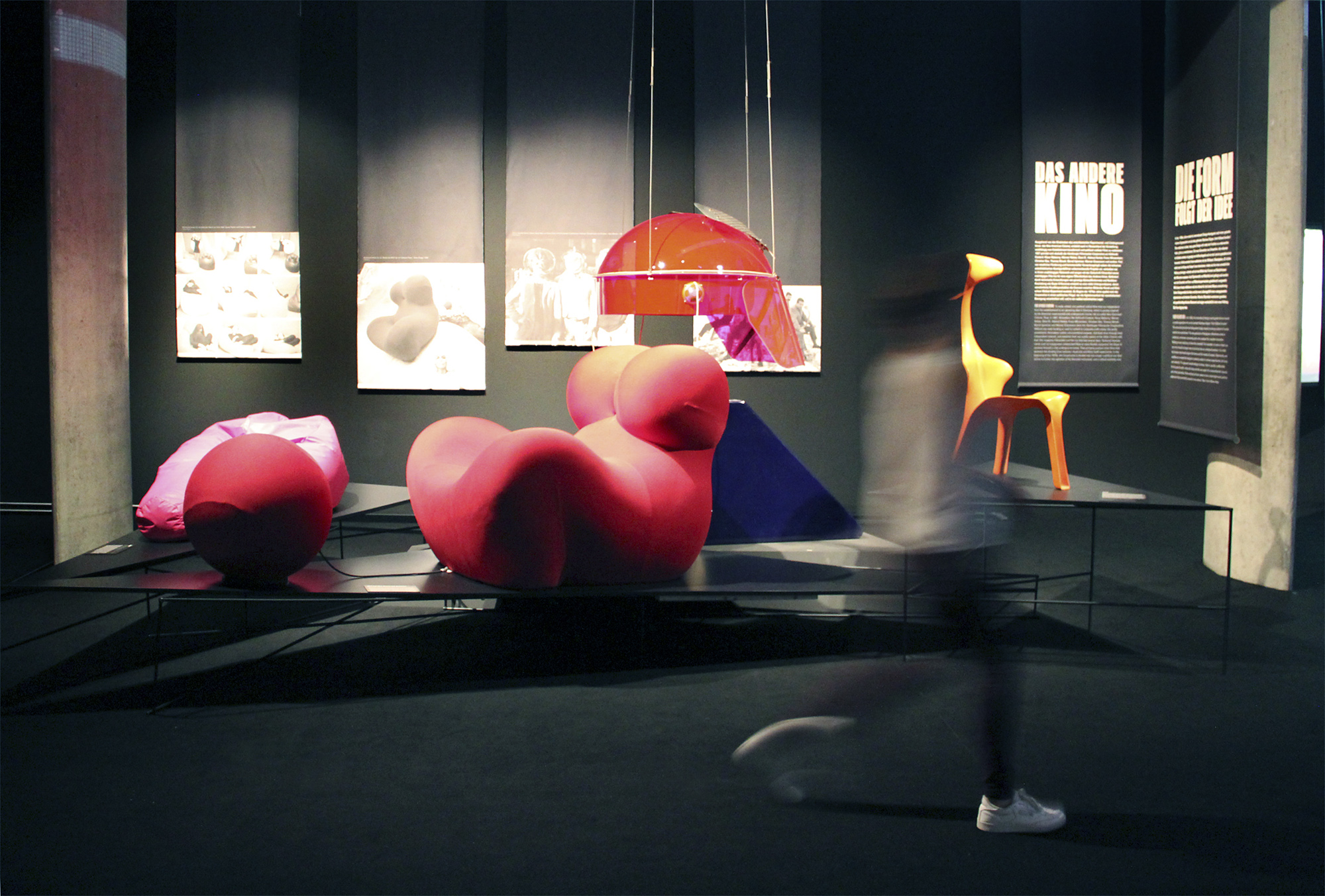
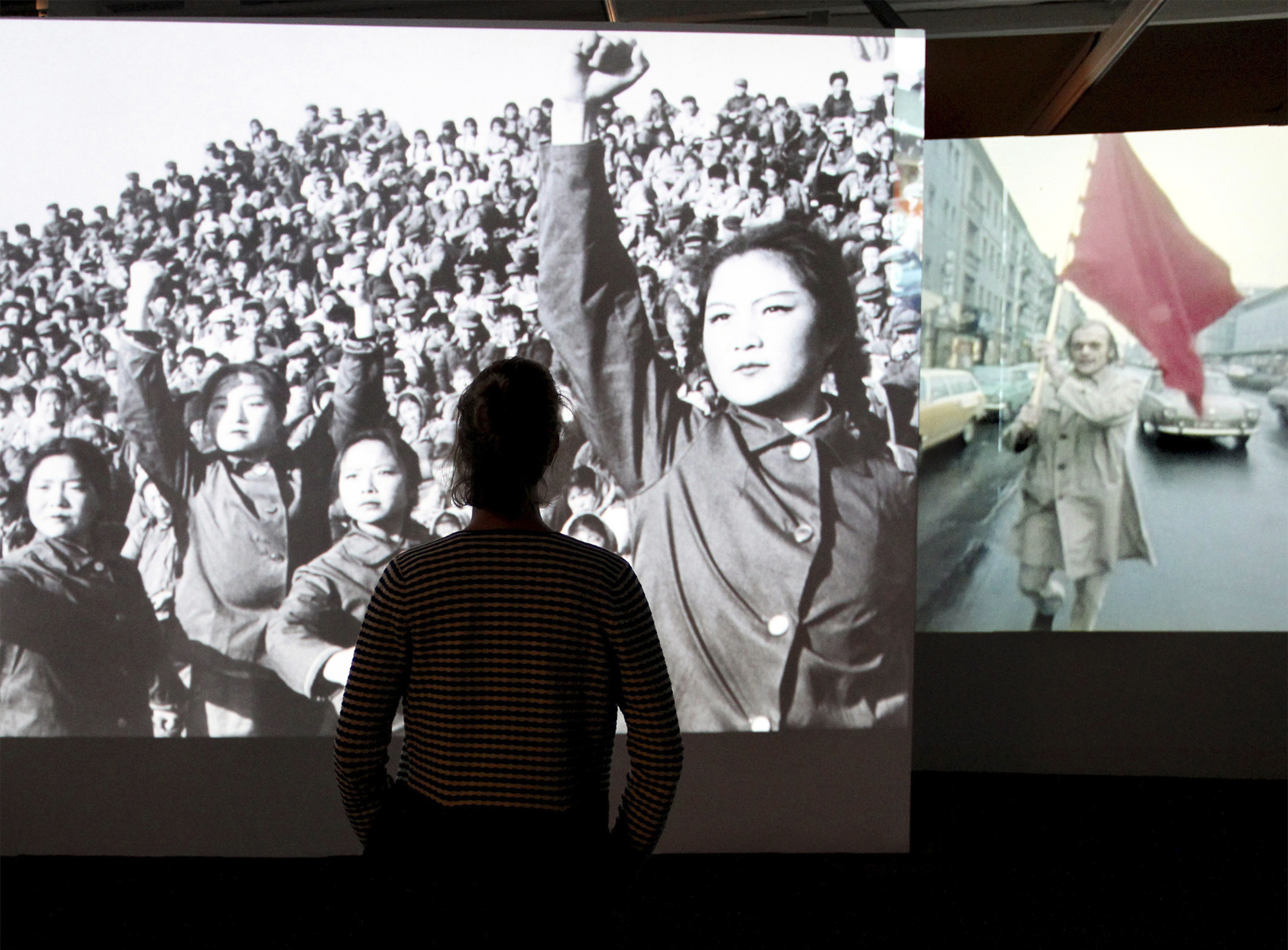
 

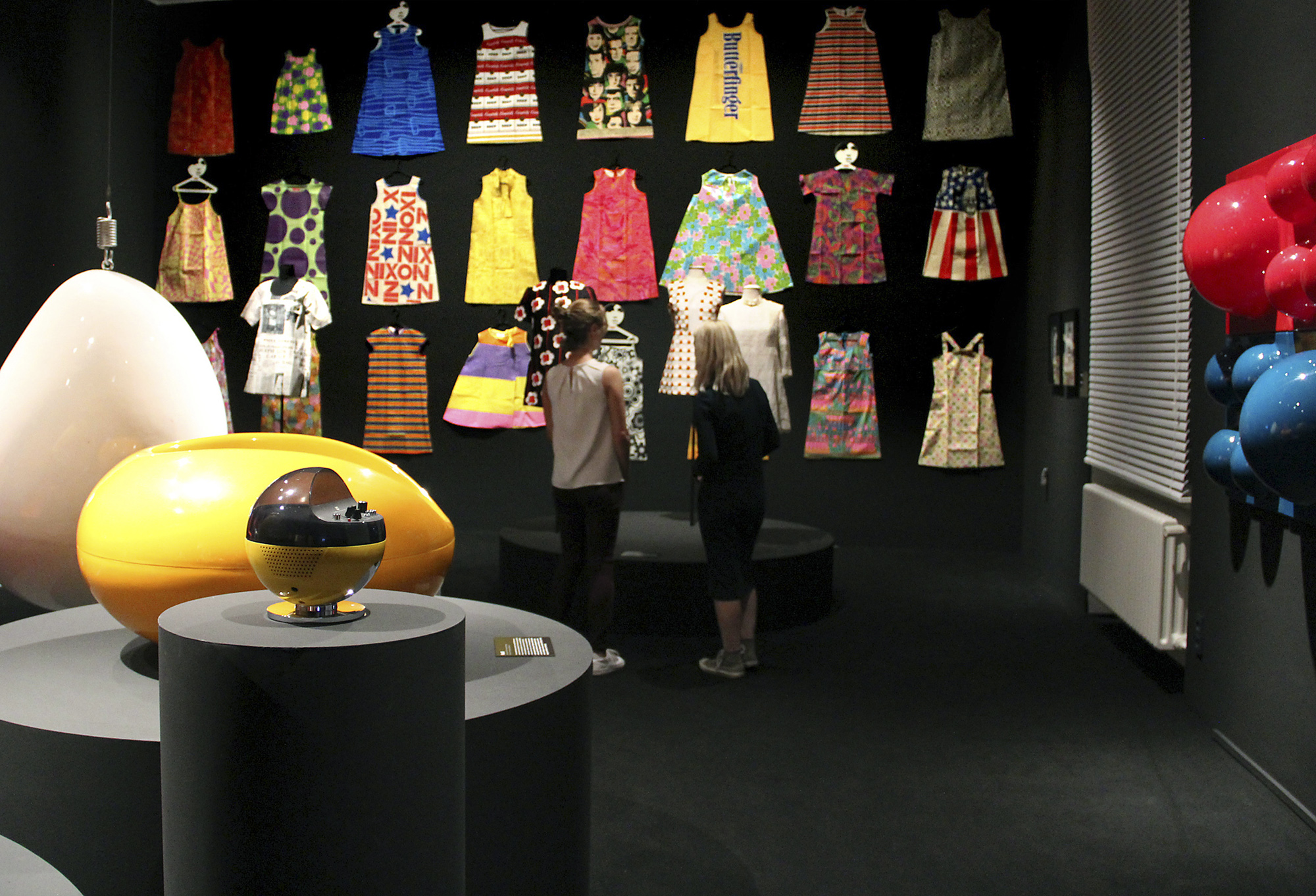
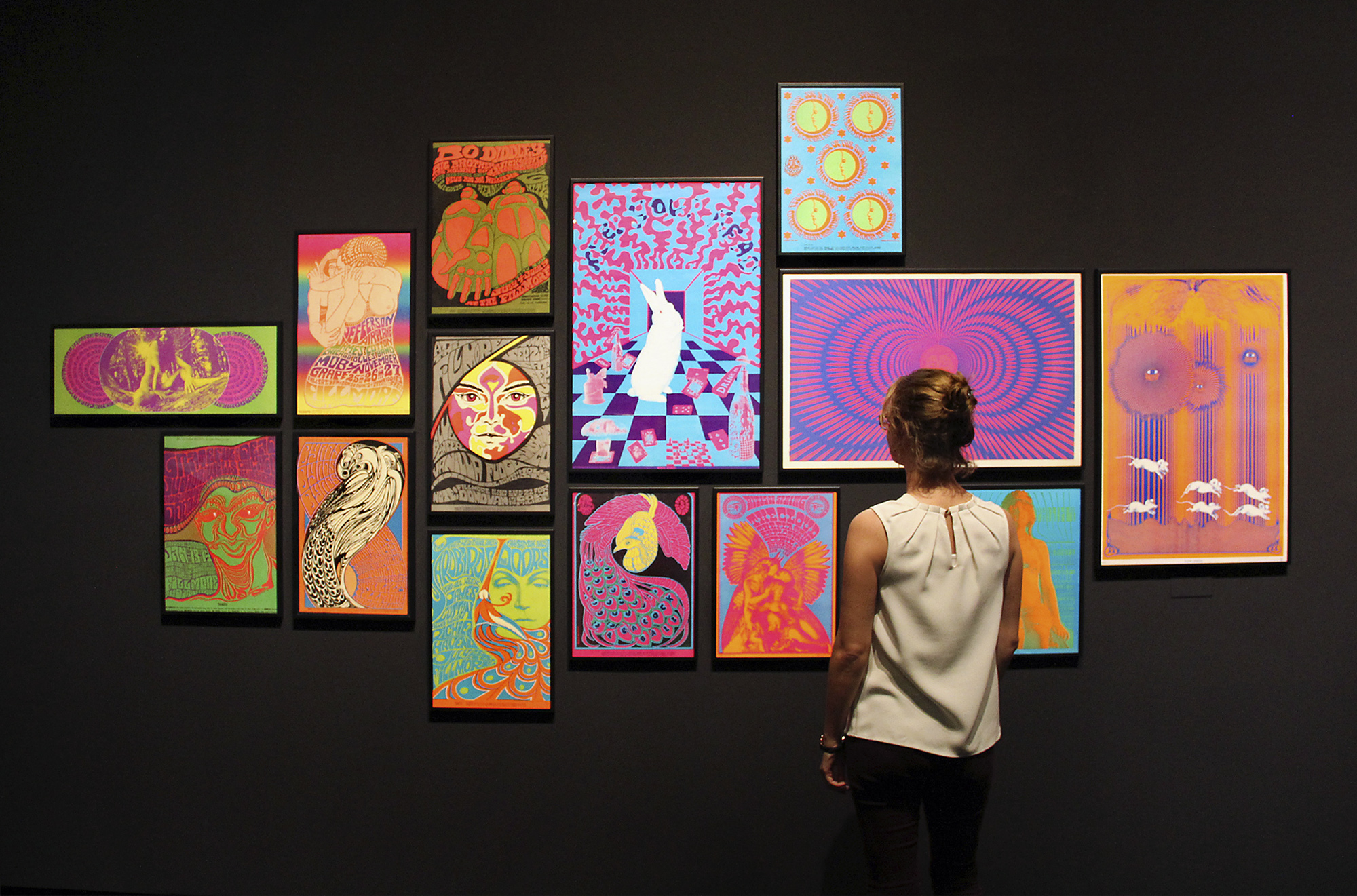
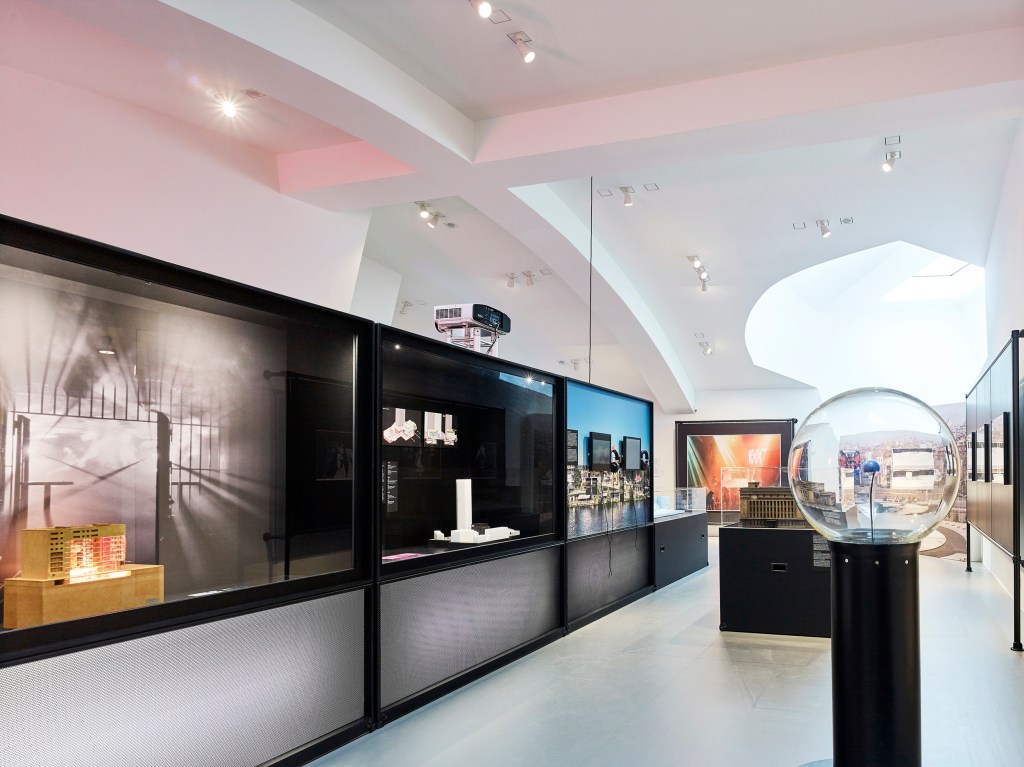
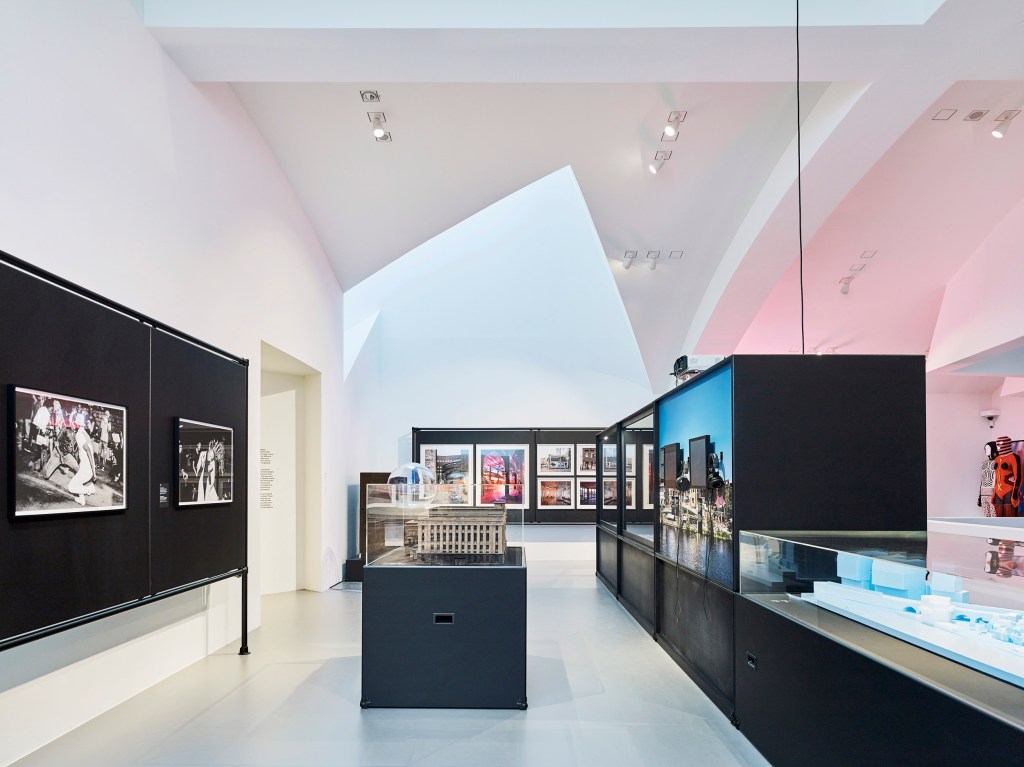
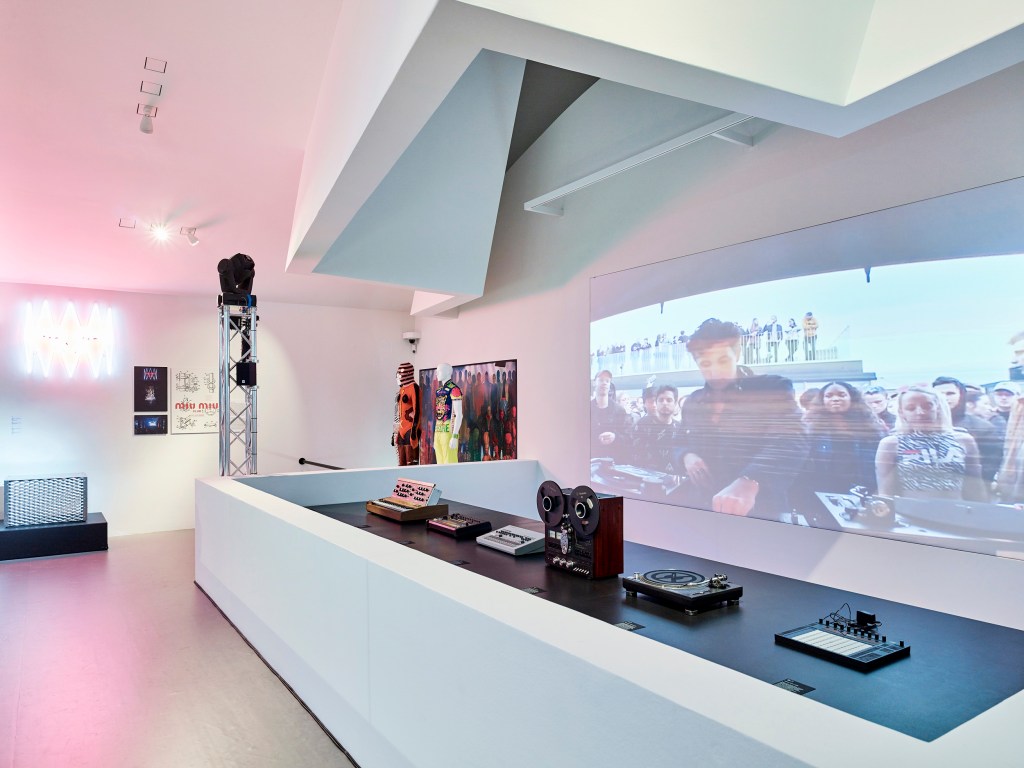
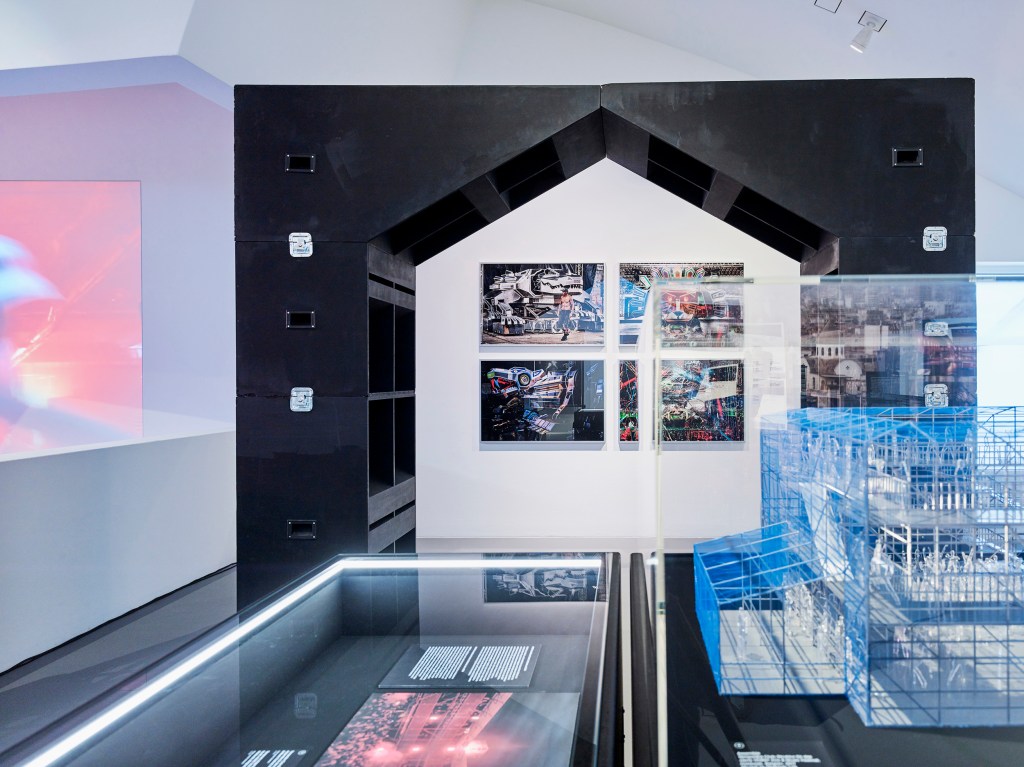
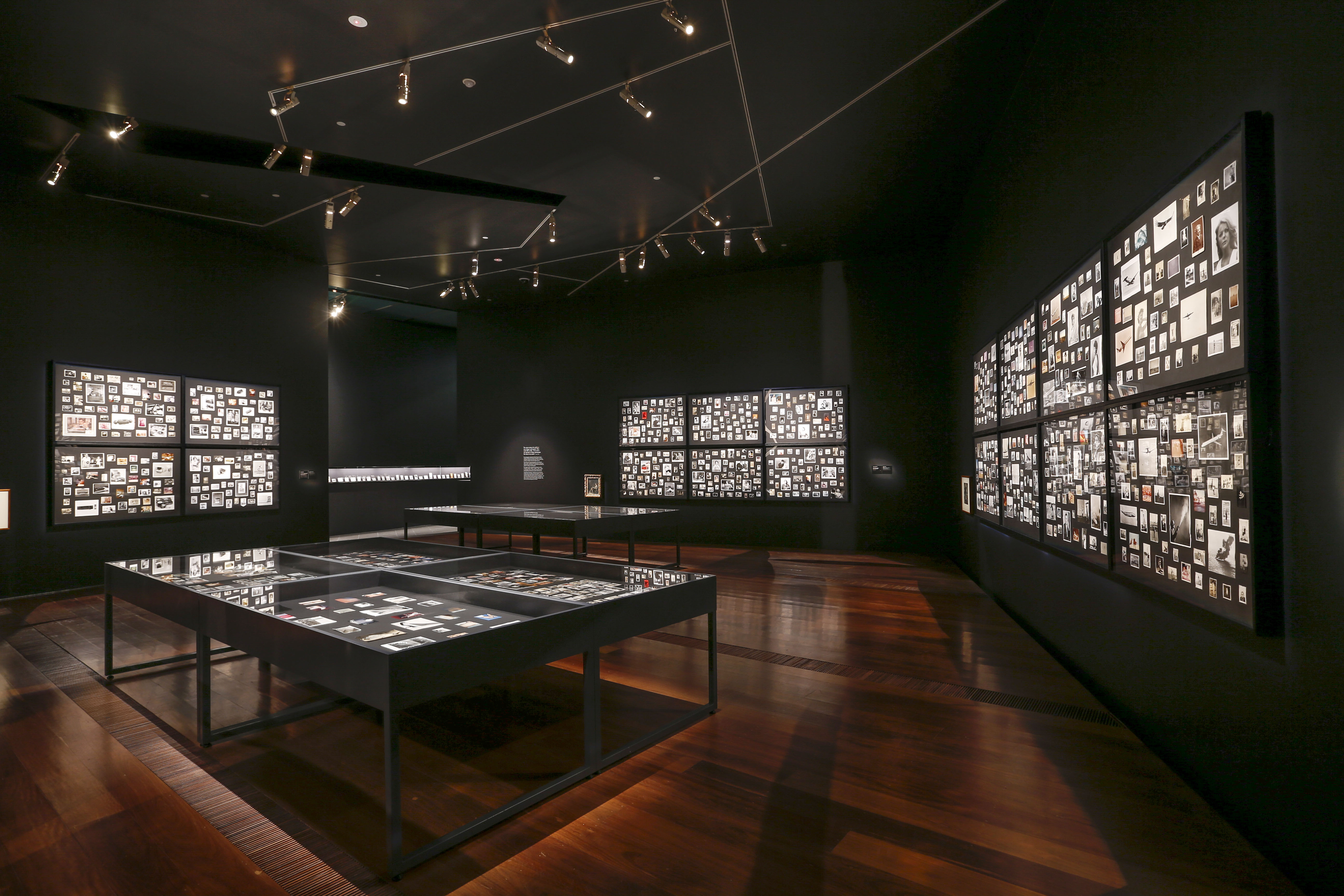
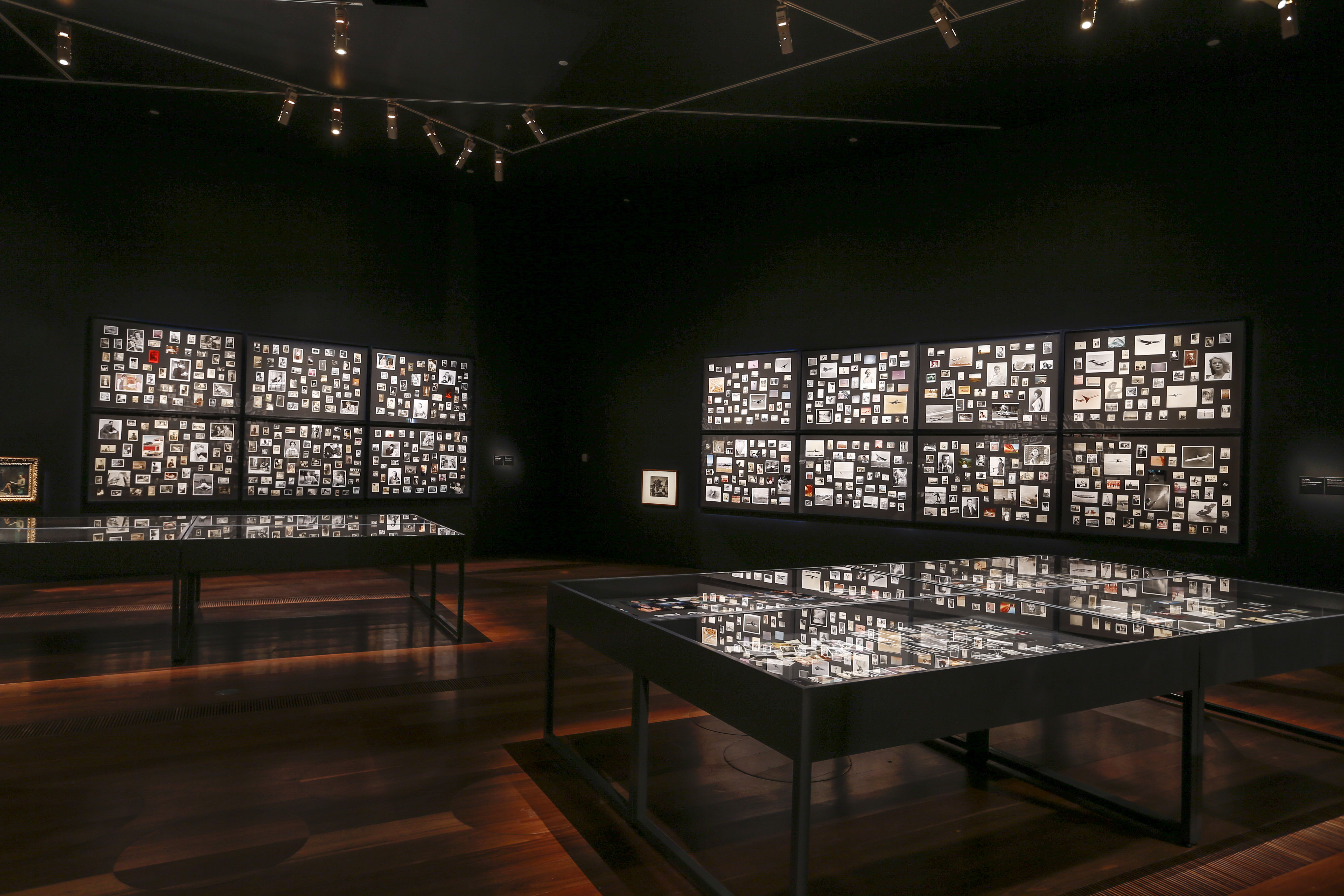
Installation view of the exhibition '68. Pop and Protest' at the Museum für Kunst und Gewerbe Hamburg (MKG)

Installation view of the exhibition '68. Pop and Protest' at the Museum für Kunst und Gewerbe Hamburg (MKG)

Installation view of the exhibition '68. Pop and Protest' at the Museum für Kunst und Gewerbe Hamburg (MKG)

Installation view of the exhibition '68. Pop and Protest' at the Museum für Kunst und Gewerbe Hamburg (MKG)

Installation view of the exhibition '68. Pop and Protest' at the Museum für Kunst und Gewerbe Hamburg (MKG)


Installation views of the exhibition 68. Pop and Protest at the Museum für Kunst und Gewerbe Hamburg (MKG)
Photos: Michaela Hille


The exhibition 68. Pop and Protest brings together all the defining pictures, movies, texts and sounds of this era forming a complex atmospheric picture. The Museum für Kunst und Gewerbe Hamburg (MKG) will display about 200 objects including music installations, fashion, movies, photos, posters, design objects, historical documents and spatial ensembles such as Verner Panton’s Spiegel canteen, which show what moved and motivated people in 1968 – in Hamburg, Germany and the rest of the world: awareness of their own rights, and the possibility to advocate their opinions publically through protest and revolt.

The year 1968 is shaken by dramatic events which lead to protests, and promote revolutionary ideas. At the same time, a global cultural revolution is initiated that imaginatively revolts against conservative authoritarian structures, propagates sexual freedom, and demands equality for all people. Various avant-garde forms of expression in all artistic departments are the non-violent weapons of the time: progressive music, unconventional styles, bold designs, contentious theatre, and socio-critical cinema d’auteur.

Furthermore, there is an unprecedented desire for critical discourse, public discussion, and civil disobedience. A common thread is hope; hope that the world will turn into a fairer place, that society will get more just, and that people will become better; hope that political suppression will stop, that borders will be overcome, walls will get torn down, and that sexuality will be non-exploitative.

It is more important than ever to once again consolidate these ideas of freedom and self-determination in our collective memory. Current events show that central aspects of a free and democratic way of life are at stake (again): individual development of the self, fundamental rights such as freedom of speech and freedom of the press, democratic participation, and first and foremost open-mindedness towards what and whom we don’t know.
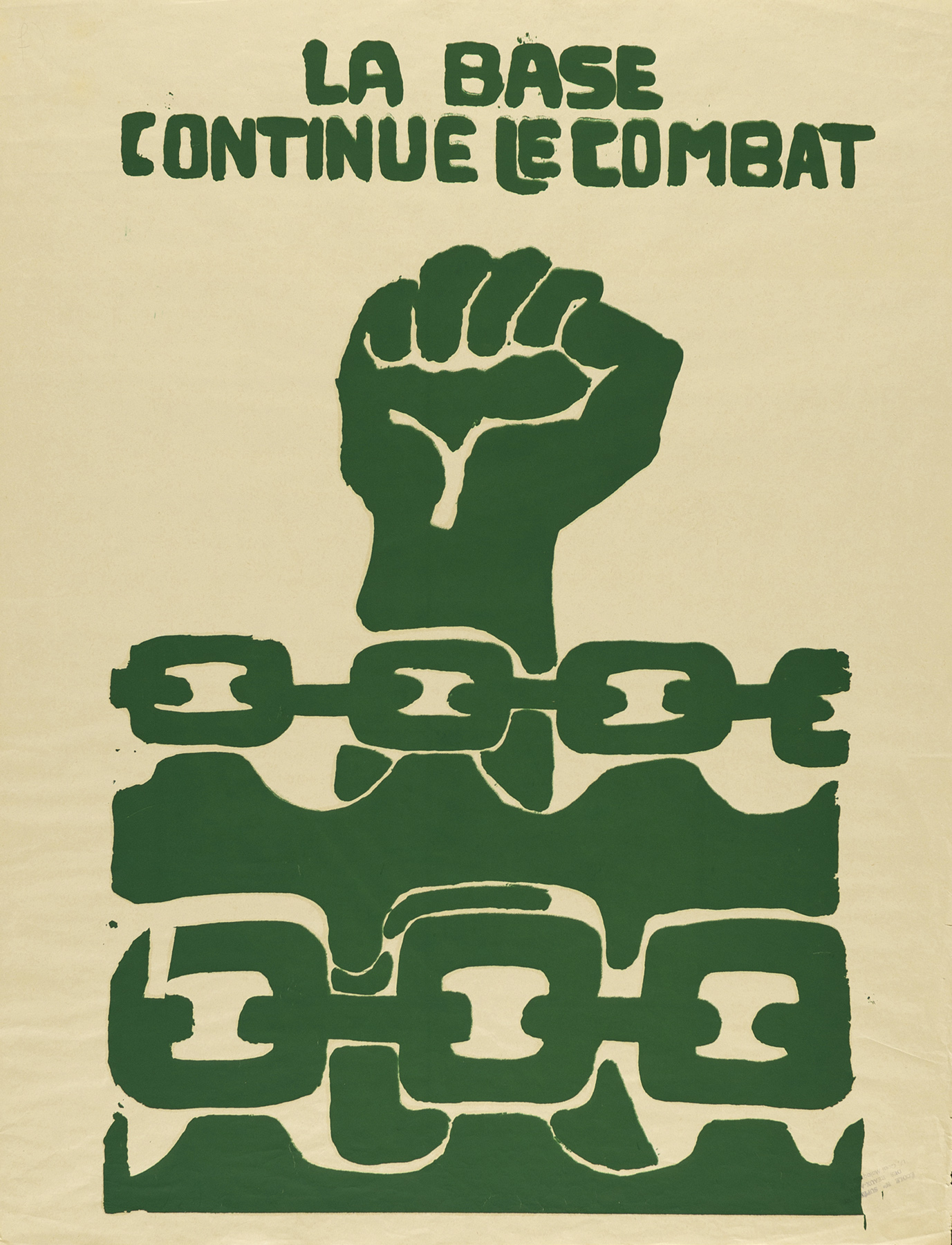
 

Atelier Populaire. 'La base continue le combat' 1968


Atelier Populaire
La base continue le combat
1968
Silk screen
65.4 x 50cm
Museum für Kunst und Gewerbe Hamburg


La révolution est dans la rue – The revolution is on the street

In 1968, France is experiencing serious unrest, with a general strike. In the democratically organised Atelier Populaire, rehearsing artists and workers have productive co-operation: hundreds of protest motifs are printed in their thousands as posters, which create and shape the Parisian cityscape. La beauté est dans la rue – not only the revolution, but also the beauty of the road reached.
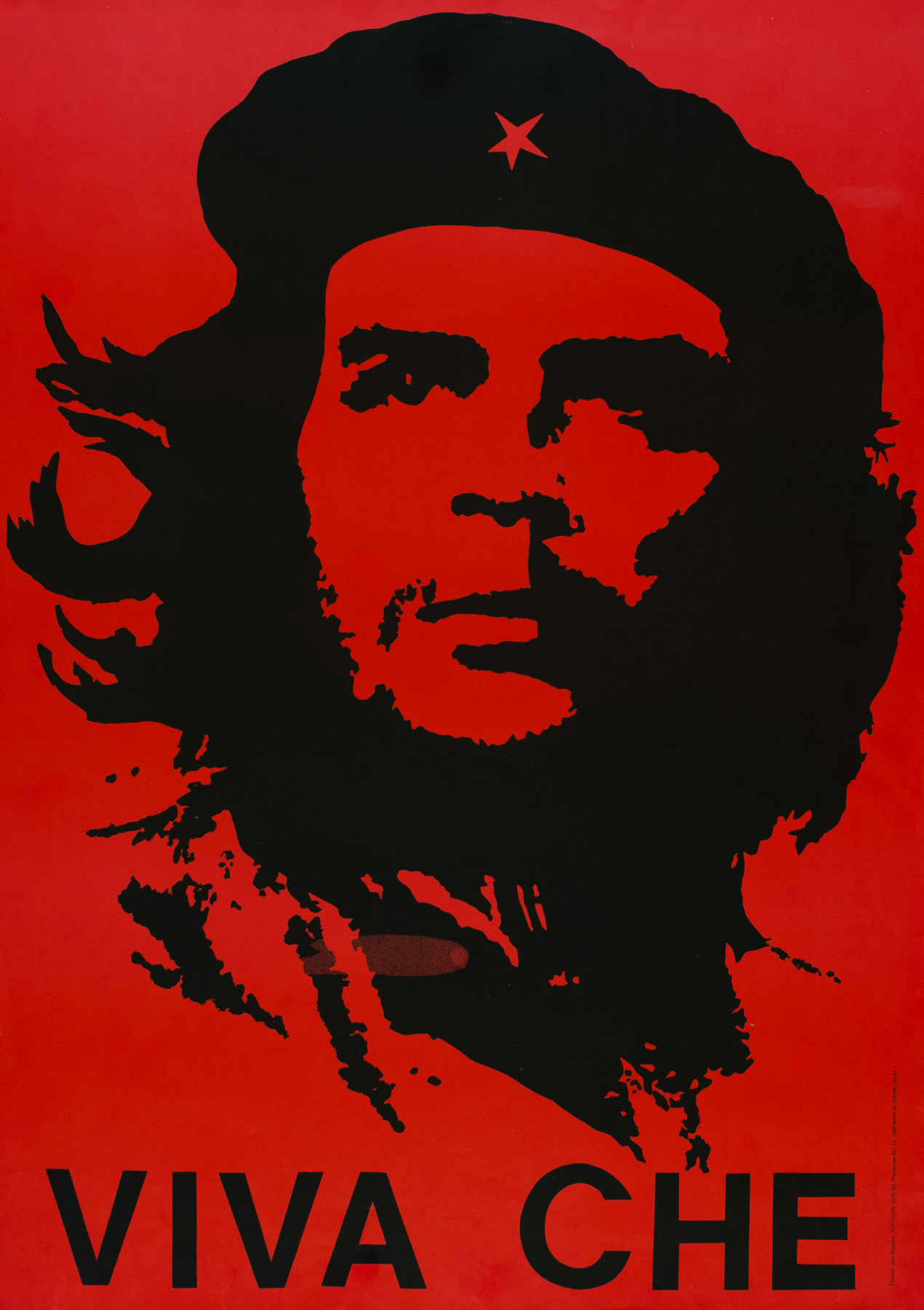
 

Gert Wiescher (German, b. 1944) 'Che Guevara' 1968


Gert Wiescher (German, b. 1944)
Che Guevara
1968
Offset print
86 x 61 cm
© VG Bild-Kunst, Bonn 2018


Straße als Massenmedium – Street as Mass Medium

Public space becomes a central place of expression, the protesters getting their messages to the mass media and conveyed to the general public. But strong pictures are needed: the political actions offer in their skilful staging, great visual attraction potential. All means of expression unites an understanding of democracy, the current rules and power structures in the (media) public, performatively questioned.

Street as Mass Medium

In May 1968, France experiences severe riots. Students and workers take a stand for mutual political demands for reforms as well as for cries for international solidarity which leads to a “wild general strike”: They occupy factories and public facilities such as faculties of Paris’ art college Ecole des Beaux-Arts. The printing workshop is opened as an Atelier Populaire to give everyone the chance to publically express their own views by creating posters. Artists and workers productively collaborate in this democratically structured space: the community collectively consults about how the protest messages should look like, and everyone can be a printer. Within a few weeks, hundreds of protest pictures – printed thousand fold – are spread across the city and can be seen everywhere. Universities are breeding grounds for protests; this is also true for the Federal Republic of Germany. Here, students discuss controversial opinions in an academic discourse, and organise resistance. In the light of global protests against the Vietnam War and Western economic colonialism, they express basic criticism of the political landscape. Their criticism also addresses education policy, elitist structures, emergency laws, and the German media landscape. The street is the place for the non-parliamentary opposition to utter their opinions. In the fight for political recognition and public attention, performative actions are more and more successful. Sit-ins, teach-ins, rallies, happenings and demonstrations offer creative provocation, and civil disobedience in combination with well-known forms of protest such as flyers and posters, all of which arouses high visual sensations and great media response. These different forms of action range from giving out paper bags with caricatures depicting the ruling Persian couple, which Kommune 1 does in 1967 at a demonstration against their visit in Berlin, to the famous banner saying “Unter den Talaren – Muff von 1000 Jahren” (“underneath their robes – fustiness of a thousand years”), with which undergraduates demand university reforms on the 9th November in 1967 at the University of Hamburg; these protests also include knocking down the monument of colonial civil servant Hermann von Wissmann in Hamburg as a statement against the “ongoing exploitation of the Third World.”
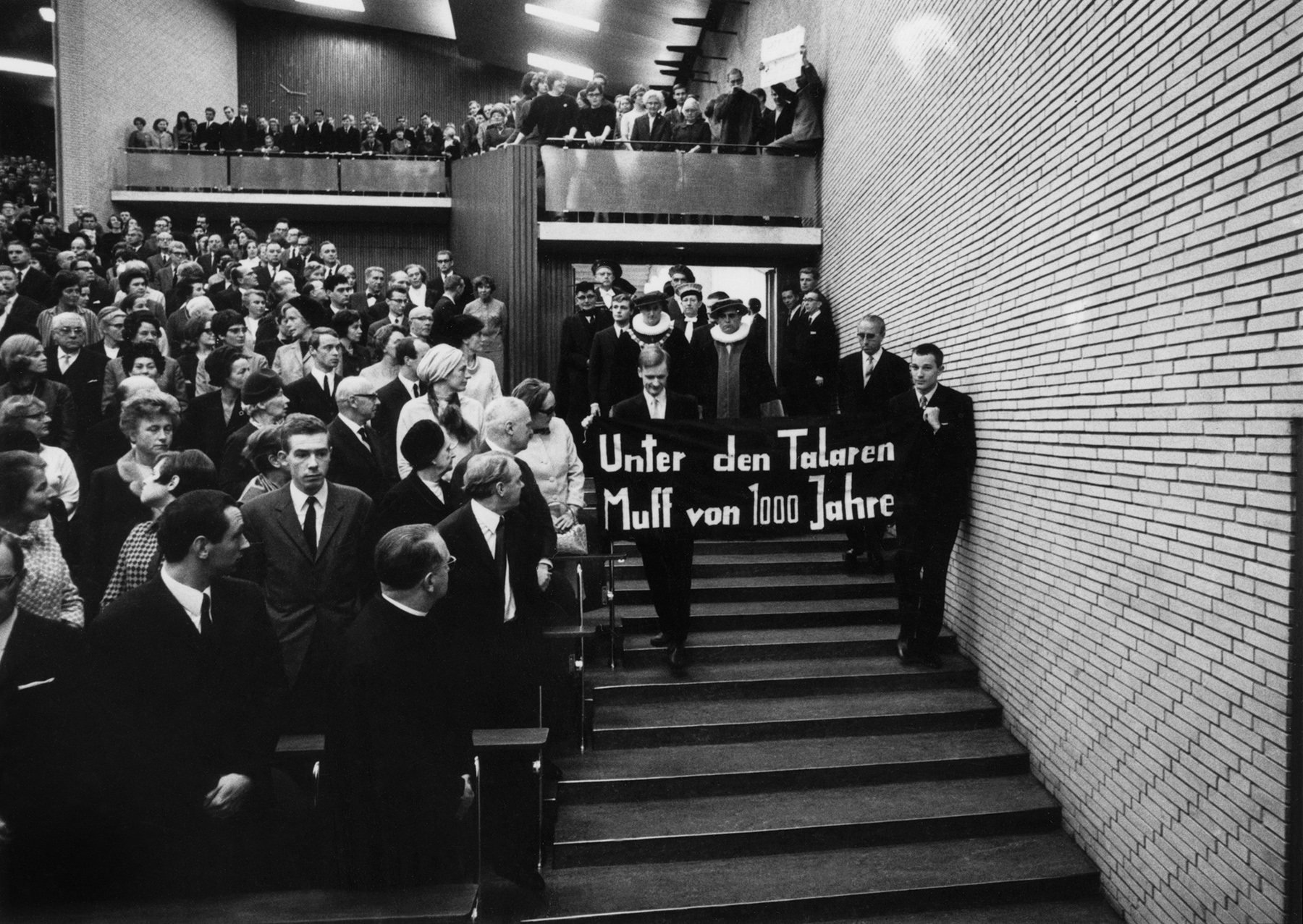
 

Manfred Sohr. 'Rektoratswechsel im Audimax der Universität Hamburg' Change of rectorate in the main auditorium of the University of Hamburg 1967


Manfred Sohr
Rektoratswechsel im Audimax der Universität Hamburg
Change of rectorate in the main auditorium of the University of Hamburg
“Unter den Talaren – Muff von 1000 Jahren” (“underneath their robes – fustiness of a thousand years”)

1967
Photographic agency Conti-Press
© Staatsarchiv Hamburg


Die Wahrheit ist radikal – The truth is radical

The universities are the germ cells of the protest: right and left groups claim the opinion of (academic) youth and the interests of society for themselves. Each as truth, propagated views are sometimes radically represented. In the fight for attention and political perception, actions are used that are between creation and provocation and cause civil disobedience.
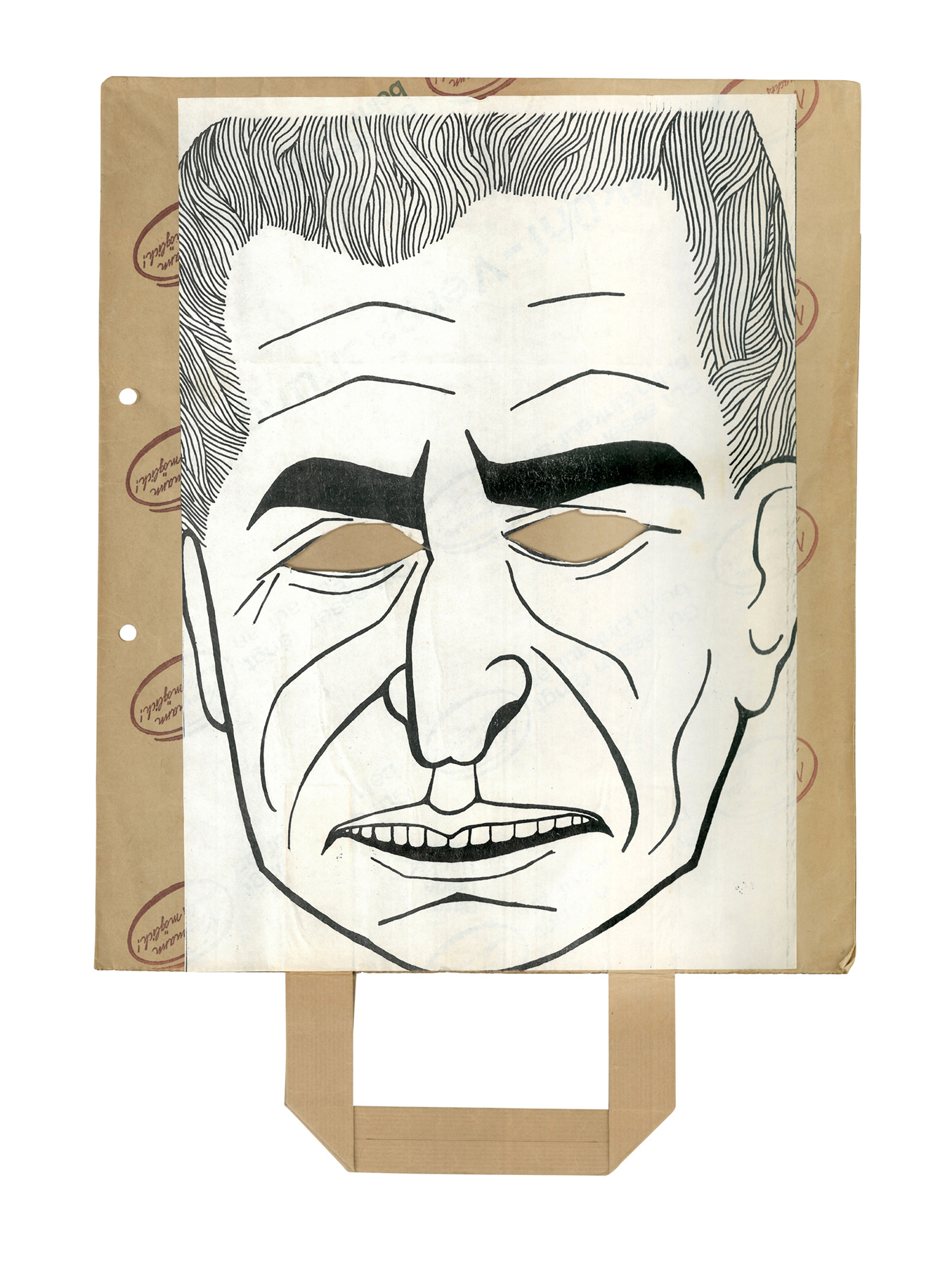
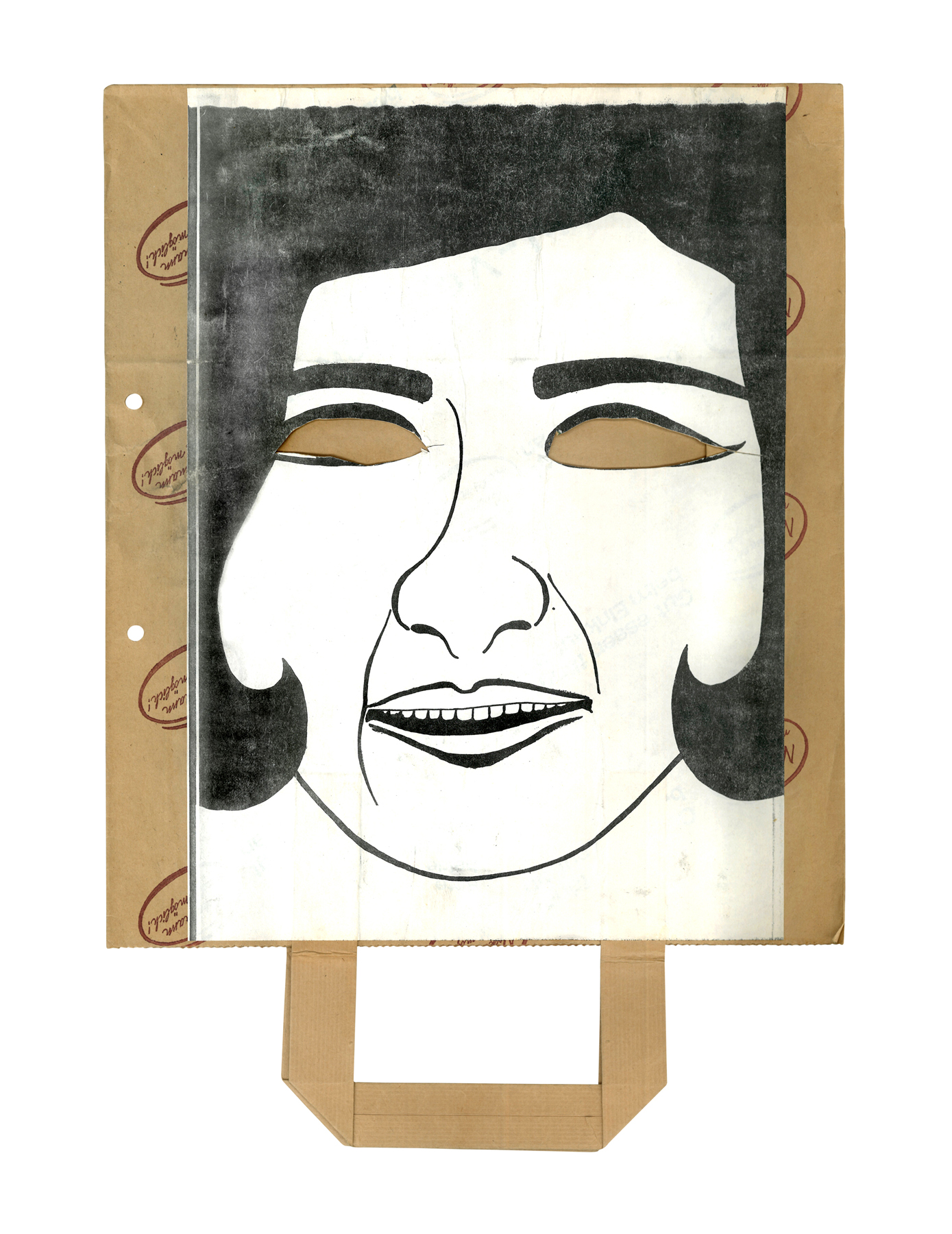
 

Rainer Hachfeld (German, b. 1939) Distribution: Kommune 1 Karikatur / caricature: 'Schah-Masken (Mohammad Reza Pahlavi, Farah Pahlavi) / Shah masks' 1967

Rainer Hachfeld (German, b. 1939) Distribution: Kommune 1 Karikatur / caricature: 'Schah-Masken (Mohammad Reza Pahlavi, Farah Pahlavi) / Shah masks' 1967


Rainer Hachfeld (German, b. 1939)
Distribution: Kommune 1
Karikatur / caricature: Schah-Masken (Mohammad Reza Pahlavi, Farah Pahlavi) / Shah masks
1967
Paper
Hamburger Institut für Sozialforschung
Photo: MKG


Harun Farocki (German, 1944-2014)
Die Worte des Vorsitzenden (The words of the chairman)
1967
Black and White film
16mm, 3 min.
© Deutsche Kinemathek – Museum für Film und Fernsehen, Berlin
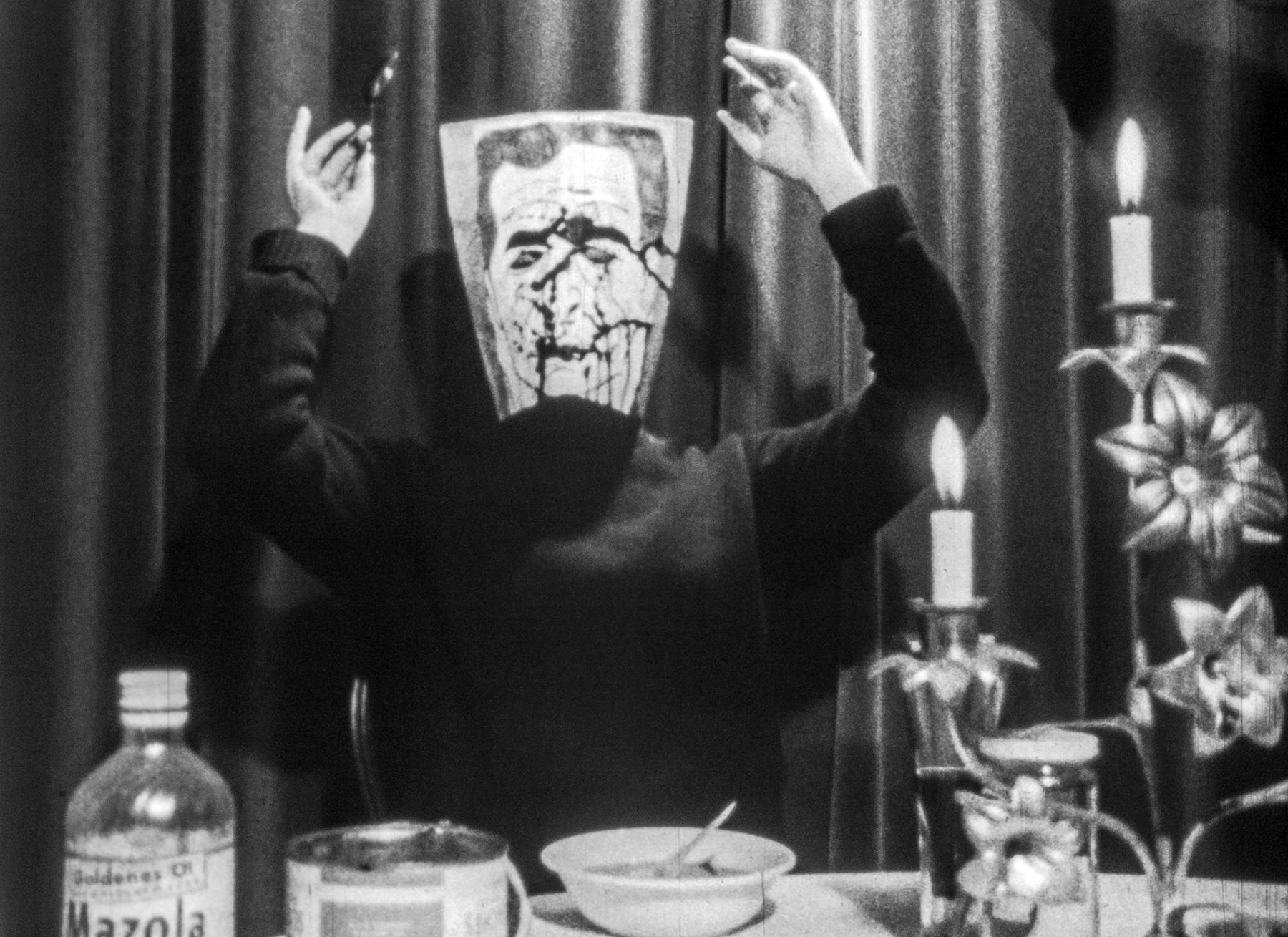
 

Harun Farocki (German, 1944-2014) 'Die Worte des Vorsitzenden' (The words of the chairman) 1967 (videostill)


Harun Farocki (German, 1944-2014)
Die Worte des Vorsitzenden (The words of the chairman) (videostill)
1967
Black and White film
16mm, 3 min.
© Deutsche Kinemathek – Museum für Film und Fernsehen, Berlin
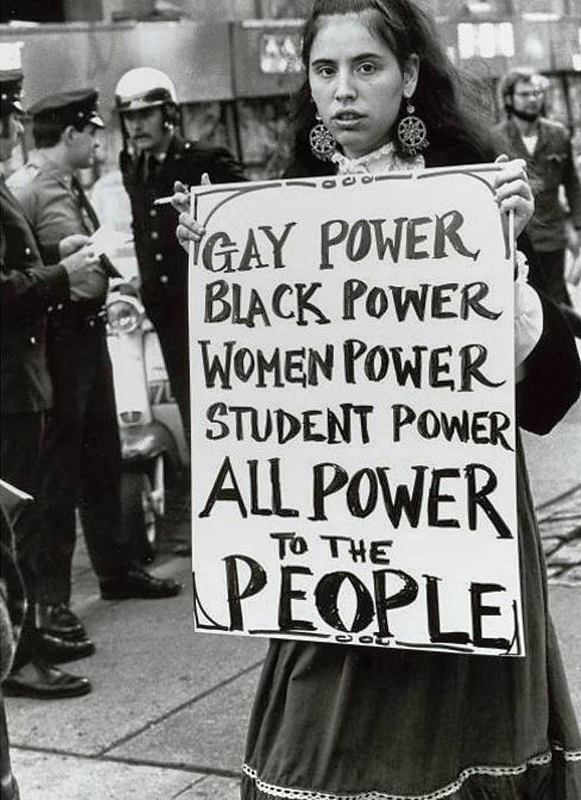
 

Diana Davies (American, b. 1938) 'Protestor at Weinstein Hall demonstration for the rights of gay people on campus' 1970


Diana Davies (American, b. 1938)
Protestor at Weinstein Hall demonstration for the rights of gay people on campus
1970
Silver gelatin print
Diana Davies, The New York Public Library Digital Collections
© Diana Davies


Power to the people

The social discourse is characterised by civil rights movements, including feminist groups, the gay movement and the Civil Rights Movement of the African American population in the US. Racism, intolerance and discrimination are systematically and openly denounced. The means of protest range from demonstrations and information campaigns about civil disobedience to partly artistic, partly militant actions up to armed resistance.

Talking ’bout my Generation

In the 1960s, a pop revolution conquers the Western hemisphere, starting in Great Britain and the USA which conclusively establishes rock music as a generation-defining phenomenon and expression of an international way of life. This marks a paradigm shift in entertainment music that defines rock and pop as an essential part of youth and subculture with an existential identity-establishing function. For adolescents, English music also means separating themselves from the generation of their parents and the (fake) bourgeois Schlager music idyll. In only a short time, bands rise from playing in underground clubs to performing on big stages. One of the reasons is the growing festival scene that starts in 1967 with the Monterey Pop Festival and peaks in 1969 with Woodstock. The exhibition will feature the concert movie Monterey Pop that shows ground breaking performances by Jimi Hendrix, as he sets his guitar on fire, Jefferson Airplane, The Who, The Mamas & the Papas and more, which will give visitors the chance to dive into the festival atmosphere of the time. Concert posters, record covers and audio stations with the most famous songs bring the world of 68 to life. Already established musical genres are mixed, psychedelic rock captures the hippies‘ drug influenced style of life, experimental arrangements and instrumentation produce completely new electronically amplified and distorted sounds. Records are conceptualised as complete art works. As a consequence, a visual cross-media language evolves that includes psychedelic poster or album cover designs and extravagant style presentations of the rock stars themselves. Pop culture becomes the international language of an entire generation.
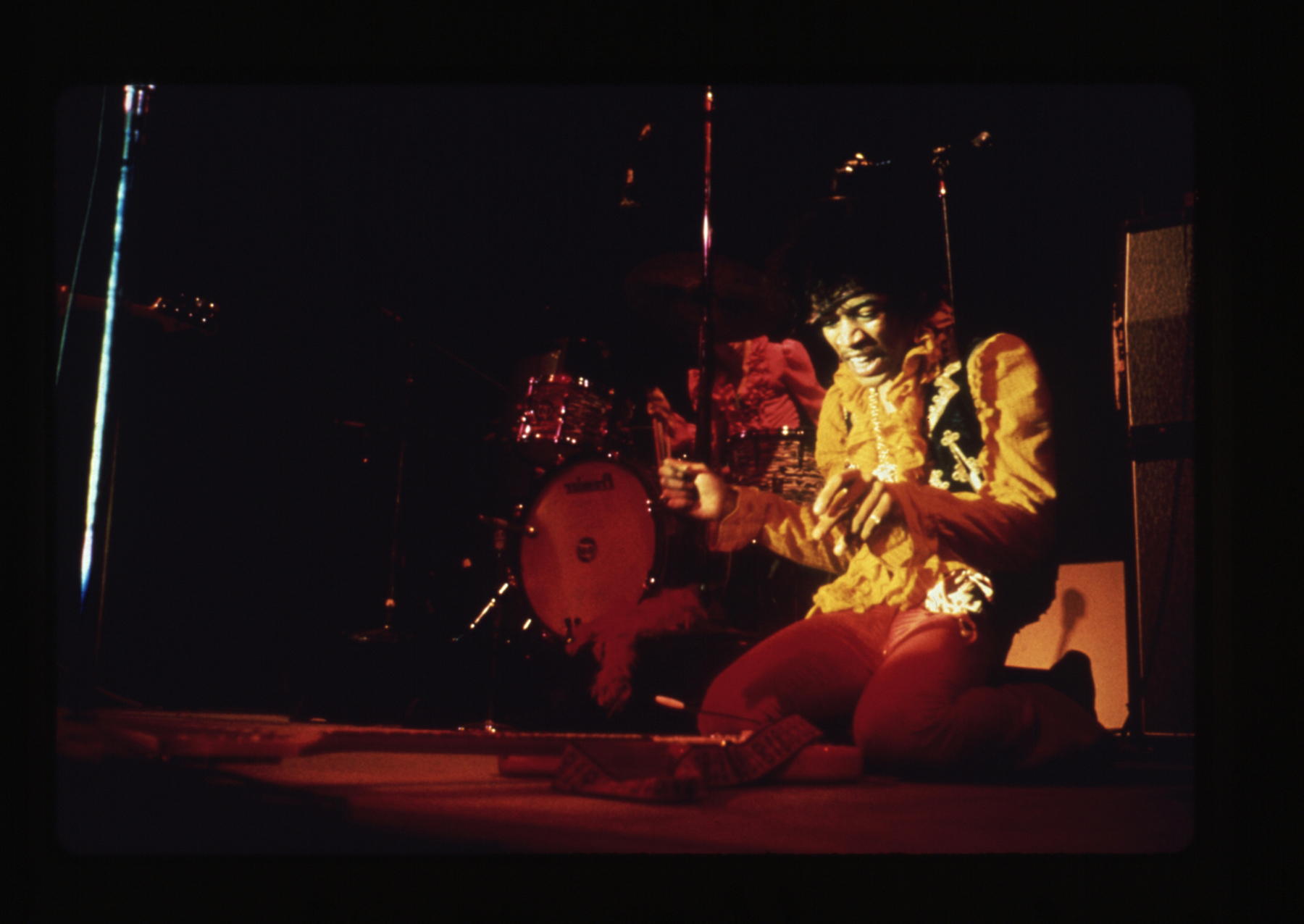
 

D.A. Pennebaker (American, b. 1925) 'Monterey Pop' (filmstill) 1968


D.A. Pennebaker (American, 1925-2019)
Monterey Pop (filmstill)
1968
16mm
© 1982 Pennebaker Hegedus Films, Inc. and The Monterey International Pop Festival, Inc.


Talking ’bout my generation

Rock music finally establishes itself as generation-determining phenomenon and an expression of an international lifestyle. This is accompanied by a cross-media visual language, from psychedelic poster and cover design to extravagant fashion staging of the rock stars. Pop Culture becomes the international language of a whole generation, that is in turn incorporated by the cultural industry.


Monterey Pop Official Trailer

The Monterey Pop Festival ran for three days in June 1967. For most of the five shows, the arena was jammed to bursting with perhaps as many as 10,000 people. The live performances were spectacularly successful. Janis Joplin, who was singing with Big Brother and the Holding Company, pulled out all the stops with a raw, powerful performance that helped establish her as the preeminent female rock singer of her day.

The Who climaxed a brilliant set by smashing their equipment at the conclusion of “My Generation”. Jimi Hendrix (in the American debut of the Jimi Hendrix Experience) offered an awesome display of his virtuosity as a guitarist and as a showman, humping his Marshall amplifiers and then setting his Stratocaster ablaze. Another highlight was Ravi Shankar’s meditative afternoon of Indian ragas. And then there was Otis Redding, the dynamic soul man turned in what many present believe was the festival’s best performance. ABC offered $400,000 for network rights to Pennebaker’s film (which was released in theatres after ABC decided it was too far out for the TV audience).
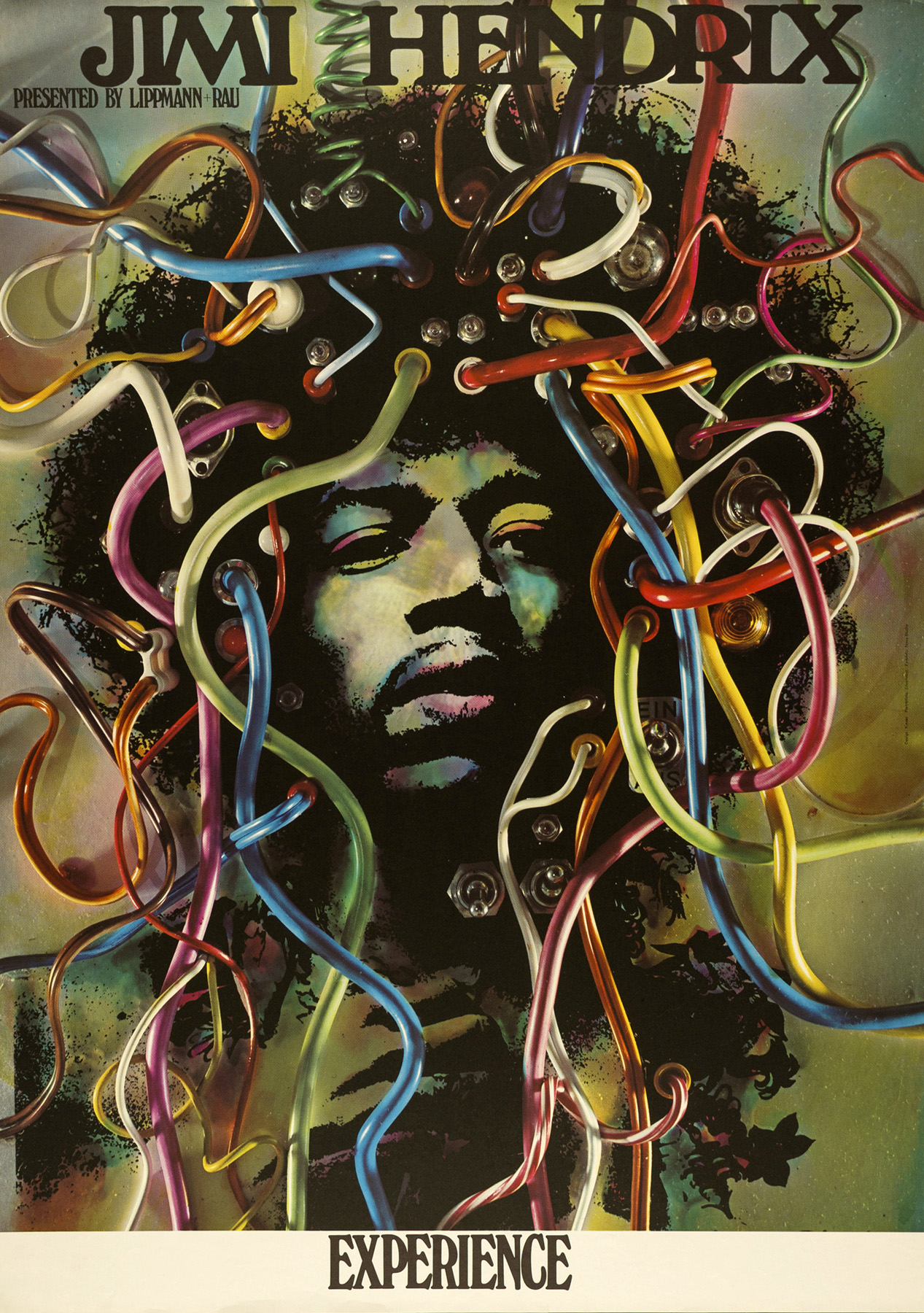
 

Günther Kieser (German, b. 1930) 'Jimi Hendrix Experience' 1969


Günther Kieser (German, 1930-2023)
Jimi Hendrix Experience
1969
Offset print
118.9 x 84.1cm
Photo: Museum für Kunst und Gewerbe Hamburg
© Günther Kieser


Karl Georg Günther Kieser (born March 24, 1930 in Kronberg im Taunus; † March 22 , 2023 in Offenbach) was a German graphic designer and sculptor.

Since the 1960s, he has been particularly well-known for his poster design for the German Jazz Festival in Frankfurt and his posters for events organised by the Lippmann + Rau concert agency, and is considered one of the most important German designers of jazz and rock posters. He also worked for the jazz label Blue Note.


Stages of Revolt

The performing arts are said to have a great political clout, and the stage becomes the place for social debates. Classical plays are reviewed regarding its political messages, and newly written plays accuse the bourgeois establishment. The shrine-like status of museums is challenged by wearing jeans to openings, no evening dresses, no champagne. The theatre leaves established institutions behind; companies are formed that take their messages to the streets. They no longer respect the division between actor/actress and spectator, exaggerated in Peter Handke’s Publikumsbeschimpfung (1966, Offending the Audience), or in Hans Werner Henze’s oratory Floß der Medusa (The raft of the Medusa) in which he criticises “the authority of humans over humans”. For its premiere with the NDR radio symphony orchestra, Henze puts a portrait of Che Guevara and a red flag on stage. Actors / actresses exit erratically, there is tumult, cries for Ho Chi Minh, an overwhelming police presence, and arrests – the show is stopped eventually. Art and life merge into each other, as can be seen in collectives like Rainer Werner Fassbinder’s antiteater in Munich. Such creative communities see themselves as antitheses to the middle-class, which could never give birth to any relevant art, because of its saturated complacency.
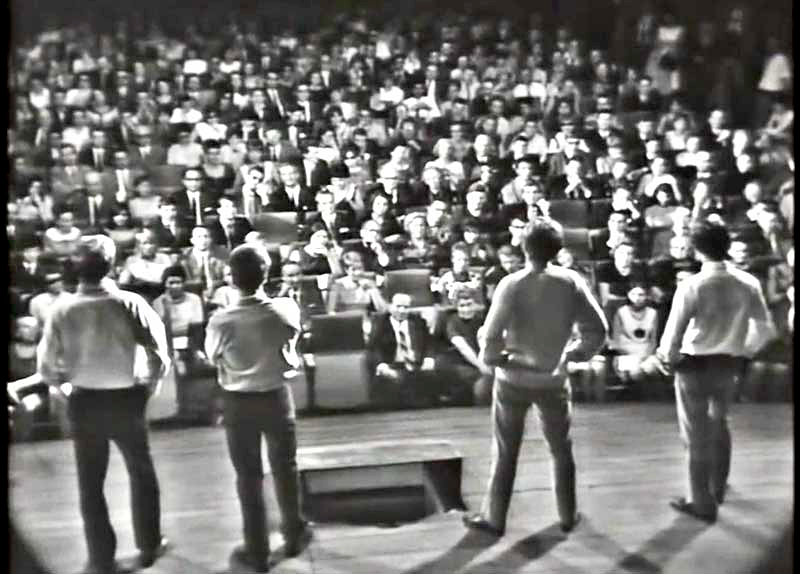
 

Filmstill from 'Publikumsbeschimpfung', premiere in Frankfurt am Main, 1966


Filmstill from Publikumsbeschimpfung, premiere in Frankfurt am Main, 1966
Director: Claus Peymann , Aufzeichnung des HR


Bühnen der Revolte – Stages of revolt

The performing arts have major political clout and the stage becomes more about sociable Debates. The theatre leaves the institution, new pieces emerge and bring charges against the educated middle class Establishment. The border between actor and spectator is no longer respected, the audience is called to action. Art and life merge into collectives like Fassbinders antiteater and Steins Schaubühne.


Publikumsbeschimpfung (Offending the Audience)
A speech piece by Peter Handke
World premiere in the Frankfurt Theater am Turm 1966
Director: Claus Peymann
Sprecher: Michael Gruner, Ulrich Hase, Claus-Dieter Reents, Rüdiger Vogler


Hans Werner Henze (1926-2012)
Das Floß der Medusa (1968)
The Raft of the Frigate “Medusa”


Abschied von gestern (Yesterday Girl), Alexander Kluge, 1966


The Old Film is Dead

In 1962, a young generation of filmmakers demands the aesthetic, thematic and economical reorientation of the German cinematic landscape, as expressed in their Oberhausener Manifest. The economic crisis of the film industry in the 1960s and international innovative movements like the Nouvelle Vague, lead them to clearly distance themselves from both the NS history and sentimental films with regional background (Heimatfilm) as well as the Karl May and Edgar Wallace franchise and the like. The 26 signers seek intellectual liberation through radically turning to film d’auteur and to independent productions apart from already established studio business. These filmmakers reject the conventional uplifting entertainment conventions of the time, and like to provoke the audience – impressively shown in Alexander Kluge’s Abschied von gestern (Yesterday Girl). Thus, the critical avant-garde of the Neuer Deutscher Film, including the works of Rainer Werner Fassbinder and others, is internationally successful. In 1967, in the wake of the American experimental and underground cinema, the Hamburger Filmmacher Cooperative is founded. Without any state funding or need to submit to corporate profit values, the partly autodidactic filmmakers realize unconventional projects, distribute them through their independent network, and establish their own public sphere of the Andere Kino (Other Cinema) with their several days long film-ins. Inexpensive substandard films and super 8 cameras forward a vital underground scene, which primarily produces short films that fathom the dividing lines between visual arts and filmic experiments.
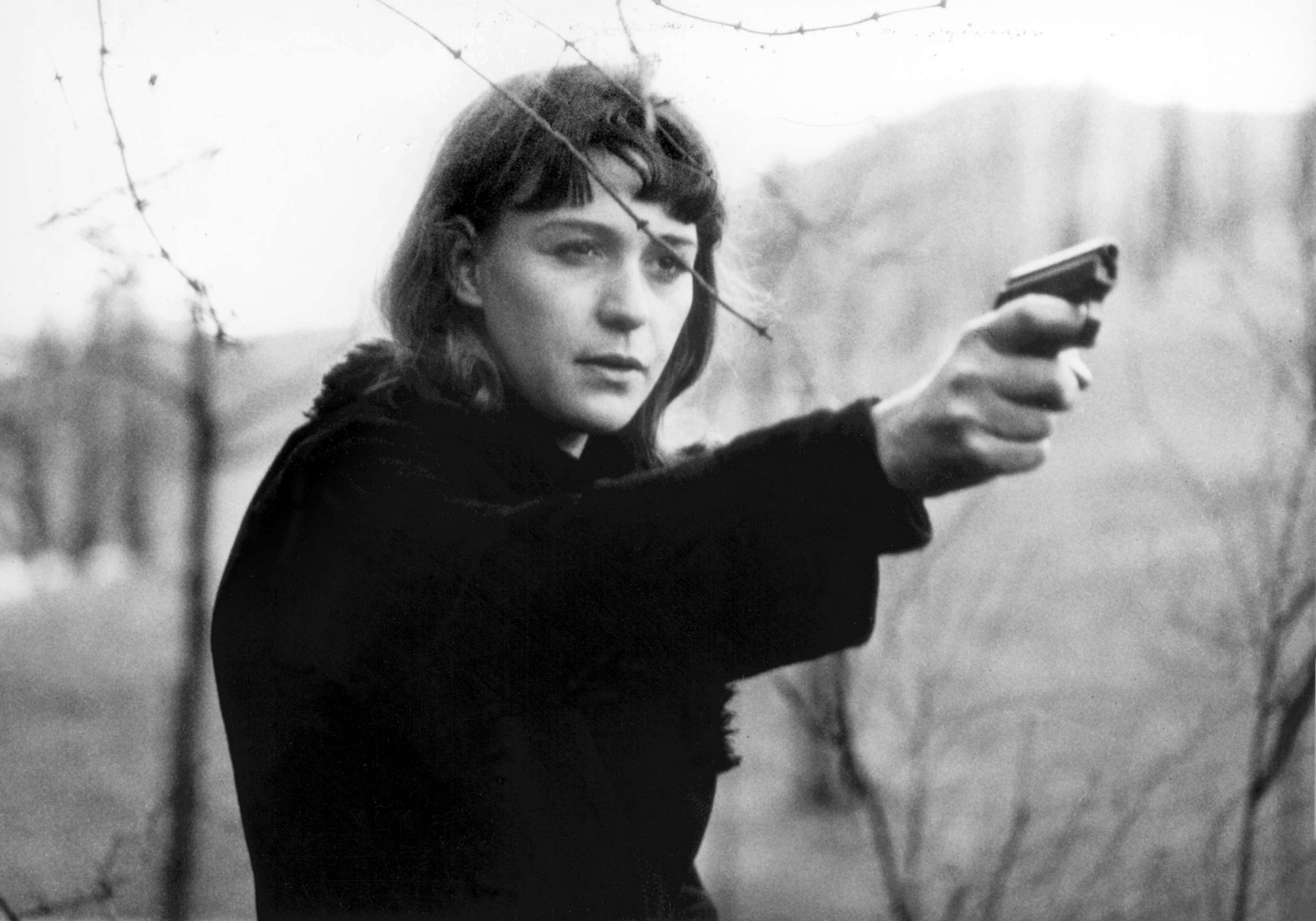
 

Alexander Kluge (German, b. 1932) 'Abschied von gestern' (Yesterday Girl) (videostill) 1966


Alexander Kluge (German, b. 1932)
Abschied von gestern (Yesterday Girl) (videostill)
1966
Black and White film, 88 min.
Courtesy/Copyright: Alexander Kluge


Der alte Film ist tot – The old film is dead

1962 calls a young generation of filmmakers with the Oberhausen Manifesto the aesthetic, content and economic realignment of German film. The collective project borders on the Nazi-film-burdened past and the presence marked by Heimatfilm. Many of the films refuse entertainment conventions, but provoke the emotional and sociopolitical reflection in the audience.
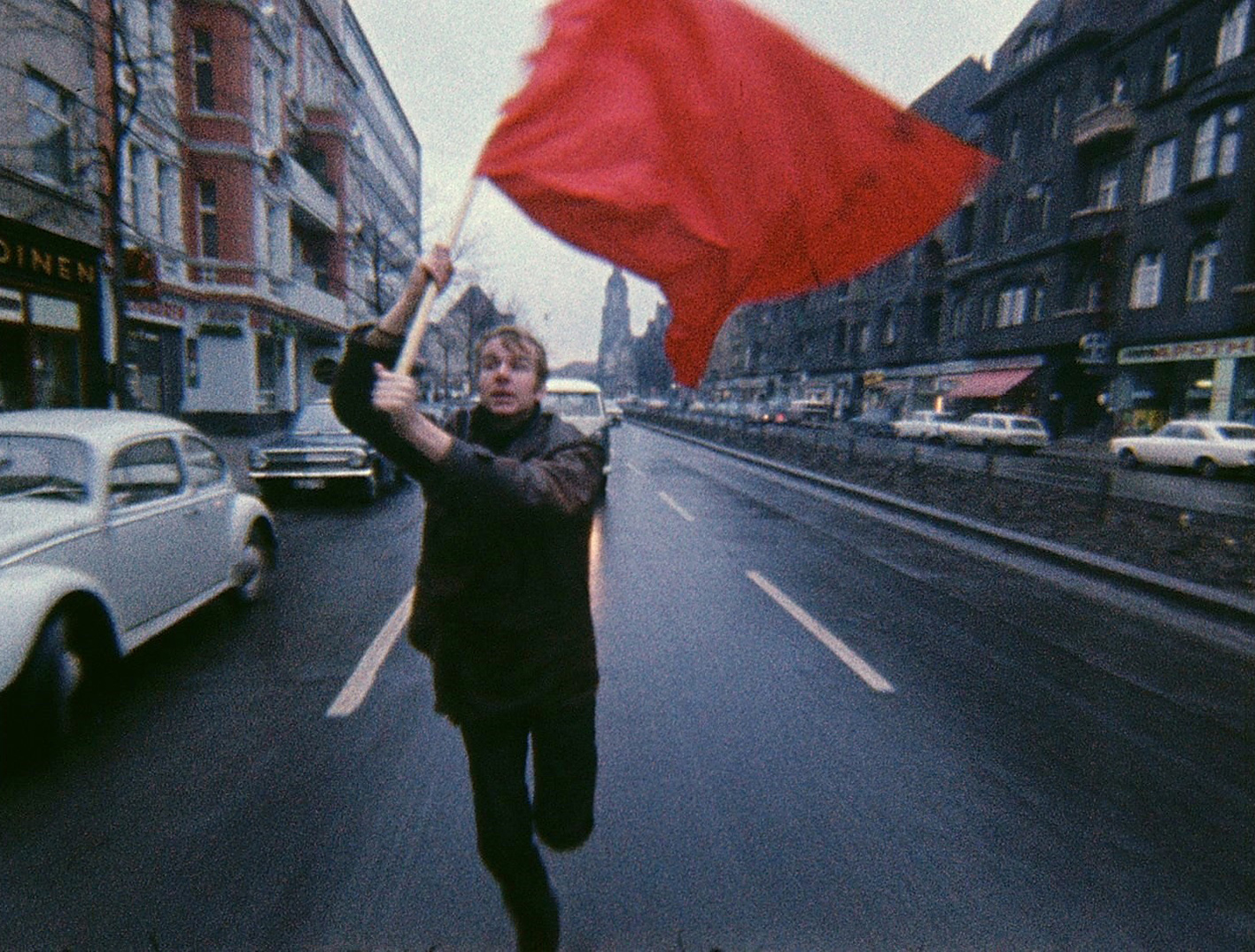
 

Gerd Conradt (b. 1941) 'Farbtest - Rote Fahne' (Colour test - Red Flag) (videostill) 1968


Gerd Conradt (German born Poland, b. 1941)
Farbtest – Rote Fahne (Colour test – Red Flag) (videostill)
1968
Colour film 16 mm, 12 min.
© Gerd Conradt, Mandala Vision


Gerd Conradt (born May 14, 1941 in Schwiebus) is a German cameraman, director, author and lecturer in video practice. His films and video programs are mostly portraits – conceptually designed time pictures, often as long-term documentaries.
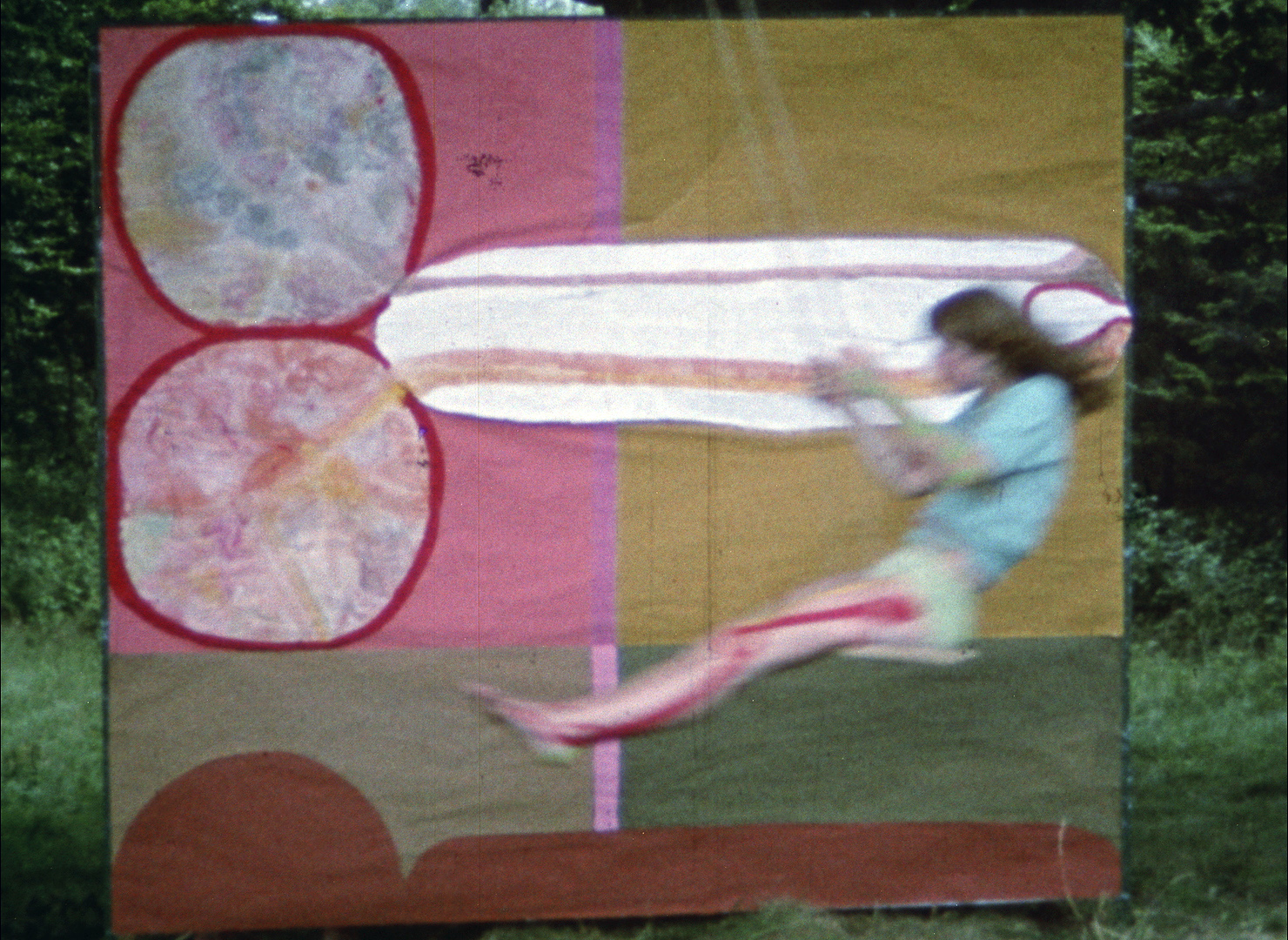
 

Werner Nekes (German, 1944-2017), Dore O. (German, b. 1946) 'Jüm Jüm' (videostill) 1967


Werner Nekes (German, 1944-2017), Dore O. (German, 1946-2022)
Jüm Jüm (videostill)
1967
Experimental film
© Ursula Richert-Nekes


Dore O. was born on 9 August 1946 in Mülheim an der Ruhr, Germany. She was a director and actress, known for Kaskara (1974), Blonde Barbarei (1972) and Alaska (1969).

Born Dore Oberloskammp in 1946, Dore O. was a painter before turning to film in the late ’60s, a not uncommon shift for young West German artists at the time, swept up as many of them were by the anti-imperialist and anti-fascist ideals of the New Left. The medium’s powers of documentation were considered key in the struggle against the prevailing social order, inspiring a rethinking of the means of artistic production and distribution that resulted in the proliferation of film collectives across the country. …

Dore often collaborated with her husband, the artist Werner Nekes; the two codirected Dore’s first film, the 1968 short Jüm-Jüm – a percussive concatenation of stationary shots that show a woman swinging in front of a large painting of a phallus – and they shared an affinity for vintage optical devices (Nekes was a collector). Their work both relied on an inventive manipulation of celluloid film, though Dore in particular used techniques like double exposure, rear projections, and superimposition to get at a new kind of language, a way of seeing whose logic was related more to the intuitively expressive powers of music than any rational principle. Dore’s fascination with the parameters of perception – how film can disrupt and expand them – is perhaps most obviously apparent in Kaskara (1974), composed almost entirely of the passageways (doors, windows, mirrors) that recur throughout Dore’s oeuvre, and which are here multiplied and dense with reflective layers. Shot in the couple’s summer cottage in Sweden, the film finds a man, Nekes, floating in and around the house, with superimpositions dissolving the boundaries between the landscape and the rooms, collapsing exterior and interior into one unified reality.

Beatrice Loayza. “Remain in Light: Rediscovering Dore O.’s cinema of the self,” on the Artforum website June 16, 2022 [Online] Cited 21/05/2023
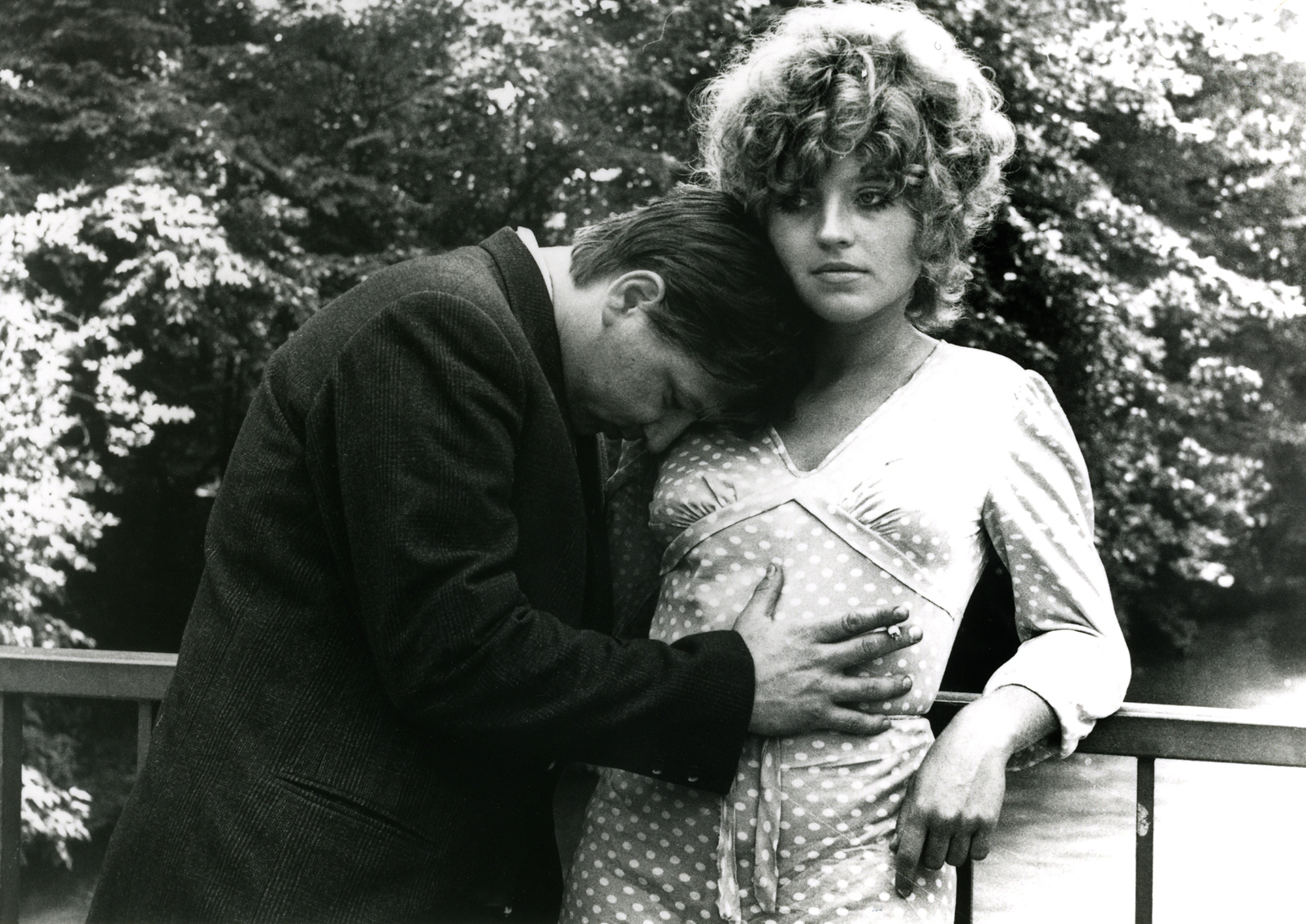
 

Rainer Werner Fassbinder (German, 1945-1982) 'Katzelmacher' 1969


Rainer Werner Fassbinder (German, 1945-1982)
Katzelmacher
1969
Rainer Werner Fassbinder, Hanna Schygulla
Black and White film, 88 min.
© RWFF Fotoarchiv


Valie Export (Austrian, b. 1940) 'Tapp und Tastkino' / 'Tap and Touch Cinema' (detail) 1968


VALIE EXPORT (Austrian, b. 1940)
Tapp und Tastkino / Tap and Touch Cinema (detail)
1968
© sixpackfilm


“As usual, the film is ‘shown’ in the dark. But the cinema has shrunk somewhat – only two hands fit inside it. To see (i.e. feel, touch) the film, the viewer (user) has to stretch his hands through the entrance to the cinema. At last, the curtain which formerly rose only for the eyes now rises for both hands. The tactile reception is the opposite of the deceit of voyeurism. For as long as the citizen is satisfied with the reproduced copy of sexual freedom, the state is spared the sexual revolution. Tap and Touch Cinema is an example of how re-interpretation can activate the public.”

Valie Export


This outdoor action on Munich’s Stachus square translates the concept of expanded cinema and the cinema’s fairground roots into the ‘first immediate women’s film’, as the artist describes her ‘Tap and Touch Cinema’. ‘Public’ accessibility – restricted to 30 seconds per person – is noisily proclaimed by Peter Weibel. A direct demonstration of cinema as a projection space for male fantasies, this still ironic transgression of the border between art and life is an early indication of Valie Export’s often risky, but always resolute, deployment of her own body in later works.

Text by Martina Boero from the YouTube website [Online] Cited 01/03/2019. No longer available online


At age twenty-eight, Waltraud Hollinger changed her name to VALIE EXPORT, in all uppercase letters, to announce her presence in the Viennese art scene. Eager to counter the male-dominated group of artists known as the Vienna Actionists including Günter Brus, Otto Mühl, Hermann Nitsch, and Rudolf Schwarzkogler she sought a new identity that was not bound by her father’s name (Lehner) or her former husband’s name (Hollinger). Export was the name of a popular cigarette brand. This act of provocation would characterise her future performances, especially TAPP und TASTKINO (TOUCH and TAP Cinema) and Aktionhose: Genitalpanik (Action Pants: Genital Panic). Challenging the public to engage with a real woman instead of with images on a screen, in these works she illustrated her notion of “expanded cinema,” in which film is produced without celluloid; instead the artist’s body activates the live context of watching. Born of the 1968 revolt against modern consumer and technical society, her defiant feminist action was memorialised in a picture taken the following year by the photographer Peter Hassmann in Vienna. VALIE EXPORT had the image screen printed in a large edition and fly-posted it in public spaces.

Text from the MoMA website, gallery label from Transmissions: Art in Eastern Europe and Latin America, 1960-1980, September 5, 2015 – January 3, 2016 [Online] Cited 12/02/2019
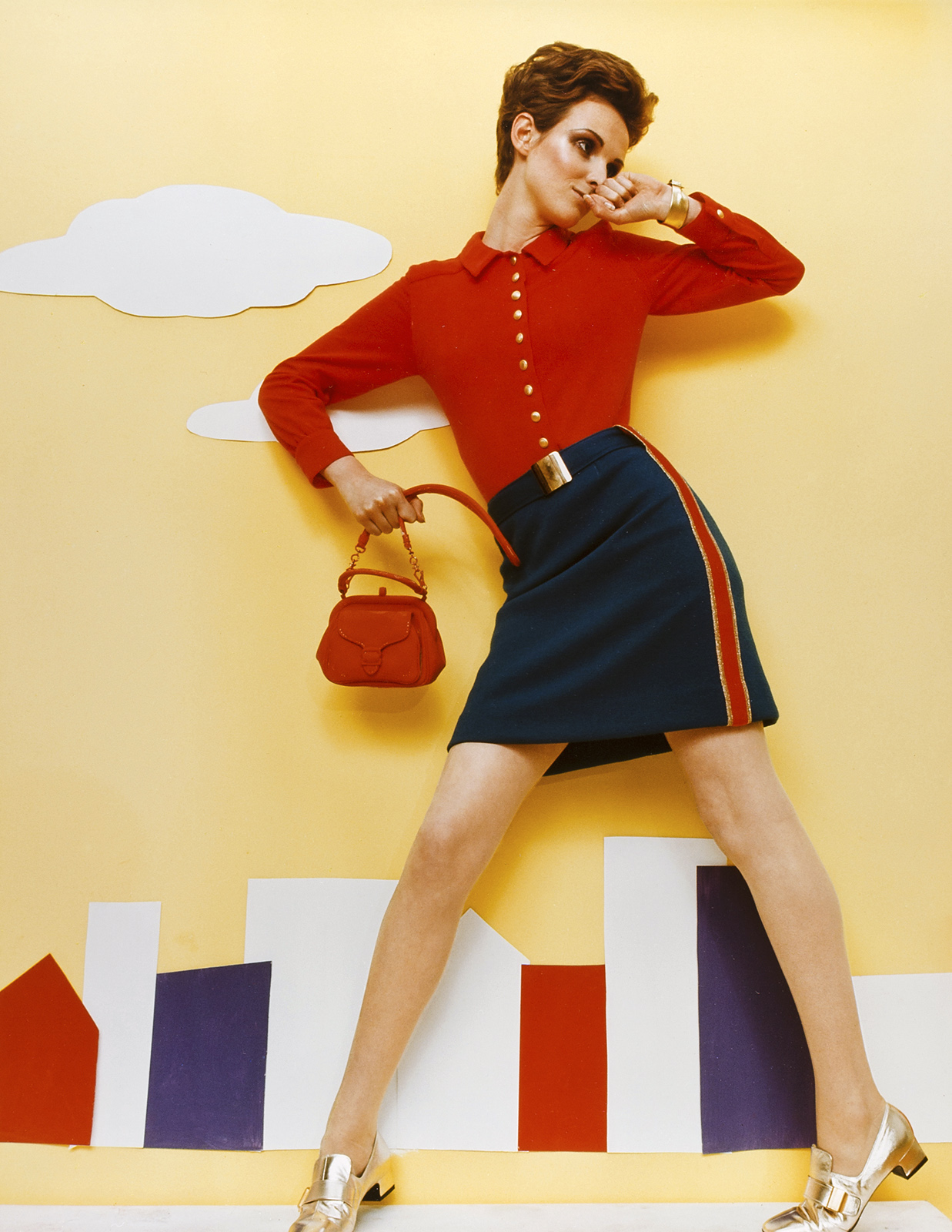
 

F.C. Gundlach (German, 1926-2021) 'Grace Coddington wearing red blouse and mini skirt by Missoni' 1969


F.C. Gundlach (German, 1926-2021)
Grace Coddington wearing red blouse and mini skirt by Missoni
1969
Cibachrome
50.1 x 38.8cm
Museum für Kunst und Gewerbe Hamburg
© F.C. Gundlach


Mündig und mobil – Of age and mobile

The design scene responds to the urge for freedom with a colourful drive during 1968. Right angles, hard edges and solid colour do not fit the modern attitude to life. Individual home accessories solve the interior design problem, from the assembly line. Furniture is no longer made for eternity; uncomplicated and practical is the new design ethos and above all, it is mobile. Design is no longer used for status determination; this also applies to fashion. Originality is more important than noble material and refined cuts.

Fashion as a Statement

The different clothing styles of the generation of 1968 express more than a mere taste of fashion. Fashion becomes a political statement. Elements of hippie and ethnic looks, pieces of uniforms, or uncommon revealing styles challenge society’s conventions. In many families, the generation conflict shows itself in arguments about the mini skirt, ascribed to fashion designer Mary Quant. While parents are worried about indecent provocation and for their daughters to carelessly sexualise themselves, for adolescents, the mini skirt expresses their desire for autonomy and a form-fitting style of clothes. Soon, these outfits can also be found in the shop windows of department stores: Protest fashion finds its way from subculture into mainstream. Originally designed as a promotional tool for the paper industry, the paper dress achieves an enthusiastic success in 1966 in the USA and Europe. Women’s magazines distribute these inexpensive A-line mini dresses which are used as a vehicle for advertising in electoral campaigns throughout the USA in 1968. Designed as Poster Dresses by graphic designer Harry Gordon, they represent the new and fast-paced fashion world showing the growing impact of pop art and pop culture. All-over prints range from everyday motifs to poems by leftist writer Allen Ginsberg, and even the portrait of Bob Dylan – the voice of a young critically thinking generation. The fashion avant-garde is interested in the social function of fashion and its normative effects. Designs such as the business pants suit for women by Yves Saint Laurent and Rudi Gernreich’s unisex bathing suit reflect a changing society, question gender norms, and propagate a free approach to body and sexuality.
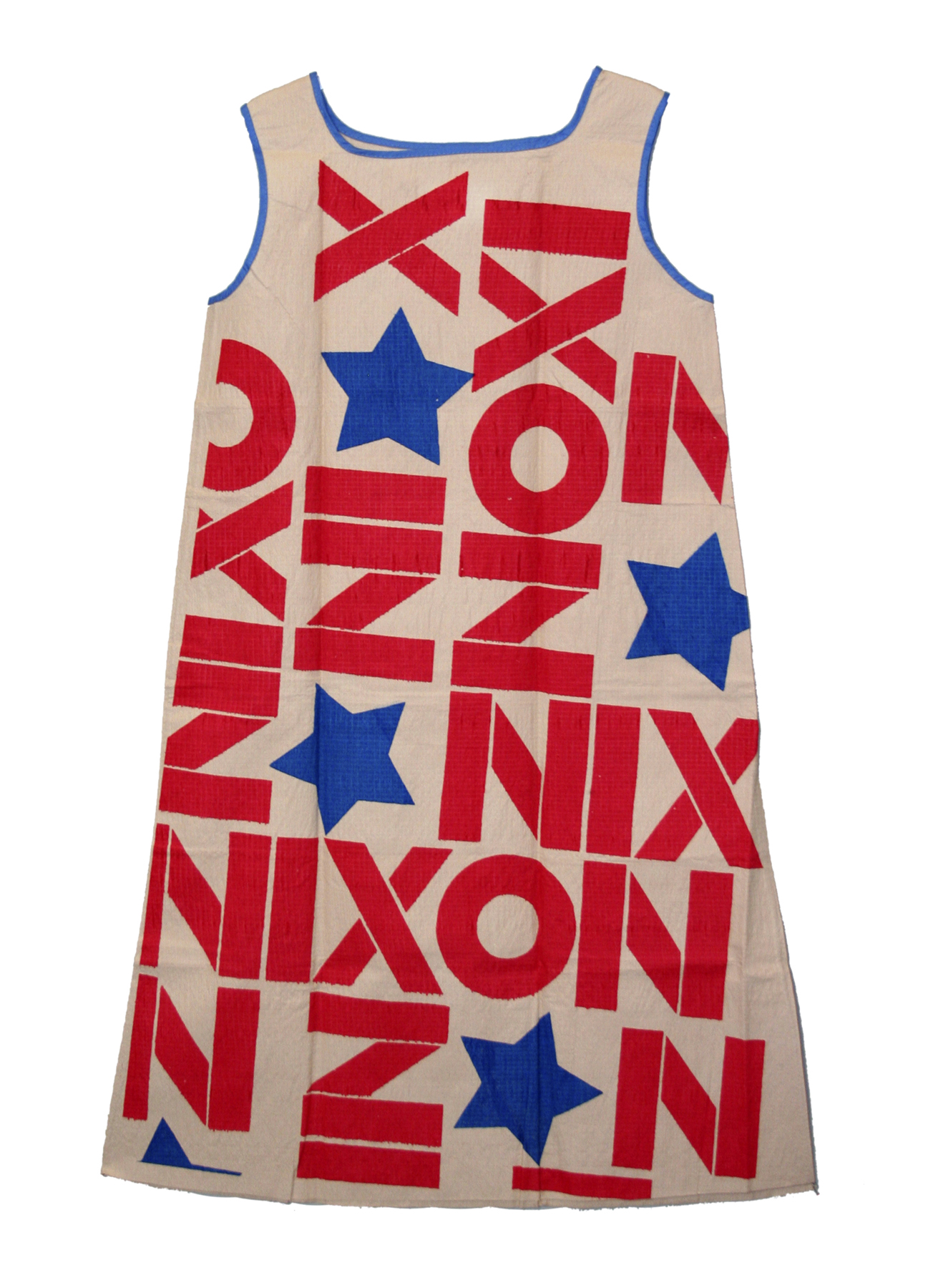
 

Paper Dress "Campaign Dress" 1966-1968


Paper Dress “Campaign Dress”
1966-1968
Cellulose/Nylon non-woven
Acquired with funds of the Campe’schen Historischen Stiftung
Museum für Kunst und Gewerbe Hamburg
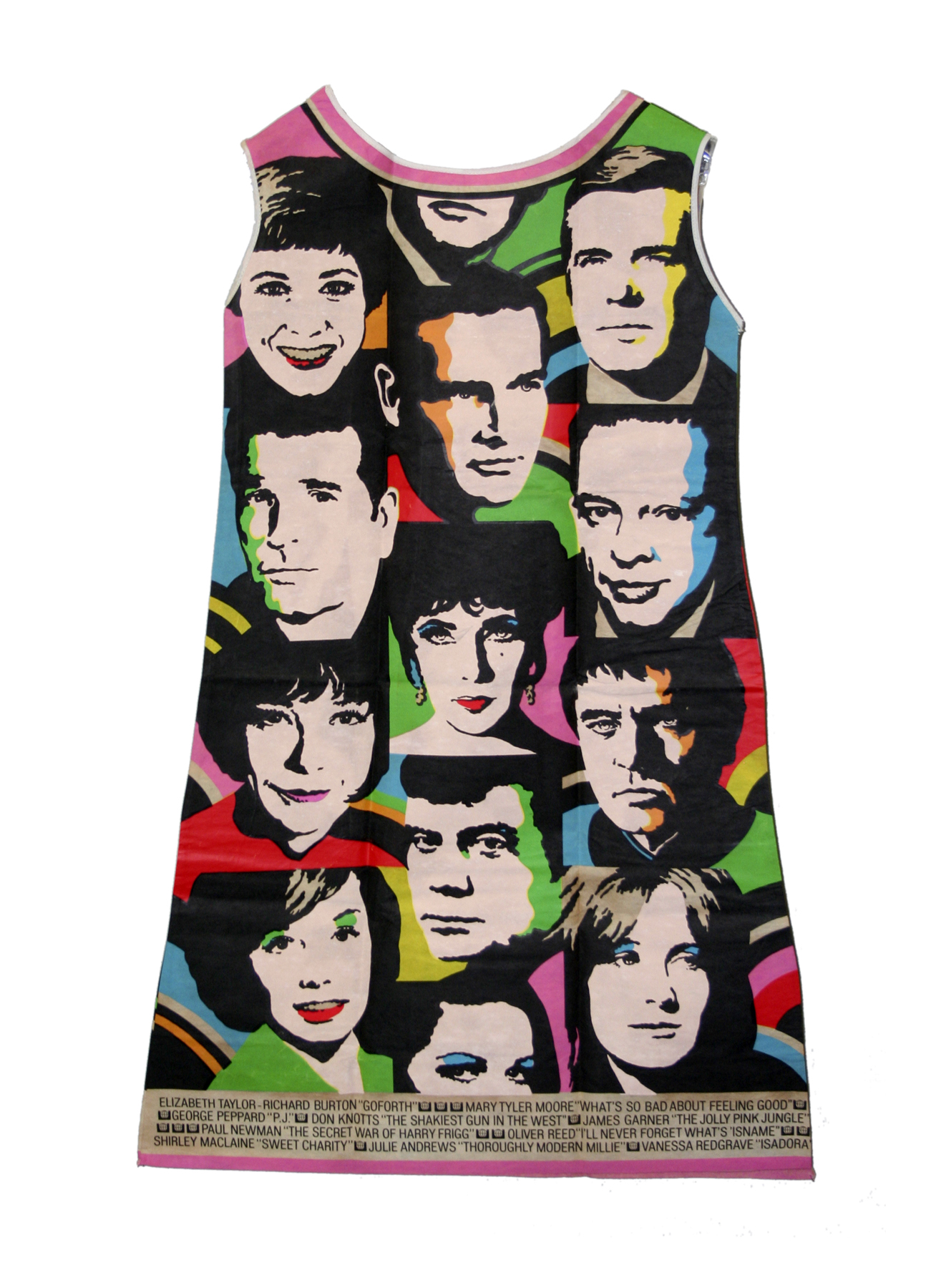
 

Paper Dress "Big Ones for 68" 1966-1968


Paper Dress “Big Ones for 68”
1966-1968
Cellulose/Nylon non-woven
Acquired with funds of the Campe’schen Historischen Stiftung
Museum für Kunst und Gewerbe Hamburg
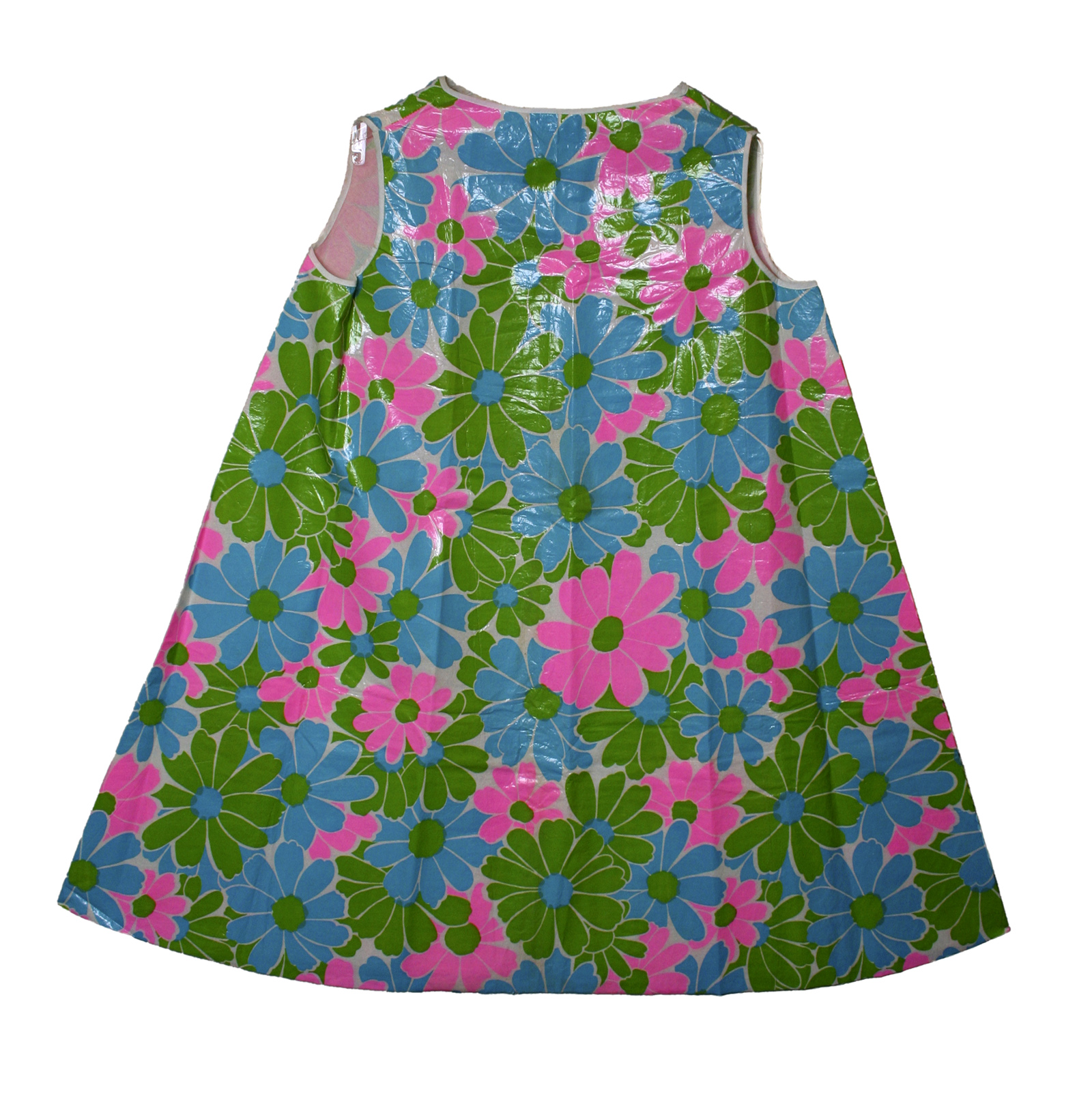
 

Paper Dress 1966-1968


Paper Dress
1966-1968
Cellulose/Nylon non-woven
Acquired with funds of the Campe’schen Historischen Stiftung
Museum für Kunst und Gewerbe Hamburg


Art: Up against the Wall!

Global mass protests also mobilise visual artists. Andy Warhol, Wolf Vostell, Jasper Johns and others use posters, the artistic mass medium of the time, to criticise world events. Their poster aesthetics reflect contemporary artistic trends such as pop art and Fluxus, drawing on an unlimited repertoire of forms of expression: They use montages, collages, photography and xylography; a multifacetedness that matches their diverse voices and their political agendas.
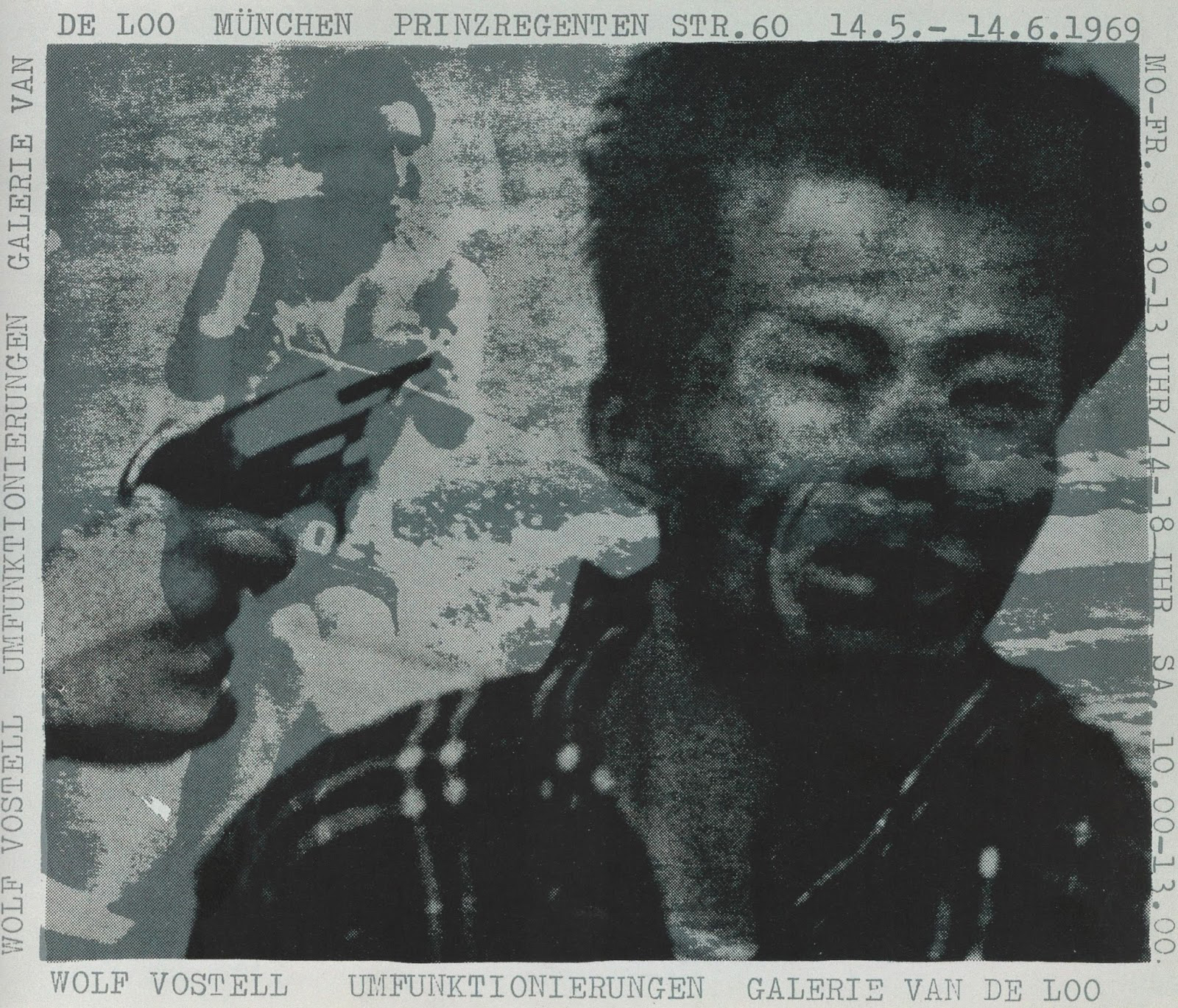
 

Wolf Vostell (German, 1932-1998) 'Umfunktionierungen' (Reinterpretations) 1969


Wolf Vostell (German, 1932-1998)
Umfunktionierungen (Reinterpretations)
1969
Offset printing
© VG Bild-Kunst, Bonn 2018


Art: up against the wall!

The political trouble spots find global resonance and motivate prominent artists to political opinions. Posters, the artistic mass medium of the time, articulate a critical attitude. The aesthetics includes different expressions: from montages and collages via photographic cut-up to woodcut techniques. This multifariousness, artistic practice corresponds to the polyphony of the actors and their political concerns.

Wolf Vostell

Wolf Vostell (14 October 1932 – 3 April 1998) was a German painter and sculptor, considered one of the early adopters of video art and installation art and pioneer of Happening and Fluxus. Techniques such as blurring and Dé-coll/age are characteristic of his work, as is embedding objects in concrete and the use of television sets in his works.

Wolf Vostell was born in Leverkusen, Germany, and put his artistic ideas into practice from 1950 onwards. In 1953, he began an apprenticeship as a lithographer and studied at the Academy of Applied Art in Wuppertal. Vostell created his first Dé-collage in 1954. In 1955-1956, he studied at the École Nationale Superieur des Beaux Arts in Paris and in 1957 he attended the Düsseldorf Academy of Arts. Vostell’s philosophy was built around the idea that destruction is all around us and it runs through all of the twentieth century. He used the term Dé-coll/age, (in connection with a plane crash) in 1954 to refer to the process of tearing down posters, and for the use of mobile fragments of reality. Vostell’s working concept of décollage is as a visual force that breaks down outworn values and replaces them with thinking as a function distanced from media.

His first Happening, Theater is in the Street, took place in Paris in 1958, and incorporated auto parts and a TV. In 1958, he took part in the first European Happening in Paris and he produced his first objects with television sets and car parts. He was impressed by the work of Karlheinz Stockhausen, which he encountered in 1964 in the electronic studios of the German radio station WDR, and in 1959 he created his electronic TV Dé-coll/age. It marked the beginning of his dedication to the Fluxus Movement, which he co-founded in the early 1960s. Vostell was behind many Happenings in New York, Berlin, Cologne, Wuppertal and Ulm among others. In 1962, he participated in the Festum Fluxorum, an international event in Wiesbaden together with Nam June Paik, George Maciunas. In 1963 Wolf Vostell became a pioneer of Video art and Installation with his work 6 TV Dé-coll/age shown at the Smolin Gallery in New York, and now in the collection of the Museo Reina Sofía in Madrid. The Smolin Gallery sponsored two innovative Wolf Vostell events on TV; the first, Wolf Vostell and Television Decollage, featured visitors to the gallery who were encouraged to create poster art on the walls. In 1967 his Happening Miss Vietnam dealt with the subject of the Vietnam war. In 1968, he founded Labor e.V., a group that was to investigate acoustic and visual events, together with Mauricio Kagel, and others.

Wolf Vostell was the first artist in art history to integrate a television set into a work of art. This installation was created in 1958 under the title The black room is now part of the collection of the art museum Berlinische Galerie in Berlin. Early works with television sets are Transmigracion I-III from 1958 and Elektronischer Dé-coll/age Happening Raum (Electronic Dé-coll/age Happening Room) an Installation from 1968.

Text from the Wikipedia website
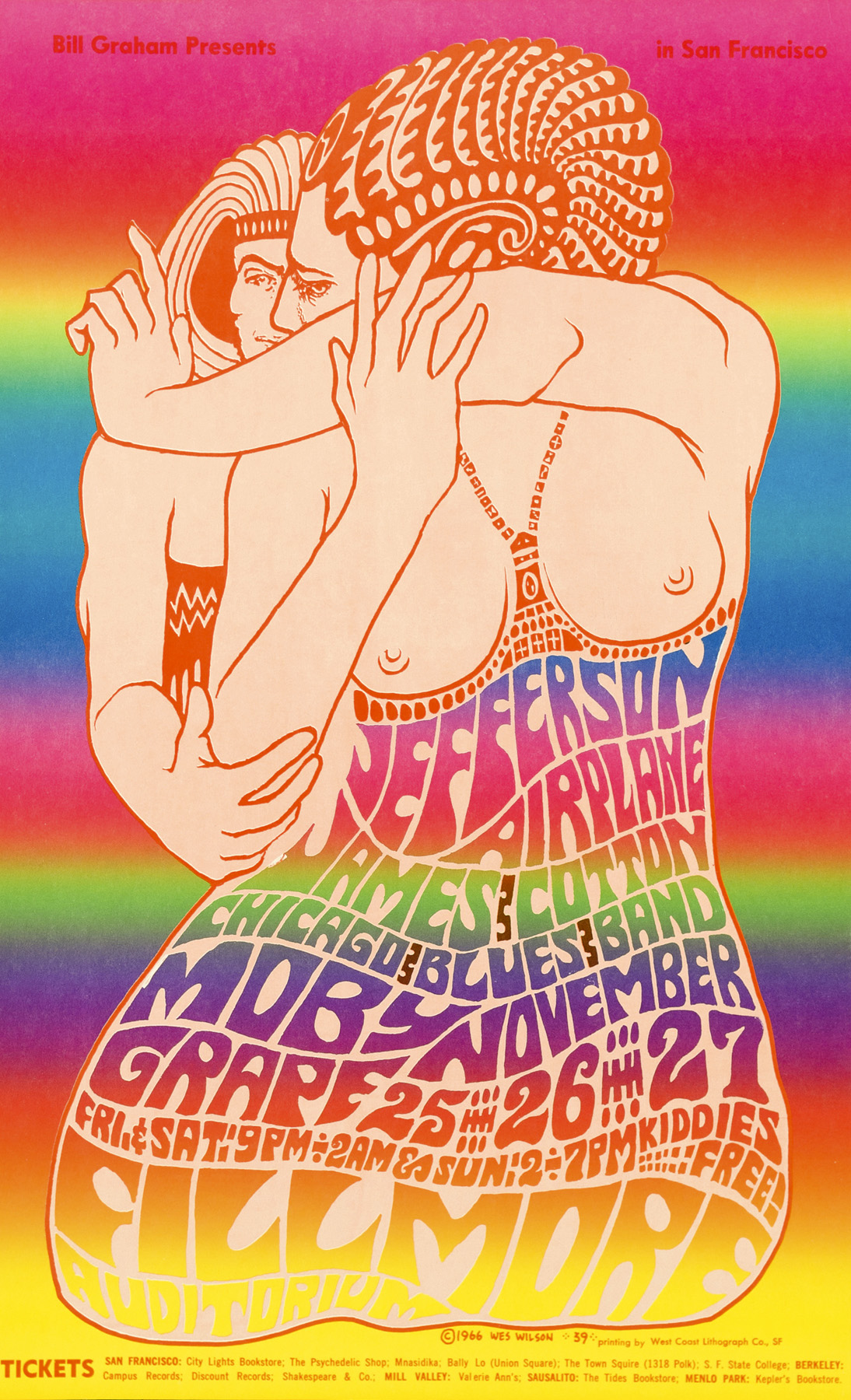
 

Wes Wilson (b. 1937) 'Jefferson Airplane... at the Fillmore' 1966


Wes Wilson (American, 1937-2020)
Jefferson Airplane… at the Fillmore
1966
Offset Print
56 x 35.5cm
Museum für Kunst und Gewerbe Hamburg
© Wes Wilson


Robert Wesley Wilson (July 15, 1937 – January 24, 2020) was an American artist and one of the leading designers of psychedelic posters. Best known for designing posters for Bill Graham of The Fillmore in San Francisco, he invented a style that is now synonymous with the peace movement, the psychedelic era and the 1960s. In particular, he was known for inventing and popularizing a “psychedelic” font around 1966 that made the letters look like they were moving or melting.

His style was heavily influenced by the Art Nouveau movement. Wilson was considered to be one of “The Big Five” San Francisco poster artists, along with Alton Kelley, Victor Moscoso, Rick Griffin, and Stanley Mouse.

Text from Wikipedia website
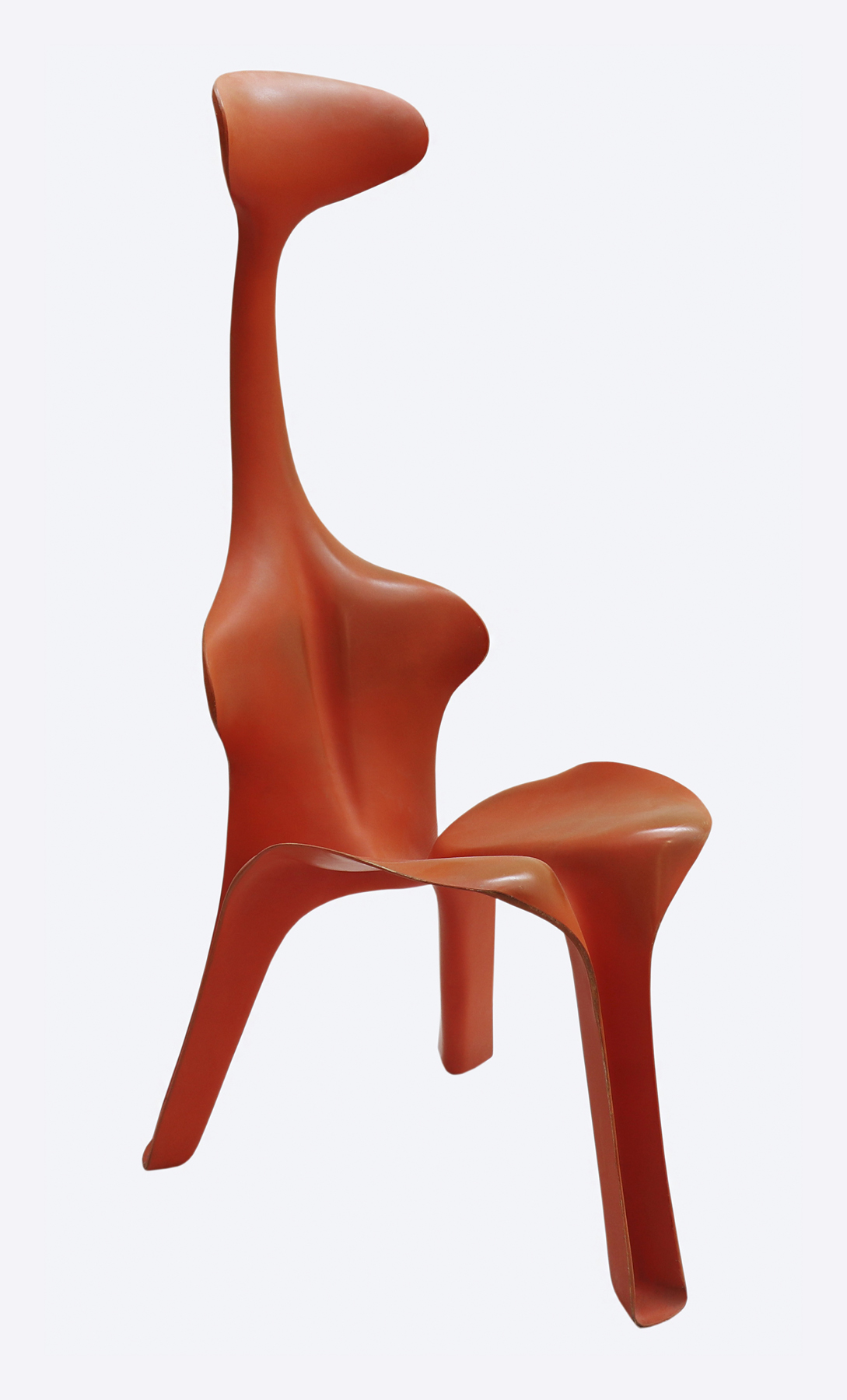
 

Günter Beltzig (German designer, b. 1941) Brüder Beltzig, Wuppertal (manufacturer) 'Floris' 1967


Günter Beltzig (German designer, 1941-2022)
Brüder Beltzig, Wuppertal (manufacturer)
Floris
1967
Polyester
Photo: Museum für Kunst und Gewerbe Hamburg


The international design avant-garde aspires to revolutionise the established Bauhaus guiding principle “form follows function”. The spirit of departure and the desire for creative innovation characterise the new generation of designers, often in artistic collective works. Nothing is more wrong than a standstill. Some seating furniture almost appears as socio-political statement and proverbially shows a new attitude. Form now follows the idea.


Form follows idea

In the 1960s, the international design avant-garde strives towards an opposition to the so far prevalent Bauhaus dogma “form follows function”. This new generation oftentimes works in artistic collectives with passion for creative innovation. Objects to sit on should no longer mean that people are forced into an unnatural posture, it is rather the furniture such as the slack beanbag chair Sacco by Piero Gatti, Cesare Paolini and Franco Teodoro, or the unconventional chair Floris by Günter Beltzig that should adapt to forms and needs of people. These new approaches in product design show ideas and a new attitude towards life of a nonconformist, dynamic and critical generation. Some seating furniture seems to be a downright socio-political statement that proverbially presents a new stance. Now, form follows idea. In 1968, the publishing house Spiegel entrusts Danish architect and designer Verner Panton with the design of the interior of their new building in Hamburg. For every story, he uses a different colour of the rainbow, consistently designing everything in one tone – from the colour of the wall to the ashtray – and creates a pop art icon. In the course of the years, the colours of the offices get whitewashed. Only the red-orange-purple Spiegel canteen has survived unaltered, since 2011 it is located in the MKG as a Period Room.
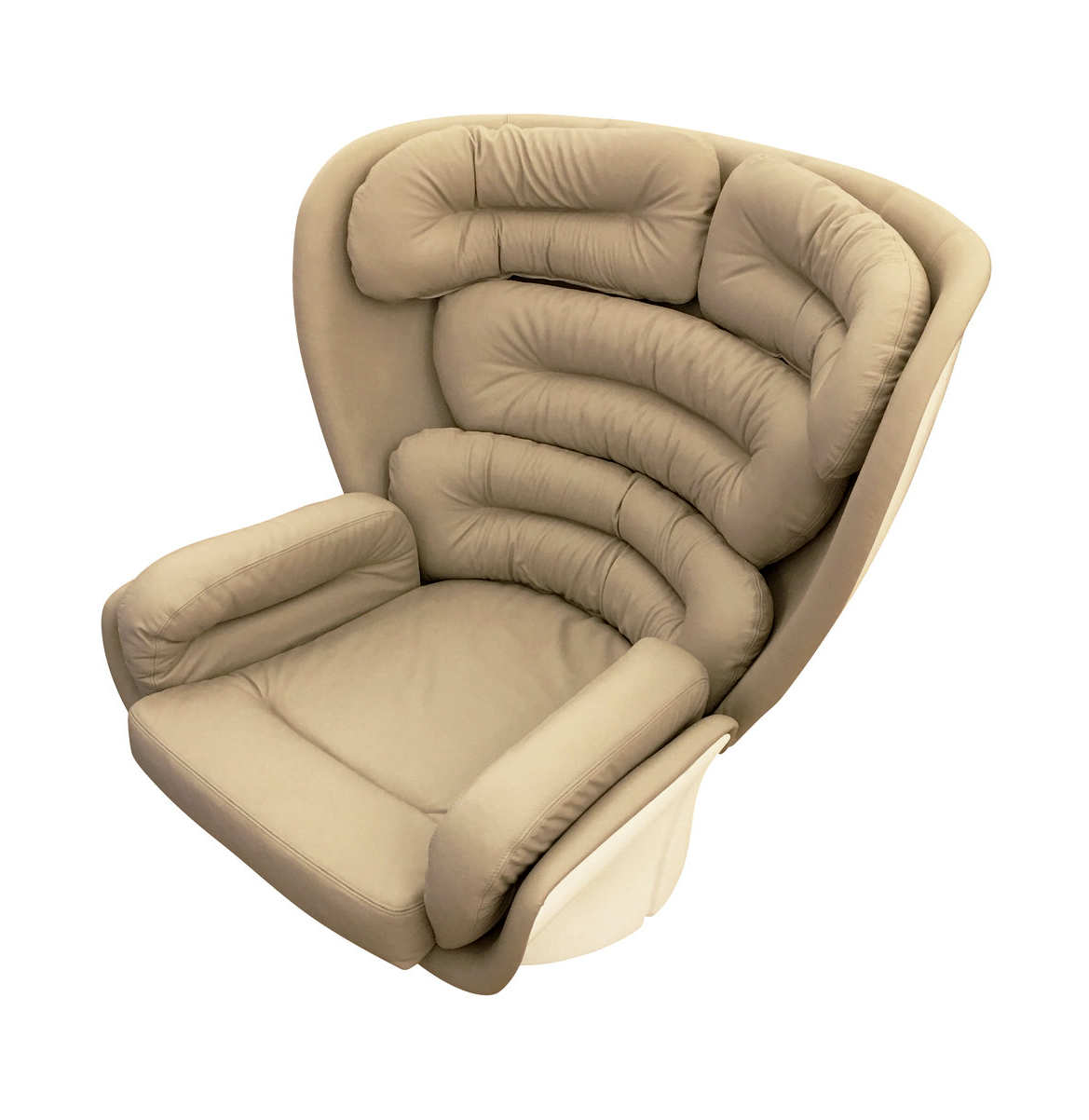
 

Joe Colombo (Italian, 1930-1971 (designer) 'Elda' 1963/1964


Joe Colombo (Italian, 1930-1971) (designer)
Elda
1963/1964
Museum of Arts and Crafts Hamburg
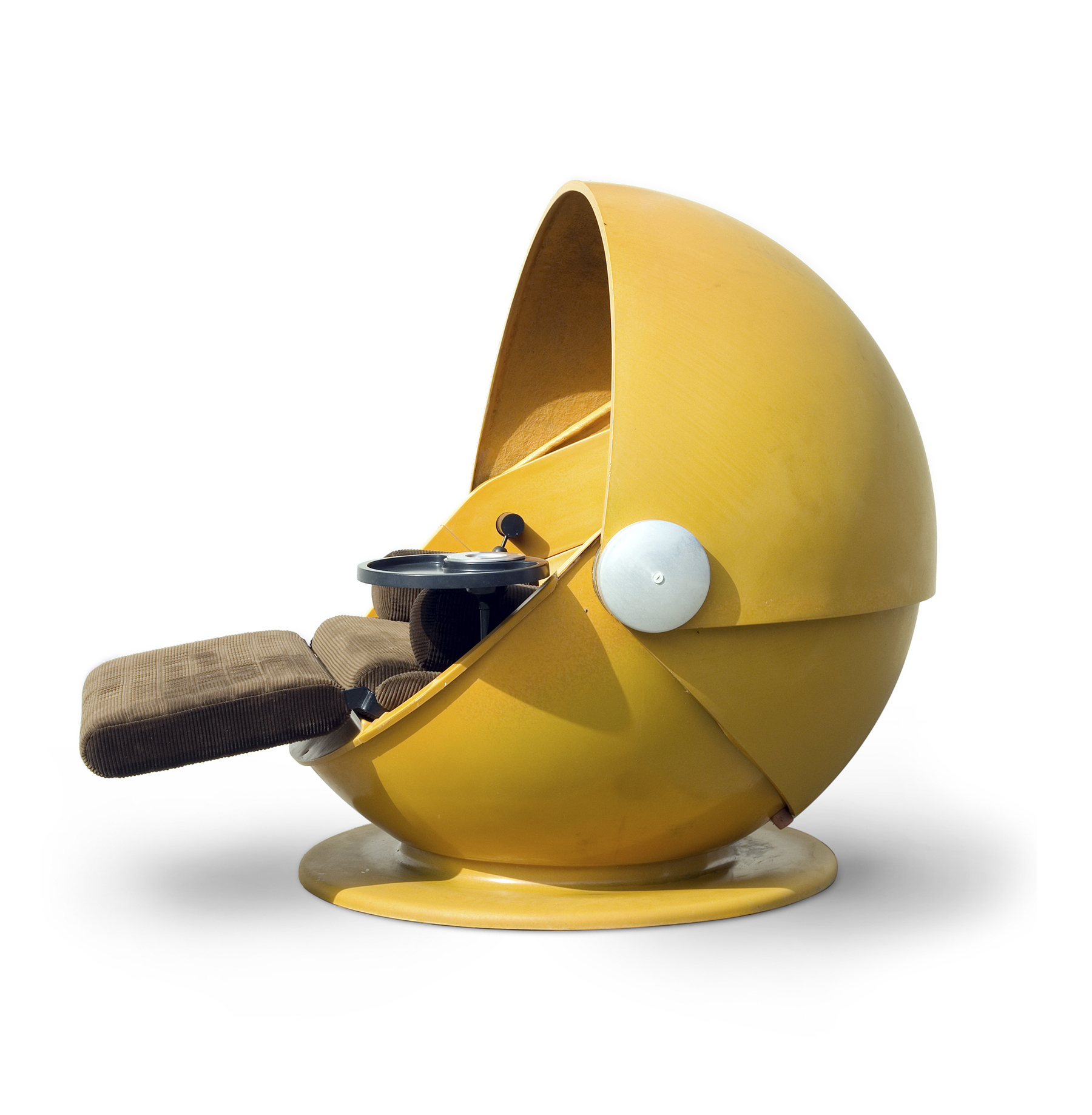
 

Günter F. Ris (German, 1928-2005) (designer) and Herbert Selldorf (German, 1929-2012) (designer) Rosenthal Möbel (manufacturer) 'Armchair "Sunball"' 1969-1971


Günter F. Ris (German, 1928-2005) (designer) and Herbert Selldorf  (German, 1929-2012) (designer)
Rosenthal Möbel (manufacturer)
Armchair “Sunball”
1969-1971
Polyester, Aluminium, polyurethane foam, cotton cord, synthetics
Property of the Stiftung Hamburger Kunstsammlungen
Photo: Hersteller
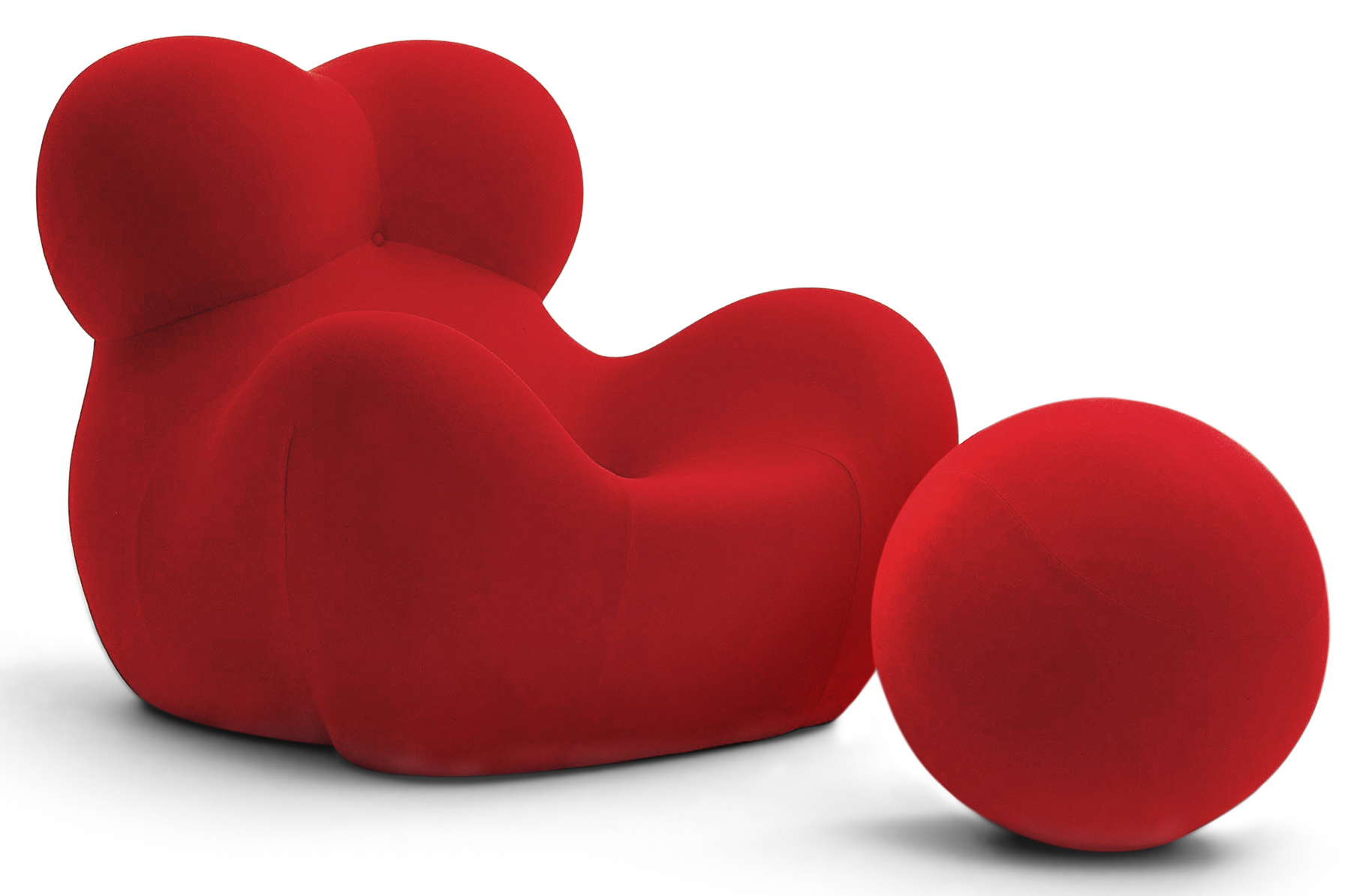
 

Gaetano Pesce (Italian, 1939-2024) (designer) Fa. Cassina and Busnelli (manufacturer) 'Armchair Donna UP5 with Bambino UP6' 1969


Gaetano Pesce (Italian, 1939-2024) (designer)
Fa. Cassina and Busnelli (manufacturer)
Armchair Donna UP5 with Bambino UP6
1969
Polyurethane foam and Nylon-jersey
Photo: Hersteller


Gaetano Pesce is an Italian architect and a design pioneer of the 20th century. Pesce was born in La Spezia in 1939, and he grew up in Padua and Florence. During his 50-year career, Pesce has worked as an architect, urban planner, and industrial designer. His outlook is considered broad and humanistic, and his work is characterised by an inventive use of color and materials, asserting connections between the individual and society, through art, architecture, and design to reappraise mid-twentieth-century modern life.
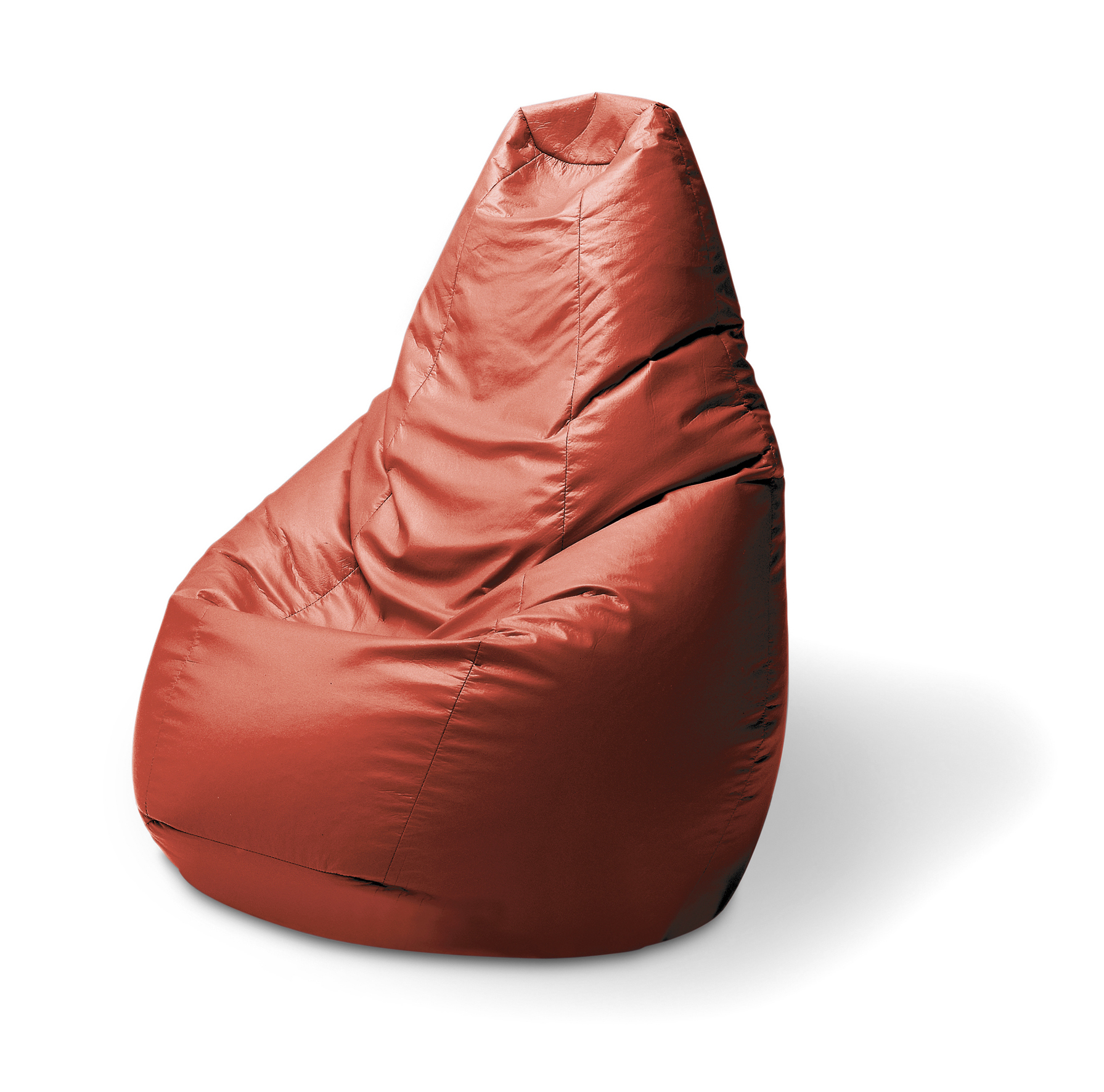
 

Piero Gatti Piero Gatti (Italian, 1940-2017) (designer) Cesare Paolini (Italian, 1937-1983) and Franco Teodoro (Italian, 1939-2005) Fa. Zanotta, Milan (manufacturer) 'Italien Sacco' 1968


Piero Gatti (Italian, 1940-2017), Cesare Paolini (Italian, 1937-1983) and Franco Teodoro (Italian, 1939-2005) (designers)
Fa. Zanotta, Milan (manufacturer)
Italien Sacco
1968
PVC and Polystyrene
Photo: Museum für Kunst und Gewerbe Hamburg


Between Consumption Binge and Space Age

While in the 1950s in the beginning of the Miracle on the Rhine, it was most important for the population to cover the basic needs, the following decades are characterised by a consumption binge. Growing prosperity and a rapidly expanding choice of goods increases the desire for more and more consumer items and luxuries. Changing life styles challenge the commodity producing and the advertising industry. Zeitgeist aspects such as mobility, belief in progress, emancipation, individualism, and cult of the body gain in importance, also in terms of consumer behaviour. Desires are pre-formulated by an advertising industry which has a broad audience across all media with its TV ads, press advertising, and poster campaigns. They draw a picture of a hedonistic society between materialism and alleged expansion of consciousness that ultimately combines lifestyle aspects of youth culture with contemporary product design. Advertisements for items such as Afri-Cola or the Astro-Lavalampe (Astro lava lamp) by Edward Craven-Walker promise ecstatic sensory impressions without the use of drugs. The lava lamp, inspired by the science fiction movie Barbarella, becomes a popular accessory in clubs and living rooms; and to this day, it is representative for the psychedelic look of the time.

The 1960s are characterised by technophilia and optimistic belief in progress. The “Race to the Moon” is a battle between the political system of the United States of America and communist Russia. The era of space travel influences futuristic aesthetics, produces innovative materials, thus, inspiring new consumerist ideas. Furniture, electronic devices, everyday objects and fashion use the Space Age look, and define a creative Zeitgeist. Paco Rabanne is the futuristic designer of the 1960s. The trained architect frees himself of the traditions of haute couture and uses unusual materials. His martial mini dress (1966) has no threads at all: metal rings link aluminium plates and only allow minimal flexibility for the wearer. André Courrèges’ space collection from 1964 to 1965 shows girls from the moon in angular clothes with helmet-like hats and glasses made out of plastic with curved eye-slits as a stylish protection against space radiation.

In 1968 on Christmas Eve, NASA’s snapshot of the earth forever changes the way we see her. For the first time, a world audience views an “Earthrise” over the horizon of the moon through the eyes of the Apollo 8 astronauts. The iconic picture is henceforth symbolic of the preciousness of planet earth and the uniqueness of earthly life; and it makes people think about how to responsibly treat this world that seems to be so small and fragile from a distance.

Press release from the Museum für Kunst und Gewerbe Hamburg Cited 11/02/2019
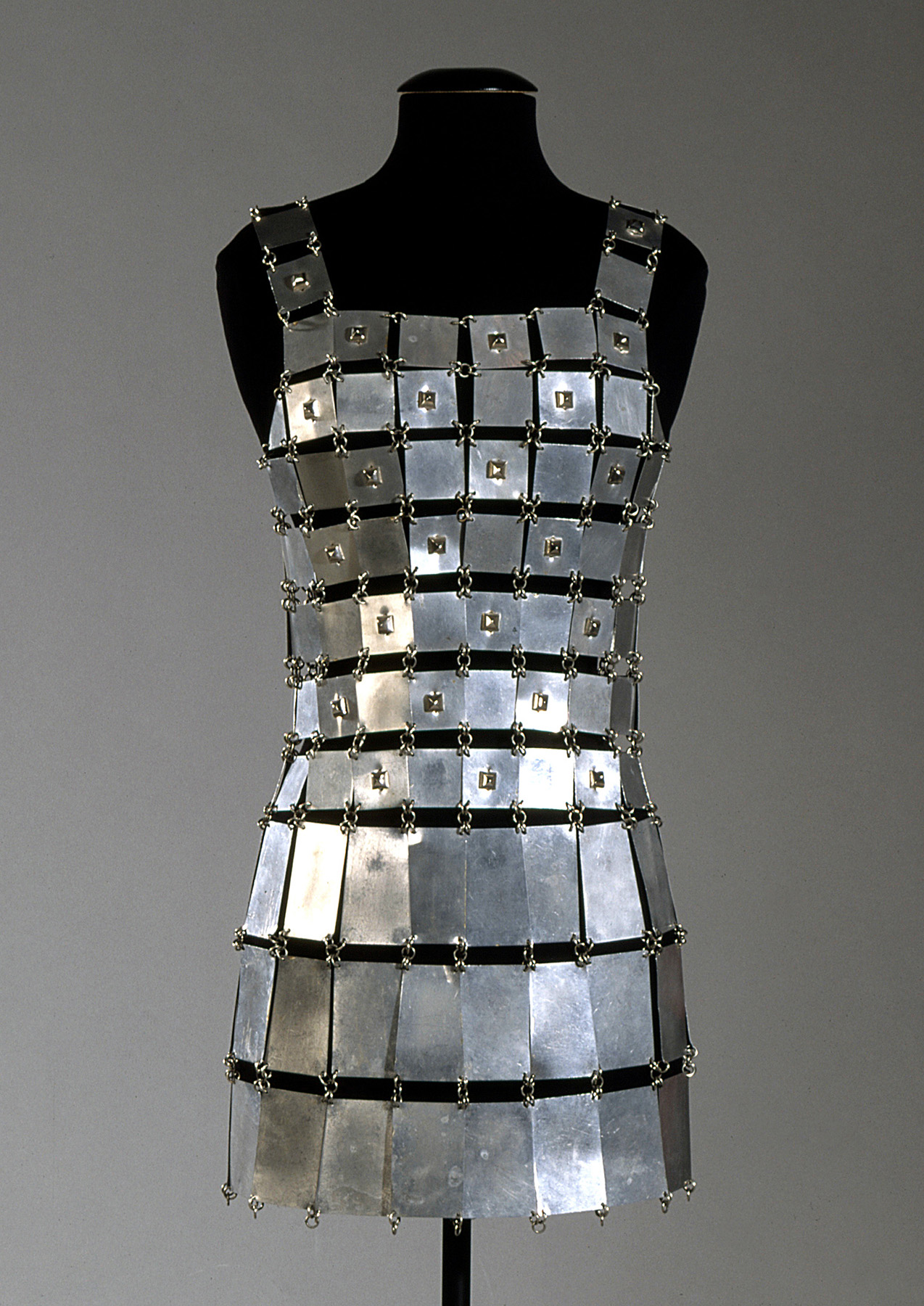
 

Paco Rabanne (Spanish, 1934-2023) 'Minidress' 1966


Paco Rabanne (Spanish, 1934-2023)
Minidress
1966
Aluminium, metal rings, metal studs
L 74cm
Museum für Kunst und Gewerbe
Photo: Maria Thrun/MKG


Francisco Rabaneda Cuervo (18 February 1934 – 3 February 2023), more commonly known under the pseudonym of Paco Rabanne (French: [pako ʁaban]; Spanish: [ˈpako raˈβan]), was a Spanish fashion designer.

Rabanne rose to prominence as an enfant terrible of the fashion world in the 1960s with his use of unconventional materials such as metal and plastic in his clothing, and for his incorporation of futuristic elements in his designs, gaining notoriety for his space-age style. He collaborated with a range of iconic fashion houses and designed costumes for films, such as Barbarella. Rabanne was also the recipient of several awards, including the Legion of Honour, which recognised his contributions to the arts and fashion.

In addition to his fashion work, Rabanne was known for his fragrances. He created a number of highly successful scents, including 1 Million and Lady Million.

Text from the Wikipedia website
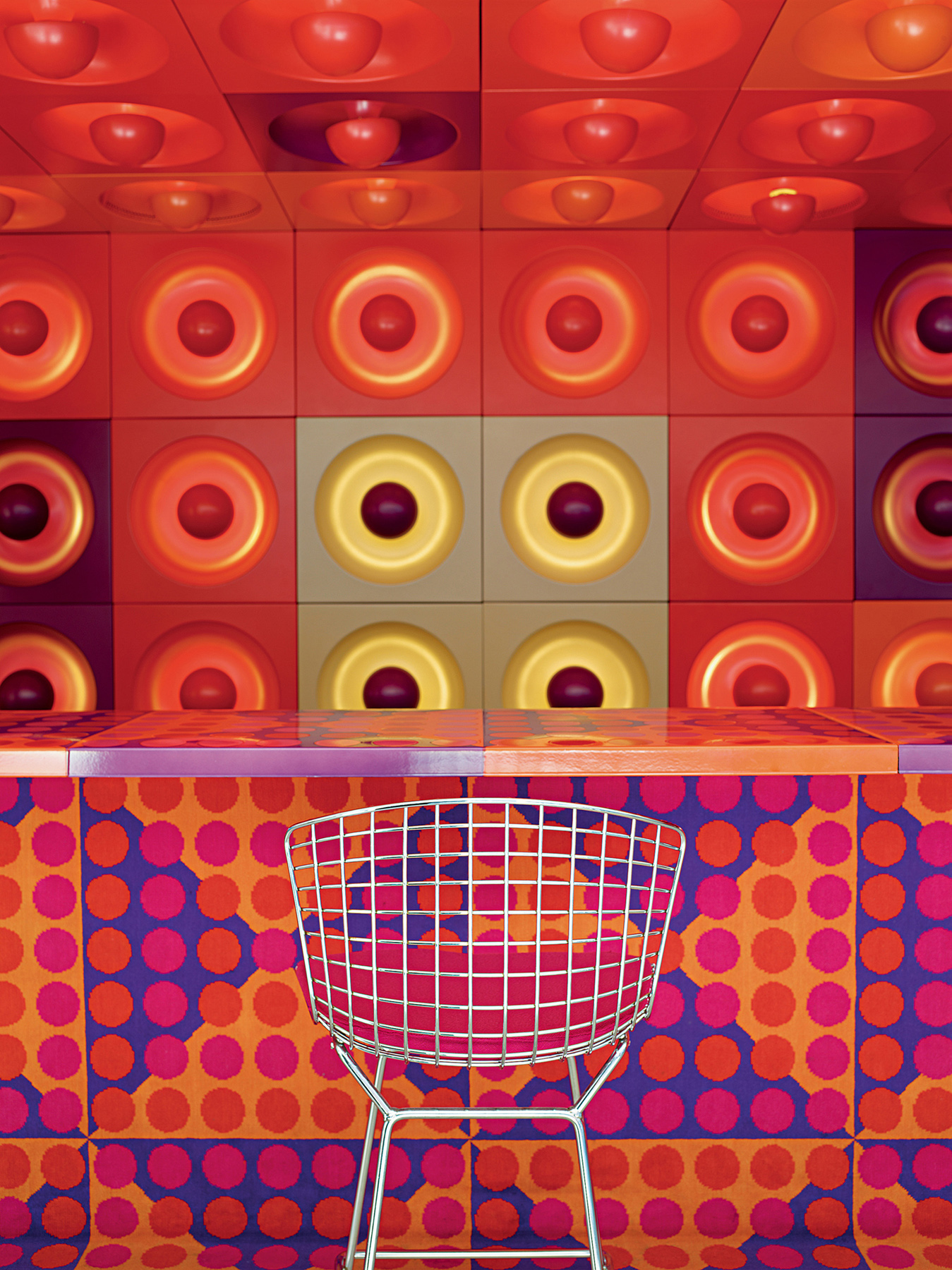
 

Verner Panton (Danish, 1926-1998) 'Spiegel-Canteen, Snackbar' 1969


Verner Panton (Danish, 1926-1998)
Spiegel-Canteen, Snackbar
1969
Photo: Michael Bernhardi/Spiegel Verlag, 2011
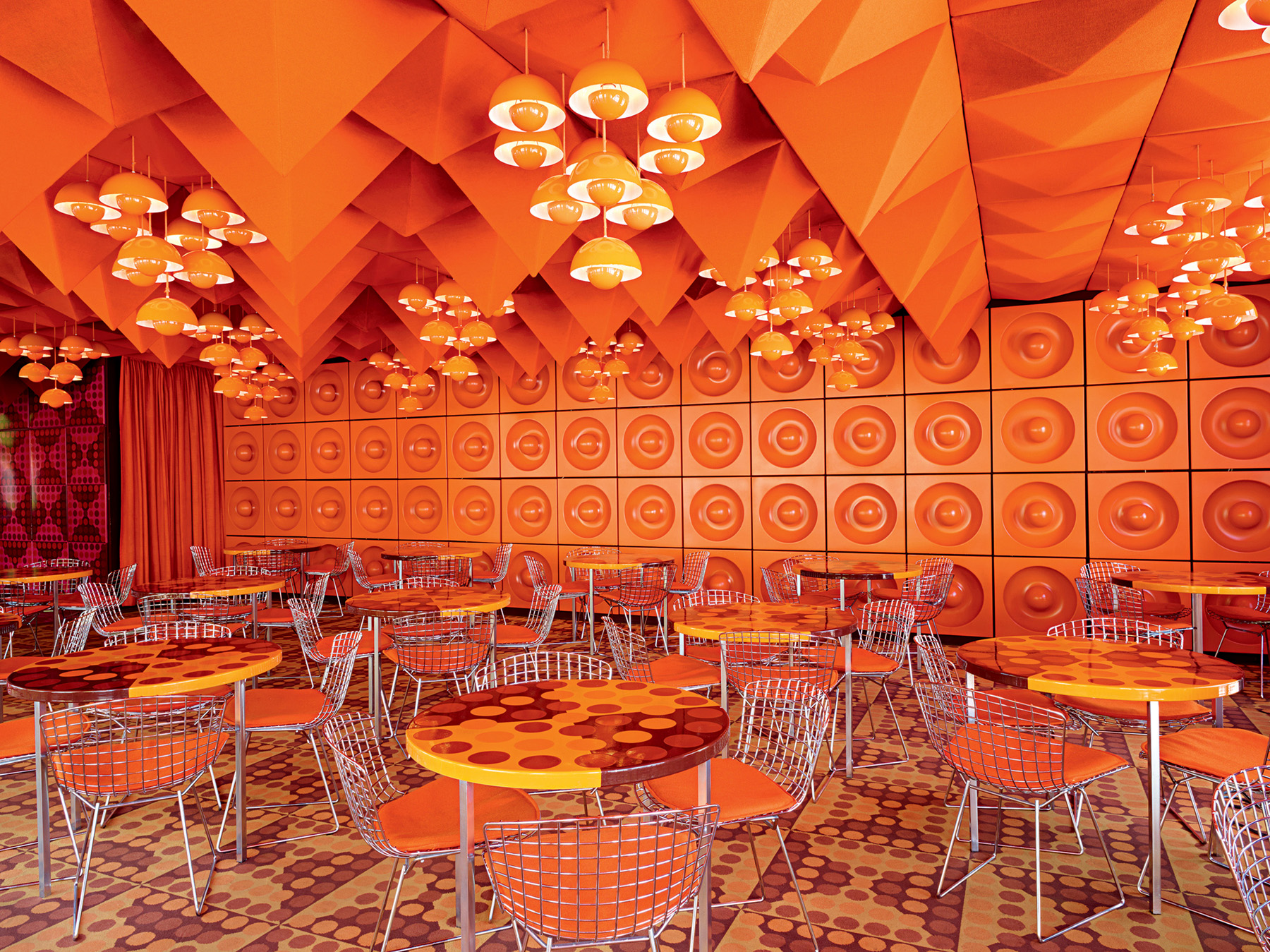
 

Verner Panton (Danish, 1926-1998) 'Spiegel-Canteen, Orange Dining Room' 1969


Verner Panton (Danish, 1926-1998)
Spiegel-Canteen, Orange Dining Room
1969
Photo: Michael Bernhardi/Spiegel Verlag, 2011


Von “Rauschhülle” bis Filmkulisse – From “noise cover” to film set

In 1968, Spiegel-Verlag commissioned the Danish architect and designer Verner Panton with the interior design of the new publishing house in Hamburg. He declines the colour gamut of the rainbow – consistently he designs everything uniformly in one tone. But taste changes and the rooms are painted white. The canteen alone remains spared and is now a listed building. Since the move the publisher is in the Museum of Arts and Crafts Hamburg.

Verner Panton (13 February 1926 – 5 September 1998) is considered one of Denmark’s most influential 20th-century furniture and interior designers. During his career, he created innovative and futuristic designs in a variety of materials, especially plastics, and in vibrant and exotic colours. His style was very “1960s” but regained popularity at the end of the 20th century; as of 2004, Panton’s most well-known furniture models are still in production (at Vitra, among others).


Museum für Kunst und Gewerbe Hamburg
Steintorplatz, 20099 Hamburg

Opening hours:
Tuesday to Sunday 10am – 6pm
Thursday 10am – 9pm
Closed Mondays

Museum fur Kunst und Gewerbe Hamburg website

LIKE ART BLART ON FACEBOOK

Back to top

Exhibition: ‘Night Fever. Designing Club Culture 1960 – Today’ at the Vitra Design Museum, Basel, Germany

Exhibition dates: 17th March – 9th September, 2018


Marcus Bunyan. 'Armin van Buuren at Festival Hall, Melbourne' 2018

Marcus Bunyan. 'Armin van Buuren at Festival Hall, Melbourne' 2018

Marcus Bunyan. 'Armin van Buuren at Festival Hall, Melbourne' 2018


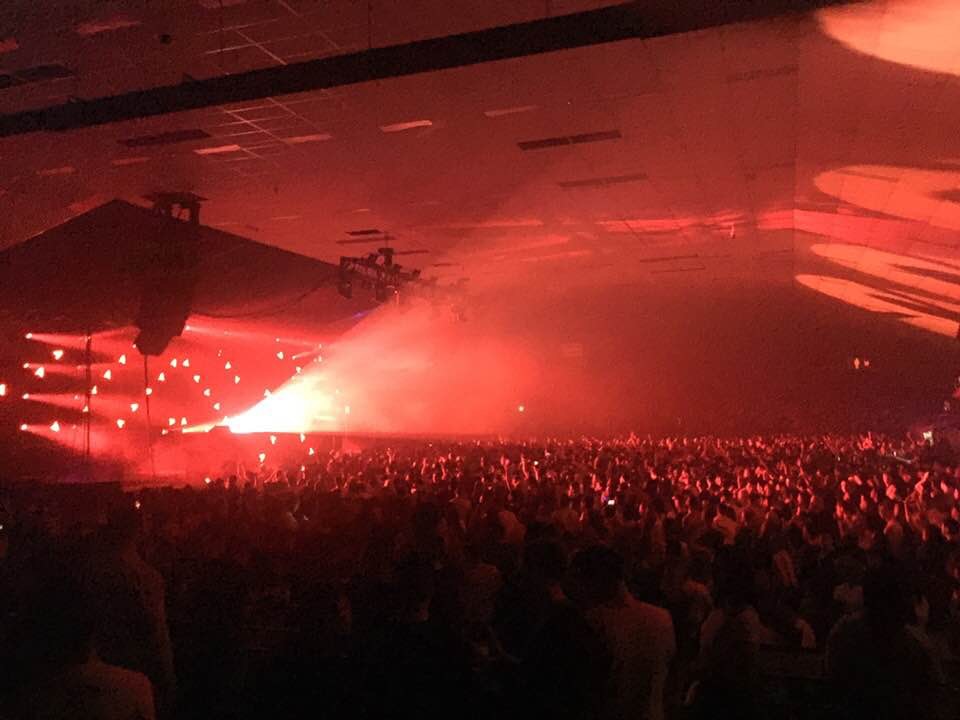
Photographs of Armin van Buuren’s set at Festival Hall, Melbourne, 21 April 2018
© Marcus Bunyan


Last track, one of the hardest of Armin van Buuren’s set at Festival Hall, Melbourne, 21 April 2018
© Marcus Bunyan


I have been to so many clubs in my life I have lost count!

I started going to clubs in 1975 when I came out as a gay man – a year before disco hit, with Sylvester’s You Make Me Feel Mighty Real, the first (gay) superstar of disco. What a star he was. I danced on revolving turntables with lights underneath, just like in the movie Saturday Night Fever, dressed in my army gear for uniform night at Scandals nightclub in Soho, London. Adams club, in Leicester Square, was also a favourite gay nightclub haunt.

I remember dancing to a 17 minute extended version of Donna Summer’s MacArthur Park several times a night at the Pan Club in Luton; and going to Bang on Tottenham Court Road on a Monday and Thursday night to hear the latest releases from the USA. Heaven nightclub (still going), the largest gay nightclub in Europe at the time, was a particular favourite. All around the world, Ibiza, America, Amsterdam, Berlin, etc… I have partied, and still do, in clubs. Night fever for a night owl, one who loves do dance, loves music and life.

After disco came High NRG where we used to dance for hours on the dance floor at Heaven on pure adrenaline, only coming off the dance floor to have a drink of water. New romantics, punk, and soul, techno and trance (my favourite) followed. I am a recovering trance addict. So many memories, so many people, good times and tunes – Black Box, Gloria Gaynor, Barry White, David Bowie, Grace Jones, the list goes on and on.

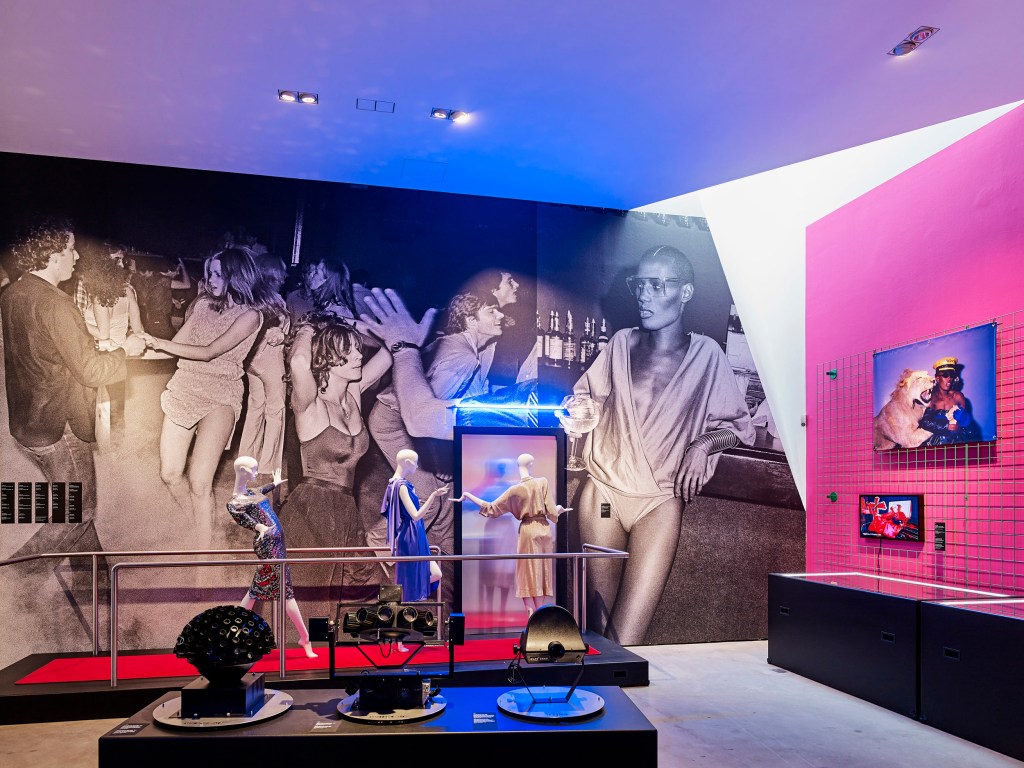
While this posting shows the design of some amazing clubs, and some photographs of the people who inhabited them, what it cannot capture is the atmosphere of a place. The most important thing in any club are… the people; the music; the lighting; and the DJs.

Without all four working together it doesn’t matter how good the design of a club, it will fail. You can have the most minimal lighting but the most electric atmosphere if the vibe is there: a congress of like-minded people who love dance music, who commune together on the dance floor and in the club, all having a good time. The DJ’s orchestrate this secular celebration of spirit. They can take you up, bring you around, twist you inside out. The modern temple of love, light and healing. Party hard, party on.

Dr Marcus Bunyan


Many thankx to the Vitra Design Museum for allowing me to publish the photographs in the posting. Please click on the photographs for a larger version of the image.


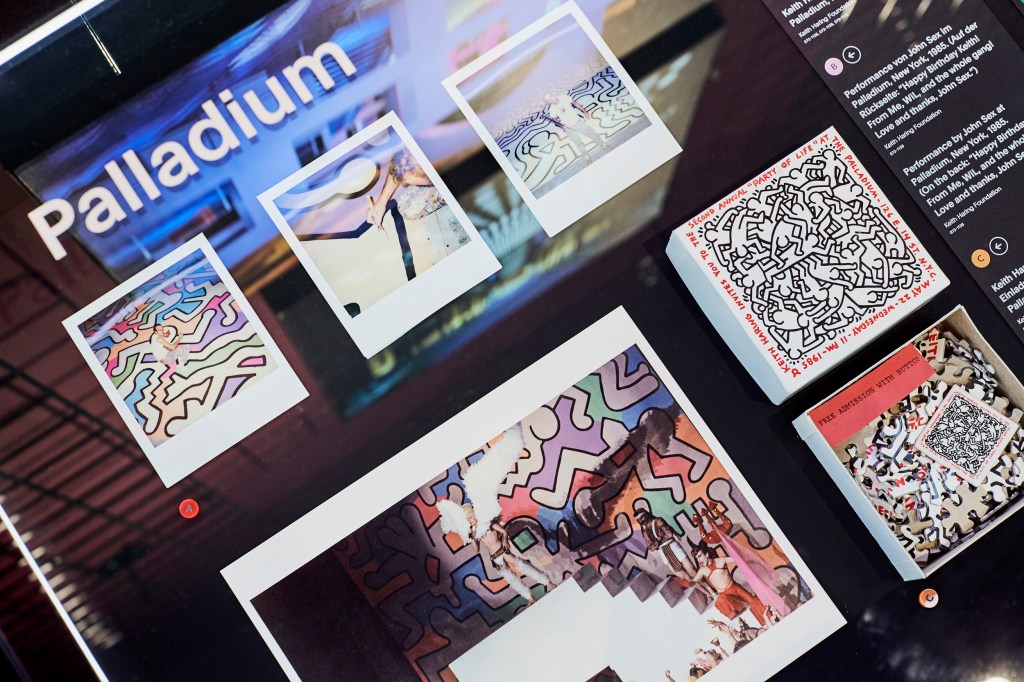
Palladium, New York, 1985 from the exhibition 'Night Fever. Designing Club Culture 1960 – Today' at the Vitra Design Museum, Basel, Germany, March - Sept, 2018


Palladium, New York
1985
Architect: Arata Isozaki, mural by Keith Haring
© Timothy Hursley, Garvey|Simon Gallery New York


Installation view of the exhibition 'Night Fever. Designing Club Culture 1960 - Today' at the Vitra Design Museum 2018


Installation view of the exhibition Night Fever. Designing Club Culture 1960 – Today, at the Vitra Design Museum 2018
© Vitra Design Museum
Photo: Mark Niedermann


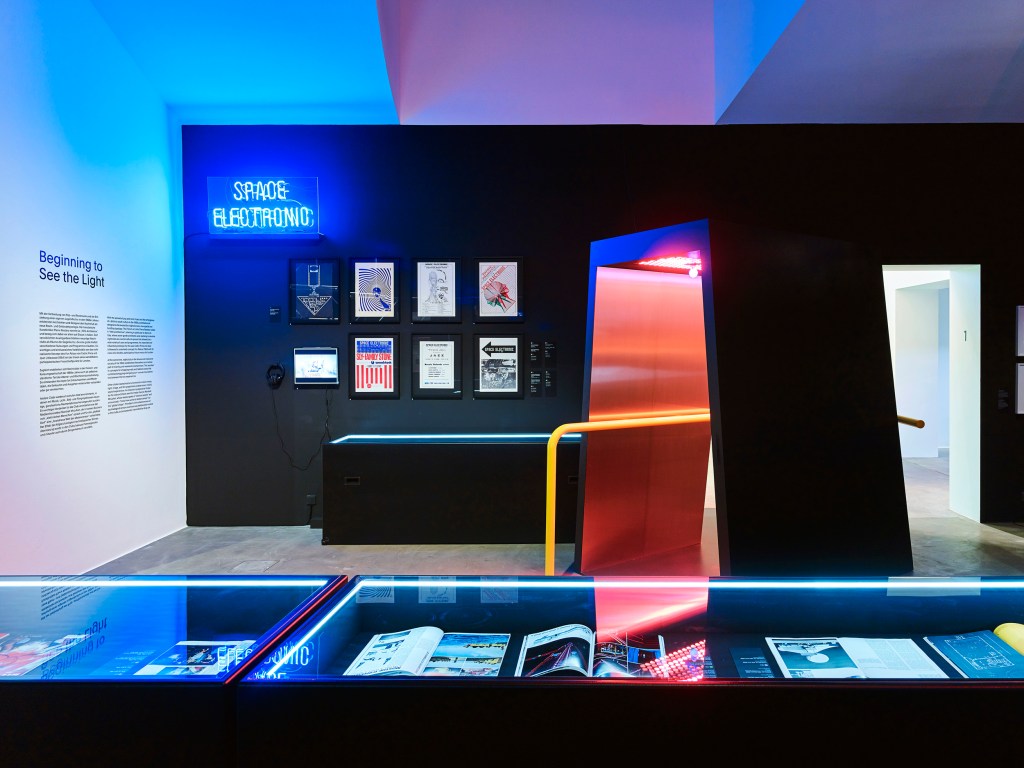
An evening at the Space Electronic, Florence, 1971 from the exhibition 'Night Fever. Designing Club Culture 1960 – Today' at the Vitra Design Museum, Basel, Germany, March - Sept, 2018


An evening at the Space Electronic
Florence, 1971
Interior Design: Gruppo 9999
Photo: Carlo Caldini
© Gruppo 9999


Discotheque Flash Back, Borgo San Dalmazzo c. 1972 from the exhibition 'Night Fever. Designing Club Culture 1960 – Today' at the Vitra Design Museum, Basel, Germany, March - Sept, 2018


Discotheque Flash Back
Borgo San Dalmazzo c. 1972
Interior Design: Studio65
© Paolo Mussat Sartor


Nightclub Les Bains Douches, Paris, 1990


Nightclub Les Bains Douches
Paris, 1990
Interior Design: Philippe Starck
© Foc Kan


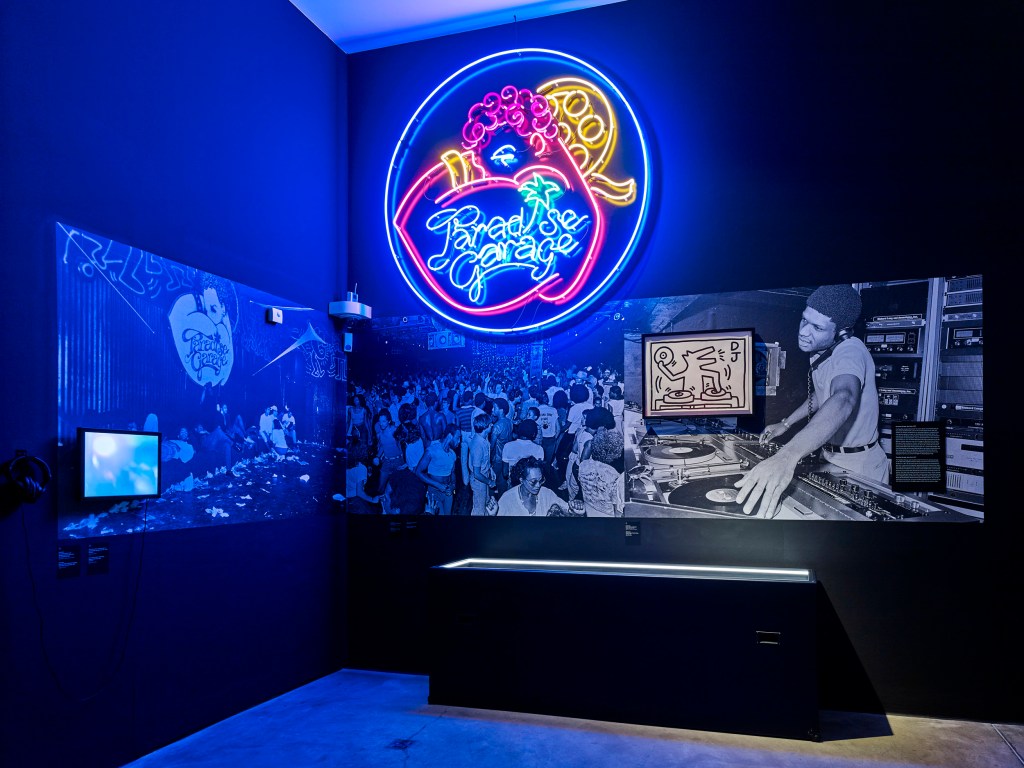
DJ Larry Levan in Paradise Garage, New York, 1979


DJ Larry Levan in Paradise Garage
New York, 1979
© Bill Bernstein, David Hill Gallery, London


Guests in Conversation on a Sofa, Studio 54, New York, 1979


Guests in Conversation on a Sofa, Studio 54
New York, 1979
© Bill Bernstein, David Hill Gallery, London


Akoaki. 'Mobile DJ Booth, The Mothership' Detroit, 2014


Akoaki
Mobile DJ Booth, The Mothership
Detroit, 2014
© Akoaki


OMA/Rem Koolhaas. 'Isometric Plan Ministry of Sound II' London, 2015


OMA/Rem Koolhaas
Isometric Plan Ministry of Sound II
London, 2015
© OMA


'Newcastle Stage at Horst Arts & Music Festival' Belgium, 2017


Newcastle Stage at Horst Arts & Music Festival
Belgium, 2017
Architects: Assemble
© Jeroen Verrecht


Diane Alexander White. 'The backlash against disco peaked at the Disco Demolotion Night at Comiskey Park, Chicago, in the summer 1979'


Diane Alexander White
The backlash against disco peaked at the Disco Demolotion Night at Comiskey Park, Chicago, in the summer 1979
July 12, 1979
Silver gelatin print
© Diane Alexander White Photography


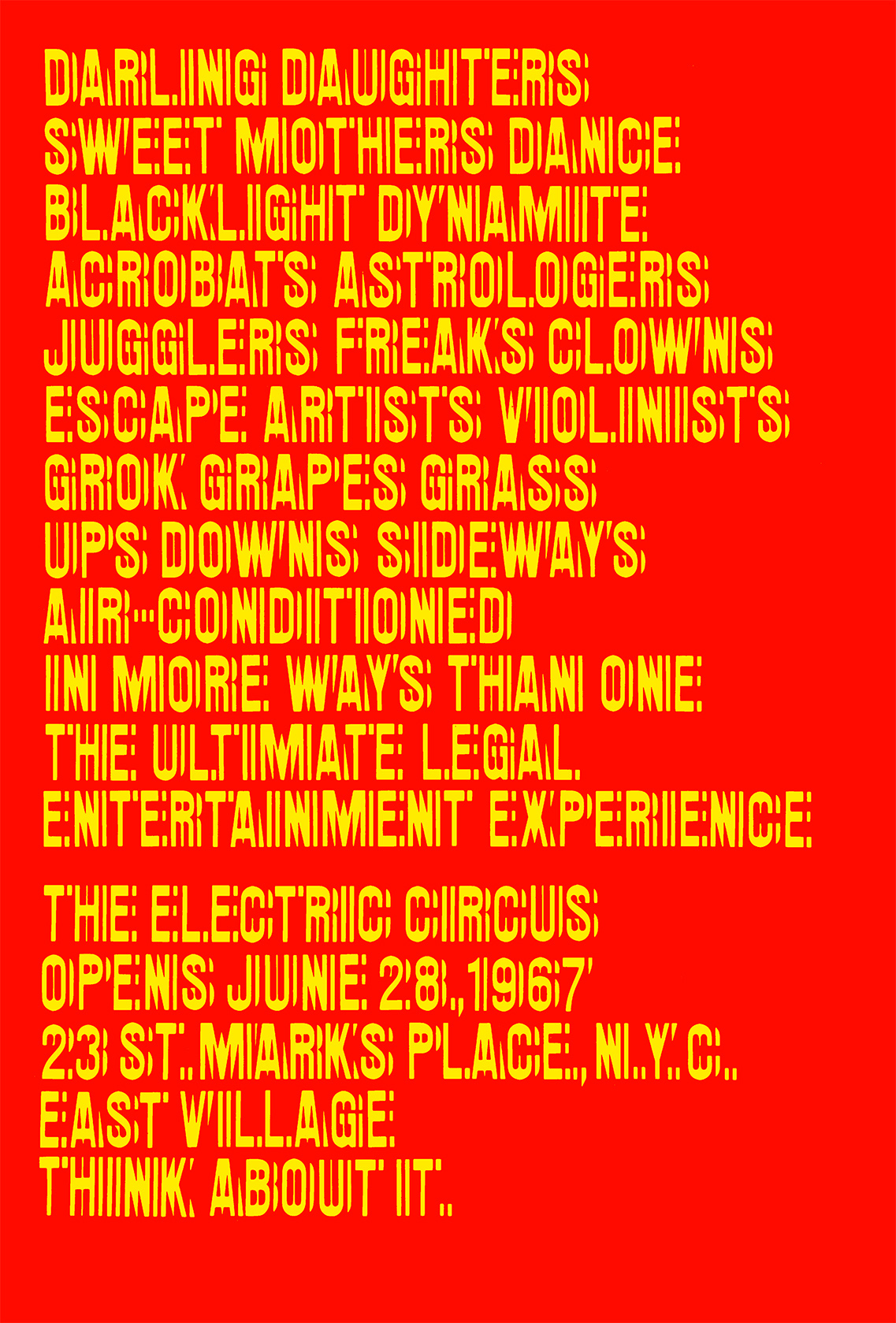
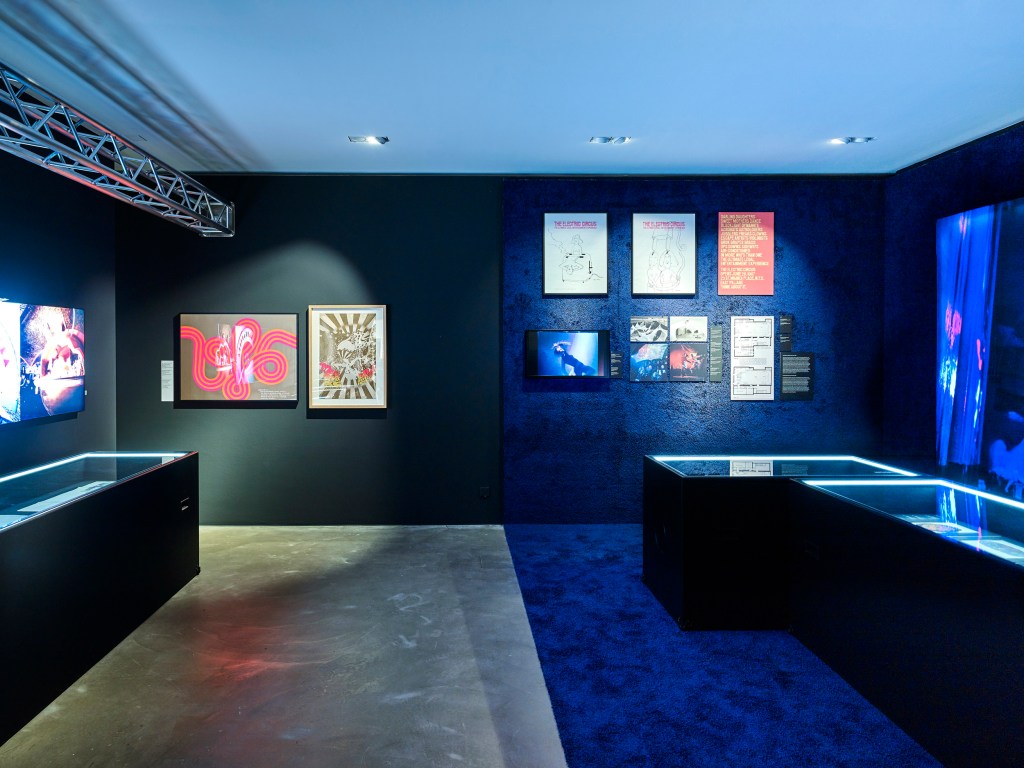
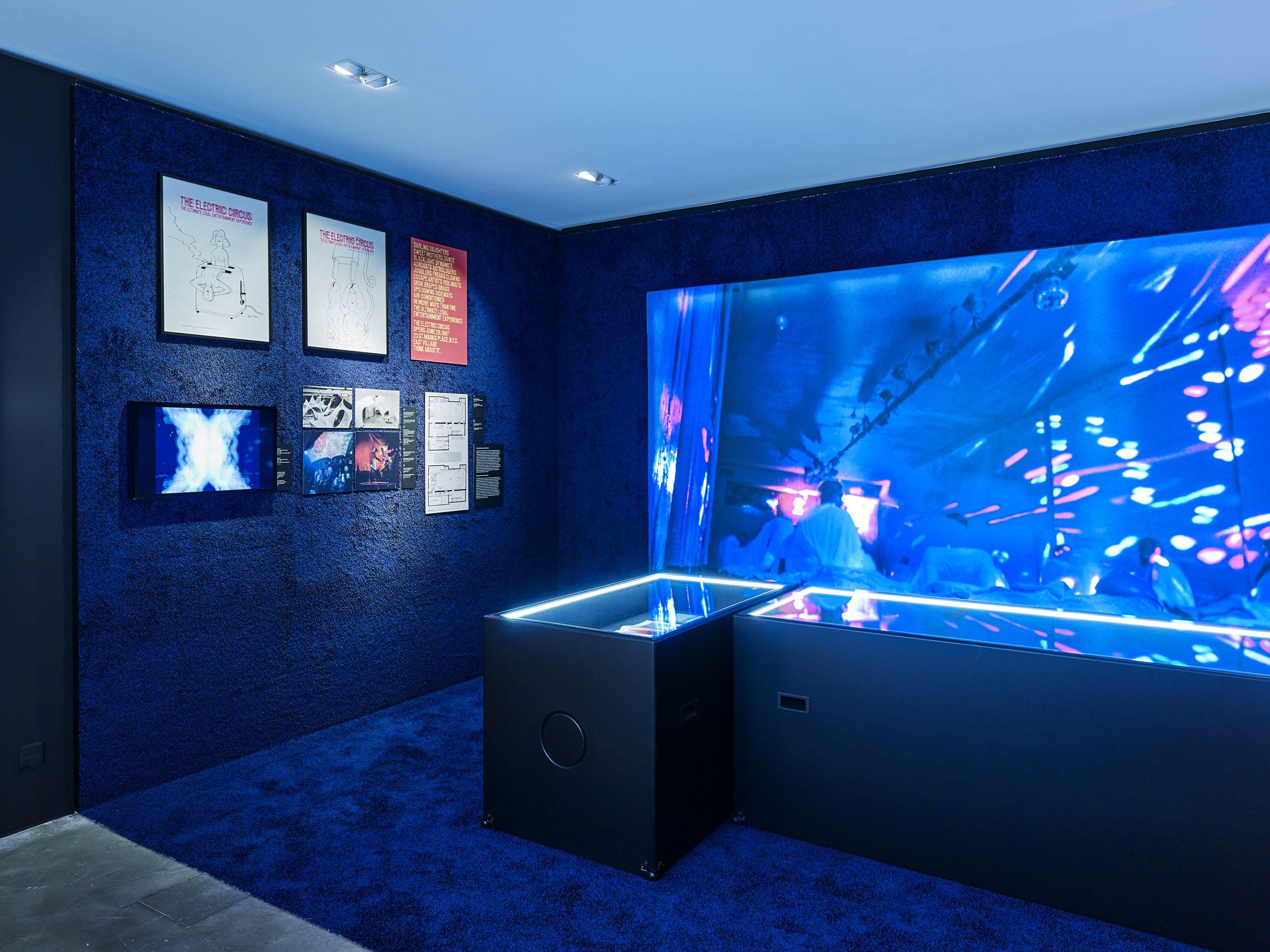
'Poster for the Nightclub The Electric Circus' New York, 1967


Poster for the Nightclub The Electric Circus
New York, 1967
Design: Chermayeff & Geismar
© Ivan Chermayeff and Tom Geismar


'Poster for the Discotheque Flash Back' Borgo San Dalmazzo, 1972


Poster for the Discotheque Flash Back
Borgo San Dalmazzo, 1972
Design: Gianni Arnaudo / Studio65


Hasse Persson. 'Calvin Klein Party' 1978


Hasse Persson (Swedish, b. 1942)
Calvin Klein Party
1978
© Hasse Persson


Bill Bernstein. 'Dance floor at Xenon' New York, 1979


Bill Bernstein (American, b. 1950)
Dance floor at Xenon
New York, 1979
© Bill Bernstein / David Hill Gallery, London


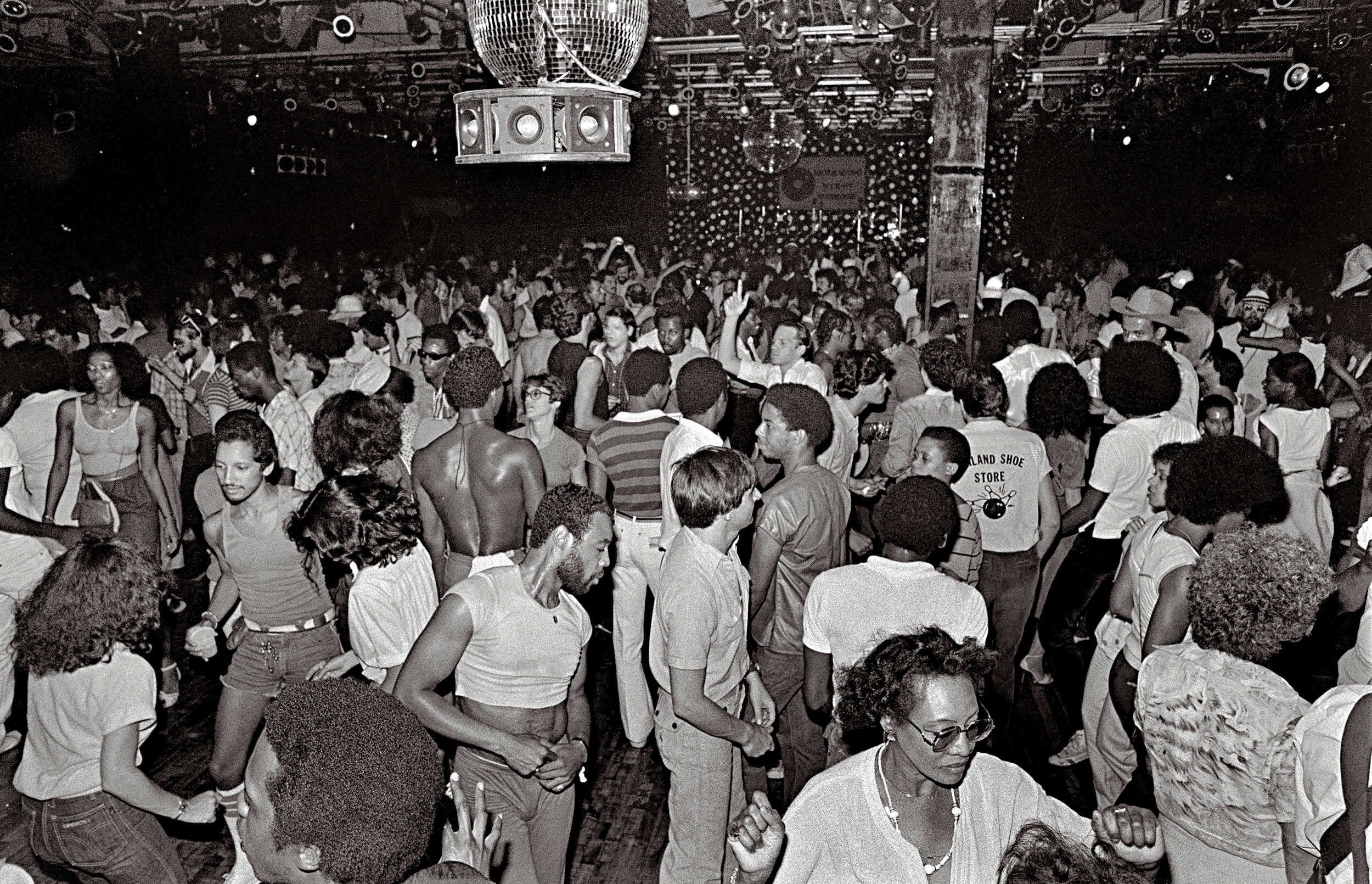
'Dance floor at Paradise Garage' New York, 1978


Dance floor at Paradise Garage
New York, 1978
© Bill Bernstein / David Hill Gallery, London


'Trojan, Nichola and Leigh Bowery at Taboo' 1985


Trojan, Nichola and Leigh Bowery at Taboo
1985
© Dave Swindells


Musa N. Nxumalo. 'Wake Up, Kick Ass and Repeat!' 2017


Musa N. Nxumalo (South African, b. 1986)
Wake Up, Kick Ass and Repeat!
Photograph from the series 16 Shots
2017
© Musa N. Nxumalo / Courtesy of SMAC Gallery, Johannesburg


Volker Hinz. 'Grace Jones at "Confinement" theme, Area' New York, 1984


Volker Hinz (German, b. 1947)
Grace Jones at “Confinement” theme, Area
New York, 1984
© Volker Hinz


'Keith Haring in front of his contribution to Art theme' Nd


Keith Haring in front of his contribution to Art theme
Nd
© Volker Hinz


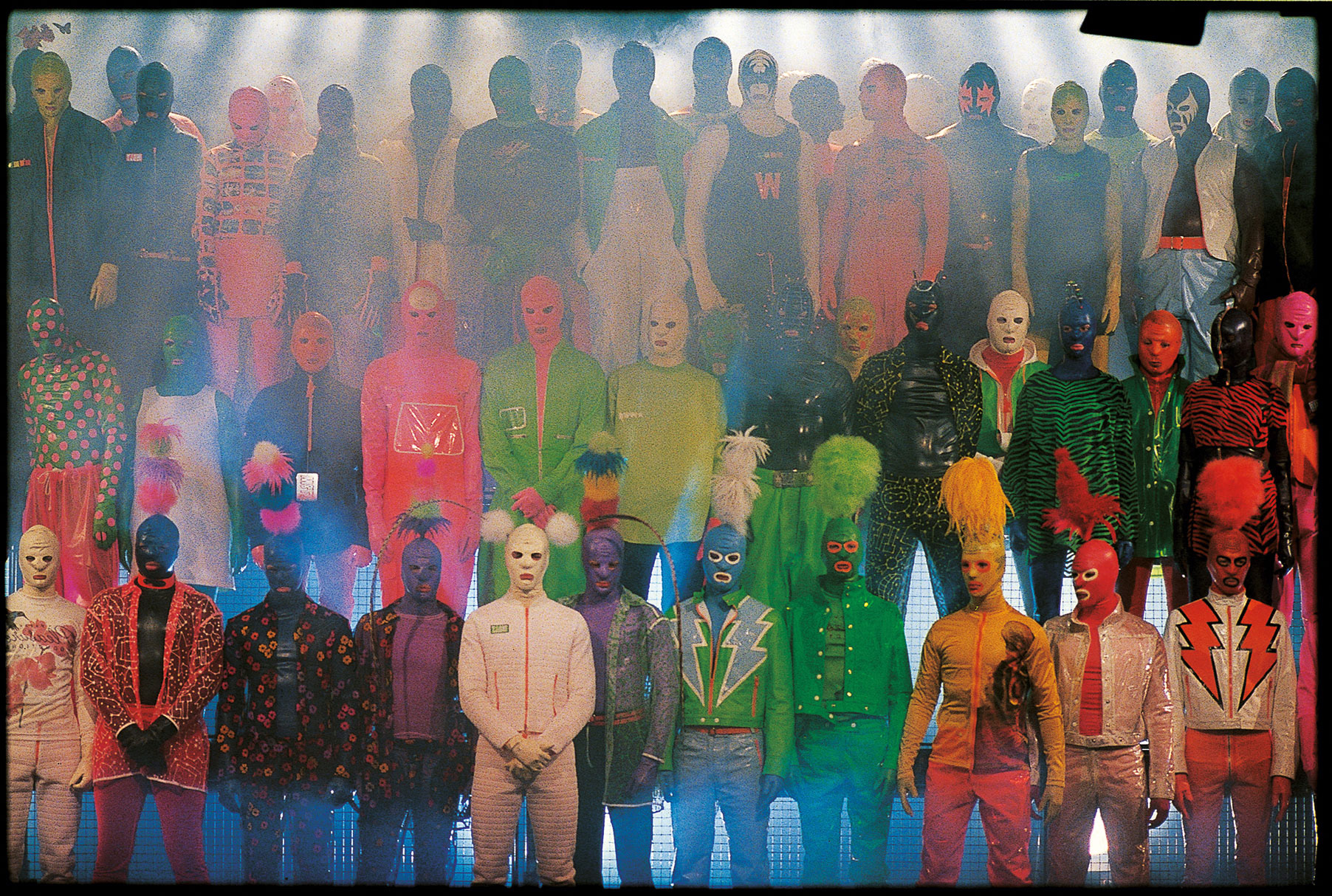
Walter Van Beirendonck. 'Fashion show of Wild & Lethal Trash (W.&L.T.) collection for Mustang Jeans' Fall / Winter 1995/9


Walter Van Beirendonck (Belgium, b. 1957)
Fashion show of Wild & Lethal Trash (W.&L.T.) collection for Mustang Jeans
Fall / Winter 1995/9
© Dan Lecca / Courtesy of Mustang Jeans


Chen Wei. 'In the Waves #1' 2013


Chen Wei (Chinese, b. 1980)
In the Waves #1
2013
© Chen Wei / Courtesy of LEO XU PROJECTS, Shanghai


Despacio Sound System, New Century Hall, Manchester International Festival July 2013


Despacio Sound System, New Century Hall, Manchester International Festival
July 2013
© Rod Lewis


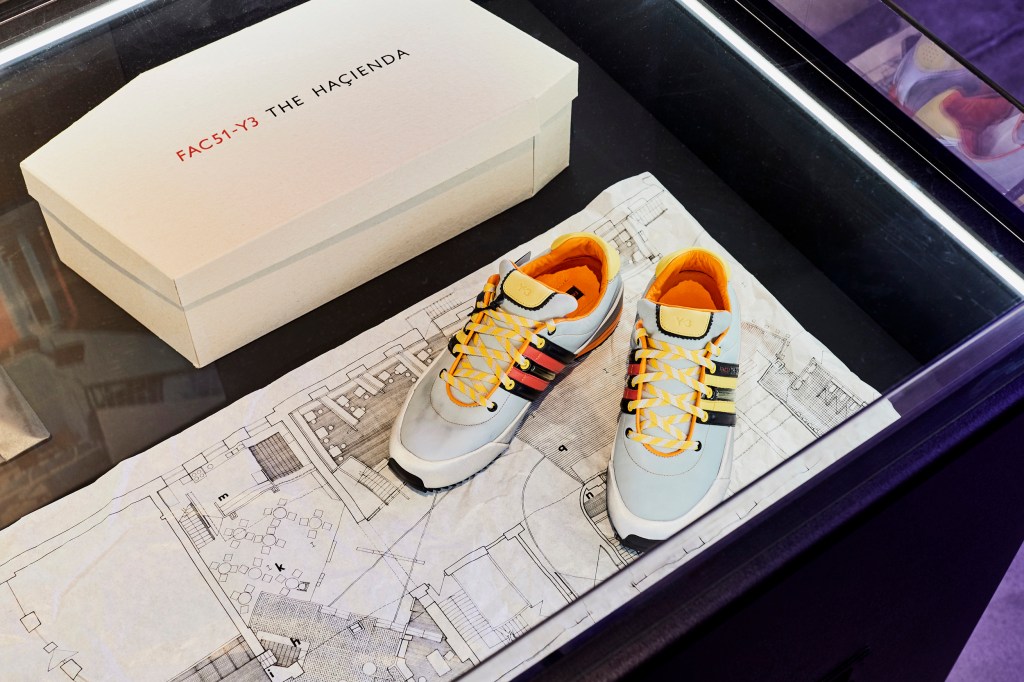
Interior view of Haçienda, Manchester Nd


Interior view of Haçienda, Manchester
Nd
Courtesy of Ben Kelly


Bureau A. 'DJ booth inside The Club, Lisbon Architecture Triennale' 2016


Bureau A
DJ booth inside The Club, Lisbon Architecture Triennale
2016
© Mariana Lopes


Gruppo UFO. 'Bamba Issa, Night Shelter for the Beach Rescue Camels' 1969


Gruppo UFO
Bamba Issa, Night Shelter for the Beach Rescue Camels
Bamba Issa, 1969
© Photo: Carlo Bachi / Courtesy of Gruppo UFO


'Interior view of Tresor' Berlin 1996/97


Interior view of Tresor, Berlin
1996/97
© Gustav Volker Heuss


Martin Eberle. 'Tresor außen' Berlin, 1996


Martin Eberle
Tresor außen
Berlin, 1996
From the series Temporary Spaces
© Martin Eberle


Gianni Arnaudo. 'Aliko chair, designed for Flash Back' 1972


Gianni Arnaudo (Italian, b. 1947)
Aliko chair, designed for Flash Back
Borgo San Dalmazzo, Italy, 1972
Gufram
© Andreas Sütterlin / Courtesy of Gianni Arnaudo


Roger Tallon. 'Swivel Chair Module 400 for the (unrealised) Nightclub Le Garage' Paris, 1965


Roger Tallon (French, 1929-2011)
Swivel Chair Module 400 for the (unrealised) Nightclub Le Garage
Paris, 1965
© Vitra Design Museum
Photo: Thomas Dix


Vincent Rosenblatt. 'Tecnobrega #093' Tupinambá, 2016


Vincent Rosenblatt (French lives Brazil, b. 1972)
Tecnobrega #093
Tupinambá, 2016
From the series Tecnobrega – The Religion of Soundmachines
Metropoles Club, Belém do Pará, Brazil
Inkjet print on Baryta paper (2018)
100 x 66cm
© Vincent Rosenblatt


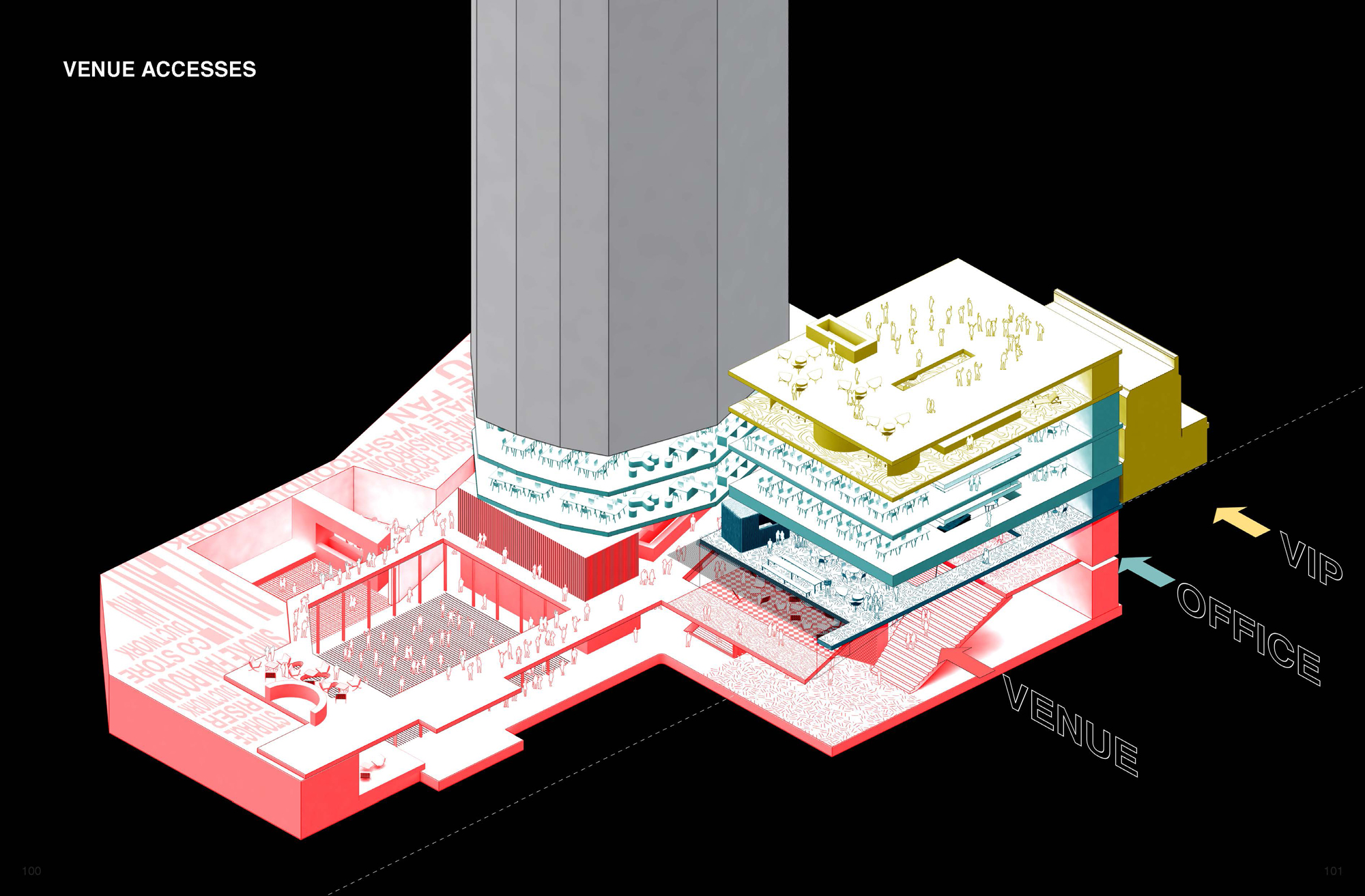
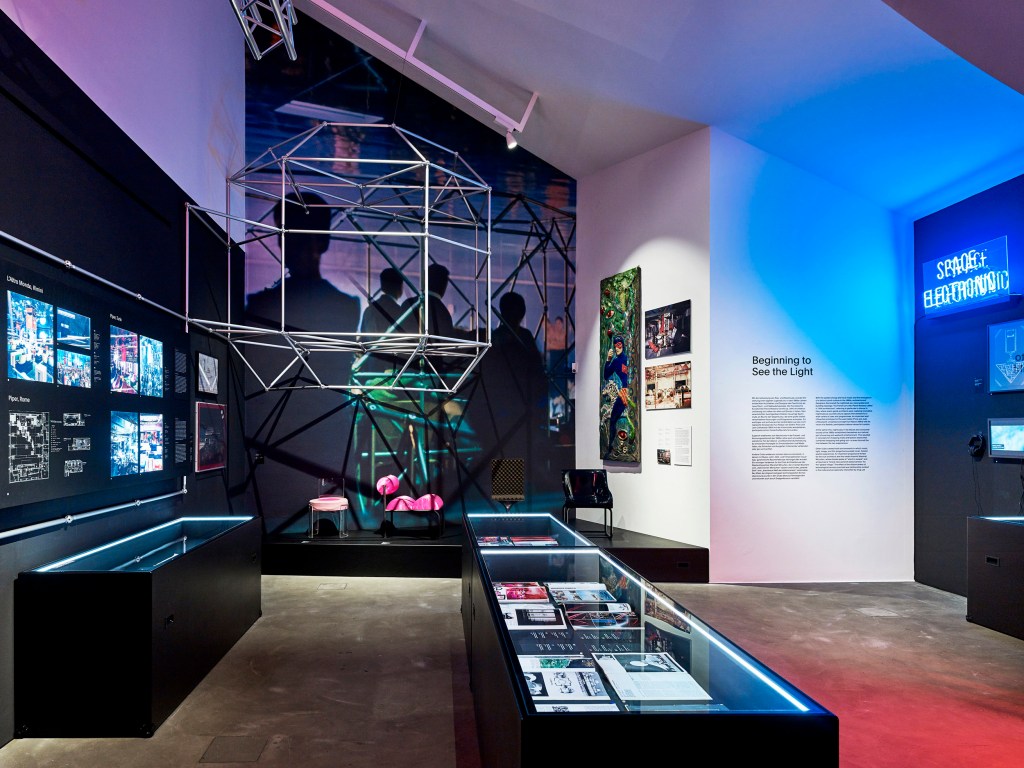
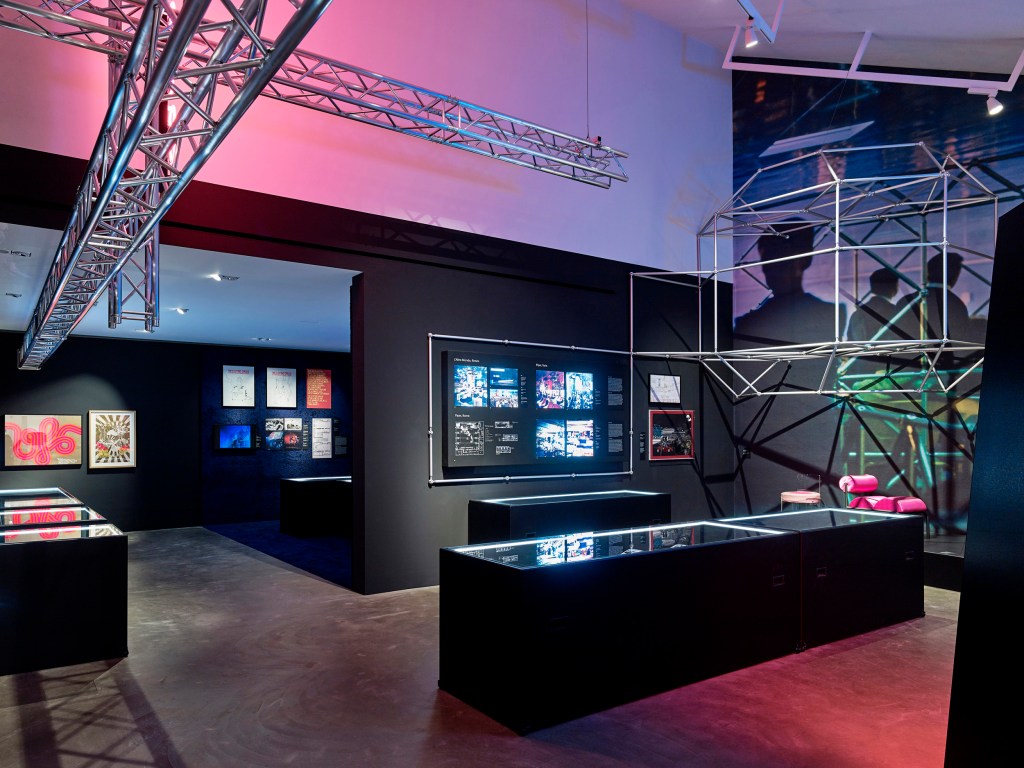
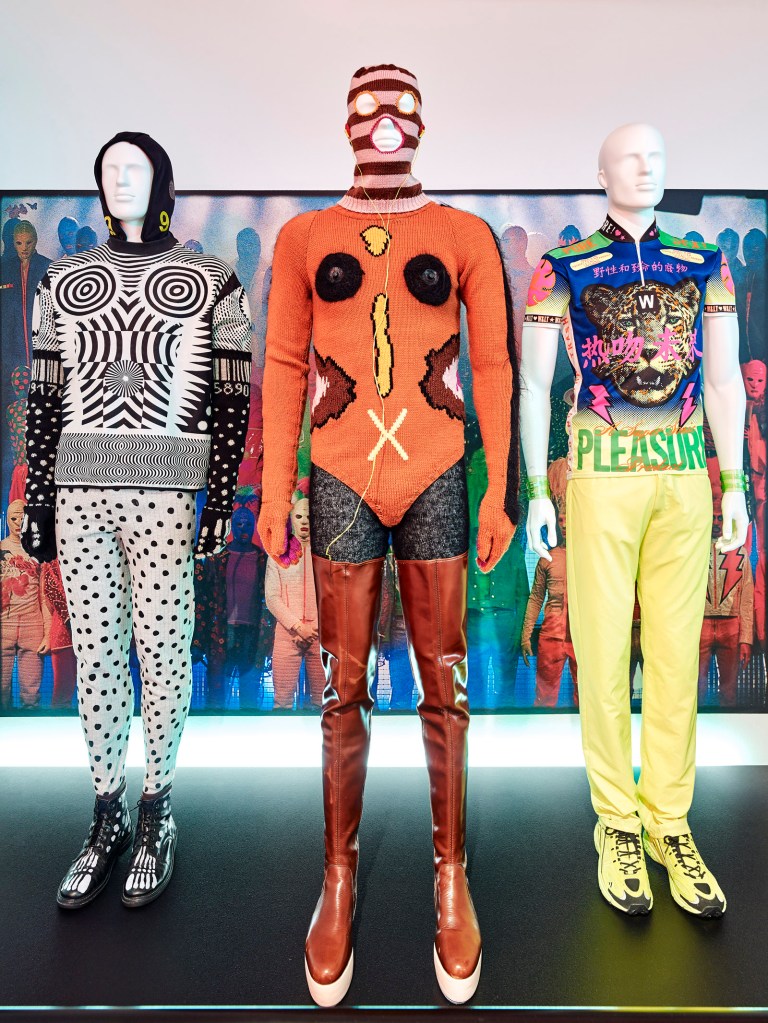
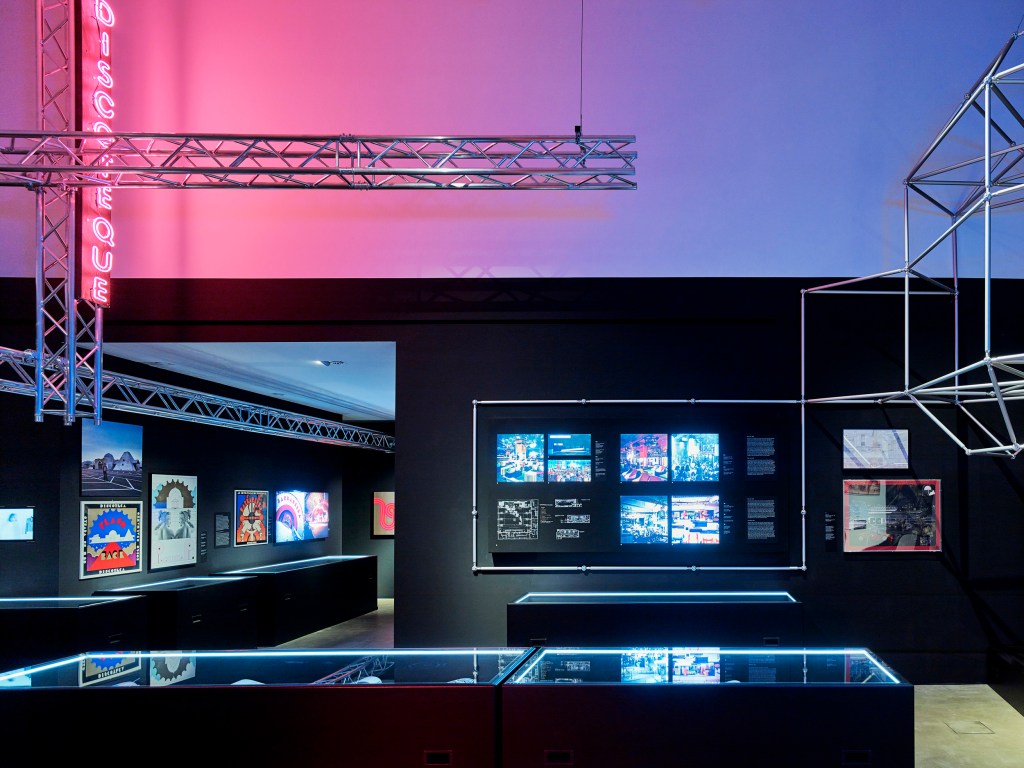
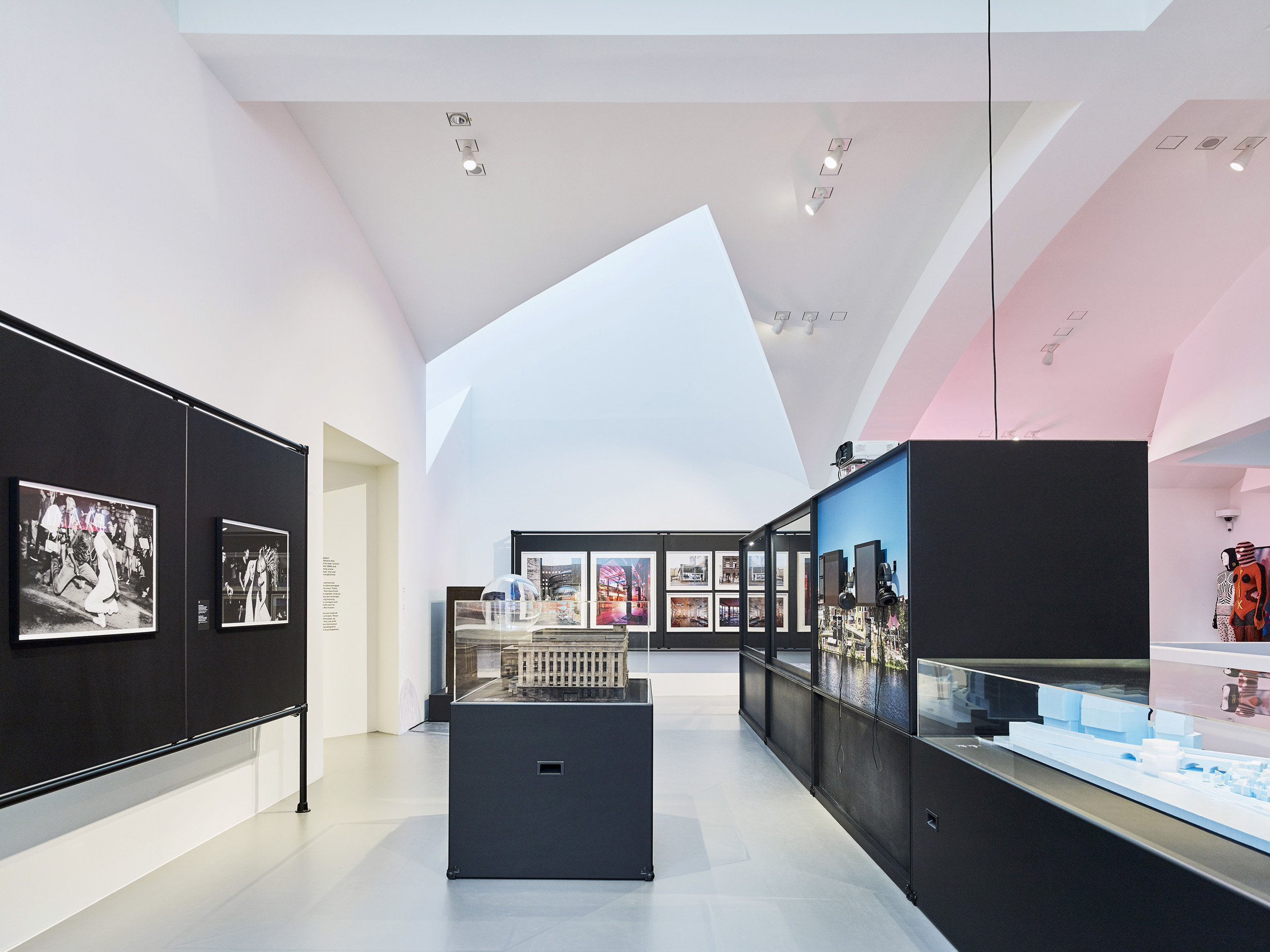
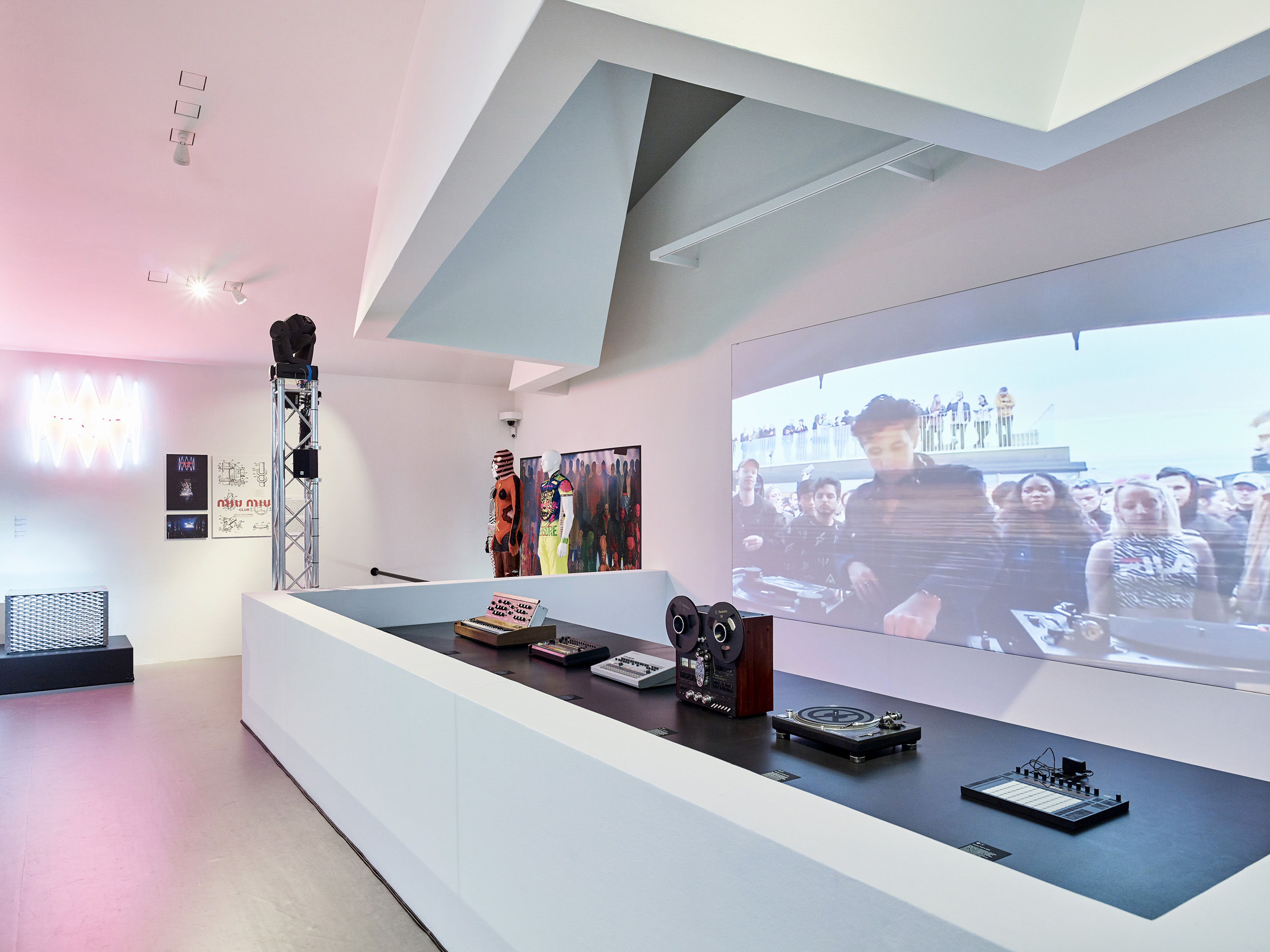
The nightclub is one of the most important design spaces in contemporary culture. Since the 1960s, nightclubs have been epicentres of pop culture, distinct spaces of nocturnal leisure providing architects and designers all over the world with opportunities and inspiration. Night Fever. Designing Club Culture 1960 – Today offers the first large-scale examination of the relationship between club culture and design, from past to present. The exhibition presents nightclubs as spaces that merge architecture and interior design with sound, light, fashion, graphics, and visual effects to create a modern Gesamtkunstwerk. Examples range from Italian clubs of the 1960s created by the protagonists of Radical Design to the legendary Studio 54 where Andy Warhol was a regular, from the Haçienda in Manchester designed by Ben Kelly to more recent concepts by the OMA architecture studio for the Ministry of Sound in London. The exhibits on display range from films and vintage photographs to posters, flyers, and fashion, but also include contemporary works by photographers and artists such as Mark Leckey, Chen Wei, and Musa N. Nxumalo. A spatial installation with music and light effects takes visitors on a fascinating journey through a world of glamour and subcultures – always in search of the night that never ends.

Night Fever opens with the 1960s, exploring the emergence of nightclubs as spaces for experimentation with interior design, new media, and alternative lifestyles. The Electric Circus (1967) in New York, for example, was designed as a countercultural venue by architect Charles Forberg while renowned graphic designers Chermayeff & Geismar created its distinctive logo and font. Its multidisciplinary approach influenced many clubs in Europe, including Space Electronic (1969) in Florence. Designed by the collective Gruppo 9999, this was one of several nightclubs associated with Italy’s Radical Design avant-garde. The same goes for Piper in Turin (1966), a club designed by Giorgio Ceretti, Pietro Derossi, and Riccardo Rosso as a multifunctional space with a modular interior suitable for concerts, happenings, and experimental theatre as well as dancing. Gruppo UFO’s Bamba Issa (1969), a beach club in Forte dei Marmi, was another highly histrionic venue, its themed interior completely overhauled for every summer of its three years of existence.

With the rise of disco in the 1970s, club culture gained a new momentum. Dance music developed into a genre of its own and the dance floor emerged as a stage for individual and collective performance, with fashion designers such as Halston and Stephen Burrows providing the perfect outfits to perform and shine. New York’s Studio 54, founded by Ian Schrager and Steve Rubell in 1977 and designed by Scott Bromley and Ron Doud, soon became a celebrity favourite. Only two years later, the movie Saturday Night Fever marked the apex of Disco’s commercialisation, which in turn sparked a backlash with homophobic and racist overtones that peaked at the Disco Demolition Night staged at a baseball stadium in Chicago.

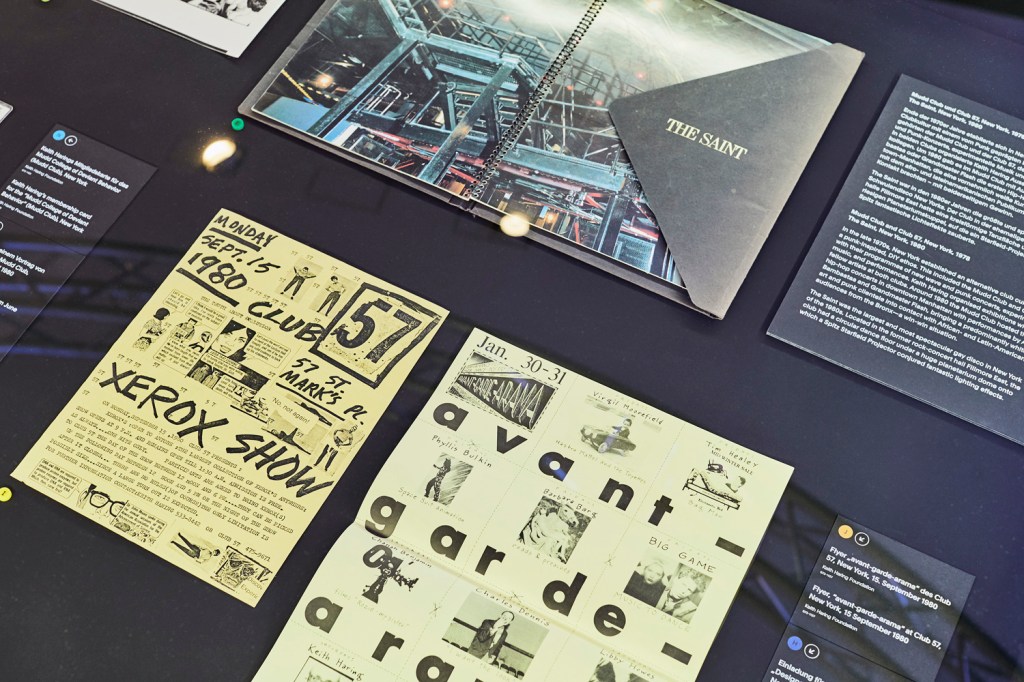
Around the same time, places in New York’s thriving nightlife like the Mudd Club (1978) and Area (1983) offered artists new spaces to merge the club scene and the arts and launched the careers of artists like Keith Haring and Jean-Michel Basquiat. In early 1980s London, meanwhile, clubs like Blitz and Taboo brought forth the New Romantic music and fashion movement, with wild child Vivienne Westwood a frequent guest at Michael and Gerlinde Costiff’s Kinky Gerlinky club night. But it was in Manchester that architect and designer Ben Kelly created the post-industrial cathedral of rave, The Haçienda (1982), from where Acid House conquered the UK. House and Techno were arguably the last great dance music movements to define a generation of clubs and ravers. They reached Berlin in the early 1990s just after the fall of the wall, when disused and derelict spaces became available for clubs like Tresor (1991); more than a decade later, the notorious Berghain (2004) was established in a former heating plant, demonstrating yet again how a vibrant club scene can flourish in the cracks of the urban fabric, on empty lots and in vacant buildings.

Developments have become ever more complex since the early 2000s. On the one hand, club culture is thriving and evolving as it is adopted by global brands and music festivals; on the other, many nightclubs have been pushed out of the city or survive merely as sad historical monuments and modern ruins of a hedonistic past. At the same time, a new generation of architects is addressing the nightclub typology. The architectural firm OMA, founded by Rem Koolhaas, has developed a proposal for a twenty-first-century Ministry of Sound II for London, while Detroit-based designers Akoaki have created a mobile DJ booth called The Mothership to promote their hometown’s rich club heritage.

Based on extensive research and featuring many exhibits never before displayed in a museum, Night Fever brings together a wide range of material, from furniture to graphic design, architectural models to art, film and photography to fashion. The exhibition takes visitors through a fascinating nocturnal world that provides a vital contrast to the rules and routines of our everyday life.

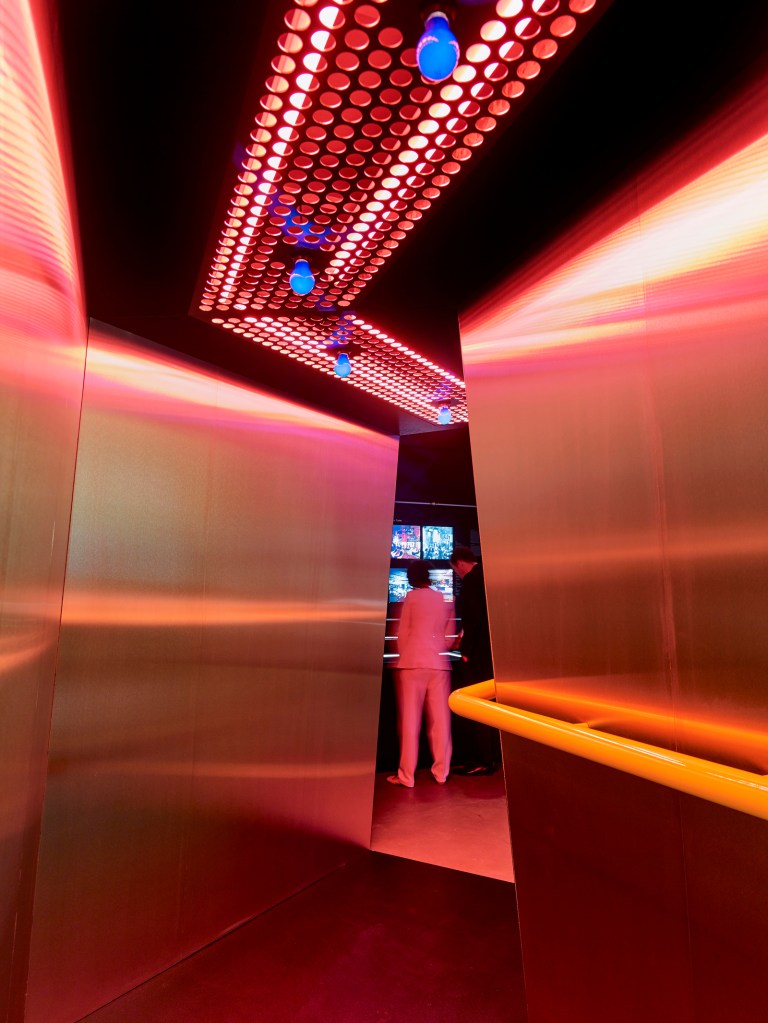
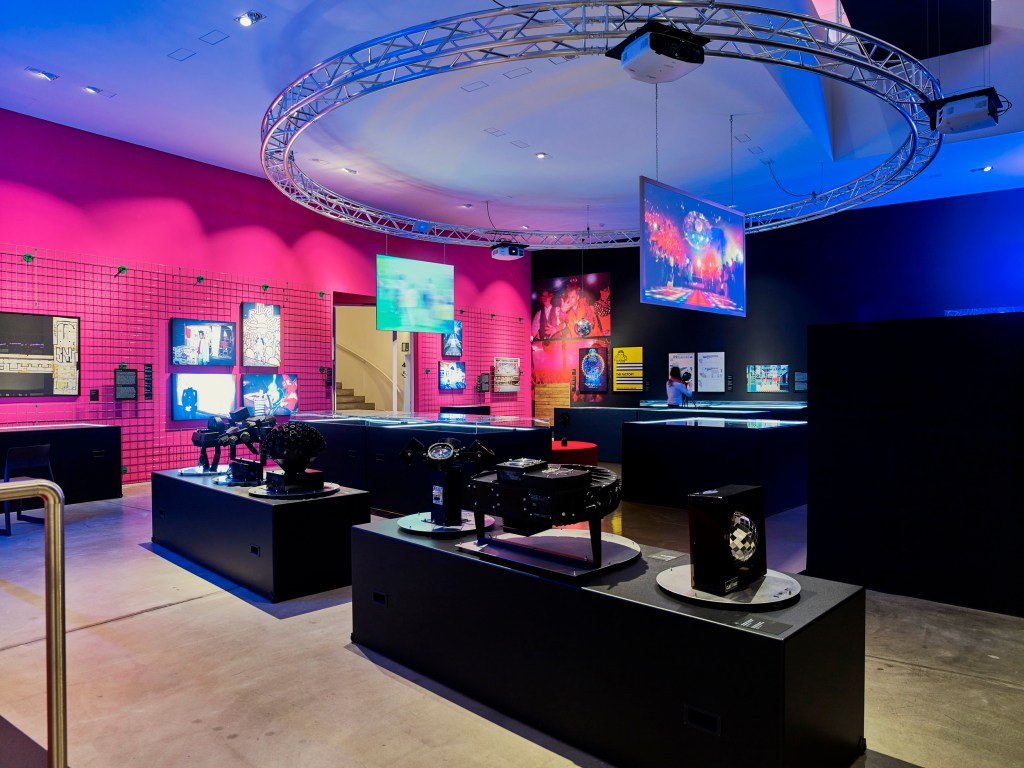
While the exhibition basically follows a chronological concept, a music and light installation created specially by exhibition designer Konstantin Grcic and lighting designer Matthias Singer offers visitors the opportunity to experience all the many facets of nightclub design, from visual effects to sounds and sensations. A display of record covers, ranging from Peter Saville’s designs for Factory Records to Grace Jones’s album cover Nightclubbing, underlines the significant relationship between music and design in club culture. The multidisciplinary exhibition reveals the nightclub as much more than a dance bar or a music venue; it is an immersive environment for intense experiences.

Represented artists, designers and architects (extract): François Dallegret, Gruppo 9999, Halston, Keith Haring, Arata Isozaki, Grace Jones, Ben Kelly, Bernard Khoury, Miu Miu, OMA (Office for Metropolitan Architecture), Peter Saville, Studio65, Roger Tallon, Walter Van Beirendonck, Andy Warhol

Represented clubs (extract): The Electric Circus, New York, 1967 Space Electronic, Florenz, 1969 Il Grifoncino, Bolzano, 1969 Studio 54, New York, 1977 Paradise Garage, New York, 1977 Le Palace, Paris, 1978 The Saint, New York, 1980 The Haçienda, Manchester, 1982 Area, New York, 1983 Palladium, New York, 1985 Tresor, Berlin, 1991 B018, Beirut, 1998 Berghain, Berlin, 2004

Press release from the Vitra Design Museum


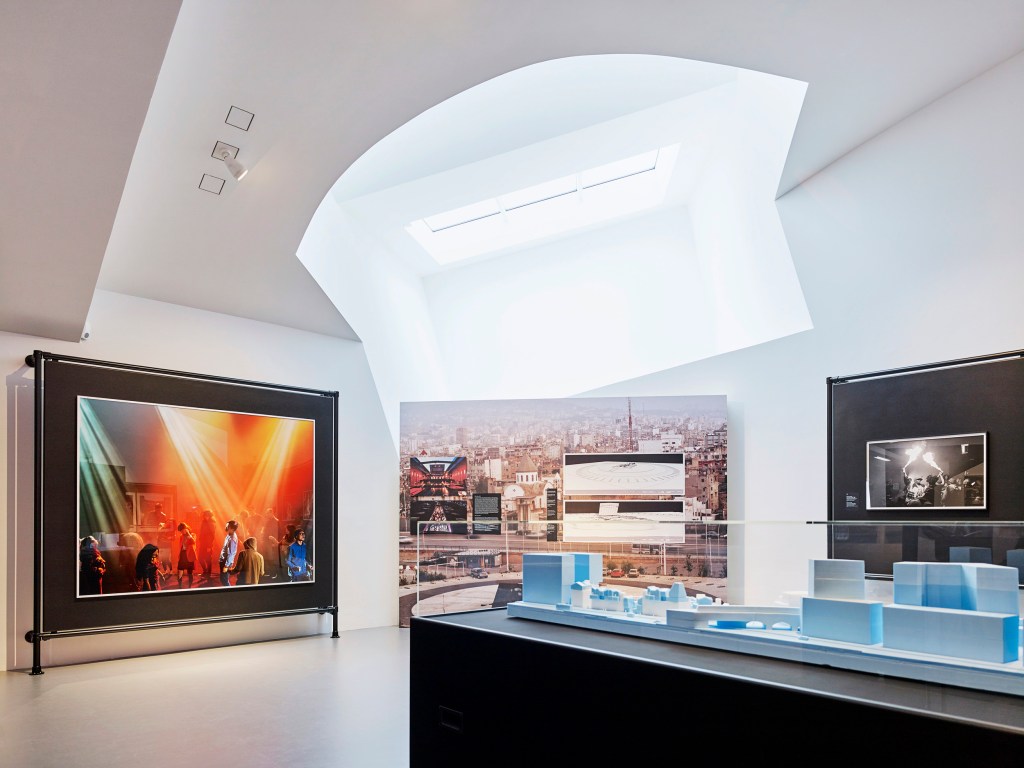
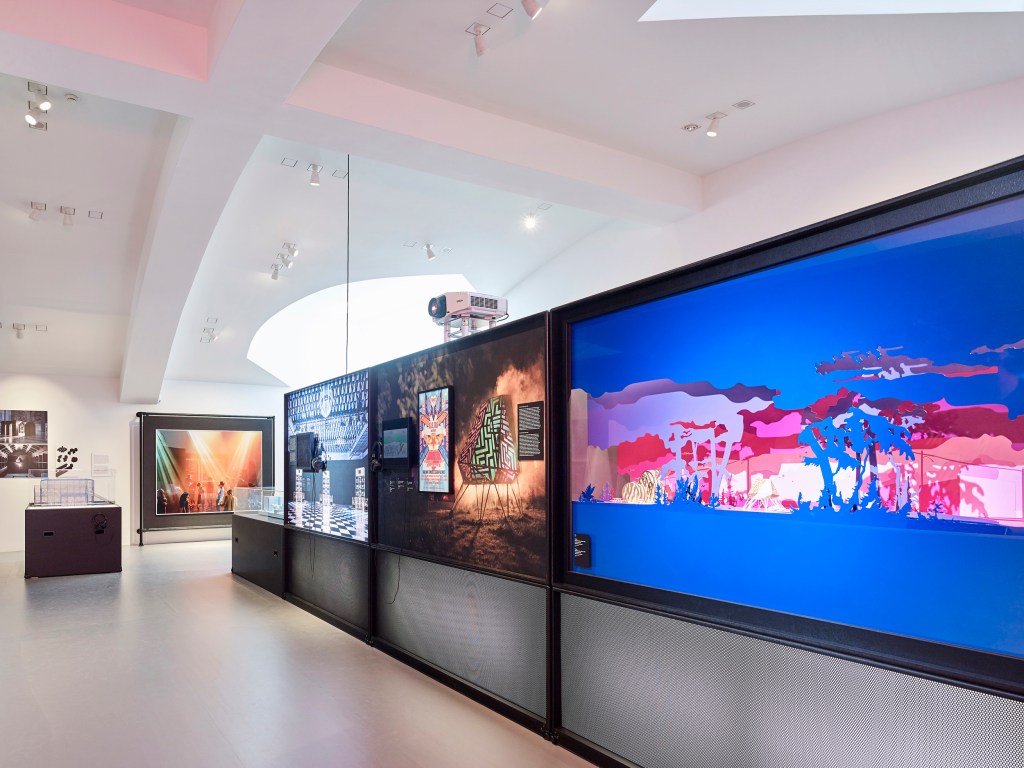
Installation view of the exhibition 'Night Fever. Designing Club Culture 1960 - Today' at the Vitra Design Museum 2018

Installation view of the exhibition 'Night Fever. Designing Club Culture 1960 - Today' at the Vitra Design Museum 2018

Installation view of the exhibition 'Night Fever. Designing Club Culture 1960 - Today' at the Vitra Design Museum 2018

Installation view of the exhibition 'Night Fever. Designing Club Culture 1960 - Today' at the Vitra Design Museum 2018

Installation view of the exhibition 'Night Fever. Designing Club Culture 1960 - Today' at the Vitra Design Museum 2018

Installation view of the exhibition 'Night Fever. Designing Club Culture 1960 - Today' at the Vitra Design Museum 2018

Installation view of the exhibition 'Night Fever. Designing Club Culture 1960 - Today' at the Vitra Design Museum 2018

Installation view of the exhibition 'Night Fever. Designing Club Culture 1960 - Today' at the Vitra Design Museum 2018

Installation view of the exhibition 'Night Fever. Designing Club Culture 1960 - Today' at the Vitra Design Museum 2018

Installation view of the exhibition 'Night Fever. Designing Club Culture 1960 - Today' at the Vitra Design Museum 2018

Installation view of the exhibition 'Night Fever. Designing Club Culture 1960 - Today' at the Vitra Design Museum 2018

Installation view of the exhibition 'Night Fever. Designing Club Culture 1960 - Today' at the Vitra Design Museum 2018

Installation view of the exhibition 'Night Fever. Designing Club Culture 1960 - Today' at the Vitra Design Museum 2018

Installation view of the exhibition 'Night Fever. Designing Club Culture 1960 - Today' at the Vitra Design Museum 2018

Installation view of the exhibition 'Night Fever. Designing Club Culture 1960 - Today' at the Vitra Design Museum 2018

Installation view of the exhibition 'Night Fever. Designing Club Culture 1960 - Today' at the Vitra Design Museum 2018

Installation view of the exhibition 'Night Fever. Designing Club Culture 1960 - Today' at the Vitra Design Museum 2018

Installation view of the exhibition 'Night Fever. Designing Club Culture 1960 - Today' at the Vitra Design Museum 2018

Installation view of the exhibition 'Night Fever. Designing Club Culture 1960 - Today' at the Vitra Design Museum 2018

Installation view of the exhibition 'Night Fever. Designing Club Culture 1960 - Today' at the Vitra Design Museum 2018

Installation view of the exhibition 'Night Fever. Designing Club Culture 1960 - Today' at the Vitra Design Museum 2018

Installation view of the exhibition 'Night Fever. Designing Club Culture 1960 - Today' at the Vitra Design Museum 2018


Installation views of the exhibition Night Fever. Designing Club Culture 1960 – Today, at the Vitra Design Museum 2018
© Vitra Design Museum
Photos: Mark Niedermann


Vitra Design Museum
Charles-Eames-Strase 2 79576
Weil am Rhein/Basel Germany
Phone: +49.7621.702.3200

Opening hours:
Daily 10am – 5pm

Vitra Design Museum website

LIKE ART BLART ON FACEBOOK

Back to top

Photographs: Marcus Bunyan. ‘Paris in film’ 2018 Part 1

July 2018


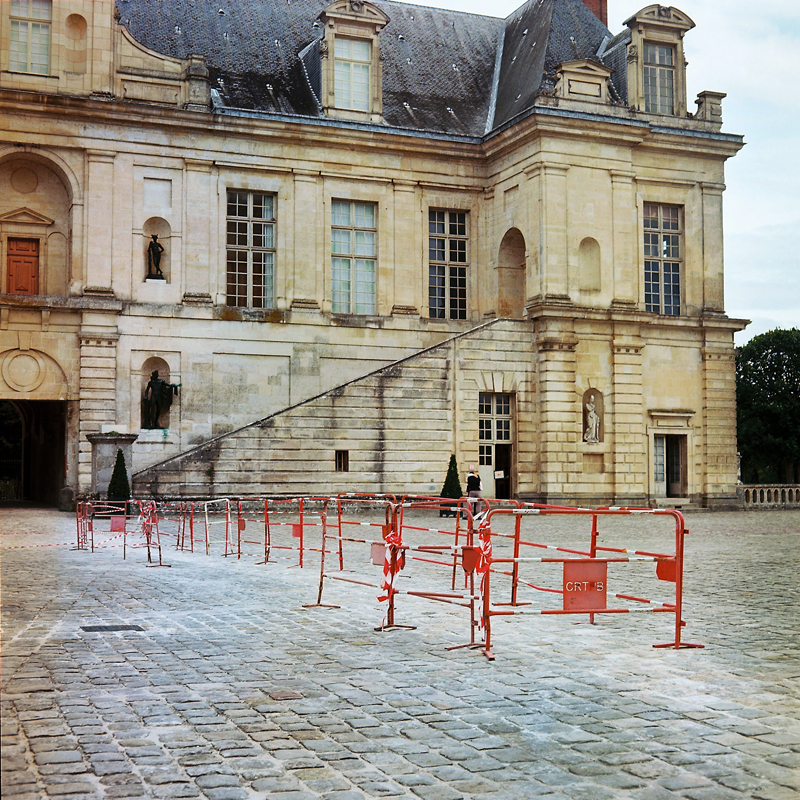
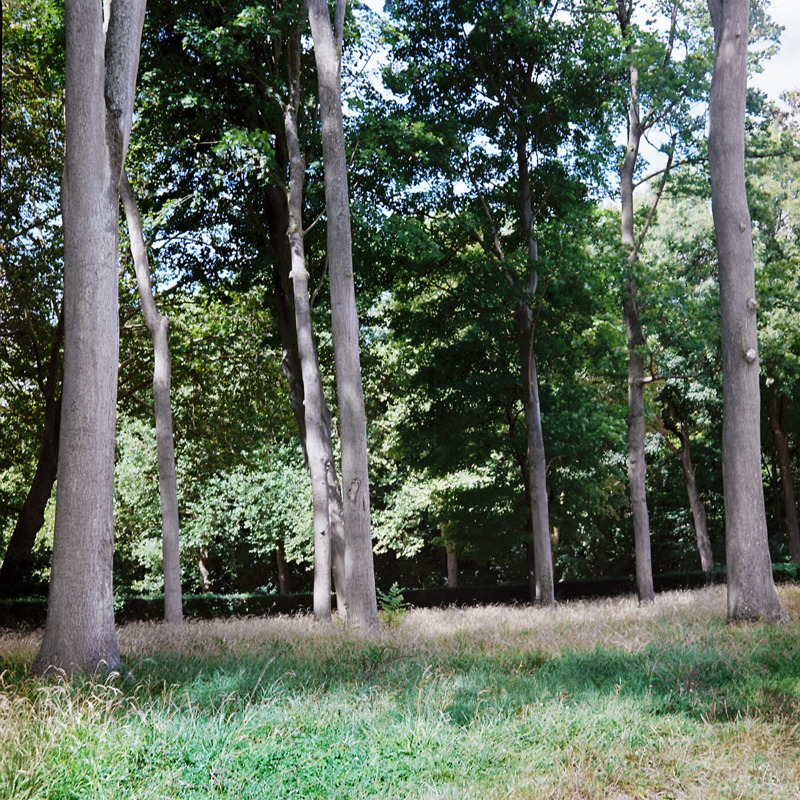
Marcus Bunyan (Australian, b. 1958) 'Fontainebleau' from the series 'Paris in film' 2018


Marcus Bunyan (Australian, b. 1958)
Fontainebleau
2018
From the series Paris in film
Digital photograph


Paris in film

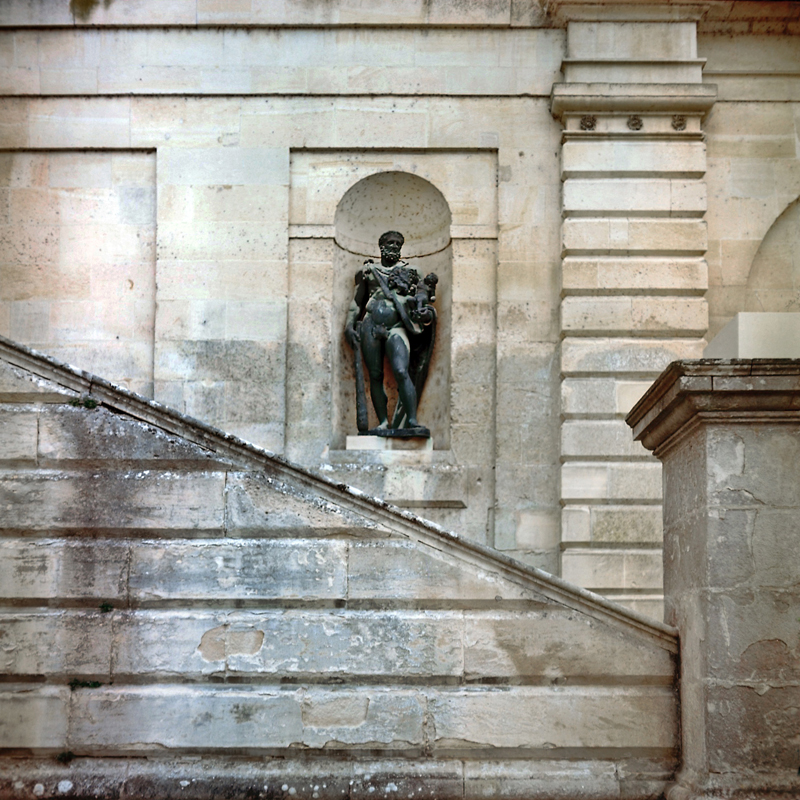
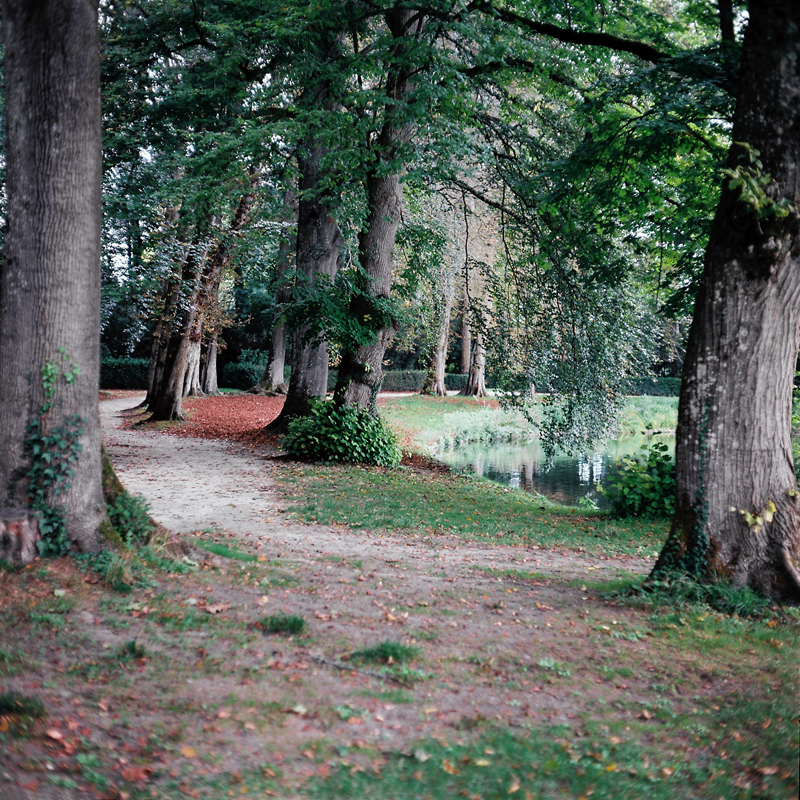
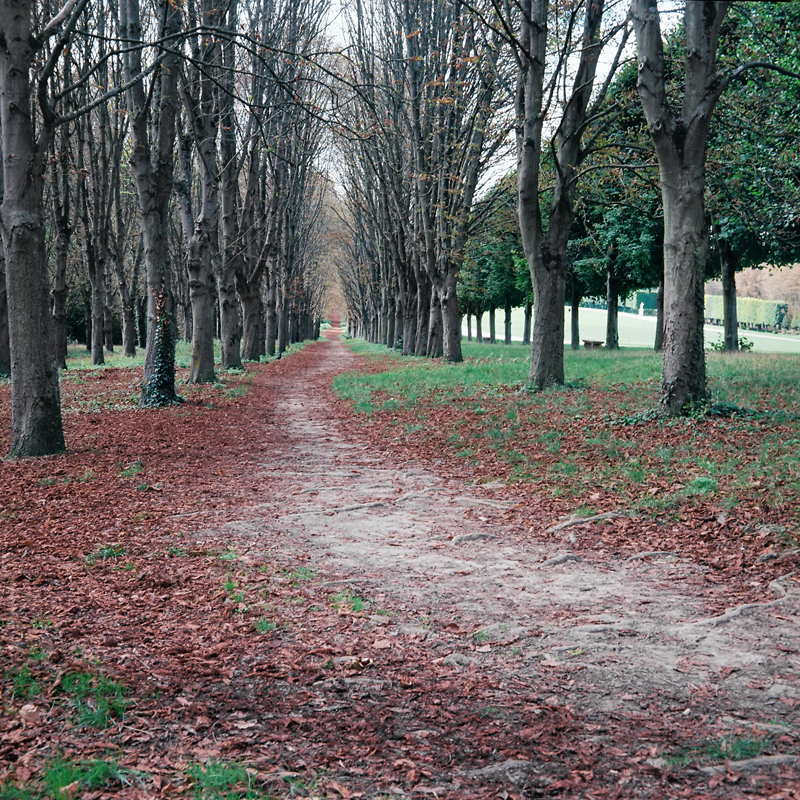
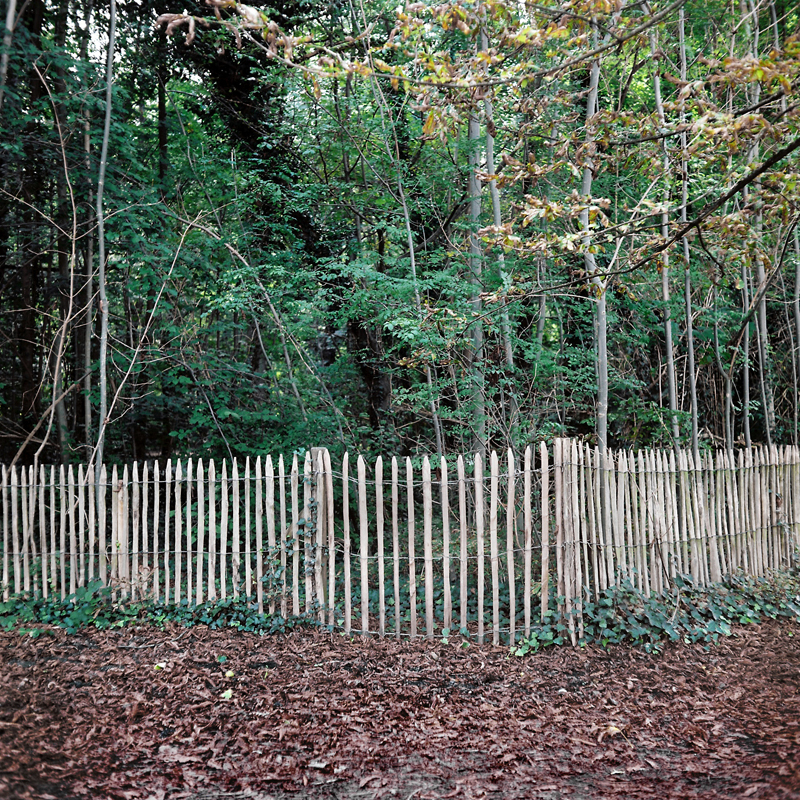
These photographs were taken on a trip to Paris in 2017 using my Mamiya twin-lens C220 medium format camera shot on Kodak Ektra 100 colour negative film.

They are reasonable scans of the negatives, full frame, no cropping, and I have colour corrected as best I can, noting that all digital images look different from computer monitor to monitor – one of the perennial hazards of looking at work online. They have not been sequenced at the moment.

The photographs seem to hang well together as a body of work.

Through their clear visualisation, the photographs speak directly to the viewer.

Marcus


68 images
© Marcus Bunyan

Please click on the photographs for a larger version of the image.

Photographs are available from this series for purchase. As a guide, a digital colour 16″ x 20″ costs $1000 plus tracked and insured shipping. For more information please see my Store web page.


Marcus Bunyan (Australian, b. 1958) 'Fontainebleau' from the series 'Paris in film' 2018


Marcus Bunyan (Australian, b. 1958)
Fontainebleau
2018
From the series Paris in film
Digital photograph


Marcus Bunyan (Australian, b. 1958) 'Fontainebleau' from the series 'Paris in film' 2018


Marcus Bunyan (Australian, b. 1958)
Fontainebleau
2018
From the series Paris in film
Digital photograph


Marcus Bunyan (Australian, b. 1958) 'Fontainebleau' from the series 'Paris in film' 2018


Marcus Bunyan (Australian, b. 1958)
Fontainebleau
2018
From the series Paris in film
Digital photograph


Marcus Bunyan (Australian, b. 1958) 'Fontainebleau' from the series 'Paris in film' 2018


Marcus Bunyan (Australian, b. 1958)
Fontainebleau
2018
From the series Paris in film
Digital photograph


Marcus Bunyan (Australian, b. 1958) 'Fontainebleau' from the series 'Paris in film' 2018


Marcus Bunyan (Australian, b. 1958)
Fontainebleau
2018
From the series Paris in film
Digital photograph


Marcus Bunyan (Australian, b. 1958) 'Cimetière du Père Lachaise' from the series 'Paris in film' 2018


Marcus Bunyan (Australian, b. 1958)
Cimetière du Père Lachaise
2018
From the series Paris in film
Digital photograph


Marcus Bunyan (Australian, b. 1958) 'Cimetière du Père Lachaise' from the series 'Paris in film' 2018


Marcus Bunyan (Australian, b. 1958)
Cimetière du Père Lachaise
2018
From the series Paris in film
Digital photograph


Marcus Bunyan (Australian, b. 1958) 'Cimetière du Père Lachaise' from the series 'Paris in film' 2018


Marcus Bunyan (Australian, b. 1958)
Cimetière du Père Lachaise
2018
From the series Paris in film
Digital photograph


Marcus Bunyan (Australian, b. 1958) 'Cimetière du Père Lachaise' from the series 'Paris in film' 2018


Marcus Bunyan (Australian, b. 1958)
Cimetière du Père Lachaise
2018
From the series Paris in film
Digital photograph


Marcus Bunyan (Australian, b. 1958) 'Cimetière du Père Lachaise' from the series 'Paris in film' 2018


Marcus Bunyan (Australian, b. 1958)
Cimetière du Père Lachaise
2018
From the series Paris in film
Digital photograph


Marcus Bunyan (Australian, b. 1958) 'Cimetière du Père Lachaise' from the series 'Paris in film' 2018


Marcus Bunyan (Australian, b. 1958)
Cimetière du Père Lachaise
2018
From the series Paris in film
Digital photograph


Marcus Bunyan (Australian, b. 1958) 'Cimetière du Père Lachaise' from the series 'Paris in film' 2018


Marcus Bunyan (Australian, b. 1958)
Cimetière du Père Lachaise
2018
From the series Paris in film
Digital photograph


Marcus Bunyan (Australian, b. 1958) 'Parc de Sceaux' from the series 'Paris in film' 2018


Marcus Bunyan (Australian, b. 1958)
Parc de Sceaux
2018
From the series Paris in film
Digital photograph


Marcus Bunyan (Australian, b. 1958) 'Parc de Sceaux' from the series 'Paris in film' 2018


Marcus Bunyan (Australian, b. 1958)
Parc de Sceaux
2018
From the series Paris in film
Digital photograph


Marcus Bunyan (Australian, b. 1958) 'Parc de Sceaux' from the series 'Paris in film' 2018


Marcus Bunyan (Australian, b. 1958)
Parc de Sceaux
2018
From the series Paris in film
Digital photograph


Marcus Bunyan (Australian, b. 1958) 'Parc de Sceaux' from the series 'Paris in film' 2018


Marcus Bunyan (Australian, b. 1958)
Parc de Sceaux
2018
From the series Paris in film
Digital photograph


Marcus Bunyan (Australian, b. 1958) 'Parc de Sceaux' from the series 'Paris in film' 2018


Marcus Bunyan (Australian, b. 1958)
Parc de Sceaux
2018
From the series Paris in film
Digital photograph


Marcus Bunyan (Australian, b. 1958) 'Parc de Sceaux' from the series 'Paris in film' 2018


Marcus Bunyan (Australian, b. 1958)
Parc de Sceaux
2018
From the series Paris in film
Digital photograph


Marcus Bunyan (Australian, b. 1958) 'Parc de Sceaux' from the series 'Paris in film' 2018


Marcus Bunyan (Australian, b. 1958)
Parc de Sceaux
2018
From the series Paris in film
Digital photograph


Marcus Bunyan (Australian, b. 1958) 'Parc de Sceaux' from the series 'Paris in film' 2018


Marcus Bunyan (Australian, b. 1958)
Parc de Sceaux
2018
From the series Paris in film
Digital photograph


Marcus Bunyan (Australian, b. 1958) 'Parc de Sceaux' from the series 'Paris in film' 2018


Marcus Bunyan (Australian, b. 1958)
Parc de Sceaux
2018
From the series Paris in film
Digital photograph


Marcus Bunyan (Australian, b. 1958) 'Parc de Sceaux' from the series 'Paris in film' 2018


Marcus Bunyan (Australian, b. 1958)
Parc de Sceaux
2018
From the series Paris in film
Digital photograph


Marcus Bunyan (Australian, b. 1958) 'Parc de Sceaux' from the series 'Paris in film' 2018


Marcus Bunyan (Australian, b. 1958)
Parc de Sceaux
2018
From the series Paris in film
Digital photograph


Marcus Bunyan (Australian, b. 1958) 'Fontainebleau' from the series 'Paris in film' 2018


Marcus Bunyan (Australian, b. 1958)
Fontainebleau
2018
From the series Paris in film
Digital photograph


Marcus Bunyan (Australian, b. 1958) 'Fontainebleau' from the series 'Paris in film' 2018


Marcus Bunyan (Australian, b. 1958)
Fontainebleau
2018
From the series Paris in film
Digital photograph


Marcus Bunyan (Australian, b. 1958) 'Fontainebleau' from the series 'Paris in film' 2018


Marcus Bunyan (Australian, b. 1958)
Fontainebleau
2018
From the series Paris in film
Digital photograph


Marcus Bunyan (Australian, b. 1958) 'Fontainebleau' from the series 'Paris in film' 2018


Marcus Bunyan (Australian, b. 1958)
Fontainebleau
2018
From the series Paris in film
Digital photograph


Marcus Bunyan (Australian, b. 1958) 'Fontainebleau' from the series 'Paris in film' 2018


Marcus Bunyan (Australian, b. 1958)
Fontainebleau
2018
From the series Paris in film
Digital photograph


Marcus Bunyan (Australian, b. 1958) 'Fontainebleau' from the series 'Paris in film' 2018


Marcus Bunyan (Australian, b. 1958)
Fontainebleau
2018
From the series Paris in film
Digital photograph


Marcus Bunyan (Australian, b. 1958) 'Fontainebleau' from the series 'Paris in film' 2018


Marcus Bunyan (Australian, b. 1958)
Fontainebleau
2018
From the series Paris in film
Digital photograph


Marcus Bunyan (Australian, b. 1958) 'Fontainebleau' from the series 'Paris in film' 2018


Marcus Bunyan (Australian, b. 1958)
Fontainebleau
2018
From the series Paris in film
Digital photograph


Marcus Bunyan (Australian, b. 1958) 'Parc de Sceaux' from the series 'Paris in film' 2018


Marcus Bunyan (Australian, b. 1958)
Parc de Sceaux
2018
From the series Paris in film
Digital photograph


Marcus Bunyan (Australian, b. 1958) 'Parc de Sceaux' from the series 'Paris in film' 2018


Marcus Bunyan (Australian, b. 1958)
Parc de Sceaux
2018
From the series Paris in film
Digital photograph


Marcus Bunyan (Australian, b. 1958) 'Parc de Sceaux' from the series 'Paris in film' 2018


Marcus Bunyan (Australian, b. 1958)
Parc de Sceaux
2018
From the series Paris in film
Digital photograph


Marcus Bunyan website

LIKE ART BLART ON FACEBOOK

Back to top

Exhibition: ‘Raoul Hausmann. Vision in Action’ at Jeu de Paume, Paris

Exhibition dates: 6th February – 20th May, 2018

Curator: Cécile Bargues


Raoul Hausmann (Austrian, 1886-1971) 'Untitled (Vera Broïdo)' c. 1931 from the exhibition 'Raoul Hausmann. Vision in Action' at Jeu de Paume, Paris, Feb - May, 2018


Raoul Hausmann (Austrian, 1886-1971)
Untitled (Vera Broïdo)
c. 1931
© ADAGP, Paris, 2018
© Berlinische Galerie – Landesmuseum für Moderne Kunst, Fotografie und Architektur/VG Bild-Kunst, Bonn


Spirit of his time?

Surrealism, solarisation, mobiles, photomontage, geometric repetition and simplification of form, directional lighting, distortion, female allusions, strong use of diagonals, romanticism, poetics. All the usual tropes of the photographic art of the day are present, but somehow the images never move me, or impinge lastingly on my consciousness.

Hausmann’s work sits at the intersection of New Vision (the development of photography as a medium of untold expressive power and as a primary vehicle of modern consciousness) and New Objectivity (a sharply focused, objective documentary quality; a movement in German art that arose during the 1920s as a reaction against expressionism) photographic movements. The interstices of freedom and wonder, which he referred to as ‘beauty without beauty’, both experimental and ‘classical’ at the same time.

I’m not convinced. “His images of plants, sea spray, changing light and materials, are images of disorder, stripped of all authoritarian vision.” Really? To me his work seems very authoritarian… very male, very objective but subjected to the photographers’ will. Triumph of the Will.

I’d rather look at the infinitely more interesting female artists of the era, for example Eva BesnyöClaude CahunGermaine Krull or Florence Henri to name but a few. Now they were cooking with gas!

Dr Marcus Bunyan


Many thankx to Jeu de Paume for allowing me to publish the photographs in the posting. Please click on the photographs for a larger version of the image.


Raoul Hausmann (Austrian, 1886-1971) 'Untitled (Dune Landscape)' Between 1927 and 1933 from the exhibition 'Raoul Hausmann. Vision in Action' at Jeu de Paume, Paris, Feb - May, 2018


Raoul Hausmann (Austrian, 1886-1971)
Untitled (Dune Landscape)
Between 1927 and 1933
© ADAGP, Paris, 2018
© Berlinische Galerie – Landesmuseum für Moderne Kunst, Fotografie und Architektur/VG Bild-Kunst, Bonn


To this day, Raoul Hausmann’s photography has not had a dedicated museum exhibition in France. As a photographer, Hausmann has long remained underrated and unheralded. However his key position in 20th century avant-garde photography has continually been re-evaluated and his importance is widely acknowledged these days.

We know Hausmann as the prominent artist of Dada Berlin, as the author of assemblages, collages, lautgedichte, etc, yet the vicissitudes of history caused the obliteration of his photography, an essential facet of his œuvre. From 1927 onwards Hausmann became an avid and restless photographer. His photographic practice quickly became a cornerstone of his multi-faceted reflections and activities, pushing him in a new direction which culminated in his forced departure from Ibiza in 1936.

Considering Hausmann’s clandestine crossing of the century, it is no surprise that his photographic œuvre was forgotten. Labelled a ‘degenerate’ artist by the Nazis, he hastily left Germany in 1933. As an exile, Hausmann suffered the dispersion, and sometimes the destruction, of his work. His photography was seldom displayed and survived unnoticed until the late seventies. It was long supposed to be lost, until an archive (now at the Berlinische Galerie) was almost miraculously discovered at his daughter’s home after her death.


Raoul Hausmann (Austrian, 1886-1971) 'Enfants de la Frise [Children of Friesland]' Between 1927 and 1933 from the exhibition 'Raoul Hausmann. Vision in Action' at Jeu de Paume, Paris, Feb - May, 2018


Raoul Hausmann (Austrian, 1886-1971)
Enfants de la Frise (Children of Friesland)
Between 1927 and 1933
© ADAGP, Paris, 2018
© Berlinische Galerie – Landesmuseum für Moderne Kunst, Fotografie und Architektur/VG Bild-Kunst, Bonn


Raoul Hausmann (Austrian, 1886-1971) 'Nu sur la plage [Nude on the beach]' Between 1927 and 1933


Raoul Hausmann (Austrian, 1886-1971)
Nu sur la plage (Nude on the beach)
Between 1927 and 1933
© Musée d’art moderne et contemporain de Saint-Étienne Métropole
© ADAGP, Paris, 2017


Raoul Hausmann (Austrian, 1886-1971) 'Untitled (Chrysanthemum flower)' Between 1927 and 1933


Raoul Hausmann (Austrian, 1886-1971)
Untitled (Chrysanthemum flower)
Between 1927 and 1933
© ADAGP, Paris, 2018
© Berlinische Galerie – Landesmuseum für Moderne Kunst, Fotografie und Architektur/VG Bild-Kunst, Bonn


Highlights of the exhibition

1/ Raoul Hausmann was a central figure of the Berlin Dada movement, a pioneer of sound poetry, who spearheaded collage and photomontage. He was also a writer, editor, and experimenter across all genres. Franz Jung referred to him as a ‘cultural agitator of 1920s’ Berlin’. In the late 1930s, Hausmann was also a passionate, prolific, sensitive and lyrical photographer. Bringing together over 130 vintage prints, all produced by Hausmann himself, this exhibition presents a photographic oeuvre that has remained unrecognised and unheralded for too long

2/ This is the first time that Hausmann’s photographic work has been the subject of such an extensive retrospective in France. The exhibition opens at the Point du Jour in Cherbourg, before coming to the Jeu de Paume. ‘Raoul Hausmann. Vision in Action’ benefits from a number of exceptional loans, from institutions boasting collections of work by the artist, primarily the Musée départemental d’art contemporain de Rochechouart and the Berlinische Galerie; collections that continued to grow until relatively recently. Other first-rate public and private collections, both in France and Germany, have contributed to the exhibition, with some work being displayed for the first time

3/ In 1931, Hausmann considered himself a photographer. His practice was honed far from Berlin, in the dunes of the Baltic and the North Sea. An emotive photographer, capturing remarkable moments or sights on his numerous walks, he never sought the perfection of an overly immaculate image, seamlessly constructed and arranged, but rather the interstices of freedom and wonder, which he referred to as ‘beauty without beauty’. This sense of calm or tranquillity can be seen in the way his work has resisted and maintained its dignity, against the ravages of time

4/ Within the space of an intense decade – from 1927 until his forced departure in 1936, from the island of Ibiza, where he had sought refuge in 1933, shortly after the Nazis’ rise to power – Raoul Hausmann produced over a thousand prints, many of which were published or exhibited in their day, before taking up residence in the archives of memory. These images and their diffusion situated him in a specific milieu – Germany, Paris (where he spent time in 1935), and later in Czechoslovakia (the only retrospective devoted to the artist’s work during his lifetime was held in Prague, in 1937). Hausmann’s work incites the public to reflect upon a network and history of photography, inhabited by figures such as August Sander, Raoul Ubac, László Moholy-Nagy, etc

5/ At the crossroads of the New Vision and New Objectivity photographic movements, Raoul Hausmann’s work is constructed within a poetics of distance or difference with regard to normality. Both experimental and ‘classical’ at the same time, he liked nothing better than resolving and surpassing oppositions. His sublime sculptural and mineral nudes contrast with the monstrosity of the Nazi body. His images of plants, sea spray, changing light and materials, are images of disorder, stripped of all authoritarian vision. In all respects, this photography, produced using a bare minimum of equipment, serves a project of a heightened existence

6/ Hausmann reflected about the social and political uses of images, particularly in Ibiza, in his work on vernacular architecture, an inventory of buildings that aimed to invalidate the idea of ‘origin’ and ‘race’. This project around the notion of habitat, in the philosophical sense of the term, responds ultimately, like the ensemble of his work, to the maxim that underlines his oeuvre: ‘you alone should construct the limits of your universe’.


Raoul Hausmann (Austrian, 1886-1971) 'Untitled (Foot in the sand)' c. 1931


Raoul Hausmann (Austrian, 1886-1971)
Untitled (Foot in the sand)
c. 1931
© ADAGP, Paris, 2018
© Berlinische Galerie – Landesmuseum für Moderne Kunst, Fotografie und Architektur/VG Bild-Kunst, Bonn


Raoul Hausmann (Austrian, 1886-1971) 'Untitled (Dune grass)' c. 1931


Raoul Hausmann (Austrian, 1886-1971)
Untitled (Dune grass)
c. 1931
© ADAGP, Paris, 2018
© Berlinische Galerie – Landesmuseum für Moderne Kunst, Fotografie und Architektur/VG Bild-Kunst, Bonn


Raoul Hausmann (Austrian, 1886-1971) 'Petite Fleur en Herbe [Small flower in grass]' 1932


Raoul Hausmann (Austrian, 1886-1971)
Petite Fleur en Herbe [Small flower in grass]
1932
Photomontage
© ADAGP, Paris, 2018
© Berlinische Galerie – Landesmuseum für Moderne Kunst, Fotografie und Architektur/VG Bild-Kunst, Bonn


Raoul Hausmann (Austrian, 1886-1971) 'Untitled (Thistle)' 1932


Raoul Hausmann (Austrian, 1886-1971)
Untitled (Thistle)
1932
© ADAGP, Paris, 2018
© Berlinische Galerie – Landesmuseum für Moderne Kunst, Fotografie und Architektur/VG Bild-Kunst, Bonn


Raoul Hausmann (Austrian, 1886-1971) 'Dune mobile' September 1931


Raoul Hausmann (Austrian, 1886-1971)
Dune mobile
September 1931
© ADAGP, Paris, 2018
© Berlinische Galerie – Landesmuseum für Moderne Kunst, Fotografie und Architektur/VG Bild-Kunst, Bonn


Raoul Hausmann (Austrian, 1886-1971) 'Deux nus féminins allongés sur une plage [Two naked women lying on a beach]' c. 1931-1934


Raoul Hausmann (Austrian, 1886-1971)
Deux nus féminins allongés sur une plage (Two naked women lying on a beach)
c. 1931-1934
© ADAGP, Paris, 2017
Photo: © Centre Pompidou, MNAM-CCI. Dist. RMN-Grand Palais/Guy Carrard


Raoul Hausmann (Austrian, 1886-1971) 'Untitled' 1931


Raoul Hausmann (Austrian, 1886-1971)
Untitled
1931
© Musée départemental d’art contemporain de Rochechouart


Raoul Hausmann (Austrian, 1886-1971) 'Regard dans le miroir' 1930


Raoul Hausmann (Austrian, 1886-1971)
Regard dans le miroir
1930
© Musée départemental d’art contemporain de Rochechouart


Raoul Hausmann (Austrian, 1886-1971) 'Untitled' 1931


Raoul Hausmann (Austrian, 1886-1971)
Untitled
1931
© Musée départemental d’art contemporain de Rochechouart


Raoul Hausmann (Austrian, 1886-1971) 'The Triangle (Vera Broïdo)' c. 1931


Raoul Hausmann (Austrian, 1886-1971)
The Triangle (Vera Broïdo)
c. 1931
Coll. Marc Smirnow
© ADAGP, Paris, 2017


Raoul Hausmann (1886-1971) 'The Triangle (Vera Broïdo)' c. 1931 (alternate version)


Raoul Hausmann (Austrian, 1886-1971)
The Triangle (Vera Broïdo) (Alternate version)
c. 1931


To this day, Raoul Hausmann’s photography has not had a dedicated museum exhibition in France. As a photographer, Hausmann has long remained underrated and unheralded. However his key position in 20th century avant-garde photography has continually been re-evaluated and his importance is widely acknowledged these days.

We know Hausmann as the prominent artist of Dada Berlin, as the author of assemblages, collages, lautgedichte, etc, yet the vicissitudes of history caused the obliteration of his photography, an essential facet of his oeuvre. From 1927 onwards Hausmann became an avid and restless photographer. His photographic practice quickly became a cornerstone of his multi-faceted reflections and activities, pushing him in a new direction which culminated in his forced departure from Ibiza in 1936.

Between 1927 and 1936, Hausmann engaged in a discussion about the nature and the role of photography with August Sander. He published a body of theoretical texts and was part of a group that included such notorious figures as Raoul Ubac, Man Ray, Elfriede Stegemeyer, and Lázló Moholy-Nagy. The latter once stated: ‘All that I know, I’ve learnt it from Raoul’.

Considering Hausmann’s clandestine crossing of the century, it is no surprise that his photographic oeuvre was forgotten. Labelled a ‘degenerate’ artist by the Nazis, he hastily left Germany in 1933. As an exile, Hausmann suffered the dispersion, and sometimes the destruction, of his work. His photography was seldom displayed and survived unnoticed until the late seventies. It was long supposed to be lost, until an archive (now at the Berlinische Galerie) was almost miraculously discovered at his daughter’s home after her death.

The French photographic archive of Hausmann’s work, kept mainly at the Musée de Rochechouart and opened in 1985, continued to grow up until 2010. This institutionalisation of his work has generated an on-going re-appraisal. Hausmann the photographer is astonishing. In contrast to the sarcastic and biting tone generally associated with his Dada period, his photographs are a means to pacification. They convey a sense of reconciliation, a serenity that did not prevail before. In the late twenties Hausmann felt more and more oppressed in Berlin. He took long vacations in small villages by the North Sea and the Baltic, villages described by his partner Vera Broïdo as ‘shelters’ and ‘hide-outs for artists’. There, he took photographs of the sand, the foam, the bogs, trees, naked bodies, curvy dunes, wheat, weeds, insignificant things that dazzled him. His attention also focused on humble objects, cheese graters, cane woven chairs, wicker baskets, which he transformed through the use of light and shadow. Hausmann calls these experimentations ‘melanography’. They strikingly exemplify his definition of what an image is: ‘the dynamics of a living process’.

Hausmann’s arrival in Ibiza in 1933, shortly after the Reichstag fire, opened a new perspective. Fascinated by the peasant houses built in the shape of white cubes, he began a photographic inventory of this ‘architecture without architects’. Photography became partly a study dedicated to vernacular architecture from an anthropological point of view. Hausmann also discussed notions such as ‘origin’ or ‘race’ that emerged in contemporary architectural circles. Fully integrated in the island’s life, he lived in a ‘state of dream’, as if outside time. Hausmann also pursued a project begun in Germany that revolved around two broad categories, portraits and the vegetational or organic forms. The outbreak of the Spanish Civil War, in which he briefly took part as a Republican (Ibiza being the first territory abandoned to the Francoists as early as 1936), marks the beginning of his wandering across Europe. During his exile, Hausmann no longer had the possibility of dedicating himself so passionately to photography.

Text from Jeu de Paume press kit


Raoul Hausmann (Austrian, 1886-1971) 'Monsieur Mariano Ribas' 1933


Raoul Hausmann (Austrian, 1886-1971)
Monsieur Mariano Ribas
1933
@ Musée départemental d’art contemporain de Rochechouart


Raoul Hausmann (Austrian, 1886-1971) 'Peasant house (Can Rafal)' 1934


Raoul Hausmann (Austrian, 1886-1971)
Peasant house (Can Rafal)
1934
© Musée départemental d’art contemporain de Rochechouart


Raoul Hausmann (Austrian, 1886-1971) 'Three chairs' 1934


Raoul Hausmann (Austrian, 1886-1971)
Three chairs
1934
© Musée départemental d’art contemporain de Rochechouart


Marthe Prévôt (b. 1923) 'Raoul Hausmann tenant sa sculpture-assemblage L'Esprit de notre temps' (Raoul Hausmann holding his sculpture-assembly The Spirit of our time) 1967


Marthe Prévôt (b. 1923)
Raoul Hausmann tenant sa sculpture-assemblage L’Esprit de notre temps
Raoul Hausmann holding his sculpture-assembly The Spirit of our time

1967
© Documentation du Musée départemental d’art contemporain de Rochechouart


August Sander (German, 1876-1964) 'Raoul Hausmann en danseur' 1929


August Sander (German, 1876-1964)
Raoul Hausmann en danseur
1929
© Die Photographische Sammlung/SK Stiftung Kultur – August Sander Archiv, Cologne, ADAGP, Paris, 2017


August Sander (German, 1876-1964) 'Inventor and Dadaist (Raoul Hausmann)' 1929, printed 1990


August Sander (German, 1876-1964)
Inventor and Dadaist (Raoul Hausmann)
1929, printed 1990
Silver gelatin print
258 x 193mm
Tate and National Galleries of Scotland. Lent by Anthony d’Offay


Jeu de Paume
1, Place de la Concorde
75008 Paris
métro Concorde
Phone: 01 47 03 12 50

Opening hours:
Tuesday: 11.00 – 21.00
Wednesday – Sunday: 11.00 – 19.00
Closed Monday

Jeu de Paume website

LIKE ART BLART ON FACEBOOK

Back to top

Exhibition: ‘Brassaï’ at Fundación MAPFRE, Barcelona

Exhibition dates: 20th February – 13th May, 2018

Curator: Mr. Peter Galassi


Brassaï (Gyulá Halász) (Hungarian-French, 1899-1984) 'Vista per sota del Pont Royal cap al Pont de Solférino [View through the pont Royal toward the pont Solférino]' c. 1933 from the exhibition 'Brassaï' at Fundación MAPFRE, Barcelona, Feb - May, 2018


Brassaï (Gyulá Halász) (Hungarian-French, 1899-1984)
Vista per sota del Pont Royal cap al Pont de Solférino
View through the pont Royal toward the pont Solférino

c. 1933
(Nuit / Night 53)
40.1 x 51cm
© Estate Brassaï Succession, Paris


For those who know how to look

Not everyone can see. It takes a great eye and a great mind, and the liberation of that mind, to be able to transform the mundane, the everyday, the vernacular – into art. Brassaï’s folklore, his mythology of life, suggests that the life of others (those living on the edge) is as valuable and essential to the formation of culture as any other part of existence.

Brassaï’s work comes alive at night and, as Alejandra Uribe Ríos observes, “The night was undoubtedly the great muse of his work, his inspiration.” While he got some of his friends to stage scenes for his book Paris by night – acting as prostitutes and customers hanging around in back alleys – it matters not one bit. The artist was embedded in this world and represents what he knows, what he has seen in his mind’s eye.

The density of his photographs is incredible – their atmosphere thick and heavy; revealing and beautiful. “In certain photographs, objects take on a particular light, a fascinating presence. Vision has fixed them “as they are in themselves” […]. It confers a density that is entirely foreign to their real existence. They are there, one might say, for the first time, but at the same time for the last.” The first and last, a circular compaction of time and space into the eternal present, objects as they are in themselves and will always be.

That fascinating presence can be felt even today, for that is what the time freeze of photography does: it “look backwards and forwards in the same instance.”

Brassaï saw something clearly, so that we might see it now. Look at the seemingly mundane space portrayed in Concierge’s Lodge, Paris (1933, below) from his book Paris de jour / Paris by Day. The photograph could be taken at night, but it is day! The small amount of sunlight falls on the tied-back curtain in the doorway; the crumpled mat lies outside the door; the two doors compete for our visual attention – one the solid presence that holds up the left hand side of the image, the other the vanishing point in the distance; and the eye is led down to this door by the pavement and the gutter with a band of water emphasising the form. The verticality of the worn and ancient stone work is emphasised by the modern metal box in front of it, leading the eye up to the Concierge sign only, mind you, for numbers 5 & 7. But then the mystery… what is going on above the ancient door at the rear – the sky, a ceiling, another wall lit by the last rays of the sun? Such a dense, complex image that requires an intimate knowledge of the mystery of place, in both the artist and the viewer.

Here we see Brassaï in Self-portrait, Boulevard Saint-Jacques, Paris 14ème, standing in the snow at night, heavy overcoat, hat, cigarette hanging out of his mouth, squinting through his camera to previsualise not just the photograph he is taking, but it’s final, physical embodiment, the print. In our world today of Insta-photos, millions and millions of photographs that mean basically nothing, and where anyone without training can pick up a camera and think of themselves a photographer, there is something to be said for taking the time to train and educate your eye and your mind. Only then might you reveal something about the world and, possibly, yourself as well.

Dr Marcus Bunyan

@mapfrefcultura #expo_brassai


Many thankx to Fundación MAPFRE for allowing me to publish the photographs in the posting. Please click on the photographs for a larger version of the image.


“I was eager to penetrate this other world, this fringe world, the secret, sinister world of mobsters, outcasts, toughs, pimps, whores, addicts, inverts. Rightly or wrongly, I felt at the time that this underground world represented Paris at its least cosmopolitan, its most alive, its most authentic, that in these colourful faces of its underworld there had been preserved from age to age, almost without alteration, the folklore of its most remote past.”


Brassaï, 1976


“In certain photographs, objects take on a particular light, a fascinating presence. Vision has fixed them “as they are in themselves” […]. It confers a density that is entirely foreign to their real existence. They are there, one might say, for the first time, but at the same time for the last.”


Brassaï, undated note


“To oblige the model to behave as if the photographer isn’t there really is to stage a comic performance. What’s natural is precisely not to dodge the photographer’s presence. The natural thing in that situation is for the model to pose honestly.”


Brassaï, undated note


“The night suggests, he does not teach. The night finds us and surprises us by its strangeness; it liberates in us the forces that, during the day, are dominated by reason.”

“Night does not show things, it suggests them. It disturbes and surprises us with its strangeness. It liberates forces within us which are dominated by our reason during the daytime.”


Brassaï


“The night was undoubtedly the great muse of his work, his inspiration. The train tracks, the lovers, the fog, the posters, the ballet and the cabarets. Everything is worthy of portraying for those who know how to look and that is undoubtedly one of Brassai’s merits: embodying the everyday, rescuing the magical, the lyrical, the mystery of common life, and doing it with elegance, converting the seemingly trivial into a artwork.”


Alejandra Uribe Ríos


Brassaï (Gyulá Halász) (Hungarian-French, 1899-1984) 'Porteria, París [Concierge's Lodge, Paris]' 1933 from the exhibition from the exhibition 'Brassaï' at Fundación MAPFRE, Barcelona, Feb - May, 2018


Brassaï (Gyulá Halász) (Hungarian-French, 1899-1984)
Porteria, París
Concierge’s Lodge, Paris

1933
(Paris de jour / Paris by Day 686)
29.3 x 22.2cm
© Estate Brassaï Succession, Paris


Brassaï (Gyulá Halász) (Hungarian-French, 1899-1984) 'The Eiffel Tower seen through the Gate of the Trocadéro' 1930-1932


Brassaï (Gyulá Halász) (Hungarian-French, 1899-1984)
La Torre Eiffel vista a través del reixat del Trocadéro
La torre Eiffel vista a través de la reja del Trocadero
The Eiffel Tower seen through the Gate of the Trocadéro

1930-32
(Nuit / Night 1; variant of Paris de nuit / Paris by Night, plate 57)
30 x 23.6cm
© Estate Brassaï Succession, Paris


Brassaï (Gyulá Halász) (Hungarian-French, 1899-1984) 'Extinguishing a Streetlight, rue Émile Richard' c. 1932


Brassaï (Gyulá Halász) (Hungarian-French, 1899-1984)
Apagant un fanal, Rue Émile Richard
Apagando una farola, rue Émile Richard
Extinguishing a Streetlight, rue Émile Richard

c. 1932
(Nuit / Night 267)
22.9 x 28.1cm
© Estate Brassaï Succession, Paris


Brassaï (Gyulá Halász) (Hungarian-French, 1899-1984) 'Avenue de l'Observatoire' 1934


Brassaï (Gyulá Halász) (Hungarian-French, 1899-1984)
Avenue de l’Observatoire
1934
Gelatin silver print
23.4 x 30.1cm
© Estate Brassaï Succession, Paris


Brassaï (Gyulá Halász) (Hungarian-French, 1899-1984) 'Streetwalker, near the place d’Italie' 1932


Brassaï (Gyulá Halász) (Hungarian-French, 1899-1984)
Meuca, a prop de la Place d’Italie
Prostituta, cerca de la Place d’Italie
Streetwalker, near the place d’Italie
1932
(Plaisirs / Pleasure 333)
29.9 x 22.9cm
© Estate Brassaï Succession, Paris


Introduction

Fundación MAPFRE is launching its 2018 exhibition programme in Barcelona with the exhibition Brassaï, a comprehensive survey of the career of this celebrated Hungarian-born French photographer whose work helped to define the spirit of Paris in the 1930s. Brassaï was one of the most important of the group of European and American photographers whose work in the inter-war years greatly enriched photography’s potential as a form of artistic expression.

The artist began to take photographs in 1929 or 1930, maintaining an intense level of activity throughout the 1930s. Brassaï’s principal subject was Paris, where he settled in 1924, intending to become a painter. Around the end of World War I the artistic centre of the city had shifted from Montmartre to Montparnasse where most of the artists, constituting a major international community, lived like a large family. Brassï was fascinated by the French capital and later said that he started to take photographs in order to express his passion for the city at night. Soon, however, he also began to take portraits, nudes, still life, images of everyday life and depictions of picturesque corners of the city and moments captured during the day.

Brassaï’s confidence in the power of blunt, straightforward photography to transform what it describes, as well as his talent for extracting from ordinary life iconic images of lasting force, won him an important place among the pioneers of modern photography.

This exhibition offers a survey of the artist’s career through more than 200 works (vintage photographs, a number of drawings, a sculpture and documentary material) grouped into twelve thematic sections, of which the two devoted to Paris in the 1930s are the most important. Produced by Fundación MAPFRE and curated by Peter Galassi, chief curator of the Department of Photography at the MoMA, New York, from 1991 to 2011, this is the first retrospective exhibition on Brassaï to be organised since 2000 (Centre Pompidou) and the first to be held in Spain since 1993.

The exhibition benefits from the exceptional loan of the Estate Brassaï Succession (Paris) and other loans from some of the most important institutions and private collections in Europe and the United States, including: The Art Institute of Chicago, The Museum of Fine Arts (Houston), The Metropolitan Museum of Art (New York), The Museum of Modern Art (New York), the Musée National d’Art Moderne, Centre Pompidou (París), The Philadelphia Museum of Art, The San Francisco Museum of Modern Art, David Dechman and Michel Mercure, ISelf Collection (London) and Nicholas and Susan Pritzker.

The Photographer – Brassaï (Gyulá Halász, 1899-1984)

Brassaï (the pseudonym of Gyulá Halász) was born in 1899 in Brassó, Transylvania (present-day Braşov in Rumania), from where he subsequently took his name for signing his photographs (Brassaï means “from Brassó”).

After studying art in Budapest and Berlin, he moved to Paris and very soon began to earn occasional money and establish a reputation by selling articles and caricatures to German and Hungarian magazines. Photographs were rapidly replacing traditional magazine illustrations and Brassaï also functioned as a one-man photo-agency. Eventually he started making photographs himself, abandoning painting and sculpting, disciplines for which he nevertheless retained great interest and to which he returned during his career. Around 1900, an aesthetic movement had justified its claim that photography was as a fine art by imitating the appearance of the traditional arts. It was not until the 1920s and 1930s that a new generation rejected that approach and began exploring the artistic potential of plain, ordinary photographs. When the tradition that they launched began to achieve widespread recognition in the 1970s, Brassaï would be recognised as one of its leading figures.

During the German occupation of Paris, Brassaï was obliged to stop taking photographs and he thus returned to drawing and writing. In 1949 he obtained French nationality. After the war he once again devoted part of his time to photography and traveled regularly to undertake commissions for the American magazine Harper’s Bazaar. He died in Beaulieu-sur-Mer (France) in 1984 without ever returning to his native Brassó.

The sections of the exhibition

Paris by Night

Paris by Night was in fact the result of a commission which the publisher Charles Peignot gave to the young and still unknown Brassaï. The book, of which a copy is presented in the exhibition, was published in December 1932 and was extremely successful thanks in part to its modern design, pages without margins and richly toned photogravures. Brassaï continued to explore nocturnal Paris throughout the 1930s, developing a personal vision that is embodied in numerous prints in the exhibition.

They evoke the city’s dynamic, vibrant mood: the close-up image of a gargoyle on Notre Dame Cathedral rather than a conventional view of that building, or the Pont Royal seen from the water rather than from above. These are almost always silent images in which time seems to stand still.

Pleasures

When Brassaï reorganised his archive just after World War II, gathered under the rubric Plaisirs he included his pictures of small-time criminals and prostitutes and other figures of Parisian low life together with images of Parisian entertainments, including cheap dance halls to local street fairs to the annual entertainments designed to flout bourgeois conventions. Brassaï obtained permission to work backstage at the famous Folies Bergère, which allowed him to observe everything that was happening from a high viewpoint. His images of Parisian low life transpose to the vivid new medium of photography a vital mythology that had been elaborated in literature and the traditional visual arts.

No one photographed Paris by night as skilfully as Brassaï but he also built up a considerable collection of images of the city by day. Its famous monuments, picturesque corners and details of everyday life are the subject of many of these photographs. Some of his images of the early 1930s reveal his interest in daring geometrical forms and abrupt truncation, for example his famous images of the city’s cobblestones. But even his boldest graphic experiments reflect his abiding fascination with the continuities of an enduring human civilisation.

Paris by day

Nobody photographed Paris at night as accurately as Brassaï, but also accumulated a considerable collection of images of the city in daylight. Monuments, picturesque corners or details of everyday life play a large part in these scenes.

Some of his photographs from the thirties also reflect his interest in geometric styles or abrupt cuts, as shown by the famous cobblestone images of city streets. But even these bolder graphic experiments reflect, like the rest of his images of the city, his permanent fascination with what for him was presented as a remote and inexhaustible tradition, in constant development.

Graffiti

The notion of graffiti as a powerful art form first emerged in the 20th century. Like African tribal objects, children’s art or that of the mentally ill, graffiti was considered more expressive and vital than the refined forms of traditional western art.

Brassaï was in fact one of the first to focus on this subject matter. He was an inveterate hoarder who throughout his life collected all types of cast-off objects and from almost the moment he began to take photographs he used the medium to record the graffiti he saw on the walls of Paris. He preferred examples of graffiti that had been incised or scratched to drawn or painted ones, as well as those in which the irregularity of the wall itself played an important role in aesthetic terms. He took hundreds of images of this type of which only a small selection is on display here.

Minotaure

Between the time of his arrival in Paris in early 1924 and his first steps in photography taken six years later, Brassaï built up a large circle of friends within the international community of artists and writers in Montparnasse. They included Les deux aveugles [The two blind men], as the art critics Maurice Raynal and the Greek-born E. Tériade referred to themselves. In December 1932, the same month that Paris de nuit was published, Tériade invited Brassaï to photograph Picasso and his studios to illustrate the first issue of Minotaure, the deluxe art magazine that would be published in 1933 by the Swiss publisher Albert Skira. Copies of various different issues are on display in this section. This collaboration marked the starting point of Brassaï’s friendship with Picasso, one of the most important of his entire life. Over the following years Brassaï would play an important role in the life of the magazine, particularly with the projects for which he collaborated with Salvador Dalí and as an illustrator to texts by André Breton, although in some cases as an artist in his own right. The first number of the magazine included a series of nudes by Brassaï and his growing graffiti series, while number 7 devoted several pages to Brassaï’s nocturnal visions. All these evoke the artist’s modernity and his relationship with the most important circles of the Parisian avant-garde.

Personages / Characters

In 1949 in his prologue to Camera in Paris, a monograph on contemporary photographers, Brassaï paraphrased Baudelaire in The Painter of modern Life and established a line of continuity between the art of the photographer and that of some of the great artists of the past such as Rembrandt, Goya and Toulouse-Lautrec. In this sense he explained how, like them, photography could elevate ordinary subjects to the level of the universal. The people depicted in this gallery reflect that idea as not only do we see a worker at Les Halles market, a transvestite or a penitent in Seville, but through the dignity given to them by the image all of them exceed their individuality and come to represent a collective.

Places and things

One of Brassaï’s earliest projects, which was never produced, was a book of photographs of cacti. Many years later, in 1957, he made a short film on animals. Most of his photographs of objects or places, however, focus on human creations, reflecting his boundless curiosity about the people that made them, used them or lived in them.

During his trips Brassaï took numerous photographs of which a small selection are on display here: a view of Gaudí’s Sagrada Familia from a high viewpoint, a painted wall in Sacromonte, Granada, and a shop window in New Orleans. In some of these images, such as Vineyard, Château Mouton-Rothschild (June 1953), the viewpoint jumps sharply from the foreground to the background, splitting the image in half along its horizontal axis – a pictorial device invented by Brassaï.

Society

During the mid-1930s and just after World War II, Brassaï photographed at more than two dozen gatherings of Parisian high society – costume balls, fancy soirées, and other events both at private homes and such elegant venues as the Ritz – as well as the famous Nuit de Longchamp (the race course just outside of Paris) every summer from 1936 to 1939. At these events he had much less opportunity to intervene in the action than in Parisian dance halls and bars, but he nonetheless was able to create lasting images of a distinct social reality. Perhaps the most extraordinary of them is his photograph of the celebration of the fiftieth anniversary of the Art Nouveau interior of the swank restaurant Maxim’s (completed just a few years before the Casa Garriga Nogués). Although that image has been famous since it was made in 1949, Brassaï’s series on Parisian high society is poorly known, and several of the photographs are presented for the first time in this exhibition.

Body of a woman

During the occupation of Paris (1940-1944), Brassaï declined to work for the Germans and so was unable to photograph openly. His only income seems to have come from a clandestine commission from Picasso to photograph the master’s sculptures. Partly at Picasso’s urging, Brassaï returned to drawing. Most of the drawings that he made in 1943-1945, like most of the drawings that survive from his time as an art student in Berlin in 1921-1922, are female nudes. The same is the case with many of the sculptures that he started to produce after the war, often made from stones worn by the effect of water.

It would be foolish to attempt to disguise the intensity of Brassaï’s male gaze behind the curtain of a purely aesthetic pursuit of “form.” What is distinctive and powerful in his images of the female body is their unembarrassed carnal urgency.

Portraits: artists, writers, friends

Pablo Picasso, Salvador Dalí, Henry Miller (who gave Brassaï the sobriquet “The eye of Paris”), Pierre Reverdy, Jacques Prévert, Henri Matisse and Léon-Paul Fargue are just a few of the subjects of the portraits on display in this section of the exhibition.

Most of Brassaï’s portraits are of people that he knew and perhaps as a result of that closeness they convey a powerful spirit of frankness, unencumbered by posturing. It is also true; however, that Brassaï regularly achieved that spirit even when he did not know the subject.

Sleep

Broadly speaking, the hallmark of advance European photography in the 1920s and 1930s was a new sense of mobility and spontaneity. But spontaneity was alien to Brassaï’s sensibility, which instead sought clarity and stability. Instead of the popular, hand-held camera, a 35mm Leica, Brassaï chose a camera that used glass plates and often stood on a tripod. As if to declare his independence from the aesthetic of mobility, he chose sleeping in public as a recurrent motif.

The street

Brassaï’s work for Harper’s Bazaar led him to travel in France and in numerous other places, from Spain to Sweden, the United States and Brazil. While the roots of his talent lay in Paris he thus produced an extensive body of photographs taken in places that were unfamiliar to him. The exhibition includes a number of these works, three of them depicting Spain.

Press release from Fundación MAPFRE


Brassaï (Gyulá Halász) (Hungarian-French, 1899-1984) 'Chez Suzy' 1931-1932


Brassaï (Gyulá Halász) (Hungarian-French, 1899-1984)
Chez Suzy
1931-1932
(Plaisirs / Pleasure 352)
30 x 23.8cm
© Estate Brassaï Succession, Paris


Brassaï (Gyulá Halász) (Hungarian-French, 1899-1984) 'Nude in the Bathtub' 1938


Brassaï (Gyulá Halász) (Hungarian-French, 1899-1984)
Nu a la banyera
Desnudo en la bañera
Nude in the Bathtub
1938
(Nu / Naked 199)
23.5 x 17.3cm
© Estate Brassaï Succession, Paris


Brassaï (Gyulá Halász) (Hungarian-French, 1899-1984) 'Four Seasons Ball, rue de Lappe' c. 1932


Brassaï (Gyulá Halász) (Hungarian-French, 1899-1984)
Bal des Quatre Saisons, rue de Lappe
Four Seasons Ball, rue de Lappe
c. 1932
(Plaisirs / Pleasures 2)
49.8 x 40.4 cm
Estate Brassaï Succession, Paris © Estate Brassaï Succession, Paris


Brassaï (Gyulá Halász) (Hungarian-French, 1899-1984) 'At Magic City' c. 1932


Brassaï (Gyulá Halász) (Hungarian-French, 1899-1984)
Al Magic City
En Magic City
At Magic City
c. 1932
(Plaisirs / Pleasures 439)
23.2 x 16.6cm
© Estate Brassaï Succession, Paris


Brassaï (Gyulá Halász) (Hungarian-French, 1899-1984) 'Lovers at the Gare Saint-Lazare' 1937


Brassaï (Gyulá Halász) (Hungarian-French, 1899-1984)
Amants a l’estació de Saint-Lazare
Amantes en la Gare Saint-Lazare
Lovers at the Gare Saint-Lazare
c. 1937
(Plaisirs / Pleasures 143)
23.6 x 17.3cm
© Estate Brassaï Succession, Paris


Brassaï (Gyulá Halász) (Hungarian-French, 1899-1984) 'Haute Couture Soirée' 1935


Brassaï (Gyulá Halász) (Hungarian-French, 1899-1984)
Vetllada d’alta costura
Velada de alta costura
Haute Couture Soirée
1935
(Soirées 85 (image reversed))
17.6 x 21.1cm
© Estate Brassaï Succession, Paris


Brassaï (Gyulá Halász) (Hungarian-French, 1899-1984) 'Lobster Seller, Seville' 1951


Brassaï (Gyulá Halász) (Hungarian-French, 1899-1984)
Venedor de marisc, Sevilla
Vendedor de marisco, Sevilla
Lobster Seller, Seville
1951
(Étranger / Foreign 401)
49.3 x 37cm
© Estate Brassaï Succession, Paris


Brassaï (Gyulá Halász) (Hungarian-French, 1899-1984) 'New Orleans' 1957


Brassaï (Gyulá Halász) (Hungarian-French, 1899-1984)
New Orleans
1957
(Amérique / America 451)
35.9 x 29.4cm
© Estate Brassaï Succession, Paris


Brassaï (Gyulá Halász) (Hungarian-French, 1899-1984) 'Montmartre' 1930-1931


Brassaï (Gyulá Halász) (Hungarian-French, 1899-1984)
Montmartre
1930-1931
[Paris de jour / Paris by day 472.C]
29.8 x 39.6 cm
© Estate Brassaï Succession, Paris


Brassaï (Gyulá Halász) (Hungarian-French, 1899-1984) 'Jean Genet, Paris' 1948


Brassaï (Gyulá Halász) (Hungarian-French, 1899-1984)
Jean Genet, Paris
1948
(Arts 787.E)
39.7 x 30.2cm
© Estate Brassaï Succession, Paris


Brassaï (Gyulá Halász) (Hungarian-French, 1899-1984) 'Picasso Holding One Of The Sculptures' 1939


Brassaï (Gyulá Halász) (Hungarian-French, 1899-1984)
Picasso Tenant Une De Les Sculptures
Picasso Holding One Of The Sculptures

1939
© Estate Brassaï Succession, Paris


Brassaï (Gyulá Halász) (Hungarian-French, 1899-1984) 'Portrait of Picasso in His Studio at 23 rue de La Boëtie, Paris' 1932


Brassaï (Gyulá Halász) (Hungarian-French, 1899-1984)
Portrait of Picasso in His Studio at 23 rue de La Boëtie, Paris
1932
© Estate Brassaï Succession, Paris


23 rue de La Boëtie, Paris


23 rue de La Boëtie, Paris


Brassaï (Gyulá Halász) (Hungarian-French, 1899-1984) 'Self-portrait, Boulevard Saint-Jacques, Paris 14ème' c. 1931-1932


Brassaï (Gyulá Halász) (Hungarian-French, 1899-1984)
Self-portrait, Boulevard Saint-Jacques, Paris 14ème
c. 1931-1932
© Estate Brassaï Succession, Paris


Fundación MAPFRE – Instituto de Cultura
Casa Garriga i Nogués exhibition space
Calle Diputació, 250
Barcelona

Opening hours:
Mondays closed
Tuesday to Sundays (and holidays): 11 am – 7 pm
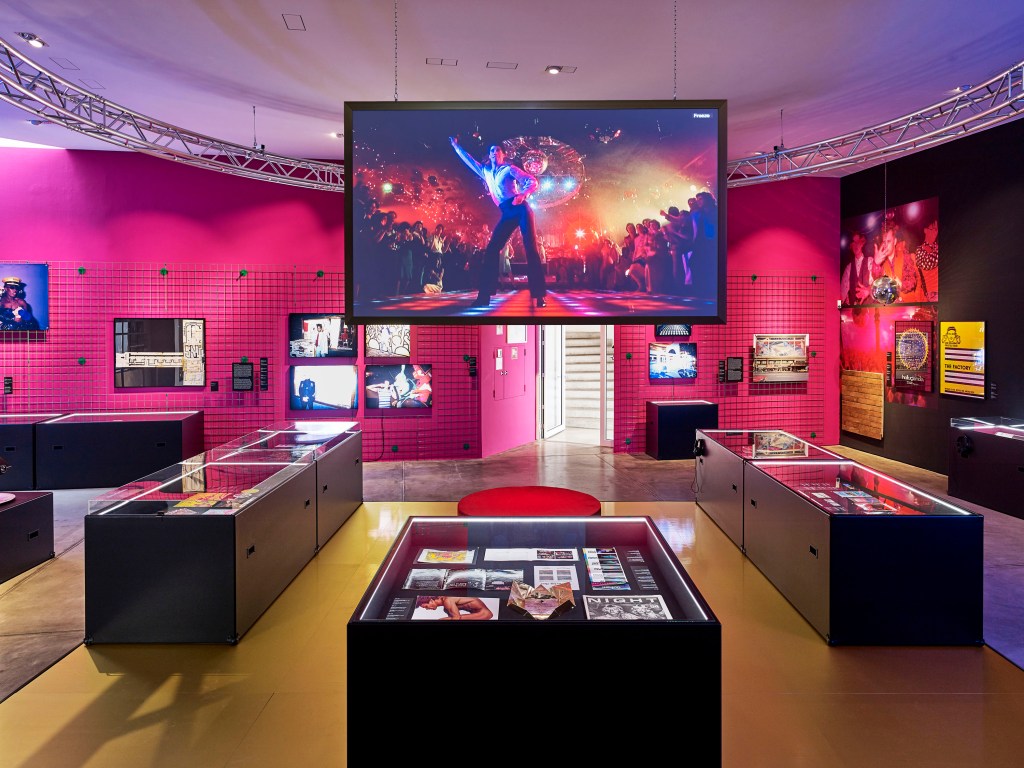
Fundación MAPFRE website

LIKE ART BLART ON FACEBOOK

Back to top

Exhibition: ‘Quicksilver Brilliance: Adolf de Meyer Photographs’ at the Metropolitan Museum of Art, New York

Exhibition dates: 4th December, 2017 – 18th March, 2018

Curator: Beth Saunders, Assistant Curator in The Met’s Department of Photographs


Adolf de Meyer (American born France, 1868-1946) 'Water Lilies' c. 1906, printed 1912 from the exhibition 'Quicksilver Brilliance: Adolf de Meyer Photographs' at the Metropolitan Museum of Art, New York, Dec 2017 - March 2018


Adolf de Meyer (American born France, 1868-1946)
Water Lilies
c. 1906, printed 1912
Platinum print
26.1 x 35.2cm (10 1/4 x 13 7/8 in.)
Alfred Stieglitz Collection, 1933


The critic Charles H. Caffin described this photograph by de Meyer as “a veritable dream of loveliness.” It is one of several floral still life de Meyer made in London around 1906-1909, when he was in close contact with Alvin Langdon Coburn, a fellow photographer and member of the Linked Ring. Both men were inspired by the Belgian writer Maurice Maeterlinck’s 1906 book The Intelligence of Flowers, a mystical musing on the vitality of plant life. De Meyer exhibited several of his flower studies, including this platinum print, at Stieglitz’s influential Photo-Secession galleries in New York in 1909. The image also appeared as a photogravure in an issue of Stieglitz’s art and photography journal Camera Work.


While the “facts of Baron Adolf de Meyer’s early life have been obscured by contradictory accounts from various sources (including himself); he was born in Paris or Germany, spent his childhood in both France and Germany, and entered the international photographic community in 1894-1895,” by circa 1897-1900 he had assumed the title of “Baron.”

“In editions dating from 1898 until 1913, Whitaker’s Peerage stated that de Meyer’s title had been granted in 1897 by Frederick Augustus III of Saxony, though another source states “the photographer inherited it from his grandfather in the 1890s”. Some sources state that no evidence of this nobiliary creation, however, has been found.” (Wikipedia) He then married Donna Olga Caracciolo in 1899, “reputedly the illegitimate daughter of the British king Edward VII, who enjoyed a privileged position within the fashionable international set surrounding the monarch.” The marriage was one of convenience, since he was homosexual and she was bisexual or lesbian, but it was based on a perfect understanding and companionship between two people. As de Meyer observed in an unpublished biography, “Marriage based too much on love and unrestrained passion has rarely a chance to be lasting, whilst perfect understanding and companionship, on the contrary, generally make the most durable union.”

Meyer “gained recognition as a leading figure of Pictorialism and a member of the photographic society known as the Linked Ring Brotherhood in London. Alfred Stieglitz exhibited de Meyer’s work in his Little Galleries of the Photo-Secession and published his images as photogravures in his influential journal Camera Work.” In the early 20th century, he was famed for his photographic portraits and was the preeminent fashion photographer of the day; he was also the first official fashion photographer for the American magazine Vogue, appointed to that position in 1913-1914 until 1921. In 1922 de Meyer accepted an offer to become the Harper’s Bazaar chief photographer in Paris, spending the next 16 years there until he was forced out, his romantic style out of fashion with the modernist taste of the day.

I state these facts only to illustrate the idea that here was a “gay” of dubious lineage (reportedly born in Paris and educated in Dresden, Adolphus Meyer was the son of a German Jewish father and Scottish mother) who rose to associate with and photograph the upper echelons of society. He made it, and he made it good. His photographs of the well to do, film stars and fashion models are undoubtedly beautiful and his control of light magnificent, but they seem to me to be, well… constructed confections. His photographs of the elite and the fashion that they wore possess an ethereal beauty, de Meyer’s shimmering control of light adding to the photographs sense of enacted fantasy played out in the form of timeless classical elegance.

But there is that lingering doubt that these photographs were both his job and his entré (along with the connections and money of his wife) into high society. Look, for example, at the self-portrait of de Meyer in this posting. In the 1900 self-portrait in India when he was 32 and on his honeymoon, we see a coiffed, almost androgynous man who in his pose is as stiff as a board – his body contorted in the strangest way, the right hand gripping the arm of the cane chair, the left splayed and braced, ramrod straight against the seat and the feet crossed in the most unnatural manner. No matter the beautiful light and attractive setting, this is the image that this man wants to portray to the world, this is a man who thinks he has arrived. It is an affectation. And in the portrait of the aristocrat and patron of the avant-garde, Count Etienne de Beaumont (c. 1923, below), this is how he sees himself, as part of that elite. Because in the end, he was. But there is little feeling to any of his portrait work: style, surface, light, form and “the look” reign supreme. Only when he is so overwhelmed by stardust, such as in the brilliant photographs of Josephine Baker and her scintillating personality, does the mask of affection drop away.

Of more interest to me are his early photographs of Japan where you feel he has some personal investment in the work. The “tactile elegance of his early work” was influenced by “Japanese aesthetics, as well as the influence of the painter James McNeill Whistler, a key figure of the Aesthetic movement.” The photograph View Through the Window of a Garden, Japan (1900, below) is an absolute cracker, as are the Japanese influenced Water Lilies (c. 1906, below) and The Shadows on the Wall (Chrysanthemums) (1906, below). In her January 17, 2018 review of the exhibition “Quicksilver Brilliance: Adolf de Meyer Photographs @Met” on the Collector Daily website, Loring Knoblauch states, “While De Meyer’s scenes from Japan, his travel photos of his wife Olga at the Acropolis and in St. Moritz, and his experiments with autochromes in the early 1900s are also included in this eclectic sampler, these rarities aren’t particularly compelling or noteworthy, aside from their supporting role in filling out a broader picture of the artist and his life.” Aren’t particularly compelling! I beg to differ.

I don’t know how people look at photographs and interpret them so differently to how I see them. Perhaps I just feel the music, I see these photographs as if I were taking them, as a personal investment in their previsualisation. While I get very little from de Meyer’s fashion photographs I get a whole lot of pleasure and delight from his transcendent earlier work. I most certainly feel their energy. You only have to look at the reflection of the water lilies. Need I say more.

Dr Marcus Bunyan


Many thankx to the Metropolitan Museum of Art for allowing me to publish the photographs in the posting. Please click on the photographs for a larger version of the image.


Adolf de Meyer (American born France, 1868-1946) '[Nude Models Posing for a Painting Class]' 1890s from the exhibition 'Quicksilver Brilliance: Adolf de Meyer Photographs' at the Metropolitan Museum of Art, New York, Dec 2017 - March 2018


Adolf de Meyer (American born France, 1868-1946)
(Nude Models Posing for a Painting Class)
1890s
Gelatin silver print
Gift of Lunn Gallery, 1980


A member of the “international set” in fin-de-siècle Europe, Baron Adolf de Meyer (1868-1946) was also a pioneering photographer, known for creating works that transformed reality into a beautiful fantasy. Quicksilver Brilliance will be the first museum exhibition devoted to the artist in more than 20 years and the first ever at The Met. Some 40 works, drawn entirely from The Met collection, will demonstrate the impressive breadth of his career.

The exhibition will include dazzling portraits of well-known figures of his time: the American socialite Rita de Acosta Lydig; art patron and designer Count Étienne de Beaumont; aristocrat and society hostess Lady Ottoline Morrell; and celebrated entertainer Josephine Baker, among others. A highlight of the presentation will be an exceptional book – one of only seven known copies – documenting Nijinsky’s scandalous 1912 ballet L’Après-midi d’un faune. This rare album represents de Meyer’s great success in capturing the movement and choreography of dance, a breakthrough in the history of photography. Also on view will be the artist’s early snapshots made in Japan, experiments with colour processes, and inventive fashion photographs.

13 platinum prints, 1900, 1906, 1907, 1912, 1917
2 photogravures, 1908, 1912
2 carbon prints, 1900, 1925-1926
1 autochrome in lightbox (facsimile), 1908
4 gelatin silver prints, 1912, 1923, 1925, 1928
1 set of 9 gelatin silver prints (framed together), 1890s-1910
1 trichrome carbro print, 1929
6 collotypes, 1914 (with full collotype book showing 1 image in nearby vitrine, 1914)
4 magazine spreads (in bound volumes of Vogue and Harper’s Bazaar, 1913, 1919, 1927, in vitrine)

Text from The Metropolitan Museum of Art website


Adolf de Meyer (American born France, 1868-1946) '[Adolf de Meyer Photographing Olga in a Garden]' 1890s


Adolf de Meyer (American born France, 1868-1946)
(Adolf de Meyer Photographing Olga in a Garden)
1890s
Gelatin silver print
Gift of Lunn Gallery, 1980


Like many Pictorialist photographers, de Meyer became interested in the camera through collecting and making snapshots of family and close friends. Olga de Meyer (née Caracciolo) was his companion and muse until her death in 1931. Rumoured to be the illegitimate daughter of the British king Edward VII, she enjoyed a privileged position within the fashionable international set surrounding the monarch. De Meyer made numerous portraits of Olga throughout their famously chic and eccentric life together (in 1916 the couple changed their names to Gayne and Mharah on the advice of an astrologer).


Adolf de Meyer (American born France, 1868-1946) '[Self-Portrait in India]' 1900


Adolf de Meyer (American born France, 1868-1946)
(Self-Portrait in India)
1900
Platinum print
14.8 x 19.8cm (5 13/16 x 7 13/16 in.)
Gift of Isaac Lagnado, 1995


Adolf de Meyer (American born France, 1868-1946) '[Self-Portrait in India]' 1900 (detail)


Adolf de Meyer (American born France, 1868-1946)
(Self-Portrait in India) (detail)
1900
Platinum print
14.8 x 19.8cm (5 13/16 x 7 13/16 in.)
Gift of Isaac Lagnado, 1995


Adolf de Meyer (American born France, 1868-1946) '[Amida Buddah, Japan]' 1900


Adolf de Meyer (American born France, 1868-1946)
(Amida Buddah, Japan)
1900
Platinum print
19.2 x 14.3cm (7 9/16 x 5 5/8 in.)
Purchase, Mrs. Jackson Burke Gift, 1981


Adolf de Meyer (American born France, 1868-1946) 'Ueno Tōshō-gū, Tokyo, Japan' 1900


Adolf de Meyer (American born France, 1868-1946)
Ueno Tōshō-gū, Tokyo, Japan
1900
Platinum print
14.5 x 19.8cm (5 11/16 x 7 13/16 in.)
Purchase, Mrs. Jackson Burke Gift, 1981


Adolf de Meyer (American born France, 1868-1946) 'Olga de Meyer, Japan' 1900


Adolf de Meyer (American born France, 1868-1946)
Olga de Meyer, Japan
1900
Platinum print
19.3 x 15.1cm (7 5/8 x 5 15/16 in.)
Purchase, Mrs. Jackson Burke Gift, 1981


Framed by the gridded panels of a sliding screen door, Olga de Meyer pauses from her reading to look languidly at the camera. De Meyer made this affectionate photograph of his new wife while on their honeymoon to Japan. The composition suggests his interest in Japanese aesthetics, as well as the influence of the painter James McNeill Whistler, a key figure of the Aesthetic movement. In its rebellion against Victorian morals, the movement sought inspiration from outside the European tradition. De Meyer’s travels in Japan – as well as China, Ceylon, India, North Africa, Turkey, and Spain – nourished Orientalist fictions, and gave rise to the subjects and compositions of many of his photographs.


Adolf de Meyer (American born France, 1868-1946) '[View Through the Window of a Garden, Japan]' 1900


Adolf de Meyer (American born France, 1868-1946)
(View Through the Window of a Garden, Japan)
1900
Platinum print
13.8 x 20.3cm (5 7/16 x 8 in.)
Purchase, Mrs. Jackson Burke Gift, 1981


Adolf de Meyer (American born France, 1868-1946) 'The Shadows on the Wall (Chrysanthemums)' 1906


Adolf de Meyer (American born France, 1868-1946)
The Shadows on the Wall (Chrysanthemums)
1906
Platinum print
34.7 x 26.7cm (13 11/16 x 10 1/2 in.)
Alfred Stieglitz Collection, 1933


Focusing his camera not on a still life per se, but on its evanescent trace, de Meyer creates a composition that approaches abstraction. He later applied a similar handling of light and shadow to enhance the drama of his fashion photographs. Here, the shadow of a vase of flowers cast onto the wall has the effect of a Japanese lacquered screen.


Adolf de Meyer (American born France, 1868-1946) 'The Silver Cap' c. 1909, printed 1912


Adolf de Meyer (American born France, 1868-1946)
The Silver Cap
c. 1909, printed 1912
Gelatin silver print
45.7 x 27.6cm (18 x 10 7/8 in.)
Alfred Stieglitz Collection, 1933


Born in Paris, Baron Adolf de Meyer settled in London in 1896. With his wife, Donna Olga Caraciollo, he joined the elegant set surrounding the Prince of Wales, later Edward VII, Olga’s godfather. They entertained lavishly, including concerts and small fancy-dress balls, which gave de Meyer a chance to devise marvellous costumes for Olga. Likely inspired by the de Meyers’ involvement with the Ballets Russes and time spent at their villa on the Bosporus, this dress features Ottoman elements such as the full skirt and decorative trimmings yet conforms to the Western fitted waistline – a fine example of the 1910s fashion trend of exoticism.


A member of the “international set” in fin-de-siècle Europe, Baron Adolf de Meyer (1868-1946) was also a pioneering art, portrait, and fashion photographer, known for creating images that transformed reality into a beautiful fantasy. The “quicksilver brilliance” that characterised de Meyer’s art led fellow photographer Cecil Beaton to dub him the “Debussy of the Camera.” Opening December 4 at The Metropolitan Museum of Art,

Quicksilver Brilliance: Adolf de Meyer Photographs will be the first museum exhibition devoted to the artist in more than 20 years and the first ever at The Met. Some 40 works, drawn entirely from The Met collection, will reveal the impressive breadth of his career.

The exhibition will include dazzling portraits of well-known figures of his time: the American socialite Rita de Acosta Lydig; art patron and designer Count Étienne de Beaumont; aristocrat and society hostess Lady Ottoline Morrell; and celebrated entertainer Josephine Baker, among others. A highlight of the presentation will be an exceptional book – one of only seven known copies – documenting Nijinsky’s scandalous 1912 ballet L’Après-Midi d’un Faune. This rare album represents de Meyer’s great success in capturing the choreography of dance, a breakthrough in the history of photography. Also on view will be the artist’s early snapshots made in Japan, experiments with colour processes, and inventive fashion photographs.

Born in Paris and educated in Germany, de Meyer was of obscure aristocratic German-Jewish and Scottish ancestry. He and his wife, Olga Caracciolo, goddaughter of Edward VII, were at the centre of London’s café society.

After starting in photography as an amateur, de Meyer gained recognition as a leading figure of Pictorialism and a member of the photographic society known as the Linked Ring Brotherhood in London. Alfred Stieglitz exhibited de Meyer’s work in his Little Galleries of the Photo-Secession and published his images as photogravures in his influential journal Camera Work. At the outbreak of World War I, de Meyer settled in the United States and applied his distinctive pictorial style to fashion imagery, helping to define the genre during the interwar period.

The exhibition was organised by Beth Saunders, Assistant Curator in The Met’s Department of Photographs.

Press release from the Metropolitan Museum of Art


Adolf de Meyer (American born France, 1868-1946) 'Tamara Karsavina' c. 1908


Adolf de Meyer (American born France, 1868-1946)
Tamara Karsavina
c. 1908
Autochrome
9 x 11.9cm (3.5 x 4.6 in.)
Gilman Collection, Purchase, Harriette and Noel Levine Gift, 2005


De Meyer enthusiastically embraced the autochrome process at its inception in 1907, writing to Stieglitz the following year that his work in black and white no longer satisfied him. An ardent admirer of Diaghilev’s Ballets Russes, de Meyer created this image of Tamara Karasavina (1885-1978), a leading dancer and partner to Nijinksy, during one of the company’s visits to England. The photographer chose a background of bellflowers and arranged a brocaded shawl to enhance the exotic elegance of the dancer.

The autochrome, which retains in its minuscule prisms the particular luminosity of a misty English day in summer, was thought to represent the Marchioness of Ripon in her garden at Coombe, Surrey. An early patron of de Meyer, Lady Ripon was also a staunch supporter of Diaghilev, bringing the Ballets Russes to London in 1911. She frequently entertained Karasavina and Nijinsky at Coombe, where they danced for Alexandra, the queen consort, and de Meyer dedicated to her his album documenting Nijinsky’s production of L’Après-midi d’un faune. A companion image to this autochrome is in the collection of the Victoria and Albert Museum in London.


Adolf de Meyer (American born France, 1868-1946) '[Lady Ottoline Morrell]' c. 1912


Adolf de Meyer (American born France, 1868-1946)
(Lady Ottoline Morrell)
c. 1912
Platinum print
23.5 x 17.4cm (9 1/4 x 6 7/8 in.)
Gilman Collection, Purchase, Harriette and Noel Levine Gift, 2005


Adolph de Meyer’s portrait of Lady Ottoline Morrell, eccentric hostess to Bloomsbury, is a stunning summation of the character of this aristocratic lady who aspired to live “on the same plane as poetry and as music.” Rebelling against the narrow values of her class, Lady Ottoline Cavendish Bentinck (1873-1938) married Philip Morrell, a lawyer and liberal Member of Parliament, and surrounded herself in London and on their estate at Garsington with a large circle of friends, including Bertrand Russell, W. B. Yeats, D. H. Lawrence, T. S. Eliot, Katherine Mansfield, Lytton Strachey, Virginia Woolf, Aldous Huxley, and E. M. Forster. Tall, wearing fantastic, scented, vaguely Elizabethan clothes, Lady Ottoline made an unforgettable impression. With her dyed red hair, patrician nose, and jutting jaw, she could look, according to Lord David Cecil, at one and the same moment beautiful and grotesque. Henry James saw her as “some gorgeous heraldic creature – a Gryphon perhaps or a Dragon Volant.”

De Meyer made several portraits of Lady Ottoline. None went as far as this one in conjuring up the sitter’s flamboyant persona, capturing, through dramatic lighting and Pre-Raphaelite design, her untamed, baroque quality. “Her long, pale face, that she carried lifted up, somewhat in the Rossetti fashion, seemed almost drugged, as if a strange mass of thoughts coiled in the darkness within her.” D. H. Lawrence’s inspired description of the character based on Lady Ottoline in “Women in Love” finds a vivid counterpart in the photographer’s art.


Baron Adolf De Meyer (American, born France, 1868-1946) 'The Cup' c. 1910


Adolf de Meyer (American born France, 1868-1946)
The Cup
c. 1910
Gum bichromate print


Adolf de Meyer (American born France, 1868-1946) 'Olga de Meyer' c. 1912


Adolf de Meyer (American born France, 1868-1946)
Olga de Meyer
c. 1912
Platinum print
22.4 x 16.4cm (8 13/16 x 6 7/16 in.)
Gift of Paul F. Walter, 2009


Renowned for her beauty and style, de Meyer’s spouse was, in a sense, his first fashion model. Here, dramatic backlighting emphasises her sinuous form, enshrouded in shimmering fabric and fur. Her gaze conveys a haughty bemusement that elevates the tableau from costume play to regal sophistication.


Adolf de Meyer (American born France, 1868-1946) '[Dance Study]' c. 1912


Adolf de Meyer (American born France, 1868-1946)
(Dance Study)
c. 1912
Platinum print
32.7 x 43.5cm (12 7/8 x 17 1/8 in.)
Alfred Stieglitz Collection, 1933


De Meyer photographed the dancer Nijinsky and other members of Diaghilev’s troupe when “L’Après-midi d’un Faun” was presented in Paris in 1912. It has been suggested that this photograph, the only nude by de Meyer, has some connection to the Russian ballet, but if so, it remains mysterious. The image vibrates with an uneasy erotic tension, a product of the figure’s exposed torso, startled body language, and disguised identity.


Adolf de Meyer (American born France, 1868-1946) 'Le Prelude à l'Après-Midi d'un Faune' 1914


Adolf de Meyer (American born France, 1868-1946)
Le Prelude à l’Après-Midi d’un Faune
1914
Collotypes
Album: 15 1/4 x 11 5/8 inches
Gilman Collection, Museum Purchase, 2005


In 1912 de Meyer made a remarkable series of photographs related to the Ballets Russes production L’après-midi d’un faune (Afternoon of a Faun). The avant-garde dance was choreographed by famed Russian performer Vaslav Nijinsky, set to a score by Claude Debussy, and inspired by a poem by Symbolist writer Stéphane Mallarmé. It follows a young faun distracted from his flute-playing by bathing nymphs who seduce and taunt him, leaving behind a scarf with which he allays his desire. When the ballet premiered in Paris on May 29, 1912, the overtly sexual climactic scene and unconventional choreography scandalised audiences. Nijinsky based the angular movements and frieze-like staging on Greek vase paintings, but Ballets Russes founder Sergei Diaghilev also likened them to Cubism.
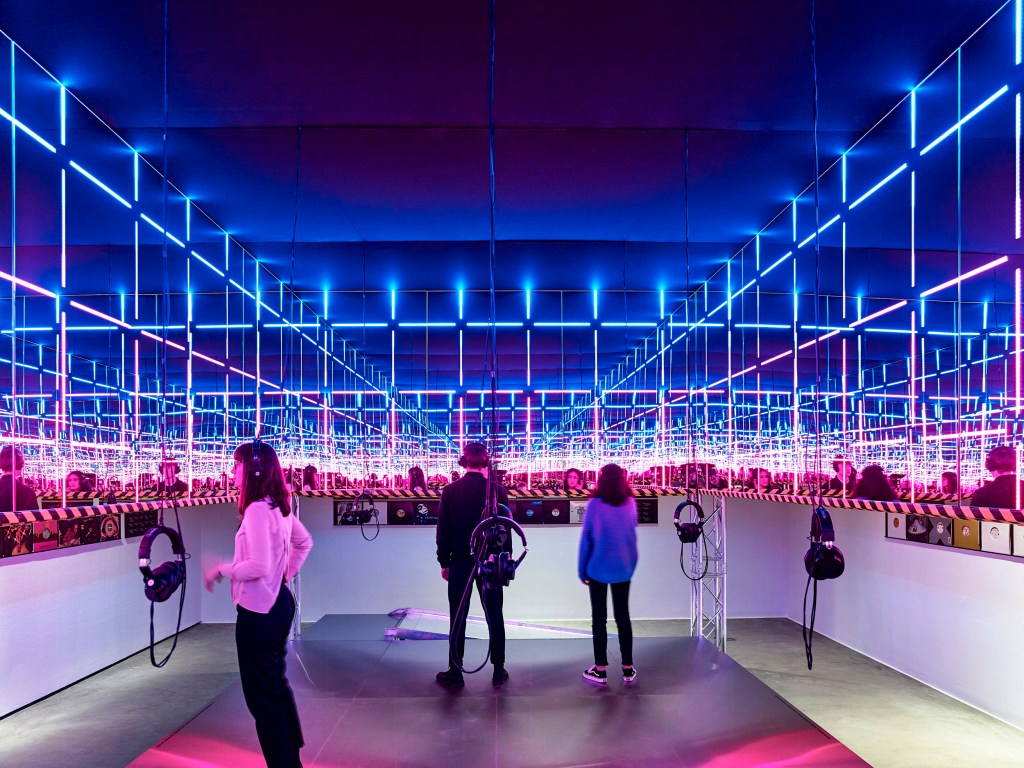
Thirty of de Meyer’s photographs of the ballet were published as collotypes (photomechanical ink prints) in a 1914 edition of one thousand luxurious handcrafted books. Only seven copies are known today. Using alternately complex and fragmentary compositions, de Meyer’s images generate a rhythm of gesture and form. The thin Japanese papers offer a tactile echo of the diaphanous costumes (designed by artist Léon Bakst), and the heavily manipulated negatives enshroud the angular figures in a dreamlike haze. An object of desire, the book itself embodies the spirit of Nijinsky’s ballet.


Adolf de Meyer (American born France, 1868-1946) 'Nijinsky [Plate from Le Prelude à l'Après-Midi d'un Faune]' 1912


Adolf de Meyer (American born France, 1868-1946)
Nijinsky [Plate from Le Prelude à l’Après-Midi d’un Faune]
1912


Adolf de Meyer (American born France, 1868-1946) 'Nijinsky [Plate from Le Prelude à l'Après-Midi d'un Faune]' 1914


Adolf de Meyer (American born France, 1868-1946)
Nijinsky (Plate from Le Prelude à l’Après-Midi d’un Faune)
1914


Adolf de Meyer (American born France, 1868-1946) '[Image from "Prelude à l'Après-Midi d'un faune"]' 1914


Adolf de Meyer (American born France, 1868-1946)
(Image from Prelude à l’Après-Midi d’un faune)
1914
Platinum print
4 3/16 × 7 1/16 in. (10.6 × 17.9cm)
Gilman Collection, Purchase, Mrs. Walter Annenberg and The Annenberg Foundation Gift, 2005


Adolf de Meyer (American born France, 1868-1946) 'Rita de Acosta Lydig' 1917


Adolf de Meyer (American born France, 1868-1946)
Rita de Acosta Lydig
1917
Platinum print
41.5 x 30.9cm (16 5/16 x 12 3/16 in.)
Gift of Mercedes de Acosta, 1952


De Meyer’s portrait of the socialite, art patron, “shoe queen,” and suffragette Rita de Acosta Lydig is striking in its simplicity of tone and contour. The image, which appeared in Vogue in 1917, resonates with the classical elegance epitomised in the paintings of society portraitists John Singer Sargent and Giovanni Boldini, who also depicted this so-called alabaster lady.


Adolf de Meyer (American born France, 1868-1946) 'Portrait of the Marchesa Casati' 1912


Adolf de Meyer (American born France, 1868-1946)
Portrait of the Marchesa Casati
1912
Plate from Camera Work No. XL August 1912


Luisa, Marchesa Casati Stampa di Soncino (23 January 1881 – 1 June 1957), also known as Luisa Casati, was an Italian heiress, muse, and patroness of the arts in early 20th-century Europe. …

A celebrity, the Marchesa was famed for eccentricities that dominated and delighted European society for nearly three decades. The beautiful and extravagant hostess to the Ballets Russes was something of a legend among her contemporaries. She astonished society by parading with a pair of leashed cheetahs and wearing live snakes as jewellery.

Text from the Wikipedia website


Adolf de Meyer (American born France, 1868-1946) 'Study for Vogue [Jan 1-1918, Betty Lee, Vogue, page 41]' 1918-1921


Adolf de Meyer (American born France, 1868-1946)
Study for Vogue (Jan 1 – 1918, Betty Lee, Vogue, page 41)
1918-1921
Gelatin silver print


Adolf de Meyer (American born France, 1868-1946) 'Dolores' 1921


Adolf de Meyer (American born France, 1868-1946)
Dolores
1921
Gelatin silver print


Adolf de Meyer (American born France, 1868-1946) 'Etienne de Beaumont [Count Etienne de Beaumont (French, 1883-1956)]' c. 1923


Adolf de Meyer (American born France, 1868-1946)
Etienne de Beaumont (Count Etienne de Beaumont (French, 1883-1956))
c. 1923
Gelatin silver print
23.7 x 18.6cm (9 5/16 x 7 5/16 in.)
Gift of Paul F. Walter, 2009


An aristocrat and patron of the avant-garde, Count Etienne de Beaumont (French, 1883-1956) cuts a dashing figure here, posed in one of the grand salons of his hôtel (grand townhouse) in Paris’s rue Masseran. The count hosted a series of legendary masquerade balls at his residence during the interwar period, attended by avant-garde artists such as Jean Cocteau, Pablo Picasso, and Man Ray. De Meyer described these parties, which he and Olga often attended, as “fêtes of unsurpassed magnificence” in a 1923 article for Harper’s Bazaar.


Adolf de Meyer (American born France, 1868-1946) 'Portrait of Josephine Baker' 1925


Adolf de Meyer (American born France, 1868-1946)
Portrait of Josephine Baker
1925


Adolf de Meyer (American born France, 1868-1946) 'Josephine Baker' 1925-1926


Adolf de Meyer (American born France, 1868-1946)
Josephine Baker
1925-1926
Direct carbon print
45.2 x 29.5cm (17 13/16 x 11 5/8 in.)
Ford Motor Company Collection, Gift of Ford Motor Company and John C. Waddell, 1987


The Saint Louis, Missouri-born Josephine Baker arrived in Paris in 1925 and quickly made a sensation as part of the all-black Revue Nègre, a musical entertainment that capitalised on the French craze for American Jazz. Famously donning a banana skirt for her danse sauvage, Baker crafted performances that astutely deployed the stereotypes white Europeans associated with blackness, recouping them as instruments of her own empowerment and success. Baker shines amid the glittering backdrop and soft focus of de Meyer’s photograph, creating an iconic image of stardom.


Gertrude Käsebier (American, 1852-1934) 'Baron Adolf de Meyer' 1903


Gertrude Käsebier (American, 1852-1934)
Baron Adolf de Meyer
1903
Platinum print
13 3/8 x 10″ (34 x 25.5cm)
Museum of Modern Art, Gift of Miss Mina Turner


Taken in the same photo session as the photograph below.


Gertrude Käsebier (American, 1852-1934) 'Baron Adolf de Meyer (Leaning Against Tree)' 1903


Gertrude Käsebier (American, 1852-1934)
Baron Adolph de Meyer (Leaning Against Tree)
1903
Platinum photograph
8.5 x 6.5 in.


Sarah Choate Sears (American, 1858-1935) 'A Mexican [Adolf de Meyer (American (born France), Paris 1868-1946 Los Angeles, California)]' 1905


Sarah Choate Sears (American, 1858-1935)
A Mexican (Adolf de Meyer (American born France, Paris 1868 – 1946 Los Angeles, California))
1905
Platinum print
24.2 x 18.7cm (9 1/2 x 7 3/8 in.)
Alfred Stieglitz Collection, 1933


With his brow arched beneath a tilted hat and hand elegantly grasping a stark white scarf, de Meyer dons a mysterious alter ego. Like de Meyer, Sears was involved with the two major groups devoted to art photography: the Photo-Secession and the Linked Ring Brotherhood. The two artists may have met through a mutual friend, the photographer F. Holland Day, who included their work in his exhibition “New School of American Photography,” on view in London in 1900 and Paris the following year. The title for this portrait follows a Photo-Secession tradition of withholding the sitter’s name when exhibiting publicly.


Sarah Choate Sears (1858-1935) was an American art collector, art patron, cultural entrepreneur, artist and photographer. …

About 1890 she began exploring photography, and soon she was participating in local salons. She joined the Boston Camera Club in 1892, and her beautiful portraits and still lifes attracted the attention of fellow Boston photographer F. Holland Day. Soon her work was gaining international attention. …

In 1899 she was given a one-woman show at the Boston Camera Club, and in 1900 she had several prints in Frances Benjamin Johnson’s famous exhibition in Paris. … In 1907, two of her photographs were published in Camera Work, but by that time she had lost much of her interest in photography.

Text from the Wikipedia website


The Metropolitan Museum of Art
1000 Fifth Avenue at 82nd Street
New York, New York 10028-0198
Phone: 212-535-7710

Opening hours:
Thursday – Tuesday 10am – 5pm
Closed Wednesday

The Metropolitan Museum of Art website

LIKE ART BLART ON FACEBOOK

Back to top

Exhibition: ‘Autophoto’ at Fondation Cartier pour l’art contemporain, Paris

Exhibition dates: 20th April – 24th September, 2017

Artists: Robert Adams • Eve Arnold • Bernard Asset • Éric Aupol • Theo Baart Et Cary Markerink • Sue Barr • Valérie Belin • Martin Bogren • Nicolas Bouvier • David Bradford • Brassaï • Alain Bublex • Edward Burtynsky • Andrew Bush • Ronni Campana • Gilles Caron • Alejandro Cartagena • Kurt Caviezel • Philippe Chancel • Larry Clark • Langdon Clay • Stéphane Couturier • Bruce Davidson • Jean Depara • Raymond Depardon • John Divola • Robert Doisneau • William Eggleston • Elliott Erwitt • Walker Evans • Barry Feinstein • Pierre De Fenoÿl • Alain Fleischer • Robert Frank • Lee Friedlander • Bernhard Fuchs • Paolo Gasparini • Óscar Fernando Gómez • Jeff Guess • Andreas Gursky • Fernando Gutiérrez • Jacqueline Hassink • Anthony Hernandez • Yasuhiro Ishimoto • Peter Keetman • Seydou Keïta • Germaine Krull • Seiji Kurata • Justine Kurland • Jacques Henri Lartigue • O. Winston Link • Peter Lippmann • Marcos López • Alex Maclean • Ella Maillart • Man Ray • Mary Ellen Mark • Arwed Messmer • Ray K. Metzker • Sylvie Meunier Et Patrick Tourneboeuf • Joel Meyerowitz • Kay Michalak et Sven Völker • Óscar Monzón • Basile Mookherjee • Daido Moriyama • Patrick Nagatani • Arnold Odermatt • Catherine Opie • Trent Parke • Martin Parr • Mateo Pérez • Jean Pigozzi • Bernard Plossu • Matthew Porter • Edward Quinn • Bill Rauhauser • Rosângela Rennó • Luciano Rigolini • Miguel Rio Branco • Ed Ruscha • Sory Sanlé • Hans-christian Schink • Antoine Schnek • Stephen Shore • Malick Sidibé • Guido Sigriste • Raghubir Singh • Melle Smets Et Joost Van Onna • Jules Spinatsch • Dennis Stock • Hiroshi Sugimoto • Juergen Teller • Tendance Floue • Thierry Vernet • Weegee • Henry Wessel • Alain Willaume


Jacques Henri Lartigue (French, 1894-1986) 'Une Delage au Grand Prix de l’Automobile Club de France, circuit de Dieppe' June 26, 1912 from the exhibition 'Autophoto' at Fondation Cartier pour l'art contemporain, Paris, April - Sept, 2017


Jacques Henri Lartigue (French, 1894-1986)
Une Delage au Grand Prix de l’Automobile Club de France, circuit de Dieppe
June 26, 1912
Gelatin silver print
30 x 40cm
Donation Jacques Henri Lartigue, Charenton-le-Pont Photographie Jacques Henri Lartigue
© Ministère de la Culture – France/AAJHL
Exhibition Autophoto from April 20 to September 24, 2017
Fondation Cartier pour l’art contemporain, Paris


I missed this exhibition when I was in Paris recently. A great pity, I would have liked to have seen it. Some rare photographs that I have never laid eyes on before. I especially love Ray K. Metzker’s Washington, DC. The photography in both Paris and London was disappointing during my month overseas. Other than a large exhibition of Gregory Crewdson’s photographs at the Photographers’ Gallery London, there was not much of interest on offer.

Dr Marcus Bunyan

PS. So many more horizontal photographs than vertical, the automobile obviously lending itself to this orientation. I love this observation: “Photography, a tool of immobility, benefited from the automobile, a mobility tool.” And this from Jean Baudrillard: “Riding is a form spectacular amnesia. Everything to discover, everything to be erased.”


Many thankx to Fondation Cartier pour l’art contemporain for allowing me to publish the photographs in the posting. Please click on the photographs for a larger version of the image.


“Photographing is a profession. Craftsmanship. A job that one learns, that one makes more or less well, like all trades. The photographer is a witness. The witness of his time. The true photographer is the witness of every day, they are the reporter. “


Germaine Krull


“I think that cars today are almost the exact equivalent of the great Gothic cathedrals; I mean the supreme creation of an era, conceived with passion by unknown artists, and consumed in image if not in usage by a whole population which appropriates them as a purely magical object.”


Roland Barthes, Mythologies, Le Seuil, Paris, 1970, p. 150


Thirty years after the exhibition Hommage à Ferrari, the Fondation Cartier pour l’art contemporain will once again focus its attention on the world of cars with the exhibition Autophoto, dedicated to photography’s relationship to the automobile. Since its invention, the automobile has reshaped our landscape, extended our geographic horizons, and radically altered our conception of space and time. The car has also influenced the approach and practice of photographers, providing them not only with a new subject but also a new way of exploring the world and a new means of expression. Based on an idea by Xavier Barral and Philippe Séclier, Autophoto will present over 500 works from the beginning of the 20th century to the present. It will invite us to discover the many facets of automotive culture – aesthetic, social, environmental, and industrial – through the eyes of photographers from around the world. The exhibition will bring together over 90 photographers including both famous and lesser-known figures such as Jacques Henri Lartigue, William Eggleston, Justine Kurland and Jacqueline Hassink, who have shown a fascination for the automobile as a subject or have used it as a tool to take their pictures.


Visite de l’exposition – Autophoto – 2017

Thirty years after the Hommage à Ferrari exhibition which put the spotlight on these legendary cars, the Fondation Cartier pour l’art contemporain presents, on a proposal by Xavier Barral and Philippe Séclier, the Autophoto exhibition devoted to the relationship between photography and the automobile. Since its creation, the automobile has shaped the landscape, allowed the discovery of new horizons and upset our conception of time and space.


Juergen Teller (German, b. 1964) 'OJ Simpson no. 5' Miami 2000 from the exhibition 'Autophoto' at Fondation Cartier pour l'art contemporain, Paris, April - Sept, 2017


Juergen Teller (German, b. 1964)
OJ Simpson no. 5
Miami 2000
Giclee print
51 x 61cm
Collection of the artist
© Juergen Teller, 2017


'Relevé photographique des voies de circulation mondiales réalisé par Michelin' c. 1930


Relevé photographique des voies de circulation mondiales réalisé par Michelin
c. 1930
Collection Michelin, Clermont-Ferrand
© Michelin


Studio portraits, 'China' c. 1950, collected by Thomas Sauvin


Studio portraits
China
c. 1950
Collected by Thomas Sauvin
Colourised gelatin silver print
7.5 x 11.5cm
Collection Beijing Silvermine/Thomas Sauvin, Paris Photo all rights reserved


Seydou Keïta (Malian, 1921-2001) 'Untitled' 1952–1955 from the exhibition 'Autophoto' at Fondation Cartier pour l'art contemporain, Paris, April - Sept, 2017


Seydou Keïta (Malian, 1921-2001)
Untitled
1952-1955
Gelatin silver print
50 × 60cm
CAAC – The Pigozzi Collection, Geneva
© SKPEAC (The Seydou Keïta Photography Estate Advisor Corporation)


Nicolas Bouvier (Swiss, 1929-1998) 'Entre Prilep et Istanbul, Turquie' 1953


Nicolas Bouvier (Swiss, 1929-1998)
Entre Prilep et Istanbul, Turquie
1953
Musée de l’Élysée, Lausanne
© Fonds Nicolas Bouvier / Musée de l’Élysée, Lausanne


O. Winston Link (American, 1914-2001) 'Hot Shot Eastbound' 1956


O. Winston Link (American, 1914-2001)
Hot Shot Eastbound
1956
Collection Mathé Perrin, Bruxelles
© O. Winston Link


Ray K. Metzker (American, 1931-2014) 'Washington, DC' 1964


Ray K. Metzker (American, 1931-2014)
Washington, DC
1964
Gelatin silver print
20 × 25.5cm
Courtesy Les Douches la Galerie, Paris/Laurence Miller Gallery, New York
© Estate Ray K. Metzker, courtesy Les Douches la Galerie, Paris/Laurence Miller Gallery, New York


Bernard Plossu (French, b. 1945) 'Sur la route d'Acapulco, Mexique' 1966


Bernard Plossu (French, b. 1945)
Sur la route d’Acapulco, Mexique
1966
From Le Voyage mexicain series
Gelatin silver print
18 × 27cm
Courtesy of the artist/Galerie Camera Obscura, Paris
© Bernard Plossu


Bernard Plossu (French, b. 1945) 'Chiapas, Mexique' 1966


Bernard Plossu (French, b. 1945)
Chiapas, Mexique
1966
From Le Voyage mexicain series
Gelatin silver print
18 × 27cm
Courtesy of the artist/Galerie Camera Obscura, Paris
© Bernard Plossu


“A panorama framed by the rectangle of the windshield. A long ribbon of asphalt, a line of flight that stretches towards the horizon. For more than a century, we can capture this image and travel the world by car, this photographic “box”. Automotive and photography, two tools to model the landscape, two mechanics of the traction and attraction, have emerged at the end of the nineteenth century, through new rhythms and new rites, the society of modern times. If the photograph allows multiple views and list them, to memorise the movement and leave a trace, the automobile makes it possible to move in space. Photography, a tool of immobility, benefited from the automobile, a mobility tool. And if the automobile like photography is constantly evolving, these two inventions have parallel paths in order to better, to master space-time. “Riding is a form spectacular amnesia. Everything to discover, everything to be erased,”1 writes Jean Baudrillard.”

From the foreword by commissioners of the exhibition Xavier Barral and Philippe Séclier

1/ Jean Baudrillard, Amérique, Grasset, Paris, 1986, p. 15


Henry Wessel (American, 1942-2018) 'Pennsylvania' 1968


Henry Wessel (American, 1942-2018)
Pennsylvania
1968
Courtesy Galerie Thomas Zander, Cologne
© Henry Wessel, courtesy Galerie Thomas Zander, Cologne.


William Eggleston (American, b. 1939) 'Los Alamos' series 1965-1968


William Eggleston (American, b. 1939)
Los Alamos series
1965-1968
Dye-transfer print
40.5 × 50.5cm
Eggleston Artistic Trust, courtesy David Zwirner, New York/London
© Eggleston Artistic Trust. Courtesy David Zwirner, New York/London


Henry Wessel (American, 1942-2018) 'Los Alamos' series c. 1974


Henry Wessel (American, 1942-2018)
Los Alamos series
c. 1974
Inkjet print
56 × 73.5cm
Eggleston Artistic Trust, Memphis
© Eggleston Artistic Trust, Memphis


Bill Rauhauser (American, 1918-2017) 'Detroit Auto Show' series c. 1975


Bill Rauhauser (American, 1918-2017)
Detroit Auto Show series
c. 1975
Detroit Institute of Arts, don de l’artiste en mémoire de Doris Rauhauser
© 2007 Rauhauser Photographic Trust. All Rights Reserved


Langdon Clay (American, b. 1949) 'Zizka Cleaners car, Buick Electra' 1976


Langdon Clay (American, b. 1949)
Zizka Cleaners car, Buick Electra
Series Cars, New York City, 1976
Slide-show
Courtesy of the artist
© Langdon Clay


Joel Meyerowitz (American, b. 1938) 'Upstate New York' 1977


Joel Meyerowitz (American, b. 1938)
Upstate New York
1977
Collection Joel Meyerowitz Photography, New York
© Joel Meyerowitz, courtesy Polka Galerie, Paris


Bernard Asset (French, b. 1955) 'Passager d'Alain Prost (Alain Prost au volant d’une Renault RE30B, tests F1 sur le circuit Dijon-Prenois)' 1982


Bernard Asset (French, b. 1955)
Passager d’Alain Prost (Alain Prost au volant d’une Renault RE30B, tests F1 sur le circuit Dijon-Prenois)
1982
Collection de l’artiste
© Bernard Asset


David Bradford (American, b. 1951) 'Coaster Ride Stealth' 1994


David Bradford (American, b. 1951)
Coaster Ride Stealth
1994
From Drive-By Shootings series
C-print
28 × 35.5cm
Courtesy of the artist
© David Bradford


Andrew Bush (American, b. 1956) 'Woman Waiting to Proceed South at Sunset and Highland Boulevards, Los Angeles, at Approximately 11:59 a.m. One Day in February 1997' 1997


Andrew Bush (American, b. 1956)
Woman Waiting to Proceed South at Sunset and Highland Boulevards, Los Angeles, at Approximately 11:59 a.m. One Day in February 1997
1997
From Vector Portraits series
C-print
122 × 151cm
Courtesy M+B Gallery, Los Angeles
© Andrew Bush


Rosângela Rennó (Brazilian, b. 1962) 'Cerimônia do Adeus' series,1997-2003


Rosângela Rennó (Brazilian, b. 1962)
Cerimônia do Adeus series
1997-2003
C-print face-mounted on Plexiglas
50 × 68 cm
Courtesy of the artist/Cristina Guerra Contemporary Art, Lisbon
© Rosângela Rennó


Valérie Belin (French, b. 1964) 'Untitled' 2002


Valérie Belin (French, b. 1964)
Untitled
2002
Gelatin silver print
61 x 71.5cm (framed)
Courtesy of the artist/Galerie Nathalie Obadia, Paris/Brussels
© Valérie Belin/ADAGP, Paris 2017


Stéphane Couturier (French, b. 1957) 'MELT, Toyota No 8' 2005


Stéphane Couturier (French, b. 1957)
MELT, Toyota No. 8
2005
From Melting Point, Usine Toyota, Valenciennes series
C-print
92 × 137cm
Collection of the artist
Courtesy La Galerie Particulière, Paris/Brussels
© Stéphane Couturier


Óscar Fernando Gómez (Mexican, b. 1970) 'Windows' series, 2009

Óscar Fernando Gómez (Mexican, b. 1970) 'Windows' series, 2009

Óscar Fernando Gómez (Mexican, b. 1970) 'Windows' series, 2009

Óscar Fernando Gómez (Mexican, b. 1970) 'Windows' series, 2009

Óscar Fernando Gómez (Mexican, b. 1970) 'Windows' series, 2009


Óscar Fernando Gómez (Mexican, b. 1970)
Windows series
2009
Slide show
Courtesy Martin Parr Studio, Bristol
© Óscar Fernando Gómez


Alain Willaume (French, b. 1956) '#5069' 2012


Alain Willaume (French, b. 1956)
#5069
2012
From the Échos de la poussière et de la fracturation series
Collection de l’artiste
© Alain Willaume (Tendance Floue)


Peter Lippmann (American works Paris, b. 1956) 'Citroën Traction 7' 2012


Peter Lippmann (American works Paris, b. 1956)
Citroën Traction 7
2012
From the Paradise Parking series
C-print
75 × 100cm
Collection of the artist
© Peter Lippmann


Justine Kurland (American, b. 1969) '280 Coup' 2012


Justine Kurland (American, b. 1969)
280 Coup
2012
Inkjet Print
47 x 61cm
Courtesy of the artist/Mitchell-Innes & Nash, New York
© Justine Kurland


Melle Smets and Joost Van Onna. 'Turtle 1. Building a Car in Africa' 2016


Melle Smets and Joost Van Onna
Turtle 1. Building a Car in Africa
2016
Courtesy des artistes / Paradox, Edam
© Melle Smets et Joost Van Onna


Luciano Rigolini (Swiss, b. 1950) 'Tribute to Giorgio de Chirico' 2017


Luciano Rigolini (Swiss, b. 1950)
Tribute to Giorgio de Chirico
2017
Duratrans in lightbox
124 x 154cm
Collection of the artist
© Luciano Rigolini (appropriation – unknown photographer, 1958)


First Visions: A New Subject for Photography

In the early 20th century, the automobile and its impact on the landscape had already become a subject of predilection for many photographers, influencing both the form and content of their work. The exhibition will begin by focusing on early photographers like Jacques Henri Lartigue, Germaine Krull, and Brassaï, who used the automobile to varying degrees in their work. They registered the thrill of speed, the chaos of Parisian traffic or the city’s dramatic car-illuminated nocturnal landscape to represent a society in transition at the birth of the modern age. Other photographers of the time were attracted by the promise of freedom and mobility offered by the automobile. Anticipating the modern road trip, Swiss writers and photographers Ella Maillart and Nicolas Bouvier, travelled throughout Asia in the 1930s and 1950s respectively, using their cars and cameras to record their adventures along the way.

Auto Portraits

The exhibition will also present a series of “auto portraits”* made by a variety of photographers from the mi-twentieth century to the present. Yashuhiro Ishimoto and Langdon Clay’s photographs, for example, are portraits in profile of cars parked on sparsely inhabited city streets, that immerse the viewer in a different eras and atmospheres. Ishimoto’s black and white photographs, taken in Chicago in the 1950s, emphasise their polished, curved silhouettes in a distanced and serial manner, while Langdon Clay’s colour pictures taken in New York in the 1970s, show their decaying and dented chassis in an eerie nocturnal light. Other works in this section, such as the found photographs of Sylvie Meunier and Patrick Tourneboeuf’s American Dream series, or the flamboyant portraits of African photographers Seydou Keïta and Sory Sanlé, focus on the role of the automobile as a emblem of social mobility showing proud owners posing with their cars.

*A play on words in French: auto portrait meaning self-portrait.

The Car as a Medium: New Perspectives on the Landscape

Many photographers have exploited the technical and aesthetic possibilities offered by the automobile, using it like a camera to capture the surrounding landscape through car windows or the reflections in rear-view mirrors.

Cars have determined the framing and composition as well as the serial nature of the photographs of Joel Meyerowitz, Daido Moriyama, John Divola and David Bradford who have all worked from moving cars. From behind their windshields, these photographers capture an amusing store sign, a white car behind a wire fence, a dog running along a dusty road, a highway stretching out into the horizon. Other photographers, including Sue Barr, Robert Adams, Ed Ruscha, and Alex MacLean scrutinise our car-altered environment. Their landscape is no longer one of magnificent mountains, wondrous waterfalls or awe-inspiring canyons, but of a world transformed by the automobile with its suburban housing complexes, parking lots, and highway infrastructure.

Our Car Culture: Industry, History and New Ways of Life
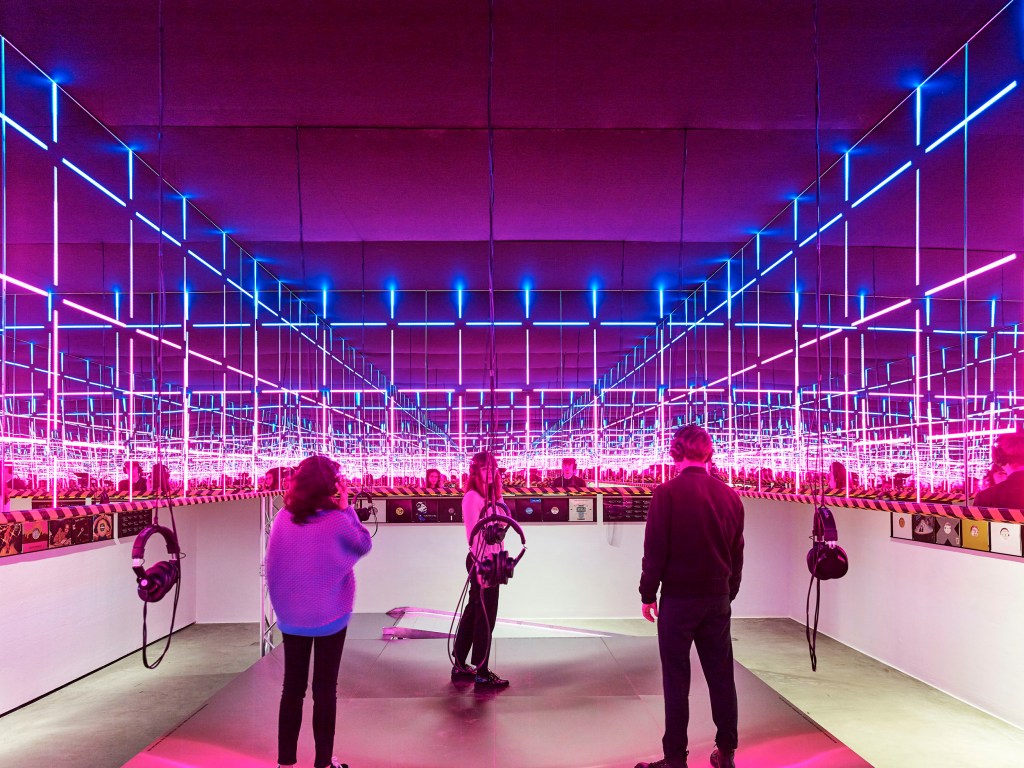
Many photographers have explored other aspects of our car culture, from the car industry and its impact on the environment to its role in history and society. Both Robert Doisneau and Robert Frank registered life in the factory, from the machines and productions lines to the activities of the workers lives, the first at the Renault plant in the 1930s and the second at Ford River Rouge in the 1950s. Their photographs, unique in their attention to individual assembly line workers, contrast with the work of contemporary photographer Stéphane Couturier whose deliberately distanced, impersonal pictures taken at a Toyota factory reflect the increasingly dehumanised nature of contemporary industry. Working in Ghana, far from the automated factory photographed by Stéphane Couturier, Dutch artist Melle Smets, and sociologist Joost Van Onna, put industrial waste from the car industry to good use. Collaborating with local craftsman in a region called Suame Magazine, where cars are disassembled and their parts traded, they created a car specifically for the African market called Turtle 1, using parts from different brands that happened to be available. Their installation, which includes photographs, drawings, and videos, documents the entire fabrication process of this car.
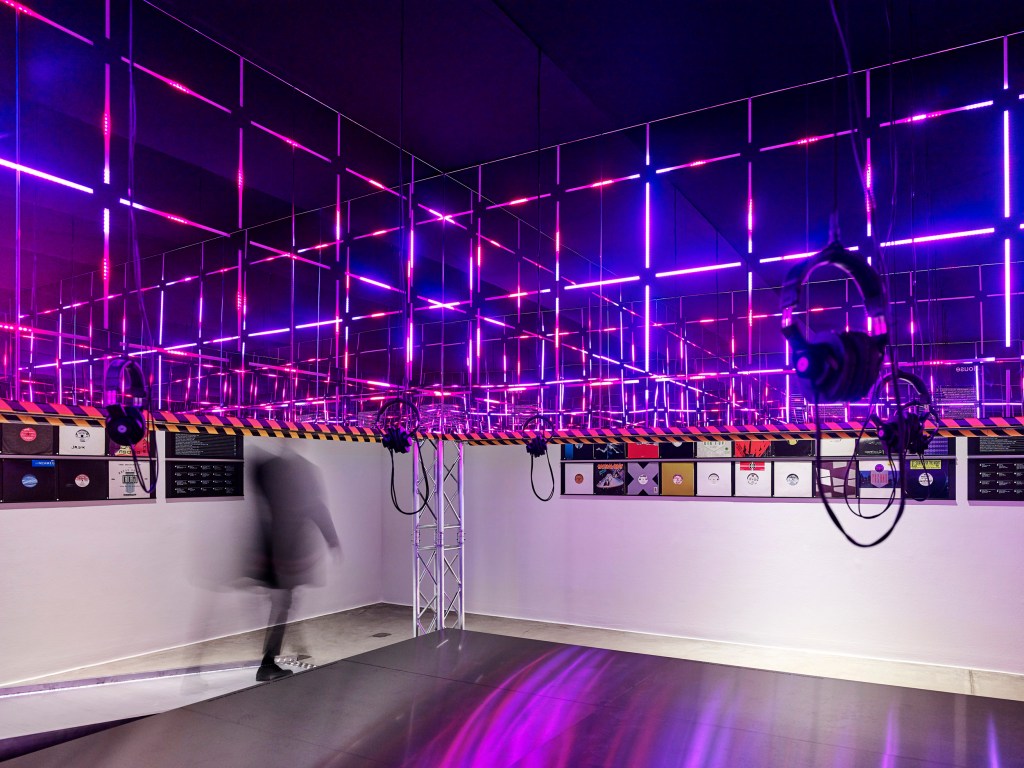
Photographers such as Philippe Chancel, Éric Aupol and Edward Burtynsky are concerned with the car industry’s damage to the environment. Philippe Chancel’s work focuses on the city of Flint and its dismantled General Motors factory, while Éric Aupol’s and Ed Burtynsky’s photographs reveal the sculptural yet apocalyptic beauty of industrial waste sites.

Other photographers reveal how the car plays an important role in historical events, in society and in daily life. Arwed Messmer’s Reenactement series brings together photographs from the archives of the Stasi showing how people used cars in unusual ways to escape from East Germany, and Fernando Gutiérrez work, Secuelas, explores the role of the Ford Falcon, a symbol of Argentina’s military dictatorship, in the collective imaginary of the Argentinean people. Jacqueline Hassink’s immersive projection Car Girls investigates the role and status of women who work in car shows around the world. Martin Parr’s series From A to B chronicles the thoughts dreams and anxieties of British motorists. Still other series by photographers such as Rosângela Rennó, Óscar Monzón, Kurt Caviezel and Bruce Davidson show how the car has become an extension of the home, used for weddings and picnics, living and sleeping, arguments and making love.

The Fondation Cartier has also invited artist Alain Bublex to create for the exhibition a series of 10 model cars that cast a fresh eye on the history of automobile design. His installation combines photographs, drawings and models to explore how the car design has evolved over time incorporating new techniques, forms, and practices.

Despite energy crises, ecology movements, and industrial mismanagement, the car remains essential to our daily lives. At a time when we are questioning the role and the future of the automobile in our society, the Autophoto exhibition reexamines, with nostalgia, humour, and a critical eye, this 20th century symbol of freedom and independence.

The Catalogue

Bringing together over 600 images, the catalogue of the Autophoto exhibition reveals how photography, a tool privileging immobility, benefited from the automobile, a tool privileging mobility. The catalogue features iconic images by both historic and contemporary photographers who have captured the automobile, and transformed this popular accessible object through their passionate and creative vision. Quotes by the artists, and a chronology of automobile design, as well as interviews and texts by specialists provide a deeper understanding of this vast topic through a variety of aesthetic, sociological, and historical perspectives.

Press release from The Fondation Cartier


Peter Keetman (German, 1916-2005) 'Hintere Kotflügel' 1953
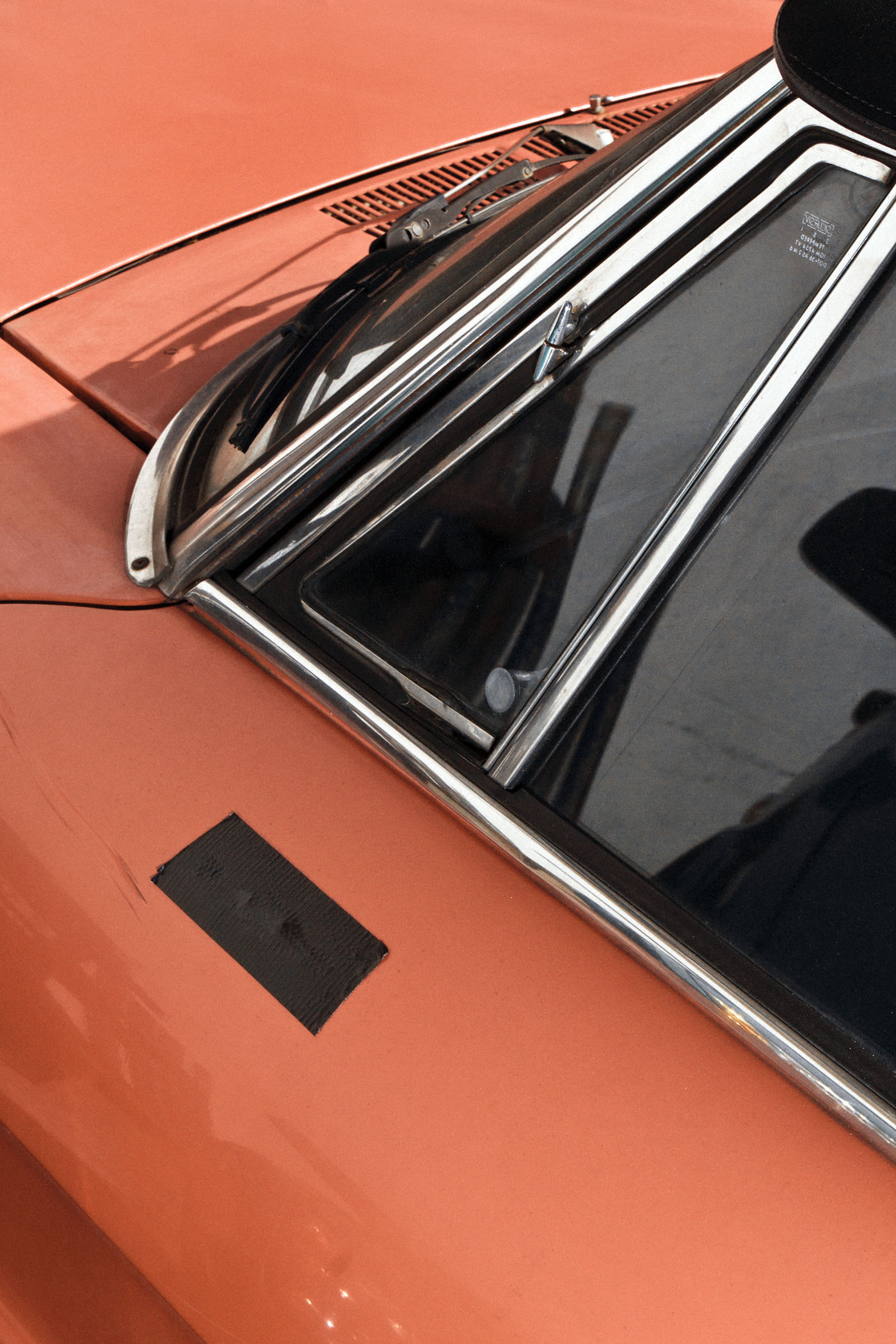
 

Peter Keetman (German, 1916-2005)
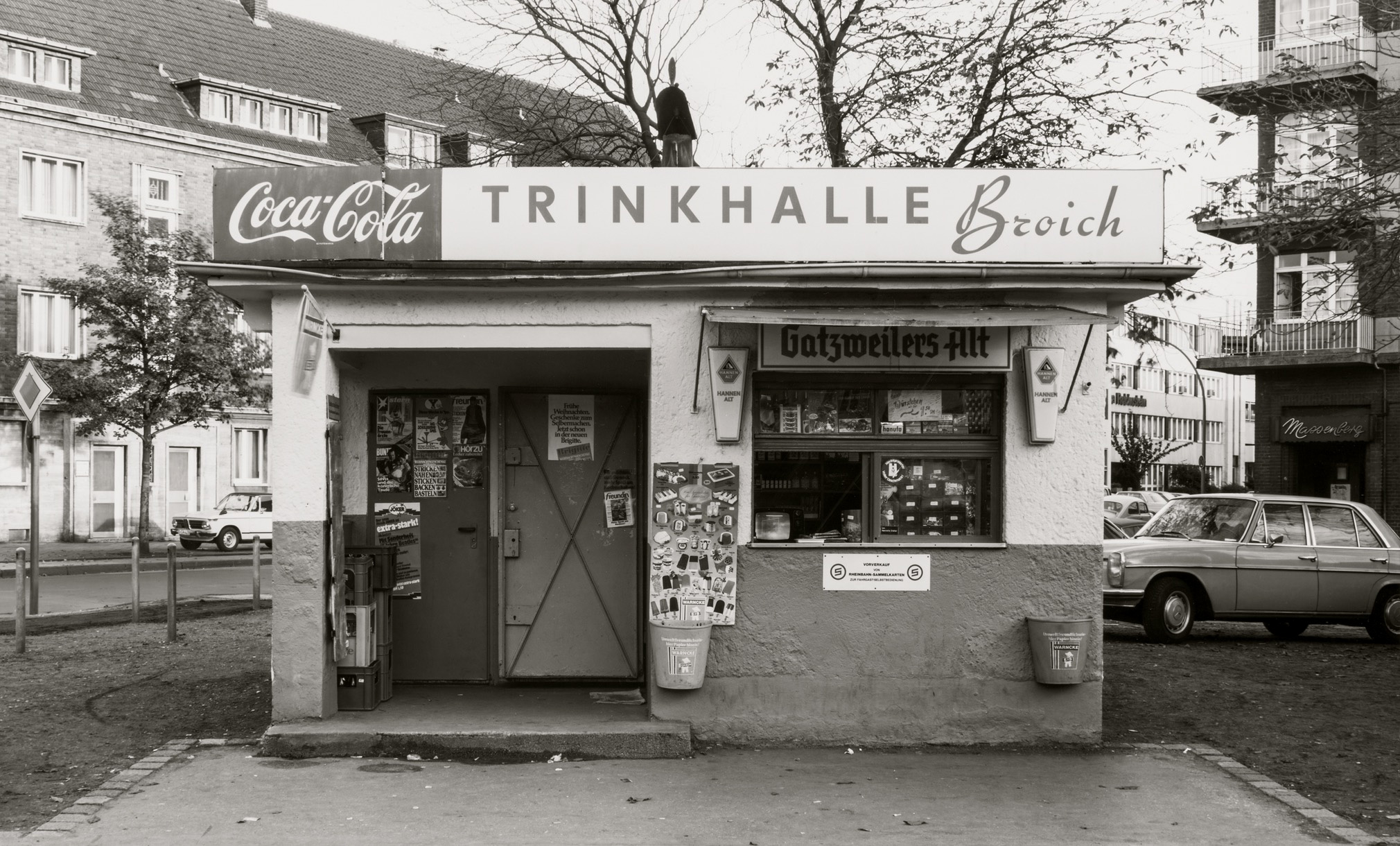
Hintere Kotflügel (Rear fenders)
1953
From Eine Woche im Volkswagenwerk (A week at the Volkswagenwerk) series
Gelatin silver print
27 × 24.5cm
Nachlass Peter Keetman/Stiftung F.C. Gundlach, Hamburg
© Nachlass Peter Keetman/Stiftung F.C. Gundlach, Hamburg


Ed Ruscha (American, b. 1937) '7133 Kester, Van Nuys' 1967


Ed Ruscha (American, b. 1937)
7133 Kester, Van Nuys
1967
Thirtyfour Parking Lots series
Chipmunk Collection
© Ed Ruscha, courtesy Gagosian Gallery


Malick Sidibé (Malian, 1935-2016) 'Taximan avec voiture' 1970


Malick Sidibé (Malian, 1935-2016)
Taximan avec voiture
1970
Gelatin silver print
40 x 30cm
Courtesy Galerie Magnin-A, Paris
© Malick Sidibé


Lee Friedlander (American, b. 1934) 'Montana' 2008


Lee Friedlander (American, b. 1934)
Montana
2008
From the America by Car series
Gelatin silver print
37.5 × 37.5cm
Courtesy Fraenkel Gallery, San Francisco
© Lee Friedlander, courtesy Fraenkel Gallery, San Francisco


Lee Friedlander (American, b. 1934) 'California' 2008


Lee Friedlander (American, b. 1934)
California
2008
From the America by Car series
Gelatin silver print
37.5 × 37.5cm
Courtesy Fraenkel Gallery, San Francisco
© Lee Friedlander, courtesy Fraenkel Gallery, San Francisco


Alejandro Cartagena (Mexican, b. 1977) 'The Carpoolers' series 2011–2012


Alejandro Cartagena (Mexican, b. 1977)
The Carpoolers series
2011-12
Installation of 15 inkjet prints
55.5 × 35.5cm (each)
Courtesy Patricia Conde Galería, Mexico City
© Alejandro Cartagena


Ronni Campana (Italian, b. 1987) 'Badly Repaired Cars' series 2016


Ronni Campana (Italian, b. 1987)
Badly Repaired Cars series
2016
Inkjet print
60 × 40cm
Collection of the artist
© Ronni Campana


Fondation Cartier pour l’art contemporain
261 Boulevard Raspail, Paris

Opening hours: Every day except Mondays, 11am – 8pm
Opening Tuesday evenings until 10pm

Fondation Cartier website

LIKE ART BLART ON FACEBOOK

Back to top

Exhibition: ‘Thomas Struth: Figure Ground’ at Haus der Kunst, Munich

Exhibition dates: 5th May – 17th September, 2017

Curator: Thomas Weski


Installation view of the exhibition 'Thomas Struth: Figure Ground' at Haus der Kunst, Munich from the exhibition 'Thomas Struth: Figure Ground' at Haus der Kunst, Munich, May - Sept, 2017


Installation view of the exhibition Thomas Struth: Figure Ground at Haus der Kunst, Munich
Courtesy of the artist and Haus der Kunst, Munich


I have always liked this man’s work. His understanding of space, colour, form and photograph as aesthetic experience is sublime. His muscular compositions show evidence of clear thinking and seeing… an investigation into sachlichkeit, that is objectivity: the boundaries between human, animal and machine (the aesthetics of innovation).

And yet Struth’s “unheroic” images also show evidence of subjective forces at work: impulsion, chaos, and serendipity to name a few, capturing a ‘razzmatazz of sensations’ that challenge the existential nature of the human, ‘being’.

Dr Marcus Bunyan


Many thankx to Haus der Kunst for allowing me to publish the art work in the posting. Please click on the photographs for a larger version of the image.


“Most of the images are very unheroic. I have a strong relationship to clarity. That’s why my compositions and choices are very meticulous.”


Thomas Struth


Thomas Struth (German, b. 1954) 'Crosby Street, Soho, New York' 1978 from the exhibition 'Thomas Struth: Figure Ground' at Haus der Kunst, Munich, May - Sept, 2017


Thomas Struth (German, b. 1954)
Crosby Street, Soho, New York
1978
Silver gelatin print
66 x 84cm
© Thomas Struth


Thomas Struth (German, b. 1954) 'Rue de Beaugrenelle, Beaugrenelle, Paris' 1979


Thomas Struth (German, b. 1954)
Rue de Beaugrenelle, Beaugrenelle, Paris
1979
Silver gelatin print
66 x 84cm
© Thomas Struth


Installation view of the exhibition 'Thomas Struth: Figure Ground' at Haus der Kunst, Munich


Installation view of the exhibition Thomas Struth: Figure Ground at Haus der Kunst, Munich
Courtesy of the artist and Haus der Kunst, Munich


Thomas Struth (German, b. 1954) 'National Gallery 1, London' 1989


Thomas Struth (German, b. 1954)
National Gallery 1, London
1989
Chromogenic print
180 x 196cm
© Thomas Struth


Installation view of the exhibition 'Thomas Struth: Figure Ground' at Haus der Kunst, Munich with 'Louvre 4, Paris' (1989) centre left


Installation view of the exhibition Thomas Struth: Figure Ground at Haus der Kunst, Munich with Louvre 4, Paris (1989) centre left
Courtesy of the artist and Haus der Kunst, Munich


Thomas Struth (German, b. 1954) 'Louvre 4 Paris' 1989


Thomas Struth (German, b. 1954)
Louvre 4, Paris
1989
© Thomas Struth


Thomas Struth (German, b. 1954) 'Kyoko and Tomoharu Murakami, Tokyo' 1991


Thomas Struth (German, b. 1954)
Kyoko and Tomoharu Murakami, Tokyo
1991
Chromogenic print
105.5 x 126.0cm
© Thomas Struth


Installation view of the exhibition 'Thomas Struth: Figure Ground' at Haus der Kunst, Munich with 'Paradise 26 (Bougainville), Palpa, Peru (2003)' to the right


Installation view of the exhibition Thomas Struth: Figure Ground at Haus der Kunst, Munich with Paradise 26 (Bougainville), Palpa, Peru (2003) to the right
Courtesy of the artist and Haus der Kunst, Munich


Thomas Struth (German, b. 1954) 'Bright sunflower - No. 1, Winterthur' 1991


Thomas Struth (German, b. 1954)
Bright sunflower – No. 1, Winterthur
1991
Chromogenic print
84 x 66cm
© Thomas Struth


This major exhibition by the pioneering German photographer Thomas Struth (born 1954) presents the most comprehensive survey of his genre-defining oeuvre. Covering four decades of work and every phase of his illustrious artistic career, the exhibition focuses especially on the aspect of Struth’s social interests which represent the important forces of his internationally influential artistic development. Starting with his first series Unbewusste Orte (Unconscious Places) published in 1987 through his current works that deal with the field of research and technology in the globalised world, Struth’s work develops its own specific analytical nature through his choice of subject matter, the manner of its photographic realisation and its modes of presentation. These aspirations are manifested in questioning the relevance of public space and transformation of cities, the cohesive factor of family solidarity, the importance of the relationship between nature and culture, and exploring the limits and possibilities of new technologies. The momentum of participation further characterises these aspirations, as Struth’s extensive pictorial inventions and strategies allow individual interpretation based on collective knowledge.

In this exhibition, early works and research materials related to the artist’s subject matter, and collected over several decades, are shown for the first time in the context of an exhibition, offering access and insight into Struth’s working methods. Together with the photographs, these materials elucidate his longstanding interests behind the different series, demonstrating the process of artistic translation before the perfection of the image.

Featuring around 130 works, two multichannel video installations, and a selection of archival material, the exhibition in Haus der Kunst is the largest survey of Struth’s artistic career to date. The survey links his early ideas to well-known series such as Straßen (Streets), Unbewusste Orte (Unconscious Places), Portraits, Museumsbilder (Museum Pictures), Paradise, and Audiences which are placed in dialogue with site-specific works like Löwenzahnzimmer (Dandelion Room), the landscape- and flower photographs that were made for the patients’ rooms at the Hospital on the Lindberg in Winterthur, Switzerland. It also includes photographs recently shown in the exhibition Nature & Politics. Within this interplay, the exciting ability of the artist to combine analysis and individual pictorial invention in multifaceted works and techniques builds an overarching idea on how to deal with the elementary matters of our times.

The exhibition is accompanied by a publication from Schirmer / Mosel Publishers, Munich, designed by Fernando Gutierrez, with texts by Thomas Weski, Ulrich Wilmes, Jana-Maria Hartmann, and an interview with the artist by Okwui Enwezor. The exhibition is organised by Haus der Kunst and curated by Thomas Weski.

Press release from Haus der Kunst


Thomas Struth (German, b. 1954) 'Wangfujing Dong Lu, Shanghai' 1997


Thomas Struth (German, b. 1954)
Wangfujing Dong Lu, Shanghai
1997
Chromogenic print
117.5 x 143.6cm
© Thomas Struth


Thomas Struth (German, b. 1954) 'Paradise 10 (Xi Shuang Banna), Yunnan Province, China' 1999


Thomas Struth (German, b. 1954)
Paradise 10 (Xi Shuang Banna), Yunnan Province, China
1999
Chromogenic print
182 x 227cm
© Thomas Struth


Thomas Struth (German, b. 1954) 'Self-Portrait, Munich' 2000


Thomas Struth (German, b. 1954)
Self-Portrait, Munich
2000
© Thomas Struth


“Albrecht Durer painted his self-portrait in 1500, so Struth’s Self-Portrait, Munich 2000 feels like a conversation between artists across 500 years.”


Thomas Struth (German, b. 1954) 'National Gallery 2, London' 2001


Thomas Struth (German, b. 1954)
National Gallery 2, London
2001
Chromogenic print
148.0 x 170.4cm
© Thomas Struth


Thomas Struth (German, b. 1954) 'Audience 7, Florence' 2004


Thomas Struth (German, b. 1954)
Audience 7, Florence
2004
Chromogenic print
179.5 x 291.5cm
© Thomas Struth


Thomas Struth (German, b. 1954) 'Audience 11, Florence' 2004


Thomas Struth (German, b. 1954)
Audience 11, Florence
2004
Chromogenic print
179.5 x 291.5cm
© Thomas Struth


Installation view of the exhibition 'Thomas Struth: Figure Ground' at Haus der Kunst, Munich with 'Semi Submersible Rig, DSME Shipyard, Geoje Island' (2007) at centre


Installation view of the exhibition Thomas Struth: Figure Ground at Haus der Kunst, Munich with Semi Submersible Rig, DSME Shipyard, Geoje Island (2007) at centre
Courtesy of the artist and Haus der Kunst, Munich


Thomas Struth (German, b. 1954) 'Semi Submersible Rig, DSME Shipyard, Geoje Island' 2007


Thomas Struth (German, b. 1954)
Semi Submersible Rig, DSME Shipyard, Geoje Island
2007
© Thomas Struth


Installation view of the exhibition 'Thomas Struth: Figure Ground' at Haus der Kunst, Munich with 'Tokamak Asdex Upgrade Periphery, Max Planck IPP, Garching' (2009) at left


Installation view of the exhibition Thomas Struth: Figure Ground at Haus der Kunst, Munich with Tokamak Asdex Upgrade Periphery, Max Planck IPP, Garching (2009) at left
Courtesy of the artist and Haus der Kunst, Munich


Thomas Struth (German, b. 1954) 'Tokamak Asdex Upgrade Periphery, Max Planck IPP, Garching' 2009


Thomas Struth (German, b. 1954)
Tokamak Asdex Upgrade Periphery, Max Planck IPP, Garching
2009
Chromogenic print
109.3 x 85.8cm
© Thomas Struth


Thomas Struth (German, b. 1954) 'Har Homa, East Jerusalem' 2009


Thomas Struth (German, b. 1954)
Har Homa, East Jerusalem
2009
Inkjet print
148.6 x 184.8cm
© Thomas Struth


Installation view of the exhibition 'Thomas Struth: Figure Ground' at Haus der Kunst, Munich with 'The Faez Family, Rehovot' (2009) second left


Installation view of the exhibition Thomas Struth: Figure Ground at Haus der Kunst, Munich with The Faez Family, Rehovot (2009) second left
Courtesy of the artist and Haus der Kunst, Munich


Thomas Struth (German, b. 1954) 'The Faez Family, Rehovot' 2009


Thomas Struth (German, b. 1954)
The Faez Family, Rehovot
2009
© Thomas Struth


Thomas Struth (German, b. 1954) 'Grazing Incidence Spectrometer, Max Planck IPP, Garching' 2010


Thomas Struth (German, b. 1954)
Grazing Incidence Spectrometer, Max Planck IPP, Garching
2010
© Thomas Struth


Thomas Struth (German, b. 1954) 'Chemistry Fume Cabinet, The University of Edinburgh' 2010


Thomas Struth (German, b. 1954)
Chemistry Fume Cabinet, The University of Edinburgh
2010
© Thomas Struth


Take, for instance, Struth’s photograph “Chemistry Fume Cabinet, The University of Edinburgh” (2010). Ostensibly a photograph of a chemistry fume cabinet at the University of Edinburgh, photographed through a clear, glass window, the work is also a study in colour and form. Within a white background space, the back wall has black horizontal lines running along it, while the side walls have one vertical line each. These opposing lines create what appear to be a haphazard grid. A wide red horizontal structure runs across the front of the room, creating one more line that both breaks up and contributes to the grid. Various machines within the room, two square red panels on the left and right sides of the window, and six coloured balloons provide a series of objects that fit within the finely structured container of the photograph’s frame.

What struck me immediately upon seeing this image was how the various lines and objects interact with one another. Struth presents the viewer with a kind of interactive field in which she can either read the image “as is” – photograph documenting a chemistry fume cabinet – or as a purely aesthetic experience. Or, of course, she can do both, which is what makes Struth’s work so rich and gratifying. It is in the way his mastery of colour and other formal elements coincides with his documentation of the world.

Cynthia Cruz. “Seeing the Deterioration of Technology in Thomas Struth’s Photographs,” on the Hyperallergic website September 9, 2016 [Online] Cited 05/08/2017


Installation view of the exhibition 'Thomas Struth: Figure Ground' at Haus der Kunst, Munich with 'Queen Elizabeth II & The Duke of Edinburgh, Windsor Castle' (2010) at left


Installation view of the exhibition Thomas Struth: Figure Ground at Haus der Kunst, Munich with Queen Elizabeth II & The Duke of Edinburgh, Windsor Castle (2010) at left
Courtesy of the artist and Haus der Kunst, Munich


Thomas Struth (German, b. 1954) 'Queen Elizabeth II & The Duke of Edinburgh, Windsor Castle' 2010


Thomas Struth (German, b. 1954)
Queen Elizabeth II & The Duke of Edinburgh, Windsor Castle
2010
© Thomas Struth


Installation view of the exhibition 'Thomas Struth: Figure Ground' at Haus der Kunst, Munich with 'Aquarium, Atlanta, Georgia' (2013) at right


Installation view of the exhibition Thomas Struth: Figure Ground at Haus der Kunst, Munich with Aquarium, Atlanta, Georgia (2013) at right
Courtesy of the artist and Haus der Kunst, Munich


Thomas Struth (German, b. 1954) 'Aquarium, Atlanta, Georgia' 2013


Thomas Struth (German, b. 1954)
Aquarium, Atlanta, Georgia
2013
© Thomas Struth


Thomas Struth (German, b. 1954) 'Schaltwerk 1 Berlin' 2016


Thomas Struth (German, b. 1954)
Schaltwerk 1, Berlin
2016
© Thomas Struth


Haus der Kunst
Prinzregentenstraße 1
80538 Munich
Germany
Phone: +49 89 21127 113

Opening hours:
Mon | Wed | Fri | Sat | Sun 10am – 8pm
Thur 10am – 10pm
Tue closed

Haus der Kunst website

LIKE ART BLART ON FACEBOOK

Back to top

Exhibition: ‘Photographs Become Pictures. The Becher Class’ at the Städel Museum, Frankfurt

Exhibition dates: 27th April – 13th August, 2017

Curator: Dr Martin Engler, Head of the Collection of Contemporary Art, Städel Museum
Co-curator: Dr Jana Baumann, Städel Museum

Artists: Volker Döhne, Andreas Gursky, Candida Höfer, Axel Hütte, Tata Ronkholz, Thomas Ruff, Jörg Sasse, Thomas Struth and Petra Wunderlich


Bernd Becher (German, 1931-2007) and Hilla Becher (German, 1934-2015) 'Gutehoffnungshütte, Oberhausen, Ruhrgebiet' 1963 from the exhibition 'Photographs Become Pictures. The Becher Class' at the Städel Museum, Frankfurt, April - August, 2017


Bernd Becher (German, 1931-2007) and Hilla Becher (German, 1934-2015)
Gutehoffnungshütte, Oberhausen, Ruhrgebiet
1963
Gelatine silver print on baryta paper
75.3 x 91.4cm
Art Collection Deutsche Börse Deutsche Börse Photography Foundation
© Estate Bernd & Hilla Becher


“What the teachings of Bernd and Hilla Becher sparked off – and their students developed further – is a new conception of the artwork according to which the boundaries between sculpture, painting and photography dissolve in terms of media and aesthetics alike. In other words, in the very moment in history when photography emancipated itself to become an independent medium, it sounded its own death knell.” (Press release)

WHAT ABSOLUTE RUBBISH – the second sentence, that is!

Just look at the photographs as pictures.

The Bechers and their students’ photographs might invoke a new concept of the pictorial but that does not mean the death of photography far from it. In fact, this conceptualisation opens up an expanded terrain of becoming for photography (continuing the theme of the last post on the work of Walker Evans). In this sense, the work of these artists is vital to an understanding of the place of photography within the observation, construction and taxonomy of contemporary culture and its pictorial representation. Everything in contemporary art relates not to beauty or aesthetics but to the social.

Dr Marcus Bunyan


Many thankx to the Städel Museum for allowing me to publish the photographs in the posting. Please click on the photographs for a larger version of the image. For more information please see the interactive website.


One of the most radical changes in art’s relation to its aesthetic, media, and economic contexts is closely associated with the students of the first Becher Class at the Düsseldorf art academy – but even more so with the names of their teachers, Bernd and Hilla Becher. The exhibition brings together 200 major works, some in large format, by these important artists, as well as a selection of their early works.


Bernd Becher (German, 1931-2007) and Hilla Becher (German, 1934-2015) 'Half-Timber Houses' 1959-1961/1974 from the exhibition 'Photographs Become Pictures. The Becher Class' at the Städel Museum, Frankfurt, April - August, 2017


Bernd Becher (German, 1931-2007) and Hilla Becher (German, 1934-2015)
Half-Timber Houses
1959-1961/1974
Silver gelatine print on baryta paper
152.4 x 112.5cm
Sammlung Deutsche Bank
© Estate Bernd & Hilla Becher


“This is a purely economic architecture […]. It is erected, used and discarded.”

Becher, Bernd and Hilla cit. in: “Beauty in the Awful”, in: Time. The Weekly Newsmagazine, 94, 10, 5 September 1969, p. 69.


The same subject in nine different types: as in a scientific documentary the photos show nine coal silos before a neutral light-grey background. The Bechers’ photos all follow the same approach: from an elevated vantage point the artists photograph details and total views of objects or entire industrial facilities and position them centrally in the picture. Every detail is razor sharp. The sky is predominantly overcast. The photographs are black and white. Nothing is to distract from the subject, to guarantee a presentation that is as objective as possible.

Bernd Becher and Hilla Wobeser begin to collaborate in 1959. At the time both study at the art academy Düsseldorf. Two years later they marry. During the following five decades the artist couple produces mostly tableaus of several parts – consisting of three, nine, twelve or more photos; they call them typologies. Their subjects are disused headstocks, furnaces, oil refineries, water reservoir towers, grain silos, gasometres or even half-timbered houses in former workers’ settlements – all of them testimonies of a declining industrial culture.

The Bechers depict the half-timbered houses from the Siegerland in a sober and restrained fashion. The picture removes the buildings from their original context. One view follows the next. Thus the form of the single building becomes more important than its function. In the photographs the half-timbered houses become aesthetic objects with a sculptural character. Bernd and Hilla Becher do not present their images individually, but in a grid. Not the single photo is the work, but the total of the typology is.

When Hilla and Bernd Becher presented their works at the Städtische Kunsthalle Düsseldorf in 1969, this coincided with an exhibition on US-American minimal art – a juxtaposition that was to prove programmatic. In 1972 the American sculptor Carl Andre mentioned the insightful connection of the Bechers’ works and the movements of minimal and conceptual art. This prominent, art-theoretical connection significantly contributed to the great international success of the Bechers. This is also why – especially in the USA – the two are considered concept artists more than photographers. …

The Bechers’ method of working – ostensibly – is concerned with sobriety and anonymity, rigidity and objectivity. They work in series, where the whole and a part of this whole, total view and detail are balanced. Setting their photographs into the context of sculpture, they test the boundaries of the genres of photography and sculpture. Working and presenting their works in series, they move the photograph beyond the individual work: the viewer can never see everything at once; instead the eye oscillates between detail and general context.

Anonymous text from the Becher Class at the Städel Museum website Nd [Online] Cited 27/12/2021


Bernd Becher (German, 1931-2007) and Hilla Becher (German, 1934-2015) 'Half-Timber Houses' (detail) 1959-1961/1974


Bernd Becher (German, 1931-2007) and Hilla Becher (German, 1934-2015)
Half-Timber Houses (detail)
1959-1961/1974
Silver gelatine print on baryta paper
152.4 x 112.5cm
Sammlung Deutsche Bank
© Estate Bernd & Hilla Becher


Bernd Becher (German, 1931-2007) and Hilla Becher (German, 1934-2015) 'Half-Timber Houses' (detail) 1959-1961/1974


Bernd Becher (German, 1931-2007) and Hilla Becher (German, 1934-2015)
Half-Timber Houses (detail)
1959-1961/1974
Silver gelatine print on baryta paper
152.4 x 112.5cm
Sammlung Deutsche Bank
© Estate Bernd & Hilla Becher


The Becher School of Photography. An American Perspective – Vortrag von Alexander Alberro


Candida Höfer (German, b. 1944) 'Weidengasse Cologne VIII 1977' 1977 (2013)


Candida Höfer (German, b. 1944)
Weidengasse Cologne VIII 1977
1977 (2013)
Gelatine silver print on baryta paper
42.6 x 36.7cm
Loan from the artist
© Candida Höfer, Köln; VG Bild-Kunst, Bonn 2017


Volker Döhne (German, b. 1953) 'Untitled (Colourful)' 1979 (2014)


Volker Döhne (German, b. 1953)
Untitled (Colourful)
1979 (2014)
Colour print from colour transparency
37 x 47cm
Private collection
© Volker Döhne, Krefeld 2017


Thomas Ruff (German, b. 1958) 'Interior 1 D' 1982


Thomas Ruff (German, b. 1958)
Interior 1 D
1982
Chromogenic colour print
47 x 57cm
Loan from the artist
© Thomas Ruff; VG Bild-Kunst, Bonn 2017


Andreas Gursky (German, b. 1955) 'Doorman, Passport Control' 1982 (2007)


Andreas Gursky (German, b. 1955)
Doorman, Passport Control
1982 (2007)
Inkjet print
43.2 x 52.5cm
Loan from the artist / Courtesy Sprüth Magers
© Andreas Gursky / VG Bild-Kunst, Bonn 2017 / Courtesy Sprüth Magers Berlin London


Axel Hütte (German, b. 1951) 'Moedling House' 1982-1984


Axel Hütte (German, b. 1951)
Moedling House
1982-1984
Gelatine silver print on baryta paper
66 x 80cm
Loan from the artist
© Axel Hütte


Petra Wunderlich (German, b. 1954) 'Fossa Degli Angeli, Italy' 1989


Petra Wunderlich (German, b. 1954)
Fossa Degli Angeli, Italy
1989
Gelatine silver print on baryta paper
61 x 75.2cm
Private collection
© Petra Wunderlich; VG Bild-Kunst 2017


From 27 April to 13 August 2017, the Städel Museum is staging a comprehensive survey on the Becher Class at the Düsseldorf art academy and the major paradigm shift in the medium of artistic photography with which the Bechers and their students are associated. With the aid of some 200 photographs by Volker Döhne, Andreas Gursky, Candida Höfer, Axel Hütte, Tata Ronkholz, Thomas Ruff, Jörg Sasse, Thomas Struth and Petra Wunderlich – a group of whom some enjoy international renown and others are due for rediscovery – the exhibition will examine the influence exerted by Bernd and Hilla Becher on their students at the Düsseldorf school. What unites the students’ works with those of their teachers? How do they differ? Is there really such a thing as the “Becher School” or is it ‘merely’ a matter of several highly successful photographers who happened to be studying at the ‘right place’ at an especially propitious moment in history? And how have those artists influenced our present conception of what a picture is? Taking the artist duo’s work as a point of departure, the exhibition “Photographs Become Pictures. The Becher Class” will acquaint viewers with the radical changes in the medium of artistic photography that became manifest in the works of the Becher pupils in the eighties and above all the nineties, and investigate the art-historical impact of this development up to the very present. It will feature major large-scale works as well as key early endeavours by the members of what is presumably the most influential generation of German photographers in the field of fine art.

The students of the first in a long line of Becher Classes at the Düsseldorfer art academy introduced elementary changes to contemporary art’s aesthetic, media and economic contexts. They not only contributed decisively to shaping international photography in the 1990s, but also fundamentally redefined the status and perception of artistic photography in general. Their works can be considered as one of the most self-confident emancipations of photography as art in the mediums history, while at the same time reflecting the (not merely digital) moment when the boundaries between the media dissolve.

“Bernd and Hilla Becher’s first – meanwhile world-famous – students played a tremendously important role in establishing photography as an expressive medium on a par with other art forms. The nine artists featured in our show occupy a realm where the distinction between painting and photography is no longer clear. The permeability of the boundary between the media is deliberate in their work, and in that respect they mirror one of the key focuses of the Städel Museum’s collection of contemporary art,” observes Städel director Dr Philipp Demandt. And exhibition curator Dr Martin Engler adds: “What the teachings of Bernd and Hilla Becher sparked off – and their students developed further – is a new conception of the artwork according to which the boundaries between sculpture, painting and photography dissolve in terms of media and aesthetics alike. In other words, in the very moment in history when photography emancipated itself to become an independent medium, it sounded its own death knell.”

The founding of a chair for artistic photography at the Düsseldorf art academy in 1976 provided perhaps the single most important impulse for a change in how the medium of photography was perceived. In close cooperation with his wife Hilla Becher, Bernd Becher held that chair until 1996. Even before their appointment to the Düsseldorf school, the Bechers had been taking pictures of historical industrial architecture, subscribing to a work concept that exceeded the scope of a common documentary approach in photography. They portrayed mining headframes, blast furnaces, gas tanks, water towers and other testimonies to a vanishing industrial culture – frontally, in central perspective, with fascinating depth of field, and where possible before the backdrop of a uniformly grey sky. They arranged the individual shots in grids to form large-scale tableaus they called typologies. The concern here was no longer merely the illustration of reality, but its perception. Reality could no longer be depicted singly, but only in a multiplicity of simultaneous images. From the formal aesthetic point of view, the staging of the pictorial subjects was now far more than documentary in nature. The affinity to minimal and concept art – evident in the rigour of the pictorial vocabulary, the industrial aesthetic and the new perception of a work in stages – is unmistakable.

Especially in their early work, the students of the first Becher Class explored their teachers’ artistic strategy with great intensity. Yet as they continued to pursue it in the nineties, they did so ever more independently, and in their own highly individual styles. With the aid of various strategies in terms of scale, presentation and motif, and not least of all with abstract pictorial inventions provoked by digital image techniques, they took the interpenetration of the mediums of painting and photography to an extreme. The result was a new concept of the picture that blurs aesthetic and media distinctions. “The dissolution of media boundaries, but also the use of technical innovations, are characteristic of the works of the first Becher Class. It is here that the impact of a changing media culture is felt,” explains Dr Jana Baumann, the co-curator of the exhibition.

A show devoted to such a complex phenomenon on the one hand, and such productive teaching activities on the other, must inevitably be limited in scope. “Photographs Become Pictures” concentrates deliberately on the students of the early years of the Becher Class, beginning with Höfer, Döhne, Hütte and Struth in 1976 and ending with the completion of Gursky’s and Sasse’s studies in 1987/1988. In retrospect, it is precisely in the heterogeneity of the first Becher Class – with its wide range of approaches that have influenced our present-day understanding of the pictorial image – that the success of Bernd and Hilla Becher’s teachings is evident.

Candida Höfer (b. 1944) is known above all for her pictures of public interiors such as libraries, universities, museums and waiting rooms. Nevertheless, the purely documentary aspect is ultimately of secondary importance to her, as is also true of her teachers. Particularly when she turned to colour photography, she began producing iconically clear shots of meaning-charged interiors extremely striking in their rigorous aesthetic. In composition, repetition and rhythm as well as the sculptural emphasis, Höfer’s formal staging of her interiors is reminiscent of the Becher typologies.

A distinct affinity to the typologies is also evident in early street shots by Thomas Struth (b. 1954), such as West Broadway, Tribeca, New York (1978) or Sommerstrasse, Düsseldorf (1980). He proceeded in a manner similar to his teachers, but broadened his spectrum of motifs. He is concerned in his work with cultural structures; in addition to streets he also depicts museums or religious cult sites and portrays families. With the aid of social and ethnological allusions he reveals orders and interrelationships, thus achieving a universal survey of human and their lifeworld in imagery.

Petra Wunderlich‘s (b. 1954) black-and-white series depict details of churches or quarries that the artist has introduced to a new, abstract compositional framework. By this method she reduces architecture visually to its stereometric tectonics in such a way that elementary architectonic forms unexpectedly emerge from the “broken” surfaces of nature. Wunderlich’s photographs, like those by the Bechers, can be read as sociological and historical testimonies.

The workgroups of Volker Döhne (b. 1953) closely resemble Bernd and Hilla Bechers’ typologies with regard to concept and motif alike. He developed series such as Small-Scale Iron Industry (1977/78) or Small Railway Bridges and Underpasses in the Bergisches and Märkisches Land (1979). With his experimental Colour (1979) series, he then emancipated himself from his teachers.

Tata Ronkholz (1940-1997) was interested primarily in factory gates, shop windows, beverage kiosks and snack bars, which she photographed in the even light of grey days. Many aspects of these works are strongly reminiscent of the Becher photographs: the consistent placement of the subject at the pictorial centre, the unchanging size of the prints, but also the serial, typologically comparative approach.

Thomas Ruff (b. 1958) is likewise deeply indebted to his teachers’ serial method, which we encounter in his work in ever-different formulations. His portraits as well as the strongly enlarged nocturnal shots of, in part, found material, convey his fundamentally sceptical attitude towards photography’s claim to truth and documentation. His persistent investigations of new pictorial sources and technologies are perhaps the most impressive demonstrations of the manner in which Ruff continues the approach of Bernd and Hilla Becher.

Axel Hütte‘s (b. 1951) early architectural details investigate social situations using a mode of photographic expression distinguished by distance and anonymity. Within this context, he devotes himself as much to spoiled landscapes as to supposedly untouched nature which nevertheless has always been formed by human intervention. A conspicuous aspect of his work is the strong reference to historical landscape painting, whose formal compositional principles he both copies and deconstructs. Whereas the Bechers directed their attention to the sculptural or conceptual potential of their pictures, Hütte focusses on painting as the leading medium of modern art.

Jörg Sasse (b. 1962) initially devoted himself to highly artificial and at the same time prosaic arrangements of petit-bourgeois domestic culture. His later “tableaus” represent a virtual antithesis to the reductive rigour of these early works. Using digital and analogue techniques alike, he began processing found pictures as well as images of his own making, in which context he blurred the distinction between painting and photograph beyond recognition.

Andreas Gursky‘s (b. 1955) early photographs are likewise characterised by a keen interest in everyday surroundings – the private as well as the public sphere, the context of work as well as leisure time. Like Sasse, he investigates the aesthetic boundary between photographic and painterly image production. By means of digital manipulations he uses to duplicate and mount the pictorial motif to the point of abstraction, he creates perplexing pictorial architectures that merge construction and reality in large-scale colour prints.

The development of the Becher Class shows how concept art’s expanding notion of the artwork led to a new concept of the pictorial including photography. What the teachers introduced in rudiments was taken by their students and the following generation of artists to a momentous change in the picturing of reality. The realisation that photography cannot reproduce reality impartially does not detract from the medium. On the contrary, it means an enhancement in terms of artistic potential. What is more, the lack of focus in the portrayal of reality – in the literal and figurative sense alike – enriches photography’s complexity. It is not least of digital changes that enables innovative pictorial invention. Yet the boundaries of the photographic image also became fluid in the development from individual work to typology and series, and from detail to overall image. The answer to all questions about the significance, classification, doctrine and conception of what we refer to as the “Becher School” can thus be found in an insight as simple as it is surprising: in the very moment in history when photography emancipated itself to become an independent medium, it sounded its own death knell.

Press release from the Städel Museum


Exhibition view "Photographs Become Pictures. The Becher Class"

Exhibition view "Photographs Become Pictures. The Becher Class"

Exhibition view "Photographs Become Pictures. The Becher Class"

At left in the bottom image, Axel Hütte (b. 1951) 15 artists USA (David McDermott, Stephen Prina, Mike Kelley, Peter McGough, David McDermott, Doug Starn, Mike Starn, Jeff Koons, Haim Steinbach, Ross Bleckner) 1988 (2003)(detail)
Exhibition view "Photographs Become Pictures. The Becher Class" with Candida Höfer (left) and Thomas Struth (b. 1954) 'Louvre 3, Paris 1989' 1989 (2012) (right)

Candida Höfer (left) and Thomas Struth (b. 1954) Louvre 3, Paris 1989 1989 (2012) (right)
Exhibition view "Photographs Become Pictures. The Becher Class" showing Thomas Struth (b. 1954) 'Paradiese 09' Xi Shuang Banna, Provinz Yunnan, China 1999

Thomas Struth (b. 1954) Paradiese 09 Xi Shuang Banna, Provinz Yunnan, China, 1999
Thomas Struth (German, b. 1954) 'Paradiese 09' 1999


Thomas Struth (German, b. 1954)
Paradiese 09
Xi Shuang Banna, Provinz Yunnan, China, 1999


Exhibition view "Photographs Become Pictures. The Becher Class"

Exhibition view "Photographs Become Pictures. The Becher Class"

Exhibition view "Photographs Become Pictures. The Becher Class" showing Thomas Ruff (b. 1958) 'House No. 1' 1987 (right)

Thomas Ruff (b. 1958) House No. 1 1987 (right)
Exhibition view "Photographs Become Pictures. The Becher Class" showing works by Axel Hütte (b. 1951)

Axel Hütte (b. 1951)


Axel Hütte (German, b. 1951) 'Castellina' 1992 (2015)


Axel Hütte (German, b. 1951)
Castellina
1992 (2015)
Chromogenic colour print
98.4 x 120.3cm
DZ BANK Kunstsammlung © Axel Hütte


Exhibition view "Photographs Become Pictures. The Becher Class"

Exhibition view "Photographs Become Pictures. The Becher Class" showing at left, Thomas Struth (b. 1954) 'The Consolandi Family, Mailand, 1996' (2014)

In the bottom image, Thomas Struth (b. 1954) The Consolandi Family, Mailand, 1996 (2014) (left)


Exhibition views “Photographs Become Pictures. The Becher Class”
Photo: Städel Museum


The Bechers

For their photographs Bernd and Hilla Becher are awarded the “Golden Lion” in the category of “sculpture” at the Venice Biennale in 1990. How is that possible? Surprisingly at the time there was no separate category for photography at the Biennale. But this is not the real reason. Already in 1969 the first larger exhibition of the Bechers is called “Anonymous Sculptures”, just like their first volume of photographs. The artists very consciously link the genres of photography and sculpture. This idea informs their entire oeuvre.

Bernd Becher and Hilla Wobeser begin to collaborate in 1959. At the time both study at the art academy Düsseldorf. Two years later they marry. During the following five decades the artist couple produces mostly tableaus of several parts – consisting of three, nine, twelve or more photos; they call them typologies. Their subjects are disused headstocks, furnaces, oil refineries, water reservoir towers, grain silos, gasometres or even half-timbered houses in former workers’ settlements – all of them testimonies of a declining industrial culture.

An Overall Concept

When Hilla and Bernd Becher presented their works at the Städtische Kunsthalle Düsseldorf in 1969, this coincided with an exhibition on US-American minimal art – a juxtaposition that was to prove programmatic. In 1972 the American sculptor Carl Andre mentioned the insightful connection of the Bechers’ works and the movements of minimal and conceptual art. This prominent, art-theoretical connection significantly contributed to the great international success of the Bechers. This is also why – especially in the USA – the two are considered concept artists more than photographers.

The Bechers’ method of working – ostensibly – is concerned with sobriety and anonymity, rigidity and objectivity. They work in series, where the whole and a part of this whole, total view and detail are balanced. Setting their photographs into the context of sculpture, they test the boundaries of the genres of photography and sculpture. Working and presenting their works in series, they move the photograph beyond the individual work: the viewer can never see everything at once; instead the eye oscillates between detail and general context.

The artist couple directs the attention to formal, creative aspects of the photographed edifices at the same time allowing them to disappear in the typology’s grid. The rigidity of their pictorial vocabulary and the interest in an industrial aesthetic evidences the close proximity of the Bechers’ creative work to minimal and concept art.

Photography in Germany

“In principle it [photography] was a fallow field, where nothing ‘noteworthy’ had taken place in the past fifty years. We saw us in the tradition of objective photography of the 1920s; Bernd and Hilla Becher were the first to reconnect to this. There was absolutely nothing that we could fight or needed to disengage with. We could start from scratch.” ~ Thomas Ruff


“New Objectivity” this was the motto of the 1920s – also in photography. It was no longer the pictorial language of painting, but precision, focus and truth to detail, characteristics of photography that had garnered the artists’ interest.

The photographer August Sander focused on the society of the Weimar Republic and created a typology: in 1925 his pictorial atlas People of the 20th Century, where he systematically assembled hundreds of portraits of stereotypes of people of the most diverse social backgrounds and occupations. All of his sitters are portrayed frontally, which makes the photographs comparable. Sander also engaged in the photography of landscapes, industrial sites and cities.

Two more representatives of the photography of New Objectivity are also worth mentioning here: Albert Renger-Patzsch recorded industrial buildings and machinery in a sober directness. Karl Blossfeldt adopted scientific standards and photographed plants – always before a neutral background, removed from their natural setting.

Bernd and Hilla Becher draw on these approaches and develop them in their works. With a few exemptions, photography was not considered an autonomous artistic medium in Germany. Still in the 1960s, photography in art predominantly served as a means of documentation of actions, happenings and performances. Yet painting and photography interact. The painter Gerhard Richter for example, used photos as templates for his paintings since the early 1960s. The Bechers in turn greatly contributed to the recognition of photography as autonomous artistic medium with their photographs.

The Becher Class: Adoption, Distinction

DÖHNE GURSKY HÖFER HÜTTE RONKHOLZ RUFF SASSE STRUTH WUNDERLICH

These are the students of the first Becher class. In 1976 Bernd Becher is appointed first professor for photography at the Düsseldorf Art Academy. In close cooperation with his wife Hilla he teaches there for twenty years. Their first students become artists, who will have a formative influence on photography in the 1980s and the 1990s internationally. The Becher students intensely study their teachers’ work. Especially in their early works comparable approaches develop: a distanced perspective, an interest in architecture and striving for technical precision.

The Bechers are preoccupied with an industrial architecture in decline, representative also of the social changes affecting the respective region. Taking this as a starting point, their students consider their direct surroundings and social contexts. They seek to identify systems of classification and in their photographs investigate the relationship of individual work and series. In the process the Becher students adopt their own positions. They discover new themes, techniques and creative strategies. Regardless of the distinctions they are indebted to the conceptual approach of their teachers, which they then developed in their individual ways.

In their teaching and their work Bernd and Hilla Becher explore a concept of the image, where medial and aesthetic distinctions of sculpture, painting and photography dissolve. Their students continue this work in very different ways. In the 1980s and 1990s their enquiries lead to a critical reflexion of the possibilities of representing reality. The lack of focus in the depiction of reality – literally and figuratively – represent an increase in artistic complexity. Innovative pictorial creations were now possible by way of digital intervention.

The borders of the photographic image blur at the stage between single work and typology and series. The alternation of perception, oscillating between detail and total image extend the possibilities of photography. The meaning of what is called “Becher school” can be summarised in a simple and surprising statement: at the historic moment, when photography becomes an independent medium, it also realises its potential and explores its limits. Photography reaches its limits, transgresses it and thus ultimately questions its existence.

Kiosks and Streets

The developments in American photography are also important to the Becher-students: Ed Ruscha, whose photos show everyday subjects, is one of their role models. In 1966 he creates Every Building on the Sunset Strip. With a simple handheld camera Ruscha photographs every building on the Los Angeles boulevard of that name; he presents his pictures in a fanfold or an artist’s book. This quickly reveals the serial principle behind the work. Volker Döhne’s approach in Reconstruction II is similar. He, too, documents the commercial architecture, largely determining the surrounding.

Ice cream parlour, garage, drug store, stationers, dwelling house, shoe shop – nicely aligned. Volker Döhne focuses on the urban space dominated by nondescript post war architecture and empty sites. Other than his American colleague Ed Ruscha, Döhne always positions his camera head-on in the same angle. Surprisingly this emphasises the buildings’ volume. Like his teachers Bernd and Hilla Becher he emphasises the three-dimensional, sculptural aspect of buildings and pursues a concept that he determined before he began to photograph.

The Bechers assemble identical, yet different photographs to a static tableau. Döhne on the other hand, required the viewer to move along the strip and proceed down the row of photographs. Above all the viewer must add together the photos of the Krefelder Straße by himself: the work forms as a result of the viewer’s active viewing and perception.

Anonymous text from the Becher Class at the Städel Museum website [Online] Cited 27/12/2021


Volker Döhne (German, b. 1953) 'Krefeld, Ostwall corner Rheinstraße, (Reconstruction II)' 1990 (1992)


Volker Döhne (German, b. 1953)
Krefeld, Ostwall corner Rheinstraße, (Reconstruction II)
1990 (1992)
Silver gelatin print on baryte paper
47 × 37cm
Private collection


Volker Döhne (German, b. 1953) 'Krefeld, Rheinstraße 82 (Reconstruction II)' 1990 (1992)


Volker Döhne (German, b. 1953)
Krefeld, Rheinstraße 82 (Reconstruction II)
1990 (1992)
Silver gelatin print on baryte paper
47 × 37cm
Private collection


Volker Döhne (German, b. 1953) 'Krefeld, Rheinstraße 84 (Reconstruction II)' 1990 (1992)


Volker Döhne (German, b. 1953)
Krefeld, Rheinstraße 84 (Reconstruction II)
1990 (1992)
Silver gelatin print on baryte paper
47 × 37cm
Private collection


Volker Döhne (German, b. 1953) 'Krefeld, Rheinstraße 86 (Reconstruction II)' 1990 (1992)


Volker Döhne (German, b. 1953)
Krefeld, Rheinstraße 86 (Reconstruction II)
1990 (1992)
Silver gelatin print on baryte paper
47 × 37cm
Private collection


Volker Döhne (German, b. 1953) 'Krefeld, Rheinstraße 88 (Reconstruction II)' 1990 (1992)


Volker Döhne (German, b. 1953)
Krefeld, Rheinstraße 88 (Reconstruction II)
1990 (1992)
Silver gelatin print on baryte paper
47 × 37cm
Private collection


Tata Ronkholz (German, 1940-1997) 'Beverage kiosk, Düsseldorf, Hermannstraße 31' 1978


Tata Ronkholz (German, 1940-1997)
Beverage kiosk, Düsseldorf, Hermannstraße 31
1978
Gelatine silver print on baryta paper
41.2 x 51.2cm
Die Photographische Sammlung/SK Stiftung Kultur, Köln/Dauerleihgabe der Sparkasse KölnBonn
© Tata Ronkholz, Nachlassverwaltung Van Ham Art Estate 2017


Cigarette and gumball machines are fixed to exterior walls. Advertising posters overlap. Beverages, magazines and sweets are visibly lined up behind glass. It is Tata Ronkholz’ serial presentation that enables the comparison of the kiosks and their study as a social phenomenon in urban contexts.

Kiosks are everyday meeting points and the setting for social life. At the same time their role fundamentally changed in the past decades. Ronkholz photographs kiosks as socially grown places. She positions them centrally in their architectural environment – people are absent. This is what the photos have in common with Becher-photographs. Like her teachers, Ronkholz is committed to the conservation and archiving of a changing urban culture.


Tata Ronkholz (German, 1940-1997) 'Dusseldorf, Sankt-Franziskusstraße 107' 1977


Tata Ronkholz (German, 1940-1997)
Dusseldorf, Sankt-Franziskusstraße 107
1977
Silver gelatin print on baryta paper
41.2 × 51.2cm
Courtesy The Photographische Sammlung / SK Stiftung Kultur, Cologne / Permanent Loan of the Sparkasse KölnBonn


Tata Ronkholz (German, 1940-1997) 'Without title' 1978


Tata Ronkholz (German, 1940-1997)
Without title
1978
Silver gelatin print on baryta paper
41.2 × 51.2cm
Courtesy The Photographische Sammlung / SK Foundation Culture, Cologne / Dauerleihgabe der Sparkasse KölnBonn


Tata Ronkholz (German, 1940-1997) 'Düsseldorf, Germany, Konkordiastraße 85' 1978


Tata Ronkholz (German, 1940-1997)
Düsseldorf, Germany, Konkordiastraße 85
1978
Silver gelatin print on baryta paper
41.2 × 51.2cm
Courtesy The Photographische Sammlung / SK Stiftung Kultur, Cologne / Permanent Loan of the Sparkasse KölnBonn


Picture Parallels

Bernd and Hilla Bechers students are linked to the work of their teachers in many ways. And yet they devote themselves, in part, to new motifs, subjects, and picture formats during their studies. In addition to architecture, they also photograph interiors, simple everyday objects or people.

In the early 1980s the Becher-students Axel Hütte and Thomas Ruff turn to portrait photography practically at the same time. They capture their models with neutral facial expressions, generally head-on before a monochrome background. The extreme setting makes the individual recede while the surface of the background dominates. In the series the single faces turn into an interchangeable motif somewhere between person and typology.

From Near and Far

The directions of the persons’ gazes differs. Nothing distracts from their faces. The neutral background and the close details are reminiscent of giant passport photographs. One almost overlooks that some of the sitters are famous artists today.

Axel Hütte’s portraits with their conscious play with blurring and sharpness are irritating: some areas in the photo show up the slightest detail, while others are slightly blurred – a conscious reference to the Bechers’ works, characterised by their extreme depth of focus. When observing Hütte’s works from close-up the face becomes a surface of structures. If one wants to see it in focus, one needs to distance oneself. Thus the viewer is kept at bay and always in motion.

Anonymous text from the Becher Class at the Städel Museum website [Online] Cited 27/12/2021


Axel Hütte (German, b. 1951) '15 artists USA (David McDermott, Stephen Prina, Mike Kelley, Peter McGough, David McDermott, Doug Starn, Mike Starn, Jeff Koons, Haim Steinbach, Ross Bleckner)' 1988 (2003)


Axel Hütte (German, b. 1951)
15 artists USA (David McDermott, Stephen Prina, Mike Kelley, Peter McGough, David McDermott, Doug Starn, Mike Starn, Jeff Koons, Haim Steinbach, Ross Bleckner)
1988 (2003)
Silver gelatin print on baryta paper
113 x 91cm each
Loan from the artist


Axel Hütte (German, b. 1951) '15 artists USA (David McDermott, Stephen Prina, Mike Kelley, Peter McGough, David McDermott, Doug Starn, Mike Starn, Jeff Koons, Haim Steinbach, Ross Bleckner)' 1988 (2003) (detail)


Axel Hütte (German, b. 1951)
15 artists USA (David McDermott, Stephen Prina, Mike Kelley, Peter McGough, David McDermott, Doug Starn, Mike Starn, Jeff Koons, Haim Steinbach, Ross Bleckner) (detail)
1988 (2003)
Silver gelatin print on baryta paper
113 x 91cm each
Loan from the artist


Pictures Generation

Thomas Ruff explores the gap between reality and image. This is something he shares with the American artists of the so-called “Pictures Generation” from the 1970s and 1980s. This informal group of artists, among them Cindy Sherman, Sherrie Levine, Robert Longo and Richard Prince, grew up with a flood of pictures in cinema, television and the print media. Their works show distrust for the media, as well as a fascination with it. The artists make use of existing images from film, advertising and art. They copy, quote and redesign this material – more subtly than the artists from American Pop Art in the 1960s. Instead of working with found images in print, collage or painting, the artists of the “Pictures Generation” make small interventions. By introducing minor changes or by producing a practically identical copy of an image they very consciously play with conventional ways of perception. In their works they draw attention to mechanisms of picture production and the methods of artificial construction of reality through pictures.

Photos of Faces

Like Axel Hütte, Thomas Ruff does not believe in an image of human character. He is convinced that only the exterior reality – the appearance – can be represented. In this sense Ruff’s portraits are photos of faces that resemble expressionless surfaces. The monochrome background hides any hint at a recognisable location.

The face becomes a surface and thus resembles a projection screen for an advertising message. The serial juxtaposition turns the individual in Ruff’s photographs into a type that also represents a particular generation. The stereotypes communicated by mass media and the influence of images on individual and collective opinion-forming are being questioned.

Anonymous text from the Becher Class at the Städel Museum website [Online] Cited 27/12/2021


Thomas Ruff (German, b. 1958) 'Portrait (G. Benzenberg)' 1985


Thomas Ruff (German, b. 1958)
Portrait (G. Benzenberg)
1985
Chromogenic colour print
41 × 33cm
Loan from the artist


“Looks good. Continue in colour.”

The bed, bath and living rooms, the kitchen unit and the furniture of the 1950s and 1970s, Thomas Ruff finds at the homes of relatives and friends in the Black Forest, where he comes from. Bernd and Hilla Becher preferably work in black and white. Ruff on the other hand starts experimenting with colour photography early on during his studies:

“At some point I started, making use of the colour practice, which I […] had developed, in my interiors, and I thought this looked better than in black and white photos. The colleagues said, you cannot do this. Then I also asked Bernd Becher and he said: “Looks good. Continue in colour.”


Thomas Ruff (German, b. 1958) 'Interior 3 A' 1979


Thomas Ruff (German, b. 1958)
Interior 3 A
1979
Chromogenic paint removal
45.7 x 39.4cm
Loan from the artist


A Question of Mise-en-Scène

The two clips on yellow ground look like two flies. The bright background emphasises the form of the represented objects. Their original function becomes secondary. The simple stationary objects become worthy of the photographer’s meticulous attention. Jörg Sasse uses and parodies the strategies of advertising photography, ever concerned with presenting an object as something special.

From the start, Sasse’s work shows a painterly tendency as well as a penchant for abstraction. This is also apparent in a sequence of still lives with reduced colour and shapes. In his early work Sasse is interested in his immediate environment. He seeks to capture the unusual in the everyday. This links his work with the typologies of his teachers. Other than they do, Sasse does not give titles to his works; instead he gives them random numbers. This allows him to remove the represented object even further from its original context without offering a new interpretation.

Anonymous text from the Becher Class at the Städel Museum website [Online] Cited 27/12/2021


Jörg Sasse (German, b. 1962) 'ST-84-12-06' 1984


Jörg Sasse (German, b. 1962)
ST-84-12-06
1984
Chromogenic paint removal
18 × 24cm
Art Collection Deutsche Börse, Deutsche Börse Photography Foundation


Kitchen, Bath Room and Living Room

Almost in symmetry Jörg Sasse’s photo shows a light blue jug and a glass jug on two hobs. It belongs to a series, which Sasse dedicated to modest interiors between the post war years and the economic miracle. Sometimes the photos show individual objects, sometimes a combination of two or three objects. They capture details of tiles, furniture or floors.

They give the impression as if the objects were arranged by coincident or as if the inhabitants had left them behind like this. At the same time the scenes appear to be very artificial. Sasse transforms colour, shape and structure of the interior settings into individual, abstract compositions. He focuses on formal contrasts, sequences and similarities. According to the artist it is “not the preoccupation with interiors but with the picture.” The photographer is more interested in the painterly composition than in the representation of reality.

Anonymous text from the Becher Class at the Städel Museum website [Online] Cited 27/12/2021


Jörg Sasse (German, b. 1962) 'W-84-02-13, Dusseldorf' 1984


Jörg Sasse (German, b. 1962)
W-84-02-13, Dusseldorf
1984
Chromogenic paint removal
57.2 × 67.6cm
Courtesy Gallery Wilma Tolksdorf


Courtyards and Street Canyons

The artists Axel Hütte and Thomas Struth share an interest in urban non-spaces, indistinct streets or architectures.

In the 1980s modernist residential dwellings like the brutalist, square James Hammett House in London, become increasingly less popular and are turned into social housing. The raw concrete façade of the London block of flats spreads across almost the entire picture. The empty square in front of it is abandoned. There is no sign of inhabitants: a forbidding place.

Like Bernd and Hilla Becher in their pictures of industrial buildings, Axel Hütte emphasises the angular and unwieldy shapes of the architecture in his London series. From a distance the sad, functional façade appears to be an abstract pattern of rhythmically changing shades of grey, behind which the architecture recedes.

Anonymous text from the Becher Class at the Städel Museum website [Online] Cited 27/12/2021


Axel Hütte (German, b. 1951) 'James Hammett House' 1982-1984


Axel Hütte (German, b. 1951)
James Hammett House
1982-1984
Silver gelatin print on baryte paper
66 x 80cm
Loan of the artist


In the Street

The row of houses on New York’s 21st Street seems never ending. Old houses and modern high rises alternate and form a sequence of textures and geometric forms rich in contrast. Thomas Struth was struck by the deep street canyons of the metropolis. He took his photos from the middle of the street, positioning the camera at eye-level – a method that resembles that of his teachers. It is an unusual perspective unfamiliar to both pedestrians and drivers.

Struth begins capturing urban spaces already when in Cologne and Düsseldorf. A stipend takes him to New York in 1978. His photographic approach offers a completely new view of the city’s urbanity and structure.

“I may very well stem from the legacy of documentary photography and do use its means and perspective, but my true concern exceeds this. […] To me the street is a space, where manifold influences and historical events convene and become apparent. The public space has a subconscious language, addressing us continuously.”

Anonymous text from the Becher Class at the Städel Museum website [Online] Cited 27/12/2021


Thomas Struth (German, b. 1954) 'West 21st Street, Chelsea, New York' 1978 (1987)


Thomas Struth (German, b. 1954)
West 21st Street, Chelsea, New York
1978 (1987)
Gelatine silver print on baryta paper
66 x 84cm
DZ BANK art collection at the Städel Museum
© Thomas Struth


Variety

Landscapes, families, places of leisure, libraries, museums – the subjects of the Becher-students are equally as varied as their approach to photography. Their own positions develop more and more, while shared characteristics with their teachers’ oeuvre become apparent.

“Not the subject, but the representation of a landscape is what matters to me.” ~ Axel Hütte

Almost two thirds of the picture are concealed by thick fog. The rocks in the foreground, however, are razor sharp. In Furka Axel Hütte plays with the contrast of diffusion and focussed parts of the picture. He explores landscape photography and thus consciously enters into competition with the genre of painting.

Foggy landscape is of great importance in the paintings of German Romanticism. This art movement, which began in the late 19th century, is characterised by mystic nature, where religious ideas are intertwined with subjective sentiment. Caspar David Friedrich is recognised as one of the most important representatives of Romanticist landscape painting. To him nature mirrored the human soul. In his painting Mountains in the Rising Fog, which he painted around 1835, the hills are veiled and only the outlines can be made out. In his photographs, Hütte refers to this tradition and employs similar techniques to guide the viewer’s gaze and to compose the picture. The landscape can be sensually grasped. The atmosphere and the subjective experience come to the fore. While his teachers sought the proximity to sculpture, Hütte’s work reflects the strategies of painting.

Anonymous text from the Becher Class at the Städel Museum website [Online] Cited 27/12/2021


Axel Hütte (German, b. 1951) 'Furka' 1994 (2012)


Axel Hütte (German, b. 1951)
Furka
1994 (2012)
Chromogenic colour print
56.7 × 65.7cm
DZ BANK Kunstsammlung


The Silence Beside the Storm

Andreas Gursky’s works are dedicated to traffic hubs, mass events, economic centres, transit zones or places of leisure. Gursky’s focus is always on the common denominator and questions the relationship of man with nature and society. The photograph Teneriffa, Swimming Pool shows a holiday resort from a bird’s eye perspective that makes the tiny holidaymakers almost disappear. The force of nature represented by the foaming sea is in stark contrast with the artificial silence of the adjacent pool.

Like his teachers, Gursky keeps a distance to his subject. But unlike them he does not work in series and concentrates on single works. Bernd and Hilla Becher’s compositions are always about one centrally positioned object. Gursky’s images on the other hand are rich in detail and the motives are spread across the picture plane in captivating sharpness – he plays with visual challenge.

Anonymous text from the Becher Class at the Städel Museum website [Online] Cited 27/12/2021


Andreas Gursky (German, b. 1955) 'Teneriffa, Swimming Pool' 1987


Andreas Gursky (German, b. 1955)
Teneriffa, Swimming Pool
1987
Chromogenic colour print
104.5 × 127cm
On loan from the artist / Courtesy Sprüth Magers


Own Vantage Points

Candida Höfer too, photographs public spaces. Her photographs follow the architecture of the buildings she finds. At the same time she chooses unusual positions for her camera and thus resists the symmetries or views prescribed by the spaces. Her photos defy architectural hierarchies and structures and thus communicate the spatial experience in a particular way.

Waiting Room Cologne III 1981 is an early example of Höfer’s artistic method. The furniture reaches diagonally into the space, a dynamic underscored by the pattern of the parquet flooring. The row of tables and chairs in the bottom corner is cut off by the edge. Instead of creating a balanced symmetrical composition, she works with alternative vantage points.

This allows Höfer to emphasise her personal view of the interior architecture. Concurrently she is enquiring how the architectural space is influenced by the way people use it in the course of time. The Waiting Room with Neo-Baroque décor dating from the second half of the 19th century forms a stark contrast to the simple furniture that is easily 100 years less old.

“By means of the print I then create my own space once again. It is not my intention to show the space in a manner as realistic as possible.”

Anonymous text from the Becher Class at the Städel Museum website [Online] Cited 27/12/2021


Candida Höfer (German, b. 1944) 'Waiting Room Cologne III 1981' 1981


Candida Höfer (German, b. 1944)
Waiting Room Cologne III 1981
1981
Chromogenic colour print
155 × 155cm
Art Collection Deutsche Börse, Deutsche Börse Photography Foundation


Libraries as Brand

Above all Candida Höfer is famous for her large-scale interior views of libraries devoid of people. The workspaces in the Bibliothèque nationale de France in Paris are lined up like books in libraries. The artist frequently focuses on places that preserve and order knowledge and culture. Apart from libraries she also worked on museums or operas. She is interested in how humans influence architecture through their culture. Her photos are always determined by a cool sobriety. This is what they have in common with the photographs of the Bechers. However, Höfer always works with the light and the space present in each situation. She strives to capture the atmosphere and aura of a space.

Anonymous text from the Becher Class at the Städel Museum website [Online] Cited 27/12/2021


Candida Höfer (German, b. 1944) 'Bibliothèque Nationale de France Paris XIII 1998' 1998


Candida Höfer (German, b. 1944)
Bibliothèque Nationale de France Paris XIII 1998
1998
Chromogenic colour print
155 × 215cm
Art Collection Deutsche Börse, Deutsche Börse Photography Foundation


The Picture in the Picture

In his series Museum Photographs Thomas Struth focuses on imposing interior spaces such as the gallery at the Louvre in Paris – unlike Höfer, he always shows the visitors, too. They become a multifaceted continuation of the figures in the paintings on the wall. Through the photograph Struth establishes a connection of pictorial space and real space, the painterly and photographic space. Here, the formerly competing media painting and photography enter into a dialogue as equals.

Simultaneously the viewer is confronted with different levels of viewing: those who contemplate Struth’s photos inevitably also observe the visitors at the Louvre contemplating the art works there. Thus the artist prompts a reflection on how we deal with art and its history, with seeing and being seen. Struth does not influence the positions of the visitors in his Museum Photographs. He waits for situations that can serve as the basis of his compositions. Struth merely decides on the space and the visual angle he takes.

Anonymous text from the Becher Class at the Städel Museum website [Online] Cited 27/12/2021


Thomas Struth (German, b. 1954) 'Louvre 3, Paris 1989' 1989 (2012)


Thomas Struth (German, b. 1954)
Louvre 3, Paris 1989
1989 (2012)
Chromogenic colour print
152.2 × 168.3cm
DZ BANK Kunstsammlung im Städel Museum, Städel Museum, Frankfurt am Main


Family Relations

The photo The Consolandi Family, Milano by Thomas Struth belongs to the series Family Portraits, which shows relationships that are complex and full of tension. The viewer is challenged to explore the connections of the family, reflected in subtle looks, mimics or posture.

The Family Portraits evolved from an unpublished project, which Struth and a friend of his, a psychoanalyst, pursued in the early 1980s. Patients were asked to submit a couple of photographs that were typical of their families, which Struth then combined in a portfolio. Drawing on this project, the photographer began to work with family portraits he took. He photographed people he knew in their homes. The individuals were asked to choose their position in a space that the artist had selected. Struth’s psychological interest in the family as a social fabric is evident. The order resembles a sociagram after all.

Like the Bechers’ works, Struth’s photographs are determined by an intrinsic dynamic full of tension. While his teachers work with industrial fields of force, he balances psychological energies. This results in an alternation of perception – the eye sways between single pictorial elements and the total composition.

Anonymous text from the Becher Class at the Städel Museum website [Online] Cited 27/12/2021


Thomas Struth (German, b. 1954) 'The Consolandi Family, Milan 1996' 1996 (2014)


Thomas Struth (German, b. 1954)
The Consolandi Family, Milan 1996
1996 (2014)
Chromogenic colour print
178 × 214.2cm
Art Collection Deutsche Börse, Deutsche Börse Photography Foundation


Picture Editing

In February 1982 the first great scandal about a digitally edited press picture occurs: for the title of the periodical National Geographic – actually indebted to scientific exactitude – the pyramids at Gizeh have been pushed closer together so they would fit the portrait format. This represents a fundamental shift in photo and media culture that also affects the work of the Becher students.

Ruff, Sasse and Gursky especially, develop their works digitally. This inevitably distances them from their teachers’ documentary approach more and more. The artists do not depict reality they create their own reality. This results in photographs that cannot be explained through analogue camera technology. The truth in the pictures is questioned, just like the viewer’s perception. In nascent form this approach is already present in the typologies created by the Bechers.

Digital interventions

This photo of an average residential block from 1987 marks a turning point in Thomas Ruff’s oeuvre. Things – namely a tree and a street sign – are missing. Ruff decided to have these details erased. He also retouched an opened skylight. This is one of the first digitally edited pictures in the circle of the Becher students. Ruff’s idea is to emphasise the symmetrical appearance and the hermetic quality of the building. Still, he is not really meddling with the picture’s structure of reality.

Ruff’s photos of the House Series confront the viewer with urban banality. The enormous scale of the works, measuring nearly 2 x 3 metres exaggerates the uneventfulness as a crucial characteristic of this architecture. From the 1980s the Becher students increasingly use large formats. They become a trademark of the group. Mostly presented with a wooden frame the artists elevate the photos to the level of paintings. Like the Bechers, Ruff worked in series, but no longer arranged his works in typologies. His series preserve the suspicion of a single image that might represent the world.

Anonymous text from the Becher Class at the Städel Museum website [Online] Cited 27/12/2021


Thomas Ruff (German, b. 1958) 'House No. 1 I' 1987


Thomas Ruff (German, b. 1958)
House No. 1
1987
Chromogenic colour print
179 × 278cm
Loan from the artist


Giant Grid

In photos like Paris, Montparnasse Andreas Gursky enlarges the image to a monumental scale of over four metres in width. He, too, relies on digital editing. The frontal view of the residential block is presented in strictly right-angular lines. The building is so wide that it would be impossible to capture it in a single photo. Hence, Gursky used two photos and joined them on the computer.

From a distance, the geometrical grid of the building looks abstract. The skeleton structure of the block also means that the windows offer hundreds of single images. However, it is impossible to simultaneously perceive the detail as well as the overall structure. Gursky requires the viewer to constantly alternate his focus between close-up and distance.

“My pictures are always composed for two aspects […]. The smallest detail can be read from close up. From afar they are mega-signs.”

Anonymous text from the Becher Class at the Städel Museum website [Online] Cited 27/12/2021


Exhibition view "Photographs Become Pictures. The Becher Class" showing Andreas Gursky's 'Paris, Montparnasse' 1993 (before 2003)


Exhibition view “Photographs Become Pictures. The Becher Class” showing Andreas Gursky’s Paris, Montparnasse 1993 (before 2003)
Photo: Städel Museum


Andreas Gursky (German, b. 1955) 'Paris, Montparnasse' 1993 (before 2003)


Andreas Gursky (German, b. 1955)
Paris, Montparnasse
1993 (before 2003)
Chromogenic colour print
207 × 422cm
On loan from the artist / Courtesy Sprüth Magers


Pixel and Pixel and Pixel

Sasse’s work 1546 (1993) also plays with perception at the border of abstraction. The single pixels as a trace of the digital reworking are immediately visible. The realistic representation of a curtain is ruptured. Instead pixel and square colour fields become the focus, while the original sense of space is lost. The photo appears two-dimensional.

Sasse takes up a basic issue with the illusion of space that has a long art historic tradition. Already in early Renaissance the artist and scholar Leon Battista Alberti considers painting as a window to the world. He considered it important for an illusionist way of painting to conceal the two-dimensionality of the canvas. In his oeuvre Sasses draws on this issue. He questions photography and painting’s claim to realism and questions the possibility of pictorially representing reality at all.

Anonymous text from the Becher Class at the Städel Museum website [Online] Cited 27/12/2021


Exhibition view "Photographs Become Pictures. The Becher Class" showing Jörg Sasse (b. 1962) '1546' 1993 (centre) and Jörg Sasse (b. 1962) '7341' 1996 (right)

Jörg Sasse (b. 1962) 1546, 1993 (centre) and Jörg Sasse (b. 1962) 7341, 1996 (right)
Jörg Sasse (German, b. 1962) '1546' 1993


Jörg Sasse (German, b. 1962)
1546
1993
Chromogenic colour print
137 × 200cm
Private collection


Jörg Sasse (German, b. 1962) '7341' 1996


Jörg Sasse (German, b. 1962)
7341
1996
Chromogenic colour print
93 x 150cm
DZ BANK art collection at the Städel Museum
© Jörg Sasse; VG Bild-Kunst, Bonn 2017


Städel Museum
Schaumainkai 63
60596 Frankfurt

Opening hours:
Tuesday, Wednesday, Friday – Sunday 10.00am – 6.00pm
Thursday 10.00am – 9.00pm
Monday closed

Becher Class at the Städel Museum website

Städel Museum website

LIKE ART BLART ON FACEBOOK

Back to top

Review: ‘Patrick Pound: The Great Exhibition’ as part of the NGV Festival of Photography at NGV Australia, Melbourne Part 2

Exhibition dates: 31st March – 30th July, 2017

Photographs are in the chronological room order of the exhibition.


Entrance


Patrick Pound (New Zealander / Australian, b. 1962) 'Pairs (and the double)' 2016-2017 (detail) from the exhibition 'Patrick Pound: The Great Exhibition' as part of the NGV Festival of Photography at NGV Australia, Melbourne, March - July, 2017


Patrick Pound (New Zealand/Australian, b. 1962)
The entrants (detail)
2016-2017
Site specific installation comprising objects collected by the artist and works from the NGV Collection
Courtesy of the artist, Station, Melbourne, Stills Gallery, Sydney, Hamish McKay Gallery, Wellington and Melanie Roger Gallery, Auckland
© Patrick Pound


e e e e e e e e e e e e e e e e e e e e e e e e e e e e e e e e e e e e e e e e e e e e e e e e e e e e e e e e e e e e e e e e e e e e e e e e e e e e e e e e e e e e e e e e e e e e e e e e e e e e e e e e e e e e e e e e e e e e e e e e e e e e e e e e e e e e e e e e e e e e e e e e e e e e e e e e e e e e e e e e e e e e e e e e e e e e e e e e e e e e e e e e e e e e e e e e e e e e e e e e e e e e e e e e e e e e e e e e e e e e e e e e e e e e e e e e e e e e e e e e e e e e e e e e e e e e e e e e e e e e e e e e e e e e e e e e e e e e e e e e e e e e e e e e e e e e e e e e e e e e e e e e e e e e e e e e e e e e e e e e e e e e e e e e e e e e e e e e e e e e e e e e e e e e e e e e e e e e e e e e e e e e e e e e e e e e e e e e e e e e e e e e e e e e e e e e e e e e e e e e e e e e e e e e e e e e e e e e e e e e e e e e e e e e e e e e e e e e e e e e e e e e e e e e e e e e e e e e e e e e e e e e e e e e e e e e e e e e e e e e e e e e e e e e e e e e e e e e e e e e e e e e e e e e e e e e e e e e e e e e e e e e e e e e e e e e e e e e e e e e e e e e e e e e e e e e e e e e e e e e e e e e e e e e e e e e e e e e e e e e e e e e e e e e e e e e e e


E


This polymorphic album of an exhibition by Patrick Pound at NGV Australia, Melbourne is unfortunately stuck with a most ridiculous title.

The great “show and tell” consists of 6 large galleries which are crammed full of thousands of photographs from the artists collection and artefacts from the NGV collection which form a (according to the exhibition blurb) “diagrammatic network of intersections, and in that way shows one of the underlying ideas of the whole exhibition, which is to seek out patterns and similarities and connections across objects and works of art and ideas. In other words, one thing leads to another.”

Not necessarily.

Pound is interested in the writing of Georges Perec (a member of the Oulipo group of writers and mathematicians which formed in France in 1960) and his use of “restrictions in his writing as a way of encouraging new patterns and structures.” Perec wrote a whole novel in 1969, A Void, translated from the original French La Disparition (literally, “The Disappearance”) entirely without using the letter e (except for the author’s name). Oulipo writers sought to produce a document that undermines its own reliability. Through structures – or constraints – on composition, Oulipo writers sought to produce new and interesting works.

In a similar vein Pound restricts his collections of photographs to restrictive themes, such as people falling, sleepers, holes, readers, the air, lamps, listening to music, hands, shadows, interventions, backs, possibly dead people, holding cameras, self-portraits, doubles, entrants, etc. He seeks to gather his thoughts through these collections, and proposes that collecting found photographs “is like taking cuttings from the world.” A form of collage.

For me the grouping of all these “found” photographs together in display cases is a form of conceptual conceit: the collection of such varied instances of the shadow of the photographer appearing in every image, for example, means very little. Unlike the restrictions that Perec proposes which lead to interesting outcomes, Pound’s restrictions do not enrich the individual photographs by placing them all together, in fact the opposite. The totality is less than the sum of the parts. Reductio ad absurdum.

As individual photographs (as seen below in this posting), the images have presence, they have an aura which emanates from the moment, and context, in which the photograph was taken. Different in each instance. But in this exhibition we are overwhelmed by thousands of images and cannot give them due attention; the photographic “trace” becomes specious. The aura of the singular image is denuded; the aura of the collective does not exist. The collections become the collective photograph (of space) as reassurance: that the interrupting time freeze of individual photographs is not unique and occurs again and again and again. Pound’s collections are a form of photographic cancer… a kind of photographic plate-spinning, where the artist tries to keep all topics rotating in mid-air.

Pound’s existential typologies and classifications are a form of superficial play, using one photo to beget another. The addition of artefacts from the NGV collection only highlights the folly, in which two ceramic parrots paired with a photograph of two parrots is the indulgent nadir. The typologies and collections can, however, be seen as an ironic comment on the nature of our image saturated society, where millions of photographs are uploaded and viewed on the www every day. They can also be seen as a comment on the way people view photography in contemporary culture, where every selfie or picture of what I had for breakfast is posted online for consumption. While I admire Pound’s pugnaciousness and the obsessiveness needed to collect all of these images (being a collector myself) and, further, the tenacity required to catalogue and arrange them all – I really wonder about the clinamen, a term coined by Lucretius to describe the unpredictable swerve of atoms in his version of physics. It was adopted by the Oulipo set as – quoting Paul Klee – ‘the error in the system’. By gathering all of these photographs together in groups, the periphery becomes the centre … AND LOSES ITS UNPREDICTABILITY – the collective photographs loose their punctum, their unpredicatability. The photographs loose their individual transcendence of time. Perec’s missing eeeeeeeeeeeeeee’s at the beginning of this text thus exclude chaos, randomness, the capital E.

Other statements and ideas also grate. “The camera reduces the world to a list of things to photograph. When I click BUY on eBay – for me that’s the equivalent of taking a photograph. The mouse is my camera.” Well, no actually. The camera never reduces the world, it just is, it’s a machine. It is the person who takes the photograph, the human, that reduces the world to what they want to photograph. And when you click BUY on eBay it is not the equivalent of taking a photograph. You have used your money, your capitalism, your CAPITAL, to purchase your DESIRE. You are taking someone else’s vernacular, their moment of deciding what to photograph, to purchase their desire so that you can possess it yourself. You are coveting time and space. “Eventually every photograph is a photograph of a dead person.” Well, no actually, because not every photograph is of a person. “The camera is an idling hearse.” Yes, and so is your body, and the motor car, and walking across the road. The effect of these oblique statements is to further dumb down the public understanding of photography.

The work in the exhibition starts to come alive in Room 2 The Museum of There / Not there, where all of the things in the room are asked to stand in for an absence, where everything is a remnant or a trace. “Each thing here is a reminder of something else, it can be seen a surrogate or a partial representation.” The dissociative associations challenge the viewer to create their own connections and narratives from the objects placed before them. They mentally challenge the viewer to imagine. This challenge is further heightened in some of the best work in the exhibition, the series Portmanteau – definition: a large travelling bag; a word blending the sounds and combining the meanings of two others: podcast is a portmanteau, a made-up word coined from a combination of the words iPod and broadcast – in which visually disparate images (a cloud, a person blowing gum; a golf ball hovering over the cup, an eclipse) make unusual but sympathetic and intriguing connections across time and space. Photographs such as High wire act (2015) and The Fountainhead (2016, both below) are complex and creative examples of focused image making which reminded me of the Bauhaus collages of Josef Albers where Albers nowhere changes, “the rules of the game more profoundly than in his collages that feature a multitude of photographs. His collage of a bullfight in San Sebastian can be read as a short story or experimental film, where we as viewers recognise that we are being transported to a distant time and place, no less enchanting for its impossibility.” Randomness and synchronicity are back in the game.

Speaking of games, my favourite Pound objects in the exhibition were his Solander box series The game of things (2016, below). Their charm, wittiness, beauty, visual and mental acuity put paid to many other forced associations in the exhibition. He observes that, “Some things have little to do with each other until they come into contact.” But even when they do come into contact, they can still have very little to do with each other. Why The game of things series works so well is that Pound restricts himself (yes that Perec restriction that actually means something) in order / disorder to create something new and interesting, a document that undermines its own reliability (its a game!). The clinamen, the unpredictable swerve which, according to Lucretius occurs “at no fixed place or time” and which provides the “free will which living things throughout the world have” appears. Pound’s free will combines disparate elements in a pared down aesthetic, a playful game, where there is no need for thousands of photographs to focus his ideas.

While Pound’s description of multiplicities, repetitions and differences is engaging in a humorous and ironic way as “lines of escape from the generalities of society,” they create distance from laws and norms even while still re-enacting them. Much more interesting are Pound’s subversions of a singular reality through the overlapping of images – both mental and physical. While existing in a physical space, the “game of things” actually lives in my mind because humanness is the ultimate clinamen.

Dr Marcus Bunyan

Word count: 1,372


Many thankx to the National Gallery of Victoria for allowing me to publish the photographs in the posting. Please click on the photographs for a larger version of the image. See Part 1 of the posting.


A page from Georges Perec's book 'Species of Spaces (Espèces d'espaces) and Other Pieces' 1974


A page from Georges Perec’s book Species of Spaces (Espèces d’espaces) and Other Pieces 1974


Installation view of the exhibition 'Patrick Pound: The Great Exhibition' at NGV Australia, Federation Square with the work 'The photographer's shadow' (2000-2017) right


Entrance to the exhibition Patrick Pound: The Great Exhibition with the work The photographer’s shadow (2000-2017) right
Photo: Wayne Taylor


Installation view of the exhibition 'Patrick Pound: The Great Exhibition' at NGV Australia, Federation Square showing Patrick Pound's work 'The photographer's shadow' (2000-2017, detail)


Installation view of Patrick Pound’s work The photographer’s shadow (2000-2017, detail)
Photo: Wayne Taylor


Installation view of the exhibition 'Patrick Pound: The Great Exhibition' at NGV Australia, Federation Square showing Patrick Pound's work 'The photographer's shadow' (2000-2017, detail)


Installation view of Patrick Pound’s work The photographer’s shadow (2000-2017, detail)
Photo: Wayne Taylor


Patrick Pound (New Zealander/Australian, b. 1962)
The photographer’s shadow (detail)
2000-2017
Site specific installation comprising photographs collected by the artist
Video: © Dr Marcus Bunyan, National Gallery of Victoria and Patrick Pound


Patrick Pound (New Zealander/Australian, b. 1962) 'The photographer's shadow' 2000-2017 (detail) from the exhibition 'Patrick Pound: The Great Exhibition' as part of the NGV Festival of Photography at NGV Australia, Melbourne, March - July, 2017


Patrick Pound (New Zealander/Australian, b. 1962)
The photographer’s shadow (detail)
2000-2017
Collection of the artist
Courtesy of Station, Melbourne, Stills Gallery, Sydney, Hamish McKay Gallery, Wellington and Melanie Roger Gallery, Auckland
© Patrick Pound


Patrick Pound (New Zealander/Australian, b. 1962)
People holding cameras (detail)
2007-2017
Site specific installation comprising photographs collected by the artist
Video: © Dr Marcus Bunyan, National Gallery of Victoria and Patrick Pound


Room 1


Installation view of the exhibition 'Patrick Pound: The Great Exhibition' at NGV Australia, Federation Square. Presented as part of the NGV Festival of Photography

Installation view of the exhibition 'Patrick Pound: The Great Exhibition' at NGV Australia, Federation Square. Presented as part of the NGV Festival of Photography

Installation view of the exhibition 'Patrick Pound: The Great Exhibition' at NGV Australia, Federation Square. Presented as part of the NGV Festival of Photography

Installation view of the exhibition 'Patrick Pound: The Great Exhibition' at NGV Australia, Federation Square. Presented as part of the NGV Festival of Photography


Installation views of the exhibition Patrick Pound: The Great Exhibition at NGV Australia, Federation Square. Presented as part of the NGV Festival of Photography.
Photos: Wayne Taylor


Installation view of the exhibition 'Patrick Pound: The Great Exhibition' at NGV Australia, Federation Square showing Patrick Pound's work 'Damaged' 2008-2017 (detail)

Installation view of the exhibition 'Patrick Pound: The Great Exhibition' at NGV Australia, Federation Square showing Patrick Pound's work 'Damaged' 2008-2017 (detail)

Installation view of the exhibition 'Patrick Pound: The Great Exhibition' at NGV Australia, Federation Square showing Patrick Pound's work 'Damaged' 2008-2017 (detail)


Installation views of Patrick Pound’s work Damaged 2008-2017 (detail)
Photos: Wayne Taylor


Patrick Pound (New Zealander/Australian, b. 1962) 'Damaged' 2008-2017 (detail)

Patrick Pound (New Zealander/Australian, b. 1962) 'Damaged' 2008-2017 (detail)

Patrick Pound (New Zealander/Australian, b. 1962) 'Damaged' 2008-2017 (detail)

Patrick Pound (New Zealander/Australian, b. 1962) 'Damaged' 2008-2017 (detail)


Patrick Pound (New Zealander/Australian, b. 1962)
Damaged (details)
2008-2017
Collection of the artist
Courtesy of Station, Melbourne, Stills Gallery, Sydney, Hamish McKay Gallery, Wellington and Melanie Roger Gallery, Auckland
© Patrick Pound


Installation view of the exhibition 'Patrick Pound: The Great Exhibition' at NGV Australia, Federation Square showing Patrick Pound's work 'People holding cameras' 2007-2017 (detail)


Installation view of Patrick Pound’s work People holding cameras 2007-2017 (detail)
Photo: Wayne Taylor


Installation view of the exhibition 'Patrick Pound: The Great Exhibition' at NGV Australia, Federation Square showing Patrick Pound's work 'Listen to the music' 2016-2017 (detail)


Installation view of Patrick Pound’s work Listen to the music 2016-2017 (detail)
Photo: Wayne Taylor


Installation view of the exhibition 'Patrick Pound: The Great Exhibition' at NGV Australia, Federation Square showing Patrick Pound's work 'Self portraits' 2007-2017 (detail)


Installation view of Patrick Pound’s work Self portraits 2007-2017 (detail)
Photo: Wayne Taylor


Patrick Pound (New Zealander/Australian 1962- ) 'The hand of the photographer' (detail) 2007-2017

Patrick Pound (New Zealander/Australian 1962- ) 'The hand of the photographer' (detail) 2007-2017

Patrick Pound (New Zealander/Australian 1962- ) 'The hand of the photographer' 2007-2017  (detail)


Patrick Pound (New Zealander/Australian 1962- )
The hand of the photographer (details)
2007-2017
Collection of the artist
Courtesy of Station, Melbourne, Stills Gallery, Sydney, Hamish McKay Gallery, Wellington and Melanie Roger Gallery, Auckland
© Patrick Pound


Installation view of the exhibition 'Patrick Pound: The Great Exhibition' at NGV Australia, Federation Square showing 'The readers' 2016-2017 (installation view detail)

Installation view of the exhibition 'Patrick Pound: The Great Exhibition' at NGV Australia, Federation Square showing 'The readers' 2016-2017 (installation view detail)

Installation view of the exhibition 'Patrick Pound: The Great Exhibition' at NGV Australia, Federation Square showing 'The readers' 2016-2017 (installation view detail)

Installation view of the exhibition 'Patrick Pound: The Great Exhibition' at NGV Australia, Federation Square showing 'The readers' 2016-2017 (installation view detail)


Patrick Pound (New Zealander/Australian 1962- )
The readers (installation view details)
2016-2017
Site specific installation comprising photographs collected by the artist and works from the NGV Collection
Courtesy of the artist, Station, Melbourne, Stills Gallery, Sydney, Hamish McKay Gallery, Wellington and Melanie Roger Gallery, Auckland
© Patrick Pound
Photos: © Dr Marcus Bunyan, National Gallery of Victoria and Patrick Pound


Installation view of the exhibition 'Patrick Pound: The Great Exhibition' at NGV Australia, Federation Square showing 'Photography and air' 2016-2017 (installation view detail)

Installation view of the exhibition 'Patrick Pound: The Great Exhibition' at NGV Australia, Federation Square showing 'Photography and air' 2016-2017 (installation view detail)


Patrick Pound (New Zealander/Australian, b. 1962)
Photography and air (installation view details)
2016-2017
Site specific installation comprising photographs collected by the artist and works from the NGV Collection
Courtesy of the artist, Station, Melbourne, Stills Gallery, Sydney, Hamish McKay Gallery, Wellington and Melanie Roger Gallery, Auckland
© Patrick Pound
Photos: © Dr Marcus Bunyan, National Gallery of Victoria and Patrick Pound


Room 2


Installation view of the exhibition 'Patrick Pound: The Great Exhibition' at NGV Australia, Federation Square showing views of 'The Museum of there / Not there' 2016-2017 (detail)

Installation view of the exhibition 'Patrick Pound: The Great Exhibition' at NGV Australia, Federation Square showing views of 'The Museum of there / Not there' 2016-2017 (detail)

Installation view of the exhibition 'Patrick Pound: The Great Exhibition' at NGV Australia, Federation Square showing views of 'The Museum of there / Not there' 2016-2017 (detail)

Installation view of the exhibition 'Patrick Pound: The Great Exhibition' at NGV Australia, Federation Square showing a view of 'The Museum of there / Not there' 2016-2017 (detail) with John Brack's 'Self-portrait' (1955), David Potts 'Cat show, London' (1953), Eugène Atget's 'Eclipse' (1911, top right), Lee Friedlander's 'Mount Rushmore' (1969, middle right) and Erich Salomon's 'Banquet at the Quai d'Orsay, Paris, August 1931' (bottom right)


Installation views of The Museum of there / Not there 2016-2017 (detail) with (above) John Brack’s Self-portrait (1955), David Potts Cat show, London (1953), Eugène Atget’s Eclipse (1911, top right), Lee Friedlander’s Mount Rushmore (1969, middle right) and Erich Salomon’s Banquet at the Quai d’Orsay, Paris, August 1931 (bottom right).
Photos: Wayne Taylor


Erich Salomon (Germany 1886-1944) 'Banquet at the Quai d'Orsay, Paris, August 1931. 'A le voilà, le roi des indiscrets!'' 1931, printed 1970


Erich Salomon (German, 1886-1944)
Banquet at the Quai d’Orsay, Paris, August 1931. ‘A le voilà, le roi des indiscrets!’
1931, printed 1970
Gelatin silver photograph, ed. 3/100
Purchased, 1971


Here are some examples of how
The Museum of There / Not there works:

From Rodin’s marble head
without its helmet …
to a sculpture that’s lost its head
yet remains holding onto its hair …
and from a broken comb found in
an Egyptian tomb to a novelty wig …
it is full of missing parts,
surrogates and substitutions,
apparitions and disappearing acts.
Every representation is, after all,
something of a conjurer’s trick.
Patrick Pound


The Museum of There / Not there is a collection of my things, and the NGV’s things. All of the things in this room are asked to stand in for an absence. To make its presence shimmer.

From a ventriloquist’s dummy to a copy of Jean-Paul Sartre’s Being and Nothingness; from a photo of an empty shell to a nineteenth-century bustle; from an American toy border patrol car to a painting of an immigrant – everything in this room is a remnant or a trace. They speak of being there or not being all there.

Each thing here is a reminder of something else, it can be seen a surrogate or a partial representation. There are things that are unfinished or incomplete; there are ghosts and traces; things that are missing parts or that are simply missing. Meanings too might have changed, or become fluid, with the passing of time. In effect, this is a giant collage where things are asked to stand in for other things. They are material realisations of ephemeral and ethereal states.

There is also a soundtrack, featuring music ranging from Tom Petty’s “Refugee” to Aretha Franklin’s “I Wonder (Where You Are Tonight)”.

Patrick Pound


Installation view of Patrick Pound's 'The Museum of there / Not there' 2016-2017 (detail)

Installation view of Patrick Pound's 'The Museum of there / Not there' 2016-2017 (detail)

Installation view of Patrick Pound's 'The Museum of there / Not there' 2016-2017 (detail)

Installation view of Patrick Pound's 'The Museum of there / Not there' 2016-2017 (detail)


Patrick Pound (New Zealander/Australian, b. 1962)
The Museum of There / Not there (installation view details)
2016-2017
Site specific installation comprising objects collected by the artist, a selection of works by the artist, and works from the NGV Collection
Courtesy of the artist, Station, Melbourne, Stills Gallery, Sydney, Hamish McKay Gallery, Wellington and Melanie Roger Gallery, Auckland
© Patrick Pound
Photos: © Dr Marcus Bunyan, National Gallery of Victoria and Patrick Pound


Passageway


Patrick Pound (New Zealander/Australian, b. 1962) 'The game of things' 2016 (installation view detail)


Patrick Pound (New Zealander/Australian, b. 1962)
The game of things (installation view detail)
2016
Collection of the artist
Courtesy of Station, Melbourne, Stills Gallery, Sydney, Hamish McKay Gallery, Wellington and Melanie Roger Gallery, Auckland
© Patrick Pound
Photo: © Dr Marcus Bunyan, National Gallery of Victoria and Patrick Pound


“Photographs and things reflect on each other as if in a game or a puzzle.” ~ Patrick Pound


Patrick Pound (New Zealander/Australian, b. 1962) 'The game of things' 2016 (installation view detail)


Patrick Pound (New Zealander/Australian, b. 1962)
The game of things (installation view detail)
2016
Collection of the artist
Courtesy of Station, Melbourne, Stills Gallery, Sydney, Hamish McKay Gallery, Wellington and Melanie Roger Gallery, Auckland
© Patrick Pound
Photo: © Dr Marcus Bunyan, National Gallery of Victoria and Patrick Pound


Patrick Pound (New Zealander/Australian, b. 1962) 'The game of things' 2016 (installation view detail)


Patrick Pound (New Zealander/Australian, b. 1962)
The game of things (installation view detail)
2016
Collection of the artist
Courtesy of Station, Melbourne, Stills Gallery, Sydney, Hamish McKay Gallery, Wellington and Melanie Roger Gallery, Auckland
© Patrick Pound
Photo: © Dr Marcus Bunyan, National Gallery of Victoria and Patrick Pound


Patrick Pound (New Zealander/Australian, b. 1962) 'The game of things' 2016 (installation view detail)


Patrick Pound (New Zealander/Australian, b. 1962)
The game of things (installation view detail)
2016
Collection of the artist
Courtesy of Station, Melbourne, Stills Gallery, Sydney, Hamish McKay Gallery, Wellington and Melanie Roger Gallery, Auckland
© Patrick Pound
Photo: © Dr Marcus Bunyan, National Gallery of Victoria and Patrick Pound


Patrick Pound (New Zealander/Australian, b. 1962) 'The game of things' 2016 (installation view detail)


Patrick Pound (New Zealander/Australian, b. 1962)
The game of things (installation view detail)
2016
Collection of the artist
Courtesy of Station, Melbourne, Stills Gallery, Sydney, Hamish McKay Gallery, Wellington and Melanie Roger Gallery, Auckland
© Patrick Pound
Photo: © Dr Marcus Bunyan, National Gallery of Victoria and Patrick Pound


“To collect is to gather your thoughts through things.”

“When I began collecting photographs I was thinking of the way the camera reduces the world to a list of things to photograph. I thought that to photograph was to collect the world in the form of pictures… As writer Susan Sontag said, photography is not so much a representation of the world but a piece of it. Collecting found photos is like taking cuttings from the world. For me it is a form of collage.”

“I did suggest the call the show ‘Enough Already’ but they went with ‘The Great Exhibition’. Perhaps the best thing about that is that even people who really don’t like it will still have to call it ‘The Great Exhibition’.”

“The camera reduces the world to a list of things to photograph. When I click BUY on eBay – for me that’s the equivalent of taking a photograph. The mouse is my camera.”

“As Honoré de Balzac said, “A hobby, a mania, is pleasure transformed into the shape of an idea!””

“Some things have little to do with each other until  they come into contact.”

“To collect is to look for like-minded things. One thing inevitably leads to another. When you pair one thing with another, some things start to make sense – or not. In the end, every collection is, after all, a reflecting pool.”

“Every representation is, after all, something of a conjurer’s trick.”

“Art traditionally becalms her sitters.”

“Photography stops people in their tracks. Eventually every photograph is a photograph of a dead person. The camera is an idling hearse.”


Patrick Pound


Patrick Pound: The Great Exhibition is the first comprehensive exhibition of the New Zealand-born, Melbourne-based artist. An avid collector, Patrick Pound is equally interested in systems and the ordering of objects: an attempt, perhaps, to make things coherent. As Pound says, ‘to collect is to gather your thoughts through things’.

Through complex arrangements and installations of objects drawn from the artist’s expansive archives, Pound’s work playfully and poetically explores the art of collecting, and the ways in which things can hold and project ideas. For this exhibition Pound has created several vast new collections, which he describes as ‘museums of things’. Objects that are seemingly redundant or overlooked are meticulously collected by the artist and put back into ‘use’ in these museums. There are museums of falling, sleepers, and of holes.

The Museum of there / not there houses objects ranging from a souvenir spoon to a mask, a mourning locket to a painted ruin – one thing standing in for another. Within each museum a new logic or narrative is created for the viewer to unravel or identify. In several of Pound’s museums, works from the NGV Collection are grouped into their own categories or sit alongside his ‘things’, with the artist inviting us to rethink these works and consider what it means to collect.

Text from the NGV


Room 3


Patrick Pound (New Zealander/Australian 1962- ) 'Pairs (and the double)' 2016-2017 (detail)


Patrick Pound (New Zealander/Australian, b. 1962)
Pairs (and the double) (detail)
2016-2017
Collection of the artist
Courtesy of Station, Melbourne, Stills Gallery, Sydney, Hamish McKay Gallery, Wellington and Melanie Roger Gallery, Auckland
© Patrick Pound


“This room started with my collection of photos of reflections, and of photos of pairs of things; of twins and double exposures. I then began researching the NGV Collection and found an abundance of “pairs and doubles”, assembled within paintings, decorative arts objects, prints and photographs.

To collect is to look for like-minded things. One thing inevitably leads to another. When you pair one thing with another, some things start to make sense – or not. In the end, every collection is, after all, a reflecting pool.”

~ Patrick Pound


Patrick Pound (New Zealander/Australian 1962- ) 'Pairs (and the double)' 2016-2017 (detail)


Patrick Pound (New Zealander/Australian, b. 1962)
Pairs (and the double) (detail)
2016-2017
Collection of the artist
Courtesy of Station, Melbourne, Stills Gallery, Sydney, Hamish McKay Gallery, Wellington and Melanie Roger Gallery, Auckland
© Patrick Pound


Patrick Pound (New Zealander/Australian 1962- ) 'Pairs (and the double)' 2016-2017 (detail)


Patrick Pound (New Zealander/Australian, b. 1962)
Pairs (and the double) (detail)
2016-2017
Collection of the artist
Courtesy of Station, Melbourne, Stills Gallery, Sydney, Hamish McKay Gallery, Wellington and Melanie Roger Gallery, Auckland
© Patrick Pound


Installation view of the exhibition 'Patrick Pound: The Great Exhibition' at NGV Australia, Federation Square. Presented as part of the NGV Festival of Photography

Installation view of the exhibition 'Patrick Pound: The Great Exhibition' at NGV Australia, Federation Square. Presented as part of the NGV Festival of Photography


William De Morgan (designer, England 1839-1917) 'Startled tigers, dish' c. 1880


William De Morgan & Co., London (manufacturer, England 1872-1911)
William De Morgan (designer, England 1839-1917)
Startled tigers, dish
c. 1880
Earthenware
Felton Bequest, 1980


Installation view of the exhibition 'Patrick Pound: The Great Exhibition' at NGV Australia, Federation Square. Presented as part of the NGV Festival of Photography

Installation view of the exhibition 'Patrick Pound: The Great Exhibition' at NGV Australia, Federation Square showing at left, Man Ray's 'Solarised double portrait' 1930s; and at right, Guercino's 'Study for Esther before Ahasuerus' c. 1639


Man Ray (born United States 1890, lived in France 1921-1939, 1951-1976, died France 1976)
Solarised double portrait
1930s
Gelatin silver photograph
Purchased through The Art Foundation of Victoria with the assistance of Miss F. MacDonald Anderson and Mrs E. E. O. Lumsden, Founder Benefactors, 1983

Guercino (Italian, 1591-1666)
Study for Esther before Ahasuerus
c. 1639
Red chalk
Felton Bequest, 1923


Patrick Pound (New Zealander/Australian, b. 1962) 'Pairs (and the double)' 2016-2017 (installation view detail)


Patrick Pound (New Zealander/Australian, b. 1962)
Pairs (and the double) (installation view details)
2016-2017
Collection of the artist
Courtesy of Station, Melbourne, Stills Gallery, Sydney, Hamish McKay Gallery, Wellington and Melanie Roger Gallery, Auckland
© Patrick Pound
Photos: © Dr Marcus Bunyan, National Gallery of Victoria and Patrick Pound


Room 4


Installation view of the exhibition 'Patrick Pound: The Great Exhibition' at NGV Australia, Federation Square showing 'The collection of shelves' 1999-2017

Installation view of the exhibition 'Patrick Pound: The Great Exhibition' at NGV Australia, Federation Square showing 'The collection of shelves' 1999-2017


Patrick Pound (New Zealander/Australian, b. 1962)
The collection of shelves (installation view)
1999-2017
Circles 1999-2015
28 (screwed) 2004
Knife blocks 1999-2017
Things Change 2015
The Collector 2000-2017
Some French things 2014
Museum darts 1989-2017
Twenty six and one books 2010
Tangled 2012-2015
Blade magazine 2014
Criminal records 2012
Index cards 2012
Lost birds 1999-2014
Index photos 2013
The names 2007
Small arms 2000-2017
Soldiers 2009
Lockets 1989-2016
26 brown things 2002
Site specific installation comprising objects collected by the artist
Photos: Wayne Taylor


Installation view of the exhibition 'Patrick Pound: The Great Exhibition' at NGV Australia, Federation Square showing his 'Twenty six and one books' 2010 (detail)


Installation view of Patrick Pound’s work Twenty six and one books 2010 (detail)
Photo: Wayne Taylor


Patrick Pound (New Zealander/Australian, b. 1962) 'Twenty six and one books' 2010 (installation view detail)


Patrick Pound (New Zealander/Australian, b. 1962)
Twenty six and one books (installation view detail)
2010
Museum darts (detail)
1989-2017
From the work Twenty six and one books 2010
© Patrick Pound
Photo: © Dr Marcus Bunyan, National Gallery of Victoria and Patrick Pound


These shelves house a range of collections which Pound has been gathering over many years: they demonstrate how collections of things gradually evolved into works of art. These collections tend to be smaller than others seen throughout this exhibition, and each one operates according to a very specific constraint. Their organisational technique derives from Pound’s interest in the Oulipo group of writers and mathematicians which formed in France in 1960 and, specifically, in the writing of key member Georges Perec. Pound is fascinated by Perec’s use of restrictions in his writing as a way of encouraging new patterns and structures, and has translated some of those ideas into the formation of these collections.

In Pound’s work Twenty six and one books, 2010, each book has a number in the title, starting with Ground Zero, all the way through to Maxim Gorky’s story collection Twenty-Six and One. The entire 26 brown things, 2002, collection was found and purchased by the artist in one shop, on the same day, with everything being – you guessed it – brown.

Like some vast novel cycle, collections reflect the world. The use of such constraints when organising the collections allows for surprising and poetic responses. If we look closely enough, things are found to reflect, to hold and to project ideas.


Patrick Pound (New Zealander/Australian 1962- ) 'Tangled' 2012-2015 (installation view)

Patrick Pound (New Zealander/Australian 1962- ) 'Tangled' 2012-2015 (installation view detail)


Patrick Pound (New Zealander/Australian, b. 1962)
Tangled (installation view details)
2012-2015
Collection of the artist
Courtesy of Station, Melbourne, Stills Gallery, Sydney, Hamish McKay Gallery, Wellington and Melanie Roger Gallery, Auckland
© Patrick Pound


Installation view of the exhibition 'Patrick Pound: The Great Exhibition' at NGV Australia, Federation Square with the work 'Portmanteau' (2015-2017) at middle centre


Installation view of the exhibition Patrick Pound: The Great Exhibition at NGV Australia with the work Portmanteau (2015-2017) at middle centre. Presented as part of the NGV Festival of Photography.
Photo: Wayne Taylor


Patrick Pound (New Zealander/Australian 1962- ) 'Portmanteau' 2015-2017


Patrick Pound (New Zealander/Australian, b. 1962)
Portmanteau (detail)
2015-2017
Collection of the artist
Courtesy of Station, Melbourne, Stills Gallery, Sydney, Hamish McKay Gallery, Wellington and Melanie Roger Gallery, Auckland
© Patrick Pound


Patrick Pound (New Zealander/Australian, b. 1962) 'Portmanteau' 2015-2017 (installation view detail)


Patrick Pound (New Zealander/Australian, b. 1962)
Portmanteau (installation view detail)
2015-2017
Collection of the artist
Courtesy of Station, Melbourne, Stills Gallery, Sydney, Hamish McKay Gallery, Wellington and Melanie Roger Gallery, Auckland
© Patrick Pound
Photo: © Dr Marcus Bunyan, National Gallery of Victoria and Patrick Pound


Patrick Pound (New Zealander/Australian, b. 1962) 'Portmanteau' 2015-2017 (installation view detail)


Patrick Pound (New Zealander/Australian, b. 1962)
Portmanteau (installation view detail)
2015-2017
Collection of the artist
Courtesy of Station, Melbourne, Stills Gallery, Sydney, Hamish McKay Gallery, Wellington and Melanie Roger Gallery, Auckland
© Patrick Pound
Photo: © Dr Marcus Bunyan, National Gallery of Victoria and Patrick Pound


Patrick Pound (New Zealander/Australian, b. 1962) 'Portmanteau' 2015-2017 (installation view detail)


Patrick Pound (New Zealander/Australian, b. 1962)
Portmanteau (installation view detail)
2015-2017
Collection of the artist
Courtesy of Station, Melbourne, Stills Gallery, Sydney, Hamish McKay Gallery, Wellington and Melanie Roger Gallery, Auckland
© Patrick Pound
Photo: © Dr Marcus Bunyan, National Gallery of Victoria and Patrick Pound


Patrick Pound (New Zealander/Australian, b. 1962) 'Portmanteau' 2015-2017 (installation view detail)


Patrick Pound (New Zealander/Australian, b. 1962)
Portmanteau (installation view detail)
2015-2017
Collection of the artist
Courtesy of Station, Melbourne, Stills Gallery, Sydney, Hamish McKay Gallery, Wellington and Melanie Roger Gallery, Auckland
© Patrick Pound
Photo: © Dr Marcus Bunyan, National Gallery of Victoria and Patrick Pound


Patrick Pound (New Zealander/Australian, b. 1962) 'Portmanteau' 2015-2017 (installation view detail)


Patrick Pound (New Zealander/Australian, b. 1962)
Portmanteau (installation view detail)
2015-2017
Collection of the artist
Courtesy of Station, Melbourne, Stills Gallery, Sydney, Hamish McKay Gallery, Wellington and Melanie Roger Gallery, Auckland
© Patrick Pound
Photo: © Dr Marcus Bunyan, National Gallery of Victoria and Patrick Pound


Patrick Pound (New Zealander/Australian, b. 1962) 'High wire act' 2015 (installation view)


Patrick Pound (New Zealander/Australian, b. 1962)
High wire act (installation view)
2015
Collage of photographs
Courtesy of the artist, Station, Melbourne, Stills Gallery, Sydney, Hamish McKay Gallery, Wellington and Melanie Roger Gallery, Auckland
© Patrick Pound
Photo: © Dr Marcus Bunyan, National Gallery of Victoria and Patrick Pound


Patrick Pound (New Zealander/Australian, b. 1962) 'The Fountainhead' 2016 (installation view)


Patrick Pound (New Zealander/Australian, b. 1962)
The Fountainhead (installation view)
2016
Collage of photographs
Courtesy of the artist, Station, Melbourne, Stills Gallery, Sydney, Hamish McKay Gallery, Wellington and Melanie Roger Gallery, Auckland
© Patrick Pound
Photo: © Dr Marcus Bunyan, National Gallery of Victoria and Patrick Pound


Photographs, objects and curios sourced from the internet and op shops will be organised alongside artworks from the NGV Collection in a wondrous series of encyclopaedic displays for Patrick Pound’s major exhibition Patrick Pound: The Great Exhibition.

An avid collector, the New Zealand-born, Melbourne-based artist is fascinated by the categorisation and ordering of objects. Irreverently titled The Great Exhibition, with a knowing nod to the epic ambitions of the famous London exposition of 1851, in his largest ever presentation Pound will showcase more than 50 collections, which he describes as ‘museums of things’, featuring hundreds of items from the artist’s expansive archives.

Pound has also extensively researched the scope of the NGV Collection, identifying more than 300 works from across all of the NGV collecting departments to incorporate into his ‘museums of things’. The connections that Pound draws between objects will allow audiences to see the NGV’s diverse holdings in surprising new contexts.

Among the ‘museums’, viewers will encounter vast displays of found photographs which, at closer glance, reveal their common thread, such as The hand of the photographer, a display in which the eclipsing thumb of the photographer is ever-present, and Damaged, a huge display of photographs which have been defaced by their original owners; faces marred by cigarette burns, marker or ripped out of the photo entirely.

Other ‘museums’ incorporate seemingly disparate items, like The Museum of there / Not there, which explores the idea of absence and presence, illustrated by a curated selection of objects such as an obsolete Australian $2 banknote and a mourning locket alongside a milk jug produced to commemorate the forthcoming coronation of King Edward VIII, who abdicated before he was crowned.

Tony Ellwood, Director, NGV, commented, “Through complex arrangements of items drawn from the artist’s archives alongside works from the NGV Collection, Pound’s installations playfully explore the art of collecting, and the ways in which things can hold and project ideas. Within each museum a new logic or exciting narrative is created for the viewer to unravel or identify.”

Pound last exhibited at the NGV in the 2013 exhibition Melbourne Now with his popular “Gallery of Air”, a wunderkammer of diverse artworks and objects that held the idea of air, drawn from the NGV Collection and the artist’s archives.

Press release from the NGV


Room 5


Installation view of the exhibition 'Patrick Pound: The Great Exhibition' at NGV Australia, Federation Square. Presented as part of the NGV Festival of Photography

Installation view of the exhibition 'Patrick Pound: The Great Exhibition' at NGV Australia, Federation Square. Presented as part of the NGV Festival of Photography

Installation view of the exhibition 'Patrick Pound: The Great Exhibition' at NGV Australia, Federation Square. Presented as part of the NGV Festival of Photography

Installation view of the exhibition 'Patrick Pound: The Great Exhibition' at NGV Australia, Federation Square. Presented as part of the NGV Festival of Photography

Installation view of the exhibition 'Patrick Pound: The Great Exhibition' at NGV Australia, Federation Square. Presented as part of the NGV Festival of Photography

Installation view of the exhibition 'Patrick Pound: The Great Exhibition' at NGV Australia, Federation Square. Presented as part of the NGV Festival of Photography


Installation views of the exhibition Patrick Pound: The Great Exhibition at NGV Australia, Federation Square. Presented as part of the NGV Festival of Photography.
Photos: Wayne Taylor


This room contains several of Pound’s collections which intersect with each other in various ways, revealing what the artist describes as a ‘matrix of connections’. Occasionally the collections also connect to works of art in the NGV Collection, and vice versa. The room is a vast diagrammatic network of intersections, and in that way shows one of the underlying ideas of the whole exhibition, which is to seek out patterns and similarities and connections across objects and works of art and ideas. In other words, one thing leads to another.

This installation also reflects the way in which Pound searches on the internet, and the ways in which the internet leads us from one thing to another via algorithms. The room is a visual representation of what Pound describes as ‘thinking through things’.


Patrick Pound (New Zealander/Australian, b. 1962) 'In tears' 2016-2017 (installation view)


Patrick Pound (New Zealander/Australian, b. 1962)
In tears (installation view)
2016-2017
Site specific installation comprising photographs collected by the artist
Courtesy of the artist, Station, Melbourne, Stills Gallery, Sydney, Hamish McKay Gallery, Wellington and Melanie Roger Gallery, Auckland
© Patrick Pound


Man Ray (born United States 1890, lived in France 1921-1939, 1951-1976, died France 1976) 'Eye and tears' 1930s, printed 1972


Man Ray (born United States 1890, lived in France 1921-1939, 1951-1976, died France 1976)
Eye and tears
1930s, printed 1972
Gelatin silver photograph
Purchased, 1973


Patrick Pound (New Zealander/Australian 1962- ) 'With arms outstretched' 2016-2017 (installation view detail)


Patrick Pound (New Zealander/Australian 1962- )
With arms outstretched (installation view detail)
2016-2017
Site specific installation comprising photographs collected by the artist
Courtesy of the artist, Station, Melbourne, Stills Gallery, Sydney, Hamish McKay Gallery, Wellington and Melanie Roger Gallery, Auckland
© Patrick Pound
Photo: © Dr Marcus Bunyan, National Gallery of Victoria and Patrick Pound


Patrick Pound (New Zealander/Australian 1962- ) 'Drive by (en passant)' 2016-2017 (installation view detail)


Patrick Pound (New Zealander/Australian, b. 1962)
Drive by (en passant) (detail)
2016-2017
Collection of the artist
Courtesy of Station, Melbourne, Stills Gallery, Sydney, Hamish McKay Gallery, Wellington and Melanie Roger Gallery, Auckland
© Patrick Pound


Patrick Pound (New Zealander/Australian 1962- ) 'Drive by (en passant)' 2016-2017 (installation view detail)


Patrick Pound (New Zealander/Australian, b. 1962)
Drive by (en passant) (installation view detail)
2016-2017
Collection of the artist
Courtesy of Station, Melbourne, Stills Gallery, Sydney, Hamish McKay Gallery, Wellington and Melanie Roger Gallery, Auckland
© Patrick Pound
Photo: © Dr Marcus Bunyan, National Gallery of Victoria and Patrick Pound


Patrick Pound (New Zealander/Australian 1962- ) 'Drive by (en passant)' 2016-2017 (installation view detail)


Patrick Pound (New Zealander/Australian, b. 1962)
Drive by (en passant) (installation view detail)
2016-2017
Collection of the artist
Courtesy of Station, Melbourne, Stills Gallery, Sydney, Hamish McKay Gallery, Wellington and Melanie Roger Gallery, Auckland
© Patrick Pound
Photo: © Dr Marcus Bunyan, National Gallery of Victoria and Patrick Pound


Patrick Pound (New Zealander/Australian 1962- ) 'Drive by (en passant)' 2016-2017 (installation view detail)


Patrick Pound (New Zealander/Australian, b. 1962)
Drive by (en passant) (installation view detail)
2016-2017
Collection of the artist
Courtesy of Station, Melbourne, Stills Gallery, Sydney, Hamish McKay Gallery, Wellington and Melanie Roger Gallery, Auckland
© Patrick Pound
Photo: © Dr Marcus Bunyan, National Gallery of Victoria and Patrick Pound


The photographs collected by Patrick Pound include masses of family and vernacular snapshots, as well as newspaper archives and movie stills, which he describes as being ‘unhinged’ from their original sources. Pound does not create photographs in the traditional sense; rather, he spends hours searching for, sorting and buying prints on the internet. He describes this process as a form of ‘retaking’ the photograph.

The images are then organised according to an idea or theme or pattern, such as: ‘readers’, ‘the air’, ‘lamps’ or ‘listening to music’. Pound says he likes the idea of photographing something you cannot otherwise see. Unexpected connections, repetitions and coincidences emerge when the images are placed together in this way. Looking through these images reminds the viewer of the dramatic changes that have occurred in photography – not only in terms of the evolving technology of cameras and prints, but also in terms of what people photograph, why, and how these photographs are shared.

“When I began collecting photographs I was thinking of the way the camera reduces the world to a list of things to photograph. I thought that to photograph was to collect the world in the form of pictures. I love the way photography is so directly connected with the world. It has a remarkable familiarity. We all think we can understand it immediately. As writer Susan Sontag said, photography is not so much a representation of the world but a piece of it. Collecting found photos is like taking cuttings from the world. For me it is a form of collage.

Typically, the analogue photograph stopped life in its tracks. It couldn’t stop time, of course, but it could hold it up to a mirror. The vernacular snap reminds us that the camera is both a portal and a mirror. Photographers used to put photographs in albums and in boxes to be viewed and reviewed at will. Photographs were never made to be scanned and redistributed on eBay. Whether they are analogue or digital, printed photographs have an afterlife that no one saw coming. Photography used to be the medium of record. Now it is equally the medium of transmission.”

Wall text from the exhibition


Room 6


Installation view of the exhibition 'Patrick Pound: The Great Exhibition' at NGV Australia, Federation Square with at left, 'People from behind' 2016-2017; at centre, 'People who look dead but (probably) aren't' 2011-2014; and at right, 'The sleepers' 2007-2017


Installation view of the exhibition Patrick Pound: The Great Exhibition at NGV Australia with at left, People from behind 2016-2017; at centre, People who look dead but (probably) aren’t 2011-2014; and at right, The sleepers 2007-2017. Presented as part of the NGV Festival of Photography.
Photo: Wayne Taylor


The exhibition ends as it began, with figures whose backs are turned to us. Alongside are images of people who are asleep for the moment, and some forever; this gallery houses images of people who are all somehow removed from us. They are absorbed in their actions; they are unconscious, or not conscious, of us as they look away. There is a peculiar aspect of voyeurism that is afforded by the camera; the people in these photographs cannot see us looking at them. The camera also has a long association with the idea of stopping time – of freezing, or embalming, fleeting moments.

As Pound says, “Photography stops people in their tracks. Eventually every photograph is a photograph of a dead person. The camera is an idling hearse.”


Patrick Pound (New Zealander/Australian, b. 1962) 'People who look dead but (probably) aren't' 2011-2014


Patrick Pound (New Zealander/Australian, b. 1962)
People who look dead but (probably) aren’t
2011-2014
Gelatin silver photographs and type C photographs
Yvonne Pettengell Bequest, 2014
© Patrick Pound
Photo: Wayne Taylor


Patrick Pound (New Zealander/Australian, b. 1962) 'People who look dead but (probably) aren't' 2011-2014 (detail)


Installation view of Patrick Pound’s People who look dead but (probably) aren’t 2011-2014 (installation view detail)
Photo: Wayne Taylor


Patrick Pound (New Zealander/Australian, b. 1962) 'People who look dead but (probably) aren't' 2011-2014 (installation view detail)


Patrick Pound (New Zealander/Australian, b. 1962)
People who look dead but (probably) aren’t (installation view detail)
2011-2014
Gelatin silver photographs and type C photographs
Yvonne Pettengell Bequest, 2014
© Patrick Pound
Photo: © Dr Marcus Bunyan, National Gallery of Victoria and Patrick Pound


Installation view of the exhibition 'Patrick Pound: The Great Exhibition' at NGV Australia, Federation Square showing 'The sleepers' 2007-2017 (installation view)


Installation view of Patrick Pound’s The sleepers 2007-2017 (installation view)
Photo: Wayne Taylor


Patrick Pound (New Zealander/Australian, b. 1962) 'The sleepers' 2007-2017 (installation view detail)


Patrick Pound (New Zealander/Australian, b. 1962)
The sleepers (installation view detail)
2007-2017
Site specific installation comprising photographs collected by the artist
Courtesy of the artist, Station, Melbourne, Stills Gallery, Sydney, Hamish McKay Gallery, Wellington and Melanie Roger Gallery, Auckland
© Patrick Pound
Photo: © Dr Marcus Bunyan, National Gallery of Victoria and Patrick Pound


Installation view of the exhibition 'Patrick Pound: The Great Exhibition' at NGV Australia, Federation Square showing 'People from behind' 2016-2017


Installation view of Patrick Pound’s People from behind 2016-2017 (installation view)
Photo: Wayne Taylor


Patrick Pound (New Zealander/Australian, b. 1962) 'People from behind' 2016-2017 (installation view detail)

Patrick Pound (New Zealander/Australian, b. 1962) 'People from behind' 2016-2017 (installation view detail)


Patrick Pound (New Zealander/Australian, b. 1962)
People from behind (installation view details)
2016-2017
Site specific installation comprising works from the NGV Collection
Courtesy of the artist, Station, Melbourne, Stills Gallery, Sydney, Hamish McKay Gallery, Wellington and Melanie Roger Gallery, Auckland
© Patrick Pound
Photos: © Dr Marcus Bunyan, National Gallery of Victoria and Patrick Pound


Max Dupain (Australian, 1911-1992) 'Bondi' 1939, printed c. 1975


Max Dupain (Australian, 1911-1992)
Bondi
1939, printed c. 1975
Gelatin silver photograph
Purchased with the assistance of the Visual Arts Board, 1976


The Ian Potter Centre: NGV Australia
Federation Square
Corner of Russell and 
Flinders Streets, Melbourne

Opening hours:
Daily 10am – 5pm

National Gallery of Victoria website

LIKE ART BLART ON FACEBOOK

Back to top