Review: ‘Diane Arbus: American Portraits’ at the Heide Museum of Modern Art, Melbourne

Exhibition dates: 21st March – 17th June, 2018

Curator at Heide: Anne O’Hehir


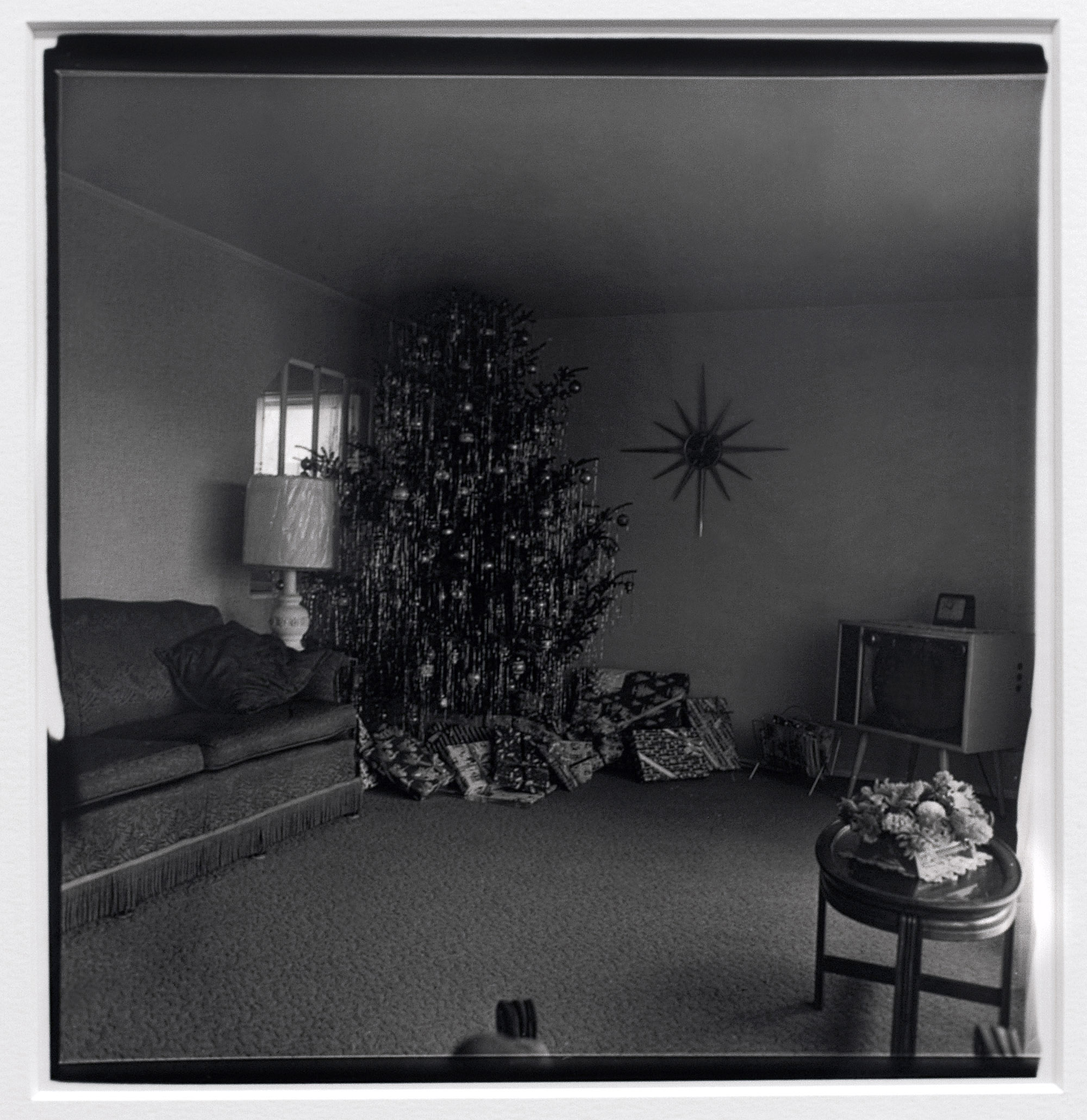
Diane Arbus (American, 1923-1971) 'Xmas tree in a living room in Levittown, L.I. 1963' 1963


Diane Arbus (American, 1923-1971)
Xmas tree in a living room in Levittown, L.I. 1963
1963
Silver gelatin print


Diane Arbus (American, 1923-1971) 'Xmas tree in a living room in Levittown, L.I. 1963' 1963 National Gallery of Australia, Canberra from the exhibition 'Diane Arbus: American Portraits' at the Heide Museum of Modern Art, Melbourne, March - June, 2018


Diane Arbus (American, 1923-1971)
Xmas tree in a living room in Levittown, L.I. 1963 (installation view)
1963
Silver gelatin print
National Gallery of Australia, Canberra
Purchased 1981
Photo: © Dr Marcus Bunyan and Heide Museum of Modern Art


The power of intention

If I had to nominate one photographer who is my favourite of all time, it would be Diane Arbus. There is just something about her photographs that impinge on my consciousness, my love of difference in human beings, their subversiveness and diversity. She pictures it all, some with irony, some with love, some with outright contempt, but always with interest. In photographs of dwarfs you don’t get the majesty and beauty that Susan Sontag desired, you get something else instead: the closeness of intention and effect – this is who this person was at that particular moment represented in a photograph, the essence of their being at that particular time.

Arbus was fascinated by the relationships between the psychological and the physical, probing her subjects with the camera to elicit a physical response. Her sensory, emotional, intellectual and aesthetic intelligence creates a single experience in relation to subject, stimulating her to respond to the world in her own unique way. While Arbus may well have hated aspects of American culture – “Its hypocrisy, this ‘happy happy’ story after the war, the consumerism, the racism, she feels deeply about that,” as Anne O’Hehir, curator of the National Gallery of Australia’s American Portraits observes – she photographed everything that makes us human in profound and powerful photographs. To me, her subjects were not ‘caught off guard’ nor did they unintentionally reveal aspects of themselves – they revealed themselves to Arbus just as they are, because she gained their trust, she had empathy for who they were… an empathy that probably flowed both ways, enhanced by the subjects sense of Arbus’ own personal travails.

It is unfortunate then, that this exhibition at Heide Museum of Modern Art is such a disappointment. This has nothing to do with the wonderful installation by the Heide curatorial team in the beautiful gallery spaces, but in the prints themselves and the artists that accompany Arbus’ work. Let’s look at the prints first.

According to the article “Diane Arbus: Iconic photographs on show together for first time at National Gallery of Australia” by Louise Maher on the ABC News website in June 2016, “The collection is one of the largest public holdings of her work outside New York and, according to NGA curator of photography Anne O’Hehir, one of the most impressive in the world. “The gallery was buying a huge amount of work in 1980 and ’81 leading up to the opening of the gallery in 1982,” Ms O’Hehir said. “We were offered in two lots these extraordinary photographs – they were the first release of prints from the Arbus estate and they were expensive at the time.”

These vintage prints are by the hand of Arbus, not later printings by other people, and as such should be as close a rendition to what Arbus intended the work to look like as can be found. The exhibition text notes that, “All the same, she was very clear about how she wanted her images to look; she worked hard to achieve a particular quality in her prints, which have a distinct feel and appearance that are quite different from other photographs of the 1960s … She reminds us consistently through a number of careful and deliberate strategies that we are looking at a photograph that has been made by a particular person.”

Through these strategies Arbus sought to differentiate her prints from the West Coast Ansel Adams Zone system of printing which was prevalent at the time. The Zone System would have been the antithesis of what Arbus wanted from her photographs. Every popular magazine at that time would have had Zone System stuff… so Arbus didn’t dare align herself with that school. But truth be told, if these prints are the best that she could do as a printer, then they are not very good. As can be seen from the installation photographs in this posting (not the media photographs), some of the prints are so dark as to be beyond comparison to the clarity of the prints that were later produced by her daughter Doon Arbus for the Arbus estate and for reproduction in books.

You only have to look at the installation photograph of Xmas tree in a living room in Levittown, L.I. 1963 (above) and another reproduction of this image to see how dark the National Gallery of Australia’s prints are. If you take time to actually look at the photographs one of the prints, Identical twins, Roselle, N.J., 1966 (1966, below) was barely in focus under the enlarger when developed, and several others have not been fixed properly. They may have been first release, but how far down the release were they? We don’t know whether these were the top shelf prints, or tenth in the stack. I know from personal experience that I have a numbering system from one to ten. You sell the best print and so number two then becomes number one, and so on.

The poorness of these prints again becomes a sign of intention. The print is the final, luminous rendition of a photographers previsualisation, the ultimate expression of their creativity. This is how I want to show you the world, through this photograph. It is the end point of a long process. I believe strongly that Arbus wanted to show things as clearly as possible, as clearly as the best possible use that photography could provide. She is like a razor the way she cuts through. But in these particular final renditions, she lets herself down. And the people who bought these photographs, should have realised what poor prints they were.

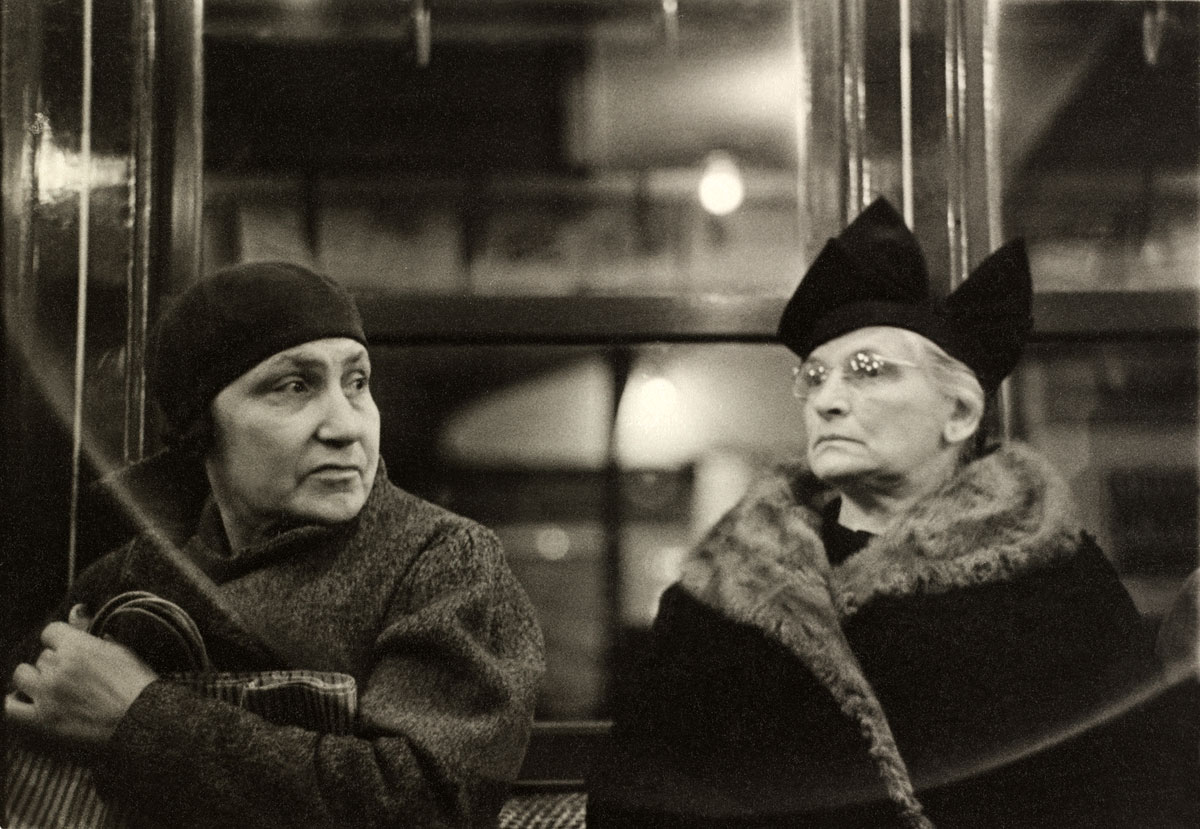
Turning to the artists that accompany the work of Arbus… was it really necessary to surround such a powerful artist’s work with such noise? While it is always a delight to see the work of Mary Ellen Mark, William Eggleston, Milton Rogovin, Lee Friedlander, Garry Winogrand, Lisette Model, Walker Evans, Weegee and William Klein, to try and embed the work of Arbus within a photographic milieu, within a cacophony of imagery that stretches from the 1930s to the 1980s, simply does not work. While Arbus emerges out of the concerns of her era, she is such a powerful presence and force that simply no one compares. She is so different from the organised Evans and or the macabre Weegee, more closely aligned to Model, and certainly by no stretch of the imagination does she influence Eggleston, Friedlander, Winogrand or Rogovin in any significant way… so that these artists works just become filler for this exhibition. If the intention was to situate Arbus’ work in the chronological “flow” of photography then the concept falls between intention and effect. While no artist’s work appears without regard to historical precedent, their work is simply their own and needs its own space to breathe.

What would have been more interesting would have been to position Arbus’ work within an Australian context. Now there’s an idea, since we live in Australia!

Here we go: exhibit Arbus’ prints with 15 prints by Carol Jerrems (Vale Street, Mark and Flappers), 15 prints of the early work of Polixeni Papapetrou (drag queens, Elvis fans, circus performers and wrestlers) and 15 prints of the work of Sue Ford. Four strong women who deal with issues of gender and identity in a forthright manner – not a cacophony of noise (9 artists, 6 of them men) to accompany the work of a genius. Analyse the influence of Arbus on this generation of Australian photographers. Pretty simple. Clean, concise, accessible, relevant to Australia audiences. Then intention would have possibly met effect.

There are highlights to be had within this exhibition, two in particular.

It was a pleasure to see the work of Milton Rogovin. I have always admired his work, and the small, intimate prints from his Lower West Side series (1973-2002) did not disappoint. While Arbus’ portraits are powerful visualisations, front and centre, Rogovin’s working class families are just… present. His social documentary photographs of working class families are almost reticent in their rendition. “His classical portraits, often grouped in diptychs and triptychs, expound narrative in a single image and over time. They compress time intimately… and by that I mean the viewer is engaged in a conversation with the subject, where we can imagine that we live those lives as they do (transcending time), the lives of what Rogovin called “the forgotten ones.” He makes their countenance, their physicality, the hardships they endure, and their narrative, directly and intimately compelling. We are made to feel their plight in the now and the forever. For these photographs are as relevant, if not more so, now as then.”

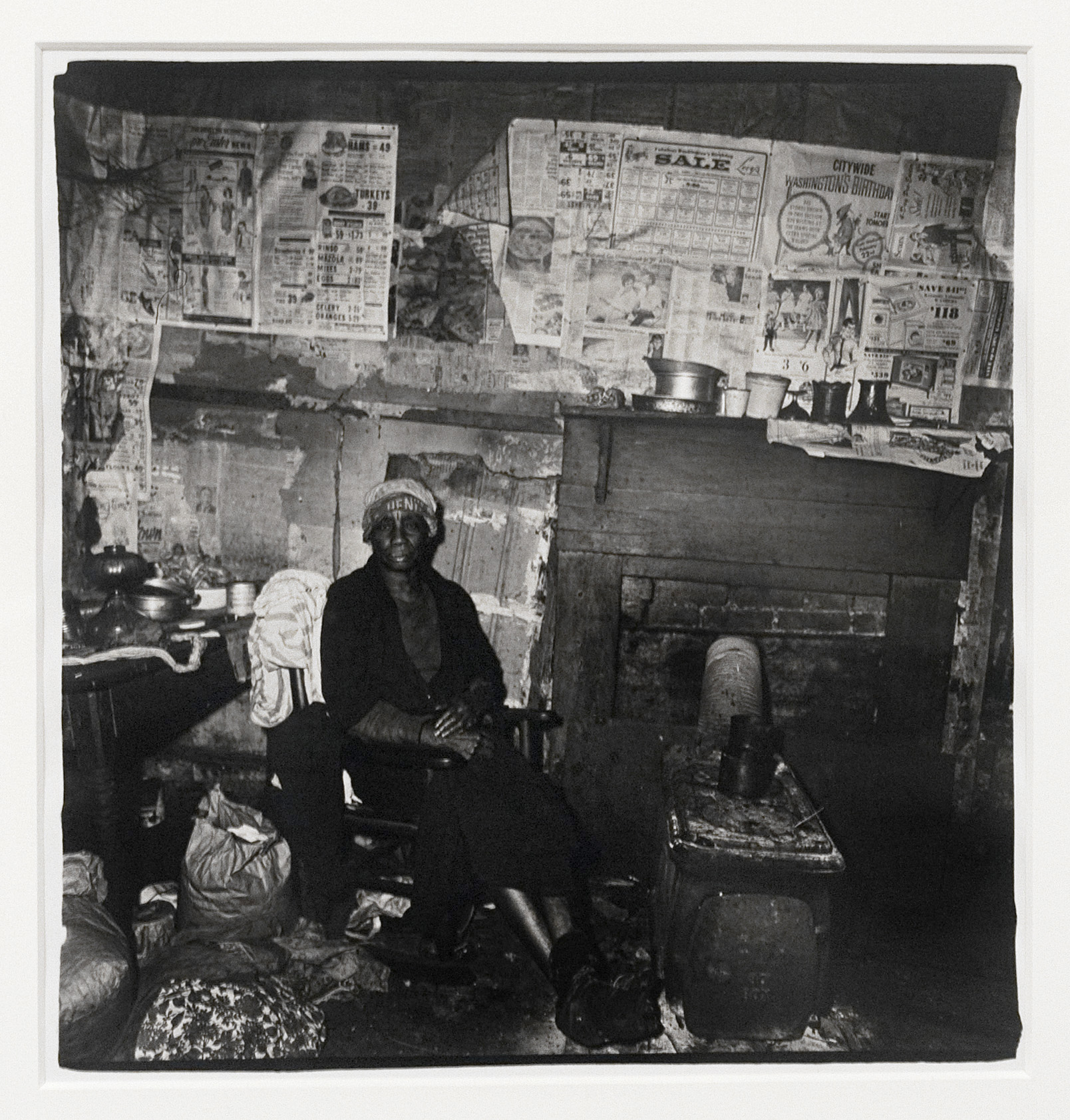
The other highlight is to see three Arbus photographs that I have never seen before: Old black woman with gnarled hand; Large black family in small shack; and Addie Taylor in her shack, Beaufort, South Carolina (all 1968, installation views below), all three taken with flash. These works were a revelation for their observational intimacy and evocation of a dark place in the existence of the poorest of human beings. The gnarled hand of the old woman lying in a filthy bed with cardboard walls is particularly distressing to say the least. To compare these photographs with Walker Evans’ flash photograph Hudson Street boarding house detail, New York (1931, below) and his naturally aspirated Bedroom, shrimp fisherman’s house, Biloxi, Mississippi (1945, below) in their pristine emptiness is instructive. This ideation, together with Arbus’ photographs relationship to the work of her sometime teacher Lisette Model (particularly her Lower East Side photographs (1939-1942); Albert-Alberta, Hubert’s 42nd St Flea Circus, New York (c. 1945) and Woman with Veil, San Francisco (1949) all below) are the zenith of this exhibition, where the intention of embedding Arbus’ photographs in the history of the medium comes best to fruition, in effect.

Finally, I must say a big thank you to Heide Museum of Modern Art for allowing me to come out to the gallery to take the installation photographs. Many thanks indeed.

Dr Marcus Bunyan


Many thankx to Heide Museum of Modern Art for allowing me to publish some of the photographs in the posting. Please click on some of the photographs for a larger version of the image.


“People who met Arbus often said she was incredibly seductive. Immensely curious, she was softly spoken and her ability to connect with and gain the trust of people was legendary. She talked about “the gap between intention and effect”, explaining “it really is totally fantastic that we look like this and you sometimes see that very clearly in a photograph. Something is ironic in the world and it has to do with the fact that what you intend never comes out like you intend it.””


Diane Arbus quoted in Kerrie O’Brien (curator of the National Gallery of Australia’s Diane Arbus: American Portraits) “Intimate, dark and compelling: the photographs of Diane Arbus,” on The Sydney Morning Herald website March 14, 2018 [Online] Cited 16/02/2022


“The people in an Arbus photograph are never trivialised; they have certainly a larger-than-life intensity that few other photographers can achieve. While they seem like figures from fairy tales or myth, they are also invested with powerful agency.”


Gillian Wearing quoted in Kerrie O’Brien (curator of the National Gallery of Australia’s Diane Arbus: American Portraits) “Intimate, dark and compelling: the photographs of Diane Arbus,” on The Sydney Morning Herald website March 14, 2018 [Online] Cited 16/02/2022


“When you’re awake enough to question your purpose and ask how to connect to it, you’re being prodded by the power of intention. The very act of questioning why you’re here is an indication that your thoughts are nudging you to reconnect to the field of intention. What’s the source of your thoughts about your purpose? Why do you want to feel purposeful? Why is a sense of purpose considered the highest attribute of a fully functioning person? The source of thought is an infinite reservoir of energy and intelligence.

In a sense, thoughts about your purpose are really your purpose trying to reconnect to you. This infinite reservoir of loving, kind, creative, abundant energy grew out of the originating intelligence, and is stimulating you to express this universal mind in your own unique way.”


Dr Wayne Dyer from ‘The Power of Intention’


Installation view of the exhibition 'Diane Arbus: American Portraits' at the Heide Museum of Modern Art, Melbourne

Installation view of the exhibition 'Diane Arbus: American Portraits' at the Heide Museum of Modern Art, Melbourne


Installation views of the exhibition Diane Arbus: American Portraits at the Heide Museum of Modern Art, Melbourne
Photos: © Dr Marcus Bunyan and Heide Museum of Modern Art


Heide is delighted to host the National Gallery of Australia’s touring exhibition, Diane Arbus: American Portraits.

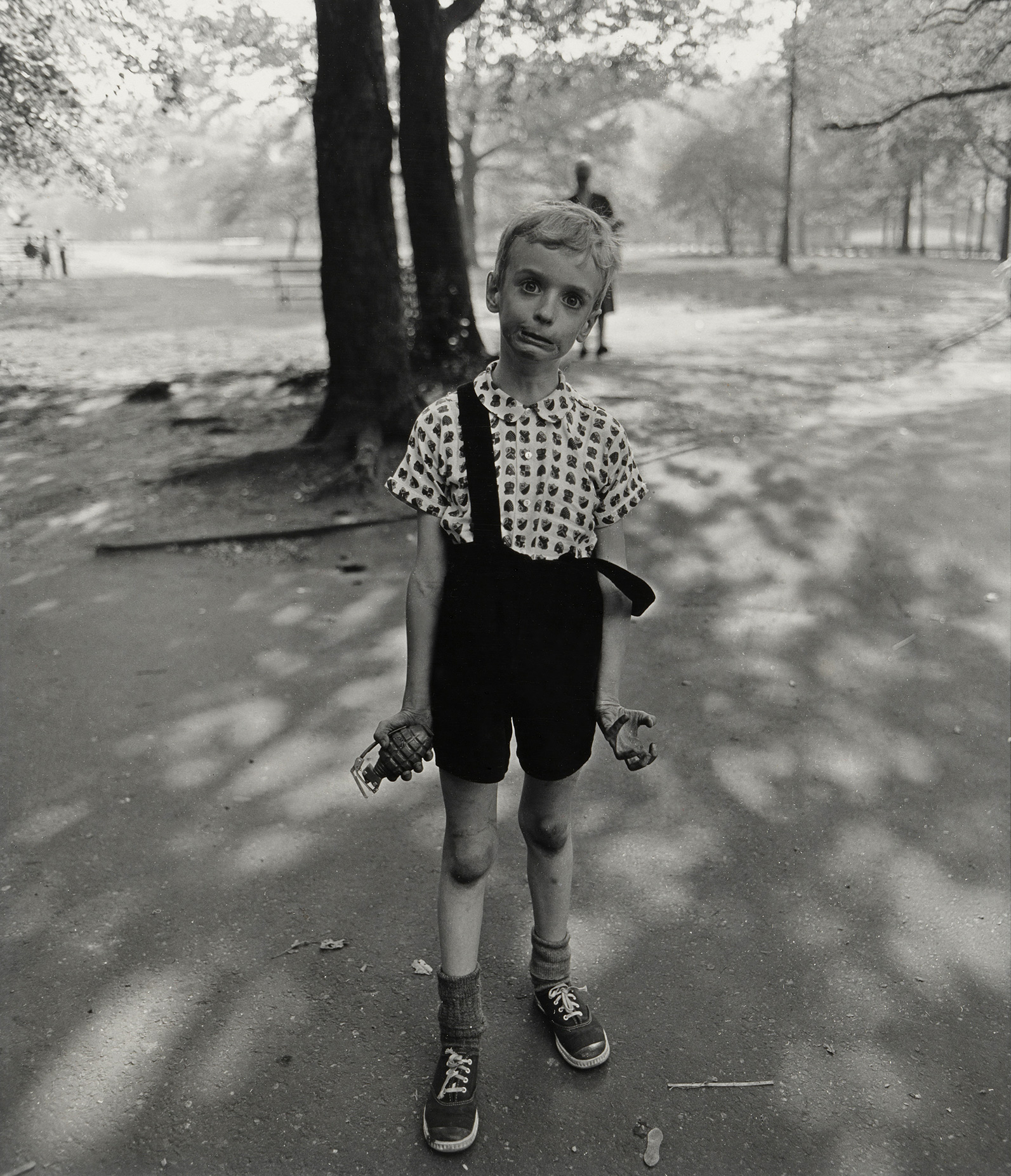
The photographs of Diane Arbus (1923-1971) are among the most widely recognised in the history of photography. Her images stand as powerful allegories of post-war America, and once seen are rarely forgotten. Works such as Identical twins, Roselle, N.J., 1967 and Child with toy hand grenade, in Central Park, New York City have been described as two of ‘the most celebrated images in the history of the medium’.

Featuring 35 of Arbus’s most iconic and confrontational images from 1961-1971, this exhibition examines the last decade of Arbus’s life,the period in which her style is in full flight. Her work has polarised viewers who question whether she exploited or empowered her subjects, who were often drawn from society’s margins. ‘The National Gallery of Australia is privileged to hold such an extraordinary collection of work by a photographer of Arbus’s significance,’ said Anne O’Hehir, curator. ‘This collection covers Arbus’s best-known pictures, and also includes images which are rarely seen. This exhibition is a testament to the power of Arbus’s extraordinary vision.’

Arbus’s photographs are exhibited alongside a selection of works by other leading American photographers whose work influenced Arbus, was shown alongside hers in the ’60s, or has been influenced by her. These include famous images by Lisette Model, Walker Evans and Weegee, her contemporaries William Klein, Garry Winogrand, Lee Friedlander and Milton Rogovin as well as a slightly younger generation, work by Mary Ellen Mark and William Eggleston.

Heide Director and CEO Dr Natasha Cica said: ‘Heide is delighted to present this exhibition of the renowned photographer Diane Arbus. Her uncompromising view challenged existing photography conventions in a surprising and enchanting way.’

Press release from Heide Museum of Modern Art


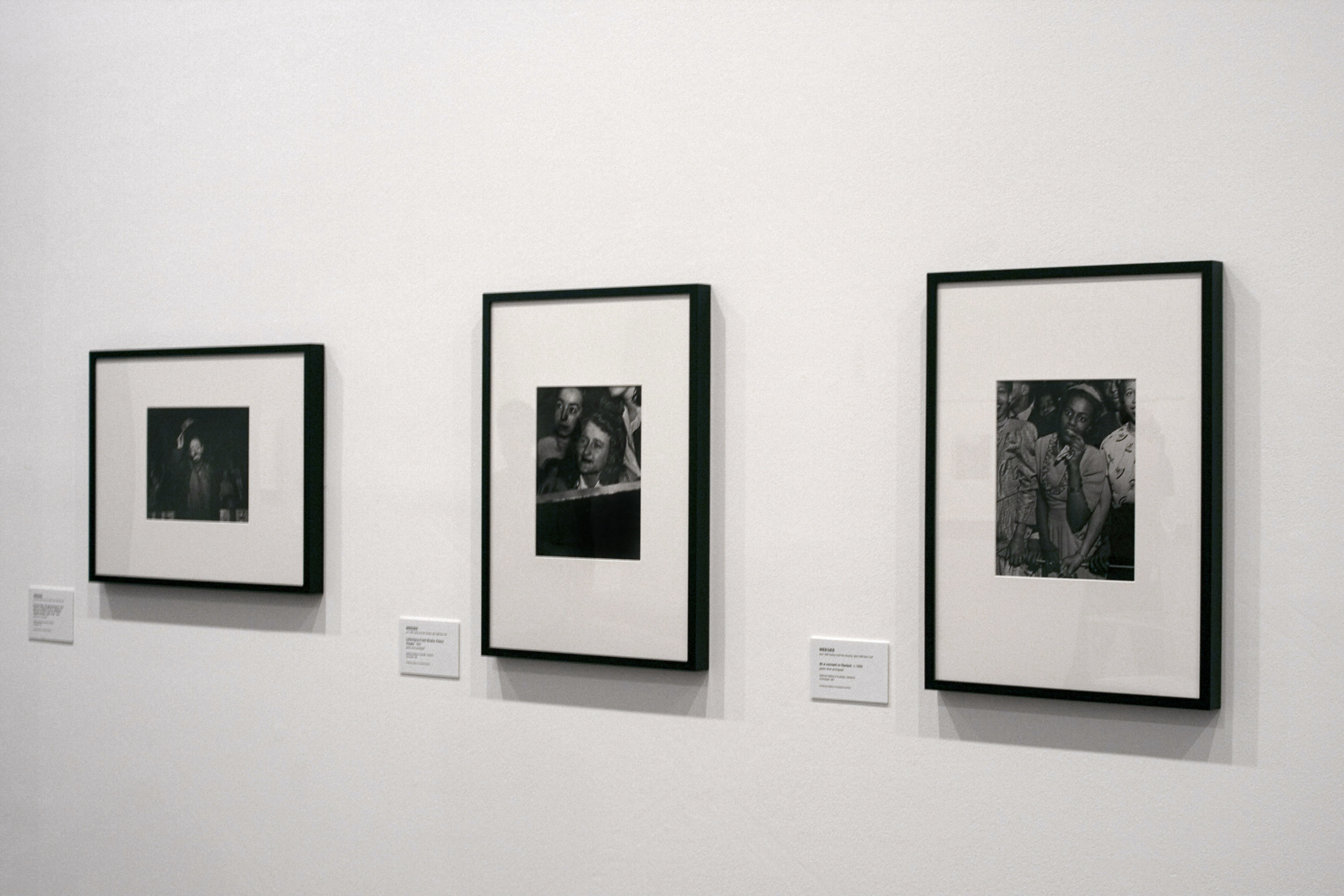
Installation view of the exhibition 'Diane Arbus: American Portraits' at the Heide Museum of Modern Art, Melbourne with at left, Weegee's 'No title (at a concert in Harlem)' c. 1948 followed by William Klein's 'Christmas shoppers, near Macy's, New York' 1954 and 'Stickball gang, New York' 1955


Installation views of the exhibition Diane Arbus: American Portraits at the Heide Museum of Modern Art, Melbourne with at left, Weegee’s No title (at a concert in Harlem) c. 1948, National Gallery of Australia, Canberra Purchased 1981 followed by William Klein’s Christmas shoppers, near Macy’s, New York 1954 and Stickball gang, New York 1955
Photo: © Dr Marcus Bunyan and Heide Museum of Modern Art


Weegee (Arthur Fellig) (American, 1899-1968) 'No title (at a concert in Harlem)' c. 1948 from the exhibition 'Diane Arbus: American Portraits' at the Heide Museum of Modern Art, Melbourne, March - June, 2018


Weegee (Arthur Fellig) (American, 1899-1968)
No title (at a concert in Harlem)
c. 1948
Gelatin silver photograph


Installation view of the exhibition 'Diane Arbus: American Portraits' at the Heide Museum of Modern Art, Melbourne

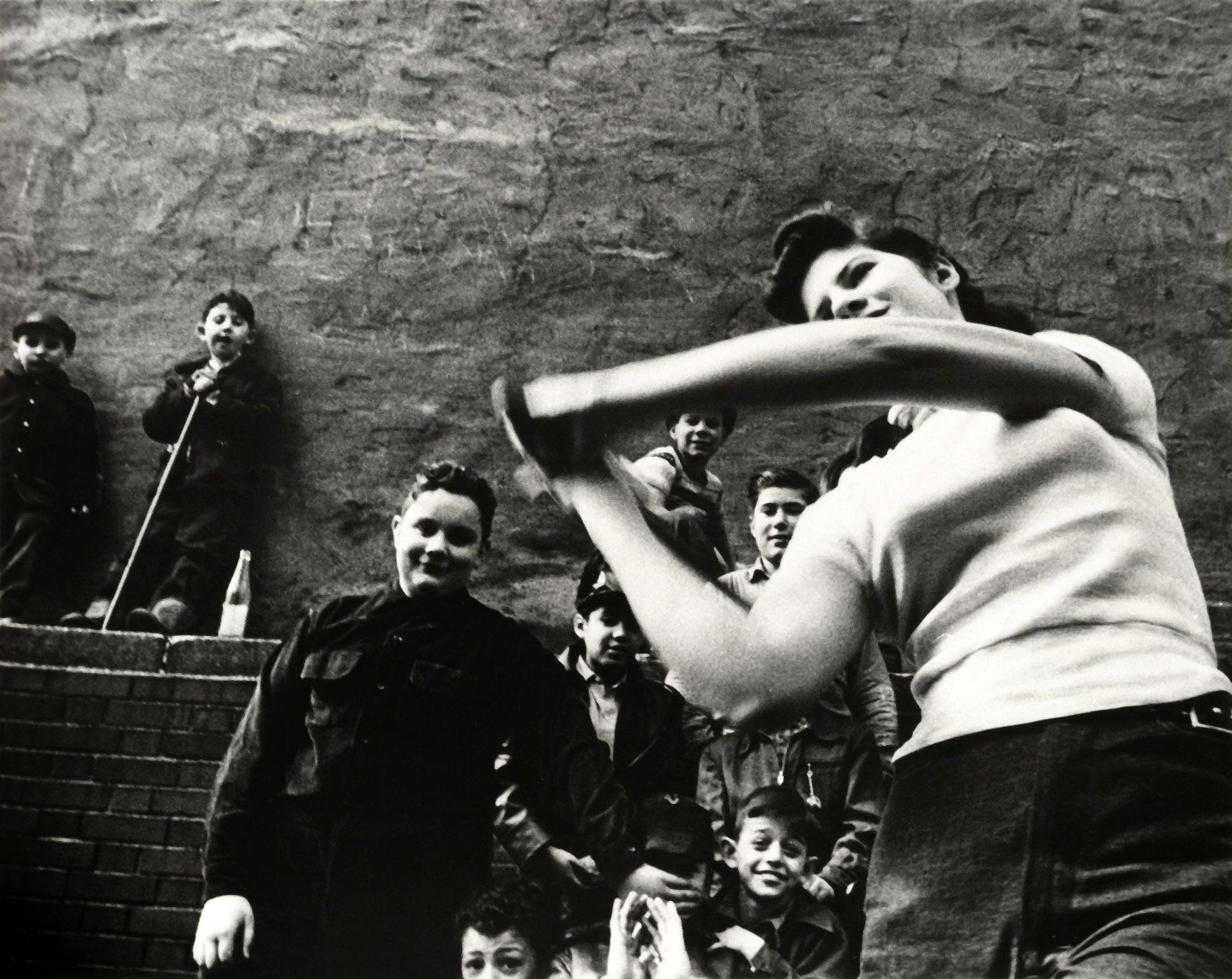
Installation view of the exhibition 'Diane Arbus: American Portraits' at the Heide Museum of Modern Art, Melbourne showing at left, William Klein's 'Christmas shoppers, near Macy's, New York' 1954; and at right, William Klein's 'Stickball gang, New York' 1955


Installation views of William Klein’s Christmas shoppers, near Macy’s, New York 1954 and Stickball gang, New York 1955
Photos: © Dr Marcus Bunyan and Heide Museum of Modern Art


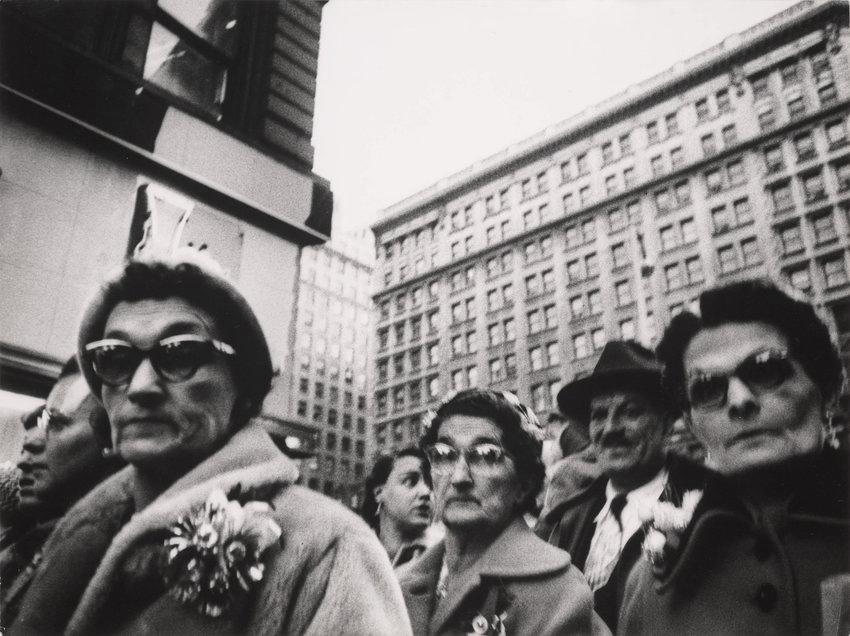
Installation view of William Klein (born April 19, 1928) 'Christmas shoppers, near Macy's, New York' 1954 showing William Klein's 'Christmas shoppers, near Macy's, New York' 1954


Installation view of William Klein’s Christmas shoppers, near Macy’s, New York 1954 National Gallery of Australia, Canberra Purchased 1993
Photo: © Dr Marcus Bunyan and Heide Museum of Modern Art


William Klein (American, 1928-2022) 'Christmas shoppers, near Macy's, New York' 1954


William Klein (American, 1928-2022)
Christmas shoppers, near Macy’s, New York
1954
Gelatin silver photograph


Klein sandwiched his relatively short photographic career, working as a fashion photographer for Vogue, between being a painter and a filmmaker. Self-taught, he experimented with flash, wide-angle lenses, blurring, abstraction and accidents, and produced grainy, high contrast prints. He is deliberately at the other end of the spectrum from the invisible, disinterested photographer. Klein deliberately got really close to his subjects, in their faces, and caught them reacting to being photographed on the street. ‘To be visible, intervene and show it’ was his mantra.

Text © National Gallery of Australia, Canberra


Installation view of William Klein's 'Stickball gang, New York' 1955


Installation view of William Klein’s Stickball gang, New York 1955 National Gallery of Australia, Canberra Purchased 1993
Photo: © Dr Marcus Bunyan and Heide Museum of Modern Art


William Klein (American, 1928-2022) 'Stickball gang, New York' 1955


William Klein (American, 1928-2022)
Stickball gang, New York
1955
Gelatin silver photograph


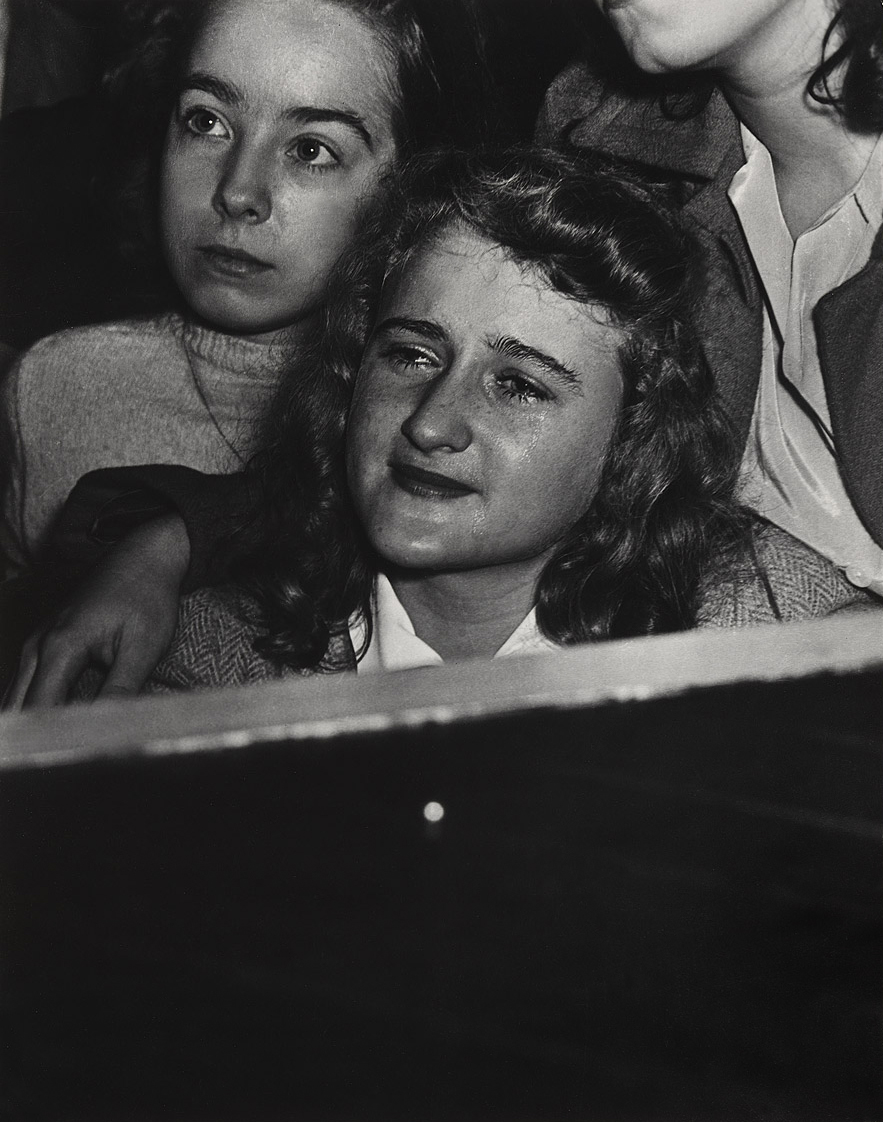
Installation view of the exhibition 'Diane Arbus: American Portraits' at the Heide Museum of Modern Art, Melbourne showing at left, Weegee's 'No title (listening to Frank Sinatra, Palace theatre)' c. 1944; and at right, Weegee's 'No title (at a concert in Harlem)' c. 1948


Installation view of the exhibition Diane Arbus: American Portraits at the Heide Museum of Modern Art, Melbourne showing at left, his No title (listening to Frank Sinatra, Palace theatre) c. 1944, National Gallery of Australia, Canberra Purchased 1981; and at right, Weegee’s No title (at a concert in Harlem) c. 1948, National Gallery of Australia, Canberra Purchased 1981
Photo: © Dr Marcus Bunyan and Heide Museum of Modern Art


Installation view of the exhibition 'Diane Arbus: American Portraits' at the Heide Museum of Modern Art, Melbourne showing from right to left, Weegee's 'No title (at a concert in Harlem)' c. 1948, followed by his 'No title (listening to Frank Sinatra, Palace theatre)' c. 1944 and 'Emmett Kelly, Ringling Brothers and Barnum & Bailey Circus' 1943


Installation view of the exhibition Diane Arbus: American Portraits at the Heide Museum of Modern Art, Melbourne showing from right to left, Weegee’s No title (at a concert in Harlem) c. 1948, followed by his No title (listening to Frank Sinatra, Palace theatre) c. 1944 and Emmett Kelly, Ringling Brothers and Barnum & Bailey Circus 1943
Photo: © Dr Marcus Bunyan and Heide Museum of Modern Art


Weegee (Arthur Fellig) (1899-1968) 'Emmett Kelly, Ringling Brothers and Barnum & Bailey Circus' 1943 (installation view)


Installation view of Weegee’s Emmett Kelly, Ringling Brothers and Barnum & Bailey Circus 1943, National Gallery of Australia, Canberra Purchased 1981
Photo: © Dr Marcus Bunyan and Heide Museum of Modern Art


Weegee (Arthur Fellig) (1899-1968) 'No title (listening to Frank Sinatra, Palace theatre)' c. 1944


Weegee (Arthur Fellig) (American, 1899-1968)
No title (listening to Frank Sinatra, Palace theatre)
c. 1944
Silver gelatin print


Installation view of the exhibition 'Diane Arbus: American Portraits' at the Heide Museum of Modern Art, Melbourne showing the work of Walker Evans


Installation view of the exhibition Diane Arbus: American Portraits at the Heide Museum of Modern Art, Melbourne showing the work of Walker Evans
Photo: © Dr Marcus Bunyan and Heide Museum of Modern Art


Installation view of the exhibition 'Diane Arbus: American Portraits' at the Heide Museum of Modern Art, Melbourne showing from left to right, Diane Arbus' 'Rocks on wheels, Disneyland, Cal' 1962; 'Xmas tree in a living room in Levittown, L.I. 1963'; and 'Lady in a rooming house parlour, Albion, N.Y. 1963'


Installation view of the exhibition Diane Arbus: American Portraits at the Heide Museum of Modern Art, Melbourne showing from left to right, Diane Arbus’ Rocks on wheels, Disneyland, Cal 1962; Xmas tree in a living room in Levittown, L.I. 1963; and Lady in a rooming house parlour, Albion, N.Y. 1963, all National Gallery of Australia, Canberra Purchased 1981
Photo: © Dr Marcus Bunyan and Heide Museum of Modern Art


Diane Arbus (American, 1923-1971) 'Rocks on wheels, Disneyland, Cal' 1962


Diane Arbus (American, 1923-1971)
Rocks on wheels, Disneyland, Cal
1962
Silver gelatin print


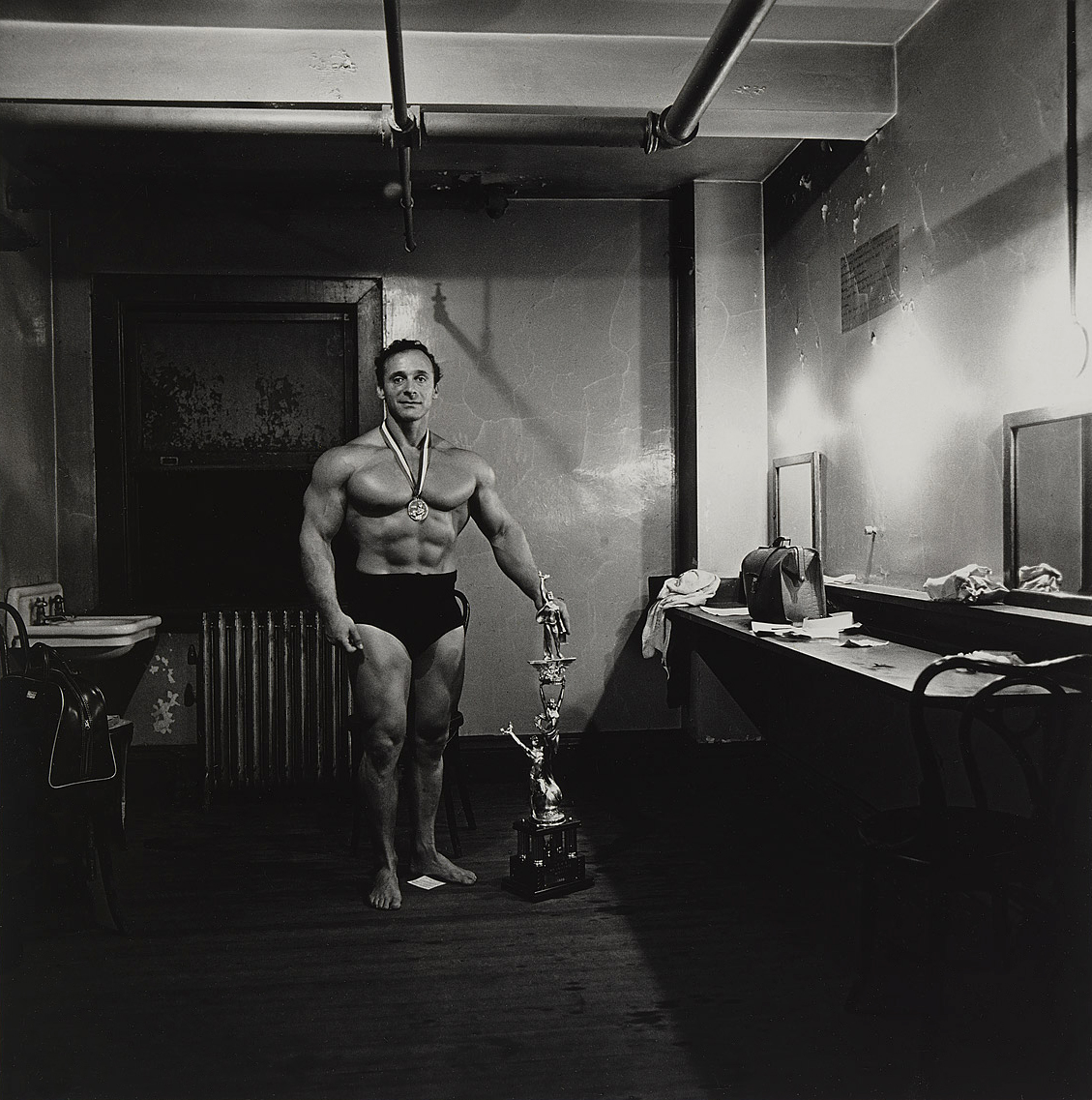
Installation view of the exhibition 'Diane Arbus: American Portraits' at the Heide Museum of Modern Art, Melbourne showing at left, Diane Arbus' 'Muscle Man in his dressing room with trophy, Brooklyn, N.Y.' 1962 and at right, 'Burlesque comedienne in her dressing room, Atlantic City, N.J.' 1963


Installation view of the exhibition Diane Arbus: American Portraits at the Heide Museum of Modern Art, Melbourne showing at left, Diane Arbus’ Muscle Man in his dressing room with trophy, Brooklyn, N.Y. 1962 and at right, Burlesque comedienne in her dressing room, Atlantic City, N.J. 1963, both National Gallery of Australia, Canberra Purchased 1981 and 1980
Photo: © Dr Marcus Bunyan and Heide Museum of Modern Art


Diane Arbus (American, 1923-1971) 'Muscle Man in his dressing room with trophy, Brooklyn, N.Y.' 1962


Diane Arbus (American, 1923-1971)
Muscle Man in his dressing room with trophy, Brooklyn, N.Y.
1962
Silver gelatin print


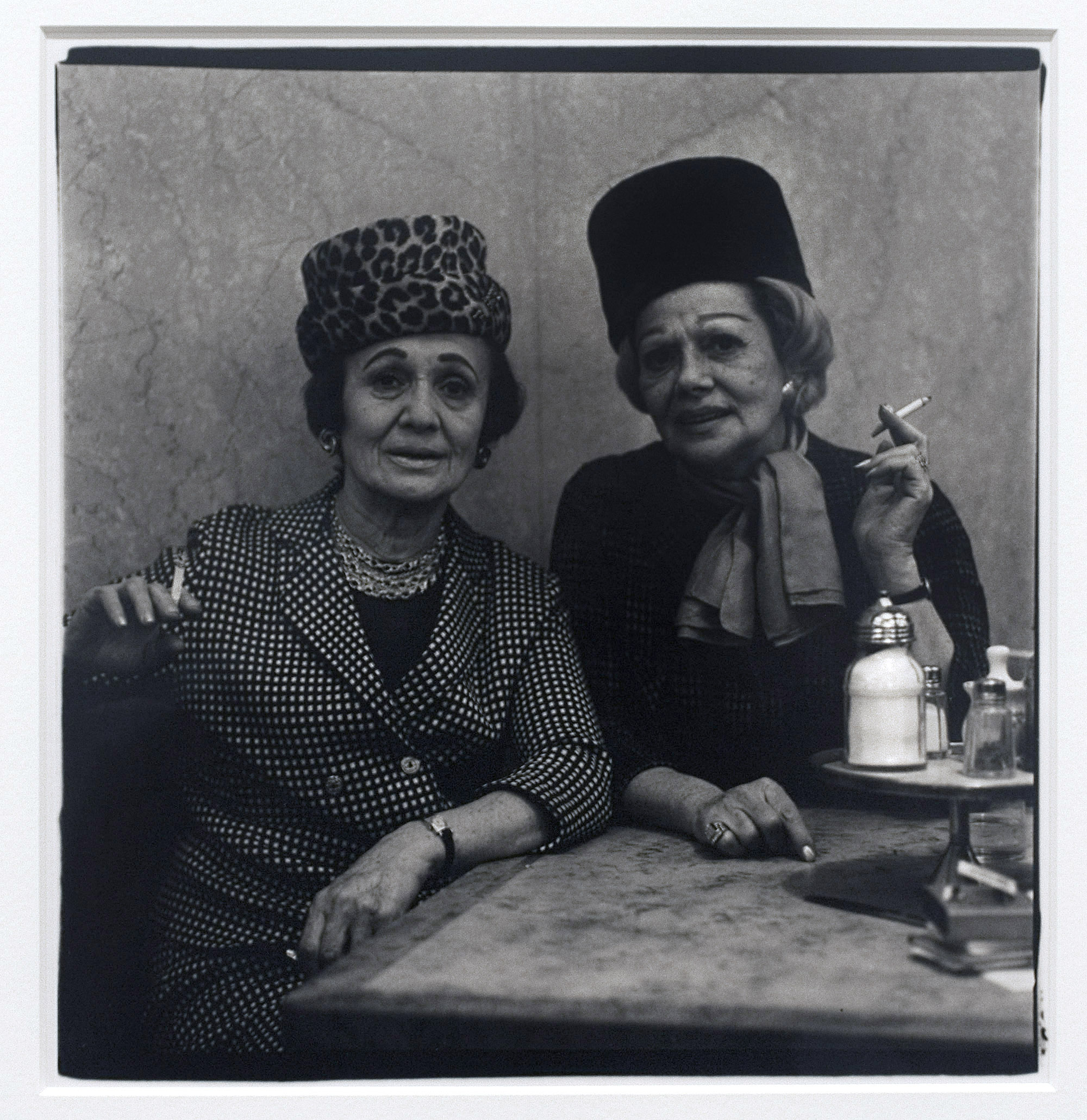
Diane Arbus (American, 1923-1971) 'Two Ladies at the Automat, New York City, 1966' 1966 (installation view)


Diane Arbus (American, 1923-1971)
Two Ladies at the Automat, New York City, 1966 (installation view)
1966
Silver gelatin print
National Gallery of Australia, Canberra
Purchased 1981
Photo: © Dr Marcus Bunyan and Heide Museum of Modern Art


Diane Arbus (American, 1923-1971) 'Transvestite with torn stocking, N.Y.C. 1966' 1966 (installation view)


Diane Arbus (American, 1923-1971)
Transvestite with torn stocking, N.Y.C. 1966 (installation view)
1966
Silver gelatin print
National Gallery of Australia, Canberra
Purchased 1981
Photo: © Dr Marcus Bunyan and Heide Museum of Modern Art


Diane Arbus (American, 1923-1971) 'Mae West on bed' 1965


Diane Arbus (American, 1923-1971)
Mae West on bed
1965
Gelatin silver photograph
National Gallery of Australia, Canberra
Purchased 1981


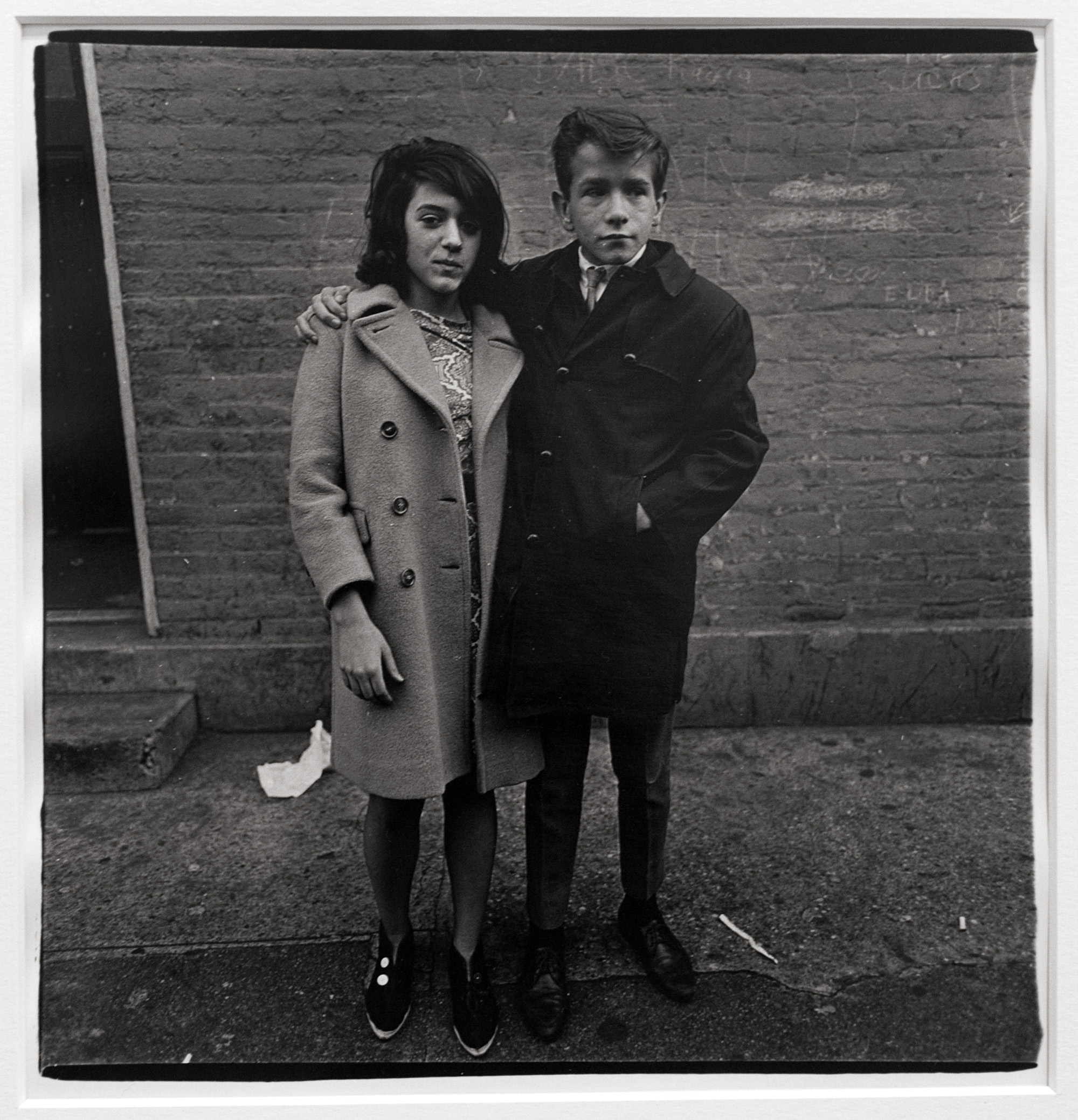
Diane Arbus (American, 1923-1971) 'Teenage couple on Hudson Street, N.Y.C. 1963' 1963 (installation view)


Diane Arbus (American, 1923-1971)
Teenage couple on Hudson Street, N.Y.C. 1963 (installation view)
1963
Gelatin silver photograph
National Gallery of Australia, Canberra
Purchased 1980
Photo: © Dr Marcus Bunyan and Heide Museum of Modern Art


Diane Arbus (American, 1923-1971) 'Teenage couple on Hudson Street, N.Y.C. 1963' 1963 (installation view)


Diane Arbus (American, 1923-1971)
Teenage couple on Hudson Street, N.Y.C. 1963 (installation view)
1963
Gelatin silver photograph
National Gallery of Australia, Canberra
Purchased 1980
Photo: © Dr Marcus Bunyan and Heide Museum of Modern Art


Diane Arbus (American, 1923-1971) 'Teenage couple on Hudson Street, N.Y.C. 1963' 1963


Diane Arbus (American, 1923-1971)
Teenage couple on Hudson Street, N.Y.C. 1963
1963
Gelatin silver photograph


Installation view of the exhibition 'Diane Arbus: American Portraits' at the Heide Museum of Modern Art, Melbourne showing from left to right, Diane Arbus' 'A Jewish giant at home with his parents in the Bronx, N.Y.' 1970; 'Untitled (1)' 1970-1971; and 'Mexican dwarf in his hotel room N.Y.C.' 1970

Installation view of the exhibition 'Diane Arbus: American Portraits' at the Heide Museum of Modern Art, Melbourne showing from left to right, Diane Arbus' 'A Jewish giant at home with his parents in the Bronx, N.Y.' 1970; 'Untitled (1)' 1970-1971; and 'Mexican dwarf in his hotel room N.Y.C.' 1970


Installation view of the exhibition Diane Arbus: American Portraits at the Heide Museum of Modern Art, Melbourne showing from left to right, Diane Arbus’ A Jewish giant at home with his parents in the Bronx, N.Y., 1970; Untitled (1) 1970-1971; and Mexican dwarf in his hotel room N.Y.C. 1970
Photos: © Dr Marcus Bunyan and Heide Museum of Modern Art


Diane Arbus (American, 1923-1971) 'A Jewish giant at home with his parents in the Bronx, N.Y., 1970' 1970


Diane Arbus (American, 1923-1971)
A Jewish giant at home with his parents in the Bronx, N.Y., 1970
1970
Gelatin silver photograph


Diane Arbus (American, 1923-1971) 'Untitled (1)' 1970-1971


Diane Arbus (American, 1923-1971)
Untitled (1)
1970-1971
Gelatin silver photograph


Diane Arbus (American, 1923-1971) 'Mexican dwarf in his hotel room N.Y.C. 1970' 1970


Diane Arbus (American, 1923-1971)
Mexican dwarf in his hotel room N.Y.C. 1970
1970
Gelatin silver photograph


Diane Arbus (American, 1923-1971) 'Identical twins, Roselle, N.J., 1966' 1966


Diane Arbus (American, 1923-1971)
Identical twins, Roselle, N.J., 1966
1966
Gelatin silver photograph


Installation view of the exhibition 'Diane Arbus: American Portraits' at the Heide Museum of Modern Art, Melbourne showing from left to right, Diane Arbus' 'Boy with a straw hat waiting to march in a pro-war parade, N.Y.C.' 1967; 'A young man in curlers at home on West 20th St., N.Y.C.' 1966; and 'A Family on Their Lawn One Sunday in Westchester, New York' 1968

Installation view of the exhibition 'Diane Arbus: American Portraits' at the Heide Museum of Modern Art, Melbourne showing from left to right, Diane Arbus' 'Boy with a straw hat waiting to march in a pro-war parade, N.Y.C.' 1967; 'A young man in curlers at home on West 20th St., N.Y.C.' 1966; and 'A Family on Their Lawn One Sunday in Westchester, New York' 1968


Installation view of the exhibition Diane Arbus: American Portraits at the Heide Museum of Modern Art, Melbourne showing from left to right, Diane Arbus’ Boy with a straw hat waiting to march in a pro-war parade, N.Y.C., 1967; A young man in curlers at home on West 20th St., N.Y.C. 1966; and A Family on Their Lawn One Sunday in Westchester, New York 1968
Photos: © Dr Marcus Bunyan and Heide Museum of Modern Art


Diane Arbus (American, 1923-1971) 'Boy with a straw hat waiting to march in a pro-war parade, N.Y.C., 1967' 1967


Diane Arbus (American, 1923-1971)
Boy with a straw hat waiting to march in a pro-war parade, N.Y.C., 1967
1967
Gelatin silver photograph
National Gallery of Australia, Canberra
Purchased 1980


Diane Arbus (American, 1923-1971) 'A young man in curlers at home on West 20th St., N.Y.C. 1966' 1966 (installation view)


Diane Arbus (American, 1923-1971)
A young man in curlers at home on West 20th St., N.Y.C. 1966 (installation view)
1966
Gelatin silver photograph
National Gallery of Australia, Canberra
Purchased 1980
Photo: © Dr Marcus Bunyan and Heide Museum of Modern Art


Diane Arbus (American, 1923-1971) 'A young man in curlers at home on West 20th St., N.Y.C. 1966' 1966


Diane Arbus (American, 1923-1971)
A young man in curlers at home on West 20th St., N.Y.C. 1966 (installation view)
1966
Gelatin silver photograph
Photo: © Dr Marcus Bunyan and Heide Museum of Modern Art


Diane Arbus (American, 1923-1971) 'A Family on Their Lawn One Sunday in Westchester, New York 1968' 1968


Diane Arbus (American, 1923-1971)
A Family on Their Lawn One Sunday in Westchester, New York 1968
1968
Gelatin silver photograph


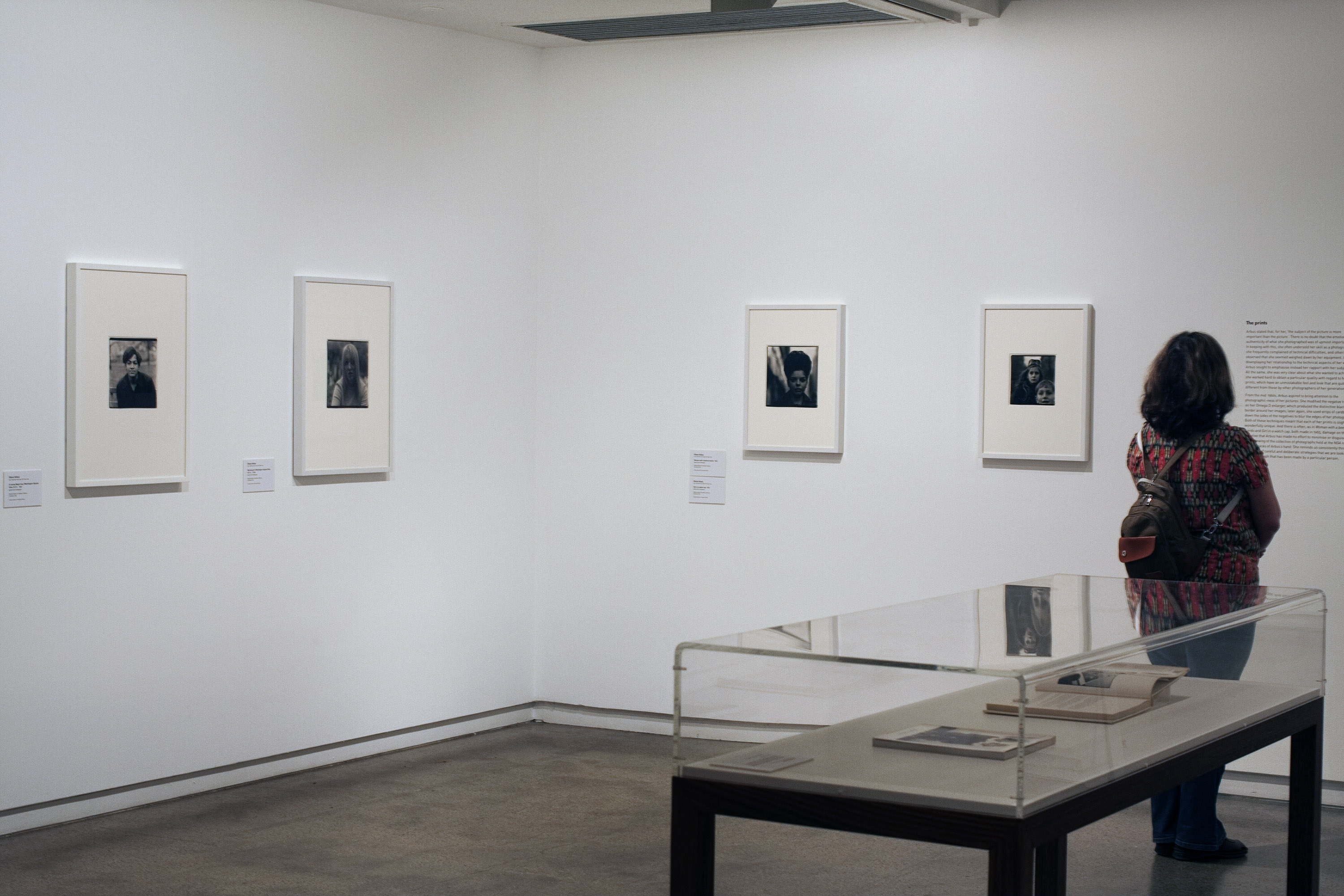
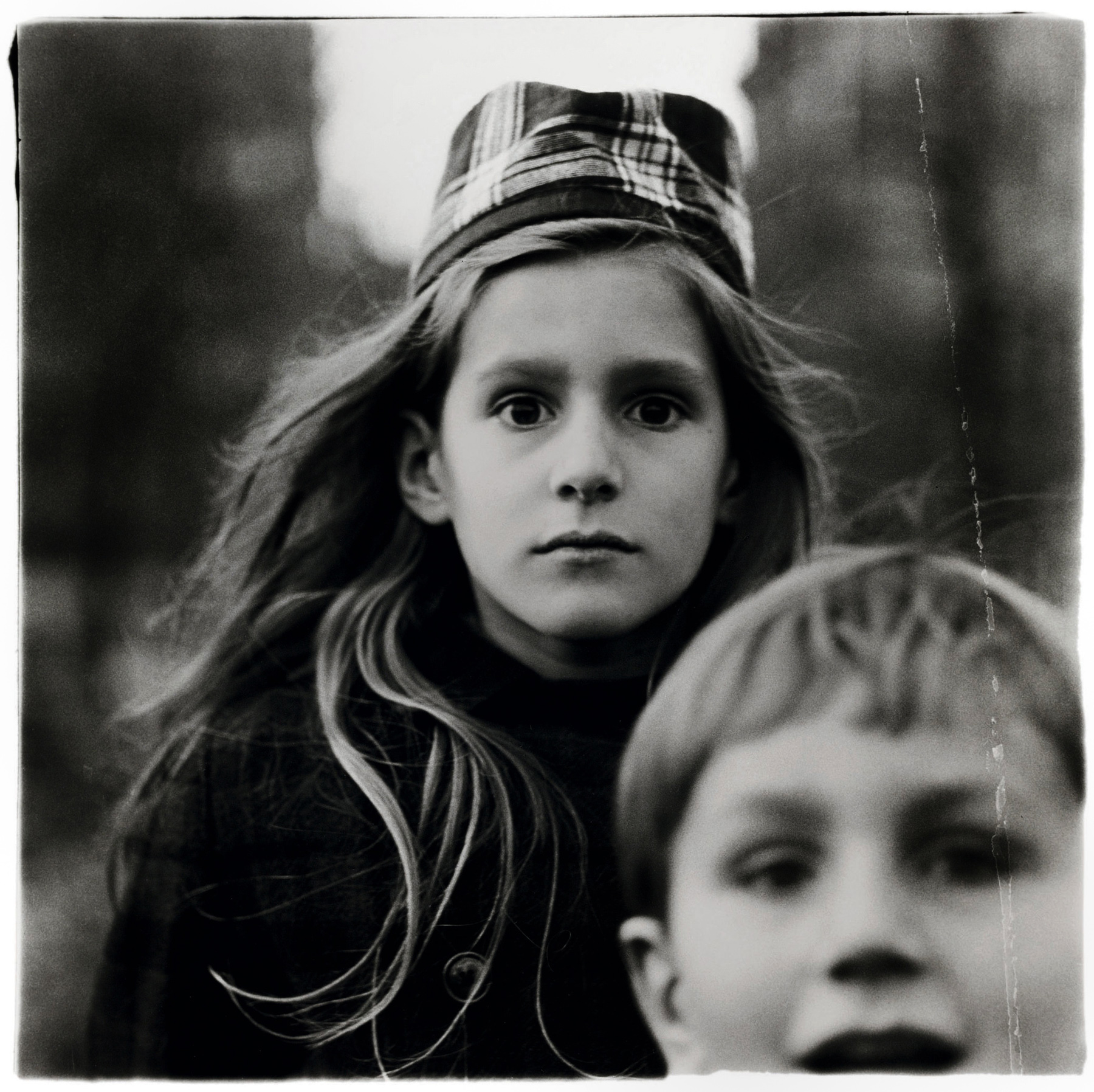
Installation view of the exhibition 'Diane Arbus: American Portraits' at the Heide Museum of Modern Art, Melbourne showing from left to right, Diane Arbus' 'A young Negro boy, Washington Square Park, N.Y.C.' 1965; 'Blonde girl in Washington Square Park' c. 1965-1968; 'Woman with a beehive hairdo' 1965; and 'Girl in a watch cap, N.Y.C.' 1965


Installation view of the exhibition Diane Arbus: American Portraits at the Heide Museum of Modern Art, Melbourne showing from left to right, Diane Arbus’ A young Negro boy, Washington Square Park, N.Y.C. 1965; Blonde girl in Washington Square Park c. 1965-1968; Woman with a beehive hairdo 1965; and Girl in a watch cap, N.Y.C. 1965
Photo: © Dr Marcus Bunyan and Heide Museum of Modern Art


Diane Arbus (American, 1923-1971) 'A young Negro boy, Washington Square Park, N.Y.C. 1965' c. 1965


Diane Arbus (American, 1923-1971)
A young Negro boy, Washington Square Park, N.Y.C. 1965
c. 1965
Gelatin silver photograph


Installation view of the exhibition 'Diane Arbus: American Portraits' at the Heide Museum of Modern Art, Melbourne showing from left to right, Diane Arbus' 'Woman with a beehive hairdo' 1965 and 'Girl in a watch cap, N.Y.C.' 1965


Installation view of the exhibition Diane Arbus: American Portraits at the Heide Museum of Modern Art, Melbourne showing from left to right, Diane Arbus’ Woman with a beehive hairdo 1965 and Girl in a watch cap, N.Y.C. 1965
Photo: © Dr Marcus Bunyan and Heide Museum of Modern Art


Diane Arbus (American, 1923-1971) 'Woman with a beehive hairdo' 1965 (installation view)


Diane Arbus (American, 1923-1971)
Woman with a beehive hairdo (installation view)
1965
Gelatin silver photograph
National Gallery of Australia, Canberra
Purchased 1981
Photo: © Dr Marcus Bunyan and Heide Museum of Modern Art


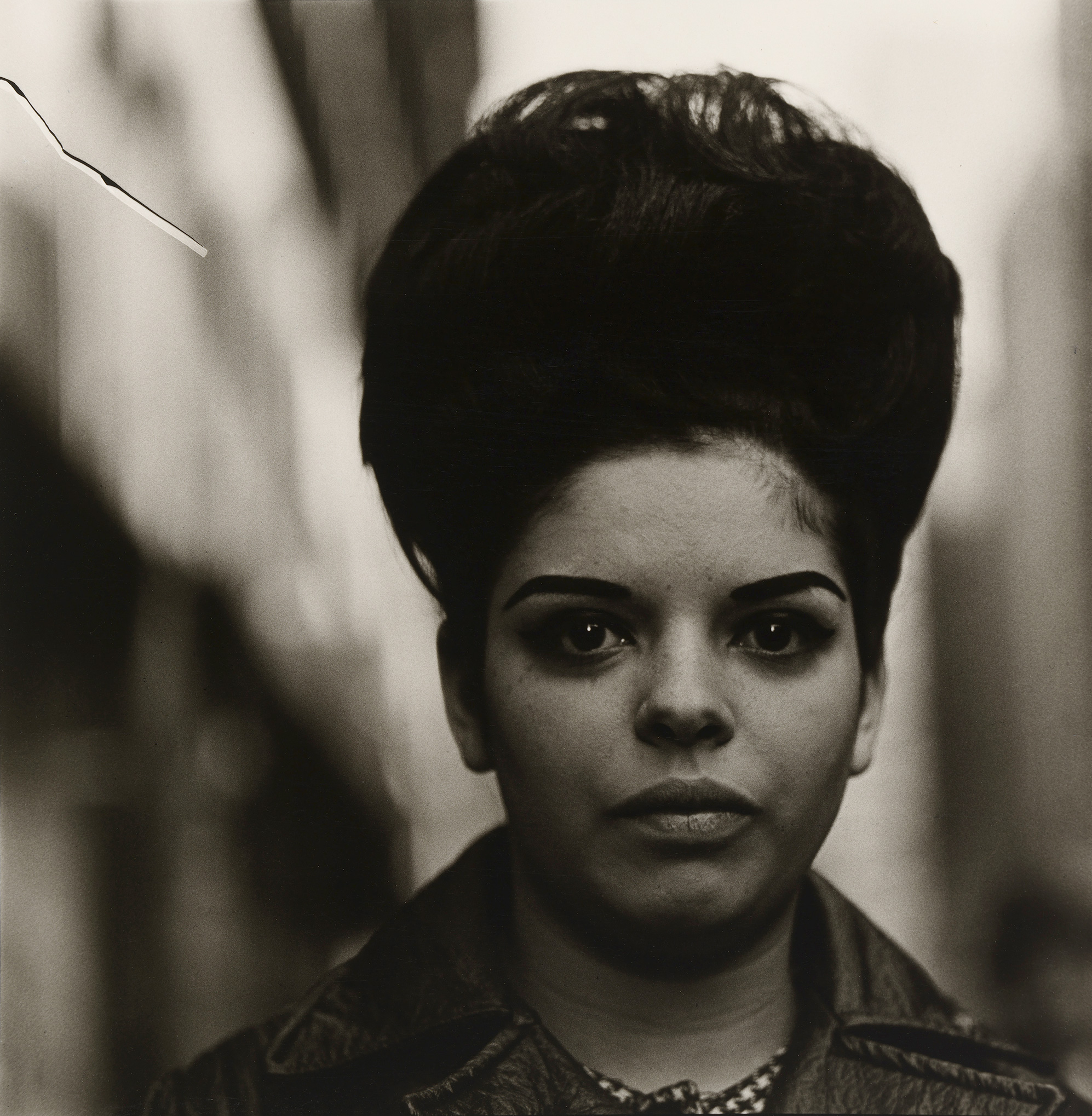
Diane Arbus (American, 1923-1971) 'Woman with a beehive hairdo' 1965


Diane Arbus (American, 1923-1971)
Woman with a beehive hairdo
1965
Gelatin silver photograph


Diane Arbus (American, 1923-1971) 'Girl in a watch cap, N.Y.C. 1965' 1965


Diane Arbus (American, 1923-1971)
Girl in a watch cap, N.Y.C. 1965
1965
Gelatin silver photograph


Diane Arbus (American, 1923-1971) 'Child with toy hand grenade, in Central Park, New York City 1962' 1962


Diane Arbus (American, 1923-1971)
Child with toy hand grenade, in Central Park, New York City 1962
1962
Gelatin silver photograph
National Gallery of Australia, Canberra
Purchased 1980


Diane Arbus (American, 1923-1971) 'Old black woman with gnarled hand' 1968 (installation view)


Diane Arbus (American, 1923-1971)
Old black woman with gnarled hand (installation view)
1968
Gelatin silver photograph
National Gallery of Australia, Canberra
Purchased 1981
Photo: © Dr Marcus Bunyan and Heide Museum of Modern Art


Diane Arbus (American, 1923-1971) 'Large black family in small shack [Robert Evans and his family, 1968]' 1968 (installation view)


Diane Arbus (American, 1923-1971)
Large black family in small shack [Robert Evans and his family, 1968] (installation view)
1968
Gelatin silver photograph
National Gallery of Australia, Canberra
Purchased 1981
Photo: © Dr Marcus Bunyan and Heide Museum of Modern Art


Diane Arbus (American, 1923-1971) 'Addie Taylor in her shack, Beaufort, South Carolina' 1968 (installation view)


Diane Arbus (American, 1923-1971)
Addie Taylor in her shack, Beaufort, South Carolina (installation view)
1968
Gelatin silver photograph
National Gallery of Australia, Canberra
Purchased 1981
Photo: © Dr Marcus Bunyan and Heide Museum of Modern Art


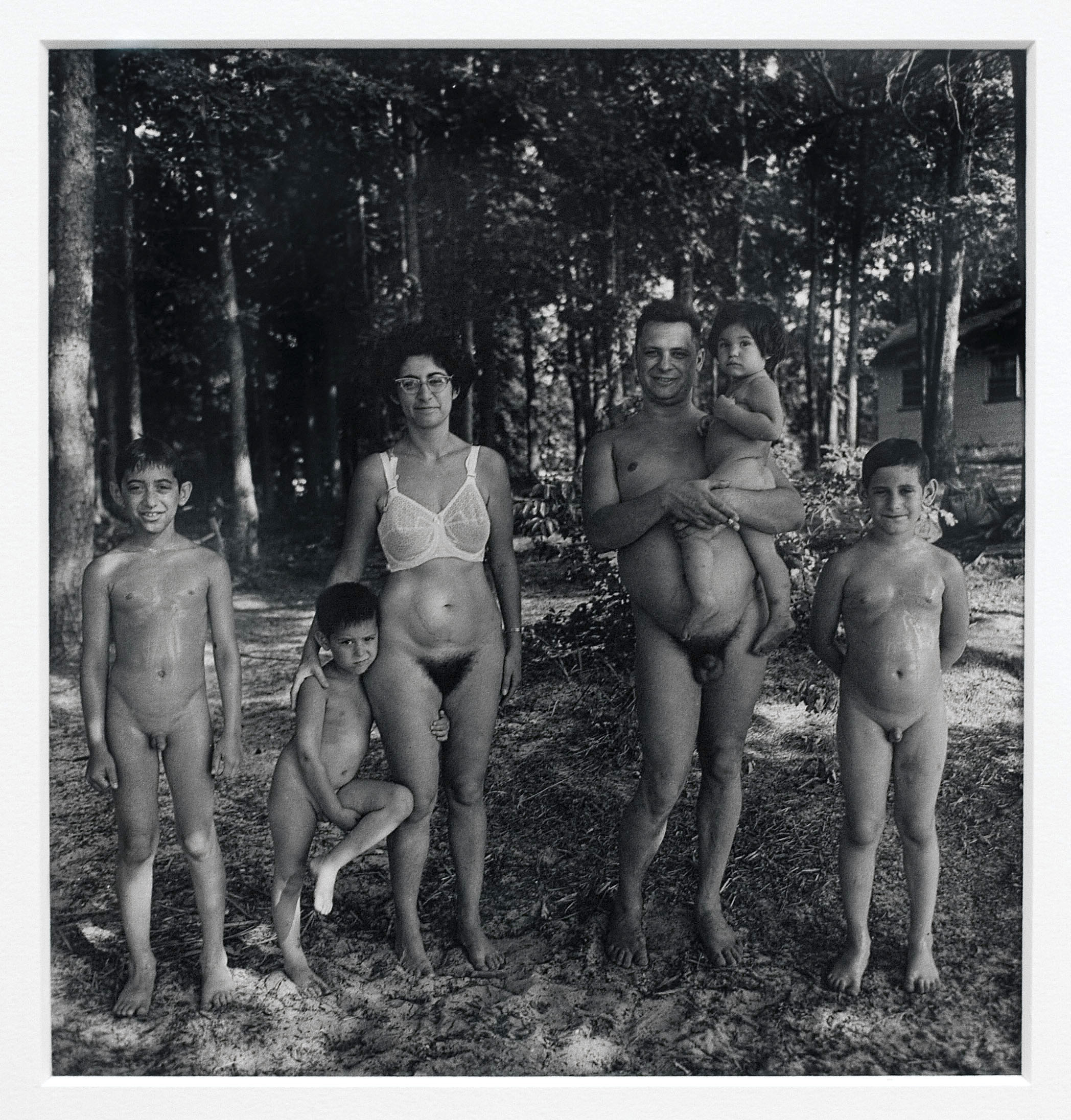
Diane Arbus (American, 1923-1971) 'A family of six at a nudist camp' c. 1963 (installation view)


Diane Arbus (American, 1923-1971)
A family of six at a nudist camp (installation view)
c. 1963
Gelatin silver photograph
National Gallery of Australia, Canberra
Purchased 1981
Photo: © Dr Marcus Bunyan and Heide Museum of Modern Art


Introduction

The photographs of Diane Arbus (1923-1971) are powerful allegories of postwar America. Once seen they are rarely forgotten. Contemporary audiences found the way that Arbus approached the genre of portraiture confronting and her work continues to polarise opinion. The images raise difficult, uncomfortable questions concerning the intent of the photographer.

Arbus had a huge curiosity about the society around her; her favourite thing was ‘to go where I’ve never been’. As she was a photographer, this manifested as an obsessive exploration into what it means to photograph and be photographed, and what can happen at that moment of exchange – something elusive and a little bit magical. Whether Arbus is an empathetic champion of the outsider, or an exploitative voyeur, is something that each viewer alone must decide.

The National Gallery of Australia’s collection of Arbus photographs is among the most impressive in the world. The NGA is extremely fortunate to have bought 36 rare, vintage prints in 1980 and 1981, from the earliest releases of prints from the Arbus Estate. These works are from the last decade of the artist’s life, the period in which her recognisable style is in full flight and she was in total control of her medium.

These rare prints are shown alongside photographs by others who also sought to redefine the tradition of portraiture, and whose vision of America is also both challenging and moving. The work of these photographers relates to Arbus in a variety of ways: they are influencers, contemporaries or heirs to aspects of her worldview. Like Arbus, they are keen, singular observers of their worlds, transforming the sometimes banal and ugly into images of unexpected beauty.

An uncompromising view of the world

Diane Arbus was born Diane Nemerov, the daughter of wealthy Jewish New Yorkers; her father ran Russek’s, a department store on Fifth Avenue selling furs and women’s clothing. Growing up in an apartment in a towering building on Central Park West, her world was highly protected, one in which she never felt adversity. This was something Arbus resented both at the time and later; it seemed to her to be an unreal experience of the world. At 18 she married her childhood sweetheart, Allan Arbus, and for a decade from the mid 1940s, they ran a successful photography studio doing fashion shots for leading picture magazines.

In 1956 Arbus ceased working with Allan in the studio and began instead to explore subjects of her own choice. She was, apart from the occasional class, essentially self-taught and as she struck out on her own, she undertook a detailed study of the work of other photographers. Compelled to confront that which had been off-limits in her own privileged childhood, she looked to other photographers who had confronted the world head-on, including Weegee, William Klein, Walker Evans and Lisette Model. They recorded, each in their own way, their surroundings with an at-times frightening candour. In their images, Arbus found an uncompromising view of the world, stripped of sentimentality.

Weegee

Weegee turns the banal and seedy underbelly of New York city streets after hours into moments of great psychological drama. A freelance news photographer, he supplied images to the popular press but was also well regarded in art circles. The Museum of Modern Art collected his work and exhibited it in 1943. Arbus owned a number of Weegee’s books and greatly admired his Runyonesque view of the world. She closely studied aspects of his working method as she formulated her own, especially his use of flash. His ‘wild dynamics’ made everyone else ‘look like an academician’, she wrote.

William Klein

Returning to New York in 1954 from his émigré life in Paris, Klein was at once taken aback by what he perceived to be a society pursuing purely materialistic goals, but also excited by the energy he found on the streets. Self-taught, he experimented with flash, wide-angle lenses, blurring and close-ups, abstraction and accidents, and produced grainy, high contrast prints. Klein’s 1956 book, Life is Good & Good for You in New York: Trance Witness Revels, a copy of which Arbus owned, gave impetus to the emerging genre of street photography through his harsh, uncompromising vision of the city. His work was met, particularly in the United States, with misunderstanding and hostility.

Walker Evans

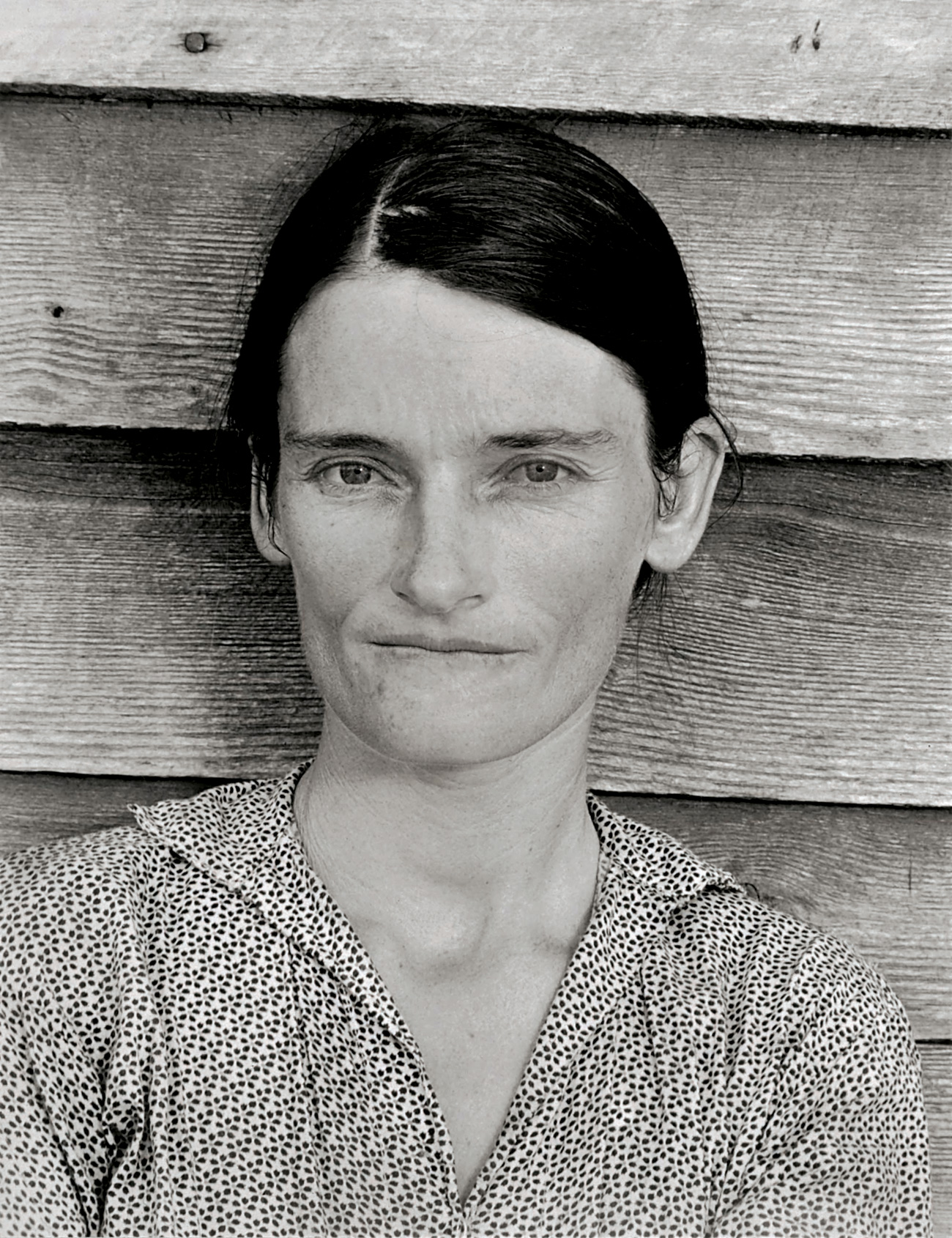
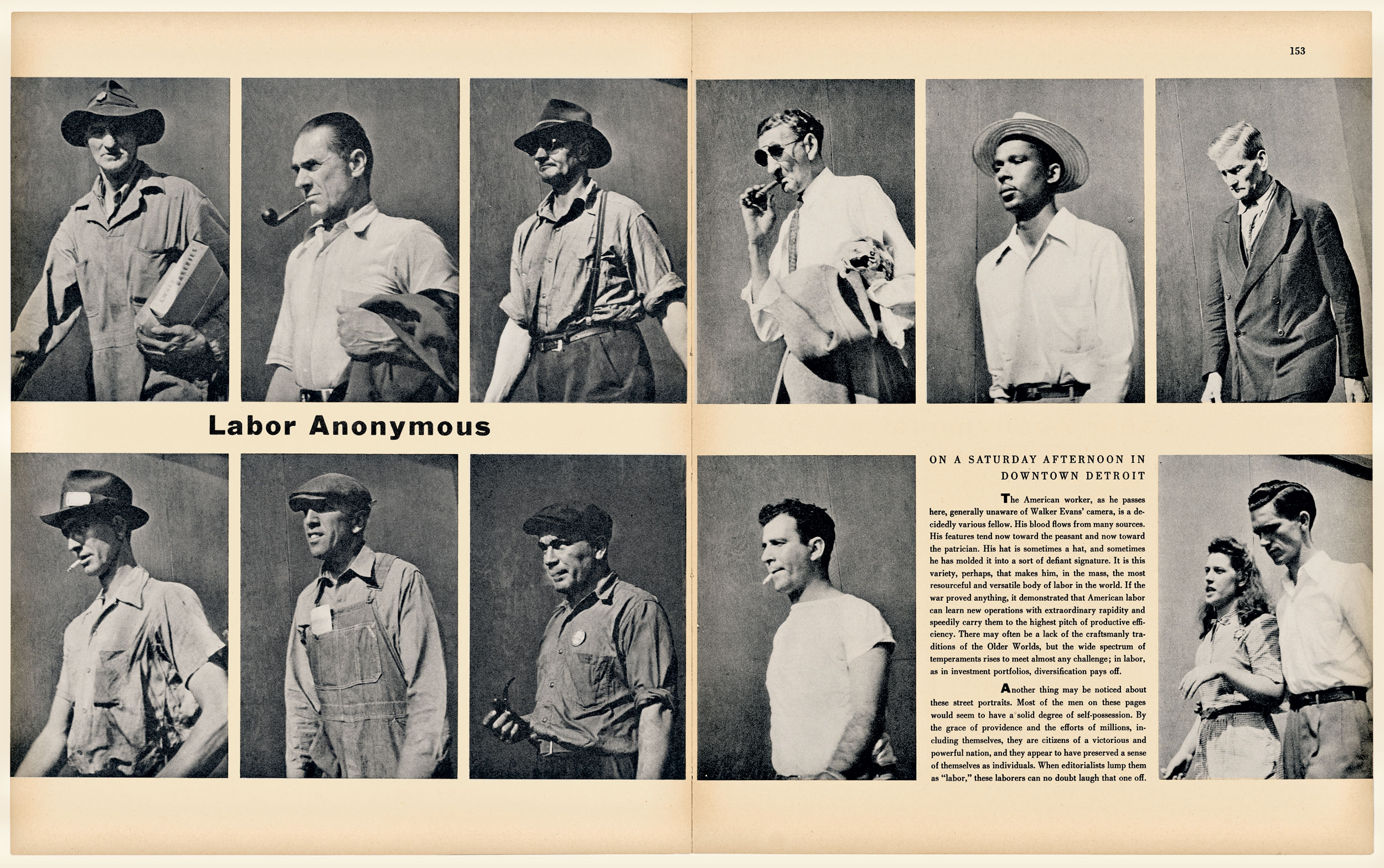
The writer James Agee travelled to Alabama in America’s South in 1936 to research an article on the plight of tenant farmers for Fortune magazine. He chose photographer Walker Evans to accompany him. The article did not eventuate but a book did, Let us now praise famous men. Both men were unnerved by what they saw: Agee wrote of ‘the nakedness, disadvantage and humiliation of … an undefended and appallingly damaged group of human beings’. And yet in the face of this, Evans made images of insistent frontality and careful symmetrical framing; devoid of cliché or pretention, and suggesting an impartiality. This gave the images a great authenticity and power.

Evans’ oeuvre is essentially concerned with how photography represents the world. His significance in the development of twentieth-century photography was reappraised during the 1960s, largely through the largesse of John Szarkowski, the head of the Museum of Modern Art’s photography department at the time. Szarkowski argued that the foundations for many of the key aesthetic and formal tendencies of 1960s photography rested in Evans’ work. The catalogue that accompanied his 1938 exhibition American photographs, in particular, had a huge impact on the new generation of photographers, and on Arbus in particular. She met Evans in 1961 and visited him regularly at his New York home throughout the decade. He wrote in support of her 1963 Guggenheim Grant application.

Lisette Model

Lisette Model’s satirical portraits of the rich on the French Riviera and the photographs she made in the 1940s of the Lower East Side’s poor and marginalised bear out the fact that she took her own advice: ‘Don’t shoot ’till the subject hits you in the pit of your stomach’. By the 1950s she had largely turned to teaching and her influence on Arbus, who took a number of her classes at the New School in 1956 and again in 1957-1958, was profound. Model encouraged Arbus to pursue her own distinctive voice. Model recalled, ‘One day I said to her, and I think this was very crucial, “originality means coming from the source…” And from then on, Diane was sitting there and – I’ve never in my life seen anybody – not listening to me but suddenly listening to herself through what was said.’

The gap between intention and effect

Prior to 1962 Arbus worked primarily with a 35mm Nikon camera. Her images at this time were often about gesture, with grainy images and subjects frequently shown in movement. In 1962 Arbus switched to a 2 ¼ inch medium-format, twin-lens Rolleiflex (later a Mamiyaflex), which she used with a flash and which when printed full-frame, gave the photographs a square format. The pictures she took with these cameras are deceptively, deliberately simple. Compositionally they are often masterful with repetitions of shapes and minutely observed, subtly presented details. Despite the confronting subject matter, her images have a classical stillness, an insistent frontality that she borrowed from classic documentary photography. To this Arbus adds a very deliberate use of the snap-shot aesthetic, with slightly tilted picture planes and people caught unawares, to signal the authenticity of her connection with the subject.

Arbus developed a working method and style that offered what amounts to a critique of the photographic portrait. There is a palpable tension in the way she presents her subjects, a complicity in the image-making process which rubs up against the fact that her subjects seem caught off-guard, unintentionally revealing aspects of themselves. Arbus identified this as ‘the gap between intention and effect’, explaining that ‘it really is totally fantastic that we look like this and you sometimes see that very clearly in a photograph. Something is ironic in the world and it has to do with the fact that what you intend never comes out like you intend it’. Arbus’s ability to connect with and gain the trust of people is legendary. Fellow photographer Joel Meyerowitz felt that she was ‘an emissary from the world of feeling. She cared about these people. They felt that and gave her their secret’.

The aristocrats

As a student at the alternative Fieldston Ethical Culture School in the Bronx, Arbus developed a fascination with myths, ritual and public spectacle. This preoccupation remained steadfast throughout her life. For example, in 1963 she was awarded a prestigious Guggenheim Fellowship to document ‘American rites, manners and customs’. Arbus had an almost insatiable curiosity and fascination with the world and she sought to make photographs that addressed fundamental aspects of our humanity in the broadest terms. It was the photographer Lisette Model, with whom she studied in the late 1950s, who made her realise that, in a seemingly contradictory way, the more specific a photograph of something was, the more general its message became.

To this extent, it is notable that Arbus’s photographs rarely address the issues of the day in any overt and obvious way. While there are exceptions – for example, her work for magazines from the sixties, including portraits of celebrities and documentary work examining the plight of the poor in South Carolina – for the most part Arbus used the camera as a licence to enter the specifics of other people’s lives.

She was particularly drawn to marginalised people, who for whatever reason had fallen out of a conventional place in society and were forced (those born into disability) or chose (the nudists, for example) to construct their own identity. To find them, she frequented sideshow alleys and Hubert’s Freak Museum at Broadway and 42nd Street, joined nudist camps in New Jersey and Pennsylvania, and visited seedy hotels; she also found them in public spaces, in streets and parks where social rules were often arbitrarily imposed and discarded.

Arbus’s subjects are often seen to play with society’s roles and restrictions. She classified these people as ‘aristocrats’, having achieved a certain freedom from social constraints, and they made her feel a mix of shame and awe.

The prints

Arbus stated that, for her, ‘the subject of the picture is more important than the picture’. There is no doubt that the emotional authenticity of what she photographed was of upmost importance. In keeping with this, she often undersold her skill as a photographer; she often complained of technical difficulties, and others frequently observed that she seemed weighed down by her equipment. In downplaying her relationship to the technical aspects of her work, Arbus sought to emphasise instead her rapport with her subjects. All the same, she was very clear about how she wanted her images to look; she worked hard to achieve a particular quality in her prints, which have a distinct feel and appearance that are quite different from other photographs of the 1960s.

From the mid 1960s, Arbus worked hard to emphasise the photographic-ness of her pictures. She modified the negative tray on her Omega ‘D’ enlarger, which produced the distinctive black border around her images; later again, she used strips of cardboard down the sides of the negatives to blur the edges of her images. Both of these techniques meant that each of her prints is slightly, wonderfully unique. And there is often, as in the cases of Woman with a beehive hairdo and Girl in a watch cap, both made in 1965, damage (tears and marks) on the negative that Arbus has made no effort to minimise or disguise. Close viewing of the collection of photographs held at the NGA reveal ghostly traces of the hand of Arbus. She reminds us consistently through a number of careful and deliberate strategies that we are looking at a photograph that has been made by a particular person.

To know life

Arbus was not alone in photographing the social landscape of America in the 1960s. Others, including Garry Winogrand, Lee Friedlander and Milton Rogovin, similarly took to the country’s streets. Rogovin’s life work was to photograph people from poor minority groups, much of his work being made in Buffalo, New York, where he himself lived. Like Arbus, he often knew and befriended his subjects, returning to photograph them over many years, collaborating with them to create images of great dignity and integrity.

Like Arbus, Winogrand and Friedlander were included in the landmark 1967 exhibition New documents, curated by John Szarkowski for the Museum of Modern Art, New York. This was the only major showing of Arbus’s work during her lifetime. While acknowledging that each of the artists in the exhibition had their own distinct styles, Szarkowski characterised them as part of a generation that used the documentary tradition ‘to more personal ends.’ As he wrote: ‘Their aim has been not to reform life, but to know it. Their work betrays a sympathy – almost an affection – for the imperfections and frailties of society’.

An essential aspect of their innovation was the way they positioned photography and the acts of taking and viewing a photograph as an essential aspect of the work. Their photographs were not intended simply as windows to the world. As Winogrand noted when asked how he felt about missing photographs while he reloaded his camera, ‘there are no photographs while I’m reloading’. Winogrand, Friedlander and Arbus were fascinated by how the real was translated into the language of photography, and how the experience of the photograph involves a fascinating, multilayered three-way interaction between the photographer, the subject and the viewer.

Garry Winogrand

Winogrand restlessly prowled the same streets of New York as Arbus in the 1960s, working stealthily, capturing people without their knowledge. His viewpoint, one he asks the viewer to join, is unashamedly, unapologetically voyeuristic. He used a Leica M4 with a wide-angle lens and tipped the picture plane, giving his compositions a particular feel. Traumatised by the fraught political tensions of the cold war period, anxiety found its way into the imagery – lending his work an edge that makes for a compelling reading of an alienated and fearful society in the throes of change. His city is a site of unexpected confrontations and strange, witty juxtapositions. Fellow photographer Joel Meyerowitz remarked that Winogrand ‘set a tempo on the street so strong that it was impossible not to follow it. It was like jazz. You just had to get in the same groove’.

Lee Friedlander

Friedlander’s images are invariably about looking and this includes turning the camera on himself. He often intrudes into his hastily grabbed, ironic studies of the city, through reflection or shadow or a pair of shoes. Thus, the viewer of his photographs is constantly reminded that this is an image of the world that is made by someone, in this case, the photographer Lee Friedlander. The works are laconic, witty and intensely personal: and certainly the self-portraits are rarely flattering. Coming at the end of a decade in which a particular, new brand of art photographer had begun to achieve celebrity status, through the efforts of curators like John Szarkowski at the Museum of Modern Art, Friedlander’s self-portraits can also be seen as a shrewd send-up of fame.

Milton Rogovin

Originally trained as an optometrist, Rogovin began his career as a social documentary photographer in 1958, recording gospel services held in ‘store-front’ churches in the African-American neighbourhood of Buffalo, New York. Profoundly influenced as a young man by the impact of the Great Depression, Rogovin reflected that, ‘I could no longer be indifferent to the problems of the people, especially the poor, the forgotten ones’. He worked in collaboration with his subjects, who were always allowed to determine how they should be photographed. His photographs focus on family life, the celebrations and events that bind a community together, and the particulars of an individual’s existence.

The Arbus legacy

Arbus occupies an important place in the development of American photography. Her work has indelibly influenced the way that the documentary tradition has continued to evolve over the last 50 years, with many of the leading contemporary photographers, such as William Eggleston and Mary Ellen Mark, continuing to rethink the tradition, looking back to Arbus just as she looked back to her predecessors. Although it has often infuriated, and continues to do so, those who take issue with the way Arbus photographed the world, her impact on audiences and photographers alike is incontestable.

William Eggleston

While Arbus used the snap-shot aesthetic in her work to increase its aura of authenticity and immediacy, when Eggleston employed the same technique in colour without the abstraction and artistic mediation of black-and-white, contemporary audiences reacted with confusion. Careful observation of the images though reveals a masterful eye, and a sophisticated understanding of the way photography transforms the world. Eggleston’s images are at once monumental and mundane, ordinary and strange, prosaic and poetic. The result is luminous, breathtaking and perfectly banal.

Mary Ellen Mark

The photojournalist Mary Ellen Mark built a career photographing those on the fringes of society, seeking out those who she felt displayed what she described as attitude and often working on projects over many years, slowly earning trust. Her commitment was to give the people she photographed a unique voice, an individuality. Commenting on a body of work, Mark spoke of her desire to let her subjects ‘make contact with the outside world by letting them reach out and present themselves. I didn’t want to use them. I wanted them to use me’.

Mark spent months photographing the New York bar scene at night. This work formed the basis of her first one person exhibition, at the Photographers’ Gallery in London. She reflected at the time, ‘I would like to have the means to travel the whole country and show what America is through its bars. Millions of people who do not want or can not stay at home. The majority of clients are loners, which is why it is extremely difficult to work in these places. I had to make myself accepted’.

Anonymous text from the National Gallery of Australia website [Online] Cited 01/06/2018. No longer available online


Installation view of the exhibition 'Diane Arbus: American Portraits' at the Heide Museum of Modern Art, Melbourne showing at left, Lisette Model's 'Coney Island Bather, New York' 1939-1941 and at right, Lisette Model's 'Woman with Veil, San Francisco' 1949


Installation view of the exhibition Diane Arbus: American Portraits at the Heide Museum of Modern Art, Melbourne showing at left, Lisette Model’s Coney Island Bather, New York 1939-1941 and at right, Lisette Model’s Woman with Veil, San Francisco 1949
Photo: © Dr Marcus Bunyan and Heide Museum of Modern Art


Lisette Model (Austrian, 1901-1983) 'Coney Island Bather, New York' [Baigneuse, Coney Island] c. 1939-1941


Lisette Model (Austrian, 1901-1983)
Coney Island Bather, New York [Baigneuse, Coney Island]
c. 1939-1941
Silver gelatin print
National Gallery of Australia, Canberra


Lisette Model (Austrian, 1901-1983) 'Woman with Veil, San Francisco' 1949


Lisette Model (Austrian, 1901-1983)
Woman with Veil, San Francisco
1949
Silver gelatin print
National Gallery of Australia, Canberra
Purchased 1978


Installation view of the exhibition 'Diane Arbus: American Portraits' at the Heide Museum of Modern Art, Melbourne showing at left, Lisette Model's 'Lower East Side, New York' 1942 and at right, Lisette Model's 'Lower East Side, New York' 1939-1942


Installation view of the exhibition Diane Arbus: American Portraits at the Heide Museum of Modern Art, Melbourne showing at left, Lisette Model’s Lower East Side, New York 1942 and at right, Lisette Model’s Lower East Side, New York 1939-1942
Photo: © Dr Marcus Bunyan and Heide Museum of Modern Art


Lisette Model (Austrian, 1901-1983) 'Lower East Side, New York' 1942


Lisette Model (Austrian, 1901-1983)
Lower East Side, New York
1942
Gelatin silver photograph
49.2 h x 39.5 w cm
National Gallery of Australia, Canberra
Purchased 1978


Lisette Model (Austrian, 1901-1983) 'Lower East Side, New York' 1939-1942


Lisette Model (Austrian, 1901-1983)
Lower East Side, New York
1939-1942
Gelatin silver photograph
48.9 h x 38.9 w cm
National Gallery of Australia, Canberra
Purchased 1978


Installation view of the exhibition 'Diane Arbus: American Portraits' at the Heide Museum of Modern Art, Melbourne showing from left to right, Lisette Model's 'Fashion show, Hotel Pierre, New York City' 1940-1946; Lisette Model's 'Cafe Metropole, New York City' c. 1946; and Lisette Model's 'Albert-Alberta, Hubert's 42nd St Flea Circus, New York [Albert/Alberta]' c. 1945


Installation view of the exhibition Diane Arbus: American Portraits at the Heide Museum of Modern Art, Melbourne showing from left to right, Lisette Model’s Fashion show, Hotel Pierre, New York City 1940-1946; Lisette Model’s Cafe Metropole, New York City c. 1946; and Lisette Model’s Albert-Alberta, Hubert’s 42nd St Flea Circus, New York [Albert/Alberta] c. 1945
Photo: © Dr Marcus Bunyan and Heide Museum of Modern Art


Lisette Model (Austrian, 1901-1983) 'Fashion show, Hotel Pierre, New York City' 1940-1946


Lisette Model (Austrian, 1901-1983)
Fashion show, Hotel Pierre, New York City
1940-1946
Gelatin silver photograph
40.0 h x 49.6 w cm
National Gallery of Australia, Canberra
Purchased 1978


Lisette Model (1901-1983) 'Cafe Metropole, New York City' c. 1946


Lisette Model (Austrian, 1901-1983)
Cafe Metropole, New York City
c. 1946
Gelatin silver photograph
49.5 h x 40.0 w cm
National Gallery of Australia, Canberra
Purchased 1978


While training as a musician in Vienna, Lisette Model studied under the avant-garde composer Arnold Schoenberg, who introduced her to the Expressionist painters of the early 20th century. Influenced by European modernist philosophy and aesthetics, Model abandoned music in Paris in 1933, taking up painting and then photography. She gained initial renown for a series of photographs of men and women lounging in deck chairs along the Promenade des Anglais in the south of France. In 1938, she relocated to New York with her husband (the artist Evsa Model), where she took photographs of exuberant characters on the streets of New York – catching reflections of individuals in store windows and images of feet in motion and holidaymakers around Coney Island. Model taught at the New School where one of her most famous students was Diane Arbus, and was published by Harper’s Bazaar and other magazines.

Anonymous text. “Lisette Model,” on the Artsy website [Online] Cited 16/02/2022. No longer available online


Lisette Model (Austrian, 1901-1983) 'Albert-Alberta, Hubert's 42nd St Flea Circus, New York' c. 1945


Lisette Model (Austrian, 1901-1983)
Albert-Alberta, Hubert’s 42nd St Flea Circus, New York [Albert/Alberta]
c. 1945
Gelatin silver photograph
49.5 h x 39.7 w cm
National Gallery of Australia, Canberra
Purchased 1981


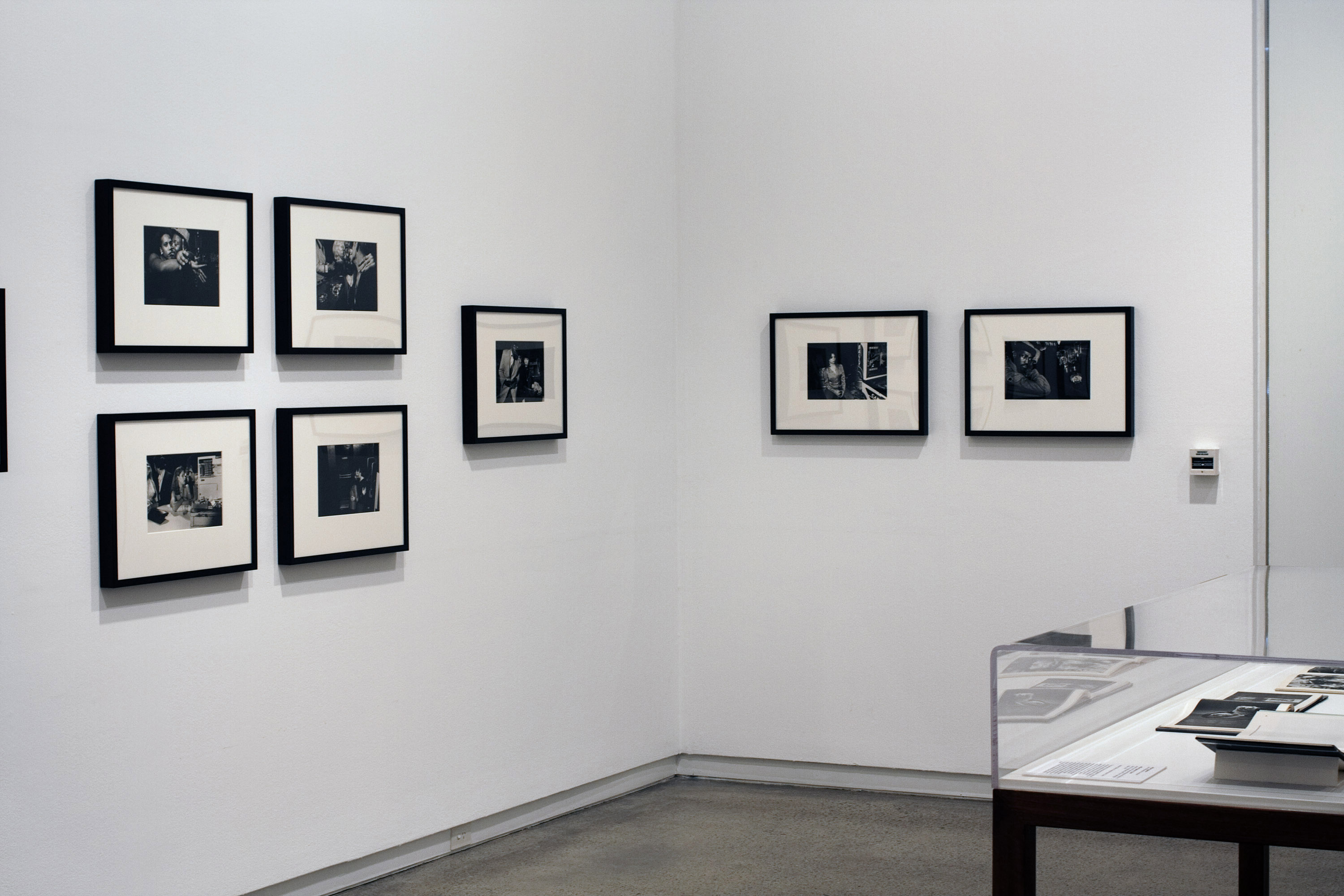
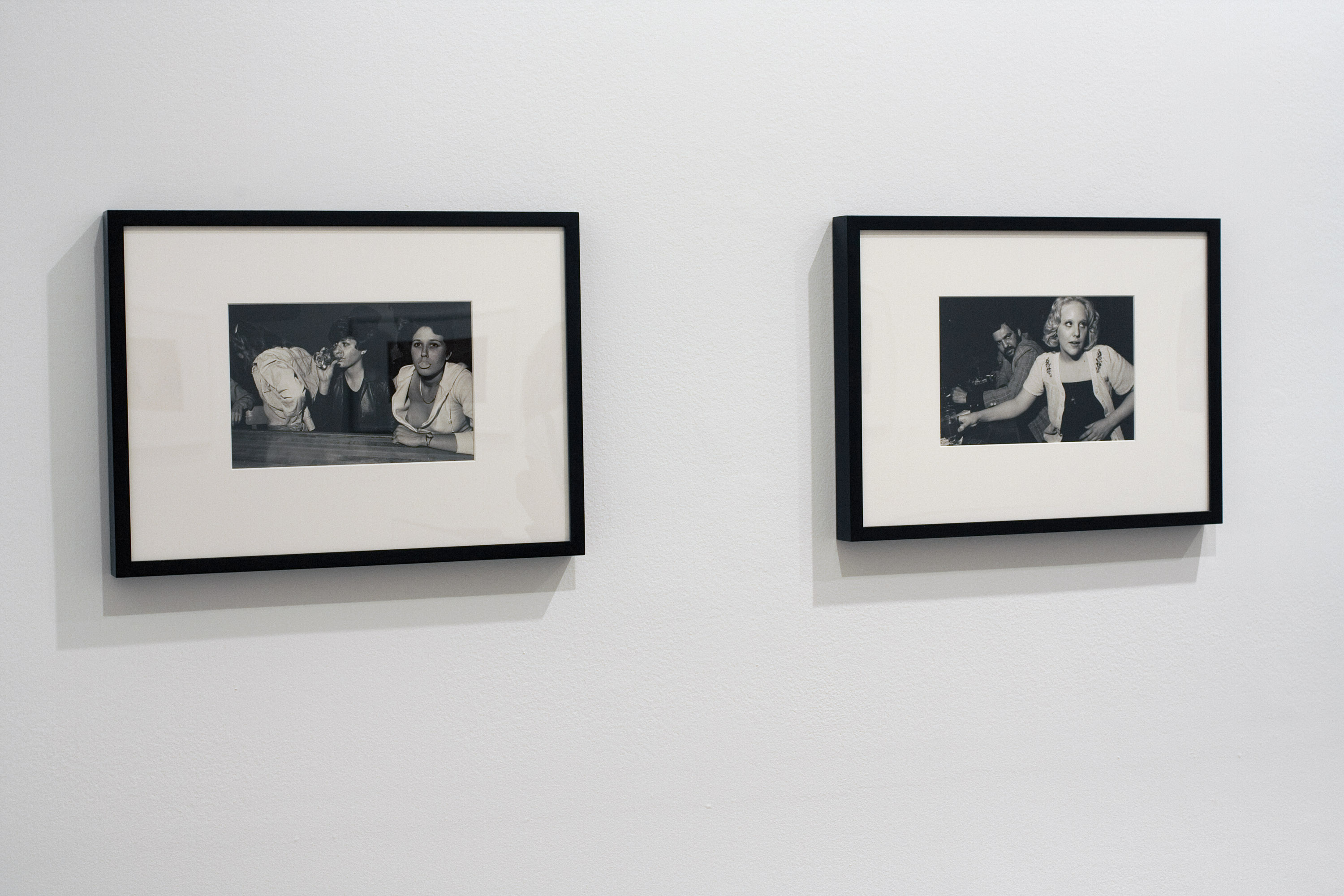
Installation view of the exhibition 'Diane Arbus: American Portraits' at the Heide Museum of Modern Art, Melbourne showing work from Mary Ellen Mark's 'The bar' series 1977

Installation view of the exhibition 'Diane Arbus: American Portraits' at the Heide Museum of Modern Art, Melbourne showing work from Mary Ellen Mark's 'The bar' series 1977

Installation view of the exhibition 'Diane Arbus: American Portraits' at the Heide Museum of Modern Art, Melbourne showing work from Mary Ellen Mark's 'The bar' series 1977


Installation view of the exhibition Diane Arbus: American Portraits at the Heide Museum of Modern Art, Melbourne showing work from Mary Ellen Mark’s The bar series 1977
Photos: © Dr Marcus Bunyan and Heide Museum of Modern Art


Mary Ellen Mark (American, 1940-2015) 'Untitled' from 'The bar series' 1977


Mary Ellen Mark (American, 1940-2015)
Untitled from The bar series
1977
Gelatin silver photograph
National Gallery of Australia, Canberra
Purchased 1980


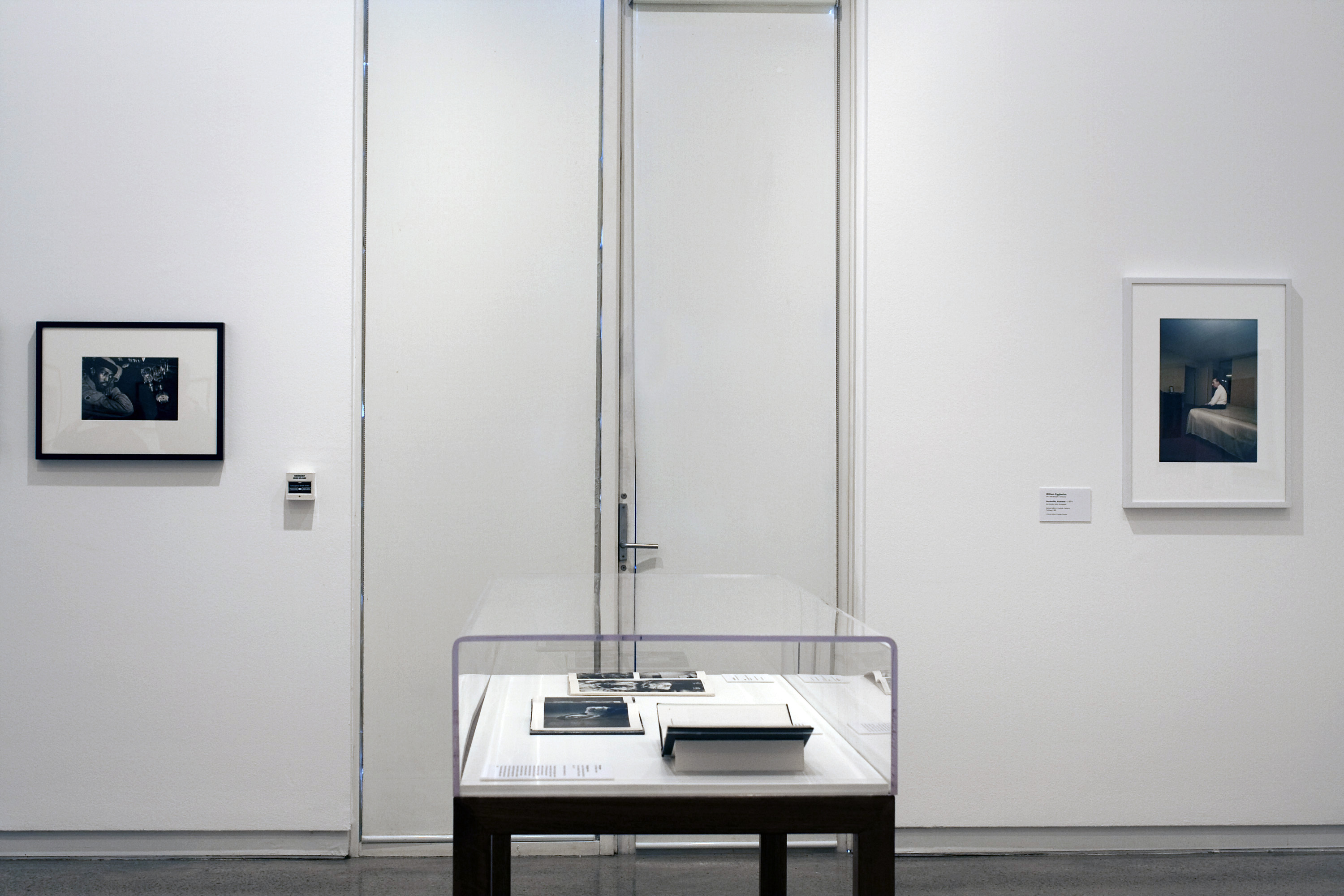
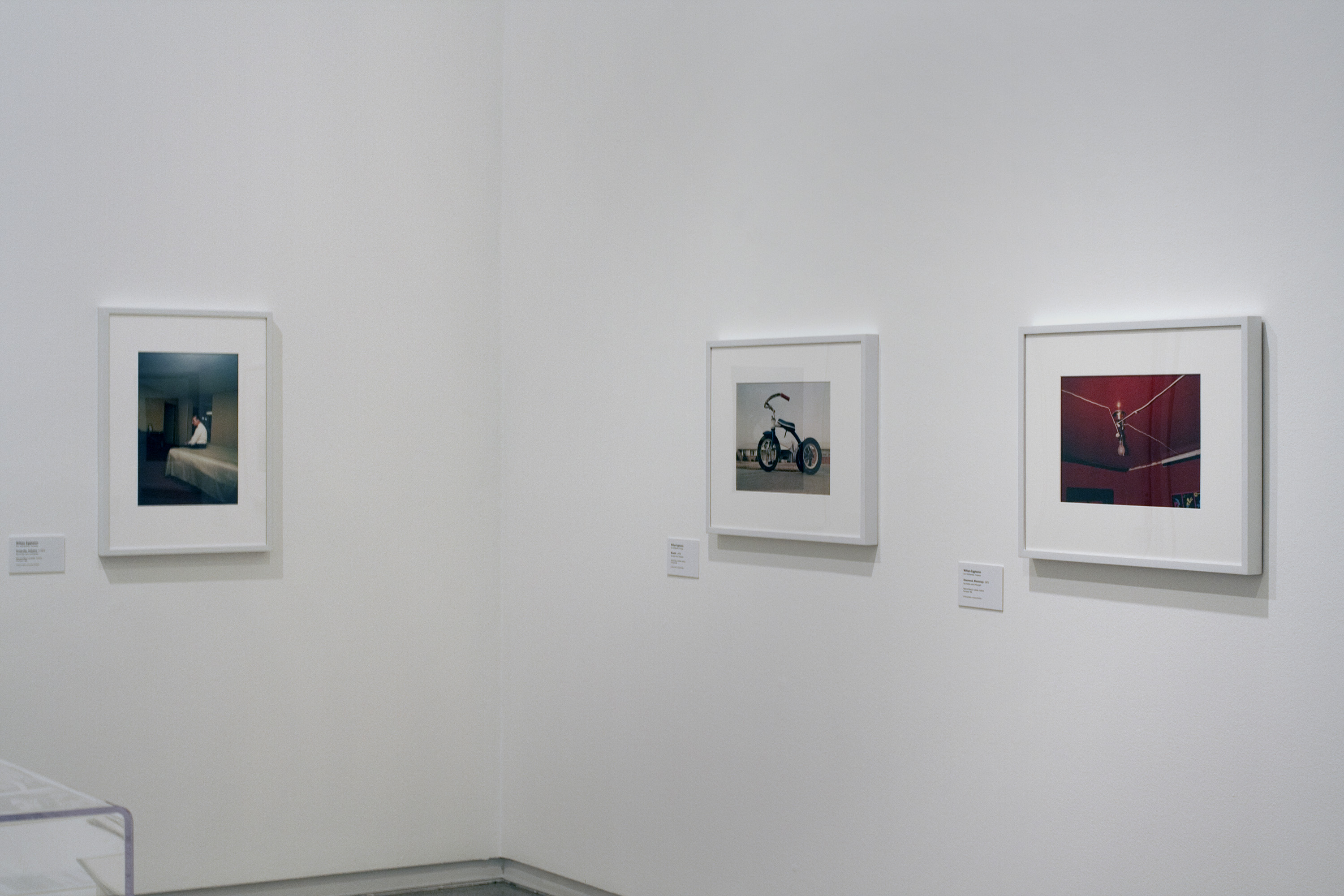
Installation view of the exhibition 'Diane Arbus: American Portraits' at the Heide Museum of Modern Art, Melbourne showing the work of William Eggleston

Installation view of the exhibition 'Diane Arbus: American Portraits' at the Heide Museum of Modern Art, Melbourne showing from left to right, William Eggleston's 'Huntsville, Alabama' c. 1971; William Eggleston's 'Memphis' c. 1969; and William Eggleston's 'Greenwood, Mississippi "The Red Ceiling"' 1973


Installation view of the exhibition Diane Arbus: American Portraits at the Heide Museum of Modern Art, Melbourne showing in the bottom image from left to right, William Eggleston’s Huntsville, Alabama c. 1971; William Eggleston’s Memphis c. 1969; and William Eggleston’s Greenwood, Mississippi “The Red Ceiling” 1973
Photos: © Dr Marcus Bunyan and Heide Museum of Modern Art


William Eggleston (American, b. 1939) 'Huntsville, Alabama' c. 1971


William Eggleston (American, b. 1939)
Huntsville, Alabama
c. 1971
Dye transfer colour photograph
46.6 h x 32.4 w cm
National Gallery of Australia, Canberra
Purchased 1980


William Eggleston (American, b. 1939) 'Memphis' c. 1970 printed 1980


William Eggleston (American, b. 1939)
Memphis
c. 1970 printed 1980
Dye transfer colour photograph
30.2 h x 44.2 w cm
National Gallery of Australia, Canberra
Purchased 1980


William Eggleston (American, b. 1939) 'Greenwood, Mississippi' ["The Red Ceiling"] 1973, printed 1979


William Eggleston (American, b. 1939)
Greenwood, Mississippi [“The Red Ceiling”]
1973, printed 1979
Dye transfer colour photograph
29.5 h x 45.4 w cm
National Gallery of Australia, Canberra
Purchased 1980


With its intense red, Eggleston’s picture of the spare room in a friend’s home is one of the most iconic of all colour photographs. Often called The red room, this photograph was intended to be shocking: Eggleston described the effect of the colour as like ‘red blood that is wet on the wall’. But the radicalness of the picture is not just in its juicy (and impossible to reproduce) redness; it is also found in the strange view it provides of a domestic interior, one that Eggleston has described as a ‘fly’s eye view’.

Text © National Gallery of Australia, Canberra


Installation view of the exhibition 'Diane Arbus: American Portraits' at the Heide Museum of Modern Art, Melbourne showing the work of Garry Winogrand

Installation view of the exhibition 'Diane Arbus: American Portraits' at the Heide Museum of Modern Art, Melbourne showing the work of Garry Winogrand


Installation views of the exhibition Diane Arbus: American Portraits at the Heide Museum of Modern Art, Melbourne showing the work of Garry Winogrand
Photos: © Dr Marcus Bunyan and Heide Museum of Modern Art


Garry Winogrand (American, 1928-1984) 'No title [Centennial Ball, Metropolitan Museum, New York]' 1969


Garry Winogrand (American, 1928-1984)
No title [Centennial Ball, Metropolitan Museum, New York]
1969
Gelatin silver photograph
27.2 h x 42.0 w cm
National Gallery of Australia, Canberra
Purchased 1980


Garry Winogrand (American, 1928-1984) 'New York City, New York'. From "Garry Winogrand" 1970


Garry Winogrand (American, 1928-1984)
New York City, New York. From “Garry Winogrand”
1970
Gelatin silver photograph
21.6 h x 32.6 w cm
National Gallery of Australia, Canberra
Purchased 1978


Winogrand was asked how he felt about missing photographs while he reloaded his camera. He replied ‘There are no photographs while I’m reloading’: There is no possibility in the Winograndian world view of regarding the camera as a window onto the world; it becomes a mirror reflecting back the photographer’s concerns. Winogrand was fascinated by how the real was translated into the photographic. In the end this fascination became an obsession from which he could not escape or find solace – or meaning. At the time of his death there were a third of a million exposures that he had never looked at including 2,500 undeveloped rolls of film.

Text © National Gallery of Australia, Canberra


Installation view of the exhibition 'Diane Arbus: American Portraits' at the Heide Museum of Modern Art, Melbourne showing the work of Lee Friedlander


Installation view of the exhibition Diane Arbus: American Portraits at the Heide Museum of Modern Art, Melbourne showing the work of Lee Friedlander
Photo: © Dr Marcus Bunyan and Heide Museum of Modern Art


Lee Friedlander (American, b. 1934) 'Rt. 9w, N.Y.' 1969


Lee Friedlander (American, b. 1934)
Rt. 9w, N.Y.
1969
Gelatin silver photograph
18.8 h x 28.2 w cm
National Gallery of Australia, Canberra
Purchased 1981


Lee Friedlander (American, b. 1934) 'Mount Rushmore' 1969


Lee Friedlander (American, b. 1934)
Mount Rushmore
1969
Gelatin silver photograph
18.8 h x 28.0 w cm
National Gallery of Australia, Canberra
Purchased 1981


“I always wanted to be a photographer. I was fascinated with the materials. But I never dreamed I would be having this much fun. I imagined something much less elusive, much more mundane.”

~ Lee Friedlander


Friedlander is known for his complex, layered images, exploring the way that the urban landscape fragments our vision. Throughout his career he has found endless fascination in photographing reflections in windows – merging what lies behind the glass with what is reflected in it – out of which he has created juxtapositions which are witty and insightful. He often inserts himself into the image, either overtly or more frequently as a shadow or partially concealed form – part of his face, for instance, hidden behind the camera.

In the 1960s he moved away from a recognisably documentary style toward one in which the subject is more elusive, reflecting a society which had itself become more fragmented and complex. By cropping and cutting up city and natural landscapes he changes our perception of them. In creating compositions that are dynamic, unexpected and often confusing, Friedlander asks us to look freshly at our everyday environments.

Text © National Gallery of Australia, Canberra


Installation view of the exhibition 'Diane Arbus: American Portraits' at the Heide Museum of Modern Art, Melbourne showing the work of Walker Evans


Installation view of the exhibition Diane Arbus: American Portraits at the Heide Museum of Modern Art, Melbourne showing the work of Walker Evans
Photo: © Dr Marcus Bunyan and Heide Museum of Modern Art


Walker Evans (American, 1903-1975) 'Hudson Street boarding house detail, New York' 1931


Walker Evans (American, 1903-1975)
Hudson Street boarding house detail, New York
1931
Gelatin silver photograph
15.7 h x 20.6 w cm
National Gallery of Australia, Canberra
Purchased 1980


Walker Evans (American, 1903-1975) 'Bedroom, shrimp fisherman's house, Biloxi, Mississippi' 1945


Walker Evans (American, 1903-1975)
Bedroom, shrimp fisherman’s house, Biloxi, Mississippi
1945
Gelatin silver photograph
23.4 h x 18.3 w cm
National Gallery of Australia, Canberra
Purchased 1980


Walker Evans (American, 1903-1975) 'Tenant Farmer's Wife, Alabama' 1936


Walker Evans (American, 1903-1975)
Tenant Farmer’s Wife, Alabama
[Allie Mae Burroughs, wife of a cotton sharecropper, Hale County, Alabama]

1936
Gelatin silver photograph
23.6 h x 18.0 w cm
National Gallery of Australia, Canberra
Purchased 1978


Installation view of the exhibition 'Diane Arbus: American Portraits' at the Heide Museum of Modern Art, Melbourne showing the work of Milton Rogovin with from left to right, 'Not titled (Family in front of house) – 241-2' 1973 and 'Not titled (Family in front of house) – 142-11' 1985, both from the 'Lower West Side' series (1973-2002)


Installation view of the exhibition Diane Arbus: American Portraits at the Heide Museum of Modern Art, Melbourne showing the work of Milton Rogovin with from left to right, Not titled (Family in front of house) – 241-2 1973 and Not titled (Family in front of house) – 142-11 1985, both from the Lower West Side series (1973-2002)
Photo: © Dr Marcus Bunyan and Heide Museum of Modern Art


“Written with her trademark flair and force, Sontag’s book [On Photography] inaugurated a wave of criticism, much of it influenced by Foucaultian theory, that underscored the instrumentality and implicit violence of photography, its ability to police and regulate it subjects, especially those lacking social and political power: the poor, presumed “deviants” or “criminals,” and workers. As Sontag herself acknowledged, however, photography is not only a predatory means of taking possession, but also a mode of conferring value; it can potentially be put to counter-hegemonic uses, used to see and frame in ways that affirm and legitimate, rather than strictly contain and control, the presence of culturally disenfranchised persons.”

“The power of his art stems from the particular manner in which Rogovin transforms traditional portrait photography and documentary practice, opening up potentially instrumentalist, one-sided visual forms to dynamics of reciprocity and mutuality…”

“Rogovin’s photography thus balances the documentary desire to grasp and present, to “capture” an image of the”Other,” with a commitment to holding back in order to allow his subjects space to shape the photographic process. His practice is a form of”approach,” to borrow a term from Carol Shloss, that resists even as it engages. We might call this an aesthetic of “making space”: a photographic method that creates room for subjects to actively participate in the production of their own images rather than stand as passive objects before a colonizing gaze.”

“The fact that Rogovin’s work at once invokes and questions the camera’s capacity to classify – to embed individuals in a larger archive – echoes his challenge to documentary business as usual. Certainly, Rogovin’s images of working people perform a classic documentary task: to lend public visibility to those who have been overlooked and exploited, to give aggrieved people the social recognition they are otherwise denied in our society. However, his images do not enforce the power and prerogatives of middle-class reformers or governmental institutions, as did so much early twentieth-century documentary photography, which, as Maren Stange has argued, tended to reassure “a 11 liberal middle-class that social oversight was both its duty and its right.” By refusing to provide pity-inducing images of working people that present them as weak and vulnerable, Rogovin’s photographs undercut the sense of privilege viewers often feel when looking at pictures of what Jacob Riis called “the other half.””

Joseph Entin. “Milton Rogovin’s Approach: Photography, Class, and the Aesthetics of Making Space (2008),” on the ASX website July 12, 2010 [Online] Cited 12/05/2018


Heide Museum of Modern Art
7, Templestowe Road
Bulleen, Victoria 3105

Opening hours:
(Heide II and Heide III)
Tuesday – Sunday 10.00am – 5.00pm

Heide Museum of Modern Art website

LIKE ART BLART ON FACEBOOK

Back to top

Exhibition: ‘Stephen Shore’ at The Museum of Modern Art (MoMA), New York

Exhibition dates: 19th November, 2017 – 28th May, 2018

Stephen Shore is organised by Quentin Bajac, The Joel and Anne Ehrenkranz Chief Curator of Photography, with Kristen Gaylord, Beaumont and Nancy Newhall Curatorial Fellow, Department of Photography, MoMA.


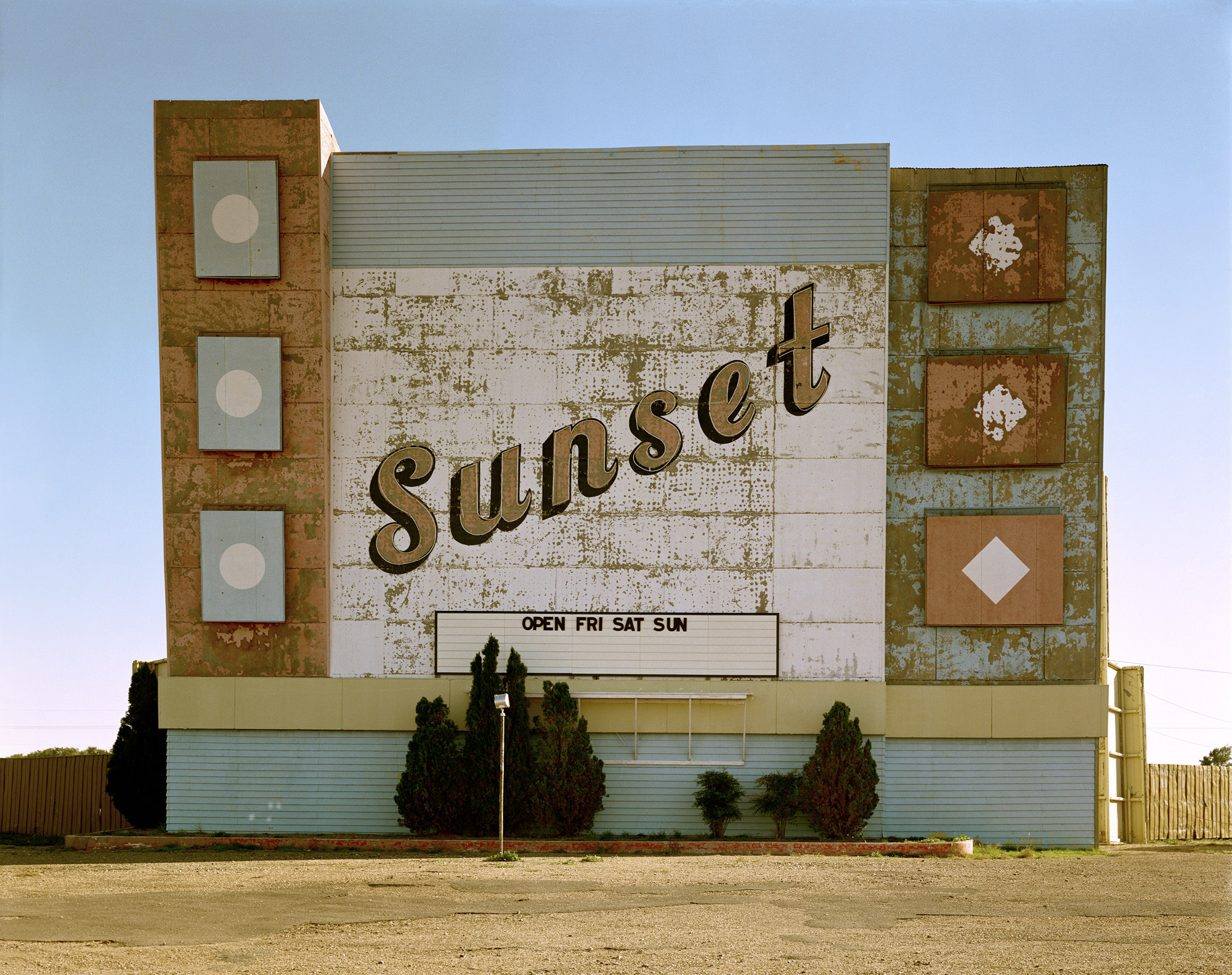
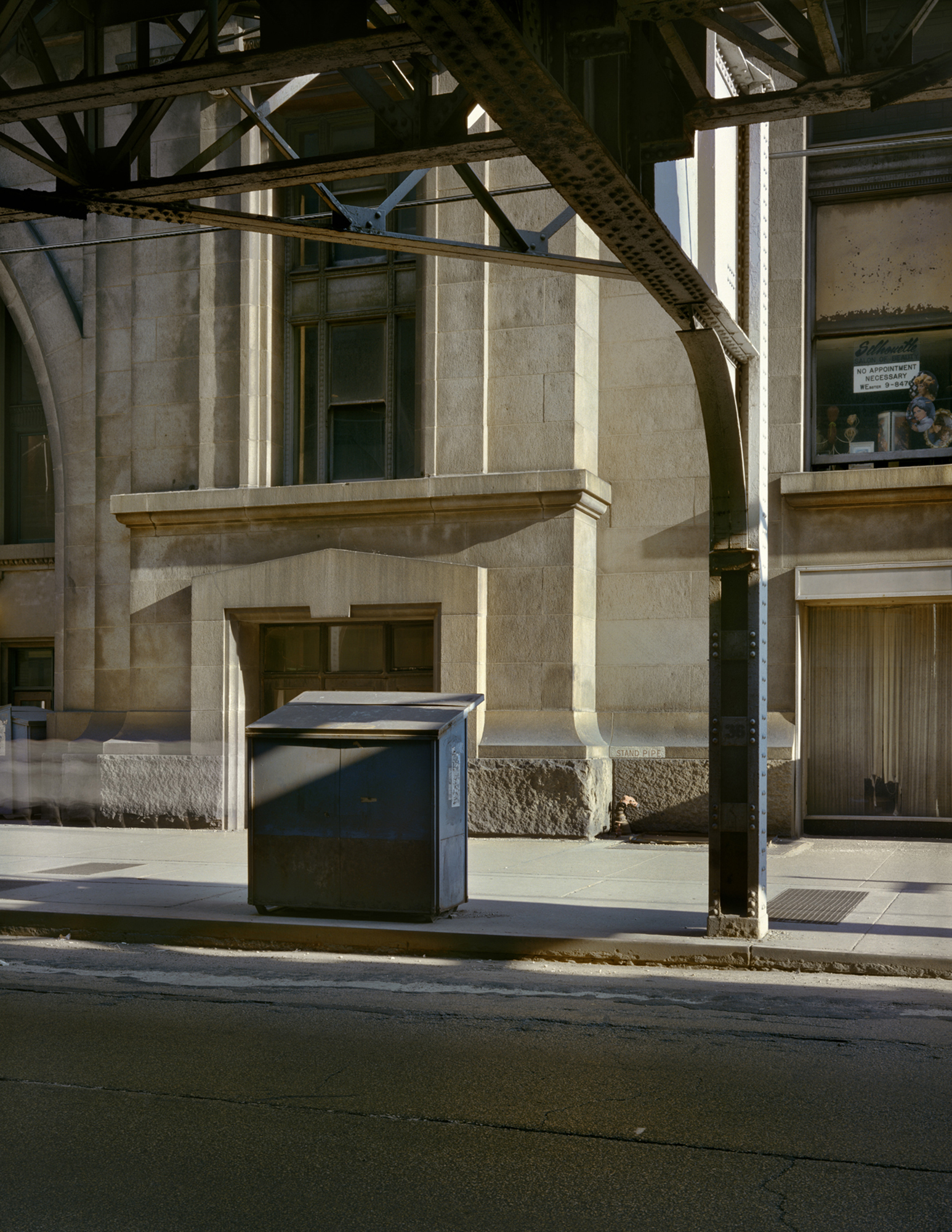
Stephen Shore (American, b. 1947) 'West 9th Avenue, Amarillo, Texas, October 2, 1974' from the exhibition 'Stephen Shore' at The Museum of Modern Art (MoMA), New York, Nov 2017 - May 2018


Stephen Shore (American, b. 1947)
West 9th Avenue, Amarillo, Texas, October 2, 1974
1974, printed 2013
Chromogenic colour print
17 × 21 3/4 in. (43.2 × 55.2cm)
The Museum of Modern Art, New York
Acquired through the generosity of an anonymous donor
© 2017 Stephen Shore


The truth in the detail of day-to-day life

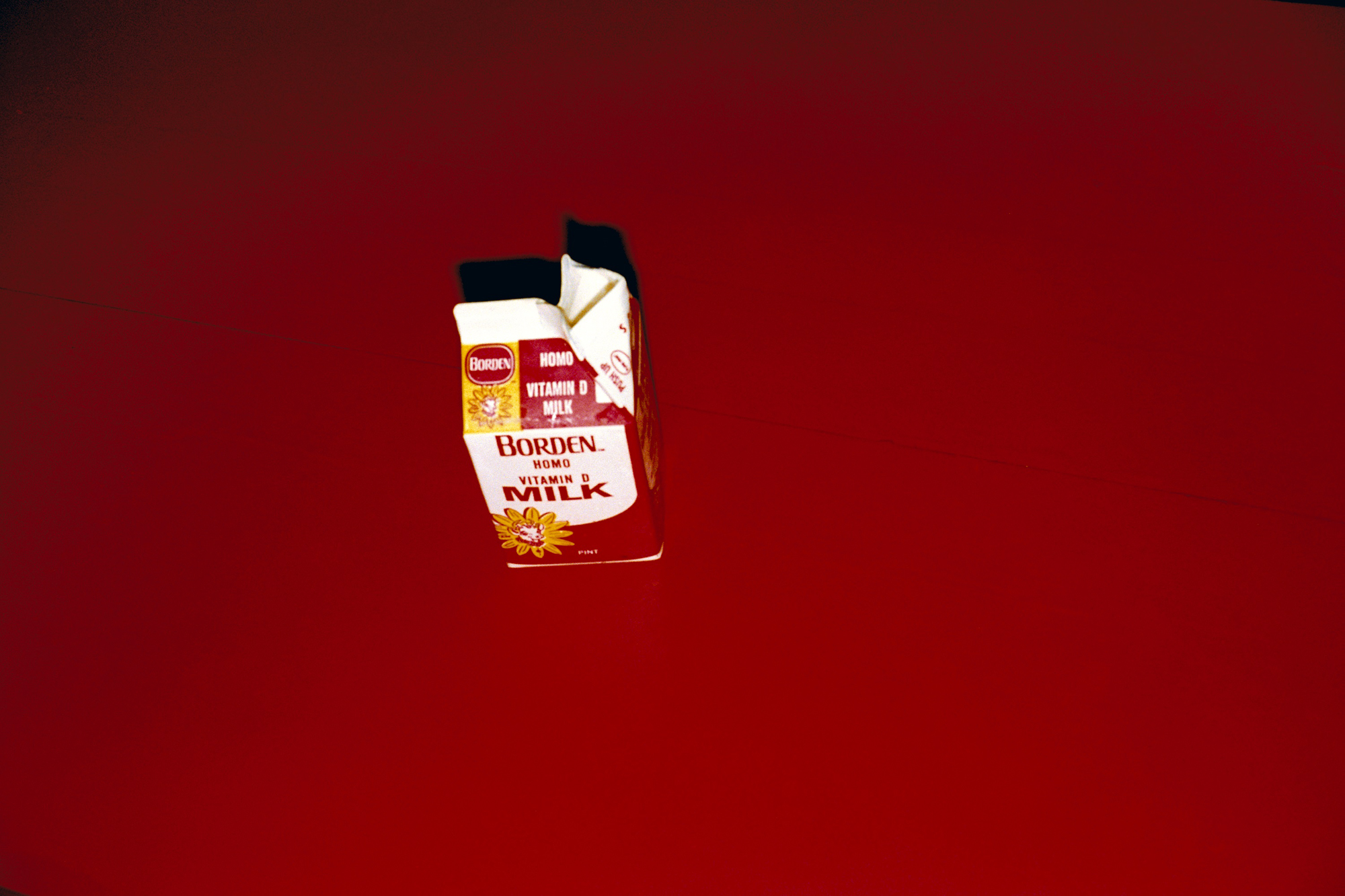
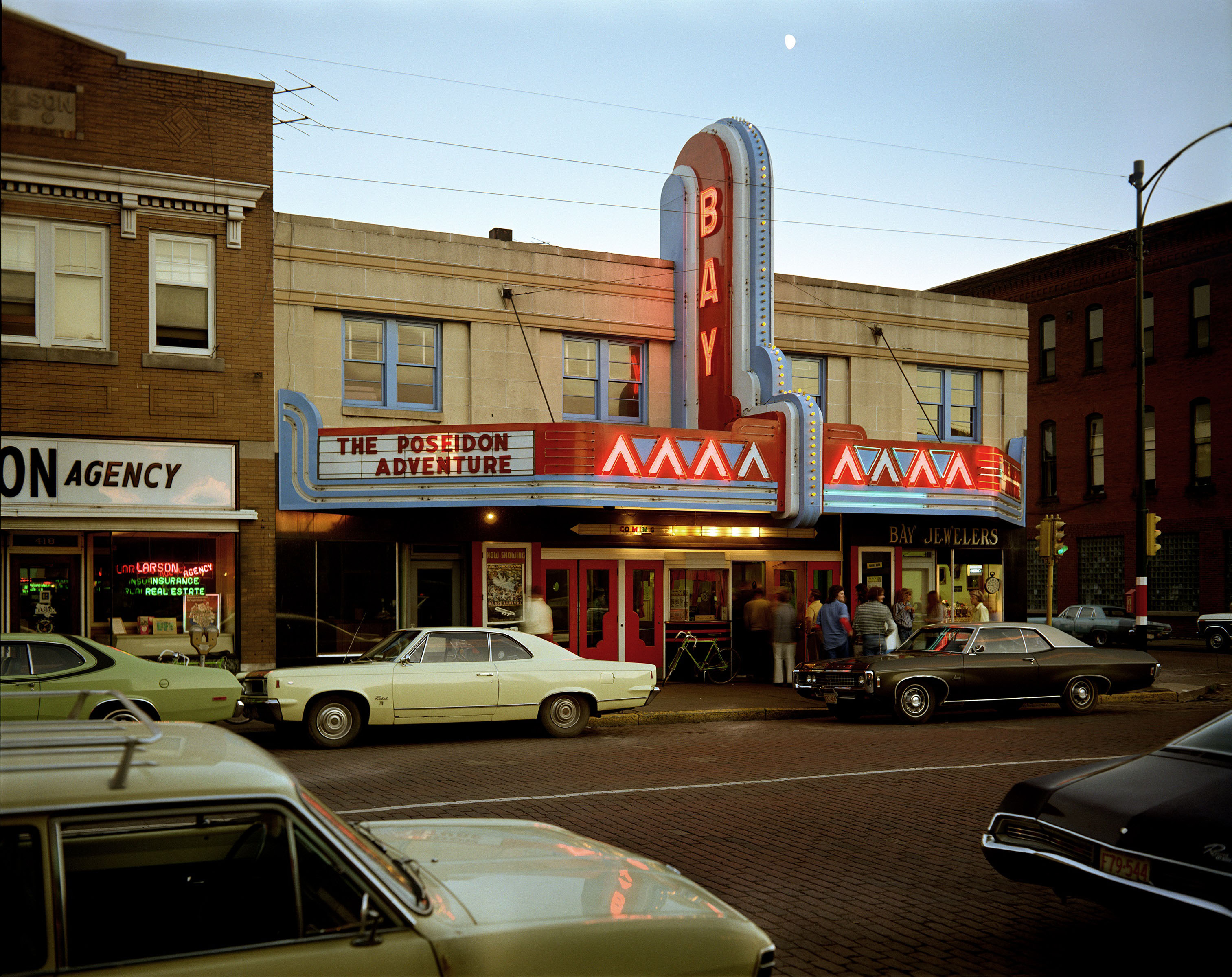
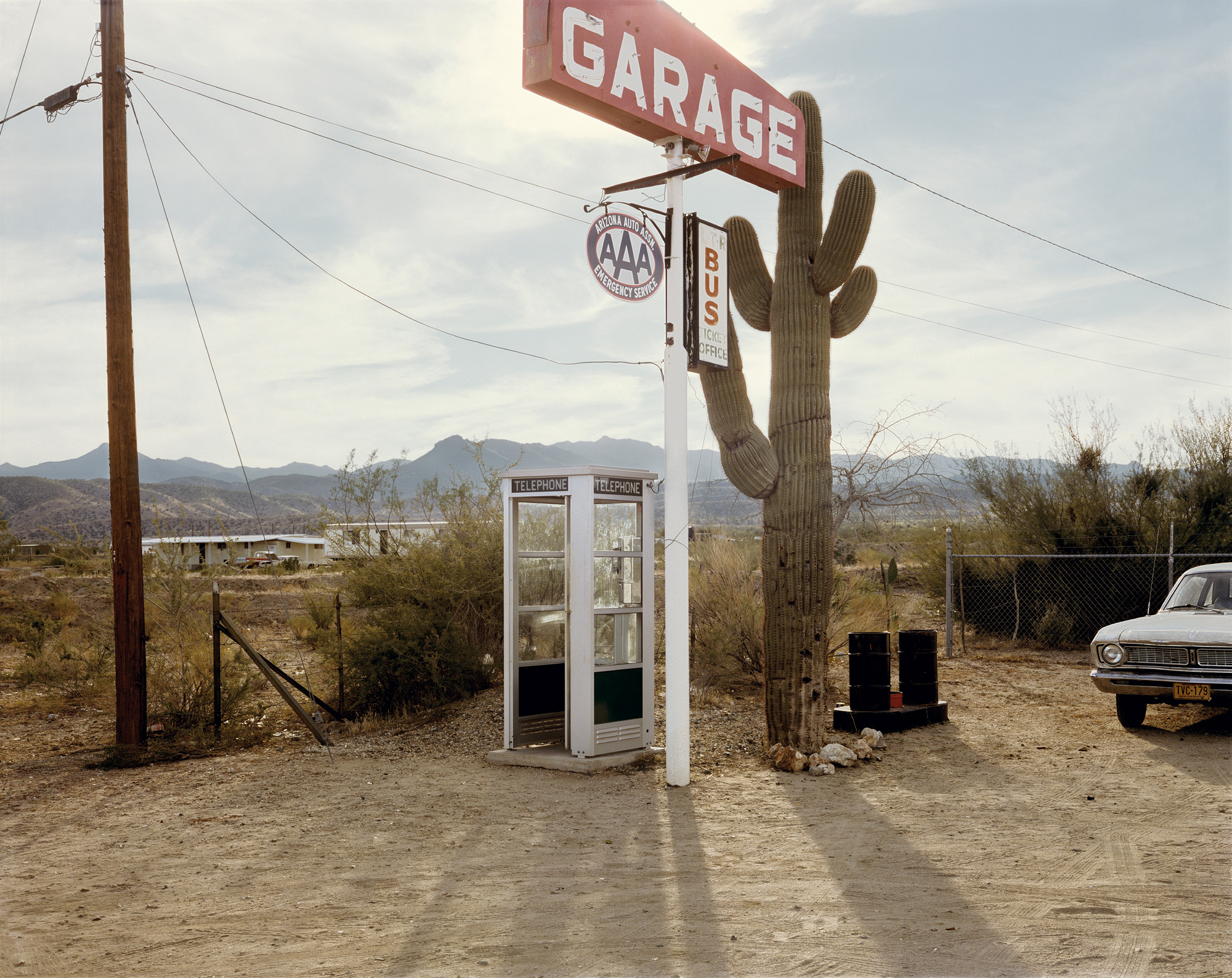
1970s colour photography is the key period in the work of Stephen Shore. These classical, formal colour photographs capture “mundane aspects of American popular culture in straightforward, unglamorous images.” They are what made him famous. They are, historically, conceptually and emotionally, his most effective means of communication as an artist.

American Surfaces and Uncommon Places made Shore “one of the most prominent figures of the American New Color movement,” showing colour just as colour.

I know that is a strange thing to say, but Shore was showing the world in a different light… and he was using an aesthetic based on the straight forward use of colour. Colour is just there, part of the form of the image. Of course there are insightful subjective judgements about what to photograph in American surburbia, but this subjectivity and the use of colour within it is subsumed into the song that Shore was composing. It all comes back to music. Here’s a Mozart tune, this is his aesthetic, for eternity.

I remember seeing two vintage Stephen Shore chromogenic colour prints from 1976 where the colours were still true and had not faded in the exhibition American Dreams: 20th century photography from George Eastman House at Bendigo Art Gallery. This was incredible experience – seeing vintage prints from one of the masters of colour photography; noticing that they are not full of contrast like a lot of today’s colour photographs – more like a subtle Panavision or Technicolor film from the early 1960s. Rich, subtle, beautiful hues with the photograph containing this amazing presence, projected through the construction of the image and the physicality of the print.

Shore has a fantastic eye and his colour photographs are beautifully resolved. The subjectivity is not pushed, because his song was in tune, and he just sang it. Like his contemporaries, Wiliam EgglestonRichard Misrach and Joel Meyerwitz, there are some artists who just know how to play the tune.

Dr Marcus Bunyan


Many thankx to MoMA for allowing me to publish the photographs in posting. Please click on the photographs for a larger version of the image.


Stephen Shore encompasses the entirety of the artist’s work of the last five decades, during which he has conducted a continual, restless interrogation of image making, from the gelatin silver prints he made as a teenager to his current engagement with digital platforms. One of the most significant photographers of our time, Stephen Shore (American, b. 1947) has often been considered alongside other artists who rose to prominence in the 1970s by capturing the mundane aspects of American popular culture in straightforward, unglamorous images. But Shore has worked with many forms of photography, switching from cheap automatic cameras to large-format cameras in the 1970s, pioneering the use of colour before returning to black and white in the 1990s, and in the 2000s taking up the opportunities of digital photography, digital printing, and social media.

The artist’s first survey in New York to include his entire career, this exhibition will both allow for a fuller understanding of Shore’s work, and demonstrate his singular vision – defined by an interest in daily life, a taste for serial and often systematic approaches, a strong intellectual underpinning, a restrained style, sly humour, and visual casualness – and uncompromising pursuit of photography’s possibilities.


Stephen Shore | MoMA LIVE

Join us for a conversation with MoMA Chief Curator of Photography Quentin Bajac and artist Stephen Shore on the opening of the exhibition, “Stephen Shore,” moderated by MoMA Senior Deputy Director of Curatorial Affairs, Peter Reed.

One of the most significant photographers of our time, Stephen Shore has often been considered alongside other artists who rose to prominence in the 1970s by capturing the mundane aspects of American popular culture in straightforward, unglamorous images. But Shore has worked with many forms of photography, and this exhibition encompasses the entirety of the artist’s work of the last five decades, during which he has conducted a continual, restless interrogation of image making, from the gelatin silver prints he made as a teenager to his current engagement with digital platforms.


Stephen Shore (American, b. 1947) 'New York, New York' 1964 from the exhibition 'Stephen Shore' at The Museum of Modern Art (MoMA), New York, Nov 2017 - May 2018


Stephen Shore (American, b. 1947)
New York, New York
1964
Gelatin silver print
9 1/8 × 13 1/2 in. (23.2 × 34.3cm)
Courtesy the artist
© 2017 Stephen Shore


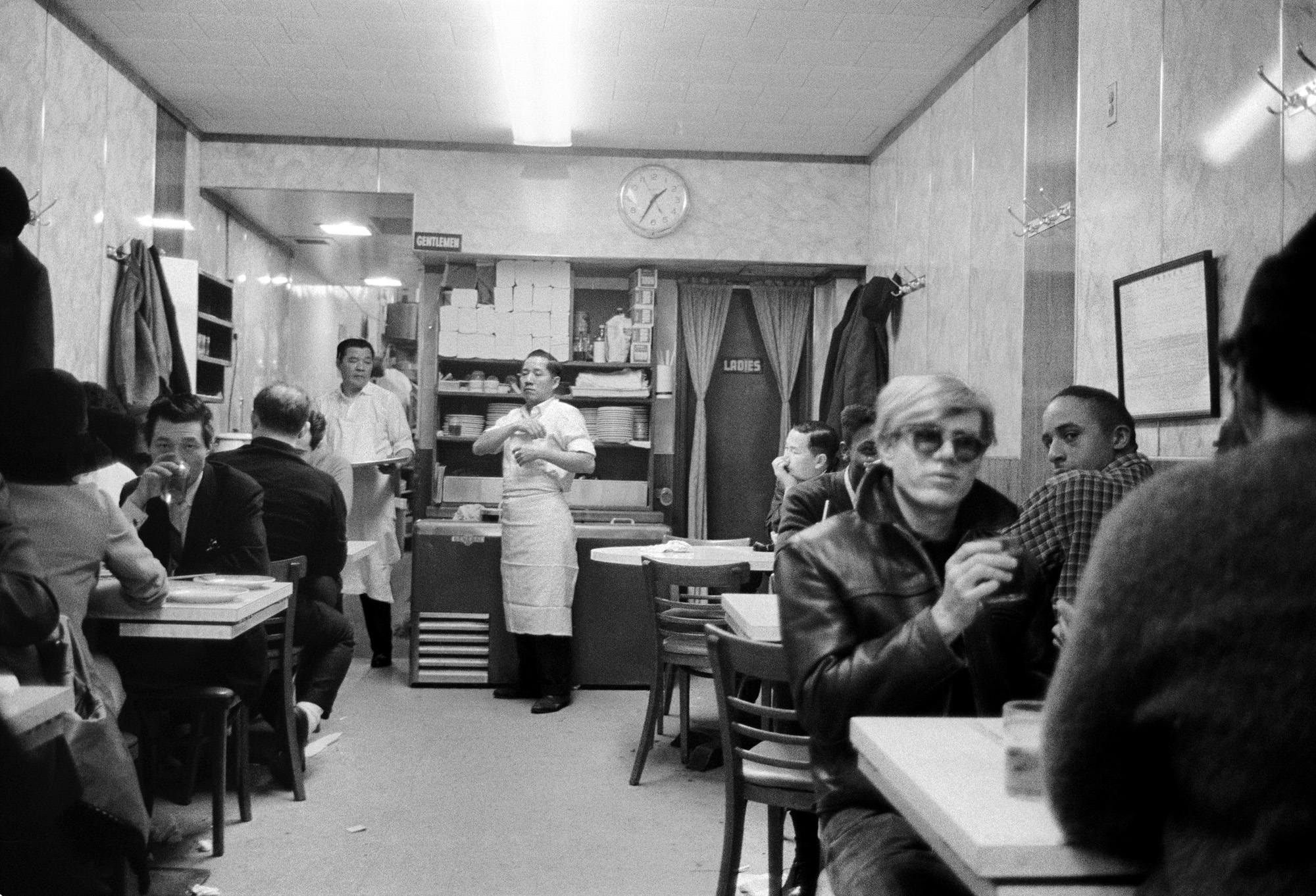
Stephen Shore (American, b. 1947) '1:35 a.m., in Chinatown Restaurant, New York, New York' 1965-1967


Stephen Shore (American, b. 1947)
1:35 a.m., in Chinatown Restaurant, New York, New York
1965-1967, printed c. 1995
Gelatin silver print
9 × 13 1/2 in. (22.9 × 34.3cm)
Courtesy the artist
© 2017 Stephen Shore


Stephen Shore (American, b. 1947) 'Kanab, Utah, June 1972'


Stephen Shore (American, b. 1947)
Kanab, Utah, June 1972
1972, printed 2017
Chromogenic colour print
3 1/16 × 4 5/8 in. (7.8 × 11.7cm)
Courtesy the artist
© 2017 Stephen Shore


Stephen Shore (American, b. 1947) 'Amarillo, Texas, July 1972'


Stephen Shore (American, b. 1947)
Amarillo, Texas, July 1972
1972, printed 2017
Chromogenic colour print
3 1/16 × 4 5/8 in. (7.8 × 11.7cm)
Courtesy the artist
© 2017 Stephen Shore


Stephen Shore (American, b. 1947) 'Washington, D.C., November 1972'


Stephen Shore (American, b. 1947)
Washington, D.C., November 1972
1972, printed 2017
Chromogenic colour print
3 1/16 × 4 5/8 in. (7.8 × 11.7cm)
Courtesy the artist
© 2017 Stephen Shore


Stephen Shore (American, b. 1947) 'Second Street, Ashland, Wisconsin, July 9, 1973'


Stephen Shore (American, b. 1947)
Second Street, Ashland, Wisconsin, July 9, 1973
1973, printed 2017
Chromogenic colour print
17 × 21 3/4 in. (43.2 × 55.2cm)
Courtesy the artist
© 2017 Stephen Shore


Stephen Shore (American, b. 1947) 'U.S. 97, South of Klamath Falls, Oregon, July 21, 1973'


Stephen Shore (American, b. 1947)
U.S. 97, South of Klamath Falls, Oregon, July 21, 1973
1973, printed 2002
Chromogenic colour print
17 3/4 x 21 15/16 in. (45.1 x 55.7cm)
The Museum of Modern Art, New York. The Photography Council Fund
© 2017 Stephen Shore


Stephen Shore (American, b. 1947) 'Breakfast, Trail's End Restaurant, Kanab, Utah, August 10, 1973'


Stephen Shore (American, b. 1947)
Breakfast, Trail’s End Restaurant, Kanab, Utah, August 10, 1973
1973
Chromogenic colour print
16 7/8 × 21 1/4 in. (42.8 × 54cm)
The Museum of Modern Art, New York. Purchase
© 2017 Stephen Shore


Stephen Shore (American, b. 1947) 'West Third Street, Parkersburg, West Virginia, May 16, 1974'


Stephen Shore (American, b. 1947)
West Third Street, Parkersburg, West Virginia, May 16, 1974
1974
Chromogenic colour print
8 × 10 1/2 in. (20.3 × 26.7cm)
Courtesy the artist
© 2017 Stephen Shore


Stephen Shore (American, b. 1947) 'Lookout Hotel, Ogunquit, Maine, July 16, 1974'


Stephen Shore (American, b. 1947)
Lookout Hotel, Ogunquit, Maine, July 16, 1974
1974, printed 2013
Chromogenic colour print
17 × 21 3/4 in. (43.2 × 55.2cm)
The Museum of Modern Art, New York
Acquired through the generosity of an anonymous donor
© 2017 Stephen Shore


The Museum of Modern Art presents the most comprehensive exhibition ever organised of photographer Stephen Shore’s work, on view from November 19, 2017, until May 28, 2018. The exhibition tracks the artist’s work chronologically, from the gelatin silver prints he made as a teenager to his current work with digital platforms. Stephen Shore establishes the artist’s full oeuvre in the context of his time – from his days at Andy Warhol’s Factory through the rise of American colour photography and the transition to large-scale digital photography – and argues for his singular vision and uncompromising pursuit of photography’s possibilities. The exhibition will include hundreds of photographic works along with additional materials including books, ephemera, and objects. Stephen Shore is organised by Quentin Bajac, The Joel and Anne Ehrenkranz Chief Curator of Photography, with Kristen Gaylord, Beaumont and Nancy Newhall Curatorial Fellow, Department of Photography, MoMA.

Born in 1947, Shore spearheaded the New Color Photography movement in the United States in the 1970s, and became a major catalyst in the renewal of documentary photography in the late 1990s, both in the US and Europe, blending the tradition of American photographers such as Walker Evans with influences from various artistic movements, including Pop, Conceptualism, and even Photo-Realism. Shore’s images seem to achieve perfect neutrality, in both subject matter and approach. His approach cannot be reduced to a style but is best summed up with a few principles from which he has seldom deviated: the search for maximum clarity, the absence of retouching and reframing, and respect for natural light. Above all, he exercises discipline, limiting his shots as much as possible – one shot of a subject, and very little editing afterward.

Shore started developing negatives from his parents when he was only six, received his first camera when he was nine, and sold prints to Edward Steichen, then director of MoMA’s Department of Photography, at the age of 14. In the early 1960s Shore became interested in film, both narrative and experimental, and he showed his short film Elevator in 1965 at the Film-Makers’ Cinematheque, where he first met Andy Warhol. That spring, he dropped out of high school and started photographing at Warhol’s studio, The Factory, initially on an almost daily basis, then more sporadically, until 1967. Elevator has been restored by conservators and will be screened in the exhibition for the first time since the 1960s.

In 1969, Shore used serial black-and-white projects to deconstruct the medium and rebuild it on a more detached, intellectual foundation. In these works, many shot in Amarillo, Texas, with his friend Michael Marsh as his main model, Shore was striving to free himself from certain photographic conventions: the concept of photography as the art of creating isolated and “significant” images, and the related cult of the “decisive moment”; perfect framing; and the expressive subjectivity of the photographer. The principle of multiplicity prevails in Shore’s work of that period – series, suites, and sequences that resist all narrative temptation. In their attempt to eliminate subjectivity, these series are related to a number of Conceptual photographic works by other artists of the same period.

In November 1971 Shore curated an exhibition called All the Meat You Can Eat at the 98 Greene Street Loft. Embracing a century of photography, the show was composed largely of found images collected by Shore and two friends, Weston Naef, then a curator at The Metropolitan Museum of Art, and Michael Marsh. It also included images by Shore, such as shots taken with a Mick-a-Matic camera and colour photos that would serve as the basis for the postcards in his series Greetings from Amarillo, “Tall in Texas.” Stephen Shore will include a reconstructed version of this display, using material from Shore’s archives – some that was originally in the exhibition and some that has been selected by Shore for this installation.

In the early 1970s Shore turned to colour photography, a format that at that time was still largely overlooked by art photographers. In March 1972, he started taking snapshots of his daily life, embarking in June and July of the same year on a road trip to the southern US. For two months he photographed his everyday life in an almost systematic way – unremarkable buildings, main streets, highway intersections, hotel rooms, television screens, people’s faces, toilet seats, unmade beds, a variety of ornamental details, plates of food, shop windows, inscriptions, and commercial signs. In September and October 1972, images from the series were shown at Light Gallery in New York under the title American Surfaces. The MoMA display of this work echoes that initial presentation, in which the small Kodacolor prints were attached directly to the wall, unframed, in a grid of three rows.

Begun in 1973 and completed almost 10 years later, Shore’s next project, Uncommon Places, inhabits the same world and deals with the same themes as American Surfaces. Yet because of Shore’s move from a handheld 35mm camera to a large-format one, Uncommon Places features fewer details and close-ups and a more detached approach. Appearing in the context of accelerated change in the national landscape, especially in areas of suburban sprawl, it betrays a more contemplative reading of individual images. Before being published as a book in 1982, the series was exhibited both in the US and abroad, especially in Germany, making Shore one of the most prominent figures of the American New Color movement. Though he is best known for his large-format work of this period, Shore was at the same time experimenting with other photographic formats. The exhibition will include a selection of stereo images he made in 1974 that were never published, and have not been exhibited since 1975.

While working on what would become Uncommon Places, Shore began to accept photographic commissions, not only for editorial work but also for institutions and companies. If some of these commissions seem quite distant from Uncommon Places, most of them still show some affinity with the series in their attention to architecture and exploration of “Americanness.” He took photographs focusing on contemporary vernacular architecture that the architects Robert Venturi and Denise Scott Brown used in their 1976 exhibition Signs of Life: Symbols in the American City. This exhibition will feature some of the original, gridded transparencies from Signs of Life that incorporate images by Shore and other photographers, not seen since 1976. Finally, some commissions he did for magazines alternate between urban landscapes, portraits, and architectural details in a direct extension of Uncommon Places. Shore would include a number of commissioned photographs in his personal body of work, showing how porous the borders were between the two groups of images, and Stephen Shore will include examples both of the photographs in context in books and periodicals, and of others that were not subsequently published.

Starting in the late 1970s, Shore gradually abandoned urban and suburban areas and turned to the natural landscape, a subject he would concentrate on almost exclusively during the next decade. These included the landscapes of Montana (1982-1983), where he settled with his wife in 1980, Texas (1983-1988), and the Hudson Valley (1984-1986), where he moved in 1982, but also more international locations: the Highlands of Scotland (1988); Yucatán, in Mexico (1990); and finally the Po Valley, with a series in Luzzara, Italy (1993). This period corresponds also to a reduced public visibility of his photographic work, marked by fewer exhibitions, publications, and commissions.

In the early 2000s Shore began experimenting with digital tools and technologies that had only recently become available. Between 2003 and 2010, he made dozens of print-on-demand books, which were each printed in limited editions of 20 copies, making them similar to artist’s books. But the ease of production, speed of execution, democratic nature of the technique used, and modesty of the finished product are in direct line with the snapshots of American Surfaces and the immediacy of Polaroid images. In the choice of subjects and approaches, the series of books seems both literally and figuratively to be a mini-version of Shore’s entire oeuvre, blending and reworking the themes that have always been important to him – an exhaustive exploration of a particular subject or place, a penchant for the vernacular, an interest in sequence, a tendency toward autobiography, a search for a kind of immediacy, and a dry sense of humour – while still retaining its autonomy and specificity. A few years later he created Winslow, Arizona in a single day in 2013. The precise temporal duration of the series – one day from sunrise to sunset – links it to some of Shore’s print-on-demand books, but it takes on a new performance-based dimension. Over 180 of the pictures Shore took that day were presented, unedited and in the order in which they were shot, in a slide show, projected on a drive-in screen in Barstow, California, a few days after he took them.

In 1996 and 1997 Shore, who had always been fascinated by archaeology, undertook photographic projects around excavation sites in Israel and Italy, shooting solely in black and white. Within the archaeological remains of these vanished cities, Shore was especially interested in the human dimension, both domestic and secular, seen in bones, pottery, and vestiges of dwellings and shops. Then, between September of 2009 and the spring of 2011, Shore returned to the region five times, photographing throughout the entire territory from north to south, or From Galilee to the Negev, as he titled the book he published of a selection of his photographs in Israel and the West Bank. As indicated by the title and structure of the book, with chapters organised geographically, the project was guided by a topographical exploration. It mixes various temporalities – which are echoed by the diversity of the images – bringing together the “short term” of people and events with and the “long term” of the landscape and planet.

The photographs Shore took in Ukraine in the summer of 2012 and the fall of 2013 have as their subject the country’s Jewish community, specifically survivors of the Holocaust who are assisted today by the Survivor Mitzvah Project. Following three years of photographing primarily in Israel, the series provided Shore with the opportunity to continue working with subjects related to his Jewish roots. In a break from his norm, Shore structured the Ukraine series around the human figure. Survivors in Ukraine, the book of photographs he published in 2015, provides accounts of 22 survivors, all more than 80 years old, through a wide range of images: close-ups, busts, and full-length portraits; fragmentary portraits of hands, arms, and legs; views of dwellings and interiors; and still-life details of meals, belongings, and memorials to departed family members.

In the summer of 2014 Shore decided to devote most of his photographic activity to Instagram, where he posts images almost every day. While he continues to take on commissions, the bulk of his personal production over the past three years has been through the social networking app; he considers this output his current “work.” With Instagram Shore has reestablished a rapid, instantaneous practice, one that requires him to be on constant alert. It also presents a new, dual aesthetic challenge for Shore in the square format and the small size of the image. These constraints encourage a simplification of the picture, making it more a “notation” than a constructed image. Tablets will be stationed within a gallery of the exhibition, allowing viewers to scroll through Shore’s Instagram feed, which will feature new images as Shore continues to post them.

Press release from MoMA


Stephen Shore (American, b. 1947) 'Beverly Boulevard and La Brea Avenue, Los Angeles, California, June 21, 1975'


Stephen Shore (American, b. 1947)
Beverly Boulevard and La Brea Avenue, Los Angeles, California, June 21, 1975
1975, printed 2013
Chromogenic colour print
17 × 21 3/4 in. (43.2 × 55.2cm)
The Museum of Modern Art, New York
Acquired through the generosity of Thomas and Susan Dunn
© 2017 Stephen Shore


Stephen Shore (American, b. 1947) 'U.S. 93, Wikieup, Arizona, December 14, 1976'


Stephen Shore (American, b. 1947)
U.S. 93, Wikieup, Arizona, December 14, 1976
1976, printed 2013
Chromogenic colour print
17 × 21 3/4 in. (43.2 × 55.2cm)
The Museum of Modern Art, New York
Acquired through the generosity of Thomas and Susan Dunn
© 2017 Stephen Shore


Stephen Shore (American, b. 1947) 'Giverny, France, 1977'


Stephen Shore (American, b. 1947)
Giverny, France, 1977
1977
Chromogenic colour print
7 11/16 x 9 5/8 in. (19.5 x 24.5cm)
The Museum of Modern Art, New York
Gift of the Estate of Lila Acheson Wallace
© 2017 Stephen Shore


Stephen Shore (American, b. 1947) 'Graig Nettles, Fort Lauderdale, Florida, March 1, 1978'


Stephen Shore (American, b. 1947)
Graig Nettles, Fort Lauderdale, Florida, March 1, 1978
1978
Chromogenic colour print
7 11/16 x 9 11/16 in. (19.5 x 24.6cm)
The Museum of Modern Art, New York
Acquired with matching funds from Blanchette Hooker Rockefeller and the National Endowment for the Arts, 1978
© 2017 Stephen Shore


Stephen Shore (American, b. 1947) 'Merced River, Yosemite National Park, California, August 13, 1979'


Stephen Shore (American, b. 1947)
Merced River, Yosemite National Park, California, August 13, 1979
1979, printed 2013
Chromogenic colour print
35 7/8 x 44 15/16 in. (91.2 x 114.2cm)
The Museum of Modern Art, New York. Gift of the artist
© 2017 Stephen Shore


Stephen Shore (American, b. 1947) 'Gallatin County, Montana, August 2, 1983'


Stephen Shore (American, b. 1947)
Gallatin County, Montana, August 2, 1983
1983, printed 2017
Chromogenic colour print
36 × 45 in. (91.4 × 114.3cm)
Courtesy the artist
© 2017 Stephen Shore


Stephen Shore (American, b. 1947) 'County of Sutherland, Scotland, 1988'


Stephen Shore (American, b. 1947)
County of Sutherland, Scotland, 1988
1988
Chromogenic colour print
35 1/2 × 45 1/2 in. (90.2 × 115.6cm)
The Museum of Modern Art, New York
Gift of Susan and Arthur Fleischer, Jr.
© 2017 Stephen Shore


Stephen Shore (American, b. 1947) 'Sderot, Israel, September 14, 2009'


Stephen Shore (American, b. 1947)
Sderot, Israel, September 14, 2009
2009
Chromogenic colour print
17 × 21 3/4 in. (43.2 × 55.2cm)
The Museum of Modern Art, New York
Gift of the artist
© 2017 Stephen Shore


Stephen Shore (American, b. 1947) 'Peqi'in, Israel, September 22, 2009'


Stephen Shore (American, b. 1947)
Peqi’in, Israel, September 22, 2009
2009
Chromogenic colour print
17 × 21 3/4 in. (43.2 × 55.2cm)
The Museum of Modern Art, New York
Gift of the artist
© 2017 Stephen Shore


Stephen Shore (American, b. 1947) 'Uman, Cherkaska Province, Ukraine, July 22, 2012'


Stephen Shore (American, b. 1947)
Uman, Cherkaska Province, Ukraine, July 22, 2012
2012, printed 2017
Chromogenic colour print
16 × 20 in. (40.6 × 50.8cm)
Courtesy the artist
© 2017 Stephen Shore


The Museum of Modern Art
11 West 53 Street
New York, NY 10019
Phone: (212) 708-9400

Opening hours:
10.30am – 5.30pm
Open seven days a week

MoMA website

LIKE ART BLART ON FACEBOOK

Back to top

Exhibition: ‘Balthasar Burkhard’ at Fotomuseum Winterthur and Fotostiftung Schweiz, Winterthur, Zurich

Exhibition dates: 10th February – 21st May, 2018


Balthasar Burkhard poster for his exhibition at Fotomuseum Winterthur

Balthasar Burkhard


As is so often the case with an artist, it is the early work that shines brightest in this posting.

The works from On the Alp possess an essential power; the daring capture of actions and performances by the international avant-garde of the day make you wish you had been there; and the installation photograph of ‘The Knie’, Kunsthalle Basel in 1983 (below) makes me want to see more of his 1980s installations, with their shift in scale and repetitive nature. There are no more examples online, but a couple of photographs can be seen in the first installation photograph below.

I can leave the underwhelming aerial, cloud and landscape work well alone. There are many people in the history of photography who have taken better photographs of such subject matter. His life-sized photographs of animals again do nothing for me. They possess a reductive minimalism riffing on the canvas backgrounds of Avedon blown up to enormous size (as in most contemporary photography, as if by making something large the photograph gains aura and importance) but they lead nowhere. Perhaps in their actual presence (the physicality of the print) I might be transported to another place, but in reproduction they are a one-dimensional non sequitur.

From the energy of the earlier work emerges “a beauty contest between animals in a photo-shoot”, scrupulous studio photos that demand to be taken seriously, but mean very little. Here, passion has lost out to rigorous and deathly control.

Dr Marcus Bunyan


Many thankx to Fotomuseum Winterthur and Fotostiftung Schweiz for allowing me to publish the photographs in the posting. Please click on the photographs for a larger version of the image.


Together, Fotomuseum Winterthur and Fotostiftung Schweiz will showcase the oeuvre of Swiss artist Balthasar Burkhard (1944-2010) in a major retrospective. Burkhard’s work spans half a century: from his early days as a trainee photographer with Kurt Blum to his seminal role in chronicling the art of his time, eventually becoming a photographic artist in his own right who brought photography into the realms of contemporary art in the form of the monumental tableau. More than 150 works and groups of works chart not only the progress of his own photographic career, but also the emergence of photography as an art form in the second half of the twentieth century. An exhibition in collaboration with Museum Folkwang, Essen, and Museo d’arte della Svizzera italiana, Lugano.


Balthasar Burkhard (Swiss, 1944-2010) from 'On the Alp' 1963 from the exhibition 'Balthasar Burkhard' at Fotomuseum Winterthur and Fotostiftung Schweiz, Winterthur, Zurich, Feb - May, 2018


Balthasar Burkhard (Swiss, 1944-2010)
from On the Alp
1963
© Estate Balthasar Burkhard


Balthasar Burkhard (Swiss, 1944-2010) 'Untitled (Urs Luthi, Balthasar Burkhard, Jean-Frederic Schnyder), Amsterdam' 1969 from the exhibition 'Balthasar Burkhard' at Fotomuseum Winterthur and Fotostiftung Schweiz, Winterthur, Zurich, Feb - May, 2018


Balthasar Burkhard (Swiss, 1944-2010)
Untitled (Urs Luthi, Balthasar Burkhard, Jean-Frederic Schnyder), Amsterdam
1969
© Estate Balthasar Burkhard


Urs Lüthi (b. 1947) is a Swiss conceptual artist who attended the School of Applied Arts in Zurich. Noted for using his body and alter ego as the subject of his artworks, he has worked in photography, sculpture, performance, silk-screen, video and painting.

Jean-Frédéric Schnyder (Swiss, b. 1945) began producing experimental objects in the late 1960s within the context of pop art and has since gone on to create a broad oeuvre encompassing photographs, sculptures, paintings, objects, and installations.


Balthasar Burkhard (Swiss, 1944-2010) 'Untitled (Jean-Christophe Ammann at Andy Warhol's Factory), New York' 1972


Balthasar Burkhard (Swiss, 1944-2010)
Untitled (Jean-Christophe Ammann at Andy Warhol’s Factory), New York
1972
© Estate Balthasar Burkhard


Jean-Christophe Ammann (14 January 1939 – 13 September 2015) was a Swiss art historian and curator.


Jean-Christophe Ammann (Swiss, 1939-2015) 'Untitled (Balthasar Burkhard), USA' 1972


Jean-Christophe Ammann (Swiss, 1939-2015)
Untitled (Balthasar Burkhard), USA
Venice, 1972
© Estate Balthasar Burkhard


Together, Fotomuseum Winterthur and Fotostiftung Schweiz have launched a major retrospective exhibition dedicated to the lifetime achievement of Swiss artist Balthasar Burkhard (1944-2010). His oeuvre is almost unparalleled in the way it reflects not only the self-invention of a photographer but also the emancipation of photography as an artistic medium in its own right during the second half of the twentieth century.

The exhibition charts the many facets of Burkhard’s career, step by step, from his apprenticeship with Kurt Blum – in which he adhered closely to the traditional reportage and illustrative photography of the 1960s, and undertook his first independent photographic projects – to his role alongside legendary curator Harald Szeemann, and his documentation of Bern’s bohemian scene in the 1960s and 1970s. Balthasar Burkhard is the author of many iconic images of such groundbreaking exhibitions as When Attitudes Become Form at Kunsthalle Bern in 1969 and the 1972 documenta 5, capturing radical and frequently ephemeral works, actions and performances by the international avant-garde of the day.

Meanwhile, Burkhard endeavoured to make his mark both as a photographer and as an artist, developing his first large-scale photographic canvases in collaboration with his friend and colleague Markus Raetz, trying out his skills as an actor in the USA, and ultimately being invited to hold his own highly influential exhibitions at Kunsthalle Basel and Musée Rath in Geneva in 1983 and 1984. These enabled him to liberate photography from its purely documentary role by creating monumental tableaux in which he developed the motif of the body into sculptural human landscapes and site-specific architectures.

Throughout the course of his career, Burkhard turned time and again to portraiture. Whereas his early photographs tended to show artists in action within their own setting, his later portraits adopted an increasingly formalised approach. During the 1990s, he transposed this stylistic reduction to a wide-ranging series of animal portraits reminiscent of the encyclopaedic style of nineteenth century photography.

Another milestone of Burkhard’s oeuvre can be found in his vast aerial photographs of major mega cities such as Tokyo and Mexico City. These images, shot from an aircraft, like his images of the earth’s deserts, were destined to become a personal passion. Balthasar Burkhard’s quest for a morphology, for a formula that could encapsulate both nature and culture, is particularly evident in his later work, which ranges from pictures of waves and clouds, Swiss mountains and rivers, to the delicate fragility of plants. His interest was always focused on the materiality of the image. Alongside the highly idosyncratic and somewhat darkly sombre tonality of his prints, Burkhard constantly sought to explore every aspect of photography’s aesthetic and technical potential.

Encompassing half a century of creativity, the joint exhibition by Fotomuseum and Fotostiftung not only shows individual works, but also reflects on Balthasar Burkhard’s own view of how his photographs should be presented, underpinned by a wealth of documents from the archives of the artist. The exhibition is divided in two parts and shown in parallel in the exhibition spaces of Fotomuseum and Fotostiftung.

Press release


Balthasar Burkhard (Swiss, 1944-2010) / Markus Raetz (Swiss, 1941-2020) 'The Bed' 1969/1970


Balthasar Burkhard (Swiss, 1944-2010) / Markus Raetz (Swiss, 1941-2020)
The Bed
1969-1970
© Estate Balthasar Burkhard


Balthasar Burkhard (Swiss, 1944-2010) 'Untitled (Michael Heizer, Berne Depression), Berne' 1969


Balthasar Burkhard (Swiss, 1944-2010)
Untitled (Michael Heizer, Berne Depression), Berne
1969
© J. Paul Getty Trust. Getty Research Institute, Los Angeles


Balthasar Burkhard (Swiss, 1944-2010) 'Untitled (Richard Serra, Splash Piece), Berne' 1969


Balthasar Burkhard (Swiss, 1944-2010)
Untitled (Richard Serra, Splash Piece), Berne
1969
© J. Paul Getty Trust. Getty Research Institute, Los Angeles


Richard Serra (1938-2024) was an American artist known for his large-scale sculptures made for site-specific landscape, urban, and architectural settings. Serra’s sculptures are notable for their material quality and exploration of the relationship between the viewer, the work, and the site.


Balthasar Burkhard (Swiss, 1944-2010) 'Untitled (Harald Szeemann, the last day of documenta 5), Kassel' 1972


Balthasar Burkhard (Swiss, 1944-2010)
Untitled (Harald Szeemann, the last day of documenta 5), Kassel
1972
© Estate Balthasar Burkhard


With this major retrospective, Fotomuseum Winterthur and Fotostiftung Schweiz pay homage to the Swiss artist Balthasar Burkhard (1944-2010). His oeuvre is almost unparalleled in the way it reflects not only the self-invention of a photographer, but also the emancipation of photography as an artistic medium in its own right during the second half of the twentieth century.

Together, the two institutions chart the many and varied facets of Burkhard’s career, step by step. Fotostiftung presents early works from the days of his apprenticeship with Kurt Blum and his first independent documentary photographs. The exhibition also traces Burkhard’s role as a photographer alongside the curator Harald Szeemann and capturing images of Bern’s bohemian scene in the 1960s and 1970s. During that time, Burkhard carved his niche as a photographer and artist, developing his first large-scale photographic canvases in collaboration with his friend Markus Raetz and eventually breaking away from the European art world in search of both himself and new inspiration in the USA.

The second part of the exhibition at Fotomuseum shows the work created by Burkhard after his return to Europe, and his exploration of the photographic tableau. It was during this phase that he largely succeeded in emancipating photography from its purely documentary function. Using monumental formats, he translated the motif of the human body into sculptural landscapes and site-specific architectures. He went on to apply his stylistic device of formal reduction to portraits and landscapes. This marked the beginning of a series of experiments in the handling of photographic techniques. From long-distance aerial photographs of mega-cities such as Mexico City and Tokyo to close-up studies of flowers and plants, Burkhard seemed to be constantly seeking a formula that would embrace both nature and culture, encapsulating a sensory and sensual grasp of visible reality.

Encompassing half a century of creativity, the exhibition not only shows individual works, but is also underpinned by applied projects, films and many documents from the archives of the artist. This wealth of material allows a reflection both on Balthasar Burkhard’s own view of how his photographs should be presented in the exhibition space as well as his constant weighing-up of other media.

Part I (Fotostiftung Schweiz)

Early photographs

Balthasar Burkhard was just eight years old when his father gave him a camera to take along on a school excursion. Burkhard himself describes this early experience with the camera as the starting point of his career. It was also his father who suggested an apprenticeship with Kurt Blum, one of Switzerland’s foremost photographers, ranking along-side Paul Senn, Jakob Tuggener and Gotthard Schuh. Blum taught the young Balz, as he was nicknamed, all the finer points of darkroom technique as well as the art of large-format photography. The earliest work from Burkhard’s apprentice years is a reportage of the school, in the form of a book, while his documentation of the Distelzwang Society’s historic guildhall in the old quarter of Bern was clearly a lesson in architectural photography. Yet, no sooner had he completed his apprenticeship than Burkhard was already embarking on his very own independent projects inspired by post-war humanist photography, such as Auf der Alp, a study of rural Alpine life, for which he was awarded the Swiss Federal Grant for Applied Arts in 1964.

Chronicler of Bohemian Life in Bern

Even during his apprenticeship, Burkhard moved in the Bernese art circles to which his teacher Kurt Blum also belonged. In 1962, he created a first portrait, in book form, of painter and writer Urs Dickerhof. Shortly after that, he became friends with his near-contemporary Markus Raetz, and started taking photographs for the charismatic curator Harald Szeemann, who was director of Kunsthalle Bern from 1961 to 1969. Burkhard immersed himself in the vibrantly dynamic Swiss art scene, documenting the often controversial exhibitions of conceptual art at the Kunsthalle, and capturing the lives of Bern’s bohemian set with his 35mm camera. These visual mementos would later be collated in a kind of photographic journal. Initial collaborative projects with artists included a 1966 artists’ book about the village of Curogna (Ticino) and a window display for the Loeb department store in Bern featuring photographic portraits of the Bernese artist Esther Altorfer, devised in collaboration with Markus Raetz and his later wife, fashion designer Monika Raetz-Müller.

Landscapes 1969

Inspired by his friend Raetz, Burkhard photographed bleak and rugged snow-covered landscapes in the Bernese Seeland region. Heaps of earth piled up along the wayside reminded him of Robert Smithson’s Earthworks, which had just emerged in contemporary art. As Burkhard would later explain, “I wanted to leave out everything relating to myself, so that I could truly relate to what remained. I distanced myself from my subject-matter. I succeeded in stepping back both from myself and from my work.”

A close-up of bare agricultural soil, vaguely reminiscent of a lunar landscape, forms the basis for an object with a neon tube created in 1969 for the legendary exhibition When Attitudes Become Form in collaboration with Harald Szeemann, Markus Raetz and Jean-Frédéric Schnyder. In 1969, Burkhard’s brown-toned landscapes were included in the 1969 exhibition photo actuelle suisse in Sion. They were subsequently published as his first independent portfolio by Allan Porter in the May issue of Camera magazine, which was dedicated to avant-garde European photography and its affinity with contemporary art.

The Amsterdam Canvases 1969-1970

When Markus Raetz took a studio in Amsterdam in 1969, he and Burkhard continued to work on joint projects. Photographs of everyday motifs were enlarged, practically life-sized, onto canvas, and caused a sensation in the spring 1970 exhibition Visualisierte Denkprozesse (Visualised thought processes) at Kunstmuseum Luzern, curated by Jean-Christophe Ammann, who wrote: “On huge canvases, they [Raetz and Burkhard] showed, among other things, a spartan studio space, a bedroom, a kitchen, a curtain. They relativised the purely object-like character by hanging the canvases on clips. The resulting folds enriched the images by adding a new dimension.” In other words, the folds in the canvas created a “quasi ironic and disillusioning barrier.” Burkhard’s large-format works foreshadowed the monumental photographic tableaux that would eventually herald the ultimate march of photography into the museum space some ten years later.

Documentarist of the International Art Scene

By the end of the 1960s, Harald Szeemann and his polarising, controversial exhibitions were drawing increasing attention far beyond the boundaries of Switzerland. In particular, his (in)famous 1969 show When Attitudes Become Form unleashed heated debates that ultimately led to Szeemann’s resignation as director of Kunsthalle Bern. Then, in 1970, he shocked the members and visitors of the Kunstverein in Cologne with an exhibition dedicated to Happening & Fluxus. Here, too, Burkhard was on hand with his camera. Jean-Christophe Ammann, with whom Burkhard undertook a research trip to the USA in 1972, photographing many artists’ studios, proved no less controversial a figure. Moreover, Burkhard also photographed artists, actions and installations at the 1972 documenta 5 in Kassel, which was headed by none other than Szeemann himself. Given the expanded concept of art that prevailed at the time, which strengthened the role of performance art and installation works alike, photography, too, gained a newfound core significance. Indeed, it was only through photography that many of these innovative works were preserved for posterity.

Chicago and the Self-Invention of the Artist

Following a relatively unproductive period in the wake of documenta 5, during which he worked, among other things, on an unfinished documentary project about the small Swiss town of Zofingen, Burkhard spent the years between 1975 and 1978 in Chicago, where he taught photography at the University of Illinois. It was while he was there that he once again reprised the series of photo canvases he had been working on in Amsterdam between 1969 and 1970. This led to new large-format works portraying everyday scenes such as the back seat of an automobile or the interior of a home with a TV, as well as three now lost photographs of roller skaters and a very androgynous back-view nude study of a young man. In 1977 the Zolla/Lieberman Gallery in Chicago presented these canvases together with a selection of the Amsterdam works in what was Burkhard’s first solo exhibition. Critics were impressed by his “soft photographs”. The Chicago Tribune, for instance, enthused: “‘European’ grace is wedded to ‘American’ strength in a supreme artistic fiction that suggests the wide-screen format of film.”

Self-Portraits

In Chicago, Burkhard rekindled his friendship with performance and conceptual artist Thomas Kovachevic, whom he had first met at documenta 5 and who now introduced him to the local art scene. At the same time, Burkhard toyed with the notion of trying his chances as a film actor in Hollywood. With Kovachevich’s help, he produced a series of self-portraits, both Polaroids and slides, which he presented in a small snakeskin-covered box as his application portfolio. He approached Alfred Hitchcock and Joshua Shelley of Columbia Pictures, albeit unsuccessfully. His only film role was in Urs Egger’s 1978 Eiskalte Vögel (Icebound; screened in seminar room I). Burkhard later transformed some of his self-portraits into large-scale canvases, through which he asserted his newfound sense of identity as an artist, making himself the subject-matter of his own artistic work. One of these was also shown in the Photo Canvases exhibition at Zolla/Lieberman Gallery.


Balthasar Burkhard (Swiss, 1944-2010) 'feet 2' 1980


Balthasar Burkhard (Swiss, 1944-2010)
feet 2
1980
© Estate Balthasar Burkhard


Balthasar Burkhard (Swiss, 1944-2010) 'The Knie', Kunsthalle Basel (installation view) 1983


Balthasar Burkhard (Swiss, 1944-2010)
‘The Knie’, Kunsthalle Basel 
(installation view)
1983
© Estate Balthasar Burkhard


Balthasar Burkhard (Swiss, 1944-2010) 'Study of The Head' c. 1983


Balthasar Burkhard (Swiss, 1944-2010)
Study of The Head
c. 1983
© Estate Balthasar Burkhard


Balthasar Burkhard (Swiss, 1944-2010) 'Design for Body II' c. 1983


Balthasar Burkhard (Swiss, 1944-2010)
Design for Body II
c. 1983
© Estate Balthasar Burkhard


Part II (Fotomuseum Winterthur)

Body and Sculpture

The 1980s heralded the advent of a particularly productive period for Balthasar Burkhard in which he adopted a more sculptural approach to photography, treating his prints as an integral part of the exhibition architecture. Just as he himself had witnessed how the generation of artists before him had called the classic exhibition space into question, so too did his own latest works now begin to take control of that space. Burkhard became one of the foremost proponents of large-scale photographic tableaux, as evidenced by his groundbreaking exhibitions at Kunsthalle Basel in 1983 and Museé Rath, Geneva, in 1984.

It was in the photo canvases he made in Chicago during the late 1970s that Burkhard first turned towards the motif of the body as a sculptural form with which he would continue to experiment over the coming years. Such an overtly sculptural approach to the body and to the nude as landscape soon began to demand a larger format than Burkhard had previously been using. An arm, almost four metres long, framed by heavy steel, or the multipart installation Das Knie (Knee), reflect the very core of his creative oeuvre in all its many facets: monumentality, fragmentation and the breaking of genre boundaries by transposing two-dimensional images into spatially commanding installations.

Portraits: Types and Individuals

The increasing formal reduction of Balthasar Burkhard’s images continued in the field of portraiture. He invited fellow artists such as Lawrence Weiner and Christian Boltanski to sit for him. With this series, it seemed that he had finally put behind him his days as a chronicler of the art scene, reliant on the techniques of applied photography.

Portraits of a rather different kind are his profiles of animals, in an equally reduced setting, against the backdrop of a tarpaulin. Redolent of Renaissance drawings or nineteenth century animal photography, his images of sheep, wolves and lions come across as representing ideal and typical examples of their species without anthropomorphising them, while at the same time wrenching them out of their natural environment. These images reached a broad audience through the popular 1997 children’s book “Click!”, said the Camera, which was republished in its second edition in 2017.

Architectural Photography

Given his increasing success in the art world, Burkhard could well afford to be selective about his choice of commissioned works. He had already been taking photographs for architects connected with the Bern-based firm Atelier 5 back in the 1960s, and was still accepting commissions in this field in the 1990s. Burkhard’s photographic essay on the Ricola building designed by Swiss architects Herzog & de Meuron indicates just how thoroughly his own distinctive artistic syntax permeates his commissioned and architectural photography, right through to the details of fragments and materials. These photographs were shown in the Swiss Pavilion at the Venice Biennale of Architecture in 1991, having been explicitly designed for this particular exhibition space. As in his artistic oeuvre, Burkhard operates here with spatially commanding installations, skilfully dovetailing the architectural motif with the presentational form.

Aerial Photography

In the 1990s, before the art world had even begun to turn its attention to the subject of megacities, Burkhard was already taking a keen interest in the world’s major conurbations. Following in the footsteps of his father, who had been a Swiss airforce pilot, he took bird’s-eye-view photographs from a plane. His panoramic shots of cities such as London, Mexico City and Los Angeles were preceded by small-format studies of clouds: the so-called Nuages series. Having incorporated a study of rural Switzerland into his formative training in 1963 with the series Auf der Alp (On the Alp), he returned once more to focus on the landscape of his homeland in the early 2000s with an entire series of aerial photographs of the Bernina mountain range.

Landscape and Flora

In the last two decades of his life, Burkhard concentrated primarily on landscape and flora, turning to historical precedents both in his techniques and in his choice of motif. The desert formations of Namibia, in which all sense of proportion is lost amid the remote and untouched wilderness, set a counterpoint to the sprawling urban expanses of Mexico City and London. The diptych Welle (Wave), by contrast, pays homage to the work of French artist Gustave Courbet, with Burkhard making a pilgrimage to the tide swept shores where the father of Realism had painted in 1870.

In another series, Burkhard adapts the aesthetics of botanical plant studies, which were as widely used around the turn of the twentieth century as the complex photographic process of heliography, and transposes these to larger-than-life formats. Whereas Burkhard, as a young photographer, had captured the exuberant art scene of the 1960s and 1970s, snapshot-style, he later went on, as an artist-photographer, to explore the potential of the photographic tableau, diligently researching near-forgotten techniques and the sensual details of the visible world.

Artwork and Commissioned Work

The site-specific installations of his photographs and Burkhard’s own dedicated approach to museum spaces warrant an excursion into the archives of the artist, paying particular attention to four exemplary exhibitions.

One spectacular and iconic show was the Fotowerke (Photo works) exhibition at Kunsthalle Basel in 1983. Curated by artist Rémy Zaugg, the installations can be reconstructed thanks to the catalogue and copious documentation. Contact prints and studies, for instance, help to give an insight into the no longer extant thirteen metre work Körper I (Body I) as well as shedding light on the choice of motif for further body fragments.

A 1984 solo exhibition at the Le Consortium in Dijon, on the other hand, shows how Burkhard responded with his group of works Das Knie (Knee) to an entirely different installation context within the given space. Similarly, at the Musée Rath in Geneva that same year, Burkhard, together with his friend Niele Toroni, instigated a radical juxtaposition of photography and painting based on the pillars of the exhibition venue.

At Grand-Hornu in the Belgian town of Mons, by contrast, his life-sized photographs of animals were mounted at eye level. While Burkhard chose a large format for the exhibition venue, the images in his children’s book “Click!”, said the Camera tell of a beauty contest between animals in a photo-shoot. This apparent discrepancy between artwork and commissioned work never seemed to be relevant to Burkhard. The sheer volume of his studio photos, alone, indicates just how scrupulously precise he was about the way he wanted to be perceived as a serious photographer.

Wall text from the exhibition


Installation view of the exhibition 'Balthasar Burkhard' at Fotomuseum Winterthur and Fotostiftung Schweiz, Winterthur, Zurich February - May 2018

Installation view of the exhibition 'Balthasar Burkhard' at Fotomuseum Winterthur and Fotostiftung Schweiz, Winterthur, Zurich February - May 2018

Installation view of the exhibition 'Balthasar Burkhard' at Fotomuseum Winterthur and Fotostiftung Schweiz, Winterthur, Zurich February - May 2018

Installation view of the exhibition 'Balthasar Burkhard' at Fotomuseum Winterthur and Fotostiftung Schweiz, Winterthur, Zurich February - May 2018

Installation view of the exhibition 'Balthasar Burkhard' at Fotomuseum Winterthur and Fotostiftung Schweiz, Winterthur, Zurich February - May 2018


Installation views of the exhibition Balthasar Burkhard at Fotomuseum Winterthur and Fotostiftung Schweiz, Winterthur, Zurich February – May 2018


Balthasar Burkhard (Swiss, 1944-2010) 'Balthasar Burkhard in his studio' 1995


Balthasar Burkhard (Swiss, 1944-2010)
Balthasar Burkhard in his studio
1995
© Estate Balthasar Burkhard


Balthasar Burkhard (Swiss, 1944-2010) 'Camel' 1997


Balthasar Burkhard (Swiss, 1944-2010)
Camel
1997
© Estate Balthasar Burkhard


Balthasar Burkhard (Swiss, 1944-2010) 'Bull' 1996


Balthasar Burkhard (Swiss, 1944-2010)
Bull
1996
© Estate Balthasar Burkhard


Balthasar Burkhard (Swiss, 1944-2010) 'The Reindeer' 1996


Balthasar Burkhard (Swiss, 1944-2010)
The Reindeer
1996
© Estate Balthasar Burkhard


Balthasar Burkhard (Swiss, 1944-2010) 'Mexico City' 1999


Balthasar Burkhard (Swiss, 1944-2010)
Mexico City
1999
© Estate Balthasar Burkhard


Balthasar Burkhard (Swiss, 1944-2010) 'Mexico City' 1999


Balthasar Burkhard (Swiss, 1944-2010)
Mexico City
1999
© Estate Balthasar Burkhard


Balthasar Burkhard (Swiss, 1944-2010) 'Nuages ​​8' 1999


Balthasar Burkhard (Swiss, 1944-2010)
Nuages ​​8
1999
© Estate Balthasar Burkhard


Balthasar Burkhard (Swiss, 1944-2010) 'Ecosse' (Scotland) 2000


Balthasar Burkhard (Swiss, 1944-2010)
Ecosse (Scotland)
2000
© Estate Balthasar Burkhard


Balthasar Burkhard (Swiss, 1944-2010) 'Bernina' 2003


Balthasar Burkhard (Swiss, 1944-2010)
Bernina
2003
© Estate Balthasar Burkhard


Balthasar Burkhard (Swiss, 1944-2010) 'Silberen' 2004


Balthasar Burkhard (Swiss, 1944-2010)
Silberen
2004
© Estate Balthasar Burkhard


Balthasar Burkhard (Swiss, 1944-2010) 'Rio Negro' 2002


Balthasar Burkhard (Swiss, 1944-2010)
Rio Negro
2002
© Estate Balthasar Burkhard


Fotostiftung Schweiz
Grüzenstrasse 45
CH-8400 Winterthur (Zürich)
Phone: +41 52 234 10 30

Opening hours:
Tuesday – Saturday 11am – 6pm
Wednesday 11am – 8pm
Closed on Mondays

Fotostiftung Schweiz website

Fotomuseum Winterthur
Grüzenstrasse 44 + 45
CH-8400
Winterthur (Zürich)

Opening hours:
Tuesday to Sunday 11am – 6pm
Wednesday 11am – 8pm
Closed on Mondays

Fotomuseum Winterthur website

LIKE ART BLART ON FACEBOOK

Back to top

Exhibition: ‘Quicksilver Brilliance: Adolf de Meyer Photographs’ at the Metropolitan Museum of Art, New York

Exhibition dates: 4th December, 2017 – 18th March, 2018

Curator: Beth Saunders, Assistant Curator in The Met’s Department of Photographs


Adolf de Meyer (American born France, 1868-1946) 'Water Lilies' c. 1906, printed 1912 from the exhibition 'Quicksilver Brilliance: Adolf de Meyer Photographs' at the Metropolitan Museum of Art, New York, Dec 2017 - March 2018


Adolf de Meyer (American born France, 1868-1946)
Water Lilies
c. 1906, printed 1912
Platinum print
26.1 x 35.2cm (10 1/4 x 13 7/8 in.)
Alfred Stieglitz Collection, 1933


The critic Charles H. Caffin described this photograph by de Meyer as “a veritable dream of loveliness.” It is one of several floral still life de Meyer made in London around 1906-1909, when he was in close contact with Alvin Langdon Coburn, a fellow photographer and member of the Linked Ring. Both men were inspired by the Belgian writer Maurice Maeterlinck’s 1906 book The Intelligence of Flowers, a mystical musing on the vitality of plant life. De Meyer exhibited several of his flower studies, including this platinum print, at Stieglitz’s influential Photo-Secession galleries in New York in 1909. The image also appeared as a photogravure in an issue of Stieglitz’s art and photography journal Camera Work.


While the “facts of Baron Adolf de Meyer’s early life have been obscured by contradictory accounts from various sources (including himself); he was born in Paris or Germany, spent his childhood in both France and Germany, and entered the international photographic community in 1894-1895,” by circa 1897-1900 he had assumed the title of “Baron.”

“In editions dating from 1898 until 1913, Whitaker’s Peerage stated that de Meyer’s title had been granted in 1897 by Frederick Augustus III of Saxony, though another source states “the photographer inherited it from his grandfather in the 1890s”. Some sources state that no evidence of this nobiliary creation, however, has been found.” (Wikipedia) He then married Donna Olga Caracciolo in 1899, “reputedly the illegitimate daughter of the British king Edward VII, who enjoyed a privileged position within the fashionable international set surrounding the monarch.” The marriage was one of convenience, since he was homosexual and she was bisexual or lesbian, but it was based on a perfect understanding and companionship between two people. As de Meyer observed in an unpublished biography, “Marriage based too much on love and unrestrained passion has rarely a chance to be lasting, whilst perfect understanding and companionship, on the contrary, generally make the most durable union.”

Meyer “gained recognition as a leading figure of Pictorialism and a member of the photographic society known as the Linked Ring Brotherhood in London. Alfred Stieglitz exhibited de Meyer’s work in his Little Galleries of the Photo-Secession and published his images as photogravures in his influential journal Camera Work.” In the early 20th century, he was famed for his photographic portraits and was the preeminent fashion photographer of the day; he was also the first official fashion photographer for the American magazine Vogue, appointed to that position in 1913-1914 until 1921. In 1922 de Meyer accepted an offer to become the Harper’s Bazaar chief photographer in Paris, spending the next 16 years there until he was forced out, his romantic style out of fashion with the modernist taste of the day.

I state these facts only to illustrate the idea that here was a “gay” of dubious lineage (reportedly born in Paris and educated in Dresden, Adolphus Meyer was the son of a German Jewish father and Scottish mother) who rose to associate with and photograph the upper echelons of society. He made it, and he made it good. His photographs of the well to do, film stars and fashion models are undoubtedly beautiful and his control of light magnificent, but they seem to me to be, well… constructed confections. His photographs of the elite and the fashion that they wore possess an ethereal beauty, de Meyer’s shimmering control of light adding to the photographs sense of enacted fantasy played out in the form of timeless classical elegance.

But there is that lingering doubt that these photographs were both his job and his entré (along with the connections and money of his wife) into high society. Look, for example, at the self-portrait of de Meyer in this posting. In the 1900 self-portrait in India when he was 32 and on his honeymoon, we see a coiffed, almost androgynous man who in his pose is as stiff as a board – his body contorted in the strangest way, the right hand gripping the arm of the cane chair, the left splayed and braced, ramrod straight against the seat and the feet crossed in the most unnatural manner. No matter the beautiful light and attractive setting, this is the image that this man wants to portray to the world, this is a man who thinks he has arrived. It is an affectation. And in the portrait of the aristocrat and patron of the avant-garde, Count Etienne de Beaumont (c. 1923, below), this is how he sees himself, as part of that elite. Because in the end, he was. But there is little feeling to any of his portrait work: style, surface, light, form and “the look” reign supreme. Only when he is so overwhelmed by stardust, such as in the brilliant photographs of Josephine Baker and her scintillating personality, does the mask of affection drop away.

Of more interest to me are his early photographs of Japan where you feel he has some personal investment in the work. The “tactile elegance of his early work” was influenced by “Japanese aesthetics, as well as the influence of the painter James McNeill Whistler, a key figure of the Aesthetic movement.” The photograph View Through the Window of a Garden, Japan (1900, below) is an absolute cracker, as are the Japanese influenced Water Lilies (c. 1906, below) and The Shadows on the Wall (Chrysanthemums) (1906, below). In her January 17, 2018 review of the exhibition “Quicksilver Brilliance: Adolf de Meyer Photographs @Met” on the Collector Daily website, Loring Knoblauch states, “While De Meyer’s scenes from Japan, his travel photos of his wife Olga at the Acropolis and in St. Moritz, and his experiments with autochromes in the early 1900s are also included in this eclectic sampler, these rarities aren’t particularly compelling or noteworthy, aside from their supporting role in filling out a broader picture of the artist and his life.” Aren’t particularly compelling! I beg to differ.

I don’t know how people look at photographs and interpret them so differently to how I see them. Perhaps I just feel the music, I see these photographs as if I were taking them, as a personal investment in their previsualisation. While I get very little from de Meyer’s fashion photographs I get a whole lot of pleasure and delight from his transcendent earlier work. I most certainly feel their energy. You only have to look at the reflection of the water lilies. Need I say more.

Dr Marcus Bunyan


Many thankx to the Metropolitan Museum of Art for allowing me to publish the photographs in the posting. Please click on the photographs for a larger version of the image.


Adolf de Meyer (American born France, 1868-1946) '[Nude Models Posing for a Painting Class]' 1890s from the exhibition 'Quicksilver Brilliance: Adolf de Meyer Photographs' at the Metropolitan Museum of Art, New York, Dec 2017 - March 2018


Adolf de Meyer (American born France, 1868-1946)
(Nude Models Posing for a Painting Class)
1890s
Gelatin silver print
Gift of Lunn Gallery, 1980


A member of the “international set” in fin-de-siècle Europe, Baron Adolf de Meyer (1868-1946) was also a pioneering photographer, known for creating works that transformed reality into a beautiful fantasy. Quicksilver Brilliance will be the first museum exhibition devoted to the artist in more than 20 years and the first ever at The Met. Some 40 works, drawn entirely from The Met collection, will demonstrate the impressive breadth of his career.

The exhibition will include dazzling portraits of well-known figures of his time: the American socialite Rita de Acosta Lydig; art patron and designer Count Étienne de Beaumont; aristocrat and society hostess Lady Ottoline Morrell; and celebrated entertainer Josephine Baker, among others. A highlight of the presentation will be an exceptional book – one of only seven known copies – documenting Nijinsky’s scandalous 1912 ballet L’Après-midi d’un faune. This rare album represents de Meyer’s great success in capturing the movement and choreography of dance, a breakthrough in the history of photography. Also on view will be the artist’s early snapshots made in Japan, experiments with colour processes, and inventive fashion photographs.

13 platinum prints, 1900, 1906, 1907, 1912, 1917
2 photogravures, 1908, 1912
2 carbon prints, 1900, 1925-1926
1 autochrome in lightbox (facsimile), 1908
4 gelatin silver prints, 1912, 1923, 1925, 1928
1 set of 9 gelatin silver prints (framed together), 1890s-1910
1 trichrome carbro print, 1929
6 collotypes, 1914 (with full collotype book showing 1 image in nearby vitrine, 1914)
4 magazine spreads (in bound volumes of Vogue and Harper’s Bazaar, 1913, 1919, 1927, in vitrine)

Text from The Metropolitan Museum of Art website


Adolf de Meyer (American born France, 1868-1946) '[Adolf de Meyer Photographing Olga in a Garden]' 1890s


Adolf de Meyer (American born France, 1868-1946)
(Adolf de Meyer Photographing Olga in a Garden)
1890s
Gelatin silver print
Gift of Lunn Gallery, 1980


Like many Pictorialist photographers, de Meyer became interested in the camera through collecting and making snapshots of family and close friends. Olga de Meyer (née Caracciolo) was his companion and muse until her death in 1931. Rumoured to be the illegitimate daughter of the British king Edward VII, she enjoyed a privileged position within the fashionable international set surrounding the monarch. De Meyer made numerous portraits of Olga throughout their famously chic and eccentric life together (in 1916 the couple changed their names to Gayne and Mharah on the advice of an astrologer).


Adolf de Meyer (American born France, 1868-1946) '[Self-Portrait in India]' 1900


Adolf de Meyer (American born France, 1868-1946)
(Self-Portrait in India)
1900
Platinum print
14.8 x 19.8cm (5 13/16 x 7 13/16 in.)
Gift of Isaac Lagnado, 1995


Adolf de Meyer (American born France, 1868-1946) '[Self-Portrait in India]' 1900 (detail)


Adolf de Meyer (American born France, 1868-1946)
(Self-Portrait in India) (detail)
1900
Platinum print
14.8 x 19.8cm (5 13/16 x 7 13/16 in.)
Gift of Isaac Lagnado, 1995


Adolf de Meyer (American born France, 1868-1946) '[Amida Buddah, Japan]' 1900


Adolf de Meyer (American born France, 1868-1946)
(Amida Buddah, Japan)
1900
Platinum print
19.2 x 14.3cm (7 9/16 x 5 5/8 in.)
Purchase, Mrs. Jackson Burke Gift, 1981


Adolf de Meyer (American born France, 1868-1946) 'Ueno Tōshō-gū, Tokyo, Japan' 1900


Adolf de Meyer (American born France, 1868-1946)
Ueno Tōshō-gū, Tokyo, Japan
1900
Platinum print
14.5 x 19.8cm (5 11/16 x 7 13/16 in.)
Purchase, Mrs. Jackson Burke Gift, 1981


Adolf de Meyer (American born France, 1868-1946) 'Olga de Meyer, Japan' 1900


Adolf de Meyer (American born France, 1868-1946)
Olga de Meyer, Japan
1900
Platinum print
19.3 x 15.1cm (7 5/8 x 5 15/16 in.)
Purchase, Mrs. Jackson Burke Gift, 1981


Framed by the gridded panels of a sliding screen door, Olga de Meyer pauses from her reading to look languidly at the camera. De Meyer made this affectionate photograph of his new wife while on their honeymoon to Japan. The composition suggests his interest in Japanese aesthetics, as well as the influence of the painter James McNeill Whistler, a key figure of the Aesthetic movement. In its rebellion against Victorian morals, the movement sought inspiration from outside the European tradition. De Meyer’s travels in Japan – as well as China, Ceylon, India, North Africa, Turkey, and Spain – nourished Orientalist fictions, and gave rise to the subjects and compositions of many of his photographs.


Adolf de Meyer (American born France, 1868-1946) '[View Through the Window of a Garden, Japan]' 1900


Adolf de Meyer (American born France, 1868-1946)
(View Through the Window of a Garden, Japan)
1900
Platinum print
13.8 x 20.3cm (5 7/16 x 8 in.)
Purchase, Mrs. Jackson Burke Gift, 1981


Adolf de Meyer (American born France, 1868-1946) 'The Shadows on the Wall (Chrysanthemums)' 1906


Adolf de Meyer (American born France, 1868-1946)
The Shadows on the Wall (Chrysanthemums)
1906
Platinum print
34.7 x 26.7cm (13 11/16 x 10 1/2 in.)
Alfred Stieglitz Collection, 1933


Focusing his camera not on a still life per se, but on its evanescent trace, de Meyer creates a composition that approaches abstraction. He later applied a similar handling of light and shadow to enhance the drama of his fashion photographs. Here, the shadow of a vase of flowers cast onto the wall has the effect of a Japanese lacquered screen.


Adolf de Meyer (American born France, 1868-1946) 'The Silver Cap' c. 1909, printed 1912


Adolf de Meyer (American born France, 1868-1946)
The Silver Cap
c. 1909, printed 1912
Gelatin silver print
45.7 x 27.6cm (18 x 10 7/8 in.)
Alfred Stieglitz Collection, 1933


Born in Paris, Baron Adolf de Meyer settled in London in 1896. With his wife, Donna Olga Caraciollo, he joined the elegant set surrounding the Prince of Wales, later Edward VII, Olga’s godfather. They entertained lavishly, including concerts and small fancy-dress balls, which gave de Meyer a chance to devise marvellous costumes for Olga. Likely inspired by the de Meyers’ involvement with the Ballets Russes and time spent at their villa on the Bosporus, this dress features Ottoman elements such as the full skirt and decorative trimmings yet conforms to the Western fitted waistline – a fine example of the 1910s fashion trend of exoticism.


A member of the “international set” in fin-de-siècle Europe, Baron Adolf de Meyer (1868-1946) was also a pioneering art, portrait, and fashion photographer, known for creating images that transformed reality into a beautiful fantasy. The “quicksilver brilliance” that characterised de Meyer’s art led fellow photographer Cecil Beaton to dub him the “Debussy of the Camera.” Opening December 4 at The Metropolitan Museum of Art,

Quicksilver Brilliance: Adolf de Meyer Photographs will be the first museum exhibition devoted to the artist in more than 20 years and the first ever at The Met. Some 40 works, drawn entirely from The Met collection, will reveal the impressive breadth of his career.

The exhibition will include dazzling portraits of well-known figures of his time: the American socialite Rita de Acosta Lydig; art patron and designer Count Étienne de Beaumont; aristocrat and society hostess Lady Ottoline Morrell; and celebrated entertainer Josephine Baker, among others. A highlight of the presentation will be an exceptional book – one of only seven known copies – documenting Nijinsky’s scandalous 1912 ballet L’Après-Midi d’un Faune. This rare album represents de Meyer’s great success in capturing the choreography of dance, a breakthrough in the history of photography. Also on view will be the artist’s early snapshots made in Japan, experiments with colour processes, and inventive fashion photographs.

Born in Paris and educated in Germany, de Meyer was of obscure aristocratic German-Jewish and Scottish ancestry. He and his wife, Olga Caracciolo, goddaughter of Edward VII, were at the centre of London’s café society.

After starting in photography as an amateur, de Meyer gained recognition as a leading figure of Pictorialism and a member of the photographic society known as the Linked Ring Brotherhood in London. Alfred Stieglitz exhibited de Meyer’s work in his Little Galleries of the Photo-Secession and published his images as photogravures in his influential journal Camera Work. At the outbreak of World War I, de Meyer settled in the United States and applied his distinctive pictorial style to fashion imagery, helping to define the genre during the interwar period.

The exhibition was organised by Beth Saunders, Assistant Curator in The Met’s Department of Photographs.

Press release from the Metropolitan Museum of Art


Adolf de Meyer (American born France, 1868-1946) 'Tamara Karsavina' c. 1908


Adolf de Meyer (American born France, 1868-1946)
Tamara Karsavina
c. 1908
Autochrome
9 x 11.9cm (3.5 x 4.6 in.)
Gilman Collection, Purchase, Harriette and Noel Levine Gift, 2005


De Meyer enthusiastically embraced the autochrome process at its inception in 1907, writing to Stieglitz the following year that his work in black and white no longer satisfied him. An ardent admirer of Diaghilev’s Ballets Russes, de Meyer created this image of Tamara Karasavina (1885-1978), a leading dancer and partner to Nijinksy, during one of the company’s visits to England. The photographer chose a background of bellflowers and arranged a brocaded shawl to enhance the exotic elegance of the dancer.

The autochrome, which retains in its minuscule prisms the particular luminosity of a misty English day in summer, was thought to represent the Marchioness of Ripon in her garden at Coombe, Surrey. An early patron of de Meyer, Lady Ripon was also a staunch supporter of Diaghilev, bringing the Ballets Russes to London in 1911. She frequently entertained Karasavina and Nijinsky at Coombe, where they danced for Alexandra, the queen consort, and de Meyer dedicated to her his album documenting Nijinsky’s production of L’Après-midi d’un faune. A companion image to this autochrome is in the collection of the Victoria and Albert Museum in London.


Adolf de Meyer (American born France, 1868-1946) '[Lady Ottoline Morrell]' c. 1912


Adolf de Meyer (American born France, 1868-1946)
(Lady Ottoline Morrell)
c. 1912
Platinum print
23.5 x 17.4cm (9 1/4 x 6 7/8 in.)
Gilman Collection, Purchase, Harriette and Noel Levine Gift, 2005


Adolph de Meyer’s portrait of Lady Ottoline Morrell, eccentric hostess to Bloomsbury, is a stunning summation of the character of this aristocratic lady who aspired to live “on the same plane as poetry and as music.” Rebelling against the narrow values of her class, Lady Ottoline Cavendish Bentinck (1873-1938) married Philip Morrell, a lawyer and liberal Member of Parliament, and surrounded herself in London and on their estate at Garsington with a large circle of friends, including Bertrand Russell, W. B. Yeats, D. H. Lawrence, T. S. Eliot, Katherine Mansfield, Lytton Strachey, Virginia Woolf, Aldous Huxley, and E. M. Forster. Tall, wearing fantastic, scented, vaguely Elizabethan clothes, Lady Ottoline made an unforgettable impression. With her dyed red hair, patrician nose, and jutting jaw, she could look, according to Lord David Cecil, at one and the same moment beautiful and grotesque. Henry James saw her as “some gorgeous heraldic creature – a Gryphon perhaps or a Dragon Volant.”

De Meyer made several portraits of Lady Ottoline. None went as far as this one in conjuring up the sitter’s flamboyant persona, capturing, through dramatic lighting and Pre-Raphaelite design, her untamed, baroque quality. “Her long, pale face, that she carried lifted up, somewhat in the Rossetti fashion, seemed almost drugged, as if a strange mass of thoughts coiled in the darkness within her.” D. H. Lawrence’s inspired description of the character based on Lady Ottoline in “Women in Love” finds a vivid counterpart in the photographer’s art.


Baron Adolf De Meyer (American, born France, 1868-1946) 'The Cup' c. 1910


Adolf de Meyer (American born France, 1868-1946)
The Cup
c. 1910
Gum bichromate print


Adolf de Meyer (American born France, 1868-1946) 'Olga de Meyer' c. 1912


Adolf de Meyer (American born France, 1868-1946)
Olga de Meyer
c. 1912
Platinum print
22.4 x 16.4cm (8 13/16 x 6 7/16 in.)
Gift of Paul F. Walter, 2009


Renowned for her beauty and style, de Meyer’s spouse was, in a sense, his first fashion model. Here, dramatic backlighting emphasises her sinuous form, enshrouded in shimmering fabric and fur. Her gaze conveys a haughty bemusement that elevates the tableau from costume play to regal sophistication.


Adolf de Meyer (American born France, 1868-1946) '[Dance Study]' c. 1912


Adolf de Meyer (American born France, 1868-1946)
(Dance Study)
c. 1912
Platinum print
32.7 x 43.5cm (12 7/8 x 17 1/8 in.)
Alfred Stieglitz Collection, 1933


De Meyer photographed the dancer Nijinsky and other members of Diaghilev’s troupe when “L’Après-midi d’un Faun” was presented in Paris in 1912. It has been suggested that this photograph, the only nude by de Meyer, has some connection to the Russian ballet, but if so, it remains mysterious. The image vibrates with an uneasy erotic tension, a product of the figure’s exposed torso, startled body language, and disguised identity.


Adolf de Meyer (American born France, 1868-1946) 'Le Prelude à l'Après-Midi d'un Faune' 1914


Adolf de Meyer (American born France, 1868-1946)
Le Prelude à l’Après-Midi d’un Faune
1914
Collotypes
Album: 15 1/4 x 11 5/8 inches
Gilman Collection, Museum Purchase, 2005


In 1912 de Meyer made a remarkable series of photographs related to the Ballets Russes production L’après-midi d’un faune (Afternoon of a Faun). The avant-garde dance was choreographed by famed Russian performer Vaslav Nijinsky, set to a score by Claude Debussy, and inspired by a poem by Symbolist writer Stéphane Mallarmé. It follows a young faun distracted from his flute-playing by bathing nymphs who seduce and taunt him, leaving behind a scarf with which he allays his desire. When the ballet premiered in Paris on May 29, 1912, the overtly sexual climactic scene and unconventional choreography scandalised audiences. Nijinsky based the angular movements and frieze-like staging on Greek vase paintings, but Ballets Russes founder Sergei Diaghilev also likened them to Cubism.

Thirty of de Meyer’s photographs of the ballet were published as collotypes (photomechanical ink prints) in a 1914 edition of one thousand luxurious handcrafted books. Only seven copies are known today. Using alternately complex and fragmentary compositions, de Meyer’s images generate a rhythm of gesture and form. The thin Japanese papers offer a tactile echo of the diaphanous costumes (designed by artist Léon Bakst), and the heavily manipulated negatives enshroud the angular figures in a dreamlike haze. An object of desire, the book itself embodies the spirit of Nijinsky’s ballet.


Adolf de Meyer (American born France, 1868-1946) 'Nijinsky [Plate from Le Prelude à l'Après-Midi d'un Faune]' 1912


Adolf de Meyer (American born France, 1868-1946)
Nijinsky [Plate from Le Prelude à l’Après-Midi d’un Faune]
1912


Adolf de Meyer (American born France, 1868-1946) 'Nijinsky [Plate from Le Prelude à l'Après-Midi d'un Faune]' 1914


Adolf de Meyer (American born France, 1868-1946)
Nijinsky (Plate from Le Prelude à l’Après-Midi d’un Faune)
1914


Adolf de Meyer (American born France, 1868-1946) '[Image from "Prelude à l'Après-Midi d'un faune"]' 1914


Adolf de Meyer (American born France, 1868-1946)
(Image from Prelude à l’Après-Midi d’un faune)
1914
Platinum print
4 3/16 × 7 1/16 in. (10.6 × 17.9cm)
Gilman Collection, Purchase, Mrs. Walter Annenberg and The Annenberg Foundation Gift, 2005


Adolf de Meyer (American born France, 1868-1946) 'Rita de Acosta Lydig' 1917


Adolf de Meyer (American born France, 1868-1946)
Rita de Acosta Lydig
1917
Platinum print
41.5 x 30.9cm (16 5/16 x 12 3/16 in.)
Gift of Mercedes de Acosta, 1952


De Meyer’s portrait of the socialite, art patron, “shoe queen,” and suffragette Rita de Acosta Lydig is striking in its simplicity of tone and contour. The image, which appeared in Vogue in 1917, resonates with the classical elegance epitomised in the paintings of society portraitists John Singer Sargent and Giovanni Boldini, who also depicted this so-called alabaster lady.


Adolf de Meyer (American born France, 1868-1946) 'Portrait of the Marchesa Casati' 1912


Adolf de Meyer (American born France, 1868-1946)
Portrait of the Marchesa Casati
1912
Plate from Camera Work No. XL August 1912


Luisa, Marchesa Casati Stampa di Soncino (23 January 1881 – 1 June 1957), also known as Luisa Casati, was an Italian heiress, muse, and patroness of the arts in early 20th-century Europe. …

A celebrity, the Marchesa was famed for eccentricities that dominated and delighted European society for nearly three decades. The beautiful and extravagant hostess to the Ballets Russes was something of a legend among her contemporaries. She astonished society by parading with a pair of leashed cheetahs and wearing live snakes as jewellery.

Text from the Wikipedia website


Adolf de Meyer (American born France, 1868-1946) 'Study for Vogue [Jan 1-1918, Betty Lee, Vogue, page 41]' 1918-1921


Adolf de Meyer (American born France, 1868-1946)
Study for Vogue (Jan 1 – 1918, Betty Lee, Vogue, page 41)
1918-1921
Gelatin silver print


Adolf de Meyer (American born France, 1868-1946) 'Dolores' 1921


Adolf de Meyer (American born France, 1868-1946)
Dolores
1921
Gelatin silver print


Adolf de Meyer (American born France, 1868-1946) 'Etienne de Beaumont [Count Etienne de Beaumont (French, 1883-1956)]' c. 1923


Adolf de Meyer (American born France, 1868-1946)
Etienne de Beaumont (Count Etienne de Beaumont (French, 1883-1956))
c. 1923
Gelatin silver print
23.7 x 18.6cm (9 5/16 x 7 5/16 in.)
Gift of Paul F. Walter, 2009


An aristocrat and patron of the avant-garde, Count Etienne de Beaumont (French, 1883-1956) cuts a dashing figure here, posed in one of the grand salons of his hôtel (grand townhouse) in Paris’s rue Masseran. The count hosted a series of legendary masquerade balls at his residence during the interwar period, attended by avant-garde artists such as Jean Cocteau, Pablo Picasso, and Man Ray. De Meyer described these parties, which he and Olga often attended, as “fêtes of unsurpassed magnificence” in a 1923 article for Harper’s Bazaar.


Adolf de Meyer (American born France, 1868-1946) 'Portrait of Josephine Baker' 1925


Adolf de Meyer (American born France, 1868-1946)
Portrait of Josephine Baker
1925


Adolf de Meyer (American born France, 1868-1946) 'Josephine Baker' 1925-1926


Adolf de Meyer (American born France, 1868-1946)
Josephine Baker
1925-1926
Direct carbon print
45.2 x 29.5cm (17 13/16 x 11 5/8 in.)
Ford Motor Company Collection, Gift of Ford Motor Company and John C. Waddell, 1987


The Saint Louis, Missouri-born Josephine Baker arrived in Paris in 1925 and quickly made a sensation as part of the all-black Revue Nègre, a musical entertainment that capitalised on the French craze for American Jazz. Famously donning a banana skirt for her danse sauvage, Baker crafted performances that astutely deployed the stereotypes white Europeans associated with blackness, recouping them as instruments of her own empowerment and success. Baker shines amid the glittering backdrop and soft focus of de Meyer’s photograph, creating an iconic image of stardom.


Gertrude Käsebier (American, 1852-1934) 'Baron Adolf de Meyer' 1903


Gertrude Käsebier (American, 1852-1934)
Baron Adolf de Meyer
1903
Platinum print
13 3/8 x 10″ (34 x 25.5cm)
Museum of Modern Art, Gift of Miss Mina Turner


Taken in the same photo session as the photograph below.


Gertrude Käsebier (American, 1852-1934) 'Baron Adolf de Meyer (Leaning Against Tree)' 1903


Gertrude Käsebier (American, 1852-1934)
Baron Adolph de Meyer (Leaning Against Tree)
1903
Platinum photograph
8.5 x 6.5 in.


Sarah Choate Sears (American, 1858-1935) 'A Mexican [Adolf de Meyer (American (born France), Paris 1868-1946 Los Angeles, California)]' 1905


Sarah Choate Sears (American, 1858-1935)
A Mexican (Adolf de Meyer (American born France, Paris 1868 – 1946 Los Angeles, California))
1905
Platinum print
24.2 x 18.7cm (9 1/2 x 7 3/8 in.)
Alfred Stieglitz Collection, 1933


With his brow arched beneath a tilted hat and hand elegantly grasping a stark white scarf, de Meyer dons a mysterious alter ego. Like de Meyer, Sears was involved with the two major groups devoted to art photography: the Photo-Secession and the Linked Ring Brotherhood. The two artists may have met through a mutual friend, the photographer F. Holland Day, who included their work in his exhibition “New School of American Photography,” on view in London in 1900 and Paris the following year. The title for this portrait follows a Photo-Secession tradition of withholding the sitter’s name when exhibiting publicly.


Sarah Choate Sears (1858-1935) was an American art collector, art patron, cultural entrepreneur, artist and photographer. …

About 1890 she began exploring photography, and soon she was participating in local salons. She joined the Boston Camera Club in 1892, and her beautiful portraits and still lifes attracted the attention of fellow Boston photographer F. Holland Day. Soon her work was gaining international attention. …

In 1899 she was given a one-woman show at the Boston Camera Club, and in 1900 she had several prints in Frances Benjamin Johnson’s famous exhibition in Paris. … In 1907, two of her photographs were published in Camera Work, but by that time she had lost much of her interest in photography.

Text from the Wikipedia website


The Metropolitan Museum of Art
1000 Fifth Avenue at 82nd Street
New York, New York 10028-0198
Phone: 212-535-7710

Opening hours:
Thursday – Tuesday 10am – 5pm
Closed Wednesday

The Metropolitan Museum of Art website

LIKE ART BLART ON FACEBOOK

Back to top

Photographs: American daguerreotypes, ambrotypes and tintypes of men

February 2018


J[eremiah] Gurney (American) 'Untitled [Cross-eyed man in three-quarter profile]' Nd

J[eremiah] Gurney (American) 'Untitled [Cross-eyed man in three-quarter profile]' Nd


Jeremiah Gurney (American) at 349 Broadway, New York
Untitled (Cross-eyed man in three-quarter profile)
Nd
Half-plate daguerreotype


All of these photographs came from the Internet, most from an auction site selling them at prices way beyond what I could afford.

As you can see, I have given most of them a digital clean. Even though this might seem too clinical, unethical? or just wrong – you can now see the photographs as they were originally intended, without the grunge and gunk of years of dust and degradation over the top of them.

Just look at the photograph above, and you can immediately get an idea of the unique spatiality of the image, from front to back. A really low depth of field that is focused diagonally across the front of the body and jacket, making the hands, the table and the back of the head out of focus. Because it is occluded with all the scratches and dust on the original, you have little idea of the complexity of the visualisation of this portrait until you observe the image in its pristine state, as it was meant to be seen just after it was taken.

I just love these early portraits and photographic processes for the presence they bring to their subjects. For example the hair, the gaze and the attitude of the right hand in Handsome man with fifth finger ring is just magnificent. I could go on cleaning them for a very long time, and never get bored.

Dr Marcus Bunyan


Unknown photographer (American) 'Untitled [Group of three men]' c. 1850


Unknown photographer (American)
Untitled (Group of three men)
c. 1850
Sixth-plate daguerreotype
Unusual period frame of cast thermoplastic


Unknown photographer (American) 'Untitled [Man on crutches]' c. 1850-1860s


Unknown photographer (American)
Untitled (Man on crutches)
c. 1850-1860s
Sixth-plate ambrotype
Housed in a moulded leather case


Unknown photographer (American) Untitled [Man with pistols] c. 1850-1860s

Unknown photographer (American) Untitled [Man with pistols] c. 1850-1860s


Unknown photographer (American)
Untitled (Man with pistols)
c. 1850-1860s
Sixth-plate daguerreotype, delicately tinted
Housed in a moulded leather case


Unknown photographer (American) 'Untitled [Man, possibly a sailor, wearing hoop earrings]' Nd

Unknown photographer (American) 'Untitled [Man, possibly a sailor, wearing hoop earrings]' Nd


Unknown photographer (American)
Untitled (Man, possibly a sailor, wearing hoop earrings)
Nd
Sixth-plate daguerreotype
Housed in a moulded leather case


Unknown photographer (American) 'Untitled [African American]' c. 1850s


Unknown photographer (American)
Untitled (African American)
c. 1850s
Sixth-plate daguerreotype


Unknown photographer (American) 'Untitled [African American]' c. 1850s


Unknown photographer (American)
Untitled (African American)
c. 1850s
Sixth-plate daguerreotype


Unknown photographer (American) 'Untitled [Two men in caps, elegantly dressed]' c. 1850s


Unknown photographer (American)
Untitled (Two men in caps, elegantly dressed)
c. 1850s
Sixth-plate daguerreotype
Housed in a moulded leather case


Unknown photographer (American) 'Untitled [Handsome man with fifth finger ring]' c. 1850s


Unknown photographer (American)
Untitled (Handsome man with fifth finger ring)
c. 1850s
Sixth-plate daguerreotype


Unknown photographer (American) 'Untitled [Portrait of violinist holding instrument]' c. 1855


Unknown photographer (American)
Untitled (Portrait of violinist holding instrument)
c. 1855
Sixth-plate daguerreotype
Union case


Unknown photographer (American) 'Untitled [Two men, one with trug of tools]' c. 1850-1860s


Unknown photographer (American)
Untitled (Two men, one with trug of tools)
c. 1850-1860s
Sixth-plate ambrotype
Housed in a moulded leather case


Unknown photographer (American) 'Untitled [Two firemen]' c. 1850-1860s


Unknown photographer (American)
Untitled (Two firemen)
c. 1850-1860s
Quarter-plate tinted tintype
Leather case


Unknown photographer (American) 'Untitled [Man in button braces]' c. 1850

Unknown photographer (American) 'Untitled [Man in button braces]' c. 1850


Unknown photographer (American)
Untitled (Man in button braces)
c. 1850
Ninth-plate daguerreotype


William J. Shew (American, 1820-1903) 'Charles Calistus Burleigh (1810-1878)' c. 1845-1850


William J. Shew (American, 1820-1903)
Charles Calistus Burleigh (1810-1878)
c. 1845-1850
Quarter-plate daguerreotype
11.5 x 9.5cm (cased)
Boston Public Library, Print Department


Charles Calistus Burleigh (American, 1810-1878)

An ardent abolitionist and journalist, Burleigh was vocal against Connecticut’s “Black Law” and became editor of the Unionist, originally published in defence of Prudence Crandall’s school.

Eccentric in dress and with a flowing beard he vowed not to remove until the end of slavery, Burleigh turned his back on a professional career to become agent and lecturer for the Middlesex Anti-Slavery. He was a regular contributor to the Liberator and one of the editors of the Pennsylvania Freeman.

He was a supportive friend of Abby Kelley. Active in a number of reform movements, Burleigh plunged into the Anti-Sabbatarian campaign after he was arrested in West Chester, Pennsylvania, in 1847 for selling antislavery literature on Sunday. Abby and Stephen Foster had been arrested in Ohio for the same offence in July 1846.

In 1845 he published a pamphlet, Thoughts on the Death Penalty, condemning capital punishment.

Karen Board Moran. “Charles Calistus Burleigh (1810-1878),” on the Worcester Women’s History Project website 26/3/2005 [Online] Cited 10/02/2022. No longer available online

William J. Shew (American, 1820-1903)

William Shew (1820-1903) made a name for himself as a Daguerrotype portrait artist in the United States. He maintained a mobile studio in a wagon that he called his “Daguerrotype Saloon.”

William Shew was born on a farm in Waterton, New York on March 1820. At the age of 20 he read an article by the inventor Samuel F.B. Morse about the daguerreotype process and, along with his three brothers, moved to New York City to study with Morse. His brothers Jacob, Myron and Trueman were also photographers, but not attained the stature of William Shew. Morse would become more famous as the inventor of the telegraph.

After completing his studies, Shew worked briefly in upstate New York before becoming the supervisor at John Plumbe’s gallery in Boston. Three years later he opened John Shew and Company in Boston, where he manufactured his own dyes and created daguerrotypes with wooden frames, thin veneer backings and embossed paper coverings. In 1846, Shew married Elizabeth Marie Studley and had a daughter they named Theodora Alice, born in Feb. 1848. He also became and active member of the Massachusetts Anti-Slavery Society.

In 1851, he sold his business and sailed on the steamer Tennessee to San Francisco, where he joined his brother Jacob who arrived in 1849. It is believed that Shew set up a gallery shortly after arriving in San Francisco, which may have been destroyed by the 1851 fire that swept the city. After the fire he set up “Shew’s Daguerreian Saloon.”

Sherri Panchaud Onorati. “William Shew (1820-1903) – Photographer & Daguerreotype Innovator,” on the family heirlooms website April 22, 2011 [Online] Cited 10/02/2022


Unknown photographer (American) 'Untitled [Two young men with straw hats, seated beside each other]' Nd


Unknown photographer (American)
Untitled (Two young men with straw hats, seated beside each other)
Nd
Sixth-plate painted tintype
Yale Collection of American Literature, Beinecke Rare Book and Manuscript Library


LIKE ART BLART ON FACEBOOK

Back to top

Exhibition: ‘Walker Evans’ at the San Francisco Museum of Modern Art (SFMOMA)

Exhibition dates: 30th September, 2017 – 4th February, 2018

Curator: Clément Chéroux


Walker Evans (American, 1903-1975) 'Self-Portrait' 1927 from the exhibition 'Walker Evans' at the San Francisco Museum of Modern Art (SFMOMA), Sept 2017 - Feb 2018


Walker Evans (American, 1903-1975)
Self-Portrait
1927
Gelatin silver print
Collection of The Metropolitan Museum of Art, New York, Ford Motor Company Collection, Gift of Ford Motor Company and John C. Waddell
© Walker Evans Archive, The Metropolitan Museum of Art, New York


I have posted on this exhibition before, when it was at the Centre Pompidou in Paris, but this iteration at SFMOMA is the exclusive United States venue for the Walker Evans retrospective exhibition – and the new posting contains fresh media images not available previously.

I can never get enough of Walker Evans. This perspicacious artist had a ready understanding of the contexts and conditions of the subject matter he was photographing. His photographs seem easy, unpretentious, and allow his sometimes “generally unaware” subjects (subway riders, labor workers) to speak for themselves. Does it matter that he was an outsider, rearranging furniture in workers homes while they were out in the fields: not at all. Photography has always falsified truth since the beginning of the medium and, in any case, there is never a singular truth but many truths told from many perspectives, many different points of view. For example, who is to say that the story of America proposed by Robert Frank in The Americans, from the point of view of an outsider, is any less valuable than that of Helen Levitt’s view of the streets of New York? For different reasons, both are as valuable as each other.

Evans’ photographs for the Farm Security Administration (FSA) documenting the effects of the Great Depression on American life are iconic because they are cracking good photographs, not because he was an insider or outsider. He was paid to document, to enquire, and that is what he did, by getting the best shot he could. It is fascinating to compare Floyd and Lucille Burroughs, Hale County, Alabama (1936, below) with Alabama Tenant Farmer Floyd Bourroughs (1936, below). In the first photograph the strong diagonal element of the composition is reinforced by the parallel placement of the three feet, the ‘Z’ shape of Lucille Burroughs leg then leading into her upright body, which is complemented by the two vertical door jams, Floyd’s head silhouetted by the darkness beyond. There is something pensive about the clasping of his hands, and something wistful and sad, an energy emanating from the eyes. If you look at the close up of his face, you can see that it is “soft” and out of focus, either because he moved and/or the low depth of field. Notice that the left door jam is also out of focus, that it is just the hands of both Floyd and Lucille and her face that are in focus. Does this low depth of field and lack of focus bother Evans? Not one bit, for he knows when he has captured something magical.

A few second later, he moves closer to Floyd Burroughs. You can almost hear him saying to Floyd, “Stop, don’t move a thing, I’m just going to move the camera closer.” And in the second photograph you notice the same wood grain to the right of Floyd as in the first photograph, but this time the head is tilted slightly more, the pensive look replaced by a steely gaze directed straight into the camera, the reflection of the photographer and the world beyond captured on the surface of the eye. Walker Evans is the master of recognising the extra/ordinary. “The street was an inexhaustible source of poetic finds,” describes Chéroux. In his creation of visual portfolios of everyday life, his “notions of realism, of the spectator’s role, and of the poetic resonance of ordinary subjects,” help Evans created a mythology of American life: a clear vision of the present as the past, walking into the future.

With the contemporary decline of small towns and blue collar communities across the globe Evans’ concerns, for the place of ordinary people and objects in the world, are all the more relevant today. As the text from the Metropolitan Museum observes, it is the individuals and social institutions that are the sites and relics that constitute the tangible expressions of American desires, despairs, and traditions. And not just of American people, of all people… for it is community that binds us together.

Dr Marcus Bunyan


Many thankx to the San Francisco Museum of Modern Art for allowing me to publish the text and photographs in the posting. Please click on the photographs for a larger version of the image.


Walker Evans (American, 1903-1975) 'Truck and Sign' 1928-1930 from the exhibition 'Walker Evans' at the San Francisco Museum of Modern Art (SFMOMA), Sept 2017 - Feb 2018


Walker Evans (American, 1903-1975)
Truck and Sign
1928-1930
Gelatin silver print
Private collection, San Francisco
© Walker Evans Archive, The Metropolitan Museum of Art, New York


Walker Evans is one of the most influential artists of the twentieth century. His elegant, crystal-clear photographs and articulate publications have inspired several generations of artists, from Helen Levitt and Robert Frank to Diane Arbus, Lee Friedlander, and Bernd and Hilla Becher. The progenitor of the documentary tradition in American photography, Evans had the extraordinary ability to see the present as if it were already the past, and to translate that knowledge and historically inflected vision into an enduring art. His principal subject was the vernacular – the indigenous expressions of a people found in roadside stands, cheap cafés, advertisements, simple bedrooms, and small-town main streets. For fifty years, from the late 1920s to the early 1970s, Evans recorded the American scene with the nuance of a poet and the precision of a surgeon, creating an encyclopaedic visual catalogue of modern America in the making. …

Most of Evans’ early photographs reveal the influence of European modernism, specifically its formalism and emphasis on dynamic graphic structures. But he gradually moved away from this highly aestheticised style to develop his own evocative but more reticent notions of realism, of the spectator’s role, and of the poetic resonance of ordinary subjects. …

In September 1938, the Museum of Modern Art opened American Photographs, a retrospective of Evans’ first decade of photography. The museum simultaneously published American Photographs – still for many artists the benchmark against which all photographic monographs are judged. The book begins with a portrait of American society through its individuals – cotton farmers, Appalachian miners, war veterans – and social institutions – fast food, barber shops, car culture. It closes with a survey of factory towns, hand-painted signs, country churches, and simple houses – the sites and relics that constitute the tangible expressions of American desires, despairs, and traditions.

Between 1938 and 1941, Evans produced a remarkable series of portraits in the New York City subway. They remained unpublished for twenty-five years, until 1966, when Houghton Mifflin released Many Are Called, a book of eighty-nine photographs, with an introduction by James Agee written in 1940. With a 35mm Contax camera strapped to his chest, its lens peeking out between two buttons of his winter coat, Evans was able to photograph his fellow passengers surreptitiously, and at close range. Although the setting was public, he found that his subjects, unposed and lost in their own thoughts, displayed a constantly shifting medley of moods and expressions – by turns curious, bored, amused, despondent, dreamy, and dyspeptic. “The guard is down and the mask is off,” he remarked. “Even more than in lone bedrooms (where there are mirrors), people’s faces are in naked repose down in the subway.”

Extract from Department of Photographs. “Walker Evans (1903-1975),” in Heilbrunn Timeline of Art History. New York: The Metropolitan Museum of Art, 2000 on the Metropolitan Museum of Art website October 2004 [Online] Cited 08/02/2022


Walker Evans (American, 1903-1975) 'Floyd and Lucille Burroughs, Hale County, Alabama' 1936


Walker Evans (American, 1903-1975)
Floyd and Lucille Burroughs, Hale County, Alabama
1936
Gelatin silver print
Collection of the J. Paul Getty Museum, Los Angeles
© Walker Evans Archive, The Metropolitan Museum of Art, New York


Walker Evans (American, 1903-1975) 'Floyd and Lucille Burroughs, Hale County, Alabama' 1936 (detail)


Walker Evans (American, 1903-1975)
Floyd and Lucille Burroughs, Hale County, Alabama (detail)
1936
Gelatin silver print
Collection of the J. Paul Getty Museum, Los Angeles
© Walker Evans Archive, The Metropolitan Museum of Art, New York


Walker Evans (American, 1903-1975) 'Alabama Tenant Farmer Floyd Bourroughs' 1936


Walker Evans (American, 1903-1975)
Alabama Tenant Farmer Floyd Bourroughs
1936
Gelatin silver print
22.9 x 18.4cm
Collection particulière, San Francisco
© Walker Evans Archive, The Metropolitan Museum of Art
Photo: © Fernando Maquieira, Cromotex


Walker Evans (American, 1903-1975) 'Allie Mae Burroughs, Wife of a Cotton Sharecropper, Hale Country, Alabama' 1936


Walker Evans (American, 1903-1975)
Allie Mae Burroughs, Wife of a Cotton Sharecropper, Hale County, Alabama
1936
Gelatin silver print
Private collection
© Walker Evans Archive, The Metropolitan Museum of Art, New York


“These are not photographs like those of Walker Evans who in James Agee’s account in Let Us Now Praise Famous Men took his pictures of the bare floors and iron bedsteads of the American mid-western sharecroppers while they were out tending their failing crops, and who even, as the evidence of his negatives proves, rearranged the furniture for a ‘better shot’. The best shot that Heilig could take was one that showed things as they were and as they should not be. …

To call these ‘socially-conscious documentary’ photographs is to acknowledge the class from which the photographer [Heilig] comes, not to see them as the result of a benign visit by a more privileged individual [Evans], however well-intentioned.”

Extract from James McCardle. “Weapon,” on the On This Day In Photography website [Online] Cited 29/01/2018


Walker Evans (American, 1903-1975) 'Sidewalk and Shopfront, New Orleans' 1935


Walker Evans (American, 1903-1975)
Sidewalk and Shopfront, New Orleans
1935
Gelatin silver print
Collection of the Museum of Modern Art, New York, gift of Willard Van Dyke
© Walker Evans Archive, The Metropolitan Museum of Art, New York


Walker Evans (American, 1903-1975) 'Fish Market near Birmingham, Alabama' 1936


Walker Evans (American, 1903-1975)
Roadside Stand Near Birmingham/Roadside Store Between Tuscaloosa and Greensboro, Alabama
1936
Gelatin silver print
Collection of the J. Paul Getty Museum, Los Angeles
© Walker Evans Archive, The Metropolitan Museum of Art, New York


Walker Evans (American, 1903-1975) 'Penny Picture Display, Savannah' 1936


Walker Evans (American, 1903-1975)
Penny Picture Display, Savannah
1936
Gelatin silver print
Pilara Foundation Collection
© Walker Evans Archive, The Metropolitan Museum of Art, New York


Walker Evans (American, 1903-1975) 'Subway Portrait' January 1941


Walker Evans (American, 1903-1975)
Subway Portrait
1938-1941
Gelatin silver print
Collection of the J. Paul Getty Museum, Los Angeles
© Walker Evans Archive, The Metropolitan Museum of Art, New York


Walker Evans (American, 1903-1975) 'Subway Passengers, New York' 1938


Walker Evans (American, 1903-1975)
Subway Portrait
1938-1941
Gelatin silver print
Collection of the J. Paul Getty Museum, Los Angeles
© Walker Evans Archive, The Metropolitan Museum of Art, New York


Walker Evans (American, 1903-1975) 'Subway Passengers, New York' 1938


Walker Evans (American, 1903-1975)
Subway Portrait
1938-1941
Gelatin silver print
Collection of the J. Paul Getty Museum, Los Angeles
© Walker Evans Archive, The Metropolitan Museum of Art, New York


Walker Evans (American, 1903-1975) '[Subway Passengers, New York City]' 1938


Walker Evans (American, 1903-1975)
Subway Portrait
1938-1941
Gelatin silver print
Collection of the J. Paul Getty Museum, Los Angeles
© Walker Evans Archive, The Metropolitan Museum of Art, New York


Walker Evans (American, 1903-1975) 'Subway Portraits' 1938-1941


Walker Evans (American, 1903-1975)
Subway Portraits
1938-1941
Gelatin silver print
Collection of the J. Paul Getty Museum, Los Angeles
© Walker Evans Archive, The Metropolitan Museum of Art, New York


Exhibition Displays Over 400 Photographs, Paintings, Graphic Ephemera and Objects from the Artist’s Personal Collection

The San Francisco Museum of Modern Art (SFMOMA) will be the exclusive United States venue for the retrospective exhibition Walker Evans, on view September 30, 2017, through February 4, 2018. As one of the preeminent photographers of the 20th century, Walker Evans’ 50-year body of work documents and distills the essence of life in America, leaving a legacy that continues to influence generations of contemporary photographers and artists. The exhibition will encompass all galleries in the museum’s Pritzker Center for Photography, the largest space dedicated to the exhibition, study and interpretation of photography at any art museum in the United States.

“Conceived as a complete retrospective of Evans’ work, this exhibition highlights the photographer’s fascination with American popular culture, or vernacular,” explains Clément Chéroux, senior curator of photography at SFMOMA. “Evans was intrigued by the vernacular as both a subject and a method. By elevating it to the rank of art, he created a unique body of work celebrating the beauty of everyday life.”

Using examples from Evans’ most notable photographs – including iconic images from his work for the Farm Security Administration (FSA) documenting the effects of the Great Depression on American life; early visits to Cuba; street photography and portraits made on the New York City subway; layouts and portfolios from his more than 20-year collaboration with Fortune magazine and 1970s Polaroids – Walker Evans explores Evans’ passionate search for the fundamental characteristics of American vernacular culture: the familiar, quotidian street language and symbols through which a society tells its own story. Decidedly popular and more linked to the masses than the cultural elite, vernacular culture is perceived as the antithesis of fine art.

While many previous exhibitions of Evans’ work have drawn from single collections, Walker Evans will feature over 300 vintage prints from the 1920s to the 1970s on loan from the important collections at major museums including the Metropolitan Museum of Art, the Getty Museum, the Museum of Modern Art, the Art Institute of Chicago, the National Gallery of Art, Washington, D.C., the National Gallery of Canada, the Musée du Quai Branly and SFMOMA’s own collection, as well as prints from private collections from around the world. More than 100 additional objects and documents, including examples of the artist’s paintings; items providing visual inspiration sourced from Evans’ personal collections of postcards, graphic arts, enamelled plates, cut images and signage; as well as his personal scrapbooks and ephemera will be on display. The exhibition is curated by the museum’s new senior curator of photography, Clément Chéroux, who joined SFMOMA in 2017 from the Musée National d’Art Moderne of the Centre Pompidou, Paris, organiser of the exhibition.

While most exhibitions devoted to Walker Evans are presented chronologically, Walker Evans‘ presentation is thematic. The show begins with an introductory gallery displaying Evans’ early modernist work whose style he quickly rejected in favour of focusing on the visual portfolio of everyday life. The exhibition then examines Evans’ captivation with the vernacular in two thematic contexts. The first half of the exhibition will focus on many of the subjects that preoccupied Evans throughout his career, including text-based images such as signage, shop windows, roadside stands, billboards and other examples of typography. Iconic images of the Great Depression, workers and stevedores, street photography made surreptitiously on New York City’s subways and avenues and classic documentary images of life in America complete this section. By presenting this work thematically, the exhibition links work separated by time and place and highlights Evans’ preoccupation with certain subjects and recurrent themes. The objects that moved him were ordinary, mass-produced and intended for everyday use. The same applied to the people he photographed – the ordinary human faces of office workers, labourers and people on the street.

“The street was an inexhaustible source of poetic finds,” describes Chéroux.

The second half of the exhibition explores Evans’ fascination with the methodology of vernacular photography, or styles of applied photography that are considered useful, domestic and popular. Examples include architecture, catalog and postcard photography as well as studio portraiture, and the exhibition juxtaposes this work with key source materials from the artist’s personal collections of 10,000 postcards, hand-painted signage and graphic ephemera (tickets, flyers, logos and brochures). Here Evans elevates vernacular photography to art, despite his disinclination to create fine art photographs. Rounding out this section are three of Evans’ paintings using vernacular architecture as inspiration. The exhibition concludes with Evans’ look at photography itself, with a gallery of photographs that unite Evans’ use of the vernacular as both a subject and a method.

About Walker Evans

Born in St. Louis, Walker Evans (1903-1975) was educated at East Coast boarding schools, Williams College, the Sorbonne and College de France before landing in New York in the late 1920s. Surrounded by an influential circle of artists, poets and writers, it was there that he gradually redirected his passion for writing into a career as a photographer, publishing his first photograph in the short-lived avant-garde magazine Alhambra. The first significant exhibition of his work was in 1938, when the Museum of Modern Art, New York presented Walker Evans: American Photographs, the first major solo exhibition at the museum devoted to a photographer.

In the 50 years that followed, Evans produced some of the most iconic images of his time, contributing immensely to the visibility of American culture in the 20th century and the documentary tradition in American photography. Evans’ best known photographs arose from his work for the Farm Security Administration (FSA), in which he documented the hardships and poverty of Depression-era America using a large-format, 8 x 10-inch camera. These photographs, along with his photojournalism projects from the 1940s and 1950s, his iconic visual cataloguing of the common American and his definition of the “documentary style,” have served as a monumental influence to generations of photographers and artists.

Press release from SFMOMA


Walker Evans (American, 1903-1975) 'Resort Photographer at Work' 1941


Walker Evans (American, 1903-1975)
Resort Photographer at Work
1941, printed later
Gelatin silver print
Collection of the J. Paul Getty Museum, Los Angeles
© Walker Evans Archive, The Metropolitan Museum of Art, New York


Walker Evans (American, 1903-1975) 'Untitled [Street scene]' 1950s


Walker Evans (American, 1903-1975)
Untitled [Street scene]
1950s
Gouache on paper
Collection of the J. Paul Getty Museum, Los Angeles
© Walker Evans Archive, The Metropolitan Museum of Art, New York


Walker Evans (American, 1903-1975) 'Street Debris, New York City' 1968


Walker Evans (American, 1903-1975)
Street Debris, New York City
1968
Gelatin silver print
Private collection, San Francisco
© Walker Evans Archive, The Metropolitan Museum of Art, New York


Walker Evans (American, 1903-1975) '"Labor Anonymous,” Fortune 34, no. 5, November 1946' 1946


Walker Evans (American, 1903-1975)
“Labor Anonymous,” Fortune 34, no. 5, November 1946
1946
Offset lithography
Centre Pompidou, Musée national d’art moderne, Paris, Bibliothèque Kandinsky, Collection of David Campany
© Walker Evans Archive, The Metropolitan Museum of Art, New York


Walker Evans (American, 1903-1975) '"The Pitch Direct. The Sidewalk Is the Last Stand of Unsophisticated Display," Fortune 58, no. 4, October 1958' 1958


Walker Evans (American, 1903-1975)
“The Pitch Direct. The Sidewalk Is the Last Stand of Unsophisticated Display,” Fortune 58, no. 4, October 1958
1958
Offset lithography
Centre Pompidou, Musée national d’art moderne, Paris, Bibliothèque Kandinsky, Collection of David Campany
© Walker Evans Archive, The Metropolitan Museum of Art, New York


Walker Evans (American, 1903-1975) 'Collage with Thirty-Six Ticket Stubs' 1975


Walker Evans (American, 1903-1975)
Collage with Thirty-Six Ticket Stubs
1975
Cut and pasted photomechanical prints on paper
Collection of The Metropolitan Museum of Art, New York, Walker Evans Archive
© Walker Evans Archive, The Metropolitan Museum of Art, New York


Unidentified Sign Painter. 'Coca-Cola Thermometer' 1930-1970


Unidentified Sign Painter
Coca-Cola Thermometer
1930-1970
Enamel on ferrous metal
Collection of The Metropolitan Museum of Art, New York, Walker Evans Archive
© Walker Evans Archive, The Metropolitan Museum of Art, New York


Walker Evans (American, 1903-1975) 'Chain-Nose Pliers' 1955


Walker Evans (American, 1903-1975)
Chain-Nose Pliers
1955
Gelatin silver print
The Bluff Collection
© Walker Evans Archive, The Metropolitan Museum of Art, New York


John T. Hill (American, b. 1934) 'Interior of Walker Evans's House, Fireplace with Painting of Car' 1975, printed 2017


John T. Hill (American, b. 1934)
Interior of Walker Evans’s House, Fireplace with Painting of Car
1975, printed 2017
Inkjet print
Private collection
© Walker Evans Archive, The Metropolitan Museum of Art, New York


Lenoir Book Co., 'Main Street, Showing Confederate Monument, Lenoir, North Carolina' 1900-1940


Lenoir Book Co.,
Main Street, Showing Confederate Monument, Lenoir, North Carolina
1900-1940
Offset lithography
Collection of The Metropolitan Museum of Art, New York, Walker Evans Archive
© Walker Evans Archive, The Metropolitan Museum of Art, New York


San Francisco Museum of Modern Art
151 Third Street
San Francisco, CA 94103

Opening hours:
Monday – Tuesday 10am – 5pm
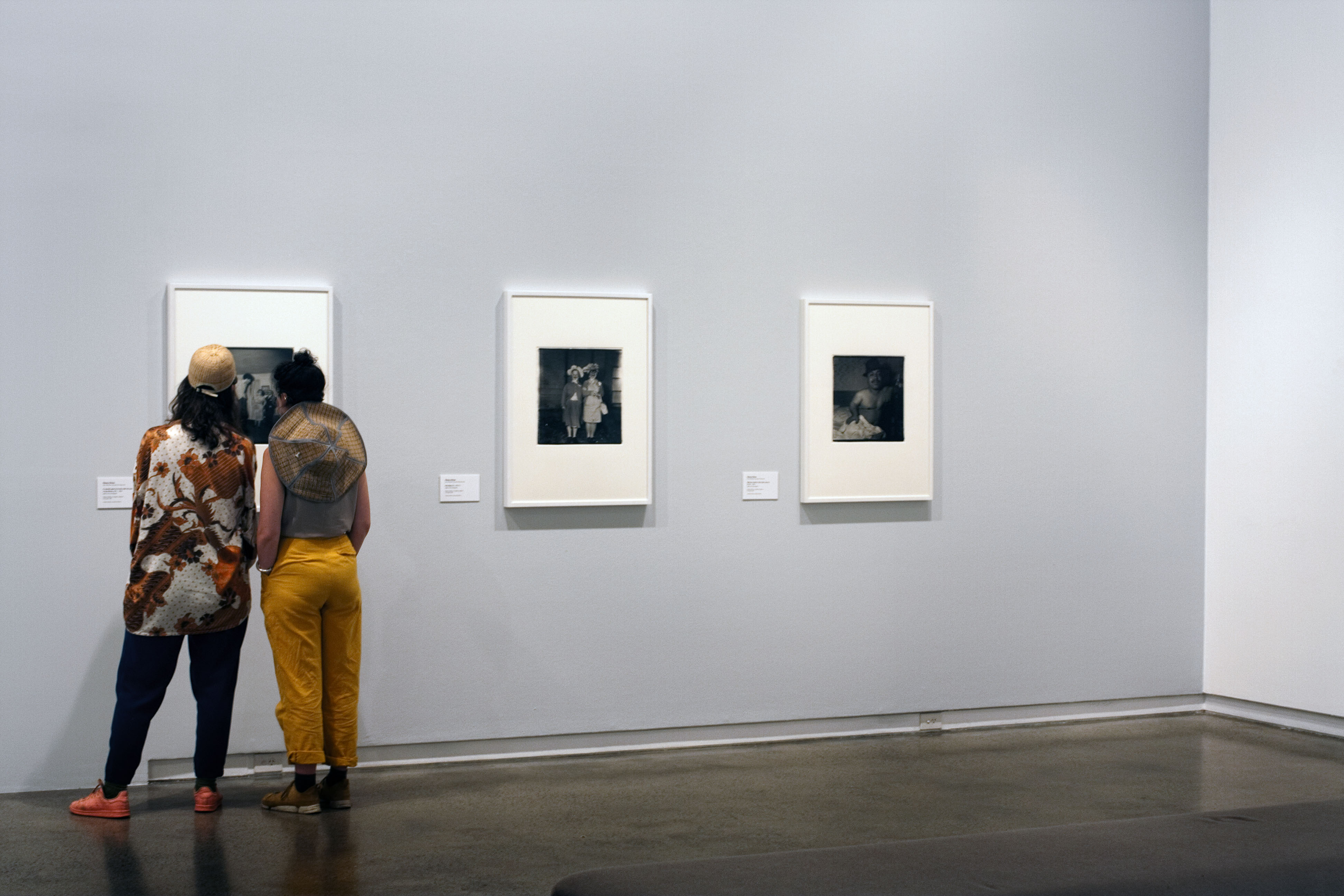
Wednesday Closed
Thursday 1pm – 8pm
Friday – Sunday 10am – 5pm

San Francisco Museum of Modern Art website

LIKE ART BLART ON FACEBOOK

Back to top

Exhibition: ‘Wayne Sorce: Urban Color’ at Joseph Bellows Gallery, La Jolla, California

Exhibition dates: 21st October – 30th November, 2017


Wayne Sorce (American, b. 1946) 'Vinegar Hill, New York' 1985 from the exhibition 'Wayne Sorce: Urban Color' at Joseph Bellows Gallery, La Jolla, California, October - Nov, 2017


Wayne Sorce (American, b. 1946)
Vinegar Hill, New York
1985
Digital chromogenic print
20 x 24 inches


These remind me very strongly of the 1970s urban Americana colour work of Stephen Shore. Most of them are successful, well seen, well photographed colour images that evince a certain period in the American cultural landscape.

When they work – as in the formal Vinegar Hill, New York (1985, above) or the more abstract Vinegar Hill, New York (1985, below); the colourful, planar Varick Street, New York (1984); the duo-chromatic L.B. Oil, New York (1984); the magnificently shadowed, geometric Halsted Street, Chicago (1978); and my particular favourite (because of the light), Under the EL, Chicago (1978) – they work superbly. When they don’t work – as in Blankets, New York (1986) or Barbers, New York (1985) – they feel a bit flat.

It’s so hard to put a body of photographs together where each image is as strong (but not necessarily the same) as the next and they form a holistic group. Most photographers can put together four images well enough, but the skill is to be able to narrativise a larger body of work, and then do that over a longer period of time.

I believe that over the lifetime of a photographic artist, you can count on the fingers of two hands the truly memorable images they will make, if they are lucky. Other images are valuable in their own right… while others should be quietly singed.

Dr Marcus Bunyan


Many thankx to the Mike and Joseph Bellows Gallery for allowing me to publish the photographs in the posting. Please click on the photographs for a larger version of the image.


Wayne Sorce (American, b. 1946) 'Vinegar Hil, New York' 1985 from the exhibition 'Wayne Sorce: Urban Color' at Joseph Bellows Gallery, La Jolla, California, October - Nov, 2017


Wayne Sorce (American, b. 1946)
Vinegar Hill, New York
1985
Digital chromogenic print
20 x 24 inches


Wayne Sorce (American, b. 1946) 'Varick Street, New York' 1984


Wayne Sorce (American, b. 1946)
Varick Street, New York
1984
Digital chromogenic print
20 x 24 inches


Wayne Sorce (American, b. 1946) 'Halsted Street, Chicago' 1978


Wayne Sorce (American, b. 1946)
Halsted Street, Chicago
1978
Digital chromogenic print
20 x 24 inches


Wayne Sorce (American, b. 1946) 'L.B. Oil, New York' 1984


Wayne Sorce (American, b. 1946)
L.B. Oil, New York
1984
Digital chromogenic print
20 x 24 inches


Wayne Sorce (American, b. 1946) 'Spiral Fire Escape, Chicago' 1975


Wayne Sorce (American, b. 1946)
Spiral Fire Escape, Chicago
1975
Digital chromogenic print
20 x 24 inches


Wayne Sorce (American, b. 1946) 'No Left, Vinegar Hill' 1988


Wayne Sorce (American, b. 1946)
No Left, Vinegar Hill
1988
Digital chromogenic print
20 x 24 inches


Wayne Sorce (American, b. 1946) 'Dave's Restaurant, New York' 1984


Wayne Sorce (American, b. 1946)
Dave’s Restaurant, New York
1984
Digital chromogenic print
20 x 24 inches


Wayne Sorce (American, b. 1946) 'El Platform, Chicago' 1978


Wayne Sorce (American, b. 1946)
EL Platform, Chicago
1978
Digital chromogenic print
20 x 24 inches


Wayne Sorce (American, b. 1946) 'Bee Gee's, New York' 1984


Wayne Sorce (American, b. 1946)
Bee Gee’s, New York
1984
Digital chromogenic print
20 x 24 inches


Wayne Sorce (American, b. 1946) 'Fort Dearborn Coffee, Chicago' 1977


Wayne Sorce (American, b. 1946)
Fort Dearborn Coffee, Chicago
1977
Digital chromogenic print
20 x 24 inches


Wayne Sorce (American, b. 1946) 'East Chicago' 1977


Wayne Sorce (American, b. 1946)
East Chicago
1977
Digital chromogenic print
20 x 24 inches


Wayne Sorce (American, b. 1946) 'Chock Full of Nuts, New York' 1984


Wayne Sorce (American, b. 1946)
Chock Full of Nuts, New York
1984
Digital chromogenic print
20 x 24 inches


Joseph Bellows Gallery is pleased to announce its upcoming solo exhibition,Wayne Sorce: Urban Color. The exhibition will open on October 21st and continue through November 30th, 2017. In conjunction with Sorce’s exhibition will be a group show relating to the city as subject.

Urban Color will present a remarkable selection Sorce’s large-scale colour photographs of urban environments taken in the late 1970’s and early 1980’s in both Chicago and New York City. His urban landscapes describe with a formal exactitude, the light, structures, and palette of these cities within a certain era. For Sorce, the urban landscape is both still and transitory; people appear in the photographs as both inhabitants of the city, as well as sculptural forms relating to a larger composed scene.

Sorce’s photographs are held within the collections of the Art Institute of Chicago, the George Eastman Museum, the Armand Hammer Museum of Art, National Museum of American Art, at the Smithsonian Institution, and the Museum of Modern Art. Complementing Sorce’s exhibition will be a collection of photographs by his contemporaries that describe the city as subject. Work by Bob Thall, George Tice, Bevan Davies, Grant Mudford, and others will be included.

Press release from the Joseph Bellows Gallery


Wayne Sorce (American, b. 1946) 'Under the EL, Chicago' 1978


Wayne Sorce (American, b. 1946)
Under the EL, Chicago
1978
Digital chromogenic print
24 x 20 inches


Wayne Sorce (American, b. 1946) 'Blankets, New York' 1986


Wayne Sorce (American, b. 1946)
Blankets, New York
1986
Digital chromogenic print
24 x 20 inches


Wayne Sorce (American, b. 1946) 'Barbers, New York' 1985


Wayne Sorce (American, b. 1946)
Barbers, New York
1985
Digital chromogenic print
24 x 20 inches


Wayne Sorce (American, b. 1946) 'Greyhound Station' c. 1970's


Wayne Sorce (American, b. 1946)
Greyhound Station
c. 1970’s
Digital chromogenic print
24 x 20 inches


Joseph Bellows Gallery
7661 Girrard Avenue
La Jolla, California
Phone: 858 456 5620

Opening hours:
Tuesday – Saturday 11am – 5pm and by appointment

Joseph Bellows Gallery website

LIKE ART BLART ON FACEBOOK

Back to top

Exhibition: ‘Alfred Stieglitz and Modern America’ at the Museum of Fine Arts, Boston

Exhibition dates: 22nd July – 5th November, 2017


Alfred Stieglitz (American, 1864-1946) 'The Steerage' 1907 from the exhibition 'Alfred Stieglitz and Modern America' at the Museum of Fine Arts, Boston, July - Nov, 2017


Alfred Stieglitz (American, 1864-1946)
The Steerage
1907
Gelatin silver print
Gift of Miss Georgia O’Keeffe
Photograph: © Museum of Fine Arts, Boston


Look at the tonality and sensuality in Georgia O’Keeffe: A Portrait (8) (1919, below) and Dancing Trees (1922, below). No one would ever think of printing a photograph like that today!

Dr Marcus Bunyan


Many thankx to the Museum of Fine Arts Boston for allowing me to publish the photographs in the posting. Please click on the photographs for a larger version of the image.


This exhibition presents a selection of the MFA’s exceptional holdings of works by Alfred Stieglitz (1864-1946), the great American impresario of photography at the turn of the 20th century. Featuring 36 photographs, the exhibition showcases fine examples of his New York views, portraits and photographs that Stieglitz took at his family’s country home at Lake George. The New York views reveal the artist’s lifelong interest in the city, from his early explorations of the picturesque effects of rain, snow and nightfall to later ones that focus on the inherent geometry of modernity’s rising architectural structures. The portraits include 10 images from Stieglitz’s magnificent extended series of images of his wife, the celebrated painter Georgia O’Keeffe – a “portrait in time” that reflects his ideals of modern womanhood and is evocative of their close relationship. These portraits are accompanied by additional images of members of his family and friends.

The Lake George photographs include, in addition to views of the family property, a sequence of the mystical cloud studies that Stieglitz called “equivalents,” which explore the interpretation of inner states of being. Many of the photographs on view were donated by Stieglitz to the MFA in 1924 – making it one of the first museums in the US to collect photography as fine art. Enhanced by an additional gift from O’Keeffe in 1950, the MFA’s Stieglitz holdings form an outstanding survey of the photographer’s career, as well as the cornerstone of the Museum’s photography collection.

Text from the MFA website


Alfred Stieglitz (American, 1864-1946) 'From the Back Window - "291" (1)' 1915 from the exhibition 'Alfred Stieglitz and Modern America' at the Museum of Fine Arts, Boston, July - Nov, 2017


Alfred Stieglitz (American, 1864-1946)
From the Back Window – “291” (1)
1915
Photograph, platinum print
Gift of Alfred Stieglitz
Photograph: © Museum of Fine Arts, Boston


291

291 is the commonly known name for an internationally famous art gallery that was located in Midtown Manhattan at 291 Fifth Avenue in New York City from 1905 to 1917. Originally known as the “Little Galleries of the Photo-Secession“, the gallery was created and managed by photographer Alfred Stieglitz.

The gallery is famous for two reasons. First, the exhibitions there helped bring art photography to the same stature in America as painting and sculpture. Pioneering artistic photographers such as Stieglitz, Edward Steichen, Alvin Langdon Coburn, Gertrude Käsebier and Clarence H. White all gained critical recognition through exhibitions at 291. Equally important, Stieglitz used this space to introduce to the United States some of the most avant-garde European artists of the time, including Henri Matisse, Auguste Rodin, Henri Rousseau, Paul Cézanne, Pablo Picasso, Constantin Brâncuși, and the Dadaists Francis Picabia and Marcel Duchamp.

Text from the Wikipedia website


Alfred Stieglitz (American, 1864-1946) 'Georgia O'Keeffe: A Portrait (4)' 1918


Alfred Stieglitz (American, 1864-1946)
Georgia O’Keeffe: A Portrait (4)
1918
Gelatin silver print
The Alfred Stieglitz Collection – Gift of the Georgia O’Keeffe Foundation, Sophie M. Friedman Fund and Lucy Dalbiac Luard Fund
Photograph: © Museum of Fine Arts, Boston


Alfred Stieglitz (American, 1864-1946) 'Dorothy True' 1919


Alfred Stieglitz (American, 1864-1946)
Dorothy True
1919
Gelatin silver print
Gift of Alfred Stieglitz
Photograph: © Museum of Fine Arts, Boston


First published in 1921 with the caption “Watch your step!” in the single issue of Marcel Duchamp and Man Ray’s magazine New York Dada, Stieglitz’s surreal portrait was a happy accident. Attempting to capture the modern character of Dorothy True, a friend of Georgia O’Keeffe, Stieglitz made two exposures: a conventional, full-face portrait and a view of one artfully posed leg. Stieglitz was thrilled with the fortuitous superimposition of the images, believing that together they captured the spirit of the postwar American female. While the equation of short hair and skirts with women’s liberation might seem trite today, Stieglitz made the portrait in 1919, the year that Congress extended suffrage to women. In 1926, he exhibited it with the title American Girl.

Text from the Metropolitan Museum of Art website


This double exposure of the face and leg of Dorothy True constitutes an unusual portrait. Her somewhat somber face, very faint, is not immediately apparent, but slowly a mouth, nose, and eye begin to reveal themselves in the black-stockinged ankle and calf. Alone, the image of the leg is an interesting one; her foot appears veritably stuffed into her stylish, patent leather pump. Her instep bulges out of the top of the shoe, and the leather ripples from the pressure at the toe, making the foot an almost sculptural form.

True appears to step down upon overturned prints or mats. A chair casts a graphic shadow across the floor, and a vertical paper backdrop echoes the black shadow at the upper left, uncovered by the sagging paper. The neat triangle of True’s skirt lends additional geometric balance.

Text from the Getty Museum website


Alfred Stieglitz (American, 1864-1946) 'Georgia O'Keeffe: A Portrait (8)' 1919


Alfred Stieglitz (American, 1864-1946)
Georgia O’Keeffe: A Portrait (8)
1919
Palladium print, solarised
Gift of Alfred Stieglitz
Photograph: © Museum of Fine Arts, Boston


Alfred Stieglitz (American, 1864-1946) 'Georgia Engelhard' 1920


Alfred Stieglitz (American, 1864-1946)
Georgia Engelhard
1920
Gelatin silver print
Gift of Alfred Stieglitz
Photograph: © Museum of Fine Arts, Boston


Georgia Engelhard (American, 1906-1986)

Georgia Engelhard was the first child of George Engelhard and Agnes Stieglitz. It is as the niece of Alfred Stieglitz, modernism’s most successful early booster in the United States, that Engelhard’s artistic career was encouraged. From the age of 12 to 22 she corresponded regularly with Stieglitz who serve as a confidant to the young woman. Engelhard occasionally posed for Stieglitz and the uncle honoured her with an exhibition at his famous gallery, 291, when she was only ten years old. (Stieglitz’s motivation to show his niece’s work was more than likely a response to Wassily Kandinsky’s proposition that there was a fundamental spirituality to be found in true art and that children’s art had the ability to convey this “inner truth.”)

It is under the tutelage of Stieglitz’s wife, Georgia O’Keeffe, that Engelhard matured as a painter. In biographies Engelhard is repeatedly mentioned as O’Keeffe’s friend and companion. Georgia minor, as Engelhard was called, served as comic release for the older artist who often found Stieglitz and his family oppressive. The two artists frequently painted together at Stiegltiz’s summer house on Lake George and occasionally took excursions together. Engelhard’s paintings reflect O’Keeffe’s influence – flat areas of pure colour and sensuous curves are used to define the landscape. …

Despite a paralysing fear of heights, Engelhard became a premier mountain climber at the age of 20 and was the first female climber to ascend many of the peaks in the Canadian Rockies. Engelhard’s determination to overcome this specific fear evolved into a passion for the mountains that lasted throughout her lifetime…

Engelhard was also a writer and an accomplished photographer. In 1938 when she began living with Eaton Cromwell she stopped painting and together the couple pursued photography. While living in Switzerland they sold a number of their pictures to postcard companies. Few of Georgia Engelhard’s paintings are in existence today and when one does appear there is often a dispute about whether the canvas comes from O’Keefe’s hands or Engelhard’s.

Anonymous text. “Georgia Engelhard,” on the JWL Collection website [Online] Cited 05/01/2022. No longer available online


Alfred Stieglitz (American, 1864-1946) 'Georgia O'Keeffe: A Portrait (9)' probably around 1921


Alfred Stieglitz (American, 1864-1946)
Georgia O’Keeffe: A Portrait (9)
probably around 1921
Gelatin silver print
Gift of Alfred Stieglitz
Photograph: © Museum of Fine Arts, Boston


Alfred Stieglitz (American, 1864-1946) 'Dancing Trees' 1922


Alfred Stieglitz (American, 1864-1946)
Dancing Trees
1922
Palladium print
Gift of Alfred Stieglitz
Photograph: © Museum of Fine Arts, Boston


Alfred Stieglitz (American, 1864-1946) 'Equivalent' 1926


Alfred Stieglitz (American, 1864-1946)
Equivalent
1926
Gelatin silver print
Gift of Miss Georgia O’Keeffe
Photograph: © Museum of Fine Arts, Boston


“How to hold a moment, how to record something so completely, that all who see it will relive an equivalent of what has been expressed.”


Alfred Stieglitz (American, 1864-1946) 'Georgia O'Keeffe: A Portrait (15)' 1930


Alfred Stieglitz (American, 1864-1946)
Georgia O’Keeffe: A Portrait (15)
1930
Gelatin silver print
The Alfred Stieglitz Collection – Gift of the Georgia O’Keeffe Foundation and M. and M. Karolik Fund
Photograph: © Museum of Fine Arts, Boston


Alfred Stieglitz (American, 1864-1946) 'House and Grape Leaves' 1934


Alfred Stieglitz (American, 1864-1946)
House and Grape Leaves
1934
Gelatin silver print
Gift of Miss Georgia O’Keeffe
Photograph: © Museum of Fine Arts, Boston


Alfred Stieglitz (American, 1864-1946) 'From the Shelton, Looking West' 1935-1936


Alfred Stieglitz (American, 1864-1946)
From the Shelton, Looking West
1935-36
Gelatin silver print
Gift of Miss Georgia O’Keeffe
Photograph: © Museum of Fine Arts, Boston


Museum of Fine Arts, Boston
Avenue of the Arts
465 Huntington Avenue
Boston, Massachusetts

Opening hours:
Sunday 10am – 5pm
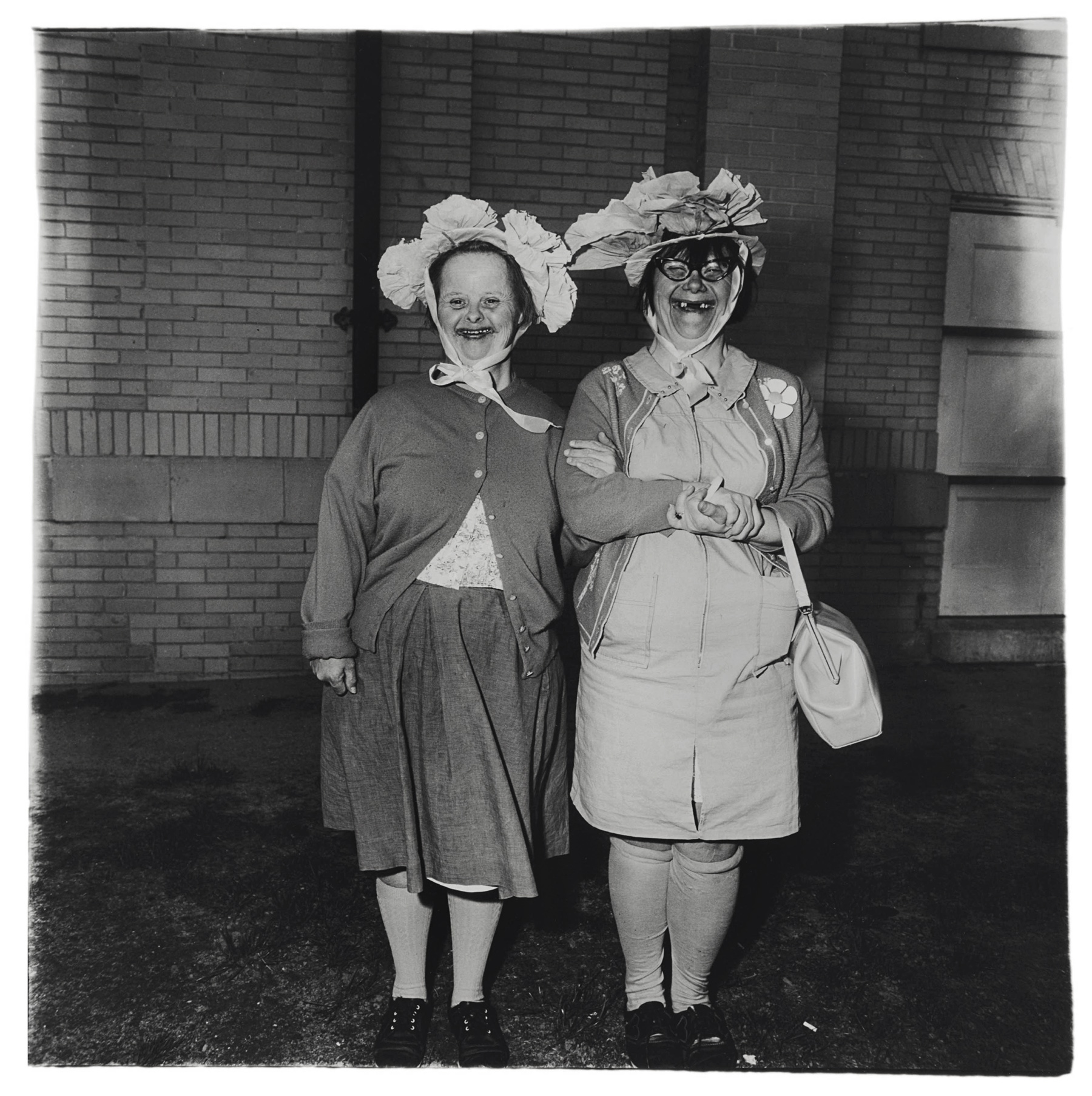
Monday 10am – 5pm
Tuesday Closed
Wednesday 10am – 5pm
Thursday 10am – 10pm
Friday 10am – 10pm
Saturday 10am – 5pm
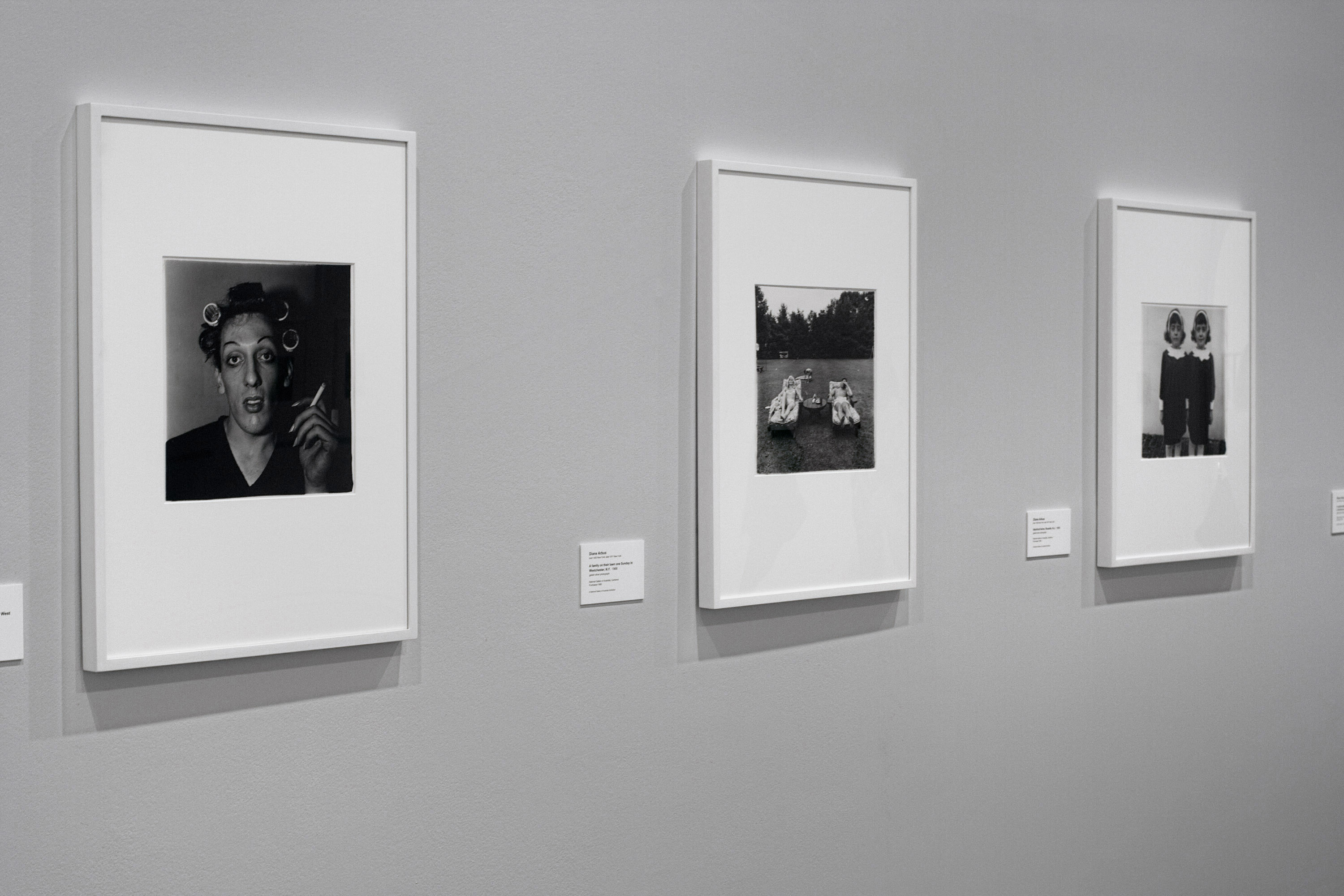
Museum of Fine Arts, Boston website

LIKE ART BLART ON FACEBOOK

Back to top

Exhibition: ‘Charles Sheeler from Doylestown to Detroit’ at Museum of Fine Arts, Boston

Exhibition dates: 22nd July – 5th November, 2017


Charles Sheeler (American, 1883-1965) 'Side of White Barn, Bucks County, Pennsylvania' 1915 from the exhibition Exhibition: 'Charles Sheeler from Doylestown to Detroit' at Museum of Fine Arts, Boston, July - November, 2017


Charles Sheeler (American, 1883-1965)
Side of White Barn, Bucks County, Pennsylvania
1915
Gelatin silver print
© The Lane Collection
Courtesy, Museum of Fine Arts, Boston


Paul Strand (American, 1890 - 1976) 'White Fence, Port Kent, New York' 1916 (negative); 1945 (print)


Paul Strand (American, 1890-1976)
White Fence, Port Kent, New York
1916 (negative); 1945 (print)
© Paul Strand Archive, Aperture Foundation


Charles Sheeler is a cracking good photographer who’s work has not got the recognition that it deserves – in comparison to, say, Stieglitz, Strand, Steichen or Weston. When you think of those top echelon artists from the early twentieth century, his name is never mentioned. And it should be.

Sheeler’s Side of White Barn, Bucks County, Pennsylvania (1915, above) predates one of the most famous early modernist photographs, Strand’s White Fence, Port Kent, New York (1916, above) by a year, yet is hardly known. While Strand’s image possesses low depth of field, strong lighting and a focus on the fence as physical, geometric, sculptural object within the picture frame, Sheeler’s photograph is much more subtle but no less effective in its modernist vocation. The pictorial space is flattened into geometric shapes, the bottom of the photograph grounded by a cracked wall, hay, chickens and a fence, the top of the image foreclosed by the tiled roof of the barn and its attendant shadow (showing that the sun was high in the sky when this image was taken). Within the boundaries of the rectangle are subtle graduations of tone, colour and form, almost like an modernist etching with light, so beautifully does the artist both understand what he is seeing and how to render it through the physicality of the print. Unlike Strand’s “knock you over the head with the white picket fence”, Sheeler’s subtle paean to the modern world requires contemplation on the nature of light, photography and the fine art print. This is a masterpiece in the history of photographic art.

I am similarly convinced by Sheeler’s Ford Plant – CrissCrossed Conveyors (1927, below), in my opinion one of the top ten photographs of all time.

I cannot fault this image. The light falling on the subject is incredible (notice the shadow from the beam mid-upper left, telling us the time of day the photograph was taken), the tonality superb, the framing of the subject admirable – all elements tensioned perfectly within the pictorial plane. The bottom of the photograph is grounded by stacked tyres and the structure ascends to the heavens from there… not just in one element, but in five! The main criss-cross of the conveyors is placed off centre supported by an iron tower, which allows the eye to roam freely across the image. The placement also allows for another elevator to ascend behind the main two, while a set of steps climbs higher and higher eventually exiting the picture stage left. Behind the criss-crossed conveyors the depth of space that must exist in reality is proposed by two tanks, further reinforced by 8 chimney stacks, and yet this photograph evidences no such depth of field. While everything is reduced to flattened shapes in this machine age, modernist, objectified world – and while no human being is presented for scale – the human hand is all over this image: in the construction of such technology, in the presence of the human scale stairs, in the ascension to the sky of the organ pipes of the industrial cathedral, in the comprehending eye of the photographer, and in the presence, the aura, of this magnificent print. While this image may seem the antithesis of humanist photography in one sense, conversely it reaffirms the very act of humanity in another. Or perhaps I’m just an old romantic.

Dr Marcus Bunyan


Many thankx to the Museum of Fine Arts Boston for allowing me to publish the photographs in the posting. Please click on the photographs for a larger version of the image.


Charles Sheeler (American, 1883-1965) 'Doylestown House - The Stove' about 1917 from the exhibition Exhibition: 'Charles Sheeler from Doylestown to Detroit' at Museum of Fine Arts, Boston, July - November, 2017


Charles Sheeler (American, 1883-1965)
Doylestown House – The Stove
about 1917
Gelatin silver print
© The Lane Collection
Courtesy, Museum of Fine Arts, Boston


Charles Sheeler (American, 1883-1965) 'Doylestown House - Stairs from Below' Negative date: about 1916-1917


Charles Sheeler (American, 1883-1965)
Doylestown House – Stairs from Below
Negative date: about 1916-1917
Gelatin silver print
© The Lane Collection
Courtesy, Museum of Fine Arts, Boston


Charles Sheeler (American, 1883-1965) 'Doylestown House - Stairwell' Negative date: about 1916-1917


Charles Sheeler (American, 1883-1965)
Doylestown House – Stairwell
Negative date: about 1916-1917
Gelatin silver print
© The Lane Collection
Courtesy, Museum of Fine Arts, Boston


Charles Sheeler (American, 1883-1965) 'Buggy, Doylestown, Pennsylvania' Negative date: 1917


Charles Sheeler (American, 1883-1965)
Buggy, Doylestown, Pennsylvania
Negative date: 1917
Gelatin silver print
© The Lane Collection
Courtesy, Museum of Fine Arts, Boston


Charles Sheeler (American, 1883-1965) 'Manhatta - Ferry Docking' Negative date: 1920


Charles Sheeler (American, 1883-1965)
Manhatta – Ferry Docking
Negative date: 1920
Gelatin silver print
© The Lane Collection
Courtesy, Museum of Fine Arts, Boston


This exhibition celebrates the MFA’s unparalleled holdings of works by Charles Sheeler (1883-1965), presenting 40 photographs from three significant series created during the heyday of his career as a founder of American modernism.

After enjoying success as a painter, Sheeler initially took up photography as a way to make a living. His experiments with the medium included the 1916-1917 series of photographs capturing various elements of an 18th-century house he rented in Doylestown, Pennsylvania. The sequence of stark, geometric compositions was among the most abstract and avant-garde work being made in the US at the time – created in response to the Cubist art of Picasso and Braque that Sheeler had previously encountered in Europe.

In 1920, Sheeler collaborated with fellow photographer Paul Strand on the short film Manhatta, presenting dramatic views of lower Manhattan. Abstract stills from the 35mm film, which was shot from steep angles, are presented alongside larger prints of Sheeler’s cinematic images of New York City, produced shortly after Manhatta – which he used as source material for his paintings. The film Manhatta is on view in the gallery.

Charles Sheeler from Doylestown to Detroit culminates with the 1927 photographs of the Ford Motor Company plant in River Rouge, Michigan, commissioned to celebrate the introduction of Ford’s Model A. The cathedral-like scenes convey an optimism for American industry, and are now considered icons of Machine Age photography. All of the photographs in the exhibition are drawn from the Museum’s Lane Collection – one of the finest private holdings of 20th-century American art in the world, including Sheeler’s entire photographic estate – given to the MFA in 2012.

Text from the MFA website


Paul Strand and Charles Sheeler
Manhatta
1921
Courtesy of the Museum of Modern Art, New York
© Aperture Foundation Inc., Paul Strand Archive


In 1920 Paul Strand and artist Charles Sheeler collaborated on Manhatta, a short silent film that presents a day in the life of lower Manhattan. Inspired by Walt Whitman’s book “Leaves of Grass,” the film includes multiple segments that express the character of New York. The sequences display a similar approach to the still photography of both artists. Attracted by the cityscape and its visual design, Strand and Sheeler favoured extreme camera angles to capture New York’s dynamic qualities. Although influenced by Romanticism in its view of the urban environment, Manhatta is considered the first American avant-garde film.


Charles Sheeler (American, 1883-1965) 'Manhatta - Rooftops' Negative date: 1920


Charles Sheeler (American, 1883-1965)
Manhatta – Rooftops
Negative date: 1920
Gelatin silver print
© The Lane Collection
Courtesy, Museum of Fine Arts, Boston


Charles Sheeler (American, 1883-1965) 'Manhatta - Through a Balustrade' Negative date: 1920


Charles Sheeler (American, 1883-1965)
Manhatta – Through a Balustrade
Negative date: 1920
Gelatin silver print
© The Lane Collection
Courtesy, Museum of Fine Arts, Boston


Charles Sheeler (American, 1883-1965) 'New York, Buildings in Shadows and Smoke' Negative date: 1920


Charles Sheeler (American, 1883-1965)
New York, Buildings in Shadows and Smoke
Negative date: 1920
Gelatin silver print
© The Lane Collection
Courtesy, Museum of Fine Arts, Boston


Charles Sheeler (American, 1883-1965) 'Ford Plant - Criss-Crossed Conveyors' 1927


Charles Sheeler (American, 1883-1965)
Ford Plant – CrissCrossed Conveyors
1927
Gelatin silver print
© The Lane Collection
Courtesy, Museum of Fine Arts, Boston


Charles Sheeler (American, 1883-1965) 'Ford Plant - Ladle Hooks, Open Hearth Building' Negative date: 1927


Charles Sheeler (American, 1883-1965)
Ford Plant – Ladle Hooks, Open Hearth Building
Negative date: 1927
Gelatin silver print
© The Lane Collection
Courtesy, Museum of Fine Arts, Boston


Charles Sheeler (American, 1883-1965) 'Ford Plant - Stamping Press' Negative date: 1927


Charles Sheeler (American, 1883-1965)
Ford Plant – Stamping Press
Negative date: 1927
Gelatin silver print
© The Lane Collection
Courtesy, Museum of Fine Arts, Boston


Museum of Fine Arts, Boston
Avenue of the Arts
465 Huntington Avenue
Boston, Massachusetts

Opening hours:
Sunday 10am – 5pm
Monday 10am – 5pm
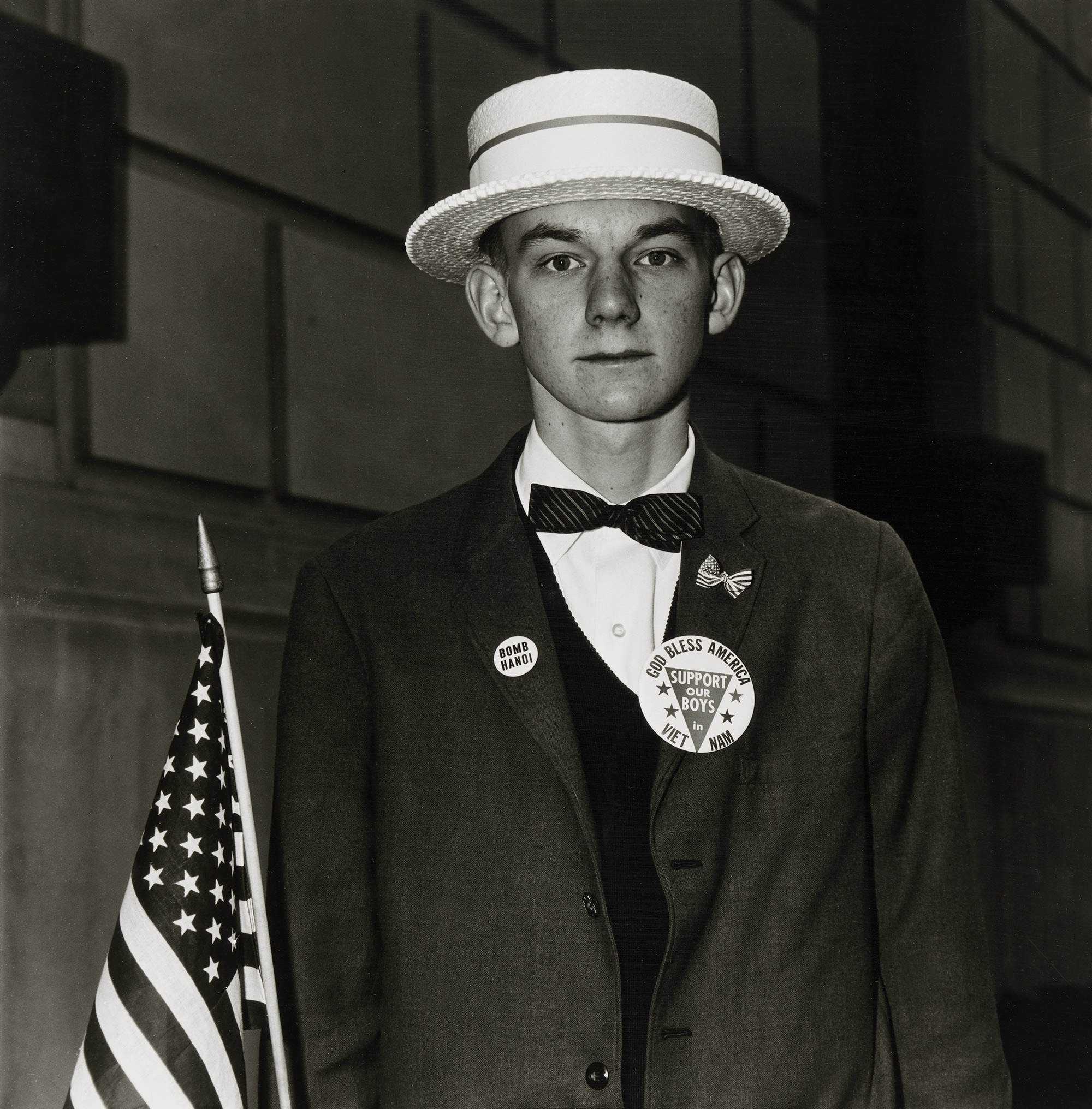
Tuesday Closed
Wednesday 10am – 5pm
Thursday 10am – 10pm
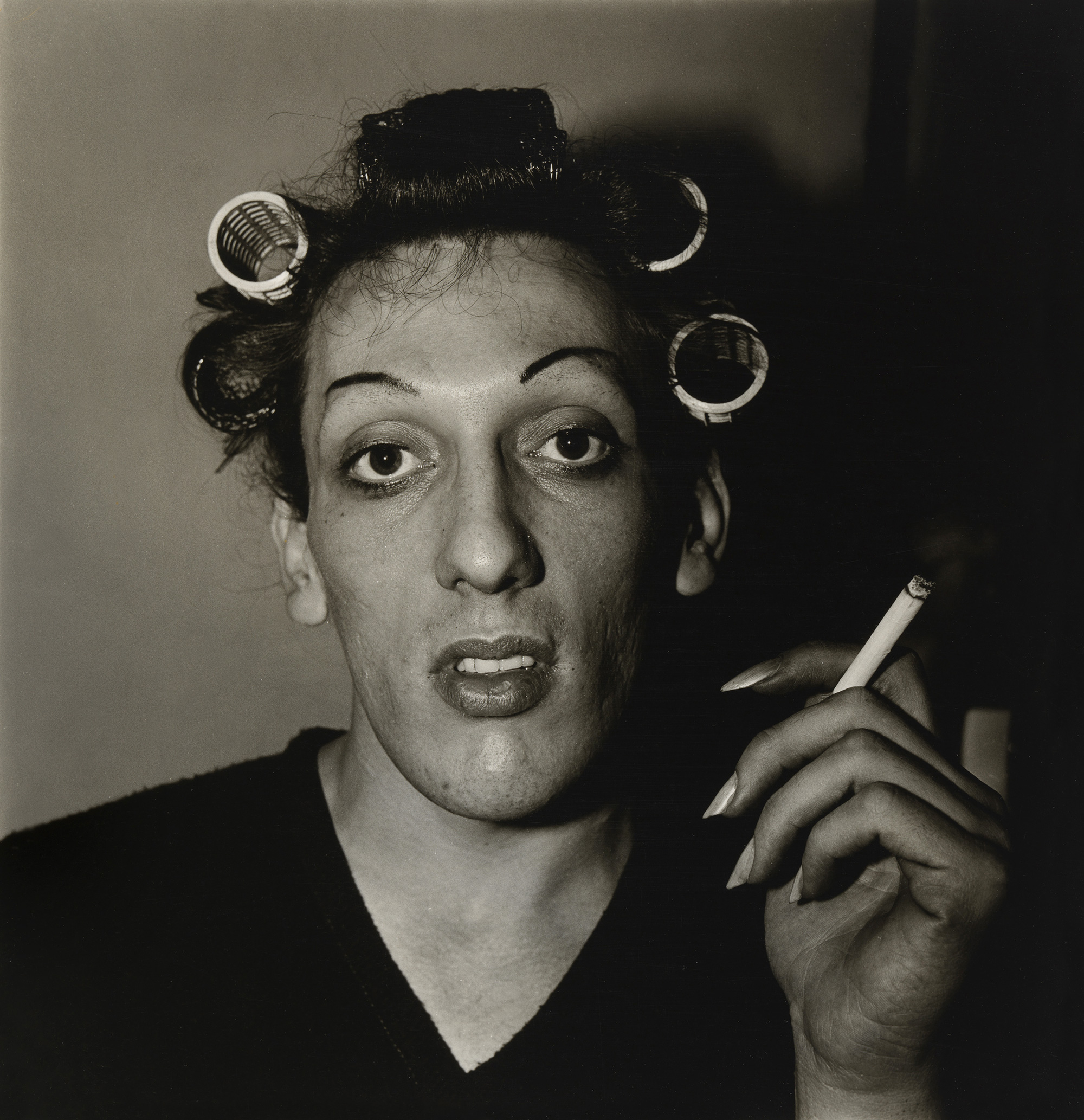
Friday 10am – 10pm
Saturday 10am – 5pm

Museum of Fine Arts, Boston website

LIKE ART BLART ON FACEBOOK

Back to top

Exhibition: ‘Thomas Struth: Figure Ground’ at Haus der Kunst, Munich

Exhibition dates: 5th May – 17th September, 2017

Curator: Thomas Weski


Installation view of the exhibition 'Thomas Struth: Figure Ground' at Haus der Kunst, Munich from the exhibition 'Thomas Struth: Figure Ground' at Haus der Kunst, Munich, May - Sept, 2017


Installation view of the exhibition Thomas Struth: Figure Ground at Haus der Kunst, Munich
Courtesy of the artist and Haus der Kunst, Munich


I have always liked this man’s work. His understanding of space, colour, form and photograph as aesthetic experience is sublime. His muscular compositions show evidence of clear thinking and seeing… an investigation into sachlichkeit, that is objectivity: the boundaries between human, animal and machine (the aesthetics of innovation).

And yet Struth’s “unheroic” images also show evidence of subjective forces at work: impulsion, chaos, and serendipity to name a few, capturing a ‘razzmatazz of sensations’ that challenge the existential nature of the human, ‘being’.

Dr Marcus Bunyan


Many thankx to Haus der Kunst for allowing me to publish the art work in the posting. Please click on the photographs for a larger version of the image.


“Most of the images are very unheroic. I have a strong relationship to clarity. That’s why my compositions and choices are very meticulous.”


Thomas Struth


Thomas Struth (German, b. 1954) 'Crosby Street, Soho, New York' 1978 from the exhibition 'Thomas Struth: Figure Ground' at Haus der Kunst, Munich, May - Sept, 2017


Thomas Struth (German, b. 1954)
Crosby Street, Soho, New York
1978
Silver gelatin print
66 x 84cm
© Thomas Struth


Thomas Struth (German, b. 1954) 'Rue de Beaugrenelle, Beaugrenelle, Paris' 1979


Thomas Struth (German, b. 1954)
Rue de Beaugrenelle, Beaugrenelle, Paris
1979
Silver gelatin print
66 x 84cm
© Thomas Struth


Installation view of the exhibition 'Thomas Struth: Figure Ground' at Haus der Kunst, Munich


Installation view of the exhibition Thomas Struth: Figure Ground at Haus der Kunst, Munich
Courtesy of the artist and Haus der Kunst, Munich


Thomas Struth (German, b. 1954) 'National Gallery 1, London' 1989


Thomas Struth (German, b. 1954)
National Gallery 1, London
1989
Chromogenic print
180 x 196cm
© Thomas Struth


Installation view of the exhibition 'Thomas Struth: Figure Ground' at Haus der Kunst, Munich with 'Louvre 4, Paris' (1989) centre left


Installation view of the exhibition Thomas Struth: Figure Ground at Haus der Kunst, Munich with Louvre 4, Paris (1989) centre left
Courtesy of the artist and Haus der Kunst, Munich


Thomas Struth (German, b. 1954) 'Louvre 4 Paris' 1989


Thomas Struth (German, b. 1954)
Louvre 4, Paris
1989
© Thomas Struth


Thomas Struth (German, b. 1954) 'Kyoko and Tomoharu Murakami, Tokyo' 1991


Thomas Struth (German, b. 1954)
Kyoko and Tomoharu Murakami, Tokyo
1991
Chromogenic print
105.5 x 126.0cm
© Thomas Struth


Installation view of the exhibition 'Thomas Struth: Figure Ground' at Haus der Kunst, Munich with 'Paradise 26 (Bougainville), Palpa, Peru (2003)' to the right


Installation view of the exhibition Thomas Struth: Figure Ground at Haus der Kunst, Munich with Paradise 26 (Bougainville), Palpa, Peru (2003) to the right
Courtesy of the artist and Haus der Kunst, Munich


Thomas Struth (German, b. 1954) 'Bright sunflower - No. 1, Winterthur' 1991


Thomas Struth (German, b. 1954)
Bright sunflower – No. 1, Winterthur
1991
Chromogenic print
84 x 66cm
© Thomas Struth


This major exhibition by the pioneering German photographer Thomas Struth (born 1954) presents the most comprehensive survey of his genre-defining oeuvre. Covering four decades of work and every phase of his illustrious artistic career, the exhibition focuses especially on the aspect of Struth’s social interests which represent the important forces of his internationally influential artistic development. Starting with his first series Unbewusste Orte (Unconscious Places) published in 1987 through his current works that deal with the field of research and technology in the globalised world, Struth’s work develops its own specific analytical nature through his choice of subject matter, the manner of its photographic realisation and its modes of presentation. These aspirations are manifested in questioning the relevance of public space and transformation of cities, the cohesive factor of family solidarity, the importance of the relationship between nature and culture, and exploring the limits and possibilities of new technologies. The momentum of participation further characterises these aspirations, as Struth’s extensive pictorial inventions and strategies allow individual interpretation based on collective knowledge.

In this exhibition, early works and research materials related to the artist’s subject matter, and collected over several decades, are shown for the first time in the context of an exhibition, offering access and insight into Struth’s working methods. Together with the photographs, these materials elucidate his longstanding interests behind the different series, demonstrating the process of artistic translation before the perfection of the image.

Featuring around 130 works, two multichannel video installations, and a selection of archival material, the exhibition in Haus der Kunst is the largest survey of Struth’s artistic career to date. The survey links his early ideas to well-known series such as Straßen (Streets), Unbewusste Orte (Unconscious Places), Portraits, Museumsbilder (Museum Pictures), Paradise, and Audiences which are placed in dialogue with site-specific works like Löwenzahnzimmer (Dandelion Room), the landscape- and flower photographs that were made for the patients’ rooms at the Hospital on the Lindberg in Winterthur, Switzerland. It also includes photographs recently shown in the exhibition Nature & Politics. Within this interplay, the exciting ability of the artist to combine analysis and individual pictorial invention in multifaceted works and techniques builds an overarching idea on how to deal with the elementary matters of our times.

The exhibition is accompanied by a publication from Schirmer / Mosel Publishers, Munich, designed by Fernando Gutierrez, with texts by Thomas Weski, Ulrich Wilmes, Jana-Maria Hartmann, and an interview with the artist by Okwui Enwezor. The exhibition is organised by Haus der Kunst and curated by Thomas Weski.

Press release from Haus der Kunst


Thomas Struth (German, b. 1954) 'Wangfujing Dong Lu, Shanghai' 1997


Thomas Struth (German, b. 1954)
Wangfujing Dong Lu, Shanghai
1997
Chromogenic print
117.5 x 143.6cm
© Thomas Struth


Thomas Struth (German, b. 1954) 'Paradise 10 (Xi Shuang Banna), Yunnan Province, China' 1999


Thomas Struth (German, b. 1954)
Paradise 10 (Xi Shuang Banna), Yunnan Province, China
1999
Chromogenic print
182 x 227cm
© Thomas Struth


Thomas Struth (German, b. 1954) 'Self-Portrait, Munich' 2000


Thomas Struth (German, b. 1954)
Self-Portrait, Munich
2000
© Thomas Struth


“Albrecht Durer painted his self-portrait in 1500, so Struth’s Self-Portrait, Munich 2000 feels like a conversation between artists across 500 years.”


Thomas Struth (German, b. 1954) 'National Gallery 2, London' 2001


Thomas Struth (German, b. 1954)
National Gallery 2, London
2001
Chromogenic print
148.0 x 170.4cm
© Thomas Struth


Thomas Struth (German, b. 1954) 'Audience 7, Florence' 2004


Thomas Struth (German, b. 1954)
Audience 7, Florence
2004
Chromogenic print
179.5 x 291.5cm
© Thomas Struth


Thomas Struth (German, b. 1954) 'Audience 11, Florence' 2004


Thomas Struth (German, b. 1954)
Audience 11, Florence
2004
Chromogenic print
179.5 x 291.5cm
© Thomas Struth


Installation view of the exhibition 'Thomas Struth: Figure Ground' at Haus der Kunst, Munich with 'Semi Submersible Rig, DSME Shipyard, Geoje Island' (2007) at centre


Installation view of the exhibition Thomas Struth: Figure Ground at Haus der Kunst, Munich with Semi Submersible Rig, DSME Shipyard, Geoje Island (2007) at centre
Courtesy of the artist and Haus der Kunst, Munich


Thomas Struth (German, b. 1954) 'Semi Submersible Rig, DSME Shipyard, Geoje Island' 2007


Thomas Struth (German, b. 1954)
Semi Submersible Rig, DSME Shipyard, Geoje Island
2007
© Thomas Struth


Installation view of the exhibition 'Thomas Struth: Figure Ground' at Haus der Kunst, Munich with 'Tokamak Asdex Upgrade Periphery, Max Planck IPP, Garching' (2009) at left


Installation view of the exhibition Thomas Struth: Figure Ground at Haus der Kunst, Munich with Tokamak Asdex Upgrade Periphery, Max Planck IPP, Garching (2009) at left
Courtesy of the artist and Haus der Kunst, Munich


Thomas Struth (German, b. 1954) 'Tokamak Asdex Upgrade Periphery, Max Planck IPP, Garching' 2009


Thomas Struth (German, b. 1954)
Tokamak Asdex Upgrade Periphery, Max Planck IPP, Garching
2009
Chromogenic print
109.3 x 85.8cm
© Thomas Struth


Thomas Struth (German, b. 1954) 'Har Homa, East Jerusalem' 2009


Thomas Struth (German, b. 1954)
Har Homa, East Jerusalem
2009
Inkjet print
148.6 x 184.8cm
© Thomas Struth


Installation view of the exhibition 'Thomas Struth: Figure Ground' at Haus der Kunst, Munich with 'The Faez Family, Rehovot' (2009) second left


Installation view of the exhibition Thomas Struth: Figure Ground at Haus der Kunst, Munich with The Faez Family, Rehovot (2009) second left
Courtesy of the artist and Haus der Kunst, Munich


Thomas Struth (German, b. 1954) 'The Faez Family, Rehovot' 2009


Thomas Struth (German, b. 1954)
The Faez Family, Rehovot
2009
© Thomas Struth


Thomas Struth (German, b. 1954) 'Grazing Incidence Spectrometer, Max Planck IPP, Garching' 2010


Thomas Struth (German, b. 1954)
Grazing Incidence Spectrometer, Max Planck IPP, Garching
2010
© Thomas Struth


Thomas Struth (German, b. 1954) 'Chemistry Fume Cabinet, The University of Edinburgh' 2010


Thomas Struth (German, b. 1954)
Chemistry Fume Cabinet, The University of Edinburgh
2010
© Thomas Struth


Take, for instance, Struth’s photograph “Chemistry Fume Cabinet, The University of Edinburgh” (2010). Ostensibly a photograph of a chemistry fume cabinet at the University of Edinburgh, photographed through a clear, glass window, the work is also a study in colour and form. Within a white background space, the back wall has black horizontal lines running along it, while the side walls have one vertical line each. These opposing lines create what appear to be a haphazard grid. A wide red horizontal structure runs across the front of the room, creating one more line that both breaks up and contributes to the grid. Various machines within the room, two square red panels on the left and right sides of the window, and six coloured balloons provide a series of objects that fit within the finely structured container of the photograph’s frame.

What struck me immediately upon seeing this image was how the various lines and objects interact with one another. Struth presents the viewer with a kind of interactive field in which she can either read the image “as is” – photograph documenting a chemistry fume cabinet – or as a purely aesthetic experience. Or, of course, she can do both, which is what makes Struth’s work so rich and gratifying. It is in the way his mastery of colour and other formal elements coincides with his documentation of the world.

Cynthia Cruz. “Seeing the Deterioration of Technology in Thomas Struth’s Photographs,” on the Hyperallergic website September 9, 2016 [Online] Cited 05/08/2017


Installation view of the exhibition 'Thomas Struth: Figure Ground' at Haus der Kunst, Munich with 'Queen Elizabeth II & The Duke of Edinburgh, Windsor Castle' (2010) at left


Installation view of the exhibition Thomas Struth: Figure Ground at Haus der Kunst, Munich with Queen Elizabeth II & The Duke of Edinburgh, Windsor Castle (2010) at left
Courtesy of the artist and Haus der Kunst, Munich


Thomas Struth (German, b. 1954) 'Queen Elizabeth II & The Duke of Edinburgh, Windsor Castle' 2010


Thomas Struth (German, b. 1954)
Queen Elizabeth II & The Duke of Edinburgh, Windsor Castle
2010
© Thomas Struth


Installation view of the exhibition 'Thomas Struth: Figure Ground' at Haus der Kunst, Munich with 'Aquarium, Atlanta, Georgia' (2013) at right


Installation view of the exhibition Thomas Struth: Figure Ground at Haus der Kunst, Munich with Aquarium, Atlanta, Georgia (2013) at right
Courtesy of the artist and Haus der Kunst, Munich


Thomas Struth (German, b. 1954) 'Aquarium, Atlanta, Georgia' 2013


Thomas Struth (German, b. 1954)
Aquarium, Atlanta, Georgia
2013
© Thomas Struth


Thomas Struth (German, b. 1954) 'Schaltwerk 1 Berlin' 2016


Thomas Struth (German, b. 1954)
Schaltwerk 1, Berlin
2016
© Thomas Struth


Haus der Kunst
Prinzregentenstraße 1
80538 Munich
Germany
Phone: +49 89 21127 113

Opening hours:
Mon | Wed | Fri | Sat | Sun 10am – 8pm
Thur 10am – 10pm
Tue closed

Haus der Kunst website

LIKE ART BLART ON FACEBOOK

Back to top